Applying DINOv2 Self-Supervised Learning to Pathology Images: A Comprehensive Guide for Biomedical Research
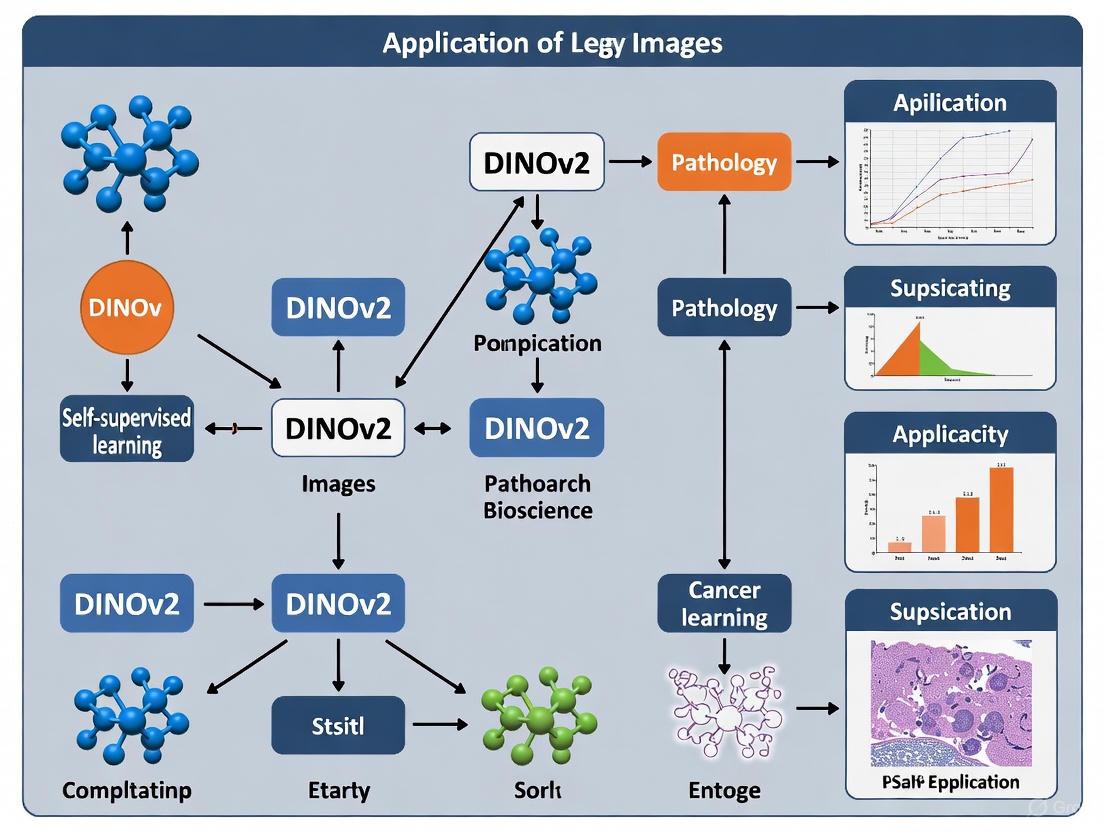
This article provides a comprehensive exploration of applying the DINOv2 self-supervised learning model to computational pathology.
Applying DINOv2 Self-Supervised Learning to Pathology Images: A Comprehensive Guide for Biomedical Research
Abstract
This article provides a comprehensive exploration of applying the DINOv2 self-supervised learning model to computational pathology. It covers the foundational principles that make DINOv2 particularly suited for analyzing histopathological whole-slide images, moving into practical methodologies for implementation across tasks like cancer subtyping, biomarker prediction, and survival analysis. The content details common challenges and optimization strategies specific to pathology data, including handling gigapixel images and stain variation. Finally, it presents a rigorous validation framework, benchmarking DINOv2 against other state-of-the-art models on clinically relevant tasks and discussing its impact on improving diagnostic accuracy and accelerating drug development workflows. Designed for researchers and scientists, this guide bridges the gap between advanced AI methodology and clinical application in oncology.
Why DINOv2? Foundational Principles for Pathology Image Analysis
{#title The Label Bottleneck in Computational Pathology and the SSL Solution #}
{#context} This Application Note details the challenge of data annotation in computational pathology and establishes self-supervised learning (SSL), particularly the DINOv2 framework, as a robust solution. The protocols herein are designed for researchers and scientists aiming to implement SSL for pathology image analysis within a broader research program applying DINOv2 to pathology images. {/context}
The digitization of histopathology slides into Whole Slide Images (WSIs) has created unprecedented opportunities for AI-driven diagnostic and prognostic tools. However, a critical bottleneck impedes the development of supervised deep learning models: the scarcity of extensively annotated datasets. Annotating WSIs is a prohibitive endeavor, requiring specialized expertise from pathologists, is immensely time-consuming, and suffers from inter-observer variability [1] [2]. This "label bottleneck" constrains the scalability and generalizability of computational pathology models.
Self-supervised learning (SSL) presents a paradigm shift by enabling models to learn powerful, transferable visual representations directly from unlabeled data. By formulating a pretext task (e.g., predicting hidden parts of an image or contrasting different augmented views), SSL models can learn meaningful features of tissue morphology, cellular structures, and spatial relationships without manual labels [3]. These learned representations can then be efficiently adapted with minimal labeled data to various downstream clinical tasks, such as cancer subtyping, biomarker prediction, and segmentation. Among SSL frameworks, DINOv2 has emerged as a particularly effective foundation for building state-of-the-art pathology models [4] [5] [6].
Quantitative Performance of SSL in Pathology
Benchmarking studies and specific implementations demonstrate that SSL models, especially those based on DINOv2, achieve performance on par with or superior to supervised approaches, while drastically reducing the need for annotated data.
Table 1: Performance of a DINOv2-based Framework on Diagnostic Tasks [4]
| Disease Dataset | Classification Accuracy |
|---|---|
| Lung Cancer | 100% |
| Brain Tumour | 99% |
| Leukaemia | 99% |
| Eye Retina Disease | 95% |
Table 2: Benchmarking Public Pathology Foundation Models on Clinical Tasks [7] [8]
| Model Name | SSL Algorithm | Training Data | Key Performance |
|---|---|---|---|
| UNI | DINOv2 | 100M tiles, 100k slides | State-of-the-art on 33 diverse tasks [8] |
| Virchow | DINOv2 | ~2B tiles, ~1.5M slides | Superior performance on tissue classification and biomarker prediction [8] |
| Phikon | iBOT | 43.3M tiles, 6k slides | High performance on 17 downstream tasks across 7 cancers [8] |
| CTransPath | MoCo v3 | 15.6M tiles, 32k slides | Strong results on patch retrieval and WSI classification [8] |
| "Midnight" Models (Kaiko) | Modified DINOv2 | Trained on public data (e.g., TCGA: 12k WSIs) | Matches or surpasses larger models like Virchow2 on many tasks [6] |
The data in Table 2 shows that models trained with the DINOv2 algorithm consistently achieve top-tier performance. Furthermore, studies indicate that SSL provides exceptional data efficiency. One framework for histopathology image segmentation demonstrated the ability to achieve 95.6% of its full performance using only 25% of the labeled data, a 70% reduction in annotation requirements compared to supervised baselines [1].
Protocols for DINOv2-based Pathology Foundation Model Workflow
This section provides a detailed experimental protocol for pre-training a pathology foundation model using the DINOv2 framework and evaluating it on downstream tasks.
Protocol: Self-Supervised Pre-training with DINOv2
Objective: To learn generic, powerful feature representations from a large corpus of unlabeled pathology image tiles.
Materials & Input Data:
- WSI Source: A diverse collection of WSIs. Diversity in cancer types, tissue organs, and staining protocols is critical for model robustness [5] [3].
- Compute: High-performance computing cluster. For example, training a ViT-base model like Phikon required 32 NVIDIA A100 GPUs for roughly one week (1,200 GPU hours) [3].
Procedure:
- Tile Extraction and Pre-processing:
- Use an online patching strategy to sample millions of random tiles (e.g., 256x256 pixels) from WSIs at multiple resolutions (e.g., 2, 1, 0.5, and 0.25 µm/px) [6].
- Apply a foreground filter to exclude non-tissue areas and low-informative regions (e.g., adipose tissue) based on thresholds in HSV color space [6].
- Perform color augmentation in the HED (Hematoxylin-Eosin-DAB) color space to enhance robustness to staining variations [6].
- Model Training:
- Architecture: Initialize a Vision Transformer (ViT), typically a ViT-L/16 or ViT-H/14, with weights from a DINOv2 model pre-trained on natural images [6].
- Framework: Utilize the DINOv2 self-distillation framework. This involves a teacher network and a student network that learn by matching outputs of different augmented views of the same image.
- Training Modifications: Incorporate stability improvements from recent literature, such as using a KDE regularizer instead of the original KoLeo loss to ensure diversity of embeddings [6].
- Hyperparameters: Train for ~1 million iterations with a large effective batch size (e.g., 768). Use a base learning rate of
3.5e-4and gradient accumulation [6].
Protocol: High-Resolution Post-Training
Objective: To enhance the model's ability to encode fine-grained, cellular-level details.
Procedure:
- Input Data: Increase the input tile size from 256px to 512px, while correspondingly reducing the magnification to maintain the same physical tissue size per tile.
- Fine-tuning: Fine-tune the pre-trained model from Protocol 3.1 on these higher-resolution tiles for an additional ~120k iterations.
- Parameter Adjustment: Reduce the batch size per GPU to accommodate larger images in memory and adjust the learning rate (e.g., to
1e-4) [6].
Protocol: Downstream Task Evaluation
Objective: To validate the utility of the learned features on clinically relevant tasks.
Procedure:
- Feature Extraction: For a downstream task (e.g., cancer subtyping), process the WSIs from the labeled dataset using the pre-trained foundation model. Extract feature vectors for each tile.
- Task-Specific Model: Use the extracted features as input to a simpler, task-specific model. This can be a linear classifier, a multiple-instance learning (MIL) model for slide-level prediction, or a U-Net for segmentation tasks.
- Evaluation: Train the task-specific model on the labeled data and evaluate its performance on a held-out test set using relevant metrics (e.g., AUC, Accuracy, Dice Coefficient). This process, known as linear probing or fine-tuning, tests the quality of the foundational representations [7] [8].
Table 3: Essential Resources for SSL Pathology Research
| Resource Category | Specific Examples & Functions |
|---|---|
| Public WSI Datasets | TCGA (The Cancer Genome Atlas): Large-scale public resource for cancer WSIs. GTEx (Genotype-Tissue Expression): Provides WSIs of normal tissue. CPTAC (Clinical Proteomic Tumor Analysis Consortium): Contains clinical tumor sample images [6]. |
| Public Foundation Models | UNI, Virchow, Phikon, CTransPath: Pre-trained models available for feature extraction or fine-tuning, accelerating research without the need for large-scale pre-training [7] [8]. |
| Computational Resources | GPU Clusters: Essential for model training. A project of moderate scale may require 32x A100/V100/H100 GPUs for a week [3] [6]. Benchmarking Pipelines: Automated tools, like the one provided with the clinical benchmark study, for standardized model evaluation [7]. |
| Software & Algorithms | DINOv2 Codebase: The core SSL framework. Online Patching: Efficient sampling of tiles directly during training to reduce storage overhead [6]. Color Augmentation (HED): Technique to improve model invariance to staining variations [6]. |
The application of DINOv2-based self-supervised learning directly confronts the label bottleneck in computational pathology. The protocols and data outlined in this document provide a roadmap for researchers to develop powerful foundation models that learn the intricate language of histopathology from unlabeled data. This approach enhances data efficiency and model generalizability and paves the way for more robust, scalable, and clinically impactful AI tools in diagnostic pathology and drug development.
DINOv2 represents a foundational advancement in self-supervised learning for computer vision, providing a robust, general-purpose visual feature extractor based on a Vision Transformer (ViT) architecture. For pathology image research, this technology offers a paradigm shift by enabling the development of powerful models without relying on extensively labeled datasets, which are particularly costly and time-consuming to produce in the medical domain [4]. The model's ability to learn directly from unlabeled histopathology images captures essential morphological features necessary for diagnostic tasks, including cellular morphology, tissue architecture, and nuclear features [9]. By leveraging the DINOv2 backbone, researchers can build computational pathology tools for disease detection, classification, and segmentation that demonstrate remarkable generalization even across rare cancer types and diverse tissue sources [5] [9].
Architectural Principles and Model Structure
The DINOv2 backbone is instantiated as a family of Vision Transformers (ViTs), with variants ranging from small (ViT-S) to very large (ViT-g) models containing over one billion parameters [10]. The architecture processes input images by dividing them into fixed-size patches that are linearly projected into patch embeddings. A class token (CLS) is appended to the sequence, and positional embeddings are incorporated to retain spatial information [10]. The model employs several key innovations that enhance its suitability for pathology image analysis:
- Stacked Transformer Blocks: The core architecture comprises multi-head self-attention and feedforward networks. For models trained from scratch, feedforward blocks utilize SwiGLU activations for increased expressiveness, while distilled models retain standard MLPs [10].
- LayerScale: This innovation introduces adaptive scaling of residual block outputs, significantly improving training stability at scale, which is crucial for processing the gigapixel whole-slide images (WSIs) common in pathology [10].
- Separate Projection Heads: DINOv2 employs untied MLP heads for image-level (class token) and patch-level (patch tokens) objectives. This separation prevents interference and instability during large-scale training, allowing the model to capture both global semantic concepts and local histological patterns essential for pathology analysis [10].
- Efficiency Optimizations: The implementation incorporates FlashAttention for memory-efficient computation and sequence packing that enables batching of variable-length sequences (e.g., different tissue crop sizes), both critical for handling the diverse scales present in pathology datasets [10].
This modular structure enables DINOv2 to produce both global representations for tasks like classification and retrieval, along with dense spatial features necessary for pixel-level tasks including segmentation and cellular analysis [10].
Training Paradigms and Loss Formulations
DINOv2 employs a fully self-supervised training approach that combines knowledge distillation with masked image modeling, eliminating the need for manually annotated labels [10] [11]. The training framework incorporates several sophisticated components:
- Teacher-Student Distillation: A student network learns to mimic the outputs of a teacher network, with the teacher being updated as an exponential moving average (EMA) of the student weights. The image-level distillation loss is defined as (\mathcal{L}\text{DINO} = -\sum pt \log ps), where (pt) and (p_s) are softmax-normalized outputs from teacher and student class-token projections, respectively [10].
- Patch-Level iBOT Loss: The teacher outputs on non-masked patches supervise the student's predictions on masked regions, driving spatially coherent feature learning particularly valuable for understanding tissue structures in pathology images [10].
- Sinkhorn-Knopp Centering: Following the SwAV approach, this normalization technique prevents representation collapse by normalizing output prototypes to a doubly stochastic distribution [10] [11].
- KoLeo Regularizer: This component encourages batch-level feature decorrelation and uniform coverage of the representation space through the loss function (\mathcal{L}\text{KoLeo} = -\frac{1}{n}\sum{i=1}^n \log (d{n,i})), where (d{n,i} = \min{j\ne i} \| xi - x_j\|) [10] [11].
These training protocols enable DINOv2 to learn highly discriminative and transferable representations without human annotations, scaling robustly with both data and model size - a critical advantage for pathology applications where labeled data is scarce [10] [4].
Data Curation and Pretraining Pipeline
Unlike prior self-supervised methods relying on uncurated data sources, DINOv2 employs an automated multi-stage pipeline to produce LVD-142M, a 142-million-image pretraining set [10]. For pathology-specific adaptations, this approach has been modified to handle the unique characteristics of medical images:
- Content-Based Filtering: Images are filtered based on pixel content using large-scale copy-detection (PCA hashing + Faiss k-NN) for deduplication with cosine similarity thresholds [10].
- Balanced Retrieval: For abundant tissue types, sample-based nearest neighbor retrieval augments the set, while for rare tissues, cluster-based sampling ensures diversity and balance [10].
- Pathology-Specific Curation: In building pathology foundation models, researchers have emphasized data diversity over sheer quantity. The Mahmood Lab, for instance, selected 100,000 pathology slides specifically for their diversity across disease types, organ systems, and staining variations, from which 100 million pathology images were derived for model training [5].
This curation strategy is foundational for DINOv2's observed generalization on wide array of tissue distributions and pathology tasks, making it particularly valuable for clinical applications where model robustness is critical [10] [5].
Performance Benchmarks for Pathology Applications
DINOv2-based models have demonstrated exceptional performance across various pathology benchmarks, often matching or surpassing specialized supervised approaches. The following tables summarize key quantitative results from recent studies:
Table 1: DINOv2 Performance on Medical Image Classification Tasks
| Dataset | Task | Accuracy | Comparison Method |
|---|---|---|---|
| Lung Cancer [4] | Classification | 100% | Traditional Supervised Learning |
| Brain Tumor [4] | Classification | 99% | Traditional Supervised Learning |
| Leukemia [4] | Classification | 99% | Traditional Supervised Learning |
| Eye Retina Disease [4] | Classification | 95% | Traditional Supervised Learning |
Table 2: Virchow (DINOv2-based) Pan-Cancer Detection Performance
| Cancer Type | AUC | Model | Training Data |
|---|---|---|---|
| Common Cancers (9 types) [9] | 0.950 | Virchow (DINOv2) | 1.5M WSIs |
| Rare Cancers (7 types) [9] | 0.937 | Virchow (DINOv2) | 1.5M WSIs |
| All Cancers [9] | 0.950 | Virchow (DINOv2) | 1.5M WSIs |
| All Cancers [9] | 0.940 | UNI | 100K WSIs |
| All Cancers [9] | 0.932 | Phikon | 6K WSIs |
Table 3: Comparison of Pathology Foundation Models
| Model Name | Parameters | Training Data | Architecture Base |
|---|---|---|---|
| Virchow [9] | 632M | 1.5M WSIs | DINOv2 |
| UNI [12] | 307M | 100K slides | ViT |
| CONCH [12] | 86M | 1.8M images | ViT |
| DINOv2 [12] | 86M | 142M images | ViT |
| Phikon [12] | 86.4M | 6K slides | ViT |
These results demonstrate that DINOv2-based models consistently achieve state-of-the-art performance across diverse pathology tasks, with particular strength in generalizing to rare cancer types that pose challenges for conventional supervised approaches [9].
Experimental Protocols for Pathology Applications
Zero-Shot Classification Using Frozen Features
Purpose: To evaluate the quality of DINOv2 features for pathology image classification without task-specific fine-tuning. Materials: Pre-trained DINOv2 model (ViT-L/14 or ViT-g/14 recommended), pathology image dataset (e.g., TCGA, CAMELYON16), computational resources (GPU with ≥16GB memory). Procedure:
- Feature Extraction:
- Process each image through DINOv2 without modifying model weights.
- Extract the [CLS] token representation from the final layer as the global image embedding.
- Optional: Extract patch-level features for regional analysis.
- Dimensionality Reduction:
- Apply PCA to reduce feature dimensions to 512 for computational efficiency.
- Normalize features using L2 normalization.
- Classifier Training:
- Train a linear SVM or k-NN classifier on extracted features using limited labeled data.
- For k-NN, use cosine similarity with k=20 as the distance metric.
- Evaluation:
- Measure accuracy, precision, recall, and F1-score on held-out test set.
- Compare against supervised baselines and other self-supervised methods.
This protocol achieved 99-100% accuracy on lung cancer, brain tumor, and leukemia classification tasks, demonstrating the efficacy of DINOv2 features for pathology image analysis [4].
Semantic Search for Similar Case Retrieval
Purpose: To implement content-based image retrieval for clinical decision support using DINOv2 embeddings. Materials: DINOv2 model, vector database (Qdrant recommended), pathology image repository, cosine similarity metric. Procedure:
- Database Construction:
- Process entire pathology image database through DINOv2 to generate embeddings.
- Store embeddings in vector database with associated metadata (diagnosis, tissue type, etc.).
- Query Processing:
- For a query image, compute its DINOv2 embedding.
- Perform approximate nearest neighbor search in the vector database using cosine similarity.
- Result Validation:
- Retrieve top-k most similar cases (k=10-50 typically).
- Present cases to pathologists for clinical validation.
- Measure retrieval precision based on diagnostic concordance.
This approach enables clinicians to efficiently retrieve morphologically similar cases, supporting diagnostic decisions and education [4].
Whole Slide Image Analysis for Pan-Cancer Detection
Purpose: To develop a single model for cancer detection across multiple tissue types using DINOv2 features. Materials: Whole slide images (WSIs) from multiple cancer types, DINOv2 model, multiple instance learning (MIL) framework. Procedure:
- Patch Extraction:
- Divide WSIs into non-overlapping 256×256 pixel patches at 20× magnification.
- Filter out background and non-informative tissue regions.
- Feature Extraction:
- Process each patch through DINOv2 to obtain patch-level embeddings.
- Aggregate patch embeddings using self-attention mechanisms.
- Slide-Level Classification:
- Implement attention-based MIL to weight informative patches.
- Train a slide-level classifier on aggregated features.
- Validation:
- Evaluate on internal and external datasets to assess generalization.
- Stratify performance by cancer type and rarity.
This protocol formed the basis for the Virchow model, which achieved 0.95 AUC across 16 common and rare cancer types using 1.5 million WSIs [9].
Visualization and Interpretability Methods
Attention Visualization for Feature Interpretation
Purpose: To identify morphological features driving model predictions in pathology images. Materials: DINOv2 model, pathology images, gradient computation libraries. Procedure:
- Attention Map Extraction:
- Process image through DINOv2 and extract attention weights from multiple layers.
- Aggregate attention maps across heads and layers.
- Heatmap Generation:
- Overlay attention maps on original images.
- Use color coding to indicate regions of high model attention.
- Clinical Correlation:
- Pathologist review of attention maps to identify correlated morphological features.
- Validate against known histopathological biomarkers.
DINOv2 Architecture and Training Workflow
Pathology Image Analysis Pipeline
The Scientist's Toolkit: Research Reagent Solutions
Table 4: Essential Research Tools for DINOv2 in Pathology
| Tool/Category | Specific Examples | Function in Research |
|---|---|---|
| Foundation Models | DINOv2 (ViT-L/14, ViT-g/14) [10], Virchow [9], UNI [12] | Pre-trained backbones for feature extraction and transfer learning |
| Pathology Datasets | TCGA (The Cancer Genome Atlas) [1], CAMELYON16 [1], Internal Institutional Archives | Sources of histopathology images for training and validation |
| Computational Frameworks | PyTorch, MONAI, Whole Slide Image (WSI) processors | Infrastructure for model development and image processing |
| Vector Databases | Qdrant [4], FAISS [10] | Efficient storage and retrieval of image embeddings for semantic search |
| Interpretability Tools | Attention visualization libraries, ViT-CX [4] | Understanding model decisions and identifying salient morphological features |
| Evaluation Metrics | AUC, Accuracy, Dice coefficient, Hausdorff Distance [1] | Quantifying model performance for clinical validation |
Future Directions and Clinical Integration
The application of DINOv2 in pathology research continues to evolve with several promising directions. Multi-modal integration combining histopathology with genomic and clinical data represents a frontier for more comprehensive diagnostic systems [13]. Federated learning approaches enabled by DINOv2's robust features allow collaborative model development across institutions while preserving data privacy [9]. As these technologies mature, clinical deployment frameworks focusing on reliability, interpretability, and seamless integration with pathology workflows will be essential for translational impact. The demonstrated success of DINOv2-based models like Virchow in detecting both common and rare cancers highlights the potential for foundation models to standardize and enhance diagnostic precision in anatomic pathology [9].
Application Note: Leveraging DINOv2 for Computational Pathology
Self-supervised learning with DINOv2 has emerged as a transformative approach for computational pathology, primarily due to its capacity to learn domain-invariant features that generalize across diverse clinical environments. Unlike supervised models that overfit to narrow labeled distributions, DINOv2's self-distillation inherently balances feature learning across classes through pretext tasks that capture fundamental tissue morphology independent of specific staining protocols or scanner variations [4]. This capability is particularly valuable in pathology, where models must maintain performance across varying institutional workflows, tissue preparation methods, and digital slide scanners.
Research demonstrates that DINOv2-based pathology foundation models effectively address the critical challenge of domain shift, which has historically impeded the clinical deployment of computational pathology algorithms. By training on extensive unlabeled datasets encompassing diverse sources, these models learn robust representations of histological structures that remain predictive across different patient populations and laboratory conditions [13]. The resulting features capture biologically meaningful patterns rather than institution-specific artifacts, enabling more reliable performance in real-world clinical settings.
Cross-Task Generalizability in Pathology Applications
DINOv2 exhibits exceptional cross-task generalizability, serving as a powerful feature extractor for diverse downstream applications without requiring extensive retraining. This versatility stems from the model's ability to learn comprehensive visual representations that capture both cellular-level details and tissue-level context during pretraining [1].
Benchmark studies systematically evaluating public pathology foundation models reveal that DINOv2-based architectures consistently achieve state-of-the-art performance across multiple clinical tasks, including cancer subtyping, mutation prediction, and survival analysis [14]. For instance, Prov-GigaPath—a whole-slide foundation model utilizing DINOv2—attained superior performance on 25 out of 26 tasks in comprehensive evaluations spanning nine cancer subtyping tasks and 17 pathomics tasks [15]. This broad effectiveness across distinct clinical applications underscores the model's generalizable feature representations.
Table 1: Performance Benchmarks of DINOv2-Based Pathology Models
| Model Name | Training Data Scale | Key Performance Achievements | Clinical Tasks Validated |
|---|---|---|---|
| UNI [14] | 100M tiles from 100K slides | State-of-the-art across 33 tasks | Tile-level classification, segmentation, retrieval, slide-level classification |
| Virchow [14] | 2B tiles from 1.5M slides | Superior performance on tile-level and slide-level benchmarks | Tissue classification, biomarker prediction |
| Prov-GigaPath [15] | 1B+ tiles from 170K slides | SOTA on 25/26 tasks; >90% AUROC on 6 cancer types | Cancer subtyping, genetic mutation prediction, vision-language tasks |
| Phikon-v2 [14] | 460M tiles from 58K slides | Robust performance across 8 slide-level tasks with external validation | Cross-domain generalization, cancer classification |
The generalizability of DINOv2 features extends to data-efficient learning scenarios, where models achieve competitive performance with significantly reduced annotated examples. This characteristic is particularly valuable in pathology, where expert annotations are scarce and costly to obtain. For example, the SANDI framework demonstrated that self-supervised approaches can match fully supervised performance with only 1% of annotated data (approximately 18-114 cells across datasets) [16]. This data efficiency enables rapid adaptation to new clinical tasks and rare disease contexts where large labeled datasets are unavailable.
Experimental Protocols for DINOv2 in Pathology Research
Protocol 1: Whole-Slide Image Embedding Generation
Purpose: To extract informative feature representations from gigapixel whole-slide images (WSIs) using DINOv2 for downstream analysis tasks.
Materials:
- Whole-slide images (Formalin-Fixed Paraffin-Embedded or frozen tissue sections)
- Computational infrastructure with GPU acceleration (recommended: 32GB+ GPU memory)
- DINOv2 model weights (pretrained on natural images or domain-adapted to pathology)
Procedure:
- Slide Preprocessing:
- Load WSI files in SVS, NDPI, or other standard formats
- Extract tissue regions using Otsu's thresholding or adaptive thresholding to exclude background [17]
- Apply quality control filters to remove artifacts, blur, and folded tissue regions
Tile Sampling Strategy:
Feature Extraction:
- Process tiles through DINOv2 vision transformer backbone
- Aggregate tile-level features using attention mechanisms or MIL pooling
- Generate slide-level embeddings by combining spatial context with feature representations
Validation:
- Assess embedding quality through linear probing on held-out classification tasks
- Evaluate retrieval performance using cosine similarity metrics
Protocol 2: Cross-Task Transfer Learning Evaluation
Purpose: To quantitatively evaluate the cross-task generalizability of DINOv2 features across diverse pathology applications.
Materials:
- Feature embeddings from Protocol 1
- Annotated datasets for multiple downstream tasks (e.g., TCGA, GTEx, CPTAC)
- Evaluation framework for multiple task types
Procedure:
- Task Selection:
- Identify diverse clinical endpoints: cancer subtyping, mutation prediction, survival analysis
- Ensure dataset represents multiple organs and disease types
- Include both tile-level and slide-level prediction tasks
Model Adaptation:
- Implement linear probing on frozen features to assess representation quality
- Conduct fine-tuning experiments with minimal task-specific data
- Compare against supervised baselines and other self-supervised approaches
Cross-Domain Validation:
- Train models on source institution data, validate on external institutions
- Assess performance degradation across demographic and technical variables
- Measure domain shift robustness using correlation analysis
Performance Metrics:
- Calculate AUROC, F1 scores, and accuracy for classification tasks
- Compute concordance index for survival analysis
- Assess statistical significance using Wilcoxon rank-sum tests
Table 2: Essential Research Reagents for DINOv2 Pathology Research
| Resource Category | Specific Examples | Function in Research |
|---|---|---|
| Public Datasets | TCGA, GTEx, CPTAC, CAMELYON16 | Provide diverse, annotated whole-slide images for training and validation |
| Model Architectures | ViT-B/14, ViT-L/16, ViT-H/14, ViT-g/14 | Backbone networks for feature extraction with varying capacity |
| Computational Tools | DINOv2 Framework, Online Patching, HED Augmentation | Enable efficient processing and normalization of pathology images |
| Evaluation Benchmarks | HEST, eva, Custom Clinical Benchmarks | Standardized assessment of model performance across tasks |
| Annotation Platforms | Digital Pathology Annotation Tools | Generate ground truth labels for model training and validation |
Protocol 3: Data-Efficient Learning Demonstration
Purpose: To validate the sample efficiency of DINOv2 features in low-annotation scenarios common in clinical practice.
Materials:
- Reference cell annotations from pathologists (minimal sets: 10-100 cells per type)
- Unlabeled image database for self-supervised pretraining
- Evaluation framework for few-shot learning
Procedure:
- Reference Set Construction:
- Curate minimal annotated examples representing target cell phenotypes
- Ensure class balance and representation of morphological variations
- Establish expert-validated gold standard annotations
Similarity-Based Classification:
- Extract DINOv2 features for both reference and target cells
- Compute pairwise cosine similarities in embedding space
- Assign labels based on nearest neighbor matching in feature space
Uncertainty Quantification:
- Measure distance to reference examples for confidence estimation
- Flag low-confidence predictions for manual review
- Implement active learning cycles to iteratively improve performance
Performance Validation:
- Compare against fully supervised baselines with comprehensive annotations
- Assess statistical significance of performance differences
- Evaluate clinical utility through pathologist concordance studies
The integration of DINOv2 self-supervised learning into computational pathology workflows enables unprecedented generalization across domains and tasks while significantly reducing dependency on scarce expert annotations. The protocols outlined provide a foundation for researchers to leverage these capabilities across diverse clinical and research applications, from diagnostic support systems to biomarker discovery platforms. As the field advances, these approaches will continue to bridge the gap between experimental research and clinical deployment in digital pathology.
The application of self-supervised learning (SSL) in computational pathology represents a paradigm shift from models trained on natural images. Foundation models like DINOv2, initially developed for natural images, are now being adapted to histopathology with significant modifications to accommodate the unique data characteristics of whole-slide images (WSIs). This transition requires a fundamental rethinking of data handling, model architecture, and training methodologies to address the dramatic differences in scale, resolution, and biological complexity. Unlike natural images with standardized dimensions and color profiles, pathology images present exceptional challenges including gigapixel resolutions, heterogeneous staining protocols, scanner-specific variations, and complex morphological patterns across multiple spatial scales. This document outlines the critical differences between these domains and provides detailed protocols for applying DINOv2-based SSL to pathology image analysis, specifically designed for researchers and drug development professionals working at this technical frontier.
Unique Data Characteristics: Quantitative Comparison
The table below systematically compares the fundamental characteristics of natural images versus histopathology images, highlighting the specific challenges and required methodological adaptations for SSL in pathology.
Table 1: Characteristic Comparison: Natural vs. Histopathology Images
| Characteristic | Natural Images (e.g., ImageNet) | Histopathology Whole-Slide Images (WSIs) | Implication for SSL in Pathology |
|---|---|---|---|
| Image Resolution | Standardized (e.g., 224x224 to 512x512 pixels) | Extremely high (Gigapixel scale; ~100,000x100,000 pixels) [18] [19] | Requires patch-based processing and specialized models to handle long-range context [18]. |
| Data Dimensionality | Single, manageable resolution | Multi-resolution pyramid (e.g., 40x, 20x, 10x, 5x) | SSL must leverage multiple magnification levels to capture features from subcellular to architectural patterns. |
| Color Distribution | Relatively consistent color spaces (sRGB) | High variability due to stains (H&E, IHC), scanners, and protocols [19] | SSL models must be robust to strong color shifts and domain-specific augmentations. |
| Annotation Availability | Large-scale labeled datasets available | Extremely scarce and costly; requires expert pathologists [4] [20] [21] | SSL is crucial for leveraging vast unlabeled data archives to learn representations without manual labels. |
| Feature Scale | Object-level features | Hierarchical: cellular, tissue, and architectural patterns | SSL pretext tasks must be designed to capture features at multiple biological scales. |
| Spatial Context | Local object relationships often sufficient | Long-range spatial dependencies critical for diagnosis (e.g., tumor microenvironment) | Standard ViT position embeddings may be insufficient; methods like ALiBi or 2D-RoPE are needed for long contexts [18] [19]. |
Experimental Performance of SSL in Pathology
Recent research demonstrates the effectiveness of SSL, particularly DINOv2-based approaches, across various pathology tasks. The following table summarizes key quantitative results from recent state-of-the-art studies.
Table 2: Performance of Recent SSL Foundation Models in Pathology
| Model | Base Architecture | Training Data Scale | Reported Performance (Sample) | Reference |
|---|---|---|---|---|
| PLUTO-4G | ViT (DINOv2-based) | 551,164 WSIs from 137,144 patients [19] | 87.5% balanced accuracy on MHIST (patch-level); 67.1% Macro F1 on Derm-2K (slide-level) [19] | Padigela et al., 2025 [19] |
| TITAN | ViT (iBOT-based) | 335,645 WSIs [18] | Outperforms supervised baselines in slide-level classification, biomarker prediction, and outcome prognosis [18] | Steiner et al., 2025 [18] |
| DINOv2 for Medical Images | ViT | Multiple medical datasets (Lung cancer, Brain tumour, etc.) [4] | 100%, 99%, 99%, 95% accuracy on Lung cancer, Brain tumour, Leukaemia, and Eye Retina datasets, respectively [4] | Alzubaidi et al., 2025 [4] |
| AdvDINO | ViT (Domain-adversarial DINOv2) | >5.46 million mIF image tiles [22] | Improved survival prediction in multiple instance learning; mitigates slide-specific biases [22] | Su et al., 2025 [22] |
Detailed Experimental Protocols
Protocol 1: WSI Preprocessing and Patch Embedding Generation
This protocol describes the critical first step of converting a gigapixel WSI into a set of feature representations suitable for foundation model training and analysis.
I. Materials and Equipment
- Whole-Slide Image (WSI): Digital file (e.g., .svs, .ndpi, .tif) [18].
- Computational Environment: High-memory server with GPU acceleration.
- Software Libraries: Openslide or CuCIM for WSI handling; PyTorch; Hugging Face Transformers.
II. Procedure
- Tissue Detection: Apply a binary threshold (e.g., Otsu's method) to the WSI's low-resolution overview layer to separate tissue from background. Refine using morphological operations (closing) to remove small artifacts.
- Patch Extraction: For the high-resolution layer (typically 20x magnification), grid the tissue region into contiguous, non-overlapping patches of 512x512 pixels [18]. Discard patches with >80% background.
- Feature Extraction: Using a pre-trained patch encoder (e.g., CONCH, PLUTO), extract a feature vector for each valid patch [18] [19].
- Feature Grid Construction: Spatially arrange the extracted feature vectors into a 2D grid that mirrors their original locations in the WSI. This grid serves as the input to the slide-level foundation model [18].
III. Analysis and Notes
- The choice of patch size (e.g., 256px vs 512px) trades off between computational cost and the level of morphological detail.
- Patch encoders pre-trained on diverse histopathology data are superior to those trained on natural images (e.g., ImageNet) due to domain shift.
Protocol 2: Slide-Level Representation Learning with TITAN-like Framework
This protocol outlines the process of training a slide-level encoder, like TITAN, on a feature grid to create a unified slide representation for downstream tasks.
I. Materials and Equipment
- Input: 2D feature grids generated from Protocol 1.
- Model Architecture: Vision Transformer (ViT) adapted for feature sequences.
- Training Framework: Self-supervised learning framework (e.g., iBOT, DINOv2).
II. Procedure
- Input View Creation: From the WSI's 2D feature grid, randomly sample a region crop of 16x16 features. From this region, create multiple views:
- Global crops: Two random crops of 14x14 features.
- Local crops: Ten random crops of 6x6 features [18].
- Feature Augmentation: Apply augmentations such as vertical/horizontal flipping and posterization directly to the feature crops [18].
- Model Pretraining: Train the ViT model using a self-supervised objective. The iBOT framework, which combines masked image modeling with knowledge distillation, is particularly effective [18].
- Teacher Network: A momentum-updated version of the student model.
- Objective: The student model predicts the teacher's output for both the masked and unmasked patches in a distributed manner.
- Positional Encoding: Use Attention with Linear Biases (ALiBi) for positional encoding, which extrapolates better to long context sequences at inference time than absolute positional embeddings [18].
III. Analysis and Notes
- This method distills knowledge from millions of ROI-level features into a single, general-purpose slide representation.
- The resulting model (
TITANV) can be used for slide-level tasks like classification and retrieval without task-specific fine-tuning.
Protocol 3: Multimodal Vision-Language Alignment
This protocol extends the vision-only model by aligning image representations with text from pathology reports, enabling zero-shot capabilities.
I. Materials and Equipment
- Image-Text Pairs: WSIs paired with their corresponding pathology reports or synthetic captions [18].
- Base Model: A vision-only foundation model from Protocol 2.
- Alignment Framework: Contrastive learning framework (e.g., CLIP-like objective).
II. Procedure
- Data Curation: Collect pairs of WSIs and pathology reports. To generate fine-grained, ROI-level captions, use a multimodal generative AI copilot like PathChat [18] [5].
- Cross-Modal Alignment:
- Image Encoding: Process the WSI using the TITANV model to get a slide-level embedding.
- Text Encoding: Process the corresponding report or caption using a text encoder (e.g., a Transformer-based language model).
- Contrastive Loss: Train the model using a contrastive objective (e.g., InfoNCE loss) that pulls matched image-text pairs together in a shared embedding space while pushing non-matching pairs apart [18].
- Model Application: The aligned model (
TITAN) can perform zero-shot classification by computing the similarity between a query WSI's embedding and the embeddings of text-based class descriptions (e.g., "adenocarcinoma of the lung").
III. Analysis and Notes
- This alignment creates a shared semantic space, enabling tasks like keyword-based slide retrieval and open-ended visual question answering [5].
- Synthetic data from generative AI can significantly scale up the diversity and volume of training captions [18].
Visual Workflows and Logical Relationships
From WSI to Slide Embedding
The following diagram illustrates the core workflow for processing a gigapixel Whole-Slide Image into a single, meaningful slide embedding using a foundation model, integrating steps from Protocols 1 and 2.
Multimodal Alignment for Pathology AI
This diagram outlines the process of aligning visual representations from WSIs with textual data from reports, as described in Protocol 3, which enables advanced capabilities like zero-shot diagnosis.
The Scientist's Toolkit: Research Reagent Solutions
Table 3: Essential Tools and Resources for DINOv2-based Pathology Research
| Resource Category | Specific Examples | Function and Utility in Research |
|---|---|---|
| Patch Encoders | CONCH [18], PLUTO-4S/4G [19], Virchow [19] | Pre-trained models for converting image patches into informative feature vectors. The foundation for building slide-level models. |
| Slide Foundation Models | TITAN [18], PLUTO-4 [19] | General-purpose models that encode an entire WSI into a single, task-agnostic embedding for diverse downstream applications. |
| Multimodal & Assistive Tools | PathChat [18] [5], PLIP [13] | AI copilots and vision-language models for generating captions, answering questions about images, and cross-modal retrieval. |
| Training Frameworks | iBOT [18], DINOv2 [4] [5], AdvDINO [22] | Core self-supervised and domain-adaptive learning algorithms used for pre-training foundation models on unlabeled data. |
| Public Datasets & Benchmarks | MHIST, BreakHis, PCAM, MoNuSAC [19] | Curated public datasets for benchmarking model performance on tasks like patch classification and nuclei segmentation. |
Implementation Guide: Applying DINOv2 to Pathology Workflows
Whole Slide Images (WSIs) in digital pathology present a unique computational challenge due to their gigapixel size, often comprising tens of thousands of individual image tiles that must be processed collectively to retain both local cellular details and global tissue architecture [23] [24]. Tiling serves as a fundamental preprocessing step that transforms these massive files into manageable units compatible with modern self-supervised learning frameworks like DINOv2. This transformation enables models to learn rich visual representations without manual annotation by capturing hierarchical patterns from individual tiles up to entire slide contexts [25] [24]. The strategic decomposition of WSIs into tiles followed by intelligent aggregation of tile-level embeddings forms the foundation for powerful pathology foundation models such as Prov-GigaPath, which demonstrated state-of-the-art performance on various cancer subtyping and mutation prediction tasks by processing 1.3 billion tiles from over 171,000 slides [23].
The integration of tiling protocols with DINOv2 is particularly valuable in computational pathology where annotated data is scarce but unlabeled images are abundant [25] [26]. This approach aligns with the broader thesis of applying self-supervised learning to pathology images by leveraging the natural hierarchical structure of histology data - from subcellular features to tissue-level organization - without relying on expensive manual labels [27] [28]. When properly implemented, tiling enables DINOv2 to learn generalized visual representations that transfer effectively to downstream diagnostic tasks, ultimately accelerating drug development and clinical research.
Technical Specifications and Tile Parameters
Critical Tile Parameters
Establishing optimal tile parameters requires balancing computational constraints with biological relevance. The following specifications have been empirically validated in large-scale pathology foundation models:
Table 1: Standard Tile Parameters for WSI Processing with DINOv2
| Parameter | Recommended Value | Alternative Options | Rationale |
|---|---|---|---|
| Tile Size | 256×256 pixels | 224×224, 512×512 | Compatible with ViT patch size; balances context with resolution [23] [29] |
| Resolution | 0.5-1.0 microns per pixel (mpp) | 0.25 mpp (high), 2.0 mpp (low) | Approximates 10X-20X magnification for cellular detail [24] [30] |
| Tissue Coverage Threshold | ≥10% tissue area | 5-20% depending on tissue type | Filters out background while retaining informative regions [24] |
| Color Normalization | H&E-specific standardization | Macenko, Reinhard, or Vahadane methods | Reduces staining variation across centers [26] |
| File Format | PNG or JPEG | TIFF, compressed formats | Balance quality and storage efficiency [30] |
The 256×256 pixel size has emerged as a de facto standard in major projects like Prov-GigaPath, as it provides sufficient cellular context while remaining computationally tractable for vision transformers [23] [29]. This dimensions align well with DINOv2's architecture, particularly when using ViT-base or ViT-large configurations pre-trained on natural images.
Storage and Computational Considerations
Large-scale tiling operations generate massive datasets that require strategic storage solutions. The Prov-GigaPath project processed 1.3 billion tiles consuming approximately 1.3 TB of storage (assuming 1KB per tile) [23]. For the CAMELYON17 dataset comprising 100 WSIs, tile embeddings at 1 mpp resolution with DINOv2-base required 196,7019 tile embeddings, significantly reducing the storage footprint compared to original WSIs while preserving predictive information [30].
Table 2: Computational Requirements for WSI Tiling and Embedding Generation
| Component | Resource Requirements | Time Estimates | Scale Considerations |
|---|---|---|---|
| WSI Preprocessing | 200-node CPU cluster | 157 hours for 171,189 slides | Linear scaling with number of slides [24] |
| Tile Extraction | 32 CPUs per node | ~33 seconds per slide | Dependent on WSI size and tissue complexity [24] |
| DINOv2 Embedding | GPU (e.g., V100, H100) | Variable by model size | facebook/dinov2-base: ~1.5x faster than large variant [30] |
| Embedding Storage | 256:1 compression ratio vs. original tiles | Minimal I/O overhead | safetensors format recommended [30] |
Workflow and Implementation
End-to-End Tiling Pipeline
The transformation of gigapixel WSIs into tile embeddings suitable for DINOv2 involves a multi-stage pipeline that maintains data integrity while optimizing computational efficiency. The following diagram illustrates the complete workflow:
Diagram 1: Complete WSI to Embeddings Pipeline. This workflow transforms raw whole slide images into structured tile embeddings compatible with DINOv2 and subsequent slide-level modeling.
Tile Processing and DINOv2 Integration
After initial tiling, the integration with DINOv2 requires careful coordination to maintain spatial relationships while leveraging self-supervised learning capabilities. The Prov-GigaPath implementation demonstrates a sophisticated two-stage approach that has proven effective for pathology images [23] [24]:
Diagram 2: DINOv2 Tile Processing. This diagram details how individual tiles are processed through DINOv2's self-supervised learning framework to generate informative embeddings.
The DINOv2 training employs both global and local crops of each tile, encouraging the model to learn representations that are invariant to scale and translation while maintaining semantic consistency [24]. The CLS token from the final transformer layer serves as a compact tile representation that encapsulates both content and spatial context, forming the fundamental building block for slide-level analysis [25] [24].
Experimental Protocols and Validation
Standardized Tiling Protocol
Materials:
- Whole Slide Images (WSI) in SVS, TIFF, or NDPI format
- High-performance computing cluster with sufficient storage
- Python environment with OpenSlide or cuCIM libraries
Procedure:
- Quality Control and Resolution Standardization
- Load WSI using OpenSlide at baseline magnification
- Calculate tissue coverage using Otsu's thresholding on HSV-converted thumbnail
- Exclude slides with <1% tissue coverage or significant artifacts
- Resample all slides to consistent resolution (recommended: 0.5 mpp)
Grid-based Tile Extraction
- Define grid with 256-pixel spacing (allowing configurable overlap)
- Apply tissue segmentation to each potential tile location
- Retain tiles exceeding 10% tissue coverage threshold
- Export tiles as PNG files with lossless compression
- Generate metadata CSV documenting (x,y) coordinates, magnification, and tissue percentage
Color Normalization and Augmentation
- Apply H&E-specific color normalization using Macenko method
- Implement stain vector estimation across representative tile subset
- For data augmentation during training, apply color jittering (±10% intensity)
- Optional: Add random rotations and flips for improved generalization
DINOv2 Embedding Generation
- Load pre-trained DINOv2 model (facebook/dinov2-base recommended)
- Process each tile through ViT to extract [CLS] token embeddings
- Store embeddings as compressed safetensors with coordinate metadata
- Validate embedding quality through k-NN classification on held-out tiles
This protocol was scaled to process 171,189 slides in the Prov-GigaPath project, requiring 157 hours across a 200-node CPU cluster [24]. The resulting 1.3 billion tiles formed the foundation for a pathology foundation model that achieved state-of-the-art performance on 25 of 26 benchmark tasks [23].
Quality Control and Validation Metrics
Rigorous quality assessment ensures tiles preserve diagnostically relevant information while excluding artifacts and uninformative regions:
Quantitative Metrics:
- Tissue Coverage: Percentage of tile area containing tissue (minimum 10%)
- Focus Quality: Variance of Laplacian operator (>100 threshold for in-focus regions)
- Color Consistency: Standard deviation of H&E optical density (<0.15 per channel)
- Embedding Variance: Coefficient of variation across tile embeddings within slide (>0.3 indicates sufficient diversity)
Visual Assessment:
- Random sampling of 100 tiles per processing batch
- Manual verification of cellular detail preservation
- Checking for staining artifacts, folding, or out-of-focus regions
Implementation of this QC framework in the Prov-GigaPath project resulted in exclusion of approximately 8% of initially extracted tiles, primarily due to focus issues or insufficient tissue [23].
The Scientist's Toolkit: Essential Research Reagents
Table 3: Critical Computational Tools for WSI Tiling and DINOv2 Integration
| Tool/Category | Specific Implementation | Function | Usage Notes |
|---|---|---|---|
| WSI Processing Libraries | OpenSlide, cuCIM, bioformats | WSI reading and basic operations | cuCIM offers GPU acceleration for faster tiling [24] |
| Tile Management | Slide-Level Pretraining repo [29] | Coordinate-aware tile handling | Maintains spatial relationships across thousands of tiles |
| DINOv2 Framework | Facebook DINOv2 (timm) | Self-supervised embedding generation | Use "timm/vit-base-patch14-reg4-dinov2" for best results [31] |
| Embedding Storage | safetensors, HDF5 | Efficient embedding storage | safetensors offers 256:1 compression vs original tiles [30] |
| Slide-Level Modeling | LongNet, dilated attention | Whole-slide context modeling | Handles sequences of 8,000+ tile embeddings [23] [29] |
| Benchmarking | Pathology FM benchmarks [32] | Model performance validation | 26 tasks across subtyping and mutation prediction [23] |
Advanced Applications and Downstream Integration
Slide-Level Modeling with LongNet
The true potential of tiled WSIs emerges when tile embeddings are aggregated to model whole-slide context. The GigaPath architecture, which underpins Prov-GigaPath, utilizes LongNet's dilated attention mechanism to process sequences of up to 8,192 tile embeddings efficiently [23] [29]. This approach replaces the standard quadratic self-attention with linear-complexity attention through segment-wise processing and strategic token sampling:
Diagram 3: Slide-Level Context Modeling. This diagram illustrates how tile embeddings are processed through LongNet to capture global slide context via masked autoencoding.
This architecture enables Prov-GigaPath to capture both local pathological structures and global tissue organization, achieving significant improvements over previous methods - for example, a 23.5% AUROC increase for EGFR mutation prediction on TCGA data compared to the second-best model [23].
Cross-Modal Integration with Pathology Reports
An emerging application combines tiled visual embeddings with clinical text data using frameworks like OpenCLIP. By aligning slide embeddings with corresponding pathology reports through contrastive learning, models can perform zero-shot classification without additional labeled data [23] [24]. This approach demonstrates how tiled WSI processing serves as the visual foundation for multimodal diagnostic systems.
The tiling of gigapixel WSIs for DINOv2 processing represents a critical methodological foundation for modern computational pathology research. When implemented with careful attention to tile parameters, quality metrics, and computational efficiency, this preprocessing pipeline enables the development of powerful foundation models that capture both cellular detail and tissue-level context. The remarkable success of models like Prov-GigaPath across diverse diagnostic tasks underscores the value of standardized tiling protocols in advancing pathology AI.
Future developments will likely focus on adaptive tiling strategies that vary resolution based on local tissue complexity, as well as tighter integration with emerging multimodal frameworks. As the field progresses, the principles outlined in these application notes will continue to provide a robust foundation for applying self-supervised learning to pathology images, ultimately accelerating drug development and improving patient care through more precise diagnostic tools.
Self-supervised learning (SSL) has emerged as a transformative paradigm in computational pathology, effectively addressing the critical bottleneck of scarce manual annotations for gigapixel Whole Slide Images (WSIs). Among SSL techniques, DINOv2 (self-DIstillation with NO labels) has established itself as a premier method for learning powerful, general-purpose visual representations from unlabeled data. Based on a Vision Transformer (ViT) architecture, DINOv2 generates rich, contextual feature vectors, or embeddings, that encapsulate crucial histopathological information—from cellular-level details to tissue-level organizational patterns. These embeddings serve as a versatile "foundation" for a diverse array of downstream clinical and research tasks, enabling the development of robust AI tools even in data-limited settings. This Application Note provides a detailed protocol for extracting and leveraging DINOv2 embeddings to advance pathology image analysis, with a specific focus on applications in oncology and drug development research.
Understanding DINOv2 Embeddings in Pathology
Core Architecture and Embedding Types
The DINOv2 framework leverages a Vision Transformer (ViT) to process image tiles extracted from WSIs. Unlike convolutional networks, the ViT architecture breaks an input image tile into a sequence of smaller, non-overlapping sub-patches called tokens. Through its self-supervised training objectives, including knowledge distillation and masked image modeling, DINOv2 learns to generate two primary types of embeddings for each image tile, each serving distinct purposes in downstream analysis [33] [6]:
- Patch Token Embeddings: Each patch token is flattened into an initial vector and processed through the transformer blocks. These fine-scale embeddings capture both local and contextual visual information for specific areas within the tile and are typically used for dense prediction tasks like segmentation [33].
- CLS (Classification) Token Embedding: A special, learnable vector prepended to the sequence of patch tokens. As the image is processed through the transformer layers, the CLS token aggregates global information from all tokens. The final embedding of the CLS token serves as a powerful, single, fixed-length representation for the entire tile, making it ideal for tasks requiring a global understanding, such as tile-level classification or similarity search [33].
Performance and Advantages
DINOv2's self-supervised paradigm enables it to learn domain-invariant features, often overcoming the overfitting to narrow labeled distributions that plagues supervised learning (SL) models. Benchmarking studies have affirmed its superior ability to overcome labeling challenges, providing accurate diagnosis that can surpass traditional SL [4]. Quantitative performance evaluations across various medical image diagnostics tasks are summarized in Table 1.
Table 1: Performance Benchmark of DINOv2 on Medical Image Classification Tasks
| Dataset / Pathology | Reported Metric | Performance | Comparative Note |
|---|---|---|---|
| Lung Cancer | Classification Accuracy | 100% | Superior to traditional supervised models [4] |
| Brain Tumor | Classification Accuracy | 99% | Superior to traditional supervised models [4] |
| Leukemia | Classification Accuracy | 99% | Superior to traditional supervised models [4] |
| Eye Retina Disease | Classification Accuracy | 95% | Superior to traditional supervised models [4] |
| RHD Valvular Pathology | Condition Detection Accuracy | 98% | Outperformed SimCLR in this task [34] |
The efficacy of DINOv2 embeddings extends beyond classification. In geological image analysis (a domain with challenges analogous to pathology, such as texture complexity and limited labeled data), a non-fine-tuned DINOv2 demonstrated strong performance in classifying rock images from CT scans likely outside its training distribution. Furthermore, when fine-tuned with LoRA (Low-Rank Adaptation), it excelled in out-of-distribution segmentation, outperforming other methods in multi-class tasks even with limited data [35].
Protocol: Implementing Similarity Search for Failure Mode Mining
A powerful application of DINOv2 embeddings is semantic similarity search, which can be used to iteratively improve model performance by strategically mining challenging histological examples from vast WSI repositories.
The following diagram outlines the core iterative workflow for using similarity search in model fine-tuning.
Detailed Methodology
Step 1: Database Construction
- Tile Extraction: Grid entire WSIs or selectively sample regions-of-interest (ROIs). A common starting size is 256x256 pixels at 20x magnification [6].
- Foreground Filtering: Apply a tissue segmentation algorithm or a simple color threshold (e.g., in HSV color space) to filter out low-informative tiles like background or adipose tissue [6].
- Embedding Generation: Pass each tile through a pre-trained DINOv2 model (e.g., ViT-L/16 or ViT-g/14) and extract the CLS token embedding. This results in a high-dimensional vector (e.g., 768 or 1024 dimensions) for each tile [33] [6].
- Storage: Index all embeddings in a specialized database for high-dimensional vector search. Qdrant is an example used in medical semantic search applications [4].
Step 2: Query Execution and Annotation
- Query Selection: Identify a tile representing a model's failure mode (e.g., a misclassified region of densely inflamed cancer stroma) [33].
- Similarity Metric: Compute the cosine similarity between the query tile's embedding and all embeddings stored in the database. Cosine similarity measures the cosine of the angle between two vectors, effectively measuring orientation similarity in high-dimensional space [4].
- Result Retrieval: Return the top K most similar tiles (e.g., K=10 or 100). To increase diversity, options can be set to return only one tile per unique patient or slide [33].
- Expert Review: A pathologist reviews the retrieved tiles via a web interface (see Figure 4 in [33]) to confirm histological similarity and provide new annotations.
Step 3: Model Improvement
- Data Augmentation: Add the newly annotated tiles to the existing training dataset.
- Fine-tuning: Retrain or fine-tune the downstream model on the enriched dataset. This iterative process directly targets and strengthens previous weaknesses.
Advanced Applications and Integrated Workflows
The utility of DINOv2 embeddings extends beyond single-modal image analysis. The following diagram and sections describe advanced integrated workflows.
Powering Whole-Slide Foundation Models
Tile-level DINOv2 embeddings are the foundational input for state-of-the-art whole-slide foundation models like TITAN and UNI [18] [36]. These models process a sequence of patch features (from models like CONCH or DINOv2 itself) arranged in a 2D spatial grid using a transformer encoder. This allows them to aggregate information across an entire slide, learning a general-purpose slide-level representation that can be used for tasks like cancer subtyping, biomarker prediction, and outcome prognosis without requiring task-specific fine-tuning [18].
Enabling Cross-Modal Retrieval and Zero-Shot Learning
When DINOv2's visual representations are aligned with data from other modalities in a shared embedding space, it enables powerful cross-modal applications. For instance:
- Vision-Language Alignment: Models like TITAN are fine-tuned using contrastive learning on pairs of WSIs and their corresponding pathology reports (or synthetic captions). This allows for cross-modal retrieval (e.g., finding relevant slides using a text query) and zero-shot classification (e.g., classifying a slide based on textual descriptions of diseases without having been explicitly trained on them) [18].
- Omics Integration: Slide-level representations derived from DINOv2 features have been successfully used to predict gene expression patterns from histology images alone, facilitating research into the relationship between tissue morphology and molecular biology [36].
The Scientist's Toolkit: Research Reagent Solutions
Table 2: Essential Tools and Frameworks for DINOv2-Based Pathology Research
| Tool / Resource | Type | Primary Function in Workflow | Example/Note |
|---|---|---|---|
| Pre-trained DINOv2 Models | Software Model | Provides off-the-shelf powerful feature extractors for histopathology images. | ViT-L/16, ViT-g/14; available from Meta or domain-adapted versions like PLUTO [33]. |
| Vector Search Database | Software Infrastructure | Enables efficient high-dimensional similarity search on millions of tile embeddings. | Qdrant [4]; other options include FAISS or Chroma. |
| Whole-Slide Image (WSI) Library | Dataset | Large-scale, diverse collection of slides for pre-training and analysis. | TCGA, GTEx, CPTAC [6]; proprietary datasets (e.g., NKI-80k [6]). |
| Slide-Level Foundation Models | Software Model | Provides direct slide-level representations for patient-level tasks. | TITAN [18], UNI & UNI-2 [36] [6]. |
| Online Patching | Software Technique | Efficiently samples tiles of arbitrary size directly during training, reducing storage overhead. | Implemented in Kaiko-FM [6]. |
DINOv2 embeddings provide a robust and versatile foundation for a wide spectrum of computational pathology tasks. The protocols outlined—from implementing a similarity search loop for targeted data annotation to integrating tile features into slide-level and multimodal models—offer a practical roadmap for researchers and drug developers. By leveraging these self-supervised features, the community can accelerate the development of more accurate, generalizable, and data-efficient AI tools, ultimately advancing precision oncology and therapeutic development.
Performance Benchmarks of DINOv2 in Medical Imaging
DINOv2, a modern self-supervised learning (SSL) model, has demonstrated superior performance across various medical image analysis tasks, often surpassing traditional supervised learning (SL) approaches. The tables below summarize its quantitative performance in classification and segmentation tasks, highlighting its potential for clinical application.
Table 1: DINOv2 Performance in Medical Image Classification
| Pathology / Disease | Dataset Type | Reported Metric | Performance | Comparative Context |
|---|---|---|---|---|
| Lung Cancer | Medical Image Dataset | Classification Accuracy | 100% | Superior to traditional SL [4] |
| Brain Tumour | Medical Image Dataset | Classification Accuracy | 99% | Superior to traditional SL [4] |
| Leukaemia | Medical Image Dataset | Classification Accuracy | 99% | Superior to traditional SL [4] |
| Eye Retina Disease | Medical Image Dataset | Classification Accuracy | 95% | Superior to traditional SL [4] |
| Rock Samples (CT) | CT Scan Images | Classification Performance | Strong | Effective on out-of-distribution data [35] |
Table 2: DINOv2 Performance in Segmentation and Other Tasks
| Task | Dataset / Domain | Key Metric | Performance | Notes |
|---|---|---|---|---|
| Multi-class Rock Segmentation | CT Scans (Carbonate) | Segmentation Accuracy | Outperformed other methods | Excellent out-of-distribution performance with LoRA fine-tuning [35] |
| Histopathology Image Segmentation | Multiple TCGA Datasets | Dice Coefficient | 0.825 (4.3% improvement) | Result from a novel SSL framework incorporating masked image modeling [37] |
| Histopathology Image Segmentation | Multiple TCGA Datasets | mIoU | 0.742 (7.8% improvement) | Result from a novel SSL framework [37] |
| Patch-level Feature Encoding | Diverse Clinical Slides | Slide-level Task Performance | Outperforms supervised baselines | TITAN model, built on patch encoders like CONCH [18] |
Detailed Experimental Protocols
Protocol 1: Medical Image Classification and Explainability
This protocol outlines the methodology for applying DINOv2 to classify medical images and generate explainable heatmaps, enabling accurate diagnosis and building clinician trust.
1. Objective: To perform disease classification (e.g., lung cancer, brain tumour) from medical images using a self-supervised DINOv2 model and explain the model's predictions using causal heatmaps.
2. Materials and Reagents:
- Datasets: Disease-specific medical image datasets (e.g., CT for lung cancer, MRI for brain tumours, blood smear for leukaemia).
- Software: Python, PyTorch, Hugging Face
transformerslibrary, OpenCV. - Model: Pre-trained DINOv2 model (e.g.,
facebookresearch/dinov2). - Explainability Tool: ViT-CX (Causal eXplanation method for Vision Transformers).
3. Procedure: 1. Data Preprocessing: * Resize all images to a uniform size compatible with DINOv2 (e.g., 224x224 or 518x518 pixels). * Normalize pixel values using the mean and standard deviation from the ImageNet dataset or calculate dataset-specific statistics. * For SSL pre-training, apply standard augmentations like random cropping, color jitter, and horizontal flipping. 2. Model Setup and Feature Extraction: * Load the pre-trained DINOv2 model without its classification head. * Use the model as a feature extractor. Pass each preprocessed image through the model to obtain a feature embedding (a high-dimensional vector). 3. Classifier Training: * Attach a simple, trainable classifier (e.g., a linear layer or a small Multi-Layer Perceptron) on top of the frozen DINOv2 backbone. * Train only the classifier head using the labeled dataset, using a standard cross-entropy loss function and an optimizer like Adam or SGD. 4. Inference and Explainability: * Use the trained model (DINOv2 backbone + classifier) to make predictions on new test images. * For explainability, employ the ViT-CX method. This technique generates heatmaps by analyzing the causal relationships between image patches and the final prediction within the Vision Transformer architecture. * Overlay the generated heatmap on the original image to visualize the regions (e.g., tumor locations, cellular patterns) that most influenced the model's decision.
4. Analysis:
- Calculate standard classification metrics: Accuracy, Precision, Recall, F1-Score, and AUC-ROC.
- Qualitatively assess the quality of ViT-CX heatmaps by reviewing if highlighted regions align with clinically relevant areas, ideally with validation from a certified radiologist or pathologist [4].
Protocol 2: Semantic Search for Similar Case Retrieval
This protocol describes the implementation of a semantic search engine for medical image databases, allowing clinicians to retrieve visually and semantically similar cases to a query image.
1. Objective: To create a searchable database of medical image embeddings using DINOv2 and a vector database, enabling efficient retrieval of similar cases via cosine similarity.
2. Materials and Reagents:
- Datasets: A large database of medical images (historical cases).
- Software: Python, PyTorch, Qdrant vector database client, Sentence Transformers (optional for text).
- Model: Pre-trained DINOv2 model.
3. Procedure: 1. Embedding Generation: * Preprocess all images in the historical database as described in Protocol 1. * Use the pre-trained DINOv2 model to generate a feature embedding vector for every image in the database. 2. Vector Database Population: * Set up a Qdrant instance (cloud or local). * Create a collection in Qdrant, specifying the size of the DINOv2 embedding vectors as the dimensionality. * Upload all the embedding vectors to the Qdrant collection. Each vector is stored with a payload containing its associated metadata (e.g., patient ID, diagnosis, image source). 3. Query Execution: * For a new query image, preprocess it and generate its embedding vector using the same DINOv2 model. * Query the Qdrant database using this vector, requesting the top k most similar vectors. * Use cosine similarity as the distance metric to measure the similarity between the query vector and the vectors in the database. 4. Result Retrieval: * Qdrant returns the IDs and payloads of the most similar images. * Retrieve and display the original images and their associated metadata (e.g., diagnosis, treatment) for clinical review [4].
4. Analysis:
- Evaluate retrieval performance using metrics like Precision@K and Recall@K.
- Conduct qualitative assessment by having clinicians judge the clinical relevance of retrieved cases compared to the query image.
Protocol 3: Cross-Domain Segmentation with Limited Data
This protocol leverages DINOv2's robust features for segmentation tasks, particularly effective in low-data regimes and on out-of-distribution images.
1. Objective: To perform semantic segmentation on medical images (e.g., rock CT scans, histopathology tissues) by fine-tuning DINOv2 with a segmentation head, achieving strong performance with limited annotated data.
2. Materials and Reagents:
- Datasets: Medical images with pixel-level annotations (e.g., sandstone CT scans, PanNuke histopathology dataset).
- Software: Python, PyTorch, OpenCV.
- Model: Pre-trained DINOv2 model.
3. Procedure: 1. Model Architecture: * Use the DINOv2 model as an encoder/backbone. * Attach a segmentation decoder (e.g., U-Net decoder, Mask Transformer head) to the DINOv2 features. This creates an encoder-decoder segmentation model. 2. Efficient Fine-Tuning: * For optimal performance with limited data, use parameter-efficient fine-tuning methods like LoRA (Low-Rank Adaptation). This avoids full fine-tuning of the entire DINOv2 model. * Alternatively, keep the DINOv2 backbone frozen initially and only train the decoder, then unfreeze the backbone for a final round of fine-tuning. 3. Training: * Train the model using a combined loss function, typically a cross-entropy loss for pixel-wise classification and a Dice loss to handle class imbalance. * Use an optimizer like AdamW with a low learning rate. 4. Inference: * Pass the test image through the trained model to generate a segmentation map where each pixel is assigned a class label. * Apply post-processing (e.g., conditional random fields) if necessary to refine the segmentation boundaries [35] [37].
4. Analysis:
- Quantify segmentation performance using the Dice Similarity Coefficient (Dice), mean Intersection-over-Union (mIoU), and boundary distance metrics like Hausdorff Distance.
- Compare the results against benchmarks set by other methods like U-Net and ResNet152.
Workflow and Architecture Diagrams
DINOv2 Clinical Application Workflow
This diagram visualizes the end-to-end workflow for applying DINOv2 to medical images, covering the key applications of classification, segmentation, and semantic search.
Semantic Search System Architecture
This diagram details the system architecture for the semantic search application, showing how a query image is processed and matched against a database of stored embeddings.
The Scientist's Toolkit: Research Reagent Solutions
Table 3: Essential Tools and Resources for DINOv2-based Medical Image Analysis
| Item Name | Type | Function / Application | Examples / Specifications |
|---|---|---|---|
| DINOv2 Model | Software / Algorithm | A self-supervised vision transformer model that generates rich, feature embeddings from images without requiring labels. Serves as the foundational backbone for various tasks. | facebookresearch/dinov2 (Base, Large, Giant variants) [4] [35] |
| CONCH | Software / Algorithm | A vision-language foundation model pre-trained on histopathology images and biomedical text. Can be used for feature extraction or as a patch encoder for larger slide-level models. | Used in TITAN model for patch feature extraction [18] |
| Phikon / iBOT | Software / Algorithm | A self-supervised model trained with the iBOT algorithm on histopathology data. Serves as a strong baseline or pre-trained backbone for pathology-specific tasks. | ViT-base architecture [14] |
| TCGA Datasets | Data | The Cancer Genome Atlas provides a large, publicly available collection of whole-slide images across multiple cancer types, essential for training and validation. | TCGA-BRCA, TCGA-LUAD, TCGA-COAD [37] |
| Qdrant | Software / Infrastructure | A vector similarity search engine and database. Used to efficiently store and retrieve image embeddings based on cosine similarity for semantic search applications. | Open-source or managed cloud service [4] |
| ViT-CX | Software / Algorithm | An explainable AI (XAI) method tailored for Vision Transformers. Generates causal heatmaps showing which image patches contributed most to a prediction. | Critical for model interpretability in clinical settings [4] |
| TITAN Model | Software / Algorithm | A multimodal whole-slide foundation model. Encodes entire WSIs into a single slide-level representation, enabling tasks like slide classification and report generation. | Transformer-based Image and Text Alignment Network [18] |
The application of self-supervised learning (SSL) to medical imaging represents a paradigm shift in computational pathology and diagnostics. SSL models, particularly foundation models, can learn powerful feature representations from vast amounts of unlabeled data, which can then be adapted to specific clinical tasks with minimal fine-tuning. Among these, DINOv2 (self-DIstillation with NO labels) has emerged as a transformative vision transformer model that demonstrates remarkable performance across various medical imaging domains. This case study examines the application of DINOv2 for the diagnosis and staging of esophagogastric junction adenocarcinoma (EGJA), detailing the experimental protocols, performance outcomes, and practical implementation frameworks relevant to researchers and drug development professionals.
Experimental Performance and Quantitative Results
Diagnostic Accuracy in EGJA Staging
In a landmark multicentre study, researchers developed an AI foundation model for EGJA staging diagnosis that leveraged DINOv2 alongside ResNet50 in a mixture-of-experts architecture. The model was trained on 8,249 endoscopic images and evaluated across three distinct test sets. The following table summarizes its diagnostic performance compared to other AI models and human experts [38] [39].
Table 1: Performance Comparison of EGJA Staging Diagnosis Models
| Model / Evaluator | Held-out Test Set Accuracy (95% CI) | External Test Set Accuracy (95% CI) | Prospective Test Set Accuracy (95% CI) |
|---|---|---|---|
| Proposed DINOv2 Model | 0.9256 (0.9086-0.9426) | 0.8895 (0.8739-0.9052) | 0.8956 (0.8813-0.9112) |
| Best Representative AI (ResNet50) | 0.9125 (0.8942-0.9308) | 0.8382 (0.8198-0.8566) | 0.8519 (0.8345-0.8693) |
| Expert Endoscopists | 0.8147 (0.7895-0.8399) | - | - |
Statistical analysis revealed that the DINOv2-based model significantly outperformed both representative AI models and endoscopists across most test sets (all P < 0.05), with the exception of ResNet50 on the held-out test set (P = 0.54) [38] [39].
AI-Assisted Diagnostic Improvement
The study further demonstrated the value of DINOv2 as an assistive tool for endoscopists with varying experience levels. The following table quantifies the improvement in diagnostic accuracy when endoscopists were assisted by the DINOv2 model [38] [39].
Table 2: AI-Assisted Improvement in Endoscopist Performance
| Endoscopist Experience Level | Baseline Accuracy (95% CI) | AI-Assisted Accuracy (95% CI) | Absolute Improvement |
|---|---|---|---|
| Trainee | 0.7035 (0.6739-0.7331) | 0.8497 (0.8265-0.8728) | +0.1462 |
| Competent | 0.7350 (0.7064-0.7636) | 0.8521 (0.8291-0.8751) | +0.1171 |
| Expert | 0.8147 (0.7895-0.8399) | 0.8696 (0.8478-0.8914) | +0.0549 |
Notably, the AI-assisted model provided the greatest absolute improvement for trainee endoscopists, suggesting its particular value in training environments and for reducing diagnostic variability based on operator experience [38].
Performance Across Cancer Types
Beyond EGJA, DINOv2 has demonstrated exceptional performance across multiple cancer types. The following table summarizes its classification accuracy in various diagnostic applications [4].
Table 3: DINOv2 Performance Across Cancer Types
| Cancer Type | Classification Accuracy | Dataset Characteristics |
|---|---|---|
| Lung Cancer | 100% | CT images with self-supervised features |
| Brain Tumor | 99% | MRI/CT images with diverse tumor types |
| Leukemia | 99% | Blood cell images with malignant identification |
| Eye Retina Disease | 95% | Retinal images with pathological features |
The consistent high performance across diverse imaging modalities and cancer types highlights DINOv2's robustness and generalizability in medical image analysis [4].
Detailed Experimental Protocols
Dataset Curation and Preparation
The EGJA study compiled the largest endoscopic image dataset for this cancer type, consisting of 12,302 images from 1,546 patients across seven Chinese hospitals. The dataset composition followed this distribution [38] [39]:
- Patient Categories: 590 with advanced EGJA, 243 with early EGJA, 713 without EGJA
- Data Splitting:
- Training set: 8,249 images
- Held-out test set: 914 images (112 patients)
- External test set: 1,539 images (230 patients)
- Prospective test set: 1,600 images (198 patients)
Ground Truth Definition: EGJA staging was determined using pathological evaluation of intact lesions as the gold standard. Early EGJA was defined as high-grade dysplasia (Tis) and tumor invasion into the lamina propria, muscularis mucosae, or submucosa (T1), with no lymphovascular invasion. Advanced EGJA encompassed tumors extending beyond these boundaries [39].
Image Acquisition: Images were collected using white-light and narrow-band imaging (NBI) endoscopy systems. All images were reviewed by expert endoscopists and aligned with pathological confirmation from biopsy or surgical resection specimens [38].
Model Architecture and Training Protocol
The proposed model employed a sophisticated mixture-of-experts architecture that combined the strengths of DINOv2 and ResNet50 [38] [39]:
Feature Extraction Pipeline:
- Global Feature Extraction: DINOv2 processes the entire endoscopic image to capture global contextual information and structural relationships
- Local Feature Extraction: ResNet50 focuses on localized regions to extract fine-grained details and texture patterns
- Feature Fusion: An element-wise gating network dynamically weights and combines features from both backbones, creating a robust unified representation
Training Configuration:
- Optimization: AdamW optimizer with learning rate of 5e-5
- Loss Function: Weighted cross-entropy to handle class imbalance
- Regularization: Extensive data augmentation including rotation, flipping, color jittering, and elastic transformations
- Training Epochs: 100 with early stopping based on validation performance
- Hardware: NVIDIA A100 GPUs with distributed training across multiple nodes [38]
Evaluation Methodology
The model underwent rigorous validation using multiple approaches [38] [39]:
Comparative Evaluation:
- Benchmark Models: Compared against representative AI models including standard ResNet50, Vision Transformers, and other CNN architectures
- Human Evaluators: 30 endoscopists with varying experience levels (trainee, competent, expert) assessed the same test cases
Statistical Analysis:
- Performance metrics included accuracy, sensitivity, specificity, PPV, NPV, AUC-ROC, average precision, and Kappa
- Confidence intervals (95%) were calculated using bootstrapping with 1000 iterations
- Statistical significance testing employed paired t-tests with Bonferroni correction for multiple comparisons
Generalizability Assessment:
- External validation on datasets from geographically distinct hospitals
- Prospective validation on consecutively enrolled patients to simulate real-world deployment
Research Workflow and Implementation
End-to-End Research Pipeline
The following diagram illustrates the comprehensive workflow for developing and validating the DINOv2-based cancer diagnosis system:
The Scientist's Toolkit: Essential Research Reagents
Table 4: Key Research Reagents and Computational Resources
| Category | Specific Resource | Function/Application | Implementation Notes |
|---|---|---|---|
| Base Models | DINOv2 (ViT-B/14) | Global feature extraction from endoscopic images | Used as frozen backbone with pre-trained weights |
| ResNet50 | Local detail feature extraction | CNN backbone trained from scratch on medical data | |
| Data Resources | Multi-center EGJA Dataset | Model training and validation | 12,302 images from 7 hospitals with pathological confirmation |
| External Validation Sets | Generalizability assessment | Unseen data from geographically distinct institutions | |
| Software Tools | PyTorch/TensorFlow | Deep learning framework | Custom implementation of mixture-of-experts architecture |
| OpenCV & PIL | Image preprocessing and augmentation | Handling diverse endoscopic imaging formats | |
| Evaluation Frameworks | Scikit-learn | Metric calculation and statistical analysis | Comprehensive performance evaluation |
| Custom Visualization Tools | Model interpretation and attention mapping | Identifying clinically relevant regions |
Technical Implementation Considerations
DINOv2 Adaptation for Medical Imaging
The application of DINOv2 to medical domains requires specific adaptations to address domain shift challenges:
Pre-processing Pipeline:
- Color Normalization: Standardization of endoscopic imaging variations using reference-based color calibration
- Patch Extraction: Multi-scale patch sampling to capture both global context and local details
- Data Augmentation: Medical-specific transformations including stain normalization, contrast adjustment, and morphological operations
Architecture Modifications:
- Multi-scale Feature Integration: Fusion of features from different transformer layers to capture hierarchical information
- Attention Mechanism Refinement: Adaptation of self-attention to focus on clinically relevant regions
- Positional Encoding Adjustments: Modification to handle varying image resolutions and aspect ratios common in medical imaging
Integration with Clinical Workflows
The successful deployment of DINOv2 models in clinical settings requires careful workflow integration:
Interpretability Framework:
- Attention Visualization: Generation of heatmaps highlighting regions influencing diagnostic decisions
- Case-based Retrieval: Similar case retrieval from database using DINOv2 embeddings for comparative analysis
- Uncertainty Quantification: Confidence estimation for model predictions to support clinical decision-making
Implementation Architecture:
- Edge Deployment: Model optimization for real-time inference during endoscopic procedures
- API Integration: RESTful services for seamless integration with hospital information systems
- Quality Control: Automated monitoring of input data quality and model performance drift
This case study demonstrates that DINOv2 represents a significant advancement in AI-assisted cancer diagnosis and staging. The model's ability to achieve expert-level accuracy in EGJA staging, while significantly enhancing human performance across all experience levels, highlights its potential as a clinical decision support tool. The mixture-of-experts architecture that combines DINOv2's global contextual understanding with ResNet50's local feature extraction provides a robust framework for medical image analysis that can be adapted to various cancer types and imaging modalities.
The rigorous multi-center validation across retrospective, external, and prospective datasets establishes a template for robust clinical AI evaluation. Future research directions include expanding to multi-modal data integration, extending to other cancer types, and developing more sophisticated interpretation frameworks to enhance clinical trust and adoption. As foundation models continue to evolve, their application to cancer diagnostics promises to improve early detection, staging accuracy, and ultimately patient outcomes across diverse healthcare settings.
Overcoming Challenges: Optimizing DINOv2 for Robust Pathology Models
In computational pathology, domain shift refers to the degradation of model performance when applied to data that differs from its training set, a significant barrier to the clinical deployment of artificial intelligence (AI). This shift manifests as covariate shift, where the input image distribution changes due to technical variations like staining protocols, scanner types, or slide preparation methods, without altering the fundamental relationship between the image and its diagnostic label [40]. For researchers and drug development professionals applying DINOv2-based self-supervised learning to pathology images, understanding and mitigating this shift is paramount. Foundation Models (FMs) like DINOv2, pre-trained on vast natural image datasets, provide a powerful starting point for learning robust histological features. However, a domain gap exists between natural images and medical images; the latter are characterized by different statistical properties, spatial relationships, and semantic content [41]. Consequently, a systematic approach involving targeted augmentation and strategic fine-tuning is essential to adapt these models for reliable performance across diverse clinical settings.
Understanding the Nature of Domain Shifts
Domain shifts in histopathology are systematic variations that can obscure genuine biological signals. A primary source is scanner bias, where the same glass slide scanned on different platforms produces images with different color distributions and noise patterns, leading to a "representation shift" in the model's feature embeddings [40]. Other sources include differences in staining protocols, tissue fixation processes, and inter-institutional variations in laboratory protocols. These are collectively known as batch effects [42]. Critically, even large, pre-trained pathology foundation models are not immune to these effects. Studies show that while models like UNI, Virchow2, and Prov-GigaPath demonstrate strong performance, they can still be susceptible to performance drops on data from unseen scanners, highlighting the universal need for robust adaptation strategies [40] [42].
Strategic Data Augmentation for Histology
Data augmentation is a first-line defense against domain shift, teaching models to be invariant to irrelevant technical variations. While standard augmentations (rotation, flipping) are useful, their effectiveness is limited. Advanced, histology-specific augmentation strategies are required to simulate the full spectrum of real-world variability.
Table 1: Advanced Augmentation Strategies for Histology Data
| Augmentation Category | Specific Techniques | Function & Rationale |
|---|---|---|
| Appearance-Based | Variations in stain, contrast, sharpness, and color | Simulates differences in staining protocols and scanner image processing, encouraging color and stain invariance [40]. |
| Spatial/Geometric | Adaptive HistoRotate (dynamic rotational transformations) | Maximizes robustness to orientation variability inherent in histology slides, which lack a canonical orientation [40]. |
| Semantic-Aware | Adaptive, learned transformation policies | Uses meta-learning to discover augmentation policies that maximize data diversity while preserving histological semantics and avoiding artifacts that distort critical tissue structures [37]. |
| Multi-View & Contrastive | Generating multiple augmented views of the same image | Used in self-supervised learning paradigms (e.g., DINO, contrastive learning) to learn features that are invariant to the applied transformations [40] [37]. |
Application Protocol: Implementing a Hybrid Augmentation Pipeline
The following protocol outlines a hybrid approach combining multiple strategies for optimal robustness.
Objective: To create a robust feature extractor for patch-level classification of breast cancer histology images, resilient to scanner and stain variations.
Materials:
- Software: Python, PyTorch, DINOv2 models (via
timmor Hugging Facetransformers). - Computing: GPU with ≥12GB VRAM.
- Data: A set of H&E-stained Whole Slide Image (WSI) patches.
Procedure:
- Base Pre-processing: Extract patches from WSIs at 20x magnification (e.g., 256x256 pixels).
- Standard Augmentations: Apply random horizontal and vertical flips.
- Advanced Appearance Augmentations: Use the Albumentations or TorchIO libraries to apply a sequence of:
- Color Shift: Random variations in brightness, contrast, saturation, and hue.
- Stain Perturbation: Employ a learned stain model to realistically alter H&E color distributions.
- Gaussian Noise & Blur: Simulate variations in image acquisition and focus.
- Adaptive HistoRotate: Implement a custom rotation augmentation that dynamically selects rotation angles (e.g., 90°, 180°, 270°) to maximize orientation variability.
- Multi-View Generation: For self-supervised pre-training or fine-tuning, generate two independent augmented views (
view1andview2) from each original patch using the pipeline above. These views form the positive pair for contrastive learning objectives.
Fine-Tuning DINOv2 for Domain Robustness
Fine-tuning is a critical step to align a pre-trained DINOv2 model with the target histology domain. The key challenge is to adapt the model effectively without overfitting to a limited labeled dataset or losing the generalizable features learned during pre-training.
Table 2: Performance of Fine-Tuned Foundation Models on Medical Tasks
| Model | Backbone | Fine-tuning Config. | Dataset (Task) | Performance (AUC) |
|---|---|---|---|---|
| DINOv2 [43] | ViT-B | Unfrozen, Linear Head | CBIS-DDSM (Mammography) | 0.966 |
| DINOv2 [43] | ViT-L | Unfrozen, Linear Head | CBIS-DDSM (Mammography) | 0.965 |
| AIMv2 [43] | ViT-L | Unfrozen, Linear Head | CBIS-DDSM (Mammography) | 0.968 |
| DINOv2 [43] | ViT-L | Frozen, Attention Head | ISIC2019 (Skin Lesions) | 0.905 |
| AIMv2 [43] | ViT-L | Frozen, Attention Head | ISIC2019 (Skin Lesions) | 0.916 |
Fine-Tuning Protocol: Parameter-Efficient Domain Adaptation
This protocol leverages Parameter-Efficient Fine-Tuning (PEFT) methods, such as Low-Rank Adaptation (LoRA), which provide a strong balance between adaptability and computational cost, making them ideal for resource-constrained environments.
Objective: To adapt a DINOv2 model for a specific diagnostic task (e.g., cancer grading) on a target dataset with different staining characteristics, minimizing performance drop due to domain shift.
Materials:
- Pre-trained Model:
facebook/dinov2-baseor similar. - Software: PyTorch, Hugging Face
transformers,PEFTlibrary for LoRA. - Data: Labeled histology image patches from the target domain.
Procedure:
- Feature Extraction & Analysis:
- Pass the target data through the frozen DINOv2 backbone to extract features.
- Use UMAP or t-SNE to visualize the features colored by scanner type, stain batch, and diagnosis label. This diagnoses the extent of batch effects and domain shift [42].
- Fine-Tuning Strategy Selection:
- Linear Probing: For very small labeled datasets (< 5 samples per class), simply train a new linear classifier on top of frozen features. This is robust but may have limited adaptability [44].
- Full Fine-Tuning: For larger datasets, all model parameters can be updated. This offers high adaptability but risks overfitting and is computationally expensive.
- Parameter-Efficient Fine-Tuning (PEFT/LoRA): The recommended default for most scenarios. LoRA injects and trains low-rank matrices into the attention layers, fine-tuning a tiny fraction (<1%) of the parameters [41] [44].
- LoRA Fine-Tuning Setup:
- Configure the PEFT library to apply LoRA to the DINOv2 model's query and value projections in the self-attention layers.
- Typical parameters:
rank=8,lora_alpha=16,dropout=0.1. - Keep the model's patch embedding and layer norm layers frozen.
- Training Loop:
- Use a standard cross-entropy loss for classification.
- Employ an optimizer like AdamW with a low learning rate (e.g., 1e-4) and a cosine annealing scheduler.
- Monitor performance on a held-out validation set from the target domain.
Advanced Hierarchical Adaptation for Slide-Level Tasks
For tasks like cancer grading or survival prediction that require a whole-slide (WSI) level prediction, domain adaptation must operate at multiple scales. The HASD (Hierarchical Adaption for Slide-level Domain-shift) framework provides a sophisticated solution [45].
Workflow: HASD uses a pre-trained foundation model (e.g., UNI) to extract patch features. It then aligns the source and target domains using:
- Domain-level Alignment Solver: An Optimal Transport solver with entropic regularization to align global feature distributions.
- Slide-level Geometric Invariance Regularization: Preserves the overall structural relationships between patches within a slide.
- Patch-level Attention Consistency Regularization: Ensures the model's attention remains focused on diagnostically relevant regions across domains.
This multi-scale approach has been shown to improve AUROC by over 4% in breast cancer grading tasks compared to methods that do not account for slide-level structure [45].
The Scientist's Toolkit: Research Reagent Solutions
Table 3: Essential Resources for DINOv2-based Histology Research
| Resource Name / Type | Function / Purpose | Example / Note |
|---|---|---|
| DINO-MX Framework [41] | Modular training framework for SSL | Supports DINOv2, LoRA, distillation; ideal for adapting DINOv2 to medical domains. |
| Pre-trained Models (Hugging Face) | Foundation model starting point | facebook/dinov2-base, facebook/dinov2-large. |
| PEFT Library | Parameter-Efficient Fine-Tuning | Implements LoRA, prefix tuning, etc., for efficient adaptation. |
| Albumentations / TorchIO | Image augmentation libraries | Provide domain-specific transformations for medical images. |
| WSI Processing Libraries | Handle gigapixel whole-slide images | OpenSlide, CuCIM for patch extraction and management. |
| HistoSSL Models | Pathology-specific FMs for comparison | UNI, Virchow2, CONCH (can be used as teacher models or baselines) [44]. |
The adoption of digital pathology has enabled the creation of large repositories of gigapixel Whole-Slide Images (WSIs), which present significant computational challenges due to their immense size and complexity. A single WSI can contain billions of pixels, often occupying several gigabytes of storage, making traditional image processing approaches computationally prohibitive. These challenges are particularly acute in research and clinical settings where scalability and speed are critical for practical application. Self-supervised learning (SSL) methods, particularly DINOv2, have emerged as powerful approaches for learning meaningful representations from unlabeled histopathology data while mitigating the labeling bottleneck inherent in medical imaging. This application note outlines structured strategies and detailed protocols for managing computational complexity in large-scale WSI analysis, with a specific focus on leveraging DINOv2 within pathology research frameworks.
Computational Complexity Challenges in WSI Analysis
The analysis of WSIs presents unique computational hurdles that must be addressed for scalable implementation. The primary challenge stems from the gigapixel size of WSIs, which can be thousands of times larger than standard natural images. This creates significant bottlenecks in processing speed, feature extraction, and storage requirements. Additionally, the patch-based processing necessary for WSIs generates an enormous number of data points per slide, with a single WSI potentially yielding thousands to millions of patches. Search and retrieval operations in large WSI repositories compound these issues, as traditional search algorithms exhibit retrieval speeds that scale linearly with repository size, becoming impractical for institutions housing tens of thousands of slides.
Strategic Frameworks for Complexity Management
Self-Supervised Learning with DINOv2
DINOv2 has demonstrated remarkable capability in learning general-purpose visual representations without extensive labeled datasets. In computational pathology, this approach significantly reduces the annotation burden while producing features that transfer effectively to various downstream tasks. The self-supervised nature of DINOv2 enables the model to learn domain-invariant features through pretext tasks, allowing it to capture morphological patterns relevant to histopathology without task-specific supervision. Studies have demonstrated DINOv2's effectiveness in medical image diagnosis, achieving 100% classification accuracy for lung cancer, 99% for brain tumors, 99% for leukemia, and 95% for eye retina disease datasets in controlled evaluations [4].
Foundation models like UNI demonstrate how DINOv2 can be scaled for pathology applications. UNI, a general-purpose self-supervised model pretrained on over 100 million images from more than 100,000 diagnostic H&E-stained WSIs, leverages DINOv2 to create versatile representations that transfer across multiple clinical tasks without fine-tuning. This approach has shown superior performance compared to previous state-of-the-art models across 34 computational pathology tasks, including cancer subtyping, biomarker prediction, and rare disease analysis [46].
Efficient Search and Retrieval Paradigms
Scalable search methodologies are essential for navigating large WSI repositories. The SISH (Self-Supervised Image Search for Histology) algorithm provides an efficient framework for WSI retrieval with constant time complexity [O(1)], independent of repository size. This approach addresses the critical limitation of search speeds scaling with database size, which had previously limited clinical and research potential. SISH achieves this by:
- Representing WSIs as sets of integers and binary codes
- Leveraging a tree data structure (van Emde Boas tree) for fast searching
- Implementing an uncertainty-based ranking algorithm for WSI retrieval
- Requiring only slide-level annotations for training
This method has been validated on tasks spanning over 22,000 patient cases and 56 disease subtypes, demonstrating particular utility for diagnosing rare cancer types where insufficient cases are available for training supervised deep-learning models [47].
Multimodal Integration and Complexity Calibration
Multimodal learning frameworks enhance WSI analysis by integrating visual data with complementary information sources. The TITAN (Transformer-based pathology Image and Text Alignment Network) model exemplifies this approach, incorporating pathology reports and synthetic captions to create enriched slide representations. This multimodal pretraining enables capabilities such as pathology report generation, cross-modal retrieval, and zero-shot classification, reducing the need for extensive labeled data [18].
Complexity calibration addresses the challenge of varying image quality in real-world WSI datasets. The CoCaMIL (Complexity-Calibrated Multiple Instance Learning) framework incorporates complexity factors—including blur, tumor size, coloring style, brightness, and stain variation—during model training. This approach creates a feature distribution prioritized by difficulty, preventing overemphasis on high-complexity "noisy features" that can hinder model performance. CoCaMIL has achieved state-of-the-art performance of 0.947 AUC on TCGA-NSCLC, a multicenter dataset with high heterogeneity [48].
Quantitative Performance Comparison
Table 1: Performance Comparison of Computational Pathology Models
| Model | Architecture | Pretraining Data | Key Performance Metrics | Computational Advantages |
|---|---|---|---|---|
| DINOv2 for Medical Diagnosis [4] | Vision Transformer | Not specified | 100% (Lung cancer), 99% (Brain tumor), 99% (Leukemia), 95% (Eye retina) classification accuracy | Reduces labeling requirements; enables semantic search |
| UNI [46] | ViT-Large | 100,426 WSIs (100M+ patches) | Top-1 accuracy: 84.7% (OT-43), 74.1% (OT-108) cancer classification | Enables few-shot learning; resolution-agnostic classification |
| TITAN [18] | Vision Transformer | 335,645 WSIs + reports | Superior performance in few-shot, zero-shot classification and rare cancer retrieval | Multimodal capabilities reduce need for fine-tuning |
| SISH [47] | VQ-VAE + DenseNet | TCGA dataset | O(1) search complexity; effective across 56 disease subtypes | Constant search time independent of database size |
| CoCaMIL [48] | Multiple Instance Learning | TCGA-NSCLC, TCGA-RCC, Camelyon | 0.947 AUC (TCGA-NSCLC), 0.979 accuracy (TCGA-RCC) | Handles multi-center, multi-scanner data effectively |
Table 2: Complexity Management Strategy Comparison
| Strategy | Computational Efficiency | Data Efficiency | Implementation Complexity | Best-Suited Applications |
|---|---|---|---|---|
| Self-Supervised Learning (DINOv2) | High (after pretraining) | Very high (reduces labeling needs) | Medium (requires pretraining infrastructure) | General feature extraction; multi-task learning |
| Efficient Search (SISH) | Very high (O(1) complexity) | High (slide-level labels only) | Low to medium | Large repository search; rare disease finding |
| Multimodal Learning | Medium | High (leverages existing reports) | High (requires multimodal alignment) | Report generation; cross-modal retrieval |
| Complexity Calibration | Medium | Medium | Medium (requires complexity factor assessment) | Multi-center studies; quality-varying datasets |
Detailed Experimental Protocols
Protocol 1: DINOv2 Feature Extraction from WSIs
Purpose: To extract meaningful feature representations from whole-slide images using DINOv2 for downstream computational pathology tasks.
Materials:
- Whole-slide images (WSI format: SVS, NDPI, or other supported formats)
- High-performance computing environment with GPU acceleration
- DINOv2 model weights (pretrained)
- Patch extraction library (OpenSlide or similar)
Procedure:
- WSI Preprocessing:
- Load WSI using OpenSlide or equivalent library
- Identify tissue regions using Otsu's thresholding or adaptive thresholding method to separate tissue from background [17]
- Extract patches of size 512×512 pixels at 20× magnification (or 256×256 for higher resolution requirements)
- Apply quality control filters to exclude patches containing blur, artifacts, or insufficient tissue
Feature Extraction:
- Process each qualified patch through DINOv2 model
- Extract feature embeddings from the last layer before classification
- For ViT-Large architecture, this yields 768-dimensional or 1024-dimensional feature vectors per patch
- Aggregate patch-level features into a 2D spatial grid maintaining original tissue architecture
Feature Storage and Indexing:
- Store features in efficient format (HDF5, LMDB) for rapid access
- Implement spatial indexing to maintain patch localization information
- For search applications, use Vector Quantized-Variational AutoEncoder (VQ-VAE) to convert continuous features to discrete representations [47]
Validation:
- Apply extracted features to downstream tasks (classification, segmentation)
- Compare performance against supervised baselines
- Evaluate cross-domain generalization on unseen data sources
Protocol 2: SISH Implementation for Large-Scale WSI Retrieval
Purpose: To implement constant-time search and retrieval of whole-slide images from large repositories.
Materials:
- Repository of whole-slide images (minimum 1,000+ slides for effective use)
- Pretrained VQ-VAE model with fixed codebook
- Van Emde Boas tree implementation
Procedure:
- Database Construction:
- For each WSI in repository, create mosaic representation using two-stage K-means clustering:
- Stage 1: Cluster on RGB histogram features at 5× magnification
- Stage 2: Cluster on spatial coordinates at 20× magnification within each Stage 1 cluster
- Encode mosaic patches using pretrained VQ-VAE to generate discrete latent codes
- Convert latent codes to integer representation using pooling, summation, and shift operations
- Store integer representations in van Emde Boas tree for O(log log M) operations
- For each WSI in repository, create mosaic representation using two-stage K-means clustering:
Query Processing:
- Extract and encode query WSI using same mosaic and encoding procedure
- Apply Guided Search Algorithm (GSA) to find fixed number of nearest neighbors using vEB tree
- Filter neighbors based on Hamming distance threshold (θh)
- Apply ranking algorithm to sort results by relevance
Result Visualization:
- Display top-K similar slides with similarity scores
- Optionally highlight regions of high similarity between query and results
Validation:
- Measure retrieval accuracy on annotated test sets
- Benchmark search speed against repository size to verify O(1) complexity
- Evaluate diagnostic utility through pathologist assessment
Protocol 3: Complexity-Calibrated Multiple Instance Learning
Purpose: To implement WSI classification that accounts for complexity factors to improve generalization.
Materials:
- WSI dataset with slide-level labels
- Annotated complexity factors (blur, tumor size, coloring style, brightness, stain)
- Textual descriptors of complexity factors for multimodal alignment
Procedure:
- Complexity Factor Assessment:
- Annotate WSIs for key complexity factors: blur, tumor size, coloring style, brightness, and stain variation
- Create textual descriptions for each complexity factor
- Establish complexity scoring system based on pathologist assessment
Multimodal Pretraining:
- Implement image-text contrastive learning framework
- Align image features with textual complexity descriptions
- Train model to predict complexity scores from visual features
Calibrated Training:
- Incorporate complexity calibration into attention mechanism
- Apply stronger constraints to easily recognizable samples near class center
- Reduce influence of high-complexity samples during training
- Implement angle-based classification to distribute samples by difficulty
Validation:
- Compare classification performance against non-calibrated baseline
- Evaluate cross-center generalization on multi-institutional datasets
- Assess attention maps to verify focus on diagnostically relevant regions
Visualization of Workflows
WSI Analysis Computational Workflow
Efficient Search and Complexity Management
The Scientist's Toolkit: Essential Research Reagents
Table 3: Key Computational Tools for WSI Analysis
| Tool/Resource | Type | Function | Implementation Notes |
|---|---|---|---|
| DINOv2 | Self-supervised model | Feature extraction from image patches without extensive labels | Pretrained weights available; adapt to pathology domains through continued pretraining |
| VQ-VAE (Vector Quantized VAE) | Generative model | Learning discrete latent representations for efficient search | Codebook size critical hyperparameter; requires substantial pretraining data |
| van Emde Boas Tree | Data structure | O(log log M) search, insertion, deletion operations | Limited to integer keys in range [0, M]; requires integer representation of features |
| CONCH | Patch encoder | Extracting patch-level features from histology images | Specifically designed for pathology images; produces 768-dimensional features |
| OpenSlide | Library | Reading whole-slide images in various formats | Essential for patch extraction; handles proprietary WSI formats |
| PathChat | Multimodal AI | Generating synthetic captions for pathology images | Creates fine-grained morphological descriptions for vision-language pretraining |
| ABMIL (Attention-Based MIL) | Algorithm | Slide-level classification from patch features | Enables weakly supervised learning; identifies diagnostically relevant regions |
Managing computational complexity is fundamental to scaling whole-slide image analysis for research and clinical applications. The integration of self-supervised learning methods like DINOv2 with efficient computational strategies enables practical implementation of digital pathology workflows without compromising performance. The protocols and frameworks outlined in this document provide a roadmap for researchers to implement scalable WSI analysis, with particular emphasis on maintaining diagnostic accuracy while managing computational resources. As foundation models continue to evolve in computational pathology, principles of efficient search, complexity calibration, and multimodal learning will remain essential for translating algorithmic advances into clinically impactful tools.
Application Note: The Role of Explainable AI in DINOv2-based Pathology Workflows
The application of self-supervised learning (SSL) models, particularly DINOv2, to pathology image analysis represents a paradigm shift in computational pathology. These models have demonstrated exceptional performance, with DINOv2 achieving accuracy rates of 95% to 100% across various medical image diagnostics tasks including lung cancer, brain tumour, leukaemia, and eye retina disease classification [49] [4]. However, the clinical adoption of such artificial intelligence (AI) systems necessitates transparency in their decision-making processes, creating an urgent need for Explainable AI (XAI) techniques tailored to vision transformers (ViTs).
The integration of ViT-CX (Causal Explanation of Vision Transformers) with DINOv2 addresses the critical "black box" concern by providing clinically actionable heatmaps that reveal how the model localizes tumors and cellular patterns [49] [50]. This combination offers a dual advantage: the robust feature extraction capabilities of DINOv2 coupled with causal explanations that illuminate the reasoning behind each prediction. For researchers and drug development professionals, this transparency is not merely academic—it builds the foundational trust required for clinical adoption and provides interpretable biomarkers for therapeutic development.
Recent studies highlight that the impact of explanations varies significantly across clinicians, with some performing worse with explanations than without [51]. This variability underscores the importance of developing standardized, interpretable systems that consistently enhance rather than hinder clinical decision-making. The ViT-CX framework specifically addresses previous limitations in ViT explanation methods by leveraging patch embeddings and their causal impacts on model output, rather than relying solely on attention weights, producing more meaningful saliency maps that faithfully represent the model's reasoning process [50].
Table 1: Performance Benchmarks of SSL Pathology Foundation Models
| Model Name | Architecture | Training Algorithm | Training Data Scale | Key Performance Highlights |
|---|---|---|---|---|
| UNI | ViT-Large | DINOv2 | 100M tiles from 100K slides | State-of-the-art across 33 tasks including classification and segmentation [14] |
| Virchow | ViT-Huge | DINOv2 | 2B tiles from 1.5M slides | Superior performance on tile-level and slide-level benchmarks across 17 tissue types [14] |
| Virchow2G | ViT-Giant | DINOv2 | 1.9B tiles from 3.1M slides | SOTA on 12 tile-level tasks, multi-magnification (5x-40x) capability [14] |
| Prov-GigaPath | ViT-Giant | DINOv2 + MAE | 1.3B tiles from 171K slides | Evaluated on 17 genomic prediction and 9 cancer subtyping tasks [14] |
| Phikon-v2 | ViT-Base | DINOv2 | 456M tiles from 58K slides | Robust performance across 8 slide-level tasks with external validation [14] |
Protocol: Implementation of ViT-CX for Explaining DINOv2 Predictions
Materials and Reagents
Table 2: Essential Research Reagents and Computational Tools
| Item | Specification/Version | Function/Purpose | Usage Notes |
|---|---|---|---|
| DINOv2 Base Model | ViT-B/L/H/G architecture | Feature extraction from pathology images | Pre-trained weights available from Meta; choose architecture based on computational constraints [5] |
| ViT-CX Framework | Python implementation | Generate causal explanations for ViT predictions | Available at GitHub repository: https://github.com/vaynexie/CausalX-ViT [50] |
| Whole Slide Images | Formalin-fixed, paraffin-embedded (FFPE) or frozen sections | Input data for analysis | H&E staining standard; minimum of 1,000 slides recommended for meaningful validation [14] |
| Qdrant Database | Latest stable release | Semantic search and similarity retrieval for medical embeddings | Enables efficient retrieval of similar cases using cosine similarity [49] |
| Computational Infrastructure | GPU clusters (≥4xA100 recommended) | Model training and inference | 40GB+ GPU memory recommended for processing whole slide images [14] |
| Pathology Datasets | TCGA, PAIP, or institutional datasets | Benchmarking and validation | Ensure diverse representation of tissue types and disease states [14] |
Experimental Workflow Protocol
Phase 1: Model Preparation and Fine-tuning
Data Curation and Preprocessing
- Collect whole slide images (WSIs) from diverse sources representing the target pathology domains.
- Extract patches of size 256×256 pixels to 512×512 pixels at 20x magnification, ensuring tissue coverage and minimal background.
- Apply stain normalization to address variability in H&E staining across different institutions.
- Implement quality control measures to exclude out-of-focus regions, artifacts, and excessive blood.
DINOv2 Adaptation
- Initialize with DINOv2 pre-trained weights (ViT-Base recommended for initial experiments).
- Perform intermediate fine-tuning on target pathology dataset using self-supervised objective.
- For slide-level predictions, implement multiple instance learning (MIL) pooling strategies (attention-based or transformer-based).
- Validate feature quality through linear probing on held-out validation set before proceeding.
Phase 2: ViT-CX Integration and Explanation Generation
ViT-CX Implementation
- Install ViT-CX dependencies as specified in the repository requirements.
- Configure the framework to accept the fine-tuned DINOv2 model as backbone.
- Set parameters for causal explanation, including patch size alignment with training configuration.
- Implement batch processing for efficient explanation generation across large slide sets.
Causal Saliency Map Generation
- For each inference, extract patch embeddings from the DINOv2 model.
- Compute causal impacts of each patch embedding on the final prediction.
- Generate saliency maps that highlight clinically relevant regions with causal importance scores.
- Overlay saliency maps on original WSIs with adjustable opacity for pathologist review.
Figure 1: Integrated DINOv2 and ViT-CX Workflow for Pathology Images
Phase 3: Validation and Clinical Integration
Explanation Fidelity Assessment
- Conduct quantitative evaluation using faithfulness metrics (e.g., deletion/insertion curves).
- Perform qualitative evaluation with board-certified pathologists using Likert scales for clinical relevance.
- Compare ViT-CX explanations with alternative XAI methods (attention rollout, Grad-CAM) on the same predictions.
Semantic Search Integration
- Implement Qdrant vector database for embedding storage and retrieval.
- Configure cosine similarity for retrieving diagnostically similar cases.
- Develop interface that presents explanations alongside similar historical cases for clinical context.
Figure 2: Semantic Search for Similar Case Retrieval
Protocol: Benchmarking and Validation Framework
Quantitative Performance Assessment
Table 3: Standardized Evaluation Metrics for XAI in Pathology
| Metric Category | Specific Metrics | Target Value | Evaluation Protocol |
|---|---|---|---|
| Explanation Faithfulness | Faithfulness Correlation, Monotonicity | ≥0.7 correlation | Systematically perturb important regions identified by explanations and measure prediction drop [50] |
| Clinical Utility | Diagnostic Accuracy with XAI, Time to Diagnosis | 15% improvement vs. baseline | Reader studies with pathologists (n≥5), measuring diagnostic performance with and without explanations [51] |
| Localization Accuracy | Pointing Game, ROC-AUC on lesion masks | ≥0.85 AUC | Compare highlighted regions with ground truth pixel-level annotations from pathologists |
| Model Performance | Slide-level AUC, Patch-level Accuracy | ≥0.90 AUC | Standard supervised learning evaluation on held-out test sets [14] |
Multi-site Validation Protocol
Dataset Curation
- Assemble validation datasets from at least two independent institutions to assess generalizability.
- Include diverse cancer types representing clinical reality (minimum 5 primary sites).
- Ensure balanced representation of diagnostic categories and staining protocols.
Statistical Analysis
- Compute inter-rater reliability between model explanations and pathologist annotations (Cohen's κ).
- Assess consistency of explanations across similar cases using embedding similarity.
- Perform survival analysis for prognostic tasks using Cox proportional hazards models.
Application Notes for Drug Development Applications
For pharmaceutical researchers applying these methodologies in therapeutic development, several specific considerations apply:
Biomarker Discovery: The ViT-CX explanations can reveal morphologic correlates of molecular subtypes, potentially identifying novel histopathological biomarkers for patient stratification.
Treatment Response Assessment: Longitudinal application of the DINOv2/ViT-CX pipeline can quantify histopathological changes following treatment, providing interpretable endpoints for clinical trials.
Compound Mechanism Elucidation: By comparing explanation patterns across different treatment arms, researchers can identify characteristic morphological changes associated with specific drug mechanisms.
The integration of DINOv2 with ViT-CX represents a significant advancement toward clinically trustworthy AI for pathology. The protocols outlined here provide a standardized framework for research implementation, validation, and eventual clinical translation of these powerful techniques.
The scarcity of extensively annotated medical images presents a significant bottleneck in developing robust artificial intelligence models for computational pathology. Self-supervised learning (SSL) represents a paradigm shift by leveraging the inherent structure within unlabeled data to learn meaningful representations, dramatically reducing the dependency on costly manual annotations. Within this framework, DINOv2 has emerged as a particularly powerful method for generating high-performance visual features without supervision [4] [52]. When applied to pathology image research, this approach enables researchers to achieve expert-level diagnostic accuracy while requiring only a fraction of the annotated data traditionally needed by supervised methods, thus establishing a new benchmark for data efficiency in medical image analysis [4] [1].
Quantitative Performance of SSL in Pathology
Key Performance Metrics
Empirical evidence consistently demonstrates that SSL models, particularly DINOv2, achieve performance comparable to, and sometimes surpassing, fully supervised models while utilizing significantly less labeled data. The following table summarizes key quantitative findings from recent studies.
Table 1: Performance Metrics of Self-Supervised Learning in Medical Imaging
| Model/Method | Dataset/Task | Key Performance Metric | Result | Data Efficiency |
|---|---|---|---|---|
| DINOv2 [4] | Lung Cancer Classification | Accuracy | 100% | Superior to supervised learning |
| DINOv2 [4] | Brain Tumour Classification | Accuracy | 99% | Superior to supervised learning |
| DINOv2 [4] | Leukaemia Classification | Accuracy | 99% | Superior to supervised learning |
| DINOv2 [4] | Eye Retina Disease | Accuracy | 95% | Superior to supervised learning |
| Hybrid SSL Framework [1] | Multi-dataset Histopathology Segmentation | Dice Coefficient | 0.825 (4.3% improvement) | 70% reduction in annotation needs |
| Hybrid SSL Framework [1] | Multi-dataset Histopathology Segmentation | mIoU | 0.742 (7.8% improvement) | Requires only 25% labeled data for 95.6% of full performance |
| Prov-GigaPath (based on DINOv2) [23] | TCGA EGFR Mutation Prediction | AUROC Improvement | 23.5% increase vs. second-best | Pretrained on unlabeled real-world data |
Annotation Efficiency
The data efficiency of modern SSL frameworks is perhaps their most clinically relevant characteristic. Recent research demonstrates that a hybrid SSL framework integrating masked image modeling with contrastive learning achieves 95.6% of its full performance using only 25% of the labeled data required by supervised baselines, which achieve just 85.2% of their potential with the same limited data [1]. This represents a 70% effective reduction in annotation requirements, a critical advantage in pathology where expert annotations are scarce, costly, and time-consuming [1]. Furthermore, models like Prov-GigaPath, which build upon DINOv2 principles, show remarkable cross-dataset generalization with a 13.9% improvement over existing approaches, reducing the need for institution-specific re-annotation [23].
Experimental Protocols & Workflows
Core DINOv2 Feature Extraction Protocol
This protocol details the foundational step for applying DINOv2 to pathology images for feature extraction without using any labels.
- Objective: To generate robust, general-purpose image embeddings from unlabeled pathology whole slide images (WSIs) using the pre-trained DINOv2 model.
- Materials:
- Hardware: GPU with at least 8GB VRAM recommended for processing WSIs.
- Software: Python 3.8+, PyTorch 2.0+, DINOv2 library (
facebookresearch/dinov2). - Input Data: Unlabeled H&E-stained Whole Slide Images (WSIs) in formats like .svs or .tiff.
- Procedure:
- WSI Tiling: Use a slide processing library (e.g., OpenSlide) to partition each gigapixel WSI into smaller, manageable image tiles (e.g., 256x256 or 512x512 pixels) at a specified magnification level (e.g., 20x). Exclude tiles that are predominantly background or contain significant artifacts.
- Model Initialization: Load a pre-trained DINOv2 model (e.g.,
dinov2_vitb14ordinov2_vitl14) using PyTorch Hub. - Feature Extraction: For each valid image tile, perform the following:
- Apply standard image pre-processing (e.g., normalization using ImageNet statistics).
- Pass the pre-processed tile through the DINOv2 model.
- Extract the [CLS] token embedding or average the patch token embeddings from the final layer to obtain a feature vector for the tile.
- Feature Storage: Store the extracted feature vectors for all tiles from all WSIs in a structured format (e.g., NumPy arrays or a feature database like Qdrant [4]) for downstream tasks.
- Output: A collection of high-dimensional feature vectors representing the visual content of each tile, ready for use in downstream tasks like classification or semantic search.
Semantic Search for Case Retrieval
This protocol leverages DINOv2 embeddings to create a semantic search engine for pathology databases, allowing clinicians to efficiently find similar historical cases without dense annotations [4].
- Objective: To retrieve the most semantically similar pathology images from a database given a query image, facilitating comparative diagnosis.
- Materials:
- Feature vectors extracted per Protocol 3.1.
- A vector database (e.g., Qdrant, FAISS).
- Procedure:
- Database Population: Ingest the feature vectors and their corresponding metadata (e.g., WSI ID, tile coordinates) into the vector database to create a searchable index.
- Query Processing: For a new query pathology image, extract its feature vector using the exact same DINOv2 model and procedure from Protocol 3.1.
- Similarity Search: Query the vector database using the cosine similarity metric to find the
knearest neighbors from the stored feature vectors. - Result Retrieval: Return the corresponding images and metadata of the most similar tiles or WSIs to the user.
- Output: A ranked list of visually and semantically similar pathology cases from the database, which can provide clinical decision support [4].
Data-Efficient Classification Fine-Tuning
This protocol describes how to use a small set of annotations to train a high-performance classifier on top of frozen DINOv2 features.
- Objective: To achieve high-accuracy classification for a specific diagnostic task (e.g., cancer subtyping) using a minimal set of labeled data.
- Materials:
- Frozen DINOv2 feature vectors from Protocol 3.1.
- A small dataset of labels (e.g., case-level or tile-level diagnoses).
- Procedure:
- Feature-Label Pairing: Align the extracted DINOv2 feature vectors with their corresponding ground-truth labels.
- Classifier Training: Train a simple classifier (e.g., a linear support vector machine or a logistic regression model) using the feature vectors as input and the limited labels as targets. Crucially, the DINOv2 backbone remains frozen during this step, preventing overfitting to the small labeled set.
- Evaluation: Evaluate the classifier on a held-out test set, reporting standard metrics like accuracy, AUC-ROC, and F1-score.
- Output: A trained classifier capable of making accurate predictions for the target diagnostic task, leveraging the powerful representations learned by DINOv2 during self-supervised pre-training.
Visualization Workflows
DINOv2 SSL Pathology Workflow
This diagram illustrates the end-to-end process for applying DINOv2 to pathology images, from pre-training to data-efficient downstream task resolution.
Semantic Search System Architecture
This diagram details the architecture of a semantic search system for digital pathology, enabling retrieval of similar cases by leveraging DINOv2 embeddings [4].
The Scientist's Toolkit: Essential Research Reagents & Materials
Table 2: Key Resources for DINOv2-based Pathology Research
| Category | Item / Software | Specifications / Version | Primary Function in Workflow |
|---|---|---|---|
| AI Models & Libraries | DINOv2 PyTorch Hub [52] | dinov2_vitb14, dinov2_vitl14 |
Provides pre-trained vision transformer backbones for feature extraction. |
| DINOv2 with Registers [52] | dinov2_vitb14_reg |
Model variant that uses registers to improve feature stability for dense tasks. | |
| Pathology Data | Whole Slide Images (WSIs) | H&E-stained, formats: .svs, .tiff | The primary raw data for analysis, representing gigapixel patient tissue samples. |
| Software & Tools | Vector Database (Qdrant [4]) | - | Efficiently stores and enables fast similarity search on DINOv2 image embeddings. |
| WSI Processing Library (OpenSlide) | - | Opens and reads whole slide images for tiling and pre-processing. | |
| Annotation Platform (IKOSA, QuPath [53]) | - | Allows pathologists to create limited, high-quality annotations (ROIs, labels) for training. | |
| Computational Infrastructure | GPU with CUDA Support | NVIDIA GPUs (e.g., V100, A100) | Accelerates the feature extraction and model training processes. |
| PyTorch | 2.0+ | The core deep learning framework required to run DINOv2 models. |
Benchmarking Performance: Validating DINOv2 on Clinical Tasks
The application of self-supervised learning (SSL) models like DINOv2 to pathology image analysis represents a paradigm shift in computational pathology. However, the transition from experimental models to clinically validated tools requires a rigorous and standardized validation framework. Such a framework ensures that algorithmic performance translates into genuine clinical utility, enabling accurate diagnosis, prognosis, and treatment prediction [4] [5]. This document outlines the essential components of this framework, including key clinical metrics, relevant datasets, experimental protocols, and practical tools, specifically contextualized for validating DINOv2-based applications in pathology.
Key Clinical Validation Metrics
For a DINOv2 model deployed in pathology, performance must be evaluated against a comprehensive set of quantitative metrics. These metrics should assess not only the model's classification accuracy but also its robustness and ability to generalize across diverse clinical scenarios.
Table 1: Key Performance Metrics for Validation of Pathology AI Models
| Metric Category | Specific Metric | Target Benchmark | Clinical Interpretation |
|---|---|---|---|
| Diagnostic Accuracy | Accuracy, Sensitivity, Specificity [4] [54] | Accuracy: >95%, Sensitivity/Specificity: ≥90% [4] [54] | High accuracy ensures correct disease identification; high sensitivity is critical for ruling out disease (e.g., triaging) [54]. |
| Model Robustness | Area Under the Receiver Operating Characteristic Curve (AUROC) [55] | AUROC: ≥0.89 [55] | Measures the model's ability to distinguish between classes across all classification thresholds. |
| Precision & Recall | Area Under the Precision-Recall Curve (AUPRC) [55] | AUPRC: ~0.58 (context-dependent) [55] | Particularly important for imbalanced datasets, common in medical data where disease prevalence may be low. |
| Temporal Performance | Performance decay over time (e.g., annual AUROC drop) [56] | Minimal performance decay on prospective data [56] | Indicates model longevity and resistance to data drift caused by changes in clinical practice. |
Essential Pathology Datasets for Validation
A robust validation strategy requires testing on multiple public and proprietary datasets that represent a wide range of tissue types, disease states, and scanning conditions. The following table summarizes key publicly available datasets ideal for validating DINOv2 models.
Table 2: Essential Public Histopathology Datasets for Model Validation
| Dataset Name | Primary Organ | Staining | Key Tasks | Data Size & Format | Significance for SSL Validation |
|---|---|---|---|---|---|
| BRACS [57] | Breast | H&E | Classification (7 tumor subtypes) | 547 WSIs, 4539 ROIs | Tests fine-grained feature learning for cancer subtyping. |
| CAMELYON16/17 [57] | Lymph Node | H&E | Classification, Segmentation | 400 (C16) & 500 (C17) WSIs | Benchmarks metastasis detection and whole-slide level generalization. |
| NSCLC [4] | Lung | H&E | Classification | Not Specified | Used in prior DINOv2 studies, enabling direct performance comparison [4]. |
| CoNSeP [57] | Colon | H&E | Nuclei Instance Segmentation & Classification | 41 images, >24,000 nuclei | Validates cellular-level feature localization, crucial for pathology. |
| CPTAC [57] | Multiple (e.g., BRCA, COAD) | H&E | Classification | Hundreds of WSIs per cancer type | Provides large-scale, multi-organ data for testing model generalizability. |
Experimental Protocols for Model Validation
Protocol 1: Technical Performance Assessment
Objective: To evaluate the core diagnostic accuracy of a DINOv2-based model on a held-out test set.
- Data Partitioning: Split the dataset into training (70%), validation (15%), and test (15%) sets. Ensure stratification by class labels and, if possible, by medical center to control for site-specific biases.
- Feature Extraction: Use a pre-trained DINOv2 model as a feature extractor. Process all image tiles from Whole Slide Images (WSIs) through the model to generate embedding vectors.
- Classifier Training: Train a simple classifier (e.g., logistic regression, support vector machine) on the embeddings from the training set. Use the validation set for hyperparameter tuning.
- Inference & Aggregation: For a given WSI in the test set, generate predictions for all its tiles. Aggregate tile-level predictions to a slide-level prediction using a pre-defined rule (e.g., max pooling, average pooling) [58].
- Performance Calculation: Calculate the metrics listed in Table 1 by comparing the aggregated slide-level predictions against the ground-truth slide-level labels.
Protocol 2: Temporal and Generalizability Validation
Objective: To assess model performance over time and on external data, simulating real-world deployment conditions [56].
- Temporal Split: Instead of a random split, partition data by time. For example, use data from 2010-2019 for training/validation and data from 2020-2022 as a prospective test set [56].
- External Validation: Train the model on one or more public datasets (e.g., CAMELYON16) and test it on a different, external dataset (e.g., an internal hospital archive or another public dataset like CPTAC) without any fine-tuning.
- Drift Analysis: Monitor the performance metrics from Table 1 across the temporal and external test sets. A significant drop in performance indicates dataset shift.
- Model Updating: If performance decay is observed, implement a retraining strategy. This can involve updating the classifier using the most recent data or fine-tuning the DINOv2 backbone on a mixture of old and new data.
The Scientist's Toolkit
Successful development and validation of a DINOv2 pathology pipeline require a suite of key resources and tools.
Table 3: Key Research Reagent Solutions for DINOv2 Pathology Research
| Tool / Resource | Function | Example/Note |
|---|---|---|
| Pre-trained DINOv2 Model | Provides a powerful backbone for feature extraction from images without requiring labeled data. | Available from Meta AI; can be fine-tuned on specific pathology tasks [4] [5]. |
| Digital Pathology Datasets | Serves as the substrate for training, validation, and benchmarking. | Public datasets like those in Table 2 (e.g., BRACS, CAMELYON) are essential [57]. |
| Embedding Database | Enables efficient storage, management, and retrieval of image embeddings for semantic search. | Qdrant is used for building a semantic search engine for medical case retrieval [4]. |
| Explainability (XAI) Tools | Provides interpretability by generating heatmaps to show regions the model focused on for a prediction. | ViT-CX can be combined with DINOv2 to localize tumors or cellular patterns [4]. |
| Temporal Validation Framework | A diagnostic framework to vet ML models for future applicability and consistency over time. | A model-agnostic framework, as described in [56], is critical for clinical deployment. |
The application of self-supervised learning (SSL) to pathology image analysis represents a paradigm shift in computational pathology, offering a pathway to leverage vast unlabeled whole-slide image (WSI) archives. Among SSL techniques, DINOv2 has emerged as a particularly powerful framework for learning general-purpose visual features. This application note provides a comparative analysis of DINOv2 against traditional supervised learning and other SSL paradigms within the specific context of pathology image research. We synthesize recent evidence and provide detailed protocols to guide researchers in selecting and implementing appropriate learning strategies for their specific pathological investigation needs, with emphasis on practical implementation considerations for drug development and clinical translation.
Performance Benchmarking in Pathology
Quantitative Comparison of Learning Paradigms
Table 1: Performance comparison of DINOv2 against supervised and other SSL models on pathology classification tasks.
| Model / Paradigm | Architecture | Training Data Scale | Reported Accuracy (%) | Key Strengths |
|---|---|---|---|---|
| DINOv2 (Self-supervised) [4] | Vision Transformer | Curated collection of billions of images | 95-100% across multiple cancer types [4] | High accuracy, superior domain invariance, explainability |
| Traditional Supervised Learning [59] | CNN (e.g., ResNet) | Limited labeled datasets (mean: 843-33,484 images) [59] | Variable; outperforms SSL on very small datasets [59] | Simplicity, effectiveness on small, balanced labeled datasets |
| SimCLR (Self-supervised) [60] | CNN (e.g., ResNet) | Varies; requires careful augmentation | Robust to acquisition shift with counterfactual augmentation [60] | Simplicity, widespread adoption, strong empirical results |
| UNI (DINOv2-based) [14] | ViT-Large | 100M tiles from 100K slides [14] | State-of-the-art on 33 downstream tasks [14] | Large-scale pretraining, multi-task capability |
| Virchow (DINOv2-based) [14] | ViT-Huge | 2B tiles from ~1.5M slides [14] | Superior performance on rare cancer detection [14] | Massive scale, exceptional performance on rare classes |
| Prov-GigaPath (DINOv2-based) [14] | ViT-Giant | 1.3B tiles from 171K WSIs [14] | SOTA on 17 genomic and 9 subtyping tasks [14] | Multi-modal (H&E and IHC), genomic prediction |
Analysis of Comparative Performance
Recent evidence demonstrates that DINOv2 and its derivative pathology foundation models consistently achieve superior performance compared to both traditional supervised learning and earlier SSL approaches. One study reported DINOv2 achieving 100% accuracy for lung cancer classification, 99% for brain tumor and leukemia classification, and 95% for eye retina disease classification, surpassing traditional supervised pre-trained models [4]. This performance advantage becomes particularly pronounced in scenarios with limited labeled data, where SSL paradigms can leverage extensive unlabeled data to learn robust representations.
However, the performance hierarchy is context-dependent. On very small, imbalanced medical datasets, traditional supervised learning may still outperform SSL, particularly when the available labeled data is representative of the target task [59]. As dataset size increases, SSL methods generally demonstrate superior scalability and generalization. A critical consideration is that SSL-trained pathology models consistently outperform models pretrained on natural images (e.g., ImageNet), highlighting the importance of domain-specific pretraining [14].
Experimental Protocols for Benchmarking
Protocol 1: Performance Benchmarking Across Multiple Pathology Tasks
Objective: To systematically compare the performance of DINOv2 against other SSL methods and supervised learning baselines across diverse pathology tasks.
Materials:
- Whole-slide images (WSIs) from multiple cancer types and tissue sites
- Computational resources: High-performance GPU clusters (e.g., NVIDIA A100/H100)
- Implementation frameworks: PyTorch, MONAI, or TIAToolbox
Procedure:
- Data Curation and Preprocessing
- Collect a diverse dataset of WSIs spanning multiple anatomic sites, cancer types, and institutional sources
- Employ stratified sampling to ensure representation of rare cancer subtypes
- Extract patches at multiple magnifications (5x, 10x, 20x, 40x) to capture both cellular and tissue-level context
- Apply stain normalization (e.g., Macenko method) to mitigate institutional staining variations
Model Selection and Preparation
- Select representative models: DINOv2-based (UNI, Virchow, Prov-GigaPath), other SSL (SimCLR, BYOL), and supervised baselines
- For SSL models, use publicly available pretrained weights when possible
- For supervised baselines, implement standard architectures (ResNet, DenseNet) pretrained on ImageNet
Experimental Configuration
- Implement k-fold cross-validation (k=5) with strict separation of training, validation, and test sets
- For fine-tuning, use limited labeled data (1%, 10%, 100% of available labels) to assess data efficiency
- Apply consistent evaluation metrics across all models: AUC, accuracy, F1-score, and confusion matrices
Domain Shift Evaluation
- Test model performance on external validation sets from different institutions
- Evaluate robustness to scanner variations using the same tissue slides scanned on different platforms [40]
- Quantify representation shift using dimensionality reduction (UMAP) and distance metrics
Statistical Analysis
- Perform repeated measures ANOVA to assess performance differences across models
- Use post-hoc tests (Tukey HSD) for pairwise comparisons between DINOv2 and other approaches
- Report confidence intervals and effect sizes for all performance metrics
Figure 1: Workflow for comprehensive benchmarking of DINOv2 against other learning paradigms in pathology image analysis.
Protocol 2: Computational Efficiency and Resource Assessment
Objective: To evaluate the computational requirements and efficiency of DINOv2 compared to other learning approaches.
Materials:
- GPU workstations with varying capabilities (from consumer-grade to data center GPUs)
- Performance monitoring tools (e.g., NVIDIA DCGM, PyTorch Profiler)
- Standardized pathology dataset subsets of varying sizes
Procedure:
- Infrastructure Setup
- Establish consistent benchmarking environment across all hardware platforms
- Implement containerization (Docker) to ensure reproducible software environments
- Configure performance monitoring to track GPU utilization, memory consumption, and power draw
Training Efficiency Assessment
- Measure time-to-convergence for each model on standardized tasks
- Quantify GPU memory requirements during training and inference
- Record power consumption and computational carbon footprint [40]
Inference Performance Evaluation
- Measure inference latency for single patch and whole-slide analysis
- Assess scalability with increasing batch sizes and input resolutions
- Evaluate memory efficiency during deployment on resource-constrained systems
Resource-Performance Tradeoff Analysis
- Calculate performance per watt and performance per compute unit
- Generate cost-benefit analysis for deployment scenarios
- Identify optimal model configurations for different resource constraints
Advanced Implementation: Disentangled Consensus-Divergence Framework
For scenarios requiring integration of multiple foundation models, we propose implementing the FM² (Fusing Multiple Foundation Models) framework, which leverages disentangled representation learning to combine strengths of DINOv2 with other models like CLIP and SAM [13].
Procedure:
- Feature Extraction
- Process pathology images through multiple expert models (DINOv2, CLIP, pathology-specific FMs)
- Extract feature representations at multiple hierarchical levels
Disentangled Representation Learning
- Implement separate encoders for consensus features (shared across models) and divergence features (model-specific)
- Apply orthogonality constraints to ensure separation of consensus and divergence components
Feature Alignment and Fusion
- Align consensus features using contrastive learning objectives
- Preserve valuable model-specific insights through controlled divergence retention
- Fuse features through weighted aggregation based on task relevance
Downstream Task Adaptation
- Fine-tune the fused representation on specific pathology tasks
- Employ multi-task learning for simultaneous classification, segmentation, and survival prediction
Figure 2: Disentangled consensus-divergence framework for integrating DINOv2 with multiple foundation models.
The Scientist's Toolkit: Essential Research Reagents
Table 2: Key research reagents and computational resources for DINOv2 implementation in pathology.
| Category | Specific Resource | Function/Application | Implementation Notes |
|---|---|---|---|
| Foundation Models | DINOv2 (Base/Large/Giant) [4] | Core feature extraction backbone | Pretrained weights available; adaptable to pathology domains |
| UNI, Virchow, Prov-GigaPath [14] | Pathology-specific implementations | Pretrained on large WSI datasets; superior to natural image models | |
| Architectures | Vision Transformer (ViT) [14] | Model backbone for DINOv2 | Scales from Base to Giant variants; patch-based processing |
| Hierarchical ViT (H-ViT) [37] | Multi-scale feature extraction | Captures cellular and tissue-level context in WSIs | |
| Training Frameworks | DINOv2 Self-Supervised Framework [4] | Self-distillation with no labels | Combines knowledge distillation with contrastive learning |
| Counterfactual Contrastive Learning [60] | Robustness to domain shifts | Generates realistic domain variations for positive pairs | |
| Data Resources | TCGA, CAMELYON, PAIP [14] | Public WSI datasets for training | Multi-cancer, multi-institutional diversity |
| Internal Institutional Archives | Domain-specific adaptation | Unlabeled data for SSL pretraining | |
| Computational Resources | GPU Clusters (A100/H100) [40] | Large-scale model training | Essential for foundation model training |
| Single GPU Workstations [40] | Fine-tuning and inference | Sufficient for applied research with pretrained models |
Interpretation Guidelines
Performance Metric Analysis
When evaluating DINOv2 against comparative approaches, researchers should consider multiple performance dimensions:
Data Efficiency: DINOv2 typically demonstrates superior performance in limited-label scenarios, often achieving 95.6% of full performance with only 25% of labeled data compared to 85.2% for supervised baselines [37]. This represents a 70% reduction in annotation requirements.
Domain Generalization: Assess model robustness across scanner types, staining protocols, and institutional sources. DINOv2 exhibits lower representation shift and minimal performance drop on out-of-domain data [40].
Multi-task Capability: Evaluate whether performance advantages extend across diverse tasks including classification, segmentation, and biomarker prediction. DINOv2-based models consistently show strong cross-task transferability [14].
Failure Mode Recognition
Despite generally superior performance, DINOv2 may underperform in specific scenarios:
Extremely Small Datasets: When very limited task-specific data is available (fewer than 1,000 images), traditional supervised learning may outperform SSL approaches [59].
Class Imbalance: While DINOv2 handles imbalance better than supervised learning, extreme class ratios may still require specialized sampling strategies or loss functions.
Computational Constraints: The largest DINOv2 variants may be impractical for resource-limited environments, necessitating smaller architectures or distillation techniques [40].
DINOv2 represents a significant advancement in self-supervised learning for pathology image analysis, consistently outperforming traditional supervised learning and earlier SSL approaches across diverse tasks. Its strengths in data efficiency, domain generalization, and multi-task capability make it particularly valuable for drug development and clinical translation. The protocols and frameworks presented herein provide researchers with comprehensive guidance for implementing and evaluating DINOv2 in their pathology research workflows. As the field evolves, continued refinement of these approaches will further enhance their utility in realizing the full potential of computational pathology.
The application of self-supervised learning (SSL) foundation models, particularly DINOv2, represents a paradigm shift in computational pathology. These models, pre-trained on vast datasets of unlabeled histopathology whole slide images (WSIs), learn powerful, general-purpose feature representations that can be adapted to various diagnostic tasks with minimal fine-tuning. However, a model's true clinical utility is determined not by its performance on curated benchmark datasets but by its ability to generalize—to maintain high accuracy across images from multiple independent medical centers (multi-center data) and on disease manifestations absent from its training data (out-of-distribution, or OOD, data). This document outlines application notes and experimental protocols for rigorously assessing the generalizability of DINOv2-based models in pathology image analysis.
Background and Significance
Pathology foundation models like UNI, Virchow, and Phikon-v2 are increasingly trained using the DINOv2 algorithm on datasets comprising millions of image tiles from hundreds of thousands of slides [7] [8] [14]. While benchmarks show these models achieve high performance on cancer detection and subtyping, their evaluation has been predominantly confined to neoplastic diseases [12]. This creates a critical gap in understanding model performance on non-cancerous pathologies, such as inflammatory, infectious, or ischemic conditions, which constitute a significant portion of diagnostic work.
Assessing generalizability is therefore a multi-faceted challenge. Multi-center evaluation tests a model's robustness to variations in slide preparation, staining protocols, and scanner differences across different hospitals. OOD evaluation probes a model's ability to handle entirely new types of pathologies, a vital capability for real-world clinical deployment where the full spectrum of disease is encountered [12].
Quantitative Benchmarks of Current Models
Systematic benchmarking on diverse clinical data is essential to establish baselines for model generalizability. The following tables summarize key findings from recent large-scale evaluations.
Table 1: Overview of Publicly Available Pathology Foundation Models (Trained with DINOv2)
| Model Name | Parameters (Millions) | Training Data Source | Number of Training Tiles (Billions) | Number of Training Slides (Thousands) |
|---|---|---|---|---|
| UNI [8] [14] | 303 | Mass General Brigham (MGB) | 0.1 | 100 |
| Virchow [8] [14] | 631 | Memorial Sloan Kettering (MSKCC) | 2.0 | 1,488 |
| Phikon-v2 [14] | 307 | Multicenter (Public Cohorts) | 0.46 | 58 |
| Prov-GigaPath [8] [14] | 1135 | Providence Health (PHS) | 1.3 | 171 |
| RudolfV [8] [14] | 304 | Multicenter (EU & US Labs) | 1.2 | 134 |
Table 2: Performance on Multi-Center Disease Detection Tasks Data from a clinical benchmark of pathology models on disease detection tasks across three medical centers. Performance is reported as Area Under the Curve (AUC). Adapted from [7] [14].
| Model Type | Lung Cancer Detection | Breast Cancer Subtyping | Prostate Cancer Grading | Average AUC |
|---|---|---|---|---|
| Pathology Foundation Models | >0.95 | >0.92 | >0.94 | >0.93 |
| ImageNet Pre-trained Models | >0.90 | >0.87 | >0.89 | ~0.89 |
| Supervised Baselines | >0.93 | >0.90 | >0.91 | ~0.91 |
Table 3: Performance on Non-Neoplastic (Out-of-Distribution) Placental Pathology Tasks Data from benchmarking foundation models on placental pathology, a domain not represented in their training data. Accuracy is reported for K-Nearest Neighbors (KNN) zero-shot evaluation. Adapted from [12].
| Model Type | Gestational Age Estimation | Region Classification | Umbilical Cord Inflammation | Average Performance |
|---|---|---|---|---|
| Pathology Foundation Models | Moderate | High | Moderate | Best |
| Non-Pathology Models (e.g., DINOv2) | Low | Moderate | Low | Intermediate |
| ResNet-50 (ImageNet) | Low | Low | Low | Lowest |
Experimental Protocols for Assessing Generalizability
Protocol 1: Multi-Center Benchmarking
This protocol evaluates a model's robustness to technical variations across different institutions.
1. Objective: To assess the performance stability of a DINOv2-based model when applied to WSIs from multiple, previously unseen clinical centers.
2. Datasets:
- Training/Finetuning Set: Curated data from one or several source institutions.
- Test Sets: Hold-out datasets from at least three independent medical centers. These should involve the same disease task as the training set but must not have been used during model development.
3. Methodology:
- Feature Extraction: Process all WSIs from all centers using the DINOv2 model to extract feature embeddings from image tiles.
- Aggregation: Use a multiple instance learning (MIL) aggregator to create slide-level representations.
- Classifier Training: Train a simple classifier (e.g., linear probe or small MLP) on the slide-level features from the source institution(s) only.
- Evaluation: Apply the frozen feature extractor and trained classifier to the test sets from the independent centers. Do not fine-tune on this data.
4. Key Metrics:
- Primary: Area Under the Receiver Operating Characteristic Curve (AUC), Accuracy, F1-Score for each center.
- Secondary: Statistical comparison of performance metrics across centers (e.g., ANOVA) to quantify variance.
The workflow for this multi-center benchmark is designed to simulate real-world deployment and test model robustness.
Protocol 2: Out-of-Distribution (OOD) Evaluation
This protocol tests a model's ability to generalize to novel disease types or tissue morphologies not seen during training.
1. Objective: To evaluate the zero-shot or few-shot performance of a DINOv2-based model on diagnostic tasks involving non-neoplastic or rare pathological processes.
2. Datasets:
- Training/Finetuning Set: Large-scale dataset of common cancers (e.g., from TCGA).
- OOD Test Set: Datasets from pathologies explicitly excluded from training. Ideal candidates include:
- Placental pathology: Includes inflammation, infarction, and thrombi [12].
- Inflammatory conditions: e.g., autoimmune diseases like lupus nephritis.
- Infectious diseases: e.g., histopathological manifestations of pneumonia.
3. Methodology:
- Zero-Shot K-Nearest Neighbors (KNN): Extract features for all images in the OOD test set. For a query image, predict its label based on the majority label of its K-nearest neighbors in the feature space. This requires a labeled, but unseen, support set.
- Few-Shot Linear Probing: Using the frozen DINOv2 features, train a linear classifier on a very small subset (e.g., 5-20 samples per class) of the OOD data. Evaluate on the held-out OOD test set.
- Content-Based Image Retrieval (CBIR): Use the model's feature space to retrieve the most morphologically similar cases from a database for a given query. Expert pathologists can then assess the clinical relevance of the retrieved cases.
4. Key Metrics:
- Zero-shot/Few-shot accuracy, AUC.
- For CBIR: Precision@K, Mean Average Precision (mAP), and clinical relevance scores from pathologist reviews.
The following diagram illustrates the logical flow for conducting a comprehensive OOD evaluation.
Advanced Techniques for Enhancing Generalizability
To further improve model performance on challenging multi-center and OOD data, consider these advanced methodologies:
- Model Fusion Frameworks: The
FM2framework demonstrates that fusing multiple foundation models (e.g., DINOv2, CLIP) by disentangling their consensus and divergence features can create a more robust unified representation, leading to superior performance in zero-shot and few-shot scenarios [13]. - Multi-Modal Learning: Integrating histopathology images with other data modalities, such as transcriptomics, can provide complementary biological context. Frameworks like MIRROR use modality alignment and retention to build more comprehensive feature representations, which can improve generalization for tasks like cancer subtyping and survival analysis [61].
- Semantic-Aware Data Augmentation: For segmentation tasks, using adaptive, semantic-aware data augmentation within an SSL framework helps preserve histological structures while increasing data diversity, which improves cross-dataset generalization [1].
The Scientist's Toolkit: Research Reagent Solutions
Table 4: Essential Tools and Resources for Generalizability Research in Computational Pathology
| Research Reagent | Type | Primary Function | Example(s) |
|---|---|---|---|
| Pathology Foundation Models | Pre-trained Model | Provides powerful, domain-specific feature embeddings for WSIs. | UNI, Virchow, Phikon-v2, CTransPath [7] [8] [14] |
| General-Purpose Vision Models | Pre-trained Model | Baseline for comparison; demonstrates the value of pathology-specific training. | DINOv2, ResNet-50 (ImageNet) [12] |
| Multi-Center Clinical Datasets | Dataset | Enables evaluation of model robustness to inter-institutional variation. | Benchmarks from [7] [14] |
| Non-Neoplastic Benchmarks | Dataset | Provides OOD testbeds for inflammatory, infectious, and placental pathologies. | Placental pathology dataset [12] |
| Feature Aggregation Models | Algorithm | Converts tile-level features into a slide-level prediction. | Multiple Instance Learning (MIL) aggregators [58] |
| Model Fusion Frameworks | Software Framework | Unifies multiple foundation models to create more robust representations. | FM2 (Fusing Multiple Foundation Models) [13] |
| Explanation Tools | Software Library | Generates heatmaps for model predictions, enabling interpretability and building clinical trust. | ViT-CX for transformers [4] |
Table 1: Quantitative Performance of Self-Supervised Learning Models in Clinical Validation Studies
| Model Name | Architecture & Scale | Training Data Scale | Key Validation Tasks | Reported Performance Metrics |
|---|---|---|---|---|
| DINOv2 (Medical Adaptation) | Vision Transformer (ViT-B/L) | Various medical datasets [4] | Lung cancer, Brain tumour, Leukaemia, & Eye Retina Disease classification [4] | Accuracy: 95% - 100% across datasets [4] |
| PathOrchestra | Self-supervised Vision Encoder | 287,424 WSIs, 21 tissue types [62] | Pan-cancer classification, lesion identification, biomarker assessment, structured reporting [62] | Accuracy >0.950 in 47/112 tasks; 1.0 AUC/ACC/F1 for prostate cancer [62] |
| UNI | ViT-Large | 100,000 slides, 100M tiles [14] | 33 tasks including tile/slide classification, segmentation, retrieval [14] | State-of-the-art across multiple tasks [14] |
| Virchow | ViT-Huge | 1.5M slides, 2B tiles [14] | Tile-level & slide-level benchmarks, biomarker prediction [14] | State-of-the-art performance [14] |
| Phikon-v2 | Vision Transformer (DINOv2) | 58,000 slides, 456M tiles [14] | 8 slide-level tasks with external validation [14] | Comparable to leading foundation models, robust generalizability [14] |
Experimental Protocols for Clinical Validation
Protocol 1: Whole Slide Image Preprocessing and Quality Control
Purpose: To ensure digital whole slide images (WSIs) are free of artifacts and meet quality standards for reliable AI analysis [62].
- Step 1: Image Acquisition: Scan glass slides using approved digital scanners (e.g., Aperio ScanScope GT, 3DHISTECH Pannoramic) at 20x or 40x magnification. Save in .svs, .kfb, or .mdsx formats [62].
- Step 2: Tile Sampling: For large-scale model training, divide WSIs into smaller, manageable patches (e.g., 256 x 256 pixels) sampled at the target magnification [14] [62].
- Step 3: Automated Quality Control: Employ a pre-trained feature extractor (e.g., PathOrchestra) to identify and flag common slide artifacts [62].
- Wrinkle Detection: Identify tissue folds that obscure cellular detail.
- Bubble & Adhesive Identification: Spot air bubbles or glue artifacts.
- Blur Detection: Highlight out-of-focus image regions.
- Staining Recognition: Differentiate between H&E and IHC stains, and identify staining issues [62].
- Step 4: Data Inclusion: Only WSIs passing all quality control checks proceed to downstream analysis tasks. This step is critical for minimizing false positives/negatives in diagnosis [62].
Protocol 2: Weakly-Supervised Slide-Level Classification for Pan-Cancer Diagnosis
Purpose: To diagnose and classify cancer types from entire WSIs without needing extensive pixel-level annotations [62].
- Step 1: Feature Extraction: Process all quality-controlled tiles from a WSI through a self-supervised vision encoder (e.g., DINOv2, UNI) to generate a feature vector for each tile [14].
- Step 2: Feature Aggregation: Use an attention-based multiple instance learning (ABMIL) model to aggregate tile-level features into a single, slide-level representation. This model learns to weight the importance of different tiles for the final diagnosis [62].
- Step 3: Slide-Level Classification: Feed the aggregated slide-level feature vector into a classifier (e.g., a linear layer) to predict the cancer type, subtype, or other diagnostic categories [62].
- Step 4: Performance Evaluation: Validate the model on held-out test sets from multiple independent centers. Use metrics including Area Under the Curve (AUC), Accuracy (ACC), and F1-score. PathOrchestra demonstrated an average AUC of 0.988 on a 17-class pan-cancer task using this protocol [62].
Protocol 3: Integration of Explainable AI (XAI) for Clinical Decision Support
Purpose: To provide interpretable model outputs that help pathologists understand the AI's reasoning and build trust [4] [63].
- Step 1: Generate Attention Heatmaps: Utilize the inherent properties of self-supervised models like DINOv2 or combine them with explanation methods like ViT-CX. These methods highlight regions of the image that were most influential in the model's prediction [4].
- Step 2: Human-in-the-Loop Validation: In a clinical setting, pathologists review the AI-generated diagnoses alongside the heatmaps. The AI acts as an assistive tool, flagging areas of potential interest (e.g., "may have missed this part") or identifying the most malignant cells [63].
- Step 3: Collaborative Model Refinement: Platforms like Nuclei.io allow pathologists to share their tuned AI models with colleagues, creating a feedback loop where the AI learns from multiple experts and continuously improves its assistance [63].
- Step 4: Measure Clinical Impact: Assess the tool's value by measuring changes in diagnostic turnaround time, reduction in false negatives, and improvement in pathologist confidence and accuracy when using the AI compared to unassisted diagnosis [63].
Workflow Visualization
Diagram 1: End-to-end AI-assisted diagnostic workflow for computational pathology.
The Scientist's Toolkit
Table 2: Essential Research Reagents and Computational Resources for SSL in Pathology
| Item Name | Type | Function & Application | Exemplars & Specifications |
|---|---|---|---|
| Whole Slide Image Scanners | Hardware | Converts glass slides into high-resolution digital images for AI analysis [64]. | Aperio ScanScope, 3DHISTECH Pannoramic, KF-PRO-005; 20x-40x magnification [62]. |
| Self-Supervised Foundation Models | Software/Algorithms | Pre-trained models that learn powerful feature representations from unlabeled WSI data [14]. | DINOv2, UNI, Virchow, PathOrchestra, Phikon [4] [14] [62]. |
| Digital Slide Storage & Management Systems | Software/Infrastructure | Securely store, manage, and retrieve large volumes of WSIs and associated metadata [64]. | Integration with Laboratory Information Systems (LIS) and cloud platforms for scalable storage [64]. |
| Computational Framework for Tile Processing | Software/Libraries | Divides gigapixel WSIs into smaller patches for model training and inference [14]. | Custom pipelines for sampling 256x256 px tiles at 20x magnification [14] [62]. |
| Feature Aggregation Models | Software/Algorithms | Aggregates tile-level features to make a single slide-level prediction [14]. | Attention-based Multiple Instance Learning (ABMIL) [62]. |
| Explainable AI (XAI) Tools | Software/Libraries | Generates visual explanations (heatmaps) to interpret model predictions [4]. | ViT-CX for transformers; integrated into platforms like Nuclei.io [4] [63]. |
Conclusion
The application of DINOv2 to pathology images represents a paradigm shift, offering a powerful pathway to overcome the critical challenge of limited annotated data while achieving robust, generalizable performance across diverse clinical tasks. By leveraging its self-supervised architecture, researchers can build models that excel in cancer diagnosis, biomarker prediction, and outcome analysis, often matching or surpassing traditional supervised methods. The future of computational pathology lies in scaling these foundation models on larger, more diverse datasets and deepening their integration into clinical decision-support systems. This will not only enhance diagnostic precision and efficiency but also unlock new possibilities in drug development and personalized oncology, ultimately bridging the gap between AI research and patient care.
References
- 1. Self-supervised learning for data augmentation in ... [https://www.nature.com/articles/s41598-025-23280-9]
- 2. Deep learning for digital pathology: A critical overview of ... [https://pmc.ncbi.nlm.nih.gov/articles/PMC12593639/]
- 3. Self-Supervised Learning for Histopathology with Jean ... [https://pixelscientia.com/podcast/self-supervised-learning-for-histopathology-with-jean-baptiste-schiratti-from-owkin/]
- 4. Explainable self-supervised learning for medical image ... [https://www.nature.com/articles/s41598-025-15604-6]
- 5. Building foundation models for understanding human ... [https://ai.meta.com/blog/mahmood-lab-human-pathology-dinov2/]
- 6. Training state-of-the-art pathology foundation models with ... [https://arxiv.org/html/2504.05186v1]
- 7. A clinical benchmark of public self-supervised pathology ... [https://www.nature.com/articles/s41467-025-58796-1]
- 8. A Clinical Benchmark of Public Self-Supervised Pathology ... [https://arxiv.org/html/2407.06508v3]
- 9. A foundation model for clinical-grade computational ... [https://www.nature.com/articles/s41591-024-03141-0]
- 10. DINOv2 Backbone: Self-Supervised ViT [https://www.emergentmind.com/topics/dinov2-backbone]
- 11. Understanding DINOv2: Engineer's Deep Dive [https://www.lightly.ai/blog/dinov2]
- 12. Benchmarking pathology foundation models for non- ... [https://pmc.ncbi.nlm.nih.gov/articles/PMC11957174/]
- 13. Fusing Multiple Foundation Models for Pathology Image ... [https://www.sciencedirect.com/science/article/abs/pii/S1566253525009029]
- 14. A clinical benchmark of public self-supervised pathology ... [https://pmc.ncbi.nlm.nih.gov/articles/PMC12003829/]
- 15. GigaPath: Whole-Slide Foundation Model for Digital ... [https://www.microsoft.com/en-us/research/blog/gigapath-whole-slide-foundation-model-for-digital-pathology/]
- 16. Self-supervised deep learning for highly efficient spatial ... [https://pmc.ncbi.nlm.nih.gov/articles/PMC10493897/]
- 17. Machine learning methods for histopathological image analysis [https://pmc.ncbi.nlm.nih.gov/articles/PMC11786909/]
- 18. A multimodal whole-slide foundation model for pathology [https://www.nature.com/articles/s41591-025-03982-3]
- 19. PLUTO-4: Frontier Pathology Foundation Models [https://arxiv.org/html/2511.02826v1]
- 20. Self-supervised learning for medical image classification [https://www.nature.com/articles/s41746-023-00811-0]
- 21. Deep learning approaches for pathological image ... [https://pubmed.ncbi.nlm.nih.gov/41274680/?utm_source=FeedFetcher&utm_medium=rss&utm_campaign=None&utm_content=0MUDgoX_3AKQ_8FjIHbDSim-inHbHvZmzgZIOj5My8q&fc=None&ff=20251124185841&v=2.18.0.post22+67771e2]
- 22. AdvDINO: Domain-Adversarial Self-Supervised ... [https://arxiv.org/abs/2508.04955]
- 23. A whole-slide foundation model for digital pathology from ... [https://www.nature.com/articles/s41586-024-07441-w]
- 24. Prov-GigaPath: A whole-slide foundation model for digital ... [https://storrs.io/prov-gigapath-a-whole-slide-foundation-model-for-digital-pathology-from-real-world-data-a-paper-walkthrough/]
- 25. 一文看懂DINO / DINOv2 / DINOv3:从“无标签学表征”到通用 ... [https://blog.csdn.net/qq_41889538/article/details/151048485]
- 26. Foundation Models in Computational Pathology: A Review ... [https://chatpaper.com/zh-CN/chatpaper/paper/107500]
- 27. [论文评述] DINOv2 based Self Supervised Learning For ... [https://www.themoonlight.io/zh/review/dinov2-based-self-supervised-learning-for-few-shot-medical-image-segmentation]
- 28. DINOv2 based Self Supervised Learning For Few Shot ... [https://arxiv.org/abs/2403.03273]
- 29. JunboShen/slide-level-pretraining: Pathology whole ... [https://github.com/JunboShen/slide-level-pretraining]
- 30. Accelerating Tumor Segmentation Model Development ... [https://proscia.com/accelerating-tumor-segmentation-model-development-with-concentriq-embeddings/]
- 31. DiNO-Diffusion. Scaling Medical Diffusion via Self- ... [https://chatpaper.com/zh-CN/chatpaper/paper/40282]
- 32. Pathology Foundation Models [https://karasikov.com/project/pathology_fm/]
- 33. Beyond the Foundation: Using PLUTO Embeddings for ... [https://www.pathai.com/blog/beyond-the-foundation-using-pluto-embeddings-for-model-fine-tuning-with-similarity-search]
- 34. Self-Supervised Multi-Task Learning for the Detection and ... [https://www.mdpi.com/2313-433X/11/4/97]
- 35. DINOv2 rocks geological image analysis: Classification, ... [https://www.sciencedirect.com/science/article/pii/S1674775525002677]
- 36. mahmoodlab/UNI: Pathology Foundation Model [https://github.com/mahmoodlab/UNI]
- 37. Self-supervised learning for data augmentation in ... [https://pmc.ncbi.nlm.nih.gov/articles/PMC12612106/]
- 38. Development and validation of an AI foundation model for ... [https://pmc.ncbi.nlm.nih.gov/articles/PMC12510009/]
- 39. Development and Validation of an AI Foundation Model for ... [https://arxiv.org/html/2509.17660v2]
- 40. Lightweight self supervised learning framework for domain ... [https://www.nature.com/articles/s41598-025-20411-0]
- 41. DINO-MX: A Modular & Flexible Framework for Self ... [https://arxiv.org/html/2511.01610v1]
- 42. Understanding and Mitigating Batch Effects in Histopathology [https://www.trillium.de/en/journals/trillium-pathology/archive/2025/tp-1/2025/computational-pathology/image-analysis-understanding-and-mitigating-batch-effects-in-histopathology.html]
- 43. Advancements in Medical Image Classification through ... [https://arxiv.org/html/2505.19779v1]
- 44. Pathology Foundation Models [https://www.emergentmind.com/topics/pathology-foundation-models]
- 45. Hierarchical Adaption for pathology Slide-level Domain-shift [https://arxiv.org/html/2506.23673v1]
- 46. Towards a General-Purpose Foundation Model for ... [https://pmc.ncbi.nlm.nih.gov/articles/PMC11403354/]
- 47. Fast and scalable search of whole-slide images via self- ... [https://www.nature.com/articles/s41551-022-00929-8]
- 48. Exploring Complexity-Calibrated morphological distribution ... [https://www.sciencedirect.com/science/article/abs/pii/S1361841525002543]
- 49. Explainable self-supervised learning for medical image ... [https://pubmed.ncbi.nlm.nih.gov/40890188/]
- 50. ViT-CX: Causal Explanation of Vision Transformers [https://www.ijcai.org/proceedings/2023/174]
- 51. The human factor in explainable artificial intelligence [https://www.nature.com/articles/s41746-025-02023-0]
- 52. GitHub - facebookresearch/dinov2: PyTorch code and models for the DINOv2 self-supervised learning method. [https://github.com/facebookresearch/dinov2]
- 53. Pathology Image Annotation Done Right [https://www.kolaido.com/roi-annotation-labels-mastering-image-annotation-in-pathology/]
- 54. New Clinical Practice Guideline for Blood-Based Biomarkers [https://aaic.alz.org/releases-2025/clinical-practice-guideline-blood-based-biomarkers.asp]
- 55. Development and validation of a clinical wearable deep ... [https://www.nature.com/articles/s41467-025-65219-8]
- 56. Diagnostic framework to validate clinical machine learning ... [https://pmc.ncbi.nlm.nih.gov/articles/PMC12219301/]
- 57. maduc7/Histopathology-Datasets: Ressources of ... [https://github.com/maduc7/Histopathology-Datasets]
- 58. Deep learning approaches for pathological image ... [https://www.sciencedirect.com/science/article/abs/pii/S1349007925000854]
- 59. Comparative analysis of supervised and self ... [https://www.nature.com/articles/s41598-025-99000-0]
- 60. Robust image representations with counterfactual ... [https://arxiv.org/html/2409.10365v2]
- 61. Multi-Modal Pathological Self-Supervised Representation ... [https://arxiv.org/html/2503.00374v3]
- 62. PathOrchestra: a comprehensive foundation model for ... [https://pmc.ncbi.nlm.nih.gov/articles/PMC12630941/]
- 63. AI tool gives pathologists speed, accuracy and a new way to ... [https://med.stanford.edu/news/all-news/2025/09/ai-tool-pathology.html]
- 64. The Rise of AI-Assisted Diagnosis: Will Pathologists Be ... [https://pmc.ncbi.nlm.nih.gov/articles/PMC12468387/]