Beyond the Monolayer: How 3D Tumor Models Are Revolutionizing Cancer Research and Drug Discovery
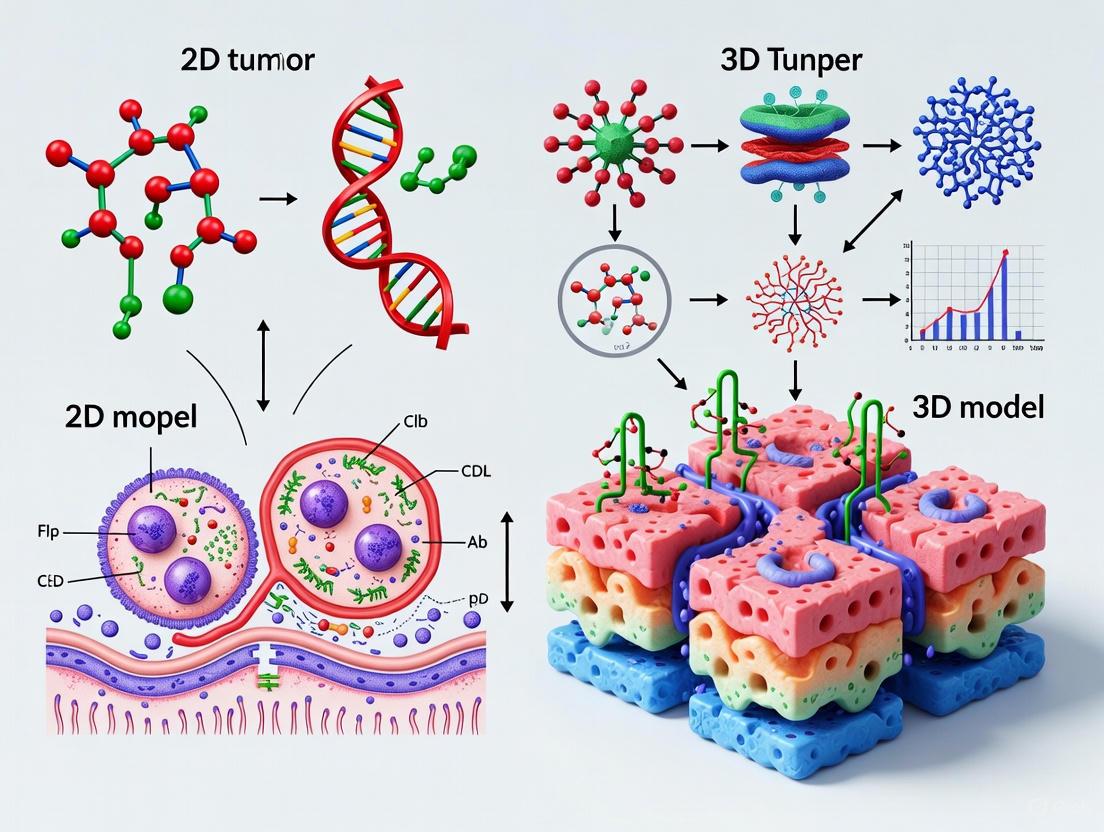
This article provides a comprehensive comparison between traditional 2D and emerging 3D tumor models for researchers and drug development professionals.
Beyond the Monolayer: How 3D Tumor Models Are Revolutionizing Cancer Research and Drug Discovery
Abstract
This article provides a comprehensive comparison between traditional 2D and emerging 3D tumor models for researchers and drug development professionals. It explores the foundational limitations of 2D monolayers in mimicking the tumor microenvironment and details the advanced methodologies for establishing physiologically relevant 3D systems like spheroids and organoids. The content covers practical challenges in 3D model implementation, optimization strategies, and a critical validation of these models against 2D cultures, highlighting their superior predictive power for drug response, metabolic profiles, and genetic expression. By synthesizing evidence from recent studies, this review underscores the transformative potential of 3D models in enhancing preclinical screening accuracy and accelerating the development of personalized cancer therapies.
From Flat Biology to 3D Reality: Understanding the Core Limitations of 2D and the Rise of 3D Tumor Models
For decades, two-dimensional (2D) cell culture has served as the fundamental workhorse of biological research, forming the cornerstone of our understanding of cell biology, disease mechanisms, and drug development. Since its inception in the early 1900s, this method of growing cells as a single layer on flat plastic surfaces has become deeply entrenched in scientific practice due to its straightforwardness and cost-effectiveness [1] [2]. However, as research has advanced, the severe limitations of these simplified models have become increasingly apparent, particularly in the field of oncology. This guide objectively examines the historical reasons behind the dominance of 2D culture, details its inherent flaws through direct experimental comparisons, and explores how these limitations are driving the adoption of more physiologically relevant three-dimensional (3D) models.
The Persistence of 2D Culture: A Legacy of Convenience
The enduring prevalence of 2D cell culture systems is not without reason. Several practical factors have cemented their position as a default methodology in laboratories worldwide [1] [3].
- Cost-Effectiveness and Simplicity: 2D cultures are inexpensive to maintain and involve straightforward protocols that have been optimized and standardized over many decades [2] [3].
- Experimental Practicality: These models are compatible with high-throughput screening (HTS) applications, allowing for the rapid testing of thousands of compounds in early-stage drug discovery [3] [4]. Cell observation and measurement are typically easier than in more complex systems [1].
- Established Knowledge Base: The long history of 2D use has generated a vast body of comparative literature, making it easier for researchers to contextualize new findings within existing knowledge [1].
Inherent Flaws and Limitations of 2D Models
Despite their convenience, 2D cultures possess fundamental flaws that limit their ability to accurately mimic the in vivo environment. The table below systematically compares the core characteristics of 2D and 3D culture systems.
Table 1: Fundamental Comparison of 2D and 3D Cell Culture Systems
| Characteristic | 2D Culture | 3D Culture | Key References |
|---|---|---|---|
| Spatial Organization | Monolayer; flat, adherent growth | Three-dimensional structures (spheroids, organoids) | [2] [5] |
| Cell-Cell & Cell-ECM | Limited, unnatural interactions | Physiologically relevant, complex interactions | [6] [2] [7] |
| Nutrient & Oxygen Access | Uniform, unlimited access | Creates gradients (e.g., hypoxic cores) as in vivo | [2] [5] |
| Proliferation & Growth | Homogeneous, rapid proliferation | Heterogeneous; outer proliferating, inner quiescent | [6] [5] |
| Gene Expression & Splicing | Altered compared to in vivo | More closely resembles in vivo profiles | [6] [2] [5] |
| Drug Response | Often overestimates efficacy; lacks penetration barriers | More predictive; includes penetration resistance | [3] [8] |
These structural limitations of 2D models translate directly into observable experimental discrepancies. Research shows that cells in 2D culture lose their native morphology and polarity, which in turn affects their function, signaling, and response to stimuli [2]. Crucially, the unlimited access to oxygen and nutrients in 2D culture fails to replicate the variable conditions within a solid tumor, where nutrient gradients and hypoxic regions drive cancer progression and therapy resistance [2] [5]. Furthermore, 2D models typically exist as monocultures, lacking the crucial tumor microenvironment (TME)—including immune cells, fibroblasts, and vascular networks—that is now recognized as a critical determinant of cancer behavior and drug response [2].
Experimental Evidence: A Quantitative Comparison
Recent studies provide direct quantitative evidence of the differences between 2D and 3D models. A 2025 study investigating tumor metabolism used a microfluidic chip to perform daily monitoring of key metabolites, revealing critical disparities [6].
Table 2: Experimental Metabolic Differences in 2D vs. 3D Cultures (U251-MG Glioblastoma Line)
| Metabolic Parameter | Observation in 2D Culture | Observation in 3D Culture | Biological Implication |
|---|---|---|---|
| Proliferation Rate | High, exponential growth until confluence | Reduced proliferation rates | Limited diffusion in 3D structures restricts growth [6] |
| Glucose Dependence | Highly dependent; proliferation stops without glucose | Less dependent; cells survive and proliferate longer without glucose | Activation of alternative metabolic pathways in 3D [6] |
| Lactate Production | Lower per-cell production | Higher lactate production under glucose restriction | Enhanced Warburg effect in 3D, indicating altered metabolism [6] |
| Per-Cell Glucose Consumption | Lower | Increased per-cell consumption | Fewer but more metabolically active cells in 3D models [6] |
These metabolic findings are complemented by drug response data. A 2024 study on high-grade serous ovarian cancer cell lines (PEO1, PEO4, PEO6) demonstrated that while the response to carboplatin, paclitaxel, and niraparib followed a similar trend in both 2D and 3D settings, a significantly lower sensitivity to chemotherapeutic agents was consistently observed in the 3D models [8]. This reduced sensitivity in 3D cultures is a critical finding, as it more accurately mirrors the drug resistance often encountered in clinical practice, which 2D models systematically overestimate.
Key Experimental Protocols for 2D vs. 3D Comparison
To objectively compare 2D and 3D models, researchers employ specific methodologies. Below are detailed protocols for key experiments cited in this guide.
- Cell Lines: U251-MG human glioblastoma and A549 human lung adenocarcinoma.
- 2D Culture Control: Cells are maintained as a monolayer in standard culture flasks for 5 days.
- 3D Culture Setup:
- Individual cells are seeded inside a collagen-based hydrogel within a microfluidic chip, mimicking the extracellular matrix (ECM).
- The culture time is extended to 10 days to study both spheroid formation (days 1-5) and tumor maintenance/growth (days 6-10).
- Glucose Conditions: Both 2D and 3D cultures are subjected to three distinct glucose conditions: high, low, and no glucose.
- Monitoring and Analysis:
- Proliferation: Measured daily in 2D via image acquisition and Neubauer chamber counting. In 3D, the number of metabolically active cells is quantified using Alamar Blue reagent.
- Metabolites: The microfluidic chip allows for continuous, daily monitoring of glucose, glutamine, and lactate concentrations in the culture medium.
- Cell Lines: PEO1, PEO4, and PEO6 cells, derived from the same ovarian cancer patient at different stages of disease progression.
- 2D Culture Control: Cells are grown as a flat, adherent monolayer in standard tissue culture plates.
- 3D Culture Setup: Cells are seeded in U-bottom plates coated with an ultra-low attachment (ULA) surface. This scaffold-free technique promotes cell-cell adhesion and the self-assembly of multicellular spheroids.
- Morphological Analysis: Spheroid structures are analyzed for their compaction patterns using microscopy.
- Viability and ATP Assay: A viability gradient is confirmed in 3D spheroids, and ATP production is measured to assess metabolic activity.
- Drug Treatment: Both 2D monolayers and 3D spheroids are treated with chemotherapeutic agents (carboplatin, paclitaxel) and a PARP inhibitor (niraparib). Dose-response curves are generated to calculate IC50 values and compare sensitivity.
Visualizing the Structural and Metabolic Divide
The fundamental differences between 2D and 3D cultures that drive the experimental results above can be visualized in the following diagrams.
Diagram 1: Structural and Microenvironmental Comparison. The 2D model offers a homogeneous environment, while the 3D spheroid recapitulates the layered architecture and critical nutrient gradients of in vivo tumors, featuring a proliferating outer layer, a quiescent middle layer, and a hypoxic/necrotic core [5].
Diagram 2: Differential Metabolic Response to Stress. Under glucose restriction, 2D cultures typically fail, while 3D cultures activate survival mechanisms, including altered glutamine metabolism and enhanced lactate production (Warburg effect), mirroring the adaptive responses of in vivo tumors [6].
The Scientist's Toolkit: Essential Reagents and Materials
The following table details key solutions and materials required for setting up the comparative experiments discussed in this guide.
Table 3: Essential Research Reagent Solutions for 2D vs. 3D Experiments
| Item Name | Function/Application | Example Use Case |
|---|---|---|
| Microfluidic Chip | Provides a controlled platform for 3D culture, enabling real-time monitoring and perfusion. | Metabolic studies and continuous metabolite sensing [6]. |
| Collagen-Based Hydrogel | Natural scaffold that mimics the Extracellular Matrix (ECM) for embedding cells in 3D. | Induces cell proliferation and self-organization into spheroids [6]. |
| Ultra-Low Attachment (ULA) Plates | Culture plates with a covalently bound hydrogel surface that inhibits cell attachment. | Scaffold-free formation of multicellular tumor spheroids (MCTS) [5] [8]. |
| Alamar Blue Reagent | Cell-permeant redox indicator used to measure the number of metabolically active cells. | Quantifying proliferation and viability in 3D spheroids [6]. |
| Matrigel | A proprietary basement membrane extract, rich in ECM proteins, used as a scaffold for 3D culture. | Studying cell-ECM interactions and forming organotypic structures [2] [5]. |
The historical dominance of 2D cell culture is a testament to its simplicity and utility as a foundational research tool. However, the inherent flaws of this model—its inability to recapitulate tissue architecture, physiological gradients, and the complex tumor microenvironment—have been unequivocally exposed by modern research. Quantitative experimental data from metabolic and drug response studies consistently demonstrate that 3D models provide a more physiologically relevant and clinically predictive platform. While 2D culture may retain a role for high-throughput initial screening, the scientific consensus is clear: a transition to more advanced 3D models is essential for improving the accuracy of cancer biology research and enhancing the efficiency of drug development pipelines.
In the landscape of cancer research, the transition from traditional two-dimensional (2D) to three-dimensional (3D) cell culture models represents a pivotal shift toward more physiologically relevant systems. While 2D cultures—where cells grow as a monolayer on a flat plastic surface—have been a cornerstone of biological research for decades, they present significant limitations in mimicking the complex reality of tumor biology [2]. These constraints fundamentally alter experimental outcomes, particularly in studies of cancer morphology, cellular polarity, and drug response. A comprehensive understanding of these limitations is essential for researchers and drug development professionals aiming to develop more predictive models and translate preclinical findings into clinical success. This guide objectively compares the performance of 2D and emerging 3D tumor models, focusing on three critical limitations, supported by experimental data and detailed methodologies.
Core Limitations of 2D Cancer Models
The simplified environment of 2D cultures distorts fundamental cellular characteristics, leading to data that poorly correlates with clinical outcomes. The table below summarizes the primary limitations regarding morphology, polarity, and nutrient access.
Table 1: Key Limitations of 2D Cell Culture Models in Cancer Research
| Limitation Area | Manifestation in 2D Models | Impact on Research Data |
|---|---|---|
| Altered Cell Morphology | Cells flatten and spread on plastic surfaces, losing their native three-dimensional architecture [2]. | Changes cell signaling, differentiation, proliferation, and response to stimuli [2] [5]. |
| Loss of Tissue Polarity | Disruption of natural cell-ECM interactions leads to loss of polarity [2]. | Alters critical processes like apoptosis and vectorial secretion, skewing drug response assays [2]. |
| Unrealistic Nutrient & Drug Access | All cells have equal, unrestricted access to oxygen, nutrients, and drugs in the culture medium [2] [5]. | Fails to replicate nutrient/oxygen gradients and consequent drug penetration barriers found in vivo [2] [5]. |
Altered Cellular Morphology and Signaling
In vivo, tumor cells exist within a complex three-dimensional architecture that influences their behavior and signaling. In 2D cultures, this context is lost. Cells are forced to adapt, leading to a flattened and spread morphology that does not reflect their natural state [2]. This altered shape disrupts the organization of intracellular structures and changes how cells perceive mechanical cues, ultimately affecting their function, gene expression patterns, and responsiveness to external stimuli [2] [5]. The cytoskeleton undergoes reorganization, which can activate different signaling pathways compared to cells in a 3D environment [9].
Loss of Cellular Polarity
Cell polarity—the asymmetric organization of cellular components—is crucial for proper tissue function and is often disrupted in cancer. In a 3D environment, interactions with the extracellular matrix (ECM) help establish and maintain this polarity. However, in 2D monolayers, these natural ECM interactions are disturbed, causing cells to lose their inherent polarity [2]. This loss can change how cells respond to apoptotic signals and other critical phenomena, directly impacting the assessment of drug efficacy [2]. For instance, the response to DNA-damaging agents may be different in polarized versus non-polarized cells.
Unrealistic Nutrient and Drug Exposure
Solid tumors in vivo are characterized by heterogeneous microenvironments. Cells within a tumor mass have variable access to oxygen and nutrients, leading to the formation of distinct zones: an outer layer of proliferating cells, an intermediate layer of quiescent cells, and a necrotic core in areas of severe nutrient and oxygen deprivation [5]. This spatial organization creates gradients of metabolites and signaling molecules that influence tumor biology and drug resistance.
In stark contrast, every cell in a 2D monolayer has equal and unlimited access to the culture medium's components, including oxygen, nutrients, and administered drugs [2] [5]. This unrealistic access fails to model critical aspects of tumor physiology, such as:
- Hypoxia: The lack of oxygen in the inner core of tumors, which activates pro-survival pathways.
- Acidosis: The build-up of metabolic waste, which alters the tumor microenvironment.
- Drug Penetration Barriers: The limited ability of a drug to diffuse through multiple cell layers, a major mechanism of resistance in solid tumors [5].
By failing to recapitulate these barriers, 2D models often overestimate the efficacy of anticancer drugs.
Quantitative Experimental Data: 2D vs. 3D Drug Response
The theoretical limitations of 2D models translate into consistent and measurable differences in experimental outcomes, particularly in drug sensitivity testing. The following table compiles quantitative data from studies comparing 2D and 3D models.
Table 2: Comparative Drug Sensitivity (IC50) in 2D vs. 3D Culture Models
| Cancer Type | Drug | IC50 in 2D | IC50 in 3D | Fold Change | Citation |
|---|---|---|---|---|---|
| Triple-Negative Breast Cancer (Multiple Cell Lines) | Epirubicin (EPI) | Variable by cell line | Significantly higher in 12/13 cell lines | Average increase: Significant (p=0.013) | [10] |
| Triple-Negative Breast Cancer (Multiple Cell Lines) | Cisplatin (CDDP) | Variable by cell line | Significantly higher in most cell lines | Highly correlated with 2D (R=0.955) | [10] |
| Triple-Negative Breast Cancer (Multiple Cell Lines) | Docetaxel (DTX) | Variable by cell line | Significantly higher in most cell lines | Not correlated with 2D (R=0.221) | [10] |
| General 3D Tumor Spheroids | Various Chemotherapeutics | Lower | Higher | Increased resistance due to diffusion barriers & microenvironment | [5] |
Key Insight: A comprehensive study on 13 TNBC cell lines found that IC50 values for Epirubicin, Cisplatin, and Docetaxel were consistently and significantly higher in 3D cultures than in 2D monolayers [10]. This demonstrates a universal increase in drug resistance in 3D models. Furthermore, the strong correlation for Cisplatin suggests 2D models might be acceptable for screening DNA-damaging agents, whereas the poor correlation for Docetaxel highlights a class-specific disconnect that makes 2D models unreliable for taxanes [10].
Experimental Protocols for Model Comparison
To generate the comparative data cited above, researchers employ standardized protocols. Below is a detailed methodology for a typical drug sensitivity assay comparing 2D and 3D models, as used in TNBC research [10].
Protocol: Drug Sensitivity Assay in 2D vs. Scaffold-Free 3D Cultures
Objective: To compare the half-maximal inhibitory concentration (IC50) of a chemotherapeutic agent between 2D monolayers and 3D spheroids.
Materials:
- Cell Lines: e.g., TNBC cell lines like HCC1806, MDA-MB-231, etc. [10].
- Reagents: Cell culture medium, fetal bovine serum (FBS), trypsin-EDTA, chemotherapeutic drugs (e.g., Epirubicin, Cisplatin, Docetaxel), cell viability assay kit (e.g., ATP-based).
- Specialized Equipment:
- 2D Culture: Standard tissue culture-treated plates.
- 3D Culture: Ultra-low attachment (ULA) 96-well U-bottom plates to promote spheroid formation [10].
Methodology:
- Cell Seeding:
- 2D Culture: Seed cells in a monolayer on standard 96-well plates and pre-culture for 24 hours.
- 3D Culture: Seed cells in ULA 96-well U-bottom plates and pre-culture for 3 days to allow for spheroid formation [10].
- Drug Treatment: After the pre-culture period, expose both 2D and 3D cultures to a dilution series of the anticancer drug for a defined period (e.g., 72 hours).
- Cell Viability Assessment: At the endpoint, perform a cell viability assay. ATP-based assays are often used as they can be applied to both 2D and 3D systems with similar conditions [10].
- Data Analysis: Calculate the IC50 value for each condition using non-linear regression analysis of the dose-response curve. Compare the IC50 values between 2D and 3D models to determine the fold-change in resistance.
The Scientist's Toolkit: Essential Research Reagents and Materials
Building robust and reproducible 3D cancer models requires specific materials. The following table details key solutions used in the featured experiments and the broader field.
Table 3: Essential Research Reagents for 2D vs. 3D Model Studies
| Item | Function/Application | Example Use in Protocols |
|---|---|---|
| Ultra-Low Attachment (ULA) Plates | Prevents cell attachment, forcing cell-cell interaction and spheroid formation in scaffold-free models. | Used for generating 3D spheroids in suspension [10]. |
| Matrigel / Basement Membrane Extract | A natural scaffold used in scaffold-based 3D cultures to provide a physiologically relevant ECM for cell growth and signaling. | Used for embedding cells to create organoids and invasive cultures [11] [9]. |
| Defined Culture Media & Supplements | Specific growth factors (e.g., EGF, FGF) and supplements (e.g., B27, N2) are often required to maintain complex 3D models. | Essential for long-term cultivation and stemness maintenance in patient-derived organoids [9]. |
| CellTracker Dyes & Reporter Cell Lines | Fluorescent tags (e.g., GFP, RFP) allow for tracking different cell populations within co-culture spheroids over time. | Used to visualize cancer-stroma interactions and spatial organization [12] [11]. |
| ATP-based Viability Assays | A common readout for drug sensitivity that can be applied to both 2D and 3D structures, facilitating direct comparison. | Used to generate dose-response curves and calculate IC50 values [10]. |
The evidence clearly demonstrates that the key limitations of 2D models—altered morphology, loss of polarity, and unrealistic nutrient access—fundamentally compromise their ability to predict in vivo tumor behavior. Quantitative data from drug sensitivity assays consistently shows that 3D models exhibit higher resistance to chemotherapeutics, more accurately mirroring clinical challenges like treatment failure. While 2D cultures remain useful for high-throughput initial screens due to their simplicity and low cost, the research community is increasingly adopting 3D spheroids and organoids for critical pathobiology studies and preclinical drug evaluation. Matching the model system to the research question is paramount, and understanding these core limitations of 2D culture is the first step toward generating more translatable and impactful cancer research.
Traditional two-dimensional (2D) cell culture has served as a fundamental tool in cancer research for decades, valued for its simplicity, cost-effectiveness, and compatibility with high-throughput screening [3]. However, these models present severe limitations in accurately mimicking the physiological conditions encountered by cancer cells within solid tumors [6]. The failure rate of anticancer compounds is remarkably high, with only approximately 10% progressing successfully from 2D cell culture tests to clinical trials [6]. This discrepancy stems from the inability of 2D cultures to replicate critical aspects of the tumor microenvironment (TME), including three-dimensional architecture, cell-cell interactions, cell-extracellular matrix (ECM) interactions, and nutrient gradients [5] [13].
In contrast, three-dimensional (3D) cell culture models have emerged as powerful tools that bridge the gap between conventional 2D cultures and in vivo animal models [5]. These advanced systems provide a more physiologically relevant platform by allowing cells to interact with each other and with the ECM, leading to the formation of multicellular structures that better resemble the architecture of in vivo tumors [6]. The paradigm shift toward 3D models represents a transformative approach in preclinical studies, enabling more accurate investigation of tumor behavior, drug response, and personalized cancer treatment strategies [5] [13].
Fundamental Differences Between 2D and 3D Culture Systems
Structural and Microenvironmental Characteristics
The fundamental differences between 2D and 3D culture systems extend beyond simple dimensionality to encompass profound variations in structural organization and microenvironmental conditions.
Table 1: Core Characteristics of 2D vs. 3D Cancer Models
| Feature | 2D Models | 3D Models |
|---|---|---|
| Spatial Organization | Monolayer; flat, uniform surface | Three-dimensional; multi-layered architecture |
| Cell-Cell Interactions | Limited to peripheral contact in single plane | Extensive; multi-directional as in native tissue |
| Cell-ECM Interactions | Minimal; unnatural attachment to rigid plastic | Physiologically relevant; cells deposit and interact with their own ECM |
| Nutrient/Gradient Distribution | Uniform; direct access to nutrients | Heterogeneous; creates nutrient, oxygen, and pH gradients |
| Proliferation Patterns | Uniformly proliferating cells | Zonal proliferation: outer proliferating layer, intermediate quiescent layer, inner necrotic core |
| Gene Expression Profiles | Altered; does not mimic in vivo patterns | Better preservation of native gene expression signatures |
| Drug Penetration | Direct, uniform access | Limited; mimics in vivo diffusion barriers |
In 2D cultures, cells receive nutrients uniformly and expand in a single plane, resulting in a predominantly proliferative population with altered morphology and gene expression [6] [5]. Conversely, 3D cultures exhibit spatial heterogeneity that closely mimics in vivo tumors, with distinct cellular zones including an outer layer of highly proliferative cells, an intermediate layer containing quiescent cells, and an inner core characterized by hypoxic and acidic conditions [5]. This organizational complexity leads to natural gradients of oxygen, nutrients, and metabolic waste products that significantly influence cellular behavior and drug response [3].
The Tumor Microenvironment in 3D Models
The TME is a complex and dynamic ecosystem comprising not only tumor cells but also various supporting elements such as activated fibroblasts, blood vessels, infiltrating immune cells, and extracellular matrix components [14]. Three-dimensional models excel at replicating these critical interactions. The ECM, in particular, serves as a dynamic protein network that maintains tissue homeostasis and cellular organization [13]. In 3D cultures, the ECM provides structural and biochemical support for cells and participates in essential processes including proliferation, adhesion, cell communication, and cell death [13].
Advanced 3D culture systems can incorporate multiple cellular components of the TME, including tumor-associated macrophages (TAMs), cancer-associated fibroblasts (CAFs), and various immune cells [15] [16]. This capability enables researchers to study complex interactions within the TME, such as TAM-mediated suppression of T-cell antitumor function, which is considered a major obstacle for many immunotherapies, including immune checkpoint blockade and adoptive T-cell therapies [15]. The inclusion of these diverse elements in 3D models provides a more comprehensive platform for investigating tumor immunology and developing novel immunotherapeutic strategies.
Quantitative Comparisons: Experimental Evidence
Metabolic Differences and Proliferation Rates
Recent comparative studies have revealed significant metabolic differences between 2D and 3D cultures that have profound implications for cancer research and drug development.
Table 2: Metabolic and Functional Differences Between 2D and 3D Cultures
| Parameter | 2D Culture Findings | 3D Culture Findings | Experimental System |
|---|---|---|---|
| Proliferation Rate | Higher proliferation rates; rapid confluence | Reduced proliferation; limited by diffusion | Microfluidic chip with U251-MG and A549 cells [6] |
| Glucose Dependency | Strong glucose dependence; cessation of proliferation without glucose | Survival under glucose deprivation via alternative pathways | Daily monitoring in tumor-on-chip platform [6] |
| Metabolic Profile | Consistent metabolic patterns | Elevated glutamine consumption under glucose restriction; enhanced Warburg effect | Quantitative metabolite analysis [6] |
| Lactate Production | Standard lactate production | Higher lactate production per cell | Metabolic flux measurements [6] |
| Drug Response (TMZ) | Increased sensitivity | Higher resistance; several-fold increase in IC50 values | GBM spheroids vs monolayers [17] |
| Gene Expression | Altered expression profiles | Upregulation of hypoxia, EMT, and TME regulation genes | Lung cancer cells in Matrigel [5] |
A comprehensive 2025 study comparing 2D versus 3D tumor-on-chip models demonstrated that 3D cultures exhibit reduced proliferation rates likely due to limited diffusion of nutrients and oxygen [6]. Under glucose restriction conditions, 3D cultures showed distinct metabolic profiles, including elevated glutamine consumption and higher lactate production, indicating an enhanced Warburg effect [6]. Notably, the microfluidic chip platform enabled continuous monitoring and revealed increased per-cell glucose consumption in 3D models, highlighting the presence of fewer but more metabolically active cells compared to 2D cultures [6].
The metabolic heterogeneity observed in 3D models closely mirrors the metabolic adaptations that occur in vivo, where tumor cells develop various strategies to survive and proliferate under nutrient deprivation and hypoxic conditions. This enhanced physiological relevance makes 3D systems particularly valuable for studying tumor metabolism and developing therapies that target metabolic vulnerabilities in cancer.
Gene Expression and Signaling Pathways
Gene expression analyses have consistently demonstrated that 3D culture systems preserve transcriptional profiles that more closely resemble in vivo tumors compared to 2D cultures. Significant differences in gene expression between 2D and 3D cultures have been observed across various cancer types, including prostate, lung, breast, and colorectal cancers [6] [5].
In prostate cancer cell lines, genes such as ANXA1 (a possible tumor suppressor), CD44 (involved in cell-cell interactions and migration), and stemness-related genes including OCT4 and SOX2 were significantly altered in 3D cultures [6]. Similarly, in lung cancer cells cultured in 3D conditions, researchers reported upregulation of genes associated with hypoxia signaling, epithelial-to-mesenchymal transition (EMT), and tumor microenvironment regulation [5].
These gene expression differences translate to functionally relevant changes in cellular behavior and drug sensitivity. For instance, 3D patient-derived head and neck squamous cell carcinoma spheroids showed differential protein expression profiles of epidermal growth factor receptor (EGFR), EMT, and stemness markers, along with greater viability following treatment with escalating doses of cisplatin and cetuximab compared to 2D cultures [5].
Gene Expression Fidelity in Culture Models
Application in Drug Discovery and Therapeutic Testing
Drug Response and Resistance Mechanisms
Perhaps the most significant advantage of 3D cancer models is their ability to more accurately predict drug response and resistance mechanisms observed in clinical settings. Multiple studies have demonstrated substantial differences in drug sensitivity between 2D and 3D cultures, with 3D models typically showing increased resistance that better mirrors in vivo tumor behavior.
In glioblastoma research, investigation of combination therapy with Erlotinib and Imatinib revealed that lower drug concentrations were required in 3D cultures to achieve enhanced cytotoxic effects and reduced tumor cell proliferation [17]. The 3D culture model provided a more physiologically relevant context for evaluating oncolytic therapies, with significant downregulation of Bcl-2 and VEGF expression observed, particularly a pronounced reduction in Bcl-2 that correlated with elevated apoptosis rates [17].
Similarly, studies examining temozolomide (TMZ) response in GBM models found that the half-maximal inhibitory concentration (IC50) in 3D spheroids was several-fold higher than in 2D monolayers, suggesting enhanced resistance under 3D conditions [17]. This resistance has been attributed to multiple factors, including limited drug penetration, the presence of quiescent cell populations, and altered expression of drug resistance genes [5] [17].
Immunotherapy Evaluation
Three-dimensional models have proven particularly valuable for studying cancer immunotherapy, as they enable the investigation of complex interactions between tumor cells and immune components within a physiologically relevant context. An ex vivo 3D TME-mimicry culture system has been developed that incorporates the three major components of a human TME: human tumor cells, tumor-associated macrophages (TAMs), and tumor antigen-specific T cells [15].
This TME-mimicry culture can readout TAM-mediated suppression of T-cell antitumor reactivity, providing a powerful platform for evaluating TAM modulation of T-cell-based cancer immunotherapy [15]. Studies using this system have demonstrated that SMAC mimetics (SM) not only sensitize tumor cells to TNFα-mediated cell death but also exert immunostimulatory properties, including induction of human PBMC- and patient-derived dendritic cell maturation and modulation of cancer-associated fibroblasts toward an immune interacting phenotype [16].
Similar approaches have been used to study chimeric antigen receptor (CAR)-T cell therapy, with researchers demonstrating that diluted matrigel allows better CAR-T cell invasion and more accurate assessment of killing ability and specificity [14]. These advanced 3D systems address a critical need in immuno-oncology, where the immunosuppressive TME represents a major barrier to the efficacy of immunotherapeutic approaches.
Technical Approaches and Experimental Protocols
3D Model Establishment Methodologies
The establishment of 3D cancer models employs diverse methodologies that can be broadly categorized into scaffold-based and scaffold-free approaches.
Table 3: Technical Approaches for 3D Cancer Model Establishment
| Method Category | Specific Techniques | Key Features | Applications |
|---|---|---|---|
| Scaffold-Based | Hydrogel embedding (Matrigel, collagen), polymeric scaffolds, decellularized ECM | Provides structural support and biochemical cues; mimics native ECM | Organoid generation, tissue engineering, drug screening |
| Scaffold-Free | Hanging drop, ultra-low attachment plates, magnetic levitation, spinner cultures | Promotes self-assembly through cell-cell interactions; minimal external interference | Spheroid formation, high-throughput screening, co-culture studies |
| Microfluidic Systems | Tumor-on-chip, 3D-microfluidic culture | Precise control over microenvironment; real-time monitoring | Metastasis studies, vascularization, immune cell migration |
| Bioprinting | Extrusion-based, laser-assisted, stereolithography | Precise spatial patterning; customizable architecture | Complex TME reconstruction, multi-tissue interfaces |
| Organoid Culture | Patient-derived organoids, air-liquid interface (ALI) | Preserves tumor heterogeneity; long-term expansion | Personalized medicine, biobanking, drug discovery |
Scaffold-free methods, such as the hanging drop technique and ultra-low attachment plates, are widely utilized due to their simplicity, low cost, high reproducibility, and suitability for high-throughput drug screening [5] [13]. These approaches promote cell-cell adhesion and facilitate cell aggregation into spheroids without external scaffolding materials.
In contrast, scaffold-based methods utilize natural hydrogels (e.g., Matrigel, collagen), synthetic polymers, or decellularized ECM to provide a 3D artificial microenvironment that mimics native tissues [14] [13]. These systems enable dynamic cell-cell and cell-matrix interactions and allow researchers to control the physicochemical and biomechanical properties of the cellular environment [5].
Protocol for 3D Tumor Spheroid Formation Using Liquid Overlay Technique
The liquid overlay technique represents one of the most accessible and widely used methods for generating 3D tumor spheroids. The following protocol outlines the key steps for establishing spheroids using this approach:
Surface Coating: Prepare ultra-low attachment (ULA) plates by coating standard multi-well plates with a non-adhesive polymer such as poly-HEMA or commercially available ULA coatings to prevent cell attachment to the plastic surface.
Cell Preparation: Harvest and count cells using standard tissue culture techniques. Prepare a single-cell suspension at an appropriate density (typically 1,000-10,000 cells per well depending on spheroid size requirements).
Seeding: Seed cells into the coated plates in complete culture medium. The non-adhesive surface prevents attachment, encouraging cells to aggregate and form spheroids.
Centrifugation (Optional): For some cell types, brief low-speed centrifugation (100-200 × g for 3-5 minutes) can enhance spheroid formation by bringing cells into close proximity.
Culture Maintenance: Culture plates under standard conditions (37°C, 5% CO2) with minimal disturbance for 24-72 hours to allow spheroid formation.
Medium Exchange: Carefully exchange 50-70% of the culture medium every 2-3 days to provide fresh nutrients while minimizing disruption to the formed spheroids.
Monitoring and Analysis: Monitor spheroid formation and growth using microscopy. Spheroids are typically ready for experimentation within 3-7 days, depending on the cell type and initial seeding density.
This protocol can be adapted for co-culture systems by seeding multiple cell types simultaneously, enabling the study of interactions between cancer cells and other TME components such as fibroblasts or immune cells [5].
Spheroid Formation Workflow
The Scientist's Toolkit: Essential Research Reagents and Platforms
Successful implementation of 3D cancer models requires specific reagents and technical platforms designed to support three-dimensional cell growth and analysis.
Table 4: Essential Research Reagents and Platforms for 3D Cancer Models
| Reagent/Platform | Function | Application Examples |
|---|---|---|
| Ultra-Low Attachment (ULA) Plates | Prevents cell attachment, promoting spheroid formation through self-aggregation | High-throughput spheroid formation, drug screening [5] |
| Matrigel/ECM Hydrogels | Basement membrane extract providing physiological scaffolding for 3D growth | Organoid culture, invasion assays, stem cell maintenance [14] [13] |
| Collagen-Based Hydrogels | Natural ECM component with tunable mechanical properties | Stromal co-cultures, migration studies, biomechanical signaling [6] |
| Microfluidic Chips | Miniaturized devices for precise fluid control and real-time monitoring | Tumor-on-chip models, metabolic studies, vascularization [6] [14] |
| 3D Bioprinters | Automated deposition of cells and biomaterials in precise spatial arrangements | Complex TME reconstruction, multi-cellular tissue models [18] [13] |
| Patient-Derived Organoid Media | Specialized formulations supporting growth of primary tumor cells | Personalized medicine platforms, biobanking, drug sensitivity testing [13] |
| Live-Cell Imaging Systems | Continuous monitoring of spheroid growth and treatment response | Kinetic studies, immune cell trafficking, apoptosis monitoring [19] |
| 3D Bone Marrow Niche Platforms | Specialized systems for hematological malignancy research | Leukemia and multiple myeloma studies, drug resistance modeling [19] |
Advanced platforms such as Crown Bioscience's 3D Bone Marrow Niche (BMN) model incorporate key cellular components—stromal cells and endothelial cells—within biofunctional hydrogels seeded with patient-derived tumor cells, optionally supplemented with autologous immune cells [19]. This system accurately captures the essential tumor microenvironment of hematological malignancies, providing a physiologically relevant platform for studying tumor behavior, immune evasion, and drug resistance [19].
Similarly, microfluidic-based tumor-on-chip platforms enable daily monitoring of cancer cell key metabolites such as glucose, glutamine, and lactate, providing critical insights into metabolic patterns and their response to therapeutic interventions [6]. These systems offer flexibility in design, require low cell numbers, and enable real-time analysis within the devices, making them particularly valuable for longitudinal studies of tumor cell behavior [6].
The paradigm shift from 2D to 3D cancer models represents a fundamental advancement in preclinical cancer research. The evidence consistently demonstrates that 3D culture systems more accurately replicate the complex architecture, cellular heterogeneity, and functional characteristics of in vivo tumors. From distinct metabolic profiles and gene expression patterns to more clinically relevant drug responses, 3D models bridge the critical gap between traditional cell culture and animal models.
The research community is increasingly adopting a tiered approach that leverages the strengths of both 2D and 3D systems: utilizing 2D cultures for high-throughput initial screening and 3D models for more predictive secondary validation [3]. Furthermore, the integration of patient-derived organoids and 3D bioprinting technologies holds significant promise for personalized medicine approaches, enabling researchers to match therapies to individual patients based on their specific tumor characteristics [3] [13].
As 3D technologies continue to evolve—incorporating advanced biosensors, multi-omics approaches, and artificial intelligence—their predictive power and translational relevance will further increase. Regulatory bodies including the FDA and EMA are increasingly considering 3D model data in drug submissions, signaling broader acceptance of these advanced platforms in the drug development pipeline [3]. The ongoing refinement of 3D cancer models will undoubtedly accelerate the discovery of more effective cancer therapies and enhance our fundamental understanding of tumor biology.
In cancer research, the transition from traditional two-dimensional (2D) to three-dimensional (3D) cell culture models represents a paradigm shift toward more physiologically relevant systems. While 2D cultures have been a cornerstone for decades, growing cells as monolayers on plastic surfaces, they fail to replicate the complex architecture of human tumors [2]. This limitation has driven the development of 3D models that recapitulate the dynamic cell-cell and cell-matrix interactions present in vivo, providing a more representative platform for studying tumor biology, drug screening, and therapeutic development [20] [21]. The architectural complexity of 3D models enables researchers to better mimic the tumor microenvironment (TME), leading to more accurate insights into cancer initiation, metastasis, drug resistance, and recurrence [20].
Comparative Analysis: 2D vs. 3D Tumor Models
The fundamental differences between 2D and 3D culture systems extend across morphological, functional, and molecular dimensions, significantly impacting their ability to mimic in vivo conditions.
Table 1: Fundamental Characteristics of 2D vs. 3D Cell Culture Models
| Feature | 2D Models | 3D Models | Biological Significance |
|---|---|---|---|
| Spatial Architecture | Monolayer; flat and stretched morphology [2] | Multi-layered structures; preserved tissue-like morphology [2] | 3D architecture influences cell signaling, differentiation, and gene expression [2] |
| Cell-Cell & Cell-ECM Interactions | Limited; disrupted by artificial substrate attachment [2] | Physiologically relevant; direct and indirect interactions maintained [21] | Critical for maintaining native cell polarity, survival, and function [2] |
| Nutrient & Oxygen Gradient | Uniform access [2] [6] | Variable access; creates diffusion gradients [2] [6] | Mimics in vivo tumor conditions, leading to heterogeneous cell populations (proliferating, quiescent, necrotic) [6] |
| Proliferation Rate | High and uniform [6] | Reduced and heterogeneous [6] | More accurately reflects the growth kinetics of in vivo tumors [6] |
| Gene Expression & Drug Response | Altered topology and biochemistry; often less resistant to therapy [2] | In vivo-like expression profiles; often more therapy-resistant [2] | 3D models show differential expression of EMT markers, receptors, and matrix molecules, affecting drug penetration and efficacy [21] |
Table 2: Quantitative Metabolic Differences in 2D vs. 3D Cultures (Based on A549 and U251-MG cell lines) [6]
| Metabolic Parameter | 2D Culture Findings | 3D Culture Findings | Interpretation |
|---|---|---|---|
| Proliferation & Glucose Dependence | Ceased completely under glucose deprivation; cell death by day 3-5 [6] | Continued proliferation under glucose deprivation during formation phase (up to day 5) [6] | 3D models show reduced glucose dependence and activation of alternative survival pathways. |
| Lactate Production | Lower per-cell production [6] | Higher lactate production [6] | Indicates an enhanced Warburg effect, a hallmark of cancer metabolism, in 3D models. |
| Per-Cell Glucose Consumption | Lower [6] | Increased [6] | Suggests 3D cultures contain fewer but metabolically more active cells, reflecting tumor heterogeneity. |
| Response to Glucose Restriction | N/A | Elevated glutamine consumption [6] | Demonstrates metabolic flexibility and adaptation to nutrient stress in 3D models. |
Experimental Protocols and Methodologies
Protocol for Scaffold-Free Spheroid Formation
This method utilizes ultra-low attachment plates to promote self-aggregation of cells into spheroids, a common technique for generating 3D models without extracellular matrix (ECM) scaffolds [21].
- Key Materials: U-shape, round-bottom 96-well plates with ultra-low adhesive properties (e.g., polystyrene covalently bound with hydrogel); complete cell culture medium; trypsin-EDTA solution [21].
- Cell Seeding: Harvest cells using standard trypsinization and create a single-cell suspension. Seed cells at an optimized density (e.g., 5,000-15,000 cells per well, depending on cell type and experimental needs) into the ultra-low attachment plates [21].
- Spheroid Formation: Incubate the plates under standard conditions (e.g., 37°C, 5% CO2). Cellular self-aggregation typically occurs within 24-72 hours. Monitor spheroid formation and growth using a phase-contrast microscope [21].
- Post-Formation Processing: After spheroids are formed (e.g., at 72 hours), the medium can be discarded, and spheroids may be subjected to a serum-free starvation period (e.g., 16-20 hours) to synchronize cell cycles before downstream analyses like RNA extraction, functional assays, or imaging [21].
Protocol for Microfluidic-Based 3D Culture
Microfluidic "tumor-on-chip" platforms allow for precise control of the microenvironment and real-time monitoring of metabolic activities [6].
- Key Materials: Microfluidic chips; collagen-based hydrogel or other ECM-mimicking hydrogels (e.g., Matrigel); cell culture medium; metabolites assay kits (for glucose, lactate, glutamine) [6].
- Hydrogel Embedding: Prepare a mixture of individual cancer cells (e.g., U251-MG or A549) suspended in a liquid, collagen-based hydrogel at 4°C. This mixture is then pipetted into the microfluidic chamber(s) of the chip [6].
- Gel Polymerization: Incubate the chip at 37°C for a short period (e.g., 20-30 minutes) to allow the hydrogel to polymerize, entrapping the cells in a 3D matrix [6].
- Perfusion and Monitoring: Connect the chip to a microfluidic perfusion system to continuously supply fresh medium. This setup allows for the daily monitoring of metabolite consumption/production (e.g., glucose, glutamine, lactate) from the effluent medium over an extended culture period (e.g., 10 days) [6]. In this environment, cells proliferate and self-organize into spheroids, mimicking in vivo tumorigenesis.
Visualizing Signaling and Interactions in the 3D TME
The following diagrams, created using the specified color palette, illustrate key concepts and interactions within the 3D tumor microenvironment.
Diagram 1: 2D vs. 3D Architectural Fundamentals
Diagram 2: Cell-Matrix Interactions in Breast Cancer Spheroids [21]
Diagram 3: Metabolic Gradients in 3D Spheroids [6]
The Scientist's Toolkit: Essential Research Reagents and Materials
Table 3: Key Reagents and Materials for 3D Tumor Model Research
| Reagent/Material | Function/Application | Specific Examples |
|---|---|---|
| Ultra-Low Attachment Plates | Prevents cell attachment to the plastic surface, forcing self-aggregation into spheroids in a scaffold-free manner [21]. | U-shape, round-bottom 96-well plates [21]. |
| ECM-Mimicking Hydrogels | Provides a bioactive 3D scaffold that mimics the native extracellular matrix, supporting cell migration, proliferation, and signaling [20] [6]. | Matrigel, collagen-based hydrogels, synthetic PEG-based hydrogels [20] [6]. |
| Microfluidic Chips | Creates miniature, perfusable cell culture environments ("tumor-on-chip") for real-time, non-destructive monitoring of metabolism and growth [6]. | PDMS or polymer-based chips with designed microchannels and chambers [6]. |
| Spatial Transcriptomics Platforms | Enables genome-wide mRNA expression analysis while retaining positional information of cells within a tissue section, revealing tumor microregions and heterogeneity [22]. | 10x Genomics Visium [22]. |
| CODEX Multiplexed Imaging | Allows highly multiplexed protein detection (50+) in situ on a single tissue section, defining complex cellular neighborhoods and immune-tumor interfaces [22]. | Antibody-based imaging system with fluorophore-conjugated barcodes [22]. |
| 3D Bioprinting Systems | Enables precise, automated deposition of cells and "bioinks" to generate standardized, complex tumor models with defined architecture, including vasculature [23]. | Extrusion or light-based bioprinters [23]. |
The architectural complexity of 3D tumor models, which faithfully recreates critical cell-cell and cell-matrix interactions, positions them as indispensable tools in modern cancer research. The comparative data clearly demonstrates that 3D systems—whether spheroids, organoids, or bioprinted constructs—superiorly mimic the TME's physiological gradients, metabolic profiles, and molecular signaling networks compared to traditional 2D monolayers [20] [21] [6]. This enhanced biological relevance translates to more predictive models for studying tumor evolution, metastasis, and therapy response. As these advanced models continue to be refined and integrated with cutting-edge technologies like spatial omics and microfluidics, they hold the promise of accelerating the discovery of novel biomarkers and therapeutic strategies, ultimately bridging the gap between in vitro findings and clinical success.
The Impact of Dimensionality on Tumor Heterogeneity and Zonal Organization
The transition from traditional two-dimensional (2D) to three-dimensional (3D) tumor models represents a paradigm shift in cancer research, offering unprecedented insights into tumor heterogeneity and zonal organization. While 2D monolayers have served as the foundation for basic cancer biology and drug discovery, their limitations in replicating the complex architecture of human tumors have become increasingly apparent. This comparison guide objectively evaluates the performance of 2D versus 3D tumor models across multiple experimental parameters, providing researchers with a comprehensive framework for model selection based on specific research needs. The emergence of sophisticated 3D culture systems—including spheroids, organoids, scaffold-based models, and bioprinted constructs—has created new opportunities to study tumor microenvironment (TME) interactions, drug penetration barriers, and spatial organization that drive therapeutic resistance and disease progression. By synthesizing experimental data from recent studies, this guide aims to equip scientists with the evidence needed to strategically implement these models in their research pipelines.
Fundamental Limitations of 2D Models in Recapitulating Tumor Biology
Traditional 2D cell cultures, where cells grow as monolayers on rigid plastic surfaces, fundamentally alter native tumor cell behavior and signaling. Cells in 2D systems adopt forced polarity, modified cell shape, and experience disrupted cell-cell and cell-matrix interactions that differ dramatically from in vivo conditions [24]. The simplified architecture fails to replicate critical TME features including oxygen and nutrient gradients, extracellular matrix (ECM) deposition, and spatial organization of heterogeneous cell populations. These limitations directly impact drug response, as evidenced by studies showing that 2D cultures typically exhibit heightened drug sensitivity compared to more resistant 3D models that better mimic in vivo therapeutic responses [17] [25].
The rigid, uniform environment of 2D cultures inadequately models the dynamic reciprocity between cancer cells and their microenvironment that drives tumor progression and therapeutic resistance. Without appropriate 3D architecture, key signaling pathways become distorted, and cells lose their native phenotypic heterogeneity. This fundamentally limits the translational relevance of data obtained from 2D systems, particularly for studies investigating stromal interactions, immune cell infiltration, and drug penetration barriers that characterize human tumors [24] [25].
Advantages of 3D Models in Mimicking Tumor Architecture
Three-dimensional tumor models successfully recapitulate critical features of the TME through various technological approaches, each offering distinct advantages for specific research applications. These systems restore important biophysical and biochemical cues that regulate tumor cell behavior, drug resistance, and metastatic potential in ways that 2D cultures cannot emulate [25].
Spheroids
Spheroids are self-assembled 3D aggregates that develop physiochemical gradients (oxygen, nutrients, pH) and concentric zones of proliferation, quiescence, and necrosis resembling in vivo tumor organization [25]. These models reliably reproduce hypoxia-induced resistance mechanisms and are particularly valuable for studying drug penetration barriers and metabolic adaptations across different tumor regions. Spheroids have been extensively utilized for high-throughput drug screening in various solid tumors including breast, lung, ovarian, and brain cancers [25].
Organoids
Patient-derived organoids retain genetic and phenotypic heterogeneity of original tumors, making them invaluable for personalized medicine approaches and studying patient-specific drug responses [25]. These models maintain the cellular diversity of primary tumors, including various epithelial and stromal components, enabling more clinically predictive drug resistance studies. Organoid systems have emerged as powerful tools for biomarker discovery and preclinical validation of targeted therapies [25].
Scaffold-Based and Bioprinted Models
Engineered scaffolds and bioprinted constructs provide precise control over ECM composition, stiffness, and architectural features to mimic specific tissue environments [25]. These tunable systems allow researchers to investigate how specific microenvironmental parameters influence tumor progression and drug resistance. Bioprinted multi-spheroid systems enable the study of tumor-tumor interactions and complex spatial relationships that influence metastatic behavior and treatment response [26].
Comparative Experimental Data: 2D vs. 3D Models
Therapeutic Response Differences
Table 1: Comparative Drug Responses in 2D vs. 3D Models
| Cancer Type | Therapeutic Agent | 2D Response (IC50) | 3D Response (IC50) | Fold Change | Reference |
|---|---|---|---|---|---|
| Glioblastoma | Temozolomide | 87.5 μM | 382.4 μM | 4.4× | [17] |
| Glioblastoma | Erlotinib & Imatinib combo | Higher concentrations required for efficacy | Lower concentrations effective | Not specified | [17] |
| Ovarian Cancer | Cisplatin & Paclitaxel | Standard sensitivity | Reduced sensitivity | Varies by model | [26] |
| Various Solid Tumors | Multiple chemotherapeutics | Generally sensitive | Increased resistance | 2-10× | [25] |
Experimental data consistently demonstrate that 3D models require higher drug concentrations for efficacy compared to 2D cultures, better mimicking the therapeutic resistance observed in clinical settings. In glioblastoma models, the half-maximal inhibitory concentration (IC50) of temozolomide was approximately 4.4-fold higher in 3D spheroids compared to 2D monolayers [17]. Interestingly, for combination therapy with Erlotinib and Imatinib in GBM models, lower drug concentrations were required in 3D cultures to achieve enhanced cytotoxic effects and reduced tumor cell proliferation, highlighting how drug synergies can differ based on cultural context [17].
Biological Pathway Alterations
Table 2: Molecular and Phenotypic Differences in 2D vs. 3D Models
| Parameter | 2D Models | 3D Models | Biological Significance |
|---|---|---|---|
| Gene Expression | Altered differentiation profiles | In vivo-like expression patterns | Better predicts clinical response |
| Apoptotic Signaling | Bcl-2 moderate expression | Significant Bcl-2 downregulation | Enhanced apoptosis in 3D with combo therapy |
| Angiogenic Signaling | VEGF moderate expression | VEGF marked reduction | Reduced angiogenesis potential |
| Cellular Migration | Enhanced in scratch assays | Restricted migration | Better mimics in vivo invasion |
| Hypoxia Markers | Minimal induction | Strong HIF-1α expression | Activates hypoxia-resistant pathways |
| Cell-Cell Interactions | Limited, forced contacts | Natural adhesion, signaling | Authentic niche recapitulation |
Molecular analyses reveal profound differences in pathway activation between dimensional contexts. In GBM models, 3D cultures showed significant downregulation of Bcl-2 and VEGF expression, particularly a pronounced reduction in Bcl-2 that correlated with elevated apoptosis rates after 48 hours of combination treatment [17]. The apoptotic effect of combination therapy was confirmed with increased cell death percentage in 3D treated groups, demonstrating enhanced physiological relevance of therapeutic response assessment in 3D systems [17].
Experimental Protocols for 3D Model Characterization
3D Spheroid Formation and Drug Treatment
Materials Required:
- Low-adhesion U-bottom plates or hanging drop platforms
- Extracellular matrix supplements (Matrigel, collagen)
- Cell culture media optimized for 3D culture
- Live-cell imaging systems (e.g., IncuCyte)
- 3D viability assays (CellTiter-Glo 3D)
Methodology:
- Spheroid Formation: Seed cells at optimized density (1,000-10,000 cells/well) in low-adhesion plates to promote self-assembly. Centrifuge plates at 300-500 × g for 10 minutes to enhance cell aggregation.
- Culture Maintenance: Incubate spheroids at 37°C with 5% CO2 for 3-7 days until compact, spherical structures form. Refresh media every 2-3 days without disrupting aggregates.
- Drug Treatment: Apply therapeutic compounds once spheroids reach desired size (typically 200-500 μm diameter). Include vehicle controls and reference compounds.
- Endpoint Analysis: Assess viability using ATP-based 3D-specific assays, measure spheroid size reduction via live imaging, and process for histology or molecular analysis [26] [17].
3D Bioprinting and Organotypic Culture
Materials Required:
- Bioprinter (e.g., Rastrum 3D bioprinter)
- PEG-based or other biocompatible hydrogels
- RGD peptide for functionalization
- Primary cells or patient-derived materials
- Organotypic culture media
Methodology:
- Bioink Preparation: Mix cells with hydrogel precursor solution at densities of 2,000-4,000 cells/μL. Incorporate adhesion peptides like RGD to promote cell-matrix interactions.
- Printing Parameters: Use printing pressures of 15-25 kPa and speeds of 5-15 mm/s depending on bioink viscosity and cell type. Maintain sterility throughout the process.
- Cross-linking: Initiate hydrogel polymerization via UV exposure, ionic cross-linking, or thermal gelation according to polymer specifications.
- Culture Maintenance: Culture printed structures in specialized media for 7-14 days to allow microenvironment maturation before experimental manipulation [26].
Signaling Pathways Influenced by Dimensionality
The diagram below illustrates key signaling pathways that are differentially regulated in 3D versus 2D culture environments, highlighting mechanisms that contribute to drug resistance and tumor progression.
Research Reagent Solutions for 3D Tumor Modeling
Table 3: Essential Research Reagents for Advanced 3D Tumor Models
| Reagent Category | Specific Examples | Function & Application | Considerations |
|---|---|---|---|
| Scaffold Materials | Matrigel, Collagen I, Fibrin, PEG-based hydrogels | Provide 3D extracellular matrix environment for cell growth and signaling | Batch variability (Matrigel); tunable stiffness (PEG) |
| Specialized Media | Stem cell media, Organoid media, Growth factor cocktails | Support stemness and differentiation in patient-derived models | Cost; formulation complexity |
| Dissociation Agents | Accutase, TrypLE, Collagenase/Hyaluronidase | Gentle dissociation of 3D structures for subculture and analysis | Optimization required for different model types |
| Viability Assays | CellTiter-Glo 3D, AlamarBlue, Live/Dead staining | Accurate metabolic and viability assessment in thick structures | Penetration efficiency; signal quenching |
| Imaging Reagents | Deep-red viability probes, Hypoxia sensors (e.g., pimonidazole) | Spatial visualization of viability and microenvironmental gradients | Limited penetration in dense spheroids |
| Cell Sources | Patient-derived cells, Cancer cell lines, iPSC-derived cells | Biological relevance and experimental flexibility | Genetic stability; donor variability |
The comparative analysis presented in this guide demonstrates that 3D tumor models offer significant advantages over traditional 2D systems in replicating critical features of tumor heterogeneity and zonal organization. The enhanced physiological relevance of 3D models manifests in more clinically predictive drug responses, authentic recreation of tumor microenvironmental interactions, and superior modeling of spatial heterogeneity that drives treatment resistance. While 2D systems retain value for high-throughput screening and mechanistic studies due to their simplicity and cost-effectiveness, 3D models provide indispensable platforms for investigating complex tumor biology and advancing personalized medicine approaches. The integration of 3D models into drug development pipelines promises to improve translational success rates by bridging the gap between conventional in vitro studies and clinical outcomes. As these technologies continue to evolve, standardization and validation across research laboratories will be essential for maximizing their impact on cancer research and therapeutic development.
Building Better Tumors In Vitro: A Guide to 3D Model Methodologies and Their Research Applications
The transition from traditional two-dimensional (2D) to three-dimensional (3D) cell cultures represents a fundamental paradigm shift in biomedical research, particularly in oncology and drug development. While 2D monolayer cultures have provided valuable insights for decades, they suffer from significant limitations as they do not mimic the natural structure of tissue or tumour mass [2]. Cells cultured in 2D lose their native morphology and polarity, exhibit altered gene expression and splicing, and have unlimited access to nutrients and oxygen—conditions that starkly contrast with the variable nutrient access and complex microenvironment of in vivo tumors [2]. These discrepancies contribute to the high failure rate in drug discovery, where only a low percentage of investigated drugs progress through testing to clinical approval [27].
Scaffold-based 3D culture systems have emerged as transformative platforms that better recapitulate the in vivo cellular environment. By providing a three-dimensional architecture that restores cell-cell and cell-extracellular matrix interactions, these systems preserve native cell morphology, polarization, and signaling networks [2] [27]. Among the various scaffold options, hydrogels, Matrigel, and collagen matrices have become cornerstone technologies, each offering distinct advantages and limitations for modeling tumor biology. These 3D models create physiologically relevant platforms that incorporate diffusion dynamics through both the matrix and tumor spheroid, effectively modeling in vivo diffusion within tumors [6]. This guide provides a comprehensive comparison of these scaffold systems, supported by experimental data and methodologies, to inform researchers in selecting appropriate matrices for specific applications in cancer research and drug development.
Comparative Analysis of Scaffold-Based 3D Culture Systems
Key Characteristics and Applications
Table 1: Comparison of major scaffold-based 3D culture systems
| Matrix Type | Composition | Key Advantages | Major Limitations | Primary Research Applications |
|---|---|---|---|---|
| Matrigel/BME | Murine sarcoma-derived basement membrane proteins (laminin, collagen IV, entactin) and growth factors [28] | • Contains natural ECM components and signaling factors• Supports complex organoid formation [29]• Well-established protocol | • Chemically undefined and batch-to-batch variability [29] [28]• Animal-derived with sustainability concerns [28]• Can dampen T-cell function [28] | • Organoid development [29]• Stem cell differentiation• Tumor spheroid formation |
| Collagen | Natural fibrillar protein (most abundant component of ECM) [30] | • Biomimetic with native cell adhesion ligands (e.g., RGD) [30]• Excellent biocompatibility and biodegradability• Allows cell-mediated remodeling | • Weak mechanical strength [30]• Batch-to-batch variation• Requires chemical cross-linking for stability [30] | • Cancer invasion studies• Migration assays• Stromal-tumor interaction models |
| Synthetic Hydrogels | PEG-based, polyacrylamide, or other engineered polymers [29] [30] | • Chemically defined and highly reproducible [29] [28]• Precisely tunable mechanical properties [29] [30]• Minimal batch variation | • Lacks natural bioactive motifs without functionalization [30]• May require addition of adhesion ligands• Can have poor biological activity [30] | • Mechanotransduction studies [29] [30]• High-throughput screening• Reductionist microenvironment studies |
| Hybrid Hydrogels | Combination of natural and synthetic polymers [29] | • Balanced bioactivity and controllability• Customizable biochemical and mechanical properties• Enhanced cellular responses | • Complex fabrication process• Potential inconsistency in component integration | • Advanced disease modeling• Tissue engineering• Personalized oncology platforms |
Functional Performance in Cancer Research
Table 2: Experimental performance metrics of different 3D culture matrices
| Performance Metric | Matrigel/BME | Collagen | Synthetic Hydrogels | Significance in Cancer Research |
|---|---|---|---|---|
| Tumor Spheroid Formation | Supports robust spheroid formation with complex architecture [31] | Supports spheroid formation with invasive phenotypes | Variable; depends on functionalization and stiffness | Recapitulates in vivo tumor organization and cell-cell interactions [2] |
| Drug Response | Enhanced resistance to chemotherapeutics compared to 2D [31] [6] | Intermediate resistance phenotype | Tunable to mimic specific resistance mechanisms | Better predicts in vivo drug efficacy than 2D models [31] [27] |
| Cell Proliferation Rate | Reduced compared to 2D; heterogeneous [6] | Moderate reduction with spatial heterogeneity | Highly tunable from permissive to restrictive | Mimics proliferative heterogeneity in tumors [6] |
| Metabolic Activity | Distinct metabolic profiles with elevated Warburg effect [6] | Shows nutrient gradient effects | Can be engineered to create metabolic niches | Models metabolic heterogeneity in tumor cores vs. peripheries [6] |
| Immune Cell Function | Suppresses T-cell activation and promotes regulatory T-cell phenotype [28] | Variable effects on immune cells | Preserves T-cell effector function (e.g., NFC hydrogel) [28] | Critical for immunotherapy screening and immune-tumor interaction studies [28] |
Experimental Protocols for 3D Culture Implementation
Standardized Hydrogel Culture Methodology
Protocol 1: Establishing 3D Cultures in Basement Membrane Extracts (Matrigel/BME)
- Matrix Preparation: Thaw Matrigel/BME overnight at 4°C on ice. Pre-chill all tubes and tips to prevent premature polymerization [28].
- Cell Encapsulation: Resuspend single cells in ice-cold Matrigel at desired density (typically 1-5 × 10^5 cells/mL). Gently mix to avoid air bubbles and maintain on ice throughout the process.
- Polymerization: Plate the cell-matrix mixture into culture vessels and incubate at 37°C for 20-30 minutes to allow complete gelation.
- Media Overlay: Carefully add pre-warmed culture medium over the polymerized matrix. Use specialized media formulations optimized for 3D culture, often containing specific growth factor cocktails.
- Culture Maintenance: Change media every 2-3 days, taking care not to disrupt the gel matrix. Monitor spheroid formation daily using phase-contrast microscopy.
- Endpoint Analysis: For recovery of cells, dissolve Matrigel using specific recovery solutions or enzymatic digestion (e.g., dispase) according to experimental requirements [28].
Protocol 2: Collagen-Based 3D Culture Setup
- Solution Preparation: Prepare neutralization solution (e.g., NaOH and HEPES buffer) and pre-chill on ice.
- Cell-Matrix Mixing: Mix isolated cells with collagen solution (typically rat tail collagen I at 2-4 mg/mL concentration) and quickly add neutralization solution to initiate polymerization while maintaining pH 7.4.
- Gelation: Immediately plate the mixture and transfer to 37°C incubator. Polymerization typically occurs within 20-30 minutes.
- Media Addition: After complete gelation, gently overlay with appropriate culture medium.
- Culture Duration: Maintain cultures for up to 14-21 days with regular media changes, monitoring matrix contraction and spheroid formation.
Protocol 3: Microfluidic-Based 3D Culture in Hydrogels for Metabolic Studies [6]
- Chip Preparation: Treat microfluidic chips with appropriate coatings (e.g., polydopamine) to enhance hydrogel stability if needed.
- Hydrogel Loading: Seed individual cells inside a collagen-based hydrogel (or other hydrogels) that mimics ECM to induce cell proliferation and self-organization [6].
- Perfusion Setup: Connect chips to perfusion systems to enable continuous nutrient supply and waste removal, creating more physiologically relevant microenvironments.
- Real-time Monitoring: Utilize the microfluidic platform for daily monitoring of cancer cell key metabolites (glucose, glutamine, lactate) without disrupting the culture [6].
- Endpoint Analysis: Recover cells for downstream analysis or perform in situ staining and imaging.
Assessment Methodologies for 3D Cultures
Viability and Proliferation Assessment:
- Use Alamar Blue assay for quantifying metabolically active cells in 3D cultures over time [6].
- Employ confocal microscopy with live/dead staining (calcein-AM/ethidium homodimer) for spatial viability mapping.
- Utilize ATP-based assays for viability quantification, though may require matrix disruption.
Morphological Analysis:
- Image spheroids regularly using phase-contrast microscopy to monitor growth and morphology.
- Use confocal laser scanning microscopy (CLSM) for 3D reconstruction of structures [32].
- Apply image analysis software to quantify spheroid size, circularity, and invasive protrusions.
Metabolic Analysis:
- Monitor glucose, glutamine consumption and lactate production in media using biochemical assays or biosensors [6].
- Assess spatial metabolic heterogeneity using fluorescence-based metabolic probes (e.g., pH-sensitive dyes, ROS indicators).
Gene and Protein Expression:
- Recover cells from matrices for RNA/protein extraction (may require matrix-specific recovery protocols) [28].
- Perform immunohistochemistry on fixed gel sections for spatial protein localization.
- Utilize RNA sequencing to compare gene expression profiles between 2D and 3D cultures.
Signaling Pathways in Scaffold-Based 3D Microenvironments
The extracellular matrix in 3D cultures directly influences cellular behavior through mechanotransduction pathways that are absent or altered in 2D cultures. Below are key signaling mechanisms activated in scaffold-based 3D environments.
Diagram 1: Core mechanotransduction pathway in 3D microenvironments. ECM stiffness and ligand presentation activate integrin-mediated signaling, leading to cytoskeletal remodeling and YAP/TAZ nuclear translocation, ultimately driving changes in gene expression and cell behavior [29] [30].
Matrix-Specific Signaling Variations
Matrigel/BME Signaling:
- Rich in laminin and growth factors that promote epithelial polarization and stemness
- Contains endogenous TGF-β that can drive regulatory T-cell differentiation [28]
- Supports Notch signaling pathway activation for stem cell maintenance
Collagen-Mediated Signaling:
- Primarily engages α2β1 integrins, activating different signaling cascades than laminin-rich matrices
- Promotes more mesenchymal phenotypes and invasive behavior
- Allows matrix remodeling through MMP activity, creating dynamic feedback loops
Synthetic Hydrogel Signaling:
- Enables reductionist studies of specific mechanical cues (stiffness, viscoelasticity)
- Minimal inherent biochemical signaling unless functionalized with specific ligands
- Permits precise dissection of mechanosensitive pathways independent of biochemical variables
The Scientist's Toolkit: Essential Research Reagents and Materials
Table 3: Key reagents and materials for scaffold-based 3D culture research
| Category | Specific Products/Components | Function and Application | Considerations for Use |
|---|---|---|---|
| Base Matrix Materials | Matrigel (Corning), Basement Membrane Extract (BME), Rat Tail Collagen I, Fibrillar Collagen, PEG-based hydrogels, Hyaluronic acid derivatives | Provide 3D scaffold structure for cell growth and organization | Consider batch variability (natural matrices) vs. reproducibility (synthetic) [29] [30] [28] |
| Functionalization Additives | RGD peptides, MMP-sensitive crosslinkers, Laminin-derived peptides, Growth factors (EGF, FGF) | Enhance cell-matrix interactions and bioactivity | Critical for synthetic hydrogels to support cell adhesion and remodeling [30] |
| Crosslinking Systems | Photoinitiators (LAP, Irgacure 2959), Enzymatic crosslinkers (Transglutaminase, HRP), Calcium ions (for alginate) | Enable hydrogel polymerization under cytocompatible conditions | Photoinitiators require UV/blue light exposure; optimize for cell viability [30] |
| Microenvironment Modulators | RGDS peptides, Matrix metalloproteinase (MMP) inhibitors, Lysyl oxidase (LOX) inhibitors | Modify matrix remodeling and mechanical properties | Useful for studying invasion and metastasis mechanisms [27] |
| Cell Recovery Solutions | Dispase, Collagenase, Trypsin/EDTA, Cell Recovery Media (Corning) | Release cells and structures from matrices for analysis | Enzymatic digestion may affect surface markers; validate for downstream applications [28] |
| Specialized Culture Media | Defined media formulations, Growth factor cocktails, Nutrient-restricted media | Support specific cell types and experimental conditions | Serum-free formulations reduce variability; tailor to specific research questions [6] |
Scaffold-based 3D culture systems represent a significant advancement over traditional 2D models, providing more physiologically relevant platforms for cancer research and drug development. Each matrix type—Matrigel, collagen, and synthetic hydrogels—offers distinct advantages that make them suitable for different research applications. Matrigel excels in supporting complex organoid formation but suffers from batch variability and undefined composition. Collagen provides a more defined natural ECM environment but has limited mechanical stability. Synthetic hydrogels offer precise control over mechanical and biochemical properties but require functionalization to support robust cellular interactions.
The choice of matrix should be guided by specific research objectives, with consideration of the trade-offs between physiological relevance and experimental control. As the field advances, the development of increasingly sophisticated hydrogel systems with dynamic, tunable properties promises to further enhance our ability to model tumor microenvironments and improve the predictive power of preclinical drug testing. By selecting appropriate 3D culture systems and implementing robust experimental protocols, researchers can generate more translationally relevant data to bridge the gap between in vitro models and clinical outcomes.
In cancer research, the limitations of traditional two-dimensional (2D) cell culture have become increasingly apparent. While 2D cultures on tissue culture polystyrene surfaces (TCPS) offer simplicity and low cost, they represent an artificial and less physiological environment [33]. Without the support of a natural extracellular matrix (ECM) and intercellular interactions, cell morphology and characteristics change significantly from their in vivo state, leading to altered gene expression and cell signaling pathways [33] [34]. This discrepancy contributes to the high failure rate of promising anti-cancer drugs, with an approval rate of ≤5% for compounds that show efficacy in 2D models [34].
The emergence of three-dimensional (3D) tumor models addresses these limitations by better recapitulating the complex tumor microenvironment (TME). Scaffold-free techniques specifically generate 3D cellular aggregates that closely mimic the architectural intricacies, gene expression profiles, and secretion of soluble mediators characteristic of solid tumors [35]. These models successfully replicate critical tumor features including hypoxic gradients, ECM dynamics, and cell-cell interactions that drive drug resistance and tumor progression [34] [36]. By preserving these essential characteristics, scaffold-free 3D models provide a more physiologically relevant platform for preclinical drug screening and cancer biology studies.
Fundamentals of Scaffold-Free 3D Culture Techniques
Scaffold-free 3D culture systems are defined by their ability to promote cellular self-assembly into multicellular aggregates without relying on exogenous biomaterial scaffolds. This approach circumvents complications associated with scaffold use, including untoward immune responses and batch-to-batch variability [33]. The resulting 3D structures preserve crucial intercellular interactions and native extracellular matrix support, closely mimicking natural biological niches [33].
The three primary scaffold-free techniques discussed in this guide share the common principle of encouraging cells to self-aggregate, but employ different physical mechanisms to achieve this goal:
- Hanging Drop Method: Utilizes gravity and surface tension in inverted droplets
- Ultra-Low Attachment (ULA) Plates: Employ specialized polymer coatings to prevent cell adhesion
- Magnetic Levitation: Uses magnetic forces to gather cells at air-liquid interfaces
Each method generates 3D models that replicate key aspects of the in vivo TME, including:
- Architectural complexity with distinct proliferation, quiescence, and necrotic zones [34] [37]
- Enhanced cell-cell and cell-ECM interactions [33] [35]
- Physiological gene expression and metabolic profiles [35]
- Drug penetration barriers similar to solid tumors [34]
Comparative Analysis of Scaffold-Free Techniques
Table 1: Technical specifications and performance metrics of the three primary scaffold-free 3D culture methods.
| Parameter | Hanging Drop Method | Ultra-Low Attachment (ULA) Plates | Magnetic Levitation |
|---|---|---|---|
| Core Principle | Cells self-aggregate by gravity in suspended droplets [38] | Specialized cell-repellant surfaces promote spontaneous cell aggregation [38] | Magnetic nanoparticles enable cell assembly via external magnetic field [38] |
| Throughput & Scalability | Medium throughput; limited by manual droplet creation and media exchange [37] | High throughput; compatible with 96/384-well formats, amenable to automation [37] [38] | Medium to high throughput; requires nanoparticle pre-loading [38] |
| Spheroid Uniformity | High uniformity due to consistent droplet volumes [38] | Medium to high uniformity; microcavity plates (e.g., Corning Elplasia) enhance consistency [37] | Variable uniformity; depends on nanoparticle uptake homogeneity [37] |
| Ease of Use & Workflow | Labor-intensive; complex media exchange and harvesting [37] | Simple workflow; similar to standard cell culture with minimal protocol adjustments [38] | Moderate complexity; requires nanoparticle incubation and magnetic setup [38] |
| Special Equipment/Reagents | Hanging drop plates or specialized lids [38] | ULA-coated plates (e.g., Corning spheroid microplates, BIOFLOAT) [39] [38] | Magnetic nanoparticles & magnetic drive/levitation platform [38] |
| Key Advantages | • Low cost per sample• Precise control over initial cell number• Minimal edge effects | • High reproducibility• Suitable for long-term cultures• Compatible with high-content imaging | • Can position spheroids precisely• Applicable to co-culture systems• Rapid spheroid formation |
| Primary Limitations | • Evaporation issues• Difficult media exchange• Limited scalability for screening | • Spheroid size influenced by well geometry and seeding density [38] | • Potential nanoparticle toxicity/effects• Additional cost of nanoparticles |
Table 2: Experimental data from a high-throughput screening study using HCT116 colon cancer spheroids in ULA plates demonstrates differential responses to anti-cancer compounds [37].
| Compound | Primary Mechanism of Action | Observed Morphological Changes in Spheroids | EC₅₀ (Live Cell Reduction) | Cytotoxic vs. Cytostatic Profile |
|---|---|---|---|---|
| Cytarabine | Antimetabolite (DNA synthesis inhibitor) | Less compact structure with cells detaching from spheroid [37] | 0.128 µM | Primarily cytotoxic |
| Doxorubicin | Topoisomerase II inhibitor; DNA intercalation | Significant increase in EthD-III+ (dead) cells; structural disintegration [37] | 0.156 µM | Primarily cytotoxic |
| Staurosporine | Broad-spectrum protein kinase inhibitor | Dispersed and flattened morphology; large number of dead cells [37] | 31.78 µM | Cytostatic at lower doses, cytotoxic at higher doses |
| Taxol (Paclitaxel) | Microtubule stabilizer; mitotic inhibitor | Reduced total cell number with moderate cell death [37] | 13.0 µM | Primarily cytostatic |
| Etoposide | Topoisomerase II inhibitor | Significant reduction in spheroid diameter and volume [37] | Not reported | Primarily cytostatic |
Detailed Methodologies and Protocols
Hanging Drop Method
The hanging drop technique is one of the earliest scaffold-free approaches that enables precise control over spheroid size through defined initial cell seeding density [38].
Protocol for HCT116 Cancer Spheroid Formation:
- Prepare a single-cell suspension of HCT116 cells in complete growth media (McCoy's medium with 10% FBS).
- Adjust cell concentration to desired density (typically 1,000-10,000 cells per 20-40 µL droplet).
- Pipette droplets of cell suspension onto the inner surface of a petri dish lid.
- Carefully invert the lid and place it over the bottom chamber containing PBS to maintain humidity.
- Incubate at 37°C with 5% CO₂ for 24-72 hours to allow spheroid formation.
- For compound treatment, carefully transfer spheroids to a standard microplate using a wide-bore pipette tip.
Critical Considerations:
- Maintain high humidity in the bottom chamber to prevent droplet evaporation
- Use well-sealed plates to avoid contamination and evaporation
- Limit movement of plates during incubation to prevent droplet merging
Ultra-Low Attachment (ULA) Plates with Microcavities
This protocol utilizes Corning Elplasia plates, which contain microcavities within each well to enable multiple spheroids per well [37].
Protocol for High-Throughput Screening:
- Pre-wet Elplasia 96-well plate according to manufacturer's protocol.
- Prepare HCT116 cell suspension at 50,000 cells/100 µL per well.
- Seed cells into each well and centrifuge briefly at 100-200 × g to settle cells into microcavities.
- Incubate at 37°C for 24 hours to allow spheroid formation.
- Verify spheroid formation using a tissue culture microscope.
- Add test compounds in a seven-point, 1:5 dilution series plus control (in duplicate wells).
- Incubate spheroids with compounds for six days, with fresh compound added on day three.
- Perform viability staining and imaging as described in Section 3.4.
Advantages of Microcavity Design:
- Generates up to 78 spheroids per well in a 96-well plate [37]
- Improved uniformity with shape factors approaching 1.0 (perfect circle) [37]
- Enables study of clonal heterogeneity within tumor populations [37]
Magnetic Levitation
This technique uses magnetic nanoparticles to facilitate rapid spheroid assembly through application of an external magnetic field [38].
Protocol for Magnetic Spheroid Formation:
- Incubate cells with magnetic nanoparticles (e.g., NanoShuttle) for 4-24 hours.
- Prepare single-cell suspension of nanoparticle-loaded cells.
- Seed cells into a low-attachment plate placed on a magnetic drive.
- Apply magnetic field to levitate cells toward the air-liquid interface.
- Incubate at 37°C for 24-48 hours to allow spheroid maturation.
- Remove magnetic drive for long-term culture or experimental treatment.
Key Optimization Parameters:
- Nanoparticle concentration and incubation time
- Cell seeding density
- Magnetic field strength and duration
Standardized Viability Assessment Protocol
A consistent staining and imaging protocol enables comparative assessment of compound efficacy across different spheroid models [37].
Staining Procedure:
- Prepare staining solution containing:
- 3 µM Calcein AM (viable cell marker)
- 2 µM Ethidium Homodimer III (dead cell marker)
- 33 µM Hoechst 33342 (nuclear marker)
- Add 10 µL of dye solution directly to each well without removing existing media.
- Incubate for 2.5 hours at 37°C.
- Image without washing to minimize spheroid disturbance.
Image Acquisition and Analysis:
- Acquire images using a confocal high-content imaging system (e.g., ImageXpress Micro Confocal) with 10× objective.
- Capture z-stacks of 12 images with 5 µm step size to cover at least half the spheroid volume.
- Use 3D analysis algorithms (e.g., MetaXpress Software) to quantify:
- Spheroid diameter and volume
- Total cell count (Hoechst-positive)
- Live cell count (Calcein AM-positive)
- Dead cell count (Ethidium Homodimer III-positive)
Experimental Workflow Visualization
Diagram 1: Unified experimental workflow for scaffold-free 3D spheroid models, showing common pathways from cell culture to data analysis.
Research Reagent Solutions
Table 3: Essential research reagents and materials for scaffold-free 3D culture applications.
| Product Category | Specific Examples | Key Features & Applications |
|---|---|---|
| Ultra-Low Attachment (ULA) Plates | • Corning Spheroid Microplates• BIOFLOAT 96-well Plates• Corning Elplasia Plates | • Specialized polymer coatings prevent cell attachment• Round/U-bottom wells promote consistent spheroid formation• Microcavity design (Elplasia) enables multiple spheroids/well [39] [37] |
| Extracellular Matrix & Hydrogels | • Corning Matrigel Matrix• Synthetic PEG-based Hydrogels• Collagen/Laminin Solutions | • Natural ECM proteins for scaffold-based models• Defined synthetic matrices for reproducibility• Used in supporting 3D culture environments [39] [40] |
| Viability/Cytotoxicity Assay Kits | • Live/Dead Staining Kits (Calcein AM/EthD-III)• CellTiter-Glo 3D Cell Viability Assay• Mitochondrial Membrane Potential Dyes | • Multiplexed readouts for spheroid viability• Optimized for 3D penetration and retention• Compatible with high-content imaging platforms [37] |
| Magnetic Levitation Systems | • NanoShuttle Magnetic Nanoparticles• Magnetic Levitation Drive Platforms | • Magnetic nanoparticles for cell labeling• Specialized platforms creating magnetic fields• Enable rapid spheroid assembly at air-liquid interface [38] |
| High-Content Imaging Systems | • ImageXpress Micro Confocal System• Confocal Microscopy Systems with motorized stages | • Z-stack acquisition capability for 3D structures• Automated multi-well plate imaging• 3D analysis software modules [37] |
Scaffold-free 3D culture techniques represent a significant advancement in cancer modeling that bridge the gap between traditional 2D cultures and in vivo models. Each method—hanging drop, ultra-low attachment plates, and magnetic levitation—offers distinct advantages for specific research applications. The hanging drop method provides high precision and low cost for smaller studies, while ULA plates with microcavity designs enable high-throughput screening with excellent reproducibility. Magnetic levitation offers unique capabilities for co-culture systems and precise spheroid positioning.
As the field progresses, standardization of protocols and analytical methods will be crucial for improving reproducibility across laboratories. The integration of these scaffold-free models with advanced imaging and analysis platforms continues to enhance their predictive validity for clinical outcomes, ultimately accelerating the development of more effective cancer therapeutics.
Cancer research has long been hampered by the limited predictive capacity of traditional preclinical models, with over 80% of anticancer drug candidates failing during clinical trials despite promising preliminary data [41] [42]. This high attrition rate stems primarily from the inability of conventional two-dimensional (2D) cell cultures and animal models to accurately recapitulate the complex human tumor microenvironment (TME) [43] [44]. The transition from 2D to three-dimensional (3D) models represents a paradigm shift in cancer modeling, offering key insights into tumor biology and therapeutic responses that were previously unattainable with monolayer cultures [45]. Traditional 2D cell cultures, while cost-effective and straightforward, fail to mimic critical in vivo characteristics including cell-cell interactions, cell-extracellular matrix interactions, and metabolic gradients that significantly influence tumor behavior and drug response [6] [42].
The emergence of tumor-on-a-chip (ToC) technology integrates microfluidic systems with 3D cell culture and tissue engineering to create physiologically relevant models that bridge the gap between conventional in vitro models and in vivo physiology [41] [46]. These innovative platforms simulate the dynamic microenvironment of human tumors through sophisticated microfluidic designs that incorporate physiological flow, shear stress, and nutrient gradients [47] [44]. By leveraging human cancer cells, ToC systems provide a more accurate representation of human disease than animal models, which are plagued by species-specific differences, high costs, and ethical concerns [42] [44]. The evolution of these advanced microsystems marks a transformative period in cancer research, enabling unprecedented study of tumor progression, metastasis, and therapeutic intervention within controlled, human-relevant contexts.
Comparative Analysis: 2D, 3D, and Tumor-on-a-Chip Models
Fundamental Limitations of Traditional Models
Traditional 2D cell cultures exhibit severe limitations in predicting clinical outcomes due to their oversimplified nature. Cells grown in monolayers lack 3D spatial architecture, resulting in altered cell morphology, differentiation, proliferation, gene expression, and drug sensitivity [42] [44]. The artificial conditions of 2D culture prevent investigation of critical tumor behaviors such as immune suppression and metastasis, while placing selective pressure on cells that causes genetic drift and loss of heterogeneity [42]. Consequently, drugs that appear promising in 2D assays often demonstrate limited efficacy in vivo due to their inability to overcome the barriers presented by complex tumor microenvironments [42].
While 3D spheroid cultures address some limitations of 2D models by developing distinct areas of proliferating, quiescent, and necrotic cells that mimic metabolic gradients and drug resistance in avascular tumors, they still lack crucial physiological elements [42]. These models typically exist in static culture conditions without experiencing mechanical forces present in vivo, and they cannot fully recapitulate the spectrum of cell phenotypes within the tumor milieu [42]. Additionally, many 3D models lack vascularized structures and dynamic flow, limiting their utility for long-term drug sensitivity and toxicity studies [44].
Animal models, despite being considered the gold standard in cancer biology, possess significant drawbacks including species-specific differences in physiology and cell biology that lead to inaccurate drug response predictions [42] [44]. The concordance rate between animal models and clinical trials averages only 8%, with oncology having the lowest success rate of any therapeutic area at just 5.1% of anti-cancer drugs entering phase I clinical trials ultimately gaining FDA approval [41] [42]. Furthermore, animal studies are expensive, time-consuming, low-throughput, and raise ethical concerns [41].
Advantages of Tumor-on-a-Chip Technology
Tumor-on-a-chip platforms successfully integrate microfluidics with 3D cell culture to create microphysiological systems that mimic key characteristics of the in vivo TME [41] [48]. These systems enable precise control over biochemical and biophysical factors, including oxygen tension, nutrient gradients, physiological flow, and shear stress [41] [47]. The miniaturized platforms allow for real-time monitoring of cellular behavior and high-resolution analysis while reducing reagent costs and cell requirements [6] [41].
Critical advantages of ToC systems include their ability to incorporate multiple cell types (including stromal cells, immune cells, and endothelial cells) in spatially controlled configurations that mimic the native tumor-stroma interface [42] [49]. They also facilitate the study of metastatic processes – including invasion, intravasation, circulation, and extravasation – in a step-wise manner under controlled conditions [47]. The platforms can be designed to include vascular networks that enable the study of drug transport and delivery in ways that traditional 3D models cannot [46] [48]. Furthermore, the incorporation of patient-derived cells enables the development of personalized models for precision medicine applications [46].
Table 1: Quantitative Comparison of Key Metabolic Parameters in 2D vs. 3D Cultures
| Parameter | 2D Culture Findings | 3D Culture Findings | Biological Significance |
|---|---|---|---|
| Proliferation Rate | Higher proliferation, reaching confluence by day 5 [6] | Reduced proliferation rates, extended culture to 10 days [6] | Limited diffusion in 3D mimics in vivo tumor growth constraints |
| Glucose Dependence | Strong dependence; proliferation ceased completely under glucose deprivation [6] | Continued survival and proliferation under glucose deprivation [6] | 3D models activate alternative metabolic pathways for survival |
| Lactate Production | Standard production levels | Elevated lactate production [6] | Enhanced Warburg effect in 3D architecture |
| Glutamine Consumption | Standard consumption patterns | Elevated consumption under glucose restriction [6] | Metabolic flexibility and pathway activation in nutrient stress |
| Glucose Consumption Per Cell | Lower per-cell consumption | Increased per-cell consumption [6] | Fewer but more metabolically active cells in 3D models |
Table 2: Comprehensive Model Comparison Across Multiple Parameters
| Feature | 2D Models | 3D Spheroids | Tumor-on-a-Chip |
|---|---|---|---|
| Architectural Complexity | Monolayer; no spatial organization [42] | 3D cell aggregates with nutrient gradients [42] | Designed 3D architecture with controlled cell placement [48] |
| Cell-Matrix Interactions | Limited or altered [42] | Present but limited by matrix choice [44] | Tunable ECM with biomechanical cues [41] |
| Dynamic Microenvironment | None; static conditions [44] | Limited; mostly static [42] | Physiological flow, shear stress, gradients [41] [47] |
| Metabolic Gradients | Uniform nutrient distribution [6] | Oxygen, nutrient, pH gradients present [6] | Controllable, measurable gradients [6] [47] |
| Throughput & Cost | High throughput, low cost [43] [42] | Moderate throughput and cost [42] | Variable; improving with technological advances [46] |
| Predictive Value for Drug Response | Low; ~10% progress to clinical trials [6] | Improved over 2D but still limited [42] | High; more physiologically relevant response [41] [46] |
| Integration of Immune Cells | Possible but non-physiological [49] | Challenging but possible in co-culture [49] | Advanced immune-tumor interaction models [49] |
| Personalized Medicine Potential | Limited [46] | Moderate with PDOs [46] | High with patient-specific cells and conditions [46] |
Experimental Approaches and Methodologies
Tumor-on-a-Chip Fabrication and Design
The construction of physiologically relevant tumor-on-a-chip platforms requires interdisciplinary approaches combining microfabrication techniques, biomaterial science, and tissue engineering [41]. Early devices were typically fabricated using photolithographic etching and soft lithography with materials like polydimethylsiloxane (PDMS), which offers flexibility, gas permeability, and optical clarity [41]. Recent advances have incorporated 3D bioprinting to create more complex architectures with precise spatial control over cell placement [48].
Microfluidic designs vary based on the specific research application but often incorporate multiple parallel channels separated by porous membranes or hydrogel regions that enable cell-cell communication while maintaining distinct compartments [47]. These designs facilitate the creation of physiological flow conditions using pneumatic pumps or syringe pumps that generate flow rates simulating those found in human capillaries [41]. For metastasis studies, multi-compartment chips are designed with separate regions representing primary tumor sites and secondary organs, connected by microchannels that mimic the circulatory system [47].
Essential to these platforms is the incorporation of biologically relevant extracellular matrix (ECM) components. Hydrogels such as collagen, Matrigel, fibrin, and alginate are commonly used to provide 3D scaffolding that mimics the native tumor stroma [48]. Advanced systems utilize decellularized ECM (dECM) from human or animal tissues to better preserve native biochemical composition and complexity [48]. The mechanical properties of these matrices – including stiffness, porosity, and degradability – can be tuned to match specific tumor types and study their influence on cancer cell behavior [41].
Key Experimental Protocols
Metabolic Analysis in 2D versus 3D Cultures
A fundamental protocol for comparing metabolic patterns between 2D and 3D cultures involves quantitative assessment of nutrient consumption and waste production [6]. In a recent study investigating U251-MG glioblastoma and A549 lung adenocarcinoma cell lines, researchers employed the following methodology:
Cell Culture Conditions: 2D cultures were maintained for 5 days on traditional plates, while 3D cultures were embedded in collagen-based hydrogels within microfluidic devices and maintained for 10 days to observe both spheroid formation (days 0-5) and tumor maintenance phases (days 6-10) [6]. Three glucose conditions were tested: high glucose (4.5 g/L), low glucose (1.0 g/L), and glucose-free medium.
Metabolic Monitoring: The microfluidic chips enabled daily monitoring of key metabolites including glucose, glutamine, and lactate in the effluent medium using colorimetric or fluorometric assays [6]. This continuous monitoring provided dynamic consumption/production profiles rather than single endpoint measurements.
Proliferation Assessment: In 2D cultures, proliferation was quantified through daily image acquisition and Neubauer chamber counting [6]. In 3D cultures, the number of metabolically active cells was determined using Alamar Blue reagent, which measures metabolic activity via resazurin reduction [6].
Data Analysis: Metabolic rates were normalized to cell number and compared between conditions. Statistical analysis revealed significantly different patterns, with 3D cultures showing elevated glutamine consumption under glucose restriction and higher lactate production, indicating an enhanced Warburg effect [6].
This protocol highlights how microfluidic platforms enable continuous, non-destructive monitoring of metabolic fluxes that would be challenging with traditional systems.
Metastasis-on-a-Chip Assays
To study the multi-step process of metastasis, specialized chip designs have been developed to model invasion/intravasation, circulation, and extravasation [47]:
Chip Design: Horizontal and vertical microfluidic chips with multiple channels separated by ECM-filled regions or porous membranes [47]. For extravasation studies, a central channel is lined with endothelial cells to mimic blood vessels, flanked by chambers containing ECM and stromal cells representing secondary organ sites.
Cell Seeding: Tumor cells are embedded in the primary tumor compartment, while endothelial cells are seeded in the vascular channel and allowed to form a confluent monolayer [47]. For immune cell studies, peripheral blood mononuclear cells (PBMCs) or specific immune cell subsets are introduced through the vascular channel.
Invasion/Migration Assessment: Chemoattractants are introduced through the vascular channel or stromal compartments to establish gradients. Tumor cell invasion into the ECM and migration toward vessels is monitored via time-lapse microscopy [47]. Extravasation is quantified by counting cells that have traversed the endothelial barrier into the stromal compartments.
Molecular Analysis: After experiments, cells can be recovered from different compartments for RNA sequencing, proteomic analysis, or immunohistochemistry to identify molecular mechanisms driving metastasis [47].
These metastasis assays enable real-time observation of processes that are nearly impossible to study in animal models, providing unprecedented resolution into the metastatic cascade.
Diagram 1: Metastasis Cascade Modeled in Cancer-on-a-Chip Platforms. The diagram illustrates the sequential steps of metastasis that can be recapitulated in microfluidic devices, highlighting key tumor microenvironment (TME) components and mechanical cues that influence each step [47].
Key Signaling Pathways in the Tumor Microenvironment
The tumor microenvironment comprises complex signaling networks between cancer cells, stromal cells, and extracellular matrix components. ToC platforms have been particularly valuable for studying these interactions under controlled conditions that mimic in vivo physiology. Several key pathways have emerged as critical regulators of tumor behavior and therapeutic response:
Hypoxia-Inducible Factor (HIF) Signaling: Oxygen gradients naturally form in 3D tumor models, activating HIF signaling which drives adaptation to hypoxia, including metabolic reprogramming and angiogenesis [45]. ToC platforms with controlled oxygen tension enable precise study of these pathways and their contribution to therapy resistance.
Epithelial-Mesenchymal Transition (EMT): Microfluidic models have revealed how cytokine gradients and stromal interactions promote EMT, enhancing invasive potential [47]. For instance, M2 macrophages have been shown to upregulate CRYAB expression and activate the ERK1/2/Fra-1/slug signaling pathway to promote EMT in lung cancer cells [47].
CXCL5-CXCR2 Signaling: Studies of breast cancer bone metastasis using bone-on-a-chip models demonstrated that CXCL5 signaling enhances tumor cell migration distance in bone microenvironments, with CXCR2 signaling identified as a key regulator [46].
Metabolic Pathway Switching: Real-time metabolic monitoring in ToC systems has revealed how cancer cells switch between glycolytic and oxidative phosphorylation pathways in response to nutrient availability [6]. Under glucose restriction, 3D cultures show elevated glutamine consumption, indicating activation of alternative metabolic pathways [6].
Diagram 2: Key Signaling Pathways in the Tumor Microenvironment. This diagram illustrates major signaling pathways activated in the tumor microenvironment and their functional consequences, as studied using tumor-on-a-chip platforms [6] [47].
The Scientist's Toolkit: Essential Research Reagents and Materials
Successful implementation of tumor-on-a-chip models requires specific reagents and materials that enable the recreation of physiological tumor environments. The following table details key components and their functions in establishing advanced microfluidic tumor models:
Table 3: Essential Research Reagents and Materials for Tumor-on-a-Chip Models
| Category | Specific Examples | Function/Application | Key Considerations |
|---|---|---|---|
| Microfluidic Chip Materials | PDMS, PMMA, Glass, PS | Structural foundation of microfluidic devices | PDMS offers gas permeability but may absorb small molecules; thermoplastics provide better chemical resistance [41] |
| Extracellular Matrix Hydrogels | Collagen I, Matrigel, Fibrin, Alginate, Hyaluronic Acid | 3D scaffolding that mimics native tumor stroma | Matrix stiffness significantly influences cell behavior; composition affects degradability and bioactivity [48] |
| Decellularized ECM (dECM) | Tissue-specific dECM (liver, lung, bone) | Preserves native biochemical composition and complexity | Better recapitulation of native microenvironment but batch-to-batch variability concerns [48] |
| Endothelial Cells | HUVECs, HMVECs, iPSC-derived ECs | Formation of vascular networks for perfusion studies | Source and type influence barrier function and response to angiogenic signals [42] |
| Stromal Cells | Cancer-associated fibroblasts (CAFs), Mesenchymal stem cells | Recreation of tumor-stroma interactions | Patient-derived CAFs better model in vivo interactions than established lines [47] |
| Immune Cells | PBMCs, Macrophages, T cells, NK cells | Study of immune-tumor interactions and immunotherapy | Requires careful balancing of media conditions to support diverse cell types [49] |
| Metabolic Assays | Alamar Blue, Glucose/Glutamine/Lactate kits, Seahorse XF | Assessment of metabolic activity and nutrient consumption | Continuous monitoring possible in microfluidic systems with integrated sensors [6] |
| Molecular Biology Kits | RNA extraction, Single-cell RNA sequencing, Multiplex cytokine arrays | Analysis of molecular mechanisms and signaling pathways | Microvolumes in chips may require protocol adaptation or amplification steps [47] |
Tumor-on-a-chip technology represents a transformative approach in cancer research that effectively bridges the gap between traditional 2D cultures and in vivo models. By enabling precise control over biochemical and biophysical cues while maintaining human relevance, these advanced microsystems address critical limitations of conventional approaches [41] [46]. The quantitative comparisons presented in this review demonstrate significant differences in metabolic behavior, proliferation patterns, and drug responses between 2D and 3D models, highlighting the importance of model selection in preclinical research [6] [42].
Future developments in ToC technology will likely focus on enhanced integration of patient-specific cells including tumor cells, stromal cells, and immune components to create personalized avatars for precision medicine applications [46]. The incorporation of sensor technologies for real-time monitoring of metabolic parameters, oxygen tension, and barrier integrity will provide unprecedented insights into dynamic tumor behavior [6]. Additionally, the development of multi-organ systems that connect tumor chips with other organ models will enable more comprehensive study of metastatic processes and systemic drug effects [46] [49].
The recent FDA Modernization Act 2.0, which permits the use of alternative models like organ-on-a-chip platforms as sole preclinical evidence for clinical trials, marks a significant regulatory shift that will accelerate adoption of these technologies [46]. As tumor-on-a-chip systems continue to evolve through integration with emerging technologies like 3D bioprinting, artificial intelligence, and high-content omics approaches, they hold tremendous promise for revolutionizing cancer drug development and advancing personalized cancer therapy [45] [47].
High-Throughput Screening and Chemotherapy Assessment
The transition from traditional two-dimensional (2D) to three-dimensional (3D) tumor models represents a paradigm shift in preclinical cancer research and drug development. While 2D cultures—where cells grow in a single layer on flat surfaces—have powered breakthroughs for decades, they come with significant limitations that often lead to misleading data in drug discovery pipelines [3]. Approximately 90% of anticancer compounds that successfully pass 2D culture tests fail in clinical trials, highlighting a critical translatability gap between conventional in vitro models and human pathophysiology [50] [51]. This discrepancy arises because 2D models lack the complex architecture and microenvironment of human tumors, resulting in altered cell morphology, gene expression, and drug sensitivity [51].
In contrast, 3D tumor models—including spheroids, organoids, and tumor-on-chip systems—allow cells to grow and interact in all three dimensions, mimicking the structural and functional complexity of in vivo tumors [3]. These models recapitulate essential tumor characteristics such as spatial organization, cell-ECM interactions, nutrient and oxygen gradients, and heterogeneous cell populations comprising proliferating, quiescent, and necrotic zones [52] [53]. By bridging the gap between oversimplified 2D cultures and complex animal models, 3D systems provide more physiologically relevant platforms for high-throughput screening (HTS) and chemotherapeutic assessment, ultimately enhancing the predictive accuracy of preclinical drug evaluation [54].
Fundamental Differences Between 2D and 3D Tumor Models
Structural and Microenvironmental Characteristics
The architectural disparity between 2D and 3D cultures fundamentally influences cellular behavior and drug responses. In 2D models, cells adopt flattened morphologies and experience uniform exposure to nutrients, oxygen, and therapeutic agents [3] [50]. This artificial environment disrupts native cell polarization and cell-ECM interactions, leading to altered gene expression and signaling pathways [51].
3D models overcome these limitations by enabling the formation of tissue-like structures with appropriate cell-cell and cell-ECM contacts [3]. The tumor microenvironment in 3D cultures develops physiologically relevant gradients, including oxygen gradients that create hypoxic cores similar to those found in solid tumors [3] [50]. These hypoxic regions significantly influence cancer cell metabolism, gene expression, and drug resistance mechanisms [50]. Furthermore, the spatial organization in 3D models affects critical processes such as cell proliferation, apoptosis, and differentiation, more closely mirroring in vivo conditions [8].
Comparative Table: Key Characteristics of 2D vs. 3D Tumor Models
Table 1: Fundamental differences between 2D and 3D tumor models
| Characteristic | 2D Models | 3D Models |
|---|---|---|
| Spatial Organization | Monolayer; flat growth | Three-dimensional; tissue-like structure |
| Cell Morphology | Altered, flattened morphology | Native, polarized morphology |
| Cell-Cell Interactions | Limited to peripheral contacts | Extensive, omnidirectional contacts |
| Cell-ECM Interactions | Single-plane adhesion | Natural, spatial adhesion |
| Tumor Microenvironment | Homogeneous nutrient/O2 distribution | Heterogeneous gradients (nutrient, O2, pH) |
| Proliferation Pattern | Uniform proliferation | Zonal proliferation (outer layer) |
| Cell Heterogeneity | Primarily proliferating cells | Mixed populations: proliferating, quiescent, necrotic |
| Drug Penetration | Direct, uniform access | Limited diffusion; barrier effects |
| Gene Expression Profile | Altered expression patterns | In vivo-like expression patterns |
| Metabolic Activity | Hyperactive, uniform metabolism | Zonal variation with enhanced Warburg effect in some regions [50] |
Performance Comparison in High-Throughput Screening
Screening Efficiency and Predictive Value
High-throughput screening represents a critical phase in early drug discovery where thousands of compounds are evaluated for potential efficacy. While 2D cultures remain valuable for initial large-scale screening due to their simplicity, cost-effectiveness, and compatibility with standardized protocols [3] [55], 3D models provide superior predictive value for in vivo responses despite greater technical complexity [56] [53].
Recent advances have addressed the traditional limitations of 3D models in HTS applications. For instance, the Cure-GA platform for gastric cancer successfully screened primary tumor-derived cells using 3D tumoroids with a 72% success rate (103 out of 143 tissues) and an average turnaround time of 13±2 days [56]. This demonstrates the feasibility of incorporating 3D models into efficient screening pipelines while maintaining physiological relevance. Similarly, a study screening 2,130 FDA-approved drugs against atypical teratoid/rhabdoid tumors (AT/RTs) successfully identified 42 non-chemotherapeutic agents with anti-cancer activity using both 2D and 3D models [53].
Quantitative Comparison of Screening Outcomes
Table 2: Performance comparison in high-throughput screening applications
| Screening Parameter | 2D Models | 3D Models |
|---|---|---|
| Throughput Capacity | High (384/1536-well compatible) [55] | Moderate to high (96/384-well compatible) [56] |
| Assay Reproducibility | Excellent (standardized protocols) | Good (increasingly standardized) |
| Technical Expertise Required | Basic cell culture techniques | Advanced technical skills needed |
| Cost per Screen | Low | Moderate to high |
| Success Rate in Clinical Translation | Low (~10% progress to trials) [50] | Significantly improved (model-dependent) |
| Z'-Factor (HTS Quality) | Typically >0.5 (e.g., BRET-based screening Z'=0.52) [57] | Variable; generally lower than 2D but acceptable |
| False Positive Rate | Higher (due to oversimplified system) | Lower (better biological context) |
| Hit Confirmation Rate | Lower | Higher |
| Multiplexing Capability | Excellent | Moderate (imaging challenges) |
| Tumor Heterogeneity Representation | Poor | Good to excellent |
Chemotherapy Response Assessment
Drug Sensitivity and Resistance Patterns
Comparative studies consistently demonstrate that 3D tumor models exhibit different drug sensitivity profiles compared to their 2D counterparts, often showing reduced sensitivity to chemotherapeutic agents that more closely mirrors clinical responses [8] [51]. Research on high-grade serous ovarian cancer cell lines (PEO1, PEO4, PEO6) revealed that while response to carboplatin, paclitaxel, and niraparib followed similar trends in both 2D and 3D systems, significantly lower sensitivity was observed in 3D cultures [8]. This differential response highlights the limitations of 2D models in accurately predicting chemotherapeutic efficacy.
The resistance mechanisms in 3D models stem from multiple factors: (1) limited drug penetration through multiple cell layers and ECM components [53]; (2) presence of quiescent cells in inner spheroid regions that are less susceptible to cell cycle-specific agents [52]; and (3) altered expression of drug metabolism genes and resistance markers [51]. For example, transcriptomic analysis of colorectal cancer models revealed significant differences in gene expression profiles between 2D and 3D cultures, involving thousands of genes across multiple pathways that influence drug response [51].
Quantitative Drug Response Data
Table 3: Comparative drug response data in 2D versus 3D models
| Study/Cancer Type | Therapeutic Agent | 2D Model Response | 3D Model Response | Key Findings |
|---|---|---|---|---|
| Ovarian Cancer (High-grade serous) [8] | Carboplatin, Paclitaxel, Niraparib | Higher sensitivity | Reduced sensitivity (similar trend but right-shifted IC50) | 3D models showed distinct compaction patterns and viability gradients affecting drug response |
| Colorectal Cancer [51] | 5-Fluorouracil, Cisplatin, Doxorubicin | Higher cytotoxicity | Reduced efficacy with different IC50 values | 3D cultures exhibited different apoptosis patterns and epigenetic profiles matching patient samples more closely |
| Glioblastoma & Lung Adenocarcinoma [50] | Metabolic modulation under glucose restriction | Proliferation ceased within days | Sustained survival and proliferation via alternative pathways | 3D models showed enhanced Warburg effect and metabolic plasticity |
| AT/RTs [53] | Colchicine (repurposed drug) | BT-12 IC50: 0.016 μMBT-16 IC50: 0.056 μM | BT-12 IC50: 0.004 μMBT-16 IC50: 0.023 μM | 3D spheroids showed enhanced sensitivity to colchicine with high selectivity over normal brain cells |
Experimental Protocols for Comparative Studies
Standardized Methodology for 2D vs. 3D Comparison
To ensure valid comparisons between 2D and 3D models, researchers should implement standardized protocols that minimize technical variability:
Cell Culture and Model Establishment:
- 2D Culture: Seed cells at appropriate densities (e.g., 5,000-10,000 cells/well for 96-well plates) in standard tissue culture-treated plates [51]. Maintain in complete medium with regular passaging at 80-90% confluency using trypsin/EDTA dissociation [51].
- 3D Spheroid Formation: Use ultra-low attachment (ULA) U-bottom plates to promote spontaneous spheroid formation [8] [51]. Seed 200 μL of cell suspension (5×10³ cells) per well in 96-well ULA plates [51]. Allow 24-72 hours for compact spheroid formation with three consecutive 75% medium changes every 24 hours [51].
Drug Treatment and Viability Assessment:
- Compound Exposure: Add therapeutic agents in concentration gradients after spheroid formation (typically day 3-5). Include appropriate controls (vehicle, positive cytotoxicity control) [53].
- Viability Measurement: For 2D cultures, use MTS/MTT assays with 4-hour incubation following manufacturer protocols [51]. For 3D models, employ ATP-based assays (e.g., CellTiter-Glo 3D) or resazurin reduction assays (Alamar Blue) with extended incubation periods (e.g., 2-4 hours) to allow adequate penetration [50] [8]. Normalize data to untreated controls.
Advanced Endpoint Analyses:
- Morphological Assessment: Capture brightfield images regularly to monitor spheroid size and structure. Use automated imaging systems for high-content analysis [54].
- Apoptosis Analysis: Harvest cells from both models using appropriate dissociation methods (gentle trypsinization for 3D spheroids). Stain with Annexin V-FITC and propidium iodide, then analyze by flow cytometry [51].
- Metabolic Profiling: For microfluidic 3D models, collect medium periodically to monitor nutrient consumption (glucose, glutamine) and metabolite production (lactate) [50].
Workflow Diagram for Comparative Drug Screening
Diagram 1: Workflow for comparative drug screening in 2D and 3D models
Signaling Pathways and Molecular Mechanisms
Molecular Differences Underlying Differential Drug Responses
The transcriptomic and epigenetic disparities between 2D and 3D cultures significantly influence drug responses and therapeutic outcomes. RNA sequencing analyses reveal substantial differences in gene expression profiles, with thousands of genes differentially expressed between 2D and 3D models across multiple cancer types [51]. These differences extend to critical pathways involved in drug metabolism, DNA repair, apoptosis, and cell adhesion.
In colorectal cancer models, 3D cultures exhibit methylation patterns and microRNA expression profiles more closely resembling patient-derived FFPE samples than their 2D counterparts, which show elevated methylation rates and altered microRNA expression [51]. Similarly, prostate cancer cell lines demonstrate significant differences in gene expression between 2D and 3D cultures, including alterations in ANXA1, CD44, OCT4, SOX2, and ALDH1—genes associated with tumor progression and stemness [50].
Metabolic pathway differences are particularly pronounced, with 3D cultures showing enhanced Warburg effect (aerobic glycolysis) and elevated lactate production compared to 2D models [50]. This metabolic reprogramming influences chemosensitivity, as demonstrated by the reduced sensitivity of HCT116 spheroids to ATP synthase inhibition compared to 2D cultures [50].
Key Molecular Pathways Diagram
Diagram 2: Molecular pathways differentially regulated in 2D vs. 3D models
Essential Research Reagent Solutions
Key Materials for Comparative Studies
Successful implementation of 2D versus 3D comparative studies requires specific reagents and specialized materials. The following table outlines essential research tools and their applications:
Table 4: Essential research reagents and materials for 2D/3D comparative studies
| Reagent/Material | Function/Application | Examples/Specifications |
|---|---|---|
| Ultra-Low Attachment (ULA) Plates | Promote spheroid formation by minimizing cell-surface adhesion | Nunclon Sphera U-bottom plates [51], Corning Spheroid Microplates |
| Basement Membrane Matrix | Provide ECM scaffold for 3D culture; support organoid growth | Matrigel [56] [52], Collagen-based hydrogels [50] |
| 3D-Viability Assay Kits | Measure metabolic activity/ATP content in 3D structures | CellTiter-Glo 3D [56], Alamar Blue (Resazurin) [50] |
| Microfluidic Platforms | Enable perfused 3D culture; incorporate physiological flow | Tumor-on-chip devices [50] [54], Organ-on-chip systems |
| Dissociation Reagents | Gentle dissociation of 3D spheroids for downstream analysis | Trypsin/EDTA (diluted) [51], Enzyme-free dissociation buffers |
| Extracellular Matrix Components | Customize mechanical and biochemical properties of 3D environment | Collagen I, Hyaluronic acid, Fibrin [52] |
| High-Content Imaging Systems | Automated imaging and analysis of 3D model morphology | Confocal imagers, Spinning disk systems [54] |
| Oxygen-Sensing Probes | Monitor oxygen gradients within 3D structures | Fluorescent oxygen probes, Nanosensors |
The comprehensive comparison between 2D and 3D tumor models for high-throughput screening and chemotherapy assessment reveals a complex landscape where each system offers distinct advantages and limitations. While 2D cultures remain valuable for initial high-volume compound screening due to their simplicity, cost-effectiveness, and well-established protocols, 3D models provide superior physiological relevance and predictive accuracy for in vivo drug responses [3] [55].
The future of preclinical drug screening lies not in choosing between 2D and 3D systems, but in developing integrated approaches that leverage the strengths of both platforms [3]. Tiered screening strategies—using 2D models for initial high-throughput compound selection followed by 3D validation of lead candidates—represent an efficient compromise between throughput and biological relevance [3]. Furthermore, the emergence of patient-derived organoids and tumor-on-chip technologies promises to enhance personalized therapy prediction and clinical translation [56] [54].
As 3D culture technologies continue to evolve—with improvements in standardization, automation, and analytical capabilities—their integration into mainstream drug discovery pipelines will undoubtedly accelerate the development of more effective cancer therapeutics while reducing the high attrition rates that have long plagued the field. Regulatory acceptance of 3D model data by agencies like the FDA and EMA further supports this transition toward more physiologically relevant preclinical models [3].
The pursuit of accurate cancer models is fundamental to advancing our understanding of tumor biology and developing effective therapies. For decades, two-dimensional (2D) cell cultures have been the cornerstone of in vitro cancer research, valued for their simplicity, cost-effectiveness, and ease of use [2] [3]. However, a growing body of evidence reveals that cells cultured in monolayers on rigid plastic surfaces fail to replicate the complex physiology of human tumors, leading to misleading data and high failure rates in drug development [6] [58]. This recognition has catalyzed a shift toward three-dimensional (3D) models, which more faithfully mimic the architectural, mechanical, and biochemical cues of the tumor microenvironment (TME) [58] [59]. These advanced models, including spheroids, organoids, and bioprinted constructs, incorporate critical features such as cell-cell and cell-extracellular matrix (ECM) interactions, nutrient and oxygen gradients, and heterogeneous cell populations [2] [60]. This guide provides a comparative analysis of 2D and 3D cancer models, drawing on specific experimental data from glioblastoma, lung, breast, and colorectal carcinoma studies to offer researchers a clear, evidence-based resource for selecting the appropriate model system.
Fundamental Differences Between 2D and 3D Culture Systems
The choice between 2D and 3D culture systems impacts every aspect of cellular behavior. The table below summarizes the core distinctions that have been observed across multiple cancer types.
Table 1: Core Characteristics of 2D vs. 3D Cancer Models
| Feature | 2D Models | 3D Models |
|---|---|---|
| Spatial Architecture | Monolayer; flat and stretched morphology [2] | Three-dimensional structures (spheroids, organoids); in vivo-like morphology [2] [51] |
| Cell-Matrix Interactions | Altered; adherence to rigid plastic surface [2] | Physiologic; interaction with natural or synthetic ECM [6] [60] |
| Tumor Microenvironment (TME) | Lacks key TME components and "niches" [2] | Recapitulates key TME aspects: hypoxia, gradients, stromal cells [58] [60] |
| Proliferation & Growth | Uniform, rapid proliferation [2] | Heterogeneous growth with proliferating, quiescent, and necrotic zones [6] [2] |
| Nutrient & Oxygen Access | Unlimited, homogeneous diffusion [2] [1] | Limited, diffusion-driven; creates physiologic gradients [6] [2] |
| Gene Expression & Signaling | Altered gene expression, mRNA splicing, and topology [2] | In vivo-like gene expression and signaling pathways [2] [51] |
| Drug Response | Often overestimates drug efficacy [3] | Better predicts in vivo drug resistance and penetration issues [51] [60] |
These fundamental differences translate directly into variations in experimental outcomes. Cells in 3D cultures exhibit distinct gene expression profiles, including the upregulation of genes related to self-renewal (OCT4, SOX2), cell adhesion (CD44), and drug metabolism (CYP2D6, CYP2E1) compared to their 2D counterparts [6] [2]. Furthermore, the physical structure of 3D models imposes a diffusion barrier that mimics the in vivo delivery of nutrients, oxygen, and therapeutics to solid tumors, making responses to treatment more clinically relevant [6] [60].
Comparative Experimental Data Across Specific Cancers
Quantitative data from recent studies highlight the divergent behaviors of cancer cells grown in 2D versus 3D formats. The following tables synthesize key experimental findings for glioblastoma, lung, colorectal, and breast carcinomas.
Table 2: Proliferation and Metabolic Profiling in 2D vs. 3D Models
| Cancer Type | Model | Key Proliferation Findings | Key Metabolic Findings |
|---|---|---|---|
| Glioblastoma (U251-MG) | 2D | Exponential growth until confluence; complete cessation under glucose deprivation [6] | Glucose consumption until depletion in low-glucose conditions [6] |
| 3D | Reduced proliferation rate; extended survival under glucose deprivation [6] | Elevated per-cell glucose consumption and lactate production (Warburg effect) [6] | |
| Lung Adenocarcinoma (A549) | 2D | Proliferation ceased under glucose deprivation, leading to cell death [6] | N/A (from provided search results) |
| 3D | Sustained proliferation under glucose deprivation; activation of alternative pathways [6] | Elevated glutamine consumption under glucose restriction [6] | |
| Colorectal Cancer (HCT-116, etc.) | 2D | High, uniform proliferation rate [51] | Altered metabolism compared to in vivo [2] |
| 3D | Significant (p<0.01) difference in proliferation pattern over time [51] | Metabolic phenotype shift; higher ATP-linked respiration [6] [2] |
Table 3: Therapy Response and Molecular Profiling in 2D vs. 3D Models
| Cancer Type | Model | Therapy Response Findings | Molecular Profiling Findings |
|---|---|---|---|
| Colorectal Cancer | 2D | Higher sensitivity to 5-FU, Cisplatin, and Doxorubicin [51] | Altered methylation and microRNA expression vs. patient FFPE samples [51] |
| 3D | Reduced drug sensitivity; better models clinical resistance [51] | Methylation and microRNA patterns closely match patient FFPE samples [51] | |
| Breast Cancer | 2D | Overestimates efficacy of chemotherapeutics and targeted therapies [58] [59] | Does not reflect the heterogeneity of the original tumor [58] |
| 3D (Bioprinted) | Used to model hypoxic tumor cores and test immunotherapies (e.g., Roche) [3] [59] | Retains patient-specific gene expression and tumor heterogeneity [58] [60] | |
| General Cancer Models | 2D | Fails to predict clinical outcomes (>90% failure rate in trials) [6] [58] | Altered morphology, polarization, and signaling pathways [58] |
| 3D (Organoid) | Used for personalized therapy testing (e.g., MSKCC for pancreatic cancer) [3] [60] | Transcriptomic profiles show significant (p-adj<0.05) dissimilarity from 2D [51] |
Detailed Experimental Protocols for Key Studies
Protocol 1: Microfluidic Tumor-on-Chip for Metabolic Analysis (Glioblastoma & Lung Cancer)
This protocol is adapted from the study comparing 2D versus 3D tumor organization's impact on metabolic patterns [6].
Objective: To quantitatively compare metabolic profiles (glucose, glutamine, lactate) and proliferation of cancer cells in 2D vs. 3D microenvironments with daily monitoring.
Key Reagents and Materials:
- Cell Lines: U251-MG human glioblastoma and A549 human lung adenocarcinoma.
- Microfluidic Device: Chip designed for parallel 2D and 3D culture and continuous metabolite monitoring.
- 3D Matrix: Collagen-based hydrogel to mimic the ECM for 3D cultures.
- Culture Media: DMEM with varying glucose concentrations (high, low, zero).
- Analysis Kits: Metabolite assay kits for glucose, glutamine, and lactate.
Methodology:
- Cell Seeding: For 3D models, individual cells are embedded in the collagen hydrogel within the microfluidic chip's channels. For 2D controls, cells are seeded as a monolayer on coated surfaces within the chip.
- Culture Conditions: Cells are maintained under three glucose conditions (high, low, zero). The microfluidic system allows for continuous perfusion of medium.
- Data Collection:
- Proliferation: For 2D, monitored daily for 5 days via brightfield microscopy and Neubauer chamber counting. For 3D, cultures are extended to 10 days, with metabolically active cells quantified using Alamar Blue reagent.
- Metabolites: The microfluidic chip enables daily sampling and analysis of glucose consumption, glutamine consumption, and lactate production in the effluent medium.
- Data Analysis: Consumption/production rates are normalized to cell number. Statistical analysis (e.g., t-test) is performed to identify significant differences between 2D and 3D models.
Protocol 2: 3D Spheroid vs. 2D Monolayer for Drug Screening (Colorectal Cancer)
This protocol is based on the comparative analysis of 2D and 3D colorectal cancer models [51].
Objective: To compare drug responsiveness, apoptosis, and transcriptomic profiles between 2D monolayers and 3D spheroids of colorectal cancer (CRC) cell lines.
Key Reagents and Materials:
- Cell Lines: Five CRC lines (Caco-2, HCT-116, LS174T, SW-480, HCT-8).
- 3D Culture Plates: Nunclon Sphera super-low attachment U-bottom 96-well microplates.
- Therapeutics: 5-Fluorouracil (5-FU), Cisplatin, Doxorubicin.
- Assay Kits: CellTiter 96 AQueous Non-Radioactive (MTS) kit for proliferation, FITC Annexin V Apoptosis Detection Kit I.
- RNA Sequencing: Tools for transcriptomic and bioinformatic analysis.
Methodology:
- Model Generation:
- 2D: Cells are cultured as monolayers in standard 96-well plates.
- 3D Spheroids: 200 µL of cell suspension (5x10³ cells) is seeded into U-bottom ultra-low attachment plates. Spheroids form over 72-96 hours with medium changes every 24 hours.
- Proliferation Assay: MTS reagent is added to wells at various time points. After 4 hours of incubation, absorbance is measured at 490nm.
- Drug Treatment: Models are treated with a range of concentrations of 5-FU, Cisplatin, and Doxorubicin.
- Apoptosis Assay: After treatment, cells are harvested, stained with FITC Annexin V and Propidium Iodide (PI), and analyzed via flow cytometry (FACSCalibur).
- Transcriptomic Analysis: RNA is extracted from 2D and 3D cultures. RNA sequencing is performed, followed by bioinformatic analysis for differential gene expression and pathway analysis.
- Epigenetic Analysis: DNA methylation patterns and microRNA expression are compared between 2D, 3D, and patient-derived FFPE samples.
Visualizing Workflows and Biological Relationships
Experimental Workflow for 2D vs. 3D Culture Analysis
The diagram below outlines the generalized experimental workflow for generating and analyzing 2D and 3D cancer models, as derived from the cited protocols.
Cellular Architecture and Microenvironment in 2D vs. 3D Models
This diagram contrasts the structural and microenvironmental features of 2D monolayers and 3D spheroids, which underpin the differences in experimental outcomes.
The Scientist's Toolkit: Essential Research Reagents and Materials
Successful implementation of 2D and 3D cancer models relies on a suite of specialized reagents and materials. The following table details key solutions used in the featured experiments.
Table 4: Key Research Reagent Solutions for 2D and 3D Cancer Modeling
| Reagent/Material | Function/Application | Example Use in Cited Studies |
|---|---|---|
| Nunclon Sphera / Ultra-Low Attachment Plates | Prevents cell attachment, forcing aggregation and spheroid formation in suspension [51]. | Used for generating 3D spheroids from colorectal cancer cell lines (Caco-2, HCT-116) [51]. |
| Collagen-Based Hydrogel / Matrigel | Acts as a scaffold to mimic the extracellular matrix (ECM); provides biomechanical and biochemical cues for 3D growth [6] [60]. | Used in microfluidic chips to embed U251-MG and A549 cells for 3D tumor models [6]. |
| Microfluidic Chips (e.g., OrganoPlate) | Provides a perfusable 3D cell culture platform with precise control over the microenvironment, enabling continuous metabolite monitoring [6] [1]. | Used for real-time, daily monitoring of glucose, glutamine, and lactate in 2D vs. 3D cultures [6]. |
| Cell Viability Assays (MTS, Alamar Blue) | Colorimetric or fluorometric assays to quantify metabolically active cells, a proxy for proliferation and viability [6] [51]. | MTS assay used for CRC proliferation; Alamar Blue for metabolic activity in glioblastoma/lung 3D models [6] [51]. |
| Apoptosis Detection Kit (Annexin V/PI) | Distinguishes between live, early apoptotic, late apoptotic, and necrotic cells via flow cytometry [51]. | Used to compare apoptotic status of CRC cells in 2D vs. 3D cultures after drug treatment [51]. |
| Patient-Derived Cells & Biobanks | Source of biologically relevant cancer cells that retain the genetic and phenotypic heterogeneity of the original tumor [61] [60]. | Basis for patient-derived organoids (PDOs) used in personalized drug screening at institutions like MSKCC [3] [60]. |
The evidence from studies on glioblastoma, lung, breast, and colorectal carcinomas consistently demonstrates that 3D tumor models provide a more physiologically relevant and predictive platform for cancer research than traditional 2D cultures. They excel in modeling critical aspects of tumor biology, including metabolic heterogeneity [6], drug resistance [51] [60], and gene expression fidelity [2] [51]. While 2D cultures remain useful for high-throughput initial screening and genetic manipulation due to their simplicity and low cost [3], their limitations in predicting clinical outcomes are severe [58].
The future of cancer modeling lies in the integration of advanced 3D systems with cutting-edge technologies. 3D bioprinting allows for unprecedented precision in constructing complex, multi-cellular tumor environments [62] [59]. Furthermore, the combination of Artificial Intelligence (AI) and Machine Learning (ML) with 3D models is poised to revolutionize data analysis, enabling the prediction of drug responses and the optimization of personalized therapy regimens [62] [58]. As these technologies mature and become more accessible, they will undoubtedly accelerate the development of effective anticancer therapies and enhance the success of translational cancer research.
Navigating the Complexities: Practical Challenges and Optimization Strategies for 3D Tumor Models
In modern oncology research and drug development, the transition from traditional two-dimensional (2D) to three-dimensional (3D) tumor models represents a paradigm shift aimed at enhancing physiological relevance. However, this advancement introduces critical challenges in scalability, reproducibility, and cost-effectiveness that directly impact their adoption in research and clinical applications. While 2D cultures—growing cells in a single layer on flat surfaces—have been the standard for decades due to their simplicity and low cost, they fail to replicate the complex architecture and microenvironment of in vivo tumors [5] [3]. Emerging 3D models, including spheroids, organoids, and bioprinted structures, bridge this gap by mimicking key aspects of solid tumors, such as cell-cell interactions, nutrient gradients, and hypoxic cores [5] [6]. This guide objectively compares the performance of 2D and 3D tumor models against the critical benchmarks of scalability, reproducibility, and cost, providing researchers with actionable insights for model selection.
Scalability: Throughput and Practical Deployment
Scalability determines a model's capacity for high-throughput screening (HTS) and its practical implementation in drug discovery pipelines. The comparative analysis reveals a trade-off between physiological relevance and ease of scaling.
Table 1: Scalability Comparison of 2D and 3D Tumor Models
| Aspect | 2D Models | 3D Models |
|---|---|---|
| Inherent Suitability for High-Throughput Screening (HTS) | Excellent; ideal for early-stage compound elimination [3] | Good, but more complex; suitable for secondary screening of shortlisted compounds [3] |
| Technical Simplicity | High; straightforward protocols using standard multi-well plates [63] | Variable; ranges from simple spheroid plates to complex microfluidic chips [5] [6] |
| Culture Duration | Shorter (typically 3-5 days for assays) [6] | Longer (often 5-10 days or more for spheroid formation and maturation) [6] [51] |
| Cell Number Requirements | Low | Can be higher, especially for scaffold-based systems |
| Process Automation Potential | High, with well-established robotic systems | Emerging, with specialized equipment for spheroid handling and analysis [60] |
Experimental Insights on Scalability
- Proliferation Dynamics: A study tracking U251-MG glioblastoma and A549 lung adenocarcinoma cells for 5 days in 2D and 10 days in 3D highlighted a fundamental scaling challenge. While 2D cultures reached confluence quickly, 3D models required an extended formation phase (5 days) before entering a stable "tumor maintenance" phase suitable for testing, effectively doubling the experimental timeline [6].
- Scalable 3D Platforms: Techniques for 3D culture include ultra-low attachment plates for spheroid formation, hanging drop methods, and magnetic levitation, which are more scalable than complex organoid cultures. Microfluidic "tumor-on-chip" devices offer high control and parallelization but currently at a higher cost and with lower throughput than simple 2D plates [5] [6] [60].
Reproducibility: Data Consistency and Model Reliability
Reproducibility is the bedrock of scientific rigor, ensuring that results are consistent and transferable. The three-dimensional architecture of advanced models introduces new variables that must be controlled.
Table 2: Reproducibility and Biological Relevance of Tumor Models
| Parameter | 2D Models | 3D Models |
|---|---|---|
| Experimental Variability | Low; uniform exposure to nutrients and drugs [63] | Higher; inherent gradients can lead to intra- and inter-spheroid variability [5] |
| Protocol Standardization | High; decades of optimized, universal protocols [63] | Moderate; protocols are often cell line- and lab-specific [25] |
| Gene Expression Profile | Does not mimic in vivo conditions; altered due to unnatural physical environment [51] [63] | Closer mimicry of in vivo profiles; more physiologically relevant [5] [51] |
| Drug Response Prediction | Poor; only ~10% of compounds successful in 2D progress in clinical trials [6] | Superior; better predicts clinical outcomes due to realistic tissue architecture [6] [51] [60] |
| Cellular Heterogeneity | Low; predominantly proliferative cells [6] | High; contains proliferating, quiescent, and necrotic zones [5] |
Experimental Evidence on Reproducibility and Relevance
- Transcriptomic Fidelity: A comprehensive study on five colorectal cancer cell lines (Caco-2, HCT-116, LS174T, SW-480, HCT-8) revealed "significant dissimilarity in gene expression profile between 2D and 3D cultures involving thousands of genes." The 3D models showed expression patterns that were more aligned with patient-derived Formalin-Fixed Paraffin-Embedded (FFPE) samples than their 2D counterparts [51].
- Reliable 3D Culture Protocols: The liquid overlay technique using ultra-low attachment plates is a widely used method for generating consistent spheroids. The protocol involves seeding a defined number of cells (e.g., 5,000 cells/well for CRC lines) into U-bottom 96-well plates, which promotes self-assembly into spheroids through forced aggregation. Medium is changed consistently (e.g., 75% every 24 hours) to maintain nutrient supply without disrupting the structures [51].
- Metabolic Reproducibility: Research using microfluidic chips to monitor metabolites daily found that 3D models consistently demonstrated distinct metabolic profiles, including elevated glutamine consumption under glucose restriction and higher lactate production. This reproducible metabolic shift underscores the Warburg effect more accurately than 2D cultures [6].
Cost-Effectiveness: Economic Viability in Research
The economic assessment of tumor models extends beyond initial setup costs to encompass the entire research workflow, including the potential cost of erroneous conclusions.
Table 3: Cost-Benefit Analysis of 2D vs 3D Tumor Models
| Cost Factor | 2D Models | 3D Models |
|---|---|---|
| Initial Setup & Maintenance | Low cost; uses standard tissue culture plasticware and equipment [3] [63] | Higher initial cost; may require specialized plates, scaffolds, or equipment [3] |
| Consumables & Reagents | Inexpensive standard media and reagents [63] | Can be 5-10x more expensive; requires specialized matrices (e.g., Matrigel) and often more media [3] |
| Labor Costs | Lower due to automated, standardized protocols | Higher; often requires more hands-on time and specialized training [25] |
| Downstream Value | Low; high failure rate in clinical translation increases overall drug development costs [6] | High; better clinical prediction can save millions by failing ineffective drugs earlier [6] [60] |
| Overall Cost-Efficiency | High for initial screening | High for predictive validation, despite higher upfront costs |
Strategic Cost Analysis
The higher initial costs of 3D cultures must be weighed against the tremendous expense of late-stage drug failure. With approximately 90% of drug candidates failing during clinical trials—many due to efficacy issues not predicted by 2D models—the investment in more predictive 3D systems can yield substantial long-term savings by derailing unpromising candidates earlier in the development process [6] [51] [60]. A tiered approach is the most cost-effective strategy: using inexpensive 2D models for primary screening of thousands of compounds, followed by 3D validation for several hundred lead candidates, and finally patient-derived organoids for dozens of top candidates in personalized medicine applications [3].
The Scientist's Toolkit: Essential Research Reagents and Materials
Successful implementation of 2D and 3D tumor models requires specific reagents and materials, each playing a critical role in model fidelity and experimental outcomes.
Table 4: Essential Research Reagents and Materials for Tumor Models
| Item | Function/Application | Example Use Case |
|---|---|---|
| Ultra-Low Attachment (ULA) Plates | Prevents cell adhesion, forcing self-assembly into 3D spheroids in a scaffold-free environment [51] | Generating uniform spheroids from colorectal cancer cell lines like HCT-116 [51] |
| Matrigel | Basement membrane extract providing a biologically active scaffold for 3D culture; rich in ECM proteins [5] | Embedding patient-derived organoids or supporting invasive growth of cancer cells [5] [60] |
| Hanging Drop Plates | Uses gravity to aggregate cells into spheroids at the air-liquid interface of suspended droplets [5] [60] | Forming spheroids for high-content screening applications |
| Microfluidic Chips | Creates miniature bioreactors that allow precise control over microenvironment and dynamic nutrient flow [6] | Studying real-time metabolic changes and drug penetration in tumor spheroids [6] |
| Collagen I | Major ECM component used to create hydrogel scaffolds that mimic native tumor stroma [5] | Studying cancer cell invasion and matrix remodeling in breast cancer models [5] |
| CellTiter 96 AQueous Assay (MTS) | Colorimetric method for measuring cell proliferation based on metabolic activity [51] | Comparing proliferation rates of 2D monolayers vs 3D spheroids [51] |
| Annexin V/PI Apoptosis Kit | Flow cytometry-based detection of apoptotic and necrotic cell populations [51] | Analyzing cell death profiles in 2D vs 3D cultures after chemotherapeutic treatment [51] |
The comparison between 2D and 3D tumor models reveals a nuanced landscape where no single approach is universally superior. The optimal choice depends on the specific research question, stage of investigation, and available resources. 2D models maintain their value for high-throughput primary screening, basic mechanistic studies, and genetic manipulation due to their unparalleled scalability, reproducibility, and cost-effectiveness for these applications. 3D models, despite challenges in standardization and higher costs, provide indispensable physiological relevance for advanced drug validation, studies of tumor microenvironment interactions, and personalized medicine approaches.
The future of cancer model development lies not in choosing between 2D and 3D, but in strategically integrating both into tiered workflows that leverage their respective strengths [3]. Emerging trends point toward hybrid workflows combining 2D speed with 3D realism, enhanced by AI-driven predictive analytics from 3D data. Furthermore, regulatory bodies are increasingly considering 3D model data in submissions, signaling a shift toward their standardization and acceptance [3]. As these advanced models continue to evolve, they will progressively bridge the translational gap between preclinical results and clinical success, ultimately accelerating the development of more effective cancer therapies.
Advanced Imaging and Analysis Hurdles in 3D Structures
The field of cancer research is undergoing a fundamental transformation, moving away from traditional two-dimensional (2D) cell cultures toward three-dimensional (3D) models that more accurately mimic the complex architecture of human tumors. While 2D cultures—where cells grow as a monolayer on plastic surfaces—have been invaluable for basic research, they suffer from significant limitations as they do not replicate the natural tissue microenvironment [2]. The transition to 3D culture systems represents a critical advancement in preclinical research, offering more physiologically relevant insights into tumor behavior, drug responses, and cellular interactions. However, this transition introduces substantial challenges in imaging and data analysis due to the increased structural complexity and spatial heterogeneity of 3D models. These advanced models, including spheroids, organoids, and scaffold-based systems, recreate essential features of the tumor microenvironment such as cell-cell interactions, extracellular matrix contacts, nutrient and oxygen gradients, and distinct proliferating and quiescent cell populations [51] [2]. Understanding and addressing the imaging and analytical hurdles associated with these sophisticated models is crucial for leveraging their full potential in drug discovery and cancer biology research.
Comparative Analysis of 2D and 3D Culture Systems
Fundamental Differences in Architecture and Microenvironment
2D and 3D culture systems differ fundamentally in their structure and physiological relevance. In 2D monolayers, cells attach to a flat, rigid plastic surface and grow in a uniform environment with equal access to oxygen, nutrients, and therapeutic agents. This configuration leads to altered cell morphology, polarity, and division patterns that deviate significantly from in vivo conditions [2]. Conversely, 3D models recapitulate the architectural complexity of real tumors, establishing microenvironments with surface-lying and deeply buried cells, proliferating and non-proliferating regions, and well-oxygenated outer layers surrounding oxygen-deprived hypoxic cores [51]. These spatial arrangements generate physiological gradients that dramatically influence cellular behavior, gene expression, and drug sensitivity.
Table 1: Core Characteristics of 2D vs. 3D Culture Systems
| Feature | 2D Culture | 3D Culture | Biological Significance |
|---|---|---|---|
| Spatial Organization | Monolayer; flat, uniform | Multi-layered; heterogeneous structure | Mimics tumor architecture with surface and core regions [51] |
| Cell-Matrix Interactions | Limited to flat surface | Natural, multi-directional interactions | Preserves native cell signaling and polarization [2] |
| Proliferation Gradient | Uniformly proliferating | Outer proliferating, inner quiescent | Replicates tumor cell heterogeneity [51] |
| Nutrient/Oxygen Access | Equal access for all cells | Gradients from periphery to core | Creates physiological microenvironments [2] |
| Gene Expression Profile | Artificial, adapted to plastic | In vivo-like expression patterns | More accurate drug response prediction [51] |
| Drug Penetration | Immediate, direct contact | Limited diffusion to core | Models penetration barriers in solid tumors [17] |
Functional Consequences for Drug Development
The architectural differences between 2D and 3D models translate to significant functional variations with critical implications for drug development. Cells in 3D cultures typically demonstrate enhanced resistance to chemotherapeutic agents compared to their 2D counterparts. For instance, a comprehensive study using triple-negative breast cancer cell lines revealed significantly higher IC50 values (indicating greater resistance) for epirubicin, cisplatin, and docetaxel in 3D cultures across most cell lines tested [10]. Similarly, research on glioblastoma models showed that lower drug concentrations were required in 3D cultures due to enhanced cell-cell interactions, resulting in greater cytotoxicity and more pronounced inhibition of tumor cell proliferation [17]. These differences extend beyond mere drug sensitivity to fundamental cellular processes including apoptosis, gene regulation, and metabolic activity, with 3D cultures demonstrating distinct expression patterns of apoptosis-related genes like Bcl-2 and angiogenesis factors like VEGF [17].
Quantitative Experimental Data: Comparative Drug Response
Drug Sensitivity Profiles Across Cancer Types
Systematic comparisons of drug responses between 2D and 3D cultures consistently demonstrate the heightened physiological relevance of 3D models. The differential response to therapeutic agents highlights the importance of using 3D systems for preclinical drug testing.
Table 2: Comparative Drug Sensitivity in 2D vs. 3D Cultures
| Cancer Type | Therapeutic Agent | 2D Culture Response | 3D Culture Response | Experimental Findings |
|---|---|---|---|---|
| Triple-Negative Breast Cancer [10] | Epirubicin (EPI) | Lower IC50 values | Higher IC50 values in 12/13 cell lines | Average IC50 significantly higher in 3D (p=0.013) [10] |
| Cisplatin (CDDP) | Lower IC50 values | Higher IC50 values | Strong correlation between 2D/3D (R=0.955) [10] | |
| Docetaxel (DTX) | Lower IC50 values | Higher IC50 values | No correlation between 2D/3D (R=0.221) [10] | |
| Glioblastoma [17] | Erlotinib + Imatinib | Higher concentrations needed | Lower concentrations effective | Enhanced cytotoxicity in 3D; significant Bcl-2 downregulation [17] |
| Colorectal Cancer [51] | 5-Fluorouracil, Cisplatin, Doxorubicin | More sensitive | More resistant | Significant differences in cell death profiles (p<0.01) [51] |
| General Cancer Models [2] | Various chemotherapeutics | Typically more sensitive | Consistently more resistant | Well-documented resistance pattern across studies [2] |
Molecular and Transcriptomic Differences
Beyond drug sensitivity, 2D and 3D cultures exhibit profound differences at the molecular level. A comprehensive comparative analysis of colorectal cancer models revealed significant dissimilarities in gene expression profiles between 2D and 3D cultures, involving thousands of up/down-regulated genes across multiple pathways for each cell line [51]. Epigenetically, 3D cultures shared similar methylation patterns and microRNA expression with formalin-fixed paraffin-embedded patient samples, while 2D cells showed elevated methylation rates and altered microRNA expression [51]. These molecular differences likely explain the more clinically predictive responses observed in 3D culture systems for drug screening applications.
Experimental Protocols for 3D Culture Assessment
Standardized 3D Spheroid Formation Protocol
The foundation of reliable 3D culture research lies in standardized, reproducible protocols. The hanging drop method and ultra-low attachment plates represent two widely used approaches for generating uniform spheroids.
Detailed Methodology: For consistent spheroid formation using ultra-low attachment plates as referenced in the colorectal cancer study [51]:
- Cell Preparation: Harvest cells at 80-90% confluency using trypsin-EDTA (0.025%) solution. Centrifuge at 1200 rpm for 5 minutes and resuspend in complete DMEM medium supplemented with 10% FBS and 1% glutamine-penicillin-streptomycin.
- Plate Selection: Use Nunclon Sphera super-low attachment U-bottom 96-well microplates to prevent cell attachment and promote spheroid self-assembly.
- Seeding Protocol: Pipette 200 µL of cell suspension (containing 5 × 10³ cells) into individual wells. Gently tap plates to ensure even distribution and eliminate air bubbles.
- Culture Conditions: Maintain spheroids in a humidified atmosphere of 5% CO₂ at 37°C. Avoid disturbing plates for the first 24-48 hours to allow for initial aggregation.
- Media Maintenance: Perform three consecutive 75% medium changes every 24 hours after the initial formation period to maintain nutrient supply and remove waste products.
- Quality Assessment: Monitor spheroid formation daily using phase-contrast microscopy. Uniform, compact spheroids typically form within 3-7 days depending on cell type.
Drug Sensitivity Testing in 3D Models
Accurate assessment of drug responses in 3D models requires specialized protocols that account for their architectural complexity and reduced penetration kinetics.
MTT/Cell Viability Assay Protocol (Adapted from glioblastoma and colorectal cancer studies [51] [17]):
- Treatment Application: Add therapeutic compounds to formed spheroids (typically 3-7 days post-seeding). Include serial dilutions for IC50 determination.
- Incubation Period: Expose spheroids to compounds for 24-48 hours (or longer for slow-acting agents) to allow adequate penetration.
- Viability Assessment: Add 20 µL of tetrazolium/phenazine methosulfate mixture (MTS/PMS, 20:1 v/v) to each well containing 100 µL of culture.
- Metric Quantification: Incubate for 4 hours at 37°C to allow metabolically active cells to convert MTS to soluble formazan.
- Signal Detection: Measure absorbance at 490 nm using an ELISA plate reader. Normalize values to untreated control spheroids.
Apoptosis Analysis via Flow Cytometry (Based on standardized protocols [51]):
- Cell Harvesting: Gently trypsinize 3D structures to create single-cell suspensions at desired timepoints post-treatment.
- Staining Procedure: Wash cells twice with ice-cold HBSS, then resuspend in Annexin-binding buffer (1 × 10⁶ cells/mL).
- Fluorescent Labeling: Stain simultaneously with 5 µL of FITC-labeled Annexin V and 5 µL of propidium iodide (PI) for 15 minutes at room temperature protected from light.
- Analysis: Analyze using a flow cytometer within 1 hour of staining. Distinguish four populations: live cells (Annexin-/PI-), early apoptotic (Annexin+/PI-), late apoptotic (Annexin+/PI+), and dead cells (PI+).
Advanced Imaging Challenges in 3D Structures
Technical Limitations in 3D Model Imaging
The complex architecture of 3D models presents unique imaging challenges that must be addressed to obtain accurate, quantitative data. These hurdles span multiple technical domains from sample preparation to computational analysis.
Solutions and Advanced Imaging Technologies
Emerging technologies are addressing these imaging challenges through innovative optical systems and computational approaches. Light-sheet fluorescence microscopy has gained prominence for 3D model imaging due to its ability to rapidly capture optical sections with minimal phototoxicity, enabling long-term live imaging of spheroid and organoid dynamics [64]. The "Fuse My Cells Challenge" at ISBI 2025 aims to advance methods for 3D image-to-image fusion using deep learning, potentially allowing high-quality 3D reconstruction from limited views and reducing photon exposure that damages samples during extended imaging [65]. For fixed samples, advanced clearing techniques such as CLARITY, CUBIC, and iDISCO enable improved antibody penetration and light transmission through entire 3D structures, facilitating comprehensive analysis of internal organization and heterogeneity [64]. These methodologies are increasingly being combined with high-content screening systems to extract rich quantitative data from 3D models, providing spatial and temporal information at multiple levels from subcellular compartments to entire 3D assemblies [64].
Analytical Frameworks for 3D Data Interpretation
Computational Approaches for 3D Model Analysis
The complexity of 3D structures demands sophisticated computational approaches for meaningful data extraction. Traditional 2D analysis algorithms often fail when applied to 3D datasets due to increased spatial complexity, overlapping structures, and specialized morphological features. Artificial intelligence and machine learning are playing an increasingly crucial role in analyzing 3D cancer models, with deep learning algorithms enabling automated segmentation, classification, and quantification of complex features within 3D volumes [66]. Agent-based models (ABMs) provide particularly valuable frameworks for analyzing 3D culture systems, as they can capture dynamic variations in cell phenotype, cell cycle status, receptor expression levels, and mutational burden, thereby mimicking the biological diversity observed in actual tumors [66]. These models excel at identifying emergent behaviors—where individual cells within a population, influenced by local cues and cell-cell interactions, produce unexpected multicellular phenomena that cannot be predicted from individual cell properties alone [66].
Radiomic Analysis in 2D vs 3D Imaging
The field of radiomics provides valuable insights into the analytical challenges of extracting quantitative data from complex structures. A 2025 study comparing 2D and 3D radiomic models for predicting microvascular invasion in hepatocellular carcinoma demonstrated that while 3D features capture spatial heterogeneity, 2D models excel at extracting local texture information from the largest cross-sectional area [67]. Interestingly, this research found that 2D multi-sequence models could outperform 3D combined models in certain predictive tasks, highlighting that 3D analysis is not universally superior but must be matched to specific research questions [67]. These findings have relevance for 3D culture analysis, suggesting that optimal analytical approaches may combine both 2D and 3D feature extraction to maximize predictive power while managing computational complexity.
Essential Research Reagents and Tools
Successful imaging and analysis of 3D structures requires specialized reagents and tools designed to address their unique challenges.
Table 3: Essential Research Toolkit for 3D Culture Imaging and Analysis
| Category | Product/Technology | Specific Application | Key Function |
|---|---|---|---|
| Specialized Culture Ware | Nunclon Sphera U-bottom plates [51] | Spheroid formation | Prevent cell attachment through covalently bound hydrogel surface |
| Extracellular Matrices | Matrigel [2] [64] | Organoid and invasive culture models | Provide biologically active scaffold mimicking basement membrane |
| Viability Assays | CellTiter 96 AQueous MTS Assay [51] | 3D viability measurement | Tetrazolium compound reduced by metabolically active cells |
| Apoptosis Detection | FITC Annexin V/PI Apoptosis Kit [51] | Cell death analysis in 3D structures | Distinguish apoptotic stages via membrane changes |
| Advanced Microscopy | Confocal/light-sheet microscopy [64] | High-resolution 3D imaging | Optical sectioning through thick samples with minimal damage |
| Image Analysis Software | 3D Slicer [67] | Medical image computing | Platform for quantifying 3D radiomic features and segmentation |
| Computational Tools | Agent-based modeling platforms [66] | Simulating cell behaviors within 3D environments | Modeling emergent behaviors and cellular interactions |
The transition from 2D to 3D culture models represents a paradigm shift in cancer research, offering unprecedented physiological relevance but introducing significant challenges in imaging and analysis. The structural complexity of 3D models creates physical barriers to light penetration, reagent distribution, and quantitative analysis that require specialized approaches. Advanced imaging technologies including light-sheet microscopy, tissue clearing, and computational fusion methods are progressively overcoming these hurdles, while AI-driven analytical frameworks are enabling extraction of meaningful data from increasingly complex 3D datasets. As these technologies mature, they promise to bridge the gap between traditional in vitro models and in vivo physiology, potentially improving the predictive power of preclinical drug testing and reducing the high failure rates currently plaguing oncology drug development. The successful navigation of these imaging and analytical challenges will require interdisciplinary collaboration between biologists, optical engineers, and computational scientists to fully realize the potential of 3D cancer models in advancing both basic research and therapeutic development.
Standardization and Quality Control for Reliable Research Outcomes
The transition from traditional two-dimensional (2D) to three-dimensional (3D) tumor models represents a paradigm shift in cancer research and drug development. While 2D cultures—where cells grow as a monolayer on plastic surfaces—have been the cornerstone of in vitro research for decades, they present severe limitations in accurately mimicking the complex architecture and microenvironment of human tumors [6] [2]. The growing adoption of 3D models, which allow cells to form tissue-like structures with enhanced cell-cell and cell-matrix interactions, offers more physiologically relevant platforms for investigating tumor biology and therapeutic efficacy [11]. This comparison guide examines the critical technical aspects, standardization requirements, and quality control measures necessary to generate reliable, reproducible research outcomes when working with these fundamentally different culture systems, providing researchers with a structured framework for model selection and implementation.
Fundamental Comparisons: 2D Versus 3D Tumor Models
Structural and Microenvironmental Differences
The architectural distinctions between 2D and 3D culture systems create fundamentally different microenvironments that significantly influence cellular behavior, gene expression, and drug responses [2]. In 2D monolayers, cells exhibit altered morphology and polarity while experiencing uniform, unrestricted access to nutrients, oxygen, and signaling molecules [2]. Conversely, 3D models recapitulate the spatial organization of in vivo tumors, establishing diffusion gradients that create heterogeneous microenvironments with distinct proliferative, quiescent, and necrotic regions [6]. These structural differences directly impact critical research outcomes including drug penetration, cellular proliferation rates, and metabolic activity [6].
Table 1: Fundamental Characteristics of 2D and 3D Tumor Models
| Characteristic | 2D Models | 3D Models | Research Impact |
|---|---|---|---|
| Spatial Organization | Monolayer; forced apical-basal polarity | Three-dimensional structure; natural cell polarity | 3D models better mimic in vivo tissue architecture [2] |
| Cell-Matrix Interactions | Limited to single plane; unnatural attachment | Natural multidirectional interactions with ECM | 3D models preserve native cell signaling and differentiation [2] |
| Nutrient & Oxygen Gradient | Uniform access; no gradients | Diffusion-limited; establishes metabolic gradients | 3D models develop heterogeneous microenvironments like real tumors [6] |
| Proliferation Pattern | Uniform, rapid proliferation | Heterogeneous proliferation (outer vs. inner layers) | 3D models show reduced proliferation rates due to diffusion limitations [6] |
| Gene Expression Profile | Altered expression patterns | Closer resemblance to in vivo expression | 3D models show differential expression of genes involved in drug metabolism [6] |
| Cost & Technical Complexity | Low cost, simple protocols | Higher cost, more time-consuming | 2D preferred for high-throughput screening; 3D for advanced validation [2] |
Methodological Approaches for 3D Culture Systems
Multiple technological platforms have been developed to establish reliable 3D tumor models, each with distinct advantages and applications in cancer research [2] [52]:
- Scaffold-Based Cultures: Utilizing natural hydrogels (Matrigel, collagen) or synthetic polymers to provide structural support that mimics the extracellular matrix, enabling cell migration and tissue organization [11] [52].
- Suspension Cultures: Employing low-attachment plates or hanging drop methods to promote spontaneous cell aggregation into spheroids without external scaffolds [2].
- Microfluidic Tumor-on-Chip Systems: Incorporating 3D cultures into perfused microdevices that allow continuous monitoring of metabolic patterns and real-time analysis of tumor dynamics [6].
- Bioprinted Constructs: Using 3D printing technologies to precisely position cells and biomaterials to create complex, reproducible tumor architectures with defined spatial organization [52].
- Stirred-Tank Bioreactors: Culturing cells in controlled suspension systems that maintain uniform nutrient distribution while allowing spheroid formation through regulated agitation [11].
Quantitative Comparisons: Experimental Data and Performance Metrics
Metabolic and Phenotypic Differences
Comparative studies consistently demonstrate significant functional differences between 2D and 3D cultures that directly impact research outcomes and therapeutic predictions [6]. Research using microfluidic tumor-on-chip platforms revealed that 3D cultures exhibit distinct metabolic profiles, including elevated glutamine consumption under glucose restriction and higher lactate production, indicating an enhanced Warburg effect compared to 2D cultures [6]. Quantitative analysis demonstrated reduced proliferation rates in 3D models, attributable to limited diffusion of nutrients and oxygen that more closely mimics in vivo tumor conditions [6]. Importantly, 3D cultures showed increased per-cell glucose consumption, highlighting the presence of fewer but more metabolically active cells than in 2D cultures [6].
Table 2: Experimental Performance Metrics in 2D vs. 3D Cultures
| Parameter | 2D Culture Performance | 3D Culture Performance | Experimental Evidence |
|---|---|---|---|
| Proliferation Rate | High, exponential growth until confluence | Reduced, limited by diffusion gradients | 3D models showed 40-60% reduced growth rates in glioblastoma and adenocarcinoma lines [6] |
| Drug Sensitivity | Often overestimated | More clinically relevant responses | 3D cultures showed reduced sensitivity to ATP synthase inhibition in HCT116 spheroids [6] |
| Glucose Consumption | Lower per-cell consumption | Higher per-cell consumption | Microfluidic monitoring revealed 25-40% higher glucose consumption in 3D models [6] |
| Gene Expression | ANXA1 downregulation | ANXA1 upregulation (potential tumor suppressor) | 3D prostate cancer models showed significant differential gene expression [6] |
| Stem Cell Marker Expression | Reduced stemness markers | Elevated OCT4, SOX2, ALDH1 | 3D cultures better maintain cancer stem cell populations [6] |
| Clinical Predictive Value | ~10% success in clinical translation | Improved correlation with patient responses | 3D drug testing platform accurately predicted carboplatin response in ovarian cancer patients [68] |
Drug Response and Predictive Accuracy
The pharmacological differences between 2D and 3D models have profound implications for drug discovery and development. Studies using the DET3Ct (Drug Efficacy Testing in 3D Cultures) platform demonstrated that 3D culture formats better retain proliferation characteristics and drug responsiveness of the in vivo setting [68]. In a cohort of ovarian cancer patients, carboplatin sensitivity scores from 3D models showed significant correlation with clinical outcomes, effectively distinguishing between patients with progression-free intervals ≤12 months and those with longer remission periods [68]. This enhanced predictive accuracy addresses a critical limitation of 2D models, where only approximately 10% of compounds that show efficacy progress successfully to clinical trials [6].
Standardization Frameworks and Quality Control Measures
Protocol Standardization for 3D Culture Systems
Establishing robust, reproducible protocols is essential for generating reliable data from 3D tumor models. The following standardized methodologies have been validated across multiple research applications:
Tumor-on-Chip Microfluidic Platform Protocol [6]:
- Cell Embedding: Seed individual cells within collagen-based hydrogel at density of 5-10×10⁶ cells/mL to mimic ECM
- Chip Fabrication: Utilize polydimethylsiloxane (PDMS) devices with parallel culture chambers (typical volume 20-50 μL)
- Perfusion System: Maintain continuous medium flow at 0.1-1 μL/min to simulate physiological nutrient delivery
- Metabolic Monitoring: Incorporate integrated biosensors for continuous glucose, glutamine, and lactate measurement
- Endpoint Analysis: Fix spheroids in situ for immunohistochemistry or retrieve for molecular analysis
Scaffold-Based 3D Culture Standardized Workflow [11] [52]:
- Matrix Selection: Choose appropriate ECM—Matrigel for epithelial polarization studies, collagen I for invasive models, or hybrid matrices
- Cell Seeding Optimization: Determine optimal seeding density (typically 1-5×10⁴ cells/well for 96-well format) through pilot studies
- Medium Composition: Use specialized 3D culture media with reduced serum content to minimize excessive proliferation
- Culture Duration: Extend experiments to 10-21 days to capture mature spheroid formation and treatment responses
- Quality Metrics: Establish acceptance criteria for spheroid circularity (≥0.8), diameter (100-500 μm), and viability (≥85%)
Diagram 1: Standardization Workflow for Reliable Tumor Model Research
Quality Control and Validation Metrics
Implementing comprehensive quality control measures is essential for ensuring experimental reproducibility and data reliability across different model systems and research laboratories:
Morphological Quality Controls:
- Spheroid Integrity: Regular brightfield imaging to assess structural formation, with quantitative analysis of circularity and compactness
- Size Distribution: Monitor spheroid diameter consistency using automated image analysis, with coefficients of variation <15% considered acceptable
- Viability Assessment: Implement multiplexed staining (calcein-AM/propidium iodide) to quantify live/dead cell ratios at multiple culture timepoints
Functional Quality Controls:
- Proliferation Validation: Compare growth kinetics against established benchmarks for specific cell types using metabolic activity assays (Alamar Blue, MTT)
- Marker Expression Profiling: Regularly verify characteristic protein expression patterns (e.g., E-cadherin localization, Ki67 distribution) via immunohistochemistry
- Metabolic Activity: Monitor glucose consumption and lactate production rates as indicators of proper metabolic function
Technical Replication Standards:
- Intra-assay Consistency: Require minimum of 3 technical replicates per condition with coefficient of variation <20%
- Inter-assay Reproducibility: Establish historical control ranges for key parameters across multiple experimental runs
- Operator Training: Implement standardized training and certification procedures for technical staff to minimize operator-dependent variability
Essential Research Reagent Solutions
Successful implementation of standardized tumor models requires access to high-quality, well-characterized reagents and materials. The following table details essential research solutions for establishing reliable 2D and 3D culture systems:
Table 3: Essential Research Reagents for Tumor Model Standardization
| Reagent Category | Specific Examples | Function & Application | Quality Considerations |
|---|---|---|---|
| Extracellular Matrices | Matrigel, Collagen I, Fibrin, Synthetic PEG hydrogels | Provide 3D structural support and biochemical cues | Lot-to-lot consistency, growth factor content, polymerization kinetics [11] |
| Specialized Culture Media | Low attachment media, Stem cell media, Defined media formulations | Support 3D growth while maintaining desired cellular phenotypes | Component stability, serum replacement efficacy, metabolic support capacity [2] |
| Microfluidic Devices | PDMS chips, Glass microdevices, Commercial tumor-on-chip systems | Enable perfusion culture and real-time monitoring of tumor dynamics | Biocompatibility, optical clarity, gas permeability, fabrication precision [6] |
| Viability Assay Kits | Alamar Blue, MTT, ATP-based luminescence, Live/Dead staining | Quantify cellular viability and metabolic activity in 3D structures | Penetration efficiency in 3D, signal linearity, compatibility with imaging modalities [68] |
| Molecular Analysis Tools | RNA isolation kits for 3D cultures, IHC optimization buffers, Multiplex cytokine assays | Enable molecular characterization of 3D models | Yield and quality from 3D samples, antibody penetration, multiplexing capability [11] |
| Image Analysis Software | Imaris, ImageJ with 3D plugins, Commercial spheroid analysis packages | Quantify morphological parameters and fluorescence in 3D | Z-stack processing capability, automated segmentation accuracy, batch processing [68] |
Decision Framework for Model Selection
Choosing between 2D and 3D tumor models requires careful consideration of research objectives, technical capabilities, and resource constraints. The following decision pathway provides a structured approach for model selection:
Diagram 2: Decision Framework for 2D vs 3D Tumor Model Selection
The comprehensive comparison between 2D and 3D tumor models reveals a critical balance between practical efficiency and physiological relevance in cancer research. While 2D cultures remain valuable for high-throughput screening and basic mechanistic studies, 3D systems provide superior representation of in vivo tumor architecture, microenvironmental complexity, and therapeutic responses [6] [68] [11]. The implementation of robust standardization protocols, rigorous quality control measures, and appropriate model selection frameworks is essential for generating reliable, reproducible research outcomes that effectively bridge the gap between in vitro findings and clinical applications. As the field continues to evolve, ongoing refinement of these standardized approaches will further enhance the predictive accuracy and translational impact of cancer research using both 2D and 3D model systems.
The transition from traditional two-dimensional (2D) to three-dimensional (3D) cell cultures represents a paradigm shift in cancer research and drug development. While 2D cultures, where cells grow in a single layer on plastic surfaces, have been the standard workhorse for decades, they fail to recapitulate the complex architecture and cellular interactions of human tumors [2]. This limitation is critically evident in the context of nutrient and oxygen diffusion, processes that are fundamental to tumor survival, progression, and treatment response. In living tissues, the diffusion limit for oxygen and nutrients is approximately 100-200 μm [69]. Beyond this distance, cells in the core of a tumor mass experience hypoxia and nutrient starvation, leading to necrosis and the development of aggressive, treatment-resistant cell populations [69] [70].
The emergence of advanced 3D models, particularly those incorporating perfusable vascular networks, is transforming our ability to mimic these vital in vivo conditions in vitro. This guide objectively compares the performance of 2D, simple 3D, and vascularized/perfused 3D tumor models, focusing on their capacity to replicate the diffusion dynamics of the tumor microenvironment (TME). We will summarize key experimental data, provide detailed methodologies for critical experiments, and outline essential research tools, providing researchers with a clear framework for selecting the most appropriate model for their investigations.
Model Comparison: Diffusion Capabilities and Physiological Relevance
The following table synthesizes experimental data from comparative studies, highlighting the critical differences in how 2D, 3D, and vascularized models handle nutrient and oxygen supply.
Table 1: Comparative Analysis of 2D, 3D, and Vascularized Tumor Models
| Feature | 2D Monolayer Models | 3D Spheroid/Embedded Models | Vascularized/Perfused 3D Models |
|---|---|---|---|
| Nutrient/Oxygen Access | Uniform, unlimited access [2] | Diffusion-limited, creates gradients [2] [6] | Convection-enhanced via perfusable flow [71] [72] |
| Proliferation Rate | High, uniform proliferation [6] | Heterogeneous; high at periphery, low/quiescent in core [6] | Perfusion significantly increases proliferation throughout spheroid [72] |
| Metabolic Profile | Does not mimic in vivo Warburg effect well [6] | Distinct profiles; e.g., higher per-cell glucose consumption & lactate production [6] | More physiologically relevant metabolism supported by continuous supply [72] |
| Hypoxia Modeling | Cannot model physiological hypoxia [2] | Develops hypoxic and necrotic cores [69] [70] | Can model diffusion-limited and perfusion-limited hypoxia [70] |
| Drug Response | Often overestimates efficacy; lacks penetration barriers [11] [3] | Better predicts resistance; accounts for poor diffusion [11] [2] | Mimics in vivo delivery; response not always dose-dependent under flow [72] |
| Gene Expression Fidelity | Altered morphology and gene expression [2] | More in vivo-like expression (e.g., CD44, OCT4) [2] [6] | Promotes endothelial-specific gene expression and function [69] [71] |
The data demonstrates a clear progression towards greater physiological relevance. Simple 3D models introduce critical diffusion barriers, while vascularized models actively address these barriers through engineered perfusion, more accurately mimicking the body's solution to nutrient and oxygen delivery.
Experimental Insights: Key Protocols for Vascularized Models
To understand the data in Table 1, it is essential to consider the experimental methodologies used to generate it. Below are detailed protocols for two advanced approaches to creating vascularized tumor models.
Scaffold Internal Perfusable Network (SINP) Bioprinting
This novel bioprinting technique uses a microsphere-based suspension bath to create customizable vascular networks [69].
- Objective: To fabricate engineered tissue structures with free-form, perfusable internal channels that support multiple cell types and enhance nutrient diffusion.
- Materials:
- GelMA Microspheres: Syntonized via microfluidics to form a porous suspension bath.
- Sacrificial Ink: Typically Pluronic F-127, used to print the vascular channel patterns.
- Cells: Human Umbilical Vein Endothelial Cells (HUVECs) for the vasculature; relevant tissue-specific cells (e.g., adipocytes for breast tissue).
- Methodology:
- Preparation: GelMA microspheres are prepared using a co-flow microfluidic device and cryogenically cross-linked.
- Printing: The sacrificial ink is printed into the GelMA microsphere suspension bath, forming the desired channel network.
- Cross-linking: The entire construct is exposed to UV light to photocure the GelMA matrix.
- Removal: The sacrificial ink is liquefied and flushed out, leaving behind hollow, perfusable channels.
- Seeding: HUVECs are perfused through the channels to form an endothelial lining.
- Key Outcome: This method produces a scaffold with high porosity from the microspheres and patent channels from the sacrificial ink, collectively facilitating superior cell infiltration and nutrient distribution compared to bulk hydrogels [69].
Tumor-on-a-Chip with Perfusable Vascular Network
This microfluidic approach integrates tumor spheroids with a living, perfusable vascular network to study the direct effects of flow [72].
- Objective: To evaluate tumor activities and drug delivery under conditions of intraluminal flow that mimics blood perfusion.
- Materials:
- Microfluidic Device: PDMS or similar polymer chip with dedicated channels.
- Cells: Tumor cells (e.g., MCF-7), Human Lung Fibroblasts (hLFs), and HUVECs expressing a fluorescent protein (e.g., RFP).
- Matrix: Fibrin or Collagen I gel to support 3D structure.
- Methodology:
- Spheroid Formation: Tumor cells and fibroblasts are aggregated into spheroids using suspension culture.
- Device Loading: The spheroid is loaded into the central chamber of the microfluidic device and embedded in a fibrin gel.
- Angiogenesis Induction: HUVECs are seeded into the side channels. Over days, they sprout into the fibrin gel towards the tumor spheroid, forming a connected vascular network.
- Perfusion Culture: Medium is perfused through the side channels, applying intraluminal flow to the engineered vasculature for over 24 hours.
- Key Outcome: Perfusion through the vascular network significantly accelerated tumor cell proliferation and suppressed cell death within the spheroid, contrasting sharply with static conditions. Furthermore, drug response under perfusion lost the clear dose-dependent effect seen in static models, highlighting the critical impact of flow on drug delivery and efficacy [72].
Molecular Signaling in the Hypoxic Tumor Microenvironment
The diffusion limitations in solid tumors, particularly for oxygen, trigger profound molecular reprogramming. The cellular response to hypoxia is primarily orchestrated by Hypoxia-Inducible Factors (HIFs). The following diagram illustrates the key signaling pathways activated under hypoxic conditions within a tumor spheroid.
This hypoxia-driven molecular rewiring has direct, measurable consequences on model performance. It leads to a metabolic shift towards glycolysis (the Warburg effect) even in the presence of oxygen, promoting acidification of the microenvironment [70] [6]. It also drives angiogenesis through VEGF, but the resulting vasculature is often abnormal and leaky, further compounding diffusion challenges [70] [73]. Furthermore, HIF activation enhances epithelial-to-mesenchymal transition (EMT), increasing the invasive and metastatic potential of cancer cells [70]. These pathways are consistently under-expressed in 2D models and are more accurately captured in 3D and vascularized models that naturally develop hypoxic gradients.
The Scientist's Toolkit: Essential Research Reagents
Building and analyzing these advanced models requires a specific set of reagents and materials. The following table details key solutions used in the protocols and research discussed above.
Table 2: Essential Reagents for Vascularized 3D Tumor Models
| Research Reagent | Primary Function in Model | Key Experimental Consideration |
|---|---|---|
| Gelatin Methacrylate (GelMA) | A photocrosslinkable hydrogel used as a cell-laden matrix in bioprinting; provides a biocompatible environment with tunable mechanical properties [69] [71]. | The degree of functionalization and concentration (e.g., 8-10% w/v) dictates stiffness and porosity, influencing cell behavior and diffusion [71]. |
| Pluronic F-127 | A sacrificial ink used in bioprinting; printed to define vascular channel architectures and then liquefied and removed to create hollow, perfusable lumens [69] [71]. | A high concentration (e.g., 40% w/v) is typically needed to achieve sufficient mechanical strength for printing free-standing structures [71]. |
| HUVECs | The primary cell type for generating the endothelial lining of engineered blood vessels, forming the interface for perfusion [69] [71] [72]. | Often co-cultured with stromal cells like fibroblasts, which provide crucial stabilizing signals and promote vascular maturation [72]. |
| Matrigel | A complex, basement membrane-derived protein mixture used to provide a pro-angiogenic environment for embedded 3D cultures and organoids [11] [74]. | Batch-to-batch variability and the presence of endogenous growth factors can affect experimental reproducibility [2]. |
| Collagen I | The most abundant protein in the ECM; used as a hydrogel matrix that allows robust cell adhesion, migration, and angiogenic sprouting [11] [74]. | The pH during neutralization (7.1-7.4) is critical for proper gelation and cell viability [11]. Concentrations of 1.5-7 mg/mL tune stiffness [74]. |
| Fibrin | A biosourced hydrogel formed from fibrinogen and thrombin; used as a matrix in tumor-on-chip models for its high relevance in angiogenesis and wound healing [74] [72]. | The two-component system allows precise control over gelation kinetics and mechanical properties [74]. |
The choice between 2D, 3D, and vascularized perfused models is fundamental to the physiological relevance of cancer research. While 2D cultures offer simplicity and throughput for initial screening, their inability to model nutrient and oxygen diffusion is a critical shortcoming. Simple 3D models introduce essential diffusion barriers that mimic the hypoxic, heterogeneous TME and lead to more predictive drug resistance profiles. The most advanced vascularized and perfused models represent the current gold standard for studying diffusion dynamics, as they actively address the 100-200 μm limit by engineering a solution that mimics the body's own: a functional vasculature.
The integration of perfusion is not merely a technical refinement; it fundamentally alters tumor cell proliferation, viability, and response to therapeutics, as evidenced by the loss of classic dose-dependent drug effects under flow conditions [72]. For researchers aiming to translate in vitro findings into clinical success, adopting vascularized models that accurately recapitulate the role of perfusion and vascularization in nutrient and oxygen diffusion is no longer an option but a necessity.
The transition from traditional two-dimensional (2D) to three-dimensional (3D) tumor models represents a paradigm shift in oncology research. While 2D cultures—where cells grow as adherent monolayers on plastic surfaces—have been the workhorse of laboratories for decades, their limitations in mimicking the complex architecture of human tumors are increasingly apparent [2] [75]. The selection of an appropriate extracellular matrix (ECM) or scaffold for 3D models is not merely a technical consideration but a fundamental determinant of biological relevance. This guide provides a comprehensive comparison of 2D and 3D tumor models, with a specific focus on matrix selection criteria that balance physiological accuracy with experimental practicality for researchers and drug development professionals.
The critical importance of this transition is underscored by drug development statistics: only approximately 10% of anticancer compounds that show efficacy in conventional 2D models progress successfully to clinical trials [6]. This high failure rate is largely attributable to the inability of 2D cultures to replicate the tumor microenvironment (TME), including cell-cell interactions, cell-ECM interactions, and diffusion dynamics that characterize in vivo tumors [6] [76]. The choice of matrix directly influences these critical parameters, making selection a pivotal decision point in experimental design.
Fundamental Differences Between 2D and 3D Culture Systems
Core Characteristics and Biological Relevance
The distinction between 2D and 3D culture systems extends far beyond simple geometry, affecting virtually all aspects of cellular behavior and therapeutic response.
Table 1: Fundamental comparison of 2D versus 3D tumor models
| Feature | 2D Models | 3D Models | Biological Impact |
|---|---|---|---|
| Growth Pattern | Monolayer on flat, rigid plastic surfaces [2] | Multilayered structures with tissue-like architecture [75] | 3D models restore natural cell morphology and polarization [2] [75] |
| Cell-ECM Interactions | Limited, unnatural attachment to plastic [2] [77] | Complex, physiological interactions with surrounding matrix [6] [75] | Proper ECM signaling affects gene expression, differentiation, and survival pathways [2] [75] |
| Nutrient/Oxygen Access | Uniform, unlimited access [2] | Diffusion-limited, creating gradients [6] [77] | Generates proliferating, quiescent, hypoxic, and necrotic zones mirroring in vivo tumors [6] [77] |
| Tumor Microenvironment | Lacks major TME components [2] | Can incorporate fibroblasts, immune cells, vasculature [76] [75] | Critical for studying drug penetration, immune responses, and resistance mechanisms [76] |
| Drug Response | Typically overestimates efficacy [3] | More accurately predicts clinical resistance [3] [8] | 3D models show reduced chemosensitivity correlating with clinical observations [8] |
| Gene Expression | Altered due to unnatural attachment [2] | More closely mimics in vivo expression profiles [6] [3] | Genes involved in drug metabolism (CYP2D6, CYP2E1) show different regulation in 3D [6] |
Impact on Key Biological Processes
The dimensionality of cell culture profoundly influences fundamental biological processes relevant to cancer progression and treatment. In 3D models, cell proliferation becomes more heterogeneous, with reduced overall proliferation rates compared to 2D cultures, likely due to limited diffusion of nutrients and oxygen [6]. Metabolic profiles also differ significantly, with 3D cultures showing distinct patterns including elevated glutamine consumption under glucose restriction and higher lactate production, indicating an enhanced Warburg effect [6].
Perhaps most importantly, therapeutic responses diverge considerably between dimensions. Research on high-grade serous ovarian cancer cell lines demonstrated that while response to carboplatin, paclitaxel, and niraparib followed similar trends in both 2D and 3D systems, a consistently lower sensitivity was observed in 3D models [8]. This reduced chemosensitivity in 3D more closely mirrors the therapeutic challenges encountered in clinical practice.
Matrix Options for 3D Tumor Models
Scaffold-Based Techniques
Scaffold-based techniques provide a structural framework that supports cell attachment, growth, and organization into tissue-like structures.
Table 2: Scaffold-based matrix options for 3D tumor models
| Matrix Type | Composition | Advantages | Disadvantages | Common Applications |
|---|---|---|---|---|
| Hydrogels (Matrigel) | Basement membrane extract with proteins, growth factors [76] | Promotes cell polarization; induces tissue-like organization [11] | Contains endogenous bioactive ingredients; batch-to-batch variability [2] | Epithelial cancer models; angiogenesis studies [11] |
| Collagen-Based | Type I collagen (major interstitial component) [11] | Provides invasive growth environment; defined composition [11] | Requires precise pH control (7.1-7.4) for cell viability [11] | Models of invasion and metastasis; stromal interactions [11] |
| Alginate | Inert polysaccharide from seaweed [11] | Biocompatible; customizable mechanical properties [11] | Lacks natural cell adhesion motifs (requires modification) [11] | Bioreactor cultures; high-throughput screening [11] |
| Fibrin | Blood-derived protein involved in clotting | Excellent cell adhesion; natural remodeling capacity | Potential immunogenicity; variable composition | Patient-derived models; vascularized models |
| Synthetic Polymers | PEG, PLA, PLGA with controlled properties [76] | Highly reproducible; tunable mechanical properties [76] | Lacks natural biological signals (requires functionalization) [76] | Mechanobiology studies; controlled release systems |
Scaffold-Free Techniques and Advanced Systems
Scaffold-free techniques rely on cell self-assembly into 3D structures without exogenous matrix support, while hybrid systems combine multiple approaches.
- Liquid-Overlay Technique: Cells are seeded on non-adherent surfaces coated with agarose or other anti-adhesion materials, promoting cell aggregation into spheroids [2]. This method is simple and low-cost but offers less control over spheroid size and uniformity.
- Hanging Drop Method: Surface tension and gravity promote the formation of suspended cell droplets that aggregate into tumor spheres [76]. This approach produces relatively uniform spheroids without specialized equipment but is not ideal for long-term culture due to evaporation issues.
- Microfluidic Systems: Also known as "tumor-on-chip" models, these systems consist of a cell culture chamber with microchannels for medium delivery [76]. They enable precise control over perfusion speed and allow the formation of concentration gradients similar to those found in vivo [6] [76]. However, challenges in chip production and application have limited widespread adoption [76].
- Bioprinted Models: 3D bioprinting uses bio-ink loaded with cells to produce biologically active tissue constructs [76]. This advanced technique allows precise spatial arrangement of multiple cell types but requires specialized equipment and expertise.
Experimental Protocols for 3D Culture
Establishing 3D Cultures with Different Matrix Options
The following protocols represent commonly employed methodologies for generating 3D tumor models, adaptable to various matrix selections.
Diagram 1: Experimental workflow for 3D tumor model establishment
Tumor-on-Chip Protocol
Microfluidic platforms offer particularly sophisticated modeling capabilities for studying tumor dynamics:
- Chip Preparation: Utilize polydimethylsiloxane (PDMS) or similar polymer chips containing microchannels and culture chambers [76].
- Hydrogel Embedding: Mix cells with appropriate hydrogel (e.g., collagen at 1.5 mg/mL, Matrigel at 4 mg/mL, or a 1:1 mix) and inject into culture chambers [11].
- Perfusion Setup: Connect chip to perfusion system simulating capillary blood flow, typically at rates of 0.1-10 µL/min [76].
- Continuous Monitoring: Use integrated sensors or daily medium sampling to monitor metabolic markers (glucose, lactate, glutamine) [6].
- Endpoint Analysis: Fix spheroids within chips for immunohistochemistry or retrieve for molecular analysis.
Quantitative Comparison of Model Performance
Drug Response and Therapeutic Sensitivity
The dimensionality of culture systems significantly influences drug response profiles, with 3D models typically demonstrating reduced sensitivity that more closely mirrors clinical observations.
Table 3: Comparative drug response in 2D versus 3D culture models
| Experimental Model | Therapeutic Agent | 2D Culture Response | 3D Culture Response | Biological Implications |
|---|---|---|---|---|
| High-grade serous ovarian cancer cells [8] | Carboplatin | Higher sensitivity | Reduced sensitivity, more clinically relevant | 3D models mimic limited drug penetration in solid tumors |
| High-grade serous ovarian cancer cells [8] | Paclitaxel | Higher sensitivity | Reduced sensitivity, more clinically relevant | 3D architecture provides physical barriers to drug access |
| High-grade serous ovarian cancer cells [8] | Niraparib (PARP inhibitor) | Higher sensitivity | Reduced sensitivity | Demonstrates pathway modulation differences in 3D context |
| U251-MG glioblastoma cells [6] | Glucose restriction | Rapid cell death (2-3 days) | Survival up to 10 days with alternative metabolic pathways | 3D models exhibit enhanced metabolic flexibility |
| Various carcinoma cell lines [11] | Cytotoxic chemotherapy | Uniform response across cell population | Heterogeneous response based on spatial position | Mimics variable drug exposure in tumor regions |
Metabolic and Phenotypic Differences
Beyond drug response, 3D models demonstrate distinct metabolic characteristics that more closely resemble in vivo tumors:
- Proliferation Rates: 3D models show reduced proliferation rates compared to 2D cultures, likely due to limited diffusion of nutrients and oxygen [6]. This creates heterogeneous proliferative zones similar to those observed in human tumors.
- Glucose Metabolism: 3D cultures consume significantly more glucose per cell and produce more lactate, indicating enhanced glycolytic flux (Warburg effect) compared to 2D cultures [6].
- Gene Expression: Significant differences in gene expression emerge in 3D cultures, including alterations in ANXA1, CD44, OCT4, SOX2, and ALDH1 - genes involved in cell adhesion, self-renewal, and stemness [6].
- ATP Production: A comparative study of ovarian cancer cells representing disease progression found differential capacity to produce ATP in 3D but not in 2D culture, suggesting 3D models better capture metabolic adaptations during cancer progression [8].
The Scientist's Toolkit: Essential Research Reagents
Table 4: Essential reagents and materials for establishing 3D tumor models
| Reagent Category | Specific Examples | Function in 3D Culture | Practical Considerations |
|---|---|---|---|
| Basement Membrane Matrix | Matrigel, Cultrex BME, Geltrex [11] | Provides basement membrane proteins for epithelial polarization | Lot-to-lot variability requires batch testing; temperature-sensitive |
| Collagen Solutions | Rat tail collagen I, bovine collagen I [11] | Creates interstitial matrix environment for invasive growth | Requires precise neutralization for cell viability (pH 7.1-7.4) [11] |
| Synthetic Hydrogels | PEG-based systems, alginate, hyaluronic acid [76] [11] | Defined composition with tunable mechanical properties | Often requires functionalization with adhesion peptides (RGD) |
| Low-Adhesion Plates | Corning Ultra-Low Attachment, Nunclon Sphera [11] [8] | Promotes cell aggregation in scaffold-free spheroid formation | U-bottom wells standardize spheroid size and shape |
| Microfluidic Systems | Emulate Organ-Chips, MIMETAS OrganoPlate [3] | Enables perfusion culture and gradient formation | Higher startup cost but improved physiological relevance [76] |
| Bioreactors | Stirred-tank systems, rotating wall vessels [11] | Provides controlled hydrodynamic environment for mass transfer | Allows scale-up for high-throughput applications [11] |
Decision Framework: Selecting the Appropriate Model
Choosing between 2D, 3D, and specific matrix options requires careful consideration of research objectives, resources, and throughput requirements.
Diagram 2: Decision framework for selecting appropriate tumor models
When to Prioritize 2D Models
Despite their limitations, 2D cultures remain valuable for specific applications:
- High-Throughput Screening (HTS): Early-stage elimination of thousands of compounds where cost and speed are primary considerations [3].
- Genetic Manipulations: CRISPR-Cas9 gene editing and other genetic manipulations often achieve higher efficiency in 2D before validation in 3D [3].
- Mechanistic Studies: Initial investigation of fundamental cellular processes where simplified models facilitate interpretation.
When 3D Models Are Essential
3D systems become indispensable when biological fidelity outweighs practical convenience:
- Therapeutic Response Prediction: Especially for compounds where penetration dynamics or microenvironmental interactions influence efficacy [8].
- Metabolic Studies: Investigation of hypoxia, nutrient gradients, and metabolic flexibility that require three-dimensional architecture [6].
- Stromal Interactions: Studies involving cancer-associated fibroblasts, immune cells, or other TME components [76] [11].
- Personalized Therapy Testing: Using patient-derived organoids to match therapies to individual patients, particularly for drug-resistant cancers [3] [76].
The selection between 2D and 3D tumor models, and the specific matrix employed, should reflect a strategic balance between biological relevance and practical constraints. Rather than an all-or-nothing approach, leading research institutions increasingly adopt tiered workflows that leverage the strengths of each system [3]. This typically involves using 2D models for initial high-throughput screening followed by 3D validation for lead compounds, with patient-derived organoids informing personalized medicine approaches.
The field continues to evolve rapidly, with emerging technologies like hydrogel-based 3D bioprinting [76] and multi-organ microfluidic systems pushing the boundaries of physiological relevance. As these advanced models become more standardized and accessible, they promise to further bridge the gap between in vitro findings and clinical outcomes, ultimately accelerating the development of more effective cancer therapeutics.
Head-to-Head: Empirical Evidence Validating 3D Models Over 2D in Predictive Accuracy
The transition from traditional two-dimensional (2D) monolayer cultures to three-dimensional (3D) tumor models represents a paradigm shift in cancer research and drug development. While 2D cultures have served as a cornerstone for decades, their limitations in replicating the complex in vivo tumor microenvironment have become increasingly apparent [2] [9]. The simplistic nature of 2D systems often fails to predict clinical drug responses, contributing to the high failure rates of oncology drugs in clinical trials [52] [4].
In contrast, 3D models—including spheroids, organoids, and scaffold-based systems—better mimic key aspects of solid tumors, such as spatial architecture, cell-cell interactions, nutrient gradients, and hypoxic cores [9] [25]. This enhanced physiological relevance makes 3D models particularly valuable for studying drug resistance, a major challenge in cancer treatment. This guide provides a comparative analysis of drug responses between 2D and 3D culture systems, highlighting the documented increased resistance observed in 3D models and its implications for preclinical drug screening.
Quantitative Comparison of Drug Response in 2D vs. 3D Models
Substantial experimental evidence demonstrates that cancer cells cultured in 3D models consistently show increased resistance to chemotherapeutic agents compared to their 2D counterparts. The tables below summarize key findings from multiple studies.
Table 1: Documented Differences in Drug IC50 Values Between 2D and 3D Cultures
| Cancer Type | Cell Line / Model | Drug Tested | IC50 in 2D | IC50 in 3D | Resistance Increase (Fold) | Citation |
|---|---|---|---|---|---|---|
| Triple-Negative Breast Cancer (TNBC) | 13 TNBC cell lines (e.g., HCC1395) | Epirubicin (EPI) | Variable by cell line | Significantly higher in 12/13 lines | Average increase statistically significant (p=0.013) | [10] |
| Triple-Negative Breast Cancer (TNBC) | 13 TNBC cell lines | Cisplatin (CDDP) | Variable by cell line | Significantly higher in most lines | Highly correlated resistance (R=0.955) | [10] |
| Triple-Negative Breast Cancer (TNBC) | 13 TNBC cell lines | Docetaxel (DTX) | Variable by cell line | Significantly higher in most lines | Not correlated (R=0.221), unique 3D resistance | [10] |
| Colorectal Cancer (CRC) | HCT-116, SW-480, others | 5-Fluorouracil, Cisplatin, Doxorubicin | More sensitive | More resistant | Significant difference (p < 0.01) | [51] |
| General Solid Tumors | Various cell lines | Diverse anticancer drugs | Lower sensitivity | Higher resistance | Approx. 2- to 4-fold increase common | [25] |
Table 2: Key Biological and Experimental Differences Between 2D and 3D Cultures
| Feature | 2D Culture | 3D Culture | Impact on Drug Resistance |
|---|---|---|---|
| Spatial Architecture | Monolayer; flat, stretched cells | Multi-layered spheroids/organoids | Creates physical barrier to drug penetration [2] |
| Proliferation Gradient | Uniformly proliferating | Outer proliferating, inner quiescent | Protects non-dividing core cells [25] |
| Microenvironment | Homogeneous nutrient/O2 access | Hypoxic, nutrient-deficient core | Induces hypoxia-mediated resistance [25] |
| Cell-ECM Interactions | Limited or altered | Physiologically relevant | Upregulates survival pathways [52] [9] |
| Gene Expression & Splicing | Altered from in vivo state | Closer to in vivo tumor profile | Influences drug target expression & metabolism [51] [9] |
| Drug Penetration | Uniform, direct access | Limited diffusion into core | Reduces effective drug concentration inside spheroid [25] |
Experimental Protocols for 2D vs. 3D Drug Sensitivity Assays
Protocol for 3D Spheroid Formation and Drug Testing (Scaffold-Free Method)
The following methodology is adapted from studies comparing drug sensitivity in triple-negative breast cancer and colorectal cancer cell lines [51] [10].
- Step 1: Cell Seeding for 3D Culture
- Material: Nunclon Sphera or similar ultra-low attachment (ULA) U-bottom 96-well plates.
- Procedure: Prepare a single-cell suspension. Seed an aliquot of 200 µL of cell suspension (e.g., at a density of 5 × 10³ cells/well) into the ULA plates. The non-adhesive surface prevents cell attachment and forces cells to aggregate.
- Step 2: Spheroid Culture and Maturation
- Procedure: Maintain plates in a standard humidified incubator (37°C, 5% CO₂) for 3-7 days to allow for spheroid formation. Perform 75% medium changes every 24-48 hours to provide nutrients without disrupting the forming spheroids.
- Step 3: Drug Treatment
- Procedure: After spheroids are fully formed (compact, spherical structures), add anticancer drugs directly to the medium in the wells. Prepare a dilution series of the drug (e.g., Epirubicin, Cisplatin, Docetaxel) to test a range of concentrations.
- Step 4: Cell Viability Assessment
- Material: CellTiter 96 AQueous Non-Radioactive Cell Proliferation Assay (MTS) or similar.
- Procedure: After a desired drug exposure period (e.g., 72-96 hours), add 20 µL of MTS/PMS mixture to each well. Incubate for several hours (e.g., 4 hours) at 37°C. Metabolically active cells will reduce MTS to a colored formazan product. Measure the absorbance at 490 nm using a plate reader. Viability is proportional to the signal intensity.
- Step 5: Data Analysis
- Procedure: Calculate the half-maximal inhibitory concentration (IC50) for the drug in the 3D model. Compare this value to the IC50 obtained from the same cell line cultured and treated under standard 2D monolayer conditions.
Protocol for Patient-Derived Organoid (PDO) Drug Screening
This protocol highlights the workflow for more complex, patient-specific models [52] [25].
- Step 1: Tissue Acquisition and Processing
- Material: Fresh tumor tissue from patient biopsies or surgical resections.
- Procedure: Mechanically mince and enzymatically digest the tumor tissue to create a single-cell suspension or small cell clusters.
- Step 2: 3D Culture in Extracellular Matrix (ECM) Hydrogel
- Material: Matrigel or other ECM-derived hydrogel.
- Procedure: Mix the cell suspension with cold Matrigel and plate it as small droplets in a culture dish. Allow the hydrogel to polymerize at 37°C. Overlay with a specialized culture medium containing growth factors (e.g., EGF, Noggin, R-spondin).
- Step 3: Drug Screening and Response Analysis
- Procedure: Once organoids are established (typically after 1-3 weeks), they can be dissociated and re-embedded into 96-well format for high-throughput screening. Treat with a library of single drugs or combinations.
- Analysis: Assess viability using ATP-based assays (e.g., CellTiter-Glo) or high-content imaging to measure organoid size and integrity. Responses in PDOs have been shown to correlate with patient clinical outcomes, underscoring their predictive power [52].
Diagram 1: Experimental workflow comparing drug sensitivity in 2D and 3D tumor models, leading to differential outcomes.
Mechanisms Underlying Increased Drug Resistance in 3D Models
The increased drug resistance observed in 3D cultures is not an artifact but a consequence of their ability to recapitulate critical features of in vivo tumors. The primary mechanisms include:
1. Limited Drug Penetration and Gradients: In 3D spheroids, drugs must diffuse from the outer surface to the inner core. This creates a concentration gradient, where core cells are exposed to sub-lethal drug levels, fostering resistance and allowing a subset of cells to survive treatment [25]. This physical barrier is absent in 2D monolayers, where all cells receive uniform drug exposure.
2. Hypoxia and its Downstream Effects: As spheroids grow beyond a few hundred micrometers in diameter, diffusion becomes insufficient to supply core cells with oxygen and nutrients, creating a hypoxic zone [25]. Hypoxia induces the stabilization of Hypoxia-Inducible Factors (HIFs), which activate the transcription of genes involved in drug efflux, DNA repair, autophagy, and survival pathways, collectively reducing the efficacy of chemotherapeutic agents [25].
3. Altered Cell State and Proliferation: 3D architectures naturally develop a proliferation gradient. Highly proliferative cells are located at the well-oxygenated periphery, while quiescent or dormant cells reside in the core. Since many chemotherapeutic drugs target rapidly dividing cells, this quiescent population is inherently more resistant to treatment [25] [10].
4. Enhanced Cell-Cell and Cell-ECM Interactions: The dense packing of cells in 3D models restores cadherin-mediated cell-cell adhesion and integrin-mediated adhesion to the ECM [9]. These interactions activate pro-survival signaling pathways (e.g., via FAK and PI3K/Akt) and can confer resistance to apoptosis (programmed cell death) [9] [25]. Furthermore, the ECM itself can act as a reservoir that binds drugs, reducing their bioavailability.
5. Upregulation of Drug Efflux Transporters: The 3D microenvironment can lead to the increased expression of ATP-binding cassette (ABC) transporters such as P-glycoprotein (P-gp). These proteins are located on the cell membrane and actively pump chemotherapeutic drugs out of the cell, significantly reducing intracellular drug accumulation and thus, its cytotoxic effect [25].
Diagram 2: Key resistance mechanisms in 3D tumor models.
The Scientist's Toolkit: Essential Research Reagents and Materials
Successfully establishing and assaying 3D tumor models requires specific reagents and materials. The following table details key solutions for researchers entering this field.
Table 3: Essential Research Reagent Solutions for 3D Tumor Culture and Drug Testing
| Reagent/Material | Function | Example Products / Components |
|---|---|---|
| Ultra-Low Attachment (ULA) Plates | Prevents cell attachment, forcing aggregation into spheroids in a scaffold-free manner. | Nunclon Sphera plates, Corning Spheroid Microplates, polystyrene-coated plates [51] [10] |
| ECM Hydrogels | Provides a biologically active 3D scaffold that mimics the in vivo extracellular matrix, supporting complex organoid growth. | Matrigel, collagen I, synthetic PEG-based hydrogels [52] [9] |
| Specialized Growth Media | Provides essential nutrients and specific growth factors required for the propagation and maintenance of 3D structures, especially patient-derived organoids. | Media supplemented with EGF, Noggin, R-spondin, FGF, Wnt3a [52] [9] |
| Cell Viability/Proliferation Assays | Quantifies the metabolic activity or ATP content of cells within 3D structures as a proxy for viability after drug treatment. | MTS Assay (Promega), CellTiter-Glo 3D Assay (ATP-based) [51] [25] |
| Microfluidic "Tumor-on-a-Chip" Systems | Provides precise control over the microenvironment, including dynamic fluid flow and co-culture, to model vascularization and metastasis. | Platforms from Emulate, Mimetas, or custom PDMS devices [9] [25] |
The collective evidence unequivocally demonstrates that 3D tumor models exhibit a documented increase in drug resistance compared to traditional 2D cultures. This phenomenon is not a limitation of the technology but rather a validation of its superior ability to mimic the complex and resistant nature of in vivo tumors. The mechanisms driving this resistance—including drug penetration barriers, hypoxia, and altered cell signaling—are critical factors that 2D models largely overlook.
For the research community, this comparison underscores a critical message: the continued reliance on 2D monocultures for primary drug screening contributes to the high attrition rates in oncology drug development. Integrating 3D models, particularly in mid-to-late stages of preclinical screening, provides a more physiologically relevant and predictive platform. This integration is essential for better prioritizing drug candidates, understanding resistance mechanisms, and ultimately, developing more effective and durable cancer therapies that succeed in clinical trials.
The transition from traditional two-dimensional (2D) cell cultures to three-dimensional (3D) models represents a paradigm shift in cancer research. While 2D cultures have served as a foundational tool for decades, their limitations in replicating the complex tumor microenvironment have become increasingly apparent, particularly in metabolic studies. Metabolic reprogramming is a recognized hallmark of cancer, yet the influence of culture dimensionality on core metabolic pathways remains a critical area of investigation [78]. This guide provides a quantitative comparison of glucose, glutamine, and lactate metabolism—three central pathways in cancer energetics and biosynthesis—between 2D and 3D tumor models. By synthesizing current experimental data and methodologies, we aim to equip researchers with the evidence needed to select physiologically relevant models for therapeutic development.
Key Metabolic Differences Between 2D and 3D Cultures
Quantitative Comparison of Core Metabolites
The metabolic disparities between 2D and 3D cultures are quantifiable and significant. 3D models, such as spheroids, demonstrate metabolic profiles that more closely mimic in vivo tumors, characterized by altered nutrient consumption and waste product accumulation [6] [79].
Table 1: Quantitative Comparison of Metabolic Parameters in 2D vs. 3D Cultures
| Metabolic Parameter | 2D Culture Findings | 3D Culture Findings | Significance and Implications |
|---|---|---|---|
| Glucose Consumption | Uniform, high consumption per cell [6]. | Increased per-cell consumption; fewer but more metabolically active cells [6]. | Highlights greater metabolic efficiency/activity in 3D structures. |
| Lactate Production | Lower production per cell [6]. | Higher lactate production, indicating an enhanced Warburg effect [6]. | Suggests a stronger glycolytic phenotype in 3D, relevant for targeting glycolysis. |
| Glutamine Utilization | Standard utilization under normal conditions [6]. | Elevated consumption under glucose restriction [6]. | Reveals activation of alternative metabolic pathways upon nutrient stress in 3D. |
| Proliferation Rate | High, glucose-dependent proliferation [6]. | Reduced proliferation rates due to diffusion limitations [6]. | Mimics the growth kinetics and nutrient gradients of in vivo tumors. |
| Metabolic Heterogeneity | Homogeneous, proliferative cell population [6]. | Heterogeneous cell populations (proliferating, quiescent, hypoxic, necrotic) [6] [79]. | Creates distinct nutrient and oxygen gradients, driving intra-tumoral heterogeneity. |
| Chemosensitivity | Generally higher sensitivity to chemotherapeutics [8]. | Reduced sensitivity and enhanced chemoresistance observed [8]. | Better models clinical drug resistance, improving preclinical prediction. |
Impact of the Extracellular Matrix (ECM) on Metabolism
The composition and properties of the extracellular matrix in 3D models are not inert; they actively co-regulate cellular metabolism. Studies using tunable hydrogels have demonstrated that ECM composition and stiffness can dictate how cancer cells respond to nutrient availability [80].
Table 2: Influence of ECM Composition on Cancer Cell Metabolism in 3D Models
| ECM Component | Key Biophysical Properties | Metabolic Influence on Cancer Cells |
|---|---|---|
| Collagen Type I | Higher elastic modulus (stiffness); Strain-stiffening behavior [80]. | Glucose availability is a dominant regulator of metabolism. Promotes a shift towards glycolysis under high glucose in some cell types (e.g., A549) [80]. |
| Fibrin | Lower elastic modulus; Higher capacity for strain-stiffening [80]. | Induces a more quiescent metabolic state. Metabolic adaptation is co-regulated by matrix properties and glucose levels [80]. |
| Matrix Remodeling | Cancer cells actively degrade and remodel their surrounding matrix [80]. | Cells alter local diffusion and mechanics, creating a dynamic feedback loop that influences metabolic phenotype [80]. |
Experimental Protocols for Metabolic Profiling
Establishing 3D Spheroid Models
- Ultra-Low Attachment (ULA) Plates: A widely used method to induce spheroid formation by preventing cell adhesion. Cells are seeded at appropriate densities (e.g., 1,000-10,000 cells/well) in U-bottom ULA plates and centrifuged briefly (300-500 x g for 3-5 minutes) to encourage aggregation. Spheroids typically form within 3-5 days of culture [8] [81].
- Hydrogel-Embedded Models: For a more physiologically relevant model that includes cell-matrix interactions, cells are embedded in ECM-based hydrogels like collagen or fibrin.
- Prepare a cell suspension in a neutralized collagen (e.g., 2.5-6 mg/mL) or fibrinogen solution [80].
- Polymerize the hydrogel-cell mixture in a culture well or microfluidic device. Collagen polymerizes upon temperature shift to 37°C, while fibrin requires the addition of thrombin [6] [80].
- After polymerization, submerge the hydrogel in culture medium. Cells will proliferate and self-organize into spheroids over several days [6].
Methodologies for Metabolite Measurement
- Exometabolomics (Exchange Rates): This technique quantifies nutrient consumption and metabolite excretion over time.
- Collect culture medium from 2D and 3D models at regular intervals.
- Deproteinize the samples using ultrafiltration.
- Analyze using Nuclear Magnetic Resonance (NMR) spectroscopy (e.g., 700 MHz spectrometer). Metabolites are quantified by referencing internal standards like TSP-d4 [79].
- Calculate consumption/production rates (pmol/cell/day) based on concentration changes and cell counts [79].
- Lactate-Specific Assays: Lactate production can be specifically measured as a key indicator of glycolytic flux using commercial colorimetric or fluorometric assay kits, which are based on the enzymatic conversion of lactate and subsequent detection of a colored or fluorescent product.
- Extracellular Flux Analysis: The Seahorse XF Analyzer can be adapted for 3D spheroids to measure real-time metabolic fluxes.
- Transfer pre-formed spheroids to a poly-L-lysine-coated assay plate to immobilize them.
- Measure the Oxygen Consumption Rate (OCR) and Extracellular Acidification Rate (ECAR) in real-time following injections of modulators like oligomycin (ATP synthase inhibitor) and 2-deoxy-glucose (glycolysis inhibitor) [81].
- Normalize the data using spheroid size or cell number determined via high-content imaging [81].
Visualizing Metabolic Pathways and Workflows
Metabolic Pathway Diversion in 2D vs. 3D
The following diagram illustrates the key differences in central carbon metabolism between 2D and 3D culture environments, highlighting the enhanced Warburg effect and pathway preferences.
Integrated Exo- and Endometabolomics Workflow
A comprehensive metabolic profile requires integrating data on both nutrient exchange and intracellular metabolite pools. The following workflow outlines this multi-platform approach.
The Scientist's Toolkit: Essential Research Reagents and Materials
Successfully conducting these comparative metabolic studies requires specific tools and reagents. The following table details key solutions for setting up physiologically relevant 3D cultures and conducting subsequent analyses.
Table 3: Essential Reagents and Tools for Metabolic Profiling of 2D vs. 3D Models
| Tool/Reagent | Function in Research | Application Example |
|---|---|---|
| Ultra-Low Attachment (ULA) Plates | Promotes the formation of 3D spheroids by inhibiting cell attachment to the plate surface. | Generating spheroids for drug sensitivity testing [8]. |
| ECM Hydrogels (Collagen I, Fibrin) | Provides a biomimetic 3D scaffold that enables cell-matrix interactions and recapitulates tissue-level mechanics. | Studying how matrix composition and stiffness influence metabolic adaptation to nutrient stress [80]. |
| Microfluidic Chips | Creates dynamic microbioreactors that allow for continuous perfusion, real-time monitoring, and the establishment of precise nutrient gradients. | Daily, non-invasive monitoring of metabolite consumption/production (e.g., glucose, glutamine, lactate) [6]. |
| NMR Spectrometer | A non-destructive analytical platform for the absolute quantification of a wide range of metabolites in complex mixtures like culture media. | Quantifying nutrient consumption and waste product excretion rates (exometabolomics) [82] [79]. |
| LC-MS / GC-MS | Highly sensitive platforms for identifying and quantifying hundreds of intracellular metabolites (the endometabolome). | Profiling shifts in central carbon metabolism and glutathione pathways in 3D spheroids [82] [79]. |
| Seahorse XF Analyzer | Measures real-time metabolic flux by assessing the Oxygen Consumption Rate (OCR) and Extracellular Acidification Rate (ECAR). | Functionally profiling glycolytic and mitochondrial respiration parameters in 3D spheroids [81]. |
The empirical evidence overwhelmingly demonstrates that 3D tumor models offer a metabolically superior platform for cancer research compared to traditional 2D cultures. The distinct patterns of glucose, glutamine, and lactate metabolism—marked by heightened glycolytic flux, adaptive nutrient utilization, and emergent heterogeneity—closely mirror the metabolic reprogramming observed in vivo. The integration of advanced ECM scaffolds, microfluidic systems, and sophisticated metabolomics technologies provides an unprecedented ability to decode tumor metabolism in a physiologically relevant context. For researchers in drug development, adopting these 3D models is a crucial step toward identifying robust metabolic vulnerabilities and improving the predictive power of preclinical studies, ultimately accelerating the development of effective cancer therapies.
The transition from two-dimensional (2D) to three-dimensional (3D) cell culture models represents a pivotal advancement in cancer research, particularly in reconstructuring the genetic and transcriptomic landscapes of tumors. While traditional 2D monolayers have served as a fundamental tool, they significantly alter gene expression patterns, cell signaling, and drug responses compared to in vivo conditions. This review comprehensively compares how 3D culture systems—including spheroids, organoids, and scaffold-based models—restore in vivo-like transcriptional profiles by recapitulating critical physiological elements such as cell-cell interactions, extracellular matrix (ECM) engagement, metabolic gradients, and spatial organization. We examine quantitative experimental data demonstrating that 3D models reestablish expression patterns of genes involved in stemness, drug metabolism, hypoxia response, and cell adhesion that closely mirror in vivo tumors, unlike their 2D counterparts. The integration of these physiologically relevant models promises to enhance the predictive accuracy of drug screening and advance the development of personalized cancer therapeutics.
For decades, two-dimensional (2D) cell culture has been the cornerstone of in vitro cancer research, yet it presents a profoundly simplified representation of tumor biology. Cells cultivated on rigid plastic surfaces experience abnormal mechanical forces, uniform nutrient access, and lack the complex tissue architecture found in living systems [2] [83]. These non-physiological conditions trigger substantial alterations in gene expression, ultimately compromising the translational relevance of research findings.
The limitations of 2D systems are particularly evident in drug development, where approximately 90% of compounds showing promise in traditional monolayer cultures fail during clinical trials, largely due to lack of efficacy or unacceptable toxicity [83] [6]. This high attrition rate underscores the critical need for more predictive in vitro models that can bridge the gap between conventional cell culture and human physiology.
Three-dimensional culture systems have emerged to address these limitations by restoring crucial elements of the tumor microenvironment. By enabling cell-cell and cell-ECM interactions in three-dimensional space, 3D models reestablish physiological constraints and signaling cues that regulate gene expression and cellular behavior [2] [84]. The resulting genetic and transcriptomic profiles more closely resemble those observed in in vivo tumors, providing a more reliable platform for investigating cancer biology and therapeutic response.
Fundamental Differences Between 2D and 3D Microenvironments
Physical and Architectural Constraints
The physical environment in which cells grow profoundly influences their behavior and molecular profiles. In 2D cultures, cells adhere to a flat, rigid surface, adopting stretched, elongated morphologies that differ dramatically from their in vivo counterparts [83]. This unnatural attachment disrupts cytoskeletal organization, cell polarity, and mechanotransduction pathways, ultimately influencing nuclear shape and gene expression patterns [2] [84].
In contrast, 3D cultures permit cells to establish natural cell-cell and cell-ECM contacts from all directions, restoring their native morphology and spatial organization [85]. This architectural complexity establishes diffusion gradients for oxygen, nutrients, and metabolic waste products that mimic those found in in vivo tumors, creating heterogeneous microenvironments with proliferating, quiescent, and necrotic zones [83] [6]. These physical constraints are not merely structural—they activate biochemical signaling pathways that regulate fundamental cellular processes including proliferation, differentiation, and apoptosis.
Molecular Interactions and Signaling
The restoration of proper tissue architecture in 3D cultures enables more physiologically accurate molecular interactions. In 2D monolayers, cells experience uniform exposure to growth factors and nutrients, eliminating the concentration gradients that drive patterning and differentiation in living tissues [83]. Additionally, the absence of appropriate ECM contacts disrupts integrin-mediated signaling, a crucial pathway for maintaining tissue-specific function and homeostasis [84].
3D cultures reestablish these critical signaling dynamics by allowing bidirectional communication between cells and their surrounding matrix [86] [85]. The presence of basement membrane proteins and other ECM components provides not only structural support but also biochemical cues that influence cellular phenotype through ligand-receptor interactions that are absent in 2D systems. These interactions activate signal transduction pathways that converge on the nucleus to modulate gene expression programs governing cell fate, metabolism, and malignant progression.
Figure 1: Signaling pathways and microenvironmental influences in 2D versus 3D culture systems. The 3D environment restores physiological interactions that promote in vivo-like gene expression patterns.
Experimental Evidence: Transcriptomic Restoration in 3D Models
Gene Expression Profiling Studies
Multiple transcriptomic analyses have demonstrated that 3D culture systems restore gene expression patterns that more closely resemble in vivo tumors compared to 2D cultures. A compelling study comparing melanoma models found that cells grown in 3D conditions showed gene expression profiles with striking similarities to in vivo tumors, unlike their 2D-cultured counterparts [87]. The researchers observed significant differences in the expression of genes regulating cell adhesion, ECM remodeling, and signal transduction pathways.
In prostate cancer cell lines, 3D cultures induced significant alterations in key regulatory genes including ANXA1 (a potential tumor suppressor), CD44 (involved in cell-cell interactions and adhesion), and the stemness factors OCT4 and SOX2 [6]. Similarly, hepatocellular carcinoma models showed upregulation of drug metabolism genes (CYP2D6, CYP2E1) in 3D cultures, while other genes such as ALDH1B1 and ALDH1A2 were downregulated [6]. These findings highlight how culture dimensionality strongly influences the transcriptomic landscape, with 3D systems promoting expression patterns more aligned with in vivo physiology.
Stemness and Differentiation Markers
3D cultures uniquely maintain cancer stem cell populations and differentiation hierarchies that are lost in traditional monolayers. Multicellular tumor spheroids preserve the ability of cancer cells to self-renew and differentiate, mimicking the cellular heterogeneity found in actual tumors [84]. This is critically important as tumor initiation and chemoresistance are frequently associated with cancer stem cells.
Research has demonstrated that 3D-cultured cells exhibit enhanced expression of stemness markers including ALDH1, OCT4, SOX2, and NANOG compared to 2D cultures [6] [84]. The restoration of these stem cell populations in 3D models creates therapeutic challenges that more accurately reflect clinical scenarios, where stem-like cells often drive recurrence and treatment resistance. This aspect of 3D biology substantially improves the predictive value of drug screening platforms.
Extracellular Vesicle RNA Cargo
The influence of culture dimensionality extends beyond cellular transcriptomics to include extracellular vesicle (EV) content. A landmark study comparing EV RNA from 2D and 3D cultures revealed striking differences in small RNA profiles [85]. EVs derived from 3D cultures showed approximately 96% similarity to EVs isolated from cervical cancer patient plasma, whereas 2D-derived EVs correlated better with their parent cells cultured in 2D.
This finding suggests that 3D cultures not only restore intracellular gene expression but also recapitulate the selective RNA packaging into EVs that occurs in vivo. Since EVs play crucial roles in cell-cell communication and tumor progression, this aspect of 3D models provides a more accurate representation of tumor-stroma crosstalk and potential biomarker discovery.
Table 1: Key Genetic and Transcriptomic Differences Between 2D and 3D Culture Models
| Gene Category | Specific Genes Altered | Expression Pattern in 3D vs 2D | Functional Implications |
|---|---|---|---|
| Stemness Factors | OCT4, SOX2, NANOG, ALDH1 | Upregulated | Enhanced self-renewal capacity, tumor initiation potential |
| Cell Adhesion | CD44, ANXA1 | Variably regulated | Improved cell-cell interactions, tissue architecture |
| Drug Metabolism | CYP2D6, CYP2E1, NNMT | Upregulated | Enhanced drug resistance, similar to in vivo responses |
| Extracellular Matrix | Collagen VI, Laminin | Upregulated | Improved ECM deposition, tissue maturation |
| Hypoxia Response | CA9, VEGF, GLUT1 | Upregulated in spheroid cores | Physiological oxygen gradients, therapeutic resistance |
Quantitative Experimental Data: Comparative Analyses
Drug Resistance and Sensitivity Profiling
Consistent evidence demonstrates that cells in 3D cultures exhibit enhanced resistance to chemotherapeutic agents compared to 2D monolayers, more accurately replicating clinical drug responses. Studies using B16F10 murine melanoma and 4T1 murine breast cancer cells showed significantly increased resistance to dacarbazine and cisplatin in 3D models across multiple scaffold types [87]. Similarly, research on HCT116 colorectal cancer spheroids revealed reduced sensitivity to ATP synthase inhibition compared to 2D cultures, linked to metabolic adaptations in the 3D environment [6].
This enhanced resistance in 3D systems stems from multiple factors including:
- Physical barriers to drug penetration created by dense cellular packing and ECM deposition
- Altered proliferation kinetics with more quiescent cells in spheroid cores
- Metabolic adaptations to hypoxia and nutrient gradients
- Enhanced survival pathways activated by cell-ECM interactions
These mechanisms collectively create a more therapeutically challenging environment that better predicts clinical drug responses than traditional monolayers.
Metabolic and Proliferation Differences
Metabolic profiling reveals fundamental differences between 2D and 3D cultures that influence their transcriptional landscapes. Research using microfluidic platforms demonstrated that 3D cultures exhibit distinct metabolic patterns, including elevated glutamine consumption under glucose restriction and higher lactate production, indicating an enhanced Warburg effect [6]. Interestingly, 3D models showed reduced proliferation rates but increased per-cell glucose consumption, suggesting the presence of fewer but more metabolically active cells compared to 2D cultures.
Proliferation rates in 3D systems are typically slower across multiple cell lines. Endometrial cancer cells cultured in 3D reconstituted basement membrane showed reduced expression of proliferating cell nuclear antigen (PCNA) and lower total cell numbers after 8 days of growth compared to 2D cultures [83]. Similar reduced proliferation in 3D has been observed in colorectal cancer, human salivary gland, and human embryonic kidney cell lines [83]. This decreased proliferation more closely mimics the growth kinetics of in vivo tumors, where not all cells actively divide simultaneously.
Table 2: Quantitative Comparison of Functional Properties in 2D vs 3D Cultures
| Parameter | 2D Culture | 3D Culture | Experimental Evidence |
|---|---|---|---|
| Proliferation Rate | High | Reduced (up to 7.2-fold slower in some models) | PCNA expression, cell counting assays [83] |
| Drug Resistance | Lower | Enhanced | Increased IC50 values for cisplatin, dacarbazine [87] |
| Glucose Consumption Per Cell | Standard | Elevated | Microfluidic metabolic analysis [6] |
| Oxygen Gradients | Absent | Present (hypoxic cores) | Hypoxia marker expression [83] |
| EV RNA Similarity to In Vivo | Low | High (~96% similarity to patient plasma EVs) | Small RNA sequencing [85] |
Experimental Protocols for 3D Culture Transcriptomic Analysis
Hanging Drop Spheroid Generation
The hanging drop method generates uniform, scaffold-free spheroids ideal for transcriptomic studies:
- Cell Preparation: Prepare single-cell suspension in complete medium at appropriate density (e.g., 5,000-50,000 cells/mL depending on desired spheroid size).
- Plate Inversion: Pipette 20-40 μL droplets of cell suspension onto the inner surface of a culture dish lid.
- Spheroid Formation: Carefully invert lid and place over chamber containing PBS to maintain humidity. Incubate at 37°C, 5% CO₂ for 3-7 days.
- Spheroid Harvesting: Wash spheroids by gently adding medium to droplets and transferring to collection tubes.
- RNA Isolation: Use mechanical disruption (vortexing with beads) combined with standard RNA extraction kits, ensuring complete spheroid dissociation.
This method produces spheroids with self-assembled ECM and natural cell-cell interactions, though size control is limited by initial cell seeding density [86].
Hydrogel-Based 3D Culture
Hydrogel systems provide ECM-mimetic environments for enhanced tissue maturation:
- Matrix Preparation: Thaw Matrigel or similar ECM hydrogel on ice. Keep all reagents and equipment at 4°C to prevent premature gelling.
- Cell Encapsulation: Mix single-cell suspension with hydrogel at appropriate density (e.g., 1-5 × 10⁶ cells/mL). Gently pipette to avoid air bubbles.
- Polymerization: Plate cell-matrix mixture in culture vessels and incubate at 37°C for 30-60 minutes to solidify.
- Culture Maintenance: Carefully overlay with appropriate culture medium, refreshing every 2-3 days.
- Sample Processing: For transcriptomic analysis, recover cells by matrix degradation (e.g., using dispase for Matrigel) followed by standard RNA extraction.
Hydrogel cultures promote robust ECM deposition and tissue-like organization, with collagen-based systems particularly effective for studying tumor-stroma interactions [6] [52].
RNA Sequencing and Analysis Workflow
Figure 2: Experimental workflow for transcriptomic analysis of 3D culture models, from sample preparation to data validation.
The Scientist's Toolkit: Essential Research Reagents and Platforms
Table 3: Essential Research Reagents and Platforms for 3D Culture Transcriptomic Studies
| Product Category | Specific Examples | Key Applications | Technical Considerations |
|---|---|---|---|
| Scaffold Materials | Matrigel, Cultrex BME, Collagen I, Synthetic PEG hydrogels | Providing ECM-mimetic environment for 3D growth | Batch variability in natural matrices; tunable properties in synthetic systems |
| Scaffold-Free Platforms | Hanging drop plates, Ultra-low attachment plates, Spheroid microplates | Generating uniform spheroids without artificial matrix | Size control challenges; limited ECM production without co-culture |
| Microfluidic Systems | Organ-on-chip platforms (AIM Biotech, CN Bio) | Creating physiological nutrient and oxygen gradients | Technical complexity; requires specialized equipment |
| RNA Isolation Kits | Commercial kits with mechanical disruption capability | High-quality RNA extraction from 3D structures | Must include bead-beating or similar for complete tissue dissociation |
| Analysis Software | ImageJ (spheroid morphology), R/Bioconductor (RNA-seq analysis) | Quantifying structural and molecular features | Custom analysis pipelines often required for 3D-specific parameters |
The evidence comprehensively demonstrates that 3D cell culture systems restore in vivo-like genetic and transcriptomic landscapes by recreating critical aspects of the tumor microenvironment. Through the reestablishment of proper cell-ECM interactions, spatial organization, and metabolic gradients, 3D models promote gene expression patterns, stemness hierarchies, and drug responses that more accurately reflect patient tumor biology than traditional 2D monolayers.
The integration of advanced 3D culture technologies with cutting-edge analytical approaches—including single-cell RNA sequencing, spatial transcriptomics, and artificial intelligence—promises to further enhance the physiological relevance and predictive power of these models [88] [89]. As these platforms continue to evolve, they offer the potential to significantly reduce the reliance on animal models through improved human-relevant in vitro systems, accelerating drug discovery and supporting the development of personalized cancer therapies tailored to individual patient profiles.
The transition from 2D to 3D culture systems represents more than a technical advancement—it constitutes a fundamental shift toward more biologically faithful models that better capture the complexity of human cancers. By embracing these sophisticated experimental platforms, the research community can bridge the translational gap between basic science and clinical application, ultimately improving patient outcomes through more predictive preclinical studies.
The transition from traditional two-dimensional (2D) to three-dimensional (3D) tumor models represents a paradigm shift in cancer research. While 2D cultures—where cells grow in a single layer on plastic surfaces—have been the workhorse of laboratories for decades, they fail to recapitulate the complex architecture of living tumors [3]. The emergence of 3D models, particularly multicellular tumor spheroids, addresses this critical limitation by mimicking the intricate cell-cell and cell-matrix interactions, nutrient gradients, and heterogeneous microenvironments found in vivo [90] [5]. This comparison guide objectively examines the fundamental differences in proliferation and apoptosis dynamics between these models, providing researchers with experimental data and methodologies essential for informed model selection in drug development workflows.
Comparative Analysis of Proliferation Dynamics
Proliferation Rates and Patterns
Table 1: Comparative Proliferation Metrics in 2D vs 3D Cultures
| Parameter | 2D Culture Characteristics | 3D Culture Characteristics | Experimental Evidence |
|---|---|---|---|
| Growth Pattern | Exponential growth; rapid proliferation until confluence [6] | Linear growth regime; significantly reduced proliferation rates [6] [91] | Daily monitoring of A549 and U251-MG cells over 5-10 days [6] |
| Spatial Organization | Uniform proliferation across monolayer [5] | Zonal proliferation: highest at periphery, limited in core [5] | Immunohistochemistry for Ki-67 showing proliferation constrained to outer border [91] |
| Proliferation Gradient | No measurable gradients [6] | Distinct layers: proliferative (outer), quiescent (middle), necrotic (core) [5] | Analysis of spheroid cross-sections showing bromodeoxyuridine labeling patterns [91] |
| Metabolic Influence | Highly glucose-dependent; proliferation ceases without glucose [6] | Reduced glucose dependence; alternative pathways support survival [6] | Metabolic monitoring under glucose restriction [6] |
| Growth Rate Quantification | Exponential growth curves [6] | Linear growth curves following molecular beam epitaxy dynamics [91] | Scaling analysis of colony contours over time [91] |
The proliferation dynamics between 2D and 3D systems differ fundamentally in both pattern and regulation. In 2D cultures, cells exhibit exponential growth patterns until reaching confluence, with proliferation occurring uniformly across the monolayer [6]. In stark contrast, 3D models demonstrate linear growth kinetics consistent with molecular beam epitaxy dynamics, where proliferation is physically constrained to the spheroid periphery [91]. This spatial organization creates distinct microenvironments within 3D structures: an outer layer of proliferating cells, an intermediate zone of quiescent cells, and a hypoxic, necrotic core [5]. The functional impact is significant—while 2D cultures show rapid, glucose-dependent proliferation that ceases upon nutrient deprivation, 3D cultures maintain viability through alternative metabolic pathways even under glucose restriction, reflecting the adaptive responses seen in clinical tumors [6].
Experimental Protocols for Proliferation Assessment
Protocol 1: MTS-Based Proliferation Assay for 2D and 3D Cultures
- Objective: Quantify proliferation rates in both 2D and 3D culture systems using colorimetric measurement.
- Materials: CellTiter 96 Aqueous Non-Radioactive Cell Proliferation Assay Kit (MTS reagent), 96-well plates (standard for 2D, U-bottom ultra-low attachment for 3D), ELISA plate reader [92].
- Methodology:
- Seed cells at identical density (e.g., 5 × 10³ cells/well) in both 2D and 3D formats [92].
- For 3D spheroid formation, use Nunclon Sphera super-low attachment U-bottom 96-well microplates [92].
- Maintain cultures with appropriate medium changes (3 consecutive 75% changes every 24h for 3D) [92].
- At designated time points, add 20μL MTS/PMS mixture (20:1 v/v) to each well containing 100μL culture medium [92].
- Incubate for 4 hours at 37°C to allow bio-reduction of MTS into soluble formazan by metabolically active cells [92].
- Measure absorbance at 490nm using ELISA plate reader [92].
- Plot growth curves from absorbance values over time to visualize differential proliferation kinetics [92].
Diagram Title: MTS Proliferation Assay Workflow
Comparative Analysis of Apoptosis Dynamics
Apoptosis Patterns and Cell Death Mechanisms
Table 2: Comparative Apoptosis Metrics in 2D vs 3D Cultures
| Parameter | 2D Culture Characteristics | 3D Culture Characteristics | Experimental Evidence |
|---|---|---|---|
| Cell Death Distribution | Uniform across monolayer; environmental homogeneity [5] | Zonal specificity: necrosis in core, minimal apoptosis in intermediate zone [5] | Flow cytometry analysis of Annexin V/PI stained CRC cell lines [92] |
| Apoptosis Response to Stress | Acute, widespread apoptosis under nutrient deprivation [6] | Limited, localized apoptosis; enhanced survival under identical conditions [6] | Glucose deprivation experiments showing 2D death by day 3 vs 3D survival to day 5 [6] |
| Treatment-Induced Apoptosis | Higher sensitivity to chemotherapeutics; overestimation of efficacy [3] [92] | Reduced apoptosis and enhanced drug resistance; better clinical correlation [92] | 5-FU, doxorubicin, and cisplatin treatment in colorectal cancer models [92] |
| Microenvironmental Influence | Minimal protection from anoikis [3] | ECM-mediated protection; cell-matrix interactions inhibit apoptosis [5] | Gene expression analysis showing upregulation of survival pathways in 3D [5] |
| Death Phase Profile | Significant differences in apoptotic populations [92] | Distinct temporal patterns and quantification of cell death [92] | Annexin V/Propidium Iodide staining with flow cytometry [92] |
Apoptosis dynamics diverge significantly between culture models, with profound implications for drug development. In 2D systems, cells demonstrate uniform sensitivity to therapeutic agents and nutrient stress, leading to widespread apoptosis that often overestimates drug efficacy [6] [92]. Conversely, 3D cultures exhibit spatially organized cell death characterized by central necrosis surrounded by viable cells, closely mirroring the pathology of avascular tumor nodules [5]. This architectural complexity confers protective advantages—3D cultures maintain viability 2-3 days longer than 2D counterparts under glucose deprivation, indicating activation of alternative survival pathways [6]. When challenged with chemotherapeutics, 3D models demonstrate enhanced resistance through multiple mechanisms including reduced drug penetration, cellular quiescence, and ECM-mediated protection, providing more clinically relevant apoptosis data for therapeutic screening [92].
Experimental Protocols for Apoptosis Assessment
Protocol 2: Annexin V/Propidium Iodide Apoptosis Assay
- Objective: Differentiate and quantify live, early apoptotic, late apoptotic, and necrotic populations in 2D and 3D cultures.
- Materials: FITC Annexin V Apoptosis Detection Kit I, propidium iodide (PI), flow cytometer (e.g., FACSCalibur), HBSS, trypsin-EDTA (0.025%) [92].
- Methodology:
- Harvest 2D cultures at 24h and 3D cultures at 72h to account for differential growth kinetics [92].
- For 3D spheroids, use gentle trypsinization to create single-cell suspensions [92].
- Wash cells twice with ice-cold HBSS and collect by centrifugation (10 min at 1200 rpm) [92].
- Resuspend cells at 1 × 10⁶ cells/mL in Annexin-binding buffer [92].
- Stain 100μL cell suspension with 5μL FITC-labeled Annexin V and 5μL propidium iodide (PI) for 15min at room temperature, protected from light [92].
- Add 400μL binding buffer and analyze immediately using flow cytometry [92].
- Distinguish four populations: live (Annexin-/PI-), early apoptotic (Annexin+/PI-), late apoptotic (Annexin+/PI+), necrotic (Annexin-/PI+) [92].
Diagram Title: 3D Microenvironment Impact on Cell Death
Molecular Drivers of Differential Dynamics
Gene Expression and Epigenetic Regulation
The proliferation and apoptosis disparities between culture systems originate in fundamental molecular differences. Transcriptomic analyses reveal thousands of differentially expressed genes between 2D and 3D cultures, with 3D models showing remarkable similarity to patient tumor samples [92]. Critical pathways upregulated in 3D systems include hypoxia signaling, epithelial-to-mesenchymal transition, and stemness regulators [5]. For instance, 3D cultured lung cancer cells show enhanced expression of HIF-1α targets and TWIST1, explaining their reduced proliferation and enhanced survival [5]. Epigenetically, 3D cultures share methylation patterns and microRNA expression profiles with formalin-fixed paraffin-embedded patient samples, while 2D cultures demonstrate aberrant hypermethylation and altered microRNA patterns that may contribute to their exaggerated proliferation [92]. These molecular differences translate to clinically relevant behaviors—patient-derived head and neck squamous cell carcinoma spheroids maintain expression patterns of EGFR, EMT, and stemness markers that correlate with treatment resistance [5].
Metabolic Regulation and Signaling Pathways
Metabolic reprogramming represents another key differentiator between culture models. 3D tumor spheroids exhibit enhanced Warburg effect, with elevated lactate production and increased per-cell glucose consumption compared to 2D counterparts [6] [93]. Under glucose restriction, 3D cultures activate glutamine metabolism as an adaptive survival mechanism, a metabolic flexibility rarely observed in 2D systems but common in clinical tumors [6]. This metabolic rewiring creates feedback loops that influence both proliferation and apoptosis—lactate production acidifies the microenvironment, inducing cell cycle arrest in intermediate zones and triggering necrosis in the core [5]. Growth factor signaling also diverges significantly, with 3D cultures showing altered EGFR and PDGF pathway activity that contributes to their differential treatment responses [5].
Table 3: Research Reagent Solutions for 2D/3D Comparative Studies
| Research Reagent | Function & Application | Specific Examples |
|---|---|---|
| Ultra-Low Attachment (ULA) Plates | Enable scaffold-free spheroid formation by minimizing cell-surface adhesion | Nunclon Sphera U-bottom 96-well plates [92] |
| Extracellular Matrix Scaffolds | Provide biomechanical and biochemical cues for 3D culture; mimic TME | Matrigel, collagen type I hydrogels [5] |
| Metabolic Assay Kits | Quantify metabolic activity and proliferation in 3D structures | CellTiter 96 AQueous Non-Radioactive Cell Proliferation Assay (MTS) [92] |
| Viability/Apoptosis Kits | Distinguish apoptotic stages and necrotic populations in complex models | FITC Annexin V Apoptosis Detection Kit I with PI [92] |
| Microfluidic Platforms | Enable precise control over microenvironmental gradients and perfusion | Tumor-on-chip models with continuous metabolite monitoring [6] |
| Oxygen Control Systems | Establish and maintain physiologically relevant hypoxic gradients | Hypoxia chambers, oxygen-controlled incubators [5] |
The comparative analysis unequivocally demonstrates that 3D tumor models superiorly replicate the proliferation and apoptosis dynamics of in vivo tumors through their spatial organization, microenvironmental gradients, and corresponding molecular regulation. While 2D cultures retain utility for high-throughput preliminary screening, their exponential proliferation and uniform apoptosis responses poorly predict clinical behavior, potentially explaining high failure rates in drug development [3]. The adoption of 3D models—particularly in advanced configurations such as tumor-on-chip systems with continuous monitoring [6] and patient-derived spheroids [5]—provides more physiologically relevant platforms for therapeutic evaluation. Future research directions should focus on standardizing 3D culture protocols, incorporating additional TME components (immune cells, fibroblasts), and developing computational models that integrate the complex spatial and temporal dynamics of proliferation and apoptosis discussed herein.
The transition from traditional two-dimensional (2D) cell cultures to three-dimensional (3D) tumor models represents a paradigm shift in preclinical oncology research. These advanced models bridge a critical translational gap by demonstrating a stronger correlation with clinical patient responses. The table below summarizes key performance metrics from recent studies that validate 3D models against clinical outcomes.
Table 1: Clinical Correlation Performance of 3D Tumor Models
| Cancer Type | 3D Model Type | Key Correlation Metric | Correlation Strength | Clinical Endpoint Validated | Source |
|---|---|---|---|---|---|
| High-Grade Serous Ovarian Cancer | Ex vivo 3D micro-tumours (from ascites) | Predicted vs. clinical CA125 decay rates | R = 0.77 (strong) | Progression-Free Survival (PFS), tumor size reduction | [94] |
| Multiple Cancers (17 types) | Patient-Derived Organoids (PDOs) | In vitro drug response vs. patient clinical response | 84% (21/25 samples) | Mirroring patient responses during therapy | [95] |
| Colorectal Cancer | PharmaFormer AI-predicted from PDO data | Hazard ratio for 5-fluorouracil response | HR: 3.91 (Fine-tuned) vs. 2.50 (Pre-trained) | Overall Survival | [96] |
| Bladder Cancer | PharmaFormer AI-predicted from PDO data | Hazard ratio for gemcitabine response | HR: 4.17 (Fine-tuned) vs. 1.72 (Pre-trained) | Overall Survival | [96] |
Experimental Validation: From Bench to Bedside
3D Micro-Tumour Platform for Ovarian Cancer Chemotherapy Prediction
Experimental Protocol: A 2025 study established an ex vivo 3D micro-tumour testing platform using samples from 104 ovarian cancer patients with malignant ascites [94]. Micro-tumours enriched from ascites were exposed to standard-of-care chemotherapy (carboplatin/paclitaxel) and targeted therapies. A high-content 3D screening platform imaged the micro-tumours, extracted morphological features, and generated sensitivity profiles. A linear regression model was trained to predict CA125 decay rates, which were correlated with clinical outcomes including progression-free survival (PFS) and tumor size reduction [94].
Key Materials and Reagents:
- Growth factor-reduced Matrigel: Used as 3D support matrix
- Advanced DMEM F12: Basal culture medium
- Type IV Collagenase: For tissue dissociation
- Carboplatin/Paclitaxel: Standard-of-care chemotherapeutics
- Anti-PAX8, anti-WT1 antibodies: For immunohistochemical validation
Results and Clinical Correlation: The platform achieved a strong correlation (R=0.77) between predicted and clinical CA125 decay rates. Patients identified as having high ex vivo sensitivity to carboplatin/paclitaxel demonstrated significantly increased PFS and decreased tumor size. The platform successfully stratified responders from non-responders, generating results within two weeks to align with clinical decision-making timelines [94].
Multicenter Validation of Patient-Derived Organoids
Experimental Protocol: A 2025 multicenter prospective study collected 249 samples from 184 patients across 17 tumor types, including tumor tissues, peritoneal fluids, and peripheral blood [95]. PDOs were established using growth factor-reduced Matrigel with histology-specific culture media. Success rates for PDO establishment were 39.5% from tumor tissue, 34.4% from peritoneal fluids, and 25.6% from peripheral blood. Pathogenic variants from original tumors were confirmed in 84% (21/25) of PDOs through immunohistochemical characterization [95].
Key Materials and Reagents:
- Growth factor-reduced Matrigel (Corning #CB-40230C): 3D culture matrix
- TrypLE Express (Gibco #12605-010): For organoid passaging
- Type IV Collagenase (Life Technologies #17101015): Tissue dissociation
- Advanced DMEM F12 + supplements: Basal medium formulation
- Recovery Cell Culture Freezing Medium: For cryopreservation
Results and Clinical Correlation: In a series of 13 baseline and sequential PDOs from 9 patients undergoing treatment, drug responses in PDOs mirrored patient responses during therapy. This correlation held across different cancer types and sample sources, demonstrating that PDOs preserve tumor features, reflect disease progression, and predict treatment responses, providing valuable models to complement molecular testing in precision medicine [95].
Technological Integration: Enhancing Predictive Power with AI
PharmaFormer: AI-Powered Clinical Response Prediction
Experimental Protocol: The PharmaFormer model employs a custom Transformer architecture and transfer learning strategy to predict clinical drug responses [96]. The model was pre-trained on extensive gene expression and drug sensitivity data from over 900 cell lines and 100+ drugs from the Genomics of Drug Sensitivity in Cancer (GDSC) database. This foundation was then fine-tuned with limited organoid pharmacogenomic data, integrating pan-cancer cell lines with tumor-specific organoids [96].
Key Materials and Reagents:
- GDSC database (v2): Source of cell line pharmacogenomic data
- TCGA database: Clinical correlation data
- Patient-derived organoids: For model fine-tuning
- Bulk RNA-seq data: From patient tumor tissues
Results and Clinical Correlation: PharmaFormer demonstrated superior predictive accuracy compared to classical machine learning algorithms (Pearson correlation: 0.742 vs. 0.477 for SVR). When fine-tuned with organoid data, the model showed enhanced clinical prediction power. For colon cancer patients treated with 5-fluorouracil, the hazard ratio improved from 2.50 (pre-trained) to 3.91 (fine-tuned). Similarly, for bladder cancer patients receiving gemcitabine, the hazard ratio improved from 1.72 to 4.17, indicating significantly better stratification of patient survival [96].
The Molecular Basis for Superior Performance
Key Signaling Pathways Affected by Model Dimensionality
The enhanced predictive validity of 3D models stems from their ability to better recapitulate in vivo signaling pathways and tumor microenvironment interactions. Comparative studies between 2D and 3D culture systems have identified fundamental differences in pathway activation and gene expression that explain their superior clinical correlation.
Diagram 1: Signaling pathway differences between 2D and 3D models.
Metabolic and Gene Expression Differences
Substantial evidence confirms that 3D models more accurately replicate the metabolic profiles and gene expression patterns of in vivo tumors:
Metabolic Profiles: 3D cultures demonstrate distinct metabolic profiles, including elevated glutamine consumption under glucose restriction and higher lactate production, indicating an enhanced Warburg effect [6]. Quantitative analysis reveals increased per-cell glucose consumption in 3D models, highlighting fewer but more metabolically active cells compared to 2D cultures [6].
Gene Expression Changes: Significant alterations in gene expression occur during the transition from 2D to 3D culture. Genes involved in drug metabolism (CYP2D6, CYP2E1), cell-surface glycoproteins (CD44), and self-renewal (OCT4, SOX2) are markedly altered in 3D cultures [9]. These changes correlate with enhanced drug resistance mechanisms observed clinically.
Research Reagent Solutions for 3D Model Development
Table 2: Essential Reagents for 3D Tumor Model Establishment
| Reagent Category | Specific Products | Function | Application Notes |
|---|---|---|---|
| 3D Scaffold | Growth factor-reduced Matrigel (Corning) | Provides extracellular matrix mimic | Most widely used; undefined composition |
| Dissociation Enzymes | Type IV Collagenase, TrypLE Express | Tissue dissociation and organoid passaging | Gentle dissociation preserves cell viability |
| Basal Media | Advanced DMEM F12 | Nutrient base for 3D cultures | Typically supplemented with niche factors |
| Growth Supplements | B27, N2, N-acetylcysteine | Enhanced cell growth and viability | Concentration optimization required |
| Specialized Additives | R-spondin, Noggin, Wnt3a | Stem cell niche maintenance | Critical for long-term organoid culture |
| Cryopreservation | Recovery Cell Culture Freezing Medium | Long-term storage of organoids | Maintains viability post-thaw |
The accumulating evidence from recent high-quality studies demonstrates that 3D tumor models—including patient-derived organoids and ex vivo micro-tumors—show significantly stronger correlation with clinical patient responses compared to traditional 2D systems. The quantitative data presented, particularly the strong correlation coefficients (R=0.77) with clinical biomarkers and improved hazard ratios for drug response prediction (HR up to 4.17), validate these models as superior tools for preclinical drug screening and personalized medicine approaches [94] [96] [95].
The integration of 3D models with advanced computational approaches, such as the PharmaFormer AI platform, further enhances their predictive power and clinical relevance [96]. As these technologies continue to evolve and standardization improves, 3D tumor models are positioned to become indispensable tools for bridging the gap between preclinical findings and clinical success, ultimately accelerating oncology drug development and improving patient outcomes through more personalized treatment strategies.
Conclusion
The collective evidence firmly establishes 3D tumor models as a superior and indispensable tool that bridges the critical gap between traditional 2D monolayers and in vivo physiology. By more accurately recapitulating the architectural, metabolic, and genetic complexity of human tumors, 3D systems provide unprecedented predictive power in drug discovery, significantly reducing the high attrition rates of clinical trials. Future directions point toward the integration of these models with AI-driven analytics, the establishment of patient-derived organoid biobanks for personalized therapy testing, and their growing acceptance by regulatory bodies. The continued evolution and standardization of 3D tumor models are poised to fundamentally accelerate oncology research, ushering in a new era of more effective and tailored cancer treatments.
References
- 1. 2D Versus 3D Cell Cultures: Advantages and Disadvantages [https://www.mimetas.com/en/blogs/315/2d-versus-3d-cell-cultures-advantages-and-disadvantages.html]
- 2. 2D and 3D cell cultures – a comparison of different types of ... [https://pmc.ncbi.nlm.nih.gov/articles/PMC6040128/]
- 3. 3D vs 2D Cell Culture: Which Model Suits Your Lab in 2025? [https://www.pharmanow.live/knowledge-hub/research/3d-vs-2d-cell-culture-comparison]
- 4. Advancing oncology drug development: Innovative ... [https://www.sciencedirect.com/science/article/abs/pii/S0304419X25002094]
- 5. Mimicking the Complexity of Solid Tumors: How Spheroids ... [https://pmc.ncbi.nlm.nih.gov/articles/PMC11987746/]
- 6. 2D versus 3D tumor-on-chip models to study the impact of ... [https://www.nature.com/articles/s41598-025-03504-8]
- 7. Perspective of 3D culture in medicine [https://pmc.ncbi.nlm.nih.gov/articles/PMC11693738/]
- 8. Comparison of two-dimensional and three- ... [https://www.sciencedirect.com/science/article/pii/S2405580824002024]
- 9. and three‑dimensional culture systems in tumor models ... [https://www.spandidos-publications.com/10.3892/ijmm.2025.5626]
- 10. Differences in drug sensitivity between two-dimensional ... [https://www.sciencedirect.com/science/article/abs/pii/S0006291X20316727]
- 11. Comparative analysis of 2D and 3D tumor models for drug ... [https://www.nature.com/articles/srep28951]
- 12. Single-cell light-sheet fluorescence 3D images of tumour -stroma... [https://www.nature.com/articles/s41597-025-04832-0?error=cookies_not_supported&code=17d20b25-25ea-4ca5-ae58-95a0aad5cee8]
- 13. Bridging the gap: the role of 3D cell cultures in mimicking ... [https://www.frontiersin.org/journals/bioengineering-and-biotechnology/articles/10.3389/fbioe.2025.1498141/full]
- 14. Newly developed 3D in vitro models to study tumor–immune ... [https://jeccr.biomedcentral.com/articles/10.1186/s13046-023-02653-w]
- 15. An Ex Vivo 3D Tumor Microenvironment-Mimicry Culture to ... [https://pmc.ncbi.nlm.nih.gov/articles/PMC9101510/]
- 16. Tumor microenvironment mimicking 3D models unveil the ... [https://www.sciencedirect.com/science/article/pii/S2589004223004583]
- 17. A comparative study of 3D and 2D cultures in response to ... [https://www.sciencedirect.com/science/article/abs/pii/S0006899325003440]
- 18. Harnessing Next-Generation 3D Cancer Models to ... [https://pubmed.ncbi.nlm.nih.gov/41045195/]
- 19. AACR 2025: Crown Bioscience Unveils 3D Bone Marrow ... [https://www.crownbio.com/about-us/news-and-events/aacr-2025-crown-bioscience-unveils-3d-bone-marrow-niche-in-vitro-models-for-oncology-preclinical-screening-in-hematological-malignancies]
- 20. Advancing cancer research through 3D cell culture models [https://pubmed.ncbi.nlm.nih.gov/41103502/]
- 21. Spheroid-Based 3D Models to Decode Cell Function and ... [https://pmc.ncbi.nlm.nih.gov/articles/PMC12606745/]
- 22. Tumour evolution and microenvironment interactions in 2D ... [https://www.nature.com/articles/s41586-024-08087-4]
- 23. Researchers use 3D bioprinted tumor models to transform ... [https://www.sdsu.edu/news/2025/10/researchers-use-three-d-bioprinted-tumor]
- 24. Therapeutic response differences between 2D and 3D tumor ... [https://pmc.ncbi.nlm.nih.gov/articles/PMC9418625/]
- 25. Cancer 3D Models: Essential Tools for Understanding and ... [https://pmc.ncbi.nlm.nih.gov/articles/PMC12494112/]
- 26. A comparative analysis of 2D and 3D experimental data for ... [https://www.nature.com/articles/s41598-023-42486-3]
- 27. Three-Dimensional in Vitro Cell Culture Models in Drug ... [https://www.frontiersin.org/journals/pharmacology/articles/10.3389/fphar.2018.00006/full]
- 28. Impact of 3D cell culture hydrogels derived from basement ... [https://pmc.ncbi.nlm.nih.gov/articles/PMC12362413/]
- 29. Dynamic hydrogel mechanics in organoid engineering [https://pmc.ncbi.nlm.nih.gov/articles/PMC12481939/]
- 30. Current hydrogel advances in physicochemical and ... [https://www.nature.com/articles/s41392-021-00830-x]
- 31. Three-Dimensional Cell Cultures in Drug Discovery and ... [https://pmc.ncbi.nlm.nih.gov/articles/PMC5448717/]
- 32. Modeling, validation and verification of three-dimensional cell ... [https://pmc.ncbi.nlm.nih.gov/articles/PMC5706418/]
- 33. Scaffold-free 3D culture systems for stem cell-based tissue ... [https://pmc.ncbi.nlm.nih.gov/articles/PMC11446583/]
- 34. Three-Dimensional Spheroids as In Vitro Preclinical Models ... [https://pmc.ncbi.nlm.nih.gov/articles/PMC7762220/]
- 35. Spheroids in cancer research: Recent advances and ... [https://www.sciencedirect.com/science/article/pii/S1773224724007020]
- 36. Three-dimensional preclinical models for Osteosarcoma [https://www.sciencedirect.com/science/article/pii/S0753332225006651]
- 37. High-Throughput 3D Cell Screening Using Scaffold-Free ... [https://www.moleculardevices.com/en/assets/app-note/dd/img/high-throughput-screening-of-3d-cell-cultures-with-multiple-high-density-scaffold-free-spheroids-for-study-of-cancer-toxicity]
- 38. Scaffold free 3D cell culture models for high throughput ... [https://facellitate.com/scaffold-free-3d-cell-culture-models-for-high-throughput-screening/]
- 39. 3D Cell Culture Scaffolding Developments [https://www.corning.com/worldwide/en/products/life-sciences/resources/stories/the-cutting-edge/cellular-scaffolding-and-modern-tissue-engineering.html]
- 40. Microtechnology-based methods for organoid models [https://www.nature.com/articles/s41378-020-00185-3]
- 41. Tumor-on-a-chip: from bioinspired design to biomedical ... [https://www.nature.com/articles/s41378-021-00277-8]
- 42. Applications of Tumor Chip Technology - PMC - PubMed Central [https://pmc.ncbi.nlm.nih.gov/articles/PMC6207449/]
- 43. Innovative organ-on-a-chip platforms for exploring ... [https://pmc.ncbi.nlm.nih.gov/articles/PMC12269115/]
- 44. Tumor-microenvironment-on-a-chip: the construction and ... [https://biosignaling.biomedcentral.com/articles/10.1186/s12964-024-01884-4]
- 45. From 2D to 3D and beyond: the evolution and impact of in vitro tumor models in cancer research - PubMed [https://pubmed.ncbi.nlm.nih.gov/40715728/]
- 46. Application and development of Organ-on-a-Chip ... [https://www.frontiersin.org/journals/oncology/articles/10.3389/fonc.2025.1643230/full]
- 47. Cancer-on-a-Chip: Models for Studying Metastasis - PMC [https://pmc.ncbi.nlm.nih.gov/articles/PMC8833392/]
- 48. Tumor-on-a-chip models combined with mini-tissues or organoids for engineering tumor tissues [https://www.thno.org/v14p0033.htm]
- 49. Advances in engineering immune–tumor microenvironments ... [https://molecular-cancer.biomedcentral.com/articles/10.1186/s12943-025-02479-4]
- 50. versus 2 -on-chip D to study the impact of 3 ... D tumor models tumor [https://pmc.ncbi.nlm.nih.gov/articles/PMC12134292/]
- 51. Comparative analysis between 2D and 3D colorectal ... [https://www.nature.com/articles/s41598-023-45144-w]
- 52. 3D tumor cultures for drug resistance and screening ... [https://pmc.ncbi.nlm.nih.gov/articles/PMC11927140/]
- 53. High-throughput screening of FDA-approved drugs identifies ... [https://pubs.rsc.org/en/content/articlehtml/2025/ra/d5ra01341k]
- 54. From 2 to D and beyond: the evolution and impact of in vitro 3 ... D tumor [https://www.nature.com/articles/s41592-025-02769-1?error=cookies_not_supported&code=fec47dc6-c8ed-4fb2-84a5-ea29947c33ba]
- 55. 2D vs 3D Cell Culture: Choosing the Right Model [https://www.tempobioscience.com/2d-vs-3d-cell-culture-choosing-the-right-model-by-tempo-bioscience/]
- 56. High-Throughput Chemotherapeutic Drug Screening ... [https://pubmed.ncbi.nlm.nih.gov/39847282/]
- 57. repurposing drugs to identify novel disruptors of 14-3 ... [https://www.nature.com/articles/s41419-025-08150-6]
- 58. The Evolution of Anticancer 3D In Vitro Models: The Potential ... [https://pmc.ncbi.nlm.nih.gov/articles/PMC11853635/]
- 59. 3D bioprinting of cancer models: A game-changer in drug ... [https://www.sciencedirect.com/science/article/abs/pii/S0378517325007525]
- 60. 3D tumor cultures for drug resistance and screening ... [https://molecular-cancer.biomedcentral.com/articles/10.1186/s12943-025-02281-2]
- 61. Cancer models in preclinical research: A chronicle review of ... [https://pmc.ncbi.nlm.nih.gov/articles/PMC8212826/]
- 62. 3D Bioprinting and Artificial Intelligence for Tumor ... [https://pmc.ncbi.nlm.nih.gov/articles/PMC12505267/]
- 63. 3D vs 2D Cell Culture: A Comprehensive Comparison and ... [https://cellculturecollective.com/blog/3d-cell-culture-vs-2d-cell-culture/?srsltid=AfmBOooDV5ns7iQok2NQ-puTYYCDZntBplXohhV_kAgZFmCs4qt1nPSc]
- 64. Harnessing 3D cell models and high-resolution imaging to ... [https://pmc.ncbi.nlm.nih.gov/articles/PMC12277333/]
- 65. Challenges – ISBI 2025 [https://biomedicalimaging.org/2025/challenges/]
- 66. Challenges and opportunities for the next generation of ... [https://pmc.ncbi.nlm.nih.gov/articles/PMC12286354/]
- 67. Exploring 2D and 3D radiomic models for predicting ... [https://www.frontiersin.org/journals/oncology/articles/10.3389/fonc.2025.1590655/full]
- 68. The drug efficacy testing in 3D cultures platform identifies ... [https://www.nature.com/articles/s41698-023-00463-z]
- 69. Scaffold internal network bioprinting for vascularized tissue ... [https://www.sciencedirect.com/science/article/pii/S1359836825002938]
- 70. Hypoxia-Driven Metabolic and Molecular Reprogramming [https://www.sciencedirect.com/science/article/abs/pii/S0344033825004649]
- 71. 3D bioprinting for the production of a perfusable ... [https://www.frontiersin.org/journals/bioengineering-and-biotechnology/articles/10.3389/fbioe.2025.1484738/full]
- 72. Vascularized cancer on a chip: The effect of perfusion ... [https://www.sciencedirect.com/science/article/abs/pii/S0142961219306465]
- 73. Synergistic mechanotherapy and sonopermeation guided ... [https://www.frontiersin.org/journals/drug-delivery/articles/10.3389/fddev.2025.1549098/full]
- 74. Vascularized tumor models for the evaluation of drug delivery ... [https://pmc.ncbi.nlm.nih.gov/articles/PMC11208221/]
- 75. Three-dimensional in vitro culture models in oncology research [https://cellandbioscience.biomedcentral.com/articles/10.1186/s13578-022-00887-3]
- 76. Advances in the application of 3D tumor models ... [https://pmc.ncbi.nlm.nih.gov/articles/PMC9555934/]
- 77. Understanding the cancer/tumor biology from 2D to 3D - PMC [https://pmc.ncbi.nlm.nih.gov/articles/PMC5179378/]
- 78. Metabolic profiling of glioblastoma and identification ... [https://www.frontiersin.org/journals/oncology/articles/10.3389/fonc.2025.1572040/full]
- 79. 3D Modeling: Insights into the Metabolic Reprogramming ... [https://www.mdpi.com/2073-4409/13/18/1536]
- 80. Matrix composition and glucose availability cooperatively ... [https://cancerandmetabolism.biomedcentral.com/articles/10.1186/s40170-025-00413-2]
- 81. Advancements in the Metabolic Profiling of Three ... [https://pubmed.ncbi.nlm.nih.gov/40982392/]
- 82. Metabolomics and metabolites in cancer diagnosis and ... [https://pmc.ncbi.nlm.nih.gov/articles/PMC12618785/]
- 83. Three-Dimensional Cell Culture Systems and Their ... [https://pmc.ncbi.nlm.nih.gov/articles/PMC4026212/]
- 84. Are in vitro 3D cancer models on the way to replace in vivo ... [https://www.sciencedirect.com/science/article/abs/pii/S0169409X21000983]
- 85. 3D cell culture stimulates the secretion of in vivo like ... [https://www.nature.com/articles/s41598-019-49671-3]
- 86. An early-stage 3D fibroblast-featured tumor model mimics the ... [https://pmc.ncbi.nlm.nih.gov/articles/PMC12597809/]
- 87. Comparison of 2D and 3D cell culture models for ... [https://pubmed.ncbi.nlm.nih.gov/31761183/]
- 88. 3d Cell Culture Market: Comprehensive Analysis and ... [https://www.pharmiweb.com/press-release/2025-02-12/3d-cell-culture-market-comprehensive-analysis-and-forecast-2025-2035]
- 89. Leveraging 3D cell culture and AI technologies for next- ... [https://www.sciencedirect.com/science/article/pii/S3050562325000418]
- 90. Three-Dimensional In Vitro Tumor Spheroid Models for ... [https://pmc.ncbi.nlm.nih.gov/articles/PMC10571930/]
- 91. The Universal Dynamics of Tumor Growth - PMC [https://pmc.ncbi.nlm.nih.gov/articles/PMC1303573/]
- 92. Comparative analysis between 2D and 3D colorectal ... [https://pmc.ncbi.nlm.nih.gov/articles/PMC10603139/]
- 93. 2D versus 3D tumor-on-chip models to study the impact of ... [https://pubmed.ncbi.nlm.nih.gov/40461567/]
- 94. Ex vivo 3D micro-tumour testing platform for predicting ... [https://www.nature.com/articles/s41698-025-01080-8]
- 95. Multicenter study correlating molecular characteristics and ... [https://jeccr.biomedcentral.com/articles/10.1186/s13046-025-03437-0]
- 96. PharmaFormer predicts clinical drug responses through ... [https://pmc.ncbi.nlm.nih.gov/articles/PMC12350944/]