Breaking Down Barriers: Modern Strategies for Cancer Surveillance Data Access in Research and Drug Development
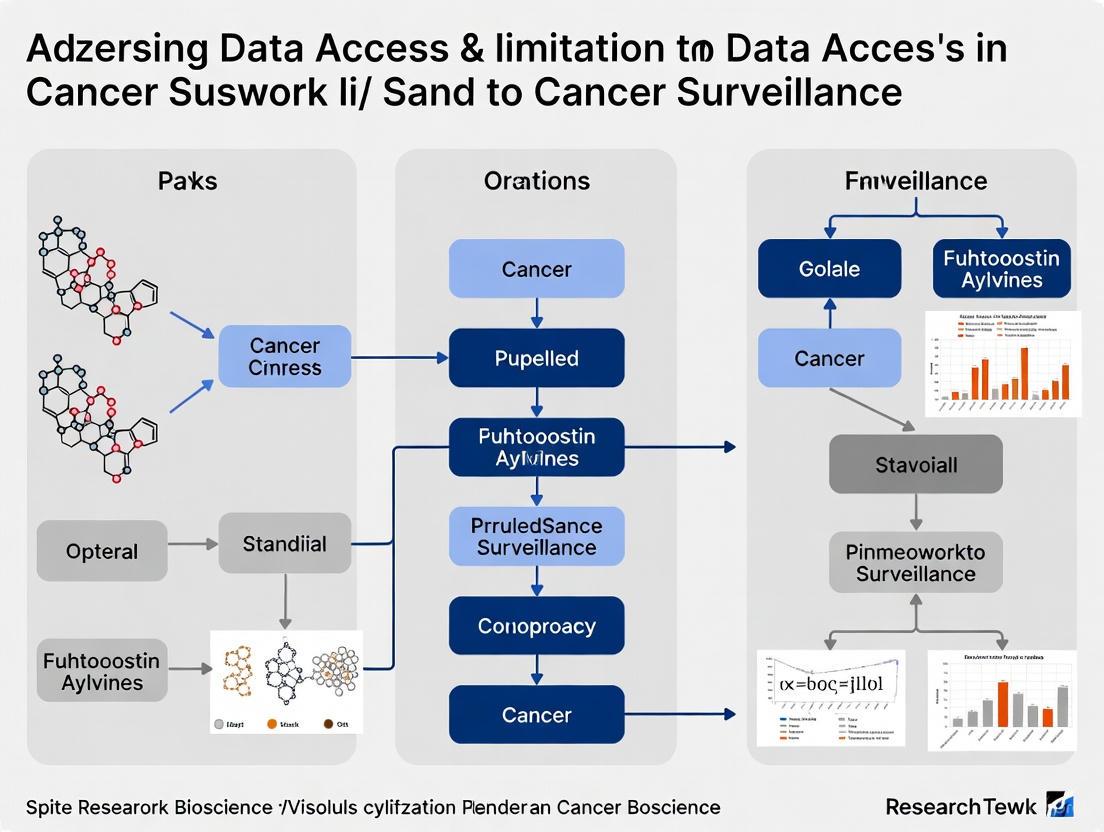
This article addresses the critical challenge of data access limitations in cancer surveillance for researchers, scientists, and drug development professionals.
Breaking Down Barriers: Modern Strategies for Cancer Surveillance Data Access in Research and Drug Development
Abstract
This article addresses the critical challenge of data access limitations in cancer surveillance for researchers, scientists, and drug development professionals. It explores the foundational causes of these barriers, including fragmented systems and manual processes that delay data availability. The content details modern methodological solutions like cloud-based platforms, AI, and Common Data Models that are revolutionizing data acquisition and analysis. It provides a troubleshooting guide for navigating common obstacles such as data interoperability and privacy regulations and offers a comparative analysis of successful data initiatives. The article synthesizes these insights to present a forward-looking perspective on building a more open, efficient, and collaborative data ecosystem to accelerate oncology breakthroughs.
Understanding the Data Barrier: Why Cancer Surveillance Lags Behind Modern Research Needs
Timely and accurate cancer data is the cornerstone of effective public health response, clinical research, and therapeutic development. However, the current landscape of cancer surveillance is characterized by a significant data lag—a systematic delay that impedes rapid progress. At the heart of this issue lies the labor-intensive, manual process of data abstraction that creates a 24-month delay between cancer diagnosis and the availability of complete data for research and analysis [1]. This whitepaper examines the technical foundations of this delay, its impact on cancer research and drug development, and explores emerging solutions framed within the broader challenge of data access limitations in cancer surveillance.
The National Cancer Institute's Surveillance, Epidemiology, and End Results (SEER) program operates on a standard delay of 22 months between the end of the diagnosis year and the time cancers are first reported [1]. For example, cases diagnosed in 2022 were first reported to the NCI in November 2024 and released to the public in April 2025 [1]. This timeline is exacerbated by the fact that initial submissions for the most recent diagnosis year are typically about four percent below the eventual final count, with variations by cancer site and other factors [1]. This paper argues that overcoming these data access limitations requires a fundamental transformation of the data abstraction pipeline from manual to automated processes.
Quantifying the Delay: Data Lag and Its Consequences
The Reporting Delay Timeline
Table 1: Standard Cancer Data Reporting Timeline (SEER Program)
| Time Period | Reporting Milestone | Data Completeness |
|---|---|---|
| Diagnosis Year + 22 months | First submission to NCI | ~96% of eventual case count |
| Diagnosis Year + 28 months | Public data release | Updated with corrections |
| Subsequent years | Ongoing data updates | 100% final case count |
Source: [1]
The delay is not merely a procedural formality but stems from fundamental methodological challenges. The process of "modeling reporting delay" aims to adjust current case counts to account for "anticipated future corrections (both additions and deletions) to the data" [1]. These adjustments are valuable for "more precisely determining current cancer trends, as well as in monitoring the timeliness of data collection—an important aspect of quality control" [1].
Impact on Research and Public Health
The consequences of this data lag extend throughout the cancer research and care continuum. While recent statistics show encouraging declines in cancer mortality—averting nearly 4.5 million deaths since 1991 due to smoking reductions, earlier detection, and improved treatment—the 24-month delay in data availability hampers the ability to track emerging trends and disparities in real time [2]. For instance, critical developments such as the rising cancer incidence in women, where "rates in women aged 50-64 years have already surpassed those in men" and "younger women (younger than 50 years) have an 82% higher incidence rate than their male counterparts," are identified years after they begin emerging [2].
The delay also impacts the assessment of healthcare disruptions, such as those caused by the COVID-19 pandemic, where understanding "patterns of statewide cancer services" and "rebound from 2020 decline" requires timely data that the current system cannot provide [2]. For drug development professionals, this data lag means that clinical trial planning and real-world evidence studies operate with outdated population statistics, potentially affecting trial design, patient recruitment strategies, and safety monitoring.
Labor-Intensive Data Collection Workflow
The 24-month delay primarily stems from the sequential, manual processes required to transform raw clinical data into structured, research-ready datasets. The traditional abstraction workflow involves multiple manual steps across disparate healthcare systems.
Figure 1: Traditional Manual Data Abstraction Workflow. This sequential process creates bottlenecks at each stage, contributing to the 24-month data lag.
Data Integration Challenges
The manual abstraction process is complicated by what big data researchers term "interoperability and data quality" challenges, which become "major hurdles when working with different healthcare datasets" [3]. The fundamental technical problems include:
- Mapping terminology across datasets: Variations in coding practices and clinical terminology require manual reconciliation.
- Missing and incorrect data: Incomplete clinical documentation necessitates follow-up and verification.
- Varying data structures: Heterogeneous EHR systems and hospital databases require custom extraction approaches.
These challenges make "combining data an onerous and largely manual undertaking" that cannot be easily accelerated without fundamental process transformation [3].
Experimental Approaches to Overcoming Data Lag
Emerging approaches leverage artificial intelligence to automate components of the data abstraction pipeline. These methodologies represent experimental protocols being validated in research settings.
Table 2: AI Approaches for Automated Data Abstraction in Cancer Surveillance
| AI Technology | Application in Abstraction | Validation Performance | Limitations |
|---|---|---|---|
| Natural Language Processing (NLP) | Extraction of structured data from clinical notes | Variable by cancer site and institution | Requires extensive training data |
| Deep Learning (CNNs) | Analysis of pathology images and radiology reports | High accuracy for specific cancer types | Limited generalizability across institutions |
| Large Language Models (LLMs) | Synthesis of disparate clinical data elements | Emerging evidence | Privacy and regulatory concerns |
| Ensemble Methods | Integration of multiple data modalities | Improved robustness | Computational complexity |
Source: Adapted from [4]
Technical Validation Protocols
Research studies validating automated abstraction approaches follow rigorous methodological protocols:
Data Acquisition and Preprocessing: "Weakly supervised DL model (ResNet-18 backbone) trained with breast-level labels (no per-image/pixel annotations)" [4]. This approach reduces annotation burden while maintaining performance.
Multi-center Validation: "Three independent cohorts: 1. Tianjin Cancer Hospital (internal) 2. Tianjin First Central Hospital (external) 3. Tianjin General Hospital (external)" [4]. External validation is critical for assessing generalizability.
Performance Benchmarking: Comparison against gold-standard human abstractors with metrics including "sensitivity, specificity, Area Under the Curve (AUC)" [4].
The implementation of these automated systems requires addressing significant technical debt in existing cancer registry infrastructure and ensuring robust performance across diverse healthcare settings and cancer types.
The Scientist's Toolkit: Research Reagent Solutions
Table 3: Essential Computational Tools for Modern Cancer Data Abstraction
| Tool Category | Specific Technologies | Function in Abstraction Pipeline | Implementation Considerations |
|---|---|---|---|
| Data Extraction | NLP libraries (spaCy, ClinicalBERT), EHR APIs | Convert unstructured clinical text to structured data | HIPAA compliance, de-identification requirements |
| Data Harmonization | OMOP Common Data Model, FHIR standards | Map heterogeneous data to common schema | Vocabulary mapping, semantic interoperability |
| Machine Learning | TensorFlow, PyTorch, Scikit-learn | Train predictive models for auto-coding | GPU requirements, training data volume |
| Validation Frameworks | Great Expectations, Deid | Ensure data quality and privacy preservation | Validation rules, statistical monitoring |
A modern approach to cancer data abstraction integrates multiple automated components into a cohesive pipeline that significantly compresses the traditional 24-month timeline.
Figure 2: Integrated Automated Abstraction Pipeline. This parallel processing approach compresses the 24-month timeline to just 8-12 weeks.
Implementation Challenges and Future Directions
While automated abstraction promises to overcome the 24-month delay, significant implementation challenges remain. Data privacy regulations, including HIPAA and the Common Rule, create complex requirements for sharing and processing cancer data [3]. The "use of big data is now included in the planning and activities of the FDA and the European Medicines Agency," indicating regulatory recognition of these approaches [3].
Future progress requires "willingness of organizations to share data in a precompetitive fashion, agreements on data quality standards, and institution of universal and practical tenets on data privacy" to fully realize the potential of automated cancer surveillance [3]. Additionally, the research community must address potential biases in AI models and ensure equitable performance across diverse populations and healthcare settings.
The transformation from manual to automated abstraction represents not merely a technical improvement but a fundamental requirement for realizing precision oncology's promise. By overcoming the 24-month data lag, researchers and drug developers can accelerate the translation of discoveries into clinical applications, ultimately improving outcomes for cancer patients worldwide.
In the pursuit of advancing cancer surveillance research, a critical barrier persists: the profound limitation on data access created by fragmented health information systems and aging legacy software. These infrastructure gaps impede the flow of timely, accurate, and unified data necessary for robust epidemiological studies, outcome analyses, and therapeutic development. Modern cancer research relies on the integration of complex data modalities—from genomic sequences and biomarker results to treatment responses and real-world outcomes—yet existing systems often operate in silos, preventing a comprehensive view of the cancer care continuum [4]. The COVID-19 pandemic starkly exposed these vulnerabilities, as health departments struggled with obsolete data systems, inadequate reporting, and difficulties in leveraging data for timely public health decisions [5]. This technical guide examines the root causes, operational impacts, and potential solutions for these critical infrastructure challenges within the specific context of cancer surveillance research.
Quantifying the Problem: Evidence of Systemic Fragmentation
The scope of the fragmentation problem is both vast and measurable. Evidence from recent studies illustrates how data silos and legacy architectures directly impede cancer research.
Table 1: Survey Findings on EHR Fragmentation in Gynecological Oncology Care
| Metric | Finding | Impact on Research |
|---|---|---|
| System Access | 92% of professionals (84/91) routinely accessed multiple EHR systems [6]. | Data is inherently scattered across incompatible sources, complicating data aggregation. |
| System Proliferation | 29% (26/91) used 5 or more different systems [6]. | Creates excessive complexity for building unified research datasets. |
| Time Allocation | 17% (16/92) spent >50% of clinical time searching for patient information [6]. | Highlights workflow inefficiencies that slow down data curation for research. |
| Data Organization | Only 11% (10/92) strongly agreed that their systems provided well-organized data [6]. | Poor data structure increases the time and cost of preparing research-ready data. |
| Interoperability | Lack of interoperability was the most reported challenge (24.8%, 35/141) [6]. | The core technical barrier to seamless data exchange and integration. |
A national cross-sectional survey of UK-based professionals in gynecological oncology confirms that current EHR systems are suboptimal for supporting complex cancer care and the research it informs [6]. Key challenges identified include lack of interoperability, difficulty locating critical data such as genetic results, and poor organization of information. These findings are consistent with broader public health data modernization challenges, which involve legacy systems, siloed data, and privacy concerns that hamper data sharing with stakeholders [5].
Root Causes: Technical Architecture of the Gap
The infrastructure gaps in cancer data systems stem from three interconnected technical and procedural failures.
Lack of Interoperability and Standardized APIs
Different healthcare institutions and laboratories use distinct systems and data formats. Without standardized APIs and connectors, smooth interoperability within an oncology decision support platform is impossible [7]. This lack of standardization prevents the seamless data flow required for aggregated research analysis.
Legacy Monolithic Architectures
Many existing platforms are built as single, monolithic units, which become challenging to scale and update. This makes it difficult to handle new integrations, larger data volumes, and evolving research needs [7]. The inability to scale dynamically restricts the volume and variety of data available for surveillance studies.
Inadequate Data Governance and Quality
Data quality issues are a primary challenge in modernizing public health data systems [5]. Without clear governance frameworks and consistent data validation pipelines, the accuracy and completeness of cancer registry data are compromised, leading to biases and inaccuracies in research findings.
Experimental Approaches: Methodologies for Modernization
Researchers and technology teams have developed and tested specific methodological approaches to address these infrastructure gaps. The following experimental protocols detail key modernization strategies.
Protocol: Migration from Monolith to Microservices
Objective: To transition a legacy oncology decision support platform from a monolithic to a microservices architecture, enabling independent scaling, faster deployment, and improved resilience for research data processing [7].
Methodology:
- Decomposition: Analyze the existing monolithic application and dissect it into smaller, loosely coupled services based on business domains (e.g., "patient data service," "biomarker service," "clinical trial matching service").
- API Definition: Define clean, versioned APIs for each service to ensure they can communicate effectively. REST APIs and messaging brokers like RabbitMQ are commonly employed [7].
- Independent Deployment: Implement a continuous integration/continuous deployment (CI/CD) pipeline using tools like Jenkins to allow each service to be developed, tested, and deployed independently [7].
- Data Management: Decentralize data management. Each service manages its own database, avoiding direct shared database access between services. PostgreSQL is a robust, open-source choice for such services [7].
- Orchestration: Use a container orchestration platform like Kubernetes on cloud infrastructure (e.g., AWS) to manage the deployment, scaling, and load balancing of the microservices [7].
Validation: Success is measured by a percentage scalability improvement (e.g., 25% post-migration), system uptime (e.g., 99.9%), and reduced deployment times [7].
Protocol: Co-Design of an Integrated Informatics Platform
Objective: To create a unified informatics platform for ovarian cancer by integrating structured and unstructured data from multiple, disparate clinical systems into a single patient summary to support clinical decision-making and audit [6].
Methodology:
- Stakeholder Engagement: Employ a human-centered design approach involving healthcare professionals (oncologists, nurses), data engineers, and informatics experts in a co-design process [6].
- Data Pipeline Development: Build robust data pipelines that connect to various source EHRs and clinical databases. Use integration tools and standards such as HL7 to ensure seamless data flow [7] [6].
- Natural Language Processing (NLP): Apply NLP techniques to extract critical information (e.g., genomic results, surgical details) from free-text clinical notes, converting unstructured data into a structured, coded format [6].
- Data Consolidation and Visualization: Develop a backend service to consolidate the extracted data and a frontend interface (e.g., using Angular) to present it in a single, visual patient summary for clinicians and researchers [6].
- Clinical Validation: Have clinicians validate the integrated data and presentation by comparing the platform's output against original clinical system sources to ensure accuracy and completeness [6].
Validation: Platform efficacy is evaluated through user feedback on data comprehensiveness and time saved in information retrieval, compared to baseline metrics of time spent searching across multiple systems [6].
The following workflow diagram illustrates the core data processing pipeline for this integrated platform:
Protocol: Mandatory Biomarker Data Reporting
Objective: To enhance the quality and actionability of cancer registry data by mandating the reporting of biomarker results from pathology services, thereby creating a richer dataset for precision oncology research [8].
Methodology:
- Regulatory Specification: Legislate the requirement for pathology services to include results of testing for relevant cancer or precursor biomarkers in reports to the cancer registry. This is included in the official regulations and schedules [8].
- Standardized List: Publish and maintain a definitive list of reportable biomarkers in a companion document, providing clarity and consistency across all reporting entities [8].
- Integration into Workflow: Pathology services update their reporting workflows and software systems to automatically capture and transmit the specified biomarker data along with traditional pathology reports.
- Registry Enhancement: The cancer registry (e.g., Victorian Cancer Registry) modifies its data model and intake pipelines to receive, validate, and store the new structured biomarker data.
- Research Access: The integrated biomarker data is made available for researchers (in de-identified or aggregated form as appropriate) to study prevalence, treatment responses, and outcomes.
Validation: Success is measured by the completeness of biomarker data in the registry and its subsequent use in research to understand cancer incidence trends and target disparities in diagnosis and outcomes [8].
The Scientist's Toolkit: Research Reagent Solutions
Table 2: Essential Components for Modern Cancer Data Infrastructure
| Component | Function | Example Technologies/Tools |
|---|---|---|
| Microservices Architecture | Replaces monolithic systems, allowing independent scaling of data processing and analysis services. | Kubernetes, Docker, Spring Boot [7]. |
| Standardized APIs | Enable interoperability between disparate clinical, laboratory, and research systems. | HL7 FHIR, REST APIs, Mirth Connect [7] [5]. |
| Cloud Data Warehousing | Provides scalable, secure storage for large-volume, multi-modal cancer data (genomics, imaging, EHR). | AWS (S3, EC2), PostgreSQL [7]. |
| Natural Language Processing (NLP) | Extracts structured information from unstructured clinical notes (e.g., biomarker results, family history). | Custom NLP engines, transformer models [6]. |
| Automated Data Pipelines | Replace manual data entry and validation, improving accuracy and reducing administrative workload. | Custom scripts, ETL tools, Jenkins [7]. |
Visualizing the Solution: A Modernized Architecture
The transition from a fragmented, legacy infrastructure to an integrated, modernized system is foundational for advancing cancer surveillance research. The following architectural diagram contrasts these two states:
Measurable Outcomes and Future Directions
The implementation of these modernization protocols yields quantifiable benefits critical for cancer surveillance research.
Table 3: Measured Outcomes of Infrastructure Modernization
| Outcome Category | Quantitative Improvement | Research Impact |
|---|---|---|
| Operational Efficiency | 40% faster clinical decision-making [7]; 30% reduction in redundant lab tests [7]. | Accelerates data curation and availability for research analyses. |
| System Performance & Scalability | 25% scalability improvement; 99.9% system uptime [7]. | Ensures reliable access to large-scale data for population-level studies. |
| Data Comprehensiveness | Mandatory inclusion of biomarker results in cancer registry reporting [8]. | Enables more granular research into precision oncology and targeted therapies. |
Future efforts must focus on balancing local adaptability with national coordination, improving data governance practices, and enhancing collaboration across research institutions, healthcare providers, and public health agencies [5]. Continued investment in interoperability, user-centered design, and secure cloud technologies is vital to ensure public health and research systems can deliver timely, accurate, and actionable information to support the fight against cancer.
Cancer registries form the indispensable backbone of cancer surveillance, providing the critical data that fuels public health policy, clinical research, and therapeutic development. The data curated by these registries—encompassing incidence, treatment, and survival outcomes—enables researchers and pharmaceutical professionals to understand disease trends, identify therapeutic targets, and assess the real-world effectiveness of new treatments [9] [10]. However, this foundational element of the oncology research ecosystem is facing a silent crisis. Persistent workforce and resource shortages, coupled with a significant technical skills gap, threaten the quality, timeliness, and ultimately the accessibility of the cancer data upon which precision medicine depends [9] [11]. This guide examines the nature and impact of these operational deficits within the broader context of cancer surveillance research, where limitations in registry data directly translate into limitations in scientific discovery.
Quantifying the Workforce and Skills Shortfall
Recent empirical studies provide a stark, data-driven picture of the staffing crisis in cancer registry operations. The challenges are not merely anecdotal but are reflected in key metrics such as staffing levels, training deficiencies, and managerial concerns.
Table 1: Staffing and Vacancy Metrics in Hospital Cancer Registries (2022)
| Metric | Value | Data Source |
|---|---|---|
| Mean Budgeted FTEs per Registry | 6.8 | 2024 Workload and Staffing Study [11] |
| Filled FTE Positions | 94.1% | 2024 Workload and Staffing Study [11] |
| Registries Employing Contract Staff | 32.5% | 2024 Workload and Staffing Study [11] |
| Registry Leads "Very Concerned" about Recruiting Qualified Staff | 62% | 2024 Workload and Staffing Study [11] |
| Registry Leads "Very Concerned" about Compensation for Retention | 54% | 2024 Workload and Staffing Study [11] |
The staffing challenge is further exacerbated by a clear technical skills gap among existing personnel. A 2024 survey of registry leads revealed that nearly half (49.1%) of their staff require additional training in data analysis, while significant portions also need further skills development in using casefinding and abstracting software [11]. This skills gap directly impacts a registry's ability to evolve beyond basic data collection to provide the high-value analytics required by modern researchers.
The Impact on Data Quality and Research Accessibility
Workforce instability and skill deficiencies create a cascade of operational failures that ultimately constrain data access and utility for the research community.
- Data Incompleteness and Inaccuracy: Inadequate staffing leads to backlogs in case abstraction, increasing the risk of missing or inaccurate data [12]. This is compounded by a lack of standardization in data collection procedures, which creates inconsistencies that make combining datasets from different sources an onerous, often manual undertaking for researchers [9] [3].
- Impaired Interoperability: The technical skills gap limits the effective implementation of complex data standards and terminologies. When mapping terminology across datasets is flawed due to human error or insufficient training, it creates a major barrier to the large-scale, federated data analysis that is crucial for big data oncology research [3].
- Threats to Accreditation and Compliance: Staffing shortfalls directly increase the risk of non-compliance with accreditation standards and missed reporting deadlines for state and national programs [12]. This can jeopardize a registry's standing and the reliability of its data for research use.
- Constrained Data Evolution: The workforce is struggling to adapt to new demands. As cancer treatment becomes more complex, registries must capture more detailed data on genomics, biomarkers, and targeted therapies [11]. Without staff skilled in these areas, registries cannot provide the rich, multimodal data needed for contemporary drug development and precision oncology.
Methodologies for Assessing Workload and Staffing Needs
To address these challenges effectively, objective and data-informed methodologies are required to benchmark workload and determine optimal staffing levels. The 2024 Workload and Staffing Study provides a rigorous, evidence-based protocol for this purpose [11].
Experimental Protocol: Workload and Staffing Assessment
- Objective: To determine the quantitative relationship between cancer registry caseload and required staffing levels (in Full-Time Equivalents, FTEs), and to qualitatively evaluate workforce skills gaps and concerns.
- Methodology: A mixed-methods approach was employed, combining cross-sectional surveys with expert interviews.
- Survey Deployment: Two separate online surveys were fielded via the Qualtrics platform from March to July 2023.
- Registry Lead Survey (RLS): Targeted NCRA members identified as registry managers/leads. The survey contained 44 items covering registry characteristics, staffing, caseload, procedures, and opinions.
- Cancer Registrar Survey (CRS): Distributed by leads to their staff. It contained 28 items, including a detailed daily activity log, time estimates, and supplements on burnout.
- Participant Sampling: The RLS was sent to approximately 1,000 lead registrars representing about 800 hospital registries. The CRS was distributed to cancer registrars within the NCRA membership database.
- Data Analysis: Quantitative data from the surveys were analyzed to develop staffing models using regression analysis, with caseload as the primary predictor variable. Qualitative data from open-ended survey items and semi-structured interviews with 11 national experts were analyzed thematically to contextualize the findings.
- Survey Deployment: Two separate online surveys were fielded via the Qualtrics platform from March to July 2023.
- Key Findings and Outputs:
- Staffing Model: The analysis produced definitive staffing guidelines. For single-institution registries, staffing should increase by 1.8 to 2.1 FTEs for every 1,000 cases. For multi-institution registries, which benefit from economies of scale, the requirement is 1.6 to 1.9 FTEs per 1,000 cases [11].
- Skills Gap Identification: The survey quantitatively identified the areas of greatest training need, with data analysis being the most prominent deficiency [11].
- Workforce Sentiment: The study captured the high level of concern among leaders about recruitment and retention, providing a qualitative measure of the crisis [11].
This protocol provides a replicable model for individual registries or health systems to audit their own operational capacity against industry benchmarks.
The Researcher's Toolkit: Essential Components for a Modern Registry
Table 2: Key Research Reagent Solutions for Cancer Registry Operations
| Item | Function in the Registry "Experiment" |
|---|---|
| SEER*Stat Software | The primary tool for accessing, analyzing, and visualizing data from the SEER program. It is a Windows-based application that requires an online account for authentication [13]. |
| Data Lake Architecture | A centralized, secure repository solution for storing and sharing diverse, large-scale datasets (e.g., genomic, clinical). It enables federated analysis while maintaining data governance, as demonstrated in NHS-industry collaborations [14]. |
| ODS-Credentialed Professionals | Staff certified as Oncology Data Specialists (formerly Certified Tumor Registrars) possess the expert knowledge required for accurate data abstraction, coding (e.g., ICD-O-3), and compliance with reporting standards [11] [12]. |
| Robust Data Use Agreements (DUAs) | Legal documents that set forth permitted research uses and prohibit re-identification of patients. These are required for accessing "Limited Data Sets" under HIPAA and are fundamental to data sharing initiatives [3]. |
| AI-Powered Abstraction Tools | Emerging technology designed to automate repetitive data extraction tasks from electronic health records (EHRs). This helps reduce case backlogs, improve accuracy, and free up human staff for higher-level analysis [15]. |
Strategic Solutions and Forward-Facing Protocols
Addressing the technical skills gap requires a multi-pronged strategy that integrates investment in human capital, technological innovation, and strategic planning.
A Strategic Framework for Closing the Skills Gap
The following diagram visualizes the essential pillars of a sustainable solution to the workforce crisis, connecting specific actions to their ultimate impact on research data.
- Strategic Staffing and Funding (Yellow): Advocacy for direct and sustainable funding is required to compete for talent. This includes creating competitive compensation packages to retain credentialed staff and exploring flexible, scalable partnership models with expert external vendors to fill immediate gaps without sacrificing quality [9] [12].
- Advanced Technical Training (Green): Beyond foundational abstracting skills, targeted training programs must be developed and implemented. Curricula should focus on data analysis and visualization, genomics data integration, and the use of advanced registry software and tools to empower registrars to contribute to data science initiatives [11].
- AI and Automation Integration (Blue): Technology should be viewed as a force multiplier, not a replacement. Strategic investment in AI-powered tools can automate repetitive tasks like initial case finding and data abstraction from EHRs. This reduces backlogs and frees up skilled human resources for higher-value activities such as complex case review, data validation, and analytics [15].
Implementation Protocol: Building a Future-Ready Registry Workforce
- Conduct a Needs Audit: Utilize the methodologies from Section 4.1 to benchmark current staffing levels and skills against caseload and industry standards. Quantify the specific technical skill deficiencies within the team.
- Develop a Strategic Staffing Plan: Based on the audit, create a multi-year plan that combines:
- Direct Hiring: With a focus on recruiting candidates with data analysis skills or the aptitude to learn them.
- Upskilling: Allocate time and budget for current staff to complete certified training in data analysis and emerging data standards.
- Strategic Partnership: For identified gaps, engage a staffing partner that provides credentialed, experienced professionals who can integrate seamlessly with internal workflows and systems [12].
- Pilot an AI Tool: Select a high-volume, repetitive task (e.g., initial case finding) and run a controlled pilot with an AI-powered solution. Measure the impact on productivity, backlog, and staff satisfaction to build a business case for wider implementation [15].
- Foster a Data Science Culture: Include registry staff in discussions about how the data they curate is used in research. This creates feedback loops, demonstrates the impact of their work, and can foster innovation from within the team.
The technical skills gap in cancer registry operations is not an isolated administrative problem; it is a critical vulnerability in the infrastructure of cancer research. The inability to maintain a skilled and stable workforce directly compromises the completeness, accuracy, and interoperability of the data that is essential for understanding cancer burden, evaluating new therapies, and guiding public health policy. For researchers and drug development professionals, this translates into a significant, though often invisible, data access limitation. Closing this gap requires a concerted effort that views registry staffing not as a cost to be minimized, but as a strategic investment in the foundation of cancer surveillance. By implementing evidence-based staffing models, committing to advanced technical training, and intelligently leveraging automation, the ecosystem can ensure that cancer registries evolve to meet the demanding data needs of modern precision oncology.
The pursuit of precision oncology and equitable cancer surveillance research is fundamentally constrained by the pervasive challenge of data silos and interoperability failures. The inability to seamlessly combine disparate healthcare datasets creates significant bottlenecks in generating real-world evidence, understanding cancer disparities, and developing effective therapies for diverse patient populations. Despite the digitization of health records and growing availability of genomic sequencing, critical patient data remains locked in unstructured text and siloed systems across hospital, academic, and commercial entities [16]. This fragmentation is particularly problematic in cancer research, where understanding disease progression, treatment efficacy, and outcomes requires a comprehensive view of patient information that spans clinical, genomic, demographic, and socioeconomic dimensions.
The impact of these data limitations extends beyond technical inconvenience to directly affect patient care and research validity. Studies reveal that less than 10% of existing patient tumor datasets represent non-White patients, despite these groups comprising approximately 40% of the U.S. population and 89% of the global population [17]. This staggering underrepresentation creates critical gaps in our understanding of how cancer develops and progresses across different demographic groups, potentially perpetuating disparities in cancer outcomes. This whitepaper examines the technical roots, consequences, and emerging solutions for healthcare data fragmentation, with specific focus on implications for cancer surveillance research and drug development.
The Technical Roots of Healthcare Data Fragmentation
Systemic and Architectural Barriers
The fragmentation of healthcare data stems from multiple technical and structural barriers that impede seamless data exchange. At the most fundamental level, healthcare organizations utilize diverse electronic health record (EHR) systems with proprietary architectures that operate as closed ecosystems [18]. These systems differ not only in their technical infrastructure but also in how they structure and label clinical data, creating fundamental incompatibilities. Compounding this problem, many EHR vendors implement restrictive practices that limit data sharing, including non-standard application programming interfaces (APIs), data export restrictions, and vendor lock-in strategies that actively discourage interoperability [18].
The pervasiveness of legacy systems represents another significant technical hurdle. Many hospitals and large provider networks still operate on infrastructure built before modern data exchange standards were established [18]. These systems typically lack support for current interoperability protocols, use outdated data formats, and present substantial integration challenges when connecting with newer platforms. The cost and complexity of replacing these deeply embedded systems often leads organizations to implement temporary bridges rather than pursue comprehensive modernization, resulting in ongoing data isolation.
Semantic and Standardization Challenges
Even when technical connectivity is achieved, the lack of semantic consistency prevents meaningful data aggregation and analysis. Health systems frequently code identical diagnoses, lab tests, or medications using different internal coding systems and clinical terminologies [19] [18]. While standards such as HL7 FHIR (Fast Healthcare Interoperability Resources), SNOMED CT, and others exist to promote consistency, their implementation remains uneven across organizations. Real-world deployments often lack true semantic interoperability, meaning that codes, units, and clinical terms may be interpreted differently between systems, complicating data aggregation, analytics, and AI deployment [19].
This problem is particularly acute in oncology, where precise terminology is essential for accurate treatment and research. The inconsistent implementation of standards means that even when data can be physically exchanged between systems, it often cannot be reliably interpreted or aggregated for research purposes without extensive manual curation. This semantic fragmentation represents a less visible but equally damaging dimension of the interoperability crisis.
Quantifying the Impact: Data Silos in Cancer Research
The consequences of data silos and interoperability failures manifest across multiple dimensions in cancer research and clinical practice. The table below summarizes key quantitative findings from recent analyses of healthcare data interoperability.
Table 1: Quantitative Impact of Data Silos and Interoperability Failures in Healthcare
| Impact Dimension | Statistical Finding | Data Source |
|---|---|---|
| External Data Trust | 82% of healthcare professionals are concerned about the quality of data received from external sources [20] | 2025 Healthcare Data Quality Report |
| Provider Data Fatigue | 66% of survey participants were concerned about provider fatigue from excessive external data (7% increase from previous year) [20] | 2025 Healthcare Data Quality Report |
| Financial Impact | Lack of interoperability costs the U.S. healthcare system over $30 billion annually in avoidable inefficiencies [18] | ChartRequest Analysis |
| Representation in Cancer Data | <10% of existing patient tumor datasets represent non-White patients [17] | Cancer Disparities Research |
| External Data Integration | Only 17% of healthcare professionals currently integrate patient information from external sources [20] | 2025 Healthcare Data Quality Report |
| Patient Safety Impact | 2% of interoperability-related safety incidents resulted in actual patient harm [18] | Patient Safety Event Analysis |
Consequences for Cancer Disparities Research
The impact of data fragmentation is particularly severe in cancer disparities research, where understanding differential outcomes across racial, ethnic, and socioeconomic groups requires robust, diverse datasets. Research silos have traditionally separated the study of socioeconomic factors from investigations into molecular biology, creating an incomplete understanding of how race and racism impact cancer development and progression [17]. This artificial separation means that while decades of research have documented systemic factors driving poor outcomes for cancer patients from underrepresented groups, the molecular impact of these systemic issues remains understudied.
The lack of integrated datasets containing both socioeconomic context and molecular data prevents researchers from examining how life experiences—such as chronic stress, poverty, or environmental exposures—influence the somatic molecular biology of cancer cells within distinct patient demographics [17]. This gap is significant, as emerging evidence suggests that unique somatic molecular signatures can explain disparities in diagnostic precision and therapeutic responsiveness for underserved patient groups [17]. Without comprehensive datasets that bridge these domains, the development of truly equitable precision oncology approaches remains constrained.
Emerging Solutions and Methodological Approaches
Natural Language Processing and Automated Data Integration
Recent advances in natural language processing (NLP) offer promising approaches for extracting structured information from unstructured clinical notes, which traditionally represent a significant data silo. Memorial Sloan Kettering Cancer Center demonstrated the feasibility of automated annotation through their MSK-CHORD initiative, which combined NLP annotations with structured medication, demographic, tumor registry, and genomic data from 24,950 patients [16]. Their methodology employed transformer models trained on manually curated annotations to extract features requiring nuanced interpretation from radiology reports, histopathology reports, and clinical notes.
Table 2: Research Reagent Solutions for Healthcare Data Integration
| Tool Category | Specific Technologies | Function & Application |
|---|---|---|
| Data Standards | HL7 FHIR, oBDS, SNOMED CT | Provide standardized formats and terminologies for structuring clinical and oncological data [19] [21] |
| NLP Models | Transformer architectures, Rule-based systems | Extract structured information from unstructured clinical notes, radiology, and pathology reports [16] |
| Federated Analysis Platforms | DataSHIELD, OPAL database | Enable privacy-preserving analysis across multiple institutions without sharing raw patient data [21] |
| Interoperability Frameworks | TEFCA, CMS Interoperability Framework | Establish technical and legal guardrails for secure, scalable health information exchange [19] [22] |
| Pseudonymization Tools | gPAS, entici | Protect patient privacy by de-identifying data while maintaining research utility [21] |
| Tumor Documentation Systems | ONKOSTAR, CREDOS | Capture structured oncology-specific data in clinical workflows [21] |
The NLP pipeline developed for MSK-CHORD achieved area under the curve (AUC) metrics of >0.9 for tasks including identifying cancer progression, tumor sites, and receptor status from radiology and clinical notes [16]. This approach demonstrates how automated annotation can overcome traditional bottlenecks in manual data extraction, enabling the creation of large-scale, multimodal datasets for oncologic research. The resulting resource reveals clinicogenomic relationships not apparent in smaller datasets and enables more accurate prediction of overall survival through machine learning models that incorporate features derived from unstructured notes.
Federated Analysis and FHIR-Based Platforms
For multisite research collaborations, federated analysis approaches offer a privacy-preserving alternative to centralizing data. The Bavarian Cancer Research Center implemented a modular data transformation pipeline that converts oncological basic datasets (oBDS) into HL7 FHIR format across six university hospitals [21]. Their architecture maintained data decentralization while enabling collaborative analysis through the DataSHIELD framework, which allows statistical queries to be run against remote datasets without transferring identifiable patient information.
The implementation successfully analyzed 17,885 cancer cases from 2021-2022, demonstrating the feasibility of federated approaches for answering research questions about tumor distribution patterns across different institutions [21]. This methodology addresses both privacy concerns and technical barriers to data sharing while leveraging modern interoperability standards like FHIR to harmonize heterogeneous data sources. The pipeline's modular design accommodates diverse IT infrastructures and tumor documentation systems, providing a scalable model for multi-institutional cancer research.
The following diagram illustrates the core workflow for this federated data integration approach:
Federated Data Analysis Workflow
Experimental Protocols for Data Integration
Protocol: Automated Real-World Data Integration for Cancer Outcomes Prediction
The methodology developed by Memorial Sloan Kettering Cancer Center provides a replicable protocol for integrating multimodal healthcare data [16]:
Data Sources and Preparation:
- Collect structured data from electronic health records, including medications, demographics, tumor registry information, and genomic sequencing results
- Extract unstructured data from free-text clinical notes, radiology reports, and histopathology reports
- Establish patient cohorts based on cancer type (non-small cell lung, breast, colorectal, prostate, and pancreatic cancers)
NLP Model Development and Validation:
- Train transformer models using manually curated annotations from the Project GENIE Biopharma Collaborative dataset
- Implement rule-based models for structured data elements such as smoking status and Gleason score
- Validate models using fivefold cross-validation, with retrospective clinical review of discrepant predictions
- Target performance metrics: AUC >0.9, precision and recall >0.78 for all NLP models
Data Integration and Harmonization:
- Combine NLP-derived features with structured data elements to create a unified clinicogenomic dataset
- Implement quality control measures to ensure data consistency across sources
- Develop machine learning models to predict overall survival, comparing different feature sets (genomic data alone, stage alone, combined NLP and structured features)
Validation and External Testing:
- Assess model performance using cross-validation within the primary dataset
- Validate predictive models using external, multi-institution datasets to ensure generalizability
- Compare model performance against traditional prognostic indicators
Protocol: Federated Analysis Across Multiple Institutions
The Bavarian Cancer Research Center's approach demonstrates a methodology for privacy-preserving multi-site data analysis [21]:
Infrastructure Establishment:
- Implement data integration centers at each participating institution
- Deploy compatible pseudonymization tools (gPAS or entici) across sites
- Establish a common data transformation pipeline with modular components
Data Standardization and Transformation:
- Extract oncological basic datasets (oBDS) from local tumor documentation systems
- Transform oBDS into HL7 FHIR format using standardized mapping protocols
- Implement quality checks to ensure data consistency and completeness
Federated Analysis Implementation:
- Load transformed data into DataSHIELD OPAL databases at each site
- Develop analysis scripts that can be executed remotely across all participating institutions
- Configure privacy protections to prevent disclosure of individual patient data
Cohort Definition and Research Questions:
- Define patient cohorts based on inclusion criteria (e.g., diagnosis year, cancer type)
- Formulate specific research questions amenable to federated analysis
- Execute distributed analyses while maintaining data behind institutional firewalls
- Compare federated analysis results with cancer registry data for validation
The following diagram illustrates the NLP-based data extraction and integration process:
NLP Data Extraction Pipeline
Implementation Challenges and Future Directions
Persistent Barriers to Widespread Adoption
Despite promising methodological advances, significant challenges remain in achieving comprehensive data integration for cancer surveillance research. Regulatory complexity represents a substantial barrier, as organizations must navigate overlapping requirements from HIPAA, the 21st Century Cures Act, information blocking rules, and international regulations like GDPR [19] [18]. Concerns about triggering breach notifications or compliance failures often lead to overly cautious data sharing practices, even when sharing would improve care and advance research.
Cost and resource constraints also impede progress, particularly for smaller practices and resource-limited institutions. The transition to interoperable systems requires significant investment in new software, network infrastructure, data standardization tools, and ongoing staff training [18]. The technical expertise required to implement and maintain FHIR-based platforms, NLP pipelines, or federated analysis infrastructure presents additional barriers for organizations already facing healthcare IT workforce shortages.
Strategic Priorities for the Research Ecosystem
Advancing cancer surveillance research through better data integration requires coordinated action across multiple domains:
Enhanced Data Governance: Establishing strict data quality policies and oversight mechanisms is essential as new data sources and AI models enter the healthcare ecosystem [20] [19]. Research institutions should develop clear protocols for data quality, accuracy, provenance, and transparency throughout the data lifecycle.
Workforce Development: Building technical capacity through targeted training on evolving digital standards, interoperability technologies, and data ethics will enable research teams to overcome technical and compliance challenges [19].
Ethical Data Representation: Concerted efforts are needed to address the severe underrepresentation of non-White patients in cancer databases [17]. This requires both community engagement to build trust and technical solutions that facilitate broader participation in research datasets.
Standardized Frameworks: Developing and adopting consistent frameworks for data exchange, especially in critical areas like cancer surveillance guidelines where current recommendations often lack specificity [23], would enhance data consistency and research comparability.
Data silos and interoperability failures represent not merely technical challenges but fundamental constraints on progress in cancer surveillance research and therapeutic development. The inability to combine disparate healthcare datasets impedes our understanding of cancer disparities, limits the representativeness of research findings, and slows the development of personalized therapeutic approaches. While emerging technologies like NLP-driven data extraction, FHIR-based standardization, and federated analysis offer promising pathways forward, their implementation requires coordinated effort across research institutions, healthcare providers, regulatory bodies, and technology vendors. For researchers, scientists, and drug development professionals, understanding these data landscape challenges is essential for designing studies that can overcome fragmentation limitations and generate meaningful insights from real-world data. Prioritizing investments in interoperable data infrastructure will be crucial for advancing precision oncology and ensuring that cancer research benefits all patient populations equitably.
In the rapidly evolving fields of public health and clinical research, the velocity of data availability often determines the success of interventions and the efficiency of therapeutic development. Data lags—the delay between data collection and its availability for analysis—represent a critical bottleneck that directly impedes timely decision-making, prolongs research timelines, and ultimately delays life-saving interventions from reaching patients. Within cancer surveillance and clinical research, this challenge is particularly acute, as the inherent complexity of disease progression and treatment response demands the most current information available. The persistent gaps in data collection infrastructure and the regulatory and operational inertia within healthcare systems create formidable barriers to the real-time data exchange needed for 21st-century medical research and public health response [24] [25]. This whitepaper assesses the multifaceted impact of data lags on public health interventions and clinical trial design, with specific focus on cancer research, and outlines emerging frameworks and methodologies aimed at creating more responsive data ecosystems.
The Scope of the Problem: Quantifying Data Delays in Public Health and Clinical Research
Current Landscape of Public Health Data Reporting
Public health surveillance systems face significant challenges in achieving timely data reporting, as evidenced by current federal initiatives aiming to improve these timelines. The following table summarizes specific data reporting goals and their associated timelines for improvement:
Table 1: Public Health Data Reporting Milestones for 2025-2026
| Data Category | Reporting Milestone | 2025 Target | 2026 Target |
|---|---|---|---|
| Emergency Department (ED) Visits | Expand real-time access to ED visit data [26] | 90% coverage from 41 states + DC | 90% coverage from 45 states + DC |
| In-patient Hospitalizations | Faster access to in-patient hospitalization data [26] | 60% coverage from 6 states + DC | 60% coverage from 10 states + DC |
| Hospital Bed Capacity | Automated reporting to reduce burden [26] | 40% of ELC-funded jurisdictions automated | 60% of ELC-funded jurisdictions automated |
| Wastewater Surveillance | Timely submission of SARS-CoV-2 results [26] | 35% of states submitting within 7 days of collection | 45% of states submitting within 7 days of collection |
| Electronic Case Reporting (eCR) | Rural expansion through Critical Access Hospitals [26] | 50% of CAHs in production with eCR | 65% of CAHs in production with eCR |
The infrastructure supporting cancer surveillance specifically faces similar challenges. The National Program of Cancer Registries (NPCR) and Surveillance, Epidemiology, and End Results (SEER) program—the primary sources for national cancer statistics—typically operate on a 2-3 year lag for comprehensive data availability [27]. This delay is attributed to the time required for data collection, compilation, quality control, and dissemination across multiple reporting entities. As noted in a 2024 National Academies workshop on modernizing cancer surveillance, challenges include "delays and gaps in data collection, as well as inadequate infrastructure and workforce to keep pace with the informatics and treatment-related advances in cancer" [24].
Clinical Trial Operational Delays
In clinical research, data lags manifest primarily as operational delays that prolong trial timelines and increase costs. Recent industry analyses identify several persistent bottlenecks:
Table 2: Top Clinical Trial Site Challenges Impacting Timeliness (2025)
| Challenge Category | % of Sites Reporting as Top Issue | Impact on Trial Timelines |
|---|---|---|
| Complexity of Clinical Trials | 35% | Increases data management burden and monitoring time |
| Study Start-up | 31% | Delays trial initiation and first patient enrollment |
| Site Staffing | 30% | Limits capacity for data collection and reporting |
| Recruitment & Retention | 28% | Prolongs enrollment periods and time to database lock |
| Long Study Initiation Timelines | 26% | Delays overall study commencement |
These operational challenges contribute significantly to the protracted timeline of clinical development, particularly in oncology where trial complexity continues to increase. A 2025 survey of clinical research sites revealed that study start-up processes, including "coverage analysis, budgets, and contracts, are often the largest drivers of delays during start-up and require highly specialized skills to complete" [28].
Root Causes: Systemic and Technical Barriers to Timely Data
Fragmented Data Infrastructure and Legacy Systems
The persistence of outdated data exchange methods represents a fundamental barrier to timeliness. The CDC's Public Health Data Strategy explicitly acknowledges this challenge, noting the continued need to "publish alternative, improved submission methods for all data submissions currently sent to CDC in outdated formats and transports, such as NETSS (National Electronic Telecommunications System for Surveillance) and PHINMS (Public Health Information Network Messaging System)" [26]. This infrastructure fragmentation is particularly evident in cancer surveillance, where the United States "does not have a single nationwide cancer registry" but instead relies on a patchwork of "hospital-based or population-based cancer registries" with varying technical capabilities and reporting requirements [10].
Data Quality and Integration Challenges
Beyond infrastructure limitations, data quality concerns create significant downstream delays. A 2025 Healthcare Data Quality Report found that 82% of healthcare professionals are concerned about the quality of data received from external sources [20]. This distrust often leads to extensive data validation processes that introduce additional lag time. Furthermore, the absence of standardized data governance across systems results in "an unreliable combination of mastered and unmastered data which produces uncertain results as non-standard data is invisible to standard-based reports and metrics" [20]. This lack of trust in data quality creates a validation bottleneck that compounds existing delays.
Regulatory Caution and Implementation Inertia
The highly regulated nature of both healthcare data exchange and clinical research creates inherent tensions between innovation velocity and compliance requirements. As noted in analyses of clinical trial innovation, "with strict regulatory bodies, an 'at no risk' approach, and worries about safety, compliance, and being sued, the fears surrounding AI are clear" [25]. This regulatory caution, while understandable from a patient safety perspective, inevitably slows the adoption of more efficient data practices. Additionally, the implementation of new standards like FHIR (Fast Healthcare Interoperability Resources) for mortality data exchange remains a multi-year process, with targets set for expanding implementation to only 33% of remaining jurisdictions by 2026 [26].
Consequences: The Real-World Impact of Delayed Data
Implications for Public Health Intervention
Data laps directly impact the effectiveness of public health interventions by delaying the detection of emerging threats and the assessment of intervention effectiveness. During the COVID-19 pandemic, for instance, "delays in the diagnosis and treatment of cancer in 2020 because of health care setting closures, loss of employment and health insurance, and fear of COVID-19 exposure" created ripples that will affect cancer outcomes for years to come [27]. A recent modeling study estimated "4000 to 7000 excess deaths from colorectal cancer (CRC) by 2040, depending on the speed of screening recovery" [27]—a direct consequence of disrupted surveillance and delayed interventions.
The following diagram illustrates how data lags create a cascade of delays throughout the public health intervention lifecycle:
Diagram: Cascade of data lags delaying public health intervention. Each lag phase (red) creates delays between operational phases (yellow/green), ultimately postponing health outcomes.
Consequences for Clinical Trial Efficiency and Relevance
In clinical research, data lags directly impact both the efficiency of trial execution and the relevance of research outcomes. The traditional "templated" approach to trial design, where sponsors "build a design, perform the study, copy that design, perform another study, and repeat" creates inherent inefficiencies that are compounded by delayed data availability [25]. Furthermore, the time required for manual data review and cleaning contributes significantly to the average 20-30% of site staff time spent on manual pre-screening activities rather than patient-facing activities [25]. This operational inefficiency extends trial timelines and increases costs, ultimately delaying patient access to novel therapies.
Perhaps more significantly, data lags undermine the scientific validity of clinical research, particularly in fast-moving fields like oncology where treatment paradigms evolve rapidly. When trial data reflects patient enrollment that began 3-5 years prior, the results may already be less relevant to current clinical practice by the time they are published. This temporal disconnect is particularly problematic for trials seeking to establish new standards of care in rapidly evolving treatment landscapes.
Emerging Solutions: Frameworks for Accelerating Data Flow
Public Health Data Modernization Initiatives
Significant federal efforts are underway to address data timeliness through infrastructure modernization. The CDC's Public Health Data Strategy outlines specific initiatives to "strengthen the core of public health data" through:
Electronic Case Reporting (eCR) Expansion: Automating case reporting to "increase timeliness and efficiency of receiving critical reports and enables state, tribal, local, and territorial (STLT) health departments to phase out requiring manual reports from health care" [26]. Specific 2025 targets include having 60% of public health authorities share plans to "turn off manual reporting for at least one condition from at least 10% of jurisdiction healthcare facilities submitting eCR" [26].
Adoption of FHIR Standards: Implementing modern data exchange standards like Fast Healthcare Interoperability Resources (FHIR) for specific data categories, with plans to "implement FHIR-based exchange of mortality data between CDC and 12 additional jurisdictions" in 2025 [26].
Automated Data Feeds: Establishing automated reporting systems for hospital capacity and syndromic surveillance to "reduce reporting burden on hospitals and STLT partners and enable more accurate and timely tracking" [26].
The following workflow illustrates how modernized data exchange frameworks can accelerate public health reporting:
Diagram: Modernized automated data flow from collection to public health action, replacing legacy manual processes.
Clinical Trial Innovation Methodologies
The clinical research industry is developing several approaches to mitigate data delays:
Risk-Based Quality Management (RBQM): Shifting from comprehensive data review to "dynamic, analytical tasks" that concentrate "on the most important data points" [29]. This approach acknowledges that "given ever-expanding data volumes, it is not sustainable for biopharma companies to scale data management linearly using traditional methodologies" [29].
Clinical Data Science Transformation: Evolving the role of data managers from operational tasks ("data collection and cleaning") to strategic contributions ("generating insights and predicting outcomes") [29]. This transition enables "faster time to threat detection by reducing manual burden for end user activities associated with receiving, processing or using healthcare data" [26].
Decentralized Clinical Trial (DCT) Models: Leveraging remote technologies to reduce site burden and accelerate data collection. The FDA has issued guidance supporting "the use of decentralized trials, providing recommendations for sponsors, investigators, and other stakeholders to advance their research" [30], including conducting "lab tests at local facilities instead of the research site" and "utilizing telemedicine to conduct follow-up visits" [30].
Artificial Intelligence and Automation Solutions
AI and automation technologies offer promising approaches to compressing data timelines:
Smart Automation: Moving beyond AI hype to implement "a mix of rule-driven and AI-based automation" that can "deliver the most significant cost and efficiency improvements" [29]. This includes "rule-driven automation speeding up data cleaning, transformation, and reporting" to "enhance data trust and reduce manual work" [29].
AI-Augmented Workflows: Implementing AI in specific areas like medical coding where "AI can be applied to either offer a medical coder a suggestion or to automatically code and have the medical coder review the selected term" [29]. This hybrid approach maintains human oversight while accelerating processing time.
Federated Learning: Utilizing approaches like NVIDIA's Federated Learning Application Runtime Environment (FLARE) platform that enables "collaborative learning for clinical trials, preserving privacy while leveraging diverse datasets" without transferring protected health information [25].
Experimental Protocols and Implementation Frameworks
Protocol for Implementing Electronic Case Reporting (eCR)
Objective: Establish automated case reporting from healthcare entities to public health authorities to replace manual reporting processes.
Materials and Reagents:
- FHIR R4 Standards: Provides data format specifications for clinical data exchange
- HL7 CDA Implementation Guide: Defines document structure for case reports
- eCR Now Application: CDC-supported tool for initiating electronic case reports
- Reportable Conditions Knowledge Base: Defines trigger codes for case identification
- Public Health Gateway Interface: Secure connection point for data transmission
Methodology:
- System Integration: Integrate eCR capability directly into electronic health record (EHR) systems using standardized clinical decision support hooks
- Trigger Configuration: Configure system to automatically detect reportable conditions based on established trigger codes during clinical documentation
- Data Extraction: Implement automated extraction of relevant clinical data elements including patient demographics, diagnosis details, laboratory results, and treatment information
- Message Construction: Format data according to FHIR standards and assemble complete case report
- Secure Transmission: Transmit encrypted data to appropriate public health authorities through designated gateways
- Acknowledgement Processing: Implement automated processing of delivery acknowledgements and request-for-information messages from public health agencies
Validation Approach:
- Parallel testing with legacy reporting systems for data completeness comparison
- Data quality assessment using predefined completeness and accuracy metrics
- Transmission reliability monitoring through acknowledgement tracking
- Timestamp analysis comparing date of diagnosis to date of public health agency receipt
Protocol for Implementing Risk-Based Monitoring in Clinical Trials
Objective: Optimize clinical trial monitoring resources by focusing on critical data points and processes that impact patient safety and trial conclusions.
Materials and Reagents:
- Risk Assessment Categorization Tool: System for classifying risks by probability and impact
- Key Risk Indicator (KRI) Dashboard: Visualization tool for monitoring risk triggers
- Centralized Monitoring Platform: Technology for remote data review and analytics
- Critical Process & Data Point Inventory: Document identifying trial-specific essential elements
- Statistical Sampling Methodology: Framework for determining appropriate review depth
Methodology:
- Risk Identification: Conduct cross-functional assessment to identify potential risks to data quality or patient safety during protocol development
- Risk Categorization: Classify risks based on probability of occurrence and potential impact on trial outcomes or patient safety
- Control Planning: Develop targeted approaches to mitigate identified risks, prioritizing high-probability, high-impact items
- KRI Establishment: Define quantitative metrics that serve as early warning indicators for potential issues
- Monitoring Plan Development: Create study-specific monitoring strategy that allocates resources based on risk assessment
- Continuous Review: Implement ongoing evaluation of KRIs with trigger-based escalation protocols
Validation Approach:
- Comparison of data quality metrics between risk-based and traditional monitoring approaches
- Assessment of query resolution timelines across monitoring models
- Evaluation of protocol deviation detection rates and timing
- Resource utilization analysis comparing monitoring effort per patient
Research Reagent Solutions for Data Integration Studies
Table 3: Essential Research Tools for Data Lag Mitigation Studies
| Reagent/Tool | Primary Function | Application Context |
|---|---|---|
| FHIR R4 Standards | Standardized API for healthcare data exchange | Enables interoperability between disparate healthcare systems |
| HL7 CDA Implementation Guide | Defines structure for clinical documents | Supports standardized case reporting format |
| eCR Now Application | Initiates electronic case reports | Facilitates automated reporting from EHR to public health |
| NVIDIA FLARE Platform | Enables federated learning across institutions | Allows collaborative model training without data sharing |
| CDISC Standards | Clinical data interchange standards | Supports structured data collection and analysis in trials |
| REDCap | Electronic data capture system | Enables customized clinical data collection |
| OHDSI OMOP CDM | Common data model for observational research | Facilitates analysis of distributed health data |
| SQL/NoSQL Databases | Data storage and retrieval systems | Supports management of large-scale healthcare datasets |
| API Gateways | Secure data exchange endpoints | Enables interoperable system-to-system communication |
| De-Identification Algorithms | Protects patient privacy | Allows data sharing while maintaining confidentiality |
The persistent challenge of data lags in public health surveillance and clinical research represents a critical impediment to effective disease control and therapeutic development. The consequences of delayed data ripple throughout the healthcare ecosystem, from delayed public health interventions to prolonged clinical trial timelines and ultimately to postponed patient access to innovations. Current initiatives to modernize public health infrastructure, coupled with emerging methodologies in clinical research operations, offer promising pathways toward more responsive data ecosystems. The continued development and implementation of standards like FHIR, expansion of automated reporting through eCR, adoption of risk-based approaches in clinical trials, and thoughtful integration of AI technologies collectively represent our most promising approach to compressing data timelines. For cancer surveillance specifically—where rapid learning from every patient experience is essential to progress—addressing these data lag challenges is not merely an operational improvement but an ethical imperative to accelerate progress against disease.
Building the Bridge: Technological and Strategic Solutions for Enhanced Data Access
Cancer surveillance research has long been constrained by significant data access limitations, primarily stemming from fragmented data collection systems and labor-intensive manual processes. The traditional cancer registry workflow requires approximately 24 months to complete a cancer case report before de-identified information can be submitted to the Centers for Disease Control and Prevention (CDC) [31]. This substantial time lag between data collection and availability for analysis creates critical gaps in our understanding of emerging cancer trends and limits the effectiveness of public health interventions. The National Program of Cancer Registries (NPCR) identifies approximately 1.7 million new reportable cancer cases annually [31], yet the value of this data for real-time decision-making has been limited by systematic delays.
The Centers for Disease Control and Prevention is addressing these limitations through its Data Modernization Initiative, with the Cancer Surveillance Cloud-Based Computing Platform (CS-CBCP) representing a transformative approach to cancer data management [32] [33]. This cloud-based system shifts the paradigm from retrospective data analysis to prospective, real-time surveillance by creating an integrated ecosystem for data collection, processing, and dissemination. For researchers, scientists, and drug development professionals, this transition marks a critical advancement in overcoming the temporal barriers that have historically constrained cancer surveillance research and therapeutic development.
The CS-CBCP Architecture: Technical Framework and Components
The CS-CBCP is architected as a cloud-native resource consisting of multiple interoperable services that central cancer registries (CCRs) can leverage either as a complete system replacement or as modular components integrated into existing infrastructure [31]. The platform's design focuses on automating the entire cancer data lifecycle—from initial case detection to final reporting and analysis—while maintaining data quality and security standards essential for research purposes.
Core Technical Components
The platform incorporates several specialized services that work in concert to streamline cancer surveillance:
- Extraction, Transformation, and Loading (ETL) Service: Converts HL7 V2.5.1 messages into NAACCR data elements and maps physician EHR-reported HL7 Clinical Document Architecture (CDA) files to the NAACCR Data Standards & Data Dictionary format [31].
- Abstract and Follow-Back Service: Provides a web portal for primary care providers and CCR staff to enter cancer surveillance data as it becomes available [31].
- Tumor Linkage and Consolidation Service: Employs probabilistic record linkage for patient matching and deterministic linkage for tumor matching to prevent duplicate records, with plans to incorporate machine learning techniques for improved accuracy [31].
- Natural Language Processing (NLP) Service: Automatically identifies reportable cancer cases and autocodes five critical data elements (histology, primary site, laterality, behavior, and grade) in electronic pathology reports using supervised statistical NLP approaches [31].
- Message Validation Service: Handles structure and content validation for HL7 V2.5.1 messages, ensuring message structure validity and checking for missing required data elements [31].
Implementation Phases
The CS-CBCP implementation follows a structured five-phase approach based on agile software development methodologies [31]:
- Phase I: Establishment of connectivity with laboratories for electronic data exchange of histopathology reports, focusing on HL7 Version 2.5.1 format compliance.
- Phase II: Migration of existing Registry Plus software applications to the CS-CBCP with service-oriented rearchitecture.
- Phase III: Establishment of connectivity with healthcare providers for electronic data exchange from EHR systems.
- Phase IV: Development of advanced services including onboarding, validation, and NLP capabilities.
- Phase V: Full implementation and scaling across the national registry network.
Table 1: Core Services in the CS-CBCP Architecture
| Service Component | Primary Function | Data Standards Supported |
|---|---|---|
| ETL Service | Converts and maps incoming data to standard formats | HL7 V2.5.1, CDA, NAACCR Volume II |
| Tumor Linkage Service | Links incoming records to existing patient/tumor data | Probabilistic and deterministic linkage algorithms |
| NLP Service | Automates coding of critical data elements from text | Supervised statistical NLP models |
| Message Validation Service | Validates structure and content of incoming messages | HL7 V2.5.1, NAACCR Volume V |
| Abstract and Follow-Back Service | Web portal for manual data entry by providers | Web-based interface with structured forms |
Quantitative Assessment of Cancer Registry Operations
Understanding the resource allocation and operational challenges of traditional cancer registry operations provides critical context for appreciating the transformational potential of the CS-CBCP. A multimodal analysis of resource allocation across U.S. cancer registries revealed that case volume is a major driver of registry costs, with high-volume registries outspending low-volume registries by nearly three times annually [34].
The same study identified that the two most resource-intensive registry activities are data acquisition and data processing, which represent prime targets for optimization through electronic reporting and automation [34]. This comprehensive evaluation collected prospective staffing data and retrospective costing data from 21 participating population-based cancer registries, representing a balanced cross-section of registry attributes including case volume, geographic region, rurality, and funding sources.
Table 2: Resource Allocation by Case Volume in U.S. Cancer Registries
| Registry Category | Annual Case Volume | Relative Annual Spending | Most Resource-Intensive Activities |
|---|---|---|---|
| Low Volume | <10,455 cases | Baseline | Data acquisition, data processing |
| Medium Volume | 10,455-26,558 cases | ~2x baseline | Data acquisition, data processing |
| High Volume | >26,558 cases | ~3x baseline | Data acquisition, data processing, quality control |
The study further identified three primary challenges facing cancer registries: (1) staffing shortages, particularly for those with technical backgrounds; (2) lack of workflow process automation; and (3) software updating and interoperability issues [31]. These findings underscore the critical need for a modernized, centralized platform that can reduce manual burdens and create operational efficiencies across the cancer surveillance ecosystem.
Electronic Reporting Infrastructure and Interoperability Standards
A foundational element of the CS-CBCP is the establishment of standardized electronic reporting pathways that enable automated data exchange between healthcare providers, laboratories, and cancer registries. The platform builds upon earlier successful initiatives, particularly the Electronic Pathology (ePath) Implementation Project launched in 2006, which demonstrated the feasibility of automated electronic capture and reporting of cancer registry data [35].
The AIMS Platform Infrastructure
The CS-CBCP leverages the Association of Public Health Laboratories (APHL) Informatics Messaging Services (AIMS) platform as a critical component of its electronic reporting infrastructure. This secure cloud-based platform provides shared infrastructure for public health reporting and serves as a centralized hub for data exchange [35]. As of November 2024, 78 laboratories send cancer pathology data daily from over 500 CLIA-certified laboratory facilities to all 50 state cancer registries and the District of Columbia through the AIMS platform [33]. The platform standardizes and streamlines real-time cancer pathology reporting by providing a single connection point for laboratories serving multiple states, significantly reducing the reporting burden compared to maintaining separate connections for each registry.
Data Standards and Implementation Guides
Interoperability within the CS-CBCP ecosystem is enabled through the implementation of consistent data standards across the reporting pipeline:
- HL7 Version 2.5.1: The primary standard for laboratory reporting, specifically using the North American Association of Central Cancer Registries (NAACCR) Volume V format for pathology electronic reporting [31].
- HL7 FHIR (Fast Healthcare Interoperability Resources): Emerging standard for clinical data exchange, with the HL7 FHIR Cancer Pathology Data Sharing Implementation Guide already published to facilitate adoption [35].
- NAACCR Data Standards & Data Dictionary: The underlying data model for the cancer surveillance system, though exploration of other oncology data models like the Observational Health Data Sciences and Informatics OMOP Common Data Model Oncology Module is underway [31].
- Central Cancer Registry Reporting Content Implementation Guide: Part of the Making Electronic Data More Available for Research and Public Health (MedMorph) project, providing a standardized framework for automated electronic reporting from EHR systems to central cancer registries [33].
Diagram 1: CS-CBCP Data Flow Architecture
Advanced Analytical Capabilities: NLP and Machine Learning
The CS-CBCP incorporates sophisticated analytical capabilities designed to automate labor-intensive processes that have traditionally required significant manual effort by Certified Tumor Registrars. These advanced functionalities are particularly focused on the most time-consuming aspects of cancer data abstraction and coding.
Natural Language Processing Implementation
The platform's NLP service utilizes a supervised statistical approach to automatically identify reportable cancer cases and extract and code five critical data elements from unstructured electronic pathology reports [31]. This implementation addresses one of the most labor-intensive aspects of cancer surveillance, where registrars must manually review clinical notes in pathology reports to abstract essential data elements. The NLP system is trained to achieve high accuracy in coding:
- Histology: The microscopic type of cancer cell
- Primary Site: The organ or tissue where cancer originated
- Laterality: The side of the body affected for paired organs
- Behavior: The biological aggressiveness of the cancer
- Grade: The degree of abnormality of cancer cells
The CDC is examining the implementation of NLP solutions developed through collaboration between the U.S. Department of Energy and National Cancer Institute to enhance these capabilities further and ensure they can be deployed at scale across the national surveillance system [31].
Machine Learning for Record Linkage
The CS-CBCP enhances traditional tumor matching algorithms through the incorporation of machine learning techniques. While the current Registry Plus software (Link Plus) uses probabilistic record linkage for patient matching and deterministic linkage for tumor matching, the platform plans to explore machine learning approaches that could improve upon these methods [31]. This advancement is particularly important for ensuring accurate patient tracking across multiple healthcare encounters and preventing duplicate records in the surveillance system.
Diagram 2: Automated Data Processing Workflow
Research Reagents and Technical Solutions
The implementation and operation of the CS-CBCP relies on a suite of technical components and standardized protocols that function as essential "research reagents" for the modern cancer surveillance ecosystem. These solutions enable the seamless data exchange, processing, and analysis required for real-time cancer surveillance.
Table 3: Essential Research Reagents and Technical Solutions for CS-CBCP Implementation
| Component/Solution | Type | Primary Function | Implementation Status |
|---|---|---|---|
| HL7 FHIR Cancer Pathology Data Sharing IG | Standard | Defines structured format for sharing cancer pathology data between EHRs and public health | Published implementation guide [35] |
| NAACCR Volume V Standard | Standard | Defines content and format for pathology laboratory electronic reporting | Production use for laboratory reporting [35] |
| APHL AIMS Platform | Infrastructure | Secure cloud-based hub for electronic pathology reporting | 78 laboratories sending data daily [33] |
| eMaRC Plus Software | Software | Receives and processes HL7 files from laboratories to state registries | In use for electronic pathology reporting [35] |
| Registry Plus Tool Suite | Software | Legacy applications for cancer data management being migrated to cloud | Migration to CS-CBCP in progress [31] |
| MedMorph Reference Architecture | Framework | Provides common approach for data exchange using FHIR | Pilot testing for EHR reporting [33] |
Implications for Cancer Research and Public Health
The transition to real-time cancer surveillance through the CS-CBCP has profound implications for researchers, scientists, and drug development professionals. The platform addresses critical data access limitations that have historically constrained the timeliness and utility of cancer surveillance data for research purposes.
Enhanced Research Capabilities
By reducing the data collection and processing timeline from 24 months to near real-time, the CS-CBCP enables:
- Rapid Identification of Emerging Trends: Researchers can detect shifts in cancer incidence, presentation, or demographic patterns as they occur, rather than years later [32].
- Accelerated Outcomes Research: The platform supports faster evaluation of cancer control strategies and intervention effectiveness through more timely data availability [33].
- Enhanced Clinical Trial Design: Drug development professionals can leverage more current epidemiology to inform trial protocols and site selection [31].
- Precision Medicine Applications: The standardized, structured data collection supports more granular analysis of cancer subtypes and their distribution within populations.
Public Health Impact
The real-time data capabilities of the CS-CBCP fundamentally transform the potential for public health response to cancer trends:
- Timely Resource Allocation: Public health officials can direct resources to emerging areas of need more responsively [34].
- Improved Prevention Programming: Cancer control programs can be evaluated and adapted based on more current assessment of their impact [32].
- Health Equity Applications: The enhanced timeliness and completeness of data supports more rapid identification and response to disparities in cancer burden across population subgroups [26].
The CDC's Cancer Surveillance Cloud-Based Computing Platform represents a paradigm shift in cancer data infrastructure, directly addressing the critical data access limitations that have historically constrained cancer surveillance research. By transitioning from fragmented, manual processes to an integrated, cloud-based ecosystem with automated data processing capabilities, the CS-CBCP enables the research community to move from retrospective analysis to contemporary insight generation.
For researchers, scientists, and drug development professionals, this evolution in cancer surveillance infrastructure creates unprecedented opportunities to understand and respond to cancer trends with dramatically reduced latency. The platform's emphasis on standardized data formats, automated abstraction and coding, and centralized data exchange addresses the fundamental operational challenges that have limited the timeliness of cancer data while maintaining the quality and completeness essential for rigorous research.
As the CS-CBCP continues its phased implementation, the cancer research community can anticipate progressively enhanced access to timely, comprehensive data that supports more responsive and targeted approaches to cancer prevention, treatment, and control. This technological transformation of cancer surveillance infrastructure ultimately strengthens our collective ability to address the evolving challenges of cancer burden through evidence-based approaches grounded in contemporary data.
Cancer surveillance research is fundamental for tracking epidemiology, guiding public health decisions, and improving patient outcomes. However, this field faces a significant bottleneck: the reliance on manual processes to extract structured data from unstructured clinical narratives, such as pathology and radiology reports [36]. This manual abstraction is time-consuming, labor-intensive, and introduces delays between a cancer diagnosis and the availability of that data for analysis [37] [38]. These data access limitations hinder real-time research and the rapid application of findings to patient care. This whitepaper explores how Artificial Intelligence (AI) and Natural Language Processing (NLP) are being leveraged to automate case identification, coding, and data abstraction, thereby transforming cancer surveillance from a retrospective activity into a near real-time system.
Core NLP and AI Methodologies in Oncology
A range of AI and NLP methodologies are employed to process clinical text, each with distinct advantages and evolutionary trajectories.
The Evolution of NLP Methods
The application of NLP in oncology has evolved through several distinct phases, from rigid rule-based systems to sophisticated deep learning models [36].
Table 1: Evolution of NLP Methods for Cancer Data Abstraction
| Method Category | Key Characteristics | Strengths | Weaknesses | Oncology Application Examples |
|---|---|---|---|---|
| Rule-Based | Relies on human-derived linguistic rules, dictionaries, and patterns [37] [36]. | High precision, interpretability, effective for consistent phrasing [36] [39]. | Low sensitivity, poor scalability, difficult to maintain [36]. | CDC's eMaRC Plus software for identifying reportable cancers [37]. |
| Machine Learning (ML) | Uses statistical models (e.g., SVM, Random Forest) that learn from labeled data [36] [39]. | Reduced manual rule creation; can generalize to new phrasings [36]. | Requires feature engineering and large labeled datasets [36]. | Classification of clinical documents and named entity recognition [36]. |
| Traditional Deep Learning | Uses multi-layer neural networks (e.g., CNNs, RNNs) to learn feature representations [36]. | Automates feature engineering; high performance with sufficient data [36]. | Computationally demanding; "black box" nature; can overfit [36]. | Extracting structured clinical values from narrative text [36]. |
| Transformer-Based | Utilizes attention mechanisms to model context in text [36] [39]. | State-of-the-art performance on most tasks; captures long-range dependencies [36]. | High computational cost for training; large data requirements for fine-tuning [36]. | Encoder-only (e.g., BERT): Classification, entity recognition [36]. Decoder-only (e.g., GPT): Summarization, question-answering [36]. |
Performance Comparison of NLP Models
Systematic reviews comparing NLP performance for information extraction (IE) from cancer-related electronic health records (EHRs) consistently show that more advanced models outperform simpler ones. A 2025 systematic review found that the Bidirectional Transformer (BT) category, which includes models like BERT and its clinical variants (e.g., BioBERT, ClinicalBERT), outperformed all other categories, including traditional neural networks, conditional random fields, traditional machine learning, and rule-based approaches [39].
Table 2: Relative Performance of NLP Model Categories for Cancer IE (F1-Score)
| Model Category | Average Performance Difference (F1-Score) |
|---|---|
| Bidirectional Transformer (BT) | Baseline (Best Performance) |
| Neural Network (NN) | -0.0439 |
| Conditional Random Field (CRF) | -0.0957 |
| Traditional Machine Learning (ML) | -0.1564 |
| Rule-Based | -0.2335 |
Table based on performance differences averaged across multiple studies for identical cancer-related entity extraction tasks [39].
Experimental Protocols and Validation
The real-world validation of automated systems is critical for their adoption in clinical and registry workflows. Below are detailed methodologies from key studies.
Protocol: Validating Real-Time EHR Data Integration
A 2025 study validated an automated system, the "Datagateway," for enriching the Netherlands Cancer Registry (NCR) with near real-time EHR data [38].
- Objective: To validate the accuracy of automated data extraction for diagnoses, treatments, and laboratory values against the manually curated NCR and source EHRs.
- Data Source: Structured EHR data from multiple hospitals, harmonized into a common data model.
- Validation Cohort: Patients with acute myeloid leukemia (AML), multiple myeloma, lung cancer, and breast cancer.
- Methodology:
- Prospective Validation: The system identified 1,287 patient records with an oncological diagnosis. These were checked against NCR inclusion criteria.
- Retrospective Validation: 384 patients known to be in the NCR were checked for accurate retrieval via the Datagateway system.
- Treatment Validation: Extracted treatment regimens (e.g., 198 regimens for multiple myeloma) were compared to NCR and EHR source data.
- Laboratory & Toxicity Validation: Key lab values and toxicity indicators were validated against source data.
- Outcome Metrics: Accuracy of diagnosis identification, concordance of treatment regimens, and match rates for laboratory values [38].
A groundbreaking 2025 study developed a fully autonomous, resource-efficient AI for abstracting data from pathology reports [40].
- Objective: To create a "digital registrar" that can triage documents, classify cancer type, and extract specific registry fields without human intervention.
- Data Source: 893 uncurated, real-world cancer-surgical reports.
- Gold Standard: Annotations from two board-certified pathologists.
- AI Workflow Methodology:
- Triage Detector: A model identified which raw clinical documents were cancer surgical reports requiring registry entry.
- Cancer-Type Classifier: A second model routed the reports to one of ten cancer-specific extraction engines.
- Information Extraction Engine: A locally deployed, open-weight Large Language Model (LLM) with 20 billion parameters, programmed via the DSPy framework, extracted data for 196 distinct registry fields.
- Outcome Metrics: Accuracy and F1-score for triage and classification; exact-match accuracy for field extraction [40].
Protocol: NLP for Primary Cancer Type Classification
A study from MUSC Hollings Cancer Center focused on using NLP to determine the origin of brain metastases from clinical notes [41] [42].
- Objective: To extract the primary cancer type from radiation oncology notes to support treatment personalization and research, overcoming the limitations of ICD codes.
- Data Source: 82,000 clinical notes from the EHRs of over 1,400 patients treated with stereotactic radiosurgery for brain metastases.
- Gold Standard: Expert manual review of the clinical notes.
- Methodology:
- An NLP model was developed to "read" clinical notes and identify keywords and phrases indicating the primary cancer type (e.g., "ductal" for breast cancer, "melanoma" for skin cancer).
- The model's output was compared against both the gold standard and the existing ICD codes.
- Outcome Metrics: Classification accuracy for primary cancer type and subtypes [41].
The Scientist's Toolkit: Research Reagent Solutions
Table 3: Essential AI/NLP Tools and Models for Cancer Data Abstraction
| Tool / Model | Type / Category | Function in Research |
|---|---|---|
| BERT & Clinical Variants (BioBERT, ClinicalBERT) | Bidirectional Transformer (Encoder-only) [36] [39] | Excels at information extraction and classification tasks from clinical text (e.g., identifying cancer entities, classifying report types) [36]. |
| GPT-family Models | Generative Pre-trained Transformer (Decoder-only) [36] | Used for generative tasks like text summarization and question-answering without task-specific fine-tuning (in-context learning) [36]. |
| DSPy Framework | Programming Framework | A self-optimizing framework for building and tuning LLM pipelines, used to create robust and autonomous "digital registrars" [40]. |
| Convolutional Neural Networks (CNNs) | Deep Learning | Primarily used for analyzing image-based data, such as digitized pathology slides and radiology scans, for tumor detection and classification [4] [43]. |
| CDC's eMaRC Plus | Rule-based NLP Software | A dictionary-based system that automates the identification of reportable cancers from pathology reports for central cancer registries [37]. |
| NLP Workbench | Machine Learning Platform | A cloud-based platform for developing and sharing NLP pipelines and algorithms to convert unstructured clinical text into coded data [37]. |
The following diagram illustrates the end-to-end automated workflow for abstracting cancer registry data from unstructured clinical documents, as validated in recent studies.
Technical Architecture of an NLP System for Cancer Surveillance
The technical architecture of a modern NLP system for cancer surveillance involves multiple components working in concert, from data ingestion to model deployment.
The automation of case identification, coding, and data abstraction through AI and NLP is no longer a theoretical concept but a validated solution actively overcoming critical data access limitations in cancer surveillance. As evidenced by recent studies, these technologies can achieve high accuracy—exceeding 90% in many tasks—dramatically reducing the time from data creation to research availability [38] [41] [40]. The continued evolution of models, particularly resource-efficient transformers, promises to make this capability accessible to a broader range of institutions worldwide. For researchers, scientists, and drug development professionals, embracing these tools is key to building a more agile, comprehensive, and real-time cancer surveillance ecosystem that can accelerate the pace of discovery and improve patient outcomes.
In cancer surveillance and clinical research, critical data is often scattered across incompatible systems—including electronic health records (EHRs), pathology reports, clinical trials, and genomic databases—creating significant data access limitations [44]. This heterogeneity presents a fundamental barrier to collaborative research, reliable evidence generation, and ultimately, the development of improved cancer treatments. Common Data Models (CDMs) address this challenge by providing a standardized framework that transforms disparate observational data into a consistent structure and format, enabling efficient, large-scale analytics [45]. In oncology, where understanding disease progression, treatment response, and long-term outcomes requires integrating complex, longitudinal data, CDMs are not merely convenient but essential for advancing research and patient care.
The OMOP Common Data Model: A Foundational Framework
The Observational Medical Outcomes Partnership (OMOP) Common Data Model, developed and maintained by the international OHDSI community, has emerged as a leading open standard for observational health data. Its core design principle is to standardize both the structure and content of data from diverse sources—such as administrative claims and electronic health records—allowing researchers to perform systematic analyses using a library of standardized analytic routines [45] [46].
Core Components and Benefits
The OMOP CDM is organized as a relational database. A central component is its suite of standardized vocabularies, which organize and map disparate medical terms (e.g., for conditions, drugs, procedures) into a common representation across all clinical domains [45] [47]. This process of data standardization is critical because it enables collaborative research and the sharing of sophisticated tools and methodologies across institutions [45].
The principal benefits of adopting the OMOP CDM in oncology include:
- Collaborative Research: Facilitates large-scale, multi-institutional studies by providing a common format, making studies faster and more cost-effective [46].
- Reliable Evidence Generation: Enables the use of standardized, open-source analytics tools for characterization, population-level effect estimation, and patient-level prediction [45].
- Regulatory Support: Supports the generation of high-quality Real-World Evidence (RWE) for regulatory submissions to agencies like the FDA and EMA [46].
The OHDSI Tool Ecosystem
The OMOP CDM is supported by a suite of open-source tools designed to implement best practices in data quality and analysis. The table below summarizes key tools available to researchers.
Table 1: Key OHDSI Tools for Oncology Data Management and Analysis
| Tool Name | Description | Primary Function in Research |
|---|---|---|
| ATLAS | An open-source software tool for scientific analysis. | Provides a web-based interface for cohort creation, characterization, and population-level effect estimation [47]. |
| Achilles | A database characterization tool. | Scans a CDM instance to generate a broad set of descriptive summaries and statistics about the data [47]. |
| Data Quality Dashboard | A data quality assurance tool. | Runs over 3,500 data quality checks against an OMOP CDM database to ensure data integrity before research use [47]. |
| White Rabbit & Rabbit in a Hat | ETL (Extract, Transform, Load) design tools. | Assists in the interactive design of the ETL process to convert source data into the OMOP CDM structure [47]. |
| Cohort Diagnostics | A cohort evaluation tool. | Enables researchers to critically evaluate and validate cohort phenotypes defined in the CDM [47]. |
Complementary Frameworks for Cancer Surveillance
While OMOP provides a generalizable model for health data, other frameworks specifically enhance cancer registry data and high-dimensional genomic studies.
The Standardized Framework for Registry Data Quality
The National Cancer Database (NCDB), a clinical oncology database, exemplifies how adherence to a standardized quality framework ensures data utility. A 2024 study demonstrated its conformity to the Bray and Parkin framework, which is built on four pillars [48]:
- Completeness: The NCDB captured 73.7% of all U.S. cancer cases from 2016-2020 [48] [10].
- Comparability: Use of standardized, international guidelines for coding and classification [48].
- Timeliness: 92.7% hospital compliance with timely data submission [48].
- Validity: High compliance (94.2%) with re-abstracting and recording procedures, and 99.1% compliance with histologic verification standards [48].
The ICGC ARGO Data Dictionary for Precision Oncology
For large-scale genomic studies, the ICGC ARGO Data Dictionary provides a specialized, event-based model to capture a cancer patient's entire journey. It was designed to integrate genomic data with comprehensive clinical information, including treatment outcomes, lifestyle, and environmental exposures [44]. Its development involved a rigorous, multi-stage process of assessment, modeling, and iterative review by clinical experts. The model classifies data fields into tiers (ID, Core, Extended) and attributes (Required, Conditional) to define a minimal yet comprehensive set of parameters essential for precision oncology research [44].
Table 2: Comparative Overview of Oncology Data Standardization Frameworks
| Feature | OMOP CDM | ICGC ARGO Data Dictionary | Registry Quality Framework |
|---|---|---|---|
| Primary Scope | General observational health data | Genomic oncology & clinical trial data | Cancer registry data |
| Core Strength | Standardized structure & vocabularies for analytics | Longitudinal, event-based capture of the cancer journey | Data quality metrics (completeness, validity, etc.) |
| Data Model | Relational database | Donor-centric, event-based | Typically registry-specific |
| Terminology | OHDSI Standardized Vocabularies | Aligns with NCI Thesaurus, LOINC, SNOMED | ICD-O, standardized coding guidelines |
| Key Tooling | ATLAS, Achilles, DQD | Dictionary Viewer, submission systems | Registry-specific quality assurance tools |
Experimental Protocols: Methodologies for CDM Implementation
Protocol: Converting Pathology Reports into OMOP CDM using NLP
A critical challenge in oncology CDM implementation is transforming unstructured data, such as pathology reports, into a standardized format. A 2020 study successfully converted pathology reports for colon cancer into the OMOP CDM using a natural language processing (NLP) pipeline, as shown in the workflow below [49].
Diagram 1: NLP workflow for pathology report standardization
Detailed Methodology:
- Data Extraction: The researchers developed a rule-based text processing module using regular expressions in Python to extract key clinical entities from three types of reports: surgical specimens, immunohistochemical studies, and molecular studies [49].
- Entity Recognition and Regularization: The system identified measurement names (e.g., gene/protein names like "EGFR") and their values (e.g., "1+/3") from the text. It then regularized these terms using a custom dictionary to handle ungrammatical expressions and synonyms [49].
- Vocabulary Mapping: The extracted and regularized entities were systematically mapped to standard terminologies recommended by OMOP, such as Systematized Nomenclature of Medicine (SNOMED) and Logical Observation Identifiers Names and Codes (LOINC) [49].
- CDM Population: The standardized data was inserted into specific OMOP CDM tables, including
NOTE_NLP,MEASUREMENT,CONDITION_OCCURRENCE, andSPECIMEN, creating a structured database ready for analysis [49].
Protocol: Developing a Comprehensive Cancer Surveillance Framework
A 2025 systematic review aimed to develop a robust framework for Cancer Surveillance Systems (CSS) by integrating essential data elements and advanced metrics often missing from existing systems [50].
Detailed Methodology:
- Systematic Review & Comparative Evaluation: The researchers conducted a PRISMA-guided systematic review of 1,085 articles from five major databases. They complemented this with a comparative evaluation of 13 international cancer surveillance systems (e.g., GCO, SEER, ECIS) to identify universal data elements and best practices [50].
- Identification of Critical Data Elements: The study identified and defined a comprehensive set of epidemiological indicators. Beyond traditional metrics (incidence, prevalence, mortality, survival), it incorporated Years Lived with Disability (YLD) and Years of Life Lost (YLL) to better capture the full cancer burden. It also emphasized the use of multiple standard populations (e.g., WHO, SEGI) for calculating Age-Standardized Rates (ASRs) to ensure cross-regional comparability [50].
- Expert Validation: A researcher-designed checklist consolidating these elements was validated through expert consultation, achieving high reliability (Cronbach’s alpha = 0.849) [50].
Table 3: Research Reagent Solutions for CDM Implementation
| Tool / Resource | Function | Application in Oncology CDM |
|---|---|---|
| OHDSI Standardized Vocabularies | A comprehensive set of mapped medical terminologies. | Provides the semantic foundation for coding oncology diagnoses, procedures, drugs, and genomic biomarkers consistently [45] [47]. |
| OMOP CDM Oncology Module | Extensions to the core CDM for cancer-specific data. | Enables precise representation of cancer diagnoses, stages, tumor markers, and complex treatment cycles [49]. |
| ICGC ARGO Data Dictionary | A specialized clinical data model for genomic oncology. | Captures longitudinal patient journeys, treatment regimens, and outcomes for precision oncology research [44]. |
| Natural Language Processing (NLP) | A computational technique for processing unstructured text. | Extracts critical data from unstructured clinical narratives, such as pathology and molecular study reports, for CDM ingestion [49]. |
| Data Quality Dashboard (DQD) | An open-source validation tool. | Assesses and ensures the quality and conformance of data converted to the OMOP CDM before it is used in research [47]. |
The implementation of Common Data Models like the OMOP CDM, complemented by specialized frameworks such as ICGC ARGO and robust data quality standards, is pivotal to overcoming the profound data access limitations in cancer surveillance research. By transforming fragmented, heterogeneous data into a standardized and analytically ready resource, CDMs empower researchers to generate reliable evidence at scale. This foundational work enables the collaborative, data-driven insights necessary to advance public health interventions, guide regulatory decisions, and ultimately improve outcomes for cancer patients worldwide.
Cancer surveillance is a critical public health function, essential for monitoring disease burden, guiding resource allocation, and informing clinical research and drug development. However, a significant time lag—often up to 24 months—exists between cancer diagnosis and the availability of consolidated, de-identified data for research due to reliance on manual, labor-intensive data abstraction processes [31]. This delay creates a substantial barrier for researchers and pharmaceutical developers who require timely data for comparative effectiveness studies, clinical trial planning, and post-market surveillance. The core challenge lies in the historical structure of cancer reporting, where data are captured in non-standardized formats, including narrative text fields and PDF documents, within Electronic Health Records (EHRs), making automated extraction and exchange difficult [51].
The shift of cancer diagnosis and treatment from inpatient to ambulatory settings (e.g., dermatology, urology, and hematology offices) has further exacerbated underreporting and data fragmentation [51]. Overcoming these data access limitations requires a robust, standardized framework for electronic data exchange. This guide details how modern interoperability standards—HL7's Clinical Document Architecture (CDA) and Fast Healthcare Interoperability Resources (FHIR)—are being deployed to automate cancer registry reporting, thereby creating a more timely, complete, and research-ready data infrastructure.
Core Interoperability Standards: CDA and FHIR
HL7 Clinical Document Architecture (CDA)
HL7 CDA is a standard for structuring clinical documents as XML files. It defines the architecture for exchange of clinical documents, ensuring they are human-readable and machine-processable.
- Purpose and Scope: The
HL7 CDA Release 2 Implementation Guide (IG): Reporting to Public Health Cancer Registries from Ambulatory Healthcare Providers, Release 1was the first standardized format for electronically transmitting cancer cases from ambulatory healthcare providers to central cancer registries [51] [52]. It was designed to support the "Meaningful Use" program, facilitating reporting from physician EHRs. - Data Model and Workflow: CDA is inherently document-based. It specifies the format and structure for a "cancer event report," which is generated and sent to the registry. The guide outlines how to identify reportable cancers and which data elements must be retrieved from the EHR to populate this document [52].
FHIR is a modern, web-based standard that uses a modular approach based on resources (e.g., Patient, Condition, Observation) that can be accessed via APIs. This facilitates real-time data exchange and integration.
- Purpose and Scope: FHIR is the cornerstone of next-generation health data exchange. The
Central Cancer Registry Reporting Content IGis a FHIR-based guide that leverages theMedMorph Reference Architectureto automate the capture and transmission of cancer case information, primarily from ambulatory care practices [53]. Its goal is to replace non-standardized and manual processes with an automated, electronic workflow [51]. - Data Model and Foundation: This FHIR guide does not operate in isolation. It builds upon and reuses profiles defined in other IGs, creating a layered, interoperable system. Its relationship with core foundational standards is detailed in the table below and illustrated in Figure 1.
Table 1: Foundational Standards for FHIR-based Cancer Reporting
| Standard / Guide | Purpose & Role in Cancer Reporting | Relationship |
|---|---|---|
| US Core Data for Interoperability (USCDI) | A standardized set of health data classes and elements for nationwide US health information exchange [54]. | Defines the "what" – the base set of data elements required for interoperability. |
| US Core FHIR IG | Defines the minimum constraints on FHIR resources to represent USCDI data [54]. | Provides the base FHIR profiles for USCDI data, ensuring consistency across implementations. |
| mCODE (Minimal Common Oncology Data Elements) | A set of ~40 FHIR profiles covering core oncology concepts: patient, disease, treatment, and outcomes [55]. | Provides the specialized, oncology-specific data elements needed for cancer reporting, extending US Core where necessary. |
| MedMorph Reference Architecture IG | Provides a common, trusted method for obtaining data for public health and research using FHIR, including trigger events and workflow orchestration [53] [54]. | Provides the "how" – the technical infrastructure and engine that executes the reporting workflow. |
Figure 1. Logical Workflow for FHIR-Based Cancer Reporting. This diagram illustrates the automated data flow from the EHR to the central cancer registry, orchestrated by the MedMorph Reference Architecture and structured according to the Central Cancer Registry Reporting Implementation Guide.
Implementation Guide: Central Cancer Registry Reporting
The Central Cancer Registry Reporting Content IG is the primary specification for implementing FHIR-based reporting. It operates as a "content" IG that is layered on top of the technical MedMorph Reference Architecture IG [53].
Use Case and Problem Statement
Cancer is a legally mandated reportable disease in all US states, requiring information on all cancers diagnosed or treated to be reported to a central cancer registry [51]. The core problem is that despite this mandate, certain cancers (particularly those diagnosed in ambulatory settings) and related treatment data are underreported. This is due to challenges including an inability to automatically identify reportable cases, a lack of discrete data, data flow issues, and delays in data availability [51]. The manual processes used to compensate for these gaps are resource-intensive, time-consuming, and prone to error [31].
Goals and Automated Workflow
The primary goal of this IG is to automate the capture of cancer cases and treatment information to provide incidence data faster for research and public health [51]. It aims to leverage existing FHIR infrastructure to enable electronic transmission from EHRs, reducing the burden of manual processes [53]. A key feature is its use of specific triggers to determine when a report should be generated and sent, thus limiting unnecessary data traffic.
Reporting Triggers and Criteria: The IG defines reporting intervals and criteria for both encounter-based and content-based triggering. For an initial report (T0), the system checks for a qualifying encounter and then queries the patient record at 15 and 30 days post-encounter for specific content, including [51]:
- Patient demographics (Name, Date of Birth, State)
- Primary Cancer Condition (with a code from a reportability list)
- Diagnostic details (Date of Diagnosis, Primary Site, Histology, Behavior)
- Facility identifier
Technical Scope and Boundaries
The IG is explicitly scoped to ensure clarity for implementers.
- In-Scope:
- Collecting standardized data on all reportable cancers diagnosed and/or treated.
- Defining the circumstances under which an EHR must create and transmit a report.
- Identifying the specific data elements to be retrieved from the EHR [51].
- Out-of-Scope:
- Validation of the source EHR data.
- Data captured outside the EHR.
- Changes to existing provider workflows or data entry.
- Integrating claims data as a reporting trigger [51].
It is also distinct from other cancer reporting flows; it is targeted at clinical systems (EHRs) for reporting from the point of care and is not intended to replace the well-established reporting from hospital cancer registries to CCRs [53].
The Evolving Ecosystem and Complementary Initiatives
The landscape of cancer data exchange is dynamic, with several parallel initiatives contributing to a more connected future.
The Role of mCODE
mCODE provides the critical clinical data model for oncology within the FHIR ecosystem. The Central Cancer Registry Reporting IG "makes use of mCODE," meaning it leverages these standardized oncology data elements to ensure the transmitted data is clinically meaningful and interoperable across different systems [54]. mCODE's profiles cover six key groups: Patient, Disease, Laboratory & Genomics, Treatment, Outcomes, and Genomics [55].
Related Implementation Guides
Table 2: Complementary HL7 Implementation Guides for Cancer Data
| Implementation Guide | Primary Focus | Relationship to Central Registry Reporting |
|---|---|---|
| Cancer Pathology Reporting IG | Exchange of cancer pathology data from a lab information system to an EHR [54]. | Provides structured data that can feed into the cancer reporting workflow from the EHR. |
| CDA Reporting to Central Cancer Registries | The precursor standard for ambulatory reporting using HL7 CDA documents [52]. | Provides the foundational data elements and business logic that informed the FHIR-based guide. |
| CodeX Cancer Registry Reporting | A community initiative (now paused) to enable low-burden, automated reporting to a wide variety of registry types using mCODE [52]. | Explored extended use cases and served as a testing ground for mCODE. |
Data Modernization and Future State
The Centers for Disease Control and Prevention (CDC) is actively pursuing data modernization through its Cancer Surveillance Cloud-Based Computing Platform (CS-CBCP) project [31]. This initiative aims to provide a centralized platform for real-time cancer case collection, leveraging automation and cloud services. The vision includes:
- Phased Implementation: The project involves multiple phases, starting with electronic pathology (ePath) reporting from labs using HL7 Version 2.5.1 messages, followed by migration of existing registry software, and finally establishing connectivity with healthcare providers for EHR-based reporting using CDA and FHIR [31].
- Advanced Automation: Future phases plan to incorporate Natural Language Processing (NLP) to automatically identify reportable cases and code critical data elements from pathology reports, and to explore machine learning for improved patient and tumor matching [31].
Technical Protocols and Research Reagents
For researchers and implementers, understanding the technical components and "reagents" of this ecosystem is crucial.
Key Technical Protocols
- MedMorph Reference Architecture Implementation: This protocol involves deploying the MedMorph Backend Service App (BSA) within a healthcare system's network. The BSA listens for specific trigger events defined in the Central Cancer Registry Reporting IG, executes the reporting workflow, and securely transmits the FHIR bundle to the designated public health authority [53] [54].
- FHIR Profile Validation and Bundle Creation: Upon a trigger event, the system must query the EHR's FHIR server for relevant US Core and mCODE profiles (e.g., Patient, Condition, Observation). The data must then be mapped and validated against the constraints of the Central Cancer Registry Reporting IG profiles before being assembled into a FHIR Bundle for transmission [53].
- Trigger-Based Reporting Logic: Implement the logic to identify a "qualifying encounter" and subsequently query the patient record at 15 and 30 days post-encounter for the required diagnostic content, as specified in the IG's use case [51].
Research Reagent Solutions
Table 3: Essential Informatics Tools for Cancer Data Interoperability
| Tool / Resource | Type | Function in Cancer Research & Reporting |
|---|---|---|
| Apache cTAKES & DeepPhe | Natural Language Processing (NLP) Tool | Extracts cancer-specific information from unstructured clinical text in EHRs, enabling codification into mCODE or registry data elements [56]. |
| CLAMP-Cancer | NLP Toolkit | Facilitates building customized NLP pipelines to extract cancer information from pathology reports with minimal programming knowledge [56]. |
| US Core FHIR Server | Software Infrastructure | A FHIR server configured to the US Core IG profiles is the foundational platform for enabling data access and exchange as required by the reporting IG [54]. |
| mCODE FHIR Profiles | Data Standard | The set of FHIR profiles that provide the structured, standardized data model for core oncology concepts, serving as the payload for reporting and research data exchange [55]. |
| Central Cancer Registry Reporting IG | Implementation Specification | The definitive guide that specifies how to use FHIR, US Core, and mCODE to successfully report a cancer case to a central registry from an ambulatory EHR [51] [53]. |
The adoption of HL7 FHIR and CDA standards, as specified in implementation guides like the Central Cancer Registry Reporting Content IG, represents a paradigm shift in cancer surveillance. By automating electronic data exchange from the point of care, these standards directly address the critical data access limitations that have long hindered cancer research and drug development. The transition from manual abstraction to automated, structured data flow promises to significantly enhance the timeliness, completeness, and accuracy of the cancer surveillance ecosystem. This creates a more reliable and contemporary data foundation for epidemiologic research, comparative effectiveness studies, and the evaluation of public health interventions, ultimately accelerating progress in cancer control and care.
Federated systems represent a paradigm shift in data analysis, particularly for sensitive fields like cancer surveillance research. These platforms enable collaborative analysis across institutions while maintaining data sovereignty and privacy. By processing queries and building models without transferring sensitive patient data, federated approaches address critical limitations in traditional centralized data analysis methods. This technical guide examines the architecture, implementation, and application of federated learning and secure query platforms specifically for cancer research environments, where data privacy and collaborative innovation must coexist.
Cancer surveillance research faces a fundamental challenge: the need to leverage diverse, multi-institutional datasets while maintaining strict data privacy and security requirements. Traditional centralized machine learning approaches, where data is aggregated into a single repository, create significant limitations including data silos, privacy concerns, and regulatory complications [57]. With the explosion of cancer data from electronic health records, medical images, and genomic sequencing, these limitations have become increasingly problematic for researchers seeking to develop robust, generalizable models.
Federated systems offer a transformative solution by enabling analysis without data movement. In this framework, analytical models are distributed to data sources rather than consolidating sensitive information. This approach maintains data sovereignty for individual institutions while allowing researchers to gain insights from collective analysis. For cancer surveillance research, this means overcoming traditional data access limitations without compromising patient confidentiality or institutional data governance policies [57].
The implementation of federated systems is particularly relevant in light of evolving regulatory landscapes including GDPR, HIPAA, and specific healthcare regulations that govern the use and transfer of patient information. By keeping data in its original location and only sharing computed insights, these systems provide a compliant pathway for multi-center cancer studies that would otherwise be hampered by legal and ethical constraints.
Technical Foundations of Federated Systems
Core Architecture and Components
Federated systems operate on a fundamental principle: bringing computation to data rather than moving data to computation. The architectural framework consists of several key components that work in concert to enable secure, distributed analysis:
- Central Coordinator Server: Manages the federated learning process, including model distribution, aggregation of updates, and convergence monitoring without accessing raw data
- Local Data Nodes: Institutional data repositories that maintain control over sensitive information while executing model training locally
- Secure Communication Channels: Encrypted connections for transmitting model parameters, updates, and aggregated insights
- Aggregation Algorithms: Mathematical methods for combining model updates from multiple sources while preserving privacy
This architecture stands in contrast to traditional centralized approaches where data is copied to a central repository, creating privacy vulnerabilities and governance challenges. In federated systems, the raw data remains within the institutional boundaries, with only anonymized model updates shared for aggregation [57].
Federated Learning Workflow
The following diagram illustrates the standardized iterative process for federated model development:
Federated Learning Process Flow
The federated learning process follows a standardized iterative approach:
- Global Model Initialization: A base model architecture is defined and initialized by the central coordinator
- Model Distribution: The current global model is distributed to participating local nodes
- Local Model Training: Each node trains the model on its local data without sharing raw data
- Update Transmission: Only model updates (weights, gradients) are sent back to the coordinator
- Secure Aggregation: Updates are aggregated using algorithms like Federated Averaging (FedAvg)
- Convergence Check: The process repeats until model performance converges
This cyclical process enables continuous improvement of models while maintaining data privacy throughout the training lifecycle [57].
Implementation in Cancer Research
Current Applications in Oncology
Federated learning has demonstrated significant promise across multiple cancer domains, with research showing particular effectiveness in specific malignancies:
Table 1: Federated Learning Applications in Oncology
| Cancer Type | Primary Applications | Model Performance vs. Centralized | Data Modalities |
|---|---|---|---|
| Breast Cancer | Tumor identification, Treatment response prediction, Survival analysis | Outperformed centralized in 60% of studies [57] | Mammography, EHR, Genomic data |
| Lung Cancer | Nodule detection, Histological classification, Outcome prediction | Comparable or superior in multi-center trials [57] | CT scans, Pathology images, Clinical records |
| Prostate Cancer | Grading, Staging, Recurrence prediction | Mixed results, domain adaptation beneficial [57] | MRI, Pathology, PSA metrics |
The implementation of federated systems in cancer surveillance research has enabled unprecedented collaboration while addressing data governance concerns. In one comprehensive review of 25 studies, federated approaches outperformed traditional centralized methods in 15 cases, demonstrating the technical viability of the approach [57]. This is particularly significant for rare cancer subtypes where data sharing across institutions is essential for statistical power but privacy concerns have traditionally limited collaboration.
Technical Implementation Framework
Implementing federated systems requires addressing multiple technical considerations specific to healthcare environments:
Data Harmonization Challenges
- Standardized Terminology: Implementing common data models (e.g., OMOP, FHIR) across institutions
- Feature Alignment: Ensuring consistent variable definitions and measurement scales
- Temporal Alignment: Synchronizing time-series data across different collection protocols
Privacy-Preserving Techniques
- Differential Privacy: Adding calibrated noise to protect individual data points
- Secure Multi-Party Computation: Cryptographic approaches for privacy-preserving aggregation
- Homomorphic Encryption: Enabling computation on encrypted data
The implementation typically follows a structured approach beginning with feasibility assessment, moving to technical deployment, and concluding with validation and scaling. Each phase requires close collaboration between clinical researchers, data scientists, and IT security professionals to balance analytical needs with privacy requirements [57] [58].
Secure Query Platforms: Architecture and Methodologies
Core Components and Security Layers
Secure query platforms enable researchers to query distributed datasets without moving or directly exposing sensitive information. These platforms incorporate multiple security layers:
Table 2: Security Components in Federated Query Systems
| Security Layer | Function | Implementation Examples |
|---|---|---|
| Authentication | Verifies user identity | Multi-factor authentication, Single Sign-On (SSO) [58] |
| Authorization | Determines data access level | Policy-Based Access Control (PBAC), Role-Based Access Control (RBAC) [58] |
| Encryption | Protects data in transit and at rest | SSL/TLS, Homomorphic encryption [59] |
| Audit Trails | Tracks data access and queries | Comprehensive logging, Real-time alerting [58] |
| Query Validation | Screens queries for privacy risks | Syntax analysis, Result filtering [58] |
These security measures work collectively to create a robust environment where researchers can extract meaningful insights without compromising patient privacy or institutional data governance policies.
Implementation Methodology
The deployment of secure query platforms follows a structured methodology:
Secure Query Platform Workflow
The secure query process involves:
- Automated Data Discovery: AI-powered scanning identifies sensitive data across structured and unstructured sources [58]
- Data Classification: Information is categorized according to sensitivity and regulatory requirements
- Policy-Based Access Control: Dynamic policies govern data access based on user roles and context
- Distributed Query Execution: Queries are executed simultaneously across authorized data sources
- Privacy-Preserving Aggregation: Results are combined using techniques that prevent re-identification
- Comprehensive Auditing: All queries and results are logged for compliance and security monitoring
This methodology enables researchers to work with distributed cancer data while maintaining the security and privacy requirements essential in healthcare environments [58].
Experimental Protocols and Validation Frameworks
Performance Evaluation Methodology
Rigorous evaluation of federated systems requires specialized protocols that account for both analytical performance and privacy preservation:
Validation Protocol 1: Model Performance Assessment
- Objective: Compare federated model performance against centralized benchmarks
- Data Partitioning: Split data across simulated institutions respecting natural distribution imbalances
- Metrics: Accuracy, AUC-ROC, F1-score calculated on held-out test sets
- Baseline: Centralized model trained on pooled data (when permissible)
- Statistical Testing: Paired t-tests or Wilcoxon signed-rank tests for performance comparisons
Validation Protocol 2: Privacy-Preservation Verification
- Objective: Quantify privacy leakage in federated setups
- Methods: Membership inference attacks, attribute inference attacks
- Metrics: Attack success rate compared to random guessing
- Benchmark: Differential privacy guarantees (ε, δ parameters)
In the comprehensive review of federated learning in oncology, nearly two-thirds of studies demonstrated that federated methods matched or exceeded the performance of centralized approaches, with particular success in breast cancer research applications [57].
Implementation Considerations for Cancer Studies
Successfully implementing federated systems in cancer research requires addressing domain-specific challenges:
Data Heterogeneity Management
- Challenge: Variations in data collection protocols across cancer centers
- Solution: Implementation of harmonization layers and adaptive normalization
- Validation: Cross-site consistency metrics and domain adaptation techniques
Regulatory Compliance Framework
- Challenge: Meeting HIPAA, GDPR, and institutional review board requirements
- Solution: Policy-based access control with comprehensive audit trails
- Documentation: Automated compliance reporting and data provenance tracking
These protocols ensure that federated systems not only provide technical solutions but also meet the rigorous requirements of clinical research environments and regulatory bodies.
The Researcher's Toolkit: Technical Components
Implementing federated systems requires specific technical components that collectively enable secure, distributed analysis:
Table 3: Essential Components for Federated Cancer Research
| Component Category | Specific Elements | Function in Federated System |
|---|---|---|
| Data Management | Common Data Models (OMOP, FHIR), Terminology Services, ETL Pipelines | Standardizes heterogeneous cancer data for federated analysis |
| Machine Learning Frameworks | TensorFlow Federated, PySyft, NVIDIA FLARE | Provides infrastructure for distributed model training |
| Security Infrastructure | Digital Certificates [59], Encryption Libraries, Authentication Services | Ensures data privacy and system security |
| Communication Protocols | gRPC, HTTPS with SSL/TLS, Remote Procedure Calls | Enables secure communication between nodes |
| Monitoring & Audit | Log Aggregation Systems, Compliance Dashboards, Alerting Mechanisms | Tracks system performance and security events |
These components work together to create an environment where cancer researchers can collaborate effectively while maintaining necessary data protections. The selection of appropriate components depends on specific research requirements, existing institutional infrastructure, and the scale of the proposed federated network [57] [58] [59].
Implementation and Validation Tools
Successful deployment requires specialized tools for implementation and validation:
- Federated Optimization Algorithms: FedAvg, FedProx, SCAFFOLD for model aggregation
- Privacy Analysis Tools: Differential privacy calculators, Membership inference test frameworks
- Performance Benchmarking Suites: Standardized datasets and evaluation metrics for cross-study comparisons
- Interoperability Testing Tools: Validation of data model consistency across sites
These tools enable researchers to implement, validate, and maintain federated systems with confidence in their analytical robustness and privacy preservation capabilities.
Performance Analysis and Quantitative Outcomes
Empirical Results from Oncology Applications
Rigorous evaluation of federated systems in cancer research has yielded compelling quantitative evidence of their effectiveness:
Table 4: Performance Metrics of Federated Systems in Cancer Research
| Performance Dimension | Centralized Approach | Federated Approach | Improvement/Change |
|---|---|---|---|
| Model Accuracy | Variable generalization across sites [57] | Enhanced generalizability to diverse populations [57] | 15 out of 25 studies showed superior performance [57] |
| Data Access Time | Manual processes: 12-day average [58] | Automated self-service: 30-minute average [58] | 300% faster access to data insights [58] |
| Compliance Management | Manual auditing and reporting | Automated policy enforcement and auditing [58] | 40% reduction in compliance overhead [58] |
| Data Governance Efficiency | Manual group management and permissioning | Policy-based automated governance [58] | 60% reduction in access management effort [58] |
| Risk Profile | Exposure through data duplication and transfer | Minimal exposure through data immobility [57] | 60% reduction in data leakage risk [58] |
The performance advantages extend beyond technical metrics to include operational efficiencies and risk reduction. Organizations implementing dynamic data governance approaches have reported 40% improvement in audit readiness and 15% increases in employee productivity through streamlined data access workflows [58].
Limitations and Performance Trade-offs
Despite promising results, federated approaches involve specific limitations and trade-offs:
- Computational Overhead: Increased resource requirements for distributed training versus centralized approaches
- Communication Costs: Network bandwidth utilization for model update transmission
- Statistical Challenges: Model convergence issues with non-IID (independently and identically distributed) data across institutions
- Implementation Complexity: Technical expertise requirements for deployment and maintenance
The reviewed literature indicates that these challenges are not prohibitive, with numerous studies successfully implementing federated systems that overcome these limitations through technical innovations and careful system design [57].
Future Directions and Emerging Innovations
The evolution of federated systems and secure query platforms continues with several promising research directions:
- AI-Driven Governance: Intelligent systems automating complex security decisions based on organizational policies and learned patterns [58]
- Cross-Border Data Controls: Sophisticated approaches for global compliance as regulations create complex multinational requirements [58]
- Privacy-Enhancing Technologies (PETs) Integration: Advanced techniques like homomorphic encryption and secure multi-party computation becoming more practical for clinical applications [58]
- Zero Trust Architectures: Moving beyond perimeter-based security models to treat all access requests as potentially risky regardless of origin [58]
- Federated Transfer Learning: Techniques for adapting models across institutions with different data distributions while maintaining privacy
These innovations promise to further enhance the capabilities of federated systems while addressing current limitations, potentially expanding their application to more complex cancer research scenarios and broader healthcare data ecosystems.
Federated systems and secure query platforms represent a fundamental shift in how cancer researchers can access and analyze distributed data while maintaining privacy and compliance. By enabling analysis without data movement, these approaches directly address critical limitations in traditional centralized methods, particularly for multi-center cancer studies where data sensitivity and collaborative innovation must be balanced.
The technical foundations, implementation methodologies, and performance evidence outlined in this guide demonstrate that federated approaches are not merely theoretical concepts but practical solutions already delivering value in oncology research. As the technology continues to evolve and address current limitations, federated systems are poised to become increasingly central to cancer surveillance research, enabling broader collaboration, more representative models, and ultimately, improved patient outcomes through data-driven insights while maintaining the privacy protections essential in healthcare.
The development of therapies for orphan diseases—conditions affecting a small percentage of the population—has historically been plagued by insufficient patient data, high development costs, and limited economic incentives. The emergence of big data analytics is fundamentally reshaping this landscape. By leveraging large-scale biological, clinical, and real-world datasets, researchers can now overcome traditional barriers, leading to more efficient and targeted drug development pipelines. This paradigm shift is not only accelerating the delivery of therapies for over 300 million people worldwide affected by rare diseases but also provides a powerful model for addressing similar data-access challenges in cancer surveillance research [60] [61].
The Orphan Drug Landscape and the Big Data Imperative
An orphan disease is typically defined as one affecting fewer than 200,000 people in the United States or 5 in 10,000 people in the European Union [62]. This scarcity of patients creates a cascade of challenges for therapeutic development, including limited understanding of natural disease history, difficulties in patient recruitment for clinical trials, and an incomplete safety profile at the time of drug approval [62] [63]. Consequently, for over 95% of the 7,000+ known rare diseases, there is still no approved treatment [61] [63].
Big data analytics offers a transformative approach by integrating and mining diverse, large-scale datasets to extract meaningful patterns and insights that would be impossible to discern from small, isolated studies. The core value proposition of big data in this context is its ability to create virtual cohorts, identify subpopulation biomarkers, and generate computational models that compensate for the scarcity of physical patients, thereby de-risking and accelerating the entire development lifecycle [60] [64].
Key Applications of Big Data Across the Development Pipeline
Big data methodologies are being applied throughout the orphan drug development value chain, from initial target discovery to post-marketing safety monitoring.
Target Identification and Prioritization
- Genomics and Genome-Wide Association Studies (GWAS): Large-scale genomic analyses are a forerunner in identifying potential drug targets. By investigating millions of genetic variants across the genome, GWAS can systematically link genetic variants to disease traits. This hypothesis-free approach can identify targets for existing drugs and suggest novel therapeutics. For example, a large GWAS on rheumatoid arthritis identified 101 associated single nucleotide polymorphisms (SNPs), which included targets for 18 out of 27 approved drugs for the condition at that time [64].
- Pathway Analysis: Moving beyond single candidate genes, pathway approaches analyze genes within the context of biological pathways or signaling networks. This is particularly useful for uncovering underlying molecular relationships between seemingly different diseases, thereby identifying repurposing opportunities for existing compounds or new targetable pathways [64].
Clinical Trial Optimization
Traditional clinical trials are often inefficient for rare diseases, with 90% of trials globally failing to recruit enough patients on time [60]. Big data directly addresses this bottleneck.
- Creation of External Control Arms: Instead of recruiting a concurrent control group, researchers can mine databases of past clinical trials or electronic medical records (EMRs) to identify well-matched historical controls. This reduces the number of patients needed for a trial, lowers costs, and can provide preliminary efficacy data before investing in large-scale trials [60].
- Patient Stratification and Profiling: Big data analytics goes beyond traditional patient profiling to assess a multitude of biomarkers, helping to stratify patients before enrollment. This ensures that enrolled participants are more likely to respond to the therapy, manages the risk of adverse events, and improves the overall quality and interpretability of trial results [60].
Pharmacovigilance and Post-Marketing Surveillance
Pharmacovigilance for orphan drugs is challenging because a serious adverse reaction that occurs at a rate of 1% would be unlikely to be detected in a pre-market study of just 300 patients [62]. Big data offers complementary tools for ongoing safety monitoring.
- Analysis of Electronic Health Records (EHRs) and Claims Data: By creating cohorts of patients exposed to a specific orphan drug from these large databases, researchers can perform epidemiological studies to detect associations between the drug and health outcomes, beneficial or adverse [62].
- Future Potential of Mobile Devices and Wearables: The versatile connectivity of modern mobile phones and wearable sensors presents a future opportunity for continuous, real-world pharmacovigilance, potentially tracking patient well-being and physiological data directly [62].
The strategic adoption of big data is correlated with a dramatic expansion of the orphan drug market. The following table summarizes key market growth metrics and the data sources enabling this progress.
Table 1: Orphan Drugs Market Size and Growth Projections
| Metric | 2023 Value | 2032 Projection | Compound Annual Growth Rate (CAGR) |
|---|---|---|---|
| Global Market Size | USD 223.76 Billion | USD 486.51 Billion | 9.1% [61] |
| U.S. Market Size | USD 105.2 Billion | USD 230 Billion+ | - |
| Japan Market Size | USD 20.1 Billion | - | - |
| Gene Therapy Segment (CAGR) | - | - | >24% [61] |
Table 2: Primary Data Sources for Big Data Analytics in Orphan Drug Development
| Data Source | Description | Application in Orphan Drug Development |
|---|---|---|
| Electronic Health Records (EHRs) | Demographic, diagnostic, therapeutic, and longitudinal laboratory data from hospital systems [60]. | Patient profiling, creation of external control arms, real-world evidence generation. |
| Genomic & Multi-Omic Databases | Large-scale biological data repositories (e.g., TCGA, ICGC, 1000 Genomes, COSMIC) [64]. | Target discovery, biomarker identification, understanding disease mechanisms. |
| Disease & Patient Registries | Powerful repositories of research data and patient profiles for specific diseases (e.g., Global Alzheimer's Association Interactive Network) [60]. | Disease surveillance, patient recruitment for trials, understanding natural history. |
| Administrative & Claims Data | Hospital discharge data and insurance claims provided to government agencies or for external use [60]. | Assessing unmet medical needs, health economics outcomes research, pharmacovigilance. |
Experimental Protocols and Methodologies
Protocol: In Silico Drug Repurposing for a Rare Oncology Indication
This protocol outlines a computational approach to identify approved drugs with potential efficacy for a rare cancer, using publicly available large-scale datasets.
1. Objective: To identify and prioritize FDA-approved drugs that may be therapeutically repurposed for a specific rare sarcoma by integrating gene expression data and drug-response profiles.
2. Materials & Reagents: Table 3: Research Reagent Solutions for In Silico Repurposing
| Reagent / Resource | Function in the Protocol |
|---|---|
| Cancer Cell Line Encyclopedia (CCLE) | Provides baseline gene expression profiles for a wide array of cancer cell lines, including rare cancers [64]. |
| Library of Integrated Network-Based Cellular Signatures (LINCS) | A database containing gene expression signatures from human cells treated with various pharmacological agents [64]. |
| cBioPortal for Cancer Genomics | A web resource for exploring, visualizing, and analyzing multidimensional cancer genomics data [64]. |
| Connectivity Map (CMap) Analysis | A computational method that compares a disease-associated gene expression signature to a database of drug-induced signatures to find negative correlations [64]. |
3. Methodology:
- Step 1: Disease Signature Generation. Download RNA-sequencing data for the target rare sarcoma and comparable normal tissue from a database like The Cancer Genome Atlas (TCGA) or a disease-specific registry. Perform differential expression analysis to generate a characteristic "disease signature" (list of significantly up- and down-regulated genes).
- Step 2: Drug Signature Query. Use the disease signature to query the LINCS L1000 database [64]. The computational tool will search for instances where drug treatment in cell lines resulted in a gene expression signature that is inversely correlated to the disease signature, implying potential therapeutic reversal of the disease state.
- Step 3: Prioritization of Hits. Rank the resulting drug candidates based on the statistical strength of the negative correlation (e.g., connectivity score). Cross-reference top candidates with mutational status data from cBioPortal to further prioritize drugs that target pathways known to be aberrant in the specific sarcoma.
- Step 4: In Vitro Validation. The top-ranked candidate drugs undergo in vitro validation in relevant rare sarcoma cell lines from the CCLE to confirm cytotoxic or cytostatic activity before progressing to animal models or clinical trials.
The following workflow diagram illustrates this multi-step analytical process.
Protocol: Utilizing External Control Arms in a Phase II Trial
This protocol describes the use of real-world data to construct an external control arm for a single-arm Phase II trial of an orphan drug for a rare neurological disorder.
1. Objective: To evaluate the efficacy of a new investigational drug by comparing outcomes from a single-arm treatment group to a matched external control cohort derived from historical data.
2. Materials & Reagents:
- Electronic Health Record (EHR) Database: A large, de-identified, longitudinal database containing detailed clinical data, such as the Healthcare Cost and Utilization Project (HCUP) datasets [60].
- Natural Language Processing (NLP) Tools: Software to extract and structure relevant clinical information from unstructured physician notes in the EHR.
- Statistical Analysis Software: (e.g., R, SAS) with advanced propensity score matching capabilities.
3. Methodology:
- Step 1: Define Eligibility Criteria. Pre-specify the eligibility criteria for the external control group to mirror those of the ongoing clinical trial as closely as possible (e.g., diagnosis codes, age, disease severity markers, prior treatment history).
- Step 2: Cohort Identification. Execute queries against the EHR database to identify all patients meeting the eligibility criteria. Use NLP to ensure accurate capture of complex clinical phenotypes from narrative text.
- Step 3: Propensity Score Matching. For each patient in the treatment arm of the trial, identify one or more patients from the external candidate pool who have a similar propensity score. The score is calculated based on a multitude of covariates (e.g., demographics, comorbidities, baseline functional scores) to minimize selection bias.
- Step 4: Outcome Comparison. Compare the primary efficacy endpoint (e.g., change in a specific functional scale from baseline to 12 months) between the treated cohort and the matched external control cohort using appropriate statistical methods (e.g., regression analysis adjusting for residual confounding).
The logical relationship and data flow for constructing this external control arm are shown below.
The big data revolution in orphan drug development provides a critical roadmap for enhancing cancer surveillance research, which faces analogous challenges of data fragmentation, delayed reporting, and the need to track outcomes across diverse subpopulations [24]. The methodologies refined in the orphan drug space—such as integrating EHRs with genomic data and creating virtual control cohorts—are directly transferable to modernizing cancer registries and enabling more dynamic, patient-centric oncology research.
The future of orphan drug development will be shaped by the commercial scaling of gene and cell therapies, the rise of mRNA and ASO precision medicines, and the integration of AI-driven diagnostics to drastically reduce the time from symptom onset to treatment [61]. As these technologies converge with robust, privacy-preserving data ecosystems, the industry moves closer to its ultimate goal: transforming the approval of therapies for rare diseases from a celebrated rarity into a reliable, repeatable process for all patients in need.
Navigating the Obstacles: A Practical Guide to Data Privacy, Quality, and Integration
Cancer surveillance research is pivotal for assessing the nation's progress in cancer control and for identifying critical health disparities. However, this field faces significant challenges, including delays and gaps in data collection and an infrastructure struggling to keep pace with informatics and treatment-related advances [24]. Central to this challenge is the tension between the need for rich, timely data and the imperative to protect patient privacy and autonomy. Researchers, scientists, and drug development professionals must navigate a complex regulatory landscape primarily governed by the Health Insurance Portability and Accountability Act (HIPAA) and the Common Rule (the Federal Policy for the Protection of Human Subjects). These regulations define the boundaries for using and sharing protected health information (PHI) and human subject data. A critical tool for balancing research access with privacy is de-identification, a process that strips data of identifiable markers. This guide provides a technical overview of these frameworks, with a specific focus on their application within the context of modern cancer research, aiming to empower researchers to leverage data effectively while maintaining rigorous ethical and legal standards.
The Regulatory Framework: HIPAA and the Common Rule
Core Components of HIPAA
The Health Insurance Portability and Accountability Act (HIPAA) establishes national standards for the protection of health information. For researchers, the most critical components are the Privacy Rule, the Security Rule, and the Breach Notification Rule [65]. The Privacy Rule sets conditions on the use and disclosure of Protected Health Information (PHI), which includes any individually identifiable health information held by a "covered entity" (healthcare providers, health plans, clearinghouses) or their "business associates." The Security Rule operationalizes the Privacy Rule by specifying administrative, physical, and technical safeguards for protecting electronic PHI (ePHI). The Breach Notification Rule mandates specific actions and timelines following an impermissible disclosure of PHI.
HIPAA Violation Penalties
Failure to comply with HIPAA can result in severe financial penalties, which are tiered based on the level of culpability. These tiers range from violations where the entity was unaware and could not have realistically avoided the breach, to violations involving willful neglect that was not corrected. The table below summarizes the updated penalty structure for 2025, which is adjusted annually for inflation [66].
Table 1: HIPAA Violation Penalty Tiers for 2025
| Penalty Tier | Level of Culpability | Minimum Penalty per Violation | Maximum Penalty per Violation | Annual Penalty Limit |
|---|---|---|---|---|
| Tier 1 | Lack of Knowledge | $141 | $35,581 | $35,581 |
| Tier 2 | Reasonable Cause | $1,424 | $71,162 | $142,355 |
| Tier 3 | Willful Neglect (Corrected) | $14,232 | $71,162 | $355,808 |
| Tier 4 | Willful Neglect (Not Corrected) | $71,162 | $2,134,831 | $2,134,831 |
Recent enforcement actions highlight the specific risks for researchers and healthcare organizations. Common reasons for fines include failure to conduct a proper risk analysis, impermissible disclosures of ePHI, and violations of the HIPAA Right of Access, where patients are denied timely access to their own medical records [66]. For example, in 2025, multiple entities faced settlements ranging from $25,000 to $800,000 for risk analysis failures and untimely breach notifications [66].
The Common Rule and Its Intersection with HIPAA
The Common Rule (45 CFR Part 46) is the primary federal policy for protecting human subjects in research. It applies to all research involving human subjects conducted or supported by federal agencies. A key area of intersection with HIPAA is the informed consent process. The Common Rule provides the foundational requirements for informed consent in research, ensuring participants understand the research's purposes, risks, and benefits. HIPAA adds another layer by requiring an Authorization for the use or disclosure of PHI for research purposes. This HIPAA Authorization is a detailed document that specifically names the PHI to be used, the parties authorized to use it, and the purpose of the use. It also informs the individual of their right to revoke the authorization.
For research involving the review of existing medical records or specimens, both regulations provide pathways for alteration or waiver of consent/authorization. An Institutional Review Board (IRB) may waive or alter the Common Rule's consent requirements if the research poses no more than minimal risk to the subjects, the waiver will not adversely affect their rights, and the research could not practicably be carried out without the waiver. Similarly, a Privacy Board (or an IRB functioning as such) can waive HIPAA Authorization if the use of PHI poses a minimal privacy risk, the research could not proceed without the waiver, and the researcher has provided adequate plans to protect the information.
The Researcher's Toolkit: De-Identification Methodologies
De-identification is the process of removing or obscuring personal identifiers from data such that the remaining information does not reasonably identify an individual. It is a powerful mechanism for creating datasets that can be used and shared for research with a significantly reduced privacy burden. HIPAA recognizes two primary methods for de-identification: the Expert Determination method and the Safe Harbor method.
The Safe Harbor Method
The Safe Harbor method is a strict, rules-based approach. It requires the removal of 18 specified identifiers of the individual and their relatives, household members, and employers [65]. The following diagram illustrates the logical decision process for applying the Safe Harbor method.
Diagram 1: The Safe Harbor De-identification Workflow
The 18 identifiers that must be removed for Safe Harbor include [65]:
- Names
- All geographic subdivisions smaller than a state
- All elements of dates (except year) directly related to an individual
- Telephone numbers
- Vehicle identifiers
- Fax numbers
- Device identifiers and serial numbers
- Email addresses
- Web URLs
- Social Security numbers
- IP addresses
- Medical record numbers
- Biometric identifiers, including finger and voice prints
- Health plan beneficiary numbers
- Full-face photographs and any comparable images
- Account numbers
- Certificate/license numbers
- Any other unique identifying number, characteristic, or code
The Expert Determination Method
The Expert Determination method offers more flexibility than Safe Harbor. It requires that a qualified expert with appropriate knowledge and experience apply statistical or scientific principles to determine that the risk of re-identification is very small. The expert must document the methods and analyses used to reach this conclusion. This workflow is more complex and iterative, as shown below.
Diagram 2: The Expert Determination De-identification Workflow
Comparison of De-Identification Methods
The choice between Safe Harbor and Expert Determination depends on the research goals, the nature of the data, and the available resources. Safe Harbor is more prescriptive and can result in a significant loss of data utility, particularly the removal of all dates. Expert Determination is more flexible and can preserve more data detail, but requires specialized expertise and a documented, defensible analysis.
Table 2: Comparison of HIPAA De-Identification Methods
| Feature | Safe Harbor | Expert Determination |
|---|---|---|
| Core Principle | Removal of a specific list of 18 identifiers. | A qualified expert determines the risk of re-identification is very small. |
| Flexibility | Low. A strict, binary rule set. | High. Allows for statistical and scientific methods to be applied. |
| Data Utility | Can be low, as specific data elements (like all dates) must be removed. | Can be higher, as the expert can determine that certain data can be retained safely. |
| Expertise Required | Low. Requires understanding of the identifier list. | High. Requires a qualified expert in statistics and re-identification risk. |
| Documentation | Documentation of the process of removing identifiers. | Formal, documented report of the expert's analysis and determination. |
| Ideal Use Case | Straightforward data sharing where the removed data elements are not critical for analysis. | Complex research datasets where preserving temporal or geographic data is important. |
Advanced Topics and Emerging Challenges
Artificial Intelligence and Data Privacy in Oncology
The integration of Artificial Intelligence (AI) in oncology is transforming therapeutic decision-making by providing clinical decision support. AI applications can support treatment recommendations, personalize drug dosing, and improve patient management [67]. However, this raises significant ethical and legal concerns, including algorithmic transparency, unclear accountability in AI-guided decisions, data privacy, and gaps in patient understanding of AI's role in their care [67]. The "black-box" nature of some complex AI models makes it difficult to explain treatment recommendations, which complicates the informed consent process. Patients may not fully understand how their data is being used to train algorithms that could influence their care. Furthermore, the data used to train AI models can introduce or perpetuate algorithmic bias if the training data is not representative of the broader population, potentially exacerbating health disparities—a core concern of cancer surveillance.
New Regulatory Horizons: The DOJ's 2025 Final Rule on Data Transfers
Researchers must also be aware of emerging regulations beyond HIPAA that govern data flows. The U.S. Department of Justice (DOJ) issued a final rule in 2025 aimed at preventing "countries of concern" from accessing U.S. citizens' bulk sensitive personal data and U.S. government-related data [68] [69]. This rule, effective from April 8, 2025, prohibits or restricts specific data transactions, including data brokerage, vendor agreements, and employment agreements, with entities from designated countries (currently China, Iran, North Korea, Russia, Venezuela, and Cuba) [68]. For the research community, this is particularly relevant for international collaborations and the use of foreign-owned or developed technology platforms (e.g., cloud services, AI tools). The rule defines "bulk" sensitive personal data with specific thresholds, which include human genomic data (from more than 100 U.S. persons) and personal health data (from more than 10,000 U.S. persons) [68]. This directly impacts cancer research, which often involves such data types. Researchers must conduct due diligence on their partners and technology providers to ensure compliance.
Navigating this complex landscape requires a set of key resources and procedures. The following table outlines essential components of a robust data privacy and compliance program for research entities.
Table 3: Research Reagent Solutions for Data Privacy and Compliance
| Tool or Resource | Function/Explanation |
|---|---|
| HIPAA Compliance Officer | An individual responsible for overseeing and enforcing HIPAA compliance efforts, developing policies, and managing training [65]. |
| Risk Analysis Software | Tools used to conduct and document the required risk analysis of ePHI systems to identify potential threats and vulnerabilities [65]. |
| De-Identification Software | Specialized software that can algorithmically scrub datasets of direct identifiers or support statistical risk assessments for Expert Determination. |
| Data Use Agreements (DUAs) | Legal contracts that outline the terms and conditions for the transfer and use of a limited dataset (which is partially de-identified) between entities. |
| IRB/Privacy Board | The institutional board that reviews research protocols to ensure the ethical and regulatory compliance of human subjects research and privacy protections. |
| Secure Computing Enclave | A controlled, secure environment, either physical or virtual, where researchers can access and analyze sensitive data without exporting it. |
| Encryption & Access Control Tools | Technical safeguards (e.g., encryption protocols, role-based access controls, multi-factor authentication) to protect ePHI at rest and in transit [65]. |
The landscape of data privacy in cancer research is dynamic, shaped by evolving technologies like AI and new regulatory requirements like the DOJ's data transfer rules. The core principles, however, remain constant: the need to protect patient autonomy and privacy while enabling the research that leads to better cancer outcomes. For researchers, success hinges on a proactive and knowledgeable approach. This involves implementing the foundational elements of a compliance program—including regular risk analyses, robust staff training, and clear policies and procedures [65]. Furthermore, engaging with IRBs and privacy boards early in the research design phase is critical for navigating the requirements for authorization waivers and de-identification. As the field advances, the research community must continue to develop and adopt sophisticated de-identification techniques and secure data environments. By rigorously applying these frameworks and tools, researchers can overcome data access limitations and continue to advance the vital work of cancer surveillance and discovery, all while upholding the highest standards of ethical responsibility and legal compliance.
In the field of cancer surveillance research, data access limitations present significant challenges for researchers, scientists, and drug development professionals. While initiatives like the Surveillance, Epidemiology, and End Results (SEER) program provide invaluable data resources, access to more detailed datasets (SEER Research Plus, NCCR Data, and SEER Specialized Databases) involves strict protocols, including prohibitions for institutions located in countries of concern [70]. These constraints make robust internal Data Quality (DQ) and Quality Assurance (QA) processes not merely beneficial but essential. Effective data quality testing acts as a foundational element, ensuring that available data is accurate, complete, and reliable, thereby maximizing the validity of insights derived from limited data access points [71]. This guide outlines a comprehensive technical framework for ensuring data quality and completeness, empowering researchers to produce trustworthy and actionable evidence from real-world datasets.
The Dimensions of Data Quality: A Structured Framework
Data quality is a multi-faceted concept. A structured approach to evaluating it involves assessing data against six primary dimensions, which provide a measurable and actionable framework for any QC/QA process [71].
Table 1: The Six Primary Dimensions of Data Quality
| Dimension | Description | Key Question |
|---|---|---|
| Accuracy | The degree to which data correctly describes the real-world object or event it represents [71]. | Does the data reflect reality? |
| Completeness | The extent to which all required data is present and populated [72]. | Is there any missing data? |
| Consistency | The uniformity of data across different systems and formats according to defined business rules [72]. | Is the data represented the same way everywhere? |
| Uniqueness | The assurance that no duplicate records exist for an entity within a dataset [72]. | Are there unintended duplicates? |
| Validity | The adherence of data to the required format, type, and range of values [71]. | Does the data conform to the specified syntax? |
| Timeliness | The degree to which data is current and available for use within the required timeframe [71]. | Is the data up-to-date and available when needed? |
These dimensions should be translated into clear, measurable data quality standards and metrics. This involves establishing acceptable error thresholds and benchmarks for accuracy, completeness, and consistency, which in turn create a benchmark for evaluating data quality [73].
Data Quality Testing Techniques: A Methodological Deep Dive
Data quality testing involves running predefined tests on datasets to identify discrepancies, errors, or inconsistencies [72]. The techniques below form the core experimental protocols for a rigorous QC/QA process.
Core Testing Techniques
- Completeness Testing: This technique verifies that all expected data is present by checking the population of mandatory fields and the handling of optional fields [72]. For example, in a patient registry, this test would flag records where the tumor stage or date of diagnosis is null.
- Uniqueness Testing: This method identifies duplicate records in fields where each entry should be unique, such as patient IDs or specific specimen codes [72]. Implementing automated deduplication algorithms prevents issues like double-counting in incidence analytics [71].
- Referential Integrity Testing: Crucial for relational databases, this validates that relationships between tables remain intact. It ensures that foreign keys (e.g., a
PatientIDin aTreatmentstable) correctly correlate to a primary key in a linked table (e.g., thePatientstable), preventing orphaned records [72]. - Null Set Testing: This evaluates how systems handle empty or null fields to ensure missing values do not break downstream processing or AI applications. It verifies that null values are appropriately managed or replaced by default values [72].
- Boundary Value Testing: This technique examines extreme values that data fields can contain to identify system failures at the edges of input domains. It ensures systems appropriately handle minimum and maximum allowed values (e.g., a patient's age of 0 or 120), preventing data overflow errors [72].
- Validity & Consistency Testing: This involves checking data against defined formats, types, and business rules. For instance, it ensures that
Date_of_Diagnosisfields follow a YYYY-MM-DD format and that geographical data like zip codes and states align correctly [72].
Experimental Workflow for Data Quality Testing
The following diagram illustrates the end-to-end workflow for implementing these testing techniques, from requirement definition to continuous monitoring.
Diagram 1: Data Quality Testing Workflow
Implementing a Data Quality Testing Framework
A Data Quality Testing Framework establishes standardized processes for validating data fitness across its entire lifecycle [72]. It transforms data quality from a reactive cost center into a proactive business enabler.
Key Components of the Framework
A well-designed framework consists of several key components that work together to create a closed-loop system [72]:
- Needs Assessment: Engage stakeholders to understand data quality expectations and pain points.
- Test Environment: Set up a dedicated environment that replicates production conditions.
- Data Source Integration: Ensure seamless connection to various data sources, from cloud warehouses to legacy systems.
- Test Case Design: Develop comprehensive tests covering all quality dimensions and business rules.
- Test Execution & Analysis: Run tests and analyze results to identify root causes and business impact.
- Reporting & Monitoring: Generate reports and implement continuous monitoring with automated alerts.
- Maintenance & Feedback Loop: Regularly update the framework based on new requirements and user feedback.
The Scientist's Toolkit: Essential Reagents for Data Quality
Implementing this framework requires a set of specialized tools and "research reagents" to automate and streamline the process.
Table 2: Research Reagent Solutions for Data Quality
| Tool Category | Example Tools | Primary Function |
|---|---|---|
| Data Profiling & Monitoring | Talend, Informatica, Ataccama [71] | Automates the analysis of data to discover patterns, inconsistencies, and anomalies. |
| Data Cleansing & Matching | OpenRefine, Trifacta [71] | Identifies and corrects inaccuracies, removes duplicates, and standardizes formats. |
| Data Governance & Compliance | Collibra, Alation [71] | Provides a framework for managing data integrity, policies, and compliance across the organization. |
| Open-Source/Community-Driven | Great Expectations [71] | Offers a code-based approach for defining and testing data expectations, suitable for custom pipelines. |
| Cloud Data Integration | Apache Airflow, dbt [71] | Orchestrates and manages data workflows and transformations in cloud environments. |
Best Practices for Sustainable Data Quality Management
Sustaining high data quality requires more than just technology; it demands a strategic and cultural shift. The following best practices are critical for long-term success [71] [73].
- Define Clear Standards and Metrics: Establish clear, measurable metrics for accuracy, completeness, and consistency that align with business objectives. This creates a benchmark for evaluating data quality [73].
- Prioritize Based on Impact: Focus testing efforts on high-impact data that directly affects operations, decision-making, and regulatory compliance. This ensures the efficient use of resources [71].
- Implement Robust Data Governance: Create a structured framework with clearly defined roles and responsibilities (e.g., data stewards) for managing data effectively. This ensures structured oversight and accountability [73].
- Automate and Use Specialized Tools: Leverage data quality tools to automate routine tasks like cleansing, validation, and monitoring. This reduces human error and increases efficiency [73].
- Establish a Continuous Monitoring Program: Move beyond one-off checks to establish ongoing monitoring processes. Use automation for continuous validation and real-time error detection to maintain quality over time [71].
- Conduct Regular Audits and Cleansing: Perform periodic data audits to identify and rectify inaccuracies and inconsistencies. Regularly update and correct data through cleansing to maintain its accuracy and relevance [73].
- Foster a Culture of Quality through Training: Educate staff on data management practices, the importance of data quality, and the specific tools and processes in use. This fosters a culture of data stewardship and accountability [73].
Data Quality in Action: Application to Cancer Research
In cancer surveillance research, data quality testing translates into concrete actions that protect the integrity of studies. For example, ensuring uniqueness prevents a single patient from being counted twice in a survival analysis. Referential integrity checks guarantee that every treatment record links to a valid patient profile, while completeness testing ensures critical fields like biomarker status are not missing, which could bias research outcomes.
The following diagram visualizes the integrated system of people, processes, and tools that work together to uphold data quality, specifically within a research context.
Diagram 2: Integrated Data Quality Management System
For cancer surveillance researchers operating within the confines of data access limitations, a rigorous and systematic approach to data quality is non-negotiable. By adopting the structured framework, testing methodologies, and best practices outlined in this guide, researchers can significantly enhance the reliability and credibility of their data. This commitment to data quality ensures that the insights generated—whether on cancer trends, treatment effectiveness, or survival outcomes—are built upon a foundation of trustworthy information, ultimately advancing the field and contributing to improved public health.
In the realm of cancer surveillance and research, the ability to integrate and analyze diverse datasets is paramount for advancing precision medicine. However, this integration is critically hampered by widespread issues of terminology mapping and structural heterogeneity across data sources. These barriers restrict effective data sharing, secondary use, and the generation of robust insights, ultimately limiting the pace of discovery. This technical guide delineates the core challenges—spanning data location, access, characterization, and quality assessment—and provides a detailed framework of methodologies and experimental protocols to overcome them. By establishing standards for data use agreements, metadata annotation, and quality control, we can begin to create a more interoperable and usable ecosystem of cancer data, thereby enhancing the potential of big data to improve patient outcomes.
The vision of precision medicine—to learn from all patients to treat each patient—requires an end-to-end learning healthcare system capable of integrating vast quantities of information [3]. In oncology, this includes data from electronic health records (EHRs), medical imaging, genomic sequencing, payor records, and pharmaceutical research [3]. The ability to combine datasets is critical for understanding complex phenomena like intratumoral heterogeneity, which is associated with more aggressive disease progression and worse patient outcomes [74]. However, interoperability and data quality continue to be major challenges when working with different healthcare datasets. Mapping terminology across datasets, missing and incorrect data, and varying data structures make combining data an onerous and largely manual undertaking [3]. This paper examines the specific barriers within the context of cancer genomic data sharing and surveillance and proposes a systematic approach to navigating them.
The Core Challenge: A Multi-Step Bottleneck
The process of acquiring and utilizing public genomic data is not linear but involves at least five distinct steps, each with associated difficulties that can consume significant time and budget resources. On average, it takes 5–6 months to obtain access to and prepare public genomic data for research use [75]. The following table summarizes the key challenges at each stage.
Table 1: Challenges in Accessing and Using Public Genomic Data
| Step | Core Activity | Primary Challenges |
|---|---|---|
| 1. Finding Data | Identifying relevant data and its location in repositories. | Inconsistent data labeling; datasets from multiple papers grouped under a single study; inaccessible data at time of publication; mislabeling of data types [75]. |
| 2. Obtaining Access | Applying for and securing permission to use controlled-access data. | Cumbersome application and contracting processes; varied data use and reporting requirements; international legal complexities; yearly renewal and reporting [75]. |
| 3. Downloading Data | Transferring primary genomic data files. | Lack of standardized, secure download software; each repository has its own custom tools [75]. |
| 4. Characterizing Data | Understanding the content, structure, and provenance of the data. | Absence of standard descriptive language and metadata; difficult to match data with publications [75]. |
| 5. Assessing Data Quality | Evaluating the data for usability and reliability. | Lack of standardized quality metrics and benchmarks; quality assessment often requires direct author contact [75]. |
The Terminology and Structural Heterogeneity Problem
A fundamental issue underpinning these challenges is the heterogeneity in both terminology and data structure. For example, a single European Genome-Phenome Archive (EGA) study was found to contain four cryptically named datasets from at least two papers, with insufficient information to determine which dataset contained the required RNA-seq data [75]. In another instance, a dataset was incorrectly labeled, leading researchers to download whole genome sequencing data instead of the needed RNA-Seq data [75]. This lack of standardized metadata and the practice of grouping disparate datasets under a single accession label create significant friction before any analytical work can begin.
Methodologies for Data Harmonization and Integration
Overcoming these barriers requires a multi-faceted approach that addresses both technical and procedural aspects of data management.
Protocol for Metadata Standardization
Objective: To ensure that deposited data is easily discoverable, accurately described, and readily usable by the broader research community.
Detailed Methodology:
- Mandate Minimum Metadata Fields: Require the following fields for all dataset deposits in public repositories:
- Precise Data Type: Must use controlled vocabulary (e.g., "RNA-Seq", "WGS", "scRNA-Seq", "DNA methylation array").
- Experimental Protocol: A clear description of the wet-lab and computational processing protocols (e.g., "UCSC Toil RNA-Seq pipeline" [75]).
- Disease Ontology Terms: Use standard terms from resources like the National Cancer Institute Thesaurus (NCIt).
- Sample Count and Demographics: Number of samples and basic demographic data.
- Direct Publication Link: Explicit association with one or more PubMed IDs (PMIDs).
- Repository-Level Validation: Implement automated checks upon data submission to ensure the presence and formatting of these required fields.
- Proactive Monitoring: Repositories should institute procedures to periodically audit and correct mislabeled or incomplete datasets, rather than relying on user reports.
Protocol for Unified Data Use Agreements (DUAs)
Objective: To streamline the data access process by reducing the administrative burden and variability in terms.
Detailed Methodology:
- Develop a Standardized DUA Template: Create a common, pre-negotiated agreement for use across major repositories (e.g., dbGaP, EGA, GDC) that includes:
- Broad Research Use Consent: Permitting use for any biomedical research.
- Standardized Security Requirements: Outlining appropriate data protection measures.
- Simplified Reporting: Replacing complex annual reports with a lightweight notification upon publication.
- Institutional Pre-Approval: Encourage research institutions to pre-approve the standardized DUA, delegating authority to a designated official (e.g., Institutional Signing Official) to bypass protracted legal reviews for each application.
- Implement Centralized Access Management: A system where a single approval for a researcher or institution grants access to multiple controlled-access datasets within a consortium, minimizing repetitive applications.
The following workflow diagram illustrates the idealized, streamlined data access process enabled by these protocols.
Experimental Protocols for Assessing Data Usability
Once data is accessed, rigorous assessment is required before integration into analytical compendia, such as the Treehouse Childhood Cancer Initiative's compendium of over 11,000 tumor gene expression profiles [75].
Protocol for RNA-Seq Data Quality Control (QC)
Objective: To establish a reproducible QC pipeline for ensuring the integrity and comparability of RNA-Seq data from heterogeneous sources.
Detailed Methodology:
- Raw Read Quality Assessment:
- Tool: FastQC (Babraham Bioinformatics)
- Metrics: Per-base sequence quality, sequence duplication levels, adapter contamination, and overrepresented sequences.
- Action Threshold: Samples failing quality thresholds (e.g., >10% of bases with Phred score < 20) are flagged for exclusion or re-processing.
- Alignment and Quantification:
- Tool: Unified processing pipeline (e.g., UCSC Toil [75]) to minimize batch effects.
- Reference Genome: A consistent version (e.g., GRCh38).
- Output: Raw count matrix of gene-level expression.
- Post-Quantification QC:
- Metrics:
- Library Size: Total number of mapped reads.
- Gene Body Coverage: Uniformity of reads across gene transcripts.
- Contamination Metrics: Presence of unexpected tissue or species-specific genes.
- Normalization: Application of standardized normalization methods (e.g., TPM, DESeq2's median of ratios) for cross-dataset comparison.
- Metrics:
Table 2: Key QC Metrics and Thresholds for RNA-Seq Data Integration
| QC Metric Category | Specific Metric | Acceptance Threshold | Tool/Method |
|---|---|---|---|
| Raw Read Quality | Per-base Sequence Quality | Phred score ≥ 20 for >90% of bases | FastQC |
| Raw Read Quality | Adapter Content | < 5% | FastQC |
| Alignment | Overall Alignment Rate | > 70% | HISAT2/STAR |
| Gene Expression | Number of Detected Genes | > 10,000 (for human) | FeatureCounts |
| Sample Integrity | Correlation with Expected Profile | Spearman R > 0.7 | Pre-defined gene lists |
The Scientist's Toolkit: Research Reagent Solutions
The following table details essential computational tools and resources for navigating data heterogeneity in cancer genomics.
Table 3: Essential Tools for Data Integration in Cancer Research
| Item Name | Function / Application | Key Features |
|---|---|---|
| Genomic Data Commons (GDC) | NIH repository for storing and sharing cancer genomic datasets. | Harmonized data using standardized pipelines (e.g., GDC RNA-Seq); provides a unified data model across studies [75]. |
| SaTScan | Software for spatial, temporal, and space-time scan statistics. | Uses Kulldorff's scan statistic to identify significant clusters in health data; freely available [76]. |
| GeoDa† | Open-source software for spatial data analysis. | Computes global and local spatial autocorrelation statistics (e.g., Moran's I, Geary's C) to detect clustering patterns [76]. |
| Toil Pipeline | Open-source, portable workflow software. | Used by UCSC and others to process genomic data uniformly, enabling reproducible and comparable results across studies [75]. |
| R/Bioconductor | Open-source software for statistical computing. | Packages like spdep (for spatial analysis) and rflexscan (for flexible scan statistics) provide powerful analytical capabilities [76]. |
Terminology mapping and structural heterogeneity represent significant, but not insurmountable, barriers to effective cancer surveillance and research. The protocols and methodologies outlined herein—from standardized metadata and unified data use agreements to rigorous quality control pipelines—provide a concrete roadmap for mitigating these challenges. Widespread adoption of these practices by data generators, repositories, and research institutions is crucial. Only through a concerted effort to enhance data interoperability at a systemic level can we fully realize the potential of big data to drive discoveries and improve outcomes for cancer patients.
The rapid development of modern diagnostic techniques has resulted in an explosion of heterogeneous biomedical data from domains such as clinical imaging, pathology, and next-generation sequencing (NGS) [77]. This multi-scale information, which captures biological phenomena at different scales and different characteristics of diseases, is crucial for enabling a comprehensive and personalized data-driven diagnostic approach [77]. However, researchers face significant challenges in leveraging these data due to inherent heterogeneity in formats, biological variability that manifests differently across domains, and differences in data resolutions that complicate integration efforts [77]. These challenges are particularly acute in cancer surveillance research, where data access limitations and the inability to link datasets can hinder the study of complex cancer phenotypes and their progression over time [78].
The concept of digital biobanks has emerged as a promising solution to these challenges, serving as ecosystems of readily accessible, structured, and annotated datasets that can be dynamically queried and analyzed [77]. When properly standardized, these biobanks can catalyze precision medicine by facilitating the sharing of curated and standardized imaging, clinical, pathological, and molecular data [77] [79]. This work aims to frame the strategies for integrating multiple data types by first evaluating the state of standardization of individual diagnostic domains and then identifying challenges and proposing solutions toward an integrative approach that guarantees the suitability of information for cancer research.
Data Type-Specific Standards and Methodologies
Effective data integration requires robust standardization and processing pipelines for each individual data domain. The generation of high-quality numerical descriptors—such as radiomic, pathomic, and genomic features—depends on rigorous data curation and processing procedures that must be implemented before cross-domain integration can occur [77].
Genomic Data Standards
Next-generation sequencing technologies have revolutionized the acquisition of genomic data, providing high-throughput methods that allow for rapid and cost-effective sequencing of entire genomes, exomes, or specific gene panels [77]. This wealth of genetic information enables identification of genetic variants associated with diseases, drug responses, and personalized treatment strategies, driving the development of targeted therapies tailored to an individual's genetic makeup [77].
Experimental Protocol: DNA Extraction and Sequencing
- Sample Preparation: Extract high-molecular-weight DNA from biological samples (e.g., blood, tissue) using validated kits, ensuring quality control through spectrophotometric and fluorometric methods [77].
- Library Preparation: Fragment DNA and attach platform-specific adapters following manufacturer protocols (e.g., Illumina, PacBio). Amplify libraries via PCR with optimized cycle numbers to minimize bias.
- Sequencing: Load libraries onto sequencing platforms following standardized workflows. For Illumina systems, perform cluster generation and utilize sequencing-by-synthesis chemistry with fluorescently labeled nucleotides.
- Quality Control: Implement real-time quality metrics during sequencing (e.g., Phred quality scores, cluster density). Process raw data to remove adapter sequences and low-quality reads using tools like FastQC and CutAdapt.
- Variant Calling: Align sequences to reference genomes (e.g., GRCh38) using optimized aligners (BWA-MEM, Bowtie2). Identify variants following GATK best practices, including duplicate marking, base quality recalibration, and variant filtration.
Clinical and Imaging Data Standards
Clinical data encompasses electronic health records, patient demographics, treatment histories, and laboratory results, while imaging data includes radiological images (MRI, CT, PET) and digital pathology whole slide images [77]. Variations in collecting, processing, and storing procedures make it extremely challenging to extrapolate or merge data from different domains or institutions [77].
Experimental Protocol: Medical Image Processing and Feature Extraction
- Image Acquisition: Acquire images using standardized protocols (e.g., QIN, RSNA) with consistent parameters (slice thickness, contrast administration, resolution) across patients and timepoints [77].
- Image Preprocessing: Apply intensity normalization, resampling to isotropic voxels, and noise reduction filters. For multi-site studies, implement harmonization methods like ComBat to remove scanner-specific effects.
- Segmentation: Delineate regions of interest using manual, semi-automated, or fully automated methods. Maintain inter-observer variability assessments with Dice similarity coefficients >0.8.
- Feature Extraction: Calculate radiomic features following Image Biomarker Standardisation Initiative (IBSI) guidelines. Extract features across categories: intensity-based, texture, shape, and wavelet features.
- Quality Assurance: Validate feature stability using test-retest and phantom studies. Ensure compliance with DICOM standards for data exchange and HL7 standards for clinical data integration.
Table 1: Data Type Specifications and Standards
| Data Type | Common Formats | Key Standards | Primary Features | Quality Metrics |
|---|---|---|---|---|
| Genomic | FASTQ, BAM, VCF | MIAME, MINSEQE, GATK | Single nucleotide variants, copy number variations, gene expression | Phred quality score >30, coverage depth >50X, mapping rate >90% |
| Clinical | HL7 FHIR, OMOP CDM | ICD-10, LOINC, SNOMED-CT | Demographics, lab results, treatments, outcomes | Completeness >95%, temporal consistency, validity checks |
| Radiology Images | DICOM | IBSI, DICOM PS3 | Intensity, texture, shape features | Spatial resolution, signal-to-noise ratio, adherence to acquisition protocols |
| Digital Pathology | DICOM, SVS | MISVP, IBSI | Cellular morphology, tissue architecture | Focus quality, staining consistency, resolution ≥0.25 µm/pixel |
Integration Frameworks and Computational Strategies
The integration of multimodal data requires sophisticated computational frameworks that can handle the heterogeneity of data sources while preserving the semantic relationships between different data types. Several architectural approaches have emerged to address these challenges, each with distinct advantages for specific research applications.
Digital Biobank Architecture
Digital biobanks serve as backbone structures for integrating diagnostic imaging, pathology, and NGS to allow a comprehensive approach to disease characterization [77]. These systems should be considered as tools for biomarker discovery and validation to define multifactorial precision medicine systems supporting decision-making in the medical field [77]. A proposed integration model based on the JSON format can help address the problem of standardizing the integration and reproducibility of numerical descriptors across domains [77].
Data Harmonization Approaches
The harmonization of data across different sources and domains is critical for ensuring that observed patterns are genuine and not artifacts of the integration process [77]. Variations associated with collecting, processing, and storing procedures make it extremely challenging to extrapolate or merge data from different institutions, potentially introducing invisible bias and leading to irreproducible findings [77].
Experimental Protocol: Cross-Modal Data Integration
- Data Curation: Implement automated pipelines for data de-identification and format standardization. Apply terminological harmonization using unified medical vocabularies (UMLS, SNOMED-CT).
- Feature Engineering: Generate domain-specific features (radiomic, pathomic, genomic) using standardized computational pipelines. Perform batch effect correction using empirical Bayes methods (ComBat) or neural network approaches.
- Multi-Omic Integration: Employ similarity network fusion (SNF) to construct patient similarity networks from each data type and iteratively fuse them. Alternatively, use multi-kernel learning to optimally combine heterogeneous data.
- Validation Framework: Implement cross-validation strategies that account for data source variability. Use held-out test sets from independent cohorts to assess generalizability and mitigate overfitting.
Table 2: Research Reagent Solutions for Multi-Modal Studies
| Reagent/Material | Function | Specifications | Application Context |
|---|---|---|---|
| PAXgene Blood DNA Tube | Stabilization of nucleic acids in blood samples | Preserves white blood cells and nucleic acids for 7 days at room temperature | Longitudinal genomic studies requiring sample stability during transport |
| Formalin-Fixed Paraffin-Embedded (FFPE) Tissue | Tissue preservation for histopathology and molecular analysis | Standardized fixation (24-48h in 10% neutral buffered formalin), embedding in paraffin | Integrative studies combining pathomics and genomics from clinical specimens |
| DNA/RNA Shield | Stabilization of nucleic acids at collection | Inactivates nucleases and protects against freeze-thaw degradation | Multi-omic studies requiring simultaneous DNA and RNA analysis |
| Radiomics Phantom Kits | Standardization of imaging feature extraction | Reference objects with known radiomic properties | Cross-site radiomic studies ensuring feature reproducibility |
| Cell-Free DNA Collection Tubes | Stabilization of circulating tumor DNA | Prevents white blood cell lysis and genomic DNA contamination | Liquid biopsy studies integrating genomic and clinical data |
Implementation Challenges and Regulatory Considerations
The implementation of integrated data strategies faces numerous technical and regulatory hurdles that must be addressed to ensure both scientific validity and compliance with data protection requirements.
Data Access and Linkage Limitations
In cancer surveillance research, programs such as the Surveillance, Epidemiology, and End Results (SEER) program impose specific data use agreements that restrict individual patient-level data linkage with other databases [78]. This limitation significantly impacts integrative research approaches that require connecting genomic, clinical, and imaging data at the individual level. However, calculated statistics at aggregated levels (e.g., county-level statistics) can be linked to other data sources, providing alternative pathways for population-level studies [78].
The National Program of Cancer Registries (NPCR) and SEER program collectively work to generate more and better data nationwide, but users must be aware of diverse issues that influence collection and interpretation of cancer registry data, such as multiple cancer diagnoses, duplicate reports, reporting delays, and misclassification of race/ethnicity [80]. These factors can introduce biases that affect integrated analyses and must be accounted for in study design and statistical modeling.
Privacy and Ethical Considerations
The information reported to cancer data registries includes personal health information that must be secured and protected from public access [10]. Before any cancer statistics or findings are published, the law requires data to be de-identified, meaning details identifying individual patients are removed and nothing can be traced back to any one person [10]. The rapid development of AI technology for analyzing integrated data is accompanied by ethical concerns and potential biases in algorithms when handling sensitive medical data, necessitating a careful balance between technological advancement and the ethical principles of patient privacy and fairness [77].
The integration of genomic, clinical, and imaging data represents a transformative opportunity for advancing cancer research and precision medicine. As technological capabilities evolve, several key areas will shape the future of multi-modal data integration.
Emerging Methodologies and Technologies
Artificial intelligence and machine learning approaches are increasingly being applied to integrated datasets to develop predictive models that can inform clinical decision-making [77]. The development of comprehensive digital biobanks with specific standardization efforts can become an enabling technology for the comprehensive study of diseases and the effective development of data-driven technologies at the service of precision medicine [77]. Furthermore, the exploration of potential links between -omics quantitative data and clinical outcomes of patients with specific diseases, primarily cancer, represents a promising research direction [77].
Experimental Protocol: AI Model Development for Integrated Data
- Data Partitioning: Split integrated datasets into training (70%), validation (15%), and test (15%) sets, ensuring stratification by key clinical variables and data sources.
- Feature Selection: Apply multi-stage feature selection including variance thresholding, correlation analysis, and domain-specific filters. Use multi-modal embedded methods (SPARSE) for joint selection across data types.
- Model Architecture: Design neural networks with dedicated branches for each data type (convolutional layers for images, fully connected for clinical, specialized for genomic). Implement attention mechanisms to weight contributions from different modalities.
- Validation: Assess model performance using time-dependent ROC analysis for survival outcomes. Perform external validation on independent cohorts and ablation studies to quantify each data type's contribution.
The integration of multiple data types represents a paradigm shift in cancer research, enabling a more comprehensive understanding of complex biological systems and their clinical manifestations. While significant challenges remain in standardization, harmonization, and data access, the development of digital biobanks and integrative frameworks provides a promising path forward. By addressing these challenges through collaborative standardization efforts, technological innovation, and appropriate regulatory frameworks, researchers can unlock the full potential of multi-modal data to advance precision medicine and improve cancer outcomes. Continued focus on developing robust methodologies for data integration will be essential for realizing the promise of truly personalized cancer care based on a comprehensive view of each patient's disease.
Pre-competitive collaboration represents a strategic paradigm in which entities—typically competitors—cooperate in non-competitive domains to address shared challenges that are beyond the capacity of any single organization to solve unilaterally [81]. In the context of cancer surveillance research, such collaboration is paramount for overcoming pervasive data access limitations, which hinder the ability to generate robust, timely, and inclusive evidence for cancer control. This whitepaper delineates the foundational pillars for establishing successful pre-competitive collaborations, focusing on robust data governance and multi-faceted trust-building mechanisms. It provides a technical guide for researchers, scientists, and drug development professionals to navigate the complexities of shared data initiatives, leveraging quantitative evidence and structured frameworks to accelerate progress in oncology research.
The challenges confronting modern cancer surveillance and research are systemic. Current systems often grapple with delays and gaps in data collection, insufficient infrastructure, and a workforce struggling to keep pace with rapid informatics and treatment advances [82] [24]. Critically, the sharing of research data—a cornerstone of scientific verification and progress—occurs infrequently. A 2022 cross-sectional analysis of 306 cancer-related articles revealed that while 19% declared data to be available, less than 1% actually deposited data in a manner compliant with key FAIR (Findable, Accessible, Interoperable, Reusable) principles [83]. This significant gap between policy and practice underscores a collective action problem that pre-competitive collaboration is uniquely positioned to address. By moving beyond isolated and incremental improvements, coordinated action allows organizations to pool resources, mitigate risks, and shape the market conditions necessary for systemic solutions to succeed [84]. This guide outlines the actionable strategies to build the trust and governance required to make such collaboration a reality in cancer research.
Foundations of Pre-Competitive Collaboration
Pre-competitive collaboration involves strategic partnerships among industry players in areas that precede direct market competition [81]. In cancer research, this translates to competitors working together on foundational aspects like data pooling, methodology standardization, and infrastructure development, without compromising their proprietary research or competitive advantages in drug discovery or clinical care.
Scope and Strategic Benefits
The 'pre-competitive' scope carefully delineates areas of cooperation from those of competition. Key collaborative domains include [81]:
- Research and Development (R&D): Jointly funding research into new data-sharing technologies, analytic methods, or common data models.
- Standard Setting: Developing industry-wide standards for data quality, ontology, ethical sourcing, and privacy protection.
- Infrastructure Development: Collaboratively investing in shared technological platforms, such as secure data commons or federated analysis networks.
- Knowledge Sharing: Exchanging best practices, data, and insights on common challenges like biomarker validation or real-world evidence generation.
Embracing this collaborative model yields transformative benefits for the oncology research community, as summarized in Table 1.
Table 1: Strategic Benefits of Pre-Competitive Collaboration in Cancer Research
| Benefit | Description | Application in Cancer Research |
|---|---|---|
| Resource Efficiency | Pooling funds and expertise reduces individual costs and achieves economies of scale. | Joint investment in high-cost infrastructure for genomic data storage and analysis [81]. |
| Accelerated Innovation | Shared knowledge and expertise speed up the development of sustainable solutions. | Collaborative development of open-source algorithms for tumor image analysis or biomarker discovery [81]. |
| Risk Mitigation | Shared risk encourages bolder, more ambitious sustainability initiatives. | Jointly funding pilot projects to establish new regulatory endpoints using real-world data [81]. |
| Enhanced Industry Reputation | Collective action improves public perception and builds trust with patients and regulators. | Industry-wide commitment to ethical data sourcing and transparent reporting of research findings [81]. |
| Level Playing Field | Shared standards and infrastructure benefit all companies, especially smaller ones. | Open-access data repositories and analytical tools that enable smaller biotechs to participate in cutting-edge research [81]. |
Establishing Robust Data Governance and Ethics Frameworks
A comprehensive data governance framework is the bedrock of any successful pre-competitive collaboration. It ensures that data is managed as a secure, ethical, and reliable asset, balancing the imperative for open science with the protection of individual rights.
Core Components of a Data Governance Framework
Drawing from established models in data-intensive health research, an effective framework should encompass [85]:
- Oversight Bodies: Establishing independent Data Governance Boards (DGBs) with multidisciplinary expertise (e.g., bioethics, law, oncology, biostatistics) to oversee data access and use.
- Informed Consent Models: Implementing and transparently communicating robust consent processes. These may include broad consent for future research uses, provided there is stringent governance and patient engagement [85].
- Privacy and Confidentiality Protocols: Deploying technical and policy safeguards, such as data de-identification, secure processing environments, and strict controls on data linkage and export [86].
- Transparency and Communication: Clearly articulating to potential data contributors (including patients) how their data will be used, who will have access, and what privacy protections are in place [86].
Understanding and incorporating community preferences is critical for ethical governance and public trust. A 2024 qualitative study involving 42 community members, most of whom were cancer survivors or carers, provides crucial insights into the conditions under which data sharing is deemed acceptable [86].
Table 2: Community Preferences for Data Access and Sharing in Cancer Research
| Data Sharing Scenario | Willingness to Consent | Key Conditions & Rationale |
|---|---|---|
| Use of self-report data for a specific project | 100% (42/42) | Baseline expectation for participation [86]. |
| Use of self-report data + current health records for a specific project | 86% (36/42) | Reduces participant burden of self-reporting [86]. |
| Sharing self-report and current health records with other researchers for other studies | 62% (26/42) | Willingness if made aware of the specific other studies and their purpose [86]. |
| Sharing self-report data + current & future health records with other researchers | 43% (18/42) | Highlights concern over ceding ongoing control; requires strong transparency and governance [86]. |
The thematic analysis of this study identified four key factors influencing willingness to share data, which should directly inform governance design [86]:
- Potential for Benefit: The belief that sharing will advance medical discoveries and benefit future cancer patients.
- Researcher Credibility and Transparency: Clear communication about researchers' credentials and intentions for data use.
- Participant Ownership and Control: The ability for participants to retain control over what data is shared and with whom.
- Privacy and Confidentiality Assurance: Robust protocols to protect personal information.
Building Trust in Pre-Competitive Networks
Trust is the social currency that enables collaboration between competitors. However, building trust in a network setting differs significantly from dyadic relationships. Research on tourism networks in Poland provides a transferable model of trust-building mechanisms relevant to cancer research consortia [87].
As illustrated in Figure 1, the decision to enter a collaborative network is influenced by specific trust-building mechanisms. The Polish tourism network study found that calculative, capability-based, and intention-based trust are difficult to develop and are rarely effective at the network level due to information asymmetry and complexity [87]. Instead, two mechanisms are paramount:
- Transference by Third-Party Legitimization: The involvement of a respected, neutral convener (e.g., a leading research institution, a federal agency like the National Cancer Institute, or a prestigious non-profit) to initiate and legitimize the collaboration is vital [84] [87]. This convener frames the shared challenge, brings the right partners to the table, and maintains momentum.
- Reputation within the Network: A firm's past collaborative behavior and standing in the professional community serve as a powerful heuristic for trustworthiness [87]. Well-connected organizations enjoy "network resources" that provide better access to information and reputation benefits, making them more attractive partners.
Implementation Guide: From Theory to Practice
Phases of Collaboration Development
Successful collaborations do not emerge fully formed; they evolve through distinct, manageable stages [81]:
- Exploration Phase: Initial discussions and scoping of potential areas for collaboration. This involves identifying shared challenges, such as the lack of comprehensive treatment information in cancer registries [82], and building a coalition of willing, like-minded partners.
- Formation Phase: Establishing formal governance structures, legal agreements, and operational frameworks. This is the stage where a Data Governance Board is constituted, intellectual property agreements are finalized, and clear antitrust compliance guidelines are established with legal counsel [81] [84].
- Implementation Phase: Executing collaborative projects. This includes launching joint research projects, standing up shared data platforms, and initiating multi-stakeholder working groups to develop data standards.
- Evaluation Phase: Continuously assessing the collaboration's impact, efficiency, and equity. This involves monitoring data sharing rates, publication outputs, and the utility of shared resources, and using these metrics to optimize the collaboration.
The Scientist's Toolkit: Essential Components for Collaborative Research
Table 3: Key Research Reagent Solutions for Collaborative Data Sharing
| Tool / Solution | Function in Collaborative Research |
|---|---|
| FAIR Data Guidelines | A set of principles (Findable, Accessible, Interoperable, Reusable) providing a framework for archiving research data to maximize its potential for reuse [83]. |
| Federated Analysis Platforms | Technology that allows for the analysis of data across multiple, distributed sites without the need to centrally pool the data, thus preserving privacy and governance. |
| Digital Watermarking | Technology for tagging data to track its provenance and usage throughout the research lifecycle, enhancing transparency and accountability [84]. |
| Broad Consent Frameworks | Ethical and legal protocols that allow participants to consent to the future use of their data in broad categories of research, facilitated by strong governance [85]. |
| Data Availability Statements | A standardized section in research publications that explicitly states how and under what conditions the underlying data can be accessed [83]. |
Experimental Protocol for Assessing Data Sharing Compliance
To evaluate and improve the effectiveness of a collaborative data-sharing initiative, research groups can adopt the following methodology, adapted from an empirical study on sharing rates [83]:
- Literature Search and Sampling: Conduct a systematic search of a relevant bibliographic database (e.g., PubMed) for oncology articles published within a defined period. Randomize the results and screen for eligible studies (e.g., original research involving cancer patients or models).
- Data Extraction and Coding: For each included article, independently extract the following data:
- Presence and content of a Data Availability Statement.
- Journal's policy on data sharing (mandatory, encouraged, not mentioned).
- Any declared location of data (e.g., repository name).
- For articles declaring data availability, attempt to access the data and assess compliance with key FAIR principles:
- Is the data in a recognized repository?
- Is it assigned a persistent identifier (e.g., DOI)?
- Is a clear license or terms of use provided?
- Is the data in a non-proprietary, machine-readable format?
- Data Analysis: Calculate the prevalence of declared data sharing, successful data access, and full FAIR compliance. Analyze associations between sharing rates and factors like journal policy, cancer type, and open access status.
This protocol provides a replicable experiment to audit the current state of data sharing and measure the impact of interventions designed to improve it.
The limitations in current cancer data access are a systemic challenge requiring a systemic solution. Pre-competitive collaboration, underpinned by rigorous data governance and strategically built trust, offers a powerful pathway forward. By focusing on third-party legitimization and reputational capital, establishing clear and ethical governance frameworks that respect participant preferences, and implementing collaborations through structured phases, the cancer research community can overcome the current barriers. The result will be a more robust, efficient, and equitable research ecosystem, capable of accelerating the delivery of breakthroughs to patients. The time for isolated efforts has passed; the future of cancer surveillance lies in our capacity to collaborate.
Proof of Concept: Learning from Successful Cancer Data Initiatives and Resources
In cancer surveillance and clinical research, a significant data access limitation persists: evidence generated from routine patient care remains largely inaccessible for systematic analysis. This is primarily because less than 5% of adult cancer patients enroll in clinical trials, leaving evidence gaps for the vast majority of patient populations not represented in trials [88]. Furthermore, clinical trial populations often differ substantially from the general cancer population with respect to age, race, performance status, and other clinical parameters, limiting the generalizability of findings [88]. CancerLinQ, developed by the American Society of Clinical Oncology (ASCO) through its wholly owned subsidiary, CancerLinQ LLC, addresses this critical gap by functioning as a physician-led, nonprofit learning health system that aggregates and harmonizes electronic health record (EHR) data from diverse oncology practices across the United States [88] [89]. This technical guide explores the architecture, methodologies, and applications of CancerLinQ as a scalable solution to oncology's data fragmentation problem, providing researchers and drug development professionals with unprecedented access to real-world evidence.
System Architecture & Data Flow
CancerLinQ employs a sophisticated, multi-layered data architecture designed to maintain data provenance while enabling quality improvement and research applications. The system processes data through sequential repositories with distinct purposes and privacy characteristics [88].
Data Ingestion & Initial Processing
The data ingestion process begins with subscribing oncology practices, which must have at least one ASCO member [88]. CancerLinQ adopts an EHR-agnostic approach, accepting data from multiple EHR systems through either "pull" or "push" mechanisms:
- Pull Method: CancerLinQ initiates nightly data extractions directly from the practice's EHR system or supporting data warehouses [88].
- Push Method: Practices format data according to CancerLinQ templates and establish their own schedule for data transmission [88].
Data extraction and transmission are facilitated by Jitterbit (Alameda, CA), which develops and maintains connections and templates between CancerLinQ and each subscriber's EHR [88]. Once extracted, data are converted to JavaScript Object Notation format and transferred to a secure file transfer protocol site for processing [88]. While CancerLinQ performs quality control checks on inbound data, the subscribing organization retains ultimate responsibility for data completeness and the queries that generate the data [88].
layered Data Repository Structure
CancerLinQ utilizes a series of purpose-built data repositories to balance data utility with privacy protection:
Table: CancerLinQ Data Repository Architecture
| Repository | Name | Description | Data Content | Access Level |
|---|---|---|---|---|
| D1 | Data Lake | Raw, unharmonized data landed from source systems | Protected Health Information (PHI) as defined by HIPAA; maintains original EHR structure | Restricted internal processing |
| D2 | Clinical Database | Deduplicated, harmonized, and codified data | PHI retained; both original and standardized values | Restricted to respective participating practices |
| D3 | Analytical Database | De-identified representation of D2 | De-identified via Expert Determination method (HIPAA §164.514(b)(1)) | Subscribing organizations for healthcare operations |
| CLQD | CancerLinQ Discovery | Tumor site-specific subsets for research | De-identified data sets | Researchers via CancerLinQ; for-profits via licensees |
Data Flow Visualization
The following diagram illustrates the logical flow of data through the CancerLinQ system architecture:
Quantitative Data Landscape
Database Scale & Composition
As of March 2020, CancerLinQ had achieved significant scale in its data aggregation efforts, encompassing diverse healthcare organizations and patient populations across the United States [88].
Table: CancerLinQ Database Metrics (March 2020)
| Metric | Value | Significance |
|---|---|---|
| Participating Organizations | 63 | National coverage across diverse practice settings |
| EHR Systems Supported | 9 | Demonstrates system interoperability |
| Patients with Primary Cancer Diagnosis | 1,426,015 | Substantial scale for robust analysis |
| Patients with Unstructured Data Abstracted | 238,680 | Enhanced data richness beyond structured fields |
| Historical Growth (2016) | ~250,000 records | Demonstrates rapid expansion trajectory |
Data Enhancement Through Linkage
Recent research demonstrates the value of linking EHR data with additional data sources, such as insurance claims, though this introduces methodological considerations. A 2025 study using ConcertAI Patient360 EHR data linked to closed insurance claims for metastatic breast cancer (mBC) patients revealed important trade-offs [90].
Table: EHR vs. EHR-Claims Linked Data Comparison
| Characteristic | EHR-Only Cohort | EHR-Claims Subcohort | Implication |
|---|---|---|---|
| Sample Size (mBC patients) | 6,289 | 1,438 (23%) | Substantial sample reduction with linkage |
| Patients ≥65 years | 30% | 17% | Age distribution shift; necessitates age-stratified analysis |
| Diagnosis Coverage | Limited to EHR encounters | Enhanced breadth and density | More complete clinical picture |
| Observation Period | Variable, potentially limited | Longer and more consistent | Better for longitudinal studies |
| Adverse Event Detection | Lower incidence rates | Consistently higher rates | More complete safety monitoring |
The study found that for most adverse events, incidence rates were higher in the EHR-claims subcohort across both age groups, demonstrating the enhanced capture capability of linked data systems [90].
Core Technical Methodologies
Data Harmonization & Standardization
CancerLinQ employs a rigorous methodology to transform heterogeneous EHR data into a standardized representation suitable for aggregation and analysis. The core technical processes include:
Data Model Implementation: CancerLinQ adopted an expanded version of the Quality Data Model (QDM) established by the National Quality Forum and maintained by the Centers for Medicare & Medicaid Services and the Office of the National Coordinator for Health Information Technology [88]. This provides a common framework for electronic performance measurement and data representation.
Codification Process: Data from the D1 repository undergoes transformation through a set of proprietary rules into a common information model [88]. This critical process includes:
- Deduplication: Implementation of an electronic master patient index to identify and merge records for the same patient across different source systems [88].
- Value Standardization: Conversion of local data values (drug names, laboratory test names, clinical evaluation names) into standard representations while preserving the original values [88]. For example, "total neutrophil count" from a local EHR system would be harmonized to the standard term "neutrophils" while retaining the original value for reference [88].
Privacy Preservation Framework
CancerLinQ implements a sophisticated privacy framework that enables data utility while protecting patient confidentiality:
De-identification Methods: The system primarily uses Expert Determination (HIPAA privacy rule § 164.514(b)(1)) as its de-identification method, with Safe Harbor (§ 164.514(b)(2)) used for some data sets [88]. Expert Determination requires that a qualified expert documents that the risk of re-identification is very small, using generally accepted statistical and scientific principles [88].
Implementation: CancerLinQ utilizes Privacy Analytics Eclipse software to perform Expert Determination de-identification [88]. This approach allows for more flexible data retention compared to the more restrictive Safe Harbor method, preserving greater data utility for research purposes while maintaining privacy protection.
Data Linkage Protocols
For enhanced data completeness, CancerLinQ supports linkage with external data sources through sophisticated tokenization methods:
Linkage Methodology: ConcertAI (a CancerLinQ licensee) employs deterministic and probabilistic linkage methods using multiple identifiers to produce third-party tokens that preserve the privacy and de-identified status of the underlying source data [90].
Mortality Data Enhancement: ConcertAI has developed an all-source composite mortality endpoint (ASCME) that incorporates data from the Social Security Administration, digital obituary records, structured and unstructured EHR data, and administrative claims [90]. Validation against the National Death Index in 32,358 solid tumor patients demonstrated 95% sensitivity, 97% specificity, and 96% for both positive and negative predictive values [90].
Research Applications & Tooling
Researcher Toolkit
CancerLinQ provides researchers with several specialized tools and data products for real-world evidence generation:
Table: CancerLinQ Research Toolkit Components
| Tool/Component | Function | Research Application |
|---|---|---|
| CancerLinQ Discovery (CLQD) | Provides de-identified, tumor site-specific data subsets | Enables focused research on specific cancer types |
| Data Exploration Tools | Allow analysis of de-identified data from all participating practices | Facilitates hypothesis generation and cohort identification |
| Quality Measures Dashboard | Reports on electronic clinical quality measures | Supports health services research and quality improvement studies |
| EHR-Certification Program | Ensures interoperability and data standardization | Maintains data quality across contributing sites |
Practice-Facing Applications
For participating oncology practices, CancerLinQ delivers immediate value through several applications:
- Quality Improvement Reports: Provide feedback on performance relative to ASCO's Quality Oncology Practice Initiative measures and electronic clinical quality measures [88].
- Real-time Data Visualization: Enables practices to understand their patient population and care patterns [88].
- Clinical Decision Support: Future tools may include recommendations for patients with actionable genetic variations and identification of patients eligible for clinical trials [88].
Implementation Challenges & Solutions
Technical Hurdles and Mitigation Strategies
The implementation of CancerLinQ has confronted several significant technical challenges inherent in large-scale EHR data aggregation:
EHR Heterogeneity: With data originating from nine different EHR systems (many not oncology-specific) plus practice-level customization, data structure and content vary considerably [88]. CancerLinQ addresses this through its flexible D1 repository design that preserves the original EHR structure and relationships, supporting data provenance [88].
Data Completeness: As the linkage study demonstrated, EHR data alone may miss healthcare interactions outside the specific oncology network [90]. The platform mitigates this through optional claims data linkage and the development of composite endpoints that incorporate multiple data sources [90].
Patient Perspectives and Engagement
Understanding patient attitudes toward data sharing is crucial for sustainable learning health systems. A 2023 survey of 678 patients receiving care at CancerLinQ-participating practices revealed important considerations [91]:
- Only 52% were aware of nationwide cancer databases before the survey [91]
- Just 27% recalled their doctors or staff informing them about such databases [91]
- Racial and ethnic minority groups were less comfortable with research uses of shared data (88% vs 95%) and had a stronger desire to know how their information would be used (78% vs 67%) [91]
- Most patients (74%) favored an official body for data governance and oversight with patient (72%) and physician (94%) representation [91]
These findings highlight the importance of transparent communication and inclusive governance as CancerLinQ continues to evolve.
Future Directions & Research Implications
CancerLinQ continues to expand its data resources and analytical capabilities. As the system grows, potential applications for learning healthcare and real-world research widen significantly [88]. Future developments may include:
- Enhanced real-world data visualization capabilities [88]
- Advanced clinical decision support integrating actionable genetic variations [88]
- Improved clinical trial matching algorithms [88]
- Expanded data linkage opportunities with complementary data sources [90]
For cancer surveillance research and drug development professionals, CancerLinQ represents a transformative resource that helps address fundamental data access limitations. By providing access to standardized, high-quality, real-world data from diverse patient populations, it enables research questions that were previously impractical or impossible to investigate. As the system continues to mature, it offers a scalable blueprint for how learning health systems can leverage routine clinical care data to advance medical knowledge and improve patient outcomes.
The pursuit of precision medicine in oncology relies on the ability to correlate the genomic characteristics of a patient's tumor with clinical outcomes. A significant barrier to this goal has been that no single institution treats enough patients to independently generate the evidence base required for robust clinical decision-making, creating substantial data access limitations in cancer surveillance research [92]. To overcome this challenge, the American Association for Cancer Research (AACR) launched Project GENIE (Genomics Evidence Neoplasia Information Exchange), an international data-sharing consortium that aggregates, harmonizes, and links clinical-grade genomic sequencing data with clinical outcomes from patients treated at multiple leading cancer centers worldwide [92] [93]. By creating a publicly accessible registry of real-world clinico-genomic data, Project GENIE serves as a powerful model for addressing data scarcity, enabling researchers to discover novel therapeutic targets, design biomarker-driven clinical trials, and identify genomic determinants of response to therapy [93].
Consortium Structure and Growth
AACR Project GENIE was publicly launched in 2015 with eight founding institutions [94] [93]. The consortium has since expanded to include 20 leading international cancer centers, creating a globally diverse data resource [92] [94]. The project is driven by principles of openness, transparency, and inclusion, with the AACR serving as an honest broker to facilitate data sharing and consortium governance [92] [93].
Table: Evolution of AACR Project GENIE Consortium and Data
| Aspect | Initial Launch (2015-2017) | Current Status (2025) |
|---|---|---|
| Number of Participating Institutions | 8 founding members [93] | 20 international cancer centers [92] |
| Data Release Timeline | First public release: January 2017 [95] [93] | Latest release: GENIE 18.0-public (July 2025) [95] |
| Cohort Size | ~19,000 samples [93] | ~250,000 sequenced samples from >211,000 patients [95] |
| Primary Objective | Create evidence base for precision medicine [93] | Catalyze discoveries across rare cancers and variants [94] |
Data Sharing Framework and Governance
Project GENIE operates through a structured legal and ethical framework designed to balance data accessibility with patient privacy and institutional intellectual property rights. Key components include:
- Master Participation Agreement (MPA) and Data Use Agreement (DUA): These legal constructs establish the consortium's operational rules and data usage policies [93].
- IRB Compliance and Patient Consent: Data sharing is conducted in accordance with patient consent and institution-specific IRB policies, which may include prospective consent, retrospective waivers, or approval of GENIE-specific research proposals [93].
- Phased Data Access: Member institutions maintain exclusive access to their data for 6 months, followed by a 6-month consortium-only access period before public release, enabling initial analysis and publication by contributing centers [93].
- Strategic Partnerships: Collaboration with Sage Bionetworks and cBioPortal provides the technical infrastructure for data storage, harmonization, and analysis [92].
Data Collection, Harmonization, and Integration Methodology
Project GENIE integrates data generated during routine clinical practice, ensuring its real-world applicability:
- Clinical-Grade Genomic Data: All genomic data are generated in CLIA/ISO-certified laboratories at participating institutions, ensuring high-quality variant calls without need for reanalysis [93]. Data include single-nucleotide variants, insertions/deletions, copy-number variations, and structural changes when available [93].
- Clinical Data: Core patient-level and specimen-level data are collected, including sex, race, ethnicity, birth year, age at sequencing, primary cancer diagnosis (using OncoTree ontology), and sample type (primary/metastatic) [93].
- Longitudinal Clinical Outcomes: Through initiatives like the BioPharma Collaborative (BPC), the registry adds detailed longitudinal clinical data, including treatment histories and patient outcomes [94] [16].
Data Harmonization and Annotation Protocols
To ensure consistency across multiple institutions, Project GENIE employs rigorous data standardization methods:
- Genomic Data Standardization: All centers provide mutation data in MAF or VCF format, along with BED files for each assay panel [93]. A stringent germline filtering pipeline is applied to minimize risk of patient reidentification [93].
- Clinical Data Harmonization: A parsimonious set of harmonized clinical data elements and outcome endpoints has been defined, using consistent ontologies and data definitions across all centers [93].
- Natural Language Processing (NLP): Advanced NLP transformer models are employed to automatically annotate unstructured clinical text, including radiology reports, histopathology reports, and clinician notes. These models achieve high accuracy (AUC >0.9, precision and recall >0.78) in extracting features such as cancer progression, tumor sites, and receptor status [16].
Table: Key Research Reagents and Resources in AACR Project GENIE
| Resource | Type | Function in Research | Access Method |
|---|---|---|---|
| GENIE Public Data Registry | Database | Primary clinico-genomic dataset for analysis | cBioPortal or Synapse [95] |
| cBioPortal for Cancer Genomics | Analysis Platform | Visualization and exploration of genomic data | Web interface [96] |
| Synapse | Data Repository | Secure, HIPAA-compliant data storage and download | Web interface with registration [93] |
| OncoTree Ontology | Vocabulary | Standardized cancer type classification | Included in data release [93] |
| NLP Transformer Models | Software Tool | Automated annotation of unstructured clinical notes | Methodology described in publications [16] |
Data Integration Workflow in AACR Project GENIE
Analytical Approaches and Experimental Methodologies
Survival Prediction Modeling
Research leveraging Project GENIE data has demonstrated methodologies for predicting cancer outcomes:
- Multimodal Model Development: Machine learning models are trained to predict overall survival by integrating features derived from multiple data modalities, including genomic alterations, structured clinical data, and NLP-derived features from clinical notes [16].
- Feature Engineering: NLP-derived features, such as sites of disease extracted from radiology reports, have been shown to outperform models based solely on genomic data or cancer stage alone in predicting overall survival [16].
- Validation Framework: Models are validated using cross-validation techniques and external, multi-institution datasets to ensure generalizability [16].
Metastasis Association Analysis
Project GENIE enables large-scale studies of genomic factors associated with metastatic patterns:
- Automated Radiology Annotation: Leveraging 705,241 radiology reports, researchers can systematically identify predictors of metastasis to specific organ sites [16].
- Genomic Correlation: Statistical analyses identify relationships between specific mutations (e.g., SETD2) and metastatic potential, with findings corroborated in independent datasets [16].
- Therapeutic Implications: Discovered associations inform understanding of disease progression and potential therapeutic strategies.
Research Methodology Framework Using GENIE Data
Impact and Applications in Cancer Research
Advancing Precision Medicine
Project GENIE has demonstrated significant utility across multiple domains of cancer research:
- Clinical Actionability: Analyses of GENIE data have enabled estimates of clinical actionability, indicating that >30% of patients across multiple cancer types may harbor genomic alterations with potential therapeutic implications [93].
- Rare Alteration Investigation: The scale of the registry enables identification of patients with extremely rare mutations, facilitating drug repurposing opportunities when a mutation is found in a protein targeted by an existing drug approved for other indications [94].
- Clinical Trial Design: GENIE data have been used to predict accrual rates for biomarker-driven trials, such as accurately forecasting match rates for the NCI-MATCH trial [93].
Regulatory and Drug Development Applications
The registry has played increasingly important roles in therapeutic development:
- Real-World Evidence Generation: Project GENIE data served as a real-world data source in the regulatory approval pathway for sotorasib (Lumakras), the first KRAS G12C inhibitor, providing external control data that supported accelerated approval by the FDA in 2021 [94].
- Biomarker Discovery: Integrated clinico-genomic data enable validation of genomic biomarkers and identification of new drug targets [93].
- Scientific Publications: As of July 2025, Project GENIE data has been cited in over 1,550 scientific papers, reflecting its broad impact across the cancer research community [94].
Future Directions
Project GENIE continues to evolve with several strategic initiatives aimed at enhancing its utility:
- AI and Machine Learning Integration: A dedicated working group is exploring AI methods to improve data collection efficiency, enable real-time data incorporation, and uncover deeper insights from existing data [94].
- Enhanced Clinical Annotation: Efforts are underway to expand longitudinal clinical data annotation through programmatic methods and the BioPharma Collaborative [94] [96].
- Rare Cancer Focus: Future initiatives aim to make a greater impact for rare cancers by identifying potential new indications for existing therapies [94].
- Diversification: Continued expansion of global participation seeks to increase the ethnic, racial, and geographic diversity of the datasets, enhancing applicability to global patient populations [94].
Through its commitment to open data sharing, rigorous data standards, and international collaboration, AACR Project GENIE provides an enduring model for overcoming data access limitations in cancer surveillance research, accelerating progress in precision medicine for the benefit of patients worldwide.
The NCI's Genomic Data Commons (GDC) and Cancer Research Data Commons (CRDC)
The National Cancer Institute (NCI) established the Cancer Research Data Commons (CRDC) as a secure, cloud-based data science infrastructure to accelerate cancer research by providing the community with cost-effective data sharing, access, and analysis capabilities [97]. The CRDC represents a fundamental shift in how cancer research data is managed and utilized, moving away from localized data storage to a centralized, cloud-native model that enables analysis where the data resides [98]. This infrastructure directly addresses critical limitations in cancer surveillance research by breaking down data silos and providing equitable access to large-scale datasets.
The Genomic Data Commons (GDC), launched in 2016, serves as the foundational component of the CRDC and a cancer knowledge network that supports the hosting, standardization, and analysis of genomic, clinical, and biospecimen data from multiple cancer research programs [97] [99]. The GDC exemplifies the core thesis of overcoming data access limitations through its harmonization of raw sequencing data and application of state-of-the-art bioinformatics methods to generate standardized data products for the research community [99].
The CRDC Ecosystem: Architecture and Components
The CRDC ecosystem integrates multiple data commons, cloud resources, and core services working in concert to create a comprehensive data science infrastructure. This architecture specifically addresses data access limitations by providing multiple entry points and analytical environments suited to different researcher needs and technical expertise levels.
Data Commons within CRDC
The CRDC currently consists of six specialized data commons, each catering to specific data modalities [97]:
| Data Commons | Focus Area | Primary Data Types |
|---|---|---|
| Genomic Data Commons (GDC) | Genomic analysis | DNA methylation, WGS, WXS, RNA-seq, miRNA-seq [97] |
| Proteomic Data Commons (PDC) | Proteomic analysis | Mass-spectrometry-based proteomic data [97] |
| Imaging Data Commons (IDC) | Medical imaging | Radiology, pathology images (DICOM format) [100] |
| Integrated Canine Data Commons (ICDC) | Comparative oncology | Genomic & clinical data from canine cancer patients [97] |
| Clinical & Translational Data Commons (CTDC) | Clinical translation | Clinical, biospecimen, molecular characterization data [97] |
| General Commons (GC) | Miscellaneous data | Data not fitting other commons [97] |
The NCI Cloud Resources provide the analytical backbone of the CRDC, enabling researchers to analyze data without downloading or storing large datasets locally [100]. This approach directly addresses the practical and economic barriers to accessing large-scale cancer data.
| Cloud Resource | Provider | Key Features |
|---|---|---|
| Seven Bridges CGC | Seven Bridges (Velsera) | 850+ curated tools/workflows; AWS; user data & tools [97] |
| ISB-CGC | Institute for Systems Biology | Google BigQuery integration; GCP; tabular data analysis [100] |
| Broad FireCloud | Broad Institute | Terra platform; GCP; workflow languages support [100] |
Core Interoperability Services
Behind the scenes, core services ensure the CRDC data remain secure, harmonized, and queryable [97]:
- Data Commons Framework (DCF): Provides secure user authentication, authorization, and permanent digital object identifiers for data objects [97] [98].
- Cancer Data Aggregator (CDA): Enables federated search across all data commons through a unified API, addressing the challenge of finding distributed datasets [97] [101].
- Data Standards Services (DSS): Provides essential semantics and ontology capabilities to harmonize metadata across the CRDC, supporting the common data model that enables interoperability [98].
Figure 1: CRDC Architectural Framework - This diagram illustrates the relationship between user access points, core interoperability services, and specialized data commons within the CRDC ecosystem.
GDC: Technical Specifications and Data Landscape
The Genomic Data Commons provides a comprehensive platform for genomic data analysis, implementing rigorous standardization processes that directly address data quality and interoperability limitations in cancer genomics research.
Data Types and Experimental Strategies
The GDC provides data processed through uniform bioinformatics pipelines to ensure consistency and reliability [99]:
| Experimental Strategy | Data Type | File Format |
|---|---|---|
| WGS, WXS, RNA-Seq | Aligned Reads | BAM |
| WXS, Targeted Sequencing | Annotated Somatic Variants | VCF |
| WXS, Targeted Sequencing | Aggregated Somatic Mutations | MAF |
| RNA-Seq | Gene Expression Quantification | TXT |
| miRNA-Seq | miRNA Expression Quantification | TXT |
| Methylation Array | Methylation Beta Value | TXT |
| WGS | Structural Rearrangements | BED |
| Clinical & Biospecimen | Metadata | JSON, Tab-delimited |
Datasets and Program Coverage
The GDC hosts data from numerous landmark NCI programs and external collaborations, providing extensive coverage across cancer types [99]:
| Program | Description | Cases | Cancer Types |
|---|---|---|---|
| TCGA | Tumor/normal tissues characterization | 11,000 patients | 33 cancer types [99] |
| TARGET | Pediatric cancer characterization | Not specified | Hard-to-treat childhood cancers [99] |
| CPTAC | Proteogenomic analysis | Not specified | Multiple cancer types [99] |
| FM | Targeted sequencing data | ~18,000 patients | Adult cancers [99] |
| GENIE | International pan-cancer registry | 44,000+ cases | Multiple cancer types [99] |
Analytical Tools Integrated in GDC
The GDC provides built-in analytical tools that enable researchers to perform initial investigations without additional computational resources [99]:
- Mutation Frequency Distribution Graph: View most frequently mutated genes for any cohort
- OncoGrid: Visualize combinations of gene mutations and copy number variants
- Survival Analysis: Compare overall survival between patient cohorts
- Protein Viewer: Visualize gene mutations mapped to protein functional domains
- Cohort Comparison: Display survival analysis of custom case sets and compare clinical characteristics
Data Access Framework: Policies and Procedures
The CRDC implements a structured data access framework that balances open science with patient privacy protections, directly addressing the ethical and legal limitations in cancer data sharing.
Access Tiers and Authorization Requirements
The system categorizes data into two distinct tiers with corresponding access requirements [102] [100]:
| Access Tier | Data Examples | Requirements | Use Limitations |
|---|---|---|---|
| Open Access | Aggregated data, disease type, stage, tissue type | No authorization | No attempt to re-identify individuals [102] |
| Controlled Access | Individual-level genomic data, raw data | dbGaP authorization, eRA Commons authentication | Consistent with data use limitations [102] |
Implementation of NIH Genomic Data Sharing Policy
The GDC strictly adheres to the NIH Genomic Data Sharing Policy, requiring that [102]:
- Researchers accessing controlled data obtain authorization from dbGaP, with approval granted by an NIH Data Access Committee (DAC)
- DACs review requests based on conformity with NIH GDS Policy and program-specific requirements
- All proposed data uses must be consistent with the data use limitations specified by the submitting institution
- Users of open data must acknowledge data sources in all presentations or publications
Technical Access Limitations
To ensure equitable access for all users, the GDC implements technical safeguards [102]:
- Connection limits of 250 concurrent connections per IP address
- Rate limiting applied to prevent system overload
- Special permission required for research needing higher connection limits
Research Protocols and Analytical Methodologies
The CRDC enables sophisticated cancer research through standardized workflows and analytical approaches. The following section details methodologies for a representative multi-omics study leveraging GDC and PDC data.
Protocol: Proteogenomic Analysis for Biomarker Discovery
This protocol outlines an integrated proteogenomic approach to identify therapeutic resistance biomarkers, based on studies such as the CALGB 40601 HER2+ Breast Cancer trial published in Cell Reports Medicine [103].
1. Sample Selection and Cohort Definition
- Identify patient cohorts with appropriate clinical annotations within GDC/PDC
- Define comparison groups based on treatment response (e.g., responders vs. non-responders)
- Ensure adequate sample size for statistical power (typically 50+ samples per group)
2. Multi-omic Data Extraction and Integration
- Download genomic variants (SNVs, INDELs) from GDC in MAF format
- Extract gene expression data (RNA-Seq FPKM/UQ values) from GDC
- Retrieve proteomic and phosphoproteomic abundance data from PDC
- Apply batch correction and normalization across platforms using ComBat or similar methods
3. Bioinformatics Processing and Quality Control
- Perform variant annotation using Funcotator or similar tools
- Conduct differential expression analysis with DESeq2 (RNA-Seq) or Limma (proteomics)
- Execute pathway enrichment analysis using GSEA or clusterProfiler
- Implement quality metrics: sample correlation >0.8, contamination p-value <0.05
4. Integrative Analysis and Biomarker Identification
- Apply multi-omics factor analysis (MOFA) to identify latent factors
- Perform supervised machine learning (random forest) to predict treatment response
- Build protein-protein interaction networks using STRING database
- Validate findings in independent cohorts when available
Figure 2: Proteogenomic Analysis Workflow - This diagram outlines the integrated multi-omics approach for biomarker discovery, combining genomic, transcriptomic, and proteomic data from GDC and PDC.
Essential Research Reagent Solutions
The following table details key analytical tools and resources available within the CRDC ecosystem for conducting sophisticated cancer genomic research:
| Resource Type | Specific Tool/Resource | Function in Research |
|---|---|---|
| Bioinformatics Pipelines | GDC DNA-Seq Somatic Variant Calling | Identifies somatic mutations from tumor/normal pairs [99] |
| Analysis Tools | GDC Mutation Frequency Calculator | Determines most frequently mutated genes in cohorts [99] |
| Visualization Tools | GDC Protein Viewer | Maps genetic mutations to protein functional domains [99] |
| Statistical Tools | GDC Survival Analysis | Correlates genomic features with patient survival outcomes [99] |
| Data Integration | Cancer Data Aggregator (CDA) | Enables cross-commons queries through unified API [101] |
Impact Assessment: Research Output and Community Engagement
The CRDC has demonstrated substantial scientific impact since its inception, with numerous high-profile publications and widespread adoption across the cancer research community.
Representative Research Publications
Recent studies leveraging CRDC resources demonstrate the infrastructure's role in advancing cancer biology understanding [103]:
| Research Area | Publication | Journal | CRDC Component |
|---|---|---|---|
| 3D Genome Organization | Three-Dimensional Genome Landscape of Primary Human Cancers | Nature Genetics | GDC [103] |
| Therapeutic Resistance | Proteogenomic Analysis of CALGB 40601 HER2+ Breast Cancer Trial | Cell Reports Medicine | PDC [103] |
| Tumor Subtyping | Classification of non-TCGA Cancer Samples to TCGA Molecular Subtypes | Cancer Cell | GDC [103] |
| Pediatric Oncology | The Genomic Landscape of Pediatric Acute Lymphoblastic Leukemia | Nature Genetics | GDC [103] |
| Drug Response | Mapping the Proteogenomic Landscape Enables Prediction of Drug Response in AML | Cell Reports Medicine | PDC [103] |
Quantitative Metrics of Adoption and Use
The CRDC has achieved significant scale in its data holdings and user community [98]:
- Data Volume: Provides access to over 10 petabytes of cancer data from hundreds of NCI-funded programs [97]
- Program Coverage: Includes data from over 350 studies and research programs [98]
- User Base: Supports a growing community of researchers across multiple cloud platforms
- Publication Impact: Enabled over 100 peer-reviewed publications across diverse cancer types [97]
Future Directions and Strategic Evolution
The CRDC continues to evolve to address emerging challenges in cancer data science and to further reduce barriers to data access in cancer surveillance research.
Ongoing Development Initiatives
Key strategic priorities for the CRDC include [98]:
- Expansion of Data Commons: Development of new data commons focused on clinical and translational data, and population science
- Enhanced Interoperability: Participation in the NIH Cloud Platforms Interoperability (NCPI) program to develop and implement technical standards for federated data ecosystems [97]
- Global Collaboration: Partnerships with international organizations through GA4GH to pilot data sharing standards [97] [104]
- Advanced Analytics: Integration of machine learning and artificial intelligence capabilities for scalable analysis of multimodal data
Concierge Services and User Support
To further address data access limitations, the CRDC is developing centralized support services including [98]:
- Centralized concierge service for data submission and cross-CRDC data access
- Enhanced training materials, webinars, and data jamborees
- Regular office hours staffed by experts for one-on-one consultation
- Expanded documentation and workflow examples for common research questions
The NCI's CRDC and its GDC component represent a transformative approach to overcoming historical limitations in cancer data access. By providing a secure, cloud-based infrastructure that adheres to FAIR data principles, these platforms have enabled unprecedented-scale integrative analyses across multiple data modalities. The continued evolution of this ecosystem promises to further accelerate progress in cancer research by democratizing access to large-scale datasets and analytical tools, ultimately supporting the development of more effective prevention, diagnosis, and treatment strategies for cancer patients.
The advancement of cancer research and precision oncology is inextricably linked to the effective utilization of large-scale data resources. However, researchers face significant challenges related to data access limitations, heterogeneous governance structures, and the technical complexities of managing multimodal data. This whitepaper provides a comparative analysis of major cancer data resources, framing their strengths and specialized uses within the context of overcoming these pervasive data access barriers in cancer surveillance research. By synthesizing current information on key databases, their technical architectures, and access protocols, this guide aims to equip researchers, scientists, and drug development professionals with the knowledge to navigate this complex ecosystem and leverage these resources to their full potential.
The current landscape of cancer data resources is diverse, encompassing public, clinical, and genomic repositories. Each resource is designed with specific strengths, governing its specialized use cases.
Table 1: Comparative Overview of Major Cancer Data Resources
| Resource Name | Primary Data Type | Key Strengths | Access Requirements & Limitations | Ideal Use Cases |
|---|---|---|---|---|
| NCI Cancer Research Data Commons (CRDC) [105] | Multimodal (Genomic, Proteomic, Imaging, Clinical Trials) |
|
Open access, though some cloud computing platforms may require registration. |
|
| SEER (Research Plus) [106] | Population-based Cancer Surveillance |
|
|
|
| National Cancer Database (NCDB) [107] | Hospital-based Clinical Oncology |
|
Available through an application process via Participant User Files (PUF). HIPAA-compliant. |
|
| Data Lake Architectures (e.g., from NHS/Industry Collaboration) [14] | Large-scale Genomic & Multimodal Data |
|
Governed by strict, project-specific data governance and access frameworks. |
|
Quantitative Analysis of Resource Utilization
A scoping review of publications using the NCI's CRDC reveals encouraging trends in utilization, demonstrating its established role in cancer research. As of December 2023, 204 published papers were identified that directly cited CRDC resources [105]. The distribution of these studies by primary research question is as follows:
Table 2: Analysis of CRDC-Based Publications (n=204) by Research Type
| Research Type | Number of Publications | Percentage | Description |
|---|---|---|---|
| Descriptive & Association Analysis | 115 | 56.4% | Studies examining associations between biomarkers and cancer risks or outcomes. |
| Prediction Model & Tool Development | 63 | 30.9% | Studies developing prediction models or analytical packages; most tools were made publicly available. |
| Validation Studies | 22 | 10.8% | Studies using CRDC data (often TCGA) to validate findings from other cohorts or to test model performance. |
| Other | 4 | 2.0% | - |
In terms of data source dominance within the CRDC, the Genomic Data Commons (GDC) is the most utilized resource, employed by 196 (96%) of the publications. Furthermore, data from The Cancer Genome Atlas (TCGA), accessible through the GDC, served as the primary data source for 180 (88%) of these studies, underscoring its enduring impact as a landmark cancer genomic program [105].
Protocol: Conducting a Validation Study Using CRDC Data
Validation is a critical step in translational research. This protocol outlines how to use CRDC resources to validate findings from a primary cohort.
- Primary Model Development: Develop a prediction model (e.g., for drug response or survival) using a primary, locally collected cohort.
- Data Acquisition from CRDC:
- Access the CRDC portal and navigate to the relevant data commons (e.g., GDC).
- Use the Cancer Data Aggregator (CDA) or other search services to identify suitable validation datasets based on cancer type, molecular data availability, and sample size [105].
- Download the necessary genomic, clinical, or imaging data. For large datasets, perform analyses directly in the cloud using integrated platforms like ISB-CGC or Seven Bridges CGC to avoid data transfer [105].
- Data Harmonization: Harmonize the data from the primary cohort and the CRDC validation set. This includes standardizing gene nomenclature, normalizing expression values, and aligning clinical variable definitions.
- Model Validation: Apply the pre-specified model to the CRDC validation dataset. Calculate performance metrics such as sensitivity, specificity, AUC, or C-index.
- Interpretation: A study by Xia et al. (2024) highlighted that model performance can vary significantly across different datasets, reinforcing the necessity of external validation and potential model calibration using resources like the CRDC [105].
Protocol: Implementing a Secure Data Lake for Collaborative Research
For projects involving sensitive, multi-site data, a data lake architecture can overcome significant access and governance hurdles.
- Early Planning & Stakeholder Engagement: Engage all partners (e.g., NHS Trusts, industry, academic institutions) from the outset to define data ownership, access control, and information governance policies [14].
- Architecture Selection: Implement a centralized data lake repository to store diverse datasets (genomic, clinical from liquid biopsies, etc.) in their raw and processed forms.
- Governance Framework Establishment: Establish a robust data governance framework that aligns with the security and compliance requirements of all partners. This is essential for enabling secure data sharing [14].
- Federated Access Deployment: Provide secure, federated access to the data lake for authorized researchers across the different institutions.
- Maintenance & Scaling: Continuously maintain the infrastructure and scale it as data volume and the number of users grow. The "data lake" model has been demonstrated as a scalable and compliant template for such initiatives [14].
Visualizing the Data Resource Integration Workflow
The following diagram illustrates a recommended workflow for researchers to access, integrate, and analyze data from these major resources, highlighting the pathways to overcome access limitations.
Research Data Integration Workflow
The Scientist's Toolkit: Essential Research Reagents & Platforms
Successfully leveraging cancer data resources requires a suite of technical "reagents" and platforms.
Table 3: Essential Toolkit for Cancer Data Research
| Tool / Platform / Resource | Type | Function & Application |
|---|---|---|
| Cancer Data Aggregator (CDA) [105] | Infrastructure Service | A core service of the NCI CRDC that improves data transparency and searchability, allowing federated queries across multiple data commons. |
| SEER*Stat Software [106] | Analysis Software | The primary tool provided by SEER to access, analyze, and visualize its cancer statistics data. Different versions correspond to the Research and Research Plus data tiers. |
| Quantitative Imaging Analysis Core (QIAC) [108] | Specialized Core Service | Provides standardized quantitative imaging analysis (e.g., via RECIST 1.1, PERCIST) for clinical trials, linking imaging data to genomics and pathology. |
| Data Lake Architecture [14] | Data Management Solution | A centralized, secure repository for storing vast amounts of raw and processed multimodal data, enabling compliant sharing in multi-stakeholder projects. |
| Cloud Computing Platforms (e.g., ISB-CGC, SB-CGC) [105] | Computing Environment | Cloud-based platforms integrated with the CRDC that provide analysis tools and workflows, allowing researchers to compute on data without large local downloads. |
| REDCap [109] | Data Collection Tool | A secure web platform for building and managing custom clinical and research databases, often supported by institutional cores for study data integration. |
The major cancer data resources available to researchers—including the NCI CRDC, SEER, and NCDB—each offer distinct strengths and are tailored for specialized research applications. Navigating the data access limitations inherent in cancer surveillance research requires a strategic understanding of their governance, quantitative outputs, and technical integration pathways. By employing structured experimental protocols, leveraging secure data architectures like data lakes, and utilizing the essential tools outlined in this whitepaper, the research community can more effectively harness these powerful resources. The continued evolution and collaborative use of these databases are fundamental to advancing precision oncology and improving patient outcomes.
The advancement of cancer care is fundamentally constrained by access to high-quality, diverse, and clinically annotated data. Data access limitations in cancer surveillance research present a significant barrier to the development of novel therapeutics and their subsequent regulatory approval. Fortunately, a suite of sophisticated data resources has emerged to bridge this gap, providing researchers and drug development professionals with the evidence needed to support regulatory filings and accelerate clinical discovery. These resources enable the analysis of cancer trends across population-level datasets, the validation of biomarkers in real-world cohorts, and the generation of robust external control data for clinical trials. This guide examines the operational frameworks and practical methodologies of these critical data platforms, detailing their direct application in building compelling cases for regulatory agencies and informing the clinical development lifecycle.
A range of data resources, from population-level registries to collaborative AI platforms, are instrumental in modern oncology research and development. The following section details their structures, access models, and specific applications that support the drug development pipeline.
Population-Level Cancer Surveillance Data
The Surveillance, Epidemiology, and End Results (SEER) Program, managed by the National Cancer Institute (NCI), is a cornerstone of cancer surveillance. It collects cancer incidence and survival data from population-based cancer registries covering approximately 50% of the U.S. population [110]. The data includes critical variables such as age, sex, race, year of diagnosis, and geographic areas, providing a foundational dataset for understanding cancer burden and outcomes [110]. As of June 2025, SEER Research Data is accessible to any requestor with a valid email address, significantly reducing previous access barriers [70]. However, more sensitive data products, such as SEER Research Plus and NCCR Data, maintain stricter controls, prohibiting access from institutions in designated "countries of concern" and requiring an email address affiliated with an institution or organization [70].
- Real-World Impact on Clinical Discovery: The utility of SEER data extends far beyond surveillance. Linkages with external datasets have created powerful new resources for research. For example, a data set linking SEER cases from California and Georgia to genetic testing results allows researchers to examine the relationship between genomic alterations, treatment patterns, and patient outcomes in a real-world setting [111]. This directly supports biomarker discovery and the identification of patient subgroups that may benefit from targeted therapies. Furthermore, with over 23,000 publications to date, SEER data has been used to generate hypotheses for clinical trials, understand cancer patterns in rare malignancies, and assess the effectiveness of cancer control interventions [111].
NCI's Integrated Data Commons Ecosystem
The NCI has established a Data Commons ecosystem, a unified cloud-based platform that provides access to a vast array of cancer research data and analytical tools. This ecosystem is composed of several interconnected commons, each specializing in different data types [110]:
- Genomic Data Commons (GDC): A unified repository that supports precision medicine by enabling data sharing across cancer genomic studies from programs like The Cancer Genome Atlas (TCGA) and Therapeutically Applicable Research to Generate Effective Treatments (TARGET) [110].
- Imaging Data Commons (IDC): A cloud-based repository of cancer imaging data, including radiology and pathology images, which uses the DICOM standard to harmonize data [110].
- Integrated Canine Data Commons (ICDC): Provides data enabling a comparative analysis between human and canine cancers, offering a unique model for studying cancer biology and therapy [110].
- Population Sciences Data Commons (PSDC): A new, centralized repository and sharing platform for NCI-supported population studies, scheduled for public release in late 2025. It is designed to host and broadly share data from population sciences research, such as survey and questionnaire data, filling a significant gap in the available data infrastructure [111].
This interoperable ecosystem allows researchers to combine and analyze diverse data types (e.g., genomic, imaging, clinical) in a secure, cloud-based environment, accelerating integrative research.
Federated Learning Platforms for Multi-Institutional Collaboration
A transformative approach to overcoming data access and privacy challenges is the adoption of federated learning. The Cancer AI Alliance (CAIA), a collaboration of leading cancer centers including Dana-Farber Cancer Institute and Memorial Sloan Kettering Cancer Center, has launched a scalable federated learning platform for cancer research [112]. This platform enables researchers to train AI models on clinical data from multiple institutions without the data ever leaving the institutional firewalls.
The workflow, illustrated in the diagram below, allows AI models to travel to each cancer center's secure data environment. The models learn locally, and only the insights (model updates) are aggregated centrally to strengthen the overall model [112]. This architecture maintains data security and patient privacy while maximizing the value of diverse, multi-institutional datasets.
Federated Learning Workflow
- Real-World Impact on Regulatory Filings and Discovery: The CAIA platform is already being used in eight initial research projects that tackle oncology's persistent challenges, such as predicting treatment response, identifying novel biomarkers, and analyzing rare cancer trends [112]. These projects leverage structured, de-identified data from over one million patients collectively. The ability to train models on such a large and diverse dataset, while adhering to regulatory and ethical standards, directly supports the generation of more robust and generalizable evidence. This evidence can be used to inform clinical trial design, identify patient populations most likely to respond to therapy, and provide real-world contextual data for regulatory submissions.
Methodologies for Leveraging Data in Regulatory and Clinical Contexts
Supporting Regulatory Submissions with Real-World Data
Real-world data (RWD) from sources like SEER and the NCI Data Commons is increasingly used to support Investigational New Drug (IND) applications submitted to the U.S. Food and Drug Administration (FDA). An IND is a request for exemption from the federal statute that prohibits an unapproved drug from being shipped across state lines [113]. It must contain information in three key areas: animal pharmacology and toxicology studies, manufacturing information, and clinical protocols and investigator information [113].
The following table summarizes how different data resources can contribute to the evidence required for an IND application.
Table: Leveraging Data Resources for IND Application Components
| IND Application Component | Supporting Data Resource | Methodology and Application |
|---|---|---|
| Animal Pharmacology & Toxicology | NCI-60 Human Tumor Cell Lines [110] | Use data from screening over 100,000 chemical compounds against 60 diverse human cancer cell lines to support the biological rationale and preliminary activity of an investigational drug. |
| Clinical Protocols & Investigator Brochure | SEER Data & Linkages [111], Genomic Data Commons (GDC) [110] | Utilize real-world data on patient demographics, treatment patterns, tumor genomics, and outcomes to justify trial design, define inclusion/exclusion criteria, and identify target patient populations for trials. |
| Contextual Evidence & External Controls | SEER-CAHPS, SEER-MHOS [110], CAIA Federated Data [112] | Generate historical or external control arms for single-arm trials, particularly for rare cancers, by analyzing de-identified, aggregated patient-level data on standard-of-care outcomes. |
Experimental Protocol: Analyzing Linked Registry Data for Biomarker Discovery
A critical application of these resources is the identification and validation of prognostic and predictive biomarkers. The following protocol outlines a standard methodology for such an analysis using linked registry data, such as the SEER-genetic testing dataset [111].
Objective: To assess the association between a specific genomic alteration and overall survival in a real-world patient cohort with a specific cancer type.
Step-by-Step Methodology:
- Data Access Request: Submit a formal data access application to the appropriate data steward (e.g., SEER program for the linked genetic testing dataset). This typically requires a research protocol, institutional approval, and a signed Data Use Agreement (DUA) [110] [111].
- Cohort Definition: From the larger dataset, define a cohort of patients diagnosed with the cancer of interest who have undergone genomic testing. Apply relevant inclusion and exclusion criteria (e.g., stage, year of diagnosis, availability of complete genomic and follow-up data).
- Variable Extraction: Extract key variables for the cohort, including:
- Demographics: Age, sex, race/ethnicity.
- Clinical Characteristics: Cancer stage, histology, date of diagnosis, first course of treatment.
- Genomic Data: Presence or absence of the genomic alteration(s) of interest.
- Outcome Data: Overall survival (time from diagnosis to death from any cause).
- Statistical Analysis:
- Perform descriptive statistics to summarize the cohort.
- Use Kaplan-Meier methods to estimate survival curves for patients with and without the genomic alteration.
- Conduct a multivariable Cox proportional hazards regression analysis to assess the independent association between the genomic alteration and overall survival, adjusting for key clinical and demographic variables (e.g., age, stage).
- Interpretation and Validation: Interpret the findings in the context of existing biological knowledge and clinical literature. If possible, seek to validate the findings in an independent dataset, such as a clinical trial cohort from the NCI GDC or another federated data source.
The logical flow of this analysis is summarized below.
Linked Data Analysis Process
The Scientist's Toolkit: Essential Research Reagent Solutions
Successfully navigating and utilizing these data resources requires a set of key "research reagents" – both digital and procedural. The following table details these essential components.
Table: Essential Toolkit for Cancer Data Research
| Tool or Resource | Function and Purpose |
|---|---|
| Data Use Agreement (DUA) | A legally binding contract that outlines the terms and conditions for accessing and using a controlled dataset, ensuring data security and patient privacy [110]. |
| Institutional Review Board (IRB) | An ethics committee that reviews and approves research protocols to ensure the protection of the rights and welfare of human subjects, even when using de-identified data [114]. |
| Cloud Computing Credentials | Access credentials for cloud platforms (e.g., NCI Cancer Research Data Commons) that host large-scale datasets, allowing for scalable and cost-effective computation without local data transfer. |
| Statistical Analysis Software (R, Python) | Programming environments with specialized packages (e.g., survival in R) for conducting complex statistical analyses, including survival modeling and multivariate regression. |
| Digital Imaging and Communication in Medicine (DICOM) | The international standard for transmitting, storing, and viewing medical images, essential for working with data from the Imaging Data Commons (IDC) [110]. |
The limitations of isolated data silos in cancer research are being systematically overcome by a new generation of collaborative, secure, and comprehensive data resources. From the foundational population data of SEER to the interoperable commons of the NCI and the privacy-preserving federated learning of the Cancer AI Alliance, these platforms provide the critical evidence needed to accelerate discovery. By integrating real-world data into the regulatory framework, researchers and drug developers can build more robust cases for INDs, design more efficient and targeted clinical trials, and ultimately bring safer, more effective therapies to cancer patients faster. As these resources continue to evolve—particularly with the addition of the Population Sciences Data Commons—their collective impact on shaping the future of cancer care and regulation will only intensify.
Conclusion
Overcoming data access limitations in cancer surveillance is not a singular challenge but a multi-faceted endeavor requiring technological modernization, strategic policy, and collaborative will. The convergence of cloud platforms, AI automation, and robust data standards is already paving the way for a future with more timely, complete, and analyzable data. For researchers and drug developers, this evolution promises to drastically shorten the path from insight to intervention. The future of cancer research depends on a continued commitment to building an interoperable, ethical, and researcher-accessible data ecosystem. By learning from existing successes and collectively addressing persistent hurdles in privacy and data quality, the community can unlock the full potential of cancer surveillance data to power the next generation of discoveries and deliver personalized, effective care to all patients.
References
- 1. Incidence Rates Adjusted for Reporting Cancer Delay [https://surveillance.cancer.gov/delay/]
- 2. statistics, Cancer 2025 [https://pubmed.ncbi.nlm.nih.gov/39817679/]
- 3. Challenges to Using Big Data in Cancer - PMC [https://pmc.ncbi.nlm.nih.gov/articles/PMC10102837/]
- 4. Artificial intelligence in cancer: applications, challenges, and ... [https://pmc.ncbi.nlm.nih.gov/articles/PMC12574039/]
- 5. Best Practices for Data Modernization Across the United ... [https://pmc.ncbi.nlm.nih.gov/articles/PMC12551973/]
- 6. Understanding and Addressing Challenges ... - JMIR Cancer [https://cancer.jmir.org/2025/1/e58657]
- 7. Legacy Oncology Platform Modernization | Case Study [https://chisw.com/case-studies/oncology-platform-modernization/]
- 8. Improving Cancer Outcomes (Diagnosis Reporting) ... [https://www.health.vic.gov.au/cancer-care/improving-cancer-outcomes-regulations-2025]
- 9. Challenges and Solutions of Cancer Registries: A Scoping ... [https://www.sciencedirect.com/science/article/abs/pii/S2213538325000517]
- 10. Cancer Surveillance Programs and Data Tracking [https://www.cancer.org/cancer/preparing-for-treatment/cancer-surveillance-programs-and-data-tracking.html]
- 11. Workload and Staffing Study of Hospital Cancer Registries [https://pmc.ncbi.nlm.nih.gov/articles/PMC12244491/]
- 12. Cancer Registry Staffing for Long-Term Success [https://www.registrypartners.com/rethinking-oncology-registry-staffing-a-strategic-approach-for-long-term-success/]
- 13. How to Request Access to SEER Data [https://seer.cancer.gov/data/access.html]
- 14. Overcoming data management challenges in oncology ... [https://www.sciencedirect.com/science/article/pii/S0959804925004873]
- 15. Webinar: Revolutionizing Cancer Registry Management in 2025 [https://go.inspirata.com/revolutionizing-cancer-registry-management-in-2025]
- 16. Automated real-world data integration improves cancer ... [https://www.nature.com/articles/s41586-024-08167-5]
- 17. Research silos in cancer disparities: obstacles to improving ... [https://pmc.ncbi.nlm.nih.gov/articles/PMC10073283/]
- 18. Challenges of Interoperability in Healthcare [https://chartrequest.com/articles/interoperability-healthcare-challenges]
- 19. Health Data Interoperability & Integration in 2025 [https://talencio.com/breaking-barriers-health-data-interoperability-integration-in-2025/]
- 20. Taking a Closer Look at Healthcare Data Quality in 2025 [https://clinicalarchitecture.com/taking-a-closer-look-at-healthcare-data-quality-in-2025/]
- 21. Bridging Data Silos in Oncology with Modular Software for ... [https://www.jmir.org/2025/1/e65681]
- 22. Healthcare organizations can't ignore interoperability in 2025 [https://healthcareintegrations.com/why-healthcare-organizations-cant-ignore-interoperability-in-2025/]
- 23. Characterizing Surveillance Recommendations From ... [https://pmc.ncbi.nlm.nih.gov/articles/PMC12573029/]
- 24. Enabling 21st Century Applications for Cancer Surveillance ... [https://www.ncbi.nlm.nih.gov/sites/books/n/nap28676/]
- 25. Healthcare is Historically Slow to Adapt to Change [https://acrpnet.org/2025/08/19/healthcare-is-historically-slow-to-adapt-to-change-why-clinical-trials-cant-afford-it-with-ai]
- 26. Public Health Data Strategy Milestones for 2025 and 2026 [https://www.cdc.gov/public-health-data-strategy/php/about/phds-milestones-2025-and-2026.html]
- 27. Cancer statistics, 2025 - PMC - PubMed Central - NIH [https://pmc.ncbi.nlm.nih.gov/articles/PMC11745215/]
- 28. Unveiling 2025's Biggest Site Challenges: Data-Driven ... [https://acrpnet.org/2025/10/14/unveiling-2025s-biggest-site-challenges-data-driven-insights-to-optimize-site-success]
- 29. 2025 Clinical Data Trend Report [https://www.veeva.com/2025-clinical-data-trend-report/]
- 30. What clinical trial statistics tell us about the state of ... [https://www.antidote.me/blog/what-clinical-trial-statistics-tell-us-about-the-state-of-research-today]
- 31. Pursuing Data Modernization in Cancer Surveillance by ... [https://pmc.ncbi.nlm.nih.gov/articles/PMC8240784/]
- 32. Cancer Surveillance Cloud-Based Computing Platform [https://www.cdc.gov/national-program-cancer-registries/data-modernization/cloud-based-computing.html]
- 33. Data Modernization | NPCR [https://www.cdc.gov/national-program-cancer-registries/data-modernization/index.html]
- 34. A Multimodal Analysis of Resource Allocation Across U.S. ... [https://pmc.ncbi.nlm.nih.gov/articles/PMC12305344/]
- 35. Advancing Electronic Reporting | NPCR [https://www.cdc.gov/national-program-cancer-registries/data-modernization/advancing-electronic-reporting.html]
- 36. A survey of NLP methods for oncology in the past decade with ... [https://pmc.ncbi.nlm.nih.gov/articles/PMC12267331/]
- 37. Natural Language Processing for Cancer Surveillance [https://www.cdc.gov/national-program-cancer-registries/data-modernization/natural-language-processing.html]
- 38. Real-time data in cancer registries: Validation of an automated ... [https://pmc.ncbi.nlm.nih.gov/articles/PMC12303076/]
- 39. Performance of Natural Language Processing for Information ... [https://medinform.jmir.org/2025/1/e68707]
- 40. Automating the cancer registry: An Autonomous, Resource ... [https://www.medrxiv.org/content/10.1101/2025.10.21.25338475v1]
- 41. Using AI to search out crucial details in medical records [https://www.musc.edu/content-hub/news/2025/07/31/using-ai-to-search-out-crucial-details-in-medical-records]
- 42. 'Simple' NLP Tool Streamlines Metastatic Cancer Research [https://www.clinicalresearchnewsonline.com/news/2025/10/21/simple--nlp-tool-streamlines-metastatic-cancer-research]
- 43. How Artificial Intelligence Is Transforming Cancer Care in ... [https://oncodaily.com/oncolibrary/artificial-intelligence-ai]
- 44. The ICGC ARGO data dictionary for standardizing global ... [https://www.nature.com/articles/s41597-025-06068-4]
- 45. Standardized Data: The OMOP Common Data Model [https://www.ohdsi.org/data-standardization/]
- 46. A Guide to the OMOP Common Data Model [https://www.iqvia.com/blogs/2025/06/a-guide-to-the-omop-common-data-model]
- 47. OMOP Common Data Model - GitHub Pages [https://ohdsi.github.io/CommonDataModel/]
- 48. The National Cancer Database Conforms to ... [https://pubmed.ncbi.nlm.nih.gov/38717542/]
- 49. Transformation of Pathology Reports Into the Common ... [https://pmc.ncbi.nlm.nih.gov/articles/PMC7758167/]
- 50. A systematic review and comparative evaluation to develop ... [https://archpublichealth.biomedcentral.com/articles/10.1186/s13690-025-01584-6]
- 51. Use Cases - Central Cancer Registry Reporting Content IG v2 ... [https://build.fhir.org/ig/HL7/fhir-central-cancer-registry-reporting-ig/usecases.html]
- 52. CDA Reporting to Central Cancer Registries [https://confluence.hl7.org/plugins/viewsource/viewpagesrc.action?pageId=4489470]
- 53. Central Cancer Registry Reporting [https://confluence.hl7.org/spaces/FHIR/pages/108070834/Central+Cancer+Registry+Reporting]
- 54. Interoperability Resources [https://www.naaccr.org/interoperability-resources/]
- 55. Home - minimal Common Oncology Data Elements (mCODE ... [https://build.fhir.org/ig/HL7/fhir-mCODE-ig/]
- 56. Informatics Tools for Cancer Research - NCI [https://www.cancer.gov/about-nci/organization/cssi/resources/informatics-tools]
- 57. Advancing Cancer with Research Learning - Simple Science Federated [https://scisimple.com/en/articles/2025-06-29-advancing-cancer-research-with-federated-learning--a9ny4e5]
- 58. The Ultimate Guide to Database Security: Best Practices for ... [https://www.velotix.ai/resources/blog/database-security-best-practices/]
- 59. Turning Access™ into a web-enabled secure information ... [https://pmc.ncbi.nlm.nih.gov/articles/PMC2833417/]
- 60. The Big Data Revolution in Drug Development, Clinical ... [https://incitehealth.com/the-big-data-revolution-in-drug-development-clinical-trials-and-precision-healthcare/]
- 61. Orphan Drugs Market to Surge to USD 486.51 Billion ... [https://www.prnewswire.com/news-releases/orphan-drugs-market-to-surge-to-usd-486-51-billion-by-2032-as-rare-disease-innovation-gene-therapies--precision-medicine-reshape-global-healthcare-302627572.html]
- 62. What Can Big Data Offer the Pharmacovigilance of Orphan ... [https://www.sciencedirect.com/science/article/abs/pii/S0149291816308475]
- 63. The Push for Momentum, Not Mistakes in Orphan Drug ... [https://www.pharmtech.com/view/the-push-for-momentum-not-mistakes-in-orphan-drug-development]
- 64. Use of big data in drug development for precision medicine [https://pmc.ncbi.nlm.nih.gov/articles/PMC6613936/]
- 65. What Is the 2025 Compliance Checklist? | iDox.ai HIPAA [https://www.idox.ai/blog/2023-hippaa-compliance-checklist]
- 66. HIPAA Violation Fines - Updated for 2025 [https://www.hipaajournal.com/hipaa-violation-fines/]
- 67. Artificial Intelligence and Decision-Making in Oncology [https://pmc.ncbi.nlm.nih.gov/articles/PMC12423120/]
- 68. DOJ's Final Rule on Bulk Data Transfers: A Road Map [https://www.ebglaw.com/insights/publications/dojs-final-rule-on-bulk-data-transfers-a-road-map]
- 69. Preventing Access to U.S. Sensitive Personal Data and ... [https://www.federalregister.gov/documents/2025/01/08/2024-31486/preventing-access-to-us-sensitive-personal-data-and-government-related-data-by-countries-of-concern]
- 70. SEER Data Access Policy - National Cancer Institute [https://seer.cancer.gov/data/access-policy.html]
- 71. Testing Data : From Basics to Advanced Quality Best Practices [https://www.linkedin.com/pulse/data-quality-testing-best-practices-from-basics-advanced-qasource-arzqc]
- 72. Testing: Key Techniques & Data [ Quality ] Best Practices 2025 [https://atlan.com/data-quality-testing/]
- 73. 7 Best for Practices Management in Data Quality 2025 [https://www.invensis.net/blog/effective-data-quality-management-best-practices]
- 74. Mapping Spatiotemporal Heterogeneity in Tumor Profiles ... [https://pmc.ncbi.nlm.nih.gov/articles/PMC9948167/]
- 75. Barriers to accessing public cancer genomic data [https://www.nature.com/articles/s41597-019-0096-4]
- 76. Appendix B: Mapping and Spatiotemporal Methods [https://www.cdc.gov/cancer-environment/php/guidelines/mapping-spatiotemporal-methods.html]
- 77. Standardizing digital biobanks: integrating , imaging , and... genomic [https://translational-medicine.biomedcentral.com/articles/10.1186/s12967-024-04891-8]
- 78. SEER Data Agreements & Limitations - National Cancer Institute [https://seer.cancer.gov/data/agreements.html]
- 79. (PDF) Standardizing digital biobanks: integrating , imaging ... genomic [https://www.academia.edu/126765203/Standardizing_digital_biobanks_integrating_imaging_genomic_and_clinical_data_for_precision_medicine]
- 80. The potential and limitations of data from population-based ... [https://pmc.ncbi.nlm.nih.gov/articles/PMC1446235/]
- 81. Pre-Competitive Collaboration → Term [https://fashion.sustainability-directory.com/term/pre-competitive-collaboration/]
- 82. Enabling 21st Century Applications for Cancer ... [https://www.nationalacademies.org/our-work/enabling-21st-century-applications-for-cancer-surveillance-through-enhanced-registries-and-beyond-a-workshop]
- 83. How often do cancer researchers make their data and code ... [https://bmcmedicine.biomedcentral.com/articles/10.1186/s12916-022-02644-2]
- 84. Commercial collaboration: A powerful driver for the circular ... [https://www.ellenmacarthurfoundation.org/commercial-collaboration-a-powerful-driver-for-the-circular-economy]
- 85. A comprehensive ethics and data governance framework ... [https://pubmed.ncbi.nlm.nih.gov/37608751/]
- 86. Data sharing in cancer research: A qualitative study exploring ... [https://pmc.ncbi.nlm.nih.gov/articles/PMC11315867/]
- 87. The role of trust-building mechanisms in entering into ... [https://www.sciencedirect.com/science/article/abs/pii/S0019850116300840]
- 88. Development of CancerLinQ, a Health Information Learning ... [https://pmc.ncbi.nlm.nih.gov/articles/PMC7608629/]
- 89. An Update on CancerLinQ—ASCO's “Big-Data” Cancer ... [https://www.jons-online.com/issues/2016/june-2016-vol-7-no-5/an-update-on-cancerlinq-ascos-big-data-cancer-database]
- 90. Quantification of Information Gained by Linking Claims Data to ... [https://pmc.ncbi.nlm.nih.gov/articles/PMC12457698/]
- 91. Health Data Sharing Perspectives of Patients Receiving ... [https://pmc.ncbi.nlm.nih.gov/articles/PMC10424907/]
- 92. AACR Project GENIE®: Powering Precision Medicine [https://www.aacr.org/professionals/research/aacr-project-genie/]
- 93. AACR Project GENIE: Powering Precision Medicine ... [https://pmc.ncbi.nlm.nih.gov/articles/PMC5611790/]
- 94. Collaborating to Advance Cancer Precision Medicine [https://www.aacr.org/about-the-aacr/newsroom/pillars-cancer-care/collaborating-to-advance-cancer-precision-medicine-globally-10-years-of-aacr-project-genie/]
- 95. AACR Project GENIE®: Data [https://www.aacr.org/professionals/research/aacr-project-genie/aacr-project-genie-data/]
- 96. AACR Project GENIE: Frequently Asked Questions [https://www.aacr.org/professionals/research/aacr-project-genie/aacr-project-genie-frequently-asked-questions/]
- 97. Cancer Research Data Commons - NCI [https://www.cancer.gov/about-nci/organization/cbiit/projects/crdc]
- 98. NCI Cancer Research Data Commons: Lessons Learned and ... [https://pmc.ncbi.nlm.nih.gov/articles/PMC11063686/]
- 99. Genomic Data Commons | CRDC [https://datacommons.cancer.gov/repository/genomic-data-commons]
- 100. NCI Cancer Research Data Commons: Cloud-Based ... [https://pmc.ncbi.nlm.nih.gov/articles/PMC11063685/]
- 101. Home Page | CRDC - National Cancer Institute [https://datacommons.cancer.gov/]
- 102. Data Access Policies - NCI Genomic Data Commons [http://gdc.cancer.gov/access-data/data-access-policies]
- 103. Select Publications | CRDC - Cancer Research Data Commons [https://datacommons.cancer.gov/publications/selected-publications]
- 104. National Cancer Institute Cancer Research Data Commons ... [https://www.ga4gh.org/driver_project/national-cancer-institute-cancer-research-data-commons-nci-dcf/]
- 105. Usage of the National Cancer Institute Cancer Research Data ... [https://pmc.ncbi.nlm.nih.gov/articles/PMC11575903/]
- 106. Comparison of SEER Data Products - National Cancer Institute [https://seer.cancer.gov/data/product-comparison.html]
- 107. National Cancer Database (NCDB) | ACS [https://www.facs.org/quality-programs/cancer-programs/national-cancer-database/]
- 108. Quantitative Imaging Analysis Core [https://www.mdanderson.org/research/research-resources/core-facilities/quantitative-imaging-analysis-core.dir.html/1000]
- 109. Quantitative Data Sciences Core - Lurie Cancer Center [https://www.cancer.northwestern.edu/research/shared-resources/quantitative-data-sciences.html]
- 110. NCI Data Catalog [https://www.cancer.gov/about-nci/organization/cbiit/catalog]
- 111. Maximize Data Utility | 2024 Overview and Highlights [https://cancercontrol.cancer.gov/overview-highlights/2024/maximize_data_utility.html]
- 112. Dana-Farber joins leading cancers centers in launching ... [https://www.dana-farber.org/newsroom/news-releases/2025/dana-farber-joins-leading-cancers-centers-in-launching-new-ai-learning-platform-to-accelerate-cancer-research]
- 113. Investigational New Drug (IND) Application [https://www.fda.gov/drugs/types-applications/investigational-new-drug-ind-application]
- 114. Clinical Research Regulation For United States | ClinRegs [https://clinregs.niaid.nih.gov/country/united-states]