Bridging the Divide: Addressing Cancer Research Infrastructure Gaps in LMICs
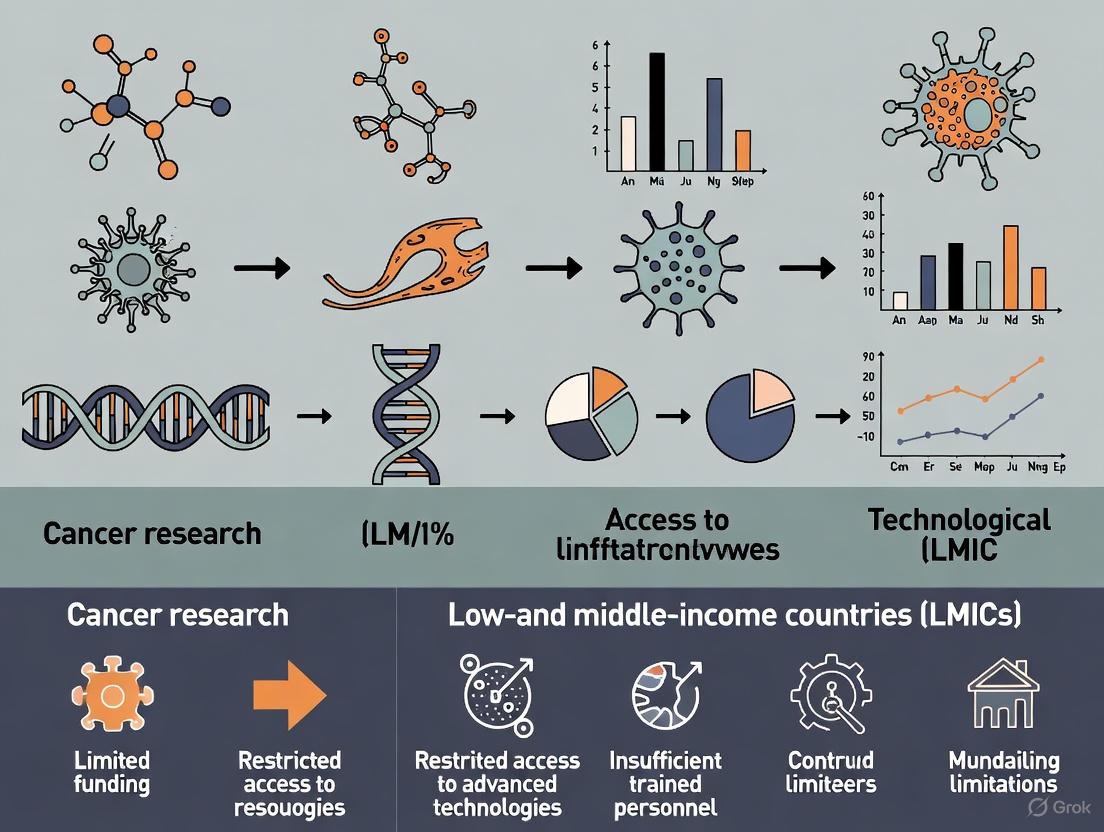
This article examines the critical limitations in cancer research infrastructure within Low- and Middle-Income Countries (LMICs), where the global cancer burden is rising most sharply.
Bridging the Divide: Addressing Cancer Research Infrastructure Gaps in LMICs
Abstract
This article examines the critical limitations in cancer research infrastructure within Low- and Middle-Income Countries (LMICs), where the global cancer burden is rising most sharply. It explores foundational disparities in clinical trials and funding, methodological approaches including digital health solutions and strategic partnerships, key challenges like workforce and financial barriers, and validation through comparative analysis of successful national strategies. Aimed at researchers, scientists, and drug development professionals, it provides a comprehensive framework for building contextually relevant, sustainable, and equitable cancer research ecosystems in resource-limited settings to address global oncology disparities.
Mapping the Landscape: The Stark Reality of Cancer Research Disparities in LMICs
Cancer burden is undergoing a profound geographic shift, with low- and middle-income countries (LMICs) expected to bear an increasing majority of new cases and deaths in the coming decades. Despite this growing burden, significant disparities in cancer research infrastructure, clinical trial capacity, and funding mechanisms in LMICs hinder the development of contextually relevant and accessible cancer control solutions. This whitepaper provides a quantitative analysis of these projected shifts, a detailed examination of the research infrastructure limitations, and presents standardized methodological frameworks to guide robust, locally-led cancer research in resource-constrained settings.
The Evolving Global Cancer Burden: Quantitative Projections
The global cancer landscape is projected to change dramatically between now and 2050. The data reveals not only a general increase in absolute numbers but also a disproportionate shift of this burden onto LMICs.
Table 1: Projected Global Cancer Burden (2023–2050)
| Metric | 2023 Baseline | 2050 Projection | Relative Increase | Disproportionate Impact on LMICs |
|---|---|---|---|---|
| New Annual Cases | 18.5 million [1] | 30.5 million [1] | ~60% [1] | >50% of new cases will occur in LMICs [1] |
| Annual Deaths | 10.4 million [1] | 18.6 million [1] | ~75% [1] | >66% of deaths will occur in LMICs [1] |
| ASIR (Age-Standardized Incidence Rate) | 275.2 per 100,000 (2021) [2] | Not projected to increase [1] | Stable | Rising ASIR in low-income (+24%) & lower-middle-income (+29%) countries (1990-2023) [1] |
| ASMR (Age-Standardized Mortality Rate) | 115.8 per 100,000 (2021) [2] | Not projected to increase [1] | Stable | Mortality rates are declining in high-income countries but remain stubbornly high in many LMICs [1] |
This disproportionate growth is primarily driven by population growth and aging, alongside increasing exposure to modifiable risk factors such as tobacco, alcohol, and unhealthy diets in LMICs [1] [3]. It is critical to note that while the age-standardized rates are stable globally, the absolute numbers are soaring, placing immense strain on health systems that are often the least prepared for this burden [1].
Research Infrastructure and Clinical Trial Disparities in LMICs
The capacity to conduct independent, high-quality clinical research is a cornerstone of effective cancer control. However, our analysis confirms severe disparities in the volume and complexity of cancer clinical trials (CTs) across LMICs.
A 20-year analysis (2001–2020) of 16,977 cancer CTs registered on ClinicalTrials.gov reveals unequal development [4] [5]. While some countries, notably China and South Korea, have shown strong growth in trial numbers correlated with economic growth, many others have not.
Table 2: Analysis of Clinical Trial Disparities Among Selected LMICs (2001-2020)
| Country/Region | Economic Growth | Clinical Trial Growth | Key Characteristics of Research Ecosystem |
|---|---|---|---|
| China & South Korea | Strong [4] [5] | Very Strong [4] [5] | Developed independent and high-complexity research; higher proportion of early-phase trials [4] |
| Eastern Europe & Turkey | Robust / Moderate [4] | Moderate to Strong [4] | Increased number of trials, but still reliant on pharma-sponsored studies [4] |
| Argentina, Brazil, Mexico | Inconsistent / Stagnation [4] | Weak to Moderate [4] | Increased trials despite economic challenges; heavy reliance on pharma-sponsored studies [4] |
| India, Thailand, Vietnam | Strong [4] [5] | Inconsistent / Modest [4] | Strong economic growth did not fully translate to proportional CT growth [4] [5] |
| Egypt | Strong [4] | Strong [4] | Demonstrated a correlation between economic growth and clinical trial expansion [4] |
| South Africa | Weak Correlation [4] | Stagnation/Decline [4] | Weak correlation between economic growth and clinical trial activity [4] |
A critical indicator of research maturity is the capacity for independent and early-phase trials. Most LMICs, except for China and South Korea, rely heavily on pharma-sponsored Phase 3 registration trials [4]. In these trials, investigators from LMICs have minimal roles in research design and conduct, and the investigated agents, if successful, may be financially inaccessible in their local contexts, offering limited long-term benefit to the host country's health system [4].
Systemic Barriers to Robust Cancer Research
Beyond clinical trials, broader research efforts in LMICs are hampered by interconnected systemic barriers. A survey of cancer research professionals in the Arab region and other LMICs identified key constraints [6]:
- Funding Shortfalls: One-third of researchers "always" struggle to secure grants, with only 7.8% reporting no funding difficulties [6].
- Inadequate Training: Over three-quarters (77.9%) of researchers judged existing research training programs to be inadequate [6].
- Human Capital Shortages: A significant majority (84.5%) reported human capital shortages, with 69.6% observing "brain drain" of skilled researchers and 68.2% lacking protected research time [6].
- Data and Infrastructure Gaps: Only 48.7% rated national cancer data as "good" or "excellent," and access to laboratory facilities and scientific journals was uneven [6].
Methodological Frameworks for Cancer Burden and Clinical Trial Analysis
To reliably monitor the shifting cancer burden and research capacity, standardized methodologies are essential. The following protocols detail the approaches used in the cited major studies.
Protocol 1: Estimating National and Global Cancer Burden (GBD Study)
Objective: To generate comprehensive, comparable estimates of cancer incidence, mortality, and disability-adjusted life years (DALYs) across 204 countries and territories [1] [2].
Workflow Overview:
Procedure:
- Data Collection: Gather data from all available sources, including population-based cancer registries, vital registration systems, and verbal autopsy studies [1]. The Global Health Data Exchange (GHDx) is a primary query tool [2].
- Data Processing and Modeling:
- Mortality Estimation: Use models like Cause of Death Ensemble modeling (CODEm) to estimate cancer-specific mortality from the collected data [1].
- Incidence Estimation: Estimate incidence using mortality-to-incidence (MI) ratios, which are modeled using Spatial-Temporal Gaussian Process Regression (ST-GPR) [1].
- Forecasting: Apply Bayesian age-period-cohort models to project future cancer burden, incorporating sociodemographic trends [2].
- Uncertainty Quantification: All estimates are presented with 95% uncertainty intervals (UIs), calculated using 1000 draws from the posterior distribution of each model step [1].
Protocol 2: Analyzing Clinical Trial Disparities in LMICs
Objective: To investigate disparities in the number and complexity of cancer clinical trials among LMICs over a 20-year period and correlate these with economic growth [4].
Workflow Overview:
Procedure:
- Country and Trial Selection:
- Identify countries classified as low, lower-middle, or upper-middle income by the World Bank in the year 2000 [4].
- Use the ClinicalTrials.gov database's "Advanced Search" to identify all interventional cancer trials with a study start date between 2001-2020 and a location in the selected countries [4].
- Data Extraction: For each country and five-year period, extract:
- The total number of cancer clinical trials.
- The phase of the study (1, 2, or 3).
- The type of sponsor (pharmaceutical industry vs. other, e.g., academic, governmental) [4].
- Statistical Analysis:
- Use R software for all analyses.
- Quantify the strength of the correlation between the number of clinical trials and the country's Gross Domestic Product (GDP) per capita using Pearson's correlation coefficient (CC). Interpret the CC as follows: 0-0.19 (very weak), 0.2-0.39 (weak), 0.4-0.69 (moderate), 0.7-0.89 (strong), 0.9-1.0 (very strong) [4].
The Scientist's Toolkit: Research Reagent Solutions for LMIC Contexts
Building research capacity in LMICs requires not only funding and training but also access to critical reagents and materials. The table below lists key solutions with an emphasis on cost-effectiveness and practicality.
Table 3: Essential Research Reagents and Materials for Cancer Research in LMICs
| Research Reagent / Material | Function / Application | Considerations for LMIC Implementation |
|---|---|---|
| Formalin-Fixed Paraffin-Embedded (FFPE) Tissue Blocks | Preserves tissue architecture for long-term storage; used for histopathology, immunohistochemistry, and nucleic acid extraction. | Foundation of cancer diagnosis; requires stable supply of formalin, paraffin, and embedding equipment. A cost-effective and stable resource for retrospective studies [7]. |
| PCR Master Mixes | Amplifies specific DNA/RNA sequences for mutation detection, viral load quantification, and gene expression analysis. | Essential for molecular diagnostics; lyophilized or pre-mixed formats can reduce cold-chain dependence and improve reliability in settings with intermittent power outages. |
| Immunohistochemistry (IHC) Kits | Visualizes protein expression in tissue sections using enzyme-conjugated antibodies for cancer subtyping and biomarker identification. | Kits with stable, ready-to-use reagents simplify workflow. Focus on validated, clinically relevant biomarkers (e.g., ER, PR, HER2) to maximize clinical impact [7]. |
| HPV DNA Test Kits | Detects high-risk HPV strains for cervical cancer screening and prevention programs. | Crucial for WHO's cervical cancer elimination initiative. Point-of-care or sample self-collection kits can drastically improve screening uptake in remote areas [7]. |
| Cell Culture Media & Sera | Supports the growth of mammalian cells in vitro for basic cancer biology and drug testing. | Requires reliable -80°C freezers for serum storage. Sourcing local suppliers for base media powders can reduce costs and import dependencies. |
| Next-Generation Sequencing (NGS) Libraries | Prepares DNA/RNA samples for high-throughput sequencing to identify mutations, fusions, and other genomic alterations. | Capital and reagent costs are high. Centralized, shared regional sequencing facilities or partnerships with HIC institutions can provide viable access pathways [4]. |
The data unequivocally demonstrates a future where the majority of the global cancer burden will be borne by populations in LMICs. This shift is not being met with a commensurate strengthening of local research capacity, as evidenced by profound disparities in clinical trial development and systemic barriers to conducting independent research. Addressing this mismatch requires a paradigm shift from a model of dependency on externally-driven trials to one that fosters locally-led, contextually relevant research ecosystems. Strategic investments must prioritize: 1) embedding experiential research training in clinical education; 2) diversifying and securing sustainable funding streams; 3) developing shared research infrastructure and interoperable data platforms; and 4) creating career pathways with protected research time and competitive incentives. The future of equitable cancer control depends on decisive, collective action to build research sovereignty in LMICs today.
The global burden of cancer is increasingly concentrated in low- and middle-income countries (LMICs), which are projected to experience the steepest rises in incidence and mortality in the coming decades [4]. Despite this disproportionate burden, clinical research capacity remains heavily concentrated in high-income countries, creating significant inequities in research participation and development. Recent analyses reveal that cancer clinical trials remain disproportionately concentrated in high-income nations, while 63 countries have no registered cancer trials at all [8]. This misalignment between research activity and disease burden represents a critical challenge in global oncology, leaving many of the world's most vulnerable populations without access to investigational therapies and without representation in the research that shapes treatment paradigms.
The World Health Organization has highlighted that investment and innovation in cancer research are often misaligned with the greatest public health needs [8]. Cancers causing the highest number of deaths in LMICs, including liver, cervical, and stomach cancers, are among the least studied, while research continues to disproportionately focus on novel drugs rather than essential interventions like surgery, radiotherapy, diagnostics, and palliative care that might have more significant impacts in resource-limited settings [8]. This disparity extends beyond the types of cancer being studied to encompass the entire research ecosystem, including funding sources, trial complexity, and local research leadership.
Quantitative Analysis of Global Clinical Trial Distribution
Twenty-Year Trends in LMIC Clinical Trial Development
A comprehensive 20-year analysis of cancer clinical trials among countries classified as LMICs in 2000 reveals profound disparities in research development. The study, which examined 16,977 clinical trials registered between 2001 and 2020, found unequal development of cancer clinical research among LMICs, with only a partial correlation to economic growth [4]. Asian countries, particularly China and South Korea, demonstrated exceptional growth in clinical trial volume, with China recording 5,285 trials and South Korea 2,686 trials over the study period [4] [9]. These countries exhibited very strong correlations between economic growth and clinical trial development, with correlation coefficients of 0.93 and 0.97, respectively [9].
Table 1: Clinical Trial Distribution by Geographic Region (2001-2020)
| Region | Representative Countries | Total Trials (2001-2020) | Correlation with Economic Growth | Key Observations |
|---|---|---|---|---|
| East Asia | China, South Korea | 7,971 | Very strong (0.93-0.97) | Exceptional growth in volume and complexity of trials |
| Eastern Europe | Czech Republic, Romania, Russia | 2,422 | Strong to very strong (0.89-0.97) | Robust growth aligned with economic development |
| South America | Argentina, Brazil, Chile | 1,995 | Weak to moderate | Sustained growth despite inconsistent economic growth |
| Africa | Egypt, South Africa | 639 | Variable (Strong for Egypt) | Only Egypt showed sustained growth; South Africa declined |
| South/Southeast Asia | India, Thailand, Vietnam | 1,076 | Variable (0.76-0.83 for some) | Limited growth despite strong economic progress |
The data reveals that economic growth alone does not guarantee clinical research development. Several South and Southeast Asian countries experienced limited trial growth despite strong economic progress, with exceptions including Thailand and Vietnam which showed moderate correlations between economic growth and clinical trial development [9]. Similarly, in the Americas, Argentina, Brazil, Chile, and Mexico demonstrated sustained growth in clinical trials despite inconsistent economic growth patterns [4]. In Africa, only Egypt showed sustained growth with a strong correlation to economic development, while South Africa experienced stagnation and eventual decline in clinical trial volume [4] [9].
Analysis of Trial Complexity and Sponsorship Patterns
Beyond the sheer volume of clinical trials, the complexity and sponsorship patterns provide critical insights into research capacity building. The phase distribution of trials and the source of sponsorship reveal significant disparities in research autonomy and sophistication across LMICs. Early-phase trials (Phase 1-2), which typically require more advanced research infrastructure and expertise, remain concentrated in a few high-performing LMICs, while most LMICs predominantly participate in later-phase (Phase 3) registration trials sponsored by pharmaceutical companies [4].
Table 2: Trial Characteristics and Sponsorship Patterns Across Select LMICs
| Country | Phase 1-2 vs Phase 3 Distribution | Sponsorship Pattern | Research Complexity Trend |
|---|---|---|---|
| China | Highest growth in phase 1-2 studies | Shift from pharma-sponsored (41% to 33%) to independent sponsorship (+6%) | Increasingly complex and independent |
| South Korea | Robust phase 1-2 growth | Balanced sponsorship | High complexity development |
| Most Other LMICs | Persistently low proportion of phase 1-2 trials | Heavy reliance on pharma-sponsored trials | Limited complexity development |
| Egypt | Growing phase 1-2 capability | Significant local funding (94% of locally financed studies in Africa) | Emerging research autonomy |
The analysis demonstrates that only China and South Korea meaningfully developed independent and high-complexity clinical research capabilities during the study period [4]. China notably demonstrated a significant shift in sponsorship patterns, with the proportion of pharmaceutical-sponsored trials decreasing from 41% (2001-2010) to 33% (2011-2020), while independently sponsored trials increased by 6% [9]. This transition indicates evolving research autonomy and capacity. In contrast, most other LMICs, including those in South America, South and Southeast Asia, North America, West Asia/Southeast Europe, and Eastern Europe, remained heavily dependent on pharmaceutical-sponsored trials [4]. This reliance typically limits local investigator input into research design and question selection, potentially misaligning research priorities with local health needs.
Methodological Framework for Quantifying Representativeness
Metrics for Assessing Trial Representativeness and Generalizability
Quantifying the representativeness of clinical trial cohorts is essential for evaluating the generalizability of research findings to target populations. Recent methodological advances have established standardized metrics for assessing how well trial participants represent broader patient populations. These metrics are particularly crucial for LMICs, where trial participants often differ substantially from the general patient population due to resource constraints, infrastructure limitations, and selection biases.
Table 3: Key Metrics for Quantifying Clinical Trial Representativeness
| Metric | Calculation Method | Interpretation Guidelines | Strengths | ||
|---|---|---|---|---|---|
| β-index | β = ∫ √fₛ(s)fₚ(s)ds where fₛ(s) is distribution of propensity scores for sample and fₚ(s) for population [10] | 1.00-0.90: Very high generalizability; 0.90-0.80: High; 0.80-0.50: Medium; <0.50: Low [10] | Strong statistical performance, clear categorization, distributional similarity measure | ||
| C-statistic | C = ∫ ROC(t)dt Area under ROC curve comparing propensity score distributions [10] | 0.5: No discrimination (ideal); 0.5-0.7: Outstanding generalizability; 0.7-0.8: Excellent; 0.8-0.9: Acceptable; ≥0.9: Poor [10] | Concordance measure, familiar interpretation, handles multiple covariates well | ||
| Standardized Mean Difference (SMD) | SMD = (1/n ∑ P̂i i∈{Si=1} − 1/N − n ∑ P̂i i∈{Si=0})/σ where P̂i is estimated propensity score [10] | Smaller values indicate better balance; <0.1 considered negligible difference | Simple calculation, direct measure of mean differences | ||
| Kolmogorov-Smirnov Distance (KSD) | KSD = maxₓ | F̂ₛ(x) − F̂ₚ(x) | Maximum vertical distance between cumulative distribution functions [10] | 0 indicates identical distributions; increasing values indicate decreasing similarity | Non-parametric, comprehensive distribution comparison |
The β-index and C-statistic have emerged as particularly valuable metrics due to their strong statistical performance, ease of interpretation, and ability to clearly categorize generalizability into levels such as very high, high, medium, or low [10]. A β-index value between 1 and 0.8 (inclusive) or a C-statistic value between 0.5 and 0.8 (inclusive) indicates that the trial sample is highly representative of the patient population [10]. These metrics enable quantitative assessment of the representation gaps between trial participants and the broader patient populations in LMICs, facilitating more targeted interventions to improve representativeness.
Machine Learning Approaches for Representativeness Assessment
Innovative methodologies have formulated population representativeness of randomized clinical trials (RCTs) as a machine learning fairness problem, deriving new representation metrics that can identify underrepresented subpopulations [11]. This approach treats RCT cohort enrollment as a random binary classification fairness problem, enabling the calculation of metrics based on enrollment fractions that can be efficiently computed using subpopulation rates in RCT cohorts and target populations [11].
This framework enables researchers to quantify gaps between RCT and target populations, supporting generalizability evaluation of existing RCT cohorts [11]. The interactive visualization tools allow for rapid examination of representativeness across all subpopulations defined by categorical traits such as gender, race, ethnicity, smoking status, and clinical characteristics [11]. The normalized metrics provide an intuitive standardized scale for evaluating representation across subgroups that may have vastly different enrollment fractions and rates in RCT study cohorts [11].
Experimental Protocols for Assessing and Improving Representativeness
Protocol for Calculating Generalizability Metrics
A standardized protocol for calculating generalizability metrics enables consistent assessment of clinical trial representativeness. The following step-by-step methodology provides researchers with a systematic approach to quantifying representation gaps:
Step 1: Define Target Population
- Identify appropriate real-world data source (EHR systems, national health surveys, disease registries)
- Specify eligibility criteria matching the clinical trial parameters
- Document baseline characteristics of the target population [11]
Step 2: Calculate Propensity Scores
- Develop logistic regression model for selection into clinical trial
- Include relevant covariates (demographic, clinical, socioeconomic factors)
- Generate propensity scores for both trial participants and target population [10]
Step 3: Compute Distributional Metrics
- Calculate β-index using the formula: β = ∫ √fₛ(s)fₚ(s)ds
- Compute C-statistic from ROC curve of propensity score distributions
- Determine Standardized Mean Differences between propensity score means [10]
Step 4: Apply Machine Learning Fairness Metrics
- Map RCT enrollment to binary classification problem
- Calculate log disparity metrics for protected attributes
- Compute normalized representation scores for subgroups [11]
Step 5: Statistical Testing and Visualization
- Conduct significance testing for identified representation gaps
- Generate interactive visualizations (sunburst charts, subgroup analyses)
- Create representation dashboards for stakeholder communication [11]
This protocol enables reproducible assessment of trial representativeness and facilitates comparisons across studies and populations. The standardized approach is particularly valuable for LMIC research settings where multiple systemic barriers may compound representation challenges.
Implementing robust representativeness assessment requires specific methodological tools and resources. The following table details key solutions for researchers quantifying representation gaps in global clinical trials:
Table 4: Essential Research Reagents and Solutions for Representativeness Assessment
| Tool/Resource | Function | Application Context |
|---|---|---|
| Propensity Score Modeling | Estimates probability of trial participation based on covariates | Adjusts for selection bias, enables comparison between participants and target population |
| WHO ICTRP Database | Provides global clinical trial registration data | Enables analysis of trial distribution across countries and regions [12] |
| R Shiny App for Representativeness | Interactive tool for visualizing subgroup representation | Identifies underrepresented subgroups through on-demand stratification [11] |
| CONSORT-Equity Extension | Reporting guidelines for equity-relevant trial information | Standardizes reporting of participant characteristics relevant to equity [11] |
| GLOBOCAN Database | Provides cancer incidence, mortality, and prevalence data | Enables comparison of trial focus versus disease burden [13] |
| Machine Learning Fairness Metrics | Quantifies representation gaps using algorithmic approaches | Provides standardized scales for evaluating subgroup representation [11] |
These tools enable researchers to systematically identify and quantify representation gaps in clinical trials, particularly focusing on disparities affecting LMIC populations. The integration of multiple data sources and methodological approaches strengthens the validity and utility of representativeness assessments.
Visualization Techniques for Representing Trial Imbalances
Graphical Representations of Distributional Disparities
Effective visualization of clinical trial imbalances enables rapid comprehension of complex representation gaps. Both traditional and novel graphical methods can illustrate disparities in trial participation, funding distribution, and disease burden alignment.
Forest plots effectively display treatment effects across subgroups, enabling visual assessment of consistency in treatment benefits [14]. Funnel plots can identify publication bias and heterogeneity in trial distributions, with asymmetry potentially indicating systematic underrepresentation of certain regions or populations [14]. Violin plots combine box plots with density traces, revealing distributional characteristics of trial metrics across different countries or regions [14]. Kaplan-Meier curves, while primarily used for survival analysis, can also illustrate disparities in trial participation duration or follow-up completeness across different demographic groups [14].
Sunburst visualizations are particularly effective for representing subgroup representativeness, explicitly illustrating the influence of different variables on overall representation [11]. These visualizations enable researchers and policymakers to quickly identify the specific demographic and clinical subgroups that are underrepresented in clinical trials, guiding targeted recruitment interventions.
Comparative Visualization of Global Trial Distribution and Disease Burden
Visualizing the misalignment between clinical trial activity and disease burden highlights priority areas for research investment in LMICs. The WHO analysis reveals that cancers causing the greatest number of deaths in LMICs, including liver, cervical, and stomach cancers, are among the least studied [8]. This misalignment is particularly striking in Africa, where cervical, prostate, and liver cancers are significantly underfunded relative to their disease burden [13].
Table 5: Alignment Between Cancer Burden and Research Focus in LMICs
| Cancer Type | Burden in LMICs | Research Attention | Alignment Gap |
|---|---|---|---|
| Breast Cancer | High incidence and mortality | High research focus | Moderate alignment |
| Cervical Cancer | High mortality, preventable | Significantly underfunded | Major misalignment |
| Liver Cancer | High mortality in LMICs | Among least studied | Major misalignment |
| Lung Cancer | Rising incidence | Moderate research focus | Moderate alignment |
| Stomach Cancer | High mortality in LMICs | Among least studied | Major misalignment |
| Prostate Cancer | High mortality in Africa | Underfunded relative to burden | Significant misalignment |
This misalignment between research focus and disease burden represents a critical inefficiency in global cancer research. The disproportionate focus on novel drug development, while essential for therapeutic advancement, comes at the opportunity cost of investigating interventions that might have more immediate impacts in resource-limited settings, including surgery, radiotherapy, diagnostics, and palliative care [8].
The quantification of clinical trial imbalances reveals profound disparities in global research participation that mirror broader global health inequities. The data demonstrates that economic growth alone is insufficient to guarantee clinical research development, as evidenced by the variable correlations between GDP growth and trial volume across LMICs [4]. While China and South Korea have demonstrated that rapid development of independent, high-complexity clinical research is possible, most LMICs remain dependent on pharmaceutical-sponsored trials that may not address local health priorities [4] [9].
The methodological frameworks for quantifying representativeness provide essential tools for identifying and addressing these disparities. Standardized metrics like the β-index and C-statistic enable objective assessment of how well trial participants represent target populations [10]. Machine learning approaches formulated as fairness problems offer innovative methods for identifying underrepresented subgroups [11]. These quantitative approaches, combined with effective visualization techniques, create a comprehensive framework for measuring and addressing clinical trial imbalances.
Addressing these disparities requires coordinated action from multiple stakeholders. Funders, product developers, and clinical trial investigators must work to better target cancer R&D investments, align research priorities with interventions that maximize health impact in LMICs, and ensure equitable access to research participation and resulting innovations [8]. This includes developing context-appropriate research questions, building sustainable research infrastructure in LMICs, and ensuring that research benefits extend to the populations participating in studies. Only through such comprehensive approaches can the global cancer research community address the critical imbalances in research participation and ensure that scientific progress benefits all populations, regardless of economic status or geographic location.
In the landscape of global oncology, reliable data serves as the fundamental bedrock for effective cancer control. However, in low- and middle-income countries (LMICs), population-based cancer registries (PBCRs)—the primary sources for cancer incidence and survival statistics—face profound challenges that compromise data quality and utility [15]. This data deficit transcends mere statistical inconvenience; it represents a critical weakness in cancer research infrastructure that directly impedes the understanding of cancer burden, the development of evidence-based control policies, and the equitable allocation of limited resources [15] [16]. The quality of cancer registry data is not merely a reflection of a registrar's technical skill but often a telling indicator of deeper systemic weaknesses within the broader healthcare infrastructure [15]. When PBCRs in LMICs cannot provide good quality data, it signals deficiencies that extend beyond registration capabilities to specific failures in cancer diagnosis and care delivery systems [15]. This technical analysis examines the dimensions of this data deficit, its implications for cancer research and drug development, and proposes methodological frameworks for strengthening data quality within the constraints of LMIC settings.
The Four Dimensions of Data Quality: A Framework for Assessment
The International Agency for Research on Cancer (IARC) defines four essential dimensions for evaluating cancer registry data quality: comparability, validity, timeliness, and completeness [17]. Each dimension presents unique challenges in resource-limited settings and requires specific assessment methodologies.
Table 1: Core Dimensions of Cancer Registry Data Quality and LMIC Challenges
| Quality Dimension | Definition | Key Challenges in LMICs | Standard Assessment Methods |
|---|---|---|---|
| Comparability | Standardization of classification, coding, and definitions across registries and time [17] | Lack of uniform adoption of ICD-O coding; inconsistent application of multiple primary cancer rules; varying definitions of incidence date [17] | Audit of coding practices against ICD-O standards; review of incidence date rules implementation |
| Validity (Accuracy) | Proportion of cases with specific characteristics that actually have that attribute [18] | High proportions of missing data; limited morphological verification; death certificate-only (DCO) cases [17] [18] | Re-abstraction studies; calculation of MV% and DCO%; internal consistency checks [17] |
| Timeliness | Rapidity with which registry can collect, process, and report sufficiently complete data [17] | Reliance on manual data collection from paper charts; understaffing; competing clinical priorities delaying data submission [17] [16] | Measurement of lag time between diagnosis and registration; assessment of reporting delays from sources |
| Completeness | Extent to which all eligible cancer cases are registered within the jurisdiction [17] [18] | Inadequate case-finding methods; limited data sources; poor integration with vital registration systems [15] [17] | Mortality-to-incidence ratios; capture-recapture methods; independent case ascertainment [17] |
Quantitative Indicators of Data Quality Deficits
Specific quantitative metrics reveal the extent of data quality challenges in LMIC settings. These indicators provide objective measures of registry performance and highlight areas requiring targeted intervention.
Table 2: Key Quantitative Indicators of Data Quality in Cancer Registries
| Quality Indicator | Definition | Acceptable Standard | LMIC Challenges | Impact on Research |
|---|---|---|---|---|
| Morphologically Verified Cases (MV%) | Percentage of cases with diagnosis based on histology or cytology [17] | Varies by cancer site; compared with regional standards [17] | Paradoxically high MV% may indicate biased case-finding from pathology labs only [17] | Deficit of cancers difficult to biopsy (e.g., lung, liver, brain); biased incidence patterns [17] |
| Death Certificate Only (DCO%) | Percentage of cases registered solely from death certificate information [17] | Ideally <2-5%; varies by local circumstances [17] | Can be substantially higher due to inability to trace hospital records; poor diagnostic accuracy on certificates [17] | Survival estimates artificially lowered as DCO cases have survival time = 0 [18] |
| Mortality-to-Incidence (M:I) Ratio | Comparison of registered deaths to new cases in same period [17] | Approximates 1 - 5-year survival probability [17] | Unreliable where death registration is incomplete or cause of death inaccurate [17] | Cannot use standard completeness checks; requires alternative methods [17] |
| Cases with Unknown Primary Site | Proportion of cases coded to ill-defined or unknown primary sites [17] | Should be minimal (<5%) [17] | Higher proportions due to advanced stage at presentation, limited diagnostic capabilities [17] | Limits site-specific analysis; impedes understanding of etiological patterns |
The following diagram illustrates how systemic weaknesses in healthcare infrastructure directly impact these critical data quality indicators, creating a vicious cycle that undermines the entire cancer control continuum.
Methodological Protocols for Data Quality Assessment
Robust assessment of cancer registry data requires systematic methodologies. The following protocols provide technical guidance for researchers evaluating and working with cancer registry data in LMIC contexts.
Protocol for Completeness Assessment Using Capture-Recapture Methods
Purpose: To quantitatively estimate the completeness of case ascertainment using multiple independent data sources [17].
Materials and Methods:
- Data Sources: Minimum of two independent case ascertainment sources (e.g., hospital records, pathology reports, death certificates, radiotherapy records)
- Matching Variables: Personal identifiers (name, age, sex, residence), tumor characteristics (site, morphology), date of diagnosis
- Procedure:
- Identify all potential cases from each source within a defined time period and geographical area
- Conduct rigorous matching of cases across sources using deterministic and probabilistic linkage methods
- Create a contingency table to identify cases unique to each source and cases common to both
- Apply statistical models (e.g., log-linear models) to estimate the number of missing cases not captured by any source
- Calculate completeness percentage as: (Number of cases actually captured / Total estimated cases) × 100
Limitations in LMICs: Often complicated by the lack of truly independent sources, poor quality identifying information, and limited number of available sources [17].
Purpose: To evaluate accuracy of recorded data through comparison with original medical records [17] [18].
Materials and Methods:
- Sample Selection: Random sample of registered cases (minimum 5% or 100 cases, whichever larger)
- Reference Standard: Original medical records (hospital files, pathology reports, physician notes)
- Data Elements for Validation: Demographic information, primary site, morphology, behavior, stage at diagnosis, date of diagnosis, first course of treatment
- Procedure:
- Select random sample of registered cases from the database
- Train abstractors in standardized data extraction from source documents
- Re-abstract selected cases blindly without reference to registry data
- Compare re-abstracted data with original registry entries
- Calculate agreement rates (crude agreement and kappa statistics for categorical variables)
- Identify systematic errors and areas requiring improved coder training
LMIC Adaptations: May require simplified sampling strategies and focus on critical variables most essential for research purposes due to resource constraints [18].
Implications for Cancer Research and Survival Estimation
The data quality deficits in LMIC cancer registries have profound implications for cancer research, particularly in the estimation of survival statistics and the conduct of epidemiological studies.
Incomplete case ascertainment introduces selection bias that systematically distorts survival estimates [18]. When patients with poor prognosis are selectively under-ascertained (often those diagnosed in terminal stages who never access formal health services), survival rates become artificially inflated [18]. Conversely, when patients with good prognosis are missed (often those treated in private facilities not captured by the registry), survival is underestimated [18]. The presence of Death Certificate Only (DCO) cases presents particular methodological challenges, as these cases by definition have zero survival time, artificially depressing overall survival rates [18]. One study demonstrated that inclusion of DCO cases reduced 5-year colorectal cancer survival estimates by 8.6% [18].
Beyond survival estimation, missing or inaccurate data on stage at diagnosis and tumor characteristics limits the ability to conduct meaningful comparative analyses across populations or time periods [18]. These clinical variables serve as crucial confounder controls in epidemiological research, and their absence substantially reduces the analytical utility of registry data for etiological research [18]. The systematic under-ascertainment of specific cancer types that are difficult to biopsy (e.g., lung, liver, brain, pancreatic cancers) creates distorted patterns of cancer incidence that misdirect resource allocation and prevention efforts [17].
Researchers working with cancer registry data from LMICs require both technical and contextual understanding to appropriately interpret and utilize these data sources. The following toolkit outlines critical considerations and approaches.
Table 3: Research Reagent Solutions for LMIC Cancer Registry Data Challenges
| Research Tool | Function/Purpose | Application in LMIC Context |
|---|---|---|
| Multiple Imputation Methods | Statistical technique for handling missing data | Appropriately addresses missing stage, grade, or demographic data rather than complete-case analysis |
| Sensitivity Analyses | Testing robustness of findings to data limitations | Quantifies how DCO cases or potential under-ascertainment might affect survival estimates [18] |
| Delay Models | Statistical adjustment for reporting delays | Estimates undercount at time of analysis when data timeliness is problematic [17] |
| Source-Specific Analysis | Separate analysis by case ascertainment source | Identifies potential biases introduced by over-reliance on specific sources (e.g., pathology-based vs. clinical diagnosis) |
| Contextual Data Integration | Incorporation of healthcare system metrics | Interprets findings in light of healthcare access, diagnostic capacity, and referral patterns |
The data deficit in LMIC cancer registries represents neither a technical inevitability nor merely an academic concern. Rather, it constitutes a fundamental barrier to evidence-based cancer control and health equity. As recent studies indicate, while age-standardized cancer mortality rates have declined by approximately 30% in high-income countries over recent decades, they have increased by about 15% in lower-income countries [19]. This divergence underscores the urgent need for reliable data to guide effective interventions in resource-limited settings.
Addressing this deficit requires coordinated investment in both the technical aspects of cancer registration and the broader healthcare systems that enable quality data collection [15] [16]. Potential solutions include strategic investment in human resources through training and retention of registry staff, development of appropriate information systems including electronic medical records, and dedicated funding for quality improvement initiatives [16]. Furthermore, research funding agencies must prioritize supporting not just cancer treatment expansion but also the development of robust systems for monitoring quality and outcomes across the cancer care continuum [16].
For the research community, acknowledging and appropriately addressing the limitations of LMIC cancer registry data is a scientific imperative. This includes employing rigorous methodological approaches to account for data quality issues, conducting transparent sensitivity analyses, and advocating for increased investment in cancer registration infrastructure. Only through such comprehensive approaches can we overcome the current data deficit and build the evidence base necessary to address the growing cancer burden in low- and middle-income countries.
A comprehensive analysis of global public and philanthropic cancer research funding from 2016 to 2023, covering $51.4 billion across 107,955 awards, reveals significant misalignment between research investment and global cancer burden [20]. This inequity disproportionately affects low- and middle-income countries (LMICs), where approximately 70% of global cancer deaths occur yet research infrastructure remains severely constrained [21] [8]. The concentration of clinical trials in high-income countries and underinvestment in critical treatment modalities like surgery and radiotherapy perpetuate these disparities, demanding urgent realignment of funding priorities and collaborative strategies to build sustainable research capacity in LMICs [8] [20].
Cancer represents the second most common cause of death worldwide, responsible for one in five deaths, with the Global Cancer Observatory estimating approximately 10 million cancer-related deaths and 20 million new cases in 2022 [20]. These figures are projected to rise to 18 million deaths and 35 million new cases by 2050, with the most pronounced increase in incidence occurring in low-income countries—estimated to grow by 142% from 0.8 million new cases in 2022 to almost 2 million by 2050 [20]. By 2030, approximately 75% of cancer deaths worldwide will occur in LMICs, signaling a dramatic global shift in the cancer burden [22].
Despite this escalating burden, investment in cancer research remains heavily concentrated in high-income countries, creating a critical mismatch between public health needs and research priorities [8] [20]. This whitepaper examines the quantitative evidence of these funding inequities, analyzes the structural barriers constraining research capacity in LMICs, and proposes evidence-based solutions to realign the global cancer research landscape with population needs and promote equitable collaboration.
Quantitative Analysis of Global Funding Disparities
Table 1: Global Cancer Research Funding (2016-2023)
| Time Period | Number of Awards | Total Investment (USD) | Inflation-Adjusted Investment (USD) |
|---|---|---|---|
| 2016-2020 | 66,388 | $24.5 billion | $28.7 billion |
| 2021-2023 | 41,567 | $22.7 billion | $22.7 billion |
| Total | 107,955 | $47.2 billion | $51.4 billion |
Analysis of the global cancer research funding landscape from 2016 to 2023 reveals a total investment of $51.4 billion across 107,955 awards, with associated research output of 431,733 publications [20]. The data demonstrates that annual investment decreased globally each year apart from a temporary rise in 2021, indicating concerning trends in funding stability despite the growing cancer burden worldwide [20].
Geographic analysis shows extreme concentration of research investment, with the United States accounting for 58.3% of total global funding, followed by the United Kingdom (10.5%), China (6.4%), Germany (5.1%), and Australia (2.7%) [20]. This distribution highlights the dominance of a few high-income countries in cancer research funding, while LMICs remain significantly underrepresented in both funding allocation and research leadership.
Misalignment with Global Disease Burden
Table 2: Research Investment vs. Global Cancer Burden
| Metric | High-Income Countries | Low- and Middle-Income Countries |
|---|---|---|
| Percentage of Global Cancer Deaths | ~30% | ~70% [21] |
| Percentage of Global Cancer Research Investment | >90% [20] | <10% [20] |
| Countries with No Registered Cancer Clinical Trials | 0 | 63 [8] |
| Phase 3 Oncology RCTs Led by LMIC Investigators | ~92% | ~8% [21] |
The misalignment between research investment and disease burden represents one of the most significant inequities in global cancer research. While LMICs account for nearly 70% of global cancer mortality, they remain severely underrepresented in oncology research [21]. Specifically, cancers causing the greatest number of deaths in LMICs, such as liver, cervical, and stomach cancers, are among the least studied [8]. Furthermore, research is disproportionately focused on novel drugs, while surgery, radiotherapy, diagnostics, and palliative care remain underrepresented despite being essential components of comprehensive cancer care [8] [20].
The geographic distribution of clinical trials reveals even more extreme disparities, with 63 countries having no registered cancer clinical trials at all [8]. Even when LMICs participate in trials, they are often led by investigators from high-income countries, with only approximately 8% of phase 3 oncology randomized clinical trials led by investigators from LMICs [21]. This limits the relevance and applicability of research findings to local contexts and health system realities.
Structural Barriers to Cancer Research in LMICs
Financial and Infrastructural Constraints
Survey research conducted among cancer research professionals in LMICs reveals interconnected barriers across multiple domains. Financial constraints are consistently rated as the most impactful, with 78% of researchers rating difficulty obtaining funding for investigator-initiated trials as having a large impact on their ability to conduct research [21]. Infrastructure limitations compound these financial challenges, with only 38.3% of researchers having full laboratory access and 56.0% having full journal access [23]. Additionally, only 48.7% rated national cancer data as good or excellent, highlighting critical gaps in essential research infrastructure [23].
Human Capacity and Workforce Challenges
Human capacity issues represent the second most significant category of barriers, with 55% of researchers rating lack of dedicated research time as having a large impact on their work [21]. Survey data from the Arab region and neighboring LMICs found that 84.5% noted human capital shortages, 69.6% observed brain drain, and 68.2% lacked protected research time [23]. Training opportunities are also inadequate, with only 28.8% receiving research training during residency and 77.9% judging existing research training programs as inadequate [23].
Regulatory and Collaborative Hurdles
International collaboration, reported by 57.0% of researchers, is often impeded by bureaucracy and regulatory barriers [23]. Thematic analysis of survey responses highlighted resource scarcity, bureaucratic inertia, and the absence of national research strategies as fundamental constraints [23]. Additionally, power imbalances in research collaborations are evident in authorship rankings, which are often skewed toward non-LMIC researchers, limiting local capacity building and leadership development [20].
Experimental Protocols and Methodologies for Assessing Research Inequities
Survey Methodology for Barrier Assessment
Protocol Title: Cross-Sectional Survey of Cancer Research Barriers in LMICs
Objective: To systematically identify and quantify the primary barriers to conducting cancer research in low- and middle-income countries.
Population: Clinicians, scientists, and allied professionals with ≥1 year of cancer research experience in LMICs.
Recruitment: Institutional emails, social media, and snowball sampling to reach 206 respondents across multiple LMICs, with 70.7% from Jordan and the remainder from neighboring countries [23].
Data Collection: 10- to 12-minute REDCap questionnaire covering demographics, training, funding, infrastructure, ethics/regulation, data access, collaboration, workforce, and government support [23].
Analysis: Quantitative data summarized descriptively; open-text responses underwent thematic coding using established qualitative methodology [23].
Key Findings: Integrated weaknesses across training (77.9% judged programs inadequate), funding (only 7.8% reported no difficulty obtaining grants), and infrastructure (only 38.3% had full laboratory access) [23].
Global Clinical Trial Disparities Assessment
Protocol Title: Twenty-Year Analysis of Cancer Clinical Trial Disparities in LMICs
Objective: To investigate disparities in the number and complexity of cancer clinical trials among LMICs from 2001-2020.
Data Source: Analysis of 16,977 cancer clinical trials registered in LMICs over the 20-year period [5].
Methodology: Longitudinal analysis correlating economic indicators with clinical trial growth patterns across different geographic regions and economic contexts.
Analysis: Examination of variations in clinical trial growth despite similar economic development, with strong growth in China and South Korea, inconsistent growth in India, Thailand, and Vietnam, and increased trials in Argentina, Brazil, and Mexico despite economic stagnation [5].
Conclusion: Economic growth is a contributor but not the sole determinant of cancer clinical trial growth among LMICs, suggesting other structural and policy factors significantly influence research capacity [5].
Research Barrier-Solution Framework
Promising Initiatives and Funding Solutions
Current Funding Opportunities and Mechanisms
Table 3: Selected Cancer Research Funding Opportunities for LMIC Investigators
| Funding Organization | Program Name | Focus Area | Eligibility |
|---|---|---|---|
| World Cancer Research Fund International [24] | Regular Grant Programme | Diet, nutrition, physical activity in cancer prevention/survivorship | Senior researchers outside Americas |
| World Cancer Research Fund International [24] | INSPIRE Research Challenge | Diet, nutrition, physical activity, plus stress, sleep, immune function | Early career researchers globally |
| Cancer Grand Challenges [24] | Various Challenge Teams | Urgent, complex global cancer research problems | International teams |
| Conquer Cancer/ASCO Foundation [25] | Global Oncology Young Investigator Award | Research addressing global health needs | Early career investigators |
| Conquer Cancer/ASCO Foundation [25] | International Innovation Grant | Novel projects with cancer control impact in LMICs | Researchers in LMICs |
| Anticancer Fund [24] | Pancreatic Cancer Grant | Preclinical discoveries ready for clinical studies | Academic researchers globally |
Multiple organizations offer targeted funding opportunities to address global cancer research disparities. The AACR provides Beginning Investigator Grants for Catalytic Research, Maximizing Opportunity for New Advancements in Research in Cancer, and Cancer Disparities Research Fellowships specifically focused on addressing global cancer disparities [26]. Similarly, Conquer Cancer, the ASCO Foundation, awarded more than $11.5 million in funding through more than 450 grants and awards in 2025, with specific programs targeting global oncology research [25].
Pharmaceutical companies also offer specialized funding mechanisms, such as Gilead's health equity grant specifically focused on research related to Black people with triple-negative breast cancer and an oncology grant funding research addressing inequities in cancer [26]. These targeted funding streams represent critical resources for advancing equity in cancer research.
Capacity-Building and Training Programs
The Robert A. Winn Excellence in Clinical Trials Award Program, launched in late 2020, includes an intensive workshop held in partnership with the AACR and is designed to train and support early-career investigators on ways to expand access to clinical trials [26]. Early results demonstrate success, with 63% of clinical trials run by investigators in the program enrolling more than a quarter of participants from traditionally underrepresented populations, compared to only 28% of industry-led trials achieving similar diversity [26].
Memorial Sloan Kettering's Global Cancer Research and Training (GCRT) program represents another model for building sustainable research capacity through partnerships with institutions in LMICs [22]. Founded in 2011, the program has established partnerships such as the African Research Group for Oncology (ARGO), which has grown to include 26 institutions across Nigeria and seeks to generate data to inform regional evidence-based management recommendations [22].
Research Reagent Solutions for Global Oncology Research
Table 4: Essential Research Reagents and Materials for Cancer Disparities Research
| Reagent/Material | Function | Application in Disparities Research |
|---|---|---|
| HPV Self-Sampling Kits [26] | Self-collection for HPV DNA testing | Cervical cancer screening in underserved populations |
| Public Databases [26] | Provide population-level cancer data | Identify and analyze disparities patterns |
| Stool-Based Screening Tests [27] | Non-invasive colorectal cancer screening | Increase screening uptake in resource-limited settings |
| Blood-Based Liquid Biopsies [27] | Minimally invasive cancer detection | Accessible cancer screening and monitoring |
| Biobanking Infrastructure | Storage of biological specimens | Enable molecular studies of cancers in LMICs |
| Mobile Health Technology | Remote data collection and monitoring | Reach geographically dispersed populations |
Innovative research approaches and reagents are enabling more contextually appropriate cancer research in LMICs. For example, HPV self-sampling kits were used in a study with Asian American women, resulting in 87% of participants returning completed samples compared to only 30% of those referred to a clinic receiving Pap smears [26]. This demonstrates how tailored approaches can significantly improve participation in underserved communities.
Similarly, the increased adoption of stool- and blood-based screening tests for colorectal cancer represents an important innovation for disparities research, as these less invasive methods can improve screening uptake in populations where colonoscopy access is limited [27]. Patient navigation programs have also proven effective, with a Delaware program nearly eliminating gaps in colorectal cancer screening between Black and white residents and reducing colorectal cancer mortality rates among Black people by 42% between 2002 and 2009 [27].
Global Cancer Research Funding Flow
The evidence presented demonstrates significant and persistent inequities in global cancer research investment that fail to align with current and projected cancer burden patterns. The concentration of funding, clinical trials, and research leadership in high-income countries limits the relevance, applicability, and impact of cancer research for the majority of the global population that resides in LMICs. Based on the comprehensive analysis of funding patterns, structural barriers, and promising initiatives, the following strategic recommendations emerge as priorities for addressing these disparities:
Realign Funding Priorities: Funders should prioritize research aligned with global disease burden, particularly focusing on cancers with high mortality in LMICs and underrepresented treatment modalities like surgery and radiotherapy [8] [20].
Increase Direct Investment: Substantially increase direct funding for LMIC-led research, with particular attention to investigator-initiated trials and sustainable career pathways for researchers [23] [21].
Strengthen Research Infrastructure: Invest in core research infrastructure including laboratories, data systems, and biobanking facilities to create enabling environments for high-quality research [23] [22].
Build Human Capacity: Expand training programs, protected research time, and mentorship opportunities to develop and retain research talent in LMICs [23] [21].
Promote Equitable Partnerships: Foster collaborative relationships that prioritize LMIC leadership, capacity building, and contextually relevant research questions [22] [20].
Addressing these funding inequities requires coordinated action from funders, research institutions, policymakers, and the global scientific community to create a more equitable and effective cancer research ecosystem that serves all populations, regardless of geographic or economic boundaries.
Building from the Ground Up: Strategic Frameworks and Digital Solutions for LMIC Research
The global burden of cancer is disproportionately shifting toward low- and middle-income countries (LMICs), which are projected to experience a 70% rise in incidence by 2030 and already account for nearly 70% of global cancer mortality [28] [21]. Despite this escalating burden, cancer research remains heavily skewed toward high-income countries (HICs), creating a critical disparity between where cancer knowledge is generated and where it is most urgently needed [28]. This whitepaper delineates five paramount research agendas specifically tailored for LMIC contexts, framed within the pervasive limitations of local research infrastructures. It further provides detailed methodological frameworks and strategic tools to guide researchers, scientists, and drug development professionals in generating the contextually relevant evidence essential for effective cancer control in LMICs.
Cancer research in LMICs is not merely an extension of agendas set in high-resource settings but a distinct necessity driven by unique epidemiological, economic, and health systems realities. The radical rethinking of research priorities is compelled by several factors: the profound mismatch between global research focus and the cancers most prevalent in LMICs (e.g., oral, esophagogastric, hepatobiliary, and cervical cancers) [28]; the inapplicability of many HIC-developed control strategies due to differences in disease characteristics, health system capacities, and sociocultural factors [28]; and the simple economic reality that high-cost interventions developed in HICs are often non-implementable in LMICs [28]. Furthermore, clinical trials, the gold standard for evidence generation, are severely underrepresented in LMICs, with only 8% of phase 3 oncology randomized clinical trials led by investigators from these regions [28] [21]. Successfully addressing these challenges requires a concerted commitment from governments, policymakers, funding agencies, and researchers to build a robust, self-sustaining research ecosystem.
Foundational Challenges in LMIC Cancer Research Infrastructure
The capacity for conducting high-quality, contextually relevant cancer research in LMICs is constrained by a constellation of interconnected systemic barriers. Understanding these limitations is prerequisite to implementing the research agendas outlined in this document. Table 1 summarizes the primary obstacles as identified by recent surveys of clinicians and researchers with experience in LMIC settings.
Table 1: Key Barriers to Cancer Research in LMICs
| Barrier Category | Specific Challenge | Reported Impact |
|---|---|---|
| Financial | Difficulty obtaining funding for investigator-initiated trials [21] | 78% of surveyed clinicians rated this as having a "large impact" [21] |
| Human Capacity | Lack of dedicated research time [21] [23] | 55% of surveyed clinicians rated this as having a "large impact"; 68.2% in a Jordan-focused survey lacked protected research time [21] [23] |
| Infrastructure & Data | Limited access to laboratory facilities and scientific journals [23] | 38.3% had full lab access; 56.0% had full journal access in one survey [23] |
| Infrastructure & Data | Insufficient cancer surveillance and registry data [28] [29] | Only 48.7% rated national cancer data as good/excellent; registry coverage is low in Asia (15%), South America (19%), and Africa (13%) [28] [23] |
| Governance & Bureaucracy | Cumbersome regulatory and ethical review processes [23] | Thematic analysis highlighted "bureaucratic inertia" as a significant impediment [23] |
| Workforce | Insufficient staff expertise and "brain drain" [23] [30] | 84.5% noted human capital shortages; 69.6% observed brain drain [23] |
Five Key Research Agendas: Methodologies and Priorities
Based on current and projected needs, five key research priorities have been identified for LMICs. The following sections detail each agenda and propose specific, actionable methodological approaches.
Reduce the Burden of Advanced-Stage Disease
A disproportionately high number of patients in LMICs present with advanced-stage cancer, leading to poorer outcomes and a higher mortality-to-incidence ratio compared to HICs [28]. Research here focuses on context-specific strategies for prevention, awareness, and early detection.
Core Research Questions:
- What are the most effective and cost-effective community-based health promotion strategies to increase awareness of cancer signs and symptoms in specific LMIC populations?
- How can existing primary care platforms be leveraged to integrate feasible, low-cost early detection for common local cancers (e.g., visual inspection for cervical cancer)?
- What are the barriers (financial, geographic, cultural) that delay presentation, and what interventions can effectively mitigate them?
Proposed Methodology: Implementation Science using Mixed-Methods
- Workflow: A mixed-methods approach is critical to first understand the context and then design and evaluate an intervention.
- The diagram below outlines a recursive workflow for developing and evaluating early detection programs.
Essential Research Toolkit: Table 2: Key Reagents and Tools for Early Detection Research
| Item | Function/Application | Contextual Considerations |
|---|---|---|
| Validated Symptom Checklists | Standardized data collection on early warning signs. | Must be translated, culturally adapted, and validated in local languages. |
| Mobile Health (mHealth) Platforms | For community education, appointment reminders, and data collection. | Should be usable on basic feature phones and offline-capable to maximize reach. |
| Low-Cost Screening Tests (e.g., VIA, HPV self-sampling) | Technical core of the early detection intervention. | Must be feasible for use by mid-level health workers in primary care settings. |
| Geospatial Mapping Software | Identify geographic clusters of late-stage diagnosis to target interventions. | Free/open-source software (e.g., QGIS) is preferable for sustainability. |
Improve Access, Affordability, and Outcomes in Cancer Care
The journey from a cancer diagnosis to treatment completion in LMICs is fraught with geographic, financial, and health-system barriers. This agenda calls for solution-oriented research to overcome these challenges.
Core Research Questions:
- What are the most impactful financial toxicity mitigation strategies (e.g., managed entry agreements, generic drug policies, insurance schemes) for a given LMIC context?
- How can task-shifting and telemedicine be safely and effectively used to overcome human resource shortages and geographic barriers?
- What is the real-world efficacy and safety of established and novel cancer therapies in local patient populations, given potential differences in genetics, comorbidities, and pharmacokinetics?
Proposed Methodology: Pragmatic and Platform Clinical Trials
- Rationale: Traditional explanatory trials have high internal validity but often poor generalizability to real-world LMIC settings. Pragmatic trials are designed to evaluate interventions in routine practice conditions.
- Protocol Outline:
- Population: Heterogeneous patient population reflective of those typically seen in the participating clinical sites, with minimal exclusion criteria.
- Intervention & Comparator: Test the intervention (e.g., a truncated radiotherapy schedule, a lower-cost drug regimen) against the current local standard of care.
- Endpoints: Prioritize patient-centered, clinically meaningful outcomes such as overall survival, treatment completion rates, and quality of life, over surrogate biomarkers.
- Data Collection: Integrate data collection into routine clinical workflows as much as possible (e.g., using electronic medical records) to reduce burden and cost.
Emphasize Value-Based Care and Health Economic Assessment
With severely constrained resources, it is imperative that every dollar spent on cancer care in LMICs delivers maximum value. Health economic research is crucial to inform priority-setting and financing strategies.
Core Research Questions:
- What is the incremental cost-effectiveness of new cancer interventions (drugs, devices, programs) compared to existing standards in a specific LMIC?
- How can "value" in cancer care be defined and measured from the perspective of LMIC patients, health systems, and societies?
- What are the most sustainable and equitable health financing mechanisms for funding cancer care in different LMIC health system architectures?
Proposed Methodology: Cost-Effectiveness Analysis alongside Clinical Trials
- Workflow: This methodology involves the prospective collection of economic data concurrently with clinical data within a trial.
- The diagram below illustrates the parallel tracks of clinical and economic evaluation, culminating in a decision analysis model.
Essential Research Toolkit: Table 3: Key Tools for Health Economic Research
| Item | Function/Application | Contextual Considerations |
|---|---|---|
| Micro-Costing Templates | Detailed enumeration and valuation of all resources used for an intervention. | Must capture local unit costs (e.g., staff salaries, drug prices, facility fees). |
| Quality of Life (QoL) Instruments (e.g., EQ-5D) | To generate Quality-Adjusted Life Years (QALYs) for cost-utility analysis. | Requires cultural validation and, if necessary, translation into local languages. |
| Decision Analytic Modeling Software (e.g., TreeAge, R) | Synthesize trial data and extrapolate long-term outcomes. | Capacity building in health economics and modeling is a prerequisite. |
| Local Willingness-to-Pay Threshold | Benchmark to determine if an intervention is cost-effective. | Often defined as a multiple of the country's GDP per capita; requires national policy engagement. |
Scale-Up Quality Improvement and Implementation Research
The gap between knowing what works and implementing it effectively in routine care settings is a major contributor to poor cancer outcomes in LMICs. Implementation research provides the tools to close this gap.
Core Research Questions:
- What are the key facilitators and barriers to the implementation of an evidence-based cancer control intervention in a specific LMIC setting?
- What implementation strategies (e.g., audit and feedback, provider education, clinical pathways) are most effective and cost-effective in improving adherence to guidelines?
- How can successful pilot programs be scaled up sustainably across a region or nation?
Proposed Methodology: Hybrid Effectiveness-Implementation Trial (Type 2)
- Rationale: This design simultaneously assesses the clinical effectiveness of an intervention and the success of an implementation strategy, accelerating the translation of research into practice.
- Protocol Outline:
- Aim 1 (Clinical Effectiveness): Evaluate the impact of the clinical intervention (e.g., a new palliative care protocol) on patient-level health outcomes.
- Aim 2 (Implementation): Test a specific implementation strategy (e.g., a dedicated nurse champion) on provider- and system-level outcomes, such as adoption, fidelity, and penetration.
- Data Collection: Utilize a mixed-methods approach, combining quantitative fidelity metrics and patient outcomes with qualitative interviews with stakeholders to understand the "how" and "why" of implementation success or failure.
- Framework: Ground the research in an established implementation science framework (e.g., Consolidated Framework for Implementation Research - CFIR) to ensure systematic assessment of contextual factors.
Leverage Technology to Improve Cancer Control
Digital health technologies present a transformative opportunity to leapfrog traditional infrastructure constraints in LMICs. Research is needed to build robust evidence for their application.
Core Research Questions:
- Can artificial intelligence (AI)-assisted image analysis (e.g., for mammography, cervical cytology, or histopathology) improve the accuracy and efficiency of diagnosis in low-resource settings?
- How effective are telemedicine and mHealth applications in improving patient follow-up, adherence to treatment, and management of symptoms?
- Can blockchain or other secure digital technologies improve the completeness and timeliness of cancer registry data?
Proposed Methodology: Diagnostic Accuracy and Usability Studies
- Workflow: For AI-based tools, the research must validate both diagnostic performance and practical usability.
- The diagram below outlines the key phases for validating a technological solution like an AI-assisted diagnostic tool.
Essential Research Toolkit: Table 4: Key Technological Tools for Cancer Research in LMICs
| Item | Function/Application | Contextual Considerations |
|---|---|---|
| Cloud-Based Data Platforms (e.g., Registry Plus) | For cancer registration, clinical data management, and biorepository management. | Must comply with local data protection laws; offline functionality is often essential. |
| AI Software for Diagnostic Imaging | Automated analysis of radiology, pathology, or dermatology images. | Algorithms must be trained and validated on diverse LMIC population data to avoid bias. |
| Mobile Tablets/Smartphones with Data Collection Apps | Electronic data capture (EDC) for clinical research and patient-reported outcomes. | Devices and software must be rugged, low-cost, and easy to use. |
| Teleconferencing Equipment | For telepathology/teleradiology consultations and continuous medical education. | Requires adequate internet bandwidth, which may be limited in rural areas. |
Synthesis and Path Forward
The five research agendas outlined—reducing advanced-stage disease, improving access and outcomes, advancing value-based care, scaling implementation research, and leveraging technology—constitute a coherent and mutually reinforcing framework for addressing the most pressing challenges in LMIC oncology. The successful pursuit of these agendas hinges on confronting the foundational infrastructure barriers detailed in Table 1. This requires strategic, coordinated action: LMIC governments and ministries of health must prioritize and fund cancer research as a core component of national cancer control plans, streamlining ethical and regulatory processes [29]. International funding agencies and partners need to prioritize sustainable investments in LMIC-led investigator-initiated trials and capacity-building programs, moving beyond a model of short-term grants [21]. Finally, the global research community must champion equitable partnerships that place LMIC investigators in leadership roles, ensuring that research questions, methodologies, and dissemination of findings are contextually relevant and owned by the regions they are intended to serve. By systematically addressing these priorities within a framework of strengthened infrastructure, LMICs can not only improve their own cancer control outcomes but also make profound contributions to global cancer knowledge.
Cancer research infrastructure in Low- and Middle-Income Countries (LMICs) faces profound challenges including funding limitations, workforce shortages, and underdeveloped systems for data collection and patient support [31]. By 2050, an estimated 35 million new cancer cases will emerge globally, with up to 70% of deaths disproportionately occurring in LMICs [32]. Digital health technologies present transformative opportunities to overcome these barriers through innovative approaches to data collection, patient navigation, and clinical trial facilitation.
This technical guide examines current evidence and methodologies for implementing digital health tools within resource-constrained settings, providing researchers and drug development professionals with practical frameworks for strengthening oncology research infrastructure.
Digital Health Landscape in LMICs
Current Capacity and Penetration
Mobile technology penetration provides the foundation for digital health implementation in LMICs. As of 2022, approximately 49% of people in low-income countries and 65% in lower-middle-income countries own mobile phones, with 82% of people in LMICs having internet access [33]. This connectivity enables cost-effective, scalable solutions despite infrastructure limitations.
Table 1: Digital Infrastructure in LMICs
| Indicator | Low-Income Countries | Lower-Middle-Income Countries | Source |
|---|---|---|---|
| Mobile Phone Ownership | 49% | 65% | [33] |
| Internet Access | 82% (across all LMICs) | 82% (across all LMICs) | [33] |
| Most Popular Platform | Facebook (2.96B users) | WhatsApp (2B users) | [33] |
Scope of the Cancer Challenge
Cancer management in LMICs is hampered by limited access to prevention, diagnosis, and treatment services [33]. By 2030, three-quarters of global cancer-related deaths are projected to occur in LMICs, with Africa experiencing increasing rates due to urbanization, aging populations, and exposure to carcinogenic risk factors [33]. The Lancet Oncology Commission has highlighted the urgent need to focus on increasing cancer rates in historically understudied regions like Africa [33].
Digital Tools for Data Collection and Visualization
Clinical Research Data Visualization Systems
Clinical research data visualization systems help researchers overcome technical barriers to data analysis. VisualSphere represents an advanced web-based interactive visualization system that interfaces directly with clinical research data repositories, streamlining the visualization workflow without requiring programming expertise [34]. The system addresses two fundamental challenges: limited programming skills among clinicians and researchers, and ineffective data rendering strategies [34].
Table 2: Digital Visualization Tool Comparison
| System Feature | VisualSphere | i2b2t2 | Tableau | D3.js |
|---|---|---|---|---|
| Commercial License Free | Yes | No | No | Yes |
| Programming Background Required | No | Yes | Yes | Yes |
| Database Compatibility | Yes | No | Yes | - |
| Interactive Visualization | Yes | Yes | Yes | Yes |
| Chart Recommendations | Yes | No | Yes | - |
VisualSphere Architecture and Methodology
The VisualSphere system architecture comprises three core modules, which can be visualized in the following workflow:
Figure 1: VisualSphere System Workflow for Clinical Data Visualization
Experimental Protocol: VisualSphere Implementation
Connection Module: Users establish connections to clinical research data repositories (MySQL or MongoDB) by selecting database type and entering authentication information. A data dictionary may be uploaded to outline variables, codes, and values for accurate labeling [34].
Configuration Module: Users tailor dashboards by specifying names, descriptions, and charts. For each chart, users select relevant tables, designate variables, and choose chart types. The system recommends appropriate chart types based on variable classification (categorical, continuous, or date) [34].
Visualization Module: The R/Shiny application generates interactive visualizations using Plotly based on configured parameters. The system provides fifteen graph types with hover- and click-driven interactions, including panning, zooming, selecting, and downloading plots [34].
Privacy Protocol: VisualSphere does not persistently store clinical research data on its server. Data is transiently fetched solely for visualization purposes and not retained post-rendering, with institutional hosting in secure environments recommended [34].
Implementation Evaluation
A preliminary evaluation assessed VisualSphere's usability through timed tasks including database connection, dashboard creation, visualization rendering, dashboard modification, and exploratory data analysis. The system achieved high user satisfaction across diverse research backgrounds and institutions [34].
Digital Patient Navigation for Clinical Trials
Patient Navigation Framework
Patient navigation is defined as "an individualized intervention that aims to address barriers and facilitate timely access to healthcare services, diagnosis, treatments and care" [35]. Originally developed in the early 1990s in the United States to address inequitable cancer care access, patient navigation programs now vary considerably in structure, design, and implementation [35].
Key Differentiation from Similar Concepts:
- Care Coordination: Primarily focuses on logistical aspects of healthcare, facilitating connections between providers and settings, while patient navigation is protocol-driven with tailored clinical pathways [35].
- Case Management: More system-focused ("collaborative process of assessment, planning, facilitation, care coordination, evaluation and advocacy") compared to patient navigation's patient-centered approach [35].
Methodological Framework for Navigation-Enabled Trial Accrual
A scoping review protocol registered on Open Science Framework provides a methodological framework for evaluating patient navigation in clinical trials [35]. The review follows JBI methodology for scoping reviews using a five-step process: identify research questions; search and identify relevant studies; select studies based on a priori criterion; chart the data; and collate, summarize, and report results according to PRISMA extension for scoping reviews [35].
Table 3: Digital Patient Navigation Implementation Framework
| Component | Implementation Considerations | Equity Applications |
|---|---|---|
| Navigator Qualifications | Certification, clinical background, training programs | Cultural competency for underserved populations |
| Intervention Design | Protocol-driven, personalized barrier assessment | Addressing geographic, economic, cultural barriers |
| Technology Integration | Mobile platforms, telemedicine, electronic health records | Leveraging high mobile penetration in LMICs |
| Outcome Measurement | Trial enrolment rates, retention, participant diversity | Focus on underrepresented groups |
The following workflow illustrates the patient navigation process for clinical trial enrolment:
Figure 2: Patient Navigation Pathway for Clinical Trial Enrollment
Evidence from LMIC Implementation
Research indicates that digital technology for social support can benefit cancer patients in LMICs through online health communities, internet-based resources, mobile applications, and telecommunication [33]. Studies demonstrate improvements in quality of life, reduced anxiety and depression, and connections with other patients [33].
Implementation Examples:
- China: Mobile applications for breast cancer patients demonstrated benefits for social support and emotional well-being [33].
- Kenya: Internet-based resources provided breast cancer patients with access to information and support networks [33].
- Iran: Telephone and virtual social networks supported colorectal cancer patients through randomized controlled trials [33].
- Serbia: Telephone-based support served multiple cancer types through cross-sectional interventions [33].
Research Reagent Solutions
Table 4: Essential Digital Research Components for LMIC Cancer Infrastructure
| Component | Function | Implementation Examples |
|---|---|---|
| Mobile Health Platforms | Enable remote patient monitoring and communication | 99DOTS TB medication adherence monitoring [31] |
| Electronic Health Records | Streamline patient information management and reduce errors | Angola's TB program EHR system [31] |
| Telemedicine Systems | Connect rural healthcare workers with specialist support | Uganda's sleeping sickness diagnostic platform [31] |
| Data Visualization Tools | Facilitate researcher exploration of clinical data | VisualSphere web-based interactive system [34] |
| Online Health Communities | Provide peer support and information sharing | Breast cancer awareness "Know Your Lemons" campaign [31] |
Digital health tools present viable solutions to critical cancer research infrastructure limitations in LMICs. Technologies for data collection, visualization, and patient navigation can substantially enhance research capabilities, clinical trial participation, and ultimately cancer outcomes in resource-constrained settings. Implementation requires careful consideration of local contexts, infrastructure limitations, and training needs, but the growing mobile penetration and flexible regulatory environments in many LMICs provide fertile ground for innovation. Future research should focus on expanding digital health applications to underrepresented regions and cancer types, with particular attention to sustainable implementation models and equity considerations.
Cancer research is disproportionately skewed toward high-income countries (HICs), creating a significant gap in knowledge generation relevant to the unique challenges faced by low- and middle-income countries (LMICs) [36]. Over 70% of global cancer deaths occur in LMICs, where limited resources, diagnostic delays, and fragmented health systems contribute to poor outcomes [37]. Investigator-initiated trials (IITs) represent a crucial pathway for addressing regionally relevant cancer research questions and developing context-appropriate interventions. However, numerous barriers impede their development and sustainability. This technical guide examines the current landscape of cancer research in LMICs and provides evidence-based models for building sustainable local capacity for IITs, which are essential for generating evidence that reflects local population needs, resource constraints, and health system realities.
Current Landscape and Challenges
The Research Capacity Gap
Cancer research in LMICs faces fundamental structural challenges that limit local capacity. Only a minority of cancer patients in LMICs have been involved in clinical trials, which are essential for developing new standards of care [38]. This disparity persists despite some LMICs showing promising growth rates in clinical trial activity [39]. The core challenges can be categorized into three main areas: regulatory hurdles, financial constraints, and workforce limitations.
Table 1: Key Barriers to Investigator-Initiated Trials in LMICs
| Barrier Category | Specific Challenges | Impact on IITs |
|---|---|---|
| Regulatory and Administrative | Unnecessary delays in ethical approval; Complex government regulatory systems; Lack of harmonization between countries [39] [40]. | Increases setup time; Requires specialized regulatory expertise; Limits multi-country collaborations. |
| Financial Resources | Meager government funding for research; Heavy reliance on Western funding sources; Lack of sustainable local funding mechanisms [39]. | Constrains study design; Limits scale and scope; Creates dependency on external priorities. |
| Workforce and Expertise | Lack of research training in medical curricula; "Brain drain" of skilled personnel; Limited specialized training opportunities [39] [36]. | Reduces pool of qualified investigators; Limits methodological rigor; Hinders trial oversight. |
| Infrastructure and Operational | Incompatible data management systems; Drug procurement and distribution challenges; Limited biospecimen processing capacity [40]. | Affects data quality; Complicates intervention management; Limits translational research. |
Operational Complexities in International Research
A systematic review of international trials identified that operational complexities are particularly pronounced during trial set-up due to lack of harmonization in regulatory approvals and challenges related to sponsorship structure [40]. These complexities directly impact IITs, which often lack the institutional infrastructure that industry-sponsored trials possess. Additional challenges include site selection, staff training, lengthy contract negotiations, site monitoring, communication across time zones, trial oversight, recruitment, data management, drug procurement and distribution, pharmacy involvement, and biospecimen processing and transport [40]. The median number of sites in international trials is 40 (IQR 13–78), illustrating the coordination challenges involved in multi-site research [40].
Models for Sustainable Investigator-Initiated Trials
Educational Capacity Building
Strengthening educational foundations is critical for developing a sustainable pipeline of clinical researchers in LMICs. The lack of focus on clinical trials research in medical school curricula and teaching hospitals has created a significant skills gap [39]. Successful models address this through:
Structured Master's Programs: Programs like the Masters in Clinical Research program at the Tata Memorial Centre in India demonstrate how localized graduate-level training can build methodological expertise [36]. These programs combine theoretical training with practical application in local research settings.
Mentored Research Experiences: The International Collaboration for Research methods Development in Oncology (CReDO) workshops exemplify how collaborative partnerships can enhance research capacity through hands-on training and mentorship [36].
Continuing Professional Development: Regular workshops, webinars, and virtual meetings focused on Good Clinical Practice (GCP), protocol development, and research ethics help maintain skills among existing investigators [38].
These educational initiatives help counteract the "brain drain" where individuals with specialized training seek opportunities abroad by creating meaningful professional development pathways within LMICs [39].
Technological Enablement and Innovation
Technology offers transformative potential for overcoming traditional barriers to IITs in LMICs. Artificial intelligence (AI) and digital tools can enhance research capacity in several key areas:
AI-Enhanced Research Support: AI tools can help overcome capacity issues by supporting overwhelmed clinical experts through automated decision-making based on real-world data inputs [38]. In cancer surveillance, AI applications have demonstrated pooled sensitivity of 88.5% (95% CI 83.2–92.6) and specificity of 84.3% (95% CI 78.9–88.7) across diagnostic or imaging cases, showing their potential to augment local diagnostic capabilities for research [37].
Telemedicine and Digital Platforms: Virtual consultations and video-assisted consultations can facilitate mentorship from international experts while maintaining local leadership of IITs [38]. These technologies enable real-time guidance on complex research procedures without requiring physical presence.
Data Management Solutions: Affordable electronic data capture systems adapted for low-resource settings can significantly improve data quality and management efficiency for IITs. Cloud-based platforms with offline capability address infrastructure limitations in areas with unreliable internet connectivity.
Technological Solutions for Research Capacity
Collaborative Partnership Frameworks
Strategic partnerships are essential for sustainable IIT capacity. However, these partnerships must be structured to genuinely build local capacity rather than extract resources. Effective models include:
Equitable North-South Partnerships: These collaborations should emphasize mutual benefit, with HIC partners providing methodological support and LMIC partners contributing local context expertise and research questions. The African Organisation for Research and Training in Cancer (AORTIC) has demonstrated how regional leadership can coordinate such partnerships effectively [36].
South-South Collaboration: Partnerships between LMICs foster relevant knowledge exchange and resource sharing. These collaborations leverage similar resource constraints and health system challenges to develop context-appropriate research solutions [38].
Hub-and-Spoke Models: Establishing centers of excellence that mentor satellite research sites creates scalable networks that can build capacity across regions while maintaining quality standards.
Table 2: Partnership Models for Sustainable IITs
| Partnership Model | Key Characteristics | Benefits for IITs | Exemplars |
|---|---|---|---|
| Equitable North-South | Joint protocol development; Shared leadership; Capacity building focus | Access to methodology expertise; Maintaining local relevance; Funding access | AORTIC collaborations [36] |
| South-South Networks | Shared resource constraints; Similar health system challenges | Context-appropriate solutions; Relevant knowledge exchange; Regional standardization | African-Latin American partnerships |
| Academic-NGO Partnerships | Non-profit organizational support; Community engagement focus | Operational support; Community trust; Implementation expertise | Non-profit survivorship programs [41] |
| Public-Private Alliances | Industry methodology support; Public health priorities | Resource mobilization; Technical assistance; Infrastructure development | Government-pharma collaborations |
Local Research Prioritization and Contextualization
IITs in LMICs must address questions of local relevance while maintaining methodological rigor. Research priorities identified for LMICs include reducing the burden of patients with advanced disease, improving access and affordability of cancer treatment, value-based care and health economics, quality improvement and implementation research, and leveraging technology to improve cancer control [36]. Successful IITs in LMICs often focus on:
- Adapted Treatment Regimens: Investigating modified scheduling or dosing that improves feasibility in resource-constrained settings.
- Implementation Research: Studying how to effectively deliver proven interventions within specific health system contexts.
- Diagnostic and Screening Strategies: Evaluating affordable early detection methods appropriate for local infrastructure.
The Mais Médicos program in Brazil and DATA-SUS registry demonstrate how contextualized approaches can strengthen cancer care and research systems simultaneously [41].
Sustainable Funding Mechanisms
Financial sustainability remains a critical challenge for IITs in LMICs. Most funding for clinical trials comes from Western countries or pharmaceutical companies established in the West [39]. Diversified funding models include:
- Mixed-Funding Approaches: Combining international grants with matched domestic government funding creates shared investment in research outcomes.
- Disease-Specific Research Funds: National funds targeting priority cancer types align IITs with public health needs.
- Global Health Initiatives: Leveraging international global health funding with research components.
- Philanthropic Partnerships: Engaging local philanthropic organizations in supporting research with community benefit.
Implementation Framework
Strategic Planning Process
Building sustainable IIT capacity requires systematic planning with stakeholder engagement. The process should begin with a comprehensive needs assessment evaluating existing research infrastructure, workforce capabilities, regulatory frameworks, and funding mechanisms. This assessment should inform a strategic plan with clear milestones and accountability mechanisms.
Research Capacity Development Pathway
Essential Research Reagent Solutions
Table 3: Research Reagent Solutions for IITs in LMICs
| Reagent Category | Specific Solutions | Function in IITs | Implementation Considerations |
|---|---|---|---|
| Portable Diagnostic Technologies | Smartphone-based imaging; Portable PCR systems; Rapid diagnostic tests | Enables decentralized screening; Facilitates participant recruitment; Supports point-of-care testing | Battery operation; Minimal training requirements; Cloud connectivity |
| Biobanking Infrastructure | Temperature-monitored storage; Regional biobanking networks; Standardized processing protocols | Preserves biospecimens; Enables translational research; Supports collaborative studies | Stable power supply; Affordable maintenance; Shipping logistics |
| Data Collection Tools | Mobile EDC systems; Offline-capable tablets; Integrated imaging upload | Ensures data quality; Facilitates remote monitoring; Streamlines regulatory reporting | Data security; Local language interface; Synchronization capabilities |
| Centralized Laboratory Services | Regional core laboratories; Standardized test kits; Quality control programs | Ensures assay reliability; Reduces per-site costs; Maintains GCP standards | Transportation networks; Result turnaround time; Equipment maintenance |
Regulatory Harmonization Strategies
Streamlining regulatory processes is essential for efficient IIT implementation. Strategies include:
- Centralized Ethics Review: Establishing national or regional ethics committees for multi-site trials reduces duplication and delays [40].
- Regulatory Workshops: Regular dialogues between researchers and regulators improve mutual understanding of constraints and requirements.
- Standardized Submission Templates: Developing uniform application packages across institutions simplifies the submission process.
- Reciprocal Approval Mechanisms: Creating recognition agreements between ethics committees accelerates review processes.
Strengthening local capacity for investigator-initiated trials in LMICs requires a multifaceted approach addressing educational, technological, collaborative, and financial dimensions. By implementing the models outlined in this guide—structured training programs, appropriate technological solutions, equitable partnerships, and sustainable funding mechanisms—LMICs can develop robust cancer research ecosystems that generate contextually relevant evidence. The ultimate goal is to create self-sustaining research enterprises that reduce dependency on external expertise while producing knowledge that directly addresses the unique cancer challenges in resource-constrained settings. This transformation is essential for achieving health equity in global cancer control and ensuring that research priorities reflect the disease burden and resource realities of LMICs.
The global cancer burden is disproportionately shifting toward low- and middle-income countries (LMICs), which are projected to account for approximately three-quarters of all cancer deaths by 2030 [28]. Despite this alarming trend, cancer research remains heavily skewed toward high-income countries (HICs), creating a critical disconnect between where cancer knowledge is generated and where it is most urgently needed [28] [42]. This whitepaper examines the imperative for equitable research partnerships that leverage the distinct strengths, perspectives, and innovative capacities of both LMIC and HIC institutions. Through analysis of current collaboration models, structural barriers, and emerging opportunities, we provide a technical framework for establishing partnerships that advance contextually relevant cancer research while building sustainable local capacity.
Cancer research infrastructure in LMICs faces systemic challenges that limit its capacity and global contribution. Analysis of publication data reveals stark disparities: as of 2024, of 129,099 oncology trials listed on ClinicalTrials.gov, 64,459 involved the United States compared to only 2,091 involving India [42]. In breast cancer research specifically, only 82 (1.7%) of 4,823 total clinical trials were from South Asia [42]. This underrepresentation persists despite evidence that randomized controlled trials from LMICs are more likely to identify effective therapies and demonstrate larger effect sizes than those from HICs [28].
The imbalance stems from multiple structural factors. Research and innovation conducted in HICs often fail to address cancers prevalent in LMICs, such as oral, esophagogastric, hepatobiliary, and cervical cancers [28]. Furthermore, cancer-control strategies effective in HICs frequently prove inapplicable to LMICs due to differences in disease characteristics, health system capacities, sociocultural factors, treatment completion rates, and biological variations associated with ethnicity [28]. The high costs of many interventions developed in HICs render them non-implementable in LMIC settings [28] [42].
Table 1: Comparative Analysis of Cancer Research Output and Infrastructure
| Metric | High-Income Countries | Low- and Middle-Income Countries |
|---|---|---|
| Phase 3 Cancer Clinical Trials (2014-2017) | 92% of global total [28] | 8% of global total [28] |
| Population Coverage by Cancer Registries | 70% national coverage [28] | 26% (LMICs) to 17% (LICs) national coverage [28] |
| Radiation Therapy Research Output (2019) | ~66% of global articles [43] | ~3% from Africa and South America combined [43] |
| Research Infrastructure (Survey Data) | 100% have ethics boards, database access, clinical trial access [43] | 80-90% have ethics boards; 80-89% have database access; 80-89% have clinical trial access [43] |
Structural Barriers to Equitable Collaboration
Research Infrastructure and Resource Limitations
LMIC cancer research institutions face profound infrastructure challenges that hinder their full participation in global research partnerships. A recent survey of 50 cancer centers worldwide revealed significant disparities in research capabilities [43]. While most LMIC academic institutions reported having research ethics boards (90%) and access to research databases (89%), they demonstrated substantial gaps in critical support structures. Only 20% of low-income country institutions reported having grant office support, compared to 40-44% in upper-middle-income and high-income countries [43].
Human resource constraints represent another critical barrier. The same survey found that protected research time for investigators in LMICs averaged 0.7-0.8 days per week, compared to 1.8 days in HICs [43]. Additional data from the Arab region indicates that 84.5% of researchers report human capital shortages, with 69.6% observing "brain drain" of talented colleagues to other sectors or countries [6]. Furthermore, 68.2% lacked protected research time, indicating systemic failure to prioritize research within clinical workloads [6].
Financial and Regulatory Constraints
Funding disparities fundamentally shape the global cancer research landscape. A 2019 analysis identified 4,693 organizations funding cancer research globally, with 44% headquartered in the United States, 21% in Europe, and only 16% in Asia [42]. Not-for-profit entities represented 49% of global funding organizations, while governmental organizations represented just 12% [42]. This funding landscape directly impacts research output - one survey found that one-third of LMIC researchers "always" struggle to secure grants, with only 7.8% encountering no funding difficulties [6].
Regulatory complexity and bureaucratic inertia further impede research productivity. Thematic analysis of open-text responses from researchers in the Arab region highlighted "chronic resource scarcity, bureaucratic inertia, and the absence of a coherent national research strategy" as fundamental constraints [6]. Complex regulatory environments, particularly around clinical trials, create significant delays and administrative burdens without strengthening ethical oversight or patient protections [43].
Table 2: Research Barriers in LMICs: Survey Findings from the Arab Region
| Barrier Category | Specific Challenge | Prevalence |
|---|---|---|
| Training & Capacity Building | Inadequate research training programs | 77.9% [6] |
| Funding Environment | Always struggle to secure grants | ~33% [6] |
| Research Infrastructure | Full laboratory access | 38.3% [6] |
| Data Systems | Rate national cancer data as "good/excellent" | 48.7% [6] |
| Workforce Support | Lack protected research time | 68.2% [6] |
| Collaboration Mechanisms | Engage in international collaborations | 57.0% [6] |
Model Frameworks for Equitable Partnership
North-South Collaboration Models
Effective North-South partnerships transcend the traditional paradigm where HICs primarily transfer knowledge and resources to LMICs. Instead, they recognize the bidirectional value exchange where both parties contribute expertise and learn from each other [44]. The "cancer groundshot" agenda exemplifies this approach, focusing on implementing treatments already known to be effective and incentivizing research on affordable, cost-effective interventions that can be applied globally [44]. This stands in contrast to high-tech initiatives like the Cancer Moonshot, which may have limited applicability in resource-constrained settings [44] [42].
Successful North-South collaborations often focus on mutual benefit. Trials exploring drug repurposing - testing drugs approved for other indications within oncology - offer significant potential for mutual benefit [44]. The ASCOLT trial, a randomized controlled trial testing adjuvant aspirin in colorectal cancer patients, was initiated in Singapore and now runs in more than 65 locations in both HICs and LMICs [44]. Similarly, the ADD-Aspirin trial operates in the UK, Ireland, and India, demonstrating how research questions can be designed to benefit diverse populations [44].
Figure 1: Bidirectional North-South Partnership Model
South-South Collaboration Models
South-South cooperation leverages shared regional challenges and contexts to develop appropriate solutions. The South Asian Association for Regional Cooperation (SAARC) countries represent a promising platform for such collaboration, though their cancer research landscape remains underdeveloped [42]. These partnerships enable countries facing similar constraints to pool resources, share expertise, and develop regionally appropriate guidelines and technologies.
Opportunities for South-South collaboration include developing shared research priorities focused on regionally prevalent cancers, establishing multinational registries to better understand cancer burden, creating joint training programs to build capacity, and collaborating on clinical trials for affordable interventions [42]. The Federation of Asian Organizations for Radiation Oncology (FARO) has identified site-specific cancer groups, advanced external beam radiation therapy implementation projects, and cost-effectiveness studies as priority areas for regional collaboration [43].
Community-Engaged and Equity-Centered Models
The Social Interventions for Support during Treatment of Endometrial Cancer and Recurrence (SISTER) Study exemplifies a community-engaged partnership model designed to advance health equity [45]. This pragmatic randomized controlled trial adapted and tested social support interventions among Black women with endometrial cancer through a collaboration between academic researchers and Black endometrial cancer survivors [45].
The SISTER Study operationalized its equity framework through several key practices derived from the Public Health Critical Race Praxis and Patient-Centered Outcomes Research Institute engagement principles [45]:
- Centering Marginalized Voices: Making the perspectives of socially marginalized groups the central focus of research discourse [45]
- Reciprocal Relationships: Including patient and stakeholder partners as key personnel with collaboratively defined roles and decision-making authority [45]
- Co-learning: Researchers and community partners mutually educate each other throughout the research process [45]
- Transparency and Trust: Maintaining inclusive decision-making with readily shared information [45]
This approach demonstrates how principled stakeholder engagement can address historical exclusions of marginalized populations from research participation and leadership [45].
Implementation Protocols for Effective Collaboration
Protocol: Establishing Equitable Research Partnerships
Objective: To create a structured framework for initiating and maintaining equitable North-South and South-South research collaborations in cancer research.
Methodology:
Stakeholder Mapping and Engagement
- Identify and map all relevant stakeholders including researchers, clinicians, patients, community representatives, policymakers, and funders
- Conduct community needs assessments to ensure research questions address local priorities [45]
- Establish governance structures with balanced representation from all partner institutions
Research Question Co-Development
- Organize joint workshops to identify research priorities that address both global scientific gaps and local health needs
- Ensure research questions are feasible within local resource constraints and health system contexts
- Align research objectives with the "cancer groundshot" agenda focusing on affordable, implementable interventions [44]
Protocol Design and Implementation Planning
- Collaboratively develop study protocols that leverage strengths of all partner institutions
- Design pragmatic trials with endpoints relevant to real-world practice in LMIC settings [28]
- Establish clear data ownership, management, and publication agreements that ensure equitable credit
Capacity Building Integration
Figure 2: Partnership Implementation Workflow
Table 3: Research Reagent Solutions for Collaborative Cancer Research
| Resource Category | Specific Solutions | Application in LMIC Context |
|---|---|---|
| Data Collection & Management | Registry Plus software [28] | Free software for cancer registry data collection and processing |
| Laboratory Technologies | Lab-on-a-chip diagnostics [28] | Point-of-care diagnostics suitable for low-resource settings |
| Digital Health Platforms | Telepathology/teleradiology systems [28] | Enable specialist consultation across geographic barriers |
| Implementation Tools | Quality-improvement toolkits [28] | Support implementation research and quality improvement projects |
| Community Engagement Frameworks | PHCRP/PCORI methodologies [45] | Ensure research addresses community needs through equitable engagement |
Fostering equitable partnerships in cancer research requires fundamental rethinking of traditional collaboration models. The pressing nature of the growing cancer burden in LMICs demands urgent action to develop the research workforce of the future while implementing contextually appropriate solutions today [43]. Success will require commitment from governments, policymakers, funding agencies, healthcare organizations, researchers, and the public [28].
We recommend three priority actions:
Reorient Funding Structures: Funding agencies should create dedicated streams for equitable partnerships that explicitly budget for LMIC leadership, capacity building, and infrastructure development. This includes supporting implementation research and quality-improvement initiatives that address local priorities [28].
Strengthen Research Ecosystems: Investments must address the entire research ecosystem, including reliable cancer registries [28], ethical review capacity [43], protected research time [6], and career pathways that mitigate "brain drain" [6].
Embrace Bidirectional Learning: HIC institutions must cultivate the humility to recognize that they can learn from LMIC innovations in service delivery, community engagement, and resource-optimized care [44]. The future of global cancer control depends on creating partnerships where all knowledge and expertise is respected and valued.
Adapting Research Methodologies for Resource-Limited Settings
In low and middle-income countries (LMICs), cancer research faces profound infrastructure limitations, with nearly three-fifths of patients facing catastrophic health expenditure during service delivery [46]. The costly nature of cancer care, coupled with centralized treatment facilities and limited health insurance coverage, creates substantial barriers to building robust research capabilities [46]. This technical guide outlines adapted methodologies that enable researchers to conduct meaningful cancer research despite these constraints, leveraging computational approaches, strategic protocol adaptation, and careful resource allocation.
Adapted Research Approaches for Resource-Limited Settings
Utilizing Case Study Research Methodologies
Case study research offers a valuable methodological approach for LMIC researchers seeking to understand complex, real-world phenomena within their specific contexts. A well-constructed case study provides "a detailed, contextualised account of a clearly delineated, real world phenomenon, prepared prospectively using mostly qualitative methods" [47]. This approach is particularly valuable for capturing context-specific implementation challenges and successes.
Social science case studies in healthcare can take several forms relevant to LMIC cancer research [47]:
Table 1: Types of Case Studies in Healthcare Research
| Type | Purpose | Application in LMIC Cancer Research |
|---|---|---|
| Naturalistic Case Studies | Generate deep understanding of a particular case for its own sake | Studying infection prevention in a single oncology ward serving a deprived community [47] |
| Theoretical Case Studies | Build and test theory across purposive samples | Implementing advanced practice nursing roles across multiple cancer care sites [47] |
| Realist Evaluation Case Studies | Examine context-mechanism-outcome configurations | Understanding how policy dialogues promote cancer care governance in sub-Saharan Africa [47] |
The hallmark of a genuine research case study is rich detail and "thick description" that distinguishes it from brief clinical case reports [47]. Researchers collect, synthesize, and present data from multiple sources including documents, interviews, ethnography, and descriptive quantitative data to construct a holistic narrative of what happened and why [47].
Computational and Bioinformatic Protocols
The emergence of publicly available databases and open-source computational tools has created unprecedented opportunities for LMIC researchers to conduct sophisticated cancer research with minimal laboratory infrastructure. One proven protocol involves developing chemotherapy drug screening processes by constructing cancer prognostic models using entirely public data resources [48].
Key Resources for Computational Cancer Research:
Table 2: Essential Computational Resources for LMIC Cancer Research
| Resource Category | Specific Tools/Sources | Application in Cancer Research |
|---|---|---|
| Public Data Repositories | TCGA (The Cancer Genome Atlas), UCSC Xena database | Access to genomic, transcriptomic, and clinical data for multiple cancer types [48] |
| Drug Sensitivity Data | Genomics of Drug Sensitivity in Cancer (GDSC) | Information on tumor drug sensitivity for predictive modeling [48] |
| Computational Environments | R Statistical Software, RStudio, Git | Data analysis, visualization, and version control [48] |
| Key R Packages | survival, glmnet, TCGAbiolinks, oncoPredict | Prognostic modeling, regularization, data access, and drug prediction [48] |
This protocol demonstrates how researchers can download code and data from repositories like GitHub, prepare expression matrices and metadata for analysis, screen modeling genes, and construct prognostic models without wet laboratory facilities [48]. The resulting models can then be deployed through web applications to assist clinical decision-making for cancer patients based on age, tumor stage, gene expression levels, and risk scores [48].
Cell Cycle Phase-Specific Drug Response Modeling
Advanced computational modeling approaches can extract sophisticated insights from limited experimental data. The Linear Chain Trick (LCT) computational model represents one such approach, faithfully capturing drug-induced dynamic responses by modeling how clinically relevant anti-cancer agents modulate cell cycle progression [49].
This method partitions the cell cycle into multiple steps (8 for G1 phase, 20 for S-G2 phase) based on gamma distributions fitted to single-cell measurements, creating biologically plausible time delays in cell cycle phase durations through a mean-field system of ordinary differential equations [49]. The model can infer drug effects on specific cell cycle phases and reproduce observed influences, enabling predictions about unseen drug combinations that can be validated experimentally [49].
Clinical Practice Guideline Adaptation Methods
Rather than developing new clinical practice guidelines (CPGs) from scratch—an expensive and time-consuming process—LMIC researchers can adopt, adapt, or contextualize existing high-quality CPGs to fit local needs [50]. This approach is particularly valuable in settings with limited technical and financial resources where high-quality guidance already exists [50].
The South African Guidelines Excellence project demonstrated four successful approaches to CPG adaptation across different health domains [50]. Common elements included transparent methodologies, advisory groups with representation from content experts and end-users, systematic assessment of existing guidelines, and consideration of local context through qualitative research or stakeholder engagement [50].
Visualizing Adaptive Research Methodologies
Computational Drug Screening Protocol
Clinical Guideline Adaptation Framework
The Scientist's Toolkit: Research Reagent Solutions
Table 3: Essential Research Materials for Resource-Constrained Settings
| Research Material | Function/Purpose | Resource-Conscious Alternatives |
|---|---|---|
| Cell Cycle Reporter Systems (e.g., HDHB reporter) | Track drug-induced changes in cell number and cell cycle phase in live cells [49] | Computational inference of cell cycle effects from bulk data using LCT modeling [49] |
| Public Genomic Data | Access to large-scale cancer genomic datasets without primary data generation costs | TCGA, GDSC, and other publicly funded data repositories [48] |
| Open-Source Software | Data analysis, statistical modeling, and visualization without licensing costs | R, Bioconductor, Python scientific stack [48] |
| Clinical Data Collection Tools | Standardized collection of patient demographic and outcome data | Adapted mobile data collection platforms, REDCap community version [46] |
The methodologies outlined in this guide demonstrate that resource constraints need not preclude high-quality cancer research in LMICs. By leveraging computational approaches, strategically adapting existing resources, and employing context-appropriate research designs, scientists in resource-limited settings can make meaningful contributions to cancer research while addressing locally relevant questions. The key lies in identifying methodologies that maximize available resources while generating knowledge that can directly improve cancer care and outcomes within specific constraints.
Navigating Roadblocks: Overcoming Critical Barriers in LMIC Cancer Research Ecosystems
Investigator-initiated trials (IITs) are fundamental for developing contextually relevant, evidence-based cancer care that addresses local and regional health needs. Unlike industry-sponsored trials, which are often designed for global drug registration, IITs empower local scientists to investigate questions of direct importance to their populations, health systems, and disease patterns. However, a profound funding chasm severely limits the potential of these trials in low- and middle-income countries (LMICs), where the cancer burden is increasing most rapidly. By 2030, an estimated 75% of all cancer-related deaths will occur in LMICs [51]. Despite this disproportionate burden, cancer research funding remains overwhelmingly concentrated in high-income countries, creating a critical impediment to developing locally relevant evidence and sustainable research ecosystems.
The consequences of this investment gap are far-reaching. A 2025 survey study of 223 clinicians with cancer therapeutic clinical trial experience in LMICs identified financial challenges as the most impactful barrier, with 78% of respondents rating "difficulty obtaining funding for investigator-initiated trials" as having a large impact on their ability to carry out research [21]. This funding scarcity creates a dependency cycle where LMIC investigators struggle to generate preliminary data necessary to compete for larger grants, while research agendas remain dominated by high-income country priorities that may not align with local cancer burdens or health system realities. Addressing this chasm is therefore not merely a matter of resource allocation but a fundamental requirement for achieving equitable, evidence-based cancer care worldwide.
Quantitative Analysis of the Funding Landscape
Statistical Evidence of Financial Barriers
Recent empirical research quantifies the precise dimensions of the funding challenges facing investigator-initiated cancer trials in resource-limited settings. The following table synthesizes key findings from a comprehensive survey conducted by the U.S. National Cancer Institute Center for Global Health, which captured insights from clinicians across multiple LMICs [21].
Table 1: Impact Assessment of Key Barriers to Cancer Clinical Trials in LMICs
| Barrier Category | Specific Challenge | Percentage Rating as "Large Impact" | Sample Size (Respondents) |
|---|---|---|---|
| Financial Challenges | Difficulty obtaining funding for investigator-initiated trials | 78% | 170 |
| Human Capacity Issues | Lack of dedicated research time | 55% | 192 |
| Financial Challenges | High costs of new anticancer drugs | Data not specified in source | Data not specified in source |
| Regulatory Systems | Lengthy contract negotiation timelines | Data not specified in source | Data not specified in source |
| Infrastructure | Lack of reliable access to pathology services | Data not specified in source | Data not specified in source |
Global Funding Disparities
The disproportionate allocation of global cancer research funding further exacerbates the challenges faced by LMIC investigators. A comprehensive analysis of global cancer funding between 2016 and 2020 revealed that of the $23 billion invested in cancer care, only an estimated 0.5% was directed toward global health initiatives, with the vast majority dedicated to research and drug development primarily benefiting high-income countries [16]. This funding disparity occurs despite LMICs bearing approximately 70% of the global cancer mortality burden [16]. The concentration of research funding in high-income settings creates a self-perpetuating cycle where LMIC institutions struggle to generate the preliminary data required to compete for international grants, while their specific research priorities remain systematically underfunded.
Beyond Funding: Multidimensional Barriers to IITs
The Interconnected Ecosystem Challenges
While financial constraints represent the most prominently cited barrier, the conduct of successful investigator-initiated trials in LMICs is impeded by a complex, interconnected web of challenges that extend beyond mere funding limitations. These multidimensional barriers create a ecosystem that is often inhospitable to locally-led research initiatives, requiring comprehensive strategies that address the entire research value chain.
Human Capacity Shortages: LMICs face a critical shortage of oncology specialists across all subspecialties, with only 1.3 physicians and 2.5 nurses for every 1,000 people, compared to 3.1 physicians and 10.9 nurses per 1,000 in high-income countries [16]. This shortage creates overwhelming clinical workloads, with 71% of LMIC oncology physicians working 6-7 days per week compared to 21% of physicians in HICs [16]. The resulting time constraints leave minimal capacity for research activities, including the development of protocols, ethics applications, and trial management.
Infrastructure Deficits: Basic research infrastructure remains inadequate in many LMIC settings. Many institutions lack reliable electronic medical records systems, depending instead on manual data extraction from paper charts, making data collection for trials exceptionally labor-intensive [16]. Additionally, unstable internet connectivity, unreliable electricity, and insufficient laboratory equipment further complicate the conduct of complex clinical trials according to international quality standards.
Regulatory Hurdles: Complex and lengthy regulatory pathways for trial approval present significant obstacles. Contract negotiations, ethics committee approvals, and import licensing for investigational products can take years to complete, dramatically slowing the research timeline and demoralizing investigators [21]. These delays are particularly detrimental for early-career researchers who need timely publications for career advancement.
Systemic and Cultural Barriers: A weak research culture, limited mentorship opportunities, and the "global brain drain" of talented researchers migrating to high-income countries further deplete local research capacity [16]. Additionally, cultural stigmas surrounding cancer diagnosis and treatment in some communities can hamper patient recruitment and retention in clinical trials [51].
The Impact of Cancer Stigma on Research Participation
Beyond structural barriers, social and cultural factors significantly impact trial participation and outcomes. Cancer-related stigma represents an "invisible barrier" that substantially affects health-seeking behaviors in LMICs. Research from Nepal demonstrates that negative beliefs about cancer correlate strongly with lower rates of screening, self-examination, and avoidance of diagnosis due to fear of rejection from family, workplace, or society [51]. The Cancer Stigma Scale (CASS) identifies six dimensions of this stigma: awkwardness, avoidance, perceived severity, policy opposition, personal responsibility, and financial discrimination [51]. These stigmatizing attitudes directly impact clinical trial recruitment and retention, as potential participants may avoid healthcare settings altogether or decline enrollment due to fears of social repercussions. Understanding and addressing these cultural barriers is therefore essential for successfully implementing contextually appropriate investigator-initiated trials.
Experimental Approaches and Methodological Frameworks
Research Protocols for Assessing Barriers and Interventions
Rigorous methodological approaches are essential for both quantifying the IIT funding gap and developing evidence-based interventions. The following research framework, derived from recent studies, provides a template for systematic investigation of these challenges:
Table 2: Methodological Framework for Studying IIT Barriers and Solutions
| Research Component | Implementation Example | Outcome Measures |
|---|---|---|
| Study Design | Cross-sectional survey with qualitative elements | Mixed-methods approach capturing quantitative and experiential data |
| Sampling Strategy | Hierarchical snowball sampling targeting clinicians with LMIC trial experience [21] | Multi-language dissemination (English, Arabic, French, Portuguese, Spanish) |
| Data Collection Instruments | Structured questionnaire with Likert scales (1-4 point for impact, 1-5 for importance) and free-text responses [21] | Combination of ordinal ratings and qualitative insights |
| Analysis Methods | Descriptive statistics, Fisher exact test, χ² test for quantitative data; thematic analysis for qualitative responses [21] | Identification of statistically significant patterns and emergent themes |
The National Cancer Institute's survey on cancer therapeutic clinical trials exemplifies this approach, utilizing a 34-item challenge assessment rated on a 4-point Likert scale and 8 strategy importance questions on a 5-point Likert scale [21]. This structured methodology enables both prioritization of barriers and identification of potential solutions based on input from those directly experiencing these challenges.
Research Reagent Solutions for IIT Implementation
Successfully conducting investigator-initiated trials in resource-constrained environments requires strategic utilization of available tools and methodologies. The following table outlines essential "research reagents" – both physical and methodological – that can help overcome implementation barriers:
Table 3: Essential Research Reagents and Methodological Solutions for IITs in LMICs
| Research Reagent/Solution | Function/Purpose | Application Context |
|---|---|---|
| Quality Oncology Practice Initiative (QOPI) | Framework for improving quality through evidence-based practices [16] | Quality assurance and standardization of trial procedures |
| Electronic Data Capture (EDC) Systems | Streamlined data collection and management despite infrastructure limitations | Replacement for paper-based systems where full EMRs are unavailable |
| Implementation Science Frameworks | Systematic approach to adopting evidence-based practices in real-world settings [52] | Enhancing integration of trial protocols into local healthcare systems |
| Cancer Stigma Scale (CASS) | Measures six dimensions of cancer stigma in non-patient populations [51] | Assessment and addressing of cultural barriers to trial participation |
| Task-Sharing Protocols | Delegation of specific trial activities to non-physician health workers [16] | Mitigation of human resource constraints and staffing shortages |
Strategic Solutions and Future Directions
Comprehensive Approaches to Bridge the Funding Chasm
Addressing the investment gap for investigator-initiated trials requires coordinated, multi-level strategies that target both financial and systemic barriers. Based on survey findings from LMIC clinicians, the following approaches represent the highest priority interventions:
Expanding Dedicated Funding Mechanisms: The most strongly endorsed strategy involves creating LMIC-specific funding streams for investigator-initiated trials, with 86% of surveyed clinicians rating this as "very important" or "extremely important" [21]. Recent initiatives such as the National Cancer Institute's notices of special interest for "Dissemination and Implementation Science for Cancer Prevention and Control in Low Resource Environments" (NOT-CA-25-012) and "Pragmatic Trials in Low Resource Settings" (NOT-CA-23-078) represent steps in this direction [52]. Similar targeted funding mechanisms should be expanded and designed with simplified application processes appropriate for LMIC investigators.
Building Human Capacity Development Systems: Parallel to financial investments, 85% of surveyed clinicians emphasized the importance of "improving human capacity" through specialized training programs in clinical trial design, grant writing, and research methodology [21]. Effective models include focused "investigator boot camps," mentorship programs linking junior LMIC researchers with experienced international collaborators, and advanced research methodology courses tailored to resource-limited settings. These initiatives must also address "brain drain" by creating attractive career pathways for clinical researchers within their home countries.
Developing Efficient Trial Ecosystems: Building trust with pharmaceutical companies and regulatory bodies through organized clinical trial ecosystems can enhance both industry-sponsored and investigator-initiated research [53]. This involves streamlining ethical review processes, establishing reliable contract negotiation timelines, and developing transparent regulatory pathways. As noted by experts, "It requires not a huge amount but some investment on the part of low- and middle-income countries, especially those that have large populations, to organize the clinical trial ecosystem" [53].
Leveraging Implementation Science: The strategic incorporation of implementation science methodologies can increase the cost-effectiveness of investigator-initiated trials by ensuring that successful interventions are effectively integrated into local health systems [52]. The NIH's funding announcements for "Dissemination and Implementation Research in Health" (PAR-25-233, PAR-25-143) provide frameworks for studying how evidence-based interventions can be adopted and sustained in routine care settings [54].
Current Funding Opportunities and Future Directions
Several current funding mechanisms specifically address global cancer research needs, though more targeted opportunities for LMIC investigator-initiated trials remain limited:
National Institutes of Health Opportunities: The NIH Fogarty International Center lists several relevant funding mechanisms including "Global Infectious Diseases (GID)" with an August 6, 2025 deadline, "HIV-associated Noncommunicable Diseases Research at LMIC Institutions" due December 8, 2025, and "Stigma HIV/AIDS" with a December 22, 2025 deadline [54]. Additionally, the "Mobile Health: Technology and Outcomes in Low and Middle Income Countries" (PAR-25-242) and "Co-infection and Cancer" (PAR-25-082, PAR-25-083) opportunities support relevant technology and disease-specific research [52].
International Organization Funding: The World Cancer Research Fund International opens its 2025/2026 grant cycle on September 8, 2025, offering both a Regular Grant Programme for senior researchers outside the Americas and an INSPIRE Research Challenge for early-career investigators globally [55] [24]. These mechanisms support research on diet, nutrition, physical activity, and environmental factors in cancer prevention and survivorship.
Advocacy and Policy Recommendations: Beyond immediate funding opportunities, structural changes are needed to sustainably address the IIT funding chasm. These include advocating for designated percentages of global cancer research budgets to be allocated to LMIC-led investigations, establishing LMIC-representation requirements in international cancer research consortia, and creating blended financing models that combine public, private, and philanthropic funding sources specifically for investigator-initiated trials in resource-limited settings.
The funding chasm for investigator-initiated cancer trials in LMICs represents both a critical equity issue and a scientific imperative. The current disparity limits not only the career trajectories of talented LMIC researchers but also the global understanding of cancer biology, treatment, and prevention across diverse populations and environments. As the survey data clearly demonstrates, the lack of dedicated funding, coupled with human capacity constraints and infrastructural deficits, creates a formidable barrier to contextually relevant cancer research [21]. Addressing this challenge requires concerted action from international funding agencies, national governments, research institutions, and the global scientific community to create equitable, sustainable funding pathways. Through strategic investments in LMIC-led research ecosystems, the global community can foster the development of cancer solutions that are not only scientifically rigorous but also responsive to the needs and realities of populations bearing an increasing share of the global cancer burden.
Cancer research infrastructure in Low- and Middle-Income Countries (LMICs) faces fundamental workforce constraints that threaten the development of contextually relevant cancer control solutions. Despite bearing approximately 70% of the global cancer mortality burden, LMICs remain severely underrepresented in oncology research leadership, with only 8% of phase 3 oncology randomized clinical trials led by investigators from these regions [21]. This disparity stems not from a lack of scientific capability but from systemic workforce challenges that limit research capacity. The shortage of dedicated research time and trained personnel represents a critical bottleneck that impedes the generation of locally relevant evidence and sustainable research ecosystems [21] [6]. This technical guide examines the structural foundations of these workforce constraints and presents evidence-based strategies for building a robust cancer research workforce in resource-constrained settings.
Quantifying the Workforce Shortage
Global Distribution of Oncology Research Personnel
The scarcity of specialized oncology professionals in LMICs establishes a challenging foundation for developing dedicated research capacity. The quantitative disparity in human resources creates a context where clinical care demands inevitably overshadow research activities.
Table 1: Global Distribution of Medical Oncologists and Patient Access
| Country Income Level | Number of Medical Oncologists | New Cancer Cases per Oncologist | Data Source/Year |
|---|---|---|---|
| High-income countries | 30,400 | 1:256 | [56] |
| Upper middle-income countries | 46,140 | Not specified | [56] |
| Lower middle-income countries | 6,370 | Not specified | [56] |
| Low-income countries | 70 | 1:7,160 | [56] |
| Various LMICs (2018 data) | 93 countries surveyed | >1:1,000 in 27 countries | [57] |
Impact of Workforce Shortages on Research Output
The profound shortage of clinical oncologists in LMICs directly correlates with limited research output and leadership. A 2023 survey of 223 clinicians with cancer therapeutic clinical trial experience in LMICs found that 78% rated difficulty obtaining funding for investigator-initiated trials as having a large impact on their ability to conduct research [21]. Furthermore, 55% identified lack of dedicated research time as a significant barrier [21]. This suggests that even the limited available workforce lacks the protected time necessary to develop competitive research programs.
Structural Barriers to Research Time and Personnel Development
Financial and Institutional Constraints
Financial constraints represent the most fundamental barrier to dedicated research time in LMIC cancer research settings. The survey conducted by the US National Cancer Institute Center for Global Health identified that lack of funding for investigator-initiated trials was the most impactful barrier, affecting 78% of respondents [21]. This funding shortage operates at multiple levels:
- Insufficient seed funding: Only 7.8% of researchers in Jordan and neighboring LMICs reported no difficulties securing grants, while one-third "always" struggled to secure research funding [6].
- Inadequate institutional support: 68.2% of researchers in the Arab region reported lacking protected research time, forcing them to conduct research alongside heavy clinical workloads [6].
- Limited competitive incentives: Career pathways in cancer research often lack financial competitiveness compared to clinical practice or opportunities in high-income countries, contributing to "brain drain" observed by 69.6% of respondents [6].
Educational and Training Gaps
The foundation for developing skilled cancer research personnel begins with robust training programs, which remain inadequate across many LMICs. A cross-sectional survey of 206 cancer research professionals in Jordan and neighboring LMICs revealed that while 53.2% had formal research training at university, only 28.8% received such training during clinical residency [6]. Critically, 77.9% judged existing training programs inadequate for developing independent research competencies [6]. This training gap manifests in several critical areas:
- Limited methodological training in clinical trial design and statistical analysis
- Insufficient mentorship from experienced research principal investigators
- Inadequate exposure to grant writing and research management
- Limited training in research ethics and regulatory compliance
Infrastructure and Systemic Barriers
Beyond individual training and funding, systemic infrastructure limitations compound workforce constraints in LMIC cancer research settings. The 2023 global survey identified significant disparities in access to essential research resources [21] [6]:
- Limited data access: Only 48.7% of researchers in the Arab region rated national cancer data as "good" or "excellent" [6].
- Restricted journal access: Just 56.0% reported full access to scientific journals [6].
- Inadequate physical infrastructure: Only 38.3% had full laboratory access [6].
- Bureaucratic hurdles: 57.0% reported engaging in international collaborations despite legal and bureaucratic obstacles [6].
Table 2: Research Infrastructure Access in LMICs (Based on Survey of 206 Professionals)
| Research Resource | Percentage with Full Access | Percentage with Limited or No Access |
|---|---|---|
| Scientific journals | 56.0% | 44.0% |
| Laboratory facilities | 38.3% | 61.7% |
| Quality national cancer data | 48.7% (rating "good" or "excellent") | 51.3% (rating "fair" or "poor") |
| International collaboration opportunities | 57.0% (despite bureaucratic hurdles) | 43.0% |
The following diagram illustrates how these structural barriers interact to constrain research time and personnel development in LMIC cancer research settings:
Experimental Protocols for Workforce Capacity Assessment
Methodology for Survey-Based Needs Assessment
Understanding local workforce constraints requires systematic assessment through validated methodologies. The US National Cancer Institute's approach provides a rigorous protocol for evaluating research workforce capacity:
Study Design: Cross-sectional survey study with mixed-methods analysis [21]
Participant Recruitment:
- Target population: Clinicians with experience conducting at least one cancer trial with recruitment sites in LMICs
- Sampling frame: Derived from national/regional oncology organizations and principal investigators identified in clinical trial registries (2020-2023)
- Recruitment method: Hierarchical snowball sampling with email invitations to 160 organizations and 660 individuals [21]
Data Collection Instruments:
- Survey available in five languages (English, Arabic, French, Portuguese, Spanish)
- 34 challenges rated on 4-point Likert scale by impact on trial conduct
- 8 strategies rated on 5-point Likert scale by importance
- Demographic and professional experience sections
- Free-text responses for qualitative insights [21]
Analytical Methods:
- Descriptive statistics for demographics, challenges, and priorities
- Bivariate analyses using Fisher exact test and χ² test
- Qualitative coding of free-text responses in Microsoft Excel [21]
Systematic Review Methodology for Intervention Evaluation
Evaluating workforce development strategies requires comprehensive evidence synthesis. The systematic review on policy strategies for capacity building employed this rigorous protocol:
Search Strategy:
- Databases: Comprehensive search of multiple electronic databases
- Search terms: Combinations of "cancer workforce," "capacity-building," "global oncology," and related terms
- Inclusion: Papers evaluating strategies for capacity building of cancer workforce [58]
Selection Process:
- Initial yield: 9,617 records
- Screening: Abstract and full-text review against inclusion criteria
- Final selection: 45 papers eligible for data extraction [58]
Analytical Framework:
- WHO Availability, Accessibility, Acceptability, and Quality (AAAQ) framework
- SWOT analysis (Strengths, Weaknesses, Opportunities, Threats)
- Contextualization within WHO 2030 Global Strategy on Human Resources for Health [58]
Strategic Solutions for Workforce Development
Educational and Training Interventions
Building sustainable research capacity requires foundational investments in education and training. Evidence suggests multifaceted approaches are most effective:
- Integrating research methodology into clinical training: Only 28.8% of researchers in the Arab region received research training during clinical residency, highlighting a critical gap [6].
- Developing local mentorship programs: Pairing emerging researchers with experienced principal investigators builds sustainable capacity rather than creating dependency on external experts.
- Creating regional training hubs: Countries with well-established oncology workforces like Egypt and India can train healthcare professionals from their regions, maximizing resource efficiency [57].
- Structured research didactics: Implementation of formal training in grant writing, research ethics, trial management, and manuscript development.
The following diagram illustrates a strategic framework for developing research capacity through educational interventions:
Operational and Organizational Solutions
Beyond educational interventions, operational and organizational strategies can optimize existing workforce capacity:
- Role delegation and task shifting: Systematic review evidence identifies role delegation as a key strategy to optimize cancer care delivery in resource-constrained settings [58].
- Digital health solutions: Telemedicine and digital health interventions can extend specialist reach and create efficiency improvements that free up research time [58].
- Protected research time: Institutional policies guaranteeing dedicated research time for qualified personnel address the critical barrier identified by 55% of LMIC researchers [21].
- Team-based care models: Restructuring care delivery to leverage advanced practice providers and community health workers can reduce clinical burden on oncologists [59].
Table 3: Evidence-Based Strategies for Workforce Capacity Building
| Strategy Category | Specific Interventions | Evidence Level | Key Outcomes |
|---|---|---|---|
| Educational & Training | Integrated research curriculum, Local mentorship, Regional training hubs | Survey of 206 researchers [6] | Enhanced research competencies, Sustainable local expertise |
| Operational & Organizational | Role delegation, Digital health solutions, Protected research time | Systematic review (45 studies) [58] | Optimized workforce utilization, Efficiency improvements |
| Financial & Incentive | Diversified funding streams, Loan repayment programs, Research seed funding | Global survey (223 clinicians) [21] | Increased research time, Reduced brain drain |
| Structural & Policy | Centralized monitoring systems, Telehealth reimbursement, Hub-and-spoke models | U.S. workforce analysis [59] | Improved workforce distribution, Enhanced retention |
The Researcher's Toolkit: Essential Solutions for Workforce Constraints
Implementing effective workforce development strategies requires specific tools and approaches tailored to LMIC contexts:
Table 4: Research Reagent Solutions for Workforce Constraints
| Tool/Solution | Function | Implementation Context |
|---|---|---|
| Centralized Workforce Monitoring System | Tracks oncologists in training and practice, identifies gaps in access to care | National or regional implementation; requires government or professional society leadership [56] |
| Digital Health Platforms | Extends specialist reach through telehealth, reduces travel burden for patients and providers | Institutions with basic internet infrastructure; can be implemented incrementally [59] [58] |
| Team-Based Care Models | Leverages community health workers and advanced practice providers to extend oncologist capacity | Systems with established primary care networks; requires clear scope-of-practice guidelines [59] |
| Protected Research Time Policies | Guarantees dedicated research time for qualified personnel within clinical positions | Academic medical centers and teaching hospitals; requires institutional commitment [21] |
| Regional Training Hubs | Concentrates educational resources to efficiently train multiple countries | Countries with established oncology training programs; requires cross-border agreements [57] |
| Loan Repayment Programs | Provides financial incentives for oncologists to practice in underserved areas | Government or philanthropic funding; targets early-career oncologists [59] |
The shortage of dedicated research time and trained personnel in LMIC cancer research represents a complex challenge with profound implications for global cancer control. The evidence presented demonstrates that financial constraints, educational gaps, and systemic barriers interact to create a self-perpetuating cycle of limited research capacity. However, strategic investments in educational programs, operational innovations, and policy reforms offer promising pathways toward sustainable workforce development. The escalating global cancer burden makes these investments increasingly urgent. By implementing the multifaceted strategies outlined in this technical guide—from integrated research curricula and local mentorship programs to role delegation and digital health solutions—the global oncology community can catalyze the development of contextually relevant research leadership in LMICs. This transformation from dependency to leadership is essential for generating the evidence needed to address the dramatically growing cancer burden in resource-constrained settings worldwide.
The construction of functional cancer research environments in low- and middle-income countries (LMICs) represents one of the most critical challenges in modern oncology. With an estimated 70% of global cancer mortality occurring in LMICs and projections indicating that 75% of the world's cancer burden will fall on these regions by 2040, the imperative to build robust research infrastructure has never been more pressing [60]. The disparities are stark: survival rates in LMICs are 30%-50% lower than in high-income countries (HICs), exacerbated by advanced-stage diagnoses and limited access to quality care [16]. This whitepaper provides a comprehensive technical analysis of the infrastructure and regulatory barriers impeding cancer research in LMICs and offers evidence-based frameworks for building functional research environments capable of addressing the growing global cancer burden.
The challenges span multiple dimensions, from fundamental physical infrastructure and human resource constraints to complex regulatory frameworks that hinder research progress. A survey of cancer research professionals in Jordan and neighboring LMICs revealed that only 38.3% had full laboratory access, 56.0% had full journal access, and 84.5% reported human capital shortages [6]. Simultaneously, regulatory and bureaucratic hurdles create significant bottlenecks, with 57.0% of researchers reporting international collaborations despite legal and bureaucratic obstacles [6]. Understanding these interconnected barriers and implementing strategic solutions is essential for developing sustainable research capacity that can address the unique cancer profiles and challenges facing LMICs.
Infrastructure Deficits: Mapping the Critical Gaps
Physical and Technological Infrastructure
The foundation of any cancer research ecosystem lies in its physical and technological infrastructure, which remains severely limited across many LMICs. Core laboratory facilities, biorepositories, electronic data capture systems, and clinical trial management platforms are often inadequate or nonexistent. Molecular diagnostic capabilities essential for modern cancer research are particularly affected. As noted in one analysis, "Assay development is accompanied by the need for new equipment and approaches, which can make internal equipment purchase and internal assay development costs prohibitive" in resource-limited settings [61]. This technological gap directly impacts research quality and scope.
Cancer research infrastructure in LMICs is further hampered by unreliable power supplies, limited internet connectivity, and insufficient cold chain storage systems. These deficiencies create particular challenges for maintaining sample integrity in biorepositories and implementing electronic health records for research purposes. The data infrastructure necessary for quality improvement programs is especially problematic, as "many LMICs rely on manual data extraction from paper charts rather than electronic medical records (EMRs), making it particularly challenging to access and analyze data needed to accurately measure quality in real time" [16]. Without robust data systems, even basic cancer registration and epidemiology research become extraordinarily difficult.
Human Resource Capacity
The shortage of trained researchers and technical staff represents perhaps the most fundamental infrastructure challenge in LMIC cancer research. WHO estimates a global shortage of 10 million health care workers by 2030, with the largest shortages concentrated in LMICs [16]. This deficit extends across the research continuum, from principal investigators and clinical trial coordinators to laboratory technicians and data managers.
Table 1: Human Resource Challenges in LMIC Cancer Research
| Challenge Category | Specific Deficits | Reported Impact |
|---|---|---|
| Workforce Shortages | Limited specialized researchers, clinical trial staff, biostatisticians | 69.6% report "brain drain" of skilled professionals [6] |
| Training Gaps | Insufficient formal research training programs | Only 28.8% received research training during clinical residency [6] |
| Workload Constraints | High clinical volumes limiting research time | LMIC oncologists see 425 vs. 175 consults per year compared to HIC counterparts [16] |
| Retention Issues | Lack of career pathways and competitive incentives | 71% of LMIC physicians work 6-7 days per week [16] |
The problem is perpetuated by inadequate training opportunities and the phenomenon of "brain drain," where talented researchers migrate to better-resourced institutions. A survey of cancer research professionals found that 69.6% observed brain drain from their institutions, fundamentally undermining sustainable research capacity [6]. Furthermore, the overwhelming clinical demands on healthcare professionals in LMICs leave little time for research activities, with one survey revealing that 71% of LMIC oncology physicians work 6-7 days per week compared to 21% of physicians in HICs [16].
Regulatory and Systemic Hurdles
Ethical Review and Regulatory Approval Processes
Inefficient ethical review and regulatory approval processes constitute significant barriers to initiating and maintaining cancer research in LMICs. Many countries lack centralized, streamlined ethics committee reviews, resulting in prolonged approval timelines that can delay study initiation by months or even years. The regulatory frameworks for clinical trials are often ambiguous, inconsistently applied, or require redundant reviews by multiple committees, creating substantial bottlenecks.
These challenges are particularly pronounced for international collaborative research, where requirements for both LMIC and HIC ethics approvals can create sequential delays. One analysis noted that "biomarker testing in the CLIA environment also adds significant costs to biomarker-driven trials, with the particular challenge of costly screen failures" [61], highlighting how regulatory requirements for specific testing standards can create additional barriers in resource-limited settings. Additionally, complex import regulations for research reagents, biomarkers, and therapeutic agents can further impede study progress.
Clinical Trial Oversight and Bureaucratic Constraints
The conduct of clinical trials in LMICs faces numerous bureaucratic hurdles that extend beyond initial ethical approval. Contract negotiations, insurance requirements, and indemnification issues often proceed slowly due to unfamiliarity with international research standards and limited institutional legal expertise. These challenges are compounded by the absence of standardized procedures across different government ministries and regulatory agencies.
Table 2: Clinical Trial Disparities in Select LMICs (2001-2020) [4]
| Country/Region | Total Trials (2001-2020) | Phase 1-2 vs. Phase 3 Ratio | Sponsorship Trends |
|---|---|---|---|
| China | 5,285 | Increasing proportion of early-phase | Growing independent sponsorship |
| South Korea | 2,686 | Improving complexity | Transition toward independent trials |
| Egypt | 269 | Limited early-phase trials | Heavy reliance on pharma-sponsored |
| South Africa | 370 | Stagnant in early-phase | Predominantly pharma-sponsored |
| Brazil | 1,000 | Modest early-phase growth | Mainly pharma-sponsored |
A critical analysis of clinical trial development reveals that "most LMICs, except for China and South Korea, relied heavily on pharma-sponsored CTs, with a persistently low proportion of early-phase (1-2) compared to late-phase (3) CTs" [4]. This sponsorship imbalance limits local research autonomy and prioritization of regionally relevant research questions. Furthermore, the bureaucratic apparatus for ongoing trial monitoring and safety reporting often lacks clarity, creating additional administrative burdens for researchers already constrained by limited time and resources.
Molecular Diagnostics Infrastructure: Technical Requirements and Workflows
CLIA-Compliant Laboratory Development
The establishment of Clinical Laboratory Improvement Amendments (CLIA)-compliant molecular diagnostics facilities represents a particular infrastructure challenge in LMICs. These laboratories require significant technical capabilities, including platforms for genomic profiling that work on formalin-fixed paraffin-embedded (FFPE) tissue and can be performed with limited DNA obtained from core biopsies [61]. The selection of appropriate technologies must balance cost, throughput, and tissue preservation requirements.
Essential platforms for molecular diagnostics include mass spectrometric genotyping, SNaPshot assays, and next-generation sequencing approaches such as AmpliSeq and Ion Torrent [61]. Each technology presents distinct infrastructure requirements, with next-generation sequencing platforms demanding significant computational resources for data analysis and storage. The one-gene-at-a-time approach to genomic testing is particularly problematic in LMIC settings, as it is "inefficient, cumbersome, and limited by tissue availability" [61]. Multiplexed approaches that test for multiple actionable targets simultaneously offer more practical solutions for resource-limited settings.
Experimental Workflow for Molecular Profiling
The technical workflow for molecular profiling in cancer research requires carefully orchestrated processes from sample acquisition through data interpretation. The following diagram illustrates a standardized workflow for implementing molecular diagnostics in resource-constrained research environments:
Molecular Profiling Workflow for LMIC Settings
This workflow emphasizes tissue-sparing approaches compatible with limited sample availability, which is particularly relevant in LMICs where biopsy procedures may be more conservative. The critical decision point at platform selection requires careful consideration of institutional resources, with targeted hotspot panels often representing a more feasible entry point for molecular diagnostics in resource-constrained environments.
Research Reagent Solutions for Molecular Diagnostics
Table 3: Essential Research Reagents for Molecular Profiling
| Reagent Category | Specific Examples | Technical Function | Application in LMIC Settings |
|---|---|---|---|
| Nucleic Acid Preservation | RNAlater, PAXgene Tissue systems | Stabilizes RNA/DNA at room temperature | Critical where immediate freezing is unavailable |
| DNA Extraction Kits | QIAamp DNA FFPE, Maxwell systems | Isolves high-quality DNA from challenging samples | Optimized for FFPE tissue common in LMICs |
| Multiplex PCR Reagents | AmpliSeq, Ion AmpliSeq panels | Enables amplification of multiple targets | Tissue-sparing approach for limited samples |
| Sequencing Libraries | Ion Torrent, Illumina prep kits | Prepares libraries for sequencing | Determines compatibility with platforms |
| Bioinformatics Tools | GATK, OpenVar, Galaxy | Analyzes sequencing data | Open-source options reduce cost barriers |
The selection of appropriate research reagents must consider stability under variable temperature conditions, shelf life, and compatibility with available equipment. Targeted sequencing approaches that focus on actionable mutations in common oncogenes offer practical solutions for LMICs, as they are "cost-effective, tissue-sparing, and compatible with FFPE tissue; it can detect mutations present in samples with a large amount of stroma or with multiple tumor subclones" [61]. Furthermore, the implementation of open-source bioinformatics tools can significantly reduce computational costs while maintaining analytical standards.
Strategic Frameworks for Infrastructure Development
Integrated Capacity Building Models
Successful infrastructure development in LMICs requires coordinated approaches that address multiple constraints simultaneously. The NCI's Global Training for Research in Cancer (GlobTRC) program exemplifies such comprehensive capacity building, utilizing the NIH D43 funding mechanism to support collaborations between U.S.-based cancer research institutions and those in LMICs [62]. These initiatives provide global research training and build environments for locally relevant cancer research through structured programs.
A review of capacity building efforts emphasizes that "sustaining this growth requires a uniquely trained workforce with the skills to pursue relevant, rigorous, and equitable global oncology research" [60]. Effective models extend beyond equipment provision to include long-term mentorship, computational infrastructure development, and administrative support. Programs such as the Bidirectional Training to Enhance Cancer Research Capacity in Africa and the Ghana IntegRative Approach to Cancer ResEarch Training (GRACE Program) demonstrate the value of partnership models that combine international expertise with local knowledge [62].
Laboratory Infrastructure Implementation Protocol
The establishment of functional laboratory infrastructure requires systematic implementation approaches tailored to resource-limited settings. The following technical protocol outlines key steps for developing molecular diagnostics capabilities:
Phase 1: Needs Assessment and Planning
- Conduct comprehensive evaluation of existing equipment, personnel skills, and space constraints
- Identify priority genomic targets based on local cancer epidemiology and therapeutic relevance
- Select technology platforms balancing cost, throughput, and maintenance requirements
- Establish relationships with international reference laboratories for quality assurance
Phase 2: Infrastructure Development
- Procure essential equipment with service contracts and technical support
- Implement standardized operating procedures for pre-analytical sample processing
- Establish quality control systems aligned with international standards
- Develop informatics infrastructure for data management and analysis
Phase 3: Validation and Implementation
- Validate assay performance using standardized reference materials
- Cross-validate results with partner reference laboratories
- Train technical staff on equipment operation and troubleshooting
- Implement ongoing quality monitoring and proficiency testing
This phased approach allows for incremental development of capabilities while maintaining quality standards. The institutional commitment must include "continuous research and development in molecular diagnostic laboratories to implement standard-of-care assays" [61], recognizing that infrastructure development is an ongoing process rather than a one-time investment.
Building functional cancer research environments in LMICs requires coordinated investment in physical infrastructure, human resources, and regulatory frameworks. The challenges are significant, spanning from fundamental equipment limitations to complex bureaucratic hurdles. However, strategic approaches that leverage international partnerships, implement appropriate technologies, and develop local expertise can create sustainable research capacity.
The growing global cancer burden makes these investments increasingly urgent. As noted by one analysis, "addressing these gaps with rigorous, locally focused studies is essential for improving breast cancer prevention, diagnosis, and treatment" [63]. This principle extends across all cancer types and reflects the broader need for research infrastructure that can address the unique epidemiological patterns and clinical challenges present in LMICs. Through committed partnership, strategic planning, and appropriate resource allocation, functional research environments can be established to address the disproportionate cancer burden falling on resource-limited regions.
The global oncology research landscape remains characterized by significant disparities, with lower and upper middle-income countries (LMICs/UMICs) predominantly participating in trials led by high-income countries (HICs) rather than owning their research agendas. This technical guide examines the current state of LMIC participation in global oncology trials and provides a strategic framework for transitioning from site management to trial leadership. Through analysis of participation patterns, research infrastructure assessment, and implementation of capacity-building methodologies, we outline a pathway for LMICs to overcome existing research infrastructure limitations and establish sustainable, self-directed oncology research ecosystems that address region-specific cancer burdens.
Current Landscape of LMIC Participation in Global Oncology Trials
Quantitative Analysis of LMIC Involvement
Analysis of oncology randomized clinical trials (RCTs) published from 2014-2017 reveals that 29% of HIC-led trials enrolled patients in LMICs and/or UMICs, demonstrating substantial yet strategically limited participation [64]. The distribution of this participation, however, reveals significant disparities between countries and regions.
Table 1: LMIC Participation in HIC-Led Oncology RCTs (2014-2017)
| Country Income Level | Most Frequent Participating Countries | Participation Rate in HIC-led Trials | Bibliometric Output Disparity |
|---|---|---|---|
| Lower Middle-Income Countries (LMICs) | India | 50% | Minimal disparity |
| Ukraine | 46% | 46% trials vs 2% research output | |
| Philippines | 27% | 27% trials vs 1% research output | |
| Egypt | 14% | Minimal disparity | |
| Upper Middle-Income Countries (UMICs) | Russia | 64% | 64% trials vs 2% research output |
| Brazil | 52% | Minimal disparity | |
| China | 31% | Minimal disparity | |
| Mexico | 31% | 31% trials vs 2% research output | |
| South Africa | 30% | 30% trials vs 1% research output |
This data reveals a concerning pattern where several countries show substantial participation in HIC-led trials disproportionate to their overall cancer research output, indicating a participant rather than leadership role in the global research ecosystem [64]. Ukraine, Philippines, Russia, Mexico, and South Africa demonstrate particularly significant disparities, suggesting they function primarily as enrollment sites rather than intellectual contributors to trial design and leadership.
Structural Barriers to Trial Ownership in LMICs
The transition from participation to leadership faces multiple structural barriers that perpetuate dependency relationships in global oncology research:
Funding Disparities: Analysis of NIH and federal funding across cancer types (2013-2022) shows funding strongly correlates with incidence (Pearson correlation coefficient 0.85) but weakly with mortality (0.36), directing resources away from high-mortality cancers often prevalent in LMICs [65]. This funding imbalance directly impacts research capacity development in LMIC settings.
Regulatory and Operational Challenges: Oncology trials face unique complexities including complex conditions and targeted treatments, demanding sophisticated regulatory oversight [66]. LMIC research institutions often lack the infrastructure for managing platform studies with multiple substudies examining investigational treatments' effects on different populations and targets.
Ethical Concerns: The Declaration of Helsinki stipulates provisions for post-trial access to study medicine, yet concerns remain that new medicines may not be widely available to patients in resource-constrained health systems that participate in pivotal trials [64]. This ethical challenge undermines sustainable research partnerships.
Strategic Framework for Transitioning to Trial Ownership
Research Infrastructure Capacity Building
Building sustainable trial ownership capabilities requires systematic development of core research competencies and infrastructure. The following pathway outlines the transition from participation to leadership:
Research Prioritization and Protocol Development Methodology
Transitioning to trial ownership requires developing capacity to identify research questions that address regional cancer burdens and designing methodologically sound protocols to investigate them.
Regional Cancer Burden Assessment Protocol
Objective: Systematically identify and prioritize cancer types for focused research investment based on regional disease burden, available expertise, and potential impact.
Methodology:
- Epidemiological Data Collection
- Extract incidence and mortality rates from regional cancer registries
- Calculate mortality-to-incidence ratios as indicator of unmet need
- Analyze trends over 10-year period to identify growing burdens
Research Infrastructure Gap Analysis
- Map existing laboratory capabilities, clinical facilities, and expertise
- Identify critical gaps in diagnostic, treatment, and monitoring capacity
- Evaluate existing research networks and collaboration opportunities
Stakeholder Engagement Framework
- Conduct structured interviews with clinicians, patients, policymakers
- Facilitate priority-setting workshops with multidisciplinary stakeholders
- Establish continuous feedback mechanisms for research adjustment
Output: Ranked list of cancer types for research investment with specific justification based on disease burden, infrastructure capacity, and stakeholder input.
Adaptive Clinical Trial Design Framework
Traditional phase I/II/III compartmentalization may slow clinical development of agents [67]. LMIC research institutions can leverage more efficient designs:
Combined Phase I/II Trial Methodology:
- Objective: Simultaneously evaluate safety and preliminary efficacy to accelerate development
- Statistical Approach: Model-based designs rather than standard 3+3 design [67]
- Endpoint Selection: Continuous efficacy measures rather than binary endpoints to improve efficiency [67]
- Implementation Considerations:
- Define toxicity monitoring boundaries with Bayesian predictive probabilities
- Incorporate biomarker assessments for patient stratification
- Establish independent data monitoring committee with international expertise
Randomized Phase II Trial Methodology:
- Objective: Provide valid comparison groups when historical controls are insufficient
- Advantages: Addresses population differences between single-arm studies and subsequent phase III trials [67]
- Design Considerations:
- Selection of appropriate control arm (standard care vs. best supportive care)
- Definition of meaningful clinical difference based on regional treatment context
- Sample size justification based on precision of estimation rather than power alone [67]
Research Reagent Solutions and Essential Materials
Establishing independent research programs requires strategic investment in core laboratory capabilities and materials. The following table outlines essential research reagents and their functions for LMIC institutions transitioning to trial leadership:
Table 2: Essential Research Reagent Solutions for Oncology Trial Leadership
| Reagent Category | Specific Examples | Function in Research Pipeline | Implementation Considerations for LMICs |
|---|---|---|---|
| Molecular Profiling Reagents | Next-generation sequencing panels, PCR kits, immunohistochemistry antibodies | Tumor molecular characterization, biomarker identification, patient stratification | Prioritize targeted panels over whole-exome sequencing; establish regional reference laboratories |
| Immunoassay Kits | ELISA kits for cytokine profiling, checkpoint protein detection, circulating tumor DNA analysis | Immune monitoring, pharmacokinetic studies, minimal residual disease detection | Validate with local population samples; establish quality control protocols |
| Cell Culture Reagents | Primary cell culture media, organoid establishment kits, cryopreservation solutions | Preclinical drug testing, biomarker validation, mechanistic studies | Develop biobanking infrastructure with standardized operating procedures |
| Delivery Systems | Nanoparticle formulations, liposome kits, biomaterial scaffolds [68] | Drug delivery optimization, combination therapy development, toxicity reduction | Focus on thermostable formulations; partner with local nanotechnology expertise |
| Biobanking Supplies | Nucleic acid stabilization tubes, tissue preservation media, automated nucleic extractors | Biospecimen collection, quality preservation, analytical reproducibility | Implement tiered biobanking strategy based on infrastructure capabilities |
Implementation Framework for Sustainable Trial Ownership
Research Ecosystem Development Strategy
Building sustainable trial ownership capabilities requires coordinated development across multiple domains, with specific methodologies for implementation:
Regulatory Capacity Strengthening Protocol:
- Objective: Establish efficient, rigorous local regulatory review processes
- Methodology:
- Conduct regulatory gap analysis comparing local requirements with international standards
- Develop structured training program for ethics committee members
- Implement electronic submission and tracking systems
- Establish mutual recognition agreements with HIC regulatory agencies
- Success Metrics: Review timeline reduction, protocol amendment frequency, audit outcomes
Research Workforce Development Experimental Protocol:
- Objective: Create sustainable pipeline of clinical trial investigators and staff
- Methodology:
- Needs Assessment: Map existing expertise and identify critical gaps
- Structured Curriculum Development:
- Protocol writing workshops with international mentors
- Statistical methods training focused on adaptive designs
- Data management and quality assurance certification
- Experiential Learning Implementation:
- Progressive responsibility in HIC-led trials (coordinator → co-investigator → principal investigator)
- Simulation exercises for protocol development and regulatory submission
- International exchange programs with research leadership focus
- Mentorship Program Establishment:
- Pair early-career investigators with international experts
- Structured mentorship agreements with specific competency goals
- Regular progress assessments and career development planning
Regional Collaboration Framework Development:
- Objective: Create networks that leverage collective resources and patient populations
- Methodology:
- Identify complementary strengths across institutions within regions
- Establish common data elements and standardized data collection procedures
- Develop shared infrastructure for rare cancer research
- Implement joint protocol development workshops
- Create unified ethical review processes to reduce duplication
Sustainable Funding Model Development
Transitioning from participation to leadership requires innovative funding approaches that reduce dependency on HIC sources:
Integrated Research Funding Protocol:
- Objective: Develop sustainable funding mechanisms for investigator-initiated trials
- Methodology:
- Public-Private Partnership Framework:
- Match government research funding with industry contributions
- Establish clear intellectual property agreements benefiting LMIC institutions
- Develop tiered participation models for local pharmaceutical companies
- Regional Health Technology Assessment Integration:
- Incorporate clinical trial costs into health technology assessment processes
- Demonstrate long-term economic benefits of local research leadership
- Align research priorities with healthcare system needs
- International Grant Funding Strategy:
- Develop specialized expertise in major grant application preparation
- Establish pre-submission review committees with international experts
- Create grant management office with financial oversight capabilities
- Public-Private Partnership Framework:
The transition from site management to trial ownership represents a critical pathway for addressing cancer research infrastructure limitations in LMICs. This shift requires systematic capacity building across regulatory frameworks, research methodology, workforce development, and sustainable funding models. By implementing the structured approaches outlined in this technical guide—including adaptive trial designs, strategic reagent selection, and collaborative networks—LMIC institutions can overcome existing participation disparities and establish leadership in oncology research that directly addresses their regional cancer burdens. The resulting research ecosystems will not only contribute to global scientific knowledge but also ensure that cancer research priorities reflect the specific needs and contexts of diverse populations worldwide.
Long-term viability of cancer research programs in low- and middle-income countries (LMICs) requires deliberate strategic planning that addresses interconnected challenges of funding stability, organizational capacity, and research infrastructure. This technical guide synthesizes evidence-based frameworks and practical methodologies to help researchers, scientists, and drug development professionals build sustainable cancer research programs within LMIC contexts. By integrating sustainability planning from inception, research programs can transcend short-term funding cycles to deliver lasting impact on cancer care in resource-constrained settings.
The disproportionate burden of global cancer mortality—nearly 70%—occurs in LMICs, yet these regions remain significantly underrepresented in oncology research [6]. This disparity persists despite evidence that cancer clinical trials in LMICs have increased over recent decades, with 16,977 trials registered between 2001-2020 [5]. Sustainable research programs are essential to address this imbalance, yet they face systemic constraints including training deficiencies, funding instability, infrastructure limitations, regulatory hurdles, and human capital shortages [6].
Sustainability in this context extends beyond mere program continuation to encompass "the existence of structures and processes that allow a program to leverage resources to effectively implement and maintain evidence-based" research activities [69]. This requires active processes of establishing relationships, practices, and procedures that become lasting components of the research ecosystem [70]. For cancer research infrastructure in LMICs, this means developing capacity to not only initiate but maintain research excellence through shifting funding landscapes and evolving public health priorities.
Quantitative Landscape of Cancer Research Challenges in LMICs
Understanding the quantitative dimensions of challenges facing cancer research in LMICs provides critical context for sustainability planning. The financial burden on patients and healthcare systems significantly impacts research priorities and resource allocation.
Table 1: Magnitude of Catastrophic Health Expenditure (CHE) Among Cancer Patients in LMICs
| Metric | Value | Scope |
|---|---|---|
| Pooled magnitude of CHE among cancer patients | 58.42% (95% CI: 52.29%, 64.55%) | Across 38 studies in LMICs [46] |
| CHE in low-income countries | 64% to 79.4% | Based on studies from Sudan, Malawi, Ethiopia [46] |
| CHE in lower-middle-income countries | 34% to 90% | Based on studies from India [46] |
| CHE in upper-middle-income countries | 28.7% to 96% | Based on studies from China, Iran, Vietnam, Malaysia [46] |
The economic burden extends beyond patients to affect research capacity. Survey data from 206 cancer research professionals in Jordan and neighboring LMICs reveals systemic barriers: 77.9% judged existing research training programs inadequate, only 38.3% had full laboratory access, and 84.5% reported human capital shortages [6]. These constraints directly impact research sustainability, with 69.6% of respondents observing "brain drain" and 68.2% lacking protected research time [6].
Conceptual Framework for Research Sustainability
The Program Sustainability Framework offers a validated structure for assessing and building research program capacity across eight domains [69]. This framework distinguishes between internal domains (within the program's control) and external domains (influenced by factors outside the program).
Figure 1: Program Sustainability Framework with internal and external domains [69].
Domain Interactions and Dependencies
The framework domains exhibit complex interdependencies. For instance, Organizational Capacity directly enables Program Adaptation, allowing research programs to modify methodologies in response to changing contexts while maintaining scientific rigor [69]. Similarly, Environmental Support—defined as political and community commitment to the research—significantly influences Funding Stability [69]. High-capacity local health departments describe having environmental support, while low-capacity ones report this was lacking, demonstrating this domain's critical importance [69].
Assessment Methodologies for Sustainability Capacity
Sustainability Capacity Assessment Protocol
Regular assessment of sustainability capacity enables proactive strategy adjustment. The following protocol adapts validated methodologies for cancer research contexts in LMICs:
Objective: Systematically evaluate research program capacity across the eight sustainability domains. Duration: 6-8 weeks for initial assessment; 3-4 weeks for annual reassessments. Personnel Requirements: Project lead, 2-3 assessment team members, external facilitator (recommended).
Phase 1: Preparatory (Week 1)
- Define assessment scope and boundaries
- Identify key stakeholders including researchers, administrators, community representatives, and policy makers
- Develop customized data collection instruments based on standard templates
Phase 2: Data Collection (Weeks 2-4)
- Conduct semi-structured interviews (30-60 minutes) with 15-25 stakeholders
- Administer organizational capacity survey to all research staff
- Review program documentation (grant applications, reports, publications)
- Analyze financial records and funding patterns
Phase 3: Analysis (Weeks 5-6)
- Transcribe and code interviews using standard qualitative methodology
- Calculate quantitative metrics for each sustainability domain
- Map domain interdependencies and identify leverage points
- Prepare preliminary assessment report
Phase 4: Strategy Development (Weeks 7-8)
- Convene stakeholder workshop to review findings
- Prioritize intervention areas based on impact and feasibility
- Develop specific, measurable sustainability objectives
- Integrate strategies into research program operational plan
This protocol draws from case study methodologies that have successfully identified sustainability determinants in public health programs [69]. The approach enables systematic evaluation of both high-capacity and low-capacity research settings, with particular relevance to the varied research environments across LMICs.
Data Visualization for Sustainability Metrics
Effective monitoring requires appropriate visualization of sustainability metrics across the program lifecycle.
Table 2: Research Reagent Solutions for Sustainability Assessment
| Assessment Tool | Primary Function | Application in Sustainability Science |
|---|---|---|
| Forest Plots | Display relative treatment effects across multiple studies [14] | Compare sustainability intervention effectiveness across different research settings |
| Funnel Plots | Detect publication bias and heterogeneity in meta-analyses [14] | Identify systemic biases in sustainability reporting across LMIC research programs |
| Kaplan-Meier Curves | Analyze time-to-event data with censoring mechanisms [14] | Model research program survival rates under different sustainability strategies |
| Violin Plots | Combine box plot statistics with density distribution [14] | Visualize distribution of sustainability scores across research programs |
Implementation Strategies for Sustainable Research Programs
Integrated Sustainability Planning Workflow
Sustainable research programming requires deliberate integration of sustainability considerations throughout the program lifecycle.
Figure 2: Integrated sustainability planning workflow for research programs.
Capacity Building and Institutionalization
Building sustainable cancer research capacity in LMICs requires attention to both individual researcher development and institutional systems. Current support at individual and institutional levels has not yet caught up with increasing expectations placed on researchers to work "between the production and the use of evidence" [71]. This is particularly relevant in North-South collaborations where reframing research excellence has implications for developing capacity of Southern-based researchers [71].
Effective capacity building strategies include:
- Embedding experiential research training during clinical residency and postgraduate education [6]
- Establishing protected research time within clinical and academic appointments [6]
- Creating research mentorship programs that connect LMIC researchers with international experts
- Developing research administration expertise to manage grants and compliance requirements
- Building technical infrastructure through shared laboratory facilities and electronic data platforms [72]
Funding Diversification and Stability
Funding stability constitutes one of the three external domains in the Program Sustainability Framework but can be strategically managed through deliberate approaches [69]. Both high- and low-capacity local health departments describe limited funding; however, high-capacity organizations report greater funding flexibility [69].
Strategies for enhancing funding stability:
- Develop diversified funding portfolios combining government grants, international partnerships, philanthropic support, and private sector collaborations
- Establish institutional seed funding to support preliminary research and pilot projects [6]
- Create transition funding mechanisms to bridge gaps between grant cycles
- Build grant writing capacity specifically tailored to international funding opportunities
- Develop cost-sharing models with clinical services for research-integrated care delivery
Partnership Models for Sustainable Research
Partnerships are important to both high- and low-capacity research programs, with both describing building partnerships to sustain programming [69]. However, equitable partnership models are essential, particularly in North-South collaborations where expanding notions of research excellence shape dynamics within these relationships [71].
Characteristics of sustainable research partnerships:
- Clear governance structures with mutually agreed-upon decision-making processes
- Equitable resource distribution that acknowledges both tangible and intellectual contributions
- Capacity building integration that strengthens LMIC research institutions beyond individual projects
- Long-term perspective that transcends single project timelines
- Cultural competency that respects different research traditions and communication styles
Sustainability Implementation Case Study: Environmental Trust Model
A concrete example of sustainability mechanisms comes from the ENRM Project, which sought to establish an environmental trust overseen by a mix of public and private sector stakeholders and institute a sustainable financing mechanism through the electricity tariff that could support continued interventions beyond the project life [73]. This approach demonstrates both the potential and challenges of innovative sustainability structures.
Key implementation lessons:
- Critical studies and analyses related to sustainability planning must be completed during development, before implementation begins [73]
- Early stakeholder consensus on core sustainability strategies is essential for subsequent buy-in [73]
- Realistic timelines must account for the considerable effort required to operationalize novel funding approaches [73]
- Documentation of agreed-upon approaches at the time of project approval creates accountability [73]
The ENRM experience highlights that the process of operationalizing sustainability mechanisms requires significant investments in time and appropriate expertise, and should begin in the early stages of implementation [73]. One year of implementation was lost because a feasibility study was carried out after the compact had entered into force rather than before [73].
Achieving sustainable cancer research programs in LMICs requires deliberate, systematic approaches that address the multiple dimensions of sustainability from program inception. The Program Sustainability Framework provides a validated structure for assessing and building capacity across eight critical domains, while implementation strategies must be tailored to specific institutional and national contexts. By integrating sustainability planning throughout the research program lifecycle—from conceptualization through implementation and evaluation—research institutions in LMICs can build the capacity needed to address the growing cancer burden and transition from research dependency to research leadership.
Case Studies and Impact Assessment: Learning from Success Stories in LMIC Cancer Research
The global landscape of clinical research is undergoing a significant transformation, characterized by a marked migration of trials from high-income countries (HICs) to low- and middle-income countries (LMICs). This shift presents a critical opportunity to analyze growth patterns, identify capacity gaps, and address the profound research infrastructure limitations that persist within LMICs, particularly in the context of oncology. A nuanced understanding of these patterns is essential for directing resources, strengthening ethical oversight, and building a sustainable clinical research ecosystem that can address the burgeoning cancer burden in these regions. This analysis utilizes data from the World Health Organization's International Clinical Trials Registry Platform (WHO ICTRP) and recent oncological research to benchmark the participation and growth of LMICs in global clinical trials, with a specific focus on the implications for cancer research infrastructure.
Quantitative Analysis of Clinical Trial Growth
Data Source and Methodology
This analysis is based on data extracted from the WHO International Clinical Trials Registry Platform (ICTRP), the sole global repository of open-access human clinical trial information [74] [75]. The ICTRP consolidates records from primary registries that meet WHO standards for content, quality, and validity. The data presented covers clinical trials registered from 1999 up to June 2025, with the year typically corresponding to the date of enrollment of the first participant [74]. It is important to note that the analysis includes both interventional and observational trials. For multi-country trials, the counting methodology differs; in regional analyses, a trial is counted once per region, whereas in country-level analyses, a trial is counted once for each participating country [74]. This methodological distinction is crucial for accurate data interpretation.
Global and Regional Growth Trends
Analysis of the ICTRP data reveals a steady rise in newly recruiting trials for most WHO regions, peaking in 2021, followed by a decrease in 2022 and 2023 for all regions except South-East Asia [74]. The distribution of clinical trial activity, however, is highly inequitable.
Table 1: Clinical Trial Registration by WHO Region (Representative Year 2024)
| WHO Region | Number of Newly Recruiting Trials | Key Contributing Countries |
|---|---|---|
| Western Pacific | 27,172 | China, Japan |
| Americas | Data Not Specified | United States, Brazil |
| Europe | Data Not Specified | Russia, Romania |
| South-East Asia | Rapidly Growing | India (85% of regional trials) |
| Africa | 1,049 | Data Not Specified |
Source: [74]
The data in Table 1 illustrates a stark disparity. In 2024, the number of trials registered in the Western Pacific region was approximately 25 times higher than in the African region [74]. This disparity underscores the vast differences in research infrastructure and capacity. Furthermore, South-East Asia, driven predominantly by India, is a rapidly growing region and was the only one not to see a decrease in trials following the peak of the COVID-19 pandemic [74].
Growth by Economic Development and LMIC Participation
When analyzed by income group, the rise in clinical trials has been most pronounced in high-income countries. However, a deeper look reveals important trends within LMICs.
Table 2: Clinical Trial Growth by Income Group (2005-2012 and 2014-2017)
| Income Group | Absolute Growth (2005-2012) [75] | Participation in HIC-Led Oncology RCTs (2014-2017) [64] |
|---|---|---|
| Lower-Middle Income (LMIC) | 594% increase | India (50%), Ukraine (46%), Philippines (27%), Egypt (14%) |
| Upper-Middle Income (UMIC) | Data Not Specified | Russia (64%), Brazil (52%), Romania (34%), China (31%), Mexico (31%), South Africa (30%) |
| Low-Income (LIC) | 247% increase | Data Not Specified |
Historical data from 2005-2012 shows explosive growth in lower-middle-income countries, far exceeding that of high-income nations [75]. A more recent cross-sectional study of oncology Randomized Clinical Trials (RCTs) published from 2014-2017 provides a detailed snapshot of LMIC and UMIC participation in HIC-led trials [64]. Among 636 HIC-led oncology RCTs, 186 (29%) enrolled patients in LMICs and/or UMICs [64]. The data reveals that participation is not evenly distributed, with certain countries emerging as dominant hubs for clinical trial recruitment.
A critical finding is the discordance between a country's participation in RCTs and its broader cancer research maturity, as measured by bibliometric output (the proportion of total cancer research publications). For instance, Ukraine participated in 46% of RCTs but contributed only 2% of the cancer research bibliometric output from the included LMICs. Similar overrepresentation was observed for the Philippines, Georgia, Russia, Romania, Mexico, and South Africa [64]. This suggests that participation is driven by factors other than a mature, endogenous research ecosystem, such as cost efficiencies, recruitment speed, and less stringent regulatory hurdles [64] [75].
Methodological Protocols for Benchmarking Analysis
Data Collection and Processing Protocol
Objective: To systematically collect, clean, and classify clinical trial registry data for comparative analysis of growth patterns across countries and income groups. Workflow:
Steps:
- Data Extraction: Harvest individual clinical trial records from the WHO ICTRP database or its constituent primary registries (e.g., ClinicalTrials.gov) via API or bulk download [74] [75].
- Data Cleaning: Address gaps and inconsistencies in the source data. A notable challenge is that approximately 6% of trials lack information on the country of conduct, requiring imputation or exclusion [74]. Uniform classification of data elements (e.g., trial phase, intervention type) is applied where possible.
- Country and Income Classification: Map each trial to its participating country(s). Classify countries by WHO region and World Bank income group (Low-Income, Lower-Middle Income, Upper-Middle Income, High-Income) based on a defined reference year [75].
- Trend Analysis: Calculate key metrics, including absolute numbers of trials, trial density (trials per million people), and annual growth rates, stratified by region and income group over a defined time period.
Bibliometric Comparative Analysis Protocol
Objective: To determine if a country's participation in global clinical trials is proportional to its overall cancer research capacity. Workflow:
Steps:
- Define Cohort: Identify a specific cohort of clinical trials for analysis (e.g., all HIC-led oncology RCTs published during 2014-2017) [64].
- Quantify RCT Participation: For each LMIC/UMIC, calculate its participation rate as the percentage of trials in the cohort in which the country participated [64].
- Quantify Bibliometric Output: Using a database like Web of Science, gather all cancer research publications from the same group of LMICs/UMICs over a preceding period (e.g., 2007-2017). Employ fractional counts to assign proportional credit for multi-authored, multi-country papers. Calculate each country's share of the total bibliometric output [64].
- Comparative Analysis: Compare the RCT participation percentage with the bibliometric output percentage for each country. A significant positive deviation (e.g., high participation but low output) indicates overrepresentation, suggesting participation may be driven by external factors rather than internal research maturity [64].
The Scientist's Toolkit: Research Reagent Solutions
Table 3: Essential Methodological Tools for Clinical Trial Benchmarking Research
| Tool/Resource | Function in Analysis | Relevance to LMIC Context |
|---|---|---|
| WHO ICTRP Database | Primary global data source for registered clinical trials; enables tracking of volume, geography, and design over time [74] [75]. | Provides the foundational data to quantify and visualize the migration of trials to LMICs. |
| World Bank Income Classifications | Standardized economic categorization of countries (LIC, LMIC, UMIC, HIC) for stratified analysis of trial distribution [75]. | Allows researchers to directly correlate economic development with clinical research capacity and growth patterns. |
| Bibliometric Databases (e.g., Web of Science) | Measure a country's scientific publication output; used as a surrogate for the maturity of its research ecosystem [64]. | Helps identify disparities between a country's role as a trial participant and its capacity to lead independent research. |
| Fractional Count Methodology | Statistical adjustment for multi-author/multi-country publications to avoid double-counting and assign fair credit [64]. | Ensures equitable and accurate measurement of each LMIC's contribution to the global cancer research literature. |
| Ethical Assessment Framework | Tool for evaluating informed consent, post-trial access, and regulatory oversight in global trials [64] [75]. | Critical for analyzing the qualitative aspects of trial migration and ensuring participant protection in resource-constrained settings. |
The benchmarking analysis confirms a significant globalization of clinical trials, with pronounced growth in several LMICs, particularly within Asia and Latin America. However, this growth is uneven and does not necessarily correlate with the development of robust, independent cancer research infrastructures. The observed discordance between clinical trial participation and bibliometric output in many LMICs, coupled with the extreme regional disparities in trial density, highlights persistent structural limitations. Addressing these gaps requires a concerted effort that moves beyond leveraging LMICs for patient recruitment and focuses on genuine capacity strengthening. This includes enhancing local regulatory expertise, investing in researcher training, ensuring ethical oversight, and fostering conditions that enable LMICs to transition from participants to leaders of clinical research that is responsive to their specific cancer burdens.
The global fight against cancer is increasingly being waged in Asia, where low- and middle-income countries (LMICs) face a disproportionate burden of cancer mortality despite lower overall incidence rates [76]. Within this context, China and South Korea have emerged as pivotal players in advancing oncology research and clinical trial capabilities. While LMICs collectively face significant barriers in cancer research—including financial constraints, limited infrastructure, and workforce shortages [23]—these two nations have demonstrated remarkable progress through distinct strategic pathways. This whitepaper provides a comprehensive analysis of the research advancements in China and South Korea, examining how each country has navigated the infrastructure limitations common to LMICs to establish themselves as growing forces in global oncology research. By comparing their economic trajectories, regulatory frameworks, clinical trial landscapes, and technological adoption patterns, this analysis offers valuable insights for researchers, scientists, and drug development professionals seeking to understand the evolving geography of cancer research.
Comparative National Research Profiles
Table 1: Key Research Indicators - China vs. South Korea
| Indicator | China | South Korea |
|---|---|---|
| Global Clinical Trial Share (2023) | 28% (up from 3% in 2013) [77] | 4th place globally [77] |
| Economic Context | Strong growth with rapid infrastructure expansion [5] [77] | Advanced economy with stable, sophisticated infrastructure [77] |
| Research Focus Areas | ADC therapeutics, late-phase trials [77] | Oncology, metabolic diseases, ADCs [77] |
| Regulatory Approach | Rapid approval processes with growing flexibility [77] | MFDS fast approval process, high transparency and speed [77] |
| Infrastructure Status | Straining under rapid growth and demand [77] | Advanced institutions with precision execution capabilities [77] |
| Global Collaboration | Increasingly dominant in regional trials [77] | Strong international partnerships but facing exclusion from some multi-country protocols [77] |
China's Explosive Research Growth
Economic Expansion and Research Investment
China's remarkable ascent in cancer research coincides with its period of unprecedented economic growth, which has facilitated substantial investments in healthcare infrastructure and research capabilities [78] [5]. The country has transitioned from contributing a mere 3% of global clinical trials in 2013 to commanding an astonishing 28% share by 2023 [77]. This growth reflects China's strategic prioritization of oncology research as part of its broader "Healthy China" initiative, which recognizes the significant impact of malignant tumors on public health security [79]. The collaboration between China's National Cancer Center (NCC) and the International Agency for Research on Cancer (IARC) to ensure consistent cancer burden data reporting demonstrates the country's commitment to aligning with global standards while addressing its unique population health needs [80].
Research Infrastructure and Capabilities
Despite its rapid expansion, China's clinical research infrastructure shows signs of straining under the weight of its own ambitions [77]. The country benefits from a vast population that provides high patient availability scores, essential for accelerating patient recruitment in clinical trials. However, this advantage is sometimes offset by challenges in maintaining consistent research quality across numerous sites and regions. Significant geographical disparities in cancer incidence and medical resource distribution further complicate research logistics [79]. Respiratory system cancers (21.98% of cases) and digestive system cancers (10.72%) represent major research foci, reflecting China's distinctive cancer burden profile [80]. The country has particularly advanced in antibody-drug conjugate (ADC) development, with many drugs progressing to Phase 3 trials within China before expanding globally [77].
South Korea's Strategic Research Advancement
Regulatory Excellence and Precision Research
South Korea has pursued a different pathway to research prominence, leveraging regulatory efficiency and quality execution rather than China's scale-based approach. The country has achieved fourth-place global ranking in clinical trials through its Ministry of Food and Drug Safety (MFDS) fast approval process, which emphasizes transparency, speed, and simplicity [77]. This regulatory excellence has positioned Korea as what Rhee Hyun-joo of IQVIA Korea described as potentially "the most capable nation in Asia for attracting a larger number of clinical trials" [77]. Unlike China's volume-focused growth, South Korea has cultivated a reputation for precision in trial execution, particularly in managing emergency care and complex study protocols. The country's research efforts concentrate significantly on oncology and metabolic diseases, with Chinese pharmaceutical companies conducting over 95% of their Korean trials on ADC candidates [77].
Challenges and Adaptation Needs
Despite its successes, South Korea faces significant challenges at its current crossroads. Professor Im Seock-ah of Seoul National University's Cancer Research Institute has expressed concern about how long Korea can maintain its excellence amid regulatory limitations that restrict participation in innovative trial designs [77]. A notable sticking point is what global perspectives identify as "a notable reluctance to embrace innovative trial designs" [77]. This regulatory conservatism has resulted in increasing exclusion of Korean sites from multi-country trial protocols, limiting local researchers' scope and even causing some global companies to withdraw from Phase 1 trials due to patient safety and procedural concerns [77]. Additionally, domestic pharmaceutical and biotechnology companies often focus on early-phase trials due to limited resources, with many seeking licensing deals with global firms through support from the Korea Drug Development Fund (KDDF) [77].
Methodological Approaches in Cancer Research
Data Collection and Analysis Frameworks
Both China and South Korea employ sophisticated methodological approaches in their cancer research, though their data infrastructure development follows different trajectories. China has invested significantly in comprehensive cancer registration systems, with the National Cancer Center utilizing data from 700 cancer registries across 31 provinces and employing Bayesian age-period-cohort models to analyze trends [80]. This extensive data collection enables detailed geographical analysis of malignant tumor incidence and treatment patterns at the prefecture level, revealing significant spatial disparities that inform research targeting [79]. South Korea's methodology leverages its advanced digital infrastructure and hospital systems, though logistical issues with hospital system access sometimes slow progress, particularly for domestic companies [77]. Both countries increasingly incorporate real-world data and registry information into research planning, though Korea's designated clinical trial institution model may restrict growth compared to more decentralized approaches [77].
Statistical Analysis and Modeling Techniques
Table 2: Analytical Methods in Cancer Research
| Method | Application in China | Application in South Korea |
|---|---|---|
| Spatial Analysis | Geographic mapping of cancer incidence patterns across prefecture-level regions [79] | Regional cancer center performance assessment |
| Trend Analysis | Age-period-cohort models analyzing data from 2010-2018; APC and AAPC calculations [80] | Clinical trial outcome tracking across institutions |
| Registry Data Utilization | 700 registries covering 523 million people (37.22% of population) [80] | Hospital-based cancer registry data integration |
| Clinical Trial Design | Movement toward innovative designs and global protocols [77] | Precision-focused designs with some regulatory limitations [77] |
| Economic Analysis | Healthcare spending as percentage of GDP tracking [78] | Cost-effectiveness assessments for trial operations |
Research Reagent Solutions
Table 3: Essential Research Materials and Technologies
| Reagent/Technology | Function | Application Context |
|---|---|---|
| Antibody-Drug Conjugates (ADCs) | Targeted delivery of cytotoxic agents to cancer cells | Primary focus of Chinese trials in Korea; core of China's Phase 3 development [77] |
| Real-World Data Platforms | Collection and analysis of patient data outside clinical trials | Korea's exploration for regulatory decisions; China's population cancer patterns [77] [80] |
| AI and Digital Tools | Support overwhelmed clinical experts through automated decision-making | Both countries exploring for diagnostic support and trial optimization [81] |
| Wearable Technology | Continuous patient monitoring and data collection | Part of Korea's digital transformation in clinical trials [77] |
| Molecular Diagnostic Tools | Genetic and molecular characterization of tumors | Essential for targeted therapy development in both countries |
Visualizing Strategic Pathways
China and South Korea represent contrasting but increasingly influential models for oncology research advancement within the LMIC context. China's explosive growth demonstrates the power of scale and economic investment, while South Korea's strategic positioning highlights the value of regulatory efficiency and quality execution. Both nations face significant challenges—China with infrastructure strain and Korea with innovation adaptability—that will determine their future trajectories in the global research landscape. The ongoing evolution of both countries' research ecosystems suggests a potential convergence toward a balanced model that leverages China's scale and Korea's precision. For the global research community, understanding these distinct approaches provides valuable insights for collaboration and strategic partnership development. As both nations continue to refine their research infrastructures and address their respective limitations, they offer compelling case studies in navigating the complex intersection of economic development, regulatory frameworks, and scientific advancement in oncology research.
The global burden of cancer is increasingly concentrated in low- and middle-income countries (LMICs), which are projected to experience the steepest rises in incidence and mortality over the coming decades [4] [8]. Clinical research represents a critical component of evidence-based cancer control, yet its development has been markedly uneven across LMICs [4] [82]. This technical analysis examines the divergent trajectories in cancer clinical trial infrastructure across three major LMIC regions—Asia, Latin America, and Africa—within the broader context of systemic research limitations. Understanding these disparities is essential for researchers, scientists, and drug development professionals working to build contextually relevant oncology research capacity in resource-constrained settings. The analysis leverages data from comprehensive trial registries and recent empirical studies to quantify regional variations in trial volume, complexity, funding sources, and methodological approaches, providing a evidence base for strategic research investment.
Regional Performance Metrics and Economic Correlates
A 20-year analysis of 16,977 cancer clinical trials registered in ClinicalTrials.gov revealed striking regional disparities in research output and sophistication among LMICs classified as such in 2000 [4] [82]. The correlation between economic growth, as measured by GDP per capita, and clinical trial development varied significantly across regions, from very strong to weak correlation coefficients.
Table 1: Regional Comparison of Cancer Clinical Trial Metrics (2001-2020)
| Region | Exemplar Countries | Total Trials (2001-2020) | 5-Year Period with Peak Activity | Economic Growth Correlation with Trial Increase | Predominant Sponsor Type | Phase Distribution |
|---|---|---|---|---|---|---|
| Asia | China, South Korea | 7,971 | 2016-2020 (China: 3,432) | Very Strong | Mixed (independent & pharma) | More balanced early/late phase |
| Latin America | Brazil, Argentina, Mexico | 2,265 | 2016-2020 (Brazil: 369) | Weak to Moderate | Predominantly pharma-sponsored | Late-phase (3) dominated |
| Africa | Egypt, South Africa | 639 | 2016-2020 (Egypt: 148) | Variable (Strong in Egypt, Weak in South Africa) | Heavy pharma reliance | Late-phase (3) dominated |
Beyond these quantitative metrics, qualitative research sophistication varied substantially. Most LMICs, except for China and South Korea, relied heavily on pharma-sponsored trials and demonstrated a persistently low proportion of early-phase (1-2) compared to late-phase (3) trials [4] [82]. This indicates limited involvement in the initial stages of drug development and fewer opportunities for local investigators to lead study design. Trial registration patterns in Africa further highlight infrastructure challenges, with completeness of trial information varying considerably by registry: ClinicalTrials.gov (47.8%), Pan African Clinical Trial Registry (33.1%), and ISRCTN (84.1%) [83].
Methodological Approaches for Assessing Research Infrastructure
Trial Registry Analysis Protocol
The regional comparisons presented in this analysis employed systematic methodologies for data extraction and validation. The primary approach involved searching ClinicalTrials.gov using "advanced search" functions with the following parameters [4]:
- Location Field: Individual country names for all LMICs in Asia, Latin America, and Africa
- Condition/Disease: "Cancer"
- Study Type: "Interventional studies (clinical trials)"
- Study Start Date: Five-year intervals from 2001-2020
- Data Points Collected: Total trial count, phase (1, 2, vs. 3), sponsor type (pharma industry vs. other)
To ensure data integrity, researchers used the study start date to identify the National Clinical Trial (NCT) number for each study, preventing duplicate counting [4]. Statistical analyses employed Pearson's correlation coefficient to assess relationship strength between trial numbers and GDP per capita, with coefficients categorized as very weak (0-0.19), weak (0.2-0.39), moderate (0.4-0.69), strong (0.7-0.89), and very strong (0.9-1.0) [4].
Funding Landscape Assessment Methodology
Complementary analysis of research funding patterns followed a retrospective observational design, aggregating data from four publicly available databases [84]:
- International Cancer Research Partnership (ICRP)
- NIH World Research Portfolio Online Reporting Tools (World RePORT)
- ClinicalTrials.gov (CTG)
- WHO International Clinical Trials Registry Platform (ICTRP)
The search strategy implemented across databases included standardized keywords: (cancer) OR (neoplas) OR (malignan) OR (tumor) OR (carcinoma) OR (oncology), with adaptations for database-specific filters [84]. Deduplication protocols used unique project identifiers, and funding sources were categorized as international versus local.
Diagram: Relationship Between Economic Factors, Research Infrastructure, and Trial Output
Barrier Analysis and Regional Disparities
Structural and Resource Limitations
Survey research involving 223 clinicians with cancer trial experience in LMICs identified financial constraints and human capacity issues as the most impactful barriers [21]. When asked to rate challenges on a 4-point Likert scale, 78% of respondents rated difficulty obtaining funding for investigator-initiated trials as having a "large impact," while 55% similarly rated lack of dedicated research time as highly impactful [21]. Thematic analysis of free-text responses highlighted "chronic resource scarcity, bureaucratic inertia, and the absence of a coherent national research strategy" as systemic constraints [6].
Table 2: Research Reagent Solutions for LMIC Cancer Trial Infrastructure
| Research Component | Essential Materials/Resources | Function in Research Ecosystem | Regional Availability Gaps |
|---|---|---|---|
| Funding Mechanisms | Seed grants, International collaborative grants, Local government research allocations | Supports protocol development, staff time, data management, and laboratory components | Africa: Heavy external dependence (70% US NIH) [84]; Asia: More diverse sources including local [4] |
| Human Capital | Protected research time, Training programs, Research coordinators, Data managers | Ensures adequate workforce for trial implementation, data quality, and regulatory compliance | Widespread across LMICs; 84.5% report human capital shortages [6] |
| Regulatory Infrastructure | Efficient ethics committees, Streamlined regulatory approval processes, SOP documentation | Maintains ethical standards, ensures participant safety, accelerates trial initiation | Bureaucratic hurdles reported across regions, particularly Africa [83] [21] |
| Data Management Systems | Electronic data capture platforms, Secure servers, Statistical software | Enables data integrity, monitoring, and analysis per Good Clinical Practice standards | Variable across regions; interoperability challenges in Africa [6] |
| Laboratory Infrastructure | -80°C freezers, Biomarker testing platforms, Centrifuges, Cold chain logistics | Supports translational components, biomarker validation, pharmacokinetic studies | Limited in many African settings (38.3% full access) [6] |
Diagnostic and Care Continuum Barriers
Beyond research-specific constraints, broader health system limitations directly impact trial feasibility and representativeness. A scoping review of 29 studies involving 7,031 participants in LMICs identified critical barriers across the cancer care continuum that necessarily precede and enable research participation [76]. Financial constraints affected 65.5% of studies, geographic barriers 34.5%, health system limitations 55.2%, and low health literacy 51.7% [76]. These system-level challenges resulted in substantial delays, with patients averaging 7.4 months from symptom onset to diagnosis and 4.9 months from diagnosis to treatment initiation [76]—timeframes that profoundly impact patient eligibility for interventional trials, particularly in early-phase studies where timely enrollment is critical.
Regional Case Studies
Asia: Selective Emergence as Research Leaders
Asian LMICs demonstrated the most substantial growth in cancer clinical trial activity, though with notable internal variation. China and South Korea experienced strong economic growth with "very strong" correlation to clinical trial increases [4]. These countries developed more balanced research portfolios, with significant growth in both independent and industry-sponsored trials and greater participation in early-phase studies [4]. China particularly accelerated its research output, with 83 novel active substances (NASs) for oncology in the past five years compared to just 24 in the prior five-year period, even surpassing the U.S. in novel oncology drug launches [85]. Notably, China had 37 NASs in the past five years that have not launched in other markets, indicating a shift toward domestic-first innovation [85].
Latin America: Moderate Growth with Structural Imbalances
Brazil, Argentina, and Mexico showed consistent increases in clinical trial numbers despite inconsistent economic growth, demonstrating weak to moderate correlation coefficients between GDP and research output [4] [82]. The region remains characterized by heavy reliance on pharmaceutical-sponsored trials and predominantly late-phase (phase 3) research participation [4]. This sponsor and phase distribution suggests continued external dependency rather than endogenous research leadership, with limited local control over research agendas and fewer opportunities for investigator-initiated studies addressing regionally relevant questions.
Africa: Constrained Progress with Isolated Bright Spots
Africa accounts for less than 3% of global clinical research activity despite bearing a disproportionate and growing cancer burden [83] [84]. The continent's research landscape is characterized by profound disparities, with Egypt and South Africa accounting for the majority of activity while 16% of African countries had no reported cancer studies [84]. Between 2000-2024, ClinicalTrials.gov recorded 458 registered trials in Africa, followed by the Pan African Clinical Trial Registry (148) and ISRCTN (69) [83]. Breast and cervical cancers were the most frequently studied, though funding analysis revealed several high-burden cancers (cervical, prostate, liver) remain relatively underfunded compared to their disease burden [84]. Funding sources showed extreme external dependence, with 70% of projects funded by the U.S. NIH, though Egypt emerged as an exception with 94% of its ClinicalTrials.gov studies reporting local funding [84].
Diagram: African Cancer Clinical Trial Pathway with Structural Barriers
Discussion and Strategic Implications
The regional disparities in cancer clinical trial development among LMICs reflect complex interactions between economic factors, research infrastructure, and policy environments. While economic growth appears to be a contributing factor to research capacity building, as evidenced by the strong correlations in Asia, it is insufficient alone—governance, strategic prioritization, and sustained investment in research ecosystems prove equally critical [4] [82]. The WHO has highlighted that cancer clinical trials remain concentrated in high-income countries, with 63 countries having no registered trials, while cancers causing the greatest mortality in LMICs (liver, cervical, and stomach cancers) are among the least studied [8].
For research professionals operating in these contexts, strategic priorities should include:
- Developing diversified funding models that combine international partnerships with domestic resource mobilization to reduce dependency and align research with local priorities [84] [21].
- Building human capital through embedded research training, mentorship programs, and protected research time to address workforce shortages and "brain drain" [6] [21].
- Strengthening ethical and regulatory systems through harmonized processes, capacity building for review committees, and streamlined approval mechanisms to reduce bureaucratic delays [83] [21].
- Investing in shared research infrastructure including laboratory facilities, data management platforms, and biomarker testing capabilities to enable participation in modern trial designs [6] [21].
- Fostering regional research networks to pool resources, standardize methodologies, and amplify bargaining power with international partners and sponsors [83] [84].
The findings reinforce that transforming cancer research in LMICs from dependency to leadership requires coordinated policy commitment and strategic investments tailored to regional contexts and needs [6] [21]. Such efforts are essential to ensure that cancer clinical trials better reflect global disease burden, population diversity, and health system realities, ultimately contributing to more equitable and effective cancer control worldwide.
Cancer research is heavily skewed toward high-income countries (HICs), creating a significant regional discordance in cancer knowledge generation and application. This imbalance persists despite low- and middle-income countries (LMICs) bearing nearly 70% of global cancer mortality [23] [6]. The under-representation of LMICs in oncology research raises critical issues: research from HICs often fails to address cancers prevalent in LMICs, developed cancer-control strategies may not apply due to differences in disease characteristics and health systems capacities, and the high costs of many interventions render them non-implementable in resource-constrained settings [28]. In this context, accurately measuring research impact through publication output and robust international collaboration networks becomes not merely an academic exercise, but a fundamental necessity for building equitable cancer research capacity and addressing the disproportionate cancer burden in LMICs.
Quantitative Landscape of Research Output and Barriers
Understanding the current state of cancer research in LMICs requires examining both the output metrics and the systemic barriers that constrain research production and impact.
Key Barriers to Research Production in LMICs
A recent cross-sectional survey of 206 cancer research professionals in Jordan and neighboring LMICs quantified the significant systemic constraints hindering research production [23] [6]. The findings provide a snapshot of the challenges across the research continuum.
Table 1: Research Infrastructure and Support Barriers in LMICs (Survey of 206 Professionals)
| Barrier Category | Specific Finding | Percentage of Respondents |
|---|---|---|
| Research Training | Received research training at university | 53.2% |
| Received research training during clinical residency | 28.8% | |
| Judged existing training programs as inadequate | 77.9% | |
| Funding Access | Consistently struggled to secure grants | ~33.0% |
| Reported no difficulty obtaining funding | 7.8% | |
| Infrastructure Access | Had full laboratory access | 38.3% |
| Had full scientific journal access | 56.0% | |
| Human Capital | Reported human capital shortages | 84.5% |
| Observed "brain drain" of skilled researchers | 69.6% | |
| Lacked protected research time | 68.2% | |
| Data & Collaboration | Rated national cancer data as "good/excellent" | 48.7% |
| Engaged in international collaboration | 57.0% |
Global Disparities in Research Foundations
The barriers to research impact measurement extend beyond individual capacity to fundamental systemic gaps. Information on cancer stage at diagnosis and long-term survival outcomes is less likely to be reliably captured or reported in LMICs [28]. Coverage with population-based cancer registries (PBCRs)—essential for assessing cancer burden and evaluating interventions—remains critically low: approximately 13% in Africa, 15% in Asia, and 19% in South America [28]. This contrasts sharply with high-income countries, where 88% have PBCRs with 70% national coverage, compared to just 24-32% of low-income countries [28]. Furthermore, cancer clinical trials remain concentrated in HICs. Between 2014 and 2017, LMIC-led phase 3 trials of anti-cancer therapies accounted for only 8% of global trials, despite increasing recognition that trial results from HICs are not necessarily generalizable across populations [28].
Methodologies for Measuring Research Impact
A multifaceted approach to measuring research impact is essential for capturing both the quantitative output and the real-world influence of cancer research, particularly in LMIC contexts.
Standard Bibliometric Protocols
Data Collection Procedure:
- Database Identification: Utilize specialized academic databases (e.g., Scopus, Web of Science, PubMed) and regional indexes to ensure coverage of LMIC publications.
- Search Strategy Development: Implement comprehensive search queries combining keywords for "cancer" or "oncology" with country names, region classifiers, and author affiliations.
- Time-Delimited Extraction: Extract publication records for defined time periods (e.g., 5-year blocks) to enable longitudinal analysis.
- Data Field Export: Download complete records including titles, authors, affiliations, citations, journals, publication years, and keywords.
Analytical Framework:
- Publication Counts: Tabulate total publications, publications per capita, and growth rates over time.
- Citation Metrics: Calculate citation counts, h-index for countries or institutions, and field-weighted citation impact.
- Collaboration Mapping: Code author affiliations to identify domestic versus international collaborations, and map co-authorship networks.
- Journal Impact Analysis: Record journal impact factors and quartile rankings, noting disparities in publication venues between HIC and LMIC researchers.
Quantitative Evaluation of Collaborative Programs: The ECHO Model Case Study
The Extension for Community Healthcare Outcomes (ECHO) model provides a replicable methodology for measuring the impact of virtual knowledge-sharing networks, which are particularly valuable for connecting LMIC researchers with global specialists [86].
Table 2: Experimental Protocol for Evaluating Collaborative Network Impact
| Protocol Component | Implementation Example | Measurement Tool |
|---|---|---|
| Program Design | Four ACS ECHO programs (A, B, C, D) on different cancer topics | Program structure documentation |
| Participant Recruitment | 431 unique participants via health system partners and iECHO platform | Registration and attendance tracking |
| Data Collection | Pre-/post-program surveys and post-session surveys using Likert scales | Microsoft Forms, QR code access |
| Knowledge Change Measurement | Self-reported understanding on 5-point scale (1=Not at all to 5=Extremely) | Mean difference calculations |
| Confidence Change Assessment | Self-reported comfort in applying knowledge (1=Not at all to 5=Extremely) | Pre-post score differentials |
| Statistical Analysis | Descriptive statistics, mean differences, percentage changes | Excel, GraphPad Prism software |
Key Findings from Implementation: Across four ACS ECHO programs engaging 431 participants, quantitative evaluation demonstrated measurable knowledge increases (mean change of +0.84 on a 5-point scale) and confidence gains (mean change of +0.77) among participants [86]. Furthermore, 59% of participants reported planning to use the information presented within a month, indicating high potential for practice change [86].
Visualizing Collaboration Pathways and Impact Measurement
The relationship between research inputs, activities, outputs, and ultimate impact involves complex pathways that can be visualized for better understanding and strategic planning.
Research Impact Generation Pathway
International Collaboration Network Structure
The Scientist's Toolkit: Essential Research Reagents and Solutions
Building robust cancer research impact measurement systems in LMICs requires both technical tools and strategic approaches to overcome resource constraints.
Table 3: Essential Research Reagents and Solutions for Impact Measurement
| Tool/Solution | Function/Application | LMIC-Specific Considerations |
|---|---|---|
| Cancer Registry Software (e.g., Registry Plus) | Collects and processes population-based cancer data for burden assessment and outcome tracking | Free software availability crucial for resource-limited settings; enables baseline impact measurement [28] |
| Data Collaboration Platforms (e.g., iECHO) | Facilitates virtual telementoring and knowledge-sharing networks across geographical boundaries | Overcomes physical infrastructure gaps; builds capacity through case-based learning [86] |
| Open Access Publishing Mechanisms | Disseminates research findings globally without subscription barriers | APC costs prohibitive; requires strategic selection of no-APC journals or fee waiver programs [87] |
| Bibliometric Analysis Tools | Quantifies publication output, citation impact, and collaboration networks | Need for inclusion of regional citation indexes to fully capture LMIC research impact |
| Pre-Validated Survey Instruments | Measures knowledge transfer, confidence gains, and practice change in capacity-building programs | Enables standardized evaluation of training interventions; must be culturally adapted [86] |
| Collaborative Agreement Frameworks | Establishes equitable partnerships and intellectual property agreements in international research | Essential for ensuring LMIC researcher leadership and fair benefit-sharing [88] |
Strategic Priorities for Enhancing Research Impact in LMICs
Based on the documented barriers and successful intervention models, five strategic priorities emerge for strengthening research impact measurement and collaboration in LMIC cancer research.
Expand Equitable Publishing Channels
The current open access publishing model, where 73% of oncology OAJs charge article processing charges (APCs), creates significant financial barriers for LMIC researchers [87]. To address this, journals should actively appoint LMIC-based researchers to editorial boards and as peer reviewers, as they bring critical contextual understanding and can help identify relevant research for publication [87]. This promotes diversity in publication and nurtures global equity in cancer management.
Strengthen Research Infrastructure
Foundational investments in shared laboratory facilities, reliable internet connectivity, and digital library access are prerequisites for competitive research. Only 38.3% of surveyed LMIC researchers had full laboratory access, and 56.0% had full journal access [23] [6]. Simultaneously, developing human capital through protected research time (lacking for 68.2% of researchers) and competitive career pathways is essential to reverse "brain drain" observed by 69.6% of respondents [23] [6].
Leverage Technology-Enabled Collaborations
Structured virtual collaboration models, such as the Project ECHO platform, demonstrate measurable success in building capacity and enabling knowledge transfer without physical mobility requirements [86]. These "all-teach, all-learn" approaches can connect LMIC researchers with global specialists, addressing specific knowledge gaps while building sustainable professional networks.
Implement Coordinated Funding Mechanisms
Ubiquitous funding shortfalls—where one-third of researchers consistently struggle to secure grants—require systemic solutions [23] [6]. These include diversifying funding streams, establishing LMIC-focused grant mechanisms, and creating institutional seed funds for pilot projects. International collaboration and funding are crucial components, with global organizations like UICC emphasizing the need for sustained investment in cancer research worldwide [88].
Develop Context-appropriate Impact Metrics
Traditional bibliometric indicators often fail to capture the full impact of research conducted in LMIC settings. There is a critical need to develop and validate additional metrics that value context-appropriate research, implementation science, policy influence, and local capacity building. These should reflect research priorities relevant to LMICs, such as reducing advanced-stage disease burden, improving access and affordability of care, and value-based cancer control [28].
Accurately measuring research impact through publication output and international collaboration networks is particularly challenging in LMICs due to interconnected systemic barriers. However, methodological approaches such as standardized bibliometric protocols, quantitative program evaluation, and strategic visualization of collaboration pathways provide actionable frameworks for assessment. The future of equitable cancer research globally depends on building inclusive systems that not only measure traditional academic outputs but also value the context-specific research and implementation science that can transform cancer outcomes in resource-constrained settings. Success will require sustained collaboration and commitment from governments, funding agencies, international organizations, research institutions, and journals to create a truly global cancer research ecosystem.
Cancer research infrastructure in low- and middle-income countries (LMICs) faces profound challenges, including limited funding, workforce shortages, and fragmented health systems. Within this context, digital health solutions and specialized training programs have emerged as critical interventions to bridge cancer care disparities. However, without rigorous evaluation methodologies, determining the true efficacy and scalability of these interventions remains challenging. This technical guide provides researchers and drug development professionals with structured frameworks for quantitatively assessing intervention impact within the constraints typical of LMIC settings. As global cancer disparities persist—with LMICs bearing a disproportionate burden of mortality—the ability to generate robust evidence for innovative solutions becomes imperative for directing resources and shaping policy [89] [90].
The recent WHO analysis of cancer research and development reveals critical inequities, with clinical trials concentrated in high-income countries and many cancer types causing the greatest mortality in LMICs remaining understudied [8]. This landscape underscores the urgent need for context-appropriate interventions and standardized evaluation methods that can generate comparable data across different resource settings. This guide addresses this gap by providing specific methodologies, visualization tools, and analytical frameworks tailored to researchers working within LMIC cancer research infrastructure.
Quantitative Frameworks for Intervention Assessment
Core Evaluation Metrics for Digital Health and Training Programs
Evaluating intervention efficacy requires tracking standardized metrics across multiple dimensions. The table below summarizes key quantitative measures for assessing digital solutions and training programs in cancer research and care:
Table 1: Core Evaluation Metrics for Cancer Research Interventions in LMICs
| Intervention Category | Primary Efficacy Metrics | Measurement Tools | Data Collection Frequency |
|---|---|---|---|
| Digital Health Solutions | - Adoption rates- Usability scores- Clinical workflow integration- Diagnostic accuracy improvements- Reduction in time-to-diagnosis | - System usage analytics- Standardized usability surveys (e.g., SUS)- Time-motion studies- Pre/post-implementation audits | - Baseline, then quarterly- Post-implementation (1, 3, 6 months)- Continuous for usage data- Annual for clinical outcomes |
| Training Programs | - Knowledge retention- Confidence in skills application- Practice change implementation- Patient outcomes improvement | - Pre/post knowledge assessments |
- Pre-program, immediate post-program, 6-month follow-up- Annual for long-term impact |
| Telemedicine/Tele-mentoring | - Participant engagement rates |
- Attendance logs- Referral tracking systems- Case complexity assessments- Confidence surveys | - Per session- Monthly aggregate- Quarterly trend analysis |
The American Cancer Society's ECHO programs demonstrate successful application of these metrics, reporting average knowledge increases of +0.84 on a 5-point scale and confidence improvements of +0.77 among 431 participants across multiple cancer care domains [86]. These quantitative gains were measured through pre- and post-program assessments using Likert scales, providing standardized data for comparing efficacy across different intervention types.
Statistical Analysis Methods for LMIC Contexts
Robust statistical analysis is essential for demonstrating intervention efficacy. For LMIC settings with often smaller sample sizes, appropriate methods include:
Pre-Post Comparison Analysis: Use paired t-tests for continuous variables (e.g., knowledge scores) and McNemar's test for categorical variables (e.g., percentage of participants implementing new practices). The ACS ECHO analysis utilized mean differences calculated by subtracting pre-program scores from post-program scores [86].
Multivariate Regression Models: Account for confounding variables (e.g., prior experience, geographic location) when assessing intervention effects. These models are particularly valuable in heterogeneous LMIC settings where participant backgrounds vary significantly.
Time-Series Analysis: For interventions rolled out progressively across sites, interrupted time series designs can strengthen causal inference by comparing trends before and after implementation.
Statistical software commonly available in LMICs (e.g., R, Python, GraphPad Prism) can implement these analyses. The ACS ECHO evaluation utilized Excel and GraphPad Prism for descriptive statistics and mean difference calculations [86], making the methodology accessible to researchers with varying resource levels.
Experimental Protocols for Intervention Evaluation
Protocol for Digital Health Solution Assessment
Objective: Quantify the efficacy of artificial intelligence (AI)-assisted diagnostic tools in improving thyroid cancer detection in resource-limited settings.
Methodology:
- Study Design: Prospective, blinded, non-inferiority trial comparing AI-assisted diagnosis with standard pathological review.
- Participant Recruitment: Enroll 10-15 pathologists from LMIC institutions with varying experience levels (trainees to consultants).
- Intervention Arm: Participants review thyroid cancer imaging and histopathology slides with AI decision support.
- Control Arm: Same participants review different but matched case sets without AI support (washout period of 4 weeks between assessments).
- Outcome Measures:
- Diagnostic accuracy compared to expert consensus reference standard
- Time to diagnosis measured from image viewing to final diagnosis
- Confidence levels recorded on 5-point Likert scale after each case
- System usability assessed via Standardized Usability Scale (SUS)
This protocol builds on bibliometric analysis showing extensive research on AI applications in thyroid cancer, particularly in ultrasound and deep learning approaches [91]. The experimental design controls for inter-participant variability through the crossover design while focusing on metrics relevant to LMIC implementation.
Protocol for Hybrid Training Program Evaluation
Objective: Evaluate the knowledge transfer efficacy of a hybrid oncology training program combining digital education with international fellowship components.
Methodology:
- Program Structure: Adapt the Moroccan model of four-year local residency supplemented with structured international fellowships (e.g., DFMS or FOSFOM programs in France and Belgium) [92].
- Participant Cohort: Oncology trainees from multiple LMICs, stratified by training level and prior exposure to international education.
- Evaluation Framework:
- Baseline Assessment: Knowledge test covering core oncology topics, self-efficacy survey, and clinical scenario management evaluation.
- Digital Component: Didactic sessions delivered via platforms like iECHO, with embedded knowledge checks and participation metrics [86].
- In-Person Fellowship: Structured clinical immersion with pre-defined competency assessments at mid-point and conclusion.
- Post-Program Evaluation: Repeat baseline assessments plus qualitative interviews on practice change implementation.
- Longitudinal Follow-up: Track career trajectories, publication outputs, and leadership roles assumed over 5-year period to measure sustained impact.
This protocol incorporates successful elements from documented programs, including the bilingual educational framework (French/English) noted in the Moroccan experience and the structured mentorship components from NCI's global research training initiatives [92] [93].
Visualization of Evaluation Frameworks
Digital Health Solution Assessment Workflow
Digital Health Evaluation Cycle
Hybrid Training Program Assessment Pathway
Training Program Assessment Pathway
Research Reagent Solutions for LMIC Contexts
Implementing robust evaluation frameworks in LMICs requires access to appropriate research tools and methodologies. The table below details essential "research reagents" for assessing intervention efficacy in resource-limited settings:
Table 2: Essential Research Reagents for Intervention Evaluation in LMICs
| Research Tool Category | Specific Examples | Primary Function | LMIC Adaptation Considerations |
|---|---|---|---|
| Data Collection Platforms | - iECHO platform- REDCap- KoboToolbox | - Virtual program delivery- Electronic data capture- Offline-capable surveys | - Low bandwidth functionality- Multi-language support- Mobile-first design |
| Statistical Analysis Tools | - GraphPad Prism- R Statistical Software- Python with Pandas | - Quantitative data analysis- Visualization creation- Statistical modeling | - Free/open-source options- Community support networks- Local capacity building |
| Evaluation Frameworks | - Kirkpatrick Model- RE-AIM framework- PRECEDE-PROCEED | - Training outcome classification- Implementation science metrics- Behavioral change assessment | - Contextual adaptation- Cultural relevance verification- Local stakeholder validation |
| Assessment Instruments | - 5-point Likert scales |
- Self-reported confidence measurement- Knowledge application assessment- Clinical competency evaluation | - Translation and back-translation- Local clinical relevance review- Pilot testing for validity |
These research reagents have demonstrated utility in LMIC settings. For instance, the iECHO platform successfully supported data collection for the ACS ECHO programs across diverse geographic contexts [86], while 5-point Likert scales effectively measured knowledge and confidence improvements among healthcare professionals in quantitative evaluations [86].
Addressing LMIC-Specific Implementation Challenges
Contextual Adaptation of Evaluation Methods
Evaluating interventions in LMIC settings requires specific adaptations to address local constraints:
Literacy and Language Considerations: Translate and back-translate survey instruments, using visual analog scales where literacy levels vary. The successful Moroccan training model emphasized bilingual education (French and English) to enhance accessibility to international literature and collaboration [92].
Technological Infrastructure Limitations: Deploy hybrid data collection systems that function with intermittent connectivity. Digital health assessments should include offline functionality metrics alongside standard efficacy measures.
Resource Constraints: Develop evaluation frameworks that prioritize the most meaningful outcomes. The WHO's analysis of cancer R&D gaps emphasizes the need to align research priorities with interventions that maximize health impact within resource constraints [8].
Measuring Long-Term Impact and Sustainability
Beyond immediate efficacy, evaluations in LMICs must assess sustainability through:
Economic Evaluations: Document cost-effectiveness and return on investment using standardized metrics like disability-adjusted life years (DALYs) averted.
Capacity Building Metrics: Track progression of LMIC researchers into leadership roles, research independence, and mentorship activities. NCI's Global Research Training initiatives specifically focus on supporting scientists from LMICs committed to cancer research careers [93].
Health System Integration: Measure the extent to which successful interventions become embedded in routine care processes rather than remaining as standalone programs.
Rigorous evaluation of digital solutions and training programs is fundamental to addressing cancer research infrastructure limitations in LMICs. By applying standardized quantitative metrics, robust experimental protocols, and context-appropriate assessment tools, researchers can generate comparable evidence to guide resource allocation and policy decisions. The frameworks presented in this technical guide provide a foundation for demonstrating intervention efficacy while acknowledging the practical constraints of LMIC settings. As digital technologies offer new opportunities to bridge cancer care disparities [32], and hybrid training models demonstrate promise for building sustainable oncology workforce capacity [92], the imperative grows for standardized evaluation methodologies that can accurately measure impact and guide strategic investment in global cancer research infrastructure.
Conclusion
The development of robust cancer research infrastructure in LMICs is not merely an equity issue but a global health imperative. Synthesis of evidence reveals that while economic growth provides a foundation, strategic, targeted interventions are crucial. Success hinges on addressing fundamental barriers—primarily funding and human capacity—while leveraging digital innovation and forging equitable partnerships. Future progress requires a dual approach: continued international collaboration and a decisive shift toward LMIC-led research agendas that prioritize contextually relevant questions. By building sustainable, localized research ecosystems, the global community can foster the generation of evidence that will not only reduce cancer disparities but also contribute novel insights to benefit cancer control worldwide.
References
- 1. Cancer deaths expected to rise to over 18 million in 2050— ... [https://www.healthdata.org/news-events/newsroom/news-releases/lancet-cancer-deaths-expected-rise-over-18-million-2050-increase]
- 2. Global, regional, and national burden of 34 cancer groups ... [https://www.frontiersin.org/journals/oncology/articles/10.3389/fonc.2025.1660125/full]
- 3. Global cancer burden growing, amidst mounting need for ... [https://www.who.int/news/item/01-02-2024-global-cancer-burden-growing--amidst-mounting-need-for-services]
- 4. Disparities in cancer clinical trials among low‐ and middle‐ ... [https://pmc.ncbi.nlm.nih.gov/articles/PMC12536252/]
- 5. What is the extent of disparities in cancer clinical trials ... [https://ecancer.org/en/news/27156-what-is-the-extent-of-disparities-in-cancer-clinical-trials-among-low-and-middle-income-countries]
- 6. Barriers to Cancer Research in Low- and Middle-Income ... [https://sciety.org/articles/activity/10.21203/rs.3.rs-7184575/v1]
- 7. Alleviating the Global Burden of Cancer Through Prevention ... [https://pmc.ncbi.nlm.nih.gov/articles/PMC12432317/]
- 8. WHO publishes new R&D landscape analyses highlighting ... [https://www.who.int/news/item/22-09-2025-who-publishes-new-r-d-landscape-analyses-highlighting-gaps-and-inequities-in-cancer-research]
- 9. Two Decades of Global Cancer Clinical Trial Development ... [https://www.targetedonc.com/view/two-decades-of-global-cancer-clinical-trial-development-marked-by-disparities]
- 10. Measuring Clinical Trial Generalizability: Key Metrics [https://esmed.org/measuring-clinical-trial-generalizability-key-metrics/]
- 11. Quantifying representativeness in randomized clinical trials ... [https://pmc.ncbi.nlm.nih.gov/articles/PMC8460438/]
- 12. WHO landscape of clinical trials on cancer [https://www.who.int/observatories/global-observatory-on-health-research-and-development/monitoring/clinical-trials-on-cancer]
- 13. Cancer Research Funding in Africa - PMC - PubMed Central [https://pmc.ncbi.nlm.nih.gov/articles/PMC12234859/]
- 14. Current and Evolving Methods to Visualize Biological Data in ... [https://pmc.ncbi.nlm.nih.gov/articles/PMC5017943/]
- 15. registration Cancer and quality indicators in data and low ... middle [https://pubmed.ncbi.nlm.nih.gov/19112603/]
- 16. Barriers to Implementing a Quality Improvement Program in ... [https://pmc.ncbi.nlm.nih.gov/articles/PMC11529835/]
- 17. Quality control at the population-based cancer registry - NCBI [https://www.ncbi.nlm.nih.gov/books/NBK566960/]
- 18. Quality of Cancer Data and Survival Estimates: A Review ... [https://seriesscience.com/quality-of-cancer-data-survival-estimates/]
- 19. Incidence, Mortality Climb in Cancer - Lower Income Countries [https://www.medscape.com/viewarticle/cancer-incidence-mortality-climb-lower-income-countries-2025a1000q6m]
- 20. Review Public and philanthropic research funding ... [https://www.sciencedirect.com/science/article/abs/pii/S1470204525003389]
- 21. Barriers and Opportunities for Cancer Clinical Trials in Low [https://pmc.ncbi.nlm.nih.gov/articles/PMC12038506/]
- 22. MSK's Global Cancer Research and Training (GCRT) ... [https://www.mskcc.org/hcp-education-training/international/global-cancer-research-training-program]
- 23. Barriers to Cancer Research in Low- and Middle-Income ... [https://pubmed.ncbi.nlm.nih.gov/41232054/]
- 24. Funding Opportunities [https://www.icrpartnership.org/forum/27]
- 25. Conquer Cancer Awards More Than $11.5 Million to ... [https://www.conquer.org/news/conquer-cancer-awards-more-11half-million-support-promising-cancer-research]
- 26. Examining the Evolving Landscape of Cancer Health ... [https://www.aacr.org/blog/2025/10/17/examining-the-evolving-landscape-of-cancer-health-disparities-research/]
- 27. The Enduring Importance of Cancer Disparities Research [https://www.cancertodaymag.org/cancer-talk/the-enduring-importance-of-cancer-disparities-research/]
- 28. Priorities for cancer research in low- and middle-income ... [https://pmc.ncbi.nlm.nih.gov/articles/PMC9108683/]
- 29. A Qualitative Analysis of National Cancer Control Plans [https://www.sciencedirect.com/science/article/abs/pii/S2213538319300347]
- 30. Survey Reveals Key Obstacles to Cancer Research [https://www.emjreviews.com/oncology/news/survey-reveals-key-obstacles-to-cancer-research/]
- 31. Digital health tools can reduce health inequity in LMICs [https://www.weforum.org/stories/2025/03/digital-tools-reduce-health-inequity-low-middle-income-countries/]
- 32. Leveraging digital technologies to reduce cancer ... [https://pubmed.ncbi.nlm.nih.gov/41241583/]
- 33. and middle-income countries: A scoping review - PMC [https://pmc.ncbi.nlm.nih.gov/articles/PMC12011255/]
- 34. a Web-based Interactive Visualization System for Clinical ... [https://pmc.ncbi.nlm.nih.gov/articles/PMC11141841/]
- 35. Connecting patients with clinical trials using patient navigation [https://pmc.ncbi.nlm.nih.gov/articles/PMC11956392/]
- 36. Priorities for cancer - research - in ... low and middle income countries [https://www.nature.com/articles/s41591-022-01738-x?error=cookies_not_supported&code=b62eff8a-8cdc-49b9-8f59-859dc8e8ac56]
- 37. AI-Enhanced Cancer Surveillance in ... Lower Middle Income [https://www.researchsquare.com/article/rs-7254388/v1]
- 38. Addressing cancer care in - to low - middle : a call... income countries [https://pmc.ncbi.nlm.nih.gov/articles/PMC10426184/]
- 39. Barriers to Conducting Clinical Trials in Developing ... [https://www.ochsnerjournal.org/content/19/4/294]
- 40. Operational complexities in international clinical trials [https://pmc.ncbi.nlm.nih.gov/articles/PMC11029458/]
- 41. Frontiers | Cancer survivorship in - low - and ... middle income countries [https://www.frontiersin.org/journals/public-health/articles/10.3389/fpubh.2025.1601483/full]
- 42. Cancer research in South Asian Association for Regional ... [https://www.sciencedirect.com/science/article/abs/pii/S1470204524005187]
- 43. Addressing Challenges in Low- and Middle-Income Countries ... [https://pmc.ncbi.nlm.nih.gov/articles/PMC11382686/]
- 44. North and South ‒ learning faster means learning together [https://cancerworld.net/north-and-south-learning-faster-together/]
- 45. Advancing equity in cancer research through principled ... [https://pmc.ncbi.nlm.nih.gov/articles/PMC12333272/]
- 46. Magnitude of catastrophic health expenditure and its ... [https://link.springer.com/article/10.1186/s12913-025-13723-4]
- 47. Case studies: a guide for researchers, educators, and ... [https://pmc.ncbi.nlm.nih.gov/articles/PMC12458855/]
- 48. Protocol to develop a chemotherapy drug screening ... [https://pmc.ncbi.nlm.nih.gov/articles/PMC11261125/]
- 49. Analysis and modeling of cancer drug responses using cell ... [https://www.nature.com/articles/s41467-023-39122-z]
- 50. Clinical practice guideline adaptation methods in resource ... [https://pubmed.ncbi.nlm.nih.gov/31292208/]
- 51. Cancer Stigmas: The Invisible Barrier to Cancer Treatment ... [https://binaytara.org/cancernews/article/cancer-stigmas-the-invisible-barrier-to-cancer-treatment-in-lmi-cs]
- 52. Funding for Global Cancer Research and Training - NCI [https://www.cancer.gov/about-nci/organization/cgh/funding]
- 53. How Can Lower-Income Countries Maintain ... [https://www.cancernetwork.com/view/how-can-lower-income-countries-maintain-representation-in-clinical-trials-]
- 54. Funding news for global health researchers: June 2, 2025 [https://www.fic.nih.gov/Funding/News/Pages/global-health-funding-news-2025-06-02.aspx]
- 55. World Cancer Research Fund International opens 2025 ... [https://www.uicc.org/news-and-updates/announcements/25-m8-call-applications-world-cancer-research-fund-international-opens]
- 56. Disparities in Global Oncology Workforce Have ... [https://www.targetedonc.com/view/disparities-in-global-oncology-workforce-have-consequences-for-cancer-care]
- 57. Global Survey of Clinical Oncology Workforce - PMC [https://pmc.ncbi.nlm.nih.gov/articles/PMC6223442/]
- 58. Policy strategies for capacity building and scale up of the ... [https://www.sciencedirect.com/science/article/pii/S2059702924007142]
- 59. How Can Oncology Staffing Shortages Be Remedied? [https://www.cancernetwork.com/view/how-can-oncology-staffing-shortages-be-remedied-]
- 60. Building Capacity for Global Cancer Research - PubMed Central [https://pmc.ncbi.nlm.nih.gov/articles/PMC8285681/]
- 61. Building a Personalized Medicine Infrastructure at a Major ... [https://pmc.ncbi.nlm.nih.gov/articles/PMC4878103/]
- 62. Capacity Building for Global Cancer Research - CGH - NCI [https://www.cancer.gov/about-nci/organization/cgh/global-research-training/capacity-building]
- 63. Breast cancer characteristics in low- and middle-income ... [https://www.sciencedirect.com/science/article/pii/S1877782125000578]
- 64. Participation of Lower and Upper Middle–Income ... [https://pmc.ncbi.nlm.nih.gov/articles/PMC9389348/]
- 65. Cancer Research Trends 2005–2025: Fastest-Growing ... [https://oncodaily.com/oncolibrary/cancer-research-trends-2005-2025]
- 66. 4 Unique Challenges of Oncology Trials [https://www.advarra.com/blog/4-unique-challenges-of-oncology-trials/]
- 67. Current Issues in Oncology Drug Development, with a ... [https://pmc.ncbi.nlm.nih.gov/articles/PMC4112076/]
- 68. Bibliometric analysis of global research trends in delivery ... [https://pmc.ncbi.nlm.nih.gov/articles/PMC12508343/]
- 69. Assessing capacity for sustainability of effective programs ... [https://pmc.ncbi.nlm.nih.gov/articles/PMC4635064/]
- 70. Section 1. Strategies for the Long-Term Sustainability of an ... [https://ctb.ku.edu/en/table-of-contents/sustain/long-term-sustainability/overview/main]
- 71. Large-scale sustainability programming is reshaping ... [https://www.sciencedirect.com/science/article/pii/S1462901124000595]
- 72. Data Visualization Support for Tumor Boards and Clinical ... [https://www.researchprotocols.org/2024/1/e53627]
- 73. Planning for long-term sustainability of interventions should ... [https://www.mcc.gov/our-impact/lesson-learned/lesson-mw-c-2-planning-for-long-term-sustainability-of-intervent/]
- 74. Number of clinical trials by year, country, WHO region and income group (1999-2022) [https://www.who.int/observatories/global-observatory-on-health-research-and-development/monitoring/number-of-clinical-trials-by-year-country-who-region-and-income-group]
- 75. Global Migration of Clinical Trials in the Era of Trial Registration - PMC [https://pmc.ncbi.nlm.nih.gov/articles/PMC4006355/]
- 76. A Scoping Review on Barriers to Cancer Diagnosis and ... [https://pubmed.ncbi.nlm.nih.gov/40304503/]
- 77. Korea at a crossroads in clinical trials as China soars to ... - KBR [https://www.koreabiomed.com/news/articleView.html?idxno=25575]
- 78. A comparative analysis of India, China, Japan, and South Korea [https://pmc.ncbi.nlm.nih.gov/articles/PMC12349851/]
- 79. Geographical analysis of malignant tumor incidence and ... [https://www.nature.com/articles/s41598-025-17452-w]
- 80. Comparison and trend analysis of cancer incidence in China ... [https://pmc.ncbi.nlm.nih.gov/articles/PMC12198859/]
- 81. Addressing cancer care in low- to middle-income countries [https://bmccancer.biomedcentral.com/articles/10.1186/s12885-023-11272-9]
- 82. Disparities in cancer clinical trials among low- and middle ... [https://pubmed.ncbi.nlm.nih.gov/41111348/]
- 83. Patterns of Oncological Clinical Trials in African Countries [https://www.jcpjournal.org/journal/view.html?pn=current_issue&uid=981&vmd=Full]
- 84. Cancer Research Funding in Africa [https://www.nature.com/articles/s43856-025-00992-7]
- 85. Global Oncology Trends 2024: Outlook to 2028 [https://www.iqvia.com/insights/the-iqvia-institute/reports-and-publications/reports/global-oncology-trends-2024]
- 86. A Quantitative Approach to Data Collection and Analysis ... [https://pmc.ncbi.nlm.nih.gov/articles/PMC12276416/]
- 87. and middle-income countries(LMIC) for open access ... [https://www.sciencedirect.com/science/article/abs/pii/S221353832300036X]
- 88. The crucial role of international collaboration and funding ... [https://www.uicc.org/news-and-updates/announcements/crucial-role-international-collaboration-and-funding-address-cancer]
- 89. Current status of cancer education in developing and ... [https://pmc.ncbi.nlm.nih.gov/articles/PMC12380729/]
- 90. Women-Centric Breast Cancer Care in Low- and Middle ... [https://pmc.ncbi.nlm.nih.gov/articles/PMC12441264/]
- 91. Quantitative analysis of studies that use artificial ... [https://www.frontiersin.org/journals/oncology/articles/10.3389/fonc.2025.1525650/full]
- 92. Oncology Fellowship Training in Morocco: Bridging Global ... [https://academic-med-surg.scholasticahq.com/article/145254-oncology-fellowship-training-in-morocco-bridging-global-innovation-and-local-practice]
- 93. Training in Global Research - CGH - NCI [https://www.cancer.gov/about-nci/organization/cgh/global-research-training]