Circulating Tumor Cell Isolation and Genomic Analysis: Advanced Strategies for Researchers and Drug Developers
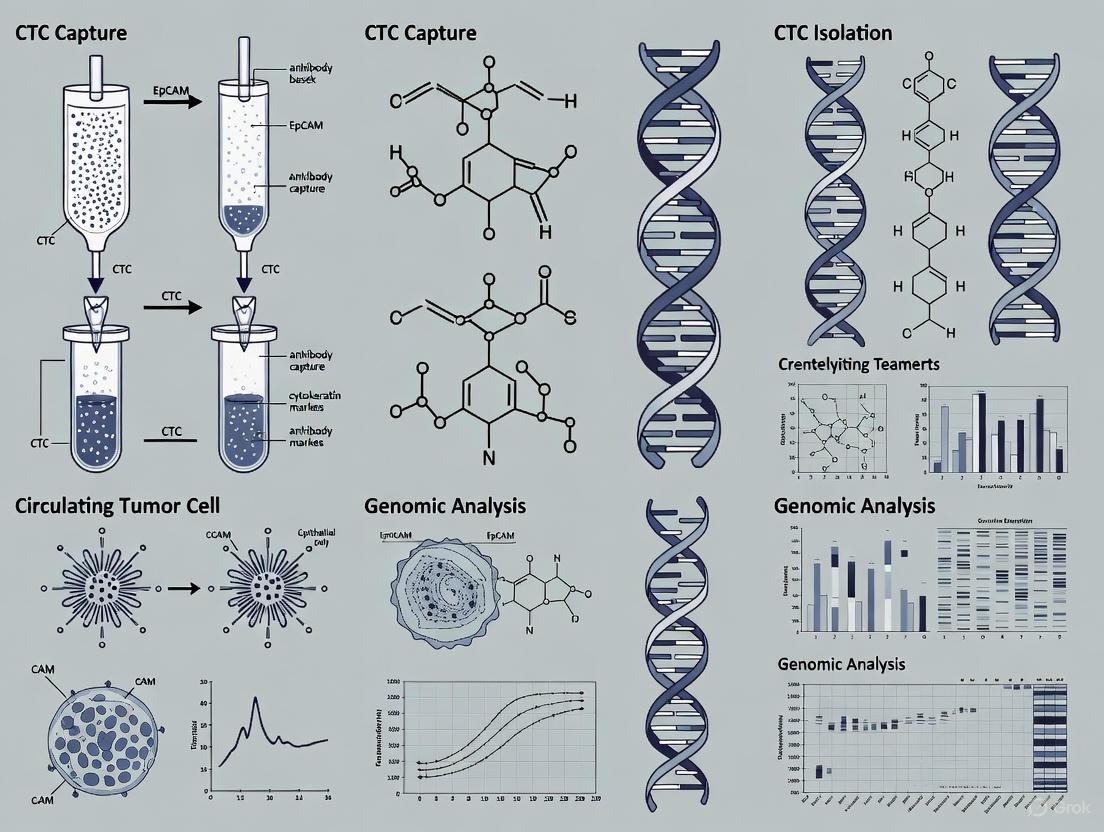
This article provides a comprehensive resource for researchers, scientists, and drug development professionals on the latest advancements and methodologies in circulating tumor cell (CTC) isolation and genomic analysis.
Circulating Tumor Cell Isolation and Genomic Analysis: Advanced Strategies for Researchers and Drug Developers
Abstract
This article provides a comprehensive resource for researchers, scientists, and drug development professionals on the latest advancements and methodologies in circulating tumor cell (CTC) isolation and genomic analysis. It covers foundational CTC biology and clinical significance, details current and emerging isolation and single-cell sequencing techniques, addresses key challenges in troubleshooting and workflow optimization, and offers a critical evaluation of analytical validation and comparative performance against other liquid biopsy components. The content synthesizes cutting-edge research to guide experimental design, enhance data reliability, and unlock the full potential of CTCs in metastasis research and precision oncology.
Understanding CTC Biology and Clinical Relevance in Modern Oncology
Circulating tumor cells (CTCs) are tumor cells that have shed from a primary or metastatic tumor and entered the bloodstream, serving as critical mediators of hematogenous metastasis and accounting for approximately 90% of cancer-related deaths [1] [2] [3]. The metastatic cascade involves multiple complex steps: local invasion, intravasation into circulation, survival in the harsh circulatory environment, extravasation at distant sites, and colonization of secondary organs [4] [1]. CTCs represent a tangible, measurable component of this process, providing a window into the biology of metastasis and a promising tool for clinical intervention. Their study falls within the broader context of liquid biopsy approaches that enable non-invasive monitoring of cancer progression and treatment response.
The detection of CTCs dates back to 1869 when Thomas Ashworth first observed these cells, but only in recent decades have technological advances enabled their comprehensive study [1] [5]. CTCs carry crucial biological information from both primary and metastatic tumors, making them valuable targets for understanding metastatic mechanisms and developing therapeutic strategies [3]. This application note details the origins of CTCs, their role in metastasis, and provides detailed protocols for their isolation and genomic analysis to support research and drug development efforts.
CTC Origins and Heterogeneity
Mechanisms of CTC Formation and Intravasation
CTC formation begins with tumor cells detaching from the primary tumor mass through a complex process involving altered cell-cell adhesion and microenvironmental interactions [3]. Two primary mechanisms facilitate this detachment and subsequent entry into the bloodstream (intravasation):
Epithelial-Mesenchymal Transition (EMT): EMT is a reversible process where epithelial cells transiently transdifferentiate into motile mesenchymal cells [3]. This transition enhances invasiveness and metastatic potential by core EMT transcription factors (EMT-TFs) including SNAIL family members (Snail, Slug), TWIST family (TWIST1, TWIST2), and E-box-binding (ZEB) transcription factors [3]. These factors work in various combinations to repress epithelial genes (e.g., E-cadherin) and activate mesenchymal genes (e.g., vimentin, N-cadherin) [1]. Matrix metalloproteinases (MMPs), particularly those activated by Snail and Zeb2, degrade extracellular matrix components, facilitating tumor cell invasion toward blood vessels [3].
Vascular Damage and Intravasation: Tumor cells undergoing EMT can disrupt vascular integrity through exosome-mediated mechanisms. Exosomes rich in miR-27b-3p target and inhibit VE-cadherin and p120-catenin in vascular endothelial cells, disrupting endothelial tight junctions and increasing vascular permeability [3]. Similarly, ADAM17-positive exosomes shear VE-cadherin in endothelial cells, further compromising vascular barrier function and facilitating CTC entry into circulation [3].
Table 1: Primary Mechanisms of CTC Formation and Intravasation
| Mechanism | Key Molecular Players | Functional Consequences |
|---|---|---|
| EMT | SNAIL, SLUG, TWIST, ZEB transcription factors | Loss of E-cadherin, increased motility and invasion |
| Vascular Damage | miR-27b-3p, ADAM17 in exosomes | Disruption of endothelial junctions, increased permeability |
| Microenvironment Interaction | Tumor-associated macrophages (TAMs), CAFs | Enhanced invasion capability, immune evasion |
CTC Cluster Formation and Origins
CTCs can circulate as single cells or as multicellular clusters (groups of ≥2 CTCs), with clusters demonstrating significantly higher metastatic potential (23- to 50-fold increased compared to single CTCs) [6] [7]. Several origins have been proposed for CTC clusters:
Direct shedding from primary tumors: Tumor emboli can directly break off from the primary tumor due to blood shearing forces, particularly when tumors invade blood vessels [6]. Patients with vessel invasion consistently show increased risk of recurrence and poorer prognosis [6].
Proliferation of single CTCs: Single CTCs may survive in circulation and proliferate to form clusters, though evidence for this is limited [6].
Aggregation of single CTCs: Single CTCs may aggregate in the circulation, potentially as a survival mechanism against anoikis (detachment-induced cell death) [6]. However, some studies suggest that shear forces in the bloodstream may inhibit this aggregation, and multicolor lineage-tracing experiments indicate clusters primarily form before entering circulation [7].
Heterotypic clusters: CTCs can form clusters with other cell types, including cancer-associated fibroblasts (CAFs), tumor-associated macrophages (TAMs), platelets, and endothelial cells, which provide survival advantages and enhance metastatic potential [7]. These companion cells can shield CTCs from immune surveillance and provide growth factors.
Table 2: CTC Cluster Types and Characteristics
| Cluster Type | Composition | Metastatic Potential | Detection Challenges |
|---|---|---|---|
| Homotypic Clusters | Tumor cells only | 23-50× higher than single CTCs | Reduced surface area for antibody capture |
| Heterotypic Clusters | CTCs + platelets, CAFs, TAMs, or endothelial cells | Enhanced via immune protection | Diverse cellular markers |
| EMT-Mediated Clusters | CTCs with mixed epithelial-mesenchymal features | Enhanced stemness and invasion | Dynamic marker expression |
Survival Mechanisms in Circulation
Once in the bloodstream, CTCs face numerous challenges including shear stress, immune surveillance, and anoikis. Successful CTCs employ several adaptive strategies:
Resistance to shear stress: CTCs utilize integrins (particularly β1 integrin) and CD44 to adhere to vessel walls in regions of low shear stress [3]. Talin-1, an adhesion plaque protein, activates integrin β1 to promote transendothelial migration and subsequent metastasis formation [3].
Cluster formation: As noted, cluster formation provides survival advantages. CTC clusters exhibit enhanced resistance to anoikis and immune attack through physical shielding and molecular signaling [6] [7]. Plakoglobin overexpression in clusters promotes integrity and survival upon reaching distant organs [7].
Epithelial-Mesenchymal Plasticity (EMP): Rather than complete EMT, CTCs often exhibit EMP, maintaining varying degrees of epithelial and mesenchymal characteristics [2]. This plasticity confers survival advantages during different metastatic stages. Cells with hybrid E/M characteristics demonstrate enhanced stemness, invasiveness, and therapeutic resistance [2].
Interaction with blood components: Platelets can form protective shields around CTCs, providing physical protection from shear forces and immune cells while secreting growth factors like TGF-β that promote EMT and survival [6] [2]. Polymorphonuclear myeloid-derived suppressor cells (PMN-MDSCs) form heterotypic clusters with CTCs, activating NOTCH signaling through Jagged1-NOTCH1 engagement to enhance survival [2].
Extravasation and Metastatic Dissemination
Organotropism and Pre-Metastatic Niche Formation
CTC dissemination follows the "seed and soil" hypothesis, where CTCs (seeds) colonize specific organs with favorable microenvironments (soil) [5] [2]. Organotropism is influenced by both CTC-intrinsic properties and extrinsic factors:
Pre-metastatic niche (PMN) formation: Primary tumors release factors (TDSFs, extracellular vesicles) that precondition distant organ microenvironments before CTC arrival [5]. These factors reprogram the microenvironment to be hospitable for CTC survival and colonization through characteristics including inflammation, immunosuppression, angiogenesis/vascular permeability, lymphangiogenesis, organotropism, and reprogramming [5].
CTC homing and extravasation: CTCs are mechanically trapped in capillary beds due to size restrictions (CTCs can be up to 20μm versus capillary diameters of 3-7μm) [7]. They then actively extravasate using MMPs to degrade endothelial barriers and VEGF to increase vascular permeability [7]. Integrins facilitate adhesion to endothelial cells and subsequent transendothelial migration [3].
Dormancy and Metastatic Outgrowth
After extravasation, CTCs may enter a dormant state with cell cycle arrest, particularly in bone marrow where they are termed disseminated tumor cells (DTCs) [2]. Dormancy serves as a protective mechanism against therapeutic interventions and environmental stresses [2]. These dormant cells can be reactivated months or years later to form overt metastases, contributing to cancer recurrence [7] [2].
Experimental Protocols for CTC Isolation and Analysis
CTC Enrichment and Detection Methods
Various technologies have been developed for CTC enrichment and detection, each with advantages and limitations:
EpCAM-based enrichment: The CellSearch system, FDA-cleared for clinical use in certain cancers, uses anti-EpCAM antibodies for immunomagnetic enrichment followed by immunofluorescence staining (CK+/DAPI+/CD45-) for identification [6] [8] [1]. This method effectively captures epithelial CTCs but may miss CTCs with low EpCAM expression due to EMT [1].
Label-free approaches: These methods exploit physical properties (size, density, deformability) to isolate CTCs without relying on surface markers. Examples include filtration systems, density gradient centrifugation, and dielectrophoretic field-flow separation [1] [5].
Microfluidic technologies: Advanced microfluidic devices (e.g., CTC-chips) use sophisticated architectures with EpCAM-coated surfaces or size-based sorting to capture CTCs with high efficiency [1] [5]. These platforms often achieve higher sensitivity than conventional methods.
Positive and negative selection strategies: Positive selection uses tumor-specific markers (EpCAM, HER2, etc.) to capture CTCs, while negative selection depletes hematopoietic cells (using CD45) to enrich for CTCs without marker bias [1].
Table 3: Comparison of Major CTC Isolation Technologies
| Technology | Principle | Advantages | Limitations | Clinical Validation |
|---|---|---|---|---|
| CellSearch | Immunomagnetic (EpCAM) | FDA-cleared, standardized | Misses EMT-CTCs, low purity | Prognostic value in breast, prostate, colorectal cancer |
| Microfluidic Chips | Microscale fluidics with antibody coating | High capture efficiency, processing time | Throughput limitations, clogging | Multiple research platforms |
| Size-based Filtration | Physical size differences | Marker-independent, simple | Misses small CTCs, leukocyte contamination | Various commercial systems |
| Density Gradient | Centrifugation-based separation | Simple, low cost | Low purity, potential CTC loss | Research use |
Genomic Analysis of Single CTCs
Comprehensive genomic analysis of CTCs requires whole genome amplification (WGA) due to the limited DNA from single cells. The following protocol outlines the workflow for single-CTC genomic analysis:
Protocol: Single-CCTC Whole Genome Amplification and Sequencing
Materials:
- CellSearch or similar CTC enrichment system
- DEPArray system or fluorescence-activated cell sorting for single-cell isolation
- Commercial WGA kits: MALBAC, Repli-g, GenomePlex, or Ampli1
- Library preparation kits for next-generation sequencing
- Bioanalyzer or TapeStation for quality control
- Next-generation sequencer (Illumina recommended)
Procedure:
CTC Enrichment and Isolation:
- Collect 7.5-10mL patient blood into Streck or EDTA tubes
- Process within 48-72 hours for optimal CTC viability
- Enrich CTCs using preferred method (CellSearch or alternative)
- Identify CTCs by immunofluorescence (CK+/DAPI+/CD45-)
- Individually isolate single CTCs using DEPArray system or micromanipulation
Whole Genome Amplification:
- Transfer single CTC to 0.2mL PCR tube with minimal carryover buffer (<1μL)
- Perform WGA using selected kit according to manufacturer instructions:
- MALBAC: Use multiple annealing and looping-based amplification cycles
- Repli-g: Employ isothermal multiple displacement amplification
- GenomePlex: Utilize PCR-based amplification with degenerate primers
- Ampli1: Apply restriction enzyme fragmentation and adapter ligation
- Include positive (30pg human genomic DNA) and negative controls
- Purify amplified DNA using recommended purification kits
Quality Control and Library Preparation:
- Quantify amplified DNA using fluorometric methods (Qubit, PicoGreen)
- Assess amplification quality by PCR of housekeeping genes (GAPDH, ACTB)
- For copy number variation (CNV) analysis:
- Prepare libraries using Illumina TruSeq PCR-free kit
- Sequence to low coverage (0.1x) on MiSeq (2×100 bp reads)
- For mutation analysis:
- Perform whole exome sequencing using SureSelectXT
- Sequence to higher coverage (50-100x)
Data Analysis:
- For CNV analysis: align sequences to reference genome, normalize read depth, and identify chromosomal gains/losses using specialized algorithms (e.g., Ginkgo, HMMcopy)
- For mutation detection: use specialized single-cell variant callers accounting for amplification errors and allele dropout
Technical Considerations:
- MALBAC and Repli-g provide broader genomic coverage than GenomePlex and Ampli1 [9]
- MALBAC demonstrates superior performance for CNV analysis with better coverage breadth, uniformity, and reproducibility [9]
- None of the current WGA methods achieve sufficient sensitivity and specificity for comprehensive single-cell mutation analysis [9]
- Amplification bias and errors remain significant challenges for single-cell sequencing
The Scientist's Toolkit: Essential Research Reagents
Table 4: Essential Research Reagents for CTC Studies
| Reagent/Category | Specific Examples | Research Application | Key Considerations |
|---|---|---|---|
| CTC Enrichment Systems | CellSearch System, Parsortix, CTC-iChip | CTC isolation from whole blood | Choice depends on cancer type and EMT status |
| CTC Characterization Antibodies | Anti-EpCAM, Anti-CK (8,18,19), Anti-CD45, Anti-Vimentin, Anti-N-cadherin | Immunophenotyping of CTCs | Panel selection critical for capturing heterogeneity |
| Single-Cell Isolation Platforms | DEPArray, Fluorescence-Activated Cell Sorting (FACS), Micromanipulation | Single-CTC isolation for genomic analysis | Purity and viability requirements vary by application |
| Whole Genome Amplification Kits | MALBAC, Repli-g, GenomePlex, Ampli1 | Genomic analysis of single CTCs | MALBAC preferred for CNV, all suboptimal for mutations |
| Next-Generation Sequencing | Illumina platforms, Custom panels for cancer genes | Mutation and CNV profiling | Coverage requirements depend on WGA method |
| Cell Culture Media | Conditional media, Stem cell media | CTC expansion and propagation | Most CTCs are difficult to culture ex vivo |
Clinical Applications and Significance
CTC analysis holds significant promise for clinical applications across the cancer care continuum:
Prognostic Stratification: Numerous studies have established CTC enumeration as a prognostic marker. In breast cancer, ≥5 CTCs per 7.5mL blood predicts shorter progression-free and overall survival [8]. Similarly, CTC presence correlates with poor outcomes in prostate, colorectal, and lung cancers [1]. CTC clusters confer particularly poor prognosis, with breast cancer patients showing large clusters having significantly worse overall survival [7].
Treatment Monitoring: Dynamic changes in CTC counts during therapy provide early indicators of treatment response. Persistent CTC detection during therapy suggests resistance and poor outcomes [1] [10]. Molecular characterization of CTCs can identify emerging resistance mechanisms, such as EGFR T790M mutations in non-small cell lung cancer [1].
Metastasis Risk Prediction: CTC detection in early-stage cancer patients may predict metastatic recurrence risk [1]. The presence of CTCs with stem cell or EMT features appears particularly significant for assessing metastatic potential [7].
Therapeutic Targeting: Understanding CTC biology reveals potential therapeutic targets to prevent metastasis. Strategies include disrupting CTC cluster integrity, targeting survival pathways, and preventing extravasation [5] [2].
Table 5: Clinical Applications of CTC Analysis
| Application | Current Evidence | Clinical Readiness |
|---|---|---|
| Prognostic Stratification | Strong evidence in breast, prostate, colorectal cancer | FDA-cleared for some indications |
| Treatment Monitoring | Multiple studies show correlation with treatment response | Research use with growing clinical adoption |
| Biomarker for Therapy Selection | HER2 status on CTCs, AR-V7 in prostate cancer | Emerging clinical utility |
| Metastasis Risk Assessment | CTC presence in early-stage disease predicts recurrence | Clinical validation ongoing |
| Minimal Residual Disease Detection | CTC detection post-treatment correlates with recurrence | Promising but requires standardization |
CTCs represent a critical intermediate in the metastatic cascade, originating through EMT-mediated and vascular leakage mechanisms from primary tumors. Their survival in circulation is enhanced by cluster formation and epithelial-mesenchymal plasticity, while their dissemination follows organotropic patterns influenced by pre-metastatic niche formation. Comprehensive understanding of CTC biology requires sophisticated isolation and genomic analysis approaches, with single-cell sequencing providing unprecedented insights into metastatic mechanisms.
The protocols and methodologies detailed in this application note provide researchers with robust tools for CTC investigation, from enrichment strategies to genomic analysis workflows. As technologies advance, CTC analysis promises to become increasingly integral to cancer research, drug development, and clinical management, potentially offering new avenues for preventing and treating metastatic disease.
Circulating tumor cells (CTCs) are not a uniform population but exist in a dynamic spectrum of phenotypic states, a characteristic that is crucial to their role in cancer metastasis. This heterogeneity is primarily governed by the epithelial-mesenchymal transition (EMT), a process that confers enhanced motility, invasiveness, and resistance to apoptosis upon cancer cells [11] [12]. Within the bloodstream, CTCs can be found as epithelial cells expressing classic markers like EpCAM and cytokeratins, as mesenchymal cells that have downregulated these epithelial traits in favor of markers like Vimentin and N-cadherin, or as hybrid cells that co-express both epithelial and mesenchymal characteristics, exhibiting what is known as epithelial-mesenchymal plasticity (EMP) [12] [2]. The relative abundance of these phenotypes has significant clinical implications; for instance, CTC clusters, which are predominantly epithelial and often include hybrid cells, possess a significantly higher metastatic potential compared to single CTCs [11]. Understanding and accurately characterizing this phenotypic diversity is therefore paramount for advancing cancer prognosis, therapy selection, and the development of novel targeted treatments.
Quantitative Phenotype Analysis: Distribution and Clinical Significance
The distribution of epithelial, mesenchymal, and hybrid CTC phenotypes varies significantly across cancer types and disease stages. The following table summarizes key quantitative findings from clinical studies, highlighting the prevalence and prognostic value of different CTC phenotypes.
Table 1: Prevalence and Clinical Significance of CTC Phenotypes Across Cancers
| Cancer Type | Phenotype Prevalence | Clinical/Prognostic Association |
|---|---|---|
| Non-Small Cell Lung Cancer (NSCLC) [11] [12] | Higher number of EpCAM-negative (often mesenchymal) CTCs compared to EpCAM-positive. | Epithelial CTCs predict worse outcomes than mesenchymal CTCs. |
| Breast Cancer (Primary) [12] | CTCs detected in ~25% of patients; ~13.4% of CTC-positive patients had EMT markers. | EMT-positive CTCs associated with poorer prognosis. |
| Breast Cancer (Metastatic) [2] | Higher prevalence of TWIST+ and Vimentin+ CTCs. | Indicates role of EMT-positive CTCs in metastasis. |
| Colorectal Cancer (CRC) [2] | Significant reduction of EpCAM, CK19, and CEA in CTCs vs. primary tissue. | EpCAM-low CTCs showed reduced proliferation but increased migration. |
| Pancreatic Ductal Adenocarcinoma (PDAC) [13] | Identification of clonal RNA expression variations in portal blood. | Contributes to intra-tumoral heterogeneity (ITH). |
| Head and Neck Squid Cell Carcinoma (HNSCC) [13] | Mutations in key signaling pathways (e.g., CREB, β-Adrenergic). | Characterizes intra-tumoral heterogeneity. |
The expression levels of specific markers further define the biological behavior of these CTCs. Mesenchymal transition is marked by the downregulation of epithelial markers and the upregulation of transcription factors and structural proteins that facilitate invasion.
Table 2: Key Molecular Markers for CTC Phenotypic Classification
| Phenotype | Key Markers (Upregulated) | Key Markers (Downregulated) |
|---|---|---|
| Epithelial | EpCAM, Cytokeratins (CK8, 18, 19), E-cadherin | - |
| Mesenchymal | Vimentin, N-cadherin, Fibronectin, TWIST, SNAIL, ZEB | EpCAM, E-cadherin |
| Hybrid (E/M) | Co-expression of EpCAM/CKs and Vimentin/N-cadherin | - |
| Stemness | ALDH1, CD44, OCT4, SOX2 | - |
Signaling Pathways Governing CTC Phenotypic Plasticity
The transition between epithelial and mesenchymal states is regulated by a complex interplay of several key signaling pathways. These pathways can be activated by signals from the tumor microenvironment, such as cytokines from platelets or immune cells, as well as circulatory pressures like shear stress.
Diagram 1: Signaling pathways regulating EMT in CTCs.
The biological consequences of these pathway activations are profound. The TGF-β/SMAD pathway is a primary driver, promoting and sustaining the EMT phenotype to enhance metastatic potential [2]. NOTCH signaling, often activated through interactions with polymorphonuclear myeloid-derived suppressor cells (PMN-MDSCs) that form heterotypic clusters with CTCs, also plays a key role [2]. Furthermore, studies in hepatocellular carcinoma have shown that the WNT/β-catenin pathway contributes to the transition of CTCs towards an EMT phenotype during circulation [2]. This plasticity allows CTCs to adapt to the harsh conditions of the bloodstream, evade immune surveillance, and ultimately seed metastases.
Experimental Protocols for Phenotype Analysis
Protocol: Integrated Workflow for CTC Isolation and scRNA-seq
This protocol details a comprehensive pipeline for the label-free enrichment of CTCs from patient blood, followed by single-cell RNA sequencing (scRNA-seq) to deconvolute phenotypic heterogeneity at the transcriptomic level.
Diagram 2: Workflow for CTC isolation and scRNA-seq analysis.
Key Materials:
- Blood Collection Tubes: K2EDTA tubes (e.g., Greiner Bio-One Vacuette) [14].
- CTC Enrichment System: Parsortix PR1 system (ANGLE PLC) with 6.5 µm separation cassette for size-based, EpCAM-independent enrichment [14].
- Fixation and Permeabilization Reagents: 4% Paraformaldehyde (PFA); permeabilization buffer (e.g., Inside Perm from Miltenyi Biotec) [14].
- Antibody Panel: A combination of fluorescently conjugated antibodies is used for phenotypic identification [14]:
- Epithelial Phenotype: Anti-pan-cytokeratin (FITC), anti-CK7 (Alexa Fluor 488), anti-CK19 (Alexa Fluor 488), anti-EpCAM (Alexa Fluor 488).
- Mesenchymal/Stemness Phenotype: Antibodies against Vimentin, N-cadherin, or stemness markers (e.g., CD44) can be added.
- Leukocyte Exclusion: Anti-CD45 (Alexa Fluor 647).
- Other: Anti-CD42b (PE) for platelet cloaking detection, anti-HER2 (PE) for breast cancer.
- Nucleic Acid Stain: Hoechst 33342 or DAPI.
- Single-Cell Platform: Fluorescence-Activated Cell Sorter (FACS) or micromanipulation system for single-cell isolation; 10X Genomics Chromium system for scRNA-seq library preparation [13].
Procedure Details:
- Blood Draw and Processing: Collect 7.5-10 mL of peripheral blood into K2EDTA tubes. Process samples within 4 hours of venepuncture to preserve cell viability [14]. For specific investigations, blood can be drawn directly from the ovarian vein during surgery, which is a rich source of CTC clusters in ovarian cancer [14].
- CTC Enrichment: Use the Parsortix system per manufacturer's guidelines. This microfluidic device captures CTCs based on their larger size and lesser deformability compared to hematological cells, ensuring the isolation of EpCAM-negative phenotypes [14].
- Immunofluorescence (IF) Staining: Fix and permeabilize the captured cells inside the Parsortix cassette. Incubate with the pre-optimized antibody cocktail and nuclear stain. This step allows for the initial enumeration and phenotypic characterization of CTCs.
- CTC Identification and Sorting: Identify CTCs based on a positive stain for cytokeratins/EpCAM, positive nuclear stain (DAPI), and negative stain for the leukocyte marker CD45. Manually or automatically pick single CTCs for downstream analysis.
- Single-Cell RNA Sequencing: Generate barcoded scRNA-seq libraries from the isolated single CTCs using a platform like the 10X Genomics Chromium. Sequence the libraries to achieve a depth of >50,000 reads per cell.
- Bioinformatic Analysis: Process the raw sequencing data using tools like CellRanger. Use Seurat or similar packages for downstream analysis: normalize data, identify highly variable genes, perform principal component analysis, and cluster cells. Phenotypic states are identified by assessing the expression of epithelial (EPCAM, KRTS), mesenchymal (VIM, CDH2), and EMT-transcription factor (SNAI1, TWIST1, ZEB1) gene signatures [13].
Protocol: Detection of EMT Markers via Immunofluorescence
This protocol supplements the scRNA-seq workflow by providing a targeted method for validating protein-level expression of EMT markers in enriched CTCs.
Key Materials:
- The same enrichment and staining materials from Protocol 4.1.
- Primary Antibodies: Anti-TWIST1, Anti-Vimentin, Anti-N-cadherin.
- Secondary Antibodies: Species-specific antibodies conjugated to fluorophores not used in the primary panel (e.g., Cy3, Cy5).
Procedure Details:
- After the initial IF staining for epithelial and leukocyte markers, the cassette is imaged.
- Specific CTCs of interest can be subjected to a second round of staining using antibodies against key mesenchymal markers.
- The sample is re-imaged using appropriate fluorescence channels. A CTC is defined as EMT-positive if it co-expresses epithelial markers (CK/EpCAM) and mesenchymal markers (e.g., Vimentin) or shows expression of mesenchymal markers in the absence of epithelial ones [2].
- The analysis should account for hybrid E/M states, where a single cell shows measurable levels of both epithelial and mesenchymal proteins.
The Scientist's Toolkit: Essential Reagents and Platforms
Table 3: Key Research Reagent Solutions for CTC Heterogeneity Studies
| Tool Category | Specific Product/Platform | Function in Research |
|---|---|---|
| CTC Enrichment (Label-Free) | Parsortix PC1 System (ANGLE PLC) | Enriches CTCs based on size/deformability, independent of EpCAM, capturing epithelial, mesenchymal, and hybrid phenotypes. |
| CTC Enrichment (EpCAM-Dependent) | CellSearch System (Menarini Silicon Biosystems) | FDA-approved gold standard for CTC enumeration; immunomagnetic capture of EpCAM+ CTCs. |
| Single-Cell Isolation & Genomics | 10X Genomics Chromium System | High-throughput single-cell RNA sequencing platform for transcriptomic profiling of individual CTCs. |
| Antibody Panel (Epithelial) | Anti-EpCAM (Alexa Fluor 488), Anti-Pan-CK (FITC), Anti-CK7/CK19 | Immunofluorescence identification of epithelial phenotype in fixed CTCs. |
| Antibody Panel (Mesenchymal) | Anti-Vimentin, Anti-N-cadherin, Anti-TWIST | Immunofluorescence detection of mesenchymal and EMT-inducing transcription factors in CTCs. |
| Antibody Panel (Control/Exclusion) | Anti-CD45 (Alexa Fluor 647) | Labels leukocytes for exclusion during CTC identification. |
| Bioinformatic Tools | Seurat, Scanpy | Software packages for scRNA-seq data analysis, including dimensionality reduction, clustering, and differential gene expression to define CTC subtypes. |
Circulating tumor cells (CTCs) are cancerous cells shed from primary or metastatic tumors into the bloodstream, acting as precursor seeds for metastasis [2] [11]. The metastatic cascade involves four critical stages: dissemination from the primary tumor, homing to distant sites, colonization of distant organs, and macro-metastasis formation [2]. Throughout this journey, CTCs undergo dynamic phenotypic transformations governed by epithelial-mesenchymal plasticity (EMP), a reversible cellular program that enables transition between epithelial (E), mesenchymal (M), and hybrid E/M states [15] [16].
EMP is not a binary switch but rather a spectrum of intermediate states collectively termed epithelial-mesenchymal plasticity (EMP) [15] [16]. This plasticity is orchestrated by core EMT transcription factors (EMT-TFs)—including SNAI1/2, TWIST1/2, and ZEB1/2—which repress epithelial genes (e.g., CDH1 encoding E-cadherin) and activate mesenchymal genes (e.g., VIM encoding vimentin) [15]. The hybrid E/M state, characterized by simultaneous expression of both epithelial and mesenchymal markers, is increasingly recognized as a critical phenotype conferring enhanced metastatic potential and therapy resistance [15] [17] [2].
This application note details methodologies for investigating EMP in CTCs and provides a structured analysis of how EMP influences CTC survival, dissemination, and metastatic colonization. The protocols and data presented herein are designed to support research and development efforts aimed at targeting EMP for therapeutic intervention.
Quantitative Analysis of EMP in CTCs: Markers and Clinical Correlations
Key Molecular Markers of EMP States in CTCs
The following table summarizes the primary molecular markers used to identify and characterize EMP states in CTC populations, along with their functional significance.
Table 1: Key Molecular Markers for Characterizing EMP in CTCs
| Marker Category | Specific Marker | Expression in EMP States | Functional Role in CTC Biology |
|---|---|---|---|
| Epithelial Markers | E-cadherin (CDH1) | High in Epithelial; Low/absent in Mesenchymal | Maintains cell-cell adhesion; loss enables detachment [16] |
| EpCAM | High in Epithelial; Reduced in Hybrid E/M and Mesenchymal | Facilitates CTC isolation; downregulation aids immune evasion [2] | |
| Cytokeratins (e.g., CK8, CK18, CK19) | High in Epithelial; Reduced in Mesenchymal | Cytoskeletal proteins; standard detection markers for CTCs [18] [11] | |
| Mesenchymal Markers | Vimentin (VIM) | Low in Epithelial; High in Mesenchymal | Mesenchymal cytoskeletal protein; confers structural flexibility [15] [16] |
| N-cadherin (CDH2) | Low in Epithelial; High in Mesenchymal ("Cadherin Switch") | Promotes cell-matrix interactions and motility [16] | |
| Fibronectin (FN1) | Low in Epithelial; High in Mesenchymal | Extracellular matrix component facilitating invasion [15] | |
| EMT Transcription Factors | SNAIL1/2 (Snail, Slug) | Upregulated during EMT initiation | Represses CDH1; induces EMT and stemness in some contexts [15] [16] |
| TWIST1/2 | Upregulated during EMT | Promotes mesenchymal phenotype; linked to metastasis and anoikis resistance [15] [2] | |
| ZEB1/2 | Upregulated in full EMT | Represses epithelial genes; role in stemness is context-dependent [15] [16] | |
| Stemness Markers | CD44, OCT4, SOX2 | Often enriched in Hybrid E/M state | Confer self-renewal capacity and tumor-initiating potential [15] [11] |
| ALDH1 | Expressed in CTC clusters and stem-like cells | Associated with chemoresistance and enhanced metastatic potential [13] |
Clinical and Prognostic Significance of EMP in CTCs
Analyses of CTCs from various cancer types have established clear correlations between EMP phenotypes and clinical outcomes. The following table consolidates key clinical findings regarding EMP in CTCs.
Table 2: Clinical and Prognostic Correlations of EMP Phenotypes in CTCs
| Cancer Type | EMP Phenotype in CTCs | Clinical/Prognostic Correlation | Study Details |
|---|---|---|---|
| Breast Cancer | Hybrid E/M (Co-expression of E and M markers) | Associated with dynamic therapeutic responses and disease progression; highly tumorigenic [15] [2] | Hybrid E/M states confer stem-like properties and high tumor-initiating capacity [15] |
| Mesenchymal (TWIST+, VIM+) | Higher prevalence in metastatic vs. early breast cancer; indicates active dissemination [2] | Kallergi et al. observed association between mesenchymal markers and metastatic disease [2] | |
| EpCAM-low | Reduced proliferation but increased migration potential [2] | G.Roa et al. noted ~10x EpCAM drop in circulation, enhancing metastatic potential [2] | |
| Colorectal Cancer (CRC) | Hybrid E/M (Zeb1 expression) | Associated with stem-like features, local invasion, and metastasis [15] [16] | scRNA-seq identified a hybrid E/M subpopulation with enhanced aggressiveness [15] |
| Loss of Epithelial Markers | Most CTCs lose epithelial phenotype in bloodstream; correlates with advanced disease [2] | Blood samples from 72 CRC patients showed significant EpCAM/CK19/CEA reduction in CTCs [2] | |
| Non-Small Cell Lung Cancer (NSCLC) | Hybrid E/M (E-cadherin+ and SNAI2+) | Correlated with significantly poorer survival compared to epithelial tumors [15] | Andriani et al. found hybrid E/M phenotype linked to poor survival [15] |
| Squamous Cell Carcinoma (SCC) | Early EMT Intermediate State | Increased tumor-initiating cell (TIC) frequency [15] | Pastushenko et al. showed Fat1 deletion accelerated tumor initiation [15] |
| Multiple Cancers | CTC Clusters (Mainly Epithelial) | High metastatic potential; associated with poor prognosis [11] | Clusters possess higher oncogenic potential and survival advantage in circulation [11] |
Experimental Protocols for Investigating EMP in CTCs
Protocol 1: Isolation and Enumeration of CTC Subpopulations Based on EMP
Principle: This protocol describes the sequential enrichment and identification of CTCs from patient blood samples using integrated label-dependent and label-independent approaches to capture the full spectrum of EMP phenotypes [13] [18] [11].
Materials:
- Blood Collection Tubes: EDTA or CellSave Preservative Tubes
- Enrichment Platforms:
- Staining Reagents: Anti-EpCAM, Anti-CK (e.g., CK8, CK18, CK19), Anti-Vimentin, Anti-N-cadherin, Anti-CD45 (for leukocyte exclusion), DAPI (nuclear stain)
- Analysis Platform: Fluorescence microscope or automated scanning system (e.g., CellTracks Analyzer)
Procedure:
- Blood Collection and Processing: Collect 7.5-10 mL of peripheral venous blood into preservative tubes. Process within 48-96 hours according to platform specifications [11] [19].
- CTC Enrichment:
- Option A (EpCAM-dependent): Use the CellSearch system or an anti-EpCAM microfluidic chip for immunomagnetic capture. This efficiently enriches for epithelial and hybrid E/M CTCs [19].
- Option B (Antigen-agnostic): Use the Parsortix system or ISET filters for size-based capture (typically 8-30 μm). This captures CTCs independent of biomarker expression, including those with mesenchymal phenotypes [18] [19].
- Immunofluorescence Staining: Stain the enriched cell sample with predetermined antibody panels.
- Core Panel: DAPI (nuclei), anti-CD45 (leukocyte exclusion), anti-CK (epithelial marker)
- EMP Characterization Panel: Add anti-Vimentin, anti-N-cadherin (mesenchymal), and/or anti-E-cadherin (epithelial)
- Enumeration and Phenotype Classification: Identify CTCs as DAPI+/CD45-/CK+. Categorize EMP states based on co-expression of markers:
- Data Analysis: Calculate the concentration of each CTC subpopulation (cells/mL of blood). Correlate phenotypic distribution with clinical parameters.
Protocol 2: Single-Cell RNA Sequencing of CTCs for EMP Transcriptomics
Principle: This protocol employs high-throughput scRNA-seq to profile the transcriptomes of individual CTCs, enabling unbiased resolution of EMP states, identification of hybrid E/M populations, and analysis of associated signaling pathways [13].
Materials:
- Single-Cell Isolation Platform: 10X Genomics Chromium System [13], Fluidigm C1, or manual micromanipulation
- Library Prep Kits: Smart-seq2 or similar for whole transcriptome amplification [13]
- Sequencing Platform: Illumina Next-Generation Sequencer
- Bioinformatics Tools: CellRanger, Seurat, Monocle for clustering, trajectory inference, and EMP signature scoring
Procedure:
- High-Purity CTC Enrichment: Isulate CTCs using a method that ensures high viability and purity, such as the Hydro-Seq system [13] or fluorescence-activated cell sorting (FACS) post-enrichment.
- Single-Cell Partitioning and Barcoding: Load the CTC suspension into a microfluidic device (e.g., 10X Genomics Chromium) to partition individual cells into nanoliter-scale droplets with barcoded beads [13].
- cDNA Synthesis and Library Preparation: Perform reverse transcription within the droplets to create barcoded cDNA, followed by amplification and library construction per manufacturer's instructions.
- Sequencing: Sequence the libraries on an appropriate Illumina platform to a sufficient depth (e.g., 50,000 reads/cell).
- Bioinformatic Analysis:
- Preprocessing: Use CellRanger to align reads, quantify gene expression, and generate a feature-barcode matrix.
- Clustering and Dimensionality Reduction: Use Seurat to perform PCA, UMAP, and graph-based clustering to identify distinct cell populations.
- EMP Phenotyping: Score cells using established epithelial (e.g., CDH1, EPCAM) and mesenchymal (e.g., VIM, FN1, ZEB1) gene signatures. Classify cells into E, M, or E/M hybrid states based on combined scores [15] [13].
- Trajectory Analysis: Use Monocle or Slingshot to reconstruct pseudotime trajectories and infer transitions between EMP states.
Protocol 3: Functional Assessment of Metastatic Potential using CTC-Derived Spheroids
Principle: This protocol establishes ex vivo 3D spheroid cultures from patient-derived CTCs to model metastatic colonization and perform drug sensitivity testing, functionally linking EMP phenotypes to therapy response [20].
Materials:
- Cultureware: Ultra-low attachment (ULA) 96-well plates
- Culture Medium: Serum-free DMEM/F12 supplemented with B27, 20 ng/mL EGF, and 20 ng/mL bFGF
- Drug Compounds: Library of chemotherapeutic and targeted agents for screening
- Analysis Tools: High-content imager, CellTiter-Glo 3D Viability Assay
Procedure:
- CTC Expansion: Isolate CTCs and seed them into ULA plates at a density of 1,000-10,000 cells/well in serum-free sphere-forming medium [20].
- Spheroid Culture: Culture for 5-14 days, monitoring for the formation of non-adherent spheroids. Refresh half of the medium every 3-4 days.
- Phenotypic Characterization: Harvest a subset of spheroids for RNA/protein analysis to determine the baseline EMP state (as per Protocol 1 or 2).
- Drug Screening: Once spheroids reach a mature size (e.g., 50-100 μm in diameter), treat them with a panel of drugs across a concentration range (e.g., 0.1 nM - 10 μM). Include DMSO as a vehicle control.
- Viability Assessment: After 72-96 hours of drug exposure, measure cell viability using a CellTiter-Glo 3D assay according to the manufacturer's instructions.
- Data Integration: Calculate IC50 values for each drug. Correlate drug sensitivity with the EMP phenotype of the originating spheroids. Spheroids with hybrid E/M phenotypes often show enhanced resistance [15] [20].
Signaling Pathways and Molecular Mechanisms Regulating EMP in CTCs
The dynamic regulation of EMP in CTCs is controlled by a complex interplay of intracellular signaling pathways and extracellular cues from the tumor microenvironment and circulation.
Diagram 1: Signaling Network Regulating EMP in CTCs. This map illustrates how extracellular signals from the tumor microenvironment (TME) and circulation activate core signaling pathways that converge on EMT transcription factors. These TFs drive CTCs toward hybrid E/M or full mesenchymal states, with the plasticity between states influenced by specific pathway activities. The eventual reversal via MET is crucial for metastatic colonization. (YAP: Yes-associated protein).
The molecular regulation of EMP involves extensive post-translational modifications (PTMs) that fine-tune the stability and activity of key EMT-TFs. For instance, the E3 ubiquitin ligase FBXW7 promotes ZEB2 degradation, whereas deubiquitinase USP10 stabilizes ZEB1 [16]. Phosphorylation by kinases like PAK5 or GSK-3β can either activate or prime EMT-TFs for degradation, respectively [16]. This complex regulatory network allows CTCs to adapt their phenotype dynamically in response to changing selective pressures.
The Scientist's Toolkit: Essential Reagents and Platforms for EMP-CTCs Research
Table 3: Essential Research Tools for Isolation, Analysis, and Functional Characterization of EMP in CTCs
| Tool Category | Product/Platform Examples | Key Function in EMP-CTCs Research |
|---|---|---|
| CTC Enrichment & Isolation | CellSearch System (FDA-approved) | Immunomagnetic enrichment based on EpCAM; standard for epithelial CTC enumeration [11] [19] |
| Parsortix PC1 System (FDA-cleared) | Size and deformability-based capture; recovers EpCAM-low mesenchymal and hybrid E/M CTCs [19] | |
| LIPO-SLB Microfluidic Chip | Antibody-functionalized (e.g., anti-EpCAM) microfluidic platform for viable CTC capture and culture [20] | |
| ISET (Rarecells Diagnostics) | Label-free filtration system for CTC isolation based on larger cell size [18] [11] | |
| Molecular Phenotyping | Anti-EpCAM, Anti-CK, Anti-Vimentin Antibodies | Immunofluorescence staining to classify E, M, and Hybrid E/M phenotypes [15] [2] [11] |
| 10X Genomics Chromium System | High-throughput single-cell RNA sequencing for unbiased EMP transcriptomic profiling [13] | |
| Smart-seq2 Reagents | High-sensitivity full-length scRNA-seq protocol for rare CTCs [13] | |
| Functional Assays | Ultra-Low Attachment (ULA) Plates | Facilitate 3D spheroid formation from CTCs for functional studies of stemness and drug response [20] |
| CellTiter-Glo 3D Viability Assay | ATP-based luminescent assay to measure viability of CTC spheroids post-drug treatment [20] | |
| Bioinformatics | Seurat, Monocle R Packages | scRNA-seq data analysis, including clustering, dimensionality reduction, and trajectory inference [13] |
| Digital PCR (dPCR), NGS Platforms | Sensitive detection of mutations and gene expression in CTCs and ctDNA [21] [19] |
The intricate role of EMP in enhancing CTC survival, facilitating dissemination, and driving metastasis is clear. The hybrid E/M phenotype, in particular, emerges as a critical therapeutic target due to its association with stemness, tumor initiation, and therapy resistance. The application notes and detailed protocols provided herein—covering isolation, molecular profiling, and functional validation—offer a robust framework for advancing research in this field. Integrating EMP characterization into CTC analysis will be pivotal for developing novel therapeutic strategies aimed at suppressing metastasis and overcoming treatment resistance in cancer patients.
Circulating tumor cell (CTC) clusters are multicellular aggregates that originate from primary tumors and travel through the bloodstream. These clusters have emerged as critical mediators of cancer metastasis, demonstrating a 20- to 100-fold greater metastatic potential compared to single CTCs [22]. Clinical studies across multiple cancer types, including breast, prostate, and lung cancers, have consistently shown that the presence of CTC clusters in patient blood is associated with significantly worse prognosis and lower overall survival [22]. These clusters can be homotypic (composed solely of tumor cells) or heterotypic (comprising tumor cells in association with various blood cells), with both forms representing formidable drivers of metastatic spread.
Quantitative Significance of CTC Clusters
Table 1: Metastatic Potential and Clinical Significance of CTC Clusters
| Parameter | Single CTCs | CTC Clusters | Clinical Implications |
|---|---|---|---|
| Metastatic Efficiency | Baseline | 20-100x higher [22] | Clusters responsible for ~97% of metastases [23] |
| Prevalence in Metastatic Breast Cancer | Majority of CTCs | 17-20% of patients [22] | Indicator of aggressive disease |
| Prognostic Value | Associated with poor prognosis | Stronger association with worse outcomes [22] | Improved risk stratification |
| Common Cancer Types | All metastatic cancers | Breast, prostate, lung, colorectal [22] | Potential pan-cancer biomarker |
Table 2: Composition and Properties of Heterotypic CTC Clusters
| Cluster Type | Cellular Components | Key Molecular Mediators | Functional Advantages |
|---|---|---|---|
| Neutrophil-CTC | Tumor cells + Neutrophils | IL1R1, IL6, VCAM1 [24] | Enhanced proliferation, immune evasion |
| PMN-MDSC-CTC | Tumor cells + Myeloid-derived suppressor cells | NOTCH1, NODAL, ROS [22] [24] | Survival advantage, stemness |
| Platelet-CTC | Tumor cells + Platelets | TGF-β, P-selectin [2] | Physical shielding, anoikis resistance |
| T cell-CTC | Tumor cells + T lymphocytes | CD44, OCT4 [22] | Improved metastatic seeding |
Isolation and Detection Technologies
Current Methodological Landscape
The isolation of rare CTC clusters from billions of blood cells presents significant technological challenges. The ideal platform must preserve cluster integrity while achieving high purity and viability for subsequent analysis.
Table 3: Comparison of CTC Cluster Isolation Technologies
| Technology | Principle | Efficiency | Advantages | Limitations |
|---|---|---|---|---|
| CellSearch | EpCAM-based immunomagnetic enrichment | Limited for clusters [22] | FDA-approved, standardized | Underestimates clusters, misses EMT+ CTCs |
| Cluster Chip | Size-based microfluidics with triangular pillars | 99% for ≥4-cell clusters [23] | Preserves viability, cluster-specific | Slow processing (2.5 mL/hour) |
| ScreenCell | Size-based filtration | >90% sensitivity [23] | Rapid (<10 minutes), cost-effective [25] | Potential cluster damage |
| DLD Chip | Deterministic lateral displacement | 90% for large clusters [23] | Minimal mechanical damage | Very low throughput (0.5 mL/hour) |
| Cluster-Well | Mesh microwell platform | >90% for doublets [23] | Fast processing, low contamination | Potential shear damage |
Protocol: Isolation of CTC Clusters Using Microfluidic Platforms
Principle: Size-based separation using the Cluster Chip platform, which employs shifted triangular pillars to generate bidirectional drag forces that trap clusters while allowing single cells to pass through.
Materials:
- Cluster Chip device
- Syringe pump capable of precise flow rate control
- Phosphate-buffered saline (PBS) with 1% bovine serum albumin (BSA)
- Blood collection tubes (EDTA or citrate)
- Fixation reagents (4% paraformaldehyde) if required for downstream analysis
- Immunostaining reagents (anti-cytokeratin antibodies, CD45 exclusion marker, DAPI)
Procedure:
- Blood Collection and Preparation: Collect 7.5-10 mL of peripheral blood into EDTA tubes. Process within 4 hours of collection.
- Sample Pre-processing: Dilute blood sample 1:1 with PBS containing 1% BSA to reduce viscosity.
- Device Priming: Pre-rinse the Cluster Chip with PBS+1% BSA at 2.5 mL/hour for 10 minutes to remove air bubbles and condition the surface.
- Sample Loading: Load the diluted blood sample into a syringe and connect to the chip inlet. Program the syringe pump to run at a constant flow rate of 2.5 mL/hour.
- Cluster Capture: Process the entire sample volume through the chip. CTC clusters are trapped in the shifted pillar array based on size exclusion.
- Washing: After sample processing, wash with 5 mL of PBS+1% BSA at the same flow rate to remove non-specifically bound blood cells.
- Cluster Retrieval: For viable cluster collection, reverse the flow direction at 5 mL/hour for 2 minutes to release clusters into collection tubes. For fixed analysis, introduce 4% PFA through the chip followed by permeabilization buffer.
- Immunocytochemical Validation: Stain captured clusters with anti-pan-cytokeratin-FITC (epithelial marker), anti-CD45-PE (leukocyte exclusion), and DAPI (nuclear stain). Identify CTC clusters as cytokeratin+/DAPI+/CD45- aggregates containing ≥2 nuclei.
Technical Notes:
- Maintain consistent flow rates to preserve cluster integrity
- Process samples promptly to prevent cluster dissociation
- Include quality controls using spiked cancer cell lines
- For heterotypic cluster identification, incorporate additional markers (CD66b for neutrophils, CD14 for monocytes)
Molecular Mechanisms and Signaling Pathways
Experimental Protocol: Investigating CD44-Mediated Homotypic Clustering
Objective: To demonstrate CD44 homophilic interactions driving homotypic CTC cluster formation and associated stemness properties.
Materials:
- CTC-derived cell lines or appropriate cancer cell models
- Anti-CD44 neutralizing antibodies
- Control isotype antibodies
- Fluorescent cell tracking dyes (CM-Dil, CFSE)
- Low-attachment culture plates
- RNA extraction kit and qPCR reagents
- OCT4, NANOG, SOX2 primers
- Flow cytometer
Methods:
- Cluster Formation Assay:
- Label two populations of cells with different fluorescent dyes (CM-Dil red and CFSE green)
- Mix equal numbers (1×10⁵ each) in low-attachment 6-well plates
- Treat experimental groups with anti-CD44 antibody (10 μg/mL), control groups with isotype antibody
- Incubate for 48 hours under standard conditions
- Quantify cluster formation using fluorescence microscopy
- Calculate clustering index: (number of multicolor clusters/total clusters) × 100
Stemness Marker Analysis:
- Harvest clusters after 48 hours of culture
- Extract total RNA and synthesize cDNA
- Perform qPCR for stemness markers (OCT4, NANOG, SOX2)
- Use GAPDH as housekeeping control
- Analyze relative expression using 2^(-ΔΔCt) method
Functional Confirmation:
- Isolate clusters and single cells from same culture
- Inject equal numbers (1,000 cells) into immunodeficient mice via tail vein
- Quantify lung metastasis formation after 6-8 weeks
- Compare metastatic efficiency between clustered and single cells
Expected Results: CD44 blockade should significantly reduce homotypic clustering and decrease expression of stemness markers. Clustered cells will demonstrate enhanced metastatic potential in vivo compared to single cells.
Figure 1: CD44-mediated homotypic clustering activates stemness pathways including OCT4 and NANOG, enhancing metastatic potential.
Protocol: Analysis of Heterotypic Cluster Formation with Immune Cells
Objective: To investigate neutrophil-CTC cluster formation and identify key molecular mediators.
Materials:
- Primary human neutrophils (isolated from healthy donor blood)
- CTC cell lines or primary patient-derived CTCs
- Recombinant human IL-6, IL-1β, Oncostatin M
- Neutralizing antibodies against IL1R1, IL6ST (gp130)
- VCAM1 blocking antibody
- Transwell migration assay plates
- Cell viability assay kit
Procedure:
- Neutrophil Isolation:
- Collect fresh peripheral blood from healthy donors in heparin tubes
- Isolate neutrophils using density gradient centrifugation (Polymorphprep)
- Achieve >95% purity verified by flow cytometry (CD66b+)
Cluster Formation Assay:
- Pre-label neutrophils with CellTracker Green and CTCs with CellTracker Red
- Co-culture at 1:2 ratio (CTCs:neutrophils) in low-attachment plates
- Treat with cytokines (IL-6, IL-1β, OSM at 20 ng/mL) or neutralizing antibodies (10 μg/mL)
- Incubate for 24 hours with gentle rotation
- Quantify heterotypic cluster formation by fluorescence microscopy
Functional Analysis:
- Proliferation: Measure EdU incorporation after 48 hours of co-culture
- Survival: Assess apoptosis by Annexin V staining after 24 hours
- Migration: Perform transwell migration assay toward FBS gradient
- Gene Expression: Ispute RNA from purified clusters for RNA-seq analysis
Key Molecular Targets: IL1R1, IL6ST, and VCAM1 identified through CRISPR screens as essential for neutrophil-CTC cluster formation and proliferation advantage [24].
Figure 2: Molecular mechanisms of neutrophil-CTC heterotypic cluster formation mediated by cytokine signaling and adhesion molecules.
The Scientist's Toolkit: Essential Research Reagents
Table 4: Key Research Reagents for CTC Cluster Investigations
| Reagent/Category | Specific Examples | Research Application | Functional Role |
|---|---|---|---|
| Cluster Isolation | Cluster Chip, ScreenCell devices | Physical size-based isolation | Preservation of cluster integrity |
| Molecular Markers | EpCAM, Cytokeratins, CD45 | CTC identification and purity assessment | Epithelial origin confirmation |
| EMT Markers | Vimentin, TWIST, N-cadherin | Mesenchymal characterization | Tracking phenotypic plasticity |
| Stemness Markers | OCT4, NANOG, SOX2 | Metastatic potential assessment | Self-renewal capacity evaluation |
| Cluster Disruption | CD44 blocking antibodies, Ca²⁺ chelators | Functional validation studies | Mechanistic interrogation |
| Cytokine Targeting | IL1R1 antagonists, IL6R blockers | Therapeutic intervention studies | Disruption of heterotypic clustering |
| Animal Models | Immunodeficient mice (NSG) | Metastasis assays | In vivo validation of metastatic potential |
Clinical Applications and Therapeutic Targeting
The presence of CTC clusters provides significant prognostic information across multiple cancer types. In metastatic breast cancer, patients with ≥5 CTCs per 7.5 mL blood, particularly those with detectable clusters, show significantly worse overall survival and progression-free survival [22]. CTC clusters can be detected in 17-20% of metastatic breast cancer patients and their presence often correlates with high CTC burden [22].
Emerging therapeutic strategies focus on targeting molecular mechanisms underlying cluster formation and survival:
- Cluster Dissociation Approaches: Targeting adhesion molecules (CD44, plakoglobin) to break apart clusters and reduce metastatic potential
- Microenvironment Disruption: Using cytokines receptor antagonists (IL1R1, IL6R) to disrupt survival signals in heterotypic clusters
- Signaling Pathway Inhibition: NOTCH inhibitors to interrupt PMN-MDSC-CTC crosstalk and reduce stemness properties
- Physical Clearance: Heparin to prevent platelet coating and increase cluster vulnerability to shear stress and immune attack
Clinical validation of these approaches is ongoing, with several candidates showing promise in preclinical models for effectively reducing metastatic burden by specifically targeting the cluster phenotype.
CTC clusters represent a critical subset of circulating tumor cells with dramatically enhanced metastatic efficiency. Their unique biological properties, including collective invasion, survival advantages, and stemness characteristics, make them compelling targets for therapeutic intervention. Advanced microfluidic isolation platforms now enable detailed molecular characterization of these rare entities, providing insights into the fundamental mechanisms of metastasis. The continued development of cluster-targeted therapies holds significant promise for effectively limiting metastatic spread and improving patient outcomes across multiple cancer types.
Application Note: Clinical Utility of Genomic Profiling in Solid Tumors
Cancer prognosis and treatment selection have been revolutionized by the integration of genomic analyses into routine clinical practice. This application note details the established clinical utility of genomic markers for prognosis in breast, prostate, and colorectal cancers, with specific emphasis on their application in circulating tumor cell (CTC) isolation and genomic analysis research. The translation of tissue-based genomic findings to liquid biopsy platforms represents a cutting-edge frontier in oncology, enabling real-time monitoring of disease progression and treatment response through minimally invasive means.
Table 1: Established Genomic Biomarkers for Prognosis in Solid Tumors
| Cancer Type | Genomic Biomarker | Prognostic Utility | Assay/Method | Clinical Application |
|---|---|---|---|---|
| Breast Cancer | Oncotype DX 21-gene Recurrence Score | Predicts risk of distant recurrence at 10 years [26] | RT-PCR on FFPE tissue | Guides chemotherapy decisions in HR+, HER2-, node-negative or limited node-positive disease [26] |
| MammaPrint 70-gene signature | Classifies cancer as high or low risk of recurrence [26] | Microarray or RNA sequencing | Determines adjuvant chemotherapy benefit [27] | |
| Prosigna (PAM50) 50-gene signature | Estimates 10-year risk of distant recurrence [26] | nCounter-based assay | Risk stratification in postmenopausal women with HR+ breast cancer [26] | |
| Breast Cancer Index (11 genes) | Predicts late recurrence risk (5-10 years) [26] | RT-PCR | Guides extended endocrine therapy decisions [26] | |
| Prostate Cancer | RB1 alterations | Associated with poor overall survival (median 14.1 vs 42.0 months; p=0.007) [28] | NGS, FISH | Identifies aggressive variant prostate cancer [28] |
| TP53 mutations | Shorter radiographic progression-free survival (HR, 1.59; p=0.03) [28] | NGS, IHC | Predicts rapid progression to castration resistance [28] | |
| PTEN loss | Associated with poor clinical outcomes [28] | IHC, FISH, NGS | Identifies high-risk disease; potential biomarker for AKT inhibitors [28] | |
| AR amplifications/enhancer gains | Correlates with resistance to androgen pathway inhibitors [28] | NGS, FISH | Predicts treatment resistance in mCRPC [28] | |
| BRCA1/2, ATM mutations | Associates with response to PARP inhibitors [28] | NGS (tissue or liquid biopsy) | Guides targeted therapy selection [28] | |
| Colorectal Cancer | BRAF V600E mutation | Poor overall survival (11.0 vs 27.7 months in wild-type) [29] | NGS, PCR | Defines specific phenotype with poor prognosis [29] |
| KRAS mutations | Poor overall survival (27.7 months vs longer in wild-type) [29] | NGS, PCR | Predicts resistance to anti-EGFR therapy [29] [30] | |
| Microsatellite Instability (MSI) | Resistance to 5-FU; better immunotherapy response [29] | PCR, IHC, NGS | Guides adjuvant therapy and immunotherapy [29] [30] | |
| APC mutations | Poorer overall survival [29] | NGS, PCR | Prognostic stratification [29] | |
| PIK3CA mutations | Poor prognosis and particular clinico-pathological characteristics [29] | NGS, PCR | Potential predictive marker for targeted therapies [29] |
Key Signaling Pathways and Their Clinical Implications
The prognostic power of genomic biomarkers stems from their positions within critical cancer signaling pathways. Understanding these pathways provides context for interpreting biomarker results and developing targeted therapeutic strategies.
Protocol: CTC Isolation and Genomic Analysis for Prognostic Assessment
Principle
Circulating tumor cells (CTCs) are cancer cells that have detached from primary and metastatic tumor sites and entered the bloodstream, where they represent the potential metastatic seeds [31]. This protocol describes methodologies for isolating CTCs from patient blood samples and performing genomic analyses to assess established prognostic biomarkers across breast, prostate, and colorectal cancers. The correlation between CTC-based genomic findings and established tissue-based prognostic markers enables real-time disease monitoring and treatment response assessment.
Research Reagent Solutions
Table 2: Essential Research Reagents for CTC Isolation and Genomic Analysis
| Reagent Category | Specific Products/Assays | Function/Application | Considerations for Prognostic Analysis |
|---|---|---|---|
| CTC Enrichment | CellSearch CTC kits (Menarini) | Immunomagnetic enrichment using EpCAM-coated beads | Standardized platform with clinical validation; captures epithelial CTCs [31] |
| Parsortix system (Angle plc) | Size-based microfluidic CTC capture | Label-free approach preserves cell viability; captures epithelial and mesenchymal CTCs [31] | |
| CTC-iChip (Mass General) | Inertial focusing + immunomagnetic depletion | High recovery of unlabeled CTCs; suitable for downstream genomic analysis [31] | |
| Nucleic Acid Extraction | QIAamp DNA Blood Mini Kit (Qiagen) | DNA extraction from CTCs | High-quality DNA for mutation detection and copy number analysis |
| AllPrep DNA/RNA Micro Kit (Qiagen) | Simultaneous DNA/RNA extraction | Enables parallel genomic and transcriptomic analysis from limited CTC samples | |
| Genomic Analysis | OncoBEAM digital PCR (Sysmex) | Ultrasensitive mutation detection | Ideal for tracking known prognostic mutations (e.g., KRAS, BRAF, ESR1) in CTCs |
| FoundationOne Liquid CDx | Comprehensive NGS from ctDNA/CTCs | FDA-approved for multiple solid tumors; detects actionable genomic alterations [32] | |
| Archer FusionPlex CTL panel | Targeted RNA-seq for fusion detection | Identifies gene fusions (e.g., TMPRSS2-ERG) from CTC RNA | |
| Cell Culture | CANScript platform (Mitra Biotech) | Ex vivo culture of CTCs | Enables functional drug sensitivity testing and expansion for further analysis |
Experimental Workflow for CTC-Based Prognostic Analysis
The comprehensive workflow for CTC isolation and genomic analysis involves multiple integrated steps from sample collection to data interpretation, each optimized for maximum recovery and analytical sensitivity.
Step-by-Step Procedure
Blood Collection and Preliminary Processing
- Venipuncture: Collect 10-20 mL peripheral blood into CellSave Preservative Tubes or K2EDTA Vacutainers
- Storage/Transport: Process samples within 24-96 hours of collection (depending on preservative)
- Initial Processing: Centrifuge blood at 800 × g for 10 minutes to separate plasma and buffy coat
- Cell Preservation: Add formaldehyde-free fixatives if immediate processing is not possible
CTC Enrichment Methods
Option A: Immunomagnetic Enrichment (EpCAM-based)
- Antibody Incubation: Incubate 7.5 mL blood with anti-EpCAM ferrofluid nanoparticles (25 μL) for 20 minutes at room temperature
- Magnetic Separation: Place in magnetic separator for 10 minutes; discard supernatant
- Cell Washing: Resuspend in 1 mL PBS and repeat magnetic separation
- Cell Resuspension: Resuspend in 300-500 μL of appropriate buffer for downstream applications
Option B: Size-Based Microfluidic Enrichment
- Sample Preparation: Dilute blood 1:1 with PBS containing 2% FBS and 1 mM EDTA
- Microfluidic Processing: Load sample at 1-2 mL/hr using syringe pump
- CTC Collection: Collect captured cells in 200 μL PBS with 0.5% BSA
- Viability Assessment: Use trypan blue exclusion to determine cell integrity
Genomic Analysis of CTCs
DNA Extraction from CTCs
- Cell Lysis: Incubate CTC sample in 200 μL ATL buffer + 20 μL Proteinase K at 56°C overnight
- DNA Binding: Add 200 μL AL buffer and 200 μL ethanol; transfer to QIAamp Mini column
- Washing: Wash with 500 μL AW1 and AW2 buffers
- Elution: Elute DNA in 30-50 μL AE buffer; quantify using Qubit dsDNA HS Assay
Mutation Detection by Digital PCR
- Reaction Setup: Prepare 20 μL reactions with 8 μL template DNA, 10 μL 2× ddPCR Supermix, and 1 μL 20× mutation assay
- Droplet Generation: Generate approximately 20,000 droplets using QX200 Droplet Generator
- Amplification: Run PCR: 95°C for 10 min; 40 cycles of 94°C for 30s and 55-60°C for 60s; 98°C for 10 min
- Droplet Reading: Analyze using QX200 Droplet Reader and QuantaSoft software
- Threshold Setting: Establish thresholds based on negative and positive controls
Next-Generation Sequencing Library Preparation
- DNA Shearing: Fragment 10-50 ng DNA to 150-200 bp using Covaris M220
- Library Preparation: Use KAPA HyperPrep Kit with 8 cycles of amplification
- Target Enrichment: Hybridize with custom panel (e.g., 50-100 genes covering established prognostic markers)
- Sequencing: Run on Illumina MiSeq or NextSeq (minimum 100,000x raw coverage)
Quality Control and Validation
Pre-analytical Controls
- Sample Quality: Assess hemolysis index; exclude severely hemolyzed samples
- Cell Integrity: Determine CTC viability >70% for functional studies
- Contamination Monitoring: Include negative controls (healthy donor blood) in each processing batch
Analytical Validation
- Limit of Detection: Establish using cancer cell line spikes in healthy donor blood
- Precision: Determine inter-assay and intra-assay CV (<15% for quantitative assays)
- Specificity: Verify mutant allele calls with orthogonal methods (e.g., Sanger sequencing)
Data Analysis and Interpretation
Bioinformatic Processing
- Sequence Alignment: Map reads to reference genome (GRCh38) using BWA-MEM
- Variant Calling: Use MuTect2 for somatic mutations; Control-FREEC for copy number alterations
- Filtering: Remove variants with population frequency >0.1% in gnomAD database
- Annotation: Annotate using Oncotator or similar tools for clinical interpretation
Prognostic Score Calculation
For breast cancer CTC samples, implement established algorithms:
- Oncotype DX-like Score: Calculate based on expression of 21 genes [26]
- MammaPrint-like Signature: Determine 70-gene expression profile using NanoString [27]
- AR Activity Score: For prostate cancer, quantify androgen-responsive genes [28]
Troubleshooting Guide
Table 3: Common Technical Challenges and Solutions in CTC Analysis
| Problem | Potential Cause | Solution |
|---|---|---|
| Low CTC yield | Epithelial-mesenchymal transition; marker heterogeneity | Combine EpCAM-based with size-based enrichment; use multiple capture antibodies [31] |
| Poor DNA quality | Cell fixation methods; apoptosis | Optimize fixation protocols; use viability dyes to select intact cells |
| High background in sequencing | Leukocyte contamination | Implement CD45 depletion during enrichment; increase sequencing depth |
| Inconsistent mutation detection | Low template input; stochastic effects | Increase blood volume; use whole genome amplification with unique molecular identifiers |
| RNA degradation | Improper sample storage; RNase contamination | Use RNase inhibitors; process samples within 4 hours of collection |
The established clinical utility of genomic markers for prognosis in breast, prostate, and colorectal cancers provides a robust foundation for CTC-based liquid biopsy applications. The protocols outlined herein enable researchers to translate tissue-based prognostic biomarkers to circulating tumor cells, creating opportunities for dynamic disease monitoring and personalized treatment optimization. As validation studies continue to correlate CTC genomic findings with clinical outcomes, these approaches are poised to become increasingly integral to cancer prognosis and therapeutic decision-making.
CTC Analysis as a Liquid Biopsy Tool for Real-Time Disease Monitoring
Circulating tumor cells (CTCs) are cancer cells of solid tumor origin that are shed into the bloodstream from primary or metastatic tumor sites [33]. First identified by Thomas Ashworth in 1869, CTCs represent a hematogenous phase of cancer metastasis and provide crucial insights into tumor biology [34] [35]. As a critical component of liquid biopsy, CTC analysis offers a non-invasive alternative to traditional tissue biopsies, enabling real-time monitoring of cancer progression, treatment response, and metastatic potential [34] [36].
The clinical significance of CTCs stems from their role in the metastatic cascade. CTCs undergo dynamic phenotypic transitions, including epithelial-mesenchymal transition (EMT), which enhances their invasive capabilities and facilitates dissemination to distant organs [36]. These cells are exceptionally rare in circulation, with an estimated frequency of approximately one CTC per one billion blood cells, presenting significant technical challenges for their isolation and characterization [37] [33]. Despite this rarity, CTC enumeration and molecular characterization have demonstrated prognostic value across multiple cancer types, including breast, prostate, lung, and colorectal cancers [36] [38].
Table 1: Key Characteristics of Circulating Tumor Cells
| Characteristic | Description | Clinical Significance |
|---|---|---|
| Origin | Shed from primary or metastatic tumors | Representative of active tumor sites |
| Frequency | ~1 CTC per 10^6–10^9 blood cells | Technical challenge for isolation |
| Half-life | Approximately 1-2.5 hours in circulation | Requires rapid processing protocols |
| Heterogeneity | Epithelial, mesenchymal, and hybrid phenotypes | Reflects tumor evolution and plasticity |
| Cluster Formation | Aggregates of 2+ CTCs (CTM) | Higher metastatic potential than single CTCs |
Technological Advances in CTC Isolation and Analysis
Recent technological innovations have significantly improved the sensitivity and specificity of CTC detection platforms. These technologies can be broadly categorized into label-dependent and label-independent approaches, each with distinct advantages and limitations for clinical and research applications [36] [39].
Label-Dependent Isolation Technologies
Label-dependent technologies utilize antibodies against specific cell surface markers to isolate CTCs from peripheral blood. The most established marker is the epithelial cell adhesion molecule (EpCAM), though other markers including cytokeratins (CK) and human epidermal growth factor receptor 2 (HER2) are also employed [36] [39].
Immunomagnetic Separation: This approach uses magnetic nanoparticles coated with antibodies (typically anti-EpCAM) to selectively capture CTCs from blood samples. The CellSearch system, which employs this technology, remains the only FDA-cleared platform for CTC enumeration in metastatic breast, colorectal, and prostate cancers [39] [35]. The system provides prognostic information based on CTC counts, with thresholds established for clinical decision-making [38].
Microfluidic Platforms: Microfluidic technologies have revolutionized CTC isolation by enabling high-purity recovery with minimal cell damage. These systems manipulate fluids at a sub-millimeter scale to isolate CTCs based on both physical properties and surface marker expression [34]. Devices such as the SCR-chip utilize EpCAM-coated immunomagnetic beads within microfluidic channels to enhance capture efficiency [13]. The primary advantage of microfluidic platforms is their ability to preserve CTC viability, enabling downstream molecular and functional analyses [34].
Label-Independent Isolation Technologies
Label-independent approaches exploit biophysical differences between CTCs and hematopoietic cells, including size, density, deformability, and dielectric properties. These methods are particularly valuable for capturing CTC populations that have undergone EMT and may have reduced epithelial marker expression [36] [37].
ApoStream Technology: This innovative platform uses dielectrophoresis (DEP) field-flow assist to separate cells based on their dielectric properties, which are influenced by cell diameter, membrane surface area, chromatin density, and protein composition [37]. ApoStream offers the key advantage of being antibody-independent, allowing it to capture both epithelial and mesenchymal CTC subtypes without pre-selection bias [37].
Filtration-Based Methods: These systems isolate CTCs based on size differences, as CTCs are generally larger than peripheral blood cells. Filtration approaches offer the benefits of simplicity, cost-effectiveness, and preservation of cell clusters (CTM) [39]. However, they may miss smaller CTCs or those with high deformability that can pass through the pores [36].
Table 2: Comparison of Major CTC Isolation Technologies
| Technology | Principle | Advantages | Limitations | Cell Viability |
|---|---|---|---|---|
| Immunomagnetic (CellSearch) | Anti-EpCAM antibody conjugated to magnetic beads | FDA-cleared, standardized, clinical validation | May miss EMT-CTCs, low purity | Limited |
| Microfluidic Platforms | Antibody-based capture in microchannels | High sensitivity, preserves viability, integrable | Throughput limitations, device complexity | High |
| ApoStream | Dielectrophoresis (dielectric properties) | Antibody-independent, captures heterogeneous CTCs | Specialized equipment, optimization required | High |
| Size-Based Filtration | Physical size exclusion | Simple, cost-effective, captures clusters | May miss small CTCs, clogging issues | Moderate |
Molecular Characterization of CTCs
Comprehensive molecular analysis of CTCs provides insights into tumor heterogeneity, drug resistance mechanisms, and metastatic potential. Single-cell technologies have been particularly transformative, enabling resolution of CTC diversity at the individual cell level [13].
Genomic and Transcriptomic Profiling
Single-Cell RNA Sequencing (scRNA-seq): This powerful approach has revealed extensive heterogeneity within CTC populations across multiple cancer types. In non-small cell lung cancer (NSCLC), scRNA-seq of 3,363 single CTC transcriptomes identified distinct clusters including epithelial-like, proliferative, cancer stem cell-like, and mesenchymal subpopulations with different functional characteristics [13]. Similarly, in breast cancer, three distinct CTC clusters have been identified: estrogen receptor-positive (ER+), HER2-positive, and triple-negative, each exhibiting unique expression profiles [13].
Targeted Molecular Analysis: Beyond comprehensive sequencing, CTCs can be analyzed for specific genetic alterations using digital PCR, BEAMing PCR, and fluorescence in situ hybridization (FISH) [34] [37]. These approaches allow for monitoring of actionable mutations and have been used to track clonal evolution during therapy [38].
Phenotypic Characterization and CTC Clusters
CTC clusters, also known as circulating tumor microemboli (CTM), represent aggregates of two or more tumor cells traveling together in the circulation. These clusters have been found to possess higher metastatic potential compared to single CTCs [34] [38]. Recent studies suggest that CTC-neutrophil clusters in breast cancer promote cell cycle progression and metastatic potential through enriched cytokine-receptor and cell-cell junction interactions [13].
The presence of hybrid cells—fusion products of neoplastic and immune cells—represents a novel frontier in CTC research [13]. These hybrid cells may have significant implications for disease progression and therapeutic strategies, though their precise role in metastasis requires further investigation.
Experimental Protocols for CTC Analysis
Protocol 1: Integrated Flow Cytometry-Based CTC Isolation and Analysis
This protocol describes a comprehensive approach for isolating and molecularly characterizing CTCs from whole blood, combining immunomagnetic depletion with flow cytometric sorting [38].
Materials and Reagents:
- Anti-CD45 and anti-Ter-119 antibodies for magnetic depletion
- Viability marker (DAPI)
- RBC lysis buffer
- Fluorescently conjugated antibodies for target identification
- BD Influx cell sorter or equivalent
- Acoustic focusing microfluidic chip
Procedure:
- Collect 7.5 mL of peripheral blood in EDTA or CellSave tubes
- Label sample with fluorescently conjugated antibodies and BD IMag magnetic particles targeting CD45 (WBCs) and Ter-119 (RBCs)
- Incubate for 30 minutes at room temperature with gentle agitation
- Add gentle RBC lysis buffer and incubate for 10 minutes
- Process sample through integrated magnetic separator and acoustic focusing platform without centrifugation
- Use acoustic focusing to separate debris and platelets from nucleated cells while simultaneously washing the sample
- Sort cells using a large 200μm nozzle and low sheath pressure (3.5 psi) to maintain cell viability and integrity
- Recover single cells and clusters into appropriate media for downstream analysis
- Record index sorting data to correlate phenotypic and molecular profiles
Downstream Applications: Isolated CTCs can be used for whole transcriptome analysis, targeted RNA quantification, or cultured to establish CTC lines for functional studies [38].
Protocol 2: Single-Cell RNA Sequencing of CTCs
This protocol enables comprehensive transcriptomic profiling of individual CTCs to investigate heterogeneity and identify novel subtypes [13].
Materials and Reagents:
- CTCs enriched via any preferred method (e.g., microfluidic, ApoStream)
- Cell viability stain
- Single-cell RNA sequencing platform (e.g., 10X Genomics Chromium)
- Reverse transcription and whole transcriptome amplification reagents
- Library preparation kit
- Sequencing reagents
Procedure:
- Enrich CTCs from 7.5-10 mL of blood using preferred enrichment technology
- Assess cell viability and count using fluorescence-based methods
- Prepare single-cell suspension at appropriate concentration (500-1,000 cells/μL)
- Load cells onto single-cell sequencing platform per manufacturer's instructions
- Perform cell lysis, reverse transcription, and cDNA amplification
- Prepare sequencing libraries with appropriate barcoding
- Quality control libraries using Bioanalyzer or similar system
- Sequence libraries to appropriate depth (recommended: >50,000 reads/cell)
- Process data using appropriate computational pipelines (Cell Ranger, Seurat)
Bioinformatic Analysis:
- Quality control filtering based on UMIs, genes detected, and mitochondrial percentage
- Data normalization and integration
- Dimensionality reduction (PCA, UMAP, t-SNE)
- Cluster identification and marker gene detection
- Gene set enrichment analysis
- Trajectory inference for developmental pathways
Figure 1: Single-Cell RNA Sequencing Workflow for CTC Analysis
Research Reagent Solutions for CTC Studies
Table 3: Essential Research Reagents for CTC Analysis
| Reagent/Category | Specific Examples | Function/Application | Considerations |
|---|---|---|---|
| CTC Enrichment Kits | CellSearch ProfileKit, EasySep | Immunomagnetic enrichment of CTCs | EpCAM-dependent vs independent |
| Antibody Panels | Anti-EpCAM, anti-cytokeratin, anti-CD45 | CTC identification and enumeration | Include EMT markers (Vimentin, N-cadherin) |
| Viability Markers | DAPI, propidium iodide, calcein AM | Discrimination of live/dead cells | Compatibility with downstream analysis |
| Nucleic Acid Isolation Kits | Qiagen Circulating Nucleic Acid Kit | Extraction of DNA/RNA from CTCs | Optimized for low input samples |
| Single-Cell Analysis | 10X Genomics Chromium, SMART-seq2 | Transcriptomic profiling | Sensitivity and coverage requirements |
| Fluorescent Reporters | CellTracker dyes, GFP/YFP constructs | Cell labeling and tracking | Stability and cytotoxicity |
Clinical Applications and Validation
The clinical utility of CTC analysis spans multiple domains, including prognosis, treatment selection, therapy monitoring, and early detection of recurrence [36] [40].
Prognostic Stratification
CTC enumeration has demonstrated prognostic significance across multiple cancer types. In metastatic breast cancer, a baseline CTC count of ≥5 cells per 7.5 mL of blood is independently associated with reduced progression-free survival and overall survival [35]. Similar thresholds have been established for prostate and colorectal cancers, enabling risk stratification and treatment intensification for high-risk patients [36].
Therapy Monitoring and Resistance Detection
Longitudinal monitoring of CTC dynamics provides a real-time assessment of treatment response. The novel P-score, a combinational index integrating CTC and CTM data, has shown improved accuracy in predicting disease status in lung cancer patients during follow-up visits compared to individual biomarkers [40]. This approach corrects false-positive results and enhances the reliability of liquid biopsy for routine monitoring.
Molecular characterization of CTCs during treatment can identify emerging resistance mechanisms. For example, detection of ESR1 mutations in CTCs from breast cancer patients has been associated with resistance to aromatase inhibitors, while AR-V7 splice variants in prostate cancer CTCs predict resistance to androgen receptor targeting agents [36].
Minimal Residual Disease Detection
CTC analysis shows promise for detecting minimal residual disease (MRD) following curative-intent therapy. In early-stage cancers, the presence of CTCs after completion of treatment may identify patients at higher risk of recurrence who could benefit from additional therapy [36]. The high specificity of CTC detection reduces false-positive rates compared to imaging alone, though sensitivity remains challenging due to the rarity of CTCs in non-metastatic settings.
Technical Challenges and Future Directions
Despite significant advances, CTC analysis faces several technical challenges that limit its broader clinical implementation. The extreme rarity of CTCs necessitates processing large blood volumes while maintaining cell integrity [33]. Pre-analytical variables including sample collection, storage, and processing protocols require standardization across laboratories [33].
CTC heterogeneity presents both challenges and opportunities. The presence of CTC subpopulations with different molecular features and metastatic potential complicates analysis but may provide insights into tumor evolution [13]. Future technologies capable of capturing this full spectrum of heterogeneity will enhance the clinical utility of CTC analysis.
Emerging research frontiers include the integration of machine learning with CTC analysis to improve classification and predictive modeling [13]. Additionally, functional characterization of CTCs through in vitro culture and patient-derived xenograft models may provide novel insights into metastasis biology and enable drug sensitivity testing [38].
Table 4: Current Challenges and Potential Solutions in CTC Analysis
| Challenge | Current Limitation | Emerging Solutions |
|---|---|---|
| Rare Cell Isolation | Low recovery rates, WBC contamination | Integrated platforms combining multiple enrichment principles |
| Heterogeneity | Incomplete capture of all CTC subtypes | Multi-marker approaches, label-free technologies |
| Molecular Analysis | Limited genetic material from single cells | Whole genome/transcriptome amplification improvements |
| Standardization | Inter-laboratory variability | Reference standards, automated platforms |
| Functional Studies | Difficulty culturing primary CTCs | Improved culture conditions, microfluidic systems |
Figure 2: Comprehensive CTC Analysis Workflow and Applications
In conclusion, CTC analysis represents a powerful tool for liquid biopsy-based cancer monitoring, offering insights into tumor biology that complement other circulating biomarkers. Ongoing technological innovations continue to enhance the sensitivity, specificity, and clinical utility of CTC analysis, positioning it as an increasingly important component of precision oncology. As standardization improves and analytical platforms evolve, CTC-based liquid biopsies are poised to become integral to cancer diagnosis, treatment selection, and monitoring across the disease continuum.
CTC Enrichment, Isolation, and Single-Cell Multi-Omics Profiling
Immunomagnetic separation has established itself as a cornerstone technique for the enrichment of circulating tumor cells (CTCs) from peripheral blood, a critical step for downstream genomic analysis in liquid biopsy research. This methodology leverages antibody-coated magnetic beads to selectively isolate target cells based on specific surface markers. Two primary strategies dominate the field: EpCAM-based positive selection and CD45-based negative selection. The choice between these strategies carries significant implications for the phenotypic profile of the isolated CTC population, influencing subsequent molecular analyses and clinical interpretations [41] [2].
Positive selection platforms, such as the FDA-cleared CellSearch system, utilize antibodies against the Epithelial Cell Adhesion Molecule (EpCAM) to directly capture CTCs from whole blood [41] [19]. This approach is highly specific for epithelial cells but is inherently biased, as it may miss CTC subpopulations that have undergone epithelial-to-mesenchymal transition (EMT) and consequently exhibit downregulated EpCAM expression [42] [41] [2]. In contrast, negative selection strategies employ antibodies against the common leukocyte antigen CD45 to deplete hematopoietic cells, thereby enriching for untouched CTCs in the supernatant. This label-free approach offers the advantage of being marker-agnostic, preserving CTCs regardless of their EpCAM expression or EMT status, which is crucial for comprehensive tumor heterogeneity studies [43] [41].
The following diagram illustrates the core logical relationship and workflow differences between these two fundamental strategies.
Diagram: Core principles and trade-offs between EpCAM-based positive selection and CD45-based negative selection strategies for CTC enrichment.
Performance Benchmarking and Selection Guide
The strategic choice between positive and negative immunomagnetic selection is paramount, as it directly dictates the subset of CTCs available for genomic analysis. Recent benchmarking studies provide critical quantitative data to inform this decision.
A 2025 direct comparison of an inertial microfluidic (label-free) system with the EasySep immunomagnetic negative selection platform demonstrated a notable performance difference in the context of pancreatic cancer. Using spiked PANC1 pancreatic cancer cells in healthy blood, the negative selection system showed lower recovery rates, particularly at low cell concentrations (e.g., ~50-100 cells/mL), compared to the label-free method [43]. This highlights a potential sensitivity challenge for negative selection when targeting rare cells.
Conversely, a 2020 study in Head and Neck Squamous Cell Carcinoma (HNSCC) directly compared an EpCAM-dependent positive selection method with a size-dependent (label-free) Parsortix system. The results demonstrated that the EpCAM-independent approach was superior in terms of sensitivity, yielding a significantly higher percentage of positive samples in downstream gene expression and DNA methylation analyses [42]. This underscores the limitation of EpCAM-based capture in isolating CTCs that have undergone EMT.
The following tables summarize the key performance metrics and strategic applications of these platforms to guide researchers in platform selection.
Table 1: Quantitative Performance Comparison of CTC Enrichment Platforms
| Platform / Strategy | Target / Principle | Reported Recovery Rate | Purity | Key Clinical/Biological Context |
|---|---|---|---|---|
| CellSearch [41] [19] | Positive Selection (EpCAM) | Variable; high for EpCAM+ cells | High | FDA-cleared; misses EpCAM-low CTCs (e.g., during EMT) [2] |
| EasySep (Negative Selection) [43] | Negative Selection (CD45) | Lower, especially at low spike-in concentrations (~50-100 cells) | Moderate | Preserves CTC heterogeneity; performance is concentration-dependent. |
| IsoFlux [41] | Positive Selection (EpCAM) + Microfluidics | 40% to 90% (model systems) | High | Combines immunomagnetic capture with microfluidic enrichment. |
| Parsortix (Size-Based) [42] | Label-Free (Size/Deformability) | Superior to EpCAM-method in HNSCC study | Moderate | Captures EpCAM-negative CTCs; enables broader molecular characterization. |
Table 2: Strategic Selection Guide for Research Applications
| Research Objective | Recommended Strategy | Rationale |
|---|---|---|
| Enumeration of epithelial CTCs | EpCAM-based Positive Selection | High specificity and clinical validation for counting EpCAM+/CK+/CD45- cells [41] [19]. |
| Study of EMT and CTC heterogeneity | Negative Selection or Label-Free | Avoids bias against EpCAM-low CTCs, capturing cells with mesenchymal traits [43] [42] [2]. |
| Downstream genomic analysis (scRNA-seq) | Negative Selection or Label-Free | Preserves native cell state and avoids potential interference from bound antibodies [13]. |
| High-purity isolation for culture | Integrated Platforms (e.g., IsoFlux) | Higher recovery rates of viable cells are conducive to ex vivo expansion and functional assays [41]. |
Detailed Experimental Protocols
To ensure reproducibility and high-quality results, follow these standardized protocols for immunomagnetic CTC enrichment.
Protocol A: EpCAM-Based Positive Selection for CTC Enumeration
This protocol is adapted from the established CellSearch methodology and other immunomagnetic platforms for the positive enrichment of CTCs [41] [19].
Principle: Anti-EpCAM antibodies conjugated to magnetic beads bind specifically to epithelial cells. Application of a magnetic field separates these bead-bound CTCs from the rest of the blood sample.
Research Reagent Solutions & Materials:
- EDTA Blood Collection Tubes: For sample integrity.
- Anti-EpCAM Magnetic Beads: e.g., CellSearch Ferrofluids or MojoSort Nanobeads [44].
- Immunostaining Cocktail: Anti-cytokeratin (CK, e.g., CK8,18,19) antibodies conjugated to a fluorescent dye (e.g., PE), anti-CD45 antibodies conjugated to a different fluorophore (e.g., APC), and a nuclear stain (e.g., DAPI).
- Cell Preservation Buffer: Formaldehyde-based fixative.
- Magnetic Separator: A device-specific magnetic rack or column.
- CellTracks Analyzer II or Equivalent Fluorescence Microscope: For automated or manual enumeration.
Step-by-Step Workflow:
- Blood Collection and Preparation: Collect 7.5-10 mL of peripheral blood into EDTA tubes. Process within a strict window (e.g., 24-72 hours) of draw to maintain cell integrity. Do not refrigerate or freeze.
- Immunomagnetic Labeling: Transfer the blood sample to a dedicated tube. Add the anti-EpCAM magnetic bead solution. Mix thoroughly and incubate for 15-30 minutes at room temperature with continuous agitation.
- Magnetic Enrichment: Place the tube in the magnetic separator. Incubate for a specified time (e.g., 10-15 minutes) to allow the bead-bound cells to migrate toward the magnet. Carefully decant the supernatant containing unbound cells and plasma.
- Washing and Re-suspension: Without removing the tube from the magnet, wash the captured cell fraction with an appropriate buffer. Repeat the wash step. After the final wash, remove the tube from the magnet and re-suspend the captured cell fraction in a small volume of buffer.
- Immunofluorescence Staining: Add the staining cocktail (anti-CK-PE, anti-CD45-APC, DAPI) to the re-suspended cell pellet. Incubate for 15-30 minutes in the dark.
- Enumeration and Analysis: Transfer the stained sample to a cartridge or slide for analysis. Using the CellTracks Analyzer or a fluorescence microscope, identify and enumerate CTCs based on the following criteria:
- Positive Staining: DAPI+/CK+/CD45-.
- Negative Staining: DAPI+/CK-/CD45+ (identifies leukocytes).
Protocol B: CD45-Based Negative Selection for Untouched CTC Isolation
This protocol, based on platforms like EasySep, enriches CTCs by removing hematopoietic cells, leaving an untouched population of CTCs for downstream analysis [43].
Principle: Antibodies against CD45 and other hematopoietic markers (e.g., CD3, CD16, CD19) are used in conjunction with magnetic beads. The labeled hematopoietic cells are magnetically removed, leaving CTCs in the supernatant.
Research Reagent Solutions & Materials:
- EDTA Blood Collection Tubes
- RBC Lysis Buffer: e.g., ACK (Ammonium-Chloride-Potassium) lysing buffer.
- Negative Selection Cocktail: A proprietary mixture of antibodies targeting hematopoietic cell surface markers (e.g., CD45, CD3, CD16, CD19).
- Magnetic Beads for Depletion: Beads that bind to the primary antibodies or streptavidin beads if using biotinylated antibodies.
- Magnetic Separator
- Phosphate Buffered Saline (PBS) + Protein Buffer: To prevent non-specific cell loss.
Step-by-Step Workflow:
- Blood Collection and RBC Lysis: Collect 7.5-10 mL of peripheral blood into EDTA tubes. Lyse red blood cells using ACK buffer (incubate 10 min at room temperature). Centrifuge and wash the remaining cell pellet with PBS [43].
- Antibody Labeling: Re-suspend the white blood cell pellet in PBS with protein buffer. Add the negative selection antibody cocktail. Mix well and incubate for 15-30 minutes at room temperature.
- Magnetic Bead Incubation: Add the magnetic beads to the sample. Mix and incubate for a further 10-15 minutes.
- Magnetic Depletion: Bring the total sample volume to a specified level. Place the tube into the magnetic separator and incubate for 5-10 minutes. In a single, swift motion, invert the magnet-rack combination, pouring the supernatant containing the unlabeled, enriched CTCs into a new, sterile tube. DO NOT discard the supernatant.
- Washing and Concentration: Centrifuge the supernatant to pellet the enriched cells. Re-suspend the final cell pellet in a suitable buffer for downstream applications (e.g., culture media for expansion or PBS for molecular analysis).
The workflow for negative selection, from sample preparation to final analysis, is visualized below.
Diagram: Step-by-step workflow for CD45-based negative selection CTC enrichment protocol.
The Scientist's Toolkit: Essential Research Reagents
Successful implementation of immunomagnetic protocols relies on critical reagents. The following table details essential materials and their functions.
Table 3: Essential Research Reagents for Immunomagnetic CTC Isolation
| Reagent / Material | Function / Principle | Examples & Key Characteristics |
|---|---|---|
| Anti-EpCAM Magnetic Beads | Positive selection of epithelial CTCs by binding to the EpCAM surface antigen. | CellSearch Ferrofluids: Clinically validated, direct conjugation [19].MojoSort Nanobeads (~100-150 nm): High capture efficiency for low EpCAM expressers in flow-through systems [44]. |
| Negative Selection Cocktail | Depletion of hematopoietic cells (CD45+) via antibodies against a panel of lineage-specific markers. | EasySep Cocktail: Targets CD45, CD3, CD16, CD19, etc. [43]. |
| Viability Preservation Buffer | Maintains cell integrity and RNA/protein quality during processing, crucial for genomic analysis. | EDTA tubes, specific cell preservation media/formulations. |
| Immunofluorescence Staining Kit | Post-enrichment identification and confirmation of CTCs via specific markers. | CK-PE / CD45-APC / DAPI: Standard triple-marker stain for defining CTCs (DAPI+CK+CD45-) [41] [19]. |
| Magnetic Separator | Provides the magnetic field for physical separation of bead-bound cells. | Platform-specific racks, columns, or advanced systems like Halbach arrays for enhanced recovery [44]. |
Advanced Applications in Genomic Analysis
Immunomagnetically isolated CTCs are a valuable resource for advanced molecular profiling, which is a core objective of modern liquid biopsy research.
Single-Cell RNA Sequencing (scRNA-seq): Negative selection is particularly advantageous for scRNA-seq as it provides untouched, viable CTCs without bound antibodies that could interfere with transcriptome analysis. scRNA-seq of CTCs has been used to deconvolute tumor heterogeneity, identify distinct CTC clusters (e.g., epithelial-like, mesenchymal, stem-cell-like), and uncover molecular mechanisms of metastasis and drug resistance [13]. For instance, in non-small cell lung cancer (NSCLC), scRNA-seq of 3,363 single CTC transcriptomes revealed extensive phenotypic heterogeneity and distinct clusters associated with proliferation, immune evasion, and invasive features [13].
DNA Methylation Analysis: The choice of enrichment strategy impacts downstream epigenetic assays. A study in HNSCC found that a size-dependent (marker-agnostic) isolation system enabled the detection of methylation in genes like RASSF1A and MLL3 in a significantly higher percentage of patient samples compared to EpCAM-dependent enrichment, highlighting the importance of capturing the full spectrum of CTCs for comprehensive epigenetic profiling [42].
Studying EMT and Heterogeneity: Negative selection platforms are critical for investigating EMT. Research has identified hybrid CTCs that co-express both epithelial and mesenchymal markers, a state known as epithelial-mesenchymal plasticity (EMP), which is associated with enhanced metastatic potential and therapeutic resistance [2]. EpCAM-based methods often miss these critical cell populations.
Troubleshooting and Technical Notes
- Low Recovery in Positive Selection: This often indicates a high prevalence of EpCAM-low CTCs, possibly due to EMT. Validate findings with a negative selection or label-free method to confirm [42] [2].
- Low Purity in Negative Selection: The enriched product will contain non-hematopoietic cells (e.g., endothelial cells). A post-enrichment step, such as differential centrifugation or subsequent fluorescence-activated cell sorting (FACS) using cytokeratin positivity, can be applied to increase purity.
- Handling of Low Cell Numbers: When working with very low spike-in numbers (<100 cells), be aware that negative selection platforms may exhibit lower recovery rates. Optimize washing steps to minimize cell loss and consider using platforms designed for high-volume processing to increase input cell numbers [43] [44].
- Sample Integrity: Adhere strictly to sample processing time windows. Delays can lead to cell degradation, loss of surface epitopes (like EpCAM), and reduced viability, adversely affecting both enrichment efficiency and downstream molecular assays.
Circulating tumor cells (CTCs) and their clusters are pivotal targets in oncology research, serving as key mediators of metastasis and potent biomarkers for cancer diagnosis and prognosis [45] [46]. The isolation of these rare cells (as few as 1-1000 CTCs per milliliter of blood among billions of blood cells) presents significant technical challenges [47]. Traditional isolation methods, particularly those relying on epithelial cell adhesion molecule (EpCAM) enrichment like the FDA-approved CellSearch system, suffer from limited sensitivity due to heterogeneous antigen expression, especially in cells undergoing epithelial-mesenchymal transition (EMT) [47] [48]. These limitations have driven the development of microfluidic technologies that leverage physical properties and unique structural characteristics for label-free, high-throughput CTC isolation while preserving cell viability for downstream genomic analysis [49] [47].
This application note details two advanced microfluidic platforms—the Cluster-Wells and the two-stage Deterministic Lateral Displacement (DLD) chip—that enable efficient, label-free isolation of CTCs and CTC clusters. We provide comprehensive experimental protocols and performance data to facilitate implementation in cancer research workflows.
Cluster-Wells: Meshed Microwell Technology
The Cluster-Wells platform combines the operational simplicity of membrane filtration with the sensitive screening capabilities of microfluidic chips [45]. The device features >100,000 microwells containing a micromesh with 15×15 μm openings that permit the passage of single blood cells but physically arrest CTC clusters. The key innovation lies in the mesh design: thin (~2 μm-wide) lines function as wedges between cells in a cluster, forcing individual cells into different openings and arresting the entire cluster at cell-cell junctions [45]. Slanted sidewalls constrain captured clusters and protect them from damaging transverse stresses, while low flow speeds (~65 μm/s, approximately 10× lower than physiological capillary flow) prevent cluster dissociation [45].
Two-Stage DLD Chip: Size and Asometry-Based Sorting
This continuous-flow microfluidic device employs deterministic lateral displacement (DLD) in two integrated stages to isolate CTC clusters based on size and asymmetry [50]. Stage 1 uses cylindrical micropillars (50 μm diameter, 90 μm height) to deflect large clusters (>30 μm) based on size alone. Stage 2 processes the output from Stage 1 using asymmetric "I"-shaped and elliptical pillars with a restricted ceiling height (30 μm) that forces clusters to align with their longitudinal axes in the horizontal plane [50]. The asymmetric pillars disrupt streamline symmetry and induce rotation in asymmetrical clusters, enabling their deflection based on shape rather than size alone, while spherical single cells remain undeflected [50].
Table 1: Key Characteristics of Featured Microfluidic Platforms
| Platform | Separation Principle | Throughput | Key Applications | Viability Preservation |
|---|---|---|---|---|
| Cluster-Wells | Physical entrapment in meshed microwells | 25 mL/h (standard), up to 250 mL/h with minimal efficiency loss | Isolation of intact CTC clusters (2-100+ cells) for RNA sequencing and functional analysis | High viability maintained via gentle flow rates and protective well architecture |
| Two-Stage DLD Chip | Deterministic lateral displacement by size and asymmetry | 0.5 mL/hr (characterization studies) | Recovery of viable CTC clusters with minimal dissociation; suitable for sensitive functional analyses | >87% cell viability; physiological-or-lower shear stress |
Experimental Protocols
Cluster-Wells: Device Operation and CTC Cluster Isolation
Materials:
- Cluster-Wells device (fabricated via silicon micromachining, soft lithography, and micromolding techniques) [45]
- Phosphate-buffered saline (PBS)
- Fluorescent dyes for cell labeling (e.g., CellTracker, membrane dyes, or nuclear stains)
- Fixation and permeabilization reagents (if performing intracellular staining)
- Primary and fluorescently-labeled secondary antibodies
- Microscope with fluorescence imaging capabilities
Procedure:
- Device Preparation: Secure the Cluster-Wells device in a commercial filter holder. Pre-wet the device with PBS to prime the microwells and remove air bubbles [45].
- Sample Preparation: Collect whole blood samples in EDTA or heparin tubes. For spiked control experiments, label cancer cell line clusters (e.g., LNCaP, MDA-MB-231, MCF-7, HeyA8) with fluorescent dyes prior to introduction into healthy donor blood [45].
- Sample Processing: Load the blood sample into a syringe and connect to the device inlet. Use a syringe pump to process blood at 25 mL/h for optimal recovery. For higher throughput applications, rates up to 250 mL/h can be used with moderate efficiency reduction for smaller clusters [45].
- Washing: After sample processing, wash the device with 10-20 mL of PBS to remove non-specifically bound blood cells while maintaining captured clusters in the microwells [45].
- Staining and Fixation: For immunofluorescence characterization, introduce primary antibodies diluted in PBS containing 1% BSA. Incubate for 60 minutes at room temperature, followed by washing and incubation with fluorescently-labeled secondary antibodies (if needed). Fix cells with 4% paraformaldehyde for 15 minutes if subsequent molecular analysis requires fixed samples [45].
- Imaging and Analysis: Image captured clusters directly on the device using fluorescence microscopy. For cluster enumeration and size distribution analysis, capture multiple images across the device surface to ensure representative sampling [45].
- Cluster Retrieval: For viable cell applications, release clusters by gently back-flushing the device with culture medium. Collect the effluent and concentrate clusters by gentle centrifugation [45].
Two-Stage DLD Chip: Operation for Cluster Isolation
Materials:
- Two-stage DLD device (fabricated in polydimethylsiloxane (PDMS) via soft lithography) [50]
- PBS or appropriate cell culture medium
- Syringe pumps with high precision
- Tubing and connectors for microfluidic interfaces
Procedure:
- Device Priming: Connect buffer solutions to the two co-flow inputs and prime all channels of the device to remove air bubbles [50].
- Sample Preparation: Prepare cell suspensions in whole blood or buffer. For characterization studies, use cultured breast cancer CTC clusters ranging from 2-100+ cells [50].
- Device Operation: Introduce the sample through the dedicated input port at 0.5 mL/hr using a syringe pump. This flow rate generates peak shear stresses of 2.9 Pa in Stage 1 and 4.8 Pa in Stage 2, below physiological arterial shear stress (5-20 Pa), ensuring minimal cluster damage [50].
- Output Collection: Collect three output streams separately: Stage 1 product (large clusters), Stage 2 product (small clusters based on asymmetry), and Waste (blood cells and single cancer cells) [50].
- Analysis: Assess cluster integrity and enumerate cells in each output fraction using microscopy. For viability assessment, use trypan blue exclusion or fluorescent live/dead assays [50].
Performance Metrics and Optimization
Table 2: Performance Comparison of Microfluidic Platforms for CTC Isolation
| Performance Parameter | Cluster-Wells | Two-Stage DLD Chip | Conventional Filtration | EpCAM-Based Isolation |
|---|---|---|---|---|
| Capture Efficiency (Doublets) | 93.2% at 25 mL/h; 75.8% at 250 mL/h [45] | ~69% for small clusters [50] | Variable; often lower due to cluster dissociation | Poor for EMT-type cells [47] |
| Capture Efficiency (Large Clusters) | ~100% for 6+ cell clusters at 250 mL/h [45] | >99% for large clusters [50] | Moderate but with dissociation risk | Dependent on EpCAM expression |
| Purity | Not explicitly stated; requires additional depletion | 600 WBCs/mL in similar labyrinth design [51] | Low to moderate | High for epithelial cells only |
| Throughput | 25 mL/h (standard), up to 250 mL/h demonstrated [45] | 0.5 mL/hr (characterization), potential for scaling [50] | High | Moderate |
| Viability | Maintained for subsequent culture and RNA sequencing [45] | >87% [50] | Often compromised | Variable |
Optimization Guidelines:
- Flow Rate Considerations: For Cluster-Wells, balance throughput requirements with capture efficiency needs. While 250 mL/h enables rapid processing (~2 minutes for 10 mL blood), 25 mL/h provides near-complete cluster recovery [45].
- Cluster Size Applications: The two-stage DLD chip excels with very large clusters (up to 100+ cells) while effectively handling smaller clusters through its asymmetric sorting mechanism [50].
- Viability Preservation: Both platforms maintain excellent cell viability by operating at or below physiological shear stress levels, making them suitable for functional studies and molecular characterization [45] [50].
Downstream Applications and Integration
Isolated CTCs and clusters from these platforms enable various downstream analyses:
- RNA Sequencing: Cluster-Wells have been successfully used to isolate CTC clusters from prostate and ovarian cancer patients for RNA sequencing, revealing distinct transcriptional profiles [45].
- Functional Studies: High viability preservation enables in vitro culture of isolated clusters to study metastatic mechanisms and drug response [46].
- Single-Cell Analysis: Integration with single-cell RNA sequencing platforms allows resolution of CTC heterogeneity and identification of rare subpopulations [13].
The Scientist's Toolkit: Essential Research Reagents and Materials
Table 3: Essential Research Reagents for Microfluidic CTC Isolation
| Reagent/Material | Function | Application Notes |
|---|---|---|
| PDMS (Polydimethylsiloxane) | Device fabrication material | Transparent, gas-permeable elastomer ideal for cell viability; compatible with soft lithography [49] |
| Fluorolink MD700 (Photocurable polymer) | Alternative device material | Used in Cluster-Wells fabrication; provides structural rigidity while maintaining precision [45] |
| Anti-EpCAM/Anti-APN | Immunoaffinity capture | Dual targeting improves capture efficiency for HCC-CTCs; optional for label-free platforms [48] |
| Collagen/Fibronectin | Surface functionalization | Extracellular matrix proteins for cell patterning in organ-on-chip applications [49] |
| CellTracker Dyes | Fluorescent cell labeling | Enable visualization and tracking of spiked cells during method development and optimization |
| Live/Dead Viability Assays | Cell integrity assessment | Critical for quantifying maintenance of cell health during isolation process |
The development of high-throughput, label-free microfluidic technologies represents a significant advancement in CTC research, enabling the isolation of rare cell populations with preserved viability and molecular integrity. The Cluster-Wells and two-stage DLD platforms offer complementary approaches that overcome limitations of antibody-dependent methods, particularly for capturing heterogeneous and EMT-transformed CTCs. By implementing the protocols and optimization strategies outlined in this application note, researchers can reliably isolate CTCs and clusters for downstream genomic analysis, functional studies, and the development of personalized cancer therapeutic approaches.
Circulating tumor cells (CTCs) are cancer cells that shed from a primary tumor and circulate in the bloodstream, acting as seeds for metastatic spread to distant organs [52]. The isolation and analysis of CTCs, often referred to as "liquid biopsy," provides a non-invasive method for cancer diagnosis, prognosis, and treatment monitoring [53]. Technologies for CTC isolation can be broadly categorized into those relying on biological properties (e.g., surface marker expression) and those utilizing physical properties. This application note focuses on physical property-based methods, which exploit differences in size, density, and deformability between CTCs and hematological cells [54] [53]. These methods offer a significant advantage: they are label-free and do not depend on the expression of specific surface antigens, such as EpCAM, which can be highly variable or downregulated in CTCs, particularly those undergoing epithelial-mesenchymal transition (EMT) [55] [56].
Core Principles of Physical Property-Based Isolation
The fundamental principle underlying physical property-based isolation is that CTCs often, but not universally, possess distinct physical characteristics compared to the abundant red blood cells (RBCs) and white blood cells (WBCs) in blood. The following properties are typically exploited:
- Size: Many CTCs are larger than leukocytes. Filtration-based systems use porous membranes to retain larger CTCs while allowing smaller blood cells to pass through [54] [53].
- Density: CTCs and peripheral blood mononuclear cells (PBMCs) have a lower density than other blood components. Density-based centrifugation creates a gradient that enriches these cells in a specific layer [54].
- Deformability: A cell's deformability, or its ability to change shape under stress, is a key differentiator. Studies indicate that some tumor cells are less deformable than blood cells, affecting their passage through microfluidic constrictions [57].
- Electrical Properties: Dielectrophoresis (DEP) uses non-uniform electric fields to separate cells based on their intrinsic dielectric properties (e.g., polarity, capacitance) [54] [53].
Table 1: Key Physical Properties Exploited for CTC Isolation
| Physical Property | Typical Principle of Operation | Key Differentiating Factor |
|---|---|---|
| Size | Microfiltration; Micro-sieving | CTCs often have a larger diameter (e.g., 12-25 µm) than most leukocytes (e.g., 7-15 µm) [53]. |
| Density | Density gradient centrifugation | CTCs and PBMCs have a lower buoyant density (~1.055-1.077 g/mL) than granulocytes and erythrocytes. |
| Deformability | Micro-constriction arrays; Mechanical squeezing | Cytoskeletal structure makes some CTCs stiffer and less able to deform through small channels than more pliable blood cells [57]. |
| Electrical Charge/Polarizability | Dielectrophoresis (DEP) | The dielectric properties of the cell membrane and interior differ between cell types, causing distinct movement in electric fields. |
Commercially Available and Research Platforms
Several technologies translating these physical principles into viable research and clinical tools have been developed.
Filtration-Based Systems (Size and Deformability)
These systems employ micro-fabricated filters or size-based microfluidic channels to capture CTCs.
- ISET (Isolation by Size of Epithelial Tumor Cells): A commercially available system that uses a membrane filter with calibrated pores (typically 8 µm) to isolate CTCs from whole blood based on their larger size [54] [56].
- ScreenCell Cyto: Another filtration-based system that uses a size-exclusion technology to isolate circulating rare cells, including CTCs, for subsequent cytological or molecular analysis [54] [58].
- Parsortix (Angle Biosciences): An FDA-cleared system for metastatic breast cancer. It employs a microfluidic cassette that captures CTCs based on their less deformable nature and larger size, allowing smaller, more flexible blood cells to pass by [54] [55]. The system also permits subsequent harvest and molecular analysis of captured cells.
- ClearCell FX1 System: This system uses a spiral microfluidic biochip. Under inherent centrifugal forces, larger and stiffer CTCs are focused and separated into a different outlet stream than the smaller blood cells based on the principles of inertial focusing and Dean flow fractionation [54].
Density-Based Centrifugation
- Ficoll-Paque / OncoQuick: These are classic and widely used methods. They involve a density gradient medium over which blood is layered. Upon centrifugation, mononuclear cells (including potential CTCs) form a distinct layer at the medium-plasma interface, which can be collected [54]. OncoQuick incorporates a porous barrier to improve separation purity.
Dedicated Microfluidic and Other Physical Approaches
- CTC-iChip: This sophisticated microfluidic platform combines multiple physical principles. It first uses deterministic lateral displacement (DLD) to remove RBCs and platelets based on size. Then, inertial focusing aligns the remaining cells in a single stream, followed by magnetophoresis to deplete CD45+ leukocytes, resulting in an unbiased enrichment of CTCs [54] [53].
- ApoStream: This technology uses dielectrophoresis (DEP) to separate cells based on their polarizability. Cells are exposed to an electric field in a microfluidic chamber, causing CTCs and blood cells to experience different forces and be directed to separate collection paths [54].
- Deformability-Based Cytometry (Research): Research tools like the Suspended Microchannel Resonator (SMR) measure the transit time of single cells through a micro-constriction as a proxy for deformability. Studies using SMR have shown that while some cancer cell lines are more deformable than blood cells, CTCs from patients can exhibit mechanical properties similar to leukocytes, highlighting the need for cautious application [57].
Table 2: Comparison of Representative Physical Property-Based CTC Isolation Platforms
| Technology / Platform | Primary Physical Principle(s) | Key Advantages | Inherent Limitations |
|---|---|---|---|
| ISET [54] | Size (Filtration) | Captures CTCs independent of EpCAM expression; can isolate CTC clusters. | May miss small CTCs; can be clogged; potential retention of large leukocytes. |
| Parsortix [54] [55] | Size & Deformability | FDA-cleared for MBC; allows for subsequent molecular analysis of harvested cells. | Throughput can be limited by chip design. |
| ClearCell FX1 [54] | Size & Deformability (Inertial focusing) | Label-free; continuous flow for high-throughput processing. | Requires precise control of flow rates. |
| OncoQuick [54] | Density | Low-cost; simple protocol; compatible with downstream analysis. | Lower purity (co-enrichment of PBMCs); potential for cell loss. |
| CTC-iChip [54] [53] | Size (DLD) & Immunomagnetic (Negative) | High purity and recovery; unbiased approach. | Complex device fabrication and operation. |
| ApoStream [54] | Dielectrophoresis (DEP) | Label-free; maintains cell viability. | Sensitivity can be affected by medium conductivity. |
Experimental Protocols
This section provides a generalized workflow and a specific, detailed protocol for a size-based isolation method.
Generic Workflow for Physical Property-Based CTC Isolation
The following diagram outlines the standard steps involved in processing a blood sample for CTC isolation using physical methods.
Detailed Protocol: CTC Isolation Using ScreenCell Cyto Kit (Size-Based Filtration)
Principle: The ScreenCell Cyto kit uses a microfiltration device to isolate CTCs from whole blood based on their larger size and limited deformability compared to hematological cells [58].
Materials:
- ScreenCell Cyto kit (includes filtration units and buffers)
- Fresh peripheral blood sample (e.g., 3 mL) collected in EDTA or CellSave tube
- Vacuum pump or syringe for generating negative pressure
- Phosphate Buffered Saline (PBS)
- Centrifuge and conical tubes
- Fixation and staining reagents (e.g., formaldehyde, Cytell cell images for staining)
Procedure:
- Blood Sample Preparation: Mix the blood sample gently. Dilute 3 mL of whole blood with 4 mL of the provided ScreenCell Buffer in a 15 mL conical tube.
- Incubation: Incubate the diluted blood for 8-10 minutes at room temperature. This step lyses red blood cells and fixes the nucleated cells, preserving cell morphology.
- Filtration Assembly: Place a ScreenCell filtration device on its holder. Connect the holder to a vacuum source (maintained at a negative pressure of -20 mBar for the Cyto kit) or use a syringe.
- Filtration: Gently pipet the entire volume of the diluted and incubated sample into the filtration device's reservoir. Allow the liquid to filter completely through the membrane. The larger, less deformable CTCs are retained on the membrane's surface, while smaller blood cells pass through.
- Washing: Once the sample has passed through, add 1 mL of PBS to the reservoir and allow it to filter through to wash the membrane and remove residual contaminants.
- Disassembly and Drying: Carefully disassemble the unit. Open the filter and allow the membrane bearing the captured cells to air-dry completely at room temperature (approximately 10-15 minutes).
- Downstream Analysis: The dried membrane can now be used for staining. For immunofluorescence (IF), follow standard protocols for cell fixation, permeabilization, and staining with antibodies (e.g., Pan-CK, CD45, DAPI). For histochemical staining (e.g., H&E), the membrane can be transferred to a glass slide and processed according to standard pathological protocols [58].
The Scientist's Toolkit: Essential Research Reagents and Materials
Table 3: Key Reagents and Materials for Physical Property-Based CTC Isolation
| Item | Function / Application | Examples / Notes |
|---|---|---|
| Cell Preservation Tubes | Maintains CTC integrity and prevents degradation during blood sample storage and transport. | CellSave Preservative Tubes (Menarini), Streck Cell-Free DNA BCT tubes. |
| Density Gradient Medium | Separates mononuclear cells (including CTCs) from other blood components based on buoyant density. | Ficoll-Paque Premium (Cytiva), OncoQuick medium (Greiner Bio-One). |
| Red Blood Cell (RBC) Lysis Buffer | Lyses red blood cells to reduce sample volume and complexity before enrichment. | Ammonium-Chloride-Potassium (ACK) buffer; commercial kits from Miltenyi Biotec, Thermo Fisher. |
| Fixation Reagents | Preserves cellular morphology and antigenicity for subsequent staining and analysis. | Formaldehyde (4%), Paraformaldehyde (PFA). |
| Permeabilization Buffers | Allows intracellular antibodies and dyes to access their targets within the cell. | Triton X-100, Saponin-based buffers. |
| Immunofluorescence Staining Kit | Identifies and confirms CTCs post-enrichment based on marker expression. | Typically includes anti-Cytokeratin (CK) antibodies (epithelial marker), anti-CD45 antibodies (leukocyte marker), and DAPI (nuclear stain). |
| Nucleic Acid Extraction Kit | Isolates high-quality DNA/RNA from captured CTCs for genomic analysis. | Kits from Qiagen, Thermo Fisher, or Zymo Research, optimized for low cell input. |
Critical Considerations and Data Interpretation
While physical property-based methods are powerful, several critical factors must be considered for experimental success and accurate data interpretation.
- Heterogeneity is a Key Challenge: CTCs are not a uniform population. Their physical properties, including size and deformability, can vary significantly between cancer types, patients, and even within a single patient [52] [57]. Some CTCs may be as small as leukocytes or exhibit high deformability, leading to their potential loss during isolation.
- Purity vs. Recovery Trade-off: Physical methods often achieve high recovery rates but may result in lower purity compared to some immunoaffinity-based techniques due to co-isolation of similar-sized or similarly dense white blood cells [53] [56]. Subsequent staining with leukocyte markers (e.g., CD45) is essential to distinguish CTCs from contaminating WBCs.
- Viability for Functional Studies: If the goal is to culture CTCs ex vivo or perform functional assays, it is crucial to choose a method that maintains cell viability. Methods like the Parsortix system and some density-based approaches are known to be gentler and better preserve cell viability for downstream culture [54] [52].
- Deformability is Context-Dependent: Research indicates that the relationship between deformability and malignancy is complex. While some metastatic cells are more deformable, interactions with other cells (e.g., platelets) can actually decrease CTC deformability, potentially aiding in survival and lodging in vasculature [57]. Therefore, deformability should not be used as a sole, definitive marker for CTC identification.
The following diagram summarizes the logical relationships between technological choices, inherent challenges, and required downstream validation steps in a physical property-based CTC workflow.
The isolation and genomic analysis of circulating tumor cells (CTCs) are fundamental to advancing liquid biopsy for precision oncology. Buoyancy Activated Cell Sorting (BACS) and DEPArray represent two innovative, yet functionally distinct, technologies that address critical challenges in CTC workflows, from gentle enrichment to single-cell purification.
Buoyancy Activated Cell Sorting (BACS) for CTC Enrichment
BACS is a novel, flotation-based cell separation technology that utilizes buoyant microbubbles for the negative selection of cell populations. Its simplicity and gentleness make it a valuable tool for the initial enrichment of viable CTCs from complex biological samples like whole blood.
Principle of Operation: Akadeum's microbubbles are hollow silica spheres with an average diameter of 12 microns [59]. These microbubbles are coated with affinity molecules (e.g., streptavidin) that bind to target cells via specific antibodies (e.g., biotinylated anti-CD45 for leukocyte depletion). Once bound, the innate buoyancy of the microbubbles lifts the target cells to the surface of the solution within minutes. The target-cell complex is then removed via aspiration, leaving the untouched, desired cells (such as CTCs) at the bottom for recovery [60]. This gentle process avoids the high shear forces and pressure associated with other methods, preserving cell viability and function.
Application in CTC Research: For CTC isolation, BACS is ideally suited for a negative selection strategy. By using antibodies against common leukocyte markers (e.g., CD45), researchers can deplete white blood cells from peripheral blood samples, thereby enriching the untouched CTC population. This is particularly advantageous for isolating CTCs that may have undergone epithelial-to-mesenchymal transition (EMT) and have reduced expression of epithelial markers like EpCAM, which are used in positive selection methods [61]. The technology is compatible with both fresh and cryopreserved samples and can be scaled to process from tens of millions to tens of billions of cells [59].
DEPArray for Single-Cell Purification of CTCs
The DEPArray system is a microchip-based, image-enabled digital sorter designed to isolate pure, single cells or groups of cells from mixed populations. It addresses the critical need for high-purity CTC isolation to enable reliable downstream genomic analyses.
Principle of Operation: The core of the technology is dielectrophoresis (DEP). A disposable cartridge contains a microelectronic chip with over 300,000 programmable electrodes. These electrodes generate non-uniform electric fields, creating up to 30,000 "DEP cages." Each cage can trap a single cell in stable levitation, preventing surface contact [62]. An integrated fluorescent microscope captures high-resolution images (0.363 μm per pixel) of each trapped cell. Based on this imaging, users can identify CTCs using markers such as Cytokeratin (CK) positivity and CD45 negativity. The software then allows for the selection and deterministic movement of individual target cells into a recovery chamber [62] [63].
Application in CTC Research: The DEPArray is typically used following an initial enrichment step (e.g., with CellSearch or other methods). Its primary role is the high-purity purification of single CTCs or small pools of CTCs. This is crucial for single-cell sequencing to investigate tumor heterogeneity, identify actionable mutations, or detect resistance mechanisms without the confounding background of leukocyte DNA/RNA [63]. Studies have demonstrated the feasibility of obtaining reliable gene expression profiles and mutation data from single CTCs isolated with this system [63].
Comparative Analysis of BACS and DEPArray
The following table summarizes the key characteristics of both technologies, highlighting their complementary roles in the CTC research workflow.
Table 1: Comparative Analysis of BACS and DEPArray Technologies
| Feature | Buoyancy Activated Cell Sorting (BACS) | DEPArray |
|---|---|---|
| Technology Principle | Buoyancy-based flotation with microbubbles [60] | Image-based dielectrophoresis (DEP) in microcages [62] |
| Typical CTC Workflow Stage | Initial enrichment (negative selection) [60] | Final purification of single cells or pools [63] |
| Key Strength | Gentle process, maintains high cell viability and function [59] | Unprecedented purity; enables single-cell genomic analysis [62] |
| Throughput | High (scalable to tens of billions of cells) [59] | Low (optimal load ~20,000 cells per cartridge) [62] |
| Purity / Specificity | High purity achievable through negative selection | 100% pure populations recoverable [63] |
| Cell Viability | Excellent, due to gentle separation process [59] | Maintains viability for downstream culture/analysis [62] |
| Primary Application in CTCs | Isolation of viable CTCs, including EMT-type subsets [61] | Single-CTC mutation profiling and heterogeneity studies [63] |
Experimental Protocols
Protocol: Negative Selection of CTCs from Whole Blood Using BACS Microbubbles
This protocol outlines the use of Akadeum's Human PBMC Leukopak Isolation Kit for the depletion of hematopoietic cells to enrich for untouched CTCs.
Materials:
- Akadeum Human PBMC Leukopak Isolation Kit (includes microbubbles and separation buffer) [60]
- Biotinylated Anti-CD45 Antibody
- Whole blood sample (drawn in EDTA or other appropriate anticoagulant)
- Separation buffer (Ca2+, Mg2+ free Dulbecco’s PBS with 2mM EDTA and 0.5% BSA) [59]
- Rotator or gentle mixer
Procedure:
- Sample Preparation: Isolate Peripheral Blood Mononuclear Cells (PBMCs) from whole blood using a standard density gradient centrifugation method (e.g., Ficoll-Paque). Wash the PBMC pellet with separation buffer.
- Antibody Incubation: Resuspend the PBMC pellet in separation buffer. Add biotinylated anti-CD45 antibody at the manufacturer's recommended concentration. Gently mix by pipetting and incubate for 15 minutes at room temperature.
- Microbubble Addition: Add the streptavidin-coated microbubbles to the sample. Gently mix to ensure homogeneity.
- Flotation and Separation: Allow the sample to stand undisturbed for 15-20 minutes. During this time, the microbubbles will bind to CD45+ leukocytes and float them to the surface.
- Target Cell Recovery: Carefully aspirate the microbubble layer from the top of the solution using a vacuum aspiration system or pipette.
- Wash and Count: Collect the remaining cell suspension from the bottom of the tube, which contains the enriched, untouched CTC population. Centrifuge the sample to pellet the cells, wash once with buffer, and resuspend for counting and downstream applications. A small aliquot can be used for purity assessment via flow cytometry.
Protocol: Single-Cell Isolation of CTCs using the DEPArray System
This protocol describes the process for isolating single CTCs from a pre-enriched and immunostained sample, typically following a system like CellSearch.
Materials:
- DEPArray NxT Instrument and Cartridge [62]
- Pre-enriched sample (e.g., from CellSearch Profile Kit)
- Fluorescent antibodies: anti-Pan-CK (e.g., PE), anti-CD45 (e.g., APC), and a viability dye (e.g., DAPI or Hoechst 33342) [63]
- Appropriate suspension buffer
Procedure:
- Sample Staining and Preparation: Transfer the pre-enriched cell sample into an appropriate buffer. Stain the cells with fluorescently conjugated antibodies against CK, CD45, and a nuclear dye according to standard protocols. Resuspend the final stained cell pellet in a specific suspension buffer compatible with the DEPArray cartridge.
- Cartridge Loading: Load the prepared single-cell suspension into the DEPArray cartridge. The system will automatically introduce the sample into the main microfluidic chamber, where cells are randomly distributed and individually trapped in DEP cages.
- Image Acquisition and Cell Identification: The integrated microscope automatically acquires high-resolution bright-field and fluorescent images of each trapped cell. Using the CellBrowser software, identify and tag CTCs based on predefined gating strategies (e.g., DAPI+/CK+/CD45-). The software allows for additional selection based on morphology (size, circularity) [62].
- Cell Selection and Parking: Select the target single CTCs or groups of CTCs for recovery. The instrument will automatically and deterministically move the selected cells from the main chamber to a dedicated parking chamber.
- Cell Recovery: Prime the exit channel with a clean buffer. Execute the recovery sequence to elute the individually parked cells directly into PCR tubes or a multi-well plate containing lysis or amplification buffer suitable for subsequent genomic analysis (e.g., whole genome amplification for NGS) [63].
Workflow and Process Visualization
BACS Workflow for Negative Selection CTC Enrichment
Integrated CTC Isolation to Genomic Analysis Workflow
The Scientist's Toolkit: Research Reagent Solutions
Table 2: Essential Reagents and Materials for BACS and DEPArray Workflows
| Item | Function / Application | Example Product / Specification |
|---|---|---|
| Biotinylated Anti-CD45 Antibody | Negative selection; labels leukocytes for depletion by BACS microbubbles. | Biolegend anti-human CD45 [64] |
| Streptavidin Microbubbles | Buoyancy agent; binds biotinylated antibody-target complexes for flotation. | Akadeum Streptavidin Microbubble Kit [64] |
| Separation Buffer | Provides optimal suspension and binding conditions for BACS protocol. | Ca2+/Mg2+ free DPBS with 2mM EDTA, 0.5% BSA [59] |
| Anti-Cytokeratin (CK) Antibody | Positive identification of epithelial-origin CTCs for DEPArray sorting. | PE-conjugated anti-CK 8,18,19 [63] |
| Anti-CD45 Antibody | Negative identification of leukocytes for DEPArray sorting. | APC-conjugated anti-CD45 [63] |
| Viability / Nuclear Dye | Cell viability assessment and nucleus identification. | DAPI or Hoechst 33342 [63] |
| DEPArray Cartridge | Single-use microfluidic device for cell trapping, imaging, and sorting. | DEPArray NxT Cartridge [62] |
| CellSearch Profile Kit | FDA-cleared system for CTC enrichment from whole blood. | Menarini Silicon Biosystems CellSearch [63] |
Circulating tumor cells (CTCs) are cancer cells shed from primary or metastatic tumors into the bloodstream, representing a promising liquid biopsy biomarker for non-invasive cancer diagnosis and real-time monitoring [9] [31]. The genomic characterization of single CTCs provides unprecedented opportunities to unravel tumor heterogeneity, track cancer evolution, and identify actionable biomarkers for personalized therapy [65]. However, single-cell genomic analysis faces a fundamental technical challenge: a single human cell contains only 6-10 pg of genomic DNA, far below the input requirements of most next-generation sequencing platforms [65] [66].
Whole genome amplification (WGA) has emerged as an essential prerequisite for single-cell genomic analysis, enabling the amplification of minimal DNA from individual cells to microgram quantities suitable for downstream applications [65]. Among the diverse WGA methodologies developed, three principal technologies have been widely adopted: Multiple Annealing and Looping-Based Amplification Cycles (MALBAC), Multiple Displacement Amplification (MDA) exemplified by the Repli-g system, and PCR-based methods including GenomePlex and Ampli1 [9] [65]. Each technology exhibits distinct performance characteristics, advantages, and limitations for specific genomic applications.
This Application Note provides a comprehensive comparative analysis of MALBAC, Repli-g, and PCR-based WGA methods within the context of CTC genomic analysis. We present quantitative performance metrics, detailed experimental protocols, and practical guidance for selecting appropriate WGA methods based on specific research objectives in cancer biomarker discovery and drug development.
Technical Comparison of WGA Methods
Performance Characteristics Across Applications
The selection of an appropriate WGA method requires careful consideration of performance characteristics relative to downstream genomic applications. The following table summarizes the key performance metrics of three principal WGA methodologies based on comprehensive comparative studies:
Table 1: Performance Comparison of Major WGA Methods for Single-Cell Genomic Analysis
| Performance Metric | MALBAC | Repli-g (MDA) | PCR-Based Methods |
|---|---|---|---|
| Amplification Principle | Quasi-linear preamplification + PCR [65] | Isothermal exponential amplification [67] [65] | Exponential PCR amplification [9] [65] |
| Genome Coverage | ~93% [65] | ~80% [65] | 40-50% [65] |
| Uniformity | Intermediate [65] | Low [65] | High for DOP-PCR [65] |
| Allelic Dropout Rate | 17% (LIANTI) [66] | Higher than MALBAC [65] | Highest among methods [65] |
| Preferred Application | CNV profiling [9] [68] | Mutation detection [9] [69] | CNV analysis (DOP-PCR) [65] |
| Amplification Bias | Reduced sequence-dependent bias [65] | Sequence-dependent bias [9] | Significant amplification bias [65] |
| Error Rate | Intermediate [9] | Lowest (high-fidelity φ29 polymerase) [67] | Highest (Taq polymerase) [67] |
| Average Product Length | Not specified | >10 kb [67] | Short fragments [67] |
Method Selection Guidance
For copy number variation (CNV) analysis, MALBAC demonstrates superior performance with broader genomic coverage, better uniformity, and higher reproducibility compared to other methods [9]. MALBAC coupled with low-pass whole genome sequencing (LP-WGS) at ~0.1x coverage enables robust genome-wide CNV profiling and detection of focal oncogenic amplifications in single CTCs [9] [68].
For single nucleotide variant (SNV) detection, Repli-g (MDA) provides advantages due to the high-fidelity φ29 DNA polymerase with proofreading activity, which delivers up to 1000-fold higher fidelity compared to Taq DNA polymerase used in PCR-based methods [67] [69]. However, current single-cell WGA methods generally cannot achieve sufficient sensitivity and specificity for clinical mutation detection requirements [9].
PCR-based methods (e.g., GenomePlex, Ampli1) offer rapid processing and reasonable performance for CNV analysis but suffer from limited genome coverage and higher error rates, making them less suitable for mutation detection [9] [65].
Experimental Protocols for CTC Genomic Analysis
CTC Enrichment and Single-Cell Isolation
The following protocol outlines a standardized workflow for CTC processing prior to WGA:
Blood Collection and Preservation: Collect 7.5-10 mL patient blood into preservative tubes (e.g., Streck Cell-Free DNA BCT or EDTA tubes) and process within 48 hours to maintain CTC viability [9].
CTC Enrichment: Employ enrichment technologies based on biological or physical properties:
- EpCAM-based immunomagnetic enrichment using CellSearch system (FDA-approved for metastatic breast, prostate, and colorectal cancer) [9] [56]
- Size-based microfluidic enrichment using Parsortix or Vortex systems for label-free CTC capture [69] [70]
- Density gradient centrifugation (e.g., Ficoll-Paque) to separate mononuclear cells [71]
CTC Identification: Immunofluorescence staining using cancer-specific markers:
- Cytokeratin (CK) for epithelial CTCs
- CD45 for leukocyte exclusion
Table 2: Research Reagent Solutions for CTC Isolation and Analysis Reagent Function Example Products CellSearch CTC Kit FDA-approved system for CTC enumeration Menarini Silicon Biosystems REPLI-g Single Cell Kit MDA-based WGA with high fidelity QIAGEN MALBAC Single Cell WGA Kit Hybrid WGA for CNV detection Yikon Genomics GenomePlex WGA Kit PCR-based WGA for rapid amplification Sigma-Aldrich DEPArray System Image-based single cell sorting Menarini Silicon Biosystems Parsortix System Size-based microfluidic CTC enrichment Angle PLC
Single-Cell Isolation: Employ one of the following methods:
- DEPArray technology: Image-based selection and dielectrophoretic single-cell isolation [70] [65]
- Laser capture microdissection: Direct visualization and capture of individual CTCs
- Fluorescence-activated cell sorting (FACS): Flow cytometry-based single-cell sorting into multi-well plates [71]
- Manual micropipetting: Low-throughput but cost-effective approach [65]
Cell Lysis: Transfer single cells to 0.2 mL PCR tubes and lyse using appropriate buffers:
Whole Genome Amplification Protocols
MALBAC WGA Protocol
The MALBAC method employs quasi-linear preamplification to reduce amplification bias:
Cell Lysis: Incubate single cells in 5 µL lysis buffer (0.2 mg/mL Proteinase K, 0.2% Triton X-100, 2 mM EDTA) at 50°C for 30 minutes, followed by enzyme inactivation at 80°C for 10 minutes [9].
Preamplification: Set up 25 µL reaction containing:
Exponential Amplification: Transfer 2 µL preamplification product to 48 µL PCR mix containing:
Purification: Use AMPure XP beads or column-based purification to remove enzymes and salts. Elute in 30 µL TE buffer.
Quality Control: Assess amplification success by multiplex qPCR of 8 housekeeping genes with Ct values ≤30 [71].
Repli-g Single Cell WGA Protocol
The Repli-g kit utilizes isothermal multiple displacement amplification with high-fidelity φ29 polymerase:
Cell Lysis and DNA Denaturation: Mix single cells with 4 µL Buffer DLB, incubate at 65°C for 10 minutes, then place on ice [67].
Neutralization: Add 4 µL Stop Solution and mix thoroughly by pipetting.
Amplification Master Mix Preparation: Prepare reaction mix containing:
- 29 µL nuclease-free water
- 40 µL REPLI-g sc Reaction Buffer
- 2 µL REPLI-g sc DNA Polymerase [67]
Amplification Reaction: Add 71 µL master mix to 8 µL denatured DNA, mix gently, and incubate at 30°C for 4-8 hours.
Enzyme Inactivation: Heat at 65°C for 3 minutes to terminate the reaction.
Purification and Quantification: Purify amplified DNA using QIAamp DNA Micro Kit or similar. Measure DNA concentration by fluorometry; typical yields range from 10-40 µg [67].
PCR-Based WGA Protocol (GenomePlex)
PCR-based methods employ fragmentation and linker ligation followed by universal primer amplification:
Cell Lysis: Incubate single cells in 5 µL Lysis Solution (0.2 mg/mL Proteinase K) at 50°C for 60 minutes, then 99°C for 4 minutes [9].
DNA Fragmentation: Add 2.5 µL Fragmentation Solution, incubate at 99°C for 4 minutes.
Adapter Ligation: Add 5 µL Library Preparation Buffer and 2.5 µL Library Stabilization Solution, incubate at 95°C for 2 minutes, then 70°C for 5 minutes.
Library Amplification: Add 7.5 µL Amplification Master Mix containing:
- 3.75 µL 10× Amplification Buffer
- 1.5 µL WGA DNA Polymerase
- 2.25 µL nuclease-free water
- Perform 25 cycles of: 15 sec at 94°C, 45 sec at 65°C [9]
Purification: Use WGA Purification Kit or similar. Elute in 30 µL Elution Buffer.
Downstream Genomic Applications
Copy Number Variation Profiling
For CNV analysis using low-pass whole genome sequencing (LP-WGS):
Library Preparation: Use TruSeq PCR-free library prep kit with 150-200 ng WGA product. Incorporate dual index barcodes for sample multiplexing [9].
Sequencing: Sequence to 0.1-0.5x mean coverage on Illumina platforms (2×100 bp paired-end reads) [9] [68].
Bioinformatic Analysis:
- Map reads to reference genome (hg38) using BWA-MEM or similar aligner
- Calculate read depth in fixed bins (e.g., 50 kb) across the genome
- Normalize bin counts using GC content correction
- Detect CNV segments using circular binary segmentation
- Compare CTC profiles to matched white blood cells to distinguish somatic from germline variants [9] [68]
Mutation Analysis by Whole Exome Sequencing
For SNV detection using whole exome sequencing (WES):
Library Preparation: Use SureSelectXT or similar target enrichment system with 500 ng-1 µg WGA product [9].
Exome Capture: Hybridize with biotinylated oligo probes covering exonic regions, followed by streptavidin bead capture.
Sequencing: Sequence to 100x mean coverage on Illumina platforms (2×150 bp paired-end reads).
Variant Calling:
- Perform base quality score recalibration and local realignment
- Call variants using GATK Mutect2 or VarScan2 with single-cell specific parameters
- Filter artifacts using matched white blood cells as germline control [69]
The selection of an optimal WGA method for single CTC genomic analysis requires careful consideration of research objectives and performance characteristics of each technology. MALBAC demonstrates superior performance for CNV profiling with broad genomic coverage and reproducibility, while Repli-g provides advantages for mutation detection due to higher fidelity amplification. PCR-based methods offer a rapid alternative for certain applications but with limitations in genome coverage and accuracy. As single-cell technologies continue to evolve, the integration of robust WGA methods with advanced CTC isolation platforms will accelerate the translation of liquid biopsy into clinical cancer diagnostics and therapeutic monitoring.
Single-Cell RNA-Sequencing for Transcriptomic Landscapes and CTC Subtyping
Circulating tumor cells (CTCs) are metastatic precursors shed from primary tumors into the bloodstream, serving as the foundational "seeds" for metastatic colonization [13] [72]. The global burden of cancer is rising, with treatment failures often attributable to the metastatic nature of late-stage malignancies [13]. The advent of high-throughput single-cell RNA sequencing (scRNA-seq) has revolutionized the investigation of the transcriptomic landscape at single-cell resolution, enabling deep transcriptomic profiling, re-stratifying CTC subtypes, and improving the detection of rare novel subpopulations [13] [73]. This Application Note details standardized methodologies and analytical frameworks for scRNA-seq of CTCs, providing researchers with practical tools to advance metastasis research and therapeutic development.
Key Applications of scRNA-seq in CTC Research
The application of scRNA-seq to CTCs has transformed our understanding of cancer metastasis. Table 1 summarizes the primary research applications and their significant findings.
Table 1: Key Research Applications of scRNA-seq in CTC Analysis
| Application Area | Key Findings | Cancer Types Studied |
|---|---|---|
| Molecular Characterization & Subtyping | Identification of distinct CTC clusters (e.g., epithelial-like, mesenchymal, stem-cell like) with unique gene expression profiles [13]. | Breast Cancer [13] [74], NSCLC [13], Prostate Cancer [13] |
| Dissecting Tumor Microenvironment (TME) | Uncovering CTC interactions with immune cells (e.g., CTC-neutrophil clusters) and identifying key signaling pathways like CCL5 in immune evasion [13]. | Breast Cancer [13], Hepatocellular Carcinoma [13] |
| Tracking Phenotypic Plasticity | Revealing Epithelial-to-Mesenchymal Transition (EMT) and hybrid epithelial/mesenchymal states in CTCs, linked to metastatic potential [13] [75]. | Gastric Cancer [75], Breast Cancer [13] |
| Understanding Metastatic Organotropism | Identifying gene expression signatures in CTCs associated with specific metastatic sites (e.g., bone metastasis) [74]. | Metastatic Breast Cancer [74] |
| Discovering Rare CTC Populations | Characterization of rare subpopulations, including hybrid cells (e.g., double-positive CTCs co-expressing epithelial and leukocyte markers) [13] [74]. | Metastatic Breast Cancer [74] |
Revealing Heterogeneity and Identifying Therapeutic Targets
scRNA-seq enables the quantification of both inter- and intra-tumoral heterogeneity (ITH) within CTCs [13]. For example, in non-small cell lung cancer (NSCLC), a large-scale study of 3,363 single CTC transcriptomes revealed extensive phenotypic heterogeneity, identifying distinct clusters including epithelial-like proliferative, cancer stem cell-like, and mesenchymal subtypes with oxidative phosphorylation or glycolytic features [13]. This resolution allows researchers to identify potential drug targets for specific CTC subpopulations, such as those expressing hormone receptors or markers associated with therapy resistance [72].
Investigating the CTC Microenvironment and Immune Evasion
Leveraging scRNA-seq allows for the dissection of the dynamic ecosystem surrounding CTCs at single-cell resolution. Early evidence in breast cancer showed that CTC-neutrophil clusters enriched in cytokine–receptor and cell–cell junction interactions promoted cell cycle progression and metastatic potential, pinpointing potential therapeutic vulnerabilities [13]. Similarly, studies in hepatocellular carcinoma (HCC) have used spatially resolved CTC analysis to uncover transcriptional heterogeneity linked to immune evasion, identifying CCL5 as a key player [13]. These interactions are critical for understanding how CTCs survive in circulation and ultimately seed new metastases.
Technological and Workflow Considerations
CTC Enrichment and Isolation Strategies
The rarity of CTCs necessitates robust enrichment and isolation prior to sequencing. Table 2 compares the common approaches.
Table 2: Comparison of CTC Enrichment and Isolation Methods
| Method Type | Principle | Examples | Pros & Cons |
|---|---|---|---|
| Biological Property-Based | Uses antibodies against surface markers (e.g., EpCAM) for positive selection [13] [18]. | Immunomagnetic beads (e.g., CellSearch), SCR-chip [13]. | Pros: High specificity.Cons: Bias against CTCs with low or no EpCAM expression (e.g., mesenchymal CTCs) [76] [18]. |
| Physical Property-Based | Exploits differences in cell size, density, or deformability [18] [72]. | ISET (Isolation by Size of Epithelial Tumor cells), MetaCell [13] [18], Microcavity Array (MCA) [75]. | Pros: Label-free, captures EpCAM-negative CTCs.Cons: May co-isolate large white blood cells [72]. |
| Integrated Microfluidic Platforms | Combines size-based or hydrodynamic capture with on-chip processing for scRNA-seq [72]. | Hydro-Seq [72], DEPArray [74]. | Pros: High cell-capture efficiency, enables contamination-free sequencing [72].Cons: Can be complex to operate. |
scRNA-seq Platform Selection
Choosing an appropriate scRNA-seq platform is critical for success. Droplet-based high-throughput systems like the 10X Genomics Chromium system are widely used due to their high throughput and reduced costs [13] [77]. Other methods include Smart-seq2 (for full-length transcript coverage) and CEL-seq2 [13] [77]. The selection depends on the specific research goals, weighing factors such as required cell throughput, sensitivity, transcript coverage, and budget [77].
The following workflow diagram illustrates a generalized protocol for scRNA-seq of CTCs, integrating steps from enrichment to data analysis.
Detailed Experimental Protocol: Hydro-Seq for High-Throughput CTC scRNA-seq
The following protocol, adapted from the Hydro-Seq platform, details a scalable hydrodynamic scRNA-seq barcoding technique for contamination-free high-throughput analysis of CTCs [72].
Specialized Equipment and Reagents
- Hydro-Seq Chip: A microfluidic chip composed of capture chambers, microfluidic channels, and pneumatic Quake valves.
- Barcoded Beads: Magnetic beads conjugated with oligo(dT) primers containing unique molecular identifiers (UMIs) and cell barcodes.
- Cell Lysis Buffer: A buffer containing a detergent to rupture cells and release RNA.
- Reverse Transcription (RT) Master Mix: For cDNA synthesis.
- PCR Master Mix: For cDNA amplification.
- Next-Generation Sequencer: Such as Illumina NovaSeq or HiSeq.
Step-by-Step Procedure
- CTC Enrichment (Pre-processing): Begin with a size-based enrichment of CTCs from 10 mL of patient blood (e.g., using the Celsee system) to remove the bulk of erythrocytes and leukocytes [72].
- Priming the Hydro-Seq Chip: Introduce a phosphate-buffered saline (PBS) buffer into the chip's inlet to remove air bubbles and prime the microfluidic channels.
- Cell Loading and Capture:
- Apply negative pressure at the outlet using a syringe pump.
- Load the enriched CTC sample into the inlet. Larger cells (CTCs) are hydrodynamically trapped in the 10 µm x 10 µm cell capture sites, while smaller blood cells pass through [72].
- To minimize contamination, retrieve the captured cells and reload them from a 100 µL volume of PBS, effectively diluting and removing residual contaminants.
- On-Chip Washing: Introduce a washing buffer through dedicated washing channels to remove any remaining acellular contaminants or un-captured cells from the chambers.
- Barcoded Bead Pairing:
- Load barcoded beads into the chip.
- A single bead is captured in a bowl-shaped pocket (20 µm x 25 µm) adjacent to each captured cell, creating a cell-bead pair within a ~1 nL volume chamber [72].
- Cell Lysis and mRNA Capture:
- Close all chamber entrances with pneumatic valves.
- Introduce lysis buffer. The valves are briefly opened, generating a turbulence flow that lyses the cell.
- The released mRNA transcripts hybridize to the poly(dT) primers on the barcoded bead.
- Bead Retrieval and Library Construction:
- Sequencing: Sequence the libraries on an NGS platform using paired-end sequencing to capture both the transcript and the cell/UMI barcodes.
Critical Steps and Troubleshooting
- Cell Viability: While not always required, high cell viability prior to loading improves RNA quality.
- Minimizing Contamination: The on-chip washing and sample reloading steps are critical for achieving contamination-free sequencing of rare CTCs. The platform demonstrates a high cell-bead pairing efficiency of ~73% [72].
- Quality Control: Assess the quality and quantity of the amplified cDNA using a Bioanalyzer or TapeStation before library preparation.
The Scientist's Toolkit: Essential Research Reagents and Solutions
The following table catalogs key reagents and materials essential for executing a typical CTC scRNA-seq workflow.
Table 3: Essential Research Reagents and Solutions for CTC scRNA-seq
| Item Name | Function / Application | Specific Examples / Notes |
|---|---|---|
| CTC Enrichment Kits | Isolation of rare CTCs from whole blood. | EpCAM-based immunomagnetic kits (e.g., CellSearch) [18]; Label-free, size-based kits (e.g., MetaCell for CRC) [13]. |
| Viability Stains | Distinguish live cells from apoptotic cells. | Propidium Iodide (PI), DAPI. |
| Antibody Cocktails | Immunophenotyping of CTCs post-enrichment. | Anti-EpCAM, Anti-E-cadherin, Anti-CD45 (leukocyte exclusion), Anti-vimentin (mesenchymal marker) [74] [18]. |
| Single-Cell Barcoding Kits | Labeling mRNA from individual cells with unique barcodes. | 10X Genomics Single Cell 3' Reagent Kits [13]; Hydro-Seq Barcoded Beads [72]. |
| Cell Lysis Buffer | Rupture cells and inactivate RNases to preserve RNA integrity. | Typically contains a detergent (e.g., Triton X-100) and RNase inhibitors. |
| Whole Transcriptome Amplification (WTA) Kits | Amplify nanogram quantities of cDNA for sequencing. | SMART-Seq2 for full-length transcripts [13]; Quartz-Seq2 [75]. |
| Library Prep Kits | Prepare sequencing-ready libraries from amplified cDNA. | Illumina Nextera XT. |
| Unique Molecular Identifiers (UMIs) | Molecular barcodes to correct for PCR amplification bias and distinguish technical duplicates [78]. | Integrated into the barcoding beads/primers (e.g., in 10X Genomics, Hydro-Seq, CEL-seq2) [72] [77]. |
Data Analysis and Computational Pipeline
The computational analysis of scRNA-seq data involves several standardized steps, as visualized below.
- Pre-processing and Alignment: Raw sequencing reads (FASTQ files) are processed for quality control. Reads are aligned to a reference genome (e.g., GRCh38) using aligners like STAR or HISAT2 [13].
- Gene Expression Matrix Generation: Tools like Cell Ranger (10X Genomics) are used to generate a digital gene expression matrix, where rows represent genes, columns represent individual cells, and values are UMI counts, which accurately reflect transcript abundance [72].
- Downstream Analysis:
- Clustering and Visualization: Dimensionality reduction techniques such as t-SNE or UMAP are applied to visualize and identify distinct cell clusters [13] [74].
- Cell Type Annotation: Clusters are annotated based on the expression of known marker genes (e.g., epithelial, mesenchymal, leukocyte) [74] [79].
- Differential Expression Analysis: Identifies genes significantly upregulated or downregulated between different CTC clusters or conditions [13].
- Advanced Analyses: This includes trajectory inference (pseudotime analysis) to model cellular transitions like EMT, and pathway enrichment analysis (e.g., using Gene Ontology) to understand the biological functions of differentially expressed genes [13] [74]. The integration of machine learning is an emerging frontier for enhancing CTC clustering and identification [13].
ScRNA-seq has become an indispensable tool for deciphering the transcriptomic landscapes and cellular heterogeneity of CTCs. The standardized workflows and detailed protocols outlined in this Application Note, from the Hydro-Seq wet-lab procedure to the computational analysis pipeline, provide a robust framework for researchers. By enabling the discovery of rare CTC subsets, elucidating mechanisms of metastasis and drug resistance, and revealing novel therapeutic targets, scRNA-seq of CTCs holds immense promise for advancing precision oncology and improving outcomes for cancer patients. Future efforts should prioritize further workflow standardization, the integration of machine learning-driven analysis, and the functional validation of discovered CTC subpopulations [13].
Integrating Genomic and Phenotypic Data for Comprehensive CTC Characterization
Circulating tumor cells (CTCs) are cancer cells shed from primary or metastatic tumors into the bloodstream, representing a critical step in the metastatic cascade [1]. These cells hold tremendous potential for understanding cancer biology and enabling clinical applications. Their analysis provides a non-invasive liquid biopsy approach to monitor tumor evolution in real-time [80]. However, comprehensive CTC characterization faces significant challenges due to their extreme rarity (approximately one CTC per billion blood cells), phenotypic heterogeneity, and molecular complexity [80] [1]. This application note presents integrated methodologies for simultaneous genomic and phenotypic analysis of CTCs, enabling deeper insights into metastatic mechanisms and potential therapeutic targets.
CTC Biology and Clinical Significance
CTCs originate from primary tumors and undergo epithelial-mesenchymal transition (EMT) to facilitate intravasation into circulation [1]. While in circulation, CTCs interact with various blood components and can undergo further phenotypic changes. Only a small fraction of these cells possesses the capacity to initiate metastatic colonies, making their molecular characterization particularly valuable [1]. CTCs demonstrate considerable heterogeneity, containing subpopulations with epithelial, mesenchymal, and hybrid phenotypes, which can be identified through specific molecular markers [81] [1]. The presence and quantity of CTCs have established prognostic value across multiple cancer types, including breast, prostate, lung, and colorectal cancers [80] [1].
Technological Platforms for CTC Isolation and Analysis
CTC Enrichment Strategies
Table 1: Comparison of Major CTC Isolation Technologies
| Technology | Principle | Target Markers | Advantages | Limitations |
|---|---|---|---|---|
| CellSearch | Immunomagnetic enrichment | EpCAM | FDA-cleared, standardized | Limited to epithelial CTCs |
| Parsortix | Size-based separation | Label-free | Captures EMT-CTCs | Potential loss of small CTCs |
| Immunoliposomal Magnetic Beads | Multi-marker capture | EGFR, Vimentin, FA | High capture efficiency (91%) | Complex reagent preparation |
| Microfluidic Platforms | Physical properties/affinity | Variable | High purity, automation | Throughput limitations |
| Imaging Flow Cytometry | Immunofluorescence | Multiple markers | High-resolution visualization | Requires pre-enrichment |
Integrated Workflow for Genomic and Phenotypic Characterization
The following workflow diagram illustrates the integrated approach for comprehensive CTC analysis:
Research Reagent Solutions for CTC Analysis
Table 2: Essential Research Reagents for Integrated CTC Characterization
| Reagent Category | Specific Examples | Application | Function |
|---|---|---|---|
| Enrichment Antibodies | Anti-EpCAM, Anti-EGFR, Anti-Vimentin | CTC capture | Immunomagnetic separation |
| Exclusion Markers | Anti-CD45 | Leukocyte depletion | Background reduction |
| Immunofluorescence Markers | Cytokeratins (CK8,18,19), DAPI, CD45 | Phenotypic characterization | CTC identification/validation |
| EMT Markers | Anti-N-cadherin, Anti-vimentin, Anti-twist | Phenotypic profiling | Mesenchymal CTC detection |
| Cell Viability Reagents | Calcein AM, Propidium iodide | Viability assessment | Live/dead cell discrimination |
| Nucleic Acid Isolation Kits | Single-cell RNA/DNA extraction kits | Genomic analysis | Nucleic acid purification |
| Whole Transcriptome Amplification | Smart-seq2, CEL-seq2 | scRNA-seq | cDNA amplification |
| Library Preparation | 10X Genomics Chromium | Sequencing | NGS library construction |
Experimental Protocols
Multi-Marker Immunoliposomal CTC Enrichment Protocol
This protocol describes an efficient method for CTC enrichment using immunoliposomal magnetic beads targeting multiple surface markers, achieving up to 91% capture efficiency when combining EGFR, Vimentin, and folate receptor targets [81].
Materials:
- Immunoliposomal magnetic beads (EGFR, Vimentin, FA)
- EDTA blood collection tubes
- Magnetic separation rack
- PBS buffer (pH 7.4)
- Centrifuge
- Fixation solution (4% paraformaldehyde)
Procedure:
- Collect 7.5 mL peripheral blood in EDTA tubes
- Centrifuge at 1,000 rpm for 10 minutes
- Carefully collect the buffy coat layer and transfer to a new tube
- Add 20 μL each of EGFR, Vimentin, and FA immunoliposomal magnetic beads
- Incubate at room temperature for 15 minutes with gentle mixing every 5 minutes
- Place the tube in a magnetic separation rack for 10 minutes
- Carefully aspirate and discard the supernatant
- Remove the tube from the magnetic rack
- Resuspend captured cells in 10 μL of 4% paraformaldehyde for 10 minutes
- Wash twice with PBS using magnetic separation
- Proceed to downstream analysis
Integrated Genomic and Phenotypic Characterization Workflow
Imaging Flow Cytometry for Phenotypic Characterization
Imaging flow cytometry (ImFC) combines the high-throughput capability of flow cytometry with high-resolution microscopy, enabling detailed phenotypic analysis of CTCs [82].
Materials:
- Pre-enriched CTC sample
- Primary antibodies: Anti-cytokeratin, Anti-CD45
- Secondary antibodies with fluorescent conjugates
- DAPI staining solution
- Imaging flow cytometer (e.g., ImageStreamX)
- Data analysis software
Procedure:
- Resuspend enriched CTC sample in PBS
- Stain with anti-cytokeratin-FITC (epithelial marker) and anti-CD45-PE (leukocyte exclusion marker)
- Counterstain nuclei with DAPI
- Acquire images using imaging flow cytometer (recommended: 60× magnification)
- Collect data from multiple fluorescent channels plus brightfield and side scatter
- Apply gating strategy:
- First gate: Nucleated cells (DAPI positive)
- Second gate: CD45 negative (leukocyte exclusion)
- Third gate: Cytokeratin positive (CTC identification)
- Analyze morphological features (size, shape, nuclear characteristics)
- Validate CTC identity through manual image review
Single-Cell RNA Sequencing Protocol for CTC Genomic Analysis
Single-cell RNA sequencing (scRNA-seq) enables comprehensive transcriptomic profiling of individual CTCs, revealing heterogeneity and molecular signatures [13].
Materials:
- Single-cell suspension of CTCs
- 10X Genomics Chromium Controller
- Single Cell 3' Reagent Kits
- Thermal cycler
- Bioanalyzer or TapeStation
- Sequencing platform (Illumina)
Procedure:
- Prepare single-cell suspension with 500-10,000 cells
- Assess cell viability and concentration
- Load cells onto 10X Genomics Chromium Chip
- Perform single-cell partitioning with barcoded beads
- Reverse transcribe RNA within droplets
- Break droplets and purify cDNA
- Amplify cDNA via PCR
- Construct sequencing libraries following manufacturer's protocol
- Quality control libraries using Bioanalyzer
- Sequence libraries on Illumina platform (recommended: minimum 50,000 reads/cell)
- Process data using Cell Ranger pipeline
- Analyze results with Seurat or similar single-cell analysis package
Data Analysis and Integration
Key Signaling Pathways in CTC Biology
The following diagram illustrates major molecular pathways active in CTCs that can be investigated through integrated genomic and phenotypic approaches:
Quantitative Data Analysis Framework
Table 3: Key Parameters for Comprehensive CTC Characterization
| Analysis Type | Key Parameters | Measurement Methods | Clinical Relevance |
|---|---|---|---|
| CTC Enumeration | Absolute count, CTC/7.5 mL blood | CellSearch, Imaging flow cytometry | Prognostic indicator |
| Phenotypic Characterization | Epithelial score, Mesenchymal score, Stemness index | Immunofluorescence, Imaging cytometry | EMT status assessment |
| Molecular Subtyping | ER/PR/HER2 status, AR variant expression | scRNA-seq, Immunostaining | Therapy selection |
| Genomic Analysis | Mutation profile, Copy number variations, Transcriptome | scRNA-seq, WGA, PCR | Resistance mechanism identification |
| Cluster Analysis | CTC cluster size, Cellular composition | Microscopy, Image analysis | Metastatic potential assessment |
Applications in Drug Development and Clinical Research
The integrated genomic and phenotypic characterization of CTCs provides valuable insights for pharmaceutical development and clinical research:
Therapy Response Monitoring: CTC analysis enables real-time assessment of treatment efficacy and emergence of resistance mechanisms. Dynamic changes in CTC subpopulations can predict clinical response earlier than conventional imaging [1].
Biomarker Discovery: Comprehensive molecular profiling of CTCs identifies potential therapeutic targets and predictive biomarkers. For example, detection of androgen receptor variants in prostate cancer CTCs informs treatment selection [82].
Clinical Trial Stratification: CTC characteristics can enrich trial populations for patients most likely to benefit from targeted therapies, enhancing clinical development efficiency.
Metastasis Research: Integrated analysis reveals mechanisms of metastatic progression, including EMT, stemness pathways, and immune evasion strategies employed by CTCs [13] [1].
The integration of genomic and phenotypic data provides a powerful framework for comprehensive CTC characterization. The methodologies outlined in this application note enable researchers to overcome traditional limitations in CTC analysis, revealing the molecular complexity and heterogeneity of these rare cells. As technologies continue to advance, particularly in single-cell analysis and computational integration, CTC characterization will play an increasingly important role in both basic cancer research and clinical applications, ultimately contributing to improved patient outcomes through better understanding of metastasis and treatment response.
Circulating tumor cells (CTCs) are cells that have detached from a primary tumor and entered the bloodstream, playing a pivotal role in the metastatic cascade, which accounts for the majority of cancer-related deaths [83] [84]. These cells carry a wealth of information from both primary and metastatic tumors, making them valuable subjects for understanding cancer biology and progression [85]. The functional study of CTCs through the establishment of cell lines and ex vivo models provides a unique window into the metastatic process and enables the development of personalized treatment approaches. As metastatic precursors, CTCs hold the potential to unravel the mechanisms involved in metastasis formation and reveal new therapeutic strategies for treating metastatic disease [84]. The ability to culture CTCs and use them for drug sensitivity testing represents a significant advancement in precision oncology, allowing for therapy selection based on the individual patient's tumor biology.
Establishing CTC-Derived Cell Lines: Methodologies and Challenges
Isolation and Enrichment of Viable CTCs
The successful establishment of CTC-derived cell lines begins with efficient isolation and enrichment of viable CTCs from patient blood samples. Multiple technologies have been developed for this purpose, broadly categorized into label-dependent (based on surface markers) and label-independent (based on physical properties) approaches [83] [86].
- Immunomagnetic Capture Methods: Systems such as CellSearch use antibodies against epithelial cell adhesion molecule (EpCAM) to isolate CTCs. While this method has FDA approval for prognostic use in some cancers, its sensitivity can be limited by heterogeneous EpCAM expression on CTCs, particularly those undergoing epithelial-to-mesenchymal transition (EMT) [85] [83].
- Microfluidic Technologies: Platforms like the LIPO-SLB microfluidic chip functionalized with anti-EpCAM antibodies have demonstrated high efficiency in capturing CTCs while maintaining cell viability. These systems have successfully isolated CTCs from breast cancer patients with a 94.1% success rate [87].
- Size-Based Filtration Systems: Technologies such as ScreenCell isolate CTCs based on their larger size compared to blood cells using polycarbonate membranes with pores of 6.5±0.33 µm. This antigen-independent approach can capture both single cells and CTC clusters, preserving them in a viable state for culture [86] [88].
Culture Conditions for CTC Expansion
The low frequency of CTCs in peripheral blood (typically 1-10 CTCs per 7.5 mL of blood) and their poor survival ex vivo present significant challenges for expansion [86]. Successful long-term culture requires optimization of multiple conditions:
Table 1: Key Culture Conditions for CTC Expansion
| Condition Factor | Optimal Parameters | Biological Rationale |
|---|---|---|
| Oxygen Levels | Hypoxic conditions (4% O₂) or chemical hypoxia mimetics (100 µM CoCl₂) | Mimics tumor microenvironment, stabilizes HIF-1α, promotes proliferation [89] [86] |
| Growth Factors | EGF, FGF2, FGF10, GM-CSF, IGF-1 | Supports survival and proliferation of rare CTC populations [86] |
| Attachment Surface | Low-adherence or ultra-low attachment plates | Prevents senescence, supports growth of suspension cells and clusters [86] |
| Co-culture Systems | PBMCs, fibroblasts, or immune cells in 3D scaffolds | Provides necessary cellular crosstalk through cytokines and extracellular vesicles [89] |
Notably, a co-culture system using peripheral blood mononuclear cells (PBMCs) from the same patient in a 3D scaffold demonstrated a 66% success rate in establishing long-term CTC cultures from gastroesophageal cancer patients, compared to 0% with mono-cell culture approaches [89]. This highlights the critical importance of maintaining interactions with the native microenvironment for CTC survival and proliferation.
Characterization of CTC-Derived Cell Lines
Once established, CTC-derived cell lines must be thoroughly characterized to confirm their tumor origin and biological relevance:
- Immunophenotyping: Flow cytometry analysis for EpCAM and cytomorphological assessment confirm epithelial origin. Established gastroesophageal CTC lines showed >96% EpCAM positivity [89].
- Genetic Profiling: Sequencing analysis reveals oncogenic mutations and copy number alterations. Melanoma CTC line MEL 167 showed various oncogenes enabling metastasis progression [90].
- Functional Validation: In vivo models, particularly zebrafish, provide assessment of metastatic potential. In one study, three of four gastroesophageal CTC lines demonstrated invasive capacity in zebrafish models [89].
Ex Vivo Drug Testing Applications
CTC-Derived Spheroid Models for Drug Screening
Three-dimensional spheroid models derived from CTCs have emerged as powerful tools for drug sensitivity testing that closely mimic in vivo conditions:
- Establishment of Spheroids: CTC-derived spheroids can be successfully generated from breast cancer patients, maintaining the histological, genetic, and phenotypic features of the parental tumors [87].
- Drug Screening Workflow: Spheroids are treated with various chemotherapeutic agents, and cell viability is measured using assays such as RealTime-Glo. Drug effectiveness is typically defined as cell viability below 30% of the control group [87].
- Clinical Correlation: In a study of 13 relapsed breast cancer patients, CTC-spheroids were successfully generated in all cases, enabling ex vivo drug testing. Effective therapies were identified in 9 patients (69.2%), with ex vivo drug sensitivity results correlating with clinical outcomes [87].
Integration with Multiomic Profiling
Combining drug testing with molecular profiling enhances the predictive power of CTC-based assays:
- Multiomic Characterization: Direct comparison of CTC, primary, and metastatic cell lines from mouse models revealed that CTCs and metastatic cells share similar hypomethylation levels at transcription start sites and a hybrid epithelial/mesenchymal transcriptome state [91].
- Spatial Transcriptomics: Analysis using platforms like Xenium in situ can reveal therapy-induced clonal shifts, with resistant subpopulations characterized by overexpression of chemoresistant genes such as EIF4EBP1 [87].
- Clinical Validation: Drug response testing of CTCs and metastatic tumors from the same patient showed that CTC responses mirrored the impact of drugs on metastatic rather than primary tumors, establishing CTCs as representative models for metastatic disease [91].
Table 2: Clinical Validation of CTC-Derived Models for Drug Testing
| Cancer Type | Model System | Clinical Correlation | Reference |
|---|---|---|---|
| Breast Cancer | CTC-derived spheroids | Ex vivo responses matched clinical outcomes in 7 of 8 treated patients | [87] |
| Mouse Model of Breast Cancer | CTC vs. metastasis drug testing | CTC responses mirrored drug impact on metastatic tumors rather than primary | [91] |
| Melanoma | MEL 167 CTC line | Drug profile compared to established cell lines and drug-resistant variants | [90] |
Research Reagent Solutions
Table 3: Essential Research Reagents for CTC Isolation and Culture
| Reagent/Category | Specific Examples | Function/Application | |
|---|---|---|---|
| CTC Isolation Kits | ScreenCell Cyto/MB kits, RosetteSep CTC | Size-based or immunoaffinity isolation of viable CTCs | [86] [88] |
| Microfluidic Platforms | LIPO-SLB with anti-EpCAM, HB-Chip, CTC-iChip | High-efficiency capture of CTCs from whole blood | [87] [83] |
| Cell Culture Supplements | EGF, FGF2, FGF10, IGF-1 | Support growth and proliferation of CTCs in vitro | [86] |
| Hypoxia Mimetics | CoCl₂ (100 µM) | Stabilizes HIF-1α, creates "hypoxia-like" state for CTC culture | [86] |
| 3D Culture Systems | Alvetex scaffold, ultra-low attachment plates | Enables 3D growth as spheroids or tumoroids | [89] |
| Viability Assays | RealTime-Glo Cell Viability Assay | Measures cell viability in drug screening applications | [87] |
Experimental Workflows and Signaling Pathways
Workflow for Establishing CTC-Derived Ex Vivo Models
The following diagram illustrates the comprehensive workflow for establishing CTC-derived models for drug testing:
Signaling Pathways in CTC Survival and Proliferation
The following diagram illustrates key signaling pathways involved in CTC survival, proliferation, and drug resistance:
CTC-derived cell lines and ex vivo models represent a significant advancement in cancer research and precision medicine. These models provide unique insights into the biology of metastasis and enable functional drug testing that closely mirrors patient responses in the clinical setting. The successful establishment of CTC cultures requires careful attention to isolation methods, culture conditions, and microenvironmental factors that support the growth of these rare cells. As optimization of culture conditions continues and integration with multiomic profiling advances, CTC-derived ex vivo models are poised to become increasingly valuable tools for guiding personalized therapy and developing novel treatment strategies for metastatic cancer. The ability to use these models for high-throughput drug screening provides a promising pathway for improving outcomes for cancer patients with metastatic disease.
Overcoming Technical Hurdles in CTC Workflow and Data Analysis
Circulating tumor cells (CTCs) are cells shed from primary or metastatic tumors into the bloodstream, holding immense promise as biomarkers for cancer diagnosis, prognosis, and treatment monitoring [92]. However, their extremely low concentration in peripheral blood—approximately 1-10 CTCs per billion blood cells—presents a significant technological challenge for reliable detection and analysis [92] [93]. This rarity, coupled with substantial heterogeneity in their morphological and molecular characteristics, has driven the development of increasingly sophisticated enrichment technologies to overcome the limitations of processing only small blood volumes (typically 7.5-10 mL) [19] [93].
The clinical utility of CTC analysis is directly limited by the number of cells available for downstream analysis. In standard blood draws, the absolute count of CTCs is often too low for comprehensive molecular profiling or to represent the full heterogeneity of the disease [93]. This protocol details strategies to overcome this fundamental limitation, focusing on two complementary approaches: increasing the input blood volume through diagnostic leukapheresis and enhancing the efficiency of microfluidic enrichment technologies. By implementing these methods, researchers can achieve the high CTC yields necessary for robust single-cell analysis, whole exome sequencing, and functional studies, thereby advancing the use of CTCs in precision oncology.
High-Volume Blood Collection via Diagnostic Leukapheresis
Principle and Workflow
Diagnostic leukapheresis is a clinical procedure that processes large volumes of a patient's blood to collect mononuclear cells, including CTCs, based on their similar sedimentation properties [93]. Unlike standard blood draws, leukaphereses can process multiple liters of blood in a single session, increasing the probability of collecting rare CTCs by several orders of magnitude.
Table 1: Typical Leukapheresis Parameters for CTC Collection
| Parameter | Specification | Clinical Rationale |
|---|---|---|
| Total Blood Volume Processed | 5.82 ± 0.96 L (mean ± SD) [93] | Interrogates nearly the entire blood volume of an average adult |
| Collection Flow Rate | 54.5 ± 7.2 mL/min [93] | Balances processing efficiency with patient safety and comfort |
| Final Leukapheresis Product Volume | 108.9 ± 5.3 mL [93] | Concentrates mononuclear cells (WBCs and CTCs) into a manageable volume |
| WBC Concentration in Final Product | 48.7 ± 22.0 × 10⁶ cells/mL [93] | Approximately 8-fold higher than in normal whole blood |
Protocol: Diagnostic Leukapheresis Procedure
Materials:
- Spectra Optia Apheresis System (Terumo BCT) or equivalent
- Anticoagulant (e.g., Acid Citrate Dextrose Solution A)
- Disposable apheresis kit and blood collection set
Procedure:
- Patient Assessment: Confirm adequate venous access and cardiovascular stability for the procedure.
- System Setup: Prime the apheresis system according to manufacturer specifications.
- Blood Collection: Draw blood from the antecubital vein and mix immediately with anticoagulant.
- Continuous Centrifugation: Process blood through the centrifuge in continuous mononuclear cell collection mode.
- Component Separation: Separate mononuclear cells (including CTCs) from RBCs, platelets, and plasma.
- Component Return: Return the RBCs, platelets, and plasma to the patient via the contralateral arm.
- Product Collection: Collect the leukapheresis product (leukopak) containing mononuclear cells in a final volume of approximately 100-110 mL.
- Product Handling: Maintain the leukopak at room temperature and process within 6 hours of collection.
Technical Notes: The procedure typically runs for 2 hours and is well-tolerated by patients with metastatic cancer. The leukopak contains approximately 5.3 billion WBCs and 146 billion platelets, representing an 88-fold and 49-fold increase, respectively, compared to a standard 10 mL blood tube [93].
High-Throughput Microfluidic Enrichment Platforms
After obtaining a leukopak, the next challenge is the efficient enrichment of rare CTCs from the massive background of leukocytes. The following table compares the operating principles and performance metrics of advanced microfluidic platforms designed for this purpose.
Table 2: High-Throughput Microfluidic Platforms for CTC Enrichment
| Platform/Technology | Separation Principle | Throughput/Processing Time | Reported Performance |
|---|---|---|---|
| LPCTC-iChip (Negative Depletion) | Size-based debulking + magnetized antibodies against CD45, CD66b, CD16 [93] | Processes entire leukopak (~100 mL) in a scalable workflow | Yields 10,057 CTCs/patient (range: 100-58,125); 88-fold WBC depletion [93] |
| Dean Flow Fractionation (DFF) Spiral Biochip | Inertial focusing and Dean drag forces in a spiral microchannel [94] | 3 mL/hr of whole blood at 20% hematocrit [94] | >85% recovery of spiked cancer cells; 5-88 CTCs/mL in lung cancer patients [94] |
| Acoustofluidic Separation | Acoustic radiation forces based on cell size, density, and compressibility [95] | Continuous processing of whole blood at normal hematocrit levels | Enriches rare cancer cells from densely packed RBCs via contrast factor differences [95] |
| Centrifugal Microfluidic Platform (Lab-on-a-Disc) | Label-free separation via synergistic hydrodynamic forces in CEA microchannel [96] | Full automated separation and lysis in <2 minutes [96] | 91.8% separation efficiency for K562 cells spiked into blood [96] |
Protocol: LPCTC-iChip Operation for Leukapheresis Products
Materials:
- LPCTC-iChip system (debulking chip and MAGLENS sorter)
- Biotinylated antibodies: anti-CD45, anti-CD66b, anti-CD16
- Magnetic beads conjugated with streptavidin
- Phosphate Buffered Saline (PBS), pH 7.4
- Buffer solution for microfluidics (e.g., 1% BSA in PBS)
Procedure:
- Antibody Incubation: Incubate the entire leukopak specimen with biotinylated antibodies against CD45, CD66b, and CD16 for 30 minutes at room temperature with gentle mixing.
- Initial Debulking: Process the labeled leukopak through the debulking chip to remove RBCs, platelets, and excess free antibodies.
- Filtration: Pass the output through a separate filter chip with a 42µm aperture to remove large aggregates or clots.
- Magnetic Sorting: Flow the pre-processed sample through the MAGLENS sorter. The magnetic lenses amplify magnetic forces by 35-fold, efficiently depleting antibody-bound WBCs.
- Collection: Collect the unbound, enriched CTC fraction in a sterile collection tube.
Technical Notes: This "negative depletion" strategy is tumor epitope-agnostic, preserving CTC viability and enabling the capture of CTCs regardless of their epithelial or mesenchymal phenotype. The entire process achieves a 10,000-fold depletion of WBCs, making it uniquely suited for processing the massive cell numbers present in leukapheresis products [93].
Downstream Genomic Analysis of Enriched CTCs
High-yield CTC enrichment enables powerful downstream genomic applications. The following diagram illustrates a single-cell analysis workflow that can be applied after enrichment.
Protocol: Uniform Chromosome Conformation Capture (Uni-C) for Single CTCs
The Uni-C method enables comprehensive detection of genomic alterations, including structural variants, alongside 3D chromatin architecture profiling in single cells [97].
Materials:
- EGS (ethylene glycol bis(succinimidyl succinate)) and formaldehyde for dual crosslinking
- 4-base cutter restriction endonuclease
- Phi29 DNA polymerase with dNTPs and α-thiol-modified ddNTPs
- Exonuclease-resistant random primers
- Library preparation kit for high-throughput sequencing
Procedure:
- Cell Crosslinking: Dual crosslink cells using EGS and formaldehyde to preserve chromatin spatial conformation.
- Chromatin Fragmentation: Digest chromatin using a 4-base cutter restriction enzyme.
- Proximity Ligation: Perform end-repair and proximity ligation within the same reaction mixture.
- Single-Nucleus Transfer: Transfer individual nuclei into an alkaline lysis buffer using a glass capillary.
- Whole Genome Amplification: Amplify using phi29 DNA polymerase with a mixture of dNTPs and α-thiol-modified ddNTPs to control product size.
- Library Preparation and Sequencing: Prepare sequencing libraries from the amplified products.
Technical Notes: Uni-C achieves an average sequencing depth of 14.6× and genomic coverage of 86.4% in individual cells. It successfully identifies an average of 1.82 million SNPs and 0.28 million INDELs per cell, with a true positive rate of 86.2% after filtering [97]. This method is particularly valuable for detecting large-scale genomic structural variants and chromatin organization patterns in CTCs.
The Scientist's Toolkit: Essential Research Reagents and Materials
Table 3: Key Research Reagent Solutions for High-Yield CTC Enrichment and Analysis
| Reagent/Material | Function/Application | Example Specifications |
|---|---|---|
| Biotinylated Antibody Cocktail (CD45, CD66b, CD16) | Immunomagnetic negative depletion of hematopoietic cells from leukopaks [93] | Human-specific, purified antibodies; titrated for minimal non-specific binding |
| Magnetic Beads | Cell separation when conjugated with antibodies in negative depletion protocols | Streptavidin-coated, superparamagnetic; uniform size (e.g., 50-150 nm) |
| Density Gradient Media | Initial enrichment of mononuclear cells from whole blood by density-based centrifugation | Ficoll-Paque, Percoll, or Lymphoprep; sterile, endotoxin-tested |
| Microfluidic Chip Systems | Core platform for high-throughput, label-free or affinity-based CTC enrichment | LPCTC-iChip, Spiral DFF Biochip, Centrifugal Lab-on-a-Disc [94] [93] |
| Single-Cell Whole Genome Amplification Kit | Genomic DNA amplification from individual CTCs for downstream sequencing | Phi29 polymerase-based (e.g., MDA) or transposase-based (e.g., META) [97] |
| Cell Preservation Medium | Maintain CTC viability during processing for functional assays | Serum-free, cryoprotectant-containing medium |
Application Notes and Concluding Remarks
The integration of diagnostic leukapheresis with high-throughput microfluidic enrichment represents a transformative approach for overcoming the fundamental challenge of CTC rarity. The protocols detailed herein enable researchers to access thousands of CTCs from individual patients, moving beyond mere enumeration to comprehensive molecular characterization.
The high CTC yields (mean of 10,057 CTCs per patient) achievable through these methods reveal considerable intra-patient heterogeneity and enable the identification of distinct CTC subpopulations, including those with neuroendocrine features or stem-like characteristics [93]. The application of single-cell genomics, such as the Uni-C method, further allows for the detection of a wide spectrum of genomic alterations—SNPs, INDELs, CNVs, and structural variants—alongside chromatin architecture analysis from the same cell [97].
These advanced protocols provide the foundation for implementing truly comprehensive, cell-based liquid biopsies in cancer research and drug development. The ability to non-invasively monitor tumor evolution, heterogeneity, and therapeutic resistance through high-yield CTC analysis will significantly enhance personalized oncology approaches and accelerate the development of novel targeted therapies.
The isolation of pure circulating tumor cell (CTC) populations is a cornerstone of reliable liquid biopsy for cancer research and drug development. The extreme rarity of CTCs, which can be as few as 1 cell among billions of hematological cells, presents a profound technical challenge [98] [47]. Effective mitigation of contamination from red blood cells (RBCs) and white blood cells (WBCs) is not merely a preparatory step but a critical determinant for the success of subsequent genomic and phenotypic analyses. The presence of contaminating cells can obscure detection, reduce assay sensitivity, and introduce confounding genetic signals during downstream molecular characterization [99] [100]. This application note details standardized protocols for the efficient removal of RBCs and WBCs, framed within a robust CTC isolation workflow, to ensure the high purity required for advanced genomic sequencing and drug response studies.
Background and Biological Significance
The Blood Cell Contamination Challenge
The difficulty of isolating CTCs stems from their scarcity in peripheral blood. A standard 7.5 mL vacuum tube of blood contains approximately 40 billion blood cells, within which CTCs may number fewer than 100 [98]. This translates to a target-to-background ratio that can exceed 1:1,000,000,000 for RBCs and 1:1,000,000 for WBCs [47]. Contamination manifests in two primary forms:
- Red Blood Cells (RBCs): Their immense abundance can physically interfere with microfluidic systems and dominate samples, complicating microscopic identification and enumeration of CTCs.
- White Blood Cells (WBCs): This contamination is more insidious. WBCs can be mistakenly isolated due to overlapping physical properties with CTCs, and their presence introduces non-malignant genomic material that can severely compromise downstream single-cell or population-level genomic sequencing [100].
The Imperative for High Purity in Genomic Analysis
The clinical and research utility of CTCs lies in their ability to provide a metastatic-enriched molecular signature [98]. However, genomic analyses, such as whole genome sequencing or transcriptomic profiling, are highly sensitive to contamination. The presence of WBC-derived DNA/RNA can:
- Dilute tumor-specific mutations, leading to false negatives.
- Generate ambiguous variant calls, complicating data interpretation.
- Obscure the true genetic heterogeneity of the tumor cell population [99] [1]. Therefore, effective depletion of hematopoietic cells is a prerequisite for any CTC-based genomic study aiming to accurately monitor tumor evolution, identify therapeutic targets, or understand resistance mechanisms.
Methods for RBC and WBC Removal
Separation strategies leverage the distinct biological and physical properties of CTCs compared to blood cells. The following sections and tables summarize the core methodologies.
Removal of Red Blood Cells (RBCs)
RBCs, being anucleate and relatively simple in structure, are typically the first to be removed. The most common and effective methods are density-based separation and lysis.
Table 1: Comparison of Primary RBC Removal Methods
| Method | Principle | Throughput | Cell Viability | Key Advantages | Key Limitations |
|---|---|---|---|---|---|
| Density Gradient Centrifugation | Buoyant density differentials between cell types [101]. | Moderate | High | Effectively enriches mononuclear cell fraction; simple protocol. | Can co-enumerate monocytes and lymphocytes; potential for CTC loss. |
| Hypotonic Lysis | Osmotic rupture of RBC membranes due to lack of a nucleus [98]. | High | High for nucleated cells | Rapid; suitable for high-throughput processing; low cost. | If overdone, can damage CTCs; does not remove WBCs. |
Removal of White Blood Cells (WBCs)
Achieving high purity requires the specific removal of WBCs, which is more challenging due to their nucleated nature. The leading strategies are negative immunoaffinity selection and label-free physical separation.
Table 2: Comparison of Primary WBC Removal (Negative Enrichment) Methods
| Method | Principle | Recovery Rate (Example) | Purity | Key Advantages | Key Limitations |
|---|---|---|---|---|---|
| Immunomagnetic Negative Selection (e.g., CD45 Depletion) | Uses magnetic beads coated with anti-CD45 antibodies to label and magnetically remove WBCs [102] [56]. | Varies; one study reported low recovery (18%) for a specific system [101]. | High | High specificity; preserves native CTC phenotype; captures EpCAM-negative CTCs. | Lower recovery in some systems; relatively high cost of antibodies and beads. |
| Biophysical Negative Enrichment (e.g., RosetteSep) | Uses a tetrameric antibody cocktail to cross-link WBCs to RBCs, increasing their density for subsequent removal by centrifugation [102] [101]. | Adequate sensitivity reported at low spike-in levels (10 cells/mL) [101]. | Moderate | Label-free; preserves CTC viability and surface epitopes. | Requires careful optimization; purity can be lower than positive selection. |
| Size-Based Microfiltration | Exploits the generally larger size and lower deformability of CTCs compared to most WBCs [47] [100]. | Consistent recovery (~50%) across cell lines with varying EpCAM expression [102]. | Moderate to High | Captures heterogeneous CTC populations independent of surface markers. | Clogging can be an issue with whole blood; smaller CTCs may be lost. |
The following workflow diagram integrates these methods into a coherent strategy for obtaining pure CTCs.
Detailed Experimental Protocols
Protocol 1: RBC Removal via Density Gradient Centrifugation
This is a foundational protocol for initial blood sample processing, enriching the mononuclear cell fraction (which includes CTCs and lymphocytes) while removing RBCs and granulocytes.
Research Reagent Solutions:
- Ficoll-Paque PLUS (or equivalent density gradient medium).
- Dulbecco's Phosphate Buffered Saline (DPBS), sterile, without Ca²⁺ and Mg²⁺.
- EDTA Solution: 0.5 M EDTA, pH 8.0.
- Wash Buffer: DPBS supplemented with 2% (w/v) Bovine Serum Albumin (BSA) and 2 mM EDTA.
Methodology:
- Blood Preparation: Collect peripheral blood into EDTA or citrate vacutainers. Dilute the blood 1:1 with wash buffer or DPBS.
- Centrifugation Setup: Carefully layer the diluted blood sample over Ficoll-Paque in a centrifuge tube at a ratio of approximately 2:1 (diluted blood to Ficoll). Avoid mixing the layers.
- Density Separation: Centrifuge at 400 × g for 30–40 minutes at room temperature (20°C) with the brake disengaged to allow smooth gradient formation.
- Cell Harvesting: After centrifugation, a distinct buffy coat layer (containing mononuclear cells and CTCs) will be visible at the sample-medium interface. Using a sterile pipette, carefully aspirate the upper plasma layer and then transfer the buffy coat layer to a new 15 mL conical tube.
- Washing: Resuspend the harvested cells in at least 3 volumes of wash buffer. Centrifuge at 300 × g for 10 minutes. Carefully aspirate the supernatant.
- Repeat Wash: Repeat the washing step to ensure removal of platelets and residual Ficoll.
- Pellet Resuspension: Resuspend the final cell pellet in an appropriate buffer for the subsequent WBC depletion or CTC enrichment step.
Protocol 2: WBC Depletion via Immunomagnetic Negative Selection
This protocol uses antibodies against the pan-leukocyte marker CD45 to specifically remove WBCs, preserving an untouched, viable CTC population.
Research Reagent Solutions:
- Magnetic Microbeads: Conjugated with anti-human CD45 antibodies (e.g., from EasySep or Dynabeads systems).
- Magnetic Separation Stand suitable for the sample volume.
- Wash Buffer: DPBS with 2% FBS and 2 mM EDTA.
Methodology:
- Sample Preparation: Begin with the RBC-depleted cell pellet from Protocol 1. Resuspend the cells in wash buffer. Perform a cell count if necessary.
- Antibody Incubation: Add the recommended volume of anti-CD45 magnetic microbeads to the cell suspension. Mix thoroughly and incubate for 20–30 minutes at 4°C under gentle agitation.
- Magnetic Separation: Place the tube into the magnetic separation stand for the time specified by the manufacturer (typically 5–10 minutes). The CD45+ WBCs bound to beads will be attracted to the magnet and held against the wall of the tube.
- CTC Collection: While the tube remains in the magnet, carefully decant or pipette the supernatant, which contains the unlabeled, enriched CTCs, into a new collection tube.
- Repeat Separation (Optional): For higher purity, the supernatant can be transferred to a fresh tube and placed back into the magnet for a second separation.
- Concentration and Analysis: Centrifuge the collected supernatant at 300 × g for 5 minutes to pellet the enriched CTCs. Resuspend in a small volume of buffer for immediate analysis (e.g., staining, counting) or downstream genomic applications.
The Scientist's Toolkit
Table 3: Essential Research Reagent Solutions for CTC Enrichment Workflows
| Item | Function/Application | Example Usage in Protocol |
|---|---|---|
| Ficoll-Paque | Density gradient medium for isolating mononuclear cells. | Centrifugation-based removal of RBCs and granulocytes. |
| Anti-CD45 Magnetic Beads | Immunomagnetic label for negative selection of leukocytes. | Depleting WBCs from the mononuclear cell fraction to enrich for CTCs. |
| DPBS (without Ca²⁺/Mg²⁺) | Physiological buffer for cell washing and resuspension. | Base for wash buffers and diluting blood samples. |
| BSA / Fetal Bovine Serum (FBS) | Protein source to reduce non-specific cell binding. | Component of wash buffers (e.g., 2% BSA/FBS) to maintain cell health. |
| EDTA | Chelating agent that inhibits coagulation by binding calcium. | Prevents sample clotting in wash buffers (e.g., 2 mM). |
| CellTracker Dyes | Fluorescent cytoplasmic labels for tracking cells. | Validating recovery rates in spike-in experiments with cultured tumor cells [102]. |
The fidelity of genomic data derived from circulating tumor cells is directly contingent upon the effectiveness of the pre-analytical enrichment process. As detailed in this application note, a strategic combination of RBC removal and WBC depletion is non-negotiable for mitigating contamination. While density centrifugation and lysis provide efficient RBC clearance, the choice of WBC removal strategy—whether immunomagnetic, biophysical, or microfluidic—must be guided by the specific research objectives, considering the trade-offs between recovery, purity, and the need to capture the full heterogeneity of CTCs, including those undergoing epithelial-to-mesenchymal transition (EMT). Integrating these robust protocols into a CTC isolation workflow ensures a reliable foundation for advanced genomic sequencing, ultimately empowering researchers and drug developers to unlock the critical biological insights held within these rare metastatic precursors.
The isolation and analysis of circulating tumor cells (CTCs) represents a cornerstone of liquid biopsy research, offering a non-invasive window into tumor biology and metastatic progression. For decades, the epithelial cell adhesion molecule (EpCAM) has been the primary antigen targeted for CTC enrichment, forming the basis of the only FDA-cleared system for clinical CTC enumeration, CellSearch [103] [104]. EpCAM is a transmembrane glycoprotein overexpressed in many carcinomas of epithelial origin, making it a seemingly ideal "universal" target for isolating carcinoma-derived CTCs from blood [103] [41].
However, a significant challenge arises from the biological process of epithelial-to-mesenchymal transition (EMT), a key mechanism in metastasis. During EMT, tumor cells shed their epithelial characteristics, including cell-adhesion molecules like EpCAM, and acquire a mesenchymal, migratory phenotype [103] [41]. This transition enhances their invasiveness and ability to disseminate but concurrently renders them invisible to EpCAM-based capture technologies. Evidence suggests that EMT leads to the transient downregulation of EpCAM through mechanisms involving ERK signaling, creating a double-negative feedback loop [103]. Consequently, EpCAM-based methods systematically miss a critical population of metastasis-competent CTCs that have undergone EMT, creating a blind spot in our understanding of cancer dissemination and limiting the clinical utility of CTC analysis [41] [104]. This application note details the challenges in capturing these elusive EMT-CTCs and provides detailed protocols for moving beyond EpCAM-dependent isolation strategies.
Technical Challenges and Comparative Analysis of Isolation Platforms
The reliance on EpCAM creates several interconnected technical hurdles. The heterogeneity of CTCs means that a single marker is insufficient to capture the entire spectrum of these cells in circulation [105]. Furthermore, the dynamic nature of EMT results in CTCs exhibiting a continuum of phenotypes, from purely epithelial to hybrid E/M states to fully mesenchymal, each with distinct surface marker profiles [41]. This heterogeneity is compounded by the extreme rarity of CTCs, which can be as scarce as 1 CTC per billion blood cells, making efficient capture of all subpopulations a formidable task [105].
The table below summarizes the primary challenges and the resulting limitations of EpCAM-dependent platforms.
Table 1: Core Challenges in Capturing EMT-CTCs
| Challenge | Underlying Reason | Consequence for EpCAM-Dependent Isolation |
|---|---|---|
| Phenotypic Heterogeneity | Dynamic EMT process leads to loss of epithelial markers (e.g., EpCAM) and gain of mesenchymal markers (e.g., Vimentin, N-Cadherin) [41] [104]. | Failure to capture CTCs with low or absent EpCAM expression, leading to underestimation of CTC burden and loss of biologically critical cells. |
| Tumor-Type Variability | EpCAM expression varies across different cancer types and subtypes [103]. | Inconsistent performance of EpCAM-based kits across different cancers, limiting their utility as a universal platform. |
| Stemness Association | CTCs with stem-like properties are often associated with a mesenchymal phenotype [105]. | Inability to isolate and study the tumor-initiating cell subpopulation that may be most responsible for metastatic seeding and recurrence. |
| Cluster Capture | CTC clusters, which have 20-50x higher metastatic potential, may have reduced surface antigen accessibility [106]. | Inefficient capture of CTC clusters, potentially missing the most metastasis-competent entities in the bloodstream. |
These challenges have spurred the development of alternative and complementary enrichment strategies. The following table provides a comparative analysis of the major technology platforms.
Table 2: Comparison of CTC Isolation Technologies: EpCAM-Dependent vs. Alternative Methods
| Technology / Platform | Enrichment Principle | Target CTCs | Key Advantages | Key Limitations |
|---|---|---|---|---|
| CellSearch [103] [104] | Immunomagnetic (Positive; EpCAM) | EpCAM+, CK+, CD45-, DAPI+ | FDA-cleared; standardized; prognostic validation. | Misses EpCAM-low/-negative CTCs (e.g., EMT-CTCs). |
| Parsortix [55] | Size-based & Deformability (Label-free) | CTCs larger and less deformable than WBCs. | Phenotype-independent; can capture CTC clusters. | May miss small CTCs; purity can be low. |
| CTC-iChip [107] | Integrated (Size + Immunomagnetic) | Can be tuned for positive or negative selection. | High recovery of viable cells; flexible marker use. | Technically complex workflow. |
| Metabolic Glyco-Labeling [108] | Metabolic Engineering (Bio-orthogonal) | Tumor cells with aberrant glycometabolism. | Truly phenotype-independent; pan-cancer application; viable cell release. | Requires pre-labeling; optimization for clinical use ongoing. |
| ScreenCell [25] | Size-based Filtration (Label-free) | CTCs based on size. | Fast workflow (<10 min); low cost; viable cell options. | Size variation can affect recovery. |
The Scientist's Toolkit: Key Research Reagent Solutions
Table 3: Essential Research Reagents for EMT-CTC Studies
| Reagent / Material | Function in CTC Research | Application Notes |
|---|---|---|
| Anti-EpCAM Antibodies (e.g., BerEP4) | Positive selection of epithelial CTCs in immunomagnetic or microfluidic protocols [104]. | Clone choice affects capture efficiency; used in CellSearch and IsoFlux systems. |
| Anti-CD45 Antibodies | Negative depletion of hematopoietic white blood cells to improve purity [55]. | Often used in combination with other methods (e.g., CTC-iChip). |
| Mesenchymal Marker Antibodies (e.g., Vimentin, N-Cadherin) | Immunofluorescence identification of CTCs that have undergone EMT [41]. | Used for downstream characterization, not typically for capture. |
| DBCO-Functionalized Surfaces | Bio-orthogonal capture of metabolically labeled cells via click chemistry [108]. | Key component of the "label-capture-release" workflow. |
| Tetrazine-Bearing Magnetic Beads | Bio-orthogonal capture of cells labeled with trans-cyclooctene (TCO) groups. | Alternative bio-orthogonal strategy for cell capture and release. |
| Azido-Modified N-Acetylmannosamine (Ac4ManNAz) | Metabolic precursor for introducing azido groups onto tumor cell surfaces [108]. | Enables subsequent bio-orthogonal capture; key for phenotype-independent isolation. |
Advanced Protocols for EMT-CTC Isolation and Analysis
This section provides detailed methodologies for two key approaches that address the limitations of EpCAM.
Protocol 1: Phenotype-Independent CTC Isolation via Metabolic Glyco-Labeling and Bio-orthogonal Capture
This protocol leverages the enhanced glycometabolism of tumor cells to label them with a chemical handle, allowing capture independent of natural surface markers [108].
Workflow Overview:
- Title: Metabolic Glyco-Labeling Workflow
Step-by-Step Procedure:
Metabolic Labeling of Cells (In Vivo or In Vitro):
- Prepare a solution of Ac4ManNAz in sterile PBS or saline.
- For in vitro spiking experiments: Incubate tumor cell lines (e.g., MCF-7, MDA-MB-231) with 50-100 µM Ac4ManNAz for 48-72 hours to allow for incorporation of azido sugars into surface glycans.
- For in vivo models: Administer Ac4ManNAz via intraperitoneal injection or osmotic pump to tumor-bearing mice.
- Wash cells (in vitro) or collect blood (in vivo) to proceed.
Blood Sample Collection and Processing:
- Collect peripheral blood (7.5-10 mL) into EDTA or citrate tubes.
- Dilute the blood 1:1 with PBS containing 1% BSA to reduce viscosity.
- Perform red blood cell (RBC) lysis using ammonium chloride solution or density gradient centrifugation (e.g., Ficoll-Paque) to obtain a peripheral blood mononuclear cell (PBMC) fraction.
Bio-orthogonal Capture on Functionalized Surface:
- Use a custom microfluidic chip or plate coated with an anti-fouling chitosan film, functionalized with DBCO and a disulfide linker.
- Pass the PBMC sample through the device at a controlled flow rate (e.g., 1-2 mL/h).
- The azido groups on the labeled CTCs will undergo a copper-free click reaction with the DBCO groups on the surface, capturing the cells.
Cleavage and Viable Cell Release:
- After capture, gently flush the device with PBS to remove unbound cells.
- Introduce a reducing agent solution (e.g., 10-50 mM dithiothreitol (DTT) or Tris(2-carboxyethyl)phosphine (TCEP) in PBS) to cleave the disulfide bond.
- Incubate for 15-30 minutes at 37°C to release the captured CTCs.
- Collect the effluent containing the released, viable CTCs.
Downstream Analysis:
Protocol 2: Integrated Size-Based and Immunomagnetic NegEnrichment for Heterogeneous CTCs
This protocol combines label-free and label-dependent strategies to maximize the recovery of heterogeneous CTC populations, including clusters.
Workflow Overview:
- Title: Integrated Negative Enrichment Workflow
Step-by-Step Procedure:
Size-Based Pre-Enrichment:
- Use a commercially available size-based filter (e.g., ScreenCell) or a microfluidic device (e.g., Parsortix).
- Load the diluted blood sample onto the device. CTCs and large leukocytes are retained, while the majority of red blood cells and smaller leukocytes pass through.
- Back-flush or mechanically harvest the cells retained on the filter into a collection tube. Resuspend in PBS + 1% BSA.
Immunomagnetic Depletion of Leukocytes:
- To the pre-enriched cell suspension, add a cocktail of magnetic beads conjugated to antibodies against CD45 (pan-leukocyte marker) and potentially CD15 (granulocytes).
- Incubate for 30 minutes at 4°C with gentle rotation.
- Place the tube on a magnetic separator for 2-5 minutes. The CD45+ leukocytes will bind to the beads and be attracted to the magnet.
- Carefully pipette the supernatant, which contains the CTCs (both epithelial and mesenchymal) and any other non-target cells, into a new tube.
Optional: Further Purification via Flow Cytometry:
- For high-purity applications, the depleted sample can be stained with a viability dye (e.g., DAPI) and antibodies for downstream identification (e.g., anti-CK-PE, anti-CD45-APC). Note: Do not use EpCAM for sorting if the goal is to capture EMT-CTCs.
- Use a fluorescence-activated cell sorter (FACS) to sort the population of interest (e.g., DAPI+, CD45-). Gating can be intentionally permissive to include cells with varying scatter properties.
Analysis:
- The final cell fraction is highly enriched for CTCs and can be used for:
- Single-cell sequencing to study heterogeneity and identify EMT signatures [107].
- CTC cluster identification and dissociation.
- mRNA analysis for EMT-related genes (e.g., SNAI1, TWIST1, VIM).
- The final cell fraction is highly enriched for CTCs and can be used for:
Signaling Pathways: EpCAM and EMT Interplay in CTC Biology
Understanding the molecular drivers of EMT and EpCAM regulation is crucial for developing novel capture strategies. The following diagram illustrates the key signaling pathways involved.
- Title: EpCAM-EMT Signaling Network
The diagram shows two opposing pathways. EpCAM signaling, upon cleavage by TACE and γ-secretase, releases the intracellular domain (EpICD) which translocates to the nucleus and promotes genes for proliferation and stemness [103]. Conversely, EMT stimuli like TGF-β activate ERK and EMT transcription factors, which in turn downregulate EpCAM expression, leading to the loss of this capture target and the acquisition of a mesenchymal phenotype [103] [41]. This molecular interplay directly explains the technical challenge of capturing EMT-CTCs with EpCAM-based methods.
The genomic characterization of circulating tumor cells (CTCs) holds great promise as a non-invasive surrogate for conventional tissue biopsies, enabling real-time monitoring of tumor evolution and treatment response [69] [109]. However, isolating rare CTCs from millions of white blood cells presents significant analytical challenges, primarily due to the extremely limited quantity of genomic DNA available for downstream analysis [69]. Whole genome amplification (WGA) serves as a critical pre-processing step to overcome this limitation, generating sufficient DNA for next-generation sequencing (NGS) applications [110]. The fundamental challenge in WGA optimization lies in balancing three competing factors: genome coverage (the percentage of the genome represented in the amplified product), amplification uniformity (evenness of representation across different genomic regions), and technical bias (systematic over- or under-representation of specific sequences) [111] [112]. This application note provides a comprehensive framework for optimizing WGA protocols specifically for CTC genomic analysis, featuring standardized protocols, performance comparisons, and implementation guidelines for clinical research settings.
WGA Methodologies: Principles and Performance Characteristics
Fundamental WGA Technologies
Whole genome amplification methods fall into three primary categories based on their underlying biochemical principles: PCR-based methods, isothermal amplification methods, and hybrid approaches [110].
PCR-based WGA methods utilize thermocycling and DNA polymerase to exponentially amplify genomic DNA. Key techniques include:
- Degenerate Oligonucleotide Primed PCR (DOP-PCR): Uses partially degenerate primers with a specific annealing sequence that enables amplification across the entire genome. This method typically generates shorter fragments (400-500 bp) and exhibits significant amplification bias due to exponential amplification dynamics [110] [113].
- Primer Extension Preamplification (PEP-PCR): Employs completely random 15-base primers and a low annealing temperature (37°C) to initiate genome-wide amplification. This method achieves approximately 70% genome coverage in single-cell applications but demonstrates uneven amplification [110].
Isothermal WGA methods amplify DNA at a constant temperature without thermal cycling:
- Multiple Displacement Amplification (MDA): Utilizes random hexamer primers and the highly processive Φ29 DNA polymerase, which exhibits 3'→5' exonuclease proofreading activity, resulting in higher fidelity compared to PCR-based methods [113]. MDA generates long amplification products (up to 100 kb) and provides more uniform genome coverage [69] [113].
- Multiple Annealing and Looping-Based Amplification Cycles (MALBAC): Employs a hybrid approach using quasi-linear preamplification followed by exponential PCR amplification. This method aims to reduce amplification bias through limiting amplification cycles before PCR [110].
Microfluidic-based WGA integrates amplification methodologies with microfluidic technologies to minimize reaction volumes and improve amplification uniformity through more efficient mixing and reduced contamination [110].
Comparative Performance of Commercial WGA Kits
Recent systematic comparisons of commercially available single-cell WGA (scWGA) kits reveal significant differences in performance characteristics critical for CTC analysis. The following table summarizes key performance metrics across seven commercial kits based on targeted sequencing of 1,585 genomic loci on the X chromosome [112]:
Table 1: Performance Comparison of Commercial Single-Cell WGA Kits
| Kit Name | Primary Technology | Median Amplified Loci per Cell | Reproducibility (Intersecting Loci in Cell Pairs) | Error Rate | Key Applications |
|---|---|---|---|---|---|
| Ampli1 | PCR-based | 1095.5 | Highest | Moderate | CNV analysis |
| RepliG-SC | MDA | 918 | High | Lowest | Mutation detection |
| PicoPlex | DOP-PCR variant | 750 | High (tightest IQR) | Low | Reproducible CNV |
| MALBAC | Hybrid | 696.5 | Moderate | Moderate | CNV profiling |
| GenomePlex | PCR-based | Significantly lower | Low | Not reported | Limited applications |
| TruePrime | MDA variant | Significantly lower | Low | Not reported | Limited applications |
This comprehensive comparison demonstrates that no single kit performs optimally across all categories, highlighting the importance of selecting WGA methods based on specific experimental requirements [112]. Ampli1 and RepliG-SC provide the highest genome coverage, while PicoPlex offers the most reproducible results with the tightest interquartile range, making it suitable for experiments requiring high consistency across multiple cells [112].
Quantitative Assessment of WGA Performance
Coverage Bias and Amplification Uniformity
A critical challenge in single-cell WGA is the non-uniform representation of different genomic regions in amplified material. Research demonstrates that amplification bias predominantly occurs at the amplicon level (1-10 kb scales) rather than at the single-base level [111]. This amplicon-level bias exhibits a characteristic correlation length of approximately 33 kb in MDA-generated libraries, indicating that adjacent genomic regions within this distance range tend to have similar coverage [111].
The magnitude of this coverage bias can be accurately calibrated from low-pass sequencing (~0.1× coverage) to predict depth-of-coverage yield at arbitrary sequencing depths [111] [114]. This approach enables researchers to optimize sequencing depth based on initial shallow sequencing, providing significant cost savings for large-scale CTC sequencing projects.
Statistical modeling of genome coverage in single-cell sequencing must account for this non-uniformity. The traditional Lander-Waterman model, which assumes uniform coverage, proves inadequate for single-cell sequencing due to amplification biases and locus dropout events [114]. Advanced computational tools like preseq implement non-parametric empirical Bayes Poisson models to more accurately predict genome coverage in deep sequencing experiments based on initial shallow sequencing results [114].
Technical Comparison of WGA Methods for CTC Analysis
Direct comparison of WGA methods for CTC analysis reveals significant differences in performance characteristics. The following table synthesizes quantitative performance data from multiple studies evaluating WGA methods for single-cell and rare cell applications:
Table 2: Technical Performance Metrics of WGA Methods for CTC Analysis
| WGA Method | Technology Type | Genome Coverage | Uniformity | Error Rate | Recommended Sequencing Application |
|---|---|---|---|---|---|
| REPLI-g (MDA) | Isothermal | 75-85% | High | Low (Φ29 proofreading) | Targeted panels, WGS |
| MALBAC | Hybrid | 70-80% | Moderate-high | Moderate | Low-pass WGS for CNV |
| GenomePlex | PCR-based | 50-65% | Low | High | Targeted panels (limited) |
| Ampli1 | PCR-based | 65-75% | Moderate | Moderate | CNV analysis |
| DOP-PCR | PCR-based | 45-60% | Low | High | Pre-amplification only |
Studies specifically evaluating WGA methods for single-CTC analysis have demonstrated that MALBAC and REPLI-g WGA provide significantly broader genomic coverage compared to PCR-based methods (GenomePlex and Ampli1) [115]. Furthermore, MALBAC coupled with low-pass whole genome sequencing demonstrates superior coverage breadth, uniformity, and reproducibility for genome-wide copy number variation (CNV) profiling and detecting focal oncogenic amplifications [115].
For mutation detection, however, none of the currently available WGA methods achieve sufficient sensitivity and specificity required for clinical applications when using whole exome sequencing, highlighting a significant limitation in current technology [115].
Experimental Protocols for WGA Optimization
DNA Extraction Optimization for Fixed and Rare Cells
Effective WGA depends critically on the quality and quantity of input DNA. The following optimized protocol for DNA extraction from fixed rare cells (such as CTCs) has demonstrated significantly improved DNA yields:
Table 3: Optimized DNA Extraction Protocol for Fixed Rare Cells
| Step | Parameter | Optimal Condition | Alternative | Performance Impact |
|---|---|---|---|---|
| Proteinase K Incubation | Time | Overnight (16-20 hrs) | 4 hours | Increase from 20-30% to 50-60% yield |
| Proteinase K Incubation | Temperature | 60°C | 56°C | Increase from 60% to 80% yield |
| Collection Format | Tube type | 1.5 mL micro-centrifuge tube | 96 well-plate | No significant difference |
| Recommended Kit | Chemistry | QIAamp DNA Micro Kit (tissue protocol) | ZR Genomic DNA Tissue MicroPrep | 50% recovery vs. 30-50% with alternatives |
This optimized approach increased DNA yield from fixed cells from approximately 1% (using standard cell protocols) to 80% of the yield obtained from fresh cells [69] [109]. The QIAamp DNA Micro Kit using the tissue protocol with overnight Proteinase K digestion at 60°C was identified as the optimal approach for fixed rare cells [69].
Workflow Diagram: Optimized WGA Protocol for CTC Analysis
The following diagram illustrates the complete optimized workflow for WGA-based genomic analysis of CTCs, integrating the key optimization steps discussed in this application note:
WGA Workflow for CTC Genomic Analysis
Quality Control and Validation Metrics
Rigorous quality control is essential for successful WGA applications in CTC analysis. Key QC metrics include:
- DNA Yield Quantification: Use fluorometric methods (e.g., Qubit) rather than spectrophotometry for accurate quantification of low-concentration samples [69].
- Fragment Size Distribution: Analyze using Bioanalyzer or TapeStation; expect different profiles based on WGA method (MDA: long fragments >10 kb; PCR-based: 0.4-1 kb) [113].
- Amplification Uniformity Assessment: Evaluate using low-pass sequencing (0.1-0.5× coverage) and calculate coverage uniformity metrics [111] [114].
- Contamination Controls: Include no-template controls and process WBCs from the same patient in parallel to identify germline variants and contamination [69] [109].
The Scientist's Toolkit: Essential Research Reagents
Table 4: Essential Research Reagents for WGA Optimization in CTC Research
| Reagent/Category | Specific Examples | Function & Application Notes |
|---|---|---|
| CTC Enrichment Platforms | Vortex BIOS, Parsortix PC1, CellSearch | Label-free size-based capture (Vortex, Parsortix) or EpCAM-based immunomagnetic selection (CellSearch) [69] [116] |
| DNA Extraction Kits | QIAamp DNA Micro Kit, Arcturus PicoPure DNA Extraction | Optimized for low cell numbers; use tissue protocol for fixed cells [69] |
| MDA WGA Kits | REPLI-g Single Cell Kit, TruePrime | Φ29 polymerase-based amplification; superior uniformity and error correction [69] [113] |
| PCR-Based WGA Kits | GenomePlex WGA4, Ampli1 | DOP-PCR variants; faster but with more bias; suitable for CNV analysis [69] [112] |
| Hybrid WGA Kits | MALBAC Kit | Quasi-linear preamplification; superior for CNV detection in single cells [115] |
| Library Prep Kits | GeneRead DNAseq Panels, Nextera Flex | Targeted panels (e.g., CRC Panel) reduce sequencing costs and data complexity [69] |
| QC Instruments | Bioanalyzer, Qubit Fluorometer, qPCR | Essential for quantifying DNA yield and quality before sequencing [69] |
Applications in CTC Research and Clinical Translation
The optimized WGA workflows described herein enable comprehensive genomic analysis of CTCs, facilitating several key research applications:
Copy Number Variation (CNV) Profiling: MALBAC WGA coupled with low-pass whole genome sequencing provides robust detection of genome-wide CNVs and focal oncogenic amplifications in single CTCs [115]. This approach has successfully identified potentially clinically relevant CNVs in CTCs from patients with non-small cell lung cancer [115].
Somatic Mutation Detection: While current WGA methods lack sufficient sensitivity for clinical mutation detection, REPLI-g (MDA) provides the most accurate amplification for variant calling in research settings [69] [112]. The inclusion of white blood cells from the same patient as germline controls is essential to distinguish somatic mutations from germline variants [69] [109].
Treatment Response Monitoring: Serial analysis of CTCs using optimized WGA workflows enables real-time monitoring of tumor evolution during therapy, potentially identifying emerging resistance mechanisms [69] [109].
Tumor Heterogeneity Studies: Single-CTC sequencing following WGA facilitates investigation of intratumor heterogeneity, revealing distinct cellular subpopulations with different metastatic potential and drug sensitivity [111] [115].
Optimizing whole genome amplification for circulating tumor cell analysis requires careful consideration of the inherent trade-offs between genome coverage, amplification uniformity, and technical bias. Based on current evidence, MDA-based methods (particularly REPLI-g) provide the most balanced performance for mutation detection studies, while MALBAC offers superior capabilities for copy number variation profiling. PCR-based methods may be suitable for targeted applications where speed is prioritized over comprehensive genome coverage. Critical to success is the integration of optimized DNA extraction protocols, appropriate quality control measures, and germline contamination controls. As WGA technologies continue to evolve, further improvements in amplification uniformity and fidelity will enhance our ability to unravel tumor heterogeneity and track disease evolution through non-invasive liquid biopsy approaches.
Circulating tumor cells (CTCs) are metastatic precursors shed from primary tumors into the bloodstream, serving as crucial targets for liquid biopsy in cancer diagnostics and monitoring. The advent of high-throughput single-cell RNA sequencing (scRNA-seq) has revolutionized the investigation of transcriptomic landscapes at single-cell resolution, enabling deep transcriptomic profiling, re-stratifying CTC subtypes, and improving detection of rare subpopulations [13]. However, the field faces significant challenges due to unstandardized protocols and fragmented resources in CTC scRNA-seq research [13]. This application note addresses this knowledge gap by proposing a comprehensive 12-step CTC-specific scRNA-seq workflow to overcome methodological inconsistencies, spanning the entire process from sample collection to data analysis and interpretation.
The Critical Need for Standardization in CTC scRNA-seq
The transition from bulk to scRNA-seq represents a significant advancement in deciphering intratumoral heterogeneity (ITH) and phenotypic plasticity [13]. Unlike bulk sequencing, scRNA-seq provides insights into individual cell gene expression profiles, revealing intricate molecular networks that influence tumor heterogeneity and therapeutic response [13]. Nevertheless, a knowledge gap persists due to unstandardized protocols and fragmented resources in CTC scRNA-seq research [13]. Methodological inconsistencies can significantly impact results, particularly given the rarity of CTCs and the technical challenges associated with their isolation and analysis. Standardization is therefore essential for generating reproducible, clinically relevant data from these rare cell populations.
The 12-Step Standardized Workflow for CTC scRNA-seq
The following comprehensive workflow outlines a standardized approach for scRNA-seq analysis of CTCs, designed to minimize technical variability and enhance reproducibility across experiments and laboratories.
Step 1: Blood Collection and Sample Preparation
Collect peripheral blood (typically 7.5-10 mL) in specialized blood collection tubes such as Streck tubes that preserve sample integrity [9]. Maintain samples at room temperature and process within 48-72 hours of collection to ensure cell viability and RNA integrity [9]. Proper sample handling at this initial stage is critical for preserving the rare CTC population and minimizing gene expression alterations that could compromise downstream analyses.
Step 2: CTC Enrichment
Employ enrichment strategies to isolate rare CTCs from the vast excess of hematologic cells. Both label-based and label-free approaches are applicable:
- EpCAM-based enrichment: Use immunomagnetic beads or microfluidic devices (e.g., SCR-chip) targeting epithelial cell adhesion molecule (EpCAM) [13].
- Label-free approaches: Utilize size-based methods like MetaCell filtration for viable CTC enrichment from colorectal cancer patients [13].
- Fluorescence-activated cell sorting (FACS): Implement sorting strategies using markers such as GD2 for neuroblastoma or other cancer-specific surface antigens [71].
The choice of enrichment method should be guided by the specific research question and the expected phenotypic characteristics of the target CTCs, particularly considering that some CTC subpopulations may undergo epithelial-mesenchymal transition (EMT) and lose epithelial markers [117].
Step 3: Cell Viability Assessment
Verify cell viability using fluorescence staining (e.g., Hoechst for DNA and propidium iodide for dead cells) before proceeding to single-cell isolation [118]. This quality control step ensures that only viable cells with intact RNA are processed for sequencing, reducing artifacts from dying or dead cells.
Step 4: Single-Cell Isolation and Sorting
Isolate single cells using precision isolation methods. FACS provides high-purity cell sorting based on specific surface markers [71], while microfluidic platforms (e.g., DEPArray System) enable image-based identification and sorting of individual CTCs [9]. The isolation strategy should be optimized to minimize stress on cells during the sorting process, as this can significantly impact gene expression profiles.
Step 5: Cell Lysis and RNA Release
Lyse individual cells in a buffer containing detergents to release RNA while maintaining RNA integrity. Include RNase inhibitors in the lysis buffer to prevent RNA degradation [77]. The lysis conditions must be thoroughly optimized to ensure complete cell disruption while preserving RNA quality for subsequent amplification steps.
Step 6: Reverse Transcription
Convert mRNA to cDNA using reverse transcriptase with oligo(dT) primers targeting the poly-A tail of mRNA molecules [77]. Template-switching oligonucleotides (TSO) with locked nucleic acid (LNA) technology can enhance cDNA synthesis efficiency [71]. This step is crucial for determining whether the protocol will capture full-length transcripts or only the 3' or 5' ends.
Step 7: cDNA Amplification
Amplify cDNA using either PCR-based or multiple displacement amplification (MDA)-based methods:
- PCR-based WTA: Provides higher efficiency for transcript amplification [71].
- MDA-based WTA: Uses phi29 DNA polymerase but may show lower specificity and efficiency [71].
The amplification method should be selected based on the required sensitivity and the specific applications intended for the resulting data.
Step 8: Library Preparation
Prepare sequencing libraries using established commercial systems such as the Chromium Next GEM Single Cell 3' GEM, Library & Gel Bead Kit v3.1 (10X Genomics) [119]. Incorporate unique molecular identifiers (UMIs) and cell barcodes to enable multiplexing and accurate quantification of transcript counts [77].
Step 9: Quality Control of Libraries
Assess library quality using appropriate systems such as TapeStation (Agilent Technologies) and quantify using methods like KAPA Library Quantification (Kapa Biosystems) [9]. Quality control at this stage ensures that only properly constructed libraries proceed to sequencing, optimizing sequencing resources and data quality.
Step 10: Sequencing
Perform sequencing on appropriate platforms such as Illumina NextSeq 1000/2000 with P2 flow cell chemistry (200 cycles) in paired-end sequencing mode, targeting approximately 25,000 reads per single cell [119]. The sequencing depth should be adjusted based on the complexity of the samples and the specific research objectives.
Step 11: Data Pre-processing and Alignment
Process raw sequencing data through established pipelines:
- Demultiplex BCL files to FASTQ using bcl2fastq within the 10X Genomics Cell Ranger mkfastq pipeline [119].
- Align reads to the reference genome (e.g., GRCh38) using Cell Ranger count pipelines [119].
- Perform quality filtering to exclude cells with fewer than 200 or more than 2,500 transcripts and those with >5% mitochondrial transcripts [119].
Step 12: Downstream Bioinformatics Analysis
Conduct comprehensive bioinformatic analysis using tools such as Seurat (version 5.0.1) for [119]:
- Data normalization and scaling
- Dimensionality reduction (PCA, t-SNE, UMAP)
- Cell clustering and population identification
- Differential gene expression analysis
- Trajectory inference and cellular pseudotime analysis
Table 1: Comparison of scRNA-seq Platform Performance Characteristics
| Platform/Method | Throughput | Sensitivity | Cost per Cell | Key Applications |
|---|---|---|---|---|
| 10X Genomics | High | High | ~$0.50 | Standard CTC profiling, heterogeneity studies |
| Drop-seq | High | Moderate | ~$0.10 | Large-scale screening studies |
| Smart-seq2 | Low | Very High | Higher | Full-length transcript analysis, isoform studies |
| MARS-seq2.0 | Moderate | Moderate | ~$0.10 | Immune cell interactions, focused panels |
Quality Control and Validation
Rigorous quality control is essential throughout the workflow. For genomic analysis, evaluate whole genome amplification methods based on intended applications. Multiple displacement amplification (MDA)-based methods like MALBAC show superior performance for copy number variation (CNV) analysis with broader genomic coverage, uniformity, and reproducibility [9]. For mutation analysis, however, no single-cell WGA method currently achieves sufficient sensitivity and specificity required for clinical applications [9].
Confirm the neoplastic origin of putative CTCs through genetic analysis, as some epithelial marker-positive cells may not harbor chromosomal alterations characteristic of malignancy [118]. Implement background removal algorithms like CTC-Tracer to distinguish true CTCs from hematologic cells with high accuracy (AUC ~1.000) [120].
Advanced Applications and Integrative Approaches
Machine Learning and Computational Tools
Leverage advanced computational tools such as CTC-Tracer, a transfer learning-based algorithm that corrects distributional shifts between primary cancer cells and CTCs to transfer lesion labels from primary cancer cell atlases to CTCs [120]. This approach enables lesion tracing of CTCs using scRNA-seq data, facilitating noninvasive monitoring of tumor development and metastasis.
Multi-omics Integration
For comprehensive CTC characterization, integrate scRNA-seq with genomic analysis. The following diagram illustrates the integrated experimental workflow for simultaneous DNA and RNA analysis of single CTCs:
Heterogeneity Analysis and Cluster Identification
Apply scRNA-seq to decipher CTC heterogeneity, identifying distinct subpopulations with varying metastatic potential and therapeutic sensitivities. Studies have revealed:
- In non-small cell lung cancer (NSCLC), distinct CTC clusters including epithelial-like, proliferative, cancer stem cell-like, and mesenchymal subtypes [13].
- In breast cancer, three major CTC clusters (ER+, HER2+, and triple-negative) with distinct expression profiles [13].
- Nine distinct integrin expression profiles from 42,225 CTCs in non-metastatic breast cancer patients [13].
Table 2: Essential Research Reagents and Platforms for CTC scRNA-seq
| Reagent/Platform | Function | Example Products |
|---|---|---|
| Cell Preservation Tubes | Maintain sample integrity during transport | Streck tubes |
| Immunomagnetic Beads | CTC enrichment based on surface markers | EpCAM-coated beads |
| Microfluidic Platforms | Label-free CTC enrichment | SCR-chip, Hydro-Seq |
| Single-Cell Isolation Systems | Individual cell sorting | FACS, DEPArray System |
| Whole Transcriptome Amplification Kits | cDNA amplification from single cells | Smart-seq2, CEL-seq2 |
| Library Preparation Kits | Sequencing library construction | Chromium Next GEM (10X Genomics) |
| Sequencing Platforms | High-throughput sequencing | Illumina NextSeq 1000/2000 |
| Bioinformatics Tools | Data processing and analysis | Seurat, Cell Ranger, CTC-Tracer |
Standardized scRNA-seq workflows for CTC analysis represent a powerful approach for unraveling tumor heterogeneity, understanding metastatic mechanisms, and identifying novel therapeutic targets. The 12-step protocol outlined herein provides a robust framework for generating reproducible, high-quality data from these rare cells. Future directions should prioritize further workflow standardization, integration of machine learning-driven analysis, and investigation of rare and hybrid CTC populations to advance metastasis research [13]. As these methodologies continue to evolve and become more accessible, they hold tremendous promise for transforming cancer diagnosis, monitoring, and therapeutic decision-making in clinical practice.
The following diagram illustrates the comprehensive bioinformatics pipeline for CTC scRNA-seq data analysis:
Preserving Cell Viability for Downstream Functional and Molecular Analyses
Circulating tumor cells (CTCs) are tumor cells that have shed from a primary tumor and circulate in the bloodstream, playing a crucial role in the metastatic cascade [1]. The isolation and molecular characterization of CTCs offer tremendous potential for understanding cancer metastasis, monitoring treatment response, and guiding personalized therapy [2] [1]. However, a significant challenge in CTC research lies in preserving these rare cells' viability and molecular integrity during sample transportation and storage before analysis. Maintaining CTC viability is particularly critical for downstream functional assays, genomic analyses, and in vitro expansion, which require cells to be in optimal condition [121]. This application note provides detailed protocols and data for preserving CTC viability, focusing on practical methodologies that researchers can implement to ensure reliable results from their CTC studies.
The Critical Importance of Sample Stability in CTC Analysis
The stability of blood samples containing CTCs during transportation is a major practical challenge for laboratories. Any delay between blood collection and processing risks degrading the rare CTC population through apoptosis or changes in gene expression, potentially compromising downstream applications [121]. Furthermore, CTCs exhibit phenotypic plasticity, including epithelial-mesenchymal transition (EMT), which can alter surface marker expression and affect detection efficiency [2] [1]. Preserving the native state of these cells is therefore essential for accurate molecular characterization.
Recent technological advancements, particularly high-throughput single-cell RNA sequencing (scRNA-seq), have revolutionized the investigation of CTCs at single-cell resolution, enabling deep transcriptomic profiling and revealing rare subpopulations [13]. However, the success of these sophisticated analyses is heavily dependent on the initial sample quality and viability. Unstandardized pre-analytical protocols remain a knowledge gap in CTC research, underscoring the need for optimized and validated storage conditions [13].
Optimized Blood Sample Storage Protocol
Key Experimental Findings on Sample Stability
Experimental data demonstrates that blood samples stored under appropriate conditions maintain CTC integrity for a sufficient duration to facilitate transportation from clinical sites to processing laboratories. A systematic study investigating the stability of gene and protein expression in CTCs over 96 hours found that expression profiles were not significantly affected by 72 hours of storage at 2–8°C in EDTA blood collection tubes [121]. After 96 hours, expression of some genes began to alter, indicating a degradation threshold [121].
Table 1: Stability of Molecular Markers in CTCs During Storage at 2–8°C
| Storage Duration | Gene Expression Stability | Protein Expression Stability | Cell Detection Viability |
|---|---|---|---|
| 0-72 hours | No significant alteration [121] | Maintained (EPCAM, CD227) [121] | CTCs can be isolated [121] |
| 96 hours | Significant alteration for some genes (e.g., KRT19, CDH2) [121] | EPCAM remains stable [121] | CTCs can be isolated, but phenotypic changes may begin [121] |
Physical cell properties, such as side scatter characteristics measured by flow cytometry, may change with extended storage time (96 hours), even while protein markers like EPCAM remain stable [121]. This suggests that while cells remain detectable, their functional state may be compromised after prolonged storage.
Step-by-Step Storage and Transportation Protocol
The following protocol is recommended for preserving blood samples for CTC analysis for up to 72 hours.
Materials Required:
- EDTA blood collection tubes (e.g., K2EDTA or K3EDTA)
- Refrigerated centrifuge
- Temperature-monitored storage (2–8°C)
- Insulated shipping container with cold packs
Procedure:
- Blood Collection: Draw blood via venipuncture directly into EDTA tubes. Invert tubes 8-10 times gently to ensure mixing with the anticoagulant.
- Immediate Storage: Place tubes upright in a refrigerator or chilled rack set to maintain 2–8°C immediately after collection.
- Transportation: For transport, secure tubes in an insulated shipping container with pre-conditioned gel packs to ensure the 2–8°C temperature range is maintained throughout the transit.
- Processing: Process samples within 72 hours of collection for optimal results in downstream molecular and functional assays. While CTC isolation may be possible at 96 hours, gene expression stability cannot be guaranteed [121].
- Do Not Freeze: Avoid freezing whole blood samples, as this will compromise CTC viability and integrity.
Downstream Workflow for CTC Analysis
The diagram below illustrates the integrated workflow from blood sample collection to downstream analysis, highlighting how proper preservation fits into the broader CTC research pipeline.
Essential Research Reagent Solutions
The following table details key reagents and materials essential for successful CTC sample preservation and subsequent analysis.
Table 2: Essential Research Reagents for CTC Preservation and Analysis
| Reagent/Material | Function/Application | Examples/Notes |
|---|---|---|
| EDTA Blood Collection Tubes | Anticoagulant that preserves cell surface epitopes and nucleic acids for up to 72h at 2-8°C [121]. | K2EDTA or K3EDTA tubes are standard. |
| CellSearch System | FDA-approved automated system for CTC enumeration using EpCAM-based immunomagnetic capture [19]. | Standardized for prognostic use in metastatic breast, prostate, and colorectal cancer [19]. |
| Parsortix PC1 System | FDA-cleared microfluidic device for CTC enrichment based on size and deformability, independent of surface markers [19]. | Preserves cell viability for downstream culture and molecular analysis [19]. |
| Microfluidic Chips (e.g., SCR-chip) | CTC enrichment using EpCAM+ immunomagnetic beads or other capture methods within a microfluidic platform [13]. | Enables efficient capture of viable CTCs for sequencing. |
| Hydro-Seq Barcoding System | Scalable hydrodynamic system for single-cell CTC barcoding and analysis [13]. | Facilitates high-quality scRNA-seq from rare CTCs. |
| NGS Assays (e.g., Guardant360 CDx) | Comprehensive genomic profiling of ctDNA; can be correlated with CTC data [19]. | Useful for parallel analysis of other liquid biopsy components. |
Single-Cell RNA Sequencing of CTCs: A Detailed Protocol
Single-cell RNA sequencing (scRNA-seq) has become a powerful tool for dissecting the heterogeneity and metastatic mechanisms of CTCs [13]. The following protocol is adapted from a recently proposed 12-step CTC-specific scRNA-seq workflow designed to overcome methodological inconsistencies [13].
Principle: This protocol allows for the investigation of the transcriptomic landscape of CTCs at single-cell resolution, enabling the identification of rare subpopulations, analysis of EMT states, and understanding of resistance mechanisms [13].
Materials:
- Enrichment System: Parsortix PC1 System [19] or similar size-based enrichment platform; or immunomagnetic systems like CellSearch [19].
- Single-Cell Isolation Platform: 10X Genomics Chromium system [13] or flow cytometer.
- Reagents: Cell lysis buffer, reverse transcription master mix, amplification mix, library preparation kit, and sequencing reagents compatible with your platform.
- Bioinformatics Tools: CellRanger, Seurat, or other scRNA-seq data analysis pipelines.
Procedure:
- CTC Enrichment: Process the preserved blood sample (within 72 hours of collection) using the chosen enrichment technology (e.g., Parsortix for size-based capture or CellSearch for EpCAM-positive cells).
- Viability Assessment: Perform a quick viability stain (e.g., Trypan Blue) to ensure cell health before proceeding.
- Single-Cell Sorting: Load the enriched CTC sample into a single-cell dispenser (e.g., 10X Genomics Chromium) to partition individual cells into nanoliter-scale droplets along with barcoded beads.
- RNA Capture and Reverse Transcription: Within the droplets, lyse cells and hybridize poly-adenylated RNA to the barcoded beads. Perform reverse transcription to generate cDNA with cell-specific barcodes.
- cDNA Amplification and Library Prep: Break the droplets, amplify the barcoded cDNA, and construct sequencing libraries. Include unique molecular identifiers (UMIs) to correct for amplification bias.
- Sequencing and Data Analysis: Sequence the libraries on an appropriate NGS platform. Use computational tools for alignment, demultiplexing, gene counting, and downstream analyses like clustering, differential expression, and trajectory inference [13].
Maintaining the viability and molecular integrity of CTCs from sample collection to analysis is a foundational step for reliable downstream applications. The protocols and data presented herein confirm that blood samples stored at 2–8°C in EDTA tubes can preserve CTCs for up to 72 hours without significant alterations in gene and protein expression, enabling flexible logistics for multi-center trials and external analyses. Adherence to these standardized protocols for sample handling, combined with advanced enrichment and sequencing technologies, empowers researchers to fully exploit the potential of CTCs in unlocking the mechanisms of metastasis and developing novel therapeutic strategies.
Leveraging Machine Learning for Enhanced CTC Identification and Data Interpretation
Circulating tumor cells (CTCs) are cells that have separated from a solid tumor and entered the bloodstream, acting as precursors to metastasis [122] [98]. Their detection and analysis, via liquid biopsy, offer a non-invasive method for cancer prognosis, treatment monitoring, and personalized therapy [122] [123]. However, CTCs are exceptionally rare amidst billions of blood cells, and they are highly heterogeneous, making their reliable identification a significant challenge [98] [100].
Traditional methods, such as immunomagnetic separation based on epithelial cell adhesion molecule (EpCAM), struggle to capture the full spectrum of CTCs, particularly those undergoing epithelial-to-mesenchymal transition (EMT) which downregulate epithelial markers [98] [124]. The manual identification of CTCs is time-consuming, subject to human error, and requires expert pathologists [125] [126].
Machine learning (ML) is transforming this field by providing powerful, automated tools to classify cells with high accuracy and consistency. ML algorithms can learn complex patterns from high-dimensional data, such as gene expression profiles from single-cell RNA sequencing (scRNA-seq) or morphological features from multi-spectral fluorescence images, enabling the precise distinction of CTCs from peripheral blood mononuclear cells (PBMCs) [122] [127] [125]. This document outlines the latest ML-driven methodologies and provides detailed protocols for enhanced CTC identification and data interpretation.
Machine Learning Approaches for CTC Identification
Transcriptomic Analysis using Tree-Based Models
Principle: This approach leverages scRNA-seq data to train classifiers that differentiate CTCs from blood cells based on gene expression patterns [122].
Key Study: A 2024 study developed tree-based machine learning classifiers, including Extreme Gradient Boosting (XGBoost), using Smart-Seq2 sequencing data. The models were trained on a dataset that included primary tumor cells from breast cancer patients and PBMCs, and were tested on an independent set of manually annotated CTCs from 34 metastatic breast cancer patients [122].
- Performance: The best model achieved approximately 95% balanced accuracy on the CTC test set, correctly identifying 133 out of 138 CTCs and CTC-PBMC clusters [122].
- Advantage: This method provides a label-free classification that is not reliant on a few pre-selected protein markers, potentially capturing a wider range of CTC phenotypes, including those with mesenchymal characteristics [122].
Table 1: Performance Metrics of Transcriptomic ML Models for CTC Identification
| Machine Learning Model | Balanced Accuracy | Sensitivity/Recall | Key Features (Number of Transcripts) | Dataset |
|---|---|---|---|---|
| XGBoost [122] | ~95% | 133/138 CTCs detected | Gene expression levels (46-67 transcripts post-feature selection) | Metastatic Breast Cancer (34 patients) |
| Other Tree-Based Models (e.g., Random Forest) [122] | High performance (specific metrics not provided) | High | Gene expression levels | Primary Tumor (TNBC) & PBMCs |
Image-Based Recognition using Deep Learning
Principle: Convolutional Neural Networks (CNNs) are trained on fluorescence or bright-field images of cells to automatically identify CTCs based on visual features such as morphology and marker expression [127] [125].
Key Studies:
- A dual-branch deep learning network combined image analysis of three fluorescence channels (DAPI, PanCK, CD45) with quantitative fluorescence attributes (e.g., cell area, brightness, circularity). This hybrid framework achieved a classification accuracy of 97.05% [127].
- Another study utilized transfer learning to overcome the scarcity of clinical CTC images. A CNN pre-trained on images of lung cancer cell lines was fine-tuned with a limited set of clinical images. This approach boosted classification accuracy to 99.5%, demonstrating high efficacy even with as few as 17 clinical training images [125].
- An augmentation-based method used a ResNet architecture trained on bright-field images from DEPArray technology, incorporating fluorescence channels only during training. The model achieved an F1-score of 0.798 for identifying CTCs from leukocytes using only bright-field images for testing [128].
Table 2: Performance Metrics of Deep Learning Models for CTC Image Recognition
| Deep Learning Model | Reported Metric | Score | Input Data | Key Innovation |
|---|---|---|---|---|
| Dual-Branch Network [127] | Accuracy | 97.05% | Fluorescence images (DAPI, PanCK, CD45) & fluorescence attributes | Fuses image and structured data for robust feature representation |
| Transfer Learning with CNN [125] | Accuracy | 99.5% | Fluorescence images | Pre-training on cancer cell lines reduces need for large clinical datasets |
| Augmentation-based ResNet [128] | F1-Score | 0.798 | Bright-field & fluorescence (training only) | Enables CTC identification without reliance on fluorescence during testing |
Diagram 1: Workflow for ML-Driven CTC Identification. Two primary data analysis paths are shown: transcriptomic analysis using tree-based models and image-based recognition using deep learning.
Detailed Experimental Protocols
Protocol A: Transcriptomic Classification of CTCs using scRNA-seq and XGBoost
This protocol is adapted from a study achieving ~95% balanced accuracy in classifying CTCs from PBMCs [122].
I. Sample Preparation and Sequencing
- Blood Collection and Processing: Collect peripheral blood in EDTA tubes. Process within 12-24 hours to maintain cell integrity [123] [126].
- CTC Enrichment: Use a negative enrichment strategy to deplete CD45-expressing leukocytes and red blood cells, preserving unbiased CTC populations. The ChimeraX-i120 platform or similar systems can be employed [123] [124].
- Single-Cell Sequencing: Perform single-cell isolation and library preparation using the Smart-Seq2 protocol for full-length transcriptome analysis [122].
II. Data Preprocessing and Feature Selection
- Data Integration and Normalization: Use the Seurat R package (version 4.2.0 or later) to integrate, normalize, and log-transform expression matrices from different datasets [122].
- Quality Control: Filter out cells with fewer than 200 or more than 2,500 distinct features and cells where >5% of reads originate from mitochondrial genes [122].
- Feature Selection: To reduce dimensionality, perform feature selection on the training set only to prevent data leakage. Select transcripts based on:
- High mean expression in the entire dataset.
- High expression levels in at least one cell. This typically results in a final feature set of 46-67 transcripts [122].
III. Machine Learning Model Training and Evaluation
- Data Splitting: Randomly split the CTC dataset (e.g., GSE109761), maintaining class proportions. Use 50% for training/validation and 50% as an independent test set. Treat CTC-PBMC clusters as CTCs [122].
- Model Training: Train tree-based models, such as XGBoost, using three-fold cross-validation on the training set.
- Model Evaluation: Evaluate the final model on the held-out test set. Report balanced accuracy, ROC AUC, precision, recall, and F1 score to comprehensively assess performance, especially given class imbalance [122].
Protocol B: Image-Based CTC Identification using a Dual-Branch Deep Learning Network
This protocol is based on a hybrid framework that achieved 97.05% accuracy [127].
I. Sample Preparation, Staining, and Image Acquisition
- Enrichment and Staining: Enrich CTCs using a microfluidic platform (e.g., CTC-Chip, Parsortix). Fix and permeabilize cells. Perform immunofluorescence staining using:
- Image Acquisition: Automatically scan slides and capture multi-channel images using a system like DeepCell or a fluorescence microscope (e.g., Leica DMi8) [127] [125].
II. Image Preprocessing and Data Preparation
- Contrast Enhancement: Apply a contrast enhancement function to the PanCK and CD45 channel images to sharpen cell boundaries and improve feature visibility [127].
- Cell Segmentation: Use the watershed algorithm on the DAPI and enhanced PanCK channels to segment individual cells. Perform dilation to preserve cell structure [127].
- Data Compilation:
- Image Data: Merge the three segmented fluorescence channels into an RGB composite image for each cell (e.g., 96x96 pixels) [127].
- Structured Data: Extract fluorescence attributes for each cell, including brightness, area, foreground/background ratio, circularity, and eccentricity for each channel. Save this data in a CSV file [127].
III. Dual-Branch Network Training and Evaluation
- Network Architecture:
- Branch 1 (Image): Use a ResNet18 CNN to process the RGB composite images and extract deep visual features.
- Branch 2 (Attributes): Use a Multi-Layer Perceptron (MLP) to process the extracted fluorescence attributes.
- Fusion: Concatenate the feature vectors from both branches and pass them through a final classification layer [127].
- Model Training and Testing: Train the network end-to-end. Evaluate its performance on an independent test set by comparing its predictions against manual classifications by pathologists, using accuracy, precision, and recall as key metrics [127].
Diagram 2: Dual-Branch Deep Learning Network. The architecture combines image features from a CNN and numerical attributes from an MLP for enhanced classification.
The Scientist's Toolkit: Research Reagent Solutions
Table 3: Essential Materials and Reagents for ML-Driven CTC Research
| Item Name | Function / Application | Example Use in Protocol |
|---|---|---|
| Anti-EpCAM / Anti-CK Antibodies | Positive selection or immunofluorescent identification of epithelial CTCs. | Used in CellSearch and image-based protocols for staining tumor-derived cells [123] [125]. |
| Anti-CD45 Antibodies (conjugated) | Negative enrichment of CTCs by depleting leukocytes; immunofluorescent exclusion marker. | Key component in negative enrichment kits (e.g., ChimeraX-i120) and for defining CD45- phenotype in imaging [123] [126]. |
| DAPI (4',6-diamidino-2-phenylindole) | Fluorescent nuclear stain to identify nucleated cells. | Standard marker in immunofluorescence panels to define DAPI+ cells [127] [125]. |
| Smart-Seq2 Reagents | For full-length scRNA-seq of single cells, providing high-quality transcriptome data. | Used in transcriptomic protocols to generate gene expression data for ML model training [122]. |
| Ficoll–Paque PLUS | Density gradient medium for isolating peripheral blood mononuclear cells (PBMCs). | Used in sample preparation for density-based separation of nucleated cells from whole blood [122] [123]. |
| CTC Enrichment Chips (e.g., CTC-Chip) | Microfluidic devices for high-throughput, label-free or antibody-based CTC capture. | Platform for isolating CTCs from whole blood for subsequent imaging or sequencing analysis [123] [125]. |
| AccuCyte Blood Collection Tubes | Blood collection tubes with preservative for maintaining cell integrity during transport and storage. | Enables stable sample preservation for up to 72 hours before processing, enhancing clinical practicality [124]. |
Analytical Validation and Integrating CTCs in the Liquid Biopsy Landscape
The genomic analysis of circulating tumor cells (CTCs) presents a transformative opportunity for non-invasive cancer diagnosis, prognostic assessment, and therapeutic monitoring. As rare cells shed from primary or metastatic tumors into the bloodstream, CTCs encapsulate the genetic heterogeneity of cancer, offering a real-time snapshot of disease progression and evolution [13] [129]. However, the accurate detection of copy number variations (CNVs) and single nucleotide variants (SNVs) in these rare cells remains technically challenging, requiring highly sensitive and robust genomic assays. The field lacks standardized approaches for benchmarking analytical performance across different technological platforms. This application note provides a structured framework for evaluating CNV and SNV detection assays specifically within the context of CTC genomic analysis, enabling researchers to select optimal methodologies for their liquid biopsy applications.
Performance Benchmarking of Genomic Assays
Benchmarking Metrics and Experimental Design
Rigorous benchmarking of genomic assays requires carefully designed experiments using reference materials with known genomic alterations. Key performance metrics must be evaluated across different variant types and allelic frequencies reflective of the CTC analysis context.
Essential performance metrics include:
- Sensitivity: The proportion of true positive variants correctly identified by the assay
- Precision: The proportion of identified variants that are true positives (1 - false discovery rate)
- Specificity: The ability to correctly distinguish true negatives from false positives
- Concordance: Agreement between different methodological approaches for the same sample
- Limit of Detection (LOD): The lowest variant allele frequency (VAF) or copy number alteration that can be reliably detected
For CTC applications, special consideration should be given to low-input and single-cell protocols, as CTCs are rare and often available in limited quantities. Experimental designs should incorporate dilution series of well-characterized cell lines or synthetic controls to establish sensitivity thresholds and define the reliable detection limits for each assay platform.
Benchmarking Data for CNV Detection Methods
Comprehensive benchmarking studies reveal significant variability in the performance of CNV detection methods across different platforms and analytical approaches.
Table 1: Performance Benchmarking of CNV Detection Methods
| Method Category | Specific Method/Platform | Sensitivity Range | Precision Range | Key Strengths | Key Limitations |
|---|---|---|---|---|---|
| scRNA-seq CNV Callers | InferCNV, copyKat, SCEVAN, CONICSmat, CaSpER, Numbat | Varies by method and dataset [130] | Varies by method and dataset [130] | Captures CNV heterogeneity at single-cell resolution; combines with transcriptomic data | Indirect inference from expression data; performance depends on reference dataset [130] |
| WGS CNV Callers | Delly, CNVnator, Lumpy, Parliament2, Cue, DRAGEN | 7-83% (overall); Deletions: up to 88%; Duplications: up to 47% [131] | 1-76% [131] | Genome-wide coverage; base-pair resolution for breakpoints | Poor detection of duplications <5 kb; variable performance across tools [131] |
| WGBS CNV Strategies | bwameth-DELLY, bwameth-BreakDancer | High for deletions [132] | High for deletions [132] | Simultaneously captures CNV and methylation data | Limited to regions covered by bisulfite sequencing |
| Targeted Approaches | NanoString, ddPCR, Microarrays | Varies by platform and gene target [133] | Varies by platform and gene target [133] | High sensitivity for targeted regions; suitable for clinical validation | Limited to predefined gene panels; genome-wide discovery not possible |
Benchmarking Data for SNV Detection Methods
While the search results provided limited specific metrics for SNV detection benchmarking, the Uni-C method demonstrates the potential for comprehensive single-cell genomic analysis. In the GM12878 cell line, Uni-C identified an average of 1.82 million SNPs and 0.28 million INDELs per cell after filtering, with a true positive rate of 86.2% after applying stringent filtering criteria to mitigate false positives inherent in single-cell amplification [97]. This highlights the importance of optimized bioinformatic pipelines for accurate variant calling in single-cell data.
Experimental Protocols for CTC Genomic Analysis
Integrated Workflow for CTC Isolation and Genomic Analysis
The complete workflow for CTC genomic analysis encompasses from blood sample collection through to final variant calling, with specific quality control checkpoints at each stage.
CTC Enrichment and Isolation Methods
The initial isolation of CTCs from peripheral blood is a critical step that significantly impacts downstream genomic analyses. Multiple approaches have been developed with varying performance characteristics.
Table 2: Performance Comparison of CTC Isolation Platforms
| Platform | Principle | Recovery Efficiency | Purity | Throughput | Compatibility with Genomic Analysis |
|---|---|---|---|---|---|
| Immunomagnetic (EasySep) | Antibody-based magnetic separation (CD45 depletion) | Moderate, decreases at low cell concentrations [43] | Moderate [43] | Medium (sample volume independent) [43] | High - preserves DNA integrity |
| Inertial Microfluidic (iMF) | Size-based separation in microchannels | High, especially at low cell concentrations [43] | High [43] | High (processing time volume-dependent) [43] | High - label-free approach maintains cell viability |
| ScreenCell | Size-based filtration | 75% detection in MBC patients [101] | Moderate [101] | Medium | Compatible with downstream molecular analysis |
| RosetteSep | Antibody-based density gradient separation | 54% detection in MBC patients [101] | Moderate [101] | Medium | Suitable for genomic applications |
Protocol: Inertial Microfluidic CTC Isolation
- Blood Collection and Processing: Collect 7.5-10 mL blood in K₂EDTA tubes. Perform RBC lysis using ACK lysing buffer (10 mL per 1 mL blood). Incubate 10 minutes at room temperature. Centrifuge at 300g for 5 minutes and wash with 1× PBS [43].
- Microfluidic Operation: Introduce processed blood sample through device inlet at optimized flow rate. Collect target cells from inner outlet while waste blood cells exit through outer outlet [43].
- Cell Collection: Concentrate isolated cells via cytocentrifugation for subsequent molecular analysis.
Single-Cell Genomic Analysis Techniques
Advanced single-cell genomics enable comprehensive detection of CNVs and SNVs in individual CTCs, capturing the heterogeneity within and between patients.
Protocol: Uni-C Single-Cell Multi-Omics Analysis The Uni-C method enables simultaneous profiling of 3D chromatin architecture and genomic alterations in single cells, providing a comprehensive view of the CTC genome [97].
- Cell Cross-linking and Lysis: Perform dual cross-linking with ethylene glycol bis(succinimidyl succinate) (EGS) and formaldehyde to preserve chromatin spatial conformation. Lyse cells without centrifugation to prevent nuclear aggregation [97].
- Chromatin Fragmentation and Ligation: Digest chromatin with 4-base cutter restriction endonuclease. Perform end-repair and proximity ligation in the same reaction mixture [97].
- Single-Nucleus Amplification: Transfer individual nuclei to alkaline lysis buffer using glass capillary. Perform whole-genome amplification using phi29 DNA polymerase with α-thiol-modified ddNTPs and exonuclease-resistant random primers (2-hour amplification) [97].
- Library Preparation and Sequencing: Size-select amplified products (<2 kb). Prepare sequencing libraries for high-throughput sequencing. Generate both chromatin interaction data and whole-genome sequencing data from the same cells [97].
- Bioinformatic Analysis: Construct genome-wide interaction matrices to identify structural variants. Call SNPs and INDELs using GATK HaplotypeCaller with filtering criteria (variants detected in ≥2 cells classified as high-confidence) [97].
Protocol: scRNA-seq Based CNV Calling
- Single-Cell RNA Sequencing: Isolate single CTCs using FACS or microfluidic platforms. Prepare scRNA-seq libraries using appropriate technology (10X Genomics Chromium, Smart-seq2, etc.) [13].
- Data Preprocessing: Generate gene expression matrices from raw sequencing data. Perform quality control to remove low-quality cells and doublets.
- CNV Inference: Select appropriate reference cells (normal cells from same sample or external reference). Normalize gene expression values against reference. Apply CNV calling algorithm (InferCNV, copyKat, etc.) to infer copy number alterations from expression patterns [130].
- Subclone Identification: Cluster cells based on similar CNV profiles using methods provided by specific tools (InferCNV, SCEVAN, Numbat) [130].
The Scientist's Toolkit: Essential Research Reagents and Platforms
Successful implementation of CTC genomic analysis requires careful selection of reagents, platforms, and computational tools.
Table 3: Essential Research Reagents and Platforms for CTC Genomic Analysis
| Category | Specific Product/Platform | Key Application | Performance Notes |
|---|---|---|---|
| CTC Isolation Platforms | EasySep Human CD45 Depletion Kit | Immunomagnetic negative selection of CTCs | Moderate recovery efficiency; fixed processing time [101] [43] |
| ScreenCell Filtration Devices | Size-based CTC isolation | High sensitivity (75% in MBC patients) [101] | |
| Custom inertial microfluidic (iMF) devices | Label-free CTC isolation based on size | High recovery, especially at low cell concentrations [43] | |
| Single-Cell Genomics | 10X Genomics Chromium System | Single-cell RNA sequencing | Enables CNV inference from scRNA-seq data [13] |
| Phi29 DNA polymerase | Whole-genome amplification in Uni-C protocol | Enables uniform WGA with controlled product size [97] | |
| α-thiol-modified ddNTPs | Termination of amplification in Uni-C | Controls amplicon size (<2 kb) to prevent over-amplification [97] | |
| Computational Tools | InferCNV | scRNA-seq CNV calling | Uses HMM-based approach; groups cells into subclones [130] |
| DRAGEN CNV-SV Caller | WGS-based CNV detection | High-sensitivity mode achieves 100% sensitivity on optimized gene panels after filtering [131] | |
| GATK HaplotypeCaller | SNV and INDEL calling | Used in Uni-C pipeline with filtering for single-cell data [97] |
The rigorous benchmarking of genomic assays for CNV and SNV detection in CTCs requires a multifaceted approach that evaluates performance across multiple technological platforms and analytical frameworks. This application note provides comprehensive protocols and performance metrics to guide researchers in selecting and validating appropriate methodologies for their specific research contexts. As CTC analysis continues to evolve toward clinical implementation, standardized benchmarking approaches will be essential for establishing analytical validity and ensuring reproducible results across laboratories. The integration of advanced microfluidic isolation platforms with sophisticated single-cell multi-omics approaches and computational tools represents the cutting edge of CTC genomic analysis, offering unprecedented opportunities to decipher cancer evolution and therapeutic resistance mechanisms through liquid biopsy.
Circulating tumor cells (CTCs) are cancer cells shed into the bloodstream from primary or metastatic tumors, acting as precursor cells for metastatic disease [134] [2]. Their isolation and analysis through liquid biopsy offer a non-invasive method for cancer detection, monitoring, and personalized therapy guidance [11]. The extreme rarity of CTCs (approximately 1 cell per 10^5–10^6 peripheral blood mononuclear cells) and their heterogeneous nature present significant technological challenges for isolation and detection [134] [31]. The field has evolved from a single FDA-approved platform to numerous competing technologies with different methodological approaches, creating a complex landscape for researchers selecting appropriate isolation platforms for genomic analysis.
This application note provides a structured comparison between the established CellSearch system and emerging CTC isolation technologies, focusing on technical performance, methodological considerations, and applicability for downstream genomic analysis. We present quantitative performance data, detailed experimental protocols, and technical workflows to guide platform selection for specific research objectives in cancer biology and drug development.
Platform Comparison: Performance Metrics and Technical Specifications
Quantitative Platform Performance Comparison
Table 1: Comprehensive Comparison of Major CTC Isolation Platforms
| Technology | Methodology | Capture Efficiency | Advantages | Limitations | Cell Viability |
|---|---|---|---|---|---|
| CellSearch [134] [55] | Immunomagnetic (EpCAM) | 42–90% | FDA-approved; semi-automated; standardized CTC enumeration | Recovers only EpCAM+ CTCs; misses mesenchymal CTCs | Low (fixed cells) |
| Parsortix [134] [55] | Size-based microfluidic | 42–70% | Label-free; captures CTC clusters; viable cells for culture | Lower purity; difficult on-chip imaging | High |
| CTC-iChip [134] | Integrated multi-mode | 70–100% | High recovery; option for positive/negative selection | Complex design and operation | Moderate to High |
| MagSweeper [134] | Immunomagnetic (EpCAM) | 60–70% | Multiple capture rounds increase efficiency | EpCAM-dependent | Moderate |
| Vortex VTX-1 [134] | Size-based microfluidic | 54–71% | Fully automated; high purity mode | --- | High |
| GILUPI CellCollector [134] [135] | In vivo immunocapture | Higher detection rate vs. CellSearch | Captures more CTCs than blood draw | Invasive; EpCAM-dependent | Moderate |
Biological and Clinical Relevance of Isolated CTCs
Table 2: Biological Characteristics of CTC Subpopulations with Isolation Implications
| CTC Subpopulation | Key Markers | Isolation Challenge | Platforms Best Suited | Clinical Significance |
|---|---|---|---|---|
| Epithelial CTCs | EpCAM, Cytokeratins | Minimal | CellSearch, other EpCAM-based platforms | Standard prognostic value |
| Mesenchymal CTCs [2] | Vimentin, N-cadherin | Lost in EpCAM-dependent methods | Parsortix, ISET, other label-free systems | Associated with metastasis, therapy resistance |
| CTC Clusters [11] | EpCAM (often reduced) | Size exclusion challenges | Parsortix, Size-based filters | Higher metastatic potential (10-100x) |
| Stem-like CTCs [31] | CD44, OCT4, SOX2 | Lack of universal markers | Combined approaches | Tumor initiation, dormancy |
| Hybrid E/M CTCs [2] | Mixed epithelial/mesenchymal | Marker variability | Label-free or multi-marker approaches | Plasticity, adaptive capability |
Established Standard: CellSearch System Analysis
The CellSearch system was the first FDA-cleared platform for CTC detection and remains the most extensively validated technology with established prognostic value in multiple cancer types [55] [136]. This immunomagnetic system isolates CTCs based on epithelial cell adhesion molecule (EpCAM) expression using ferrofluid nanoparticles, followed by immunohistochemical staining to identify nucleated cells that are cytokeratin-positive and CD45-negative [55].
Performance Characteristics and Limitations
In metastatic breast cancer, the established prognostic cutoff is ≥5 CTCs/7.5 mL of blood, associated with significantly shorter progression-free survival (median 2.7 vs. 7.0 months) and overall survival (median 10.1 vs. 18.0 months) [136]. In early breast cancer, even 1 CTC/7.5 mL is prognostically significant, with a hazard ratio of 2.55 for death [136].
The fundamental limitation of CellSearch stems from its EpCAM dependence. During epithelial-to-mesenchymal transition (EMT), CTCs downregulate EpCAM, making them undetectable by this system [55] [2]. Since mesenchymal CTCs may be particularly important in metastasis and treatment resistance, this represents a significant constraint for research applications [2].
Emerging Technologies and Methodological Approaches
Label-Free Isolation Technologies
Label-free technologies exploit physical differences between CTCs and hematological cells, including size, deformability, density, and electrical properties [134] [31].
Size-Based Microfiltration Platforms (e.g., Parsortix, ISET, ScreenCell):
- Principle: CTCs are generally larger (12-25 μm) than leukocytes (8-12 μm)
- Performance: 74-100% recovery rates depending on platform [134]
- Advantage: Capture of CTC clusters; antigen-independent
- Challenge: Clogging issues; potential loss of smaller CTCs
Dielectrophoretic Platforms (e.g., ApoStream, DEPArray):
- Principle: Uses dielectric properties differences in non-uniform electric fields
- Performance: 55-79% recovery rates; high cell viability [134]
- Advantage: Label-free; highly pure populations
- Challenge: Throughput limitations; equipment complexity
Advanced Microfluidic Platforms
Microfluidic technologies represent a significant advancement with improved sensitivity and integration capabilities [137]. These "lab-on-a-chip" systems manipulate fluids at the microscale (10-500 μm channels) to enhance CTC-blood cell interactions.
Table 3: Microfluidic Technologies for CTC Isolation
| Microfluidic Approach | Specific Technology | Efficiency | Throughput | Viability | Integration Potential |
|---|---|---|---|---|---|
| Immunoaffinity | CTC-Chip, HB-Chip | 60–97% | Moderate | Moderate | High (multiple surface functionalizations) |
| Size-Based | ClearCell FX1 | 52–79% | High | High | Moderate |
| Dielectrophoresis | ApoStream | 55–79% | Low | High | High |
| Inertial Focusing | Vortex VTX-1 | 54–72% | High | High | Moderate |
| Integrated | CTC-iChip | 70–100% | High | Moderate | High |
In Vivo Capture Systems
The GILUPI CellCollector represents a fundamentally different approach, performing direct in vivo CTC capture from flowing blood using an EpCAM-functionalized wire inserted intravenously for 30 minutes [134] [135]. This system demonstrates higher detection rates (69.2% vs. 57.4%) compared to CellSearch in metastatic breast cancer, though with different CTC quantification characteristics [135].
Genomic Analysis Workflow: From Isolation to Data Generation
Comprehensive Protocol for CTC Genomic Analysis
Pre-analytical Considerations:
- Blood collection: CellSave tubes (CellSearch) or EDTA/CPT tubes (other platforms)
- Processing time: <72 hours (CellSearch), <24-48 hours (viability-dependent platforms)
- Sample volume: 7.5-10 mL standard; larger volumes for rare CTC detection
CTC Isolation Protocol:
- Blood Processing:
- Density gradient centrifugation (Ficoll-Paque) for initial mononuclear cell separation
- RBC lysis if required by platform
- Resuspension in appropriate buffer (PBS + 1% BSA typical)
Platform-Specific Isolation:
- CellSearch: Automated processing with ferrofluid anti-EpCAM
- Parsortix: Pressure-driven flow through size-based cassette
- CTC-iChip: Deterministic lateral displacement → inertial focusing → magnetophoresis
Post-isolation Processing:
- Fixation (CellSearch: formaldehyde) or maintenance of viability
- Immunofluorescence characterization (CK/CD45/DAPI)
- Single-cell retrieval or population analysis
Downstream Genomic Applications:
- Whole genome amplification (MDA, MALBAC)
- Next-generation sequencing (WGS, WES, targeted)
- Single-cell RNA sequencing
- Chromatin conformation analysis (e.g., Uni-C method) [97]
Advanced Genomic Analysis Techniques
The Uni-C (Uniform Chromosome Conformation Capture) method enables comprehensive genomic alteration profiling at single-cell resolution, including SNPs, INDELs, copy number variations, and structural variants [97]. This technology has demonstrated that integrating data from just seven CTCs can capture 88.7% of SNPs and INDELs, and 75.0% of structural variants present in tumor tissue, confirming CTCs as accurate representatives of tumor genomics [97].
The Scientist's Toolkit: Essential Research Reagents and Materials
Table 4: Essential Research Reagents for CTC Isolation and Analysis
| Reagent/Material | Function | Application Examples | Technical Notes |
|---|---|---|---|
| Anti-EpCAM Antibodies | Immunomagnetic capture | CellSearch, MagSweeper, AdnaTest | Coated on ferrofluid or magnetic beads |
| Anti-CD45 Antibodies | Leukocyte depletion | Negative selection methods | Magnetic bead conjugation |
| Cytokeratin Cocktails | CTC identification | Immunofluorescence (CK8,18,19+) | Multiple clones available |
| CellSave Preservative Tubes | Blood sample stabilization | CellSearch system | Maintains cell integrity for 96h |
| Ficoll-Paque Density Medium | PBMC separation | Pre-enrichment for many platforms | Density gradient centrifugation |
| Formaldehyde Fixation | Cell preservation | CellSearch, post-isolation analysis | Affects downstream molecular analysis |
| Phi29 DNA Polymerase | Whole genome amplification | Single-cell genomics | Multiple displacement amplification |
| Microfluidic Chips | CTC separation | CTC-iChip, HB-Chip | Platform-specific designs |
The selection between CellSearch and emerging technologies depends fundamentally on research objectives. CellSearch provides standardized, reproducible CTC enumeration with established clinical validity, making it ideal for prognostic studies and clinical trial biomarker assessment [136]. Emerging platforms offer advantages for fundamental biology research, particularly when capturing heterogeneous CTC populations including mesenchymal, stem-like, and clustered CTCs [55] [2].
For genomic analysis applications, platforms maintaining cell viability (Parsortix, vortex-based, dielectrophoretic systems) enable more comprehensive molecular characterization, including single-cell sequencing and functional studies [137] [97]. Integration of multiple approaches or combination with other liquid biopsy components (ctDNA, exosomes) provides the most comprehensive view of tumor heterogeneity [31].
The field continues to evolve with automation, machine learning integration, and standardized protocols needed to translate CTC research more fully into clinical practice [137]. Researchers should select platforms based on specific sample characteristics, analytical requirements, and the biological questions under investigation, leveraging the complementary strengths of established and emerging technologies.
Liquid biopsy has emerged as a transformative approach in oncology, providing a minimally invasive means to access tumor-derived components. Among these, circulating tumor cells (CTCs) and circulating tumor DNA (ctDNA) represent two distinct but complementary biological entities with significant roles in cancer prognosis and monitoring [39]. CTCs are intact tumor cells shed into the bloodstream from primary or metastatic tumor sites, capable of seeding new metastases [2]. In contrast, ctDNA consists of short DNA fragments released into circulation primarily through tumor cell apoptosis or necrosis [39]. While both biomarkers originate from tumors, they offer different perspectives: CTCs provide a holistic view of cellular biology, including DNA, RNA, proteins, and functional capabilities, whereas ctDNA primarily delivers genetic information reflecting tumor-associated mutations [39] [138].
The complementary relationship between these biomarkers stems from their distinct biological origins and the unique clinical information each provides. This application note details the technical methodologies, clinical applications, and integrated protocols for leveraging both CTCs and ctDNA in cancer research and drug development.
Technical Methodologies for Isolation and Detection
CTC Isolation and Detection Platforms
CTCs are exceptionally rare in blood, necessitating sophisticated enrichment and detection strategies. Current technologies can be broadly categorized by their operating principles:
Table 1: CTC Enrichment and Detection Technologies
| Method | Principle | Advantages | Limitations | Examples |
|---|---|---|---|---|
| Immunomagnetic Positive Enrichment | Uses antibodies against cell surface antigens (e.g., EpCAM, CKs) to capture CTCs | High specificity for epithelial markers; FDA-cleared platform available | Misses CTCs with low or absent epithelial marker expression (e.g., during EMT) | CellSearch [39] [19] |
| Size-Based Microfiltration | Exploits larger size and rigidity of CTCs compared to blood cells | Preserves cell viability; marker-independent; allows downstream molecular analysis | May miss small CTCs; potential clogging issues | Parsortix PC1 [19], ScreenCell [25] |
| Density Gradient Centrifugation | Separates cells based on density differences | Can separate both CK+ and CK- cells; cost-effective | Low separation efficiency and purity [39] | Ficoll-based methods |
| Microfluidic Technologies | Uses fluid dynamics and surface interactions to capture CTCs | High capture efficiency; can integrate multiple functions | Complex fabrication; requires optimization [39] | Various lab-on-a-chip devices |
Following enrichment, CTC identification typically employs multi-parameter approaches including:
- Immunofluorescence (IF): Utilizes antibodies against cytokeratins (CKs), EpCAM, and CD45 (to exclude leukocytes) combined with nuclear staining [39] [19].
- Molecular Characterization: Fluorescence in situ hybridization (FISH) for genetic alterations, and RNA sequencing for transcriptomic profiling [39].
- Functional Analyses: In vitro culture of CTC-derived organoids for drug sensitivity testing [90] [139].
A significant technical challenge in CTC detection is tumor heterogeneity and epithelial-mesenchymal transition (EMT), which can downregulate epithelial markers like EpCAM, making standard detection methods less effective [2]. Technologies like the Parsortix system that are size-based rather than EpCAM-dependent can help address this limitation [19].
ctDNA Isolation and Detection Platforms
ctDNA analysis focuses on detecting and quantifying tumor-specific genetic alterations in cell-free DNA. Key technological considerations include:
Table 2: ctDNA Detection Technologies and Characteristics
| Technology | Principle | Sensitivity | Genomic Coverage | Examples |
|---|---|---|---|---|
| Next-Generation Sequencing (NGS) | High-throughput sequencing of multiple genomic targets | 0.1% - 0.5% VAF (with UMI) | Comprehensive (dozens to hundreds of genes) | Guardant360 CDx, FoundationOne Liquid CDx [140] [19] |
| Tumor-Informed NGS | Personalized assay based on mutations identified in tumor tissue | 0.01% - 0.1% VAF | Limited to patient-specific mutations | Signatera [19] |
| Digital Droplet PCR (ddPCR) | Partitioning of samples into thousands of droplets for absolute quantification | 0.01% - 0.1% VAF | Limited to few predefined mutations | Bio-Rad ddPCR [140] |
Critical parameters affecting ctDNA detection sensitivity include:
- Variant Allele Frequency (VAF): The percentage of mutant alleles in the total DNA population, with lower limits of detection (LoD) requiring advanced technologies [140].
- Sequencing Depth: Deeper sequencing (≥10,000x) enhances detection of low-frequency variants but increases costs [140].
- Unique Molecular Identifiers (UMIs): Barcoding of original DNA molecules reduces PCR amplification errors and improves quantitative accuracy [140].
- Input DNA Mass: Adequate cfDNA input (typically 10-30 ng) is crucial for reliable detection, with low cfDNA levels posing challenges in early-stage disease [140].
Experimental Protocols
Integrated Protocol for Parallel CTC and ctDNA Analysis
Sample Collection and Preparation
- Collect 10-20 mL whole blood in cell preservation tubes (e.g., Streck Cell-Free DNA BCT) for CTC analysis and 5-10 mL in EDTA tubes for ctDNA analysis.
- Process within 4-6 hours of collection for optimal results.
- For CTC isolation: Centrifuge at 800×g for 20 minutes to separate peripheral blood mononuclear cells (PBMCs).
- For ctDNA isolation: Centrifuge at 1600×g for 10 minutes to obtain plasma, followed by 16,000×g for 10 minutes to remove residual cells.
CTC Enrichment and Characterization (Using Parsortix System)
- Load whole blood or PBMCs into the Parsortix cassette.
- Run the system to capture CTCs based on size and deformability.
- Fix cells for immunocytochemistry or lyse for RNA/DNA extraction.
- Perform immunofluorescence staining for epithelial (CK, EpCAM), mesenchymal (vimentin, N-cadherin), and leukocyte (CD45) markers.
- Identify CTCs as nucleated cells positive for epithelial/mesenchymal markers and negative for CD45.
- For molecular analysis, extract DNA/RNA using commercial kits (e.g., Qiagen AllPrep) and perform downstream applications (PCR, NGS).
ctDNA Extraction and Analysis (Using Guardant360 CDx)
- Extract cfDNA from 1-5 mL plasma using the QIAamp Circulating Nucleic Acid Kit (Qiagen).
- Quantify cfDNA using fluorometry (Qubit dsDNA HS Assay).
- Prepare libraries using the Guardant360 CDx kit, incorporating UMIs.
- Sequence to a minimum depth of 15,000x raw coverage (~2000x after deduplication).
- Analyze data using the Guardant360 bioinformatics pipeline, reporting single nucleotide variants, indels, fusions, and copy number alterations.
Workflow Visualization
Protocol for Establishing CTC-Derived Organoids
CTC Capture and Culture
- Isolate CTCs using the ScreenCell device according to manufacturer's protocol [25].
- Seed captured cells in Matrigel domes in 24-well plates.
- Culture in organoid medium supplemented with growth factors (EGF, Noggin, R-spondin).
- Passage every 2-3 weeks by mechanical and enzymatic dissociation.
- Confirm tumor origin via genomic comparison with primary tumor.
Drug Sensitivity Testing
- Dissociate organoids to single cells and seed in 384-well plates.
- Treat with compound libraries at multiple concentrations.
- Assess viability after 5-7 days using CellTiter-Glo 3D.
- Generate dose-response curves and calculate IC50 values.
Clinical Applications and Complementary Value
Prognostic Stratification
Both CTCs and ctDNA provide independent prognostic information, but their combination offers superior risk stratification:
- In metastatic breast cancer, baseline detection of both CTCs (≥5 cells/7.5 mL blood) and ctDNA (VAF ≥10%) identifies patients with the poorest overall survival [138].
- CTC enumeration provides information on cell biology and metastatic potential, while ctDNA level reflects tumor burden and proliferative activity [138].
- Specific genetic alterations in ctDNA (e.g., TP53 mutations) combined with CTC counts enhance prognostic precision beyond clinical factors alone [138].
Therapy Monitoring and Resistance Mechanism Identification
The complementary nature of CTC and ctDNA analysis is particularly evident in therapy monitoring:
Table 3: Complementary Roles in Therapy Monitoring
| Application | CTC Contribution | ctDNA Contribution | Integrated Value |
|---|---|---|---|
| Early Response Assessment | Detection of phenotypic shifts (EMT) and cluster formation | Quantitative tracking of mutant allele frequencies | Comprehensive view of cellular and genetic evolution |
| Resistance Mechanism Identification | Functional characterization of resistant cell populations | Detection of specific resistance mutations (e.g., ESR1, EGFR T790M) | Links genetic alterations to cellular phenotypes |
| Minimal Residual Disease (MRD) | Identification of dormant CTCs with metastatic potential | Ultrasensitive detection of molecular recurrence | Enhanced sensitivity for predicting clinical relapse |
In a prospective study of HER2-negative metastatic breast cancer, the combination of CTC count after 4 weeks of chemotherapy and baseline ctDNA VAF provided the strongest prognostic model for both progression-free and overall survival [138]. Notably, approximately 13% of patients had neither detectable ctDNA nor CTCs at baseline, identifying a subgroup with more favorable outcomes [138].
Biological Insights from Combined Analysis
Integrated analysis reveals relationships between specific genomic alterations and cellular phenotypes:
- Patients with KMT2C/MLL3 variants in ctDNA demonstrate lower CTC counts, suggesting these mutations may influence different aspects of metastatic biology [138].
- Conversely, GATA3 alterations are associated with higher CTC counts, indicating potential roles in cell dissemination [138].
- Dynamic monitoring shows that CTCs and ctDNA can have non-overlapping detection profiles, with discordant patterns during treatment, highlighting tumor heterogeneity and distinct biological processes [138].
Research Reagent Solutions
Table 4: Essential Research Reagents and Platforms
| Category | Product/Platform | Application | Key Features |
|---|---|---|---|
| CTC Enrichment | CellSearch System | EpCAM-positive CTC enumeration | FDA-cleared; standardized CTC count |
| CTC Enrichment | Parsortix PC1 System | Size-based CTC isolation | Preserves cell viability; marker-independent |
| CTC Enrichment | ScreenCell Devices | Rapid CTC isolation | <10 minute workflow; cost-effective [25] |
| ctDNA Analysis | Guardant360 CDx | Comprehensive ctDNA profiling | 80+ genes; FDA-approved |
| ctDNA Analysis | FoundationOne Liquid CDx | ctDNA genomic profiling | 300+ genes; FDA-approved |
| ctDNA Analysis | Signatera Test | MRD detection and monitoring | Tumor-informed; ultra-sensitive |
| NGS Library Prep | CleanPlex UMI Technology | Low-frequency variant detection | Detection down to 0.5% allele frequency [141] |
| Cell Culture | Matrigel | 3D organoid culture | Basement membrane matrix for CTC-derived cultures |
| Nucleic Acid Extraction | QIAamp Circulating Nucleic Acid Kit | ctDNA isolation from plasma | Optimized for low-concentration samples |
CTC and ctDNA analyses offer distinct but complementary insights into tumor biology, with combined implementation providing a more comprehensive understanding of cancer progression, treatment response, and resistance mechanisms. While ctDNA excels at capturing real-time genomic alterations and quantifying tumor burden, CTC analysis provides unique access to cellular phenotypes, functional properties, and the biology of metastasis. For researchers and drug developers, integrating both approaches in clinical studies offers the most powerful strategy for understanding therapeutic mechanisms, identifying resistance pathways, and developing more effective cancer treatments. As technologies continue to advance, particularly in sensitivity and multiplexing capabilities, the synergistic potential of combined CTC and ctDNA analysis will undoubtedly grow, further solidifying its role in precision oncology.
Circulating tumor cells (CTCs) are cells shed from primary or metastatic tumor sites into the bloodstream, acting as precursors to metastasis [13] [11]. The genomic analysis of CTCs provides a non-invasive window into tumor biology, enabling real-time monitoring of cancer evolution and treatment response [19] [142]. Establishing concordance between genomic alterations found in CTCs and those in matched primary and metastatic tumors is fundamental for validating CTCs as reliable proxies for comprehensive tumor profiling. This application note details experimental protocols and analytical frameworks for robust genomic concordance studies, empowering researchers to leverage CTCs in translational oncology research.
Quantitative Concordance in Genomic Alterations
Genomic concordance studies demonstrate that CTCs reliably recapitulate the genetic landscape of parent tumors. The following table summarizes key findings from recent investigations quantifying this relationship.
Table 1: Summary of Genomic Concordance Studies Between CTCs and Tumors
| Cancer Type | Genomic Alteration Type | Concordance Level | Detection Platform | Key Findings |
|---|---|---|---|---|
| Pancreatic Cancer (PDX Model) [97] | SNPs & INDELs | 88.7% | Uni-C (Single-cell) | Integration of data from 7 single CTCs captured majority of tissue variants. |
| Pancreatic Cancer (PDX Model) [97] | Structural Variants (SVs) | 75.0% | Uni-C (Single-cell) | CTCs reflected complex SVs present in tumor tissue. |
| Prostate Cancer [143] | Gene Expression (96-gene panel) | High Correlation | Multiplex qPCR | CTC gene expression profiles matched expected patterns from tumor cell lines. |
| Various Cancers (Clinical, pre-mortem) [144] | General Genomic Landscape | Marked Increase | Not Specified | A sharp spike in CTC counts and cluster size was observed immediately before death, indicating a final, massive release of tumor material into the bloodstream. |
These studies underscore the high degree of genomic concordance, validating CTCs as faithful representatives of tumor heterogeneity. The ability to capture structural variants and SNPs from even a limited number of CTCs is particularly promising for clinical applications.
Protocol for Isolating CTCs and Determining Gene Expression
This protocol outlines a robust method for isolating CTCs from whole blood and subsequent gene expression analysis, adapted from a published methodology [143].
Materials and Equipment
- Sample: 5-10 mL of whole blood collected in EDTA or CellSave tubes.
- CTC Isolation Kit: Anti-EpCAM antibody-conjugated magnetic microbeads.
- Staining Reagents:
- DAPI (4',6-diamidino-2-phenylindole) for nuclear staining.
- Anti-CD45 antibody (e.g., FITC-conjugated) for leukocyte exclusion.
- Cell-type-specific antibody cocktail (e.g., PE-conjugated cocktail against PSMA, EGFR, and pan-cytokeratin for prostate cancer).
- Lysis Buffer: Commercially available cell lysis buffer containing RNase inhibitors.
- mRNA Capture Beads: Oligo(dT)(_{25}) magnetic Dynabeads.
- cDNA Synthesis Kit: Reverse transcription kit.
- Preamplification Kit: Target preamplification kit.
- qPCR System: Multiplex qPCR setup and a 96-gene panel of interest.
- Equipment: Magnetic separator, thermocycler, real-time PCR instrument, flow cytometer or fluorescent microscope for cell counting.
Step-by-Step Procedure
CTC Enrichment:
- Incubate 5-10 mL of whole blood with anti-EpCAM conjugated magnetic beads for 30 minutes at 4°C with gentle rotation.
- Place the tube on a magnetic separator for 5 minutes to isolate bead-bound cells.
- Carefully aspirate the supernatant and wash the bead-bound cells 2-3 times with PBS containing 1% BSA.
CTC Identification and Confirmation:
- Resuspend the isolated cells in a staining solution containing DAPI, anti-CD45-FITC, and the specific antibody cocktail (e.g., PCa-CT-PE).
- Incubate for 30 minutes in the dark at room temperature.
- Wash twice to remove unbound antibodies.
- CTC Definition: Identify CTCs as DAPI-positive, CD45-negative, and cell-type-specific-antibody-positive (e.g., PCa-CT-PE positive) cells. Count and confirm identity using a fluorescent microscope or flow cytometer.
Cell Lysis and mRNA Capture:
- Lyse the isolated cell pellet using 200 µL of lysis buffer.
- Add mRNA Capture Beads to the lysate and incubate for 10 minutes to allow poly-A tail binding.
- Wash the mRNA-bound beads twice using a washing buffer.
cDNA Synthesis and Preamplification:
- Perform reverse transcription directly on the beads to synthesize cDNA.
- Subject the cDNA to a limited-cycle (e.g., 14-18 cycles) preamplification using a primer mix targeting the genes of interest in the 96-gene panel.
Multiplex qPCR:
- Dilute the preamplified product and use it as a template for multiplex qPCR using a fluidic array or a 96-well plate pre-loaded with the target gene assays.
- Run the qPCR and analyze the Ct values.
Platform Validation
- Spike-In Recovery: Spike a known number of fluorescently labeled tumor cells (e.g., 180 PC3, LNCaP, VCaP cells) into 5 mL of healthy donor blood. Process the sample and calculate the recovery rate by counting the isolated fluorescent cells.
- Gene Expression Validation: Spike 10 tumor cells into healthy donor blood. After isolation and lysis, assess if the qPCR gene expression profile matches the known microarray profile of the corresponding cell line.
Protocol for Single-Cell Multi-Omic Profiling of CTCs using Uni-C
The Uni-C protocol enables comprehensive profiling of 3D chromatin architecture and genomic alterations in single CTCs, offering unprecedented resolution for concordance studies [97].
Materials and Equipment
- Crosslinking Reagents: Ethylene glycol bis(succinimidyl succinate) (EGS) and Formaldehyde.
- Restriction Enzyme: 4-base cutter restriction endonuclease (e.g., MboI or DpnII).
- Ligation Reagents: End-repair and proximity ligation reagents.
- Single-Nucleus Amplification:
- Heat-stable phi29 DNA polymerase.
- dNTPs and α-thiol-modified ddNTPs.
- Exonuclease-resistant random primers.
- Alkaline lysis buffer.
- Library Prep Kit: Kit for high-throughput sequencing library preparation.
- Equipment: Glass capillaries for single-nucleus isolation, thermocycler, high-throughput sequencer.
Step-by-Step Procedure
- Dual Crosslinking: Treat CTCs sequentially with EGS and formaldehyde to preserve chromatin spatial conformation.
- Cell Lysis and Chromatin Fragmentation: Lyse cells and digest chromatin with the 4-cutter restriction enzyme.
- Proximity Ligation: Perform end-repair and intra-nuclear proximity ligation in the same reaction mixture to link DNA fragments in spatial proximity.
- Single-Nucleus Isolation and Lysis: Transfer individual nuclei into an alkaline lysis buffer using a glass capillary.
- Whole-Genome Amplification: Amplify the single-nucleus genome using phi29 polymerase with dNTPs and α-thiol-modified ddNTPs. This controls product size and ensures uniform amplification.
- Library Preparation and Sequencing: Size-select the amplified products, construct sequencing libraries, and perform high-throughput sequencing (e.g., PE150 on an Illumina platform).
Data Analysis
- Sequencing Data Processing: Separate data into chromatin interaction pairs and whole-genome sequencing data.
- Variant Calling: Use tools like GATK HaplotypeCaller on the WGS data to identify SNPs and INDELs. Apply a filter (e.g., variants present in ≥2 cells) to define high-confidence calls.
- Structural Variant Analysis: Use the chromatin interaction data to construct genome-wide interaction matrices for identifying structural variants (SVs), extrachromosomal DNA (ecDNA), and homogenously staining regions (HSRs).
The Scientist's Toolkit: Research Reagent Solutions
Successful execution of the protocols requires the following key reagents and their critical functions.
Table 2: Essential Research Reagents for CTC Genomic Concordance Studies
| Research Reagent | Specific Function / Example | Application in Protocol |
|---|---|---|
| Immunomagnetic Beads | Anti-EpCAM coated microbeads | Positive selection and enrichment of epithelial CTCs from whole blood. |
| Cell Surface Staining Antibodies | Anti-CD45 (FITC), Pan-Cytokeratin (PE), specific markers (e.g., PSMA, EGFR) | Immunophenotyping to confirm CTC identity (DAPI+/CD45-/Marker+). |
| mRNA Capture Beads | Oligo(dT)(_{25}) Dynabeads | Isolation of poly-adenylated mRNA from CTC lysates for gene expression studies. |
| Reverse Transcription & Preamplification Kits | Target-specific primer pools | Generation of sufficient cDNA from low-input CTC mRNA for multi-gene qPCR. |
| Crosslinking Reagents | EGS and Formaldehyde | Preservation of 3D chromatin structure for spatial genomics (Uni-C protocol). |
| Restriction Enzyme | 4-base cutter (e.g., MboI) | Fragmentation of crosslinked chromatin for proximity ligation. |
| DNA Polymerase | Heat-stable phi29 polymerase | Uniform whole-genome amplification from a single nucleus. |
| Modified Nucleotides | α-thiol-modified ddNTPs | Termination of amplification to control product size and reduce bias. |
Analysis and Data Interpretation
When interpreting concordance data, consider that discrepancies between CTCs and primary tumors are not merely technical noise but can provide biological insights. These differences may reveal:
- Tumor Heterogeneity: CTCs may represent specific, often more aggressive or metastatic, subclones present in the primary tumor [13] [5].
- Clonal Evolution: Genomic alterations unique to CTCs can indicate ongoing evolution and adaptation under therapeutic pressure or during metastatic dissemination [97] [142].
- Technical Artifacts: Low sequencing coverage, amplification bias in single-cell protocols, or inefficiencies in CTC capture can lead to false negatives. The use of spike-in controls and platform validation, as described in the protocols, is crucial to mitigate these issues [143].
The following diagram illustrates the logical workflow from sample collection to biological insight, highlighting key decision points.
The management of advanced prostate cancer has been transformed by the development of second-generation androgen receptor pathway inhibitors (ARPIs) such as enzalutamide and abiraterone. However, resistance to these therapies inevitably emerges, often driven by continued androgen receptor (AR) signaling despite effective suppression of circulating androgens [145]. Among the various resistance mechanisms identified, the emergence of androgen receptor splice variant 7 (AR-V7) represents a critical biomarker with significant potential for guiding treatment selection [145] [146].
AR-V7 is an abnormally spliced mRNA isoform that results in a truncated AR protein lacking the ligand-binding domain (LBD) but retaining the active transcriptional N-terminal domain [145]. This structural alteration renders the receptor constitutively active independent of androgen binding, thereby driving resistance to ARPIs that primarily target the LBD [145]. The detection of AR-V7 in circulating tumor cells (CTCs) of patients with metastatic castration-resistant prostate cancer (mCRPC) has been consistently associated with reduced therapeutic benefit from enzalutamide and abiraterone, positioning it as a promising predictive biomarker [145] [146].
This Application Note details the clinical validation pathways for AR-V7 testing, framed within the broader context of CTC isolation and genomic analysis research. We provide standardized protocols, analytical frameworks, and resource guidance to facilitate the implementation of AR-V7 biomarker strategies in both research and potential clinical settings.
Biological Context: AR-V7 in the Androgen Receptor Signaling Pathway
The canonical androgen receptor signaling pathway begins with androgen binding to the ligand-binding domain of the full-length AR, triggering a cascade of events including receptor phosphorylation, dimerization, nuclear translocation, DNA binding to androgen response elements (ARE), and ultimately transcription of target genes that drive prostate cancer progression [145]. Second-generation ARPIs target this pathway at different points: abiraterone inhibits androgen synthesis, while enzalutamide, apalutamide, and darolutamide antagonize the receptor itself [145].
AR-V7 circumvents these therapeutic strategies through its lack of a ligand-binding domain. The following diagram illustrates how AR-V7 drives resistance through constitutive, ligand-independent activation of androgen receptor target genes:
Figure 1: AR-V7 Signaling and Therapeutic Resistance Mechanisms. AR-V7 lacks the ligand-binding domain, leading to constitutive activation that bypasses inhibition by standard AR pathway inhibitors.
Clinical Validation Data for AR-V7 Testing
Predictive Value of AR-V7 Detection
Multiple studies have demonstrated the clinical significance of AR-V7 detection in circulating tumor cells. The table below summarizes key findings from seminal investigations:
Table 1: Clinical Validation Studies for AR-V7 as a Predictive Biomarker in mCRPC
| Study / Reference | Detection Method | Patient Population | Key Findings | Clinical Implications |
|---|---|---|---|---|
| Antonarakis et al. [146] | CTC mRNA (Johns Hopkins) | mCRPC starting enzalutamide/abiraterone | AR-V7+ patients had lower PSA response rates and shorter PFS/OS | AR-V7 positivity predicts resistance to ARPIs |
| Scher et al. [146] | CTC protein (Epic Sciences) | mCRPC starting enzalutamide/abiraterone | Nuclear AR-V7 protein associated with poor outcomes with ARPIs | Nuclear localization critical for predictive value |
| ARMOR-3 Trial [146] | CTC mRNA | AR-V7+ mCRPC (frontline) | AR-V7 rare in frontline setting; trial failed due to drug efficacy, not biomarker | Highlights challenges in trial design for rare biomarkers |
| Multi-center Validation (Duke-led) [146] | 3 parallel methods (mRNA, protein, ddPCR) | 120 mCRPC patients starting enzalutamide/abiraterone | Prospective validation of predictive value (results pending) | First prospective multi-center, multi-platform validation |
Analytical Platforms for AR-V7 Detection
Different methodologies have been developed for AR-V7 detection, each with distinct technical characteristics and clinical applications:
Table 2: Comparison of AR-V7 Detection Methodologies
| Platform / Method | Target | Sample Type | Sensitivity | Turnaround Time | Key Advantages | Key Limitations |
|---|---|---|---|---|---|---|
| mRNA-based Detection (Johns Hopkins) [146] | AR-V7 transcript | CTCs | High | 1-3 days | Well-characterized, extensive published data | Requires intact RNA, specialized CTC isolation |
| Protein-based Detection (Epic Sciences) [146] | AR-V7 nuclear protein | CTCs | High | 3-5 days | Visual confirmation, nuclear localization assessment | Complex platform, not widely available |
| Digital Droplet PCR (Weill Cornell) [146] | AR-V7 transcript | CTCs or ctDNA | Very High | 1-2 days | Quantitative, high sensitivity | Exploratory, less clinical validation |
| CTC-independent Methods | AR-V7 transcript | ctDNA | Moderate | 1-3 days | No CTC isolation needed, simpler workflow | May miss splicing variants in non-shed DNA |
Experimental Protocols for CTC Isolation and AR-V7 Analysis
Integrated Workflow for CTC Isolation and AR-V7 Detection
The following diagram outlines a comprehensive workflow for CTC enrichment, detection, and AR-V7 analysis, integrating elements from recent technological advancements:
Figure 2: Comprehensive Workflow for CTC Isolation and AR-V7 Analysis. This integrated protocol covers from blood collection through final biomarker interpretation, incorporating multiple technological approaches.
Detailed Protocol: CTC Enrichment and Single-Cell Isolation for AR-V7 Analysis
Blood Collection and Processing
- Sample Collection: Draw 7.5-10 mL peripheral blood into CellSave Preservative Tubes or EDTA tubes [146]. Process within 24-96 hours depending on preservative.
- Initial Processing: Centrifuge at 800×g for 20 minutes with acceleration set to 1 and brake set to 0. Carefully collect plasma and buffy coat layers.
- Red Blood Cell Lysis: Incubate with ammonium chloride solution (e.g., 1× RBC Lysis Buffer) for 10 minutes at room temperature. Centrifuge at 500×g for 5 minutes and discard supernatant.
CTC Enrichment Options
- EpCAM-Based Immunomagnetic Enrichment (CellSearch System): Incubate with anti-EpCAM magnetic beads for 30 minutes with continuous mixing. Separate using magnetic field and wash 3× with PBS/BSA [147].
- Size-Based Enrichment (Parsortix System): Load sample into Parsortix cassette and run at pressure of 300-500 mbar. Harvest captured cells in 500 μL PBS with 0.1% BSA [70].
- Microfluidic Enrichment (Universal CTC-chip): Prime EpCAM-coated microfluidic chip with PBS. Load sample at 1.0 mL/h flow rate. Wash with 5 mL PBS at 2.0 mL/h [147].
CTC Identification and Single-Cell Isolation
- Immunofluorescence Staining: Fix cells with 4% PFA for 10 minutes. Permeabilize with 0.1% Triton X-100 for 5 minutes. Incubate with primary antibodies (anti-cytokeratin, anti-CD45, anti-AR-V7 if protein detection) for 1 hour at room temperature. Incubate with fluorescent secondary antibodies for 30 minutes in the dark [147].
- Single-Cell Isolation:
- DEPArray System: Load stained cell suspension into DEPArray cartridge. Identify CTCs (CK+/CD45-/DAPI+) using system software. Select individual CTCs and recover into 5-10 μL low TE buffer [70].
- Micromanipulation: Place enriched CTC sample on microscope slide. Identify CTCs using fluorescence microscopy. Using micromanipulator (e.g., Narishige M-152), aspirate single cells into capillary tip and dispense into PCR tubes containing 5 μL low TE buffer [147].
Detailed Protocol: AR-V7 Analysis from Single CTCs
mRNA-Based AR-V7 Detection (qRT-PCR)
- Cell Lysis and Reverse Transcription: Add 5 μL cell lysis buffer containing RNAse inhibitors to single cell in PCR tube. Incubate at 65°C for 5 minutes. Add reverse transcription master mix and run at 50°C for 60 minutes, 70°C for 15 minutes [146].
- Pre-amplification (Optional): Add targeted pre-amplification primers for AR-V7 and reference genes (e.g., ACTB, GAPDH). Run 18-20 cycles of pre-amplification PCR.
- qPCR Analysis: Prepare TaqMan assays for AR-V7 (specific to cryptic exon 3/CE3 junction) and reference genes. Run in triplicate on qPCR instrument using standard cycling conditions. Calculate ΔΔCt values relative to reference genes and negative controls.
Protein-Based AR-V7 Detection (Immunofluorescence)
- Nuclear Protein Staining: After CTC identification, incubate with validated anti-AR-V7 primary antibody (targeting N-terminal domain) for 1 hour at room temperature. Wash 3× with PBS. Incubate with fluorescent secondary antibody for 30 minutes [146].
- Image Acquisition and Analysis: Acquire high-resolution images using fluorescence microscope with 40× or 60× objective. Score as AR-V7 positive only if clear nuclear staining is present (cytoplasmic staining alone is insufficient) [146].
Single-Cell Sequencing for AR-V7 Transcript Detection
- cDNA Synthesis and Amplification: Using Smart-seq2 or similar protocol, generate full-length cDNA from single CTCs. Amplify using 21-25 cycles of PCR [13].
- Library Preparation and Sequencing: Fragment amplified cDNA and prepare sequencing libraries using transposase-based approach (Nextera XT). Sequence on appropriate platform (Illumina MiSeq/NextSeq) [13].
- Bioinformatic Analysis: Align sequences to human genome. Identify AR-V7 transcripts by detecting reads spanning the novel exon 3/exon 4 junction characteristic of AR-V7 splicing [13].
The Scientist's Toolkit: Essential Research Reagents and Platforms
Table 3: Key Research Reagent Solutions for CTC Isolation and AR-V7 Analysis
| Category | Product/Platform | Manufacturer/Provider | Primary Application | Technical Notes |
|---|---|---|---|---|
| CTC Enrichment | CellSearch System | Menarini Silicon Biosystems | FDA-cleared CTC enumeration | Gold standard for CTC count; limited downstream analysis |
| CTC Enrichment | Parsortix System | ANGLE plc | Size-based CTC isolation | Preserves cell viability; label-free approach [70] |
| CTC Enrichment | Universal CTC-chip | Research-grade | Microfluidic CTC capture | Customizable antibodies; high capture efficiency [147] |
| Single-Cell Isolation | DEPArray System | Menarini Silicon Biosystems | Image-based single cell sorting | Highest purity recovery; requires fixed cells [70] |
| Single-Cell Isolation | Micromanipulation M-152 | Narishige Group | Manual single-cell picking | Low-cost option; requires technical skill [147] |
| AR-V7 Detection | AdnaTest AR-V7 Kit | Qiagen | mRNA-based detection from CTCs | Commercial kit; combines enrichment and detection |
| AR-V7 Detection | Epic Sciences Platform | Epic Sciences | Protein-based nuclear detection | Whole slide imaging; multiplexing capability [146] |
| NGS Analysis | Ion AmpliSeq CHP v2 | Thermo Fisher Scientific | Targeted sequencing | Covers 50 cancer genes; low DNA input [147] |
| Antibodies | Anti-AR-V7 (RG711) | Research-grade | IF and IHC applications | Specific to AR-V7 N-terminal epitope |
| Sample Preservation | CellSave Tubes | Menarini Silicon Biosystems | Blood sample stabilization | Preserves CTCs for up to 96 hours [146] |
The clinical validation of AR-V7 represents a paradigm shift in the management of advanced prostate cancer, moving toward biomarker-driven treatment selection. While substantial evidence supports the role of AR-V7 as a predictive biomarker for resistance to AR pathway inhibitors, several challenges remain before widespread clinical implementation can be realized.
The ongoing prospective multi-center validation study comparing three different AR-V7 detection platforms will provide critical evidence regarding the optimal methodology and clinical utility of AR-V7 testing [146]. Future directions should focus on standardizing detection protocols, establishing clear clinical thresholds for positivity, and integrating AR-V7 testing with other biomarkers of resistance, such as PTEN loss or AR amplification [148] [145].
Furthermore, the emergence of novel therapeutic agents targeting AR-V7–driven resistance mechanisms, including CYP11A1 inhibitors, AR degraders, and EZH2 inhibitors, may create new therapeutic opportunities for AR-V7–positive patients [145]. As these developments unfold, the workflow and analytical frameworks presented in this Application Note will provide researchers with the necessary tools to advance this critical area of precision oncology.
Regulatory and Reimbursement Landscapes for Clinical Adoption
Circulating tumor cells (CTCs) are rare hematogenous cancer cells shed from primary or metastatic tumors into the bloodstream, representing a critical intermediate phase of the metastatic cascade [14] [2]. Their analysis via liquid biopsy provides a minimally invasive method for cancer diagnosis, prognosis, and therapy monitoring, overcoming limitations of traditional tissue biopsies [13]. The clinical utility of CTCs is well-established in metastatic breast, colorectal, and prostate cancers, where higher CTC counts predict shorter disease-free intervals and overall survival [8] [14] [55]. This application note examines the regulatory and reimbursement frameworks essential for translating CTC technologies from research laboratories into routine clinical practice, providing a structured guide for researchers and developers navigating this complex landscape.
Current Regulatory Landscape for CTC Technologies
The regulatory environment for CTC-based tests is evolving, with key approvals establishing precedents for clinical adoption. The table below summarizes FDA-cleared systems for CTC enumeration and analysis.
Table 1: FDA-Cleared CTC Isolation and Analysis Platforms
| Platform Name | Manufacturer | Technology Principle | Indication(s) | Regulatory Status |
|---|---|---|---|---|
| CellSearch System | Menarini Biosystems | Immunomagnetic positive enrichment targeting EpCAM [14] [55] | Prognostic tool in Metastatic Breast, Colorectal, and Prostate Cancer [8] [14] | FDA-cleared |
| Parsortix PR1 | ANGLE PLC | Antigen-independent, size-based and deformability-based enrichment [14] [55] | Metastatic Breast Cancer [14] | FDA-cleared |
The CellSearch System was the first FDA-cleared platform and relies on epithelial cell adhesion molecule (EpCAM) expression for CTC capture [14]. A significant limitation of this approach is its inability to efficiently capture CTCs undergoing epithelial-to-mesenchymal transition (EMT), a process associated with increased metastatic potential where tumor cells downregulate epithelial markers like EpCAM [55] [2]. This creates a critical regulatory and clinical need for methods that capture the full heterogeneity of CTCs.
The more recent FDA approval of the Parsortix system, which enriches CTCs based on size and deformability independent of surface markers, validates the importance of detecting EpCAM-low and EpCAM-negative CTC subpopulations [14]. This antigen-independent approach is crucial for cancers like high-grade serous ovarian cancer (HGSC), where CellSearch detects CTCs in only about 30% of patients, potentially due to phenotypic heterogeneity [14].
Reimbursement Landscape and Economic Considerations
Securing reimbursement is paramount for clinical adoption. While the Centers for Medicare & Medicaid Services (CMS) has established coverage for screening CT Colonography (a different "CTC") starting in 2025 [149], the pathway for reimbursement of circulating tumor cell tests involves demonstrating clinical utility and value.
The correlation between CTC count and clinically critical endpoints like Progression-Free Survival (PFS) and Overall Survival (OS) is a strong foundation for reimbursement claims [8] [55]. A meta-analysis of breast cancer studies confirmed that CTC count is a significant predictive marker for both PFS and OS, providing the outcomes-based evidence needed for payer coverage [8].
Reimbursement strategies should also consider the economic value of liquid biopsies. The minimally invasive nature of CTC testing allows for frequent monitoring, which can guide more timely and effective treatment decisions, potentially reducing costs associated with ineffective therapies and advanced disease progression.
Detailed Experimental Protocol for CTC Isolation and Analysis
This protocol provides a methodology for isolating and characterizing CTCs from patient blood using a size-based, label-free approach, compatible with downstream genomic analysis.
Materials and Reagents
Table 2: Essential Research Reagents and Materials
| Item | Specification/Example | Primary Function |
|---|---|---|
| Blood Collection Tubes | K2EDTA or K3EDTA tubes (e.g., Greiner Bio-One Vacuette) [14] | Prevents coagulation and preserves cell integrity for analysis. |
| CTC Enrichment System | Parsortix PR1 with a 6.5 µm separation cassette [14] | Size-based isolation of CTCs from whole blood. |
| Fixation Reagent | 4% Paraformaldehyde (PFA) [14] | Preserves cellular morphology and antigenicity. |
| Permeabilization Buffer | e.g., Inside Perm (Miltenyi Biotec) [14] | Allows intracellular antibody access for staining. |
| Immunofluorescence Antibodies | Epithelial Markers: Anti-Pan-Cytokeratin (FITC), Anti-CK7 (Alexa Fluor 488) [14].Leukocyte Marker: Anti-CD45 (Alexa Fluor 647) [14].Nuclear Stain: Hoechst 33342 or DAPI [14]. | Identification and classification of captured cells (CTC: CK+/DAPI+/CD45-). |
| Microscopy System | Fluorescence microscope | Visualization and enumeration of immunostained CTCs. |
Step-by-Step Workflow
- Patient Blood Collection and Handling: Collect peripheral blood via venipuncture into K2EDTA tubes. Process samples within 4 hours of blood draw to maintain cell viability [14]. For specific research questions, blood can also be drawn from vessel sites close to the tumor (e.g., ovarian vein in ovarian cancer studies) [14].
- CTC Enrichment: Use the Parsortix system according to manufacturer's guidelines. Load the blood sample into the instrument, which uses a microfluidic cassette to capture cells larger and less deformable than blood cells [14].
- Post-Enrichment Processing: After enrichment, cells captured in the cassette are fixed with 4% PFA and permeabilized with an appropriate buffer [14].
- Immunofluorescence Staining: Stain the fixed cells within the cassette using a predefined antibody panel. A typical panel includes:
- Fluorescently-labeled anti-cytokeratin antibodies to identify epithelial-derived CTCs.
- Anti-CD45 antibody to exclude hematopoietic cells (white blood cells).
- A nuclear stain (DAPI/Hoechst) to identify nucleated cells.
- Incubate with antibodies, then wash to remove excess reagent [14].
- Microscopy and CTC Enumeration: Mount the cassette for fluorescence microscopy. A cell is classified as a CTC if it presents a round, intact morphology, is positive for nuclear stain (DAPI+) and cytokeratin (CK+), and is negative for the leukocyte marker CD45 (CD45-) [14].
- Downstream Genomic Analysis (Optional): For single-cell genomic analysis, individually sort CTCs using fluorescence-activated cell sorting (FACS) [14] or use a dedicated single-cell sorting platform. The enriched CTC population can be used for single-cell RNA sequencing (scRNA-seq) to investigate transcriptomic heterogeneity, identify rare subpopulations, and uncover metastasis mechanisms [13].
Critical Considerations for Clinical Application
Navigating Technological Heterogeneity
Researchers must select the appropriate technology based on their clinical or research question. EpCAM-dependent methods (like CellSearch) are standardized and validated for prognostic enumeration in specific cancers but may miss clinically relevant EMT-type CTCs [55] [2]. Antigen-independent methods (like Parsortix or filter-based systems) can capture a broader spectrum of CTCs, including clusters and those with mesenchymal phenotypes, but may require further standardization [14] [55]. Studies suggest that methods combining physical and immunomagnetic approaches can significantly surpass systems relying on a single principle [8] [55].
Analytical Validation Needs
For a test to be clinically adopted, it must be analytically robust. Key validation parameters include:
- Sensitivity/Specificity: Establishing detection limits and false-positive rates against a reference method [8] [55].
- Reproducibility: Demonstrating consistent performance within and between laboratories [13].
- Linearity: Showing that the measured CTC count is proportional to the actual concentration in the sample.
The lack of standardized protocols and validated cut-off thresholds across different patient cohorts remains a challenge, underscoring the need for coordinated multi-center studies [8] [13].
The path to clinical adoption for CTC technologies hinges on navigating a complex interface of robust science, progressive regulatory clearances, and demonstrable clinical value for reimbursement. The FDA's clearance of both epitope-dependent and epitope-independent platforms signals a maturation of the field, acknowledging the biological complexity of CTCs.
Future efforts must focus on standardizing isolation and analysis protocols across platforms [13], generating high-level evidence from large, prospective clinical trials, and clearly defining the economic value proposition for payers. The integration of advanced downstream analyses, particularly single-cell genomics and machine learning, will unlock deeper insights into cancer metastasis [13]. This will pave the way for CTC-based liquid biopsies to become indispensable tools in personalized oncology, enabling earlier detection, dynamic therapy monitoring, and improved patient outcomes.
The analysis of Circulating Tumor Cells (CTCs) holds tremendous potential for understanding cancer metastasis, monitoring treatment response, and guiding personalized therapy. However, the full translational potential of CTC-based liquid biopsy is hampered by significant challenges related to methodological inconsistencies and a lack of harmonization across platforms. The inherent rarity and heterogeneity of CTCs, with an estimated concentration of 1–10 cells per milliliter of blood amid billions of blood cells, makes their isolation and analysis particularly susceptible to technical variability [150] [56]. This article details standardized protocols for CTC isolation and genomic analysis and provides a framework for cross-platform harmonization to enhance data reproducibility and accelerate clinical adoption.
Standardized Experimental Protocols for CTC Workflow
A standardized workflow is foundational for generating reliable and comparable CTC data. The following section outlines detailed protocols covering the entire process, from blood collection to downstream genomic analysis.
Pre-Analytical Phase: Blood Collection and Sample Handling
The pre-analytical phase is critical, as variations here can profoundly impact downstream results.
- Blood Collection: Draw a minimum of 7.5–10 mL of peripheral blood into dedicated blood collection tubes, such as CellSave Preservative Tubes or those containing other EDTA or citrate-based stabilizers. These tubes are designed to prevent coagulation and preserve cell integrity for up to 96 hours post-draw. Do not use heparin tubes, as heparin can inhibit subsequent PCR reactions.
- Sample Handling: Process blood samples within the validated timeframe specified for the collection tube (typically 24-96 hours). Maintain samples at room temperature (15–25°C) and avoid refrigeration or freezing, which can lyse cells. Ensure gentle mixing of tubes before any processing step to avoid clot formation.
- Sample Tracking: Implement a robust sample labeling and tracking system that records key information, including time of draw, time of processing, and patient identifier.
CTC Enrichment and Isolation: A Multi-Method Approach
No single isolation method captures the full spectrum of CTC heterogeneity. The choice of method should be guided by the specific research question. The table below summarizes the core methodologies.
Table 1: Comparison of Major CTC Isolation Technologies
| Technology | Principle | Key Markers/Properties | Advantages | Limitations |
|---|---|---|---|---|
| CellSearch [56] [151] | Immunomagnetic positive enrichment | EpCAM, Cytokeratins (CK 8, 18, 19) | FDA-cleared; strong clinical prognostic validation; standardized | Limited to epithelial CTCs; low cell viability |
| Microfluidic Platforms (e.g., Parsortix, Hydro-Seq) [13] [150] | Size-based and immunoaffinity capture | Cell size, deformability, and/or surface markers | High capture efficiency; viable cells for culture | Platform-specific protocols; can be clogged by debris |
| ISET (Isolation by Size of Epithelial Tumor Cells) [151] | Size-based filtration | Cell size (≥8μm) | Label-free; isolates EpCAM+ and EpCAM- CTCs | Potential cell damage from pressure; leukocyte contamination |
| ScreenCell [151] [25] | Size-based filtration | Cell size | Rapid workflow (<10 minutes); low-cost devices | |
| MACS / MagSweeper [56] | Immunomagnetic positive/negative enrichment | EpCAM or CD45 (for depletion) | High purity; automation-friendly | Antibody-dependent; may miss CTCs with low marker expression |
A promising strategy to overcome the limitations of any single method is the use of multi-modal approaches. For instance, a protocol combining negative selection (e.g., CD45 depletion to remove leukocytes) with subsequent size-based filtration can enrich for a broader population of CTCs, including those that have undergone Epithelial-to-Mesenchymal Transition (EMT) and express low levels of EpCAM [56].
Downstream Genomic Analysis: Single-Cell Sequencing of CTCs
Single-cell RNA sequencing (scRNA-seq) of CTCs enables the resolution of tumor heterogeneity at the transcriptomic level. The following protocol is adapted from a recently proposed 12-step workflow [13].
- Single-Cell Sorting: Using a micromanipulator or a high-throughput cell sorter, individually deposit immuno-identified or morphologically defined CTCs into multi-well plates containing a cell lysis buffer.
- Whole Transcriptome Amplification (WTA): Perform reverse transcription and cDNA amplification using a validated kit such as Smart-seq2 to ensure high sensitivity and full-length transcript coverage [13].
- Library Preparation and Sequencing: Fragment the amplified cDNA and construct sequencing libraries using a platform such as 10x Genomics Chromium. Sequence the libraries on an Illumina platform to a sufficient depth (recommended: >50,000 reads per cell).
- Bioinformatic Analysis:
- Data Pre-processing: Perform quality control, alignment, and gene counting using tools like Cell Ranger or STAR.
- Downstream Analysis: Use Seurat or Scanpy for normalization, clustering, and differential expression analysis to identify distinct CTC subtypes (e.g., epithelial-like, mesenchymal, stem-cell like) [13].
- Pathway Analysis: Input differentially expressed genes into enrichment analysis tools (e.g., GSEA, DAVID) to identify activated signaling pathways such as TGF-β, NOTCH, and WNT/β-catenin [2].
The following diagram illustrates the core workflow for the single-cell RNA sequencing of CTCs.
SCRNA-SEQ WORKFLOW FOR CTCS
Key Signaling Pathways in CTC Biology
Understanding the molecular mechanisms that govern CTC survival and metastasis is crucial for identifying therapeutic targets. The following diagram synthesizes key signaling pathways active in CTCs, as identified through single-cell analyses.
CTC METASTATIC SIGNALING PATHWAYS
The Scientist's Toolkit: Essential Research Reagent Solutions
A standardized set of reagents and tools is vital for conducting reproducible CTC research. The following table details key materials and their functions.
Table 2: Essential Research Reagents and Materials for CTC Studies
| Category | Item | Primary Function in CTC Research |
|---|---|---|
| Sample Collection | CellSave Preservative Tubes | Maintains CTC viability and prevents clotting for delayed processing [56]. |
| Enrichment & Isolation | Anti-EpCAM Coated Magnetic Beads | Immunoaffinity capture of epithelial CTCs in positive selection protocols [56]. |
| Anti-CD45 Coated Magnetic Beads | Depletion of leukocytes (negative selection) to enrich for CTCs [56]. | |
| ScreenCell Filtration Devices | Rapid, label-free isolation of CTCs based on cell size [25]. | |
| Identification & Staining | Anti-Cytokeratin Antibodies (e.g., Pan-CK) | Immunofluorescence staining to confirm epithelial origin of CTCs [56]. |
| Anti-CD45 Antibodies | Staining to identify and exclude residual leukocytes [56]. | |
| DAPI (4',6-diamidino-2-phenylindole) | Nuclear stain to identify nucleated cells and assess viability [56]. | |
| Antibodies against EMT markers (Vimentin, N-cadherin) | Phenotypic characterization of mesenchymal CTC subpopulations [2] [151]. | |
| Downstream Analysis | Smart-seq2 or Similar Kits | High-sensitivity Whole Transcriptome Amplification for single-cell sequencing [13]. |
| 10x Genomics Chromium Single Cell Kit | High-throughput single-cell RNA sequencing library preparation [13]. |
The journey of CTC research from a promising concept to a clinically indispensable tool hinges on the establishment of standardized protocols and a commitment to cross-platform harmonization. By adopting the detailed application notes and frameworks outlined herein—spanning robust pre-analytical handling, validated enrichment strategies, standardized scRNA-seq workflows, and unified data analysis pipelines—the research community can overcome current reproducibility challenges. This concerted effort will unlock the full potential of CTCs, paving the way for their routine use in precision oncology to improve patient diagnosis, treatment monitoring, and outcomes.
Conclusion
The isolation and genomic analysis of CTCs have matured into a powerful discipline, offering unparalleled insights into cancer metastasis, heterogeneity, and therapy resistance. The integration of sophisticated enrichment technologies with single-cell multi-omics now allows for the detailed molecular dissection of these rare cells, revealing critical biomarkers and therapeutic targets. However, the field must overcome challenges in standardization, sensitivity for early-stage detection, and the complete integration of phenotypic and genotypic data. Future progress hinges on collaborative efforts to validate these technologies in large-scale clinical trials, develop CTC-targeting therapies, and firmly establish CTC analysis as a cornerstone of personalized cancer management. The synergy between CTCs and other liquid biopsy components, particularly ctDNA, promises a more comprehensive, dynamic, and non-invasive approach to understanding and defeating cancer.
References
- 1. Circulating tumor cells: biology and clinical significance [https://www.nature.com/articles/s41392-021-00817-8]
- 2. Clinical applications of circulating tumor cells in metastasis ... [https://jhoonline.biomedcentral.com/articles/10.1186/s13045-025-01733-y]
- 3. Circulating tumor cells: mechanisms and clinical significance ... [https://molecular-cancer.biomedcentral.com/articles/10.1186/s12943-025-02465-w]
- 4. Tumor cell intravasation - PMC [https://pmc.ncbi.nlm.nih.gov/articles/PMC4967137/]
- 5. New insights into the correlations between circulating ... [https://www.nature.com/articles/s41392-023-01725-9]
- 6. A circulating tumor cell cluster-based model for ... [https://pmc.ncbi.nlm.nih.gov/articles/PMC5228435/]
- 7. The Role of Circulating Tumor Cells in the Metastatic Cascade [https://pmc.ncbi.nlm.nih.gov/articles/PMC7225923/]
- 8. A comprehensive review and meta-analysis of CTC ... [https://pubmed.ncbi.nlm.nih.gov/39615710/]
- 9. Genomic Analysis of Circulating Tumor Cells at the Single- ... [https://pmc.ncbi.nlm.nih.gov/articles/PMC8351127/]
- 10. Clinical significance of genomic sequencing of circulating ... [https://www.sciencedirect.com/science/article/pii/S2950195423001352]
- 11. Circulating tumor cells: indicators of cancer progression, ... [https://pmc.ncbi.nlm.nih.gov/articles/PMC12580131/]
- 12. Circulating tumor cells: from new biological insights to ... [https://www.nature.com/articles/s41392-024-01938-6]
- 13. Single-cell RNA-sequencing of circulating tumour cells [https://pmc.ncbi.nlm.nih.gov/articles/PMC12500777/]
- 14. Circulating tumour cells are a prognostic indicator in ... [https://www.nature.com/articles/s41416-025-03227-7]
- 15. Update on Epithelial-Mesenchymal Plasticity in Cancer ... [https://pmc.ncbi.nlm.nih.gov/articles/PMC10872224/]
- 16. Epithelial-mesenchymal transition in colorectal cancer ... [https://www.nature.com/articles/s41420-025-02593-8]
- 17. Hybrid EMT and inflammation: the deadly alliance [https://www.sciencedirect.com/science/article/pii/S2667394025000292]
- 18. Circulating tumor cell markers for early detection and drug ... [https://www.frontiersin.org/journals/oncology/articles/10.3389/fonc.2025.1494723/full]
- 19. Advances in CTC and ctDNA detection techniques [https://breast-cancer-research.biomedcentral.com/articles/10.1186/s13058-025-02024-7]
- 20. Application of CTC-derived spheroid for drug screening ... [https://www.sciencedirect.com/science/article/pii/S1936523325003043]
- 21. CANCER BIOMARKERS - Co-Analysis of CTCs & ctDNA [https://drug-dev.com/cancer-biomarkers-co-analysis-of-ctcs-ctdna-gaining-multi-dimensional-insights-into-cancer-heterogeneity/]
- 22. circulating tumor cell clustering in metastatic cancer - PMC [https://pmc.ncbi.nlm.nih.gov/articles/PMC8541931/]
- 23. Circulating tumour cell clusters: isolation, biological ... [https://pmc.ncbi.nlm.nih.gov/articles/PMC11557725/]
- 24. Molecules promoting circulating clusters of cancer cells ... [https://www.frontiersin.org/journals/immunology/articles/10.3389/fimmu.2023.1099921/full]
- 25. ISMRC 2025 | Discover Your New CTCs Isolation Methods [https://www.screencell.com/en/events/ismrc-2025-join-screencell/]
- 26. What is Genomic Testing for Breast Cancer? [https://www.breastcancer.org/screening-testing/genomic-tests]
- 27. Genomics applied to the treatment of breast cancer - PMC [https://pmc.ncbi.nlm.nih.gov/articles/PMC6677666/]
- 28. Genomic Profiling of Prostate Cancer: An Updated Review [https://pmc.ncbi.nlm.nih.gov/articles/PMC9253799/]
- 29. Biomarkers in colorectal cancer: Current clinical utility and ... [https://pmc.ncbi.nlm.nih.gov/articles/PMC6288499/]
- 30. The genomic landscape of 2023 colorectal cancers [https://www.nature.com/articles/s41586-024-07747-9]
- 31. Circulating tumor cells: overcoming challenges of detecting ... [https://pmc.ncbi.nlm.nih.gov/articles/PMC12123222/]
- 32. Clinical utility and future perspectives of liquid biopsy in ... [https://www.nature.com/articles/s43856-025-00852-4]
- 33. Considerations in the development of circulating tumor cell ... [https://translational-medicine.biomedcentral.com/articles/10.1186/1479-5876-10-138]
- 34. The Role of Circulating Tumor Cells as a Liquid Biopsy for Cancer: Advances, Biology, Technical Challenges, and Clinical Relevance - PMC [https://pmc.ncbi.nlm.nih.gov/articles/PMC11010957/]
- 35. Liquid biopsy in cancer: current status, challenges and future prospects | Signal Transduction and Targeted Therapy [https://www.nature.com/articles/s41392-024-02021-w]
- 36. Circulating Tumor Cells as Predictive and Prognostic ... [https://pmc.ncbi.nlm.nih.gov/articles/PMC10670669/]
- 37. ApoStream CTC Isolation & Analysis | Precision for Medicine [https://www.precisionformedicine.com/specialty-lab-services/liquid-biopsy/apostream]
- 38. An integrated flow cytometry-based platform for isolation ... [https://www.nature.com/articles/s41598-018-23217-5]
- 39. Research progress of CTC, ctDNA, and EVs in cancer liquid ... [https://pmc.ncbi.nlm.nih.gov/articles/PMC10850354/]
- 40. Development and validation of a novel combinational ... [https://www.sciencedirect.com/science/article/pii/S2950195424000328]
- 41. Multifaceted Approaches in Epithelial Cell Adhesion ... [https://pmc.ncbi.nlm.nih.gov/articles/PMC11901967/]
- 42. Direct comparison of size-dependent versus EpCAM ... [https://www.nature.com/articles/s41598-020-63055-y]
- 43. Benchmarking microfluidic and immunomagnetic platforms for ... [https://pubs.rsc.org/en/content/articlehtml/2025/lc/d5lc00512d]
- 44. Performance comparison of streptavidin magnetic beads for ... [https://journals.plos.org/plosone/article?id=10.1371/journal.pone.0322375]
- 45. High throughput, label-free isolation of circulating tumor ... [https://www.nature.com/articles/s41467-022-31009-9]
- 46. Microfluidic techniques for isolation, formation, and ... [https://pmc.ncbi.nlm.nih.gov/articles/PMC9288269/]
- 47. Microfluidic-Based Technologies for CTC Isolation: A Review ... [https://pmc.ncbi.nlm.nih.gov/articles/PMC8875744/]
- 48. Detection and indications of circulating tumor cells in ... [https://pubs.rsc.org/en/content/articlehtml/2025/ay/d5ay01320h]
- 49. Applications of Microfluidics and Organ-on-a-Chip in Cancer ... [https://pmc.ncbi.nlm.nih.gov/articles/PMC9313151/]
- 50. Microfluidic Isolation of Circulating Tumor Cell Clusters by ... [https://www.nature.com/articles/s41598-017-01150-3]
- 51. High-Throughput Microfluidic Labyrinth for the Label-free ... [https://www.sciencedirect.com/science/article/pii/S2405471217303848]
- 52. Advancements in Circulating Tumor Cell Research [https://pmc.ncbi.nlm.nih.gov/articles/PMC10969710/]
- 53. Circulating Tumor Cell Isolation and Analysis - PMC [https://pmc.ncbi.nlm.nih.gov/articles/PMC5123699/]
- 54. Circulating Tumor Cells from Enumeration to Analysis [https://pmc.ncbi.nlm.nih.gov/articles/PMC8198976/]
- 55. A comprehensive review and meta-analysis of CTC ... [https://www.sciencedirect.com/science/article/abs/pii/S1040842824003226]
- 56. Isolation of circulating tumor cells: recent progress and ... [https://link.springer.com/article/10.1007/s44258-024-00044-0]
- 57. Deformability of Tumor Cells versus Blood Cells [https://www.nature.com/articles/srep18542]
- 58. CTC-5: A novel digital pathology approach to characterise ... [https://www.sciencedirect.com/science/article/pii/S2405844023002517]
- 59. Resources [https://www.akadeum.com/resources/?srsltid=AfmBOooYniKm-SfpZlxq11GRz89Cqlvb80QjjrVbg6PTC1XfaNRr9-1A]
- 60. Floating Solutions for Better Science with Microbubbles ... [https://resources.biomol.com/biomol-blog/floating-solutions-for-better-science-with-microbubbles-from-akadeum-life-sciences]
- 61. Relevance of Circulating Tumor Cells as Predictive ... [https://pmc.ncbi.nlm.nih.gov/articles/PMC8781286/]
- 62. DEPArray™ system: An automatic image‐based sorter for ... [https://pmc.ncbi.nlm.nih.gov/articles/PMC6590341/]
- 63. Semiautomated isolation and molecular characterisation of ... [https://www.nature.com/articles/bjc201392]
- 64. Flotation-Based T Cell Isolation Using Buoyancy-Activated ... [https://app.jove.com/t/30582/flotation-based-t-cell-isolation-using-buoyancy-activated-cell-sorting]
- 65. Single-Circulating Tumor Cell Whole Genome Amplification to ... [https://pmc.ncbi.nlm.nih.gov/articles/PMC9369222/]
- 66. Single-Circulating Tumor Cell Whole Genome ... [https://www.mdpi.com/1422-0067/23/15/8386]
- 67. REPLI-g Single Cell Kit [https://www.qiagen.com/us/products/discovery-and-translational-research/pcr-qpcr-dpcr/preamplification/repli-g/repli-g-single-cell-kit]
- 68. Single-cell low-pass whole genome sequencing accurately ... [https://www.nature.com/articles/s41698-024-00520-1]
- 69. Workflow optimization of whole genome amplification and ... [https://www.nature.com/articles/s41525-017-0034-3]
- 70. An Innovative Nuclear Antigen-Based Approach for Single- ... [https://www.sciencedirect.com/science/article/pii/S2950195425001638]
- 71. Single-cell DNA and RNA sequencing of circulating tumor ... [https://www.nature.com/articles/s41598-021-02165-7]
- 72. Hydro-Seq enables contamination-free high-throughput ... [https://www.nature.com/articles/s41467-019-10122-2]
- 73. Single-cell RNA-sequencing of circulating tumour cells [https://pubmed.ncbi.nlm.nih.gov/41053409/]
- 74. Transcriptomic profiling of circulating tumor cells from ... [https://ehoonline.biomedcentral.com/articles/10.1186/s40164-025-00659-y]
- 75. Transcriptomic profiling of single circulating tumor cells ... [https://www.nature.com/articles/s42003-021-02937-x]
- 76. Liquid biopsy of circulating tumor cells: From isolation ... [https://pubmed.ncbi.nlm.nih.gov/40331286/]
- 77. Advances in single-cell RNA sequencing and its applications ... [https://jhoonline.biomedcentral.com/articles/10.1186/s13045-023-01494-6]
- 78. Circulating tumor DNA to monitor treatment response in ... [https://www.nature.com/articles/s41698-025-00876-y]
- 79. Protocol for identifying immune checkpoint on circulating ... [https://www.sciencedirect.com/science/article/pii/S2666166723005063]
- 80. Circulating tumor cells: approaches to isolation and ... [https://pmc.ncbi.nlm.nih.gov/articles/PMC3101098/]
- 81. Preliminary Study on Detection of Circulating Tumor Cells ... [https://pmc.ncbi.nlm.nih.gov/articles/PMC7260381/]
- 82. Detection and Characterization of Circulating Tumor Cells ... [https://pmc.ncbi.nlm.nih.gov/articles/PMC9454939/]
- 83. Functional analysis of circulating tumour cells: the KEY to ... [https://www.nature.com/articles/s41416-022-01819-1]
- 84. Models to study CTCs and CTC culture methods [https://www.sciencedirect.com/science/article/abs/pii/S1937644823001211]
- 85. Efficient isolation and quantification of circulating tumor ... [https://pmc.ncbi.nlm.nih.gov/articles/PMC7475553/]
- 86. Ex vivo expansion of circulating tumour cells (CTCs) [https://www.nature.com/articles/s41598-023-30733-6]
- 87. Application of CTC-derived spheroid for drug screening ... [https://pmc.ncbi.nlm.nih.gov/articles/PMC12597000/]
- 88. Fast and efficient isolation of murine circulating tumor cells ... [https://www.nature.com/articles/s41598-024-66032-x]
- 89. Gastroesophageal circulating tumor cell crosstalk with ... [https://pmc.ncbi.nlm.nih.gov/articles/PMC11954855/]
- 90. New Emerging Patient-derived Circulating Tumor Cells ... [https://www.atcc.org/resources/posters/2025-posters/new-emerging-patient-derived-circulating-tumor-cells]
- 91. Multiomic characterization and drug testing establish ... [https://www.sciencedirect.com/science/article/pii/S2589004222013530]
- 92. Strategies for enrichment of circulating tumor cells - PMC [https://pmc.ncbi.nlm.nih.gov/articles/PMC8797280/]
- 93. Tumor cell-based liquid biopsy using high-throughput ... [https://www.nature.com/articles/s41467-024-55140-x]
- 94. Isolation and retrieval of circulating tumor cells using ... [https://www.nature.com/articles/srep01259]
- 95. In-Line Enrichment of Cancer Cells from Whole Blood by Cell ... [https://pmc.ncbi.nlm.nih.gov/articles/PMC12224171/]
- 96. Automated centrifugal microfluidic platform for label-free ... [https://www.sciencedirect.com/science/article/abs/pii/S0021967325006533]
- 97. Identification of multiple genomic alterations and prediction ... [https://www.nature.com/articles/s41467-025-62215-w]
- 98. Isolation of circulating tumor cells - PMC [https://pmc.ncbi.nlm.nih.gov/articles/PMC9307519/]
- 99. Clinical significance of genomic sequencing of circulating ... [https://pmc.ncbi.nlm.nih.gov/articles/PMC11863715/]
- 100. Technologies for circulating tumor cell separation from whole ... [https://jhoonline.biomedcentral.com/articles/10.1186/s13045-019-0735-4]
- 101. Comparative performance of different methods for circulating ... [https://journals.plos.org/plosone/article?id=10.1371/journal.pone.0237308]
- 102. A comparative study of circulating tumor cell isolation and ... [https://pmc.ncbi.nlm.nih.gov/articles/PMC12234383/]
- 103. Epithelial Cell Adhesion Molecule: An Anchor to Isolate ... [https://pmc.ncbi.nlm.nih.gov/articles/PMC7464831/]
- 104. Circulating tumor cells isolation: the “post-EpCAM era” - PMC [https://pmc.ncbi.nlm.nih.gov/articles/PMC4626820/]
- 105. Circulating tumor cells: overcoming challenges of detecting ... [https://www.explorationpub.com/Journals/etat/Article/1002321]
- 106. Clinical significance and heterogeneity of circulating tumor ... [https://pmc.ncbi.nlm.nih.gov/articles/PMC12255241/]
- 107. Progress and challenges of sequencing and analyzing ... - PMC [https://pmc.ncbi.nlm.nih.gov/articles/PMC6132989/]
- 108. A phenotype-independent “label-capture-release” process ... [https://www.sciencedirect.com/science/article/pii/S2666675825000086]
- 109. Workflow optimization of whole genome amplification and ... [https://pmc.ncbi.nlm.nih.gov/articles/PMC5677973/]
- 110. Recent advances and application of whole genome ... [https://pmc.ncbi.nlm.nih.gov/articles/PMC8906466/]
- 111. Calibrating genomic and allelic coverage bias in single-cell ... [https://www.nature.com/articles/ncomms7822]
- 112. Comparison of seven single cell whole genome ... [https://www.nature.com/articles/s41598-021-96045-9]
- 113. Overview on Whole Genome Amplification [https://www.qiagen.com/us/knowledge-and-support/knowledge-hub/technology-and-research/whole-genome-amplification/overview-on-whole-genome-amplification]
- 114. Modeling genome coverage in single-cell sequencing - PMC [https://pmc.ncbi.nlm.nih.gov/articles/PMC4221128/]
- 115. Genomic Analysis of Circulating Tumor Cells at the Single- ... [https://www.sciencedirect.com/science/article/pii/S1525157820300751]
- 116. Advances in CTC and ctDNA detection techniques [https://pmc.ncbi.nlm.nih.gov/articles/PMC12131462/]
- 117. Isolation and Genomic Analysis of Single Circulating ... [https://pubmed.ncbi.nlm.nih.gov/35038250/]
- 118. Genetic analysis of heterogeneous subsets of circulating ... [https://www.nature.com/articles/s41598-023-29416-z]
- 119. Optimizing single cell RNA sequencing of stem ... [https://www.frontiersin.org/journals/cell-and-developmental-biology/articles/10.3389/fcell.2025.1590889/full]
- 120. Deep transfer learning enables lesion tracing of circulating ... [https://www.nature.com/articles/s41467-022-35296-0]
- 121. Evaluation of a simple method for storage of blood samples ... [https://pmc.ncbi.nlm.nih.gov/articles/PMC5613324/]
- 122. Detection of circulating tumor cells by means of machine ... [https://www.nature.com/articles/s41598-024-61378-8]
- 123. Circulating tumor cell detection and single‐cell analysis using ... [https://pmc.ncbi.nlm.nih.gov/articles/PMC8410565/]
- 124. Accurate isolation and detection of circulating tumor cells ... [https://www.frontiersin.org/journals/oncology/articles/10.3389/fonc.2023.1141228/full]
- 125. Establishing a Highly Accurate Circulating Tumor Cell ... [https://pmc.ncbi.nlm.nih.gov/articles/PMC12293340/]
- 126. A New Method for CTC Images Recognition Based on ... [https://www.frontiersin.org/journals/bioengineering-and-biotechnology/articles/10.3389/fbioe.2020.00897/full]
- 127. A dual-branch deep learning network for circulating tumor ... [https://translational-medicine.biomedcentral.com/articles/10.1186/s12967-025-07057-2]
- 128. Augmentation-based deep learning for identification of ... [https://pubmed.ncbi.nlm.nih.gov/41274113/]
- 129. The development and applications of circulating tumour ... [https://pmc.ncbi.nlm.nih.gov/articles/PMC12082331/]
- 130. Benchmarking scRNA-seq copy number variation callers [https://www.nature.com/articles/s41467-025-62359-9]
- 131. Benchmarking of germline copy number variant callers ... [https://pmc.ncbi.nlm.nih.gov/articles/PMC12005901/]
- 132. Benchmarking strategies for CNV calling from whole ... [https://www.sciencedirect.com/science/article/pii/S2001037025000674]
- 133. Benchmarking of Approaches for Gene Copy-Number ... [https://www.mdpi.com/2072-6694/16/19/3252]
- 134. A Review of Circulating Tumour Cell Enrichment Technologies [https://pmc.ncbi.nlm.nih.gov/articles/PMC7956528/]
- 135. A real-world comparison of circulating tumor cells in breast ... [https://www.sciencedirect.com/science/article/pii/S2405844024052484]
- 136. Circulating tumor cells in breast cancer: clinical validity and ... [https://www.nature.com/articles/s41523-024-00706-7]
- 137. Advancements in Circulating Tumor Cell Detection for Early ... [https://pmc.ncbi.nlm.nih.gov/articles/PMC12024602/]
- 138. Multimodal liquid biopsy for early monitoring and outcome ... [https://www.nature.com/articles/s41523-021-00319-4]
- 139. Protocol for the creation and utilization of 3D pancreatic ... [https://www.sciencedirect.com/science/article/pii/S2666166725000413]
- 140. Real-World Technical Hurdles of ctDNA NGS Analysis [https://pmc.ncbi.nlm.nih.gov/articles/PMC12564474/]
- 141. What are the Differences Between ctDNA and CTC? [https://www.paragongenomics.com/what-are-the-differences-between-ctdna-and-ctc/]
- 142. Redefining cancer care: harnessing circulating tumor cells ... [https://cancerci.biomedcentral.com/articles/10.1186/s12935-025-03883-y]
- 143. CTC isolation, gene expression determination, and ... [https://bio-protocol.org/exchange/minidetail?id=3624606&type=30]
- 144. Macrovascular tumor infiltration and circulating tumor cell ... [https://www.nature.com/articles/s41591-025-03966-3]
- 145. The future of androgen receptor targeting in prostate cancer [https://pmc.ncbi.nlm.nih.gov/articles/PMC12480808/]
- 146. Prostate Cancer: Validation of AR-V7 Testing [https://www.onclive.com/view/prostate-cancer-validation-of-ar-v7-testing]
- 147. Target sequence of single cells captured by a polymeric ... [https://www.nature.com/articles/s41598-025-14826-y]
- 148. Identifying Biomarkers to Guide Prostate Cancer Treatment [https://news.feinberg.northwestern.edu/2025/09/30/identifying-biomarkers-to-guide-prostate-cancer-treatment/]
- 149. CTC, Finally [https://www.acr.org/Clinical-Resources/Publications-and-Research/ACR-Bulletin/ctc-finally]
- 150. Enhancing detection and monitoring of circulating tumor cells [https://pmc.ncbi.nlm.nih.gov/articles/PMC12124603/]
- 151. Technologies for Viable Circulating Tumor Cell Isolation - PMC [https://pmc.ncbi.nlm.nih.gov/articles/PMC9788311/]