Circulating Tumor DNA: A Comprehensive Guide to Biology, Detection, and Clinical Applications in Precision Oncology
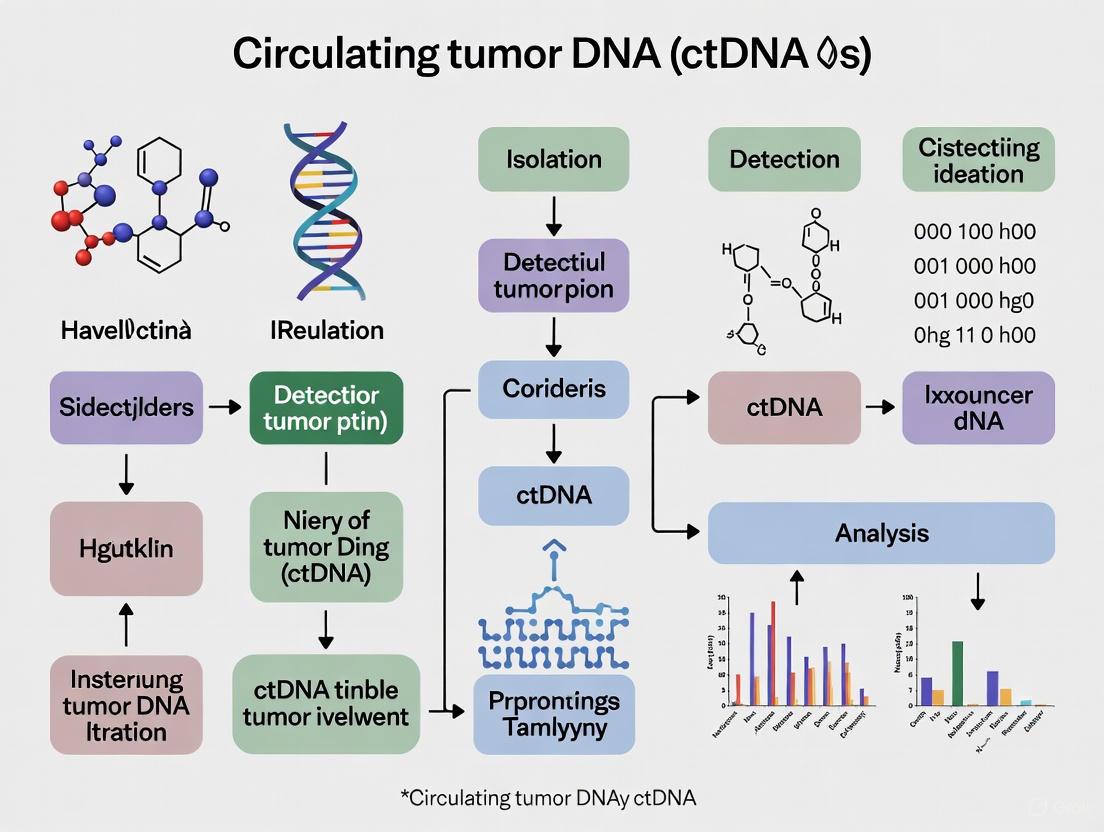
This article provides a comprehensive overview of circulating tumor DNA (ctDNA), a cornerstone of liquid biopsy in precision oncology.
Circulating Tumor DNA: A Comprehensive Guide to Biology, Detection, and Clinical Applications in Precision Oncology
Abstract
This article provides a comprehensive overview of circulating tumor DNA (ctDNA), a cornerstone of liquid biopsy in precision oncology. Tailored for researchers, scientists, and drug development professionals, it explores the fundamental biology of ctDNA, including its origins and characteristics. It delves into the latest detection methodologies, from PCR to next-generation sequencing, and their applications in monitoring treatment response, detecting minimal residual disease (MRD), and guiding targeted therapies. The content also addresses current technical challenges, optimization strategies, and the critical process of clinical validation, positioning ctDNA as a dynamic biomarker poised to transform cancer drug development and patient management.
The Biology of Circulating Tumor DNA: From Cellular Origins to Clinical Potential
What is ctDNA? Defining the Biomarker in the Context of Cell-Free DNA
Circulating Tumor DNA (ctDNA) refers to the fraction of cell-free DNA (cfDNA) in the bloodstream that originates from tumor cells and carries tumor-specific genomic and epigenetic alterations [1] [2]. This biomarker has emerged as a cornerstone of liquid biopsy, enabling non-invasive, real-time molecular profiling of cancer [3] [2]. The study of ctDNA is fundamentally reshaping cancer research and drug development by providing insights into tumor heterogeneity, monitoring treatment response, and detecting minimal residual disease (MRD) with a simple blood draw [1] [4].
The biological premise of ctDNA lies in its origin: as tumor cells undergo apoptosis, necrosis, and other forms of cell death, they release DNA fragments into the circulation [2]. This process results in ctDNA fragments that typically range from 70-200 base pairs in length, distinguishable from normal cfDNA by the tumor-specific characteristics they carry, including somatic mutations, methylation patterns, and genomic rearrangements [1] [5]. Unlike traditional tissue biopsies which provide a single snapshot in time, ctDNA analysis offers a dynamic window into the entire tumor ecosystem, capturing contributions from both primary and metastatic sites [1].
Biological Foundations of ctDNA
Relationship Between cfDNA and ctDNA
Cell-free DNA (cfDNA) constitutes all DNA fragments circulating freely in the bloodstream, predominantly derived from hematopoietic cell turnover in healthy individuals [1] [2]. ctDNA represents a specific subset of cfDNA that originates from tumor cells [6]. The concentration of cfDNA in healthy individuals typically ranges between 0 and 100 ng/mL of blood, but can exceed 1000 ng/mL in cancer patients, with the tumor-derived fraction (ctDNA) varying from less than 0.01% in early-stage cancers to over 90% in advanced metastatic disease [1] [2].
Mechanisms of ctDNA Release and Clearance
Tumor cells release DNA into the circulation through multiple mechanisms, with apoptosis and necrosis being the primary pathways [2]. Apoptosis produces shorter, more uniform DNA fragments (~166 bp) characteristic of nucleosomal cleavage, while necrosis generates longer, more variable fragments [2]. Additional release mechanisms include active secretion through extracellular vesicles and release from circulating tumor cells [3] [2].
The clearance of ctDNA from circulation is rapid, with an estimated half-life between 16 minutes to several hours [1]. This rapid turnover enables real-time monitoring of tumor dynamics and treatment response. The liver, spleen, and kidneys are believed to be the primary organs responsible for ctDNA clearance [1].
Characteristic Features of ctDNA
Several molecular features distinguish ctDNA from normal cfDNA:
Somatic Mutations: ctDNA carries tumor-specific genetic alterations including point mutations, insertions/deletions, copy number variations, and chromosomal rearrangements [5]. Common examples include KRAS mutations in colorectal cancer, EGFR mutations in lung cancer, and PIK3CA mutations in breast cancer [1] [7].
Methylation Patterns: Cancer-specific DNA methylation signatures provide robust markers for detecting tumor-derived DNA [7]. Hypermethylation of tumor suppressor gene promoters is a hallmark feature observed in ctDNA.
Fragmentomic Patterns: ctDNA demonstrates distinct fragmentation patterns compared to normal cfDNA, including differences in fragment size distribution, end motifs, and nucleosome positioning [1] [7]. These patterns can be exploited to enhance detection sensitivity.
Viral DNA Sequences: In virus-associated cancers such as nasopharyngeal carcinoma (EBV) and hepatocellular carcinoma (HBV), viral DNA sequences serve as specific markers for ctDNA [7] [6].
Methodological Approaches for ctDNA Analysis
Detection Technologies and Their Performance Characteristics
The low abundance of ctDNA in total cfDNA necessitates highly sensitive detection methods. The following table summarizes the primary technological approaches for ctDNA analysis:
Table 1: ctDNA Detection Technologies and Performance Characteristics
| Technology | Detection Limit | Genomic Coverage | Key Applications | Advantages | Limitations |
|---|---|---|---|---|---|
| Digital PCR (dPCR/ddPCR) [1] [7] | ~0.01% | Single to few mutations | Therapy monitoring, MRD detection | High sensitivity, absolute quantification, rapid turnaround | Limited multiplexing capability |
| BEAMing [1] [7] | ~0.01% | Single to few mutations | Therapy monitoring, resistance mutation detection | High sensitivity, combination of PCR and flow cytometry | Complex workflow, limited multiplexing |
| Targeted NGS Panels [1] [7] | ~0.1% | Dozens to hundreds of genes | Comprehensive profiling, resistance monitoring | Broader genomic coverage, multiplexing capability | Higher cost, longer turnaround |
| Whole Exome/Genome Sequencing [1] | ~1-5% | Genome-wide | Discovery applications, comprehensive analysis | Unbiased approach, novel alteration discovery | Lower sensitivity, high cost |
| Methylation Sequencing [7] | ~0.1-1% | Genome-wide or targeted | Cancer origin detection, early detection | Tissue-of-origin information, epigenetic profiling | Bisulfite conversion degrades DNA |
| Fragmentomics [1] [7] | N/A | Genome-wide | Cancer detection, differentiation from normal cfDNA | No prior knowledge of mutations required, multi-parametric | Computational complexity, emerging validation |
Pre-analytical Considerations and Standardization
The reliability of ctDNA analysis is heavily influenced by pre-analytical factors, necessitating strict protocol standardization:
Blood Collection Tubes: EDTA tubes are preferred over heparin tubes, with specialized blood collection tubes (Streck, Roche, PAXgene) enabling ctDNA stabilization for up to 48-72 hours [6].
Centrifugation Protocols: A two-step centrifugation protocol is recommended: initial low-speed centrifugation (800-1,900 × g for 10 minutes) to pellet cells, followed by high-speed centrifugation (14,000-16,000 × g for 10 minutes) to remove remaining debris [6].
Storage Conditions: Plasma should be aliquoted and stored at -80°C, with limited freeze-thaw cycles (preferably ≤3) to prevent nucleic acid degradation [6].
Extraction Methods: Magnetic bead-based systems offer advantages for recovering small DNA fragments with potential for automation, while spin-column methods provide reliable recovery of variable-sized fragments [6].
Clinical and Research Applications in Drug Development
Monitoring Treatment Response and Resistance
ctDNA dynamics provide a quantitative measure of treatment response, with decreasing levels indicating therapeutic efficacy and rising levels signaling disease progression or emerging resistance [1] [8]. The short half-life of ctDNA enables rapid assessment of treatment response, often weeks to months before radiographic changes become apparent [1].
In metastatic colorectal cancer, serial ctDNA monitoring can predict treatment response, with decreasing levels during therapy predicting favorable outcomes and increasing levels predicting treatment failure [8]. Similarly, in breast cancer and lung cancer, ctDNA analysis can identify acquired resistance mutations to targeted therapies, enabling timely treatment modification [1] [5].
Detection of Minimal Residual Disease (MRD) and Recurrence Monitoring
The most transformative application of ctDNA in early-stage cancer is MRD detection after curative-intent therapy [1] [4]. ctDNA analysis can identify molecular evidence of residual disease undetectable by standard imaging modalities, predicting future clinical recurrence with high accuracy [4] [9].
In stage II colon cancer, the DYNAMIC trial demonstrated that ctDNA-guided adjuvant chemotherapy management reduced overall chemotherapy use by nearly half without compromising recurrence-free survival [9]. Similar findings have been reported in breast, lung, and urothelial cancers, establishing ctDNA as a robust prognostic biomarker for recurrence risk stratification [4].
Clinical Trial Applications and Drug Development
The U.S. Food and Drug Administration (FDA) has recently issued guidance supporting the use of ctDNA as a biomarker in early-stage solid tumor drug development [10] [9]. Specific applications include:
- Trial Enrichment: Selecting high-risk patients based on MRD positivity for adjuvant therapy trials [4] [9].
- Signal Detection: Using ctDNA dynamics as an early biomarker of treatment effect in phase I/II trials [4].
- Accelerated Endpoints: Utilizing molecular recurrence as an endpoint to reduce trial duration and size [4].
Novel clinical trial platforms are emerging that continuously enroll patients with molecular evidence of disease after curative-intent therapy, enabling efficient testing of multiple interventions [4].
Table 2: Key Clinical Applications of ctDNA in Oncology
| Application Domain | Clinical Utility | Evidence Level | Impact on Decision-Making |
|---|---|---|---|
| MRD Detection [1] [4] [9] | Predicts recurrence after curative-intent therapy | Prospective randomized trials (e.g., DYNAMIC) | Guides adjuvant therapy decisions (escalation/de-escalation) |
| Treatment Response Monitoring [1] [8] | Early indicator of treatment efficacy/progression | Multiple prospective studies | Informs treatment modification, identifies resistance |
| Therapeutic Target Identification [5] [2] | Identifies actionable mutations when tissue is limited | Clinical guidelines (NCCN, ESMO) | Guides targeted therapy selection |
| Early Cancer Detection [7] | Identifies cancer-associated mutations in asymptomatic individuals | Emerging validation | Potential for screening high-risk populations |
| Clinical Trial Endpoints [10] [4] | Serves as biomarker for patient selection and efficacy | FDA guidance support | Accelerates drug development timelines |
Technical Challenges and Research Reagents
Key Research Reagent Solutions
The following essential reagents and materials form the foundation of ctDNA research:
Table 3: Essential Research Reagents for ctDNA Analysis
| Reagent Category | Specific Examples | Research Function | Technical Considerations |
|---|---|---|---|
| Blood Collection Tubes [6] | EDTA tubes, Streck Cell-Free DNA BCT, Roche Cell-Free DNA Collection Tubes | Preserve blood samples and prevent background DNA release | Specialized BCTs enable room temperature storage for up to 48-72 hours |
| DNA Extraction Kits [6] | Silica membrane spin columns, Magnetic bead-based kits, Magnetic ionic liquid (MIL) systems | Isolate high-quality ctDNA from plasma | Magnetic bead methods favor small fragment recovery; spin columns offer broad size range |
| PCR Reagents [1] [7] | dPCR/ddPCR master mixes, Unique Molecular Identifiers (UMIs), Target-specific primers/probes | Detect and quantify rare mutations | UMIs reduce sequencing errors; optimized master mixes enhance sensitivity |
| NGS Library Prep Kits [1] [7] | Hybrid capture panels, Amplicon-based panels, Methylation conversion kits | Prepare libraries for mutation detection and methylation analysis | Hybrid capture offers broader coverage; amplicon-based provides greater sensitivity |
| Reference Materials | Synthetic ctDNA controls, Reference standards with known mutation allelic fractions | Assay validation and quality control | Enable standardization across laboratories and platforms |
Current Challenges and Limitations
Despite significant advances, ctDNA analysis faces several technical challenges:
Low Abundance: In early-stage cancers and low-shedding tumors, ctDNA fractions can be below 0.01%, challenging even the most sensitive detection methods [1] [9].
Tumor Heterogeneity: ctDNA may not fully represent the entire genomic landscape of heterogeneous tumors, potentially missing subclonal populations [9].
Lack of Standardization: Variations in pre-analytical processing, detection methods, and analytical pipelines affect result reproducibility across laboratories [1] [6].
Clonal Hematopoiesis: Age-related mutations in hematopoietic cells can contaminate ctDNA samples and lead to false positive results [1].
Cost and Accessibility: Advanced ctDNA assays remain expensive and technically complex, limiting widespread clinical implementation [9].
ctDNA has firmly established itself as an essential biomarker in precision oncology, providing unprecedented insights into tumor dynamics and therapeutic response. The integration of ctDNA analysis into clinical research and practice represents a paradigm shift from traditional tissue-based diagnostics toward liquid biopsy-based approaches.
Future developments in ctDNA research will likely focus on enhancing detection sensitivity through novel technologies like Concatenating Original Duplex for Error Correction (CODEC) and other sequencing innovations [1]. Multi-omic approaches that combine mutation analysis with methylation profiling, fragmentomics, and protein markers will further improve diagnostic accuracy [7]. Additionally, the standardization of pre-analytical protocols and analytical pipelines will be crucial for translating ctDNA biomarkers into routine clinical practice.
As evidence from prospective clinical trials continues to accumulate and regulatory frameworks evolve, ctDNA analysis is poised to become an integral component of cancer management across the diagnostic, prognostic, and therapeutic spectrum, ultimately fulfilling the promise of personalized cancer care.
Circulating tumor DNA (ctDNA) has emerged as a transformative biomarker in oncology, enabling non-invasive liquid biopsies for cancer detection, monitoring, and treatment selection. This technical guide delves into the fundamental biology governing ctDNA release, focusing on three primary mechanisms: apoptosis, necrosis, and active secretion. Within the broader context of ctDNA research, understanding these cellular origins is critical for advancing analytical sensitivity, interpreting clinical data, and developing novel therapeutic strategies. We provide a comprehensive analysis of each mechanism's molecular features, summarize quantitative data in structured tables, detail experimental methodologies, and visualize key biological pathways. This resource aims to equip researchers, scientists, and drug development professionals with the technical foundation necessary to navigate and contribute to this rapidly evolving field.
Circulating tumor DNA (ctDNA) refers to the fraction of cell-free DNA (cfDNA) in bodily fluids that originates from tumor cells or the tumor microenvironment [11]. These fragments carry tumor-specific genetic and epigenetic alterations, making them powerful non-invasive biomarkers for precision oncology [2] [1]. The average half-life of ctDNA in circulation is short, estimated to be between 16 minutes and several hours, which allows for real-time monitoring of tumor dynamics [1]. The total concentration of ctDNA in plasma can vary significantly, from less than 0.01% of total cfDNA in early-stage cancers to over 90% in advanced disease, reflecting the underlying tumor burden and cellular turnover rates [12] [1].
The study of ctDNA release mechanisms is not merely an academic exercise; it has direct implications for clinical assay development and interpretation. The mechanism of release influences critical ctDNA characteristics such as fragment size, molecular features, and nucleic acid integrity, which can be leveraged to improve detection sensitivity and specificity [13] [2]. Furthermore, understanding why some tumors shed high amounts of ctDNA while others are "shedding poor" is crucial for optimizing the clinical utility of liquid biopsies across different cancer types and stages [13].
Mechanisms of ctDNA Release
CtDNA is released into the circulation through a balance of passive mechanisms, which are associated with cell death, and active mechanisms, which involve secretion from viable cells. The following sections detail the primary pathways.
Apoptosis
Apoptosis, or programmed cell death, is a major source of ctDNA, particularly due to the high cellular turnover rates within tumors [13] [12].
Molecular Mechanisms: Apoptosis is executed by a cascade of caspases that trigger cellular shrinkage, chromatin condensation, and systematic DNA fragmentation. This process is mediated by specific nucleases, including Caspase-Activated DNase (CAD), DNaseI L-3, NM23-H1, and Endonuclease G (EndoG) [13]. These enzymes cleave DNA at internucleosomal regions, which are not protected by histone proteins.
Fragment Characteristics: DNA fragments derived from apoptosis exhibit a distinctive "ladder-like" pattern on gel electrophoresis. The dominant fragment size is approximately 167 base pairs (bp), which corresponds to the length of DNA wrapped around a single nucleosome core (147 bp) plus a linker DNA segment (∼20 bp) [13] [2]. These fragments are typically packaged into apoptotic bodies, which are subsequently phagocytosed and digested by macrophages before the DNA is released into the circulation [13] [2].
Necrosis
Necrosis is a form of unprogrammed cell death often triggered by factors in the tumor microenvironment, such as hypoxia, metabolic stress, or therapy-induced damage [13].
Molecular Mechanisms: Unlike the controlled process of apoptosis, necrosis is characterized by organelle dysfunction and plasma membrane rupture. This leads to the uncontrolled and random release of cellular contents, including large, disorganized fragments of DNA, into the extracellular space [13] [2].
Fragment Characteristics: Necrotic cells release DNA fragments that are generally much larger than 200 bp, potentially extending to many kilo-base pairs (kbp) [13] [2]. However, this DNA is highly vulnerable to degradation by nucleases and free radicals. Furthermore, necrotic cells release attractants that recruit macrophages, which subsequently phagocytose the cellular debris, digest the DNA, and release smaller fragments into the microenvironment [13].
Active Secretion
Beyond passive release from dead cells, viable tumor cells can actively release DNA through various processes, adding a dynamic layer to ctDNA biology.
Mechanisms of Active Release:
- Extracellular Vesicles (EVs): Tumor cells actively shed various EVs, including exosomes (30-150 nm) and microvesicles (100-1000 nm), which can encapsulate DNA fragments [2] [11]. Studies have identified oncogenic mutations (e.g., in KRAS and TP53) within EV-derived DNA [2]. The size of the vesicle influences the size of the DNA it carries, with larger apoptotic bodies and microvesicles often enriched in smaller DNA fragments (<200 bp) [2].
- Other Mechanisms: Other non-death-associated processes contributing to ctDNA release include senescence, autophagy, and the direct ejection of mitochondrial DNA [2].
The following diagram illustrates the primary ctDNA release pathways and their key characteristics.
Comparative Analysis of Release Mechanisms
The table below provides a consolidated overview of the key characteristics associated with each primary release mechanism.
Table 1: Characteristics of ctDNA from Different Release Mechanisms
| Feature | Apoptosis | Necrosis | Active Secretion |
|---|---|---|---|
| Primary Trigger | Programmed cell death, cellular turnover [13] [12] | Hypoxia, metabolic stress, damage [13] | Active processes in viable cells [2] [11] |
| Key Enzymes/Mediators | Caspases, CAD, DNaseI L-3, NM23-H1, EndoG [13] | Nucleases, free radicals, macrophages [13] [2] | Vesicle packaging machinery |
| Dominant Fragment Size | ~167 bp (mononucleosomal) [13] [2] | >200 bp, up to kilo-base pairs (kbp) [13] [2] | Variable; often <100 bp in EVs [2] [11] |
| Fragment Pattern | Ladder-like (internucleosomal cleavage) [13] | Large, disorganized fragments [13] | Not well characterized |
| DNA Integrity | Highly fragmented, defined ends | Low integrity, randomly degraded | Protected within vesicles |
| Contribution to Total ctDNA | Considered a major contributor [13] [12] | Contribution unclear, potentially significant in advanced disease [2] | Minor but functionally significant fraction [2] |
Quantitative Data and Clinical Correlations
The concentration of ctDNA in plasma is not solely dependent on tumor volume; it is a complex function of cellular turnover, tumor location, and the efficiency of release and clearance mechanisms.
Table 2: Correlation Between ctDNA Levels and Tumor Burden
| Parameter | Findings | Clinical Context / Study Details |
|---|---|---|
| General Correlation | Poor to moderate correlation with radiographic tumor burden (r² ≈ 0.5) [12] | Limitation for using single time-point ctDNA to estimate tumor size. |
| Stronger Correlation | Correlation improves (r² = 0.91) in worsening disease [12] | Suggests ctDNA is a stronger marker of proliferating tumor burden. |
| Metastatic Site Dependence | Strongest correlation with liver metastasis volume (Spearman's ρ = 0.500-0.692) [14] | Metastatic Pancreatic Ductal Adenocarcinoma (mPDAC); weaker correlation with primary tumor volume. |
| Detection Threshold | Liver metastasis volume >3.7 mL associated with ctDNA detection (85.1% Sensitivity, 79.2% Specificity) [14] | Explains non-detection in some patients with low-volume disease. |
| Calculated Cell Death | Sustaining 1 ctDNA copy/mL requires death of ~24,000 cells/day [12] | Illustrates the high cell death rate required to maintain detectable ctDNA levels, even in advanced disease. |
Experimental Protocols for ctDNA Analysis
The accurate detection and analysis of ctDNA require highly sensitive and specific methodologies due to its low abundance in a high background of wild-type cfDNA.
Sample Collection and Processing
- Blood Collection: Peripheral blood is collected in stabilizing tubes (e.g., Streck Cell-Free DNA BCT) to prevent lysis of white blood cells and preserve the cfDNA profile.
- Plasma Isolation: A two-step centrifugation protocol is critical. First, low-speed centrifugation (e.g., 800-1600 x g for 10 min) to separate plasma from blood cells. Second, high-speed centrifugation (e.g., 16,000 x g for 10 min) of the supernatant to remove residual cells and platelets.
- cfDNA Extraction: cfDNA is extracted from plasma using commercial kits (e.g., QIAamp Circulating Nucleic Acid Kit from Qiagen). The extracted cfDNA is typically quantified using fluorometry (e.g., Qubit dsDNA HS Assay).
Key Detection Technologies
Digital PCR (dPCR): This includes droplet digital PCR (ddPCR) and chip-based dPCR (cdPCR).
- Principle: The PCR reaction is partitioned into thousands of individual reactions, allowing for absolute quantification of target molecules without the need for a standard curve. It operates on a binary ("all-or-none") endpoint detection principle [11].
- Advantages: High sensitivity (can detect mutant allele frequencies as low as 0.001% [11]), high tolerance to PCR inhibitors, and absolute quantification. Ideal for tracking known mutations.
- Workflow: cfDNA → Partitioning (into droplets or wells) → Endpoint PCR → Fluorescence readout and counting of positive/negative partitions.
Next-Generation Sequencing (NGS):
- Principle: Enables high-throughput, parallel sequencing of millions of DNA fragments. Targeted NGS panels are commonly used for ctDNA analysis [1].
- Advantages: Comprehensive profiling, ability to detect novel and unknown mutations, and assessment of a wider genomic landscape.
- Workflow: cfDNA → Library Preparation (fragmentation, adapter ligation) → Target Capture (for targeted panels) → Amplification → Sequencing.
- Error Correction: To overcome sequencing errors, methods utilizing Unique Molecular Identifiers (UMIs) are essential. UMIs are molecular barcodes ligated to each DNA fragment prior to amplification, allowing bioinformatic correction of PCR and sequencing errors [1]. Advanced methods like Duplex Sequencing tag and sequence both strands of the DNA duplex for ultra-high accuracy [1].
The following diagram visualizes the core workflow for ctDNA analysis using these key technologies.
The Scientist's Toolkit: Essential Research Reagents and Materials
The following table lists key reagents and materials essential for conducting ctDNA research, as derived from the experimental protocols cited.
Table 3: Essential Reagents and Materials for ctDNA Research
| Item | Function / Application | Examples / Key Features |
|---|---|---|
| Cell-Free DNA Blood Collection Tubes | Stabilizes blood sample post-draw to prevent genomic DNA contamination from white blood cell lysis. | Streck Cell-Free DNA BCT, PAXgene Blood ccfDNA Tubes |
| Nucleic Acid Extraction Kits | Isolation of high-purity, short-fragment cfDNA from plasma or other biofluids. | QIAamp Circulating Nucleic Acid Kit (Qiagen), Maxwell RSC ccfDNA Plasma Kit (Promega) |
| Fluorometric DNA Quantitation Kits | Accurate quantification of low-concentration, short-fragment cfDNA. | Qubit dsDNA HS Assay Kit (Thermo Fisher) |
| dPCR Supermixes & Reagents | Enzymes, buffers, and probes for highly sensitive and specific digital PCR detection. | ddPCR Supermix for Probes (Bio-Rad) |
| NGS Library Prep Kits | Preparation of sequencing libraries from low-input cfDNA samples. | Kits with UMI (Unique Molecular Identifier) integration for error correction [1] |
| Targeted Gene Panels | Hybrid capture or amplicon-based panels for enriching cancer-associated genomic regions prior to NGS. | Panels covering genes like KRAS, EGFR, ESR1, PIK3CA, BRAF [1] |
A deep understanding of the cellular origins and release mechanisms of ctDNA—apoptosis, necrosis, and active secretion—is foundational to advancing its application in precision oncology. Each mechanism imparts distinct molecular features on the resulting ctDNA, influencing its fragment size, integrity, and potential clinical interpretability. While significant progress has been made in elucidating these pathways, challenges remain, including understanding the determinants of inter- and intra-tumor shedding variability. As detection technologies like dPCR and error-corrected NGS continue to evolve in sensitivity and accessibility, the integration of ctDNA biology into drug development and clinical trial design will accelerate. Future research focusing on the dynamics of these release mechanisms in response to therapy will be crucial for establishing ctDNA as a robust surrogate endpoint and fully realizing the promise of liquid biopsy in cancer care.
Circulating tumor DNA (ctDNA) refers to the fragmented, cell-free DNA released into the bloodstream by tumor cells through processes such as apoptosis and necrosis [15] [1]. As a component of liquid biopsy, ctDNA analysis represents a transformative approach in oncology, enabling non-invasive access to tumor-specific genetic and epigenetic information. The core physical and chemical properties of ctDNA—specifically its fragment size, stability, and half-life—are not merely technical attributes but fundamental determinants that shape its clinical utility [1] [16]. These properties present both challenges and opportunities for detection methodologies, influencing applications ranging from early cancer detection to monitoring treatment response and minimal residual disease (MRD) [17] [18]. This guide provides an in-depth technical examination of these essential properties, framed within the broader context of ctDNA research, to support researchers and drug development professionals in advancing this promising field.
Physical and Chemical Properties of ctDNA
Fragment Size
ctDNA exists in the bloodstream as short, double-stranded DNA fragments. The size distribution of these fragments is non-random and provides a critical distinction from normal cell-free DNA (cfDNA).
- Typical Size Range: ctDNA fragments typically range from 90 to 150 base pairs (bp), with a predominant peak at approximately 166 bp [1]. This size correlates strikingly with the length of DNA wrapped around a nucleosome plus a linker segment, reflecting its origin from apoptotic fragmentation of chromatin.
- Comparison to Normal cfDNA: While the fragment lengths of ctDNA and normal cfDNA overlap, studies utilizing whole-genome sequencing have revealed that ctDNA populations often exhibit a shorter median fragment size and more diverse fragmentation patterns compared to cfDNA derived from healthy cells [1] [7]. This differential fragmentation is the basis for the emerging field of "fragmentomics," which uses machine learning models to distinguish cancer from non-cancer signals [7].
Table 1: Key Quantitative Properties of ctDNA
| Property | Typical Range or Value | Technical Implications |
|---|---|---|
| Fragment Size | 90-150 bp, peak at ~166 bp [1] | Informs library preparation for NGS; basis for fragmentomics analysis. |
| Half-Life | 16 minutes to 2.5 hours [1] [16] | Enables real-time monitoring of tumor dynamics; requires careful timing for serial sampling. |
| Concentration in Plasma | <1 to ~100 copies per 1 mL of plasma [15] | Demands highly sensitive detection techniques (e.g., ddPCR, ultra-deep NGS). |
| Variant Allele Frequency (VAF) in Early-Stage Cancer | Can be < 0.05% of total cfDNA [18] | Requires techniques with very low limits of detection to avoid false negatives. |
Stability and Half-Life
The stability of ctDNA in vivo is a key factor for its use as a dynamic biomarker, but its stability ex vivo is a critical pre-analytical consideration.
- In Vivo Half-Life: The half-life of ctDNA in the circulation is remarkably short, estimated to be between 16 minutes and 2.5 hours [1] [16]. This rapid clearance is primarily due to degradation by circulating nucleases and uptake by liver macrophages [15]. This brief window is a double-edged sword: it allows ctDNA levels to reflect real-time tumor dynamics but also necessitates stringent protocols for blood sample processing to prevent its degradation before analysis.
- Ex Vivo Stability and Pre-Analytical Handling: The use of specialized blood collection tubes (BCTs) is crucial for stabilizing ctDNA. Conventional EDTA tubes require plasma separation within 2-6 hours of blood draw when stored at 4°C [15]. Commercial cfDNA BCTs (e.g., from Streck, Qiagen, Roche) contain preservatives that stabilize nucleated blood cells, preventing the release of wild-type genomic DNA and enabling room temperature storage for up to 3-7 days [15]. For long-term storage, isolated plasma or extracted cfDNA should be kept at -80°C [15].
Table 2: Factors Affecting ctDNA Concentration and Stability
| Factor | Impact on ctDNA | Recommendations |
|---|---|---|
| Physiological Clearance | Rapid removal by liver macrophages and nucleases (half-life: 16 min - 2.5 hrs) [15] [1] [16]. | Consider timing of blood collection relative to interventions. |
| Blood Collection | Hemolysis and leukocyte lysis release background wild-type DNA. | Use butterfly needles; avoid excessive tourniquet time; use specialized cfDNA BCTs [15]. |
| Time to Processing | ctDNA degrades and background wild-type DNA increases in EDTA tubes. | Process EDTA tubes within 2-6 hrs; cfDNA BCTs stable for 3-7 days [15]. |
| Patient Comorbidities | Inflammatory diseases, autoimmune conditions, and physical exercise can increase total cfDNA [15]. | Document patient history and status at time of collection. |
| Surgical Trauma | Transient increase in total ccfDNA levels post-surgery, persisting for weeks [15]. | Avoid sampling in the immediate post-operative period for MRD assessment. |
Experimental Protocols for ctDNA Analysis
Blood Collection and Plasma Processing
The following protocol is critical for preserving the integrity of ctDNA for downstream analysis [15].
- Blood Collection: Draw blood using a 21-gauge butterfly needle to minimize hemolysis. Collect into 10 mL specialized cfDNA BCTs (e.g., Streck, PAXgene). Invert the tube 8-10 times immediately after collection to mix the preservative.
- Transportation: Transport samples at room temperature. Avoid exposure to extreme heat, cold, or vigorous shaking.
- Plasma Separation:
- First Centrifugation: Within the stipulated stability window of the tube, centrifuge at 800-1600 RCF (Relative Centrifugal Force) for 10 minutes at room temperature to separate plasma from blood cells.
- Plasma Transfer: Carefully transfer the upper plasma layer to a new tube, avoiding the buffy coat (white cell layer) and red blood cells.
- Second Centrifugation: Centrifuge the transferred plasma at a higher speed of 12,000-20,000 RCF for 10 minutes at 4°C to remove any remaining cellular debris.
- Storage: Aliquot the clarified plasma and store at -80°C until DNA extraction. Avoid repeated freeze-thaw cycles.
ctDNA Extraction
The low concentration and short fragment length of ctDNA require efficient extraction methods.
- Recommended Methods: Solid-phase extraction methods, particularly those using silica-membrane columns (e.g., QIAamp Circulating Nucleic Acid Kit from Qiagen), are widely used and provide good yields [15]. Magnetic bead-based technologies are also common and amenable to automation.
- Protocol (Silica-Membrane Column):
- Digestion: Thaw plasma aliquots on ice. Add a digestion buffer containing proteinase K to degrade plasma proteins.
- Binding: Adjust the binding conditions and apply the lysate to the column. ctDNA binds to the silica membrane in the presence of a chaotropic salt.
- Washing: Perform two wash steps with ethanol-based buffers to remove salts, proteins, and other impurities.
- Elution: Elute the pure ctDNA in a low-salt buffer or nuclease-free water. The elution volume should be small (e.g., 20-50 µL) to avoid over-dilution of the already scarce analyte.
Visualization of Workflows and Relationships
ctDNA Analysis Workflow
The following diagram outlines the complete journey of a liquid biopsy sample from collection to data analysis, highlighting key decision points and processes.
Diagram 1: ctDNA analysis workflow from sample to data.
Properties and Their Research Implications
This diagram illustrates the logical relationship between the core properties of ctDNA and their direct consequences for research and clinical development.
Diagram 2: Relationship of ctDNA properties to research implications.
The Scientist's Toolkit: Essential Research Reagents and Materials
Successful ctDNA research relies on a suite of specialized tools and reagents designed to handle its challenging properties.
Table 3: Essential Research Reagents and Materials for ctDNA Analysis
| Tool/Reagent Category | Specific Examples | Function & Importance |
|---|---|---|
| Blood Collection Tubes (BCTs) | cfDNA BCTs (Streck), PAXgene Blood ccfDNA (Qiagen), Roche cfDNA Tube [15] | Preserves sample integrity by preventing leukocyte lysis during transport/storage, critical for accurate VAF measurement. |
| Nucleic Acid Extraction Kits | QIAamp Circulating Nucleic Acid Kit (Qiagen; silica membrane), Maxwell RSC ccfDNA (Promega; magnetic beads) [15] | Efficiently isolates short-fragment ctDNA from large-volume plasma samples while removing PCR inhibitors. |
| Library Prep Kits for NGS | Kits with Unique Molecular Identifiers (UMIs) and support for low-input DNA. | UMIs tag original DNA molecules to correct for PCR and sequencing errors, essential for detecting low VAF variants [1]. |
| PCR Reagents | ddPCR Supermix for Probes (Bio-Rad), BEAMing reagents [1] [7] | Enables absolute quantification and ultra-sensitive detection of known mutations without the need for NGS. |
| Reference Standards | Seraseq ctDNA Reference Materials (Seracare), Horizon Multiplex I cfDNA Reference | Provides validated, quantifiable ctDNA mimics in a plasma background for assay development, validation, and quality control. |
The intrinsic physical and chemical properties of ctDNA—its short fragment size, low concentration, and rapid clearance—form the foundational framework upon which all detection technologies and clinical applications are built. Navigating these properties requires rigorous standardization from the moment of blood draw through to final data analysis, leveraging specialized reagents and sophisticated protocols. As research continues to refine our understanding of ctDNA biology, the principles outlined in this guide will remain central to harnessing its full potential for advancing precision oncology. Future directions, including the modulation of in vivo ctDNA release and clearance [15], promise to further overcome current sensitivity limitations, solidifying the role of liquid biopsy in cancer management.
ctDNA as a Mirror of Tumor Heterogeneity and Systemic Disease
Circulating tumor DNA (ctDNA) comprises fragmented DNA released into the bloodstream by tumor cells through processes including apoptosis, necrosis, and active secretion [19]. These DNA fragments carry tumor-specific genetic and epigenetic alterations, creating a "liquid biopsy" that reflects the entire tumor landscape, including spatially separated lesions and evolving subclones [1]. The half-life of ctDNA is short (estimated between 16 minutes and several hours), enabling real-time monitoring of tumor dynamics and treatment response [1]. As a biomarker, ctDNA fundamentally differs from traditional tissue biopsies by capturing tumor heterogeneity and providing a systemic view of the disease burden, making it an indispensable tool for modern cancer research and drug development.
Technical Foundations: Methodologies for ctDNA Analysis
The accurate detection and quantification of ctDNA require highly sensitive techniques due to its low abundance in early-stage cancers, where it can constitute less than 0.1% of total cell-free DNA (cfDNA) [1] [19]. The selection of an appropriate analytical method is governed by the clinical application, required sensitivity, and the need for multiplexing.
Core Detection Technologies
Table 1: Core Methodologies for ctDNA Analysis
| Technology | Key Principle | Sensitivity | Multiplexing Capacity | Primary Applications |
|---|---|---|---|---|
| Digital PCR (dPCR) / Droplet Digital PCR (ddPCR) | Partitioning of sample into thousands of individual reactions for absolute quantification | ~0.01%-0.1% VAF | Low (1-5 mutations) | Tracking known hotspot mutations (e.g., BRAF V600, ESR1), therapy monitoring [1] [20] |
| BEAMing | Beads, Emulsion, Amplification, and Magnetics | ~0.01% VAF | Moderate | Mutation detection and quantification [1] |
| Targeted NGS Panels | Hybrid capture or amplicon-based sequencing of selected gene regions | ~0.1% VAF | High (dozens to hundreds of genes) | Profiling for actionable mutations, resistance mechanism identification [1] |
| Whole Exome/Genome Sequencing (WES/WGS) | Sequencing of all exons or the entire genome | ~1-5% VAF (lower for ultra-deep) | Very High | Discovery, comprehensive mutation profiling, fragmentomics [1] |
| Tumor-Informed NGS (e.g., CAPP-Seq, Safe-SeqS, TEC-Seq) | Patient-specific assay designed from tumor tissue sequencing | ~0.001% - 0.01% VAF | High (personalized panel) | Minimal Residual Disease (MRD) detection, ultra-sensitive monitoring [1] [21] |
Advanced sequencing methods employ unique molecular identifiers (UMIs) to tag original DNA molecules before amplification, enabling the distinction of true low-frequency variants from PCR/sequencing errors [1]. Techniques such as Duplex Sequencing (tagging and sequencing both strands of the DNA duplex) and its more efficient derivatives (SaferSeqS, NanoSeq, CODEC) achieve ultra-high accuracy, with CODEC reportedly providing a 1000-fold higher accuracy than conventional NGS [1].
Experimental Protocol: Tumor-Informed ctDNA Analysis for MRD
The following protocol outlines the workflow for a sensitive, tumor-informed ctDNA assay, as used in studies like the one on head and neck cancer [21] and featured in advanced clinical trials.
Step 1: Tumor Whole Exome/Genome Sequencing
- Procedure: Isolate DNA from fresh-frozen or FFPE tumor tissue and matched normal blood. Perform high-depth WES or WGS (>80x for WGS) to identify patient-specific somatic mutations (SNVs, indels).
- Quality Control: Ensure tumor content >20%. Use bioinformatic pipelines (e.g., GATK) for variant calling.
Step 2: Personalized Panel Design
- Procedure: Select 16-50 clonal, high-confidence somatic mutations distributed across different chromosomes to create a patient-specific NGS panel.
- Rationale: A multi-mutation panel increases the aggregate sensitivity of the assay, overcoming the limitations of low ctDNA shed from individual genomic regions [21].
Step 3: Plasma Collection and cfDNA Extraction
- Procedure: Collect patient blood in cell-stabilizing tubes (e.g., Streck, EDTA). Process within 4-6 hours with a double-centrifugation protocol (e.g., 10 min at 1,500g, then 10 min at 3,000g) to isolate platelet-poor plasma. Extract cfDNA using commercial kits (e.g., QIAamp DSP Circulating NA Kit).
- Critical Parameter: A minimum of 2-4 mL of plasma is recommended, with larger volumes (10 mL) preferred for MRD applications to increase input DNA [20].
Step 4: Library Preparation and Sequencing
- Procedure: Construct NGS libraries from plasma cfDNA. Use UMIs during the adapter ligation or initial amplification steps to tag individual DNA molecules. Enrich for the patient-specific mutation panel via hybrid capture or amplicon-based PCR. Sequence to a high depth (>100,000x raw coverage).
- Quality Control: Include positive and negative control samples in each run.
Step 5: Bioinformatic Analysis and Variant Calling
- Procedure: Process raw sequencing data to (1) collapse reads with identical UMIs into consensus sequences, eliminating PCR errors; (2) align reads to the reference genome; (3) detect and quantify the patient-specific mutations. The result is often reported as aggregate variant allele frequency (eVAF) or mutant molecules per milliliter of plasma.
- Interpretation: A sample is considered "ctDNA-positive" if the signal for multiple personalized mutations significantly exceeds the background error rate of the assay (e.g., Limit of Detection, LoD95: 0.0011%) [21].
Figure 1: Workflow for Tumor-Informed ctDNA Analysis. This diagram illustrates the sequential steps from initial tissue-based sequencing to the final quantification of ctDNA in plasma, highlighting the personalized assay design crucial for high-sensitivity applications like MRD detection.
ctDNA as a Quantitative Biomarker of Disease Burden
ctDNA levels correlate strongly with tumor burden and clinical outcomes across multiple cancer types. The absolute concentration of ctDNA, measured in mutant copies per milliliter of plasma, provides a quantifiable metric for disease surveillance.
Clinical Validation and Thresholds
Table 2: Clinically Validated ctDNA Thresholds and Correlations
| Cancer Type | Clinical Setting | ctDNA Metric | Correlation with Clinical Outcome | Source/Study |
|---|---|---|---|---|
| Metastatic Melanoma | Pre-treatment with BRAF/MEK inhibitors | Baseline ctDNA ≥ 64 copies/mL | Independent predictor of worse Overall Survival (OS) | COMBI-d Trial [20] |
| Advanced Breast Cancer | Metastatic surveillance | Dual Threshold: <10 copies/mL10-100 copies/mL>100 copies/mL | Progression unlikely (NPV)Inconclusive zone>90% chance of progression (PPV) | Martens et al. Model [22] |
| R/M Head and Neck Cancer | On-treatment during ICB | ctDNA negativity (clearance) | Strongly associated with improved 3-year OS (HR 0.04) and PFS (HR 0.03) | R/M HNSCC Study [21] |
| Multiple Solid Tumors | Post-curative therapy | Detection of MRD (ctDNA positivity) | Highly prognostic for future clinical recurrence [17] [1] | Multiple Studies |
Longitudinal monitoring of ctDNA dynamics provides even greater prognostic power. In the context of immunotherapy for R/M HNSCC, patients who achieved ctDNA negativity during treatment had dramatically improved survival outcomes, whereas a rising ctDNA level was a harbinger of disease progression [21]. Similarly, in melanoma, patients who achieved "ctDNA zero-conversion" (undetectable ctDNA) after four weeks of targeted therapy had significantly extended progression-free and overall survival [20].
The Research Toolkit: Essential Reagents and Solutions
Successful implementation of ctDNA analysis requires a suite of validated research reagents and platforms.
Table 3: Essential Research Reagent Solutions for ctDNA Workflows
| Reagent/Kits | Function | Key Considerations for Selection |
|---|---|---|
| Cell-Free DNA Blood Collection Tubes | Stabilize nucleated blood cells to prevent genomic DNA contamination during shipment/storage. | Choose between preservative-based (e.g., Streck) vs. protective (e.g., PAXgene) technologies based on processing time requirements. |
| Nucleic Acid Extraction Kits | Isolate high-purity, short-fragment cfDNA from plasma. | Optimized for low-abundant DNA; elution in low-volume buffers to maximize concentration. |
| Unique Molecular Index (UMI) Adapters | Tag individual DNA molecules pre-amplification for error correction. | Ensure compatibility with downstream NGS library prep workflow and sequencing platform. |
| Targeted Hybrid Capture or Amplicon Panels | Enrich for genomic regions of interest prior to sequencing. | Customizable (tumor-informed) or fixed panels (e.g., Oncomine Pan-Cancer); assess genomic coverage and uniformity. |
| Droplet Digital PCR (ddPCR) Assays | Ultra-sensitive absolute quantification of specific mutations. | Ideal for validating NGS findings or monitoring a predefined set of mutations (e.g., KRAS G12C, ESR1 mutations). |
| Multiplexed Reference Standards | Spiked-in synthetic DNA with known mutations. | Essential for validating assay sensitivity, specificity, and limit of detection (LOD) across a dynamic range of VAFs. |
Clinical Applications in Drug Development and Trial Design
ctDNA is reshaping oncology clinical trials by enabling more precise patient stratification and rapid assessment of therapeutic efficacy.
Guiding Treatment Escalation/De-escalation: The DYNAMIC-III trial in stage III colon cancer was a pioneering randomized study exploring ctDNA-informed adjuvant therapy. While treatment escalation in ctDNA-positive patients did not improve recurrence-free survival, this finding likely reflects the limitation of available chemotherapy regimens (FOLFOXIRI vs. doublet), not the prognostic value of ctDNA, underscoring the need for novel escalation strategies [17]. Conversely, the SERENA-6 trial in HR+/HER2- advanced breast cancer demonstrated that switching to camizestrant upon ctDNA-detection of ESR1 mutations (before radiological progression) significantly improved progression-free survival and quality of life, establishing the utility of ctDNA for guiding therapy in the advanced setting [17].
Accelerating Endpoint Assessment: ctDNA dynamics can serve as a pharmacodynamic biomarker and potential surrogate endpoint. A large retrospective real-world study in advanced breast cancer found that early on-treatment ctDNA dynamics were strongly associated with time to next treatment, suggesting that ctDNA response could be used for early go/no-go decisions in drug development [17].
Figure 2: ctDNA Reflects Systemic Tumor Dynamics. This conceptual diagram shows how a single blood draw captures a mosaic of clones from heterogeneous tumors, and how serial monitoring reveals the dynamic evolution of the disease under therapeutic pressure.
Challenges and Future Directions
Despite its promise, the clinical adoption of ctDNA faces several hurdles. In early-stage disease, the key limitation is the low abundance of ctDNA, which challenges the sensitivity of even the most advanced assays [17] [1]. Tumor-informed assays improve sensitivity but require tumor tissue and have longer turnaround times. There is also a critical need for technical standardization across platforms, analytical validation of assays, and the demonstration of clinical utility in prospective interventional trials [23] [1]. Future directions include the integration of multi-omic liquid biopsy approaches (combining ctDNA with CTCs, extracellular vesicles, and methylation analyses), the development of non-blood-based liquid biopsies (e.g., urine, CSF), and the application of machine learning to complex ctDNA data to further enhance its predictive power [24].
Detecting and Decoding ctDNA: Advanced Methodologies and Translational Applications
Circulating tumor DNA (ctDNA) has emerged as a pivotal biomarker in oncology, offering a non-invasive window into tumor genetics for cancer detection, treatment monitoring, and recurrence surveillance [1]. This fragmented DNA, released into the bloodstream by tumor cells, carries tumor-specific genetic alterations, with somatic mutations serving as one of the most specific markers for detection [16]. The analysis of ctDNA presents a substantial technical challenge due to its extremely low concentration in blood, often constituting less than 0.1% of total cell-free DNA (cfDNA), especially in early-stage cancers and minimal residual disease (MRD) [1] [16]. This biological context creates a pressing need for detection methods that are both highly sensitive and specific.
Within the broad scope of ctDNA research, targeted mutation detection focuses on identifying a predetermined set of known mutations, contrasting with broader, discovery-oriented approaches like next-generation sequencing (NGS) [1]. Polymerase chain reaction (PCR)-based platforms form the cornerstone of this targeted detection. Techniques such as quantitative PCR (qPCR), digital PCR (dPCR), including its droplet-based variant (ddPCR), and BEAMing (beads, emulsion, amplification, and magnetics) are frequently employed for their high sensitivity, rapid turnaround, and cost-effectiveness [1] [25]. These methods are particularly powerful for tumor-informed analyses, where sequencing of the primary tumor tissue identifies mutations that are subsequently tracked in plasma using these targeted assays [1]. This technical guide provides an in-depth examination of these three core PCR-based platforms, detailing their principles, methodologies, and applications within modern ctDNA research.
Platform Principles and Workflows
Quantitative PCR (qPCR)
qPCR, also known as real-time PCR, represents the second generation of PCR technology. It allows for the monitoring of amplification in real-time but typically provides only relative quantification [25]. The process begins with the extraction of cfDNA from plasma, which is then used as a template in a PCR reaction containing a fluorescent reporter. As the target DNA amplifies, the fluorescence increases proportionally. The fundamental output is the cycle threshold (Ct), the point at which fluorescence crosses a predetermined threshold. A lower Ct value indicates a higher initial concentration of the target mutation. However, a significant limitation in the context of low-abundance ctDNA is that qPCR struggles to reliably distinguish signals from background noise when the mutant DNA makes up less than 1-10% of the total cfDNA, making it less suitable for MRD detection [16].
Droplet Digital PCR (ddPCR)
ddPCR is a form of digital PCR that enables absolute quantification of nucleic acids without the need for a standard curve [26] [25]. Its workflow fundamentally involves partitioning a single PCR reaction into thousands to millions of nanoliter-sized water-in-oil droplets. Each droplet acts as an individual PCR micro-reactor. Following end-point PCR amplification, each droplet is analyzed for fluorescence. The fraction of positive (fluorescent) droplets is then counted, and using Poisson statistics, the absolute concentration of the target mutant DNA in the original sample is calculated [26] [25]. This partitioning step is key to its high sensitivity, as it allows for the detection of rare mutations present at frequencies as low as 0.001% by effectively enriching the target in positive partitions [25].
BEAMing (Beads, Emulsion, Amplification, and Magnetics)
BEAMing combines droplet-based digital PCR with flow cytometry to detect and quantify rare mutations [25]. It is a complex, multi-step process that begins with binding individual DNA molecules to magnetic beads coated with primers complementary to the target sequence. The beads are then suspended in a water-in-oil emulsion, where each droplet contains a single bead and the necessary reagents for PCR amplification. After amplification, the emulsion is broken, and the beads, now covered with thousands of copies of the original DNA template, are purified. These beads are then analyzed via flow cytometry using fluorescent probes specific to wild-type or mutant sequences. This allows for the precise enumeration of mutant and wild-type molecules, providing extremely sensitive and specific quantification [25].
The following diagram illustrates the core workflow and principle shared by ddPCR and BEAMing, which both rely on sample partitioning.
Comparative Technical Specifications
The selection of an appropriate PCR-based platform depends on the specific requirements of the research or clinical question. The table below summarizes the key technical characteristics of qPCR, ddPCR, and BEAMing for targeted mutation detection in ctDNA.
Table 1: Technical Comparison of qPCR, ddPCR, and BEAMing for ctDNA Analysis
| Parameter | qPCR | ddPCR | BEAMing |
|---|---|---|---|
| Principle | Real-time fluorescence monitoring | End-point fluorescence counting of partitioned droplets | End-point flow cytometry of DNA-coated beads from emulsion |
| Quantification | Relative (based on Ct value) | Absolute (via Poisson statistics) | Absolute (via bead counting) |
| Sensitivity (VAF) | ~1–10% | ~0.001–0.1% [25] | ~0.001–0.01% [25] |
| Dynamic Range | Up to 10 logs | Up to 5 logs (limited by partition count) [26] | Up to 5 logs (limited by bead count) |
| Multiplexing Capability | Medium (2-4 plex with different dyes) | Low to Medium (2-3 plex) | Low to Medium (2-3 plex) |
| Throughput | High | Medium | Low |
| Turnaround Time | Fast (hours) | Medium (several hours) | Slow (1-2 days) |
| Cost per Sample | Low | Medium | High |
| Primary Strengths | Fast, cost-effective, high-throughput | High sensitivity, absolute quantification, robust to inhibitors | Extremely high sensitivity and specificity, visual confirmation |
| Key Limitations | Low sensitivity for rare mutations, requires standard curve | Limited multiplexing, fixed dynamic range | Complex workflow, low throughput, expensive |
Experimental Protocols for ctDNA Analysis
Sample Collection and cfDNA Extraction
The pre-analytical phase is critical for robust ctDNA analysis. Blood should be collected in cell-stabilizing tubes (e.g., Streck Cell-Free DNA BCT or PAXgene Blood ccfDNA Tubes) to prevent lysis of white blood cells and the release of genomic DNA, which dilutes the ctDNA fraction. Plasma separation via double centrifugation (e.g., 1,600 × g for 10 min, then 16,000 × g for 10 min) is recommended within a few hours of collection. cfDNA can then be extracted from the plasma using commercial silica-membrane or magnetic bead-based kits (e.g., QIAamp Circulating Nucleic Acid Kit, MagMAX Cell-Free DNA Isolation Kit). The extracted cfDNA should be quantified using a fluorometer sensitive to low DNA concentrations (e.g., Qubit dsDNA HS Assay) [1] [16].
Protocol for ddPCR Mutation Detection
Workflow: The following protocol outlines a standard TaqMan probe-based ddPCR assay for detecting a known point mutation (e.g., KRAS G12D) in cfDNA.
Reagents:
- Extracted cfDNA sample
- ddPCR Supermix for Probes (no dUTP)
- FAM-labeled TaqMan probe for KRAS G12D mutation
- HEX/VIC-labeled TaqMan probe for KRAS wild-type sequence
- Forward and reverse primers for the KRAS amplicon
- Droplet Generation Oil for Probes
- Nuclease-free water
Procedure:
- Reaction Mix Preparation: On ice, prepare a 20-22 µL reaction mix for each sample. A typical mix contains 10 µL of ddPCR Supermix, 1 µL of each primer/probe assay (20X concentration), and the extracted cfDNA (recommended input: 2-10 ng). Adjust the volume to the target with nuclease-free water.
- Droplet Generation: Transfer the reaction mix to the DG8 Cartridge. Add 70 µL of Droplet Generation Oil to the appropriate wells. Place the cartridge into the QX200 Droplet Generator. This instrument partitions each sample into ~20,000 nanoliter-sized droplets.
- PCR Amplification: Carefully transfer the generated droplets from the cartridge to a 96-well PCR plate. Seal the plate with a foil heat seal and perform PCR amplification in a thermal cycler using manufacturer-recommended cycling conditions. A standard protocol might be: 95°C for 10 min (enzyme activation), followed by 40 cycles of 94°C for 30 s (denaturation) and 55-60°C for 60 s (annealing/extension), with a final 98°C step for 10 min (enzyme deactivation) and a 4°C hold.
- Droplet Reading: Place the PCR plate into the QX200 Droplet Reader. This instrument flows droplets single-file past a two-color optical detection system that reads the fluorescence in each droplet (FAM and HEX/VIC channels).
- Data Analysis: Use the associated software (e.g., QuantaSoft) to analyze the results. The software plots the fluorescence amplitude of each droplet, allowing for the setting of thresholds to distinguish positive mutant droplets, positive wild-type droplets, and negative droplets. The software automatically calculates the concentration (copies/µL) and variant allele frequency (VAF) of the mutant allele using Poisson statistics [26] [25].
Protocol for BEAMing Mutation Detection
Workflow: BEAMing is a more complex, multi-day procedure best performed by experienced personnel.
Reagents:
- Extracted cfDNA
- Streptavidin-coated magnetic beads
- Biotinylated primers
- PCR reagents (polymerase, dNTPs, buffer)
- Emulsion oil and surfactants
- Flow cytometry antibodies or probes (e.g., anti-FAM phycoerythrin)
Procedure:
- Bead Preparation: Incubate streptavidin-coated magnetic beads with biotinylated primers specific to the target region. Wash to remove unbound primers.
- Emulsion PCR: Mix the primer-coated beads with the cfDNA sample and PCR reagents. Generate a water-in-oil emulsion by vigorous vortexing or using a specialized microfluidic device. The goal is to create droplets, each containing a single bead and a single DNA molecule (or no molecule).
- Amplification: Perform PCR on the entire emulsion. Within a droplet containing both a DNA template and a bead, the template is amplified, and the amplicons bind to the primers on the bead's surface, creating a bead covered with thousands of copies of that single original molecule.
- Emulsion Breaking: After PCR, the emulsion is broken by adding a buffer and centrifugation, releasing the beads into an aqueous solution. The beads are washed and collected using a magnet.
- Hybridization and Staining: The beads are incubated with fluorescently labeled probes that are specific to the wild-type sequence and the mutant sequence, each labeled with a different dye (e.g., FAM for mutant, Cy5 for wild-type).
- Flow Cytometry: The beads are analyzed by flow cytometry. Beads that are fluorescent for the mutant probe are counted as mutant molecules, while those fluorescent for the wild-type probe are counted as wild-type. Beads with no fluorescence represent non-amplified beads, and beads with fluorescence for both probes are typically discarded as undetermined.
- Quantification: The ratio of mutant beads to total DNA-carrying beads provides the VAF for the mutation in the original sample [25].
The Scientist's Toolkit: Essential Research Reagents
Successful implementation of these PCR-based platforms requires a suite of specialized reagents and tools. The following table details key components and their functions in ctDNA analysis workflows.
Table 2: Essential Research Reagents for Targeted ctDNA Detection
| Reagent / Material | Function | Example Products / Notes |
|---|---|---|
| Cell-Free DNA Collection Tubes | Preserves blood sample integrity by preventing white blood cell lysis and dilution of ctDNA post-phlebotomy. | Streck Cell-Free DNA BCT, PAXgene Blood ccfDNA Tubes |
| cfDNA Extraction Kits | Isolate and purify short-fragment cfDNA from plasma with high efficiency and reproducibility. | QIAamp Circulating Nucleic Acid Kit, MagMAX Cell-Free DNA Isolation Kit |
| Fluorometric Quantitation Kits | Accurately measure low concentrations of double-stranded cfDNA; more reliable for fragmented DNA than spectrophotometry. | Qubit dsDNA HS Assay, Picogreen Assay |
| TaqMan Assays | Sequence-specific probes and primers for the amplification and detection of wild-type and mutant alleles. | Custom or pre-designed TaqMan SNP Genotyping Assays |
| Digital PCR Supermix | Optimized master mix for partition-based PCR, containing DNA polymerase, dNTPs, and buffer. | ddPCR Supermix for Probes (Bio-Rad), QIAcuity PCR Master Mix (QIAGEN) |
| Droplet Generation Oil / Surfactant | Creates stable, monodisperse water-in-oil droplets for ddPCR; prevents droplet coalescence during thermal cycling. | Droplet Generation Oil for Probes (Bio-Rad) |
| Unique Molecular Identifiers (UMIs) | Short random nucleotide sequences added to DNA fragments pre-amplification to tag and track original molecules, enabling error correction. | Included in some advanced dPCR and NGS kits to reduce false positives [1] |
Application in Clinical Studies and Future Outlook
PCR-based ctDNA assays are increasingly being validated in large clinical studies, demonstrating their utility in cancer management. In advanced disease, the SERENA-6 trial, which used the Guardant360 ctDNA assay, showed that switching to camizestrant upon detection of ESR1 mutations in ctDNA significantly improved progression-free survival in patients with advanced breast cancer [27]. In the early-stage setting, the DYNAMIC-III trial for stage III colon cancer employed a tumor-informed dPCR-based assay (SaferSeqS) to guide adjuvant therapy, demonstrating that ctDNA is a strong prognostic marker, though treatment escalation based on a positive ctDNA result did not improve outcomes with current chemotherapy regimens [27]. These studies highlight the dual role of these technologies as both robust clinical research tools and emerging clinical decision aids.
The future of targeted ctDNA detection will likely involve greater automation and standardization of dPCR platforms to improve reproducibility across laboratories [26] [25]. Furthermore, the integration of ctDNA fragmentomics patterns—such as leveraging the differences in fragment size and end motifs between ctDNA and non-tumor cfDNA—presents an emerging opportunity to enhance the sensitivity of PCR-based methods without directly relying on mutations [1]. As the evidence base grows, these highly sensitive and quantitative PCR platforms are poised to become even more integral to precision oncology, from tracking MRD to monitoring therapy response in real-time.
Circulating tumor DNA (ctDNA) consists of small fragments of DNA released by tumor cells into the bloodstream and other biofluids, carrying tumor-specific genetic alterations [7] [1]. As a minimally invasive "liquid biopsy," ctDNA analysis provides a real-time snapshot of tumor heterogeneity and evolution, enabling applications from early detection to monitoring treatment response [1] [28]. Next-generation sequencing (NGS) technologies have become indispensable for ctDNA analysis due to their ability to detect low-frequency variants across multiple genomic regions simultaneously [7] [29].
The extreme challenge in ctDNA analysis lies in the low abundance of tumor-derived DNA against a substantial background of normal cell-free DNA (cfDNA), with variant allele frequencies (VAFs) frequently falling below 1% in early-stage disease [29]. This technical hurdle has driven the development of specialized NGS approaches, including targeted methods like CAPP-Seq and TEC-Seq, and broader approaches like whole-exome and whole-genome sequencing, each offering distinct advantages and limitations for circulating tumor DNA research [30] [31].
Comparative Analysis of NGS Approaches
The selection of an NGS approach involves balancing multiple factors including sensitivity, genomic coverage, cost, and analytical complexity. The table below summarizes the key characteristics of the main NGS methodologies used in ctDNA research.
Table 1: Comparison of NGS Approaches for ctDNA Analysis
| Method | Target Coverage | Theoretical Limit of Detection | Key Advantages | Primary Limitations |
|---|---|---|---|---|
| CAPP-Seq [31] | Targeted recurrently mutated regions (~55 genes in original NSCLC selector) | 0.025% fractional abundance [31] | Cost-effective; detects SNVs, indels, structural variations; requires no individual patient streamlining [31] | Limited by selector design quality; unknown variation in ctDNA release rates from different tumors [31] |
| TEC-Seq [30] | Targeted driver genes (58 genes, 81 kb in original study) | 0.1% (0.05% for hotspot positions) [30] | Ultra-sensitive error correction; high specificity (>99.9999%); identifies multiple alteration types [30] | Requires deep sequencing (~30,000x); complex bioinformatics pipeline [30] |
| Whole Exome Sequencing (WES) [7] | Protein-coding exons (~1-2% of genome) | ~1-5% (limited by sequencing depth) [7] | Broad coverage of coding regions; hypothesis-free discovery [7] | High cost per sample; lower sensitivity for low-frequency variants; requires high DNA input [7] [29] |
| Whole Genome Sequencing (WGS) [7] | Entire genome | ~1-5% (limited by sequencing depth) [7] | Most comprehensive coverage; enables fragmentomics analyses [7] | Highest cost; extensive data storage/analysis needs; lowest sensitivity for rare variants [7] |
Detailed Methodologies and Experimental Protocols
TEC-Seq (Targeted Error Correction Sequencing)
The TEC-Seq methodology employs an ultra-sensitive approach for direct evaluation of sequence changes in circulating cell-free DNA using massively parallel sequencing [30]. The protocol involves multiple steps specifically designed to eliminate artifacts and enable detection of rare tumor-derived fragments:
Library Preparation and Capture: Cell-free DNA is extracted from plasma (typically ≥4 mL) and converted to sequencing libraries using a limited set of exogenous barcodes (4-16) during initial library generation steps. These barcodes, combined with endogenous mapping positions, create sufficient complexity to distinguish different cfDNA molecules. Adaptor ligation is optimized for recovery of naturally fragmented cfDNA (median ~170 bp) [30].
Hybridization Capture: Biotinylated DNA oligonucleotide probes targeting recurrently mutated regions in cancer driver genes are used to capture regions of interest. The original TEC-Seq panel covered 58 genes encompassing 81 kb, selected based on frequent mutations in colorectal, breast, lung, and ovarian cancers [30].
Sequencing and Error Correction: Captured libraries undergo deep sequencing (~30,000x average coverage). The error correction process involves: (1) identifying sequence changes present in all copies of multiple sequences with identical barcodes; (2) filtering mapping and sequencing artifacts; (3) removing germline variants and hematopoietic cell proliferation alterations. For hotspot positions, more sensitive thresholds (0.05%) are applied compared to other alterations (0.1%) [30].
Analytical Validation: The method demonstrated 97.4% overall analytical sensitivity, with 100% and 89% sensitivity for detecting mutations at 0.2% and 0.1% allele frequency, respectively. Specificity exceeded 99.9999% with less than one error per three million bases sequenced [30].
CAPP-Seq (Cancer Personalized Profiling by Deep Sequencing)
CAPP-Seq utilizes a bioinformatically selected "selector" of recurrently mutated genomic regions to achieve highly sensitive and quantitative ctDNA detection [31]:
Selector Design: A six-phase bioinformatics approach identifies recurrent mutations for inclusion: Phase 1 identifies frequently mutated known driver mutations using public databases (COSMIC, TCGA). Phase 2 ranks exonic Recurrence Index (RI - mutations per kilobase per patient). Phases 3-4 select exons with higher RI. Phase 5 adds predicted driver mutations. Phase 6 incorporates recurrent cancer-specific gene fusions [31].
Hybridization Capture and Sequencing: Biotinylated selector probes hybridize to target regions in both tumor DNA (for patient-specific mutation identification) and ctDNA (for quantification). The original CAPP-Seq implementation for non-small cell lung cancer achieved a detection limit of 0.025% fractional abundance using integrated Digital Error Suppression (iDES) [31].
Computational Analysis: A specialized computational pipeline performs variant calling followed by removal of germline and loss of heterozygosity mutations. Statistical significance of tumor-derived single nucleotide variants is estimated by random sampling of background alleles using Monte Carlo methods, while indel calls apply strand-specific Z-test analysis [31].
Whole Genome/Exome Sequencing
While less sensitive than targeted approaches, WGS and WES provide broader genomic coverage for ctDNA analysis:
Library Preparation: Cell-free DNA is extracted and converted to sequencing libraries with minimal amplification to preserve natural fragment size distributions. For WES, capture probes targeting the exome are used after library preparation [7].
Sequencing and Analysis: WGS typically sequences the entire genome at lower coverage (30-60x), while WES focuses on exonic regions at higher coverage (100-200x). Bioinformatic analysis identifies somatic mutations, copy number alterations, and structural variants. Fragmentomic analysis examining cfDNA fragmentation patterns, fragment sizes, and end characteristics can complement mutation-based approaches [7].
DELFI Method: The DNA evaluation of fragments for early interception (DELFI) method applies machine learning to genome-wide fragmentation profiles, achieving 91% sensitivity for cancer detection when combined with mutation-based analyses [7].
Workflow Visualization
The following diagram illustrates the generalized workflow for targeted NGS ctDNA analysis, highlighting the parallel steps in CAPP-Seq and TEC-Seq methodologies:
Research Reagent Solutions
Successful implementation of ctDNA NGS assays requires specific reagents and tools. The following table details essential components for establishing these methodologies in a research setting:
Table 2: Essential Research Reagents for ctDNA NGS Analysis
| Reagent/Tool | Function | Example Applications |
|---|---|---|
| Selector Probes [31] | Biotinylated oligonucleotides for hybrid capture of recurrently mutated regions | CAPP-Seq target enrichment using predefined cancer-specific mutation panels |
| Unique Molecular Identifiers (UMIs) [1] [29] | Short random nucleotide sequences added to DNA fragments before amplification to distinguish true mutations from PCR/sequencing errors | TEC-Seq and other error-correction methods for identifying low-frequency variants |
| Hybridization Capture Reagents [30] [31] | Solution-phase hybridization system for target enrichment prior to sequencing | Both CAPP-Seq and TEC-Seq for isolating genomic regions of interest |
| High-Sensitivity DNA Library Prep Kits [30] | Convert low-input cfDNA to sequencing-compatible libraries while preserving fragment size information | All NGS approaches for ctDNA, optimized for short fragmented DNA |
| ctDNA-Specific NGS Panels [30] [28] | Predesigned probe sets targeting cancer-associated genes | Commercial and custom panels (e.g., 58-gene panel in TEC-Seq, 139-gene lung panel) |
| Ultra-Deep Sequencing Platforms [30] [29] | High-throughput sequencers capable of >20,000x coverage | NovaSeq 6000 System and similar platforms for achieving sufficient depth for rare variant detection |
Technical Challenges and Limitations
Despite significant advances, ctDNA NGS analysis faces several persistent technical challenges:
Sensitivity Limitations: Current NGS methods remain approximately 30% less sensitive than tissue-based testing, particularly for early-stage cancers where ctDNA fractions can be extremely low [29]. The fundamental constraint is the absolute number of mutant DNA fragments in a sample; a 10 mL blood draw from a lung cancer patient might yield only ~8,000 haploid genome equivalents, making detection of variants at 0.1% allele frequency statistically challenging [29].
Standardization Issues: Lack of standardized methods for ctDNA quantification, sample collection protocols, and analytical pipelines creates variability across studies and laboratories [7]. Optimal sampling times after cancer treatment for predicting clinical relapse remain unclear, potentially affecting clinical trial results [7].
Input DNA Requirements: Achieving high sensitivity requires substantial input DNA, with 60 ng of cfDNA needed for 20,000x coverage after deduplication. However, cfDNA levels vary significantly by cancer type, with lung cancers having relatively low levels (5.23 ± 6.4 ng/mL) compared to liver cancers (46.0 ± 35.6 ng/mL) [29].
Bioinformatic Complexity: UMI-based deduplication and error correction require sophisticated bioinformatics pipelines and skilled personnel, with no universally accepted methodology currently available [29]. Distinguishing true somatic mutations from clonal hematopoiesis remains particularly challenging [30].
Future Directions
Emerging approaches aim to overcome current limitations through technological innovations:
Multimodal Analysis: Combining genomic, epigenomic, and fragmentomic features increases detection sensitivity. Integration of epigenomic signatures has been shown to boost sensitivity for recurrence detection by 25-36% compared to genomic alterations alone [7].
Novel Enrichment Strategies: Priming agents that transiently reduce cfDNA clearance in vivo are being explored to increase ctDNA levels before blood collection, potentially improving detection rates for low-shedding tumors [1].
Advanced Error Correction: New methods like Concatenating Original Duplex for Error Correction (CODEC) promise 1000-fold higher accuracy than conventional NGS while using 100-fold fewer reads than duplex sequencing [1].
Standardization Efforts: Ongoing initiatives by professional organizations including ESMO, IASLC, and others are establishing guidelines to harmonize ctDNA analysis protocols across laboratories, facilitating broader clinical adoption [7] [32].
As these technologies mature and validation in prospective clinical trials continues, NGS-based ctDNA analysis is poised to transform cancer management by enabling earlier detection, more precise monitoring, and truly personalized treatment strategies.
Circulating tumor DNA (ctDNA) research is fundamentally transforming oncology, enabling non-invasive detection and monitoring of cancer through liquid biopsy. The field is now advancing beyond the detection of single somatic mutations to an integrated, multimodal approach that simultaneously interrogates genetic, epigenetic, and fragmentomic signatures. This paradigm shift is driven by the recognition that tumors release DNA fragments into the bloodstream that carry multiple layers of biologically significant information, including methylation patterns, fragment size distributions, copy number variations, and end motif sequences [33]. The limited abundance of ctDNA in early-stage cancers, sometimes representing less than 0.1% of total cell-free DNA, presents a significant challenge for reliable detection [34]. Multimodal analysis addresses this limitation by combining multiple orthogonal biomarkers, thereby increasing detection sensitivity and specificity while providing crucial information for tumor localization [35].
The clinical imperative for these technological advances is clear. In many global regions, including Vietnam, up to 80% of cancer patients are diagnosed at advanced stages (III or IV), resulting in high mortality rates [35]. Multi-cancer early detection (MCED) tests leveraging multimodal ctDNA analysis offer the potential to detect multiple cancer types from a single blood draw, fundamentally changing cancer screening paradigms. Furthermore, fragmentomics—the study of cfDNA fragmentation characteristics—has emerged as a powerful field that provides insights into nucleosome positioning, nuclease activity, and tissue of origin based on fragmentation patterns [33]. This technical guide explores the core principles, methodologies, and applications of methylomics, fragmentomics, and their integration through multimodal analysis in advancing ctDNA research.
Technical Foundations: Methylomics and Fragmentomics
Methylomics: Epigenetic Signatures in ctDNA
DNA methylation involves the addition of a methyl group to cytosine residues in CpG dinucleotides, creating distinct epigenetic patterns that are highly tissue-specific. Tumor cells exhibit widespread methylation alterations, including global hypomethylation and site-specific hypermethylation of promoter regions [36]. These methylation patterns are particularly valuable for cancer detection because they occur more frequently than somatic mutations and provide clear signals about the tissue of origin [35]. Methylation-based ctDNA assays typically target differentially methylated regions (DMRs) that distinguish cancerous from normal DNA, enabling both cancer detection and tumor localization.
Technologically, methylomic analysis has evolved from bisulfite conversion-based methods to newer approaches that preserve DNA integrity. Conventional bisulfite sequencing, while considered a gold standard, causes significant DNA fragmentation and degradation, leading to sample loss [36]. Emerging technologies like Oxford Nanopore Technologies (ONT) sequencing can detect methylation natively by measuring electrical signal changes as DNA passes through nanopores, without requiring destructive bisulfite conversion [36]. This preserves DNA fragment integrity while simultaneously capturing genetic and epigenetic information from the same molecule.
Fragmentomics: The Structural Dimension of ctDNA
Fragmentomics analyzes the structural characteristics of cell-free DNA, including fragment size, distribution, end motifs, and genomic coordinates of fragment endpoints. These features provide a rich source of biological information about their cellular origin. In healthy individuals, cfDNA predominantly originates from hematopoietic cells and displays a characteristic nucleosomal pattern with a peak at approximately 166 base pairs [33]. Tumor-derived cfDNA fragments exhibit distinct characteristics: they are typically shorter than non-malignant cfDNA (90-150 bp versus 166 bp), show different end motifs, and have distinct preferred ends sites related to nucleosome positioning [34] [33].
The biological processes underlying cfDNA fragmentation involve several deoxyribonucleases (DNases). DNA fragmentation factor B (DFFB) cleaves DNA at internucleosomal linker regions, producing fragments with A-end preferences. DNASE1 and DNASE1L3 further process cfDNA in circulation, with DNASE1 predominantly producing T-end fragments and DNASE1L3 generating C-end fragments [33]. These enzymatic activities create reproducible fragmentation patterns that are characteristic of their tissue of origin, providing a foundation for fragmentomic analysis in cancer detection.
Table 1: Key Fragmentomic Features and Their Biological Significance
| Fragmentomic Feature | Description | Biological Significance | Detection Method |
|---|---|---|---|
| Fragment Size | Length distribution of cfDNA fragments | Tumor-derived fragments are shorter (90-150 bp); modal size ~166 bp in healthy individuals | Low-coverage whole genome sequencing |
| End Motifs | 4-base sequence at fragment ends | Different enzymatic activities produce distinct end motifs (A-ends, T-ends, C-ends) | High-depth sequencing with UMI |
| Coverage Profile | Genomic distribution of fragment endpoints | Reveals nucleosome positioning and transcription factor binding sites | WGS, targeted sequencing |
| Preferred End Sites | Genomic coordinates where fragments frequently start/end | Tissue-specific cleavage patterns | Bioinformatics analysis of fragment endpoints |
Integrated Multimodal Methodologies
The SPOT-MAS Assay: A Case Study in Multimodal Integration
The SPOT-MAS (Screening for the Presence Of Tumor by Methylation And Size) assay represents a cutting-edge multimodal approach that simultaneously profiles methylomics, fragmentomics, copy number alterations, and end motifs in a single workflow [35] [37]. This integrated methodology uses targeted and shallow genome-wide sequencing (~0.55X coverage) of cell-free DNA, making it more economically feasible for population-wide screening compared to assays requiring high-depth sequencing.
The technical workflow begins with the isolation of cfDNA from plasma samples using the MagMAX Cell-Free DNA Isolation kit. Following extraction, bisulfite conversion is performed using the EZ DNA Methylation-Gold Kit, after which libraries are prepared with the xGen Methyl-Seq DNA Library Prep Kit utilizing Adaptase technology [35]. Target region capture and whole genome hybridization are then conducted using the XGen hybridization and wash kit. This integrated approach allows for the simultaneous capture of multiple genomic and epigenomic features from limited starting material.
Machine learning algorithms are employed to extract cancer-specific and tissue-specific signatures from the multimodal data. These algorithms integrate signals from methylation patterns, fragment size distributions, copy number variations, and end motifs to generate a composite score for cancer detection and tumor of origin prediction [35]. The model demonstrated a sensitivity of 72.4% at 97.0% specificity across five cancer types (breast, colorectal, gastric, lung, and liver), with early-stage detection sensitivities of 62.3% and 73.9% for stages I and II, respectively [37]. Tumor of origin was identified with an accuracy of 0.7, highlighting the power of multimodal integration for cancer localization.
Advanced Detection Platforms and Technologies
Emerging sequencing platforms are expanding the capabilities of multimodal ctDNA analysis. Oxford Nanopore Technologies (ONT) sequencing represents a particularly promising approach, characterized by long read-length, fast read-times, high throughput, and PCR-free operation [36]. This technology enables real-time analysis of native DNA without amplification, preserving epigenetic modifications and fragmentomic features that are often compromised in conventional next-generation sequencing (NGS). ONT can simultaneously detect genetic mutations, methylation patterns, and fragment characteristics from a single sequencing run, providing a truly integrated multi-omics profile from limited cfDNA input.
Other advanced detection methods include electrochemical biosensors utilizing nanomaterials, which offer attomolar sensitivity for rapid ctDNA detection. These platforms use magnetic nanoparticles coated with gold and conjugated with complementary DNA probes to capture and enrich target ctDNA fragments, enabling detection within 20 minutes [34]. Structural variant (SV)-based ctDNA assays represent another technological advancement, identifying tumor-specific chromosomal rearrangements with high specificity. These approaches can achieve parts-per-million sensitivity, as demonstrated by a study in early-stage breast cancer that detected ctDNA in 96% of participants with variant allele frequencies as low as 0.001% [34].
Table 2: Performance Comparison of Multimodal ctDNA Assays
| Assay Name | Technology Platform | Cancer Types | Sensitivity | Specificity | Tumor Origin Accuracy |
|---|---|---|---|---|---|
| SPOT-MAS [35] | Targeted & shallow WGS (0.55x) + methylation | Breast, colorectal, gastric, lung, liver | 72.4% (all stages), 62.3% (stage I) | 97.0% | 0.70 |
| Galleri [35] | Methylation (100,000+ regions) | 50+ cancer types | Not specified | High | Not specified |
| DELFI [35] | Genome-wide fragmentomics | Multiple | Not specified | Not specified | Not specified |
| PanSeer [35] | Methylation (477 DMRs) | 5 cancer types | Detection up to 4 years before conventional diagnosis | Not specified | Not specified |
| SV-Based Assay [34] | Structural variant analysis | Breast cancer | 96% (early-stage) | High (specific to tumor rearrangements) | Not specified |
Experimental Protocols and Research Applications
Core Methodologies for Fragmentomic Analysis
Fragmentomic analysis requires specialized wet-lab and computational approaches to extract biologically meaningful signals from cfDNA fragmentation patterns. The foundational protocol begins with careful plasma processing using Streck Cell-Free DNA BCT tubes for blood collection, followed by double centrifugation (2,000 × g for 10 minutes, then 16,000 × g for 10 minutes) to isolate plasma while minimizing cellular contamination [35]. cfDNA extraction is performed using the MagMAX Cell-Free DNA Isolation Kit or similar systems, with quantification via fluorometric methods like the QuantiFluor dsDNA system.
For fragment size distribution analysis, libraries are typically prepared using kits that minimize size selection bias, such as the xGen Methyl-Seq DNA Library Prep Kit. High-sensitivity electrophoresis systems (e.g., Agilent TapeStation, Bioanalyzer) or dedicated fragment analyzers provide precise sizing of cfDNA fragments. Computational analysis involves aligning sequencing reads to the reference genome, then calculating size distributions, end motifs, and genomic coordinates of fragment endpoints. The proportion of short fragments (90-150 bp) versus longer fragments (>160 bp) serves as a key metric, with higher proportions of short fragments indicating tumor-derived DNA [33].
End motif analysis requires high-quality sequencing data with unique molecular identifiers (UMIs) to reduce PCR artifacts. The frequency of specific 4-base sequences at fragment ends is calculated and compared between cases and controls. Tumor-derived cfDNA demonstrates different end motif preferences due to altered nuclease activities in the tumor microenvironment [33]. These fragmentomic features can be combined into machine learning models that distinguish cancer patients from healthy individuals with high accuracy.
Methylation Analysis Techniques
Methylation analysis of ctDNA has evolved from targeted approaches to genome-wide profiling. The standard bisulfite conversion method uses the EZ DNA Methylation-Gold Kit or similar reagents to convert unmethylated cytosines to uracils while leaving methylated cytosines unchanged [35]. Following conversion, libraries are prepared and sequenced, with subsequent bioinformatic analysis to identify differentially methylated regions.
Enrichment-based methods provide an alternative approach that avoids bisulfite-induced DNA damage. These techniques use antibodies or methyl-binding proteins to selectively capture methylated DNA fragments (MeDIP) or employ enzymatic digestion that cleaves only unmethylated DNA. While these methods preserve DNA integrity, they are generally restricted to detecting methylation in CpG-rich regions [36].
For tumor of origin determination, methylation arrays or sequencing approaches compare the methylation patterns in ctDNA to reference methylation atlas databases of normal and cancerous tissues. Random forest or deep learning algorithms are then trained to identify the tissue source based on the combination of methylation markers [35]. The SPOT-MAS assay demonstrated that integrating methylation patterns with fragmentomic features significantly improves tumor localization accuracy compared to using either approach alone.
The Scientist's Toolkit: Essential Research Reagents and Platforms
Successful implementation of methylomic and fragmentomic analyses requires specific reagents, platforms, and computational tools. The following table details essential components of the research toolkit for ctDNA multimodal analysis.
Table 3: Essential Research Reagents and Platforms for Multimodal ctDNA Analysis
| Category | Specific Product/Platform | Application | Key Features |
|---|---|---|---|
| Blood Collection | Cell-Free DNA BCT tubes (Streck) | Blood collection for cfDNA analysis | Preserves cfDNA quality, prevents genomic DNA contamination |
| cfDNA Extraction | MagMAX Cell-Free DNA Isolation Kit (ThermoFisher) | Isolation of cfDNA from plasma | Optimized for low-concentration cfDNA, high recovery efficiency |
| Bisulfite Conversion | EZ DNA Methylation-Gold Kit (Zymo Research) | Conversion of unmethylated cytosines | High conversion efficiency, minimal DNA degradation |
| Library Preparation | xGen Methyl-Seq DNA Library Prep Kit (IDT) | Library preparation from bisulfite-converted DNA | Adaptase technology, maintains fragment diversity |
| Target Capture | XGen Hybridization and Wash Kit (IDT) | Enrichment of target regions | High specificity, uniform coverage |
| Sequencing Platforms | Illumina NGS platforms | High-throughput sequencing | Short-read dominance, high accuracy |
| Sequencing Platforms | Oxford Nanopore Technologies (ONT) | Long-read sequencing with native methylation detection | Real-time sequencing, no bisulfite conversion needed |
| Computational Tools | Custom machine learning pipelines | Multimodal data integration | Combines methylomic, fragmentomic features for classification |
Clinical Applications and Validation Studies
The clinical applications of multimodal ctDNA analysis span the cancer care continuum, from early detection to monitoring treatment response. In early detection, the SPOT-MAS study demonstrated the feasibility of detecting five common cancer types with clinically actionable sensitivity and specificity [35]. The assay showed increasing detection sensitivity with cancer stage: 62.3% for stage I, 73.9% for stage II, and 88.3% for non-metastatic stage IIIA cancers, highlighting its potential for population-level screening [37].
In the minimal residual disease (MRD) setting, ctDNA analysis provides a powerful tool for detecting molecular recurrence months before clinical or radiographic evidence. Studies across multiple cancer types have shown that ctDNA detection after curative-intent therapy is strongly prognostic for recurrence [34] [17]. The DYNAMIC-III clinical trial, the first prospective randomized study of ctDNA-informed management in resected stage III colon cancer, demonstrated that ctDNA dynamics could guide adjuvant therapy decisions, though treatment escalation strategies based on ctDNA positivity did not improve recurrence-free survival in this trial, potentially due to limitations of available therapies [17].
In advanced disease, multimodal ctDNA analysis enables non-invasive genotyping and therapy selection. The SERENA-6 trial, presented at ASCO 2025, showed that switching therapies based on emerging ESR1 mutations detected in ctDNA improved progression-free survival and quality of life in patients with advanced HR-positive HER2-negative breast cancer [17]. Similarly, real-world evidence from a large cohort of advanced breast cancer patients demonstrated that early on-treatment ctDNA dynamics were associated with time to next treatment, supporting the clinical utility of serial ctDNA monitoring [17].
The integration of methylomics and fragmentomics represents a paradigm shift in ctDNA research, moving beyond single-analyte approaches to comprehensive multimodal analysis. This integrated methodology enhances detection sensitivity for early-stage cancers while providing critical information for tumor localization. Technical advances in sequencing technologies, particularly the emergence of long-read platforms like Oxford Nanopore that enable simultaneous detection of genetic and epigenetic features from native DNA, are accelerating this field [36].
Future developments will likely focus on standardizing pre-analytical protocols, reducing costs through more efficient sequencing strategies, and validating clinical utility in prospective trials. The correlation between ctDNA levels and tumor volume, as demonstrated in metastatic pancreatic cancer where liver metastasis volume strongly correlated with ctDNA detection [14], suggests potential applications in tumor burden monitoring. Further research is needed to establish the clinical validity of fragmentomic patterns as independent biomarkers and to integrate protein biomarkers for even greater sensitivity [35].
As the field matures, the implementation of ctDNA testing in clinical practice will require careful consideration of economic factors, regulatory frameworks, and clinical guidelines. Current appropriateness guidelines already recognize the medical necessity of ctDNA testing in specific clinical scenarios, such as companion diagnostic testing, NSCLC genotyping when tissue is unavailable, and selection of targeted therapies in metastatic breast and prostate cancers [38]. The ongoing refinement of multimodal ctDNA assays promises to further expand these applications, ultimately fulfilling the promise of liquid biopsy as a transformative tool in cancer management.
Circulating tumor DNA (ctDNA) consists of short DNA fragments (typically 130–150 base pairs) that are released into the bloodstream by tumor cells through apoptosis or necrosis. [39] These fragments carry tumor-specific genetic alterations and account for less than 1% of the total cell-free DNA (cfDNA) in blood, with concentrations that correlate with tumor burden and stage. [39] [1] The half-life of ctDNA is remarkably short, estimated between 16 minutes and several hours, enabling real-time monitoring of tumor dynamics and treatment response. [1] This characteristic makes ctDNA an exceptionally dynamic biomarker for tracking tumor evolution, in contrast to traditional tissue biopsies which provide only a single snapshot in time and may miss tumor heterogeneity.
The clinical adoption of ctDNA analysis represents a paradigm shift in cancer management, moving from invasive tissue sampling to minimally invasive "liquid biopsies." This approach facilitates repeated assessments throughout a patient's treatment journey, capturing spatial and temporal genomic heterogeneity that often evolves under therapeutic pressure. [40] As a tool for precision oncology, ctDNA analysis provides critical insights across multiple clinical domains: detecting minimal residual disease (MRD) after curative-intent therapy, monitoring treatment response in advanced cancers, and identifying actionable mutations to guide targeted therapies. [1] [40] The integration of ctDNA into clinical trials and practice is accelerating, with recent studies demonstrating its potential to transform patient stratification and therapeutic decision-making.
ctDNA for Monitoring Treatment Response
Monitoring treatment response with ctDNA involves tracking quantitative changes in tumor-derived genetic material during and after therapy. This approach provides a sensitive measure of therapeutic efficacy, often preceding radiographic changes by weeks or months. [1] Several methodologies have been developed to assess molecular response through ctDNA, including evaluation of ctDNA clearance after treatment initiation, percentage change from baseline levels, and emergence of resistance mutations. [1]
In advanced solid tumors, dynamic changes in ctDNA levels strongly correlate with clinical outcomes. A large retrospective real-world study in metastatic breast cancer analyzed ctDNA dynamics using the Signatera assay in 4,910 patients across subtypes (HR+/HER2-, HER2+, and triple-negative). The study found that early on-treatment ctDNA dynamics were significantly associated with time to next treatment, highlighting the potential of ctDNA monitoring to guide treatment decisions in advanced disease settings. [17] Similarly, in gastric cancer, research has demonstrated that higher on-treatment ctDNA concentration or variant allele frequency (VAF) is associated with poorer response to immune checkpoint inhibitors (ICIs), while specific mutation patterns (e.g., in CEBPA or IRS2 genes) correlate with prolonged progression-free survival. [41]
Table 1: Key Clinical Studies Demonstrating ctDNA for Treatment Response Monitoring
| Cancer Type | Study/Context | Key Findings | Clinical Utility |
|---|---|---|---|
| Advanced HR+/HER2- Breast Cancer | SERENA-6 Trial (Plenary session at ASCO 2025) [17] | Switching to camizestrant upon ctDNA-detected ESR1 mutation improved PFS and QoL vs. continuing aromatase inhibitor. | Demonstrates utility of ctDNA-based treatment switching upon molecular progression. |
| Advanced Breast Cancer | Memorial Sloane Kettering Real-World Study (n=4,910) [17] | Early on-treatment ctDNA dynamics were associated with time to next treatment. | ctDNA dynamics predict long-term treatment effectiveness. |
| HER2-negative Gastric Cancer | Peking University Cancer Hospital Study (n=47) [41] | Higher on-treatment ctDNA concentration/VAF associated with poorer response to ICIs. | ctDNA levels and specific mutations predict response to immunotherapy. |
| Various Solid Tumors | npj Precision Oncology Review [1] | ctDNA fragmentation patterns and end motifs provide insight on treatment response and pathological states. | Multi-omic liquid biopsy approaches enhance response monitoring. |
The SERENA-6 trial represents a landmark in ctDNA-guided treatment adaptation. This prospective randomized double-blind study enrolled patients with advanced Hormone Receptor-positive, HER2-negative breast cancer who had received at least 6 months of first-line CDK4/6 inhibitor and aromatase inhibition. [17] Patients with detectable ESR1 mutations in ctDNA without radiographic progression were randomized to switch to camizestrant (an oral Selective Estrogen Receptor Degrader) or continue aromatase inhibitor, with both arms maintaining CDK4/6 inhibitor therapy. The improvement in progression-free survival and quality of life in the switching arm establishes that changing treatment based on ctDNA findings can provide meaningful clinical benefit. [17]
Experimental Protocols for Treatment Response Monitoring
Protocol 1: Longitudinal ctDNA Quantification for Response Assessment
Baseline Sample Collection: Collect 2×10 mL whole blood in cell-free DNA BCT tubes (Streck) prior to treatment initiation. [41] Process within specified timeframes to prevent genomic DNA contamination.
Plasma Separation and cfDNA Extraction: Centrifuge samples at 1600 g for 20 minutes at room temperature. Transfer plasma supernatant to new tubes and re-centrifuge at 16,000 g for 10 minutes to remove residual cells and debris. Extract cfDNA using QIAamp Circulating Nucleic Acid Kit (Qiagen) following manufacturer's protocols. [41]
Library Preparation and Sequencing: Use 30-60 ng of cfDNA for library construction with KAPA Hyper Prep kit (KAPA Biosystems). Incorporate unique molecular identifiers (UMIs) to distinguish true mutations from PCR/sequencing errors. Perform hybridization capture with a targeted NGS panel (e.g., 61-733 cancer-relevant genes). Sequence on Illumina NovaSeq 6000 platform with minimum depth of 35,000×. [41]
Variant Calling and Quantification: Map sequences to reference genome (hg19) using Burrows-Wheeler Aligner. Generate duplex consensus sequences based on dual UMIs. Calculate variant allele frequency (VAF) for all mutations. Filter out germline and clonal hematopoietic mutations using paired white blood cell DNA. [41]
Longitudinal Monitoring: Repeat blood collection at defined intervals (e.g., every 2-3 cycles of therapy, or every 2-3 months). Track changes in mutant allele frequency of driver mutations and total ctDNA burden. Calculate molecular response as percentage change from baseline.
Protocol 2: Fragmentomics Analysis for Treatment Response
cfDNA Extraction and Quality Control: Isolate cfDNA as described above. Quantify using Qubit dsDNA HS Assay Kit and assess fragment size distribution using Bioanalyzer High Sensitivity DNA kit.
Library Preparation with Size Selection: Prepare sequencing libraries with special attention to preserving native fragment ends. Use limited cycle PCR to minimize amplification bias.
Sequencing and Analysis: Perform shallow whole-genome sequencing (0.5-1× coverage). Analyze fragmentation patterns, end motifs, and nucleosomal positioning. Compare to reference profiles from healthy controls and pretreatment samples.
ctDNA for Minimal Residual Disease (MRD) Detection
Minimal residual disease refers to the presence of tumor cells or their derivatives after complete clinical response to therapy, which may lead to future recurrence. [39] In solid tumors, MRD is defined as the state achieved through surgery, radical radiotherapy, or systemic therapy where tumor burden is reduced by >99%, yet residual tumor cells persist below the detection limit of conventional imaging. [39] ctDNA analysis has emerged as the most sensitive tool for MRD detection in solid tumors, capable of identifying molecular recurrence months before radiographic evidence appears.
The prognostic significance of ctDNA-based MRD detection is well-established across multiple cancer types. In non-small cell lung cancer (NSCLC), a landmark 2017 study demonstrated that ctDNA MRD could identify disease recurrence up to 5.2 months earlier than radiographic imaging. [39] Subsequent prospective studies have confirmed these findings, with the TRACERx study showing that tracking NSCLC subclones through ctDNA could predict recurrence and metastasis, detecting MRD positivity in 13 of 14 patients with recurrence and recognizing disease recurrence a median of 70 days earlier than standard methods. [39] Similarly, in muscle-invasive bladder cancer, recent research presented at ESMO 2025 demonstrated that ctDNA testing could effectively identify patients with residual disease after surgery, enabling directed adjuvant therapy while sparing ctDNA-negative patients unnecessary treatment. [42]
Table 2: Key Studies of ctDNA for MRD Detection Across Solid Tumors
| Cancer Type | Study | Detection Lead Time | Clinical Implications |
|---|---|---|---|
| Non-Small Cell Lung Cancer (NSCLC) | Chaudhuri et al. (2017) [39] | Up to 5.2 months before imaging | Early recurrence detection enables timely intervention. |
| NSCLC | Abbosh et al. (TRACERx) [39] | Median 70 days (range: 10-346 days) | Tracking tumor subclones predicts recurrence patterns. |
| Stage III Colon Cancer | DYNAMIC-III Trial (ASCO 2025) [17] | N/A (post-operative setting) | First randomized trial of ctDNA-informed management; escalation strategy did not improve RFS in ctDNA+ patients. |
| Muscle-Invasive Bladder Cancer | ESMO 2025 Study [42] | N/A (post-operative setting) | ctDNA-negative patients had low recurrence risk without adjuvant therapy. |
| HR+/HER2- Breast Cancer | DARE Trial (ASCO 2025) [17] | N/A (during adjuvant endocrine therapy) | ctDNA dynamics during adjuvant endocrine therapy are prognostic for outcomes. |
The DYNAMIC-III clinical trial represents the first prospective randomized study of ctDNA-informed management in resected stage III colon cancer. [17] Patients were assigned to either ctDNA-guided management or standard care. In the primary analysis of ctDNA-positive patients, treatment escalation strategies (using FOLFOXIRI vs. doublet chemotherapy) did not improve recurrence-free survival. [17] This crucial finding suggests that current treatment modalities, rather than the ctDNA assay itself, may be the limiting factor in improving outcomes for MRD-positive patients. The study highlights the need for novel escalation strategies beyond conventional chemotherapy in the MRD setting.
Experimental Protocols for MRD Detection
Protocol 1: Tumor-Informed MRD Detection (e.g., Signatera Assay)
Tumor Sequencing and Variant Identification: Obtain fresh-frozen or FFPE tumor tissue with >20% tumor content. Extract DNA and perform whole-exome sequencing or comprehensive NGS panel. Identify 16-50 tumor-specific somatic variants (SNVs, indels) for patient-specific MRD assay design.
Custom Panel Design: Design patient-specific multiplex PCR primers targeting identified variants. Include primers for reference genes to normalize ctDNA concentration.
Baseline and Longitudinal Blood Collection: Collect pre-treatment blood sample (if available) and post-treatment samples at defined intervals (e.g., 4 weeks after surgery, then every 3-6 months). Process using standard cfDNA protocols with UMI incorporation.
Targeted Sequencing and MRD Calling: Amplify patient-specific targets using multiplex PCR. Sequence at ultra-deep coverage (>100,000×). Use UMI-based error correction to distinguish true variants from sequencing noise. Apply statistical threshold (typically 0.1-0.5 mean tumor molecules per mL of plasma) for MRD positivity.
Protocol 2: Tumor-Naïve MRD Detection Using Methylation Signatures
Plasma Collection and cfDNA Extraction: Collect 2×10 mL blood in cell-free DNA BCT tubes. Process within 6 hours with double centrifugation. Extract cfDNA using magnetic bead-based methods to maximize yield.
Bisulfite Conversion and Library Preparation: Treat cfDNA with bisulfite using EZ DNA Methylation-Lightning Kit (Zymo Research). Prepare sequencing libraries with methylation-aware adapters.
Targeted Methylation Sequencing: Hybridize with pan-cancer methylation panel covering 10,000+ differentially methylated regions. Sequence on Illumina platform with minimum 30,000× coverage.
Bioinformatic Analysis and Classification: Map bisulfite-converted reads to reference genome. Calculate methylation beta-values at each CpG site. Apply machine learning classifier trained on cancer vs. normal methylation patterns. Report cancer signal origin and methylation tumor fraction.
ctDNA for Guiding Targeted Therapies
The application of ctDNA to guide targeted therapies represents one of the most immediate clinical utilities of liquid biopsy. ctDNA analysis enables non-invasive genomic profiling to identify actionable mutations when tissue is unavailable or insufficient, with the additional advantage of capturing tumor heterogeneity across different metastatic sites. [40] This approach has proven particularly valuable in tracking the emergence of resistance mutations during targeted therapy, allowing for timely treatment modifications.
In breast cancer, the SERENA-6 trial established the paradigm of therapy switching based on ctDNA findings. This study focused on ESR1 mutations, which confer resistance to aromatase inhibitors but remain sensitive to newer oral Selective Estrogen Receptor Degraders (SERDs) like camizestrant. [17] By detecting ESR1 mutations in ctDNA before radiographic progression, clinicians could switch patients to more effective therapy while they remained clinically stable, resulting in improved progression-free survival and quality of life. [17] Similarly, the VERITAC-2 study confirmed that the clinical benefit of vepdegestrant (a PROTAC estrogen receptor degrader) over fulvestrant in advanced HR-positive HER2-negative breast cancer was restricted to patients testing positive for ESR1 mutations on pretreatment ctDNA. [17]
In lung cancer, recent research presented at WCLC 2025 demonstrated that ctDNA monitoring could personalize immunotherapy in limited-stage small cell lung cancer (LS-SCLC). [32] The study assessed ctDNA in 177 patients with LS-SCLC treated with chemoradiotherapy, 77 of whom received consolidation immune checkpoint inhibitors. Key findings showed that consolidation ICI improved overall survival compared to chemoradiotherapy alone, with ctDNA-positive patients after induction chemotherapy deriving significant benefit from ICIs, while ctDNA-negative patients showed no added benefit. [32] This stratification enables precision immunotherapy, sparing patients unlikely to benefit from additional treatment.
Experimental Protocols for Therapy Guidance
Protocol 1: Resistance Mutation Monitoring in Advanced Breast Cancer
Baseline and Serial Blood Collection: Collect plasma samples before treatment initiation and every 2-3 months during therapy. Include additional timepoints at suspicion of clinical progression.
Targeted ESR1 Mutation Detection: Extract cfDNA and analyze using digital PCR or targeted NGS focusing on ESR1 ligand-binding domain mutations (D538G, Y537S/N/C, E380Q). Use validated assays with sensitivity of at least 0.1% VAF.
Quantitative Tracking: Monitor variant allele frequencies of resistance mutations over time. Calculate mutant molecule concentration per mL of plasma.
Clinical Action Threshold: Define institution-specific VAF thresholds for therapy modification (e.g., switch from aromatase inhibitor to SERD upon ESR1 mutation detection at ≥0.5% VAF in absence of radiographic progression).
Protocol 2: Comprehensive Genomic Profiling for Actionable Targets
High-Sensitivity NGS Panel Testing: Extract cfDNA from 2×10 mL blood. Perform hybrid capture-based NGS using comprehensive panels (e.g., 500+ genes) with UMI-based error correction. Sequence at minimum 10,000× depth.
Variant Annotation and Interpretation: Annotate all somatic mutations using databases like OncoKB, CIViC, and CGI. Focus on tier I/II actionable alterations with FDA-approved or clinical trial options.
Resistance Mechanism Analysis: Identify known resistance mutations (e.g., EGFR T790M, KRAS G12C, BRAF V600E) and novel putative resistance alterations. Assess mutational signatures and tumor mutational burden.
Clinical Reporting: Integrate ctDNA findings with clinical context. Report all actionable alterations with associated therapies, including clinical trial options.
Table 3: Key Actionable Mutations Detectable by ctDNA Analysis
| Gene | Cancer Types | Actionable Alteration | Targeted Therapy |
|---|---|---|---|
| ESR1 | Breast Cancer | Ligand-binding domain mutations (D538G, Y537S/N/C) | Oral SERDs (camizestrant, vepdegestrant) [17] |
| EGFR | NSCLC | T790M, exon 19 deletions, L858R | Osimertinib, gefitinib, erlotinib |
| KRAS | Colorectal Cancer, NSCLC | G12C | Sotorasib, adagrasib |
| PIK3CA | Breast Cancer, Colorectal Cancer | H1047R, E545K | Alpelisib, taselisib |
| BRAF | Melanoma, Colorectal Cancer | V600E | Dabrafenib + trametinib, vemurafenib |
| AR | Prostate Cancer | Amplification, point mutations | Androgen receptor signaling inhibitors |
The Scientist's Toolkit: Essential Research Reagents and Materials
Successful implementation of ctDNA analysis requires careful selection of reagents and materials optimized for low-abundance analyte detection. The following table summarizes essential components of the ctDNA research workflow:
Table 4: Essential Research Reagents and Materials for ctDNA Analysis
| Reagent/Material | Function | Example Products | Critical Specifications |
|---|---|---|---|
| Blood Collection Tubes | Stabilize nucleated cells and prevent genomic DNA contamination | Cell-Free DNA BCT tubes (Streck), PAXgene Blood cDNA tubes | Stability: 3-7 days at room temperature; inhibition of cell lysis |
| cfDNA Extraction Kits | Isolve ctDNA from plasma with high efficiency and reproducibility | QIAamp Circulating Nucleic Acid Kit (Qiagen), MagMAX Cell-Free DNA Isolation Kit (Thermo Fisher) | Yield optimization for fragments 130-170 bp; minimal sheared genomic DNA contamination |
| Library Preparation Kits | Prepare sequencing libraries from low-input cfDNA | KAPA HyperPrep Kit (Roche), ThruPLEX Plasma-Seq Kit (Takara Bio) | Low input capability (1-10 ng); UMI incorporation; minimal GC bias |
| Target Enrichment Panels | Capture genomic regions of interest | Custom hybridization panels (IDT, Agilent), Amplicon panels (Illumina) | Comprehensive cancer gene coverage; uniform coverage; minimal off-target reads |
| NGS Sequencing Kits | Generate high-quality sequence data | Illumina NovaSeq 6000 reagents, PacBio Sequel II reagents | High accuracy; high throughput; low error rates |
| Bioinformatics Pipelines | Analyze sequencing data and call variants | IchorCNA, MuTect, VarScan2, custom UMI-aware pipelines | Sensitive detection at 0.1% VAF; effective false-positive filtering |
ctDNA analysis has matured from a promising research tool to an essential component of precision oncology, with validated applications in treatment response monitoring, MRD detection, and therapy guidance. The dynamic nature of ctDNA provides unprecedented insight into tumor evolution under therapeutic pressure, enabling more personalized treatment approaches. Recent practice-changing studies like SERENA-6 in breast cancer and DYNAMIC-III in colon cancer demonstrate both the potential and limitations of current ctDNA-guided strategies.
As detection technologies continue to advance in sensitivity and specificity, and as novel therapeutic approaches specifically target MRD-positive states, ctDNA analysis is poised to fundamentally transform cancer management paradigms. Future directions include standardization of assay performance, validation of interventional trials using ctDNA-directed therapy, and integration of multi-omic liquid biopsy approaches incorporating fragmentomics, methylation patterns, and protein biomarkers. For researchers and drug development professionals, ctDNA represents not just a diagnostic tool but a gateway to understanding cancer dynamics and developing more effective therapeutic strategies.
Navigating the Challenges: Technical Hurdles and Optimization Strategies in ctDNA Analysis
The analysis of circulating tumor DNA (ctDNA) has emerged as a transformative tool in precision oncology, enabling non-invasive tumor genotyping, monitoring of treatment response, and detection of minimal residual disease [1] [43]. ctDNA refers to the fraction of cell-free DNA (cfDNA) in the bloodstream that originates from tumor cells, released through apoptosis, necrosis, or active secretion [43]. Unlike conventional tissue biopsies, liquid biopsy provides a dynamic snapshot of tumor heterogeneity and evolution [1]. However, the clinical utility of ctDNA analysis is profoundly influenced by pre-analytical variables—the procedures involved in sample collection, processing, and storage before molecular analysis.
The pre-analytical phase presents unique challenges for ctDNA due to its low abundance in blood, often constituting less than 0.1% of total cfDNA in early-stage cancers, and its rapid clearance from circulation with a half-life of approximately 16 minutes to 2.5 hours [44] [43]. Factors including the choice of blood collection tube, time to plasma processing, and the decision to use plasma or serum can significantly impact the yield, quality, and analytical accuracy of ctDNA measurements [44] [45]. This technical guide provides an in-depth examination of these critical pre-analytical variables within the broader context of advancing ctDNA research for clinical application and drug development.
Blood Collection Tubes: Composition, Mechanisms, and Performance
The initial step in the ctDNA workflow—blood collection—sets the foundation for analytical success. Conventional blood collection tubes designed for clinical chemistry or hematology are often suboptimal for ctDNA analysis due to the lysis of blood cells during storage, which releases abundant genomic DNA that dilutes the already scarce ctDNA fragments [44]. Specialized blood collection tubes have been developed to stabilize blood cells and preserve the integrity of cfDNA.
Table 1: Comparison of Blood Collection Tubes for ctDNA Analysis
| Tube Type (Color) | Additives | Mechanism of Action | Stability Performance | Primary Applications |
|---|---|---|---|---|
| K₂EDTA (Lavender) | K₂EDTA liquid | Chelates calcium to inhibit clotting; no cell-stabilizing properties [46] [47] | Limited; cfDNA yield increases with prolonged storage due to white blood cell lysis [44] | Standard hematology; requires rapid processing (<2 hours) for ctDNA [44] |
| Cell-Free DNA BCT (Streck) | Proprietary stabilizers | Cross-links blood cells to inhibit lysis and preserve native cfDNA profile [44] | High; maintains cfDNA concentration and integrity for up to 14 days at room temperature [44] | Ideal for multi-center trials and delayed processing; gold standard for ctDNA |
| Citrate Plasma (Light Blue) | Buffered 3.2% sodium citrate | Binds calcium to prevent coagulation [46] [48] | Moderate; requires specific blood-to-anticoagulant ratio [47] | Coagulation studies; sometimes used for ctDNA with rapid processing |
| Serum (Gold/Red) | Clot activator (silica particles) | Activates coagulation to produce serum; no anticoagulant [46] [47] | Not recommended; clotting process entraps DNA and reduces yield versus plasma [48] | Traditional chemistry; generally avoided for ctDNA studies |
The performance of these tubes was quantitatively evaluated in a study comparing K₂EDTA tubes and Streck Cell-Free DNA BCT tubes. Using blood samples from a KRAS-mutant colorectal cancer patient, researchers monitored ctDNA stability over 14 days at room temperature. In K₂EDTA tubes, the measured variant allele frequency (VAF) of the KRAS c.38G>A mutation dropped significantly after 48 hours, while Streck BCT tubes maintained stable VAF measurements throughout the 14-day period [44]. This stability is crucial when samples must be transported from clinical collection sites to specialized testing laboratories.
Processing Time and Temperature: Impacts on Analytical Results
The interval between blood collection and plasma processing represents a critical variable that can directly compromise ctDNA analysis if not properly controlled. The short half-life of ctDNA necessitates rapid processing to accurately capture the in vivo state and prevent in vitro artifacts.
Experimental Evidence on Processing Time
A systematic investigation into processing time revealed that blood collected in conventional K₂EDTA tubes shows significant increases in total cfDNA concentration when processing is delayed beyond 2-4 hours. This increase is attributed to the lysis of white blood cells, which releases high-molecular-weight genomic DNA that dilutes the tumor-derived fragments and reduces the mutant allele frequency [44]. This effect is markedly reduced with Streck BCT tubes, which maintain cellular integrity for extended periods.
For coagulation factors, which are sometimes analyzed alongside ctDNA in comprehensive liquid biopsy profiles, stability data show that Factor VIII activity decreases significantly when plasma is stored at room temperature for more than 3 hours or under refrigeration for more than 4 hours [49]. While not directly applicable to ctDNA, these findings highlight the general instability of blood-based biomarkers and the importance of standardized processing protocols.
Temperature Considerations During Storage and Shipping
Temperature control during sample storage and transport is equally critical. While Streck BCT tubes permit room temperature shipping, other tube types may require strict temperature control. For long-term storage of plasma and extracted cfDNA, temperatures of -80°C are recommended to maintain analyte stability [50] [44]. A study on the stability of clinical chemistry analytes found that storage at -20°C was superior to refrigeration at 2-8°C for preserving glucose, creatinine, and uric acid over 30 days [50], though ctDNA may have different stability requirements.
Table 2: Optimal Processing Conditions for Blood Collection Tubes in ctDNA Studies
| Tube Type | Maximum Processing Time (Room Temperature) | Optimal Centrifugation Conditions | Long-Term Plasma Storage |
|---|---|---|---|
| K₂EDTA | ≤2-4 hours [44] | 300 × g for 20 min (initial spin), 5,000 × g for 10 min (secondary spin) [44] | ≤-80°C [44] |
| Streck BCT | ≤14 days [44] | 300 × g for 20 min (initial spin), 5,000 × g for 10 min (secondary spin) [44] | ≤-80°C [44] |
| Citrate | ≤4 hours | 2000 × g for 10 min [50] | ≤-80°C |
| Serum | 30-60 minutes clotting time, then process [48] | 794 × g for 20 min [48] or 2000 × g for 10 min [50] | ≤-80°C |
Plasma Versus Serum: A Systematic Comparison for ctDNA Analysis
The choice between plasma and serum as the source material for ctDNA analysis has significant implications for DNA yield, quality, and subsequent molecular analyses. While both are acellular blood fractions, their methods of preparation result in fundamentally different compositions.
Metabolic and Lipoprotein Profiling Differences
A comprehensive NMR-based metabolomics study compared serum, EDTA plasma, and citrate plasma from the same healthy volunteers, revealing statistically significant alterations in multiple metabolites across the different matrices [48]. The study identified substantial variations in metabolic correlations and lipoprotein profiles between serum and plasma samples. These differences necessitate the development of statistical correction methods, such as regression-based approaches, to enable comparability between samples collected in different matrices [48].
Practical Implications for ctDNA Research
For ctDNA applications specifically, plasma is universally preferred over serum for several reasons. The clotting process in serum preparation entraps a significant portion of cfDNA within the fibrin clot, reducing overall yield. Additionally, the release of genomic DNA from white blood cells during clotting increases the background wild-type DNA, making detection of low-frequency mutations more challenging [48] [45]. Studies have consistently demonstrated that plasma provides higher cfDNA yields and better preserves the tumor-derived fraction compared to serum.
Integrated Experimental Protocols for ctDNA Processing
Detailed Protocol: Evaluation of Blood Collection Tubes
Objective: To assess the stability of ctDNA in different blood collection tubes over time [44].
Materials:
- Blood collection tubes (K₂EDTA, Streck BCT, etc.)
- Centrifuge with swing-out rotor
- Low-bind microcentrifuge tubes
- KRAS-mutant patient blood sample (for spike-in controls)
- qPCR instrumentation
- DNA quantification reagents (Qubit dsDNA HS Assay)
Methodology:
- Collect blood from a KRAS-mutant CRC patient and healthy donors.
- Create blood mixtures to achieve a target VAF of approximately 20%.
- Aliquot the blood mixture into different collection tubes (4 replicates per tube type).
- Process tubes at time points 0, 24, 48, 72, 96, and 336 hours post-collection.
- Centrifuge at 300 × g for 20 minutes to separate plasma.
- Transfer plasma to low-bind tubes without disturbing the buffy coat.
- Perform secondary centrifugation at 5,000 × g for 10 minutes.
- Aliquot and store plasma at -20°C until cfDNA extraction.
- Extract cfDNA using a standardized method (e.g., Zymo Quick cfDNA kit).
- Quantify total cfDNA yield and measure KRAS mutation VAF using dPCR or NGS.
Data Analysis: Compare the stability of VAF and total cfDNA yield across tube types and time points. Streck BCT tubes should demonstrate stable VAF over time, while K₂EDTA tubes will show declining VAF with increasing processing time.
Detailed Protocol: Comparison of cfDNA Extraction Methods
Objective: To evaluate the performance of different cfDNA extraction kits on yield, integrity, and mutation detection [45] [51].
Materials:
- Patient plasma samples (1-3 mL per extraction)
- cfDNA extraction kits (QIAamp CNA, Maxwell RSC, Zymo Quick cfDNA)
- Qubit fluorometer and Fragment Analyzer
- Digital PCR system
- Mutation detection assays
Methodology:
- Aliquot the same patient plasma sample for different extraction methods.
- Extract cfDNA following manufacturer protocols for each kit.
- Elute all samples in the same volume (e.g., 50-60 μL).
- Quantify total cfDNA yield using Qubit dsDNA HS Assay.
- Assess fragment size distribution using Fragment Analyzer or Bioanalyzer.
- Perform mutation analysis using dPCR with tumor-specific assays.
- Calculate variant allele frequency for each extraction method.
Data Analysis: Compare extraction methods based on total DNA yield, short-fragment recovery efficiency, and variant allele frequency detection. The QIAamp CNA kit typically yields the highest total DNA, while the Maxwell RSC may provide higher VAF for some mutations [45].
Visualizing Workflows and Relationships
Optimal ctDNA Sample Processing Workflow
Plasma vs. Serum Selection Decision Pathway
The Scientist's Toolkit: Essential Research Reagent Solutions
Table 3: Key Research Reagents and Kits for ctDNA Pre-analytical Processing
| Product Category | Example Products | Key Features | Application Notes |
|---|---|---|---|
| Stabilization Tubes | Streck Cell-Free DNA BCT [44] | Preserves cellular integrity for up to 14 days | Essential for multi-center trials; enables room temperature shipping |
| cfDNA Extraction Kits | QIAamp Circulating Nucleic Acid Kit [45] [51] | High yield; vacuum-based; includes carrier RNA | Consistently high DNA yield but may co-extract longer fragments |
| Maxwell RSC ccfDNA Plasma Kit [45] [51] | Automated; higher VAF for some mutations | Integrated system; reduced hands-on time | |
| Zymo Quick cfDNA Serum & Plasma Kit [44] | Spin-based; no carrier RNA | Good recovery of short fragments; simple protocol | |
| Quantification Tools | Qubit dsDNA HS Assay [44] [45] | Fluorometric; specific for double-stranded DNA | More accurate than UV spectrophotometry for cfDNA |
| Fragment Analyzer / Bioanalyzer [45] [51] | Microfluidic electrophoresis | Critical for assessing cfDNA fragment size distribution | |
| Mutation Detection | Digital PCR Systems [43] [51] | Absolute quantification; high sensitivity | Ideal for tracking known mutations; sensitivity to 0.1% VAF |
| Next-Generation Sequencing [1] [43] | Comprehensive; untargeted approach | Enables detection of unknown variants; requires more input DNA |
The path to robust and reproducible ctDNA research is paved with meticulous attention to pre-analytical variables. The evidence presented in this technical guide demonstrates that the choice of blood collection tubes, processing time, temperature conditions, and selection of plasma over serum collectively exert profound effects on the analytical outcome of ctDNA studies. Streck BCT tubes emerge as the optimal choice for stabilizing blood samples during transport, while plasma consistently outperforms serum as a source matrix for ctDNA analysis. Standardized protocols that incorporate double-centrifugation, prompt processing or stabilization, and adequate storage temperatures are essential components of a reliable ctDNA workflow.
As ctDNA continues to advance precision oncology through applications in treatment monitoring, minimal residual disease detection, and therapy selection, the standardization of pre-analytical practices across institutions and research consortia becomes increasingly critical. Future developments in the field must include the validation of novel stabilization technologies, establishment of reference materials, and consensus guidelines that address the unique requirements of ctDNA analysis. By implementing the rigorous methodologies outlined in this guide, researchers and drug development professionals can ensure the generation of high-quality, reliable ctDNA data that accurately reflects the tumor biology and drives meaningful clinical insights.
The analysis of circulating tumor DNA (ctDNA) has emerged as a transformative approach in oncology, enabling non-invasive detection and monitoring of malignancies through simple blood draws. However, a fundamental limitation persists: the inherently low abundance of ctDNA in early-stage disease and in tumors with low DNA-shedding characteristics. This challenge is particularly acute in the context of multi-cancer early detection (MCED) and minimal residual disease (MRD) monitoring, where the accurate detection of trace amounts of tumor-derived DNA directly impacts clinical utility [17] [52].
The difficulty stems from biological and technical factors. Early-stage tumors often shed minuscule amounts of DNA into circulation, resulting in ctDNA concentrations that can be orders of magnitude lower than the background of cell-free DNA (cfDNA) from healthy cells [52]. Furthermore, different cancer types exhibit inherent variations in their DNA-shedding potential, with tumors like bladder, breast, renal, prostate, and endometrial cancers typically classified as "low-shedding" [53]. Overcoming these limitations requires sophisticated technological approaches and methodological refinements that are reshaping the landscape of liquid biopsy research and application.
Technological Innovations Enhancing Detection Sensitivity
Genome-Wide Methylation Enrichment Strategies
Table 1: Performance Metrics of Methylation-Based Enrichment Platforms
| Cancer Type | Overall AUC | Stage I/II AUC | Stage III/IV AUC | Low-Shedding Subset AUC |
|---|---|---|---|---|
| Multiple Cancers | 0.94 | 0.94 | 0.95 | 0.92 |
| Range Across Types | 0.91-0.97 | 0.92-0.95 | 0.94-0.96 | 0.91-0.93 |
One of the most promising approaches involves bisulfite-free, non-degradative genome-wide DNA methylation enrichment platforms. This methodology leverages the distinct methylation patterns of cancer DNA compared to normal cfDNA, providing an additional layer of biological specificity beyond mere mutation detection [53]. Research presented at the AACR Annual Meeting 2023 demonstrated that this approach achieved an area under the curve (AUC) of 0.94 for distinguishing cancer patients from noncancer controls, with remarkably consistent performance for early-stage (Stage I/II AUC: 0.94) and late-stage (Stage III/IV AUC: 0.95) diseases [53].
Critically, this platform maintained high performance (AUC: 0.92) in the subset of cancers typically considered low-shedding, including bladder, breast, renal, prostate, and endometrial cancers. The key advantage lies in the higher signal-to-noise ratio, which enables robust detection even when the cfDNA burden is minimal [53]. This methylation-based approach represents a significant advancement over traditional mutation-based detection methods, which struggle with the low fractional concentration of tumor DNA in early-stage and low-shedding contexts.
Tumor-Informed and Personalized Assays
For MRD detection in early-stage disease following curative-intent therapy, tumor-informed assays have demonstrated enhanced sensitivity. These approaches involve first sequencing the resected tumor tissue to identify patient-specific mutations, then designing personalized dPCR or NGS assays to monitor these specific alterations in plasma [54]. This strategy allows researchers to focus on a predefined set of mutations, significantly improving the signal-to-noise ratio compared to tumor-agnostic approaches.
The DYNAMIC-III clinical trial in resected stage III colon cancer utilized this tumor-informed paradigm, though its primary analysis demonstrated that treatment escalation strategies for ctDNA-positive patients did not improve recurrence-free survival [17]. This highlights that technological capability alone is insufficient—therapeutic interventions must also be effective against MRD. Nevertheless, the prognostic value of ctDNA detection in this context is well-established, with ctDNA dynamics post-operatively being strongly prognostic for patient outcomes [17].
Beyond blood-based ctDNA detection, researchers are exploring alternative biological sources that may offer higher concentrations of tumor DNA for certain cancer types. A study from Memorial Sloan Kettering Cancer Center presented at ASCO 2025 demonstrated that Pap-derived cell-free tumor DNA was more effective in detecting tumor mutations compared to plasma ctDNA in patients with endometrial cancer [17]. This suggests that for malignancies accessible through non-blood liquid biopsies, these alternative sources may provide complementary approaches for detecting low-abundance tumors.
Additionally, multi-analyte approaches that combine ctDNA with protein biomarkers and other molecular features show promise for enhancing overall detection capabilities. The integration of fragmentomics patterns—analyzing the fragmentation characteristics of cfDNA—provides another dimension for distinguishing tumor-derived from normal DNA [55] [53].
Quantitative Analysis of Detection Performance
Impact of Test Specificity on Clinical Utility
Table 2: Harm-Benefit Tradeoffs in Multi-Cancer Testing
| Cancer Combination | Specificity | EUC/CD Ratio | Key Determining Factors |
|---|---|---|---|
| Breast + Lung | 99% | 1.1 | Higher prevalence cancers |
| Breast + Liver | 99% | 1.3 | Lower prevalence cancers |
| Breast + Lung | 99% | 19.9 | Higher mortality cancers |
| Breast + Liver | 99% | 30.4 | Lower mortality cancers |
The clinical implementation of sensitive detection tests requires careful consideration of harm-benefit tradeoffs, particularly regarding test specificity. A quantitative framework analysis revealed that the expected number of individuals exposed to unnecessary confirmation tests (EUC) is overwhelmingly determined by specificity, while the number of cancers detected (CD) depends on marginal sensitivity and disease prevalence [55].
For a test with 99% specificity, the EUC/CD ratio was more favorable for combinations including higher-prevalence cancers (1.1 for breast+lung) compared to lower-prevalence combinations (1.3 for breast+liver) [55]. When considering mortality reduction, the tradeoffs were most favorable when tests included higher-mortality cancers, with EUC/CD ratios of 19.9 for breast+lung versus 30.4 for breast+liver assuming a common 10% mortality reduction [55]. These quantitative relationships highlight the importance of considering disease epidemiology alongside test performance characteristics when developing detection strategies for low-abundance tumors.
Experimental Protocols for Enhanced Detection
Methylation Enrichment and Analysis Workflow
Protocol: Genome-Wide Methylome Enrichment for Low-Shedding Cancers
- Sample Preparation: Isolate cfDNA from plasma samples using validated extraction kits, ensuring minimal DNA fragmentation and contamination.
- Methylation Enrichment: Process cfDNA using a bisulfite-free, non-degradative genome-wide DNA methylation enrichment platform to preserve DNA integrity while enriching for methylation signatures.
- Library Preparation and Sequencing: Prepare sequencing libraries from enriched DNA and perform whole-genome bisulfite sequencing or targeted methylation sequencing.
- Bioinformatic Analysis:
- Align sequencing reads to reference genomes
- Identify differentially methylated regions (DMRs) between cancer and normal samples
- Train machine-learning classifiers using 80% of samples, reserving 20% for testing
- Validate performance through cross-validation within training cohorts
- Validation: Confirm findings in independent validation cohorts and prospectively collected samples [53].
Tumor-Informed MRD Monitoring Protocol
Protocol: Personalized ctDNA Monitoring for Early-Stage Disease
- Tumor Sequencing: Perform whole-exome or comprehensive panel sequencing of resected tumor tissue to identify patient-specific somatic mutations.
- Assay Design: Design personalized dPCR or NGS assays targeting 16-32 clonal mutations, prioritizing variants with high clonality and reliable detectability.
- Baseline Plasma Collection: Obtain plasma samples pre-operatively and post-operatively (before adjuvant therapy) to establish ctDNA status.
- Longitudinal Monitoring: Collect plasma at regular intervals during follow-up (e.g., every 3-6 months for years 1-2, every 6 months for years 3-5).
- ctDNA Quantification: Use dPCR or NGS with unique molecular identifiers (UMIs) to accurately quantify ctDNA levels, accounting for technical noise and background error rates.
- Clinical Correlation: Associate ctDNA detection with clinical outcomes, including recurrence-free and overall survival [17] [54].
The Scientist's Toolkit: Essential Research Reagents
Table 3: Research Reagent Solutions for Low-Abundance ctDNA Studies
| Reagent/Category | Function | Application Context |
|---|---|---|
| Bisulfite-Free Methylation Enrichment Kits | Preserves DNA integrity while enriching for methylation signatures | Detection of low-shedding cancers via methylation patterns |
| Ultra-deep NGS Panels (30,000x coverage) | Enables detection of very low variant allele frequencies | MRD monitoring in early-stage disease |
| dPCR Assays with UMIs | Absolute quantification of specific mutations with error suppression | Tumor-informed MRD monitoring |
| 139-Gene Lung Cancer Panel | Comprehensive mutation profiling for specific cancer types | Predictive biomarker identification (e.g., LS-SCLC) |
| Genome-Wide Fragmentation Analysis Tools | Identifies cancer-derived fragmentome patterns | Complementary approach to mutation-based detection |
| Multiplex Protein Biomarker Panels | Augments ctDNA detection with protein signals | Multi-analyte approaches for early detection |
Clinical Applications and Validation Studies
Predictive Biomarker Development in Limited-Stage SCLC
Recent research presented at the International Association for the Study of Lung Cancer 2025 World Conference demonstrated how ctDNA monitoring could refine and personalize the use of consolidation immunotherapy in patients with limited-stage small cell lung cancer (LS-SCLC) [32]. The study assessed ctDNA in 177 patients with LS-SCLC treated with chemoradiotherapy, 77 of whom received consolidation immune checkpoint inhibitors.
Key findings included:
- Patients who were ctDNA-positive after induction chemotherapy had significantly better progression-free and overall survival with consolidation immunotherapy compared to chemoradiotherapy alone.
- ctDNA-negative patients did not show added benefit from immunotherapy.
- Maintaining ctDNA negativity during immunotherapy was associated with better prognosis.
- ctDNA status after induction chemotherapy was more predictive of treatment response than ctDNA status after radiotherapy [32].
This study illustrates the potential for ctDNA-based stratification to guide treatment decisions in challenging clinical contexts, potentially sparing patients without molecular evidence of residual disease from unnecessary treatment.
SERENA-6: ctDNA-Guided Treatment Switching in Breast Cancer
The SERENA-6 clinical trial represents a significant advancement in demonstrating the clinical utility of ctDNA monitoring for treatment decisions in advanced breast cancer. This prospective randomized double-blind study enrolled patients with advanced HR-positive HER2-negative breast cancer following 6 months or longer of first-line CDK4/6 inhibitor and aromatase inhibition [17].
The trial design incorporated:
- Regular ctDNA testing every 2-3 months for detectable ESR1 mutations
- Randomization of patients with emerging ESR1 mutations (without radiographic progression) to switch to camizestrant or continue aromatase inhibitor
- Both arms maintained CDK4/6 inhibitor treatment
The study demonstrated an improvement in progression-free survival and quality of life for those patients switching upon molecular progression, providing the first registrational evidence that switching therapies based on ctDNA findings has clinical utility [17].
Integrated Approaches and Validation Needs
The field continues to evolve toward multi-modal approaches that combine the strengths of different technologies. The integration of mutation-based, methylation-based, and fragmentomic analyses, potentially augmented by protein biomarkers, represents the most promising path forward for detecting the broadest spectrum of early-stage and low-shedding tumors [53] [56].
However, significant validation challenges remain. As noted across multiple studies, the transition from promising analytical performance to demonstrated clinical utility requires rigorous prospective validation [17] [53] [56]. This is particularly true for MCED applications, where the balance of benefits and harms must be carefully evaluated across diverse populations [55].
Technological Convergence Path
The visual roadmap above illustrates the technological convergence required to overcome low abundance challenges in ctDNA research. Multiple technological approaches are being developed in parallel to address different aspects of the detection problem, with applications spanning early detection, residual disease monitoring, and treatment guidance.
In conclusion, overcoming the challenge of low ctDNA abundance in early-stage and low-shedding tumors requires a multi-faceted approach leveraging the most sensitive detection methodologies available. Genome-wide methylation analyses, tumor-informed personalized assays, and multi-analyte integration represent the current state-of-the-art, with ongoing research continuously pushing the boundaries of detection sensitivity and specificity. As these technologies mature and undergo rigorous clinical validation, they hold the potential to transform cancer detection and management, particularly for the most challenging cases where early intervention could have the greatest impact on patient outcomes.
The analysis of circulating tumor DNA (ctDNA) has emerged as a transformative approach in oncology, enabling non-invasive cancer detection, monitoring of treatment response, and assessment of minimal residual disease [17] [57]. However, the accurate detection of tumor-derived mutations in plasma cell-free DNA is complicated by the presence of somatic mutations originating from non-malignant hematopoietic cells, a phenomenon known as clonal hematopoiesis (CH) [58] [59]. Also termed clonal hematopoiesis of indeterminate potential (CHIP), this age-related process results from the expansion of hematopoietic stem cell clones carrying somatic mutations in leukemia-associated genes, without evidence of hematologic malignancy [59] [60]. CH-derived mutations can be detected in blood DNA at variant allele frequencies (VAFs) as low as 0.0003% with advanced sequencing techniques, creating significant interpretive challenges for ctDNA assays that target similar mutation profiles [61]. This technical whitepaper examines the impact of CHIP on ctDNA specificity, outlines experimental approaches to discriminate tumor-derived from hematopoiesis-derived variants, and provides frameworks for implementing these methodologies in circulating tumor DNA research.
Understanding Clonal Hematopoiesis: Biology and Prevalence
Molecular Mechanisms and Genetic Landscape
Clonal hematopoiesis arises when hematopoietic stem cells (HSCs) acquire somatic mutations that confer a competitive fitness advantage, leading to clonal expansion within the bone marrow microenvironment [59]. Throughout human life, HSCs self-renew and differentiate to maintain blood cell production, with an estimated 50,000-200,000 HSCs in adults [59]. During this process, somatic mutations accumulate at an estimated rate of 1.14 mutations per genome per cell division [58]. While most mutations are neutral or detrimental, specific "driver" mutations enhance self-renewal capacity or confer apoptotic resistance, enabling clonal dominance [61].
The mutational landscape of CHIP is dominated by genes recurrently mutated in hematologic malignancies, with distinct patterns observed in myeloid versus lymphoid clonal expansions [59] [61]:
Table 1: Major Gene Classes in Clonal Hematopoiesis
| Gene Category | Representative Genes | Primary Function | Prevalence in CH |
|---|---|---|---|
| Epigenetic Regulators | DNMT3A, TET2, ASXL1 | DNA methylation, histone modification | ~70% of CH cases [59] |
| Spliceosome Components | SF3B1, SRSF2, U2AF1 | RNA splicing | Increases markedly with age [59] |
| Signal Transduction | JAK2 | Cytokine signaling | Less common |
| DNA Damage Response | TP53, PPM1D | Genomic integrity | Less common |
The molecular consequences of these mutations drive clonal expansion through diverse mechanisms. DNMT3A loss-of-function mutations cause widespread DNA hypomethylation, particularly in "canyon" regions, preventing proper silencing of multipotency genes during differentiation and promoting HSC self-renewal [59]. TET2 mutations similarly increase self-renewal capacity but exhibit broader effects across differentiated progenitor cells, potentially driving more robust myeloproliferation [58]. The R882 residue in DNMT3A represents a mutational hotspot in hematologic malignancies, suggesting distinct functional impacts depending on specific mutation location [58].
Prevalence and Risk Factors
The prevalence of clonal hematopoiesis increases dramatically with age, affecting approximately 10-20% of people over age 70 when using a ≥2% variant allele frequency threshold [59] [60]. Ultra-deep error-corrected sequencing has demonstrated that low-level somatic mutations are detectable in nearly every adult, with most clones remaining stable over decades [58]. Several factors influence CH prevalence and dynamics:
- Age: CH prevalence rises exponentially after age 50, with different mutational profiles emerging in older individuals [59]
- Sex: Mosaic chromosomal alterations are more frequent in men (OR=1.42), while copy-neutral loss of heterozygosity is equally distributed [61]
- Environmental exposures: Chemotherapy and radiation therapy significantly increase CH rates, presumably through selection pressures and genomic toxicity [61]
- Inherited factors: Germline genetic background influences susceptibility to specific mosaic chromosomal alterations [61]
Beyond point mutations, mosaic chromosomal alterations (mCAs) represent another form of clonal hematopoiesis involving large-scale structural variants, including copy number alterations and copy-neutral loss of heterozygosity [59]. These mCAs are detectable in over 20% of individuals older than 80 years and demonstrate particularly strong associations with lymphoid malignancies [59] [61].
The Specificity Problem: How CHIP Confounds ctDNA Analysis
Overlapping Mutation Profiles
The fundamental challenge for ctDNA specificity stems from the significant overlap between mutations detected in CHIP and those relevant to solid tumor profiling. Many genes frequently mutated in CHIP, including TP53, JAK2, SF3B1, and ATM, are also established drivers in various epithelial cancers [58] [59]. When these mutations appear in plasma cell-free DNA without additional context, distinguishing their cellular origin becomes problematic. This ambiguity is particularly pronounced in these scenarios:
- Early cancer detection: Low VAF tumor signals resemble CH-associated mutations [17]
- Minimal residual disease (MRD) monitoring: Following tumor resection, low-frequency mutations may reflect CH rather than persistent disease [17]
- Treatment response assessment: CH-derived mutations remain stable during therapy, unlike true tumor-derived variants [17]
The SERENA-6 clinical trial exemplifies this challenge in advanced breast cancer, where ESR1 mutations detected in ctDNA guided treatment switches [17]. Without rigorous CH discrimination, false-positive calls could lead to inappropriate therapy changes.
Impact on Clinical Validity
The confounding effect of CHIP on ctDNA assays has measurable impacts on test performance and clinical utility:
- Reduced Positive Predictive Value: In multi-cancer early detection tests, CH-derived mutations contribute to false positives, particularly problematic in populations with high CH prevalence [17]
- Inaccurate Variant Allele Frequency: CH-associated mutations inflate measured VAFs, potentially affecting tumor burden assessment and response evaluation [57]
- Misinterpretation of Molecular Progression: In treatment monitoring, stable CH-derived mutations may be mistaken for resistant clones [17]
Recent data from the DYNAMIC-III trial in stage III colon cancer demonstrated that ctDNA-informed treatment escalation did not improve recurrence-free survival, potentially reflecting limitations in distinguishing prognostic versus predictive signals in the context of CH [17].
Methodological Approaches to Discriminate CH-Derived Variants
Paired Analysis of Tumor Tissue and Peripheral Blood
The most established approach for identifying CH-derived variants involves comparative analysis of mutations detected in plasma against those present in matched tumor tissue and peripheral blood cellular fractions.
Table 2: Methodological Comparison for CH Discrimination
| Method | Principle | Advantages | Limitations |
|---|---|---|---|
| Paired Tumor Sequencing | Identifies mutations private to tumor tissue | Direct evidence of tumor origin | Requires tumor biopsy; may miss heterogeneity |
| Paired Buffy Coat Sequencing | Identifies mutations present in blood cells | Confirms hematopoietic origin | Cannot exclude concurrent tumor mutation |
| Variant Allele Frequency Analysis | Exploits differences in clonal representation | Can suggest origin based on proportion | Overlap in VAF ranges limits reliability |
| Fragmentomics | Leverages DNA fragmentation patterns | Non-invasive; no additional samples | Emerging technology; requires validation |
| Methylation Profiling | Analyzes cell-type specific methylation | Can infer cellular origin | Technically challenging for low VAF |
The following workflow represents a comprehensive experimental approach for controlling CH-derived variants in ctDNA studies:
Bioinformatic Filtering Strategies
Advanced computational methods enhance CH discrimination through multiple complementary approaches:
- Population frequency filters: Databases of CH mutations from large cohorts (e.g., UK Biobank) enable filtering of commonly observed CH-associated variants [61]
- Clonal hematopoiesis mutational signatures: CH-driven DNMT3A and TET2 mutations frequently result from spontaneous deamination of 5-methylcytosine to thymine, creating characteristic mutational patterns [58]
- Variant allele frequency considerations: CH-derived mutations typically demonstrate VAFs below 10%, while tumor-derived variants may show broader distributions [58]
- Fragment size analysis: Tumor-derived ctDNA fragments are typically shorter than hematopoietic DNA fragments, enabling origin inference through size selection [57]
The implementation of integrated bioinformatic pipelines that combine these multiple features significantly improves specificity without substantially compromising sensitivity.
The Scientist's Toolkit: Essential Reagents and Methodologies
Successful discrimination of CH-derived variants in ctDNA research requires specialized reagents, analytical tools, and methodological approaches.
Table 3: Research Reagent Solutions for CH Discrimination
| Reagent/Method | Function | Key Considerations |
|---|---|---|
| Error-Corrected NGS | Ultrasensitive mutation detection | Reduces sequencing artifacts; enables low-VAF variant calling |
| Matched Buffy Coat DNA | Reference for hematopoietic mutations | Must be processed simultaneously with plasma |
| Targeted Capture Panels | Enrichment of cancer-associated genes | Should include CH-related genes (DNMT3A, TET2, ASXL1) |
| Digital PCR Assays | Orthogonal validation of variants | Absolute quantification; high sensitivity for specific mutations |
| Cell Line Controls | Process standardization | Reference materials with known CH mutations |
| Bioinformatic Pipelines | Variant classification | Integrated algorithms for origin prediction |
| CH Reference Databases | Population frequency data | Filter common CH polymorphisms |
Experimental Protocol: Comprehensive CH Filtering
The following detailed protocol outlines a robust approach for controlling CH-derived variants in ctDNA studies:
Step 1: Sample Collection and Processing
- Collect blood in cell-stabilizing tubes (e.g., Streck, PAXgene) to prevent leukocyte lysis and release of genomic DNA
- Process within 6 hours of collection: centrifuge at 1600×g for 20 minutes to separate plasma
- Transfer plasma to fresh tubes and centrifuge at 16,000×g for 10 minutes to remove residual cells
- Isolate buffy coat from the same blood collection for paired analysis
Step 2: DNA Extraction and Quality Control
- Extract cell-free DNA from 2-10mL plasma using silica membrane or magnetic bead-based methods
- Quantify using fluorometric methods (e.g., Qubit) and fragment analysis (e.g., Bioanalyzer)
- Extract genomic DNA from buffy coat and tumor tissue using standard methods
Step 3: Library Preparation and Sequencing
- Convert 20-100ng cfDNA to sequencing libraries using dual-indexed adapters
- Employ unique molecular identifiers (UMIs) for error correction
- Enrich using hybrid capture panels covering 100-500 cancer-associated genes
- Sequence to high depth (>5,000× for plasma, >500× for buffy coat, >200× for tumor)
Step 4: Bioinformatics Analysis
- Align sequences to reference genome (e.g., GRCh38) using optimized aligners
- Call variants using UMI-aware algorithms with minimum base quality (Q30) and mapping quality (MQ50) filters
- Annotate variants using population databases (gnomAD, dbSNP) and CH-specific resources
Step 5: CH Discrimination and Validation
- Compare plasma variants against matched buffy coat to exclude CH-derived mutations
- Verify tumor origin by comparison with tissue sequencing when available
- Apply fragmentomic analysis: tumor-derived fragments typically 20-30bp shorter
- Validate ambiguous variants by digital PCR or orthogonal sequencing
Emerging Technologies and Future Directions
Advanced Molecular Approaches
Several promising technologies are enhancing specificity in ctDNA detection:
- Epigenetic profiling: Cell-free DNA methylation patterns can distinguish hematopoietic from epithelial origins, with tumor-derived fragments showing cancer-type specific methylation signatures [57]
- Multi-analyte approaches: Integrating ctDNA with circulating tumor cells and protein markers improves overall test specificity [17] [57]
- Long-read sequencing: Emerging platforms (e.g., PacBio, Oxford Nanopore) enable haplotype phasing, distinguishing whether multiple mutations occur in cis or trans [58]
The recent development of the TriOx blood test exemplifies how machine learning approaches applied to multi-dimensional data can enhance early cancer detection while mitigating confounding factors like CH [57].
Computational Innovations
Bioinformatic advancements are addressing CH confounding through several mechanisms:
- Machine learning classifiers: Algorithms trained on fragment size, genomic position, and sequence context can predict variant origin with increasing accuracy [57]
- Clonal dynamics modeling: Longitudinal tracking of variant allele frequencies helps distinguish stable CH-derived mutations from evolving tumor populations [17]
- Integrated probabilistic models: Bayesian approaches that incorporate prior probabilities of CH based on patient age, mutation type, and population frequency [61]
These computational innovations are particularly valuable when tumor tissue is unavailable for direct comparison, providing orthogonal evidence for variant classification.
Clonal hematopoiesis represents a fundamental challenge in ctDNA research, directly impacting test specificity and clinical utility. The overlapping mutational landscape between CH and solid tumors necessitates rigorous experimental designs that incorporate paired sample analysis, advanced sequencing methods, and sophisticated bioinformatic filtering. As ctDNA applications expand into early cancer detection and minimal residual disease monitoring, where false positives carry significant clinical consequences, robust CH discrimination becomes increasingly critical. Future progress will depend on multi-analyte approaches, epigenetic profiling, and computational innovations that collectively enhance our ability to distinguish tumor-derived from hematopoiesis-derived variants. By implementing the comprehensive methodologies outlined in this technical guide, researchers can advance the field of liquid biopsy while maintaining rigorous standards for analytical specificity.
Circulating tumor DNA (ctDNA) has emerged as a transformative biomarker in oncology, offering a non-invasive means to monitor tumor dynamics and treatment response in real-time. The fundamental premise of ctDNA analysis lies in its ability to detect tumor-derived genetic material in the bloodstream, providing a comprehensive view of tumor burden and molecular characteristics. Unlike traditional tissue biopsies, which offer a static snapshot of a single lesion, liquid biopsies capture the spatial and temporal heterogeneity of cancer, enabling dynamic assessment of therapeutic efficacy and emergence of resistance [1] [62]. However, the clinical utility of ctDNA monitoring is profoundly influenced by the timing and frequency of blood collection, which must be strategically optimized to capture meaningful biological signals against a background of rapidly clearing cell-free DNA with a half-life of just 16 minutes to several hours [1].
The optimization of post-treatment ctDNA monitoring windows represents a critical challenge in translational oncology research. Current evidence indicates that the relationship between ctDNA dynamics and clinical outcomes varies significantly across cancer types, treatment modalities, and disease stages [63] [1]. For drug development professionals, defining these optimal windows is essential for accelerating oncology drug development, where ctDNA serves as a potential intermediate endpoint that may predict long-term clinical benefit ahead of traditional radiological assessments [63]. This technical guide synthesizes current evidence and methodologies for establishing standardized, evidence-based protocols for ctDNA monitoring timing across different clinical contexts in solid tumors.
Current Evidence: Quantitative Data on Monitoring Timepoints
Aggregated data from multiple clinical trials provide foundational evidence for establishing optimal ctDNA monitoring timepoints. The ctDNA for Monitoring Treatment Response (ctMoniTR) project, which analyzed patient-level data from four randomized clinical trials in advanced non-small cell lung cancer (aNSCLC), offers particularly robust insights into the relationship between monitoring timing and clinical outcomes [63]. This analysis specifically evaluated two defined time windows: an early window (T1) up to 7 weeks post-treatment initiation, and a later window (T2) from 7-13 weeks post-treatment initiation, assessing their association with overall survival (OS) across different treatment modalities [63].
Table 1: Association Between ctDNA Molecular Response at Different Timepoints and Overall Survival in aNSCLC
| Treatment Modality | Time Window | Molecular Response Threshold | Association with Overall Survival | Strength of Association |
|---|---|---|---|---|
| Anti-PD(L)1 Therapy | T1 (≤7 weeks) | ≥50% decrease | Significant | Strong |
| Anti-PD(L)1 Therapy | T1 (≤7 weeks) | ≥90% decrease | Significant | Strong |
| Anti-PD(L)1 Therapy | T1 (≤7 weeks) | 100% clearance | Significant | Strong |
| Anti-PD(L)1 Therapy | T2 (7-13 weeks) | ≥50% decrease | Significant | Stronger than T1 |
| Anti-PD(L)1 Therapy | T2 (7-13 weeks) | ≥90% decrease | Significant | Stronger than T1 |
| Anti-PD(L)1 Therapy | T2 (7-13 weeks) | 100% clearance | Significant | Stronger than T1 |
| Chemotherapy | T1 (≤7 weeks) | ≥50% decrease | Significant | Weaker |
| Chemotherapy | T1 (≤7 weeks) | ≥90% decrease | Significant | Weaker |
| Chemotherapy | T1 (≤7 weeks) | 100% clearance | Significant | Weaker |
| Chemotherapy | T2 (7-13 weeks) | ≥50% decrease | Significant | More pronounced |
| Chemotherapy | T2 (7-13 weeks) | ≥90% decrease | Significant | More pronounced |
| Chemotherapy | T2 (7-13 weeks) | 100% clearance | Significant | More pronounced |
The ctMoniTR analysis demonstrated that in patients receiving anti-PD(L)1 therapy, ctDNA reductions at both T1 and T2 were significantly associated with improved OS across all molecular response thresholds (≥50% decrease, ≥90% decrease, and 100% clearance) [63]. Notably, the later T2 window (7-13 weeks) showed marginally stronger associations with OS compared to the early T1 window. For chemotherapy-treated patients, associations between ctDNA reduction and OS were weaker at T1 but became more pronounced at T2, suggesting differential ctDNA dynamics between treatment modalities [63]. Patients who demonstrated molecular response at both T1 and T2 timepoints exhibited the strongest OS associations, highlighting the value of serial monitoring rather than single timepoint assessments [63].
Evidence from other cancer types supports the critical importance of early monitoring timepoints. In metastatic melanoma, the absence of biological response (significant decrease in ctDNA relative to baseline) after just 2 weeks of anti-PD1 therapy was associated with a lack of clinical benefit [54]. Furthermore, detection of subsequent biological progression (significant increase in ctDNA relative to its nadir) was 100% predictive of progressive disease, occurring on average 75 days prior to radiological detection [54]. This demonstrates the potential for very early ctDNA monitoring to identify non-responders weeks before conventional imaging.
In limited-stage small cell lung cancer (LS-SCLC), recent research presented at WCLC 2025 indicated that ctDNA status measured after induction chemotherapy (designated t1) was more predictive of treatment response and benefits from consolidation immunotherapy than ctDNA measured post-radiotherapy (t2) [32]. This finding underscores the context-specific nature of optimal monitoring windows, which must be tailored to particular treatment sequences and cancer types.
Methodologies: Experimental Protocols for Timing Optimization
Defining Molecular Response Criteria
The ctMoniTR working group established predefined molecular response thresholds based on percent change in ctDNA levels from baseline, calculated using the maximum variant allele frequency (VAF) detected in a sample [63]. The experimental protocol for this calculation involves:
Sample Collection Protocol:
- Baseline Collection: Blood draw 0-14 days prior to treatment initiation
- Early On-Treatment (T1): Blood draw within 7 weeks of treatment initiation
- Late On-Treatment (T2): Blood draw between 7-13 weeks from treatment initiation
- Sample Priority: If multiple samples available within T1, use earliest; if multiple within T2, use latest
VAF Calculation Method:
- Identify all tumor-related variants in plasma cell-free DNA using next-generation sequencing assays
- Filter out clonal hematopoiesis of indeterminate potential (CHIP) and germline mutations using PBMC-based clearance or biopsy sequencing
- Calculate maximum VAF for each sample (highest VAF value within each ctDNA sample)
- Compute percent change using the formula:
Percent change = (Max VAFOn-treatment - Max VAFBaseline) / Max VAFBaseline [63]
Molecular Response Classification:
- Molecular Response (MR): ≥50%, ≥90%, or 100% decrease in ctDNA from baseline
- Biological Response (Melanoma Protocol): Significant decrease in ctDNA accounting for digital PCR measurement imprecision [54]
Statistical Analysis Framework
The analytical approach for establishing associations between ctDNA dynamics and clinical outcomes requires sophisticated statistical modeling:
Multivariable Cox Proportional Hazards Models:
- Adjust for potential confounding variables (e.g., tumor burden, performance status)
- Model ctDNA change as a time-dependent covariate
- Calculate hazard ratios (HR) with confidence intervals for OS association [63]
Time-Dependent Analyses:
- Implement methods to eliminate immortal time bias (particularly relevant in studies evaluating consolidation immunotherapy based on ctDNA status) [32]
- Use landmark analyses at specific timepoints (e.g., 8 weeks) to assess predictive value of early ctDNA changes
Outcome Measures:
- Primary endpoint: Overall Survival (OS)
- Secondary endpoints: Progression-Free Survival (PFS), Objective Response Rate (ORR) by RECIST criteria
Analytical Validation Techniques
Next-Generation Sequencing Parameters:
- Utilize targeted NGS panels (e.g., 139-gene lung cancer panel) [32]
- Implement ultra-deep coverage (≥30,000×) for enhanced sensitivity [32]
- Apply unique molecular identifiers (UMIs) for error correction and artifact filtering [1]
- Use concatenating original duplex for error correction (CODEC) methods for 1000-fold higher accuracy than standard NGS [1]
Digital PCR Protocols for Early Monitoring:
- Establish criteria accounting for dPCR measurement imprecision [54]
- Define significant change thresholds based on technical variation
- Implement frequent sampling (e.g., every 2-4 weeks) during early treatment phase
Diagram 1: Experimental workflow for ctDNA monitoring timing optimization
Practical Implementation: Strategic Framework for Different Contexts
Treatment-Specific Monitoring Strategies
The optimal timing for ctDNA monitoring is influenced by treatment mechanism of action, which affects the kinetics of tumor cell death and subsequent DNA release:
Immunotherapy Monitoring Protocol:
- Week 2-4: Early biological response assessment (predictive of clinical benefit) [54]
- Week 6-8: Confirmatory molecular response evaluation (associated with OS) [63]
- Week 12-13: Late window assessment (strongest OS association) [63]
- Every 8-12 weeks thereafter: Surveillance for resistance emergence
Chemotherapy Monitoring Protocol:
- Week 6-8: Initial response assessment (weaker OS association) [63]
- Week 12-13: Primary endpoint assessment (more pronounced OS association) [63]
- Consider more frequent early sampling to capture rapid response kinetics
Targeted Therapy Monitoring Protocol:
- Week 2-4: Early pharmacodynamic response (based on rapid cytoreduction)
- Every 4-8 weeks: Ongoing monitoring for response maintenance
- At progression: Comprehensive resistance mutation profiling
Disease Setting Considerations
Advanced/Metastatic Disease:
- Higher baseline ctDNA levels facilitate earlier detection of molecular response
- Focus on correlation with conventional response criteria (RECIST)
- Primary timepoint: 8-12 weeks for association with PFS/OS
Limited-Stage Disease & MRD Detection:
- Lower ctDNA fractions require more sensitive assays
- Post-treatment (surgery/chemoradiation) timepoint critical for prognostic stratification
- In limited-stage SCLC, post-induction chemotherapy timepoint predicts benefit from consolidation immunotherapy [32]
The Scientist's Toolkit: Essential Research Reagents
Table 2: Essential Research Reagents for ctDNA Timing Studies
| Reagent/Technology | Specific Function | Application in Timing Optimization |
|---|---|---|
| PAXgene Blood ccfDNA Tubes | Stabilizes blood cells, prevents lysis during transport | Preserves pre-analytical sample integrity for accurate VAF quantification |
| Unique Molecular Identifiers (UMIs) | Molecular barcodes for error correction during NGS | Enables accurate low-frequency variant detection essential for early response assessment |
| Targeted NGS Panels | Focused sequencing of cancer-associated genes | Balances breadth and sensitivity for detecting molecular response across tumor heterogeneity |
| Digital PCR Assays | Absolute quantification of specific mutations | Provides highly sensitive tracking of known mutations for early response kinetics |
| Concatenating Original Duplex for Error Correction (CODEC) | Ultra-accurate sequencing method | Enables 1000-fold higher accuracy for detecting minimal residual disease |
| Multiplex PCR Assays | Simultaneous amplification of multiple targets | Facilitates broad mutation profiling from limited ctDNA input |
| Bioinformatic Variant Callers | Computational identification of somatic mutations | Distinguishes true variants from sequencing artifacts in low VAF scenarios |
Future Directions: Standardization and Validation Needs
Despite accumulating evidence supporting the clinical validity of ctDNA monitoring, several challenges remain in standardizing timing protocols across different contexts. The ctMoniTR project highlighted that differences in ctDNA dynamics between treatment modalities necessitate careful consideration of blood collection timing [63]. Future research should focus on prospectively validating optimal timepoints in randomized clinical trials specifically designed to evaluate ctDNA as an intermediate endpoint [63].
Critical gaps include establishing cancer-type specific windows, defining standardized molecular response criteria across assays, and validating early timepoints for adaptive therapy strategies. The European Liquid Biopsy Society has initiated efforts to develop consensus recommendations for ctDNA test reporting to improve harmonization across laboratories [64]. Furthermore, integrating ctDNA monitoring with other biomarkers and imaging modalities will likely provide complementary insights that enhance the predictive value of early response assessment.
For drug development professionals, the strategic implication is that ctDNA monitoring protocols should be tailored to the specific treatment mechanism and clinical context. Incorporating carefully timed serial ctDNA assessments into clinical trial designs can accelerate drug development by providing early signals of activity, potentially supporting accelerated approval pathways based on validated intermediate endpoints [63].
Diagram 2: Decision framework for optimizing ctDNA monitoring timing
Validating the Signal: Clinical Evidence, Comparative Utility, and Regulatory Landscapes
Circulating tumor DNA (ctDNA) research represents a paradigm shift in precision oncology, offering a non-invasive tool for real-time monitoring of tumor dynamics. ctDNA refers to the fraction of cell-free DNA in the bloodstream that originates from apoptotic or necrotic tumor cells [65]. In clinical trial settings, the measurement of ctDNA clearance—the reduction of ctDNA to undetectable levels following treatment—has emerged as a critically promising early endpoint that may predict long-term survival outcomes [66] [67]. This technical review examines the growing body of evidence supporting the correlation between ctDNA clearance and survival endpoints across multiple cancer types and therapeutic modalities, providing researchers and drug development professionals with methodological frameworks and analytical considerations for implementing ctDNA endpoints in clinical trials.
Quantitative Evidence: Correlation Between ctDNA Clearance and Survival Outcomes
Evidence from Non-Small Cell Lung Cancer (NSCLC) Trials
Recent analyses from major clinical trials demonstrate a consistent, statistically significant association between ctDNA clearance and improved survival outcomes in advanced NSCLC. The data reveal a dose-response relationship, where greater ctDNA reductions correlate with better clinical outcomes [66] [68].
Table 1: ctDNA Clearance and Survival Outcomes in NSCLC Trials
| Study & Population | Treatment | ctDNA Assessment | Survival Correlation | Statistical Significance |
|---|---|---|---|---|
| IMpower150 (N=466) [66] [68] | Chemoimmunotherapy (Atezolizumab + Bevacizumab + Carboplatin + Paclitaxel) | Clearance at Week 21 | PFS: Global OR 2.06 (95% CI: 2.02–2.11)OS: Global OR 6.08 (95% CI: 5.92–6.23) | p < 0.001 |
| Aggregate of 8 Trials (N=940) [67] | Tyrosine Kinase Inhibitors | Clearance within 10 weeks | OS: Adjusted HR 2.12PFS: Significant improvement | p < 0.001 |
| IMpower150 (Subgroup) [66] | Chemoimmunotherapy | ctDNA Clearance + Radiographic Response | OS: R²copula = 0.51 (95% CI: 0.43–0.60) | Cohort-level association |
Prognostic Value in Lung Squamous Cell Carcinoma (LUSC)
The MinerVa-Delta algorithm, a novel approach to quantify ctDNA dynamics, has demonstrated remarkable prognostic discrimination in advanced LUSC. In validation cohorts, patients classified as molecular responders (MinerVa-Delta <30%) exhibited dramatically improved outcomes compared to non-responders, with a hazard ratio of 0.19 for progression-free survival and 0.24 for overall survival (p < 0.001) [69]. This methodology proved particularly valuable for identifying patients with radiologic stable disease who could benefit from continued treatment, addressing a significant challenge in clinical response assessment.
Enhanced Prognostic Discrimination with Combined Endpoints
Research consistently indicates that combining ctDNA clearance with traditional radiographic response assessment provides superior prognostic discrimination compared to either metric alone. In the IMpower150 trial, the combination of ctDNA clearance with radiographic response strengthened the correlation with both progression-free survival and overall survival at the trial level [66] [68]. This synergistic effect underscores the complementary nature of molecular and radiographic biomarkers in assessing treatment response.
Methodological Frameworks for ctDNA Analysis in Clinical Trials
Pre-Analytical and Analytical Considerations
Robust ctDNA analysis requires strict adherence to standardized pre-analytical procedures, as ctDNA concentrations are influenced by both biological factors and sample handling techniques.
Table 2: Essential Research Reagents and Platforms for ctDNA Analysis
| Category | Specific Examples | Function & Application |
|---|---|---|
| Blood Collection Tubes | K₂/K₃-EDTA tubes, Cell Preservation Tubes | Prevent coagulation and preserve cell-free DNA integrity [65] |
| NGS Panels | FoundationACT, Roche AVENIO ctDNA Expanded Kit, Oncomine Precision Assay | Target capture and sequencing of cancer-related genes [66] [70] |
| Plasma Preparation | Two-step centrifugation (800-1,600×g then 14,000-16,000×g) | Removal of cells and debris to isolate cell-free plasma [65] |
| DNA Extraction & QC | QIAamp DNA FFPE Tissue Kit, Nanodrop One, Qubit 3.0 | DNA isolation and quality assessment [71] |
| Analysis Platforms | Illumina, Thermo Fisher, SOPHiA Genetics | Sequencing and variant detection [70] |
Analytical Validation Protocols
The BLOODPAC consortium has developed comprehensive analytical validation protocols specifically for NGS-based ctDNA assays in late-stage solid tumors [72]. These guidelines address unique challenges in ctDNA analysis, including the low concentration of ctDNA in plasma (typically <0.1% of total cell-free DNA) and the need for both high sensitivity and specificity in variant detection. The protocols provide experimental designs, statistical analysis plans, and data presentation formats to ensure reliable assay performance [72]. Additionally, the Association for Molecular Pathology and College of American Pathologists jointly recommend reporting key pre-analytical considerations and assay performance metrics to ensure high-quality data generation and interpretation [73].
Timing of Blood Collection
The timing of blood collection for ctDNA analysis must be carefully selected according to the trial objectives. For baseline characterization, blood should be collected before treatment initiation. For response monitoring, collections should avoid periods immediately following surgery or chemotherapy, as tissue damage can increase background cfDNA levels, potentially obscuring ctDNA detection. For residual disease detection, blood collection is recommended at least 1-2 weeks after surgery or during treatment cycles to allow clearance of background noise [65].
Analytical Workflows and Statistical Approaches
Experimental Workflow for ctDNA Analysis in Clinical Trials
The following diagram illustrates the end-to-end workflow for ctDNA analysis in a clinical trial setting, from sample collection to data interpretation:
Relationship Between ctDNA Clearance and Survival Outcomes
The statistical relationship between ctDNA clearance and survival endpoints operates at multiple levels, as illustrated in the following conceptual framework:
Statistical Methodologies for Surrogacy Evaluation
Advanced statistical approaches are required to evaluate ctDNA clearance as a surrogate endpoint. The meta-analytic approach proposed by Burzykowski and Buyse enables concurrent assessment of both individual-level and trial-level surrogacy [66]. At the individual level, the association between ctDNA clearance and clinical outcomes can be quantified using the global odds ratio estimated through a bivariate Plackett copula model [66]. At the trial level, the correlation between treatment effects on ctDNA-based endpoints and long-term survival outcomes is analyzed to determine whether ctDNA clearance can reliably predict treatment benefits across study arms. These methodologies require appropriate sample sizes and statistical power, often necessitating collaboration with biostatisticians specialized in biomarker validation [72].
Limitations and Future Directions
Despite promising evidence, several challenges remain in establishing ctDNA clearance as a validated surrogate endpoint. The modest correlation between treatment effects on ctDNA endpoints and overall survival at the trial level (R² = 0.34-0.51 in IMpower150) indicates that ctDNA clearance explains only part of the survival benefit [66] [68]. This limitation may stem from the complex biological factors influencing survival, including subsequent therapies and tumor evolution under selective pressure.
Future research should focus on standardizing ctDNA methodologies across platforms, defining uniform thresholds for "clearance" across cancer types and treatments, and validating these findings in larger, multi-trial datasets [66] [69]. The SERENA-6 trial in breast cancer provides an important precedent as the first registrational study demonstrating that switching therapies based on ctDNA findings (emerging ESR1 mutations) improves progression-free survival and quality of life [17]. Such trials establish the clinical utility of ctDNA-driven treatment decisions and pave the way for broader acceptance of ctDNA endpoints in regulatory settings.
ctDNA clearance represents a promising early endpoint that correlates significantly with improved survival outcomes across multiple cancer types and therapeutic modalities. The integration of ctDNA dynamics with traditional radiographic assessment provides complementary prognostic information that may enhance early response assessment in clinical trials. While analytical and statistical standardization remains underway, current evidence supports the incorporation of ctDNA monitoring into clinical trial designs as an exploratory endpoint. For drug development professionals, ctDNA endpoints offer the potential to accelerate therapeutic development through earlier readouts of treatment efficacy, ultimately benefiting patients through more rapid evaluation of promising novel therapies.
The management of cancer has been fundamentally transformed by the advent of precision oncology, which relies on comprehensive molecular profiling to guide therapeutic decisions. For decades, tissue biopsy has served as the gold standard for cancer diagnosis and molecular characterization, allowing for direct histopathological examination, tumor typing and grading, and identification of targetable molecular alterations [7]. However, the invasive nature of tissue sampling, coupled with its inability to fully capture tumor heterogeneity and impracticality for serial monitoring, has prompted the search for complementary approaches [74] [1].
The emerging paradigm of circulating tumor DNA (ctDNA) research addresses these limitations through the analysis of tumor-derived genetic material circulating in bodily fluids. This liquid biopsy approach leverages the knowledge that blood or other secretions contain tumor components, including nucleic acids, cells, and metabolites [7]. ctDNA consists of small fragments of DNA released by tumor cells into circulation, carrying tumor-specific genetic and epigenetic alterations that can be detected through highly sensitive molecular techniques [1]. Research in this field aims to establish ctDNA as a reliable, non-invasive biomarker for cancer detection, monitoring, and therapeutic selection, with the potential to revolutionize oncology practice by making early detection and real-time monitoring as routine as other diagnostic blood tests [7].
Technical Foundations: Methodologies and Analytical Approaches
Tissue Biopsy Techniques and Limitations
Traditional tissue biopsy encompasses various procedures including core needle biopsy, fine-needle aspiration, and surgical excision. These methods provide intact tissue architecture for histopathological assessment and sufficient DNA for comprehensive genomic profiling. The analytical process typically involves DNA extraction from formalin-fixed paraffin-embedded (FFPE) tissue sections, followed by various molecular analysis techniques. However, tissue biopsies present significant limitations: they are invasive procedures with potential complications, often yield insufficient material for complete molecular profiling, and may not capture spatial and temporal heterogeneity within tumors [75] [19]. In metastatic disease, obtaining sequential tissue biopsies to monitor molecular evolution is particularly challenging and sometimes contraindicated [34].
ctDNA Analysis Technologies
The detection of ctDNA requires extremely sensitive methods due to its low abundance in blood, sometimes constituting less than 0.1% of total cell-free DNA (cfDNA) [34]. Methodologies have evolved significantly to address this challenge.
Table 1: Key Analytical Platforms for ctDNA Detection
| Technology Platform | Key Features | Sensitivity Range | Primary Applications |
|---|---|---|---|
| PCR-based Methods (dPCR, ddPCR, BEAMing) | Rapid turnaround, high sensitivity for known mutations | ~0.01%-0.1% VAF* | Targeted mutation detection, therapy monitoring [7] [1] |
| Next-Generation Sequencing (NGS) | Broad genomic coverage, multiplexing capability | ~0.1%-1% VAF (standard); <0.01% (ultrasensitive) | Comprehensive profiling, MRD detection [7] [34] |
| Structural Variant (SV) Assays | Tumor-specific rearrangements, low background | <0.01% VAF | High-sensitivity MRD detection [34] |
| Methylation Analysis | Epigenetic markers, tissue-of-origin data | Varies by platform | Cancer detection, classification [7] [34] |
| Fragmentomics | Fragmentation patterns, end motifs | N/A | Differentiating ctDNA from normal cfDNA [7] [1] |
| Electrochemical Biosensors | Nanomaterial-based, rapid results | Attomolar concentrations | Point-of-care potential [34] |
VAF: Variant Allele Frequency *MRD: Minimal Residual Disease
Next-generation sequencing technologies have enabled increasingly sensitive ctDNA detection. Tagged-amplicon deep sequencing (TAm-Seq), Cancer Personalized Profiling by Deep Sequencing (CAPP-Seq), and targeted error correction sequencing (TEC-Seq) allow for broad mutation profiling [1]. Ultra-sensitive approaches now include phased variant sequencing (PhasED-Seq), which detects multiple mutations on the same DNA fragment, and SV-based assays that identify tumor-specific chromosomal rearrangements, achieving parts-per-million sensitivity [34]. Fragment size selection has also emerged as a powerful pre-analytical enrichment strategy, leveraging the characteristic shorter length of tumor-derived DNA fragments (90-150 bp) compared to non-tumor cfDNA [34].
Figure 1: ctDNA Analysis Workflow. The process from blood draw to clinical report involves multiple critical steps including plasma separation, cfDNA extraction, library preparation with unique molecular identifiers (UMIs), sequencing, and bioinformatic analysis. TF: Tumor Fraction; VAF: Variant Allele Frequency.
Comparative Diagnostic Performance: Sensitivity and Specificity
Direct comparisons between ctDNA and tissue biopsy reveal a complex diagnostic landscape. A 2024 meta-analysis of 32 studies involving 6,210 lung cancer patients demonstrated that liquid biopsy had a pooled sensitivity of 0.78 (95% CI: 0.72-0.83) and specificity of 0.93 (95% CI: 0.89-0.96), with a diagnostic odds ratio of 45.3 (95% CI: 28.1-73.0) [75]. The high specificity indicates that ctDNA testing rarely produces false-positive results when appropriately validated, while the moderate sensitivity reflects the current technological limitations in detecting all tumor-derived DNA, particularly in low-shedding tumors.
Mutation-specific concordance varies significantly, with highest agreement for EGFR mutations (85%), followed by ALK (78%), KRAS (65%), and ROS1 (59%) [75]. This variability reflects both biological factors (e.g., mutation location, tumor shedding) and technical aspects (e.g., assay design, coverage). NGS-based liquid biopsy platforms consistently demonstrate higher diagnostic accuracy compared to PCR-based methods, though the latter remain valuable for monitoring known mutations [75].
Tumor-Specific Performance Considerations
Diagnostic performance of ctDNA varies substantially across cancer types and stages. In advanced non-small cell lung cancer (NSCLC), ctDNA analysis shows sensitivity of 70-80% for detecting single nucleotide variants and small insertions/deletions compared to tissue genotyping [76]. The LICA study conducted in the Netherlands found 71.2% concordance between standard-of-care tissue testing and ctDNA-NGS in advanced NSCLC, with ctDNA missing actionable drivers in 3.4% of cases that directly impacted therapy selection [76].
In colorectal cancer, ctDNA analysis effectively identifies KRAS, NRAS, and BRAF mutations to guide anti-EGFR therapy, with clinical trials demonstrating its utility for monitoring resistance mechanisms [77]. For breast cancer, structural variant-informed ctDNA assays can assess residual disease months to years after resection and adjuvant therapy, with detection predicting recurrence much earlier than clinical manifestation [34].
Table 2: Clinical Utility Across Cancer Types and Applications
| Cancer Type | Primary Clinical Applications | Evidence Level | Key Performance Metrics |
|---|---|---|---|
| Non-Small Cell Lung Cancer | EGFR mutation detection, TKI resistance monitoring, treatment response | FDA-approved companion diagnostics, guideline recommendations [7] [76] | 70-80% sensitivity for actionable mutations; >90% specificity [76] |
| Colorectal Cancer | MRD detection, anti-EGFR rechallenge guidance, therapy monitoring | Phase III randomized trials (DYNAMIC, PEGASUS) [77] | ctDNA clearance predicts RFS*; identifies resistance mutations [77] |
| Breast Cancer | MRD detection, ESR1 mutation monitoring, therapy response | Prospective cohort studies, consensus guidelines [7] [34] | SV-based assays detect ctDNA at <0.01% VAF; predicts recurrence >1 year before clinical relapse [34] |
| Lymphoid Malignancies | MRD assessment, treatment response | Comparative studies vs. PET/CT [34] | More sensitive than standard imaging for subclinical disease [34] |
*RFS: Relapse-Free Survival
Clinical Utility in Oncology Practice
Minimal Residual Disease and Recurrence Monitoring
One of the most promising applications of ctDNA is in the detection of minimal residual disease (MRD) after curative-intent therapy. Multiple studies have demonstrated that ctDNA detection post-treatment identifies patients at high risk of recurrence across various solid tumors [34] [77]. In colorectal cancer, the DYNAMIC trial showed that ctDNA-guided management of stage II colon cancer allowed significant reduction in adjuvant chemotherapy use (15% vs. 28% in standard management) without compromising recurrence-free survival [77]. Similarly, longitudinal ctDNA monitoring during and after adjuvant chemotherapy for colorectal cancer provides earlier recurrence detection than carcinoembryonic antigen (CEA) and imaging assessment [34].
Treatment Response Monitoring and Resistance Detection
ctDNA dynamics provide a real-time, quantitative measure of treatment response that often precedes radiographic changes. Declining ctDNA levels accurately predict radiographic response to therapy in NSCLC patients treated with various anticancer agents, in some cases more accurately than follow-up imaging [34] [1]. The short half-life of ctDNA (16 minutes to several hours) enables rapid assessment of therapeutic efficacy, allowing for earlier treatment modifications [1].
Additionally, ctDNA analysis enables noninvasive genotyping and detection of resistance mechanisms. In EGFR-mutant NSCLC, monitoring for the T790M resistance mutation facilitates appropriate switching to third-generation EGFR inhibitors without repeated tissue sampling [34]. Research has demonstrated that resistance mutations can be detected in plasma weeks before clinical or radiographic evidence of disease progression [34].
Biosensor Technologies and Emerging Applications
Nanomaterial-based electrochemical sensors represent cutting-edge advancements in ctDNA detection technology. These platforms utilize magnetic nanoparticles coated with gold and conjugated with complementary DNA probes to capture and enrich target ctDNA fragments, achieving attomolar limits of detection within 20 minutes [34]. Graphene or molybdenum disulfide (MoS₂) substrates facilitate label-free sensing methods where ctDNA hybridization is detected through impedance changes or current-voltage characteristics [34]. These technologies potentially enable point-of-care or portable ctDNA detection devices.
Emerging applications include methylation and epigenetic profiling of ctDNA, which provide an orthogonal layer of tumor-specific information beyond sequence variants [34]. Tumor-agnostic hypermethylated gene promoter panels can detect and quantify tumor development in patients with early-stage gastroesophageal cancer, achieving greater concordance with tumor tissues than mutation-based approaches alone [34].
Research Reagent Solutions: Essential Materials and Tools
Table 3: Essential Research Reagents for ctDNA Analysis
| Reagent/Category | Specific Examples | Function/Purpose |
|---|---|---|
| Blood Collection Tubes | Roche Cell-Free DNA Collection Tubes | Cell-stabilizing reagents prevent leukocyte lysis and preserve cfDNA profile [76] |
| Nucleic Acid Extraction Kits | QIAamp Circulating Nucleic Acid Kit | Optimized for low-concentration cfDNA isolation from plasma [76] |
| Library Preparation Systems | Twist Library Preparation Kit | Incorporates UMIs for error correction; compatible with hybrid capture [76] |
| Target Enrichment Probes | Custom Panels (e.g., Twist Biosciences) | Hybrid-capture probes for genes of interest; pan-cancer or disease-specific [76] |
| Unique Molecular Identifiers (UMIs) | xGEN Dual Index UMIs | Molecular barcodes to distinguish true mutations from PCR/sequencing errors [76] [1] |
| Sequencing Platforms | Illumina NovaSeq6000 | High-throughput sequencing with sufficient depth for low-VAF variant detection [76] |
| Bioinformatic Tools | GATK Mutect2, Custom Pipelines | Variant calling, noise reduction, fragmentomics analysis [76] [1] |
Current Challenges and Future Directions
Despite significant advances, several challenges impede the widespread clinical implementation of ctDNA analysis. Pre-analytical variables including sample collection, processing time, and storage conditions can significantly impact results [7] [74]. The lack of standardization across platforms and laboratories complicates result interpretation and comparison [7]. Low abundance of ctDNA in early-stage cancers and low-shedding tumors remains a fundamental limitation, though emerging technologies continue to improve sensitivity [34] [1].
Clinical validation requires large-scale prospective trials to establish the utility of ctDNA-guided management in improving patient outcomes. While evidence is accumulating for specific applications like MRD detection in colorectal cancer, broader implementation awaits demonstration of clinical utility across diverse cancer types and stages [77]. Cost-effectiveness and reimbursement considerations also influence clinical adoption, with insurance coverage currently limited to specific indications in few countries [77].
Future research directions include multiplexed CRISPR-Cas ctDNA assays, microfluidic point-of-care devices, and AI-based error suppression methods [34]. The integration of multi-analyte liquid biopsy approaches, combining ctDNA with circulating tumor cells, extracellular vesicles, and protein biomarkers, may provide complementary information and enhance overall sensitivity [74] [1]. As evidence accumulates and technologies mature, ctDNA analysis is poised to become increasingly integrated into routine oncology practice, transforming cancer detection, monitoring, and treatment.
Figure 2: Current Challenges and Future Directions in ctDNA Analysis. The field is transitioning from established applications to addressing current limitations through technological innovations. CTCs: Circulating Tumor Cells; EVs: Extracellular Vesicles.
The landscape of cancer monitoring is undergoing a fundamental transformation with the emergence of circulating tumor DNA (ctDNA) analysis. This minimally invasive liquid biopsy approach detects tumor-derived DNA fragments in the bloodstream, offering a real-time molecular snapshot of tumor burden and genomic evolution. In contrast, traditional imaging techniques, primarily computed tomography (CT) and positron emission tomography (PET), remain the standard for anatomical assessment of tumor size and location. While imaging provides crucial structural information, it suffers from significant limitations in sensitivity and temporal resolution, particularly for minimal residual disease (MRD) detection and early treatment response assessment. MRD refers to the presence of otherwise undetectable cancer cells that remain after curative-intent treatment, representing the primary source of subsequent relapse [78] [79]. The ability to detect MRD and early treatment response offers transformative potential for guiding adjuvant therapy decisions, enabling treatment escalation for high-risk patients and de-escalation to avoid unnecessary toxicity for those with eradicated disease [78]. This technical review examines the comparative advantages of ctDNA analysis over traditional imaging, detailing the mechanistic basis, clinical evidence, and methodological protocols establishing ctDNA as a superior tool for molecular monitoring in oncology.
Fundamental Mechanisms: Biological Basis vs. Anatomical Resolution
Circulating Tumor DNA (ctDNA) Biology and Detection Principles
CtDNA consists of short (~170 bp) double-stranded DNA fragments released into the bloodstream primarily through apoptosis and necrosis of tumor cells [80]. As a tumor-specific biomarker, ctDNA carries the same genetic alterations found in the parent tumor tissue, including single nucleotide variants (SNVs), copy number alterations (CNAs), and epigenetic modifications [1]. The half-life of ctDNA is remarkably short—approximately 16 minutes to several hours—enabling near real-time monitoring of tumor dynamics and treatment response [1] [81]. After curative-intent surgery or treatment, ctDNA levels can drop to extremely low fractions of total cell-free DNA (cfDNA), often representing ≤0.01–0.1% of the total cfDNA pool, creating a substantial technical challenge for detection [79].
The fundamental principle underlying ctDNA's superiority for early response assessment lies in its direct correlation with tumor burden and cellular turnover. As noted in a 2025 review, "the quantity of ctDNA found in the blood has been correlated to tumor burden and cell turnover" [1]. This biological basis enables ctDNA to signal treatment response or failure long before morphological changes become radiologically apparent.
Traditional Imaging Limitations in Molecular Assessment
Traditional imaging modalities, primarily CT and magnetic resonance imaging (MRI), rely on the Response Evaluation Criteria in Solid Tumors (RECIST) to assess treatment response through anatomical measurements [1]. These techniques are limited by their inability to detect microscopic disease and their relatively low sensitivity for identifying early biological changes in response to therapy. The "critical challenge" with imaging is that "it can only inform treatment decisions based on the presence of radiologically and/or clinically measurable disease, which requires the presence of a substantial amount (millions) of cancer cells" [79]. This detection threshold creates a significant clinical blind spot during the critical window when therapeutic interventions could be most effective against emerging resistant clones or minimal residual disease.
Figure 1: Comparative Pathways of ctDNA Monitoring vs. Traditional Imaging. ctDNA analysis enables molecular response assessment days after treatment intervention, while traditional imaging requires months for detectable anatomical changes. The meta-analysis confirms an average lead time of 4.53 months for recurrence detection with ctDNA [81].
Quantitative Comparison: ctDNA vs. Traditional Imaging
Table 1: Direct Performance Comparison Between ctDNA Analysis and Traditional Imaging
| Parameter | ctDNA Analysis | Traditional Imaging (CT/PET) | Clinical Implications |
|---|---|---|---|
| Detection Sensitivity | 0.01% tumor fraction (0.0001% with advanced assays) [78] [79] | ~107-109 cells (1 cm lesion) [79] | ctDNA detects MRD and microscopic recurrence |
| Lead Time for Recurrence | Average 4.53 months earlier (Range: 0.98-11.6 months) [81] | Reference standard | Critical window for early intervention |
| Half-Life / Temporal Resolution | 16 min - 2 hours [1] [81] | 3-6 month intervals (standard surveillance) | ctDNA enables real-time dynamic monitoring |
| MRD Detection Capability | High (primary application) [78] [1] | None (cannot detect microscopic disease) [1] | ctDNA identifies patients for treatment escalation/de-escalation |
| Prognostic Value (HR for Recurrence) | HR = 3.97-5.42 (post-treatment) [81] | Not quantified as biomarker | Stronger correlation with patient outcomes |
| Tumor Heterogeneity Assessment | Comprehensive (captures all metastatic clones) [1] | Limited to macroscopic lesions | ctDNA better guides targeted therapy |
The quantitative superiority of ctDNA is particularly evident in its prognostic value. A 2025 meta-analysis of esophageal cancer demonstrated that positive ctDNA testing at all time points was strongly associated with poorer survival outcomes, with hazard ratios (HRs) for progression-free survival increasing from 1.64 at baseline to 5.42 during follow-up, significantly outperforming conventional imaging prognostication [81].
Technical Methodologies for ctDNA-Based MRD Detection
Tumor-Informed vs. Tumor-Naïve Approaches
CtDNA MRD detection strategies primarily fall into two methodological categories: tumor-informed and tumor-naïve approaches, each with distinct technical considerations and performance characteristics.
Tumor-Informed Approaches require prior sequencing of tumor tissue (via whole-exome or whole-genome sequencing) to identify patient-specific mutations, which are then tracked in plasma using custom-designed panels. Key platforms include Signatera (Natera), RaDaR (Inivata), and ArcherDX PCM, which typically achieve limits of detection (LoD) as low as 0.001-0.02% variant allele frequency (VAF) [78] [79]. The primary advantage of this approach is its high specificity and sensitivity, though it requires high-quality tumor tissue and has longer turnaround times (2-4 weeks) [79].
Tumor-Naïve (Agnostic) Approaches utilize fixed panels of recurrent cancer-associated genomic alterations without prior tumor tissue sequencing. Examples include Guardant Reveal (Guardant Health) and InVisionFirst-Lung (Inivata), with LoDs typically around 0.1% VAF [78] [82]. These approaches offer faster turnaround and broader applicability but may sacrifice some sensitivity, particularly in low-shedding tumors [82] [79].
A 2025 study directly compared these approaches, finding that while tumor-informed assays generally showed higher accuracy, tumor-naïve multimodal profiling integrating mutation detection, copy number alteration, and fragmentomics achieved 54.5% sensitivity and 98.8% specificity in breast cancer, and 80.0% sensitivity and 100% specificity in colorectal cancer for recurrence prediction [82].
Advanced Sequencing Technologies and Error Suppression
Next-generation sequencing (NGS) methodologies for ctDNA analysis have evolved dramatically to address the challenge of detecting extremely rare tumor-derived fragments amid abundant normal cfDNA. Key technological innovations include:
- Unique Molecular Identifiers (UMIs): Molecular barcodes ligated to individual DNA fragments before amplification to distinguish true mutations from PCR/sequencing errors [1].
- Duplex Sequencing: Tags and sequences both strands of DNA duplexes, requiring mutation confirmation on both strands for ultra-high accuracy (error rate ~10^{-7}) [1].
- Phased Variant Detection (PhasED-seq): Identifies multiple somatic variants occurring on the same DNA fragment, significantly enhancing detection sensitivity to below 0.0001% tumor fraction [78] [79].
- Multimodal Integration: Combines mutation detection with fragmentomics (fragmentation patterns) and epigenetic features like methylation to improve sensitivity [82].
Table 2: Key Research Reagent Solutions for ctDNA MRD Detection
| Reagent/Technology | Function | Example Products/Platforms |
|---|---|---|
| cfDNA Preservation Tubes | Stabilizes nucleases for extended blood sample integrity | Streck cfDNA Blood Collection Tubes |
| Hybrid Capture Probes | Enriches target genomic regions prior to sequencing | IDT xGen Lockdown Probes, Twist Human Core Exome |
| Unique Molecular Identifiers (UMIs) | Tags individual DNA molecules to distinguish true mutations from artifacts | SafeSeqS, SiMSen-Seq UMI systems |
| Multiplex PCR Amplification | Amplifies multiple targets simultaneously for efficient library preparation | ArcherDX AMP, Natera Multiplex PCR |
| Error Suppression Algorithms | Computational removal of technical artifacts and CHIP variants | Integrated Digital Error Suppression (IDES), C2i Genomics AI |
| Methylation Enrichment Kits | Captures epigenetic signatures for tumor-naïve detection | NEBNack Enzymatic Methyl-seq, Illumina EPIC array |
Figure 2: Standardized Experimental Workflow for ctDNA-based MRD Detection. The process from blood collection to MRD result typically requires 5-10 days for tumor-informed approaches, with key quality control checkpoints at cfDNA extraction and bioinformatic analysis stages [79] [83].
Clinical Validation and Applications
Prognostic Value and Early Recurrence Detection
The most compelling evidence for ctDNA's clinical utility comes from its robust prognostic performance across multiple cancer types. In non-small cell lung cancer (NSCLC), the TRACERx consortium demonstrated that "almost all patients with postoperative relapses had detectable ctDNA before or at the time of recurrence diagnosis at follow-up," with ctDNA detection providing significant lead time over radiographic imaging [78]. Similarly, a 2025 meta-analysis of esophageal cancer encompassing 1,519 patients found that ctDNA detection during follow-up was associated with dramatically worse progression-free survival (HR=5.42) and overall survival (HR=4.93), substantially outperforming conventional prognostic factors [81].
The lead time advantage for recurrence detection is particularly significant. Across studies, "ctDNA test positivity predicted clinical recurrence an average of 4.53 months earlier (range: 0.98-11.6 months) than conventional radiological imaging techniques" [81]. This window represents a critical opportunity for therapeutic intervention before macroscopic, potentially resistant disease becomes established.
Dynamic Treatment Response Monitoring
Beyond static MRD detection, ctDNA enables real-time assessment of treatment response through dynamic monitoring. The short half-life of ctDNA permits rapid evaluation of therapeutic efficacy, often within days or weeks of treatment initiation. In advanced breast cancer, multiple clinical trials have demonstrated that early ctDNA dynamics are strongly associated with long-term outcomes and time to next treatment [17] [1].
The SERENA-6 trial, presented at ASCO 2025, exemplifies the clinical utility of dynamic ctDNA monitoring. This study enrolled patients with advanced HR+/HER2- breast cancer receiving first-line CDK4/6 inhibitors and aromatase inhibition. Patients with detectable ESR1 mutations in ctDNA without radiographic progression were randomized to switch to camizestrant or continue current therapy. The trial demonstrated significantly improved progression-free survival and quality of life for patients who switched therapy upon molecular progression detected by ctDNA, establishing the first validated approach for treatment modification based on ctDNA findings before radiographic progression [17].
Current Limitations and Future Directions
Despite its considerable advantages, ctDNA analysis faces several technical and biological challenges. Not all tumors shed DNA equally, with some early-stage or specific cancer types demonstrating limited ctDNA release [80]. Clonal hematopoiesis of indeterminate potential (CHIP) can also create false-positive signals, particularly in tumor-naïve approaches, requiring careful bioinformatic filtering [82] [79].
Critically, while ctDNA has proven highly prognostic, its predictive value for guiding treatment escalation remains under investigation. The DYNAMIC-III trial in stage III colon cancer, presented at ASCO 2025, found that treatment escalation based on ctDNA positivity did not improve recurrence-free survival, suggesting that "the limitations of available treatment strategies" rather than ctDNA's predictive ability may be responsible [17]. This highlights the need for more effective escalation therapies and optimized trial designs.
Future directions include large prospective interventional trials validating ctDNA-directed treatment pathways, technological advances to further improve sensitivity and reduce costs, and integration of multi-analyte liquid biopsy approaches combining ctDNA with circulating tumor cells, extracellular vesicles, and protein biomarkers for comprehensive molecular monitoring.
CtDNA analysis represents a paradigm shift in cancer monitoring, offering fundamental advantages over traditional imaging for early response assessment and MRD detection. Its superior sensitivity, ability to detect microscopic disease, and near real-time monitoring capabilities enable earlier intervention and more personalized treatment approaches. While technical challenges remain and predictive utility requires further validation in prospective trials, ctDNA has firmly established itself as an essential tool in precision oncology, providing a dynamic window into tumor evolution that transcends the limitations of anatomical imaging.
Circulating tumor DNA (ctDNA) consists of fragmented DNA shed by cancer cells into the bloodstream. As a component of cell-free DNA (cfDNA), it carries tumor-specific genetic and epigenetic alterations, providing a non-invasive liquid biopsy tool for cancer management [84]. The quantification and analysis of ctDNA offer a dynamic snapshot of tumor burden, heterogeneity, and molecular evolution, enabling real-time monitoring of disease status and treatment response [85].
This technical guide examines two pivotal developments advancing the regulatory and clinical application of ctDNA: the ctMoniTR Project, a multi-stakeholder research initiative, and the U.S. Food and Drug Administration (FDA) Draft Guidance for using ctDNA in early-stage solid tumor drug development. These frameworks are critical for establishing standardized methodologies and evidence generation to support ctDNA as a validated biomarker in oncology drug development and regulatory decision-making.
The ctMoniTR Project: Objectives and Key Findings
Friends of Cancer Research leads the ctMoniTR (ctDNA for Monitoring Treatment Response) Project, a collaborative effort involving pharmaceutical companies, diagnostic developers, government health officials, patient advocates, and academic researchers [86]. The project's primary goal is to generate robust evidence to characterize changes in ctDNA levels as an early endpoint reasonably likely to predict long-term clinical benefit, which could support use in regulatory pathways like Accelerated Approval [86] [84].
Project Methodology and Analytical Approach
The ctMoniTR project employs a cross-trial data aggregation approach. It harmonizes individual patient-level data from multiple clinical trials to perform patient- and trial-level meta-analyses assessing the association between early changes in ctDNA levels and overall survival (OS) [86]. The project collaborates with statisticians at Cancer Research And Biostatistics (CRAB) and uses advanced statistical models, including time-dependent Cox regression, to eliminate potential biases [32]. A key methodological consideration is the standardization of molecular response cutoffs and ctDNA collection timepoints to ensure consistent interpretation across studies [86].
Key Findings from ctMoniTR Analyses
The project has progressed through multiple phases, generating critical evidence across different cancer types and therapeutic modalities.
Step 1: Immunotherapy in Advanced NSCLC The initial phase aggregated data from five studies in patients with advanced Non-Small Cell Lung Cancer (aNSCLC) treated with immunotherapy. Findings demonstrated robust and consistent associations between early changes in ctDNA levels and improved overall survival, establishing the feasibility of harmonizing ctDNA measurement across trials [86].
Step 2: Expanded Scope Across Settings and Therapies
- TKI Therapy in aNSCLC: An analysis of eight clinical trials found that ctDNA clearance within 10 weeks of treatment initiation was associated with significantly improved overall survival and progression-free survival (PFS) [86] [84].
- Anti-PD(L)1 and/or Chemotherapy in aNSCLC: An analysis of four trials showed that reductions in ctDNA levels at both early (0-7 weeks) and later (8-13 weeks) timepoints were associated with improved survival outcomes [86].
The strength of these findings lies in the project's scale and design, which pooled data from multiple assays, including both next-generation sequencing (NGS)-based and droplet digital PCR (ddPCR)-based tests, providing real-world evidence across diverse testing platforms [84].
FDA Regulatory Framework for ctDNA in Drug Development
In November 2024, the FDA issued a final guidance document titled "Use of Circulating Tumor Deoxyribonucleic Acid for Early-Stage Solid Tumor Drug Development" [10]. This guidance outlines the agency's current thinking on using ctDNA as a biomarker in clinical trials for solid tumor malignancies in the curative-intent setting.
Recommended Uses of ctDNA in Clinical Trials
The FDA guidance supports several specific applications of ctDNA in early-stage solid tumor drug development, detailed in the table below.
Table 1: FDA-Recommended Uses of ctDNA in Early-Stage Solid Tumor Clinical Trials
| Use Case | Description | FDA Recommendations and Considerations |
|---|---|---|
| Patient Selection | Using ctDNA to set eligibility criteria based on specific molecular alterations [87]. | Assess assay sensitivity for all variants of clinical interest; perform confirmatory tumor testing if no variants are detected [87]. |
| Patient Enrichment | Using ctDNA as a marker for Molecular Residual Disease (MRD) to enrich trials with higher-risk patients [87]. | Primary endpoints should be disease-free, event-free, or overall survival; avoid early interim analyses due to limited events [87]. |
| Measure of Response | Using ctDNA in early-phase trials to signal drug activity [87]. | Encourage evidence generation on ctDNA response after neoadjuvant therapy [87]. |
| Early Endpoint | Using ctDNA changes as an early endpoint to support drug approval [87]. | Sponsors must validate this use and discuss plans with the FDA; trials should collect pre- and post-treatment ctDNA and long-term data [87]. |
Assay Considerations and Validation
The guidance emphasizes standardization and harmonization of ctDNA assays, with particular focus on pre-analytical factors (e.g., sample collection, storage, processing) and analytical validation to establish robust performance characteristics [10] [88]. It discusses strengths and limitations of different MRD panel approaches, including tumor-informed (bespoke) and tumor-naive methods [87].
Technical and Methodological Standards
Essential Research Reagent Solutions
Successful ctDNA analysis requires careful selection of reagents and materials throughout the workflow. The following table details key solutions and their functions.
Table 2: Key Research Reagent Solutions for ctDNA Analysis
| Reagent/Material | Function | Technical Considerations |
|---|---|---|
| Stabilized Blood Collection Tubes | Preserves draw-time cfDNA population and concentration during transport [88]. | Critical for reducing pre-analytical variation; tubes like Streck's Cell-Free DNA BCT are commonly used [88]. |
| ddPCR Assays | Provides absolute quantification of specific mutant alleles without standard curves [84]. | Ideal for monitoring known mutations; offers high sensitivity, faster turnaround, and lower cost than NGS for targeted analysis [84] [85]. |
| NGS Panels | Enables broad profiling of multiple genes or a patient's specific mutations [85]. | Tumor-informed (bespoke) panels track a personalized set of mutations from tissue sequencing, enhancing MRD sensitivity [85]. |
| Bioinformatic Error-Correction Tools | Suppresses technical artifacts and background noise in sequencing data [85]. | Essential for achieving the high sensitivity required for low VAF ctDNA detection in MRD settings [85]. |
Experimental Workflow for ctDNA Kinetics Monitoring
A standardized protocol for monitoring treatment response via ctDNA kinetics involves several critical stages, from blood collection to data interpretation. The following diagram illustrates this workflow and the key decision points.
Data Interpretation and Response Metrics
Interpreting ctDNA kinetics requires standardized metrics. Two commonly used summary metrics are:
- Circulating DNA Ratio (CDR) / Molecular Response Ratio: Calculated as the variant allele fraction (VAF) during therapy divided by the baseline VAF [85]. A decreasing ratio indicates molecular response.
- Mutation Allele Ratio in Therapy (MART): Defined as the ratio of the plasma mutation score after therapy initiation to that before therapy [85].
While VAF-based metrics are common, concentration-based metrics (e.g., mutant molecules per milliliter of plasma) are often preferable as they are less confounded by fluctuations in wild-type cfDNA from non-tumor sources [85].
Clinical Trial Evidence and Recent Developments
Recent studies presented at major conferences in 2025 further validate the utility of ctDNA in clinical decision-making.
Table 3: Select Recent Clinical Trials Featuring ctDNA (2025)
| Trial/Study Name | Cancer Type | Key ctDNA Finding | Clinical Impact |
|---|---|---|---|
| SERENA-6 [17] | Advanced HR+/HER2- Breast Cancer | Switching to camizestrant upon ESR1 mutation detection in ctDNA (without radiological progression) improved PFS and QoL. | First registrational study demonstrating clinical utility of switching therapies based on ctDNA findings. |
| LS-SCLC Study [32] | Limited-Stage Small Cell Lung Cancer | ctDNA-positive patients post-induction chemotherapy derived significant OS benefit from consolidation immunotherapy; ctDNA-negative patients did not. | Suggests ctDNA can personalize and refine the use of consolidation immunotherapy. |
| DYNAMIC-III [17] | Stage III Colon Cancer | Treatment escalation based on ctDNA positivity post-surgery did not improve RFS. | Highlights that ctDNA's predictive power may depend on the efficacy of available escalation therapies. |
| Bladder Cancer Study [42] | Muscle-Invasive Bladder Cancer | Using ctDNA post-surgery to direct adjuvant therapy to ctDNA-positive patients allowed ctDNA-negative patients to avoid treatment with low recurrence risk. | Supports ctDNA as a tool for de-escalating therapy and sparing patients unnecessary treatment. |
The synergistic efforts of the ctMoniTR project and the FDA's regulatory guidance are paving the way for the standardized and validated use of ctDNA as a critical biomarker in oncology. Evidence consistently shows that ctDNA kinetics are strongly prognostic and are reasonably likely to predict clinical benefit, supporting their use as an early endpoint in clinical trials [86] [84]. This has the potential to accelerate cancer drug development significantly.
Future progress hinges on overcoming several challenges, including the biological and technical complexities of ctDNA kinetics [85]. Furthermore, generating high-level evidence from prospective trials that demonstrate clinical utility—where ctDNA-guided management improves patient outcomes—will be essential for widespread clinical adoption beyond research and drug development [17] [84]. As assay technology continues to advance and standardization efforts mature, ctDNA is poised to become an integral component of precision oncology, enabling more personalized and dynamic cancer management.
Conclusion
Circulating tumor DNA has firmly established itself as a transformative, non-invasive biomarker in oncology, offering a real-time window into tumor dynamics. Its applications in monitoring treatment response, detecting minimal residual disease, and guiding personalized therapy decisions are supported by a growing body of clinical evidence. Methodological advancements in sequencing sensitivity and the integration of multi-omic approaches like fragmentomics and methylomics are continuously pushing the boundaries of detection. However, broader clinical adoption hinges on overcoming key challenges, including standardization of pre-analytical procedures, reconciliation of biological variables like CHIP, and generation of robust data across diverse cancer types and stages. Future directions will focus on validating ctDNA as an early endpoint in clinical trials to accelerate drug development, expanding its utility into early cancer detection, and fully integrating it with other diagnostic modalities to realize the promise of truly dynamic and precision-based cancer care.
References
- 1. Circulating tumor DNA to monitor treatment response in ... [https://www.nature.com/articles/s41698-025-00876-y]
- 2. Circulating Tumor DNA as a Cancer Biomarker [https://www.frontiersin.org/journals/oncology/articles/10.3389/fonc.2022.943253/full]
- 3. Circulating tumor DNA: a promising biomarker in the liquid ... [https://pmc.ncbi.nlm.nih.gov/articles/PMC5217053/]
- 4. A standing platform for cancer drug development using ... [https://www.nature.com/articles/s41568-024-00742-2]
- 5. Circulating Tumor DNA—A Novel Biomarker of Tumor ... [https://pmc.ncbi.nlm.nih.gov/articles/PMC9775401/]
- 6. Circulating tumor DNA laboratory processes and clinical ... [https://www.frontiersin.org/journals/oncology/articles/10.3389/fonc.2025.1520733/full]
- 7. A Review of Circulating Tumor DNA (ctDNA) and the Liquid ... [https://pmc.ncbi.nlm.nih.gov/articles/PMC12032849/]
- 8. circulating tumor DNA (ctDNA) [https://www.knowyourbiomarker.org/biomarkers/circulating-tumor-dna]
- 9. The emerging clinical utility of ctDNA to guide adjuvant ... [https://pmc.ncbi.nlm.nih.gov/articles/PMC12173074/]
- 10. Use of Circulating Tumor Deoxyribonucleic Acid for Early- ... [https://www.fda.gov/regulatory-information/search-fda-guidance-documents/use-circulating-tumor-deoxyribonucleic-acid-early-stage-solid-tumor-drug-development-guidance]
- 11. Revolution of Circulating Tumor DNA [https://pmc.ncbi.nlm.nih.gov/articles/PMC12192262/]
- 12. The Correlation between Plasma Circulating Tumor DNA and ... [https://pmc.ncbi.nlm.nih.gov/articles/PMC11524323/]
- 13. Circulating tumor nucleic acids: biology, release ... [https://pmc.ncbi.nlm.nih.gov/articles/PMC9862574/]
- 14. Correlation between circulating tumor DNA quantity ... [https://www.nature.com/articles/s41598-025-13160-7]
- 15. Improvement of the sensitivity of circulating tumor DNA-based ... [https://pmc.ncbi.nlm.nih.gov/articles/PMC12332530/]
- 16. Circulating Tumor DNA detection in cancer - PubMed Central [https://pmc.ncbi.nlm.nih.gov/articles/PMC12450317/]
- 17. Circulating tumour DNA assays in focus: highlights from ... [https://www.nature.com/articles/s44276-025-00181-y]
- 18. Detection and Quantification of ctDNA for Longitudinal ... [https://pmc.ncbi.nlm.nih.gov/articles/PMC9274771/]
- 19. Liquid biopsy in cancer: current status, challenges and ... [https://www.nature.com/articles/s41392-024-02021-w]
- 20. Clinical validation study of circulating tumour DNA in patients ... [https://pmc.ncbi.nlm.nih.gov/articles/PMC8034833/]
- 21. Personalized circulating tumor DNA dynamics inform ... [https://www.nature.com/articles/s41698-025-01084-4]
- 22. New technique to measure circulating tumor DNA in ... [https://ecancer.org/en/news/26057-new-technique-to-measure-circulating-tumor-dna-in-metastatic-cancer-may-improve-disease-progression-surveillance-and-patient-outcomes]
- 23. Mixed-methods process evaluation of ctDNA use to guide ... [https://pmc.ncbi.nlm.nih.gov/articles/PMC12570924/]
- 24. Cancer in a drop: Advances in liquid biopsy in 2024 [https://www.sciencedirect.com/science/article/abs/pii/S1040842825001647]
- 25. Digital PCR: from early developments to its future ... [https://pubs.rsc.org/en/content/articlehtml/2025/lc/d5lc00055f]
- 26. Comparing the precision of two digital PCR applications for ... [https://www.nature.com/articles/s41598-025-13143-8]
- 27. Circulating tumour DNA assays in focus: highlights from ASCO ... [https://pmc.ncbi.nlm.nih.gov/articles/PMC12449440/]
- 28. ctDNA Sequencing | NGS for ctDNA analysis [https://www.illumina.com/areas-of-interest/cancer/clinical-cancer-research/somatic-mutations/ctdna-sequencing.html]
- 29. Real-World Technical Hurdles of ctDNA NGS Analysis [https://pmc.ncbi.nlm.nih.gov/articles/PMC12564474/]
- 30. Direct detection of early-stage cancers using circulating ... [https://pmc.ncbi.nlm.nih.gov/articles/PMC6714979/]
- 31. CAPP-Seq [https://en.wikipedia.org/wiki/CAPP-Seq]
- 32. Circulating Tumor DNA May Guide Immunotherapy Use in ... [https://www.iaslc.org/iaslc-news/press-release/circulating-tumor-dna-may-guide-immunotherapy-use-limited-stage-sclc-new]
- 33. Cell-free nucleic acid fragmentomics: A non-invasive ... [https://pmc.ncbi.nlm.nih.gov/articles/PMC11388671/]
- 34. Monitoring and Assessment of Circulating Tumor DNA in ... [https://pmc.ncbi.nlm.nih.gov/articles/PMC12550271/]
- 35. Multimodal analysis of methylomics and fragmentomics in ... [https://elifesciences.org/reviewed-preprints/89083]
- 36. Cancer liquid biopsies by Oxford Nanopore Technologies ... [https://molecular-cancer.biomedcentral.com/articles/10.1186/s12943-024-02178-6]
- 37. Multimodal analysis of methylomics and fragmentomics in ... [https://pubmed.ncbi.nlm.nih.gov/37819044/]
- 38. Cell-free DNA Testing (Liquid Biopsy) for the Management of ... [https://guidelines.carelonmedicalbenefitsmanagement.com/cell-free-dna-testing-liquid-biopsy-for-the-management-of-cancer-2024-11-17-updated-2025-07-01/]
- 39. Clinical application of minimal residual disease detection by ... [https://pmc.ncbi.nlm.nih.gov/articles/PMC12000943/]
- 40. Clinical applications of cell-free DNA-based liquid biopsy ... [https://www.sciencedirect.com/science/article/pii/S1936523325002505]
- 41. Circulating tumor DNA predicts clinical benefits of immune ... [https://pmc.ncbi.nlm.nih.gov/articles/PMC12378147/]
- 42. ESMO 2025: ctDNA blood test could change how cancer is ... [https://www.statnews.com/2025/10/21/ctdna-blood-test-cancer-esmo-study-natera-signatera/]
- 43. Clinical Circulating Tumor DNA Testing for Precision Oncology [https://pmc.ncbi.nlm.nih.gov/articles/PMC10101787/]
- 44. Sensitive Quantification of Cell-Free Tumor DNA for Early ... [https://pmc.ncbi.nlm.nih.gov/articles/PMC8766716/]
- 45. Comparison of Circulating Cell-Free DNA Extraction ... [https://pmc.ncbi.nlm.nih.gov/articles/PMC7281769/]
- 46. Laboratory Tube Collection - StatPearls - NCBI Bookshelf - NIH [https://www.ncbi.nlm.nih.gov/books/NBK555991/]
- 47. Blood Collection Tubes [https://clevelandcliniclabs.com/laboratory-resources/specimen-collection-transport/collection/blood-collection-tubes/]
- 48. Serum or Plasma (and Which Plasma), That Is the Question [https://pmc.ncbi.nlm.nih.gov/articles/PMC8981325/]
- 49. Effects of storage time and temperature on coagulation ... [https://www.nature.com/articles/s41598-025-95389-w]
- 50. Stability of Plasma and Serum on Different Storage Conditions [https://pmc.ncbi.nlm.nih.gov/articles/PMC7109503/]
- 51. Comparison of methods for circulating cell-free DNA isolation ... [https://tlcr.amegroups.org/article/view/11029/html]
- 52. Liquid biopsies: the future of cancer early detection - PMC [https://pmc.ncbi.nlm.nih.gov/articles/PMC9922467/]
- 53. Liquid Biopsy–Based Multicancer Early Detection Test May ... [https://ascopost.com/news/april-2023/liquid-biopsy-based-multicancer-early-detection-test-may-find-early-stage-and-low-dna-shedding-cancers/]
- 54. Quantitative monitoring of circulating tumor DNA predicts ... [https://pmc.ncbi.nlm.nih.gov/articles/PMC5982743/]
- 55. A Quantitative Framework to Study Potential Benefits and ... [https://pmc.ncbi.nlm.nih.gov/articles/PMC8755582/]
- 56. Circulating tumor DNA: current challenges for clinical utility [https://www.jci.org/articles/view/154941]
- 57. A Review of Circulating Tumor DNA (ctDNA) and the Liquid ... [https://pubmed.ncbi.nlm.nih.gov/40259565/]
- 58. Clonal hematopoiesis: from mechanisms to clinical intervention [https://pmc.ncbi.nlm.nih.gov/articles/PMC8854454/]
- 59. Clonal hematopoiesis and hematological malignancy [https://www.jci.org/articles/view/180065]
- 60. Clonal Hematopoiesis Analyses in Clinical, Epidemiologic, ... [https://www.frontiersin.org/journals/aging/articles/10.3389/fragi.2022.841796/full]
- 61. Lymphoid clonal hematopoiesis: implications for ... [https://www.nature.com/articles/s41408-022-00773-8]
- 62. A clinician's handbook for using ctDNA throughout the patient ... [https://pmc.ncbi.nlm.nih.gov/articles/PMC8935823/]
- 63. Molecular response cutoffs and ctDNA collection ... [https://pmc.ncbi.nlm.nih.gov/articles/PMC12458711/]
- 64. Reporting of molecular test results from cell-free DNA ... [https://www.sciencedirect.com/science/article/pii/S2352396425000805]
- 65. Clinical Practice Guideline for Blood-based Circulating Tumor ... [https://pmc.ncbi.nlm.nih.gov/articles/PMC10813828/]
- 66. Evaluating Circulating Tumor DNA Clearance as an Early ... [https://pmc.ncbi.nlm.nih.gov/articles/PMC12629878/]
- 67. ctDNA Clearance as an Early Indicator of Improved Clinical ... [https://pubmed.ncbi.nlm.nih.gov/40261185/]
- 68. Evaluating Circulating Tumor DNA Clearance as an Early ... [https://www.sciencedirect.com/science/article/pii/S2666364325001250]
- 69. Quantitative and Dynamic ctDNA as a Biomarker of ... [https://www.sciencedirect.com/science/article/pii/S1556086425007518]
- 70. Implementation of Circulating Tumor DNA (ctDNA) Testing ... [https://www.sciencedirect.com/science/article/pii/S2950195425000359]
- 71. A comparative study on ctDNA and tumor DNA mutations in ... [https://pmc.ncbi.nlm.nih.gov/articles/PMC10691057/]
- 72. Understanding BLOODPAC's Analytical Validation Protocols [https://www.bloodpac.org/bloodpac-blog/understanding-bloodpacs-analytical-validation-protocols-for-ctdna-assays]
- 73. Recommendations for Cell-Free DNA Assay Validations [https://www.sciencedirect.com/science/article/pii/S1525157823002192]
- 74. Liquid biopsy – a narrative review with an update on current ... [https://pmc.ncbi.nlm.nih.gov/articles/PMC12333414/]
- 75. Diagnostic Performance of Liquid Biopsy Compared to ... [https://jchr.org/index.php/JCHR/article/view/10903]
- 76. Clinical utility of liquid biopsy next-generation sequencing ... [https://www.nature.com/articles/s41598-025-13667-z]
- 77. Clinical utility and future perspectives of liquid biopsy in ... [https://www.nature.com/articles/s43856-025-00852-4]
- 78. Advantages and Challenges of Using ctDNA NGS to ... [https://pmc.ncbi.nlm.nih.gov/articles/PMC8616165/]
- 79. A comprehensive overview of minimal residual disease in ... [https://www.nature.com/articles/s41698-025-00984-9]
- 80. Circulating tumor DNA: from discovery to clinical application in ... [https://pmc.ncbi.nlm.nih.gov/articles/PMC11091288/]
- 81. Circulating tumor DNA predicts prognosis at different time ... [https://www.frontiersin.org/journals/oncology/articles/10.3389/fonc.2025.1608872/full]
- 82. Tumor-naïve multimodal profiling of circulating tumor DNA ... [https://pubmed.ncbi.nlm.nih.gov/41267759/]
- 83. Clinical implications of ctDNA-based minimal residual disease ... [https://biosignaling.biomedcentral.com/articles/10.1186/s12964-025-02438-y]
- 84. Drug Discovery News — ctDNA monitoring is providing a ... [https://friendsofcancerresearch.org/news/drug-discovery-news-ctdna-monitoring-is-providing-a-smarter-way-to-track-and-treat-cancer/]
- 85. Monitoring and adapting cancer treatment using circulating ... [https://pmc.ncbi.nlm.nih.gov/articles/PMC8791609/]
- 86. ctMoniTR Project [https://friendsofcancerresearch.org/ctdna/]
- 87. FDA's Latest Guidance Supports Several Uses of ctDNA in ... [https://www.cooley.com/news/insight/2022/2022-06-08-liquid-biopsy-technology-fda-oks-ctdna-in-clinical-trials-not-surrogate-clinical-endpoint]
- 88. FDA drafts guidance on ctDNA - Streck [https://www.streck.com/blog/fda-drafts-guidance-on-ctdna/]