Decoding Cancer's Blueprint: How Single-Cell Lineage Tracing Reveals Tumor Evolution
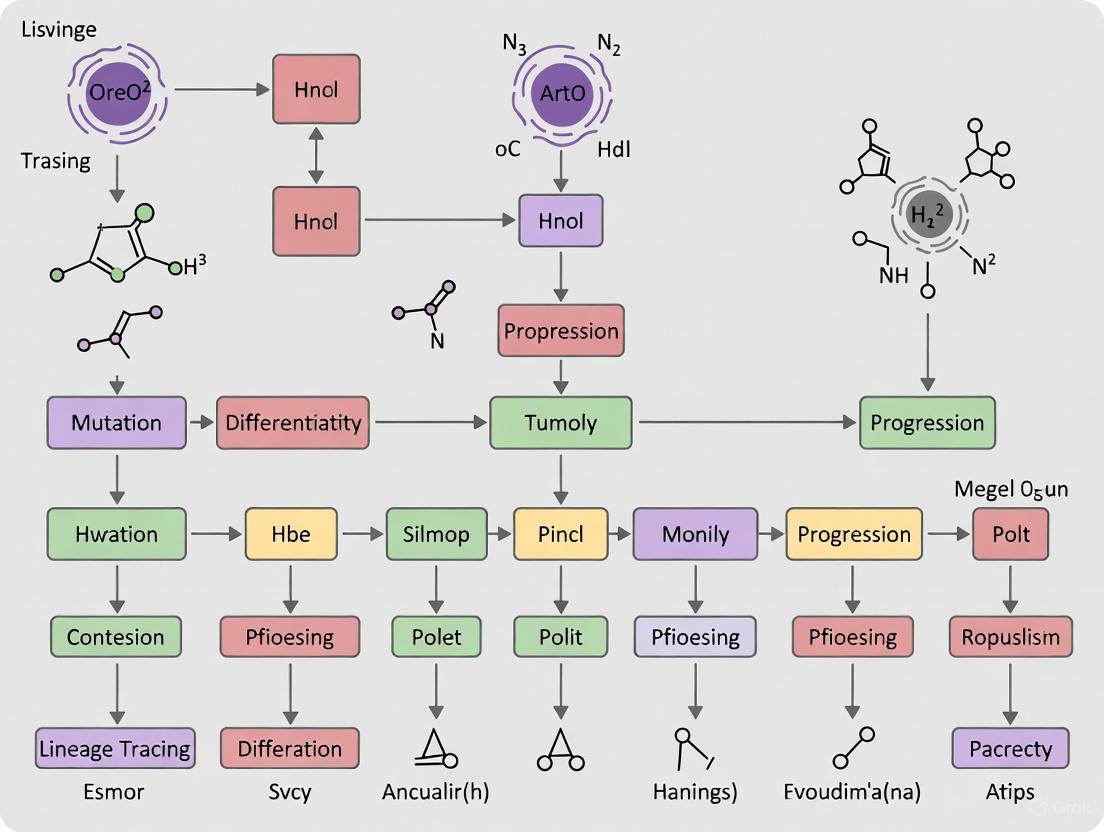
This article explores the transformative integration of single-cell technologies and lineage tracing in deciphering the complex evolutionary history of tumors.
Decoding Cancer's Blueprint: How Single-Cell Lineage Tracing Reveals Tumor Evolution
Abstract
This article explores the transformative integration of single-cell technologies and lineage tracing in deciphering the complex evolutionary history of tumors. It provides a comprehensive overview for researchers and drug development professionals, covering foundational concepts of intra-tumoral heterogeneity and punctuated evolution. The review details cutting-edge methodological approaches, including CRISPR-based barcoding and multi-omic assays, and their applications in tracking clonal dynamics, identifying therapy-resistant subpopulations, and mapping metastasis. It further addresses critical challenges in data analysis and experimental optimization, while evaluating validation frameworks and comparative analyses across cancer types. By synthesizing foundational knowledge with current applications and future directions, this resource aims to guide the use of lineage tracing in advancing personalized cancer medicine and therapeutic targeting.
The Evolutionary Engine of Cancer: Unraveling Intra-Tumor Heterogeneity and Clonal Dynamics
Intra-tumor heterogeneity (ITH) represents a fundamental characteristic of malignant tumors, describing the coexistence of multiple genetically distinct subclones within an individual patient's cancer [1]. This heterogeneity arises from continuous genomic evolution and provides the substrate for therapeutic resistance and disease relapse [2]. The pervasive nature of ITH is underscored by pan-cancer genomic analyses revealing that approximately 95.1% of tumors exhibit evidence of distinct subclonal expansions, with frequent branching evolutionary relationships between these subclones [3]. This complex architecture enables cancers to adapt under selective pressures, particularly from targeted therapies and chemotherapy.
The clinical implications of ITH are profound, affecting risk stratification, therapeutic decision-making, and patient outcomes. ITH provides the genetic variation that drives cancer progression and emergence of drug resistance, making it a critical frontier in oncology research [3]. Understanding ITH's dynamics, drivers, and organizational principles is therefore essential for developing more effective cancer management strategies. The integration of advanced technologies—including single-cell sequencing, radiomics, and computational modeling—has dramatically enhanced our ability to characterize ITH and its role in tumor evolution.
Molecular Foundations of ITH
Genetic Diversity and Clonal Architecture
The genetic basis of ITH stems from the acquisition of somatic mutations during tumor evolution. Driver mutations confer fitness advantages to their host cells, leading to clonal expansions, while late clonal expansions, spatial segregation, and incomplete selective sweeps result in genetically distinct cellular populations [3]. The resulting clonal architecture consists of clonal mutations (shared by all cancer cells) and subclonal mutations (present only in a subset) [3].
Pan-cancer analyses of whole-genome sequences from 2,658 samples across 38 cancer types have quantified the extensive nature of this heterogeneity, revealing positive selection of subclonal driver mutations across most cancer types [3]. These analyses demonstrate cancer type-specific patterns of subclonal driver gene mutations, fusions, structural variants, and copy number alterations, along with dynamic changes in mutational processes between subclonal expansions.
Table 1: Pan-Cancer Analysis of Intra-Tumor Heterogeneity (Based on 2,658 Tumor Samples)
| Characteristic | Finding | Clinical Significance |
|---|---|---|
| Prevalence of subclonal expansions | 95.1% of informative samples | Demonstrates near-universality of ITH across cancer types |
| Evolutionary patterns | Frequent branching phylogenies | Indicates parallel evolution of resistant subclones |
| Driver mutations | Positive selection in subclones across most cancer types | Provides substrate for therapeutic resistance |
| Genomic alteration types | Subclonal SNVs, indels, SVs, and CNAs | Multiple mechanisms contribute to heterogeneity |
| Temporal dynamics | Changes in mutational processes between subclonal expansions | Environmental adaptations during tumor evolution |
Lineage Tracing Technologies for Resolving ITH
Lineage tracing encompasses experimental approaches aimed at establishing hierarchical relationships between cells, with modern implementations combining advanced microscopy, sequencing technologies, and multiple biological models [4]. These techniques are essential for investigating cellular origins, proliferation, differentiation, and clonal expansion in contexts ranging from embryonic development to cancer progression.
Genetic Lineage Tracing Systems
Site-specific recombinase (SSR) systems, particularly Cre-loxP, form the cornerstone of imaging-based lineage tracing research. These systems enable precise manipulation of gene expression with temporal and cell-type specificity [4]. In lineage tracing applications, Cre recombinase typically excises a STOP codon between loxP sites, activating a fluorescent reporter gene. The development of multicolour reporter cassettes like "Brainbow" and "Confetti" represented a major advance, enabling simultaneous tracking of multiple lineages through stochastic expression of different fluorescent proteins [4].
More sophisticated dual recombinase systems (e.g., Cre-loxP combined with Dre-rox) offer enhanced precision for dissecting complex cellular relationships [4]. These systems have been applied to investigate the origin of regenerative cells in remodelled bone and to distinguish contributions of multiple epithelial cell populations during tissue repair [4].
Single-Cell Resolution of Clonal Architecture
Bulk sequencing approaches provide a broad view of tumoral complexity but cannot resolve rare subclones that may drive chemotherapy resistance. Single-cell DNA sequencing (scDNA-seq) addresses this limitation by enabling direct observation of ITH and clonal evolutionary trajectories [1]. In Core-Binding Factor Acute Myeloid Leukemia (CBF AML), scDNA-seq has revealed that fusion genes (RUNX1::RUNX1T1 or CBFB::MYH11) represent among the earliest events in leukemogenesis, with subsequent acquisition of additional mutations leading to clonal diversification [1].
Table 2: Single-Cell DNA Sequencing Analysis of CBF AML Clonal Architecture
| Parameter | Finding | Implication |
|---|---|---|
| Number of AML clones per patient | 3-11 (mean 5.6) | Substantial heterogeneity even within defined AML subtypes |
| Timing of fusion gene acquisition | Early event in leukemogenesis | Foundational driver event |
| Cells with pre-fusion mutations | Rare population (14-39 cells) | Suggests potential pre-leukemic clones |
| Mutation burden in fusion-positive vs fusion-negative cells | Higher in fusion-positive cells | Fusion gene enables genomic instability |
| Detection of residual tumor cells in complete remission | 0.16%-1.54% of cells | Explains disease recurrence |
Methodological Approaches for ITH Quantification
Genomic and Single-Cell Methods
Comprehensive ITH characterization requires integrated approaches that combine bulk and single-cell analyses. A robust consensus strategy for variant calling, copy number analysis, and subclonal reconstruction has been developed through the Pan-Cancer Analysis of Whole Genomes (PCAWG) initiative, integrating multiple algorithms to maximize sensitivity and specificity [3]. This approach accounts for detection biases introduced by somatic variant calling, particularly the reduced power to detect mutations in low CCF subclones.
For single-cell analysis, a 2-step approach for assigning copy-number profiles to inferred tumor phylogenies enables identification of subclonal somatic copy-number alterations (SCNAs) that may be missed using conventional methods [1]. This method involves:
- Targeted scDNA-seq using custom panels covering patient-specific somatic variants, SCNAs, and fusion genes
- Phylogenetic inference using reference and alternative allele counts without incorporating genotype or zygosity information to account for technical variability
- SCNA integration into phylogenetic trees to resolve mutation order and evolutionary trajectories
The experimental workflow for scDNA-seq lineage tracing typically includes: (1) sample collection at multiple time points (diagnosis, complete remission, relapse); (2) bulk whole exome and targeted sequencing to identify patient-specific variants; (3) custom panel design covering these variants; (4) single-cell sequencing with appropriate quality controls; (5) phylogenetic tree construction; and (6) assignment of cells to clones across time points to reconstruct evolutionary histories [1].
Single-Cell ITH Analysis Workflow
Imaging-Based Quantification of ITH
Radiomic approaches provide non-invasive methods for quantifying ITH through medical imaging. These techniques extract high-dimensional features from radiographic images to characterize tumor phenotype and heterogeneity [5]. Recent advances fuse deep learning with radiomics to create multimodal predictive models.
In lung adenocarcinoma, CT-based ITH quantification involves unsupervised clustering of 2D tumor subregions to generate an "ITHscore" that serves as an imaging biomarker for predicting lymph node metastasis [5]. The methodological workflow includes:
- Image preprocessing: B-spline interpolation for voxel resampling, intensity standardization, and multi-slice selection
- Tumor segmentation: Semi-automatic delineation of region of interest (ROI)
- Subregion analysis: Simple linear iterative clustering (SLIC) to partition tumor into biologically distinct habitats
- Feature extraction: 2D radiomic feature extraction from subregions using PyRadiomics
- Clustering: Gaussian Mixture Models (GMM) to cluster subregions with Bayesian Information Criterion (BIC) determining optimal cluster number
- Model integration: Fusion of ITHscore with deep learning features and radiomics scores for predictive modeling
Similarly, MRI-based habitat imaging has been applied to intrahepatic mass-forming cholangiocarcinoma (IMCC), using K-means clustering on DWI and T2WI images to partition tumors into subregions with distinct biological characteristics [6]. The spatial distribution of these habitats is quantified through volume proportions and heterogeneity indices that predict pathological grading.
Imaging-Based ITH Quantification Pipeline
ITH as a Driver of Therapy Resistance and Progression
Clonal Evolution Under Therapeutic Pressure
ITH provides the substrate for Darwinian selection under cancer therapies, enabling expansion of resistant subclones that ultimately lead to treatment failure. Single-cell analyses of CBF AML patients reveal distinct patterns of clonal evolution during chemotherapy, including (1) extinction of sensitive subclones, (2) persistence of founding clones, (3) acquisition of new mutations at relapse, and (4) selection of pre-existing minor subclones [1].
The detection of residual tumor cells in complete remission samples (0.16%-1.54% of cells) across all analyzed patients underscores the limitation of current therapies to fully eradicate malignant populations [1]. These persistent cells typically harbor early driver events and serve as reservoirs for disease recurrence, highlighting the critical need for therapies targeting founding clones rather than later subclonal alterations.
Hidden Heterogeneity and Clinical Implications
Mathematical modeling of tumor progression reveals that conventional sampling underestimates ITH, with complex trade-offs between cancer cell alteration and proliferation rates defining transitions between low and high heterogeneity states [7]. This "hidden" ITH represents a particular challenge for clinical management, as population frequencies of observed clones may not always correlate with the extent of undetected heterogeneity [7].
The clinical ramifications of ITH extend to therapeutic resistance across cancer types. Cancers constantly evolve mechanisms to resist treatment through clonal evolution, leading to adaptation and recurrence after seemingly successful elimination [8]. This understanding has prompted a shift toward combination therapeutic approaches that target multiple pathways simultaneously and frequent reassessment of tumor landscapes throughout treatment using liquid biopsies and repeated tissue sampling [2].
Research Reagent Solutions for ITH Investigation
Table 3: Essential Research Reagents for Lineage Tracing and ITH Analysis
| Reagent/Category | Function | Example Applications |
|---|---|---|
| Cre-loxP System | Site-specific recombination for lineage labeling | Clonal analysis, cell fate mapping |
| Dual Recombinase Systems (Cre/Dre) | Enhanced specificity for complex lineage relationships | Distinguishing contributions of multiple cell populations |
| Multicolor Reporters (Brainbow, Confetti) | Stochastic labeling for simultaneous tracking of multiple clones | Intravital imaging of clonal dynamics, competition |
| Nucleoside Analogues (BrdU, EdU) | Labeling of proliferating cell populations | Identification of rapidly dividing vs. slow-cycling clones |
| scDNA-seq Platforms | Single-cell resolution of genomic alterations | Phylogenetic reconstruction, rare subclone detection |
| PyRadiomics | Extraction of radiomic features from medical images | CT/MRI-based heterogeneity quantification |
| Barcoded Libraries | Cellular barcoding for lineage reconstruction | High-throughput lineage tracing at single-cell level |
Intra-tumor heterogeneity represents both a fundamental biological characteristic of cancer and a significant clinical challenge. The integration of single-cell technologies, imaging-based quantification, and computational modeling has dramatically enhanced our understanding of ITH's role in tumor evolution and therapy resistance. Future advances will require even more sophisticated approaches to characterize and target the complex clonal architectures that drive treatment failure and disease progression.
The emerging paradigm of targeting early evolutionary events and developing combination therapies that address multiple coexisting subclones simultaneously holds promise for overcoming the challenges posed by ITH. As spatial biology technologies and computational modeling approaches continue to advance, they will provide new insights into cancer evolution dynamics and enable more effective interception of resistance mechanisms. Ultimately, decoding the complex language of ITH will be essential for achieving durable therapeutic responses and improving outcomes for cancer patients.
The study of tumor evolution has undergone a profound transformation, moving from simplistic linear models to complex frameworks that account for extensive intratumor heterogeneity (ITH) and dynamic evolutionary processes. Tumor evolution begins when a single cell in the normal tissue transforms and expands to form a tumor mass, during which clonal lineages diverge and form distinct subpopulations, resulting in ITH [9] [10]. This heterogeneity has long been observed by pathologists, but the advent of next-generation sequencing (NGS) technologies around 2005 led to a paradigm shift away from qualitative studies based on single markers and toward large-scale quantitative ITH datasets [9]. The central challenge in studying tumor evolution has been the difficulty in collecting longitudinal samples from cancer patients, forcing researchers to infer evolutionary history from single time-point samples [10]. These approaches have revealed that tumor evolution follows several competing models: linear evolution (LE), branching evolution (BE), neutral evolution (NE), and punctuated evolution (PE), each with distinct implications for cancer diagnosis and therapeutic treatment [9] [10].
The integration of lineage tracing technologies with single-cell analysis has fundamentally reshaped our understanding of how tumors progress and adapt. This technical guide examines the redefinition of tumor evolutionary models within the context of modern single-cell research, providing researchers and drug development professionals with the conceptual frameworks and methodological tools necessary to navigate this rapidly advancing field.
Methodological Foundations: Resolving Intratumor Heterogeneity
Genomic Technologies for Delineating Tumor Heterogeneity
Next-generation sequencing methods can measure thousands of mutations and generate large-scale genomic datasets on tumors, but standard NGS requires bulk tissue and provides limited information on subclonal architecture [9]. To address this limitation, several specialized methods have been developed for resolving ITH:
Deep Sequencing: This approach involves performing NGS at high coverage depth to measure mutant allele frequencies (MAFs) [9]. Computational methods such as SciClone or Pyclone then normalize and cluster these frequencies to identify clonal subpopulations assumed to share similar MAFs [9]. While experimentally simple, this method cannot accurately resolve clonal subpopulations when they share similar MAFs in the tumor.
Multi-region Sequencing: This method involves sampling different geographical regions of the tumor for exome sequencing [9]. Although experimentally straightforward, it has limited ability to resolve subclones that are intermixed within the same spatial regions [9].
Single-cell DNA Sequencing: This approach involves isolating single tumor cells, performing whole genome amplification (WGA), then sequencing and comparing multiple cells to resolve ITH and reconstruct clonal lineages [9]. The advantage is that it can fully resolve admixtures of clones, though cost and throughput limitations may lead to sampling bias [9].
Phylogenetic Reconstruction from Heterogeneity Data
After resolving ITH, researchers can reconstruct clonal lineages using phylogenetic inference to understand tumor evolution [9]. In phylogenetic tumor trees, internal nodes represent common ancestors whose genotypes can be deduced from commonalities between their descendants. These trees provide a window into the past by estimating the order in which mutations occurred as clones diverged into lineages and formed subpopulations [9]. Phylogenetic trees can be constructed from ITH using different algorithms, with taxons representing clones, single cells, or spatial regions depending on the experimental method used [9]. These methods enable tumor evolution to be reconstructed from single time-point samples, though they rely on the infinite sites assumption which is often violated in tumors where chromosome deletions and LOH are common [9].
Table 1: Key Methodological Approaches for Studying Tumor Evolution
| Method | Key Features | Advantages | Limitations |
|---|---|---|---|
| Deep Sequencing | High-coverage NGS; MAF clustering | Experimentally simple; Identifies clonal subpopulations | Limited resolution when clones share similar MAFs |
| Multi-region Sequencing | Geographical tumor sampling; Exome sequencing | Spatially resolved data; Straightforward implementation | Limited resolution for intermixed subclones |
| Single-cell DNA Sequencing | Single-cell isolation; WGA; Comparative analysis | Fully resolves clonal admixtures; High-resolution data | Cost and throughput limitations; Potential sampling bias |
Evolutionary Models: From Linearity to Complexity
Linear Evolution Model
The linear evolution model posits that mutations are acquired linearly in a step-wise process leading to more malignant stages of cancer [9] [10]. In this model, new driver mutations provide such a strong selective advantage that they outcompete all previous clones via selective sweeps during tumor evolution [9]. The model suggests selective sweeps occur after driver mutations are acquired, resulting in dominant clones when ITH is profiled at various stages of tumor growth [9]. The resulting phylogenetic tree shows a major dominant clone with only rare persistent intermediates from previous selective sweeps [9].
Experimental evidence for LE originally came from profiling X-inactivation in tumors using histological staining, methylation analysis, or PCR genotyping of glucose-6-phosphate dehydrogenase [9]. These studies showed that unlike most somatic tissues with random X-inactivation, human tumors often showed only a single clonal X-allele inactivated throughout the tumor mass, suggesting clonal growth due to selection of dominant clones [9]. The Fearon & Vogelstein model of colorectal cancer progression through a linear series of step-wise mutations further supported this concept [9]. However, most data supporting LE stems from single-gene studies that did not measure genome-wide markers and may have missed heterogeneous mutations defining different clones, and there is limited experimental evidence supporting LE in most advanced human cancers [9].
Branching Evolution Model
Branching evolution represents a model where clones diverge from a common ancestor and evolve in parallel within the tumor mass, resulting in multiple clonal lineages [9]. In contrast to LE, selective sweeps are uncommon in BE, and multiple clones expand simultaneously because they all have increased fitness [9]. In this model, the amount of ITH fluctuates during tumor progression, but multiple clones are expected to be present at the time of clinical sampling [9]. The phylogenetic trees resulting from BE are expected to show multiple distinct lineages with no dominant clone, and the majority of mutations in the tumor will be subclonal rather than truncal [9].
Neutral Evolution Model
Neutral evolution represents an extreme case of branching evolution that hypothesizes no selection or fitness changes during most of the tumor's lifetime [9]. This model assumes that random mutations accumulate over time, leading to genetic drift and extensive ITH [9]. NE posits that ITH is a byproduct of tumor progression with no functional significance in driving tumor growth [9]. The lineage tree resulting from NE consists of many intermixed clones with similar fitness, none of which has a substantial growth advantage [9]. Support for NE comes from the observation that up to one-third of tumors show a constant population size over time with extensive ITH, consistent with genetic drift rather than selection [9].
Punctuated Evolution Model
In contrast to the gradual accumulation of mutations assumed in other models, punctuated evolution suggests that a large number of genomic aberrations may occur in short bursts of time at the earliest stages of tumor progression [10]. In this model, ITH is very high at the earliest stages of tumor initiation, after which one or a few dominant clones stably expand to form the tumor mass [10]. The resulting phylogenetic trees show a dominant clone with long branches and many private mutations, but unlike LE, these branches emerge early rather than progressively [10]. Support for PE comes from studies of chromothripsis and copy number alterations, where single catastrophic events can generate massive genomic rearrangements in one cell cycle [10].
Table 2: Comparative Analysis of Tumor Evolution Models
| Evolution Model | Key Mechanism | ITH Pattern | Phylogenetic Structure | Clinical Implications |
|---|---|---|---|---|
| Linear Evolution | Sequential selective sweeps | Limited heterogeneity at sampling | Straight-line progression with few branches | Single biopsy may be representative; Targeted therapies potentially effective |
| Branching Evolution | Parallel clone expansion | Extensive, persistent heterogeneity | Multiple distinct lineages | Multi-region sampling needed; Combination therapies required |
| Neutral Evolution | Genetic drift without selection | Extensive, functionally neutral heterogeneity | Many intermixed clones with similar fitness | Sampling less critical; Focus on tumor-wide vulnerabilities |
| Punctuated Evolution | Early catastrophic events | High early heterogeneity, then stabilization | Star-like with long branches early | Early intervention critical; Single biopsy may suffice for late-stage tumors |
The Single-Cell Revolution: Lineage Tracing and Cellular Plasticity
Advanced Lineage Tracing Systems
Modern lineage tracing approaches have transformed our ability to track tumor evolution with unprecedented resolution. These systems involve inserting genetic barcodes into the genome of cells to trace their progeny, enabling researchers to investigate clonality in metastases, survival upon cytotoxic treatment, and the clonal origin of primary tumors and metastases [11]. In one innovative approach, researchers combined single-cell multi-omics with lineage tracing in a unique framework that allows simultaneous clonal, gene expression, and chromatin accessibility profiling at single-cell resolution [11]. This method involved infecting 100,000 SUM159PT triple-negative breast cancer cells with a lentiviral pool at a multiplicity of infection of 0.1 to obtain approximately 10,000 distinct genetic barcodes, then FAC-sorting to retain only the transduced fraction [11].
A particularly sophisticated evolving lineage-tracing system with a single-cell RNA-seq readout was introduced into a mouse model of Kras;Trp53(KP)-driven lung adenocarcinoma, enabling researchers to track tumor evolution from single transformed cells to metastatic tumors at unprecedented resolution [12]. This approach revealed that the loss of the initial, stable alveolar-type2-like state was accompanied by a transient increase in plasticity, followed by the adoption of distinct transcriptional programs that enable rapid expansion and, ultimately, clonal sweep of stable subclones capable of metastasizing [12]. The study further found that tumors develop through stereotypical evolutionary trajectories, and perturbing additional tumor suppressors accelerates progression by creating novel trajectories [12].
Quantifying Phenotypic Plasticity
Mathematical modeling approaches have been developed to quantitatively analyze phenotypic plasticity during tumor evolution based on single-cell data [13] [14]. These frameworks investigate the role of cellular plasticity and heterogeneity in tumor progression using reaction-convection-diffusion models that capture the spatiotemporal dynamics of tumor cells and macrophages within the tumor microenvironment [14]. One notable approach introduces pulse wave speed as a quantitative measure to precisely gauge the rate of cell phenotype transitions and implements the high-plasticity cell state/low-plasticity cell state ratio as an indicator of tumor malignancy [14].
These models demonstrate that an increased rate of phenotype transition is associated with heightened malignancy, attributable to the tumor's ability to explore a wider phenotypic space [14]. The studies investigate how proliferation rate, death rate of tumor cells, phenotypic convection velocity, and the midpoint of the phenotype transition stage affect the speed of tumor cell phenotype transitions and progression to adenocarcinoma [14]. Bifurcation analysis reveals the complex dynamics of tumor cell populations, providing insights that can guide the development of targeted therapeutic strategies to regulate cellular plasticity and control tumor progression [14].
Experimental Protocols: Key Methodologies for Tumor Evolution Research
Single-Cell Multi-omic Lineage Tracing Protocol
Objective: To simultaneously capture clonal relationships, gene expression profiles, and chromatin accessibility from individual cells within a heterogeneous tumor population.
Materials and Reagents:
- SUM159PT triple-negative breast cancer cell line or other appropriate cancer model
- Lentiviral barcode library (complexity >10,000)
- Polybrene or similar transduction enhancer
- Fluorescence-activated cell sorter (FACS) with appropriate detection capabilities
- 10X Genomics Chromium Controller and Single Cell Multiome ATAC + Gene Expression kit
- Appropriate tissue culture reagents and equipment
- Next-generation sequencing platform (Illumina recommended)
Procedure:
- Cell Preparation: Culture approximately 100,000 target cells in appropriate medium to 70-80% confluence.
- Viral Transduction: Incubate cells with lentiviral barcode library at MOI=0.1 in the presence of polybrene (4-8 μg/mL) for 24 hours.
- Selection and Expansion: Replace medium with fresh culture medium and allow cells to recover for 48 hours. Use FACS to isolate successfully transduced cells based on appropriate markers.
- Sample Collection: Harvest cells at multiple time points (e.g., T0, T1 separated by 13-15 days) to assess temporal dynamics.
- Single-Cell Processing: Prepare single-cell suspensions according to 10X Genomics Multiome protocol recommendations, targeting 10,000 cells per sample.
- Library Preparation and Sequencing: Follow manufacturer's instructions for simultaneous ATAC and GEX library preparation. Sequence on Illumina platform with recommended read depth (typically 50,000 reads per cell for gene expression).
- Computational Analysis:
- Extract genetic barcodes and assign cells to clones
- Perform integrative analysis of gene expression and chromatin accessibility
- Construct phylogenetic trees using appropriate algorithms (e.g., SCITE, PhISCS)
- Identify transcriptional states and their epigenetic correlates
Troubleshooting Notes: Optimal viral titer should be determined empirically for each cell line. Ensure single-cell suspensions have >80% viability before loading on Chromium chip. Adjust PCR cycle numbers based on cell input to avoid over-amplification.
Mathematical Modeling of Phenotypic Plasticity
Objective: To quantify cellular plasticity and its impact on tumor progression using reaction-convection-diffusion modeling approaches.
Computational Requirements:
- MATLAB, R, or Python with appropriate numerical computing packages
- Single-cell RNA-seq dataset with temporal sampling
- High-performance computing resources for parameter estimation
Implementation Steps:
- Data Preprocessing: Normalize single-cell expression data using standard methods (SCTransform recommended). Calculate module scores for plasticity-associated gene sets.
- Model Formulation: Implement reaction-convection-diffusion partial differential equations to describe spatiotemporal dynamics of tumor cells and macrophages:
- Reaction terms: proliferation and death rates
- Convection terms: phenotypic transition velocities
- Diffusion terms: random phenotypic transitions
- Parameter Estimation: Use particle swarm optimization or similar algorithms to fit model parameters to experimental data.
- Wave Speed Calculation: Apply linear stability analysis to homogeneous steady states to estimate pulse wave speed of phenotype transitions.
- Bifurcation Analysis: Investigate how system behavior changes with variations in key parameters (proliferation rate, death rate, phenotypic convection velocity).
- Plasticity Metric Development: Calculate high-plasticity cell state/low-plasticity cell state ratio as indicator of tumor malignancy.
Validation: Compare model predictions with experimental observations from lineage tracing studies. Test sensitivity to parameter variations and initial conditions.
Table 3: Essential Research Reagent Solutions for Tumor Evolution Studies
| Reagent/Category | Specific Examples | Function in Research | Key Considerations |
|---|---|---|---|
| Lineage Tracing Systems | Lentiviral barcode libraries; CRISPR-based recorders | Permanent marking of cell lineages for clonal tracking | Barcode diversity (>10,000); Minimal physiological impact; Heritability through divisions |
| Single-Cell Multi-ome Kits | 10X Genomics Multiome ATAC + GEX; Parse Biosciences kits | Simultaneous profiling of transcriptome and epigenome | Cell throughput; Data quality; Compatibility with fixation protocols |
| Cell Line Models | SUM159PT (TNBC); KP mouse lung adenocarcinoma | Controlled experimental systems with defined genetics | Relevance to human disease; Genetic tractability; Phenotypic heterogeneity |
| Bioinformatic Tools | SciClone; Pyclone; SCITE; Monocle3 | Computational analysis of heterogeneity and lineage relationships | Scalability to large datasets; Integration of multiple data types; User accessibility |
Clinical Implications and Therapeutic Perspectives
The different models of tumor evolution have distinct implications for cancer diagnosis, prognosis, and therapeutic intervention. From a diagnostic standpoint, linear and punctuated evolution models imply limited ITH at the time of clinical sampling, which simplifies diagnostic assays because single biopsy samples are representative of the tumor as a whole [10]. In contrast, both branching and neutral evolution suggest that ITH is extensive and would require multi-sampling approaches from different spatial regions to detect all clinically relevant mutations [10]. From a therapeutic perspective, LE suggests that targeted therapies against truncal mutations should be effective across the entire tumor population, while BE and NE indicate that combination therapies targeting multiple clones simultaneously will be necessary to achieve durable responses [10].
The recognition that tumors can exhibit phenotypic plasticity and transition between evolutionary states has profound implications for therapeutic resistance. Studies have revealed that the drug-tolerant niche is largely pre-encoded but only partially overlaps with the tumor-initiating niche and evolves following genetically and transcriptionally distinct trajectories [11]. This understanding highlights the importance of targeting cellular plasticity mechanisms themselves, rather than solely focusing on genetic alterations. Mathematical models suggest that an increased rate of phenotype transition is associated with heightened malignancy, attributable to the tumor's ability to explore a wider phenotypic space [14]. These insights point to therapeutic strategies aimed at restricting phenotypic exploration or targeting vulnerable states within plasticity networks.
The field of tumor evolution has progressed from simplistic linear models to sophisticated frameworks that account for complex branching patterns, neutral processes, and punctuated bursts of genomic change. The integration of single-cell technologies with lineage tracing has been instrumental in this paradigm shift, revealing the hierarchical nature of tumor evolution and the critical role of cellular plasticity in driving progression and therapeutic resistance [12]. Current evidence supports a branching evolution model for point mutations and a punctuated evolution model for copy number alterations, with models potentially undergoing transitions during tumor progression or operating concurrently for different classes of mutations [10].
Future research directions will likely focus on further elucidating the molecular mechanisms underlying transitions between evolutionary modes, developing more sophisticated computational models that integrate genetic, epigenetic, and microenvironmental factors, and translating these insights into clinically actionable strategies. The continued refinement of single-cell multi-omic technologies will enable even more comprehensive tracing of tumor evolutionary trajectories, while advances in spatial profiling will add crucial contextual information about microenvironmental influences. As these technical capabilities advance, so too will our ability to predict, intercept, and ultimately control the evolutionary processes that drive cancer progression and therapeutic resistance.
For decades, the prevailing paradigm in evolutionary biology, including cancer evolution, has been the genes-first model. This framework posits that a new gene mutation must appear first to generate a novel, advantageous trait, which then spreads through a population under selection pressure [15]. This implies that DNA-level events are the principal drivers of heterogeneity and that a given genotype maps to a unique phenotype. However, propelled by recent advances in single-cell technologies, an alternative or complementary perspective is gaining traction: the phenotypes-first pathway [15]. In this framework, genetically identical cells can fluctuate between different, non-heritable cell states, creating a transcriptional continuum of phenotypes [15]. This phenotypic diversity, driven by cell-intrinsic plasticity and microenvironmental cues, can be co-opted by cancer cells to survive antineoplastic treatments, establishing resistance independently of new genetic alterations [15]. This whitepaper dissects this critical distinction within the context of tumor evolution and single-cell research, underscoring its profound implications for understanding drug resistance and designing novel therapeutic strategies.
Core Concepts: Two Pathways to Adaptation
The Genes-First Pathway
The genes-first pathway is a cornerstone of classical evolutionary theory. Adaptation is initiated by the acquisition of a heritable genetic mutation—such as a single nucleotide variant, insertion, deletion, or copy number alteration—that confers a selective advantage in a new environment (e.g., during drug treatment). The mutant clone then expands through Darwinian selection [15].
- Key Driver: Somatic genetic alterations.
- Heritability: High, as the trait is stably encoded in the DNA sequence and passed to daughter cells.
- Temporal Dynamics: Often slower, dependent on mutation rates and clonal expansion.
The Phenotypes-First Pathway
The phenotypes-first pathway challenges the genocentric view. Here, adaptation begins with a non-genetic alteration in cell state. Phenotypic heterogeneity exists within a clonal population due to epigenetic reprogramming, metabolic fluctuations, and other regulatory mechanisms. This diversity allows for the rapid selection of pre-existing or induced drug-tolerant states without any genetic change [15] [16].
- Key Driver: Cell-intrinsic plasticity and non-genetic heterogeneity.
- Heritability: Can be transient and non-heritable, or stabilized over time by subsequent epigenetic or genetic changes.
- Temporal Dynamics: Often rapid, enabling swift adaptation to environmental stress.
A Comparative Framework
The table below summarizes the core distinctions between these two evolutionary pathways.
Table 1: Comparative Framework of Genes-First and Phenotypes-First Pathways
| Feature | Genes-First Pathway | Phenotypes-First Pathway |
|---|---|---|
| Initial Event | New gene mutation | Phenotypic fluctuation in a transcriptional continuum |
| Primary Driver | Genetic alterations (e.g., point mutations) | Phenotypic plasticity & non-genetic adaptation |
| Heritability | Stable, genetic | Often non-heritable or epigenetically stabilized |
| Temporal Dynamics | Slower (mutation rate-dependent) | Rapid and dynamic |
| Role in Drug Resistance | Well-established (e.g., kinase domain mutations) | Increasingly recognized as a crucial promoter |
| Example in Hematologic Malignancies | BTK C481S mutation in CLL [15] |
Epigenetic reprogramming enabling resistance to kinase inhibitors [15] |
Quantitative Measurement of Phenotype Dynamics
Studying phenotype dynamics requires sophisticated lineage tracing and mathematical modeling to infer the behaviors of resistant phenotypes without direct measurement. One established framework uses genetic barcoding to track cell relatedness [16].
Mathematical Models of Resistance Evolution
Quantitative models have been developed to describe distinct phenotypic behaviors during resistance evolution. The following table outlines three models of increasing complexity [16].
Table 2: Mathematical Models for Inferring Phenotype Dynamics
| Model Name | Key Components | Phenotypic Behaviors Described |
|---|---|---|
| Model A: Unidirectional Transitions | Sensitive (S) and Resistant (R) phenotypes; pre-existing resistance fraction (ρ); switching parameter (μ); fitness cost (δ). | Pre-existing resistance; acquisition of resistance via low-rate (genetic) or high-rate (non-genetic) switching. |
| Model B: Bidirectional Transitions | Adds a transition probability (σ) for resistant cells to revert to sensitive. | Reversible, rapid, non-genetic transitions between phenotypes (phenotypic plasticity). |
| Model C: Escape Transitions | Adds an "Escape" phenotype that is fully resistant and lacks fitness cost; transitions from R to Escape are drug-induced (α). | Drug-dependent emergence of a fit, resistant phenotype from a slow-cycling, drug-tolerant state. |
Experimental Validation with Genetic Barcoding
In an experimental evolution of barcoded colorectal cancer cells (SW620 and HCT116) treated with 5-Fu chemotherapy, these models inferred distinct evolutionary routes [16]:
- SW620 Cells: Best fit by Model A, indicating a stable, pre-existing resistant subpopulation was responsible for relapse.
- HCT116 Cells: Best fit by Model C, where resistance emerged through phenotypic switching into a slow-growing resistant state, followed by stochastic progression to a fit, fully resistant "escape" phenotype [16].
Functional validation using single-cell RNA-seq (scRNA-seq) and single-cell DNA-seq (scDNA-seq) confirmed these inferred dynamics, demonstrating the power of combining lineage tracing with mathematical modeling [16].
The Scientist's Toolkit: Key Reagents and Methodologies
Research Reagent Solutions
Table 3: Essential Reagents and Tools for Single-Cell Tumor Evolution Research
| Item | Function/Application |
|---|---|
| Lentiviral Genetic Barcodes | Unique, heritable genetic tags for lineage tracing at single-cell resolution [16]. |
| Single-Cell RNA-Seq Kits | Profiling the full transcriptome of individual cells to map phenotypic states. Common protocols include SMART-Seq2/3 (full-length) and 10x Chromium (3'-biased) [17]. |
| Single-Cell DNA-Seq Kits | Assessing genomic heterogeneity (e.g., CNVs, SNVs) within tumor populations. Methods include Multiple Displacement Amplification and Ampli1 [17]. |
| Viability & Cell Death Assays | Functional validation of drug response and resistance phenotypes (e.g., in BH3 mimetic studies) [15]. |
| scATAC-Seq Kits | Interrogating chromatin accessibility at the single-cell level to link phenotypic plasticity with epigenetic regulation [17]. |
Detailed Experimental Protocol: Lineage Tracing with Phenotypic Inference
The following workflow is adapted from studies quantifying phenotype dynamics during cancer drug resistance evolution [16]:
- Library Generation & Barcoding: Create a complex library of lentiviral vectors, each containing a unique DNA barcode sequence. Infect a population of cancer cells (e.g., HCT116, SW620) at a low Multiplicity of Infection (MOI) to ensure most cells receive a single, unique barcode.
- Expansion & Replication: Expand the barcoded population and split it into multiple replicate sub-populations to be evolved in parallel under identical conditions.
- Drug Treatment Cycles: Subject the replicate populations to periodic cycles of drug treatment (e.g., chemotherapy like 5-Fu). Include passages of untreated growth to assess fitness costs.
- Longitudinal Sampling: At defined time points (e.g., after each treatment cycle), harvest a sample of cells from each replicate for:
- Genomic DNA Extraction: To sequence the barcodes and track the abundance of each lineage over time.
- Cell Counting: To measure total population size dynamics.
- Barcode Sequencing & Analysis: Use high-throughput sequencing to quantify barcode abundances across all samples. Calculate the richness and evenness of lineages.
- Mathematical Model Fitting: Fit the mathematical models (see Table 2) to the longitudinal barcode and population size data using computational frameworks. Use model selection criteria (e.g., AIC) to identify the best-fitting model for each cell line.
- Functional & Molecular Validation: Independently validate the model inferences using:
- scRNA-seq: To confirm the presence and transcriptional profile of inferred phenotypic states (e.g., sensitive, resistant, escape).
- Functional Drug Assays: To test the drug tolerance of isolated subpopulations.
Visualizing Evolutionary Pathways and Resistance Mechanisms
Signaling Pathways in Drug Resistance
The following diagram illustrates key signaling pathways involved in drug resistance in hematological malignancies, as described in the context of BCR-ABL1 and BTK inhibitors [15].
Signaling in Leukemia and Resistance
Phenotype Dynamics in Resistance Evolution
This diagram visualizes the three mathematical models of phenotype dynamics (A, B, and C) used to infer evolutionary routes from lineage tracing data [16].
Models of Phenotype Switching
Discussion and Future Directions
The critical distinction between genes-first and phenotypes-first pathways has moved from a theoretical concept to a tangible factor explaining clinical treatment failure. The emerging evidence suggests that the evolutionary context, such as the disease type and therapeutic agent, can bias which pathway dominates. For instance, in Chronic Myeloid Leukemia (CML), a genetically "simple" disease driven by the BCR-ABL1 oncogene, resistance frequently follows a genes-first route via kinase domain mutations [15]. In contrast, the more heterogeneous Chronic Lymphocytic Leukemia (CLL) shows a significant proportion of resistance to BTK inhibitors that cannot be explained by mutations in BTK or PLCG2 alone, implicating phenotypes-first mechanisms [15].
This paradigm shift necessitates a re-evaluation of therapeutic strategies. Combating phenotypes-first resistance requires targeting the mechanisms of cellular plasticity itself, rather than just mutant oncoproteins. Future research must focus on:
- Identifying Molecular Drivers of Plasticity: Uncovering the key epigenetic and transcriptional regulators that enable cells to traverse phenotypic states.
- Developing Plasticity-Targeting Drugs: Designing therapies that lock cancer cells in a sensitive state or block the transition to a resistant state.
- Evolutionary-Informed Therapy Scheduling: Using mathematical models to design adaptive treatment schedules that preempt the emergence of resistance by accounting for both genetic and non-genetic dynamics [16].
In conclusion, recognizing the interplay between genetic mutations and phenotypic plasticity is paramount. The future of successful cancer therapy lies in dual-targeting approaches that simultaneously inhibit the driver oncogene and constrain the phenotypic adaptability of cancer cells, thereby prolonging disease control and improving patient outcomes.
The spatial organization of a tumor is a critical determinant of its evolutionary trajectory, therapeutic response, and clinical outcome. Within the context of lineage tracing and tumor evolution, single-cell research has revealed that tumors are not mere aggregates of malignant cells but complex ecosystems comprising distinct spatial domains. These domains—including tumor microregions, subclones, and the three-dimensional microenvironment—represent the physical manifestation of clonal evolution and ecosystem selection. The emergence of spatial transcriptomics and multi-omics technologies has enabled researchers to move beyond cataloging cellular diversity to understanding how this diversity is organized in space and time. This spatial architecture creates specialized niches that drive phenotypic plasticity, foster immune evasion, and ultimately shape the Darwinian selection processes that govern tumor progression. By framing tumor heterogeneity within its spatial context, we can begin to decode the organizational principles that underlie treatment resistance and metastatic competence, bridging the gap between cellular lineage history and tissue-scale organization.
Defining Spatial Structures in Tumors
Tumor Microregions and Their Characteristics
Tumor microregions are defined as spatially distinct cancer cell clusters separated by stromal components such as immune cell infiltrates, fibroblasts, or vascular structures [18]. These microregions represent the fundamental architectural units of solid tumors and vary considerably in size, cellular density, and molecular characteristics across cancer types. A comprehensive analysis of 131 tumor sections across six cancer types revealed that microregions can be systematically categorized based on their spatial dimensions and cellular composition [18].
Table 1: Classification and Characteristics of Tumor Microregions Across Cancer Types
| Microregion Category | Size Criteria | Area | Average Layers | Prevalence in Primary Tumors | Prevalence in Metastases |
|---|---|---|---|---|---|
| Small | <25 spots | <0.22 mm² | ~1.9 | 66.3% | 40.2% |
| Medium | 25-250 spots | 0.22-2.17 mm² | ~2.1-2.9 | 30.5% | 43.2% |
| Large | >250 spots | >2.17 mm² | ~3.4 | 3.2% | 16.3% |
The quantitative assessment of microregions reveals distinct patterns across cancer types. Colorectal carcinoma displays the largest microregions with an average of 2.9 layers, while breast cancer and pancreatic ductal adenocarcinoma exhibit smaller microregional structures with 2.1 and 2.37 layers respectively [18]. Pancreatic ductal adenocarcinoma demonstrates the lowest tumor fraction, attributable to its characteristically high stromal content and low tumor cell density [18]. Metastatic samples consistently exhibit larger and deeper microregions compared to primary tumors, with metastases containing significantly more medium and large microregions (43.2% and 16.3% respectively) compared to primary tumors (30.5% and 3.2%) [18].
Spatial Subclones and Genetic Architecture
Spatial subclones represent tumor cell populations within microregions that share distinct genetic alterations and cluster together in physical space [18]. These subclones emerge through branching evolutionary processes and expand within the spatial constraints of the tumor ecosystem. The identification of 35 tumor sections with clear subclonal structures from a cohort of 131 sections demonstrates that spatial segregation of genetically distinct populations is a common feature of solid tumors [18].
Advanced computational methods like Tumoroscope enable probabilistic inference of cancer clones and their spatial localization at near-single-cell resolution by integrating pathological images, whole exome sequencing, and spatial transcriptomics data [19]. This approach addresses the critical challenge of deconvoluting clone proportions within spatial transcriptomics spots, which typically capture gene expression from multiple cells [19]. Tumoroscope utilizes a binomial distribution model for mutation read counts and incorporates cell count estimates from H&E-stained images as priors to infer the proportion of each clone in every spot [19].
Table 2: Technical Framework for Spatial Subclone Identification
| Method Component | Technology/Approach | Key Function | Resolution |
|---|---|---|---|
| Tissue Imaging | H&E Staining | Identifies cancer cell-containing regions and estimates cell counts per spot | Cellular |
| Genotype Reconstruction | Bulk DNA Sequencing + FalconX/Canopy | Reconstructs cancer clones, frequencies, and genotypes from somatic mutations | Single-nucleotide |
| Spatial Transcriptomics | Visium, Slide-seq, HDST | Captures spatially barcoded gene expression data | Multi-cellular to near-single-cell |
| Probabilistic Deconvolution | Tumoroscope Algorithm | Infers clone proportions in each spot using mutation coverage and expression | Near-single-cell |
| Expression Profiling | Regression Model | Infers clone-specific gene expression levels | Clonal population |
Validation studies demonstrate that Tumoroscope achieves high accuracy in estimating clone proportions within spots, with median Mean Absolute Error between 0.02 and 0.15 depending on sequencing coverage [19]. The method shows particular robustness to noise in input cell counts, a common challenge in spatial transcriptomics analysis [19].
Methodologies for Spatial Analysis
Spatial Transcriptomics Technologies
Spatial transcriptomics technologies have emerged as powerful tools for capturing gene expression data while preserving crucial spatial context. These methods can be broadly categorized into next-generation sequencing-based and imaging-based approaches [20] [21].
Sequencing-based approaches include platforms like 10x Genomics Visium, which utilizes chips containing spatially barcoded oligo(dT) primers to capture mRNA from tissue sections overlaid on the chip [21]. The captured transcripts are then processed for sequencing, yielding unbiased spatial transcriptomic data across the entire tissue section. Slide-seq represents an advanced alternative that transfers RNA from tissue sections onto a surface covered in DNA-barcoded beads with known positions, achieving higher spatial resolution than Visium [21]. High-Definition Spatial Transcriptomics further improves resolution using microwell-based fluorescence spatial indexing beads with diameters around 2μm [21]. The most recent innovations, such as Stereo-seq, employ circular amplified DNA nanoballs containing barcode sequences dispersed onto patterned arrays, with feature sizes as small as 220nm in diameter, enabling near single-cell resolution across large tissue areas [21].
Imaging-based approaches include multiplexed error-robust fluorescence in situ hybridization, which uses sequential hybridization with fluorescently labeled probes to detect hundreds to thousands of RNA species simultaneously in intact tissues [20]. Other methods like Seq-Scope create high-density barcoded arrays that capture mRNAs which are then converted to cDNA for sequencing, achieving sub-micrometer resolution [21].
Integrative Multi-Omics Approaches
Comprehensive understanding of tumor spatial architecture requires integration of multiple data modalities. The protocol for analyzing spatial subclones and microregions typically involves coordinated application of several technologies [18] [19]:
Tissue Preparation and Imaging: Fresh-frozen or FFPE tissues are sectioned and stained with H&E for histological assessment. Adjacent sections are allocated to various omics analyses.
Spatial Transcriptomics Profiling: Using Visium or similar platforms, whole-transcriptome data with spatial barcoding is collected from tissue sections. For 3D reconstruction, serial sections are analyzed [18].
Single-Cell/Nucleus RNA Sequencing: Matching samples are processed for single-cell or single-nucleus RNA sequencing to generate reference profiles for cell type identification and deconvolution of spatial data.
Multiplex Protein Imaging: Technologies like co-detection by indexing are employed on adjacent sections to simultaneously detect dozens of proteins, providing complementary data to transcriptomic measurements [18].
Bulk DNA Sequencing: Whole exome or whole genome sequencing is performed to identify somatic mutations and copy number alterations for clonal reconstruction [19].
Computational Integration: Custom computational pipelines integrate these multimodal data sources to identify spatial domains, infer clonal boundaries, and reconstruct evolutionary relationships.
For the analysis of 131 tumor sections across six cancer types, researchers combined Visium spatial transcriptomics with 48 matched single-nucleus RNA sequencing samples and 22 matched CODEX samples [18]. This integrated approach enabled them to define tumor microregions, identify spatial subclones with distinct copy number variations and mutations, and reconstruct 3D tumor structures by co-registering 48 serial spatial transcriptomics sections from 16 samples [18].
The Third Dimension: 3D Microenvironment
3D Architecture and Spatial Organization
The three-dimensional architecture of tumors represents a critical determinant of functional heterogeneity, drug penetration, and immune infiltration. Reconstruction of 3D tumor structures through co-registration of serial spatial transcriptomics sections provides unprecedented insights into the spatial organization and connectivity of subclones and microregions [18]. This approach has revealed that tumor subclones frequently form intricate, interconnected structures in three dimensions that may not be apparent from two-dimensional sectional analysis.
Studies employing 48 serial spatial transcriptomics sections from 16 samples demonstrated enhanced immune exhaustion markers surrounding 3D subclones, suggesting that the spatial configuration of tumor cells in three dimensions creates specialized immune microenvironments [18]. The 3D reconstruction enables researchers to track the continuity of tumor microregions across multiple tissue sections, revealing previously unappreciated spatial relationships between genetically distinct subpopulations.
3D Modeling Approaches
Several advanced modeling approaches have been developed to study tumor architecture in three dimensions:
3D Tumor Culture Models more accurately simulate the in vivo physiological environment compared to traditional 2D cultures by recapitulating cell-cell interactions and the biological effects of therapeutic agents [22]. These include:
- Suspension Drop Culture: Cells aggregate into 3D structures using gravity and surface tension in hanging drops
- Rotating Cell Culture: Cells remain suspended through rotation, forming tissue-like 3D structures with minimal shear forces
- 3D Scaffold Support Culture: Cells grow within porous hydrogel or microcarrier scaffolds that mimic the extracellular matrix
- 3D Bioprinting: Precise deposition of cells, proteins, and bioactive materials to create complex 3D structures
Patient-Derived Organoids serve as miniature 3D tumor models that maintain the histological features and physiological functions of parental tumors [22]. These organoids, cultured from primary tumor samples, have become invaluable tools for studying tumor heterogeneity, drug resistance, and for developing personalized treatment approaches.
Computational 3D Reconstruction from serial sections involves co-registration of multiple 2D spatial transcriptomics sections using histological features and computational alignment algorithms [18]. This approach preserves the original tissue context while enabling visualization of three-dimensional relationships between different cell types and spatial domains.
The Scientist's Toolkit: Research Reagent Solutions
Table 3: Essential Research Reagents and Platforms for Spatial Tumor Analysis
| Category | Specific Technology/Reagent | Primary Function | Key Applications |
|---|---|---|---|
| Spatial Transcriptomics | 10x Genomics Visium | Whole-transcriptome analysis with spatial barcoding | Mapping gene expression patterns in tissue context [18] [21] |
| Multiplex Protein Imaging | CODEX | Simultaneous detection of dozens of proteins in tissue sections | Characterizing immune cell populations and their spatial relationships [18] |
| Single-Cell Sequencing | 10x Genomics Single Cell | High-throughput single-cell transcriptome profiling | Creating reference cell type signatures for spatial data deconvolution [18] |
| Spatial Barcoding | Slide-seq | High-resolution spatial transcriptomics using DNA-barcoded beads | Near single-cell resolution spatial mapping [21] |
| In Situ Sequencing | STARmap | Spatial transcriptomics via in situ sequencing | Mapping gene expression in intact tissues without tissue removal [20] |
| Computational Analysis | Tumoroscope | Probabilistic deconvolution of clone proportions in spatial data | Inferring spatial distribution of cancer clones from mutation data [19] |
| 3D Culture | Matrigel | Basement membrane matrix for 3D cell culture | Supporting growth of patient-derived organoids [22] |
| Image Analysis | QuPath | Digital pathology and whole slide image analysis | Cell counting and tissue region annotation [19] |
Biological Insights and Clinical Implications
Metabolic and Immunological Gradients
Spatial transcriptomic analyses have revealed consistent patterns of metabolic and immunological specialization within tumor microregions. Studies across multiple cancer types have identified increased metabolic activity at the center of microregions, suggesting adaptation to hypoxic and nutrient-depleted conditions in these regions [18]. Conversely, antigen presentation pathways are enhanced along the leading edges of microregions, indicating spatial compartmentalization of immune recognition mechanisms [18].
The distribution of immune cells follows distinct spatial patterns that vary across microregions. T cell infiltration demonstrates considerable heterogeneity within microregions, while macrophages predominantly reside at tumor boundaries, potentially serving as spatial organizers of the tumor-immune interface [18]. These patterns have significant implications for immunotherapy response, as the spatial positioning of immune cells may determine their functional state and capacity for tumor control.
Tumor-Stromal Interactions
The interface between tumor cells and the surrounding stroma represents a critical niche for cellular crosstalk and evolutionary selection. Spatial transcriptomics has enabled detailed characterization of this tumor-stromal interface, revealing it as a transitional zone where cancer cells interact with stromal, immune, and extracellular matrix components [23]. This boundary can be subdivided into juxtalesional regions immediately adjacent to the tumor edge and perilesional regions further away, each exhibiting distinct cellular and molecular features [23].
These spatial interactions create specialized microenvironments that influence therapeutic response and disease progression. For instance, the identification of both immune hot and cold neighborhoods surrounding 3D subclones suggests that the spatial configuration of tumor cells actively shapes the immune landscape [18]. Enhanced immune exhaustion markers in these peri-clonal regions may represent a mechanism of immune evasion driven by the spatial organization of the tumor ecosystem.
Therapeutic Implications and Resistance Mechanisms
The spatial architecture of tumors has profound implications for therapeutic efficacy and resistance development. Spatially restricted drug penetration can create sanctuary sites where subclones with sensitive genotypes survive treatment and initiate relapse [22]. This is particularly relevant for targeted therapies and chemotherapy, where physical barriers in the tumor microenvironment limit drug distribution.
Spatial variation in immune cell states influences response to immunotherapy, with immune-cold regions lacking the necessary infiltrate for effective immune-mediated killing [24] [23]. Studies in inflammatory breast cancer have demonstrated that the "cold" tumor microenvironment characterized by reduced CXCL13 expression and impaired immune cell recruitment contributes to immune suppression and therapy resistance [24].
Spatially organized metabolic cooperation between subclones can enable overall tumor survival under therapeutic stress [18]. The observed metabolic specialization between center and edge regions of microregions suggests division of labor that may enhance overall population resilience. This metabolic heterogeneity represents a potential target for combination therapies that simultaneously attack multiple metabolic dependencies across spatial domains.
The spatial architecture of tumors—comprising microregions, subclones, and the 3D microenvironment—represents a fundamental aspect of cancer biology that bridges cellular lineage history with tissue-scale organization. Through the application of spatial transcriptomics, multiplexed imaging, and computational reconstruction, researchers are now able to decode this spatial complexity and its role in tumor evolution, immune evasion, and therapeutic resistance. The integration of these spatial analyses with lineage tracing approaches provides a powerful framework for understanding how evolutionary processes manifest in physical space, creating the heterogeneous ecosystems that characterize advanced malignancies. As these technologies continue to mature and become more widely available, spatial profiling of tumor architecture promises to yield novel biomarkers, therapeutic targets, and fundamental insights that will advance both basic cancer biology and clinical oncology.
The Single-Cell Toolbox: From Barcoding to Multi-Omics in Lineage Tracing
Genetic barcoding has emerged as a revolutionary approach for tracing cell lineages with unprecedented resolution, providing critical insights into developmental biology, tumor evolution, and stem cell dynamics. This technical guide comprehensively analyzes three cornerstone barcoding methodologies—retroviral libraries, Polylox, and CRISPR/Cas9 systems—within the context of single-cell research. We examine the molecular mechanisms, experimental parameters, and comparative advantages of each strategy, supported by quantitative performance data and detailed protocols. The integration of these barcoding technologies with single-cell transcriptomics and computational analysis has created powerful multimodal frameworks for deconstructing cellular heterogeneity and lineage relationships in complex biological systems, particularly in cancer evolution and normal development.
Lineage tracing remains an essential approach for understanding cell fate, tissue formation, and human development. Modern lineage-tracing methods enable the accurate tracing of progeny of individual cells across time and space by coupling heritable genetic marks to high-throughput sequencing. Genetic barcoding, a subset of lineage tracing, achieves this by labeling individual cells with a unique genetic barcode that is heritable across cell divisions and can be subsequently read out using high-throughput sequencing technologies [25].
The application of these methods has been particularly transformative in tumor evolution studies, where they enable researchers to reconstruct cancer phylogenies, track the emergence of subclones, and understand therapeutic resistance mechanisms. Similarly, in developmental biology, barcoding has revealed lineage relationships and differentiation pathways at single-cell resolution. The convergence of barcoding technologies with single-cell RNA sequencing (scRNA-seq) has created particularly powerful frameworks for simultaneously capturing lineage relationships and transcriptional states [4] [25].
This whitepaper focuses on three principal barcoding strategies—retroviral libraries, Polylox, and CRISPR/Cas9 systems—providing a technical appraisal of their mechanisms, applications, and methodologies for researchers, scientists, and drug development professionals working in single-cell research.
Retroviral Barcoding Libraries
Mechanism and Technical Principles
Retroviral barcoding utilizes viral vectors to introduce complex libraries of synthetic DNA barcode sequences into the genomes of target cells. This approach relies on the natural integration mechanism of retroviruses, which stably incorporates the barcode into the host cell's genome, ensuring heritability to all progeny cells [26] [25].
The fundamental principle involves engineering a lentiviral vector to contain a random synthetic DNA sequence (typically 6-20 nucleotides) that serves as the unique cellular identifier. When a complex library of these barcodes is transduced into a cell population at low multiplicity of infection (MOI), individual cells incorporate one or a few distinct barcodes, effectively tagging them and all their descendants with a unique, heritable mark [26]. The high diversity of possible barcode sequences (e.g., 4^N for an N-nucleotide barcode) enables the simultaneous tracking of thousands to millions of individual clones in a single experiment.
Applications in Lineage Tracing and Tumor Evolution
Retroviral barcoding provides clonal-level insights into cellular proliferation, development, differentiation, migration, and treatment efficacy. In cancer research, it has been instrumental in tracking tumor evolution and heterogeneity. The technology can identify the cell of origin during development and track differentiation patterns of stem cells [26]. For example, researchers have used barcoding to show how hematopoietic stem cells heterogeneously differentiate after transplantation in mice [26].
This approach has also been applied to study diseases that originate from rare cells such as cancer, helping reveal cellular origins of cancer genesis, relapse, and metastasis. It can also reveal heterogeneous responses of cancer cells to treatment, requiring ex vivo barcoding of candidate cells from patients or animal models, with subsequent tracking in vitro or in animal models [26].
Experimental Protocol
The standard protocol for embedded viral barcoding includes several key stages [26]:
- Barcode Library Design and Cloning: A diverse library of random oligonucleotide barcodes (14-18bp) is cloned into a lentiviral vector backbone upstream of a PCR handle sequence to facilitate amplification.
- Virus Production and Titration: The barcode library is packaged into lentiviral particles using standard packaging cell lines (e.g., HEK293T). Viral supernatant is concentrated and titrated to determine functional units.
- Cell Transduction: Target cells are transduced at a low MOI (ideally <0.3) to ensure most cells receive a single barcode. The exact MOI must be determined empirically for each cell type.
- Transplantation/Experimentation: Transduced cells are transplanted into animal models or cultured under experimental conditions.
- Barcode Recovery and Sequencing: Genomic DNA is extracted from cells of interest. Barcodes are amplified using PCR with primers targeting the constant flanking regions and sequenced on high-throughput platforms.
- Computational Analysis: Raw sequencing data is processed to extract barcode counts and track clonal abundances across samples.
Advantages and Limitations
Retroviral barcoding offers several advantages: high sensitivity and throughput, precise quantification of cellular progeny, cost efficiency, and no requirement for advanced skills [26]. The technology can be adapted to many applications, including both in vitro and in vivo experiments.
However, this method has limitations. It is restricted to systems that tolerate cell isolation, short-term culture, and transplantation. Cells may change properties during culture and barcode transduction. Different cell types have different transduction rates, with primary human cells generally exhibiting lower transduction efficiencies than mouse cells or cell lines [26]. There is also potential for multiple barcode integration, which can complicate clonal interpretation, and the technique requires susceptible cells for viral transduction.
Polylox Barcoding System
Mechanism and Technical Principles
The Polylox system represents an advanced endogenous barcoding approach based on the Cre-loxP recombination system. It utilizes an artificial DNA recombination locus (Polylox) composed of ten loxP sites in alternating orientations spaced 178 base pairs apart, with the intervening nine DNA blocks containing unique sequences serving as the barcode "alphabet" [27] [28].
When Cre recombinase is activated (e.g., through tamoxifen induction), it mediates random excision and inversion events between the loxP sites, generating extensive combinatorial diversity from the original unrecombined sequence. This system reaches a practical diversity of several hundred thousand barcodes, allowing tagging of single cells in situ without requiring viral transduction [27].
The theoretical diversity of the Polylox system is approximately 1.87 million distinct barcodes [27]. The probability of barcode generation (Pgen) can be calculated by considering all paths leading from the unrecombined Polylox cassette to a given final barcode, with some barcodes having very low generation probabilities when reached by a small number of long paths involving multiple inversions [27].
Applications in Hematopoietic Stem Cell Fate Mapping
Polylox barcoding has been particularly valuable in hematopoiesis research, where it has challenged existing models of lineage specification. By introducing barcodes into HSC progenitors in embryonic mice, researchers discovered that the adult HSC compartment is a mosaic of embryo-derived HSC clones, some unexpectedly large [27] [28].
Most HSC clones gave rise to multilineage or oligolineage fates, arguing against unilineage priming and suggesting coherent usage of the potential of cells in a clone. The spreading of barcodes revealed a basic split between common myeloid-erythroid development and common lymphocyte development, supporting a tree-like hematopoietic structure [27].
Experimental Protocol
The standard Polylox barcoding workflow involves [27]:
- Mouse Model Generation: The non-expressed Polylox DNA cassette is targeted into the Gt(ROSA)26Sor (Rosa26) locus in embryonic stem cells, which are used to generate Rosa26Polylox/+ mice.
- Crossing with Cre Drivers: Rosa26Polylox mice are crossed with mice expressing tamoxifen-inducible Cre (CreERT2) under ubiquitous (e.g., Rosa26) or cell-type-specific promoters (e.g., Tek/Tie2 for hematopoietic cells).
- Barcode Induction: Tamoxifen is administered to activate Cre recombinase, inducing stochastic barcode recombination. Induction timing controls developmental staging of barcoding.
- Cell Sorting and Barcode Recovery: Cells of interest are purified by fluorescence-activated cell sorting (FACS). Genomic DNA is extracted, and barcodes are amplified using PCR with primers flanking the Polylox cassette.
- Sequencing and Analysis: Barcodes are sequenced using high-throughput platforms (e.g., SMRT sequencing). Bioinformatic analysis maps reads to known barcode segments and filters for unique barcodes based on Pgen values.
Advantages and Limitations
Polylox barcoding enables temporal and tissue-specific induction of barcodes in situ, overcoming a significant limitation of previous methods [27]. It provides high diversity suitable for single-cell labeling and does not require cell isolation or transplantation for barcoding, allowing study of native cellular behaviors.
Limitations include the requirement for transgenic mouse models, making it less accessible for human studies or other model organisms. The recombination efficiency and barcode diversity can be variable, and the computational analysis is complex, requiring specialized knowledge for Pgen calculations and barcode interpretation. There may also be cell-type-specific differences in Cre recombination efficiency.
CRISPR/Cas9 Barcoding Systems
Mechanism and Technical Principles
CRISPR/Cas9 barcoding utilizes the programmable DNA cleavage capability of the CRISPR-Cas system to create unique, evolving barcodes in cellular genomes. This approach typically involves engineering cells to express Cas9 nuclease and one or more guide RNAs (gRNAs) that target specific synthetic barcode loci integrated into the genome [4] [29].
When activated, Cas9 induces double-strand breaks at the target sites, which are repaired by non-homologous end joining (NHEJ), resulting in small insertions or deletions (indels). The cumulative effect of these mutations over time generates diverse, heritable barcodes that can be used to reconstruct lineage relationships [4].
More advanced systems use a target barcode array of multiple gRNA target sites, where sequential CRISPR editing generates complex mutation patterns that serve as evolving cellular barcodes with extremely high diversity potential [4].
Applications in Cancer Research and Therapy
CRISPR barcoding has significant applications in cancer therapy development, enabling researchers to track tumor evolution and response to treatments at clonal resolution. The technology allows for precise and efficient manipulation of the genome to target specific genetic mutations that drive tumor growth and spread [29].
Different CRISPR-based strategies have been proposed for cancer therapy, including inactivating oncogenes (e.g., MYC), enhancing immune response (e.g., PD-1 knockout on T-cells), and repairing genetic mutations that cause cancer (e.g., BRCA1/2) [29]. CRISPR-based gene editing can also be employed in immunotherapeutic strategies, such as engineering T cells to express chimeric antigen receptors (CARs) that specifically target tumor cells [29].
Experimental Protocol
A typical CRISPR barcoding workflow includes [4] [29]:
- Cell Engineering: Target cells are engineered to stably express Cas9 nuclease and the barcode array locus. This can be achieved via lentiviral transduction or other gene delivery methods.
- gRNA Delivery: Guide RNA libraries are delivered to cells via lentiviral vectors at low MOI to ensure single-gRNA incorporation.
- Barcode Evolution: Cells are allowed to proliferate over time, accumulating CRISPR-induced mutations at the barcode locus during cell divisions.
- Sample Collection and Sequencing: Cells are collected at multiple timepoints or from different locations. The barcode locus is amplified from genomic DNA and sequenced.
- Lineage Reconstruction: Computational methods analyze the pattern of shared mutations across cells to reconstruct lineage relationships and phylogenetic trees.
For therapeutic applications, additional steps include in vivo delivery of CRISPR components using viral vectors (e.g., AAV) or non-viral vectors, followed by assessment of therapeutic efficacy and safety profiles [30] [29].
Advantages and Limitations
CRISPR barcoding enables endogenous activation of cellular labeling without requiring transgenic recombinase systems [4]. It offers extremely high diversity potential through accumulating mutations and can be designed for inducible or continuous barcoding. The system is also adaptable to various model organisms.
However, limitations include non-random mutation patterns due to sequence-specific gRNA targeting, which may not be truly random [4]. There is potential for off-target effects at genomic sites with sequence similarity to the barcode locus [29]. The system requires engineering to express Cas9 and barcode arrays, and the phylogenetic reconstruction is computationally intensive. There are also safety concerns for clinical applications, including immune responses to bacterial Cas9 and potential oncogenic transformation from DNA damage.
Comparative Analysis of Barcoding Strategies
Performance Metrics and Applications
Table 1: Comparative Performance of Genetic Barcoding Strategies
| Parameter | Retroviral Barcoding | Polylox System | CRISPR/Cas9 Barcoding |
|---|---|---|---|
| Barcode Diversity | High (library-dependent) | ~1.8 million theoretical [27] | Extremely high (evolutionary) |
| Induction Control | Temporal (transduction time) | Temporal (tamoxifen) [27] | Temporal (doxycycline/gRNA delivery) |
| Tissue Specificity | Limited (depends on transduction) | High (Cre driver-dependent) [27] | High (promoter-dependent) |
| Integration Method | Viral integration | Targeted genomic insertion [27] | Viral integration or targeted insertion |
| Readout Method | DNA sequencing | DNA sequencing [27] | DNA sequencing |
| Single-Cell Resolution | Yes | Yes [27] | Yes |
| Key Applications | Hematopoiesis, cancer evolution | Hematopoietic stem cell fate mapping [27] | Cancer therapy, developmental biology |
| Theoretical Diversity | 4N (N=barcode length) | ~1.87 million codes [27] | Virtually unlimited (evolving) |
Table 2: Experimental Considerations for Barcoding Strategy Selection
| Consideration | Retroviral Barcoding | Polylox System | CRISPR/Cas9 Barcoding |
|---|---|---|---|
| Technical Complexity | Moderate | High (transgenic models) [27] | High (multiple components) |
| Time Investment | Weeks | Months (mouse generation) [27] | Weeks to months |
| Equipment Needs | Standard molecular biology | Animal facility, sequencing [27] | Advanced sequencing |
| Computational Analysis | Moderate | High (Pgen calculations) [27] | High (phylogenetic reconstruction) |
| Primary Limitations | Random multiple labeling | Transgenic requirement [27] | Off-target effects [29] |
| Regulatory Barriers | Moderate (viral vectors) | High (animal models) | High (therapeutic applications) |
Strategy Selection Guidelines
Choosing the appropriate barcoding strategy depends on multiple experimental factors:
- For rapid in vitro studies or transplantation assays: Retroviral barcoding offers a straightforward, implementable approach without requiring complex animal models.
- For in vivo developmental studies with temporal control: Polylox excels with its precise induction timing and high diversity in native contexts [27].
- For long-term lineage tracing across multiple generations: CRISPR/Cas9 systems provide evolving barcodes that continue to accumulate diversity over time.
- For humanized models or therapeutic development: CRISPR-based approaches offer the most translational potential, despite higher regulatory hurdles [29].
- When working with non-model organisms: Retroviral approaches may be most feasible without requiring species-specific genetic tools.
Integrated Analysis Tools and Computational Methods
BARtab and bartools Pipeline
The complexity of barcoding datasets necessitates specialized computational tools. BARtab (a Nextflow pipeline) and bartools (an R package) comprise an integrated end-to-end toolkit for cellular barcoding analysis from population-level, single-cell, and spatial transcriptomics experiments [25].
This integrated workflow performs several key functions: raw sequence data import and quality control, barcode QC and filtering, adapter trimming and barcode extraction from raw sequencing reads, barcode quantification, and comprehensive reporting [25]. The pipeline supports both reference-based quantification (alignment to known barcode libraries) and reference-free clustering of similar barcodes to account for PCR or sequencing errors.
For single-cell datasets, BARtab outputs a table containing unique molecular identifier and lineage barcode information per cell ID, which can be imported as sample metadata into established scRNA-seq analysis packages like SingleCellExperiment, Seurat, or Scanpy [25].
Analysis of Barcode Diversity and Clonal Dynamics
Computational analysis of barcoding data extends beyond mere barcode identification to include sophisticated metrics of clonal dynamics:
- Barcode Diversity: Measured using Shannon entropy or Simpson diversity indices to quantify clonal heterogeneity within samples.
- Clonal Trajectory Analysis: Tracking changes in specific barcode abundances over time or across conditions.
- Lineage Reconstruction: Building phylogenetic trees based on shared barcode sequences or mutation patterns.
- Clonal Space Visualization: Using dimensionality reduction techniques to visualize the relationships between different clones.
These analyses help researchers identify dominant clones, track their expansion or contraction in response to stimuli, and understand the lineage relationships between cell populations in development or disease.
Research Reagent Solutions
Table 3: Essential Research Reagents for Genetic Barcoding
| Reagent/Category | Function | Examples/Notes |
|---|---|---|
| Lentiviral Vectors | Delivery of barcode libraries | Third-generation packaging systems for safety [26] |
| Cre Recombinase | Induction of Polylox recombination | Tamoxifen-inducible CreERT2 for temporal control [27] |
| CRISPR/Cas9 Systems | Generation of evolving barcodes | High-fidelity Cas9 variants to reduce off-target effects [29] |
| Barcode Libraries | Source of diversity | Designed with minimal secondary structure to prevent bias [26] |
| Tamoxifen | Chemical inducer of Cre activity | Administered via oral gavage or intraperitoneal injection [27] |
| PCR Handles | Barcode amplification | Universal primer binding sites flanking barcode region [26] |
| Polymerases | Barcode amplification | High-fidelity enzymes to minimize PCR errors during barcode recovery |
| Sequencing Kits | Barcode readout | Illumina, PacBio, or Nanopore platforms depending on barcode length |
Genetic barcoding technologies have fundamentally transformed our ability to trace lineage relationships and understand cellular dynamics in development, homeostasis, and disease. Each of the three primary strategies—retroviral libraries, Polylox, and CRISPR/Cas9 systems—offers unique advantages and limitations, making them complementary rather than competing approaches.
The future of genetic barcoding lies in multimodal integration, combining barcoding data with other single-cell modalities like transcriptomics, epigenomics, and spatial mapping. The development of new computational methods for analyzing these complex datasets will be as important as the experimental innovations. As these technologies mature, we anticipate increased application in clinical settings, particularly for tracking cancer evolution and therapy resistance in patients.
For researchers embarking on barcoding studies, the selection of an appropriate strategy should be guided by the biological question, model system, and technical constraints. Regardless of the approach chosen, genetic barcoding continues to provide unprecedented insights into the cellular narratives that underlie biological complexity, particularly in the context of tumor evolution and single-cell research.
Diagrams
Genetic Barcoding Workflow Comparison: This diagram illustrates the core experimental workflows for the three main barcoding strategies, highlighting key stages from barcode generation to readout.
Barcoding Data Analysis Pipeline: This workflow diagram outlines the key experimental and computational steps in barcode processing, from sample preparation to integrated analysis with transcriptomic data.
Lineage tracing remains an essential approach for understanding cell fate, tissue formation, and human development [4]. In cancer research, it provides powerful insights into the cellular origins, proliferation, and differentiation patterns that underpin tumor evolution and metastasis [31]. The fundamental challenge in traditional lineage tracing has been the difficulty in resolving individual cells within a densely labeled population, essentially homogenizing what may be a heterogeneous group of cells [32]. Imaging-based multicolor lineage tracing techniques overcome this limitation by generating unique, heritable color barcodes for individual cells and their progeny. These approaches allow researchers to distinguish among like cells, track their trajectories over time and space, and reconstruct phylogenetic relationships between metastatic clones and their precursors [32] [31]. This technical guide examines three powerful systems—Brainbow/Confetti, dual recombinase systems, and their applications—within the context of unraveling tumor evolution at single-cell resolution.
Core Principles of Multicolor Labeling Strategies
The Brainbow System: Generating Cellular Rainbows
The Brainbow strategy capitalizes on the principle that three primary colors—red, green, and blue—can combine to generate all colors in the visual spectrum [32]. In biological implementation, Brainbow achieves this effect by combining three or four distinctly colored fluorescent proteins (FPs) expressed in different ratios within each cell, creating unique color combinations that serve as cellular identification tags visible under light microscopy [32]. The system operates through recombinase-mediated DNA excision or inversion mechanisms with several implementations:
Brainbow 1.0 (DNA excision): Three separate FPs are arranged sequentially in the transgene along with two pairs of Cre recombinase recognition sites (Lox sites) that flank the first and second FPs [32]. The two pairs of Lox sites (loxP and lox2272) can only be recognized by Cre in identical pairs. Before recombination, only the first "default" color expresses. After Cre recombination, one of the three FPs is exclusively expressed from that cassette copy [32].
Brainbow 2.0 (DNA inversion): Two matching Lox sites face each other, enabling Cre to invert ("flip") the interspaced DNA rather than excising it [32]. In this configuration, two FPs align head-to-head so Cre-mediated inversion leads to expression of one of those two colors [32].
Brainbow 2.1: Combines both excision and inversion mechanisms to utilize four fluorescent proteins [32].
Combinatorial expression of multiple FPs requires multiple copies of the Brainbow cassette, either through multiple genomic insertions or techniques that introduce many copies as extrachromosomal elements [32]. When more than one cassette copy exists in the nucleus, Cre acts randomly on each, allowing multiple pigments to mix within each cell and create combinatorial hues [32]. In practice, up to approximately 100 colors have been distinguished using various Brainbow models, providing each cell with a specific color barcode that reduces the chance that two cells randomly become the same color [32].
Table: Brainbow System Variants and Characteristics
| System Variant | Mechanism | Fluorescent Proteins | Key Features |
|---|---|---|---|
| Brainbow 1.0 | DNA excision | 3 FPs | Uses loxP and lox2272 sites; default color expressed before recombination |
| Brainbow 2.0 | DNA inversion | 2 FPs | Reciprocal loxP sites enable DNA flipping |
| Brainbow 2.1 | Excision & inversion | 4 FPs | Enables four-color combinations; continuous inversion possible with Cre present |
| Brainbow 3.0 | Improved stability | 4 FPs | Contains photostable farnesylated FPs for improved neuronal imaging [33] |
The Confetti Reporter System
The R26R-Confetti (Confetti) mouse model represents one of the most popular and adaptable implementations of Brainbow technology [34] [33]. This model features a ubiquitously expressed CAGG promoter upstream of a loxP-flanked NeoR-cassette that acts as a transcriptional roadblock, followed by the Brainbow 2.1 construct [34]. Cre-mediated recombination simultaneously excises the NeoR-cassette and triggers stochastic expression of one of four fluorescent proteins [34]. The Confetti system's four fluorescent reporters have distinct subcellular localizations that aid in resolution: GFP localizes to the nucleus, YFP and RFP to the cytoplasm, and CFP to the cell membrane [33]. This model has been widely applied to study stem cell biology, development, and renewal of adult tissues, with particular utility in cancer research for tracing cellular origins and fate decisions [34].
Dual Recombinase Systems
Dual recombinase systems combine Cre-loxP with complementary recombinase systems, most commonly Dre-rox, where Dre recombinase is specific for rox sites [4]. These systems leverage the site specificity of different recombinases to enable sophisticated experimental designs where expression occurs following: (i) either Cre or Dre recombination, (ii) both Cre and Dre recombination, or (iii) Cre in the absence of Dre [4]. This expanded functionality allows researchers to trace multiple lineages simultaneously or implement more complex genetic logic in lineage tracing experiments. For example, a Cre/Dre dual system was recently used to determine the origin of regenerative cells in remodelled bone, distinguishing otherwise homogenous periosteal tissue into distinct layers and evaluating their contributions to fracture regeneration [4].
Technical Implementation and Methodologies
Experimental Workflow for Lineage Tracing
The general workflow for conducting lineage tracing experiments with Confetti and related systems involves multiple critical stages from mouse breeding to final imaging and analysis. The protocol below outlines key steps with particular attention to applications in cancer research:
Mouse Breeding and Strain Selection
- Cross the R26R-Confetti mouse with an appropriate Cre driver line specific to the cell population of interest [34] [33]. For cancer studies, this may involve tissue-specific or tumor-specific Cre drivers.
- For temporal control, use tamoxifen-inducible Cre strains (CreERT or CreERT2) to enable labeling at specified time points during tumor evolution [34].
- Generate hemizygous offspring (Br2.1/+;Cre/+) containing a single Br2.1 allele and a single Cre allele [33]. To increase labeling efficiency or color combinations, consider generating mice with two Cre alleles (Br2.1/+; Cre/Cre) or two Br2.1 alleles (Br2.1/Br2.1; Cre/+) [33].
Induction of Recombination
- Prepare tamoxifen solution at 2.5 mg/mL in corn oil by heating to 37°C for up to 60 minutes with periodic agitation [34].
- Administer tamoxifen intraperitoneally at appropriate developmental or tumor stages. For postnatal studies, P1 administration is common, but timing should be optimized based on experimental questions [34].
- Optimize tamoxifen dose based on Cre expression, mouse age, and experimental application. Lower doses result in sparser labeling, enabling clearer clonal resolution [4].
Tissue Processing and Imaging
- For soft tissues, fix in precooled 3.7% formaldehyde/PBS for 6 hours at 4°C with gentle rotation [34].
- For mineralized tissues (including tibiae and femora over approximately P45), include a decalcification step using 3.7% formaldehyde/9% EDTA/dH₂O solution (pH 8.05) with gentle rotation at 4°C over 48 hours [34].
- Transfer tissue to precooled 30% sucrose/dH₂O for cryoprotection overnight at 4°C [34].
- Section tissues and image using spectral confocal microscopy to distinguish the sometimes overlapping emissions of YFP, GFP, and CFP [33].
Research Reagent Solutions Toolkit
Table: Essential Research Reagents for Lineage Tracing Experiments
| Reagent/Resource | Function/Purpose | Implementation Notes |
|---|---|---|
| R26R-Confetti Mouse | Multicolor reporter strain | Contains Brainbow 2.1 cassette; stochastic expression of 4 FPs after Cre recombination [34] [33] |
| Cre/Flp Recombinase Drivers | Mediate DNA recombination | Cell/tissue-specific promoters provide targeting; inducible forms (CreERT2) enable temporal control [34] [4] |
| Tamoxifen | Induces nuclear translocation of CreERT2 | Dose optimization critical for sparse vs. dense labeling; typically 2.5 mg/mL in corn oil [34] |
| Spectral Confocal Microscope | Distinguishes fluorescent protein emissions | Essential for separating YFP/GFP/CFP signals; enables 3D reconstruction of labeled tissues [33] |
| Formaldehyde/EDTA Solutions | Tissue fixation and decalcification | Preserves fluorescent signals; EDTA decalcification needed for mineralized tissues from ~P45 [34] |
| Sucrose Solution | Cryoprotection for tissue preservation | 30% sucrose/dH₂O prevents crystal formation during freezing [34] |
Applications in Cancer Research and Tumor Evolution
Unraveling Cancer Progression and Metastasis
Lineage tracing technologies have proven particularly powerful for investigating the complex evolutionary processes of cancer progression and metastasis [31]. The ability to continuously record the evolution of cancer cells and reconstruct phylogenetic relationships between metastatic clones and their precursors has provided unprecedented insights into the rates, routes, and drivers of metastasis [31]. When combined with advanced sequencing technologies, these approaches allow for both large-scale and in-depth investigations into the heterogeneity and trajectory of metastasis from clinical samples [31].
In one innovative approach, researchers combined the mosaic analysis with double markers (MADM) system with chromatin tracing to track 3D genome evolution during Kras-driven lung adenocarcinoma progression [35]. This enabled in vivo tracking of morphologically distinct stages from alveolar type 2 cells to preinvasive adenoma to invasive LUAD, revealing stereotypical, nonmonotonic, and stage-specific 3D genome conformations during lung cancer progression [35]. The study identified a "structural bottleneck" in early tumor development where chromatin conformations in adenoma cells were globally less heterogeneous than normal or advanced cancer cells [35].
Stem Cell Dynamics in Tumorigenesis
The Confetti model has been instrumental in parsing out complex cellular relationships during organogenesis and tumorigenesis [32]. In cancer stem cell research, this approach has revealed how stem cell niches gradually become monoclonal through competitive dynamics between stem cell populations [34]. For example, studies of intestinal crypts showed how some stem cell clones become dominant during competition between stem cells, leading to monoclonal conversion of the niche [34]. Similar approaches have been applied to identify stem cell populations in various cancers and track their contributions to tumor maintenance and progression.
Comparative Analysis of Lineage Tracing Systems
Table: Performance Characteristics of Lineage Tracing Systems
| Parameter | Brainbow/Confetti | Dual Recombinase | Single Fluorophore |
|---|---|---|---|
| Cellular Resolution | High (up to 100 colors) | Moderate to High | Low (requires sparse labeling) |
| Clonal Discrimination | Excellent within dense populations | Good for distinct lineages | Limited to sparse labeling |
| Experimental Complexity | Moderate | High | Low |
| Temporal Control | Dependent on Cre system | Enhanced through dual inducible systems | Dependent on Cre system |
| Multiplexing Capacity | High (4+ colors per cell) | Moderate (logical operations) | Low (1 color) |
| Applications in Cancer | Tumor heterogeneity, clonal dynamics | Lineage relationships, cellular origins | Population-level tracing |
Imaging-based lineage tracing techniques represent a powerful toolkit for unraveling the complex cellular dynamics of development, homeostasis, and disease. The Brainbow, Confetti, and dual recombinase systems each offer unique advantages for addressing specific biological questions, particularly in cancer research where understanding cellular origins and evolutionary trajectories is paramount. As these technologies continue to evolve, several exciting directions emerge:
Integration with Multi-Omics Approaches: Future lineage tracing will increasingly combine spatial information from imaging with molecular profiles from single-cell RNA sequencing, chromatin accessibility assays, and epigenomic characterization [4]. This integration will enable researchers to not only track cellular lineages but also understand the molecular mechanisms driving fate decisions during tumor evolution.
Live Imaging and Real-Time Tracking: Advances in intravital imaging and reporter stability now enable real-time tracking of cellular behaviors in living organisms [4]. For example, Confetti reporters have been used in intravital imaging to trace macrophage origin and proliferation in mammary glands in real time [4]. Similar approaches applied to cancer models could reveal dynamic cellular behaviors during tumor progression and treatment response.
Enhanced Computational Tools: As lineage tracing datasets grow in size and complexity, sophisticated computational approaches become essential for reconstructing lineages, analyzing spatial relationships, and modeling evolutionary dynamics [4]. Machine learning and computer vision algorithms will play an increasingly important role in extracting meaningful biological insights from these complex multidimensional datasets.
In conclusion, imaging-based lineage tracing techniques have revolutionized our ability to study cellular behaviors in their native context. When applied to cancer research, these approaches provide unprecedented insights into tumor evolution, heterogeneity, and progression. The continuous refinement of these tools promises to further enhance our understanding of cancer biology and identify new strategies for therapeutic intervention.
The evolutionary trajectories of tumors are governed by a complex interplay of genetic, epigenetic, and transcriptomic factors. A critical challenge in cancer research has been linking the molecular state of a cell to its future fate—such as its capacity to initiate tumors, metastasize, or resist therapy—within the native complexity of a tumor ecosystem. Traditional single-modal single-cell analyses, while powerful, could not simultaneously capture mitotic history and multi-layered molecular states. The integration of single-cell lineage tracing with multi-omics profiling represents a transformative approach, enabling researchers to reconstruct cellular phylogenies while directly measuring associated transcriptomic and epigenomic changes [36] [11]. This technical guide explores the methodologies, analytical frameworks, and applications of integrating single-cell RNA sequencing (scRNA-seq) and single-cell Assay for Transposase-Accessible Chromatin sequencing (scATAC-seq) with lineage tracing, with a specific focus on unraveling tumor evolution.
Core Concepts and Biological Significance
The Need for Multi-Omic Lineage Tracing in Cancer Research
Cancer is not a static entity but a dynamic system of competing and evolving clones. Both genetic and epigenetic factors drive this evolution, but a key question remains: are aggressive cancer phenotypes, like tumor initiation and drug tolerance, pre-encoded in a subset of naive cells? To answer this, it is essential to move beyond correlative snapshots and establish causal links between a cell's baseline molecular state and its eventual fate [11].
- Limitations of Single-Modality Snapshots: scRNA-seq reveals transcriptional heterogeneity but provides only a static view, obscuring lineage relationships. scATAC-seq identifies accessible regulatory elements but alone cannot link epigenetic priming to clonal outcomes. Inferring dynamics from state manifolds (e.g., via pseudotime analysis) remains hypothetical without empirical lineage data [36].
- The Power of Integration: Combining lineage tracing with scRNA-seq and scATAC-seq creates a unified framework. Heritable DNA barcodes record clonal relationships, enabling the construction of high-resolution phylogenies. When coupled with transcriptomic and epigenomic profiles from the same cells, this allows researchers to:
- Identify pre-existing transcriptional and epigenetic states that predict future clonal behaviors like tumor initiation [11].
- Distinguish between coupled and decoupled dynamics, where changes in chromatin accessibility and gene expression are either synchronized or independent [37].
- Uncover the gene regulatory networks (GRNs) that govern cell fate decisions during differentiation, reprogramming, and cancer progression [38] [39].
Key Technological Platforms and Methodologies
Lineage Tracing with Expressed Barcodes
Prospective lineage tracing relies on labeling cells with unique, heritable DNA barcodes that are expressed as RNA, allowing their capture alongside cellular transcripts in scRNA-seq.
- CellTagging: This technology uses sequential lentiviral delivery of complex libraries of random barcodes (CellTags) to construct multilevel lineage trees. The original CellTagging system was compatible only with scRNA-seq [38] [36].
- CellTag-Multi: An advanced iteration was developed to extend lineage capture to scATAC-seq. Key modifications include [38]:
- Polyadenylated Transcript Design: CellTags are expressed as polyadenylated transcripts.
- Nextera Adapter Integration: The random barcode is flanked by Nextera Read 1 and Read 2 sequencing adapters.
- In Situ Reverse Transcription (isRT): A dedicated isRT step after nuclei isolation and transposition selectively reverse-transcribes CellTag barcodes inside intact nuclei.
- Compatible Library Preparation: During scATAC-seq library preparation on a platform like 10x Genomics, the modified CellTags are captured, barcoded, and amplified alongside chromatin fragments. This method achieved CellTag detection in >96% of cells in scATAC-seq, comparable to scRNA-seq, without compromising data quality [38].
Table 1: Comparison of Key Lineage Tracing and Multi-Omic Integration Methods
| Method Name | Core Technology | Compatible Modalities | Key Innovation | Primary Application in Cancer |
|---|---|---|---|---|
| CellTag-Multi [38] | Lentiviral barcodes with Nextera adapters | scRNA-seq, scATAC-seq | In situ RT for scATAC-seq compatibility | Fate-specifying gene regulatory changes in reprogramming |
| Multi-Omic Lineage Tracing [11] | Lentiviral genetic barcodes (GBC) | scRNA-seq, scATAC-seq (via Multiome) | Linking clonal identity to tumor initiation and drug tolerance | Identifying pre-encoded transcriptional and epigenetic states in breast cancer |
| HALO [37] | Computational causal framework | Paired scRNA-seq & scATAC-seq data | Decomposing modalities into coupled/decoupled representations | Modeling temporal causality in epigenetic regulation |
Workflow for a Multi-Omic Lineage Tracing Experiment
The following diagram outlines a generalized workflow for an experiment integrating lineage tracing with scRNA-seq and scATAC-seq.
Computational Causal Modeling for Multi-Omic Data
Beyond experimental integration, computational frameworks are vital for interpreting the complex relationships between epigenome and transcriptome. The HALO (Hierarchical causal modeling) framework is designed to model the causal relationships between scATAC-seq and scRNA-seq data over time [37].
- Coupled vs. Decoupled Representations: HALO factorizes the latent representations of each modality into two components:
- Coupled Representations ($Zc^A$ and $Zc^R$): Capture information where chromatin accessibility and gene expression change dependently over time, influenced by shared confounders.
- Decoupled Representations ($Zd^A$ and $Zd^R$): Capture information where changes in one modality are independent of the other over time, driven by distinct causal factors.
- Biological Interpretation: This separation allows researchers to distinguish between scenarios where open chromatin directly coordinates with transcription (coupled) versus scenarios of epigenetic priming (chromatin is accessible but gene expression remains stable) or post-transcriptional regulation (gene expression changes without corresponding accessibility changes) [37].
Analytical Approaches and Data Integration
From Raw Data to Integrated Insights
The analysis of multi-omic lineage tracing data involves a multi-step bioinformatic pipeline to extract biological meaning from sequencing data.
- Preprocessing and Quality Control: This includes alignment of reads, demultiplexing cells by their cellular barcode, and filtering low-quality cells and doublets. For scATAC-seq, this also involves calling peaks to define open chromatin regions [40] [39].
- Lineage Reconstruction: CellTag or genetic barcode (GBC) reads are processed, error-corrected, and compiled into an allowlist. Cells sharing a unique barcode combination are assigned to the same clone, forming the basis of the lineage tree [38] [11].
- Multi-Omic Data Integration: Tools like Seurat and Signac are widely used to harmonize scRNA-seq and scATAC-seq datasets, aligning cells in a shared latent space to facilitate joint analysis [40].
- State-Fate Linking: This is the core of the analysis. It involves comparing the baseline transcriptional and epigenetic profiles of clones with known fates (e.g., tumor-initiating vs. non-initiating, drug-tolerant vs. sensitive) to identify predictive features [11].
Table 2: Key Bioinformatic Tools for Multi-Omic and Lineage Tracing Data Analysis
| Tool | Primary Function | Application in Workflow | Key Feature |
|---|---|---|---|
| CellTag Processing [38] | Lineage barcode processing | Lineage Reconstruction | Error correction and allowlisting of heritable barcodes |
| Seurat [41] [40] | scRNA-seq analysis & multi-omic integration | Data Integration, Clustering, Visualization | Dimensionality reduction (PCA, UMAP), clustering, differential expression |
| Signac [40] | scATAC-seq analysis | Data Integration, Peak Calling | Chromatin peak annotation, integration with scRNA-seq |
| Monocle [41] | Trajectory Inference | Dynamic Inference | Pseudotime analysis and lineage trajectory mapping |
| HALO [37] | Causal multi-omic modeling | Dynamic Inference | Decomposes data into coupled/decoupled latent representations |
| Harmony [40] | Batch effect correction | Data Integration | Integrates datasets from different samples or experiments |
Visualizing Clonal Relationships and Molecular States
A critical step is visualizing how clones, defined by their lineage barcodes, are distributed across the transcriptional and epigenetic landscape.
Applications in Tumor Evolution and Cancer Research
The application of multi-omic lineage tracing has yielded significant insights into the molecular drivers of cancer progression and resistance.
Decoding the Tumor-Initiating and Drug-Tolerant Niche
A landmark study on SUM159PT triple-negative breast cancer cells combined lineage tracing with phenotypic assays to investigate tumor initiation and drug tolerance [11].
- Experimental Design: Barcoded cells were used in in vivo tumor formation assays and in vitro drug treatment. Subsequent multi-omic profiling (scRNA-seq and scATAC-seq) of the naive, pre-selected population allowed researchers to link baseline molecular states to clonal fates.
- Key Findings:
- Pre-encoded Tumor-Initiating Potential: Clones primed for tumor initiation displayed two distinct transcriptional states (S1 and S3) at baseline. Remarkably, these transcriptionally divergent states shared a common, distinctive DNA accessibility profile, highlighting an epigenetic basis for tumor initiation that transcends transcriptional heterogeneity [11].
- Distinct Trajectories for Drug Tolerance: The drug-tolerant niche was also largely pre-encoded but only partially overlapped with the tumor-initiating niche. Furthermore, it evolved via two genetically and transcriptionally distinct trajectories, demonstrating multiple paths to resistance [11].
Elucidating Fate-Specifying Gene Regulatory Networks
In direct reprogramming of fibroblasts to induced endoderm progenitors (iEPs), CellTag-multi enabled the identification of key regulatory TFs governing on-target and off-target cell fates [38].
- Multi-Omic Clonal Tracking: By independently capturing lineage barcodes in scRNA-seq and scATAC-seq, researchers could track the clonal relationships of successfully reprogrammed cells across both transcriptional and epigenomic modalities.
- Identification of Key Regulators: The integrated analysis revealed the transcription factor Zfp281 as a critical regulator biasing cells toward an off-target mesenchymal fate, a finding that was validated experimentally. This demonstrated that the identification of such fate-specifying factors was only possible through multi-omic profiling [38].
Table 3: Key Research Reagent Solutions for Multi-Omic Lineage Tracing
| Item / Resource | Function | Example Product / Method |
|---|---|---|
| Complex Barcode Library | Provides diverse, heritable tags for lineage tracing | CellTag-multi library (~80,000 unique barcodes) [38] |
| Lentiviral Delivery System | Stably integrates barcodes into the host cell genome | Third-generation lentiviral packaging systems |
| Single-Cell Partitioning | Isolates individual cells/nuclei for sequencing | 10x Genomics Chromium Chip J [40] |
| Multi-Omic Library Prep Kit | Generates sequencing libraries for RNA and ATAC from same cells | 10x Genomics Single Cell Multiome ATAC + Gene Expression [40] |
| Nuclei Isolation Buffer | Prepares intact nuclei for scATAC-seq | Homogenization buffer with sucrose, CaCl₂, Mg(Ac)₂ [40] |
| Bioinformatic Pipelines | Processes raw data, performs integration, and causal inference | CellTag R package, Seurat, Signac, HALO [38] [40] [37] |
The integration of lineage tracing with scRNA-seq and scATAC-seq has moved the field beyond snapshot observations to a dynamic, causal understanding of tumor evolution. This multi-omic approach has definitively shown that aggressive cancer behaviors, such as tumor initiation and drug tolerance, can be pre-encoded in naive cell populations through distinct yet complementary transcriptional and epigenetic programs [11]. The ability to decompose the relationships between the epigenome and transcriptome into coupled and decoupled dynamics provides a more nuanced framework for understanding gene regulation in cancer [37].
Future advancements will likely focus on increasing the scalability and multiplexing of these techniques, integrating additional omic layers (e.g., proteomics, methylation), and improving in vivo lineage tracing capabilities. Furthermore, as these methods mature and become more accessible, their application in preclinical drug development will be crucial for identifying the clonal origins of therapy resistance and for designing strategies to target the resilient cellular niches that drive cancer relapse. This powerful synthesis of lineage and state will continue to unravel the molecular complexity of cancer and guide the development of next-generation therapeutic interventions.
Mapping Clonal Origins of Metastasis and Drug-Tolerant Persister Cells
The relentless progression of cancer and the inevitable emergence of therapy resistance are fundamentally driven by two critical, interconnected phenomena: the formation of metastatic colonies at distant organs and the survival of drug-tolerant persister (DTP) cells. Metastasis accounts for the vast majority of cancer-related mortality, while DTP cells act as a reservoir for tumor relapse after therapy [42] [43] [44]. Understanding the clonal origins of these cells is therefore paramount for improving patient outcomes. Within the broader thesis of lineage tracing and tumor evolution, single-cell technologies have revolutionized our ability to dissect these processes. They provide unprecedented resolution to track cellular lineages, identify rare but critical subpopulations, and decode the molecular programs that enable metastasis and drug tolerance. This whitepaper synthesizes current research to map the clonal origins and dynamics of metastatic cells and DTPs, providing a technical guide for researchers and drug development professionals.
Core Concepts and Definitions
The Metastatic Cascade and Clonal Evolution
Metastasis is a multi-step process characterized by the dissemination of tumor cells from the primary site to distant organs. This cascade involves local invasion, intravasation into the circulation, survival as circulating tumor cells (CTCs), extravasation into distant tissues, and eventual colonization to form macroscopic metastases [45] [43]. Crucially, this process is not a linear expansion of the primary tumor bulk but is driven by distinct subclones that acquire selective advantages. Single-cell RNA sequencing (scRNA-seq) of CTCs has revealed extensive phenotypic heterogeneity, including epithelial-like, mesenchymal-like, and hybrid states, which mirror the robust inter- and intra-tumoral heterogeneity of the primary cancer [45] [46]. The successful colonization of distant sites relies on the formation of a supportive "pre-metastatic niche," where primary tumor-derived factors precondition the secondary organ microenvironment to support the survival and growth of disseminated tumor cells (DTCs) [43].
Drug-Tolerant Persisters as a Reservoir for Relapse
Drug-tolerant persister (DTP) cells are a subpopulation of cancer cells that survive exposure to otherwise lethal concentrations of anticancer therapies through reversible, non-genetic adaptations [42] [44]. Unlike genetically resistant clones, DTPs do not possess stable, heritable mutations that confer resistance. Instead, they utilize a spectrum of adaptive traits, including epigenetic reprogramming, transcriptional plasticity, metabolic shifts, and engagement with the tumor microenvironment (TME) to enter a transient, slow-cycling state [42] [47] [44]. Upon therapy withdrawal, these cells can regenerate the original tumor cell population, acting as a bridge to eventual permanent resistance. DTPs share several cardinal features with other resilient cell states, such as dormant DTCs, cancer stem cells (CSCs), and senescent cells, though they are uniquely defined by their induction following standard-of-care therapy [42].
Single-Cell Technologies for Lineage Tracing and Tumor Evolution
Advanced single-cell omics technologies are indispensable for mapping the origins and evolution of metastasis and DTPs.
- Single-Cell RNA Sequencing (scRNA-seq): Enables high-resolution dissection of tumor heterogeneity by profiling the transcriptomes of individual cells. It can identify rare subpopulations, such as DTPs or metastatic precursors, and reveal their distinct gene expression signatures [43] [46]. Common platforms include 10x Genomics Chromium (droplet-based, high-throughput) and Smart-seq2 (plate-based, full-length transcript coverage).
- Single-Cell ATAC Sequencing (scATAC-seq): Measures chromatin accessibility at the single-cell level, revealing the active regulatory landscape and epigenetic states that precede and drive cellular plasticity [43] [48].
- Spatial Transcriptomics: Preserves the geographical context of gene expression, allowing researchers to map the precise location of specific cell states within the primary tumor or metastatic niche and to study cell-cell interactions directly [43].
- Lineage Tracing and Barcoding: Utilizes heritable genetic marks (e.g., DNA barcodes) to irreversibly tag individual cancer cells and track their clonal descendants through tumor progression and metastasis, establishing phylogenetic relationships [43].
- Multiplexed Imaging (e.g., CODEX, Imaging Mass Cytometry): Spatially maps dozens of proteins within intact tissue sections, enabling deep phenotyping of the TME and the spatial relationships between different cell types [43].
- Genome-Wide Chromatin Tracing: A cutting-edge imaging-based method that visualizes the three-dimensional (3D) folding of the genome directly in individual cells within native tissue. This has revealed stage-specific 3D genome alterations during cancer progression, serving as a potential structural bottleneck in tumor development [35] [49].
Quantitative Landscape of Metastasis and Persister Cells
Single-cell studies have yielded quantitative insights into the cellular and genomic alterations that characterize metastatic and DTP populations. The tables below summarize key findings.
Table 1: Key Single-Cell Findings in Metastatic vs. Primary Tumors (Exemplified by ER+ Breast Cancer)
| Feature | Primary Tumor | Metastatic Tumor | Technical Method |
|---|---|---|---|
| Tumor Microenvironment | Enriched for pro-inflammatory macrophages (FOLR2+, CXCR3+) [50] | Enriched for pro-tumorigenic macrophages (CCL2+, SPP1+); exhausted T cells; FOXP3+ T-regs [50] | scRNA-seq, Cell-cell communication analysis |
| Cell-Cell Communication | Increased tumor-immune cell interactions [50] | Marked decrease in tumor-immune interactions; immunosuppressive microenvironment [50] | scRNA-seq, Ligand-receptor inference |
| Signaling Pathway Activation | Increased activation of TNF-α signaling via NF-κB [50] | Not specified in results | Differential expression & pathway analysis |
| Genomic Instability | Lower CNV scores, indicating less genomic instability [50] | Higher CNV scores, indicating greater genomic instability [50] | InferCNV, CaSpER algorithms |
| Clonal Structure | Less frequent CNVs in specific chromosomal arms [50] | More frequent CNVs in chr7q34-q36, chr2p11-q11, chr16q13-q24, etc. [50] | SCEVAN algorithm, permutation tests |
Table 2: Hallmarks of Drug-Tolerant Persister (DTP) Cells
| Feature | Description | Key Molecules/Pathways |
|---|---|---|
| Inducing Stimulus | Standard-of-care therapy (e.g., targeted therapy, chemotherapy) [42] | N/A |
| Genetic Basis | Reversible, non-genetic adaptation (non-mutational) [42] [44] | N/A |
| Epigenetic State | Extensive reprogramming; repressive chromatin state [44] | KDM5A, EZH2, HDACs |
| Transcriptional Plasticity | Activation of alternative survival pathways [42] [44] | AXL, IGF-1R, YAP/TEAD, WNT/β-catenin |
| Metabolic State | Shift to oxidative phosphorylation (OXPHOS), fatty acid oxidation; increased antioxidant defense [44] | ALDH, GPX4, SOCS1 |
| Proliferation State | Slow-cycling or quiescent [42] [44] | p21, p16INK4a (context-dependent) |
| Relationship to Microenvironment | Supported by survival signals from stromal cells [44] | HGF from CAFs/TAMs; hypoxic stress |
| Developmental Programs | Can adopt diapause-like or oncofetal-like states [42] | NR2F1, SOX9, FXYD3 |
Experimental Protocols for Mapping Clonal Origins
Protocol 1: scRNA-seq to Deconvolve Metastatic Ecosystems
This protocol outlines the process for comparing the tumor microenvironment of primary and metastatic lesions, as exemplified by a study on ER+ breast cancer [50].
- Sample Collection & Processing: Obtain fresh biopsies from primary tumors (e.g., breast) and metastatic sites (e.g., liver, bone, lymph nodes). Process all samples using a standardized protocol for tissue dissociation and single-cell suspension generation to minimize technical variability.
- Single-Cell Library Preparation & Sequencing: Use a platform such as the 10x Genomics Chromium system for high-throughput, droplet-based scRNA-seq library construction. Sequence the libraries to an appropriate depth.
- Bioinformatic Processing & Integration:
- Quality Control: Filter cells based on metrics like mitochondrial content, number of genes, and UMIs to remove doublets and low-quality cells.
- Data Integration: Use metadata-aware integration tools like SCANVI or SCVI, incorporating biopsy identity as a covariate to model and correct for batch effects and inter-patient variability.
- Clustering & Cell Type Annotation: Perform dimensionality reduction (PCA, UMAP) and graph-based clustering. Annotate cell types using established marker genes (e.g., EPCAM for epithelial cells, PTPRC for immune cells, COL1A1 for fibroblasts).
- Differential Analysis & CNV Inference:
- Differential Gene Expression: Identify differentially expressed genes (DEGs) between conditions (e.g., primary vs. metastatic) for each cell lineage using statistical models.
- Copy Number Variation (CNV) Inference: Use algorithms like InferCNV or CaSpER to infer large-scale chromosomal alterations in malignant cells. Use normal immune cells (e.g., T cells) from the same sample as a reference to identify somatic CNVs. Calculate CNV scores to quantify genomic instability.
- Intratumoral Heterogeneity: Apply tools like SCEVAN to identify tumor sub-populations with distinct CNV profiles within each sample.
- Cell-Cell Communication Analysis: Utilize tools like CellPhoneDB or NicheNet to infer ligand-receptor interactions between different cell types in the TME, comparing the communication networks in primary and metastatic ecosystems.
Protocol 2: Lineage Tracing and Barcoding to Track DTP Origins
This protocol describes a combined experimental-computational approach to determine the timing and inheritance of DTP cell states [47].
- Genetic Barcoding: Introduce a highly diverse DNA barcode library into a population of cancer cells (e.g., via lentiviral transduction) so that each cell receives a unique, heritable identifier.
- Time-Lapse Microscopy & Fate Tracking: Culture the barcoded cells and use time-lapse microscopy to track the division and death of individual cells and their lineages over multiple generations, both before and after drug exposure (e.g., to cisplatin).
- Single-Cell Sorting and Barcode Sequencing: At the endpoint, isolate single cells or their descendants and sequence their genetic barcodes to reconstruct lineage relationships.
- Integrative Computational Modeling:
- Analyze Lineage Correlations: Quantify the correlation between the survival fate of cells (persister vs. sensitive) and their lineage distance (how closely related they are).
- Model Cell-State Inheritance: Develop stochastic models that incorporate the concept of inheritable cell states present before drug administration. These pre-existing states, with no immediate fitness difference, should determine post-drug fate with high probability and be heritable across 2-3 generations.
- Validate Model: Test if the model can simultaneously recapitulate the observed population decay rates post-drug and the strong lineage correlations in end-fate.
Protocol 3: Machine Learning on scATAC-seq Data to Predict Cell of Origin
The SCOOP (Single-cell Cell Of Origin Predictor) method predicts the cellular origin of cancers by leveraging the mutational landscape of tumors and the chromatin accessibility of normal cells [48].
- Data Compilation:
- WGS Data: Aggregate whole genome sequencing (WGS) data from many patient tumors of a specific cancer type. Create aggregated single-nucleotide variant (SNV) count profiles binned across the genome (e.g., in 1 Mb bins).
- scATAC-seq Reference Atlas: Compile a large compendium of scATAC-seq data from normal cell subsets across multiple human tissues. Create similarly binned aggregate profiles of chromatin accessibility for each cell subset.
- Machine Learning Model Training:
- Model: Use an extreme gradient boosting (XGBoost) algorithm.
- Input: The binned scATAC-seq profiles from the normal cell subsets.
- Output: The model learns to predict the mutation density profile of the cancer type derived from the WGS data.
- Feature Selection and COO Prediction:
- Iteratively perform backward feature selection to reduce the set of scATAC-seq cell features, identifying the most informative cell subset for predicting the tumor's mutational landscape.
- Run the model multiple times (e.g., 100x) with different train/test splits to ensure robustness. The cell subset with the highest feature importance and frequency across runs is the predicted cell of origin.
Visualizing Key Concepts and Workflows
Diagram: Integrated Evolution of Metastasis and Drug Tolerance
Diagram Title: Interplay Between DTP and Metastatic Evolution
Diagram: Core Signaling and Adaptation Mechanisms in DTPs
Diagram Title: Core Adaptive Mechanisms in Drug-Tolerant Persisters
The Scientist's Toolkit: Essential Research Reagents and Solutions
Table 3: Key Reagents and Tools for Investigating Metastasis and DTPs
| Category | Reagent / Tool | Function / Application |
|---|---|---|
| Single-Cell Profiling | 10x Genomics Chromium Controller & Kits | High-throughput single-cell partitioning for scRNA-seq or scATAC-seq library prep [45] [46] |
| Smart-seq2/3 Reagents | Full-length, plate-based scRNA-seq for high sensitivity and isoform detection [46] | |
| CellHash / MULTI-seq Oligos | Sample multiplexing to label cells from different conditions, reducing costs and batch effects [45] | |
| Lineage Tracing | Lentiviral Barcode Libraries (e.g., ClonTracer) | Introduce heritable, unique DNA barcodes into cells for clonal tracking [43] [47] |
| Cre-lox / Fluorescent Reporter Mice | Genetically engineered mouse models for in vivo lineage tracing and fate mapping [35] [48] | |
| Cell Isolation & Analysis | EpCAM / CD45 Magnetic Beads | Positive or negative selection for enriching circulating tumor cells (CTCs) from blood [45] |
| FACS Aria / MoFlo Sorters | Fluorescence-activated cell sorting for isolating pure populations of rare cells (e.g., DTPs, CTCs) | |
| Inference & Analysis | InferCNV / CaSpER (R/Python) | Computational inference of copy number alterations from scRNA-seq data [50] |
| CellPhoneDB / NicheNet | Tools to infer ligand-receptor interactions and cell-cell communication from scRNA-seq data [50] [43] [46] | |
| Monocle3 / PAGA / Slingshot | Algorithms for trajectory inference and reconstructing cellular dynamics from scRNA-seq data [46] | |
| Targeting DTPs | Entinostat (MS-275) | HDAC inhibitor used in combination therapies to target the DTP epigenetic state [44] |
| IACS-010759 | OXPHOS / Complex I inhibitor targeting the metabolic dependencies of DTPs [44] |
Mapping the clonal origins of metastasis and drug-tolerant persister cells through single-cell technologies reveals a complex landscape of cellular plasticity, non-genetic heterogeneity, and dynamic evolution. The convergence of metastatic adaptation and drug tolerance mechanisms highlights the need for therapeutic strategies that target these resilient cell states directly. Future efforts should focus on the clinical translation of these findings, including the development of biomarkers to detect minimal residual disease and DTP populations, and the design of combination therapies that simultaneously target the bulk tumor and its persistent, metastatic-competent subclones. By integrating lineage tracing, multi-omics, and computational modeling, the next frontier in oncology lies in pre-empting tumor evolution to prevent metastasis and therapy failure at their roots.
The study of tumor evolution has been revolutionized by the advent of spatial omics technologies, which preserve the crucial anatomical context lost in single-cell dissociation methods. Tumor progression is not merely a consequence of autonomous cancer cell mutations but a complex spatiotemporal process driven by dynamic interactions between malignant cells and their microenvironment [18] [51]. Spatial transcriptomics and CODEX (Co-Detection by indEXing) have emerged as complementary powerful technologies that enable researchers to map these interactions with unprecedented resolution, providing insights into clonal dynamics, therapeutic resistance, and metastatic progression [18] [52]. This technical guide explores the integrated application of these platforms for visualizing tumor evolution in both two-dimensional and three-dimensional space, framed within the broader context of lineage tracing and single-cell tumor research.
These technologies are particularly valuable for addressing one of the most intractable problems in cancer biology: understanding how spatial and temporal adaptation of tumors to environmental and treatment stimuli occurs through mutation accumulation and fitness-based selection [18]. Traditional bulk and single-cell sequencing technologies fail to preserve the spatial information necessary to understand these dynamics, creating a critical knowledge gap in cancer research [18]. The integration of spatial transcriptomics with protein-level spatial mapping via CODEX provides a multi-omic framework for reconstructing tumor lineage relationships and evolutionary trajectories within their native tissue architecture.
Technology Foundations and Methodologies
Spatial Transcriptomics Platforms and Principles
Spatial transcriptomics technologies broadly fall into two categories: next-generation sequencing-based approaches and imaging-based approaches [53]. NGS-based methods capture RNA locally from intact tissue sections on a pixelated, DNA-barcoded surface, while imaging-based methods rely on fluorescence in situ hybridization or direct in situ sequencing to visualize and quantify transcripts at single-molecule resolution [53].
The Visium platform (10× Genomics) represents a widely adopted NGS-based approach designed for whole transcriptome spatial profiling compatible with both FFPE and fresh frozen tissues [53]. Its workflow involves placing tissue sections on a slide containing over 5,000 spatially barcoded spots, each with a 55 μm diameter containing reverse transcription primers [53]. mRNA from the tissue sample binds to these barcoded primers, followed by cDNA synthesis and sequencing library preparation, enabling simultaneous capture of up to 20,000 genes across an entire tissue section [53]. The platform offers multiple assay options including HD Spatial Gene Expression with 2μm resolution for detailed cellular architecture studies [53].
Imaging-based spatial transcriptomics methods like MERFISH (Multiplexed Error-Robust Fluorescence In Situ Hybridization) and SCRINSHOT (Single-Cell Resolution IN Situ Hybridization on Tissues) achieve single-cell and subcellular resolution by imaging predefined gene sets through multiple rounds of hybridization and imaging [54]. These targeted approaches require careful probe selection to capture relevant biology within technical constraints. Tools like Spapros have been developed to optimize probe set selection by simultaneously considering cell type identification, transcriptional variation recovery, and probe design constraints [54].
Table 1: Comparison of Spatial Transcriptomics Technologies
| Method | Resolution | Tissue Compatibility | Key Features |
|---|---|---|---|
| Visium | 55 μm (HD: 2μm) | FFPE, FF | Whole transcriptome, barcoded spots |
| Slide-seq | 10 μm | FF | Barcoded beads, sequencing by ligation |
| Stereo-seq | 220 nm | FF | DNA nanoball patterned arrays |
| DBiT-seq | 10 μm | FFPE, FF | Microfluidic barcoding, multi-omic |
CODEX Multiplexed Protein Imaging
CODEX is a multiplexed single-cell imaging technology that utilizes a microfluidics system incorporating DNA-barcoded antibodies to visualize 50+ cellular markers at the single-cell level within intact tissues [52]. The technology is compatible with both FFPE and fresh frozen samples stained with a panel of DNA-barcoded antibodies [52]. Unlike traditional immunofluorescence limited to 4 markers due to spectral overlap, CODEX employs cyclic fluorophore detection where three fluorescent-dye conjugated oligonucleotides complementary to the antibody barcodes are imaged at a time, then stripped off, followed by binding and imaging of three additional fluorescently labeled oligonucleotides [52]. This process is iterated until all antibodies in the panel are imaged, generating high-dimensional spatial proteomic data [52].
The CODEX workflow begins with tissue preparation and staining with a preconjugated antibody panel. After mounting the sample on the CODEX instrument, automated iterative staining, imaging, and denaturing steps are performed [52]. Following data acquisition, computational pipelines handle image preprocessing, cell segmentation, marker quantification, cell typing, and spatial analysis [52]. The resulting data enables characterization of complex tissue architectures by simultaneously localizing immune, stromal, and epithelial cell types and their activation states [52].
Integrated Experimental Design
Effective integration of spatial transcriptomics and CODEX requires careful experimental planning. A typical integrated workflow involves:
Tissue Preparation: Concurrent preparation of serial sections from the same tissue block for Visium spatial gene expression and CODEX multiplexed protein detection [18]. For 3D reconstruction, serial sections are cut at optimal thickness (typically 5-10μm) to maintain tissue integrity while enabling registration between sections [51].
Multimodal Data Acquisition: Parallel processing of sections through Visium and CODEX workflows, ensuring preservation of spatial coordinates across platforms [18]. For studies focusing on tumor heterogeneity, sampling should include multiple regions from the same tumor to capture regional variations.
Coordinate Registration: Establishment of common coordinate systems across technologies using histological landmarks, fiducial markers, or computational alignment methods [55]. This enables direct comparison of transcriptional and protein expression patterns within analogous tissue regions.
Validation Experiments: Incorporation of matched single-nucleus RNA sequencing and traditional immunohistochemistry to validate findings from the primary spatial modalities [18].
Figure 1: Integrated Experimental Workflow Combining Multiple Spatial Modalities
Analytical Frameworks for Spatial Data
Defining Tumor Microregions and Subclones
A fundamental analytical approach in spatial tumor evolution involves identifying "tumor microregions" – spatially distinct cancer cell clusters separated by stromal components [18]. These microregions can be categorized by size based on spot counts and area measurements: small (<25 spots or 0.22 mm²), medium (25-250 spots or 0.22-2.17 mm²), or large (>250 spots or 2.17 mm²) [18]. The Morph toolset can be used to refine tumor boundaries, determine distances of spots from boundaries, and construct layers of spots indexing their depths to tumor boundaries [18].
Beyond morphological categorization, microregions sharing genetic alterations can be grouped into "spatial subclones" that display differential oncogenic activities [18]. Analytical approaches for identifying these subclones integrate copy number variation analysis, mutation calling from spatial transcriptomics data, and pathway activity inference [18]. Studies have revealed that spatial subclones with distinct CNVs and mutations display differential oncogenic activities, with findings showing increased metabolic activity at the center and enhanced antigen presentation along the leading edges of microregions [18].
Table 2: Tumor Microregion Characteristics Across Cancer Types
| Cancer Type | Average Microregion Depth (Layers) | Tumor Fraction | Predominant Microregion Size |
|---|---|---|---|
| Colorectal Carcinoma (CRC) | 2.9 | Moderate | Large |
| Breast Cancer (BRCA) | 2.1 | Variable | Small (66.3% in primary) |
| Pancreatic Ductal Adenocarcinoma (PDAC) | 2.37 | Low (high stromal content) | Small |
| Renal Cell Carcinoma (RCC) | Not specified | Highest | Variable |
| Metastases (across types) | 3.4 | Variable | Medium (43.2%) |
Spatial Analysis of Tumor Microenvironment
The tumor microenvironment comprises diverse non-malignant cells that interact with cancer cells to influence evolution and therapeutic response. Spatial transcriptomics and CODEX enable quantification of these interactions through several analytical frameworks:
Cellular Neighborhood Analysis identifies recurrent groupings of cell types across tissue samples, revealing conserved organizational units [52]. For example, studies in colorectal cancer have identified distinct cellular compositions and organizations between consensus molecular subtypes, with CD4+ T cell frequency and CD4+/CD8+ T cell ratios at the tumor boundary serving as prognostic indicators [52].
Spatial Interaction Analysis quantifies preferential proximity or avoidance between cell types. In glioblastoma, integrative spatial analysis has revealed a multi-layered organization where specific pairs of cellular states preferentially reside in proximity across multiple scales, defining a global architecture composed of five layers driven by hypoxia [56].
Boundary Analysis examines compositional and transcriptional changes at tissue interfaces. Studies have identified macrophages predominantly residing at tumor boundaries and variable T cell infiltrations within microregions, with increased immune exhaustion markers surrounding 3D subclones [18].
Computational Integration of Multi-modal Data
Integrating spatial transcriptomics with CODEX data requires specialized computational approaches. Methods for slices alignment and data integration establish correlations between multiple slices, enhancing the effectiveness of downstream tasks [55]. These approaches must account for technical batch effects while preserving biological spatial patterns [55].
The Spapros pipeline represents an advanced approach for probe set selection in targeted spatial transcriptomics, using combinatorial optimization that simultaneously considers prior knowledge, technical constraints, and probe design while optimizing for cell type identification and transcriptional variation [54]. This end-to-end pipeline addresses the combinatorial nature of probe selection, where optimal probe sets consist of genes that together optimize multiple objectives simultaneously [54].
For 3D reconstruction, co-registration of serial sections employs algorithms that align histological features across consecutive tissue slices, enabling digital reconstruction of tissue volume [18] [51]. These reconstructions provide insights into spatial organization and heterogeneity of tumors beyond what is visible in 2D sections [18].
Figure 2: Computational Analysis Pipeline for Multi-modal Spatial Data
3D Reconstruction and Spatial Tumor Modeling
Technical Approaches for 3D Histology
Three-dimensional tissue reconstruction has emerged as a transformative tool in biomedical research, providing critical insights into tissue organization, cellular interactions, and subcellular structures at micrometer to nanometer scales [51]. The process involves several key stages:
Sample Preparation for 3D analysis requires careful fixation to preserve tissue structure, often using methods like SHIELD (Stabilization to Handle Insoluble Embedded Lipids for Enhanced Detection) to stabilize proteins and nucleic acids while maintaining tissue architecture [51]. Tissue clearing techniques such as SWITCH (System-Wide control of Interaction Time and kinetics of Chemicals) and iDISCO (Immunolabeling-enabled three-dimensional Imaging of Solvent-Cleared Organs) render tissues transparent by reducing light scattering, enabling deep tissue imaging [51].
Serial Sectioning for 3D reconstruction involves cutting consecutive thin sections (typically 5-10μm) from tissue blocks, with optimal cutting temperature (OCT) embedding often used to support tissue structure during cryosectioning [51]. Maintaining section order and orientation is critical for accurate reconstruction.
Multimodal Imaging combines serial section spatial transcriptomics with CODEX imaging of matched sections. Studies have successfully reconstructed 3D tumor structures by co-registering 48 serial spatial transcriptomics sections from 16 samples, providing insights into the spatial organization and heterogeneity of tumors [18].
Analytical Framework for 3D Spatial Data
Analyzing 3D spatial data extends analytical concepts from 2D to three dimensions while introducing new challenges and opportunities:
Volumetric Segmentation identifies contiguous 3D structures within reconstructed tissues, allowing quantification of spatial relationships throughout tissue volumes rather than just within single sections.
3D Neighborhood Analysis characterizes cellular microenvironments in three dimensions, potentially revealing spatial patterns not apparent in 2D analysis. For example, 3D reconstruction has demonstrated the connectivity of subclones and microregions across different tissue depths [18].
Spatial Gradient Detection identifies continuous changes in gene expression or cell density across three dimensions, which may reflect underlying biological processes such as hypoxia gradients or immune cell infiltration patterns.
The application of these approaches to cancer research has revealed that tumor subclones extend through multiple tissue layers and display complex spatial relationships with immune and stromal cells in three dimensions [18]. Unsupervised deep-learning algorithms applied to integrated ST and CODEX data have identified both immune hot and cold neighborhoods and enhanced immune exhaustion markers surrounding 3D subclones [18].
Table 3: Essential Research Reagents and Computational Tools for Spatial Analysis
| Resource Category | Specific Tools/Reagents | Function | Application Context |
|---|---|---|---|
| Spatial Transcriptomics Platforms | Visium (10× Genomics), Slide-seq, Stereo-seq | Spatially resolved whole transcriptome profiling | Tumor heterogeneity, microregion characterization [53] |
| Multiplexed Protein Imaging | CODEX, MIBI, Imaging Mass Cytometry | High-plex protein localization at single-cell resolution | Tumor-immune interactions, cellular neighborhoods [52] |
| Probe Design Tools | Spapros | Optimal gene panel selection for targeted ST | Designing custom panels for specific biological questions [54] |
| Cell Segmentation | CellProfiler, Ilastik, Cellpose, Mesmer | Identify individual cells in multiplexed images | Single-cell analysis from tissue imaging data [52] |
| Spatial Analysis Platforms | MCMICRO, histoCAT, CytoMAP | Comprehensive spatial analysis pipelines | Cellular neighborhood analysis, spatial statistics [52] |
| 3D Reconstruction Tools | TissueSchematics, alignment algorithms | Reconstruct 3D volumes from serial sections | Volumetric analysis of tumor architecture [18] [51] |
| Integration Methods | Alignment and integration algorithms | Correlate multiple slices and modalities | Multi-modal data integration, cross-platform analysis [55] |
Applications in Tumor Evolution and Lineage Tracing
Mapping Clonal Dynamics in Space and Time
The integration of spatial transcriptomics and CODEX provides a powerful approach for reconstructing tumor evolutionary trajectories. By combining spatial information with genetic alterations, researchers can infer phylogenetic relationships between spatially distinct subclones [18]. Studies across six cancer types (breast cancer, colorectal carcinoma, pancreatic ductal adenocarcinoma, renal cell carcinoma, uterine corpus endometrial carcinoma, and cholangiocarcinoma) have revealed that 35 tumor sections exhibited subclonal structures with distinct copy number variations and mutations displaying differential oncogenic activities [18].
Spatial technologies enable investigation of how microenvironmental factors shape clonal evolution. For instance, analyses have revealed increased metabolic activity at the center and increased antigen presentation along the leading edges of microregions, suggesting spatially variable selection pressures [18]. The preferential localization of specific cell types at tumor boundaries – such as macrophages predominantly residing at tumor boundaries and variable T cell infiltrations within microregions – further illustrates how spatial context influences cellular phenotypes [18].
Tumor Microenvironmental Niches and Therapeutic Resistance
Spatial transcriptomics and CODEX have revealed how specialized microenvironmental niches promote tumor progression and therapeutic resistance. In glioblastoma, integrative spatial analysis has revealed a multi-layered organization beyond what is observable through histopathology alone, with hypoxia appearing to drive a long-range organization that includes all cancer cell states [56]. Tumor regions distant from hypoxic/necrotic foci and tumors lacking hypoxia such as low-grade IDH-mutant glioma show less organization, suggesting hypoxia serves as a tissue organizer in glioblastoma [56].
Studies of immune infiltration patterns have identified both immune hot and cold neighborhoods with enhanced immune exhaustion markers surrounding 3D subclones [18]. These patterns have clinical implications, as demonstrated in cutaneous T cell lymphoma where the distance between CD4+PD1+ T cells, tumor cells, and Tregs quantified by SpatialScore correlates with response to checkpoint inhibitors [52]. Similarly, in bladder cancer, CODEX identified CDH12-expressing epithelial tumor cells that predict response to immune checkpoint therapy [52].
Future Perspectives and Concluding Remarks
The integration of spatial transcriptomics and CODEX represents a transformative approach for studying tumor evolution in its native spatial context. These technologies have revealed fundamental principles of tumor organization, including spatially distinct subclones with differential oncogenic activities, specialized functional zones within tumor microregions, and complex three-dimensional architectures that shape therapeutic responses [18]. As part of the broader thesis on lineage tracing and tumor evolution, these spatial technologies provide the missing link between genetic lineage and tissue morphology.
Future methodological developments will likely focus on improving resolution and multiplexing capacity, standardizing analytical approaches, and enhancing computational integration across modalities [53] [51]. Current challenges include the high barrier to entry, issues with data robustness, ambiguous best practices for experimental design, and lack of standardization across methodologies [51]. As these technical hurdles are overcome, spatial multi-omics approaches will increasingly transition from research tools to clinical applications, potentially informing diagnostic classifications, prognostic stratification, and therapeutic selection.
The field is moving toward comprehensive atlases of tumor evolution that integrate spatial, molecular, and clinical data across cancer types and stages. Initiatives such as the Human Tumor Atlas Network (HTAN) are applying multiple-omic modalities to study the progression of healthy tissue from pre-cancerous states to localized cancer to metastatic disease [52]. These efforts will provide foundational resources for understanding tumor evolution and developing novel therapeutic strategies that account for spatial context and microenvironmental influences.
Navigating Technical Challenges in Single-Cell Lineage Tracing Data
Overcoming Amplification Bias and Artifacts in Single-Cell Sequencing
In the field of single-cell research, particularly in lineage tracing and tumor evolution studies, the ability to accurately capture the complete genomic landscape of an individual cell is paramount. The minimal starting material of a single cell, containing only picograms of DNA, necessitates a whole-genome amplification (WGA) step prior to sequencing. This amplification process is the primary source of technical artifacts and biases that can obscure true biological signals, complicating the interpretation of data critical for understanding cellular heterogeneity and cancer progression. Overcoming these limitations is essential for distinguishing genuine somatic mutations from technical errors and for achieving a high-resolution view of tumor evolution.
Key Technical Artifacts in Single-Cell WGA
The process of amplifying the entire genome of a single cell introduces several specific technical artifacts that can confound biological interpretation:
- Allele Dropout (ADO): This occurs when one of the two alleles at a heterozygous locus fails to amplify. ADO is particularly problematic in lineage tracing and phylogenetics, as it can lead to incorrect genotype calls and misrepresentation of clonal relationships. A low ADO rate is crucial for accurate genetic typing [57].
- Amplification Uniformity: Ideal WGA would amplify all genomic regions equally. In reality, coverage is highly uneven, with some genomic segments being over-represented and others under-represented or missed entirely. This non-uniformity can lead to failures in detecting copy number variations (CNVs) or small variants in under-amplified regions [57].
- Chimeric Molecules: Formed when disparate genomic fragments are mistakenly joined together during the amplification process. These chimeras generate false-positive structural variants and rearrange sequences, complicating genome assembly and variant detection [58] [57].
- Amplification Fidelity: The enzymatic machinery used in WGA can incorporate incorrect nucleotides during DNA synthesis. These errors create false-positive single nucleotide variants (SNVs), which are especially damaging in cancer evolution studies aiming to identify true somatic mutations [57].
- Incomplete Genome Coverage: Even with amplification, some portions of the genome remain unsequenced, creating gaps in the genomic data. Regions with high GC content or repetitive sequences are particularly susceptible to dropout [57].
Impact on Tumor Evolution and Lineage Tracing Studies
In the context of cancer evolution, these technical artifacts present significant interpretive challenges. A false-positive SNV or structural variant might be mistaken for a true somatic mutation driving tumor progression, while allele dropout could conceal a mutation that is genuinely heterozygous. The uneven coverage complicates the accurate determination of copy number alterations, which are fundamental drivers in many cancers. When building clonal phylogenies to understand how tumors evolve, these artifacts can lead to incorrect lineage reconstruction, misassignment of subclonal relationships, and ultimately, flawed models of tumor development and therapeutic resistance [11].
Quantitative Comparison of WGA Methods
The performance of different WGA methods varies significantly across key metrics that define data quality and reliability. The table below provides a comparative overview of common and emerging WGA technologies.
Table 1: Performance Comparison of Single-Cell Whole-Genome Amplification Methods
| Method | Amplification Principle | Key Performance Characteristics | Best Suited For | Major Limitations |
|---|---|---|---|---|
| DOP-PCR (Degenerate Oligonucleotide-Primed PCR) | PCR-based exponential amplification using partially degenerate primers [57]. | - Lower genome coverage- High amplification bias- Useful for large CNV detection [57] | - CNV analysis (e.g., in cancer cells) [57] | - Poor uniformity and fidelity- Ineffective for SNV calling [57] |
| MDA (Multiple Displacement Amplification) | Isothermal amplification using phi29 DNA polymerase and random hexamer primers [57]. | - Better genome coverage than DOP-PCR- Higher fidelity- Lower error rate- Prone to uneven coverage and chimera formation [58] [57] | - Applications requiring broader genome coverage [57] | - Amplification bias- Chimera artifacts [58] [57] |
| MALBAC (Multiple Annealing and Looping-Based Amplification Cycles) | Quasi-linear pre-amplification followed by PCR to reduce bias [57]. | - Improved uniformity over MDA- More predictable bias pattern- Effective for CNV analysis [57] | - CNV profiling with more uniform coverage [57] | - May not achieve the uniformity of newer methods [57] |
| dMDA (Droplet Multiple Displacement Amplification) | MDA performed within droplets to compartmentalize amplification reactions [58]. | - Reduced amplification bias- Retains relatively long molecule length [58] | - Single-cell long-read sequencing (scWGS-LR) [58] | - Potential for chimera formation requires tailored filtering [58] |
| PTA (Primary Template-Directed Amplification) | MDA-based method using modified nucleotides to terminate amplification from primary templates [57]. | - High uniformity and genome coverage (>90% SNV detection reported)- Greatly reduced ADO [57] | - High-fidelity SNV detection and haplotype phasing [57] | - Commercial cost may be higher than traditional methods [57] |
| iSGA (Improved Single-cell Genome Amplification) | Enhanced MDA using engineered phi29 polymerase (e.g., HotJa Phi29) and optimized reaction conditions [57]. | - High efficiency at 40°C- Extremely high genome coverage (up to 99.75% reported)- Cost-effective [57] | - High-resolution genomic studies requiring comprehensive coverage [57] | - Requires adoption of non-standard enzyme variants and protocols [57] |
Emerging Solutions and Experimental Protocols
Advanced Wet-Lab Methodologies
Single-Cell Long-Read Sequencing (scWGS-LR)
The integration of long-read sequencing technologies, such as those from Oxford Nanopore Technologies (ONT) and Pacific Biosciences, presents a powerful strategy to mitigate amplification artifacts. Long reads can span repetitive regions and are less likely to be misaligned due to chimeric sequences, facilitating more accurate genome assembly and structural variant detection.
Protocol: scWGS-LR for Detecting Somatic Transposon Activity [58]
- Single-Nuclei Isolation: Isolate single nuclei from tissue samples (e.g., human brain cortex) using a device like CellRaft.
- Whole-Genome Amplification: Perform whole-genome amplification on individual nuclei using the dMDA protocol. This method compartmentalizes single-cell DNA fragments into droplets to reduce sequencing coverage bias.
- Library Preparation: Employ one of two strategies:
- T7 Endonuclease Debranching: The standard method to remove displaced strands created by MDA, which helps retain a wider range of read sizes.
- PCR Rapid Barcoding (RBP): Creates linear molecules suitable for sequencing, though with potentially more limited length.
- Sequencing: Pool and barcode multiple single cells (e.g., 6 cells) per ONT flow cell. Sequence to generate long reads (N50 ~2.8 kb, with many reads >3 kb and up to 300 kb).
- Data Analysis and Filtering: Apply tailored computational filters to the long-read data to minimize the impact of known amplification biases and chimeras, enabling the detection of SNVs, small indels, and structural variants, including transposable element insertions.
This approach has been successfully used to achieve ~46% of the human genome covered at 5x coverage or higher across 6 single cells, enabling insights into brain-specific transposon activity and genomic variability in neurodegeneration [58].
Multi-omic Lineage Tracing
Combining lineage tracing with multi-omics allows researchers to correlate genetic lineages with functional states, helping to distinguish pre-existing biological properties from technical noise.
Protocol: Multi-omic Lineage Tracing for Cancer Evolution [11]
- Clonal Barcoding: Infect a cancer cell population (e.g., SUM159PT breast cancer cells) with a lentiviral pool containing ~10,000 distinct genetic barcodes (GBCs) at a low multiplicity of infection (MOI = 0.1). FAC-sort to retain only transduced cells.
- Single-Cell Multi-omic Sequencing: At desired time points (e.g., T0 and T1), capture single cells for simultaneous analysis of clonal barcodes (GBC-carrying transcripts), gene expression (scRNA-seq), and chromatin accessibility (scATAC-seq).
- Phenotypic Assays: Subject aliquots of the barcoded population to phenotypic challenges, such as in vivo tumor initiation assays or in vitro drug tolerance tests.
- Data Integration: Integrate the molecular profiles (transcriptomic, epigenetic) with the clonal barcode information and phenotypic outcomes. This allows for the identification of molecular features in naïve cells that predict subsequent behaviors like tumor initiation capacity or drug tolerance, independent of amplification artifacts in the genomic DNA [11].
Computational and Analytical Strategies
Robust bioinformatics pipelines are critical for correcting and accounting for remaining amplification biases.
- Benchmarking with Reference Standards: Using reference standards like the Genome in a Bottle (GIAB) benchmark to establish the baseline false-positive and false-discovery rates for variant calling in single-cell data. This allows for the calibration of filtering strategies, achieving high F-scores (>90%) for SNV/Indel and SV detection despite amplification artifacts [58].
- Unique Molecular Identifiers (UMIs): For transcriptome studies, UMIs are short random sequences used to tag individual mRNA molecules during reverse transcription. This allows bioinformatic correction for PCR amplification bias, transforming scRNA-seq into a more quantitative tool [59].
- Cross-Platform Validation: Validating high-confidence variant calls from single-cell long-read data on a separate technology, such as Illumina short-read platforms, can confirm true biological variants and filter out technology-specific artifacts. One study validated 84.8% of its high-confidence single-cell ONT calls in Illumina data [58].
The Scientist's Toolkit: Essential Reagents and Materials
Table 2: Key Research Reagent Solutions for Advanced Single-Cell Genomics
| Item | Function/Description | Example Application |
|---|---|---|
| Phi29 DNA Polymerase | High-fidelity, strand-displacing DNA polymerase used in isothermal amplification methods like MDA [57]. | Core enzyme for MDA, dMDA, and their derivatives for WGA. |
| Engineered Hot-Start Phi29 (e.g., HotJa Phi29) | A engineered variant of phi29 polymerase with enhanced stability and activity at higher temperatures (e.g., 40°C) [57]. | Used in iSGA for improved amplification efficiency and genome coverage. |
| Droplet Generation Microfluidics | Devices that generate water-in-oil droplets to compartmentalize single-cell WGA reactions [58]. | Essential for performing dMDA to reduce amplification bias. |
| Genetic Barcode Libraries | Complex pools of lentiviral vectors carrying diverse DNA barcode sequences for heritable cell labeling [11]. | Enables lineage tracing by uniquely tagging the progeny of a founding cell. |
| T7 Endonuclease | An enzyme that cleaves displaced DNA strands and branched nucleic acid structures [58]. | Used in library preparation for scWGS-LR to remove MDA artifacts and retain long reads. |
| Single-Cell Multi-omic Kits | Commercial kits that enable simultaneous extraction of multiple molecular layers (e.g., RNA and DNA, or RNA and chromatin accessibility) from a single cell [11]. | Allows for integrated analysis of clonal history, gene expression, and epigenetic state. |
| Unique Molecular Identifiers (UMIs) | Short random nucleotide sequences used to uniquely tag each mRNA molecule prior to amplification [59]. | Added during reverse transcription in scRNA-seq to correct for PCR amplification biases. |
Visualizing Experimental and Analytical Workflows
Workflow for scWGS-LR and Multi-omic Lineage Tracing
The following diagram illustrates the integrated experimental and computational pipelines for two key approaches discussed in this guide.
Diagram 1: Workflows for scWGS-LR and Multi-omic Lineage Tracing
Decision Framework for WGA Method Selection
This diagram provides a logical framework for selecting the most appropriate WGA method based on the primary research objective.
Diagram 2: Decision Framework for WGA Method Selection
The challenge of amplification bias and artifacts is a central problem in single-cell genomics, but significant progress is being made through integrated methodological advances. The combination of novel wet-lab techniques like dMDA, PTA, and iSGA, coupled with long-read sequencing and sophisticated multi-omic lineage tracing, provides a powerful toolkit for mitigating these technical issues. Furthermore, robust computational validation and benchmarking strategies are essential for distinguishing true biological signals from noise. For researchers studying tumor evolution, these approaches are indispensable for generating accurate, high-resolution maps of clonal architecture and evolutionary dynamics, ultimately leading to a deeper understanding of cancer biology and more effective therapeutic strategies.
Computational Strategies for Phylogenetic Tree Inference from Sparse Data
The reconstruction of evolutionary histories, or phylogenies, from sparse single-cell data represents a cornerstone of modern cancer research, enabling scientists to trace the lineage relationships among cells and unravel the complex evolutionary dynamics of tumor progression. Tumors are not static entities but are rather comprised of subpopulations of cancer cells that harbor distinct genetic profiles and phenotypes that evolve over time and during treatment [60]. The primary challenge in this field lies in accurately reconstructing these evolutionary relationships from data that is inherently sparse and noisy, such as that generated by single-cell sequencing technologies. Solving this challenge is critical, as understanding the evolutionary course of cancer provides invaluable insights into the acquisition of malignant properties that drive tumor progression, metastasis, and therapy resistance [60]. The computational strategies developed to address these challenges enable researchers to move beyond bulk sequencing approaches, which obscure cellular heterogeneity, toward a refined single-cell resolution that reveals the true complexity of tumor ecosystems.
Computational Frameworks and Algorithms
Foundational Methodologies and Search Strategies
The computational inference of tumor phylogenies from single-cell sequencing (SCS) data primarily operates through two principal search strategies: direct search in the space of possible trees and search in the space of binary genotype matrices. The latter strategy has gained significant traction due to its computational advantages. In this framework, the input is a binary matrix where rows represent individual cells and columns represent identified mutations, with entries indicating the presence or absence of a mutation in a particular cell [61]. The core objective is to find a phylogenetic tree that best explains the observed matrix under a given evolutionary model, most commonly the infinite sites assumption (ISA), which posits that each mutation is acquired exactly once and never lost [61].
Table 1: Core Computational Search Strategies for Phylogenetic Inference
| Search Strategy | Description | Key Advantage | Representative Method(s) |
|---|---|---|---|
| Tree Space Search | Directly explores the space of possible tree topologies to find the best-scoring phylogeny. | Intuitive mapping of evolutionary relationships. | SCITE [61] |
| Matrix Space Search | Searches the space of conflict-free binary matrices, with the optimal tree being derived from the optimal matrix. | Can be formulated as an Integer Linear Programming (ILP) problem for efficient solving. | Methods using ILP/CSP solvers [61] |
Early methods like SCITE (Single Cell Inference of Tumor Evolution) pioneered the use of Markov Chain Monte Carlo (MCMC) techniques to search the tree space, navigating through tree topologies by proposing local changes and evaluating them using a likelihood function that accounts for SCS-specific errors like false positives and dropouts [61]. However, a paradigm shift occurred when researchers recognized that the search for a maximum likelihood tree could be reformulated as a search for a maximum likelihood, conflict-free binary matrix. This binary matrix represents the ideal, error-free genotypes of the cells, from a phylogenetic tree can be directly inferred [61]. This approach often leverages powerful, off-the-shelf Integer Linear Programming (ILP) or Constraint Satisfaction Programming (CSP) solvers to find the optimal matrix, thereby efficiently solving a complex biological problem with well-established computational optimization techniques.
Advanced Algorithms for Specific Data Types and Challenges
As the field has matured, algorithms have become specialized to address the unique challenges posed by different data types and biological questions.
The SPRINTER (Single-cell Proliferation Rate Inference in Non-homogeneous Tumors through Evolutionary Routes) algorithm is a novel method designed for single-cell whole-genome DNA sequencing (scDNA-seq) data. Its primary innovation is the joint inference of clonal structure and cell proliferation rates. SPRINTER addresses a key limitation of previous methods: the difficulty in accurately identifying S-phase cells and assigning them to their correct clonal origin due to replication-induced fluctuations in sequencing data [62]. The algorithm employs a probabilistic method to assign S-phase cells to clones identified from non-S-phase cells and uses a replication-aware framework with a statistical permutation test for high-sensitivity identification of cells in S-phase. This allows researchers to not only reconstruct evolutionary history but also to link specific clones to aggressive phenotypes like high proliferation and metastatic potential [62].
For single-cell RNA sequencing (scRNA-seq) data, PhylinSic (Phylogeny in Single Cells) offers a specialized solution. scRNA-seq data presents distinct challenges, including extremely low and uneven coverage of genomic loci, high dropout rates, and a bias toward the 3' end of transcripts in common protocols like 10X Genomics [60]. PhylinSic overcomes this noise through a three-step process: (1) identification of variant sites from a pseudo-bulk sample, (2) probabilistic genotype calling for each cell that is smoothed using information from genetically similar cells to impute missing data, and (3) phylogenetic tree reconstruction using a Bayesian inference algorithm (BEAST2) [60]. This smoothing step is crucial for borrowing information across cells to generate robust genotype calls from inherently sparse data, enabling the linking of evolutionary genotypes to cellular phenotypes captured by gene expression.
Diagram 1: Workflow comparison for phylogenetic inference from scDNA-seq and scRNA-seq data. Algorithms like SPRINTER and PhylinSic are tailored to the specific noise characteristics and opportunities of each data type.
Experimental Protocols and Validation
Ground Truth Validation Using Labeled Cell Lines
Rigorous validation is paramount for establishing the accuracy of phylogenetic inference methods. The SPRINTER algorithm was evaluated using a ground truth scDNA-seq dataset of 8,844 diploid and tetraploid cells from the HCT116 colorectal cancer cell line, where the cell cycle phase was definitively known [62]. This dataset was generated using a sophisticated fluorescence-activated cell sorting (FACS) approach incorporating 5-ethynyl-2'-deoxyuridine (EdU), which allows for more precise separation of cells into different cell cycle phases (G1, early S, mid S, late S, G2) compared to standard FACS [62]. The use of tetraploid cells is particularly valuable, as it tests the algorithm's performance in the presence of whole-genome doubling, a common event in cancer that increases genomic complexity. On this benchmark, SPRINTER demonstrated superior performance in identifying S-phase cells compared to previous methods, confirming its accuracy for subsequent application to heterogeneous tumor tissues [62].
Application to Longitudinal and Metastatic Clinical Samples
To investigate fundamental questions in cancer evolution, such as the dynamics of metastasis and therapy resistance, these computational methods are applied to longitudinal clinical samples. A key application involved generating a dataset of 14,994 single non-small cell lung cancer (NSCLC) cells from matched primary and metastatic sites [62]. The analysis protocol involves:
- Sample Processing: Macro-dissection of tumor sectors to preserve anatomical information, followed by flow-sorting of nuclei [63].
- Library Preparation and Sequencing: Using technologies like DLP+ for scDNA-seq, which involves tagmentation without genome pre-amplification to generate high-quality sequencing libraries [62].
- Data Analysis with SPRINTER: The algorithm processes the data to infer copy number alterations (CNAs), identify clonal populations, assign cell cycle phases, and estimate clone-specific proliferation rates [62].
- Orthogonal Validation: Findings on proliferation are validated through Ki-67 staining, nuclei imaging, and clinical imaging data. Evolutionary relationships and metastatic seeding are further corroborated by phylogenetic analysis of the inferred CNAs [62].
This integrated approach, combining high-throughput sequencing, sophisticated computational inference, and multi-modal validation, revealed that high-proliferation clones have an increased potential for metastatic seeding and shedding of circulating tumor DNA (ctDNA) [62].
Table 2: Key Research Reagent Solutions for Single-Cell Phylogenetic Studies
| Reagent / Material | Function in Experimental Protocol |
|---|---|
| DLP+ (Direct Library Preparation+) | A scDNA-seq technology using tagmentation without pre-amplification; enables accurate CNA inference and cell cycle analysis [62]. |
| EdU (5-Ethynyl-2'-deoxyuridine) | A nucleoside analog incorporated during DNA synthesis; used in FACS to create highly accurate ground truth data for cell cycle validation [62]. |
| Fluorescence-Activated Cell Sorter (FACS) | Instrument for isolating single cells or nuclei based on DNA content (ploidy) and other markers (e.g., EdU); essential for preparing samples for SNS [63]. |
| Ki-67 Antibody | Used for immunohistochemical staining; serves as an orthogonal method to validate computational estimates of proliferation from scDNA-seq data [62]. |
Quantitative Data and Performance Metrics
The performance of phylogenetic methods is quantified through their accuracy in key tasks and their application to real-world datasets of varying scale and complexity.
Table 3: Performance of Phylogenetic Methods on Key Tasks and Datasets
| Method / Study | Key Metric / Finding | Dataset / Scale |
|---|---|---|
| SPRINTER [62] | Outperformed previous methods (e.g., CCC) in S-phase cell identification. | Validation on 8,844 HCT116 cells with known cell cycle phase. |
| SPRINTER [62] | Revealed link between high-proliferation clones and metastatic potential. | Analysis of 14,994 NSCLC cells from a primary-metastasis pair. |
| SPRINTER [62] | Demonstrated broad applicability across cancer types. | Applied to 61,914 breast and ovarian cancer cells from 22 tumors. |
| Single Nucleus Sequencing (SNS) [63] | Reconstructed sequential clonal expansions in a polygenomic tumor. | Analysis of 100 single cells from a triple-negative breast cancer. |
| SCITE & Matrix Search Methods [61] | Capable of resolving complex evolutionary histories from sparse mutation data. | Applied to various published datasets (e.g., leukemias with ~150 cells and ~50 mutations). |
The quantitative data underscores the scalability and robustness of modern phylogenetic inference methods. For instance, SCITE and related matrix-search methods have been successfully applied to reanalyze numerous published datasets, such as a leukemia dataset with 150 cells and 49 mutations [61]. Furthermore, the scalability of these approaches is demonstrated by the application of SPRINTER to a collective pool of over 60,000 cells from breast and ovarian cancers, highlighting their ability to handle the large datasets generated by contemporary high-throughput technologies [62].
Diagram 2: A phylogenetic lineage model of punctuated tumor evolution. Analysis of single cells from a breast tumor revealed three distinct clonal subpopulations (H, AA, AB) that likely represent sequential clonal expansions with few persistent intermediates, rather than a gradual progression [63].
Computational strategies for phylogenetic tree inference from sparse single-cell data have fundamentally advanced our understanding of tumor evolution. The development of specialized algorithms like SPRINTER for scDNA-seq and PhylinSic for scRNA-seq has enabled researchers to move beyond mere phylogenetic reconstruction to the integration of evolutionary history with critical functional phenotypes such as proliferation, metastatic potential, and therapy resistance. The rigorous validation of these methods against ground truth data and their successful application to large-scale clinical datasets underscores their robustness and translational relevance. As single-cell technologies continue to evolve, generating ever larger and more complex datasets, the parallel refinement of these computational frameworks will be essential for deconvoluting the intricate evolutionary narratives of cancer, ultimately guiding the development of more effective, lineage-aware therapeutic strategies.
In single-cell research focused on lineage tracing and tumor evolution, cellular barcoding has become an indispensable technique for unraveling cellular hierarchies, clonal dynamics, and heterogeneity. This methodology enables researchers to mark individual cells with unique heritable identifiers, allowing the tracking of their progeny over time and space [64] [4]. However, the full potential of barcoding is constrained by two critical technical limitations: label silencing and finite recording capacity. Label silencing, the loss of barcode detection due to epigenetic regulation or low expression, compromises lineage tracing accuracy [64] [65]. Recording capacity, determined by barcode library complexity and integration efficiency, limits the number of uniquely traceable lineages [64]. Within tumor evolution studies, these limitations can obscure the detection of rare subclones, distort clonal dynamics assessments, and lead to erroneous interpretations of evolutionary pathways. This technical guide examines the mechanisms underlying these constraints and presents current methodologies to overcome them, enabling more robust experimental designs in single-cell tumor research.
Label Silencing: Mechanisms and Mitigation
Understanding the Causes of Silencing
Label silencing represents a fundamental challenge in lineage tracing experiments, particularly in long-term studies of tumor evolution. The phenomenon manifests as the failure to detect barcodes that are present in cells, leading to incomplete or distorted lineage trees. The primary mechanisms driving silencing include:
- Epigenetic Silencing: Over time, especially during cell fate conversions and differentiation, integrated barcode sequences can become subject to epigenetic modifications such as DNA methylation and histone modifications that suppress their expression [64]. This is particularly relevant in tumor evolution, where widespread epigenetic remodeling is common.
- Transcriptional Dropouts: In single-cell RNA sequencing (scRNA-seq) based barcode detection, some barcodes may be expressed at low levels or not detected due to stochastic gene expression, inefficient reverse transcription, or amplification biases [64]. This technical artifact can be misinterpreted as true silencing.
- Promoter Inactivation: The specific promoter driving barcode expression can gradually lose activity, particularly when weak promoters are used to minimize cellular burden [65]. In tumor models, the selective pressure against foreign DNA elements can further accelerate this process.
Experimental Strategies to Minimize Silencing
Addressing barcode silencing requires a multi-faceted approach combining careful construct design with methodological validation:
- Epigenetic Resistance Design: Incorporate insulator elements flanking the barcode expression cassette to protect against positional effects and heterochromatin spreading [65]. Select viral backbones and integration sites less prone to silencing.
- Promoter Selection: Utilize ubiquitous chromatin opening elements (UCOEs) or housekeeping gene promoters with demonstrated stable long-term expression rather than viral promoters highly susceptible to silencing [65].
- Multi-Modal Detection: Combine transcriptomic barcode detection with genomic DNA-based approaches to distinguish true epigenetic silencing from transcriptional dropouts [66]. DNA-based detection provides a more stable record but loses temporal information.
- Spike-In Controls: Implement synthetic barcode controls spiked into reactions to quantify and correct for technical detection failures [65]. These controls help distinguish detection efficiency from biological silencing.
Table 1: Strategies to Mitigate Label Silencing in Lineage Tracing Experiments
| Approach | Mechanism | Advantages | Limitations |
|---|---|---|---|
| Insulator Elements | Blocks heterochromatin spread | Potentially permanent protection | Variable efficacy depending on genomic context |
| Housekeeping Promoters | Maintains active chromatin state | More consistent long-term expression | Often weaker expression levels |
| Multi-Modal Detection | Distinguishes technical from biological loss | Comprehensive barcode recovery | Increased cost and complexity |
| Spike-In Controls | Quantifies technical detection limits | Enables data normalization | Does not prevent biological silencing |
Recording Capacity: Optimization and Expansion
Fundamental Constraints on Barcode Diversity
The recording capacity of a barcoding system determines the scale at which lineages can be uniquely tracked, a critical consideration in polyclonal tumors with extensive heterogeneity. The total number of traceable lineages is governed by several interdependent factors:
- Barcode Library Complexity: The theoretical maximum number of unique barcodes is determined by the length and design of the barcode sequence. A simple 10-nucleotide barcode can theoretically generate 4¹⁰ (approximately 1 million) unique sequences, though practical considerations reduce this number [64].
- Multiplicity of Infection (MOI): The average number of barcodes integrated per cell follows a Poisson distribution at low MOI, but deviations occur in practice [64]. Higher MOI increases the probability of multiple barcodes per cell but also increases barcode collision between cells.
- Cell Population Size: The number of cells being tagged creates a fundamental limit based on the birthday paradox principle – the probability that two cells receive the same barcode set increases with larger cell populations [64].
Quantitative Framework for Capacity Planning
The relationship between barcode pool size (B), MOI (M), and the fraction of uniquely traceable cells follows a predictable mathematical framework that can guide experimental design. Researchers have established that there is an optimal range of MOI that maximizes the fraction of lineages tracked with high confidence given specific system constraints [64]. At very low MOI, too many cells remain unlabeled, while excessively high MOI increases ambiguity in lineage assignment due to barcode overlap between cells.
Table 2: Barcoding Parameters Across Experimental Systems
| Biological System | Cell Population Size | Barcode Complexity | MOI | Labeling Efficiency |
|---|---|---|---|---|
| Hematopoietic Stem Cells [64] | Not specified | Not specified | Not specified | ~85% |
| Clonal Dynamics Studies [64] | 2×10⁶ | 20,000 | 0.05-0.1 | 5%-10% |
| Neuronal Structure Mapping [64] | ~10⁸ (theoretical) | ~10¹⁸ (theoretical) | 0.43 | ~80% |
| Induced Pluripotent Stem Cells [64] | 170,000-230,000 | 50K-16,000K | 0.35-0.89 | 29.1%-59.1% |
| Patient-Derived Xenografts [64] | Not specified | Not specified | 0.07-0.23 | 7%-20.35% |
Strategies for Enhanced Recording Capacity
- Combinatorial Barcoding: Approaches like Slide-tags utilize spatial barcoding where multiple barcodes associate with each nucleus, enabling higher confidence assignments through unique combinations [67]. This effectively multiplies the recording capacity without increasing individual barcode complexity.
- Multi-Level Barcoding Systems: Implement barcoding hierarchies with primary barcodes marking major lineages and secondary barcodes for sublineages [4]. This approach efficiently distributes coding capacity where needed most.
- Optimized MOI Selection: Determine the optimal MOI for your specific experimental setup through pilot studies, balancing labeling efficiency against unambiguous lineage assignment [64]. Computational modeling of the trade-off between accuracy and traceable lineage number can inform this decision.
- Sequential Barcoding: For long-term studies, employ inducible systems that allow sequential barcode activation at different timepoints, effectively creating a temporal dimension to recording capacity [4].
Integrated Experimental Design for Tumor Evolution Studies
Workflow for Robust Lineage Tracing
Implementing an effective barcoding strategy for tumor evolution research requires careful integration of multiple steps from barcode design to data analysis. The following workflow diagram illustrates a robust approach that addresses both silencing and capacity limitations:
Research Reagent Solutions
Table 3: Essential Research Reagents for Advanced Barcoding Studies
| Reagent/Category | Specific Examples | Function in Experimental Design |
|---|---|---|
| Barcode Vectors | LeGO-G2-BC16/BC32 [65], R26R-Confetti [4] | Delivers barcode sequences to cells; determines integration efficiency and complexity |
| Inducible Systems | Cre-ERT2 [4], Dre-rox [4] | Enables temporal control of barcode activation for sequential labeling |
| Multi-Modal Detection Kits | SHARE-seq [66], SNARE-seq [66] | Allows simultaneous detection of barcodes with transcriptomic/epigenomic data |
| Spike-In Controls | Synthetic barcode RNAs [65], MiniBulks [65] | Quantifies technical detection efficiency and normalizes for batch effects |
| Spatial Barcoding | Slide-tags [67], Brainbow [4] | Adds spatial dimensionality to lineage tracing through combinatorial barcoding |
Computational Correction Approaches
Even with optimized experimental designs, some degree of barcode loss and collision is inevitable. Computational methods can help correct for these limitations:
- Dropout Imputation: Adapt scRNA-seq dropout imputation methods specifically for barcode data, using the known barcode sequence library to constrain possible imputations [64].
- Probabilistic Lineage Assignment: Implement Bayesian frameworks that assign cells to lineages with probability scores based on barcode similarity, accounting for potential silencing events [64] [4].
- Consensus Calling: For multi-barcode systems, require consensus across multiple barcodes within a cell to assign lineage membership, reducing false assignments from stochastic silencing [67].
The following diagram illustrates the decision process for addressing the core limitations discussed in this guide:
The limitations of label silencing and recording capacity present significant but surmountable challenges in single-cell lineage tracing of tumor evolution. Through strategic experimental design that incorporates epigenetic-resistant constructs, optimized barcode complexity, multi-modal detection, and computational correction, researchers can substantially enhance the fidelity and scale of their barcoding studies. The ongoing development of increasingly sophisticated barcoding systems promises to further expand these capabilities, ultimately providing unprecedented resolution into the cellular dynamics driving tumor progression and therapeutic resistance. As these technologies continue to evolve, they will undoubtedly yield deeper insights into cancer biology and inform more effective therapeutic strategies.
The isolation of single cells is a foundational step in single-cell research, enabling scientists to deconvolve cellular heterogeneity and investigate complex biological systems. In the specific context of lineage tracing and tumor evolution, the choice of isolation method can directly impact the resolution of clonal dynamics and the identification of rare, therapy-resistant subpopulations. This technical guide provides a detailed comparison of three core isolation technologies—Fluorescence-Activated Cell Sorting (FACS), Microfluidics, and Micro-manipulation—focusing on their operational principles, performance metrics, and optimal applications in studies of tumor phylogenetics and cellular plasticity.
Technology Comparison and Performance Metrics
The following table summarizes the key characteristics of the three cell isolation methods, providing a direct comparison to guide method selection.
Table 1: Comparative Analysis of Single-Cell Isolation Technologies
| Feature | FACS (Flow Cytometry) | Microfluidics | Micro-manipulation |
|---|---|---|---|
| Throughput | Ultra-high; millions of cells per hour [68] | High; thousands to tens of thousands of cells per run [69] | Low; manual or semi-automated processing [70] |
| Viability | Generally high (typically >80-90%) | Varies by platform; can be high | Reported up to 100% for specific cell types using optimized pipetting [70] |
| Single-Cell Efficiency | Can be optimized by gating strategies | Single-cell generation rate up to ~25% in advanced active-matrix systems [71] | Extremely high; nearly 100% success rate in targeted picking [70] |
| Multiparametric Capability | High; simultaneous measurement of multiple markers via fluorophores [68] | Growing; integrates with imaging and other on-chip sensors [69] | Low; primarily morphological selection, but compatible with downstream omics [70] |
| Tumor Evolution Application | Mapping cellular interactions and immune landscapes from millions of cells [68] | High-throughput single-cell analysis for heterogeneity studies [72] [73] | Isolation of specific, rare cells based on visual phenotype for lineage analysis |
| Key Advantage | Unmatched speed and scale for profiling heterogeneous populations | Integrated workflows, reduced reagent consumption, and automation potential [69] | Unparalleled precision and visual confirmation for selecting unique cells |
| Main Limitation | Requires cells in suspension; high equipment cost | Throughput can be limited by chip design; potential for channel clogging | Low throughput and highly specialized operation [70] |
Detailed Methodologies and Experimental Protocols
Fluorescence-Activated Cell Sorting (FACS)
FACS remains a gold standard for high-throughput, quantitative single-cell isolation. Its utility in interaction mapping is particularly relevant for studying the tumor microenvironment.
Protocol 1: FACS for Cellular Interaction Mapping (Interact-omics)
This protocol, adapted from ultra-high-scale cytometry studies, is designed to identify and sort physically interacting cells (PICs), such as immune-tumor cell complexes, for downstream analysis [68].
Sample Preparation & Staining:
- Prepare a single-cell suspension from a tumor dissociate or peripheral blood mononuclear cells (PBMCs).
- Design a high-parameter antibody panel (e.g., 24-plex) using fluorophores with low spectral overlap. Assign lineage-defining markers (e.g., CD3 for T cells, CD19 for B cells, CD11c for dendritic cells) to distinct channels to ensure clear identification of cell types within multiplets [68].
- Stain the cell suspension following standard protocols for surface markers.
Data Acquisition & Multiplet Discrimination:
- Acquire data on a flow cytometer capable of detecting the full panel, without excluding multiplets during the initial acquisition.
- Use the Forward Scatter (FSC) Area vs. Height ratio as a primary indicator for distinguishing single cells from doublets or multiplets. Otsu-based thresholding of the FSC ratio is a robust, data-driven method for this purpose [68].
- For higher accuracy, apply clustering algorithms (e.g., Louvain clustering) that incorporate both surface marker expression and scatter properties. Clusters characterized by high FSC ratio and co-expression of mutually exclusive lineage markers (e.g., CD3+CD19+) are identified as PICs [68].
Sorting and Downstream Analysis:
- Gate on the identified PIC populations and sort directly into collection plates containing lysis buffer for single-cell RNA-seq or into culture medium for functional assays.
- Normalize interaction frequencies based on the research question: as a percentage of all live events, a percentage of all interactions, or by calculating enrichment over an expected frequency derived from singlet frequencies [68].
Microfluidics-Based Isolation
Microfluidic platforms offer highly controlled environments for single-cell isolation and analysis. Digital Microfluidics (DMF) is a prominent method for processing hundreds to thousands of cells in parallel.
Protocol 2: Single-Cell Sample Manipulation on an Active-Matrix DMF (AM-DMF) Platform
This protocol details an intelligent workflow for generating and sorting single-cell droplets, enhanced by object detection and large language models (LLMs) [71].
Chip Priming and Sample Loading:
- Prime an AM-DMF chip, which contains thousands of independently addressable electrodes, with the immiscible medium oil.
- Dispense the cell suspension onto the chip's sample port. Using electrode actuation, generate nanoliter-scale droplets containing individual cells.
Automated Cell Recognition and Sorting:
- Acquire real-time images of the droplets on the chip.
- Process images through a three-class detection model (e.g., based on YOLO or similar architecture) trained to distinguish between "droplet," "cell," and "oil bubble." This step is critical to avoid misclassification of bubbles as cells, achieving a model precision of over 98% [71].
- Based on the identification, the system automatically plans optimal droplet paths using an LLM-based droplet path generation model to move single-cell droplets to designated collection or analysis zones [71].
Collection and On-Chip Analysis:
- Merge sorted single-cell droplets with lysis reagents on-chip for genomic analysis, or export them for off-chip processing.
- The platform can achieve a single-cell sample generation rate of over 25% and process between 1600-1700 droplets per hour [71].
Micro-manipulation
Micro-manipulation provides the highest level of visual selectivity, ideal for isolating rare cells based on unique morphological features.
Protocol 3: Precision Single-Cell Picking Using a Piezoelectric Micropipette (NanoPick)
This protocol uses a computer-controlled micropipette for the visual selection and isolation of specific adherent cells, such as those undergoing distinct morphological changes during epithelial-mesenchymal transition [70].
System Setup and Calibration:
- Mount a piezoelectric micropipette (e.g., with a 70 µm inner diameter) onto an inverted microscope equipped with phase-contrast and fluorescence imaging.
- Calibrate the pipette to achieve sub-nanoliter precision (0.1–600 nL range) in liquid handling.
Cell Detachment and Picking:
- Identify the target cell visually. For weakly adherent cells, increasing the pipetting speed (the voltage ramp rate on the piezoelectric head) can improve the success rate to nearly 100% [70].
- For strongly adherent cells (e.g., fully flattened HeLa cells), employ a vibration micropipetting method: Apply a unique vibration to the fluid in the micropipette to mechanically detach the target cell without biochemical treatments, preserving mechanical integrity for downstream omics. This method can detach approximately 80% of strongly adherent cells [70].
Cell Deposition:
- Transfer the isolated single cell into a PCR tube for whole-genome amplification or a well of a culture plate for clonal expansion.
Integration with Lineage Tracing and Tumor Evolution Research
Lineage tracing studies aim to reconstruct the phylogenetic relationships between cancer cells to understand tumor evolution, metastasis, and the emergence of therapeutic resistance [12]. The cell isolation methods discussed are critical tools in this endeavor.
- FACS is indispensable for large-scale studies. It can be used to isolate specific subpopulations identified by lineage tracing reporters (e.g., GFP under a specific promoter) or surface markers associated with evolutionary states (e.g., stem-like cells). Furthermore, the "Interact-omics" framework allows researchers to not just profile cell states, but also to capture and analyze physically interacting cells (e.g., immune cells engaging with tumor cells), which are key hubs of information exchange in the tumor ecosystem [68].
- Microfluidics enables the high-throughput processing required to profile the vast heterogeneity present within a tumor. By integrating single-cell RNA-sequencing on platforms like 10x Genomics, researchers can apply lineage tracing barcodes to track the clonal dynamics and transcriptional states of thousands of individual tumor cells simultaneously [72] [12]. This can reveal how the loss of a stable initial state is followed by a transient increase in plasticity, ultimately leading to the expansion of metastatic subclones [12].
- Micro-manipulation serves a niche but powerful role. It allows researchers to selectively isolate rare, phenotypically unique cells that might be responsible for metastatic seeding or drug tolerance—cells that could be lost in the averages of bulk analyses or even overlooked in high-throughput methods. Isolating these rare cells for downstream genomic or transcriptomic analysis can provide a deep understanding of the paths of tumor evolution [70].
Visual Guide to Single-Cell Isolation Workflows
The following diagram illustrates the core decision-making workflow for selecting and applying the appropriate single-cell isolation technology in a lineage tracing study.
The Scientist's Toolkit: Essential Reagents and Materials
Table 2: Key Research Reagent Solutions for Single-Cell Isolation
| Item | Function | Example Application |
|---|---|---|
| Fluorochrome-conjugated Antibodies | Label specific cell surface and intracellular proteins for detection and sorting. | Staining a panel of lineage markers (CD3, CD19, etc.) for FACS-based isolation of immune cell types from a tumor dissociate [68]. |
| Viability Dyes (e.g., Propidium Iodide) | Distinguish live from dead cells based on membrane integrity. | Excluding dead cells during FACS sorting or microfluidic encapsulation to ensure high-quality downstream genomic data [74]. |
| CMV Peptide Pool (JPT) | Stimulate antigen-specific T cells to induce activation marker expression. | Used in Activation-Induced Marker (AIM) assays to study virus-specific immunity, relevant for immunotherapy research [75]. |
| Nanoliter-Scale Dispensing Micropipette | Precisely manipulate and aspirate minute fluid volumes containing single cells. | Used in micro-manipulation to pick and isolate specific single cells with high spatial control [70]. |
| DMF Medium Oil | Creates an immiscible carrier phase for droplet transport on digital microfluidic chips. | Enables the movement and merging of picoliter to nanoliter droplets containing single cells in AM-DMF systems [71]. |
The study of tumor evolution through lineage tracing has been revolutionized by single-cell technologies, enabling researchers to track the progression from a single transformed cell to metastatic tumors at unprecedented resolution [12]. At the heart of this revolution lies the challenge of data integration—the computational harmonization of disparate genomic, transcriptomic, and epigenetic reads to construct a unified model of cellular identity and dynamics. Single-cell multi-omics technologies now allow simultaneous measurement of multiple molecular layers from the same cell, creating unprecedented opportunities to understand the hierarchical nature of tumor evolution [76]. However, the statistical properties of these different data modalities vary significantly, creating substantial hurdles for meaningful integration and interpretation. This technical guide examines these core challenges and presents structured solutions for researchers working at the intersection of lineage tracing and tumor phylogenetics.
Computational Hurdles in Multi-Omics Data Integration
Fundamental Data Heterogeneity Challenges
The integration of genetic, transcriptomic, and epigenetic data is fraught with inherent technical challenges that stem from the very different nature of these biological measurements. These challenges become particularly pronounced in lineage tracing studies where understanding cellular relationships depends on accurate data integration.
Dimensionality Disparity: Different omics layers have dramatically different dimensional spaces. While scRNA-seq typically measures 20,000+ genes, scATAC-seq can capture >1,000,000 potential chromatin accessibility peaks, creating significant mathematical challenges for joint analysis [76].
Distributional Differences: Each data type follows distinct statistical distributions—count data for transcriptomics, binary or continuous data for epigenomics—requiring specialized normalization and processing before integration [76].
Sparsity and Noise: Single-cell data are notoriously sparse and noisy, with technical artifacts often obscuring biological signals. This problem is compounded in multi-omics integration where noise patterns differ across modalities [77].
Temporal Dynamics: In lineage tracing studies, the temporal relationship between genetic, epigenetic, and transcriptomic changes is crucial but difficult to reconstruct. Epigenetic modifications may precede transcriptional changes, while genetic alterations create permanent lineage markers [12].
Analytical and Procedural Obstacles
Beyond the fundamental data challenges, researchers face significant analytical hurdles in processing and interpreting integrated multi-omics data.
Tool Proliferation: The bioinformatics landscape includes over 11,600 genomic tools, creating a "spaghetti code" dilemma where researchers must assemble complex, often incompatible pipelines from disparate software components [78].
Reproducibility Crisis: Traditional bioinformatics pipelines frequently lack comprehensive metadata tracking, application versioning, and analysis provenance, undermining reproducibility in both research and potential clinical applications [78].
Scalability Limitations: The computational burden of integrating massive multi-omics datasets can be prohibitive. Single-cell experiments now routinely generate terabytes of data, with expansion factors of 3-5× during processing [78].
Table 1: Quality Control Thresholds for Multi-Omics Assays in Integration Studies
| Assay | Key Metric | Threshold Value | Mitigation for Failed QC |
|---|---|---|---|
| scRNA-seq | Sequencing Depth | ≥25M reads | Remove sources of sample degradation; repeat library preparation [77] |
| scATAC-seq | Fraction of Reads in Peaks (FRIP) | ≥0.1 | Repeat transposition step; ensure cell viability [77] |
| scATAC-seq | TSS Enrichment | ≥6 | Consider pre-treating cells with DNase or using flow cytometry to sort viable cells [77] |
| Methylation Arrays | Failed Probes | ≤1% | Ensure optimal input DNA for bisulfite conversion kit [77] |
| ChIPmentation | Uniquely Mapped Reads | ≥80% | Increase initial cell numbers [77] |
Methodological Frameworks for Data Integration
Computational Integration Strategies
A growing arsenal of computational methods has emerged to tackle multi-omics integration, each with distinct strengths, limitations, and optimal use cases.
Matrix Factorization Approaches: Methods like MOFA+ use mathematical matrix factorization with automatic relevance determination to identify latent factors that capture shared biology across omics layers. These approaches are particularly effective for capturing moderate non-linear relationships and are scalable to large datasets [76].
Neural Network Architectures: Deep learning frameworks including variational autoencoders (e.g., scMVAE, totalVI) learn non-linear latent representations that can integrate diverse modalities. The BABEL framework extends this concept through cross-modal translation, effectively predicting one modality from another [76].
Network-Based Integration: Techniques such as similarity network fusion (e.g., citeFUSE) and weighted nearest neighbor analysis (e.g., Seurat v4) construct joint manifolds that preserve cellular relationships across different data types. These methods are particularly valuable for identifying rare cell states in heterogeneous tumor populations [79] [76].
Vertical vs. Horizontal Integration Paradigms
A critical distinction in integration methodology lies between vertical and horizontal approaches, each suited to different experimental designs and research questions.
Vertical Integration: This approach combines multiple data types measured from the same single cells using technologies like SNARE-seq, SHARE-seq, or 10x Genomics Multiome. The fundamental advantage is the guaranteed cellular correspondence, enabling direct investigation of regulatory relationships between epigenetic status and transcriptional output within individual cells [76].
Horizontal Integration: This strategy combines data measured from different cells of the same sample or tissue, typically using modality-specific technologies. The challenge here is inferring cellular correspondence across datasets, often through statistical alignment methods that identify shared biological states despite technical batch effects [76].
Table 2: Computational Methods for Multi-Omics Data Integration
| Method | Category | Data Types | Key Features | Limitations |
|---|---|---|---|---|
| MOFA+ | Matrix Factorization | Transcriptomic, Epigenetic | GPU enables scalability to millions of cells; identifies latent factors | Captures only moderate non-linear relationships [76] |
| BABEL | Neural Network | Transcriptomic, Proteomic, Epigenetic | Cross-modality prediction between input data types | Performance limited by mutual information shared between modalities [76] |
| Seurat v4 | Network-Based | Transcriptomic, Proteomic | Weighted nearest neighbors; interpretable modality weights | Requires dimension reduction; incompatible with categorical data [79] [76] |
| scMVAE | Neural Network | Transcriptomic, Epigenetic | Flexible joint-learning strategies | No guiding principles for strategy selection [76] |
| BREM-SC | Bayesian | Transcriptomic, Proteomic | Quantifies clustering uncertainty; addresses between-modality correlation | Computationally expensive MCMC algorithm [76] |
Experimental Design and Quality Control Framework
Robust Experimental Workflows
Successful integration begins with rigorous experimental design and quality control procedures that account for the specific requirements of each assay type.
Quality Control Standards and Metrics
Comprehensive quality control is the foundation of successful multi-omics integration, particularly in single-cell studies where technical artifacts can easily obscure biological signals.
Sequencing Depth Requirements: Different assays require specific sequencing depths for reliable detection. scRNA-seq typically requires ≥25 million reads, while scATAC-seq needs adequate coverage across peaks (FRIP score ≥0.1) to accurately capture chromatin accessibility [77].
Sample-Level QC Assessment: Traditional bulk preprocessing that removes outliers across entire datasets can inadvertently eliminate biologically relevant signals. Sample-level QC assessment before downstream analysis is essential to distinguish true biological variation from technical artifacts [77].
Mitigating Amplification Bias: PCR amplification bias during library construction can exponentially skew results, particularly for assays with limited starting material. Implementing rigorous QC metrics at each sample processing step helps identify which steps introduce bias and enables protocol optimization [77].
The Scientist's Toolkit: Essential Research Reagents and Platforms
Table 3: Essential Research Reagent Solutions for Multi-Omics Studies
| Tool/Platform | Category | Primary Function | Application Context |
|---|---|---|---|
| 10x Genomics Multiome | Wet Lab Assay | Simultaneous scRNA-seq + scATAC-seq | Vertical integration of gene expression and chromatin accessibility [76] |
| SHARE-seq | Wet Lab Assay | Parallel chromatin accessibility and transcriptome profiling | Mapping gene regulatory networks in tumor evolution [76] |
| Seurat v5 | Computational Tool | QC, analysis, and exploration of single-cell data | "Bridge integration" between different modalities [79] |
| Trailmaker | Analysis Platform | User-friendly scRNA-seq data analysis | Accessible analysis for non-computational biologists [80] |
| ScType Algorithm | Computational Tool | Automated cell type annotation | Cell identification based on marker databases [80] |
| BPCells Package | Computational Tool | High-performance single-cell analysis | Bit-packing compression for large datasets [79] |
Application to Lineage Tracing and Tumor Evolution
Mapping Evolutionary Trajectories
The integration of genetic, transcriptomic, and epigenetic data has proven particularly powerful for reconstructing tumor evolutionary trajectories through lineage tracing approaches.
Plasticity and Clonal Expansion: Integrated lineage tracing with single-cell RNA-seq in KP lung adenocarcinoma models has revealed that tumor progression involves loss of initial stable states, followed by a transient increase in plasticity, and eventual adoption of distinct transcriptional programs that enable clonal expansion and metastasis [12].
Phylodynamic Inference: Combined genetic and epigenetic profiling enables reconstruction of phylogenetic relationships between cancer cells, revealing that tumors develop through stereotypical evolutionary trajectories. Perturbing additional tumor suppressors creates novel trajectories, accelerating progression [12].
Regulatory Circuitry Mapping: Multi-omics integration enables the identification of gene regulatory networks and circuitry associated with host response to tumor evolution, linking epigenetic changes to transcriptional outcomes across evolving lineages [77].
Methodological Benchmarks and Standards
As the field matures, benchmarking studies and standardization efforts are critical for advancing robust analytical practices.
Benchmarking Integration Methods: Systematic evaluation of 40 multimodal single-cell omics data integration methods reveals that performance depends heavily on specific applications and evaluation metrics. Method selection should be guided by comprehensive benchmarking across diverse datasets [81].
Data Reporting Standards: Inconsistent data deposition practices hinder reproducibility and reuse. A review of pediatric cancer scRNA-seq datasets covering 1.3 million cells across 488 samples revealed striking inconsistencies that complicate downstream analysis and validation [82].
Workflow Harmonization: Novel analytical workflows that harmonize transcriptomic and methylomic data can identify causal molecular events in response to environmental exposures. This approach has been successfully applied to characterize arsenic-mediated methylation patterns and their functional transcriptional consequences [83].
The harmonization of genetic, transcriptomic, and epigenetic data represents both a formidable challenge and tremendous opportunity for advancing our understanding of tumor evolution. Successful integration requires careful consideration of experimental design, rigorous quality control, appropriate computational method selection, and adherence to emerging data standards. As lineage tracing studies increasingly incorporate multi-omics approaches, the research community must continue to develop standardized workflows, benchmarking frameworks, and reproducible practices. The continued refinement of these integration strategies will ultimately enable more precise reconstruction of tumor evolutionary trajectories, identification of key transitional states, and development of therapeutic interventions that target critical nodes in cancer progression pathways.
Benchmarking and Clinical Translation: Validating Lineage Tracing Insights
Cross-platform validation represents a critical framework in single-cell cancer research, enabling researchers to link cellular lineage relationships with patient prognosis and therapeutic response. By integrating diverse molecular data types—from single-cell genomics and transcriptomics to epigenomics—with long-term clinical datasets, this approach moves beyond merely identifying cells of origin to defining their direct clinical impact. This technical guide details the methodologies, analytical pipelines, and validation strategies required to robustly correlate lineage tracing data with clinical outcomes, thereby bridging fundamental biological insights with translational applications in oncology.
Understanding tumor evolution requires precise mapping of cellular lineages and their relationship to clinical phenotypes. Single-cell technologies have revolutionized lineage tracing by enabling high-resolution reconstruction of cellular phylogenies. However, the true translational potential of these approaches is only realized through rigorous cross-platform validation that connects lineage data with clinical outcomes. This integration faces significant technical challenges, including platform-specific biases, data integration complexity, and the need for standardized analytical frameworks [84].
The convergence of multi-omics approaches with clinical data creates unprecedented opportunities to decipher how cellular heterogeneity influences disease progression, treatment resistance, and patient survival. For instance, in lung cancer, integrating single-cell chromatin accessibility data with whole-genome sequencing has enabled prediction of cellular origins across cancer types while revealing their prognostic implications [48]. This guide provides a comprehensive technical framework for designing, implementing, and validating studies that correlate lineage data with clinical endpoints, with emphasis on methodological rigor, analytical transparency, and clinical relevance.
Methodological Foundations
Essential Single-Cell Technologies for Lineage Tracing
Core Technological Platforms
Table 1: Single-Cell Technologies for Lineage-Clinical Correlation
| Technology | Key Applications in Lineage Tracing | Clinical Correlation Potential | Technical Limitations |
|---|---|---|---|
| scRNA-seq | Identifies rare subpopulations, cell states, and lineage trajectories through transcriptional similarity | Correlates transcriptional subtypes with drug response and survival; identifies resistance signatures | Loss of spatial context; limited information dimension; difficulty tracking dynamic evolution [84] |
| scATAC-seq | Maps chromatin accessibility landscapes to infer epigenetic lineages and regulatory programs | Predicts cellular origins; links epigenetic states to clinical aggressiveness; identifies pre-malignant transitions | High computational demands; resolution limitations; high cost for large cohorts [48] [84] |
| Single-Cell Multi-omics (Targeted DNA + RNA) | Simultaneously profiles genotypic and transcriptional signals within individual cells | Directly links mutations to functional consequences; maps clonal evolution in response to therapy | Currently limited to targeted approaches; higher technical complexity [85] |
| Spatial Transcriptomics | Preserves architectural context while capturing transcriptional profiles | Correlates spatial organization with clinical features; maps tumor-immune interactions with location context | High cost; single molecular layer; limited data integration frameworks [84] |
Experimental Design Considerations
Effective cross-platform validation requires strategic experimental design. For prospective studies, sample collection should be timed to capture critical clinical transitions (e.g., pre-/post-treatment, progression events). Sample processing must preserve both viability for single-cell assays and material for orthogonal validation. Minimum cell capture thresholds should be determined by power analysis based on expected subpopulation frequencies, with typical studies targeting 5,000-20,000 cells per sample to adequately capture rare populations (<1% frequency) with statistical confidence.
Batch effects represent a major confounding factor in multi-platform studies. Incorporating reference standards, technical replicates, and balanced processing across clinical groups is essential. For studies integrating archival samples, careful quality control metrics must be established, including RNA integrity numbers (RIN >7 for scRNA-seq), nuclear integrity for snATAC-seq, and DNA quality metrics (DV200 >50% for FFPE samples).
Cross-Platform Validation Workflows
Horizontal Integration Approaches
Horizontal integration combines data at the same molecular level from complementary technologies to overcome individual platform limitations. A prime example integrates spatial transcriptomics with scRNA-seq to map both molecular states and spatial context—addressing scRNA-seq's loss of architectural information and spatial transcriptomics' resolution constraints [84].
Protocol: Spatial-ScRNA-seq Integration for Lineage Mapping
- Parallel Processing: Process adjacent tissue sections for scRNA-seq (dissociated cells) and spatial transcriptomics (cryosections)
- Anchor Identification: Use mutual nearest neighbors algorithms (e.g., in Seurat v5) to identify shared transcriptional states across platforms
- Spatial Imputation: Transfer cell-type labels from scRNA-seq to spatial data, mapping lineage states to tissue locations
- Clinical Correlation: Quantify spatial distributions of lineage states and correlate with clinical features (e.g., survival, treatment response)
This approach enabled discovery of KRT8+ alveolar intermediate cells (KACs) as intermediate states in early lung adenocarcinoma transformation, with spatial localization near tumor regions providing prognostic insights [84].
Vertical Integration Approaches
Vertical integration combines different molecular layers (genomics, transcriptomics, epigenomics) from the same cells or samples to build comprehensive lineage models. The SCOOP (Single-cell Cell Of Origin Predictor) framework exemplifies this approach by integrating single-cell chromatin accessibility (scATAC-seq) with whole-genome sequencing to predict cellular origins across 37 cancer types [48].
Protocol: Multi-omics Lineage-Clinical Correlation
- Data Generation: Perform WGS (or WES) and scATAC-seq on matched patient samples
- Mutation Density Profiling: Aggregate single-nucleotide variants in 1-megabase bins across the genome
- Accessibility-Mutation Modeling: Train machine learning models (XGBoost) to predict mutation density profiles using scATAC-seq features from normal cell types
- Feature Selection: Iteratively reduce cellular features through backward selection to identify most informative cell subsets (lineage of origin)
- Clinical Integration: Correlate predicted lineages with clinical outcomes (survival, metastasis, treatment response)
This methodology successfully predicted basal cell origin for most small cell lung cancers, challenging the neuroendocrine origin paradigm and revealing distinct clinical trajectories [48].
Analytical Frameworks and Computational Tools
Data Integration Pipelines
Table 2: Computational Tools for Cross-Platform Lineage Analysis
| Tool/Platform | Primary Function | Cross-Platform Capabilities | Clinical Integration Features |
|---|---|---|---|
| Seurat v5 | Single-cell multimodal analysis | Reference-based integration; cross-modality alignment | Compatibility with survival analysis frameworks; differential abundance testing |
| Muon | Multi-omics integration | Unified data representation; joint dimensionality reduction | Covariate adjustment for clinical variables; batch effect correction |
| iCluster | Bayesian integrative clustering | Joint modeling of multiple data types; subtype discovery | Direct incorporation of clinical outcomes in guided clustering |
| Cell2location | Spatial mapping | Mapping single-cell signatures to spatial contexts | Correlation of spatial patterns with clinical parameters |
Statistical Framework for Clinical Correlation
Robust statistical methods are essential for linking lineage features with clinical outcomes. For time-to-event data (overall survival, progression-free survival), Cox proportional hazards models with lineage features as covariates provide interpretable effect sizes. For continuous outcomes (tumor shrinkage, biomarker levels), linear mixed-effects models accommodate repeated measures and sample heterogeneity.
Multiple testing correction is critical when evaluating numerous lineage subpopulations. False discovery rate (FDR) control methods (Benjamini-Hochberg) should be applied across all tested lineage features. Validation in independent cohorts remains the gold standard for confirming lineage-clinical associations.
Technical Implementation
Research Reagent Solutions
Table 3: Essential Research Reagents for Lineage-Clinical Correlation Studies
| Reagent/Category | Specific Examples | Function in Experimental Pipeline |
|---|---|---|
| Single-Cell Isolation | 10X Chromium Controller; Mission Bio Tapestri | Partition individual cells for parallel processing; maintain cell integrity for multi-omics |
| Library Preparation | 10X Single Cell Multiome ATAC + Gene Expression; Mission Bio Targeted DNA + RNA Assay | Simultaneously profile chromatin accessibility and gene expression; link genotyping with transcriptomics |
| Lineage Tracing Reagents | CreER drivers; fluorescent reporter constructs (e.g., Confetti); barcoding vectors (e.g., ClonTracer) | Genetically label progenitor cells and track descendants; introduce heritable barcodes for clonal tracking |
| Validation Reagents | Multiplexed immunofluorescence panels (CODEX, GeoMx); RNAscope probes; validated antibodies for protein detection | Orthogonal confirmation of lineage identities; spatial validation of computational predictions |
| Computational Resources | High-performance computing clusters; cloud analysis platforms (Terra, Seven Bridges) | Process large-scale single-cell datasets; implement complex integration algorithms |
Workflow Visualization
Quality Control and Validation Metrics
Rigorous quality control is essential at each analytical stage. For single-cell data, standard metrics include cells captured, genes/cell, mitochondrial percentage, and doublet rates. For lineage inference, stability metrics across bootstrap iterations should be reported. Clinical correlation analyses must account for multiple testing and potential confounding factors.
Orthogonal validation should include:
- Immunohistochemistry/immunofluorescence for protein-level confirmation
- RNAscope for transcript localization
- Flow cytometry for population frequency validation
- Functional assays in model systems where feasible
Clinical Applications and Case Studies
Lung Cancer Lineage-Clinical Correlations
In lung cancer, multi-omics approaches have revealed clinically relevant lineage relationships. The SCOOP framework demonstrated that small cell lung cancer (SCLC) originates predominantly from basal cells rather than neuroendocrine cells, with distinct mutational profiles and clinical outcomes [48]. Integration of scATAC-seq with WGS enabled this discovery, highlighting how lineage insights can reshape disease classification.
Horizontal integration of spatial transcriptomics and scRNA-seq identified KRT8+ alveolar intermediate cells (KACs) as intermediate states in lung adenocarcinoma development, with spatial proximity to tumor regions correlating with disease progression [84]. These findings provide both biological insights and potential early detection biomarkers.
Therapeutic Response Prediction
Single-cell multi-omics approaches enable linking lineage features with treatment response. Mission Bio's Tapestri Single-Cell Targeted DNA + RNA Assay allows simultaneous measurement of genotypic and transcriptional readouts within individual cells, directly connecting mutations with functional consequences in hematologic malignancies [85]. This approach maps clonal evolution in response to therapy, revealing not only which clones survive treatment but also the gene expression programs that emerge following therapy.
In solid tumors, similar approaches have identified lineage-specific resistance mechanisms. For instance, integrating single-cell lineage tracing with drug response data has revealed that certain cellular subpopulations possess intrinsic resistance properties, informing combination therapy strategies.
Cross-platform validation represents the frontier of translational single-cell research, providing the methodological foundation for connecting cellular lineage relationships with clinical outcomes. As multi-omics technologies continue to advance—with improving scalability, resolution, and multimodal capacity—their integration with clinical data will become increasingly sophisticated.
Future developments will likely focus on dynamic lineage tracking through serial sampling, integration of non-invasive monitoring approaches (liquid biopsy, radiomics), and computational methods for causal inference. The ultimate goal remains the translation of lineage insights into improved patient stratification, targeted therapies, and ultimately, better clinical outcomes across cancer types.
The field of comparative oncology leverages evolutionary biology, ecology, and clinical oncology to understand cancer across different species and tissue types, providing a powerful framework for identifying fundamental mechanisms of tumorigenesis and therapy resistance [86]. By studying how cancers evolve in different contexts—whether across species with varying cancer resistances or across different tissue types within the same organism—researchers can distinguish universal cancer principles from context-specific adaptations. Central to this endeavor is lineage tracing, a set of techniques aimed at establishing hierarchical relationships between cells to map their evolutionary history from a common progenitor [4] [87]. When integrated with single-cell technologies, lineage tracing enables researchers to reconstruct phylogenetic trees of tumor development with unprecedented resolution, revealing how cellular heterogeneity and clonal dynamics contribute to disease progression and treatment outcomes across cancer types [88] [87].
This technical guide explores the evolutionary patterns of four carcinomas—Breast Cancer (BC), Colorectal Cancer (CRC), Pancreatic Ductal Adenocarcinoma (PDAC), and Renal Cell Carcinoma (RCC)—through the lens of modern lineage tracing methodologies. We focus specifically on how these techniques illuminate distinct and shared features of clonal evolution, metastasis, and therapy resistance, providing a resource for researchers and drug development professionals working at the intersection of evolutionary biology and clinical oncology.
Core Lineage Tracing Methodologies in Cancer Research
Lineage tracing methodologies can be broadly classified into prospective and retrospective approaches, each with distinct strengths for interrogating tumor evolution [87].
Prospective Lineage Tracing
Prospective approaches introduce heritable markers into progenitor cells to track their descendants (clones). Key technologies include:
- Site-Specific Recombinase Systems (Cre-loxP): The gold-standard technique where Cre recombinase excises a STOP codon to activate a fluorescent reporter gene in a cell-type-specific manner [89] [4]. Inducible versions (e.g., CreER) allow temporal control via tamoxifen administration.
- Multicolor Reporter Systems (Brainbow, Confetti): These systems use stochastic Cre-loxP recombination to generate up to four different fluorescent proteins, enabling visual distinction of adjacent clones within a tissue [88] [4].
- DNA Barcoding: Utilizes lentiviral transduction to integrate random DNA barcodes into cellular genomes. The barcodes are passed to progeny and read via sequencing to deconvolve clonal identities [87].
- CRISPR/Cas9-Based Evolving Tracers: Cells are engineered with a synthetic "scratchpad" or target site where CRISPR/Cas9 introduces heritable insertions and deletions (indels) over time. These accumulated mutations serve as a record of cell division history [87].
Retrospective Lineage Tracing
Retrospective approaches infer lineage relationships from naturally occurring cellular variations:
- Somatic Mutations: Single-nucleotide variations (SNVs) and copy-number variations (CNVs) in the nuclear genome serve as endogenous markers to reconstruct cell division history [87] [90].
- Mitochondrial DNA Mutations: The higher mutation rate of mitochondrial DNA provides more informative sites for tracing recent evolutionary events [88].
- Circulating Tumor DNA (ctDNA) Analysis: Allows for non-invasive monitoring of clonal dynamics in patient blood samples by tracking allele frequency changes over time [90].
Computational Analysis Pipeline
The analysis of data from evolving CRISPR/Cas9-based lineage tracers typically follows a structured pipeline [87]:
- Preprocessing: Raw sequencing reads from the target site amplicons are aligned to a reference sequence to identify mutations (indels).
- Character Matrix Construction: This data structure is created, where rows represent cells, columns represent target sites (characters), and values represent the specific indel observed (character-state).
- Phylogenetic Inference: Computational methods infer a phylogenetic tree (cladogram) from the character matrix.
- Character-based approaches (Maximum Parsimony, Maximum Likelihood) perform a combinatorial search through possible tree topologies.
- Distance-based approaches use a measure of cell-cell distance (e.g., the number of shared edits) to infer trees in polynomial time.
- Integration with Single-Cell Multiomics: When combined with scRNA-seq data, this pipeline enables the simultaneous assessment of lineage relationships and functional cell states [87].
Table 1: Key Research Reagent Solutions for Lineage Tracing Studies
| Reagent/Technology | Function in Lineage Tracing | Key Applications in Cancer Research |
|---|---|---|
| Inducible CreER Systems [89] [4] | Temporal activation of heritable labels via tamoxifen administration. | Studying cell fate in development, homeostasis, and cancer initiation in mouse models. |
| R26R-Confetti Reporter [4] | Stochastic multicolor labeling for clonal analysis at single-cell resolution. | Intravital imaging of clonal expansion and competition in tissues like mammary glands and kidney. |
| Lentiviral Barcode Libraries [87] | Introduces diverse, heritable DNA barcodes for high-resolution clonal tracking. | Tracing hematopoietic stem cell (HSC) clonal dynamics in transplantation and leukemia models. |
| CRISPR/Cas9 Barcoding [88] [87] | Generates evolving, cumulative mutations in a genomic scratchpad to record lineage history. | Unraveling subclonal dynamics and phylogenies in solid tumors and metastasis. |
| Base Editors [88] | Introduces precise, informative mutations in barcode sequences at a high rate. | Constructing high-resolution cell phylogenetic trees to quantify symmetric vs. asymmetric division. |
| ctDNA Assays [90] | Non-invasive sampling of tumor DNA to monitor clonal evolution from blood. | Tracking tumor heterogeneity and evolution in metastatic breast cancer and other carcinomas. |
Lineage Tracing Insights by Cancer Type
Breast Cancer
Studies using ctDNA to trace the evolution of Metastatic Breast Cancer (MBC) have revealed two predominant patterns of clonal evolution. Branched evolution is common and is associated with slower disease progression and better treatment efficacy compared to linear evolution (HR for progression: 0.53; 95% CI, 0.32–0.87; P = 0.012) [90]. The Tumor Clonal Evolution Rate (TER), a novel metric reflecting the speed of heterogeneity development, serves as a significant prognostic indicator. Patients with a low TER have demonstrated better progression-free survival (PFS) (HR, 0.62; 95% CI, 0.40–0.96; P = 0.033) and overall survival (OS) (HR, 0.45; 95% CI, 0.24–0.85; P = 0.013) [90]. At the single-cell level, lineage tracing in mouse models has clarified that the mammary gland develops and is maintained primarily by unipotent stem cells under physiological conditions, a finding that informs understanding of cell-of-origin in breast cancer subtypes [89].
Colorectal Cancer (CRC)
Analysis of untreated CRC patients, tracking natural tumor progression from primary to metastatic sites (e.g., liver, lung), shows that the overall strength of selection (dN/dS) remains remarkably stable within a patient [91]. The dN/dS ratio in primary tumors shows a strong linear relationship with that in metastatic samples, suggesting that the fundamental evolutionary mode is established early and maintained during metastasis. This cohort is characterized by early metastatic dissemination, and the analysis of multiple primary samples reveals significant heterogeneity among regional primary tumors [91].
Pancreatic Ductal Adenocarcinoma (PDAC)
Comparative analysis of PDAC metastases to the liver versus peritoneum reveals distinct evolutionary patterns. KRAS is a predominant driver in both sites (89% prevalence), but TP53 mutations are more frequent in peritoneal metastases (55.6%) than in liver metastases (37.5%) [92]. A critical finding is the significantly higher tumor mutational burden (TMB) in liver metastases compared to peritoneal metastases (median: 2.14 vs. 1.29 mutations/Mb; P = 0.048) [92]. Furthermore, site-specific alterations in DNA repair pathway genes (e.g., ATM, BRCA1) suggest different evolutionary constraints and potential therapeutic vulnerabilities between metastatic locations [92].
Renal Cell Carcinoma (RCC)
While the provided search results lack specific data on RCC, the general principles of tumor evolution observed in other carcinomas can frame research questions for RCC. The dN/dS metric and phylogenetic reconstruction techniques are universally applicable for quantifying selection strength and evolutionary modes (linear, branched, punctuated) in RCC [91] [87]. Studying how therapy influences a shift toward neutral evolution (dN/dS ≈ 1)—a nearly universal marker of resistance identified in other cancers—could be a fruitful area of investigation in RCC [91].
Table 2: Comparative Evolutionary Patterns Across Carcinomas
| Cancer Type | Key Driver Mutations | Clonal Evolution Pattern | Metastatic Site Specificity | Prognostic Evolutionary Metric |
|---|---|---|---|---|
| Breast Cancer (Metastatic) | ESR1, PIK3CA common in ctDNA | Predominantly Branched (associated with better outcome) | Not specified | Low Tumor Clonal Evolution Rate (TER) associated with better PFS and OS [90] |
| Colorectal Cancer | KRAS, APC, TP53 | Early metastatic dissemination; stable dN/dS during progression | Liver, Lung, Brain | Stable dN/dS ratio between primary and metastasis [91] |
| Pancreatic Ductal Adenocarcinoma | KRAS (~90%), TP53 (site-dependent) | Distinct pathways for liver vs. peritoneal metastasis | Liver (Higher TMB), Peritoneum (Lower TMB) | High TMB in liver metastases (2.14 vs 1.29 mutations/Mb; P=0.048) [92] |
| Renal Cell Carcinoma | VHL, PBRM1 | Information missing from search results | Information missing from search results | Information missing from search results |
Experimental Protocols for Key Studies
Lineage Tracing at Saturation and Statistical Analysis
Objective: To definitively assess the fate of all stem cells within a lineage and resolve multipotency vs. unipotency, as applied in studies of mammary gland and prostate development [89].
Methodology Details:
- Animal Models: Use transgenic or knock-in mice expressing inducible CreER (e.g., K14-CreER, K5-CreER, K8-CreER) crossed with fluorescent reporter lines (e.g., R26R-Confetti).
- Labeling Induction: Administer tamoxifen to activate CreER, ensuring a saturating dose to label a high percentage (>80%) of target cells. The timing of administration (e.g., puberty, adulthood, pregnancy) depends on the biological question.
- Tissue Processing and Analysis: Harvest tissues at specific time points post-induction. Process for whole-mount confocal imaging and/or immunohistochemistry on tissue sections to quantify the composition and size of labeled clones.
- Statistical Analysis of Multicolor Lineage Tracing: For multicolor systems like Confetti, quantify the number and cellular composition (basal vs. luminal) of each clone. A truly multipotent stem cell will give rise to clones containing both basal and luminal cells. Statistical models are used to assess the probability of observing clone compositions by chance if the progenitor were unipotent.
Key Controls: Include CreER-only and reporter-only controls to check for leakiness. Precisely document the specificity of the Cre driver and the initial labeling efficiency [89].
ctDNA-Based Clonal Evolution Analysis in Metastatic Breast Cancer
Objective: To infer the clonal evolution of tumors from patient blood samples and calculate the Tumor Clonal Evolution Rate (TER) as a prognostic indicator [90].
Methodology Details:
- Sample Collection: Collect sequential peripheral blood samples (e.g., 10 mL in Streck tubes) from metastatic breast cancer patients before and after therapeutic interventions.
- ctDNA Extraction and Sequencing: Isolate plasma via centrifugation within 72 hours. Extract cfDNA using the QIAamp Circulating Nucleic Acid Kit. Perform deep targeted sequencing (e.g., 1021-gene panel) on the cfDNA.
- Bioinformatic Inference of Clonal Structure:
- Variant Calling: Identify somatic mutations and their variant allele frequencies (VAFs) from sequencing data.
- Clustering with PyClone: Input VAFs from all time points for each patient into PyClone (v.0.13.1) to infer clonal populations. Run with 10,000 MCMC iterations, using a beta-binomial emission density.
- Phylogenetic Reconstruction with CITUP: Use the clonal assignments and cancer cell fractions (CCF) from PyClone as input for CITUP (QIP version) to reconstruct clonal phylogenetic trees. Visualize trees with the R package Timescape.
- Calculate Tumor Clonal Evolution Rate (TER):
- For two time points (T1 and T2), calculate:
U1= mean VAF of all somatic mutations at T1.AFmax1= maximum VAF among somatic mutations at T1.
- Perform the same calculations for T2 to get
U2andAFmax2. - Compute TER =
( (AFmax2/U2) - (AFmax1/U1) ) / (T2 - T1 in days).
- For two time points (T1 and T2), calculate:
Key Controls: Track known driver mutations (e.g., ESR1, PIK3CA) to validate clonal dynamics. Correlate TER with radiological imaging (RECIST 1.1) and clinical outcomes (PFS, OS) [90].
The integration of sophisticated lineage tracing technologies with the principles of comparative oncology provides a powerful, unified framework for deciphering the evolutionary rules governing different cancer types. The findings summarized here—ranging from the prognostic value of TER in breast cancer and the stable evolutionary modes in CRC to the site-specific evolutionary landscapes of PDAC metastases—highlight both universal and context-dependent facets of tumor progression. For researchers and drug developers, these insights underscore the necessity of moving beyond static molecular snapshots to embrace dynamic, evolutionary models of cancer. Future work, particularly in cancers like RCC where data are sparser, will benefit from applying these detailed experimental protocols and analytical frameworks. Ultimately, tracking a tumor's evolutionary trajectory, much like understanding a species' phylogeny, is paramount for predicting its future behavior and developing strategies to control it.
Cancer is not a monolithic entity but a highly heterogeneous disease where phenotypically distinct subpopulations coexist, some of which are pre-programmed for aggressive behaviors such as tumor initiation and drug tolerance [11]. The critical question in modern oncology is whether these malignant fates are predetermined by molecular features existing in naïve cell populations. Within the broader context of lineage tracing and tumor evolution research, single-cell technologies have revolutionized our ability to address this question by enabling researchers to reconstruct phylogenetic relationships between cells while simultaneously capturing their multi-omic profiles [11] [93].
The concept that cancer clones are "primed" for specific destinies challenges purely Darwinian views of tumor evolution and suggests that both genetic and epigenetic factors drive cancer progression [11]. This technical guide explores the cutting-edge methodologies and analytical frameworks that enable researchers to link pre-existing molecular states to tumor initiation capacity, with particular emphasis on single-cell multi-omic lineage tracing approaches that are transforming our understanding of cancer biology.
Core Principles: Molecular Determinants of Tumor Initiation
Genetic and Epigenetic Basis of Pre-Encoding
Tumor initiation capacity is governed by an interplay of genetic, epigenetic, and transcriptional determinants. While somatic mutations provide the fundamental genetic lesions for cancer development, epigenetic regulation and transcriptional plasticity appear to play crucial roles in pre-determining which clones possess tumor-initiating potential [11]. Single-cell multi-omic studies have revealed that clones primed for tumor initiation share distinctive DNA accessibility profiles at baseline, highlighting the epigenetic basis for this aggressive phenotype [11].
The relationship between cellular plasticity and tumor initiation represents a complex biological phenomenon. Recent research on liver cancer has revealed that plastic hepatocyte states can surprisingly act as a natural barrier against tumor development, demonstrating that not all plastic states promote cancer [94]. However, in established tumors, specific subpopulations with stem-like properties often exhibit enhanced capacity for both tumor initiation and metastatic dissemination [95].
Cancer Stem Cell Theory and Heterogeneity
The cancer stem cell (CSC) theory provides a framework for understanding how tumor initiation capacity is distributed across cellular populations [11]. According to this model, tumor cells are not functionally equivalent; rather, a stem-like cancer niche exists that is primed to sustain aggressive phenotypes including tumor re-initiation, metastatic dissemination, and survival following cytotoxic treatments [11]. This model has been validated in leukemia, colon cancer, breast cancer, and glioma [11].
Significantly, CSCs themselves display functional heterogeneity. In breast cancer, for instance, CD44v+ subpopulations of CSCs display significantly higher lung metastasis capacity compared to those expressing the standard CD44 isoform, demonstrating that even within the stem-like compartment, distinct molecular profiles correlate with different aggressive behaviors [95].
Table 1: Key Molecular Determinants of Tumor Initiation Capacity
| Determinant Category | Specific Features | Functional Impact | Detection Methods |
|---|---|---|---|
| Epigenetic | Distinct DNA accessibility profiles | Primes clones for tumor initiation | scATAC-seq, chromatin mapping |
| Transcriptional | S1/S2/S3 transcriptional states | Stable programs enriched in basal tumors | scRNA-seq, lineage tracing |
| Genetic | Somatic mutations, Copy-number alterations | Driver events, chromosomal instability | scDNA-seq, InferCNV, CopyKAT |
| Cell Surface Markers | CD44v, CD24-/CD44+ | Stem-like properties, metastatic capacity | FACS, immunofluorescence |
| Splicing Factors | ESRP1 expression | Regulates CD44 isoform switching | qPCR, western blot |
Technical Approaches: Single-Cell Multi-Omic Lineage Tracing
Experimental Design and Workflow
Single-cell multi-omic lineage tracing combines genetic barcoding with simultaneous profiling of multiple molecular layers to link cellular lineage with molecular phenotypes. The fundamental workflow involves:
- Lentiviral Barcoding: Infection of a cancer cell population (e.g., 100,000 SUM159PT cells) with a pooled lentiviral barcode library at low multiplicity of infection (MOI=0.1) to generate approximately 10,000 distinct genetic barcodes (GBCs) [11].
- Fluorescence-Activated Cell Sorting (FACS): Isolation of successfully transduced cells based on fluorescent markers to ensure barcode-containing populations are studied [11].
- Single-Cell Capture and Sequencing: Processing of cells through single-cell RNA-seq (scRNA-seq) platforms (e.g., 10x Genomics Chromium) that capture both endogenous transcripts and GBC-containing transcripts [11].
- Phenotypic Assays: Functional characterization of barcoded cells for tumor initiation capacity (in vivo transplantation) and drug tolerance (in vitro treatment) [11].
- Multi-Omic Integration: Simultaneous profiling of gene expression and chromatin accessibility using technologies such as scATAC-seq on the same single cells [11].
Key Computational and Analytical Methods
The computational analysis of single-cell multi-omic lineage tracing data involves several sophisticated approaches:
Clone Identification and Tracking: Genetic barcode sequences are extracted from scRNA-seq data and used to reconstruct clonal relationships. Cells sharing the same barcode are designated sister cells stemming from a common progenitor at the moment of infection [11]. The distribution and persistence of clones across multiple timepoints (e.g., T0 and T1 separated by 13-15 days) reveals stability or selection in the population [11].
Transcriptional State Analysis: Unsupervised clustering of gene expression data identifies distinct transcriptional clusters. The stability of these states is assessed through clone sharedness scoring, which measures whether clones that cluster together at one timepoint remain together at subsequent timepoints [11].
Copy Number Alteration (CNA) Inference: Several computational methods have been developed to infer CNAs from scRNA-seq data, including:
- InferCNV: Calculates smoothed expression of genes along chromosomal coordinates and compares to diploid reference cells [96].
- CopyKAT: Uses hierarchical clustering with Gaussian mixture models to identify "confident normal" cells and estimate copy number baselines [96].
- SCEVAN: Employs a joint segmentation algorithm to identify breakpoints and deviations from diploid baseline [96].
Cell Type Identification: Malignant cells are distinguished from non-malignant cells through a combination of approaches including expression of cell-of-origin markers, inference of CNAs, and detection of single-nucleotide mutations or gene fusions [96].
Key Findings: Molecular Signatures of Tumor Initiation Capacity
Stable Transcriptional States Predict Initiation Potential
Single-cell lineage tracing in the SUM159PT triple-negative breast cancer model has revealed that this population exhibits high transcriptional plasticity, yet contains three distinct, transcriptionally stable subpopulations (S1, S2, and S3) that persist over time and demonstrate different functional properties [11].
Table 2: Characteristics of Stable Transcriptional States in SUM159PT Model
| State | Prevalence | Key Marker Genes | Functional Pathways | Clinical Association |
|---|---|---|---|---|
| S1 | 3.6% of cells | S100A4, TM4SF1 | Collagen processing, matrix remodeling, EMT-III | Basal and claudin-low subtypes |
| S2 | 14.7% of cells | MIR205HG, HMGA1 | Translation initiation | Basal subtype |
| S3 | 7.4% of cells | FEZ1, RPS25 | Cellular stress response, Interferon/MHC-II | Claudin-low subtype |
Remarkably, these stable transcriptional programs identified in cell lines recapitulate features of primary tumors. Analysis of METABRIC and TCGA datasets shows that S1 and S2 signatures are associated with the basal tumor subtype, while S1 and S3 associate with the claudin-low subtype [11]. Furthermore, in primary TNBC tumors, both S1 and S3 programs can be detected, with strong upregulation of S100A4 in the S1+ subset [11].
Epigenetic Priming for Tumor Initiation
Perhaps the most significant finding from recent multi-omic lineage tracing studies is that clones primed for tumor initiation in vivo display distinct DNA accessibility profiles at baseline, highlighting the epigenetic basis for this critical cancer phenotype [11]. This epigenetic priming occurs independently of genetic mutations and represents a pre-encoded determinant of tumor initiation capacity.
The relationship between epigenetic states and cellular plasticity is further illustrated in recent liver cancer research, which shows that plastic hepatocyte states can serve as a natural barrier against tumor development when properly regulated [94]. In this context, the Hippo-YAP pathway emerges as a master regulator, modulating the balance between proliferation and differentiation through intricate feedback loops [94].
Isoform-Specific Determinants of Metastatic Capacity
Beyond the fundamental capacity for tumor initiation, specific molecular features determine enhanced metastatic potential within cancer stem cell populations. In breast cancer, a subset of CSCs expressing variant isoforms of CD44 (CD44v) displays significantly higher lung metastasis capacity compared to those expressing the standard CD44s isoform [95].
The expression of these variant isoforms is regulated by the epithelial splicing regulatory protein 1 (ESRP1), which mediates alternative splicing of CD44 pre-mRNA [95]. Importantly, modulating the CD44v/CD44s ratio through regulation of ESRP1 expression affects metastasis without changing cancer cell stemness, indicating that metastatic capacity can be uncoupled from fundamental tumor-initiating potential [95].
Applications in Drug Development and Therapeutic Targeting
Predicting Clone-Specific Therapeutic Vulnerabilities
The recognition that tumors contain multiple subpopulations with distinct molecular features and differential drug sensitivities has driven the development of computational approaches to predict clone-specific therapeutic vulnerabilities. The CaDRReS-Sc framework leverages single-cell RNA-seq data with a recommender system to predict drug response with high accuracy (approximately 80%) [97].
This approach involves:
- Learning a pharmacogenomic space that captures relationships between drugs and transcriptomic profiles [97].
- Using matrix factorization techniques to predict drug sensitivity based on transcriptional signatures [97].
- Applying these predictions to identify drug combinations that optimally target distinct cellular clusters within heterogeneous tumors [97].
Validation studies using patient-proximal cell lines have established the validity of this approach for both monotherapy (Pearson r > 0.6) and combinatorial predictions targeting clone-specific vulnerabilities (>10% improvement) [97].
Biomarker Discovery for Precision Oncology
Single-cell multi-omic approaches are accelerating the discovery of predictive biomarkers for precision oncology. The MarkerPredict tool exemplifies how machine learning can integrate network-based properties of proteins with structural features such as intrinsic disorder to identify potential predictive biomarkers [98].
This framework uses:
- Network motif analysis to identify regulatory hotspots in signaling networks [98].
- Protein disorder predictions from databases including DisProt, AlphaFold, and IUPred [98].
- Random Forest and XGBoost machine learning models to classify target-neighbor pairs based on their biomarker potential [98].
The resulting Biomarker Probability Score (BPS) helps prioritize proteins with high potential as predictive biomarkers for targeted cancer therapeutics [98].
The Scientist's Toolkit: Essential Research Reagents and Platforms
Table 3: Key Research Reagents and Platforms for Single-Cell Tumor Initiation Studies
| Category | Specific Tools | Application | Key Features |
|---|---|---|---|
| Lineage Tracing | Lentiviral barcode libraries | Clonal tracking | High diversity (>10,000 barcodes), low MOI infection |
| Single-Cell Platforms | 10x Genomics Chromium | scRNA-seq/scATAC-seq | High-throughput, multi-omic compatibility |
| Cell Sorting | FACS | Isolation of specific subpopulations | High purity, multi-parameter sorting |
| Computational Tools | InferCNV, CopyKAT | CNA inference from scRNA-seq | Comparison to reference cells, chromosomal pattern analysis |
| Clone Analysis | Custom computational pipelines | Clone identification and tracking | Barcode extraction, phylogenetic reconstruction |
| Animal Models | PDX models, NOD/SCID mice | In vivo tumor initiation assays | Limiting dilution transplantation, metastasis monitoring |
| Functional Assays Tumorsphere formation | Stemness potential | Non-adherent conditions, serial passaging | |
| Biomarker Detection | CD44v-specific antibodies | Identification of metastatic CSC subset | Isoform-specific detection, flow cytometry |
Future Directions and Clinical Translation
The field of tumor initiation research is rapidly evolving, with several promising directions emerging:
Spatial Multi-Omic Technologies: The integration of spatial information with single-cell multi-omic data will provide crucial insights into how tissue context influences the functional potential of different cellular states [93]. Spatial transcriptomics technologies enable researchers to map transcriptional states within tissue architecture, revealing how niche factors contribute to tumor initiation capacity.
Dynamic Lineage Tracing in vivo: New approaches for longitudinal lineage tracing in live animals will provide unprecedented insights into the dynamics of tumor evolution [11]. The combination of in vivo lineage tracing with endpoint single-cell analysis enables researchers to track the fate of specific clones throughout tumor development and treatment response.
Clinical Translation for Early Intervention: As predictive biomarkers of tumor initiation capacity are validated, they offer the potential for early intervention strategies targeting pre-malignant or minimal residual disease [99]. The ability to identify and eliminate cells with high tumor initiation potential before they establish robust tumors could dramatically improve cancer outcomes.
The demonstration that plastic cellular states can act as intrinsic barriers to cancer development in some contexts [94] suggests novel therapeutic approaches focused on reinforcing physiological plasticity for disease control, rather than solely targeting malignant cells. This represents a paradigm shift in oncology that leverages fundamental understanding of cellular plasticity for cancer prevention and treatment.
In conclusion, single-cell multi-omic lineage tracing has revealed that tumor initiation capacity is frequently pre-encoded in molecular features of naïve cancer cells, including distinct transcriptional programs, epigenetic landscapes, and specific protein isoforms. The continued refinement of these approaches promises to transform our ability to predict cancer progression and develop targeted interventions for high-risk cellular subpopulations.
In the study of tumor evolution and lineage plasticity, a critical challenge lies in validating that preclinical models accurately recapitulate the molecular complexity of human cancers. Patient-derived xenograft (PDX) models have emerged as a superior platform that preserves the histological architecture, genetic profiles, and therapeutic responses of original patient tumors far better than traditional cancer cell lines [100] [101]. Meanwhile, The Cancer Genome Atlas (TCGA) represents the comprehensive molecular map of human cancers, providing an essential reference for validating the biological fidelity of these models [102] [103]. This technical guide outlines rigorous frameworks for validating PDX models against TCGA, with particular emphasis on applications in lineage tracing and single-cell tumor evolution research.
The integration of these resources enables researchers to address a fundamental question: Do our experimental models maintain the molecular heterogeneity and evolutionary trajectories observed in human populations? For research into lineage plasticity—the ability of cancer cells to transition to alternative phenotypic states as a mechanism of therapy resistance—this validation is particularly crucial [104] [105]. The following sections provide detailed methodologies, analytical frameworks, and practical tools to establish robust validation pipelines that bridge preclinical models with human genomic data.
Molecular Validation Frameworks: From Bulk to Single-Cell Analyses
Mutational Signature Conservation
Mutational signatures—distinct patterns of DNA alterations resulting from specific mutagenic processes—serve as powerful fingerprints for validating the biological relevance of PDX models. Comparative analysis between PDX banks and TCGA datasets demonstrates that PDXs faithfully maintain the mutational signatures found in patient tumors [106] [103].
Table 1: Key Mutational Signatures for PDX-TCGA Validation
| Signature | Etiological Association | Conservation Between PDX-TCGA | Research Applications |
|---|---|---|---|
| SBS3 | BRCA-deficient homologous recombination | High | Studying PARP inhibitor response |
| SBS4 | Tobacco exposure | High | Lineage tracing of smoking-related cancers |
| SBS7a | UV light exposure | High (melanoma) | Validating melanoma PDX models |
| SBS6/SBS15 | Defective DNA mismatch repair | High | Investigating hypermutator phenotypes |
| SBS10b | DNA polymerase epsilon mutations | High | Studying therapy-induced evolution |
The workflow for mutational signature validation involves whole exome sequencing of PDX models followed by decomposition of mutational patterns using established tools (e.g., SigProfiler, deconstructSigs). The resulting signatures are then compared to TCGA mutational catalogs using dimensionality reduction techniques such as UMAP, which demonstrates that tumors cluster by tissue of origin rather than by data source [106] [103]. This preservation of mutational architecture confirms that PDX models maintain the etiological diversity of patient tumors despite passaging through murine hosts.
Transcriptomic and Proteomic Subtype Conservation
Beyond genomic alterations, conservation of transcriptional and proteomic subtypes is essential for validating PDX models, particularly for studying lineage plasticity where phenotypic transitions manifest primarily at these molecular layers. Research in clear-cell renal cell carcinoma (ccRCC) demonstrates that PDX models faithfully recapitulate the molecular subtypes identified in TCGA patient cohorts [101].
Experimental Protocol: Transcriptomic Subtype Validation
- Data Generation: Perform RNA sequencing on PDX models and process using standardized pipelines (e.g., STAR alignment, featureCounts)
- Batch Effect Correction: Apply contrastive Principal Component Analysis (cPCA) to remove technical variation between PDX and TCGA transcriptomes [102]
- Subtype Assignment: Implement consensus clustering using established subtype classifiers (e.g., PAM50 for breast cancer, ConsensusMIBC for bladder cancer)
- Validation: Compare subtype distribution between PDX cohorts and corresponding TCGA cancer types using hierarchical analysis and Principal Component Analysis
In ccRCC, this approach has demonstrated that individual PDX models align with specific molecular subtypes identified in patient tumors, maintaining not only transcriptional profiles but also associated metabolic characteristics and pathway activities [101]. This conservation is particularly valuable for studying lineage plasticity, as different molecular subtypes may exhibit distinct propensities for phenotypic transdifferentiation under therapeutic pressure.
Computational Framework: Translating Preclinical Drug Response to Clinical Prediction
A significant advancement in validation frameworks is the development of computational approaches that directly translate drug response predictions from PDX models to patient tumors. The TRANSPIRE-DRP (TRANSlating PDX Information for Real-world Estimation toward Drug Response Prediction) framework represents a cutting-edge methodology for this translation [100].
Domain Adaptation Architecture
TRANSPIRE-DRP employs a sophisticated domain adaptation approach to bridge the biological gap between PDX models (source domain) and patient tumors (target domain). The framework consists of two integrated phases:
Phase 1: Unsupervised Representation Learning
- Objective: Learn domain-invariant genomic representations from unlabeled PDX and patient molecular profiles
- Implementation: Specialized autoencoder architecture that decomposes input genomic profiles into domain-shared and domain-specific components
- Mathematical Foundation: Minimization of reconstruction loss combined with orthogonality constraint between private and shared representations [100]
Phase 2: Adversarial Adaptation for Drug Response
- Objective: Fine-tune pre-trained encoder for therapeutic sensitivity prediction while aligning feature representations across domains
- Implementation: Domain adversarial training with gradient reversal layer to encourage domain-invariant feature learning
- Output: Clinical drug response predictions derived from PDX pharmacological data [100]
This framework has demonstrated superior performance compared to cell line-based models across multiple therapeutic agents including Cetuximab, Paclitaxel, and Gemcitabine, with learned representations spontaneously recapitulating established drug-cancer type associations without explicit histological annotations [100].
Diagram 1: TRANSPIRE-DRP domain adaptation framework for translating PDX drug response to clinical predictions. The architecture learns domain-invariant representations while preserving drug response signals from PDX models.
Hybrid Dependency Mapping
Another innovative computational framework involves building translational dependency maps that bridge functional genomics data from cell-based screens with TCGA patient data. The TCGADEPMAP approach uses machine learning to predict gene essentiality in patient tumors based on models trained on DEPMAP CRISPR screens [102].
Methodology Overview:
- Model Training: Elastic-net regression models trained on DEPMAP cancer cell lines using molecular features (expression, mutations, copy number) to predict gene essentiality
- Cross-validation: 1,966 expression-only models and 2,045 multi-omics models validated through tenfold cross-validation
- Transcriptional Alignment: Contrastive PCA applied to remove technical variation between cell line and tumor transcriptomes
- Patient Prediction: Validated models applied to TCGA data to create a comprehensive dependency map for patient tumors [102]
This hybrid approach successfully recapitulates known lineage dependencies and oncogene essentialities in patient tumors, demonstrating that computational integration of experimental models with patient data can reveal tumor vulnerabilities that translate to clinical settings.
Lineage Plasticity and Histological Transformation: Specialized Validation Considerations
The study of lineage plasticity—where tumor cells transition to alternative phenotypic states—requires specialized validation approaches, as these dynamic processes may be influenced by model systems [104]. Histological transformation represents an extreme manifestation of lineage plasticity, notably observed in EGFR-driven lung adenocarcinoma transforming to neuroendocrine or squamous subtypes, and in prostate adenocarcinoma transforming to neuroendocrine prostate cancer (NEPC) [104].
Table 2: Key Molecular Alterations in Lineage Plasticity Requiring PDX Validation
| Molecular Feature | Transformation Context | Validation Approach | Clinical Correlation |
|---|---|---|---|
| TP53/RB1 co-inactivation | Lung adenocarcinoma to SCLC | Immunohistochemistry; genomic sequencing | Shorter time to transformation on osimertinib |
| AR signaling loss with NE marker gain | Prostate adenocarcinoma to NEPC | RNA expression profiling; IHC for AR/NE markers | Emergence of treatment resistance |
| DLL3 expression | Neuroendocrine transformations | IHC H-scoring; RNA sequencing | Predicts response to tarlatamab |
| BMI1/MYC axis activation | Squamous cell carcinoma plasticity | Lineage tracing in PDX models; pathway inhibition | Drives cancer stem cell regeneration |
| NF-κB/IL-6 signaling | Non-CSC to CSC reversion | Pharmacodynamic studies; cytokine measurement | Therapy-induced plasticity |
Experimental Models for Studying Plasticity
Research into lineage plasticity requires validation frameworks that capture dynamic cellular transitions. Key methodological considerations include:
Lineage Tracing Approaches
- Genetic Lineage Tracing: Introduction of heritable genetic barcodes enables tracking of cellular lineages during tumor progression and therapeutic intervention
- Molecular Subtype Tracking: Serial analysis of molecular features (e.g., RNA expression, chromatin accessibility) in PDX models before and after therapy
- Single-Cell Multiomics: Combined transcriptome and epigenome analysis reveals regulatory programs driving phenotypic transitions [107]
Validating Plasticity in PDX Models Recent studies demonstrate that keratin 16-positive non-stem tumor cells can revert to Bmi1+ cancer stem cells (CSCs) following BMI1 inhibitor therapy in head and neck squamous cell carcinoma PDX models [105]. This reversion process is driven by NF-κB/IL-6/MYC signaling axis activation, highlighting the importance of validating not only static molecular features but also dynamic cellular plasticity programs in PDX models [105].
Diagram 2: Lineage plasticity pathway in squamous cell carcinoma, demonstrating non-stem tumor cell reversion to cancer stem cells following targeted therapy, a process validated in PDX models.
The Scientist's Toolkit: Essential Reagents and Methodologies
Table 3: Essential Research Reagents and Platforms for PDX-TCGA Validation
| Research Tool | Function | Application in Validation | Example Platforms/Assays |
|---|---|---|---|
| cPCA Alignment | Removes technical variation between model systems and human tumors | Corrects for stromal contamination and platform effects | Contrastive Principal Component Analysis |
| Domain Adaptation | Bridges biological gap between PDX and patient molecular profiles | Enables translation of drug response predictions | TRANSPIRE-DRP framework [100] |
| Mutational Signature Analysis | Decomposes mutational patterns into etiological signatures | Validates preservation of mutagenic processes in PDX | SigProfiler; deconstructSigs [106] |
| Elastic-Net Regression | Regularized regression for feature selection and modeling | Predicts gene essentiality in patient tumors based on preclinical models | TCGADEPMAP construction [102] |
| Lineage Tracing | Tracks cellular lineage relationships during tumor evolution | Studies therapy-induced plasticity and CSC dynamics | Genetic barcoding; single-cell multiomics [104] |
| Circulating Tumor DNA Analysis | Non-invasive monitoring of tumor evolution | Detects histological transformation without re-biopsy | Methylation patterning; variant detection [104] |
The validation frameworks outlined in this guide provide rigorous methodologies for establishing the biological fidelity of patient-derived models against the gold standard of TCGA. For researchers investigating lineage tracing and tumor evolution, these approaches are particularly critical, as they ensure that the dynamic processes of cellular plasticity and histologic transformation observed in models faithfully recapitulate human disease progression. The integration of computational domain adaptation with experimental validation creates a powerful paradigm for translating preclinical findings into clinical insights, ultimately advancing the development of therapies that can anticipate and overcome tumor evolution.
The transition from primary to metastatic cancer represents the most critical juncture in tumor evolution, dictating clinical outcomes and therapeutic challenges. This whitepaper synthesizes recent advances in single-cell technologies and lineage tracing methodologies that are revolutionizing our understanding of the evolutionary trajectories distinguishing primary and metastatic lesions. By integrating pan-cancer genomic comparisons with high-resolution cellular tracing, we delineate the genomic, transcriptomic, and epigenetic alterations that underlie metastatic progression and therapy resistance. Our analysis reveals that while many cancer types maintain genomic consistency between primary and metastatic stages, specific carcinomas undergo extensive genomic landscape transformations during progression. Furthermore, we highlight how single-cell multi-omic approaches are uncovering the pre-encoded molecular determinants of tumor initiation and dissemination, providing a framework for developing metastasis-targeted therapeutic interventions.
Metastasis remains the principal driver of cancer-related mortality, accounting for the vast majority of cancer deaths worldwide [108] [31]. This complex process involves a series of evolutionary events wherein cancer cells acquire the ability to escape the primary tumor, disseminate through the body, and seed distant organs. The evolutionary trajectories separating primary and metastatic tumors have been notoriously difficult to characterize due to technological limitations in resolving spatial and temporal progression at sufficient resolution. However, recent advances in genetic sequencing and editing have provided powerful new methods to reconstruct the phylogenetic relationships between metastatic clones and their primary tumor precursors [31]. The emerging paradigm suggests that metastatic competence may be pre-encoded in specific subpopulations within primary tumors, driven by both genetic and epigenetic alterations that can be traced through lineage history [11].
Understanding the distinct evolutionary paths of primary and metastatic tumors requires a multi-faceted approach that examines genomic instability, clonal selection, transcriptional plasticity, and epigenetic reprogramming. Current research leveraging single-cell technologies and lineage tracing platforms has begun to unravel how, when, and why precise metastatic events occur over the course of disease progression [108]. These insights are critically informing drug development efforts aimed at targeting the metastatic niche and overcoming therapeutic resistance. This review synthesizes the latest findings in comparative primary-metastatic tumor evolution, with particular emphasis on technological innovations that enable high-resolution tracing of metastatic lineages and their molecular determinants.
Genomic Landscapes: Comparative Analysis of Primary and Metastatic Tumors
Pan-Cancer Genomic Alterations in Metastatic Progression
Recent pan-cancer whole-genome comparisons of primary and metastatic solid tumors have revealed both conserved and divergent features between these evolutionary stages. A harmonized analysis of 7,108 whole-genome-sequenced tumors demonstrated that metastatic tumors generally exhibit lower intratumour heterogeneity and a conserved karyotype compared to their primary counterparts, with only a modest increase in mutation burden overall [109]. This finding challenges conventional assumptions that metastatic lesions necessarily harbor greater genomic complexity than primary tumors and suggests that evolutionary bottlenecks may select for more genomically stable clones during dissemination.
Table 1: Pan-Cancer Genomic Comparison of Primary and Metastatic Tumors
| Genomic Feature | Primary Tumors | Metastatic Tumors | Notable Exceptions |
|---|---|---|---|
| Intratumour Heterogeneity | Higher | Lower (13.6-37.2% reduction) | - |
| TMB (SBS, DBS, IDs) | Baseline | Moderate increase (1.25-1.55 fold) | Breast, cervical, thyroid, prostate carcinomas |
| Structural Variants | Variable | Elevated overall | - |
| Karyotype Conservation | Established at early stages | Generally conserved | Kidney renal clear cell, prostate, thyroid carcinomas |
| Chromosomal Arm Aneuploidy | Variable | Substantial changes in specific cancers | Kidney renal clear cell, prostate, thyroid carcinomas |
| Therapy-Induced Mutational Footprints | Minimal | Significant in treated patients | Platinum-associated signatures in 10 cancer types |
Notably, the pan-cancer analysis revealed that the majority of cancer types had either moderate genomic differences (e.g., lung adenocarcinoma) or highly consistent genomic portraits (e.g., ovarian serous carcinoma) when comparing early-stage and late-stage disease [109]. However, clear exceptions to this pattern were identified, including breast, prostate, thyroid, and kidney renal clear cell carcinomas, as well as pancreatic neuroendocrine tumors, which displayed an extensive transformation of their genomic landscape in advanced stages. These exceptional cancer types showed persistent increases in genomic instability indicators, including chromosomal aneuploidy scores, loss of heterozygosity (LOH) genome fraction, whole-genome doubling (WGD), and TP53 alterations [109].
Mutation Burden and Therapy-Induced Scarring
While metastatic tumors showed only moderate increases in mutation burden overall (fold-change increases of 1.25 ± 0.47 for single-base substitutions, 1.55 ± 0.86 for double-base substitutions, and 1.45 ± 0.53 for indels), exposure to systemic therapy introduced significant mutational scarring in metastatic lesions [109]. Platinum-based chemotherapies (associated with mutational signatures SBS31/SBS35 and DBS5) demonstrated the strongest mutagenic effect, with 551 ± 575 SBS mutations and 32 ± 22 DBS-attributed mutations on average per sample [109]. This treatment-induced genomic scarring was identified in ten cancer types and represents an important evolutionary pressure shaping the genomic landscape of advanced tumors.
The investigation of mutational processes revealed highly variable tumor-specific contributions of endogenous and exogenous mutational processes. Specifically, mutations attributed to cytotoxic treatments were significantly enriched in metastatic samples from ten cancer types, with platinum-based chemotherapies showing the strongest mutagenic effect [109]. This treatment-induced evolutionary bottleneck selects for known therapy-resistant drivers in approximately half of treated patients, highlighting the profound impact of therapeutic interventions on the genomic evolution of metastatic disease.
Technological Innovations: Lineage Tracing and Single-Cell Multi-Omics
CRISPR-Cas9 Lineage Tracing Platforms
The integration of CRISPR-Cas9-based lineage tracing with single-cell transcriptomics has created powerful new platforms for investigating metastatic evolution. These approaches use Cas9 editing of constructed barcode arrays to introduce heritable, cumulative mutations that serve as phylogenetic markers during cell division and dissemination [108]. The GESTALT (Genome Editing of Synthetic Target Arrays for Lineage Tracing) method, first documented in 2016, leverages CRISPR target sites to generate mutational diversity that enables reconstruction of fine-scale relationships between cell populations, even in in vivo settings [108]. Subsequent platforms including scGESTALT, LINNEAUS, and ScarTrace have extended this approach to developmental and cancer biology applications.
More recently, inducible systems like CARLIN (CRISPR Array Repair Lineage Tracing) have enabled temporal control over barcode generation, allowing investigators to track blood progenitor clones to adulthood and examine clonal behavior under various physiological and pathological conditions [108]. When coupled with single-cell RNA sequencing, these platforms can simultaneously capture lineage information and transcriptional states, enabling the direct correlation of clonal history with phenotypic identity.
Figure 1: Workflow for CRISPR-Cas9 Lineage Tracing with Single-Cell Multi-omics
Multi-Omic Lineage Tracing for Phenotype Prediction
The combination of single-cell multi-omics with lineage tracing creates a powerful framework for identifying predictive features of aggressive cancer behaviors before selection pressures are applied. This approach allows simultaneous clonal, gene expression, and chromatin accessibility profiling at single-cell resolution, enabling researchers to correlate molecular features with functional capacities like tumor initiation and drug tolerance [11]. In a landmark study using triple-negative breast cancer cells, this methodology demonstrated that clones primed for tumor initiation in vivo displayed distinct transcriptional states at baseline that shared a characteristic DNA accessibility profile, highlighting an epigenetic basis for tumor initiation [11].
The drug-tolerant niche was also found to be largely pre-encoded, though it only partially overlapped with the tumor-initiating population and evolved following genetically and transcriptionally distinct trajectories [11]. This approach has revealed that cancer cells exhibit high transcriptional plasticity, with some clones maintaining stable transcriptional programs while others demonstrate remarkable flexibility in their gene expression profiles. These findings highlight the coexistence of genetic, epigenetic, and transcriptional determinants of cancer evolution, unraveling the molecular complexity of pre-encoded tumor phenotypes.
Single-Cell Chromatin Landscape Analysis for Cellular Origins
Recent innovations in single-cell epigenomics have enabled the prediction of cellular origins across cancers using chromatin accessibility landscapes. The SCOOP (Single-cell Cell Of Origin Predictor) framework leverages machine learning to analyze single-cell ATAC-seq data from normal cell subsets and mutational density profiles from tumor whole-genome sequencing to predict a cancer's cell of origin (COO) with high resolution and accuracy [48]. This approach capitalizes on the observation that somatic mutations preferentially accumulate in closed chromatin regions of a cancer's COO, creating a mutational footprint that reflects the epigenomic landscape of the cell type in which the tumor originated.
This methodology has challenged established paradigms, such as predicting a basal rather than neuroendocrine origin for most small cell lung cancers (SCLC) [48]. This prediction was subsequently validated by a concurrent study employing cellular lineage tracing in SCLC genetically-engineered mouse models, demonstrating the predictive power of this approach [48]. The ability to accurately identify cellular origins at single-cell resolution provides critical insights into the developmental trajectories and molecular dependencies of different cancer types, with important implications for understanding tumor biology and developing targeted therapies.
Experimental Protocols for Lineage Tracing and Metastasis Analysis
Protocol: CRISPR-Cas9 Lineage Tracing with Single-Cell RNA Sequencing
Objective: To trace evolutionary relationships between primary and metastatic tumor cells while simultaneously capturing their transcriptional states.
Materials and Reagents:
- Lentiviral barcode library (e.g., GESTALT or CARLIN system)
- CRISPR-Cas9 expressing cancer cell line or animal model
- Single-cell suspension kit (e.g., collagenase/dispase solution)
- Single-cell RNA sequencing platform (e.g., 10X Genomics)
- Barcode amplification primers and sequencing reagents
- Computational analysis pipeline (e.g., Cell Ranger, GESTALT-analyzers)
Procedure:
- Barcode Library Transduction: Infect target cells with lentiviral barcode library at low MOI (0.1-0.3) to ensure single barcode integration per cell.
- In Vivo Tumor Propagation: Implant barcoded cells into immunocompromised mice (orthotopic implantation preferred) and allow tumors to develop and spontaneously metastasize.
- Tissue Collection and Processing: Harvest primary tumors and metastatic lesions at endpoint. Create single-cell suspensions using enzymatic digestion (collagenase/dispase, 2 mg/mL, 37°C for 60-70 min) with mechanical disruption.
- Single-Cell Partitioning: Load cells onto single-cell sequencing platform to achieve targeted recovery of 5,000-10,000 cells per sample.
- Library Preparation: Prepare sequencing libraries following manufacturer's protocol with custom primers for barcode amplification integrated into the cDNA amplification step.
- Sequencing: Perform high-depth sequencing on Illumina platform to capture both transcriptomes (minimum 50,000 reads/cell) and barcode sequences.
- Computational Analysis:
- Align RNA-seq reads to reference genome and perform quality control
- Extract and count barcode sequences from CRISPR target array
- Construct phylogenetic trees based on barcode mutational patterns
- Correlate clonal relationships with transcriptional clusters
Validation: Compare lineage relationships inferred from barcodes with those inferred from endogenous somatic mutations to validate tracing accuracy [108] [11].
Protocol: Single-Cell Multi-Omic Lineage Tracing
Objective: To simultaneously capture clonal history, gene expression, and chromatin accessibility from the same single cells.
Materials and Reagents:
- Multiome ATAC-seq + Gene Expression kit (10X Genomics)
- Transposase (Tn5) and RT reagents
- Nuclei isolation kit
- Dual-indexed sequencing primers
- Cell hashing antibodies (optional for multiplexing)
Procedure:
- Cell Barcoding and Culture: Generate clonally barcoded cell population as in Protocol 4.1 and expand under normal culture conditions.
- Nuclei Isolation: Extract nuclei using detergent-based lysis buffer followed by density gradient centrifugation.
- Multiome Library Preparation:
- Perform transposase treatment on nuclei to fragment accessible chromatin
- Partition nuclei into nanoliter-scale droplets with barcoded beads
- Perform reverse transcription for RNA capture and transposase-mediated adapter insertion for ATAC-seq
- Generate separate but linked libraries for RNA and ATAC content
- Sequencing: Run on high-output Illumina sequencer with paired-end reads.
- Data Integration:
- Align ATAC-seq reads to reference genome and call accessible peaks
- Align RNA-seq reads and generate gene expression matrix
- Link both modalities through shared cell barcodes
- Integrate with lineage barcodes to create multi-omic clonal maps
Applications: This protocol enables identification of epigenetic priming for metastatic capability and correlation of chromatin state with clonal behavior [11].
The Scientist's Toolkit: Essential Research Reagents and Platforms
Table 2: Essential Research Reagents for Lineage Tracing and Metastasis Research
| Reagent/Platform | Function | Application Examples |
|---|---|---|
| CRISPR Barcode Libraries (GESTALT, CARLIN) | Heritable cellular barcoding for lineage tracing | Tracking metastatic seeding from primary tumors [108] |
| Single-Cell RNA Sequencing Platforms (10X Genomics) | Parallel transcriptome profiling of thousands of single cells | Characterizing intratumoral heterogeneity in primary and metastatic lesions [110] |
| scATAC-seq Reagents | Profiling chromatin accessibility at single-cell resolution | Predicting cellular origins of cancers [48] |
| Multiome Kits (10X Multiome ATAC + RNA) | Simultaneous profiling of gene expression and chromatin accessibility | Identifying epigenetically primed subpopulations [11] |
| Patient-Derived Organoid Culture Systems | Maintaining tumor heterogeneity ex vivo | Testing therapeutic responses and metastatic potential [111] |
| DNA MERFISH Probes | Spatial genomics through multiplexed error-robust FISH | Mapping 3D genome architecture in tissue context [35] |
| Cell Hashing Antibodies | Sample multiplexing for single-cell experiments | Comparing multiple tumors or conditions in one run [11] |
Signaling Pathways and Evolutionary Dynamics in Metastasis
Partial EMT and Metastatic Plasticity
Single-cell transcriptomic analyses of primary and metastatic tumors have revealed the importance of partial epithelial-to-mesenchymal transition (p-EMT) in metastatic dissemination. In head and neck squamous cell carcinoma (HNSCC), a distinct p-EMT program was identified in malignant cells at the leading edge of primary tumors, characterized by expression of extracellular matrix components but lacking classical EMT transcription factors [110]. This hybrid epithelial-mesenchymal state appears to facilitate invasion while retaining some epithelial characteristics necessary for subsequent colonization.
Figure 2: Metastatic Cascade with p-EMT Transition
The p-EMT program was established as an independent predictor of nodal metastasis, tumor grade, and adverse pathologic features when integrated with bulk expression profiles from TCGA [110]. Cells expressing this program spatially localized to the tumor edge in proximity to cancer-associated fibroblasts (CAFs), suggesting microenvironmental regulation of this plastic state. This partial EMT program differs from the complete EMT observed in developmental contexts and may represent an adaptive strategy for dissemination while preserving metastatic colonization capacity.
Life History Theory and Tumor Task Specialization
Evolutionary principles applied to cancer biology have revealed that tumor cells often face trade-offs between competing capabilities, particularly between proliferation and metastasis. The application of life history theory suggests that cancer cells vary in their "pace of life," with some investing resources in rapid propagation while others dedicate resources toward disseminating capabilities [112]. This evolutionary trade-off creates specialized subpopulations within tumors that can be mapped using Pareto front analysis of transcriptomic data.
Computational approaches have formalized these concepts using Pareto Optimality to infer the different tasks being traded off within tumor ecosystems [112]. Cells with specialized gene expression profiles optimize for specific tasks, while generalist cells maintain more balanced expression patterns. This framework helps explain the spatial organization observed in many tumors, with proliferative cells typically located in well-vascularized regions and invasive cells at the tumor periphery [112]. Understanding these evolutionary trade-offs provides insights into tumor heterogeneity and plasticity, with implications for therapeutic targeting.
Clinical Implications and Therapeutic Perspectives
The comparative analysis of primary and metastatic tumors has profound implications for cancer therapy and drug development. The discovery that metastatic tumors often exhibit lower intratumoral heterogeneity than their primary counterparts [109] suggests that therapeutic interventions targeting metastatic lesions might face fewer challenges from pre-existing resistant subclones. However, the increased clonality of metastases also means that therapies effective against these lesions must address the dominant clone's vulnerabilities comprehensively.
The identification of pre-encoded molecular states associated with metastatic capability [11] opens possibilities for early intervention strategies that target these primed subpopulations before dissemination occurs. Similarly, the detection of therapy-induced mutagenic processes in metastatic tumors [109] highlights the importance of considering treatment history when designing therapeutic regimens for advanced disease, as prior therapies shape the genomic landscape and resistance mechanisms of recurrent lesions.
Lineage tracing technologies are also illuminating the patterns of treatment resistance in aggressive cancers like small cell lung cancer (SCLC). Multiregion sequencing of SCLC tumors through therapy has revealed that first-line platinum-based chemotherapy leads to a burst in genomic intratumour heterogeneity and spatial clonal diversity, with branched evolution and a shift to ancestral clones underlying tumor relapse [113]. Effective radio- or immunotherapy induces re-expansion of founder clones that have acquired genomic damage from first-line chemotherapy, creating complex phylogenetic relationships between treatment-naive and resistant populations.
These insights are driving the development of novel therapeutic strategies that specifically target metastatic competence rather than simply inhibiting proliferative signaling. Approaches include targeting the PPAR signaling pathway identified as aberrantly activated in colorectal cancer metastases [111], disrupting the p-EMT program associated with invasion [110], and developing agents that exploit evolutionary trade-offs between different cancer capabilities [112]. As our understanding of the distinct evolutionary trajectories of primary and metastatic tumors deepens, so too will our ability to design interventions that effectively halt the lethal progression of metastatic disease.
The comparative lens on primary and metastatic tumor evolution reveals both conserved principles and context-specific adaptations across cancer types. While metastatic lesions generally maintain genomic fidelity to their primary tumors of origin, they diverge in critical ways shaped by selective pressures during dissemination, microenvironmental adaptation, and therapeutic interventions. The integration of single-cell multi-omics with lineage tracing provides an unprecedented window into the molecular events that drive metastatic progression, from early epigenetic priming in primary tumors to the clonal expansions that define therapeutic resistance in advanced disease.
These technological advances are reshaping our fundamental understanding of metastasis as both a pre-encoded capability and a dynamically evolving process. The emerging paradigm suggests that successful metastasis requires not only genetic alterations but also precise transcriptional and epigenetic states that enable cells to navigate the metastatic cascade. As these insights are translated into clinical practice, they promise to inform new strategies for early detection of metastatic propensity, interception of dissemination, and targeting of established metastases based on their distinct evolutionary histories and dependencies.
Conclusion
The integration of single-cell lineage tracing with multi-omic and spatial technologies has fundamentally reshaped our understanding of tumor evolution, revealing it as a dynamic process driven by both genetic and non-genetic mechanisms within a complex spatial architecture. The key takeaways underscore that cancer progression is often punctuated, not linear; that clonal diversity is a prognostic marker and a source of therapy resistance; and that cell phenotypes, not just genotypes, are the direct targets of selection. Future research must focus on increasing the scale and recording capacity of barcoding systems, improving computational models to integrate temporal and spatial data, and translating evolutionary insights into clinically actionable strategies. The ultimate goal is to move from observing evolution to predicting and controlling it, ushering in an era of evolution-informed cancer therapies that can preempt resistance and improve patient outcomes.
References
- 1. Resolving intra-tumor heterogeneity and clonal evolution of ... [https://pmc.ncbi.nlm.nih.gov/articles/PMC12570578/]
- 2. Cracking the Resistance Code:The Molecular ... [https://pubmed.ncbi.nlm.nih.gov/41175949/]
- 3. Characterizing genetic intra-tumor heterogeneity across 2,658 ... [https://pmc.ncbi.nlm.nih.gov/articles/PMC8054914/]
- 4. Next generation lineage tracing and its applications ... [https://www.nature.com/articles/s41540-025-00542-w]
- 5. CT-based intratumoral heterogeneity quantification fusing ... [https://www.nature.com/articles/s41598-025-26331-3]
- 6. MRI-based quantification of intratumoral heterogeneity for ... [https://insightsimaging.springeropen.com/articles/10.1186/s13244-025-01985-9]
- 7. Dynamic Emergence of Observed and Hidden Intra-tumor ... [https://www.sciencedirect.com/science/article/pii/S2589004219303979]
- 8. Evolving Our Understanding of Cancer's Evolution | Blog [https://www.aacr.org/blog/2025/11/14/evolving-our-understanding-of-cancers-evolution-progression-and-persistence/]
- 9. Tumor evolution: Linear, branching, neutral or punctuated? [https://pmc.ncbi.nlm.nih.gov/articles/PMC5558210/]
- 10. Tumor evolution: Linear, branching, neutral or punctuated? [https://www.sciencedirect.com/science/article/abs/pii/S0304419X17300197]
- 11. Multi-omic lineage tracing predicts the transcriptional, ... [https://www.nature.com/articles/s41467-024-51424-4]
- 12. Lineage tracing reveals the phylodynamics, plasticity, and ... [https://pubmed.ncbi.nlm.nih.gov/35523183/]
- 13. Mathematical modeling and quantitative analysis of phenotypic... [https://pubmed.ncbi.nlm.nih.gov/39162836/]
- 14. Mathematical modeling and quantitative analysis of phenotypic... [https://link.springer.com/article/10.1007/s00285-024-02133-5]
- 15. Genes-first and phenotypes-first paths to treatment ... [https://www.nature.com/articles/s41419-025-08127-5]
- 16. Quantitative measurement of phenotype dynamics during ... [https://www.nature.com/articles/s41467-025-59479-7]
- 17. The role of single-cell sequencing in studying tumour ... [https://pmc.ncbi.nlm.nih.gov/articles/PMC8170688/]
- 18. Tumour evolution and microenvironment interactions in 2D ... [https://www.nature.com/articles/s41586-024-08087-4]
- 19. Integrative spatial and genomic analysis of tumor ... [https://www.nature.com/articles/s41467-024-53374-3]
- 20. Spatial Transcriptomics for Tumor Heterogeneity Analysis [https://www.frontiersin.org/journals/genetics/articles/10.3389/fgene.2022.906158/full]
- 21. Spatial multi-omics analyses of the tumor immune ... [https://jbiomedsci.biomedcentral.com/articles/10.1186/s12929-022-00879-y]
- 22. 3D tumor cultures for drug resistance and screening ... [https://pmc.ncbi.nlm.nih.gov/articles/PMC11927140/]
- 23. Review Spatially resolving cancer: from cell states to therapy [https://www.sciencedirect.com/science/article/abs/pii/S2405803325002304]
- 24. Single-cell and spatial transcriptome profiling identifies ... [https://www.sciencedirect.com/science/article/pii/S2090123225003820]
- 25. Analysis of synthetic cellular barcodes in the genome and ... [https://pmc.ncbi.nlm.nih.gov/articles/PMC11133760/]
- 26. Clonal tracking using embedded viral barcoding and high- ... [https://pmc.ncbi.nlm.nih.gov/articles/PMC7427513/]
- 27. Polylox barcoding reveals haematopoietic stem cell fates ... [https://pmc.ncbi.nlm.nih.gov/articles/PMC5905670/]
- 28. Polylox barcoding reveals haematopoietic stem cell fates ... [https://www.pacb.com/publications/polylox-barcoding-reveals-haematopoietic-stem-cell-fates-realized-in-vivo/]
- 29. Comprehensive review of CRISPR -based gene editing: mechanisms... [https://molecular-cancer.biomedcentral.com/articles/10.1186/s12943-023-01925-5]
- 30. Clinical applications of the CRISPR / Cas genome-editing 9 ... system [https://pubmed.ncbi.nlm.nih.gov/37588217/]
- 31. Review Evolution of metastasis: new tools and insights [https://www.sciencedirect.com/science/article/pii/S2405803321002284]
- 32. Brainbow: New Resources and Emerging Biological ... [https://pmc.ncbi.nlm.nih.gov/articles/PMC4317644/]
- 33. A Method for Lineage of Corneal Cells Using Multi-color... Tracing [https://pmc.ncbi.nlm.nih.gov/articles/PMC4694035/]
- 34. Clonal Genetic Tracing using the Confetti Mouse to Study Mineralized... [https://www.jove.com/t/60424/clonal-genetic-tracing-using-confetti-mouse-to-study-mineralized]
- 35. Tracing the evolution of single-cell 3D genomes in Kras- ... [https://www.nature.com/articles/s41588-025-02297-w]
- 36. Lineage tracing meets single-cell omics - PubMed Central - NIH [https://pmc.ncbi.nlm.nih.gov/articles/PMC7307462/]
- 37. HALO: hierarchical causal modeling for single cell multi-omics ... [https://pmc.ncbi.nlm.nih.gov/articles/PMC12504611/]
- 38. Single-cell lineage capture across genomic modalities with ... [https://www.nature.com/articles/s41587-023-01931-4]
- 39. Integration of single-cell transcriptome and chromatin ... [https://pmc.ncbi.nlm.nih.gov/articles/PMC11749461/]
- 40. Single-cell multi-omics analysis reveals cancer regulatory ... [https://www.nature.com/articles/s41419-025-08060-7]
- 41. Single-cell sequencing to multi-omics - PubMed Central - NIH [https://pmc.ncbi.nlm.nih.gov/articles/PMC11438019/]
- 42. Drug-tolerant persister cells in cancer: bridging the gaps ... [https://www.nature.com/articles/s41467-025-66376-6]
- 43. Decoding metastatic microenvironments through single-cell ... [https://journals.plos.org/plosbiology/article?id=10.1371/journal.pbio.3003299]
- 44. Drug-tolerant persister cell in cancer - PubMed Central - NIH [https://pmc.ncbi.nlm.nih.gov/articles/PMC12391116/]
- 45. Single-cell RNA-sequencing of circulating tumour cells [https://pmc.ncbi.nlm.nih.gov/articles/PMC12500777/]
- 46. Single-cell transcriptomics in metastatic breast cancer [https://www.frontiersin.org/journals/genetics/articles/10.3389/fgene.2025.1669741/full]
- 47. Inheritable cell-states shape drug-persister correlations and ... [https://journals.plos.org/ploscompbiol/article?id=10.1371/journal.pcbi.1013446]
- 48. Learning the cellular origins across cancers using single ... [https://www.nature.com/articles/s41467-025-63957-3]
- 49. Tracing the evolution of single-cell 3D genomes in Kras-driven ... [https://pubmed.ncbi.nlm.nih.gov/40825871/]
- 50. Single-cell RNA sequencing reveals different cellular ... [https://www.nature.com/articles/s41523-025-00808-w]
- 51. From morphology to single-cell molecules: high-resolution 3D ... [https://molecular-cancer.biomedcentral.com/articles/10.1186/s12943-025-02240-x]
- 52. Highly multiplexed spatial profiling with CODEX [https://pmc.ncbi.nlm.nih.gov/articles/PMC9684921/]
- 53. Spatial Omics in Clinical Research: A Comprehensive Review ... [https://pmc.ncbi.nlm.nih.gov/articles/PMC12071594/]
- 54. Probe set selection for targeted spatial transcriptomics [https://www.nature.com/articles/s41592-024-02496-z]
- 55. Computational methods for alignment and integration of ... [https://www.sciencedirect.com/science/article/pii/S2001037024000552]
- 56. Integrative spatial analysis reveals a multi-layered ... [https://www.sciencedirect.com/science/article/pii/S0092867424003209]
- 57. Innovations in Whole-Genome Amplification: Overcoming ... [https://www.cd-genomics.com/blog/innovations-in-whole-genome-ampliffication-for-minute-dna/]
- 58. Single cell long read whole genome sequencing reveals ... [https://www.nature.com/articles/s42003-025-08805-2]
- 59. Single‐cell RNA sequencing technologies and applications [https://pmc.ncbi.nlm.nih.gov/articles/PMC8964935/]
- 60. Phylogenetic inference from single-cell RNA-seq data [https://www.nature.com/articles/s41598-023-39995-6]
- 61. Studying the History of Tumor Evolution from Single-Cell ... [https://pmc.ncbi.nlm.nih.gov/articles/PMC8558053/]
- 62. Characterizing the evolutionary dynamics of cancer ... [https://www.nature.com/articles/s41588-024-01989-z]
- 63. Tumor Evolution Inferred by Single Cell Sequencing - PMC [https://pmc.ncbi.nlm.nih.gov/articles/PMC4504184/]
- 64. Limitations and optimizations of cellular lineages tracking [https://pmc.ncbi.nlm.nih.gov/articles/PMC11996212/]
- 65. Limitations and challenges of genetic barcode quantification [https://pmc.ncbi.nlm.nih.gov/articles/PMC5335698/]
- 66. Single-Cell Molecular Barcoding to Decode Multimodal ... [https://pmc.ncbi.nlm.nih.gov/articles/PMC9982054/]
- 67. Slide-tags enables single-nucleus barcoding for ... [https://www.nature.com/articles/s41586-023-06837-4]
- 68. Ultra-high-scale cytometry-based cellular interaction ... [https://www.nature.com/articles/s41592-025-02744-w]
- 69. Transforming microfluidics for single - cell analysis with robotics and... [https://pubs.rsc.org/en/content/articlehtml/2025/lc/d5lc00216h]
- 70. Robotic manipulations of single cells using a large-volume ... [https://www.sciencedirect.com/science/article/pii/S0927776525004795]
- 71. LLMs- and object detection-enhanced active-matrix digital ... [https://www.nature.com/articles/s41378-025-00962-y]
- 72. Single-cell transcriptomics in metastatic breast cancer [https://pmc.ncbi.nlm.nih.gov/articles/PMC12588578/]
- 73. Recent advances in microfluidic single-cell analysis and its ... [https://www.sciencedirect.com/science/article/abs/pii/S0165993622002795]
- 74. Evaluating cell viability assessment techniques [https://pmc.ncbi.nlm.nih.gov/articles/PMC12492793/]
- 75. Comparison of four different assays to evaluate cellular ... [https://www.frontiersin.org/journals/immunology/articles/10.3389/fimmu.2025.1567253/full]
- 76. Computational Methods for Single-cell Multi-omics ... [https://pmc.ncbi.nlm.nih.gov/articles/PMC10025765/]
- 77. Comprehensive guide for epigenetics and transcriptomics ... [https://pmc.ncbi.nlm.nih.gov/articles/PMC11799959/]
- 78. Genomics pipelines and data integration: challenges and ... [https://pmc.ncbi.nlm.nih.gov/articles/PMC5580401/]
- 79. Tools for Single Cell Genomics • Seurat [https://satijalab.org/seurat/]
- 80. Single Cell Data Analysis Made Easy with Trailmaker [https://www.parsebiosciences.com/data-analysis/]
- 81. Benchmarking of multimodal single-cell omics data ... [https://www.nature.com/articles/s41588-025-02437-2]
- 82. Data standards for single-cell RNA-sequencing of ... [https://pubmed.ncbi.nlm.nih.gov/40416408/]
- 83. Harmonization of transcriptomic and methylomic analysis ... [https://www.sciencedirect.com/science/article/pii/S0160412022002057]
- 84. Harnessing multi-omics approaches to decipher tumor ... [https://pmc.ncbi.nlm.nih.gov/articles/PMC12590604/]
- 85. Mission Bio Announces Single-Cell Targeted DNA + RNA ... [https://missionbio.com/press/targeted-dna-rna/]
- 86. Advancing cancer research via comparative oncology - PMC [https://pmc.ncbi.nlm.nih.gov/articles/PMC12483146/]
- 87. 15. Lineage tracing [https://www.sc-best-practices.org/trajectories/lineage_tracing.html]
- 88. Single-cell lineage tracing techniques in hematology [https://translational-medicine.biomedcentral.com/articles/10.1186/s12967-025-06318-4]
- 89. Quantitative lineage tracing strategies to resolve ... [https://pmc.ncbi.nlm.nih.gov/articles/PMC4911926/]
- 90. Exploration of the clonal evolution and construction of the ... [https://bmcmedicine.biomedcentral.com/articles/10.1186/s12916-025-03959-6]
- 91. Genome-level selection in tumors as a universal marker of ... [https://www.nature.com/articles/s41467-025-61709-x]
- 92. Comparative analysis of the mutational landscape and ... [https://www.sciencedirect.com/science/article/pii/S2405844024114594]
- 93. Single-cell multi-omics in cancer immunotherapy: from tumor heterogeneity to personalized precision treatment | Molecular Cancer [https://link.springer.com/article/10.1186/s12943-025-02426-3]
- 94. Plastic Hepatocyte States Hinder Liver Cancer Growth [https://bioengineer.org/plastic-hepatocyte-states-hinder-liver-cancer-growth/]
- 95. A CD44v+ subpopulation of breast cancer stem-like cells with... [https://www.nature.com/articles/cddis201772?error=cookies_not_supported&code=23626a7f-3cd7-4d83-a33b-02ec3881bd4e]
- 96. Identification of malignant cells in single ... [https://www.nature.com/articles/s42003-025-08695-4]
- 97. Predicting heterogeneity in clone-specific therapeutic ... [https://genomemedicine.biomedcentral.com/articles/10.1186/s13073-021-01000-y]
- 98. MarkerPredict: predicting clinically relevant ... [https://www.nature.com/articles/s41540-025-00603-0]
- 99. Cancer Biomarkers: Reflection on Recent Progress, Emerging ... [https://pmc.ncbi.nlm.nih.gov/articles/PMC12468363/]
- 100. TRANSPIRE-DRP: a deep learning framework for translating ... [https://pmc.ncbi.nlm.nih.gov/articles/PMC12642064/]
- 101. Identification of Molecular Subtypes of Clear-Cell Renal ... [https://pmc.ncbi.nlm.nih.gov/articles/PMC12026142/]
- 102. Building a translational cancer dependency map for The ... [https://www.nature.com/articles/s43018-024-00789-y]
- 103. Beyond TCGA: TumorGraft's New Frontier in Cancer ... [https://blog.championsoncology.com/blog/beyond-tcga-tumorgrafts-new-frontier-in-cancer-research]
- 104. Lineage plasticity and histological transformation: tumor ... [https://pmc.ncbi.nlm.nih.gov/articles/PMC12589604/]
- 105. Co-targeting BMI1 and MYC to eliminate cancer stem cells ... [https://www.sciencedirect.com/science/article/pii/S2666379125001508]
- 106. 3D Ex vivo cancer models | Cancer Drug Screening | PDX [https://www.championsoncology.com/2025aacr-comparative-analysis-of-mutational-signatures-in-tumorgraft-pdx-bank-and-tcga-dataset-to-improve-patient-tumor-modeling]
- 107. Precision Oncology: Current Landscape, Emerging Trends ... [https://pmc.ncbi.nlm.nih.gov/articles/PMC12651332/]
- 108. Targeting the metastatic niche: Single-cell lineage tracing ... [https://pmc.ncbi.nlm.nih.gov/articles/PMC9988656/]
- 109. Pan-cancer whole-genome comparison of primary and ... [https://www.nature.com/articles/s41586-023-06054-z]
- 110. Single-cell transcriptomic analysis of primary and metastatic ... [https://pmc.ncbi.nlm.nih.gov/articles/PMC5878932/]
- 111. Single-cell genomic and transcriptomic landscapes of primary ... [https://genomemedicine.biomedcentral.com/articles/10.1186/s13073-022-01093-z]
- 112. Life history dynamics of evolving tumors: insights into task ... [https://pmc.ncbi.nlm.nih.gov/articles/PMC11539310/]
- 113. Evolutionary trajectories of small cell lung cancer under ... [https://www.nature.com/articles/s41586-024-07177-7]