Decoding Cancer's Social Network: A Comprehensive Guide to Cell-Cell Communication Analysis in the Tumor Microenvironment with CellChat
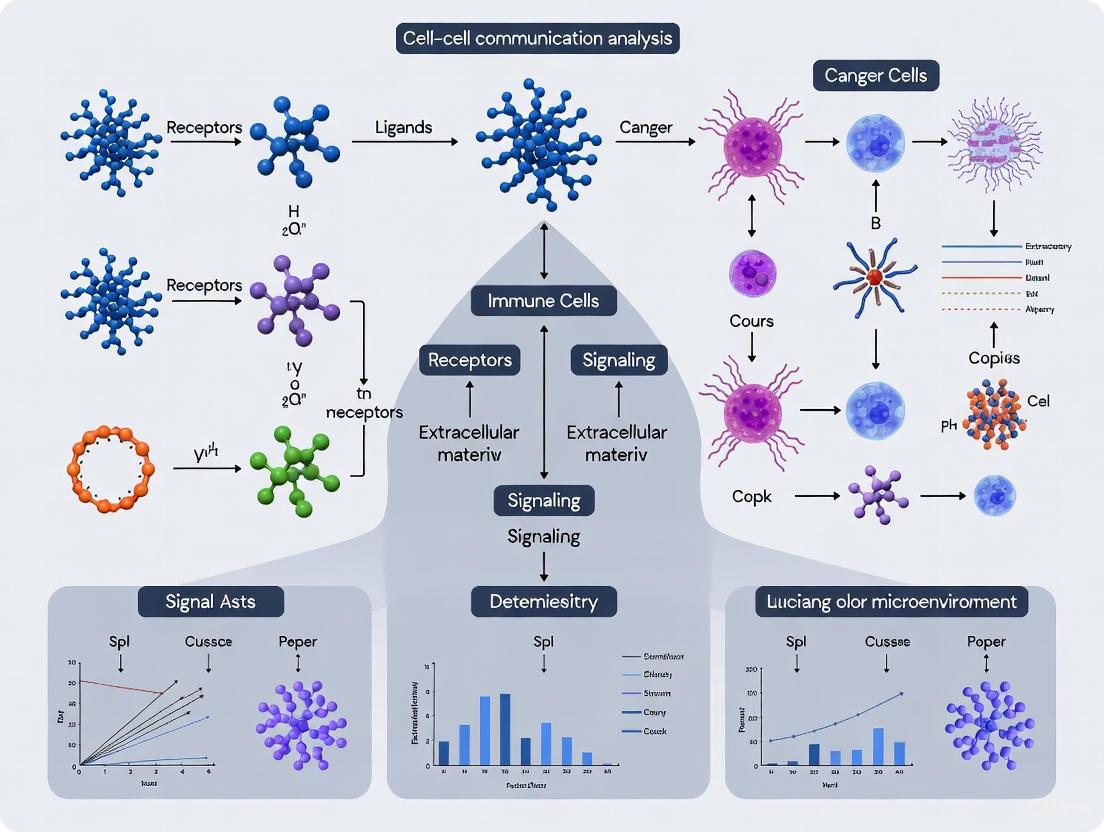
Cell-cell communication (CCC) within the tumor microenvironment (TME) is a critical regulator of cancer progression, immune evasion, and therapy response.
Decoding Cancer's Social Network: A Comprehensive Guide to Cell-Cell Communication Analysis in the Tumor Microenvironment with CellChat
Abstract
Cell-cell communication (CCC) within the tumor microenvironment (TME) is a critical regulator of cancer progression, immune evasion, and therapy response. This article provides a comprehensive resource for researchers and drug development professionals on leveraging the CellChat tool for single-cell RNA sequencing analysis. We cover the foundational biology of CCC in cancer, detail a step-by-step workflow for applying CellChat to diverse cancer types, address key methodological considerations and optimization strategies based on performance comparisons, and discuss rigorous validation frameworks. By integrating current research and practical guidelines, this review empowers the systematic deciphering of intercellular signaling networks to identify novel therapeutic targets and biomarkers.
The Language of Tumors: Foundational Principles of Cell-Cell Communication in Cancer
Cell-cell communication (CCC) is the fundamental process by which cells coordinate their activities in multicellular organisms, enabling development, homeostasis, and coordinated responses to environmental changes. In the context of cancer, aberrant CCC drives tumor progression, metastasis, and therapy resistance by reshaping the tumor microenvironment (TME). The communications within the TME involve a complex network of signaling mechanisms that connect tumor cells with diverse stromal and immune cells [1] [2].
Understanding CCC mechanisms requires knowledge of the distinct signaling modalities that operate at different spatial ranges. Juxtacrine signaling depends on direct cell-cell contact through membrane-bound ligands and receptors or specialized junctional complexes. Paracrine signaling involves the secretion of ligands that travel short distances through the extracellular space to bind receptors on neighboring cells. Endocrine signaling encompasses long-range communication via circulating factors, while autocrine signaling occurs when cells respond to their own secreted signals [2] [3]. In cancer, these communication modes are co-opted to establish pro-tumorigenic niches and suppress anti-tumor immunity.
This article provides a comprehensive overview of the major CCC mechanisms, with a specific focus on their relevance to cancer biology and the practical application of computational tools like CellChat to decipher communication networks within the TME.
Core CCC Mechanisms and Their Biological Significance
Ligand-Receptor Interactions
Ligand-receptor interactions represent the most extensively characterized CCC mechanism. This process involves the binding of a signaling molecule (ligand) to its cognate receptor on a target cell, triggering intracellular signaling cascades that ultimately alter cellular behavior [2]. The functional repertoire of ligand-receptor interactions is vast, regulating processes such as cell growth, differentiation, migration, and death.
Table 1: Major Classes of Ligand-Receptor Interactions in CCC
| Interaction Class | Key Features | Example Pathways | Role in Cancer TME |
|---|---|---|---|
| Secreted Signaling | Ligands are soluble and diffuse to target cells; encompasses paracrine and endocrine signaling. | TGF-β, CXCL, CCL, VEGF, TNF [4] [5] | VEGF drives angiogenesis; CXCL/CCL chemokines recruit immune cells; TGF-β promotes immunosuppression [5]. |
| Cell-Cell Contact | Requires direct membrane-membrane contact between adjacent cells; juxtacrine signaling. | Notch, Eph-ephrin [3] | Notch signaling regulates cell fate decisions and can have both oncogenic and tumor-suppressive roles. |
| ECM-Receptor | Communication via cell adhesion to the extracellular matrix. | Integrin-mediated signaling [4] | Promotes cancer cell survival, migration, and metastasis. |
A critical advancement in the field has been the recognition that many receptors function as heteromeric complexes, where multiple subunits assemble to form a functional receptor. For instance, soluble ligands from the TGF-β pathway signal via heteromeric complexes of type I and type II receptors [4]. Ignoring this structural complexity can lead to biologically inaccurate inferences, which is why modern computational tools incorporate databases that detail the composition of these multi-subunit complexes.
Gap Junctions
Gap junctions represent a direct and rapid communication channel between adjacent cells. These specialized intercellular channels are formed by connexin proteins (e.g., Connexin-43) that assemble in the plasma membranes of two closely apposed cells, creating a pore that allows the passive diffusion of small molecules (e.g., ions, second messengers, metabolites) [6]. This form of communication is inherently juxtacrine, as it requires physical cell contact.
In the context of cancer, gap junction-mediated communication (GJIC) is frequently dysregulated. Altered GJIC can affect tumor progression, with studies showing that HIV-1 infection of human neural progenitor cells (hNPCs) increased the expression of Connexin-43 and enhanced functional communication between infected hNPCs and brain endothelial cells [6]. This highlights how gap junctions can be modulated by disease states to alter the TME.
Extracellular Vesicles (EVs)
Extracellular vesicles (EVs), including exosomes and microvesicles, are membrane-bound particles released by cells into the extracellular space. They carry a diverse cargo of proteins, lipids, and nucleic acids (e.g., miRNAs, mRNAs) and represent a crucial mode of paracrine and even long-range communication [6]. Recipient cells can internalize EVs, thereby receiving functional biomolecules that can reprogram their physiology.
EVs play a significant role in pathogen dissemination and modulating the TME. For example, HIV-1 infection alters the cargo and function of EVs derived from brain endothelial cells. Exposure of human neural progenitor cells to EVs carrying Amyloid Beta (Aβ) cargo significantly altered the expression of Connexin-43 and Pannexin 2, directly linking EV-mediated communication with the regulation of gap junction function [6]. This crosstalk between different CCC mechanisms underscores the complexity of signaling networks in pathological conditions.
Table 2: Comparison of Core CCC Mechanisms
| Mechanism | Signaling Range | Key Molecular Components | Key Functional Readouts |
|---|---|---|---|
| Ligand-Receptor Pairs | Short to Long (Paracrine to Endocrine) | Ligands, Receptors (including complex subunits) | Phosphorylation, gene expression changes, cell differentiation/proliferation. |
| Gap Junctions | Juxtacrine (Direct Contact) | Connexins (e.g., Cx43), Pannexins | Intercellular diffusion of dyes (e.g., Lucifer Yellow), calcium waves, metabolic coupling. |
| Extracellular Vesicles | Short to Long (Paracrine to Systemic) | Tetraspanins (CD63, CD81), Cargo (proteins, RNA) | Recipient cell gene expression changes, functional phenotypic shifts in recipient cells. |
Deciphering CCC in Cancer with CellChat
The CellChat Framework
CellChat is a computational tool designed to infer, analyze, and visualize intercellular communication networks from scRNA-seq data. Its power lies in a robust framework that integrates gene expression data with a comprehensive, manually curated knowledge base of ligand-receptor interactions [4].
A key feature of CellChat is its incorporation of heteromeric molecular complexes. Nearly half of the interactions in its database, CellChatDB, involve complexes, significantly improving the biological accuracy of its predictions compared to methods that consider only pairwise ligand-receptor relationships [4]. The tool employs a mass action-based model to calculate the communication probability between cell groups, followed by statistical inference to identify significant interactions.
Application in Cancer Research: A Case Study
scRNA-seq studies of tumor ecosystems routinely employ CellChat to identify pro-tumorigenic signaling circuits. For instance, a comparative analysis of primary and metastatic ER+ breast cancer revealed a marked decrease in tumor-immune cell interactions in metastatic tissues, suggesting a more immunosuppressive TME [7]. In colorectal cancer (CRC), analysis of matched primary tumor and peritoneal metastasis samples revealed a communication switch between the two sites: while VEGF signaling was dominant in the primary tumor, CXCL-ACKR1 interactions were strengthened in the metastasis, indicating a reduced dependence on canonical angiogenic signaling in the metastatic niche [5].
These findings demonstrate how CellChat can uncover functionally relevant and therapeutically targetable communication pathways that differ across disease stages or sites.
caption: Figure 1. The CellChat analytical workflow for inferring cell-cell communication from scRNA-seq data.
Essential Protocols for CCC Analysis
Protocol: Inferring CCC Networks with CellChat
This protocol details the steps to infer and analyze cell-cell communication networks from a processed scRNA-seq dataset (e.g., a Seurat object) using the CellChat R package [4].
Data Preparation and Input
- Input: A pre-processed scRNA-seq dataset with normalized counts and cell type annotations.
- Software: R and the CellChat package installed from GitHub (
sqjin/CellChat). - Create a CellChat object using the normalized count matrix and cell meta information.
cellchat <- createCellChat(object = seurat_object, meta = seurat_meta, group.by = "celltype")
Set Ligand-Receptor Interaction Database
- Load the default CellChatDB (human or mouse). Optionally, subset the database to focus on specific interaction categories (e.g., "Secreted Signaling" or "Cell-Cell Contact").
CellChatDB <- CellChatDB.humancellchat@DB <- CellChatDB
Preprocessing for CCC Inference
- Identify over-expressed ligands and receptors within each cell group. Subset the expression data to include only signaling genes for subsequent analysis.
cellchat <- identifyOverExpressedGenes(cellchat)cellchat <- identifyOverExpressedInteractions(cellchat)
Compute Communication Probability
- Calculate the communication probability between cell groups using the Trinity method (law of mass action). This step infers the core cell-cell communication network.
cellchat <- computeCommunProb(cellchat, type = "truncatedMean", trim = 0.1)- Optional: Filter out interactions with an insufficient number of communicating cells.
cellchat <- filterCommunication(cellchat, min.cells = 10)
Infer Cell-Cell Communication at Signaling Pathway Level
- Aggregate the ligand-receptor pairs into signaling pathways based on the functional classification in CellChatDB. This provides a higher-level view of the communication landscape.
cellchat <- computeCommunProbPathway(cellchat)
Calculate Aggregated Communication Network
- Calculate the overall network by summing the communication probability of all ligand-receptor pairs or all pathways. This allows for the identification of the overall signaling strength between cell groups.
cellchat <- aggregateNet(cellchat)
Visualization and Systems-Level Analysis
- Visualize Network: Use
netVisual_circle,netVisual_heatmap, ornetVisual_aggregateto plot the aggregated communication network. - Pattern Recognition: Identify and visualize outgoing and incoming communication patterns of signaling groups using
identifyCommunicationPatterns. - Manifold Learning: Group signaling pathways based on functional or topological similarity using
computeNetSimilarityandnetEmbedding.
- Visualize Network: Use
Protocol: Functional Validation of a Specific CCC Axis
This protocol outlines a general workflow for experimentally validating a ligand-receptor interaction of interest identified from computational inference, such as a VEGF-VEGFR axis in cancer-endothelial communication [5].
Spatial Validation:
- Objective: Confirm the spatial co-localization of ligand-expressing and receptor-expressing cell populations.
- Method: Perform multiplex immunofluorescence (mIF) or RNA in-situ hybridization (RNA-ISH) on formalin-fixed paraffin-embedded (FFPE) tissue sections.
- Use antibodies or probes targeting the specific ligand (e.g., VEGFA) and receptor (e.g., VEGFR2/KDR), along with markers for the relevant cell types (e.g., CD31 for endothelial cells).
- Expected Outcome: Co-localization of ligand and receptor protein/RNA in adjacent sender and receiver cells within the tissue architecture.
Functional Validation In Vitro:
- Objective: Establish a causal relationship between the CCC axis and a functional phenotype (e.g., endothelial cell migration).
- Co-culture Assay:
- Co-culture ligand-expressing tumor cells with receiver endothelial cells in a transwell system.
- Functional Readout: Measure endothelial cell migration towards tumor cells or tube formation.
- Inhibition/Blocking Assay:
- Treat the co-culture system with a neutralizing antibody against the ligand or a pharmacological inhibitor of the receptor.
- Expected Outcome: Significant reduction in the functional readout (e.g., impaired migration or tube formation) upon perturbation of the specific CCC axis.
The Scientist's Toolkit
Table 3: Key Research Reagent Solutions for CCC Analysis
| Reagent/Resource | Function/Application | Key Features & Examples |
|---|---|---|
| Computational Tools | Infer CCC from scRNA-seq data. | CellChat: Incorporates heteromeric complexes; provides systems-level analysis [4]. CellPhoneDB: Considers subunit architecture of complexes [8]. NicheNet: Models intracellular downstream signaling to target genes [3]. |
| Ligand-Receptor Databases | Provide prior knowledge for inference tools. | CellChatDB: Manually curated, includes pathways and complexes [4]. OmniPath: A comprehensive meta-resource aggregating multiple databases [8]. |
| Neutralizing Antibodies | Functional blockade of specific CCC axes in vitro/in vivo. | Used to inhibit ligand-receptor binding (e.g., anti-VEGFA for angiogenesis studies) [5]. |
| Spatial Profiling Technologies | Validate spatial co-localization of predicted interactions. | Multiplex Immunofluorescence (mIF), RNA in-situ hybridization (RNA-ISH), Spatial Transcriptomics [3]. |
| Connexin/Pannexin Modulators | Probe gap junction function. | Pharmacological inhibitors (e.g., Carbenoxolone) or activators to study GJIC in cancer models [6]. |
| EV Isolation & Analysis Kits | Isolate and characterize extracellular vesicles. | Differential ultracentrifugation, commercial kits (e.g., exosome isolation kits) for studying EV-mediated communication [6]. |
The concerted action of ligand-receptor pairs, gap junctions, and extracellular vesicles creates a sophisticated communication network that dictates tumor fate. Disentangling this network is crucial for understanding cancer biology and identifying novel therapeutic vulnerabilities. Computational tools like CellChat provide a powerful starting point for mapping these interactions from high-throughput data. However, a truly mechanistic understanding requires a multi-faceted approach that integrates computational prediction with spatial validation and functional experiments to confirm the biological and clinical relevance of inferred communication pathways.
The tumor microenvironment (TME) is a complex ecosystem comprising tumor cells and a multitude of non-cancerous cells, embedded in an altered extracellular matrix [9]. These host components, which include diverse immune cell types, cancer-associated fibroblasts (CAFs), endothelial cells, and pericytes, are no longer considered bystanders but play critical roles in tumor initiation, progression, and metastatic dissemination [9]. The communication within this microenvironment occurs directly between cells and via secreted molecules such as growth factors, cytokines, chemokines, and microRNAs, collectively known as the secretome [10]. Understanding these dynamic interactions is crucial for developing effective anti-cancer treatments, with modern single-cell technologies and spatial analysis tools providing unprecedented insights into TME heterogeneity and function.
Key Cellular Components of the TME
The cellular composition of the TME differs extensively depending on tumor origin, stage, and patient characteristics [9]. The table below summarizes the major cellular players and their functional roles in cancer progression.
Table 1: Key Cellular Players in the Tumor Microenvironment
| Cell Type | Major Subtypes/Populations | Key Markers | Primary Functions in TME |
|---|---|---|---|
| Cancer-Associated Fibroblasts (CAFs) | Myofibroblasts, inflammatory CAFs (iCAFs) [11] | α-SMA, PDGFRB, COL1A2 [10] [12] | ECM remodeling, tumor growth, metastasis, cytokine signaling (e.g., TGF-β) [10] |
| Tumor-Associated Macrophages (TAMs) | M1-like (pro-inflammatory), M2-like (immunosuppressive), APOE+ TAMs [12] [13] | CD68, CD163, CD206, APOE [12] [13] | M1: Anti-tumor immunity via IL-12, TNF-α. M2: Immunosuppression, angiogenesis, metastasis [13] |
| T Cells | CD8+ exhausted T cells, CD4+ naïve T cells, CD4+ HSPA1A+ T cells [12] | CD8, CD4, PDCD1, CCR7, HSPA1A/B [12] | Cytotoxicity (CD8+), immune regulation (CD4+). Exhausted CD8+ T cells indicate poor prognosis [12]. |
| Endothelial Cells | PLVAP+ subtypes [12] | EMCN, VWF, PLVAP [12] | Neo-angiogenesis, formation of tumor vasculature [12] |
| Dendritic Cells | LAMP3+ DCs [11] | LAMP3 [11] | Antigen presentation, T cell priming, immune regulation [11] |
Deciphering Cell-Cell Communication: An Experimental Protocol
Understanding the TME requires a detailed analysis of the cellular crosstalk. The following protocol outlines a comprehensive workflow for profiling the TME and inferring cell-cell communication networks using single-cell RNA sequencing (scRNA-seq) and computational tools like CellChat.
The diagram below illustrates the major steps from sample preparation to data analysis and validation.
Detailed Experimental Procedures
Protocol 2.2.1: Single-Cell RNA Sequencing Sample Preparation
This protocol is adapted from longitudinal snRNA-seq analysis of bladder cancer samples [11].
Materials:
- Fresh or frozen tumor tissue samples.
- Nuclear isolation buffer (e.g., containing NP-40 or similar detergent).
- LUNA-FL Automated Fluorescence Cell Counter or equivalent.
- 10X Genomics Chromium Instrument.
- Chromium Next GEM Single Cell 3' Kit v3.1.
- Agilent Bioanalyzer system.
Procedure:
- Tissue Dissociation/Nuclei Isolation: Homogenize frozen tissue and isolate nuclei using a pre-chilled nuclear isolation buffer. Filter the suspension through a flow-compatible strainer to remove debris.
- Quality Control and Counting: Count nuclei using a fluorescence cell counter. Ensure high viability (>90%) and integrity.
- Library Preparation: Use the 10X Genomics Chromium Instrument and kit to generate barcoded cDNA libraries from the isolated nuclei/cells, strictly following the manufacturer's instructions.
- Library QC and Sequencing: Assess cDNA library quality using an Agilent Bioanalyzer. Proceed to sequence on an appropriate Illumina platform to achieve sufficient depth (e.g., 50,000 reads per cell).
Protocol 2.2.2: Computational Analysis of Cell-Cell Communication
This protocol details the in-silico inference of interaction networks from scRNA-seq data [12] [11] [14].
Software & Tools:
- Cellranger (10X Genomics) for initial data processing.
- R and Seurat for downstream analysis (quality control, normalization, clustering).
- CellChat or NicheNet for inferring cell-cell communication.
Procedure:
- Data Preprocessing:
- Quantify unique molecular identifiers (UMIs) using Cellranger with a reference transcriptome (e.g., GRCh38).
- Import data into Seurat. Filter cells based on quality metrics (e.g., 300-8,000 genes/cell, <30% mitochondrial content).
- Remove potential doublets using tools like DoubletFinder.
- Cell Clustering and Annotation:
- Normalize and scale the integrated data.
- Perform principal component analysis (PCA) and use the top principal components for clustering.
- Generate a UMAP for visualization.
- Identify cell types by finding differentially expressed genes in each cluster and comparing them to canonical markers (e.g., PTPRC for immune cells, PDGFRB for mesenchymal cells) [12].
- Infer Communication Networks:
- Input the annotated Seurat object into CellChat.
- The algorithm will calculate the communication probability for ligand-receptor pairs across all cell groups.
- Identify significantly enriched or depleted signaling pathways between different cell types.
- Visualize the network, incoming/outgoing signaling patterns, and key ligand-receptor pairs.
- Data Preprocessing:
Protocol 2.2.3: Spatial Validation of TME Interactions
Computational predictions require spatial validation [15].
Materials:
- Formalin-fixed, paraffin-embedded (FFPE) tissue sections.
- Primary antibodies for key cell phenotypes and ligands/receptors identified (e.g., anti-CD8, anti-CD68, anti-α-SMA).
- Multiplex immunohistochemistry/immunofluorescence (mIHC/mIF) platform.
- TME-Analyzer software or equivalent image analysis tool.
Procedure:
- Multiplex Staining: Perform sequential staining and imaging on FFPE sections using the validated antibody panel.
- Image Analysis with TME-Analyzer:
- Load the multiplexed image.
- Segment tissue compartments (e.g., tumor epithelium, stroma).
- Perform nucleus and cell segmentation.
- Phenotype cells based on marker expression using flow cytometry-like gating.
- Spatial Metrics Quantification: Use the software to calculate densities of specific cell types and measure intercellular distances (e.g., average distance of CD8+ T cells to APOE+ macrophages) to validate predicted interactions.
Critical Signaling Pathways and Visualization
Therapeutic targeting of the TME requires a deep understanding of the key signaling pathways that govern cellular crosstalk.
TGF-β Signaling in the TME
The TGF-β pathway is a master regulator implicated in multiple pro-tumorigenic processes [11].
TAM-Driven Immunosuppression
M2-like TAMs utilize multiple mechanisms to suppress anti-tumor immunity and promote progression [13].
Table 2: Key Immunosuppressive Mechanisms of M2-like TAMs
| Mechanism | Key Molecules Involved | Functional Outcome |
|---|---|---|
| T Cell Suppression | IL-10, TGF-β, PD-L1, Arginase-1 [13] | Inhibition of cytotoxic T lymphocyte (CTL) function and proliferation. |
| Treg Recruitment | CCL22 [13] | Recruitment of regulatory T cells (Tregs) to enhance an immunosuppressive niche. |
| Metabolic Dysregulation | Consumption of Arginine, Production of Ornithine [13] | Creation of a metabolically hostile environment for effector T cells. |
| Extracellular Matrix Remodeling | Matrix Metalloproteinases (MMPs), Collagen [15] [13] | Formation of a physical barrier that excludes CD8+ T cells from the tumor. |
Successful TME research relies on a suite of well-characterized reagents and computational tools.
Table 3: Essential Research Reagents and Tools for TME Analysis
| Category | Item | Specific Example / Catalog Number | Primary Function |
|---|---|---|---|
| Wet-Lab Reagents | scRNA-seq Library Prep Kit | 10X Genomics Chromium Next GEM Single Cell 3' Kit v3.1 | Generation of barcoded single-cell sequencing libraries. |
| Antibody Panel for mIHC/mIF | Anti-CD3, CD8, CD68, α-SMA, Pan-CK | Multiplexed spatial phenotyping of TME components. | |
| Computational Tools | scRNA-seq Analysis Suite | Seurat R Toolkit | Data integration, clustering, and differential expression. |
| Cell-Cell Communication | CellChat R Package | Inference and analysis of intercellular signaling networks. | |
| Spatial Analysis Software | TME-Analyzer | Interactive analysis of spatial contexture from multiplexed images. | |
| Critical Databases | Ligand-Receptor Pairs | CellPhoneDB / Ramilowski et al. 2015 [14] | Curated reference for ligand-receptor interactions used in inference tools. |
Application Note: Deciphering Oncogenic Cell-Cell Communication Networks
Cell-cell communication (CCC) within the tumor microenvironment (TME) represents a fundamental driver of cancer progression, therapy resistance, and immune evasion. Recent advances in single-cell RNA sequencing (scRNA-seq) technologies, coupled with sophisticated computational tools like CellChat, have enabled researchers to systematically map these complex interaction networks. This Application Note synthesizes current methodologies and findings regarding how specific CCC circuits orchestrate three critical tumor phenotypes: sustained proliferation, metastatic dissemination, and immunosuppression. Understanding these mechanisms provides novel insights for developing targeted therapeutic interventions that disrupt pro-tumorigenic signaling hubs.
Key Signaling Pathways in Tumor Phenotype Regulation
Research across multiple carcinoma types has identified conserved CCC pathways that drive malignant progression. These pathways represent potential therapeutic targets for disrupting tumor-promoting communication.
Table 1: Key CCC Pathways Driving Tumor Phenotypes
| Tumor Phenotype | Signaling Pathway | Sender→Receiver Cells | Functional Outcome | Cancer Context |
|---|---|---|---|---|
| Proliferation | MDK-SDC1 | Fibroblast→Tumor cells | Enhanced tumor cell growth and survival | Cervical Cancer [16] |
| Proliferation | Angiogenin-EGFR/PLXNB2 | Cancer cells→Endothelial/T cells | Increased cancer cell proliferation, reduced proinflammatory secretion | ccRCC [17] |
| Metastasis | MDK-SDC1 | TSKs→Fibroblasts | Promotion of EMT and metastasis | Recurrent cSCC [18] |
| Metastasis | IL7R-mediated | CAFs→TSKs | Induction of EMT features | Recurrent cSCC [18] |
| Immunosuppression | SPP1-mediated | TAMs→T cells | Creation of T-cell-excluded microenvironment | Recurrent cSCC [18] |
| Immunosuppression | Amino Acid Metabolism | Epithelial cells→T cells | Reduced immune infiltration, PD-1 blockade resistance | Colorectal Cancer [19] |
| Immunosuppression | CSF1-CSF1R | CSCs→TAMs | TAM survival and activation, stemness maintenance | Pan-Cancer [20] |
Visualization of Core CCC-Driven Immunosuppressive Circuitry
Diagram 1: Multicellular Circuitry Driving Immunosuppression. This network illustrates how coordinated signaling between cancer stem cells (CSCs), tumor-associated macrophages (TAMs), cancer-associated fibroblasts (CAFs), and malignant epithelial cells establishes an immunosuppressive TME, leading to T cell exclusion and exhaustion [18] [20] [21].
Experimental Protocols for CCC Analysis
Comprehensive Workflow for CellChat-Based CCC Analysis
This protocol details the complete computational pipeline for inferring and analyzing cell-cell communication networks from scRNA-seq data using the CellChat package, with validation approaches.
Table 2: Key Research Reagent Solutions for CCC Analysis
| Reagent/Resource | Specification | Primary Function | Example/Source |
|---|---|---|---|
| scRNA-seq Platform | 10X Genomics Chromium | Single-cell capture and barcoding | [18] [21] |
| Cell Type Annotation | SingleR, Manual Markers | Cell population identification | [17] [21] |
| CCC Inference Tool | CellChat v1.6.1+ | Ligand-receptor interaction analysis | [22] [16] |
| LR Database | CellChatDB.human | Curated ligand-receptor interactions | [16] [23] |
| Trajectory Analysis | Monocle2, Slingshot | Cell state transitions | [22] [16] |
| Spatial Validation | 10X Visium, CODEX | Spatial confirmation of CCC | [24] [16] |
| Protein Validation | Multiplex IHC/IF | Protein-level interaction verification | [18] [17] |
Diagram 2: Comprehensive CCC Analysis Workflow. The end-to-end pipeline from raw single-cell data processing through CellChat analysis to experimental validation, highlighting key computational modules [18] [22] [16].
Protocol: CellChat Analysis for Identifying Phenotype-Driving CCC
Sample Preparation and Data Preprocessing
- Single-cell Suspension Preparation: Process fresh tumor tissues within 30 minutes of resection using Human Tumor Dissociation Kit (Miltenyi Biotec) and gentle MACS Dissociator. Remove dead cells using Dead Cell Removal Kit (Miltenyi Biotec) to ensure viability >85% [18].
- scRNA-seq Library Preparation: Prepare libraries using either BD Rhapsody system or Singleron platform following manufacturer's protocols. Sequence on Illumina platforms (HiSeq X or NovaSeq 6000) with minimum depth of 200,000 reads per cell [18].
- Quality Control and Integration: Process UMI count data using Seurat (v4.1.0+). Filter cells with >15% mitochondrial counts, <200 genes detected, or >25,000 UMIs. Remove doublets using Scrublet. Normalize data using "LogNormalize" method with scale factor 10,000. Identify top 2,000 highly variable genes for PCA. Correct batch effects using Harmony algorithm [18] [19].
Cell Type Annotation and Subpopulation Identification
- Broad Cell Type Annotation: Use SingleR package with reference datasets and manual curation based on canonical markers: EPCAM for epithelial cells, PTPRC for immune cells, COL1A1 for fibroblasts, PECAM1 for endothelial cells [17] [21].
- Malignant Cell Identification: Apply inferCNV to distinguish malignant epithelial cells from normal epithelial cells using endothelial cells or other stromal cells as reference [16] [21].
- Subpopulation Analysis: Recluster major cell types at higher resolution (e.g., resolution=2.0) to identify functionally distinct subsets such as SPP1+ TAMs, IL7R+ CAFs, or exhausted CD8+ T cells [18] [19].
CellChat Analysis and Network Inference
- CellChat Object Creation: Create a CellChat object using the normalized expression matrix and cell type annotations. Set the minimum cell threshold to 10 for any cell group to be included in analysis [22] [16].
- Ligand-Receptor Inference: Identify over-expressed ligand-receptor interactions using CellChatDB.human as reference database. Compute communication probabilities with permutation testing (p < 0.05) to determine significance [22] [16] [23].
- Network Analysis and Visualization: Calculate aggregated communication networks and identify dominant signaling sources and targets. Perform pattern recognition using non-negative matrix factorization (NMF) to extract conserved signaling modules across cell populations [22] [23].
- Comparative Analysis: Compare communication networks between conditions (e.g., primary vs. recurrent tumors, sensitive vs. resistant) using netVisual_diffInteraction function. Identify signaling pathways with significant changes in strength or structure [18] [22].
Protocol: Functional Validation of CCC Pathways
In Vitro Co-culture Systems for CCC Validation
- Direct Co-culture Setup: Culture candidate sender and receiver cells in direct contact (1:1 ratio) in transwell or direct contact systems for 48-72 hours. Include monocultures as controls [16].
- Conditioned Media Experiments: Treat receiver cells with conditioned media from sender cells for 24-48 hours. Concentrate conditioned media using 3kD centrifugal filters to retain protein factors [17].
- Gene Knockdown/Overexpression: Use lentiviral shRNA or CRISPRa systems to modulate expression of identified ligands (e.g., MDK, SPP1, Angiogenin) or receptors (e.g., SDC1, EGFR) in sender or receiver cells, respectively [17] [16].
- Functional Assays: Assess phenotypic outcomes including proliferation (CCK-8 assay), migration (transwell assay), invasion (Matrigel-coated transwell), and stemness (spheroid formation) [16].
Spatial Validation of CCC Predictions
- Multiplex Immunofluorescence: Validate predicted CCC using multiplex IHC/IF on FFPE tissue sections with antibodies against identified ligand-receptor pairs (e.g., MDK-SDC1, SPP1-CD44). Use Opal/TSA-based multiplexing for simultaneous detection of 4-7 markers [18] [16].
- Spatial Transcriptomics: Correlate CellChat predictions with spatial transcriptomics data (10X Visium) to confirm proximity of predicted sender-receiver cell pairs and localized expression of predicted signaling molecules [24] [16].
- Image Analysis: Quantify spatial proximity between ligand-expressing and receptor-expressing cells using nearest-neighbor analysis in platforms like HALO or QuPath [24].
Advanced Analytical Frameworks
Integration with Pseudotime and Regulatory Networks
- Trajectory Analysis: Utilize Monocle2 or Slingshot to construct differentiation trajectories and correlate CCC activity with cell state transitions. Identify communication events that drive lineage decisions [22] [16].
- Regulatory Network Inference: Apply SCENIC or pySCENIC to reconstruct gene regulatory networks and identify transcription factors downstream of CCC activation. Link receptor engagement to transcriptional reprogramming [22] [16].
- Crosstalk Analysis: Implement SigXTalk to quantify pathway fidelity and specificity when multiple CCC pathways share signaling components, identifying critical nodes for therapeutic targeting [23].
Metabolic Reprogramming Through CCC
- Metabolic Scoring: Develop metabolic activity scores using AUCell algorithm based on gene sets from MSigDB (e.g., amino acid metabolism, glycolysis) [19].
- Correlation Analysis: Correlate metabolic scores with CCC activity to identify how intercellular signaling reprograms tumor metabolism and creates nutrient competition that impairs immune cell function [19].
The integrated application of scRNA-seq, CellChat analysis, and functional validation provides a powerful framework for deciphering the complex CCC networks that drive tumor proliferation, metastasis, and immunosuppression. The protocols outlined herein enable researchers to move beyond correlation to establish causal relationships between specific ligand-receptor interactions and functional phenotypes. As the resolution of spatial technologies and computational methods continues to advance, so too will our ability to identify and therapeutically target the critical communication hubs that sustain malignant progression.
Intercellular Communication in Clear Cell Renal Cell Carcinoma (ccRCC) and ER+ Breast Cancer
The tumor microenvironment (TME) is a complex ecosystem where dynamic intercellular communication drives cancer progression, therapeutic resistance, and immune evasion. Advanced single-cell transcriptomic technologies, particularly tools like CellChat, have enabled the systematic decoding of these communication networks. This Application Notes and Protocols document synthesizes current research into the ligand-receptor interactions and signaling pathways that define the TME in two distinct malignancies: clear cell renal cell carcinoma (ccRCC) and estrogen receptor-positive (ER+) breast cancer. By integrating quantitative findings, detailed methodologies, and visual workflows, we provide a standardized framework for researchers investigating cell-cell communication in cancer biology and drug development.
Key Communication Axes in ccRCC and ER+ Breast Cancer
Recent single-cell analyses have identified conserved and unique intercellular communication pathways in ccRCC and ER+ breast cancer TME. The tables below summarize the critical ligand-receptor interactions, their cellular context, and functional consequences.
Table 1: Key Communication Axes in Clear Cell Renal Cell Carcinoma (ccRCC)
| Ligand-Receptor Axis | Sender Cell | Receiver Cell | Functional Role | Experimental Validation |
|---|---|---|---|---|
| CSF1-CSF1R [25] | M2-like Macrophages | Malignant Epithelial Cells | Promotes immunosuppressive TME; correlates with poor prognosis [25] | CSF1R inhibition (Sotuletinib) in xenograft model reduced tumor growth, Ki67+ proliferation, CD163+ M2 polarization [25] |
| DLL4/Notch & JAG/Notch [26] | Endothelial Cells | Tumor Cells | Endothelial-tumor crosstalk; MLRS prognostic signature enrichment [26] | Identified via scRNA-seq analysis; functional role of hub gene EMCN validated via knockdown inhibiting proliferation [26] |
| Adhesion-associated Pathways [27] | Stromal Cells | Immune/Epithelial Cells | Enhanced in tumor thrombus; facilitates metastatic niche [27] | CellChat analysis of primary ccRCC tumors vs. matched venous tumor thrombi [27] |
| Migrasome-associated lncRNAs [28] | Tumor Cells (Migrating) | Neighboring Cells | FOXD2-AS1 promotes proliferation, migration; prognostic signature [28] | In vitro knockdown (qRT-PCR, CCK-8, wound-healing, Transwell, colony formation assays) [28] |
Table 2: Key Communication Axes in ER+ Breast Cancer
| Ligand-Receptor Axis | Sender Cell | Receiver Cell | Functional Role | Experimental Validation |
|---|---|---|---|---|
| Cytokines/Growth Factors (e.g., IL-15/18) [21] | Resistant Cancer Cells | Myeloid Cells | Stimulates immune-suppressive myeloid differentiation; reduces CD8+ T-cell crosstalk [21] | scRNA-seq of serial biopsies; in vitro co-culture; exogenous IL-15 improved CDK4/6i efficacy [21] |
| EV-mediated Cargo Transfer [29] | TNF-α-conditioned Macrophages | ER+ Cancer Cells (MCF-7) | Drives stemness, EMT, tamoxifen resistance [29] | EV isolation & treatment; increased proliferation, migration, CD44High/CD24Low population, spheroid formation [29] |
| Tumor-derived EV Cargo [29] | ER+ Cancer Cells | Macrophages | Polarizes macrophages to TAM phenotype (PD-1+ immunosuppressive) [29] | Macrophage treatment with MCF-7 EVs; increased PD-1 expression [29] |
| ESR1-mediated Signaling [30] | Tumor Cells | Multiple TME Cells | Increased ESR1 expression with age in ER+ tumors; altered vascular/immune metabolism [30] | Bulk & single-cell transcriptomics (ASPEN pipeline) of human breast cancers [30] |
Table 3: Comparative Overview of TME Cellular Context
| Feature | ccRCC | ER+ Breast Cancer |
|---|---|---|
| Dominant Pro-Tumor Immune Population | M2-like Macrophages (CSF1-CSF1R) [25] | Tumor-Associated Macrophages (TAMs) [29] |
| Key Immune Evasion Mechanism | Myeloid enrichment & T/NK cell depletion in tumor thrombus [27] | Reduced myeloid-CD8+ T-cell crosstalk (IL-15/18); T-cell exhaustion [21] |
| Stromal Crosstalk | Endothelial signaling (DLL4/Notch, JAG/Notch) [26] | Cancer-Associated Fibroblasts (CAFs); inflammatory CAFs decrease with age [30] |
| Metastatic Niche Communication | Adhesion pathways in venous tumor thrombus [27] | EV-mediated pre-metastatic niche education [29] |
| Therapy Resistance Axis | Migrasome-associated lncRNAs (e.g., FOXD2-AS1) [28] | Macrophage-derived EVs driving stemness & endocrine resistance [29] |
Experimental Protocols for Cell-Cell Communication Analysis
Protocol: Single-Cell RNA Sequencing for TME Deconvolution
Application: Comprehensive characterization of cellular heterogeneity and identification of sender-receiver cell populations in tumor tissues [31] [21] [32].
Reagents and Equipment:
- Fresh tumor tissue biopsies (ccRCC or ER+ breast cancer)
- Tissue dissociation kit (e.g., Miltenyi Biotec Tumor Dissociation Kit)
- Single-cell suspension buffer (PBS + 0.04% BSA)
- 10X Genomics Chromium Controller and Single Cell 3' Reagent Kits
- Validated cell viability dye (e.g., Trypan Blue, Propidium Iodide)
- Bioanalyzer or TapeStation system
- High-throughput sequencer (Illumina NovaSeq or similar)
Procedure:
- Tissue Processing and Single-Cell Suspension:
- Process fresh tumor biopsies within 1 hour of resection.
- Mechanically dissociate tissue using a sterile scalpel, then enzymatically digest using a validated tumor dissociation kit according to manufacturer's protocol.
- Filter cell suspension through 40μm flow cytometry strainer.
- Centrifuge at 400 × g for 5 minutes and resuspend in single-cell suspension buffer.
- Assess cell viability (>80%) and count using automated cell counter with viability dye.
scRNA-seq Library Preparation:
- Adjust cell concentration to 700-1,200 cells/μL.
- Load cells onto 10X Genomics Chromium Chip to target 5,000-10,000 cells per sample.
- Generate barcoded single-cell gel beads-in-emulsion (GEMs) following manufacturer's protocol.
- Perform reverse transcription, cDNA amplification, and library construction using Single Cell 3' Reagent Kits.
- Quality control libraries using Bioanalyzer High Sensitivity DNA kit (expect peak ~500bp).
Sequencing and Data Processing:
- Sequence libraries on Illumina platform (recommended depth: ≥50,000 reads/cell).
- Process raw sequencing data using Cell Ranger pipeline (10X Genomics) for alignment, barcode counting, and UMI quantification.
- Perform quality control filtering in R/Python (remove cells with <200 genes, >10% mitochondrial reads, or potential doublets).
Protocol: CellChat Analysis of Intercellular Communication
Application: Inference and analysis of cell-cell communication networks from scRNA-seq data [25].
Reagents and Equipment:
- Processed scRNA-seq data (Seurat object with cell type annotations)
- R statistical environment (v4.0.0+) with CellChat package installed
- High-performance computing resources (≥16GB RAM for typical datasets)
Procedure:
- Data Preprocessing for CellChat:
- Extract normalized count matrix and cell type annotations from Seurat object.
- Subset data to include only cell types comprising ≥10 cells.
- Create CellChat object using
createCellChat()function.
Ligand-Receptor Interaction Analysis:
- Precompute the over-expressed ligands and receptors in each cell group using
identifyOverExpressedGenes()andidentifyOverExpressedInteractions(). - Project gene expression data onto protein-protein interaction network using
computeCommunProb(). - Filter interactions by setting minimum number of communicating cells (
min.cells = 10). - Calculate aggregated cell-cell communication network using
aggregateNet().
- Precompute the over-expressed ligands and receptors in each cell group using
Visualization and Interpretation:
- Visualize communication networks using
netVisual_circle(),netVisual_heatmap(), or pathway-specific diagrams. - Identify signaling roles of each cell group using
netAnalysis_computeCentrality(). - Compare communication patterns between conditions (e.g., primary vs. metastatic) using
computeNetSimilarity()andnetVisual_diffInteraction().
- Visualize communication networks using
Protocol: Functional Validation of Communication Axes Using Extracellular Vesicles
Application: Investigating EV-mediated intercellular communication in therapy resistance [29].
Reagents and Equipment:
- Primary human macrophages (e.g., THP-1 cell line differentiated with PMA)
- Human ER+ breast cancer cells (e.g., MCF-7)
- Recombinant human TNF-α (for macrophage conditioning)
- Ultracentrifuge with fixed-angle or swinging-bucket rotor
- Polycarbonate ultracentrifuge tubes
- Exosome-depleted FBS
- Nanoparticle Tracking Analysis (NTA) system (e.g., Malvern NanoSight)
- Western blot equipment and antibodies for EV markers (CD63, CD81, TSG101)
Procedure:
- EV Isolation from Conditioned Macrophages:
- Culture THP-1 cells in RPMI-1640 + 10% exosome-depleted FBS.
- Differentiate with 100 nM PMA for 48 hours, then condition with 20 ng/mL TNF-α for 24 hours.
- Collect conditioned media and centrifuge at 300 × g for 10 minutes to remove cells.
- Centrifuge supernatant at 2,000 × g for 20 minutes to remove dead cells.
- Centrifuge at 10,000 × g for 30 minutes to remove cell debris.
- Ultracentrifuge at 100,000 × g for 70 minutes at 4°C to pellet EVs.
- Resuspend EV pellet in sterile PBS and characterize by NTA (size distribution: 30-150nm) and Western blot (positive for CD63, CD81, TSG101).
- Functional EV Treatment Assays:
- Seed MCF-7 cells in appropriate plates and treat with macrophage-derived EVs (10-20 μg/mL) for 48-72 hours.
- Assess functional outcomes:
- Proliferation: CCK-8 assay per manufacturer's protocol.
- Migration: Wound healing assay with images at 0, 24, 48 hours.
- Stemness: Flow cytometry for CD44High/CD24Low population.
- Therapy Resistance: Co-treatment with tamoxifen (1μM) and measure viability.
Visualization of Signaling Pathways and Workflows
CSF1-CSF1R Signaling Axis in ccRCC
EV-Mediated Resistance in ER+ Breast Cancer
scRNA-seq & CellChat Workflow
The Scientist's Toolkit: Essential Research Reagents
Table 4: Key Research Reagent Solutions for Cell-Cell Communication Studies
| Reagent/Category | Specific Examples | Function/Application | Key Citations |
|---|---|---|---|
| scRNA-seq Platforms | 10X Genomics Chromium | Single-cell partitioning & barcoding for transcriptome profiling | [31] [21] |
| Cell-Cell Communication Tools | CellChat R package | Inference and analysis of cell-cell communication from scRNA-seq data | [25] |
| CSF1R Inhibitors | Sotuletinib | Therapeutic targeting of CSF1-CSF1R axis in ccRCC models | [25] |
| EV Isolation Reagents | Ultracentrifugation kits, Total Exosome Isolation Kit | Isolation and purification of extracellular vesicles from conditioned media | [29] |
| Macrophage Polarization Agents | Recombinant TNF-α, PMA | Generation of conditioned macrophages for EV studies | [29] |
| Cell Line Models | MCF-7 (ER+ BC), THP-1 (macrophage), 786-O (ccRCC) | In vitro modeling of tumor-stroma interactions | [29] [25] |
| Validation Antibodies | Anti-CD163 (M2 macrophage), Anti-Ki67 (proliferation), Anti-CD63/81 (EV markers) | Immunohistochemical validation of communication axes | [29] [25] |
How Genetic Alterations (e.g., VHL mutation) Reshape Communication Networks
The tumor microenvironment (TME) is a complex ecosystem where cancer cells coexist and communicate with diverse immune, stromal, and endothelial cells. Genetic alterations in cancer cells can fundamentally reshape these cell-cell communication networks, driving tumor progression and therapy resistance [33]. In clear cell renal cell carcinoma (ccRCC), VHL gene mutations occur in up to 90% of cases and serve as a paradigmatic example of how a single genetic driver can rewire intercellular signaling [34]. These mutations disrupt cellular oxygen sensing, leading to constitutive activation of hypoxia-inducible factors (HIF1α and HIF2α) and subsequent reprogramming of ligand-receptor interactions within the TME [34]. Understanding how VHL deficiency alters communication landscapes provides critical insights into ccRCC pathogenesis and reveals novel therapeutic targets for this treatment-resistant cancer.
VHL Mutation Effects on Communication Networks
Quantitative Changes in Intercellular Communication
The VHL mutation status significantly influences the overall architecture of cell-cell communication networks in ccRCC. Comparative analyses of VHL-mutated versus VHL-wild-type tumors reveal distinct communication patterns, with VHL-mutated tumors exhibiting enhanced signaling through specific ligand-receptor pathways [33].
Table 1: Communication Pathways Modulated by VHL Mutation Status
| Pathway Category | Specific Pathway | Change in VHL-mutated vs Wild-type | Key Interacting Cell Populations |
|---|---|---|---|
| Angiogenin-mediated | ANG-EGFR/PLXNB2 | Upregulated [35] [17] | Cancer cells to endothelial/immune cells |
| Extracellular Matrix | SPP1-CD44 | Upregulated [36] | Apoptosis-high cancer cells to macrophages |
| Immune Checkpoint | Multiple checkpoints | Upregulated [17] | Cancer cells to T cells/myeloid cells |
| Chemokine signaling | CXCL, CCL families | Altered [33] | Myeloid cells to T cells/fibroblasts |
| Growth Factors | VEGF, PDGF | Upregulated [17] | Cancer cells to endothelial cells/fibroblasts |
CellChat Analysis Reveals Network-Level Reorganization
CellChat computational analysis demonstrates that VHL-mutated and VHL-wild-type ccRCC tumors exhibit fundamentally different intercellular communication structures. Research employing this tool has identified differential signaling strength and altered network centrality measures between these genetic subtypes [33]. In VHL-mutated tumors, cancer cells emerge as dominant communication hubs, showing increased outgoing and incoming signaling interactions compared to other cell populations in the TME. These tumors also display strengthened autocrine signaling loops that enhance cancer cell self-renewal and survival [33].
Network analysis further reveals that VHL mutation reshapes cellular crosstalk in the TME, particularly affecting T cell and myeloid cell differentiation trajectories. Pseudotime trajectory analyses coupled with communication inference demonstrate that specific ligand-receptor pairs activated in VHL-mutated tumors guide immune cell differentiation toward immunosuppressive phenotypes, including Treg expansion and M2-like macrophage polarization [33].
Key Altered Communication Axes in VHL-Deficient TME
Angiogenin-Mediated Signaling Networks
Large-scale single-cell RNA sequencing analyses have identified angiogenin (ANG) as a crucial communication molecule specifically upregulated by ccRCC cancer cells in the TME. Cancer cells deploy angiogenin to interact with EGFR and PLXNB2 receptors on neighboring cells, establishing two novel communication channels that promote tumor progression [35] [17].
Table 2: Experimentally Validated Functional Effects of Angiogenin Signaling
| Experimental System | Phenotypic Outcome | Molecular Changes | Therapeutic Implications |
|---|---|---|---|
| Primary ccRCC validation | Enhanced cancer cell proliferation | Confirmed at protein level [17] | ANG/receptors as potential therapeutic targets |
| ccRCC cell lines (786-O, Caki1, Caki2, A498) | Increased tumor growth | Downregulated IL-6, IL-8, MCP-1 secretion [17] | Targetable axis for combination therapy |
| In vivo models | Shaped immunosuppressive microenvironment | Reduced proinflammatory chemokines [35] | Potential for immunotherapy combinations |
Mechanistically, angiogenin enhances ccRCC cell line proliferation while paradoxically downregulating secretion of proinflammatory molecules including IL-6, IL-8, and MCP-1. This suggests that angiogenin-mediated signaling may facilitate immune evasion by suppressing chemokines that recruit anti-tumor lymphocytes [35] [17].
Figure 1: Angiogenin Signaling Pathway in VHL-Mutant ccRCC. VHL mutation triggers HIF accumulation, upregulating angiogenin (ANG) secretion. ANG binds EGFR/PLXNB2 receptors, driving tumor growth and immune suppression.
Apoptosis-Associated Communication in ccRCC
Recent integrative analyses combining single-cell RNA sequencing and spatial transcriptomics have revealed that apoptosis-related gene programs define distinct malignant cell states in ccRCC. CASP9-high tumor cells represent a spatially organized, immunosuppressive subpopulation that localizes preferentially near macrophage-enriched stromal regions [36].
These apoptosis-high cancer cells engage in specialized communication with tumor-associated macrophages primarily through the SPP1-CD44 signaling axis. This ligand-receptor pair facilitates a pro-tumorigenic crosstalk that promotes tumor progression and represents a novel mechanism of microenvironmental reprogramming in VHL-mutant ccRCC [36].
Developmental Program Co-option in VHL-Mutant Networks
Systems biology approaches reveal that kidney developmental programs significantly influence how cells respond to VHL mutations. Network modeling demonstrates that transcriptional regulators active during fetal kidney development, including PAX8, shape the oncogenic signaling downstream of VHL loss and contribute to the cancer-type specificity of VHL mutations [34].
This developmental co-option creates context-dependent signaling networks where the same VHL mutation produces different communication outcomes depending on the developmental history of the cell of origin. This explains why VHL mutations specifically drive ccRCC pathogenesis rather than other cancer types, despite being a ubiquitous oxygen-sensing mechanism across tissues [34].
Experimental Protocols for Analyzing VHL-Mutant Communication Networks
Single-Cell RNA Sequencing and CellChat Analysis
Protocol 1: Comprehensive Cell-Cell Communication Analysis Using CellChat
This protocol details how to infer and analyze intercellular communication networks from scRNA-seq data, with specific modifications for assessing VHL mutation effects.
Materials:
- Single-cell RNA sequencing data from VHL-mutated and VHL-wild-type ccRCC samples
- CellChat R package (v1.6.1 or higher) [37]
- Seurat R package for single-cell analysis
- Annotation markers for ccRCC cell types (CA9, NNMT, NDUFA4L2 for malignant cells) [17]
Procedure:
- Data Preprocessing and Integration
- Process raw scRNA-seq data using standard Seurat workflow: normalization, variable feature selection, scaling, and principal component analysis
- Integrate multiple datasets using Harmony or Seurat's integration methods to remove batch effects while preserving biological variation [33]
- Cluster cells and annotate cell types using established markers: epithelial (EPCAM, KRT8), endothelial (PECAM1, VWF), immune (PTPRC), and cancer-specific markers (CA9) [17]
CellChatDB Customization
- Employ the standard CellChatDB database containing 2,021 validated molecular interactions [37]
- Manually curate and add interactions involving communication molecules differentially expressed in VHL-mutated versus wild-type samples
- Include heteromeric complexes and co-factors (agonists, antagonists) for comprehensive network inference [17]
Communication Network Inference
- Run CellChat separately on VHL-mutated and VHL-wild-type samples using identical parameters
- Compute communication probabilities using the law of mass action model based on average ligand and receptor expression [37]
- Identify statistically significant interactions through permutation testing (recommended: 100 permutations)
Comparative Network Analysis
- Identify differentially expressed communication molecules between VHL-mutated and wild-type cancer cells
- Compare overall communication probability and network structure between genetic subtypes
- Perform pattern recognition analysis to identify conserved and context-specific signaling pathways [33] [37]
Figure 2: CellChat Analysis Workflow. scRNA-seq data undergoes processing and cell annotation before CellChat infers communication networks and performs comparative analysis.
Functional Validation of Angiogenin Signaling
Protocol 2: Experimental Validation of Angiogenin-Mediated Communication
This protocol validates predicted angiogenin interactions from computational analyses through in vitro and ex vivo approaches.
Materials:
- ccRCC cell lines (786-O, Caki1, Caki2, A498) with confirmed VHL status [17]
- Recombinant human angiogenin protein
- Neutralizing antibodies against ANG, EGFR, and PLXNB2
- Primary ccRCC samples (fresh frozen and FFPE)
- ELISA kits for IL-6, IL-8, and MCP-1 detection
Procedure:
- Expression Validation
- Validate angiogenin, EGFR, and PLXNB2 protein expression in primary ccRCC samples using immunohistochemistry
- Correlate protein expression with VHL mutation status determined by sequencing
Functional Assays
- Treat ccRCC cell lines with recombinant angiogenin (concentration range: 10-100 ng/mL)
- Measure proliferation using MTT assay at 24, 48, and 72 hours
- Collect conditioned media and quantify IL-6, IL-8, and MCP-1 secretion via ELISA
- Inhibit angiogenin signaling using neutralizing antibodies (1-10 μg/mL) and assess effects on proliferation and cytokine secretion
Mechanistic Studies
- Knock down EGFR and PLXNB2 expression in ccRCC cells using siRNA
- Assess angiogenin responsiveness in receptor-deficient cells
- Analyze downstream signaling pathways (MAPK, AKT) by Western blotting
The Scientist's Toolkit: Essential Research Reagents
Table 3: Key Research Reagents for Studying VHL-Mutant Communication Networks
| Reagent/Category | Specific Examples | Function/Application | Example Sources |
|---|---|---|---|
| Computational Tools | CellChat R package | Inference and analysis of communication networks [37] | https://github.com/sqjin/CellChat |
| scRNA-seq Platforms | 10x Genomics Chromium | Single-cell transcriptome profiling of TME | Commercial providers |
| ccRCC Cell Lines | 786-O (VHL-mutant), Caki1/2 (VHL-wt) | In vitro validation of communication mechanisms [17] | ATCC, DSMZ |
| Antibodies for Validation | Anti-ANG, anti-EGFR, anti-PLXNB2 | Protein expression validation by IHC/Western [17] | Multiple suppliers |
| Recombinant Proteins | Human angiogenin | Functional stimulation experiments [17] | R&D Systems, PeproTech |
| Signaling Inhibitors | EGFR inhibitors, ANG blockers | Pathway inhibition studies [35] [17] | Multiple suppliers |
Genetic alterations, particularly VHL mutations, fundamentally reshape cell-cell communication networks in ccRCC by activating specific ligand-receptor interactions and modulating developmental programs. The angiogenin signaling axis represents a clinically relevant communication pathway that promotes tumor progression while suppressing anti-tumor immunity. Integrating computational approaches like CellChat with experimental validation provides a powerful framework for deciphering how genetic alterations rewire communication networks in the TME. These insights not only advance our understanding of ccRCC pathogenesis but also reveal novel therapeutic targets for a cancer type with limited treatment options. Future research should focus on targeting these hijacked communication networks in combination with existing therapies to overcome treatment resistance in ccRCC.
From Data to Discovery: A Step-by-Step CellChat Workflow for Cancer Biology
Within the complex ecosystem of the tumor microenvironment (TME), cellular heterogeneity presents a significant challenge and opportunity for understanding cancer biology and developing targeted therapies. Traditional single-cell RNA sequencing (scRNA-seq) analyses often rely on discrete clustering approaches to categorize cells into distinct types. However, emerging evidence suggests that continuous cellular states rather than rigid classifications better reflect the dynamic transitions and functional plasticity observed in cancer cells, immune populations, and stromal components. Transitioning from discrete clusters to continuous cell states enables researchers to capture the transcriptional continuum underlying critical biological processes such as epithelial-mesenchymal transition, immune exhaustion, and stem-like differentiation trajectories. This paradigm shift is particularly relevant for cell-cell communication analysis using tools like CellChat, as signaling patterns and interaction strengths often vary gradually along phenotypic continua rather than changing abruptly at cluster boundaries. Proper preparation of input data that preserves these biological continuities is therefore essential for accurate inference of communication networks within the TME.
Quality Control and Preprocessing
Quality Control Metrics and Thresholding
Robust quality control (QC) forms the critical foundation for all downstream analyses in scRNA-seq data processing. Low-quality libraries can arise from various technical artifacts including cell damage during dissociation or failures in library preparation, manifesting as cells with low total counts, few detected genes, and elevated proportions of mitochondrial or spike-in transcripts [38]. These compromised cells can significantly distort downstream analyses by forming artificial clusters, interfering with population heterogeneity characterization, and creating misleading differential expression patterns [38].
The standard QC approach involves calculating three primary metrics for each cell or barcode:
- Library size: Total sum of counts across all endogenous genes
- Number of expressed features: Genes with non-zero counts per cell
- Mitochondrial proportion: Percentage of reads mapped to mitochondrial genes [38]
Table 1: Standard QC Metrics and Interpretation
| QC Metric | Technical Definition | Biological Interpretation | Typical Thresholds |
|---|---|---|---|
| Library Size | Total UMI counts per cell | Indicator of cDNA capture efficiency | Variable by protocol [39] |
| Genes Detected | Number of genes with >0 counts | Measure of transcriptome diversity | >200-500 genes [40] |
| Mitochondrial Percentage | % reads from mitochondrial genes | Marker of cellular stress/viability | <10-20% [39] [40] |
| Ribosomal Percentage | % reads from ribosomal genes | Housekeeping function indicator | Context-dependent [39] |
In cancer TME studies, special consideration must be given to the biological context when setting QC thresholds, as certain cell populations may naturally exhibit extreme metric values. For instance, highly metabolically active cells or specific immune subsets might naturally harbor elevated mitochondrial content, while low RNA-content cells like neutrophils might display modest library sizes despite being biologically intact [38].
Adaptive Thresholding Strategies
While fixed thresholds offer simplicity, they often lack flexibility across diverse datasets and biological contexts. Adaptive thresholding using robust statistical measures provides a more nuanced approach to identifying low-quality cells. The median absolute deviation (MAD) method identifies outliers for each QC metric based on their deviation from the median across all cells [39]. A typical implementation marks cells as outliers if they fall beyond 3 MADs from the median in the problematic direction, which theoretically retains 99% of non-outlier values under normal distribution assumptions [38].
The computational implementation involves:
This data-driven approach automatically adapts to each dataset's specific characteristics, making it particularly valuable for cancer TME studies where cellular heterogeneity can produce diverse QC metric distributions.
Doublet Detection and Ambient RNA Correction
In droplet-based scRNA-seq protocols, doublets (multiple cells labeled as a single barcode) represent a significant technical challenge that can create artificial intermediate states and obscure true biological continua. Doublet detection tools like DoubletFinder calculate doublet scores based on gene expression profiles and remove cells exceeding thresholds determined by expected doublet rates from cell loading densities [40].
Ambient RNA, originating from lysed cells in the suspension, can contaminate transcript counts and blur distinct cell state boundaries. Computational approaches like CellBender and DecontX model and subtract this background contamination, while clustering-based methods can identify and remove cells with aberrant expression profiles suggestive of ambient RNA contamination [39].
From Discrete Clustering to Continuous States
Limitations of Traditional Clustering
Conventional scRNA-seq analysis pipelines typically employ clustering algorithms to partition cells into discrete groups presumed to represent distinct cell types or states. These approaches generally involve multiple complex layers including normalization, feature selection, dimensionality reduction, and application of clustering algorithms with tunable parameters [41]. However, these methods often lack rigorously specified objectives, employ ad hoc distance measures, and frequently ignore the known measurement noise properties of scRNA-seq data [41]. Consequently, the resulting clusters may not correspond to biologically meaningful entities and can artificially discretize continuous biological processes.
The fundamental problem lies in the fact that during cellular differentiation or activation, cells typically traverse a continuous space of gene expression states rather than transitioning abruptly between discrete types [41]. This continuum is particularly evident in cancer TMEs, where immune cells undergo gradual exhaustion, stromal elements display smooth activation gradients, and malignant cells exist along epithelial-mesenchymal spectra.
Mathematical Framework for Continuous States
The transition from discrete clustering to continuous state modeling requires a shift in mathematical perspective. Each cell's gene expression state can be defined as a vector of transcription quotients across all genes, representing the expected fractions of total cellular mRNA that each gene contributes [41]. Formally, for a cell c and gene g, the transcription quotient αgc is defined as:
αgc = agc / Σg agc
where agc represents the expected mRNA count determined by the complex history of transcription and degradation rates [41]. This formulation naturally accommodates continuous variation and enables statistical testing of whether two cells derive from the same underlying gene expression state.
Tools like Cellstates implement this principled approach by partitioning cells into subsets where gene expression states are statistically indistinguishable, corresponding to distinct gene expression states at the highest resolution supported by the data [41]. This method operates directly on raw UMI counts without normalization layers and automatically determines the optimal partition and cluster number with zero tunable parameters [41].
Experimental Protocol: Transitioning to Continuous States
Protocol: Continuous Cell State Identification from scRNA-seq Data
Input Data Preparation
- Start with raw UMI count matrices without normalization
- Retain all genes initially without filtering
- Preserve cellular barcodes without pre-filtering based on clustering
Statistical Partitioning
- Apply Cellstates or similar principled partitioning tools
- Allow automatic determination of optimal cluster number
- Group only cells whose expression profiles are statistically indistinguishable given measurement noise
Hierarchical Organization
- Build tree structures representing relationships between cell states
- Identify differentially expressed genes at each branch point
- Visualize results to understand organizational principles
Validation and Interpretation
- Compare identified states with known marker genes
- Assess biological coherence of continuous transitions
- Validate with orthogonal methods when possible
This protocol robustly identifies subtle substructure within groups of cells traditionally annotated as a common cell type and systematically depends on tissue of origin rather than technical features like cell numbers or UMI counts per cell [41].
Computational Tools for State Identification
Tool Comparison and Selection
The computational landscape for single-cell analysis includes diverse approaches for cell state identification, ranging from traditional clustering to advanced continuous modeling.
Table 2: Computational Tools for Cell State Identification
| Tool | Methodology | Continuous States | Key Features | TME Applications |
|---|---|---|---|---|
| Cellstates [41] | Statistical indistinguishability | Yes | Zero parameters, works with raw UMI counts | Identifies subtle substructure in tumor ecosystems |
| CellChat [4] | Network inference | Limited | Incorporates multi-subunit complexes, mass-action modeling | TME communication patterns in skin cancer and beyond |
| scGraphformer [42] | Transformer-based GNN | Yes | Learns cell-cell relationships without predefined graphs | Captures heterogeneous cellular relationships in TME |
| Seurat [40] | Graph-based clustering | Limited | Standard workflow, extensive visualization | General TME characterization |
| Scater [43] | Quality control & preprocessing | N/A | Comprehensive QC metrics calculation | Data preparation for all downstream analyses |
Advanced Deep Learning Approaches
Emerging deep learning methods like scGraphformer represent the cutting edge in continuous cell state modeling. This transformer-based graph neural network transcends limitations of predefined graphs by learning comprehensive cell-cell relational networks directly from scRNA-seq data [42]. Through iterative refinement, scGraphformer constructs dense graph structures capturing the full spectrum of cellular interactions, enabling identification of subtle and previously obscured cellular patterns and relationships [42].
The scGraphformer architecture processes scRNA-seq data through specialized transformer modules that discern latent gene-gene interactions influencing cellular connectivity, coupled with cell network learning modules that dynamically update cell relationship networks [42]. This approach has demonstrated superior performance in cell type identification compared to existing methods and showcases scalability with large-scale datasets, making it particularly suitable for complex cancer TME analyses with thousands of cells [42].
Integration with Cell-Cell Communication Analysis
Implications for CellChat Analyses
The representation of cellular identities as discrete clusters versus continuous states fundamentally impacts inferred cell-cell communication networks. When discrete clusters artificially split continuous populations, communication inferences may incorrectly assign interactions to specific subpopulations rather than recognizing graded signaling patterns across the continuum. Conversely, continuous state representations enable more accurate modeling of how communication probabilities vary along phenotypic gradients.
CellChat utilizes a mass-action framework to compute communication probabilities based on the average expression of ligands in sender cells and receptors in receiver cells [4]. When analyzing continuous states, these probabilities can be modeled as smooth functions of cellular position within the state space rather than binary interactions between discrete groups. This approach captures how cells gradually alter their communication behavior as they transition between states, such as during T-cell exhaustion or macrophage polarization in the TME.
Protocol for Continuous Communication Analysis
Protocol: Cell-Cell Communication Analysis with Continuous States
Continuous State Definition
- Identify continuous dimensions using tools like Cellstates or scGraphformer
- Define positional coordinates for each cell within continuous space
- Optionally discretize into fine-grained states for practical analysis
Ligand-Receptor Expression Modeling
- Model ligand and receptor expression as continuous functions of state position
- Identify significant correlations between state coordinates and L-R pair expression
- Account for covariance between related L-R pairs
Communication Probability Calculation
- Adapt CellChat's mass-action framework to continuous space
- Compute communication probabilities between all state positions
- Identify gradients and hotspots of specific interactions
Network Analysis and Visualization
- Project continuous communication networks into lower dimensions
- Identify key signaling hubs along phenotypic continua
- Compare communication patterns across different state trajectories
This protocol enables discovery of communication axes that correlate with continuous phenotypic transitions, such as gradient expression of immune checkpoint ligands along T-cell exhaustion trajectories or WNT signaling along epithelial-mesenchymal spectra [4].
Visualizing Continuous States and Communications
Effective visualization is crucial for interpreting continuous cell states and their communication patterns. The following diagrams provide schematic representations of key concepts and workflows.
Workflow Diagram: From Clusters to Continuous States
Workflow Comparison: Discrete vs Continuous Approaches
Signaling Gradient Visualization
Signaling Gradients Along Cellular Continua
Research Reagent Solutions
Successful implementation of continuous state analysis requires specific computational tools and resources.
Table 3: Essential Research Reagents and Computational Tools
| Resource | Type | Primary Function | Application in Continuous State Analysis |
|---|---|---|---|
| CellChatDB [4] [44] | Database | Curated ligand-receptor interactions | Provides foundation for communication inference across state continua |
| Cellstates [41] | Software Tool | Statistical partitioning of cells | Identifies maximally resolved distinct expression states |
| scGraphformer [42] | Deep Learning Model | Transformer-based cell relationship learning | Discovers latent cellular connections without predefined graphs |
| Scater [43] [38] | R Package | Quality control and preprocessing | Calculates comprehensive QC metrics for data filtering |
| DoubletFinder [40] | Software Tool | Doublet detection | Removes technical artifacts that mimic intermediate states |
| InferCNV [7] | Analysis Tool | Copy number variation inference | Distinguishes malignant from non-malignant cells in TME |
| Harmony [40] | Integration Tool | Batch effect correction | Enables integration of multiple samples for continuous analysis |
The transition from discrete clustering to continuous cell state representation represents a paradigm shift in scRNA-seq analysis of the tumor microenvironment. This approach more accurately captures the biological reality of cellular plasticity and transitional states that characterize cancer ecosystems. By implementing rigorous quality control, employing statistically principled partitioning methods, and adapting communication analysis tools like CellChat to continuous frameworks, researchers can uncover previously obscured dimensions of TME biology. The protocols and methodologies outlined here provide a comprehensive roadmap for preparing input data that preserves continuous biological variation, ultimately enabling more accurate and insightful inference of cell-cell communication networks in cancer research and therapeutic development.
CellChatDB is a manually curated database of molecular interactions that serves as the foundational knowledge base for the CellChat R toolkit, a powerful computational method for inferring and analyzing cell-cell communication (CCC) from single-cell RNA-sequencing (scRNA-seq) data [4]. The accuracy of assigned roles for signaling molecules and their interactions is crucial for predicting biologically meaningful intercellular communication events. Unlike databases that consider only simple one ligand/one receptor gene pairs, CellChatDB was specifically designed to accurately represent known heteromeric molecular complexes, which are critical for proper signaling in many biological pathways [4].
The database comprehensively captures the complexity of signaling systems by incorporating multimeric ligand-receptor complexes along with several important cofactors: soluble agonists, antagonists, and stimulatory/inhibitory membrane-bound co-receptors [4]. This structural consideration enables more biologically accurate inference of communication networks, particularly in complex tissue environments like the tumor microenvironment (TME), where signaling crosstalk drives critical cellular decisions including proliferation, migration, and differentiation [4] [45].
Table 1: Core Composition of CellChatDB
| Component Category | Description | Representation in Database |
|---|---|---|
| Interaction Types | Paracrine/Autocrine signaling | 60% of total interactions |
| Extracellular Matrix (ECM)-Receptor | 21% of total interactions | |
| Cell-Cell Contact | 19% of total interactions | |
| Molecular Complexes | Heteromeric molecular complexes | 48% of total interactions |
| Curation Source | KEGG Pathway database + recent literature | 25% from recent literature curation |
Database Architecture and Key Features
Structural Organization and Classification
CellChatDB contains 2,021 validated molecular interactions systematically curated from both established pathway databases and recent experimental studies [4]. A critical feature of CellChatDB is its functional classification system, where each interaction is manually classified into one of 229 functionally related signaling pathways based on literature evidence [4]. This pathway-level organization enables researchers to move beyond individual ligand-receptor pairs to understand system-level signaling patterns.
The database incorporates signaling molecule interaction information from the KEGG Pathway database—a collection of manually drawn signaling pathway maps assembled by expert curators—supplemented with information from recent experimental studies [4]. This dual-curation approach ensures comprehensive coverage of both established and newly discovered interactions.
Specialized Database Versions for Different Research Contexts
In practical application, CellChat provides organism-specific databases to ensure biological relevance. The standard distribution includes four primary databases [46]:
- CellChatDB.human: Ligand-receptor database for human studies
- CellChatDB.mouse: Ligand-receptor database for mouse studies
- PPI.human: Protein interaction database for human
- PPI.mouse: Protein interaction database for mouse
This specialization is particularly important for cancer TME research, as signaling pathways can exhibit significant differences between model organisms and human systems. The database selection forms a critical first step in the CellChat workflow, ensuring that subsequent analyses are built on biologically relevant interaction templates [46].
Database curation and application workflow
CellChatDB in Action: Protocol for Cancer TME Analysis
Experimental Setup and Data Preparation
The following protocol outlines the steps for applying CellChatDB to analyze cell-cell communication in cancer microenvironments, with specific examples from gynecological oncology and gastric cancer studies [45] [47]:
Step 1: Data Acquisition and Quality Control
- Obtain scRNA-seq data from tumor samples (e.g., from GEO database accessions GSE248288, GSE197461, GSE208653 for gynecological cancers)
- Apply rigorous quality control measures: each cell must have ≥100 gene expression count, ≥500 UMI count, mitochondrial UMI ratio <10%, and red blood cell gene ratio <1%
- Perform batch effect correction using integration methods such as the "harmony" function from the Seurat package [45]
Step 2: Cell Type Identification and Annotation
- Identify cell types using reference-based annotation tools (e.g., SingleR)
- Document cell composition to understand TME structure, typically identifying major populations: epithelial cells, fibroblasts, endothelial cells, macrophages, T cells, B cells [45]
- For cancer TME studies, pay special attention to functionally distinct subpopulations such as:
Step 3: CellChatDB Selection and Configuration
- Select the appropriate species-specific database (CellChatDB.human for human studies)
- Choose a cell type annotation metadata field from the processed single-cell data
- Set computational parameters:
- Method for computing average expression (triMean, truncatedMean, thresholdedMean, or median)
- Number of bootstraps (typically ≥100 for robust results)
- p-value threshold (conventionally 0.05)
- Number of variable features [46]
Interaction Inference and Network Analysis
Step 4: Communication Probability Calculation CellChat employs a mass action model to quantify communication probabilities by integrating gene expression with prior knowledge of interactions between signaling ligands, receptors, and their cofactors [4]. The algorithm:
- Identifies differentially over-expressed ligands and receptors for each cell group
- Associates each interaction with a probability value based on the law of mass action
- Uses the average expression values of a ligand by one cell group and that of a receptor by another cell group, along with their cofactors
- Performs statistical testing via random permutation of group labels to identify significant interactions [4]
Step 5: Visualization and Interpretation
- Generate hierarchical plots to highlight autocrine and paracrine signaling
- Create circle plots and bubble plots for intuitive network visualization
- Use network centrality measures (out-degree, in-degree, betweenness) to identify major signaling sources, targets, and mediators [4]
Table 2: Key Research Reagent Solutions for CellChat Analysis
| Reagent/Resource | Type | Function in Analysis | Application Context |
|---|---|---|---|
| CellChatDB.human | Database | Human ligand-receptor interactions | Human cancer TME studies |
| CellChatDB.mouse | Database | Mouse ligand-receptor interactions | Mouse model validation |
| PPI.human | Database | Protein-protein interactions | Extended network analysis |
| Seurat Object | Data structure | Single-cell data container | Data integration and storage |
| Harmony algorithm | Computational tool | Batch effect correction | Multi-sample integration |
| SingleR | Computational tool | Cell type annotation | Reference-based labeling |
Case Studies: CellChatDB in Cancer Research
Gynecological Oncology Microenvironment
In a comprehensive study of breast cancer, cervical cancer, and ovarian cancer, researchers applied CellChat to identify key interactions in the TME [45]. The analysis revealed:
CAF Heterogeneity and Signaling Specialization
- Identification of four distinct CAF subtypes: iCAF, myCAF, proCAF, and matCAF
- The iCAF subpopulation secreted COL1A1 and promoted tumor cell migration
- myCAF subtypes were involved in angiogenesis
- matCAF subpopulations were present throughout tumor development [45]
Critical Ligand-Receptor Interactions
- CAFs and TAMs played pivotal roles in tumor progression through COL1A1-CD44 interactions in the COLLAGEN signaling pathway
- TAMs promoted angiogenesis through the VEGFA_VEGFR2 signaling pathway [45]
The pseudotime trajectory analysis of CAFs and TAMs provided insights into their differentiation status and functional evolution during tumor progression, demonstrating how CellChatDB enables dynamic assessment of communication networks.
Gastric Cancer Fibroblast Communication
In gastric cancer, researchers analyzed scRNA-seq data from 24 tumor samples to investigate CAF heterogeneity and intercellular communication [47]. The study identified:
Six Fibroblast Subpopulations
- Inflammatory CAFs (iCAFs), pericytes, matrix CAFs (mCAFs)
- Antigen-presenting CAFs (apCAFs), smooth muscle cells (SMCs), proliferative CAFs (pCAFs)
- Each subpopulation was linked to various biological processes and immune responses [47]
Malignant Cell Communication Patterns
- Malignant epithelial cells exhibited heightened intercellular communication, particularly with CAF subpopulations
- Specific ligand-receptor interactions between malignant ECs and apCAFs showed increased interactions
- Certain ligand-receptor pairs were identified as potential prognostic markers for gastric cancer [47]
Spatial transcriptomics integration confirmed the close spatial proximity of apCAFs to cancer cells, validating the CellChat-predicted interactions and demonstrating the biological relevance of the inferences.
CellChat experimental workflow for cancer TME
Methodological Validation and Performance
Benchmarking Against Spatial Context
Independent evaluations have assessed CellChat's performance against spatial transcriptomics data, which provides ground truth for interaction validation. In a comprehensive benchmark of 16 cell-cell interaction methods [3]:
Spatial Validation Framework
- CCIs were characterized into short-range and long-range interactions using spatial distance distributions between ligands and receptors
- The spatial distribution distance of each ligand and receptor gene was measured by Wasserstein distance
- A permutation-based procedure identified sample-specific short-range and long-range interactions [3]
Performance Assessment
- CellChat was classified among statistical-based CCI tools that apply statistical tests to quantify interaction probability over null hypotheses
- CellChat demonstrated overall better performance than network-based and ST-based methods in consistency with spatial tendency and software scalability
- The benchmark recommended using results from at least two methods to ensure accuracy of identified interactions [3]
Functional Correlations
- Short-range interactions identified through spatial analysis were enriched in cell-cell junction-associated biological processes (cell-cell junction assembly, cell adhesion molecule binding)
- Long-range interactions were enriched in signaling pathways with wide regulatory range (ERBB signaling pathway) [3]
Comparative Advantages in Cancer TME Research
CellChat's integration with CellChatDB provides several distinct advantages for cancer microenvironment studies:
Comprehensive Complex Representation The consideration of heteromeric complexes is particularly important in cancer contexts where:
- TGF-β pathway signaling occurs via heteromeric complexes of type I and type II receptors [4]
- Multimeric ligand-receptor interactions are common in immune checkpoint pathways
- ECM-receptor interactions (21% of CellChatDB) play critical roles in tumor metastasis
Pathway-Level Interpretation The classification of interactions into 229 signaling pathways enables:
- Identification of conserved and context-specific pathways across different cancer types
- Joint manifold learning of multiple networks across datasets
- Pattern recognition of coordinated signaling responses among different cell types [4]
Validation in Complex Cancer Systems Applications across diverse cancer types (gynecological, gastric, melanoma) have demonstrated CellChatDB's ability to extract biologically relevant signaling patterns that align with known cancer biology while also generating novel testable hypotheses about TME communication networks.
CellChatDB represents a critical resource for advancing our understanding of cell-cell communication in cancer microenvironments. Its carefully curated content, attention to biological complexity in molecular complexes, and integration with powerful analytical tools position it as a foundational element in the single-cell genomics toolkit. As spatial transcriptomics technologies continue to advance, the validation and refinement of CellChatDB-predicted interactions will further enhance its utility for uncovering novel therapeutic targets and understanding resistance mechanisms in cancer treatment.
The protocol outlined here provides a robust framework for applying CellChatDB to cancer TME research, with demonstrated applications across multiple cancer types revealing functionally distinct cellular subpopulations and their communication networks. As the field progresses, integration of multi-omic data and temporal dynamics will further expand CellChatDB's capabilities for deciphering the complex signaling dialogues that drive cancer progression and treatment response.
CellChat is a computational toolbox designed to infer, analyze, and visualize intercellular communication networks from single-cell RNA-sequencing (scRNA-seq) data by integrating gene expression with prior knowledge of ligand-receptor interactions [4]. Its application to the tumor microenvironment (TME) enables researchers to systematically decode how cancer cells communicate with various immune, stromal, and endothelial cells to promote tumor progression, immune evasion, and therapeutic resistance [48]. The core analytical power of CellChat lies in two principal functions: quantitatively inferring communication probabilities between cell populations and identifying biologically significant signaling pathways that drive tumor dynamics [4] [49]. These functions allow researchers to move beyond cellular cataloging to understanding functional cellular crosstalk within the complex ecosystem of human cancers, providing critical insights for developing novel immunotherapies and targeted treatments.
Core Function 1: Inferring Communication Probability
Theoretical Foundation and Algorithm
CellChat models the probability of cell-cell communication by applying the law of mass action to the expression of ligands, receptors, and their cofactors [4]. The algorithm computes a communication probability score for each potential ligand-receptor interaction between cell groups, then identifies statistically significant interactions through a permutation-based test that randomly shuffles cell group labels to establish a null distribution [4]. This approach accounts for the compositional complexity of molecular interactions, including heteromeric complexes and important signaling cofactors such as soluble agonists, antagonists, and stimulatory or inhibitory membrane-bound co-receptors that are often neglected by other methods [4].
The mathematical foundation begins with calculating the communication probability ( P ) for a ligand-receptor pair between cell group A and cell group B:
( P = f(X{ligand}^A, X{receptor}^B, \theta) )
Where ( X{ligand}^A ) represents the average expression of the ligand in cell group A, ( X{receptor}^B ) represents the average expression of the receptor (including any cofactors) in cell group B, and ( \theta ) represents additional parameters that correct for biological and technical variables [4].
Step-by-Step Experimental Protocol
Protocol: Inferring Cell-Cell Communication Probability
Input Data Preparation: Begin with a pre-processed scRNA-seq dataset containing normalized gene expression counts and cell type annotations. Cell types can be derived from clustering analyses or known markers. For cancer TME studies, ensure comprehensive annotation of malignant, immune, and stromal populations [50] [51].
CellChat Object Creation: Initialize a CellChat object using the gene expression matrix and cell metadata. For human cancer samples, specify the use of CellChatDB.human database [50].
Database Selection and Customization: Load the appropriate interaction database (CellChatDB). The database contains 2,021 validated molecular interactions, with 60% representing paracrine/autocrine signaling, 21% extracellular matrix-receptor interactions, and 19% cell-cell contact interactions [4]. Researchers can add novel ligand-receptor pairs relevant to specific cancer types.
Communication Probability Calculation: Execute the
computeCommunProb()function to calculate the probability of cell-cell communication. This function:Statistical Filtering and Aggregation: Apply
computeCommunProbPathway()to filter statistically significant interactions (default: p-value < 0.05) and aggregate ligand-receptor interactions at the signaling pathway level.Validation and Interpretation: Validate key findings through orthogonal methods such as spatial transcriptomics co-localization [52] or functional assays to confirm predicted interactions.
Table 1: Key Parameters for Communication Probability Inference
| Parameter | Default Setting | Biological Significance | Cancer TME Considerations |
|---|---|---|---|
| Statistical Test | Permutation test (n=100) | Identifies significant interactions beyond random chance | Critical for distinguishing true signaling in heterogeneous tumors |
| Expression Threshold | Minimum 10 cells expressing ligand/receptor | Ensures biological relevance of predicted interactions | May need adjustment for rare but important cell populations |
| Cofactor Inclusion | Enabled by default | Accounts for multimeric receptor complexes | Essential for pathways like TGF-β that require heteromeric complexes |
| Probability Type | Truncated Mean (TM) or Maximum (Max) | TM reduces influence of outlier cells | Max may better capture signaling from small but active subpopulations |
Workflow Visualization
Core Function 2: Identifying Significant Pathways
Pathway Classification and Analysis Framework
CellChat manually classifies each ligand-receptor interaction into one of 229 functionally related signaling pathways based on literature evidence [4]. This systematic classification enables researchers to move beyond individual interactions to understand system-level signaling patterns within the TME. The pathway-centric analysis reveals how multiple coordinated interactions work together to drive specific functional outcomes in cancer, such as immune suppression, angiogenesis, or metastasis [4] [48].
The pathway identification process employs network analysis and pattern recognition approaches to determine the signaling roles of each cell population and how different cells and signals coordinate to execute complex functions [4]. Through manifold learning and quantitative contrasts, CellChat can classify signaling pathways and delineate conserved and context-specific pathways across different datasets, enabling comparison between normal and tumor tissues or between different cancer subtypes [4] [49].
Step-by-Step Protocol for Pathway Analysis
Protocol: Identifying Significant Signaling Pathways in Cancer TME
Pathway-Level Aggregation: After inferring communication probabilities, aggregate ligand-receptor interactions into signaling pathways using
computeCommunProbPathway()[4].Network-Level Analysis: Calculate network centrality measures to identify:
- Major signaling sources (out-degree centrality)
- Key signaling targets (in-degree centrality)
- Critical mediators (betweenness centrality)
- Cellular influencers (information centrality) [4]
Pattern Recognition Analysis: Apply pattern recognition methods to identify:
- Outgoing communication patterns: How sender cells coordinate to drive communication
- Incoming communication patterns: How target cells coordinate to respond to signals [4]
Comparative Analysis: For multiple datasets (e.g., normal vs. tumor, different cancer subtypes), perform joint manifold learning to identify:
- Conserved pathways: Signaling common across conditions
- Context-specific pathways: Signaling unique to particular conditions [49]
Functional Interpretation: Integrate pathway findings with biological knowledge to generate testable hypotheses about pathway function in the TME.
Table 2: Key Signaling Pathways in Cancer TME Identified by CellChat
| Pathway | Key Components | Role in Cancer TME | Example Cancer Types |
|---|---|---|---|
| SPP1 Signaling | SPP1, CD44 receptor | Promotes macrophage-tumor crosstalk, immunosuppression, metastasis | Cervical Cancer [52], Giant Cell Tumor of Bone [50] |
| TGF-β Signaling | TGFB1, TGFBR complexes | Drives fibroblast activation, immune suppression, EMT | Multiple solid tumors [4] |
| Non-canonical WNT | WNT ligands, FZD receptors | Regulates cell fate, polarity, migration | Skin Cancer [4], Colorectal Cancer [51] |
| Chemokine Signaling | CXCL, CCL cytokines | Controls immune cell recruitment, positioning | Cervical Cancer [52], Colorectal Cancer [51] |
| MIF Signaling | MIF, CD74, CXCR receptors | Modulates inflammation, tumor growth | Skin Cancer [4] |
Pathway Analysis Workflow
Advanced Integrative Analysis in Cancer Research
Multiscale Signaling Network Inference
Advanced applications of CellChat involve constructing multiscale signaling networks that connect intercellular communications with intracellular signaling responses [49]. This approach integrates three layers of information:
- Intercellular communication inferred by CellChat
- Receptor-transcription factor (TF) interactions from curated databases (OmniPath)
- TF-target gene regulations inferred using network-regularized regression models [49]
In cancer research, this multiscale framework has revealed how intercellular signaling reinforces phenotypic transitions and maintains intratumoral heterogeneity [48]. For example, in small cell lung cancer, inter-subtype communication was found to accelerate the development of heterogeneous tumor populations and confer robustness to their steady-state phenotypic compositions [48].
Temporal Analysis of Signaling Dynamics
CellChat enables the comparison of communication networks across multiple biological conditions, time points, or disease stages [49]. This temporal analysis can identify signaling pathways that drive tumor progression or treatment response. For instance, applying CellChat to mouse embryonic skin development at E14.5, E16.5, and E18.5 identified WNT signaling as a predominant signaling change during development [49], with similar approaches applicable to studying cancer evolution.
Table 3: Research Reagent Solutions for CellChat Analysis
| Reagent/Resource | Function | Application in Cancer TME | Source/Reference |
|---|---|---|---|
| CellChatDB | Curated ligand-receptor interaction database | Provides prior knowledge for interaction inference | [4] |
| OmniPath | Receptor-TF interaction database | Enables multiscale network construction | [49] |
| DoRothEA | Transcription factor activity estimation | Links intercellular signaling to intracellular response | [49] |
| CORNETTO | Causal signaling network reconstruction | Integrates intercellular and intracellular signaling | [48] |
| Seurat | Single-cell data preprocessing | Standardized data input for CellChat analysis | [50] |
Applications in Cancer TME Research
CellChat has been successfully applied to characterize intercellular communication in diverse cancer types, revealing key mechanisms of tumor biology:
In giant cell tumor of bone, CellChat analysis identified the SPP1 signaling pathway as essential for cell-cell crosstalk, functioning as a positive feedback loop between cancer-associated fibroblasts and macrophages [50]. This pathway represents a potential therapeutic target for disrupting protumorigenic interactions in the TME.
In cervical cancer, integrated analysis of scRNA-seq and spatial transcriptomics using CellChat revealed SPP1+ macrophages interacting extensively with immune cells through the SPP1-CD44 signaling axis, creating an immunosuppressive microenvironment through T cell modulation [52]. This finding provides mechanistic insight into how specific macrophage subsets promote immune evasion.
In early-onset colorectal cancer, CellChat helped identify reduced tumor-immune cell interactions compared to standard-onset cases, suggesting distinct immune evasion mechanisms in early-onset disease [51]. This communication deficit may contribute to the more aggressive behavior observed in younger patients.
In small cell lung cancer, CellChat analysis within a multiscale framework revealed that intercellular signaling between different cancer cell subtypes promotes phenotypic plasticity and maintains intratumoral heterogeneity [48], revealing non-cell-autonomous mechanisms that sustain cellular diversity in tumors.
These applications demonstrate how CellChat's core functions enable the systematic decoding of complex signaling networks in the TME, providing insights into cancer mechanisms and potential therapeutic vulnerabilities.
The tumor microenvironment (TME) is a complex ecosystem where malignant cells constantly communicate with various immune, stromal, and endothelial cells. Understanding these communication networks is crucial for identifying novel therapeutic targets and prognostic biomarkers in cancer research. Single-cell RNA sequencing (scRNA-seq) technologies have enabled the decoding of this cellular crosstalk at unprecedented resolution. However, the transformation of intricate ligand-receptor interaction data into biologically meaningful insights requires sophisticated visualization strategies. This protocol details the implementation of three fundamental visualization techniques—hierarchical plots, circle plots, and bubble plots—within the context of Cancer TME research using the CellChat toolkit. These visualization methods allow researchers to quantitatively infer, visualize, and analyze intercellular communication networks from scRNA-seq data, providing systems-level insights into how cells coordinate their functions within the TME.
CellChat employs a comprehensive, manually curated database (CellChatDB) that incorporates 2,021 validated molecular interactions, including 60% paracrine/autocrine signaling interactions, 21% extracellular matrix-receptor interactions, and 19% cell-cell contact interactions [4]. Approximately 48% of these interactions involve heteromeric molecular complexes, providing more biologically accurate representations of signaling events than simple pairwise ligand-receptor analyses. Each interaction is systematically classified into one of 229 functionally related signaling pathways, enabling pathway-centric analysis of cell-cell communication. The following sections provide detailed methodologies for implementing key visualization techniques that transform this complex interaction data into interpretable biological insights.
Visualization Techniques: Principles and Applications
Hierarchical Plots
Theoretical Principles: Hierarchical plots provide a structured representation of signaling pathways that highlights directional information flow between cell populations. These plots are particularly valuable for distinguishing autocrine (self-signaling) from paracrine (between-cell) signaling patterns within the TME. The visualization consists of two primary components: the left portion displays autocrine and paracrine signaling to certain cell groups of interest, while the right portion shows signaling to remaining cell groups in the dataset [4]. This arrangement enables researchers to quickly identify which cell populations are the predominant sources versus targets of specific signaling pathways, revealing communication hierarchies that may drive tumor progression or therapy resistance.
Application in Cancer TME: In the analysis of mouse skin wound tissue, hierarchical plots of TGFβ signaling networks identified several myeloid cell populations as the most prominent sources for TGFβ ligands acting onto fibroblasts [4]. One specific myeloid population (MYL-A) was also identified as the dominant mediator, suggesting its role as a communication gatekeeper within the TME. These findings align with the established role of myeloid cells in initiating inflammation during tissue processes and driving fibroblast activation via TGFβ signaling. The hierarchical plot structure effectively communicated these source-target relationships, enabling rapid identification of key cellular players in TGFβ-mediated communication.
Experimental Protocol:
- Data Preparation: Format your scRNA-seq data with cell type annotations and ensure proper normalization.
- CellChat Object Creation: Create a CellChat object using the preprocessed scRNA-seq data and the curated ligand-receptor database.
- Communication Inference: Compute the communication probability matrix using the
computeCommunProbfunction with default parameters. - Pathway Selection: Identify the signaling pathway of interest (e.g., TGFβ, ncWNT, TNF) from the inferred communication networks.
- Plot Generation: Implement the hierarchical plot visualization using the
netVisual_individualfunction withsignaling = "TGFb"andtype = "hierarchy".
Table: Key Parameters for Hierarchical Plot Generation in CellChat
| Parameter | Function | Recommended Setting |
|---|---|---|
signaling |
Specifies pathway to visualize | Pathway name (e.g., "TGFb") |
type |
Determines visualization type | "hierarchy" |
vertex.receiver |
Sets target cell populations | Vector of integers |
sources.use |
Restricts sender cells | Vector of cell group names |
targets.use |
Restricts receiver cells | Vector of cell group names |
layout |
Controls visual arrangement | "hierarchy" |
top |
Filters top interactions | Default: 0.5 (show 50%) |
Circle Plots
Theoretical Principles: Circle plots (also called circos plots) display intercellular communication networks in a circular layout, providing an intuitive overview of signaling connections between all cell populations simultaneously [53] [54]. In this visualization, nodes representing cell types are arranged around the circumference of a circle, with edges drawn as arcs or ribbons connecting interacting cell populations. The width or color intensity of these connecting edges typically represents the strength or probability of communication. This circular arrangement efficiently utilizes space and allows for the visualization of complex networks while maintaining clarity of individual connections. The technique was originally developed for genomic data visualization but has been widely adopted for network biology applications.
Application in Cancer TME: Circle plots effectively reveal global communication patterns across the entire TME, helping identify dominant signaling axes between cancer cells and specific TME components. When applied to scRNA-seq data from human skin cancer, circle plots can visualize multiple signaling pathways simultaneously, revealing how cancer cells establish privileged communication channels with immune suppressor cells like T-regulatory cells or myeloid-derived suppressor cells. The circular layout enables identification of autocrine signaling loops (self-connecting arcs) that may represent cancer cell autonomous survival pathways, as well as dense paracrine signaling networks that characterize immunosuppressive microenvironments.
Experimental Protocol:
- Data Processing: Follow steps 1-3 from the hierarchical plot protocol to infer cell-cell communication.
- Aggregate Network: Calculate the aggregated cell-cell communication network using
aggregateNetfunction. - Visualization Setup: Set visualization parameters including color assignment for each cell group.
- Circle Plot Generation: Implement
netVisual_circlewith specified signaling pathways or all aggregated pathways. - Customization: Adjust edge widths, node sizes, and colors to emphasize key biological findings.
Table: Circle Plot Customization Options in CellChat
| Customization Element | Visual Effect | Biological Interpretation |
|---|---|---|
| Edge width | Proportional to communication probability | Strength of signaling interaction |
| Edge color | Different colors for different pathways | Pathway identity |
| Node size | Fixed or proportional to cell population size | Relative abundance of cell type |
| Node color | Distinct colors for cell types | Cellular identity/lineage |
| Transparency | Adjusts overlap visibility | Visual clarity in dense networks |
Bubble Plots
Theoretical Principles: Bubble plots provide a quantitative representation of communication probabilities through a three-dimensional encoding system where cell populations are arranged on two axes, and communication strength is represented by bubble size and color intensity [55] [4]. This visualization technique enables direct comparison of specific ligand-receptor interactions across multiple cell type pairs, effectively communicating both the existence and strength of interactions in a compact format. Unlike hierarchical and circle plots that emphasize network topology, bubble plots excel at presenting quantitative comparisons of specific signaling interactions, making them ideal for identifying the most potent mediator-target relationships within the TME.
Application in Cancer TME: In the analysis of mouse skin datasets, bubble plots effectively visualized the enrichment of specific ligand-receptor pairs such as SPP1, PTN, and PDGF pathways between fibroblast and myeloid populations [4]. The plot revealed quantitative differences in interaction strengths that hierarchical and circle plots could only represent qualitatively. For example, bubble plots can identify which specific ligand-receptor pairs drive the dominant TGFβ signaling from myeloid to fibroblast populations observed in hierarchical plots. This precise quantification is essential for prioritizing therapeutic targets, as the strongest communication pathways may represent the most promising intervention points.
Experimental Protocol:
- Communication Probability Calculation: Compute the communication probability matrix using standard CellChat workflow.
- Pathway Selection: Identify pathways of interest for detailed comparison.
- Bubble Plot Generation: Use
netVisual_bubblewith parameters specifying target pathways and cell groups. - Layout Customization: Arrange cell groups logically (e.g., group by lineage or function).
- Legend Configuration: Ensure bubble size and color legends accurately represent probability values.
Table: Bubble Plot Interpretation Guidelines
| Visual Feature | Data Representation | Interpretation Guidance |
|---|---|---|
| Bubble size | Communication probability | Larger bubbles = stronger interactions |
| Bubble color | Communication probability | Warmer colors = stronger interactions |
| Row labels | Source cell populations | Cells initiating signaling |
| Column labels | Target cell populations | Cells receiving signals |
| Empty positions | No significant interaction | Absence of communication |
Integrated Workflow for Cancer TME Analysis
The following diagram illustrates the complete analytical workflow for inferring and visualizing cell-cell communication networks using CellChat, integrating the three visualization techniques covered in this protocol:
Workflow Implementation:
- Data Input and Preprocessing: Begin with quality-controlled scRNA-seq data containing gene expression matrices and cell type annotations. Cell types should be defined using standardized markers relevant to the Cancer TME (e.g., CD8+ T cells, cancer-associated fibroblasts, tumor-associated macrophages).
- CellChat Object Creation: Initialize the CellChat object with the expression data and cell labels. The object automatically accesses CellChatDB, the comprehensive ligand-receptor interaction database.
- Communication Inference: CellChat models the probability of cell-cell communication by integrating gene expression with prior knowledge of interactions between signaling ligands, receptors, and their cofactors using a mass action-based model [4].
- Visualization and Analysis: Generate complementary visualizations using the three techniques described above, followed by quantitative network analysis to identify key signaling roles for each cell population.
Table: Key Research Reagents for Cell-Cell Communication Analysis
| Reagent/Resource | Function/Purpose | Application Notes |
|---|---|---|
| CellChat R Package | Inference, visualization, and analysis of cell-cell communication | Open-source toolkit specifically designed for scRNA-seq data [4] |
| CellChatDB | Manually curated database of ligand-receptor interactions | Contains 2,021 validated interactions with 48% involving heteromeric complexes [4] |
| Single-cell RNA-seq Data | Input gene expression matrix with cell annotations | Quality control is critical; minimum of 200 cells per population recommended |
| Seurat/SingleCellExperiment | Data structures for single-cell analysis | Compatible with CellChat for seamless data transfer |
| ggplot2 | Visualization customization | Enhances default CellChat plots for publication |
| Nxviz (Python) | Alternative network visualization | Creates circos, hive, and matrix plots [54] |
| Highcharts (JavaScript) | Interactive network visualizations | Enables web-based exploration of communication networks [53] |
Comparative Analysis of Visualization Techniques
Table: Strategic Selection of Visualization Methods for Cancer TME Research Questions
| Research Question | Recommended Visualization | Rationale | Interpretation Focus |
|---|---|---|---|
| Identifying dominant signaling hierarchies in a pathway | Hierarchical Plot | Clearly displays source-target relationships and directionality | Locate central mediators and dominant signaling flows |
| Global overview of all communications in TME | Circle Plot | Provides complete network topology in compact format | Identify densely connected cell communities and isolated populations |
| Comparing specific ligand-receptor interactions across cell pairs | Bubble Plot | Enables direct quantitative comparison of interaction strengths | Rank most potent ligand-receptor pairs for therapeutic targeting |
| Tracking communication changes between conditions | Paired Circle Plots | Facilitates visual comparison of network rewiring | Identify gained/lost connections and strengthened/weakened pathways |
| Presenting findings to diverse audiences | Hierarchical + Bubble Plots | Combines intuitive structure with quantitative detail | Use hierarchical for overview, bubble for specific evidence |
Advanced Applications in Cancer Research
The integration of these visualization techniques enables sophisticated analysis of cell-cell communication in the Cancer TME. For example, researchers can apply CellChat to compare communication networks between treatment-resistant versus sensitive tumors, identifying signaling pathways associated with therapy resistance. The pattern recognition capabilities within CellChat can further identify conserved and context-specific signaling pathways across different cancer types or disease stages through joint manifold learning of multiple networks [4].
When comparing communication networks between malignant and normal tissues, these visualizations can reveal cancer-specific signaling pathways that represent potential therapeutic vulnerabilities. For instance, hierarchical plots might identify autocrine signaling loops present only in cancer cells, while circle plots could reveal broader ecosystem changes in how cancer cells reconfigure stromal signaling. Bubble plots provide the quantitative evidence to prioritize which of these altered communications represent the most promising intervention targets based on interaction strength and specificity.
The following diagram illustrates the strategic decision process for selecting the appropriate visualization method based on research objectives and data characteristics:
This protocol has detailed the implementation, customization, and interpretation of three fundamental visualization techniques for cell-cell communication analysis in cancer research. By mastering hierarchical plots, circle plots, and bubble plots within the CellChat framework, researchers can transform complex single-cell data into actionable biological insights about tumor ecosystems, potentially revealing novel therapeutic opportunities for cancer treatment.
Cell-cell communication within the tumor microenvironment (TME) is a critical regulator of cancer progression, therapeutic resistance, and immune evasion. Understanding these complex cellular interactions requires sophisticated computational methods that can decode the patterns hidden in single-cell transcriptomics data. This protocol details the integration of Non-negative Matrix Factorization (NMF) with CellChat to systematically identify major signaling axes, communication patterns, and therapeutic targets within the cancer TME. The synergistic application of these tools enables researchers to move beyond simple ligand-receptor enumeration to uncovering the higher-order organization of multicellular ecosystems that drive tumor biology. By applying NMF clustering to single-cell data from cancer samples, we can identify biologically relevant cell states and subpopulations characterized by distinct functional signatures. Subsequent CellChat analysis then reveals how these specific cell states communicate, identifying dominant signaling pathways and network structures that would be obscured when analyzing broad cell types. This integrated approach has proven valuable across multiple cancer types, including glioblastoma, colorectal cancer, hepatocellular carcinoma, and bladder cancer, where it has revealed novel therapeutic targets and mechanisms of treatment resistance [56] [57] [58].
Background and Scientific Rationale
The Analytical Challenge of TME Heterogeneity
The tumor microenvironment represents a complex ecosystem composed of malignant cells, immune populations, stromal elements, and vascular components. Traditional clustering approaches often fail to capture the continuous nature of cell states within this ecosystem or identify the coordinated multicellular programs that drive tumor progression. Non-negative Matrix Factorization addresses these limitations by decomposing the high-dimensional gene expression matrix into metagenes and metacells that represent fundamental biological programs. This decomposition reveals functionally distinct cell subpopulations that may exist across multiple traditional cell types but share common expression programs related to proliferation, inflammation, or stress responses [56] [1].
When applied to single-cell RNA sequencing (scRNA-seq) data from cancer samples, NMF can identify cell cycle-regulated subpopulations, functionally distinct fibroblast states, and polarized macrophage subsets that have distinct roles in tumor progression. For example, in hepatocellular carcinoma, NMF analysis identified three key cell subpopulations: proliferating cells (PC), dendritic cells (DC), and macrophages (MAC), each exhibiting distinct communication patterns with other TME components [58]. Similarly, in bladder cancer, NMF-based deconvolution revealed TME subtypes associated with disease progression post-BCG therapy [59].
CellChat for Systematic Communication Analysis
CellChat is a computational tool that infers and analyzes cell-cell communication networks from single-cell transcriptomic data using a mass-action-based model. It incorporates knowledge of ligand-receptor interactions, including multi-subunit complexes, and modulatory effects of co-factors. CellChat provides a systematic framework for quantifying communication probabilities, identifying significant signaling pathways, and visualizing communication networks [60]. The tool has been successfully applied to reveal communication alterations in various biological systems, including cancer, development, and wound healing [57] [61] [59].
The power of CellChat lies in its ability to move beyond pairwise ligand-receptor enumeration to identify overarching communication patterns and information flows within complex multicellular systems. By combining NMF-derived cell states with CellChat's communication inference, researchers can achieve unprecedented resolution in understanding how specific cellular subpopulations coordinate their behaviors to support tumor growth and evasion of therapy.
Integrated NMF-CellChat Workflow
The following diagram illustrates the comprehensive workflow for integrating NMF and CellChat analyses to decipher cell-cell communication in the tumor microenvironment:
Experimental Protocols
Single-Cell Data Preprocessing and Quality Control
Proper preprocessing of single-cell RNA sequencing data is essential for robust NMF and CellChat analysis. The following protocol ensures high-quality input data:
- Data Input: Load single-cell expression matrices into Seurat objects using the
CreateSeuratObjectfunction with parametersmin.cells = 5andmin.features = 300[57]. - Quality Filtering: Apply stringent QC criteria:
- Doublet Removal: Identify and remove doublets using DoubletFinder (v2.0.4) with an expected doublet rate of 5-10% depending on cell loading density [57] [59].
- Normalization and Scaling: Normalize data using the
NormalizeDatafunction followed by scaling withScaleDatato regress out technical covariates [56] [61]. - Batch Correction: Integrate multiple datasets and remove batch effects using Harmony (v1.2.0) with default parameters [56] [57].
- Highly Variable Genes: Identify the top 2,000 highly variable genes using the
FindVariableFeaturesfunction with the'vst'method [56] [58].
NMF Clustering for Cell State Identification
Non-negative Matrix Factorization is applied to identify biologically relevant cell states within the TME:
- Matrix Preparation: Extract expression matrices for specific cell populations of interest after initial clustering and annotation.
- Gene Selection: Select genes with Q-value > 0.05 from differential expression testing (two-sided Wilcoxon test with Benjamini-Hochberg correction) [56].
- NMF Transformation: Apply the Posneg transformation to meet non-negativity requirements for NMF [56].
- Factorization: Perform NMF using the Kullback-Leibler (KL) divergence minimization for 2-20 clusters (cell states). Use the
NMFR package (version 0.24) with iteration stopping criteria of relative change < 1×10⁻⁴ for 50 consecutive steps or maximum iterations = 2,000 [56] [58]. - Cluster Number Determination: Apply a heuristic method based on classification stability, using the co-occurrence coefficient with a threshold of 0.95 to determine the optimal number of cell states [56].
- Quality Control: Remove cell states with fewer than 10 marker genes and apply adaptive false-positive indexing to eliminate spurious states [56].
- Functional Annotation: Perform GO and KEGG enrichment analysis using clusterProfiler (v4.1.0) to biologically characterize identified cell states [56] [57].
Table 1: Key Parameters for NMF Clustering in TME Analysis
| Parameter | Recommended Setting | Biological Significance |
|---|---|---|
| Number of Factors (k) | 2-20, determined by stability | Captures meaningful biological variation without overfitting |
| Divergence Measure | Kullback-Leibler (KL) | Effectively handles sparse single-cell data |
| Iterations | 2,000 maximum or relative change < 1×10⁻⁴ | Ensures convergence while maintaining computational efficiency |
| Gene Selection | Q-value > 0.05 from differential expression | Focuses analysis on biologically informative genes |
| Stability Threshold | Co-occurrence coefficient > 0.95 | Ensures reproducible and robust cell state identification |
CellChat Analysis for Communication Inference
With NMF-identified cell states, perform systematic analysis of cell-cell communication:
- Object Creation: Create a CellChat object using the normalized expression matrix and NMF-derived cell state annotations [58] [59].
- Database Selection: Use the default CellChat database of ligand-receptor interactions or select context-specific databases relevant to cancer biology [60].
- Communication Probability Calculation: Compute communication probabilities using the
computeCommunProbfunction with a truncated mean (trim = 0.1) to reduce extreme value effects [60]. - Network Aggregation: Aggregate communication networks using
computeCommunProbPathwayandaggregateNetto identify dominant signaling pathways [57] [60]. - Comparative Analysis: For multiple conditions (e.g., tumor vs. normal, treated vs. untreated), use CellChat's comparative analysis functions to identify altered communication patterns [60].
- Visualization: Employ CellChat's visualization tools including
netVisual_circle,netVisual_aggregate, andnetVisual_heatmapto communicate findings effectively [57] [61].
Table 2: CellChat Analysis Functions and Their Applications in Cancer TME Research
| Function | Purpose | Application in Cancer Research |
|---|---|---|
computeCommunProb |
Calculate communication probabilities | Identify significant ligand-receptor interactions |
computeCommunProbPathway |
Aggregate interactions into pathways | Reveal dominant signaling pathways in TME |
netVisual_circle |
Visualize communication networks | Display overall communication structure |
netVisual_heatmap |
Show differential signaling | Compare communication across conditions |
identifyCommunicationPatterns |
Extract outgoing/incoming patterns | Discover coordinated multicellular programs |
rankNet |
Compare signaling strength | Prioritize therapeutically relevant pathways |
Integration with Spatial Transcriptomics
When spatial transcriptomics data is available, integrate with NMF-CellChat findings for spatial validation:
- Data Alignment: Map NMF-identified cell states to spatial coordinates using integration methods such as Seurat's CCA or Harmony [57].
- Satial Co-localization Analysis: Test for spatial co-localization of ligand-expressing sender cells and receptor-expressing receiver cells identified through CellChat [57].
- Niche Identification: Identify spatial niches where specific cellular modules co-localize and communicate [1].
- Visualization: Overlay communication hotspots on tissue architecture to understand spatial organization of signaling networks [57].
Case Study: FAM49B-MDK-NCL Axis in Colorectal Cancer
To illustrate the power of the integrated NMF-CellChat approach, we examine a case study in colorectal cancer (CRC) that revealed a novel signaling axis driving immunosuppression:
Experimental Design and Execution
- Sample Collection: Analyzed 33 scRNA-seq samples from 16 CRC patients, including primary tumors and liver metastases, plus paired spatial transcriptomics samples [57].
- Cell State Identification: Applied NMF clustering to malignant epithelial cells, identifying a HighFAM49BEP subpopulation enriched in both primary tumors and liver metastases with elevated MYC signaling and poor prognosis [57].
- Macrophage Heterogeneity: Identified spatially heterogeneous TAM subsets: M1-like CXCL3+ TAMs dominant in primary tumors and M2-like SPP1+ TAMs enriched in liver metastases [57].
- Communication Analysis: CellChat revealed that HighFAM49BEP cells activated macrophage polarization through the MDK-NCL signaling axis [57].
- Spatial Validation: Spatial mapping demonstrated co-localization of MDK+ epithelial cells with NCL+ TAMs in the immunosuppressive microenvironment [57].
- Functional Validation: FAM49B knockdown significantly inhibited MDK expression and disrupted ECM-receptor interactions, confirming the mechanistic link [57].
The following diagram illustrates the FAM49B-MDK-NCL signaling axis identified in this case study:
Key Findings and Therapeutic Implications
This analysis revealed that FAM49B promotes immunosuppressive TME formation by mediating TAM polarization via the MDK-NCL axis, suggesting the FAM49B-MDK-NCL pathway as a potential therapeutic target for CRC metastasis [57]. The study demonstrates how integrated NMF and CellChat analysis can move from cell state identification to mechanistic understanding and therapeutic hypothesis.
The Scientist's Toolkit
Table 3: Essential Research Reagent Solutions for NMF-CellChat Analysis
| Tool/Category | Specific Resource | Function and Application |
|---|---|---|
| Computational Framework | R Statistical Environment (v4.4.1) | Foundation for all analytical operations |
| Single-cell Analysis | Seurat Package (v5.0.1) | scRNA-seq data preprocessing, integration, and visualization |
| NMF Implementation | NMF R Package (v0.24) | Identification of cell states and metaprograms |
| Communication Inference | CellChat (v1.6.1+) | Systematic analysis of cell-cell communication networks |
| Trajectory Analysis | Monocle2 (v2.30.1) | Pseudotime ordering of cell state transitions |
| Batch Correction | Harmony (v1.2.0) | Integration of multiple datasets and batch effect removal |
| Gene Regulatory Networks | SCENIC (v1.3.3) | Inference of transcription factor regulatory networks |
| Copy Number Variation | InferCNV (v1.10.1) | Identification of malignant cells via CNV inference |
| Spatial Analysis | 10X Visium/ST | Spatial transcriptomics for validation of cellular co-localization |
Troubleshooting and Optimization
Common Challenges in NMF-CellChat Integration
- Overfitting in NMF: When NMF identifies too many factors, resulting in biologically implausible cell states.
- Solution: Use stability-based selection of factor number and validate with functional enrichment [56].
- Sparse Communication Networks: When CellChat identifies few significant interactions despite biological expectations.
- Solution: Adjust the
min.cellsparameter infilterCommunication(default: 10) to include smaller cell populations [57].
- Solution: Adjust the
- Integration Artifacts: Batch effects persisting after integration that confound communication inference.
- Computational Intensity: Long processing times for large single-cell datasets.
- Solution: Implement subsampling strategies (e.g., 500 cells per cell type) for initial exploratory analysis [56].
Validation Strategies
- Experimental Validation: Employ knockdown approaches (as in the CRC case study) to functionally validate predicted communication axes [57].
- Spatial Validation: Use spatial transcriptomics to confirm co-localization of predicted sender and receiver cells [57].
- Cross-platform Consistency: Validate findings across multiple single-cell technologies (e.g., 10X, Smart-seq2) to ensure robustness [1].
- Bulk Deconvolution: Use CIBERSORTx to deconvolute bulk RNA-seq data and validate the presence and abundance of identified cell states [62].
The integration of NMF clustering with CellChat analysis provides a powerful framework for deciphering the complex cellular communication networks within the tumor microenvironment. This approach moves beyond traditional cell type-based analysis to reveal how functionally distinct cell states coordinate through specific signaling pathways to drive cancer progression and therapy resistance. The protocol outlined here—from rigorous single-cell data preprocessing through NMF-based cell state identification to systematic communication analysis with CellChat—enables researchers to identify novel therapeutic targets and mechanisms of treatment resistance across cancer types. As single-cell technologies continue to evolve, particularly with advances in spatial transcriptomics and multi-omics integration, this integrated analytical approach will become increasingly essential for unlocking the full complexity of cell-cell communication in cancer and developing more effective therapeutic strategies.
Cell-cell communication (CCC) within the tumor microenvironment (TME) serves as a fundamental regulator of cancer progression, metastasis evolution, and therapeutic response [22]. The dynamic signaling networks between malignant, immune, stromal, and endothelial cells create conditions that either suppress or promote tumor growth. However, communication patterns are not static—significant shifts occur as cancer progresses from primary sites to metastatic lesions, creating fundamentally different microenvironments that may require tailored therapeutic approaches [45] [63]. Understanding these CCC shifts is particularly crucial for designing effective treatments for advanced cancers, as metastatic disease remains the primary cause of cancer-related mortality [64].
This Application Note provides a structured framework for analyzing CCC alterations between primary and metastatic tumor sites, with specific methodologies and tools for researchers investigating TME dynamics. We focus particularly on colorectal cancer (CRC) and clear cell renal cell carcinoma (ccRCC) as model systems that illustrate key principles of communication remodeling during metastasis. The protocols outlined enable systematic characterization of ligand-receptor interactions, cellular heterogeneity, and signaling pathway activity across different tumor sites, providing insights that may inform therapeutic targeting of metastasis-specific communication networks.
Quantitative Biomarker Concordance Between Primary and Metastatic Tumors
Key Molecular Concordance Rates
Understanding the genetic relationship between primary tumors and their metastases is fundamental to interpreting CCC shifts. A comprehensive meta-analysis of 61 studies including 3,565 patient samples revealed varying concordance rates for critical cancer biomarkers [65].
Table 1: Biomarker Concordance Between Primary and Metastatic Colorectal Cancer
| Biomarker | Number of Studies | Median Concordance | Pooled Discordance Rate (95% CI) |
|---|---|---|---|
| KRAS | 50 | 93.7% | 8% (5-10%) |
| NRAS | 11 | 100% | Not reported |
| BRAF | 22 | 99.4% | 8% (5-10%) |
| PIK3CA | 17 | 93% | 7% (2-13%) |
| Overall | 61 | 81% (multiple biomarkers) | 28% (14-44%) |
The high concordance rates for key biomarkers suggest that fundamental signaling pathways are often maintained between primary and metastatic sites. However, the observed discordance in approximately 20-30% of cases highlights that significant molecular evolution can occur during metastatic progression, potentially resulting in altered CCC networks [65].
Concordance Variation by Metastatic Site
The meta-analysis further revealed site-specific differences in biomarker concordance patterns. The liver was the most frequently biopsied metastatic site (n = 2,276), followed by lung (n = 438), lymph nodes (n = 1,123), and peritoneum (n = 132) [65]. These data suggest that the specific microenvironment of different metastatic organs may exert distinct selective pressures on cancer cells, potentially shaping CCC patterns in site-specific ways. The authors particularly noted that more research is needed on colorectal peritoneal metastases, as they may exhibit unique biological characteristics compared to other metastatic sites [65].
Experimental Workflows for CCC Analysis
Core Protocol: Single-Cell RNA Sequencing for CCC Mapping
Purpose: To comprehensively characterize transcriptome-wide expression of ligands and receptors across all cell populations in primary and matched metastatic tissues.
Sample Preparation:
- Obtain fresh tumor samples from primary and metastatic sites (minimum 3 patients recommended)
- Process tissues to single-cell suspensions using appropriate dissociation protocols
- For rare cell populations, include fluorescence-activated cell sorting (FACS) enrichment (e.g., CD45− cells, specific immune subsets) [17]
- Assess cell viability (>80% recommended) and count cells for sequencing
Single-Cell Library Preparation and Sequencing:
- Utilize 10x Genomics Chromium platform or similar technology
- Target 5,000-10,000 cells per sample with minimum depth of 50,000 reads per cell
- Include sample multiplexing using lipid-tagged oligonucleotides to minimize batch effects
Quality Control Metrics:
- Remove cells with <500 UMIs or >10% mitochondrial gene content [45]
- Eliminate doublets using computational approaches (e.g., DoubletFinder)
- Sequence to saturation with >40% reads confidently mapped to transcriptome
This protocol forms the foundation for subsequent CCC analysis, enabling identification of differentially expressed communication molecules between primary and metastatic sites at single-cell resolution.
Specialized Protocol: Cell-Cell Communication Inference with CellChat
Purpose: To infer and quantitatively compare communication networks between primary and metastatic TME using scRNA-seq data.
Data Preprocessing:
- Normalize data using standard scRNA-seq workflows (Seurat or Scanpy)
- Annotate cell types using canonical markers and reference databases
- Create CellChat objects for primary and metastatic samples separately
Communication Network Inference:
Differential Communication Analysis:
This systematic approach enables quantitative comparison of CCC networks between primary and metastatic sites, identifying both conserved and altered signaling pathways.
Key Signaling Pathways in CCC Shifts
Pathway Alterations in Metastatic Sites
Research across multiple cancer types has identified consistent patterns of pathway alterations between primary and metastatic sites. In colorectal cancer, combined bulk transcriptomic and single-cell RNA-sequencing analysis of patient-derived organoids (PDOs) from primary and metastatic lesions revealed decreased gene expression of markers for differentiated cells in metastatic PDOs [63]. Paradoxically, expression of potential intestinal stem cell markers was also decreased, suggesting fundamental shifts in cellular composition and differentiation states.
The most significant finding was the identification of OLFM4 as the gene most strongly correlating with a stem-like cell cluster. OLFM4+ cells demonstrated capacity for initiating organoid culture growth and differentiation in primary PDOs but were dispensable for metastatic PDO growth [63]. This suggests that metastatic lesions utilize different cellular machinery for maintenance and growth compared to primary tumors, representing a fundamental shift in intrinsic cellular communication.
In clear cell renal cell carcinoma (ccRCC), large-scale analysis of cell-cell communication revealed that cancer cells specifically upregulate certain communication molecules in the TME, with the highest increase in global expression of growth factors, chemokines, immune checkpoints, and cytokines compared to other cell types [17]. This hyper-communicative phenotype appears to be a hallmark of metastatic capacity in ccRCC.
Visualization of Key Signaling Pathway Shifts
Advanced Technology Applications
Mass Cytometry for Deep Phenotyping
Mass cytometry (CyTOF) represents a powerful complementary technology to scRNA-seq for validating CCC shifts between primary and metastatic sites. This technology enables measurement of over 40 simultaneous cellular parameters at single-cell resolution, combining the high-throughput nature of flow cytometry with the precision of mass spectrometry [66] [67].
Key Applications in CCC Analysis:
- Protein-level validation of ligand and receptor expression identified through scRNA-seq
- Post-translational modification tracking of signaling molecules
- Deep immunophenotyping of TME composition changes between sites
- Heterogeneity analysis within cellular populations across metastatic sites
Recent advances include the development of high-dimensional imaging modalities that combine metal-labeled antibodies with mass spectrometry detection. Methods such as imaging mass cytometry and multiplexed ion beam imaging (MIBI) enable spatial resolution of CCC events within tissue architecture, providing critical information about the geographic organization of signaling networks [66].
Patient-Derived Organoids for Functional Validation
Patient-derived organoids (PDOs) establish a valuable model system for functionally testing CCC hypotheses generated from sequencing data. In colorectal cancer, PDOs established from primary and matched metastatic lesions revealed that metastatic lesions have a cellular composition distinct from primary tumors, with OLFM4+ cells being required for efficient growth of primary PDOs but dispensable for metastatic PDOs [63].
Protocol for PDO-Based CCC Validation:
- Establish PDO cultures from primary and metastatic tissue (72 PDOs from 21 patients recommended for robust analysis)
- Validate retention of original tumor characteristics through genomic and transcriptomic profiling
- Implement co-culture systems to test specific CCC hypotheses (e.g., cancer cell-fibroblast interactions)
- Apply CRISPR/Cas9 gene editing to validate functional roles of specific ligands/receptors
- Test therapeutic interventions targeting identified communication pathways
This approach enables functional validation of CCC shifts in a physiologically relevant but controlled experimental system.
Table 2: Key Research Reagent Solutions for CCC Analysis
| Category | Specific Reagents/Tools | Application | Key Considerations |
|---|---|---|---|
| Single-Cell Technologies | 10x Genomics Chromium, Parse Biosciences | Cell atlas construction | Include sample multiplexing; target 5,000-10,000 cells/site |
| Computational Tools | CellChat, ICELLNET, NATMI | CCC network inference | Use extended cancer-focused databases; manual curation recommended |
| Validation Technologies | CyTOF (Fluidigm), Imaging Mass Cytometry | Protein-level confirmation | Panel design critical; include 30-40 parameters for deep phenotyping |
| Model Systems | Patient-Derived Organoids (PDOs), 3D cocultures | Functional validation | Maintain biobank with matched primary-metastatic pairs |
| Key Antibody Panels | OLFM4, CA9, CD44, VEGFA/VEGFR2, angiogenin | Marker identification | Validate cross-reactivity in model systems; multipanel optimization |
| Database Resources | CellChatDB, ICELLNET extended database, NATMI | Ligand-receptor reference | Curate cancer-specific interactions; add experimentally validated pairs |
The systematic analysis of CCC shifts between primary and metastatic sites reveals fundamental remodeling of cellular crosstalk during cancer progression. The experimental frameworks outlined here provide researchers with robust methodologies for identifying and validating these changes across multiple cancer types. Key consistent findings include the maintenance of core biomarker signatures alongside significant reorganization of cellular communication networks, suggesting that while metastatic cells retain their fundamental identity, they adapt their signaling strategies to new microenvironments.
The therapeutic implications of these findings are substantial. Successful targeting of metastatic disease will likely require understanding both the conserved pathways that remain from primary tumors and the adapted communication networks that enable survival in new environments. The tools and methodologies presented here offer a pathway toward identifying these critical vulnerabilities, potentially leading to more effective treatments for advanced cancers.
Navigating the Complexities: Best Practices and Troubleshooting for Robust CCC Inference
Single-cell RNA sequencing (scRNA-seq) has revolutionized our understanding of cellular heterogeneity within the tumor microenvironment (TME). This technology enables the precise characterization of malignant, stromal, and immune cell populations, forming the foundation for advanced analyses such as cell-cell communication (CCC) inference using tools like CellChat. However, the growing diversity of scRNA-seq platforms introduces significant technical variability that can profoundly impact cell type detection and subsequent biological interpretations. For researchers investigating CCC in cancer, understanding and addressing these technical sources of variation is crucial for generating robust, reproducible findings. This Application Note systematically examines how platform-specific differences influence cell type detection and provides detailed protocols to mitigate these effects in cancer TME research.
ScRNA-seq Platform Performance and Technical Variability
The choice of scRNA-seq platform significantly affects data quality due to differences in molecular capturing efficiency, amplification strategies, and sequencing depth. These technical variations directly influence the sensitivity and accuracy of cell type identification and subsequent CCC analysis.
Table 1: Key Technical Specifications of Major scRNA-seq Platforms
| Platform | Throughput (Cells) | Chemistry Principle | Transcript Coverage | Recommended Applications |
|---|---|---|---|---|
| 10x Genomics Chromium | High (up to 80,000 cells) [68] | Microfluidic droplets, 3' or 5' counting | 3' or 5' tagged | Large-scale tumor ecosystem characterization |
| Fluidigm C1 | Low to medium (96 cells) [68] | Integrated fluidic circuit, full-length | Full-length transcript | Small-scale, high-sensitivity validation studies |
| WaferGen iCell8 | Medium (1,000-1,800 cells) [68] | Nanowell dispensing | 3' profiling or full-length | Targeted studies requiring visual confirmation |
| Smart-seq2 | Low (96-384 cells) [69] | Plate-based, full-length | Full-length transcript | In-depth analysis of splice variants |
| DDSEQ | Medium | Microfluidic droplets | 3' tagged | Standardized processing workflows |
Diagram 1: Platform selection workflow for scRNA-seq experiments focused on cell-cell communication analysis.
Impact on Cell Type Detection and Characterization
Technical variability across platforms directly influences the detection and resolution of cell populations within the TME, which has profound implications for CCC inference.
Sensitivity Challenges in Rare Cell Populations
Platforms with lower sequencing sensitivity may fail to detect rare but biologically critical cell populations. For example, regulatory T cells (Tregs) and specific myeloid subpopulations that play crucial roles in immune suppression require adequate sequencing depth for accurate identification [7]. In CCC analysis, missing these populations can lead to incomplete or biased communication networks, as these cells often serve as key signaling hubs.
Transcript Capture Efficiency and CCC Inference
The ability to detect ligand-receptor pairs depends heavily on transcript capture efficiency. Platforms utilizing full-length transcript methods (e.g., Smart-seq2) provide advantages for detecting alternative splicing in receptor genes, while 3' counting methods (e.g., 10x Genomics) offer superior throughput for capturing population-level communication patterns [68]. Discrepancies in detecting low-abundance transcripts can significantly impact the inferred communication strength between cell types.
Table 2: Platform Performance Metrics Affecting Cell Type Detection
| Performance Metric | Impact on Cell Type Detection | Influence on CCC Analysis | Recommended Platform(s) |
|---|---|---|---|
| Transcripts per Cell | Higher values improve rare cell type detection | Enhances detection of low-expression ligands/receptors | 10x Genomics, Smart-seq2 |
| Genes Detected per Cell | Better resolution of cell subtypes | Enables precise cell type assignment for CCC | Smart-seq2, Fluidigm C1 |
| Doublet Rate | Artificial hybrid cell types affect clustering | Creates false ligand-receptor interactions | 10x Genomics (with low doublet rates) |
| Cell Throughput | Better representation of rare populations | Improves statistical power for communication inference | 10x Genomics, DDSEQ |
| UMI Efficiency | More accurate quantification of gene expression | Better estimation of communication probability | 10x Genomics, Smart-seq2 |
Experimental Design and Quality Control Framework
Robust experimental design and stringent quality control are essential for minimizing technical variability in scRNA-seq studies of the TME.
Sample Preparation and Platform Selection Protocol
Materials:
- Fresh or properly preserved tissue samples (e.g., tumor biopsies)
- Appropriate dissociation kit for the tissue type
- Viability staining solution (e.g., Calcein AM/EthD-1)
- Platform-specific reagents and chips
Procedure:
- Tissue Dissociation: Use gentle dissociation protocols to preserve RNA quality and cell surface receptors crucial for CCC analysis. Limit processing time to minimize stress responses.
- Cell Viability Assessment: Stain cells with viability dyes and ensure >80% viability before loading. Dead cells release RNA that contributes to background noise in CCC inference.
- Cell Loading Optimization: Follow manufacturer-recommended cell concentrations:
- 10x Chromium: 500-1,000 cells/μL
- Fluidigm C1: 400-700 cells/μL for 10-17μm IFC
- Adjust based on target cell recovery to minimize doublets
- Platform Selection: Choose based on research priorities:
- For comprehensive TME mapping: 10x Genomics
- For deep characterization of specific populations: Smart-seq2 or Fluidigm C1
- Sample Multiplexing: When processing multiple tumors, use multiplexing approaches (e.g., cell hashing) to minimize batch effects while maintaining sample identity for comparative CCC analysis.
Quality Control and Data Processing Workflow
Computational Tools Required:
- Cell Ranger (10x Genomics) or equivalent platform-specific pipelines
- Seurat v4+ or Scanpy for downstream analysis
- Doublet detection tools (Scrublet, DoubletFinder)
- CellChat for communication analysis
QC Thresholds and Parameters:
- Sequence Read QC:
- Minimum read depth: 20,000 reads per cell
- Mapping efficiency: >70% to transcriptome
- Cell-level Filtering [70]:
- Remove cells with <500 detected genes (low quality)
- Exclude cells with >10% mitochondrial reads (dying cells)
- Filter cells with >50,000 UMIs (potential doublets)
- Doublet Identification:
- Run Scrublet with expected doublet rate based on platform specifications
- Manually inspect putative doublets in UMAP space
- Batch Effect Correction:
- When integrating multiple platforms or batches, use Harmony or SCVI
- Preserve biological variation while removing technical artifacts
Diagram 2: Quality control and analysis workflow for robust cell-cell communication inference.
Integration with CellChat for CCC Analysis in Cancer TME
The accuracy of CCC inference tools like CellChat is directly dependent on the quality of cell type annotations derived from scRNA-seq data.
Platform-Specific Considerations for CellChat
Cell Type Annotation Robustness: Platform-induced variability in gene detection can affect the resolution of cell subtypes with distinct communication functions. For example, in breast cancer studies, the identification of CCL2+ macrophages (enriched in metastases) versus FOLR2+ macrophages (enriched in primary tumors) requires sufficient sequencing depth to detect subtype-specific markers [7]. These subsets exhibit different communication patterns with tumor cells, influencing the inferred CCC networks.
Ligand-Receptor Complex Detection: CellChat incorporates knowledge of heteromeric complexes, but their detection depends on platform sensitivity. For instance, accurate quantification of TGF-β signaling requires simultaneous detection of type I and type II receptor subunits [4]. Platforms with higher gene detection sensitivity (e.g., Smart-seq2) may provide advantages for detecting these multi-subunit interactions compared to 3' counting methods.
Normalization Strategy for Cross-Platform CCC Studies
When comparing CCC networks across datasets generated from different platforms, implement the following normalization approach:
- Platform-Aware Normalization:
- Apply SCTransform (Seurat) or similar variance-stabilizing transformations
- Use platform as a covariate in integration methods
- Communication Probability Calibration:
- Adjust for platform-specific differences in detection sensitivity
- Consider platform-specific null distributions when calculating significance
- Validation with Orthogonal Methods:
- Correlate CCC predictions with spatial co-localization from imaging spatial transcriptomics [71]
- Validate key interactions using protein-level assays (e.g., cytokine activities)
The Scientist's Toolkit: Essential Research Reagents and Computational Tools
Table 3: Key Research Reagent Solutions for scRNA-seq in CCC Studies
| Category | Product/Resource | Specific Function | Application in CCC Research |
|---|---|---|---|
| Platform Kits | 10x Genomics Chromium Next GEM Single Cell 3' Reagent Kits | Single-cell partitioning and barcoding | High-throughput cell typing for communication networks |
| Viability Assays | Calcein AM/EthD-1 LIVE/DEAD Viability/Cytotoxicity Kit | Distinguish live/dead cells before sequencing | Ensures quality input material for accurate receptor expression |
| Dissociation Kits | Miltenyi Tumor Dissociation Kits | Gentle enzymatic tissue dissociation | Preserves cell surface receptors critical for communication |
| Cell Hash Tags | BioLegend TotalSeq Antibodies | Sample multiplexing for batch effect reduction | Enables cross-sample comparison of communication patterns |
| CCC Databases | CellChatDB [4], OmniPath [8] | Prior knowledge of ligand-receptor interactions | Provides curated resource for CCC inference |
| Analysis Tools | LIANA framework [8] | Integrated resource and method interface | Compares multiple CCC methods and resources |
| Spatial Validation | 10x Xenium, Vizgen MERSCOPE panels [71] | Spatial transcriptomics validation | Confirms spatial co-localization of predicted interactions |
Technical variability in scRNA-seq platforms significantly impacts cell type detection and subsequent CCC analysis in the cancer TME. To ensure robust and reproducible findings:
Match Platform to Biological Question: Select high-throughput platforms (e.g., 10x Genomics) for comprehensive TME mapping and lower-throughput, deeper sequencing platforms (e.g., Smart-seq2) for detailed characterization of specific cellular interactions.
Implement Rigorous QC: Apply standardized filtering thresholds and doublet detection to ensure high-quality input data for CCC inference.
Account for Platform Effects in Comparative Studies: When integrating datasets from multiple platforms, use batch correction methods that preserve biological variation while removing technical artifacts.
Validate Key Findings Orthogonally: Correlate CCC predictions with spatial transcriptomics data and protein-level assays to confirm biologically relevant interactions.
By systematically addressing technical variability through careful experimental design, stringent quality control, and appropriate analytical strategies, researchers can maximize the biological insights gained from scRNA-seq studies of cell-cell communication in the tumor microenvironment.
The tumor microenvironment (TME) is a complex ecosystem where cellular crosstalk dictates disease progression and therapeutic responses. Ligand-receptor (L-R) databases provide the foundational knowledge required to decode these intercellular conversations from single-cell RNA sequencing (scRNA-seq) data. For researchers investigating cancer TME, particularly in contexts like clear cell renal cell carcinoma (ccRCC), selecting an appropriate database is not merely a preliminary step but a critical decision that directly influences biological interpretations and conclusions. These databases vary significantly in scope, curation quality, and species coverage, factors that can dramatically alter predictions of key signaling pathways and cell-cell communication events. This application note provides a structured comparison of major L-R databases and detailed protocols for their implementation in cancer TME research, with a specific focus on the widely adopted CellChat toolkit [4] [22] [72].
Comparative Analysis of Major Ligand-Receptor Databases
Database Profiles and Key Characteristics
Table 1: Core Features of Major Ligand-Receptor Databases
| Database Name | Interaction Count | Key Features | Curation Approach | Species Coverage | Notable Strengths |
|---|---|---|---|---|---|
| CellChatDB [4] [73] | 2,021 | Includes heteromeric complexes & cofactors; pathways classification | Manually curated from KEGG & literature; 25% from recent literature | Human, Mouse | Explicitly models multi-subunit complexes; integrated with CellChat analysis toolkit |
| connectomeDB2025 [74] | 3,579 (vertebrate) | Rigorously curated; primary experimental evidence | AI-assisted literature mining & manual curation; removed >2900 unsupported interactions | Human, Mouse, 12 other vertebrates | Highest number of evidence-linked triplets (5429); 2359 exclusive triplets |
| ICELLNET (Extended) [17] | 1,164 | Focus on experimentally demonstrated human interactions | Manual extension; includes heterodimers; excludes putative interactions | Human | Balanced scope with high confidence interactions for human studies |
Quantitative and Qualitative Assessment
The databases differ substantially in their coverage of molecular interaction types. CellChatDB stands out by explicitly accounting for the structural composition of interactions, with 48% of its entries involving heteromeric molecular complexes [4]. This is crucial for accurately modeling pathways like TGFβ, which signal via heteromeric complexes of type I and type II receptors [4]. Furthermore, CellChatDB classifies interactions into 229 functionally related signaling pathways, enabling systems-level analysis of communication networks [4].
In contrast, connectomeDB2025 emphasizes curation rigor and experimental validation. Its recent update involved a critical review of interactions from multiple databases, resulting in the removal of over 2900 misclassified or unsupported interactions lacking primary literature evidence [74]. This makes it particularly valuable for researchers requiring high-confidence interactions for translational studies.
For human-focused cancer research, the extended ICELLNET database offers a balanced approach, containing 1164 interactions curated with an emphasis on experimental validation in human systems [17]. Its methodology excludes putative interactions based solely on protein-protein predictions, potentially reducing false positives [17].
Experimental Protocols for Cell-Cell Communication Analysis in ccRCC
Protocol 1: Comprehensive CCC Analysis of ccRCC TME Using CellChat
Application Note: This protocol is adapted from a study investigating cell-cell communication in VHL-mutated and wild-type ccRCC, demonstrating how CCC influences T cell and myeloid cell differentiation and predicts clinical outcomes [22].
Step 1: Data Preprocessing and Integration
- Collect scRNA-seq data from ccRCC patients (e.g., from public repositories such as GEO).
- Create Seurat objects and perform standard preprocessing: normalize data, identify highly variable genes (2000 genes recommended), scale data, and run PCA [22].
- Integrate multiple datasets if needed to remove batch effects using the
IntegrateDatafunction in Seurat, typically based on 5000 highly variable genes [22].
Step 2: Cell Type Identification and Annotation
- Employ t-distributed stochastic neighbor embedding (t-SNE) for dimensionality reduction and cluster identification.
- Annotate cell types using known markers from literature (e.g., CA9 for malignant cells in ccRCC) [22].
- Calculate gene set scores using the
AddModuleScorefunction for specific populations like tumor clusters with highly expressed ligands [22].
Step 3: CellChat Object Creation and Inference
- Install CellChat from GitHub (
sqjin/CellChat) and load the human database (CellChatDB.human) [73]. - Create a CellChat object using the normalized count matrix and cell type annotations.
- Preprocess the expression data using
identifyOverExpressedGenesandidentifyOverExpressedInteractions. - Compute the communication probability with
computeCommunProbandcomputeCommunProbPathwayto infer signaling networks [4] [22].
- Install CellChat from GitHub (
Step 4: Visualization and Systems-Level Analysis
- Visualize aggregated communication networks using
netVisual_aggregatewith options such as circle plot, hierarchical plot, or chord diagram. - Identify major signaling sources and targets using network centrality measures: out-degree, in-degree, betweenness, and information metrics [4].
- Perform pattern recognition with
identifyCommunicationPatternsto extract outgoing and incoming signaling patterns [22].
- Visualize aggregated communication networks using
Step 5: Comparative Analysis Across Conditions
- Merge CellChat objects from different conditions (e.g., VHL mutated vs. wild-type).
- Identify differentially expressed interactions using
netVisual_diffInteraction. - Rank signaling pathways based on information flow differences using
rankNet[22].
Protocol 2: Identification and Validation of Cancer Cell-Specific Vocabulary
Application Note: This protocol is adapted from a large-scale analysis of ccRCC that identified angiogenin-mediated interactions as potential therapeutic targets, which were subsequently validated at the protein level [17].
Step 1: Identification of Malignant Cell Subpopulations
- Sub-cluster malignant cells to identify transcriptionally distinct subpopulations.
- Calculate quality metrics (genes per cell, ribosomal gene percentage) to exclude damaged or inactive cells [17].
- Perform differential expression analysis between malignant subpopulations to identify communication-enriched clusters (e.g., ccRCC2 cells with higher CA9 and communication molecule expression) [17].
Step 2: Differential Expression of Communication Molecules
- Compare expression of communication molecules between malignant cells (ccRCC2) and each non-malignant cell type individually.
- Identify molecules specifically expressed by cancer cells in the TME (e.g., 32 specifically expressed molecules identified in ccRCC study) [17].
Step 3: Functional Enrichment Analysis
Step 4: Experimental Validation
- Validate expression of identified ligands and receptors at the protein level in primary tumor samples using immunohistochemistry or flow cytometry.
- Use ccRCC cell lines (e.g., 786-O, Caki1, Caki2, A498) to confirm protein expression [17].
- Perform functional assays to test the biological role of identified interactions (e.g., proliferation assays with ligand stimulation, cytokine secretion profiling) [17].
Visualization of CellChat Analytical Workflow
The following diagram illustrates the integrated workflow for cell-cell communication analysis in cancer TME using CellChat, incorporating key steps from the experimental protocols:
Table 2: Key Research Reagents and Computational Tools for CCC Analysis in Cancer TME
| Resource Name | Type | Function in Analysis | Application Notes |
|---|---|---|---|
| CellChatDB [4] | Ligand-Receptor Database | Prior knowledge of interactions; pathway classification | Contains 2,021 interactions; 48% heteromeric complexes; essential for CellChat analysis |
| connectomeDB2025 [74] | Ligand-Receptor Database | Experimentally validated interactions; high-confidence reference | 3,579 vertebrate interactions; useful for validating predictions from other databases |
| Seurat [22] | R Package | scRNA-seq data preprocessing; cell clustering & annotation | Standard toolkit for initial data processing before CellChat analysis |
| ICELLNET [17] | Database & Algorithm | Extended interaction list; focused on human interactions | 1,164 interactions; useful for complementing other databases |
| ccRCC Cell Lines [17] | Biological Reagents | Experimental validation of predictions | 786-O, Caki1, Caki2, A498 for protein validation & functional assays |
| liana [75] | R Framework | Meta-analysis of multiple LR inference methods | Aggregates results from NATMI, Connectome, LogFC, SCA, CellPhoneDB |
| SCENIC [22] | Computational Tool | Transcription factor analysis in tumor subclusters | Identifies regulons and dominant TFs in communication-active cells |
| CIBERSORTx [22] | Computational Tool | Deconvolution of bulk RNA-seq using scRNA-signatures | Bridges single-cell findings with bulk clinical outcome data |
Selecting an appropriate ligand-receptor database is a critical decision that shapes downstream biological interpretations in cancer TME research. CellChatDB provides excellent coverage of heteromeric complexes and integrated analysis tools, while connectomeDB2025 offers superior curation rigor and experimental validation. For ccRCC studies, combining computational predictions from CellChat with targeted experimental validation using the outlined protocols enables robust identification of therapeutically relevant communication pathways. This integrated approach facilitates the translation of computational predictions into biologically meaningful insights with potential clinical applications.
The inference of cell-cell communication (CCC) from single-cell RNA sequencing (scRNA-seq) data has become a fundamental technique for exploring the tumor microenvironment (TME). Computational tools for CCC prediction typically combine a resource of prior knowledge on ligand-receptor interactions with a methodological framework that scores and prioritizes these interactions based on scRNA-seq data [76]. Each method employs a distinct scoring system that influences which interactions are deemed biologically significant. Understanding these scoring algorithms is crucial for proper method selection and interpretation, especially in cancer research where cellular crosstalk drives tumor progression, immune evasion, and therapy response [17] [22].
The growing diversity of available computational tools has created a need for systematic comparison of their underlying approaches. As highlighted in a comprehensive benchmarking study, "both the choice of resource and method strongly influence the predicted intercellular interactions," which directly affects biological interpretation [76]. This article provides application notes and protocols for selecting and applying CCC inference methods, with specific focus on clear cell renal cell carcinoma (ccRCC) as a model system.
Comparative Analysis of Major CCC Methods and Scoring Systems
Multiple computational methods have been developed to infer cell-cell communication, each employing distinct scoring systems to prioritize ligand-receptor interactions. The table below summarizes the core scoring methodologies of seven major tools:
Table 1: Scoring Systems of Major Cell-Cell Communication Inference Methods
| Method | Resource | Scoring Systems | Key Characteristics |
|---|---|---|---|
| CellChat [77] [76] | CellChatDB | (1) Probability based on law of mass action; (2) P-values via permutation test | Incorporates differentially expressed genes and their mediators; identifies significance via cell cluster permutation |
| CellPhoneDBv2 [76] | CellPhoneDB | (1) Truncated Mean of ligand/receptor expression; (2) P-values via permutation test | Considers minimum expression of heteromeric complexes; uses permutation for null distribution |
| Connectome [76] | Ramilowski | (1) weightnorm: product of normalized expression; (2) weightscale: function of z-scores | Scales according to cell cluster specificity; incorporates expression and specificity metrics |
| NATMI [76] | ConnectomeDB | (1) Mean-expression edge weight; (2) Specificity-based edge weight | Divides mean expression by sum of means across all clusters for specificity |
| SingleCellSignalR [76] | LRdb | LRscore: regularized score using squared expression | Calculated using squared expression of transmitter and receiver divided by sum of mean counts |
| logFC Mean [76] | - | logFC Mean: mean of logged one-versus-all fold change | iTALK-inspired; uses fold change of receptor and transmitter gene expression |
| Consensus [76] | - | Robust Rank Aggregate: preferentially highly-ranked interactions | Generates distribution from interaction rankings of multiple methods |
Impact of Resource Selection on Predictions
The prior knowledge resources used by CCC tools show limited uniqueness but varying degrees of overlap. A systematic analysis of 16 resources revealed that, on average, only 10.4% of interactions are unique to any single resource, with most sharing common origins such as KEGG, Reactome, and STRING databases [76]. Key observations include:
- Cellinker's resource represents a notable exception with 39.3% unique interactions not present in other resources
- High similarity is observed between CellTalkDB, ConnectomeDB, iTALK, LRdb, and Ramilowski resources
- Resources show uneven coverage of specific pathways and tissue-enriched proteins, creating inherent biases in predictions
This resource diversity means that the same methodological approach applied with different interaction databases will yield different biological interpretations, emphasizing the need for resource selection aligned with specific research contexts.
Experimental Protocols for Method Evaluation and Application
Protocol for Comparative Analysis of CCC Methods
This protocol enables systematic evaluation of how different scoring systems influence communication predictions in cancer microenvironments, with ccRCC as an exemplar.
Table 2: Essential Research Reagent Solutions for CCC Analysis
| Research Reagent | Function/Application | Example Implementation |
|---|---|---|
| CellChat R Package [77] | Inference, visualization, and analysis of cell-cell communication networks | Available at https://github.com/jinworks/CellChat; uses CellChatDB resource |
| LIANA Framework [76] | Interface to multiple CCC resources and methods | Open-source framework (https://github.com/saezlab/liana) for comparing 16 resources and 7 methods |
| Single-Cell RNA-seq Data | Input data for CCC inference | ccRCC datasets from GEO (e.g., GSE147424) or ArrayExpress (e.g., E-MTAB-8142) |
| Ligand-Receptor Databases | Prior knowledge for interaction inference | Options include CellChatDB, CellPhoneDB, ConnectomeDB, OmniPath, each with different coverage |
| Spatial Transcriptomics Data [76] | Validation of predicted interactions through spatial colocalization | Used to assess agreement between CCC predictions and physical proximity |
| Protein Abundance Data [76] | Validation of receptor protein expression | Assess coherence between transcript-based predictions and protein-level measurements |
Procedure 1: Cross-Method Comparison Using LIANA Framework
Data Preprocessing: Load and normalize scRNA-seq data from ccRCC samples using standard Seurat workflow. Define cell clusters based on known markers (e.g., CA9, NNMT for malignant cells; PTPRC for immune cells) [17].
Framework Setup: Install and load the LIANA package, which provides access to 16 resources and 7 methods in a unified interface.
Method Execution: Run all combinations of methods and resources on the ccRCC data. For example:
- CellChat with CellChatDB
- NATMI with ConnectomeDB
- CellPhoneDBv2 with CellPhoneDB
- logFC Mean with OmniPath
Result Aggregation: Collect and compare outputs across methods, noting which ligand-receptor pairs are consistently identified versus method-specific.
Validation with Additional Modalities: Compare predictions with:
- Spatial co-localization data where available
- Cytokine activity measurements
- Receptor protein abundance from proteomics
Procedure 2: Cancer-Specific Analysis with CellChat
Data Input and Preprocessing: Following the CellChat protocol [77], load scRNA-seq data from ccRCC and corresponding normal tissue. Ensure proper normalization and cell type annotation.
CellChat Object Creation:
Communication Inference:
Comparative Analysis: For ccRCC studies, compare communication networks between VHL-mutated and VHL-wild-type samples [22]:
Visualization and Interpretation: Use CellChat's visualization functions to compare communication probability and patterns between conditions.
Figure 1: Workflow for comparative analysis of CCC methods and their application to cancer biology.
Protocol for Biological Validation in ccRCC
Procedure 3: Functional Validation of Angiogenin-Mediated Communication
Based on findings from a detailed ccRCC CCC analysis [17], this protocol outlines validation steps for identified ligand-receptor interactions:
Protein-Level Validation:
- Perform immunohistochemistry on primary ccRCC tissue sections for angiogenin (ANG) and its receptors EGFR and PLXNB2
- Compare expression levels between tumor and juxtatumoral tissue
- Correlate protein expression with communication probability scores from computational predictions
Functional Assays:
- Treat ccRCC cell lines (786-O, Caki1, Caki2, A498) with recombinant angiogenin
- Measure cell proliferation rates over 72 hours
- Quantify secretion of IL-6, IL-8, and MCP-1 via ELISA
- Compare expression in VHL-mutated vs. wild-type contexts [22]
Integration with Clinical Outcomes:
- Correlate interaction strengths with patient survival using TCGA-KIRC data
- Assess predictive value for immunotherapy response in Braun et al. cohort [22]
Key Signaling Pathways in ccRCC and Visualization
In ccRCC, specific signaling pathways emerge as critical mediators of tumor-stroma-immune crosstalk. Research has revealed that cancer cells upregulate particular communication molecules, including angiogenin (ANG) and its receptors EGFR and PLXNB2, which enhance cell proliferation while downregulating proinflammatory chemokines [17]. The VHL mutation status further shapes communication patterns, influencing both ligand-receptor expression and downstream responses [22].
Figure 2: Angiogenin-mediated communication pathways in ccRCC tumor microenvironment.
Implications for Therapeutic Development
The systematic analysis of CCC in ccRCC has revealed potential therapeutic targets, with angiogenin and its receptors demonstrating particular promise [17]. The differential communication patterns observed between VHL-mutated and wild-type tumors further suggest opportunities for patient stratification and personalized treatment approaches [22].
When selecting CCC methods for drug development applications, consider that methods incorporating permutation-based p-values (CellChat, CellPhoneDB) provide explicit thresholds to control false positives, while specificity-based methods (NATMI, Connectome) better identify cell-type-specific communication events [76]. The consensus approach across multiple methods and resources may offer the most robust identification of targetable interactions for therapeutic intervention.
Understanding how scoring systems influence predictions is essential for proper biological interpretation and translational application. By applying the protocols outlined here, researchers can make informed decisions about method selection and generate more reliable insights into the complex communication networks driving cancer progression.
The inference of cell-cell communication (CCC) from single-cell RNA sequencing (scRNA-seq) data is a cornerstone of modern research into the tumor microenvironment (TME). The accuracy of these inferences, particularly in the context of cancer, hinges on the meticulous optimization of statistical parameters and the sophisticated interpretation of ligand-receptor (LR) interactions, including those involving multi-subunit complexes. This Application Note provides a detailed protocol for employing tools like CellChat to decipher CCC within the cancer TME, emphasizing the critical role of statistical thresholds, database selection, and validation techniques. The guidelines and methodologies presented are designed to equip researchers with the framework necessary to generate robust, biologically relevant insights into cellular crosstalk, thereby aiding in the identification of novel therapeutic targets.
Cell-cell communication within the tumor microenvironment is a dynamic process orchestrated by a network of signaling events. The computational inference of these networks from scRNA-seq data has become routine, yet the biological validity of the results is profoundly sensitive to the initial parameter configuration. The core challenge lies in distinguishing genuine biological signals from technical noise and statistical artifacts. This process is twofold: it requires both a rigorous statistical framework for identifying significant interactions and a comprehensive biological database that accurately represents the multi-subunit nature of signaling complexes. In oncology, where cellular interactions can dictate drug response and resistance, optimizing these elements is not merely a technical exercise but a prerequisite for translational discovery [78] [79].
Tools like CellChat have advanced the field by incorporating prior knowledge of heteromeric complexes and providing a suite of statistical and network analysis tools [4]. This protocol details the application of such tools, with a focused discussion on parameter selection and interpretation specific to cancer TME research.
Core Statistical Parameters for Robust CCC Inference
The initial step in a robust CCC analysis involves setting appropriate statistical thresholds to ensure the identified interactions are non-random and biologically plausible. The table below summarizes the key parameters and their recommended optimizations based on current literature and best practices.
Table 1: Key Statistical Parameters and Thresholds for CCC Inference
| Parameter | Recommended Threshold | Rationale & Impact on Interpretation |
|---|---|---|
| Genetic Instrument Significance (for MR) | P < 5 × 10⁻⁶ | A stringent threshold used in Mendelian Randomization studies to select genetic variants associated with immune and metabolic traits, minimizing false-positive causal associations [80]. |
| Linkage Disequilibrium (LD) Threshold | r² < 0.001 | Ensures selected genetic instruments are independent, preventing confounding due to correlated variants [80]. |
| F-statistic for Instrument Strength | > 10 | Indicates a strong genetic instrument, reducing bias from weak instruments in causal inference models [80]. |
| Significant Interaction Probability (P-value) | < 0.05 | The standard threshold for identifying statistically significant ligand-receptor interactions after permutation testing, which randomly shuffles group labels of cells [4]. |
| Clustering Resolution (in Seurat) | 0.7 (example) | Systematically determined to identify 26 distinct cell clusters in a liver cancer study; optimal resolution is dataset-specific and should be determined using functions like clustree [80]. |
| Principal Components (PCs) | Top 45 (example) | The number of PCs used for downstream single-cell clustering and analysis; selection should be based on the elbow plot of standard deviation [80]. |
| Database Confidence Level (for PPI) | 0.7 (example) | A confidence score threshold used in the STRING database for protein-protein interaction network analysis [80]. |
The Critical Importance of Complex-Based Interactions
A fundamental limitation of early CCC methods was their treatment of LR interactions as simple one-to-one pairs. In reality, many critical signaling pathways—such as TGF-β, IL-2, and IL-15—require the assembly of multi-subunit complexes for effective signal transduction. Neglecting this complexity increases false negative rates and misrepresents the underlying biology.
CellChatDB addresses this by explicitly modeling the known composition of heteromeric complexes. For instance, it represents interactions involving:
- Multimeric ligands and receptors (e.g., a ligand requiring two subunits and a receptor composed of two different subunits).
- Membrane-bound co-receptors, which can be either stimulatory or inhibitory.
- Soluble agonists or antagonists that modulate the core LR interaction [4].
This nuanced representation is critical for accurately modeling pathways in the cancer TME. For example, in a study of liver cancer (HCC), the application of a multi-omics approach that considers this complexity revealed significant causal associations between specific immune cell populations, like CD127-expressing CD28+ T cells and unswitched memory B cells, and HCC development [80].
Detailed Protocol: A Step-by-Step Workflow for Cancer TME Analysis
The following workflow outlines the key steps for inferring and analyzing CCC from a scRNA-seq dataset of a tumor sample using CellChat.
Protocol Steps
Step 1: Data Preparation and Preprocessing
- Input: A single-cell RNA-seq dataset (e.g., an
AnnDataobject in Python or aSeuratobject in R) that has undergone standard quality control, normalization, and clustering. Cell labels should be assigned based on canonical marker genes. - Action: Ensure that the data is log-normalized. For a focused analysis on a specific condition (e.g., stimulated vs. control), subset the data accordingly [81].
Step 2: Database Curation and Selection
- Action: Load the CellChatDB database. Critically evaluate and potentially curate the list of LR pairs to focus on interactions relevant to your cancer type. This may involve adding novel pairs from recent literature or removing pairs irrelevant to the tissue context. This step is crucial for balancing comprehensiveness with the risk of false positives [78].
- Code Example (R):
Step 3: Create a CellChat Object and Preprocess Data
- Code Example (R):
Step 4: Infer Cell-Cell Communication Network
- Action: Compute the communication probability matrix. This is the core of CellChat, which uses a mass action-based model to calculate the probability of communication between two cell groups by integrating the expression of a ligand, its receptor(s), and any co-factors.
- Key Parameter: The number of permutations used to calculate p-values (default is 100). A higher number increases computational time but improves stability.
- Code Example (R):
Step 5: Identify Statistically Significant Interactions
- Action: The
computeCommunProbfunction internally performs a permutation test. Extract the significant interactions by applying the p-value threshold (typically < 0.05). - Code Example (R):
Step 6: Systems-Level Quantitative Analysis
- Action: Move beyond pairwise interactions to understand the global structure of the communication network.
- Code Example (R):
Step 7: Visualization and Validation
- Action: Visualize the results using CellChat's built-in functions and prioritize key interactions for experimental validation.
- Code Example (R):
Table 2: Key Research Reagent Solutions for CCC Studies
| Resource / Reagent | Type | Primary Function in CCC Analysis |
|---|---|---|
| CellChatDB | Ligand-Receptor Database | A manually curated repository of 2,021 validated molecular interactions, nearly half of which are heteromeric complexes. Provides the foundational prior knowledge for inference [4]. |
| CellChat R Package | Computational Tool | An open-source R toolkit that implements the mass action model, statistical testing, and systems-level network analysis for inferring and analyzing CCC from scRNA-seq data [4] [82]. |
| Seurat | Computational Tool | A standard R package for the comprehensive analysis of single-cell genomics data, used for initial data QC, normalization, clustering, and cell type annotation upstream of CCC inference [81]. |
| LIANA+ | Benchmarking Framework | A framework for benchmarking the performance of various CCI inference methods, helping researchers assess the robustness of their predictions in the absence of a definitive ground truth [83] [78]. |
| Transwell Culture Plates | Laboratory Reagent | Used for in vitro validation of predicted migratory and invasive behaviors of cancer cells (e.g., HepG2) in response to signals from other cell types in the TME [80]. |
| DGIDB (Drug-Gene Interaction DB) | Database | A resource used to link predicted key genes or receptor targets from CCC analysis with known pharmaceuticals, facilitating drug repurposing hypotheses [80]. |
The reliable interpretation of cell-cell communication within the complex ecosystem of a tumor requires a deliberate and informed approach to parameter optimization. By adhering to stringent statistical thresholds, explicitly accounting for the biology of multi-subunit complexes, and following a rigorous analytical protocol, researchers can transform single-cell data into meaningful insights. The integration of these computational predictions with spatial data and functional validation in the lab, as outlined in this protocol, paves the way for the discovery of novel cancer mechanisms and therapeutic opportunities.
Inference of cell-cell interactions (CCI) from single-cell and spatial transcriptomics data represents a powerful approach for deciphering the complex cellular crosstalk within the tumor microenvironment (TME). However, computational predictions of ligand-receptor (L-R) interactions are susceptible to false positive discoveries that can misdirect biological interpretation and therapeutic development. False positives arise from multiple sources, including technical artifacts in sequencing data, inappropriate statistical methods that ignore biological variation, and in silico predictions lacking spatial validation. The inherent sparsity and heterogeneity of single-cell RNA-sequencing (scRNA-seq) data can lead methods to systematically favor highly expressed genes as differentially expressed, even in the absence of true biological differences [84]. Moreover, computational methods that fail to account for inevitable variation between biological replicates are particularly prone to false discoveries [84]. As CCI analysis becomes increasingly integrated into cancer research and therapeutic biomarker discovery, implementing robust strategies to mitigate false positives is paramount for ensuring biological fidelity and clinical relevance.
Computational Validation Frameworks
Method Selection and Benchmarking
Choosing appropriate computational methods forms the first line of defense against false positives in CCI inference. Different algorithms employ distinct statistical frameworks and assumptions that significantly impact their false discovery rates. Table 1 compares key computational tools and their approaches to mitigating false positives.
Table 1: Computational Tools for CCI Inference and False Positive Mitigation
| Tool | Method Type | Spatial Validation | Key False Positive Mitigation Strategy | L-R Database Coverage |
|---|---|---|---|---|
| CellChat [4] | Rule-based mass-action | Supported | Statistical testing with group label permutation | ~2,000 L-R pairs |
| CellPhoneDB [85] | Permutation-based | Supported | Empirical null distribution via permutation | ~1,100 L-R pairs |
| NicheNet [85] | Machine learning (elastic-net) | Not integrated | Prior knowledge integration from multiple databases | Multiple pathway databases |
| NCEM [85] | Deep learning (GNN) | Integrated | Graph neural networks with explicit spatial modeling | Not species-specific |
| MISTy [85] | Machine learning (random forest) | Integrated | Multi-view architecture with spatial context | Uses cell type marker genes |
| COMMOT [85] | Deep learning (optimal transport + GNN) | Integrated | Spatial constraints via optimal transport | CellChatDB, scSeqComm |
Pseudobulk methods that aggregate cells within biological replicates before applying statistical tests have demonstrated superior performance in differential expression analysis, more faithfully recapitulating biological ground truth compared to methods analyzing individual cells [84]. Methods that ignore biological replicate variation can discover hundreds of differentially expressed genes in the absence of true biological differences [84]. For CCI inference specifically, tools that incorporate spatial constraints (e.g., NCEM, MISTy, COMMOT) provide an additional layer of validation by requiring predicted interactions to be physically plausible within tissue architecture [85].
Spatial Validation Workflows
Spatial validation provides a critical framework for contextualizing computationally inferred interactions. The following workflow diagram illustrates an integrated computational-spatial validation pipeline:
Spatial Validation Workflow
This workflow emphasizes a sequential validation approach where interactions predicted from scRNA-seq data are subsequently filtered through spatial analysis tools and experimental confirmation. Spatial transcriptomics and proteomics technologies enable the assessment of cellular colocalization, providing physical context for inferred interactions [85]. It is important to distinguish between two related but distinct concepts: CCI defined by co-expression of specific ligands and receptors, and cell-cell colocalization (CCC) defined by physical proximity in tissue space, which may or may not represent specific molecular interactions [85]. Tools such as MISTy employ a multi-view framework using random forests to disentangle intracellular signaling from intercellular communication by modeling spatial context [85]. Similarly, NCEM uses graph neural networks to explicitly model spatial dependencies between cells [85].
Experimental Validation Protocols
Multimodal Integration Protocol
Confirming computationally predicted interactions requires integration with orthogonal experimental data. The following protocol outlines a comprehensive validation workflow:
Protocol 1: Multi-omics Integration for CCI Validation
Sample Preparation
- Generate matched scRNA-seq and spatial transcriptomics data from the same tumor specimen
- Preserve spatial integrity through appropriate tissue fixation and processing methods
- Include biological replicates (minimum n=3-5) to account for natural variation
Computational Prediction
- Process scRNA-seq data using standard normalization and cell type annotation pipelines
- Run CellChat (v2.0.0+) with default parameters to infer potential interactions
- Apply spatial filtering using MISTy or similar spatial validation tools
Spatial Confirmation
- Perform multiplexed immunofluorescence (mIF) or imaging mass cytometry (IMC) for top ligand-receptor pairs
- Quantify cellular colocalization using Pearson's correlation coefficient or Manders Overlap Coefficient [85]
- Validate interaction specificity through distance analysis (<200nm for membrane-bound interactions)
Functional Validation
- Employ CRISPR-based gene editing (CERES method) to knock out predicted ligands/receptors [86]
- Monitor downstream signaling effects using phosphoproteomics or reporter assays
- Assess phenotypic consequences on tumor growth, invasion, or therapy response
This protocol emphasizes the importance of multimodal data integration, where bulk transcriptomic data can be deconvoluted using single-cell derived signatures (e.g., via EcoTyper framework) to map cellular states and ecosystems across large patient cohorts [56]. The CERES method specifically addresses false positives in CRISPR screens by computationally correcting for copy number effects that can falsely mark amplified genes as essential [86].
Signaling Pathway Focused Validation
For hypothesized interactions involving specific signaling pathways, a targeted experimental approach is warranted:
Protocol 2: Pathway-Centric Interaction Validation
Pathway Selection
- Prioritize pathways with established roles in cancer TME (e.g., TGF-β, Wnt, immune checkpoints)
- Focus on interactions involving heteromeric complexes (e.g., integrins, cytokine receptors)
Structural Validation
- Confirm physical interaction using proximity ligation assays (PLA)
- Validate complex formation through co-immunoprecipitation and cross-linking
Functional Assessment
- Measure downstream pathway activation (e.g., SMAD phosphorylation for TGF-β signaling)
- Use pathway-specific inhibitors to disrupt predicted interactions
- Monitor changes in cellular behavior (proliferation, migration, gene expression)
CellChatDB specifically incorporates information on heteromeric complexes, which is crucial as nearly 50% of biologically relevant interactions involve multi-subunit receptors or ligands [4]. This structural consideration helps reduce false positives that might arise from predicting interactions based on single subunit expression alone.
Quantitative Assessment and Benchmarking
Performance Metrics for CCI Methods
Rigorous benchmarking of computational predictions against experimental ground truth enables quantitative assessment of false positive rates. Table 2 outlines key metrics and expected performance ranges based on published benchmarks.
Table 2: Performance Metrics for CCI Inference Methods
| Metric | Definition | Ground Truth Reference | Target Performance |
|---|---|---|---|
| AUCC | Area under concordance curve between scRNA-seq and bulk RNA-seq DE | Bulk RNA-seq from purified cells [84] | >0.75 for pseudobulk methods |
| Spatial Co-occurrence | Proportion of predicted interactions showing spatial proximity | Spatial transcriptomics/ proteomics [85] | >60% for membrane-bound interactions |
| Pathway Enrichment | Concordance of GO terms between scRNA-seq and bulk DE | Bulk RNA-seq with functional validation [84] | >70% overlap for significant terms |
| Experimental Validation Rate | Proportion of predictions confirmed by orthogonal methods | Multiplexed IHC, functional assays [85] | >50% for high-confidence predictions |
Pseudobulk methods consistently outperform single-cell methods in differential expression analysis, with significantly higher AUCC values (p<0.001) and more accurate recapitulation of Gene Ontology term enrichment [84]. When applied to CCI inference, methods that incorporate spatial constraints (e.g., MISTy, NCEM) show higher validation rates in experimental follow-up [85]. The copy number effect represents a specific source of false positives in functional genomics screens, which methods like CERES specifically address by computationally correcting for gene amplification artifacts [86].
Research Reagent Solutions
Table 3: Essential Research Reagents for CCI Validation
| Reagent/Category | Specific Examples | Application in CCI Validation |
|---|---|---|
| Spatial Transcriptomics | 10X Visium, Slide-seq, MERFISH | Mapping cellular colocalization and neighborhood patterns |
| Multiplexed Protein Imaging | CODEX, IMC, multiplexed IF | Simultaneous detection of multiple ligand-receptor pairs |
| Cell Type Markers | CD45 (immune), CD31 (endothelial), EPCAM (epithelial) | Reference markers for cell type annotation and stratification |
| Pathway Reporters | SMAD-responsive elements, NF-κB reporters | Monitoring downstream signaling activity |
| CRISPR Screening Tools | CRISPRko libraries, CERES algorithm | Functional validation of gene essentiality |
| Interaction Databases | CellChatDB, CellPhoneDB | Prior knowledge for interaction prediction |
These reagents and tools collectively enable a multi-layered validation strategy for hypothesized cell-cell interactions. Spatial transcriptomics technologies provide unbiased mapping of cellular neighborhoods, while multiplexed protein imaging confirms protein-level co-expression and spatial proximity [85] [87]. CRISPR-based functional screening with computational correction for copy number effects (e.g., CERES) helps distinguish true genetic dependencies from false positives arising from genomic amplification [86].
Mitigating false positives in cell-cell interaction analysis requires a comprehensive strategy integrating computational rigor with experimental validation. Method selection favoring tools that account for biological variation and spatial constraints, coupled with multimodal data integration and pathway-focused functional studies, provides a robust framework for distinguishing biologically meaningful interactions from computational artifacts. As single-cell and spatial technologies continue to advance, maintaining this critical perspective on validation will ensure that CCI analyses generate reliable insights into TME biology and produce translational discoveries with genuine therapeutic potential.
Beyond Prediction: Validating CellChat Findings and Cross-Method Comparison
Inference of cell-cell communication (CCC) from transcriptomic data has become a cornerstone for understanding the complex signaling networks within the tumor microenvironment (TME). Tools like CellChat have enabled systematic prediction of communication events by leveraging curated ligand-receptor databases and single-cell RNA sequencing (scRNA-seq) data [4]. However, computational predictions of ligand-receptor interactions from mRNA expression alone present significant limitations, including the fundamental assumption that transcript levels reliably correlate with functional protein activity. The spatial organization of cells within tissues critically determines which interactions are physically possible, a dimension lost in dissociated scRNA-seq data [88]. Additionally, predicted signaling events may not necessarily result in functional biological consequences in receiving cells without experimental validation of downstream pathway activation.
Multi-modal validation addresses these limitations through orthogonal confirmation across complementary data types. This approach integrates protein-level verification, spatial context preservation, and functional pathway assessment to transform computational predictions into biologically validated mechanisms. In cancer research, where understanding CCC can reveal therapeutic targets, this rigorous validation framework is particularly crucial for distinguishing driver communications from passenger events in tumor progression, metastasis, and treatment resistance [5] [89].
Key Validation Discrepancies and Limitations of Single-Modality Approaches
Substantial evidence demonstrates that predictions based solely on transcriptomic data frequently miss critical biological events or identify interactions that lack functional relevance. The following table summarizes documented limitations and specific cases where multi-modal validation revealed crucial discrepancies in CCC inference:
Table 1: Documented Limitations of Single-Modality CCC Inference and Multi-Modal Solutions
| Limitation Category | Specific Discrepancy Documented | Biological System | Multi-Modal Validation Approach |
|---|---|---|---|
| Transcript-Protein Discordance | VEGFA mRNA expression does not consistently predict VEGF signaling activity at protein level [5] | Colorectal cancer peritoneal metastasis | Immunohistochemistry validation of tip endothelial cells and VEGF protein expression |
| Spatial Context Necessity | CXCL-ACKR1 interactions identified only when spatial proximity was considered [5] | CRC primary vs. metastatic sites | Spatial transcriptomics combined with ligand-receptor pairing analysis |
| Pathway Activity Assessment | TGFβ ligand expression without corresponding SMAD phosphorylation in receiving cells [4] | Skin wound healing | Phospho-protein staining and downstream target gene expression |
| Complex Molecular Composition | Failure to account for heteromeric receptor complexes (e.g., TGFβ type I/II receptors) [4] | Multiple systems | Co-immunoprecipitation and complex assembly validation |
| Therapeutic Target Identification | B cell PDL1/PD1 signaling discovered only through spatial interaction analysis [88] | Pan-cancer analysis | Spatial single-cell resolution with downstream target modeling |
These documented cases highlight that transcriptome-based tools like CellChat, while valuable for hypothesis generation, require complementary validation to establish biological truth. For instance, in colorectal cancer, a clear switch from VEGF to CXCL signaling was observed between primary and metastatic sites, a finding that required integrated analysis of scRNA-seq data with protein-level validation to confirm the pathway shift [5]. Similarly, the discovery of B cells participating in PDL1/PD1 signaling emerged only from analyses that incorporated spatial context, illustrating how critical tissue architecture is for identifying therapeutically relevant interactions [88].
Comprehensive Multi-Modal Validation Protocols
Protein-Level Validation of Predicted Interactions
Immunofluorescence and Immunohistochemistry Staining
- Objective: To validate the presence and localization of predicted ligands, receptors, and downstream signaling effectors at the protein level.
- Protocol:
- Tissue Preparation: Fix formalin-fixed paraffin-embedded (FFPE) or frozen tissue sections from the same biological system used for scRNA-seq analysis at 4-5μm thickness [5].
- Antigen Retrieval: Perform heat-induced epitope retrieval using citrate buffer (pH 6.0) or Tris-EDTA buffer (pH 9.0) depending on antibody specifications.
- Blocking: Incubate sections with protein block (5% normal serum from secondary antibody host species) for 1 hour at room temperature to reduce non-specific binding.
- Primary Antibody Incubation: Apply validated primary antibodies against predicted ligands and receptors overnight at 4°C. Include positive and negative controls.
- Detection: Use appropriate fluorescently-labeled or enzyme-conjugated secondary antibodies with compatible detection systems.
- Counterstaining and Mounting: Counterstain with DAPI (for fluorescence) or hematoxylin (for IHC), then mount with appropriate medium.
- Quantification: Employ automated image analysis systems to quantify protein expression levels and determine co-localization with cell-type specific markers.
Western Blot Analysis of Pathway Activation
- Objective: To confirm downstream signaling pathway activation in recipient cells following predicted CCC events.
- Protocol:
- Cell Lysate Preparation: Lyse cells or microdissected tissue regions in RIPA buffer supplemented with protease and phosphatase inhibitors.
- Protein Quantification: Determine protein concentration using BCA assay and prepare equal amounts (20-40μg) for SDS-PAGE separation.
- Electrophoresis and Transfer: Separate proteins on 4-12% Bis-Tris gels and transfer to PVDF membranes using standard protocols.
- Antibody Probing: Incubate with primary antibodies against phosphorylated signaling intermediates (e.g., p-SMAD2/3 for TGF-β signaling) and corresponding total proteins.
- Normalization and Analysis: Use housekeeping proteins (GAPDH, β-actin) for normalization and quantify band intensity to determine activation ratios.
Spatial Validation Approaches
Spatially Resolved Transcriptomics Integration
- Objective: To preserve and analyze the spatial context of predicted CCC events within intact tissue architecture.
- Protocol:
- Platform Selection: Choose appropriate spatial transcriptomics technology based on resolution requirements (Visium/10X, MERSCOPE/Vizgen, CosMx/Nanostring, or Xenium/10X) [88].
- Tissue Preparation: Process fresh frozen or FFPE tissues according to platform-specific requirements for optimal RNA preservation and morphology.
- Data Generation: Perform library preparation and sequencing following manufacturer protocols with appropriate quality controls.
- Computational Integration:
- Align spatial coordinates with scRNA-seq clustering results
- Map CellChat-predicted interactions to spatially proximal cell pairs
- Calculate enrichment of ligand-receptor pairs within interaction distances (typically 5-20 cell diameters depending on communication type)
- Validation: Confirm predictions using RNA in situ hybridization for key ligands and receptors in spatially adjacent cells.
Spatial Neighborhood Analysis Framework
- Objective: To implement a Bayesian multi-instance learning approach for identifying significant CCC events from spatial data.
- Protocol:
- Data Structure Setup: Model receiver cells as "bags" containing multiple potential sender cells within a defined spatial radius [88].
- Parameter Definition: Set spatial constraint parameters (δ) based on communication type:
- Contact-dependent: Direct physical adjacency required
- Paracrine: 5-15 cell diameters based on ligand diffusion characteristics
- Model Implementation: Apply the spacia framework using Markov Chain Monte Carlo (MCMC) sampling to identify significant sender-receiver pairs [88].
- Downstream Analysis: Integrate significant spatial interactions with CellChat predictions to identify consensus interactions.
Functional Validation of Communication Events
Genetic Perturbation Assays
- Objective: To establish causal relationships between predicted ligand-receptor pairs and functional outcomes in the TME.
- Protocol:
- Target Selection: Prioritize predicted interactions based on CellChat interaction probability and network centrality measures.
- Perturbation Design:
- CRISPR-Cas9 knockout or RNA interference for ligand/receptor genes
- Overexpression constructs for putative ligands
- Co-culture Systems: Establish direct or transwell co-culture systems representing sender and receiver cell populations identified in predictions.
- Functional Endpoint Assessment:
- Receiver cell pathway activation (phospho-flow cytometry, reporter assays)
- Phenotypic consequences (proliferation, apoptosis, migration, differentiation)
- Transcriptional changes (RNA-seq of receiver cells after perturbation)
Therapeutic Blocking Experiments
- Objective: To functionally validate therapeutically targetable CCC events.
- Protocol:
- Reagent Selection: Use neutralizing antibodies, small molecule inhibitors, or recombinant decoy receptors targeting predicted ligands or receptors.
- Dose Optimization: Perform dose-response experiments to establish effective inhibition concentrations.
- Treatment Conditions: Apply blocking reagents to in vitro co-culture systems or patient-derived organoids representing the TME.
- Outcome Measures: Quantify changes in downstream signaling, cellular phenotypes, and transcriptional programs in receiver cells.
Visualization of Multi-Modal Validation Workflows
Integrated Multi-Modal Validation Pipeline
Integrated Validation Workflow
Cancer-Specific Signaling Pathway Validation
Cancer Signaling Validation Diagram
The Scientist's Toolkit: Essential Research Reagent Solutions
Table 2: Essential Research Reagents for Multi-Modal Validation of CCC
| Reagent Category | Specific Examples | Application in Validation | Key Considerations |
|---|---|---|---|
| Validated Antibodies | Anti-VEGFA, Anti-TGFβ RI/II, Anti-CXCL12, Anti-ACKR1 [5] | Protein-level localization and expression validation via IHC/IF | Species reactivity, application-specific validation, lot-to-lot consistency |
| Spatial Transcriptomics Platforms | 10X Visium, MERSCOPE/Vizgen, CosMx/Nanostring, Xenium/10X [88] | Preservation of spatial context for ligand-receptor co-localization | Resolution requirements (cellular vs. subcellular), RNA capture efficiency, multiplexing capability |
| Pathway Reporters | SMAD-responsive luciferase constructs, AP-1/NF-κB GFP reporters [89] | Functional assessment of downstream signaling activation in receiver cells | Signal-to-noise ratio, dynamic range, compatibility with cell type |
| Genetic Perturbation Tools | CRISPR-Cas9 knockout libraries, siRNA/shRNA constructs, overexpression vectors [89] | Causal validation of specific ligand-receptor interactions in co-culture systems | Delivery efficiency (viral vs. non-viral), off-target effects, persistence |
| Neutralizing/Blocking Reagents | Recombinant decoy receptors, neutralizing antibodies, small molecule inhibitors [5] [89] | Functional interruption of predicted CCC events | Specificity, potency (IC50/EC50), cytotoxicity at working concentrations |
| Cell Type Markers | CD31 (endothelial), α-SMA (fibroblasts), CD45 (immune), E-cadherin (epithelial) [5] | Accurate identification of sender and receiver populations in complex TME | Specificity for cell type of interest, compatibility with multiplexing |
Case Study: Validating CXCL-ACKR1 Interaction in Colorectal Cancer Metastasis
A compelling example of multi-modal validation comes from single-cell analysis of matched primary and peritoneal metastatic tumors from a colorectal cancer patient [5]. CellChat analysis predicted a communication switch from VEGF signaling in the primary tumor to CXCL-ACKR1 interactions in metastases. The validation workflow proceeded through these critical stages:
Transcriptomic Prediction Phase
- CellChat identified differential communication patterns between primary and metastatic sites
- Predicted strong VEGF signaling (VEGFA-VEGFR) in primary tumor
- Identified enhanced CXCL-ACKR1 interactions in peritoneal metastasis
Protein-Level Validation
- Immunohistochemistry confirmed VEGFA protein expression in primary tumor epithelial cells
- Validated ACKR1 protein expression on endothelial cells in metastatic lesions
- Demonstrated spatial co-localization of CXCL12 ligand and ACKR1 receptor proteins
Spatial Context Integration
- Spatial analysis revealed direct proximity between CXCL12-expressing cells and ACKR1-positive endothelium
- Confirmed physical possibility of predicted paracrine interactions
- Verified absence of tip endothelial cells (VEGF responders) in metastatic sites
Functional Confirmation
- CXCL12 treatment induced migration of ACKR1-positive endothelial cells in vitro
- ACKR1 blockade inhibited endothelial chemotaxis toward CXCL12 gradients
- Validated the functional consequence of the predicted interaction
This multi-modal approach confirmed the biological significance of the computational prediction and revealed a therapeutically targetable communication axis in metastatic colorectal cancer.
Multi-modal validation represents an essential framework for advancing CCC research from predictive mapping to mechanistic understanding. The integration of protein expression validation, spatial context analysis, and functional assessment creates a rigorous evidentiary standard for confirming computationally predicted interactions. As new technologies emerge—including highly multiplexed tissue imaging, spatial proteomics, and CRISPR-based functional screening—the multi-modal validation toolkit will continue to expand in resolution and comprehensiveness.
For cancer researchers applying CellChat and similar tools, establishing this validation pipeline is particularly crucial for identifying therapeutically targetable communication networks within the TME. The documented cases of transcriptome-protein discordance and spatial dependency emphasize that predictive algorithms should be viewed as hypothesis generators rather than definitive mappers of biological reality. By implementing the protocols and frameworks outlined here, researchers can significantly increase the reliability and translational potential of their cell-cell communication discoveries in cancer biology and therapeutic development.
Cell-cell communication (CCC) is a fundamental process governing tissue homeostasis, development, and disease progression. In the context of cancer, deciphering the signaling networks within the tumor microenvironment (TME) is crucial for understanding immune evasion, metastasis, and therapeutic resistance [90]. The advent of single-cell RNA sequencing (scRNA-seq) has enabled the computational inference of CCC, leading to the development of numerous prediction tools, including CellChat, CellPhoneDB, and NicheNet [90] [8].
Despite their widespread use, a critical challenge has been the objective evaluation of these methods due to the lack of a definitive biological ground truth [90] [91]. Consequently, benchmarking studies have emerged as essential resources for guiding tool selection and interpretation in cancer TME research. These benchmarks leverage independent data modalities, such as spatial transcriptomics, and compare the consensus among tools to assess reliability and performance [90] [92] [91]. This application note synthesizes findings from key benchmarking studies to provide a structured protocol for leveraging CellChat effectively, understanding its performance relative to peers, and implementing consensus approaches for robust CCC analysis in cancer research.
Performance Benchmarking of Cell-Cell Communication Tools
Independent benchmark studies have systematically evaluated CCC inference tools by comparing their predictions with spatial transcriptomics data or curated gold standards. The underlying principle is that credible cell-cell interactions, especially juxtacrine and short-range paracrine signaling, should occur between spatially proximal cell types [90] [92].
A comprehensive benchmark of 16 tools by [90] classified methods into three categories: statistical-based, network-based, and spatial-based. The study evaluated these tools on 15 simulated and 5 real scRNA-seq datasets with matched spatial transcriptomics information. Performance was assessed using a distance enrichment score, which measures the coherence between predicted interactions and the expected spatial proximity of the involved cell types.
Table 1: Overview of Major Cell-Cell Communication Inference Tools
| Tool Name | Method Category | Core Methodology | Ligand-Receptor Resource | Programming Language |
|---|---|---|---|---|
| CellChat [90] | Statistical-based | Law of mass action for communication probability; permutation test for significance | CellChatDB | R |
| CellPhoneDB [90] | Statistical-based | Mean of average ligand/receptor expression; permutation test for significance | CellPhoneDB | Python |
| NicheNet [90] | Network-based | Weighted prior knowledge model integrating intracellular signaling | NicheNet | R |
| ICELLNET [90] | Statistical-based | Product of ligand/receptor expression; geometric mean for complexes | ICELLNET | R |
| iTALK [90] | Statistical-based | Identifies differentially expressed ligands and receptors | iTALK | R |
| NATMI [90] | Network-based | Cell types as nodes; expression specificity for edge weights | NATMI | Python |
The key finding from [90] is that statistical-based methods demonstrated overall better performance than network-based and ST-based methods when validated against spatial information. Among them, CellChat, CellPhoneDB, NicheNet, and ICELLNET showed superior performance in terms of consistency with spatial tendency and software scalability.
Another benchmark study focusing on idiopathic pulmonary fibrosis (IPF) created a manually curated gold standard of interactions. It reported that CellPhoneDB and NATMI were the top performers when defining a CCI as a source-target-ligand-receptor tetrad [91]. The ensemble of methods provided by the LIANA framework also serves as a robust approach for consensus prediction [8] [91].
Table 2: Benchmark Performance Summary of Leading Tools
| Tool | Performance in Spatial Benchmark [90] | Performance in Gold Standard Benchmark [91] | Key Strengths |
|---|---|---|---|
| CellChat | Top Performer | Not Top Performer | Models signaling pathways & multi-subunit complexes; extensive visualizations |
| CellPhoneDB | Top Performer | Top Performer | Accounts for multi-subunit complexes; high specificity |
| NicheNet | Top Performer | Not Assessed | Integrates intracellular signaling to infer downstream effects |
| ICELLNET | Top Performer | Not Assessed | Handles multi-subunit complexes effectively |
| NATMI | Not Top Performer | Top Performer | High specificity in predictions |
These results indicate that tool performance can vary depending on the evaluation metric and biological context. Therefore, the choice of tool should be aligned with the specific research goals.
Experimental Protocols for Robust CCC Inference
Core Protocol for CellChat Analysis
The following protocol outlines a standard workflow for inferring CCC from scRNA-seq data using CellChat, followed by validation and consensus steps.
1. Input Data Preparation
- Data Requirements: A pre-processed scRNA-seq count matrix and corresponding cell type annotations are required. CellChat operates on the cluster/cell type level.
- Data Preprocessing: Normalize the scRNA-seq data using standard methods (e.g., log-normalization) prior to analysis.
2. CellChat Object Creation and Analysis
- Create a CellChat Object: Load the normalized data and cell annotations into CellChat using the
createCellChat()function. - Set the Ligand-Receptor Database: CellChat uses its built-in database,
CellChatDB, which can be selected withCellChatDB.use(). - Preprocessing the Expression Data: Identify over-expressed ligands and receptors in each cell group using
identifyOverExpressedGenes()andidentifyOverExpressedInteractions(). - Compute Communication Probability: Calculate the communication probability between cell groups using
computeCommunProb(). This function applies a law of mass action model and can optionally use a permutation test (type = "truncatedMean") to filter out insignificant interactions. - Infer Cell-Cell Communication Network: Aggregate the cell-cell communication network to the level of signaling pathways using
computeCommunProbPathway(). - Visualization and Downstream Analysis: Use built-in functions such as
netVisual_aggregate()to visualize the communication network andidentifyCommunicationPatterns()to uncover outgoing and incoming signaling patterns across cell groups.
3. Validation with Spatial Data (If Available)
- As recommended by [90], compare the inferred interactions with spatial data to assess their plausibility. Interactions predicted between spatially separated cell types should be treated with caution, especially for short-range communication types.
Protocol for Consensus Analysis Using LIANA
Given the variability in predictions between tools, employing a consensus approach is highly recommended [90] [8] [91]. The LIANA (LIgand-receptor ANalysis frAmework) package provides a standardized interface for this purpose.
1. Installation and Setup
- Install LIANA in R using
devtools::install_github('saezlab/liana'). - Load the package and a pre-processed SingleCellExperiment or Seurat object containing the scRNA-seq data.
2. Running Multiple Methods and Resources
- Execute the
liana()function on the dataset. By default, LIANA runs multiple methods (e.g., CellPhoneDB, NATMI, Connectome, SingleCellSignalR, logFC Mean) and can leverage several ligand-receptor resources. - The function returns a dataframe of ranked interactions from all specified method-resource combinations.
3. Extracting Consensus Predictions
- LIANA implements a Robust Rank Aggregate (RRA) method to identify interactions that are consistently highly ranked across different tools and resources [8].
- The consensus output provides a more reliable set of interactions, mitigating the bias inherent in any single method or resource.
Diagram Title: Workflow for Consensus Cell-Cell Communication Analysis
The accuracy of CCC inference is contingent not only on the computational method but also on the quality of the underlying ligand-receptor (LR) resource [8]. Different resources have varying coverage and biases towards specific biological pathways.
Table 3: Essential Research Reagents and Computational Resources
| Resource Name | Type | Key Features | Application in CCC Research |
|---|---|---|---|
| CellChatDB [90] | Ligand-Receptor Database | Includes interactions, signaling co-factors, and pathways; supports multi-subunit complexes. | Default resource for CellChat; suitable for modeling complex signaling pathways. |
| CellPhoneDB [90] | Ligand-Receptor Database | Manually curated, includes multi-subunit complexes. | Used with CellPhoneDB method; known for high specificity. |
| OmniPath [8] | Meta-resource | Integrates multiple CCC resources; extensive and comprehensive. | Can be used via LIANA for a broad coverage of potential interactions. |
| LIANA [8] | Computational Framework | Interface to 7 methods and 16 resources; provides consensus scoring. | For running multiple tools and obtaining consensus predictions, enhancing robustness. |
| Spatial Transcriptomics Data [90] | Validation Data Modality | Provides physical cell location information. | Essential for validating the spatial plausibility of predicted interactions. |
It is important to note that LR resources exhibit significant overlap but also have unique interactions and uneven coverage of specific pathways (e.g., T-cell receptor, WNT) [8]. Therefore, the choice of resource can influence the biological conclusions.
Benchmarking studies consistently reveal that no single tool is universally superior, and predictions can be highly variable [90] [8] [91]. For cancer TME research, where understanding cellular crosstalk is paramount, this necessitates a strategic approach:
- Leverage Consensus Strategies: Use frameworks like LIANA to run multiple tools (including CellChat and CellPhoneDB) and prioritize interactions identified by a consensus of methods. This approach increases confidence in the predictions [90] [91].
- Validate with Spatial Context: Whenever possible, integrate spatial transcriptomics data to filter out improbable interactions and enrich for biologically relevant cell-cell communication within the tumor architecture [90] [92].
- Select Tools Based on Research Question: If the goal is to infer downstream signaling consequences, a network-based tool like NicheNet may be valuable. For a comprehensive map of interaction possibilities, statistical-based tools like CellChat and CellPhoneDB are excellent choices, especially when used in concert.
In conclusion, CellChat is a top-performing, statistically grounded tool that provides powerful visualization capabilities for CCC analysis in the cancer TME. By integrating it into a consensus workflow and validating findings with spatial data, researchers can generate the most reliable and insightful models of tumor ecology to drive future discovery and therapeutic development.
Cell-cell communication (CCC) within the tumor microenvironment (TME) is a critical regulator of cancer progression, metastasis, and therapeutic response [79]. Advances in single-cell RNA sequencing (scRNA-seq) technologies have enabled the systematic inference and analysis of these communication networks, providing unprecedented insights into their clinical relevance [77]. This protocol details the application of CellChat, a computational tool that infers, analyzes, and visualizes CCC from scRNA-seq data, to investigate correlations between intercellular signaling and clinical outcomes such as patient survival and immunotherapy response [77] [60]. By framing CCC within the context of a broader thesis on cancer TME research, we provide a standardized framework for researchers to identify clinically actionable communication pathways and potential therapeutic targets.
Key Findings Linking CCC to Clinical Outcomes
Recent studies have demonstrated the powerful connection between specific CCC patterns and clinical parameters across various cancer types. The table below summarizes key findings from published research.
Table 1: Clinical Correlations of Cell-Cell Communication in Human Cancers
| Cancer Type | CCC Finding | Clinical Correlation | Reference |
|---|---|---|---|
| Pancreatic Ductal Adenocarcinoma (PDAC) | TME dominated by CXCR1/CXCR2+ tumor-associated neutrophils (TANs) interacting with immune cells. | Underlies aggressive tumor behavior; potential for targeting neutrophil signaling. | [93] |
| Hepatocellular Carcinoma (HCC) | Scarcity of Cancer-Associated Fibroblasts (CAFs); presence of RGS5+ pericyte-like stellate cells. | Distinct metastatic pattern (intrahepatic spread); poor prognosis linked to cell cycle dysregulation in TME. | [93] [58] |
| Breast & Esophageal Cancer | Abundant CAFs expressing IGF1/2 growth signals. | Associated with aggressive tumor phenotypes. | [93] |
| Thyroid Cancer | High expression of tumor-suppressor genes (e.g., HOPX) in tumor cells. | Correlates with less aggressive clinical behavior. | [93] |
| Non-Small Cell Lung Cancer (NSCLC) | Systemic immune activation and increased cytotoxic T cells post-CAN-2409 therapy. | Promising long-term survival (median OS: 24.5 months) after immune checkpoint inhibitor failure. | [94] |
| Pan-Cancer Analysis | Rewiring of multicellular ecosystems: loss of healthy organization and emergence of a convergent cancerous ecosystem. | Provides a framework for understanding shared and unique therapeutic vulnerabilities across cancers. | [1] |
Experimental Protocol: Inferring and Validating Clinically Relevant CCC
This section provides a detailed, step-by-step protocol for using CellChat to analyze scRNA-seq data from cancer samples, with a focus on linking findings to clinical outcomes.
Single-Cell RNA-Seq Data Preprocessing
Begin with raw count data from a scRNA-seq experiment of patient tumor samples. The following steps ensure data quality and prepare it for CCC analysis.
Table 2: Essential Research Reagent Solutions for scRNA-seq Data Generation
| Reagent/Resource | Function | Source/Reference |
|---|---|---|
| 10X Genomics Cell Ranger | Demultiplexing and initial processing of raw sequencing data. | [95] |
| Seurat R Package (v4+) | A comprehensive toolkit for single-cell data analysis, including normalization, integration, and clustering. | [93] [95] |
| DoubletFinder | Identifies and removes technical doublets from the dataset to improve accuracy. | [93] [95] |
| Harmony | Algorithm for integrating multiple datasets and correcting for batch effects. | [93] [95] |
- Data Import and Quality Control: Use the Seurat R package to create a Seurat object and filter out low-quality cells. Standard thresholds include:
- Data Normalization and Integration: Normalize the data using the
SCTransformfunction in Seurat, regressing out unwanted sources of variation like mitochondrial reads [95]. If multiple samples are being combined, use Harmony or a similar tool to integrate datasets and remove batch effects [93] [95]. - Cell Clustering and Annotation: Perform principal component analysis (PCA) and cluster cells using a graph-based method (e.g.,
FindNeighborsandFindClustersin Seurat). Visualize clusters with UMAP [93] [95]. Annotate cell types using canonical marker genes (e.g., EPCAM for cancer cells, CD3E for T cells, COL1A2 for CAFs) [93] [58].
Cell-Cell Communication Analysis with CellChat
Infer and analyze communication networks from the preprocessed and annotated single-cell data.
- Create CellChat Object: Input the normalized expression matrix and the cell type annotations from the Seurat object into CellChat [77].
- Preprocess the Data: Use
identifyOverExpressedGenesandidentifyOverExpressedInteractionsto identify over-expressed ligands and receptors as well as their interactions [77]. - Compute Communication Probability: Calculate the communication probability between cell groups using
computeCommunProb. The method employs a mass-action-based model that incorporates the core interaction between ligands and receptors, including their multi-subunit structures [77]. - Infer CCC Networks: Aggregate the cell-cell communication networks with
computeCommunProbPathwayandaggregateNetto obtain the overall communication network [77].
Integration with Clinical Data and Survival Analysis
To establish the clinical relevance of the inferred CCC networks, integrate the findings with patient outcome data.
- Quantify Signaling Patterns: Use CellChat's
netAnalysis_computeCentralityto calculate network centrality measures (e.g., outgoing/incoming communication probability) for each cell group or signaling pathway [77]. This quantifies the "dominance" of certain cell populations. - Correlate with Patient Survival:
- For a cohort of patients with bulk RNA-seq data and survival information (e.g., from TCGA), deconvolute the bulk data to estimate the abundance of cell types or activity of specific signaling pathways identified in the single-cell analysis [1] [96].
- Dichotomize patients into "high" and "low" groups based on the activity of a specific pathway or interaction strength (e.g., using receiver operating characteristic (ROC) analysis to determine an optimal cutoff relative to survival) [93].
- Perform Kaplan-Meier survival analysis and log-rank tests to compare survival curves between the two groups [93] [58].
- Link to Immunotherapy Response: Compare CCC networks between pre- and post-treatment biopsies, or between responders and non-responders to therapies like immune checkpoint inhibitors. CellChat's comparative analysis functions can identify signaling pathways that are significantly altered between these conditions [94] [79].
Anticipated Results and Clinical Applications
Applying this protocol to cancer single-cell datasets is expected to reveal CCC networks with direct clinical implications. For instance, as demonstrated in recent studies, you may identify that specific interactions, such as IGF signaling from fibroblasts in breast cancer or CXCR2-mediated signaling from neutrophils in pancreatic cancer, are associated with worse patient survival [93]. Conversely, certain signaling patterns, like those associated with cytotoxic T-cell activation following an oncolytic virus therapy in NSCLC, may correlate with improved survival and response to treatment [94].
The output of this analysis can systematically prioritize ligand-receptor pairs for functional validation and drug development. Furthermore, the identified CCC signatures can serve as novel biomarkers for patient stratification, helping to guide personalized therapeutic strategies in oncology.
Within the tumor microenvironment (TME) of clear cell renal cell carcinoma (ccRCC), cellular crosstalk plays a pivotal role in shaping immunosuppression and anti-tumor responses [17]. Large-scale analyses are essential to decipher this complex cell-cell communication landscape. This case study details the experimental validation of two novel angiogenin (ANG)-mediated interactions identified through single-cell RNA sequencing (scRNA-seq) analysis, confirming ANG and its receptors EGFR and PLXNB2 as potential therapeutic targets in ccRCC [17] [35]. The work underscores how computational predictions from tools like CellChat can be systematically translated into biologically and therapeutically relevant findings.
Table 1: Key Quantitative Findings from the Angiogenin Study in ccRCC
| Aspect Investigated | Finding | Method of Validation/Analysis |
|---|---|---|
| ANG & Receptor Expression | Upregulated by cancer cells at RNA and protein level | scRNA-seq differential expression; protein validation in primary ccRCC [17] |
| Putative Communication Channels | 50 channels used by cancer cells; 2 novel ANG-mediated interactions | Large-scale scRNA-seq analysis of ligand-receptor interactions [17] |
| Functional Effect: Proliferation | ANG enhanced ccRCC cell line proliferation | Cell proliferation assays [17] |
| Functional Effect: Cytokines | ANG down-regulated secretion of IL-6, IL-8, and MCP-1 | Measurement of secreted proinflammatory molecules [17] |
| Malignant Subpopulations | Identification of two ccRCC sub-clusters (ccRCC1, ccRCC2) with distinct phenotypes | Sub-clustering of malignant cells from scRNA-seq data [17] |
Experimental Workflow and Signaling Pathway
The following diagram illustrates the comprehensive workflow from initial computational identification to experimental validation of angiogenin-mediated signaling in ccRCC.
The angiogenin-mediated signaling pathway discovered in this study involves a complex interplay between a ligand and its receptors, culminating in specific phenotypic outcomes in ccRCC cells, as visualized below.
Functional Validation Data
The functional significance of the discovered ANG-mediated interactions was confirmed through a series of experiments measuring cell proliferation and cytokine secretion.
Table 2: Summary of Functional Validation Experimental Data
| Functional Assay | Experimental Finding | Biological Implication |
|---|---|---|
| Cell Proliferation | ANG enhanced proliferation of ccRCC cell lines (786-O, Caki1, Caki2, A498) | ANG signaling directly supports tumor growth [17] |
| Cytokine Secretion | ANG down-regulated secretion of IL-6, IL-8, and MCP-1 | ANG may modulate the immune TME by reducing pro-inflammatory signals [17] |
The Scientist's Toolkit: Research Reagent Solutions
Table 3: Essential Research Reagents and Resources for ccRCC Cell Communication Studies
| Reagent/Resource | Specification/Example | Function in Research |
|---|---|---|
| scRNA-seq Platform | 10X Genomics | Profiling transcriptional states of individual cells in the TME [17] |
| ccRCC Cell Lines | 786-O, Caki1, Caki2, A498 | In vitro models for functional validation experiments [17] |
| Ligand-Receptor Database | Extended ICELLNET (1,164 pairs) | Reference for inferring cell-cell communication from gene expression [17] |
| Communication Analysis Tool | CellChat, CellPhoneDB, NicheNet | Computational inference and analysis of communication networks [79] |
| Antibody Arrays | Multiplex immunoassays | High-throughput screening of secreted proteins (cytokines, chemokines) in the TME [97] |
Detailed Experimental Protocols
Protocol 1: scRNA-seq Data Analysis for Communication Inference
This protocol outlines the computational steps for identifying cell-cell communication from scRNA-seq data, as performed in the foundational study [17].
- Data Preprocessing & Integration: Process raw scRNA-seq data through quality control (mitochondrial content, gene/UMI thresholds). Integrate multiple samples using batch correction tools (e.g., Harmony) to create a unified dataset [17] [98].
- Cell Clustering & Annotation: Perform principal component analysis (PCA) and graph-based clustering. Annotate cell types using known markers (e.g., CA9 for ccRCC malignant cells) [17].
- Ligand-Receptor Database Curation: Employ a curated ligand-receptor (LR) database. The cited study used an extended version of ICELLNET containing 1,164 manually curated, experimentally validated human LR pairs [17].
- Communication Network Inference: Input the normalized gene expression matrix and cell annotations into a communication analysis tool (e.g., CellChat, CellPhoneDB). The algorithm identifies statistically significant LR pairs expressed across cell type pairs [17] [79].
- Differential Communication Analysis: Identify communication networks and LR pairs specifically enriched in malignant cells compared to other cell types or to healthy proximal tubule cells [17].
Protocol 2: Protein-Level Validation in Primary Tissue
This protocol describes the validation of scRNA-seq findings at the protein level in clinical samples.
- Sample Acquisition: Obtain fresh primary ccRCC tumors and matched juxtatumoral (adjacent healthy) tissue from patients [17].
- Tissue Processing: Generate single-cell suspensions from dissociated tissues. Sort cell populations via flow cytometry if enrichment of rare populations is required [17].
- Protein Detection: Use immunohistochemistry (IHC) or immunofluorescence (IF) on formalin-fixed paraffin-embedded (FFPE) tissue sections. Alternatively, use flow cytometry on single-cell suspensions.
- Staining & Visualization: Incubate tissue sections or cells with validated primary antibodies against targets of interest (e.g., ANG, EGFR, PLXNB2). Use appropriate fluorescently labelled or enzyme-conjugated secondary antibodies for detection [97].
- Quantification & Analysis: Quantify protein expression levels via pathologist scoring (for IHC/IF) or by calculating median fluorescence intensity (for flow cytometry). Confirm elevated protein expression of ANG and its receptors in cancer cells versus healthy controls [17].
Protocol 3: Functional Validation of ANG SignalingIn Vitro
This protocol details the functional assays used to characterize the biological role of angiogenin in ccRCC.
- Cell Culture & Treatment: Maintain relevant ccRCC cell lines (e.g., 786-O, Caki1). Serum-starve cells before treatment. Divide cells into two groups:
- Experimental Group: Treat with recombinant human ANG protein.
- Control Group: Treat with a PBS vehicle control.
- Proliferation Assay: Seed cells in multi-well plates and treat with ANG. Quantify cell proliferation at 0, 24, 48, and 72 hours using a standardized method like the MTT assay or cell counting. Expect enhanced proliferation in the ANG-treated group [17].
- Cytokine Secretion Profiling: Collect conditioned media from treated and control cells after a set incubation period (e.g., 48 hours). Analyze the media for cytokine and chemokine levels using:
- Data Analysis: Perform statistical analyses (e.g., t-tests, ANOVA) to confirm that observed differences in proliferation and cytokine secretion are significant.
In the field of cancer immunology, computational tools for inferring cell-cell communication (CCC) from single-cell RNA sequencing (scRNA-seq) data have become indispensable for characterizing the tumor microenvironment (TME). Among these tools, CellChat has emerged as a prominent method for systematically analyzing communication networks using a comprehensive ligand-receptor interaction database [4]. However, as with any computational prediction method, a critical challenge lies in empirically validating these predictions against biologically relevant measures.
This Application Note addresses this challenge by providing detailed protocols to assess the predictive power of CellChat through concordance with two key biological modalities: cytokine activities and receptor protein abundance. We frame this validation within the broader thesis of improving confidence in computational predictions in cancer TME research, providing researchers and drug development professionals with standardized methodologies for rigorous tool assessment.
Background & Significance
The growing availability of scRNA-seq data has sparked increased interest in inferring CCC, with over a dozen computational tools now available [8]. CellChat employs a mass action-based model to quantify communication probabilities by integrating gene expression with prior knowledge of ligand-receptor interactions, including heteromeric complexes and their cofactors [4]. While these predictions provide valuable hypotheses about cellular crosstalk, their biological relevance must be established through agreement with orthogonal data modalities.
Recent benchmarking studies have revealed that choice of method and resource significantly impacts CCC predictions [8]. Systematic comparisons have demonstrated that CellChat predictions show significant coherence with spatial colocalization, cytokine activities, and receptor protein abundance, providing a foundation for the validation approaches detailed in this protocol [8]. Such validation is particularly crucial in cancer research, where understanding multimodal communication driving CD8+ T cell dysfunction can inform therapeutic development [99].
Comparative Performance of CCC Methods
To contextualize our validation protocol, we first present a systematic comparison of how different CCC inference methods perform when evaluated against cytokine activities and receptor protein abundance.
Table 1: Method Performance Against Biological Modalities
| Method | Concordance with Cytokine Activities | Agreement with Receptor Protein Abundance | Key Strengths |
|---|---|---|---|
| CellChat | High | Moderate-High | Systematic analysis, pathway classification |
| CellPhoneDB | Moderate-High | High | Incorporates protein complexes |
| NATMI | Moderate | High | Detailed interaction export |
| SingleCellSignalR | Moderate | Moderate | User-friendly implementation |
| iTALK | Low-Moderate | Low | Focus on highly variable interactions |
| Connectome | Moderate | Moderate | Comprehensive resource integration |
| scMLnet | N/A | N/A | Includes intracellular signaling |
Data derived from large-scale benchmarking studies [91] [8] indicate that CellChat consistently shows strong concordance with cytokine activities, while methods like CellPhoneDB and NATMI demonstrate slightly better agreement with receptor protein abundance. This variation highlights the importance of method selection based on the specific biological questions and validation approaches most relevant to a research program.
Protocol 1: Assessing Concordance with Cytokine Activities
Experimental Workflow
Materials and Reagents
Table 2: Essential Reagents for Cytokine Activity Analysis
| Reagent/Solution | Function | Example Products |
|---|---|---|
| Phospho-specific Flow Cytometry Antibodies | Detection of signaling pathway activation | Phospho-STAT1 (pY701), Phospho-STAT3 (pY705), Phospho-STAT5 (pY694) |
| Phosflow Fixation Buffer | Preserve phosphorylation states | BD Cytofix Fixation Buffer |
| Phosflow Permeabilization Buffer | Intracellular antibody access | BD Phosflow Perm III |
| Luminex Multiplex Assay Kits | Multi-analyte cytokine quantification | MILLIPLEX MAP Human Cytokine/Chemokine Panel |
| Proteome Profiler Arrays | Parallel measurement of multiple phosphorylated signaling nodes | R&D Systems Proteome Profiler Human Phospho-Kinase Array |
| Cell Stimulation Cocktails | Controlled pathway activation | Cell Signaling Control Cell Extracts |
Step-by-Step Procedure
CellChat Analysis
- Process scRNA-seq data through standard CellChat pipeline [4]
- Identify significantly enriched ligand-receptor pairs
- Export communication probabilities for specific pathways of interest (e.g., IFN-II, TGF-β, TNF)
Sample Preparation for Cytokine Activity Assessment
- Collect conditioned media from cells matching scRNA-seq samples
- Treat reporter cells with conditioned media for 15-30 minutes
- Immediately fix cells using pre-warmed Phosflow Fixation Buffer (10-15 minutes, 37°C)
Intracellular Staining and Flow Cytometry
- Permeabilize cells using ice-cold Phosflow Permeabilization Buffer (30 minutes on ice)
- Stain with phospho-specific antibodies (1 hour at room temperature)
- Analyze using flow cytometry, collecting at least 10,000 events per sample
Data Integration and Correlation Analysis
- Normalize phospho-signaling data to untreated controls
- Calculate Spearman correlation coefficients between CellChat communication probabilities and phospho-signaling levels
- Perform statistical testing with FDR correction for multiple comparisons
Expected Results and Interpretation
When applying this protocol to cancer scRNA-seq data, researchers should expect moderate to strong correlations (ρ = 0.4-0.7) between CellChat-predicted pathway activities and corresponding phospho-signaling measurements [8]. For example, IFN-II pathway predictions should correlate with STAT1 phosphorylation, while TGF-β pathway predictions should correlate with SMAD2/3 phosphorylation.
Protocol 2: Validation Against Receptor Protein Abundance
Experimental Workflow
Materials and Reagents
Table 3: Essential Reagents for Protein Abundance Validation
| Reagent/Solution | Function | Example Products |
|---|---|---|
| CITE-seq Antibodies | Simultaneous measurement of transcriptome and surface proteins | TotalSeq-B/C Antibodies (BioLegend) |
| Flow Cytometry Antibodies | High-throughput protein quantification | Fluorescently-conjugated antibodies against receptors of interest |
| Cell Staining Buffer | Optimized for surface antibody staining | PBS with 0.5-2% BSA or FBS |
| Viability Dyes | Exclusion of dead cells | Fixable Viability Dye eFluor 506 |
| Cell Hashing Antibodies | Sample multiplexing for CITE-seq | TotalSeq-C Cell Hashing Antibodies |
Step-by-Step Procedure
Multimodal Data Generation
- Perform CITE-seq following established protocols [100] or parallel scRNA-seq and flow cytometry
- Include hashtag antibodies for sample multiplexing if processing multiple conditions
- Sequence libraries following manufacturer's recommendations
Computational Analysis of CITE-seq Data
- Process transcriptomic and protein data using Seurat v4+ or similar tools
- Normalize protein data using centered log-ratio (CLR) transformation
- Cluster cells based on transcriptomic data and project protein expression
Concordance Assessment
- For each cell type, calculate average receptor gene expression and protein abundance
- Compute correlation between CellChat's receptor expression values and protein measurements
- Identify systematic discrepancies where high transcript levels don't correspond to high protein levels
Model Refinement (Optional)
- Integrate protein-derived scaling factors to adjust communication probability calculations
- Prioritize ligand-receptor pairs where both components show protein-level evidence
- Re-run CellChat analysis with refined inputs
Expected Results and Interpretation
Benchmarking studies indicate that CellChat shows moderate to high agreement with receptor protein abundance data [8]. However, researchers should expect certain receptor classes (e.g., cytokine receptors) to show better transcript-protein concordance than others (e.g., adhesion molecules). Discordant cases may reveal important post-transcriptional regulation or highlight limitations of transcriptome-only inference.
Advanced Integration: The SPIDER Framework for Extended Validation
For comprehensive validation beyond experimentally measured proteins, we recommend integrating SPIDER (Surface Protein prediction using Deep Ensembles from single-cell RNA-seq), a context-agnostic zero-shot deep ensemble model that enables large-scale prediction of cell surface protein abundance [100].
SPIDER Integration Protocol
Input Preparation
- Format scRNA-seq data following SPIDER requirements
- Define cellular contexts (tissue, disease state, cell type)
Protein Abundance Imputation
- Run SPIDER to predict abundance of >2,500 surface proteins
- Filter predictions by confidence scores (recommended: >0.85 similarity score)
Comparative Analysis
- Replace transcript-based receptor values with SPIDER-imputed protein values
- Recalculate CellChat communication probabilities
- Compare results against original transcript-based predictions
Biological Validation
- Prioritize differentially predicted interactions for experimental follow-up
- Focus on therapeutically relevant pathways in cancer TME
This integrated approach is particularly valuable for drug target identification, as surface proteins represent over 60% of current drug targets [100].
Troubleshooting and Technical Notes
- Low correlation with cytokine activities: Ensure rapid fixation after stimulation to preserve phosphorylation states; consider using protease and phosphatase inhibitors throughout processing.
- Discordant transcript-protein relationships: Focus validation efforts on receptors with known clinical importance; consider technical factors like antibody quality and epitope accessibility.
- Pathway-specific variations: Recognize that some pathways (e.g., chemokine signaling) naturally show better transcript-protein concordance than others (e.g., ECM interactions).
- Computational considerations: For large datasets (>50,000 cells), use CellChat's built-in functions for handling large data or sub-sampling strategies.
This protocol provides a comprehensive framework for assessing CellChat's predictive power through concordance with cytokine activities and receptor protein abundance. As CCC inference continues to evolve, rigorous validation against biological modalities will be essential for translating computational predictions into biologically meaningful insights, particularly in complex cancer microenvironments where multimodal communication shapes disease progression and therapeutic response [99].
By implementing these protocols, researchers can establish confidence in their CellChat predictions, identify potential limitations, and generate more reliable hypotheses about cellular crosstalk in the TME—ultimately accelerating drug discovery and therapeutic development in oncology.
Conclusion
The systematic analysis of cell-cell communication with CellChat provides an unparalleled window into the functional social architecture of the tumor microenvironment. By moving beyond cataloging cell types to understanding their interactions, researchers can uncover the signaling circuits that underpin cancer progression and treatment resistance. The key takeaways are the importance of selecting appropriate computational resources and methods, the non-negotiable need for experimental validation of predicted interactions, and the power of CCC networks to serve as a predictive biomarker for clinical outcomes. Future directions involve tighter integration with spatial transcriptomics, the development of dynamic network models, and the translation of discovered interactions, such as the ANXA1-FPR1 and angiogenin-mediated pathways, into novel combination therapies that disrupt pro-tumorigenic crosstalk and reactivate anti-tumor immunity.
References
- 1. Cross-tissue multicellular coordination and its rewiring in ... [https://www.nature.com/articles/s41586-025-09053-4]
- 2. Deciphering cell–cell interactions and communication from ... [https://pmc.ncbi.nlm.nih.gov/articles/PMC7649713/]
- 3. Evaluation of cell-cell interaction methods by integrating ... [https://genomebiology.biomedcentral.com/articles/10.1186/s13059-022-02783-y]
- 4. Inference and analysis of cell-cell communication using ... [https://www.nature.com/articles/s41467-021-21246-9]
- 5. Single-cell RNA-seq analysis of cancer-endothelial ... [https://pmc.ncbi.nlm.nih.gov/articles/PMC11573991/]
- 6. Extracellular vesicles regulate gap junction-mediated ... [https://pubmed.ncbi.nlm.nih.gov/33962010/]
- 7. Single-cell RNA sequencing reveals different cellular ... [https://www.nature.com/articles/s41523-025-00808-w]
- 8. Comparison of methods and resources for cell ... [https://www.nature.com/articles/s41467-022-30755-0]
- 9. The evolving tumor microenvironment: From cancer ... [https://www.sciencedirect.com/science/article/pii/S1535610823000442]
- 10. Cellular Interactions in the Tumor Microenvironment: The Role ... [https://pmc.ncbi.nlm.nih.gov/articles/PMC6746126/]
- 11. TGF-β signaling and tumor microenvironment dynamics in ... [https://pmc.ncbi.nlm.nih.gov/articles/PMC12599029/]
- 12. Comprehensive single-cell RNA analysis reveals ... [https://www.nature.com/articles/s41698-025-00924-7]
- 13. Dual roles and therapeutic targeting of tumor-associated ... [https://www.nature.com/articles/s41392-025-02325-5]
- 14. Deciphering cell–cell interactions and communication from ... [https://www.nature.com/articles/s41576-020-00292-x]
- 15. TME-analyzer: a new interactive and dynamic image ... [https://pmc.ncbi.nlm.nih.gov/articles/PMC12118654/]
- 16. Deciphering the tumor immune microenvironment: single-cell ... [https://jeccr.biomedcentral.com/articles/10.1186/s13046-025-03432-5]
- 17. Large-scale analysis of cell-cell communication reveals ... [https://pmc.ncbi.nlm.nih.gov/articles/PMC10663819/]
- 18. Signatures of EMT, immunosuppression, and inflammation in ... [https://pmc.ncbi.nlm.nih.gov/articles/PMC9691356/]
- 19. Single-cell and bulk transcriptome analyses reveal elevated ... [https://pmc.ncbi.nlm.nih.gov/articles/PMC12137356/]
- 20. Cancer stem cells and tumor-associated macrophages as ... [https://www.frontiersin.org/journals/immunology/articles/10.3389/fimmu.2025.1529847/full]
- 21. Cellular interactions within the immune microenvironment ... [https://www.nature.com/articles/s41467-025-56279-x]
- 22. Cell–cell communications shape tumor microenvironment and ... [https://translational-medicine.biomedcentral.com/articles/10.1186/s12967-022-03858-x]
- 23. Dissecting crosstalk induced by cell-cell communication ... [https://www.nature.com/articles/s41467-025-61149-7]
- 24. and right-sided colon cancers - ScienceDirect [https://www.sciencedirect.com/science/article/pii/S2666379124002817]
- 25. CSF1-CSF1R signaling mediates tumor cell-macrophage ... [https://www.nature.com/articles/s41417-025-00983-9]
- 26. Identifying a prognostic signature for clear cell renal ... [https://www.frontiersin.org/journals/cell-and-developmental-biology/articles/10.3389/fcell.2025.1560095/full]
- 27. Single-cell Analysis Decodes Cellular Dynamics in Clear ... [https://www.sciencedirect.com/science/article/pii/S2001037025004210]
- 28. Integrative bulk and single-cell transcriptomic analysis ... [https://pmc.ncbi.nlm.nih.gov/articles/PMC12404980/]
- 29. Intercellular communication between extracellular vesicles ... [https://www.frontiersin.org/journals/cell-and-developmental-biology/articles/10.3389/fcell.2025.1548724/full]
- 30. Cell populations in human breast cancers are molecularly ... [https://www.nature.com/articles/s43587-025-00984-1]
- 31. Single-cell RNA sequencing reveals different cellular states in ... [https://pmc.ncbi.nlm.nih.gov/articles/PMC12381257/]
- 32. The tumor microenvironment across four dimensions [https://www.frontiersin.org/journals/immunology/articles/10.3389/fimmu.2025.1554114/full]
- 33. Cell–cell communications shape tumor microenvironment ... [https://pmc.ncbi.nlm.nih.gov/articles/PMC9921120/]
- 34. Network modeling links kidney developmental programs ... [https://www.nature.com/articles/s41540-024-00445-2]
- 35. Large-scale analysis of cell-cell communication reveals ... [https://www.sciencedirect.com/science/article/pii/S2589004223024446]
- 36. Integrative SMR and single cell & spatial analysis reveals the ... [https://pmc.ncbi.nlm.nih.gov/articles/PMC12595158/]
- 37. Inference and analysis of cell-cell communication using ... [https://pmc.ncbi.nlm.nih.gov/articles/PMC7889871/]
- 38. Chapter 1 Quality Control | Basics of Single-Cell Analysis ... [https://bioconductor.org/books/3.13/OSCA.basic/quality-control.html]
- 39. 6. Quality Control [https://www.sc-best-practices.org/preprocessing_visualization/quality_control.html]
- 40. Single-cell profiling delineates the tumor microenvironment ... [https://www.frontiersin.org/journals/immunology/articles/10.3389/fimmu.2025.1653096/full]
- 41. Identifying cell states in single-cell RNA-seq data at ... [https://pmc.ncbi.nlm.nih.gov/articles/PMC11364423/]
- 42. scGraphformer: unveiling cellular heterogeneity and ... [https://pmc.ncbi.nlm.nih.gov/articles/PMC11543810/]
- 43. Scater: pre-processing, quality control, normalization and ... [https://pmc.ncbi.nlm.nih.gov/articles/PMC5408845/]
- 44. Cell-Cell Communication Analysis [https://bio-protocol.org/exchange/minidetail?id=11098446&type=30]
- 45. Elucidating the tumor microenvironment interactions in ... [https://www.nature.com/articles/s41598-025-03017-4]
- 46. documentation - cellchat-explorer - BioStudio [https://studio.bioturing.com/document/cellchat-explorer]
- 47. Single-cell RNA sequencing and spatial transcriptomics ... [https://pubmed.ncbi.nlm.nih.gov/40102930/]
- 48. Intercellular signaling reinforces single-cell level phenotypic ... [https://biosignaling.biomedcentral.com/articles/10.1186/s12964-025-02405-7]
- 49. Identification of Intercellular Signaling Changes Across ... [https://www.frontiersin.org/journals/genetics/articles/10.3389/fgene.2021.751158/full]
- 50. Single-cell RNA sequencing reveals key signaling pathways ... [https://pmc.ncbi.nlm.nih.gov/articles/PMC12009258/]
- 51. Single-cell integration analysis reveals molecular ... [https://www.nature.com/articles/s41698-025-01129-8]
- 52. Deciphering the cellular and molecular landscape of cervical ... [https://pmc.ncbi.nlm.nih.gov/articles/PMC12120119/]
- 53. Network graph visualization: Exploring data relationships [https://www.highcharts.com/blog/tutorials/network-graph-visualization-exploring-data-relationships/]
- 54. Chapter 3: Graph Visualization - Network Analysis Made Simple [https://ericmjl.github.io/Network-Analysis-Made-Simple/01-introduction/03-viz/]
- 55. A Complete Guide to Bubble Charts [https://www.atlassian.com/data/charts/bubble-chart-complete-guide]
- 56. Leveraging TME features and multi-omics data with an ... [https://www.nature.com/articles/s41598-025-98565-0]
- 57. Single-cell and spatial transcriptomics integration reveals ... [https://pmc.ncbi.nlm.nih.gov/articles/PMC12615435/]
- 58. Impact of single-cell cell cycle regulation of intercellular ... [https://pmc.ncbi.nlm.nih.gov/articles/PMC12644129/]
- 59. TGF-β signaling and tumor microenvironment dynamics in ... [https://bmccancer.biomedcentral.com/articles/10.1186/s12885-025-15079-8]
- 60. CellChat for systematic analysis of cell-cell ... - PubMed [https://pubmed.ncbi.nlm.nih.gov/39289562/]
- 61. Using R, Seurat, and CellChat to Analyze a Single-Cell ... [https://www.jove.com/t/67266/using-r-seurat-cellchat-to-analyze-single-cell-transcriptomics]
- 62. Multi-omics and single-cell approaches reveal molecular ... [https://www.frontiersin.org/journals/pharmacology/articles/10.3389/fphar.2025.1605162/full]
- 63. Comparative Analysis of Patient-Matched PDOs Revealed ... [https://www.sciencedirect.com/science/article/pii/S2213671121000928]
- 64. New insights into the correlations between circulating ... [https://www.nature.com/articles/s41392-023-01725-9]
- 65. Biomarker concordance between primary colorectal cancer ... [https://pmc.ncbi.nlm.nih.gov/articles/PMC6413540/]
- 66. Mass Cytometry: Single Cells, Many Features - PMC [https://pmc.ncbi.nlm.nih.gov/articles/PMC4860251/]
- 67. A deep single cell mass cytometry approach to capture ... [https://www.nature.com/articles/s41467-025-63883-4]
- 68. Comparative Analysis of Single-Cell RNA Sequencing ... [https://pmc.ncbi.nlm.nih.gov/articles/PMC9258609/]
- 69. Examining heterogeneity of stromal cells in tumor ... [https://pmc.ncbi.nlm.nih.gov/articles/PMC8763007/]
- 70. Data analysis guidelines for single-cell RNA-seq in ... [https://mmrjournal.biomedcentral.com/articles/10.1186/s40779-022-00434-8]
- 71. Systematic benchmarking of imaging spatial ... [https://www.nature.com/articles/s41467-025-64990-y]
- 72. CellChat - Database Commons [https://ngdc.cncb.ac.cn/databasecommons/database/id/7903]
- 73. Ligand-receptor interactions in CellChat database for human [https://rdrr.io/github/sqjin/CellChat/man/CellChatDB.human.html]
- 74. connectomeDB2025: a rigorously curated, multi-species ... [https://pubmed.ncbi.nlm.nih.gov/41171146/]
- 75. 23 Ligand-Receptor analysis - SCpubr [https://enblacar.github.io/SCpubr-book-v1/21-LigandReceptorPlot.html]
- 76. Comparison of methods and resources for cell-cell communication inference from single-cell RNA-Seq data - PMC [https://pmc.ncbi.nlm.nih.gov/articles/PMC9184522/]
- 77. CellChat for systematic analysis of cell ... [https://www.nature.com/articles/s41596-024-01045-4]
- 78. Advances and challenges in cell–cell communication inference [https://pmc.ncbi.nlm.nih.gov/articles/PMC12204611/]
- 79. Cell–cell interactions as predictive and prognostic markers for ... [https://genomemedicine.biomedcentral.com/articles/10.1186/s13073-025-01518-5]
- 80. Heterogeneity of the liver cancer tumor microenvironment [https://pmc.ncbi.nlm.nih.gov/articles/PMC12307838/]
- 81. 21. Cell-cell communication [https://www.sc-best-practices.org/mechanisms/cell_cell_communication.html]
- 82. Inference and analysis of cell-cell communication using ... [https://www.rna-seqblog.com/inference-and-analysis-of-cell-cell-communication-using-cellchat/]
- 83. Harnessing agent-based frameworks in CellAgentChat to ... [https://pmc.ncbi.nlm.nih.gov/articles/PMC12212354/]
- 84. Confronting false discoveries in single-cell differential ... [https://www.nature.com/articles/s41467-021-25960-2]
- 85. Cell–cell interactions as predictive and prognostic markers ... [https://pmc.ncbi.nlm.nih.gov/articles/PMC12506067/]
- 86. Editing false positives from cancer dependency maps ... [https://www.broadinstitute.org/news/editing-false-positives-cancer-dependency-maps-drawn-crispr]
- 87. TME dynamics [https://www.cancergrandchallenges.org/tme-dynamics]
- 88. Mapping Cellular Interactions from Spatially Resolved ... [https://pmc.ncbi.nlm.nih.gov/articles/PMC10541142/]
- 89. Integrative single-cell and machine learning approach to ... [https://translational-medicine.biomedcentral.com/articles/10.1186/s12967-025-06889-2]
- 90. Evaluation of cell-cell interaction methods by integrating single-cell RNA sequencing data with spatial information - PMC [https://pmc.ncbi.nlm.nih.gov/articles/PMC9575221/]
- 91. A Comparison of Cell-Cell Interaction Prediction Tools Based on scRNA-seq Data [https://www.mdpi.com/2218-273X/13/8/1211]
- 92. Evaluation of cell-cell interaction methods by integrating single-cell RNA sequencing data with spatial information | Genome Biology [https://link.springer.com/article/10.1186/s13059-022-02783-y]
- 93. Comparative Oncology: Cross-Sectional Single-Cell ... [https://pmc.ncbi.nlm.nih.gov/articles/PMC12609998/]
- 94. Novel Immunotherapy Strategy Shows Promising Long ... [https://www.iaslc.org/iaslc-news/press-release/novel-immunotherapy-strategy-shows-promising-long-term-survival-advanced]
- 95. Single-cell sequencing data analysis [https://www.protocols.io/view/single-cell-sequencing-data-analysis-dsfg6bjw.html]
- 96. Comprehensive analysis of single-cell and bulk ... [https://www.frontiersin.org/journals/immunology/articles/10.3389/fimmu.2025.1600254/full]
- 97. Unraveling tumor cell-tumor microenvironment crosstalk ... [https://pmc.ncbi.nlm.nih.gov/articles/PMC12370358/]
- 98. Single-cell transcriptomic insights into ccRCC: a stemness ... [https://pmc.ncbi.nlm.nih.gov/articles/PMC12521704/]
- 99. Multimodal cell-cell communication driving CD8+ T cell ... [https://pmc.ncbi.nlm.nih.gov/articles/PMC12626873/]
- 100. Imputing abundance of over 2500 surface proteins from ... [https://pmc.ncbi.nlm.nih.gov/articles/PMC11312525/]