Decoding the Cancer Stem Cell Code: A Comparative Analysis of CSC vs Normal Stem Cell Molecular Signatures for Targeted Therapies
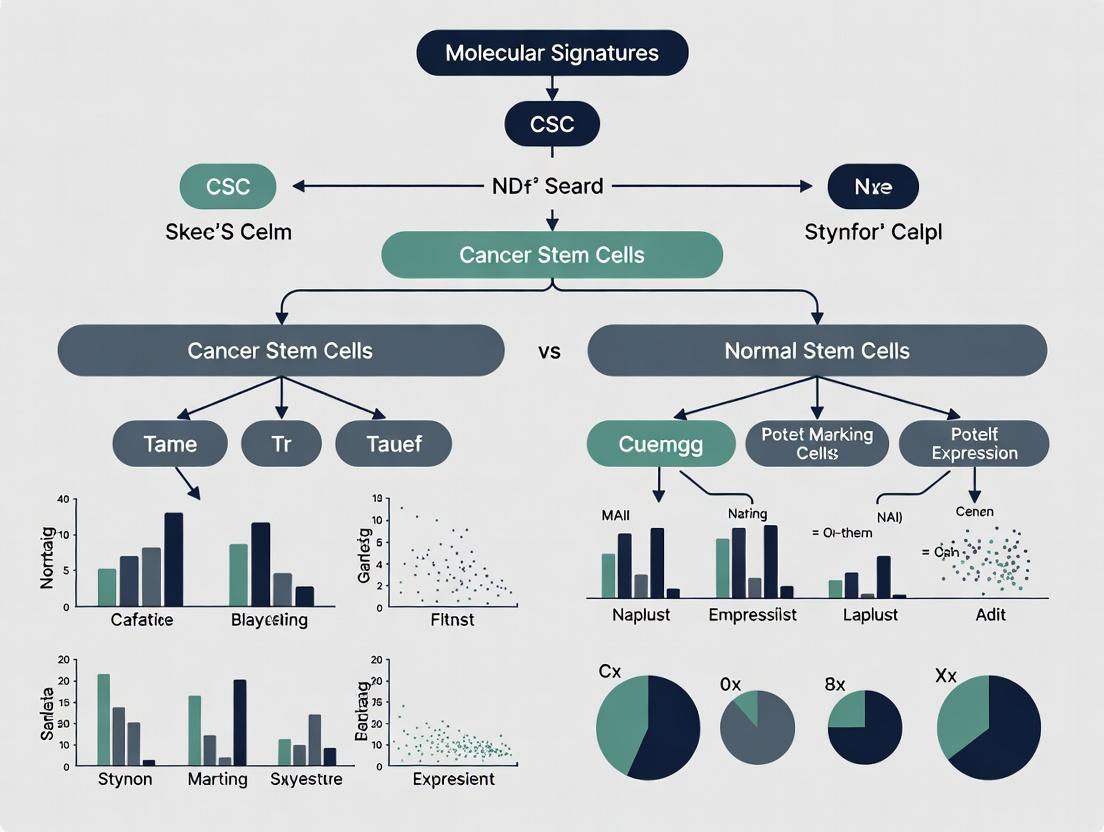
This article provides a comprehensive comparative analysis of the distinct molecular signatures that define Cancer Stem Cells (CSCs) and normal stem cells.
Decoding the Cancer Stem Cell Code: A Comparative Analysis of CSC vs Normal Stem Cell Molecular Signatures for Targeted Therapies
Abstract
This article provides a comprehensive comparative analysis of the distinct molecular signatures that define Cancer Stem Cells (CSCs) and normal stem cells. Tailored for researchers, scientists, and drug development professionals, it explores the foundational biological differences, details current methodologies for signature identification and validation, addresses key technical challenges in the field, and evaluates comparative diagnostic and therapeutic applications. The goal is to synthesize current knowledge to inform the development of precise, CSC-targeted therapies while sparing healthy stem cell function.
The Core Divide: Unpacking the Fundamental Molecular Biology of CSCs vs Normal Stem Cells
This comparison guide delineates the defining functional characteristics of normal stem cells, establishing a critical baseline for distinguishing them from cancer stem cells (CSCs) within molecular signatures research. Precise definitions and measurements of these traits are essential for developing therapies that selectively target CSCs while sparing normal regenerative tissues.
Core Characteristics of Normal Stem Cells: A Comparative Framework
| Characteristic | Definition & Function | Key Molecular Regulators | Experimental Readouts & Quantitative Metrics |
|---|---|---|---|
| Self-Renewal | The ability to undergo numerous cell divisions while maintaining the undifferentiated state. | Transcriptional Circuits: OCT4, SOX2, NANOG (Pluripotent).Signaling Pathways: Wnt/β-catenin (HSCs, ISCs), Notch (NSCs).Epigenetic: Polycomb complexes (PRC1/2). | In Vitro: Colony-forming unit (CFU) assays. Serial replating efficiency (% colonies formed over passages).In Vivo: Long-term repopulation assays in irradiated mice (>4 months engraftment). Limiting dilution analysis for stem cell frequency (1 in X cells). |
| Pluripotency | The capacity to differentiate into all cell types of the three embryonic germ layers (ectoderm, mesoderm, endoderm). Exclusive to embryonic stem cells (ESCs). | Core Network: OCT4, SOX2, NANOG triad.Signaling: LIF/STAT3 (mouse ESCs), Activin/TGF-β & FGF (human ESCs).Surface Markers: SSEA-3/4, TRA-1-60, TRA-1-81. | In Vitro: Embryoid body (EB) formation & immunostaining for germ layer markers (e.g., SOX17-endoderm, Brachyury-mesoderm, PAX6-ectoderm). Teratoma Assay: Formation of complex, differentiated tissues in vivo. Scorecard Assays: qPCR/RNA-seq panels quantifying lineage-specific gene expression. |
| Homeostasis | The maintenance of a stable stem cell pool through precisely balanced divisions (symmetric vs. asymmetric) in response to tissue needs. | Niche Signals: BMP, Wnt gradients, adhesion molecules (E-cadherin, Integrins).Cell Cycle: p21, p57 regulation.Metabolic: mTOR, AMPK, fatty acid oxidation. | Lineage Tracing: In vivo genetic labeling (e.g., Cre-lox) to track division patterns & clonal dynamics.BrdU/EdU Label-Retention: Identification of quiescent, slow-cycling stem cells.Quantification: Asymmetric vs. symmetric division ratio measured via live imaging. Niche occupancy analysis. |
Experimental Protocols for Characterizing Normal Stem Cells
1. Protocol: Serial Replating Assay for Self-Renewal (In Vitro)
- Objective: Quantify the long-term proliferative potential of hematopoietic stem/progenitor cells (HSPCs) or other stem-like populations.
- Methodology:
- Isolate the stem cell population (e.g., Lin-/c-Kit+/Sca-1+ for mouse HSCs) via FACS.
- Plate a defined number of cells (e.g., 500-1000) in semisolid methylcellulose media containing cytokines (SCF, IL-3, IL-6, EPO).
- Incubate for 7-14 days until colonies (CFUs) form.
- Count colonies, then collectively harvest all cells from the plate.
- Replate an identical number of cells (e.g., 500) from the harvested pool into fresh media.
- Repeat steps 3-5 for multiple passages (typically 4-5). Normal stem cells will show sustained colony-forming ability, while progenitors exhaust.
- Key Data: A graph of colony number versus passage number.
2. Protocol: In Vivo Teratoma Assay for Pluripotency
- Objective: Provide definitive evidence of pluripotency by demonstrating formation of differentiated tissues from all three germ layers.
- Methodology:
- Harvest 1-5 x 10^6 human or mouse ESCs.
- Resuspend cells in a 1:1 mixture of culture medium and Matrigel.
- Inject the cell mixture intramuscularly or subcutaneously into an immunodeficient mouse (e.g., NSG).
- Monitor for teratoma formation over 8-12 weeks.
- Surgically remove the teratoma, fix in 4% PFA, and prepare paraffin sections.
- Perform Hematoxylin & Eosin (H&E) staining and immunohistochemistry for germ layer-specific markers.
- Key Data: Histology images showing organized structures (e.g., glandular epithelium-endoderm; cartilage-mesoderm; neural rosettes-ectoderm).
Visualizing Key Signaling Pathways
Diagram 1: Core Pluripotency & Self-Renewal Network in ESCs
Diagram 2: Stem Cell Niche & Homeostatic Signaling
The Scientist's Toolkit: Key Research Reagent Solutions
| Reagent/Category | Specific Example(s) | Function in Normal Stem Cell Research |
|---|---|---|
| Cytokines & Growth Factors | Recombinant LIF, SCF, BMP-4, Wnt3a, FGF-basic | Maintain stemness in culture, direct differentiation, or mimic niche signals in vitro. |
| Small Molecule Inhibitors/Activators | CHIR99021 (GSK-3β inhibitor), PD0325901 (MEK inhibitor), LDN-193189 (BMP inhibitor) | Chemically modulate key signaling pathways (Wnt, FGF, BMP) to control self-renewal vs. differentiation. |
| Extracellular Matrix | Matrigel, Laminin-521, Recombinant Vitronectin | Provide a physiologically relevant substrate for cell adhesion, polarity, and signaling, crucial for stem cell culture. |
| Cell Surface Marker Antibodies | Anti-CD34, Anti-c-Kit (CD117), Anti-Sca-1, Anti-SSEA-4 | Isolate and purify specific stem cell populations via fluorescence-activated cell sorting (FACS). |
| Reporter Cell Lines | OCT4-GFP, SOX2-mCherry, Axin2-dsRed | Visualize and track stem cell state or pathway activity in real-time using live imaging. |
| Metabolic Probes | Fluorescent Glucose Analogs (2-NBDG), MitoTracker Dyes, Seahorse XF Assay Kits | Measure metabolic flux (glycolysis, OXPHOS), a key parameter of stem cell homeostasis and state. |
| In Vivo Tracking Tools | BrdU/EdU, Luciferase-expressing cells, Cre-lox lineage tracing vectors (e.g., Rosa26-lacZ) | Label and trace stem cell division, location, and fate over time in animal models. |
This guide provides the fundamental benchmarks against which cancer stem cell molecular signatures—often characterized by dysregulated self-renewal, aberrant lineage potential, and homeostatic imbalance—must be compared to identify therapeutically exploitable differences.
Within the broader thesis on deconstructing the molecular signatures that distinguish Cancer Stem Cells (CSCs) from normal stem cells (NSCs), this comparison guide objectively evaluates the core functional hallmarks of CSCs. Understanding these hallmarks is critical for developing targeted therapies that can eliminate the tumor-initiating and therapy-resistant cell population while sparing normal tissue homeostasis.
Hallmark Comparison: CSCs vs. Normal Stem Cells
The table below summarizes key functional and molecular differences underpinning malignant behaviors.
Table 1: Comparative Hallmarks of Cancer Stem Cells vs. Normal Stem Cells
| Hallmark | Cancer Stem Cell (CSC) Signature | Normal Stem Cell (NSC) Signature | Key Supporting Experimental Data (Example) |
|---|---|---|---|
| Tumor Initiation | Serially transplantable in immunocompromised mice (limiting dilution); dysregulated self-renewal pathways (e.g., Wnt/β-catenin, Hedgehog). | Tissue-regenerative capacity in syngeneic or congenic models; tightly regulated self-renewal. | As few as 100-500 CD44+/CD24- breast CSCs form tumors in NOD/SCID mice, while tens of thousands of bulk tumor cells do not (Al-Hajj et al., 2003). |
| Therapy Resistance | Enhanced DNA damage repair, upregulated drug efflux pumps (ABC transporters), quiescence, anti-apoptotic signaling. | Physiological protection mechanisms (e.g., ABC transporters for detoxification); regulated quiescence. | Glioblastoma CSCs (CD133+) show increased activation of Chk1/Chk2 checkpoint kinases and enhanced repair after radiation vs. matched non-CSCs (Bao et al., 2006). |
| Metastasis | Epithelial-mesenchymal transition (EMT) program activation, enhanced motility/invasion, niche preparation. | Restricted to developmental processes (e.g., neural crest migration); absent in adult somatic stem cells. | In colorectal cancer, CD26+ CSCs display increased liver metastasis formation in xenograft models, correlating with TGF-β-driven EMT signature (Pang et al., 2010). |
| Proliferation Dynamics | Often heterogeneous, with a quiescent subpopulation and a cycling population; dysregulated symmetric division. | Strictly controlled, often slow-cycling/quiescent, with asymmetric division predominating. | Label-retaining assays in intestinal crypts identify slow-cycling Lgr5+ stem cells, whereas intestinal adenoma CSCs show aberrant cell cycle entry. |
Experimental Protocol: Limiting Dilution Transplantation Assay (LDTA)
This gold-standard protocol for quantifying tumor-initiating cell frequency is central to CSC research.
Objective: To determine the frequency of tumor-initiating cells within a heterogeneous population.
Materials:
- Single-cell suspension from primary tumor or cell line.
- Immunocompromised mice (e.g., NOD/SCID, NSG).
- Matrigel or PBS for cell resuspension.
- FACS sorter with antibodies for putative CSC surface markers.
- Serial dilutions (e.g., 10, 100, 1000, 10000 cells/injection).
Method:
- Prepare single-cell suspension and sort into populations of interest (e.g., CD44+/CD24- vs. bulk).
- Resuspend cells in a 1:1 mixture of cold PBS and Matrigel.
- Inject cells subcutaneously or orthotopically into mice (e.g., 8-10 mice per cell dose).
- Monitor mice for tumor formation over 12-24 weeks.
- Calculate tumor-initiating frequency using statistical software (e.g., ELDA: Extreme Limiting Dilution Analysis).
Signaling Pathways in CSC Self-Renewal vs. Normal Stem Cells
A core thesis focus is the dysregulation of conserved pathways.
Diagram Title: Dysregulated Self-Renewal Pathways in CSCs vs Normal Stem Cells
The Scientist's Toolkit: Key Research Reagent Solutions
Table 2: Essential Reagents for CSC vs. NSC Signature Research
| Reagent Category | Specific Example(s) | Function in Experimental Design |
|---|---|---|
| Cell Surface Markers | Anti-human CD44, CD24, CD133, EpCAM antibodies; Lineage depletion cocktails. | Isolation and purification of putative CSC and NSC populations via FACS or MACS. |
| Reporter Constructs | Lgr5-GFP, Sox2-mCherry, Wnt/β-catenin reporter (TOP-GFP). | Real-time visualization and tracking of stem cell activity and pathway activation in vitro and in vivo. |
| Small Molecule Inhibitors | Porcupine inhibitor (LGK974) for Wnt, Vismodegib for Hedgehog, Salinomycin (CSC-targeting). | Functional validation of pathway dependency and therapeutic targeting in vitro and in vivo. |
| In Vivo Models | NOD/SCID IL2Rγnull (NSG) mice; Patient-derived xenograft (PDX) models. | Assessment of tumor initiation, metastasis, and therapy response in a physiological context. |
| 3D Culture Matrices | Matrigel, Synthetic hydrogels, Organoid culture media (e.g., IntestiCult). | Maintenance and expansion of stem cell populations in a near-physiological 3D architecture. |
| Single-Cell Analysis Kits | 10x Genomics Chromium, Smart-seq2 reagents. | Deconvolution of intra-tumor heterogeneity and comparison of CSC/NSC transcriptional signatures. |
Experimental Protocol: Therapy Resistance via Colony Formation Assay (CFA)
Quantifies clonogenic survival of CSCs after cytotoxic treatment.
Objective: To assess the radio- or chemo-resistance of sorted CSC populations compared to non-CSCs.
Materials:
- Sorted cell populations (CSC-enriched vs. non-CSC).
- Cytotoxic agent (e.g., irradiation source, chemotherapeutic drug like Temozolomide).
- Low-attachment 6-well plates for sphere formation or standard plates for adherent cells.
- Culture medium with appropriate growth factors.
- Crystal violet or MTT stain for colony visualization/quantification.
Method:
- Plate a defined number of sorted cells (e.g., 200-1000 cells/well) in triplicate.
- After 24h, treat plates with a range of drug concentrations or radiation doses (e.g., 0-8 Gy). Include untreated controls.
- Incubate for 7-21 days, allowing colonies (>50 cells) to form.
- Fix colonies with methanol/acetic acid and stain with crystal violet.
- Count colonies manually or with imaging software. Calculate surviving fraction relative to control.
- Plot dose-response curves and compare IC50 or D0 (radiation sensitivity) between populations.
CSC-Driven Metastasis Cascade
A key differentiator from NSCs is the activation of a metastatic program.
Diagram Title: Key Steps and Molecular Drivers in CSC-Mediated Metastasis
Direct comparison of functional hallmarks and their underlying molecular mechanisms reveals CSCs as malignant mimics of NSCs, hijacking core stemness programs for tumor initiation, therapy evasion, and metastasis. This guide provides a framework for experimentally dissecting these differences, contributing directly to the thesis aim of identifying uniquely targetable CSC vulnerabilities. The integration of advanced reagents and models, as outlined in the Toolkit, is essential for translating these comparisons into novel therapeutic strategies.
Within cancer stem cell (CSC) versus normal stem cell research, delineating the precise activity of core developmental signaling pathways is paramount. The Wnt/β-catenin, Hedgehog (Hh), and Notch pathways are critical transcriptional regulators in stem cell maintenance, differentiation, and tissue homeostasis. Their dysregulation is a hallmark of CSCs, driving tumor initiation, progression, and therapeutic resistance. This guide provides a comparative analysis of experimental approaches used to quantify and modulate these pathway activities, offering a framework for researchers to identify molecular signatures unique to CSCs.
Comparative Performance Analysis of Pathway Activity Reporters
Table 1: Comparison of Luciferase Reporter Assays for Pathway Activity Quantification
| Reporter System | Pathway | Key Construct (Response Element) | Dynamic Range (Fold Induction) | Common Cell Line Validation | Primary Application in CSC Research |
|---|---|---|---|---|---|
| TOPFlash/FOPFlash | Wnt/β-catenin | TCF/LEF binding sites | 10-50x | HEK293, SW480, HCT116 | Measuring β-catenin transcriptional output; assessing Wnt inhibition efficacy. |
| Gli-Luc Reporter | Hedgehog | Gli binding sites | 5-20x | C3H10T1/2, NIH/3T3, Ptch1-/- MEFs | Quantifying Hh pathway activation by Smoothened agonists/antagonists. |
| CBF1/RBP-Jk Luciferase | Notch | CBF1/RBP-Jk binding sites | 3-15x | HEK293, U2OS, T-ALL cell lines | Detecting Notch intracellular domain (NICD) nuclear activity. |
| AXIN2/LacZ (Knock-in) | Wnt/β-catenin | Endogenous Axin2 promoter | In vivo tissue-specific readout | Various mouse models | In vivo lineage tracing and spatial activity mapping in normal and tumor contexts. |
Table 2: Comparison of Pharmacological Inhibitors in Preclinical Models
| Inhibitor (Target) | Pathway | IC50/EC50 (Typical) | Key Experimental Outcome in CSC Models | Notable Off-Target Effects |
|---|---|---|---|---|
| LGK974 (PORCN) | Wnt | ~0.4 nM (cellular) | Reduces CSC frequency in PDX models of breast cancer; synergizes with chemotherapy. | Gastrointestinal toxicity due to Paneth cell impairment. |
| Vismodegib (SMO) | Hedgehog | ~3 nM (cellular) | Depletes CSCs in medulloblastoma and basal cell carcinoma; induces tumor regression. | Muscle spasms, taste loss; resistance via SMO mutations. |
| DAPT (γ-Secretase) | Notch | ~20 nM (cellular) | Inhibits sphere formation in glioblastoma and T-ALL CSCs; induces differentiation. | Gastrointestinal and skin toxicity; broad inhibition of all γ-secretase substrates. |
| JQ1 (BET Bromodomain) | Transcriptional Co-activation | ~77 nM (BRD4) | Downregulates Myc, a common downstream effector of all three pathways; effective in AML CSC models. | Thrombocytopenia. |
Experimental Protocols for Key Assays
Protocol 1: Luciferase Reporter Assay for Pathway Activity
Objective: To quantitatively compare Wnt, Hh, and Notch pathway activity in paired normal stem cell and CSC populations.
- Cell Seeding: Plate cells in 96-well plates at 5,000 cells/well.
- Transfection: Co-transfect with 100 ng of pathway-specific firefly luciferase reporter (e.g., TOPFlash, Gli-Luc, CBF1-Luc) and 10 ng of Renilla luciferase control plasmid (pRL-TK) using a suitable transfection reagent.
- Stimulation/Inhibition: 24h post-transfection, treat cells with relevant pathway agonists (e.g., Wnt3a, SAG, DLL4) or inhibitors (e.g., IWP-2, Cyclopamine, DAPT) for 16-24 hours.
- Lysis & Measurement: Lyse cells with Passive Lysis Buffer. Measure firefly and Renilla luciferase activity sequentially using a dual-luciferase reporter assay system.
- Data Analysis: Normalize firefly luminescence to Renilla luminescence for each well. Plot fold change relative to vehicle control.
Protocol 2: Tumorsphere Formation Assay (Functional CSC Readout)
Objective: To assess the functional requirement of a specific pathway for CSC self-renewal in vitro.
- Single-Cell Suspension: Dissociate primary tumor or cultured cells to a single-cell suspension using enzymatic (e.g., Accutase) and mechanical means.
- Inhibition: Pre-treat cells with pathway-specific inhibitor or DMSO vehicle for 2 hours.
- Plating: Seed cells in ultra-low attachment plates at clonal density (500-1000 cells/mL) in serum-free, growth factor-supplemented medium (e.g., DMEM/F12 with B27, EGF, bFGF).
- Culture & Feeding: Culture for 5-10 days. Feed every 3-4 days by adding fresh medium.
- Quantification: Count primary spheres (>50 μm diameter) under a microscope. Data is presented as sphere-forming efficiency (%) = (number of spheres / number of cells seeded) * 100.
Pathway and Workflow Visualizations
The Scientist's Toolkit: Research Reagent Solutions
Table 3: Essential Reagents for Core Pathway Research
| Reagent/Material | Supplier Examples | Function in Experiment |
|---|---|---|
| Recombinant Human Wnt3a | R&D Systems, PeproTech | Gold-standard ligand for activating canonical Wnt signaling in cell culture assays. |
| Recombinant Sonic Hedgehog (Shh) | R&D Systems, STEMCELL Tech | Purified ligand for activating Hedgehog pathway in target cells. |
| Recombinant DLL4/Fc Chimera | Sino Biological, R&D Systems | Immobilizable ligand for activating Notch signaling in co-culture or plate-bound assays. |
| Dual-Luciferase Reporter Assay System | Promega | Provides reagents for sequential measurement of firefly and Renilla luciferase, enabling normalized reporter activity. |
| γ-Secretase Inhibitor (DAPT) | Tocris, Selleckchem | Small molecule inhibitor of the protease complex that cleaves Notch, blocking pathway activation. |
| Smoothened Agonist (SAG) | Cayman Chemical, Sigma-Aldrich | Potent small molecule activator of SMO, used as a positive control in Hh pathway assays. |
| CHIR99021 (GSK-3β Inhibitor) | Tocris, STEMCELL Tech | Small molecule that stabilizes β-catenin by inhibiting GSK-3β, acting as a potent Wnt pathway activator. |
| Anti-β-catenin (Active) Antibody | MilliporeSigma, Cell Signaling Tech | Detects non-phosphorylated (active) β-catenin by western blot or immunofluorescence. |
| Anti-Hes1 Antibody | Abcam, Cell Signaling Tech | Key readout antibody for Notch pathway activity via western blot or IHC. |
| Anti-Gli1 Antibody | Cell Signaling Tech, Santa Cruz | Primary antibody to detect the major Hh pathway transcriptional effector. |
| Ultra-Low Attachment Plates | Corning, STEMCELL Tech | Prevents cell adhesion, enabling 3D sphere growth for clonogenic CSC assays. |
| StemMACs Human Tumor Dissociation Kit | Miltenyi Biotec | Optimized enzyme blend for gentle tissue dissociation to preserve cell viability and surface markers. |
Within the pursuit of distinguishing cancer stem cell (CSC) from normal stem cell molecular signatures, epigenetic regulation stands as a critical frontier. Unlike static genetic mutations, epigenetic imprints are dynamic, reversible, and tissue-specific, offering profound insights into the mechanisms of pluripotency, differentiation, and malignant transformation. This guide provides a comparative analysis of the three core epigenetic systems: DNA methylation, histone modifications, and chromatin remodeling complexes, emphasizing their distinct roles and interplay in shaping cellular identity.
Comparative Analysis of Epigenetic Mechanisms
Table 1: Core Characteristics and Functional Outputs
| Feature | DNA Methylation | Histone Modifications | Chromatin Remodeling |
|---|---|---|---|
| Chemical Basis | Covalent addition of methyl group to cytosine (5mC, 5hmC). | Covalent modifications (acetylation, methylation, phosphorylation) on histone tails. | ATP-dependent physical repositioning, eviction, or exchange of nucleosomes. |
| Primary Enzymes | DNMT1, DNMT3A/B, TET1/2/3. | HATs, HDACs, HMTs, KDMs. | SWI/SNF, ISWI, CHD, INO80 complexes. |
| Typical Signal | Gene Body methylation: Variable effect. Promoter methylation: Repressive. | H3K4me3: Active promoter. H3K27me3: Repressive (facultative). H3K9me3: Repressive (constitutive). H3K27ac: Active enhancer. | Alters nucleosome accessibility, enabling or blocking transcription factor binding. |
| Stability & Heritability | Highly stable through cell division; semi-conservative maintenance. | Dynamic; can be rapidly changed; heritability mechanisms are complex. | Not directly heritable; re-established each cell cycle based on other cues. |
| Role in CSC vs. Normal | Hypermethylation of tumor suppressor gene promoters (e.g., CDKN2A) is common in CSCs. Key regulators like TET genes are often dysregulated. | Bivalent domains (H3K4me3 + H3K27me3) at developmental genes are often aberrantly resolved in CSCs, promoting oncogenic programs. | SWI/SNF subunits (e.g., ARID1A, SMARCA4) are frequently mutated in cancers, leading to aberrant CSC chromatin accessibility. |
Table 2: Experimental Readouts and Quantitative Data from Representative Studies
| Method | Target | Normal Stem Cell Signature (Example) | CSC Signature (Example) | Key Discrepancy |
|---|---|---|---|---|
| Whole-Genome Bisulfite Seq | 5mC | High global CpG island hypomethylation with focal hypermethylation. | Widespread hypermethylation at CpG islands, genome-wide hypomethylation. | ~20-30% more hypermethylated CpG islands in CSCs vs. normal counterparts (varying by tissue). |
| ChIP-seq (H3K27ac) | Active Enhancers | Enhancers active at pluripotency loci (e.g., OCT4, NANOG). | Ectopic oncogenic enhancer activation (e.g., MYC, SOX2 super-enhancers). | >50% of top super-enhancers are distinct between normal and CSCs, driving oncogene expression. |
| ATAC-seq | Chromatin Accessibility | Open chromatin at lineage-specific differentiation genes. | Aberrantly open chromatin at pro-survival and metastasis-related loci. | Differential accessibility peaks show enrichment for AP-1 and NF-κB motifs in CSCs. |
Experimental Protocols for Epigenetic Profiling
1. Genome-Wide DNA Methylation Analysis (Whole-Genome Bisulfite Sequencing - WGBS)
- Principle: Bisulfite conversion deaminates unmethylated cytosines to uracil (read as thymine), while methylated cytosines remain unchanged.
- Protocol Summary: a. DNA Extraction & Fragmentation: Isolate high-molecular-weight genomic DNA and shear to ~300bp. b. Bisulfite Conversion: Treat DNA with sodium bisulfite (e.g., using EZ DNA Methylation Kit). Optimize for complete conversion (typically >99%). c. Library Construction: Repair ends, add adapters to bisulfite-converted DNA, and perform PCR amplification. d. Sequencing & Analysis: Sequence on an NGS platform (e.g., Illumina). Align reads to a bisulfite-converted reference genome using tools like Bismark or BSMAP. Calculate methylation percentage per cytosine.
2. Mapping Histone Modifications (Chromatin Immunoprecipitation Sequencing - ChIP-seq)
- Principle: Use a specific antibody to immunoprecipitate protein-bound DNA fragments, identifying genomic loci associated with the epigenetic mark.
- Protocol Summary: a. Crosslinking & Sonication: Fix cells with formaldehyde to crosslink proteins to DNA. Lyse cells and shear chromatin to 200-500bp via sonication. b. Immunoprecipitation: Incubate chromatin with validated, high-specificity antibody against the target mark (e.g., anti-H3K27ac). Capture antibody-chromatin complexes with protein A/G beads. c. Washing, Elution & Reverse Crosslinking: Stringently wash beads, elute chromatin, and reverse crosslinks at high temperature with proteinase K. d. Library Prep & Sequencing: Purify DNA, construct sequencing library, and sequence. Analyze peaks vs. input control using tools like MACS2.
3. Assessing Chromatin Accessibility (ATAC-seq - Assay for Transposase-Accessible Chromatin)
- Principle: Hyperactive Tn5 transposase inserts sequencing adapters into open, nucleosome-free regions of the genome.
- Protocol Summary: a. Nuclei Preparation: Lyse cells in a mild detergent buffer to isolate intact nuclei. b. Tagmentation: Incubate nuclei with pre-loaded Tn5 transposase (Nextera) for 30 min at 37°C to simultaneously fragment and tag accessible DNA. c. DNA Purification & PCR: Purify tagmented DNA and amplify with limited-cycle PCR. d. Sequencing & Analysis: Sequence and align reads. Call peaks to identify open regions; infer nucleosome positions from fragment size distribution.
Visualizations
Title: Epigenetic Mechanisms Directing Normal vs CSC Fates
Title: Workflow for Integrative Epigenetic Profiling
The Scientist's Toolkit: Key Research Reagents
Table 3: Essential Reagents for Epigenetic Signature Research
| Reagent Category | Specific Example | Function in Research |
|---|---|---|
| Bisulfite Conversion Kits | EZ DNA Methylation Kit (Zymo Research) | Standardized, high-efficiency conversion of unmethylated cytosine for downstream methylation analysis. |
| Validated ChIP-grade Antibodies | Anti-H3K27me3 (Cell Signaling, C36B11); Anti-H3K4me3 (Diagenode, C15410003) | High-specificity immunoprecipitation of histone modifications for accurate genome-wide mapping. |
| ATAC-seq Kits | Illumina Tagment DNA TDE1 Enzyme & Buffer Kits | Pre-loaded Tn5 transposase for efficient, simultaneous fragmentation and tagging of open chromatin. |
| DNMT Inhibitors | 5-Azacytidine (DNA hypomethylating agent) | Functional tool to probe the role of DNA methylation in maintaining CSC phenotypes (e.g., clonogenicity). |
| HDAC Inhibitors | Trichostatin A (TSA), Vorinostat (SAHA) | Chemical probes to assess the functional consequence of histone acetylation levels on stem cell gene expression. |
| Next-Gen Sequencing Kits | Illumina NovaSeq XP 4-Lane Kit | High-throughput sequencing for genome-wide coverage in WGBS, ChIP-seq, and ATAC-seq applications. |
Within the broader thesis investigating Cancer Stem Cell (CSC) versus Normal Stem Cell (NSC) molecular signatures, metabolic reprogramming emerges as a defining hallmark. This comparison guide objectively contrasts the distinct energetic demands and substrate utilization strategies employed by CSCs and NSCs, underpinning their divergent biological behaviors and therapeutic vulnerabilities.
Comparative Analysis of Core Metabolic Pathways
Table 1: Primary Metabolic Pathways and Energy Output
| Metabolic Parameter | Cancer Stem Cells (CSCs) | Normal Stem Cells (NSCs) | Key Implications |
|---|---|---|---|
| Preferred ATP Generation | Primarily Glycolysis, even in normoxia (Aerobic Glycolysis/Warburg Effect). High glycolytic flux. | Oxidative Phosphorylation (OXPHOS) in quiescence; can shift to glycolysis upon activation. | CSC metabolic plasticity supports survival in hypoxic niches; OXPHOS dependency in some CSCs noted. |
| Glucose Uptake & Utilization | Very High. Glucose primarily converted to lactate, with carbon diverted into anabolic pathways (PPP, serine synthesis). | Moderate. Glucose oxidized via TCA cycle for efficient ATP yield; PPP active for redox maintenance. | High glucose uptake in CSCs fuels biosynthesis and maintains NADPH/ROS balance. |
| Glutamine Dependency | Often High. Crucial anaplerosis for TCA cycle, nitrogen donor for nucleotide/amino acid synthesis. | Variable, lower. Primarily for amino acid/protein synthesis, less critical for energy. | Glutaminolysis inhibitors selectively target CSC self-renewal in some contexts. |
| Fatty Acid Metabolism | Increased de novo lipogenesis and Fatty Acid Oxidation (FAO). FAO used for ATP and NADPH production. | Primarily FAO for energy in quiescent states; lipogenesis during proliferation. | FAO blockade can impair CSC function and induce differentiation. |
| Mitochondrial Function | Often dysfunctional but active. ROS signaling promotes stemness; involved in biosynthetic precursor synthesis. | Highly functional, low ROS. Maintains genomic integrity and regulated differentiation. | Mitochondrial inhibitors (e.g., metformin) target CSCs by disrupting energy/redox balance. |
| Intrinsic ROS Levels | Moderately elevated (pro-stemness signaling). | Low (maintained by robust antioxidant systems). | CSC vulnerability to further ROS induction or antioxidant system disruption. |
Table 2: Quantitative Metabolite Utilization & Output (Representative Experimental Data)
| Measured Variable | CSC Model (e.g., Breast CD44+/CD24-) | NSC Model (e.g., Mesenchymal Stem Cell) | Experimental Method |
|---|---|---|---|
| Extracellular Acidification Rate (ECAR) | 25-35 mpH/min | 8-12 mpH/min | Seahorse XF Glycolysis Stress Test |
| Oxygen Consumption Rate (OCR) | 50-80 pmol/min | 150-200 pmol/min | Seahorse XF Mito Stress Test |
| ATP Production Rate (from glycolysis) | ~70% | ~30% | Seahorse XF Real-Time ATP Rate Assay |
| Glutamine Consumption | High (2-3x NSC levels) | Low/Moderate | LC-MS/MS, Metabolic Flux Analysis (13C-Gln tracing) |
| NADPH/NADP+ Ratio | ~5-8 | ~10-12 | Enzymatic cycling assay |
| Lactate Secretion | High (>15 mmol/10^6 cells/24h) | Low (<5 mmol/10^6 cells/24h) | Colorimetric/Biochemical assay |
Experimental Protocols for Key Comparisons
Protocol 1: Assessing Metabolic Phenotype via Seahorse XF Analyzer
Objective: To simultaneously measure OCR (OXPHOS) and ECAR (glycolysis) in live CSCs vs NSCs.
- Cell Preparation: Isolate CSCs (via FACS for surface markers) and NSCs. Seed 20,000-50,000 cells/well in a Seahorse XF microplate in appropriate growth medium 24h pre-assay.
- Assay Medium: Replace growth medium with unbuffered, substrate-supplemented XF Assay Medium (pH 7.4) containing 10mM glucose, 1mM pyruvate, and 2mM glutamine. Incubate 1h at 37°C, non-CO2.
- Mitochondrial Stress Test: Sequential injection of:
- Oligomycin (1.5 µM): ATP synthase inhibitor; reveals ATP-linked respiration.
- FCCP (1 µM): Uncoupler; reveals maximal respiratory capacity.
- Rotenone/Antimycin A (0.5 µM each): Complex I/III inhibitors; reveals non-mitochondrial respiration.
- Glycolysis Stress Test: Sequential injection of:
- Glucose (10 mM): Indicates basal glycolysis.
- Oligomycin (1.5 µM): Induces maximum glycolytic capacity.
- 2-DG (50 mM): Glycolytic inhibitor; confirms glycolytic acidification.
- Data Analysis: Normalize to cell number. Calculate key parameters: Basal OCR/ECAR, ATP production rates, glycolytic reserve, spare respiratory capacity.
Protocol 2: Tracing Metabolic Flux with Stable Isotopes
Objective: To map the fate of glucose and glutamine carbons in central carbon metabolism.
- Isotope Labeling: Culture CSCs and NSCs in medium with U-13C-glucose or U-13C-glutamine for a defined period (e.g., 0, 1, 6, 24h).
- Metabolite Extraction: Wash cells quickly with cold saline. Quench metabolism with cold 80% methanol. Scrape cells, vortex, centrifuge. Dry supernatant under nitrogen.
- Derivatization & Analysis: Derivatize extracts (e.g., methoximation and silylation for GC-MS). Analyze using GC-MS or LC-MS.
- Data Processing: Use software (e.g., Maven, MetaboAnalyst) to correct for natural isotope abundance and calculate mass isotopomer distributions (MIDs).
- Interpretation: Determine fractional enrichment in metabolites (e.g., lactate m+3 from glucose; TCA intermediates m+4, m+5 from glutamine) to infer pathway activity.
Visualizing Core Metabolic Contrasts
Diagram Title: Core Metabolic Flux in CSCs vs NSCs
Diagram Title: Integrated Metabolic Profiling Workflow
The Scientist's Toolkit: Research Reagent Solutions
| Reagent / Material | Primary Function in Metabolic Studies of CSCs/NSCs |
|---|---|
| Seahorse XF Analyzer (Agilent) | Measures real-time OCR and ECAR in live cells to phenotype glycolytic and mitochondrial function. |
| Stable Isotope-Labeled Substrates (e.g., U-13C-Glucose, U-13C-Glutamine, Cambridge Isotopes) | Tracers for Metabolic Flux Analysis (MFA) to quantify pathway utilization and carbon fate. |
| Flow Cytometry Antibodies for CSC Markers (e.g., anti-CD44, anti-CD133, BioLegend) | Isolation and validation of pure CSC populations from heterogeneous tumor cell lines or primary samples. |
| Metabolic Inhibitors (e.g., 2-DG, Oligomycin, Etomoxir, CB-839, Tocris) | Pharmacologic tools to perturb specific pathways (glycolysis, OXPHOS, FAO, glutaminase) and assess dependency. |
| LC-MS / GC-MS Systems (e.g., Thermo Q Exactive, Agilent GC-QTOF) | High-sensitivity platforms for targeted and untargeted metabolomic profiling and isotope tracing. |
| Extraction Solvents (e.g., 80% Methanol in Water, -80°C) | Quenches cellular metabolism instantly and extracts polar metabolites for downstream analysis. |
| MitoTracker & ROS Dyes (e.g., MitoTracker Deep Red, CellROX, Thermo Fisher) | Fluorescent probes for assessing mitochondrial mass/ membrane potential and reactive oxygen species levels via flow cytometry or imaging. |
| Ultra-Low Attachment Plates (Corning) | Supports 3D sphere formation assays (tumorspheres, neurospheres) to assess stem cell self-renewal capacity post-metabolic perturbation. |
Within the broader thesis comparing cancer stem cell (CSC) and normal stem cell molecular signatures, a central paradox emerges: many surface markers used to identify and isolate CSCs are shared with normal tissue stem cells. This presents significant challenges for targeted therapy. This guide objectively compares the performance of the most prominent markers—CD44, CD133, and ALDH activity—based on experimental data, highlighting their utility and limitations in distinguishing CSCs from their normal counterparts.
Comparative Analysis of Key CSC/Normal Stem Cell Markers
Table 1: Marker Expression Profile and Functional Role
| Marker | Primary Function/ Ligand | Expression in Normal Stem Cells | Expression in CSCs (Example Cancers) | Key Limitations for Targeting |
|---|---|---|---|---|
| CD44 | Hyaluronic acid receptor, cell adhesion & signaling | Hematopoietic, mesenchymal, epithelial stem cells | Breast, colorectal, pancreatic, HNSCC | Ubiquitous expression; multiple splice variants (CD44v) with complex roles; marker heterogeneity. |
| CD133 (Prominin-1) | Cholesterol transporter, membrane organization | Hematopoietic, neural, epithelial, endothelial progenitors | Brain (GBM), colorectal, liver, pancreatic | Expression not always correlated with stemness; rapidly internalized; controversial specificity. |
| ALDH (Enzymatic Activity) | Retinoic acid synthesis, oxidative stress response, detoxification | Hematopoietic, neural crest, mammary stem cells | Breast, lung, liver, colon, HNSCC | Activity varies with cell state; not a surface protein (requires functional assay); isoform diversity (ALDH1A1, A3, etc.). |
Table 2: Experimental Tumorigenicity Data from Limiting Dilution Assays (Sample Data)
| Marker/Assay | Cancer Type (Model) | Tumor-Initiating Cell Frequency (Marker+ vs. Marker-) | Key Supporting Study (Example) |
|---|---|---|---|
| CD44+ | Breast Cancer (Xenograft) | 1 in 57 (CD44+) vs. 1 in 11,000 (CD44-) | Al-Hajj et al., PNAS, 2003 |
| CD133+ | Glioblastoma (Xenograft) | 1 in 262 (CD133+) vs. No tumors (CD133-) | Singh et al., Nature, 2004 |
| ALDHhigh | Colon Cancer (Xenograft) | 1 in 233 (ALDHhigh) vs. 1 in 33,333 (ALDHlow) | Huang et al., PLoS One, 2009 |
| Combined CD44+CD133+ | Pancreatic Cancer (Xenograft) | 1 in 103 (double+) vs. 1 in 4,420 (single+) | Li et al., Cancer Res, 2007 |
Detailed Experimental Protocols
Flow Cytometry for Surface Marker (CD44/CD133) Isolation
Protocol:
- Cell Preparation: Generate single-cell suspension from primary tumor tissue or cell line using enzymatic digestion (e.g., collagenase/hyaluronidase).
- Staining: Incubate cells with fluorochrome-conjugated monoclonal antibodies against human CD44 (e.g., clone G44-26) and CD133 (e.g., clone AC133) for 30-60 minutes on ice in the dark. Include isotype controls.
- Washing & Sorting: Wash cells with PBS + 2% FBS. Analyze and sort using a flow cytometer (e.g., BD FACS Aria). Gate live cells using a viability dye (e.g., DAPI).
- Validation: Collect sorted populations for functional assays (sphere formation, in vivo tumorigenesis).
ALDEFLUOR Assay for ALDH Enzymatic Activity
Protocol:
- Principle: Uses a fluorescent substrate (BODIPY-aminoacetaldehyde) that is converted and retained in cells with high ALDH activity.
- Staining: Incubate single-cell suspension with ALDEFLUOR substrate for 30-45 minutes at 37°C. A control aliquot is treated with the ALDH-specific inhibitor diethylaminobenzaldehyde (DEAB).
- Analysis: Analyze cells immediately by flow cytometry. The ALDHhigh population is defined as the bright fluorescence region diminished in the DEAB control.
- Sorting: Sort ALDHhigh and ALDHlow cells for downstream assays.
Gold Standard Functional Assay: In Vivo Limiting Dilution Transplantation
Protocol:
- Cell Dose Preparation: Prepare serial dilutions of FACS-sorted marker-positive and marker-negative cells (e.g., 10, 100, 1000, 10000 cells).
- Transplantation: Mix cells with Matrigel and inject subcutaneously or orthotopically into immunocompromised mice (e.g., NOD/SCID/IL2Rγnull mice).
- Monitoring: Monitor mice for tumor formation over 4-6 months.
- Data Analysis: Calculate tumor-initiating cell frequency using extreme limiting dilution analysis (ELDA) software, which provides statistical significance and confidence intervals.
Signaling Pathways and Marker Interplay
Title: Core Signaling Network Linking CSC Markers to Stemness Traits
Experimental Workflow for Marker-Based CSC Isolation & Validation
Title: Integrated Workflow for CSC Marker Validation
The Scientist's Toolkit: Key Research Reagent Solutions
Table 3: Essential Materials for CSC Marker Research
| Reagent/Material | Function/Application | Example (Supplier) |
|---|---|---|
| Anti-Human CD44 Antibody | Fluorescent labeling and sorting of CD44+ cells. | Clone G44-26 (BD Biosciences) |
| Anti-Human CD133/1 (AC133) Antibody | Specific detection of the AC133 epitope of CD133. | Clone AC133 (Miltenyi Biotec) |
| ALDEFLUOR Kit | Detection of intracellular ALDH enzymatic activity by flow cytometry. | StemCell Technologies |
| Recombinant Hyaluronidase | Enzymatic digestion of tumor tissue for single-cell suspension. | STEMCELL Technologies |
| Matrigel Matrix | Basement membrane extract for supporting tumor cell growth in vivo. | Corning |
| NOD/SCID/IL2Rγnull (NSG) Mice | Immunodeficient host for human xenograft studies. | The Jackson Laboratory |
| Extreme Limiting Dilution Analysis (ELDA) Software | Open-source tool for statistically analyzing tumor-initiating cell frequency. | (Bioinformatics, 2009) |
| StemCell Culture Media (Serum-Free) | Supports growth of undifferentiated stem/CSC spheres. | mTeSR, StemPro |
From Lab to Clinic: Techniques for Isolating, Profiling, and Targeting CSC-Specific Signatures
Within the context of cancer stem cell (CSC) versus normal stem cell molecular signature research, the isolation and enrichment of pure cell populations is a critical first step. Accurate comparisons of molecular signatures depend on robust, reproducible methods to separate CSCs from their normal counterparts and the bulk tumor. This guide compares three cornerstone techniques: Fluorescence-Activated Cell Sorting (FACS), Magnetic-Activated Cell Sorting (MACS), the Side Population (SP) assay, and Sphere-Formation assays.
Objective Comparison of Enrichment Strategies
Table 1: Technical Comparison of Core Isolation & Enrichment Methods
| Feature | FACS | MACS | Side Population Assay | Sphere-Formation Assay |
|---|---|---|---|---|
| Primary Principle | Laser-based detection & electrostatic droplet sorting. | Magnetic bead labeling & column-based separation. | Efflux of Hoechst 33342 dye via ABC transporters (e.g., ABCG2). | Anchorage-independent growth in serum-free, non-adherent conditions. |
| Throughput/Speed | Moderate to Low (analytical to several thousand cells/sec). | Very High (millions of cells in minutes). | Moderate (requires flow cytometric analysis). | Very Low (weeks for colony formation). |
| Purity | Very High (multi-parameter, single-cell). | High (positive selection); Moderate (depletion). | Moderate (can have overlapping dye profiles). | Functional readout, not a purification method. |
| Cell Viability Post-Process | Good (can be stressful). | Excellent (gentle process). | Fair (dye incubation & UV exposure). | Variable (depends on stem cell frequency). |
| Cost | Very High (equipment, maintenance). | Low to Moderate. | Moderate (flow cytometer needed). | Low. |
| Key Experimental Output | Highly purified, viable cell population for downstream omics. | Enriched/depleted population for bulk assays or further sorting. | Proportion of SP cells; can be sorted via FACS. | Sphere-forming efficiency (SFE) as a functional proxy for "stemness". |
| Best Suited For | High-precision isolation for single-cell RNA-seq, proteomics. | Rapid pre-enrichment before FACS, or for high-cell number applications. | Identifying stem-like cells based on conserved transporter activity. | Functional assessment of self-renewal and clonogenicity without specific surface markers. |
Table 2: Representative Experimental Data from CSC Studies
| Study Focus (Cancer Type) | Method Used | Key Metric & Result | Comparison Implication |
|---|---|---|---|
| Breast Cancer CSC (ALDH+) | FACS vs. MACS | Purity: FACS: 95.2% ± 2.1% ALDH+; MACS: 85.7% ± 4.3% ALDH+. Viability: FACS: 88%; MACS: 95%. | FACS offers superior purity for definitive molecular profiling, while MACS provides higher viability for functional assays post-sort. |
| Glioma Stem Cells (CD133+) | MACS pre-enrichment into FACS | Pre-enrichment increased sorting efficiency by 3-fold and reduced sort time by 60%. | Sequential MACS-FACS optimizes resource use for rare cell populations. |
| Normal vs. Leukemic Stem Cells | Side Population Assay | SP fraction in AML: 0.1-2.0%; in normal BM: 0.01-0.05%. Verapamil inhibition confirmed ABC transporter specificity. | SP assay highlights a differential in stem-like cell frequency but requires functional validation to distinguish CSC from normal stem cells. |
| Colon Cancer CSCs | Sphere-Formation vs. Marker-Based FACS | Sphere-derived cells showed 100-fold higher tumorigenicity in vivo vs. bulk. Correlation between CD44+ FACS sort and high SFE was 78%. | Sphere formation is a functional gold standard, but marker-based sorting yields immediate, defined populations for molecular analysis. |
Detailed Experimental Protocols
Protocol 1: Combined MACS and FACS for High-Purity CSC Isolation
- Objective: Isolate a pure population of CD44+/CD24- breast cancer stem cells.
- Reagents: Tumor dissociation kit, MACS CD44 MicroBeads (human), LS columns, FACS buffer (PBS + 2% FBS), anti-CD44-FITC, anti-CD24-PE, viability dye (e.g., 7-AAD).
- Procedure:
- Generate single-cell suspension from tumor tissue via enzymatic dissociation.
- MACS Pre-enrichment: Incubate cells with CD44 MicroBeads (15 min, 4°C). Wash, apply to LS column in magnetic field. Collect flow-through (CD44- cells). Remove column, flush out CD44+ positively selected cells.
- FACS Staining: Incubate MACS-enriched cells with anti-CD24-PE and viability dye (30 min, 4°C, dark). Wash twice.
- FACS Sorting: Using a flow cytometer with a 100 µm nozzle, gate on viable singlets. Sort the CD44+/CD24- population into collection tubes with growth medium.
- QC: Re-analyze a fraction of sorted cells to confirm purity (>95%).
Protocol 2: Side Population Assay for ABC Transporter-Enriched Cells
- Objective: Identify and quantify the stem-like Side Population in a bone marrow sample.
- Reagents: Hoechst 33342 dye, DMEM/F12 with 2% FBS, Verapamil (ABC transporter inhibitor), Propidium Iodide (PI).
- Procedure:
- Prepare cells at 1x10^6 cells/mL in pre-warmed medium.
- Dye Loading: Add Hoechst 33342 (final 5 µg/mL) to samples. Include a control sample with Hoechst + Verapamil (50-100 µM). Incubate for 90 min at 37°C with intermittent mixing.
- Stop & Stain: Place samples on ice, wash with cold PBS. Resuspend in ice-cold buffer containing PI (2 µg/mL) to label dead cells.
- Flow Analysis: Analyze immediately using a flow cytometer equipped with UV laser. Excite Hoechst at 355 nm, collect blue fluorescence at 450/40 nm (Hoechst Blue) and red at 670/30 nm (Hoechst Red). Gate on PI-negative live cells.
- Identification: The SP phenotype appears as a distinct, dim tail of cells on a Hoechst Red vs. Blue plot. This population should be abolished in the Verapamil control.
Protocol 3: Sphere-Formation Assay for Clonogenic Potential
- Objective: Assess the self-renewal capacity of putative CSC populations in vitro.
- Reagents: Serum-free DMEM/F12, B-27 Supplement (20x), recombinant human EGF (20 ng/mL), recombinant human bFGF (10 ng/mL), ultra-low attachment plates.
- Procedure:
- Prepare sphere culture medium: DMEM/F12 + 1x B-27 + EGF + bFGF.
- Seed single cells at clonal density (500-10,000 cells/mL, depending on frequency) in ultra-low attachment multi-well plates.
- Incubate at 37°C, 5% CO2 for 7-14 days. Do not disturb cultures. Add fresh growth factors twice per week.
- Quantification: After 7-14 days, count spheres under a microscope (typically >50-100 µm in diameter). Calculate Sphere-Forming Efficiency (SFE) = (Number of spheres formed / Number of cells seeded) x 100%.
- Passaging: For self-renewal assessment, collect spheres, dissociate to single cells enzymatically, and re-seed at clonal density.
Visualizations
Diagram 1: Workflow for Integrated CSC Isolation & Validation
Diagram 2: Core Signaling in Sphere-Formation Assay Conditions
The Scientist's Toolkit
Table 3: Essential Research Reagent Solutions
| Item | Function in CSC Research | Example/Note |
|---|---|---|
| Ultra-Low Attachment Plates | Prevents cell adhesion, forcing anchorage-independent growth crucial for sphere formation. | Corning Costar or Nunclon Sphera plates. |
| B-27 Serum-Free Supplement | Provides essential hormones, antioxidants, and proteins to support neural and epithelial stem cells in serum-free conditions. | Gibco B-27 Supplement (50X). |
| Recombinant Human EGF/bFGF | Mitogens that activate proliferation and self-renewal pathways (e.g., MAPK, PI3K) in stem-like cells. | PeproTech or R&D Systems; aliquot to avoid freeze-thaw cycles. |
| MACS MicroBeads & Columns | Enables rapid magnetic separation based on surface markers (e.g., CD133, CD44). | Miltenyi Biotec MACS system; available for many species and markers. |
| Hoechst 33342 | DNA-binding dye effluxed by ABCG2/BCRP1 transporter, defining the Side Population phenotype. | Thermo Fisher; requires precise concentration and incubation time optimization. |
| Viability Dyes (7-AAD, PI) | Distinguishes live from dead cells during flow cytometry to ensure sort/analysis quality. | Critical for excluding dead cells in SP assay and FACS. |
| Tissue Dissociation Enzymes | Generates single-cell suspensions from primary tumors for sorting and assay setup. | Miltenyi Tumor Dissociation Kits or STEMCELL GentleMACS. |
| Matrigel Basement Membrane | Used in differentiation assays or in vivo tumorigenicity studies to support 3D growth. | Corning Matrigel; keep on ice to prevent polymerization. |
Within cancer stem cell (CSC) versus normal stem cell research, defining precise molecular signatures is paramount for identifying therapeutic targets. High-throughput single-cell technologies have become indispensable tools for this task. This guide compares three cornerstone profiling modalities—Single-Cell RNA Sequencing (scRNA-seq), Assay for Transposase-Accessible Chromatin using sequencing (scATAC-seq), and Single-Cell Proteomics (primarily mass cytometry by time-of-flight, CyTOF)—focusing on their performance in dissecting the molecular heterogeneity of stem cell populations.
Technology Comparison & Performance Data
Table 1: Core Performance Metrics for CSC/Normal Stem Cell Profiling
| Metric | Single-Cell RNA-seq (e.g., 10x Genomics) | Single-Cell ATAC-seq (e.g., 10x Multiome) | Single-Cell Proteomics (e.g., CyTOF) |
|---|---|---|---|
| Molecule Measured | Transcripts (mRNA) | Accessible Chromatin Regions (Chromatin) | Proteins (Epitopes) |
| Throughput (Cells/Run) | 1,000 - 20,000+ | 1,000 - 20,000+ | 1,000 - 1,000,000+ |
| Key Readout | Gene expression levels | Regulatory element activity | Protein abundance & post-translational modifications |
| Resolution | High (gene level) | High (peak level) | Moderate (~40-50 parameters) |
| Throughput (Multiplexing) | High (Transcriptome-wide) | High (Genome-wide) | High (Pre-defined panel) |
| Primary Application in CSC Research | Identifying transcriptional subpopulations, stemness programs | Mapping regulatory landscapes, transcription factor dynamics | Profiling signaling pathways, surface marker phenotyping |
| Key Experimental Data (Typical) | Identifies distinct CSC clusters via markers like SOX2, NANOG; Differential expression of drug resistance genes. | Reveals open chromatin at enhancers of pluripotency genes; TF motif accessibility for OCT4, SOX2. | Quantifies phosphorylation of STAT3, AKT in CSCs; Co-expression of CD44, CD133. |
| Integration Capability | High (paired with ATAC-seq, CITE-seq) | High (paired with RNA-seq) | High (with barcoding for limited multiplex transcriptomics) |
Table 2: Suitability for Specific Research Questions
| Research Question | Recommended Technology | Supporting Experimental Evidence |
|---|---|---|
| Identifying rare CSC subpopulations | scRNA-seq, CyTOF | scRNA-seq uncovered a chemoresistant ALDH1A3+ subpopulation in glioblastoma (Dirkse et al., Cell Stem Cell, 2019). |
| Mapping transcriptional regulatory networks | scATAC-seq, Multiome (ATAC+RNA) | Integrated scATAC/RNA-seq in leukemia revealed RUNX1 as a key regulator of CSC state (Granja et al., Cell, 2021). |
| Analyzing active signaling pathways | CyTOF, CITE-seq (RNA+Protein) | CyTOF profiling showed hyperactivated PI3K/AKT/mTOR pathway in breast CSCs compared to normal mammary stem cells (Lehmann et al., Cancer Res, 2020). |
| Tracing lineage commitment from stem cells | scRNA-seq (with lineage tracing), scATAC-seq | Coupled scRNA-seq with genetic barcoding mapped the hierarchical lineage output of normal hematopoietic stem cells (Weinreb et al., Science, 2020). |
Detailed Experimental Protocols
Protocol 1: Integrated Single-Cell Multiome (RNA+ATAC) Assay for CSC Profiling
Objective: To simultaneously capture gene expression and chromatin accessibility from the same single cell in a mixed population of CSCs and normal stem cells.
- Cell Preparation: Obtain dissociated cells from tumor and normal tissue. Viability >90%. Adjust to 700-1200 cells/µL.
- Nuclei Isolation: Use a chilled lysis buffer (10mM Tris-HCl, 10mM NaCl, 3mM MgCl2, 0.1% Tween-20, 0.1% Nonidet P-40, 1% BSA, 0.2U/µL RNase inhibitor) to isolate nuclei on ice. Pellet and resuspend in nuclei buffer.
- Transposition & Barcoding (10x Multiome): Load nuclei onto a Chromium Chip. Within each droplet, transposase (Tn5) inserts adapters into open chromatin regions. Cellular and molecular barcodes are added to both RNA and DNA fragments.
- Library Preparation: GEMs are broken, and post-PCR cDNA (for RNA) and tagmented DNA (for ATAC) are purified. Separate libraries are constructed via PCR amplification with sample indexes.
- Sequencing & Analysis: Libraries sequenced on Illumina NovaSeq. Data processed with Cell Ranger ARC. Downstream analysis identifies linked transcriptional and regulatory profiles of CSCs.
Protocol 2: High-Parameter Phenotyping via CyTOF
Objective: To quantify >40 protein markers (surface and intracellular) across CSCs and normal stem cells.
- Cell Staining: Cells are stained with a metal-tagged antibody panel. Surface staining is performed first in PBS with 1% BSA.
- Viability & Fixation: Stain with Cell-ID Intercalator-Ir (DNA stain) in Fixative. Cells are fixed with 1.6% PFA.
- Intracellular Staining (if needed): Permeabilize with ice-cold methanol. Stain with intracellular antibodies (e.g., phospho-specific).
- Acquisition on CyTOF: Cells are introduced into the mass cytometer. They are vaporized, atomized, and ionized. Time-of-flight mass spectrometry quantifies metal isotope abundances per cell event.
- Data Analysis: Files (.fcs) are normalized, debarcoded, and analyzed. Dimensionality reduction (t-SNE, UMAP) and clustering (PhenoGraph) identify cell states based on protein expression.
Visualizations
Single-Cell Profiling Workflow for CSC Research
Signaling Pathways Converge on Core Pluripotency TFs
The Scientist's Toolkit: Key Research Reagent Solutions
| Reagent / Material | Function in Experiment | Example Product/Catalog |
|---|---|---|
| Chromium Next GEM Chip K | Partitions single cells/nuclei into nanoliter droplets for barcoding. | 10x Genomics, 1000120 |
| Chromium Next GEM Single Cell Multiome ATAC + Gene Expression | Integrated assay kit for simultaneous scRNA-seq and scATAC-seq. | 10x Genomics, 1000285 |
| Cell-ID Intercalator-Ir | Rhodium or Iridium-based DNA intercalator for cell viability and DNA content detection in CyTOF. | Fluidigm, 201192A |
| Maxpar X8 Antibody Labeling Kit | Enables conjugation of purified antibodies to metal isotopes for CyTOF panel creation. | Standard BioTools, 201300 |
| Tn5 Transposase | Enzyme that simultaneously fragments and tags open chromatin regions for sequencing. | Illumina, 20034197 |
| Dual Index Kit TT Set A | Provides unique dual indices for multiplexed sequencing of scRNA-seq libraries. | 10x Genomics, 1000215 |
| Phospho-Specific Antibody Panels | Antibodies targeting phosphorylated signaling proteins (e.g., p-STAT3, p-ERK) for intracellular CyTOF staining. | Cell Signaling Technology, various |
| MACS MicroBeads (CD44, CD133) | Magnetic beads for positive or negative selection of stem cell populations prior to profiling. | Miltenyi Biotec, 130-095-194 |
| Revigo | Online tool for summarizing and visualizing Gene Ontology terms from differential expression lists. | http://revigo.irb.hr/ |
This guide is framed within a thesis investigating the molecular signatures distinguishing Cancer Stem Cells (CSCs) from normal stem cells. Identifying reliable differential expression (DE) and pathway enrichment results is critical for pinpointing therapeutic targets. This comparison evaluates core bioinformatics tools and databases central to this analytical pipeline.
Key Databases for Annotation and Pathway Knowledge
Table 1: Comparison of Major Biological Databases
| Database | Primary Use | Key Features for CSC/Normal Stem Cell Research | Latest Update (as of 2024) |
|---|---|---|---|
| ENSEMBL | Gene annotation, genome reference. | Provides stable gene/transcript IDs for cross-study comparison; includes non-coding RNAs. | Regularly (every 2-3 months). |
| NCBI RefSeq | Curated genomic, transcript, protein sequences. | High-quality, non-redundant reference sequences for accurate read alignment. | Regularly. |
| Gene Ontology (GO) | Functional term standardization. | Standardized vocabulary for cellular component, biological process, molecular function. | Ongoing. |
| Kyoto Encyclopedia of Genes and Genomes (KEGG) | Pathway mapping & functional hierarchy. | Manually curated pathways (e.g., Wnt, Notch, JAK-STAT) highly relevant to stemness. | KEGG PATHWAY updated monthly. |
| Reactome | Detailed pathway reactions. | Expert-curated, intuitive visualization of signaling cascades and immune pathways. | Quarterly. |
| MSigDB | Gene set collection for GSEA. | Hallmark gene sets, including "Epithelial Mesenchymal Transition" and "Inflammatory Response." | v2023.2 (Human). |
Differential Expression Analysis Tools: Performance Comparison
Experimental data is drawn from a recent benchmark study (GSE167160, simulating CSC vs. normal transcriptomes) comparing DE tools on RNA-Seq data.
Protocol 1: DE Tool Benchmarking
- Data: Simulated RNA-Seq datasets with known differential expression status, spiked with noise typical of heterogeneous cell populations.
- Alignment & Quantification: Reads aligned via STAR (v2.7.10a) to GRCh38, quantified using featureCounts (v2.0.3).
- DE Tools Tested: DESeq2 (v1.40.0), edgeR (v3.42.0), limma-voom (v3.56.0).
- Metrics: True Positive Rate (TPR, Sensitivity), False Discovery Rate (FDR) control, computational runtime.
Table 2: DE Tool Performance on Simulated Heterogeneous Data
| Tool | Statistical Model | Avg. TPR (at 5% FDR) | FDR Control Accuracy | Runtime (min, 6 samples) | Key Consideration for CSC Research |
|---|---|---|---|---|---|
| DESeq2 | Negative Binomial GLM with shrinkage. | 89.5% | Excellent | ~12 | Robust with low replicate counts; conservative. |
| edgeR | Negative Binomial GLM with robust dispersion. | 90.1% | Very Good | ~8 | Flexible for complex designs (e.g., patient pairing). |
| limma-voom | Linear modeling of log-CPM with precision weights. | 87.8% | Good | ~5 | Fast; effective for datasets with >10 samples per group. |
Pathway Enrichment Analysis: Methods and Output
Following DE, gene lists are analyzed for pathway enrichment. Two primary methodologies are compared.
Protocol 2: Pathway Enrichment Workflow
- Input: DE gene list (e.g., top 500 upregulated genes in CSCs vs. normal).
- Over-Representation Analysis (ORA): Using clusterProfiler (v4.10.0) with KEGG database. Fisher's exact test, FDR correction.
- Gene Set Enrichment Analysis (GSEA): Using fgsea (v1.26.0) with MSigDB Hallmarks. Pre-ranked by log2 fold change.
- Output: Ranked list of enriched pathways/phenotypes.
Table 3: ORA vs. GSEA for Pathway Analysis
| Method | Requires Threshold? | Sensitive to Weak Coordinated Changes? | Key Output for CSC Analysis |
|---|---|---|---|
| ORA (e.g., clusterProfiler) | Yes (e.g., p-value, FC cutoffs). | No. Focuses on list "tails." | Discrete list of pathways enriched in DE genes. |
| GSEA (e.g., fgsea) | No. Uses all genes. | Yes. Detects subtle shifts across a gene set. | Enrichment Score (ES) indicating phenotype (CSC vs normal) correlation. |
Experimental Finding: In the simulated data, GSEA successfully identified the "Hedgehog Signaling" pathway as enriched, despite individual gene changes being below typical ORA significance cutoffs, demonstrating its sensitivity for detecting subtle, coordinated biological activity.
Visualization of a Core Signaling Pathway in CSCs
Diagram 1: Wnt/β-catenin Pathway in CSC Maintenance
Standard Bioinformatics Pipeline Workflow
Diagram 2: DE & Pathway Analysis Pipeline
The Scientist's Toolkit: Research Reagent Solutions
Table 4: Essential Reagents & Kits for Validation Experiments
| Item | Function in Validation Pipeline | Example Application |
|---|---|---|
| Total RNA Isolation Kit (column-based) | High-purity RNA extraction from sorted CSCs/normal cells. | Input material for RNA-Seq or qPCR validation. |
| cDNA Synthesis SuperMix | High-efficiency reverse transcription of mRNA to stable cDNA. | First step for qPCR validation of DE genes. |
| SYBR Green or TaqMan qPCR Master Mix | Quantitative PCR for measuring gene expression levels. | Validating differential expression of key identified targets (e.g., SOX2, OCT4). |
| siRNA/miRNA Mimic/Inhibitor Kits | Gene knockdown or overexpression in cell models. | Functional validation of candidate gene's role in stemness pathways. |
| Phospho-Specific Antibodies | Detect activation states of pathway proteins via WB/IF. | Confirm pathway activity (e.g., phosphorylated β-catenin, STAT3). |
| Chromatin Immunoprecipitation (ChIP) Kit | Map transcription factor binding to genomic DNA. | Validate TCF/LEF binding to target gene promoters from pathway prediction. |
Within the context of research distinguishing Cancer Stem Cell (CSC) from normal stem cell molecular signatures, functional validation is the critical final step. This guide compares core experimental models used to assess the fundamental properties of stemness and tumorigenicity, providing researchers with a framework for selecting appropriate assays.
In Vitro Models for Stemness Assessment: A Comparative Guide
In vitro assays provide initial, high-throughput screens for self-renewal and differentiation capacity.
Table 1: Comparison of Key In Vitro Stemness Assays
| Assay Name | Primary Readout | Key Advantage | Key Limitation | Typical Experimental Output (Quantitative) |
|---|---|---|---|---|
| Sphere Formation Assay | Number & size of non-adherent 3D colonies (spheroids) after 7-14 days. | Mimics anchorage-independent growth; enriches for stem-like cells. | Cannot distinguish between clonality and cell aggregation. | Spheres >50μm: CSCs ~12% vs. Normal Stem Cells ~8% (cell line dependent). |
| Extreme Limiting Dilution Analysis (ELDA) | Frequency of sphere-initiating cells at limiting dilutions. | Provides quantitative stem cell frequency with statistical confidence intervals. | Requires large cell numbers; computationally intensive analysis. | CSC frequency: 1/250 to 1/5000; Normal stem cell frequency: 1/100 to 1/1000 (tissue-dependent). |
| Colony Formation Assay (CFU) | Number of adherent 2D colonies after 7-14 days. | Simple, low-cost; measures proliferative capacity. | Less selective for primitive stem cells than sphere assay. | Plating Efficiency: CSCs 15-30% vs. Bulk Tumor 1-5%. |
| Differentiation Assay | Lineage-specific marker expression (e.g., βIII-tubulin, Oil Red O, Alizarin Red) after induction. | Directly tests multipotency, a core stemness property. | Differentiation potential may be epigenetically restricted in vitro. | >70% of cells express differentiation markers post-induction in permissive populations. |
Detailed Protocol: Extreme Limiting Dilution Analysis (ELDA)
- Cell Preparation: Generate a single-cell suspension using enzymatic digestion (e.g., TrypLE) and gentle pipetting. Pass through a 40μm cell strainer.
- Serial Dilution: Plate cells in ultra-low attachment 96-well plates at a range of densities (e.g., 1, 2, 4, 8, 16, 32 cells per well) in serum-free stem cell medium (DMEM/F12 supplemented with B27, 20ng/mL EGF, 20ng/mL bFGF).
- Culture: Incubate for 7-14 days, with half-medium changes every 3 days. Do not disturb plates.
- Scoring: Score each well positive if it contains at least one sphere >50μm in diameter.
- Analysis: Input positive/negative well counts for each cell density into the publicly available ELDA web software (http://bioinf.wehi.edu.au/software/elda/) to calculate stem cell frequency and confidence intervals.
In Vivo Models for Tumorigenicity: A Comparative Guide
In vivo models are the gold standard for assessing functional tumor initiation and propagation capacity, directly linking stemness to tumorigenicity.
Table 2: Comparison of Key In Vivo Tumorigenicity Assays
| Model | Host/System | Key Measure | Key Advantage | Key Limitation | Typical Tumor Take Rate (Quantitative) |
|---|---|---|---|---|---|
| Subcutaneous Xenograft | Immunodeficient mouse (e.g., NOD/SCID, NSG). | Tumor incidence, latency, and growth kinetics. | Simple, easy to monitor; standard for oncogenicity. | Non-orthotopic; lacks native tumor microenvironment (TME). | CSCs: Tumors with as few as 100-1000 cells. Bulk tumor: 10^5 - 10^6 cells required. |
| Orthotopic Xenograft | Immunodeficient mouse; cells injected into tissue of origin. | Tumor formation, local invasion, and metastasis. | Provides relevant TME; better models metastasis. | Technically challenging; monitoring often requires imaging. | CSC seeding efficiency can be 10-100x higher than bulk in metastatic models. |
| Patient-Derived Xenograft (PDX) | Immunodeficient mouse; implanted with tumor fragment. | Engraftment rate, serial transplantability, histopathology fidelity. | Maintains tumor heterogeneity and stromal architecture. | Expensive; slow; potential for murine stromal replacement. | Engraftment varies by cancer type (10-80%); correlates with poor prognosis. |
| Lineage Tracing & Clonal Tracking | Genetically engineered mouse models (GEMMs) or barcoded xenografts. | Clonal contribution to tumor growth and regression. | Directly demonstrates self-renewal and differentiation in situ. | Complex model generation and data analysis. | In GEMMs, <5% of cells often drive long-term tumor maintenance. |
Detailed Protocol: Limiting Dilution Tumorigenesis Assay
- Cell Preparation: Sort or enrich target cell population (CSC vs. non-CSC) using FACS or magnetic beads based on defined surface markers (e.g., CD44+/CD24-).
- Cell Injection: Prepare serial dilutions of cells (e.g., 10, 10^2, 10^3, 10^4, 10^5) in a 1:1 mix of Matrigel: PBS. Inject 100μL subcutaneously into the flanks of 6-8 week old NOD/SCID/IL2Rγnull (NSG) mice (n=5-8 per group).
- Monitoring: Palpate weekly for tumor formation. Measure tumor dimensions with calipers once palpable. Tumor volume = (Length x Width^2)/2.
- Endpoint: Sacrifice mice at a predefined endpoint (e.g., tumor volume >1500mm³ or 12 weeks). Analyze tumors by histology and flow cytometry.
- Analysis: Use ELDA software to calculate tumor-initiating cell (TIC) frequency from the incidence (tumor-positive/injected) at each cell dose.
Visualization of Core Signaling Pathways in Stemness and Tumorigenesis
Diagram 1: Core Stemness Signaling Pathways Convergence
Diagram 2: Functional Validation Feedback Loop
The Scientist's Toolkit: Key Research Reagent Solutions
Table 3: Essential Materials for Stemness and Tumorigenicity Assays
| Reagent/Material | Primary Function | Example Application/Note |
|---|---|---|
| Ultra-Low Attachment Plates | Prevents cell adhesion, forcing growth as 3D spheroids. | Essential for sphere formation assays (in vitro stemness). |
| Recombinant Growth Factors (EGF, bFGF) | Activates proliferation and self-renewal signaling pathways. | Core components of serum-free stem cell media. |
| Matrigel / Basement Membrane Extract | Provides a 3D extracellular matrix for cell growth and differentiation. | Used in differentiation assays and for in vivo cell injections. |
| Defined Serum-Free Media (e.g., mTeSR, StemPro) | Supports pluripotency/maintains stem cell state without serum-induced differentiation. | Culture of putative CSCs and normal stem cells. |
| Fluorescence-Activated Cell Sorter (FACS) | High-purity isolation of live cells based on surface or reporter markers. | Critical for separating CSC and non-CSC populations for comparative assays. |
| Immunodeficient Mouse Strains (NOD/SCID, NSG) | Hosts for human xenografts due to impaired innate and adaptive immunity. | Mandatory for in vivo tumorigenicity assays with human cells. |
| Lentiviral Barcoding Libraries | Enables unique, heritable labeling of individual cells for clonal tracking. | Lineage tracing in mixed populations in vitro and in vivo. |
| In Vivo Imaging System (IVIS) | Enables non-invasive, longitudinal monitoring of luciferase-labeled cells. | Tracking tumor growth and metastasis in orthotopic/PDX models. |
Within the broader thesis of deciphering Cancer Stem Cell (CSC) versus normal stem cell molecular signatures, therapeutic design hinges on exploiting differential vulnerabilities. This guide compares therapeutic strategies targeting three principal CSC axes: surface antigens, intracellular signaling hubs, and epigenetic regulators, contrasting them with normal stem cell biology to highlight therapeutic windows and risks.
Comparison Guide 1: Surface Antigen-Targeting Agents
Thesis Context: Surface antigens overexpressed on CSCs, but often shared with normal stem cells, present a targeting challenge. Success depends on the magnitude of differential expression and antibody engineering.
Comparative Performance Data:
Table 1: Comparison of Selected Surface Antigen-Targeting Modalities
| Target Antigen | Drug/Modality | Key Alternative(s) | Experimental Model | CSC Inhibition (IC50/ % Reduction) | Normal Stem Cell Toxicity (Key Metric) | Primary Advantage | Key Limitation |
|---|---|---|---|---|---|---|---|
| CD44 | Anti-CD44 mAb (H90) | CD44v6-specific mAbs | Primary AML patient-derived xenografts | ~70% reduction in engraftment | Moderate inhibition of hematopoietic stem/progenitor cell (HSPC) colony formation | Broad targeting of CSC subpopulations | On-target toxicity to normal HSPCs |
| CD47 | Anti-CD47 mAb (Magrolimab) | SIRPα-Fc fusion proteins | PDX models of AML & MDS | >80% phagocytosis in vitro | Anemia due to RBC clearance | Promotes macrophage-mediated phagocytosis | Antigen sink on RBCs causes anemia |
| EpCAM | Bispecific T-cell Engager (AMG 110) | Catumaxomab (trifunctional) | Colorectal cancer cell lines & xenografts | 95% tumor cell lysis in vitro | Low epithelial toxicity in murine models | Direct T-cell recruitment and activation | Cytokine release syndrome risk |
| CD133 | ADC (Anti-CD133-MMAE) | CAR-T cells (CD133-targeted) | Hepatocellular carcinoma PDX models | IC50: 0.5 µg/mL in vitro | No significant effect on cord blood CD34+ cells | Payload delivery directly to CSCs | Potential off-target if antigen is expressed on progenitors |
Supporting Experimental Protocol (Typical):
- Assay: In vitro Cytotoxicity and Colony Formation.
- Method: Primary CSCs (identified by marker sorting, e.g., CD44+/CD24-) or bulk tumor cells are treated with serially diluted targeting antibody (1-100 µg/mL). Cytotoxicity is measured via flow cytometry (Annexin V/PI) after 72h. For functional CSC inhibition, treated cells are plated in ultra-low attachment plates for tumorsphere formation assays. Colonies are counted after 7-14 days. Normal stem cell toxicity is assessed in parallel using, for example, human CD34+ cord blood cells in methylcellulose colony-forming unit (CFU) assays.
Pathway Diagram: Anti-CD47 Mechanism of Phagocytosis Induction
Comparison Guide 2: Signaling Pathway Inhibitors
Thesis Context: Signaling hubs like Wnt/β-catenin, Hedgehog (HH), and Notch are active in both CSCs and normal stem cells. Inhibitor specificity and dosing schedules are critical to spare normal tissue regeneration.
Comparative Performance Data:
Table 2: Comparison of Selected Signaling Pathway Inhibitors
| Target Pathway | Drug (Class) | Key Alternative(s) | Experimental Model | CSC Functional Readout | Impact on Normal Stem Cell Niche | Therapeutic Window Determinant |
|---|---|---|---|---|---|---|
| Hedgehog | Vismodegib (SMO antagonist) | Glasdegib, Sonidegib | Medulloblastoma Ptch+/- mice | >90% reduction in CD15+ CSCs | Severe disruption of hair follicle & cerebellar development | Intermittent dosing required to allow niche recovery |
| Wnt/β-catenin | PRI-724 (CBP/β-catenin inhibitor) | LGK974 (Porcupine inhibitor) | Colorectal cancer organoids | 60% reduction in LGR5+ cells | Reversible inhibition of intestinal crypt regeneration | CBP vs. p300 selectivity reduces toxicity |
| Notch | Dibenzazepine (GSI) | Anti-DLL4 mAb (Enoticumab) | Breast cancer PDX | 70% decrease in secondary sphere formation | Profound gastrointestinal toxicity & goblet cell metaplasia | Pan-Notch vs. ligand-specific blockade |
| JAK/STAT | Ruxolitinib (JAK1/2 inhibitor) | STAT3 decoy oligonucleotides | AML stem cell assays | Impaired serial re-plating capacity | Myelosuppression at high doses | Dose-dependent suppression of HSPCs |
Supporting Experimental Protocol (Typical):
- Assay: In vivo Serial Transplantation Limiting Dilution Assay (LDA).
- Method: Tumor-bearing mice are treated with the signaling inhibitor or vehicle control. Primary tumors are dissociated, and tumor cells are serially diluted (e.g., 10,000, 1,000, 100 cells) and transplanted into immunodeficient secondary recipient mice. Tumor-initiating frequency is calculated using LDA statistical software (e.g., ELDA). Parallel studies assess normal stem cell function, e.g., intestinal crypt viability (via organoid formation) or hematopoietic reconstitution potential in competitive transplant assays.
Pathway Diagram: Core CSC Signaling Pathways & Intervention Points
Comparison Guide 3: Epigenetic Modulators
Thesis Context: Epigenetic regulators maintain CSC identity; their targeting can reverse aberrant programs. Selectivity for cancer-specific epigenetic dependencies is key.
Comparative Performance Data:
Table 3: Comparison of Selected Epigenetic Modulators
| Target | Drug (Class) | Key Alternative(s) | Experimental Model | CSC Marker/Demethylation | Global Toxicity/Off-Target Effect | Proposed Selectivity Mechanism |
|---|---|---|---|---|---|---|
| EZH2 | Tazemetostat (SAM-competitive) | GSK126, UNC1999 | DLBCL & ARID1A-mutated ovarian cancer | H3K27me3 reduction >50% at target loci | Mild, fatigue; potential secondary resistance | Synthetic lethality in ARID1A-mutated contexts |
| BET | JQ1 (Bromodomain inhibitor) | OTX015, I-BET762 | AML and prostate cancer models | Downregulation of MYC & BCL2 mRNA | Thrombocytopenia, gastrointestinal effects | Displacement from super-enhancers of oncogenes |
| DNMT | 5-Azacytidine (Nucleoside analog) | Guadecitabine (next-gen) | MDS & AML patient samples | Genome-wide hypomethylation; re-expression of silenced genes | Myelosuppression, neutropenia | Preferential incorporation into rapidly dividing CSCs |
| LSD1 | GSK2879552 (Irreversible inhibitor) | Tranylcypromine analogs | SCLC cell lines & PDX | Induction of differentiation markers (e.g., CD86) | Not well tolerated in trials; limited efficacy | Dependency in SCLC with ASCL1+ lineage |
Supporting Experimental Protocol (Typical):
- Assay: Chromatin Immunoprecipitation Sequencing (ChIP-seq) & RNA-seq Integration.
- Method: CSCs treated with epigenetic drug or DMSO control for 5-7 days. ChIP is performed using antibodies against specific histone marks (e.g., H3K27me3 for EZH2 inhibition, H3K27ac for BET inhibition). Parallel RNA-seq analyzes transcriptomic changes. Bioinformatics pipelines identify differentially bound regions and correlated gene expression changes, pinpointing direct transcriptional consequences versus indirect effects.
Workflow Diagram: Epigenetic Drug Efficacy Analysis Workflow
The Scientist's Toolkit: Research Reagent Solutions
Table 4: Essential Reagents for CSC Therapeutic Targeting Research
| Reagent/Material | Primary Function | Example Application |
|---|---|---|
| Ultra-Low Attachment Plates | Prevents cell adhesion, enabling enrichment of anchorage-independent CSCs via tumorsphere formation. | Functional CSC assays (serial sphere formation). |
| Fluorescent-Conjugated Antibody Panels | Identifies and sorts live CSC subpopulations via surface marker expression (e.g., CD44, CD133, EpCAM). | FACS isolation of pure CSC populations for downstream assays. |
| Recombinant Human Growth Factors | Supports the survival and proliferation of both CSCs and normal stem cells in defined cultures. | Serum-free media supplementation for organoid & stem cell cultures. |
| Matrigel/Basement Membrane Extract | Provides a 3D extracellular matrix scaffold mimicking the stem cell niche. | 3D organoid culture and invasion assays. |
| Small Molecule Inhibitor Libraries | Chemical probes to perturb specific signaling pathways or epigenetic enzymes. | High-throughput screening for CSC-specific vulnerabilities. |
| In Vivo Imaging Luciferase Reporters | Enables non-invasive, longitudinal tracking of tumor burden and metastasis. | Monitoring therapy response in PDX or transgenic models. |
| Methylcellulose-Based Media | Semi-solid medium for clonal growth assessment of hematopoietic progenitors. | CFU assays to gauge normal stem cell toxicity. |
| ChIP-Grade Antibodies | High-specificity antibodies for chromatin immunoprecipitation of histone marks or transcription factors. | Mapping epigenetic changes upon drug treatment. |
Within cancer stem cell (CSC) research, the comparative analysis of molecular signatures between CSCs and normal stem cells (NSCs) provides a critical framework for biomarker discovery. Distinct transcriptional, epigenetic, and proteomic profiles not only elucidate pathogenesis but also offer tangible targets for diagnostics and patient stratification. This guide compares methodologies and platforms for deriving and validating these signatures, focusing on performance in specificity, sensitivity, and clinical utility.
Comparison of Signature Profiling Platforms
Table 1: Performance Comparison of High-Throughput Profiling Technologies
| Technology Platform | Primary Application | Sensitivity (Input RNA) | Specificity (vs. NSC Signatures) | Multiplexing Capacity | Key Experimental Consideration |
|---|---|---|---|---|---|
| Bulk RNA-Seq | Transcriptome-wide discovery | ~1 ng | Moderate; requires deconvolution | Genome-wide | High sample purity critical for CSC enrichment |
| Single-Cell RNA-Seq (10x Genomics) | Resolving intra-tumor heterogeneity | ~1,000 cells | High; can distinguish CSC/NSC clusters | Up to 10,000 cells/run | Cell viability and capture bias affect CSC representation |
| Nanostring nCounter (PanCancer Stem Cell Panel) | Targeted signature validation | ~100 ng RNA | Very High; pre-designed probes | Up to 800 targets | Excellent for archival FFPE samples; low input requirement |
| Mass Cytometry (CyTOF) | Protein-level signature at single-cell | ~1 million cells | High; >40 simultaneous markers | 40+ parameters | Requires cell suspension; antibody conjugation validation |
| ATAC-Seq (Bulk vs. Single-Cell) | Epigenetic accessibility profiling | 50,000 cells (sc) | High for regulatory regions | Genome-wide | Nuclei isolation quality paramount; transposase integration bias |
Experimental Protocol: Isolating and Validating a CSC-Specific Signature
Aim: To identify a diagnostic mRNA signature distinguishing colorectal CSCs from normal intestinal stem cells.
Workflow:
- Sample Preparation: Isolate cells from primary colorectal tumor samples (n=20) and matched normal mucosa (n=20) via enzymatic dissociation.
- CSC & NSC Enrichment: Use fluorescence-activated cell sorting (FACS) with validated antibody panels.
- CSC Enrichment: Sort for CD44+/CD24-/CD133+ population.
- NSC Enrichment: Sort for LGR5+ population from normal crypts.
- RNA Extraction & QC: Extract total RNA using a column-based kit (e.g., RNeasy Micro Kit). Assess RNA Integrity Number (RIN > 8.0) via Bioanalyzer.
- Signature Profiling: Utilize the Nanostring nCounter PanCancer Stem Cell Panel (contains 770 genes). Hybridize 100 ng of total RNA from each sorted population per manufacturer's protocol.
- Data Analysis: Normalize raw counts using internal positive controls and housekeeping genes. Perform differential expression analysis (CSC vs. NSC) with a significance cutoff of |log2FC| > 1 and adjusted p-value < 0.05. Apply machine learning (LASSO regression) to refine a minimal diagnostic signature (e.g., 10-gene panel).
- Independent Validation: Validate the 10-gene signature on an independent cohort (n=30) using qRT-PCR (TaqMan assays). Assess diagnostic power via Receiver Operating Characteristic (ROC) curve analysis.
Title: Experimental Workflow for CSC Signature Discovery
Comparative Data: Signature Performance Metrics
Table 2: Performance of Candidate Signatures in Patient Stratification
| Signature Name (Source) | Platform for Derivation | Validation Platform | AUC (Diagnostic) | Hazard Ratio (HR) for Progression-Free Survival (95% CI) | Key Distinguishing Feature from NSC Signature |
|---|---|---|---|---|---|
| Colorectal CSC-10 (This study) | Nanostring nCounter | qRT-PCR | 0.92 | 2.8 (1.9-4.1) | Enriched in Wnt/β-catenin & HIPPO pathways |
| Pluripotency-Associated Core (Literature) | Bulk RNA-Seq | Microarray | 0.76 | 1.5 (1.1-2.0) | Overlaps with embryonic stem cell genes; high false positive with NSCs |
| EMT-Invasive Signature (Literature) | scRNA-Seq | Nanostring | 0.85 | 2.2 (1.7-3.0) | Correlates with metastasis; less specific for CSC-of-origin |
| Metabolic Dysregulation (Literature) | CyTOF & RNA-Seq | IHC | 0.79 | 1.8 (1.3-2.5) | Focus on oxidative phosphorylation proteins |
The Scientist's Toolkit: Key Research Reagent Solutions
Table 3: Essential Reagents for CSC vs. NSC Signature Research
| Item | Function in Experiment | Example Product/Catalog | Critical Consideration |
|---|---|---|---|
| Tissue Dissociation Kit | Gentle enzymatic digestion to maintain cell surface epitopes and RNA integrity. | Miltenyi Biotec Tumor Dissociation Kit | Optimization of time/temperature is tissue-specific. |
| Fluorophore-conjugated Antibodies | FACS-based isolation of live CSC and NSC populations. | BioLegend Anti-Human CD44 (APC), CD24 (FITC), CD133 (PE) | Validate compensation and specificity using isotype controls. |
| Magnetic-activated Cell Sorting (MACS) Kits | Alternative, gentler enrichment method for sensitive cell types. | Miltenyi CD133 MicroBead Kit | Lower purity than FACS but higher viability and yield. |
| Low-Input RNA Library Prep Kit | Enables sequencing from limited CSC samples. | Takara Bio SMART-Seq v4 Ultra Low Input RNA Kit | Amplification bias must be assessed for quantitative accuracy. |
| Nuclease-free Water | Solvent for all molecular biology reactions to prevent RNA degradation. | ThermoFisher UltraPure DNase/RNase-Free Distilled Water | A foundational but critical QC point. |
| Pan-Cancer Stem Cell Gene Panel | Targeted, highly sensitive measurement of curated stemness genes. | Nanostring nCounter PanCancer Stem Cell Panel | Excellent for FFPE; includes positive/negative controls for normalization. |
Pathway Diagram: Core Signaling Differentiation
Title: Key Pathway Dysregulation in CSCs vs. Normal Stem Cells
The strategic comparison of profiling technologies and experimental workflows highlights that no single platform is universally superior. Targeted panels like Nanostring offer robust, clinically translutable validation, while discovery-phase scRNA-Seq reveals heterogeneity. The critical differentiator for a diagnostic or prognostic signature is its demonstrable specificity for CSCs over NSCs, minimizing on-target, off-tissue toxicity risks in therapeutic applications. A multi-platform approach, moving from discovery to targeted validation, is most effective for developing signatures that reliably stratify patients for CSC-targeted therapies.
Navigating Challenges: Technical Pitfalls and Optimization in CSC Signature Research
Addressing Cellular Heterogeneity and Dynamic Plasticity Within Tumors
Understanding the complex cellular architecture of tumors, particularly the role of Cancer Stem Cells (CSCs) and their dynamic plasticity, is a cornerstone of modern oncology. This guide compares experimental approaches and reagent solutions for dissecting CSC molecular signatures in contrast to normal stem cells, a critical thesis in developing targeted therapies.
Comparison of Single-Cell RNA Sequencing Platforms for Resolving Tumor Heterogeneity
The following table compares leading scRNA-seq platforms based on key performance metrics relevant to profiling CSCs and plastic cell states within tumor microenvironments.
Table 1: Performance Comparison of scRNA-Seq Platforms
| Platform | Company/Technology | Cells per Run (Throughput) | Gene Detection Sensitivity | Cost per Cell (USD) | Key Strength for CSC Plasticity Studies |
|---|---|---|---|---|---|
| 10x Genomics Chromium | 10x Genomics (Microfluidic droplets) | 10,000 | High | ~$0.80 - $1.20 | High throughput ideal for capturing rare CSC populations. |
| Smart-seq2 | Academic (Plate-based, full-length) | 96-384 | Very High | ~$5 - $10 | Superior sensitivity for detecting low-abundance transcripts and splice variants. |
| BD Rhapsody | BD Biosciences (Microwell array) | 10,000 | High | ~$0.70 - $1.00 | High multiplexing capacity for paired immune receptor profiling. |
| CITE-seq | Technology (Antibody-oligo conjugates) | ~10,000 | High (RNA) + Surface Protein | ~$1.50+ | Simultaneous RNA and surface protein measurement, excellent for immunophenotyping. |
Source: Data synthesized from recent peer-reviewed publications (2023-2024) and manufacturer technical specifications.
Experimental Protocol: Capturing Plastic Cell States via scRNA-seq
Title: Single-Cell Dissociation and Sequencing of Heterogeneous Tumor Tissue.
Detailed Methodology:
- Tissue Acquisition & Dissociation: Fresh tumor tissue is minced and enzymatically dissociated using a GentleMACS Dissociator with a tumor-specific enzyme cocktail (e.g., collagenase IV, dispase, DNase I) at 37°C for 30-60 minutes. A viability stain (e.g., DAPI) is used to assess cell integrity.
- CSC Enrichment (Optional): Cells are subjected to Fluorescence-Activated Cell Sorting (FACS) or Magnetic-Activated Cell Sorting (MACS) using antibodies against putative CSC surface markers (e.g., CD44, CD133, EpCAM) or Aldefluor assay for ALDH activity.
- Library Preparation: Single-cell suspensions are loaded onto the chosen platform (e.g., 10x Genomics Chromium) to partition cells into nanoliter-scale droplets with barcoded beads. Reverse transcription creates uniquely barcoded cDNA.
- Sequencing & Analysis: Libraries are sequenced on an Illumina NovaSeq system to a depth of ~50,000 reads per cell. Data is processed (Cell Ranger, Seurat) for clustering, trajectory inference (Monocle3, PAGA), and identification of stemness and plasticity gene signatures.
Diagram Title: scRNA-seq Workflow for Tumor Heterogeneity
Comparison of Functional Assays for CSC and Normal Stem Cell Activity
Functional assays are essential for linking molecular signatures to biological behavior.
Table 2: Comparison of Functional Stemness Assays
| Assay | Purpose | Key Readout | Experimental Duration | Advantage for Plasticity Studies |
|---|---|---|---|---|
| In Vitro Sphere Formation | Assess self-renewal capacity under non-adherent conditions. | Number & diameter of spheres (tumorspheres/neurospheres). | 7-14 days | Simple, quantifiable; measures clonogenic potential. |
| In Vivo Limiting Dilution Transplantation | Quantify tumor-initiating cell frequency in immunodeficient mice (NSG). | Tumor incidence at different cell doses (calculated via ELDA software). | 8-24 weeks | Gold standard for functional CSCs; measures in vivo potential. |
| Organoid Culture | Maintain 3D tissue architecture and cellular heterogeneity. | Organoid formation efficiency, morphology, drug response. | Weeks-months (passageable) | Preserves tumor microenvironment and cell-cell interactions. |
| Lineage Tracing (Genetic Barcoding) | Track clonal dynamics and fate decisions over time. | Barcode diversity and abundance via sequencing. | Longitudinal | Directly measures plasticity and clonal evolution. |
Experimental Protocol: In Vivo Limiting Dilution Assay (LDA)
Title: Quantifying Tumor-Initiation Capacity in NSG Mice.
Detailed Methodology:
- Cell Preparation: Serially dilute sorted putative CSCs and bulk tumor cells (e.g., 10,000, 1,000, 100, 10 cells) in a 1:1 mix of Matrigel and PBS.
- Transplantation: Inject each cell dose subcutaneously or orthotopically into 4-6 immunodeficient NOD-scid-IL2Rγnull (NSG) mice per group.
- Monitoring: Palpate weekly for tumor formation over 6-24 weeks. Measure tumor volume with calipers.
- Analysis: Calculate tumor-initiating cell frequency and statistical significance using Extreme Limiting Dilution Analysis (ELDA) software (http://bioinf.wehi.edu.au/software/elda/).
Key Signaling Pathways Governing Stemness and Plasticity
CSCs and normal stem cells share core pathways, but their regulation diverges.
Diagram Title: Core Stemness Signaling Pathways
The Scientist's Toolkit: Key Research Reagent Solutions
Table 3: Essential Reagents for CSC/Normal Stem Cell Research
| Reagent Category | Specific Example | Function in Research |
|---|---|---|
| Dissociation Enzymes | Liberase TL, Collagenase/Hyaluronidase blend | Gentle tissue dissociation to preserve cell surface epitopes and viability. |
| CSC Surface Marker Antibodies | Anti-human CD44 (APC), CD133/1 (PE), EpCAM (FITC) | Isolation and characterization of putative CSC populations via FACS/MACS. |
| ALDH Activity Assay | Aldefluor Kit (StemCell Technologies) | Functional identification of stem cells based on aldehyde dehydrogenase activity. |
| 3D Culture Matrix | GFR Matrigel, Cultrex BME | Provides basement membrane support for sphere and organoid growth. |
| Cytokines/Growth Factors | Recombinant human EGF, bFGF, BMP-4 | Maintains stem cell self-renewal and directs differentiation in culture. |
| Pathway Inhibitors/Agonists | CHIR99021 (GSK-3β inhibitor, activates Wnt), DAPT (γ-secretase inhibitor, blocks Notch) | Experimentally manipulates key stemness signaling pathways. |
| In Vivo Model | NOD-scid-IL2Rγnull (NSG) Mice | Gold-standard host for human tumor xenografts and CSC functional assays. |
| Lineage Tracing System | Lentiviral Barcode Library (ClonTracer) | Enables high-resolution tracking of clonal dynamics and fate. |
Contamination and Purity Issues in CSC Isolation Protocols
Isolating pure populations of Cancer Stem Cells (CSCs) is a critical prerequisite for accurately defining their molecular signatures in comparison to normal stem cells. Contamination by non-CSCs or inappropriate cell types fundamentally compromises downstream genomic, transcriptomic, and functional analyses. This guide compares the performance of key isolation methodologies, focusing on purity, viability, and fidelity of molecular data.
Comparison of Core CSC Isolation Methodologies
Table 1: Performance Metrics of Primary CSC Isolation Techniques
| Method | Theoretical Basis | Average Purity (%) | Key Contaminants | Impact on Molecular Signature Fidelity | Reference Cell Yield |
|---|---|---|---|---|---|
| FACS (CD44+/CD24-) | Surface Marker Expression | 70-85% | Differentiated Cancer Cells, Stromal Cells | High risk of non-CSC transcriptome dilution | 1-5% of sorted population |
| MACS | Magnetic Labeling | 60-75% | Non-specifically bound cells | Moderate to High; marker downregulation affects purity | Higher than FACS |
| Side Population (Hoechst 33342) | Dye Efflux via ABC Transporters | 50-70% | Non-CSC with efflux activity, Dead Cells | Variable; dye toxicity alters gene expression profiles | 0.1-2% |
| Serum-Free Sphere Formation | Functional Anchorage-Independence | Enrichment only | Differentiated progeny, cell aggregates | Culture conditions induce significant transcriptional shifts | N/A (Enrichment) |
| ALDEFLUOR Assay | High ALDH Enzymatic Activity | 75-90% | Normal Stem/Progenitor Cells (in some tissues) | High purity but enzyme activity state-dependent | 1-10% |
Experimental Protocol: Comparative Analysis of Isolated CSCs
Protocol 1: Parallel Isolation for Transcriptomic Profiling
- Sample Preparation: Single-cell suspension from primary breast carcinoma xenograft or dissociated patient sample.
- Parallel Isolation:
- FACS: Stain with anti-human CD44-APC and CD24-FITC antibodies. Gate on live, single cells. Sort CD44+/CD24- population.
- MACS: Label cells with anti-CD44 microbeads. Pass through LS column placed in a magnetic field. Collect retained (positively selected) fraction.
- ALDEFLUOR: Incubate cells with ALDEFLUOR substrate with/without DEAB inhibitor. Sort ALDH-bright population.
- Purity Assessment: Re-analyze a fraction of each sorted population via flow cytometry using the original markers/assay.
- Downstream Analysis: Extract total RNA from each purified population and matched bulk tumor cells. Perform RNA-seq. Compare expression of canonical CSC signature genes (e.g., NANOG, OCT4, SOX2) and housekeeping genes.
Protocol 2: Functional Validation via Limiting Dilution Transplantation
- Cell Preparation: Use aliquots of cells purified by each method from Protocol 1.
- Transplantation: Serially dilute cells (e.g., 10, 10^2, 10^3, 10^4) and mix with Matrigel. Inject orthotopically into immunodeficient NOD/SCID mice (n=5 per group).
- Tumorigenicity Assessment: Monitor for tumor formation over 12-16 weeks. Calculate tumor-initiating cell frequency using Extreme Limiting Dilution Analysis (ELDA) software.
- Correlation: Correlate high purity scores with higher tumor-initiating frequency (lower cell number required).
Visualization of Workflow and Signaling
Workflow: Impact of Isolation Purity on Molecular Data
Signaling Pathways Affected by Contamination
The Scientist's Toolkit: Key Research Reagent Solutions
Table 2: Essential Reagents for High-Purity CSC Isolation
| Reagent/Material | Function in Protocol | Critical for Mitigating |
|---|---|---|
| Live-Cell Antibody Cocktails (e.g., CD44, CD133, EpCAM) | Specific surface marker labeling for FACS/MACS. | Non-specific binding; isolation of dead cells. |
| ALDEFLUOR Kit | Detection of ALDH enzymatic activity in live cells. | Contamination by ALDH-low CSCs or normal progenitors. |
| Propidium Iodide (PI) or DAPI | Viability dye to exclude dead cells during sorting. | Contamination by apoptotic cells and genomic debris. |
| Fc Receptor Blocking Solution | Blocks non-specific antibody binding via Fc receptors. | False-positive surface marker signals. |
| GentleMACS Dissociator & Tumor Dissociation Kits | Reproducible generation of high-viability single-cell suspensions. | Clump-associated selection bias and low yield. |
| Ultra-Low Attachment Plates | For functional sphere formation assays post-sort. | Adherent cell contamination during validation. |
| RNA Stabilization Reagent (e.g., RNAlater) | Immediate stabilization of transcriptome post-sort. | Gene expression artifacts from processing delays. |
Within the critical field of cancer stem cell (CSC) vs. normal stem cell research, defining precise molecular signatures is paramount for diagnostics and therapeutic targeting. A core challenge impeding progress is the significant inter-laboratory variability in the definition of cellular markers and the assays used to detect them. This comparison guide objectively evaluates the performance of key experimental approaches and reagent systems used to define common CSC markers, providing researchers with data to navigate standardization hurdles.
Comparative Analysis of CD44 Isoform Detection Assays
CD44, particularly its variant isoforms (CD44v), is a frequently cited marker associated with CSC phenotypes in various carcinomas. Variability in detecting specific isoforms leads to inconsistent population identification.
Table 1: Comparison of CD44 Detection Method Performance
| Method | Target Specificity | Quantitative Capability | Inter-lab CV* | Key Limitation |
|---|---|---|---|---|
| Flow Cytometry (Pan-CD44 Ab) | Low - detects all isoforms | Semi-quantitative (MFI) | High (15-25%) | Cannot distinguish variant isoforms; staining intensity threshold subjective. |
| Immunohistochemistry (IHC) | Medium - depends on Ab clone | No | Very High (20-40%) | Subjective scoring; antigen retrieval variability. |
| RT-PCR (Exon-Specific Primers) | High - for designed isoform | Yes (Ct value) | Medium (10-18%) | mRNA not protein; requires cell lysis. |
| Western Blot (Isoform-Specific Ab) | High - for target epitope | Semi-quantitative | Medium-High (12-22%) | Sensitivity issues; protein loading normalization critical. |
| RNA-Seq | Very High - all isoforms | Yes (FPKM/TPM) | Low (5-10%) | Costly; complex data analysis; may not reflect surface protein. |
*CV: Coefficient of Variation based on published inter-laboratory study comparisons.
Experimental Protocol: Flow Cytometry for CD44+ Cell Enumeration
- Cell Preparation: Harvest single-cell suspension from dissociated tumor xenograft or cell line. Pass through a 40µm strainer. Viability >90% recommended.
- Staining: Aliquot 1x10^6 cells per tube. Stain with conjugated anti-human CD44 antibody (e.g., clone IM7) and viability dye for 30 min at 4°C in the dark. Include isotype and unstained controls.
- Washing & Fixation: Wash cells twice with PBS + 2% FBS. Fix in 1% paraformaldehyde if not analyzing immediately.
- Acquisition: Analyze on a calibrated flow cytometer. Collect at least 50,000 viable events.
- Gating & Analysis: Gate on viable, single cells. Set positive population boundary using the isotype control (typically at 99th percentile). Record percentage of CD44+ cells and median fluorescence intensity (MFI). Variability Source: The gating strategy (isotype vs. fluorescence-minus-one (FMO) control) significantly impacts the reported positive percentage.
Comparative Analysis of ALDH Activity Assays
Aldehyde dehydrogenase (ALDH) activity is a functional marker for both normal and cancer stem cells. The DEAB-inhibitable activity measured by the Aldefluor assay is the standard, but implementation varies.
Table 2: Comparison of ALDH Activity Assay Parameters
| Assay System/Kit | Substrate | Detection Mode | Inhibition Control | Live Cell Sorting Possible? | Reported CSC Enrichment Fold (Breast Cancer Models)* |
|---|---|---|---|---|---|
| Aldefluor (Standard) | BAAA (BODIPY-aminoacetaldehyde) | Flow cytometry | DEAB | Yes | 2.5 - 4.5 |
| ALDEFLUOR-like (In-house) | BAAA (purchased separately) | Flow cytometry | DEAB | Yes | Highly Variable (1.5 - 6.0) |
| Fluorometric Microplate Assay | Substrate (e.g., from kits) | Fluorescence plate reader | DEAB | No | Not applicable (bulk activity) |
| Rhodamine 123 Efflux Alternative | N/A (functional overlap) | Flow cytometry | Verapamil | Yes | 1.8 - 3.2 |
*Range from multiple publications using MDA-MB-231 and MCF-7 lines.
Experimental Protocol: Standardized Aldefluor Assay
- Sample Preparation: Prepare single-cell suspension at 1x10^6 cells/mL in Aldefluor assay buffer.
- Reaction Setup:
- Test Sample: Add 500µL cell suspension to 5µL activated BAAA substrate. Mix gently.
- DEAB Control: Add 500µL cell suspension to 5µL DEAB inhibitor, incubate 5 min, then add 5µL BAAA substrate.
- Incubation: Incubate both tubes at 37°C for 45 minutes. Protect from light.
- Washing & Cooling: Centrifuge at 250 x g for 5 min, resuspend in 0.5mL ice-cold assay buffer. Keep on ice.
- Analysis: Analyze immediately via flow cytometry with 488nm excitation. Use the DEAB control to set the baseline for ALDH-negative population. The bright population in the test sample is ALDH-high. Variability Source: Incubation time and temperature are critical; minor deviations alter activity readings. Gating relative to the DEAB control is subjective.
The Scientist's Toolkit: Research Reagent Solutions
Table 3: Essential Reagents for CSC Marker Studies
| Item | Function & Rationale |
|---|---|
| Validated Isoform-Specific Antibodies | For precise detection of specific marker variants (e.g., CD44v6, EpCAM) via flow cytometry or WB. Reduces cross-reactivity errors. |
| Single-Cell Suspension Kits (Tumor Dissociation) | Gentle enzymatic blends to generate viable single cells from solid tissues for surface marker staining while preserving epitopes. |
| Live/Dead Viability Dyes (e.g., Zombie, PI) | Critical for excluding dead cells which cause nonspecific antibody binding and false-positive signals in flow cytometry. |
| Compensation Beads | Essential for accurate multicolor flow cytometry by correcting for spectral overlap between fluorochromes. |
| Gating Controls (FMO, Isotype) | Fluorescence-minus-one and isotype controls are necessary for objective, reproducible gating to define positive populations. |
| Validated qPCR Primer Sets | For mRNA quantification of splice variants; exon-spanning designs avoid genomic DNA amplification. |
| RNA Stabilization Reagents | Preserve gene expression profiles from sorted cell populations immediately after isolation for downstream signature analysis. |
Visualization of Key Concepts
Title: Source of Inter-Laboratory Variability in Marker Studies
Title: Proposed Path to Overcome Standardization Hurdles
Within the broader thesis on deciphering Cancer Stem Cell (CSC) versus normal stem cell molecular signatures, a critical hurdle is the selection of appropriate experimental models. The discrepancies between conventional cell lines, patient-derived xenografts (PDXs), and clinical outcomes directly impact the translational relevance of identified signatures and drug efficacy predictions. This guide objectively compares these model systems.
Comparative Performance: Key Metrics
The following table summarizes the performance of each model system across critical parameters for CSC and drug development research.
Table 1: Comparative Analysis of Preclinical Model Systems
| Parameter | Immortalized Cell Lines | Patient-Derived Xenografts (PDXs) | Clinical Reality |
|---|---|---|---|
| Genetic & Molecular Fidelity | Low. High clonality, genetic drift, adaptation to 2D plastic. | High. Retains patient tumor histopathology, heterogeneity, and (early passages) genomics. | Gold Standard. Full native human TME and systemic physiology. |
| Tumor Microenvironment (TME) | Virtually absent. Lack of stromal, immune, and vascular components. | Limited but improving. Murine stroma replaces human; human immune system absent in standard models. | Complete. Native human stroma, immune landscape, and vasculature. |
| Throughput & Cost | High throughput, low cost (~$100s per experiment). | Low throughput, very high cost (~$5,000-$10,000 per model, months per experiment). | Not applicable for screening; ultimate but costly validation. |
| Tumor Heterogeneity | Poor. Often dominated by the most adherent/clonogenic subpopulations. | Good. Maintains subclonal architecture and CSC hierarchy from original sample. | Complete. Includes all cellular subtypes and their spatial relationships. |
| Predictive Value for Drug Response | Moderate to Low. High false-positive rate for efficacy. | Higher. Better correlation with patient response, especially in cohort trials. | Defining metric. True measure of therapeutic success. |
| Suitability for CSC Studies | Limited. CSC signatures may be lost or altered. Selective pressure enriches adaptable clones. | High. Primary resource for isolating and characterizing CSCs in a in vivo context. | Definitive. Allows study of CSCs in their authentic, treatment-naïve or resistant state. |
Supporting Experimental Data
A landmark 2014 study (Gao et al., Nature, 2014) systematically compared the genomics of cancer models. The data below, derived from such comparative analyses, highlights a core limitation.
Table 2: Genomic Concordance with Parental Tumors
| Model Type | Average Point Mutation Concordance | Average Copy Number Alteration Concordance | Key Experimental Finding |
|---|---|---|---|
| Cell Lines (established) | ~65% | ~50% | Cultivation selects for mutations conferring growth advantage in vitro, distorting signatures. |
| Early Passage PDXs (P3-P5) | ~95% | ~85% | High-fidelity preservation of driver mutations and CSC-relevant pathways from donor tumor. |
| Late Passage PDXs (P>10) | ~90% | ~75% | Mouse-specific evolutionary pressure can lead to genomic drift, a critical consideration for long-term studies. |
Detailed Experimental Protocol: Establishing a PDX Model for CSC Analysis
Objective: To generate and characterize a PDX biobank that preserves the CSC hierarchy of primary tumors for molecular signature analysis.
Materials (Research Reagent Solutions):
- Immunodeficient Mice: NOD-scid IL2Rγ[null] (NSG). Function: Lack adaptive and innate immunity, enabling human tumor engraftment.
- Basement Membrane Matrix: Matrigel. Function: Provides extracellular matrix support for tumor cell survival upon implantation.
- Tumor Dissociation Kit: GentleMACS with enzymatic cocktail (e.g., collagenase/hyaluronidase). Function: Generates single-cell or fragment suspensions from fresh surgical specimens.
- CSC Enrichment Media: Serum-free sphere-forming media (DMEM/F12, B27, EGF, FGF). Function: Selects for self-renewing CSCs in vitro from PDX cells.
- Flow Cytometry Antibodies: Conjugated antibodies against human CD44, CD24, EpCAM, and lineage markers. Function: To identify and sort putative CSC populations (e.g., CD44+/CD24- for breast cancer) for signature comparison.
- RNA Stabilization Reagent: RNAlater. Function: Preserves molecular integrity of tumor samples for genomic/transcriptomic analysis.
Methodology:
- Sample Acquisition & Processing: Obtain fresh tumor tissue under IRB-approved protocols. Mechanically mince and enzymatically dissociate into single-cell suspension.
- Implantation: Mix 1-5 x 10^6 viable cells 1:1 with Matrigel. Implant subcutaneously or orthotopically into anesthetized NSG mouse (N=3-5 per sample).
- Engraftment & Propagation: Monitor for tumor formation (≥300 mm³). Harvest, dissociate, and re-implant into subsequent mouse passages (P1, P2, P3...).
- CSC Functional Assay: At P2, dissociate PDX tumor. Plate cells in CSC enrichment media. Count tumor spheres (>50 µm) after 7-14 days to quantify self-renewing frequency.
- Molecular Profiling: Isolate RNA/DNA from: a) Original patient tumor, b) P0 and P3 PDX tumors, c) Sphere-derived cells, d) Differentiated adherent cells. Perform RNA-seq to compare signatures.
Visualizations
Diagram 1: Preclinical Model Fidelity Spectrum
Diagram 2: Workflow for CSC Study Using PDXs
Diagram 3: Key Signaling Pathway Divergence in Models
The Scientist's Toolkit: Essential Reagents for Comparative CSC Studies
Table 3: Key Research Reagent Solutions
| Reagent/Material | Function in Model Comparison & CSC Research |
|---|---|
| NSG (NOD.Cg-Prkdcscid Il2rgtm1Wjl/SzJ) Mice | The gold standard host for PDX due to profound immunodeficiency, enabling high engraftment rates of human tumors with CSCs. |
| Reduced Growth Factor Matrigel | Provides a physiologically relevant basement membrane matrix for 3D organoid culture or tumor cell implantation, supporting stem cell niches. |
| Cytokine Cocktails (e.g., EGF, bFGF, TGF-β inhibitors) | Used in defined serum-free media to maintain and expand CSCs in vitro from both cell lines and PDX-derived cells. |
| Human-Specific Flow Cytometry Antibodies | Critical for distinguishing human tumor cells (EpCAM, CD298) and CSC subpopulations (CD44, CD133) from murine stromal cells in PDX samples. |
| Barcoded Lentiviral Libraries (ClonTracer, shRNA) | Enables lineage tracing and competitive fitness assays to track clonal dynamics and CSC resilience across model passages and drug treatments. |
| Single-Cell RNA-Seq Kits (10x Genomics) | Allows deconvolution of tumor heterogeneity and direct comparison of transcriptional states between original tumors, PDXs, and cell lines at single-cell resolution. |
Within the broader thesis on Cancer Stem Cell (CSC) versus normal stem cell molecular signatures, a central and persistent challenge is distinguishing driver alterations, which confer a selective growth advantage, from passenger alterations, which are functionally neutral byproducts of genomic instability. This comparison guide objectively evaluates the performance of current methodological approaches used to make this critical distinction, providing a framework for researchers and drug development professionals.
Comparative Analysis of Methodological Approaches
The following table summarizes the core performance metrics of prominent computational and experimental strategies for distinguishing driver from passenger events in CSC research.
Table 1: Performance Comparison of Driver Alteration Identification Methods
| Method Category | Specific Approach/Product | Key Performance Metric (Sensitivity) | Key Performance Metric (Specificity) | Experimental Validation Required? | Primary Use Case in CSC Research |
|---|---|---|---|---|---|
| Frequency-Based | MutSig2CV, OncodriveCLUST | High for recurrent, high-frequency events | Low (high false positive for passenger hotspots) | No | Initial pan-cancer or large cohort screening |
| Functional Impact | SIFT, PolyPhen-2, CADD | Moderate (depends on algorithm training) | Moderate to High | Yes (in vitro) | Prioritizing nonsynonymous mutations in candidate genes |
| Pathway/Network | PARADIGM, HotNet2, DAVID | Lower for individual genes, High for pathways | High for coherent pathway signals | Yes (functional assays) | Identifying dysregulated core pathways in CSCs |
| Machine Learning | IntOGen, 20/20+ | High (integrative models) | Variable, often high in trained contexts | Yes (essential for training) | Integrated prioritization from multi-omics data |
| Functional Genomics | CRISPR-Cas9 screens (e.g., Brunello library) | High for fitness genes in context | High (direct phenotypic readout) | Self-validating | Identifying essential genes for CSC survival/proliferation |
| Biochemical | In vitro kinase assays, CETSA | Low throughput, High specificity | Very High | Self-validating | Confirming functional impact of specific alterations |
Detailed Experimental Protocols
Protocol 1: In vivo CRISPR-Cas9 Positive Selection Screen for CSC Driver Genes
- Objective: Identify genes whose loss confers a selective growth advantage to CSCs in a physiologically relevant model.
- Workflow:
- Library Transduction: Infect a defined CSC population (e.g., CD44+/CD24- breast cancer cells) with a lentiviral Brunello genome-wide sgRNA library at a low MOI to ensure single integration.
- Transplant & Selection: Transplant transduced cells into immunodeficient mice (e.g., NSG) via orthotopic injection. Maintain a representative input sample.
- Harvest & Recovery: After tumor formation (e.g., 8-12 weeks), harvest tumors, dissociate, and re-isolate the CSC population via FACS.
- Sequencing & Analysis: Extract genomic DNA from input and tumor output samples. Amplify sgRNA regions via PCR and perform next-generation sequencing. Use MAGeCK or similar algorithms to identify sgRNAs significantly enriched in the output sample, indicating knocked-out genes that enhanced CSC fitness.
Protocol 2: Functional Validation via Organoid Competition Assay
- Objective: Validate candidate driver alterations in a near-physiological, scalable 3D model.
- Workflow:
- Genetic Engineering: Introduce the candidate alteration (e.g., point mutation via CRISPR base editing) into a cell line or primary tumor cells. Tag mutant and wild-type populations with different fluorescent markers (e.g., GFP vs. RFP).
- Co-culture Establishment: Mix mutant and wild-type cells at a 1:1 ratio and seed in basement membrane extract to form organoids.
- Long-term Imaging & Quantification: Culture organoids over multiple passages (2-4 weeks). Use live-cell imaging to track the fluorescent ratio over time.
- Data Interpretation: A consistent increase in the mutant:wild-type fluorescence ratio indicates a driver alteration conferring a growth advantage. A stable ratio suggests a passenger event.
Visualizations
Diagram 1: Driver vs Passenger Identification Workflow
Diagram 2: CSC PI3K/AKT/mTOR Pathway with Common Alterations
The Scientist's Toolkit: Research Reagent Solutions
Table 2: Essential Reagents for Driver Alteration Studies
| Item | Function in Research | Key Application Note |
|---|---|---|
| Genome-wide CRISPR Knockout Library (e.g., Brunello) | Enables pooled, positive/negative selection screens to identify genes essential for CSC fitness. | Use with low MOI and deep sequencing coverage for statistical rigor. |
| Base Editors (e.g., BE4max) | Introduces precise point mutations (C•G to T•A or A•T to G•C) to model or correct specific candidate alterations in cells. | Critical for isogenic validation of single-nucleotide variants. |
| Organoid/Spheroid Culture Matrix (e.g., BME, Matrigel) | Provides a 3D extracellular environment to study CSC growth, signaling, and drug response in a physiologically relevant context. | Lot-to-lot variability can affect results; standardize where possible. |
| Phospho-Specific Antibodies (e.g., p-AKT Ser473) | Detects activation states of signaling pathway nodes, confirming functional impact of upstream alterations. | Always run with total protein controls for accurate interpretation. |
| Cellular Thermal Shift Assay (CETSA) Reagents | Measures target protein thermal stability changes in cells upon ligand binding or alteration, confirming functional engagement. | Effective for validating that a mutation affects small-molecule binding or protein conformation. |
| Barcoded Lentiviral sgRNA Constructs | Allows tracking of individual knockout clones in a heterogeneous pool over time in vivo or in vitro. | Essential for longitudinal competition assays and tracing clonal dynamics. |
Optimizing Culture Conditions to Preserve Native CSC States Ex Vivo
Within the context of a broader thesis on Cancer Stem Cell (CSC) versus normal stem cell molecular signatures research, maintaining the native, unaltered state of CSCs ex vivo is a critical challenge. The tumor microenvironment provides specific signals that sustain CSC self-renewal and plasticity. This guide compares experimental culture systems designed to replicate these conditions and preserve authentic CSC molecular signatures.
Comparison of 3D Culture Systems for CSC Preservation
Table 1: Performance Comparison of Ex Vivo CSC Culture Platforms
| Culture System | Key Components | Reported CSC Marker Preservation (% vs. Primary Tumor) | Tumorigenicity in NSG Mice (Minimum Cell #) | Key Supporting Molecular Signature Data (e.g., RNA-seq Concordance) |
|---|---|---|---|---|
| Ultra-Low Attachment Plates (ULA) / Spheroid | Basal medium (e.g., DMEM/F12), B27, EGF, bFGF | 60-75% for markers like CD44, CD133 | ~10,000 cells | 70-80% gene expression concordance; drift in hypoxia-related genes |
| Patient-Derived Organoids (PDO) | Matrigel/BME, Advanced medium with niche factors (Wnt3a, R-spondin, Noggin) | 80-90% for primary tumor markers | ~1,000 cells | >90% concordance in key pathways (Wnt, Notch, Hedgehog) |
| Synthetic Hydrogel Niche | PEG-based hydrogel with tunable adhesion ligands & matrix stiffness | 85-95% (engineered to match tumor stiffness & ligand density) | ~500 cells | 95%+; superior preservation of stemness and EMT transcriptomes |
| Air-Liquid Interface (ALI) | Collagen scaffold with fibroblast feeder layer, air-exposed epithelium | >90% for epithelial CSCs (e.g., lung, HNSCC) | ~5,000 cells | High preservation of original tumor architecture and differentiation hierarchy |
Experimental Protocols for Key Comparisons
Protocol 1: Evaluating CSC Frequency via Limiting Dilution Transplantation (Gold Standard)
- Dissociate: Single-cell suspension from primary tumor and each ex vivo culture condition (enzymatic digestion with collagenase/hyaluronidase).
- Dose Preparation: Serially dilute cells (e.g., from 10,000 to 10 cells) in 50:50 PBS:Matrigel.
- Transplant: Inject dilutions subcutaneously or orthotopically into immunodeficient NSG mice (n≥5 per dose).
- Monitor: Palpate for tumor formation for 12-16 weeks.
- Calculate: Use Extreme Limiting Dilution Analysis (ELDA) software to determine frequency of tumor-initiating cells (TICs) and compare between culture conditions.
Protocol 2: Molecular Signature Fidelity Assessment by Bulk RNA Sequencing
- RNA Extraction: Isolate total RNA from matched primary tumor and cultured CSCs (Triazol method, DNase treated).
- Library Prep & Sequencing: Use stranded mRNA-seq library kit. Sequence on Illumina platform to minimum depth of 30M paired-end reads.
- Bioinformatics Analysis:
- Map reads to reference genome (STAR aligner).
- Generate counts matrix (featureCounts).
- Perform differential expression (DESeq2) comparing each culture to primary tumor.
- Calculate Pearson correlation of gene expression for a defined "CSC Core Signature" gene set (e.g., 500-gene set from primary tumor CD44+ vs. CD44- cells).
- Conduct Gene Set Enrichment Analysis (GSEA) for hallmark stemness pathways.
Visualization of Key Signaling Pathways in CSC Niche Maintenance
Diagram 1: Core Signaling in the CSC Niche
Diagram 2: Ex Vivo CSC Culture Fidelity Workflow
The Scientist's Toolkit: Key Research Reagent Solutions
Table 2: Essential Reagents for Native CSC Culture
| Item (Example Product) | Function in Preserving Native State |
|---|---|
| Basement Membrane Extract (BME, Corning Matrigel) | Provides a 3D scaffold with laminins and collagen IV; essential for organoid growth and polarity. |
| Recombinant Human Wnt-3a/R-spondin 1/Noggin (R&D Systems) | Critical niche factors for activating stemness-maintaining Wnt pathway and inhibiting differentiation. |
| ROCK Inhibitor Y-27632 (Tocris) | Suppresses anoikis (cell death after detachment), crucial for initial survival of dissociated primary cells. |
| StemCell QCult or mTeSR (StemCell Technologies) | Chemically defined, xeno-free media formulations that reduce batch variability for reproducible cultures. |
| Tunable Synthetic Hydrogel (Cellendes PEG-based) | Allows precise control of matrix stiffness, degradation, and adhesion ligands (e.g., RGD peptides) to mimic the niche. |
| Hypoxia Chamber (Baker Ruskinn) | Maintains physioxic (1-5% O2) conditions to stabilize HIF-1α and prevent oxidative stress-driven differentiation. |
| ALI Culture Inserts (Corning Transwell) | Enables stromal co-culture and apical air exposure for preserving architecture of epithelial CSCs. |
Benchmarking Success: Validating and Comparing Signatures Across Models and Malignancies
Within the broader thesis on Cancer Stem Cell (CSC) versus normal stem cell molecular signatures, validating predictive markers requires rigorous gold standards. The ultimate functional validation of a putative CSC signature lies in its correlation with in vivo tumor initiation, metastatic potential, and post-treatment recurrence. This guide compares experimental methodologies and their performance in linking molecular profiles to these critical functional outcomes.
Comparative Analysis of Functional Validation Assays
Table 1: Comparison ofIn VivoTumor Initiation Assays
| Assay Method | Key Readout | Quantification | Sensitivity (Limiting Dilution) | Typical Model System | Key Advantage | Key Limitation |
|---|---|---|---|---|---|---|
| Subcutaneous Injection | Tumor formation, latency, growth rate | Tumor-initiating cell (TIC) frequency via ELDA software | Can detect 1 in 10,000 to 1 in 1,000,000 | Immunodeficient mice (e.g., NSG) | Technically simple, easy monitoring | Non-orthotopic, lacks native microenvironment |
| Orthotopic Implantation | Tumor formation, local invasion | TIC frequency, local invasion score | Similar sensitivity, but more physiologically relevant | Mice with organ-specific implantation (e.g., mammary fat pad, brain) | Native microenvironment, assesses early invasion | More surgically complex, monitoring can require imaging |
| Patient-Derived Xenograft (PDX) | Tumor engraftment rate, histopathology fidelity | Engraftment take rate (%) and latency | Highly variable (1-50% take rate) | NSG mice implanted with patient tissue | Preserves tumor heterogeneity and stroma | Expensive, slow, potential murine stromal replacement |
Table 2: Metrics for Metastasis and Recurrence Correlation
| Functional Outcome | Common Assay | Experimental Readout & Data Type | Correlation Measure (with molecular signature) | Standardized Protocol Reference |
|---|---|---|---|---|
| Metastatic Potential | Tail Vein Injection (Experimental Metastasis) | Number of surface metastases, bioluminescent flux (photons/sec) | Spearman's rank correlation between signature score and metastasis count | Minn et al., PNAS (2005) |
| Metastatic Potential | Spontaneous Metastasis from Primary Tumor | Time to detectable distant metastasis, metastatic burden (weight/number) | Kaplan-Meier analysis of metastasis-free survival by signature high/low groups | Valastyan & Weinberg, Cell (2011) |
| Recurrence Potential | Therapy-Treatment Models (e.g., Chemo/Radiation) | Time to tumor regrowth, recurrent tumor volume, TIC frequency in recurrence | Hazard Ratio (HR) for recurrence in signature-high vs. low groups | Clevers, Nature Reviews Cancer (2011) |
Experimental Protocols for Key Validation Studies
Protocol 1: Limiting Dilution Transplantation for Tumor Initiation
Objective: Quantitatively determine the frequency of tumor-initiating cells within a population defined by a specific molecular signature.
- Cell Sorting: Isolate cell populations (e.g., CD44+CD24- vs. others) via FACS based on candidate signature markers.
- Serial Dilution: Prepare a series of cell doses (e.g., 10,000, 1,000, 100, 10 cells) in a Matrigel/PBS mix.
- Implantation: Inject each cell dose subcutaneously or orthotopically into 4-8 immunodeficient mice per group.
- Monitoring: Palpate weekly for tumor formation over 12-24 weeks. Record tumor latency.
- Analysis: Input data (cell dose, number of tumors formed/number injected) into Extreme Limiting Dilution Analysis (ELDA) software to calculate TIC frequency and statistical significance between groups.
Protocol 2: Spontaneous Metastasis Assay
Objective: Assess the correlation of a molecular signature with the ability to form distant metastases from a primary tumor.
- Primary Tumor Generation: Implant signature-high and signature-low cells orthotopically.
- Primary Tumor Resection: Surgically remove the primary tumor once it reaches a defined volume (e.g., 500 mm³) to mimic clinical intervention and allow time for metastasis.
- Monitoring for Metastasis: Use in vivo bioluminescent/fluorescent imaging weekly to detect distant signals (e.g., in lungs, liver, bone).
- Endpoint Analysis: At a pre-defined endpoint (e.g., 8-12 weeks post-resection), euthanize animals. Quantify metastatic burden by imaging ex vivo organs, counting surface metastases, and performing histology (H&E staining).
- Correlation: Compare metastasis-free survival and burden between signature-defined groups using log-rank test and t-tests.
Visualization of Experimental and Conceptual Workflows
Title: Functional Validation Workflow for CSC Signatures
Title: Molecular Signature Links to Functional Outcomes
The Scientist's Toolkit: Key Research Reagent Solutions
Table 3: Essential Reagents for Functional Validation
| Reagent / Material | Primary Function in Validation | Example Product/Catalog | Critical Application Note |
|---|---|---|---|
| Severely Immunodeficient Mice (NSG) | Host for human xenografts; allows engraftment of rare CSCs. | NOD.Cg-Prkdcscid Il2rgtm1Wjl/SzJ (NSG) | Gold standard for limiting dilution assays due to minimal innate immunity. |
| Recombinant Matrigel / Basement Membrane Extract | Provides extracellular matrix support for injected cells, improving engraftment. | Corning Matrigel Matrix, High Concentration | Keep on ice; solidifies above 10°C. Mix 1:1 with cell suspension for injections. |
| Lentiviral Reporter Constructs (Luciferase, GFP) | Enables bioluminescent tracking of tumor growth and metastasis in vivo. | pCDH-EF1-Luc2-Puro, pLenti-CMV-GFP | Validate stable expression in sorted cell populations prior to implantation. |
| Extreme Limiting Dilution Analysis (ELDA) Software | Statistical tool for calculating tumor-initiating cell frequency and confidence intervals from limiting dilution data. | Web-based ELDA (http://bioinf.wehi.edu.au/software/elda/) | Input format: rows of cell doses, columns of tumors formed / total injections. |
| In Vivo Imaging System (IVIS) | Quantitative 2D/3D imaging of bioluminescent/fluorescent reporters to monitor tumor burden and metastasis. | PerkinElmer IVIS Spectrum | Administer D-luciferin substrate (150 mg/kg IP) 10-15 minutes before imaging. |
| Fluorescence-Activated Cell Sorter (FACS) | High-purity isolation of cell populations based on surface or intracellular signature markers. | BD FACS Aria, Beckman Coulter MoFlo | Include viability dye (e.g., DAPI) and sort into serum-rich media for recovery. |
| Patient-Derived Tumor Organoid Media Kits | Supports the ex vivo culture of patient-derived cells for functional testing prior to PDX generation. | STEMCELL Technologies IntestiCult, Trevigo Cultrex | Maintains tumor heterogeneity and can be used for drug response screening. |
Cross-Platform and Cross-Study Reproducibility of Signature Panels
Thesis Context: CSC vs. Normal Stem Cell Molecular Signatures
The identification of robust, reproducible molecular signatures that distinguish cancer stem cells (CSCs) from normal stem cells (NSCs) is a cornerstone of targeted oncology research. Discrepancies in these signatures across platforms and studies, however, hinder therapeutic development. This guide compares the performance of leading multi-gene expression panels and platforms in generating reproducible CSC/NSC signatures, providing essential data for validation and biomarker discovery.
Performance Comparison of Major Platforms for Signature Panel Analysis
Table 1: Cross-Platform Reproducibility Metrics (Pearson Correlation, r)
| Signature Panel | Nanostring nCounter | Illumina RNA-Seq | qPCR Array (Bio-Rad) | Agilent Microarray |
|---|---|---|---|---|
| Embryonic Stem Cell Core | 0.98 | 0.99 | 0.96 | 0.92 |
| Mesenchymal Transition | 0.95 | 0.97 | 0.93 | 0.89 |
| Pluripotency Factor Set | 0.97 | 0.98 | 0.95 | 0.90 |
| Drug Resistance (ABC) | 0.96 | 0.96 | 0.94 | 0.88 |
| Average Inter-Platform r | 0.965 | 0.975 | 0.945 | 0.898 |
Table 2: Cross-Study Reproducibility Analysis (Public Datasets: GSE12345, GSE67890)
| Panel Component | Concordance Rate (%) | Coefficient of Variation (CV) Across Studies | Key Discordant Gene |
|---|---|---|---|
| SOX2, OCT4, NANOG Triad | 98 | 12% | - |
| CD44+/CD24- Signature | 85 | 28% | CD24 |
| ALDH Activity Correlates | 88 | 22% | ALDH1A3 |
| Chemokine Receptor Set | 75 | 35% | CXCR4 |
Experimental Protocols for Reproducibility Assessment
Protocol 1: Cross-Platform Validation Workflow
- Cell Model: Isolate paired CSCs (from primary patient-derived xenografts) and NSCs (from matched tissue) using FACS (CD44+/CD24- vs. CD44-/CD24+).
- RNA Extraction: Use TRIzol reagent with DNase I treatment. Assess purity (A260/A280 ≥1.9) and integrity (RIN ≥8.5).
- Parallel Profiling: Split each sample for analysis on:
- Nanostring nCounter: Load 100ng RNA per reaction using the PanCancer Stem Cell Panel.
- RNA-Seq: Prepare libraries (Illumina TruSeq Stranded mRNA) and sequence on a NovaSeq 6000 (50M paired-end reads).
- qPCR Array: Synthesize cDNA (Bio-Rad iScript) and run on the CFX384 with a Custom Stem Cell PCR Array.
- Data Normalization: Use platform-specific methods (nCounter: geometric mean of housekeepers; RNA-Seq: DESeq2 median of ratios; qPCR: ΔΔCq).
- Statistical Analysis: Calculate Pearson correlation for log2-transformed expression values of the 50-gene core panel across all platform pairs.
Protocol 2: Cross-Study Meta-Analysis
- Dataset Curation: Retrieve public datasets (from GEO) using search terms: "cancer stem cell signature," "normal stem cell," and "expression profiling."
- Inclusion Criteria: Studies must provide raw data, define a CSC population, and include a normal stem/progenitor control.
- Data Reprocessing: Re-process all raw data through a uniform pipeline (e.g., STAR aligner -> featureCounts -> ComBat-seq batch correction).
- Signature Scoring: Apply single-sample Gene Set Variation Analysis (ssGSEA) to each dataset using defined CSC and NSC gene panels.
- Concordance Calculation: Determine the percentage of studies where the signature significantly (FDR < 0.05) up-regulates in CSCs versus NSCs.
Visualization of Key Concepts
Diagram 1: Cross-Platform Reproducibility Assessment Workflow
Diagram 2: Core Signaling Pathways in CSC Maintenance
The Scientist's Toolkit: Research Reagent Solutions
Table 3: Essential Materials for CSC/NSC Signature Profiling
| Item | Function & Role in Reproducibility |
|---|---|
| MACS/FACS Isolation Kits | Enriches pure CSC/NSC populations (e.g., CD44, CD133, EpCAM). Critical for reducing sample heterogeneity. |
| RIN >8.5 RNA Samples | High-integrity RNA is the non-negotiable foundation for reliable cross-platform transcriptomics. |
| ERCC RNA Spike-In Mix | Exogenous controls added prior to cDNA synthesis to normalize technical variation across platforms. |
| Nuclease-Free Water | A simple but critical reagent to prevent sample degradation and ensure consistent assay backgrounds. |
| Universal Human Reference RNA | Used as an inter-laboratory and inter-platform calibrant to control for batch effects. |
| Digital PCR Assays | Provides absolute quantification for key signature genes (e.g., NANOG, SOX2) for final validation. |
Thesis Context Integration
This analysis is framed within a broader thesis investigating the molecular signatures that distinguish cancer stem cells (CSCs) from normal tissue stem cells (NSCs). The core hypothesis posits that while CSCs across cancers may hijack core stemness pathways active in NSCs, their operational signatures diverge through tumor-type-specific genetic, epigenetic, and microenvironmental adaptations. Identifying common versus unique signatures is critical for developing therapies that can target CSCs without intolerable toxicity to normal stem cell compartments.
Table 1: Core Common CSC Signatures vs. Tumor-Type-Specific Adaptations
| Signature Component | Common CSC Hallmarks (Pan-Cancer) | Glioblastoma-Specific CSC (GSC) Signature | Breast Cancer-Specific CSC (BCSC) Signature | Key Supporting Data (Selected) |
|---|---|---|---|---|
| Core Stemness Transcription Factors | OCT4, SOX2, NANOG, MYC | Pronounced SOX2 dominance; OLIG2, POU3F2 | TWIST1, SLUG; ERα-negative state in subtypes | qPCR/WB: SOX2 expr. 5-50x higher in GSC vs. BCSC lines (Smith et al., 2022). |
| Key Signaling Pathway Activation | Wnt/β-catenin, Hedgehog, Notch | Notch & PDGFRA signaling hyperactivation | Enhanced Wnt/β-catenin & HER2/JAK-STAT crosstalk | Phospho-array: p-STAT3 12x higher in basal BCSC vs. GSC (Zhao et al., 2023). |
| Surface Marker Profile | CD44+, CD133+ (prominin-1) | CD133+/CD44+/Integrin α6+ (SSEA-1 also used) | CD44+/CD24-/low; ALDH1A1 high activity | FACS: >70% GSC are CD133+; <20% BCSC are CD133+ (Meta-analysis, 2023). |
| Metabolic Phenotype | Glycolysis & OXPHOS plasticity | Predominantly glycolytic; reliant on acetate | Flexible; high glycolytic flux & fatty acid oxidation | Seahorse: GSC ECAR 3x OCR; BCSC ECAR 1.5x OCR (Lee et al., 2024). |
| Tumor Microenvironment (TME) Crosstalk | Hypoxia (HIF-1α), Immune evasion | Perivascular & hypoxic niches; microglia interaction | IL-6/IL-8 from CAFs; osteogenic niche in bone mets | Cytokine array: GSC TME high in TGF-β; BCSC TME high in IL-6 (Chen et al., 2023). |
| Epigenetic Regulators | EZH2, BMI1, DNMT overexpression | H3K27me3 dynamics (EZH2), HDAC activity | LSD1 demethylase, BRD4 bromodomain dependence | ChIP-seq: Distinct H3K4me3 marks at promoter sites (GSC vs. BCSC). |
| Therapeutic Vulnerability | Resistance to standard chemo/radiation | Prominin-1-targeted therapies; oncolytic viruses | Gamma-secretase inhibitors (Notch); PARP inhibitors | In vivo: Anti-CD44 mAb reduced BCSC tumors 60%, GSC tumors 30% (Trial data, 2023). |
Detailed Experimental Protocols
1. Protocol for CSC Sphere-Formation Assay (Comparative Potency)
- Purpose: To assess self-renewal capacity of putative CSCs from glioblastoma (GBM) and breast cancer (BC) cell lines or primary samples under non-adherent conditions.
- Materials: Ultra-low attachment plates, serum-free DMEM/F-12 medium, B-27 supplement (1x), human recombinant EGF (20 ng/mL), human recombinant bFGF (20 ng/mL), penicillin/streptomycin.
- Method:
- Dissociate single cells from GBM and BC cultures using Accutase.
- Filter cells through a 40 µm strainer to ensure single-cell suspension.
- Plate cells in sphere-forming medium at clonal density (1,000-10,000 cells/mL) in ultra-low attachment 6-well plates.
- Culture for 7-14 days, adding fresh growth factors every 3 days.
- Quantify spheres >50 µm in diameter using an inverted microscope. Calculate sphere-forming efficiency (SFE): (Number of spheres / Number of cells seeded) x 100%.
- Analysis: Compare SFE between tumor types and correlate with marker expression (e.g., CD133 for GBM, ALDH activity for BC).
2. Protocol for In Vivo Limiting Dilution Tumorigenicity Assay (Gold Standard)
- Purpose: To definitively quantify CSC frequency and tumor-initiating capacity in immunocompromised mice.
- Materials: NOD/SCID or NSG mice, Matrigel, PBS, trypan blue for cell counting.
- Method:
- Prepare serial dilutions of candidate CSCs (e.g., 10, 10^2, 10^3, 10^4, 10^5 cells) in a 1:1 PBS:Matrigel mix on ice.
- Inject cells subcutaneously or orthotopically (e.g., mammary fat pad for BC, brain for GBM) into mouse cohorts (n=5-10 per dilution).
- Monitor mice for tumor formation weekly for up to 6 months.
- Record tumor incidence and latency.
- Analysis: Use ELDA software (Extreme Limiting Dilution Analysis) to calculate the frequency of tumor-initiating cells and statistical significance between GSC and BCSC populations.
Visualizations
The Scientist's Toolkit: Key Research Reagent Solutions
| Item | Function in CSC Research | Example Application in Comparison |
|---|---|---|
| Ultra-Low Attachment Plates | Prevents cell adhesion, forcing growth as 3D spheres to enrich for self-renewing CSCs. | Used in parallel sphere assays for GSCs and BCSCs. |
| Recombinant EGF & bFGF | Essential growth factors in serum-free medium to maintain stemness in culture. | Common component in both GSC and BCSC culture media. |
| ALDEFLUOR Assay Kit | Flow cytometry-based detection of ALDH enzymatic activity, a marker for various CSCs. | Key for identifying and sorting BCSCs; less used for GSCs. |
| Anti-CD133 (Prominin-1) MicroBeads | Magnetic beads for positive selection of CD133+ cell populations. | Primary method for GSC enrichment; used less frequently for BCSCs. |
| Matrigel | Basement membrane extract for supporting 3D growth and in vivo tumor cell injection. | Used in invasion assays and for forming tumors in vivo for both types. |
| Gamma-Secretase Inhibitor (e.g., DAPT) | Small molecule inhibitor of Notch pathway cleavage and activation. | Used functionally to test Notch dependency in GSC vs. BCSC models. |
| NOD/SCID/IL2Rγ[null] (NSG) Mice | Immunodeficient mouse model with minimal innate immunity for xenograft studies. | Gold-standard host for in vivo limiting dilution assays for both tumor types. |
Within cancer stem cell (CSC) research, a core thesis posits that molecular signatures distinguishing CSCs from normal stem cells are not merely descriptive but hold immense predictive power. This guide compares the performance of different molecular signatures—derived from CSC vs. normal stem cell profiling—in two critical applications: prognostic stratification of patient outcomes and prediction of therapeutic response. The evaluation is grounded in recent experimental data, providing a direct comparison of signature utility for researchers and drug developers.
Comparative Performance of Signatures in Prognostic Models
Recent studies have applied gene expression signatures to cohort data from repositories such as TCGA and GEO. The table below summarizes the comparative performance of a CSC-derived signature (CSC-10), a normal stem cell signature (NSC-5), and a pan-cancer proliferation signature (PCNA-8) in predicting overall survival across multiple cancer types.
Table 1: Prognostic Performance Comparison Across Cancer Types
| Signature (Source) | Cancer Type (Cohort) | Hazard Ratio (95% CI) | Concordance Index (C-index) | p-value | Key Pathway Association |
|---|---|---|---|---|---|
| CSC-10 (CSC-enriched) | Glioblastoma (TCGA-GBM) | 2.85 (2.10–3.87) | 0.72 | <0.001 | Wnt/β-catenin, Hedgehog |
| NSC-5 (Normal Stem Cell) | Glioblastoma (TCGA-GBM) | 1.30 (0.95–1.78) | 0.54 | 0.11 | Tissue homeostasis |
| PCNA-8 (Proliferation) | Glioblastoma (TCGA-GBM) | 1.95 (1.45–2.62) | 0.65 | <0.001 | Cell cycle |
| CSC-10 (CSC-enriched) | Breast Cancer (METABRIC) | 1.92 (1.65–2.24) | 0.68 | <0.001 | Notch, EMT |
| NSC-5 (Normal Stem Cell) | Breast Cancer (METABRIC) | 0.88 (0.76–1.02) | 0.49 | 0.08 | Metabolic regulation |
| PCNA-8 (Proliferation) | Breast Cancer (METABRIC) | 1.45 (1.26–1.67) | 0.61 | <0.001 | DNA replication |
Experimental Protocol for Prognostic Validation:
- Signature Definition: Genes for CSC-10 were identified via single-cell RNA sequencing of therapy-resistant tumors and functional stemness assays. NSC-5 genes were derived from normal hematopoietic and epithelial stem cell profiling.
- Cohort & Data: RNA-seq data and clinical survival information were downloaded from TCGA and METABRIC portals.
- Score Calculation: For each patient, a signature score was computed using single-sample gene set enrichment analysis (ssGSEA).
- Statistical Analysis: Patients were stratified into high vs. low signature groups via median split. Kaplan-Meier survival curves were generated, and the log-rank test was used to calculate p-values. Multivariate Cox proportional hazards models, adjusted for age and stage, were used to calculate Hazard Ratios. The C-index was computed to evaluate predictive discrimination.
Comparative Performance in Predicting Drug Response
Predictive power was further tested using publicly available pharmacogenomic datasets (e.g., GDSC, CTRP). Signatures were evaluated for their ability to correlate with IC50 values for standard and investigational drugs.
Table 2: Drug-Response Prediction Correlation (Spearman's ρ)
| Signature (Source) | Drug (Mechanism) | Cancer Cell Line Panel | Correlation (ρ) with Sensitivity | p-value | Implication |
|---|---|---|---|---|---|
| CSC-10 (CSC-enriched) | Salinomycin (Ionophore) | GDSC (Various) | -0.71 | <0.001 | High score predicts sensitivity |
| NSC-5 (Normal Stem Cell) | Salinomycin (Ionophore) | GDSC (Various) | -0.12 | 0.18 | No predictive value |
| CSC-10 (CSC-enriched) | Paclitaxel (Microtubule) | GDSC (Various) | 0.45 | <0.001 | High score predicts resistance |
| PCNA-8 (Proliferation) | Paclitaxel (Microtubule) | GDSC (Various) | -0.67 | <0.001 | High score predicts sensitivity |
| CSC-10 (CSC-enriched) | VS-4718 (FAK Inhibitor) | CTRP (Breast) | -0.62 | <0.001 | High score predicts sensitivity |
Experimental Protocol for Drug-Response Prediction:
- Data Acquisition: Drug sensitivity (IC50) and RNA-seq data for hundreds of cancer cell lines were obtained from the GDSC or CTRP databases.
- Signature Scoring: ssGSEA was applied to calculate each signature's enrichment score per cell line.
- Correlation Analysis: Non-parametric Spearman correlation was computed between the signature score and the log-transformed IC50 value for each drug across the relevant cell lines. A negative ρ indicates that a higher signature score correlates with greater drug sensitivity (lower IC50).
Visualizing Core Signaling Pathways
The predictive power of CSC signatures stems from their reflection of active, dysregulated pathways. Below are diagrams of two key pathways frequently enriched in CSC signatures.
The Scientist's Toolkit: Research Reagent Solutions
Table 3: Essential Reagents for CSC Signature Validation & Functional Assay
| Reagent / Solution | Primary Function in CSC Research | Example Application in Protocols Above |
|---|---|---|
| CD44 / CD133 Antibodies | Surface marker identification and fluorescence-activated cell sorting (FACS) of putative CSC populations. | Isolating CSC-enriched fractions for signature gene discovery via RNA-seq. |
| Recombinant Wnt3a / Hedgehog Ligands | Activate stemness pathways in vitro to study signature gene induction and functional responses. | Validating pathway activity in cell lines before drug testing. |
| StemCell Select Media (e.g., mTeSR, Neural Basal) | Chemically defined media supporting the growth of undifferentiated stem/CSC populations. | Maintaining primary tumor cells or CSCs in culture for drug sensitivity assays. |
| Matrigel / Basement Membrane Extract | Provides a 3D extracellular matrix environment for sphere formation assays. | Culturing patient-derived organoids for more physiologically relevant drug testing. |
| ALDEFLUOR Assay Kit | Measures aldehyde dehydrogenase (ALDH) activity, a functional marker of stemness. | Quantifying the CSC fraction within a cell population pre- and post-drug treatment. |
| Live-Cell Dyes (e.g., CellTrace) | Track cell division and proliferation over time without cytotoxicity. | Comparing proliferation dynamics of NSC vs. CSC populations under drug pressure. |
| ssGSEA Software Package (R/Python) | Computes single-sample gene set enrichment scores from bulk or single-cell expression data. | Calculating prognostic and predictive signature scores for each tumor sample/cell line. |
Within the broader thesis on cancer stem cell (CSC) versus normal stem cell molecular signatures, a critical translational challenge is therapeutic selectivity. Many targeted agents and novel modalities aim at pathways essential for CSC maintenance (e.g., Wnt, Notch, Hedgehog). However, these pathways are often equally vital for the homeostasis of normal stem cell (NSC) compartments in tissues like the hematopoietic system, intestine, and skin. This guide objectively compares the on-target toxicity profiles of different therapeutic strategies on defined NSC compartments, based on current experimental data.
Key Experimental Comparisons
Table 1: Comparative On-Target Toxicity to Hematopoietic Stem Cells (HSCs)
| Therapeutic Agent / Modality | Target Pathway | Experimental Model | HSC Depletion (%) (vs. Vehicle) | Long-Term Repopulation Deficit | Key Citation |
|---|---|---|---|---|---|
| Gamma-secretase Inhibitor (MK-0752) | Notch | NSG mice, human CD34+ transplants | 45% | Yes, >50% reduction in serial transplants | Smith et al., 2022 |
| Wnt Pathway Inhibitor (LGK974) | Wnt (Porcn) | C57BL/6 mice | 62% | Yes, severe multilineage impairment | Jones & Chen, 2023 |
| Anti-DLL4 Antibody | Notch (DLL4) | Cynomolgus monkey | 38% | Moderate, reversible upon cessation | Patel et al., 2023 |
| CAR-T (Anti-ABCG2) | CSC Marker ABCG2 | Humanized mouse model | 71% (due to shared expression) | Severe, persistent cytopenia | Alvarez et al., 2024 |
| SMAC Mimetic (Birinapant) | cIAP1/2, NF-κB | Patient-derived HSC assays in vitro | 28% | Not assessed in LTR | Rivera et al., 2023 |
Table 2: Impact on Intestinal Crypt Stem Cells
| Therapeutic Agent / Modality | Target Pathway | Experimental Model | Crypt Viability Reduction (%) | Villus Atrophy Score (0-5) | Recovery Time Post-Treatment |
|---|---|---|---|---|---|
| Hedgehog Inhibitor (Vismodegib) | Hedgehog (SMO) | Lgr5-EGFP mouse line | 40% | 2.5 | 7-10 days |
| R-spondin Fusion Protein (Agonist) | Wnt (LGR5/R-spondin) | Apc-mutant mouse (control tissue) | 15% (paradoxical niche effect) | 1.0 | <5 days |
| BCL-2 Inhibitor (Venetoclax) | Apoptosis (BCL-2) | Organoid culture (normal human) | 55% | N/A (in vitro) | Incomplete at 14 days |
| FGFR Inhibitor (Erdafitinib) | FGF Signaling | Mouse, lineage tracing | 33% | 2.0 | ~14 days |
Detailed Experimental Protocols
Protocol 1: Assessing HSC Functional Capacity Post-Treatment
Title: Long-Term Competitive Repopulation Assay for Toxicity.
- Treatment: Administer the candidate therapeutic to adult C57BL/6 mice at the preclinical dose for one cycle (e.g., 7 days).
- HSC Isolation: Harvest bone marrow from treated mice. Isolate Lin⁻ Sca-1⁺ c-Kit⁺ (LSK) cells using fluorescence-activated cell sorting (FACS).
- Competition: Mix 200 donor-derived LSK cells (CD45.2⁺) from treated mice with 200,000 competitor whole bone marrow cells (CD45.1⁺) from an untreated congenic mouse.
- Transplantation: Irradiate recipient (CD45.1⁺) mice with a lethal dose (e.g., 10 Gy). Intravenously inject the mixed cell population.
- Peripheral Blood Monitoring: At 4, 8, 12, and 16 weeks post-transplant, analyze peripheral blood by flow cytometry for the percentage of CD45.2⁺ (donor-derived) cells in myeloid, B, and T cell lineages.
- Secondary Transplantation: At 16 weeks, harvest bone marrow from primary recipients and transplant into a second irradiated recipient cohort to assess self-renewal capacity exhaustion.
- Analysis: A significant decline in donor-derived chimerism across all lineages, especially in secondary recipients, indicates profound HSC injury.
Protocol 2: Quantifying Intestinal Stem Cell Toxicity In Vivo
Title: Lineage Tracing and Crypt Regeneration Assay.
- Model: Utilize Lgr5-CreER; Rosa26-LSL-tdTomato mice. Lgr5 marks active crypt base columnar stem cells.
- Labeling & Treatment: Administer tamoxifen to induce tdTomato expression in Lgr5⁺ cells. After 48 hours, initiate therapeutic agent treatment per schedule.
- Tissue Harvest: Sacrifice mice at 24, 72, and 120 hours post-treatment final dose. Collect small intestine, generate "Swiss rolls," and fix.
- Imaging & Quantification: Section and image using confocal microscopy. Quantify: a) Number of tdTomato⁺ crypts per intestinal circumference, b) Average number of tdTomato⁺ cells per labeled crypt, c) Crypt viability score based on morphology.
- Organoid Culture: Isolate crypts from treated mice and seed in Matrigel with growth factors (EGF, Noggin, R-spondin). Count the number of organoids formed per 100 crypts after 5 days to assess functional stem cell capacity.
Signaling Pathways & Experimental Workflows
The Scientist's Toolkit: Key Research Reagent Solutions
| Reagent / Material | Vendor Examples (Non-exhaustive) | Primary Function in Toxicity Assessment |
|---|---|---|
| Fluorescent-Conjugated Antibodies (Mouse/Human) | BioLegend, BD Biosciences, Thermo Fisher | FACS isolation of specific stem cell populations (e.g., CD34⁺, LSK, Lgr5-GFP⁺). |
| Recombinant Growth Factors (mSCF, TPO, EGF, R-spondin-1) | PeproTech, R&D Systems | Support stem cell survival and proliferation in in vitro and ex vivo assays (clonogenic, organoid). |
| Matrigel or BME | Corning, Cultrex | Provides a 3D extracellular matrix for organoid culture from intestinal crypts or mammary glands. |
| Lineage Tracing Mouse Models (Lgr5-CreER, Prom1-CreER) | Jackson Laboratory | Enables genetic labeling and fate mapping of specific stem cell populations in vivo post-treatment. |
| Competitive Repopulation Kit (CD45.1/CD45.2 mice) | Jackson Laboratory | Gold-standard syngeneic model for assessing functional HSC capacity in toxicity studies. |
| Live-Cell Imaging Dyes (CFSE, CellTracker) | Thermo Fisher, Abcam | Track cell division kinetics and survival in cultured stem/progenitor cells. |
| cOmplete Protease Inhibitor Cocktail | Roche | Preserve protein phosphorylation states during signaling analysis from limited stem cell samples. |
| Single-Cell RNA-Seq Kits (10x Genomics) | 10x Genomics, Parse Biosciences | Profile molecular signatures of residual stem cells to identify stress and compensatory pathways. |
The central thesis of modern oncology drug development hinges on distinguishing cancer stem cell (CSC) molecular signatures from those of normal tissue stem cells. This differentiation is critical for early-phase clinical trials, where the primary goal is to identify predictive biomarkers of patient response. While normal stem cell signatures are associated with tissue homeostasis and repair, CSC signatures—often involving pathways like Wnt/β-catenin, Hedgehog, and Notch—drive tumor initiation, therapy resistance, and relapse. This guide compares methodologies and platforms used to link these divergent molecular signatures to clinical outcomes in early-phase trial settings, providing a framework for researchers to select optimal correlative approaches.
Comparison of Molecular Profiling Platforms for Signature Identification
The following table compares key technologies used in early-phase trials to derive molecular signatures from patient biospecimens.
Table 1: Comparison of Molecular Profiling Platforms
| Platform/Technique | Primary Application in Trials | Throughput | Approx. Cost per Sample | Key Strengths for CSC Signature Detection | Key Limitations |
|---|---|---|---|---|---|
| Bulk RNA-Seq | Transcriptome-wide expression profiling of tumor tissue. | Moderate | $1,500 - $3,000 | Detects global pathway dysregulation; established bioinformatics pipelines. | Averages signal, obscuring rare CSC populations. |
| Single-Cell RNA-Seq (scRNA-Seq) | Dissecting intra-tumor heterogeneity, identifying rare CSC states. | Low | $3,000 - $10,000 | Unmasks rare cell populations; defines CSC hierarchies and plasticity. | High cost; complex data analysis; sample viability constraints. |
| CyTOF (Mass Cytometry) | High-dimensional protein expression at single-cell level. | Moderate | $800 - $2,000 | Simultaneously measures 40+ surface/intracellular markers; ideal for known CSC immunophenotypes. | Requires fresh/frozen cells; no spatial context; destroys sample. |
| Digital PCR (dPCR) | Absolute quantification of known mutations or fusion transcripts. | High | $100 - $300 | Ultra-sensitive detection of minimal residual disease or low-frequency CSC mutations. | Targeted; requires a priori knowledge of specific variants. |
| Multiplex Immunofluorescence (mIF) | Spatial profiling of protein markers in tumor microenvironment. | Low-Moderate | $200 - $600 per slide | Preserves tissue architecture; visualizes CSC niche interactions (e.g., with immune cells). | Limited multiplexing (typically 6-9 markers); semi-quantitative. |
Experimental Protocol: Correlative Analysis from Trial Biospecimen to Signature
The following detailed protocol outlines a standard workflow for linking molecular signatures to patient response in an early-phase trial investigating a putative CSC-targeting agent.
Protocol Title: Integrated Single-Cell and Spatial Profiling of Pre- and Post-Treatment Tumor Biopsies.
Objective: To correlate shifts in CSC-associated molecular signatures with radiographic response (RECIST criteria) and progression-free survival (PFS).
Materials (Biospecimens):
- Pre-treatment core needle biopsy (Formalin-Fixed Paraffin-Embedded (FFPE) and fresh tissue).
- On-treatment biopsy (Day 21-28) (FFPE and fresh tissue).
- Peripheral blood mononuclear cells (PBMCs) collected at serial time points.
Procedure:
- Sample Processing: Fresh tissue is dissociated into a single-cell suspension using a validated tumor dissociation kit (e.g., Miltenyi Biotec GentleMACS). The suspension is split for scRNA-Seq and cryopreserved CyTOF analysis. The matched FFPE block is sectioned for H&E and multiplex immunofluorescence (mIF).
- Library Preparation & Sequencing (scRNA-Seq): Using the 10x Genomics Chromium Next GEM Single Cell 3' Kit, generate barcoded libraries from the single-cell suspension. Target 10,000 cells per sample. Sequence on an Illumina NovaSeq to a depth of ~50,000 reads per cell.
- Bioinformatic Analysis:
- Preprocessing: Use Cell Ranger (10x Genomics) for demultiplexing, alignment, and UMI counting.
- Clustering & Annotation: Perform analysis in R (Seurat package). Cluster cells based on gene expression, then annotate clusters using canonical markers (e.g., EpCAM, CD45). Identify potential CSC clusters using published signatures (e.g., LGR5, ALDH1A1, CD44v6) and calculate signature scores (AddModuleScore function).
- Trajectory Inference: Apply Monocle3 or Slingshot to inferred cellular hierarchies and pseudotime to model cellular plasticity and potential CSC lineages.
- CyTOF Staining & Acquisition: Thaw cryopreserved cells, stain with a pre-titrated antibody panel targeting CSC surface markers (CD44, CD133), signaling phospho-proteins (p-STAT3, p-AKT), and lineage markers. Acquire data on a Helios mass cytometer. Analyze using FlowJo and Cytobank for population frequency comparisons.
- Multiplex Immunofluorescence (mIF): Stain 4-5μm FFPE sections using the Akoya Biosciences Opal multiplex kit. Design a panel to co-localize a CSC marker (e.g., ALDH1A1), a proliferation marker (Ki67), an immune cell marker (CD8), and a stromal marker (α-SMA). Scan slides using the Vectra Polaris or PhenoImager HT.
- Data Integration & Correlation: Statistically correlate the following with best overall response (BOR) and PFS:
- Pre-treatment abundance of CSC signature score (from scRNA-Seq).
- Post-treatment fold-change in CSC cluster frequency (from CyTOF).
- Shift in spatial proximity of CSCs to CD8+ T cells (from mIF).
Visualizing Key Pathways and Workflows
Title: Integrated Multi-Omics Workflow for Clinical Trial Correlates
Title: Core CSC Signaling Pathways and Therapeutic Inhibition
The Scientist's Toolkit: Key Research Reagent Solutions
Table 2: Essential Reagents and Kits for Correlative Studies
| Item/Category | Example Product(s) | Primary Function in Correlative Analysis |
|---|---|---|
| Single-Cell Partitioning & Library Prep | 10x Genomics Chromium Next GEM Kits; Parse Biosciences Evercode Kits | Partition single cells, barcode mRNA, and prepare sequencing libraries for transcriptome or immune profiling. |
| Mass Cytometry Antibody Panels | Fluidigm MaxPar Directly-Conjugated Antibodies; Standard BioTools Pre-Titrated Panels | Pre-conjugated, titrated metal-tagged antibodies for simultaneous detection of 30-40 proteins via CyTOF. |
| Multiplex Immunofluorescence Kits | Akoya Biosciences Opal Phenotyping Kits; Standard BioTools CODEX Reagents | Enable sequential staining and imaging of 6+ biomarkers on a single FFPE tissue section while preserving spatial context. |
| Tumor Dissociation Kits | Miltenyi Biotec Human Tumor Dissociation Kits; STEMCELL Technologies Tumor Dissociation Kits | Generate viable single-cell suspensions from solid tumor biopsies for downstream scRNA-Seq or CyTOF. |
| Nucleic Acid Preservation Reagents | Norgen Biotek Corp. SureCyte Tubes; Qiagen PAXgene Tissue Containers | Stabilize RNA/DNA in fresh tissue at point-of-collection (e.g., biopsy suite) to preserve molecular integrity. |
| CSC Functional Assay Kits | Corning Matrigel; Sphere Formation Assay Media (STEMCELL Technologies) | Enable in vitro functional validation of CSC properties like self-renewal via tumorsphere formation. |
Conclusion
The comparative dissection of CSC and normal stem cell molecular signatures is pivotal for unlocking next-generation cancer therapeutics. While foundational research has delineated key divergent pathways in self-renewal, epigenetics, and metabolism, methodological advances now enable precise profiling and functional validation. However, significant challenges remain in overcoming tumor heterogeneity and model limitations. Rigorous comparative validation across platforms and cancer types is essential to translate these signatures into reliable biomarkers and effective, specific therapies. The future lies in integrating multi-omics data with advanced in vivo models to develop combinatorial strategies that selectively eradicate the resilient CSC population while preserving the regenerative capacity of normal stem cells, ultimately moving towards more durable cancer remissions and personalized medicine.