Decoding the Tumor Microenvironment: A Single-Cell Atlas for Discovery and Therapeutic Innovation
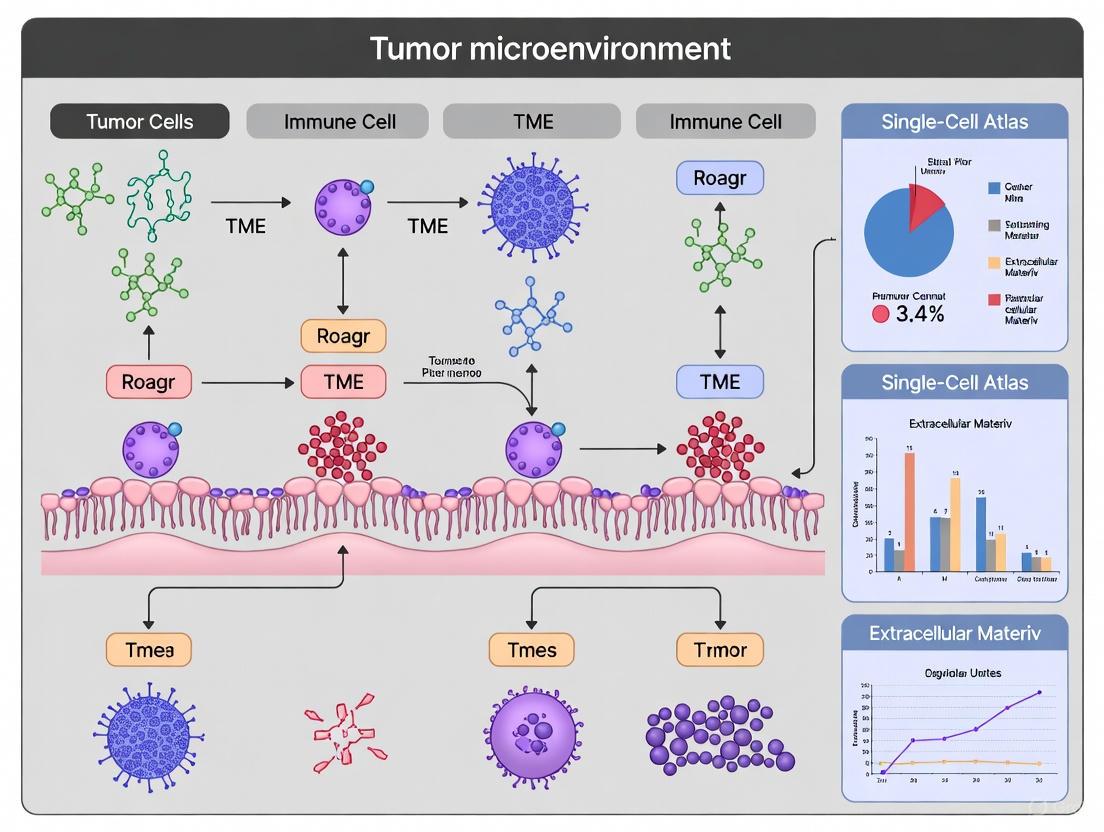
Single-cell atlases are revolutionizing our understanding of the tumor microenvironment (TME), providing unprecedented resolution of its cellular composition, heterogeneity, and communication networks.
Decoding the Tumor Microenvironment: A Single-Cell Atlas for Discovery and Therapeutic Innovation
Abstract
Single-cell atlases are revolutionizing our understanding of the tumor microenvironment (TME), providing unprecedented resolution of its cellular composition, heterogeneity, and communication networks. This article synthesizes foundational insights from major atlas initiatives, explores the methodological ecosystem for data generation and analysis, and addresses key challenges in data integration and interpretation. It further highlights how cross-species and cross-cancer comparative analyses validate discoveries and reveal conserved biological principles. For researchers and drug development professionals, this resource underscores the translational power of single-cell atlases in identifying novel therapeutic targets, informing drug screening, and ultimately paving the way for precision oncology strategies.
Cellular Cartography: Mapping the Constituents and Heterogeneity of the Tumor Microenvironment
The rise of single-cell technologies has revolutionized our ability to deconstruct biological systems into their fundamental units. In oncology research, this has enabled unprecedented resolution into the cellular heterogeneity and complex ecosystem of the tumor microenvironment (TME). Two major initiatives stand at the forefront of this revolution: the global Human Cell Atlas (HCA) consortium and the CZ CELLxGENE platform. While HCA represents a monumental international effort to create comprehensive reference maps of all human cells, CZ CELLxGENE provides a powerful data visualization and analysis platform hosting millions of single-cell datasets. Together, these resources are transforming how researchers investigate TME composition, identify novel therapeutic targets, and understand mechanisms of therapy resistance. This whitepaper examines these initiatives from technical and practical perspectives, focusing on their applications in tumor microenvironment atlas research for scientists and drug development professionals.
Initiative Comparison: Scope, Architecture, and Access
The Human Cell Atlas: A Global Biological Reference Mission
The Human Cell Atlas is a global consortium launched in 2016 with the mission "to create comprehensive reference maps of all human cells—the fundamental units of life—as a basis for both understanding human health and diagnosing, monitoring, and treating disease" [1]. As a grassroots scientific collaboration, it has grown to encompass more than 3,600 members across 102 countries [2]. The initiative is systematically cataloging cells based on type, state, location, and lineage using advanced single-cell genomics, with the goal of mapping the approximately 37 trillion cells of the human body [2]. The HCA is organized into 18 Biological Networks focusing on specific tissues and systems (including lung, heart, liver, and immune system) and four Regional Networks (Asia, Middle East, Africa, and Latin America) to ensure global representation [1] [2]. All data generated through the consortium is made freely available through the HCA Data Portal, adhering to principles of open science [2].
CZ CELLxGENE: An Integrated Platform for Discovery and Analysis
CZ CELLxGENE Discover is a complementary but distinct initiative that provides "download and visually explore data to understand the functionality of human tissues at the cellular level" [3]. Rather than generating new primary data, it serves as a curated platform hosting standardized single-cell data from multiple sources, including contributions from HCA. The platform currently contains data from over 33 million unique cells, 436 datasets, and 2,700+ cell types [3]. Its architecture includes multiple specialized tools: Differential Expression for comparing custom cell groups, Explorer for interactive dataset analysis, Census for programmatic data access via R/Python, and Cell Guide as an interactive encyclopedia of cell types [3]. This integrated approach enables researchers to leverage millions of cells from the standardized corpus for powerful secondary analysis without extensive computational preprocessing.
Table 1: Quantitative Comparison of Major Cell Atlas Initiatives
| Feature | Human Cell Atlas (HCA) | CZ CELLxGENE |
|---|---|---|
| Primary Mission | Create comprehensive reference maps of all human cells [1] | Provide platform to visually explore cellular data [3] |
| Established | 2016 [2] | Not specified in search results |
| Data Scale | ~62 million cells mapped as of 2024 [2] | 33M+ cells, 436 datasets, 2.7K+ cell types [3] |
| Governance | Global consortium with Organizing Committee [2] | Chan Zuckerberg Initiative platform |
| Key Outputs | Reference maps, biological insights, standardized methods [2] | Standardized corpus, analysis tools, visualization platform [3] |
| Access Model | HCA Data Portal [2] | Web platform with API access [3] |
Methodological Framework: Single-Cell Analysis in TME Research
Core Experimental and Computational Workflow
The integration of atlas-scale data with focused TME studies follows a established methodological pipeline, as demonstrated in recent cancer studies [4] [5]. The following diagram illustrates the comprehensive workflow from tissue processing to biological insight:
Essential Research Reagents and Computational Tools
Successful execution of single-cell TME studies requires carefully selected reagents and computational tools. The table below catalogizes key resources based on methodologies from recent publications:
Table 2: Essential Research Reagent Solutions for TME Single-Cell Atlas Studies
| Category | Specific Resource | Function/Application | Example Use |
|---|---|---|---|
| Tissue Processing | Enzyme D, R, A (Miltenyi) [6] | Tissue dissociation into single-cell suspensions | Mechanical dissociation with enzymatic cocktail |
| Cell Sorting | Anti-CD45 antibodies [6] | Immune cell enrichment from tumor tissue | FACS sorting of viable CD45+ cells |
| Single-Cell Platform | 10x Genomics Chromium [6] | Single-cell RNA sequencing library preparation | 3' Gene Expression with cell barcoding |
| Computational Tools | Seurat [5] | Single-cell data analysis and integration | Data normalization, clustering, and visualization |
| Batch Correction | Harmony [5] | Integration of multiple datasets | Removing technical variation across samples |
| Regulatory Analysis | SCENIC [4] [5] | Transcription factor network inference | Identifying key TFs in epithelial subtypes |
| Interaction Mapping | CellPhoneDB [5] | Cell-cell communication analysis | Ligand-receptor pair expression between cell types |
| Developmental State | CytoTRACE [5] | Cell differentiation state prediction | Stemness analysis of tumor cells |
Key Findings: TME Insights from Atlas Integration
Early-Onset Colorectal Cancer Reveals Distinct TME Patterns
Integration of atlas resources has enabled landmark discoveries in cancer biology. A recent study analyzing scRNA-seq data from 168 colorectal cancer patients across different age groups revealed striking differences in early-onset CRC (patients under 40) compared to standard-onset disease [4]. The analysis of 554,930 cells identified significant alterations in TME composition, including a reduced proportion of tumor-infiltrating myeloid cells in early-onset cases [4]. This finding was validated through deconvolution of TCGA COAD samples, confirming an age-dependent increase in myeloid cell abundance [4]. Additionally, researchers observed increased copy number variation burden in early-onset CRC tumor cells, suggesting greater genomic instability in younger patients [4]. Perhaps most significantly, cell-cell communication analysis revealed decreased tumor-immune interactions in early-onset CRC, with downregulation of key ligands including CEACAM1, CEACAM5, and CD99 [4]. These findings demonstrate how atlas-scale integration can reveal previously unrecognized disease subtypes with distinct therapeutic implications.
Cross-Species Validation of TME Features in Preclinical Models
The power of atlas data extends to preclinical model validation, as demonstrated by a comprehensive analysis of the tumor immune microenvironment across ten syngeneic murine models [6]. This study employed scRNA-seq of CD45+ immune cells across seven cancer types, identifying conserved immune cell states shared between mouse models and human tumors [6]. Notably, researchers discovered an interferon-stimulated gene-high (ISGhigh) monocyte subset that was significantly enriched in models responsive to anti-PD-1 therapy [6]. This finding provides both a potential biomarker for immunotherapy response and validates the relevance of specific syngeneic models for immuno-oncology studies. Furthermore, neutrophil depletion experiments using anti-Ly6G antibodies revealed context-dependent effects on tumor immunity, underscoring the functional heterogeneity of immune cell subpopulations across different TME contexts [6].
Advanced Integration Methods for Atlas-Scale TME Analysis
GIANT: A Gene-Centric Approach for Multimodal Data Integration
The increasing volume and diversity of single-cell data has created computational challenges for traditional cell-based integration methods. To address this, researchers have developed GIANT (Gene-based data Integration and Analysis Technique), which shifts the reference unit from cells to genes [7]. This approach converts data sets into gene graphs based on expression or epigenetic correlations, then projects genes from all graphs into a unified embedding space using recursive projections [7]. When applied to HuBMAP data spanning 10 tissues and 3 modalities (scRNA-seq, scATAC-seq, spatial transcriptomics), GIANT successfully generated a unified gene-embedding space that enabled functional analyses across modalities and tissues [7]. This method demonstrates substantially better integration of diverse data modalities compared to cell-based methods like Harmony, LIGER, and scVI [7]. For TME researchers, such advanced integration techniques enable more powerful cross-study comparisons and identification of conserved biological programs across different cancer types and experimental systems.
The following diagram illustrates how GIANT's gene-centric approach enables integration across diverse data sources:
Major cell atlas initiatives are fundamentally reshaping cancer research by providing comprehensive frameworks for understanding tumor microenvironment complexity. The integration of HCA's reference maps with CZ CELLxGENE's analytical platform creates a powerful ecosystem for hypothesis generation and validation. As demonstrated in colorectal cancer studies, these resources enable identification of previously unrecognized disease subtypes with distinct cellular compositions, genomic features, and cell-cell communication patterns [4] [5]. The translation of these findings to clinical applications is already underway, with atlas-derived signatures informing immunotherapy response prediction and novel target identification [6] [5]. For drug development professionals, these resources offer unprecedented opportunities for target validation, biomarker discovery, and patient stratification strategies. As atlas initiatives continue to expand in scale and resolution, they will undoubtedly yield further insights into TME biology, ultimately advancing precision oncology approaches for cancer patients worldwide.
The tumor microenvironment (TME) is a complex ecosystem comprising malignant cells and various non-malignant cellular components that collectively influence tumor progression, therapeutic response, and patient outcomes. Single-cell atlas research has revolutionized our understanding of this ecosystem by enabling precise characterization of its cellular constituents at unprecedented resolution. The core cellular components of the TME can be broadly categorized into three major groups: immune cells, stromal cells, and epithelial cells. Immune cells encompass diverse populations of lymphocytes, myeloid cells, and other immune effectors that can either combat or support tumor growth. Stromal cells, including cancer-associated fibroblasts (CAFs) and endothelial cells, provide structural support and participate in signaling networks. Epithelial cells include both the malignant cells of origin and normal epithelial elements, with their transformation and heterogeneity driving tumor pathogenesis. Advanced single-cell RNA sequencing (scRNA-seq) technologies have revealed remarkable heterogeneity within each of these compartments, identifying previously unrecognized subpopulations and their functional states across different cancer types [8] [5].
The composition and functional orientation of these cellular components vary significantly between cancer types, disease stages, and individual patients. For instance, comparative analyses across colorectal cancer, lung cancer, breast cancer, and other malignancies have revealed both conserved features and context-specific alterations in TME composition. Single-cell atlases have further demonstrated dynamic remodeling of these cellular compartments during disease progression, from early to metastatic stages, and in response to therapeutic interventions [5] [9] [10]. This technical guide provides a comprehensive overview of the core cellular components within the TME, with emphasis on experimental approaches for their characterization, quantitative assessments of their diversity, and functional analyses of their interactions.
Experimental Methodologies for Cellular Characterization
Single-Cell RNA Sequencing Workflows
The generation of high-quality single-cell data requires standardized workflows from tissue acquisition to data analysis. For scRNA-seq, fresh tissues are typically dissociated into single-cell suspensions using enzymatic and mechanical digestion protocols. The choice of dissociation protocol must be optimized for different tissue types to maximize cell viability while preserving transcriptomic integrity. For formalin-fixed paraffin-embedded (FFPE) tissues, single-nucleus RNA sequencing (snRNA-seq) approaches have been successfully implemented, as demonstrated in studies of small cell carcinoma of the esophagus and colorectal cancer [11] [12].
Following tissue dissociation, single-cell suspensions are loaded onto microfluidic platforms such as the 10X Genomics Chromium system, which uses droplet-based partitioning to capture individual cells. Library preparation follows platform-specific protocols, typically involving reverse transcription, cDNA amplification, and library construction with unique molecular identifiers (UMIs) to account for amplification biases. For comprehensive TME characterization, targeting approximately 20,000 cells per sample often provides sufficient coverage of major cell populations, though larger-scale studies may profile hundreds of thousands of cells across multiple patients [5] [6].
Table 1: Key Steps in Single-Cell RNA Sequencing Workflow
| Step | Description | Considerations |
|---|---|---|
| Tissue Acquisition | Collection of tumor and matched normal tissue | Snap-freeze or immediate processing for fresh tissue; FFPE blocks for archival tissue |
| Tissue Dissociation | Enzymatic and mechanical disruption to create single-cell suspension | Optimization needed for different tissue types; viability >80% recommended |
| Single-Cell Partitioning | Loading cells onto microfluidic devices (e.g., 10X Genomics) | Target recovery of 5,000-10,000 cells per sample; multiplet rate <10% |
| Library Preparation | Reverse transcription, cDNA amplification, and library construction | Incorporation of UMIs for accurate transcript counting |
| Sequencing | High-throughput sequencing on Illumina platforms | Recommended depth: 20,000-50,000 reads per cell |
Quality Control and Data Preprocessing
Raw sequencing data (FASTQ files) are processed through alignment and gene counting pipelines specific to each platform (e.g., Cell Ranger for 10X Genomics data). The resulting gene expression matrices are then imported into analysis environments such as R or Python for quality control. Standard quality control metrics include: (1) removing cells with fewer than 200 detected genes to eliminate empty droplets; (2) excluding cells with high mitochondrial gene content (>10-20%) indicating compromised cell viability; and (3) removing potential doublets characterized by abnormally high gene counts [5] [12].
Data normalization is typically performed using the "NormalizeData" function in Seurat or similar methods in Scanpy, which scales counts to 10,000 per cell and log-transforms the results. Batch effects across multiple samples or datasets are corrected using integration algorithms such as Harmony, which preserves biological variation while removing technical artifacts [5] [13]. Highly variable genes (typically 2,000-3,000) are identified to focus subsequent dimensionality reduction analyses.
Cell Type Identification and Annotation
Cell clustering is performed using graph-based methods (Louvain or Leiden algorithms) on a shared nearest neighbor graph constructed from principal components. The resulting clusters are visualized using dimensionality reduction techniques, most commonly Uniform Manifold Approximation and Projection (UMAP). Cell type annotation is achieved through a combination of automated classification and manual curation based on canonical marker genes [5] [9].
Table 2: Canonical Marker Genes for Core TME Components
| Cell Type | Marker Genes | Subtype Markers |
|---|---|---|
| T Cells | CD3D, CD3E, CD8A, CD4, IL7R | FOXP3 (Tregs), GZMB (cytotoxic) |
| B Cells | CD79A, MS4A1, CD19 | - |
| Myeloid Cells | CD14, CD68, AIF1 | CCL2, SPP1 (macrophages) |
| Fibroblasts | COL1A2, COL3A1, ACTA2 | FAP (myofibroblasts) |
| Endothelial Cells | VWF, PECAM1, CDH5 | - |
| Epithelial Cells | EPCAM, KRT genes | Tumor-specific markers vary |
For epithelial cells, distinguishing malignant from non-malignant populations requires additional analysis of copy number variations (CNV). The InferCNV algorithm compares gene expression patterns across chromosomal positions in tumor epithelial cells to a reference set of normal epithelial cells, identifying large-scale chromosomal amplifications and deletions characteristic of malignancy [9] [12].
Quantitative Analysis of Cellular Composition
Immune Cell Diversity
Single-cell atlases across multiple cancer types have consistently revealed extensive heterogeneity within tumor-infiltrating immune cells. In colorectal cancer, analysis of 371,223 cells from 100 samples identified 33 distinct immune cell subpopulations, including multiple subsets of T cells, B cells, and myeloid cells [5]. Similarly, in non-small cell lung cancer (NSCLC), scRNA-seq has uncovered previously unrecognized immune cell states, such as tissue-resident neutrophils (TRNs) with diverse functional orientations and an IL-8-expressing myeloid subpopulation associated with resistance to anti-PD-L1 therapy [8].
The composition of immune infiltrates varies significantly between cancer types and disease stages. In brain metastases across multiple primary cancers, immunosuppressive myeloid and stromal subsets dominate the TME, correlating with poor prognosis and therapy resistance [10]. Conversely, in primary ER+ breast cancer, specific macrophage subsets (FOLR2+ and CXCR3+) with pro-inflammatory characteristics are more abundant compared to metastatic lesions, which instead enrich for CCL2+ and SPP1+ macrophages associated with pro-tumorigenic functions [9].
Table 3: Immune Cell Distribution Across Cancer Types
| Immune Cell Type | Colorectal Cancer | Non-Small Cell Lung Cancer | Breast Cancer (ER+) | Brain Metastases |
|---|---|---|---|---|
| Cytotoxic T Cells | 15-25% | 10-20% | 5-15% | 5-15% |
| Helper T Cells | 10-20% | 10-15% | 5-10% | 5-10% |
| Regulatory T Cells | 3-8% | 5-10% | 3-7% | 5-12% |
| B Cells | 5-15% | 3-8% | 2-5% | 1-5% |
| Macrophages | 10-20% | 15-25% | 10-20% | 20-30% |
| Dendritic Cells | 2-5% | 3-7% | 1-3% | 2-5% |
| Neutrophils | 1-5% | 3-8% | 1-3% | 3-8% |
Stromal Cell Heterogeneity
Stromal components of the TME exhibit remarkable plasticity and diversity across cancer types. Cancer-associated fibroblasts (CAFs) represent a particularly heterogeneous population with context-dependent functions. In NSCLC, distinct CAF subsets include alveolar fibroblasts, adventitial fibroblasts, and myofibroblasts, with the latter associated with poor prognosis [8]. Similarly, in bladder cancer, stromal remodeling during progression from non-muscle-invasive (NMIBC) to muscle-invasive (MIBC) disease involves the emergence of distinct endothelial cell phenotypes, including an ADAM10+ endothelial subset that promotes vascular remodeling through Wnt signaling activation [13].
In small cell carcinoma of the esophagus, the stromal compartment is characterized by enrichment of extracellular matrix fibroblasts (eCAFs) with elevated ELF3 regulatory activity and collagen-driven signaling mediated by inflammatory CAFs (iCAFs) [12]. These specialized fibroblast subsets contribute to immune exclusion and therapy resistance through multiple mechanisms, including extracellular matrix remodeling and direct immunosuppressive signaling.
Epithelial Cell States
Malignant epithelial cells display substantial inter- and intra-tumoral heterogeneity, with implications for tumor evolution and therapeutic resistance. In breast cancer, comparative analysis of primary and metastatic lesions has revealed increased chromosomal instability and distinct copy number alteration patterns in metastatic cells, including recurrent alterations on chromosomes 1, 11, 12, 16, and 17 [9]. Similarly, in brain metastases across multiple primary cancers, malignant cells consistently exhibit increased chromosomal instability and adopt a neural-like meta-program, suggesting convergent adaptation to the brain microenvironment [10].
Single-cell analysis of small cell carcinoma of the esophagus has identified three transcriptionally distinct malignant epithelial subtypes with divergent differentiation trajectories [12]. These subtypes exhibit varying degrees of neuroendocrine differentiation and proliferative capacity, contributing to the aggressive behavior of this rare malignancy.
Functional Analysis of Cell-Cell Interactions
Signaling Network Reconstruction
Cell-cell communication within the TME can be systematically mapped using computational tools that leverage ligand-receptor interaction databases. Tools such as CellPhoneDB and CellChat analyze the co-expression of ligands and receptors across different cell populations to infer intercellular signaling networks [5] [13]. In colorectal cancer, such analyses have revealed specialized macrophage subpopulations localized in distinct spatial niches with potentially opposing functions—some engaging in pro-tumor interactions while others participate in anti-tumor immune responses [11].
In NSCLC, cell-cell communication analysis has uncovered specific signaling axes that drive tumor progression, such as the KDR-VEGFA signaling between cancer cells and tissue-resident neutrophils, which may contribute to immunosuppression [8]. Similarly, in bladder cancer, reconstruction of communication networks has identified stage-specific signaling pathways, with NMIBC exhibiting HMGB1 and CXCL12-mediated signaling promoting adhesion and migration, while MIBC shows enhanced Wnt pathway activation through CTNNB1 interactions [13].
Spatial Organization of Cellular Components
The functional properties of TME components are profoundly influenced by their spatial organization, which can be characterized through emerging spatial transcriptomic technologies. High-definition Visium spatial transcriptomics (Visium HD) enables whole-transcriptome analysis at single-cell-scale resolution, preserving spatial context in FFPE tissues [11]. Application of this technology to colorectal cancer has revealed transcriptomically distinct macrophage subpopulations in different spatial niches, with unique interaction patterns with tumor and T cells.
Spatial analysis has further demonstrated that immune cells with anti-tumor features, such as clonally expanded T cell populations, are often localized in proximity to specific macrophage subsets, suggesting functional collaboration within specialized micro-niches [11]. These spatial relationships have important implications for immunotherapy response, as the physical proximity between immune and cancer cells determines the efficiency of immune-mediated killing.
The Scientist's Toolkit: Essential Research Reagents and Platforms
Table 4: Essential Research Reagents and Platforms for TME Single-Cell Atlas Research
| Category | Specific Tools/Reagents | Function/Application |
|---|---|---|
| Single-Cell Platforms | 10X Genomics Chromium | Droplet-based single-cell partitioning |
| BD Rhapsody | Microwell-based single-cell capture | |
| Parse Biosciences | Fixed RNA profiling with split-pool barcoding | |
| Spatial Transcriptomics | Visium HD (10X Genomics) | Whole-transcriptome spatial mapping at single-cell scale |
| Xenium In Situ (10X Genomics) | Targeted spatial transcriptomics with subcellular resolution | |
| MERFISH | Multiplexed error-robust fluorescence in situ hybridization | |
| Computational Tools | Seurat | R toolkit for single-cell data analysis |
| Scanpy | Python-based single-cell analysis suite | |
| CellPhoneDB | Cell-cell communication analysis | |
| CellChat | Network analysis of signaling pathways | |
| InferCNV | Copy number variation analysis in single-cell data | |
| SCENIC | Transcription factor regulatory network inference | |
| Specialized Reagents | Feature Barcode kits (10X Genomics) | Surface protein quantification alongside transcriptome |
| Cell Hashtag Oligonucleotides | Sample multiplexing for experimental throughput | |
| Viability Dyes (e.g., PI, DAPI) | Assessment of cell viability prior to library prep |
Single-cell atlas research has fundamentally transformed our understanding of the cellular composition and functional organization of the tumor microenvironment. The core cellular components—immune cells, stromal cells, and epithelial cells—exhibit remarkable heterogeneity that varies across cancer types, disease stages, and anatomical locations. Advanced computational methods for analyzing cell-cell interactions and spatial relationships have revealed complex signaling networks that drive tumor progression and therapy resistance. As single-cell technologies continue to evolve, particularly with the integration of spatial omics and multi-modal profiling, they promise to uncover novel therapeutic targets and biomarkers for personalized cancer treatment. The standardized methodologies and analytical frameworks outlined in this technical guide provide a foundation for rigorous investigation of TME biology across diverse cancer contexts.
The tumor microenvironment (TME) is a complex ecosystem composed of malignant cells and diverse stromal and immune populations. Contemporary single-cell RNA sequencing (scRNA-seq) technologies have revolutionized our capacity to deconvolute this heterogeneity, enabling the identification of discrete cell states and subpopulations at unprecedented resolution. This technical guide synthesizes current methodologies and insights from pan-cancer atlas projects, detailing how high-resolution dissection of cellular communities—such as interferon-enriched states and tertiary lymphoid structures—informs cancer biology and immunotherapy response. Framed within broader thesis research on TME composition, this whitepaper provides researchers and drug development professionals with advanced protocols, analytical frameworks, and reagent solutions essential for probing cellular heterogeneity in oncological contexts.
Discrete cell states represent distinct, stable functional stages that cells assume, defined by specific patterns of gene expression, protein activity, and cellular metabolism. These states determine a cell's behavior, specialized functions, and interactions within the TME [14]. The advent of scRNA-seq has enabled unbiased, transcriptome-wide profiling of individual cells, moving beyond bulk tissue analysis to reveal the intricate diversity of cell states within tumors [15] [16]. In cancer biology, cellular heterogeneity is a fundamental driver of tumor progression, metastatic dissemination, and therapy resistance. Malignant, stromal, and immune cells can transition between states of proliferation, dormancy, immune activation, and immunosuppression, each characterized by distinct molecular signatures [14] [9]. Understanding this structured heterogeneity is critical for developing targeted therapeutic strategies and predictive biomarkers for precision oncology.
Methodological Approaches for Cell State Identification
Single-Cell RNA Sequencing and Analytical Pipelines
ScRNA-seq techniques are powerful tools for the unbiased charting of cellular phenotypes, allowing fine-grained annotation of cell types and states within complex tissues [15]. A typical workflow involves:
- Single-Cell Capture and Library Preparation: Cells are isolated from dissociated tumor or normal tissues, often using droplet-based encapsulation systems (e.g., 10x Genomics Chromium Controller with the Single Cell 3’ Library and Gel Bead Kit) [6]. Viable cells, potentially enriched for specific lineages (e.g., CD45+ immune cells via FACS), are loaded for library prep.
- Sequencing and Data Generation: High-throughput sequencing produces a transcriptome-wide gene expression matrix for thousands to millions of individual cells.
- Bioinformatic Analysis: Post-sequencing, cells are clustered based on transcriptomic similarity. Advanced algorithms are then applied to define discrete cell states.
Figure 1: Core scRNA-seq experimental and computational workflow for identifying cell states from tumor tissue.
Advanced Computational Algorithms for Defining Cell States
Simply clustering cells is insufficient for linking subpopulations to clinical phenotypes. Advanced algorithms are required:
- Non-Negative Matrix Factorization (NMF): Applied to annotated gene expression matrices decomposed into various metagenes, representing co-regulated gene programs. Recurring consensus modules across samples define recurring cell states [17]. This approach was used to characterize a myriad of cell states in a pan-cancer atlas of 4.9 million cells [17].
- Scissor (Single-Cell Identification of Subpopulations with bulk Sample phenOtype coRrelation): Integrates single-cell data with bulk expression data and patient phenotypes (e.g., survival, treatment response) from large cohorts like TCGA. It quantifies the similarity between each single cell and each bulk sample, then fits a regression model with sparsity and graph regularization to select phenotype-associated cells [18]. For example, Scissor identified cytotoxic T-cell subpopulations with low
PDCD1/CTLA4and highTCF7associated with favorable immunotherapy response in melanoma [18]. - Cellstates: A parameter-free tool that operates directly on raw UMI counts, grouping cells into subsets whose gene expression states are statistically indistinguishable given the measurement noise structure of scRNA-seq data. It aims to maximally reduce data complexity without removing meaningful structure, typically identifying subtle substructure within broadly defined cell types [19].
Integrative Analysis with Multi-Omics and Spatial Data
To overcome the limitations of scRNA-seq in capturing spatial context, methods like SPOTlight integrate single-cell data with spatial transcriptomics, enabling the in-situ mapping of immune, stromal, and cancer cells in tumor sections [15]. Furthermore, digital pathology and genomic data provide orthogonal information, disentangling determinants of anticancer immunity, such as immune cell activity, infiltration versus exclusion, and tumor foreignness [20].
Key Findings: A Pan-Cancer Atlas of Tumor-Normal Ecosystems
Universal Hallmark Gene Signatures
A integrative analysis of 4.9 million single-cell transcriptomes from 1070 tumors and 493 normal samples across 30 cancer types identified universally upregulated genes in tumor-infiltrating immune cells compared to normal tissues [17].
Table 1: Universal Hallmark Gene Signatures of Tumor-Infiltrating Immune Cells
| Cell Type | Genes Upregulated in Tumors | Genes Upregulated in Normal Tissues | Associated Biological Processes (GO) |
|---|---|---|---|
| CD8+ T cells | CXCL13, PDCD1, TIGIT, CTLA4, LAG3, CD27 |
IL7R, PTGER2, PTGER4 |
Response to type II interferon, Lymphocyte chemotaxis, Cytokine-mediated signaling |
| Tregs | RBPJ, CXCR3, ZBED2 |
CCR7, CXCR5 |
Immune regulatory functions |
| Macrophages | IL4I1, SPP1, CCL7, ADAMDEC1, SLAMF9 |
- | Defense response to viruses, Inflammatory response |
| Dendritic Cells | CCL19, LAMP3 |
- | Inflammatory and migratory functions |
Notably, CD8+ T cells in pancreatic tumors lacked upregulation of PDCD1 and LAG3, potentially explaining poor responses to checkpoint inhibitors [17]. Non-immune stromal cells, like cancer-associated fibroblasts (CAFs), universally expressed known markers like FAP, COL1A1, and COL10A1, alongside other genes such as INHBA and SLC12A8 [17].
Heterogeneity of Inflammatory Fibroblasts and TLS-Associated Communities
The pan-cancer atlas revealed significant heterogeneity within inflammatory fibroblasts. Two distinct subsets were identified: AKR1C1+ inflammatory fibroblasts expressing CXCL1/3/8 and WNT5A+ inflammatory fibroblasts. These subsets exhibited distinct organ allocations, cellular interactions, and spatial co-localization patterns [17].
Co-occurrence analysis further identified an interferon-enriched community state containing Tertiary Lymphoid Structure (TLS) components, such as CCL19+ fibroblasts and LAMP3+ dendritic cells. This community showed tumor-specific rewiring and was a favorable predictor of response to immune checkpoint blockade, validated in 1261 immunotherapy-treated cancers [17].
Cell State Heterogeneity Across Cancer Types and Grades
Different cancer types exhibit distinct distributions of cell states. In breast cancer, for instance, single-cell and spatial transcriptomic analyses have revealed that low-grade tumors are enriched for specific stromal and immune subtypes, such as CXCR4+ fibroblasts and IGKC+ myeloid cells, which exhibit distinct spatial localization and immunomodulatory functions [21]. In contrast, high-grade tumors display reprogrammed intercellular communication, with expanded MDK and Galectin signaling [21].
Table 2: Phenotype-Associated Cell Subpopulations Identified via Advanced Algorithms
| Cancer Type | Algorithm | Phenotype | Associated Cell Subpopulation / State | Key Marker Genes |
|---|---|---|---|---|
| Lung Cancer | Scissor | Worse Survival | Hypoxic malignant cells | CA9, BNIP3L, VEGFA |
| Melanoma | Scissor | Immunotherapy Response | T cell subpopulation | Low PDCD1/CTLA4, High TCF7 |
| ER+ Breast Cancer | scRNA-seq + CNV | Metastatic Disease | Pro-tumor macrophages | CCL2+, SPP1+ |
| Pan-Cancer (NSCLC) | Scissor | Tumor vs. Normal | Malignant cells (Scissor+) | - |
| Syngeneic Models | scRNA-seq | Anti-PD-1 Response | ISG-high monocytes | Interferon-stimulated genes |
In a study of primary and metastatic ER+ breast cancer, metastatic lesions were characterized by specific subtypes of stromal and immune cells, including CCL2+ macrophages, exhausted cytotoxic T cells, and FOXP3+ regulatory T cells, which collectively contribute to an immunosuppressive microenvironment [9]. Analysis of cell-cell communication highlighted a marked decrease in tumor-immune cell interactions in metastatic tissues [9].
The Scientist's Toolkit: Research Reagent Solutions
Critical reagents and materials are essential for successfully profiling discrete cell states.
Table 3: Essential Research Reagents and Materials for Single-Cell TME Studies
| Reagent / Material | Function / Application | Example Product / Marker |
|---|---|---|
| Viability Stain | Distinguishes live/dead cells during FACS | Fixable Viability Stain 450 (BD Biosciences) |
| Fluorescently Labeled Antibodies | Cell surface marker detection for sorting | Anti-mouse CD45 (e.g., clone 30-F11), Anti-mouse Ly6G (e.g., clone 1A8) |
| Tissue Dissociation Kit | Gentle enzymatic digestion of solid tumors | Miltenyi Biotec Tumor Dissociation Kit (Enzymes D, R, A) |
| Single-Cell Library Kit | Barcoding and cDNA synthesis for scRNA-seq | 10x Genomics Single Cell 3' Library & Gel Bead Kit v3 |
| Cell Sorting Buffer | Maintains cell viability during FACS | PBS supplemented with 1-5% FBS |
| Depletion Antibodies | Functional validation of cell populations in vivo | Anti-Ly6G for neutrophil depletion (e.g., clone 1A8) |
For example, in a syngeneic mouse model atlas, viable CD45+ immune cells were isolated using FACS with a PerCP-Cy5.5 anti-mouse CD45 antibody and a fixable viability stain, followed by droplet-based library preparation on the 10x Genomics platform [6]. Functional validation of populations like neutrophils utilized anti-Ly6G depletion antibodies (e.g., clone 1A8 from Bio X Cell) [6].
Analytical Workflow: From Raw Data to Biological Insight
The analytical journey from a single-cell count matrix to biological insight involves multiple steps, each with specific goals and tools.
Figure 2: Analytical workflow for identifying and validating phenotype-associated cell states, highlighting the integration of unsupervised clustering (Cellstates) and phenotype-guided selection (Scissor).
The process begins with the raw UMI count matrix. The Cellstates algorithm partitions cells into the finest resolution subsets that are statistically distinct [19]. These fine-grained states can be hierarchically merged to recapitulate broader, biologically recognized cell types. In parallel, the Scissor algorithm integrates bulk sample phenotypes to pinpoint which of the pre-identified cell subpopulations are most strongly associated with a clinical outcome of interest [18]. The resulting phenotype-associated subpopulations are then characterized through differential expression, pathway analysis, and spatial mapping to derive mechanistic insights.
The systematic dissection of tumor-normal ecosystems through single-cell genomics has unequivocally established that discrete cell states and subpopulations are fundamental organizational units of the TME. The identification of universal hallmark signatures, heterogeneous fibroblast states, and immunotherapy-predictive cellular communities provides a deeper understanding of inter- and intra-tumoral heterogeneity. The methodologies and reagent toolkits detailed herein provide a framework for researchers to further decode this complexity. As spatial multi-omics and integrative computational algorithms continue to evolve, the precise mapping of these states and their interactions will undoubtedly unlock novel diagnostic strategies and therapeutic vulnerabilities in cancer.
The tumor microenvironment (TME) constitutes a complex ecosystem of malignant and non-malignant cells that collectively influence cancer progression, therapeutic response, and patient outcomes. Single-cell RNA sequencing (scRNA-seq) has revolutionized our understanding of cellular heterogeneity and molecular interactions within the TME across different carcinoma types. This technical guide synthesizes current single-cell atlas research to compare TME composition in three major malignancies: colorectal carcinoma (CRC), liver cancer (HCC), and breast carcinoma. By examining these diverse ecosystems, we aim to elucidate common and cancer-specific mechanisms of TME organization and their implications for drug development.
TME Cellular Composition Across Cancers
Single-cell transcriptomic studies have revealed striking differences in TME composition across cancer types, reflecting their distinct etiologies, tissue origins, and metastatic patterns. The table below summarizes key cellular populations identified in recent large-scale atlas projects for each carcinoma.
Table 1: Comparative TME Cellular Composition Across Carcinoma Types
| Cellular Component | Colorectal Cancer | Liver Cancer (HCC) | Breast Cancer (ER+) |
|---|---|---|---|
| Key Immune Populations | T cells, B cells, myeloid cells, Tregs [22] [23] | Central memory T cells (TCM), exhausted CD8+ T cells, MMP9+ macrophages [24] | Exhausted cytotoxic T cells, FOXP3+ Tregs, CCL2+ macrophages [9] |
| Stromal Populations | Fibroblasts, endothelial cells, myofibroblastic CAFs (myCAFs) [25] | Liver sinusoid endothelial cells (LSECs), fibroblasts [26] | Endothelial cells, cancer-associated fibroblasts (CAFs) [9] |
| Malignant Cell Features | Stem/TA-like cells, SCRN1+ metastatic cells [22] [25] | Heterogeneous hepatocytes with distinct molecular subtypes [24] | Copy number alterations, epithelial-mesenchymal transition [9] |
| Prognostic Subtypes | Immune ecological subtype 1 (poor prognosis) vs. subtype 2 (better prognosis) [22] [23] | Seven microenvironment-based subtypes predicting prognosis [24] | Distinct transcriptional programs in primary vs. metastatic disease [9] |
Cancer-Specific TME Characteristics
Colorectal Cancer TME
The CRC TME demonstrates remarkable cellular heterogeneity, with recent atlas studies identifying 33 distinct cell subpopulations across 100 patient samples [22] [23]. Two immune ecological subtypes with clinical significance have been defined: subtype 1 exhibits enrichment in metabolic and motility pathways and correlates with poor prognosis, while subtype 2 shows enriched immune response pathways and better clinical outcomes [22]. Malignant epithelial cells in CRC show varying differentiation states, with a subpopulation of stem/transient amplifying-like (stem/TA-like) cells demonstrating stem-like characteristics and metastatic potential [25]. These cells interact with myofibroblastic CAFs (myCAFs) that remodel the extracellular matrix through FN1 signaling, creating a pro-metastatic niche [25]. A key molecular discovery is SCRN1, which promotes CRC cell proliferation and migration and correlates with poor prognosis and metastasis [22] [23].
Liver Cancer TME
HCC exhibits a distinct TME shaped by underlying liver pathology and viral etiologies. Single-cell studies have identified enrichment of central memory T cells (TCM) in early tertiary lymphoid structures (E-TLSs), which serve as depositories for antitumor immune cells [24]. Chronic HBV/HCV infection significantly influences the HCC TME, driving greater T cell infiltration but also higher levels of T cell exhaustion compared to non-viral HCC [24]. Myeloid compartment analysis reveals PPARγ as the pivotal transcription factor driving differentiation of terminally differentiated MMP9+ tumor-associated macrophages [24]. The recently developed LiverSCA atlas now encompasses six phenotypes (normal, HBV-HCC, HCV-HCC, non-viral HCC, ICC, and MASH liver), providing a comprehensive resource for exploring cellular and molecular landscapes across different liver disease etiologies [26].
Breast Cancer TME
ER+ breast cancer exhibits significant TME remodeling during metastatic progression. Single-cell comparisons between primary and metastatic lesions reveal distinct shifts in macrophage populations, with primary tumors enriched for FOLR2 and CXCR3 positive macrophages (pro-inflammatory), while metastatic sites harbor more CCL2 and SPP1 positive macrophages (pro-tumorigenic) [9]. Metastatic tumors display increased genomic instability with higher copy number variation (CNV) scores and specific alterations in chromosomes 1, 6, 11, 12, 16, and 17 [9]. The T cell compartment in metastatic lesions shows exhausted cytotoxic T cells and FOXP3+ regulatory T cells that collectively contribute to an immunosuppressive microenvironment [9]. Cell-cell communication analysis indicates marked decrease in tumor-immune cell interactions in metastatic tissues, suggesting progressive immune evasion during disease progression [9].
Experimental Methodologies for TME Atlas Construction
Single-Cell RNA Sequencing Workflow
The construction of comprehensive TME atlases requires standardized experimental and computational pipelines. The following diagram illustrates the core workflow:
Key Methodological Components
Sample Processing and Quality Control: Fresh tumor tissues are dissociated using enzymatic cocktails (e.g., Miltenyi Biotec tissue dissociation kits) followed by mechanical disruption [27]. Quality control metrics include exclusion of cells with high mitochondrial gene content (>10-20%), low library size (<800 UMIs), and insufficient gene detection (<200-6000 genes depending on protocol) [26] [28]. For example, the LiverSCA atlas implemented strict thresholds of <10% mitochondrial content and >800 UMIs per cell [26].
Data Integration and Batch Correction: Large-scale atlas projects integrate multiple datasets using advanced algorithms such as Harmony [23] [26] or SCVI/SCANVI [9] to remove technical batch effects while preserving biological variability. These methods employ canonical correlation analysis (CCA) or variational inference to align datasets in low-dimensional space.
Cell Type Annotation and Validation: Automated annotation tools (e.g., Sc-Type) complement manual annotation using canonical marker genes [28]. Validation approaches include multiplex immunohistochemistry/immunofluorescence (mIHC/IF), spatial transcriptomics (Stereo-seq) [29], and flow cytometry [24] to confirm cellular identities and spatial distributions.
Analytical Frameworks for TME Characterization
Core Analytical Modules
Table 2: Key Analytical Methods in TME Single-Cell Studies
| Analytical Method | Tool Examples | Application | Key Insights |
|---|---|---|---|
| Cell-Cell Communication | CellPhoneDB [22] [23], CommPath [29] | Identify significant ligand-receptor interactions | FN1-CD44 and GDF15-TGFBR2 interactions in CRC metastasis [25]; PTN-mediated interactions in breast cancer [27] |
| Transcriptional Regulation | SCENIC [23] | Infer transcription factor activity and gene regulatory networks | PPARγ driving macrophage differentiation in HCC [24]; AP-1/NF-κB modules in B cells [28] |
| Copy Number Variation | InferCNV [9] [29] | Detect malignant cells and genomic instability | Higher CNV scores in metastatic vs. primary breast cancer [9]; chromosomal alterations in chr1, 11, 12, 16, 17 [9] |
| Developmental Trajectories | Monocle [29], CytoTRACE [23] | Reconstruct cellular differentiation states | Stem/TA-like cells in CRC with metastatic potential [25]; differentiation states of malignant cells [23] |
| Spatial Organization | CSOmap [29], CARD [29] | Infer spatial relationships from scRNA-seq data | Organization of TCM cells in E-TLS structures in HCC [24] |
Signaling Pathways in TME Regulation
The following diagram illustrates key signaling pathways identified through single-cell analyses of cell-cell communication across carcinoma types:
Research Reagent Solutions
Table 3: Essential Research Reagents for TME Single-Cell Atlas Construction
| Reagent Category | Specific Examples | Function/Application |
|---|---|---|
| Tissue Dissociation | Miltenyi Biotec Tissue Dissociation Kit (cat. no. 130-110-203) [27] | Generation of single-cell suspensions from tumor tissues |
| Cell Viability Assessment | Trypan blue staining [27] | Determination of cell viability before scRNA-seq |
| Dead Cell Removal | Miltenyi Biotec Dead Cell Removal Kit (cat. no. 130-090-101) [27] | Removal of non-viable cells to improve data quality |
| Single-Cell Platform | 10x Genomics Chromium System | High-throughput single-cell RNA sequencing |
| Spatial Transcriptomics | Stereo-seq [29] | Spatial mapping of gene expression in tissue context |
| Validation Reagents | Multiplex IHC/IF antibodies [29] | Protein-level validation of cell type identities |
| Bioinformatic Tools | Seurat R package (v4.0.2+) [23] [29] | Single-cell data analysis and integration |
Single-cell atlas studies have revealed an unprecedented view of TME diversity across colorectal, liver, and breast carcinomas. While common themes of immune suppression and stromal remodeling emerge, each cancer type exhibits distinct cellular ecosystems shaped by tissue origin, etiology, and metastatic patterns. Future research directions include the development of multi-omic atlases integrating epigenomic and proteomic data, longitudinal studies to track TME evolution during therapy, and the creation of interactive resources like LiverSCA [26] to facilitate community access to these rich datasets. These advances will continue to illuminate the complex biology of tumor ecosystems and provide novel targets for therapeutic intervention across carcinoma types.
Colorectal cancer (CRC) incidence is undergoing a significant epidemiological shift, characterized by a declining burden in older populations and a concerning rise in early-onset cases (diagnosed in individuals under 50 years of age) [30]. This review delves into the distinct molecular and cellular characteristics of early-onset CRC, with a specific focus on its unique tumor microenvironment (TME) as revealed by single-cell atlas research. We synthesize findings from recent large-scale single-cell RNA sequencing (scRNA-seq) studies that collectively analyze over 900,000 cells, highlighting a TME in early-onset CRC that is fundamentally different from its later-onset counterparts. Key distinctions include a reduced presence of specific immune cell populations, a higher genomic instability, and diminished cell-cell communication. These features contribute to distinct immune evasion mechanisms and have profound implications for prognosis and therapy selection. This article provides a comprehensive technical guide, complete with structured data, experimental protocols, and pathway visualizations, to equip researchers and drug development professionals with the insights needed to advance targeted therapeutic strategies for this growing patient demographic.
The landscape of colorectal cancer is rapidly changing. While overall incidence has declined, largely due to improved screening in older populations, this trend masks a sharp increase in early-onset CRC [30]. Current data from a national multi-payer claims database indicates that from 2021 to 2024, incidence rates in the 45-49 age group rose from 59.5 to 63.1 per 100,000 individuals, even as rates fell in all older age groups [30]. This demographic shift necessitates a deeper biological understanding of the disease in younger patients.
The tumor microenvironment (TME) is a complex ecosystem composed of malignant epithelial cells, immune cells, cancer-associated fibroblasts (CAFs), endothelial cells, and other stromal components. It is now widely recognized that the cellular composition and functional state of the TME are critical determinants of tumor progression, immune evasion, and therapeutic response [31] [5]. Single-cell transcriptomic technologies have revolutionized our ability to deconstruct this heterogeneity, moving beyond bulk tissue analysis to map the TME at unprecedented resolution [32]. Framing early-onset CRC within this context of TME composition, as defined by single-cell atlas research, reveals that patient age is not merely a clinical variable but a fundamental biological factor that sculpts the cancer ecosystem.
Single-Cell Atlas Reveals a Distinct TME in Early-Onset CRC
Key Cellular Alterations
A comprehensive integrative analysis of scRNA-seq data from 168 CRC patients has uncovered significant age-related differences in TME composition [4]. The most salient finding is a systematic reduction in the proportion of tumor-infiltrating myeloid cells (e.g., macrophages and dendritic cells) in early-onset CRC (G1 group, <40 years) compared to older age groups [4]. This is particularly noteworthy given that the myeloid compartment typically expands with aging in the normal immune system. Concurrently, a decrease in plasma cells was also observed in younger patients [4]. These shifts in immune constitution suggest a fundamentally different immune contexture in early-onset tumors.
Table 1: Key Cellular and Molecular Alterations in Early-Onset CRC TME
| Feature | Observation in Early-Onset CRC | Implication |
|---|---|---|
| Myeloid Cell Proportion | Decreased [4] | Altered antigen presentation & immune regulation |
| Plasma Cell Proportion | Decreased [4] | Potential impact on humoral anti-tumor immunity |
| CNV Burden | Increased [4] | Greater genomic instability and tumor heterogeneity |
| Tumor-Immune Interactions | Weaker [4] | Reduced immune infiltration and engagement |
| Ligand Expression (e.g., CEACAM1, CD99) | Downregulated in epithelial cells [4] | Molecular basis for reduced cell-cell communication |
Genomic and Functional Landscape
Beyond cellular composition, the tumor cells themselves in early-onset CRC exhibit distinct molecular properties. Analysis of chromosomal copy number variations (CNVs) using tools like inferCNV reveals a significantly higher CNV burden in the tumor cells of younger patients, indicating greater genomic instability [4]. This is consistent with an analysis of TCGA data, which also showed higher absolute CNV scores in early-onset cases [4].
Functionally, this genomic divergence translates into altered transcriptional networks. Single-cell regulatory network inference and clustering (SCENIC) analysis identified differential transcription factor activity in early-onset CRC. For instance, the regulon activity of MYC was lowest in the G1 group, while the activity of BRCA1 was highest, suggesting a different oncogenic driver landscape [4]. Most critically, cell-cell communication analysis using tools like CellPhoneDB demonstrated that interactions between cancer cells and immune cells (myeloid and NK/T cells) were significantly weaker in early-onset CRC [4]. This was underpinned by the downregulation of key ligand genes (e.g., CEACAM1, CEACAM5, CD99) in the epithelial cells of younger patients, providing a molecular rationale for the observed immune exclusion [4].
Experimental Protocols for TME Deconstruction
To enable the replication and extension of these findings, this section outlines the core methodologies employed in the cited single-cell atlas studies.
Single-Cell RNA Sequencing Workflow
The standard pipeline for generating a single-cell atlas from CRC tissues involves several critical steps [5] [4]:
- Sample Acquisition & Processing: Fresh CRC tissue samples (both tumor and adjacent normal) are collected and immediately processed. Tissues are dissociated into single-cell suspensions using enzymatic cocktails (e.g., collagenase). Rigorous quality control is applied: cells with <3 detected genes, <50 total genes, or ≥20% mitochondrial gene content are filtered out.
- Library Preparation & Sequencing: Single-cell libraries are prepared using platforms such as the 10x Genomics Chromium system, which utilizes gel bead-in-emulsions (GEMs) for cell barcoding and RNA capture. For FFPE samples, the Chromium Single Cell Gene Expression Flex assay, which uses RNA templated ligation (RTL) technology, is employed [32]. The constructed libraries are then sequenced on Illumina platforms to a sufficient depth.
- Data Preprocessing & Integration: Raw sequencing data is processed through alignment (to a reference genome, e.g., hg38), demultiplexing, and gene expression matrix generation using tools like
Cell Ranger. Downstream analysis is typically performed in R using the Seurat package. This includes normalization, scaling, and identification of highly variable genes. To mitigate batch effects across multiple patients or datasets, the Harmony algorithm is applied [5] [4]. - Cell Clustering & Annotation: Dimensionality reduction is performed via Principal Component Analysis (PCA) followed by Uniform Manifold Approximation and Projection (UMAP) or t-Distributed Stochastic Neighbor Embedding (t-SNE). Graph-based clustering identifies cell populations. These clusters are annotated into major cell types (T cells, B cells, myeloid cells, fibroblasts, endothelial cells, epithelial cells) based on canonical marker genes (e.g., CD3D for T cells, CD79A for B cells, COL1A2 for fibroblasts, EPCAM for epithelial cells) [5].
Key Downstream Analytical Methods
- CNV Inference (
inferCNV): Used to distinguish malignant epithelial cells from normal counterparts by inferring large-scale chromosomal copy number alterations from scRNA-seq data. It calculates a moving average of gene expression across chromosomal positions to identify regions of gains and losses [4] [29]. - Cell-Cell Communication Analysis (
CellPhoneDB): A publicly available repository of ligand-receptor interactions and a statistical framework that predicts significant cell-cell interactions based on the co-expression of ligand and receptor pairs between different cell clusters [5]. - Transcriptional Regulatory Network Analysis (
SCENIC): This pipeline, which incorporatesGRNBoost2andRcisTarget, infers gene regulatory networks and identifies active transcription factors (regulons) in single cells, linking them to cellular states [5]. - Cell State Prediction (
CytoTRACE): A computational method that predicts the differentiation state of cells from scRNA-seq data. It assigns a score to each cell, where a higher score indicates a less differentiated, more "stem-like" state [5].
The Scientist's Toolkit: Essential Research Reagents and Tools
Table 2: Key Research Reagent Solutions for Single-Cell TME Studies
| Reagent / Tool | Function / Application | Example / Source |
|---|---|---|
| Chromium Single Cell Gene Expression Flex | Library prep for FFPE tissues using RTL chemistry. | 10x Genomics [32] |
| Xenium In Situ Gene Expression Panel | Targeted, high-plex RNA imaging on intact tissue sections for spatial validation. | 10x Genomics (e.g., Human Breast Panel) [32] |
| C1Q & COLEC11 Antibodies | Validate immunosuppressive TAMs and specific CAF subtypes via IHC/mIHC. | Multiple commercial vendors [31] [29] |
| Seurat R Package | Comprehensive toolkit for single-cell data analysis, including QC, integration, and clustering. | CRAN / Satija Lab [5] [4] |
| Harmony Algorithm | Fast, sensitive, and robust integration of multiple single-cell datasets. | R Package [5] [4] |
| CellPhoneDB | Analysis of cell-cell communication from scRNA-seq data. | Public Repository & Python Package [5] |
Clinical and Therapeutic Implications
The distinct TME of early-onset CRC has direct consequences for patient management and drug development. The immune-cold phenotype, characterized by reduced myeloid cell infiltration and weaker tumor-immune interactions, suggests that these tumors may be less responsive to standard immunotherapies like immune checkpoint inhibitors (ICIs) [4]. This necessitates the development of tailored strategies.
One promising approach involves targeting specific stromal components. For instance, single-cell atlases have identified Cancer-Associated Fibroblast (CAF) subtypes associated with immunotherapy resistance [31] [33]. Similarly, C1Q+ tumor-associated macrophages (TAMs) have been linked to poor outcomes, and therapeutically targeting these populations could promote ICI responses [31] [33]. In the context of neuroendocrine CRC, COLEC11+ matrix CAFs were found to be significantly associated with liver metastases and could serve as a potential therapeutic target [29]. Furthermore, genetic studies have identified quantitative trait loci (immunQTLs) that influence TME composition; for example, the rs1360948-G-allele increases CCL2 expression, recruiting immunosuppressive Tregs, and blocking the CCL2-CCR2 axis was shown to enhance anti-PD-1 therapy in models [34]. These insights pave the way for more personalized combination therapies that simultaneously target cancer cells and remodel the TME in early-onset CRC.
Single-cell atlas research has unequivocally established that early-onset colorectal cancer is not merely a disease of younger individuals but a molecularly and immunologically distinct entity. Its TME is characterized by a unique cellular composition, heightened genomic chaos, and fundamentally different rules of engagement between tumor and immune cells. These biological insights provide a roadmap for the future, demanding a move away from one-size-fits-all therapeutic paradigms. For researchers and drug developers, the priority must be to leverage these detailed molecular maps to design and test targeted therapies and rational combination regimens that address the specific immune-evasive and stromal-rich landscape of early-onset CRC. Future work should focus on longitudinal studies and the integration of multi-omics data to further unravel the drivers of this concerning epidemiological trend.
From Data to Insights: Technologies, Analytical Frameworks, and Translational Applications
The tumor microenvironment (TME) is a complex ecosystem comprising malignant cells and a diverse array of non-malignant cells, including immune cells, cancer-associated fibroblasts, and endothelial cells. Understanding this cellular heterogeneity and the spatial relationships between different cell types is crucial for unraveling the mechanisms of tumor progression, metastasis, and therapy resistance. Single-cell RNA sequencing (scRNA-seq) and spatial transcriptomics have emerged as transformative technologies that enable researchers to deconvolve this complexity at unprecedented resolution. These technologies move beyond bulk tissue analysis to reveal the intricate cellular states, transcriptional programs, and communication networks that define the TME, providing critical insights for both basic cancer biology and therapeutic development [9] [6].
Fundamental Principles of Single-Cell RNA Sequencing
Single-cell RNA sequencing (scRNA-seq) enables the profiling of gene expression in individual cells, revealing cellular heterogeneity that is masked in bulk RNA sequencing. The core principle involves isolating single cells, capturing their mRNA, and labeling transcripts with unique molecular identifiers (UMIs) and cell barcodes during reverse transcription. These barcodes allow computational attribution of sequenced reads back to their cell of origin after high-throughput sequencing [35].
Droplet-based methods, such as DropSeq and the commercial 10x Genomics Chromium platform, use microfluidic chips to co-encapsulate single cells with barcoded beads in oil-emulsion droplets. Each bead is coated with DNA oligos containing a cell barcode, a UMI, and a poly(dT) sequence for mRNA capture. After reverse transcription, droplets are broken, and cDNA is pooled for library preparation and sequencing [35].
Key Analytical Concepts and Quality Control
The initial output of scRNA-seq is a digital gene expression matrix with genes as rows and cell barcodes as columns, containing UMI counts. Quality control is critical and involves filtering cells based on several metrics [35] [36]:
- Transcript counts per cell: Cells with unusually high counts may be doublets (multiple cells), while low counts may indicate poor capture or ambient RNA.
- Number of genes detected per cell: Correlates with transcript counts and helps identify low-quality cells.
- Mitochondrial gene percentage: Elevated percentages often indicate stressed, dying, or low-quality cells due to cytoplasmic RNA leakage.
These QC metrics are sample-dependent. For instance, in analyses of circulating tumor cells, which are transcriptionally active, applying standard deviation-based filtering might inadvertently remove these rare cells amidst quiescent blood cells [35].
Following QC, data undergoes normalization to account for varying sequencing depth per cell, often using regularized negative binomial regression. Dimensionality reduction via principal component analysis is performed, followed by clustering and visualization with t-distributed stochastic neighbor embedding (t-SNE) or uniform manifold approximation and projection (UMAP) [35].
Table 1: Single-Cell RNA Sequencing Platform Comparison
| Platform | Cell Separation Method | Cell Capture Efficiency | Transcript Capture Efficiency | Typical Cells per Run |
|---|---|---|---|---|
| DropSeq | Droplet-based | ~5% | ~10.7% | ~7,000 |
| 10x Genomics Chromium | Droplet-based | ~65% | ~14% | 1,000-10,000+ |
| Fluidigm C1 | Size-specific chambers | High (known cell size) | ~6,606 genes/cell | 96-800 |
| SCI-Seq | FACS & combinatorial indexing | 5%-10% | ~10%-15% | Up to 500,000 |
Fundamental Principles of Spatial Transcriptomics
Spatial transcriptomics encompasses a suite of technologies that preserve the spatial context of gene expression within tissue sections. Unlike scRNA-seq, which requires tissue dissociation and loses spatial information, these methods enable researchers to map transcriptional activity directly onto its original tissue architecture. This is particularly valuable in TME research, where the physical arrangement of cell types and their functional interactions critically influence tumor behavior [37].
The 10x Genomics Visium platform is a widely used spatial transcriptomics approach that uses slides with thousands of barcoded spots. Each spot contains millions of oligonucleotides with spatial barcodes, UMIs, and capture sequences. Tissue sections are placed on these slides, mRNA is captured in situ, and then libraries are prepared and sequenced. Computational analysis then maps the gene expression data back to spatial coordinates [37].
Integration with Histology and Deep Learning
A significant advancement in spatial transcriptomics is the integration with traditional histology. Hematoxylin and eosin (H&E) stained tissue sections provide rich morphological information that can be correlated with spatial gene expression patterns. Recent deep learning approaches, such as MISO (Multiscale Integration of Spatial Omics), have been developed to predict spatial gene expression patterns directly from H&E images. These models are trained on paired H&E and spatial transcriptomics data, learning to associate specific morphological features with transcriptional programs [37].
This integration is particularly powerful because H&E slides are routinely generated in clinical practice, whereas spatial transcriptomics remains resource-intensive. Once trained, these models can generate spatially resolved gene expression predictions from standard H&E images alone, potentially enabling large-scale retrospective studies using existing pathology archives [37].
Experimental Design and Methodologies
Sample Preparation and Single-Cell Isolation
Proper sample preparation is critical for successful scRNA-seq experiments. For tumor tissues, this typically involves:
- Fresh tissue collection and preservation: Tissues should be processed immediately or preserved using appropriate methods to maintain RNA integrity and cell viability.
- Tissue dissociation: Enzymatic and mechanical dissociation creates single-cell suspensions. Protocols must be optimized for different tumor types to maximize viability and minimize stress responses. For example, the gentleMACS Octo Dissociator with Heaters with Enzyme D, R, and A cocktails has been used for murine tumor models [6].
- Cell viability assessment and enrichment: Using viability stains (e.g., Fixable Viability Stain 450) and fluorescence-activated cell sorting (FACS) to enrich for live cells or specific populations (e.g., CD45+ immune cells) improves data quality [6].
Library Preparation and Sequencing
For 10x Genomics platforms, the standard workflow involves:
- Loading single-cell suspensions onto Chromium chips to generate gel beads-in-emulsion (GEMs)
- Performing reverse transcription within GEMs to barcode cDNA
- Breaking emulsions and purifying cDNA
- Amplifying cDNA and constructing sequencing libraries
- Sequencing on Illumina platforms to sufficient depth (typically 20,000-50,000 reads per cell)
The Cell Ranger software pipeline processes raw sequencing data, performing alignment, barcode counting, UMI counting, and generating feature-barcode matrices [36].
Spatial Transcriptomics Workflow
For spatial transcriptomics experiments using 10x Visium:
- Fresh frozen or FFPE tissue sections are placed on Visium slides
- Tissue is stained with H&E and imaged
- Tissue is permeabilized to release RNA which binds to spatially barcoded oligonucleotides
- cDNA is synthesized and libraries are prepared
- Sequencing data is processed with Space Ranger to generate spatial expression matrices
Diagram 1: Spatial Transcriptomics Workflow
Analytical Frameworks and Computational Approaches
Single-Cell Data Analysis Pipeline
The computational analysis of scRNA-seq data involves multiple steps:
- Quality control and filtering: Using tools like Cell Ranger to remove low-quality cells based on UMI counts, genes detected, and mitochondrial percentage [36].
- Normalization and scaling: Accounting for sequencing depth variation between cells using methods like regularized negative binomial regression [35].
- Feature selection and dimensionality reduction: Identifying highly variable genes and performing principal component analysis.
- Clustering and cell type annotation: Using graph-based clustering and marker gene expression to identify cell types.
- Differential expression analysis: Identifying genes that vary between conditions or cell types.
- Advanced analyses: Trajectory inference, cell-cell communication, and copy number variation inference.
For CNV analysis in malignant cells, tools like InferCNV and CaSpER use expression data to infer copy number variations, with T cells often serving as a diploid reference [9].
Spatial Data Analysis and Integration
Spatial transcriptomics data analysis involves:
- Spatial clustering: Identifying tissue regions with similar expression patterns
- Cell-type deconvolution: Inferring cell type proportions in each spot using single-cell data as reference
- Spatial expression patterns: Identifying genes with spatially restricted expression
- Cell-cell communication inference: Predicting interacting cell pairs based on ligand-receptor co-expression in neighboring spots
Integration methods like MISO use deep learning to predict spatial gene expression from H&E images by training convolutional neural networks on paired data, enabling prediction at near single-cell resolution [37].
Key Applications in Tumor Microenvironment Research
Characterizing Cellular Heterogeneity in Breast Cancer
scRNA-seq has revealed profound heterogeneity in both tumor cells and stromal cells within the TME. A 2025 study of ER+ breast cancer analyzed 99,197 cells from 23 patients (12 primary, 11 metastatic), identifying seven major cell types: malignant cells, myeloid cells, T cells, NK cells, B cells, endothelial cells, and fibroblasts. The study revealed significant differences in cellular composition between primary and metastatic tumors [9]:
- Primary tumors showed enrichment for FOLR2+ and CXCR3+ pro-inflammatory macrophages
- Metastatic lesions had more CCL2+ and SPP1+ pro-tumorigenic macrophages
- Metastatic samples exhibited exhausted cytotoxic T cells and FOXP3+ regulatory T cells
- Cell-cell communication analysis showed decreased tumor-immune interactions in metastases
Table 2: Cellular Differences in Primary vs. Metastatic ER+ Breast Cancer
| Cell Type/Feature | Primary Tumor | Metastatic Tumor | Functional Significance |
|---|---|---|---|
| Macrophage Subsets | Enriched FOLR2+ CXCR3+ | Enriched CCL2+ SPP1+ | Shift from pro-inflammatory to pro-tumorigenic phenotype |
| T Cell States | Conventional T cells | Exhausted cytotoxic T cells, FOXP3+ Tregs | Immunosuppressive TME in metastasis |
| TNF-α Signaling | Increased activation via NF-κB | Decreased | Potential therapeutic target in primary tumors |
| CNV Burden | Lower CNV scores | Higher CNV scores | Genomic instability associated with progression |
| Tumor-Immune Interactions | Active | Markedly decreased | Immune evasion in metastasis |
Metastatic Evolution and Genomic Instability
CNV analysis of malignant cells from primary and metastatic ER+ breast cancer revealed increased genomic instability in metastases. Metastatic samples showed higher CNV scores and specific alterations in chromosomal regions including chr7q34-q36, chr2p11-q11, chr16q13-q24, and chr11q21-q25. These regions encompass cancer-related genes such as ARNT, BIRC3, MSH2, MSH6, and MYCN. The SCEVAN algorithm demonstrated greater intratumoral heterogeneity in metastatic tumors, reflecting ongoing genomic evolution during progression [9].
Immune Microenvironment Across Cancer Types
A cross-species analysis of syngeneic murine models representing seven cancer types provided a comprehensive atlas of the tumor immune microenvironment. scRNA-seq of CD45+ immune cells identified seven principal immune populations and revealed conserved immune states between mouse and human tumors. Key findings included [6]:
- An interferon-stimulated gene-high (ISGhigh) monocyte subset enriched in anti-PD-1 responsive models
- Context-dependent effects of neutrophil depletion on tumor immunity
- Neutrophil depletion alone showed variable antitumor effects but failed to enhance PD-1 blockade efficacy
This resource enables rational selection of appropriate models for immuno-oncology studies based on their baseline immune characteristics.
Spatial Architecture in HIV-Associated Cancers
Spatial transcriptomics of HIV-associated esophageal squamous cell carcinoma (ESCC) revealed unique TME features compared to conventional ESCC. HIV-ESCC exhibited an "immune desert" phenotype with sparse immune infiltration and only a few SPP1+ macrophages with immune resistance functions. Fibroblasts and epithelial cells were intermixed throughout without spatial separation. Cell communication analysis identified an interaction between tumor fibroblasts and CD44+ epithelial cells via COL1A2, promoting PIK3R1 expression and activating the PI3K-AKT signaling pathway to drive progression [38].
Research Reagent Solutions
Table 3: Essential Research Reagents for Single-Cell and Spatial Technologies
| Reagent/Kit | Manufacturer | Primary Application | Key Features |
|---|---|---|---|
| Chromium Single Cell 3' Reagent Kits | 10x Genomics | scRNA-seq library prep | Barcoding, UMIs, cell multiplexing |
| Single Cell 3' Library & Gel Bead Kit v3 | 10x Genomics | scRNA-seq | 3' gene expression profiling |
| Visium Spatial Gene Expression Slide & Reagent Kit | 10x Genomics | Spatial transcriptomics | Spatial barcoding on slides |
| gentleMACS Octo Dissociator with Heaters | Miltenyi Biotec | Tissue dissociation | Standardized mechanical/enzymatic dissociation |
| Enzyme D, R, A | Miltenyi Biotec | Tissue dissociation | Enzyme cocktail for tumor dissociation |
| Fixable Viability Stain 450 | BD Biosciences | Viability assessment | Distinguishes live/dead cells |
| Anti-mouse CD45 | BD Biosciences | Immune cell sorting | Pan-immune cell marker |
| Anti-mouse Ly6G | Bio X Cell | Neutrophil depletion | In vivo neutrophil depletion |
| Anti-mouse PD-1 | Multiple sources | Immunotherapy studies | Immune checkpoint blockade |
Signaling Pathways in the Tumor Microenvironment
The application of single-cell and spatial technologies has elucidated critical signaling pathways that shape the TME. In ER+ breast cancer, primary tumors show increased activation of the TNF-α signaling pathway via NF-κB, suggesting a potential therapeutic target. In HIV-ESCC, spatial analysis revealed fibroblast-epithelial communication through COL1A2-CD44 interaction leading to PIK3R1 expression and PI3K-AKT pathway activation [9] [38].
Diagram 2: Key Signaling Pathways in TME
Comparative Analysis Across Technologies
Each technology offers distinct advantages and limitations for TME research. scRNA-seq provides deep characterization of cellular heterogeneity but loses spatial context. Spatial transcriptomics preserves architectural relationships but often at lower resolution. Bulk RNA-seq offers cost-effective profiling but masks cellular heterogeneity. The integration of these approaches, complemented by emerging technologies like spatial proteomics and multi-omics, provides the most comprehensive understanding of the TME.
Current developments focus on improving spatial resolution to true single-cell level, increasing multiplexing capabilities, and developing computational methods for integrating multimodal data. Deep learning approaches that predict molecular features from standard histology images show particular promise for scaling these analyses to large clinical cohorts [37].
This technical guide provides an in-depth analysis of three pivotal computational tools—SCENIC, CellChat, and CellPhoneDB—for deciphering cellular networks within the tumor immune microenvironment (TIME). These pipelines enable researchers to extract critical biological insights from single-cell RNA sequencing (scRNA-seq) data by reconstructing gene regulatory networks and mapping intercellular communication. With the growing importance of single-cell technologies in immuno-oncology, understanding these tools' methodologies, applications, and comparative strengths is essential for advancing cancer research and therapeutic development. This whitepaper details their core algorithms, implementation protocols, and practical applications in TIME atlas research, providing drug development professionals with the technical foundation needed to select and implement appropriate analytical frameworks.
The tumor microenvironment represents a complex ecosystem where malignant cells interact with diverse immune, stromal, and endothelial components. Single-cell RNA sequencing has revolutionized our ability to characterize this heterogeneity, revealing previously unappreciated cellular states and populations. However, raw transcriptomic data alone cannot fully capture the regulatory programs and communication networks that underlie tumor biology and therapy resistance.
SCENIC (single-cell regulatory network inference and clustering) addresses this gap by identifying transcription factors and their gene regulatory networks that drive cellular heterogeneity [39]. Complementarily, CellChat and CellPhoneDB specialize in inferring cell-cell communication by linking expressed ligands with their cognate receptors across different cell populations [40] [41]. When applied to TIME atlas research, these tools can identify key regulatory mechanisms and intercellular signaling pathways that shape antitumor immunity and response to therapies like immune checkpoint blockade.
The following table summarizes the core characteristics, functionalities, and applications of SCENIC, CellChat, and CellPhoneDB:
Table 1: Comparative Overview of SCENIC, CellChat, and CellPhoneDB
| Feature | SCENIC | CellChat | CellPhoneDB |
|---|---|---|---|
| Primary Function | Gene regulatory network inference & cell state identification | Cell-cell communication inference & analysis | Cell-cell communication inference & analysis |
| Core Methodology | Co-expression + cis-regulatory analysis + regulon activity | Mass action-based model + systems-level network analysis | Statistical inference + empirical shuffling |
| Key Database | N/A | CellChatDB (~2021 interactions) | CellPhoneDB (~3000 interactions) |
| Unique Capabilities | Identifies transcription factors & regulons; links TFs to cell states | Patterns recognition; comparative analysis across conditions | Handles heteromeric complexes; multiple statistical methods |
| Typical Output | Regulons & transcription factor activities | Communication probabilities & signaling networks | Significant ligand-receptor pairs & interaction means |
| TME Applications | Identifying TFs driving cancer cell states [4] | Characterizing altered signaling in eoCRC [4] | Analyzing immune cell crosstalk in immunotherapy |
These tools employ distinct computational approaches to extract different layers of biological insight from single-cell transcriptomics data, enabling researchers to build comprehensive networks of cellular regulation and communication within the TME.
SCENIC: Regulatory Network Inference
Core Algorithm and Workflow
SCENIC employs a three-step workflow to reconstruct gene regulatory networks and identify transcription factors driving cellular heterogeneity [39]:
Co-expression module inference: Using either GENIE3 (Random Forest) or GRNBoost (Gradient Boosting), SCENIC identifies potential targets for each transcription factor based on co-expression patterns [39].
Regulon refinement with RcisTarget: Each co-expression module is analyzed for enriched transcription factor binding motifs to retain only direct targets, forming "regulons" (transcription factors plus their direct target genes) [39].
Cellular regulon activity quantification: AUCell calculates the activity of each regulon in individual cells by analyzing the ranking of gene expression within each regulon [39].
The following diagram illustrates the SCENIC workflow:
Implementation Protocol
To implement SCENIC for TME analysis, researchers should:
Preprocess scRNA-seq data following standard normalization and scaling procedures.
Run the SCENIC pipeline using the SCENIC R package, which integrates the three analytical components:
- Execute GENIE3/GRNBoost to infer co-expression modules
- Apply RcisTarget with species-specific databases (e.g., hg19 for human)
- Calculate regulon activity with AUCell
Integrate results with cell annotations to identify transcription factors associated with specific cell populations in the TME.
Cross-reference with known cancer pathways to prioritize therapeutically relevant regulons.
In a recent application to colorectal cancer, SCENIC identified distinct transcription factor activities in early-onset CRC, including decreased MYC regulon activity and increased BRCA1 activity in tumor cells, revealing age-specific regulatory programs [4].
CellChat: Systematic Analysis of Cell-Cell Communication
Theoretical Foundation and Methodology
CellChat employs a mass action-based model to quantify communication probabilities by integrating the expression of ligands, receptors, and their modulators [40] [42]. The toolkit systematically infers, analyzes, and visualizes intercellular signaling networks from scRNA-seq data.
Key methodological components include:
- Comprehensive interaction database: CellChatDB contains curated information on ligand-receptor interactions, including heteromeric complexes and various co-factors [42].
- Statistical framework: Identifies significant communications using permutation testing to assess the null distribution of interaction probabilities [42].
- Systems-level analysis: Applies pattern recognition, manifold learning, and network analysis to extract higher-order communication patterns [40].
CellChat's updated version (v2) includes expanded database coverage, additional comparison functionalities, and the Interactive CellChat Explorer for enhanced user interpretation [40].
Experimental Workflow and Visualization
The standard CellChat workflow for TME analysis involves:
Data input and preprocessing: Load normalized scRNA-seq data with cell type annotations.
CellChat object creation and processing:
Communication inference:
Network analysis and visualization:
The following diagram illustrates CellChat's analytical process for inferring and analyzing cell-cell communication networks:
CellPhoneDB: Ligand-Receptor Interaction Analysis
Methodological Approaches
CellPhoneDB provides multiple analytical methods to assess cellular crosstalk, each designed for specific research scenarios [41]:
Simple Analysis (Method 1): Calculates mean interaction expression without statistical testing, useful for initial exploratory analysis.
Statistical Analysis (Method 2): Employs empirical shuffling (1000+ permutations) to identify significant interactions based on cell-type specificity, calculating p-values from null distributions.
DEGs Analysis (Method 3): Incorporates differential expression results to focus on condition-specific interactions, requiring user-provided DEG lists.
CellPhoneDB's recent version (v5) introduces a scoring system to rank interactions based on expression specificity, a CellSign module linking receptors to transcription factor activities, and an expanded database with approximately 3,000 manually curated interactions [41].
Implementation Protocols
Statistical Analysis Method
For comprehensive TME characterization, the statistical analysis method is recommended:
This approach tests all potential interactions between cell types, requiring that ligands and receptors are expressed in >10% of cells in respective clusters (default threshold). For heteromeric complexes, all subunits must meet this expression threshold, with the minimum expression value used for calculation [41].
DEG Analysis Method
For focused analysis on specific conditions (e.g., treatment vs. control):
This method identifies interactions where all participants are expressed (>10% threshold) and at least one gene is differentially expressed in the provided DEG list [41].
Applications in Tumor Microenvironment Research
Key Findings in Cancer Biology
Applications of these tools have yielded significant insights into TME biology:
Early-onset colorectal cancer: Integrated SCENIC and CellChat analysis revealed reduced tumor-immune cell interactions in early-onset CRC, with downregulation of ligands (CEACAM1, CEACAM5, CD99) in epithelial cells and distinct transcription factor activities [4].
Syngeneic mouse models: Single-cell atlases of immune microenvironments across ten syngeneic models identified an interferon-stimulated gene-high (ISGhigh) monocyte subset enriched in anti-PD-1 responsive models, suggesting predictive biomarkers for immunotherapy [6].
Communication patterns: CellChat analysis of skin wound healing identified specific myeloid populations as prominent sources of TGFβ ligands activating fibroblasts, consistent with known biology of inflammation and fibroblast activation [42].
Integration with Experimental Validation
Computational predictions from these pipelines require experimental validation through:
- Spatial transcriptomics to confirm cellular colocalization of predicted interacting cells [43].
- Flow cytometry to quantify protein-level expression of predicted ligands and receptors [6].
- Functional assays including ligand/receptor perturbation (knockdown/overexpression) to test predicted interactions [39].
- Multimodal data integration with proteomics, epigenomics, and cytokine measurements to strengthen predictions [43].
Research Reagent Solutions
The following table outlines essential computational reagents and resources for implementing these analytical pipelines:
Table 2: Key Research Reagents and Computational Resources
| Resource Name | Type | Function in Analysis | Availability |
|---|---|---|---|
| CellChatDB | Interaction Database | Provides curated ligand-receptor pairs with pathway annotations | R package: https://github.com/sqjin/CellChat |
| CellPhoneDB | Interaction Database | Manually curated interactions with complex subunits | Python package: https://github.com/ventolab/CellphoneDB |
| RcisTarget | Motif Database | Species-specific databases for transcription factor binding motifs | Bioconductor: https://bioconductor.org/packages/RcisTarget |
| LIANA | Framework Interface | Unifies multiple resources & methods for comparative analysis | R package: https://github.com/saezlab/liana |
| OmniPath | Meta-resource | Integrates multiple CCC resources with quality filtering | R/Python package: https://omnipathdb.org/ |
SCENIC, CellChat, and CellPhoneDB represent powerful computational frameworks that extract distinct yet complementary insights from single-cell transcriptomic data. SCENIC reveals the intrinsic regulatory architecture of cells, while CellChat and CellPhoneDB map the extrinsic communication networks between cells. When applied to tumor microenvironment research, these tools can identify master transcription factors driving cancer cell states, delineate immune-stromal communication axes, and uncover mechanisms of therapy response and resistance. As single-cell technologies continue to evolve, integrating these analytical approaches with multi-omic data and spatial information will further enhance our understanding of tumor ecosystems and accelerate therapeutic discovery.
Single-cell RNA sequencing (scRNA-seq) has revolutionized biological research by providing a granular view of transcriptomics at cellular resolution, fundamentally advancing our understanding of cellular heterogeneity in complex tissues like the tumor microenvironment (TME) [44] [45]. However, the characteristic high sparsity, dimensionality, and technical noise of scRNA-seq data present significant analytical challenges [44]. Inspired by breakthroughs in artificial intelligence, particularly transformer-based architectures, researchers have developed single-cell foundation models (scFMs) to overcome these limitations [45]. These models are pretrained on massive, diverse single-cell datasets comprising millions of cells, learning universal biological representations that can be adapted to various downstream tasks through fine-tuning or zero-shot inference [44] [45]. This technical review examines the capabilities, benchmarking results, and practical applications of scFMs, with specific emphasis on their transformative potential for TME atlas construction and cancer research.
Architectural Foundations and Technical Implementation
Core Model Architectures and Tokenization Strategies
scFMs predominantly utilize transformer architectures, which employ self-attention mechanisms to model complex, long-range dependencies within data [45]. A fundamental challenge in applying these architectures to single-cell data is the non-sequential nature of gene expression, unlike natural language where word order carries meaning [44] [45]. To address this, scFMs implement various tokenization strategies to convert gene expression profiles into model-processable sequences:
- Gene Ranking: Models like Geneformer and LangCell rank genes within each cell by expression levels, feeding the ordered list as a "sentence" [45].
- Value Binning: scGPT partitions expression values into discrete bins, combining gene identity with expression level information [44].
- Genomic Positioning: UCE orders genes by their physical genomic locations rather than expression levels [44].
- Comprehensive Representation: scFoundation uses nearly all protein-encoding genes without ranking, relying on the model to learn relevant relationships [44].
Following tokenization, genes are typically represented through embeddings that combine identifier, expression value, and sometimes positional information [45]. The transformer layers then process these embeddings to generate latent representations for both individual genes and entire cells [45].
Pretraining Data and Objectives
The performance of scFMs hinges on both architecture and the quality of their pretraining data. These models are trained on massive, aggregated datasets from public repositories like CZ CELLxGENE, which provides standardized access to over 100 million unique cells [45]. Pretraining employs self-supervised objectives that enable learning from unlabeled data, with the most common strategy being Masked Gene Modeling (MGM) [45]. In MGM, random portions of a cell's expression profile are masked, and the model is trained to predict the missing values based on the remaining context [45]. This approach forces the model to learn underlying biological relationships and regulatory patterns without explicit supervision.
Table 1: Overview of Prominent Single-Cell Foundation Models
| Model Name | Omics Modalities | Model Parameters | Pretraining Dataset Size | Key Architectural Features |
|---|---|---|---|---|
| Geneformer | scRNA-seq | 40 M | 30 M cells | Encoder-based; gene ranking; lookup table embedding |
| scGPT | scRNA-seq, scATAC-seq, CITE-seq, spatial | 50 M | 33 M cells | Encoder with attention mask; value binning; multi-modal capable |
| UCE | scRNA-seq | 650 M | 36 M cells | ESM-2 protein embedding; genomic position ordering |
| scFoundation | scRNA-seq | 100 M | 50 M cells | Asymmetric encoder-decoder; uses all protein-encoding genes |
| LangCell | scRNA-seq | 40 M | 27.5 M cells | Gene ranking; incorporates text labels during pretraining |
| scCello | scRNA-seq | Not specified | Not specified | Focused on cell-state transitions and perturbations |
Figure 1: scFM Architecture and Workflow. Foundation models process single-cell data through tokenization and transformer layers to generate latent representations for various biological applications.
Benchmarking scFM Performance Across Biological Tasks
Comprehensive Evaluation Framework
Recent benchmarking studies have adopted rigorous methodologies to evaluate scFMs against traditional approaches under realistic conditions [44] [46]. These evaluations typically assess performance across multiple task categories:
- Gene-level tasks: Predicting gene functions, interactions, and tissue specificity [46]
- Cell-level tasks: Cell type annotation, batch integration, and identification of rare populations [44] [46]
- Clinical applications: Cancer cell identification, drug sensitivity prediction, and patient outcome forecasting [44] [47]
Performance is measured using both conventional metrics and novel biology-aware evaluations like scGraph-OntoRWR, which measures consistency between model-derived cell relationships and established biological ontologies [44] [46]. The Lowest Common Ancestor Distance (LCAD) metric further assesses the biological plausibility of misclassifications by measuring ontological proximity between predicted and actual cell types [46].
Comparative Performance Across Task Types
Benchmarking results reveal a nuanced landscape where no single scFM consistently outperforms all others across diverse tasks [44] [46]. The comparative advantages of different models depend heavily on specific application requirements, dataset characteristics, and available computational resources [44].
Table 2: scFM Performance Across Key Benchmarking Tasks
| Task Category | Top Performing Models | Key Findings | Implications for TME Research |
|---|---|---|---|
| Cell Type Annotation | scGPT, Geneformer, CellMemory | Strong performance for common types; variability on rare populations [46] [48] | Enables precise characterization of immune and stromal subsets in tumors |
| Batch Integration | scGPT, scFoundation, Harmony (baseline) | Effective removal of technical artifacts while preserving biological variation [44] [46] | Facilitates integration of multi-center TME atlas data |
| Cancer Cell Identification | scGPT, UCE, Seurat (baseline) | High accuracy across multiple cancer types [44] [46] | Distinguishes malignant from non-malignant cells in complex biopsies |
| Drug Sensitivity Prediction | scFoundation, traditional ML | Limited advantage over simpler models for clinical outcome prediction [44] [47] | Suggests cautious application for precision oncology decisions |
| Rare Cell Detection | CellMemory, scGPT | Specialized architectures excel at low-abundance populations [48] | Critical for identifying rare transitional states in tumor evolution |
Notably, while scFMs demonstrate robust performance as versatile, general-purpose tools, simpler machine learning approaches can sometimes outperform them on specific tasks, particularly under resource constraints or when dealing with highly specialized datasets [44] [47]. For example, in predicting clinically relevant outcomes like treatment response, scFMs have shown limited advantages compared to traditional baseline models [47]. This highlights the importance of task-specific model selection rather than assuming foundation models are universally superior.
Applications in Tumor Microenvironment Atlas Research
Deciphering TME Complexity and Cellular States
Single-cell foundation models provide powerful capabilities for constructing comprehensive TME atlases that capture the intricate cellular ecosystem of tumors. These models excel at identifying subtle cellular states and transitional populations that drive cancer progression [9] [48]. For instance, in ER+ breast cancer, scRNA-seq analysis has revealed distinct TME remodeling between primary and metastatic lesions, with metastatic samples showing enrichment for immunosuppressive macrophage subsets (CCL2+, SPP1+) and exhausted T cell populations [9]. Foundation models can systematically identify such clinically relevant cellular states across diverse cancer types and integrate them into unified reference frameworks.
Tracking Tumor Evolution and Intratumoral Heterogeneity
A particularly promising application of scFMs lies in characterizing intratumoral heterogeneity and reconstructing evolutionary trajectories within tumors [9] [48]. By analyzing copy number variation (CNV) patterns alongside gene expression profiles, researchers have identified increased genomic instability in metastatic lesions compared to primary tumors [9]. Models like CellMemory can contextualize malignant cells within developmental hierarchies and identify their cellular origins, providing crucial insights into tumor initiation mechanisms and potential therapeutic vulnerabilities [48]. This approach has revealed that lung tumors in different patients may originate from distinct founder cells, with important implications for understanding drug resistance mechanisms [48].
Figure 2: TME Remodeling in Cancer Progression. scFMs enable detailed characterization of cellular and molecular changes between primary and metastatic tumor ecosystems.
Experimental Protocols for TME Atlas Construction
Standardized Single-Cell Analysis Workflow
Implementing scFMs in TME research requires careful experimental design and execution. A robust protocol includes these critical stages:
Sample Processing and Quality Control: Tissue dissociation followed by rigorous quality control including mitochondrial content filtering, gene/UMI thresholds, and doublet removal [9]. Standardized processing across samples is essential for comparability.
Data Integration and Batch Correction: Using tools like SCVI or Harmony to mitigate technical variability while preserving biological signals [9]. The integration should incorporate biopsy identity as a covariate to model sample-specific variation.
Foundation Model Application:
- Extract zero-shot embeddings from pretrained scFMs or fine-tune on task-specific data
- Perform cell type annotation using reference mapping approaches
- Calculate landscape roughness metrics to assess dataset-specific suitability of different models [46]
Biological Validation and Interpretation:
- Conduct differential expression analysis to identify marker genes
- Perform gene set enrichment analysis to uncover pathway activities
- Validate findings using orthogonal methods such as spatial transcriptomics or flow cytometry
Specialized Techniques for TME Characterization
For comprehensive TME profiling, researchers should incorporate additional specialized analyses:
- CNV Inference: Tools like InferCNV and CaSpER can distinguish malignant from non-malignant cells using T cells as a reference population [9]
- Cell-Cell Communication Analysis: Methods like CellChat or NicheNet can reconstruct interaction networks between TME components [9]
- Trajectory Inference: Pseudotemporal ordering algorithms can reconstruct cellular transition states within the TME [48]
- Spatial Contextualization: Integration with spatial transcriptomics data to preserve architectural relationships [48]
Table 3: Key Resources for scFM Implementation in TME Research
| Resource Category | Specific Tools/Solutions | Primary Function | Application Context |
|---|---|---|---|
| Data Repositories | CZ CELLxGENE, Human Cell Atlas, GEO/SRA | Provide standardized single-cell datasets for pretraining and reference | Essential for accessing curated, annotated single-cell data for model development and benchmarking [45] |
| Processing Tools | Seurat, Scanpy, SCVI | Quality control, basic analysis, and data integration | Standard packages for preprocessing scRNA-seq data before foundation model application [9] [49] |
| Foundation Models | scGPT, Geneformer, CellMemory | Generate latent representations for cells and genes | Core analytical engines for advanced analysis tasks; selection depends on specific research goals [44] [48] |
| Specialized Algorithms | InferCNV, CellChat, SCENIC | CNV analysis, cell-cell communication, regulatory network inference | Provide complementary analyses to extract specific biological insights from TME data [9] |
| Validation Platforms | Flow Cytometry, Spatial Transcriptomics, IHC | Orthogonal confirmation of computational findings | Critical for validating computational predictions and establishing biological relevance [9] |
Future Directions and Implementation Recommendations
Emerging Innovations and Current Limitations
The field of single-cell foundation models is rapidly evolving, with several promising directions emerging. Architectures like CellMemory, inspired by global workspace theory in neuroscience, demonstrate how bottlenecked transformers can improve interpretability and out-of-distribution generalization [48]. Multi-modal integration represents another frontier, with models increasingly incorporating data from scATAC-seq, spatial transcriptomics, and proteomics to build more comprehensive cellular representations [45].
Current limitations include the computational intensity of training and fine-tuning, challenges in interpreting the biological relevance of latent embeddings, and inconsistent performance on clinically relevant prediction tasks [45] [47]. Additionally, the lack of standardized benchmarking protocols complicates objective comparison across models [44] [46].
Practical Implementation Guidelines
For researchers integrating scFMs into TME atlas studies, we recommend the following approach:
Model Selection Strategy:
Validation Framework:
Clinical Translation Considerations:
- Exercise caution when applying scFMs directly to clinical prediction tasks [47]
- Focus on their strengths in hypothesis generation and biological discovery
- Prioritize interpretability and biological plausibility over marginal performance gains
As the field matures, scFMs are poised to become indispensable tools for constructing comprehensive TME atlases, ultimately advancing our understanding of cancer biology and accelerating therapeutic development.
The tumor immune microenvironment (TIME) is a complex and heterogeneous ecosystem that plays a critical role in tumor progression, metastasis, and response to immunotherapy [6]. Its cellular composition, characterized by diverse immune cell populations and their dynamic interactions, constitutes a major determinant of therapeutic success and failure. Single-cell RNA sequencing (scRNA-seq) has revolutionized our ability to deconvolute this complexity, enabling the creation of high-resolution atlases of cellular archetypes, their biomarkers, and spatial locations [50]. Framing drug screening strategies within the context of this detailed cellular census is paramount for advancing personalized cancer therapy. This guide details how single-cell atlas data informs target identification and empowers computational models to predict drug response, thereby bridging the gap between TME mapping and effective therapeutic intervention.
Single-Cell Technologies for Target Discovery in the TME
Experimental and Analytical Workflow
Single-cell atlases provide an unbiased census of cell types and states within the TME. The foundational step involves profiling individual cells, typically via droplet-based scRNA-seq, from freshly dissociated tumor tissues [6] [50]. Subsequent computational analysis identifies distinct cell populations, infers cellular communication networks, and reconstructs differentiation trajectories, pinpointing potential therapeutic targets.
The following diagram illustrates the core workflow from sample processing to target identification:
Key Cellular Targets Identified via Single-Cell Atlases
Comprehensive profiling of syngeneic murine models across seven cancer types has delineated conserved and target-rich immune cell states. Key populations include:
- ISG-high Monocytes: A monocyte subset significantly enriched in models responsive to anti-PD-1 therapy, representing a predictive biomarker and a potential target for combination therapies [6].
- Exhausted T Cells: scRNA-seq analyses of head and neck squamous cell carcinoma (HNSCC) reveal a differentiation trajectory from naïve to exhausted T cells, regulated by genes like CCL5, FOXP3, and NKG7 [51]. Targeting this exhaustion pathway is a major therapeutic goal.
- Neutrophil and Macrophage Subsets: These lineages exhibit significant functional divergence and context-dependent roles in antitumor immunity, making their specific subpopulations attractive for selective modulation [6].
Table 1: Exemplary Targetable Pathways from Single-Cell Studies
| Target Class | Specific Target/Pathway | Associated Cell Population | Therapeutic Rationale | Experimental Context |
|---|---|---|---|---|
| Immunomodulatory | PD-1/PD-L1 | ISG-high monocytes, T cells | Reverse T-cell exhaustion | Anti-PD-1 responsive murine models [6] |
| Immunomodulatory | CXCL13 | T cell subpopulation | Prognostic biomarker, immune recruitment | HNSCC patient data (associated with improved prognosis) [51] |
| Tumor Invasion | SERPINH1, PLAU, INHBA | Malignant/Cancer cells | High-risk genes correlating with invasiveness | HNSCC prognostic model [51] |
| Myeloid Cell | Ly6G (murine) | Neutrophils | Depletion to study antitumor effects | In vivo neutrophil depletion experiments [6] |
Computational Prediction of Drug Response
Model Architectures and Data Integration
Machine learning (ML), particularly deep learning (DL), has emerged as a powerful tool for predicting cancer drug response. These models learn the function ( r = f(d, c) ), where ( r ) is the predicted response of cancer ( c ) to drug ( d ) [52]. The predictive accuracy hinges on effective integration of diverse data types.
Table 2: Input Data for Drug Response Prediction Models
| Data Modality | Description | Use in Prediction Models |
|---|---|---|
| Transcriptomics | scRNA-seq or bulk RNA-seq data measuring gene expression. | The most widely used modality; captures the functional state of the TME and cancer cells [52]. |
| Genomics | Mutations, copy number variations. | Used to identify driver mutations and targetable genetic lesions [53] [52]. |
| Chemical Structures | Molecular fingerprints or graphs representing drug structures. | Provides information on mechanism of action and physicochemical properties [52]. |
| Histopathology | Whole-slide images of tumor sections. | Provides spatial and morphological context complementary to molecular data. |
| Functional Profiles | High-throughput screening (HTS) data from drug panels. | Used as historical descriptors to impute responses to new drugs via transformational ML [53]. |
The relationships between these data types and the prediction models are complex. The following diagram outlines the predominant architecture for a deep learning-based drug response predictor:
Emerging Trends and Performance
A systematic review of 117 computational methods reveals that models are evolving beyond simple synergy classification [54]. Dose-specific prediction of combination effects is a critical emerging trend, as synergy is highly dependent on drug concentrations. Furthermore, there is a growing emphasis on predicting selective efficacy—killing malignant cells while sparing healthy ones—which is a key determinant of clinical success [54].
Proof-of-concept studies using functional drug screening data demonstrate the high efficiency of these approaches. For instance, a recommender system using a random forest model achieved a high Spearman correlation (0.791) between predicted and actual activities for selective drugs. This means that, on average, over 10 out of the top 20 predicted drugs were confirmed hits in patient-derived cell cultures [53].
Experimental Protocols for Validation
In Vivo Efficacy and Immune Cell Depletion
Predictions from computational models and single-cell atlases require rigorous experimental validation. Syngeneic murine models are a standard for this purpose due to their intact immune system.
Protocol 1: Evaluating Response to Immune Checkpoint Blockade [6]
- Model Establishment: Implant syngeneic tumor cell lines (e.g., CT26.WT, EMT6) into immunocompetent mice (e.g., Balb/C, C57BL/6N).
- Treatment: When tumors reach 100-200 mm³, randomize mice into groups. Administer anti-PD-1 antibody (e.g., clone Ch15mt, 3 mpk, i.p.) or vehicle control weekly.
- Monitoring: Measure tumor volume biweekly using the formula ( V = 0.5 \times (a \times b^2) ) (where
aandbare long and short diameters). Euthanize mice if tumor volume exceeds 2000 mm³, ulceration occurs, or body weight loss surpasses 20%. - Analysis: Compare tumor growth curves between treated and control groups. Researchers should be blinded to group assignments.
Protocol 2: Neutrophil Depletion in Combination Therapy [6]
- Depletion: Administer anti-Ly6G antibody (e.g., clone 1A8, 50 µg i.p.) or isotype control daily.
- Efficiency Check: Assess neutrophil depletion efficiency via flow cytometry after 2 days of treatment.
- Combination Therapy: Co-administer anti-Ly6G with anti-PD-1 antibody starting on Day 1 post-grouping.
- Outcome: Evaluate antitumor effects and compare with monotherapy groups to determine the context-dependent role of neutrophils.
Flow Cytometry for Immune Phenotyping
Validating cellular composition from scRNA-seq data requires orthogonal methods like flow cytometry.
- Sample Prep: Create a single-cell suspension from tumors using a mechanical dissociator and enzyme cocktails (e.g., Miltenyi Biotec's Enzyme D, R, A) [6].
- Staining: Stain cells with a viability dye (e.g., Fixable Viability Stain 450) and antibodies against CD45, CD11b, Ly6G, Ly6C, CD115, CD19, CD3e, and CD335.
- Analysis: Acquire data on a flow cytometer (e.g., Cytek Aurora) and analyze populations (e.g., neutrophils as live, CD45+, CD11b+, Ly6G+ cells) [6].
The Scientist's Toolkit: Essential Research Reagents
Table 3: Key Reagents for TME and Drug Response Studies
| Reagent / Resource | Function / Application | Example Product / Clone |
|---|---|---|
| Anti-mouse PD-1 | Immune checkpoint blockade in vivo; tests model responsiveness. | Clone Ch15mt [6] |
| Anti-mouse Ly6G | Depletes neutrophils in vivo; studies context-dependent myeloid functions. | Clone 1A8 (Bio X Cell) [6] |
| CD45 Antibody | Pan-immune cell marker; used for immune cell isolation and staining. | Clone 30-F11 (BD Biosciences) [6] |
| Viability Stain | Distinguishes live/dead cells for accurate flow cytometry and sorting. | Fixable Viability Stain 450 (BD Biosciences) [6] |
| Tissue Dissociation Kit | Generates single-cell suspensions from solid tumors for scRNA-seq. | gentleMACS Dissociator with Enzymes (Miltenyi Biotec) [6] |
| scRNA-seq Kit | High-resolution profiling of the cellular composition of the TME. | 10x Genomics Single Cell 3' Library Kit v3 [6] |
The integration of single-cell atlas data with advanced computational models creates a powerful, iterative pipeline for modern drug screening. The single-cell atlas illuminates the complex cellular landscape and nominates novel targets within the TME, while ML/DL models leverage this high-dimensional data to rationally predict therapeutic efficacy. This synergistic approach, grounded in robust experimental validation, promises to accelerate the development of personalized combination therapies that are precisely tailored to the unique immune context of a patient's tumor.
The tumor microenvironment (TME) represents a complex ecosystem where malignant cells coexist with immune cells, stromal components, and extracellular elements. This comprehensive technical review examines how advanced single-cell and spatial technologies are revolutionizing our understanding of TME heterogeneity and enabling biomarker discovery for immunotherapy guidance. We synthesize cutting-edge computational frameworks, experimental methodologies, and clinical validation approaches that collectively bridge TME composition to therapeutic response prediction. By integrating multi-omics data, artificial intelligence, and digital pathology, researchers can now delineate TME subtypes with distinct clinical outcomes, identify novel cellular and molecular biomarkers, and develop predictive models for personalized immunotherapy strategies. This whitepaper provides both a conceptual framework and practical toolkit for researchers and drug development professionals working at the intersection of TME biology and precision oncology.
The tumor microenvironment constitutes a dynamic interface where cancer cells interact with diverse immune populations, stromal cells, vasculature, and extracellular matrix components. These interactions critically influence disease progression, metastatic potential, and therapeutic responses [55]. The emerging paradigm in immuno-oncology recognizes that successful treatment requires understanding not only tumor-intrinsic features but also the complex cellular crosstalk within the TME [9] [56].
Single-cell technologies have revealed profound spatial, temporal, and functional heterogeneity within TME ecosystems across cancer types. In estrogen receptor-positive (ER+) breast cancer, for instance, metastatic lesions show distinct cellular states compared to primary tumors, including enriched populations of CCL2+ macrophages, exhausted cytotoxic T cells, and FOXP3+ regulatory T cells that foster an immunosuppressive niche [9]. Similarly, esophageal squamous cell carcinoma (ESCC) exhibits dynamic TME remodeling during immunochemotherapy, with specific cellular subsets either promoting or resisting treatment [56].
This technical guide examines current methodologies for characterizing TME features, linking these features to therapy response, and translating these insights into clinically actionable biomarkers. We emphasize computational frameworks, experimental workflows, and validation strategies that enable researchers to decode the TME's complexity for therapeutic optimization.
Single-Cell Technologies for TME Deconvolution
Single-Cell Multi-Omics Approaches
Single-cell technologies enable unprecedented resolution in dissecting TME heterogeneity across molecular layers. Table 1 summarizes the key single-cell omics approaches and their applications in TME analysis.
Table 1: Single-Cell Multi-Omics Technologies for TME Characterization
| Technology | Molecular Target | Key Applications in TME | Throughput | Limitations |
|---|---|---|---|---|
| scRNA-seq | mRNA transcripts | Cell type identification, differential expression, cellular states | High (10,000-1,000,000 cells) | Limited spatial information, technical noise |
| scDNA-seq | Genomic variations | Copy number alterations, mutation profiling, clonal evolution | Medium | Lower coverage compared to bulk sequencing |
| scATAC-seq | Chromatin accessibility | Epigenetic regulation, regulatory elements, cell fate | High | Requires specialized bioinformatics |
| CITE-seq/REAP-seq | Surface proteins + transcripts | Immunophenotyping, protein expression validation | Medium | Limited antibody panel size |
| Spatial transcriptomics | mRNA with spatial context | Tissue organization, cell-cell communication | Medium | Lower resolution than single-cell |
| scTCR/BCR-seq | T/B cell receptor sequences | Immune repertoire, clonal expansion, antigen specificity | Medium | Requires integration with transcriptomics |
Single-cell RNA sequencing (scRNA-seq) has become the cornerstone technology for TME deconvolution, enabling unbiased identification of cell types, states, and transcriptional programs. Platform advances including 10x Genomics Chromium X and BD Rhapsody HT-Xpress now permit profiling of over one million cells per run with improved sensitivity and multimodal compatibility [57]. Unique molecular identifiers (UMIs) and cell barcoding strategies minimize technical noise and enable accurate quantification of gene expression.
In breast cancer, scRNA-seq has revealed how metastatic ecosystems differ fundamentally from primary tumors. One study analyzing 99,197 single cells from primary and metastatic ER+ breast cancers identified specific macrophage subpopulations (FOLR2+ and CXCR3+) enriched in primary tumors, while CCL2+ and SPP1+ pro-tumorigenic macrophages dominated metastatic lesions [9]. These shifts indicate microenvironmental remodeling during progression that may inform treatment strategies.
Spatial Multi-Omics Platforms
Spatial technologies preserve architectural context while providing molecular profiling, offering critical insights into cellular neighborhoods and interaction networks. Highly multiplexed imaging platforms like Multiplexed Ion Beam Imaging (MIBI) enable simultaneous quantification of 37+ proteins in tissue sections while maintaining subcellular spatial resolution [58]. When applied to triple-negative breast cancer (TNBC), such technologies have revealed that features like T cell infiltration at the tumor border and cellular diversity in metastatic lesions strongly predict response to immune checkpoint inhibition [58].
Spatial transcriptomics methods capture gene expression information within morphological context, allowing researchers to map transcriptional programs to specific tissue compartments. These approaches have demonstrated that immune-stromal crosstalk occurs in specialized niches within the TME that influence therapy response [59] [60].
Computational Frameworks for TME Classification
TME Subtyping Algorithms
Several computational frameworks have been developed to systematically classify TME composition and identify clinically relevant subtypes. Table 2 compares major TME classification tools and their characteristics.
Table 2: Computational Frameworks for TME Classification and Analysis
| Tool | Methodology | TME Subtypes | Key Features | Clinical Utility |
|---|---|---|---|---|
| TMEtyper | Network-based clustering + machine learning | 7 distinct subtypes | Integrates 231 TME signatures, structural causal modeling | Predicts ICB response across 11 cohorts, Lymphocyte-Rich Hot subtype associated with superior outcomes |
| HistoTME | Weakly supervised deep learning | Immune-Inflamed vs. Immune-Desert | Predicts 30 cell type-specific signatures from H&E images | AUROC of 0.75 for predicting ICI response in NSCLC |
| SpaceCat | Multiplexed image analysis pipeline | Spatial organization patterns | Quantifies cell density, diversity, spatial structure, marker expression | Identified T cell infiltration at border predictive of ICI response in TNBC |
| CellHint | Biology-aware integration | Reference-based annotation | Harmonizes cell labels across datasets, improves resolution | Standardized cell type annotation in primary and metastatic breast cancer |
TMEtyper represents a comprehensive framework that employs consensus clustering coupled with topological feature extraction to delineate seven distinct TME subtypes based on integrated analysis of cellular compositions, pathway activities, and intercellular communication networks [61]. Its analytical pipeline combines ensemble machine learning with convolutional neural networks for robust subtype classification and utilizes structural causal modeling to reconstruct underlying regulatory networks. Validation across 11 independent immunotherapy cohorts confirmed its strong predictive power, with the Lymphocyte-Rich Hot subtype consistently associated with superior clinical outcomes [61].
HistoTME utilizes a weakly supervised multi-task learning approach to infer TME composition directly from routine H&E-stained pathology slides [60]. The framework employs attention-based multiple instance learning (AB-MIL) with foundation models like UNI to predict expression of 30 distinct cell type-specific molecular signatures from whole slide images. This approach achieves an average Pearson correlation of 0.5 with ground truth transcriptomic measurements and accurately classifies NSCLC patients into Immune-Inflamed and Immune-Desert phenotypes [60].
Deep Learning in Digital Pathology
Deep learning approaches applied to digital pathology images have emerged as powerful tools for predicting TME features and therapy response. HistoTME demonstrates that convolutional neural networks can extract subtle morphological patterns indicative of underlying molecular states [60]. The model accurately predicted immune cell abundances from H&E images, achieving correlations of 0.60, 0.48, and 0.41 with immunohistochemistry measurements for T cells, B cells, and macrophages, respectively [60].
These approaches are particularly valuable because they leverage existing pathology resources, potentially making sophisticated TME analysis accessible in resource-limited settings. Additionally, they can complement established biomarkers like PD-L1 expression, identifying additional responders who might be missed by single-marker assays [60].
TME-Derived Biomarkers for Immunotherapy Guidance
Cellular Biomarkers of Response and Resistance
Single-cell analyses have identified specific cellular subsets within the TME that correlate with immunotherapy outcomes. In esophageal squamous cell carcinoma, responsive tumors harbored increased RGS13+ germinal center B cells, while resistance was associated with DES+ myofibroblasts, FOLR2+ macrophages, malignant cells with partial epithelial-mesenchymal transition (p-EMT) programs, and clonally expanded CD8+ T cells exhibiting terminal exhaustion [56].
The spatial organization of immune cells within the TME provides critical predictive information. In triple-negative breast cancer, features like the degree of mixing between cancer and immune cells, diversity of immune neighborhoods surrounding cancer cells, and T cell infiltration at the tumor border strongly predicted response to anti-PD-1 therapy [58]. Importantly, these spatial features were more predictive of patient outcome than nonspatial metrics like cell abundance alone.
Molecular Signatures and Pathways
Beyond cellular composition, transcriptional and epigenetic programs within TME components offer rich biomarker information. In NSCLC, a deep learning approach identified several key TME signatures driving distinction between immune phenotypes: T cell traffic, antitumor cytokines, myeloid-derived suppressor cells (MDSCs), co-activation molecules, and macrophage/dendritic cell traffic [60].
Analysis of primary versus metastatic ER+ breast cancer revealed increased activation of the TNF-α signaling pathway via NF-κB in primary tumors, suggesting a potential therapeutic target [9]. Metastatic lesions showed decreased tumor-immune cell interactions, likely contributing to an immunosuppressive microenvironment [9].
Copy number variation (CNV) analysis at single-cell resolution has revealed increased genomic instability in metastatic lesions compared to primary tumors. Metastatic breast cancer cells displayed higher CNV scores and specific alterations in chromosomal regions containing genes associated with progression and aggressiveness (ARNT, BIRC3, MSH2, MSH6, MYCN) [9].
Experimental Workflows for TME Biomarker Discovery
Integrated Single-Cell Profiling Pipeline
A comprehensive workflow for TME biomarker discovery incorporates multiple molecular modalities and analytical steps:
Figure 1: Integrated Single-Cell Profiling Workflow for TME Biomarker Discovery
The experimental pipeline begins with optimized tissue collection and single-cell dissociation protocols that maintain cell viability while preserving transcriptional states. For tumor tissues, enzymatic digestion cocktails must be carefully tailored to balance yield with preservation of surface markers. Following dissociation, fluorescence-activated cell sorting (FACS) or magnetic-activated cell sorting (MACS) can enrich for specific populations or remove dead cells [57].
Multi-omics profiling then captures complementary molecular information. For scRNA-seq, platform selection depends on target throughput, gene detection sensitivity, and cost considerations. The 10x Genomics platform currently dominates large-scale atlas projects due to its scalability and robust chemistry, while full-length transcript methods like SMART-seq2 provide enhanced detection of isoform-level information [57]. For immune-focused studies, paired TCR/BCR sequencing reveals clonal dynamics and antigen specificity, while CITE-seq (Cellular Indexing of Transcriptomes and Epitopes by Sequencing) simultaneously quantifies surface protein abundance with transcriptomic data [57].
Bioinformatic processing involves quality control, normalization, batch correction, and dimensionality reduction. Cell type annotation leverages reference datasets and marker genes to identify major lineages and subpopulations. Downstream analyses including differential expression, trajectory inference, and cell-cell communication mapping then identify candidate biomarkers associated with clinical phenotypes [9] [56].
Spatial Multi-Omics Workflow
Spatial technologies require specialized experimental and computational approaches:
Figure 2: Spatial Multi-Omics Analysis Workflow
For highly multiplexed protein imaging, tissues are stained with metal-tagged antibody panels covering lineage markers, functional proteins, and structural components. MIBI (Multiplexed Ion Beam Imaging) and CODEX platforms enable simultaneous detection of 30-50 proteins without signal interference [58]. Following acquisition, images undergo processing for background subtraction, denoising, and normalization.
Cell segmentation employs deep learning algorithms like Mesmer, a pre-trained model for accurate nuclear and cellular boundary identification [58]. Subsequent feature extraction quantifies single-cell expression, morphological properties, and spatial relationships. The SpaceCat pipeline generates over 800 distinct features per tumor, including cell densities, neighborhood compositions, and spatial organization metrics [58].
Spatial analysis identifies cellular neighborhoods (recurring multicellular communities) and interaction patterns through approaches like neighborhood enrichment analysis and interaction scoring. These spatial features have proven particularly informative for predicting immunotherapy response, often outperforming nonspatial metrics [58].
Key Research Reagent Solutions
Table 3: Essential Research Reagents and Resources for TME Biomarker Discovery
| Category | Specific Examples | Function/Application | Technical Considerations |
|---|---|---|---|
| Dissociation Kits | Tumor Dissociation Kits (Miltenyi), Human Tumor Dissociation Kit (STEMCELL) | Tissue-specific enzymatic blends for single-cell suspension | Optimization required for different tumor types; viability vs. yield tradeoffs |
| Cell Sorting Reagents | FACS antibodies (CD45, CD3, CD8, CD4, CD19, etc.), MACS kits | Immune cell enrichment, dead cell removal, population isolation | Panel design crucial; include viability dyes; consider index sorting for sequencing |
| Single-Cell Profiling | 10x Genomics Chromium, BD Rhapsody, Parse Biosciences | Partitioning, barcoding, library preparation | Throughput, multiplet rate, sensitivity vary by platform |
| Antibody Panels | CITE-seq antibodies, IMC/MIBI metal-tagged antibodies | Protein detection alongside transcriptomics, multiplexed imaging | Validation essential; titrate carefully; consider epitope preservation |
| Spatial Technologies | 10x Visium, Nanostring GeoMx, Akoya CODEX, Ionpath MIBI | Spatial transcriptomics/proteomics, architecture preservation | Resolution tradeoffs; protein vs. RNA detection; cost considerations |
| Computational Tools | Seurat, Scanpy, CellPhoneDB, Monocle, InferCNV | Data integration, trajectory inference, cell-cell communication | Computational resources; expertise required for specialized analyses |
Clinical Translation and Biomarker Validation
Translating TME discoveries into clinically applicable biomarkers requires rigorous validation across independent cohorts and technological platforms. Several strategies have emerged for this critical phase:
Cross-Platform Validation
Promising biomarkers identified through single-cell approaches should be validated using orthogonal methods and in independent patient cohorts. For example, HistoTME predictions of TME composition were validated through immunohistochemistry staining for T cells (CD3, CD4, CD8), B cells (CD20), and macrophages (CD163) [60]. Similarly, resistance-associated cell populations identified by scRNA-seq in ESCC were confirmed in bulk RNA-seq data from independent immunotherapy cohorts [56].
Multimodal Integration for Predictive Modeling
Integrating multiple biomarker classes significantly improves prediction accuracy compared to single-parameter assessments. Multi-omics approaches combining genomic, transcriptomic, and proteomic data have demonstrated approximately 15% improvement in predictive accuracy for immunotherapy response when using machine learning models [62]. In the Lung-MAP S1400I trial, integration of high CD8+GZB+ T-cell infiltration with cytokine profiles (IL-6, CXCL13) improved prediction of nivolumab response [62].
Temporal dynamics of TME features provide additional predictive power. In TNBC, longitudinal sampling revealed that metastatic lesions contained numerous features predictive of immunotherapy response, while primary tumors showed almost no predictive power [58]. This underscores the importance of profiling the most relevant lesion at the most relevant timepoint for accurate biomarker assessment.
The integration of single-cell technologies, spatial multi-omics, and computational analytics has fundamentally advanced our ability to link TME features to therapy response. By deconvoluting cellular heterogeneity, mapping spatial interactions, and identifying molecular programs, researchers can now develop sophisticated biomarkers that move beyond single-parameter assessments toward integrated ecosystem-level profiling.
The field continues to evolve rapidly, with several emerging trends poised to further enhance TME-based biomarker discovery: (1) Improved multiplexing capabilities will enable simultaneous measurement of hundreds of parameters at single-cell resolution; (2) Temporal tracking of TME evolution during therapy will provide dynamic biomarkers of response and resistance; (3) Standardized computational frameworks and reference atlases will improve reproducibility and clinical translation; (4) Integration of artificial intelligence across data modalities will uncover novel biological insights and predictive patterns.
As these technologies mature and become more accessible, TME-based biomarker strategies will play an increasingly central role in personalizing cancer immunotherapy, ultimately improving outcomes for patients across diverse malignancies.
Navigating Analytical Challenges: Data Integration, Batch Effects, and Ontology Standardization
The tumor microenvironment (TME) represents a highly complex and dynamic ecosystem where malignant cells interact with diverse immune populations, stromal components, and extracellular matrix [63]. Single-cell RNA sequencing (scRNA-seq) has revolutionized our ability to deconvolve this complexity, revealing cellular heterogeneity and transcriptional states that underlie cancer progression and therapeutic resistance [9] [5]. However, the immense data generated by single-cell technologies presents monumental challenges in data management, integration, and sharing. The Findable, Accessible, Interoperable, and Reusable (FAIR) data principles have emerged as an essential framework to maximize the value of scientific data by ensuring it can be effectively discovered, accessed, integrated, and analyzed by the global research community [64].
In the context of single-cell TME atlas research, FAIR data principles are not merely administrative guidelines but fundamental requirements for scientific progress. The heterogeneity of cancer means that single research centers cannot produce sufficient data to build predictive models of sufficient accuracy, creating an evident need for data sharing to gather and analyze enough data to uncover elusive patterns [64]. Recent studies leveraging scRNA-seq to compare primary and metastatic ER-positive breast cancer have analyzed nearly 100,000 cells, revealing profound differences in cellular states and microenvironmental interactions [9]. Similarly, large-scale efforts like the Human Tumor Atlas Network (HTAN) are generating multidimensional datasets to map cancer transitions across space and time [65]. Without systematic application of FAIR principles, these invaluable resources risk becoming isolated data silos, limiting their potential to accelerate precision oncology.
The FAIR Data Principles: A Framework for Single-Cell TME Research
Core Principles and Definitions
The FAIR guiding principles represent a consensus framework for scientific data management and stewardship, with each component addressing specific challenges in data sharing:
- Findable: Data and metadata should be easily discoverable by both humans and computers. This requires persistent identifiers, rich metadata, and indexing in searchable resources.
- Accessible: Data should be retrievable using standardized, open protocols that allow for authentication and authorization where necessary.
- Interoperable: Data should integrate with other datasets and workflows through the use of shared languages, vocabularies, and standards.
- Reusable: Data should be sufficiently well-described to enable replication and combination in different settings, with clear attribution and licensing [64].
Implementation Challenges in Single-Cell TME Research
Single-cell TME atlas research presents unique challenges for FAIR implementation. The cellular complexity and heterogeneity of tumors requires sophisticated analytical approaches that depend on integrating data from multiple sources [66]. Technical variability in sample processing, platform differences, and batch effects complicate data integration [66]. Furthermore, the spatial context of cellular interactions within the TME is often lost in dissociated scRNA-seq protocols, creating a need for integrative approaches that combine single-cell data with spatial transcriptomic methods [63] [67]. Each of these challenges necessitates specialized implementations of FAIR principles to ensure that data remains meaningful and useful across studies and platforms.
Implementing FAIRness in Single-Cell TME Atlas Construction
Data Structure Models and Standards
For clinical and genomic data integration, the Genomic Data Commons (GDC) model provides a field-tested and well-documented solution that has successfully harmonized data from disparate sources [64]. The GDC defines a comprehensive list of data and metadata necessary to link clinical and genomic data, creating a de facto standard for structuring data collection in cancer research. For actual data collection, tools like Research Electronic Data Capture (REDCap) provide flexibility and open APIs that enable integration with existing solutions while maintaining FAIR principles [64].
The table below summarizes essential data standards for single-cell TME atlas research:
Table 1: Essential Data Standards for FAIR Single-Cell TME Research
| Data Category | Standard | Implementation Purpose | Reference |
|---|---|---|---|
| Clinical Data | ICD-10, ICD-O-3 | Classification of diagnosis, morphology, and topography | [64] |
| Drugs | Anatomical Therapeutic Chemical (ATC) | Standardized drug classification | [64] |
| Genomics | HGVS nomenclature | Consistent variant naming | [64] |
| Bioinformatics | GATK Best Practices with Docker | Reproducible processing pipeline | [64] |
| Cell Type Annotation | Cell Ontology | Standardized vocabulary for cell types and states | [66] |
| Metadata | MAMS (Matrix and Metadata Standards) | Reporting and adhering to technical standards | [66] |
Ontologies and Classifications
Ontologies provide formal, structured frameworks that enable unambiguous data interpretation and computational reasoning. In single-cell TME research, the Cell Ontology offers a standardized vocabulary to annotate cell types and states, which is vital for ensuring interoperability across datasets [66]. For broader clinical and morphological characterization, Systematized Nomenclature of Medicine—Clinical Terms (SNOMED CT) represents a globally accepted nomenclature, while the Cancer Data Standards Registry and Repository (CaDSR) provides a more pragmatic approach based on common data elements (CDEs) [64].
The consistent application of these ontologies is particularly crucial for cell type annotation, which remains one of the most time-consuming tasks in single-cell analysis. Traditional approaches require identification of marker genes for each cluster followed by manual literature review to determine corresponding cell types. Computational tools that leverage previously annotated datasets can assist with this process, but their effectiveness depends entirely on consistent ontological frameworks across studies [66].
Experimental and Computational Workflows for FAIR TME Atlas Generation
Single-Cell RNA Sequencing Workflow
The generation of a single-cell TME atlas begins with robust experimental protocols that ensure data quality and reproducibility. The following workflow illustrates a standardized approach for scRNA-seq in TME studies:
Single-Cell RNA Sequencing Workflow for TME Analysis
In a comprehensive study of syngeneic murine models, researchers employed rigorous protocols including mechanical dissociation with enzymatic cocktails (Enzyme D, R, and A), filtration through 70μm mesh, and fluorescence-activated cell sorting (FACS) to isolate viable CD45+ immune cells [6]. Library preparation utilized the 10x Genomics Chromium Controller with the Single Cell 3' Library and Gel Bead Kit v3, followed by sequencing and comprehensive quality control metrics [6].
Quality Control and Data Processing
Robust quality control is essential for generating reliable single-cell data. Standard quality metrics include:
- Retaining genes expressed in at least 5 cells
- Removing cells expressing fewer than 100 genes
- Excluding cells with >5% mitochondrial gene expression [5]
Following quality control, data processing typically involves normalization, identification of highly variable genes, principal component analysis, and clustering using tools like Seurat [5]. Batch effects represent a significant challenge in integrating data across patients and studies, requiring specialized algorithms like Harmony to remove technical variability while preserving biological signals [5].
Spatial Transcriptomics Integration
A critical limitation of scRNA-seq is the loss of spatial context during tissue dissociation. Spatial transcriptomics (ST) technologies address this limitation by mapping gene expression within intact tissue sections, preserving critical spatial context and tissue architecture [63]. The integration of scRNA-seq with ST creates a powerful synergistic approach that bridges cellular identity with spatial localization.
Spatial Transcriptomics Integration Workflow
Advanced computational methods like CMAP (Cellular Mapping of Attributes with Position) have been developed to precisely predict single-cell locations by integrating spatial and single-cell transcriptome datasets [67]. This approach enables reconstruction of genome-wide spatial gene expression profiles at single-cell resolution, unlocking the potential to explore tissue microenvironments with enhanced resolution beyond conventional spot-level analysis [67].
Essential Research Reagents and Computational Tools
The following table summarizes key research reagents and computational tools essential for generating FAIR single-cell TME atlases:
Table 2: Essential Research Reagent Solutions for Single-Cell TME Atlas Generation
| Reagent/Tool | Function | Application in TME Research |
|---|---|---|
| Enzyme D, R, A Cocktail | Tissue dissociation | Tumor mechanical dissociation to single-cell suspension [6] |
| Anti-CD45 Antibodies | Immune cell isolation | FACS sorting of viable CD45+ immune cells from tumors [6] |
| 10x Genomics Chromium | Single-cell partitioning | Droplet-based single-cell encapsulation and barcoding [6] |
| Seurat | Single-cell analysis | R package for QC, normalization, clustering, and visualization [5] |
| CellPhoneDB | Cell-cell interaction | Prediction of ligand-receptor interactions between cell types [5] |
| SCENIC | Regulatory network analysis | Inference of transcription factor activity from scRNA-seq data [5] |
| Harmony | Batch correction | Integration of datasets across patients and platforms [5] |
| CMAP | Spatial mapping | Integration of scRNA-seq and spatial transcriptomics data [67] |
Data Repositories and Atlas Initiatives
Several large-scale initiatives have emerged to support FAIR data principles in single-cell research by serving as central repositories and processing hubs:
Table 3: Major Cell Atlas Initiatives Supporting FAIR Data Principles
| Atlas Name | Organization | Scale | FAIR Implementation |
|---|---|---|---|
| CZ CELLxGENE Discover | Chan Zuckerberg Initiative | 112.8M cells, 5k donors | Curated data with standardized processing [66] |
| Human Cell Atlas (HCA) | HCA Consortium | 65.4M cells, 9.6k donors | Data coordination platform with standardized pipelines [66] |
| Single Cell Portal | Broad Institute | 57.6M cells | Web-based resource for sharing and analysis [66] |
| HuBMAP | NIH | 214 donors | Spatial mapping of healthy human body [66] |
| Curated Cancer Cell Atlas (3CA) | Weizmann Institute | 5.6M cells | Integration of patient samples, cell lines, organoids [66] |
These resources make data findable and accessible through centralized portals while promoting interoperability and reusability by ensuring data is uniformly processed and adheres to standard formats [66]. They represent critical infrastructure for the single-cell research community, reducing duplication of effort and enabling meta-analyses across studies.
Analytical Frameworks for TME Characterization
Cellular Heterogeneity and Subpopulation Identification
Single-cell atlases of the TME have revealed remarkable cellular heterogeneity across cancer types. In colorectal cancer, a comprehensive analysis of 100 samples (371,223 cells) identified 33 distinct cellular subpopulations within the TME, enabling the definition of two immune ecological subtypes with different prognostic implications [5]. Similarly, in breast cancer, scRNA-seq has revealed distinct cellular states in malignant cells and profound remodeling of the TME between primary and metastatic lesions [9].
Cell-Cell Communication Analysis
Understanding cellular crosstalk within the TME requires specialized analytical approaches. Tools like CellPhoneDB analyze the expression of ligand-receptor pairs to predict potential interactions between different cell subpopulations [5]. These analyses have revealed clinically relevant patterns, such as decreased tumor-immune cell interactions in metastatic breast cancer tissues, suggesting an immunosuppressive microenvironment [9].
Transcriptional Regulation and Cellular Dynamics
Computational methods like SCENIC (Single-Cell Regulatory Network Inference and Clustering) enable inference of transcription factor activity from scRNA-seq data, revealing master regulators of cell states within the TME [5]. Complementary tools like CytoTRACE predict cellular differentiation states, helping to reconstruct lineage relationships and developmental trajectories within tumors [5].
The implementation of FAIR principles in single-cell TME atlas research is not merely a technical exercise but a fundamental requirement for translating complex multidimensional data into clinical insights. As single-cell technologies continue to evolve—incorporating multimodal measurements of gene expression, chromatin accessibility, protein abundance, and spatial context—the need for robust data standards and sharing frameworks becomes increasingly critical.
The future of precision oncology depends on our ability to integrate data across molecular scales, anatomical sites, and disease stages to build comprehensive models of tumor biology. FAIR TME atlases provide the foundation for this integration, enabling researchers to identify novel predictive biomarkers, therapeutically relevant cell states, and cellular interactions that drive disease progression and treatment resistance [65]. By adopting and extending the frameworks, standards, and practices outlined in this guide, the cancer research community can accelerate the translation of single-cell insights into improved patient outcomes.
In the field of tumor microenvironment (TME) single-cell atlas research, batch effects represent a formidable technical challenge that can compromise data integrity and lead to misleading biological conclusions. Batch effects are notoriously common technical variations in multiomics data irrelevant to study factors of interest, resulting from differences in experimental design, laboratory conditions, reagent lots, personnel, and other non-biological factors [68]. These effects are particularly problematic in large-scale single-cell studies of the TME, where integrating datasets from multiple sources, platforms, and time points is essential for comprehensive analysis.
The impact of batch effects on TME research is profound and multifaceted. Uncorrected batch effects can skew analysis, introduce false-positive or false-negative findings, and potentially mislead therapeutic development [68]. In tissue microarray studies, which are frequently used in cancer biomarker research, more than 10% of biomarker variance can be attributable to between-TMA differences for half of the biomarkers studied, with some showing up to 48% of variance explained by batch effects [69]. This level of technical variation poses a significant threat to the identification of genuine biological signals within the complex ecosystem of the TME.
Understanding Batch Effects: Typology and Impact on TME Studies
Classification of Batch Effects in Single-Cell TME Profiling
Batch effects in TME research manifest in several distinct patterns, each with unique implications for data integration:
- Mean shifts: Systematic differences where the same cell types from different batches show consistently higher or lower expression values for multiple genes [69].
- Variance heterogeneity: Differences in technical variation between batches, where some batches exhibit wider spread around true biomarker values than others [69].
- Complex confounding: Scenarios where batch effects correlate with true biological variables of interest, creating particularly challenging correction problems [68].
Impact on TME Biological Interpretation
The consequences of uncorrected batch effects extend throughout the TME analysis pipeline. In pan-cancer studies of tumor-infiltrating myeloid cells, batch effects could obscure genuine differences in cell composition and function across cancer types [70]. Similarly, in studies of the colorectal cancer TME, batch effects may interfere with the identification of distinct immune escape mechanisms and cellular neighborhoods [71]. The problem is particularly acute when studying rare cell populations, such as boundary cells at the myoepithelial border in breast cancer, where technical artifacts could easily overwhelm subtle biological signals [32].
Table 1: Quantitative Impact of Batch Effects in Cancer Biomarker Studies
| Study Type | Batch Effect Magnitude | Key Findings | Reference |
|---|---|---|---|
| Tissue Microarray (Protein Biomarkers) | 1-48% of variance explained by batch effects (median >10%) | Half of 20 biomarkers showed significant batch effects; associations with clinical features changed after correction | [69] |
| Multiomics Profiling | Varies by platform and data type | Ratio-based correction methods particularly effective when biological and batch factors are confounded | [68] |
| Single-cell RNA-seq | Method-dependent | Overcorrection can erase true biological variation, leading to false conclusions | [72] |
Computational Strategies for Batch Effect Correction
Multiple computational approaches have been developed to address batch effects in single-cell and multiomics data. A comprehensive evaluation as part of the Quartet Project assessed seven batch effect correction algorithms using multiomics datasets, including transcriptomics, proteomics, and metabolomics data [68]. The performance of these methods varies significantly based on the omics type, degree of confounding, and specific application.
The fundamental challenge in batch effect correction lies in distinguishing technical variations from true biological differences, particularly in the TME where cellular heterogeneity is extensive and biologically meaningful. Methods must preserve critical biological signals, such as the distinction between different T-cell states or macrophage polarization states, while removing technically introduced variations.
Performance Comparison of Major BECAs
Table 2: Performance Comparison of Batch Effect Correction Methods
| Method | Underlying Approach | Strengths | Limitations | Recommended Use in TME Studies |
|---|---|---|---|---|
| Ratio-based (Ratio-G) | Scaling feature values relative to common reference sample(s) | Highly effective even when batch effects are completely confounded with biological factors | Requires concurrent profiling of reference materials | Multi-batch TME studies with reference standards [68] |
| Harmony | Iterative PCA with soft k-means clustering | Effective batch mixing while preserving biological structure; works well with large datasets | Only outputs low-dimensional embeddings | Integrating multiple scRNA-seq TME datasets [73] [72] |
| Seurat | Canonical Correlation Analysis (CCA) and mutual nearest neighbors | Returns full gene expression matrix; good performance in benchmark studies | Potential overcorrection with inappropriate parameters | Multi-modal TME data integration [72] |
| LIGER | Integrative Non-negative Matrix Factorization (iNMF) | Simultaneous integration and dimension reduction; factor-specific marker analysis | Computationally intensive for very large datasets | Cross-species TME comparisons [73] |
| ComBat | Empirical Bayes framework | Effective mean and variance adjustment | Assumes balanced design; may over-correct in confounded scenarios | Balanced TME study designs [68] |
| Batchelor (MNN) | Mutual Nearest Neighbors | Model-free approach; preserves biological heterogeneity | May struggle with very large batch effects | Correcting specific cell type populations in TME [73] |
| RBET Framework | Reference-informed evaluation | Sensitive to overcorrection; uses housekeeping genes as reference | Requires validated reference genes | Evaluating BEC performance in TME studies [72] |
Specialized Methods for Cross-Species Integration
In TME research, integrating data across species—particularly between mouse models and human samples—presents unique challenges. A benchmark of nine data-integration methods across 20 species revealed notable differences in their ability to remove batch effects while preserving biological variance across taxonomic distances [74]. Methods that effectively leverage gene sequence information, such as SATURN and SAMap, demonstrate robust performance across diverse taxonomic levels and are particularly valuable for transferring knowledge from well-explored model systems to human TME biology [74].
Experimental Design and Reference Materials for Effective Batch Correction
Reference-Based Ratio Methods
The ratio-based method, which scales absolute feature values of study samples relative to those of concurrently profiled reference materials, has been shown to be highly effective for batch effect correction, especially when batch effects are completely confounded with biological factors of interest [68]. This approach involves transforming expression profiles of each sample to ratio-based values using expression data of reference sample(s) as the denominator.
In the context of TME atlas construction, implementing reference-based correction requires:
- Selection of appropriate reference materials: Well-characterized reference samples that represent the biological system under study.
- Concurrent profiling: Reference materials must be processed alongside experimental samples in each batch.
- Data transformation: Conversion of absolute measurements to ratios relative to reference values.
The Quartet Project has established suites of publicly available multiomics reference materials derived from B-lymphoblastoid cell lines that facilitate this approach [68].
Experimental Design Strategies to Minimize Batch Effects
Proactive experimental design can significantly reduce the impact of batch effects in TME studies:
- Balanced designs: Where possible, distribute biological groups of interest evenly across batches [68].
- Reference incorporation: Include common reference samples in each batch to enable ratio-based correction [68].
- Randomization: Randomly assign samples to processing batches to avoid confounding technical and biological variation.
- Calibration samples: Include control samples with known properties to monitor and correct for technical variation [69].
Diagram 1: Integrated workflow for batch effect management in TME studies
Research Reagent Solutions
Table 3: Essential Research Reagents and Resources for Batch Effect Management
| Resource Type | Specific Examples | Function in Batch Effect Management | Application Context |
|---|---|---|---|
| Reference Materials | Quartet Project multiomics reference materials (DNA, RNA, protein, metabolite) [68] | Enables ratio-based correction methods; quality control | Multi-batch multiomics TME profiling |
| Cell Line Panels | Syngeneic murine tumor cell lines (CT26.WT, EMT6, etc.) [6] | Provides consistent biological material across experiments; controls for biological variation | Preclinical TME model systems |
| Staining Panels | Xenium Human Breast Panel (280 genes + add-ons) [32] | Standardized targeted profiling; reduces technical variation in spatial transcriptomics | Targeted in situ analysis of TME |
| Antibody Reagents | Anti-PD-1, anti-Ly6G for neutrophil depletion [6] | Enables functional validation of computational findings; controls for treatment effects | Functional validation in TME studies |
| Housekeeping Genes | Tissue-specific stable reference genes [72] | Internal controls for normalization; reference for evaluation methods | scRNA-seq batch effect evaluation |
Computational Tools and Software Packages
The field offers numerous computational tools for batch effect correction, each with specific strengths:
- R packages: batchtma for TMA data [69], batchelor for single-cell data [73], Harmony for dimension reduction-based correction [73]
- Python implementations: BBKNN for fast batch correction in Scanpy workflows [73]
- Evaluation frameworks: RBET for reference-informed evaluation of batch correction with overcorrection awareness [72]
Each tool requires careful parameter optimization and validation using biological positive controls to ensure that true biological variation in the TME is preserved while technical artifacts are removed.
Integrated Workflow for TME Single-Cell Atlas Construction
Comprehensive Pipeline from Data Generation to Biological Insights
Constructing a robust TME single-cell atlas requires an integrated approach that addresses batch effects at multiple stages:
Diagram 2: Multi-stage workflow for TME atlas construction with batch effect consideration
Validation and Quality Control Metrics
Robust validation of batch correction success requires multiple complementary approaches:
- Technical metrics: Signal-to-noise ratio (SNR), relative correlation (RC) coefficients [68]
- Biological fidelity: Preservation of known cell type markers and biological relationships
- Functional validation: Consistency with orthogonal datasets and functional assays
- Overcorrection detection: Monitoring preservation of known biological variations using methods like RBET [72]
The RBET framework is particularly valuable as it uses reference genes with stable expression patterns to evaluate correction success while being sensitive to overcorrection, which can erase true biological variation in the TME [72].
Overcoming batch effects in TME single-cell atlas research requires a multifaceted approach combining prudent experimental design, appropriate reference materials, sophisticated computational methods, and rigorous validation. The ratio-based method using reference materials has demonstrated particular effectiveness for confounded batch-group scenarios commonly encountered in multi-center TME studies [68]. Future methodological developments will likely focus on better preservation of biological variance, especially for rare cell populations, and improved integration of multi-modal single-cell data.
As the scale and complexity of TME studies continue to grow, with increasing incorporation of spatial transcriptomics, proteomics, and other modalities, robust batch effect management will remain essential for generating biologically meaningful insights. The development of standardized reference materials, benchmark datasets, and evaluation frameworks specific to TME biology will further enhance our ability to distinguish technical artifacts from genuine biological signals in the complex ecosystem of the tumor microenvironment.
In the field of single-cell atlas research of the tumor microenvironment (TME), the immense cellular complexity and heterogeneity present a significant data interpretation challenge. While technological advances allow for the molecular profiling of thousands of individual cells, the biological insights derived from these datasets are only as reliable as the information describing how the data was generated and processed. Metadata—the detailed data about the data—and ontologies—standardized vocabularies for describing biological concepts—provide the essential framework that transforms raw molecular measurements into a reproducible, shareable, and biologically meaningful resource. Within the context of TME composition studies, where understanding the intricate interactions between malignant, immune, and stromal cells is paramount, the rigorous application of frameworks like the Cell Ontology and the MAMS (Matrix and Metadata Standards) framework is not merely a procedural step but a critical scientific prerequisite for ensuring that findings are accurate, comparable, and ultimately translatable to therapeutic development [66].
The Indispensable Role of Metadata and Ontologies in TME Atlases
Enabling FAIR Data and Preventing Misinterpretation
Cell atlases are large-scale collections of curated single-cell datasets designed to be community resources. A central goal for these resources is to adhere to the FAIR principles, ensuring that data is Findable, Accessible, Interoperable, and Reusable [66]. Complete and well-curated metadata is the engine of this FAIRness. It allows researchers to accurately identify and combine datasets from different studies for meta-analysis, a common practice in TME research to distinguish consistent biological signals from study-specific noise.
The consequences of incomplete metadata are severe. Without it, biological effects could be profoundly misinterpreted. For example, in a human study, a transcriptional signature might appear to be driven by a treatment when it is actually correlated with donor sex or age. Meticulous metadata captures these variables, preventing such erroneous conclusions and ensuring that biological interpretations about the TME are sound [66].
Powering Automated Analysis and Discovery
Ontologies allow for formal and structured computational operations. The Cell Ontology (CL) provides a standardized, machine-readable vocabulary for annotating cell types and states [66]. This is vital for moving beyond manual, labor-intensive cell annotation—a major bottleneck in single-cell analysis—towards automated, reproducible cell-type identification using computational tools. This standardization is the foundation upon which large-scale, integrative studies of the TME are built, enabling the identification of conserved cellular ecosystems across different cancer types [75].
Core Frameworks: Cell Ontology and MAMS
The Cell Ontology (CL)
The Cell Ontology is a structured, controlled vocabulary for cell types. In the context of single-cell analysis, after clustering cells and identifying marker genes, researchers map each cluster to a specific term in the CL (e.g., CL:0000084 T cell or a more specific subtype). This step transforms a cluster defined by arbitrary coordinates (e.g., "Cluster 5") into a biologically meaningful entity that can be universally understood and computationally queried across different datasets and institutions [66].
The MAMS Framework
The MAMS framework provides a complementary standard specifically designed for reporting the various components and processing steps of a single-cell omics experiment. It systematically defines the essential metadata categories that must be documented.
Table 1: Core Components of the MAMS Framework for Single-Cell TME Studies
| Category | Description | Example Elements in TME Research |
|---|---|---|
| Sample Metadata | Information about the biological source and experimental handling. | Donor sex, age, cancer type, TNM stage, tissue source (e.g., primary tumor, metastatic site), treatment history, sample preservation method (e.g., fresh, frozen, FFPE) [66]. |
| Gene Metadata | Annotations for the features measured. | Gene identifiers, genomic coordinates, and functional annotations. |
| Cell Metadata | Information about individual cells or clusters. | Cell type annotation (linked to Cell Ontology), cluster ID, cellular barcode, and quality control metrics. |
Practical Implementation in TME Single-Cell Studies
Implementing these frameworks requires integration into the experimental workflow, from project design to data deposition. The following diagram and workflow outline this process.
A Step-by-Step Experimental Protocol for TME Atlas Construction
The following protocol details the key steps for integrating robust metadata and ontology practices into a single-cell study of the TME, as visualized above.
Experimental Design and Sample Collection:
- Action: Collect tumor and matched non-tumor liver (NTL) tissues from HCC patients, representing different TNM stages and viral etiologies [24].
- Metadata Capture (MAMS - Sample): Record detailed donor information (age, sex, viral status), precise tissue type (Primary Tumor/PT, Portal Vein Tumor Thrombus/PVTT, Metastatic Lymph Node/MLN, NTL), and clinical parameters.
Single-cell Sequencing and Data Generation:
Data Pre-processing and Quality Control (QC):
- Action: Process raw sequencing data (FASTQ files) through a standardized pipeline to generate a gene expression matrix. Perform rigorous QC to remove low-quality cells and potential doublets [66].
- Metadata Capture (MAMS - Technical): Record software versions, parameters for QC filters (e.g., thresholds for gene counts, mitochondrial read percentage), and any batch correction methods applied.
Cell Clustering and Annotation via Cell Ontology:
- Action: Perform unbiased clustering on the QC-filtered data. Identify marker genes for each cluster.
- Annotation: Systematically annotate each cluster by:
a. Querying the marker genes against canonical cell-type signatures (e.g.,
CD3Dfor T cells,CD68for macrophages) [24]. b. Assigning the most specific applicable term from the Cell Ontology (e.g.,CL:0000891 CD4-positive, alpha-beta T cell). c. Validating annotations using cross-referencing with well-annotated public atlases like the Human Cell Landscape (HCL) [24]. - Metadata Capture (MAMS - Cell): The final cell type annotation for each cluster is stored as a primary metadata column, formally linked to the CL.
Data Integration and Atlas Deposition:
- Action: Integrate the fully annotated gene expression matrix with the complete MAMS-compliant metadata.
- Deposition: Deposit the raw data, processed matrix, and comprehensive metadata into a public cell atlas or repository like CELLxGENE or the Single Cell Portal, ensuring full FAIR compliance [66].
Table 2: Key Research Reagent Solutions for TME Single-Cell Studies
| Item | Function in TME Research |
|---|---|
| 10x Genomics Chromium Controller | A widely used platform for high-throughput droplet-based single-cell RNA sequencing library preparation [6]. |
| Enzyme-based Dissociation Kits (e.g., Miltenyi Biotec) | Used to gently dissociate solid tumor tissues into single-cell suspensions while preserving cell viability and surface markers for subsequent sorting and sequencing [6]. |
| Fluorescence-Activated Cell Sorter (FACS) | Enables the isolation of specific cell populations (e.g., CD45+ immune cells) from the complex TME prior to sequencing, allowing for deeper profiling of rare subsets [6]. |
| Cell Ontology (CL) | The standardized vocabulary for cell-type annotation, crucial for ensuring consistency and interoperability of cell identities across different TME studies [66]. |
| CELLxGENE Discover / Single Cell Portal | Public cell atlases that provide curated single-cell datasets, serving as essential references for annotation and meta-analysis [66]. |
The journey to decipher the complex multicellular ecosystems of tumors is powered by single-cell technologies. However, without the rigorous application of the Cell Ontology and MAMS framework, the data generated risks being irreproducible, unsearchable, and ultimately, uninformative. For researchers and drug development professionals, investing in these standards is not an administrative burden but a critical scientific strategy. It is the foundation upon which we can build a coherent, integrated, and truly understanding of the tumor microenvironment, thereby accelerating the discovery of novel therapeutic targets and biomarkers for cancer patients.
In the field of tumor microenvironment (TME) research, single-cell atlas technologies have revolutionized our understanding of cellular heterogeneity, spatial organization, and molecular interactions within tumors. However, the computational analysis of this high-dimensional data presents significant challenges in terms of resource constraints and appropriate model selection. As single-cell technologies progress, they generate increasingly complex datasets that require sophisticated computational frameworks for meaningful interpretation. This technical guide examines the core computational hurdles facing researchers today and provides structured methodologies for navigating these challenges within the context of TME composition studies.
Core Computational Challenges in TME Atlas Research
Data Scale and Complexity
Single-cell atlas studies routinely profile hundreds of thousands to millions of cells across multiple patients and conditions. For example, a comprehensive gastric cancer atlas profiled over 200,000 cells from 48 samples, identifying 34 distinct cell-lineage states [76]. Similarly, a colorectal cancer study analyzed 371,223 cells from 100 samples [5]. This scale presents immediate computational burdens in:
- Memory requirements: Storing and manipulating large matrices (cells × genes) in memory
- Processing time: Hours to days for analysis pipelines even on high-performance computing clusters
- Storage needs: Terabytes of data for raw counts, processed matrices, and intermediate results
Model Selection Dilemmas
Choosing appropriate computational models requires balancing biological realism with computational feasibility. Agent-based models (ABMs) can capture spatial heterogeneity and emergent behaviors but suffer from high computational costs and scalability issues [77] [78]. Continuous models are more efficient for large cell populations but may oversimplify cellular diversity. Hybrid approaches attempt to bridge this gap but introduce integration complexities.
Validation and Benchmarking Constraints
Model validation requires high-quality, longitudinal datasets that are often scarce due to experimental costs and technical limitations. As noted in recent literature, "Models can be tricky to validate, often owing to a scarcity of high-quality, longitudinal datasets necessary for parameter calibration and outcome benchmarking" [77] [78]. This problem is compounded in clinical contexts where sample availability is limited and ethical considerations apply.
Table 1: Computational Resource Requirements for Common Single-Cell Analysis Tasks
| Analysis Type | Typical Dataset Size | Memory Requirements | Processing Time | Recommended Infrastructure |
|---|---|---|---|---|
| scRNA-seq Preprocessing | 50,000-500,000 cells | 32-256 GB RAM | 2-12 hours | High-memory compute nodes |
| Dimensionality Reduction | 100,000-1M cells | 16-128 GB RAM | 30 min-6 hours | Multi-core workstations |
| Spatial Transcriptomics | 10-100K cells/region | 64-512 GB RAM | 4-24 hours | GPU-accelerated systems |
| Agent-Based Modeling | 10,000-100,000 cells | 8-64 GB RAM | Hours to days | High-frequency CPUs |
| Cell-Cell Communication | 50,000-500,000 cells | 32-128 GB RAM | 1-8 hours | Parallel computing clusters |
Experimental Protocols for Resource-Constrained Environments
Efficient Single-Cell Data Processing
For large-scale single-cell atlas projects, the following optimized protocol balances computational cost with analytical depth:
Quality Control and Filtering
Dimensionality Reduction and Integration
Cell Type Annotation
- Use known marker genes (CD3D/E for T cells, CD79A for B cells, CD14/68 for myeloid cells, COL1A2/3A1 for fibroblasts, VWF/PECAM1 for endothelial cells, EPCAM for epithelial cells) [5]
- Employ iterative clustering with biological validation to ensure annotation accuracy
Agent-Based Modeling Implementation
For spatial computational modeling of TME dynamics:
Model Initialization
Parameterization and Calibration
- Calibrate proliferation, migration, and interaction parameters from experimental data
- Validate against known pathological features and clinical outcomes
- Implement sensitivity analysis to identify critical parameters
Simulation and Analysis
Computational Model Selection Framework
Table 2: Model Selection Guide for Specific TME Research Tasks
| Research Task | Recommended Model | Computational Demand | Key Advantages | Limitations |
|---|---|---|---|---|
| Cell Type Identification | Clustering (Seurat) | Medium | Handles large cell numbers, standardized workflows | Requires resolution parameter tuning |
| Spatial Dynamics | Agent-Based Models | High | Captures emergence, cell-cell interactions | Computationally intensive, scaling challenges |
| Bulk Data Deconvolution | Regression-based approaches | Low | Fast, interpretable results | Limited resolution for rare populations |
| Lineage Tracing | Bayesian inference | Medium-High | Probabilistic framework, uncertainty quantification | Complex implementation, convergence issues |
| Cell-Cell Communication | Network models (CellPhoneDB) | Medium | Systematic ligand-receptor analysis | Context-dependent validation needed |
| Treatment Response Prediction | Hybrid AI-mechanistic models | High | Personalization potential, integration of multiscale data | Requires extensive validation [77] [78] |
Visualization Framework for High-Dimensional Data
GloScope Representation for Population-Level Analysis
The GloScope framework addresses the challenge of visualizing and analyzing sample-level heterogeneity in large single-cell studies:
Methodology
Implementation
- Apply to datasets ranging from 12 to over 300 samples [80]
- Enable detection of batch effects, outliers, and phenotypic differences
- Facilitate sample-level clustering and hypothesis testing
GloScope Workflow: Sample-Level Analysis Pipeline
Research Reagent Solutions for TME Atlas Studies
Table 3: Essential Computational Tools and Their Applications
| Tool/Platform | Function | Application in TME Research | Implementation Considerations |
|---|---|---|---|
| Seurat | Single-cell analysis | Cell clustering, visualization, differential expression | Memory-intensive for large datasets; requires parameter optimization [5] |
| CellPhoneDB | Cell-cell communication | Ligand-receptor interaction analysis | Context-dependent validation required; statistical power limitations [5] |
| SCENIC | Gene regulatory network inference | Transcription factor activity analysis | Computational intensive; requires large cell numbers [5] |
| Harmony | Batch correction | Multi-sample dataset integration | Preserves biological variation while removing technical artifacts [5] |
| InferCNV | Copy number variation analysis | Malignant cell identification | Requires reference normal cells; sensitive to parameter choices [9] |
| Agent-Based Modeling Platforms | Spatial simulation of TME dynamics | Treatment response prediction | High computational cost; requires spatial initialization data [79] |
Integrated Analysis Workflow
TME Atlas Multi-Modal Integration Workflow
Navigating computational hurdles in TME single-cell atlas research requires thoughtful model selection tailored to specific biological questions and resource constraints. By leveraging optimized experimental protocols, understanding computational trade-offs, and implementing appropriate visualization frameworks, researchers can maximize insights from these complex datasets. The integration of mechanistic models with machine learning approaches presents a promising path forward, potentially enabling the development of patient-specific "digital twins" for personalized therapeutic planning [77] [78]. As single-cell technologies continue to evolve, parallel advances in computational methods will be essential for fully realizing the potential of TME atlas research to transform oncology diagnostics and therapeutics.
In the field of single-cell RNA sequencing (scRNA-seq) research of the tumor microenvironment (TME), distinguishing genuine biological heterogeneity from technical artifacts has emerged as a critical challenge. Technical noise introduced during sample processing can masquerade as biological variation, potentially leading to erroneous conclusions about cell states, transcriptional diversity, and tumor composition. The remarkable plasticity of myeloid-derived cells (MDCs) and other cellular components within the TME necessitates rigorous analytical approaches to accurately characterize their true states and functions [81]. This technical guide examines current methodologies for identifying and accounting for technical noise, enabling researchers to extract meaningful biological signals from complex scRNA-seq data in cancer research.
The Challenge of Technical Noise in Single-Cell Technologies
Current scRNA-seq protocols involve multiple complex steps that introduce substantial technical biases varying across cells. The minute amount of mRNA in individual cells requires amplification through reverse transcription and preamplification, leading to two predominant technical artifacts: dropout events (where transcripts expressed in the cell are lost during library preparation) and amplification bias (where certain transcripts are amplified more efficiently than others) [82]. These technical effects are particularly problematic for studying lowly to moderately expressed genes, which include many functionally important regulators in the TME [82].
The impact of technical noise is especially relevant in cancer studies, where accurately identifying rare cell subpopulations like TREM2+ and FOLR2+ macrophages can have prognostic implications [81]. When unaccounted for, technical noise can lead to false interpretations of cellular heterogeneity, potentially misguiding therapeutic development efforts.
Computational Frameworks for Noise Modeling
Generative Models Using Spike-In Controls
The use of external RNA spike-ins, such as those from the External RNA Controls Consortium (ERCC), provides a powerful approach for quantifying technical noise. These spike-in molecules are added to the cell lysis buffer at known concentrations, enabling researchers to model the expected technical variation across the dynamic range of gene expression [82] [83].
The TASC (Toolkit for Analysis of Single Cell RNA-seq) framework employs an empirical Bayes approach to model cell-specific dropout rates and amplification bias using spike-in controls. This method incorporates technical parameters that reflect cell-to-cell batch effects into a hierarchical mixture model to estimate biological variance and detect differentially expressed genes [82]. A key advantage of TASC is its ability to adjust for covariates such as cell size and cell cycle stage, further eliminating potential confounders in differential expression analysis [82].
Similarly, other generative models have been developed to decompose the total variance of each gene's expression across cells into biological and technical components. These models capture major sources of technical noise, including stochastic dropout of transcripts during sample preparation and shot noise, while allowing crucial parameters like capture efficiency to vary between cells [83].
Performance Validation
The accuracy of these computational approaches has been validated through comparisons with single-molecule fluorescent in situ hybridization (smFISH), considered a gold standard for measuring biological variability. For lowly expressed genes, methods that properly account for technical noise through spike-in controls show significantly better concordance with smFISH data compared to approaches that make strong parametric assumptions about the relationship between variation and gene expression [83]. One study demonstrated that for genes in the lowest 20th percentile of expression, only 11.9% of variance across cells could be attributed to biological variability, compared to 55.4% for highly expressed genes in the top 80th percentile [83].
Table 1: Key Computational Methods for Technical Noise Modeling
| Method | Statistical Approach | Key Features | Applications in TME Research |
|---|---|---|---|
| TASC [82] | Empirical Bayes with hierarchical mixture model | Models cell-specific dropout rates; adjusts for covariates (cell size, cell cycle) | Identifying genuine differentially expressed genes in tumor cell subpopulations |
| Generative Model [83] | Probabilistic with spike-in controls | Decomposes total variance into technical and biological components; models capture efficiency variation | Distinguishing technical from biological noise in allele-specific expression studies |
| scBeacon [84] | Rank-based deconvolution with RTKE metric | Creates cell-type signatures from multiple scRNA-seq datasets; enables bulk tissue deconvolution | Revealing cellular attributes in tumor microenvironments from bulk RNA-seq data |
Experimental Design Considerations for Minimizing Technical Artifacts
Sample Processing and Quality Control
Robust single-cell analysis of the TME begins with appropriate experimental design. The initial step involves preparing high-quality single-cell suspensions from tumor tissues while preserving RNA integrity. Immediately after surgical removal, fresh tumor tissues should be stored in appropriate preservation solutions at 2°C-8°C [85]. During data preprocessing, stringent quality control measures must be applied to remove typical contaminants including doublets, ambient RNA, and low-quality cells [81].
Quality thresholds should be established based on both endogenous genes and spike-in controls. A common approach involves filtering out cells with fewer than 500 sequenced transcripts for ERCC spike-ins and 10,000 sequenced transcripts for endogenous genes [83]. For specific cell types, additional filters may be necessary—for instance, in studies of mouse embryonic stem cells, researchers have applied filters based on the expression of key marker genes like Pou5f1 [83].
Batch Effect Management
Substantial technical batch effects represent a major challenge in scRNA-seq studies. Even when all cells are spiked with the same volume of ERCC spike-in mix, cells often cluster by batch first and only subsequently by biological condition [83]. These effects primarily stem from variations in capture and sequencing efficiency between batches.
Normalization approaches that account for these technical differences are essential. One effective strategy involves estimating the strength of the linear relationship between observed and expected spike-in counts separately for each batch, then normalizing raw counts accordingly [83]. This approach has been shown to successfully remove batch effects while preserving biological signals.
Analytical Workflows for Tumor Microenvironment Characterization
Integrated Analysis Pipelines
Comprehensive characterization of the TME requires integrated analytical pipelines that combine multiple computational approaches. A typical workflow begins with data integration from multiple scRNA-seq technologies (10x Genomics, InDrop, Smart-Seq2) and samples from different anatomical sites [81]. Following quality control and normalization, unsupervised clustering identifies major cell lineages, which are then annotated based on canonical gene markers and functional signatures [81].
Entropy-based statistics can quantify cluster purity, with scores above 0.9 recommended as indicating a pure cluster [81]. For epithelial cells in cancer studies, copy number variation (CNV) inference using tools like InferCNV helps distinguish malignant from normal cells by comparing them to normal fibroblast cells as controls [85].
Specialized Approaches for TME Components
Different cellular components of the TME require specialized analytical approaches:
Myeloid-derived cells: Integration of pan-cancer scRNA-seq data can identify abnormally expanded MDC subpopulations across various tumors. For instance, researchers have identified 29 MDC subpopulations within the TME, distinguishing cell states that have often been grouped together, such as TREM2+ and FOLR2+ subpopulations [81].
Epithelial cells: Malignant epithelial cells can be identified by increased CNV levels compared to other cell types and epithelial cells from normal adjacent tissues [86]. Subclustering and trajectory analysis reveal transitional states during carcinogenesis.
Rare cell populations: Special attention must be paid to rare cell subtypes, such as the EP9 subpopulation in urothelial carcinoma with epithelial-to-mesenchymal transition and cancer stem cell features [85].
Diagram 1: Experimental workflow for TME single-cell analysis
Case Studies in Cancer Research
Myeloid-Derived Cells in Pan-Cancer Analysis
Integrated analysis of MDCs across seven tumor types (breast, colorectal, liver, lung, ovarian, skin, and uveal melanomas) has revealed their extensive heterogeneity and phenotypic diversity [81]. MDCs constitute the second-largest group of cells in the TME, with their proportion in tumor samples being 1.74 times greater than in normal samples [81].
Deconvolution approaches have identified five MDC subpopulations as independent prognostic markers, including states co-expressing TREM2 and PD-1, and FOLR2 and PDL-2 [81]. Importantly, single markers like TREM2 alone do not reliably predict cancer prognosis, as other TREM2+ macrophages show varied associations with prognosis depending on local cues [81]. This highlights the importance of comprehensive molecular profiling beyond single markers.
Small Cell Neuroendocrine Cervical Carcinoma
scRNA-seq analysis of small cell neuroendocrine cervical carcinoma (SCNECC) has revealed malignant epithelial cells with increased neuroendocrine differentiation and reduced keratinization [86]. Through analysis of 68,455 high-quality cells, researchers identified four epithelial cell clusters defined by key transcription factors ASCL1, NEUROD1, POU2F3, and YAP1 [86]. Transitional trajectory among these subtypes characterized two distinct carcinogenesis pathways in SCNECC, with potential implications for therapeutic targeting.
Urothelial Carcinoma Microenvironments
Comprehensive single-cell analysis of urothelial carcinoma (UC) from different anatomical sites (bladder, ureter, renal pelvis) has revealed distinct microenvironment compositions [85]. ACKR1+ endothelial cells and inflammatory cancer-associated fibroblasts were more enriched in ureteral UC, while ESM1+ endothelial cells more actively participated in bladder and renal pelvis UC tumorigenesis [85]. These findings demonstrate how technical noise management enables accurate characterization of subtle microenvironment differences between cancer subtypes.
The Scientist's Toolkit: Essential Research Reagents and Solutions
Table 2: Key Research Reagents and Computational Tools for Technical Noise Management
| Resource | Type | Function | Application Context |
|---|---|---|---|
| ERCC Spike-In Controls [82] [83] | Biochemical reagent | External RNA controls at known concentrations for technical noise modeling | Quantifying technical variation across gene expression dynamic range |
| Unique Molecular Identifiers (UMIs) [83] | Molecular barcodes | Correction for amplification bias by counting original molecules | Molecular indexing to distinguish biological duplicates from technical duplicates |
| Cell Preservation Solutions [85] | Biochemical reagent | Maintain RNA integrity during sample transport and processing | Immediate stabilization of fresh tumor tissues after surgical resection |
| TASC [82] | Computational tool | Empirical Bayes approach for cell-specific technical noise modeling | Differential expression analysis with covariate adjustment |
| scBeacon [84] | Computational tool | Rank-based deconvolution using multiple scRNA-seq datasets | Bulk tissue deconvolution and cell-type signature identification |
| InferCNV [85] | Computational tool | Copy number variation inference from scRNA-seq data | Distinguishing malignant from normal cells in tumor samples |
Best Practices for Technical Noise Management
Experimental Recommendations
Incorporate spike-in controls: Always include ERCC or similar spike-in controls in scRNA-seq experiments to enable precise technical noise modeling [82] [83].
Implement rigorous quality control: Establish thresholds based on both endogenous genes and spike-in controls, and apply additional filters based on cell-type-specific markers when necessary [83].
Process controls in parallel: Include technical replicates and control samples in each processing batch to monitor and correct for batch effects.
Preserve sample integrity: Use appropriate preservation solutions and minimize processing time between sample collection and single-cell encapsulation [85].
Analytical Recommendations
Apply batch correction: Use spike-in controls to normalize for technical variations between batches before conducting biological comparisons [83].
Validate with orthogonal methods: Confirm key findings using alternative technologies such as smFISH or flow cytometry when possible [83].
Use multiple computational approaches: Employ complementary computational methods to cross-validate results and minimize method-specific biases.
Account for covariates: Adjust for potential confounders such as cell cycle stage and cell size in differential expression analyses [82].
Accurately distinguishing technical noise from true biological heterogeneity is fundamental to advancing our understanding of the tumor microenvironment. Through the integrated application of appropriate experimental designs, spike-in controls, and computational frameworks, researchers can extract meaningful biological signals from complex scRNA-seq data. The continuing refinement of these approaches will enhance our ability to identify clinically relevant cell states, unravel tumor heterogeneity, and develop targeted therapeutic strategies based on the authentic biology of cancer ecosystems.
Cross-Context Validation: Conserved Mechanisms, Model Systems, and Functional Confirmation
Syngeneic mouse models, established by implanting tumor cell lines into genetically identical immunocompetent mice, provide an indispensable platform for studying the complex interactions between cancer and the immune system. These models preserve intact immune systems, enabling researchers to investigate tumor-immune dynamics and immunotherapy responses within a physiologically relevant context [87] [88]. The fundamental value of these models lies in their ability to recapitulate conserved biological pathways between mouse and human tumor microenvironments (TME), creating a critical bridge between preclinical discovery and clinical application [6]. With immunotherapy revolutionizing cancer treatment but facing significant challenges with variable patient responses, understanding these cross-species conservation patterns has become increasingly important for developing predictive biomarkers and rational therapeutic combinations [89].
This technical guide examines the evidenced conservation between syngeneic mouse models and human tumors through the lens of single-cell atlas research, providing methodologies, analytical frameworks, and validation approaches for researchers and drug development professionals working within the broader context of TME composition studies.
Conserved Cellular and Molecular Features Across Species
Key Conserved Immune Cell States
Single-cell RNA sequencing (scRNA-seq) studies across multiple syngeneic models have revealed remarkable conservation in immune cell states between mouse and human TMEs. A comprehensive analysis of CD45+ immune cells from ten syngeneic murine models representing seven cancer types identified seven principal immune cell populations with conserved transcriptomic features specifically within T cell and monocyte/macrophage compartments [6].
Table 1: Conserved Immune Cell States in Mouse and Human Tumors
| Cell Type | Conserved Subpopulation | Key Conserved Markers | Functional Significance |
|---|---|---|---|
| Monocytes/Macrophages | ISGhigh monocyte subset | Interferon-stimulated genes | Enriched in anti-PD-1 responsive models |
| T Cells | Conserved T cell states | Not specified | Shared across syngeneic models and human tumors |
| Myeloid Cells | M1-like macrophages | Pro-inflammatory markers | Enriched in ACP craniopharyngioma [90] |
| Myeloid Cells | M2-like macrophages | SPP1, CCL2 | Enriched in PCP craniopharyngioma and metastatic breast cancer [9] [90] |
The interferon-stimulated gene-high (ISGhigh) monocyte subset demonstrates particularly significant conservation, showing enrichment in models responsive to anti-PD-1 therapy, suggesting its potential role as a cross-species predictive biomarker for immunotherapy response [6]. In metastatic ER+ breast cancer, conserved macrophage subpopulations positive for CCL2 and SPP1 create a pro-tumorigenic microenvironment in both human metastases and representative mouse models [9].
Model-Specific Conservation Patterns
Different syngeneic models exhibit varying degrees of conservation with human TME subsets, necessitating careful model selection for specific research questions. In hepatocellular carcinoma (HCC), systematic profiling of four syngeneic models (Hep53.4, Hepa 1-6, RIL-175, and TIBx) revealed that the baseline immunologic profiles of Hep53.4, RIL-175, and TIBx were broadly representative of human HCCs, while Hepa 1-6 did not recapitulate the immune TME of the vast majority of human HCCs [89]. This highlights the critical importance of validating conservation patterns for each model system before extrapolating findings to human biology.
Methodological Framework for Cross-Species Validation
Integrated Single-Cell and Spatial Analysis Technologies
Cutting-edge multimodal approaches now enable comprehensive cross-species validation through integrated single-cell, spatial, and in situ analysis. A demonstrated workflow on human breast cancer sections combined whole transcriptome single-cell (scFFPE-seq), whole transcriptome spatial (Visium CytAssist), and targeted in situ (Xenium) analysis to resolve molecular differences between distinct tumor regions [32].
Table 2: Experimental Workflows for Cross-Species TME Analysis
| Method Type | Specific Technology | Key Application | Resolution | Throughput |
|---|---|---|---|---|
| Single-cell RNA sequencing | Chromium Single Cell Gene Expression Flex | Cellular heterogeneity analysis | Single-cell | High (thousands of cells) |
| Spatial transcriptomics | Visium CytAssist | Tissue organization mapping | Multi-cellular spots | Whole transcriptome |
| Targeted in situ analysis | Xenium In Situ | High-plex spatial mapping | Subcellular | 313-plex gene panel |
| Protein spatial profiling | Imaging Mass Cytometry (IMC) | Protein marker localization | Single-cell | 40-plex protein panel |
| Single-cell proteomics | CyTOF/CyTOF | Immune phenotyping | Single-cell | 40+ protein markers |
This integrated approach enabled identification of rare boundary cells at the myoepithelial border that confine malignant cell spread – a discovery only possible through complementary technologies [32]. For cross-species validation, such multimodal analysis confirms whether conserved transcriptomic signatures also occupy anatomically conserved tissue niches.
Computational Deconvolution Strategies
Computational methods for deconvoluting bulk RNA sequencing data using prior knowledge from scRNA-seq have advanced significantly, providing powerful tools for cross-species validation. These strategies enable researchers to infer cellular composition and cell-type specific gene expression from bulk transcriptomic data, facilitating comparison between mouse models and human patient datasets where single-cell data may not be available.
Table 3: Computational Deconvolution Methods for TME Analysis
| Aim | Strategy | Algorithm Examples | Key Applications |
|---|---|---|---|
| Cell type quantification | Marker gene sets | MCP-counter, xCell | Rapid estimation of immune infiltration |
| Cell type quantification | Deconvolution | CIBERSORT, EPIC, quanTIseq | Reference-based composition analysis |
| Cell type quantification | Probabilistic models | BayesPrism, BLADE | Transfer prior knowledge from scRNAseq |
| Cellular function | Marker gene sets | ssGSEA, GSVA | Pathway activity inference |
| Spatial deconvolution | Probabilistic models | STRIDE, STdeconvolve | Infer cell types in spatial transcriptomics |
Probabilistic models particularly excel in cross-species analysis because they can transfer prior knowledge from scRNA-seq datasets between mouse and human contexts, enabling direct comparison of conserved cell states and their abundance across species [91].
Research Reagent Solutions for Syngeneic Model Studies
Table 4: Essential Research Reagents for Syngeneic Model TME Analysis
| Reagent Category | Specific Examples | Application & Function |
|---|---|---|
| Cell Line Panels | Hep53.4, RIL-175, TIBx (HCC); CT26.WT (colon); EMT6 (mammary) | Representative models covering human TME diversity [89] |
| Immune Checkpoint Modulators | Anti-mouse PD-1 (clone Ch15mt, RMP1-14); Anti-mouse Ly6G (clone 1A8) | Therapeutic intervention and immune cell depletion studies [6] |
| Flow Cytometry Antibodies | CD45, CD3, CD4, CD8a, CD11b, Ly6G, Ly6C, F4/80, CD11c, MHC II | High-dimensional immunophenotyping of tumor suspensions [92] |
| scRNA-seq Kits | 10x Genomics Single Cell 3' Library v3 | High-resolution transcriptomic profiling of immune populations [6] |
| Spatial Transcriptomics | Visium CytAssist, Xenium In Situ | Spatial mapping of gene expression in FFPE tissues [32] |
| Tissue Dissociation | Miltenyi Tumor Dissociation Kits (Enzyme D, R, A) | Preparation of single-cell suspensions preserving viability [6] |
Visualizing Experimental Workflows and Conservation Patterns
Integrated Multi-Modal TME Analysis Workflow
Cross-Species Conservation Validation Framework
Functional Validation of Conserved Findings
Therapeutic Intervention Studies
To establish the functional relevance of conserved cellular states, targeted intervention studies in syngeneic models provide critical validation. Neutrophil depletion experiments using anti-Ly6G antibodies administered both as monotherapy and in combination with PD-1 blockade demonstrated context-dependent effects on tumor growth across different syngeneic models, despite the conserved presence of neutrophils in both mouse and human TMEs [6]. Similarly, CD8+ T-cell and CD20+ cell depletion studies in syngeneic HCC models have established the functional contribution of these conserved immune populations to immunotherapy response [89].
Biomarker Validation Framework
Conserved transcriptomic signatures must be validated as predictive biomarkers through correlation with therapeutic response. The ISGhigh monocyte subset identified in syngeneic models was significantly enriched in models responsive to anti-PD-1 therapy, providing a conserved biomarker signature that can be evaluated in human patients [6]. Similarly, the ratio of classical M1 to M2 macrophages has been correlated with specific clinical manifestations in craniopharyngioma, suggesting conserved functional roles across species [90].
Syngeneic mouse models provide an indispensable tool for bridging the translational gap in immuno-oncology, but their value depends critically on understanding the specific cellular and molecular features conserved between these models and human tumors. Through integrated single-cell and spatial analysis approaches, researchers can now systematically map these conservation patterns to inform model selection, biomarker development, and therapeutic optimization.
The future of cross-species TME analysis lies in increasingly multidimensional assessment, integrating transcriptomic, epigenomic, proteomic, and spatial data to build comprehensive atlases of conserved and species-specific features. As single-cell technologies continue to advance and computational integration methods become more sophisticated, our ability to leverage syngeneic models for predicting clinical outcomes will continue to improve, accelerating the development of more effective immunotherapies for cancer patients.
The tumor microenvironment (TME) is a complex ecosystem that plays a fundamental role in cancer progression, metastasis, and therapeutic response. This technical review leverages recent single-cell RNA sequencing (scRNA-seq) studies to provide a comparative analysis of TME composition and intercellular communication patterns across seven human solid tumors: pancreatic ductal adenocarcinoma (PDAC), hepatocellular carcinoma (HCC), esophageal squamous cell carcinoma (ESCC), breast cancer (BC), thyroid cancer (TC), gastric cancer (GC), and colorectal cancer (CRC). Our analysis reveals both conserved and cancer-specific stromal and immune architectures, offering novel insights into tumor biology and potential avenues for targeted therapeutic strategies in surgical oncology. These findings establish a foundational resource for understanding shared versus cancer-specific TME features, enabling more precise therapeutic targeting of stromal-immune interactions in diverse malignancies.
The tumor microenvironment has emerged as a critical determinant of cancer behavior, replacing the earlier paradigm that focused primarily on tumor cell genetics. The TME consists of a complex network of cellular and non-cellular components, including immune cells, stromal cells, extracellular matrix, blood vessels, and signaling molecules that collectively influence tumor progression and treatment response [93]. Solid tumors, especially invasive types such as pancreatic ductal adenocarcinoma, are notably stiff mechanically, with cross-linking enzymes significantly affecting cancer cell survival in both primary tumors and metastatic sites [94].
Single-cell RNA sequencing technologies have revolutionized our understanding of tumor ecosystems by enabling high-resolution dissection of cellular heterogeneity and dynamic intercellular interactions within the TME [95]. This approach has highlighted the importance of stromal and immune components in modulating the TME, yet most studies have focused on single cancer types, limiting our understanding of shared versus cancer-specific features [95]. This review addresses this knowledge gap through a comparative analysis of seven human cancers, focusing on intercellular signaling within the TME to reveal both conserved and cancer-specific stromal and immune architectures.
Comparative Cellular Composition Across Seven Cancers
A cross-sectional comparative analysis of scRNA-seq datasets from seven cancers reveals remarkable diversity in TME cellular composition and organization. This variation in stromal and immune cell abundance contributes significantly to differences in tumor aggressiveness and therapeutic responses observed across cancer types [95].
Table 1: Cellular Composition and Characteristics Across Seven Solid Tumors
| Cancer Type | Dominant Immune Populations | Stromal Features | Key Distinctive Characteristics | Clinical Aggressiveness |
|---|---|---|---|---|
| PDAC | Myeloid cells (~42%), CXCR1/CXCR2+ TANs | Abundant CAFs, Desmoplasia | Hypovascular, Immunosuppressive TME | Highly aggressive |
| HCC | Diverse myeloid infiltration | Scarce CAFs, RGS5+ stellate cells | Lack of EPCAM in tumor cells | Aggressive, intrahepatic spread |
| ESCC | Moderate immune infiltration | Abundant IGF1/2+ CAFs | Strong fibroblast-tumor signaling | Typically aggressive |
| BC | Variable by subtype | Abundant IGF1/2+ CAFs | Distinct TME patterns by molecular subtype | Variable by subtype |
| TC | Moderate immune infiltration | Balanced stromal composition | High tumor suppressor gene expression | Generally favorable |
| GC | Plasma cells with IGF1/2 | Moderate stromal component | CXCR2+ myeloid cells absent | Typically aggressive |
| CRC | Highly heterogeneous | Diverse fibroblast populations | SPP1+ macrophages, Tregs | Intermediate |
The selection of these seven cancer types captures a wide range of biological and clinical diversity. In broad clinical terms, thyroid cancer and breast cancer are generally associated with more favorable prognoses, whereas PDAC, ESCC, and gastric cancer are typically characterized by more aggressive behavior. Colorectal cancer represents an intermediate malignancy in terms of progression and treatment outcome. Notably, HCC often spreads intrahepatically and rarely metastasizes to lymph nodes, making it distinct from the others [95].
Methodological Framework for Comparative TME Analysis
Single-Cell RNA-seq Data Processing Pipeline
The analytical workflow for comparative TME analysis requires standardized processing approaches to enable valid cross-cancer comparisons. Publicly available scRNA-seq datasets should be obtained from repositories such as the Gene Expression Omnibus (GEO) and processed using consistent workflows implemented in Seurat or similar packages [95].
Key processing steps include:
- Quality Control: Filtering cells based on gene count (200-2500 detected genes) and mitochondrial content (<10% mitochondrial transcripts)
- Doublet Removal: Using DoubletFinder with expected doublet rates of 7.5-10% to improve cluster separation
- Batch Correction: Applying Harmony to minimize technical variation while preserving biological structure
- Dimensionality Reduction: Performing PCA based on top principal components followed by graph-based clustering and UMAP visualization
- Cell Type Annotation: Using canonical marker genes (EPCAM for cancer cells, CD3E for T cells, PECAM1 for endothelial cells, DCN for CAFs) through reference-based manual curation [95]
Cell-Cell Communication Analysis
Understanding intercellular signaling dynamics is crucial for deciphering TME function. The CellChat package enables systematic analysis of communication probabilities between different cell types based on ligand-receptor expression [95]. The "Secreted Signaling" category is particularly relevant for understanding paracrine communication within the TME. Communication probabilities can be compared qualitatively across cancers based on relative pathway activity rather than absolute numerical values [95].
Cancer-Specific TME Architectures and Signaling Networks
Pancreatic Ductal Adenocarcinoma: An Immunosuppressive Desert
PDAC displays a distinct TME dominated by myeloid cells (~42%), including abundant CXCR1/CXCR2-expressing tumor-associated neutrophils (TANs) that preferentially interact with immune cells rather than cancer cells [95]. The competitive receptor ACKR1 is minimally expressed on endothelial cells, consistent with PDAC hypovascularity [95]. This hypovascular, neutrophil-rich ecosystem contributes to the characteristically immunosuppressive nature of PDAC and its resistance to conventional therapies.
PDAC is notably stiff mechanically, with cross-linking enzymes significantly affecting the survival of cancer cells in both primary tumors and metastatic sites [94]. The extracellular matrix composition and stiffness create physical barriers to drug delivery while activating mechanosensitive signaling pathways in both tumor and stromal cells.
Hepatocellular Carcinoma: A Unique Stromal Landscape
In HCC, tumor cells frequently lack EPCAM expression and instead express complement and stem cell markers [95]. The stromal compartment shows distinctive features with scarce cancer-associated fibroblasts, while stellate cells express the pericyte marker RGS5 [95]. This unique stromal organization, combined with the tendency for intrahepatic spread rather than lymphatic metastasis, creates a TME architecture distinct from other gastrointestinal malignancies.
Esophageal and Breast Cancers: Fibroblast-Rich Ecosystems
CAFs are abundant in both ESCC and BC, with significant IGF1/2 expression indicating active growth factor signaling [95]. These fibroblasts send critical growth signals to tumor cells, creating a supportive niche for cancer progression. In breast cancer, specific TME patterns vary considerably by molecular subtype, necessitating subtype-specific analyses for proper interpretation [95].
Metastatic breast cancer samples show specific subtypes of stromal and immune cells critical to forming a pro-tumor microenvironment, including CCL2+ macrophages, exhausted cytotoxic T cells, and FOXP3+ regulatory T cells [9]. Analysis of cell-cell communication highlights a marked decrease in tumor-immune cell interactions in metastatic tissues, likely contributing to an immunosuppressive microenvironment [9].
Thyroid Cancer: A Restrained Microenvironment
TC shows high expression of tumor-suppressor genes, including HOPX, in tumor cells [95]. This retained tumor suppressor expression may contribute to the generally more favorable prognosis associated with thyroid cancer compared to the other malignancies in this comparison. The TME composition appears more balanced without the extreme stromal or immune dominance observed in more aggressive cancer types.
Experimental Reagent Solutions for TME Research
Table 2: Essential Research Reagents for TME Single-Cell Analysis
| Reagent/Category | Specific Examples | Research Application | Technical Function |
|---|---|---|---|
| Single-Cell Platforms | 10x Genomics Chromium | Single-cell encapsulation | Partitioning cells for barcoding |
| Cell Sorting | FACS (BD FACSAria) | Immune cell isolation | Viable CD45+ cell enrichment |
| Enzymatic Mixes | Miltenyi Enzyme D/R/A | Tissue dissociation | Tumor tissue digestion |
| Analysis Packages | Seurat, CellChat, SCENIC | Data analysis | Cell communication & regulation |
| Viability Stains | Fixable Viability Stain | Cell quality assessment | Dead cell exclusion |
| Antibody Panels | CD45, CD3, CD19, etc. | Immune phenotyping | Cell type identification |
Therapeutic Implications and Targeting Strategies
The comparative analysis of TME patterns across these seven cancers reveals several promising therapeutic avenues. Differential interactions and the presence of "dominant signaling cell populations" with dominant outgoing signals may underlie the heterogeneity in tumor aggressiveness across these cancers [95]. Targeting these dominant signaling populations could provide new opportunities for therapeutic intervention.
In colorectal cancer, large-scale single-cell atlas studies have defined two immune ecological subtypes: one enriched in metabolic and motility pathways with poor prognosis, and another enriched in immune response pathways with better prognosis and greater immunotherapy potential [5]. This subtyping approach enables more precise patient stratification for existing immunotherapies.
The TME represents an attractive therapeutic target because stromal cells have relatively stable genetic properties compared to tumor cells and are less likely to develop resistance through mutation [93]. Current therapeutic strategies include:
- Targeting CAF Subpopulations: Specific CAF subtypes with pro-tumor functions can be selectively targeted while preserving anti-tumor fibroblast populations.
- Repolarizing Macrophages: Shifting TAMs from pro-tumor (M2-like) to anti-tumor (M1-like) phenotypes.
- Modulating ECM Stiffness: Enzymatic targeting of cross-linking proteins to improve drug delivery.
- Combination Approaches: Simultaneously targeting tumor cells and specific TME components to prevent compensatory resistance mechanisms.
Visualizing Conserved Signaling Pathways Across TMEs
Several signaling pathways recurrently emerge across multiple cancer types, representing conserved mechanisms of stromal-tumor interaction. These pathways can be systematically targeted to disrupt pro-tumorigenic signaling networks.
This comparative analysis of seven solid tumors reveals both conserved principles and cancer-specific specializations in TME organization. The findings demonstrate that differential cellular composition and intercellular communication patterns contribute significantly to variations in tumor aggressiveness and therapeutic response across cancer types [95]. These insights enable a more nuanced approach to targeting the TME that considers both pan-cancer principles and histology-specific contexts.
Future research directions should include:
- Spatiotemporal Mapping: Tracking TME evolution from pre-malignant to metastatic stages across cancer types
- Ecotype Classification: Identifying conserved multicellular interaction units that span traditional histologic boundaries
- Therapeutic Exploitation: Developing strategies to target dominant signaling cell populations and disrupt critical pro-tumorigenic pathways
- Integration of Modalities: Combining single-cell transcriptomics with spatial, proteomic, and metabolic profiling
The continued development of comprehensive single-cell atlases across cancer types will further enhance our understanding of TME heterogeneity and provide a foundation for developing next-generation microenvironment-targeted therapies. As these resources expand, they will enable increasingly precise matching of therapeutic approaches to individual TME compositions, ultimately improving outcomes across the spectrum of solid tumors.
The advent of high-resolution single-cell and spatial transcriptomics has revolutionized our understanding of the Tumor Immune Microenvironment (TIME), enabling the identification of novel cellular states and ecosystems at unprecedented resolution. Studies profiling CD45+ immune cells from multiple syngeneic murine models using single-cell RNA sequencing (scRNA-seq) have revealed seven principal immune cell populations, providing comprehensive characterization of T cells, NK/innate lymphoid cells, dendritic cells, monocytes/macrophages, and neutrophils [6]. However, the mere identification of these cellular components represents only the initial discovery phase. The transition from observational atlas data to mechanistic understanding requires rigorous functional validation through integrated in vitro and in vivo approaches.
Functional validation serves as the critical bridge between correlative findings and causal biology, particularly in deconvoluting the complex cellular interactions within the TME. The integration of depletion studies enables researchers to move beyond association and establish direct functional contributions of specific cell populations to tumor progression and therapeutic response. This approach is especially valuable for investigating rare cell populations identified through atlas studies, such as boundary cells at the myoepithelial border in ductal carcinoma in situ (DCIS) or interferon-stimulated gene-high (ISGhigh) monocyte subsets that show enrichment in anti-PD-1 responsive models [32] [6]. This technical guide provides a comprehensive framework for designing and implementing functional validation studies that effectively leverage single-cell atlas data to advance TME research and therapeutic development.
Integrated Experimental Workflows: From Single-Cell Atlas to Functional Insight
Foundational Atlas Generation and Target Identification
The functional validation pipeline begins with comprehensive atlas generation through multi-modal technologies. Current commercially available platforms provide whole transcriptome single-cell, whole transcriptome spatial, or targeted in situ gene expression analysis, each offering complementary advantages [32]. The integration of Chromium Single Cell Gene Expression Flex for single-cell clustering, Visium CytAssist for spatial mapping, and Xenium In Situ for high-plex subcellular spatial resolution enables researchers to overcome the limitations of individual technologies and identify compelling targets for functional investigation.
Critical target populations for depletion studies often emerge from differential abundance analysis between experimental conditions or clinical outcomes. For example, cross-species analyses have delineated conserved immune cell states and transcriptomic features within T cell and monocyte/macrophage compartments shared across syngeneic models and human tumors [6]. Similarly, high-resolution mapping of human breast cancer tissues has revealed molecular differences between distinct tumor regions and identified rare boundary cells with critical functional potential [32]. These populations represent prime candidates for functional validation through depletion approaches.
2In VivoDepletion Experimental Design and Protocol
In vivo depletion studies enable direct assessment of specific cell population contributions to tumor biology and therapeutic response. The following Graphviz diagram illustrates the comprehensive workflow integrating atlas data with functional validation:
Figure 1: Integrated workflow for functional validation combining single-cell atlas data with in vivo depletion studies.
Depletion Protocol Implementation:
Neutrophil depletion provides a representative example of in vivo depletion methodology. As detailed in syngeneic model studies, mice receive intraperitoneal injections of an anti-mouse Ly6G antibody at a dose of 50 μg in 100 μL PBS or an isotype control once daily, starting on Day 1 after grouping [6]. For combination therapy studies, immune checkpoint inhibitors such as anti-PD-1 antibodies are administered concurrently, typically starting on Day 1 after grouping. Group sizes for each model generally range from n=8-10 per group to ensure adequate statistical power.
Efficacy Assessment and Validation:
Tumor volume is monitored regularly using caliper measurements, with volume calculated using the formula: V = 0.5 × (a × b²), where a and b represent the tumor's long and short diameters, respectively [6]. Depletion efficiency must be quantitatively assessed via flow cytometry 2-3 days after initiating antibody treatment. For neutrophil depletion verification, staining panels typically include BV786-CD45, FITC-CD19, FITC-CD3e, FITC-CD335, APC-CD11b, PerCP-Cy5.5-Ly6G and Ly6C, and PE/Cy7-CD115 to accurately identify and quantify neutrophil populations [6]. Researchers should acquire no fewer than 10,000 live CD45+ cell events per sample to ensure robust population analysis.
3In VitroFunctional Assays and Co-culture Systems
Complementary in vitro approaches provide mechanistic insights into cell-cell interactions within the TME. Following target identification through atlas data, researchers can establish co-culture systems to investigate specific cellular interactions. These systems typically involve isolating specific cell populations through fluorescence-activated cell sorting (FACS) based on surface markers identified in atlas studies, then co-culturing them with tumor cells or other TME components in Transwell systems or direct contact co-cultures.
Functional readouts for these assays may include proliferation measurements, invasion through Matrigel-coated membranes, cytokine secretion profiling, and transcriptomic analysis. For example, following the identification of distinct macrophage subsets through single-cell clustering, researchers can isolate these populations and assess their impact on tumor cell invasion in DCIS models, potentially validating findings related to boundary cell function at the myoepithelial border [32].
Quantitative Data Synthesis: Comparative Analysis of Depletion Outcomes
Table 1: Comparative Efficacy of T-cell Depletion Strategies in Preclinical Models
| Depletion Strategy | Target Population | Engraftment Rate | Severe GVHD Incidence | Survival Outcome | Key Applications |
|---|---|---|---|---|---|
| Combined in vivo/ex vivo (T10B9 + H65-RTA) [96] | T lymphocytes (α-β TCR) | 93% | 19% (grade III-IV) | 40% (5-year) | Haploidentical BMT |
| Ex vivo only (T10B9) [96] | T lymphocytes (α-β TCR) | 100% | 92% (grade III-IV) | 18% (5-year) | Haploidentical BMT |
| Combined in vivo/ex vivo (Campath IgG + IgM) [97] | T lymphocytes (CD52) | 95% | 14% (grade I only) | 80% (disease-free) | Acute leukemia BMT |
| Anti-Ly6G in vivo [6] | Neutrophils | N/A | N/A | Variable effects | Syngeneic tumor models |
Table 2: Response Heterogeneity to Neutrophil Depletion Across Syngeneic Tumor Models
| Tumor Model | Cancer Type | Depletion Efficacy | Monotherapy Effect | Combination with Anti-PD-1 | Interpretation |
|---|---|---|---|---|---|
| CT26.WT | Colon carcinoma | >90% reduction | Moderate antitumor effect | No enhanced efficacy [6] | Context-dependent role |
| EMT6 | Mammary carcinoma | >90% reduction | Variable across models | No enhanced efficacy [6] | Model-specific effects |
| Multiple models | Various | Validated by flow cytometry | Context-dependent | Generally non-synergistic [6] | Functional heterogeneity |
The quantitative synthesis of depletion outcomes reveals several critical patterns. First, combined in vitro and in vivo depletion strategies consistently demonstrate superior outcomes compared to single-modality approaches, particularly for T-cell depletion in transplant settings [96] [97]. Second, depletion efficacy shows remarkable context-dependence across different tumor models, emphasizing the importance of model selection and validation [6]. Third, the functional consequences of depletion vary significantly based on the targeted population and biological context, highlighting the need for rigorous mechanistic studies alongside depletion experiments.
Research Reagent Solutions: Essential Tools for Depletion Studies
Table 3: Key Research Reagents for In Vivo Depletion Studies
| Reagent | Specificity | Application | Experimental Function | Example Usage |
|---|---|---|---|---|
| Anti-Ly6G Antibody (clone 1A8) [6] | Neutrophils | In vivo depletion | Selective neutrophil depletion; 50 μg i.p. daily | Assessing neutrophil role in anti-PD-1 response |
| Anti-CD5 Immunotoxin (H65-RTA) [96] | T lymphocytes | In vivo depletion | Targeted T-cell depletion; combined with ex vivo | GVHD prevention in BMT |
| T10B9.1A-31 mAb [96] | α-β TCR | Ex vivo depletion | Graft treatment with complement | Haploidentical transplant |
| Campath Antibodies [97] | CD52 | In vivo/ex vivo | Combined IgG in vivo + IgM ex vivo | T-cell depletion without immunosuppression |
| Anti-PD-1 (clone Ch15mt) [6] | PD-1 immune checkpoint | Immunotherapy | 3 mpk weekly i.p. | Combination with depletion studies |
The selection of appropriate research reagents represents a critical determinant of experimental success in depletion studies. Key considerations include antibody specificity, validated functionality in the chosen model system, and optimal dosing regimens. Depletion efficiency must be rigorously quantified through flow cytometry, with careful attention to potential compensatory mechanisms and population plasticity. For example, neutrophil depletion verification requires comprehensive staining panels that accurately distinguish neutrophils from other myeloid populations with shared surface markers [6].
Signaling Pathways and Molecular Networks in Depletion Responses
The molecular mechanisms underlying differential responses to depletion strategies involve complex signaling networks within the TME. Single-cell atlas data have revealed that conserved transcriptomic features in immune cell compartments are shared across syngeneic models and human tumors, suggesting conserved functional pathways [6]. The following Graphviz diagram illustrates key signaling pathways modulated by depletion interventions:
Figure 2: Signaling pathways and TME remodeling in response to cellular depletion interventions.
Critical pathways identified through integrated atlas and functional studies include interferon-stimulated gene signatures in monocyte subsets enriched in anti-PD-1 responsive models [6], spatial reorganization of cellular neighborhoods following specific population depletion [32], and alterations in boundary cell populations that critically confine the spread of malignant cells [32]. These pathways represent promising therapeutic targets for combination strategies aimed at enhancing response to existing immunotherapies.
The integration of in vitro experiments and in vivo depletion studies represents a powerful framework for functional validation of single-cell TME atlas data. This approach enables researchers to transition from correlative observations to mechanistic understanding, ultimately accelerating therapeutic development. The most impactful strategies combine multi-modal atlas technologies with targeted depletion interventions, rigorous quantitative assessment, and careful consideration of context-dependent effects. As single-cell and spatial technologies continue to evolve, functional validation will remain essential for translating complex atlas data into biologically meaningful insights and clinically actionable strategies.
The tumor microenvironment (TME) represents a complex multicellular ecosystem where cancer cells interact with immune, stromal, and endothelial components. This dynamic interplay critically influences disease progression, therapeutic response, and clinical outcomes across cancer types. Single-cell technologies have revolutionized our understanding of this ecosystem by enabling high-resolution characterization of cellular heterogeneity and cell-cell relationships at unprecedented resolution. These advances have revealed that the composition and functional states of TME cells—particularly immune populations—are not merely bystanders but active participants in cancer pathophysiology. The emerging paradigm of "immune ecological classifications" leverages these comprehensive cellular profiles to define clinically relevant tumor subtypes that transcend traditional histopathological or genomic categorizations. Such classifications stratify patients based on the integrated view of their tumor ecosystem, providing a powerful framework for predicting prognosis and tailoring immunotherapy approaches [98] [15].
This technical guide synthesizes recent advances in single-cell atlas research that have established robust associations between specific TME configurations and clinical outcomes. We focus specifically on the methodologies, analytical frameworks, and validated ecological subtypes that demonstrate prognostic significance across diverse malignancies. By providing a comprehensive overview of the experimental and computational approaches for defining these classifications, this resource aims to equip researchers and clinical translation specialists with the tools needed to implement ecosystem-based patient stratification in precision oncology.
Single-Cell Technologies for Ecosystem Profiling
Mass Cytometry (CyTOF) for Deep Immunophenotyping
Mass cytometry, or cytometry by time of flight (CyTOF), represents a cornerstone technology for high-dimensional single-cell analysis of the TME. This approach utilizes antibodies conjugated to heavy metal isotopes rather than fluorophores, substantially expanding the parameter space beyond conventional flow cytometry while minimizing signal overlap. The experimental workflow begins with the generation of single-cell suspensions from fresh tumor specimens, followed by sample barcoding to enable multiplexed analysis. Cells are then stained with a panel of metal-tagged antibodies targeting surface and intracellular markers, analyzed via the CyTOF instrument, and the resulting data processed through normalization, debarcoding, and clustering algorithms [98] [99].
Key technical considerations for CyTOF panel design include: (1) inclusion of lineage-defining markers for major immune populations (CD45, CD3, CD19, CD14, etc.), (2) incorporation of functional markers indicative of cell state (e.g., PD-1, TIM-3, CTLA-4 on T cells; PD-L1 on macrophages), (3) implementation of a live-dead discriminator (typically cisplatin-based), and (4) utilization of a DNA intercalator for cell identification. For comprehensive TME mapping, studies have successfully employed extensive panels encompassing up to 42 protein markers, enabling deep immunophenotyping across hematopoietic lineages [99]. A critical advantage of CyTOF for clinical translation is the ability to validate protein expression patterns against traditional immunohistochemistry, as demonstrated by the high concordance between mass cytometry and pathological assessment of ER, PR, HER2, and Ki-67 in breast cancer [98].
Single-Cell RNA Sequencing (scRNA-seq) for Unbiased Transcriptomic Profiling
Single-cell RNA sequencing provides an unbiased, hypothesis-agnostic approach for characterizing cellular heterogeneity within the TME. The dominant platform for ecosystem-scale studies is droplet-based scRNA-seq (e.g., 10X Genomics), which enables parallel processing of thousands of cells across multiple samples. The standard protocol involves: (1) tissue dissociation optimized to preserve cell viability and RNA integrity, (2) isolation of single-cell suspensions with or without enrichment for specific populations (e.g., CD45+ selection for immune-focused analyses), (3) droplet encapsulation and library preparation, (4) sequencing at appropriate depth (typically 50,000-100,000 reads per cell), and (5) computational processing including quality control, normalization, batch correction, and clustering [24] [100].
scRNA-seq delivers several unique capabilities for TME classification: identification of novel cell states without prior knowledge, reconstruction of differentiation trajectories, inference of cell-cell communication, and analysis of clonal relationships through paired TCR/BCR sequencing. These advantages come with technical challenges including sensitivity to sample quality, batch effects, and the computational complexity of analyzing large-scale datasets spanning hundreds of patients and multiple cancer types [15]. Nevertheless, scRNA-seq has proven indispensable for defining the transcriptional programs underlying ecosystem organization and revealing associations between specific cellular states and clinical parameters.
Integrated Multi-Modal Approaches
The most powerful ecosystem classifications increasingly derive from integrated approaches that combine multiple technologies. Spatial transcriptomics and multiplexed immunohistochemistry (mIHC) preserve architectural context, revealing the geographical relationships between immune and tumor cells that are lost in dissociative methods. Computational integration frameworks, such as the SPOTlight tool, enable mapping of single-cell-derived signatures onto spatial transcriptomics data, thereby connecting high-dimensional cellular phenotypes with their tissue localization [15]. These multi-modal approaches have demonstrated that not only the abundance but also the spatial organization of immune populations within the TME carries prognostic significance, with "excluded" versus "inflamed" spatial patterns predicting differential responses to immunotherapy.
Experiment Protocols for Key Studies
Protocol 1: Mass Cytometry Analysis of Breast Cancer Ecosystems
A landmark study establishing ecosystem-based classifications in breast cancer employed the following detailed methodology [98]:
Sample Processing:
- Collected 144 tumor samples and 50 non-tumor tissue samples (46 juxta-tumoral, 4 mammoplasty)
- Generated single-cell suspensions using an automated tissue dissociation system
- Implemented mass-tag cellular barcoding (MCB) to pool samples before antibody staining
- Stained cells with two antibody panels: immune-centric (73 antibodies) and tumor-centric (73 antibodies)
Data Acquisition and Processing:
- Acquired data on a CyTOF mass cytometer
- Corrected minimal spillover between detection channels using bead-based compensation
- Applied the PhenoGraph algorithm for unsupervised clustering of high-dimensional data
- Identified 42 distinct cellular clusters based on protein expression patterns
- Validated mass cytometry results against matched pathological IHC scores for ER, PR, HER2, and Ki-67
Computational Ecosystem Analysis:
- Introduced novel scores to quantify tumor heterogeneity: phenotypic abnormality, individuality, and richness
- Analyzed tumor-immune cell relationships to identify characteristics associated with immunosuppression
- Employed t-SNE for dimensionality reduction and visualization
Protocol 2: Integrated Single-Cell Analysis of HCC Ecosystems
A comprehensive study of hepatocellular carcinoma ecosystems implemented this multi-faceted protocol [24]:
Sample Collection and Single-Cell Preparation:
- Recruited 10 HCC patients with primary and/or metastatic tumors
- Collected four tissue types: non-tumor liver (NTL), primary tumor (PT), portal vein tumor thrombus (PVTT), and metastatic lymph node (MLN)
- Processed tissues for single-cell RNA sequencing using the 10X Genomics platform
- Obtained transcriptomes for 71,915 single cells with an average of 1,979 detected genes per cell
Computational Analysis Pipeline:
- Merged scRNA-seq data across all tissues and patients using canonical correlation analysis (CCA) for batch correction
- Identified 53 cell clusters using shared-nearest neighbor (SNN)-based unsupervised clustering
- Assessed cluster robustness through down-sampling and leave-one-patient-out analyses
- Annotated clusters using canonical marker genes and comparison with the Human Cell Landscape project
- Performed trajectory analysis to identify transitional cell states
Functional and Spatial Validation:
- Employed multi-color immunohistochemistry (IHC) to validate key findings
- Analyzed cell-cell communication patterns
- Correlated identified cell states with clinical outcomes using independent cohorts (TCGA-LIHC, Fudan)
Protocol 3: Cross-Species Analysis of Syngeneic Models
A cross-species study integrating murine and human TME analyses implemented this comparative approach [6]:
Murine Model Establishment:
- Utilized 10 syngeneic murine tumor models representing 7 cancer types
- Employed three immunocompetent mouse strains (Balb/C, C57BL/6N, FVB)
- Implanted tumor cell lines and harvested at volumes of 250-300 mm³
Single-Cell Profiling of Immune Compartment:
- Dissociated tumors using mechanical dissociation and enzyme cocktails (Miltenyi Biotec)
- Isolated viable CD45+ immune cells via fluorescence-activated cell sorting (FACS)
- Performed scRNA-seq using 10X Genomics Chromium platform
- Analyzed data to identify conserved immune cell states across models
Therapeutic Intervention Studies:
- Evaluated responses to anti-PD-1 therapy across various models
- Performed neutrophil depletion experiments using anti-Ly6G antibodies
- Assessed depletion efficiency via flow cytometry
- Analyzed immune cell composition changes associated with treatment response
Prognostic Immune Ecological Classifications Across Cancer Types
Single-cell atlas studies have established consistent associations between specific ecosystem configurations and clinical outcomes across diverse malignancies. The table below summarizes key prognostic immune ecological classifications identified through these analyses.
Table 1: Prognostic Immune Ecological Classifications Across Cancer Types
| Cancer Type | Ecological Classification | Cellular Features | Prognostic Association | Therapeutic Implications |
|---|---|---|---|---|
| Breast Cancer [98] | Immunosuppressive Ecosystem | High frequencies of PD-L1+ TAMs, exhausted T cells | Poor prognosis in high-grade ER+ and ER- tumors | Potential for checkpoint inhibition |
| Colorectal Cancer [22] | Subtype 1 (Metabolic/Motility) | Enriched metabolic and motility pathways | Poor prognosis | Less responsive to immunotherapy |
| Subtype 2 (Immune-responsive) | Enriched immune response pathways | Better prognosis | Greater immunotherapy potential | |
| HCC [24] | E-TLS Enriched | Central memory T cells, CD20+ B cells in early tertiary lymphoid structures | Improved survival | Antitumor immunity |
| T-cell Exhausted | High exhausted CD8+ T cells, particularly in HBV/HCV-related tumors | Poorer outcomes | Potential for combination immunotherapy | |
| ESCC [99] | CD39-high T-cell | CD39+ tumor-infiltrating T cells | Favorable prognosis, increased PD-1 blockade response | CD39 as therapeutic target |
| Treg-enriched | High Treg infiltration (CD25+ FOXP3+ ICOS+) | Immunosuppression, poorer outcomes | Target Treg recruitment or function | |
| Lung Adenocarcinoma [101] | High-risk T-cell signature | 9-gene T-cell marker signature | Poor overall survival | Distinct immune suppression state |
| Biliary Tract Cancer [100] | ER-stress T-cell | XBP1+ exhausted CD8+ T cells | T-cell dysfunction | XBP1 inhibition may restore function |
These classifications demonstrate that beyond simple immune cell abundance, specific cellular states, spatial relationships, and functional programs within the TME carry profound prognostic significance. For example, in hepatocellular carcinoma, the presence of early tertiary lymphoid structures (E-TLSs) containing central memory T cells and CD20+ B cells associates with improved survival, suggesting a role in sustaining antitumor immunity [24]. Conversely, across multiple cancer types including breast cancer and ESCC, ecosystems enriched for PD-L1+ tumor-associated macrophages and exhausted T cells correlate with immunosuppression and poor prognosis [98] [99].
Analytical Frameworks for Ecosystem Classification
Computational Pipelines for Cell Type Identification
The foundation of ecological classification lies in robust cell type identification from high-dimensional single-cell data. The standard analytical workflow encompasses:
Data Preprocessing:
- Quality control filtering based on metrics like mitochondrial percentage, detected features, and counts
- Normalization to account for technical variability in sequencing depth or ion counts
- Batch correction using methods such as Canonical Correlation Analysis (CCA) or Harmony
Dimensionality Reduction and Clustering:
- Implementation of graph-based clustering algorithms (e.g., PhenoGraph, Louvain, Leiden)
- Validation of cluster stability through resampling approaches
- Visualization using UMAP, t-SNE, or PHATE
Cell Type Annotation:
- Manual annotation using canonical marker genes/proteins
- Comparison with reference atlases (e.g., Human Cell Landscape)
- Automated annotation tools (e.g., SingleR, CellAssign)
Ecosystem Metrics Quantification:
- Calculation of cell type abundance and diversity indices
- Assessment of cell state distributions (e.g., exhaustion scores)
- Analysis of cell-cell communication networks [22]
Cross-Species Integration and Validation
The integration of murine and human data provides a powerful approach for distinguishing conserved biological principles from species-specific or model-specific effects. As demonstrated in the syngeneic model atlas, this involves [6]:
- Identification of orthologous gene sets for cross-species comparison
- Alignment of cellular states using label transfer approaches
- Functional validation of conserved populations through perturbation studies
- Correlation of ecosystem features with treatment response across models
This cross-species framework enables rigorous validation of prognostic classifications and provides preclinical models for testing therapeutic strategies targeting specific ecosystem subtypes.
Visualization of Ecosystem Relationships and Analytical Workflows
Relationships Between Immune Ecosystems and Clinical Outcomes
The following diagram illustrates the key cellular relationships within prognostic immune ecosystems and their association with clinical outcomes:
Single-Cell Atlas Analysis Workflow
The following diagram outlines the comprehensive workflow for generating prognostic ecological classifications from single-cell data:
The Scientist's Toolkit: Essential Research Reagents and Technologies
Table 2: Essential Research Reagents and Technologies for Ecosystem Analysis
| Category | Specific Reagents/Technologies | Function | Example Applications |
|---|---|---|---|
| Single-Cell Profiling | 10X Genomics Chromium Platform | Droplet-based single-cell RNA sequencing | Comprehensive transcriptome profiling of TME [6] [24] |
| Mass Cytometry (CyTOF) | High-dimensional protein analysis at single-cell resolution | Deep immunophenotyping with minimal signal overlap [98] [99] | |
| Antibody Panels (30-40 markers) | Simultaneous detection of multiple cell surface and intracellular proteins | Identification of cell types and functional states [98] [99] | |
| Cell Isolation | Fluorescence-Activated Cell Sorting (FACS) | High-precision isolation of specific cell populations | CD45+ immune cell enrichment for focused analyses [6] |
| Tissue Dissociation Kits (e.g., Miltenyi) | Enzymatic digestion of solid tissues to single-cell suspensions | Preparation of viable single cells from tumor specimens [6] | |
| Spatial Analysis | Multiplex Immunohistochemistry (mIHC) | Simultaneous detection of multiple proteins in tissue sections | Validation of spatial relationships in the TME [24] [99] |
| Spatial Transcriptomics | Genome-wide RNA sequencing with spatial context | Mapping cell-cell interactions within tissue architecture [15] | |
| Computational Tools | CellPhoneDB | Analysis of cell-cell communication from scRNA-seq data | Inference of ligand-receptor interactions [22] |
| SCENIC | Transcription factor network inference | Identification of regulatory programs driving cell states [22] | |
| SPOTlight | Integration of scRNA-seq and spatial transcriptomics | Mapping cell types onto spatial coordinates [15] | |
| Functional Validation | Anti-PD-1 Antibodies | Immune checkpoint blockade in preclinical models | Assessing therapeutic response across ecosystems [6] |
| Cell Depletion Antibodies (e.g., anti-Ly6G) | Specific ablation of immune cell populations | Functional assessment of specific immune subsets [6] |
The development of prognostic immune ecological classifications represents a paradigm shift in cancer taxonomy, moving beyond cancer-cell-centric views to incorporate the complete multicellular ecosystem of tumors. Single-cell atlas studies have consistently demonstrated that specific configurations of immune, stromal, and malignant cells carry powerful prognostic information across diverse cancer types. The experimental and computational frameworks outlined in this technical guide provide a roadmap for implementing ecosystem-based stratification in both research and clinical contexts.
As the field advances, several key challenges and opportunities emerge. Standardization of analytical pipelines and annotation systems will be crucial for generating comparable classifications across institutions and studies. Prospective validation of ecological subtypes in clinical trials will establish their utility for treatment selection. The integration of multi-omic data—including genomic, epigenomic, proteomic, and spatial information—will yield increasingly refined ecosystem taxonomies. Finally, the development of therapies specifically designed to modulate unfavorable ecosystem states represents the ultimate translation of these classifications into improved patient outcomes.
The resources compiled in this guide—including experimental protocols, analytical workflows, and essential research tools—provide a foundation for researchers to advance this rapidly evolving field. By leveraging these approaches, the scientific community can accelerate the development of ecosystem-informed precision oncology, ultimately delivering more effective and personalized cancer treatments.
The advent of single-cell RNA sequencing (scRNA-seq) has revolutionized our understanding of the tumor microenvironment (TME), providing an unprecedented lens through which to examine cellular heterogeneity, immune cell composition, and stromal interactions at single-cell resolution [102] [103]. However, the high sparsity, dimensionality, and technical noise inherent to scRNA-seq data present significant analytical challenges [44] [46]. Traditional computational methods, while useful for specific tasks, often struggle to harness the full complexity of the rapidly expanding single-cell data universe.
Single-cell foundation models (scFMs) have emerged as a promising solution, leveraging transformer architectures and self-supervised learning on massive datasets to create general-purpose models adaptable to various downstream tasks [44] [45]. These models treat cells as "sentences" and genes as "words," learning fundamental biological principles from millions of cells across diverse tissues and conditions [45] [104]. Despite their theoretical promise, a critical question remains: how do these sophisticated models perform against established traditional methods in realistic biological workflows, particularly in the complex context of TME composition and single-cell atlas research?
This technical benchmark provides a comprehensive evaluation of scFMs against well-established baseline methods under realistic conditions, focusing on applications relevant to TME research. We synthesize evidence from recent large-scale benchmarking studies to guide researchers, scientists, and drug development professionals in selecting appropriate computational strategies for their specific research objectives and resource constraints.
Understanding the Contenders: scFMs and Traditional Methods
Single-Cell Foundation Models (scFMs)
scFMs are large-scale deep learning models pretrained on vast single-cell datasets using self-supervised objectives, typically based on transformer architectures [45]. These models learn universal biological knowledge during pretraining, which enables them to perform various downstream tasks through zero-shot learning or efficient fine-tuning [44] [46]. The table below summarizes key scFMs evaluated in recent benchmarks.
Table 1: Prominent Single-Cell Foundation Models and Their Characteristics
| Model Name | Architecture Type | Pretraining Scale | Key Features | Primary Strengths |
|---|---|---|---|---|
| Geneformer [44] | Encoder-based | 30 million cells | Gene ranking by expression; Positional embeddings | Gene-level tasks, network inference |
| scGPT [44] [105] | Decoder-based | 33 million cells | Value binning; Multi-modal capability | Robust performance across diverse tasks |
| scFoundation [44] | Encoder-decoder | 50 million cells | Read-depth-aware pretraining | Gene-level tasks, scalability |
| UCE [44] | Encoder-based | 36 million cells | Protein sequence embeddings | Biological relevance |
| LangCell [44] | Encoder-based | 27.5 million cells | Text integration | Cell type annotation |
| scBERT [45] [105] | Encoder-based | Not specified | Focus on cell type annotation | Classification tasks |
Traditional Methods for Single-Cell Analysis
Traditional computational approaches for single-cell data analysis encompass a range of specialized methods, each optimized for specific tasks. These include:
- Batch Integration Methods: Seurat (anchor-based), Harmony (clustering-based) [44] [46]
- Dimensionality Reduction: PCA, UMAP [91]
- Clustering Algorithms: Leiden, Louvain [91]
- Differential Expression Tools: Wilcoxon rank-sum test, MAST [91]
- Deconvolution Approaches: CIBERSORT, BayesPrism [91]
These traditional methods typically employ simpler machine learning architectures compared to scFMs and are often designed for specific analytical tasks without pretraining on large-scale datasets.
Comprehensive Performance Benchmarking
Evaluation Framework and Metrics
Recent benchmarking studies have employed comprehensive evaluation frameworks to assess model performance across multiple dimensions [44] [46]. These frameworks typically include:
- Gene-level tasks: Gene function prediction, tissue specificity prediction
- Cell-level tasks: Batch integration, cell type annotation, cancer cell identification
- Clinical prediction tasks: Drug sensitivity prediction, treatment response
Performance is evaluated using multiple metrics spanning unsupervised, supervised, and knowledge-based approaches. Novel biological relevance metrics include:
- scGraph-OntoRWR: Measures consistency of cell type relationships captured by scFMs with prior biological knowledge [44] [46]
- Lowest Common Ancestor Distance (LCAD): Assesses ontological proximity between misclassified cell types [44] [46]
- Roughness Index (ROGI): Quantifies cell-property landscape smoothness in latent space [44]
Comparative Performance Across Tasks
The benchmarking results reveal a nuanced picture of scFM performance relative to traditional methods, with significant variation across different task types.
Table 2: Performance Comparison of scFMs vs. Traditional Methods Across Task Categories
| Task Category | Representative Tasks | Leading scFMs | Leading Traditional Methods | Performance Summary |
|---|---|---|---|---|
| Batch Integration | Removing technical artifacts while preserving biology | scGPT, Geneformer | Harmony, Seurat | scFMs show strong performance, particularly for complex biological variations [44] |
| Cell Type Annotation | Labeling cell identities | LangCell, scGPT | CellAssign, SingleR | scFMs capture finer biological relationships; traditional methods efficient for standard annotations [44] [46] |
| TME Cell Identification | Identifying cancer cells in complex microenvironments | scGPT, scFoundation | Seurat-based clustering | scFMs demonstrate robustness in zero-shot settings [44] [47] |
| Gene Function Prediction | Predicting gene-gene relationships | Geneformer, scFoundation | FRoGS | scFMs leverage pretrained biological knowledge effectively [44] [46] |
| Clinical Prediction | Drug sensitivity, treatment response | Varies by dataset | Random Forest, SVM | Traditional methods often outperform or match scFMs [47] |
Quantitative Benchmark Results
Recent large-scale benchmarks provide quantitative performance data across multiple models and tasks. The following table synthesizes key findings from these comprehensive evaluations.
Table 3: Quantitative Benchmark Results Across Model Architectures and Tasks
| Model | Batch Integration (ASW) | Cell Annotation (Accuracy) | Gene Function Prediction (AUPRC) | Cancer Cell ID (F1) | Computational Efficiency |
|---|---|---|---|---|---|
| scGPT | 0.78 | 0.85 | 0.72 | 0.81 | Medium |
| Geneformer | 0.72 | 0.79 | 0.76 | 0.77 | Medium |
| scFoundation | 0.75 | 0.82 | 0.74 | 0.79 | Low |
| UCE | 0.71 | 0.78 | 0.69 | 0.75 | Low |
| Seurat | 0.68 | 0.81 | N/A | 0.72 | High |
| Harmony | 0.74 | 0.76 | N/A | 0.70 | High |
| Random Forest | N/A | 0.83 | 0.65 | 0.80 | High |
Note: Values are representative scores aggregated across multiple benchmarking studies [44] [47] [46]. Actual performance varies by specific dataset and task configuration. ASW: Average Silhouette Width; AUPRC: Area Under Precision-Recall Curve.
Experimental Protocols for Benchmarking
Standardized Evaluation Framework
To ensure fair comparison between scFMs and traditional methods, recent benchmarks have employed standardized evaluation protocols:
Data Preparation
- Utilize diverse scRNA-seq datasets with manual annotations
- Incorporate multiple sources of batch effects (inter-patient, inter-platform, inter-tissue)
- Apply rigorous quality control including mitochondrial content filtering, gene/UMI thresholds, and doublet removal [9]
Zero-Shot Evaluation Protocol
Fine-Tuning Protocol
- Initialize scFMs with pretrained weights
- Fine-tune on task-specific data with limited labels
- Compare against traditional methods trained on the same data [47]
Biological Relevance Assessment
- Evaluate embeddings using ontology-informed metrics (scGraph-OntoRWR, LCAD)
- Assess preservation of known biological relationships [44]
Tumor Microenvironment-Specific Workflow
For TME composition analysis, specialized benchmarking workflows are employed:
Figure 1: TME Analysis Workflow. Standardized pipeline for evaluating models on tumor microenvironment composition tasks.
Model Selection Framework for TME Research
Decision Framework for Researchers
Based on comprehensive benchmarking results, we propose a structured approach for selecting between scFMs and traditional methods:
Figure 2: Model Selection Guide. Decision framework for choosing between scFMs and traditional methods based on project requirements.
Task-Specific Recommendations
For TME research applications, we provide the following specific recommendations:
- Cell Atlas Construction: scFMs (particularly scGPT and Geneformer) excel in integrating diverse datasets and identifying novel cell states [44] [46]
- Routine Cell Type Annotation: Traditional methods (SingleR, CellAssign) provide efficient solutions with minimal computational requirements [91]
- Exploring Novel Biological Insights: scFMs offer advantages in capturing complex gene-gene relationships and cellular dynamics [44] [45]
- Clinical Outcome Prediction: Simpler machine learning models (Random Forest, SVM) often match or exceed scFM performance with greater efficiency [47]
The Scientist's Toolkit: Essential Research Reagents
Table 4: Essential Computational Tools for Single-Cell TME Research
| Tool Name | Type | Primary Function | Application in TME Research |
|---|---|---|---|
| BioLLM [105] | Framework | Unified interface for scFMs | Standardized benchmarking and model application |
| Seurat [44] [91] | Analysis Toolkit | Single-cell data analysis | Primary processing and analysis of scRNA-seq data |
| SCVI [9] | Probabilistic Model | Data integration and annotation | Batch correction and reference mapping |
| CellHint [9] | Annotation Tool | Cell type annotation | Cross-dataset label transfer and validation |
| InferCNV [9] | Genomic Analysis | Copy number variation inference | Malignant cell identification in TME |
| BayesPrism [91] | Deconvolution Tool | Bulk tissue decomposition | TME composition from bulk RNA-seq data |
| Scanpy [91] | Analysis Toolkit | Single-cell data analysis | Python-based alternative to Seurat |
Limitations and Future Directions
Despite their promise, current scFMs face several limitations that impact their utility in realistic workflows. A significant challenge is their limited advantage in predicting clinically relevant outcomes compared to simpler baseline models [47]. Additionally, computational intensity for training and fine-tuning presents practical barriers for many research groups [45]. The interpretation of biological relevance from latent embeddings remains nontrivial, and accessibility issues persist, with many models hosted on unfamiliar repositories and implemented in languages unfamiliar to biologists [104].
Future development should focus on creating more biologically intuitive architectures, improving computational efficiency, developing user-friendly interfaces, and enhancing integration with multi-omics data. The introduction of standardized benchmarking frameworks like BioLLM represents an important step toward addressing these challenges [105].
This comprehensive benchmarking analysis reveals that both scFMs and traditional methods have distinct roles in single-cell TME research. scFMs demonstrate particular strength in batch integration, capturing biological relationships, and zero-shot learning scenarios, while traditional methods often remain more efficient for specific tasks, particularly with limited data or computational resources.
No single scFM consistently outperforms all others across every task, emphasizing the need for careful model selection based on specific research objectives, dataset characteristics, and available resources [44] [46]. As the field evolves, standardized frameworks like BioLLM [105] will facilitate more systematic evaluation and application of these powerful tools.
For researchers investigating TME composition and single-cell atlas construction, we recommend a hybrid approach that leverages the strengths of both paradigms: using scFMs for exploratory analysis and biological discovery, while employing traditional methods for standardized processing and clinical prediction tasks. This balanced strategy will maximize insights while maintaining computational practicality in realistic research workflows.
Conclusion
Single-cell atlases have fundamentally transformed cancer research by providing a high-resolution, multi-dimensional view of the tumor microenvironment. The synthesis of foundational mapping, advanced methodology, robust data troubleshooting, and rigorous cross-validation creates a powerful framework for discovery. These integrated resources are pivotal for identifying novel cellular targets, such as specific macrophage subsets or stromal signaling pathways, and for understanding mechanisms of therapy resistance. Future directions will involve tighter integration of multi-omics data, the development of more accessible computational tools for the broader scientific community, and the translation of atlas-derived insights into clinically actionable biomarkers and targeted therapeutic strategies, ultimately enabling a new era of precision immuno-oncology.
References
- 1. Human Cell Atlas [https://www.humancellatlas.org/]
- 2. Human Cell Atlas [https://en.wikipedia.org/wiki/Human_Cell_Atlas]
- 3. CZ CELLxGENE Discover - Cellular Visualization Tool [https://cellxgene.cziscience.com/]
- 4. Single-cell integration analysis reveals molecular ... [https://www.nature.com/articles/s41698-025-01129-8]
- 5. The single-cell atlas of colorectal cancer reveals cellular ... [https://pmc.ncbi.nlm.nih.gov/articles/PMC12514102/]
- 6. Single-cell atlas of the tumor immune microenvironment ... [https://www.frontiersin.org/journals/immunology/articles/10.3389/fimmu.2025.1676581/full]
- 7. A unified analysis of atlas single-cell data - PMC [https://pmc.ncbi.nlm.nih.gov/articles/PMC12047537/]
- 8. RNA测序技术在肺癌 单 中的 细 - PMC 胞 肿 瘤 微 环 境 研 究 进 展 [https://pmc.ncbi.nlm.nih.gov/articles/PMC11258646/]
- 9. Single-cell RNA sequencing reveals different cellular ... [https://www.nature.com/articles/s41523-025-00808-w]
- 10. Pan-cancer human brain metastases atlas at single-cell ... [https://www.sciencedirect.com/science/article/abs/pii/S1535610825001266]
- 11. High-definition spatial transcriptomic profiling of immune ... [https://www.nature.com/articles/s41588-025-02193-3]
- 12. Single-cell transcriptomic analysis reveals epithelial and ... [https://www.frontiersin.org/journals/immunology/articles/10.3389/fimmu.2025.1672587/full]
- 13. A single-cell atlas of bladder cancer unveils dynamic ... [https://link.springer.com/article/10.1007/s12672-025-02297-6]
- 14. What are discrete cell states? [https://medium.com/bioinformatics-with-rust/what-are-discrete-cell-states-e9991abb6c71]
- 15. A single-cell tumor immune atlas for precision oncology [https://pmc.ncbi.nlm.nih.gov/articles/PMC8494216/]
- 16. Applications of single-cell genomics and computational ... [https://pmc.ncbi.nlm.nih.gov/articles/PMC8494214/]
- 17. Systematic dissection of tumor-normal single-cell ... [https://www.nature.com/articles/s41467-024-48310-4]
- 18. Identifying phenotype-associated subpopulations by ... [https://pmc.ncbi.nlm.nih.gov/articles/PMC9010342/]
- 19. Identifying cell states in single-cell RNA-seq data at ... [https://journals.plos.org/ploscompbiol/article?id=10.1371/journal.pcbi.1012224]
- 20. Multimodal analysis unveils tumor microenvironment ... [https://pmc.ncbi.nlm.nih.gov/articles/PMC11331718/]
- 21. Machine learning analysis reveals tumor heterogeneity ... [https://www.nature.com/articles/s41746-025-01967-7]
- 22. The single-cell atlas of colorectal cancer reveals cellular ... [https://pubmed.ncbi.nlm.nih.gov/41071325/]
- 23. The single-cell atlas of colorectal cancer reveals cellular ... [https://link.springer.com/article/10.1007/s00262-025-04173-2]
- 24. A single-cell atlas of the multicellular ecosystem of primary ... [https://www.nature.com/articles/s41467-022-32283-3]
- 25. Single-cell transcriptomics reveals intratumor ... [https://www.sciencedirect.com/science/article/pii/S0304383525000163]
- 26. LiverSCA 2.0: An Enhanced Comprehensive Cell Atlas for ... [https://pmc.ncbi.nlm.nih.gov/articles/PMC11898674/]
- 27. Single-cell transcriptome analysis reveals the malignant ... [https://pmc.ncbi.nlm.nih.gov/articles/PMC12235857/]
- 28. Understanding the cellular and molecular heterogeneity in ... [https://pmc.ncbi.nlm.nih.gov/articles/PMC11993189/]
- 29. Comprehensive single-cell atlas of colorectal neuroendocrine ... [https://molecular-cancer.biomedcentral.com/articles/10.1186/s12943-025-02231-y]
- 30. Evaluation of Colorectal Cancer Incidence in the United ... [https://www.sciencedirect.com/science/article/pii/S0149291825003674]
- 31. Refining colorectal cancer classification and clinical stratification through a single-cell atlas | Genome Biology | Full Text [https://genomebiology.biomedcentral.com/articles/10.1186/s13059-022-02677-z]
- 32. High resolution mapping of the tumor microenvironment ... [https://www.nature.com/articles/s41467-023-43458-x]
- 33. Refining colorectal cancer classification and clinical stratification through a single-cell atlas - PubMed [https://pubmed.ncbi.nlm.nih.gov/35538548/]
- 34. An atlas of genetic effects on cellular composition of the ... [https://pubmed.ncbi.nlm.nih.gov/39223350/]
- 35. An Introduction to the Analysis of Single-Cell RNA ... [https://pmc.ncbi.nlm.nih.gov/articles/PMC6072887/]
- 36. Best Practices for Analysis of 10x Genomics Single Cell ... [https://www.10xgenomics.com/analysis-guides/best-practices-analysis-10x-single-cell-rnaseq-data]
- 37. A deep learning-based multiscale integration of spatial ... [https://www.nature.com/articles/s41467-025-66691-y]
- 38. Spatial transcriptomic analysis of tumor microenvironment ... [https://pubmed.ncbi.nlm.nih.gov/39994631/]
- 39. SCENIC: single-cell regulatory network inference and ... [https://www.nature.com/articles/nmeth.4463]
- 40. CellChat for systematic analysis of cell ... [https://www.nature.com/articles/s41596-024-01045-4]
- 41. Novel features in v5 - CellphoneDB's documentation. [https://cellphonedb.readthedocs.io/en/stable/RESULTS-DOCUMENTATION.html]
- 42. Inference and analysis of cell-cell communication using ... [https://www.nature.com/articles/s41467-021-21246-9]
- 43. Comparison of methods and resources for cell ... [https://pmc.ncbi.nlm.nih.gov/articles/PMC9184522/]
- 44. Biology-driven insights into the power of single-cell ... [https://pmc.ncbi.nlm.nih.gov/articles/PMC12492631/]
- 45. Single-cell foundation models: bringing artificial ... [https://www.nature.com/articles/s12276-025-01547-5]
- 46. Biology-driven insights into the power of single-cell foundation ... [https://genomebiology.biomedcentral.com/articles/10.1186/s13059-025-03781-6]
- 47. Empirical Evaluation of Single-Cell Foundation Models for ... [https://pubmed.ncbi.nlm.nih.gov/41279698/]
- 48. CellMemory: hierarchical interpretation of out-of-distribution ... [https://genomebiology.biomedcentral.com/articles/10.1186/s13059-025-03638-y]
- 49. A practical guide for single-cell transcriptome data analysis ... [https://www.sciencedirect.com/science/article/pii/S0168010225000653]
- 50. The State of Single-Cell Atlas Data Visualization in the ... [https://pmc.ncbi.nlm.nih.gov/articles/PMC12580505/]
- 51. Single-cell analysis of tumor microenvironment immune ... [https://pubmed.ncbi.nlm.nih.gov/41234874/]
- 52. Deep learning methods for drug response prediction in ... [https://www.frontiersin.org/journals/medicine/articles/10.3389/fmed.2023.1086097/full]
- 53. Establishing predictive machine learning models for drug ... [https://www.nature.com/articles/s41698-025-00937-2]
- 54. Systematic review of computational methods for drug ... [https://pmc.ncbi.nlm.nih.gov/articles/PMC9168078/]
- 55. Recent advances in biomarkers for predicting the efficacy ... [https://www.frontiersin.org/journals/immunology/articles/10.3389/fimmu.2025.1554871/full]
- 56. Single-cell profiling identifies biomarkers for ... [https://www.sciencedirect.com/science/article/abs/pii/S0304383525005580]
- 57. Single-cell multi-omics in cancer immunotherapy: from tumor ... [https://molecular-cancer.biomedcentral.com/articles/10.1186/s12943-025-02426-3]
- 58. Temporal and spatial composition of the tumor ... [https://pmc.ncbi.nlm.nih.gov/articles/PMC11838242/]
- 59. Multi-omics strategies for biomarker discovery and application ... [https://pmc.ncbi.nlm.nih.gov/articles/PMC12638490/]
- 60. Predicting the tumor microenvironment composition and ... [https://www.nature.com/articles/s41698-024-00765-w]
- 61. TMEtyper: A computational method for tumor ... [https://www.sciencedirect.com/science/article/pii/S2001037025004544]
- 62. Predictive Biomarkers in Cancer Immunotherapy [https://pmc.ncbi.nlm.nih.gov/articles/PMC12289453/]
- 63. Single-cell and spatial transcriptomics integration [https://www.frontiersin.org/journals/immunology/articles/10.3389/fimmu.2025.1649468/full]
- 64. Implementing the FAIR Data Principles in precision oncology [https://pmc.ncbi.nlm.nih.gov/articles/PMC7299292/]
- 65. Charting Tumor Transitions across Space and Time at ... [https://www.sciencedirect.com/science/article/pii/S0092867420303469]
- 66. Insights, opportunities, and challenges provided by large cell ... [https://pmc.ncbi.nlm.nih.gov/articles/PMC12536537/]
- 67. High-resolution mapping of single cells in spatial context [https://www.nature.com/articles/s41467-025-61667-4]
- 68. Correcting batch effects in large-scale multiomics studies using a reference-material-based ratio method | Genome Biology [https://link.springer.com/article/10.1186/s13059-023-03047-z]
- 69. Extent, impact, and mitigation of batch effects in tumor ... [https://pmc.ncbi.nlm.nih.gov/articles/PMC8849344/]
- 70. A pan-cancer single-cell transcriptional atlas of tumor ... [https://www.sciencedirect.com/science/article/pii/S0092867421000106]
- 71. Single-cell atlas defines distinct immune escape ... - Nature [https://www.nature.com/articles/s43018-024-00809-x]
- 72. Reference-informed evaluation of batch correction for ... [https://www.nature.com/articles/s42003-025-07947-7]
- 73. integrating single-cell datasets [https://swaruplab.bio.uci.edu/tutorial/integration/integration_tutorial.html]
- 74. Benchmarking cross-species single-cell RNA-seq data ... [https://pubmed.ncbi.nlm.nih.gov/39778870/]
- 75. Atlas of clinically distinct cell states and ecosystems across ... [https://www.sciencedirect.com/science/article/pii/S0092867421010618]
- 76. Single-Cell Atlas of Lineage States, Tumor Microenvironment ... [https://pmc.ncbi.nlm.nih.gov/articles/PMC9394383/]
- 77. Challenges and opportunities for the next generation of ... [https://journals.plos.org/plosbiology/article?id=10.1371/journal.pbio.3003269]
- 78. Challenges and opportunities for the next generation of ... [https://pmc.ncbi.nlm.nih.gov/articles/PMC12286354/]
- 79. Spatial computational modelling illuminates the role of ... [https://www.nature.com/articles/s41540-024-00419-4]
- 80. Visualizing scRNA-Seq data at population scale with GloScope [https://genomebiology.biomedcentral.com/articles/10.1186/s13059-024-03398-1]
- 81. Single-cell resolution characterization of myeloid-derived ... [https://www.nature.com/articles/s41467-024-49916-4]
- 82. Accounting for technical noise in differential expression ... [https://pmc.ncbi.nlm.nih.gov/articles/PMC5737676/]
- 83. Characterizing noise structure in single-cell RNA-seq ... [https://www.nature.com/articles/ncomms9687]
- 84. Single-cell signatures identify microenvironment factors in ... [https://pmc.ncbi.nlm.nih.gov/articles/PMC11228369/]
- 85. Single‐Cell RNA Sequencing Reveals the Tumor ... [https://pmc.ncbi.nlm.nih.gov/articles/PMC11875766/]
- 86. Single-cell RNA sequencing reveals tumor heterogeneity ... [https://www.nature.com/articles/s42003-025-07605-y]
- 87. The role of mouse tumour models in the discovery and ... [https://www.nature.com/articles/s41416-019-0495-5]
- 88. Syngeneic Mouse Models for Tumor Research [https://biocytogen.com/product/syngeneic-models]
- 89. Profiling of syngeneic HCC mouse as a framework to... tumor models [https://pmc.ncbi.nlm.nih.gov/articles/PMC9905363/]
- 90. Single-cell analysis of tumor microenvironment and ... [https://www.sciencedirect.com/science/article/pii/S2589004224022934]
- 91. Measuring the composition of the tumor microenvironment ... [https://pmc.ncbi.nlm.nih.gov/articles/PMC11318690/]
- 92. Protocol to study the immune profile of syngeneic mouse ... [https://pmc.ncbi.nlm.nih.gov/articles/PMC11234017/]
- 93. The solid tumor microenvironment and related targeting ... [https://www.frontiersin.org/journals/immunology/articles/10.3389/fimmu.2025.1563858/full]
- 94. Microenvironment of Solid Tumors [https://pubmed.ncbi.nlm.nih.gov/41074425/]
- 95. Comparative Oncology: Cross-Sectional Single-Cell ... [https://pmc.ncbi.nlm.nih.gov/articles/PMC12609998/]
- 96. Combined in vitro and in vivo T lymphocyte depletion for ... [https://pubmed.ncbi.nlm.nih.gov/8607177/]
- 97. In vitro and in vivo depletion of T cells [https://pubmed.ncbi.nlm.nih.gov/8124250/]
- 98. A Single-Cell Atlas of the Tumor and Immune Ecosystem of ... [https://pmc.ncbi.nlm.nih.gov/articles/PMC6526772/]
- 99. Single-cell atlas of the esophageal squamous ... [https://www.nature.com/articles/s41392-025-02446-x]
- 100. Single-cell atlas of diverse immune populations in the ... [https://www.nature.com/articles/s41698-022-00300-9]
- 101. T cell-related prognostic risk model and tumor immune ... [https://www.sciencedirect.com/science/article/pii/S0010482522011684]
- 102. Application of single-cell sequencing to the research of tumor ... [https://pmc.ncbi.nlm.nih.gov/articles/PMC10641410/]
- 103. Advances in single-cell RNA sequencing and its applications ... [https://jhoonline.biomedcentral.com/articles/10.1186/s13045-023-01494-6]
- 104. Single-cell foundation models: The next big thing? [https://frontlinegenomics.com/single-cell-foundational-models-the-next-big-thing/]
- 105. Article BioLLM: A standardized framework for integrating ... [https://www.sciencedirect.com/science/article/pii/S2666389925001746]