Digital PCR Platforms Compared: A 2025 Guide for Researchers and Drug Developers
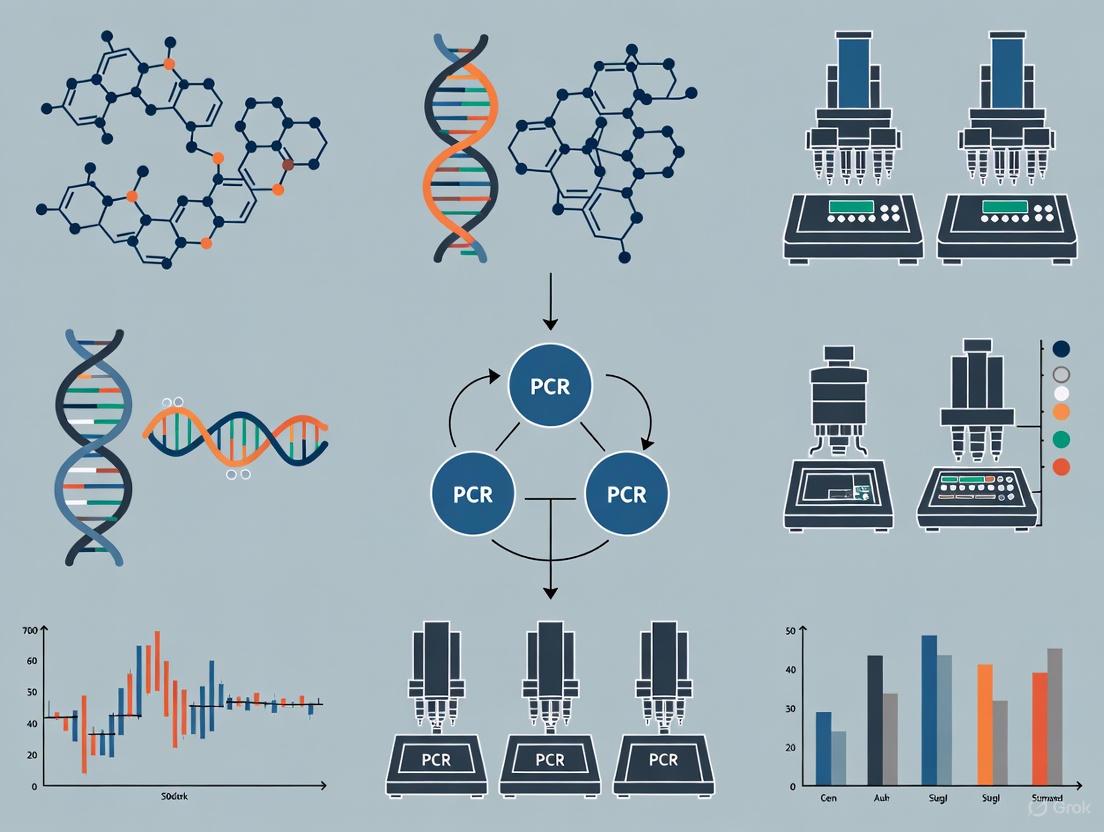
This article provides a comprehensive comparison of digital PCR (dPCR) platforms for researchers, scientists, and drug development professionals.
Digital PCR Platforms Compared: A 2025 Guide for Researchers and Drug Developers
Abstract
This article provides a comprehensive comparison of digital PCR (dPCR) platforms for researchers, scientists, and drug development professionals. It covers foundational principles, including the advantages of absolute quantification and partitioning technologies (droplet-based vs. chip-based). The scope extends to methodological applications in oncology, cell and gene therapy, and infectious disease diagnostics. The content offers troubleshooting guidance and optimization strategies, and delivers a direct, data-driven validation and performance comparison of leading platforms like Bio-Rad's QX200/QX600 and Qiagen's QIAcuity to inform purchasing, validation, and application decisions.
Digital PCR Fundamentals: Understanding Absolute Quantification and Platform Technologies
The evolution from quantitative PCR (qPCR) to digital PCR (dPCR) represents a fundamental shift in nucleic acid quantification, moving from relative measurement to absolute, calibration-free analysis. This transition addresses critical limitations inherent in standard curve-based approaches while introducing unprecedented precision for detecting rare genetic events. As the third generation of PCR technology after conventional PCR and qPCR, dPCR operates on a fundamentally different principle: partitioning samples into thousands of individual reactions to enable single-molecule detection and absolute quantification through binary endpoint measurement and Poisson statistics [1]. This technological advancement has created new possibilities in diverse fields including oncology, infectious disease monitoring, cell and gene therapy, and food safety testing where precise quantification is critical [2] [3].
The driving force behind this evolution stems from the limitations of qPCR for certain applications. While qPCR remains the gold standard for high-throughput gene expression analysis and pathogen detection, its dependence on standard curves introduces variability, reduces accuracy for low-abundance targets, and limits reproducibility across laboratories [4] [5]. Digital PCR eliminates these constraints by providing absolute quantification without calibration curves, demonstrating less sensitivity to PCR inhibitors, and offering enhanced precision for multiplex applications [2] [6]. This article provides a comprehensive comparison of these technologies, examining their technical foundations, performance characteristics, and practical applications within modern research and diagnostic contexts.
Technical Foundations: From Relative Quantification to Single-Molecule Counting
Fundamental Principles and Workflows
The core difference between qPCR and dPCR lies in their approach to quantification. Quantitative PCR (qPCR), also known as real-time PCR, monitors amplification fluorescence during the exponential phase of PCR, comparing results to standard curves of known concentration to provide relative quantification [4] [5]. This method requires external calibration for absolute quantification and assumes consistent amplification efficiency across samples and standards. In contrast, digital PCR (dPCR) partitions the sample into thousands of nanoreactors, performs endpoint amplification, and uses Poisson statistics to calculate absolute target concentration based on the ratio of positive to negative partitions [1]. This fundamental difference in approach eliminates the need for standard curves and provides direct absolute quantification.
The workflow differences between these technologies significantly impact their practical implementation. The qPCR process follows a conventional molecular biology workflow: sample preparation, reaction setup in multiwell plates, real-time PCR cycling with continuous fluorescence monitoring, and analysis based on comparison to standard curves [5]. The dPCR workflow incorporates a crucial additional step: partition generation either through water-in-oil emulsion droplets (ddPCR) or microfluidic chips/nanoplates (dPCR) [7] [1]. Following partitioning and endpoint amplification, partitions are analyzed for fluorescence, and target concentration is calculated automatically using integrated software [2].
Partitioning Technologies and Platform Architectures
Digital PCR platforms primarily utilize two partitioning methodologies: droplet-based systems and chip-based/microfluidic systems. Droplet digital PCR (ddPCR), exemplified by Bio-Rad's QX200/QX600/QX700 systems, employs a water-oil emulsion to create approximately 20,000 nanoliter-sized droplets that function as independent reaction chambers [7] [1]. This approach provides high partition numbers but requires multiple instruments for droplet generation, thermal cycling, and reading. Alternatively, nanoplate-based dPCR systems such as QIAGEN's QIAcuity and Thermo Fisher's Absolute Q utilize microfluidic chips with fixed wells (typically 20,000-30,000 partitions) that integrate partitioning, thermocycling, and imaging in a single instrument [2] [7]. This integrated approach significantly streamlines workflow and reduces hands-on time.
The commercial dPCR landscape has evolved significantly since the first commercial system by Fluidigm in 2006 [1]. Current major platforms include Bio-Rad's ddPCR systems (QX200, QX600, QX700), QIAGEN's QIAcuity, Thermo Fisher's Absolute Q, and Stilla Technologies' Crystal dPCR system [8] [1]. Each platform offers distinct advantages in partitioning method, multiplexing capability, throughput, and workflow integration. Platform selection depends on specific application requirements, with droplet-based systems offering established validation history and nanoplate-based systems providing streamlined workflows beneficial for quality control environments [7].
Table 1: Comparison of Major Digital PCR Platform Architectures
| Platform | Partitioning Method | Typical Partition Count | Workflow Integration | Key Applications |
|---|---|---|---|---|
| Bio-Rad ddPCR | Water-oil emulsion droplets | 20,000 (QX200) | Multiple instruments | Rare mutation detection, liquid biopsy |
| QIAGEN QIAcuity | Nanoplate microfluidics | 26,000-30,000 | Fully integrated | GMO quantification, viral load testing |
| Thermo Fisher Absolute Q | Microfluidic chip | 20,000-24,000 | Fully integrated | Cell therapy potency, residual DNA |
| Stilla Technologies Crystal | Microfluidic circuits | 25,000-30,000 | Semi-integrated | Multiplexed oncology assays |
Performance Comparison: Analytical Data and Experimental Evidence
Sensitivity, Precision, and Dynamic Range
Direct comparative studies demonstrate distinct performance characteristics between qPCR and dPCR technologies. A 2025 study comparing dPCR and Real-Time RT-PCR for respiratory virus detection found dPCR demonstrated superior accuracy, particularly for high viral loads of influenza A, influenza B, and SARS-CoV-2, and for medium loads of RSV [3]. The study analyzed 123 respiratory samples stratified by cycle threshold (Ct) values and found dPCR showed greater consistency and precision than Real-Time RT-PCR, especially in quantifying intermediate viral levels where qPCR variability increases.
In cell and gene therapy applications, a comparative validation study for CAR-T manufacturing found that while qPCR offered a broader dynamic range (8 logs vs 6 logs for dPCR) using gBlocks, dPCR provided significantly less variable results [6]. Sample comparisons revealed higher data variation with qPCR (up to 20% difference in copy number ratio) compared to dPCR, with the latter demonstrating superior correlation of genes linked in one construct (R² = 0.99 for dPCR vs R² = 0.78 for qPCR) [6]. This enhanced precision is particularly valuable for manufacturing control where consistent results are essential for product quality and safety.
A platform comparison study evaluating Bio-Rad's QX200 and QIAGEN's QIAcuity for GMO quantification found both platforms performed equivalently in sensitivity, dynamic range, and accuracy when following optimized protocols [2]. The limit of detection (LOD) for ddPCR was approximately 0.17 copies/μL input (3.31 copies/reaction) compared to 0.39 copies/μL input (15.60 copies/reaction) for ndPCR, though both platforms demonstrated similar limits of quantification (LOQ) in practical applications [9]. This suggests that while platform-specific differences exist, well-validated dPCR methods generally outperform qPCR for precision-critical applications.
Table 2: Performance Comparison of qPCR vs. dPCR in Recent Studies
| Performance Parameter | qPCR Performance | dPCR Performance | Application Context |
|---|---|---|---|
| Dynamic Range | 8 logs [6] | 6 logs [6] | CAR-T manufacturing |
| Detection Sensitivity | LoD: 32 copies (RCR assay) [6] | LoD: 10 copies (RCR assay) [6] | Replication-competent retrovirus detection |
| Quantification Precision | Up to 20% variation in copy number ratio [6] | <5% variation in most samples [6] | Vector copy number assessment |
| Inhibitor Resistance | Susceptible to PCR inhibitors [2] | Less sensitive to inhibitors [2] | Complex matrices (food, clinical samples) |
| Multiplexing Correlation | R² = 0.78 for linked genes [6] | R² = 0.99 for linked genes [6] | Multi-attribute quality control |
Experimental Protocols for Technology Comparison
For researchers designing comparison studies between qPCR and dPCR, specific experimental protocols from recent literature provide valuable guidance. In GMO quantification studies, DNA is typically extracted from certified reference materials using kits such as the RSC PureFood GMO kit (Promega) or CTAB-based methods, with DNA concentration measured by dPCR to evaluate copy number of reference genes [2]. An inhibition test using three serial dilution levels measured in duplicate validates sample quality, where the average absolute copies measured in diluted samples multiplied by the dilution factor should not differ more than 25% from the average copies measured at the highest concentration [2].
For platform comparisons, identical primer-probe sets should be used across technologies with optimization of reaction conditions according to published guidelines [2] [9]. Performance assessment should include specificity, cross-talk, robustness, dynamic range, linearity, limit of quantification, and accuracy (trueness and precision) [2]. In viral load comparison studies, samples should be stratified by qPCR Ct values into high (≤25), medium (25.1-30), and low (>30) viral load categories, with both technologies used to quantify viral loads across these categories [3]. Statistical analysis should include correlation coefficients, coefficients of variation, and appropriate modeling to determine limits of detection and quantification.
Application-Based Technology Selection Guide
Determining the Optimal Technology for Specific Research Goals
Technology selection between qPCR and dPCR should be driven by specific application requirements rather than assumed superiority of either platform. qPCR remains the preferred choice for high-throughput gene expression analysis, routine pathogen detection with moderate sensitivity requirements, and applications where cost-effectiveness and established protocols are priorities [4] [5]. Its extensive validation history, standardized workflows, and lower per-sample cost make it ideal for large-scale screening programs and applications where relative quantification suffices.
dPCR demonstrates clear advantages for applications requiring absolute quantification without standard curves, detection of rare targets (e.g., rare mutations, circulating tumor DNA), analysis of limited or degraded samples, and quantification in complex matrices containing PCR inhibitors [4] [3]. In clinical diagnostics, dPCR shows particular promise for liquid biopsy applications, viral load monitoring in transplant patients, minimal residual disease detection, and analysis of copy number variations where precise quantification impacts clinical decision-making [3] [1].
The emerging application space for dPCR includes cell and gene therapy manufacturing, where it is increasingly used for vector copy number determination, residual DNA quantification, and genome editing efficiency assessment [6] [7]. In these regulated environments, dPCR's reduced variability and absolute quantification capabilities provide manufacturing advantages despite higher per-sample costs. Environmental monitoring and food safety testing also benefit from dPCR's ability to precisely quantify targets in inhibitor-rich samples and complex matrices [2] [10].
Practical Implementation Considerations
Beyond technical performance, practical considerations significantly impact technology selection in research and diagnostic settings. Workflow efficiency varies substantially between platforms, with integrated dPCR systems (QIAcuity, Absolute Q) offering "sample-in, results-out" automation that reduces hands-on time by 50-70% compared to droplet-based systems requiring multiple instruments [7]. This workflow advantage makes integrated systems particularly valuable for quality control environments where reproducibility and documentation are essential.
Economic factors remain a significant consideration, with dPCR instruments commanding higher initial investment ($38,000+) and increased per-sample costs (2-3× higher than qPCR) due to specialized consumables [10]. However, the total cost of ownership must account for reduced standard preparation time, decreased repeat analysis rates due to improved precision, and potential multiplexing savings. For clinical applications, dPCR's superior sensitivity may enable earlier disease detection and intervention, potentially offsetting higher testing costs through improved patient outcomes.
Regulatory compliance requirements differ between technologies, with qPCR enjoying more extensive regulatory precedent while dPCR systems rapidly catch up with 21 CFR Part 11-compliant software, installation/operational qualification services, and validation support [7]. Researchers operating in regulated environments should verify platform-specific regulatory status and validation requirements for their intended applications.
Essential Research Reagents and Materials
Successful implementation of dPCR technology requires specific reagents and consumables optimized for partitioning and endpoint detection. The following table details essential components for dPCR workflows across major platform types.
Table 3: Essential Research Reagents for Digital PCR Workflows
| Reagent Category | Specific Examples | Function | Platform Compatibility |
|---|---|---|---|
| Partitioning Oil | Bio-Rad Droplet Generation Oil | Creates water-in-oil emulsion for droplet stability | Bio-Rad ddPCR systems |
| Surfactants | QIAGEN QIAcuity PCR Supplier | Stabilizes partitions during thermal cycling | QIAGEN QIAcuity |
| Probe Chemistry | Hydrolysis probes (TaqMan), EvaGreen dye | Target-specific detection or dsDNA intercalation | All major platforms |
| Master Mix | ddPCR Supermix, QIAcuity Probe PCR Kit | Optimized polymerase/buffer for partition PCR | Platform-specific |
| Reference Assays | Lectin gene for GMO, RNase P for human | Reference gene for normalized quantification | All major platforms |
| Control Materials | gBlocks, certified reference materials | Assay validation and quality control | All major platforms |
| Microfluidic Chips | QIAcuity Nanoplate, Absolute Q chips | Partitioning substrate for chip-based systems | Platform-specific |
Future Perspectives and Development Trends
The dPCR technology landscape continues to evolve with several emerging trends shaping future applications. Multiplexing capabilities are expanding significantly, with newer platforms supporting 5-12 targets simultaneously, enabling comprehensive pathogen panels and complex genetic characterization in single reactions [8] [7]. This advancement reduces sample requirements, processing time, and per-target costs while maximizing information from limited samples.
Workflow automation and miniaturization represent another significant trend, with compact benchtop systems incorporating faster thermal cycling (40-cycle runs in under 35 minutes) and simplified sample preparation [10]. These improvements facilitate decentralization of molecular testing from core laboratories to hospital settings and potentially point-of-care applications. Integration of artificial intelligence for automated data analysis and quality control further enhances accessibility for non-specialist users.
The clinical adoption of dPCR continues to accelerate, particularly in oncology where liquid biopsy applications for circulating tumor DNA detection are transitioning from research to clinical practice [10]. Reimbursement approvals under Medicare's MolDX framework and compliance with EU IVDR regulations are creating sustainable economic models for dPCR-based clinical tests [10]. Concurrently, expanding applications in wastewater-based epidemiology, antimicrobial resistance monitoring, and cell therapy potency testing demonstrate the technology's versatility across diverse fields.
As the dPCR market grows at a CAGR of 13.5% (reaching an estimated $0.85 billion in 2025), ongoing innovation from established companies and emerging startups will likely address current limitations in throughput and cost while expanding applications in clinical diagnostics, environmental monitoring, and precision medicine [8] [10]. This progression continues the evolution from relative to absolute quantification that defines the transition from qPCR to dPCR, providing researchers and clinicians with increasingly precise tools for molecular analysis.
Digital PCR (dPCR) is a powerful method for the absolute quantification of nucleic acids, providing a level of precision that sets it apart from other PCR technologies. Its core principle rests on a straightforward yet powerful concept: dividing a sample into numerous individual partitions, performing end-point PCR on each, and applying Poisson statistics to determine the absolute target concentration. This technique converts the analog nature of traditional PCR into a digital, binary readout [11]. Unlike quantitative PCR (qPCR), which relies on calibration curves and real-time fluorescence monitoring, dPCR's strength lies in its direct counting of molecules, making it exceptionally resistant to PCR inhibitors and ideal for detecting rare targets and minor genetic differences [12] [11].
Principle 1: Sample Partitioning
The first fundamental step in dPCR is sample partitioning. The sample is diluted and distributed across thousands to millions of independent compartments so that each partition contains either zero, one, or a few target molecules [12] [11]. This partitioning can be achieved through various microfluidic technologies, including arrays of microwells, droplet-based systems, and systems using on-chip valves [11].
- Objective: The goal is to achieve a random, Poisson-based distribution of template DNA molecules across all available partitions.
- Outcome: After amplification, each partition acts as an individual PCR microreactor and is scored simply as positive (if the target sequence was present and amplified) or negative (if the target was absent) [11]. This converts the complex, continuous data of qPCR into a series of straightforward binary (digital) signals.
Principle 2: End-Point Fluorescence Detection
Following the amplification phase, dPCR utilizes end-point fluorescence detection. Unlike qPCR, which monitors fluorescence in real-time during each cycle to determine the quantification cycle (Cq), dPCR measures the fluorescence signal only after all PCR cycles are complete [12] [11].
- Readout: The readout is a simple binary determination for each partition: fluorescent (positive) or non-fluorescent (negative) [11].
- Advantage: This end-point approach is robust against variations in amplification efficiency. Since quantification does not depend on the rate at which the fluorescence crosses a threshold, the results are less affected by factors that can plague qPCR, such as the presence of PCR inhibitors or suboptimal primer efficiency [12].
Principle 3: Quantification via Poisson Statistics
The final and most defining principle of dPCR is the application of Poisson statistics to calculate the absolute concentration of the target nucleic acid. The random distribution of molecules across partitions follows a Poisson distribution [11]. The ratio of positive partitions (k) to the total number of partitions (n) is used to calculate the average number of target molecules per partition (λ), using the formula derived from the Poisson probability function: λ = -ln(1 - k/n) [11].
This statistical foundation allows for absolute quantification without the need for a standard curve. The precision of this quantification is intrinsically linked to the total number of partitions analyzed; more partitions lead to greater precision and a lower coefficient of variation [12] [11]. The confidence in the concentration estimate is highest when a significant proportion of partitions are neither empty nor full, with optimal precision achieved when approximately 20% of partitions are negative (λ ≈ 1.6) [11].
Comparative Analysis: dPCR vs. qPCR vs. End-Point PCR
The table below summarizes the key technical differences between the major PCR technologies, highlighting how the core principles of dPCR define its performance.
| Feature | End-Point PCR | Quantitative PCR (qPCR) | Digital PCR (dPCR) |
|---|---|---|---|
| Method Description | Measures final amount of PCR product after all cycles via gel electrophoresis [12] | Measures fluorescence signal of a bulk reaction mix after each PCR cycle [12] | Partitions sample into compartments, performs endpoint PCR, and scores each partition as positive/negative [12] |
| Quantification Basis | Qualitative to semi-quantitative [12] | Quantitative, based on standard curves and Cq values [12] [11] | Absolute quantitative, based on Poisson statistics; no standard curve needed [12] [11] |
| Detection Method | Gel electrophoresis and staining [12] | Real-time fluorescence monitoring [12] | End-point fluorescence detection [12] [11] |
| Precision | + [12] | ++ [12] | +++ (Higher resolution, lower coefficient of variation) [12] |
| Tolerance to Inhibitors | Low | Moderate | High (Partitioning enriches the target) [12] [11] |
| Dynamic Range | N/A | Large (over 5 logs) [12] | Limited by the number of partitions [12] |
| Application Strength | Target presence/absence, genotyping [12] | High-throughput screening, gene expression with standards [12] | Absolute quantification, rare allele detection, copy number variation [12] [11] |
Experimental Protocol: dPCR Quantification
The following workflow details a standard procedure for absolute quantification using dPCR.
Detailed Methodology
- Sample and Reaction Mix Preparation: Dilute the purified DNA or cDNA sample to a concentration suitable for optimal partitioning. Prepare the dPCR reaction mix containing the template, primers, fluorescently labeled probe (e.g., TaqMan), and dPCR supermix. The total reaction volume is defined by the specific dPCR system used [12].
- Partitioning: Load the reaction mix into a dPCR instrument. The instrument will automatically partition the sample into thousands of individual reactions. The method of partitioning (e.g., water-oil emulsion droplets, microfluidic chambers) depends on the platform (e.g., Bio-Rad, RainDance, Fluidigm) [13] [11].
- PCR Amplification: Place the partitioned sample (chip or droplet emulsion) into a thermal cycler and run a standard PCR protocol with 40 to 50 cycles. Amplification occurs independently in each partition [12].
- End-Point Fluorescence Reading: After amplification is complete, transfer the partitions to a reader that measures the end-point fluorescence in each one. Partitions that contained at least one target molecule will exhibit high fluorescence, while those without a target will show low background fluorescence [12] [11].
- Data Analysis and Poisson Quantification: The instrument software automatically counts the positive (k) and negative (n-k) partitions. Using the fraction of positive partitions (k/n), it applies the Poisson model (λ = -ln(1 - k/n)) to calculate the average number of target molecules per partition (λ). This value is then converted to the absolute concentration in the original sample (e.g., copies per microliter) [11].
The Scientist's Toolkit: Essential dPCR Reagents
Successful dPCR requires a set of specific reagents and tools, each with a critical function in the workflow.
| Item | Function |
|---|---|
| dPCR Supermix | A specialized chemical mixture containing a robust, hot-start DNA polymerase, dNTPs, and optimized buffers to ensure efficient amplification within partitions [12]. |
| Fluorescent Probes (TaqMan) | Sequence-specific oligonucleotides labeled with a fluorescent reporter and quencher. Cleavage during amplification generates a fluorescent signal in positive partitions [12]. |
| Primers | Forward and reverse oligonucleotides designed to flank and target the specific DNA sequence of interest for amplification. |
| Partitioning Oil or Chip | Platform-specific consumables (e.g., oil for droplet generation, microfluidic chips) that enable the physical separation of the sample into thousands of nanoliter-sized reactions [11]. |
| Nucleic Acid Template | The purified DNA or reverse-transcribed cDNA sample of interest, accurately diluted to fall within the optimal dynamic range of the dPCR system [12]. |
Advanced Concepts: Statistical Considerations and "Rain"
A key to accurate dPCR analysis is understanding its statistical underpinnings and common data artifacts. The relationship between the number of partitions and precision is governed by binomial statistics, with precision scaling with the inverse square root of the number of partitions [11]. Furthermore, the classification of partitions is not always perfectly binary. Factors like imperfect amplification efficiency can lead to a phenomenon called "rain"—partitions with intermediate fluorescence that fall between clear positive and negative clusters. The development of robust clustering algorithms is an active area of research to minimize classification bias and ensure accurate concentration estimates [14].
Statistical Relationship in dPCR
Digital PCR (dPCR) represents a transformative advancement in nucleic acid quantification, enabling absolute target measurement without requiring standard curves. This third-generation PCR technology operates by partitioning a single PCR reaction into thousands to millions of individual reactions, allowing for single-molecule amplification and detection through Poisson statistical analysis [1]. The partitioning process is fundamental to dPCR's exceptional sensitivity and precision, as it effectively increases the effective concentration of target molecules within positive partitions while reducing background interference [15]. Two primary partitioning methodologies have emerged as the technological foundations of modern dPCR systems: droplet-based digital PCR (ddPCR) and chip-based digital PCR (cdPCR).
The fundamental difference between these platforms lies in their partitioning mechanisms. Droplet-based systems utilize water-in-oil emulsion technology to create nanoliter-sized compartments, while chip-based systems employ fixed microchambers or nanowells etched into solid surfaces [7] [1]. This core distinction drives differences in workflow, performance characteristics, and optimal application scenarios. As dPCR adoption expands across life sciences research, clinical diagnostics, and biopharmaceutical development, understanding the comparative advantages and limitations of these partitioning technologies becomes essential for researchers selecting appropriate platforms for their specific experimental needs.
Fundamental Technological Differences
The partitioning mechanism constitutes the most significant differentiator between droplet and chip-based dPCR systems, influencing everything from initial setup to final data analysis.
Droplet-Based dPCR (ddPCR)
Droplet-based digital PCR employs microfluidic technology to partition samples into thousands of uniform, nanoliter-sized water-in-oil droplets [15]. In this system, an aqueous PCR mixture containing template DNA, primers, probes, and master mix is combined with an oil phase to generate monodisperse droplets typically ranging from 0.5 to 1 nL in volume. The droplet generation process leverages passive or active microfluidic forces to break the aqueous/oil interface at high speeds (1-100 kHz), creating emulsion partitions that function as independent microreactors [1]. A critical consideration in ddPCR is droplet stabilization, as the harsh temperature cycling during PCR can promote coalescence without appropriate surfactant formulations [1].
Commercial ddPCR platforms like Bio-Rad's QX200/QX600/QX700 systems typically generate approximately 20,000 droplets per sample, though advanced systems can produce significantly higher partition numbers [7]. Following partitioning, droplet emulsions undergo standard PCR amplification in a thermal cycler. Post-amplification, droplets flow sequentially through a microfluidic channel or capillary in an "in-line detection" system, where a fluorescence detector measures each droplet's fluorescent signal to determine target presence or absence [1]. This flow-based detection enables analysis of large partition numbers but requires precise fluidic control.
Chip-Based dPCR (cdPCR)
Chip-based digital PCR utilizes solid-state chips containing predefined microchambers or nanowells for sample partitioning. These systems distribute the PCR reaction mix across thousands to millions of fixed microfabricated wells, typically through capillary action, centrifugal force, or active fluidic controls [1]. Unlike the dynamic emulsion droplets in ddPCR, chip-based partitions are physically constrained and geometrically defined, with volumes ranging from 0.4 to 1 nL depending on the specific platform [7] [16].
Commercial cdPCR systems include platforms such as Thermo Fisher's Absolute Q, QIAGEN's QIAcuity, and Roche's Digital LightCycler [7] [16]. These instruments typically feature integrated workflows where partitioning, thermal cycling, and imaging occur within the same instrument. For signal detection, most cdPCR systems employ "planar imaging," where a fluorescence microscope or scanner captures a static snapshot of all partitions simultaneously after amplification [1]. This imaging approach provides comprehensive spatial information but may be limited by the detector's field of view and resolution.
Table 1: Fundamental Characteristics of dPCR Partitioning Technologies
| Parameter | Droplet-Based dPCR (ddPCR) | Chip-Based dPCR (cdPCR) |
|---|---|---|
| Partitioning Mechanism | Water-in-oil emulsion droplets | Fixed microchambers/nanowells |
| Typical Partition Volume | 0.5-1 nL | 0.4-1 nL |
| Partition Number Range | ~20,000 (standard) to millions (advanced) | ~20,000 to ~30,000 (common commercial systems) |
| Partition Stability | Requires surfactant stabilization; prone to coalescence | Physically stable; no coalescence risk |
| Detection Method | In-line flow detection | Planar imaging |
| Commercial Examples | Bio-Rad QX200/QX600/QX700 | Thermo Fisher Absolute Q, QIAGEN QIAcuity, Roche Digital LightCycler |
Performance Comparison: Experimental Data
Recent comparative studies provide empirical data on the performance characteristics of droplet-based and chip-based dPCR platforms across various applications.
Sensitivity and Detection Limits
Both ddPCR and cdPCR demonstrate exceptional sensitivity for nucleic acid detection, though their specific limits of detection (LOD) and quantification (LOQ) vary slightly. A 2025 study comparing Bio-Rad's QX200 ddPCR and QIAGEN's QIAcuity cdPCR systems using synthetic oligonucleotides reported LOD values of approximately 0.17 copies/μL for ddPCR and 0.39 copies/μL for cdPCR [9]. The LOQ, determined using a 3rd-degree polynomial model, was 4.26 copies/μL for ddPCR and 1.35 copies/μL for cdPCR [9]. These findings suggest that while ddPCR may offer marginally better detection limits, cdPCR provides superior quantification at low target concentrations.
Precision and Reproducibility
Precision represents a critical performance parameter for quantitative applications. In a study examining gene copy number variation in the ciliate Paramecium tetraurelia, both platforms demonstrated high precision, though results were influenced by restriction enzyme selection [9]. When using the EcoRI restriction enzyme, ddPCR showed higher coefficient of variation (CV) values (2.5%-62.1%) compared to cdPCR (0.6%-27.7%). However, with HaeIII enzyme treatment, ddPCR precision improved significantly (CV <5%), nearly matching cdPCR performance (CV 1.6%-14.6%) [9]. This enzyme-dependent precision highlights how sample preparation can impact platform performance.
A separate 2025 study comparing GMO quantification in soybeans found that both ddPCR (Bio-Rad QX200) and cdPCR (QIAGEN QIAcuity) platforms produced data meeting acceptance criteria for validation parameters according to JRC guidance documents [2]. Both systems demonstrated appropriate specificity, linearity, dynamic range, and accuracy for quantitative analysis of genetically modified organisms, supporting their equivalency for regulatory applications.
Workflow Efficiency and Practical Considerations
Workflow characteristics significantly impact platform selection for different laboratory environments. Droplet-based systems typically involve multiple instruments and manual processing steps, including droplet generation, transfer to PCR plates, thermal cycling, and droplet reading [7]. This multi-step process can extend hands-on time to 6-8 hours for complete analysis [7]. In contrast, integrated cdPCR systems like the QIAcuity offer streamlined "sample-in, results-out" workflows that consolidate partitioning, amplification, and imaging within a single instrument, reducing total processing time to under 90 minutes and minimizing manual intervention [7].
Table 2: Experimental Performance Comparison of dPCR Platforms
| Performance Metric | Droplet-Based dPCR (ddPCR) | Chip-Based dPCR (cdPCR) |
|---|---|---|
| Limit of Detection (LOD) | 0.17 copies/μL [9] | 0.39 copies/μL [9] |
| Limit of Quantification (LOQ) | 4.26 copies/μL [9] | 1.35 copies/μL [9] |
| Precision (CV Range) | 2.5%-62.1% (enzyme-dependent) [9] | 0.6%-27.7% (enzyme-dependent) [9] |
| Dynamic Range | Demonstrated from <0.5 to >3000 copies/μL [9] | Demonstrated from <0.5 to >3000 copies/μL [9] |
| Multiplexing Capability | Limited in earlier systems; newer models support up to 12 targets [7] | Available for 4-12 targets; generally superior multiplexing [7] |
| Susceptibility to Inhibition | Less sensitive to PCR inhibitors compared to qPCR [2] [15] | Less sensitive to PCR inhibitors compared to qPCR [2] |
Detailed Experimental Protocols
To facilitate experimental reproducibility and platform evaluation, we outline standardized methodologies from recent comparative studies.
GMO Quantification Protocol
A 2025 study compared ddPCR and cdPCR for quantifying genetically modified soybeans, providing a validated protocol for food safety applications [2]:
Sample Preparation:
- DNA extraction from 200 mg certified reference materials using either commercial kits (e.g., Promega Maxwell RSC) or CTAB buffer method per ISO 21571:2005
- DNA concentration measurement via dPCR using lectin reference gene with inhibition testing
- Serial dilution in nuclease-free water with three dilution levels measured in duplicate
- Preparation of GM/non-GM mixtures at various percentages (0.05%-10%) based on absolute copy number
ddPCR Workflow (Bio-Rad QX200):
- Prepare 20μL reaction mixture with primer-probe sets for MON-04032-6 or MON89788 targets and lectin reference gene
- Load mixture into droplet generation cartridge with droplet generation oil
- Generate droplets using QX200 Droplet Generator
- Transfer droplets to a 96-well PCR plate and seal
- Perform thermal cycling: 10min at 95°C, 40 cycles of 94°C for 30s and 60°C for 60s, 98°C for 10min (ramp rate 2°C/s)
- Read droplets using QX200 Droplet Reader
- Analyze data with QX Manager 2.1 Software using Poisson statistics
cdPCR Workflow (QIAGEN QIAcuity):
- Prepare reaction mixture with identical primer-probe sets
- Load into QIAcuity Nanoplate 26k (26,000 partitions per well)
- Seal nanoplates and load into QIAcuity One integrated instrument
- Perform partitioning, thermocycling, and imaging within single system
- Use thermal cycling conditions matching ddPCR protocol
- Analyze data with QIAcuity Software Suite
Validation Parameters:
- Specificity: Assess non-target amplification
- Cross-talk: Evaluate signal interference between channels
- Robustness: Test under varying conditions
- Dynamic range and linearity: Analyze serial dilutions
- Limit of quantification: Determine LOQasym
- Accuracy: Evaluate trueness and precision
- Measurement uncertainty: Calculate according to ENGL guidelines [2]
Gene Copy Number Analysis Protocol
A 2025 study comparing copy number quantification in protists provides methodology for environmental and biological applications [9]:
Sample Types:
- Synthetic oligonucleotides with known concentrations
- DNA extracted from varying cell numbers of Paramecium tetraurelia (10-1000 cells)
Restriction Enzyme Digestion:
- Test two restriction enzymes: EcoRI and HaeIII
- Perform digestion prior to dPCR analysis to evaluate impact on precision
Platform-Specific Procedures:
- QX200 ddPCR: 20μL reactions, droplet generation following manufacturer's protocols, endpoint measurement
- QIAcuity cdPCR: 40μL reactions, nanoplate partitioning, integrated imaging
Data Analysis:
- Calculate copies/μL using platform-specific software
- Determine LOD and LOQ using polynomial modeling
- Assess precision via coefficient of variation across replicates
- Evaluate accuracy by comparing expected versus measured copy numbers
- Analyze linearity across dilution series
Workflow Visualization
The following diagram illustrates the core procedural differences between droplet-based and chip-based dPCR workflows:
dPCR Workflow Comparison: Droplet vs. Chip-Based Technologies
Application-Specific Considerations
Clinical Diagnostics and Biomedical Research
In clinical diagnostics, particularly for oncology applications, ddPCR has established strong precedents for detecting rare mutations and copy number variations [1] [15]. The technology's exceptional sensitivity makes it invaluable for liquid biopsy applications, monitoring treatment response through circulating tumor DNA, and detecting minimal residual disease [1] [17]. ddPCR's ability to detect mutant alleles at frequencies as low as 0.001% within wild-type backgrounds has enabled non-invasive cancer monitoring and early intervention [1].
Chip-based dPCR platforms offer distinct advantages in regulated clinical environments, particularly for quality control and release assays in cell and gene therapy manufacturing [7]. Their integrated workflows, reduced contamination risk, and compliance features (21 CFR Part 11) make them suitable for GMP environments [7]. Applications include vector copy number (VCN) quantification, residual plasmid DNA detection, transgene expression quantification, and genome edit detection assays for CRISPR-Cas9 editing assessment [7].
Environmental and Food Safety Monitoring
Both platforms demonstrate robust performance for environmental DNA monitoring and genetically modified organism quantification. A 2025 study confirmed that both ddPCR and cdPCR platforms produced validated results for GMO quantification in soybeans, meeting European Union regulatory requirements for food labeling [2]. The absolute quantification capability of both technologies eliminates the need for standard curves, simplifying regulatory compliance.
For environmental applications, studies on protist quantification found both platforms suitable for gene copy number analysis, though restriction enzyme selection significantly impacted precision, particularly for ddPCR [9]. This finding highlights the importance of sample preparation optimization alongside platform selection.
The Scientist's Toolkit: Essential Research Reagents
Table 3: Essential Reagents for dPCR Experiments
| Reagent Category | Specific Examples | Function | Platform Considerations |
|---|---|---|---|
| Partitioning Reagents | Droplet Generation Oil, Surfactants, Microfluidic Chips, Nanoplates | Create stable partitions for single-molecule amplification | ddPCR requires oil-surfactant systems; cdPCR uses predefined chips/plates |
| Enzymes & Master Mixes | DNA Polymerase, Reverse Transcriptase (RT-dPCR), dNTPs, Reaction Buffers | Catalyze DNA amplification with high efficiency and specificity | Enzyme selection critical for precision; hot-start variants reduce non-specific amplification |
| Nucleic Acid Modifiers | Restriction Enzymes (EcoRI, HaeIII), DNase/RNase Inhibitors | Improve target accessibility and nucleic acid integrity | Restriction enzyme choice significantly impacts precision, especially in ddPCR [9] |
| Detection Chemistry | Hydrolysis Probes (TaqMan), DNA-binding Dyes (EvaGreen), Molecular Beacons | Generate fluorescent signals for target detection | Probe-based detection preferred for multiplexing; dye-based more economical |
| Reference Materials | Synthetic Oligonucleotides, Certified Reference Materials (CRMs) | Standardization, validation, and quality control | Essential for assay development and validation; CRMs required for regulatory applications [2] |
| Sample Preparation Kits | Nucleic Acid Extraction Kits, Clean-up Concentrators, Quantification Assays | Isolate and purify targets from complex matrices | Quality critical for performance; silica-column and magnetic-bead based methods common |
Droplet-based and chip-based dPCR technologies both offer significant advantages over traditional qPCR for absolute nucleic acid quantification, with each approach presenting distinct strengths suited to different research and clinical applications. Droplet-based systems provide exceptional flexibility in partition numbers and established sensitivity for rare mutation detection, while chip-based platforms offer streamlined workflows, superior multiplexing capabilities, and enhanced reproducibility for regulated environments.
The continuing evolution of both technologies focuses on increasing automation, reducing costs, improving multiplexing capabilities, and enhancing usability. Microfluidic advances are driving miniaturization and integration, with emerging platforms combining sample preparation with dPCR analysis in single systems [15] [18]. The development of point-of-care dPCR systems represents a particularly promising direction, potentially enabling rapid, precise molecular diagnostics in resource-limited settings [15] [18].
For researchers selecting between these platforms, application requirements should drive decision-making. Droplet-based systems may be preferable for maximum sensitivity in rare variant detection, while chip-based systems offer advantages for high-throughput, multiplexed applications requiring minimal manual intervention. As both technologies continue to mature, their complementary strengths will expand the accessibility and applications of digital PCR across life sciences research, clinical diagnostics, and environmental monitoring.
The global digital PCR (dPCR) market is experiencing rapid growth, projected to expand from USD 857.2 million in 2025 to USD 3,678.8 million by 2032, representing a striking compound annual growth rate (CAGR) of 23.1% [19]. This growth is fueled by the technology's superior sensitivity and absolute quantification capabilities compared to traditional quantitative PCR (qPCR), making it particularly valuable for applications in oncology, infectious disease testing, and genetic disorder diagnosis [19]. Within this expanding market, Bio-Rad Laboratories and Thermo Fisher Scientific have established themselves as early leaders in the droplet digital PCR (ddPCR) segment [19]. Meanwhile, QIAGEN has emerged as a significant competitor with its chip-based QIAcuity platform, recently demonstrating strong commercial performance with over 2,700 cumulative system placements by the end of 2024 [20] [21]. Although Roche's current market presence in dPCR is less dominant, the company is making substantial investments in pioneering sequencing by expansion (SBX) technology, achieving record-breaking sequencing speeds that may eventually complement or converge with dPCR applications [22] [23].
Technology Comparison: dPCR Platforms
Platform Specifications and Performance
Digital PCR technology partitions samples into thousands of individual reactions to enable absolute nucleic acid quantification without standard curves. The leading platforms utilize different partitioning methods: Bio-Rad's QX200 system employs droplet-based technology, while QIAGEN's QIAcuity uses chip-based nanoplates [2]. Thermo Fisher Scientific offers the QuantStudio digital PCR systems, though detailed technical specifications for their dPCR platforms were not emphasized in the search results [24] [25].
Table 1: Digital PCR Platform Technical Comparison
| Feature | Bio-Rad QX200 | QIAGEN QIAcuity | Thermo Fisher QuantStudio |
|---|---|---|---|
| Technology Type | Droplet Digital PCR (ddPCR) | Chip-based Digital PCR | Digital PCR |
| Partitioning Method | Water-oil emulsion droplets | Microfluidic nanoplates | Information limited |
| Partitions per Reaction | ~20,000 droplets [2] | 26,000 (Nanoplate 26k) [2] | Information limited |
| Multiplexing Capability | Information limited | Up to 12-plex (with new kit and software) [21] | Information limited |
| Workflow Integration | Requires separate droplet generation, thermocycling, and reading [2] | Fully integrated partitioning, thermocycling, and imaging [2] [21] | Information limited |
| Run Time | ~90 minutes per run (as per one dPCR system mentioned) | ~2 hours (reduced from 6 hours in previous systems) [21] | Information limited |
| Throughput | 96-well plate format | Available in one-, four-, and eight-plate versions [21] | Information limited |
Direct Performance Comparison: Experimental Data
A 2025 study directly compared the performance of Bio-Rad's QX200 and QIAGEN's QIAcuity platforms for quantifying genetically modified organisms (GMOs) in soybean samples [2]. The study performed an in-house validation of quantitative duplex dPCR methods for detecting MON-04032-6 and MON89788 events using the lectin reference gene.
Table 2: Experimental Performance Comparison Between Platforms [2]
| Validation Parameter | Bio-Rad QX200 Performance | QIAGEN QIAcuity Performance |
|---|---|---|
| Specificity | No cross-reactivity with non-target DNA | No cross-reactivity with non-target DNA |
| Dynamic Range | Linear across tested concentrations (0.05%-10% GMO) | Linear across tested concentrations (0.05%-10% GMO) |
| Linearity | R² values met acceptance criteria | R² values met acceptance criteria |
| Limit of Quantification (LOQ) | Met acceptance criteria for asymmetric LOQ | Met acceptance criteria for asymmetric LOQ |
| Trueness (Bias) | Within acceptable range (<±25%) | Within acceptable range (<±25%) |
| Precision (Repeatability) | Relative standard deviation (RSD) < 25% | Relative standard deviation (RSD) < 25% |
| Conclusion | "All evaluated data and the validation parameters agree with the acceptance criteria" | "All evaluated data and the validation parameters agree with the acceptance criteria" |
The study concluded that both platforms demonstrated equivalent performance for GMO quantification, with all validation parameters meeting acceptance criteria according to JRC Guidance documents [2]. This direct comparison suggests functional parity between droplet-based and chip-based dPCR technologies for this application.
Diagram 1: GMO Detection Validation Workflow
Key Player Profiles and Strategic Directions
QIAGEN: Expanding Multiplexing Capabilities
QIAGEN has positioned its QIAcuity dPCR platform as a high-throughput, fully integrated solution that reduces processing time from six hours to just two hours [21]. A significant 2025 product enhancement increased the system's multiplexing capacity from 5-plex to 12-plex through a software update (QIAcuity Software 3.1) and the introduction of the QIAcuity High Multiplex Probe PCR Kit [21]. This advancement enables researchers to analyze more targets from limited samples while reducing reagent consumption and processing time. The company's strong commercial execution is evidenced by preliminary Q1 2025 results showing 7% constant exchange rate (CER) sales growth and raising full-year 2025 adjusted EPS outlook to approximately $2.35 CER [20]. The QIAcuity platform delivered high-single-digit CER gains in Q1 2025, reflecting solid adoption across research and clinical applications [20].
Bio-Rad: ddPCR Market Leadership
Bio-Rad Laboratories holds a prominent position in the droplet digital PCR segment, which is expected to maintain the largest market share in 2025 [19]. The company's QX200 system utilizes water-oil emulsion droplets to partition samples, a methodology validated in the GMO detection study discussed previously [2]. In April 2023, Bio-Rad launched the QX600 Droplet Digital PCR System, which offers advanced multiplexing capabilities while maintaining compatibility with existing QX200 droplet generation and processing protocols [19]. This continuity allows current users to adopt enhanced functionality without completely changing their established workflows.
Thermo Fisher Scientific: qPCR Focus and dPCR Portfolio
While specific details about Thermo Fisher's digital PCR offerings were limited in the search results, the company maintains a strong presence in the broader PCR market through its established Applied Biosystems QuantStudio real-time PCR systems [24] [25]. Thermo Fisher's extensive portfolio includes TaqMan assays, real-time PCR reagents, and comprehensive data analysis solutions that support genetic variation analysis, gene expression studies, and pathogen detection [25]. The company is identified as a significant competitor in the digital PCR market, though detailed information about their current dPCR strategy and platform specifications was not available in the consulted sources [19].
Roche: Sequencing Innovation Beyond dPCR
Roche's current strategic focus appears centered on pioneering sequencing by expansion (SBX) technology rather than direct competition in the dPCR market [22] [23]. In 2025, Roche demonstrated several SBX advancements, including ultra-rapid whole-genome sequencing that achieved a Guinness World Record by completing DNA sequencing to variant call file in under four hours [22] [23]. The technology also enables multi-omics integration, allowing concurrent detection of DNA variants and methylation signals from a single library preparation [23]. Roche has established collaborations with prominent institutions including the Wellcome Sanger Institute, Broad Institute, and University of Tokyo to evaluate SBX capabilities across various research applications [22]. These developments position Roche in the next-generation sequencing arena rather than the digital PCR market, with potential for future technology convergence.
Application-Based Platform Selection
Comparative Analysis by Research Application
Table 3: Platform Selection Guidance by Application
| Research Application | Technology Considerations | Platform Strengths |
|---|---|---|
| High-Order Multiplexing | Requires multiple target detection in single reaction | QIAGEN QIAcuity (up to 12-plex) [21] |
| Liquid Biopy & Rare Mutation Detection | High sensitivity for low-frequency variants | Bio-Rad QX200 (ddPCR benefits for low abundance targets) [19] |
| Multi-omics Integration | Combined genetic and epigenetic analysis | Roche SBX (concurrent variant calling and methylation analysis) [23] |
| Routine Quantitative Analysis | Absolute quantification without standard curves | Bio-Rad & QIAGEN (both validated for GMO quantification) [2] |
| Ultra-Rapid Sequencing | Speed-critical applications (e.g., clinical diagnostics) | Roche SBX-Fast (<4 hours WGS workflow) [23] |
Market Trends and Future Outlook
The digital PCR market is characterized by a notable trend of healthcare providers shifting from droplet-based to chip-based tests, driven by advantages including reduced contamination risk, technical simplicity, and cost-effectiveness [19]. The broader PCR thermocycler market is projected to grow from $1.5 billion in 2025 to $2.5 billion by 2033, exhibiting a 7% CAGR, indicating sustained expansion of the overall PCR technology landscape [26]. Emerging trends include the integration of artificial intelligence for data analysis, development of cloud-based data management solutions, and increasing automation through connection with robotic liquid handling systems [26]. While dPCR faces competition from next-generation sequencing for some applications, its advantages in absolute quantification, sensitivity, and reproducibility continue to drive adoption across research and clinical diagnostics [19].
Essential Research Reagent Solutions
Table 4: Key Reagents and Consumables for dPCR Workflows
| Reagent/Consumable | Function | Platform Examples |
|---|---|---|
| dPCR Master Mix | Provides optimized enzymes, buffers, and nucleotides for partition PCR | QIAcuity High Multiplex Probe PCR Kit [21] |
| Primer-Probe Sets | Target-specific detection reagents | Custom dPCR assays for QIAcuity [21] |
| Partitioning Consumables | Creates nanoscale reactions for digital quantification | QIAcuity Nanoplates [2]; Bio-Rad droplet generation cartridges [2] |
| DNA Extraction Kits | Isolves high-quality nucleic acids from samples | RSC PureFood GMO kit [2]; CTAB buffer method [2] |
| Certified Reference Materials | Validates assay performance and quantification accuracy | ERM-BF410 series (JRC) [2]; AOCS standards [2] |
Diagram 2: dPCR Reagent Workflow Integration
The digital PCR landscape features distinct competitive positions for the four companies analyzed. Bio-Rad and QIAGEN represent the established leaders in dPCR technology, with both platforms demonstrating equivalent performance in validation studies [2]. QIAGEN's recent advancements in multiplexing and fully integrated workflow offer compelling advantages for high-throughput applications [21], while Bio-Rad maintains strong positioning in the droplet digital PCR segment [19]. Thermo Fisher Scientific brings extensive PCR experience and a comprehensive portfolio, though their specific dPCR strategy remains less defined in available sources. Roche has chosen a divergent path, investing significantly in next-generation sequencing technology that achieves unprecedented speeds and multi-omics capabilities [22] [23]. For researchers selecting between these platforms, the decision should be driven by specific application needs: high-plex targeting (QIAGEN), established droplet-based workflows (Bio-Rad), or ultra-rapid comprehensive genomic analysis (Roche). As the market continues its rapid expansion, technological convergence and further innovation across all platforms is anticipated.
Digital PCR (dPCR) represents a transformative advancement in nucleic acid quantification, establishing itself as a critical technology within precision medicine and molecular diagnostics. Unlike quantitative real-time PCR (qPCR), which relies on relative quantification against standard curves, dPCR provides absolute quantification without requiring calibration, fundamentally changing the paradigm for molecular measurement [11]. This technique operates by partitioning a sample into thousands of individual reactions, each acting as a binary event—either positive or negative for the target nucleic acid—with the exact concentration calculated statistically using Poisson distribution [7]. The global dPCR market, valued at approximately USD 1.2 billion in 2024, is projected to grow at a compound annual growth rate (CAGR) of 8.9%, reaching USD 2.5 billion by 2033 [27]. This remarkable growth is propelled by the technology's superior precision, sensitivity, and its integral role in emerging clinical applications, particularly in oncology, infectious disease management, and cell and gene therapy.
Market Dynamics and Key Growth Drivers
The expansion of the dPCR market is fueled by convergent technological advancements and pressing clinical needs. Key drivers creating sustained demand across diagnostic and research sectors include:
Precision Oncology and Liquid Biopsy Adoption: dPCR platforms now detect circulating tumor DNA (ctDNA) at clinically actionable levels, enabling oncologists to monitor metastatic disease in real time without invasive tissue sampling [10]. Multicenter European standardization efforts covering 93 institutions confirm that assay protocols are mature enough for routine adoption, shifting dPCR from an exploratory tool toward a reimbursable frontline diagnostic [10].
Growing Global Antimicrobial Resistance (AMR) Surveillance Programs: National public health agencies are integrating dPCR into wastewater-testing grids because the technology effectively quantifies resistant organisms even in heavily diluted environmental matrices [10]. This application has gained substantial momentum, with European consortia now requiring dual testing pipelines that pair dPCR with whole-genome sequencing.
Biopharma Shift to Cell & Gene Therapy Potency Tests: This driver demonstrates the strongest impact on market growth (+2.3% on CAGR forecast), as drug developers require validated viral-titer assays and residual-DNA checks for each therapy batch [10]. The technology's absolute quantification capability is essential for lot-release protocols in compliance with global quality guidelines.
Decentralization of Molecular Testing: Compact benchtop dPCR systems with workflow automation reduce sample-prep time from hours to minutes, enabling general hospitals and even outpatient clinics to operate assays that once required central reference labs [10]. Portable platforms now achieve heating rates of 8°C/s and cooling rates of -9.3°C/s, supporting 40-cycle assay runs in under 35 minutes [10].
Mainstream Reimbursement Approvals: Medicare's MolDX framework now lists analytical validation tiers that dPCR assays meet with less complexity than NGS tests, improving time-to-coverage for new oncology applications [10]. Simultaneously, the EU IVDR introduced in 2024 harmonizes performance-evaluation requirements, allowing a single dossier to unlock access across 27 member states.
Table 1: Digital PCR Market Drivers and Impact Analysis
| Growth Driver | Impact on CAGR Forecast | Geographic Relevance | Impact Timeline |
|---|---|---|---|
| Precision oncology push for liquid-biopsy-ready assays | +2.1% | Global, early adoption in North America & EU | Medium term (2-4 years) |
| Growing global AMR surveillance programs | +1.8% | Global, strong in APAC & emerging markets | Long term (≥4 years) |
| Biopharma shift to cell & gene therapy potency tests | +2.3% | Global, concentrated biopharma hubs | Long term (≥4 years) |
| Decentralization of molecular testing via benchtop dPCR | +1.2% | North America & EU, extending to APAC | Short term (≤2 years) |
| Mainstream reimbursement approvals | +1.5% | Primarily North America & EU | Medium term (2-4 years) |
Technological Advantages of dPCR Over qPCR
dPCR's fundamental operating principle—sample partitioning—confers several distinct performance advantages that make it particularly suitable for precision medicine applications requiring exceptional accuracy and sensitivity.
Key Performance Differentiators
The core technological differences between dPCR and qPCR translate into meaningful performance advantages across critical parameters:
Absolute Quantification Without Standard Curves: dPCR eliminates the need for calibration curves, providing direct absolute quantification that avoids pitfalls associated with variations in reaction efficiencies [11]. This is particularly valuable in clinical settings where analytical consistency is paramount.
Superior Precision and Reproducibility: dPCR demonstrates significantly lower measurement variability. In comparative studies, Crystal Digital PCR showed a 2.3% coefficient of variation (CV) versus 5.0% CV for qPCR—more than a two-fold improvement in precision [28]. This precision advantage expands to almost three-fold when pooling replicates.
Enhanced Sensitivity for Rare Targets: dPCR excels at detecting low-abundance targets that challenge qPCR's limits. While qPCR typically detects mutation rates at >1%, dPCR reliably detects mutations at ≥0.1%, offering a significantly higher signal-to-noise ratio [29]. This capability proves crucial for detecting minimal residual disease in oncology and low-level pathogens in infectious diseases.
Higher Tolerance to PCR Inhibitors: The partitioning process in dPCR efficiently dilutes inhibitors across thousands of individual reactions, making the technology notably robust against common PCR inhibitors that compromise qPCR results [29] [11]. This advantage is particularly valuable when analyzing complex clinical samples.
Table 2: Performance Comparison of dPCR vs. qPCR
| Parameter | Digital PCR (dPCR) | Quantitative Real-Time PCR (qPCR) |
|---|---|---|
| Quantification Method | Absolute, no standards needed | Relative, requires standard curves |
| Sensitivity (Mutation Detection) | ≥0.1% | >1% |
| Precision (Coefficient of Variation) | 2.3% [28] | 5.0% [28] |
| Impact of PCR Inhibitors | Lower sensitivity | Higher sensitivity |
| Statistical Foundation | Poisson distribution | Comparative Cq analysis |
| Multiplexing Capability | Superior for complex samples | Limited by spectral overlap |
| Dynamic Range | Limited by partition count | Broader dynamic range |
dPCR Partitioning and Quantification Principles
The following diagram illustrates the fundamental workflow and partitioning principle that forms the basis of dPCR's superior quantification capabilities:
Diagram 1: dPCR workflow and partitioning principle
This partitioning approach converts a continuous analog measurement into discrete digital events that can be statistically analyzed using Poisson distribution to calculate target concentration with defined confidence intervals [11]. The optimal precision is achieved when approximately 20% of partitions are empty, corresponding to a lambda value of 1.6 in Poisson statistics [11].
Comparative Platform Analysis: dPCR Technologies
The dPCR landscape features two primary partitioning technologies: droplet-based digital PCR (ddPCR) and chip-based or nanoplate-based dPCR systems. Understanding their distinct characteristics helps researchers select the optimal platform for specific applications.
Technology Segmentation and Platform Comparisons
Droplet dPCR (ddPCR) Systems: This technology employs a water-oil emulsion to create approximately 20,000 (or more) nanolitre-sized droplets for sampling [7]. Droplet systems maintained a 68.62% revenue share of the dPCR market in 2024, largely because the format delivers high partition counts that drive statistical precision without complex microfabrication [10]. Bio-Rad's ddPCR systems benefit from a decade of peer-reviewed validation studies, easing buyer concerns regarding analytical performance [10].
Chip/Nanoplate dPCR Systems: These systems distribute samples across plates containing fixed micro-wells or nanopores (e.g., approximately 20,000 in AbsoluteQ or 26,000 in QIAcuity) [7] [30]. Microfluidic chip platforms will post a 17.78% CAGR by machining microchambers directly into substrates, eliminating oil suspensions and reducing reagent volumes [10]. This architecture lends itself to parallelization while preserving single-molecule sensitivity.
Table 3: dPCR Platform Comparison and Specifications
| Parameter | Droplet dPCR (ddPCR) | Chip/Nanoplate dPCR |
|---|---|---|
| Partitioning Mechanism | Water-oil emulsion droplets | Fixed array/microwells |
| Typical Partition Count | ~20,000 (or higher in newer models) | ~20,000-26,000 |
| Multiplexing Capability | Limited but newer models detect up to 12 targets | Available in 4-12 targets |
| Throughput Time | Multiple steps (6-8 hours) | Integrated system (<2 hours) |
| Workflow Complexity | Generally multiple steps and instruments | Integrated automated system |
| Ideal Application Environment | Research and development labs | Quality control and clinical settings |
Application-Oriented Platform Selection
The choice between droplet and chip-based dPCR systems often depends on the specific application requirements and work environment:
For Quality Control and Clinical Settings: Integrated dPCR platforms with streamlined workflows offer compelling advantages. As noted in CDMO environments, dPCR systems provide a "sample-in, results-out" process on a single instrument that significantly reduces hands-on time and minimizes potential for human error [7]. Their enhanced multiplexing efficiency allows measurement of multiple critical quality attributes in a single run, saving precious samples, time, and reagents.
For Research and Development Applications: ddPCR systems maintain strong utility for characterization work during process development activities [7]. The technology's established validation history and extensive peer-reviewed literature support its use in exploratory research applications.
Recent technological convergence has narrowed performance gaps between these platforms. Both technologies can be validated for use in clinical manufacturing under Good Manufacturing Practice regulations, provided assays demonstrate appropriate specificity, linearity, accuracy, and robustness [7].
Experimental Validation: dPCR Performance in Action
Periodontal Pathogen Detection Study
A 2025 study directly compared the analytical and diagnostic performance of a multiplex dPCR assay versus qPCR for detecting and quantifying periodontal pathobionts: Porphyromonas gingivalis, Aggregatibacter actinomycetemcomitans, and Fusobacterium nucleatum [30]. This research provides compelling experimental evidence of dPCR's advantages in complex clinical samples.
Methodology: Subgingival plaque samples from 20 periodontitis patients and 20 healthy controls were analyzed [30]. Researchers performed nanoplate-based microfluidic multiplex dPCR assays using the QIAcuity platform with 40 μL reaction mixtures partitioned into approximately 26,000 partitions per well [30]. Key experimental parameters included:
- Sample Processing: DNA extraction using QIAamp DNA Mini kit
- Reaction Conditions: Initial denaturation for 2 min at 95°C, followed by 45 amplification cycles of 15 s at 95°C and 1 min at 58°C
- Detection: Three-color fluorescence detection with specific thresholds for each bacterial target
- Quantification: Poisson-based concentration calculation with Volume Precision Factor applied
Results and Performance Metrics: The study demonstrated dPCR's superior performance across multiple parameters:
- Precision: dPCR showed significantly lower intra-assay variability (median CV%: 4.5%) than qPCR [30]
- Sensitivity: dPCR demonstrated superior detection capability for low bacterial loads, particularly for P. gingivalis and A. actinomycetemcomitans, identifying qPCR false negatives at concentrations < 3 log10Geq/mL [30]
- Accuracy: Bland-Altman plots highlighted good agreement between techniques at medium/high loads but notable discrepancies at low concentrations where qPCR underestimated bacterial prevalence up to 5-fold [30]
GMO Quantification Platform Comparison
A 2025 comparative study evaluated two digital PCR platforms (Bio-Rad QX200 and Qiagen QIAcuity) for quantifying genetically modified soybean events, demonstrating platform equivalency for regulatory applications [31].
Methodology: Researchers performed in-house validation of quantitative duplex dPCR methods involving MON-04032-6 and MON89788 assays with the lectin reference gene [31]. The study followed JRC Guidance documents and technical reports, with validation parameters meeting all acceptance criteria for both platforms [31].
Key Findings: The duplex dPCR methods demonstrated equivalent performance to singleplex real-time PCR methods and suitability for collaborative trials toward full validation [31]. This study underscores dPCR's readiness for standardized regulatory applications where precision and reproducibility are paramount.
Essential Research Reagent Solutions
Implementing robust dPCR assays requires specific reagent systems optimized for partitioning and detection. The following toolkit highlights essential components for successful dPCR experimentation:
Table 4: Essential dPCR Research Reagent Solutions
| Reagent/Kit | Function | Application Example |
|---|---|---|
| QIAcuity Probe PCR Kit | Provides master mix for nanoplate-based dPCR | Multiplex pathogen detection in periodontal studies [30] |
| Restriction Enzyme (e.g., Anza 52 PvuII) | Digests long DNA fragments to improve partitioning efficiency | Enhancing accuracy in bacterial quantification [30] |
| Primer/Probe Sets (Double-Quenched) | Target-specific amplification with reduced background | 16S rRNA-based detection of periodontal pathobionts [30] |
| Droplet-Stabilizing Chemistries | Maintain partition integrity in ddPCR systems | Long-term reactions in Bio-Rad QX200 systems [10] |
| Empty-Full Capsid Kits | Dual-parameter AAV assessments | Streamlining cell-therapy lot release in gene therapies [10] |
dPCR has firmly established itself as an indispensable technology in precision medicine, offering unparalleled quantification accuracy, sensitivity, and reproducibility that outperforms traditional qPCR in demanding applications. The market growth trajectory, driven by precision oncology, antimicrobial resistance surveillance, and cell and gene therapy quality control, underscores the technology's expanding clinical utility. As platform technologies continue to evolve toward more automated, accessible, and cost-effective solutions, dPCR's integration into routine clinical practice appears inevitable. The experimental evidence consistently demonstrates that dPCR provides superior performance for detecting low-abundance targets and delivering precise absolute quantification—capabilities essential for tomorrow's molecular diagnostics. While qPCR maintains advantages in throughput and established protocols for routine applications, dPCR has carved essential roles in clinical and research applications where its precision advantages are non-negotiable.
dPCR in Action: Key Applications in Biomedical Research and Clinical Diagnostics
Digital PCR (dPCR) represents a third-generation PCR technology that enables the absolute quantification of nucleic acids without the need for standard curves, a significant advancement over quantitative PCR (qPCR) [1]. This technology operates by partitioning a PCR reaction mixture into thousands of individual reactions, allowing for the detection and precise counting of single molecules through a binary positive/negative readout after amplification [1] [7]. In the context of oncology and liquid biopsy, this unparalleled sensitivity makes dPCR particularly suited for detecting rare somatic mutations in circulating tumor DNA (ctDNA) and monitoring minimal residual disease (MRD), which are critical for cancer management, treatment selection, and early relapse detection [1] [32] [33].
The clinical necessity for such a sensitive technology stems from the challenges of tumor heterogeneity and the inaccessibility of traditional tissue biopsies for sequential monitoring [32]. Liquid biopsy, which analyzes tumor-derived components such as ctDNA from blood or other bodily fluids, offers a minimally invasive alternative that can provide a more comprehensive view of the tumor's genetic landscape and enable real-time monitoring of disease progression and treatment response [32].
Digital PCR Platform Technologies and Comparisons
Core Technological Principles
All dPCR platforms share a common workflow: (1) partitioning of the PCR mixture into numerous discrete volumes, (2) thermal cycling to endpoint amplification, (3) fluorescence detection of positive and negative partitions, and (4) absolute quantification of target molecules using Poisson statistics [1]. The fundamental difference between platforms lies in their partitioning mechanisms. Droplet Digital PCR (ddPCR) systems, such as Bio-Rad's QX200/QX600/QX700, utilize a water-in-oil emulsion to generate thousands of nanoliter-sized droplets [1] [7]. In contrast, chip-based dPCR systems, including Qiagen's QIAcuity and Thermo Fisher's Absolute Q, distribute the sample across a plate containing fixed micro-wells or nanowells [1] [7].
Platform Performance Comparison
Table 1: Comparison of Major Digital PCR Platforms
| Parameter | ddPCR (Bio-Rad QX200) | Chip-Based dPCR (Qiagen QIAcuity) | Chip-Based dPCR (Absolute Q) |
|---|---|---|---|
| Partitioning Mechanism | Water-oil emulsion droplets [7] | Fixed nanoplate [7] | Fixed micro-wells [7] |
| Throughput | High-throughput options available [7] | High-throughput processing [3] | Integrated automated system [7] |
| Multiplexing Capability | Up to 12 targets in newer models [7] | Available in 4-12 targets [7] | Not specified in sources |
| Key Workflow Advantage | Powerful for research and development [7] | Faster setup, reduced handling, automated [3] [7] | "Sample-in, results-out" process [7] |
| Ideal Use Context | Process development activities [7] | High-throughput laboratory environments [3] | QC release assays in regulated environments [7] |
A comparative study of the Bio-Rad QX200 and Qiagen QIAcuity platforms for quantifying genetically modified organisms demonstrated that both platforms exhibited performance parameters that met acceptance criteria according to established guidance documents, indicating their general reliability for precise quantification tasks [31].
Workflow and Practical Considerations
The practical workflow differences between these technologies are significant for laboratory operations. Traditional ddPCR workflows can involve multiple steps and instruments, potentially taking 6-8 hours, while integrated dPCR systems offer a more streamlined, automated process that can be completed in under 90 minutes [7]. This streamlined workflow reduces hands-on time, minimizes the potential for human error, and inherently lowers contamination risk due to fewer manual transfers, making it particularly advantageous for quality control (QC) environments and clinical diagnostics [7].
Application in Rare Mutation Detection
Technical Approach and Experimental Protocol
The detection of rare mutations via dPCR typically employs a dual-probe assay design. A single set of primers amplifies the region of interest, while two sequence-specific hydrolysis probes—each labeled with a different fluorophore—distinguish between the wild-type and mutant alleles [34]. For example, in detecting the EGFR T790M mutation associated with treatment resistance in non-small cell lung cancer (NSCLC), a FAM-labeled probe can target the wild-type sequence and a Cy3-labeled probe can target the mutant allele [34].
A typical experimental protocol involves several key steps [34]:
- PCR Mix Preparation: A 25µL reaction volume containing 1X PCR mastermix, reference dye (if required), 500 nM each of forward and reverse primers, 250 nM each of wild-type and mutant probes, and the input DNA.
- Partitioning: The reaction mix is loaded onto the platform-specific consumable (chip or droplet generator).
- Thermal Cycling: Using an optimized protocol, for instance: 95°C for 10 min (initial denaturation/enzyme activation), followed by 45 cycles of 95°C for 30 s and 62°C for 15 s [34].
- Data Acquisition and Analysis: Partitions are read via imaging or flow-based methods, and data is analyzed with vendor software, applying spillover compensation if necessary for multi-color assays.
Achieving High Sensitivity
The sensitivity for rare mutation detection is directly determined by the total DNA input and the number of partitions analyzed. The theoretical limit of detection (LOD) can be calculated based on the platform's sensitivity and the total number of target copies analyzed. For instance, with an input of 10 ng of human genomic DNA (approximately 3,333 haploid genomes) and a system with a theoretical LOD of 0.2 copies/µL, the lowest detectable mutated allelic fraction with 95% confidence is approximately 0.15% [34]. Higher DNA inputs and greater numbers of analyzed partitions enable even lower detection thresholds, with some studies reporting detection of one mutant molecule in over 4 million wild-type molecules [35].
Figure 1: Workflow and assay design for rare mutation detection using digital PCR. The process involves sample partitioning, endpoint amplification, and fluorescence reading, with a dual-probe system distinguishing wild-type from mutant sequences.
Application in Minimal Residual Disease (MRD) Monitoring
Performance in Hematological Malignancies
dPCR has demonstrated exceptional utility for MRD monitoring in various leukemias, often surpassing the sensitivity of traditional qPCR. In acute myeloid leukemia (AML), a validated dPCR assay for common IDH1 and IDH2 mutations achieved a limit of detection of 0.1% for all but one mutation (IDH2 R140Q, LOD of 0.5%), with high precision and reproducibility essential for tracking patient responses over time [36]. Similarly, in acute lymphoblastic leukemia (ALL), ddPCR and NGS are recognized as "feasible and attractive alternative approaches" that are more sensitive and accurate than standard PCR-based methods, crucial for guiding treatment decisions [33].
Research has successfully applied ddPCR to monitor MRD using rare fusion transcripts (e.g., BCR::ABL1 variants, CBFB::MYH11, PCM1::JAK2) and mutations (e.g., in CEBPA) in haematological malignancies [37]. This "digitalized" monitoring provides clinicians with highly sensitive data to guide treatment strategies upon early signs of relapsing disease [37].
Comparative Performance Data
Table 2: Digital PCR Performance in MRD and Rare Mutation Detection
| Disease Context | Target(s) | Platform | Reported Sensitivity (LoD) | Key Finding |
|---|---|---|---|---|
| Acute Myeloid Leukemia (AML) [36] | IDH1/IDH2 mutations | QuantStudio 3D | 0.1% (0.5% for IDH2 R140Q) | Assay is quantitative, sensitive, and reproducible for MRD monitoring. |
| Non-Small Cell Lung Cancer (NSCLC) [35] | EGFR L858R point mutation | RainDance RainDrop | 1 in 180,000 (with 3.3 μg DNA); can approach 1 in 4 million | Sensitivity can be limited by DNA input amount; extremely low false-positive rate. |
| Non-Small Cell Lung Cancer (NSCLC) [35] | EGFR T790M point mutation | RainDance RainDrop | 1 in 13,000 (with 3.3 μg DNA) | LoD is suitable for analysis of heterogeneous tumor samples or body fluids. |
| Various Leukaemias [37] | Atypical fusion transcripts (e.g., BCR::ABL1, CBFB::MYH11) | ddPCR (Bio-Rad) | High sensitivity for MRD monitoring | Enables serial "digitalized" MRD monitoring to guide treatment decisions. |
The Scientist's Toolkit: Essential Reagents and Materials
Table 3: Key Research Reagent Solutions for dPCR Experiments
| Reagent/Material | Function | Example/Note |
|---|---|---|
| dPCR Mastermix | Provides essential components for amplification: DNA polymerase, dNTPs, reaction buffer, MgCl₂ [34]. | Must be compatible with the dPCR system. Example: PerfeCTa Multiplex used for EGFR assay [34]. |
| Hydrolysis Probes | Sequence-specific detection of wild-type and mutant alleles. Typically dual-labeled with a fluorophore and quencher [34]. | FAM-labeled for wild-type, Cy3/VIC/HEX-labeled for mutant. Must use fluorophores compatible with the detection system [34]. |
| Primer Pairs | Amplify the specific genomic region of interest containing the mutation [34]. | One set of primers is used for both wild-type and mutant sequences in a dual-probe assay [34]. |
| Reference Dye | Passive reference for normalization in some instruments [34]. | Usage depends on manufacturer's recommendations [34]. |
| Digital PCR System & Consumables | Platform for partitioning, amplification, and reading. | Platform-specific chips, nanoplate, or droplet generation cartridges [7] [34]. |
Digital PCR platforms provide the sensitivity, accuracy, and absolute quantification necessary for the demanding applications of rare mutation detection in liquid biopsies and MRD monitoring in oncology. Both droplet-based and chip-based systems offer robust performance, with the choice between them often depending on specific laboratory needs: ddPCR maintains a strong presence in research and development, while integrated chip-based dPCR systems offer compelling advantages in workflow efficiency and automation for clinical and quality control settings [7]. As liquid biopsy continues to transform cancer diagnostics and management, dPCR stands as a critical enabling technology, allowing researchers and clinicians to detect the genetic signatures of cancer with unprecedented clarity from a simple blood test.
Vector Copy Number (VCN) and Genome Edit Quantification
In the fields of cell and gene therapy, accurately measuring genetic modifications is a critical component of product characterization, safety assurance, and regulatory compliance. Two fundamental parameters requiring precise measurement are Vector Copy Number (VCN), which quantifies the number of integrated vector genomes per transduced cell, and genome editing efficiency, which assesses the success of targeted genetic modifications. As advanced therapies move increasingly toward clinical application and commercialization, the demand for robust, sensitive, and reproducible quantification methods has grown substantially. Digital PCR (dPCR) has emerged as a powerful technology platform to address these needs, offering absolute quantification without standard curves and demonstrating enhanced precision over traditional quantitative PCR (qPCR) methods [38]. This guide provides an objective comparison of leading dPCR platforms and their application in quantifying VCN and genome editing outcomes, supported by experimental data from recent studies.
Digital PCR Platforms: Technology Comparison
Digital PCR operates by partitioning a nucleic acid sample into thousands of individual reactions, enabling absolute quantification of target sequences by counting positive partitions after endpoint amplification. The two primary dPCR platform categories are droplet digital PCR (ddPCR), which utilizes water-in-oil emulsion droplets, and chip-based or nanoplate-based dPCR, which employs microfluidic chips for partitioning [2].
Table 1: Comparison of Digital PCR Platform Characteristics
| Feature | Droplet Digital PCR (ddPCR) | Nanoplate Digital PCR (ndPCR) |
|---|---|---|
| Partitioning Mechanism | Water-in-oil emulsion droplets [2] | Microfluidic nanoplate with integrated channels [2] |
| Example Systems | Bio-Rad QX200, QX600 [19] | QIAGEN QIAcuity [38] [2] |
| Typical Partitions | ~20,000 droplets per reaction [39] | ~26,000 partitions per well (QIAcuity 26k) [2] |
| Workflow | Requires separate droplet generation and reading steps [2] | Fully integrated partitioning, thermocycling, and imaging [2] |
| Throughput Considerations | Manual transfer of droplets; traditional 96-well plate format [2] | Streamlined workflow with reduced manual handling [2] |
| Risk of Contamination | Potential risk during droplet transfer [19] | Reduced risk as partitions run in closed channels [19] |
A comparative study evaluating dPCR for viral target detection in wastewater found that while quantitative performance across platforms (QX200 ddPCR, QIAcuity, and Naica systems) was comparable, decisions on platform selection could be driven by researcher preference regarding handling, throughput, and other differentiating characteristics [40].
Quantitative Comparison of Platform Performance
Performance in Vector Copy Number (VCN) Determination
Accurate VCN measurement is mandatory for clinical gene-modified cell products, with regulatory authorities typically requiring VCN to remain below 5 copies per cell to minimize genotoxic risks [38]. Studies have directly compared dPCR platforms for this critical quality attribute.
Table 2: Platform Performance in VCN Quantification Studies
| Study Focus | Platforms Compared | Key Findings | Reference Gene |
|---|---|---|---|
| CAR-T Cell VCN | Bio-Rad QX200 ddPCR, QIAGEN QIAcuity ndPCR, qPCR | Both dPCR platforms provided accurate, precise, and reproducible VCN measurements with improved test-retest reliability over qPCR. [38] | TERT [41] |
| Lentiviral VCN Reference Standards | ddPCR, qPCR | Concordant results between ddPCR and qPCR across multiple laboratories and operators, demonstrating platform robustness. [42] | RPPH1, PTBP2, RPL32 [42] |
| Stem Cell Gene Therapy | Bio-Rad QX200 ddPCR | Demonstrated high sensitivity, wide dynamic range, and consistent VCN clustering patterns in transduced iPSC clones. [39] | RPP30 [39] |
In VCN studies, proper normalization to a reference gene is crucial. Commonly used reference genes include TERT (telomerase reverse transcriptase) [41], RPP30 [39], and RPPH1 [42], all present in two copies per diploid cell genome.
Performance in Genome Editing Efficiency Quantification
Beyond VCN, dPCR is increasingly applied to quantify on-target genome editing efficiency, a critical parameter in CRISPR/Cas9 and other nuclease-based editing platforms. Studies have compared dPCR to other common editing assessment methods.
Table 3: Comparison of Genome Editing Efficiency Assessment Methods
| Method | Principle | Advantages | Limitations |
|---|---|---|---|
| Droplet Digital PCR (ddPCR) | Quantifies edited and wildtype alleles using sequence-specific fluorescent probes [43]. | High precision, quantitative, sensitive detection of small allelic fractions, no standard curve needed [43]. | Requires specific probe design, limited multiplexing capacity in standard systems. |
| T7 Endonuclease I (T7EI) Assay | Detects heteroduplex DNA formed by hybridization of wildtype and indel-containing sequences [43]. | Rapid, low cost, no specialized equipment beyond standard PCR [43]. | Semi-quantitative, lower sensitivity, requires intact PCR amplification. |
| Tracking of Indels by Decomposition (TIDE) | Decomposes Sanger sequencing chromatograms to estimate indel frequencies [43]. | More quantitative than T7EI, provides information on specific indel types [43]. | Accuracy depends on sequencing quality, less sensitive for low-frequency edits. |
| Next-Generation Sequencing (NGS) | High-throughput sequencing of target region across many molecules [44]. | Most comprehensive, detects all mutation types, highly sensitive [44]. | Higher cost, complex data analysis, longer turnaround time. |
A study using plasmid models to simulate different editing frequencies found ddPCR provided highly precise and quantitative measurements of DNA editing efficiencies, particularly useful for applications requiring fine discrimination between edit types [43].
Experimental Protocols for VCN and Editing Quantification
Protocol 1: Vector Copy Number Determination via ddPCR
This protocol adapts methodologies from multiple studies for VCN quantification in gene-engineered T-cell products [41] [38].
1. Genomic DNA Extraction and Quantification
- Isolate genomic DNA using validated kits (e.g., QIAamp DNA Mini Blood Kit).
- Determine DNA quantity and purity using spectrophotometry (NanoDrop).
- Store extracted DNA at -20°C until use. [41]
2. Primer and Probe Design
- Design assay to simultaneously quantify transgene and reference gene in duplex reaction.
- Transgene target: Commonly target conserved vector elements (e.g., WPRE in γ-retroviral/lentiviral vectors). Use FAM-labeled probe. [41]
- Reference gene target: Select single-copy diploid gene (e.g., TERT, RPP30). Use HEX-labeled probe. [41] [39]
- Validate assay specificity with positive (transduced cells) and negative (non-transduced cells) controls. [41]
3. Droplet Digital PCR Reaction
- Prepare 20μL reactions containing:
- ddPCR Supermix for Probes (No dUTP)
- 50-100ng gDNA
- 900nM of each primer
- 250nM of each probe
- Optional: 5U restriction enzyme (e.g., EcoRI) to reduce viscosity [41]
- Generate droplets using appropriate droplet generator.
- Perform PCR amplification with optimized annealing temperature (e.g., 58°C for WPRE/TERT assay). [41]
- Read droplets using droplet reader.
4. Data Analysis and VCN Calculation
- Analyze raw data using platform software (e.g., QX Manager for Bio-Rad systems).
- Calculate VCN using the formula: [ \text{VCN}_{\text{bulk}} = \frac{\text{WPRE copy number}}{\text{TERT copy number}} \times 2 ] [41]
- For more accurate representation in partially transduced populations, apply adjusted VCN calculation factoring in transduction efficiency based on Poisson statistics. [41]
Protocol 2: Genome Editing Efficiency Quantification via ddPCR
This protocol is adapted from studies quantifying CRISPR/Cas9 editing efficiency using ddPCR [43].
1. Assay Design for Editing Detection
- Design two probe-based assays:
- Wildtype allele assay: Probe perfectly matches wildtype sequence.
- Edited allele assay: Probe spans edit junction or targets specific modification.
- Use different fluorescent dyes for each assay (e.g., FAM for edited, HEX for wildtype).
- Validate assays using control templates with known edit status.
2. Sample Preparation
- Extract genomic DNA from edited cells at appropriate time post-editing.
- Quantify DNA concentration accurately.
- Prepare serial dilutions if necessary to optimize partition counts.
3. Digital PCR Setup
- Prepare reaction mix containing:
- Digital PCR supermix
- Optimal primer and probe concentrations (typically 250-900nM)
- 10-50ng genomic DNA
- Generate partitions according to platform specifications.
- Perform PCR amplification with touchdown protocol if needed to ensure specificity.
- Read partitions and analyze fluorescence.
4. Data Analysis and Efficiency Calculation
- Calculate editing efficiency as: [ \text{Editing Efficiency} = \frac{\text{Edited allele concentration}}{\text{Total allele concentration}} \times 100\% ]
- Total allele concentration = Edited allele concentration + Wildtype allele concentration.
- Apply Poisson correction to account for partitions containing both alleles.
Essential Research Reagent Solutions
Successful VCN and genome edit quantification requires carefully selected reagents and reference materials. The following table details key solutions used in the featured experiments.
Table 4: Essential Research Reagents for VCN and Genome Edit Quantification
| Reagent/Category | Specific Examples | Function/Application | Experimental Notes |
|---|---|---|---|
| Digital PCR Master Mix | ddPCR Supermix for Probes (No dUTP) [41] | Provides optimal reaction environment for probe-based digital PCR | Formulations without dUTP recommended to prevent interference with restriction enzymes |
| Restriction Enzymes | EcoRI [41] | Reduces DNA viscosity and improves partitioning efficiency | Helps disrupt DNA secondary structure; use according to manufacturer recommendations |
| Reference Standards | Jurkat clonal cell lines with defined VCN [42] | Enables assay validation and normalization across laboratories | Renewable resources with stable, defined integration sites; available in 1-4 copy increments |
| Fluorescent Probes | FAM-labeled WPRE probe, HEX-labeled TERT probe [41] | Enables multiplex detection of transgene and reference gene in same reaction | Requires careful concentration optimization to minimize spectral overlap |
| DNA Extraction Kits | QIAamp DNA Mini Blood Kit [41] | Provides high-quality, PCR-ready genomic DNA | Consistent extraction methodology critical for reproducible results across experiments |
| Positive Control Templates | Plasmid DNA with target sequence [41] | Assay validation and optimization | Serial dilutions used to determine detection and quantification limits |
Digital PCR platforms provide robust, sensitive solutions for quantifying critical parameters in cell and gene therapy development. Experimental data demonstrates that both droplet-based and nanoplate-based dPCR systems deliver excellent performance for VCN determination and genome editing efficiency assessment, with significant advantages over traditional qPCR in precision, sensitivity, and reproducibility. Platform selection depends on specific application requirements, throughput needs, and workflow preferences. As the field advances, continued refinement of dPCR methodologies and reference standards will further enhance our ability to accurately measure genetic modifications, ultimately supporting the development of safer and more effective advanced therapies.
Digital PCR (dPCR) represents a transformative technology in the field of infectious disease diagnostics, enabling the absolute quantification of nucleic acids without the need for standard curves [45]. This technique operates by partitioning a sample into thousands of individual reactions, with each partition acting as a discrete binary event—either positive or negative for the target nucleic acid [7]. The absolute concentration of the target is then statistically calculated using Poisson distribution based on the ratio of positive to negative partitions [2] [7]. This approach offers significant advantages for pathogen detection and viral load monitoring, including exceptional sensitivity for rare target detection, high precision for monitoring subtle viral load changes, and reduced susceptibility to PCR inhibitors present in clinical samples [2] [45].
The diagnostic performance of pathogen detection assays depends critically on the technological approaches used and their specific assay metrics [46]. In recent years, multiple dPCR platforms have emerged, employing different partitioning technologies including droplet-based systems (ddPCR), nanoplate-based systems, and chip-based systems [47]. For infectious disease applications, particularly in monitoring viral DNA such as circulating tumor HPV DNA (ctHPVDNA) in HPV-associated cancers, the choice of detection platform significantly affects sensitivity, with next-generation sequencing (NGS), ddPCR, and quantitative PCR (qPCR) demonstrating different performance characteristics [46]. This guide provides an objective comparison of the leading digital PCR platforms, supported by experimental data from direct comparison studies, to inform researchers and diagnostics professionals in selecting the optimal technology for their specific infectious disease applications.
Comparison of Digital PCR Platforms
Digital PCR platforms can be classified into three main categories based on their partitioning mechanisms: droplet-based systems, nanoplate-based systems, and chip-based systems [47]. Droplet digital PCR (ddPCR) systems, such as the Bio-Rad QX200/QX600/QX700, utilize a water-oil emulsion to generate tens of thousands of nanoliter-sized droplets that act as individual reaction chambers [47] [7]. Nanoplat e-based systems, such as the QIAGEN QIAcuity, employ microfluidic digital PCR plates with predefined wells that typically generate 8,500-26,000 partitions per well [2] [47]. Chip-based systems use microfluidic chips with networks of chambers, valves, and fluid lines to partition samples [47].
The fundamental difference between nanoplate dPCR and ddPCR lies in their partitioning approach. While ddPCR relies on generating droplets using a droplet generator, nanoplate dPCR uses predefined wells in a plate, which reduces run times, contamination risk, and eliminates variability in droplet size and coalescence associated with emulsion-based methods [47]. Nanoplates also offer a workflow similar to qPCR, requiring fewer instruments and less laboratory space [47].
Table 1: Comparison of Digital PCR Platform Technologies
| Platform | Partitioning Method | Number of Partitions | Partition Volume | Throughput (samples/run) | Sample Turnaround Time |
|---|---|---|---|---|---|
| Nanoplate (QIAcuity) | Microfluidic plate | 8,500-26,000 | 10 nL | 312-1,248 | 8 hours for 1,248 samples |
| Droplet Plate (Bio-Rad QX One) | Water-oil emulsion | ~20,000 | 10-100 pL | 480 (5 plates) | 21 hours for 480 samples |
| Microarray Plate (Thermo Fisher) | Microwells | ~20,000 | 10 nL | 16 | 2.5 hours for 16 samples |
| Microfluidic Chips (Stilla Naica) | Microfluidic chambers | ~20,000 | 10 nL | 24 | 2-3 hours for 24 samples |
Performance Comparison: Sensitivity, Precision, and Accuracy
Direct comparative studies across different dPCR platforms reveal important performance differences relevant to infectious disease diagnostics. A 2025 study comparing the QIAcuity nanoplate dPCR and Bio-Rad QX200 ddPCR systems for gene copy number analysis found that both platforms demonstrated similar detection and quantification limits with high precision across most analyses [9]. The Limit of Detection (LOD) for nanoplate dPCR was approximately 0.39 copies/μL input (15.60 copies/reaction), while ddPCR showed a slightly lower LOD of 0.17 copies/μL input (3.31 copies/reaction) [9]. However, the Limit of Quantification (LOQ) for nanoplate dPCR was determined to be 1.35 copies/μL input (54 copies/reaction), compared to 4.26 copies/μL input (85.2 copies/reaction) for ddPCR [9].
A 2024 meta-analysis examining the diagnostic performance for detecting circulating tumor HPV DNA (ctHPVDNA) across HPV-associated cancers found significant differences in sensitivity between platforms [46]. The pooled sensitivity of ctHPVDNA detection was greatest with NGS (94%; 95% CI, 0.88-0.97), followed by ddPCR (81%; 95% CI, 0.73-0.87) and then qPCR (51%; 95% CI, 0.37-0.64) [46]. Specificity was similar across platforms, indicating that the primary advantage of dPCR technologies lies in their enhanced detection capability rather than discriminatory power [46].
In a study comparing two dPCR platforms for GMO quantification, both systems demonstrated excellent performance meeting validation parameters, with all data agreeing with acceptance criteria according to JRC Guidance documents [2]. Both platforms showed less sensitivity to PCR inhibitors compared to real-time PCR and were more suitable for multiplexing applications [2].
Table 2: Quantitative Performance Metrics Across dPCR Platforms
| Performance Metric | Nanoplate dPCR (QIAcuity) | Droplet dPCR (QX200) | Source/Application |
|---|---|---|---|
| Limit of Detection (LOD) | 0.39 copies/μL | 0.17 copies/μL | Gene copy number analysis [9] |
| Limit of Quantification (LOQ) | 1.35 copies/μL | 4.26 copies/μL | Gene copy number analysis [9] |
| Sensitivity (ctHPVDNA) | N/A | 81% (95% CI, 0.73-0.87) | HPV-associated cancers [46] |
| Specificity (ctHPVDNA) | N/A | Similar across platforms | HPV-associated cancers [46] |
| Coefficient of Variation (CV) | 7-11% | 6-13% | Synthetic oligonucleotides [9] |
| Inhibition Tolerance | High | High | GMO quantification [2] |
Workflow Efficiency and Operational Considerations
Workflow efficiency represents a significant differentiator between dPCR platforms, particularly in clinical diagnostics settings where throughput, turnaround time, and operational complexity directly impact utility. Nanoplate-based systems offer a streamlined "sample-in, results-out" process on a single instrument that significantly reduces hands-on time and minimizes potential for human error [7]. In contrast, ddPCR workflows typically involve multiple instruments (droplet generator, thermocycler, droplet reader), requiring more laboratory space and trained personnel [47] [7].
The time requirement for dPCR vs ddPCR workflows differs substantially. Nanoplate dPCR can be completed in less than 90 minutes, while ddPCR typically requires multiple steps spanning 6-8 hours [7]. This efficiency advantage makes nanoplate systems particularly suitable for quality control environments and clinical settings where rapid results are essential [7]. Additionally, nanoplate systems reduce contamination risk through fewer manual transfer steps and offer enhanced multiplexing capabilities (up to 5-plex for some systems), allowing simultaneous measurement of multiple targets in a single run [47] [7].
Table 3: Workflow and Operational Comparison
| Operational Factor | dPCR (Nanoplate) | ddPCR (Droplet) |
|---|---|---|
| Workflow Complexity | Integrated automated system | Multiple steps and instruments |
| Hands-on Time | Minimal | Significant |
| Time to Results | <90 minutes | 6-8 hours |
| Contamination Risk | Lower due to fewer transfers | Higher due to multiple handling steps |
| Multiplexing Capability | Available for 4-12 targets | Limited (newer models up to 12 targets) |
| Ideal Setting | QC environment, clinical diagnostics | Development labs |
Experimental Protocols and Methodologies
Standard dPCR Workflow for Pathogen Detection
The following workflow diagram illustrates the core process for pathogen detection and viral load monitoring using digital PCR:
The experimental protocol begins with sample preparation and nucleic acid extraction. For DNA viruses, DNA is extracted directly from clinical samples using commercial kits such as the RSC PureFood GMO kit or traditional CTAB buffer methods [2]. For RNA viruses, RNA is first extracted followed by reverse transcription to generate cDNA using kits such as the EpiTect Bisulfite kit [48]. The concentration and purity of extracted nucleic acids should be assessed using spectrophotometric or fluorometric methods prior to dPCR analysis [2] [48].
The dPCR reaction mixture is prepared according to platform-specific requirements. For nanoplate systems such as the QIAcuity, reactions are typically prepared in a 12 μL volume containing 3 μL of 4× Probe PCR master mix, 0.96 μL of forward/reverse primer, 0.48 μL of each probe, 2.5 μL of DNA template, and RNase-free water [48]. For droplet-based systems such as the QX200, reaction mixtures typically contain 10 μL of Supermix for Probes, 0.45 μL of forward/reverse primer, 0.45 μL of each probe, 2.5 μL of DNA template, adjusted with RNase-free water to a final volume of 20 μL [48].
Partitioning represents the critical differentiation point between platforms. In nanoplate systems, the reaction mixture is loaded directly into nanoplates that are then placed in an integrated instrument for partitioning, thermocycling, and imaging [2] [47]. In droplet-based systems, the reaction mixture is transferred to a droplet generation cartridge where water-oil emulsion droplets are formed, then transferred to a PCR plate for thermocycling, followed by droplet reading in a separate instrument [2] [47].
Thermal cycling conditions typically involve an initial activation step (95°C for 2-10 minutes), followed by 40-50 cycles of denaturation (95°C for 15-30 seconds) and combined annealing/extension (57-60°C for 30-60 seconds) [2] [48]. Following amplification, partitions are analyzed for fluorescence, and the absolute quantity of target nucleic acid is calculated using Poisson statistics based on the proportion of positive to negative partitions [2] [45].
Key Research Reagent Solutions
The following reagents are essential for implementing robust dPCR assays in infectious disease diagnostics:
Table 4: Essential Research Reagents for dPCR Assay Development
| Reagent/Material | Function | Example Products |
|---|---|---|
| Nucleic Acid Extraction Kits | Isolation of high-quality DNA/RNA from clinical samples | RSC PureFood GMO Kit, DNeasy Blood and Tissue Kit, CTAB buffer method |
| Reverse Transcriptase | Conversion of RNA to cDNA for RNA virus detection | EpiTect Bisulfite Kit components |
| dPCR Master Mix | Provides optimized buffer, enzymes, nucleotides for amplification | QIAcuity Probe PCR Master Mix, ddPCR Supermix for Probes |
| Sequence-Specific Primers | Target-specific amplification | Custom-designed primers targeting pathogen sequences |
| Fluorescent Probes | Sequence-specific detection (FAM, HEX, etc.) | Hydrolysis probes (TaqMan-style) with appropriate quenchers |
| Restriction Enzymes | Enhance accessibility of target sequences | EcoRI, HaeIII (for complex targets) |
| Nuclease-Free Water | Diluent for reaction preparation | Molecular biology grade water |
| Reference Materials | Assay validation and quality control | Certified plasmid DNA, synthetic oligonucleotides |
Methodological Considerations for Optimal Performance
Several methodological factors critically impact the performance of dPCR assays for infectious disease applications. Restriction enzyme selection can significantly affect precision, especially for targets with complex structures or tandem repeats [9]. Studies have demonstrated that HaeIII restriction enzyme generally provides higher precision compared to EcoRI, particularly for droplet-based systems [9]. The improvement in precision with HaeIII was especially notable for ddPCR, where coefficient of variation (CV) values decreased from as high as 62.1% with EcoRI to below 5% with HaeIII across various cell numbers [9].
Partition quality and number directly influence measurement accuracy. Higher partition numbers generally improve precision, especially for low-abundance targets [49] [47]. However, partition volume consistency is equally important, as variability in partition volume adversely affects robustness and reproducibility [49] [47]. Chip-based and nanoplate systems typically offer more consistent partition volumes compared to droplet-based systems [47].
The optimal DNA concentration per reaction should be determined to avoid saturation while maintaining adequate sensitivity. The reaction should contain sufficient DNA copies to ensure accurate Poisson distribution modeling, typically between 100-20,000 copies per reaction, depending on the partition count [49]. Inhibition tests should be performed using serial dilutions to verify that measured copy numbers remain consistent across dilution factors [2].
Platform Selection Guide for Infectious Disease Applications
Application-Specific Recommendations
The optimal dPCR platform selection depends heavily on the specific infectious disease application and performance requirements. For routine viral load monitoring in clinical diagnostics, where throughput, workflow efficiency, and rapid turnaround are paramount, nanoplate-based systems offer significant advantages due to their integrated workflow, minimal hands-on time, and compatibility with quality control environments [7]. Their reduced contamination risk and streamlined processes make them particularly suitable for clinical laboratories processing large sample volumes [47] [7].
For research applications requiring the utmost sensitivity for rare pathogen detection or minimal residual disease monitoring, droplet-based systems may be preferable due to their potentially lower limit of detection and established validation protocols [46] [7]. The higher partition numbers achievable with some droplet systems (up to 80 million with RainDrop systems) can provide enhanced dynamic range for applications with wide variations in target concentration [47].
For multiplexed detection of multiple pathogens in a single reaction, platforms with enhanced multiplexing capabilities (up to 5-plex for some nanoplate systems) offer significant efficiency advantages [47] [7]. The ability to simultaneously quantify multiple targets in a single reaction saves precious sample, reduces reagent costs, and decreases processing time—particularly valuable for pandemic surveillance or syndromic testing panels.
Emerging Applications and Future Directions
Digital PCR technology continues to evolve, with emerging applications expanding its utility in infectious disease diagnostics. In liquid biopsy applications for DNA viral infections, dPCR enables highly sensitive detection of viral DNA in blood, offering potential for early detection, treatment monitoring, and recurrence surveillance [46]. The combination of dPCR with next-generation sequencing (NGS) represents a powerful approach where NGS provides comprehensive pathogen identification while dPCR enables highly sensitive tracking of specific targets over time [50].
In antimicrobial resistance monitoring, dPCR offers sensitive detection of resistance genes and can help track the emergence and spread of resistant strains. For environmental monitoring and public health surveillance, dPCR's ability to detect low levels of pathogens in complex matrices makes it invaluable for water safety testing, air monitoring, and outbreak investigation.
The future development of dPCR technologies will likely focus on increasing throughput, reducing costs, enhancing multiplexing capabilities, and improving integration with automated sample processing systems. As these advancements continue, dPCR is poised to play an increasingly central role in infectious disease diagnostics, outbreak management, and public health surveillance.
Comparison of Digital PCR Platforms for CNV Analysis in Genetic Disorder Screening
Digital PCR (dPCR) represents a transformative technology for the precise detection and quantification of copy number variations (CNVs), which are crucial in genetic disorder screening, cancer diagnostics, and reproductive health. Unlike quantitative PCR (qPCR) that relies on standard curves, dPCR provides absolute quantification by partitioning samples into thousands of individual reactions, enabling molecular counting without calibration curves [1] [51]. This capability is particularly valuable for CNV analysis, where accurately determining gene copy numbers directly influences clinical interpretations for conditions like BRCA-related cancers, HER2-positive breast cancer, and various developmental disorders [51] [52].
The fundamental principle of dPCR involves distributing a PCR mixture into numerous partitions, amplifying target sequences to endpoint, and classifying each partition as positive or negative based on fluorescence. The concentration of target molecules is then calculated using Poisson statistics based on the ratio of positive to negative partitions [1] [51]. This review objectively compares the performance characteristics of leading dPCR platforms, focusing on their application in CNV analysis for genetic screening, supported by recent experimental data and standardized methodologies.
Platform Technologies and Comparison
Major dPCR Platform Technologies
Currently, two primary partitioning technologies dominate the dPCR landscape: droplet-based systems and nanoplate-based systems. The Bio-Rad QX200 Droplet Digital PCR System utilizes water-in-oil emulsion technology to generate approximately 20,000 nanoliter-sized droplets per sample [2] [1]. In contrast, the Qiagen QIAcuity system employs microfluidic nanoplate technology with fixed chambers, typically generating 26,000 partitions per well in a fully integrated instrument that combines partitioning, thermocycling, and imaging [2] [3].
A third approach, chip-based dPCR as implemented in the Optolane On-Point system, utilizes microfluidic chips containing arrays of microwells but has seen limited commercial availability compared to the other platforms [53]. Each platform's underlying technology influences its workflow efficiency, partitioning uniformity, and suitability for different laboratory environments and throughput requirements.
Performance Comparison Data
Recent comparative studies have systematically evaluated the precision, sensitivity, and reproducibility of these platforms for CNV analysis. The following table summarizes key performance metrics from direct platform comparisons:
Table 1: Performance Comparison of Digital PCR Platforms for CNV Analysis
| Performance Parameter | Bio-Rad QX200 | Qiagen QIAcuity | Optolane On-Point | Experimental Context |
|---|---|---|---|---|
| Partition Number | ~20,000 droplets/reaction | ~26,000 wells/reaction | ~24,000 microwells/chip | Manufacturer specifications [2] [53] |
| Limit of Detection (LOD) | 0.17 copies/µL | 0.39 copies/µL | Not specified | Synthetic oligonucleotide dilution series [9] |
| Limit of Quantification (LOQ) | 4.26 copies/µL (85.2 copies/reaction) | 1.35 copies/µL (54 copies/reaction) | Not specified | Model-based estimation from dilution series [9] |
| Precision (CV) with EcoRI | 2.5-62.1% | 0.6-27.7% | Not specified | Paramecium tetraurelia DNA (50-1000 cells) [9] |
| Precision (CV) with HaeIII | <5% | 1.6-14.6% | Not specified | Paramecium tetraurelia DNA (50-1000 cells) [9] |
| CNV Concordance with qPCR | 100% | Not tested | 100% | FCGR3B copy number in 32 human donors [53] |
| Dynamic Range | 0.5->3000 copies/µL | 0.5->3000 copies/µL | Not specified | Synthetic oligonucleotide dilution series [9] |
Additional studies have confirmed that both the QX200 and QIAcuity platforms demonstrate robust linearity across extensive dynamic ranges, with R² values >0.98 for serial dilutions of reference materials [2] [9]. The precision of both platforms generally falls within acceptable limits for clinical applications (<25% CV), though restriction enzyme selection significantly impacts performance, with HaeIII demonstrating superior results compared to EcoRI, particularly for the QX200 system [9].
Experimental Protocols for Platform Comparison
Standardized dPCR Protocol for CNV Analysis
To ensure valid comparisons across platforms, researchers should implement standardized experimental protocols. The following workflow represents a consensus approach derived from multiple comparative studies:
Table 2: Key Research Reagent Solutions for dPCR-based CNV Analysis
| Reagent/Category | Specific Examples | Function in Experiment |
|---|---|---|
| Reference Gene Assays | Lectin, RPP30, EIF5, DCK, HBB, PMM1, RPS27A, RPPH1 | Endogenous controls for normalization and DNA quantification [2] [54] [51] |
| Restriction Enzymes | HindIII, HaeIII, EcoRI | Fragment genomic DNA to improve accessibility and partitioning efficiency [9] [54] |
| DNA Quantification Methods | Qubit Fluorometer, dPCR | Pre-analytical DNA concentration measurement and quality assessment [2] [54] |
| Probe Chemistries | Hydrolysis (TaqMan) probes, Universal (Rainbow) probes | Target-specific fluorescence detection with different multiplexing capabilities [54] |
| Reference Materials | ERM-BF410 series, gBlocks, Cell line DNA (HCC1954) | Calibration, validation, and quality control [2] [54] |
Sample Preparation: Extract genomic DNA using standardized kits (e.g., Maxwell RSC, Promega). Quantify DNA using fluorometric methods (e.g., Qubit Flex) and assess quality via spectrophotometry. Digest 1μg DNA with appropriate restriction enzymes (e.g., HindIII, HaeIII) at 37°C for 1 hour to fragment genomic DNA, followed by heat inactivation. Prepare serial dilutions in Tris-EDTA buffer or nuclease-free water based on copy number calculations [2] [9] [54].
Reaction Setup: Prepare master mixes according to manufacturer recommendations, typically containing 1× dPCR supermix, target-specific primers (900nM final concentration), and fluorescent probes (250nM final concentration). For multiplex CNV assays, include both target and reference gene assays with distinct fluorophores (e.g., FAM, HEX/VIC). Load appropriate volumes of reaction mixture into platform-specific partitioning devices: DG8 cartridges for QX200, 26k nanoplate for QIAcuity, or chips for array-based systems [2] [53].
Partitioning and Amplification: Generate partitions according to manufacturer protocols: droplets for QX200, nanowells for QIAcuity. Perform endpoint PCR amplification using standardized cycling conditions: initial denaturation at 95°C for 10 minutes, followed by 40 cycles of 94°C for 30 seconds and 60°C for 60 seconds, with a final enzyme deactivation at 98°C for 10 minutes. Ramp rates should be standardized at 2°C/second when possible [2] [9].
Data Analysis: Read partitions using platform-specific readers and analyze with proprietary software (QX Manager for Bio-Rad, QIAcuity Suite for Qiagen). Set fluorescence amplitude thresholds consistently based on negative controls. Calculate target concentration (copies/μL) using Poisson correction. For CNV analysis, compute ratios of target to reference gene concentrations and compare to established cutoff values (e.g., 1.35 for BRCA1, 1.55 for BRCA2) [52] [55].
Diagram 1: dPCR CNV Analysis Workflow (77 characters)
Platform-Specific Optimization Considerations
Bio-Rad QX200: Optimize droplet generation to ensure >10,000 droplets per sample with minimal coalescence. Verify droplet integrity post-amplification. When transferring qPCR assays, maintain primer and probe sequences but may require adjustment of concentrations [2].
Qiagen QIAcuity: Ensure proper plate priming and sealing to prevent well-to-well contamination. For multiplex assays, verify spectral compensation using single-positive controls. The integrated nature reduces hands-on time but requires validation of nanowell uniformity [2] [3].
Assay Validation: Regardless of platform, validate all CNV assays using reference materials with known copy numbers (e.g., ERM standards, gBlocks). Establish precision through replicate measurements (≥3 replicates) across multiple runs. Determine limits of blank, detection, and quantification using dilution series [2] [54].
Application in Clinical CNV Analysis
Cancer Genomics
dPCR platforms have demonstrated exceptional performance in detecting clinically relevant CNVs in cancer genes. In advanced prostate cancer, the QX200 system successfully resolved ambiguous BRCA1/2 CNV results obtained by multiplex ligation-dependent probe amplification (MLPA), establishing precise cutoff values of 1.35 for BRCA1 and 1.55 for BRCA2 to distinguish normal from deletion states [52] [55]. The technology's sensitivity in detecting CNVs in heterogeneous tumor samples (with tumor purity as low as 33-50%) represents a significant advantage over traditional methods that require ≥50% tumor content [52].
For HER2 status determination in breast cancer, dPCR enables precise copy number quantification through multiplex ratio-based measurements, comparing HER2 signals to reference genes (e.g., EIF5) in the same reaction. This approach detected differences as small as 10% in copy number, surpassing the approximately 2-fold difference sensitivity of qPCR [51]. The QIAcuity system has successfully implemented pentaplex reference gene panels (DCK, HBB, PMM1, RPS27A, RPPH1) that mitigate bias from genomic instability in cancer samples, providing more reliable quantification than single reference genes [54].
Genetic Disorder Screening
In genetic disorder applications requiring FCGR3B copy number analysis for human neutrophil antigen (HNA) typing, comprehensive comparisons revealed 100% concordance between dPCR platforms (QX200 and On-Point) and qPCR across 32 donors with copy numbers ranging from 0 to 4 [53]. This demonstrates dPCR's reliability for clinical CNV screening, even for complex genomic regions. The exceptional precision of dPCR makes it particularly valuable for distinguishing between 2-copy and 3-copy states, which can have significant implications for disorder susceptibility and prognosis.
Diagram 2: Clinical CNV Applications (58 characters)
The comprehensive comparison of digital PCR platforms reveals distinct advantages and considerations for CNV analysis in genetic disorder screening. Both the Bio-Rad QX200 and Qiagen QIAcuity platforms demonstrate robust performance with similar sensitivity, precision, and dynamic range suitable for clinical applications. The choice between platforms depends on specific laboratory requirements: the QX200 offers established droplet technology with extensive literature validation, while the QIAcuity provides streamlined workflow through integrated partitioning and imaging.
Critical to successful implementation is the adherence to standardized protocols including appropriate restriction enzyme digestion, validated reference genes, and standardized data analysis procedures. The exceptional performance of dPCR in resolving ambiguous results from traditional methods like MLPA, particularly in genetically heterogeneous samples, positions this technology as an increasingly valuable tool for clinical CNV analysis. As dPCR platforms continue to evolve, their role in genetic disorder screening, cancer diagnostics, and reproductive medicine will expand, potentially becoming the reference method for absolute CNV quantification.
Digital PCR (dPCR) has revolutionized nucleic acid quantification by providing absolute quantification without the need for standard curves. This technology partitions a PCR reaction into thousands of individual reactions, allowing for the precise counting of target DNA molecules [2]. In applied workflows—from basic research and process development to quality control (QC) release assays—selecting the appropriate dPCR platform is critical for generating reliable, reproducible data. This guide objectively compares the performance of two predominant dPCR technologies: droplet digital PCR (ddPCR, exemplified by the Bio-Rad QX200) and nanoplate-based dPCR (exemplified by the Qiagen QIAcuity). The comparison is framed within a broader research thesis on dPCR platforms, providing researchers, scientists, and drug development professionals with experimental data to inform their platform selection.
Technology and Workflow Comparison
The core difference between the two platforms lies in their partitioning mechanisms, which directly impacts laboratory workflow, throughput, and potential for contamination [2] [47].
| Feature | Bio-Rad QX200 (Droplet-based) | Qiagen QIAcuity (Nanoplate-based) |
|---|---|---|
| Partitioning Method | Water-oil emulsion droplets [2] | Microfluidic nanoplates [2] |
| Typical Number of Partitions | 20,000 (per 20 µL reaction) [47] | 8,500 or 26,000 (depending on the plate) [47] |
| Workflow | Dispersed; requires droplet generator, thermocycler, and droplet reader [2] [47] | Integrated; partitioning, thermocycling, and imaging in a single instrument [2] [47] |
| Throughput (Reactions/Run) | 96 (standard plate) [2] | 24 to 96 (depending on the nanoplate) [2] [47] |
| Sample Turnaround Time | Longer due to multiple instruments and transfer steps [47] | Shorter; ~2 hours for a complete run [47] |
| Risk of Contamination | Higher due to multiple pipetting and transfer steps [47] | Lower as reactions are contained within a sealed nanoplate [47] |
The workflow for each platform can be visualized as follows:
Recent, independent studies have directly compared the QX200 and QIAcuity platforms, providing quantitative data on their performance in sensitivity, precision, and accuracy. The table below summarizes key findings from these studies.
| Performance Parameter | Bio-Rad QX200 (Droplet-based) | Qiagen QIAcuity (Nanoplate-based) | Experimental Context & Notes |
|---|---|---|---|
| Limit of Detection (LOD) | 0.17 copies/µL input [9] | 0.39 copies/µL input [9] | Measured using synthetic oligonucleotides [9]. |
| Limit of Quantification (LOQ) | 4.26 copies/µL input [9] | 1.35 copies/µL input [9] | Determined via a 3rd-degree polynomial model [9]. |
| Accuracy (vs. Expected Copies) | Consistently lower than expected; better agreement than ndPCR at mid-range [9] | Consistently lower than expected; better agreement at lowest concentrations [9] | Tested with serial dilutions of synthetic oligonucleotides [9]. |
| Precision (Coefficient of Variation) | 6% to 13% (oligos)Up to 62.1% (cells, EcoRI)<5% (cells, HaeIII) [9] | 7% to 11% (oligos)0.6% to 27.7% (cells, EcoRI)1.6% to 14.6% (cells, HaeIII) [9] | Precision varies with sample type and restriction enzyme used. HaeIII generally improved precision [9]. |
| Dynamic Range | Interpretable results from <0.5 to >3000 copies/µL [9] | Interpretable results from <0.5 to >3000 copies/µL [9] | Both platforms showed similar dynamic ranges in analysis [9]. |
| Performance in GMO Quantification | Met all validation parameters (specificity, dynamic range, LOQ, accuracy) [2] | Met all validation parameters (specificity, dynamic range, LOQ, accuracy) [2] | In-house validation for EU GMO labeling regulations; methods equivalent to qPCR [2]. |
Detailed Experimental Protocols
To ensure the reproducibility of the data presented, this section outlines the key methodologies used in the cited comparative studies.
Protocol for Sensitivity and Precision Comparison (Scientific Reports, 2025)
This protocol evaluated the Limit of Detection (LOD), Limit of Quantification (LOQ), and precision of the QX200 and QIAcuity platforms [9].
- DNA Sources: Synthetic oligonucleotides and DNA extracted from varying cell numbers of the ciliate Paramecium tetraurelia.
- Enzyme Digestion: To test the impact on gene copy number quantification, DNA was digested with two different restriction enzymes: EcoRI and HaeIII.
- Sample Dilution: A series of 11 dilution levels of the synthetic oligonucleotides were prepared, ranging from <0.5 copies/µL to >3000 copies/µL input.
- dPCR Reaction Setup:
- QX200: 20 µL reaction volume, partitioned into ~20,000 droplets.
- QIAcuity: 40 µL reaction volume, partitioned into a nanoplate with 26,000 partitions.
- Data Analysis:
- LOD/LOQ: The LOD was determined as the lowest concentration distinguishable from background. The LOQ was calculated using a 3rd-degree polynomial model fit.
- Precision: Calculated as the Coefficient of Variation (%CV) across technical replicates.
- Accuracy: Determined by comparing measured gene copy numbers against expected values based on dilution.
Protocol for GMO Quantification Assay (2025 Study)
This protocol describes an in-house validation for transferring validated qPCR methods for GM soybean detection to dPCR formats [2].
- Sample Material: Certified Reference Materials (CRMs) for GM soybeans (MON-04032-6 and MON89788) and non-GM soybean.
- DNA Extraction: Performed using the Promega Maxwell RSC Instrument with a dedicated kit or a CTAB buffer method.
- Assay Design: Duplex dPCR assays targeting the transgenic event and the soybean endogenous reference gene, lectin.
- dPCR Reaction Setup:
- Identical primer-probe sets were used on both platforms.
- Methods were optimized according to international guidelines.
- Validation Parameters: The following performance parameters were assessed against predefined acceptance criteria:
- Specificity and Cross-talk
- Dynamic Range and Linearity
- Asymmetric Limit of Quantification (LOQasym)
- Accuracy (Trueness and Precision)
- Measurement Uncertainty
The logical flow of a method validation workflow, as performed in the GMO study, is outlined below:
The Scientist's Toolkit: Essential Research Reagents and Materials
A robust dPCR experiment requires carefully selected reagents and materials. The following table details key solutions used in the featured experiments.
| Item | Function in the Experimental Protocol |
|---|---|
| Certified Reference Materials (CRMs) | Provides a standardized, traceable source of GM and non-GM DNA for method validation and ensuring accurate quantification [2]. |
| DNA Extraction Kits | Used to obtain high-quality, inhibitor-free genomic DNA from complex biological samples (e.g., soybean powder) [2]. |
| Restriction Enzymes (e.g., HaeIII, EcoRI) | Digests genomic DNA to break up complex structures and tandem repeats, improving the accessibility of target sequences and quantification accuracy [9]. |
| dPCR Master Mix | A optimized chemical environment containing polymerase, dNTPs, and buffers necessary for efficient and specific amplification within partitions [2] [9]. |
| Hydrolysis (TaqMan) Probes | Sequence-specific, fluorescently-labeled probes that allow for target detection and multiplexing in probe-based dPCR assays [2]. |
| Nuclease-Free Water | Used for diluting DNA samples and preparing reaction mixes to prevent degradation of nucleic acids by environmental nucleases. |
The choice between droplet-based and nanoplate-based dPCR platforms is not a matter of one being universally superior, but rather which is better suited for a specific application within the drug development pipeline. The decision pathway can be summarized as follows:
- For high-throughput QC release assays and process development where speed, workflow integration, and minimal risk of contamination are paramount, the Qiagen QIAcuity offers significant advantages due to its consolidated workflow and faster turnaround times [2] [47].
- For research applications involving rare event detection or requiring proven, established methodologies, the Bio-Rad QX200 remains a powerful and highly sensitive tool, though its performance can be more susceptible to protocol variables like the choice of restriction enzyme [9].
- For most routine quantitative applications, including GMO quantification as required by regulatory bodies, both platforms demonstrate equivalent performance and can meet rigorous validation parameters [2]. The final decision should be guided by specific laboratory needs, existing infrastructure, and the balance between throughput and operational complexity.
Optimizing dPCR Assays: Strategies for Precision, Sensitivity, and Robust Workflows
Assessing DNA Quality and Managing PCR Inhibition
The integrity and purity of DNA templates are foundational to the success of any polymerase chain reaction (PCR)-based analysis. In the context of digital PCR (dPCR) platforms, assessing DNA quality and managing PCR inhibition are critical for generating accurate, reliable, and reproducible quantification data. PCR inhibition occurs when substances co-purified with nucleic acids interfere with the DNA polymerase or fluorescence detection, leading to skewed results, false negatives, or underestimation of target concentrations [56]. These inhibitory substances are ubiquitous in complex sample matrices, including soil, wastewater, blood, and plant and animal tissues used in food and feed analysis [2] [56] [57].
This guide objectively compares how different digital PCR platforms perform when analyzing challenged samples, providing researchers with experimental data and methodologies to optimize their nucleic acid quantification workflows. Understanding the mechanisms of inhibition and the technological advantages of modern dPCR systems is essential for anyone working in molecular diagnostics, environmental monitoring, or genetically modified organism (GMO) detection.
Digital PCR operates by partitioning a single PCR reaction into thousands of individual reactions, each serving as a separate amplification vessel. This partitioning allows for the absolute quantification of nucleic acid targets without the need for a standard curve, a key limitation of quantitative real-time PCR (qPCR) [2] [58]. Two main dPCR platform types are widely used: droplet-based and nanoplate-based systems.
- Droplet Digital PCR (ddPCR), exemplified by the Bio-Rad QX200 system, generates a water-in-oil emulsion to create thousands of nanoliter-sized droplets [2] [58].
- Nanoplate-based Digital PCR, such as the Qiagen QIAcuity system, uses microfluidic chips with integrated nanoliter-scale wells to achieve partitioning in a single, fully integrated instrument [2] [9].
A direct comparison of their technical attributes is crucial for platform selection.
Table 1: Comparison of Two Common Digital PCR Platforms
| Feature | Bio-Rad QX200 (Droplet-based) | QIAGEN QIAcuity (Nanoplate-based) |
|---|---|---|
| Partitioning Method | Water-oil emulsion droplets [2] | Microfluidic nanoplate [2] |
| Typical Partitions | ~20,000 droplets [59] | ~26,000 wells (Nanoplate 26k) [2] |
| Workflow | Requires separate droplet generator and reader [2] | Fully integrated (partitioning, cycling, imaging) [2] |
| Throughput | Traditional 96-well plate format [2] | 24- or 96-well nanoplate format [2] |
| Optical Channels | Two available channels [2] | Five-channel optical format [2] |
| Tolerance to Inhibitors | High, but can be affected [56] [58] | High, with performance equivalent to ddPCR [2] |
Mechanisms of PCR Inhibition and dPCR Advantages
Common PCR Inhibitors and Their Mechanisms
A wide array of substances can act as PCR inhibitors, interfering with the amplification process through different mechanisms [56]:
- Interaction with DNA Polymerase: Inhibitors like humic acids (from soil) and hemoglobin (from blood) can bind directly to the DNA polymerase, reducing its activity [56].
- Interaction with Nucleic Acids: Some inhibitors, such as heparin (an anticoagulant), can bind to the nucleic acid template, preventing its denaturation or primer annealing [56] [60].
- Fluorescence Quenching: Certain compounds may quench the fluorescence of the probes or dyes used for detection, leading to an underestimation of positive reactions [56]. This is a critical, though often overlooked, issue in both qPCR and dPCR.
Why Digital PCR is More Robust
Multiple studies have demonstrated that dPCR is more tolerant to PCR inhibitors compared to qPCR [56] [60] [58]. This robustness stems from two core principles:
- End-point Detection and Partitioning: qPCR quantification relies on the amplification efficiency, which is directly impaired by inhibitors that delay the amplification kinetics (increasing Cq values). In contrast, dPCR uses end-point detection, counting a partition as positive if the amplification surpasses a fluorescence threshold, regardless of the reaction kinetics [56] [60]. The partitioning step also dilutes inhibitor molecules across thousands of reactions, reducing their local concentration and mitigating their effect in a majority of partitions [56].
- Absolute Quantification Without Standard Curves: dPCR's direct, standards-free quantification eliminates a major source of bias introduced by inhibitors in qPCR, where the sample's inhibited amplification efficiency is compared to the uninhibited efficiency of external standards [58] [59].
Table 2: Comparative Tolerance of qPCR and dPCR to Inhibitors
| Inhibitor | Source | Impact on qPCR | Impact on dPCR |
|---|---|---|---|
| Humic Acid | Soil, sediment [56] | Significant quantification bias at low concentrations (e.g., 50-100 pg/µL) [60] | Accurate quantification possible at concentrations 1-2 orders of magnitude higher than qPCR [60] [58] |
| Heparin | Blood [56] | Inhibits amplification at low concentrations [60] | Maintains accurate quantification at higher concentrations [60] |
| Complex Matrices | Wastewater, fecal samples [57] [58] | Leads to false negatives and underestimation of viral loads [57] | Higher detection frequency and more accurate quantification [57] [59] |
Experimental Data: Platform Performance with Challenged Samples
GMO Quantification in Food and Feed
A 2025 study performed an in-house validation of duplex dPCR methods for quantifying two GM soybean lines (MON-04032-6 and MON89788) on both the Bio-Rad QX200 and Qiagen QIAcuity platforms [2]. The study used Certified Reference Materials and mixed samples with GM levels from 0.05% to 10%. Key findings included:
- Specificity and Linearity: Both platforms demonstrated high specificity and linearity, with all validation parameters meeting acceptance criteria according to international guidance documents [2].
- Equivalence to qPCR: The duplex dPCR methods were found to be equivalent in performance to the established singleplex qPCR methods, making them suitable for official control laboratories operating under ISO/IEC 17025 standards [2].
Environmental Water and Wastewater Analysis
Environmental samples are notoriously challenging due to the presence of inhibitors like humic substances and complex polysaccharides.
- Fecal Indicator Monitoring: A 2015 study found that a duplex ddPCR assay for Enterococcus and the human fecal marker HF183 showed no discernable quantification bias at inhibitor concentrations one to two orders of magnitude higher than those that impaired qPCR [58].
- Viral Pathogen Detection in Wastewater: A 2024 study highlighted that inhibitor removal strategies, such as sample dilution or adding enhancers like T4 gene 32 protein (gp32), were necessary for reliable RT-qPCR detection of SARS-CoV-2. However, reverse-transcription ddPCR (RT-ddPCR) showed a 100% detection frequency without additional optimization and reported higher viral concentrations, underscoring its innate tolerance [57].
- Microbial Functional Gene Quantification: A 2025 study on ammonia-oxidizing bacteria (AOB) in complex environmental and engineered samples (activated sludge, freshwater, seawater) found that ddPCR produced "precise, reproducible, and statistically significant results in all samples," even when DNA extracts showed signs of inhibition (low 260/230 ratios). It also demonstrated increased sensitivity for detecting low-abundance targets compared to qPCR [59].
Precision and Reproducibility in Protist Gene Copy Number Analysis
A 2025 cross-platform evaluation compared the QX200 and QIAcuity systems for quantifying gene copy numbers in the ciliate Paramecium tetraurelia [9]. The study highlighted that factors such as the choice of restriction enzyme (HaeIII vs. EcoRI) could impact precision, particularly for the QX200 system. After optimization, both platforms showed high precision and a strong linear response across increasing cell numbers, confirming their robustness for environmental monitoring of organisms with variable gene copy numbers [9].
Detailed Experimental Protocols for Inhibition Management
This protocol is adapted from a study that successfully validated methods for two dPCR platforms.
1. DNA Extraction and Purity Assessment:
- Extract genomic DNA from certified reference materials (e.g., ERM-BF410 series for soybean) using a commercial kit (e.g., Promega Maxwell RSC) or a CTAB-based method.
- Assess DNA purity and the presence of inhibitors using an inhibition test: Perform a 3-level serial dilution of the DNA and measure the copy number of a reference gene (e.g., lectin for soybean) in duplicate at each level. The average copy number multiplied by the dilution factor should not differ by more than 25% from the average at the highest concentration [2].
2. Sample Preparation for GM Levels:
- Prepare desired GM mass/mass (%) levels by gravimetrically mixing GM and non-GM materials. Alternatively, use digital PCR data on the absolute copy number of the reference gene to prepare precise mixtures [2].
3. Duplex dPCR Reaction Setup:
- Platform: QIAcuity (Nanoplate-based)
- Prepare reaction mix according to manufacturer's specifications.
- Load mixture onto a QIAcuity Nanoplate 26k.
- Seal the plate and load it into the integrated QIAcuity One instrument.
- Perform thermocycling, imaging, and analysis using the integrated software suite [2].
- Platform: QX200 (Droplet-based)
- Prepare reaction mix in a 96-well plate.
- Transfer each reaction to a droplet generation cartridge.
- Generate droplets using the QX200 Droplet Generator.
- Transfer the emulsion to a new 96-well PCR plate for thermocycling.
- Read the droplets using the QX200 Droplet Reader.
- Analyze data with QX Manager software [2].
4. Data Analysis and Validation Parameters:
- Calculate target concentration (copies/μL) using the platform's software, which applies Poisson statistics.
- Assess method performance by evaluating specificity, dynamic range, linearity, limit of quantification (LOQ), and accuracy (trueness and precision) against established acceptance criteria (e.g., from the European Reference Laboratory) [2].
This protocol outlines strategies to mitigate inhibition in highly challenging matrices.
1. Evaluation of PCR Enhancers:
- Prepare a basic RT-qPCR master mix for your target (e.g., SARS-CoV-2).
- Spike separate reactions with different potential enhancers. The study [57] tested:
- Proteins: Bovine Serum Albumin (BSA) and T4 gene 32 protein (gp32).
- Detergents: TWEEN-20.
- Organic Solvents: Dimethyl Sulfoxide (DMSO), Formamide, Glycerol.
- Test multiple concentrations of each enhancer.
- Include controls: a 10-fold diluted sample and a sample purified with an inhibitor removal kit.
2. Optimization and Application:
- Identify the most effective enhancer(s) by comparing Cq values and recovery rates to the inhibited control. The study found gp32 (0.2 μg/μL) to be most effective [57].
- Apply the optimized protocol to environmental samples.
- For comparison, run the same samples using a dPCR method (RT-ddPCR) without enhancers to leverage its innate inhibitor tolerance [57].
Workflow Visualization: Managing DNA Quality in dPCR Analysis
The following diagram illustrates a generalized workflow for assessing DNA quality and managing PCR inhibition in digital PCR experiments, integrating key decision points and strategies from the cited research.
The Scientist's Toolkit: Essential Reagents and Materials
The following table details key reagents and materials used in the experimental protocols for managing DNA quality and PCR inhibition.
Table 3: Research Reagent Solutions for DNA Quality Assessment and Inhibition Management
| Reagent/Material | Function/Application | Example Use in Protocol |
|---|---|---|
| Certified Reference Materials (CRMs) | Provides a genetically defined and metrologically traceable standard for method validation and quality control. | Used as positive and negative controls for GMO quantification assays [2]. |
| Inhibitor-Tolerant DNA Polymerase Blends | Enzyme mixes formulated to maintain activity in the presence of common PCR inhibitors. | Applied in direct PCR protocols for forensic analysis to bypass extensive purification [56]. |
| T4 Gene 32 Protein (gp32) | A single-stranded DNA-binding protein that stabilizes DNA and prevents the action of inhibitors on DNA polymerase. | Added to PCR reactions (at 0.2 μg/μL) to relieve inhibition in wastewater samples [57]. |
| Bovine Serum Albumin (BSA) | Binds to inhibitors like humic acids and polyphenols, preventing them from interfering with the PCR. | Used as a PCR enhancer to improve amplification efficiency from inhibited samples [57]. |
| Restriction Enzymes (e.g., HaeIII) | Enzymes that cut DNA at specific sequences. Can be used to fragment genomic DNA, potentially improving access to tandemly repeated targets. | Treatment of DNA before dPCR analysis of protists increased precision, especially on the QX200 platform [9]. |
| Digital PCR Plates/Consumables | Platform-specific partitions (nanoplates or droplet generation cartridges) where the digital PCR reaction occurs. | QIAcuity Nanoplate 26k or Bio-Rad droplet generation cartridge are essential for creating the partitions needed for absolute quantification [2] [59]. |
The management of DNA quality and PCR inhibition is a critical step that directly impacts the validity of quantification results. Evidence from recent studies consistently demonstrates that digital PCR platforms, both droplet-based and nanoplate-based, offer superior robustness to inhibitors compared to qPCR, alongside high precision and absolute quantification capabilities [2] [58] [59].
When selecting a platform, researchers should consider that while both the Bio-Rad QX200 and QIAGEN QIAcuity systems deliver highly comparable and reliable data [2] [9] [61], their differences lie in workflow integration, throughput, and multiplexing potential. For the most challenging samples, a combination of optimized DNA extraction, the strategic use of PCR enhancers, and the inherent tolerance of dPCR provides a powerful strategy to ensure data accuracy and reliability across diverse fields of research.
The Impact of Restriction Enzymes on Precision and Data Quality
In digital PCR (dPCR), the absolute quantification of nucleic acids relies on the partitioning of a PCR mixture into thousands of individual reactions, enabling the precise counting of target DNA molecules [1]. The accuracy of this quantification can be significantly influenced by the physical state of the DNA template. Restriction enzymes are frequently employed to digest large genomic DNA fragments, thereby enhancing the accessibility of the target sequence and the efficiency of the amplification reaction [62]. This practice is particularly crucial for organisms with complex genomes or high gene copy numbers, where the DNA is more likely to form secondary structures or tandem repeats that can impede the PCR process [9]. The use of restriction enzymes helps to ensure that DNA molecules are randomly and independently distributed across the partitions, a fundamental assumption of the Poisson statistics used to calculate absolute copy numbers [1]. This article objectively compares how the strategic application of restriction enzymes impacts the precision and data quality of copy number quantification across different dPCR platforms, providing supporting experimental data to guide researchers in their method optimization.
Comparative Analysis of Restriction Enzyme Performance
Experimental Evidence from Protist Copy Number Studies
A direct comparison of two dPCR platforms—the QX200 Droplet Digital PCR (ddPCR) from Bio-Rad and the QIAcuity One nanoplate-based digital PCR (ndPCR) from QIAGEN—evaluated the impact of restriction enzymes on gene copy number quantification in the ciliate Paramecium tetraurelia [9] [63]. The study used DNA extracted from varying cell numbers and tested two restriction enzymes, EcoRI and HaeIII, to assess their influence on precision, measured by the coefficient of variation (CV%) [9].
Table 1: Precision (CV%) Comparison Using EcoRI vs. HaeIII
| Number of P. tetraurelia Cells | ddPCR with EcoRI (CV%) | ddPCR with HaeIII (CV%) | ndPCR with EcoRI (CV%) | ndPCR with HaeIII (CV%) |
|---|---|---|---|---|
| 10 | 62.1 | <5 | 27.7 | 14.6 |
| 50 | 19.2 | <5 | 2.7 | 1.6 |
| 100 | 2.5 | <5 | 0.6 | 2.8 |
The data reveals a general tendency of higher precision when using the HaeIII restriction enzyme instead of EcoRI, especially for the QX200 ddPCR system [9]. For ddPCR, CV-values using EcoRI varied widely between 2.5% and 62.1%, with particularly high imprecision at low cell numbers (e.g., 10 cells). In contrast, when using HaeIII, the precision for ddPCR improved dramatically, with all CVs falling below 5% regardless of the starting cell number [9]. For the QIAcuity ndPCR system, the choice of restriction enzyme had a less pronounced but still notable effect on overall precision. These findings underscore that the selection of an appropriate restriction enzyme is a critical methodological factor, particularly for droplet-based systems, to achieve robust and reproducible gene copy number analysis [9].
Protocols for Incorporating Restriction Enzymes
The methodology for incorporating restriction enzymes into dPCR workflows can be broadly categorized into two approaches: direct digestion during reaction setup and pre-digestion prior to dPCR.
1. Direct Digestion in the dPCR Reaction Mix: This streamlined protocol is recommended for its simplicity and efficiency, particularly when DNA input is greater than 75 ng [62].
- Reaction Assembly: dPCR reactions are assembled at room temperature. This allows the restriction enzyme to begin digesting the genomic DNA during the reaction set-up period [62].
- Enzyme Addition: The reaction mix is prepared as for a standard dPCR reaction, with the addition of 0.5–1 μL of each restriction enzyme (supplying 5–20 units, depending on the enzyme concentration) [62].
- Downstream Processing: After setup, the workflow proceeds directly to droplet generation (for ddPCR) or partitioning without any additional steps. The restriction enzyme is effectively inactivated during the first high-temperature denaturation step of the PCR cycling protocol [62].
2. Pre-digestion Prior to dPCR: This traditional method involves a separate digestion step.
- Digestion Setup: The restriction enzyme digest is set up in the manufacturer's recommended buffer, typically using 10 units of enzyme per microgram of DNA sample [62].
- Incubation: The reaction is incubated for 5–60 minutes at the enzyme's optimal temperature [62].
- Post-digestion Handling: A cleanup step is not required after digestion; the sample can be directly added to the dPCR reaction mix. It is recommended to avoid carrying over more than 1/10 of the total dPCR reaction volume from the restriction digest mixture to prevent buffer incompatibilities [62].
Broader Implications for dPCR Platform Comparison
The observed differential impact of restriction enzymes on platform precision has significant implications for cross-platform studies and assay development. The finding that the QIAcuity ndPCR system showed less variability in precision with the choice of restriction enzyme suggests that nanoplate-based systems might be inherently more robust to variations in template DNA integrity for certain applications [9]. This robustness could be attributed to the fixed, uniform size of the partitions in a nanoplate system compared to the generated droplets in a ddPCR system.
Furthermore, the use of restriction enzymes is not merely a matter of protocol optimization but is integral to data quality. A multifactorial validation study of the Bio-Rad QX200 ddPCR system confirmed that the addition of restriction enzymes did not have a relevant effect on the absolute DNA copy number quantification, affirming the robustness of the system when this step is included [64]. This highlights that while the choice of enzyme affects precision, the act of digesting the DNA is a key enabler of accurate quantification, as it helps to break up complex genomic structures that could otherwise lead to partitioning bias and underestimation of copy numbers.
The Scientist's Toolkit: Essential Research Reagents
Table 2: Key Reagents for Restriction Enzyme Digestion in dPCR
| Reagent Category | Specific Examples | Function in the Experiment |
|---|---|---|
| Restriction Enzymes | HaeIII, EcoRI, HindIII [9] [54] | Digest high-molecular-weight genomic DNA into smaller fragments to improve target accessibility and partition efficiency. |
| dPCR Master Mix | QIAcuity Probe PCR Master Mix, Bio-Rad ddPCR Supermix for Probes [48] [30] | Provides optimized buffer, nucleotides, and polymerase for efficient amplification within partitions. |
| Target DNA | Genomic DNA (e.g., from Paramecium tetraurelia, human cell lines, clinical samples) [9] [54] | The nucleic acid of interest containing the target sequence for absolute quantification. |
| Nuclease-free Water | Not Applicable | Serves as a diluent to adjust reaction volumes without introducing RNase or DNase contamination. |
Experimental Workflow for Method Optimization
The following diagram illustrates a generalized experimental workflow for evaluating the impact of restriction enzymes on dPCR data quality, as exemplified by the comparative studies cited.
The integration of restriction enzymes into dPCR protocols is a critical factor for achieving high-precision quantification and superior data quality. Comparative studies demonstrate that the choice of a specific enzyme, such as HaeIII over EcoRI, can dramatically improve measurement precision, particularly for droplet-based dPCR systems [9]. This enhancement is attributed to the more efficient digestion of genomic DNA, which promotes a random distribution of target molecules and reduces technical variability. When comparing dPCR platforms, the nanoplate-based QIAcuity system exhibited greater robustness to the choice of restriction enzyme compared to the droplet-based QX200 system, highlighting a key performance consideration for researchers [9]. The provided experimental data and protocols offer a clear roadmap for scientists to optimize their dPCR assays, ensuring that the selection and application of restriction enzymes are strategically aligned with the goals of reproducibility, precision, and data integrity in research and diagnostic applications.
Determining Limits of Detection (LOD) and Quantification (LOQ)
In molecular diagnostics and nucleic acid quantification, the Limit of Detection (LOD) and Limit of Quantification (LOQ) are fundamental performance parameters that define the operational boundaries of an analytical method. The LOD represents the lowest concentration of an analyte that can be reliably distinguished from zero with a specified level of confidence, while the LOQ is the lowest concentration at which quantification can be performed with acceptable precision and accuracy [65]. In digital PCR (dPCR), these parameters are particularly crucial because the technology's value often lies in its ability to detect and quantify rare targets or subtle genetic variations amidst abundant background nucleic acids. The determination of LOD and LOQ follows established guidelines such as the Clinical and Laboratory Standards Institute (CLSI) EP17-A2 standard, which provides a structured framework for characterizing the analytical performance of quantitative assays [65].
The exceptional sensitivity of dPCR platforms makes them ideally suited for applications requiring detection of low-abundance targets, including circulating tumor DNA (ctDNA) analysis, minority variant detection in heterogeneous samples, pathogen detection in early infection stages, and genetically modified organism (GMO) quantification at regulatory thresholds [5] [35]. Unlike quantitative real-time PCR (qPCR), which relies on standard curves and relative quantification, dPCR provides absolute quantification by partitioning samples into thousands of individual reactions, enabling precise counting of target molecules through Poisson statistical analysis [9]. This partitioning approach significantly enhances sensitivity and reduces the impact of PCR inhibitors, making dPCR particularly valuable for challenging sample matrices [2] [5].
Comparative Performance of dPCR Platforms
Digital PCR platforms employ different technological approaches to achieve nucleic acid partitioning, which directly influences their performance characteristics, including LOD and LOQ. The Bio-Rad QX200 Droplet Digital PCR System utilizes a water-in-oil emulsion technology to partition samples into approximately 20,000 nanoliter-sized droplets [2] [66]. In contrast, the Qiagen QIAcuity One system employs a nanoplate-based approach with integrated partitioning, thermocycling, and imaging capabilities, generating up to 26,000 partitions per well [2] [9]. A third technology, the Crystal Digital PCR system (mentioned in one source), also uses a microfluidic chip-based approach but was not included in the direct platform comparisons in the available literature [65].
The fundamental difference in partitioning mechanisms leads to variations in workflow efficiency and potential applications. The QX200 system requires separate instruments for droplet generation, thermal cycling, and droplet reading, while the QIAcuity system integrates these processes into a single instrument, potentially reducing hands-on time and contamination risk [2]. Both platforms utilize endpoint fluorescence detection and Poisson statistics to calculate absolute target concentrations, but they differ in their optical detection systems—the QX200 uses a two-color fluorescence detection system, whereas the QIAcuity features a five-color optical format that enables more complex multiplexing applications [2].
Direct Performance Comparison: LOD and LOQ Metrics
Recent comparative studies have systematically evaluated the LOD and LOQ parameters across dPCR platforms using standardized experimental approaches. The following table summarizes key performance metrics derived from direct platform comparisons:
Table 1: Comparison of LOD and LOQ Between dPCR Platforms
| Performance Parameter | Qiagen QIAcuity (Nanoplate dPCR) | Bio-Rad QX200 (Droplet Digital PCR) | Experimental Context |
|---|---|---|---|
| Limit of Detection (LOD) | 0.39 copies/µL input [9] | 0.17 copies/µL input [9] | Synthetic oligonucleotides |
| Limit of Quantification (LOQ) | 1.35 copies/µL input (54 copies/reaction) [9] | 4.26 copies/µL input (85.2 copies/reaction) [9] | Synthetic oligonucleotides |
| Dynamic Range | 6 logs [6] | 6 logs [6] | gBlock dilutions |
| Precision (CV) at Mid-Range | 7-11% [9] | 6-13% [9] | Synthetic oligonucleotides |
| Precision with Restriction Enzymes | CV: 0.6%-27.7% (EcoRI), 1.6%-14.6% (HaeIII) [9] | CV: 2.5%-62.1% (EcoRI), <5% (HaeIII) [9] | Paramecium tetraurelia DNA |
| Multiplexing Capacity | 5-color detection [2] | 2-color detection [2] | Platform specification |
The data reveal that while the QX200 system demonstrated a marginally better (lower) LOD, the QIAcuity platform showed a superior (lower) LOQ in the same study [9]. This suggests that the QIAcuity may provide more reliable quantification at very low target concentrations, though both platforms offer excellent sensitivity. The precision profiles across concentration ranges were generally comparable, with both platforms maintaining coefficient of variation (CV) values below 15% for most concentrations above the LOQ [9]. However, the choice of restriction enzymes significantly impacted precision, particularly for the QX200 system, where HaeIII usage substantially improved reproducibility compared to EcoRI [9].
Application-Specific Performance Variations
The performance of dPCR platforms in determining LOD and LOQ varies significantly depending on the specific application and sample type. In GMO quantification studies, both platforms successfully detected and quantified transgenic events in soybean samples (MON-04032-6 and MON89788) at concentrations relevant to EU regulatory thresholds (0.9%), with all validation parameters meeting acceptance criteria according to JRC Guidance documents [2]. For copy number variation (CNV) analysis in the FCGR3B gene, both droplet digital PCR (QX200) and array-based dPCR platforms demonstrated full concordance with qPCR results across 400 samples, accurately identifying copies ranging from zero to four [53].
In clinical applications, dPCR platforms have demonstrated exceptional sensitivity for detecting rare mutations. One study focusing on EGFR mutations reported an LOD of one mutant in 180,000 wild-type molecules when analyzing 3.3 μg of genomic DNA, with the potential to detect one mutant molecule in over 4 million wild-type molecules when processing 70 million DNA copies [35]. The theoretical sensitivity limited by the false-positive rate was even more impressive at approximately one false positive per 14 million reactions [35]. In CAR-T manufacturing applications, dPCR showed superior performance for vector copy number quantification, with a 10-copy LOD for replication-competent retrovirus (RCR) detection compared to 32 copies with qPCR [6]. The technology also demonstrated enhanced correlation for genes linked in a single construct (R² = 0.99 for dPCR vs. R² = 0.78 for qPCR), highlighting its precision in complex biological samples [6].
Experimental Protocols for LOD/LOQ Determination
Standardized Workflow for LOD and LOQ Assessment
The determination of LOD and LOQ in dPCR follows a systematic experimental approach based on established guidelines such as the CLSI EP17-A2 standard [65]. The following diagram illustrates the complete workflow from initial assay design through final determination of LOD and LOQ:
Diagram Title: LOD and LOQ Determination Workflow
Determining the Limit of Blank (LoB)
The first critical step in establishing LOD is characterizing the Limit of Blank (LoB), defined as the highest apparent analyte concentration expected to be found in replicates of a blank sample containing no analyte [65]. The experimental protocol requires testing a minimum of 30 blank sample replicates to achieve a 95% confidence level [65]. These blank samples should be matrix-matched to actual samples—for example, when analyzing circulating tumor DNA, the blank should consist of wild-type plasma DNA without the mutant sequence [65].
The LoB is calculated using a non-parametric approach:
- Export and sort blank sample concentrations in ascending order (Rank 1 to Rank N)
- Calculate rank position X using the formula: X = 0.5 + (N × PLoB), where PLoB = 1 - α (typically α = 0.05, so PLoB = 0.95)
- Determine LoB using the concentrations corresponding to the ranks flanking X: LoB = C1 + Y × (C2 - C1), where C1 and C2 are concentrations for ranks below and above X, and Y is the decimal portion of X [65]
This approach specifically addresses the potential for false-positive signals in dPCR, which can arise from various sources of molecular biology noise, including reagent contamination, nonspecific amplification, or partitioning artifacts [65] [35].
Establishing Limit of Detection (LoD)
Once the LoB is determined, the LOD is established using low-level (LL) samples with target concentrations between one and five times the LoB [65]. The experimental design requires testing a minimum of five independently prepared LL samples, with at least six replicates per sample [65]. The parametric approach for LoD calculation involves:
- Determining the standard deviation (SDi) for each group of LL sample replicates
- Calculating a global standard deviation (SDL) across all LL samples using the formula: SDL = √[Σ((ni - 1) × SDi²) / (Σni - J)], where ni = number of replicates for the ith LL sample, and J = number of LL samples [65]
- Computing the coefficient Cp = 1.645 / √(1 - (1/(4 × (L - J)))), where L = total number of measurements (J × n replicates) [65]
- Calculating LoD using the formula: LoD = LoB + Cp × SDL [65]
The value 1.645 represents the 95th percentile of the normal distribution for β = 0.05 (5% false-negative rate) [65]. This statistical approach ensures that the LOD represents the concentration at which a target can be reliably detected with 95% confidence, while accounting for both false-positive and false-negative error rates.
Determining Limit of Quantification (LOQ)
The LOQ represents the lowest analyte concentration that can be quantitatively determined with acceptable precision, typically defined by a coefficient of variation (CV) threshold [9]. The experimental approach involves analyzing a dilution series spanning the expected quantitative range, with multiple replicates at each concentration level [9]. The LOQ is typically determined by identifying the concentration at which the CV exceeds a predetermined acceptable level (often 15-25% depending on application requirements) [9]. In practice, the LOQ can be established using polynomial modeling of precision profiles across the concentration range, with the best-fit model (e.g., 3rd degree polynomial) used to identify the concentration where precision becomes unacceptable [9].
The following decision tree illustrates how to apply the determined LoB and LoD values to classify sample results in practical applications:
Diagram Title: Sample Classification Using LoB and LoD
Essential Reagents and Research Solutions
Successful determination of LOD and LOQ in dPCR requires careful selection of reagents and research materials. The following table summarizes key solutions used in the experimental protocols cited in the comparative studies:
Table 2: Essential Research Reagent Solutions for LOD/LOQ Studies
| Reagent/Material | Function/Purpose | Examples/Specifications |
|---|---|---|
| Certified Reference Materials | Provides samples with known, certified target concentrations for accuracy assessment and calibration | ERM-BF410 series for GMO detection [2]; ERM-AD623 for human targets [66] |
| Digital PCR Master Mix | Provides optimized reaction components including polymerase, dNTPs, and buffer for efficient amplification | ddPCR Supermix for Probes (Bio-Rad) [66]; QIAcuity NP Probe PCR Mix (Qiagen) |
| Restriction Enzymes | Fragment genomic DNA to improve accessibility of target sequences and reduce artifacts | HaeIII, EcoRI (impact precision differently) [9] |
| Sample Matrix Materials | Creates appropriate blank and low-level samples that mimic actual sample composition | Wild-type plasma DNA for ctDNA studies [65] [35]; non-GM plant DNA for GMO analysis [2] |
| Nucleic Acid Standards | Synthetic targets for assay validation, calibration, and precision assessment | gBlocks (integrated DNA Technologies) [6]; synthetic oligonucleotides [9] |
| Partitioning Reagents | Platform-specific reagents for creating stable partitions | Droplet Generation Oil (Bio-Rad) [66]; Nanoplate seals (Qiagen) [2] |
The selection of appropriate certified reference materials is particularly crucial for method validation, as these materials provide traceability to international standards and enable accurate assessment of trueness and measurement uncertainty [2] [66]. Similarly, the use of matrix-matched blank samples ensures that LoB and LoD determinations reflect realistic experimental conditions, accounting for potential background interference that might affect real samples [65].
Determining the Limits of Detection and Quantification is essential for validating dPCR assays across diverse applications from clinical diagnostics to environmental monitoring. Comparative studies demonstrate that both droplet-based (Bio-Rad QX200) and nanoplate-based (Qiagen QIAcuity) dPCR platforms offer exceptional and generally comparable sensitivity, with minor differences in LOD and LOQ metrics that may influence platform selection for specific applications. The experimental protocols for establishing these parameters follow standardized approaches, particularly the CLSI EP17-A2 guidelines, which provide rigorous statistical frameworks for characterizing analytical performance. When implementing dPCR assays, researchers should consider that factors such as restriction enzyme selection, sample matrix composition, and partitioning efficiency significantly impact the ultimately achievable LOD and LOQ. The comprehensive characterization of these performance parameters ensures that dPCR assays generate reliable, reproducible data that meets the stringent requirements of modern molecular analysis across research, clinical, and regulatory applications.
Digital PCR (dPCR) represents a significant advancement in nucleic acid quantification, enabling absolute target measurement without standard curves by partitioning a sample into thousands of individual reactions [1]. As this technology transitions from research laboratories to clinical diagnostics, workflow efficiency has become a critical consideration for laboratories selecting platforms [67]. The fundamental distinction in dPCR workflows lies between integrated automated systems that combine partitioning, amplification, and analysis in single instruments, and multi-step protocols that require manual intervention between processes [1] [67]. This guide objectively compares these workflow approaches, providing experimental data and methodological details to inform platform selection decisions for researchers, scientists, and drug development professionals.
Fundamental Workflow Differences in dPCR Platforms
Digital PCR technologies share a common principle of sample partitioning followed by end-point amplification and quantification using Poisson statistics [1]. However, implementation varies significantly between platforms, creating a clear distinction between integrated and multi-step workflows.
Core Process Comparison
The table below outlines the fundamental procedural differences between these two approaches:
| Workflow Step | Integrated Automated Systems | Multi-Step Protocols |
|---|---|---|
| Partitioning | Automated on-instrument microfluidic chamber array [67] | Manual droplet generation requiring specialized cartridges [68] |
| Thermal Cycling | Integrated directly after partitioning [30] | Transfer of partitioned samples to separate thermal cycler [68] |
| Image Acquisition | Automated plate scanning [30] | Manual transfer to droplet reader [68] |
| Data Analysis | Integrated software with automated processing [30] | Separate analysis software requiring file transfer [68] |
| Hands-on Time | Minimal after initial loading [67] | Significant at multiple transition points [68] |
Workflow Visualization
The following diagram illustrates the procedural differences between these two approaches:
Platform-Specific Workflow Implementation
Integrated Automated Systems
QIAcuity (Qiagen) exemplifies the integrated approach, where the instrument automatically performs partitioning, thermocycling, and imaging in a fully integrated workflow [30]. The system uses nanoplate-based technology with predefined microchambers, eliminating the need for droplet generation and transfer steps [3]. Recent studies highlight that this integrated approach reduces hands-on time by approximately 60% compared to droplet-based systems while maintaining high precision (median CV% of 4.5%) [30].
OPTOLANE LOAA system represents another integrated approach featuring "lab-on-an-array" technology with 20,000 partitions within a single chip [67]. This system uniquely integrates strengths of qPCR and dPCR by enabling real-time absolute quantification in each partition, increasing dynamic range from single copy to more than 100 million copies per reaction [67]. Researchers report this all-in-one workflow is "even simpler than qPCR and yields remarkably consistent results" due to automation and elimination of droplet-generation steps [67].
Multi-Step Protocols
Bio-Rad QX200 Droplet Digital PCR requires a multi-step workflow where the PCR mixture is first loaded into a DG8 cartridge for droplet generation [68]. The generated droplets must then be manually transferred to a 96-well PCR plate for thermal cycling, followed by transfer to the droplet reader for analysis [68]. This process involves multiple manual intervention points but offers high partition numbers (approximately 20,000 droplets per sample) [68].
Stilla Naica System utilizes a sapphire chip-based approach where partitioning occurs on the Naica Geode instrument [68]. While this system generates high-quality droplets (20,000-30,000 per sample), the process requires separate loading, partitioning, and imaging steps on different instruments [68]. The chips must be transferred between instruments for the complete workflow, creating opportunities for handling errors.
Experimental Performance Comparison
Methodology for Workflow Efficiency Assessment
Recent studies have directly compared these workflow approaches in practical applications. In a 2025 study comparing dPCR and qPCR for periodontal pathobiont detection, the integrated QIAcuity workflow was implemented as follows [30]:
- Reaction Setup: 40 μL reactions containing 10 μL sample DNA, 10 μL 4× Probe PCR Master Mix, primers (0.4 μM each), probes (0.2 μM each), and restriction enzyme
- Partitioning & Amplification: Automated partitioning into ~26,000 nanowells followed by thermal cycling (45 cycles: 15s at 95°C, 1min at 58°C)
- Analysis: Endpoint imaging with three fluorescence channels and automated Poisson-corrected quantification
- Quality Control: Volume Precision Factor v9.0 applied for improved accuracy
For the multi-step droplet workflow based on Bio-Rad QX200, the methodology required [68]:
- Reaction Setup: 20 μL reactions containing 10 μL 2× ddPCR supermix, primers (450 nM each), probes (250 nM each), and DNA template
- Droplet Generation: Manual loading into DG8 cartridges with droplet generator
- Transfer & Amplification: Carefully pipetting generated droplets to 96-well PCR plate for thermal cycling
- Reading & Analysis: Transfer to droplet reader for fluorescence detection and analysis with proprietary software
Quantitative Workflow Comparison Data
The table below summarizes performance metrics from recent comparative studies:
| Performance Metric | Integrated Systems (QIAcuity) | Multi-Step Systems (Droplet-Based) |
|---|---|---|
| Partition Number | ~26,000 nanowells [30] | ~20,000 droplets [68] [67] |
| Hands-on Time (per sample) | ~10 minutes [67] | ~25 minutes [68] |
| Total Processing Time | ~2.5 hours [30] | ~3-4 hours [68] |
| Precision (CV%) | 4.5% median [30] | 5-10% typical [68] |
| Dynamic Range | 1-10⁸ copies/reaction [67] | 1-10⁶ copies/reaction [68] |
| Multiplexing Capacity | 3-5 plex [30] | 2-3 plex [68] |
Application-Specific Performance
In respiratory virus detection during the 2023-2024 "tripledemic," integrated dPCR systems demonstrated superior accuracy for high viral loads of influenza A, influenza B, and SARS-CoV-2, plus medium loads of RSV [3]. The consistency and precision of integrated workflows showed particular advantage in quantifying intermediate viral levels, which is critical for patient management and infection control decisions [3].
For periodontal pathobiont detection, the integrated dPCR approach demonstrated significantly lower intra-assay variability (median CV%: 4.5%) compared to qPCR methods, with superior sensitivity for detecting low bacterial loads, particularly for P. gingivalis and A. actinomycetemcomitans [30].
Essential Research Reagent Solutions
The table below details key reagents and materials required for implementing dPCR workflows, based on methodologies from recent studies:
| Reagent/Material | Function in dPCR Workflow | Example Products/Formats |
|---|---|---|
| dPCR Master Mix | Provides optimized buffer, enzymes, and dNTPs for amplification | QIAcuity Probe PCR Kit [30], ddPCR Supermix for Probes [68] |
| Hydrolysis Probes | Sequence-specific detection with fluorescent reporters | FAM, HEX/VIC, TAMRA/Atto550, Cy5-labeled probes [30] |
| Primer Sets | Target-specific amplification | Custom-designed primers (200-450 nM final concentration) [68] [30] |
| Partitioning Consumables | Create nanoscale reaction chambers | QIAcuity Nanoplate 26k [30], DG8 Cartridges [68], Sapphire Chips [68] |
| Nucleic Acid Standards | Assay validation and quality control | Reference DNA/RNA from bacterial strains [30] |
| Restriction Enzymes | Improve amplification efficiency in complex samples | Anza 52 PvuII (0.025 U/μL) [30] |
Emerging Trends and Future Directions
The dPCR landscape is evolving toward increased automation and integration. Emerging platforms from Asian developers like Sniper and RainSure feature all-in-one systems with simplified workflows [67]. The Optolane LOAA system's real-time monitoring capability and Sniper's digital high-resolution melt analysis represent novel integrations that expand application possibilities [67].
Artificial intelligence is playing an increasing role in dNAAT (digital nucleic acid amplification testing), with AI-driven fluorescence image analysis evolving from classical classifiers to modern deep learning models [69]. These advancements address key limitations in partition diversity, signal interpretation, and workflow integration that have previously restricted dPCR's adoption in point-of-care testing [69].
Automation partnerships, such as Seegene's collaboration with Bio-Rad to leverage the CFX96 Dx Real-Time PCR System within an automated platform, demonstrate the industry's movement toward integrated molecular diagnostic solutions [70]. These trends suggest that future dPCR systems will continue prioritizing workflow efficiency alongside analytical performance.
The choice between integrated automated systems and multi-step protocols represents a fundamental tradeoff between workflow efficiency and platform flexibility. Integrated systems like QIAcuity and LOAA provide streamlined workflows with minimal hands-on time, reduced error potential, and faster turnaround, making them particularly suitable for clinical laboratories and high-throughput applications [67] [30]. Multi-step protocols exemplified by droplet digital PCR systems offer established methodologies with extensive literature support and potentially lower initial investment [68].
Selection criteria should prioritize analytical needs alongside practical considerations of laboratory workflow, staffing resources, and sample volumes. As dPCR technology continues maturing, the trend toward integrated, automated solutions appears likely to accelerate, potentially making streamlined workflows the standard rather than the exception in molecular diagnostics [67] [69].
Maximizing Multiplexing Efficiency and Navigating Reagent Costs
Digital PCR (dPCR) represents a significant advancement in nucleic acid quantification by enabling absolute quantification without the need for standard curves. [2] [1] This technology partitions a PCR reaction into thousands of individual reactions, allowing precise counting of target molecules through Poisson statistics. The capability for multiplexing, or detecting multiple targets in a single reaction, has become increasingly crucial for applications ranging from oncology to infectious disease diagnostics, where analyzing several targets simultaneously maximizes information while conserving precious samples and reducing reagent costs. [71] [3]
As dPCR platforms evolve, researchers face critical decisions in selecting systems that balance multiplexing efficiency with operational expenses. This comparison guide objectively evaluates leading dPCR platforms based on experimental data and technical specifications to inform researchers, scientists, and drug development professionals in their platform selection process.
Platform Comparison: Technical Specifications and Multiplexing Capabilities
The dPCR landscape features several established platforms utilizing primarily droplet-based (ddPCR) and nanoplate-based partitioning technologies. The following comparison covers key systems from Bio-Rad, QIAGEN, Stilla Technologies, and Thermo Fisher Scientific.
Table 1: Technical Specifications of Major Digital PCR Platforms
| Platform | Partitioning Technology | Maximum Multiplexing Capacity | Partition Count | Sample Throughput | Key Applications Highlighted |
|---|---|---|---|---|---|
| Bio-Rad QX600 | Droplet-based | 6-plex (12 targets in single well) [72] | ~20,000 droplets/reaction [2] | 96-well platform [2] | GMO quantification [2], oncology research [72] |
| QIAGEN QIAcuity | Nanoplate-based | 5-plex [3] | ~26,000 partitions/well [2] [3] | 24-96 samples/run [2] | Respiratory virus detection [3], GMO analysis [2] |
| Stilla Nio+ | Crystal Digital PCR (droplet-based) | 7-plex [73] | Not specified | Up to 384 samples/run (with 3 geode cycle) [73] | Liquid biopsy, rare mutation detection [73] |
| Roche Digital LightCycler | Chip-based [71] | Not specified | Not specified | Not specified | Cancer diagnosis, early detection [71] |
Beyond basic specifications, the multiplexing efficiency—the ability to accurately distinguish multiple targets within a single reaction—varies significantly between platforms. High-plex systems like the Stilla Nio+ (7-plex) and Bio-Rad QX600 (6-plex) enable complex panels for applications such as liquid biopsy and comprehensive pathogen detection, where analyzing multiple biomarkers or pathogens simultaneously provides critical clinical insights. [73] [72]
The partition count directly impacts quantification precision, with higher partition numbers providing better statistical confidence for absolute quantification. Platforms like the QIAcuity with approximately 26,000 partitions offer robust precision for most applications, including viral load quantification and genetically modified organism (GMO) detection. [2] [3]
Figure 1: Generalized Digital PCR Workflow Comparison showing the divergent paths for droplet-based versus nanoplate-based systems through to final quantification.
Experimental Data: Performance Comparison Across Platforms
Precision and Sensitivity in Environmental Monitoring
A 2025 study directly compared the QX200 ddPCR system (Bio-Rad) and QIAcuity One ndPCR system (QIAGEN) for quantifying gene copies in protists, revealing important performance differences. [9]
Table 2: Performance Metrics from Cross-Platform Comparison Study [9]
| Parameter | QIAcuity ndPCR | QX200 ddPCR | Experimental Conditions |
|---|---|---|---|
| Limit of Detection (LOD) | 0.39 copies/μL input | 0.17 copies/μL input | Synthetic oligonucleotides |
| Limit of Quantification (LOQ) | 1.35 copies/μL input (54 copies/reaction) | 4.26 copies/μL input (85.2 copies/reaction) | Synthetic oligonucleotides |
| Precision with EcoRI (CV range) | 0.6% - 27.7% | 2.5% - 62.1% | Paramecium tetraurelia DNA |
| Precision with HaeIII (CV range) | 1.6% - 14.6% | <5% (all samples) | Paramecium tetraurelia DNA |
| Accuracy (R²adj) | 0.98 | 0.99 | Synthetic oligonucleotides |
The study demonstrated that restriction enzyme selection significantly impacted precision, particularly for the ddPCR system, where HaeIII dramatically improved coefficient of variation (CV) values compared to EcoRI. [9] This highlights the importance of assay optimization in maximizing platform performance, especially for challenging samples like those with complex genomic structures.
Method Verification for GMO Quantification
An in-house validation study compared the same two platforms for detecting and quantifying genetically modified organisms (GMOs) in soybean samples. The research developed duplex methods for MON-04032-6 and MON89788 events with the lectin reference gene. [2]
Experimental Protocol:
- DNA Extraction: Certified reference materials (CRMs) were extracted using the RSC PureFood GMO kit with Maxwell RSC Instrument for Bio-Rad platform and CTAB buffer method for Qiagen platform [2]
- Sample Preparation: Various GM levels (0.05%-10%) were prepared by mixing GM with non-GM materials based on lectin gene copy numbers [2]
- dPCR Analysis:
- QIAcuity: 26k nanoplate with 26,000 partitions per well, fully integrated system
- QX200: Droplet generation cartridge creating ~20,000 droplets, separate thermocycling and reading [2]
- Validation Parameters: Specificity, dynamic range, linearity, limit of quantification, accuracy (trueness and precision) [2]
Results: Both platforms demonstrated acceptance criteria compliance with validation performance parameters according to JRC Guidance documents. The duplex dPCR methods showed equivalence to singleplex real-time PCR methods, confirming suitability for collaborative trials and full validation. [2]
Clinical Application in Respiratory Virus Detection
A 2025 study compared dPCR (QIAcuity platform) with Real-Time RT-PCR for detecting and quantifying respiratory viruses (Influenza A/B, RSV, SARS-CoV-2) during the 2023-2024 tripledemic. [3]
Experimental Protocol:
- Sample Collection: 123 respiratory samples stratified by Ct values into high (≤25), medium (25.1-30), and low (>30) viral load categories [3]
- Nucleic Acid Extraction: KingFisher Flex system with MagMax Viral/Pathogen kit [3]
- dPCR Analysis: QIAcuity platform with five-target multiplex format, ~26,000 nanowells [3]
- Statistical Analysis: Descriptive analysis with measures of central tendency and variability, outlier identification using boxplot visualization [3]
Results: dPCR demonstrated superior accuracy for high viral loads of influenza A, influenza B, and SARS-CoV-2, and for medium loads of RSV. The technology showed greater consistency and precision than Real-Time RT-PCR, particularly in quantifying intermediate viral levels, highlighting its potential for enhanced respiratory virus diagnostics. [3]
Navigating Reagent and Operational Costs
The economic considerations for implementing dPCR extend beyond initial instrument acquisition to ongoing consumable expenses and operational efficiency.
Table 3: Cost Structure Analysis of Digital PCR Platforms
| Cost Factor | Droplet dPCR Systems | Nanoplate/Chip-based Systems | Impact on Total Cost of Ownership |
|---|---|---|---|
| Instrument Entry Price | ~$38,000 starting [10] | Similar range | Capital investment |
| Per-sample Reagent Cost | 2-3x higher than qPCR [10] | Varies by platform | Higher volume increases impact |
| Consumables Share | 57.38% of market revenue [10] | 57.38% of market revenue [10] | Primary ongoing expense |
| Workflow Efficiency | Multiple instruments required [72] | Integrated systems [2] | Affects labor costs and throughput |
| Waste Reduction | Lower reagent volumes [71] | Minimal reagent requirements [71] | Cost savings with high throughput |
The consumables and reagents segment dominates dPCR costs, accounting for over 57% of market revenue in 2024. [10] This recurring expense represents the most significant financial consideration for laboratories implementing dPCR technologies. While dPCR typically incurs 2-3x higher per-test costs compared to traditional qPCR, advancements in multiplexing can partially offset this differential by enabling multiple analyses per reaction. [10]
Workflow complexity also contributes to operational costs. Traditional droplet dPCR systems often require multiple instruments (droplet generators, thermocyclers, and readers) that consume significant laboratory space and require specialized training. [72] In contrast, integrated nanoplate systems like the QIAcuity consolidate partitioning, thermocycling, and imaging into a single instrument, potentially reducing hands-on time and contamination risks. [2]
Essential Research Reagent Solutions
Successful dPCR experiments require careful selection of reagents and consumables optimized for specific platforms and applications.
Table 4: Essential Digital PCR Reagents and Their Functions
| Reagent/Consumable | Function | Platform-Specific Considerations |
|---|---|---|
| Restriction Enzymes | Enhance DNA accessibility, especially for tandem repeats [9] | Enzyme selection significantly impacts precision (e.g., HaeIII vs. EcoRI) [9] |
| Primer-Probe Mixes | Target-specific amplification and detection | Require optimization for multiplexing to minimize cross-reactivity [3] |
| dPCR Supermixes | Contain polymerase, dNTPs, buffer optimized for partition stability | Platform-specific formulations (e.g., droplet stabilizers) [10] |
| Nanoplates/Cartridges | Microfluidic chips for reaction partitioning | Fixed partition counts determine statistical precision [2] [3] |
| Droplet Generation Oil | Creates water-in-oil emulsion for droplet systems | Critical for droplet stability during thermal cycling [1] |
The selection of restriction enzymes proves particularly important for targets with complex genomic structures, as demonstrated in the cross-platform study where HaeIII dramatically improved precision compared to EcoRI, especially for the QX200 system. [9] This highlights how reagent optimization can significantly enhance platform performance and data quality.
For multiplexing applications, primer-probe mixes require careful optimization of concentrations and fluorophore combinations to minimize spectral overlap and cross-talk while maintaining robust amplification efficiency across all targets. [3] Commercial dPCR supermixes often include specific surfactants and stabilizers essential for maintaining partition integrity throughout thermal cycling, particularly critical for droplet-based systems where coalescence can compromise results. [1] [72]
Maximizing multiplexing efficiency while managing reagent costs requires careful consideration of application needs and operational constraints. For high-plex applications such as comprehensive liquid biopsy panels or complex pathogen detection, platforms like the Stilla Nio+ (7-plex) and Bio-Rad QX600 (6-plex) offer superior multiplexing capabilities. [73] [72] For routine quantitative applications where 5-plex capacity suffices, integrated systems like the QIAcuity provide streamlined workflows with robust performance. [2] [3]
The experimental data demonstrates that both droplet-based and nanoplate-based technologies can deliver excellent precision and sensitivity when properly optimized. [2] [9] Key considerations for platform selection should include:
- Target multiplexing requirements for current and anticipated applications
- Sample throughput needs and available laboratory space
- Technical expertise for workflow operation and maintenance
- Reagent cost structures and consumption rates
- Assay development support and optimization requirements
As dPCR technology continues evolving, emerging trends including increased automation, expanded multiplexing capabilities, and microfluidic innovations promise to further enhance efficiency while potentially reducing operational costs. [71] [10] By aligning platform capabilities with specific research objectives and budgetary constraints, laboratories can effectively leverage dPCR's powerful quantification capabilities while strategically managing resource investment.
Platform Showdown: A Data-Backed Comparison of Leading dPCR Systems
Digital PCR (dPCR) represents a significant advancement in nucleic acid quantification by enabling absolute target measurement without the need for standard curves. This technology operates by partitioning a PCR reaction into thousands of individual reactions, resulting in compartments containing zero, one, or a few target molecules. Following end-point amplification, the fraction of positive partitions is counted, and the absolute concentration of the target is calculated using Poisson statistics [1]. This approach provides dPCR with distinctive advantages over quantitative PCR (qPCR), including enhanced precision, greater resistance to inhibitors, and improved sensitivity for detecting rare variants [2] [3].
The dPCR landscape features multiple platforms employing different partitioning technologies, primarily categorized into droplet-based systems (e.g., Bio-Rad's QX200) and nanoplate-based systems (e.g., Qiagen's QIAcuity). As research and clinical applications increasingly rely on precise molecular quantification, understanding the performance characteristics of these platforms becomes essential for method selection, experimental design, and data interpretation [9] [74]. This guide provides an objective comparison of leading dPCR platforms, focusing on the critical performance parameters of precision, sensitivity, and dynamic range, supported by experimental data from recent studies.
Performance Comparison Tables
Table 1: Key performance metrics across digital PCR platforms
| Platform | Partitioning Technology | Typical Partitions per Reaction | Optimal Dynamic Range | Best Application Context |
|---|---|---|---|---|
| Bio-Rad QX200 | Droplet-based (water-oil emulsion) | ~20,000 droplets [2] | ~85-20,000 copies/reaction [9] | High-precision quantification [75], rare event detection [35] |
| Qiagen QIAcuity | Nanoplate-based (microfluidic chips) | ~26,000 nanowells [2] [3] | ~54-300,000 copies/reaction [9] | High-throughput workflows [2] [3], multiplexed detection |
| QuantStudio 12K Flex | Chip-based (OpenArray) | 3,072 partitions [74] | Information missing | High-density array applications, flexible block formats [76] |
Quantitative Performance Metrics
Table 2: Experimentally determined sensitivity and precision metrics
| Performance Parameter | Bio-Rad QX200 | Qiagen QIAcuity | Study Context |
|---|---|---|---|
| Limit of Detection (LOD) | 0.17 copies/μL input [9] | 0.39 copies/μL input [9] | Synthetic oligonucleotides [9] |
| Limit of Quantification (LOQ) | 4.26 copies/μL input (85.2 copies/reaction) [9] | 1.35 copies/μL input (54 copies/reaction) [9] | Synthetic oligonucleotides [9] |
| Precision (Coefficient of Variation) | 2.5%-62.1% (with EcoRI); <5% (with HaeIII) [9] | 0.6%-27.7% (with EcoRI); 1.6%-14.6% (with HaeIII) [9] | Paramecium tetraurelia DNA [9] |
| Accuracy (vs. PFGE Gold Standard) | 95% concordance [75] | Information missing | DEFA1A3 copy number variation [75] |
Experimental Protocols for Performance Validation
The comparative data presented in this guide are derived from rigorously controlled studies that implemented standardized experimental protocols. This section details the key methodologies common to these performance evaluations.
Sample Preparation and DNA Quantification
In comparative platform studies, researchers typically use certified reference materials or synthetic DNA targets to ensure quantification accuracy. For instance, studies utilized:
- Certified Reference Materials (CRMs): Plasmid DNA reference materials with certified copy number concentrations, such as pNIM-001, provide a ground truth for accuracy assessments [74].
- Genomic DNA Samples: DNA extracted from biological samples, such as the ciliate Paramecium tetraurelia or human clinical samples, enables performance evaluation with complex, natural DNA [9] [75].
- Synthetic Oligonucleotides: Defined synthetic targets allow for precise determination of limits of detection and quantification through serial dilution series [9].
DNA purity and concentration are critical pre-analysis steps. Methods include spectrophotometric measurement (NanoDrop), fluorometric quantification, and inhibition tests through serial dilution to ensure amplification efficiency is not compromised [2].
Reaction Setup and Partitioning
The dPCR workflow begins with preparing a PCR mixture similar to qPCR but with optimized reagent concentrations for partitioning. Key steps include:
- Master Mix Preparation: Combining DNA template, primers, probes, dNTPs, and DNA polymerase in an appropriate buffer [35].
- Partition Generation:
- Droplet-based (QX200): The reaction mixture is partitioned into ~20,000 nanoliter-sized water-in-oil droplets using a microfluidic droplet generator [2].
- Nanoplate-based (QIAcuity): The mixture is loaded into a microfluidic chip containing ~26,000 nanowells through capillary action or automated dispensing [2] [3].
- Thermal Cycling: Partitions undergo end-point PCR amplification with platform-optimized cycling conditions [2] [74].
Data Acquisition and Analysis
Following amplification, platforms detect fluorescence signals in each partition:
- Signal Detection:
- Data Analysis: Proprietary software identifies positive and negative partitions, applies Poisson correction for multiple targets per partition, and calculates the absolute concentration in copies per microliter [2] [74].
- Statistical Analysis: Studies typically include multiple technical replicates to calculate precision (coefficient of variation) and accuracy (deviation from reference value) [9] [74].
The Scientist's Toolkit: Essential Research Reagents
Table 3: Key reagents and materials for digital PCR experiments
| Reagent/Material | Function | Considerations for Platform Selection |
|---|---|---|
| DNA Polymerase | Enzymatic amplification of target sequences | Master mixes are often platform-specific; QIAcuity uses specific nanoplate-compatible formulations [2] |
| Hydrolysis Probes | Sequence-specific detection (e.g., TaqMan) | Enable multiplexing; concentration requires optimization for different partition chemistries [35] |
| Restriction Enzymes | Fragment genomic DNA to improve accessibility | Critical for high-copy number targets; enzyme selection affects precision (e.g., HaeIII vs. EcoRI) [9] |
| Partitioning Reagents | Create stable compartments for reactions | Droplet generation oil and surfactants for QX200; sealed nanoplate chips for QIAcuity [2] [1] |
| Reference Materials | Quality control and quantification standards | Certified plasmid DNA or synthetic oligonucleotides validate platform accuracy [74] |
The comparative analysis of dPCR platforms reveals that both droplet-based (Bio-Rad QX200) and nanoplate-based (Qiagen QIAcuity) technologies deliver excellent performance for absolute nucleic acid quantification, with each exhibiting distinct strengths. The QIAcuity system demonstrates advantages in workflow integration and throughput, while the QX200 platform shows slightly superior sensitivity in detection limits. Both platforms achieve high precision when optimized with appropriate restriction enzymes and reaction conditions [9].
Platform selection should be guided by specific application requirements: the QX200 is ideal for maximum sensitivity in rare event detection, while the QIAcuity offers efficiency advantages in high-throughput environments. As dPCR technology continues to evolve, these platforms are converging in performance capabilities, providing researchers with robust options for precise nucleic acid quantification across diverse fields from clinical diagnostics to environmental monitoring [2] [3] [9].
The evolution of digital PCR (dPCR) technology has provided researchers with powerful tools for the absolute quantification of nucleic acids, enabling applications ranging from genetically modified organism (GMO) detection to clinical diagnostics. Direct technical comparisons between available platforms are essential for laboratories to make informed purchasing and operational decisions. This case study provides an objective performance analysis of two prominent dPCR systems: the Bio-Rad QX200 Droplet Digital PCR System and the Qiagen QIAcuity Digital PCR System. By examining experimental data from recent peer-reviewed studies, we evaluate these platforms across multiple parameters critical to research and drug development applications, including sensitivity, precision, workflow efficiency, and multiplexing capabilities.
The Bio-Rad QX200 and Qiagen QIAcuity represent different technological approaches to digital PCR, primarily distinguished by their partitioning methods.
The Bio-Rad QX200 is a droplet-based digital PCR (ddPCR) system that generates approximately 20,000 nanoliter-sized water-in-oil droplets to partition DNA samples for amplification [77]. The workflow involves separate instruments for droplet generation, thermal cycling, and droplet reading, requiring manual transfer steps between processes [2].
In contrast, the Qiagen QIAcuity is a nanoplate-based dPCR system that integrates partitioning, thermocycling, and imaging into a single, fully automated instrument [78]. It utilizes microfluidic nanoplates containing up to 26,000 partitions per well, eliminating the need for droplet generation and transfer steps [2] [78]. This integrated approach significantly reduces hands-on time and potential contamination risks.
Table 1: Fundamental Platform Characteristics
| Feature | Bio-Rad QX200 | Qiagen QIAcuity |
|---|---|---|
| Partitioning Technology | Droplet-based (water-oil emulsion) | Nanoplate-based (microfluidic chambers) |
| Partition Count | ~20,000 droplets/reaction | Up to 26,000 partitions/well |
| Workflow | Dispersed (multiple instruments) | Fully integrated (single instrument) |
| Typical Time to Results | ~5 hours [77] | ~2 hours [78] |
| Multiplexing Capacity | Standard: 2-plex | Up to 12-plex (with High Multiplex Kit) [21] |
| Sample Throughput (8-hour shift) | Up to 96 samples [77] | 96-well: Up to 480 samples; 24-well: Up to 120 samples [78] |
Performance Comparison: Experimental Data
Recent comparative studies provide quantitative data on the analytical performance of both platforms across various applications.
Sensitivity and Precision in GMO Quantification
A 2025 study directly compared both platforms for quantifying two GM soybean events (MON-04032-6 and MON89788) using duplex assays with the lectin reference gene [2] [31]. The in-house validation demonstrated that both platforms exhibited excellent performance, with all validation parameters meeting acceptance criteria according to JRC Guidance documents [2]. Both platforms showed equivalent performance to the established singleplex real-time PCR method and were deemed suitable for full collaborative trial validation [2] [31].
Limits of Detection and Quantification
A separate 2025 study compared the sensitivity of both platforms using synthetic oligonucleotides and DNA from the ciliate Paramecium tetraurelia [9]. The results demonstrated comparable sensitivity with slight variations in calculated detection and quantification limits.
Table 2: Sensitivity Comparison Using Synthetic Oligonucleotides
| Parameter | Qiagen QIAcuity | Bio-Rad QX200 |
|---|---|---|
| Limit of Detection (LOD) | 0.39 copies/µL | 0.17 copies/µL |
| Limit of Quantification (LOQ) | 1.35 copies/µL | 4.26 copies/µL |
| Dynamic Range | Interpretable results from <0.5 to >3000 copies/µL | Interpretable results from <0.5 to >3000 copies/µL |
| Accuracy (R²adj) | R²adj = 0.98 | R²adj = 0.99 |
Both platforms demonstrated high precision across dilution series, with coefficients of variation (CV) ranging between 6-13% for concentrations above the LOQ [9]. The study noted that restriction enzyme choice significantly impacted precision, particularly for the QX200 system, where HaeIII usage reduced CVs to below 5% compared to higher variability with EcoRI [9].
Performance in Cell Therapy Applications
A 2025 study evaluating residual iPSC detection for cell therapy manufacturing found both dPCR platforms exhibited superior linearity and markedly lower coefficients of variation compared to real-time PCR [79]. Both systems consistently detected targets at high dilutions (1:10⁶) where qPCR frequently failed, demonstrating comparable analytical performance for this sensitive application despite minor differences in absolute copy number [79].
Diagram 1: Comparative workflow of QX200 and QIAcuity dPCR systems. The QIAcuity integrates three key steps into a single instrument, reducing hands-on time.
Experimental Protocols from Key Studies
GMO Detection and Quantification Protocol
The comparative study of GM soybean quantification provides a validated experimental framework applicable to other quantification applications [2].
DNA Extraction and Sample Preparation:
- Extract DNA from certified reference materials (CRMs) using appropriate kits (e.g., RSC PureFood GMO kit)
- Quantify DNA concentration via dPCR using an endogenous reference gene (e.g., lectin for soybean)
- Perform inhibition testing with three serial dilution levels, each measured in duplicate
- Prepare calibration curves by mixing positive GM material with non-GM material to achieve required GM percentages (e.g., 10%, 2%, 1%, 0.5%, 0.1%)
dPCR Reaction Setup:
- For QX200: Prepare 20µL reaction mixtures, transfer to droplet generation cartridge for partitioning
- For QIAcuity: Prepare reaction mixtures, load into 24-well Nanoplate 26k
- Use identical primer-probe sets for both platforms for direct comparison
- For duplex assays, optimize primer-probe concentrations for both target and reference genes
Thermal Cycling and Data Analysis:
- Amplify using optimized thermal profiles (typically: 95°C for 10 min, 45 cycles of 94°C for 30s and 60°C for 1min)
- Analyze partitions using platform-specific software (QX Manager for Bio-Rad, QIAcuity Software Suite for Qiagen)
- Calculate absolute copy numbers using Poisson statistics
- Validate method performance parameters: specificity, dynamic range, linearity, limit of quantification, accuracy (trueness and precision)
Sensitivity and Precision Assessment Protocol
The study comparing sensitivity for protist gene copy number analysis provides methodology for fundamental performance characterization [9].
Synthetic Oligonucleotide Dilution Series:
- Create serial dilutions of synthetic oligonucleotides covering a wide concentration range (<0.5 to >3000 copies/µL)
- Exclude concentrations causing platform oversaturation from analysis
- Analyze each dilution level with appropriate replication
Biological Sample Preparation:
- Extract DNA from known cell numbers of target organism (e.g., Paramecium tetraurelia)
- Test impact of different restriction enzymes (e.g., EcoRI vs. HaeIII) on gene accessibility
- Use cell numbers spanning expected experimental range
Data Analysis:
- Determine Limit of Detection (LOD) and Limit of Quantification (LOQ) using model fitting
- Calculate accuracy by comparing expected versus measured gene copy numbers
- Assess precision via coefficient of variation (%CV) across replicates
- Evaluate linearity through correlation analysis
Research Reagent Solutions
Successful implementation of dPCR workflows requires specific reagent systems optimized for each platform.
Table 3: Essential Research Reagents and Materials
| Item | Function | Platform Compatibility |
|---|---|---|
| QIAcuity Nanoplate 26k | Microfluidic plate providing 26,000 partitions/well | QIAcuity system only |
| QX200 Droplet Generation Cartridge | Creates water-oil emulsion droplets for partitioning | QX200 system only |
| QIAcuity Probe PCR Kit | Master mix optimized for probe-based assays in nanoplates | QIAcuity system only |
| ddPCR Supermix for Probes | Reaction mix optimized for droplet-based assays | QX200 system only |
| QIAcuity High Multiplex Probe PCR Kit | Enables up to 12-plex reactions | QIAcuity (with Software 3.1) |
| Restriction Enzymes (HaeIII, EcoRI) | Enhance DNA accessibility for target amplification | Both platforms |
| Certified Reference Materials (CRMs) | Provide standardized controls for quantification | Both platforms |
Platform Selection Considerations
The comparative data reveals distinct advantages for each platform depending on application requirements and laboratory priorities.
The Qiagen QIAcuity demonstrates significant benefits in workflow efficiency with its fully integrated system reducing hands-on time and providing results in approximately two hours [78]. Its recently enhanced multiplexing capability (up to 12 targets simultaneously) enables complex experimental designs while conserving precious samples [21]. The nanoplate-based system may also offer advantages for laboratories already utilizing plate-based workflows.
The Bio-Rad QX200 maintains strengths in established validation data and proven sensitivity, with one study reporting a marginally lower LOD (0.17 vs. 0.39 copies/µL) [9]. The droplet-based technology has extensive literature support and may offer slightly better performance in applications requiring the ultimate sensitivity. The platform's longer track record provides greater confidence for regulated applications.
Both platforms deliver excellent precision and accurate quantification, outperforming real-time PCR in sensitivity and reproducibility, particularly for low-abundance targets [2] [79]. The choice between systems should consider specific application requirements, with the QIAcuity favoring high-throughput, multiplexed applications, and the QX200 remaining a robust choice for established dPCR workflows requiring maximum sensitivity.
Future Directions
The consistent performance between platforms despite different technological approaches supports the growing adoption of dPCR as a reference method for nucleic acid quantification. As demonstrated in the cited studies, both systems are suitable for demanding applications including GMO quantification [2], environmental monitoring [9], and quality control in cell therapy manufacturing [79]. Ongoing advancements in multiplexing capabilities and workflow integration will further expand dPCR applications in both research and clinical domains.
For researchers selecting a digital PCR (dPCR) platform, workflow and usability are often decisive factors that impact laboratory efficiency, reproducibility, and suitability for regulated environments. The automation level and hands-on time differ significantly between integrated nanoplate-based systems and droplet-based setups.
Comparative Workflow Analysis: At a Glance
The table below summarizes the key workflow and usability characteristics of the main dPCR platforms based on recent comparative studies and user reports.
| Feature | Nanoplate-based dPCR (e.g., QIAcuity) | Droplet-based dPCR (ddPCR, e.g., QX200) |
|---|---|---|
| Partitioning Mechanism | Fixed nanoplates/micro-wells [48] [7] | Water-oil emulsion droplets [7] |
| Workflow Description | Integrated, "sample-to-result" automated system [7] [29] | Multi-step, multi-instrument process [7] |
| Total Hands-on Time | Minimal (under 5 minutes reported) [80] | Significant [7] |
| Total Assay Time | ~2 hours [29] | 6-8 hours [7] |
| Key Steps | Pipette sample into nanoplate → load into instrument [29] | Prepare reaction mix → generate droplets → transfer to PCR plate → thermocycle → load into droplet reader [48] [7] |
| Automation Level | High (partitioning, thermocycling, imaging in one instrument) [29] | Low (requires droplet generator, thermal cycler, and reader) [7] |
| Ease of Use | Streamlined, minimal manual steps [7] | Complex, more manual handling and instrument transfers [7] |
| Ideal Setting | Quality Control (QC) and high-throughput clinical environments [7] | Research and development laboratories [7] |
Experimental Insights into Workflow Performance
Recent comparative studies highlight how these workflow differences translate into practical use, with no significant sacrifice in data quality for the more automated systems.
Direct Platform Comparison in Environmental Research: A 2025 study directly compared the QIAcuity One (nanoplate-based) and the QX200 (droplet-based) for quantifying gene copy numbers in protists. The study found that both platforms demonstrated high precision and produced linearly correlated, reproducible results across samples. This confirms that the streamlined workflow of the nanoplate-based system can deliver scientifically robust data equivalent to the more complex droplet-based method [9].
Workflow Efficiency in Molecular Diagnostics: Research comparing dPCR platforms for DNA methylation analysis in breast cancer tissue noted that while both the QIAcuity and QX200 systems yielded highly sensitive and strongly correlated data (
r = 0.954), the choice between them often hinged on practical factors. The authors concluded that "the main criteria for selecting an optimal digital PCR platform... may lie in other factors such as workflow time and complexity" [48].
Visualizing the dPCR Workflows
The following diagrams illustrate the core procedural differences between the two platform types, highlighting the sources of time and labor savings.
Droplet Digital PCR (ddPCR) Workflow
The droplet-based workflow is inherently multi-step. It requires manual transfer of the sample reaction mix to a droplet generator, followed by transfer of the resulting emulsion to a PCR plate for thermocycling in a separate machine. Finally, the plate must be moved to a droplet reader for fluorescence analysis. These manual transfer steps between instruments increase both the total assay time and the risk of error or contamination [48] [7].
Integrated Nanoplate dPCR Workflow
In contrast, the nanoplate-based system simplifies the process dramatically. After pipetting the master mix and sample into the specialized nanoplate, the user loads the entire plate into a single integrated instrument. The system then automatically performs all subsequent steps—partitioning, thermocycling, and imaging—without further user intervention, leading to a faster turnaround and a more consistent, hands-off experience [7] [29].
Essential Research Reagent Solutions
The table below lists key reagents and materials required for performing dPCR experiments, as detailed in the methodologies of the cited studies.
| Item | Function | Example Use-Case |
|---|---|---|
| dPCR Supermix | Provides optimized buffer, enzymes, and nucleotides for the PCR reaction. | Core component of all dPCR reaction mixtures [48] [80]. |
| Fluorogenic Probes (FAM/HEX) | Sequence-specific probes labeled with fluorescent dyes for target detection. | Enable multiplex detection of methylated/unmethylated DNA or different genetic targets in a single well [48]. |
| Bisulfite Conversion Kit | Chemically converts unmethylated cytosine to uracil, allowing methylation status discrimination. | Essential for pre-processing DNA in methylation-specific dPCR assays [48]. |
| DNA Isolation Kit | Extracts and purifies genomic DNA from various sample sources (e.g., tissue, cells). | Used to obtain high-quality DNA input from FFPE tissue samples [48]. |
| Restriction Enzymes | Cleave DNA at specific sequences to reduce viscosity and improve accessibility of target genes. | Used in gene copy number analysis to enhance precision and accuracy [9]. |
| Nanolates & Plates | Disposable consumables with micro-wells for sample partitioning in integrated systems. | The QIAcuity system uses nanoplates that function as both reaction vessel and partitioning device [29]. |
| Droplet Generation Oil & Cartridges | Consumables for creating water-oil emulsion droplets in droplet-based systems. | Required for generating ~20,000 droplets per sample in the QX200 system [48]. |
The choice between dPCR platforms has a direct and significant impact on laboratory workflow. Integrated nanoplate-based systems offer a clear advantage in automation, speed, and ease of use, making them particularly suited for quality control (QC) environments, clinical diagnostics, and high-throughput applications where reproducibility and minimal hands-on time are critical [7]. Droplet-based systems, while powerful and capable of producing highly precise data, require a more complex, multi-instrument workflow that is better suited to research and development settings [7] [9]. Ultimately, the decision rests on whether the laboratory's priority is maximum workflow efficiency or flexibility in a research context, as both platforms are capable of delivering highly precise and accurate scientific data [48] [9].
Throughput, Multiplexing Capabilities, and Cost of Ownership Analysis
This guide provides an objective comparison of three leading digital PCR (dPCR) platforms—Bio-Rad's QX200, QIAGEN's QIAcuity, and Stilla's Naica System—focusing on critical performance parameters for research and drug development.
The table below summarizes the core attributes of each platform, which differ primarily in their partitioning technology and workflow integration [2] [68].
| Feature | Bio-Rad QX200 Droplet Digital PCR | QIAGEN QIAcuity Nanoplate dPCR | Stilla Technologies Naica Crystal Digital PCR |
|---|---|---|---|
| Partitioning Technology | Droplet-based (water-oil emulsion) | Microfluidic nanoplate | Droplet-based (Sapphire Chip) |
| Typical Partitions | ~20,000 droplets/reaction [68] | Up to 26,000 partitions/well [2] | 20,000-30,000 droplets/reaction [68] |
| Workflow | Semi-automated; requires separate droplet generator and reader [2] | Fully integrated; partitioning, cycling, and imaging in one instrument [2] | Integrated; partitioning and cycling on Naica Geode, imaging on Naica Prism [68] |
| Throughput | 96-well format [2] | 24- or 96-well nanoplates [2] | Sapphire Chip system |
| Multiplexing Capability | 2-plex (FAM, HEX) [81] [68] | 5-plex with a 5-color optical system [71] | Up to 3-plex reported in cattle breed identification [68] |
Experimental Performance and Data Comparison
Independent studies have directly compared the performance of these platforms using standardized samples and protocols. Key experimental data on precision, sensitivity, and quantitative linearity are summarized below.
Precision and Accuracy in GM Soybean Quantification
A 2025 study performed an in-house validation of duplex dPCR methods for quantifying genetically modified (GM) soybeans on the QX200 and QIAcuity platforms [2].
- Methodology: DNA was extracted from certified reference materials (MON-04032-6 and MON89788 soybean events). Identical primer-probe sets were used on both platforms to target the GM event and the endogenous lectin reference gene in a duplex reaction. Performance was assessed for specificity, dynamic range, linearity, and precision [2].
- Findings: Both platforms demonstrated equivalent performance, meeting all acceptance criteria for validation parameters. The duplex dPCR methods showed performance equivalent to singleplex real-time PCR (qPCR) and were deemed suitable for a full collaborative trial [2].
Sensitivity and Platform Agreement in Protist Gene Copy Number Analysis
A 2025 study compared the QX200 (ddPCR) and QIAcuity One (ndPCR) using synthetic oligonucleotides and DNA from the ciliate Paramecium tetraurelia [9].
- Methodology: The Limit of Detection (LOD) and Limit of Quantification (LOQ) were determined using serial dilutions of synthetic DNA. Precision (Coefficient of Variation, %CV) and accuracy were assessed across dilution levels and using DNA from a known number of ciliate cells. The impact of restriction enzymes (HaeIII vs. EcoRI) on precision was also tested [9].
- Key Findings:
- Sensitivity: The LOD for ndPCR (QIAcuity) was approximately 0.39 copies/µL, while for ddPCR (QX200) it was 0.17 copies/µL [9].
- Precision: Both platforms showed high precision (%CV of 6-13%) for concentrations above the LOQ. The choice of restriction enzyme significantly impacted the precision of the QX200 system, with HaeIII providing superior results (CV < 5%) compared to EcoRI (CV up to 62.1%) [9].
- Agreement: Gene copy number estimates from ciliate DNA were highly reproducible and showed a linear relationship with increasing cell numbers on both platforms [9].
Workflow and Usability in Species Identification
A 2023 study compared the Naica System, QX200, and the OPTOLANE LOAA system for identifying Hanwoo cattle breeds [68].
- Methodology: DNA was extracted from cattle blood samples and a previously discovered breed-specific structural variation marker was used. The same sample set was run on all three platforms, and their workflows, droplet generation, and data analysis processes were documented and compared [68].
- Findings: The study highlighted distinct pros and cons for each platform concerning operation, data analysis, and cost, concluding that platform selection should be based on the researcher's specific goals and available resources [68].
Experimental Workflow and Signaling Pathways
The following diagram illustrates the core dPCR workflow, which is shared across technologies but differs in the partitioning mechanism.
The Scientist's Toolkit: Key Research Reagent Solutions
The table below details essential reagents and consumables required for operating these dPCR platforms, based on cited experimental protocols [9] [2] [68].
| Item | Function | Example Platforms & Notes |
|---|---|---|
| dPCR Supermix | Provides optimized buffer, enzymes, and dNTPs for robust amplification within partitions. | QX200: ddPCR Supermix for Probes [68]. QIAcuity/Naica: Proprietary multiplex PCR mixes [9] [68]. |
| Fluorescent Probes/Primers | Enable target-specific detection and multiplexing. Hydrolysis probes (e.g., FAM, HEX) are commonly used. | Primers and probes from validated qPCR assays can often be transferred directly [81] [2]. |
| Partitioning Consumables | Physical media for creating thousands of individual reactions. | QX200: DG8 Cartridges [68]. QIAcuity: Nanoplates [2]. Naica: Sapphire Chips [68]. |
| Restriction Enzymes | Enhance access to target DNA sequences by digesting the DNA, which can significantly improve precision. | HaeIII or EcoRI; choice of enzyme can critically impact data quality, especially for droplet-based systems [9]. |
| DNA Standards & Controls | Verify assay performance, determine LOD/LOQ, and ensure run validity. | Certified Reference Materials (CRMs) [2], synthetic oligonucleotides [9], or heat-inactivated virus [81]. |
Cost of Ownership Considerations
A comprehensive cost analysis must look beyond the initial instrument price.
- Instrument Capital Cost: The market is dominated by droplet-based dPCR systems, though chip-based systems are growing at a higher CAGR [71]. List prices for new high-throughput systems can exceed $170,000, with the secondhand market offering significant savings [82].
- Consumables & Reagents: This segment constitutes over 60% of the current market share, representing the most significant recurring cost [71]. Per-reaction costs are heavily influenced by the choice of platform and partitioning consumables.
- Throughput & Labor: Platforms with higher automation and integrated workflows (e.g., QIAcuity) can reduce hands-on time and increase daily throughput, thereby lowering the cost per sample [2]. Pooling strategies, as demonstrated in the MP4 assay for SARS-CoV-2, can drastically reduce the number of reactions required for large-scale screening [81].
The adoption of digital PCR (dPCR) in Quality Control (QC) and clinical environments demands technologies that are not only precise and accurate but also align with the stringent requirements of Good Manufacturing Practice (GMP) and other regulatory frameworks. dPCR provides absolute quantification of nucleic acids without standard curves, offering a significant advantage for regulated applications where reproducibility and reliability are paramount [83] [84]. This guide objectively compares the performance of leading dPCR platforms, focusing on the specific needs of QC and clinical settings. The analysis is grounded in comparative experimental data, with an emphasis on validation parameters, operational workflow, and features that support regulatory compliance, providing drug development professionals with a clear framework for platform selection.
Digital PCR operates by partitioning a sample into thousands of individual reactions, each acting as a binary event—either positive or negative for the target nucleic acid. The absolute concentration is then calculated using Poisson statistics [7]. The key differentiator among platforms is the partitioning technology, which directly impacts precision, ease of use, and suitability for regulated environments.
- Droplet Digital PCR (ddPCR): This method, exemplified by Bio-Rad's QX200/QX600/QX700 systems, uses a water-oil emulsion to create thousands of nanoliter-sized droplets [7].
- Nanoplate-based dPCR: This approach, used by QIAGEN's QIAcuity and Applied Biosystems' AbsoluteQ platforms, distributes the sample across a plate containing thousands of fixed nanowells or micro-wells [9] [7].
The following diagram illustrates the core workflow and partitioning mechanisms of these two dominant dPCR technologies.
Comparative Experimental Performance Data
Independent studies directly comparing different dPCR platforms provide critical performance data for evaluation. The following tables summarize key findings from recent comparative studies, focusing on precision, sensitivity, and accuracy.
Table 1: Comparative Platform Performance in Gene Copy Number Quantification [9]
| Performance Parameter | QIAGEN QIAcuity (ndPCR) | Bio-Rad QX200 (ddPCR) |
|---|---|---|
| Limit of Detection (LOD) | ~0.39 copies/µL input | ~0.17 copies/µL input |
| Limit of Quantification (LOQ) | 1.35 copies/µL input | 4.26 copies/µL input |
| Precision (CV) with Synthetic DNA | 7% - 11% | 6% - 13% |
| Precision (CV) with P. tetraurelia DNA (EcoRI) | 0.6% - 27.7% | 2.5% - 62.1% |
| Precision (CV) with P. tetraurelia DNA (HaeIII) | 1.6% - 14.6% | < 5% (all samples) |
| Accuracy (vs. expected copies) | Consistently lower, high correlation (R²adj=0.98) | Consistently lower, slightly better correlation (R²adj=0.99) |
Table 2: Platform Performance in GMO Quantification (Soybean Events) [31]
| Validation Parameter | QIAGEN QIAcuity | Bio-Rad QX200 |
|---|---|---|
| Method Performance | Met all acceptance criteria | Met all acceptance criteria |
| Validation Outcome | Suitable for collaborative trial and full validation | Suitable for collaborative trial and full validation |
| Key Advantage | Equivalent performance to reference qPCR method; less sensitivity to inhibitors | Equivalent performance to reference qPCR method; less sensitivity to inhibitors |
Detailed Experimental Protocols from Cited Studies
This protocol evaluates the precision and accuracy of dPCR platforms using both synthetic and complex biological samples.
1. Sample Preparation:
- Synthetic Oligonucleotides: A serial dilution of a known double-stranded DNA oligo is prepared to test the dynamic range, Limit of Detection (LOD), and Limit of Quantification (LOQ).
- Biological DNA: DNA is extracted from a gradient of cell numbers (e.g., 10, 50, 100, 500 cells) of the ciliate Paramecium tetraurelia.
- Restriction Digest: Aliquots of the biological DNA are treated with different restriction enzymes (e.g., EcoRI and HaeIII) to evaluate the impact on the accessibility of tandemly repeated gene targets.
2. dPCR Reaction Setup:
- The reaction mix is prepared according to the manufacturer's specifications for each platform (QX200 ddPCR or QIAcuity ndPCR), including primers, probes, and DNA template.
- For the QX200, the reaction mix is loaded into the droplet generator. For the QIAcuity, the reaction mix is loaded into a nanoplate.
3. Partitioning and Amplification:
- QX200 ddPCR: The generator creates ~20,000 droplets per sample, which are then transferred to a 96-well plate for PCR amplification in a thermal cycler.
- QIAcuity ndPCR: The plate is sealed and placed into the instrument, where partitioning into ~26,000 nanowells and subsequent PCR amplification occur.
4. Data Analysis:
- Following endpoint PCR, the fluorescence of each partition is read.
- The concentration (copies/μL) is calculated by the instrument's software (e.g., QuantaSoft for QX200, QIAcuity Suite for QIAcuity) using Poisson statistics.
- Precision is calculated as the Coefficient of Variation (%CV) across replicates. Accuracy is determined by comparing measured copies of the synthetic oligo to the expected value.
This protocol highlights the application of dPCR in a clinical diagnostics context.
1. Sample Collection and Stratification:
- Collect respiratory samples (e.g., nasopharyngeal swabs).
- Extract total nucleic acids using an automated platform (e.g., KingFisher Flex with MagMax Viral/Pathogen kit).
- Pre-test samples using a validated Real-Time RT-PCR method and stratify them into categories (e.g., high, medium, low viral load) based on Cycle threshold (Ct) values.
2. Multiplex dPCR Assay:
- Design or use a commercially validated multiplex assay targeting relevant viruses (e.g., Influenza A, Influenza B, RSV, SARS-CoV-2) and an internal control.
- Perform the dPCR run on the platform (e.g., QIAcuity) using the optimized multiplex kit.
3. Comparative Analysis:
- Compare the absolute quantification results (copies/μL) from dPCR with the Ct values from Real-Time RT-PCR.
- Assess performance across the different viral load categories, noting where dPCR demonstrates superior accuracy and consistency, particularly for medium viral loads and in the presence of potential PCR inhibitors.
Essential Research Reagent Solutions
A robust dPCR assay requires high-quality, consistent reagents. The table below details key materials and their functions, with an emphasis on their role in ensuring reliable results in a regulated setting.
Table 3: Key Reagents for dPCR Assay Development
| Reagent / Material | Function | Importance for QC/Clinical Environments |
|---|---|---|
| dPCR Master Mix | Contains DNA polymerase, dNTPs, and buffer optimized for partitioning and endpoint detection. | Using a master mix designed for the specific dPCR platform ensures consistent amplification efficiency and partition integrity. Batch-to-batch consistency is critical for assay reproducibility [84]. |
| Sequence-Specific Primers & Probes | Binds to the target nucleic acid sequence for specific amplification and detection. Hydrolysis (TaqMan) probes are commonly used [3]. | Probes must be highly purified and validated for specificity. In multiplex assays, probe dyes must be spectrally distinct. Meticulous documentation of primer/probe sequences and validation data is required for regulatory submissions. |
| Nuclease-Free Water | Serves as a solvent and blank control. | Essential for preventing the degradation of nucleic acids and reagents, ensuring that false-positive signals do not skew absolute quantification. |
| Restriction Enzymes | Used to digest genomic DNA and reduce viscosity, improving access to target sequences and partition uniformity [9]. | As demonstrated in comparative studies, the choice of enzyme (e.g., HaeIII vs. EcoRI) can significantly impact precision, especially for targets with complex structures or high copy numbers. |
| Positive & Negative Controls | Certified reference materials and no-template controls. | Non-negotiable for assay validation and routine QC. Positive controls verify assay sensitivity, while negative controls confirm the absence of contamination. |
Operational and Regulatory Readiness for GMP Environments
For QC and clinical manufacturing, operational workflow and built-in regulatory features are as important as technical performance.
Table 4: Operational and GMP-Readiness Comparison
| Feature | dPCR (Nanoplate-based, e.g., QIAcuity, AbsoluteQ) | ddPCR (Droplet-based, e.g., Bio-Rad QX200) |
|---|---|---|
| Workflow & Ease of Use | Integrated, automated system; "sample-in, results-out" process on a single instrument [7]. | Generally involves multiple steps and instruments (droplet generator, thermal cycler, reader), requiring more hands-on time [7]. |
| Throughput & Speed | < 90 minutes for a full run [7]. | Can take 6-8 hours due to multi-step workflow [7]. |
| Multiplexing Capability | Higher multiplexing (e.g., 4-12 targets) in a single well [7]. | Traditionally more limited, though newer models have improved capabilities [7]. |
| GMP/Regulatory Features | Often designed with GMP in mind, featuring 21 CFR Part 11 compliant software, user access controls, and audit trails [7]. | Has a long history of use and extensive validation data in regulatory submissions. Software compliance may require additional configuration [7]. |
| Risk of Contamination | Lower risk due to fewer manual transfers and a closed-system design [7]. | Higher risk associated with multiple open-plate liquid handling steps (e.g., transferring droplets to a PCR plate) [7]. |
The path to regulatory compliance is built on a foundation of robust analytical method validation. The CGMP regulations enforced by the FDA require that manufacturers adequately control manufacturing operations and maintain reliable testing laboratories to assure the identity, strength, quality, and purity of drug products [85]. Furthermore, the alignment of medical device CGMP with international standards like ISO 13485:2016 emphasizes the need for a comprehensive Quality Management System (QMS) that should be reflected in the selection and validation of critical equipment like dPCR platforms [86].
The choice between dPCR platforms for QC and clinical environments must be fit-for-purpose.
- For maximum workflow efficiency and integration in a routine QC setting, nanoplate-based dPCR systems (e.g., QIAcuity, AbsoluteQ) offer compelling advantages due to their automation, speed, and reduced contamination risk [7].
- For applications requiring the utmost sensitivity (LOD) or with an established legacy of regulatory use, droplet-based systems (e.g., Bio-Rad QX200) remain a powerful and validated choice [9].
- For all platforms, a rigorous in-house validation is essential. As demonstrated in the cited studies, validation parameters must include precision, accuracy, LOD, LOQ, and robustness to meet the acceptance criteria outlined in regulatory guidance documents [31] [3] [9].
Ultimately, the selected platform must not only deliver precise and accurate data but also seamlessly integrate into a GMP-compliant workflow, supporting the stringent requirements of drug development and clinical manufacturing.
Conclusion
Digital PCR has firmly established itself as a critical tool for absolute nucleic acid quantification, offering unparalleled sensitivity and precision for demanding applications in research and clinical diagnostics. The choice between droplet-based and chip-based platforms is not a matter of superior performance, but rather a fit-for-purpose decision based on specific needs for throughput, workflow integration, multiplexing, and regulatory compliance. As the market continues to grow, future developments will likely focus on higher levels of automation, increased multiplexing, point-of-care systems, and deeper integration with NGS and data analytics, further solidifying dPCR's role in advancing precision medicine and biopharmaceutical development.
References
- 1. Digital PCR: from early developments to its future application ... [https://pubs.rsc.org/en/content/articlehtml/2025/lc/d5lc00055f]
- 2. Comparison of two digital PCR platforms for quantification ... [https://pmc.ncbi.nlm.nih.gov/articles/PMC12622311/]
- 3. Comparative Performance of Digital PCR and Real-Time RT ... [https://pmc.ncbi.nlm.nih.gov/articles/PMC12474457/]
- 4. Digital PCR (dPCR) vs Real-Time PCR (qPCR) [https://firalismolecularprecision.com/2025/04/09/dpcr-qpcr-differences/]
- 5. Quantitative or digital PCR? A comparative analysis for ... [https://www.sciencedirect.com/science/article/abs/pii/S0165993624001584]
- 6. A Comparative Study of qPCR and dPCR [https://www.sciencedirect.com/science/article/abs/pii/S1465324925004992]
- 7. dPCR vs. ddPCR: Why Precision Matters in Cell and Gene ... [https://www.roslinct.com/insights/dpcr-vs-ddpcr/]
- 8. Top Companies Shaping the Digital PCR dPCR Industry ... [https://www.intellectualmarketinsights.com/blogs/top-companies-shaping-the-digital-pcr-dpcr-industry-in-2025]
- 9. Comparing the precision of two digital PCR applications for ... [https://www.nature.com/articles/s41598-025-13143-8]
- 10. Digital PCR Market Size, Forecast Report [https://www.mordorintelligence.com/industry-reports/digital-pcr-market]
- 11. dPCR: A Technology Review - PMC - PubMed Central [https://pmc.ncbi.nlm.nih.gov/articles/PMC5948698/]
- 12. dPCR vs qPCR vs end-point PCR [https://www.qiagen.com/us/knowledge-and-support/knowledge-hub/bench-guide/pcr/digital-pcr/digital-pcr-vs-quantitative-pcr-vs-end-point-pcr]
- 13. Top Digital Companies & How to PCR Them ( Compare ) 2025 [https://www.linkedin.com/pulse/top-digital-pcr-companies-how-compare-them-2025-analyticssphere-sdy9c]
- 14. Benchmarking digital PCR partition classification methods ... [https://pmc.ncbi.nlm.nih.gov/articles/PMC10981767/]
- 15. Droplet-based digital PCR (ddPCR) and its applications [https://www.sciencedirect.com/science/article/abs/pii/S0165993622003806]
- 16. Digital PCR: from early developments to its future application ... [https://pmc.ncbi.nlm.nih.gov/articles/PMC12278255/]
- 17. dPCR Platforms: Competitive Landscape and Growth ... [https://www.datainsightsmarket.com/reports/dpcr-platforms-1027803]
- 18. Towards practical point-of-care quick, ubiquitous ... [https://www.nature.com/articles/s41378-025-01057-4]
- 19. Digital PCR Market Share, Growth Analysis | Forecast [2032] [https://www.fortunebusinessinsights.com/digital-pcr-market-102014]
- 20. QIAGEN Delivers Strong Preliminary Q1 2025 Results ... [https://corporate.qiagen.com/English/newsroom/press-releases/press-release-details/2025/QIAGEN-Delivers-Strong-Preliminary-Q1-2025-Results-Exceeding-Outlook-and-Raises-Full-Year-2025-Adjusted-EPS-Outlook/default.aspx]
- 21. QIAGEN Increases QIAcuity Digital PCR High-Order ... [https://corporate.qiagen.com/English/newsroom/press-releases/press-release-details/2025/QIAGEN-Increases-QIAcuity-Digital-PCR-High-Order-Multiplexing-Capabilities-to-Gain-Deeper-Insights-From-Biological-Samples/default.aspx]
- 22. Roche presents major advances for its sequencing by ... [https://www.roche.com/media/releases/med-cor-2025-10-16]
- 23. Roche at ASHG25, advances in ultra-rapid sequencing [https://sequencing.roche.com/global/en/article-listing/sbx-platform-reaches-unprecedented-speeds.html]
- 24. Applied Biosystems Real-Time PCR Instruments [https://www.thermofisher.com/us/en/home/life-science/pcr/real-time-pcr/real-time-pcr-instruments.html]
- 25. Real-Time PCR | Thermo Fisher Scientific - US [https://www.thermofisher.com/us/en/home/life-science/pcr/real-time-pcr.html]
- 26. Thermocycler for PCR 2025 to Grow at XX CAGR with XXX ... [https://www.archivemarketresearch.com/reports/thermocycler-for-pcr-301309]
- 27. Digital PCR-dPCR Market Trends Report 2025 [https://www.linkedin.com/pulse/digital-pcr-dpcr-market-trends-report-2025-higher-education-data-zflhc]
- 28. Precision performance of Crystal Digital PCR vs. ... [https://www.stillatechnologies.com/digital-pcr/naica-system-analysis/precision-performance-of-crystal-digital-pcr-vs-quantitative-pcr/]
- 29. dPCR vs qPCR [https://www.qiagen.com/us/applications/digital-pcr/beginners/dpcr-vs-qpcr]
- 30. Digital PCR outperforms quantitative real-time PCR for the ... [https://pmc.ncbi.nlm.nih.gov/articles/PMC12288185/]
- 31. Comparison of two digital PCR platforms for quantification ... [https://pubmed.ncbi.nlm.nih.gov/41220334/]
- 32. Liquid biopsy – a narrative review with an update on current ... [https://pmc.ncbi.nlm.nih.gov/articles/PMC12333414/]
- 33. ddPCR, NGS “Are Promising Alternative Approaches to ... [https://www.astct.org/Nucleus/Article/ddpcr-ngs-are-promising-alternative-approaches-to-mrd-assessment-in-all]
- 34. Rare Mutation Detection Digital PCR Tutorial [https://www.stillatechnologies.com/digital-pcr/primer-design/rare-mutation-detection/]
- 35. Determining lower limits of detection of digital PCR assays ... [https://pmc.ncbi.nlm.nih.gov/articles/PMC5129438/]
- 36. The Validation of Digital PCR-Based Minimal Residual ... [https://pubmed.ncbi.nlm.nih.gov/39615653/]
- 37. Application of droplet digital PCR in minimal residual ... [https://www.nature.com/articles/s41598-024-57016-y]
- 38. Digital polymerase chain reaction strategies for accurate ... [https://pmc.ncbi.nlm.nih.gov/articles/PMC10123956/]
- 39. Application of Droplet Digital PCR for Estimating Vector Copy Number States in Stem Cell Gene Therapy - PMC [https://pmc.ncbi.nlm.nih.gov/articles/PMC5111482/]
- 40. Performance and characteristics of three digital PCR ... [https://pubmed.ncbi.nlm.nih.gov/41004253/]
- 41. An adjusted droplet digital PCR assay for quantification of vector copy number in CAR-T cell and TCR-T cell products - PMC [https://pmc.ncbi.nlm.nih.gov/articles/PMC11997555/]
- 42. Reference standards for accurate validation and optimization of assays that determine integrated lentiviral vector copy number in transduced cells | Scientific Reports [https://www.nature.com/articles/s41598-020-79698-w]
- 43. Comparative Analysis of Methods for Assessing On-Target ... [https://pmc.ncbi.nlm.nih.gov/articles/PMC11932317/]
- 44. A Comparison of Techniques to Evaluate the Effectiveness ... [https://www.sciencedirect.com/science/article/pii/S016777991730272X]
- 45. Real-Time vs Digital vs Traditional PCR [https://www.thermofisher.com/lc/en/home/life-science/pcr/real-time-pcr/qpcr-education/qpcr-vs-digital-pcr-vs-traditional-pcr.html]
- 46. Comparing the Diagnostic Performance of Quantitative ... [https://pmc.ncbi.nlm.nih.gov/articles/PMC10918646/]
- 47. Comparison of digital PCR methods [https://www.qiagen.com/us/knowledge-and-support/knowledge-hub/bench-guide/pcr/digital-pcr/comparison-of-digital-pcr-methods]
- 48. Comparative Analysis of Two Digital PCR Platforms for ... [https://pmc.ncbi.nlm.nih.gov/articles/PMC12361875/]
- 49. Comparison of four digital PCR platforms for accurate ... [https://www.nature.com/articles/srep13174]
- 50. dPCR and NGS: Better Together? [https://www.qiagen.com/us/knowledge-and-support/knowledge-hub/science-matters/pcr-solutions/dpcr-and-ngs]
- 51. Detection of CNV with digital PCR (dPCR) [https://sequencing.roche.com/us/en/article-listing/digital-pcr-dpcr-for-cnv.html]
- 52. Droplet Digital PCR Improves Detection of BRCA1/2 Copy ... [https://www.mdpi.com/1422-0067/26/14/6904]
- 53. Comparison of real-time quantitative PCR and two digital ... [https://www.sciencedirect.com/science/article/pii/S0022175924000139]
- 54. Multiplexed Digital PCR Reference Gene Measurement for ... [https://pmc.ncbi.nlm.nih.gov/articles/PMC12523864/]
- 55. Droplet Digital PCR Improves Detection of BRCA1/2 Copy ... [https://pmc.ncbi.nlm.nih.gov/articles/PMC12295428/]
- 56. PCR inhibition in qPCR, dPCR and MPS—mechanisms and ... [https://pmc.ncbi.nlm.nih.gov/articles/PMC7072044/]
- 57. Evaluation of PCR-enhancing approaches to reduce ... [https://www.sciencedirect.com/science/article/abs/pii/S0048969724069250]
- 58. Droplet digital PCR for simultaneous quantification of ... [https://www.sciencedirect.com/science/article/abs/pii/S0043135414008409]
- 59. Comparative Study Between Droplet Digital PCR and Real ... [https://www.mdpi.com/2076-2607/13/11/2426]
- 60. Effect of Inhibitors - Crystal Digital PCR™ vs qPCR [https://www.stillatechnologies.com/digital-pcr/naica-application-notes/effect-of-inhibitors-crystal-digital-pcr-vs-qpcr/]
- 61. Comparative Analysis of Two Digital PCR Platforms for ... [https://pubmed.ncbi.nlm.nih.gov/40826981/]
- 62. Restriction Enzymes for Droplet Digital PCR (ddPCR) [https://www.neb.com/en-us/tools-and-resources/usage-guidelines/restriction-enzymes-for-droplet-digital-pcr?srsltid=AfmBOorPBcGPdTtLCq5GFW-Z6eV_fMc90Y51ZbIL7m3eSv4PmybKNt9e]
- 63. Comparing the precision of two digital PCR applications for ... [https://pubmed.ncbi.nlm.nih.gov/40715338/]
- 64. In-house validation of a droplet digital PCR system using a ... [https://www.sciencedirect.com/science/article/pii/S0003267025005665]
- 65. How to characterize the Limit of Blank and ... [https://www.stillatechnologies.com/digital-pcr/naica-system-analysis/how-to-characterize-the-limit-of-blank-and-the-limit-of-detection-in-crystal-digital-pcr/]
- 66. Validation of a digital PCR method for quantification ... [https://pmc.ncbi.nlm.nih.gov/articles/PMC5007884/]
- 67. Digital PCR Market Opportunities Growing for Legacy ... [https://www.genomeweb.com/pcr/digital-pcr-market-opportunities-growing-legacy-developers-amid-emerging-competition-asia]
- 68. Comparison of digital PCR platforms using the molecular marker - PMC [https://pmc.ncbi.nlm.nih.gov/articles/PMC10326530/]
- 69. From droplets to diagnosis: AI-driven imaging and system ... [https://www.sciencedirect.com/science/article/pii/S0956566325006177]
- 70. Maximizing PCR and qPCR Throughput with Automated Solutions [https://www.bioradiations.com/automated-pcr-and-qpcr-solutions-225/]
- 71. Digital PCR Market Size, Share & Industry Trends [2035] [https://www.rootsanalysis.com/reports/digital-pcr-market.html]
- 72. Digital PCR Market Size Expects USD 17.45 Billion by 2034 [https://www.towardshealthcare.com/insights/digital-pcr-market-sizing]
- 73. Best PCR Systems of 2025: Top Picks for Research ... [https://www.labx.com/resources/best-pcr-systems-of-2025-top-picks-for-research-clinical-industry-labs/4817]
- 74. of four digital PCR platforms for accurate quantification of... Comparison [https://www.nature.com/articles/srep13174?error=cookies_not_supported&code=03ec0e23-b4f1-4de0-aa65-26295de3635c]
- 75. Digital droplet PCR is an accurate and precise method to ... [https://www.nature.com/articles/s41598-025-20944-4]
- 76. Real-Time PCR... | Thermo Fisher Scientific - US QuantStudio 12 K Flex [https://www.thermofisher.com/us/en/home/life-science/pcr/real-time-pcr/real-time-pcr-instruments/quantstudio-systems/models/quantstudio-12-flex.html]
- 77. Alignment of Qx100/Qx200 Droplet Digital (Bio-Rad) and ... [https://pmc.ncbi.nlm.nih.gov/articles/PMC8161814/]
- 78. QIAcuity Digital PCR System [https://www.qiagen.com/us/products/instruments-and-automation/pcr-instruments/qiacuity-digital-pcr-system]
- 79. Comparing digital and real-time PCR platforms for ... [https://papers.ssrn.com/sol3/papers.cfm?abstract_id=5788655]
- 80. All‐In‐One OsciDrop Digital PCR System for Automated and ... [https://pmc.ncbi.nlm.nih.gov/articles/PMC11151056/]
- 81. A multiplexed, paired-pooled droplet digital PCR assay for ... [https://www.nature.com/articles/s41598-023-29858-5]
- 82. QuantStudio 12k Flex Real-Time Open Array qPCR ... [https://www.amptechfl.com/products/quantstudio-12k-flex-real-time-open-array-qpcr-machine-with-accufill-system?srsltid=AfmBOopk3tn6NasZ48PFqLh3dc-8sxc-jzuiGzgMYk_6uqnGu2TTQR_6]
- 83. PCR vs qPCR vs RT-PCR vs RT-qPCR: What's the Difference [https://www.molsentech.com/post/pcr-vs-qpcr]
- 84. What are the differences between PCR, RT-PCR, qPCR ... [https://www.enzo.com/note/what-are-the-differences-between-pcr-rt-pcr-qpcr-and-rt-qpcr/]
- 85. Facts About the Current Good Manufacturing Practice ... [https://www.fda.gov/drugs/pharmaceutical-quality-resources/facts-about-current-good-manufacturing-practice-cgmp]
- 86. Quality Management System Information for Certain ... [https://www.fda.gov/regulatory-information/search-fda-guidance-documents/quality-management-system-information-certain-premarket-submission-reviews]