Digital PCR Principles and Applications: A Comprehensive Guide for Biomedical Research
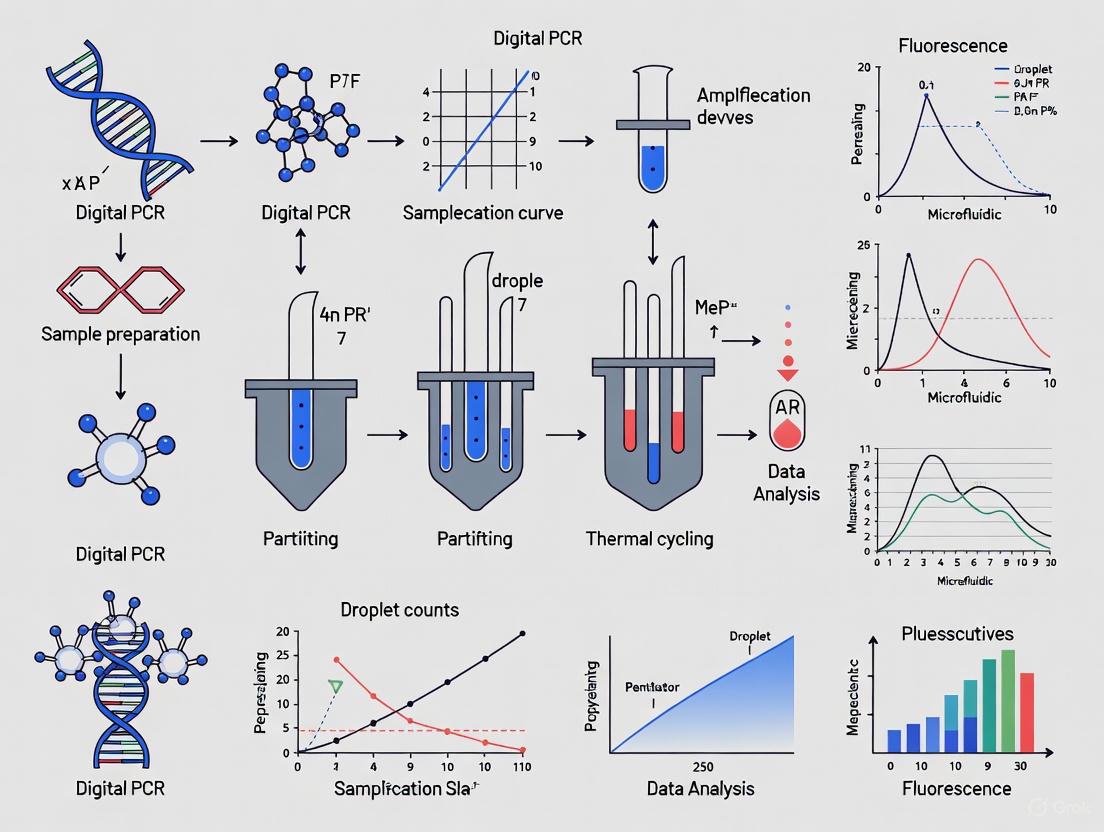
Digital PCR (dPCR), the third generation of PCR technology, enables absolute quantification of nucleic acids by partitioning samples into thousands of individual reactions.
Digital PCR Principles and Applications: A Comprehensive Guide for Biomedical Research
Abstract
Digital PCR (dPCR), the third generation of PCR technology, enables absolute quantification of nucleic acids by partitioning samples into thousands of individual reactions. This article explores the core principles of dPCR, from its foundational concepts and historical development to its diverse methodological applications in oncology, infectious disease, and copy number variation analysis. It provides a practical guide for researchers and drug development professionals on troubleshooting, experimental optimization, and platform validation. By comparing dPCR performance to established techniques like qPCR and blood culture, we highlight its superior sensitivity, precision, and clinical utility for advancing precision medicine and molecular diagnostics.
From Concept to Clinic: Understanding the Core Principles of Digital PCR
The Polymerase Chain Reaction (PCR) has fundamentally transformed molecular biology since its inception, evolving through three distinct generations that have progressively enhanced our ability to detect and quantify nucleic acids. This evolution represents a paradigm shift from qualitative detection to absolute quantification, with digital PCR (dPCR) emerging as the most sensitive platform currently available. The journey from conventional PCR to real-time quantitative PCR (qPCR) and finally to dPCR reflects continuous innovation addressing limitations in sensitivity, precision, and absolute quantification capabilities. Within the broader context of digital PCR research principles, this technical guide examines the fundamental concepts, methodological considerations, and applications that define current dPCR technologies, providing researchers and drug development professionals with a comprehensive framework for implementing these powerful tools in their scientific investigations.
Historical Development and Technological Generations
The Three Generations of PCR Technology
PCR technology has evolved through three major generations, each overcoming limitations of its predecessor while introducing new capabilities:
First-Generation (Conventional PCR): The original PCR technique relied on gel electrophoresis for endpoint analysis of amplified products. This approach provided qualitative "yes/no" results but was challenged by low detection limits, laborious operation procedures, and inability to provide reliable quantification [1].
Second-Generation (Real-Time Quantitative PCR): Also known as qPCR, this innovation enabled quantification of amplification products during the exponential phase of the reaction using fluorescent dyes or probes. While representing a significant advance, qPCR quantification remains dependent on standard curves and reference genes, preventing true absolute quantification. Additionally, qPCR shows relatively low tolerance to PCR inhibitors present in reaction mixtures [1] [2].
Third-Generation (Digital PCR): The most recent evolution, dPCR, enables absolute quantification of nucleic acids without requiring standard curves. Originally conceptualized in 1992 through limiting dilution methods, the technology matured with the incorporation of microfluidic elements in 2003 and the introduction of droplet digital PCR (ddPCR) in 2011. This generation partitions samples into thousands of individual reactions, allowing precise quantification through binary counting of positive and negative partitions [1].
Fundamental Concept of Digital PCR
The core principle of dPCR involves partitioning a PCR reaction into numerous small-volume compartments (typically thousands to millions), with molecules randomly distributed such that each partition contains zero, one, or multiple target molecules. Following endpoint amplification, each partition is analyzed for fluorescence, with positive (1) and negative (0) signals counted across all partitions. The absolute quantity of target nucleic acid is then calculated using Poisson statistics to account for the random distribution of molecules across partitions [1]. This fundamental approach enables the key advantages that distinguish dPCR from earlier technologies.
Technical Comparison of PCR Platforms
Performance Characteristics Across PCR Generations
Table 1: Comparative analysis of three PCR generations
| Parameter | Conventional PCR | Real-Time qPCR | Digital PCR |
|---|---|---|---|
| Quantification Approach | End-point, qualitative | Relative/absolute via standard curves | Absolute quantification without standards |
| Detection Limit | ~1% mutant in wild-type background [1] | ~1% mutant in wild-type background [1] | 0.1%-0.001% mutant in wild-type background [1] |
| Tolerance to Inhibitors | Low | Moderate | High [1] [3] |
| Dynamic Range | Limited | Wide [1] | Narrower than qPCR [1] |
| Dependence on Amplification Efficiency | High | High | Low [1] |
| Data Output | Qualitative | Cycle threshold (Ct) values | Absolute copy numbers |
| Multiplexing Capability | Limited | Moderate | Advanced (color-combination approaches) [4] |
| Cost Considerations | Low | Moderate | High [1] |
Digital PCR Methodologies and Platforms
Table 2: Comparison of major digital PCR platform technologies
| Parameter | Chip-Based dPCR (cdPCR) | Droplet Digital PCR (ddPCR) | Nanoplate dPCR (ndPCR) |
|---|---|---|---|
| Partitioning Mechanism | Microfluidic chips with nanoliter chambers [1] | Water-oil emulsion droplets [1] [3] | Microfluidic plates with predefined wells [3] |
| Typical Partition Count | 10,000-40,000 [1] | 20,000 (QX200) to millions (RainDro) [1] | 26,000 (QIAcuity 26k nanoplate) [3] |
| Detection Method | Imaging with inverted endoscopy [1] | Flow cytometry with laser detection [1] [3] | Integrated imaging [3] |
| Representative Systems | BioMark, QuantStudio3D [1] | QX100/200 (Bio-Rad) [1] [3] | QIAcuity (QIAGEN) [3] |
| Volume Uniformity | High [1] | Variable (requires standardization) [1] | High |
| Throughput Considerations | Moderate | High | High with integrated workflow [3] |
Experimental Design and Methodological Considerations
Workflow for Digital PCR Analysis
The fundamental dPCR workflow consists of several standardized steps that ensure precise and reproducible quantification:
Key Experimental Protocols
Platform Comparison Study
A 2025 study compared the precision of two dPCR platforms for copy number analysis using synthetic oligonucleotides and DNA from Paramecium tetraurelia [5]:
- Sample Preparation: DNA was extracted from varying cell numbers of Paramecium tetraurelia. Synthetic oligonucleotides were diluted across a concentration range from <0.5 copies/μL to >3000 copies/μL input.
- Partitioning Methods: The QX200 ddPCR system (Bio-Rad) utilized water-oil emulsion droplets with 20μL reactions, while the QIAcuity One ndPCR system (QIAGEN) employed nanoplate technology with 40μL reactions.
- Enzyme Digestion: The impact of restriction enzymes (EcoRI and HaeIII) on gene copy number quantification was tested, revealing that enzyme selection significantly affects precision, particularly for the ddPCR system.
- Data Analysis: Limit of Detection (LOD) and Limit of Quantification (LOQ) were determined using polynomial modeling. Precision was assessed through coefficient of variation (CV) calculations across replicate measurements.
This protocol demonstrated that both platforms showed high precision (CVs: 6-13% for ddPCR; 7-11% for ndPCR) for concentrations above LOQ thresholds, with restriction enzyme choice significantly impacting results, especially for ddPCR [5].
GMO Quantification Validation
A 2025 study performed in-house validation of duplex dPCR methods for detecting genetically modified organisms [3]:
- Sample Material: Certified reference materials for MON-04032-6 and MON89788 soybean lines were obtained from the Joint Research Centre and American Oil Chemists' Society.
- DNA Extraction: DNA was extracted using either the RSC PureFood GMO kit with Maxwell RSC Instrument or CTAB buffer method according to ISO21571:2005.
- Inhibition Testing: Serial DNA dilutions were measured in duplicate to assess inhibition, with acceptable variation set at <25% between dilution levels.
- Platform Comparison: Identical primer-probe sets were used on Bio-Rad QX200 and QIAGEN QIAcuity systems, with performance assessed through specificity, robustness, dynamic range, linearity, and accuracy parameters.
- Validation Criteria: Methods were validated according to JRC Guidance documents, demonstrating equivalence to singleplex real-time PCR methods for GMO detection [3].
Research Reagent Solutions
Table 3: Essential reagents and materials for digital PCR experiments
| Reagent/Material | Function | Application Examples |
|---|---|---|
| Primer-Probe Sets | Target-specific detection with fluorescent reporters | TaqMan hydrolysis probes for mutant allele discrimination [4] |
| DNA Polymerase | Enzymatic amplification of target sequences | High-fidelity enzymes for accurate amplification [1] |
| dPCR Plates/Chips | Sample partitioning into nanoscale reactions | Sapphire chips (2D monolayer droplets), Ruby chips (16 microchambers) [4] |
| Restriction Enzymes | Enhance DNA accessibility for target sequences | HaeIII, EcoRI for processing tandem repeats [5] |
| Fluorophores | Multiplex target detection | FAM, HEX, VIC, CY5 for color-combination encoding [4] [6] |
| Partitioning Oil | Creates stable water-in-oil emulsions | Droplet generation for ddPCR systems [1] |
| Quantification Standards | Validation of absolute quantification | Synthetic oligonucleotides with known concentrations [5] |
Advanced Applications and Emerging Trends
Current Applications in Research and Diagnostics
The unique advantages of dPCR have enabled its application across diverse fields:
- Liquid Biopsy and Cancer Research: dPCR enables detection of rare mutations in circulating tumor DNA with sensitivity up to 0.001%, facilitating non-invasive cancer monitoring and personalized treatment approaches [1] [2].
- Non-Invasive Prenatal Testing: The high sensitivity of dPCR allows precise quantification of cell-free fetal DNA in maternal plasma, representing only 10-20% of total cell-free DNA, enabling detection of trisomy 21 and single-gene disorders [1].
- Infectious Disease Diagnostics: dPCR provides absolute quantification of viral loads, including HIV and other pathogens, with reduced susceptibility to inhibitors common in clinical samples [1].
- Genetically Modified Organism (GMO) Detection: Regulatory monitoring for GMO labeling (0.9% threshold in EU) utilizes dPCR for its precise quantification capabilities and robustness against inhibitors in complex food matrices [3].
- Environmental Monitoring: Microbial quantification in environmental samples benefits from dPCR's ability to provide absolute copy number quantification without standard curves, enabling precise ecosystem assessments [5].
Emerging Methodologies and Future Directions
Multiplexing Strategies
Advanced multiplexing approaches are expanding dPCR capabilities:
- Color-Combination Encoding: This innovative approach assigns unique fluorescent signatures to multiple targets by combining fluorophores, dramatically increasing multiplexing capacity beyond the traditional "one color-one target" paradigm. The method utilizes combinatorial labeling where targets are identified by specific combinations of fluorophores rather than individual colors [4].
- Pixel-Level Joint Color Encoding (Pico-ddPCR): A recently developed platform utilizes a colorimetry sCMOS camera to capture four color channels and one white channel simultaneously in a single-frame image, achieving >99.91% color classification accuracy. This approach eliminates the need for sequential filter switching, significantly increasing detection throughput and speed [6].
Market Growth and Technological Adoption
The dPCR market continues to expand rapidly, with valuations projected to rise from $1.2 billion in 2024 to $2.5 billion by 2033, representing a compound annual growth rate of 8.9% [7]. This growth is driven by increasing adoption in clinical diagnostics, pharmaceutical research, and agricultural biotechnology. Key players including Bio-Rad Laboratories, Fluidigm Corporation, Thermo Fisher Scientific, and QIAGEN are expanding product lines and refining distribution networks to capitalize on emerging opportunities [7].
Advanced Multiplexing Strategies
Color-Combination Encoding Principles
The color-combination approach represents a significant advancement in dPCR multiplexing capability:
This multiplexing strategy enables simultaneous detection of numerous targets by assigning unique color combinations to each target, significantly expanding beyond the traditional limitation where the number of detectable targets equals the number of available fluorescence channels [4]. The method analyzes only two categories of partitions: "all negative" partitions with low fluorescence across all fluorophores, and partitions displaying high fluorescence for the specific fluorophore combination encoding each target sequence [4].
The evolution from conventional to digital PCR represents a transformative journey in nucleic acid quantification, with dPCR establishing new standards for sensitivity, precision, and absolute quantification. As the technology continues to mature, emerging applications in liquid biopsy, non-invasive prenatal testing, infectious disease monitoring, and environmental analysis demonstrate its growing importance across biomedical research and clinical diagnostics. Ongoing innovations in multiplexing strategies, including color-combination encoding and pixel-level joint color detection, promise to further expand the capabilities of dPCR platforms. For researchers and drug development professionals, understanding the principles, methodologies, and applications outlined in this technical guide provides a foundation for leveraging dPCR technologies to address complex biological questions and advance precision medicine initiatives.
Digital PCR (dPCR) represents the third generation of polymerase chain reaction technology, succeeding conventional PCR and real-time quantitative PCR (qPCR) [8]. This method enables the absolute quantification of nucleic acids without the need for a standard curve, a significant advancement over its predecessors [9]. The core principle of dPCR involves partitioning a sample into numerous individual reactions, amplifying target molecules end-point, and applying Poisson statistics to determine absolute target concentration [8]. This technical guide explores these fundamental principles within the broader context of dPCR research, providing researchers and drug development professionals with a comprehensive framework for implementing and optimizing this powerful technology.
The evolution of dPCR began with foundational work in limiting dilution PCR and Poisson statistics [8]. The term "digital PCR" was formally coined by Bert Vogelstein and colleagues in 1999, who developed a workflow using 96-well plates and fluorescence readout to detect RAS oncogene mutations in colorectal cancer patients [8]. Modern dPCR protocols have since evolved to incorporate advanced partitioning methods through microfluidics, enabling thousands to millions of parallel reactions [8]. The technology's calibration-free nature, high sensitivity, and absolute quantification capabilities have made it particularly valuable for applications requiring precise measurement of rare genetic events, including liquid biopsy, pathogen detection, and copy number variation analysis [10].
Core Principles and Workflow
The fundamental workflow of digital PCR consists of three interconnected principles: sample partitioning, end-point amplification, and statistical analysis using Poisson distribution. These elements work in concert to convert the analog problem of measuring continuous nucleic acid concentrations into a digital counting exercise of binary outcomes [9].
Partitioning: From Sample to Discrete Units
Partitioning constitutes the first critical step in dPCR, where the PCR mixture containing the sample is divided into a large number of separate compartments or partitions [8]. This process randomly distributes target nucleic acid molecules across these partitions such that each contains zero, one, or a few target molecules according to a Poisson distribution [8]. Two major partitioning methodologies have emerged:
- Droplet-based dPCR (ddPCR): The sample is dispersed into nanoliter-sized water-in-oil droplets within an immiscible oil phase using microfluidic systems [8] [3]. These monodisperse droplets are generated at high frequencies (1-100 kHz) and stabilized with surfactants to prevent coalescence during thermal cycling [8].
- Microchamber-based dPCR: Utilizes arrays of thousands of microscopic wells or chambers embedded in a solid chip [8]. While less scalable than droplet systems, this approach offers higher reproducibility and easier automation [8].
The partitioning step effectively concentrates target molecules within isolated microreactors, reducing template competition and enhancing tolerance to PCR inhibitors present in complex sample matrices [9]. The number of partitions significantly impacts quantification precision, with higher partition counts generally improving measurement confidence [9].
End-point Amplification and Detection
Following partitioning, each compartment undergoes conventional PCR amplification through thermal cycling [8]. Unlike qPCR, which monitors amplification in real-time, dPCR uses end-point detection, analyzing fluorescence after amplification completion [10]. Partitions containing at least one target molecule generate positive fluorescence signals, while those without targets remain negative [11].
Two primary readout methods are employed:
- In-line detection: Used in droplet-based systems where droplets flow sequentially through a microfluidic channel or capillary past a detection system that measures fluorescence one droplet at a time [8].
- Planar imaging: Used with microchamber arrays where a fluorescence microscope or scanner captures a static image of all partitions simultaneously [8].
This binary readout system (positive/negative) constitutes the "digital" aspect of dPCR, converting the continuous concentration measurement into discrete counting data amenable to statistical analysis [9].
Poisson Statistics for Absolute Quantification
The mathematical foundation of dPCR relies on Poisson statistics to determine absolute target concentration from the ratio of positive to negative partitions [11] [9]. The Poisson distribution describes the probability of a given number of events occurring in a fixed interval of time or space, assuming these events occur with a known constant rate and independently of the time since the last event [11].
For dPCR, the key relationship is:
[ C = -\frac{d}{v} \ln(1 - \frac{p}{N}) ]
Where:
- ( C ) = concentration of target genes in the stock (copies/µL)
- ( d ) = dilution factor
- ( v ) = volume of a single partition (µL)
- ( p ) = number of positive partitions
- ( N ) = total number of analyzable partitions [11]
The fraction of negative partitions (( \frac{N-p}{N} )) follows a Poisson distribution of parameter ( \lambda ) (the average number of target molecules per partition), giving the probability of a partition being negative as ( e^{-\lambda} ) [9]. The estimate of ( \lambda ) is then:
[ \lambda = -\ln(1 - \frac{p}{N}) ]
This calculation provides the average number of target molecules per partition, which can be converted to concentration using the partition volume [9].
Figure 1: Digital PCR Workflow. The process begins with sample partitioning, followed by end-point amplification, fluorescence detection, and finally Poisson statistical analysis for absolute quantification.
Statistical Foundations and Modeling
Poisson Distribution Fundamentals
The statistical framework of dPCR hinges on the Poisson distribution, which models the random distribution of molecules across partitions [9]. When target molecules are randomly and independently distributed into partitions, the probability of a partition containing exactly ( k ) target molecules is:
[ P(X = k) = \frac{\lambda^k e^{-\lambda}}{k!} ]
Where ( \lambda ) represents the average number of target molecules per partition [11]. A partition is considered positive if it contains one or more target molecules (( k \geq 1 )), and negative if it contains zero targets (( k = 0 )) [11].
The probability of a partition being negative is ( P(X = 0) = e^{-\lambda} ), leading to the relationship between the fraction of negative partitions and ( \lambda ):
[ \frac{N{\text{negative}}}{N{\text{total}}} = e^{-\lambda} ]
Solving for ( \lambda ) gives the fundamental dPCR equation:
[ \lambda = -\ln(1 - \frac{p}{N}) ]
Where ( p ) represents positive partitions and ( N ) represents total partitions [11] [9].
Confidence Intervals and Precision
The precision of dPCR quantification depends on both the number of partitions and the value of ( \lambda ) [9]. The confidence interval for the estimated concentration can be calculated using binomial statistics, with the Wilson score interval often preferred over the Wald approximation for better accuracy across all values of ( \lambda ) [9]:
[ \left( \frac{p + \frac{z{1-\alpha/2}^2}{2n} \pm z{1-\alpha/2} \sqrt{\frac{p(1-p)}{n} + \frac{z{1-\alpha/2}^2}{4n^2}} \right) / \left( 1 + \frac{z{1-\alpha/2}^2}{n} \right) ]
Where ( p ) is the observed proportion of positive partitions, ( n ) is the total number of partitions, and ( z_{1-\alpha/2} ) is the appropriate quantile of the standard normal distribution (1.96 for 95% confidence) [9].
Maximum precision occurs when approximately 20% of partitions are positive (( \lambda \approx 1.6 )) [9]. At this optimal value, the relative standard error scales inversely with the square root of the number of partitions, emphasizing the importance of high partition counts for precise measurements [9].
Figure 2: Poisson Statistics in dPCR. The relationship between random DNA distribution, Poisson modeling, and absolute quantification calculation.
Advanced Modeling: Poisson-Plus Correction
The standard Poisson model assumes identical partition sizes, an assumption frequently violated in practice, particularly in droplet-based systems [12]. Partition size variation can lead to quantification bias, especially at higher concentrations [12]. The Poisson-Plus model addresses this by incorporating partition volume variation into the statistical framework [12].
In this model, the mean number of molecules per partition (( \lambda )) becomes proportional to partition volume ( v ):
[ \lambda(v) = Cv ]
Where ( C ) represents concentration [12]. Using a truncated normal distribution to model partition volumes, the probability of a partition being negative becomes:
[ P(\text{neg}) = \int_0^\infty e^{-Cv} \hat{\aleph}(v) dv ]
Where ( \hat{\aleph}(v) ) represents the truncated normal distribution of partition volumes [12]. This approach provides more accurate quantification when partition sizes vary significantly, with the magnitude of correction positively correlated with the extent of volume variation [12].
Experimental Protocols and Methodologies
Platform-Specific Implementation
Implementing dPCR requires careful consideration of platform-specific characteristics and experimental parameters. Comparative studies between major dPCR systems reveal important performance differences:
Table 1: Comparison of dPCR Platform Performance Parameters
| Parameter | Bio-Rad QX200 ddPCR | QIAGEN QIAcuity | Experimental Context |
|---|---|---|---|
| Limit of Detection (LOD) | 0.17 copies/µL input (3.31 copies/reaction) | 0.39 copies/µL input (15.60 copies/reaction) | Synthetic oligonucleotides [5] |
| Limit of Quantification (LOQ) | 4.26 copies/µL input (85.2 copies/reaction) | 1.35 copies/µL input (54 copies/reaction) | Synthetic oligonucleotides [5] |
| Precision (CV Range) | 6% to 13% | 7% to 11% | Synthetic oligonucleotides above LOQ [5] |
| Partition Technology | Water-in-oil droplets (~20,000 partitions) | Nanoplate array (~26,000 partitions) | [3] [5] |
| Restriction Enzyme Impact | Significant precision improvement with HaeIII vs. EcoRI (CV <5% vs. up to 62.1%) | Moderate improvement with HaeIII vs. EcoRI | Paramecium tetraurelia DNA [5] |
Optimized Protocol for Genetic Quantification
Based on comparative studies, the following protocol provides robust results for absolute quantification:
Sample Preparation:
- Extract DNA using appropriate methods (e.g., CTAB buffer or commercial kits) [3].
- Assess DNA purity and quantity using spectrophotometric or fluorometric methods.
- Perform inhibition testing through serial dilution: the average absolute copies measured in diluted samples multiplied by dilution factor should not differ more than 25% from measurements at highest concentration [3].
Reaction Setup:
- Prepare reaction mixtures according to platform specifications.
- For duplex assays: Optimize primer-probe concentrations for both target and reference genes.
- Implement restriction enzyme digestion (e.g., HaeIII) when working with complex genomes or potential tandem repeats to improve precision [5].
Partitioning and Amplification:
- Generate partitions according to manufacturer protocols.
- Perform PCR amplification with endpoint detection.
- Include appropriate negative and positive controls.
Data Analysis:
- Analyze fluorescence data using platform-specific software.
- Apply Poisson statistics for concentration calculation: ( C = -\frac{d}{v} \ln(1 - \frac{p}{N}) ) [11].
- For platforms with significant partition volume variation, consider Poisson-Plus correction [12].
- Calculate confidence intervals using Wilson score interval or similar methods [9].
Validation Parameters
For rigorous experimental validation, assess the following parameters:
- Specificity: Ability to distinguish target from non-target sequences.
- Dynamic Range: Concentration range over which accurate quantification occurs.
- Linearity: Relationship between expected and measured concentrations.
- Accuracy (Trueness and Precision): Closeness of agreement between measured and true values.
- Robustness: Reliability under varying experimental conditions [3].
Research Reagent Solutions and Materials
Successful dPCR implementation requires carefully selected reagents and materials optimized for partitioning, amplification, and detection.
Table 2: Essential Research Reagents for Digital PCR
| Reagent/Material | Function | Technical Considerations |
|---|---|---|
| Primers & Probes | Sequence-specific amplification and detection | Hydrolysis probes (TaqMan) provide specific signal; design following qPCR principles with attention to Tm, length, and specificity [10] |
| DNA Polymerase | Enzymatic amplification of target sequences | Thermostable polymerases with high processivity and fidelity; master mix composition affects partition stability and amplification efficiency [8] |
| dNTPs | Building blocks for DNA synthesis | Quality and concentration affect amplification efficiency and partition fluorescence intensity |
| Partitioning Matrix | Creates isolated reaction environments | Surfactant-stabilized oil-emulsion (ddPCR) or solid-state chips (microchamber); critical for partition integrity during thermal cycling [8] |
| Restriction Enzymes | Enhance target accessibility in complex genomes | Enzyme selection (e.g., HaeIII vs. EcoRI) significantly impacts precision, especially for organisms with high gene copy numbers or tandem repeats [5] |
| Fluorescent Dyes/Beads | Signal generation for partition readout | Hydrolysis probes, intercalating dyes (EvaGreen), or bead-based detection systems; wavelength compatibility with detection system required [8] [13] |
Applications in Research and Drug Development
The unique capabilities of dPCR make it particularly valuable for applications requiring high precision, sensitivity, and absolute quantification:
- Liquid Biopsy and Cancer Monitoring: dPCR detects rare tumor DNA variants in blood at variant allele frequencies below 0.01%, enabling early recurrence detection and treatment monitoring [14].
- Infectious Disease Surveillance: dPCR provides robust quantification of low viral loads in complex matrices like wastewater, with superior resistance to inhibitors compared to qPCR [14] [10].
- Genetically Modified Organism (GMO) Quantification: dPCR enables absolute quantification of GM events without standard curves, meeting regulatory requirements for food and feed labeling [3].
- Environmental Monitoring: dPCR accurately quantifies microbial eukaryotes and pathogens in environmental samples, with reduced inhibition effects from compounds like humic acids [5].
- Drug Development and Quality Control: dPCR supports biopharmaceutical development through precise copy number variation analysis and quality control of biological products [10].
The fundamental principles of digital PCR—partitioning, end-point amplification, and Poisson statistics—establish it as a powerful technology for absolute nucleic acid quantification. Its calibration-free nature, high sensitivity, and precision make it particularly valuable for applications where qPCR reaches its limitations, including rare mutation detection, liquid biopsy, and analysis of complex sample matrices.
Understanding the statistical foundations, including both standard Poisson modeling and advanced corrections for partition volume variation, enables researchers to implement dPCR with appropriate rigor. The continued evolution of dPCR platforms, reagents, and analysis methods promises to expand its applications across biomedical research, clinical diagnostics, and drug development, particularly as automation, multiplexing, and data analysis capabilities advance.
As the technology matures, standardization efforts such as the dMIQE guidelines and ISO 20395:2025 establish best practices for assay design, validation, and data reporting [14]. These developments, coupled with deeper integration with sequencing and artificial intelligence, position dPCR as an increasingly essential tool in precision medicine and molecular diagnostics.
Droplet Digital PCR (ddPCR) vs. Microchamber-based dPCR
Digital PCR (dPCR) represents a transformative approach in molecular diagnostics by enabling the absolute quantification of nucleic acids without the need for a standard curve. This third-generation PCR technology operates on a simple yet powerful principle: the partitioning of a PCR reaction mixture into thousands to millions of individual reactions, each containing either zero, one, or a few nucleic acid targets according to a Poisson distribution [8]. Following PCR amplification, the fraction of positive partitions is determined through endpoint measurement, allowing precise calculation of the target concentration using Poisson statistics [8] [15]. The fundamental difference between the two primary dPCR platforms lies in their partitioning methodologies. Droplet Digital PCR (ddPCR) employs a water-in-oil emulsion system to generate thousands of nanoliter-sized droplets, while microchamber-based dPCR (also known as chip-based or nanoplate-based dPCR) distributes the sample across a fixed array of microscopic wells embedded in a solid chip [8] [16]. This technical guide examines both key technological formats within the broader context of digital PCR research principles, providing researchers and drug development professionals with a comprehensive comparison of their respective capabilities, performance characteristics, and optimal applications.
Fundamental Technological Principles
Droplet Digital PCR (ddPCR) Technology
Droplet Digital PCR utilizes a water-in-oil emulsion system to partition samples into numerous discrete reactions. The foundational technology, often called BEAMing (beads, emulsion, amplification, and magnetics), was pioneered by Bert Vogelstein's group in 2003 and involves encapsulating individual DNA molecules within microdroplets along with magnetic beads coated with primers [8]. A typical ddPCR workflow begins with preparing a PCR reaction mixture containing the sample, primers, probes, and master mix. This mixture is then loaded into a droplet generator that utilizes immiscible fluids to create tens of thousands of uniform, nanoliter-sized droplets (typically 20,000 or more), with each droplet functioning as an independent PCR microreactor [16] [17]. The emulsion is transferred to a PCR plate for endpoint thermal cycling, after which the droplets are streamed in a single file through a flow cytometer or droplet reader that detects fluorescent signals from each droplet [8] [17]. The absolute quantification of target molecules is statistically calculated based on the ratio of positive to negative droplets using Poisson distribution statistics [16].
The ddPCR platform offers significant advantages in scalability and partition numbers, with some systems capable of generating up to millions of partitions [17]. However, this technology faces challenges related to droplet stability, as water-in-oil droplets are prone to coalescence, particularly during the temperature variations of PCR protocols [8]. Proper stabilization with appropriate surfactants is crucial, and the system often exhibits variability in droplet size and shape, which can affect robustness and reproducibility [17]. Additional limitations include the appearance of "rain" droplets (partitions with intermediate fluorescence that are difficult to classify), cumbersome workflow requiring multiple instruments, and potential for cross-contamination during manual droplet transfer steps [17].
Microchamber-based dPCR Technology
Microchamber-based dPCR utilizes solid-state chips containing predefined networks of microfluidic channels, valves, and miniature reaction chambers. This approach was first commercialized by Fluidigm in 2006 with their Integrated Fluidic Circuit (IFC) technology, which automatically loads samples into microchambers using on-chip valves [8]. Modern implementations include nanoplate-based systems such as QIAGEN's QIAcuity, which integrates partitioning, thermocycling, and imaging into a single instrument [8] [17]. The workflow begins with pipetting the PCR reaction mixture into designated wells on a digital PCR plate or chip. The system then distributes this mixture into thousands of nanoliter-volume chambers through capillary action, centrifugal force, or pressure-driven flow [17]. The partitions are sealed, either mechanically or with immiscible fluid, to prevent evaporation and cross-contamination. Following endpoint PCR amplification, the entire array is imaged using a fluorescence microscope or scanner, and dedicated software analyzes the pattern of positive and negative chambers to determine target concentration [8].
Microchamber-based systems provide superior reproducibility due to consistent partition volumes and geometry, with typical partition numbers ranging from approximately 8,500 to 26,000 per well [17]. The integrated nature of these systems significantly reduces hands-on time and contamination risk while offering a more streamlined workflow similar to traditional qPCR [16]. However, this technology is generally limited by the fixed number of partitions available on each chip or plate and typically involves higher per-sample costs for high-throughput applications compared to droplet-based systems [8] [17].
Figure 1: Comparative Workflows of ddPCR and Microchamber-based dPCR
Performance Comparison and Technical Specifications
Sensitivity, Precision, and Accuracy
Both ddPCR and microchamber-based dPCR platforms demonstrate exceptional sensitivity and precision, though with nuanced differences in performance characteristics. A 2025 comparative study evaluating the QX200 ddPCR system (Bio-Rad) and QIAcuity One nanoplate dPCR (QIAGEN) using synthetic oligonucleotides and Paramecium tetraurelia DNA found that both platforms exhibited high precision across most analyses, with similar limits of detection and quantification [5]. The Limit of Detection (LOD) for the nanoplate system was approximately 0.39 copies/μL input (15.60 copies/reaction), while the ddPCR system showed a slightly lower LOD of 0.17 copies/μL input (3.31 copies/reaction) [5]. Conversely, the Limit of Quantification (LOQ) was lower for the nanoplate system (1.35 copies/μL input, 54 copies/reaction) compared to ddPCR (4.26 copies/μL input, 85.2 copies/reaction) [5].
In terms of precision, the study found that coefficient of variation (CV) values for both platforms indicated precise results for all dilution groups above the LOQ thresholds, with CVs ranging between 7-11% for nanoplate dPCR and 6-13% for ddPCR [5]. The research also demonstrated that restriction enzyme selection significantly impacts precision, with HaeIII generally providing higher precision than EcoRI, particularly for the ddPCR system [5]. Both platforms showed consistently lower measured gene copy numbers than expected values across dilution series, though correlation with expected values was high for both (ndPCR: R²adj = 0.98, ddPCR: R²adj = 0.99) [5].
Multiplexing Capabilities and Dynamic Range
Microchamber-based dPCR systems generally offer superior multiplexing capabilities compared to traditional ddPCR platforms. Integrated systems like the QIAcuity can simultaneously detect 4-12 targets in a single reaction, while earlier ddPCR systems were limited to 2-plex detection, though newer models like Bio-Rad's QX700 can detect up to 12 targets [16]. The higher multiplexing capacity of microchamber systems allows researchers to measure multiple critical quality attributes—such as vector copy number, residual DNA, and transgene expression—in a single run, conserving precious samples, time, and reagents [16].
Both technologies offer broad dynamic ranges, though they respond differently to DNA concentration extremes. A study on GMO detection found that both platforms can accurately quantify targets across concentration ranges, but excessive DNA concentrations can cause partition saturation in both systems [18]. The research demonstrated that using multiple wells with moderate DNA amounts (200 ng per well) instead of high DNA concentrations (400-600 ng per well) prevented saturation issues while maintaining sensitivity for low-abundance targets [18].
Table 1: Technical Comparison of ddPCR and Microchamber-based dPCR Platforms
| Performance Parameter | Droplet Digital PCR (ddPCR) | Microchamber-based dPCR |
|---|---|---|
| Partitioning Mechanism | Water-in-oil emulsion droplets | Fixed nanowells/microchambers |
| Typical Partition Numbers | 20,000 (QX200) [16] to millions (RainDrop Plus) [17] | 8,500 - 26,000 per well (QIAcuity) [17] |
| Partition Volume | picoliter to nanoliter scale (10-100 pL) [17] | nanoliter scale (~10 nL) [17] |
| Limit of Detection (LOD) | 0.17 copies/μL input [5] | 0.39 copies/μL input [5] |
| Limit of Quantification (LOQ) | 4.26 copies/μL input (85.2 copies/reaction) [5] | 1.35 copies/μL input (54 copies/reaction) [5] |
| Multiplexing Capacity | Up to 12-plex in newer models [16] | 4-12 plex typically [16] |
| Precision (Coefficient of Variation) | 6-13% [5] | 7-11% [5] |
| Restriction Enzyme Sensitivity | Higher precision with HaeIII vs. EcoRI [5] | Less affected by enzyme choice [5] |
| Tolerance to PCR Inhibitors | High (reaction partitioning reduces susceptibility) [18] | High (reaction partitioning reduces susceptibility) [18] |
| Sample Throughput | 8-480 samples per run (varies by system) [17] | 16-1,248 samples per run (varies by system) [17] |
Experimental Design and Protocol Implementation
Sample Preparation and DNA Quality Considerations
Proper sample preparation is critical for successful dPCR experiments regardless of platform selection. DNA quality, quantity, and the presence of inhibitors significantly impact dPCR performance [18]. Good-quality DNA suitable for dPCR can be extracted using traditional methods (CTAB, SDS) or commercial kits, with further purification often necessary to reduce inhibition [18]. While dPCR is generally more tolerant to inhibitors than qPCR due to reaction partitioning, verification of DNA suitability through dilution series testing is recommended [18]. The effects of inhibitors can be mitigated by selecting appropriate sample processing methods, using robust DNA polymerases, or incorporating specific PCR additives [18].
DNA degradation presents another critical consideration, particularly when analyzing processed samples. Studies on GMO detection have shown that DNA degradation affects dPCR results, especially for larger amplicon sizes [18]. Using small amplicons (≤100 bp) for both target and reference sequences minimizes the impact of degradation [18]. The optimal DNA quantity per reaction must be determined empirically, as excessively high DNA concentrations can cause partition saturation, while insufficient DNA may compromise low-abundance target detection [18].
Step-by-Step Experimental Protocols
Droplet Digital PCR Protocol (Based on QX200 System):
- Reaction Mixture Preparation: Combine 20μL of PCR reaction mix containing 1× ddPCR Supermix, target-specific primers and probes (900 nM and 250 nM final concentration, respectively), and DNA template (typically 1-100 ng) [5].
- Droplet Generation: Transfer the reaction mixture to a DG8 cartridge, add 70μL of droplet generation oil, and place in the QX200 Droplet Generator. This creates approximately 20,000 nanoliter-sized droplets per sample [5] [17].
- PCR Amplification: Carefully transfer the emulsion to a 96-well PCR plate, seal, and perform endpoint PCR with the following cycling conditions: 95°C for 10 minutes (enzyme activation), followed by 40 cycles of 94°C for 30 seconds (denaturation) and 55-60°C for 60 seconds (annealing/extension), with a final 98°C hold for 10 minutes [5].
- Droplet Reading: Place the plate in the QX200 Droplet Reader, which streams droplets in a single file past a two-color fluorescence detector (acquisition of 20,000 droplets typically takes 5-10 minutes) [17].
- Data Analysis: Use Poisson statistics to determine target concentration from the ratio of positive to negative droplets, applying appropriate threshold settings to distinguish positive and negative populations while accounting for "rain" (droplets with intermediate fluorescence) [5].
Microchamber-based dPCR Protocol (Based on QIAcuity System):
- Reaction Mixture Preparation: Combine 1× dPCR Master Mix, target-specific primers and probes (optimized concentrations), DNA template, and nuclease-free water to a total volume of 40μL for a 26,000-partition plate or 12μL for a 8,500-partition plate [5] [17].
- Plate Loading: Pipette the reaction mixture into the designated wells of the QIAcuity Nanoplate, ensuring no bubbles are introduced.
- Partitioning and Amplification: Place the nanoplate into the QIAcuity instrument, which automatically performs partitioning, sealing, and endpoint PCR amplification using pre-programmed thermal cycling conditions similar to the ddPCR protocol [17].
- Imaging and Analysis: The integrated fluorescence imager captures images of all partitions simultaneously after amplification. The QIAcuity Suite Software automatically analyzes the images, applies thresholding, and calculates target concentration using Poisson statistics [5] [17].
Table 2: Research Reagent Solutions for dPCR Experiments
| Reagent Category | Specific Examples | Function in dPCR | Optimization Considerations |
|---|---|---|---|
| DNA Polymerase Master Mix | ddPCR Supermix (Bio-Rad), QIAcuity dPCR Master Mix (QIAGEN) | Enzymatic amplification of target sequences | Select master mixes specifically formulated for dPCR; consider inhibitor-resistant formulations for complex samples [18] |
| Primers and Probes | Target-specific primers, hydrolysis probes (FAM, HEX, etc.) | Sequence-specific amplification and detection | Optimize concentrations (typically 900 nM primers, 250 nM probes); validate specificity and efficiency [5] |
| Restriction Enzymes | HaeIII, EcoRI | Enhance DNA accessibility, especially for tandemly repeated genes | HaeIII generally provides higher precision than EcoRI in ddPCR [5] |
| Partitioning Reagents | Droplet Generation Oil (ddPCR), Nanoplate Sealing Solution | Create stable, discrete reaction compartments | Use manufacturer-recommended reagents to prevent partition coalescence or breakdown [8] |
| DNA Extraction Kits | CTAB method, commercial kits (MagMax Viral/Pathogen) | Nucleic acid purification from source material | Select kits appropriate for sample type; verify DNA quality/quantity fluorometrically [19] [18] |
| Quantification Standards | Synthetic oligonucleotides, reference plasmids | Assay validation and quality control | Use standards with known concentrations to verify platform performance [5] |
Application Scenarios and Technology Selection Guidelines
Optimal Applications for Each Technology
The selection between ddPCR and microchamber-based dPCR should be guided by specific application requirements, throughput needs, and available laboratory resources. ddPCR excels in research applications requiring the highest sensitivity and scalability. Its ability to generate millions of partitions makes it particularly suitable for detecting rare genetic events, such as low-frequency somatic mutations in cancer research, minimal residual disease monitoring, and circulating tumor DNA analysis in liquid biopsies [8] [20]. The technology's established history and extensive validation literature also make it favorable for developing novel research assays where maximum sensitivity is paramount [16].
Microchamber-based dPCR demonstrates superior performance in quality control environments and applications requiring robust multiplexing. The integrated, automated workflow provides a "sample-to-answer" process that reduces hands-on time, minimizes contamination risk, and decreases potential for human error [16]. These characteristics make it ideal for regulated environments such as clinical diagnostics, GMP manufacturing quality control, and routine testing in clinical laboratories [16]. Specific applications where microchamber-based systems excel include vector copy number (VCN) quantification in gene-modified cells, residual plasmid DNA detection, transgene expression quantification, and microbial contamination screening [16].
Practical Implementation Considerations
Workflow Efficiency: Microchamber-based systems typically offer faster time-to-results (approximately 90 minutes for full runs) compared to ddPCR (multiple steps spanning 6-8 hours) due to integrated instrumentation and streamlined processes [16]. The elimination of manual droplet transfer and reduced pipetting steps in microchamber systems decreases hands-on time and contamination risk [17].
Regulatory Compliance: For regulated environments, microchamber-based systems often provide superior audit trails, security features, and 21 CFR Part 11-compliant software, supporting GMP manufacturing and clinical diagnostic applications [16]. However, ddPCR systems from established manufacturers like Bio-Rad have extensive regulatory submission precedents and validation protocols [16].
Economic Factors: While instrument costs vary significantly by manufacturer and configuration, microchamber-based systems generally offer lower operational costs per sample in high-throughput settings [17]. However, ddPCR may provide better value for low-throughput applications requiring ultra-high sensitivity, despite higher consumable costs in some cases [21].
Figure 2: dPCR Platform Selection Guide for Research and Clinical Applications
Both droplet digital PCR and microchamber-based dPCR represent significant advancements in nucleic acid quantification technologies, each with distinct advantages tailored to specific research and diagnostic applications. ddPCR offers superior partition numbers and established protocols for rare variant detection, while microchamber-based systems provide automated workflows, enhanced multiplexing capabilities, and regulatory compliance features ideal for quality control environments. As the digital PCR market continues to evolve—projected to grow from USD 857.2 million in 2025 to USD 3,678.8 million by 2032—both technologies will play complementary roles in advancing precision medicine, molecular diagnostics, and biopharmaceutical development [21]. Researchers and drug development professionals should base their platform selection on specific application requirements, throughput needs, and operational constraints, recognizing that both technologies offer exceptional sensitivity, precision, and absolute quantification capabilities that surpass traditional qPCR methodologies.
Historical Milestones and the Path to Commercialization
Digital PCR (dPCR) represents the third generation of polymerase chain reaction technology, enabling the absolute quantification of nucleic acids without the need for a standard curve. [8] This technique is founded on the principle of sample partitioning, where a PCR mixture is divided into thousands of individual reactions, allowing for the detection and counting of single DNA molecules through Poisson statistical analysis. [8] The journey of dPCR from a theoretical concept to a commercially viable technology has revolutionized molecular diagnostics and research, particularly in fields requiring high sensitivity and precision such as oncology, infectious disease monitoring, and genetic disorder detection. [8] [22] This whitepaper traces the key historical developments and commercial pathways that have established dPCR as an essential tool in modern laboratories, framed within the broader context of its fundamental research principles.
Historical Development of Digital PCR
The conceptual foundation of digital PCR was laid through pioneering work in limiting dilution methods, with significant contributions throughout the late 1980s and 1990s that established the core principles of single-molecule detection and quantification. [8] These foundational breakthroughs are summarized in Table 1, which charts the critical path from concept to established technology.
Table 1: Key Historical Milestones in Digital PCR Development
| Year | Key Development | Principal Researchers/Entity | Significance and Application |
|---|---|---|---|
| 1989 | Limiting Dilution PCR | Peter Simmonds [8] | Detected single copies of HIV provirus in infected cells, establishing disease stage correlation. |
| 1992 | Limiting Dilution + Poisson Statistics | Morley and Sykes [8] | Accurately counted target molecules; detected mutated genes in leukemia patients (2 in 160,000 sequences). |
| 1997 | Volume Miniaturization | Olga Kalinina et al. [8] | Introduced microcapillaries (~10 nL) for partitioning, reducing reagent costs and improving efficiency. |
| 1999 | Term "Digital PCR" Coined | Bert Vogelstein et al. [8] | Developed a 96-well plate workflow with fluorescence readout to detect RAS oncogene mutations in colorectal cancer. |
| 2003 | BEAMing Technology | Bert Vogelstein et al. [8] | Simplified compartmentalization using water-in-oil droplets and magnetic beads, later adapted for planar bead arrays. |
The technological evolution has been marked by two major partitioning methodologies. Droplet Digital PCR (ddPCR) involves dispersing the sample into numerous picoliter to nanoliter droplets within an immiscible oil phase, typically generated at high speeds using microfluidic chips. [8] In contrast, microchamber-based dPCR utilizes an array of thousands of microscopic wells or chambers embedded in a solid chip, offering higher reproducibility and ease of automation but limited by a fixed number of partitions. [8] Readout methods have similarly evolved, with in-line detection measuring fluorescence from droplets flowed through a microchannel, and planar imaging capturing a static snapshot of partitions using a fluorescence microscope or scanner. [8]
The Commercialization Timeline
The transition of dPCR from research prototype to commercial product was catalyzed by significant advances in microfabrication and microfluidics, enabling the necessary volume miniaturization for practical implementation. [8] The first commercially available nanofluidic dPCR platform was introduced by Fluidigm in 2006, utilizing an integrated fluidic circuit to automatically load samples into microchambers. [8] This was followed by the Quantstudio 3D from Applied Biosystems in 2013, originally developed as the Open Array Platform by BioTrove. [8] The commercialization landscape expanded rapidly with the emergence of droplet-based systems, notably after Bio-Rad's acquisition of Quantalife led to the launch of its ddPCR platform. [8] Subsequent market entries included Formulatrix's Constellation instrument (later renamed QIAcuity by Qiagen) and Roche's Digital LightCycler in 2022. [8] [23] This commercial expansion has propelled substantial market growth, with the global dPCR market projected to grow from USD 857.2 million in 2025 to USD 3,678.8 million by 2032, exhibiting a compound annual growth rate of 23.1%. [21]
Table 2: Evolution of Major Commercial dPCR Platforms
| Brand | Instrument | Launch Date | Technology Type | Key Features |
|---|---|---|---|---|
| Fluidigm | IFC Platform | 2006 [8] | Chip-based (Microchambers) | First commercial nanofluidic platform; integrated fluidic controller (IFC). |
| Applied Biosystems (Life Technologies) | Quantstudio 3D (Later Absolute Q) | 2013 [8] | Chip-based (Open Array) | Originally developed by BioTrove; acquired in 2009. |
| Bio-Rad | QX200 Droplet Digital PCR | 2010 [22] | Droplet-based (ddPCR) | Based on Quantalife acquisition; partitions sample into 20,000 droplets. |
| Formulatrix (Qiagen) | Constellation / QIAcuity | 2013 [8] | Chip-based | Acquired by Qiagen in 2019 and rebranded. |
| Roche | Digital LightCycler | 2022 [8] | Not Specified | Late market entry indicating continued commercial interest. |
The dPCR market is segmented by technology, with droplet digital PCR (ddPCR) holding the largest market share due to its higher precision, sensitivity, and ease of operation. [21] [24] The United States market exemplifies this growth, valued at USD 1.28 billion in 2024 and expected to reach USD 7.18 billion by 2033, driven by applications in clinical diagnostics, personalized medicine, and agricultural biosecurity. [24]
Fundamental Principles and Experimental Protocols
Core Workflow and Partitioning Logic
The fundamental principle of dPCR involves partitioning a nucleic acid sample into many individual reactions such that each partition contains zero, one, or a few target molecules, following a Poisson distribution. [8] The workflow, as detailed in protocols for copy number variation analysis and pathogen detection, follows four key steps. [8] [25] [26] First, the PCR mixture containing the sample, master mix, primers, and probes is prepared. Second, this mixture is partitioned into thousands of nanoscale reactions using either droplet-based or chip-based systems. Third, the partitioned samples undergo standard PCR amplification. Finally, each partition is analyzed using endpoint fluorescence detection, and the target concentration is absolutely quantified using Poisson statistics based on the ratio of positive to negative partitions. [8]
Diagram 1: Core dPCR Workflow
Detailed Experimental Protocol for ddPCR
A representative ddPCR protocol for DNA copy number analysis, as validated against pulsed-field gel electrophoresis, involves the following detailed steps. [25] [27]
Materials and Reagents:
- DNA sample (50-100 ng/µL)
- ddPCR Supermix for Probes (No dUTP)
- Target-specific primer-probe mix (FAM-labeled)
- Reference gene primer-probe mix (HEX/VIC-labeled)
- Droplet Generation Oil for Probes
- Nuclease-free water
- ddPCR 96-well plates
- DG8 cartridges and gaskets
- Pierceable foil heat seals
Procedure:
- Reaction Mixture Preparation: Prepare a 20-40 µL reaction mixture containing 1× ddPCR Supermix, 900 nM of each primer, 250 nM of each probe, and 10-100 ng of template DNA. Adjust the final volume with nuclease-free water. [27]
- Droplet Generation: Load the reaction mixture into a DG8 cartridge alongside droplet generation oil. Place a gasket and process in the droplet generator to create ~20,000 nanodroplets per sample. [25]
- PCR Amplification: Transfer the emulsified samples to a 96-well PCR plate, seal with foil, and run on a thermal cycler using optimized conditions: initial denaturation at 95°C for 10 minutes; 40-45 cycles of denaturation at 94°C for 30 seconds and annealing/extension at 55-60°C for 60 seconds; final enzyme deactivation at 98°C for 10 minutes. [26] [27]
- Droplet Reading and Analysis: Place the plate in a droplet reader which flows droplets single-file through a fluorescence detector. Set fluorescence thresholds to distinguish positive from negative droplets based on controls. The software automatically calculates the absolute copy number concentration (copies/µL) using Poisson statistics: λ = -ln(1 - p), where λ is the average number of target molecules per partition and p is the fraction of positive partitions. [8] [27]
The Scientist's Toolkit: Essential Research Reagents
Table 3: Essential Reagents and Materials for dPCR Experiments
| Reagent/Material | Function | Example Product/Manufacturer |
|---|---|---|
| ddPCR Supermix | Provides optimized buffer, dNTPs, polymerase, and stabilizers for probe-based detection. | ddPCR Supermix for Probes (No dUTP), Bio-Rad [25] |
| Primers & Probes | Target-specific oligonucleotides for amplification and fluorescent detection. | TaqMan-based assays; ddPCR Copy Number Assays [25] [27] |
| Droplet Generation Oil | Immiscible oil phase for creating stable water-in-oil emulsions. | Droplet Generation Oil for Probes, Bio-Rad [25] |
| Restriction Enzymes | Used for DNA digestion to improve access to target sequences and partitioning efficiency. | Anza 52 PvuII, Thermo Scientific [26] |
| DNA Extraction Kits | For high-quality nucleic acid isolation from various sample types. | QIAamp DNA Mini Kit, Qiagen [26] |
Comparative Analysis with qPCR
Digital PCR offers several distinct advantages over quantitative real-time PCR (qPCR), particularly for applications requiring high precision, absolute quantification, and detection of rare targets. A 2025 comparative study on periodontal pathobionts demonstrated that dPCR showed high linearity (R² > 0.99) and significantly lower intra-assay variability (median CV%: 4.5%) than qPCR, with superior sensitivity for detecting low bacterial loads. [26] This sensitivity advantage is crucial for applications like liquid biopsy in oncology, where detecting rare circulating tumor DNA molecules within a background of wild-type DNA is essential. [8] [22] Furthermore, dPCR's absolute quantification capability eliminates the need for standard curves, reducing variability and improving reproducibility across laboratories. [27] The partitioning approach also confers greater tolerance to PCR inhibitors compared to qPCR, making it particularly valuable for analyzing complex clinical samples. [22] [26]
Diagram 2: dPCR vs qPCR Workflow Comparison
Future Perspectives
The future application of dPCR in clinical and research settings continues to expand, driven by technological innovations and evolving diagnostic needs. Key growth areas include cell and gene therapy development, where dPCR provides precise quality control measurements for viral vector titers; liquid biopsy applications for cancer monitoring through circulating tumor DNA analysis; and infectious disease surveillance with enhanced detection sensitivity. [22] The market is witnessing a gradual shift from droplet-based to chip-based systems in some settings, driven by advantages including reduced risk of cross-contamination, rapid and technically simple workflows, and cost-effective screening. [21] Emerging trends also include the integration of artificial intelligence to enhance data analysis and interpretation, the development of miniaturized portable systems for point-of-care testing, and expanding applications in non-invasive prenatal testing, environmental monitoring, and food safety. [28] [24] As precision medicine continues to evolve, dPCR is positioned as a critical enabling technology for the sensitive and accurate molecular analyses required for personalized treatment strategies.
Digital PCR (dPCR) represents a fundamental shift in nucleic acid quantification by enabling absolute measurement without standard curves and providing exceptional sensitivity for rare allele detection. As the third generation of PCR technology, dPCR achieves this through sample partitioning into thousands of individual reactions, allowing precise target quantification using Poisson statistics. This technical guide explores the core principles underlying dPCR's advantages over quantitative PCR (qPCR), detailing methodologies and applications critical for research and drug development. The exceptional performance of dPCR in detecting mutations below 0.1% fractional abundance and its tolerance to PCR inhibitors make it particularly valuable for liquid biopsy analysis, treatment monitoring, and quality control in therapeutic development.
Digital PCR (dPCR) constitutes the third generation of PCR technology, following conventional PCR and real-time quantitative PCR (qPCR) [8] [29]. The fundamental principle underlying dPCR's advanced capabilities involves partitioning a PCR mixture containing the sample into thousands to millions of parallel nanoscale reactions [8]. This partitioning process randomly distributes nucleic acid targets according to a Poisson distribution, resulting in individual partitions containing either zero, one, or a few target molecules [29]. Following end-point PCR amplification, the fraction of positive partitions is measured and used to compute absolute target concentration through Poisson statistical modeling [8] [30]. This core methodology eliminates the requirement for standard curves and reference samples that are essential for qPCR quantification [31] [32].
The historical development of dPCR reveals its foundational connection to limiting dilution methods. In 1992, Morley and Sykes combined limiting dilution PCR with Poisson statistics to isolate, detect, and quantify single nucleic acid molecules, establishing the conceptual framework for digital PCR [8]. Their research successfully detected mutated IgH rearranged heavy chain genes at frequencies as low as 2 targets in 160,000 wild-type sequences within bone marrow samples from leukemia patients [8]. The term "digital PCR" was formally coined in 1999 by Bert Vogelstein and colleagues, who developed a workflow using limiting dilution in 96-well plates with fluorescence readout to detect RAS oncogene mutations in stool samples from colorectal cancer patients [8]. Modern dPCR platforms have evolved through significant advances in microfabrication and microfluidics, leading to two primary partitioning methodologies: water-in-oil droplet emulsification (ddPCR) and microchamber-based systems [8] [29].
dPCR Core Workflow
Absolute Quantification Without Standard Curves
Fundamental Differences in Quantification Approaches
The paradigm for nucleic acid quantification differs fundamentally between dPCR and qPCR. Quantitative PCR relies on relative quantification by measuring the amplification cycle (Ct value) at which fluorescence crosses a detection threshold, then comparing this value to standard samples of known concentration [8] [32]. This standard curve method requires accurate pipetting for serial dilutions over several orders of magnitude and depends on stable reference materials [32]. In contrast, dPCR provides absolute quantification by counting individual molecules through a binary readout of positive and negative partitions, completely eliminating the need for standard curves [31] [32].
This calibration-free approach enables direct measurement of target concentration without reference to standards or endogenous controls [32]. The mathematical foundation for dPCR quantification relies on Poisson statistics, where the ratio of negative to total partitions determines the absolute count of target molecules in the original sample [8] [30]. According to this model, the probability of a partition being negative (containing no target molecules) is P(0) = e^(-λ), where λ represents the average number of target molecules per partition [30]. From the observed fraction of negative partitions (k), the target concentration is calculated as λ = -ln(1 - k) [30]. This fundamental difference in quantification principles makes dPCR particularly valuable for applications requiring precise absolute measurements, such as vector copy number determination in gene therapy and viral load quantification [16] [2].
Practical Advantages in Experimental Design
The elimination of standard curves in dPCR provides several practical advantages that streamline experimental workflows and enhance data reliability. Traditional qPCR absolute quantification requires precise preparation of standard curves using reference materials of known concentration, introducing potential sources of error through dilution inaccuracies and reference material instability [32]. Plasmid DNA commonly used for standard curves often contains contaminants like RNA that inflate optical density measurements and consequently affect copy number determinations [32]. Additionally, diluted standards are particularly susceptible to degradation, especially for RNA templates, requiring careful aliquot management and storage at -80°C [32].
dPCR's absolute quantification approach circumvents these challenges by providing direct measurement of target concentration without intermediate reference materials [31] [32]. This capability significantly simplifies experimental design while improving measurement precision. The desired precision in dPCR can be achieved by increasing the total number of partitions analyzed, providing researchers with direct control over measurement accuracy [32]. Furthermore, dPCR demonstrates higher tolerance to PCR inhibitors compared to qPCR, as partitioning effectively dilutes inhibitors across multiple reactions, reducing their impact on amplification efficiency [31]. This enhanced robustness makes dPCR particularly valuable for analyzing complex sample matrices such as crude cell lysates, blood, and environmental samples where inhibitor presence often compromises qPCR results [30] [13].
Enhanced Sensitivity for Rare Targets
Detection Limits and Rare Allele Detection
Digital PCR provides exceptional sensitivity for detecting rare genetic targets within a background of wild-type sequences, significantly outperforming qPCR capabilities. While qPCR typically detects mutation rates above 1%, dPCR can reliably identify mutations present at frequencies as low as 0.1% or less [31]. This enhanced sensitivity stems from the partitioning process that effectively enriches rare targets by separating them from abundant background DNA, thereby increasing the signal-to-noise ratio [8]. The single-molecule detection capability of dPCR enables precise quantification of low-abundance targets that would be undetectable against high background signals in bulk qPCR reactions [2].
The remarkable sensitivity of dPCR was evident in its earliest clinical applications, where it demonstrated the ability to detect rare genetic mutations within wild-type gene backgrounds [8] [29]. This breakthrough capability paved the way for tumor heterogeneity analysis in oncology and enabled liquid biopsy applications for monitoring treatment response [8]. In these applications, dPCR can identify minute quantities of circulating tumor DNA against an extensive background of wild-type DNA from normal cells, providing a non-invasive method for cancer detection and monitoring [2]. The technology has similarly transformed prenatal diagnosis through detection of aneuploidy or inherited mutations in maternal blood samples, where fetal DNA represents a small fraction of total cell-free DNA [8] [29].
Experimental Evidence and Performance Metrics
Recent studies provide compelling quantitative evidence of dPCR's superior sensitivity for rare target detection. A 2025 study published in Scientific Reports developed a novel crude lysate method for ddPCR to quantify rare T-Cell Receptor Excision Circles (TRECs) from limited cell samples [30]. The researchers successfully detected TRECs in samples containing as few as 200 peripheral blood mononuclear cells (PBMCs), demonstrating a limit of detection of 0.0001 TRECs per cell [30]. This exceptional sensitivity enabled quantification of rare targets in subpopulations like T stem cell memory cells, which constitute only 2-4% of total CD4+ and CD8+ T cell populations in blood [30].
A comparative analysis of dPCR platforms published in 2025 evaluated the sensitivity of nanoplate-based dPCR (QIAcuity One) and droplet-based dPCR (QX200) using synthetic oligonucleotides and DNA from Paramecium tetraurelia [33]. The study determined a limit of detection (LOD) of approximately 0.39 copies/μL for the nanoplate system and 0.17 copies/μL for the droplet-based system [33]. Both platforms demonstrated high precision across most analyses, with coefficients of variation ranging between 6-13% for specific concentration ranges [33]. The research highlighted that proper optimization, including restriction enzyme selection, significantly impacted precision, particularly for the ddPCR system [33].
Table 1: Quantitative Performance Comparison of dPCR Platforms
| Performance Metric | Nanoplate dPCR (QIAcuity One) | Droplet dPCR (QX200) |
|---|---|---|
| Limit of Detection (LOD) | 0.39 copies/μL [33] | 0.17 copies/μL [33] |
| Limit of Quantification (LOQ) | 1.35 copies/μL [33] | 4.26 copies/μL [33] |
| Precision (CV Range) | 7-11% [33] | 6-13% [33] |
| Dynamic Range | <0.5 to >3000 copies/μL [33] | <0.5 to >3000 copies/μL [33] |
| Impact of Restriction Enzymes | Less affected [33] | More significantly affected [33] |
Experimental Protocols for Rare Target Detection
Crude Lysate ddPCR for Limited Samples
The detection of rare targets in limited clinical samples presents technical challenges, particularly when nucleic acid extraction may lead to target loss. A 2025 protocol published in Scientific Reports describes an optimized crude lysate method for droplet digital PCR that eliminates DNA extraction steps, enabling absolute quantification of rare targets from minimal cell inputs [30]. This protocol is particularly valuable for samples with limited cell numbers (200-1,000 cells) where commercial DNA extraction kits are suboptimal due to minimum cell number requirements and target loss during purification [30].
Sample Preparation Protocol:
- Cell Lysis: Serially dilute PBMCs (200-16,000 cells) in PBS. Lyse cells using Buffer 2 from the SuperScript IV CellsDirect cDNA Synthesis Kit [30].
- Viscosity Breakdown: Implement a viscosity breakdown step to reduce intact oligonucleotides that increase viscosity and impede droplet formation. This critical step improves reliability and accuracy by enabling proper droplet generation [30].
- Droplet Generation: Generate droplets using the Bio-Rad QX200 system. Validate droplet volume microscopically, as crude lysate protocols may yield slightly smaller droplets (0.7034nL average) compared to standard DNA templates (0.7096nL average) [30].
- PCR Amplification: Perform end-point PCR amplification with the following cycling conditions: 95°C for 10 minutes, followed by 40 cycles of 94°C for 30 seconds and 60°C for 60 seconds, with a final 98°C step for 10 minutes [30].
- Droplet Reading and Analysis: Read droplets using the QX200 droplet reader and analyze data with QuantaSoft software. Apply Poisson statistics using 0.70nL as the droplet volume for concentration calculations [30].
Validation Results: This optimized crude lysate protocol demonstrated strong linearity (r² > 0.99) between cell number and TREC copies, successfully detecting TRECs in all replicates at the lowest dilution (approximately 200 cells) [30]. The method showed excellent agreement with standard ddPCR using extracted DNA, with a linear regression equation of Y = 1.298X + 0.6991, where the gradient did not significantly differ from 1 (95% CI: 0.97-1.35) [30].
Platform Comparison Methodology
A comprehensive 2025 study compared the precision of two dPCR platforms for gene copy number quantification, providing a robust methodological framework for platform evaluation [33]. This protocol enables researchers to systematically assess dPCR performance for specific applications and sample types.
Experimental Design:
- Sample Types: Utilize both synthetic oligonucleotides and DNA extracted from varying cell numbers of Paramecium tetraurelia to evaluate platform performance across different matrices [33].
- Restriction Enzyme Evaluation: Test multiple restriction enzymes (EcoRI and HaeIII) to evaluate their impact on gene accessibility, particularly for tandemly repeated genes [33].
- Dynamic Range Assessment: Analyze dilution series covering concentrations from <0.5 copies/μL to >3000 copies/μL input to determine limits of detection and quantification for each platform [33].
Performance Metrics:
- Limit of Detection (LOD): Calculate using the formula LOD = 0 + 1.645*SD of the lowest measurable concentration [33].
- Limit of Quantification (LOQ): Determine using a 3rd degree polynomial model based on AIC values for best fit [33].
- Precision: Evaluate using coefficient of variation (CV) across replicates, with CV values below 10% generally indicating acceptable precision [33].
- Accuracy: Assess by comparing expected versus measured gene copy numbers using linear regression analysis [33].
This systematic comparison revealed that while both platforms showed high precision and correlation (R²adj > 0.98), restriction enzyme choice significantly impacted results, especially for the ddPCR system where HaeIII provided superior precision compared to EcoRI [33].
Rare Target Detection Workflow
Application in Research and Drug Development
Therapeutic Development and Quality Control
Digital PCR has become an indispensable tool in advanced therapy development, particularly for cell and gene therapy applications requiring precise molecular quantification. In gene therapy manufacturing, dPCR provides absolute quantification of vector copy number (VCN) in transduced cells, a critical quality attribute for ensuring consistent dosing and therapeutic efficacy [16]. The technology also enables detection of residual plasmid DNA post-electroporation in transfected cells and quantification of transgene expression for CAR and TCR constructs [16]. For CRISPR-based therapies, dPCR offers precise measurement of genome editing efficiency by absolutely quantifying specific genetic modifications [16].
The streamlined workflow of integrated dPCR systems makes them particularly advantageous for quality control environments in Good Manufacturing Practice (GMP) settings [16]. These systems provide a "sample-in, results-out" process that reduces hands-on time and minimizes potential for human error during release testing [16]. Enhanced multiplexing capabilities allow simultaneous measurement of multiple critical quality attributes in a single run, conserving precious samples and reducing reagent costs [16]. Furthermore, dPCR platforms offer GMP-ready features including security, auditing, and e-signature functionality to support 21 CFR Part 11 compliance in regulated manufacturing environments [16].
Clinical Diagnostics and Biomedical Research
In clinical diagnostics, dPCR enables applications that were previously challenging or impossible with qPCR technology. Liquid biopsy analysis for cancer management represents one of the most significant clinical applications, where dPCR detects rare circulating tumor DNA molecules against a background of wild-type DNA [8] [2]. This approach provides non-invasive tumor genotyping, treatment response monitoring, and minimal residual disease detection [8]. Similarly, in infectious disease diagnostics, dPCR allows absolute quantification of viral loads without standard curves, providing enhanced accuracy for pathogen load monitoring [2] [13].
Table 2: Research Reagent Solutions for dPCR Applications
| Reagent/Consumable | Function | Application Notes |
|---|---|---|
| Lysis Buffer (SuperScript IV CellsDirect) | Cell lysis and nucleic acid release | Preferred for crude lysate protocols; enables direct amplification without DNA extraction [30] |
| Restriction Enzymes (HaeIII, EcoRI) | Enhance DNA accessibility | Critical for tandemly repeated genes; significantly impacts precision [33] |
| Low-Binding Plastics | Sample preparation and dilution | Minimizes nucleic acid loss during handling; critical for accurate absolute quantification [32] |
| Surfactants | Droplet stabilization | Prevents coalescence during thermal cycling; essential for ddPCR reproducibility [8] |
| Fluorescent Probes (FAM, HEX/VIC, TAMRA, Cy5) | Target detection | Enable multiplex detection; 4-5 color systems available on modern platforms [8] [29] |
Comparative Analysis and Platform Selection
dPCR versus qPCR Performance Characteristics
The selection between dPCR and qPCR technologies depends on specific application requirements, sample characteristics, and practical considerations. While qPCR remains the gold standard for high-throughput applications like gene expression analysis and pathogen detection, dPCR provides distinct advantages for absolute quantification, rare target detection, and analysis of complex samples [31] [2]. The fundamental differences in their operating principles translate to complementary strengths that make each technology suitable for different experimental needs.
dPCR demonstrates superior performance in several key areas. It provides absolute quantification without standard curves, eliminating potential errors associated with reference material preparation and serial dilution [31] [32]. The technology offers enhanced sensitivity for detecting rare mutations (<0.1% versus >1% for qPCR) and improved tolerance to PCR inhibitors due to sample partitioning [31]. However, qPCR maintains advantages for high-throughput processing, applications requiring broad dynamic range, and situations where relative quantification suffices [2] [13]. The established protocols, lower consumable costs, and extensive validation history of qPCR also make it more accessible for routine laboratory testing [31] [13].
Practical Implementation Considerations
Implementing dPCR technology requires careful consideration of platform options, workflow requirements, and application-specific needs. The two primary dPCR methodologies—droplet-based (ddPCR) and chip-based/microchamber systems—offer distinct practical advantages [8] [16]. Droplet-based systems typically generate 20,000 or more nanoliter-sized droplets through water-oil emulsion, providing greater scalability and cost-effectiveness for partition numbers [8] [16]. Microchamber systems distribute samples across fixed arrays of microwells (typically 20,000 or more partitions), offering higher reproducibility, ease of automation, and streamlined workflows [8] [16].
For quality control environments and regulated laboratories, integrated dPCR systems with automated partitioning, thermocycling, and imaging provide significant advantages through reduced hands-on time and minimized contamination risk [16]. These systems typically complete analyses in under two hours, compared to 6-8 hours for multi-step ddPCR workflows [16]. However, droplet-based systems maintain advantages for applications requiring highest partition numbers and maximal sensitivity [8]. Platform selection should also consider multiplexing capabilities, with modern dPCR systems supporting 4-12 target detection in a single reaction, significantly expanding experimental design possibilities [16] [31].
dPCR in Action: Methodologies and Cutting-Edge Applications in Biomedicine
Liquid biopsy represents a transformative approach in oncology, enabling the analysis of tumor-derived components through minimally invasive sampling of bodily fluids like blood. This paradigm shift addresses critical limitations of conventional tissue biopsies, which are often invasive, difficult to repeat, and fail to capture tumor heterogeneity. Liquid biopsy focuses primarily on the isolation and analysis of circulating tumor DNA (ctDNA), circulating tumor cells (CTCs), and tumor-derived extracellular vesicles (EVs) [34] [35]. These biomarkers provide a dynamic snapshot of the tumor's molecular landscape, allowing researchers and clinicians to detect rare mutations, monitor treatment response, and identify emerging resistance mechanisms in near real-time.
The fundamental principle underlying liquid biopsy is that tumors continuously release cellular material into the circulation. CtDNA consists of short DNA fragments derived from tumor cells, which typically constitute 0.1-1.0% of total cell-free DNA in cancer patients [35]. The half-life of ctDNA is relatively short (approximately 20-50 base pairs), making it an excellent biomarker for real-time monitoring of disease dynamics [35]. The analysis of these tumor-derived components has been greatly enhanced by technological advances in digital PCR (dPCR) and next-generation sequencing (NGS), enabling unprecedented sensitivity in detecting rare mutations and monitoring minimal residual disease.
Principles of Digital PCR in Liquid Biopsy Analysis
Fundamental Technology and Historical Development
Digital PCR (dPCR) represents the third generation of PCR technology, following conventional PCR and quantitative real-time PCR (qPCR). The foundational principle of dPCR involves partitioning a PCR reaction mixture into thousands to millions of discrete nanoliter-scale reactions, so that each partition contains either zero, one, or a few nucleic acid molecules [8]. Following end-point PCR amplification, the fraction of positive partitions is counted, and the absolute concentration of the target molecule is calculated using Poisson statistics [8]. This approach eliminates the need for standard curves and provides absolute quantification with high precision and accuracy.
The conceptual foundation for dPCR was established in 1992 when Morley and Sykes combined limiting dilution PCR with Poisson statistics to isolate, detect, and quantify single nucleic acid molecules [8]. In their landmark study, they successfully detected mutated IgH rearranged heavy chain genes in bone marrow samples from leukemia patients at frequencies as low as 2 targets in 160,000 wild-type sequences. The term "digital PCR" was formally coined in 1999 by Bert Vogelstein and colleagues, who developed a workflow using 96-well plates to detect RAS oncogene mutations in stool samples from colorectal cancer patients [8]. Subsequent technological advances, particularly in microfluidics, led to the development of modern dPCR platforms using either water-in-oil droplet emulsification (droplet digital PCR or ddPCR) or microchamber-based systems (nanoplate digital PCR) [8].
Comparative Advantages for Mutation Detection
dPCR offers several critical advantages for liquid biopsy applications, particularly in the context of detecting rare mutations and monitoring treatment response. The technology provides exceptional sensitivity, with limits of detection for rare alleles approaching 0.001% variant allele frequency (VAF) in optimized assays [8]. This sensitivity enables researchers to identify minimal residual disease and emerging resistance mutations long before clinical progression becomes evident. Furthermore, dPCR provides absolute quantification without requiring standard curves, high resilience to PCR inhibitors, and excellent reproducibility across laboratories [8].
For liquid biopsy applications, dPCR's ability to precisely quantify mutant alleles makes it particularly valuable for monitoring dynamic changes in tumor burden and mutation status during treatment. The technology has demonstrated clinical utility in detecting EGFR T790M mutations in non-small cell lung cancer patients undergoing tyrosine kinase inhibitor therapy, monitoring KRAS mutations in colorectal cancer, and tracking multiple other oncogenic drivers across cancer types [8]. The high precision of dPCR also enables robust assessment of copy number variations, an important class of genomic alterations in cancer, with studies showing reliable detection of amplifications down to 2.11 copies and losses to 1.80 copies in liquid biopsy samples [36].
Key Biomarkers in Liquid Biopsy
Circulating Tumor DNA (ctDNA)
Circulating tumor DNA has emerged as the most widely analyzed biomarker in liquid biopsy applications. CtDNA consists of fragmented DNA released into the bloodstream through apoptosis, necrosis, and active secretion from tumor cells [35]. In cancer patients, ctDNA typically represents 0.1-1.0% of total cell-free DNA, with higher proportions correlating with increased tumor burden [35]. The short half-life of ctDNA (approximately 2 hours) makes it an excellent dynamic biomarker for monitoring real-time tumor dynamics [34].
The analysis of ctDNA enables detection of multiple genomic alterations, including single nucleotide variants (SNVs), small insertions and deletions (indels), copy number variations (CNVs), gene fusions, and epigenetic modifications such as DNA methylation [34] [35]. Methylation patterns in ctDNA are particularly promising for cancer detection and classification, as aberrant methylation often occurs early in carcinogenesis and can be highly tissue-specific [35]. Studies have demonstrated that ctDNA analysis can identify targetable mutations with high concordance to tissue-based testing, with one recent investigation of rare cancers showing 85.5% concordance for cancer-driving mutations between tissue sequencing and ctDNA-based comprehensive genomic profiling [37].
Circulating Tumor Cells (CTCs) and Other Biomarkers
Circulating tumor cells are intact cancer cells shed from primary or metastatic tumors into the bloodstream. Although extremely rare (approximately 1 CTC per 1 million leukocytes), CTCs provide invaluable information about tumor biology and metastatic potential [35]. The isolation and molecular characterization of CTCs enables researchers to study functional properties of cancer cells, including their invasive capacity, stem cell characteristics, and role in metastasis [34]. The CellSearch system remains the only FDA-cleared method for CTC enumeration, with numerous studies demonstrating that CTC counts have independent prognostic significance in breast, colorectal, and prostate cancers [35].
Beyond ctDNA and CTCs, liquid biopsy encompasses analysis of tumor-derived extracellular vesicles (exosomes and microvesicles), which carry proteins, nucleic acids, and lipids from their parent cells [34]. Tumor-educated platelets (TEPs) represent another emerging biomarker, as platelets take up tumor-derived biomolecules during circulation and can provide information about tumor RNA and protein profiles [34]. Each biomarker class offers complementary information, and multi-analyte approaches are increasingly being employed to maximize the clinical utility of liquid biopsy.
Table 1: Key Analytical Biomarkers in Liquid Biopsy
| Biomarker | Composition | Primary Sources | Key Applications | Technical Challenges |
|---|---|---|---|---|
| ctDNA | Fragmented tumor DNA (160-200 bp) | Apoptosis, necrosis of tumor cells | Mutation detection, treatment monitoring, MRD assessment | Low abundance in early-stage disease |
| CTCs | Intact tumor cells | Shedding from primary/metastatic tumors | Cellular characterization, functional studies, prognostic assessment | Extreme rarity, heterogeneity |
| Extracellular Vesicles | Lipid bilayer vesicles containing proteins, nucleic acids | Active secretion from cells | RNA profiling, protein analysis, early detection | Standardization of isolation methods |
| Tumor-Educated Platelets | Platelets containing tumor-derived RNA | Uptake of tumor biomolecules during circulation | RNA-based cancer detection, subtype classification | Complex isolation and analysis |
Experimental Protocols for Liquid Biopsy Analysis
Sample Collection and Processing Protocol
Proper sample collection and processing are critical for reliable liquid biopsy analysis. The following protocol outlines standardized procedures for plasma isolation and ctDNA extraction:
Blood Collection: Collect peripheral blood (typically 10-20 mL) into cell-stabilizing tubes, such as Roche Cell-Free DNA collection tubes or Streck Cell-Free DNA BCT tubes [38]. Invert tubes gently 8-10 times immediately after collection to ensure proper mixing with preservatives.
Plasma Isolation: Process blood samples within 5 days of collection. Centrifuge at 1,600 × g for 10 minutes at room temperature to separate plasma from cellular components. Carefully transfer the supernatant to a fresh tube without disturbing the buffy coat. Perform a second centrifugation at 16,000 × g for 10 minutes to remove remaining cells and debris [38]. Aliquot cleared plasma and store at -80°C until DNA extraction.
ctDNA Extraction: Use commercially available kits specifically designed for cell-free DNA isolation, such as the QIAamp Circulating Nucleic Acid Kit (Qiagen). Follow manufacturer's instructions with the following modifications: elute DNA in a small volume (20-50 μL) of low-EDTA TE buffer or molecular grade water to maximize concentration. Determine DNA concentration using fluorescence-based methods (e.g., Qubit dsDNA HS Assay) rather than spectrophotometry, as the latter is less accurate for low-concentration samples [38].
Quality Control: Assess DNA fragment size distribution using microfluidic capillary electrophoresis (e.g., Bioanalyzer or TapeStation). The typical size distribution for cell-free DNA shows a peak at approximately 167 bp, with smaller peaks at multiples of nucleosomal DNA. Degraded samples with shifted size distributions should be noted, as they may affect downstream analysis.
Digital PCR Assay Protocol for Rare Mutation Detection
The following protocol details dPCR analysis for detection of rare mutations in ctDNA:
Assay Design: Design TaqMan assays with minor groove binder (MGB) probes to enhance allele discrimination. For known hotspot mutations (e.g., EGFR T790M, KRAS G12D), use commercially available validated assays or design custom assays with the mutation-specific probe targeting the variant of interest and a reference probe targeting the wild-type sequence.
Reaction Setup: Prepare dPCR reaction mix according to platform-specific requirements. For a 20 μL ddPCR reaction on the QX200 system (Bio-Rad), use: 10 μL of 2× ddPCR Supermix for Probes (no dUTP), 1 μL of 20× primer-probe mix (final concentration 900 nM primers, 250 nM probes), 5-50 ng of ctDNA, and nuclease-free water to 20 μL [5].
Partitioning and Amplification:
- Droplet Generation: For ddPCR, generate droplets using the QX200 Droplet Generator according to manufacturer's instructions. Typically, this yields approximately 20,000 droplets per sample.
- PCR Amplification: Transfer droplets to a 96-well PCR plate, seal, and amplify using the following cycling conditions: 95°C for 10 minutes (enzyme activation); 40 cycles of 94°C for 30 seconds and 55-60°C (assay-specific) for 60 seconds; 98°C for 10 minutes (enzyme deactivation); and a 4°C hold [5].
- For nanoplate-based systems (e.g., QIAcuity), load samples into designated wells and follow manufacturer's partitioning and cycling protocols.
Signal Detection and Analysis:
- Droplet Reading: For ddPCR, read plates using the QX200 Droplet Reader, which measures fluorescence in each droplet.
- Data Analysis: Use manufacturer's software (QuantaSoft for QX200) to analyze fluorescence amplitude plots and determine the number of positive and negative partitions for each fluorescence channel.
- Concentration Calculation: Apply Poisson statistics to calculate the absolute concentration of target molecules (both mutant and wild-type) in copies/μL using the formula: concentration = -ln(1 - p) / V, where p is the fraction of positive partitions and V is the partition volume.
Limit of Detection Determination: Establish assay-specific limits of detection (LOD) using serial dilutions of synthetic mutant DNA in wild-type background. The LOD is typically defined as the lowest concentration at which the mutant target is detected with ≥95% probability [36].
Table 2: Performance Characteristics of Liquid Biopsy Detection Methods
| Technology | Sensitivity | Variant Allele Frequency Range | Multiplexing Capacity | Turnaround Time | Primary Applications |
|---|---|---|---|---|---|
| Digital PCR | 0.01%-0.1% VAF | 0.01%-100% | Low to moderate (2-6 plex) | 6-8 hours | Monitoring known mutations, MRD detection |
| NGS Panels | 0.1%-1% VAF | 0.1%-100% | High (dozens to hundreds of genes) | 5-10 days | Comprehensive profiling, novel discovery |
| BEAMing | 0.01% VAF | 0.01%-100% | Low | 2-3 days | Ultra-sensitive mutation detection |
| ARMS-PCR | 1% VAF | 1%-100% | Low | 4-6 hours | Rapid assessment of common mutations |
Research Reagent Solutions for Liquid Biopsy Experiments
Table 3: Essential Research Reagents for Liquid Biopsy Analysis
| Reagent Category | Specific Products | Function | Application Notes |
|---|---|---|---|
| Blood Collection Tubes | Roche Cell-Free DNA Collection Tubes, Streck Cell-Free DNA BCT | Stabilize nucleated cells and prevent lysis during storage and transport | Maintain sample integrity for up to 5 days at room temperature |
| DNA Extraction Kits | QIAamp Circulating Nucleic Acid Kit, MagMAX Cell-Free DNA Isolation Kit | Isolve and purify cell-free DNA from plasma | Small elution volumes (20-50 μL) maximize DNA concentration for downstream analysis |
| dPCR Master Mixes | ddPCR Supermix for Probes, QIAcuity Probe PCR Kit | Provide optimized reaction components for partition-based PCR | Selection depends on platform; probe-based chemistries preferred for mutation detection |
| Mutation Detection Assays | TaqMan SNP Genotyping Assays, Custom dPCR Assays | Specifically detect and quantify mutant alleles | MGB probes enhance allele discrimination; design should consider sequence context |
| Reference Standards | Horizon Multiplex I cfDNA Reference Standard, Seraseq ctDNA Mutation Mix | Validate assay performance and monitor reproducibility | Include both mutant and wild-type sequences at defined ratios for quantification |
| NGS Library Prep Kits | Illumina TruSight Oncology 500 ctDNA, AVENIO ctDNA Targeted Kit | Prepare sequencing libraries from low-input ctDNA | Incorporate unique molecular identifiers (UMIs) to correct for PCR errors and duplicates |
Clinical Validation and Performance Assessment
Analytical Validation Studies
Robust validation of liquid biopsy assays is essential for clinical implementation. Recent studies have demonstrated significant advances in assay sensitivity and reproducibility. In one comprehensive validation of a plasma-based comprehensive genomic profiling assay (Northstar Select) covering 84 genes, researchers established a limit of detection of 0.15% variant allele frequency for SNVs and indels, which was confirmed by digital droplet PCR [36]. The assay also demonstrated sensitive detection of copy number variations, with limits of detection at 2.11 copies for amplifications and 1.80 copies for losses, addressing a key challenge in liquid biopsy testing [36].
In a head-to-head comparison with existing commercial assays, this enhanced sensitivity assay identified 51% more pathogenic SNVs/indels and 109% more CNVs, resulting in 45% fewer null reports with no pathogenic or actionable results [36]. Notably, the majority (91%) of additional clinically actionable mutations were detected below 0.5% VAF, highlighting the critical importance of sensitivity for comprehensive mutation detection, particularly in patients with low-shedding tumors [36].
Clinical Concordance Studies
Multiple studies have evaluated the concordance between tissue-based and liquid biopsy testing across various cancer types. In the large NCI-MATCH trial, which analyzed plasma samples from patients with rare cancers, researchers found that 85.5% of cancer-driving mutations observed with tissue sequencing were also identified by ctDNA-based comprehensive genomic profiling [37]. The concordance rates for specific cancer types were particularly impressive: 98.1% for small cell lung cancer, 96% for esophageal carcinoma, and 94.6% for cholangiocarcinoma [37].
Importantly, some biomarkers were identified exclusively through liquid biopsy, including seven cases of high microsatellite instability and eight cases with FGFR2 fusions in cholangiocarcinoma that were not detected by the original tissue sequencing test [37]. These findings underscore the complementary nature of liquid and tissue biopsies, with each approach potentially capturing distinct aspects of tumor heterogeneity.
A separate study focusing on non-small cell lung cancer reported a 71.2% overall concordance between standard-of-care tissue testing and ctDNA next-generation sequencing [38]. While 25.4% of cases showed discordant results without direct therapeutic impact, in 3.4% of patients, ctDNA-NGS missed an actionable driver that would directly impact therapy [38]. This highlights both the promise and current limitations of liquid biopsy as a standalone diagnostic tool.
Workflow and Pathway Diagrams
Liquid Biopsy Experimental Workflow
Liquid Biopsy Experimental Workflow
dPCR Mutation Detection Principle
dPCR Mutation Detection Principle
Liquid biopsy represents a paradigm shift in cancer genomics, offering unprecedented opportunities for detecting rare mutations and monitoring treatment response through minimally invasive sampling. The integration of digital PCR technology has been instrumental in advancing this field, providing the sensitivity and precision required to detect and quantify rare mutant alleles in a background of wild-type DNA. As validation studies continue to demonstrate high concordance with tissue-based testing and clinical utility across multiple cancer types, liquid biopsy is increasingly being incorporated into routine research and clinical practice.
Future developments in liquid biopsy will likely focus on further enhancing sensitivity through technological improvements, standardizing analytical and reporting protocols across platforms, and expanding applications to early cancer detection and interception. The combination of multiple analyte classes (ctDNA, CTCs, EVs) in integrated profiling approaches promises to provide a more comprehensive view of tumor biology. Furthermore, the growing evidence supporting liquid biopsy for minimal residual disease monitoring may fundamentally change cancer surveillance paradigms, enabling earlier detection of recurrence and more personalized adjuvant therapy approaches. As these technologies continue to evolve, liquid biopsy will play an increasingly central role in precision oncology, from drug development to clinical patient management.
Bloodstream infections (BSIs) are a critical medical concern characterized by high morbidity, mortality, and substantial healthcare costs [39]. The clinical outcomes for patients with BSIs can be markedly improved through prompt identification of causative pathogens and their antibiotic susceptibility profiles [40] [39]. Traditional BSI diagnosis via blood culture often requires several days to yield results, delaying critical interventions and contributing to a 9% increase in mortality for each hour of delayed treatment [40] [39]. This diagnostic lag underscores the urgent need for more accurate and efficient molecular methods to identify pathogens quickly and enable timely, targeted clinical responses [41].
The emergence of digital polymerase chain reaction (dPCR) has sparked a revolution in molecular diagnostics, offering exceptional precision and sensitivity in nucleic acid detection and quantification [42]. As a transformative technology evolving from traditional PCR methodologies, dPCR provides absolute quantification of target nucleic acid molecules without requiring a standard curve, representing a significant advancement for diagnostic applications where precision is critical [42] [15]. This technical guide explores the principles, applications, and methodologies of dPCR and other advanced technologies for rapid pathogen identification within the context of BSI diagnostics.
Core Principles of Digital PCR
Technological Evolution from Traditional PCR
Digital PCR represents a third-generation PCR technology that fundamentally differs from previous approaches. Classic PCR, considered a first-generation amplification method, allows in vitro nucleic acid sequence detection but requires post-PCR methods like agarose gel electrophoresis for qualitative analysis [42]. Quantitative real-time PCR (qRT-PCR), a second-generation method, enables real-time detection of the amplification reaction through fluorescence-based technology, measuring emitted fluorescence to indicate target presence and concentration relative to a standard curve [42].
Digital PCR addresses several limitations of qRT-PCR by enabling target quantification without internal controls and reducing the impact of PCR inhibitors through sample partitioning [42]. The core principle involves partitioning a sample into numerous individual reactions—potentially thousands—within chambers, wells, or droplets, with each partition functioning as a separate PCR microreactor [42] [15]. Through this partitioning, nucleic acids undergo stochastic distribution followed by clonal amplification, allowing absolute quantification based on Poisson distribution statistics of positive versus negative partitions [42] [15].
Workflow and Quantification Mechanics
The dPCR process follows a systematic workflow that enables its exceptional quantification capabilities. The sample is first partitioned into numerous individual reactions, after which endpoint PCR amplification occurs within each partition [42]. Following amplification, each partition is analyzed fluorescence to determine if it contains the target sequence (positive) or not (negative) [42]. The concentration of the target nucleic acid in the original sample is then calculated using Poisson distribution statistics based on the ratio of positive to negative partitions [42] [15].
This partitioning approach provides the significant benefit of eliminating target competition, allowing easy detection of rare molecules amidst a background of wild-type sequences [42]. The compartmentalization also mitigates the effects of PCR inhibitors present in complex samples like blood, enhancing assay robustness compared to traditional PCR methods [42].
Figure 1: Digital PCR Workflow and Quantification Principle. The sample is partitioned into thousands of individual reactions, followed by endpoint amplification and fluorescence detection. Target concentration is calculated using Poisson distribution statistics based on positive/negative partition ratios.
Comparative Analysis of Diagnostic Technologies for Bloodstream Infections
Established and Emerging Diagnostic Platforms
The diagnostic landscape for BSIs encompasses various technologies with distinct advantages and limitations. The following table provides a comparative analysis of key platforms used for pathogen identification from positive blood cultures or whole blood samples.
Table 1: Comparative Analysis of Diagnostic Technologies for Bloodstream Infections
| Technology | Pathogens Detected | Resistance Markers | Turnaround Time | Key Advantages | Key Limitations |
|---|---|---|---|---|---|
| Blood Culture | Broad spectrum of bacteria, yeast | Requires subsequent AST | 2-6 days [39] | Gold standard, provides viable organisms | Lengthy incubation, low sensitivity [41] |
| dPCR/ddPCR | Target-specific nucleic acids | Can detect specific resistance genes | 2-4 hours [42] | Absolute quantification, high sensitivity, minimal background [42] | Limited multiplexing, target-specific [42] |
| MALDI-TOF MS | Gram-positive/-negative bacteria, yeast, fungi | In development [40] | 10-30 minutes after culture [40] | Rapid, cost-effective after initial investment [39] | Requires pure culture, limited resistance detection [39] |
| mNGS | All genomic material present | Can detect known resistance markers | 24-48 hours [41] [39] | Unbiased broad pathogen detection | Complex workflow, high cost, high host background [41] |
| tNGS | Panel-specific (330+ pathogens) | Can include resistance markers | 6-8 hours [41] | Targeted approach, reduced host background | Limited to panel targets [41] |
| SERS with DL | Common bacterial pathogens | Drug resistance profiles | <30 minutes [39] | Rapid, non-destructive, minimal processing | Requires bacterial isolation, specialized equipment [39] |
| PNA-FISH | Specific pathogens (SA, EC, KP, etc.) | No | 1.5-3 hours [40] | Rapid specific identification | Limited menu, no resistance information [40] |
Methodological Considerations for BSI Diagnostics
When selecting diagnostic approaches for BSIs, several technical factors significantly impact performance. The efficiency of pathogen nucleic acid extraction and loss of pathogens due to improper removal of human nucleic acids can substantially influence detection sensitivity [41]. The low pathogen load in blood samples combined with abundant background DNA and PCR-inhibitory substances can diminish the sensitivity of molecular detection methods, necessitating effective sample preparation strategies [39].
Sample preparation techniques play a crucial role in diagnostic accuracy. Differential centrifugation and erythrocyte lysis methods have been evaluated for bacterial isolation from blood, with differential centrifugation demonstrating superior performance in SERS-based identification, achieving 98.68% accuracy for pathogenic bacteria and 99.85% accuracy for identifying carbapenem-resistant Klebsiella pneumoniae [39]. Novel approaches such as human cell-specific filtration membranes have shown promising results, achieving over 98% reduction in host DNA and thereby minimizing background interference in pathogen detection [41].
Advanced Methodologies for Enhanced Pathogen Detection
Integrated Filtration and Targeted NGS Approach
A novel approach combining human cell-specific filtration with targeted next-generation sequencing (tNGS) addresses key challenges in BSI diagnostics. The filtration membrane, designed with surface charge properties electrostatic attractive to leukocytes, enables selective capture of specific cells and demonstrates high efficiency in removing host cells and nucleic acids [41]. This process achieves over 98% reduction in host DNA, significantly minimizing background interference and enhancing pathogen detection sensitivity [41].
The integrated methodology employs a comprehensive tNGS panel targeting over 330 clinically relevant pathogens, representing more than 95% of known infection types, including Staphylococcus aureus, Klebsiella pneumoniae, Candida albicans, and Influenza virus [41]. This combined approach boosts pathogen reads by 6- to 8-fold, enabling reliable identification even in cases of low-abundance pathogens [41]. The significant reduction in human DNA background coupled with increased pathogen concentration in the blood streamlines the pre-treatment process and enhances overall detection capability.
Raman Spectroscopy with Deep Learning Integration
Surface-enhanced Raman scattering (SERS) integrated with deep learning (DL) algorithms presents an innovative approach for rapid pathogen identification and drug resistance profiling [39]. SERS provides intricate molecular structural information and significantly enhances Raman scattering signals, improving detection sensitivity with benefits including rapid analysis, cost-effectiveness, non-destructive sample examination, and resilience against interference from moisture [39].
The methodology involves isolating bacteria from positive blood culture samples using erythrocyte lysis and differential centrifugation, followed by SERS spectral collection [39]. Convolutional neural networks (CNNs) then analyze the spectral data, demonstrating considerable potential in identifying prevalent pathogens and their drug-resistant strains [39]. This approach has achieved a detection accuracy of 98.68% for pathogenic bacteria and 99.85% accuracy in identifying carbapenem-resistant Klebsiella pneumoniae, outperforming traditional methods in both speed and accuracy [39].
Figure 2: Technology Positioning Based on Key Performance Factors. Novel approaches like dPCR and SERS balance multiple performance factors, offering optimized solutions for rapid BSI diagnostics.
Experimental Protocols for Diagnostic Applications
Digital PCR Experimental Methodology
The dPCR workflow requires careful optimization at each stage to ensure accurate quantification. The following protocol outlines key steps for implementing dPCR in BSI pathogen detection:
Sample Preparation: Blood samples should be processed using differential centrifugation or filtration methods to separate pathogens from blood components. For the filtration approach, biological samples are filtered through a substrate designed to capture nucleated cells, significantly reducing human DNA background [41].
Nucleic Acid Extraction: Extract DNA/RNA using commercial kits optimized for blood samples. For comprehensive pathogen detection, include RNA reverse transcription steps for RNA viruses.
Reaction Mixture Preparation: Prepare the dPCR reaction mixture containing:
- DNA template (adapt volume according to sample type)
- dPCR supermix (varies by platform)
- Forward and reverse primers (optimal concentration 900 nM)
- Probe (optimal concentration 250 nM)
- Nuclease-free water to final volume
Partitioning: Load the reaction mixture into the dPCR system for partitioning:
- Chip-based systems: Sample partitioned into microwells
- Droplet-based systems: Sample partitioned into nanoliter-sized droplets (approximately 20,000 droplets per sample) [42]
PCR Amplification: Perform endpoint PCR amplification with cycling conditions optimized for the target:
- Initial denaturation: 95°C for 10 minutes
- 40 cycles of: 94°C for 30 seconds (denaturation) and 55-60°C for 60 seconds (annealing/extension)
- Final extension: 98°C for 10 minutes
Fluorescence Reading and Analysis: Read partitions using a fluorescence detector and analyze using Poisson distribution statistics to determine absolute target concentration [42] [15].
Validation and Quality Control
Rigorous validation is essential for implementing dPCR in clinical diagnostics. Establish analytical sensitivity and specificity using characterized reference strains and clinical isolates. Compare dPCR results with blood culture and other standard methods to determine clinical performance characteristics [42]. Include appropriate controls in each run: negative controls (no template), positive controls (known target concentration), and inhibition controls (spiked internal standards) [42].
For quantitative applications, determine the dynamic range and limit of detection (LOD) using serial dilutions of standardized nucleic acids. The LOD for dPCR is typically determined by the total number of partitions analyzed, with higher partition counts enabling lower detection limits [42].
Essential Research Reagent Solutions
Successful implementation of advanced diagnostic technologies requires specific reagents and materials optimized for each platform. The following table details key research reagent solutions for BSI diagnostic applications.
Table 2: Essential Research Reagent Solutions for BSI Diagnostic Technologies
| Reagent/Material | Function | Application Examples | Technical Considerations |
|---|---|---|---|
| dPCR Supermix | Provides optimized buffer, enzymes, and nucleotides for partitioning and amplification | Bio-Rad QX200 ddPCR System [42] | Contains EvaGreen or TaqMan probe chemistry; must be compatible with partitioning technology |
| Human Cell Depletion Kits | Selective removal of human cells/nucleic acids to enhance pathogen detection | Filtration membranes [41], Saponin-based lysis [41], Differential centrifugation [39] | Efficiency critical for sensitivity; >98% host DNA removal achieved with novel filtration [41] |
| Nucleic Acid Extraction Kits | Isolation of pathogen DNA/RNA from complex clinical samples | Blood DNA/RNA kits, Pathogen-enrichment protocols | Must efficiently lyse diverse pathogens; minimize inhibitor carryover; maintain nucleic acid integrity |
| tNGS Panels | Targeted enrichment of pathogen-specific sequences for NGS | 330+ pathogen panel [41] | Design complexity: must cover genetic diversity while minimizing cross-reactivity |
| SERS Substrates | Enhancement of Raman signals for sensitive detection | Silver nanoparticles (AgNPs) [39] | Critical for signal enhancement; 30x sensitivity increase reported [39] |
| Reference Standards | Quantification controls and method validation | Characterized microbial strains, Synthetic nucleic acids | Essential for establishing LOD, linearity, and reproducibility across experiments |
Digital PCR represents a transformative technology in the molecular diagnostics landscape, offering exceptional precision and sensitivity for pathogen detection in bloodstream infections. Its capacity for absolute quantification without standard curves, superior sensitivity for low-abundance targets, and resilience to PCR inhibitors position dPCR as a powerful tool for advancing BSI diagnostics [42] [15]. When integrated with complementary technologies such targeted NGS, advanced filtration methods, and machine learning-enhanced spectroscopy, dPCR contributes to a multifaceted diagnostic approach that addresses the critical need for rapid, accurate pathogen identification.
The ongoing evolution of dPCR and related technologies promises to further revolutionize clinical microbiology workflows, ultimately enhancing patient outcomes through timely targeted interventions. As these technologies continue to mature and overcome current limitations related to cost, throughput, and standardization, their implementation in routine clinical practice will empower healthcare providers with the diagnostic precision needed to combat the significant morbidity and mortality associated with bloodstream infections.
Copy number variations (CNVs) are genomic alterations that result in an abnormal number of copies of one or more genes, caused by structural genomic rearrangements such as duplications, deletions, translocations, and inversions [43] [44]. Like single-nucleotide polymorphisms (SNPs), particular CNVs have been associated with susceptibility to diseases such as cancer, autoimmune diseases, and inherited genetic disorders [43]. The DEFA1A3 locus on chromosome 8p23.1 encodes human neutrophil peptides (HNPs) 1-3, which are critical anti-microbial peptides of the innate immune system [45] [46]. This locus displays extensive multi-allelic copy number variation, with individuals carrying between 2 and 16 copies per diploid genome, and some populations exhibiting even greater extremes [46] [47]. The accurate measurement of this CNV is technically challenging but clinically significant, as DEFA1A3 copy number has been associated with susceptibility to infections, autoimmune pathology, and inflammatory conditions such as ulcerative colitis [45] [46] [47].
Technical Challenges in DEFA1A3 CNV Analysis
The DEFA1A3 locus presents particular difficulties for accurate CNV analysis. The genes DEFA1 and DEFA3 are arrayed in a tandem but slightly random pattern of repeats and differ by only a single nonsynonymous coding variant within the third exon [47]. Furthermore, the existence of one repeat per haplotype that differs substantially in sequence from others (the "partial repeat") makes application of many standard methods problematic [48]. At high copy numbers (often 6 or more repeats per diploid genome), the level of relative precision required to distinguish integer copy number states with accuracy is considerable [48]. Measurement error of only about 10% in analysis of a sample with a true copy number of 6 would result in an incorrect integer call, potentially compromising association studies [48].
CNV Analysis Technologies: Principles and Comparison
Various technologies are available for CNV detection, each with distinct advantages and limitations:
Microarray-based approaches provide reliable, efficient methods for large-scale analysis and can accurately profile chromosomal aberrations such as amplifications, deletions, and rearrangements. However, they are generally less sensitive for detecting CNVs smaller than 50 kilobases [44].
Next-generation sequencing (NGS)-based methods detect CNVs through several approaches:
- Read-Pair (RP): Detects medium-sized (100kb to 1Mb) insertions and deletions
- Split-Read (SR): Identifies breakpoints at the single base-pair level but has limited ability to identify large-scale sequence variants
- Read-Depth (RD): Can detect CNVs of various sizes (from whole chromosomes down to hundreds of bases)
- Assembly (AS): Can theoretically detect all forms of genetic variation but demands substantial computational resources [43]
NGS can map the exact location of a CNV and detects small or novel copy number variants that arrays often miss [44].
Digital PCR (dPCR), particularly droplet digital PCR (ddPCR), represents a third generation of PCR technology that enables absolute quantification through partitioning the reaction mixture into numerous small volume compartments [1]. This method provides high sensitivity and absolute quantification without requiring standard curves [1] [49].
Comparative Analysis of CNV Detection Methods
Table 1: Comparison of CNV Detection Methodologies
| Method | Principle | Resolution | Advantages | Limitations |
|---|---|---|---|---|
| Microarray | Hybridization-based relative intensity measurements | >50 kb | High-throughput, cost-effective for large studies | Limited resolution, poor detection of small CNVs |
| qPCR | Relative quantification using reference genes | Single gene | Low cost, accessible | Prone to measurement errors, especially at high copy numbers [48] |
| NGS Read-Depth | Correlation between depth of coverage and copy number | Hundreds of bases to whole chromosomes | Comprehensive variant detection, precise breakpoint mapping | Computational intensive, higher cost [43] |
| Digital PCR | Partitioning and end-point quantification | Single gene | Absolute quantification, high sensitivity, tolerant to inhibitors [1] [49] | Narrow dynamic range, higher cost per sample |
Digital PCR: Principle and Application to DEFA1A3 CNV
Fundamental Concepts of Digital PCR
Digital PCR represents a transformative approach to nucleic acid quantification that enables absolute measurement without standard curves. The core principle involves partitioning a PCR reaction into thousands to millions of miniature reactions, so that each compartment contains zero, one, or more target molecules [1]. After amplification, the fluorescence in each compartment is counted, and the initial copy number is calculated using Poisson statistics based on the number of PCR-positive reactions [1]. The two main dPCR platforms are:
- Chip dPCR (cdPCR): Utilizes microfluidic technology to partition reactions into nanoliter reaction chambers with even volume distribution [1]
- Droplet dPCR (ddPCR): Creates water-in-oil emulsion droplets with varying volumes but standardized through procedures and Poisson correction [1]
The key advantages of dPCR include its capacity for absolute quantification, exceptional sensitivity (up to 0.001% in some applications), tolerance to PCR inhibitors, and independence from amplification efficiency variations [1] [49].
dPCR Protocol for DEFA1A3 CNV Analysis
The following detailed protocol has been successfully applied in recent studies of DEFA1A3 CNV [45]:
Sample Preparation and DNA Extraction:
- Collect EDTA-stabilized peripheral whole blood samples
- Isolate genomic DNA using commercially available kits (e.g., QIAamp DNA Blood Mini Kit, Qiagen)
- Measure DNA concentration by spectrophotometry and standardize concentrations
- Digest genomic DNA with restriction enzymes (e.g., HaeIII) to fragment DNA and ensure accurate partitioning
Droplet Digital PCR Reaction Setup:
- Prepare 22-μL reaction mixture containing:
- 2 × ddPCR mastermix
- Forward and reverse primers for DEFA1A3 (900 nM each)
- FAM-labeled probe for DEFA1A3 (250 nM)
- Reference assay primers and probes (e.g., Bio-Rad's ddPCR Copy Number Determination Assays)
- 15 ng of digested genomic DNA
- Generate droplets using Automated Droplet Generator and oil emulsion
- Transfer droplets to 96-well plates and heat-seal
PCR Amplification:
- Perform amplification in a thermal cycler with the following parameters:
- 1 cycle: 10 minutes at 95°C
- 40 cycles: 30 seconds at 94°C, 1 minute at 58°C
- 1 cycle: 10 minutes at 98°C
- Hold at 12°C
- Maintain a ramp rate of 2°C/s throughout all steps
Droplet Reading and Analysis:
- Analyze droplets using a droplet reader (e.g., Bio-Rad QX200 Droplet Reader)
- Analyze fluorescent data with appropriate software (e.g., QuantaSoft v1.7.4)
- Calculate copy number based on Poisson distribution
Table 2: Key Reagents for DEFA1A3 CNV Analysis via ddPCR
| Reagent Category | Specific Product | Function | Application Notes |
|---|---|---|---|
| DNA Isolation | QIAamp DNA Blood Mini Kit (Qiagen) | Genomic DNA purification | Ensure high-quality, high-molecular-weight DNA |
| Restriction Enzyme | HaeIII (New England Biolabs) | DNA fragmentation | Improves partitioning accuracy; optimize concentration |
| dPCR Mastermix | ddPCR Supermix (Bio-Rad) | PCR amplification | Provides optimized reagents for droplet generation |
| DEFA1A3 Assay | Custom primers/probes [45] | Target detection | Forward: 5'-CCTCTCACTGAGATTG-3', Reverse: 5'-CCAGCCTGGATTTATAG-3', Probe: 5'-(FAM)CTTGTCTCCGAGCCTT-3' |
| Reference Assay | ddPCR Copy Number Assay (Bio-Rad) | Reference gene | Provides stable diploid reference for normalization |
| Droplet Generator | Automated Droplet Generator (Bio-Rad) | Partition creation | Ensures consistent droplet formation |
Experimental Workflow Visualization
Diagram 1: Experimental workflow for DEFA1A3 CNV analysis using ddPCR
Clinical and Functional Correlations of DEFA1A3 CNV
Association with Disease Susceptibility
Numerous studies have established significant correlations between DEFA1A3 copy number and clinical phenotypes:
Infectious Diseases:
- Patients with lower DEFA1A3 copy number (CNV < 7) demonstrated significantly higher susceptibility to hospital-acquired infections (52.8% in HAIs vs. 35.8% in controls; p = 0.014; OR, 2.010; 95% CI, 1.164-3.472) [47]
- The area under the receiver operating characteristic (AUROC) of DEFA1A3 CNV combined with clinical characteristics to predict the incidence of HAIs was 0.763 (95% CI 0.700-0.827), showing strong predictive ability [47]
Inflammatory Bowel Disease:
- DEFA1A3 CNV significantly correlated with Mayo score in ulcerative colitis and white blood cell count (R = 0.46, P < 0.0001; R = 0.29, P = 0.003, respectively) [45]
- Only high copy numbers of DEFA1A3 were independent factors for severe UC (P < 0.001, odds ratio: 1.88, 95% confidence interval, 1.34-2.61) [45]
- Neutrophils from UC patients with higher DEFA1A3 CNV had high reactivity of secretion of HNPs after stimulation with lipopolysaccharide [45]
Population Genetics:
- The African population is a clear outlier with a high frequency of the ancestral pure DEFA1 haplotype, but also harbors exceptionally long haplotypes of 24 copies of both DEFA1 and DEFA3 [46]
- The East Asian population displays the highest mean level of DEFA3 copy number [46]
- Individual HG02554 of African-Caribbean ethnicity carries 26 copies of DEFA1A3 (15 DEFA1 and 11 DEFA3) - one of the highest copy numbers reported [46]
Functional Validation Studies
The functional significance of DEFA1A3 CNV has been validated through several experimental approaches:
Neutrophil Activation Studies:
- Isolate neutrophils from patient peripheral blood using density gradient centrifugation
- Stimulate neutrophils with lipopolysaccharide (LPS; 100 ng/mL) for 30 minutes at 37°C
- Measure HNP concentration in supernatants using ELISA
- Results demonstrate that HNP concentration in high-copy number patients was significantly higher after neutrophil stimulation than in low-copy number patients [45]
Gene Expression Correlation:
- DEFA1A3 copy number correlates with protein levels of HNP1-3 in neutrophils [47]
- This correlation provides the mechanistic link between CNV and functional immune differences
Table 3: Clinical Associations of DEFA1A3 Copy Number Variation
| Clinical Condition | CNV Association | Study Population | Statistical Significance | Proposed Mechanism |
|---|---|---|---|---|
| Hospital-Acquired Infections [47] | Lower CNV (<7 copies) increases risk | 106 HAIs patients, 109 controls (ICU) | p = 0.017, OR = 2.010 (95% CI: 1.164-3.472) | Reduced neutrophil-mediated immunity |
| Ulcerative Colitis Severity [45] | Higher CNV associated with severity | 165 UC patients | p < 0.001, OR = 1.88 (95% CI: 1.34-2.61) | Enhanced neutrophil reactivity and HNP secretion |
| Population Variation [46] | Extreme CNV in African populations | 2504 samples (1000 Genomes) | 1/3 of Africans have no DEFA3 copies; some with >20 total copies | Different selective pressures across populations |
Advanced Technical Considerations
Multiplexing Approaches and Novel Technologies
Recent advances in dPCR technology have enabled higher-order multiplexing capabilities:
Mediator Probe PCR (MP PCR) technology separates DNA detection from signal generation through the use of mediator probes that are cleaved during target detection and subsequently bind to universal reporters [49]. This approach:
- Allows transfer of optimized reporter structures to new target DNA sequences
- Enables specific SNP detection within the DEFA1A3 locus
- Facilitates 6-plex detection of KRAS, NRAS and BRAF SNPs with sensitivity down to 0.1% variant allele frequencies [49]
Colorimetric Multiplex dPCR using generic reporter sets provides already optimized fluorescence signals from the start of new assay development [49]. This methodology is particularly valuable for simultaneous detection of multiple targets within the defensin gene cluster.
Methodological Validation Approaches
Several orthogonal methods can validate DEFA1A3 CNV measurements:
Paralogue Ratio Tests (PRTs) determine the representation of a test locus relative to a co-amplified reference locus and have proven successful for accurate copy number measures at challenging loci [48]. When combined with allelic variant ratios, PRT measurements can provide robust copy number determination.
FiberFISH Analysis provides exact quantification of copy number and reveals haplotype structure but is an expensive and time-consuming method that cannot be easily applied to many samples [46]. However, it serves as an excellent validation tool for selected samples.
The precise analysis of DEFA1A3 copy number variation represents both a technical challenge and a clinical opportunity. Digital PCR methodologies, particularly droplet digital PCR, provide the accuracy, sensitivity, and reproducibility necessary to overcome the limitations of traditional methods such as qPCR. The well-established correlations between DEFA1A3 CNV and clinical phenotypes including infectious susceptibility and inflammatory bowel disease severity underscore the importance of precise measurement. As dPCR technologies continue to evolve with enhanced multiplexing capabilities and streamlined workflows, the application of precise CNV analysis to clinical diagnostics and personalized medicine approaches will continue to expand. The DEFA1A3 locus serves as an exemplary model for understanding the principles and applications of digital PCR in copy number variation research.
Digital PCR (dPCR) represents a significant advancement in nucleic acid quantification, enabling the precise, absolute measurement of target sequences without the need for standard curves. The core principle of dPCR involves partitioning a PCR reaction mixture into thousands to millions of individual reactions, so that each partition contains either zero, one, or a few target molecules [8]. Following amplification, the fraction of positive partitions is counted via endpoint detection, and the absolute concentration of the target is calculated using Poisson statistics [8]. Multiplexing within this framework refers to the simultaneous detection and quantification of multiple distinct nucleic acid targets within a single, partitioned reaction. This approach stands in contrast to traditional single-plex reactions, offering substantial benefits in efficiency, cost-effectiveness, and data consistency by analyzing several targets under identical reaction conditions [50].
The ability to multiplex is particularly powerful in the context of dPCR's inherent characteristics of high sensitivity and absolute quantification. It transforms dPCR from a tool for analyzing single biomarkers into a platform capable of evaluating complex genetic signatures, which is crucial for advanced applications in oncology, infectious disease monitoring, and genetic disorder screening [51] [52]. As the field of molecular diagnostics evolves towards the analysis of multi-parameter panels, the strategies for effective multiplexing have become a central focus of dPCR research and development.
Core Principles and Advantages of Multiplex dPCR
The fundamental advantage of multiplex dPCR lies in its ability to extract more information from a single sample without increasing sample consumption. By co-amplifying multiple targets, researchers can gain a comprehensive molecular profile from minimal sample material, which is often a critical limitation in clinical settings, such as with liquid biopsies or fine-needle aspirates [50]. The process inherently reduces technical variability, as all targets are quantified from the same set of partitions, eliminating pipetting inaccuracies and inter-run calibration differences that can affect results when assays are run separately [50].
From a data quality perspective, multiplex dPCR provides direct internal controls within an individual reaction. For instance, in copy number variation analysis, a reference gene and a target gene can be quantified simultaneously in a duplex assay, allowing for immediate ratio determination and direct internal control of the reaction integrity [50]. This integrated control enhances the reliability of the quantification. Furthermore, multiplexing saves considerable time and reagents, thereby reducing the overall cost per data point and increasing laboratory throughput [50]. The technological progression in dPCR instrumentation, with systems now offering up to six dedicated detection channels and the possibility of hybrid channels, has been a key enabler of these advanced multiplexing applications [50].
Key Multiplexing Strategies
Several sophisticated strategies have been developed to overcome the inherent limitation of optical channels in dPCR systems, enabling the detection of many more targets than the number of available fluorescent colors.
Multi-Color Multiplexing
This is the most straightforward multiplexing approach, which relies on using one fluorescently-labeled probe per target, with each probe conjugated to a dye with a distinct emission spectrum. Each target is assigned to a unique optical channel on the dPCR instrument. For example, a standard two-color system can discriminate two targets, while instruments with more channels, such as the QIAcuity with up to eight channels (six standard plus two for Long Stokes-Shift dyes), can clearly distinguish a correspondingly higher number of targets in the same reaction [50]. The resulting data is typically visualized using two-dimensional plots where clusters of positive partitions for each target and combination thereof can be identified and counted.
Amplitude Multiplexing
Amplitude multiplexing, also referred to as probe concentration-based multiplexing, is a powerful strategy that effectively doubles the data output per color channel. This technique involves simultaneously quantifying two different targets using probes labeled with the same fluorescent dye, but at critically different concentrations [50] [52]. The dPCR instrument's photodetectors, which have a wide dynamic range, can distinguish the resulting differences in fluorescent intensity (amplitude) at the endpoint readout.
In practice, for a single color channel, the software can set adjustable thresholds to distinguish between four distinct populations: negative partitions, partitions positive for target one (intermediate intensity), partitions positive for target two (high intensity), and double-positive partitions [50]. This strategy was successfully employed in a proof-of-concept assay for non-small cell lung cancer (NSCLC), which used amplitude modulation to detect 12 single-nucleotide and insertion/deletion variants, 14 gene fusions, and MET exon 14 skipping [52]. The use of standard, low-cost TaqMan probes makes this a cost-effective method for high-order multiplexing.
Multi-Spectral Encoding
To further improve the specificity of multiplexed assays, particularly in complex backgrounds, multi-spectral encoding can be employed. This strategy uses a form of error detection coding by assigning a unique fluorescent signature to an analyte that spans more than one detection channel [52]. This approach has been shown to reduce background noise by up to an order of magnitude, thereby increasing the confidence in positive calls, especially for rare mutation detection [52]. It enhances the specificity of analyte detection beyond what is achievable with standard single-channel TaqMan dPCR.
The following diagram illustrates the logical workflow for selecting and implementing these core multiplexing strategies.
Experimental Protocols for Multiplex dPCR Assay Development
Developing a robust multiplex dPCR assay requires careful optimization at every stage. The following protocol provides a generalized framework based on successful implementations from recent literature.
Assay Design and Optimization
The initial design phase is critical for the success of a multiplex assay. When designing primers and probes, ensure that all oligonucleotides have similar melting temperatures (Tm) to guarantee balanced amplification efficiency across all targets. It is advisable to use bioinformatics tools to check for potential primer-dimer formations or off-target binding sites between the different primer pairs [50]. For probe-based assays, such as TaqMan, assign fluorophores to targets considering the spectral overlap of the dyes and the specific detection channels of the dPCR instrument.
Optimization of reaction conditions should begin with validating each primer-probe set in a single-plex reaction to determine its optimal annealing temperature and primer/probe concentration [26]. Once individual assays are optimized, they can be combined into a multiplex master mix. At this stage, it is essential to check for primer set compatibility and the potential for competition, which can manifest as "rain" (a cloud of partitions with intermediate fluorescence) in the final 2D plot [50]. Fine-tuning the concentration of each primer and probe in the multiplex mix is often necessary to achieve balanced amplification and clear clustering of positive and negative partitions.
Sample Preparation and Reverse Transcription
For DNA targets, standard nucleic acid extraction protocols are sufficient. However, for the multiplex quantification of microRNAs (miRNAs) or other RNA targets, the reverse transcription (RT) step requires special consideration. A proven method involves performing the RT reaction using a pool of miRNA-specific stem-loop primers [51]. This is followed by dPCR using a universal reverse primer and miRNA-specific forward primers along with fluorescently-labelled hydrolysis probes. It is important to note that while this method provides linear quantification across a dilution series and highly reproducible results, the absolute quantification is lost due to the variable efficiency of the RT step for different targets [51].
dPCR Reaction Setup and Partitioning
Prepare the dPCR reaction mixture according to the manufacturer's instructions for the specific platform. A typical 40 μL reaction might contain 10 μL of sample DNA, 10 μL of a 4x Probe PCR Master Mix, optimized concentrations of each primer and probe (e.g., 0.4 μM and 0.2 μM, respectively), and nuclease-free water [26]. Some protocols also include a restriction enzyme (e.g., 0.025 U/μL) to linearize plasmid DNA or reduce sample viscosity [26]. The reaction mixtures are then loaded into the appropriate partitioning device, such as a nanoplate that creates approximately 26,000 partitions [26], or a droplet generator.
Thermocycling and Data Acquisition
Thermocycling protocols for dPCR are generally similar to those used in qPCR but with an increased number of cycles (e.g., 45 cycles) to ensure all target-containing partitions reach the amplification plateau. A typical protocol is: initial denaturation/enzyme activation for 2 min at 95°C, followed by 45 cycles of 15 s at 95°C and 1 min at a unified annealing temperature (e.g., 58°C) [26]. Following amplification, the partitions are imaged on the instrument's dedicated channels. The exposure time and gain for each channel should be adjusted to maximize signal-to-noise ratio, for example, using a threshold of 30-40 RFU (Relative Fluorescence Units) [26].
Data Analysis and Validation
The dPCR software automatically analyzes the images, counts the positive and negative partitions, and calculates the target concentration in copies per microliter using Poisson statistics. For accurate quantification, especially when partition volumes vary, applying a Volume Precision Factor is recommended [26]. A reaction is typically considered positive for a target if at least three partitions are positive above the set threshold. For amplitude multiplexing, the software uses intensity thresholds within a channel to distinguish between the different targets. Validation of a new multiplex assay should include tests for linearity (R² > 0.99), precision (intra-assay variability), and accuracy against a reference method or standard [26].
The following workflow diagram summarizes the key experimental stages in a multiplex dPCR assay.
Performance Data and Comparison with qPCR
Multiplex dPCR has consistently demonstrated superior analytical performance compared to multiplex quantitative real-time PCR (qPCR), particularly in sensitivity, precision, and tolerance to inhibitors. The table below summarizes key performance metrics from comparative studies.
Table 1: Comparative Performance of Multiplex dPCR and qPCR
| Performance Parameter | Multiplex dPCR Performance | Multiplex qPCR Performance | Application Context |
|---|---|---|---|
| Sensitivity | Superior; detects lower bacterial loads, reducing false negatives [26]. | Lower; underestimated prevalence of A. actinomycetemcomitans 5-fold vs dPCR [26]. | Detection of periodontal pathobionts [26]. |
| Precision (Variability) | Lower intra-assay variability (median CV%: 4.5%) [26]. | Higher intra-assay variability [26]. | Detection of periodontal pathobionts [26]. |
| Tolerance to Inhibition | Higher resilience to PCR inhibitors present in plant, soil, and water samples [8]. | More susceptible to inhibition, affecting quantification accuracy [8]. | Environmental and complex clinical samples [8]. |
| Quantification of Large Dynamic Ranges | Accurately quantifies targets with a 1000-fold concentration difference in the same reaction [50]. | Challenging due to amplification competition; prone to inaccuracies [50]. | Microbial detection in environmental samples [50]. |
| Multiplexing Specificity | 100% Positive Percent Agreement (PPA), 98.5% Negative Percent Agreement (NPA) vs NGS [52]. | N/A | Detection of NSCLC variants and fusions [52]. |
The partitioning nature of dPCR is the key to its enhanced performance. By isolating individual target molecules, it minimizes the competition between different amplification reactions that typically plagues multiplex qPCR, especially when targets are present at vastly different concentrations [50]. Furthermore, dPCR's endpoint detection and reliance on Poisson statistics for absolute quantification make it less susceptible to the effects of amplification inhibitors and variations in amplification efficiency, which can severely impact the quantitative accuracy of qPCR, which is based on the kinetics of the amplification curve [26] [8].
Essential Research Reagent Solutions
A successful multiplex dPCR experiment relies on a suite of carefully selected reagents and materials. The following table catalogs the key components and their functions.
Table 2: Key Research Reagents and Materials for Multiplex dPCR
| Reagent / Material | Function / Description | Application Example |
|---|---|---|
| Stem-Loop RT Primers | miRNA-specific reverse transcription primers for cDNA synthesis of small RNA targets. | Multiplex quantification of miRNA panels from biological samples [51]. |
| Hydrolysis Probes (TaqMan) | Fluorescently-labeled probes for specific target detection; different dyes/concentrations enable multiplexing. | Core detection chemistry for variant and fusion detection in NSCLC [52]. |
| dPCR Master Mix | Optimized buffer containing DNA polymerase, dNTPs, and MgCl₂ for efficient amplification in partitions. | Universal component for all probe-based dPCR assays [26]. |
| Restriction Enzymes | Enzymes (e.g., PvuII) used to linearize DNA and reduce sample viscosity, improving partitioning. | Added to reaction mix for more efficient partitioning and amplification [26]. |
| Multiplex dPCR Kits | Commercial kits specifically optimized for high-order multiplexing (e.g., amplitude multiplexing). | QIAcuity High Multiplex Probe PCR Kit for 12-plex detection [50]. |
| Reference DNA/RNA | Certified reference materials for assay validation and quality control. | Essential for determining assay linearity, limit of detection, and quantification [26]. |
| Locked Nucleic Acid (LNA) Probes | Modified nucleotides in probes that increase binding affinity and specificity for the target sequence. | Can be used to enhance discrimination of single-nucleotide variants [52]. |
Applications in Research and Diagnostics
The unique capabilities of multiplex dPCR have enabled its application across a wide spectrum of fields where simultaneous, precise quantification of multiple nucleic acid targets is required.
Oncology and Liquid Biopsy: Multiplex dPCR panels are extensively used for the quantitative analysis of oncogene mutations in cell-free DNA (cfDNA) and plasma, enabling non-invasive tumor genotyping and therapy monitoring [50] [52]. Specific assays have been developed to simultaneously detect gene mutations, fusions, and duplications with 100% specificity and sensitivity, as demonstrated in neuroblastoma [50]. The technology is ideal for liquid biopsy applications due to its high sensitivity and ability to provide dense information from a limited sample volume.
Infectious Disease and Microbiology: In microbiology, multiplex dPCR allows for the simultaneous detection and absolute quantification of multiple microbial pathogens, such as E. coli, L. monocytogenes, S. aureus, and S. enterica [50]. A recent study on periodontal disease demonstrated that a multiplex dPCR assay outperformed qPCR in quantifying three periodontal pathobionts (P. gingivalis, A. actinomycetemcomitans, and F. nucleatum), showing superior sensitivity and precision, particularly for low-level bacterial loads [26].
Genetic Disease Screening: The technology is also applied in genotyping of hereditary disorders. For example, multiplex dPCR has been used to quantify SMN1 and SMN2 copy numbers using RPPH1 as an internal reference gene control for spinal muscular atrophy (SMA) [50]. This allows for precise copy number assessment, which is critical for diagnosis and carrier screening.
Food Safety and Authenticity: In the food industry, multiplex dPCR is employed to identify animal species and detect the origin of meat products, fish species, and other ingredients, which is vital for combating food fraud [50]. It can also be used for GMO testing and the detection of animal-derived ingredients in processed vegetarian or vegan products [50].
Multiplexed detection strategies have fundamentally expanded the utility of digital PCR, transforming it from a tool for single-target analysis into a powerful platform for complex molecular profiling. Through strategies such as multi-color detection, amplitude multiplexing, and multi-spectral encoding, dPCR can now precisely quantify a dozen or more targets in a single, self-contained reaction. The proven advantages of multiplex dPCR—including superior sensitivity, precision, reduced sample requirement, and built-in controls—make it an indispensable technology in modern life sciences research and clinical diagnostics. As the demand for multi-parameter analysis continues to grow in fields like precision oncology, microbiomics, and genetic testing, the ongoing development and refinement of multiplexing strategies will ensure that dPCR remains at the forefront of quantitative nucleic acid analysis.
The accurate quantification of viral load during respiratory virus co-infections has emerged as a critical factor in clinical management and public health response. This technical review examines the demonstrated superiority of digital PCR (dPCR) platforms over traditional Real-Time RT-PCR for absolute quantification of major respiratory pathogens including influenza A/B, RSV, and SARS-CoV-2. Evidence from recent studies conducted during the 2023-2024 "tripledemic" reveals dPCR provides enhanced precision, particularly at medium and high viral concentrations, while enabling robust multiplex detection of co-infections in a single reaction. The implementation of standardized dPCR workflows offers significant advantages for understanding infection dynamics, treatment efficacy, and transmission risk assessment in complex co-infection scenarios.
Respiratory viral infections constitute a major global health burden, with molecular diagnostics revealing increasingly frequent co-infection patterns during seasonal epidemics [19]. The 2023-2024 "tripledemic" period, characterized by concurrent circulation of influenza A/B, respiratory syncytial virus (RSV), and SARS-CoV-2, placed unprecedented strain on healthcare systems worldwide and highlighted limitations of conventional detection methods [19]. Accurate viral load measurement has proven essential for understanding disease severity, transmissibility, and treatment response, yet precise quantification in co-infection scenarios remains technically challenging.
Traditional Real-Time Reverse Transcription PCR (RT-PCR), while considered the gold standard for detection, depends on standard curves for quantification, introducing variability and limiting precision, particularly in samples containing inhibitors or multiple viral targets [19]. Digital PCR (dPCR), the third generation of PCR technology, addresses these limitations through partitioning-based absolute quantification without requiring external calibration [53]. This technical guide examines the principles, methodologies, and experimental evidence establishing dPCR's superiority for respiratory virus load monitoring in co-infection contexts, providing researchers with practical frameworks for implementation.
Fundamental Principles of Digital PCR
Historical Development and Core Mechanism
Digital PCR represents a paradigm shift in nucleic acid quantification, building upon the foundations of conventional PCR (invented by Kary Mullis in 1983) and real-time quantitative PCR (developed in 1992) [53] [8]. The conceptual framework for dPCR was established in 1992 when Morley and Sykes combined limiting dilution PCR with Poisson statistics to isolate, detect, and quantify single nucleic acid molecules [8]. The term "digital PCR" was formally coined in 1999 by Bert Vogelstein and colleagues, who developed a workflow involving limiting dilution distributed on 96-well plates combined with fluorescence readout to detect oncogene mutations [8].
The core innovation of dPCR lies in sample partitioning prior to amplification. The PCR mixture is divided into thousands of individual reaction compartments, with nucleic acid molecules randomly distributed across these partitions such that each contains zero, one, or a few target molecules [53]. Following end-point PCR amplification, the fraction of positive partitions is counted and the target concentration is computed using Poisson statistics, enabling absolute quantification without standard curves [53] [8]. This partitioning mechanism creates an artificial enrichment of low-abundance sequences and alleviates amplification competition in multiplex reactions, both critical advantages for co-infection detection.
Partitioning Technologies and Platform Comparisons
Two primary partitioning methodologies have emerged in commercial dPCR systems:
- Droplet Digital PCR (ddPCR): Generates thousands to millions of monodisperse nanoliter-sized water-in-oil droplets using microfluidic circuits and surfactant chemistry [8]. Systems include the QX200/QX ONE from Bio-Rad and Crystal Digital PCR from Stilla Technologies.
- Nanoplate-based dPCR: Employs fixed arrays of microscopic wells or chambers embedded in a solid chip [19] [8]. Platforms include the QIAcuity from QIAGEN (approximately 26,000 nanowells) and the Digital LightCycler from Roche.
The following diagram illustrates the core workflow and partitioning mechanisms shared across dPCR platforms:
While both approaches enable single-molecule detection, ddPCR typically offers greater scalability and cost-effectiveness, whereas nanoplate systems provide higher reproducibility and ease of automation [8]. Recent comparative studies indicate both platforms achieve similar limits of detection and quantification for respiratory virus targets [5].
Comparative Performance Analysis: dPCR vs. Real-Time RT-PCR
Analytical Sensitivity and Precision
Multiple recent studies have directly compared the performance of dPCR and Real-Time RT-PCR for respiratory virus detection. A 2024 investigation analyzing 123 respiratory samples from the 2023-2024 tripledemic found dPCR demonstrated superior accuracy, particularly for high viral loads of influenza A, influenza B, and SARS-CoV-2, and for medium loads of RSV [19] [54]. The study reported dPCR showed greater consistency and precision than Real-Time RT-PCR, especially in quantifying intermediate viral levels where clinical classification decisions may be most challenging [19].
A separate development and validation study of an automated high-throughput quadruplex RT-ddPCR assay (AHQR-ddPCR) for simultaneous detection of influenza A, influenza B, RSV, and SARS-CoV-2 reported exceptional analytical sensitivity reaching 0.65-0.78 copies/μL for all four targets [55]. This assay exhibited excellent precision across a wide linear range and demonstrated better diagnostic sensitivity compared to RT-PCR in clinical samples, particularly for weakly positive samples where false-negative results carry significant clinical consequences [55].
Quantitative Performance Across Viral Load Ranges
The following table summarizes key performance metrics from recent comparative studies:
Table 1: Comparative Performance Metrics of dPCR vs. Real-Time RT-PCR for Respiratory Virus Detection
| Performance Metric | Digital PCR Performance | Real-Time RT-PCR Performance | Clinical Implications |
|---|---|---|---|
| Quantification Method | Absolute quantification without standard curves [53] | Relative quantification requiring standard curves [19] | Eliminates inter-lab variability from calibration |
| Sensitivity (LOD) | 0.65-0.78 copies/μL for multiplex detection [55] | Typically 10-100 copies/μL depending on assay [19] | Enhanced detection in early infection/clearance phases |
| Precision (CV%) | 6-13% across dynamic range [5] | 15-25% typically reported [19] | More reliable viral load monitoring for treatment response |
| Multiplex Capacity | 4-6 targets in single reaction [55] [56] | Typically 2-3 targets with compromised sensitivity [19] | Comprehensive co-infection profiling from limited samples |
| Inhibitor Resistance | Higher tolerance to sample inhibitors [55] | Susceptible to inhibition affecting efficiency [19] | Fewer false negatives with complex respiratory samples |
A 2025 study specifically comparing precision between the QX200 ddPCR system and QIAcuity One nanoplate system found both platforms demonstrated similar detection and quantification limits, with high precision across most analyses [5]. The research highlighted that restriction enzyme selection significantly impacted precision, especially for the ddPCR system, where HaeIII restriction enzyme achieved CVs below 5% compared to up to 62.1% with EcoRI for certain sample types [5].
Impact on Co-infection Detection and Quantification
The precision of dPCR at medium viral load levels (Ct values 25.1-30) proves particularly valuable in co-infection scenarios, where accurately determining the relative abundance of multiple pathogens informs clinical decision-making [19]. Traditional Real-Time RT-PCR shows reduced reliability in this range due to amplification efficiency variations between targets, while dPCR maintains consistent precision across targets [19].
Recent wastewater surveillance research has successfully implemented 6-plex Crystal Digital PCR assays for simultaneous detection of enteric and respiratory viruses, demonstrating dPCR's utility in complex sample matrices [56]. This approach detected norovirus GII in 96% of samples as the most concentrated target, while SARS-CoV-2 and influenza A were detected in 60% and 50% of samples respectively, reflecting differential circulation patterns within communities [56].
Experimental Protocols for Respiratory Virus dPCR Detection
Sample Processing and Nucleic Acid Extraction
Optimal sample processing is critical for reliable dPCR results. Respiratory samples collected via nasopharyngeal swabs should be placed in appropriate transport media and processed promptly. For dPCR applications, nucleic acid extraction using automated systems such as the KingFisher Flex system with the MagMax Viral/Pathogen kit has demonstrated excellent results [19]. Alternative systems like the EX3600 Automatic Nucleic Acid Extraction and Purification System have also been validated for ddPCR applications [55].
A key consideration for dPCR is input volume optimization. Studies have evaluated different cDNA input ratios (20%-70%) with 30% cDNA input proving optimal for multiplex respiratory virus detection in wastewater surveillance applications [56]. For clinical nasopharyngeal samples, 5μL of extracted RNA in a 20μL total reaction volume has been successfully implemented [55].
Multiplex Assay Design and Optimization
The development of a quadruplex RT-ddPCR assay for simultaneous detection of influenza A, influenza B, RSV, and SARS-CoV-2 exemplifies effective assay design [55]. This assay employs the following target regions:
- Influenza A: Matrix protein (M) gene region
- Influenza B: Nonstructural protein (NS) gene region
- RSV: Matrix protein (M) gene region
- SARS-CoV-2: Open reading frame 1ab (ORF1ab) gene region
Primer and probe concentrations must be empirically optimized to minimize cross-reactivity and ensure balanced amplification across targets. For the QX ONE system with four-color fluorescence channels, each target is assigned to a distinct channel, while alternative platforms may require probe-mixing strategies or amplitude-based multiplexing [55].
Reaction Setup and Thermal Cycling Conditions
A standardized reaction setup for one-step RT-ddPCR using the QX ONE platform includes [55]:
Table 2: Research Reagent Solutions for Multiplex Respiratory Virus dPCR
| Reagent Component | Function | Volume/Concentration | Notes |
|---|---|---|---|
| One-Step RT-ddPCR Advanced Kit Supermix | Provides enzymes, dNTPs, buffer | 5μL/reaction | Optimized for droplet stability and reverse transcription |
| Reverse Transcriptase | cDNA synthesis from RNA targets | 2μL (20U/μL) | Essential for RNA virus detection |
| Dithiothreitol (DTT) | Reducing agent for enzyme stability | 1μL (15mM) | Maintains enzyme activity during extended protocols |
| Primer Mix | Target-specific forward/reverse primers | 4.8μL/reaction | Concentration empirically determined for each target |
| Probe Mix | Fluorescently-labeled detection probes | 0.8μL/reaction | FAM, HEX, Cy5, Cy3 channels typically used |
| RNA Template | Extracted sample RNA | 5μL | Typically 1-100ng total RNA |
| Nuclease-Free Water | Volume adjustment | 1.4μL | Brings total volume to 20μL |
Thermal cycling conditions validated for respiratory virus detection [55]:
- Reverse transcription: 25°C for 3 minutes, 48°C for 20 minutes
- Enzyme activation: 95°C for 5 minutes
- Amplification: 45 cycles of 95°C for 15 seconds and 55°C for 30 seconds
- Enzyme deactivation: 98°C for 10 minutes
- Hold: 25°C for 1 minute
Data Analysis and Interpretation
Following amplification, partitions are analyzed using platform-specific software (e.g., QIAcuity Suite for nanoplate systems, QuantaSoft for ddPCR systems). The fraction of positive partitions is applied to Poisson statistical models to calculate absolute target concentration in copies/μL [53].
For clinical interpretation, recent studies have established dPCR threshold values corresponding to traditional Ct-based categories [19]:
- High vs. medium/low viral load: 4,000 copies/μL (91.8% sensitivity, 80.5% specificity)
- Low vs. medium viral load: 239.6 copies/μL (84.0% sensitivity, 93.8% specificity)
The following diagram illustrates the complete experimental workflow from sample collection to data analysis:
Implementation Considerations and Future Directions
Technical and Economic Considerations for Laboratory Implementation
While dPCR demonstrates clear technical advantages for respiratory virus quantification, several practical factors influence implementation decisions. Current limitations include higher per-test costs compared to Real-Time RT-PCR and reduced automation in some platforms [19]. However, declining reagent costs and the development of integrated automated systems are addressing these barriers.
The choice between droplet-based and nanoplate-based systems depends on application requirements. Droplet systems typically offer greater partitioning numbers and dynamic range, while nanoplate systems provide easier workflow integration and reduced hands-on time [8]. For clinical laboratories with high throughput requirements, automated systems like the QX ONE or QIAcuity offer viable solutions, while research settings may prioritize flexibility and cost-effectiveness [55].
Emerging Applications and Methodological Advancements
Recent advances have expanded dPCR applications beyond clinical diagnostics to include wastewater-based epidemiology (WBE), enabling community-level surveillance of respiratory virus circulation [56]. The development of 6-plex Crystal Digital PCR assays for simultaneous detection of enteric and respiratory viruses represents a significant methodological advancement, providing comprehensive pathogen surveillance from complex matrices [56].
Future developments will likely focus on increasing multiplexing capacity through novel probe chemistries and bioinformatics approaches, further reducing costs and turnaround times, and enhancing integration with downstream sequencing applications. The demonstrated superiority of dPCR for absolute quantification of respiratory viruses during co-infections positions this technology as an essential tool for both clinical management and public health response to current and emerging respiratory threats.
Digital PCR technology represents a significant advancement in respiratory virus detection and quantification, particularly in the context of co-infections during complex epidemiological scenarios like the 2023-2024 tripledemic. The absolute quantification capability, superior sensitivity and precision, enhanced resistance to inhibitors, and robust multiplexing capacity establish dPCR as a powerful tool for both clinical diagnostics and public health surveillance. As platform costs decrease and automation increases, dPCR implementation will likely expand, providing researchers and clinicians with unparalleled insights into viral dynamics, treatment efficacy, and transmission patterns in respiratory infections.
Maximizing Performance: A Practical Guide to dPCR Troubleshooting and Assay Optimization
Digital PCR (dPCR) has emerged as a powerful enumeration-based technology for absolute quantification of nucleic acids, offering significant advantages over quantitative real-time PCR (qPCR) in precision, sensitivity, and tolerance to inhibitors [26] [31]. Unlike qPCR, which relies on standard curves for relative quantification, dPCR partitions samples into thousands of individual reactions, enabling absolute quantification through Poisson statistics [31]. While the partitioning-based principle of dPCR inherently provides greater robustness, the selection of PCR master mix—a critical reagent containing essential enzymes, buffers, and nucleotides—profoundly impacts the accuracy and reliability of results [57] [58]. This technical guide examines the fundamental principles of master mix selection within digital PCR research, providing evidence-based protocols and analytical frameworks to optimize assay performance across diverse applications from clinical diagnostics to biopharmaceutical development.
The composition of PCR master mix directly influences DNA polymerase processivity, amplification efficiency, and inhibitor tolerance—factors that collectively determine quantification accuracy [57]. Recent international comparisons have revealed that suboptimal master mix selection can lead to significant underestimation of target concentrations, particularly for challenging templates such as supercoiled plasmid DNA [58]. Consequently, rigorous evaluation and validation of master mix formulations represents an essential prerequisite for generating reliable, reproducible data in digital PCR applications.
Fundamental Principles: How Master Mix Composition Influences dPCR Accuracy
The master mix serves as the biochemical engine driving amplification in digital PCR, with its components directly impacting partitioning efficiency, amplification kinetics, and endpoint fluorescence detection. Unlike qPCR, where data collection occurs during exponential amplification phases, dPCR utilizes endpoint detection after amplification completion, making consistent amplification efficiency across all partitions critical for accurate quantification [31]. This fundamental difference necessitates specific master mix properties optimized for dPCR's unique requirements.
Master mix composition significantly affects dPCR's tolerance to PCR inhibitors present in complex sample matrices. The massive partitioning of dPCR reactions naturally dilutes inhibitors across thousands of partitions, but master mix formulations further enhance this robustness through optimized buffer compositions and enzyme selections [31] [59]. Studies demonstrate that dPCR maintains accurate quantification even in the presence of inhibitor concentrations that would severely compromise qPCR results [59]. This resilience stems from the master mix's ability to maintain amplification efficiency despite partial inhibition, as only completely inhibited partitions fail to amplify, while partially inhibited partitions still reach the detection threshold by the reaction endpoint.
The selection of fluorescent probe systems within master mixes also requires careful consideration for dPCR applications. Research indicates that probe chemistry and fluorescent label choices significantly impact amplification curves and quantification accuracy. For instance, HEX-labeled probes have demonstrated superior performance with robust amplification curves compared to other fluorophores in specific dPCR applications [58]. Additionally, master mix formulations must ensure compatibility with microfluidic partitioning systems, whether droplet-based or nanoplate-based, maintaining stable partition integrity throughout thermal cycling while preventing coalescence or evaporation that would compromise results.
Experimental Evidence: Quantitative Data on Master Mix Performance
Rigorous experimental studies have systematically evaluated how master mix selection influences dPCR accuracy, with particular focus on challenging templates like supercoiled DNA and complex clinical samples.
Impact on Supercoiled DNA Quantification
A critical bilateral comparison between the National Institute of Metrology, China (NIM) and Korea Research Institute of Standards and Science (KRISS) investigated master mix performance for quantifying supercoiled plasmid DNA—a structurally challenging template essential for gene therapy and DNA vaccine development [58]. The study revealed that conventional master mixes significantly underestimated supercoiled DNA concentration by 20-40% compared to reference values obtained through flow cytometric counting. However, researchers identified that a specialized 16S DNA Free master mix avoided poor amplification of supercoiled DNA, enabling accurate quantification without pre-analytical linearization [58]. The optimized assay demonstrated close agreement (101-113%) with reference methods, highlighting how master mix formulation directly addresses structural amplification barriers.
Table 1: Master Mix Performance in Supercoiled DNA Quantification
| Master Mix Type | Estimated Concentration vs Reference Method | Amplification Efficiency | Linearization Required |
|---|---|---|---|
| Conventional Master Mix | 60-80% (Significant underestimation) | Low for supercoiled forms | Yes |
| 16S DNA Free Master Mix | 101-113% (Accurate quantification) | High for supercoiled forms | No |
| Environmental Master Mix | 85-95% (Moderate underestimation) | Moderate for supercoiled forms | Recommended |
Master Mix Effects on Precision and Robustness
A comprehensive validation study employing a multifactorial experimental design demonstrated that master mix selection critically influenced the accuracy of droplet digital PCR (ddPCR) systems across the entire working range [57]. While factors such as operator, primer/probe system, and restriction enzyme addition showed no relevant effect on DNA copy number quantification, the choice of ddPCR master mix emerged as a decisive factor for measurement accuracy. The research specifically identified "Supermix for Probes (no dUTP)" as enabling confirmation of ddPCR system accuracy throughout the dynamic range, whereas alternative formulations compromised quantification reliability [57].
Precision performance comparisons between Crystal Digital PCR and qPCR further quantified master mix impacts on measurement variability. Analysis of 23 technical replicates from a single PCR master mix revealed that cdPCR exhibited a 2.3% coefficient of variation (CV), more than two-fold lower than qPCR's 5.0% CV [60]. This enhanced precision stems from dPCR's endpoint detection and direct quantification approach, which reduces variability associated with amplification efficiency fluctuations in qPCR.
Methodological Framework: Protocols for Master Mix Evaluation and Selection
Establishing a systematic approach to master mix evaluation ensures optimal reagent selection for specific dPCR applications. The following protocols provide detailed methodologies for assessing master mix performance.
Comprehensive Master Mix Comparison Protocol
Objective: Systematically evaluate multiple master mix formulations for accuracy, precision, and inhibitor tolerance in dPCR applications.
Materials:
- Candidate master mixes (e.g., 16S DNA Free master mix, Environmental master mix, Supermix for Probes)
- Reference DNA material with known concentration (linearized and supercoiled forms)
- dPCR instrument with appropriate partitioning system (droplet or nanoplate-based)
- Restricted enzyme (e.g., Anza 52 PvuII, EcoRI) for linearization studies [26] [58]
Procedure:
- Sample Preparation: Prepare serial dilutions of reference DNA material in the concentration range relevant to your application (typically 10-100,000 copies/μL). Include both linearized and supercoiled conformations if applicable.
- Reaction Assembly: For each candidate master mix, prepare dPCR reactions according to manufacturer recommendations, maintaining consistent primer/probe concentrations across comparisons.
- Partitioning and Amplification: Load reactions onto dPCR platform and run with optimized thermal cycling conditions:
- Data Analysis: Calculate measured DNA concentration for each master mix using platform software. Compare to reference values using statistical methods including Bland-Altman plots and coefficient of variation analysis [26] [57].
Evaluation Metrics:
- Accuracy: Percentage agreement between measured and reference concentrations
- Precision: Intra-assay and inter-assay coefficient of variation (%CV)
- Inhibitor Tolerance: Performance in presence of defined inhibitor concentrations
- Dynamic Range: Linear quantification range with R² > 0.99 [60]
Workflow for Master Mix Selection in dPCR Assay Development
The following diagram illustrates a systematic decision pathway for master mix selection based on sample characteristics and application requirements:
Advanced Optimization: Enhancing Master Mix Performance
For challenging applications, master mix formulations may require further optimization through additives and reaction condition adjustments:
Restriction Enzyme Integration: Incorporating restriction enzymes (e.g., Anza 52 PvuII) directly into the dPCR reaction mixture at approximately 0.025 U/μL enhances amplification efficiency of complex DNA templates by facilitating access to target sequences [26].
Fluorophore Selection: Empirical testing of probe labeling strategies identifies optimal signal-to-noise ratios. Studies indicate HEX-labeled probes provide robust amplification curves for certain targets, while FAM labels may require concentration adjustments [58].
Additive Screening: Supplementing master mixes with enhancers such as betaine, DMSO, or protein additives can improve amplification efficiency for GC-rich targets or problematic sequences, though each requires validation for specific dPCR systems.
Essential Reagents: A Researcher's Toolkit for dPCR Assays
The following table comprehensively details critical reagents and their functions in digital PCR assay development, with particular emphasis on master mix components and their optimization:
Table 2: Essential Research Reagent Solutions for Digital PCR
| Reagent Category | Specific Examples | Function & Application Notes | Performance Considerations |
|---|---|---|---|
| dPCR Master Mixes | 16S DNA Free Master Mix [58] | Optimal for supercoiled DNA quantification; contains specialized polymerase/buffer system | Enables accurate supercoiled DNA quantification without linearization |
| Environmental Master Mix [58] | Enhanced tolerance to inhibitors in complex matrices | Ideal for clinical, environmental, and food samples | |
| Supermix for Probes (no dUTP) [57] | General-purpose dPCR applications with hydrolysis probes | Validated for broad dynamic range; compatible with various dPCR systems | |
| Restriction Enzymes | Anza 52 PvuII [26] | Improves DNA accessibility in multiplex dPCR assays | Reduces underestimation from structural constraints; use at 0.025 U/μL |
| EcoRI [58] | Linearizes plasmid DNA for comparison studies | Verification tool for supercoiled DNA quantification accuracy | |
| Reference Materials | Supercoiled pBR322 Plasmid [58] | Accuracy assessment for DNA quantification assays | Enables traceable method validation |
| Human Genomic DNA [60] | Precision evaluation and inter-assay comparison | Standardized material for performance benchmarking | |
| Platform-Specific Kits | QIAcuity Probe PCR Kit [26] | Optimized for nanoplate-based dPCR systems | Integrated workflow with partitioning, thermocycling, and imaging |
| Probe Systems | HEX-Labeled Probes [58] | Enhanced amplification curves for specific targets | Superior performance in multiplex assays compared to other fluorophores |
Implications for Research and Diagnostic Applications
The critical role of master mix selection extends across diverse dPCR applications, from clinical diagnostics to biopharmaceutical quality control. In respiratory virus detection, dPCR has demonstrated superior accuracy for quantifying influenza A, influenza B, RSV, and SARS-CoV-2, particularly at medium and high viral loads [19]. The robustness of properly formulated master mixes to sample matrix inhibitors ensures reliable quantification in complex clinical specimens such as nasopharyngeal swabs and bronchoalveolar lavage samples [19].
In periodontal microbiology, multiplex dPCR assays with optimized master mixes have detected low-abundance periodontal pathobionts like Porphyromonas gingivalis and Aggregatibacter actinomycetemcomitans with greater sensitivity than qPCR, revealing 5-fold higher prevalence of A. actinomycetemcomitans in periodontitis patients through improved detection at low bacterial loads [26]. This enhanced detection capability stems from master mixes that maintain amplification efficiency despite minimal template availability.
For therapeutic DNA development, appropriate master mix selection enables accurate quantification of supercoiled plasmid DNA without pre-analytical processing—a critical advancement for quality control in DNA vaccine and gene therapy production where supercoiled content determines biological activity and regulatory compliance [58]. The implementation of optimized master mixes in these applications directly addresses the underestimation issues identified in international comparisons, establishing reliable metrological traceability for biopharmaceutical manufacturing.
Master mix formulation represents a fundamental determinant of success in digital PCR applications, directly influencing quantification accuracy, precision, and robustness. Evidence from method validation studies demonstrates that master mix selection can substantially impact measurement outcomes, particularly for challenging templates such as supercoiled DNA and complex clinical samples [57] [58]. The systematic evaluation framework presented in this guide provides researchers with a structured approach to reagent selection and optimization, enabling informed decision-making for assay development.
As dPCR technology continues to evolve, with emerging platforms including nanoplate-based systems offering enhanced throughput and workflow integration [31], master mix formulations will similarly advance to address new application challenges. By establishing rigorous reagent evaluation as a cornerstone of dPCR experimental design, researchers can ensure the generation of reliable, reproducible data that advances scientific understanding and diagnostic capabilities across diverse fields from clinical microbiology to biopharmaceutical development.
Digital PCR (dPCR) is a third-generation polymerase chain reaction technology that enables the absolute quantification of nucleic acids without the need for a calibration curve. The core principle of dPCR involves partitioning a PCR reaction mixture into thousands to millions of individual reactions so that each partition contains either zero, one, or a few target molecules [9] [8]. Following amplification, the fraction of positive partitions is counted via end-point fluorescence detection, and the initial target concentration is calculated using Poisson statistics [9]. The quality and stability of these partitions—whether droplets or microchambers—are fundamental to the accuracy, sensitivity, and reproducibility of the entire dPCR assay. Effective partitioning ensures the random distribution of target molecules, minimizes volume variance between partitions, and maintains partition integrity throughout thermal cycling, directly impacting the reliability of absolute quantification [9] [8]. This guide details the core principles and practical methodologies for achieving optimal partitioning within the broader framework of dPCR research principles.
Fundamental Principles of dPCR Partitioning
The Statistical Foundation: Poisson Distribution
The absolute quantification in dPCR hinges on the statistical principle that target molecules are randomly distributed into partitions according to a Poisson distribution [9]. The Poisson model describes the probability of a partition containing k target molecules, given by the formula P(k) = (λ^k * e^(-λ)) / k!, where λ is the average number of target molecules per partition [9]. In practice, dPCR detects only whether a partition is positive (containing one or more targets) or negative (containing no target). The ratio of negative partitions (k=0) allows for the calculation of the target concentration in the original sample using the equation λ = -ln(1 - p), where p is the proportion of positive partitions [9]. The confidence in this quantification is highest when λ is approximately 1.6, which corresponds to about 20% of partitions being negative. At this optimal occupancy, the precision of the concentration estimate is maximized [9]. Deviations from this ideal, caused by factors like poor partition quality or instability, can introduce significant statistical errors.
Key Partitioning Metrics and Their Impact on Data Quality
The performance of a dPCR assay is governed by several key metrics derived from the partitioning process, summarized in the table below.
Table 1: Key Metrics for Assessing dPCR Partitioning Performance
| Metric | Definition | Optimal Range/Value | Impact on Assay Performance |
|---|---|---|---|
| Partition Number (n) | The total number of partitions analyzed. | Typically 10,000 to 1,000,000+ [8] | Higher numbers improve precision and dynamic range [9]. |
| Mean Copies per Partition (λ) | The average number of target molecules per partition. | ~1.6 for optimal precision [9] | Lower λ increases false negatives; higher λ reduces quantification accuracy. |
| Partition Volume Variance | The variability in volume between individual partitions. | Should be minimized [61] | High variance introduces bias in concentration measurements. |
| Partition Stability | The ability of partitions to remain intact without coalescence or evaporation during thermal cycling. | Maintain >95% integrity [8] | Failure causes loss of partitions, data, and erroneous quantification. |
Technologies for Partitioning
Droplet-Based Systems (ddPCR)
Droplet Digital PCR (ddPCR) utilizes microfluidics to generate thousands to millions of monodisperse, water-in-oil emulsion droplets, typically in the picoliter to nanoliter volume range [8]. The process relies on creating an immiscible interface between the aqueous PCR mix and a oil phase containing surfactants. The stability of these droplets during the rigorous temperature cycles of PCR is critical and is achieved through the use of specialized surfactants that prevent droplet coalescence (merging) and evaporation [8]. A key advantage of droplet systems is their scalability and the high number of partitions that can be generated rapidly (at frequencies of 1–100 kHz) [8].
Chip-Based and Microchamber Systems
Chip-based dPCR employs solid-state chips fabricated with arrays of microscopic wells or chambers [8]. The PCR mixture is loaded into these pre-formed chambers, often through sophisticated microfluidic controls like on-chip valves [9] [8]. These systems offer high reproducibility in partition volume and ease of automation, as the partitions are physically fixed [8]. However, they are generally limited by a fixed number of partitions, which can be lower than what is achievable with droplet systems, and may involve higher consumable costs [8].
Table 2: Comparison of Major dPCR Partitioning Technologies
| Feature | Droplet Digital PCR (ddPCR) | Chip-Based/Microchamber dPCR |
|---|---|---|
| Partition Type | Water-in-oil emulsion droplets [8] | Microwells or sealed chambers on a chip [9] [8] |
| Typical Partition Number | 20,000 to 1,000,000+ [8] | Thousands to 20,000-30,000 per chip [8] |
| Partition Volume | Picoliters to nanoliters [8] | Nanoliters [8] |
| Key Advantages | High scalability, cost-effectiveness for high partition numbers [8] | High reproducibility, fixed volumes, ease of automation [8] |
| Key Challenges | Requires precise emulsification and surfactant stabilization to prevent coalescence [8] | Fixed number of partitions, potentially higher cost per chip [8] |
Experimental Protocols for Assessing Partition Quality
Protocol 1: Validation of Partition Uniformity and Stability
This protocol is designed to assess the physical quality of partitions before a critical experiment.
1. Reagent Preparation:
- Prepare a dummy PCR mixture containing all standard components (buffer, primers, probes, dNTPs) except the DNA template. Include a fluorescent dye (e.g., FAM) at a standard concentration to visualize all partitions.
- Ensure the oil phase (for ddPCR) or loading reagent (for chip-based systems) is at room temperature and thoroughly mixed.
2. Partition Generation:
- Follow the manufacturer's instructions for your dPCR system to generate partitions from the dummy mixture.
- For ddPCR: Collect the emulsion in a standard tube or a droplet storage cartridge.
- For chip-based systems: Complete the chip loading and sealing process.
3. Imaging and Analysis (Pre-Amplification):
- Immediately after generation, image a representative sample of the partitions using the system's fluorescence reader or a high-resolution microscope.
- Quantitative Analysis:
- Partition Count: Use the system software to count the total number of partitions generated. Compare against the manufacturer's expected yield.
- Volume Uniformity: Measure the diameter of a random sample of at least 100 partitions from the image. Calculate the coefficient of variation (CV) of the diameters. A CV of <5% is indicative of good monodispersity for droplets.
- Visual Inspection: Check for signs of droplet coalescence (large, irregularly shaped droplets), empty partitions, or air bubbles.
4. Stability Testing (Post-Thermal Cycling):
- Subject the partitioned dummy mixture to a standard PCR thermal cycling protocol.
- After cycling, re-image the partitions and repeat the quantitative analysis (Step 3).
- Calculate Partition Recovery Rate: (Total partitions after cycling / Total partitions before cycling) * 100%. A recovery rate of >95% indicates high stability.
Protocol 2: Functional Assay for Optimal Occupancy (Lambda Sweep)
This protocol determines the ideal sample dilution to achieve the optimal mean copies per partition (λ ≈ 1.6) for a specific assay [9].
1. Sample Preparation:
- Prepare a series of 5-10 serial dilutions of the target nucleic acid sample, covering a expected λ range from 0.1 to 5.
2. dPCR Run:
- Process each dilution in your dPCR system using the optimized partition generation method from Protocol 1. Run a minimum of two replicates per dilution.
3. Data Analysis:
- For each dilution, use the dPCR software to calculate the measured concentration and the corresponding λ value (mean copies per partition).
- Plot the measured λ against the expected λ (based on dilution factor). The assay is functioning optimally where the data points fall along the line of identity.
- Identify the dilution that yields a λ value closest to 1.6. This is the optimal working dilution for your assay, ensuring the highest quantification precision [9].
The following diagram illustrates the logical workflow and decision points for managing partition quality.
The Scientist's Toolkit: Essential Reagents and Materials
Successful dPCR partitioning relies on a set of key reagents and materials, each with a critical function.
Table 3: Essential Research Reagent Solutions for dPCR Partitioning
| Reagent/Material | Function in Partitioning | Key Considerations |
|---|---|---|
| Surfactants | Stabilizes the water-oil interface in droplet systems to prevent coalescence during thermal cycling [8]. | Chemical compatibility with polymerase and buffer; concentration optimization is crucial. |
| Immersion Oil / Matrix Oil | The continuous phase in droplet generation; fills space in chip wells for optical clarity. | Must have matched refractive index for fluorescence reading and be inert. |
| Microfluidic Chips / Cartridges | The physical substrate containing microfluidic circuits for droplet generation or arrays of microchambers [8]. | Chip design dictates partition number, volume, and generation efficiency. |
| Superior DNA Polymerase | Enzymatic amplification of target nucleic acids within each partition. | Must be robust and efficient in partitioned, miniaturized volumes. |
| Fluorophore-Linked Probes / Dyes | Provides the fluorescent signal for detecting amplified targets in positive partitions [62]. | Must be bright and photostable for clear endpoint detection; compatible with multiplexing. |
The management of droplet and well quality and stability is not merely a technical step but a foundational pillar of rigorous digital PCR research. By understanding the underlying statistics, selecting the appropriate partitioning technology, and systematically implementing protocols for quality control, researchers can ensure their dPCR data is both accurate and reproducible. As dPCR continues to cement its role in clinical diagnostics, biotechnology, and metrology for reference material characterization [63], adherence to these principles of optimal partitioning will be paramount for generating reliable results that advance scientific discovery and therapeutic development.
Digital PCR (dPCR) represents a paradigm shift in nucleic acid quantification, moving from the relative measurements of quantitative real-time PCR (qPCR) to absolute counting of single molecules. This process, known as binary calling, forms the cornerstone of dPCR data analysis. The fundamental principle involves partitioning a PCR reaction into thousands of individual reactions, amplifying the target nucleic acid, and classifying each partition as either positive (containing the target sequence) or negative (lacking the target sequence) [13] [31]. The accuracy of this binary calling directly determines the precision and reliability of the final quantitative result, making robust data analysis and threshold setting critical for applications in clinical diagnostics, drug development, and fundamental research [19] [64].
The binary calling process in dPCR offers significant advantages, including absolute quantification without the need for standard curves, superior sensitivity for detecting rare targets, and increased robustness to PCR inhibitors due to the endpoint detection nature [13] [31]. Navigating the software that performs this analysis requires a deep understanding of both the underlying statistical principles and the practical considerations for threshold setting across diverse experimental conditions.
Core Principles of dPCR Data Analysis
The Partitioning Principle and Poisson Statistics
The absolute quantification capability of dPCR stems from its partitioning step and the application of Poisson statistics. When a sample is partitioned into thousands of nanoreactors, most contain either zero or one target molecule. Following PCR amplification, each partition is analyzed to determine if a target sequence was present.
The absolute copy number concentration of the target nucleic acid in the original sample is calculated using the Poisson distribution formula: [ C = -\frac{1}{V} \times \ln(1 - p) ] Where ( C ) is the target concentration in copies per microliter, ( V ) is the partition volume, and ( p ) is the fraction of positive partitions [13]. This relationship highlights a critical analytical constraint: the dynamic range of dPCR is limited at high concentrations by partition capacity. As the fraction of positive partitions approaches 1, the precision of quantification decreases, establishing an optimal quantification range typically below 100,000 copies/μL for most systems [13].
The Binary Calling Workflow: From Raw Data to Quantification
The process of transforming raw fluorescence measurements into a binary call (positive/negative) follows a structured workflow that combines signal processing, statistical analysis, and quality control. The following diagram illustrates the core logical sequence for accurate binary calling:
This workflow demonstrates that binary calling extends beyond simple threshold application to incorporate multiple validation steps ensuring data integrity before final quantification.
Critical Software Algorithms for Cluster Analysis
Challenges in Automated Cluster Identification
dPCR software must reliably distinguish between positive and negative partitions across diverse experimental conditions, presenting several analytical challenges:
- High Negative Cluster Density: The majority of partitions typically contain no target, creating significant imbalance in cluster sizes that complicates automated detection [64].
- Assay Noise and Artifacts: Fluorescence variation between partitions, imperfect amplification, and sample-specific inhibitors can generate intermediate populations that blur cluster boundaries [19] [64].
- Low Abundance Targets: Rare mutation detection requires sensitive algorithms capable of identifying very small clusters (e.g., 0.1% mutant fraction) amidst thousands of negative partitions [64].
- Multiplexing Complexity: Assays detecting multiple targets simultaneously produce complex cluster patterns in two-dimensional fluorescence space that require sophisticated classification approaches [64].
Traditional manual gating approaches, while still used, introduce researcher bias and lack reproducibility, driving the need for robust automated algorithms [64].
Comparative Analysis of Clustering Algorithms
Different clustering approaches offer varying strengths and limitations for binary calling, as summarized in the table below:
Table 1: Performance Comparison of Clustering Algorithms for dPCR Data Analysis
| Algorithm | Mechanism | Strengths | Limitations | Suitable Applications |
|---|---|---|---|---|
| K-means Clustering | Partitions data into K clusters by minimizing variance from centroids [64] | - Simple implementation- Fast computation- Consistent results with proper initialization | - Requires pre-specification of cluster number- Poor performance with imbalanced clusters- Sensitive to initialization parameters [64] | - Clean, well-separated data- High target concentration- Standardized assays |
| DBSCAN | Density-based spatial clustering of applications with noise [64] | - Does not require pre-specified cluster number- Identifies irregular cluster shapes- Robust to outliers | - Sensitive to parameter optimization- Performance varies across assay batches- Challenging for low concentration targets [64] | - Noisy data with artifacts- Variable cluster densities- Exploratory analysis |
| Calico Pipeline | Coarse-graining followed by iterative k-means [64] | - Handles highly imbalanced data- Detects low frequency mutations (0.1%)- Quality scores for data filtering- Robust to assay noise | - Complex implementation- Computational intensity- Requires validation for new assay types | - Rare variant detection- Circulating tumor DNA analysis- Complex samples (FFPE) |
The Calico Algorithm: Advanced Approach for Challenging Applications
For the most demanding applications, such as detection of cancer mutations in circulating tumor DNA, the Calico algorithm represents a significant advancement. This open-source solution addresses key limitations of conventional methods through a multi-step process:
- Data Gridding (Coarse-Graining): Raw high-resolution fluorescence data is transformed into lower-resolution grids, reducing the visual dominance of the negative cluster and enabling more balanced cluster detection [64].
- Iterative Clustering: Initial clustering on gridded data establishes approximate cluster locations, which are refined through iterative k-means clustering on the original high-resolution data [64].
- Quality Scoring and Filtering: Individual partitions are assigned quality scores based on how well they fit their assigned cluster, enabling filtering of artifactual partitions from compromised samples (e.g., FFPE-derived DNA) [64].
This sophisticated approach enables reliable detection of mutant alleles at frequencies as low as 0.1%, a level of sensitivity essential for cancer monitoring and early detection applications [64].
Experimental Protocols for Threshold Optimization
Establishing Robust Thresholds for Binary Calling
Proper threshold setting requires systematic experimental approaches. The following protocol outlines a comprehensive method for establishing and validating analytical thresholds:
Table 2: Research Reagent Solutions for dPCR Threshold Optimization Experiments
| Reagent/Material | Specification | Function in Experiment |
|---|---|---|
| Reference Genomic DNA | Certified human cell line DNA (e.g., NA18507) [64] | Provides consistent wild-type background for assay development |
| Mutation Standards | Horizon Discovery ctDNA standards with known allelic fractions [64] | Enables precise determination of limit of detection and sensitivity |
| dPCR Master Mix | 1X Probes or EvaGreen ddPCR Supermix [64] | Provides optimized reaction environment for amplification |
| Primer/Probe Sets | Sequence-specific assays with optimized concentrations [64] | Determines assay specificity and amplification efficiency |
| Partitioning Oil/Plates | Appropriate for platform (e.g., QX200 droplet generator) [64] | Creates discrete reaction chambers for single molecule amplification |
Experimental Procedure:
- Sample Preparation: Prepare reference samples spanning the expected concentration range (e.g., 0.1% to 50% mutant fraction) by mixing mutation standards with wild-type genomic DNA. Include no-template controls (NTC) and wild-type-only controls [64].
- Assay Assembly: Assemble 20μL reactions containing 1X dPCR supermix, primers at optimized concentrations (typically 200-900nM each), and probes if using hydrolysis chemistry. Use consistent DNA input across samples (e.g., 10-100ng total DNA) [64].
- Partitioning and Amplification: Partition reactions according to platform specifications (approximately 15,000-20,000 droplets for droplet-based systems). Perform thermocycling with appropriate conditions for the assay (e.g., 40 cycles with annealing at 55-61°C) [64].
- Data Collection: Measure endpoint fluorescence in all appropriate channels (FAM, HEX/VIC, etc.) using platform-specific readers [64].
- Threshold Optimization:
- Analyze no-template controls to establish the background fluorescence level.
- Use wild-type samples to define the negative cluster centroid.
- Use high-positive controls to define the positive cluster centroid.
- Set initial threshold equidistant between cluster centroids for single-plex assays.
- For multiplex assays, establish two-dimensional thresholds that maximize separation between all clusters.
- Validation: Apply thresholds to dilution series to confirm linearity and calculate the limit of detection (LoD) and limit of quantification (LoQ) [64].
Multiplex Assay Design Considerations
Multiplex dPCR assays, which detect multiple targets simultaneously, require special considerations for binary calling. The following workflow details the specialized approach needed for accurate analysis of multiplex assays:
For multiplex assays using non-specific dyes like EvaGreen, strategic primer design with non-complementary tails of differing lengths creates amplicons with distinct melting temperatures, enabling target discrimination based on fluorescence intensity in a single channel [64].
Performance Metrics and Validation Strategies
Quantitative Framework for Binary Calling Accuracy
Robust validation of binary calling performance requires multiple quantitative metrics that collectively provide a comprehensive assessment of analytical performance:
Table 3: Key Performance Metrics for dPCR Binary Calling Validation
| Performance Metric | Calculation Method | Acceptance Criteria | Clinical Significance |
|---|---|---|---|
| Limit of Detection (LoD) | Lowest concentration yielding 95% positive rate [13] | Consistent detection at stated mutant fraction (e.g., 0.1%) [64] | Determines earliest disease detection capability |
| Precision (Repeatability) | Coefficient of variation across technical replicates [13] | <10% CV for copy number concentration [31] | Ensures reliable monitoring of disease progression |
| Accuracy | Comparison to reference materials with known concentrations [13] | <10% deviation from expected value | Critical for clinical decision-making |
| Dynamic Range | Linear range from LoD to maximum concentration [13] | 3-4 orders of magnitude with R² > 0.99 | Enables quantification across diverse sample types |
| Specificity | Ability to distinguish non-target signals [13] | <1% false positive rate in negative controls | Reduces false positive diagnoses |
Troubleshooting Common Binary Calling Challenges
Even with optimized protocols, dPCR data analysis can present challenges that require specific troubleshooting approaches:
- Rain Effects (Intermediate Populations): Partitions with intermediate fluorescence between clear positive and negative clusters often result from imperfect amplification, low template quality, or PCR inhibition. Mitigation strategies include optimizing annealing temperature, using higher quality DNA templates, and applying cluster-based quality filters as implemented in the Calico pipeline [64].
- Cluster Position Drift: Variation in cluster positions between runs can stem from reagent lot changes, instrument calibration drift, or minor thermocycling differences. Regular calibration with control materials and within-run controls can normalize this variation [19].
- Low Positive Cluster Resolution: Poor separation between positive and negative clusters reduces binary calling confidence. This can be addressed by optimizing probe concentrations, switching to more specific chemistry, or increasing template input within the dynamic range limits [64].
Implications for Clinical Applications and Drug Development
The precision of binary calling in dPCR directly impacts its utility in pharmaceutical and clinical settings. In cancer diagnostics, accurate detection of rare mutations in circulating tumor DNA enables non-invasive tumor genotyping, monitoring of treatment response, and early detection of resistance mutations [64]. For infectious disease monitoring, precise viral load quantification provides insights into disease progression and treatment efficacy, with dPCR demonstrating superior accuracy particularly at medium and high viral loads compared to qPCR [19].
In drug development, dPCR supports pharmacodynamic biomarker assessment and target engagement quantification, where precise measurement of nucleic acid targets at low concentrations informs dose selection and regimen optimization. The robust performance of dPCR in complex matrices makes it particularly valuable for analyzing challenging sample types common in clinical trials [19] [64].
Accurate binary calling in dPCR represents a sophisticated interplay between experimental biochemistry, fluidics partitioning, and computational data analysis. The transition from manual thresholding to automated algorithms like Calico marks a significant advancement in reproducibility and sensitivity, particularly for demanding applications such as liquid biopsy and rare mutation detection. As dPCR technology continues to evolve with improved multiplexing capabilities, higher partition densities, and integration with artificial intelligence, the principles of robust threshold setting and validation outlined here will remain fundamental to generating reliable, clinically actionable data. By understanding and implementing these data analysis strategies, researchers and clinicians can fully leverage the precision of digital PCR to advance both diagnostic capabilities and therapeutic development.
The success of any digital PCR (dPCR) experiment is fundamentally dependent on the quality, quantity, and preparation of input nucleic acids. dPCR's unparalleled sensitivity for absolute quantification of DNA and RNA targets makes it particularly vulnerable to biases introduced by suboptimal sample quality [65] [66]. Unlike quantitative PCR (qPCR), which relies on standard curves for relative quantification, dPCR provides absolute quantification by partitioning samples into thousands of individual reactions and applying Poisson statistics to count target molecules directly [8] [67]. This partitioning approach, while powerful, means that factors such as DNA degradation, contamination, and the presence of PCR inhibitors can significantly impact result accuracy and reproducibility [68] [66]. Within the broader thesis of dPCR research principles, proper sample preparation emerges not merely as a preliminary step but as a foundational determinant of experimental validity, especially in applications requiring high precision such as copy number variation analysis, liquid biopsy, and rare mutation detection [65] [14].
This technical guide outlines comprehensive best practices for input DNA and RNA preparation, focusing on methodologies that ensure reliable and reproducible dPCR results for research and drug development applications.
Fundamental Quality Assessment of Input DNA
Quantification and Purity Analysis
Accurate quantification and purity assessment constitute the first critical step in sample quality control. Multiple complementary techniques should be employed to obtain a complete picture of nucleic acid quality.
Table 1: Recommended Methods for DNA Quality Assessment
| Parameter | Recommended Method | Optimal Values | Significance |
|---|---|---|---|
| Mass Concentration | Fluorescence-based (e.g., Qubit fluorometer) | N/A | Specific for dsDNA; unaffected by RNA, nucleotides, or salt contaminants [69]. |
| Purity (260/280 Ratio) | UV Spectrophotometry (e.g., NanoDrop) | ~1.8 | A lower ratio suggests protein or phenol contamination; a higher ratio indicates RNA contamination [66] [69]. |
| Purity (260/230 Ratio) | UV Spectrophotometry (e.g., NanoDrop) | 2.0 - 2.2 | A low ratio suggests contamination with chaotropic salts, EDTA, or carbohydrates [69]. |
| Size/Integrity | Agarose Gel Electrophoresis, Bioanalyzer, Femto Pulse | Sharp, high molecular weight band | A smear indicates degradation or shearing, which compromises long-amplicon assays [68] [69]. |
Fluorometric methods like the Qubit system are strongly recommended over UV spectrophotometry for quantifying mass concentration before dPCR, as they are not affected by common contaminants such as RNA, free nucleotides, or salts [69]. UV spectrophotometry remains valuable for assessing purity through 260/280 and 260/230 ratios; deviations from the optimal ranges may necessitate additional purification steps [66] [69].
Assessing DNA Degradation and Integrity
DNA integrity is crucial for amplification efficiency. Degraded DNA can lead to biased quantification, especially for longer amplicons. A novel triplex droplet digital PCR (ddPCR) approach for precisely quantifying DNA degradation levels has been developed for forensic science, which is highly applicable to dPCR research [68]. This method simultaneously targets three DNA fragments of different lengths (75 bp, 145 bp, and 235 bp) and calculates a Degradation Ratio (DR) to precisely quantify the extent of DNA fragmentation [68].
Protocol: Triplex ddPCR for DNA Degradation Assessment [68]
- Primer/Probe Design: Design three primer-probe sets targeting conserved genomic regions with amplification lengths of 75 bp, 145 bp, and 235 bp. Use fluorophores with non-overlapping emission spectra.
- ddPCR Reaction Setup: Prepare a triplex ddPCR reaction using a one-step ddPCR supermix. The reaction mix typically contains template DNA, primers and probes for all three targets, and supermix.
- Partitioning and Amplification: Generate droplets and run the PCR with optimized thermal cycling conditions. Ensure clear separation between positive and negative droplets for all targets.
- Data Analysis and DR Calculation: After reading the plate, use the absolute quantification (copies/μL) for each target to calculate the DR. The formula is: DR = (Concentration of Long Target - Concentration of Short Target) / Concentration of Long Target Higher DR values indicate more severe degradation. Based on DR values, degradation can be classified as mild-to-moderate, high, or extreme, guiding subsequent analytical workflows [68].
Sample Preparation and Optimization for dPCR
Template Extraction and Storage
dPCR is compatible with DNA and RNA templates extracted through various methods, from traditional phenol-chloroform to modern commercial kits [66]. The choice of extraction method should be optimized for the specific sample type (e.g., plasma cell-free DNA (cfDNA), formalin-fixed paraffin-embedded (FFPE) tissue, or microbial cultures) to maximize yield and purity while minimizing the co-purification of inhibitors.
Proper storage conditions are critical for maintaining nucleic acid integrity. Extracted DNA should be stored in Tris-EDTA (TE) buffer at -20 °C to prevent base degradation, such as cytosine deamination and oxidative damage, which can lead to base transversion during PCR amplification [66] [69]. Repeated freeze-thaw cycles should be avoided.
Handling Challenging Sample Types
High Molecular Weight DNA: High molecular weight genomic DNA or plasmids can be problematic for partition generation in some dPCR systems. Manufacturers recommend DNA shearing using chemical or enzymatic methods (e.g., restriction enzyme digestion) prior to dPCR [65] [66]. This digestion step can often be performed directly in the PCR mix [66].
GC-Rich Templates: GC-rich regions can lead to incomplete amplification due to the high stability of GC bonds. To improve denaturation, additives like DMSO or betaine can be included in the PCR mix [66].
Cell-Free DNA (cfDNA): Accurate quantification of cfDNA from liquid biopsies is critical for precision medicine. A study developing a pentaplex dPCR reference gene panel highlighted that a multiplex approach, which simultaneously quantifies five reference genes, provides more reliable total DNA quantification than single reference genes. This mitigates bias from genomic instability, which is common in cancer-derived samples, and reduces measurement uncertainty [65].
Conversion of Mass to Copy Number
In dPCR, it is essential to think in terms of the number of target molecule copies rather than mass. The conversion formula is:
Number of copies in reaction volume = (mass of DNA in reaction volume (in ng)) / (mass of the studied genome (in ng)) [66]
For example, the haploid human genome is approximately 3.3 pg. Therefore, to calculate the number of human genome copies in a 1 ng sample: 1 ng / 0.0033 ng/copy = ~303 copies. Online calculators are also available to facilitate this conversion.
The Scientist's Toolkit: Essential Reagents and Materials
Table 2: Key Research Reagent Solutions for dPCR Sample Preparation
| Reagent/Material | Function | Example Application |
|---|---|---|
| Restriction Enzymes (e.g., HindIII, HaeIII, EcoRI) | Shears high molecular weight DNA to improve partitioning and target accessibility. Reduces viscosity and can disrupt tandem repeats [65] [5]. | Digestion of gDNA from cell lines or tissue prior to CNV analysis [65]. |
| DNA/RNA Extraction Kits (e.g., QIAamp Viral RNA Mini Kit) | Isolate and purify nucleic acids from complex samples (blood, tissue, FFPE). Kit selection impacts yield and purity [70]. | RNA extraction from clinical plasma samples for viral load monitoring (e.g., HDV) [70]. |
| PCR Additives (DMSO, Betaine) | Reduces secondary structure and improves amplification efficiency of GC-rich templates [66]. | Amplification of targets with high GC content (>60%). |
| Nuclease-Free Water | Serves as a pure diluent for standards and samples, free of contaminating nucleases. | Preparing serial dilutions of sample DNA. |
| Fluorometric Assay Kits (e.g., Qubit dsDNA BR/HS Assay) | Accurate, DNA-specific quantification for determining input mass. Unaffected by RNA or common contaminants [65] [69]. | Quantifying precious or low-concentration samples (e.g., cfDNA) before dPCR setup. |
Experimental Workflow and Data Interpretation
The following diagram illustrates the complete integrated workflow for sample preparation and quality control in digital PCR research.
Workflow for dPCR Sample Preparation and QC
This workflow highlights quality control as a critical, iterative gatekeeper. Samples failing QC must undergo optimization before proceeding to dPCR setup.
Interpreting QC Results and Troubleshooting
Understanding the root causes of poor QC metrics is essential for effective troubleshooting:
- Low 260/280 Ratio (<1.8): Typically indicates protein or phenol contamination. Remedy: Perform additional purification steps, such as a phenol-chloroform clean-up or use of a column-based clean-up kit [69].
- Low 260/230 Ratio (<2.0): Suggests contamination with salts, EDTA, or carbohydrates. Remedy: Ethanol precipitation with a final 70% ethanol wash can effectively remove these contaminants [69].
- Signs of Degradation (Smearing on gel): Indicates physical shearing or nuclease activity. Remedy: For future preparations, use gentler extraction and handling methods (avoid vortexing), ensure proper storage conditions, and use nuclease-free consumables. For severely degraded samples, redesign assays to target shorter amplicons [68].
- Inhibition: dPCR is more tolerant to inhibitors than qPCR, but severe inhibition can still reduce the observed copy number. Remedy: Dilute the sample to reduce inhibitor concentration, or use purification kits designed to remove common inhibitors (e.g., humic acids from soil) [68].
Robust dPCR research is built upon the foundation of high-quality input nucleic acids. By implementing the detailed best practices and protocols outlined in this guide—including rigorous quality control using multiple techniques, careful sample handling and storage, and strategic pre-treatment of challenging samples—researchers can ensure the accuracy, precision, and reproducibility of their dPCR data. As dPCR continues to break into the mainstream of clinical diagnostics and biopharmaceutical development [14], adherence to these foundational principles of sample preparation will be paramount for generating reliable results that can effectively guide scientific discovery and clinical decision-making.
Digital PCR (dPCR) represents a paradigm shift in nucleic acid quantification by enabling absolute target measurement without the need for standard curves. This third-generation PCR technology operates on a simple yet powerful principle: the partitioning of a PCR reaction into thousands of individual reactions, each serving as a miniature endpoint PCR [71] [8]. The fundamental innovation lies in its binary readout system, where each partition is scored as positive (containing at least one target molecule) or negative (containing no target), creating a digital signal pattern [71]. This "digital" characteristic, borrowed from computing where information is encoded in ones and zeroes, significantly simplifies instrumentation as the system must only distinguish between two states rather than a full range of fluorescence intensities [71].
The concept of the 'digital range' is central to obtaining accurate results in dPCR experiments. This optimal concentration range ensures that partitions contain either zero or a few target molecules, allowing for precise quantification through Poisson statistics [71]. When target concentrations are too high, multiple molecules co-partition, leading to underestimation of the true concentration. When concentrations are too low, sampling error increases, reducing precision and reliability. Maintaining concentrations within this digital range—typically between 1 and 100,000 copies per reaction—is therefore critical for generating robust, reproducible data in research and diagnostic applications [72].
Theoretical Foundations: The Role of Poisson Statistics
Principles of Poisson Distribution in dPCR
The mathematical foundation of digital PCR quantification relies on Poisson statistics, which models the random distribution of target molecules across thousands of partitions [71] [8]. This statistical approach accounts for the probability that any given partition will contain zero, one, or multiple target molecules after the partitioning process. The Poisson model is mathematically described by the equation:
P(k) = (λ^k × e^{-λ}) / k!
Where P(k) is the probability of a partition containing k target molecules, λ is the average number of target molecules per partition, and e is the base of the natural logarithm [71].
The relationship between partition occupancy and quantification accuracy follows predictable patterns. At low concentrations (λ = 0.1), most partitions contain zero target molecules, and nearly all positive partitions contain only a single copy. At medium concentrations (λ = 0.5), some positive partitions likely contain more than one target molecule. At high concentrations (λ = 5), most positive partitions contain multiple target molecules, and nearly no partition contains zero copies [71]. The optimal quantification occurs when λ is between approximately 0.1 and 1.5, ensuring sufficient positive partitions for statistical power while minimizing the effects of multiple molecules per partition.
Calculating Target Concentration
The absolute quantification in dPCR is derived from the fraction of negative partitions and the total partition volume. The fundamental calculation follows these steps:
- Determine the fraction of negative partitions (F_neg) from the experimental readout
- Calculate the average number of target molecules per partition (λ) using the Poisson relationship: λ = -ln(F_neg)
- Compute the concentration in copies per microliter using the partition volume: Concentration (copies/μL) = λ / Volumeperpartition (μL) [71]
For example, in a scenario where 5 μL of DNA sample is mixed with 3 μL mastermix and 4 μL primers for a total dPCR reaction of 12 μL, and 4000 positive partitions are detected out of 8000 valid partitions:
- Fraction of negative partitions = (8000 - 4000) / 8000 = 0.5
- λ = -ln(0.5) ≈ 0.693 copies per partition
- If each partition has a volume of 0.834 nL, concentration = 0.693 / 0.000834 ≈ 831 copies/μL
- Total copies in input reaction = 831 copies/μL × 12 μL = 9972 copies [71]
Table 1: Impact of Target Concentration on Partition Occupancy and Quantification Accuracy
| Average Copies/Partition (λ) | Partition Occupancy Profile | Quantification Reliability | Recommended Action |
|---|---|---|---|
| < 0.1 | Most partitions empty | Low precision | Concentrate sample |
| 0.1 - 1.5 | Optimal distribution | High accuracy and precision | Ideal for quantification |
| 1.5 - 3.0 | Significant multiple occupancy | Declining accuracy | Dilute sample |
| > 3.0 | Saturation effects | Unreliable quantification | Substantial dilution needed |
Experimental Design for Optimal Digital Range
Determining Initial Sample Concentration
Successful dPCR experimentation begins with characterizing the initial nucleic acid concentration in the sample. While traditional methods like spectrophotometry (NanoDrop) or fluorometry (Qubit) can provide approximate concentration values, these measurements may not accurately reflect amplifiable targets in the dPCR reaction [73]. For optimal experimental design, it is recommended to perform a preliminary quantification using a sensitive method that correlates with amplifiable targets, such as fluorescence-based assays.
When prior concentration information is unavailable, a dilution series approach is essential. Empirical testing across multiple dilutions (e.g., 10-fold serial dilutions) can help identify which dilution falls within the optimal digital range. This approach is particularly valuable when working with unknown samples or when the extraction method may introduce inhibitors that affect amplification efficiency.
Dilution Factor Calculations
Calculating appropriate dilution factors requires understanding the dynamic range of your specific dPCR system. Most commercial dPCR platforms perform optimally with 10,000-50,000 total copies per reaction, depending on the number of partitions [72]. The dilution factor can be calculated as:
Dilution Factor = Initial Concentration ÷ Target Concentration
Where the target concentration should be within the optimal range for the specific dPCR system being used. For example, if the initial sample concentration is 2 × 10^6 copies/μL and the optimal loading concentration for the dPCR system is 1,000 copies/μL, the required dilution factor would be:
Dilution Factor = 2,000,000 ÷ 1,000 = 2,000-fold dilution
For samples with unknown concentrations, a systematic dilution series is recommended. A typical approach might include:
- Undiluted sample
- 10-fold dilution
- 100-fold dilution
- 1,000-fold dilution
- 10,000-fold dilution
This range increases the likelihood that at least one dilution will fall within the optimal quantification range. When preparing dilutions, use the same buffer as the dPCR reaction to maintain consistent chemical composition across samples.
Table 2: Dynamic Range Specifications for Common dPCR Platforms
| dPCR Platform | Number of Partitions | Partition Volume | Optimal Copy Number Range/Reaction | Dynamic Range |
|---|---|---|---|---|
| Droplet-based (QX200) | ~20,000 | 0.834-0.85 nL | 100-20,000 | 1-100,000 copies/reaction [72] |
| Nanoplate-based (QIAcuity) | ~26,000 | Variable | 100-26,000 | 1-100,000 copies/reaction [19] |
| Chip-based (Biomark) | ~1,000 | ~6 nL | 50-1,000 | 1-10,000 copies/reaction [8] |
Accounting for Technical Replicates and Controls
Incorporating appropriate controls and replicates is essential for validating dPCR results. Technical replicates (typically 2-3 per sample) help account for pipetting variability and partition volume differences. Negative controls (no-template controls) should be included to assess contamination, while positive controls with known concentrations verify assay performance.
Partition volume variance represents a critical factor in absolute quantification, as the volume directly influences the calculated concentration [73] [57]. Studies have demonstrated that using manufacturer-presumed partition volumes without verification can introduce significant bias. For instance, one investigation revealed an 8% smaller average droplet volume than the predefined parameter in the analysis software, creating a substantial systematic bias in concentration measurements [73]. This highlights the importance of empirically validating partition volumes when absolute quantification is required.
Practical Implementation and Workflow
Step-by-Step Experimental Protocol
The following optimized protocol ensures reliable dPCR quantification within the digital range:
Step 1: Sample Preparation and Quality Assessment
- Extract nucleic acids using methods appropriate for your sample type
- Assess quality and approximate concentration using fluorometric methods
- Aliquot samples to avoid repeated freeze-thaw cycles
Step 2: Dilution Series Setup
- Prepare a dilution series spanning the expected optimal range
- Use molecular-grade water or the same buffer as your dPCR master mix
- Perform dilutions in low-binding tubes to minimize adsorption losses
- Include negative controls (no template) with each dilution series
Step 3: Reaction Mixture Assembly
- Prepare master mix containing primers, probes, and dPCR supermix
- The supermix and droplet oil should come from the same manufacturer to ensure proper droplet formation [72]
- Add diluted sample to master mix, maintaining total reaction volume within system specifications
- For droplet-based systems, typical reaction volumes range from 20-40 μL
Step 4: Partitioning and Amplification
- Load samples into appropriate partitioning device
- For droplet systems, generate droplets using manufacturer protocols
- Transfer partitions to PCR plate for thermal cycling
- Use optimized cycling conditions with appropriate ramp rates (1-2°C/s recommended) [72]
- 40-50 cycles typically sufficient for endpoint detection
Step 5: Data Acquisition and Analysis
- Read partitions using appropriate detection system
- Set fluorescence thresholds to distinguish positive and negative partitions clearly
- Apply Poisson correction to calculate absolute concentrations
- Verify that results from different dilutions show consistency after accounting for dilution factors
Digital PCR Experimental Workflow
Troubleshooting Common Issues
Several technical challenges may arise when optimizing dPCR experiments:
Poor Separation Between Positive and Negative Partitions
- Increase cycle number (up to 50 cycles)
- Decrease ramp rate to 1°C/s for more uniform temperature transfer
- Increase elongation time to 2 minutes and denaturation time to 1 minute, particularly for amplicons >150 bp [72]
- Optimize primer and probe concentrations
Low Dynamic Range
- Ensure appropriate dilution factors are applied
- Verify partition integrity and counting
- Check for inhibition using internal controls
High Background in Negative Controls
- Maintain clean workspace with dedicated equipment
- Prepare master mix in separate area from sample dilutions
- Use aliquoted reagents to minimize contamination risk
- Decontaminate surfaces with 10% bleach [72]
Inconsistent Results Between Replicates
- Use calibrated pipettes and proper pipetting technique
- Pre-mix reagents thoroughly before partitioning
- Avoid rapid pipetting that can create aerosols
Applications Requiring Strict Digital Range Control
Vector Copy Number Assessment in Gene Therapy
Precise quantification of viral vector copy number represents a critical application where maintaining the digital range is essential for accurate results. In chimeric antigen receptor (CAR) T-cell therapy, ddPCR has been validated for measuring the average number of lentiviral or retroviral vectors integrated into engineered T-cell genomes [74]. This application requires strict digital range control because vector copy number correlates with both therapeutic potency and safety risks.
The validation process for these assays typically involves:
- Determining upper and lower limits of detection through serial dilution studies
- Establishing linearity across the expected copy number range
- Assessing precision across technicians and laboratories
- Demonstrating consistency between fresh and cryopreserved samples [74]
In one comprehensive validation, a ddPCR assay demonstrated excellent correlation (R² = 0.9907) between input vector concentration and measured copy number across a wide dynamic range, from 10 to 10,000 copies per microliter [74]. This level of precision is essential for ensuring that cellular therapeutics contain sufficient transgene copies for efficacy while avoiding genotoxicity risks associated with high copy numbers.
Copy Number Variation Analysis
dPCR provides exceptional accuracy for copy number variation (CNV) studies, particularly when analyzing multicopy genes with variable numbers across individuals. Research on the human alpha defensin 1-3 (DEFA1A3) locus demonstrates dPCR's capability to resolve CNVs ranging from 2 to 12 copies per diploid genome with 95% concordance to pulsed field gel electrophoresis (the gold standard method) [27]. This represents significant improvement over qPCR, which showed only 60% concordance and systematic underestimation at higher copy numbers.
The critical factors for successful CNV analysis include:
- Careful dilution to ensure both target and reference assays remain in digital range
- Validation of reference genes with stable copy number
- Optimization to minimize volume variance between partitions
- Sufficient replication to account for biological and technical variability
Dilution Strategy for Unknown Samples
Rare Mutation Detection and Liquid Biopsy
In liquid biopsy applications, dPCR enables detection of rare mutations in circulating tumor DNA (ctDNA) within a background of wild-type DNA. These applications demand strict adherence to digital range principles because the mutant allele frequency may be as low as 0.01%. Effective rare mutation detection requires:
- Sufficient partitions to ensure adequate representation of rare targets
- Optimal loading concentrations to maximize detection probability
- Appropriate statistical analysis to distinguish true signals from background
- Validation using limiting dilution approaches
The exceptional sensitivity and reproducibility of dPCR across laboratories makes it particularly suitable for liquid biopsy applications in oncology, where monitoring treatment response and residual disease requires detection of minute changes in mutation burden over time [8].
The Researcher's Toolkit: Essential Reagents and Materials
Table 3: Essential Research Reagent Solutions for Digital PCR
| Reagent/Material | Function | Technical Considerations |
|---|---|---|
| dPCR Supermix | Provides optimized buffer, enzymes, and nucleotides for amplification | Must be matched with partitioning technology; critical for droplet stability [57] |
| Droplet Generation Oil | Creates immiscible phase for water-in-oil emulsion | Must include appropriate surfactants; manufacturer-matched to supermix [72] |
| Fluorophore-Linked Probes | Target-specific detection with fluorescent reporters | Multiplexing requires non-overlapping emission spectra; concentration requires optimization |
| Nucleic Acid Standards | Assay validation and quality control | Certified reference materials available with predetermined copy numbers [73] |
| Partitioning Plates/Chips | Physical separation of reaction mixture | Fixed well arrays or dynamically generated droplets; determines maximum partition number |
| Restriction Enzymes | Reduce sample viscosity and improve partitioning | Particularly important for genomic DNA; enhances accessibility to targets [57] |
Mastering experimental design with particular attention to dilution factors and the digital range is fundamental to obtaining accurate, reproducible results in digital PCR applications. The systematic approach outlined in this guide—encompassing theoretical principles, practical implementation, and application-specific considerations—provides researchers with a framework for optimizing dPCR experiments across diverse fields from basic research to clinical diagnostics. As dPCR technology continues to evolve with increased partition numbers, improved automation, and enhanced multiplexing capabilities [75], the fundamental importance of maintaining optimal target concentrations within the digital range remains constant. By adhering to these principles and validating each assay thoroughly, researchers can fully leverage the exceptional sensitivity, precision, and absolute quantification capabilities that make digital PCR such a powerful tool in modern molecular biology.
dPCR Under the Microscope: Validation Frameworks and Comparative Performance Analysis
Digital PCR (dPCR) has emerged as a transformative technology in molecular biology, providing absolute quantification of nucleic acids without the need for standard curves. This third-generation PCR technology operates by partitioning a sample into thousands of individual reactions, resulting in a binary readout (positive or negative) for each partition, followed by application of Poisson statistics to determine the absolute target concentration [71] [42] [8]. The core principle of dPCR involves limiting dilution, end-point PCR, and Poisson statistics, enabling exceptional precision and sensitivity for applications ranging from rare mutation detection to viral load monitoring [71] [42]. As dPCR gains prominence in regulated environments such as clinical diagnostics and drug development, demonstrating method robustness through comprehensive validation becomes paramount.
Multifactorial validation represents a systematic approach for establishing the reliability and robustness of dPCR systems by simultaneously evaluating multiple experimental factors and their potential interactions [57]. Unlike traditional single-variable approaches, this methodology acknowledges that dPCR performance depends on a complex interplay of reagents, instrumentation, operator technique, and sample processing conditions. International standards such as ISO/IEC 17025 and ISO/IEC 15198 require appropriate method validation, necessitating structured approaches that can adequately capture the performance characteristics of dPCR systems [57]. The multifactorial framework provides a statistically sound foundation for assessing these systems under conditions that reflect real-world variability, thereby building confidence in the generated data for critical decision-making in research and regulated environments.
Core Principles of dPCR System Validation
Fundamental dPCR Technology and Metrics
Digital PCR fundamentally differs from quantitative PCR (qPCR) in its approach to quantification. While qPCR relies on standard curves and measures amplification in real-time, dPCR employs a "digital" readout based on the proportion of positive partitions after end-point amplification [71] [42]. The partitioning of samples into thousands of nano- or picoliter reactions allows for the statistical application of Poisson distribution to calculate absolute target concentration according to the formula: λ = -ln(1 - p), where λ represents the average number of target copies per partition and p is the proportion of positive partitions [71]. This partitioning confers several advantages, including increased resistance to PCR inhibitors, improved precision for low-abundance targets, and absolute quantification without external calibration [71] [42] [76].
Key performance metrics for dPCR validation include accuracy (closeness to the true value), precision (repeatability and reproducibility), robustness (resistance to deliberate variations in method parameters), specificity (ability to detect the intended target), and sensitivity (limit of detection and quantification) [57] [76]. The dynamic range of dPCR is intrinsically linked to the number of partitions generated by the system, with higher partition numbers enabling accurate quantification across a wider concentration range [71] [42]. Understanding these fundamental principles provides the necessary foundation for designing appropriate validation studies that thoroughly challenge the dPCR system under evaluation.
The Multifactorial Validation Approach
Multifactorial validation employs experimental designs that systematically evaluate multiple factors and their potential interactions in a coordinated manner rather than in isolation [57]. This approach is statistically efficient, requiring fewer resources than one-factor-at-a-time experiments while providing information about factor interactions that might otherwise be missed. In the context of dPCR validation, this methodology typically involves selecting critical factors that could influence measurement results, such as reagent lots, operators, instruments, and sample processing conditions [57] [77] [76].
The statistical model underlying multifactorial validation reflects the Poisson process governing the dPCR measurement mechanism while accounting for the experimental factors being tested [57]. This model-based approach allows for the distinction between random variation and systematic effects attributable to specific factors. The outcome of such validation provides comprehensive evidence of method robustness, identifying which factors require tight control and which have negligible impact on results, thereby enabling the development of more efficient and reliable standard operating procedures for routine testing.
Experimental Design for Multifactorial Validation
Identification of Critical Factors
A systematic multifactorial validation begins with identifying potential sources of variability in the dPCR workflow. Based on empirical studies, these factors can be categorized into several domains:
Reagent-Related Factors: Different master mixes, primer-probe systems, and enzyme formulations can significantly impact dPCR performance [57] [77]. For instance, the choice of ddPCR master mix has been identified as a critical factor affecting accuracy across the working range [57]. Similarly, the selection of fluorescent probes and quenchers requires careful optimization, particularly for multiplex assays [49] [78].
Instrument-Related Factors: Partitioning methods (droplet-based vs. chip-based), thermocycling conditions, and imaging systems contribute to technical variability [42] [8]. Droplet volume consistency is particularly crucial as it directly influences concentration calculations [57].
Operator-Related Factors: Sample processing, reaction setup, and data analysis procedures may introduce variability, especially in multi-operator environments [57] [76].
Sample-Related Factors: Nucleic acid extraction methods, sample preservation, and the presence of inhibitors can affect dPCR results [79] [76]. The degree of DNA fragmentation and sample purity are particularly important for accurate quantification.
Analysis Parameters: Threshold settings, rain pattern interpretation, and outlier exclusion criteria contribute to analytical variability [71] [78].
Experimental Design and Statistical Modeling
A well-designed multifactorial experiment should test these factors across their expected operating ranges using orthogonal arrays or fractional factorial designs that balance comprehensiveness with practical feasibility. The statistical model should account for the Poisson distribution of target molecules across partitions while testing for significant effects of the experimental factors [57].
For a robust validation, the experimental design should include appropriate replication at multiple levels (partition, technical replicate, and independent experiment) to properly estimate variance components. The use of reference materials with known target concentrations is essential for assessing accuracy and trueness [76] [63]. The experimental workflow for a comprehensive multifactorial validation typically follows a structured approach, as illustrated in the following diagram:
Key Performance Parameters and Acceptance Criteria
Quantitative Performance Metrics
Establishing predefined acceptance criteria for key performance parameters is essential for objective assessment of dPCR system robustness. Based on validation studies for regulated applications, the following table summarizes typical performance parameters and their acceptance criteria:
Table 1: Key Performance Parameters and Acceptance Criteria for dPCR Validation
| Parameter | Definition | Recommended Acceptance Criteria | Assessment Method |
|---|---|---|---|
| Trueness/Bias | Difference between measured and reference value | Relative bias < 25% across dynamic range [76] | Certified reference materials |
| Precision | Repeatability (within-lab) and reproducibility (between-lab) | RSD < 25% for repeatability; < 35% for reproducibility [76] | Repeated measurements under defined conditions |
| Dynamic Range | Concentration interval where method meets validation criteria | From LOQ to minimum of 10,000 copies [57] [76] | Serial dilutions of target material |
| Limit of Quantification (LOQ) | Lowest concentration that can be quantified with acceptable accuracy and precision | ≤ 10 copies per reaction with precision RSD < 25% [79] [76] | Dilution series around expected detection limit |
| Robustness | Capacity to remain unaffected by small, deliberate variations | No significant effect (p > 0.05) on critical performance parameters [57] | Multifactorial experimental design |
| Specificity | Ability to distinguish target from non-target sequences | No false positives in non-target controls; clear population separation [49] [78] | Testing against related sequences and blank controls |
Additional Validation Considerations
Beyond the core parameters listed above, several additional factors require evaluation during a comprehensive validation:
- Sample Throughput and Hands-on Time: Practical considerations for implementation in different laboratory settings [42] [76].
- Cost per Reaction: Important for economic feasibility in routine testing [42] [76].
- Data Analysis Complexity: User-friendliness of software and interpretation requirements [78] [42].
- Transferability Between Laboratories: Demonstrated through multi-laboratory studies [76].
Implementation Protocols and Case Studies
Detailed Experimental Protocol for Factor Evaluation
Implementing a multifactorial validation requires meticulous experimental execution. The following protocol provides a generalized framework that can be adapted to specific dPCR platforms and applications:
Factor Selection and Level Definition: Based on risk assessment, select 4-6 critical factors for evaluation. Define appropriate levels for each factor (e.g., for master mix: different commercial formulations; for annealing temperature: ±3°C from optimum).
Experimental Design Setup: Utilize a fractional factorial design to efficiently evaluate main effects and two-factor interactions. Include appropriate replication (minimum n=3) at the experimental run level.
Reference Material Preparation: Prepare qualified reference materials with known copy number concentrations. Include samples spanning the dynamic range (high, medium, low concentrations) and appropriate negative controls.
Randomized Execution: Perform experimental runs in randomized order to avoid confounding with environmental variables. Include quality control samples at regular intervals.
Data Collection: Record all relevant output parameters including total partitions, positive partitions, calculated concentration, and any quality flags from the instrument software.
Statistical Analysis: Apply appropriate statistical models (e.g., ANOVA with Poisson error structure) to quantify factor effects and identify significant interactions.
A specialized implementation of this approach has demonstrated that factors such as the operator, primer-probe system, and addition of restriction enzymes have no relevant effect on DNA copy number quantification, confirming system robustness for these parameters. However, the choice of ddPCR master mix and the droplet volume used for concentration calculations were identified as critical factors requiring strict control [57].
Case Study: Validation for GMO Quantification
A multi-laboratory validation study for droplet digital PCR methods applied to genetically modified organism (GMO) quantification provides a compelling case study in robust method validation [76]. This study assessed the trueness and precision of both simplex and duplex ddPCR formats across multiple laboratories according to international standards. The validation demonstrated that ddPCR methods could satisfy performance requirements established for real-time PCR-based GMO analysis, with relative bias well below 25% across the entire dynamic range and relative reproducibility standard deviations between 2.1% and 16.5% [76]. This study highlights the importance of assessing method performance through collaborative trials to establish reproducibility across different laboratory environments.
Case Study: Lentiviral Vector Titer Quantification
Another illustrative example comes from the development and validation of a ddPCR method for lentiviral vector infectious titer quantification [79]. This study incorporated a multifactorial approach to optimize critical parameters including cell line selection, target gene choice, and enzymatic digestion conditions to remove residual plasmids. The validated method demonstrated good specificity, repeatability, accuracy, and robustness, while reducing the required culture time from 10-14 days to just 3 days post-infection [79]. This example underscores how systematic validation can simultaneously improve both reliability and efficiency of dPCR applications.
Essential Research Reagent Solutions
The successful implementation and validation of dPCR methods depend on the selection of appropriate reagents and materials. The following table catalogues essential research reagent solutions and their functions in establishing robust dPCR assays:
Table 2: Essential Research Reagent Solutions for dPCR Validation
| Reagent Category | Specific Examples | Function in dPCR Validation | Critical Considerations |
|---|---|---|---|
| Master Mixes | "Supermix for Probes (no dUTP)" [57], naica multiplex PCR MIX [78] | Provides optimal reaction environment for partitioning and amplification | Critical factor affecting accuracy; requires empirical testing [57] |
| Fluorogenic Probes | TaqMan hydrolysis probes, Generic reporter sets [49] | Target-specific detection with fluorescent signal generation | Fluorophore-quencher combinations must be compatible with detection channels [49] |
| Partitioning Reagents | Droplet generation oil, Surfactants [8] | Creates stable, monodisperse partitions for digital amplification | Partition stability throughout thermal cycling is essential [8] |
| Reference Materials | Certified reference materials (CRMs) [76] [63] | Provides ground truth for accuracy assessment and quality control | Should mimic sample matrix and cover dynamic range [63] |
| Nucleic Acid Controls | Synthetic oligonucleotides, Plasmid standards [78] | Assay development and optimization without biological variability | Enable precise determination of limits of detection [78] |
| Enzymatic Additives | Restriction enzymes, Benzonase [57] [79] | Modify sample nucleic acids to improve accessibility or remove contaminants | Benzonase treatment can eliminate residual plasmid background [79] |
Data Analysis and Interpretation
Statistical Analysis Framework
Robust analysis of multifactorial validation data requires specialized statistical approaches that account for the unique characteristics of dPCR data. The underlying statistical model should reflect the Poisson process governing the measurement mechanism while incorporating terms for the experimental factors being evaluated [57]. Key aspects of the analysis include:
Poisson Correction: Application of Poisson statistics to account for the random distribution of target molecules across partitions, including correction for partitions containing multiple target molecules [71].
Variance Component Analysis: Decomposition of total variance into contributions from different sources (e.g., between-run, between-operator, between-reagent lot) to identify major sources of variability [57] [76].
Factor Significance Testing: Statistical evaluation of whether experimental factors have significant effects on performance parameters using appropriate methods such as ANOVA with post-hoc testing [57].
Power Analysis: Assessment of whether the experimental design had sufficient statistical power to detect clinically or analytically relevant effects.
The following diagram illustrates the logical workflow for data analysis and interpretation in multifactorial dPCR validation:
Interpretation of Validation Outcomes
Interpretation of multifactorial validation results should extend beyond statistical significance to consider practical significance in the context of the method's intended use. Factors showing statistically significant effects should be evaluated based on the magnitude of these effects relative to predefined acceptance criteria. The validation should clearly distinguish between factors that require tight control in standard operating procedures and those that can vary within defined tolerances without impacting method performance [57] [77].
For factors identified as critical, the validation should establish acceptable operating ranges that ensure method performance remains within acceptance criteria. These operating ranges represent the boundaries within which the method has demonstrated robustness and should be clearly documented in method procedures [57] [77]. Factors with negligible effects can be documented as such, providing flexibility in laboratory operations without compromising data quality.
Multifactorial validation represents a comprehensive and statistically rigorous approach for establishing the robustness of dPCR systems. By simultaneously evaluating multiple potential sources of variability, this methodology provides a complete picture of method performance under conditions reflecting real-world laboratory practice. The experimental design and statistical analysis framework specifically account for the Poisson nature of dPCR measurements while testing the significance of experimental factors [57].
The implementation of multifactorial validation has demonstrated that dPCR systems are generally robust to many potential sources of variability, including operator, primer-probe system, and enzymatic treatments [57]. However, certain factors, particularly the choice of master mix and accurate determination of partition volumes, require careful control to ensure accurate quantification [57]. These findings underscore the importance of systematic validation rather than assumptions about robustness.
As dPCR continues to expand into clinical diagnostics, regulatory testing, and critical research applications, the adoption of comprehensive validation approaches like the multifactorial framework will be essential for generating reliable, reproducible data. This methodology not only satisfies regulatory requirements but also builds scientific confidence in dPCR technologies, supporting their appropriate implementation across diverse fields from liquid biopsy to environmental surveillance [42] [8] [76].
The evolution of Polymerase Chain Reaction (PCR) technology has fundamentally transformed molecular biology, progressing from conventional amplification to quantitative real-time PCR (qPCR) and now to the highly precise realm of digital PCR (dPCR). As the third generation of PCR technology, dPCR represents a paradigm shift in nucleic acid quantification by enabling absolute quantification without requiring standard curves [8]. This technical guide provides an in-depth comparison of these two powerful methodologies, focusing on their performance in sensitivity, accuracy, and precision—critical parameters for research and diagnostic applications. Understanding the fundamental principles, operational workflows, and performance characteristics of both qPCR and dPCR empowers researchers to select the optimal technology for their specific experimental needs, particularly in pharmaceutical development and clinical research where precise quantification can determine project success.
The core distinction between these technologies lies in their quantification approach. While qPCR relies on relative quantification based on standard curves and cycle threshold (Ct) values observed during amplification, dPCR utilizes endpoint detection and Poisson statistics to count individual DNA molecules [2] [80]. This fundamental difference in methodology creates significant implications for experimental design, data interpretation, and application suitability across various research contexts. As we examine the technical capabilities of each system, it becomes evident that neither technology universally surpasses the other; rather, each excels in specific applications where their unique characteristics provide distinct advantages.
Technology Principles and Workflows
Quantitative PCR (qPCR) Fundamentals
Quantitative PCR, also known as real-time PCR, functions as a high-throughput technique that measures DNA amplification as it occurs during thermal cycling [2]. The core principle of qPCR involves monitoring the accumulation of fluorescent signals at each amplification cycle, with the point at which the fluorescence crosses a predetermined threshold (the Ct value) being inversely proportional to the starting quantity of the target nucleic acid [81]. This technology provides both relative and absolute quantification capabilities, though both approaches depend on constructing standard curves from known DNA concentrations to establish a reference for quantification [2]. The fluorescence detection mechanisms in qPCR typically utilize either DNA-binding dyes like SYBR Green or target-specific fluorescent probes such as TaqMan hydrolysis probes, which generate increasing fluorescence with each amplification cycle [80].
The qPCR workflow begins with sample preparation and nucleic acid extraction, followed by reaction setup in a thermal cycler equipped with optical detection capabilities. During amplification, the instrument monitors fluorescence in real-time across 40-45 cycles, capturing the exponential phase of amplification where quantification is most reliable [81]. Data analysis involves comparing Ct values of unknown samples to those of standards with known concentrations, enabling calculation of the initial template quantity. This indirect quantification method introduces potential variability through the standard curve construction process, which can affect both accuracy and precision across different experimental runs [82].
Digital PCR (dPCR) Fundamentals
Digital PCR represents a fundamentally different approach to nucleic acid quantification based on limiting dilution and Poisson statistics [8]. The methodology involves partitioning a PCR reaction into thousands to millions of individual nanoliter-scale reactions, so that each partition effectively contains either 0, 1, or a few target DNA molecules [2]. Following endpoint PCR amplification, each partition is analyzed for fluorescence, with positive (containing target) and negative (lacking target) partitions counted [81]. The absolute concentration of the target nucleic acid in the original sample is then calculated using Poisson statistics based on the ratio of positive to total partitions, eliminating the need for standard curves [8].
The dPCR workflow encompasses four critical steps: reaction mixture preparation, sample partitioning, endpoint PCR amplification, and fluorescence analysis of partitions [8]. Two primary partitioning methodologies have emerged: droplet-based systems (ddPCR) that generate water-in-oil emulsions, and microchamber-based systems that utilize nanowells or chips with fixed partitions [8]. For example, the QIAcuity system employs nanoplate technology that creates approximately 26,000 partitions per well [19] [26], while droplet systems can generate significantly higher partition numbers. This partitioning approach confers particular advantages for detecting rare mutations and quantifying low-abundance targets, as it effectively enriches these targets through distribution across numerous individual reaction chambers [2].
Comparative Workflow Visualization
The diagram below illustrates the fundamental procedural differences between qPCR and dPCR workflows:
Performance Metrics: Sensitivity, Accuracy, and Precision
Sensitivity Comparison
Sensitivity in PCR technologies refers to the lowest concentration of target nucleic acid that can be reliably detected. Digital PCR demonstrates superior sensitivity for detecting low-abundance targets and rare mutations due to its partitioning technology, which effectively reduces background noise and increases the signal-to-noise ratio [2]. In respiratory virus detection, dPCR showed enhanced detection capabilities for influenza A, influenza B, and SARS-CoV-2, particularly in samples with medium to high viral loads [19]. Similarly, in periodontal microbiology, dPCR demonstrated significantly improved sensitivity for detecting low bacterial loads of Porphyromonas gingivalis and Aggregatibacter actinomycetemcomitans, identifying pathogens that qPCR missed entirely in some cases [26].
The partitioning approach of dPCR enables rare allele detection even when present at frequencies as low as 0.001% within a wild-type background [8]. This exceptional sensitivity makes dPCR particularly valuable for liquid biopsy applications in oncology, where detecting minute quantities of circulating tumor DNA is crucial for early cancer detection and treatment monitoring [2] [8]. While qPCR offers sufficient sensitivity for many applications including gene expression analysis and pathogen detection at moderate abundance, it reaches its limitations when target concentrations approach single-copy levels or when substantial background DNA is present [2].
Accuracy and Precision Analysis
Accuracy refers to how close a measurement is to the true value, while precision describes the reproducibility of repeated measurements. Digital PCR provides absolute quantification without requiring standard curves, eliminating a major source of variability and potential inaccuracy inherent in qPCR methodologies [80]. This calibration-free approach reduces systematic errors and improves measurement reliability across different laboratories and experimental conditions [8]. In CAR-T manufacturing validation studies, dPCR demonstrated significantly lower data variation (up to 20% difference in copy number ratio) and superior correlation of genes linked in one construct (R² = 0.99 for dPCR vs. R² = 0.78 for qPCR) [83].
Precision performance comparisons consistently favor dPCR technology. A direct comparison between Crystal Digital PCR and qPCR revealed that dPCR exhibited 2.3-fold lower measurement variability (%CV = 2.3 for dPCR vs. %CV = 5.0 for qPCR) [60]. When dPCR replicates were pooled, this precision advantage increased to nearly 3-fold lower variability (%CV = 1.5 for dPCR vs. %CV = 4.4 for qPCR) [60]. Similarly, in periodontal pathogen quantification, dPCR showed significantly lower intra-assay variability (median CV%: 4.5%) compared to qPCR [26]. This enhanced precision makes dPCR particularly valuable for applications requiring detection of subtle quantitative changes, such as copy number variation analysis, low-fold gene expression differences, and rare mutation detection [60].
Table 1: Comparative Performance Metrics of qPCR and dPCR
| Performance Parameter | qPCR | dPCR | Experimental Context |
|---|---|---|---|
| Quantification Approach | Relative (requires standard curve) | Absolute (Poisson statistics) | Fundamental principle [2] [80] |
| Dynamic Range | 8 logs | 6 logs | CAR-T manufacturing validation [83] |
| Limit of Detection (LOD) | RCR: 32 copies | RCR: 10 copies | CAR-T manufacturing validation [83] |
| Precision (Coefficient of Variation) | 5.0% CV | 2.3% CV | Crystal Digital PCR vs qPCR [60] |
| Sensitivity for Low Abundance Targets | Moderate | Superior; detects rare mutations | Periodontal pathobiont detection [26] |
| Measurement Variability | Higher (up to 20% variation in copy number ratio) | Lower (R² = 0.99 for linked genes) | CAR-T manufacturing [83] |
| Effect of PCR Inhibitors | More susceptible | Less susceptible; more robust | Complex clinical samples [19] [26] |
Table 2: Method Comparison Across Multiple Applications
| Characteristic | qPCR | dPCR |
|---|---|---|
| Starting Material | DNA | DNA or RNA (after reverse transcription) [81] |
| Quantification Capability | Relative quantification | Absolute quantification [81] |
| Sensitivity | High sensitivity for most applications | Highest sensitivity; detects rare targets [81] |
| Precision | Good precision | Superior precision; lower variability [81] [60] |
| Dynamic Range | 8 logs [83] | 6 logs [83] |
| Standard Curve Requirement | Required [2] | Not required [2] |
| Throughput | High | Moderate to high [19] |
| Cost Efficiency | More cost-effective for high-throughput | Higher cost per sample [19] |
| Ease of Use | Established protocols; requires technical expertise for optimization | Simplified data analysis; specialized equipment [81] |
| Tolerance to Inhibitors | Moderate | High [19] [26] |
| Key Applications | Gene expression, pathogen detection, SNP genotyping | Rare mutation detection, liquid biopsy, copy number variation, viral load quantification [2] |
Experimental Evidence and Case Studies
Respiratory Virus Detection During the 2023-2024 Tripledemic
A comprehensive study comparing dPCR and real-time RT-PCR for detecting and quantifying respiratory viruses during the 2023-2024 tripledemic provided compelling evidence of dPCR's superior performance characteristics [19]. The research analyzed 123 respiratory samples stratified by cycle threshold values into high, medium, and low viral load categories for influenza A, influenza B, RSV, and SARS-CoV-2. The results demonstrated that dPCR offered enhanced accuracy for high viral loads of influenza A, influenza B, and SARS-CoV-2, along with improved detection of medium loads of RSV [19]. The technology showed greater consistency and precision than real-time RT-PCR, particularly when quantifying intermediate viral levels, highlighting its value for accurate diagnostics in co-infection scenarios where multiple viral genomes in a single sample can complicate quantification [19].
The study implemented a detailed methodology where nucleic acid extraction for dPCR was conducted using the KingFisher Flex system with the MagMax Viral/Pathogen kit [19]. Digital PCR assays were performed on the QIAcuity platform using a five-target multiplex format with primer-probe mixes specific for each virus target and an internal control optimized to minimize cross-reactivity [19]. Samples were loaded into nanowell plates, partitioned into approximately 26,000 wells, and subjected to endpoint PCR with fluorescent signals detected and analyzed using QIAcuity Suite software, which calculated the absolute copy number of each target based on Poisson distribution principles [19]. This rigorous experimental approach provided a robust comparison framework that controlled for variables, offering reliable performance comparisons between the two technologies.
Periodontal Pathobiont Quantification
In periodontal microbiology, a 2025 study comparatively evaluated the analytical and diagnostic performance of multiplex dPCR versus qPCR for simultaneously detecting and quantifying three periodontal pathobionts: Porphyromonas gingivalis, Aggregatibacter actinomycetemcomitans, and Fusobacterium nucleatum [26]. The research analyzed subgingival plaque samples from 20 periodontitis patients and 20 healthy controls, assessing dynamic range linearity, precision, accuracy, prevalence, sensitivity, specificity, and concordance between the two methodologies. The results demonstrated that dPCR showed high linearity (R² > 0.99) and significantly lower intra-assay variability (median CV%: 4.5%) than qPCR, with comparable accuracy and agreement between the techniques [26].
Digital PCR demonstrated superior sensitivity in this application, detecting lower bacterial loads that qPCR missed, particularly for P. gingivalis and A. actinomycetemcomitans [26]. Bland-Altman plots highlighted good agreement between the technologies at medium and high bacterial loads but revealed significant discrepancies at low concentrations (< 3 log₁₀Geq/mL), resulting in qPCR false negatives and a 5-fold underestimation of A. actinomycetemcomitans prevalence in periodontitis patients [26]. The researchers concluded that dPCR outperformed qPCR for quantifying periodontal pathobionts, with superior sensitivity and precision that made it particularly effective for detecting low-level bacterial loads that play crucial roles in early disease development and progression [26].
CAR-T Manufacturing Validation
In the specialized field of CAR-T manufacturing, a comparative study of qPCR and dPCR validations provided critical insights into the precision and robustness of each method for identity testing, vector copy number analysis, and replication-competent retrovirus detection [83]. The research revealed that while qPCR offered a broader dynamic range (8 logs vs. 6 logs for dPCR) when using gBlocks, dPCR provided superior reproducibility and significantly reduced data variation in sample comparisons [83]. The more complex absolute quantification using serial dilution of standards in qPCR showed higher data variation (up to 20% difference in copy number ratio) and lower correlation of genes linked in one construct (R² = 0.78 for qPCR vs. R² = 0.99 for dPCR) [83].
This study concluded that dPCR offers a less variable and significantly more compact array of regulatory tests, which improves both the robustness of data and the documentation process [83]. The enhanced precision and reduced variability make dPCR a more reliable method for CAR-T manufacturing validations where consistent results and product quality control are paramount for clinical applications. The findings highlight how dPCR's technological advantages translate into practical benefits for sophisticated biomanufacturing processes where quantitative accuracy directly impacts product safety and efficacy.
Essential Research Reagents and Materials
The successful implementation of either qPCR or dPCR methodologies requires specific reagent systems optimized for each technology's unique characteristics and requirements. The table below details essential research reagents and their functions for both platforms:
Table 3: Essential Research Reagents for qPCR and dPCR
| Reagent/Material | Function | qPCR Application | dPCR Application |
|---|---|---|---|
| Primers | Sequence-specific amplification | Required for all applications | Required for all applications [26] |
| Fluorescent Probes/Dyes | Detection of amplified products | Hydrolysis probes (TaqMan) or DNA-binding dyes | Hydrolysis probes for specific target detection [26] |
| DNA Polymerase | Enzymatic DNA amplification | Thermostable polymerase (e.g., Taq) | Thermostable polymerase with proofreading may be beneficial |
| dNTPs | Nucleotide substrates for DNA synthesis | Essential component | Essential component |
| Master Mix | Optimized reaction buffer system | Commercial mixes with additives | Partitioning-compatible optimized mixes [26] |
| Reverse Transcriptase | RNA-to-cDNA conversion (RT-qPCR/RT-dPCR) | Required for RNA targets | Required for RNA targets [81] |
| Restriction Enzymes | DNA digestion to improve accessibility | Occasionally used | Often used to access difficult genomic regions [26] [5] |
| Partitioning Oil/Stabilizer | Emulsion formation and stability | Not required | Essential for droplet-based dPCR systems [8] |
| Microfluidic Chips/Nanoplates | Sample partitioning | Not required | Required for chamber-based dPCR systems [19] [26] |
| Quantification Standards | Standard curve generation | Essential for absolute quantification | Not required for absolute quantification [2] |
Methodology and Technical Protocols
Standard qPCR Protocol
The quantitative PCR protocol follows established molecular biology practices with specific attention to optimization for accurate quantification. The process begins with sample preparation and nucleic acid extraction using standardized kits, with RNA targets requiring reverse transcription to cDNA before amplification [81]. Reaction setup utilizes a master mix containing buffer, dNTPs, DNA polymerase, magnesium chloride, fluorescent detection system (either intercalating dye or sequence-specific probes), primers, and template DNA [80]. Optimal primer and probe concentrations must be determined empirically during assay development to ensure efficient amplification and specific detection.
The thermal cycling protocol for qPCR typically follows this sequence: initial denaturation at 95°C for 2-10 minutes, followed by 40-45 cycles of denaturation at 95°C for 15-30 seconds, annealing at primer-specific temperature (50-65°C) for 20-40 seconds, and extension at 72°C for 20-40 seconds [81]. Fluorescence measurement occurs at the end of each annealing or extension step, depending on the detection chemistry employed. Data analysis involves determining Ct values for each sample and comparing them to a standard curve generated from samples with known concentrations [82]. Proper controls including no-template controls, positive controls, and reference genes (for relative quantification) are essential for validating results and detecting potential contamination or inhibition issues.
Standard dPCR Protocol
The digital PCR methodology introduces additional steps focused on sample partitioning and endpoint detection. The protocol begins similarly with nucleic acid extraction and purification, but often incorporates restriction enzyme digestion to fragment genomic DNA and improve target accessibility, particularly for complex or GC-rich regions [26] [5]. Reaction setup prepares a master mix similar to qPCR but optimized for partitioning compatibility, containing primers, probes, nucleotides, DNA polymerase, and the template to be analyzed [26].
The fundamental divergence from qPCR occurs with the partitioning step, where the reaction mixture is divided into thousands of individual partitions using either droplet-generation systems or microfluidic nanoplates [8]. For example, the QIAcuity system employs nanoplate technology that automatically partitions samples into approximately 26,000 nanowells [19] [26]. Following partitioning, endpoint PCR amplification proceeds with thermal cycling conditions optimized for the specific assay, typically involving an initial denaturation at 95°C for 2-10 minutes, followed by 40-45 cycles of denaturation at 95°C for 15-30 seconds and annealing/extension at primer-specific temperatures for 20-60 seconds [26].
Following amplification, the endpoint fluorescence analysis quantifies positive and negative partitions using either droplet readers or imaging systems [8]. For the QIAcuity system, imaging occurs through multiple channels with specific thresholds and exposure settings for each fluorescent probe [26]. Data analysis applies Poisson statistics to calculate absolute target concentration based on the fraction of positive partitions, using the formula: Concentration = −ln(1 − p) / V, where p is the fraction of positive partitions and V is the partition volume [8]. This calculation automatically compensates for the statistical probability of multiple targets residing within single partitions, providing accurate absolute quantification without reference standards.
Application-Specific Recommendations
When to Select qPCR
Quantitative PCR remains the preferred technology for numerous applications where its established protocols, cost-effectiveness, and high-throughput capabilities provide significant advantages. Researchers should select qPCR for gene expression analysis involving relative quantification across multiple samples and conditions, where comparison to reference genes provides sufficient analytical precision [2]. The technology is ideally suited for high-throughput pathogen detection in diagnostic laboratories processing large sample volumes, particularly when target abundance falls within moderate concentration ranges [2] [19]. qPCR offers practical advantages for SNP genotyping and routine copy number variation analysis where the targets are sufficiently abundant to generate reliable Ct values without requiring ultra-sensitive detection [2].
The cost considerations also favor qPCR when budget constraints necessitate economical processing of large sample numbers, as the per-reaction costs are generally lower than dPCR, and the instrumentation is more widely available in research and clinical laboratories [19]. Additionally, qPCR is recommended for applications where established validated protocols exist and regulatory acceptance is well-documented, as is the case for many clinical diagnostic applications [19]. When experimental requirements include rapid turnaround times for large sample batches and the targets of interest are present at moderate to high concentrations, qPCR provides an optimal balance of performance, throughput, and cost-effectiveness.
When to Select dPCR
Digital PCR demonstrates clear advantages for applications demanding the highest levels of sensitivity, precision, and absolute quantification. Researchers should select dPCR for rare mutation detection in oncology applications, such as identifying cancer-associated mutations in liquid biopsies where mutant alleles represent a minute fraction of total circulating DNA [2] [8]. The technology is exceptionally well-suited for absolute quantification requirements where standard curves are impractical or would introduce unacceptable variability, such as in viral load quantification, CRISPR editing efficiency assessment, and gene therapy vector copy number determination [2] [83].
Digital PCR excels in applications involving low-abundance targets near the detection limit of qPCR technology, including minimal residual disease monitoring, circulating tumor DNA detection, and analysis of single cells or limited starting material [2] [8]. The superior precision of dPCR makes it particularly valuable for detecting small fold-changes in gene expression or copy number variations where subtle differences have biological significance [60]. Additionally, dPCR demonstrates enhanced robustness when analyzing complex samples containing PCR inhibitors that would compromise qPCR accuracy, such as forensic samples, environmental samples, and certain clinical specimens [19] [26]. When experimental precision requirements exceed what qPCR can reliably provide, dPCR offers the necessary performance characteristics to generate reproducible, high-quality data.
The comprehensive comparison between dPCR and qPCR technologies reveals a nuanced landscape where each method demonstrates distinct advantages tailored to specific research requirements. Digital PCR provides unmatched capabilities in absolute quantification, sensitivity for rare targets, and measurement precision, making it particularly valuable for applications including liquid biopsies, rare mutation detection, and quantification of low-abundance nucleic acids [2] [8] [26]. The technology's partitioning approach and Poisson-based statistical analysis eliminate the need for standard curves, reducing variability and improving reproducibility across experiments and laboratories [8] [60]. These advantages come with considerations including higher per-sample costs, limited dynamic range compared to qPCR, and requirements for specialized instrumentation [19] [83].
Quantitative PCR maintains important advantages for high-throughput applications where cost-effectiveness, established protocols, and extensive validation history represent significant factors [2] [19]. The technology's broader dynamic range and widespread implementation make it suitable for routine diagnostics, gene expression studies, and pathogen detection where targets are moderately abundant [2] [83]. The continued evolution of both technologies promises further refinements in sensitivity, throughput, and accessibility, potentially expanding their applications across research, clinical diagnostics, and therapeutic development. By understanding the precise capabilities and limitations of each methodology, researchers can make informed decisions that align technology selection with experimental objectives, ensuring optimal outcomes across diverse molecular quantification applications.
Sepsis remains a life-threatening medical emergency characterized by a dysregulated host response to infection, with mortality rates rising rapidly for each hour appropriate antimicrobial therapy is delayed [84] [85]. The current gold standard for pathogen detection, blood culture (BC), requires 48-96 hours for pathogen identification and additional antibiotic susceptibility testing [85]. This diagnostic delay directly impacts patient survival, as each hour of delayed antibiotic administration reduces survival rates by approximately 8% in septic shock [84].
Digital PCR (dPCR) represents a transformative technological advancement in molecular diagnostics that enables absolute quantification of pathogen DNA without requiring a standard curve. This technical guide examines the emerging evidence demonstrating dPCR's superior sensitivity and significantly reduced turnaround time compared to conventional blood culture methods within the context of sepsis diagnostics. We frame this comparison within broader principles of digital PCR research, highlighting its potential to reshape diagnostic paradigms in critical care settings.
Comparative Performance: dPCR Versus Blood Culture
Detection Sensitivity and Pathogen Identification
Multiple clinical studies consistently demonstrate dPCR's enhanced ability to detect bloodstream pathogens compared to conventional blood culture methods.
Table 1: Comparative Detection Rates of dPCR vs. Blood Culture Across Studies
| Study | Sample Size | dPCR Detection Rate | Blood Culture Detection Rate | Statistical Significance |
|---|---|---|---|---|
| Zhao et al. (2025) [86] [87] | 149 patients | 42/149 (28.2%) | 6/149 (4.0%) | p < 0.001 |
| ICU Retrospective Study (2024) [88] | 69 patients | 51/69 (73.9%) | 19/69 (27.5%) | p < 0.001 |
| Wu et al. (2024) [89] | 100 sepsis episodes | Additional 17.0% detection | Reference | N/A |
The superior detection capability of dPCR extends beyond simply identifying more pathogens to include comprehensive pathogen profiling. In the study by Zhao et al., dPCR identified 63 pathogenic strains from 42 positive specimens, including bacteria, fungi, and viruses, whereas blood culture detected only 6 strains from 6 positive specimens [86] [87]. This expanded detection range is particularly valuable for identifying polymicrobial infections, with dPCR detecting 14 cases of co-infections including double, triple, and even quintuple infections in the same cohort [87].
Time-to-Result Analysis
The dramatically reduced turnaround time for dPCR represents one of its most clinically significant advantages in sepsis management.
Table 2: Turnaround Time Comparison Between dPCR and Blood Culture
| Method | Average Time to Result | Key Process Steps |
|---|---|---|
| Digital PCR [86] [89] | 2.5-4.8 hours | Sample processing, DNA extraction, dPCR amplification, analysis |
| Blood Culture [86] [85] | 72-96+ hours | Incubation (6h-5 days), pathogen identification (24h), AST (48h) |
This significant time advantage enables clinicians to make informed treatment decisions within the critical 1-3 hour diagnostic window following sepsis recognition [85]. The rapid turnaround is maintained even for pathogens that are difficult to culture or in cases where patients have received prior antibiotic therapy [90] [89].
Impact of Prior Antibiotic Administration
A crucial advantage of molecular methods like dPCR is their relative resilience to prior antibiotic exposure compared to culture-based methods. The Sepsis@Quick test, a PCR-based method, demonstrated no significant difference in detection rates between antibiotic-naïve patients (57.1%) and those who had received antibiotics (69.1%) [90]. In contrast, blood culture positivity significantly dropped from 42.9% to 27.2% following antibiotic administration [90]. This characteristic is particularly valuable in real-world clinical settings where patients often receive empirical antibiotic therapy before diagnostic sampling.
Quantitative Monitoring and Resistance Gene Detection
dPCR provides absolute quantification of pathogen load, measured in copies/mL, enabling dynamic monitoring of treatment response [86] [88] [89]. Studies report detection concentrations ranging from 25.5 to 439,900 copies/mL across different pathogens [86] [87]. This quantitative capability aligns with inflammatory marker trends, including C-reactive protein (CRP) and procalcitonin (PCT), offering clinicians a valuable tool for tracking disease progression and therapeutic efficacy [89].
Additionally, dPCR panels can incorporate antimicrobial resistance gene detection, identifying crucial resistance markers such as blaKPC and blaNDM, which correlated with culturing of carbapenem-resistant gram-negative bacteria in validation studies [89]. This simultaneous pathogen identification and resistance profiling within a single rapid test represents a significant advancement over sequential culture-based methods.
Experimental Protocols for dPCR in Sepsis Diagnosis
Sample Collection and Processing
Proper sample collection and processing are critical for optimal dPCR performance in sepsis diagnosis:
Blood Collection: Collect 2-10 mL of venous blood into EDTA-containing tubes [86] [87]. For pediatric patients, smaller volumes (1-2 mL) can be sufficient due to the high sensitivity of dPCR [85].
Plasma Separation: Centrifuge blood samples at 1,600 × g for 10 minutes at room temperature to separate plasma from cellular components [86] [87].
DNA Extraction: Use commercial nucleic acid extraction kits (e.g., Pilot Gene Technology) and automated systems (e.g., Auto-Pure10B Nucleic Acid Purification System) to extract DNA from 200-500 μL of plasma [86] [87]. Elute DNA in 100 μL of elution buffer.
dPCR Assay Setup and Execution
The dPCR procedure follows a standardized workflow with specific modifications for sepsis pathogen panels:
Droplet Generation and Amplification:
- Combine 15 μL of extracted DNA with pre-formulated dry powder containing fluorescent probes and primers specific for target pathogens [86] [87].
- Generate droplets using a droplet digital PCR system (e.g., Pilot Gene Technology) according to manufacturer specifications.
- Perform PCR amplification with the following typical conditions: initial denaturation at 95°C for 10 minutes, followed by 40 cycles of 94°C for 30 seconds and 55-60°C for 60 seconds, with a final enzyme deactivation at 98°C for 10 minutes [89].
Detection and Analysis:
- Read droplets using a chip scanner across multiple fluorescence channels (FAM, VIC, ROX, CY5, CY5.5, A425) to distinguish different pathogens [86] [87].
- Analyze data using proprietary software (e.g., Gene PMS) to determine absolute quantification of target pathogens in copies/mL.
Quality Control and Validation
Implement rigorous quality controls including:
- Internal controls within each reaction mix to monitor amplification efficiency [91]
- Negative controls (no-template) to detect contamination
- Positive controls for key pathogens to ensure assay sensitivity
- Cross-validation with blood culture results when available [89]
Research Reagent Solutions for dPCR-Based Sepsis Diagnosis
Table 3: Essential Research Reagents and Equipment for dPCR Sepsis Diagnosis
| Category | Specific Product/Type | Function & Application Notes |
|---|---|---|
| Sample Collection | EDTA blood collection tubes | Prevents coagulation and preserves nucleic acids for analysis [86] [87] |
| Nucleic Acid Extraction | Pilot Gene Technology kits | Efficient DNA extraction from plasma; compatible with automated systems [86] |
| dPCR Master Mix | Probe-based supermix | Contains enzymes, dNTPs, buffers optimized for droplet digital PCR [86] |
| Pathogen-Specific Reagents | Multiplex primer/probe panels | Target common sepsis pathogens: Gram-negative/positive bacteria, fungi, resistance genes [89] [87] |
| Droplet Generation | Pilot Gene Technology system | Creates uniform water-in-oil emulsion droplets for partitioning [86] [87] |
| Thermal Cycler | Gradient thermal cycler | Precise temperature control for amplification across multiple targets |
| Droplet Reader | Fluorescence scanner | Measures endpoint fluorescence in multiple channels (FAM, VIC, ROX, CY5, Cy5.5) [86] |
| Analysis Software | Gene PMS software | Absolute quantification of target pathogens in copies/mL [86] |
Discussion and Future Perspectives
The cumulative evidence from recent studies establishes dPCR as a superior methodological approach for sepsis pathogen detection compared to traditional blood culture. The technical advantages of dPCR align with the urgent need for rapid diagnostics in sepsis management, potentially enabling clinicians to make data-driven antibiotic decisions within the critical early hours of presentation.
Future development in dPCR sepsis diagnostics should focus on expanding pathogen panels to include emerging pathogens and resistance markers, standardizing protocols across platforms, and integrating artificial intelligence for enhanced data interpretation. The recent emergence of commercial panels like SEPSI ID and SEPSI DR, which cover 29 microorganisms alongside 23 resistance genes and four virulence factors, represents significant progress in this direction [91].
While blood culture remains essential for antibiotic susceptibility testing and provides viable organisms for further characterization, dPCR offers a complementary approach that enhances rather than replaces traditional methods. The integration of dPCR into sepsis diagnostic algorithms promises to improve antimicrobial stewardship while addressing the critical time sensitivity of sepsis management.
Digital PCR demonstrates clear technical and clinical advantages over blood culture for sepsis diagnosis, offering markedly superior sensitivity, significantly reduced turnaround time, and robust detection despite prior antibiotic exposure. The absolute quantification capability of dPCR provides clinicians with valuable data for monitoring treatment response, while multiplex panels enable comprehensive pathogen and resistance gene detection. As the field of molecular diagnostics advances, dPCR represents a transformative technology that aligns with both the principles of digital PCR research and the urgent clinical requirements for sepsis management. Further implementation studies and technological refinements will solidify its role in improving patient outcomes through rapid, targeted antimicrobial therapy.
Digital PCR (dPCR) represents the third generation of polymerase chain reaction technology, enabling the absolute quantification of nucleic acids without the need for a standard curve [8]. This calibration-free technology operates by partitioning a PCR mixture into thousands of individual reactions, allowing for the detection and counting of single DNA molecules according to Poisson statistics [8]. Within the context of copy number variation (CNV) research, dPCR has emerged as a powerful methodological approach, particularly when benchmarked against established gold standards such as Pulsed Field Gel Electrophoresis (PFGE).
CNVs—duplications or deletions of DNA segments ranging from 50 base pairs to several megabases—comprise at least 12% of the human genome and contribute significantly to human genetic diversity and disease susceptibility [27]. The accurate enumeration of these variations is critical for understanding their role in pathological conditions, from hereditary neuropathies to cancer progression [27] [92]. However, the field has been impeded by methodological limitations, where existing technologies compromise either on throughput, cost, labor requirements, or resolution [27].
This technical guide examines the principles of dPCR-based CNV research through the lens of methodological benchmarking, with specific focus on establishing concordance with PFGE as a reference methodology. We present quantitative data, experimental protocols, and analytical frameworks that position dPCR as a robust solution for CNV enumeration in both research and clinical settings.
Fundamental Principles of Digital PCR for CNV Analysis
The fundamental architecture of dPCR transforms analog molecular signals into digital counts through a process of massive partitioning. A standard PCR mixture containing the sample DNA is distributed across thousands to millions of discrete compartments, such as water-in-oil droplets or nanoscale wells [8]. Following end-point amplification, each partition is analyzed for fluorescence, categorizing it as positive (containing the target sequence) or negative (lacking the target). The absolute concentration of the target nucleic acid is then calculated using Poisson statistics based on the ratio of positive to negative partitions [8] [5].
For CNV analysis, dPCR simultaneously quantifies both a target gene of variable copy number and a reference gene with stable diploid copy number within the same reaction. The copy number is calculated using the formula:
CNV = (Target gene concentration / Reference gene concentration) × 2
This approach provides several distinct advantages for CNV enumeration. The single-molecule sensitivity enables detection of minor copy number differences, while the absolute quantification eliminates dependencies on external standards [27]. The massive partitioning also reduces competition between targets in multiplex reactions and enhances tolerance to PCR inhibitors, making it particularly suitable for complex clinical samples [26].
Benchmarking Study: ddPCR versus PFGE for CNV Enumeration
Experimental Design and Methodological Approach
A rigorous benchmarking study compared droplet digital PCR (ddPCR) with PFGE for enumerating copies of the human alpha defensin 1–3 (DEFA1A3) gene, a multiallelic locus with copy numbers ranging from 2 to 16 per diploid genome [27]. The study employed forty genomic DNA samples from a clinical cohort with previously established PFGE-derived copy numbers.
The ddPCR protocol was designed with the following key components:
- Primers and Probes: Target-specific assays for the DEFA1A3 gene and a reference gene with stable two-copy diploid status
- Partitioning: Reaction mixtures were partitioned into >20,000 nanodroplets using a water-in-oil emulsion system
- Amplification: End-point PCR amplification across 45 cycles with fluorescence detection for both target and reference
- Quantification: Automated counting of positive and negative droplets with concentration calculation using Poisson correction
The PFGE methodology, considered the gold standard, involved:
- DNA Digestion: Restriction enzyme digestion producing large DNA fragments (10–50 Mb)
- Electrophoresis: Separation of fragments under alternating electric field conditions
- Southern Blotting: Transfer to membranes followed by hybridization with gene-specific probes
- Fragment Analysis: Interpretation of band patterns to determine absolute copy number based on physical fragment sizes
Quantitative Results and Concordance Analysis
The copy number measurements across the forty samples demonstrated strong agreement between ddPCR and PFGE methodologies, as summarized in Table 1.
Table 1: Concordance Analysis Between ddPCR, PFGE, and qPCR for CNV Enumeration
| Metric | ddPCR vs. PFGE | qPCR vs. PFGE |
|---|---|---|
| Concordance Rate | 95% (38/40 samples) | 60% (24/40 samples) |
| Spearman Correlation | r = 0.90 (p < 0.0001) | r = 0.57 (p < 0.0001) |
| Median Difference | 0 (IQR [0,0]) | -1.0 (IQR [-2,1]) |
| Average Deviation | 5% from PFGE | 22% from PFGE |
| Regression Slope | Y = 0.9953× (95% CI [0.9607,1.030]) | Y = 0.8889× (95% CI [0.8114,0.9664]) |
The data reveal that ddPCR achieved exceptional concordance with PFGE, differing by only 5% on average, while quantitative PCR (qPCR) showed substantially higher deviation (22%) and systematic underestimation of copy number, particularly at higher CNV values [27]. The regression analysis approaching a slope of 1.0 further confirms the nearly perfect 1:1 agreement between ddPCR and PFGE measurements across the dynamic range of copy numbers.
Comparative Workflow Analysis
The following diagram illustrates the procedural and comparative workflows for CNV enumeration using ddPCR and PFGE methodologies:
The Researcher's Toolkit: Essential Reagents and Platforms
Successful implementation of dPCR for CNV enumeration requires careful selection of reagents, instruments, and analytical components. Based on the benchmarking studies, the following toolkit is recommended:
Table 2: Essential Research Reagent Solutions for dPCR-based CNV Analysis
| Component | Function | Implementation Example |
|---|---|---|
| dPCR Platform | Partitioning and fluorescence detection | QIAcuity (nanoplate-based) or QX200 (droplet-based) systems [8] [5] |
| Restriction Enzymes | Enhance access to tandemly repeated genes | HaeIII demonstrated superior precision vs. EcoRI in complex loci [5] |
| Hydrolysis Probes | Sequence-specific detection | Double-quenched TaqMan probes for target and reference genes [26] |
| Partitioning Chemistry | Stable emulsion or nanowell formation | Surfactant-containing oils or nanoplates with precise volume control [8] |
| Reference Assay | Diploid copy number control | Single-copy gene with stable diploid status across populations [27] |
| Software Analytics | Poisson correction and CNV calculation | Platform-specific suites with volume precision factors [26] |
The choice between droplet-based (ddPCR) and nanoplate-based (ndPCR) platforms involves important tradeoffs. While both demonstrated similar limits of detection and quantification in systematic comparisons, nanoplate systems showed marginally higher precision (CV 7-11%) compared to droplet systems (CV 6-13%) across dilution series [5]. The optimal platform selection depends on specific application requirements, including sample throughput, multiplexing needs, and available infrastructure.
Comparative Methodological Landscape for CNV Detection
Beyond dPCR and PFGE, numerous alternative technologies exist for CNV detection, each with distinct advantages and limitations:
Table 3: Comparative Methodologies for CNV Enumeration
| Methodology | Principle | Advantages | Limitations |
|---|---|---|---|
| PFGE | Physical separation of large DNA fragments | High accuracy, measures rather than estimates copy number [27] | Low-throughput, technically demanding, requires high-quality DNA [27] |
| ddPCR | Partition-based digital counting | Absolute quantification, high precision, cost-effective [27] | Limited multiplexing, requires specific assay design [27] |
| qPCR | Relative quantification by amplification kinetics | Established workflow, low cost per sample [27] | Poor precision at high copy numbers, requires standard curves [27] |
| Next-Generation Sequencing | Read depth analysis or base-by-base reading | Genome-wide coverage, high resolution [92] | Costly at high depth, computational complexity, reference bias [92] |
| Array CGH | Comparative hybridization intensity | Comprehensive coverage, established analysis pipelines | Relative quantification only, platform-specific biases [27] |
| Paralogue Ratio Test | Co-amplification of target and reference | Robust design, high-throughput | Difficult assay optimization, reference locus stability assumption [27] |
Each methodology occupies a distinct position in the analytical tradeoff space between throughput, accuracy, resolution, and cost. The 95% concordance between ddPCR and PFGE positions dPCR as an ideal bridge between the gold-standard accuracy of PFGE and the practical requirements of clinical and research applications.
Implementation Protocol for dPCR-based CNV Enumeration
Sample Preparation and Assay Design
DNA Extraction: Use high-sensitivity extraction kits (e.g., QIAamp DNA Mini kit) with elution in low-EDTA TE buffer or nuclease-free water to maintain DNA integrity while ensuring compatibility with enzymatic reactions [26].
Restriction Enzyme Digestion: Select appropriate restriction enzymes (e.g., HaeIII) based on target gene structure. Incubate 100-200ng DNA with 0.025U/μL enzyme for 30 minutes at 37°C to dissociate tandem repeats and ensure uniform amplification efficiency [5].
Assay Design: Develop dual-probe assays with:
- Target-specific probe: Fluorescently labeled (e.g., FAM) for the CNV region
- Reference probe: Differentially labeled (e.g., HEX/VIC) for a stable diploid gene
- Ensure similar amplicon lengths (80-120bp) and melting temperatures (±2°C)
dPCR Reaction Setup and Partitioning
Reaction Assembly:
- 10μL of 4× Probe PCR Master Mix
- 0.4μM of each primer
- 0.2μM of each probe
- 10μL template DNA (1-100ng total)
- Nuclease-free water to 40μL final volume [26]
Partitioning:
- For droplet systems: Generate 20,000 droplets using automated droplet generators
- For nanoplate systems: Load 26k-well nanoplate with integrated partitioning [26]
- Include no-template controls and known copy number standards
Thermal Cycling and Data Analysis
Amplification Profile:
- Initial activation: 95°C for 2 minutes
- 45 cycles of:
- Denaturation: 95°C for 15 seconds
- Annealing/Extension: 58-60°C for 1 minute
- Final hold: 4°C [26]
Fluorescence Reading:
- Image each partition using multiple fluorescence channels
- Set thresholds to distinguish positive from negative partitions
- Apply volume precision factors for accurate concentration calculations [26]
CNV Calculation:
- Calculate target and reference concentrations using Poisson statistics
- Apply formula: CNV = (Target concentration / Reference concentration) × 2
- Exclude reactions with <10,000 accepted partitions or poor cluster separation
Advanced Applications and Future Directions
The precision and absolute quantification capabilities of dPCR position it as a foundational technology for emerging applications in CNV research. In oncology, dPCR enables monitoring of somatic copy-number alterations (SCNAs) in circulating tumor DNA, providing non-invasive approaches for tumor profiling and treatment response monitoring [93] [94]. For infectious disease applications, dPCR demonstrates superior sensitivity for detecting low-abundance pathogens in complex clinical samples, outperforming qPCR particularly at low bacterial loads [26].
Future methodological developments will likely focus on increasing multiplexing capabilities through advanced fluorescence coding schemes, integrating dPCR with downstream sequencing applications, and developing automated analysis pipelines for clinical implementation. The established concordance with gold-standard methods like PFGE provides a robust validation foundation for these emerging applications, ensuring that technological advances maintain analytical rigor.
Benchmarking studies demonstrate that digital PCR achieves 95% concordance with PFGE for CNV enumeration, establishing it as a methodology that bridges the accuracy of gold-standard approaches with the practical requirements of modern research and clinical diagnostics. The absolute quantification, high precision, and technical robustness of dPCR position it as an optimal solution for CNV analysis across diverse applications from hereditary disease research to cancer genomics. As the methodological landscape continues to evolve, the principles of rigorous validation against established standards remain essential for advancing the field of genomic quantification.
Digital PCR (dPCR) represents a fundamental shift in nucleic acid quantification by enabling absolute target measurement without standard curves. This third-generation PCR technology operates through sample partitioning into thousands of individual reactions, followed by end-point detection and Poisson statistical analysis to calculate absolute target concentrations [8]. The foundational principle governing all dPCR platforms is this partitioning approach, which provides superior sensitivity, precision, and resistance to inhibitors compared to quantitative PCR (qPCR) [13] [26].
Despite sharing core technological principles, commercial dPCR platforms diverge significantly in their engineering implementations, primarily through partitioning mechanisms (droplet-based vs. chip/nanoplate-based) and detection methodologies (inline flow cytometry vs. planar imaging). These differences translate into variable performance characteristics that directly impact experimental outcomes across diverse applications from clinical diagnostics to environmental monitoring [8] [95]. Understanding these platform-specific performance parameters is therefore essential for researchers selecting appropriate technologies for their specific experimental needs and for properly interpreting cross-platform data.
This technical analysis examines the consistency, precision, and detection capabilities of major dPCR platforms through comparative experimental data, providing evidence-based guidance for platform selection and methodological optimization in molecular research.
Comparative Platform Performance: Quantitative Data Analysis
Key Performance Metrics Across Digital PCR Platforms
Table 1: Comprehensive performance comparison of major dPCR platforms across critical technical parameters
| Performance Parameter | Bio-Rad QX200 (ddPCR) | QIAGEN QIAcuity (ndPCR) | Stilla Technologies Naica | Experimental Context |
|---|---|---|---|---|
| Partitioning Mechanism | Water-oil emulsion droplets (~20,000) | Nanoplate fixed wells (~26,000) | Crystal microfluidic chip | Platform specifications [16] [8] |
| Limit of Detection (LOD) | 0.17 copies/µL input | 0.39 copies/µL input | Comparable performance | Synthetic oligonucleotides [5] |
| Limit of Quantification (LOQ) | 4.26 copies/µL input (85.2 copies/reaction) | 1.35 copies/µL input (54 copies/reaction) | Comparable performance | Synthetic oligonucleotides [5] |
| Precision (Coefficient of Variation) | 6-13% (oligos), <5% (HaeIII enzyme) | 7-11% (oligos), 1.6-14.6% (HaeIII) | Similar to other platforms | Synthetic and biological samples [5] |
| Dynamic Range | Up to 3000 copies/µL input | Up to 3000 copies/µL input | Similar to other platforms | Dilution series [5] |
| Inhibition Resistance | High resistance to inhibitors | High resistance to inhibitors | High resistance to inhibitors | Wastewater samples [95] |
| Multiplexing Capability | Up to 6-plex (QX600) | Up to 5-plex | 3-color detection | Platform specifications [16] [95] |
Platform Performance in Applied Settings
Table 2: Application-specific performance comparison across experimental domains
| Application Domain | Platform Comparison | Key Performance Findings | Study Details |
|---|---|---|---|
| Respiratory Virus Detection | dPCR vs. RT-qPCR | dPCR demonstrated superior accuracy for high viral loads (Influenza A/B, SARS-CoV-2) and medium loads (RSV) with greater consistency and precision [19] | 123 clinical samples from 2023-2024 tripledemic [19] |
| Wastewater Surveillance | QX200 vs. QIAcuity vs. Naica | No single platform consistently outperformed others; quantitative performance was comparable for SARS-CoV-2 and Norovirus GII [95] | Viral targets in wastewater matrix [95] |
| Microbial Quantification | QX200 vs. QIAcuity | Both platforms showed high precision; restriction enzyme choice (HaeIII vs. EcoRI) significantly impacted ddPCR precision [5] | Paramecium tetraurelia DNA with different restriction enzymes [5] |
| Periodontal Pathogen Detection | dPCR vs. qPCR | dPCR showed lower intra-assay variability (median CV%: 4.5% vs. qPCR), superior sensitivity for low bacterial loads, and 5-fold higher A. actinomycetemcomitans detection [26] | Subgingival plaque from 40 patients [26] |
| GMO Quantification | QX200 vs. QIAcuity | Both platforms met validation parameters with equivalent performance for MON-04032-6 and MON89788 soybean detection [3] | Food and feed samples per EU regulatory requirements [3] |
Experimental Protocols for Platform Performance Assessment
Protocol 1: Comparative Sensitivity and Limit of Detection Analysis
This protocol outlines the methodology for determining Limits of Detection (LOD) and Quantification (LOQ) across dPCR platforms, based on studies comparing QX200 and QIAcuity systems [5].
Materials and Reagents:
- Synthetic oligonucleotide targets with known concentrations
- dPCR master mix (platform-specific)
- Restriction enzymes (EcoRI and HaeIII for enzyme comparison)
- Nuclease-free water
- Platform-specific partitioning consumables (droplet generation cartridges or nanoplates)
Experimental Procedure:
- Prepare a serial dilution series of synthetic oligonucleotides covering a concentration range from <0.5 copies/µL to >3000 copies/µL input.
- For each dilution level, prepare reaction mixtures according to platform-specific requirements:
- QX200: 20µL reactions with recommended probe concentrations
- QIAcuity: 40µL reactions with recommended probe concentrations
- Partition samples according to platform specifications:
- QX200: Generate droplets using droplet generation cartridges
- QIAcuity: Load samples into 26k nanoplate wells
- Perform endpoint PCR amplification with the following cycling conditions:
- Initial activation: 95°C for 10 minutes
- 40-45 cycles of: 95°C for 30 seconds, 55-60°C for 60 seconds (assay-specific)
- Final hold: 98°C for 10 minutes
- Analyze partitions using platform-specific detection systems:
- QX200: Droplet reading with fluorescence detection for each droplet
- QIAcuity: Imaging of all partitions with multichannel fluorescence detection
- Calculate LOD and LOQ using statistical methods:
- LOD: Determine the lowest concentration distinguishable from zero with 95% confidence
- LOQ: Determine the lowest concentration quantifiable with acceptable precision (CV < 25%) using polynomial model fitting
Data Analysis:
- Apply Poisson statistics to calculate absolute copy numbers
- Determine precision through coefficient of variation (CV%) calculations across replicates
- Assess accuracy by comparing expected versus measured copy numbers
- Evaluate dynamic range through linear regression analysis of dilution series
Protocol 2: Precision Assessment Using Biological Samples
This protocol evaluates platform precision and the impact of experimental variables using biological samples [5] [26].
Sample Preparation:
- Extract DNA from target biological material (e.g., Paramecium tetraurelia cells, clinical isolates)
- Quantify DNA using fluorometric methods
- Treat aliquots with different restriction enzymes (EcoRI and HaeIII) to assess enzyme impact on precision
Experimental Design:
- Prepare replicate reactions (n=5-8) for each sample type and treatment condition
- Include samples spanning the dynamic range (low, medium, and high target concentrations)
- Process samples across both platforms in parallel using identical source material
- For clinical samples, compare detection rates against reference methods (qPCR)
Analysis Parameters:
- Calculate intra-assay precision (CV%) across technical replicates
- Compare measured copy numbers between platforms using Bland-Altman analysis
- Assess quantitative agreement through linear regression
- Evaluate differences in detection rates for low-abundance targets
Technological Workflows and Platform Architecture
The dPCR workflow begins with universal sample preparation steps, diverges during the partitioning phase based on platform technology, then reconverges for amplification and analysis. The partitioning mechanism represents the fundamental technological difference between systems, with droplet-based platforms (QX200) using water-oil emulsion to create partitions, while nanoplate systems (QIAcuity) employ fixed nanowells [16] [8]. Both platforms subsequently share the core dPCR principles of endpoint amplification and Poisson-based quantification.
Essential Research Reagent Solutions for Digital PCR Experiments
Table 3: Critical reagents and consumables for optimized dPCR experimental workflows
| Reagent Category | Specific Examples | Function & Importance | Optimization Considerations |
|---|---|---|---|
| Partitioning Consumables | QX200 Droplet Generation Cartridges, QIAcuity Nanoplates | Create discrete reaction compartments for single-molecule amplification | Partition number and volume affect dynamic range and sensitivity [16] |
| Enzyme Master Mixes | QIAcuity Probe PCR Kit, ddPCR Supermix | Provide optimized polymerase, nucleotides, and buffer for efficient amplification | Platform-specific formulations impact amplification efficiency [26] |
| Nucleic Acid Modifiers | Restriction enzymes (EcoRI, HaeIII) | Fragment complex DNA to improve target accessibility and partitioning efficiency | Enzyme selection significantly impacts precision, especially for high-copy targets [5] |
| Target-Specific Assays | Primer-probe sets (FAM, HEX, VIC, Cy5) | Enable specific target detection and multiplexing capabilities | Validation required for each platform; concentration optimization critical [3] |
| Reference Materials | Synthetic oligonucleotides, Certified Reference Materials (GMOs) | Provide quantification standards and method validation | Essential for determining LOD, LOQ, and assay validation [3] [63] |
Discussion: Practical Implications for Experimental Design
Platform Selection Guidelines
The comparative performance data reveals that platform selection should be driven by specific experimental requirements rather than presumptions of universal superiority. Droplet-based systems (QX200) demonstrate marginally superior sensitivity for extremely low target concentrations (LOD: 0.17 copies/µL vs. 0.39 copies/µL), making them preferable for rare mutation detection or minimal residual disease monitoring [5]. Conversely, nanoplate systems (QIAcuity) offer advantages in workflow automation and reduced hands-on time, beneficial for high-throughput applications and quality control environments [16].
For complex sample matrices like wastewater or clinical specimens, all platforms demonstrate excellent inhibition resistance, making any suitable for environmental surveillance applications [95]. However, platform-specific considerations like throughput and multiplexing capabilities become deciding factors. The QIAcuity's integrated workflow reduces manual handling, while the QX200's established literature foundation may advantage regulated environments [16] [95].
Methodological Optimization Strategies
The significant impact of restriction enzyme selection on precision, particularly for droplet-based systems, underscores the importance of template accessibility optimization [5]. Enzymes like HaeIII that create smaller fragments substantially improve precision for complex genomic targets, reducing CV% from >60% to <5% in some biological samples [5].
For clinical applications requiring maximum sensitivity, dPCR consistently demonstrates superior detection capabilities for low-abundance targets. In periodontal pathogen detection, dPCR identified 5-fold more A. actinomycetemcomitans infections compared to qPCR, highlighting its value for low-biomass applications [26]. Similar advantages were documented in respiratory virus detection, where dPCR provided more precise quantification across viral load ranges [19].
The expanding dPCR landscape offers researchers multiple technologically distinct platforms that deliver fundamentally comparable quantitative performance despite different engineering implementations. While minor differences in sensitivity and precision exist, the consistency across platforms supports robust nucleic acid quantification when methodologies are properly optimized.
The critical performance differentiators increasingly revolve around practical implementation factors rather than pure quantification metrics. Workflow integration, automation level, and operational efficiency now represent the primary decision criteria for most applications, as all major platforms provide sufficient technical performance for the majority of research and diagnostic applications [16] [95].
Future platform development will likely focus on increasing multiplexing capabilities, improving user interfaces, and reducing operational costs rather than fundamental quantification improvements. This maturation signals the technology's transition from novel innovation to established analytical method, with platform selection increasingly determined by application-specific requirements rather than technical superiority claims.
Conclusion
Digital PCR has firmly established itself as a powerful tool for absolute nucleic acid quantification, offering unparalleled sensitivity, precision, and robustness. Its ability to detect rare mutations, accurately quantify copy number variations, and identify low-abundance pathogens transforms basic research and clinical diagnostics. As evidenced by rigorous validation studies, dPCR consistently outperforms qPCR in accuracy and outperforms traditional culture methods in speed and sensitivity for infectious agents. Future directions will likely focus on increasing multiplexing capabilities, full workflow automation, and integration into point-of-care testing systems. For researchers and drug developers, mastering dPCR principles is no longer optional but essential for driving innovations in liquid biopsy, infectious disease management, and personalized medicine, ultimately enabling more precise and impactful scientific discoveries.
References
- 1. Principles of digital PCR and its applications in current ... [https://pmc.ncbi.nlm.nih.gov/articles/PMC6943456/]
- 2. Digital PCR (dPCR) vs Real-Time PCR (qPCR) [https://firalismolecularprecision.com/2025/04/09/dpcr-qpcr-differences/]
- 3. Comparison of two digital PCR platforms for quantification ... [https://pmc.ncbi.nlm.nih.gov/articles/PMC12622311/]
- 4. Data analysis method for multiplex digital pcr using color- ... [https://patents.google.com/patent/EP4372100A1/en]
- 5. Comparing the precision of two digital PCR applications for ... [https://www.nature.com/articles/s41598-025-13143-8]
- 6. Pixel-Level Joint Color Encoding (Pico) Droplet Digital Pcr ... [https://papers.ssrn.com/sol3/papers.cfm?abstract_id=5228183]
- 7. Digital PCR-dPCR Market Trends Report 2025 [https://www.linkedin.com/pulse/digital-pcr-dpcr-market-trends-report-2025-higher-education-data-zflhc]
- 8. Digital PCR: from early developments to its future application ... [https://pubs.rsc.org/en/content/articlehtml/2025/lc/d5lc00055f]
- 9. dPCR: A Technology Review - PMC - PubMed Central [https://pmc.ncbi.nlm.nih.gov/articles/PMC5948698/]
- 10. Digital PCR vs. Real-Time PCR: Understanding the Key ... [https://www.labmanager.com/digital-pcr-vs-real-time-pcr-understanding-the-key-differences-33665]
- 11. Poisson Law Computation for Digital PCR [https://www.stillatechnologies.com/digital-pcr/primer-design/poisson-law-computation/]
- 12. Poisson Plus Quantification for Digital PCR Systems [https://www.nature.com/articles/s41598-017-09183-4]
- 13. Quantitative or digital PCR? A comparative analysis for ... [https://www.sciencedirect.com/science/article/abs/pii/S0165993624001584]
- 14. Digital PCR Breaks Into the Mainstream in 2025 - Vocal Media [https://vocal.media/feast/digital-pcr-breaks-into-the-mainstream-in-2025]
- 15. Medical diagnostic value of digital PCR (dPCR) [https://www.sciencedirect.com/science/article/pii/S2667099223000221]
- 16. dPCR vs. ddPCR: Why Precision Matters in Cell and Gene ... [https://www.roslinct.com/insights/dpcr-vs-ddpcr/]
- 17. Comparison of digital PCR methods [https://www.qiagen.com/us/knowledge-and-support/knowledge-hub/bench-guide/pcr/digital-pcr/comparison-of-digital-pcr-methods]
- 18. Considerations for the Successful Detection and ... [https://pmc.ncbi.nlm.nih.gov/articles/PMC11719948/]
- 19. Comparative Performance of Digital PCR and Real-Time RT ... [https://pmc.ncbi.nlm.nih.gov/articles/PMC12474457/]
- 20. What is digital PCR? | IDT [https://sg.idtdna.com/page/support-and-education/decoded-plus/digital-pcr-is-it-worth-the-extra-cost/]
- 21. Digital PCR Market Share, Growth Analysis | Forecast [2032] [https://www.fortunebusinessinsights.com/digital-pcr-market-102014]
- 22. Past, Present and Future of Digital PCR [https://www.technologynetworks.com/diagnostics/ebooks/past-present-and-future-of-digital-pcr-405990]
- 23. PCR (qPCR, dPCR, Singleplex, Multiplex) Markets ... [https://www.businesswire.com/news/home/20250616322572/en/PCR-qPCR-dPCR-Singleplex-Multiplex-Markets-Forecasts-2025-2030---Revolutionizing-Diagnostics-with-Cutting-Edge-Precision-Fueling-Opportunities---ResearchAndMarkets.com]
- 24. United States Digital PCR Market [https://www.imarcgroup.com/united-states-digital-pcr-market]
- 25. Polymerase Chain Reaction (PCR) and Droplet Digital ... [https://www.protocols.io/view/polymerase-chain-reaction-pcr-and-droplet-digital-dbb22iqe.html]
- 26. Digital PCR outperforms quantitative real-time PCR for the ... [https://pmc.ncbi.nlm.nih.gov/articles/PMC12288185/]
- 27. Digital droplet PCR is an accurate and precise method to ... [https://www.nature.com/articles/s41598-025-20944-4]
- 28. Digital PCR (dPCR) and Real-time PCR (qPCR) Market to ... [https://www.towardshealthcare.com/insights/digital-pcr-dcpr-and-real-time-pcr-qpcr-market-sizing]
- 29. Digital PCR: from early developments to its future application ... [https://pmc.ncbi.nlm.nih.gov/articles/PMC12278255/]
- 30. Absolute quantification of rare gene targets in limited ... [https://www.nature.com/articles/s41598-025-94115-w]
- 31. dPCR vs qPCR [https://www.qiagen.com/us/applications/digital-pcr/beginners/dpcr-vs-qpcr]
- 32. Absolute vs. Relative Quantification for qPCR [https://www.thermofisher.com/us/en/home/life-science/pcr/real-time-pcr/real-time-pcr-learning-center/real-time-pcr-basics/absolute-vs-relative-quantification-real-time-pcr.html]
- 33. Comparing the precision of two digital PCR applications for ... [https://pmc.ncbi.nlm.nih.gov/articles/PMC12297429/]
- 34. Liquid biopsy – a narrative review with an update on current ... [https://pmc.ncbi.nlm.nih.gov/articles/PMC12333414/]
- 35. Liquid biopsy in cancer: current status, challenges and ... [https://www.nature.com/articles/s41392-024-02021-w]
- 36. Validation of a liquid biopsy assay with increased ... [https://pubmed.ncbi.nlm.nih.gov/40980342/]
- 37. Liquid-based CGP is critical for matching cancer patients to ... [https://www.illumina.com/content/illumina-marketing/amr/en_US/company/news-center/feature-articles/asco-2025-abstract-ctdna.html]
- 38. Clinical utility of liquid biopsy next-generation sequencing ... [https://www.nature.com/articles/s41598-025-13667-z]
- 39. Rapid identification of bloodstream infection pathogens ... [https://www.frontiersin.org/journals/microbiology/articles/10.3389/fmicb.2024.1428304/full]
- 40. Emerging Technologies for Rapid Identification of ... [https://pmc.ncbi.nlm.nih.gov/articles/PMC4368854/]
- 41. a novel filtration and targeted next-generation sequencing ... [https://www.frontiersin.org/journals/microbiology/articles/10.3389/fmicb.2025.1538265/full]
- 42. The Role of Digital PCR in Enhancing Diagnostic Power ... [https://pmc.ncbi.nlm.nih.gov/articles/PMC11311727/]
- 43. Copy Number Variation (CNV) Analysis: A Guide for ... [https://pages.bionano.com/copy-number-variant-cnv-analysis]
- 44. Copy Number Variation (CNV) Analysis | NGS & array ... [https://www.illumina.com/techniques/popular-applications/genotyping/copy-number-variation-analysis.html]
- 45. Increased Gene Copy Number of DEFA1A3 Is Associated ... [https://pmc.ncbi.nlm.nih.gov/articles/PMC8032364/]
- 46. Runaway multi-allelic copy number variation at the α- ... [https://www.nature.com/articles/s41598-020-65675-w]
- 47. Low-Copy Number Polymorphism in DEFA1/DEFA3 Is ... [https://pmc.ncbi.nlm.nih.gov/articles/PMC5987315/]
- 48. Accurate measurement of gene copy number for human alpha ... [https://bmcgenomics.biomedcentral.com/articles/10.1186/1471-2164-14-719]
- 49. Generic Reporter Sets for Colorimetric Multiplex dPCR ... [https://pmc.ncbi.nlm.nih.gov/articles/PMC11355019/]
- 50. Guide to multiplexing dPCR assays [https://www.qiagen.com/us/applications/digital-pcr/beginners/dpcr-multiplexing]
- 51. for the Multiplex of... digital PCR simultaneous quantification [https://pubmed.ncbi.nlm.nih.gov/39643296/]
- 52. A rapid, multiplex digital PCR assay to detect gene variants ... [https://pmc.ncbi.nlm.nih.gov/articles/PMC10620117/]
- 53. Digital PCR Principle, techniques and applications [https://www.stillatechnologies.com/digital-pcr/principle/]
- 54. Comparative Performance of Digital PCR and Real-Time ... [https://pubmed.ncbi.nlm.nih.gov/41012685/]
- 55. Development and validation of an automated and high ... [https://www.frontiersin.org/journals/cellular-and-infection-microbiology/articles/10.3389/fcimb.2025.1529336/full]
- 56. Optimization of a 6-plex Crystal Digital PCR® assay and its ... [https://www.sciencedirect.com/science/article/pii/S0048969725005741]
- 57. In-house validation of a droplet digital PCR system using a ... [https://www.sciencedirect.com/science/article/pii/S0003267025005665]
- 58. Accurate quantification of supercoiled DNA by digital PCR [https://www.nature.com/articles/srep24230]
- 59. When to Choose Digital PCR vs. Real-Time PCR? [https://www.thermofisher.com/blog/behindthebench/when-to-choose-digital-pcr-vs-real-time-pcr/]
- 60. Precision performance of Crystal Digital PCR vs. ... [https://www.stillatechnologies.com/digital-pcr/naica-system-analysis/precision-performance-of-crystal-digital-pcr-vs-quantitative-pcr/]
- 61. MIQE Guidelines for Digital PCR [https://bitesizebio.com/20356/miqe-guidelines-for-digital-pcr/]
- 62. Droplet digital PCR is an accurate method to assess ... [https://pmc.ncbi.nlm.nih.gov/articles/PMC5997148/]
- 63. Digital PCR for the characterization of reference materials [https://www.sciencedirect.com/science/article/pii/S0098299724000153]
- 64. Robust multiplexed clustering and de-noising of digital ... [https://pmc.ncbi.nlm.nih.gov/articles/PMC8045410/]
- 65. Multiplexed Digital PCR Reference Gene Measurement for ... [https://pmc.ncbi.nlm.nih.gov/articles/PMC12523864/]
- 66. How Proper Digital PCR Techniques Helps DNA Preparation [https://www.stillatechnologies.com/digital-pcr/primer-design/digital-pcr-technique/]
- 67. Droplet Digital PCR | Iowa Institute of Human Genetics [https://humangenetics.medicine.uiowa.edu/genomics-division/quantitative-dnarna-analysis/droplet-digital-pcr]
- 68. A novel Droplet Digital PCR method for assessing ... [https://www.sciencedirect.com/science/article/abs/pii/S0379073825003627]
- 69. Input DNA/RNA QC [https://nanoporetech.com/document/input-dna-rna-qc]
- 70. Droplet Digital PCR: A Powerful Tool for Accurate ... [https://pmc.ncbi.nlm.nih.gov/articles/PMC12080313/]
- 71. Fundamentals of digital PCR [https://www.qiagen.com/us/knowledge-and-support/knowledge-hub/bench-guide/pcr/digital-pcr/what-is-digital-pcr]
- 72. Droplet Digital PCR for AAV Quantitation [https://blog.addgene.org/droplet-digital-pcr-for-aav-quantitation]
- 73. DNA copy number concentration measured by digital and ... [https://pmc.ncbi.nlm.nih.gov/articles/PMC4336415/]
- 74. Application of droplet digital PCR for the detection of vector ... [https://translational-medicine.biomedcentral.com/articles/10.1186/s12967-020-02358-0]
- 75. Digital PCR Market Size Expects USD 17.45 Billion by 2034 [https://www.towardshealthcare.com/insights/digital-pcr-market-sizing]
- 76. Single and multi-laboratory validation of a droplet digital ... [https://pmc.ncbi.nlm.nih.gov/articles/PMC9231119/]
- 77. Recommendations for Method Development and ... [https://link.springer.com/article/10.1208/s12248-023-00880-9]
- 78. Guidelines for 3-color multiplex assay design for optimized ... [https://www.stillatechnologies.com/digital-pcr/naica-system-analysis/guidelines-for-3-color-multiplex-assay-design-for-optimized-performance-with-crystal-digital-pcr/]
- 79. Development and validation of a droplet digital PCR ... [https://pmc.ncbi.nlm.nih.gov/articles/PMC11532291/]
- 80. What are the differences between PCR, RT-PCR, qPCR ... [https://www.enzo.com/note/what-are-the-differences-between-pcr-rt-pcr-qpcr-and-rt-qpcr/]
- 81. PCR vs qPCR vs RT-PCR vs RT-qPCR: What's the Difference [https://www.molsentech.com/post/pcr-vs-qpcr]
- 82. Comparison of Analytic Methods for Quantitative Real-Time ... [https://pmc.ncbi.nlm.nih.gov/articles/PMC4642823/]
- 83. A Comparative Study of qPCR and dPCR [https://www.sciencedirect.com/science/article/abs/pii/S1465324925004992]
- 84. Culture-free detection of bacteria from blood for rapid ... [https://www.nature.com/articles/s41746-025-01948-w]
- 85. Emerging Technologies for Molecular Diagnosis of Sepsis [https://pmc.ncbi.nlm.nih.gov/articles/PMC5967692/]
- 86. Comparative analysis between digital PCR and blood ... [https://pmc.ncbi.nlm.nih.gov/articles/PMC12515817/]
- 87. Comparative analysis between digital PCR and blood ... [https://www.frontiersin.org/journals/medicine/articles/10.3389/fmed.2025.1615409/full]
- 88. A retrospective study of the detection of sepsis pathogens ... [https://www.sciencedirect.com/science/article/pii/S2405844024035540;]
- 89. Sensitive and rapid identification of pathogens by droplet ... [https://pubmed.ncbi.nlm.nih.gov/38753988/]
- 90. PCR-based Sepsis@Quick test is superior in comparison ... [https://www.nature.com/articles/s41598-019-50150-y]
- 91. Rapid and accurate sepsis diagnostics via a novel probe- ... [https://pmc.ncbi.nlm.nih.gov/articles/PMC12584680/]
- 92. Benchmarking copy number variation detection with low- ... [https://pmc.ncbi.nlm.nih.gov/articles/PMC12481693/]
- 93. Performance Comparison of Droplet Digital PCR and Next- ... [https://pubmed.ncbi.nlm.nih.gov/40346007/]
- 94. RCANE: a deep learning algorithm for whole-genome pan ... [https://www.nature.com/articles/s42003-025-08712-6]
- 95. Performance and characteristics of three digital PCR ... [https://pubmed.ncbi.nlm.nih.gov/41004253/]