Digital Sensing and AI: Revolutionizing Point-of-Care Cancer Diagnosis
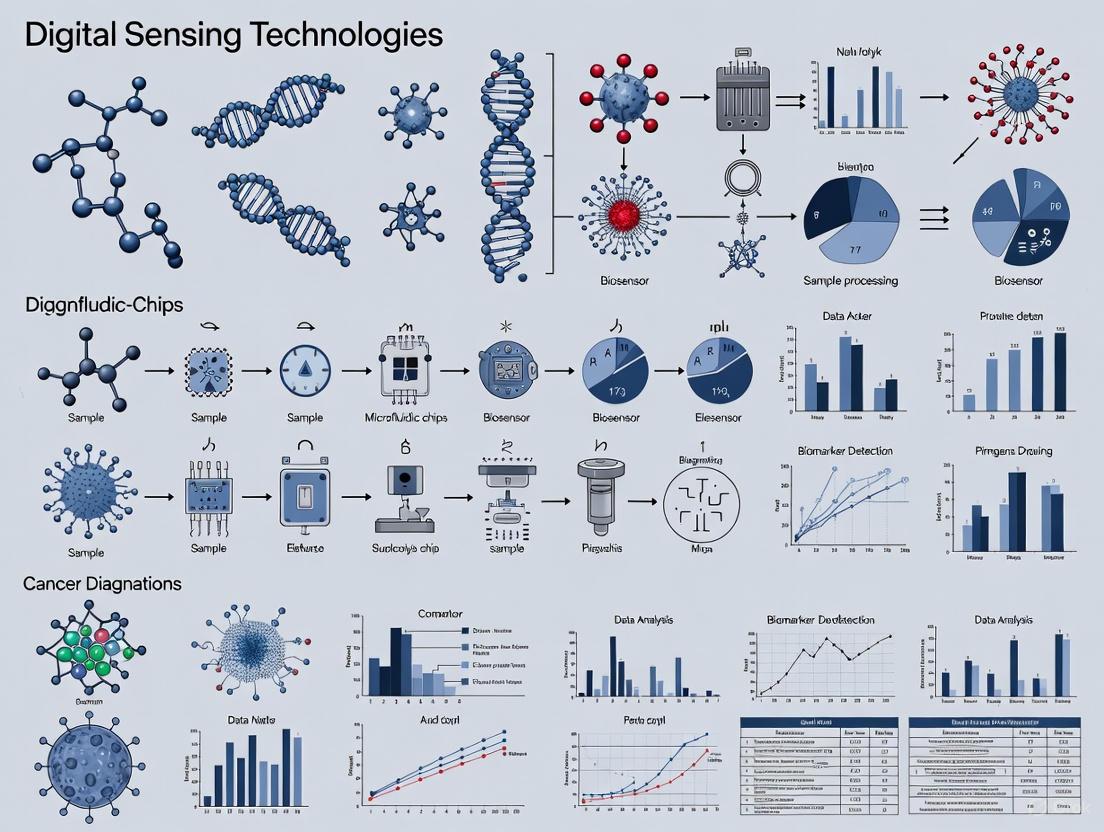
This article explores the transformative impact of digital sensing technologies integrated with artificial intelligence for point-of-care (POC) cancer diagnostics.
Digital Sensing and AI: Revolutionizing Point-of-Care Cancer Diagnosis
Abstract
This article explores the transformative impact of digital sensing technologies integrated with artificial intelligence for point-of-care (POC) cancer diagnostics. Aimed at researchers, scientists, and drug development professionals, it provides a comprehensive analysis spanning foundational principles, methodological applications, optimization challenges, and comparative validation. The review covers cutting-edge advancements in biosensors, liquid biopsies, and portable imaging systems, alongside AI-driven data interpretation that enhances diagnostic accuracy and accessibility. It critically addresses current technical and implementation barriers while evaluating performance against traditional laboratory methods, offering a forward-looking perspective on integrating these technologies into clinical workflows and precision oncology.
The New Frontier: Core Principles and Technologies Shaping POC Cancer Diagnostics
Application Notes: Digital Sensor Platforms in Point-of-Care Cancer Diagnostics
Digital sensor platforms represent a transformative class of diagnostic systems that integrate advanced sensors with digital technology to revolutionize data collection, processing, and transmission. These platforms serve as the backbone of modern monitoring systems, enabling real-time, high-precision, and automated diagnostics that are particularly crucial for point-of-care (POC) cancer applications [1]. By leveraging nanotechnology, biorecognition elements, and artificial intelligence (AI), these systems facilitate early detection, precise diagnosis, and personalized treatment methods for cancer, directly at or near the site of patient care [1] [2].
The operational framework of a digital sensor platform typically involves a biosensor component for biological recognition, a transducer that converts the biological response into a digital signal, and a data processing unit where AI algorithms interpret the results. This integration enables the conversion of molecular recognition of target analytes into actionable diagnostic insights [2]. The convergence of these technologies is paving the way for proactive cancer management, improving survival rates and quality of life through timely and targeted interventions [1].
Key Technology Categories and Applications
Digital sensor platforms for cancer diagnostics manifest primarily in three forms, each with distinct applications and value propositions in point-of-care settings.
Table 1: Key Digital Sensor Platform Categories for Cancer Diagnostics
| Technology Category | Primary Function | Key Applications in Cancer Care | Representative Examples |
|---|---|---|---|
| Biosensors & Lab-on-a-Chip (LOC) [1] | Miniaturized devices for analyzing biomarkers in bodily fluids | Liquid biopsies for circulating tumor DNA (ctDNA); detection of tumor-associated antigens [1] [3] | Multiplexed lateral flow immunoassays (LFIAs); electrochemical sensors for ctDNA [3] |
| Wearable Sensors [1] [2] | Continuous, non-invasive physiological monitoring | Tracking patient activity, vital signs, and metabolic markers for treatment monitoring and early complication detection [2] [4] | Smart shirts or patches for monitoring respiration, heart rate, and gait [4] |
| Portable Imaging Systems [3] | Non-invasive, high-resolution visualization of tissues | Detection of epithelial precancers; ensuring complete tumor resection with negative margins [3] | Optical coherence tomography (OCT); fluorescence-guided microscopy [3] |
Quantitative Performance Data of Select POC Assays
The performance of molecular diagnostics adapted for point-of-care use is critical for their clinical adoption. The following table summarizes key metrics for emerging technologies.
Table 2: Performance Metrics of Emerging POC Molecular Diagnostics for Cancer
| Assay Technology | Target Biomarker | Reported Sensitivity | Reported Specificity | Time-to-Result |
|---|---|---|---|---|
| Loop-mediated isothermal amplification (LAMP) [3] | Nucleic acids (e.g., viral oncogenes, ctDNA) | High (comparable to PCR) | High (robust against inhibitors) | ~30-60 minutes [3] |
| Multiplexed Lateral Flow Immunoassays (LFIAs) [3] | Proteins (e.g., CEA, AFP, CA-125) | Enhanced via nanomaterials (quantum dots) | Enhanced via nanomaterials; challenges with cross-reactivity | < 30 minutes [3] |
| Fluorescence-based LFIA Readouts [3] | Proteins and nucleic acids | Higher than visual LFIAs | Higher than visual LFIAs | < 30 minutes [3] |
Experimental Protocols
Protocol 1: Detection of Circulating Tumor DNA using LAMP-based Liquid Biopsy
Principle: This protocol describes a method for detecting tumor-specific genetic mutations (e.g., from KRAS or EGFR) in circulating cell-free DNA (cfDNA) from blood samples using Loop-Mediated Isothermal Amplification (LAMP). LAMP is ideal for POC settings as it operates at a constant temperature (60-70°C), eliminating the need for complex thermal cycling equipment used in traditional PCR [3].
Workflow:
Materials:
- Reagents:
- Plasma sample (100 µL).
- LAMP master mix (containing Bst DNA polymerase with strand-displacing activity, dNTPs, and reaction buffer).
- Sequence-specific LAMP primers (F3, B3, FIP, BIP) designed against the target mutation.
- Fluorescent intercalating dye (e.g., SYBR Green) or colorimetric dye (e.g., hydroxy naphthol blue).
- Nuclease-free water.
- Equipment:
- Portable, low-cost isothermal heater or dry bath.
- Microcentrifuge.
- Micropipettes and tips.
- Portable fluorometer or smartphone-based reader for result interpretation [3].
Procedure:
- Sample Preparation: Isolate plasma from fresh whole blood via centrifugation. Extract cfDNA from the plasma using a quick spin-column or crude lysis protocol. The robustness of LAMP allows for minimal nucleic acid purification [3].
- Reaction Setup: In a 0.2 mL tube, combine the following on ice:
- 12.5 µL of 2x LAMP master mix.
- 5 µL of primer mix (containing all four LAMP primers).
- 2.5 µL of extracted cfDNA template.
- Nuclease-free water to a final volume of 25 µL.
- Amplification: Place the reaction tube in a pre-heated isothermal block at 65°C for 45 minutes.
- Detection:
- Fluorescent Method: Include a fluorescent dye in the master mix. After amplification, use a portable fluorometer to measure fluorescence. A significant increase over the baseline indicates a positive result.
- Colorimetric Method: Include a metal indicator like hydroxy naphthol blue. A color change from violet to sky blue indicates a positive amplification.
- Data Interpretation: Integrate the readout device with a smartphone or tablet running a machine learning algorithm. The AI model can automate the interpretation of positive/negative results, reducing reliance on trained personnel and providing a clear diagnostic output [2] [3].
Protocol 2: Multiplexed Lateral Flow Immunoassay for Cancer Antigen Detection
Principle: This protocol outlines the procedure for simultaneously detecting multiple tumor-associated antigens (e.g., Carcinoembryonic Antigen (CEA), Alpha-fetoprotein (AFP)) in serum or plasma using a multiplexed Lateral Flow Immunoassay (LFIA). The assay uses specific capture antibodies immobilized in distinct test lines on a nitrocellulose membrane and detection antibodies conjugated to colored or fluorescent nanoparticles [3].
Workflow:
Materials:
- Reagents:
- Patient serum or plasma sample (50-100 µL).
- Multiplexed LFIA test strip with test lines (T1 for CEA, T2 for AFP) and a control line (C).
- Running buffer.
- Equipment:
- Flat surface for test strip development.
- Timer.
- Smartphone with a dedicated app and, if using fluorescent nanoparticles, a simple external optical attachment [3].
Procedure:
- Assay Initiation: Place the multiplexed LFIA strip on a flat, dry surface. Apply 100 µL of the patient serum sample to the sample pad.
- Liquid Migration: Immediately add 2-3 drops of running buffer to the sample pad. The liquid will migrate via capillary action across the conjugate pad, membrane, and into the absorbent pad.
- Complex Formation and Capture: As the sample migrates, it rehydrates the nanoparticle-antibody conjugates in the conjugate pad. If present, the target antigens (CEA, AFP) bind to these conjugates. The complexes continue to flow across the membrane until they are captured by the immobilized antibodies at the respective test lines, generating a visible or fluorescent line.
- Control Verification: The control line should always appear, indicating proper fluid flow and assay validity.
- Result Reading and Interpretation: After 15 minutes, use a smartphone camera to capture an image of the test strip. A dedicated app, powered by a deep learning model (e.g., a convolutional neural network), should be used to:
The Scientist's Toolkit: Research Reagent Solutions
The development and execution of advanced digital sensor platforms require a suite of specialized reagents and materials.
Table 3: Essential Research Reagents and Materials for Digital Sensor Platforms
| Item | Function/Description | Application Example |
|---|---|---|
| Biorecognition Elements [2] | Molecules (antibodies, aptamers, DNA probes) that specifically bind to the target analyte. | Immobilization on sensor surfaces or conjugation to nanoparticles for capturing cancer biomarkers. |
| Nanomaterial Labels [3] | Quantum dots, lanthanide-doped nanoparticles, or gold nanoparticles that serve as signal reporters. | Used in multiplexed LFIAs to enhance sensitivity and enable simultaneous detection of multiple targets. |
| Bst DNA Polymerase [3] | A strand-displacing DNA polymerase essential for isothermal amplification. | Key enzyme in LAMP assays for amplifying ctDNA targets without thermal cycling. |
| Lyophilized Reagent Pellets [3] | Pre-mixed, freeze-dried reagents to enhance stability and ease-of-use. | Used in POC test kits to eliminate cold-chain requirements and simplify assay steps in the field. |
| AI/ML Software Platforms [2] [5] | Machine learning (e.g., CNN for images) and deep learning algorithms for data analysis. | Used for interpreting complex sensor data, imaging results, and strip tests to improve diagnostic accuracy. |
Cancer biomarkers, including proteins, circulating tumor DNA (ctDNA), and exosomes, are biological molecules that provide crucial information about the presence, progression, and behavior of cancer [6]. The advent of digital sensing technologies has catalyzed a paradigm shift in oncology, enabling minimally invasive monitoring and point-of-care (POC) diagnostics [7] [1]. These technologies leverage advancements in biosensors, lab-on-a-chip (LOC) devices, and artificial intelligence (AI) to facilitate early detection, precise diagnosis, and personalized treatment planning [1]. The integration of these tools is transforming the landscape of cancer care by making diagnostics more accessible, efficient, and tailored to individual patient profiles.
Established and Emerging Cancer Biomarkers
Classification and Clinical Utility
Biomarkers are indispensable across the entire cancer care continuum, from screening and early detection to diagnosis, treatment selection, and monitoring of therapeutic responses [6]. They can be broadly classified based on their molecular nature and clinical application.
Table 1: Key Classes of Cancer Biomarkers and Their Characteristics
| Biomarker Class | Examples | Associated Cancers | Key Characteristics & Clinical Role |
|---|---|---|---|
| Protein Biomarkers | PSA, CA-125, CEA, AFP [8] [6] | Prostate, Ovarian, Colorectal, Liver [8] [6] | Widely used but often lack specificity; can be elevated in benign conditions [6]. |
| Circulating Tumor DNA (ctDNA) | Mutations in KRAS, EGFR, TP53 [7] [6] | Lung, Breast, Colorectal, and many others [7] [6] | Fragments of tumor-derived DNA in blood; enables non-invasive genotyping, therapy monitoring, and early detection [7]. |
| Exosomes | Exosomal PD-L1, CD63, EpCAM [7] [9] | Melanoma, NSCLC, Colorectal, and others [7] [9] | Nanovesicles (30-150 nm) carrying proteins, lipids, and nucleic acids; reflect functional activity of parental tumor cells [7] [9]. |
| Circulating Tumor Cells (CTCs) | CTCs detected by CellSearch [7] | Metastatic Breast, Prostate, Colorectal [7] | Intact tumor cells in circulation; used for prognosis in metastatic disease [7]. |
Performance Metrics of Emerging Biomarker Assays
The analytical performance of assays for novel biomarkers is critical for their clinical translation. Sensitivity and limit of detection (LOD) are key parameters.
Table 2: Analytical Performance of Selected Emerging Biomarker Detection Technologies
| Biomarker | Detection Technology | Limit of Detection (LOD) | Reported Sensitivity / Specificity |
|---|---|---|---|
| TNFα (Model Protein) | 3D-Printed Smartphone Colorimetric Biosensor [10] | 19 pg/mL [10] | Well correlated with standard ELISA [10]. |
| Ferritin | Graphene FET-based ELISA (G-ELISA) [11] | Lower than unamplified gFET (specific value not stated) [11] | Enhanced sensitivity via enzymatic amplification [11]. |
| Exosomal miRNA | Not Specified [7] | Not Applicable | 97% sensitivity for distinguishing early-stage pancreatic cancer [7]. |
| ctDNA Methylation | Sequencing [7] | Not Applicable | Detected breast cancer up to 2 years before diagnosis with 100% specificity [7]. |
Experimental Protocols for Biomarker Analysis
Protocol 1: Exosome Isolation and Detection via Immunoaffinity
Principle: This protocol isolates exosomes from biofluids using antibodies against specific surface markers (e.g., CD63, CD81) and detects them via an enzyme-linked immunosorbent assay (ELISA) format, which can be adapted for colorimetric or electrochemical readouts [9].
Materials:
- Sample: Blood plasma, serum, or cell culture medium.
- Antibodies: Capture antibody (e.g., anti-CD63), detection antibody (e.g., biotinylated anti-target antigen), and enzyme-conjugated streptavidin (e.g., streptavidin-urease) [9] [11].
- Buffers: Phosphate-buffered saline (PBS), washing buffer (PBS with 0.05% Tween 20), blocking buffer (e.g., 0.1% gelatin or BSA in PBS) [10].
- Equipment: Microplate reader, or for POC use, a smartphone-based colorimetric sensor or graphene field-effect transistor (gFET) setup [10] [11].
Procedure:
- Coating: Immobilize the capture antibody on a solid surface (e.g., microplate well or gFET sensor) and incubate overnight at 4°C.
- Blocking: Wash the surface and add blocking buffer for 1 hour at 37°C to prevent non-specific binding [10].
- Sample Incubation: Add the pre-cleared biofluid sample and incubate for 1-2 hours. Exosomes expressing the target surface marker will be captured.
- Washing: Wash thoroughly to remove unbound material.
- Detection: Incubate with a biotinylated detection antibody specific to a different epitope on the exosome or target antigen.
- Signal Amplification: Incubate with enzyme-conjugated streptavidin (e.g., urease).
- Readout:
- Colorimetric: Add an enzyme substrate (e.g., 3,3',5,5'-Tetramethylbenzidine (TMB)).- Stop the reaction with acid and measure the absorbance [10].
- gFET-based (G-ELISA): Add urea. The urease enzyme hydrolyzes urea, causing a local pH change that is transduced by the gFET as a shift in the Dirac point (VI), providing a digital readout [11].
Protocol 2: ctDNA Analysis via Liquid Biopsy and Sequencing
Principle: This protocol involves the extraction of cell-free DNA (cfDNA) from blood, followed by the enrichment and analysis of ctDNA using next-generation sequencing (NGS) to identify tumor-specific mutations or methylation patterns [7] [6].
Materials:
- Sample: Blood collected in cell-stabilizing tubes.
- Reagents: cfDNA extraction kit, library preparation kit, sequencing buffers, and bioinformatics software.
- Equipment: Centrifuge, thermocycler, and next-generation sequencer [7].
Procedure:
- Blood Collection and Processing: Draw blood and separate plasma via centrifugation to remove cells and debris.
- cfDNA Extraction: Isolate total cfDNA from the plasma using a commercial extraction kit.
- Library Preparation: Prepare a sequencing library from the cfDNA. For ultra-sensitive detection, use techniques like droplet digital PCR (ddPCR) or targeted sequencing panels.
- Sequencing: Perform NGS on the prepared libraries.
- Bioinformatic Analysis: Align sequences to a reference genome and use specialized algorithms to identify low-frequency tumor-derived mutations, copy number alterations, or methylation profiles against a background of wild-type DNA [7] [6].
The Scientist's Toolkit: Key Research Reagent Solutions
Successful experimentation in cancer biomarker research relies on a suite of specialized reagents and materials.
Table 3: Essential Research Reagents and Materials for Biomarker Analysis
| Item | Function/Application | Specific Examples |
|---|---|---|
| Specific Antibodies | Recognition elements for immunoassays; used for capture and detection of protein biomarkers and exosomal surface proteins. | Anti-human TNFα antibody [10]; Anti-ferritin monoclonal antibody [11]; Anti-CD63/CD81 for exosome capture [9]. |
| Enzyme Conjugates | Signal generation and amplification in ELISA and related assays. | Horseradish peroxidase (HRP) [10]; Streptavidin-urease for G-ELISA [11]. |
| Specialized Substrates | Generate measurable signal (colorimetric, electrochemical) upon enzyme action. | 3,3',5,5'-Tetramethylbenzidine (TMB) for HRP [10]; Urea for urease enzyme in G-ELISA [11]. |
| Surface Chemistry Reagents | Functionalize sensor surfaces for robust biomolecule immobilization and to reduce non-specific binding. | Vinylsulfonated polyethyleneimine (VS-PEI) for graphene functionalization [11]; Polyethylene glycol (PEG) as an antifouling agent [11]. |
| NGS Library Prep Kits | Prepare cfDNA/ctDNA for sequencing; enable target enrichment and adapter ligation. | Kits for preparing 3'-end enriched cDNA libraries for sequencing [12]. |
| Exosome Isolation Kits | Isulate and purify exosomes from complex biofluids based on size, precipitation, or immunoaffinity. | Kits based on polymeric precipitation or ultrafiltration [9]. |
Biosensors are analytical devices that combine a biological recognition element with a physicochemical transducer to detect specific analytes with remarkable sensitivity and specificity [13]. The convergence of nanotechnology and advanced biorecognition materials has profoundly transformed these tools, enabling unprecedented capabilities in point-of-care (POC) cancer diagnostics. These technologies facilitate early detection, continuous monitoring, and personalized treatment strategies by detecting biomarkers at ultralow concentrations, significantly improving diagnostic accuracy and prognostic assessments [13] [1]. This document details application notes and experimental protocols for leveraging these advanced biosensors within digital sensing frameworks for cancer research and diagnostics.
Key Technology Platforms and Performance Metrics
Advanced biosensor platforms are characterized by their high sensitivity, miniaturization, and multiplexing capabilities. The table below summarizes the performance of prominent nanotechnology-enhanced biosensors relevant to cancer diagnostics.
Table 1: Performance Metrics of Advanced Biosensing Platforms
| Technology Platform | Sensitivity | Detection Limit (RIU) | Figure of Merit (RIU⁻¹) | Key Applications in Oncology |
|---|---|---|---|---|
| PCF-SPR Biosensor [14] | 125,000 nm/RIU (Wavelength) | 8 × 10⁻⁷ | 2112.15 | Label-free cancer cell detection, chemical sensing |
| Graphene Metasurface Biosensor [15] | 4000 nm/RIU | 0.078 | 16.000 | Viral detection (e.g., COVID-19 biomarkers) |
| Dual-Gist PCF Biosensor [15] | 115,999 nm/RIU | 8.66 × 10⁻⁷ | Information Missing | General bioanalytical sensing |
| X-shaped SPR-PCF Biosensor [15] | 29,000 nm/RIU | 1.72 × 10⁻⁶ | 558 | Broad-range biomarker detection |
| MoS₂-based SPR Sensor [15] | 25,800 nm/RIU (Dual-mode) | Information Missing | Information Missing | Refractive index sensing and temperature response |
Application Notes
Note 001: AI-Optimized Design of PCF-SPR Biosensors
Background: Photonic Crystal Fiber-based Surface Plasmon Resonance (PCF-SPR) biosensors are sophisticated optical platforms that detect minute refractive index variations near the sensor surface, which occur when biomarkers bind to the recognition layer [14].
Significance for Cancer Diagnosis: This technology is particularly valuable for label-free cancer cell detection and monitoring biomarker-antibody interactions in real-time, providing insights into tumor progression [13] [14].
Key Advantages:
- Machine Learning Integration: ML regression models (Random Forest, XGBoost) can predict optical properties like effective index and confinement loss with high accuracy, drastically accelerating sensor optimization and reducing computational costs compared to traditional simulation methods [14].
- Explainable AI (XAI): SHAP analysis identifies critical design parameters, revealing that wavelength, analyte refractive index, gold thickness, and pitch are the most influential factors for maximizing sensitivity [14].
- Performance: Achieves high wavelength sensitivity and low confinement loss, making it suitable for detecting low-abundance cancer biomarkers [14].
Note 002: Integrated Systems for Point-of-Care Cancer Diagnostics
Background: The conceptual "OncoCheck" model exemplifies an integrated approach designed for resource-limited settings. It combines liquid biopsy, point-of-care testing (POCT), and AI-driven data analysis [16].
Significance for Cancer Diagnosis: This system aims to bridge global cancer care disparities by enabling early, sensitive, and affordable cancer screening outside centralized laboratories, potentially transforming cancer management in low- and middle-income countries (LMICs) [16].
Key Advantages:
- Accessibility: POCT integration allows for rapid diagnostics in non-laboratory settings, improving access for remote and underserved populations [16].
- Cost-Effectiveness: Liquid biopsy is a more economical option than traditional screening methods like MRI, significantly reducing detection costs [16].
- Comprehensive Profiling: Liquid biopsy analyzes various components, including circulating tumor DNA (ctDNA) and extracellular vesicles, providing a non-invasive window into tumor heterogeneity and treatment response [16].
Experimental Protocols
Protocol 001: Fabrication and Functionalization of a PCF-SPR Biosensor
Objective: To fabricate a high-sensitivity PCF-SPR biosensor and functionalize its surface for the specific detection of a target cancer biomarker.
Workflow: The experimental procedure for biosensor preparation and measurement is outlined below.
Materials:
- Photonic Crystal Fiber (PCF)
- Metallic deposition source (Gold, 99.99% purity)
- Biorecognition elements (e.g., monoclonal antibodies specific to the target cancer biomarker, DNA aptamers)
- Surface activation reagents (e.g., 11-Mercaptoundecanoic acid for gold surface)
- Coupling agents (e.g., EDC/NHS for carboxyl group activation)
- Blocking buffer (e.g., 1% Bovine Serum Albumin in PBS)
- Washing buffer (e.g., PBS with 0.05% Tween 20)
- Analyte samples (e.g., purified protein, synthetic biomarkers spiked in buffer, or patient serum)
Procedure:
- Sensor Fabrication:
- Begin with a standard PCF substrate.
- Using a sputter coater or thermal evaporator, deposit a thin, uniform film of gold (typically 40-60 nm) onto the exterior or interior channels of the PCF.
- Surface Functionalization:
- Clean the gold-coated sensor with oxygen plasma and ethanol.
- Immerse the sensor in a 1 mM solution of 11-Mercaptoundecanoic acid in ethanol for 12-16 hours to form a self-assembled monolayer (SAM).
- Rinse thoroughly with ethanol and deionized water to remove unbound thiols.
- Activate the carboxyl terminal groups by treating with a fresh mixture of EDC (0.4 M) and NHS (0.1 M) in water for 30 minutes.
- Rinse with buffer and immediately incubate with the biorecognition element (e.g., 50 µg/mL antibody in phosphate buffer, pH 7.4) for 2 hours.
- Rinse again to remove unbound antibodies.
- Block non-specific binding sites by incubating with 1% BSA for 1 hour.
- Perform a final rinse, and store the functionalized sensor in PBS at 4°C until use.
- Sample Introduction and Measurement:
- Place the functionalized sensor in a flow cell apparatus.
- Establish a stable baseline by flowing running buffer.
- Introduce the sample containing the target analyte and allow binding to proceed for a predetermined time.
- Monitor the output light spectrum using a spectrometer. The binding of the target biomarker will cause a shift in the resonance wavelength.
- Use the wavelength shift to calculate sensitivity and analyte concentration.
AI Integration:
- Use a dataset of sensor design parameters and their corresponding performance metrics to train ML regression models (e.g., Random Forest, XGBoost).
- Employ the trained model to predict the performance of new design configurations.
- Apply SHAP analysis to the model's predictions to interpret the impact of each design parameter (e.g., gold thickness, pitch) on the final sensor performance [14].
Protocol 002: OncoCheck-Inspired Liquid Biopsy Analysis at Point-of-Care
Objective: To detect cancer biomarkers from a liquid biopsy sample (e.g., blood) using an integrated POCT device coupled with AI-based interpretation.
Workflow: The streamlined process for point-of-care liquid biopsy analysis is visualized in the following diagram.
Materials:
- Portable POCT device (e.g., electrochemical reader, compact fluorescence detector)
- Single-use test cartridges/strips pre-functionalized with capture probes (e.g., antibodies for CTCs, probes for ctDNA)
- Blood collection kit (venipuncture or fingerstick)
- Microcentrifuge (portable, for plasma separation if required)
- Lysis and wash buffers (provided with the test kit)
- Smartphone or tablet for data collection and transmission
Procedure:
- Sample Preparation:
- Collect a peripheral blood sample (1-10 mL in EDTA tubes).
- Process the sample within 2 hours of collection. Centrifuge at 2000 × g for 10 minutes to separate plasma.
- Carefully transfer the plasma layer to a new tube without disturbing the buffy coat.
- POCT Analysis:
- Load the prepared plasma sample into the sample chamber of the POCT cartridge.
- Insert the cartridge into the portable reader device.
- The device automatically mixes the sample with internal reagents, facilitates the binding of biomarkers to the capture elements, and generates a quantifiable signal (e.g., electrical current, optical density).
- The assay is typically completed within 10-30 minutes.
- Data Digitization and AI Analysis:
- The reader digitizes the raw signal and transmits it via Bluetooth or USB to a connected smartphone or local hub.
- The data is uploaded to a cloud-based or local AI analytics platform.
- Pre-trained machine learning models analyze the multiplexed biomarker data, correcting for potential assay variations and patient-specific factors.
- The AI system generates a diagnostic report indicating the probability of disease, potential cancer subtype, or level of treatment response.
The Scientist's Toolkit: Research Reagent Solutions
Table 2: Essential Materials for Nanobiosensor Development and Cancer Diagnostics
| Research Reagent / Material | Function / Application | Examples / Specifications |
|---|---|---|
| Plasmonic Nanomaterials [13] [14] | Enhances signal transduction in optical biosensors via Surface Plasmon Resonance. | Gold nanoparticles (40-60 nm), thin gold films (50 nm). |
| 2D Materials & Metasurfaces [15] | Provides high surface area and tunable optoelectronic properties for enhanced sensitivity. | Graphene, MoS₂ (Molybdenum Disulfide), Black Phosphorus. |
| Biorecognition Elements [13] | Provides high specificity for binding to target cancer biomarkers. | Monoclonal Antibodies, Single-Stranded DNA Aptamers, Engineered Proteins. |
| Phase-Change Materials [15] | Enables dynamic tunability and reconfigurability of sensor properties. | GST (Germanium-Antimony-Tellurium, amorphous/crystalline phases). |
| Liquid Biopsy Components [16] | Serves as the analyte for non-invasive cancer detection and monitoring. | Circulating Tumor DNA (ctDNA), Extracellular Vesicles/Exosomes. |
| AI/ML Software Tools [14] [16] | Used for sensor design optimization, data analysis, and predictive diagnostics. | Python with Scikit-learn, XGBoost, SHAP library for model interpretation. |
Liquid biopsy represents a transformative approach in oncology, enabling the minimally invasive detection and analysis of tumor-derived components from biofluids. The three primary biomarkers—Circulating Tumor DNA (ctDNA), Circulating Tumor Cells (CTCs), and Extracellular Vesicles (EVs)—provide complementary information for cancer diagnosis, prognosis, and treatment monitoring [17] [18]. These biomarkers originate from tumors and circulate in bodily fluids such as blood, offering a real-time snapshot of tumor heterogeneity and evolution [19].
Compared to traditional tissue biopsy, liquid biopsy provides significant clinical advantages: it is minimally invasive, allows for real-time monitoring of treatment response and resistance, captures tumor heterogeneity, and enables early detection of recurrence [18] [19]. The integration of these liquid biopsy approaches with emerging digital sensing technologies is paving the way for advanced point-of-care cancer diagnostics.
Table 1: Core Liquid Biopsy Biomarkers and Characteristics
| Biomarker | Origin | Key Components | Half-Life | Primary Clinical Applications |
|---|---|---|---|---|
| CTC | Cells shed from primary or metastatic tumors | Intact tumor cells with DNA, RNA, proteins | 1-2.5 hours [18] | Prognostic assessment, metastasis research, drug resistance studies [17] [20] |
| ctDNA | Apoptotic or necrotic tumor cells [17] | Tumor-derived DNA fragments | ~2 hours [18] | Treatment monitoring, mutation detection, minimal residual disease detection [17] [20] |
| EV | Secreted by tumor cells [17] | DNA, RNA, proteins, lipids, metabolites [17] | Varies | Early cancer detection, monitoring tumor dynamics [17] |
Analysis of Circulating Tumor Cells (CTCs)
CTCs are intact tumor cells that detach from primary or metastatic sites and enter the circulation [17]. They are exceptionally rare, with approximately 1-10 CTCs per 10^9 hematological cells in patient blood, presenting significant technical challenges for their isolation and detection [19]. CTC analysis provides a comprehensive biological entity capable of yielding dynamic information on DNA, RNA, and proteins, offering unmatched advantages in transcriptomic, proteomic, and signal colocalization assessments [17].
Detailed Experimental Protocols
CTC Enrichment and Isolation Methods
CTC isolation strategies exploit differences between tumor cells and blood cells based on biological properties (e.g., surface protein expression) or physical properties (e.g., size, density, deformability) [17] [19].
Table 2: CTC Enrichment and Isolation Technologies
| Method | Principle | Advantages | Limitations | Examples/Systems |
|---|---|---|---|---|
| Immunomagnetic Positive Enrichment | Uses antibody-labeled magnetic beads targeting epithelial markers (e.g., EpCAM) [17] | High purity; FDA-cleared | Misses CTCs undergoing epithelial-mesenchymal transition (EMT) | CellSearch [17] [20] |
| Immunomagnetic Negative Enrichment | Removes hematopoietic cells using CD45-targeted antibodies [17] | Independent of CTC surface markers | Risk of CTC loss during white blood cell removal | EasySep depletion kit [19] |
| Microfluidic Technology | Uses fluid mechanics and surface markers for separation [17] | High sensitivity; improved capture efficiency | Limited to EpCAM-positive CTCs | CTC-Chip, HB-Chip [19] [20] |
| Membrane Filtration | Separates by cell size (CTCs are generally larger) [17] | Good cell integrity; not limited by surface markers | Low purity; misses small CTCs | ISET [20] |
| Density Gradient Centrifugation | Separates by density differences [17] | Can separate CK positive and negative cells | Low separation efficiency | Ficoll-based methods [17] |
CTC Detection and Characterization Methods
Following enrichment, CTCs are typically identified using:
- Immunofluorescence (IF): Staining for epithelial markers (CK8,18,19), leukocyte exclusion marker (CD45), and nuclear staining (DAPI) [17] [19]
- Molecular Characterization: Using PCR to detect tumor-specific transcripts (e.g., EpCAM, MUC-1, HER-2) [19]
- ScMet-Seq Protocol: A recently developed method combining metabolic marker (HK2) immunostaining with single-cell low-pass whole genome sequencing for CNA profiling [21]
scMet-Seq Protocol for CTC Detection
The scMet-Seq protocol represents an advanced approach for sensitive and accurate CTC detection:
- HK2-Based Immunostaining: Suspicious CTCs (sCTCs) are rapidly identified in body fluids using immunostaining for hexokinase 2 (HK2), a metabolic function-associated marker, combined with cytokeratin (CK), CD45, and DAPI [21]
- Click Chemistry-Based Cell Fixation: Amine- and sulfhydryl-reactive crosslinkers form amine-to-amine and amine-to-sulfhydryl crosslinks among biomolecules, significantly improving genome integrity compared to traditional PFA fixation [21]
- Single-Cell Retrieval: Individual fixed sCTCs are retrieved for sequencing
- Tn5 Transposome-Based WGS: A low-cost transposome-based whole genome sequencing protocol combines whole genome amplification and library construction into a single step, reducing processing time from 8.5 hours to 3 hours with 97% cost reduction compared to MALBAC protocol [21]
- CNA Profiling and Analysis: Single-cell low-pass WGS (mean depth: 0.2×) profiles copy number alterations; a positive test requires ≥2 sCTCs with CNA burden >0.02 exhibiting concordant CNA profiles [21]
Research Reagent Solutions
Table 3: Essential Reagents for CTC Analysis
| Reagent/Category | Specific Examples | Function/Application |
|---|---|---|
| Immunomagnetic Enrichment Reagents | EpCAM-coated magnetic beads; CD45 depletion beads | CTC enrichment positive/negative selection [17] [19] |
| Immunofluorescence Staining Reagents | Anti-pan-CK, anti-CD45, DAPI | CTC identification and enumeration [17] [19] |
| Cell Fixation Reagents | Amine- and sulfhydryl-reactive crosslinkers | Preserving cellular integrity and nucleic acids [21] |
| Nucleic Acid Amplification Kits | Tn5 transposome-based WGA kits | Whole genome amplification from single cells [21] |
CTC Analysis Workflow: From Sample Collection to Clinical Application
Analysis of Circulating Tumor DNA (ctDNA)
ctDNA consists of short DNA fragments (approximately 20-50 base pairs) released into the circulation through apoptosis, necrosis, or active secretion from tumor cells [18] [20]. It typically represents 0.1-1.0% of total cell-free DNA in cancer patients, with higher concentrations observed in advanced disease [18]. ctDNA has a short half-life of approximately 2 hours, enabling real-time monitoring of tumor dynamics [18].
Detailed Experimental Protocols
Sample Collection and Processing
- Blood Collection: Collect peripheral blood (typically 10-20 mL) in Streck or EDTA tubes to prevent nucleic acid degradation
- Plasma Separation: Centrifuge blood within 2-4 hours of collection at 800-1600 × g for 10-20 minutes to separate plasma from blood cells
- Secondary Centrifugation: Perform high-speed centrifugation (16,000 × g for 10 minutes) to remove residual cells and debris
- Storage: Store plasma at -80°C until DNA extraction
ctDNA Extraction and Quantification
Extract ctDNA using commercial kits optimized for low-abundance cell-free DNA:
- QIAamp Circulating Nucleic Acid Kit (Qiagen)
- Maxwell RSC ccfDNA Plasma Kit (Promega)
- NEXTprep-Mag cfDNA Isolation Kit (Bioo Scientific)
Quantify ctDNA using fluorometric methods (Qubit dsDNA HS Assay) or quantitative PCR (e.g., Alu sequence amplification)
ctDNA Analysis Methods
Table 4: ctDNA Detection and Analysis Technologies
| Method | Principle | Sensitivity | Applications | Examples |
|---|---|---|---|---|
| Next-Generation Sequencing (NGS) | High-throughput sequencing of multiple genomic regions | Varies (0.1%-5%) [20] | Comprehensive mutation profiling, discovery | Whole genome, targeted panels [20] |
| Droplet Digital PCR (ddPCR) | Partitioning samples into nanoliter droplets for absolute quantification | 0.01%-0.1% [20] | Monitoring known mutations, treatment response | EGFR mutation detection [20] |
| BEAMing | Beads, Emulsion, Amplification, and Magnetics | ~0.01% | Ultrasensitive detection of rare mutations | KRAS, TP53 mutations [18] |
| ARMS-PCR | Amplification Refractory Mutation System | ~1% | Detection of specific point mutations | EGFR T790M [20] |
Research Reagent Solutions
Table 5: Essential Reagents for ctDNA Analysis
| Reagent/Category | Specific Examples | Function/Application |
|---|---|---|
| Blood Collection Tubes | Streck Cell-Free DNA BCT, EDTA tubes | Sample stabilization and preservation |
| Nucleic Acid Extraction Kits | QIAamp Circulating Nucleic Acid Kit | ctDNA isolation from plasma |
| Library Preparation Kits | KAPA HyperPrep Kit, Illumina cfDNA Library Prep | NGS library construction |
| Target Enrichment Panels | IDT xGen Panels, Twist Panels | Capture cancer-relevant genes |
ctDNA Analysis Workflow: From Blood Draw to Clinical Interpretation
Analysis of Extracellular Vesicles (EVs)
EVs are lipid-bilayer enclosed particles secreted by cells that carry molecular cargo including DNA, RNA, proteins, lipids, and metabolites [17]. Tumor-derived EVs play crucial roles in driving malignant cell behavior, including stimulating tumor growth, suppressing immune responses, inducing angiogenesis, and facilitating metastasis [17]. EV analysis provides a comprehensive snapshot of tumor-derived material, making them particularly attractive as cancer biomarkers.
Detailed Experimental Protocols
EV Isolation and Enrichment Methods
- Ultracentrifugation: The gold standard method involving sequential centrifugation steps culminating at 100,000-200,000 × g for 70-120 minutes
- Precipitation-Based Kits: Commercial polymer-based precipitation kits (e.g., ExoQuick, Total Exosome Isolation Reagent) offering simplicity but potential co-precipitation of contaminants
- Size-Exclusion Chromatography: Separates EVs from soluble proteins based on size, providing high purity but potential sample dilution
- Immunoaffinity Capture: Uses antibodies against EV surface markers (CD9, CD63, CD81) for specific subpopulation isolation
- Microfluidic Isolation: Emerging technologies using immunoaffinity or size-based capture in microfluidic devices
EV Characterization and Cargo Analysis
- Nanoparticle Tracking Analysis: Determines EV size distribution and concentration
- Transmission Electron Microscopy: Visualizes EV morphology and structure
- Western Blotting: Confirms presence of EV markers (CD9, CD63, CD81, TSG101) and absence of negative markers (calnexin)
- RNA Extraction and Analysis: Isolate EV RNA using commercial kits (e.g., miRCURY RNA Isolation Kit) followed by RNA sequencing or qRT-PCR for miRNA/mRNA profiling
- Protein Analysis: Mass spectrometry or immunoassays for protein cargo characterization
Research Reagent Solutions
Table 6: Essential Reagents for EV Analysis
| Reagent/Category | Specific Examples | Function/Application |
|---|---|---|
| EV Isolation Kits | ExoQuick, Total Exosome Isolation Reagent | Rapid EV precipitation from biofluids |
| Immunoaffinity Beads | CD63/CD81/CD9 magnetic beads | Specific subpopulation isolation |
| EV Characterization Kits | ExoELISA kits, MACSPlex exosome kits | EV quantification and phenotyping |
| RNA Extraction Kits | miRCURY RNA Isolation Kit | RNA isolation from EV preparations |
Integration with Digital Sensing and Point-of-Care Technologies
The convergence of liquid biopsy with digital sensing technologies is creating transformative opportunities for point-of-care cancer diagnostics [22] [1]. Microfluidic biosensors have emerged as powerful platforms for detecting liquid biopsy biomarkers, providing enhanced sensitivity, specificity, and rapid analysis in compact formats [23].
Microfluidic and Sensor Integration
Advanced microfluidic devices integrate multiple operational elements to manipulate liquid samples at nano- or micro-scales, offering advantages of compact size, portability, minimal sample consumption, and shortened processing time [23]. These devices can be integrated with various detection modalities:
- Electrochemical Sensors: High sensitivity for detecting low-concentration biomarkers [23]
- Fluorescence Detection: Utilizing fluorescent labeling for high specificity [23]
- Surface Enhanced Raman Scattering (SERS): Nanoparticle-enhanced signal amplification for improved detection capabilities [23]
- Multiplexed Lateral Flow Immunoassays: Simultaneous detection of multiple cancer biomarkers in low-cost, portable formats [3]
Artificial Intelligence and Machine Learning Integration
AI and ML algorithms are being embedded into point-of-care testing platforms to enhance the accuracy, sensitivity, and efficiency of liquid biopsy analysis [24]. ML applications include:
- Image Analysis: Automated interpretation of fluorescence signals or cell morphology using convolutional neural networks [24]
- Signal Processing: Enhanced detection of low-abundance biomarkers through advanced signal processing algorithms [24]
- Predictive Modeling: Identification of complex patterns in multi-omics data for improved diagnostic classification [24]
- Sensor Optimization: Computational co-optimization of sensor hardware and design parameters [24]
Emerging Point-of-Care Platforms
- Portable Nucleic Acid Amplification: Loop-mediated isothermal amplification (LAMP) provides practical alternatives to PCR in decentralized settings, operating at constant temperatures (60°C-70°C) without thermal cycling [3]
- Integrated Imaging Systems: Portable optical coherence tomography and fluorescence-guided microscopy systems for noninvasive visualization of cellular changes [3]
- Wearable Sensors: Continuous monitoring devices for tracking cancer biomarkers in real-time [1]
Technical Considerations and Challenges
While liquid biopsy technologies show tremendous promise, several challenges remain for their widespread clinical implementation:
Sensitivity and Specificity: Detecting rare biomarkers (e.g., CTCs, low-frequency mutations) against high background noise requires ongoing improvement in detection limits [17] [23]
Standardization: Lack of standardized protocols across platforms affects reproducibility and comparability of results [19]
Analytical Validation: Rigorous validation of pre-analytical, analytical, and post-analytical phases is essential for clinical adoption [19]
Cost and Accessibility: Reducing costs and complexity is crucial for implementation in resource-limited settings [3]
Regulatory Approval: Navigating regulatory pathways for novel diagnostic platforms requires substantial evidence of clinical utility [24]
The ongoing integration of liquid biopsy with advanced digital sensing technologies, microfluidics, and artificial intelligence promises to address these challenges, ultimately enabling more accessible, affordable, and precise cancer diagnostics for point-of-care applications.
The REASSURED criteria represent a modern blueprint for developing ideal point-of-care (POC) diagnostic tests, establishing a benchmark for accessibility, affordability, and accuracy in disease detection. Originally introduced by the World Health Organization (WHO) as the ASSURED criteria (Affordable, Sensitive, Specific, User-friendly, Rapid and robust, Equipment-free, and Deliverable), the framework has been updated to reflect technological advancements, evolving into REASSURED with the addition of Real-time connectivity and Ease of specimen collection [25] [26]. This expanded framework now serves as a critical guideline for designing next-generation POC devices, particularly for complex applications such as cancer diagnosis and management where timely, accurate, and accessible testing can significantly impact patient outcomes [27].
The transition from ASSURED to REASSURED marks a significant evolution in diagnostic standards, incorporating digital technology and mobile health (m-health) capabilities to create connected diagnostic systems [25]. These innovations are particularly relevant for cancer care, where continuous monitoring and real-time data transmission can enable proactive management and personalized treatment strategies [1]. The REASSURED framework aims to ensure that diagnostic tests not only detect diseases accurately but also deliver this information promptly to healthcare providers, enabling immediate clinical decision-making even in remote or resource-limited settings [28] [27].
Table 1: The Evolution from ASSURED to REASSURED Criteria
| ASSURED Criteria | Additional REASSURED Elements | Description |
|---|---|---|
| Affordable | Real-time connectivity | Integration with digital networks for instant data transmission |
| Sensitive | Ease of specimen collection | Use of non-invasive or easily obtainable samples |
| Specific | ||
| User-friendly | ||
| Rapid & Robust | ||
| Equipment-free | ||
| Deliverable |
Comprehensive Analysis of REASSURED Components
Real-time Connectivity
Real-time connectivity enables the instantaneous transmission of diagnostic results to healthcare professionals and central databases, facilitating remote consultation and timely medical intervention. This capability is particularly valuable for cancer management in underserved regions where specialist access is limited [25]. The integration of Internet of Things (IoT) technologies with POC devices allows for continuous monitoring of cancer biomarkers, creating a dynamic data stream for personalized treatment adjustments [27]. Furthermore, connected diagnostic systems contribute to broader public health initiatives by enabling real-time disease surveillance and epidemiological tracking [26].
Ease of Specimen Collection
This criterion emphasizes the importance of non-invasive or minimally invasive sample collection methods such as finger-prick blood, saliva, urine, or nasal swabs [26]. For cancer diagnostics, this translates to developing tests that utilize liquid biopsies (blood) instead of traditional tissue biopsies, significantly reducing patient discomfort and improving testing accessibility [27]. Simplified specimen collection is particularly crucial for decentralized testing scenarios where trained phlebotomists may not be available, enabling patient self-collection or testing by individuals with minimal technical training [29].
Affordable
Affordability remains a cornerstone of the REASSURED framework, ensuring diagnostic tests are accessible across diverse socioeconomic settings. This is especially important for cancer screening programs implemented in low-resource regions [28] [25]. Affordable diagnostics enable widespread screening, potentially detecting cancers at earlier, more treatable stages. Cost-effectiveness also facilitates frequent monitoring of cancer recurrence or treatment response, which is crucial for long-term disease management [27].
Sensitive
High sensitivity ensures that diagnostic tests can detect low concentrations of cancer biomarkers, enabling early disease identification when treatment is most effective [26]. Achieving sufficient sensitivity is particularly challenging for cancer biomarkers that may be present in minute quantities during early disease stages. Advanced detection methodologies including CRISPR-based systems, isothermal amplification, and enhanced signal amplification strategies are being employed to improve detection limits without compromising test simplicity or cost [30].
Specific
Specificity refers to a test's ability to accurately distinguish target biomarkers from non-target molecules in complex biological samples, minimizing false-positive results [26]. For cancer diagnostics, high specificity is crucial due to the heterogeneous nature of cancer biomarkers and their potential cross-reactivity with other molecules. Multiplexed detection systems that simultaneously identify multiple biomarker signatures can enhance diagnostic specificity by providing confirmatory data points within the same test platform [26].
User-friendly
User-friendly designs enable operation by individuals with minimal technical training, making sophisticated cancer diagnostics accessible in primary care settings or even patient homes [28] [27]. This characteristic is essential for democratizing cancer screening beyond specialized oncology centers. Simple, intuitive interfaces with clear instructions reduce operator error and ensure result reliability regardless of the testing environment or user expertise [29].
Rapid and Robust
Rapid results delivery enables immediate clinical decision-making, while robustness ensures consistent performance across varying environmental conditions [26]. For cancer diagnostics, rapid turnaround times facilitate same-day consultation and treatment planning, potentially reducing patient anxiety and improving adherence to follow-up care. Robustness is particularly important for POC devices deployed in field settings where controlled laboratory conditions cannot be maintained [29].
Equipment-free or Simple
This criterion emphasizes minimal reliance on complex instrumentation, favoring self-contained test formats that require little to no additional equipment [25]. While some cancer diagnostic platforms may incorporate simple readers for quantitative results, the core assay should function without sophisticated laboratory infrastructure. Paper-based microfluidic devices and lateral flow platforms represent promising approaches that meet this criterion while maintaining analytical performance [30] [27].
Deliverable to End-users
Deliverability encompasses the entire test distribution pipeline, ensuring that diagnostics reach their intended users while maintaining stability during storage and transport [26]. For cancer diagnostics targeting remote populations, this requires robust packaging, extended shelf-life without refrigeration, and seamless integration into existing supply chains. This criterion completes the framework by addressing the practical challenges of implementing POC diagnostics in real-world settings [28].
Experimental Protocols for REASSURED-Compliant Assay Development
Protocol 1: Development of a Multiplex Lateral Flow Immunoassay for Cancer Biomarkers
Objective: To develop a multiplex lateral flow assay (LFA) capable of simultaneously detecting three cancer biomarkers (CEA, CA-125, and PSA) in serum samples, complying with REASSURED criteria.
Materials:
- Nitrocellulose membrane (25 mm width)
- Conjugate pad (glass fiber)
- Sample pad (cellulose)
- Absorption pad (cellulose)
- Gold nanoparticle-antibody conjugates (anti-CEA, anti-CA-125, anti-PSA)
- Test line antibodies (capture antibodies for each biomarker)
- Control line antibody (goat anti-mouse IgG)
- Phosphate buffered saline (PBS), pH 7.4
- Blocking solution (1% BSA in PBS)
- Serum samples (patient and control)
Procedure:
- Membrane Preparation: Cut nitrocellulose membrane to appropriate size (approximately 30 cm length).
- Test Line Deposition: Using a lateral flow reagent dispenser, deposit three distinct test lines for CEA, CA-125, and PSA at 1.5 μL/cm flow rate with 5 mm spacing between lines.
- Control Line Deposition: Deposit control line (goat anti-mouse IgG) 5 mm downstream from the last test line.
- Membrane Drying: Dry membrane at 37°C for 12 hours in a low-humidity environment.
- Conjugate Pad Preparation: Apply gold nanoparticle-antibody conjugates (mixed solution of all three detection antibodies) to conjugate pad at 5 μL/cm, then dry at 37°C for 2 hours.
- Assembly: Layer components in order: sample pad, conjugate pad, nitrocellulose membrane, absorption pad on backing card with 2 mm overlaps between components.
- Lamination: Laminate assembled card using a lateral flow laminator.
- Cutting: Cut laminated card into 4 mm wide strips using an automated cutter.
- Cassette Housing: Place individual strips into plastic cassettes.
- Quality Control: Test each batch with positive and negative controls to verify performance.
Implementation Considerations:
- For real-time connectivity, integrate with a smartphone reader application that captures test line intensities and transmits results to healthcare providers.
- Ensure equipment-free operation by designing the test for visual interpretation with clear positive/negative reference guides.
- Maintain affordability by optimizing reagent volumes and using cost-effective materials without compromising performance.
Protocol 2: Smartphone-Based Quantitative Analysis of POC Cancer Tests
Objective: To implement a smartphone-based reader system for quantitative interpretation of POC cancer diagnostic tests, enabling real-time connectivity and data transmission.
Materials:
- Smartphone with camera (minimum 12 MP)
- 3D-printed test holder with consistent lighting
- Image processing application (custom-developed)
- Color calibration card
- Reference test strips with known biomarker concentrations
Procedure:
- Apparatus Setup:
- 3D-print test holder that positions the test strip at a fixed distance from the smartphone camera.
- Incorporate LED lighting with diffuser to ensure consistent illumination.
- Include slots for color calibration card in each image.
Software Development:
- Develop image capture interface with manual and automatic capture options.
- Implement color calibration algorithm using reference card in each image.
- Create test line detection algorithm using edge detection and pattern recognition.
- Incorporate intensity quantification relative to control line.
- Develop concentration calculation based on pre-established calibration curve.
Calibration:
- Image reference strips with known biomarker concentrations (0, 1, 5, 10, 25, 50 ng/mL).
- Establish calibration curve for each biomarker using signal intensity ratios (test/control).
- Validate calibration with independent test set.
Testing Protocol:
- Place test strip in holder after 15-minute development time.
- Position color calibration card in designated slot.
- Open application and capture image.
- Allow automated analysis: color correction, line detection, intensity measurement.
- Record quantitative result for each biomarker.
- Transmit encrypted results to electronic health record or healthcare provider.
Validation:
- Compare smartphone quantification results with laboratory standard (ELISA).
- Assess inter-operator and inter-device variability.
- Validate data transmission security and reliability.
Implementation Considerations:
- This protocol enhances REASSURED compliance by adding real-time connectivity while maintaining equipment simplicity through use of ubiquitous smartphones.
- The approach supports multiplex detection through precise quantification of multiple test lines.
- User-friendly design is maintained through automated analysis and intuitive interface.
Table 2: Research Reagent Solutions for REASSURED-Compliant Cancer Diagnostics
| Reagent/Material | Function | Application Examples | REASSURED Criteria Enhanced |
|---|---|---|---|
| Gold nanoparticles | Signal generation in lateral flow assays | Conjugate with detection antibodies for visual test lines | Affordable, Equipment-free, User-friendly |
| Cell-free expression systems | Synthetic biology-based detection | Engineered biosensors for cancer biomarkers | Affordable, Deliverable, Equipment-free |
| CRISPR-Cas systems | Nucleic acid detection | Detection of cancer-specific mutations | Sensitive, Specific |
| Paper-based microfluidics | Liquid handling platform | Microfluidic paper analytical devices (μPADs) | Equipment-free, Affordable, Deliverable |
| Smartphone readers | Result quantification and connectivity | Quantitative analysis and data transmission | Real-time connectivity, Affordable |
Application in Cancer Diagnosis: Specific Considerations
The implementation of REASSURED criteria in cancer diagnostics addresses several unique challenges in oncology care, particularly regarding early detection, monitoring, and accessibility. Cancer management presents distinct requirements compared to infectious disease diagnostics, including the need for quantitative results, multiplexed detection, and longitudinal monitoring [27].
Early Detection Challenges
Many cancers, including pancreatic, ovarian, and prostate cancer, show no obvious symptoms in early stages, making screening programs essential for timely intervention [27]. REASSURED-compliant POC devices can enable widespread screening, particularly in regions with limited access to advanced medical imaging or laboratory facilities. For example, tests detecting cancer-specific biomarkers in easily obtainable samples like blood, urine, or saliva could facilitate regular screening at the primary care level [27].
Multiplexed Detection for Cancer Heterogeneity
Tumor heterogeneity presents a significant challenge in cancer diagnosis and treatment selection. REASSURED-compliant multiplexed diagnostics that simultaneously detect multiple cancer biomarkers or mutation signatures can provide more comprehensive diagnostic information from a single sample [26]. This approach is particularly valuable for identifying appropriate targeted therapies and assessing treatment response. Multiplexed vertical flow assays and advanced lateral flow platforms with multiple test lines represent promising formats for such applications [24].
Integration with Digital Health Technologies
The incorporation of real-time connectivity in cancer POC devices enables seamless integration with broader digital health ecosystems. This connectivity supports tele-oncology consultations, remote monitoring of cancer survivors, and population-level cancer surveillance [1] [27]. When combined with artificial intelligence algorithms for result interpretation, connected POC devices can enhance diagnostic accuracy while maintaining accessibility [24].
Technical Considerations for Cancer Biomarker Detection
Implementing REASSURED criteria for cancer biomarkers presents unique technical challenges compared to infectious disease targets. Cancer biomarkers often exist at lower concentrations, requiring enhanced sensitivity without compromising other criteria. Additionally, the quantitative nature of many cancer biomarkers necessitates accurate measurement rather than simple presence/absence detection [30]. Approaches such as signal amplification strategies, improved reporter systems, and integrated readers can address these challenges while maintaining REASSURED compliance [30] [26].
The REASSURED framework provides a comprehensive set of criteria to guide the development of next-generation POC devices optimized for cancer diagnosis and management. By addressing all aspects from specimen collection to result delivery, REASSURED-compliant devices have the potential to transform cancer care through improved accessibility, timely diagnosis, and personalized monitoring. Continued innovation in diagnostic technologies, particularly in multiplexing capabilities, connectivity features, and user-centered design, will further enhance the implementation of this framework in oncology practice. As these technologies evolve, REASSURED criteria will serve as an essential benchmark ensuring that advances in cancer diagnostics translate to meaningful improvements in patient outcomes across diverse healthcare settings.
The disproportionate burden of cancer in low- and middle-income countries (LMICs), which account for nearly two-thirds of global cancer deaths, underscores an urgent need for diagnostic innovation [3]. Point-of-care technologies (POCTs) represent a paradigm shift in cancer management by decentralizing complex diagnostic procedures, thus providing rapid, cost-effective testing directly at or near the site of patient evaluation [3]. The World Health Organization's ASSURED criteria (Affordable, Sensitive, Specific, User-friendly, Rapid and Robust, Equipment-free, and Deliverable) provide a foundational framework for developing these technologies for low-resource settings [30]. The integration of digital sensing technologies, particularly artificial intelligence (AI) and machine learning (ML), is now poised to transform these platforms from simple diagnostic tools into sophisticated clinical decision-support systems capable of matching the analytical performance of centralized laboratories [31]. This application note details the current protocols and technological advances in POC cancer diagnostics, providing researchers with practical methodologies for implementation in resource-constrained environments.
Technological Platforms and Performance Metrics
Established and Emerging POC Platforms
Table 1: Comparison of Major POC Diagnostic Platforms
| Device Type | Advantages | Disadvantages | Primary Cancer Applications |
|---|---|---|---|
| Lateral Flow Test (LFT) | Fast, Inexpensive, Stable, Versatile, Equipment-free [30] | Primarily qualitative output, Poor sensitivity [30] | Detection of tumor antigens (e.g., CEA, AFP, CA-125) [3] |
| Microfluidic Paper-Based Device (μPAD) | Fast, Inexpensive, Very small sample volume, Enables multiplexing [30] | Sample evaporation, Non-uniform sample distribution, Sensitivity challenges [30] | Multiplexed detection of protein biomarkers [30] |
| Nucleic Acid-Based (e.g., LAMP) | Isothermal (no thermal cycler needed), Robust, High sensitivity, Works with crude samples [3] | Added assay complexity, Challenges in accurate quantification [30] | Detection of viral oncogenes (HPV, HBV), circulating tumor DNA [3] |
| Portable Imaging Systems | Non-invasive, High-resolution visualization, Real-time decision support [3] | Cost can be prohibitive, Requires some user training | Optical coherence tomography for epithelial cancers [3] |
| Wearable Sensors | Continuous monitoring, Minimally invasive, Real-time data streaming [1] [31] | Limited to small molecules and electrophysiological signals [30] [31] | Monitoring of metabolic markers, potentially liquid biopsy components [31] |
Performance of Commercially Available Lateral Flow Tests
Table 2: Example Performance of Commercial Lateral Flow Assays
| Company | Product Name | Target Disease/Condition | Analyte/Antigen | Sensitivity | Specificity |
|---|---|---|---|---|---|
| Alere | Alere Determine TB LAM | Tuberculosis in HIV+ patients | Lipoarabinomannan (LAM) Ag | - | - |
| Alere | Binax NOW | Malaria | Plasmodium Ag | P. falciparum: 99.7%, P. vivax: 93.5% | P. falciparum: 94.2%, P. vivax: 99.8% |
| Alere | Alere Determine HIV-1/2 Ag/Ab Combo | AIDS | HIV-1/2 antibodies and free HIV-1 p24 Ag | - | 99.75% |
| Quidel Corp. | Quick Vue RSV Test | Infantile bronchiolitis | Respiratory syncytial virus (RSV) Ag | 92% (swab) | 92% (swab) |
| IMMY | CrAg A | Cryptococcal meningitis | C. neoformans, C. gattii | 100% | 94% |
Detailed Experimental Protocols
Protocol: Loop-Mediated Isothermal Amplification (LAMP) for Cancer-Associated Viral DNA
Principle: This protocol describes the detection of oncogenic viral DNA (e.g., HPV16/18, Hepatitis B) using isothermal amplification, eliminating the need for complex thermal cycling equipment [3]. LAMP uses a strand-displacing DNA polymerase and 4-6 primers recognizing distinct regions of the target DNA to achieve high amplification efficiency at a constant temperature of 60-70°C.
Workflow Diagram:
Materials & Reagents:
- Sample: Crude lysate from swab or liquid biopsy (e.g., plasma).
- LAMP Primer Mix: Custom designed primers (F3, B3, FIP, BIP) for target DNA.
- Isothermal Master Mix: Contains Bst 2.0 or 3.0 DNA polymerase, betaine, dNTPs, MgSO4, and reaction buffer.
- Fluorescent Dye: SYTO-9, Calcein, or Hydroxy Naphthol Blue (HNB) for visual detection.
- Equipment: Portable dry bath or block heater (65°C), UV light (if using calcein), or naked eye for color change.
Procedure:
- Sample Preparation: Mix 50 µL of crude sample with 10 µL of prepared lysis buffer. Incubate at room temperature for 5 minutes. Centrifuge briefly to pellet debris.
- Reaction Setup: In a 0.2 mL tube, combine:
- 12.5 µL of 2x LAMP Master Mix
- 5 µL of Primer Mix (FIP/BIP: 1.6 µM each; F3/B3: 0.2 µM each)
- 1 µL of fluorescent dye (if used)
- 2.5 µL of sample supernatant
- Nuclease-free water to a final volume of 25 µL
- Amplification: Place tubes in a pre-heated dry bath at 65°C for 30 minutes.
- Detection:
- Visual (HNB): A color change from violet to sky blue indicates a positive result.
- UV (Calcein): Green fluorescence under UV light indicates a positive result.
- Turbidity: Positive amplification leads to a white precipitate (magnesium pyrophosphate), visible as turbidity.
Protocol: Multiplexed Lateral Flow Immunoassay for Protein Biomarkers
Principle: This protocol enables the simultaneous detection of multiple cancer-associated protein biomarkers (e.g., CEA, AFP, CA-125) on a single test strip [3]. It employs specific capture antibodies immobilized in distinct test lines and detection antibodies conjugated to colored nanoparticles (e.g., gold, latex).
Workflow Diagram:
Materials & Reagents:
- Lateral Flow Strip: Comprising sample pad, conjugate pad, nitrocellulose membrane with test and control lines, and absorbent pad.
- Capture Antibodies: Monoclonal antibodies specific to target biomarkers (e.g., anti-CEA, anti-AFP) for test lines.
- Detection Antibodies: Different monoclonal antibodies for the same biomarkers, conjugated to gold nanoparticles (AuNPs) or fluorescent latex beads.
- Running Buffer: Phosphate buffer with surfactants (e.g., Tween-20) to ensure optimal flow and binding.
- Sample: Serum or plasma (50-100 µL).
- Reader (Optional): Smartphone-based reader or portable fluorescence scanner for quantification.
Procedure:
- Strip Preparation: Test and control lines are dispensed onto the nitrocellulose membrane using a precision dispenser. The conjugate pad is pre-treated with the lyophilized antibody-nanoparticle conjugates. The strip components are assembled and cut to size.
- Assay Execution: Apply 100 µL of serum sample to the sample pad. Add 2-3 drops of running buffer to facilitate sample movement.
- Incubation: Allow the strip to develop at room temperature for 15-20 minutes.
- Result Interpretation:
- Qualitative: The appearance of colored test lines alongside the control line indicates a positive result.
- Quantitative: Use a smartphone camera with a dedicated adapter and an app to capture the image of the strip. The pixel intensity of the test lines is analyzed to generate a concentration value based on a pre-loaded calibration curve.
The Scientist's Toolkit: Essential Research Reagents and Materials
Table 3: Key Research Reagent Solutions for POC Development
| Reagent/Material | Function | Example Application | Considerations for Low-Resource Settings |
|---|---|---|---|
| Gold Nanoparticles (AuNPs) | Visual detection label; conjugate to antibodies or oligonucleotides. | Colorimetric reporter in lateral flow assays [32]. | Highly stable, do not require refrigeration, cost-effective. |
| Bst DNA Polymerase 2.0/3.0 | Strand-displacing enzyme for isothermal DNA amplification. | Core enzyme in LAMP assays for nucleic acid detection [3]. | Robust, works at constant 65°C, tolerant to sample inhibitors. |
| Lyophilized Reagents | Pre-mixed, dried reaction components for long-term storage. | Master mixes for amplification or antibody conjugates in LFTs [3]. | Eliminates cold chain, extends shelf-life, enhances portability. |
| Cell-Free Expression (CFE) Systems | Synthetic biology system using cellular machinery without intact cells. | Biosensing of small molecules, ions, and nucleic acids [30]. | Can be lyophilized and rehydrated on demand; highly programmable. |
| Quantum Dots / Lanthanide-doped Nanoparticles | Fluorescent reporters for enhanced sensitivity and multiplexing. | Signal amplification in multiplexed LFIAs and μPADs [3]. | Enable quantitative readout and lower limits of detection. |
| CRISPR-Cas Systems (e.g., Cas13a) | Nucleic acid detection with high specificity; collateral cleavage activity. | Specific detection of amplified DNA/RNA products; SHERLOCK protocol [30]. | Provides single-base pair specificity, can be coupled with isothermal amplification. |
Data Integration and AI-Enhanced Analysis
The integration of AI, particularly machine learning (ML), elevates POC devices from simple readers to intelligent diagnostic systems [31]. Figure 3 below outlines the workflow for integrating POC data with AI analysis.
AI-Enhanced POC Data Workflow:
Protocol for Smartphone-Based Quantification of Lateral Flow Assays:
- Image Capture: Place the developed lateral flow strip in a simple, 3D-printed cradle that minimizes ambient light interference. Use a smartphone to capture an image of the detection zone.
- Pre-processing: The dedicated smartphone application automatically corrects for perspective, identifies the test and control lines, and converts the image to a suitable color space (e.g., HSV).
- Feature Extraction: The app extracts the mean pixel intensity or integrated density for each test line.
- ML-Based Quantification: A pre-trained model (e.g., a regression model) maps the extracted features to biomarker concentrations. This model is calibrated against a set of standards with known concentrations, accounting for sample matrix variability where possible [30].
- Output: The app displays the quantitative result, provides an interpretation (e.g., "elevated"), and can optionally store the data or transmit it to a central health information system.
The convergence of microfluidics, nanomaterials, synthetic biology, and artificial intelligence is rapidly advancing the capabilities of point-of-care technologies for cancer diagnosis. The protocols and tools detailed in this application note provide a practical roadmap for researchers and drug development professionals to develop and implement these life-saving technologies. By adhering to the ASSURED/REASSURED criteria and focusing on robust, user-centric design, the next generation of POC devices holds the potential to dramatically narrow global health disparities and make quantitative, early cancer diagnosis a reality for all populations, regardless of resource setting.
From Lab to Clinic: Operational Technologies and AI-Driven Workflows
Loop-mediated isothermal amplification (LAMP) as a PCR alternative
Loop-mediated isothermal amplification (LAMP) represents a paradigm shift in nucleic acid amplification technology, offering a rapid, sensitive, and cost-effective alternative to conventional polymerase chain reaction (PCR). As molecular diagnostics increasingly transition toward point-of-care (POC) settings, particularly in the realm of cancer detection and infectious disease diagnosis, LAMP technology addresses critical limitations of PCR-based methods, including instrument dependency, operational complexity, and prolonged turnaround times [33] [34]. The isothermal nature of LAMP eliminates the need for thermal cyclers, thereby reducing both operational costs and technical barriers for implementation in resource-limited environments [35].
This application note provides a comprehensive technical overview of LAMP methodology, detailing its fundamental principles, comparative advantages over PCR, and detailed protocols for assay development and validation. With a specific focus on applications in cancer research and diagnostics, we frame LAMP within the broader context of digital sensing technologies for point-of-care cancer diagnosis, highlighting its potential to revolutionize molecular detection paradigms through simplified workflows without compromising analytical performance [34].
Fundamental Mechanism
LAMP is an autocatalytic nucleic acid amplification process that operates at a constant temperature ranging between 60-65°C, utilizing a strand-displacing DNA polymerase (typically Bst polymerase) and four to six specifically designed primers that recognize distinct regions of the target sequence [35] [36]. The amplification mechanism involves three primary stages: (1) initial structure generation, (2) cycling amplification, and (3) elongation and recycling. Unlike PCR, which relies on thermal denaturation cycles to separate DNA strands, LAMP employs strand-displacement activity to initiate and sustain amplification, forming characteristic loop structures that serve as initiation sites for subsequent amplification cycles [35].
The core primer set includes Forward Inner Primer (FIP), Backward Inner Primer (BIP), Forward Outer Primer (F3), and Backward Outer Primer (B3), with the optional addition of loop primers (LF and LB) to accelerate reaction kinetics. These primers work synergistically to generate stem-loop DNA structures with inverted repeats at each end, enabling exponential amplification through self-primed strand displacement DNA synthesis [36]. The entire process yields tremendous amplification—approximately 11 μg of DNA in a 25 μL reaction, representing a 55-fold greater yield compared to conventional PCR [37].
Comparative Analysis: LAMP vs. PCR Technologies
Table 1: Performance comparison of LAMP with various PCR methodologies
| Parameter | LAMP | Conventional PCR | Nested PCR | Real-time PCR |
|---|---|---|---|---|
| Amplification Temperature | Constant (60-65°C) | Thermal cycling (30-40 cycles) | Two-step thermal cycling | Thermal cycling (40-45 cycles) |
| Reaction Time | 15-60 minutes [35] [38] | 2-4 hours | 4-6 hours | 1-2 hours [35] |
| Limit of Detection (Entamoeba histolytica) | 1 trophozoite [36] | 1,000 trophozoites [36] | 100 trophozoites [36] | 100 trophozoites [36] |
| Instrument Requirement | Heating block or water bath | Thermal cycler | Thermal cycler | Real-time thermal cycler |
| Sample Purity Tolerance | High (resistant to inhibitors) [39] | Moderate | Low | Low |
| Primer Specificity | High (6-8 binding regions) | Moderate (2 binding regions) | High (4 binding regions) | Moderate (2 binding regions) |
| Amplicon Detection | Colorimetric, turbidity, fluorescence, lateral flow [37] [35] | Gel electrophoresis | Gel electrophoresis | Fluorescence |
| Quantification Capability | Possible with real-time monitoring [40] | No | No | Yes |
| Throughput Potential | Moderate to High | Moderate | Low | High |
| Cost per Reaction | Low | Low to Moderate | Moderate | High |
The comparative data demonstrates LAMP's superior sensitivity, detecting a single trophozoite of Entamoeba histolytica compared to 100-1000 for PCR methods [36]. This exceptional sensitivity, coupled with rapid turnaround times and minimal instrumentation requirements, positions LAMP as an ideal technology for point-of-care diagnostic applications.
LAMP Protocol for Molecular Detection
Primer Design Considerations
Effective LAMP assay design begins with strategic primer selection targeting 6-8 distinct regions within a 150-300 bp sequence. The following criteria ensure optimal amplification efficiency:
- Target Selection: Identify highly conserved genomic regions with minimal sequence variation. For cancer applications, focus on mutation hotspots, fusion genes, or differentially expressed transcripts [34].
- Primer Design Tools: Utilize specialized software such as Primer Explorer V4 or open-source alternatives with LAMP-specific algorithms [35].
- Sequence Parameters: Primers should exhibit 40-60% GC content, melting temperatures of 60-65°C for FIP/BIP, and 55-60°C for F3/B3, with minimal secondary structure or self-complementarity [36].
- Validation: Confirm specificity through BLAST analysis against relevant genomic databases before synthesis [35].
Table 2: LAMP primer sequences for SARS-CoV-2 detection
| Primer Name | Sequence (5' → 3') | Modification | Function |
|---|---|---|---|
| N2-F3 | ACCAGGAACTAATCAGACAAG | None | Outer forward primer |
| N2-B3 | GACTTGATCTTTGAAATTTGGATCT | None | Outer reverse primer |
| N2-FIP | TTCCGAAGAACGCTGAAGCGGAACTGATTACAAACATTGGCC | None | Inner forward primer |
| N2-BIP | CGCATTGGCATGGAAGTCACAATTTGATGGCACCTGTGTA | None | Inner reverse primer |
| N2-LF | GGGGGCAAATTGTGCAATTTG | Biotin | Forward loop primer |
| N2-LB | CTTCGGGAACGTGGTTGACC | FITC | Reverse loop primer |
Adapted from clinical validation study [35]
Reaction Setup and Optimization
Materials Required:
- Bst DNA polymerase (e.g., Lyo-ready Bst DNA Polymerase) with strand-displacing activity [39]
- Isothermal amplification buffer with betaine
- dNTP mixture (1.4 mM each)
- Magnesium sulfate (6-8 mM)
- Target-specific primer mix (FIP/BIP: 1.6 µM each; F3/B3: 0.2 µM each; LF/LB: 0.8 µM each)
- Template DNA/RNA (2-5 µL)
- Detection dye (phenol red, calcein, or SYTO dyes)
Standard Protocol:
- Reaction Assembly:
- Combine 12.5 µL of 2× LAMP master mix with 5 µL primer mix
- Add 2-5 µL template nucleic acid
- Adjust final volume to 25 µL with nuclease-free water
- Mix thoroughly by pipetting, avoiding vortexing
Amplification Conditions:
- Incubate at 60-65°C for 15-60 minutes
- For RNA targets, include reverse transcriptase in the reaction mix (RT-LAMP)
- Terminate reaction by heating to 80°C for 2-5 minutes
Amplicon Detection:
Workflow Visualization
Figure 1: LAMP assay workflow from sample collection to result interpretation
LAMP in Cancer Diagnostics
The application of LAMP in oncology represents a promising frontier in molecular diagnostics, particularly for point-of-care cancer detection and monitoring. LAMP assays have been successfully developed to target cancer-specific biomarkers, including genetic mutations, fusion transcripts, and differentially expressed genes [34]. The technology's exceptional sensitivity enables detection of low-abundance nucleic acid targets, making it suitable for liquid biopsy applications where target DNA may be limited.
In cancer research settings, LAMP has demonstrated potential for detecting minimal residual disease, monitoring treatment response, and identifying emerging resistance mutations. The ability to perform analyses directly from crude samples, including tissue biopsies and blood samples, without extensive nucleic acid purification significantly reduces processing time and preserves sample integrity [34] [41]. This feature is particularly valuable for intraoperative decision-making where rapid turnaround is critical.
The integration of LAMP with digital sensing platforms and microfluidic technologies further enhances its utility in cancer diagnostics, enabling quantitative analysis and multiplexed detection of multiple biomarkers simultaneously. These advanced systems facilitate the development of comprehensive molecular profiling tools that can be deployed at the point-of-care, potentially revolutionizing cancer diagnosis and personalized treatment approaches [34].
Data Analysis & Interpretation
Quantitative Analysis Methods
While traditional LAMP is considered a qualitative method, real-time monitoring approaches enable quantitative analysis through several mathematical models:
- Time to Positivity (TTP): Analogous to Ct values in qPCR, TTP represents the time required for the amplification signal to cross a predetermined threshold [40]. Lower TTP values correlate with higher initial template concentration.
- Sigmoidal Curve Fitting: Amplification curves can be modeled using four or five-parameter logistic functions to extract quantitative parameters, with the double sigmoid equation proving particularly effective for colorimetric LAMP data [37].
- Isothermal Doubling Time (IDT): This metric, analogous to PCR efficiency, quantifies assay performance by comparing the time required for different template concentrations to reach a uniform threshold [40].
For quantitative colorimetric LAMP (qcLAMP), real-time monitoring of RGB values enables construction of amplification curves, from which quantitative parameters can be extracted. This approach has been successfully implemented in portable detection systems for field-deployable diagnostics [41].
Interpretation Guidelines
Positive Result: Significant color change from pink to yellow (phenol red) within 30-45 minutes, accompanied by characteristic amplification kinetics in real-time monitoring systems [37].
Negative Result: No color change remains pink throughout the amplification period, with no significant signal deviation in real-time monitoring.
Inconclusive Result: Weak color change or atypical amplification kinetics may indicate inhibitor presence, suboptimal reaction conditions, or template degradation. Repeat testing with diluted template or additional purification is recommended.
The Scientist's Toolkit: Research Reagent Solutions
Table 3: Essential reagents and materials for LAMP assay development
| Reagent/Material | Function | Example Products | Key Characteristics |
|---|---|---|---|
| Bst DNA Polymerase | Strand-displacing enzyme for isothermal amplification | Lyo-ready Bst DNA Polymerase [39], WarmStart Bst | Thermostable, strand-displacement activity, resistant to inhibitors |
| Reverse Transcriptase | cDNA synthesis for RNA targets | SuperScript IV RT [39] | High thermal stability, efficient with structured RNA |
| Isothermal Amplification Buffer | Reaction environment optimization | ThermoFisher Isothermal Buffer [39], NEB WarmStart LAMP Buffer | Contains betaine, magnesium sulfate, dNTPs |
| Detection Dyes | Visual or fluorescent signal generation | Phenol Red [37], Calcein-Manganese [36], SYTO dyes | Colorimetric or fluorescent indicators of amplification |
| Primer Sets | Target-specific amplification | Custom LAMP primers (F3, B3, FIP, BIP, LF, LB) [35] | 6-8 primers targeting distinct regions |
| Lateral Flow Strips | Rapid amplicon detection | HybridDetect strips [35], Milenia GenLine | Immunochromatographic detection of labeled amplicons |
| Sample Lysis Buffer | Nucleic acid release without purification | Triton X-100 based buffers [35] | Compatible with direct amplification |
Technical Considerations & Limitations
Despite its numerous advantages, LAMP technology presents several technical challenges that require consideration during assay development:
- Primer Design Complexity: The requirement for 6-8 primers targeting distinct regions within a short genomic segment can limit design flexibility, particularly for highly variable targets [34].
- False-Positive Results: The exceptional sensitivity of LAMP increases vulnerability to aerosol contamination, necessitating strict spatial separation of pre- and post-amplification activities and implementation of closed-tube detection systems [34].
- Quantification Limitations: While quantitative LAMP is possible, it generally demonstrates poorer quantitation capabilities below 1000 target copies compared to qPCR [40].
- Standardization Challenges: The absence of universally accepted quantification standards and performance metrics complicates inter-laboratory comparisons and assay validation [40].
- Multiplexing Difficulties: Simultaneous detection of multiple targets remains challenging due to the complexity of primer design and potential for cross-reactivity.
LAMP technology represents a robust, sensitive, and accessible alternative to PCR, particularly suited for point-of-care diagnostics and resource-limited settings. Its rapid turnaround time, minimal instrumentation requirements, and resistance to inhibitors position it as an ideal platform for decentralized testing, including cancer diagnosis, infectious disease detection, and field surveillance.
The continued refinement of LAMP methodologies, including integration with digital sensing platforms, microfluidic systems, and advanced detection modalities, will further expand its applications in molecular diagnostics. For cancer research specifically, LAMP offers the potential for rapid mutation detection, treatment monitoring, and early detection through liquid biopsy approaches [34].
As the field advances, standardization of assay development, performance metrics, and validation protocols will be crucial for translating LAMP-based tests from research tools to clinically validated diagnostics. With its unique combination of sensitivity, speed, and simplicity, LAMP is poised to play an increasingly prominent role in the evolving landscape of molecular diagnostics.
The early and accurate detection of cancer is a critical determinant of patient survival rates. Advances in digital sensing technologies are paving the way for sophisticated diagnostic tools that can be deployed at the point of care [1]. Multiplexed Lateral Flow Immunoassays (LFIA) represent a transformative evolution in this space, enabling the simultaneous, quantitative detection of multiple cancer biomarkers from a single sample [42] [43]. This Application Note provides a detailed overview of multiplexed LFIAs, outlining the core architectural principles, detection methodologies, and experimental protocols. The content is framed within a broader research thesis on integrating these assays with digital reader technologies to create powerful, connected diagnostic systems for personalized cancer care [1] [44].
Core Architectures for Multiplexing
Multiplexing in LFIAs is primarily achieved through spatial separation of detection sites or the use of spectrally distinct labels. The table below summarizes the three predominant architectural strategies.
Table 1: Core Architectures for Multiplexed Lateral Flow Immunoassays
| Architecture | Description | Key Advantages | Considerations |
|---|---|---|---|
| Single Strip, Multiple Test Lines [42] [43] | Multiple capture antibodies, each specific to a different biomarker, are immobilized in distinct lines on a single nitrocellulose membrane. | Maximal simplicity and minimal sample volume; most common approach; easy to adapt from standard LFIA [43]. | Potential for cross-reactivity; test lines must be sufficiently spaced, which can increase strip size and assay time [43]. |
| Multi-Channel (Array-like) [42] [43] | Multiple single test-line strips are arranged in parallel, each dedicated to detecting a specific biomarker but sharing a common sample application point. | Minimized assay interference; allows for individual optimization of each strip [43]. | Increased device size and sample volume requirement; higher cost of fabrication [43]. |
| Single Test Line, Multiple Labels [42] [43] | A single test line is used, but different biomarkers are detected using uniquely identifiable labels (e.g., fluorescent or colored particles). | Extremely compact design; suitable for detecting colocalized markers [43]. | Requires sophisticated readers for signal deconvolution; potential for signal overlap; complex conjugation chemistry [42] [45]. |
The following workflow diagram illustrates the experimental process for developing and analyzing a multiplexed LFIA based on the multiple test lines architecture.
Detection Methodologies & Reader Technologies
The choice of label particle dictates the required detection technology and directly impacts the assay's sensitivity and potential for quantification.
Table 2: Detection Methodologies and Reader Technologies for Quantitative Multiplexed LFIA
| Label Type | Measured Signal | Sensor Technology | Key Features & Applications |
|---|---|---|---|
| Colorimetric (Colloidal Gold, Colored Latex) [44] [46] | Contrast or color change | CCD or CMOS camera | Naked-eye readout possible; cost-effective; widely used. Lower sensitivity than other methods; susceptible to environmental light interference [44]. |
| Fluorescence (Quantum Dots, Fluorescent Latex) [43] [44] | Fluorescence intensity | CCD/CMOS with excitation light source (LED) | Higher sensitivity and wider dynamic range; enables multicolor detection for multiplexing in a single line [43] [44]. |
| Magnetic (Paramagnetic Particles) [44] | Magnetic field intensity | Giant Magnetoresistance (GMR) sensor | Insensitive to sample matrix color or turbidity; stable signal; suitable for whole blood analysis [44]. |
| Photothermal (Graphene Oxide, Gold Nanocages) [44] | Thermal waves | Infrared camera | Emerging technology; high sensitivity due to low background in biological samples [44]. |
| Electrochemical (Metal Nanoparticles, Enzymes) [44] | Voltage, current, impedance | Potentiometer, Galvanometer | High sensitivity and selectivity; reader can be miniaturized into a compact, portable device [44]. |
Experimental Protocol: Development of a Multi-Test Line LFIA
This protocol details the steps for developing a multiplexed LFIA for the simultaneous detection of two cancer biomarkers, using a colorimetric readout with smartphone-based quantification.
Materials and Reagents
Table 3: Research Reagent Solutions and Essential Materials
| Item | Function/Description |
|---|---|
| Nitrocellulose Membrane [46] | Porous matrix for capillary flow; site for immobilization of capture antibodies at test (T1, T2) and control (C) lines. |
| Conjugate Pad [46] | Holds dried detector particles (e.g., colloidal gold-antibody conjugates); releases them upon sample application. |
| Sample Pad [46] | Filters and pre-treats the sample (e.g., whole blood) to ensure optimal flow and interaction with conjugates. |
| Absorbent Pad [46] | Acts as a sink to wick fluid and maintain continuous capillary flow across the entire strip. |
| Backing Card [46] | Provides structural support for assembling and laminating all strip components. |
| Capture Antibodies [46] | Highly specific monoclonal antibodies immobilized on the membrane for target biomarkers (T1, T2) and control line. |
| Detection Antibodies [42] | Antibodies conjugated to label particles (e.g., colloidal gold) that bind to the target analyte. |
| Colloidal Gold Nanoparticles [46] | Commonly used colorimetric label; produces a red color upon accumulation at test lines. |
| Blocking Buffers (e.g., with BSA, Sucrose) [46] | Used to pre-treat pads to prevent non-specific binding and stabilize conjugated antibodies during drying and storage. |
Procedure
Step 1: Strip Assembly and Antibody Immobilization
- Membrane Preparation: Spot distinct capture antibodies for Biomarker 1, Biomarker 2, and the control antibody (e.g., species-specific anti-immunoglobulin) onto the nitrocellulose membrane as separate lines (T1, T2, C). A dispensing XYZ platform ensures precise and reproducible line positioning [42] [46].
- Drying: Dry the membrane overnight at 37°C or room temperature.
- Blocking: Treat the membrane and other pads (sample and conjugate pad) with a blocking buffer containing surfactants and proteins (e.g., BSA) to minimize non-specific binding.
- Conjugate Pad Preparation: Apply the cocktail of colloidal gold-labeled detection antibodies onto the conjugate pad and dry under controlled humidity (e.g., < 30% RH).
- Lamination: Assemble the components in the following order on a backing card: sample pad, conjugate pad, nitrocellulose membrane, and absorbent pad. Overlap each component by 1-2 mm to ensure continuous capillary flow [46]. Cut the laminated card into individual strips of desired width (typically 4-6 mm).
Step 2: Assay Execution and Data Acquisition
- Sample Application: Apply 70-100 µL of liquid sample (e.g., serum, plasma, or buffer) to the sample pad.
- Development: Allow the strip to develop for 10-15 minutes at room temperature.
- Image Acquisition: Place the developed strip inside a standardized dark box with consistent LED white light illumination to eliminate ambient light variability [47]. Use a smartphone mounted in a fixed position to capture an image of the strip's detection zone.
Step 3: Data Analysis and Quantification
- Image Pre-processing: Transfer the image to a processing algorithm. Convert it to grayscale and apply filters (e.g., Gaussian filter) to reduce noise [47].
- Region of Interest (ROI) Identification: The algorithm identifies the positions of the control and test lines, often by analyzing the pixel intensity profile across the strip width [47].
- Feature Extraction: Calculate the average pixel intensity for each test line (T1, T2).
- Quantification: Use a pre-calibrated standard curve (feature value vs. analyte concentration) to convert the pixel intensity of each test line into the concentration of its respective biomarker. This can be achieved using machine learning models like Support Vector Machines (SVM) for fitting [47].
Visualization of Multiplexed Detection Strategy
The following diagram illustrates the key strategy of using spatial resolution with multiple test lines for the simultaneous detection of different cancer biomarkers.
Multiplexed Lateral Flow Immunoassays represent a powerful tool for the point-of-care detection of cancer biomarkers, aligning with the future trajectory of digital sensing and personalized medicine in oncology [1] [48]. By enabling the simultaneous profiling of multiple analytes from a minimal sample volume, they enhance diagnostic efficiency and provide a more comprehensive molecular snapshot. The integration of these assays with robust digital readers and intelligent algorithms is critical to transforming them from qualitative screening tools into precise, quantitative diagnostic systems. Future developments will focus on standardizing these technologies, expanding multiplexing capabilities, and validating their clinical utility to improve early cancer detection and patient outcomes globally.
The growing global cancer burden, which disproportionately affects low- and middle-income countries (LMICs), calls for a paradigm shift in diagnostic approaches [3]. Point-of-care technologies (POCTs) offer a transformative solution by decentralizing cancer diagnostics, providing rapid, affordable, and scalable testing in resource-constrained settings [3]. Among the most promising POCTs are portable imaging systems that enable noninvasive, high-resolution visualization of cellular and tissue-level changes linked to tumor progression. These systems reduce dependency on centralized pathology services and allow for earlier interventions, which is critical for improving patient outcomes [3]. This document provides detailed application notes and experimental protocols for two key portable imaging modalities—optical coherence tomography (OCT) and fluorescence-guided microscopy—framed within the broader context of digital sensing technologies for point-of-care cancer diagnosis research.
Optical Coherence Tomography (OCT)
OCT is a non-invasive optical imaging technique that provides high-resolution, cross-sectional images of biological tissues. It functions as the optical analogue of ultrasound, using light waves instead of sound waves to capture microstructural information. In point-of-care oncology, portable OCT systems are engineered for use in primary care settings, community clinics, and low-resource environments, enabling real-time assessment of suspected lesions without the need for biopsy or complex laboratory infrastructure [3].
Table 1: Key Performance Metrics of Portable OCT Systems
| Parameter | Typical Specification | Clinical Significance |
|---|---|---|
| Axial Resolution | 1-10 µm | Enables visualization of individual cell layers and architectural disorganization indicative of neoplasia. |
| Lateral Resolution | 5-20 µm | Allows identification of tissue microstructures and abnormal growth patterns. |
| Imaging Depth | 1-2 mm | Sufficient for imaging epithelial tissues, where many cancers originate. |
| Scan Speed | 10,000 - 100,000 A-scans/sec | Facilitates real-time in vivo imaging, minimizing motion artifacts. |
| Sensitivity | Up to 87.49% (for glaucoma detection; analogous to cancer) [49] | Key metric for ruling out disease (high sensitivity reduces false negatives). |
| Specificity | Up to 86.94% (for glaucoma detection; analogous to cancer) [49] | Key metric for ruling in disease (high specificity reduces false positives). |
Fluorescence-Guided Microscopy
Fluorescence-guided microscopy encompasses a range of techniques, from wide-field macroscopic imaging to high-resolution microendoscopy. These systems leverage the inherent fluorescence of tissues (autofluorescence) or exogenous fluorescent contrast agents to highlight morphological and metabolic changes associated with early neoplasia [50]. Portable versions are self-contained, battery-powered, and designed for real-time, in vivo cellular imaging at the point of care [50].
Table 2: Key Performance Metrics of Portable Fluorescence Microscopy Systems
| Parameter | Typical Specification | Clinical Significance |
|---|---|---|
| Spatial Resolution | 1-5 µm | Resolves sub-cellular features, including nuclear size and distribution. |
| Field of View | 0.5 - 10 mm diameter | Macroscopic systems screen large areas; microscopic systems zoom in on suspicious sites. |
| Frame Rate | 8 - 15 frames/second [50] | Enables real-time video rate imaging for clinical workflow. |
| Contrast Mechanism | Topical application of 0.01% (w/v) proflavine [50] | A vital stain that labels cell nuclei, highlighting increased nuclear density and dysplasia. |
| Sensitivity/Specificity | 100% / 91.4% (Oral neoplasia, wide-field) [50] | Demonstrates high diagnostic accuracy for distinguishing normal from neoplastic tissue. |
Experimental Protocols
Protocol 1: Wide-Field Fluorescence Imaging for Oral Cancer Screening
This protocol describes the use of a portable, macroscopic fluorescence imaging system to identify suspicious oral lesions based on loss of tissue autofluorescence.
3.1.1 Research Reagent Solutions
Table 3: Essential Materials for Wide-Field Fluorescence Imaging
| Item | Function |
|---|---|
| Portable Wide-Field Imaging System | A head-mounted or tripod-mounted system with a 405 nm LED source and a color CCD camera with a 435 nm long-pass filter [50]. |
| Disposable Mouth Opener & Gloves | Ensures sterility and patient comfort during the oral examination. |
| Computer with Image Acquisition Software | For controlling the device, acquiring images, and storing data. |
3.1.2 Step-by-Step Procedure
- Patient Preparation: Position the patient comfortably in an examination chair. Use a disposable mouth opener to ensure adequate visualization of the oral cavity.
- System Setup: Mount the imaging system on a stable tripod or a surgical head mount. Power on the system and initialize the image acquisition software on the connected laptop. Ensure the filter wheel is set to the fluorescence mode (435 nm long-pass filter in place).
- Room Preparation: Dim the room lights to minimize ambient light interference.
- Image Acquisition:
- Instruct the patient to remain still.
- Position the imaging head approximately 250 mm from the oral cavity to illuminate a 45 mm diameter field [50].
- Acquire a fluorescence image with an exposure time of 125 ms. The system should provide real-time display at up to 8 frames per second, allowing for adjustment to image the entire oral mucosa, including the buccal mucosa, tongue, floor of the mouth, and palate.
- In the resulting image, normal tissue will appear bright green due to stromal collagen fluorescence. Suspicious or neoplastic tissue will appear as a darkened area due to the loss of this autofluorescence [50].
- Image Analysis & Triage: Document the location of any dark regions indicating loss of fluorescence. These regions should be considered suspicious and targeted for further examination with high-resolution microendoscopy (Protocol 2) or biopsied.
The workflow for this protocol is summarized in the following diagram:
Protocol 2: High-Resolution Microendoscopy (HRME) for Cellular Diagnosis
This protocol is used as a follow-up to wide-field imaging to visualize cellular morphology in real-time, providing a pathological assessment at the point of care.
3.2.1 Research Reagent Solutions
Table 4: Essential Materials for High-Resolution Microendoscopy
| Item | Function |
|---|---|
| Portable High-Resolution Microendoscope (HRME) | A battery-powered unit containing a 455 nm LED and a CCD camera [50]. |
| Fiber-Optic Imaging Bundle | A flexible probe (0.5-1.0 mm diameter) with a miniature lens, used to contact the tissue and deliver/collect light [50]. |
| Proflavine Contrast Solution | 0.01% (w/v) proflavine hemisulfate in sterile saline. Topically stains cell nuclei [50]. |
| Sterile Swabs & Gauze | For applying contrast agent and removing excess stain. |
3.2.2 Step-by-Step Procedure
- Target Site Identification: Use the results from Protocol 1 (or conventional white-light examination) to identify a specific region of interest (ROI) for high-resolution imaging.
- Contrast Agent Application:
- Moisten a sterile swab with the 0.01% proflavine solution.
- Gently but thoroughly apply the proflavine to the ROI and a nearby area of clinically normal-appearing tissue (internal control) for approximately 30 seconds.
- Use a dry sterile gauze to wick away any excess solution.
- System Setup: Connect the fiber-optic probe to the HRME unit. Power on the system and launch the image acquisition software.
- Image Acquisition:
- Gently bring the distal tip of the sterilized fiber-optic probe into contact with the tissue surface at the ROI.
- Acquire images with an exposure time of 66 ms, allowing for real-time visualization at 15 frames per second [50].
- Capture multiple images from different areas within the ROI to ensure a representative sample.
- Repeat the process on the area of normal-appearing tissue.
- Image Interpretation & Analysis:
- Normal mucosa: Appears with small, bright nuclei that are uniformly sized and evenly distributed across the field of view [50].
- Neoplastic tissue: Shows significant morphological changes, including:
- Increased nuclear density.
- Variation in nuclear size and shape (pleomorphism).
- Loss of regular tissue architecture (e.g., loss of crypt structure in colon).
The diagnostic decision-making process is based on the interpretation of cellular morphology:
Integrated Workflow for Point-of-Care Cancer Detection
The true power of these technologies is realized when they are combined into a single screening and diagnostic pathway. The following diagram illustrates the integrated workflow for a patient presenting with a suspected lesion, such as in the oral cavity.
This synergistic approach allows a healthcare provider to rapidly screen a large tissue area and then immediately perform a microscopic examination on any suspicious sites, achieving both high sensitivity and high specificity in a single patient visit [50]. This integrated model is particularly impactful in low-resource settings, where access to traditional pathology services is limited.
The integration of wearable sensor technologies is heralding a new era in oncology, shifting patient management from reactive to proactive paradigms. These devices enable the continuous, real-time collection of physiological and behavioral data outside clinical settings, providing an unprecedented window into a patient's health status during cancer treatment and recovery [1]. Framed within the broader thesis of digital sensing for point-of-care cancer diagnosis, these tools move beyond traditional, episodic assessments to facilitate personalized, data-driven care. By capturing objective metrics like physical activity, heart rate, and sleep patterns, wearable sensors can uncover subtle changes that may signal treatment-related toxicity, complications, or deteriorating health, allowing for earlier interventions and optimized support [51] [52]. This document provides detailed application notes and experimental protocols to guide researchers and drug development professionals in leveraging these technologies for oncology research and clinical trial applications.
Market and Technology Landscape
The global point-of-care (POC) diagnostics market, valued at approximately USD 53.1 billion in 2024, is experiencing significant growth, driven in part by technological innovations in decentralized testing [53]. While this market encompasses all POC diagnostics, wearable sensors represent a strategically important growth area within this ecosystem, particularly for chronic disease and oncology management.
Table 1: Segmentation of the Infectious Disease POC Diagnostics Market by Technology Platform (2024), reflective of the broader POC landscape in which wearables operate.
| Technology Platform | Market Share (%) |
|---|---|
| Immunoassays | ≈ 50% |
| Molecular Diagnostics (POC NAAT/PCR/isothermal) | ≈ 32% |
| Biosensors | ≈ 8% |
| Microfluidics | ≈ 5% |
| Others | ≈ 5% |
Source: Adapted from [53]
The sensing techniques underpinning wearable technologies are diverse. For oncology applications, the most relevant include [54]:
- Electrochemical sensors: Detect analytes in biofluids like sweat or saliva by translating biochemical interactions into electrical signals.
- Physical parameter sensors: Monitor metrics such as heart rate, oxygen saturation, respiratory rate, and temperature via optical or electrical methods.
- Activity sensors: Typically use accelerometers and gyroscopes to quantify physical movement, step count, and sleep patterns.
Experimental Protocols for Feasibility and Monitoring Studies
Implementing wearable sensors in oncology research requires carefully structured protocols to ensure data quality, patient adherence, and meaningful clinical interpretation. The following protocols are derived from published feasibility studies.
Protocol 1: General Feasibility and Adherence Monitoring during Radiotherapy
This protocol is adapted from the "OncoWatch 1.0" feasibility study, which investigated the use of smartwatches in patients undergoing radiotherapy [52] [55].
1. Objective: To evaluate the feasibility and patient adherence of using a commercial smartwatch for continuous biometric monitoring during a course of radiotherapy.
2. Study Population:
- Inclusion Criteria: Adult patients (e.g., >18 years) scheduled for curative radiotherapy (e.g., for head and neck cancer). Patients must speak and read the local language and have no severe cognitive deficits [52].
- Exclusion Criteria: Inability to provide informed consent.
3. Devices and Materials:
- Smartwatch: Apple Watch Series or similar (e.g., Fitbit).
- Smartphone: Paired device (e.g., iPhone 8) to relay data.
- Software: Custom application (e.g., OncoWatch app) to collect data from the device's native health platform (e.g., Apple HealthKit) and transmit it to a secure cloud server [52].
4. Data Collection Workflow:
- Device Provisioning: Provide patients with a pre-configured smartwatch and smartphone. Using hospital-owned devices standardizes the data collection framework.
- Baseline Data Collection: Collect baseline physiological data (e.g., heart rate, step count) and patient-reported outcomes (PROs) prior to initiation of radiotherapy.
- Monitoring Period: Patients wear the smartwatch throughout the radiotherapy treatment period, typically for the entire day.
- Data Transfer: Sensor data is automatically synced from the watch to the paired smartphone and then securely transmitted to the research database via the custom app.
- Patient Adherence Tracking: Record daily wear time. Adherence is calculated as the percentage of days the device was worn for a minimum predefined duration during the monitoring period.
- Endpoint Assessment: Collect PROs and clinical outcomes (e.g., toxicity grades, unplanned hospitalizations) at the end of treatment.
5. Key Outcome Measures:
- Primary: Patient adherence to the wearable device.
- Secondary: Changes in sensor-derived metrics (heart rate, step count) and their correlation with patient-reported symptoms and clinical events.
Protocol 2: Predicting Post-Treatment Clinical Events
This protocol is based on studies that linked wearable sensor data to adverse clinical outcomes such as hospitalization and readmission [51].
1. Objective: To determine if passively collected activity data from a consumer wearable can predict the risk of unplanned hospital readmission or other adverse events following cancer surgery or during systemic therapy.
2. Study Population:
- Patients undergoing major surgery for advanced abdominal cancer or those receiving systemic therapy for advanced cancers [51].
3. Devices and Materials:
- Activity Tracker: Consumer wearable device (e.g., Fitbit, Garmin).
- Data Access: Access to the device's cloud-based API for data extraction.
4. Data Collection and Analysis Workflow:
- Device Distribution: Provide patients with a wearable device or enable integration with their own device (with appropriate consent and data sharing protocols).
- Continuous Passive Monitoring: Collect continuous activity data (e.g., step count, heart rate, sleep) during the recovery period post-surgery or throughout cycles of systemic therapy.
- Clinical Event Documentation: Document all clinical outcomes, including unplanned 30- and 60-day readmissions, emergency department visits, and survival.
- Data Processing and Modeling:
- Calculate daily summary statistics (e.g., mean daily step count).
- Use machine learning models (e.g., supervised learning) or statistical analyses to identify patterns in the sensor data that precede adverse events.
- Validate the predictive performance of the model (e.g., accuracy, sensitivity, specificity) [54].
5. Key Outcome Measures:
- Primary: The accuracy of sensor-derived features (e.g., step count on postoperative day 7) in predicting a composite outcome of unplanned readmission, reoperation, or mortality [51].
- Secondary: Correlation between longitudinal activity trends and patient-reported symptom burden.
Table 2: Essential Research Reagent Solutions for Wearable Sensor Studies in Oncology.
| Item Category | Specific Examples | Function in Research |
|---|---|---|
| Consumer Wearables | Apple Watch Series, Fitbit, Garmin devices | Capture continuous, real-world data on activity (steps), heart rate, and sleep patterns. |
| Software & Platforms | Apple HealthKit, Google Fit, OncoWatch app, Cancer Wellness Program (CWP) app | Facilitate data aggregation, secure transmission, and visualization from wearables to researchers. |
| Data Analytics Tools | Python (with Scikit-learn), R, specialized machine learning models | Process and analyze large-scale sensor data, build predictive models for clinical outcomes. |
| Patient-Reported Outcome (PRO) Tools | Electronic PRO (ePRO) questionnaires, symptom tracking apps | Collect subjective data on symptom burden and quality of life for correlation with sensor data. |
AI Integration and Data Analysis
The true potential of wearable sensors is unlocked through the application of artificial intelligence (AI) and machine learning (ML) for advanced data analysis. AI algorithms act as an analytical layer that enhances the interpretation of complex, continuous data streams [53] [54].
Key Applications:
- Predictive Analytics: ML models can analyze data from wearables to construct risk profiles for patients. For instance, one study using smartwatch data from 40 patients achieved 93% predictive accuracy for mortality in end-of-life cancer patients [54]. Another study using data from 350 patients applied neural networks for prognosis and risk stratification [54].
- Symptom Burden Detection: Models that combine smartphone sensor data (e.g., location, screen time) with wearable data (e.g., step count) have demonstrated the ability to detect patient-reported symptom burden with high accuracy (e.g., 87%) [51].
- Signal Processing: Embedded ML can improve the selectivity of electrochemical sensors and deconvolute signals in noisy biological matrices, enhancing the reliability of the data collected [54].
The following diagram illustrates the workflow from data capture to clinical insight.
Implementation Challenges and Lessons Learned
Despite their promise, the integration of wearable sensors into oncology research and care faces several hurdles that must be addressed for successful implementation.
- Technical and Patient Burden: Patients undergoing cancer treatment may find technical issues with wearables challenging to manage. A minimal-effort setup for patients is crucial for high adherence. This includes providing pre-configured devices and ensuring simple charging and data syncing processes [52].
- Data Management and Integration: The continuous nature of sensor data generates large, complex datasets. Robust, secure frameworks are required for data handling, storage, and integration into electronic health records for clinical use [51] [52].
- Validation and Standardization: Definitions of outcome measures and adherence vary across studies. There is a need for specific guidelines for designing and reporting wearable studies in oncology to ensure consistency, clinical relevance, and reproducibility [52]. Adherence to emerging recommendations, such as those from the Clinical Transformation Initiative (CTTI), is advised [52].
- Equity and Accessibility: Challenges related to digital literacy, particularly among older patients, and the cost of devices can limit equitable access and adoption. Designing inclusive studies and solutions is paramount [56].
The integration of Convolutional Neural Networks (CNNs) into the field of medical image analysis represents a paradigm shift in point-of-care (POC) cancer diagnostics. These sophisticated deep learning algorithms have demonstrated an exceptional capacity to automatically learn hierarchical features from complex medical imaging data, enabling breakthroughs in diagnostic accuracy, speed, and accessibility [57]. Within oncology, CNNs are revolutionizing early cancer detection by analyzing diverse imaging modalities—including computed tomography (CT), magnetic resonance imaging (MRI), X-rays, ultrasound, and digital pathology slides—to identify subtle malignant patterns that may elude human observation [5]. This technological advancement is particularly crucial for POC applications, where rapid, accurate diagnostic decisions can significantly impact patient outcomes and treatment pathways.
The deployment of CNN-based image analysis at the point-of-care aligns with the broader adoption of digital sensing technologies in cancer care, which aim to facilitate early detection and precise diagnosis through portable devices and automated interpretation systems [1]. By leveraging CNN architectures specifically designed for medical image analysis, researchers and clinicians can develop robust diagnostic tools capable of operating in resource-constrained environments, thereby expanding access to quality cancer screening and diagnostic services [58]. This document provides comprehensive application notes and experimental protocols for implementing CNNs in cancer image analysis, with particular emphasis on their integration into digital sensing platforms for POC cancer diagnosis.
CNN Architecture and Fundamentals
Convolutional Neural Networks are a class of deep learning algorithms specifically designed for processing structured grid data like images. The fundamental building blocks of CNN architectures include convolutional layers that detect spatial hierarchies in images, pooling layers that reduce dimensionality while preserving critical features, and fully connected layers that synthesize these features into final predictions [57] [59]. This architectural design allows CNNs to automatically and adaptively learn spatial hierarchies of features directly from imaging data through a backpropagation algorithm, making them exceptionally well-suited for medical image analysis tasks that require detection of subtle pathological patterns [59].
In contrast to traditional computer vision approaches that rely on hand-crafted feature extraction, CNNs automatically learn relevant features from sample images during the training process, eliminating the need for manual feature engineering and often achieving performance on par with or even surpassing human experts in specific diagnostic tasks [5] [59]. A key characteristic of convolution operations is weight sharing, where kernels are shared across all image positions, creating translation invariance and significantly increasing model efficiency by reducing the number of parameters compared to fully connected neural networks [59].
For cancer image analysis, CNNs have demonstrated remarkable capabilities across various diagnostic tasks including disease classification and grading, localization and detection of pathological targets, organ region segmentation, and image denoising, enhancement, and fusion [58]. These functionalities are particularly valuable in POC settings, where automated image analysis can support clinical decision-making without requiring specialized radiology expertise on-site.
Quantitative Performance Analysis of CNN Models in Cancer Detection
Rigorous evaluation of CNN model performance is essential for validating their clinical utility in cancer diagnostics. The following tables summarize key performance metrics across various cancer types and imaging modalities, providing a comparative analysis of state-of-the-art architectures.
Table 1: Performance Metrics of CNN Models Across Cancer Types [60]
| Cancer Type | Imaging Modality | CNN Model | Accuracy | Sensitivity | Specificity | AUC |
|---|---|---|---|---|---|---|
| Breast Cancer | Histopathology | DenseNet121 | 99.94% | - | - | - |
| Brain Tumor | MRI | Proposed 2D-CNN | 99.20% | 99.10% | 99.30% | - |
| Acute Lymphocytic Leukemia | Blood Smear | ALL-NET | - | 99.27% | 98.52% | 99.12% |
| Kidney Tumor | CT | Modified 2D-CNN | 98.60% | - | - | - |
| Cervical Cancer | Pap Smear | Hybrid CNN-ML | 98.89% | 98.33% | 99.26% | - |
| Lung and Colon | Histopathology | InceptionResNetV2 | 97.80% | - | - | - |
Table 2: Comparative Analysis of CNN Architectures for Multi-Cancer Classification [60]
| CNN Architecture | Validation Accuracy | Training Loss | Training RMSE | Validation RMSE |
|---|---|---|---|---|
| DenseNet121 | 99.94% | 0.0017 | 0.036056 | 0.045826 |
| DenseNet201 | 99.12% | - | - | - |
| InceptionResNetV2 | 97.80% | - | - | - |
| Xception | 96.34% | - | - | - |
| ResNet152V2 | 95.21% | - | - | - |
| VGG19 | 94.56% | - | - | - |
The performance data demonstrates that contemporary CNN models consistently achieve diagnostic accuracy exceeding 94% across multiple cancer types, with specialized architectures like DenseNet121 reaching remarkable accuracy of 99.94% for histopathological image classification [60]. These results highlight the substantial potential of CNN-driven systems to enhance diagnostic precision in POC cancer detection, potentially reducing interpretive variability and improving early detection rates, particularly in underserved regions with limited access to specialist care.
Experimental Protocols for CNN Implementation in Cancer Image Analysis
Protocol 1: Multi-Cancer Image Classification Using Transfer Learning
Purpose: To implement and validate transfer learning with pre-trained CNN models for classification of seven cancer types from histopathology images [60].
Materials and Reagents:
- Publicly available histopathology image datasets for brain, oral, breast, kidney, Acute Lymphocytic Leukemia (ALL), lung and colon, and cervical cancers
- Python 3.7+ with TensorFlow 2.4+ or PyTorch 1.7+
- GPU-enabled computational environment (NVIDIA Tesla V100 or equivalent recommended)
- Image preprocessing libraries (OpenCV, Scikit-image)
Methodology:
- Image Acquisition and Curation:
- Collect histopathology images from curated public repositories
- Establish standardized inclusion criteria: minimum resolution of 512×512 pixels, confirmed pathological diagnosis, and balanced representation across cancer subtypes
- Partition dataset into training (70%), validation (15%), and test (15%) sets maintaining class distribution
Image Preprocessing Pipeline:
- Apply grayscale conversion for non-color dependent features
- Implement Otsu binarization for nuclear segmentation
- Utilize median filtering for noise reduction (3×3 kernel)
- Perform watershed transformation for cell separation and boundary delineation
- Execute contour feature extraction computing perimeter, area, and epsilon parameters
Model Configuration and Transfer Learning:
- Select pre-trained architectures (DenseNet121, DenseNet201, Xception, InceptionV3, MobileNetV2, NASNetLarge, NASNetMobile, InceptionResNetV2, VGG19, ResNet152V2)
- Replace final classification layer with 7-node softmax layer corresponding to cancer types
- Implement progressive unfreezing strategy: initially freeze all layers except final classification block, gradually unfreeze deeper layers during training
- Configure data augmentation: random rotation (±15°), horizontal/vertical flipping, brightness variation (±20%), and contrast adjustment (0.8-1.2 range)
Training Protocol:
- Employ categorical cross-entropy loss function
- Utilize Adam optimizer with initial learning rate of 0.0001
- Implement batch size of 32 with gradient accumulation for effective batch size of 128
- Apply early stopping with patience of 15 epochs monitoring validation loss
- Execute minimum of 100 training epochs
Performance Validation:
- Calculate standard metrics: accuracy, precision, recall, F1-score, AUC-ROC
- Compute confusion matrices for each cancer type
- Perform Grad-CAM visualization for model interpretability
- Conduct statistical significance testing (McNemar's test, p<0.05)
Troubleshooting Notes:
- For class imbalance, implement weighted sampling or focal loss
- If overfitting observed, increase dropout rate (0.5-0.7) and strengthen data augmentation
- For gradient instability, apply gradient clipping (norm threshold: 1.0) and learning rate reduction
Protocol 2: CNN-Based Medical Image Enhancement for Low-Dose CT
Purpose: To implement CNN architectures for enhancement of low-dose CT images, improving diagnostic quality while reducing radiation exposure [61].
Materials and Reagents:
- Paired low-dose and normal-dose CT image datasets (LDCT and NDCT)
- Python with TensorFlow/Torch and specialized medical imaging libraries (SimpleITK, PyTorch Lightning)
- High-memory GPU workstation (minimum 16GB VRAM)
- RADImage quality assessment toolkit
Methodology:
- Data Preparation:
- Acquire matched LDCT-NDCT image pairs from public repositories (e.g., LIDC-IDRI)
- Extract 2D patches (64×64 pixels) with 50% overlap from entire CT volumes
- Apply intensity normalization to [-1000, 2000] Hounsfield Unit range
- Implement anatomical region stratification (lung, liver, soft tissue)
CNN Architecture Implementation:
- Residual Encoder-Decoder CNN (RED-CNN):
- Configure symmetric encoder-decoder structure with 5 convolutional layers each
- Implement skip connections between corresponding encoder and decoder layers
- Apply 3×3 kernels with ReLU activation throughout
- Utilize 2×2 max pooling for encoding and transposed convolutions for decoding
- Alternative: CNN10 Architecture:
- Construct three-stage architecture: patch coding, nonlinear filtering, reconstruction
- Implement 10 convolutional layers with increasing filter depth (32-128)
- Apply parametric ReLU activation for negative value handling
- Residual Encoder-Decoder CNN (RED-CNN):
Training Configuration:
- Utilize mean squared error (MSE) loss function emphasizing structural similarity
- Employ Adam optimizer with learning rate 0.0003 and β1=0.9, β2=0.999
- Implement patch-based training with batch size 16
- Apply random patch extraction during training for data augmentation
Quality Assessment:
- Calculate quantitative metrics: Peak Signal-to-Noise Ratio (PSNR) and Structural Similarity Index (SSIM)
- Conduct blinded radiologist evaluation using 5-point Likert scale
- Perform lesion detectability analysis using predefined targets
Validation Criteria:
- Successful implementation should achieve PSNR >39 dB and SSIM >0.93 on abdominal CT validation sets
- Qualitative assessment should demonstrate improved tissue boundary definition and noise reduction without oversmoothing of critical structures
Workflow Visualization
Diagram 1: CNN Workflow for POC Cancer Diagnosis. This diagram illustrates the end-to-end workflow for implementing convolutional neural networks in point-of-care cancer diagnosis, from medical image acquisition through clinical integration.
Table 3: Essential Research Reagents and Computational Resources for CNN-Based Cancer Image Analysis
| Category | Item | Specifications | Application Purpose |
|---|---|---|---|
| Datasets | The Cancer Genome Atlas (TCGA) | >30,000 whole slide images across 33 cancer types | Model training and validation for digital pathology |
| LIDC-IDRI | >1000 CT scans with annotated lung nodules | Lung cancer detection and segmentation | |
| CBIS-DDSM | Digital mammograms with ROIs | Breast cancer screening and classification | |
| ISIC Archive | >65,000 dermoscopic images | Skin lesion classification and melanoma detection | |
| Software Libraries | TensorFlow | v2.4+ with Keras API | CNN model development and training |
| PyTorch | v1.7+ with TorchVision | Research prototyping and model experimentation | |
| OpenCV | v4.5+ with contrib modules | Image preprocessing and augmentation | |
| SimpleITK | v2.1+ | Medical image I/O and processing | |
| MONAI | v1.0+ | Domain-specific medical AI functions | |
| Computational Resources | NVIDIA Tesla V100 | 32GB VRAM | Large-scale model training |
| NVIDIA DGX Station | 4x V100 GPUs | Multi-node distributed training | |
| Google Colab Pro | P100/T4/V100 access | Prototyping and small-scale experiments | |
| Evaluation Tools | Scikit-learn | v1.0+ | Performance metric calculation |
| ITK-SNAP | v3.8+ | Medical image segmentation and annotation | |
| QuPath | v0.4+ | Digital pathology image analysis |
Implementation Challenges and Mitigation Strategies
Despite their remarkable performance, several implementation challenges must be addressed for successful clinical integration of CNNs in POC cancer diagnostics:
Data Limitations: Medical image annotation requires significant expertise and time, creating bottlenecks in dataset curation [58]. Mitigation strategies include:
- Implementing semi-supervised learning approaches that leverage both labeled and unlabeled data
- Applying data augmentation techniques (rotation, flipping, intensity variation) to artificially expand training datasets
- Utilizing transfer learning from models pre-trained on natural images followed by domain-specific fine-tuning
- Generating synthetic medical images using Generative Adversarial Networks (GANs) or diffusion models
Model Interpretability: The "black box" nature of complex CNN architectures raises concerns in clinical settings where diagnostic justification is essential [57] [62]. Address through:
- Integration of Explainable AI (XAI) techniques such as Grad-CAM, which generates visual explanations for CNN decisions
- Implementation of attention mechanisms that highlight image regions most influential in classification decisions
- Development of uncertainty quantification methods to estimate prediction reliability
Technical Infrastructure: CNN training and deployment require substantial computational resources [59]. Solutions include:
- Model compression techniques (pruning, quantization) to reduce computational requirements for POC deployment
- Federated learning approaches that enable model training across institutions without data sharing
- Cloud-based inference services that minimize local hardware requirements
- Optimized mobile implementations (TensorFlow Lite, PyTorch Mobile) for edge device deployment
Regulatory and Validation Hurdles: Clinical implementation requires rigorous validation [62] [5]. Ensure through:
- Multi-center validation studies across diverse patient populations and imaging devices
- Prospective clinical trials comparing CNN performance against standard clinical practice
- Implementation of continuous learning systems that adapt to new data while maintaining performance stability
Future Directions and Emerging Trends
The field of CNN-based cancer image analysis is rapidly evolving, with several emerging trends poised to enhance POC diagnostic capabilities:
Multimodal Data Integration: Future systems will increasingly combine imaging data with genomic profiles, clinical laboratory results, and patient history to enable more comprehensive diagnostic assessments [57] [5]. The development of cross-modal learning architectures that can effectively fuse heterogeneous data types represents an important research direction for enhancing diagnostic precision in personalized cancer care.
Federated Learning for Privacy-Preserving Collaboration: This approach enables model training across multiple institutions without sharing sensitive patient data, addressing critical privacy concerns while leveraging diverse datasets to improve model robustness and generalizability [58] [62]. Federated learning frameworks are particularly valuable for rare cancer types where multi-institutional collaboration is essential for accumulating sufficient training data.
Quantum-Enhanced CNN Architectures: Early research explores the potential of quantum computing to accelerate CNN training and enhance pattern recognition capabilities in high-dimensional medical image data [5]. While still experimental, quantum machine learning approaches may eventually enable more complex feature representation learning from limited datasets.
Edge-AI Optimization for Portable Devices: Algorithm and hardware co-design specifically for POC deployment will enable sophisticated CNN capabilities on portable, low-power devices [1]. These developments are critical for expanding access to AI-enhanced cancer diagnostics in resource-limited settings where traditional imaging infrastructure is unavailable.
Convolutional Neural Networks represent a transformative technology for cancer image analysis with significant potential to enhance point-of-care diagnostic capabilities. Through their ability to automatically learn hierarchical features from complex medical images, CNN-based systems can support early cancer detection, reduce interpretive variability, and expand access to specialized diagnostic expertise. The experimental protocols and implementation guidelines presented in this document provide a foundation for researchers and clinical scientists to develop, validate, and deploy CNN technologies for oncology applications. As the field advances, ongoing attention to model interpretability, regulatory validation, and equitable implementation will be essential to fully realize the potential of CNN-driven cancer diagnostics across diverse healthcare settings.
Lab-on-a-Chip (LoC) technology represents a pioneering amalgamation of fluidics, electronics, optics, and biosensors that performs various laboratory functions on a single, miniaturized platform, typically processing fluid volumes between 100 nL and 10 μL [63]. By consolidating multiple laboratory processes—including sampling, sample pretreatment, chemical reactions, product separation, detection, and data analysis—onto a single chip, LoC systems minimize reliance on bulky instrumentation and extensive manual intervention, thereby enhancing automation and operational efficiency [63]. In the specific context of point-of-care cancer diagnosis research, this miniaturization enables unprecedented capabilities for early detection, personalized tumor profiling, and high-throughput drug screening through precise manipulation of biological samples at the microscale [1] [64]. The integration of artificial intelligence (AI) with LoC systems further enhances diagnostic accuracy and reliability, enabling predictive analytics for treatment responses and automating workflows from sample handling to data interpretation [63].
Fundamental Principles and Device Architecture
Core Microfluidic Principles
The operation of LoC devices is governed by unique physical phenomena at the microscale:
- Laminar Flow: Fluids move in smooth, parallel layers with low Reynolds numbers, allowing precise control and predictable fluid behavior [64] [63].
- Diffusion-Based Mixing: In the absence of turbulence, mixing occurs primarily through molecular diffusion between adjacent fluid streams [64].
- Capillarity & Surface Tension: Surface forces dominate over gravitational forces, enabling passive, pump-free fluid transport in many designs [64].
- Electrokinetics: Applied voltage can drive fluid motion or manipulate charged particles, ideal for automated, pump-free systems [64].
Device Design and Material Selection
Material selection critically influences device performance, biocompatibility, and manufacturing scalability. The table below summarizes key materials used in modern LoC fabrication:
Table 1: Materials for Microfluidic Device Fabrication
| Material | Key Properties | Advantages | Limitations | Cancer Diagnostic Applications |
|---|---|---|---|---|
| PDMS | Non-toxic, gas-permeable, optically transparent [63] | Easy room-temperature bonding; suitable for cell culture; flexibility [63] | Hydrophobic; absorbs hydrophobic analytes; scalability challenges [63] | Organ-on-chip models for studying drug interactions and real-time cellular responses [63] |
| Glass | Low nonspecific adsorption, chemically resistant, thermally stable [63] | Excellent optical transparency; high biocompatibility; low background fluorescence [63] | Requires high bonding temperatures during manufacturing [63] | Point-of-care diagnostics, cell-based assays, and nucleic acid analysis [63] |
| Thermoplastic Polymers (e.g., Flexdym) | Biocompatible, thermoplastic [64] | Cleanroom-free fabrication; suitable for mass production [64] | Varied chemical resistance depending on specific polymer | High-throughput screening chips and disposable diagnostic cartridges [64] |
| Paper | Intrinsic porosity, capillary-driven flow [63] | Ultra-low-cost; simple pump-free operation; disposable [63] | Limited functionality for complex, multi-step assays | Low-cost diagnostic tools for resource-limited settings [64] [63] |
| Epoxy Resin | Excellent biocompatibility, mechanical strength, chemical resistance [63] | Rapid, economical fabrication without cleanrooms; highly scalable [63] | Challenging direct 3D printing due to long curing times [63] | DNA amplification and point-of-care diagnostic chips [63] |
Fabrication Methods
Modern LoC fabrication has evolved beyond traditional cleanroom-based approaches:
- 3D Printing: Enables rapid prototyping of devices with complex, custom geometries [64].
- Hot Embossing: Provides industrial-scale replication for mass production [64].
- Soft Lithography with PDMS: Continues to be widely used for academic prototyping [63].
LoC Applications in Cancer Research and Diagnostics
Cancer-on-a-Chip Models
Microfluidic devices can replicate the tumor microenvironment, allowing researchers to study cancer cell interactions, drug resistance mechanisms, and metastatic behavior in real-time [65]. These models provide a more accurate representation of cancer biology compared to traditional 2D cell cultures, helping identify novel drug candidates and biomarkers [65]. Organ-on-a-chip platforms are particularly crucial for drug toxicity testing and personalized medicine approaches in oncology [64] [63].
Single-Cell Analysis for Tumor Heterogeneity
Microfluidic systems for single-cell analysis enable unprecedented insights into cellular behavior by isolating and studying individual cancer cells [65]. This is crucial for understanding tumor heterogeneity, which drives disease progression and treatment resistance in cancers like breast and gastrointestinal malignancies [66]. By integrating technologies like microfluidic sorting and single-cell RNA sequencing, researchers can identify rare cell populations, such as cancer stem cells, which are often responsible for disease recurrence [65].
High-Throughput Drug Screening
LoC systems accelerate pharmaceutical R&D by enabling high-throughput screening with miniaturized reaction volumes [64]. Microfluidic platforms can handle multiple assays simultaneously, saving both time and resources while requiring minimal quantities of precious therapeutic compounds [65]. The precision of microfluidic devices enables researchers to conduct experiments with high accuracy, leading to more reliable results compared to traditional methods [65].
Liquid Biopsy and Circulating Biomarker Detection
LoC devices enable "liquid biopsy" applications by isolating and analyzing circulating tumor cells (CTCs), extracellular vesicles, and nucleic acids from blood samples [67]. These non-invasive approaches for cancer monitoring represent a significant advancement over traditional tissue biopsies, especially for tracking treatment response and disease progression [1]. The rare cell capture capabilities of microfluidic systems make them particularly valuable for detecting these scarce but clinically significant biomarkers [67].
Experimental Protocols
Protocol: Microfluidic Immunoassay for Cancer Biomarker Detection
This protocol details the procedure for detecting protein biomarkers (e.g., HER2, c-MET) from patient serum using an integrated LoC device [48].
Materials Required
- PDMS microfluidic chip with patterned microchannels
- Phosphate-buffered saline (PBS) pH 7.4
- Capture antibodies specific to target biomarkers
- Blocking solution (1% BSA in PBS)
- Patient serum samples
- Fluorescently labeled detection antibodies
- Fluorescence microscope or integrated optical detector
Procedure
- Chip Preparation: Activate PDMS surface with oxygen plasma treatment to enhance hydrophilicity.
- Antibody Immobilization: Introduce capture antibody solution (10 μg/mL in PBS) into microchannels and incubate for 2 hours at room temperature.
- Blocking: Flow blocking solution through channels for 1 hour to prevent nonspecific binding.
- Sample Introduction: Dilute patient serum 1:5 in PBS and introduce 50 μL into the chip.
- Incubation: Allow sample to incubate for 30 minutes for antigen-antibody binding.
- Washing: Flush channels with 100 μL PBS to remove unbound proteins.
- Detection: Introduce fluorescent detection antibodies (5 μg/mL) and incubate for 30 minutes.
- Final Wash: Perform thorough wash with 150 μL PBS.
- Signal Detection: Quantify fluorescence intensity using integrated detector or microscopy.
Data Analysis
- Generate standard curve using known antigen concentrations
- Calculate unknown concentrations from fluorescence intensity
- Normalize signals to internal controls to account for chip-to-chip variation
Protocol: Cancer Cell Capture and Analysis from Whole Blood
This protocol describes a method for isolating circulating tumor cells from blood samples using a microfluidic device with surface-functionalized microstructures [67].
Materials Required
- Microfluidic chip with herringbone or micropillar architecture
- Anti-EpCAM or other CTC-specific capture antibodies
- Whole blood samples (1-2 mL)
- RBC lysis buffer
- Fixation solution (4% paraformaldehyde)
- Permeabilization buffer (0.1% Triton X-100)
- Immunofluorescence staining reagents (DAPI, cytokeratin antibodies, CD45 antibodies)
Procedure
- Chip Functionalization: Coat microchannel surfaces with capture antibodies overnight at 4°C.
- Sample Preparation: Lyse red blood cells using commercial lysis buffer.
- Cell Capture: Pump prepared blood sample through chip at optimized flow rate (typically 1-2 mL/hour).
- Washing: Remove nonspecifically bound cells with gentle PBS wash.
- Fixation and Permeabilization: Treat captured cells with fixation and permeabilization buffers.
- Immunostaining: Introduce fluorescent antibodies for cell identification (15-30 minute incubation).
- Imaging and Analysis: Visualize captured cells using fluorescence microscopy and count CTCs based on standard criteria (DAPI+/Cytokeratin+/CD45-).
Data Interpretation
- Calculate CTC concentration per mL of blood
- Perform morphological analysis of captured cells
- Ispecific markers if needed for molecular characterization
Quantitative Data and Performance Metrics
Table 2: Performance Metrics of LoC Systems in Cancer Diagnostic Applications
| Application | Sample Volume | Analysis Time | Sensitivity | Throughput | Key Advantages |
|---|---|---|---|---|---|
| Protein Biomarker Detection [63] | 10-50 μL | 30-60 minutes | Sub-nanogram per mL | Multiplexed detection (5-10 biomarkers simultaneously) | Minimal sample consumption; reduced reagent costs [63] |
| Circulating Tumor Cell Isolation [67] | 1-2 mL whole blood | 1-2 hours | 1-10 cells per mL | 1-2 samples per hour | High purity isolation (>80%); maintain cell viability [67] |
| Single-Cell Analysis [65] | <1 μL per cell | Varies (hours) | Single-cell resolution | Thousands of cells per run | Resolve tumor heterogeneity; identify rare cell populations [65] |
| Nucleic Acid Analysis [63] | 1-10 μL | 1-3 hours (including amplification) | <10 copies per μL | Multiple parallel reactions | Integration of sample prep, amplification, and detection [63] |
| Drug Screening [64] [65] | Nanoliters per condition | 24-72 hours (cell-based) | Micromolar to nanomolar IC50 values | Hundreds to thousands of conditions simultaneously | Dramatic reagent reduction; high-content readouts [64] |
The Scientist's Toolkit: Essential Research Reagents and Materials
Table 3: Essential Research Reagents for LoC Cancer Diagnostic Development
| Reagent/Material | Function | Application Examples | Key Considerations |
|---|---|---|---|
| PDMS | Device fabrication; cell culture substrates | Organ-on-chip models; microfluidic immunoassays | Gas permeability beneficial for cell culture; absorption of small molecules can be limitation [63] |
| Surface Modification Reagents (e.g., PEG, PLL-g-PEG) | Reduce nonspecific binding; enhance biocompatibility | Coating of microchannels for protein or cell assays | Critical for assay sensitivity; multiple coating strategies available [63] |
| Fluorescent Labels/Dyes | Signal generation for detection | Immunoassays; cell viability assays; nucleic acid detection | Photostability, compatibility with detection system, potential interference with biomolecules [68] |
| Capture Antibodies | Specific recognition of target analytes | CTC isolation; protein biomarker detection | Specificity, affinity, orientation after immobilization [67] [48] |
| Cell Culture Matrices (e.g., collagen, Matrigel) | Provide 3D environment for cell growth | Cancer-on-chip models; metastasis studies | Biochemical and mechanical properties influence cell behavior [65] |
| Fluorescent Timer Proteins | Report temporal dynamics of gene expression | Monitoring T cell activation in tumor immunology | Time-dependent spectral shifts enable tracking of expression history [69] |
Workflow and System Integration Diagrams
Integrated Workflow for LoC-Based Cancer Biomarker Analysis
Integrated Workflow for Cancer Biomarker Analysis
Microfluidic System Architecture for Point-of-Care Cancer Diagnostics
System Architecture for Cancer Diagnostics
Lab-on-a-Chip technology represents a transformative approach to complex assay automation in cancer diagnostics, offering miniaturization, integration, and automation capabilities that are particularly valuable for point-of-care applications. The convergence of microfluidics with digital sensing technologies creates powerful platforms for early cancer detection, personalized tumor profiling, and real-time monitoring of treatment responses [1]. As the field advances, several key trends are shaping its future development:
- AI Integration: Machine learning algorithms are enhancing data analysis from complex LoC systems, improving diagnostic accuracy and enabling predictive analytics for treatment outcomes [63].
- Multi-omics Applications: LoC platforms are increasingly designed to integrate genomic, transcriptomic, proteomic, and metabolomic analyses from single devices, providing comprehensive molecular profiling of tumors [66].
- Digital Microfluidics: Emerging digital microfluidics (DMF) approaches, which manipulate discrete droplets on electrode arrays, offer reconfigurability and dynamic control for complex, multi-step diagnostic assays [67].
- Wearable LoC Devices: The integration of microfluidics with wearable sensors enables continuous monitoring of cancer biomarkers, potentially revolutionizing how we track disease progression and treatment response [1].
For researchers and drug development professionals, mastering LoC technologies provides critical capabilities for advancing precision oncology. The protocols, materials, and design principles outlined in these application notes offer a foundation for developing next-generation cancer diagnostic platforms that are more accessible, efficient, and informative than conventional approaches.
The integration of smartphone-based diagnostic systems with automated interpretation and telemedicine capabilities is transforming point-of-care (POC) cancer diagnostics. These systems leverage the inherent portability, connectivity, and computational power of smartphones to decentralize sophisticated diagnostic tests, making them accessible in remote and resource-limited settings [70]. By interfacing with technologies like biosensors, lab-on-a-chip (LOC) devices, and miniaturized microscopy, smartphones can perform a range of analyses from haematology to digital pathology [70].
The core of this advancement lies in the synergy of hardware attachments and intelligent software. Artificial intelligence (AI), particularly deep learning, is pivotal for automating the interpretation of complex diagnostic data, such as medical images [5]. Furthermore, the integration of these systems with telemedicine platforms enables the seamless transmission of results to healthcare providers, facilitating remote clinical decision-making and creating a continuous feedback loop for patients and caregivers [71] [72]. This closed-loop system is crucial for the timely management of cancer, where early detection and intervention are paramount.
Quantitative Performance Data
Table 1: Performance metrics of selected smartphone-based diagnostic and monitoring systems.
| System / Application Name | Primary Function | Key Performance Metric | Result | Context / Citation |
|---|---|---|---|---|
| DigiBioMarC & TOGETHERCare App Duo | Remote symptom monitoring via patient-caregiver dyads | Activity completion rate (over ~1 month) | Patients: 89% Caregivers: 86% | High adherence in a 28-day pilot study with 50 dyads [72] |
| mHealth Applications for Cancer Screening | Impact on health outcomes | User satisfaction with mHealth vs. conventional care | Significantly higher satisfaction | Systematic review of 23 studies [71] |
| Smartphone-based Cervicography | Cervical cancer screening in low-resource settings | Improvement in visual inspection (VIA) sensitivity | Improved sensitivity | Feasibility study in Tanzania [71] |
| DeepHRD AI Tool | Detecting Homologous Recombination Deficiency (HRD) from biopsy slides | Accuracy vs. genomic tests | Up to 3x more accurate; negligible failure rate vs. 20-30% for genomic tests | 2025 innovation for precision medicine [73] |
Experimental Protocols
Protocol: Validation of a Smartphone-Based Microscopy Attachment for Cell Counting
Objective: To validate the accuracy of a smartphone-based microscopy system for quantifying cancer cells in a blood sample compared to a standard clinical hematology analyzer.
Materials:
- Smartphone with high-resolution CMOS camera (e.g., ≥12 MP).
- 3D-printed smartphone attachment housing a microscope objective lens and an LED light source [70].
- Lab-on-a-chip microfluidic device for sample preparation [70].
- Blood sample with spiked cancer cells.
- Standard clinical hematology analyzer (reference method).
- Image analysis software (e.g., custom algorithm or open-source tool like ImageJ).
Procedure:
- Sample Preparation: Prepare a dilution series of cancer cells in whole blood.
- Loading: Introduce a fixed volume of each sample into the microfluidic chip.
- Imaging: Secure the smartphone to the attachment and position it over the microfluidic channel. Capture multiple images of the sample flow.
- Automated Analysis: Process the captured images using a pre-trained AI model to identify and count cancer cells [5]. The algorithm should segment images, extract features, and classify cells.
- Reference Analysis: Analyze the same samples using the standard hematology analyzer according to manufacturer protocols.
- Data Correlation: Perform a statistical correlation (e.g., Pearson correlation coefficient, Bland-Altman analysis) between the cell counts obtained from the smartphone system and the reference analyzer.
Protocol: Integrating a Smartphone Biosensor with a Telemedicine Platform
Objective: To establish an end-to-end workflow where a quantitative biomarker measurement from a smartphone-based biosensor is automatically interpreted and transmitted to an electronic health record (EHR) via a telemedicine platform.
Materials:
- Smartphone-based biosensor for a specific cancer biomarker (e.g., electrochemical sensor for PSA) [1].
- Custom mobile application with built-in calibration curve.
- Cloud server or HIPAA-compliant telehealth platform (e.g., similar to those endorsed by ASCO) [74].
- Secure database for storing patient results.
Procedure:
- Sensor Calibration: The mobile app guides the user to calibrate the biosensor using standard solutions with known biomarker concentrations.
- Sample Testing: The user applies a clinical sample (e.g., serum, urine) to the biosensor. The sensor transduces the biomarker concentration into an electrical or optical signal.
- Automated Interpretation: The smartphone app converts the raw signal into a quantitative biomarker value using the calibration curve. An integrated AI-based decision support system can then classify the result as "normal," "elevated," or "critical" based on established clinical thresholds [5] [73].
- Data Transmission: Upon user confirmation, the app securely transmits the result, timestamp, and patient ID to the cloud-based telemedicine platform [75].
- Clinical Notification & Integration: The platform routes the data to the designated clinician's dashboard and can be configured to trigger alerts for critical values. The data can also be structured for integration into the patient's EHR, providing a permanent record [74].
System Workflow and Signaling
The following diagram illustrates the integrated workflow of a smartphone-based diagnostic system, from sample acquisition to clinical action.
The Scientist's Toolkit: Research Reagent Solutions
Table 2: Essential reagents and materials for developing smartphone-based cancer diagnostic systems.
| Item | Function / Application | Key Characteristics |
|---|---|---|
| Lab-on-a-Chip (LOC) Devices | Miniaturized platform for housing and preparing clinical samples (e.g., blood, urine) for analysis. | Fabricated via microfabrication or 3D-printing; integrates microfluidic channels for controlled sample flow [70]. |
| Biorecognition Elements | Enable specific detection of cancer biomarkers (e.g., proteins, nucleic acids). | Includes antibodies (for immunoassays), DNA probes, and aptamers. Immobilized on biosensor surfaces [70] [1]. |
| Chromogenic & Fluorogenic Substrates | Generate a measurable color or fluorescence change upon biomarker detection. | Used in assays like ELISA adapted for POC use; read by the smartphone's camera [70]. |
| AI/Deep Learning Models | Automate the analysis and interpretation of complex diagnostic data (e.g., images, signals). | Models like Prov-GigaPath or Owkin's models for digital pathology; require large, annotated datasets for training [5] [73]. |
| Patient-Reported Outcome (ePRO) Platforms | Mobile apps for collecting symptom and quality-of-life data directly from patients remotely. | Apps like DigiBioMarC enable remote monitoring and integrate data into patient care management [72]. |
Navigating Implementation: Technical Hurdles and Optimization Strategies
The accurate detection of low-abundance biomarkers is a pivotal challenge in the advancement of point-of-care (POC) cancer diagnostics. Many protein biomarkers indicative of early-stage diseases exist at concentrations in the femtomolar (fM) to picomolar (pM) range in biological fluids, presenting significant hurdles for conventional diagnostic platforms [76]. Traditional analog methods, such as enzyme-linked immunosorbent assays (ELISA), are often insufficiently sensitive for quantifying these clinically relevant concentrations, partly due to the limitations of antibody affinity and the inadequate signal-to-noise ratio of standard optical readouts [76]. This sensitivity gap impedes early disease detection, which is critical for improving patient survival outcomes, particularly in oncology [22] [3].
Digital sensing technologies represent a paradigm shift, moving from analog concentration measurements to the discrete counting of individual biomarker molecules. This transition to digital readouts overcomes fundamental limitations imposed by analog error modes and relatively weak antibody binding affinities, enabling detection limits that can extend down to the attomolar (aM) level for exceptional antibody/antigen pairings [76]. The integration of these technologies with artificial intelligence (AI) and machine learning (ML) further enhances diagnostic accuracy by processing complex datasets to identify subtle patterns in biomarker profiles, despite the noisy nature of biological samples [24]. This article details the application notes and protocols for leveraging digital sensing platforms, specifically solid-state nanopore-based digital immunoassays and ML-enhanced lateral flow assays, to overcome sensitivity and specificity challenges in the detection of low-abundance cancer biomarkers at the point of care.
Application Notes
Performance Characteristics of Digital vs. Analog Assays
The transition from analog to digital readout systems marks a significant advancement in diagnostic sensitivity. The following table summarizes a comparative analysis of key performance metrics between a standard analog ELISA and a solid-state nanopore digital immunoassay for the detection of thyroid-stimulating hormone (TSH), a model biomarker [76].
Table 1: Performance comparison of analog ELISA and digital nanopore immunoassay for TSH detection
| Performance Metric | Analog ELISA | Digital Nanopore Immunoassay |
|---|---|---|
| Limit of Detection (LoD) | Picomolar (pM) range | High Femtomolar (fM) range |
| Dynamic Range | ~2-3 orders of magnitude | ~4-5 orders of magnitude (fM to nM) |
| Readout Type | Intensity-based (Analog) | Single-molecule counting (Digital) |
| Key Limiting Factor | Antibody affinity & analog SNR | Bead capture efficiency & nanopore array density |
| Compatibility with Complex Biofluids | Moderate; requires optimization | High; robust against background molecules [76] |
Key Research Reagent Solutions
The execution of advanced digital assays requires a specific set of reagents and materials. The table below catalogues the essential research reagent solutions for implementing the described solid-state nanopore digital immunoassay and multiplexed lateral flow immunoassay (LFIA) [76] [3].
Table 2: Essential research reagents and materials for digital biomarker detection assays
| Item Name | Function/Description | Critical Application Note |
|---|---|---|
| Paramagnetic Micron-Sized Beads | Solid support coated with capture antibodies; enhances on-rate for target binding. | Each bead acts as a capture antibody with significantly higher on-rate than individual antibodies [76]. |
| DNA Nanostructure Probes (P-1 & P-2) | 12-arm dsDNA stars with long tails; serve as digital proxies for target detection via nanopores. | Form a stable, easily identifiable "dumbbell" structure upon target-dependent linkage, enabling robust electrical identification [76]. |
| Biotinylated Junction Strand | 50 nt ssDNA with photocleavable linker; binds detection antibody and links P-1 and P-2. | Photocleavable linker allows controlled release of junction strands proportional to target concentration for digital counting [76]. |
| Solid-State Nanopore Chip | Silicon nitride or similar membrane with a single nanoscale pore; enables single-molecule sensing. | Pore size must be tailored to the DNA dumbbell complex. Pore-to-pore variability necessitates calibration [76]. |
| Quantum Dots / Lanthanide-doped Nanoparticles | Nanomaterials for signal amplification in multiplexed LFIAs. | Enhance sensitivity and specificity, enabling quantitative and high-precision outputs [3]. |
| Lyophilized Reagent Pellets | Stable, dry-form assay reagents for LFIA and LAMP. | Ensure consistent assay performance under diverse temperature and humidity conditions in decentralized settings [3]. |
| Loop-mediated Isothermal Amplification (LAMP) Reagents | Strand-displacing DNA polymerase and primers for isothermal nucleic acid amplification. | Enables high-sensitivity detection of genetic cancer biomarkers at constant temperature (60-70°C) without complex thermal cycling equipment [3]. |
Experimental Protocols
Protocol 1: Solid-State Nanopore Digital Immunoassay
This protocol describes a method for the quantitative detection of a target protein (e.g., Thyroid-Stimulating Hormone) from human serum down to the femtomolar range using a digital solid-state nanopore immunoassay. The core principle involves using DNA nanostructures as countable proxies for the presence of the target protein [76].
Key Materials:
- Paramagnetic beads coated with capture antibodies.
- Biotinylated detection antibodies conjugated with streptavidin.
- Biotinylated junction strands with a photocleavable linker.
- DNA Nanostructure Probes (P-1 and P-2).
- Solid-state nanopore setup (fabricated in a SiNx membrane, integrated with fluidic and electronic systems).
- UV light source (for photocleavage).
Procedure:
- Sample Incubation and Capture: Incubate the serum sample with antibody-coated paramagnetic beads for 30-60 minutes to facilitate target protein capture.
- Washing: Apply a magnetic field to immobilize the beads and carefully remove the supernatant. Wash the beads with an appropriate buffer to remove unbound and non-specifically bound molecules.
- Sandwich Complex Formation: Add the biotinylated detection antibodies to the beads and incubate. Follow with a wash step to remove excess antibody.
- Junction Strand Labeling: Introduce the biotinylated, photocleavable junction strands to the bead complex. These strands bind to the detector antibodies via streptavidin-biotin interaction.
- Final Wash and UV Cleavage: After a final wash to remove unbound junction strands, expose the immunoassay mixture to UV light. This cleaves the junction strands from the beads, releasing them into the solution in a quantity proportional to the concentration of the captured target proteins.
- DNA Dumbbell Assembly: Mix the recovered junction strands with the P-1 and P-2 DNA probes. The junction strand hybridizes with the complementary ssDNA regions on P-1 and P-2, forming a stable dumbbell-shaped nanostructure.
- Nanopore Sensing and Digital Counting:
- Place the assembled mixture in the cis chamber of the nanopore setup.
- Apply a constant transmembrane voltage (e.g., 200 mV).
- Monitor the ionic current. The translocation of each DNA dumbbell causes a characteristic current blockades.
- Count the number of these characteristic blockades over a controlled time or volume period. The concentration of the target protein is directly calculated from the counted number of dumbbell events, the sample volume, and the efficiency of the assay steps [76].
The following workflow diagram illustrates the key steps of this protocol:
Protocol 2: ML-Enhanced Multiplexed Lateral Flow Immunoassay
This protocol outlines the procedure for a multiplexed lateral flow immunoassay (LFIA) enhanced by machine learning for the simultaneous detection of multiple cancer biomarkers (e.g., CEA, AFP, CA-125). ML integration addresses challenges of cross-reactivity and quantitative interpretation [3] [24].
Key Materials:
- Multiplexed LFIA test strips with multiple test lines.
- Conjugated nanomaterials (e.g., gold nanoparticles, quantum dots).
- Smartphone-based reader or portable fluorescence scanner.
- ML-enabled software for image analysis and result interpretation.
Procedure:
- Sample Application: Apply the liquid sample (e.g., blood, serum) to the sample pad of the LFIA strip.
- Capillary Flow and Reaction: Allow the sample to migrate via capillary action. Target antigens in the sample bind to the detection conjugates (e.g., antibody-labeled nanoparticles) on the conjugate pad.
- Capture at Test Lines: The complex continues to flow and is captured by immobilized capture antibodies at distinct test lines, forming a visible sandwich complex.
- Image Acquisition: After the assay development time (typically 10-15 minutes), capture an image of the test strip using a smartphone camera or a dedicated portable scanner.
- ML-Powered Analysis:
- Data Preprocessing: The image is preprocessed (e.g., denoising, background subtraction, normalization) [24].
- Feature Selection: The ML model identifies relevant features, such as the intensity, width, and presence of each test line.
- Classification/Regression: A pre-trained supervised learning model (e.g., Convolutional Neural Network - CNN, Support Vector Machine - SVM) analyzes the features. The model classifies the result as positive/negative for each biomarker and can provide a quantitative concentration estimation, overcoming the subjectivity of visual interpretation of faint lines [24].
- Result Output: The analyzed result, including the concentration of each biomarker and a confidence score, is displayed to the user.
The integration of machine learning in the data analysis workflow is summarized below:
Multiplexed assays, capable of detecting multiple analytes simultaneously from a single sample, are revolutionizing diagnostic technologies, particularly in the field of point-of-care (POC) cancer diagnostics. These assays offer significant advantages in speed, cost-efficiency, and comprehensive biomarker profiling, which is essential for understanding complex and heterogeneous diseases like cancer [3]. However, a significant challenge in developing these sophisticated diagnostic tools is cross-reactivity, where detection reagents non-specifically interact with non-target analytes, leading to false-positive or false-negative results that compromise diagnostic accuracy [3].
Mitigating cross-reactivity is paramount for achieving the high diagnostic accuracy required in clinical oncology. In resource-constrained settings, where advanced laboratory confirmation may be unavailable, the reliability of a single, rapid POC test is critical. Cross-reactivity can be particularly problematic when detecting low-abundance biomarkers, such as certain circulating tumor DNA (ctDNA) fragments or exosomes, which are often crucial for early cancer detection [3]. Therefore, developing robust strategies to minimize this interference is a fundamental research focus.
This Application Note details advanced, practical methodologies centered on bioconjugation techniques and strip designs to effectively mitigate cross-reactivity in multiplexed lateral flow immunoassays (LFIAs). We frame these protocols within the urgent need for reliable, multi-analyte digital sensing technologies for POC cancer diagnosis, providing researchers with actionable strategies to enhance assay precision and reliability.
Key Strategies and Performance Data
The following strategies have been identified as critical for minimizing cross-reactivity and optimizing the performance of multiplexed assays. The table below summarizes the primary approaches, their mechanisms, and their applications in assay development.
Table 1: Key Strategies for Mitigating Cross-Reactivity in Multiplexed Assays
| Strategy | Mechanism of Action | Application in Assay Development |
|---|---|---|
| Advanced Bioconjugation | Optimizes the orientation and density of capture molecules (e.g., antibodies) on solid surfaces (beads, strips) to maximize specific binding and minimize non-specific interactions [77]. | Crucial for constructing the capture zones on lateral flow strips or for preparing bead-based arrays like Luminex [78] [77]. |
| Dual-Zone Test Strip Design | Physically separates detection zones for different analytes and employs optimized reagent concentrations to prevent signal crosstalk [3]. | Used in multiplexed Lateral Flow Immunoassays (LFIAs) to allow simultaneous detection of multiple cancer biomarkers on a single strip [3]. |
| Spatial Separation of Antigens | Immobilizes different capture antigens (e.g., for IgG, IgA, IgM) in physically distinct microfluidic chambers to completely isolate the reaction environments [79]. | Applied in microfluidics-integrated multiplexed assays, such as SERS-based serology testing, to eliminate cross-talk between different antibody isotype detections [79]. |
| Lyophilized Reagent Formulations | Preserves the stability and activity of conjugated reagents (e.g., gold nanoparticles - GNPs) in a dry state, preventing aggregation and loss of function that can contribute to background noise [77]. | Enhances the shelf-life and reliability of multiplexed LFIAs, especially important for use in diverse environmental conditions [77]. |
| Computational Optimization | Uses machine learning (ML) and neural networks to identify the optimal set of immunoreaction conditions, such as antibody pairs and concentrations, to reduce cross-reactivity during the assay development phase [24]. | Employed to optimize the properties of sensors and multiplexed vertical flow assay (VFA) designs, improving diagnostic performance before physical prototyping [24]. |
The implementation of these strategies directly translates to enhanced analytical performance. The table below provides quantitative data on the sensitivity achievable in a multiplexed LFIA for antibiotic detection, demonstrating the practical outcome of rigorous optimization.
Table 2: Performance Metrics of an Optimized Multiplexed Lateral Flow Immunoassay [77]
| Analyte Class | Specific Target | Visual Detection Limit (ng/mL) |
|---|---|---|
| β-Lactams | Not Specified | 4 - 100 |
| Tetracyclines | Tetracycline (TET) | 1 - 10 |
| Aminoglycosides | Streptomycin (STR) | 50 |
| Amphenicols | Chloramphenicol (CHL) | 0.3 |
The Scientist's Toolkit: Research Reagent Solutions
Successful development of a multiplexed assay relies on a foundation of high-quality, specialized reagents. The following table details essential materials and their critical functions in constructing a robust assay system.
Table 3: Essential Research Reagents for Multiplexed Assay Development
| Reagent / Material | Function and Importance in Assay Development |
|---|---|
| MagPlex Carboxylated Beads | Serve as the solid phase for bead-based multiplexed assays (e.g., Luminex xMAP Technology). They can be covalently coupled with different capture antibodies, enabling the simultaneous detection of multiple analytes in a single well [78]. |
| Sulfo-NHS & EDC | Key chemicals for covalent carbodiimide coupling chemistry. They activate carboxyl groups on beads or other surfaces, allowing for stable conjugation to primary amines of proteins like antibodies [78] [77]. |
| Sulfo-SMCC | A heterobifunctional crosslinker for creating stable conjugations. It reacts with amine groups on one molecule (e.g., an antibody) and sulfhydryl groups on another (e.g., a gold nanoparticle), allowing for controlled orientation [77]. |
| Gold Nanoparticles (GNPs) | A versatile label for LFIAs. GNPs provide an intense red color for visual detection and can be easily functionalized with antibodies or other biomolecules. Their size and functionalization directly impact assay sensitivity and specificity [77]. |
| Lyoprotectants (Sucrose, Trehalose) | Carbohydrates used in the formulation of lyophilized reagents. They protect conjugated proteins and nanoparticles during the freeze-drying process and subsequent storage, maintaining assay stability and longevity [77]. |
| Capture Antibodies | Highly specific monoclonal or polyclonal antibodies immobilized on the strip or bead. Their affinity and specificity are the primary determinants of assay selectivity and the risk of cross-reactivity [77] [79]. |
| Nitrocellulose Membrane | The porous matrix that constitutes the flow path of a lateral flow strip. Its properties (e.g., pore size, flow rate) affect the interaction between analytes and capture lines, influencing both sensitivity and the potential for cross-talk between adjacent test lines [77]. |
Experimental Protocols
Protocol 1: Advanced Bioconjugation for Optimal Antibody Coupling to Solid Phases
This protocol describes a method for covalently conjugating capture antibodies to carboxylated microspheres, as used in Luminex bead-based arrays, to ensure optimal orientation and density for minimizing cross-reactivity [78].
Materials:
- MagPlex Carboxylated Bead sets (Luminex Corporation)
- Capture Antibody (e.g., mouse anti-human IgG, IgA, IgM)
- Sulfo-NHS (Thermo Fisher Scientific)
- EDC (1-Ethyl-3-(3-dimethylaminopropyl)carbodiimide hydrochloride) (Thermo Fisher Scientific)
- MES (2-(N-morpholino)ethanesulfonic acid) buffer, pH 5.0
- 0.1 M Sodium Phosphate buffer, pH 6.2
- Magnetic separator for microcentrifuge tubes
- Bath sonicator
Procedure:
- Bead Preparation: Vortex and sonicate the stock bead solution for 20 seconds. Transfer 2.5 × 10^6 beads of each set to a separate microcentrifuge tube.
- Washing: Place the tube on a magnetic separator for 1 minute. Carefully aspirate and discard the supernatant. Resuspend the beads in 100 µL of deionized water by vortexing and brief sonication.
- Activation: Wash the beads once with 250 µL of 0.1 M Sodium Phosphate, pH 6.2. Resuspend the bead pellet in 80 µL of the same buffer. Add 10 µL of freshly prepared 50 mg/mL Sulfo-NHS and 10 µL of freshly prepared 10 mg/mL EDC solution.
- Incubation: Vortex the mixture gently and incubate at room temperature for 20 minutes in the dark, with brief vortexing every 10 minutes.
- Washing: After activation, wash the beads twice using a magnetic separator with 250 µL of MES buffer, pH 5.0.
- Antibody Coupling: Resuspend the activated bead pellet in the desired concentration of capture antibody (e.g., 50 µg) diluted in MES buffer, pH 5.0, to a final volume of 100 µL.
- Conjugation Incubation: Incubate the bead-antibody mixture for 2 hours at room temperature on a rotator or with constant mixing.
- Quenching and Storage: Block any remaining active sites by adding 1 mL of a blocking buffer (e.g., 1% BSA in PBS-Tween) and incubating for 30 minutes. Wash the conjugated beads twice with storage buffer, resuspend in an appropriate volume, and store at 4°C protected from light.
Protocol 2: Fabrication of a Multiplexed Lateral Flow Strip with Dual-Zone Design
This protocol outlines the procedure for assembling a multiplexed LFIA strip, incorporating design features to mitigate spatial cross-reactivity between test lines [77] [3].
Materials:
- Nitrocellulose membrane (e.g., on backing card SM31-40)
- Conjugate pad
- Sample pad
- Absorbent pad (e.g., CH37)
- Gold nanoparticle-antibody conjugates (lyophilized)
- Capture antibodies for multiple targets (e.g., Anti-TET, Anti-CHL, Anti-STR)
- Goat anti-mouse immunoglobulins (GAMI) for control line
- Phosphate-Buffered Saline (PBS)
- Sucrose and Trehalose
- Dispensing instrument for membrane striping
Procedure:
- Membrane Striping:
- Dilute the specific capture antibodies (e.g., Anti-TET, Anti-CHL) to an optimized concentration (e.g., 1 mg/mL) in a suitable dispensing buffer.
- Using a precision dispenser, stripe each capture antibody as a separate test line (TL) onto the nitrocellulose membrane. Ensure a minimum distance of 5 mm between adjacent test lines to prevent visual and immunological cross-talk.
- Stripe the control line (e.g., GAMI) at the top section of the membrane.
- Dry the membrane overnight at room temperature or for 1 hour at 37°C.
- Conjugate Pad Preparation:
- Reconstitute the lyophilized GNP-antibody conjugates in a buffer containing sucrose and trehalose as lyoprotectants.
- Impregnate the conjugate pad with the GNP-antibody mixture.
- Dry the pad thoroughly, preferably under controlled humidity and temperature (e.g., 37°C for 1 hour).
- Strip Assembly:
- Laminate the sample pad, prepared conjugate pad, striped nitrocellulose membrane, and absorbent pad onto a backing card in an overlapping sequence.
- Ensure precise alignment and consistent pressure during lamination to ensure uniform flow.
- Cut the assembled card into individual strips of the desired width (typically 4-6 mm) using a programmable cutter.
- Assay Procedure:
- Add the liquid sample (e.g., 100 µL of serum or buffer) to the sample well.
- Allow the sample to migrate along the strip for the predetermined development time (e.g., 15 minutes).
- Visually inspect the strip or use a portable reader for quantitative analysis. The appearance of colored bands at the test and control lines indicates a positive result.
Visualizing Mitigation Strategies
The following diagram illustrates the logical workflow and key design elements for developing a multiplexed assay with minimized cross-reactivity, integrating the strategies and protocols detailed in this note.
Diagram 1: Integrated strategies for mitigating cross-reactivity in multiplexed assays.
Diagram 2: Dual-zone lateral flow strip design for multiplexing.
The advancement of digital sensing technologies and point-of-care testing (POCT) platforms represents a transformative frontier in oncology, promising rapid, decentralized cancer diagnostics [1] [3]. However, the translational potential of these sophisticated tools is critically dependent on reliable infrastructure, particularly stable electricity and uninterrupted cold-chain logistics [3] [80]. These dependencies become severe constraints in resource-limited settings (RLS), including low- and middle-income countries (LMICs) and remote areas, where unreliable power grids and inadequate cold storage facilities can compromise diagnostic integrity, equipment functionality, and reagent stability [81] [82] [80]. This document provides application notes and experimental protocols designed to help researchers and drug development professionals overcome these challenges, ensuring the robust deployment and reliable operation of point-of-care (POC) cancer diagnostics in real-world conditions.
Quantitative Analysis of Resource Constraints
A systematic understanding of the constraints is a prerequisite to developing effective mitigation strategies. The following tables summarize key quantitative data and their projected impacts on diagnostic operations.
Table 1: Projected Grid Reliability and Impact on Diagnostic Operations
| Parameter | Current Baseline | 2030 Projection (Status Quo) | Impact on POC Diagnostics |
|---|---|---|---|
| Annual Outage Hours | Single digits [83] | >800 hours [83] | >30x increase in instrument downtime and potential reagent spoilage. |
| Firm Generation Retirements (by 2030) | — | 104 GW [83] | Increased frequency and duration of power outages, risking cold chain integrity. |
| New Firm Capacity (by 2030) | — | 22 GW [83] | Supply shortfall exacerbates reliability issues for energy-intensive equipment. |
Table 2: Cold Chain Challenges and Consequences for Diagnostic Reagents
| Challenge | Cause | Consequence for Reagents & Samples |
|---|---|---|
| Temperature Fluctuation | Faulty equipment, power outages, inadequate insulation [82] | Loss of reagent potency; degradation of clinical samples (e.g., cfDNA, proteins) [82]. |
| Last-Mile Delivery Issues | Inadequate transport, unreliable power, difficult terrain [81] | Delays and temperature excursions during final transport to clinic or lab. |
| Infrastructure Limitations | Poor road conditions, limited access to reliable electricity [81] | Inability to maintain strict temperature conditions, increasing spoilage risk. |
Strategic Frameworks for Mitigation
Energy Reliability Strategies for POC Instruments
Ensuring an uninterrupted power supply for sensitive diagnostic instruments is paramount. A multi-layered approach is most effective.
- Onsite Power Generation and Storage: Deploying Battery Energy Storage Systems (BESS) is a highly effective solution for maintaining instrument operation during grid outages. These systems can be coupled with onsite solar generation to create a resilient microgrid [84]. The system's Energy Management System (EMS) can intelligently prioritize power to critical diagnostic devices, such as PCR cyclers or imaging scanners, during brownouts or blackouts [84].
- Instrument Selection and Protocol Adaptation: When possible, prioritize instruments designed for low energy consumption or that can operate on alternative power sources (e.g., 12V DC, USB power banks). Furthermore, validate diagnostic protocols on equipment that does not require continuous, high-wattage power. For instance, Loop-Mediated Isothermal Amplification (LAMP) is a nucleic acid amplification technique that operates at a constant temperature (60-70°C) and is a robust, lower-energy alternative to traditional PCR, which requires rapid thermal cycling [3].
Resilient Cold-Chain Logistics for Reagents
Maintaining the integrity of temperature-sensitive reagents, such as enzymes, antibodies, and chemical substrates, from the manufacturer to the point of use is non-negotiable for assay performance.
- Leverage Advanced Packaging and Mobile Storage: Utilize state-of-the-art packaging materials and portable mobile cold storage units to ensure consistent temperature control even in regions with unreliable electricity or extreme climates [81]. These solutions often incorporate phase-change materials that act as thermal buffers during short power losses or transportation.
- Optimize Last-Mile Delivery with Technology: Implement real-time GPS and route optimization technologies to minimize transit time for reagent deliveries [81]. Shipping containers should be equipped with inexpensive, disposable data loggers to provide a continuous temperature record, allowing researchers to verify the integrity of reagents upon receipt and qualify or disqualify shipments based on hard data.
- Develop Local Partnerships: Collaborate with local logistics providers and regulatory experts who possess intrinsic knowledge of regional infrastructure challenges and compliance requirements. This can streamline operations and reduce delays caused by customs or regulatory hurdles [81].
Assay and Technology Design for Resource Constraints
The most sustainable strategy is to "design out" the constraint by developing assays and platforms inherently suited for RLS.
- Utilize Lyophilized (Freeze-Dried) Reagents: A key advancement is the use of lyophilized reagents in assays like Lateral Flow Immunoassays (LFIAs) and LAMP [3]. Lyophilization stabilizes proteins and enzymes at ambient temperatures for extended periods, drastically reducing or eliminating the need for refrigeration throughout the supply chain and storage [3].
- Integrate Machine Learning (ML) for Robustness: Embed ML algorithms into POC platforms to enhance diagnostic accuracy and compensate for potential environmental stressors or user error. ML can improve the sensitivity and specificity of assays, automate result interpretation (e.g., reading faint lines on LFIAs), and reduce reliance on highly trained personnel [24].
- Adhere to the REASSURED Criteria: As a guiding principle, diagnostic platforms should meet the REASSURED framework: Real-time connectivity, Ease of specimen collection, Affordable, Sensitive, Specific, User-friendly, Rapid and Robust, Equipment-free, and Deliverable to end-users [24]. Designing with these criteria in mind ensures feasibility in challenging environments.
Experimental Protocols for Validation
Protocol: Accelerated Stability Testing of Lyophilized Reagents
This protocol is designed to validate the thermal stability of lyophilized diagnostic reagents, simulating conditions in a compromised cold chain.
1. Objective: To determine the shelf-life and functional integrity of lyophilized assay reagents (e.g., antibodies, enzymes) after exposure to elevated temperatures.
2. Materials:
- Lyophilized test reagent pellets
- Positive and negative control samples (e.g., synthetic biomarkers)
- Assay buffer(s)
- Functional testing platform (e.g., spectrophotometer, lateral flow strip reader)
- Temperature-controlled incubators or ovens (set to 4°C, 25°C, 37°C, and 45°C)
- Data logging software
3. Methodology:
- Step 1: Reagent Allocation. Aliquot lyophilized reagent pellets into four groups.
- Step 2: Temperature Stress. Store each group at a constant temperature: 4°C (refrigerated control), 25°C (ambient), 37°C (accelerated), and 45°C (harsh).
- Step 3: Time-Point Sampling. At predefined intervals (e.g., 1, 2, 4, 8, 12 weeks), retrieve replicates from each storage condition.
- Step 4: Functional Assay. Reconstitute the reagents and run a standardized functional assay according to the established protocol. For a cancer biomarker assay, this would involve testing against a known concentration of the target analyte (e.g., carcinoembryonic antigen).
- Step 5: Data Analysis. Measure the key performance indicators (KPIs): signal intensity, limit of detection, and signal-to-noise ratio. Compare the performance of stressed reagents to the 4°C control.
4. Data Analysis:
- Plot KPIs against storage time for each temperature.
- Use the Arrhenius equation model to extrapolate from accelerated conditions (37°C, 45°C) to predict stable shelf-life at the target ambient storage temperature (e.g., 25°C).
Protocol: Validating POC Assay Performance Under Intermittent Power
This protocol tests the resilience of a POC diagnostic instrument and its assay to power interruptions.
1. Objective: To ensure that a POC instrument (e.g., a portable LAMP device or imaging scanner) can complete its diagnostic cycle and deliver accurate results despite simulated power outages.
2. Materials:
- POC instrument and associated assay kits
- Programmable power source (or a manual switch)
- Backup power solution (e.g., a USB power bank or small BESS)
- Timer
- Positive and negative control samples
3. Methodology:
- Step 1: Baseline Establishment. Run the assay with controls under normal, uninterrupted power conditions. Record the results and total run-time. This serves as the performance baseline.
- Step 2: Power Interruption Scenario. Start a new assay run. At a predetermined, critical point in the protocol (e.g., during a heating phase or imaging step), cut the main power.
- Step 3: Backup Power Activation. After a set duration (e.g., 2 minutes), activate the backup power source to resume instrument operation.
- Step 4: Result Comparison. Allow the assay to complete. Record the result and any error messages. Compare the result and total time-to-result to the baseline.
- Step 5: Systematical Testing. Repeat steps 2-4, varying the timing and duration of the power interruption. Also, test the instrument's ability to preserve protocol state and resume correctly.
4. Data Analysis:
- Report the percentage of assays that completed successfully and delivered correct results for each interruption scenario.
- Note any permanent instrument errors requiring a hard reset.
- The outcome determines the minimum required backup power capacity for a reliable diagnostic outcome.
Visual Workflows for Implementation
The following diagrams, generated using Graphviz DOT language, illustrate the core strategies and experimental workflows described in this document.
Strategy Overview for Resilient POC Diagnostics
Reagent Stability Testing Protocol
The Scientist's Toolkit: Essential Research Reagents & Materials
The successful implementation of these strategies relies on specific materials and technologies. The following table details key solutions for developing resilient POC diagnostics.
Table 3: Research Reagent Solutions for Resource-Constrained Environments
| Item | Function/Description | Application in Resilient POC Dx |
|---|---|---|
| Lyophilized Reagent Pellets | Pre-aliquoted, freeze-dried reagents (enzymes, antibodies) stable at ambient temperatures. | Eliminates continuous cold-chain requirement for assay core components; enables storage and transport without refrigeration [3]. |
| Loop-Mediated Isothermal Amplification (LAMP) Kits | Nucleic acid amplification kits operating at a single temperature (60-70°C). | Reduces energy demand compared to PCR; compatible with simple, low-cost heaters and portable power sources [3]. |
| Multiplexed Lateral Flow Immunoassay (LFIA) Strips | Paper-based strips for simultaneous detection of multiple cancer biomarkers. | Provides a low-cost, rapid, and user-friendly format. Multiplexing increases diagnostic information from a single test [3] [24]. |
| Portable Data Loggers | Small, battery-powered devices that record temperature and humidity over time. | Placed in reagent shipments and storage areas to monitor and verify cold-chain integrity, providing data to qualify reagent batches [81]. |
| Phase-Change Materials (PCMs) | Substances that absorb/release thermal energy during phase transition, maintaining a narrow temperature range. | Used in insulated shipping boxes and mobile cold storage as a passive cooling buffer during power outages or transportation [81]. |
Application Note: Ethical Framework for AI-Driven Cancer Diagnostics
Core Ethical Challenges in Clinical AI Implementation
The integration of Artificial Intelligence (AI) into cancer diagnostics introduces significant ethical challenges pertaining to data privacy and algorithmic transparency. These challenges must be systematically addressed to ensure equitable, trustworthy, and clinically effective implementations.
- Data Privacy and Security: AI models in oncology require processing vast amounts of sensitive patient data, including histopathological images, genomic profiles, and clinical records. Ensuring the confidentiality and security of this data is paramount. Breaches can compromise patient privacy and erode trust in digital health systems [85].
- Algorithmic Bias and Fairness: A primary concern is the underrepresentation of minority and underserved populations in the datasets used to train AI models. This underrepresentation can lead to algorithmic bias, resulting in disparities in the accuracy of cancer screening, diagnosis, and treatment recommendations for different demographic groups [85]. For instance, predictive models may perform poorly on populations not well-reflected in the training data.
- Model Interpretability and Transparency: Many advanced AI systems, particularly deep learning models, function as "black boxes," making it difficult for clinicians and regulators to understand the rationale behind their decisions. This lack of transparency challenges clinical validation and accountability, especially when diagnostic or treatment recommendations are generated [85] [86].
- Regulatory and Validation Gaps: The rapid evolution of AI technologies often outpaces the development of corresponding regulatory frameworks. Establishing robust guidelines for clinical validation, monitoring, and oversight is critical for the safe deployment of AI diagnostics [85] [87].
Table 1: Key ethical challenges and proposed mitigation solutions for AI-driven cancer diagnostics.
| Ethical Challenge | Impact on Cancer Care | Proposed Mitigation Solutions |
|---|---|---|
| Data Privacy Breaches | Unauthorized access to sensitive patient genetic and health data [85]. | Decentralized learning frameworks (e.g., Federated Learning) to train models without transferring raw data [85]. |
| Algorithmic Bias | Disparities in diagnostic accuracy and treatment recommendations for underrepresented populations [85]. | "Fairness-aware" AI models and proactive curation of diverse, representative training datasets [85]. |
| Black-Box Decisions | Lack of clinical trust and inability to explain diagnostic outputs [86]. | Implementation of Explainable AI (XAI) techniques to provide insights into model reasoning [85] [86]. |
| Regulatory Lag | Deployment of AI tools without sufficient clinical validation and oversight [85]. | Development of adaptive regulatory frameworks and rigorous pre- and post-market validation studies [85] [87]. |
Protocol for Bias Assessment and Mitigation in Diagnostic AI Models
Scope
This protocol provides a standardized methodology for detecting, quantifying, and mitigating algorithmic bias in AI models developed for cancer pathology, such as those analyzing whole-slide images (WSIs) for tumor classification and grading.
Experimental Workflow for Bias Evaluation
The following diagram illustrates the sequential workflow for evaluating and mitigating bias in a diagnostic AI model.
Materials and Reagents
Table 2: Essential research reagents and computational tools for bias assessment protocols.
| Item Name | Function/Description | Application Example |
|---|---|---|
| Annotated Whole-Slide Image (WSI) Datasets | Digitized histopathology slides with annotations for tumor regions and demographic metadata. | Model training and validation; serves as ground truth for performance stratification [86]. |
| Fairness Assessment Toolkit (e.g., AI Fairness 360) | Open-source libraries containing metrics to measure algorithmic bias and fairness. | Quantifying performance disparities (e.g., difference in AUC, F1-score) across patient subgroups [85]. |
| Explainable AI (XAI) Software | Tools like LIME or SHAP to generate post-hoc explanations of model predictions. | Identifying which image features (e.g., tumor morphology) the model used for classification [85] [86]. |
| Federated Learning Platform | A decentralized machine learning framework that enables model training across multiple institutions without data leaving the source. | Training models on diverse datasets while preserving data privacy and security [85]. |
Step-by-Step Procedure
Curate a Diverse Test Cohort
- Assemble a test dataset that includes WSIs from patients across a range of socioeconomic, racial, ethnic, and geographic backgrounds, reflecting the target population for the AI tool [85].
- Ensure metadata for these variables is standardized and available for stratification.
Stratify Model Performance by Subgroups
- Run the AI model on the entire test cohort and calculate standard performance metrics (e.g., Sensitivity, Specificity, AUC) for the overall population.
- Recalculate these metrics for each predefined demographic subgroup (e.g., racial groups, income levels) [85].
Calculate Disparity Metrics
- Use a fairness toolkit to quantify performance disparities. Key metrics include:
- Disparate Impact: Ratio of the selection rate (e.g., positive diagnosis) between the privileged and unprivileged group.
- Average Odds Difference: Average of the difference in false positive rates and true positive rates between groups.
- Establish a predefined acceptable threshold for these metrics (e.g., disparity < 5%).
- Use a fairness toolkit to quantify performance disparities. Key metrics include:
Analyze Feature Attribution with XAI
- For misclassified cases or subgroups with high error rates, employ XAI techniques.
- Generate saliency maps or feature importance scores to visualize which parts of the WSI most influenced the model's decision. This helps determine if the model is relying on biologically relevant features (e.g., malignant cell structures) or spurious correlations [85] [86].
Implement Bias Mitigation
- If significant bias is detected, employ mitigation strategies such as:
- Data Augmentation: Re-balance the training dataset by oversampling underrepresented groups or synthesizing new data.
- Algorithmic Adjustments: Use in-processing techniques that incorporate fairness constraints directly into the model's objective function during training [85].
- Post-processing: Adjust the decision threshold for the disadvantaged subgroup to equalize performance metrics.
- If significant bias is detected, employ mitigation strategies such as:
Protocol for Implementing Privacy-Preserving Federated Learning
Scope
This protocol outlines the steps for training an AI model for cancer diagnostics across multiple hospitals or research institutions using Federated Learning (FL), thereby avoiding the transfer and centralization of sensitive patient data.
Federated Learning Workflow Architecture
The diagram below illustrates the cyclic process of federated learning, which maintains data privacy by keeping raw data at the source institution.
Step-by-Step Procedure
Central Server Initialization
- A central server initializes a global AI model (e.g., a convolutional neural network for WSI analysis) and defines the model architecture and training parameters.
Model Distribution
- The server distributes the current global model to all participating client institutions (e.g., hospitals).
Local Model Training
- Each client institution trains the received model on its own local, private dataset (e.g., its repository of WSIs). Crucially, the raw data never leaves the institution's firewall.
- Training is performed for a predetermined number of local epochs.
Model Update Transmission
- After local training, each client sends only the updated model parameters (weights and gradients) back to the central server. These parameters, unlike the raw data, do not readily reveal sensitive patient information.
Secure Model Aggregation
- The central server aggregates the received model updates using an algorithm like Federated Averaging. This process creates a new, improved global model that has learned from all participating institutions' data without ever accessing it directly [85].
- Optionally, differential privacy techniques can be applied during aggregation to add calibrated noise to the updates, further enhancing privacy protection.
Iteration
- The process repeats from Step 2 for multiple rounds until the global model converges to a satisfactory level of performance. The final model is then validated on held-out test sets from each institution.
The development and deployment of digital sensing technologies for point-of-care (POC) cancer diagnosis require navigation of complex regulatory landscapes to ensure safety, efficacy, and accessibility. Two pivotal frameworks governing this space are the U.S. Food and Drug Administration (FDA) clearance processes and the World Health Organization (WHO) Prequalification of Medical Devices [88]. For researchers and developers creating innovative diagnostic technologies, understanding these pathways is crucial for successful translation from laboratory innovation to clinical implementation, particularly in resource-limited settings where the burden of cancer is disproportionately high [3].
The growing global cancer burden, with nearly two-thirds of cancer deaths occurring in low- and middle-income countries (LMICs), has created an urgent need for transformative diagnostic solutions that are rapid, affordable, and scalable [3]. Digital sensing technologies incorporating artificial intelligence (AI) and machine learning (ML) represent a promising frontier in cancer diagnostics, yet their path to regulatory approval requires careful planning and execution. This application note provides detailed protocols and structured guidance for navigating these critical regulatory pathways within the context of POC cancer diagnostic development.
FDA Regulatory Pathways for Medical Devices
The FDA regulates medical devices through several pathways based on device risk classification, with most POC diagnostic devices falling under Class II or III categories [89]. The 510(k) premarket notification pathway requires demonstration of substantial equivalence to a legally marketed predicate device [90] [89], while the Premarket Approval (PMA) pathway involves a more rigorous evaluation for high-risk devices [89]. For novel devices of low to moderate risk that lack predicates, the De Novo classification provides an alternate pathway [89]. The following table summarizes these primary pathways:
Table 1: FDA Regulatory Pathways for Medical Devices
| Pathway | Description | Timeline | Evidence Requirements | Best Suited For |
|---|---|---|---|---|
| 510(k) Clearance | Demonstration of substantial equivalence to a predicate device [90] [89] | 90-day review period [90] | Performance comparison data to predicate; analytical performance data | Devices with existing predicates; moderate risk devices |
| De Novo Classification | Evaluation of automatic Class III designation for novel devices [89] | Varies | Scientific evidence of safety and effectiveness; risk-benefit analysis | Novel devices of low-moderate risk without predicates |
| Premarket Approval (PMA) | Most stringent application based on valid scientific evidence [89] | Varies | Extensive scientific evidence; clinical data typically required | High-risk devices (Class III); life-sustaining devices |
Digital Health Technologies and Software-Enabled Devices
For digital sensing technologies incorporating software components, the FDA has established specialized frameworks. Devices incorporating sensor-based digital health technology (sDHT) must meet applicable premarket requirements with focused review of overall safety and effectiveness [91]. The FDA maintains specific lists of authorized sDHT medical devices that are:
- Non- or minimally invasive
- Wearable (smartwatches, rings, patches, and bands)
- Designed for continuous or spot check monitoring
- Usable in non-clinical settings such as the home [91]
For Artificial Intelligence/Machine Learning (AI/ML)-enabled devices, the FDA has issued draft guidance on "Marketing Submission Recommendations for a Predetermined Change Control Plan" to support iterative improvement of ML-enabled device software functions [92]. This approach allows for modifications to the algorithm while maintaining regulatory oversight through a structured plan for future updates.
Table 2: Recent Examples of FDA-Cleared Digital Health Devices Relevant to POC Diagnostics
| Device Name | Company | Technology Type | Submission Number | Decision Date | Product Code |
|---|---|---|---|---|---|
| AeviceMD | Aevice Health Pte. Ltd. | Cardiovascular Monitor | K243603 | 05/05/2025 | DSH |
| Dexcom G7 15 Day Continuous Glucose Monitoring System | Dexcom, Inc. | Continuous Glucose Monitor | K243214 | 04/09/2025 | QBJ |
| WHOOP ECG Feature (1.0) | Whoop, Inc. | Electrocardiogram | K243236 | 04/04/2025 | QDA |
| Masimo W1 | Masimo Corporation | Physiological Monitor | K243305 | 04/03/2025 | DPS |
| REMI Remote EEG Monitoring System | Epitel | Neurological Monitor | K243185 | 03/21/2025 | OMC |
| Signos Glucose Monitoring System | Signos, Inc. | Glucose Monitoring | K250106 | 03/21/2025 | SAF |
Protocol: Preparing FDA Submissions for POC Cancer Diagnostics
Protocol 1: 510(k) Submission Preparation for Cancer Diagnostic Devices
Objective: To compile a complete 510(k) submission for a POC cancer diagnostic device demonstrating substantial equivalence to a predicate device.
Materials Needed:
- Predicate device identification
- Performance testing data
- Biocompatibility testing results
- Software documentation (if applicable)
- Labeling and instructions for use
Procedure:
Predicate Device Identification
- Identify appropriate predicate devices with similar intended use and technological characteristics
- Document comparison to predicate using the "Substantial Equivalence Comparison Table"
- Justify any differences in technological characteristics and provide data demonstrating they do not raise new questions of safety and effectiveness
Device Description
- Provide detailed description of device components, specifications, and principles of operation
- Include diagrams, schematics, and photographs of the device
- Describe the intended use and indications for use statement
Performance Testing
- Conduct analytical performance studies including:
- Sensitivity and specificity studies using clinical samples
- Limit of detection and limit of blank determinations
- Precision and reproducibility testing
- Interference and cross-reactivity studies
- For cancer biomarkers, include studies with relevant clinical samples (e.g., blood, tissue, saliva)
- For digital sensing technologies, include software validation and algorithm performance data
- Conduct analytical performance studies including:
Biocompatibility Evaluation
- Perform biocompatibility testing per ISO 10993-1 for patient-contacting components
- Include cytotoxicity, sensitization, and irritation studies as applicable
Software Documentation
- For software-enabled devices, provide documentation per FDA guidance including:
- System requirements and architecture
- Software design specifications
- Hazard analysis and risk management file
- Verification and validation testing results
- For AI/ML components, include algorithm training methodology, dataset description, and performance metrics
- For software-enabled devices, provide documentation per FDA guidance including:
Labeling Preparation
- Develop draft labeling including:
- Device labels and packaging
- Instructions for Use (IFU)
- Patient guidance materials
- Ensure labeling clearly communicates intended use, limitations, and operational instructions
- Develop draft labeling including:
Expected Outcomes: A complete 510(k) submission package ready for FDA review, demonstrating substantial equivalence to a predicate device with comprehensive performance data supporting the safety and effectiveness of the POC cancer diagnostic device.
WHO Prequalification of Priority Medical Devices
WHO Prequalification Framework
The WHO Prequalification of Medical Devices program aims to ensure that priority medical devices meet global standards of quality, safety, and performance [88]. This process is particularly critical for devices intended for use in LMICs, where regulatory capacity may be limited. The program is currently establishing a prequalification process for computer-aided detection software used for automated interpretation of digital chest radiography for tuberculosis (CAD for TB), serving as a pathfinder for the broader prequalification of priority medical devices [88].
The WHO develops Technical Specifications Series (TSS) documents that set out performance evaluation criteria for meeting prequalification requirements [88]. Each TSS provides information on minimum performance requirements that manufacturers must meet to ensure submitted medical devices are safe and perform optimally. The invitation for public comment on draft TSS documents through platforms like PleaseReview allows for stakeholder input in the standards development process [88].
Protocol: WHO Prequalification Application Process
Protocol 2: WHO Prequalification Submission for Cancer Diagnostic Devices
Objective: To prepare and submit a complete application for WHO prequalification of a POC cancer diagnostic device.
Materials Needed:
- Quality management system certificate
- Technical documentation
- Clinical performance data
- Manufacturing information
- Stability data
Procedure:
Eligibility Assessment
- Confirm device is classified as a priority medical device by WHO
- Review relevant Technical Specification Series (TSS) documents for applicable requirements
- Assess device compliance with essential principles of safety and performance
Quality Management System Documentation
- Provide evidence of QMS certification (ISO 13485 or equivalent)
- Include audit reports and certificates
- Document manufacturing process controls
Technical Documentation Preparation
- Compile comprehensive technical file including:
- Device description and specifications
- Intended purpose and indications for use
- Principles of operation
- Hardware and software documentation
- Electrical safety and electromagnetic compatibility data
- For AI/ML components, include:
- Algorithm description and development process
- Training dataset composition and demographics
- Performance metrics and validation approach
- Explainability and interpretability features
- Compile comprehensive technical file including:
Performance Evaluation
- Conduct analytical performance studies per WHO TSS requirements
- Perform clinical validation in intended use settings
- Include multisite evaluation if applicable
- Provide comparison to reference standard methods
Stability and Shelf-Life Studies
- Conduct real-time and accelerated stability testing
- Establish recommended storage conditions
- Define expiration dating based on stability data
Manufacturing Information
- Document manufacturing process and controls
- Provide facility information
- Describe supply chain and component sourcing
Application Submission
- Complete WHO prequalification application form
- Submit all required documentation
- Participate in any requested clarifications or additional information requests
Expected Outcomes: Successful WHO prequalification of the cancer diagnostic device, enabling procurement and use in LMICs and recognition by multiple regulatory authorities.
Integration of Regulatory Strategies for Global Deployment
Parallel Pathway Planning
For developers aiming for global deployment of POC cancer diagnostics, parallel planning for FDA clearance and WHO prequalification is essential. The diagram below illustrates an integrated regulatory strategy:
The Scientist's Toolkit: Essential Research Reagent Solutions
Table 3: Essential Research Reagents for POC Cancer Diagnostic Development
| Reagent/Material | Function | Application Examples | Considerations |
|---|---|---|---|
| Lyophilized Reaction Components | Stable reagent formulation for ambient temperature storage | Lateral flow immunoassays, nucleic acid amplification tests | Compatibility with device materials; reconstitution time |
| Nanoparticle Conjugates | Signal generation and amplification | Quantum dots, gold nanoparticles, lanthanide-doped particles | Conjugation efficiency; stability; signal intensity |
| Cell-Free DNA Reference Materials | Control material for liquid biopsy assays | Circulating tumor DNA detection; cancer mutation analysis | Reference mutation panels; concentration standards |
| Multiplex Antibody Panels | Simultaneous detection of multiple cancer biomarkers | Protein biomarker detection; cancer subtyping | Cross-reactivity assessment; cocktail optimization |
| Stabilization Buffers | Preservation of sample integrity | Blood, saliva, urine sample collection | Compatibility with downstream assays; shelf life |
| Nucleic Acid Amplification Master Mixes | Isothermal amplification reagents | LAMP, RPA for cancer biomarker detection | Stability; inhibition resistance; reaction speed |
Experimental Protocols for Regulatory Submissions
Protocol: Analytical Performance Study for Cancer Biomarker Detection
Protocol 3: Comprehensive Analytical Validation of POC Cancer Diagnostic
Objective: To generate comprehensive analytical performance data required for regulatory submissions for a POC cancer detection device.
Materials Needed:
- Device prototypes
- Reference standard materials
- Clinical samples
- Data collection forms
- Statistical analysis software
Procedure:
Limit of Blank (LoB) Determination
- Test at least 20 blank samples (matrix without analyte)
- Calculate mean and standard deviation of blank measurements
- Establish LoB as mean blank + 1.645 * SD (for 95% specificity)
Limit of Detection (LoD) Establishment
- Prepare samples with low analyte concentrations
- Test multiple replicates (minimum 20) at each concentration
- Determine the lowest concentration detected with ≥95% probability
- Verify with independent preparation at established LoD
Linearity and Measuring Range
- Test samples across claimed measuring range
- Include at least 5 concentration levels with multiple replicates
- Perform regression analysis (observed vs. expected)
- Accept if slope = 1.0 ± 0.05 and R² ≥ 0.95
Precision Testing
- Within-run: Test 20 replicates of 2-3 concentrations in one run
- Between-run: Test 2-3 concentrations over 10-20 days
- Calculate CV for each level (acceptance: CV < 15% for biomarkers)
Interference Testing
- Test potential interferents at high physiological concentrations
- Include bilirubin, hemoglobin, triglycerides, common medications
- Accept if recovery within ±10% of baseline
Carryover Assessment
- Alternate testing of high and low samples
- Evaluate potential carryover between samples
- Accept if carryover < 0.1% of high sample concentration
Expected Outcomes: Comprehensive analytical performance data package suitable for inclusion in FDA and WHO regulatory submissions, demonstrating device reliability and accuracy for cancer biomarker detection.
Protocol: Clinical Validation Study for POC Cancer Diagnostic
Protocol 4: Clinical Performance Evaluation in Intended Use Population
Objective: To evaluate the clinical sensitivity and specificity of a POC cancer diagnostic device in the intended use population and settings.
Materials Needed:
- Validated devices
- Study protocol and informed consent forms
- Reference standard materials
- Data management system
- Statistical analysis plan
Procedure:
Study Design
- Develop case-control or prospective cohort study design
- Define inclusion/exclusion criteria matching intended use population
- Calculate sample size based on expected performance and statistical power
Site Selection and Training
- Select clinical sites representing intended use settings
- Train operators on device use per instructions for use
- Establish quality control procedures across sites
Sample Collection and Testing
- Collect appropriate samples per device requirements
- Perform testing with investigational device
- Conduct reference standard testing blinded to device results
- Document all results in case report forms
Data Analysis
- Calculate clinical sensitivity and specificity with 95% confidence intervals
- Perform subgroup analyses for relevant patient demographics
- Assess operator variability and ease of use
Adverse Event Documentation
- Record any adverse events or device deficiencies
- Report serious events to regulatory authorities as required
Expected Outcomes: Robust clinical performance data demonstrating safety and effectiveness of the POC cancer diagnostic in intended use population, suitable for regulatory review.
Navigating the complex regulatory pathways for point-of-care cancer diagnostics requires strategic planning, comprehensive data generation, and understanding of both FDA and WHO requirements. By implementing the protocols and strategies outlined in this application note, researchers and developers can efficiently advance their digital sensing technologies through regulatory review processes, ultimately accelerating the delivery of innovative cancer diagnostic solutions to patients worldwide, particularly in resource-limited settings where the need is greatest. The integration of regulatory planning early in the development process is essential for successful global deployment of these transformative technologies.
In the evolving field of digital sensing for point-of-care (POC) cancer diagnostics, achieving consistent performance outside controlled laboratory settings is a major challenge. Reagent stability and robustness are foundational to the reliability of these diagnostic platforms. Lyophilization, or freeze-drying, is a critical preservation technique that enables the storage and transport of sensitive reagents at ambient temperatures by removing water through sublimation [93]. This is particularly vital for POC applications in low-resource environments, where cold-chain logistics are unreliable or unavailable [3]. This application note provides detailed protocols and data for developing and utilizing lyophilized reagents to ensure diagnostic robustness across diverse environmental conditions.
Lyophilization Fundamentals and Protocol
Core Principle
Lyophilization stabilizes a liquid reagent mixture by freezing it and then subjecting it to a low pressure, causing the ice to transition directly into vapor without passing through a liquid phase. This process leaves behind a dry, porous solid ("cake") that preserves the activity of the enclosed biological materials, such as enzymes [93].
Step-by-Step Lyophilization Protocol
Objective: To convert a liquid master mix for a quantitative PCR (qPCR)-based cancer biomarker assay into a stable, room-temperature-storable lyophilized format.
Workflow Overview:
Materials:
- Reagent Mixture: Your optimized liquid master mix (e.g., containing polymerase, primers, probes, nucleotides, and buffer salts).
- Cryo-/Lyo-Protectants (Excipients): e.g., Trehalose, Sucrose.
- Primary Packaging: Glass vials or polypropylene PCR tubes [93].
- Equipment: Freeze-dryer (lyophilizer).
Procedure:
- Pre-lyophilization Formulation Optimization: This is the most critical step for success [93].
- Remove Glycerol: Ensure final glycerol concentration is ≤0.2% [93].
- Address Challenging Salts: Identify and mitigate high concentrations of salts or specific salts like ammonium sulfate. Substitute with "lyo-friendly" alternatives (e.g., replacing KCl with trehalose) where possible [93].
- Add Stabilizers: Incorporate excipients like trehalose (e.g., 0.5-1.0 M) to protect enzyme structures during drying and storage [93].
- Plan for Rehydration: For components incompatible with lyophilization (e.g., DMSO), plan to add them back via the rehydration solution.
Dispensing: Aseptically dispense the optimized liquid formulation into the primary vials or tubes. Ensure consistent fill volume for uniform drying.
Loading and Freezing: Load the containers into the freeze-dryer. The program will initiate a rapid freezing step (e.g., -40°C to -50°C) to solidify the mixture.
Primary Drying: The freeze-dryer reduces the chamber pressure and may slightly increase the temperature. Under this vacuum, frozen water sublimes from the solid phase directly to vapor. This step removes the majority of free water.
Secondary Drying: The temperature is raised in a controlled manner (e.g., to 20-25°C) under continued low pressure to desorb bound water from the product, achieving the desired low residual moisture content.
Back-filling and Sealing: The chamber is gently back-filled with an inert gas (e.g., nitrogen or argon) before the vials are stoppered and crimp-sealed to prevent moisture and oxygen ingress during storage [93].
Troubleshooting Notes:
- Poor Cake Appearance: A collapsed, melted, or shrunken cake indicates formulation issues (e.g., high incompatible salt concentration) or overly aggressive drying conditions. Re-optimize excipients and lyophilization cycle parameters.
- Low Activity Recovery: Significant loss of enzyme activity post-rehydration suggests inadequate protection during drying. Screen different excipient types and concentrations.
- Cracking: Rapid freezing or drying can cause cracks. Optimize the freezing rate and primary drying temperature.
Stability Assessment and Performance Data
A well-optimized lyophilized reagent should exhibit long-term stability at ambient temperatures and performance nearly identical to its liquid counterpart stored at -20°C [93].
Table 1: Accelerated Stability Data for a Model Lyophilized qPCR Assay
| Storage Condition | Duration | Percent Activity Remaining (%) | Physical Appearance |
|---|---|---|---|
| -20°C (Liquid Reference) | 12 months | 100 | N/A |
| 4°C | 12 months | 99.5 | Intact cake |
| 25°C / 60% RH | 12 months | 98.7 | Intact cake |
| 37°C | 6 months | 97.1 | Intact cake |
| 40°C / 75% RH (Stress) | 3 months | 95.5 | Slight cracking |
Table 2: Key Research Reagent Solutions for Lyophilized POC Assay Development
| Reagent / Material | Function | Key Considerations |
|---|---|---|
| Trehalose | Cryo- & Lyoprotectant | Protects protein structure during drying and in the dry state; a key excipient. |
| Glass Vials | Primary Packaging | Impervious to oxygen and moisture; critical for long-term ambient stability [93]. |
| Lyo-Friendly Buffers | pH Maintenance | e.g., Tris-HCl, HEPES. Avoid high concentrations of challenging salts like ammonium sulfate [93]. |
| Custom Primers/Probes | Assay Specificity | Can be incorporated into the lyophilized pellet with minimal risk to stability [93]. |
| Inert Gas (N₂/Ar) | Back-filling | Replaces air in the vial headspace before sealing, preventing oxidation. |
Integration with Digital Sensing and POC Platforms
Lyophilized reagents are a key enabler for advanced POC cancer diagnostics. They can be integrated into multiplexed lateral flow immunoassays (LFIAs) and nucleic acid amplification tests (NAATs) like loop-mediated isothermal amplification (LAMP) to detect cancer biomarkers in resource-constrained settings [3]. The stability of these reagents supports the use of portable, AI-powered diagnostic readers.
Diagram: Integration in a POC Cancer Diagnostic Workflow
The integration of artificial intelligence (AI) and machine learning (ML) further enhances these platforms by improving analytical sensitivity, automating result interpretation (e.g., reading faint test lines on LFIAs), and enabling multiplexed biomarker analysis [3] [24]. This combination of robust reagents and intelligent data processing paves the way for proactive cancer management through timely and targeted interventions [1] [3].
The integration of digital sensing technologies into cancer care marks a transformative shift toward early detection and personalized diagnosis [1]. A significant challenge in deploying these technologies in point-of-care (POC) settings is their inherent complexity, which traditionally requires highly trained personnel for operation and data interpretation [94]. This application note outlines design principles and protocols for creating user-friendly interfaces and workflows for POC diagnostic devices. By abstracting technical complexities and leveraging intuitive design, these strategies ensure that sophisticated diagnostic tools, such as biosensors and lab-on-a-chip (LOC) devices, can be reliably operated in decentralized settings with minimal training, thereby expanding access to critical cancer screening and monitoring [1] [95].
Core Design Principles for Accessible Workflows
The following principles are adapted from user-experience (UX) best practices in other complex, decentralized fields and tailored to the specific demands of clinical POC diagnostics [96] [97]. Their application is crucial for minimizing user error and cognitive load.
Table 1: Core Design Principles for Decentralized Diagnostic Devices
| Design Principle | Application in POC Cancer Diagnostics | Target Outcome |
|---|---|---|
| Progressive Disclosure | Present only essential steps (e.g., "Apply sample") initially; advanced settings (e.g., sensitivity adjustment) are hidden by default [96]. | Reduces initial complexity and avoids overwhelming the user. |
| Abstract Technical Complexity | Automate internal processes (e.g., sample pre-concentration, calibration); display results as "Positive/Negative" or a risk score instead of raw optical densities [96] [94]. | Allows users to focus on the clinical outcome, not the underlying technology. |
| Contextual Guidance & Plain Language | Use simple, action-oriented microcopy. Replace "Initiate spectrophotometric analysis" with "Start Test" [96]. | Improves task completion rates and reduces misinterpretation. |
| Segment Users | Offer "Basic" (guided) and "Advanced" (manual control) modes to cater to both community health workers and laboratory technicians [96]. | Broadens the user base without compromising functionality for expert users. |
| Bake Design into the Roadmap | Involve UX researchers and designers from the initial feature planning stages of device development, not as a final step [96]. | Ensures usability is a core product requirement, leading to more robust and intuitive devices. |
Experimental Protocols for Usability Validation
Validating that a device can be effectively used by its target operators is as critical as validating its analytical performance. The following protocols provide a framework for this essential testing.
Protocol: Think-Aloud Usability Testing for POC Devices
This protocol is designed to identify usability issues in the physical and digital interface of a diagnostic device.
- Objective: To observe and understand the challenges users face when operating a prototype POC device for the first time.
- Materials:
- Prototype diagnostic device (e.g., a lateral flow assay reader or microfluidic cartridge system).
- Simulated patient samples (e.g., buffer spiked with inert analytes).
- Data collection sheet (digital or paper).
- Audio/Video recording equipment.
- Participant Recruitment: Recruit 8-12 participants representing the target end-user (e.g., nurses, community health workers, or patients for at-home tests) with no prior training on the specific device.
- Procedure: a. Provide the participant with the device and all components without any instruction. b. Ask the participant to "think aloud" as they attempt to complete a key task, such as "process this sample to get a result." c. The facilitator observes without assisting, noting points of confusion, hesitation, or error. d. After the task, conduct a short semi-structured interview to gather subjective feedback on clarity and confidence.
- Data Analysis: Transcribe and analyze recordings to identify common themes and specific pain points in the workflow. Metrics include task completion rate, time-on-task, and error frequency.
Protocol: Comparative Workflow Efficiency Study
This protocol quantitatively compares the efficiency of a newly designed decentralized workflow against a traditional laboratory method.
- Objective: To demonstrate that the decentralized device reduces hands-on time and procedural steps compared to a standard assay (e.g., ELISA or RT-PCR).
- Materials:
- New POC device and its reagents.
- Equipment and reagents for the standard laboratory method.
- Stopwatch or timer.
- Standardized, pre-characterized samples.
- Procedure: a. Assign trained operators to perform the same diagnostic test using both the POC device and the standard method (within-subjects design). b. Measure the total hands-on time required for each method, from sample preparation to result interpretation. c. Count the number of discrete user steps (e.g., pipetting, tube transfers, button presses) for each method.
- Data Analysis:
- Use a paired t-test to compare mean hands-on times.
- Summarize the reduction in the number of procedural steps. The goal is a significant reduction in both metrics with the POC device, indicating a less reliance on trained personnel.
Visualization of a User-Centered Workflow
The following diagram, generated using Graphviz, illustrates a streamlined workflow for a POC diagnostic device that incorporates the design principles above, guiding the user from sample introduction to a clear, actionable result.
Diagram 1: Simplified POC testing workflow.
The Scientist's Toolkit: Key Research Reagent Solutions
The development of user-friendly POC diagnostics relies on advanced materials and reagents that enable simplified assay workflows without compromising sensitivity [94] [95].
Table 2: Essential Research Reagents for Simplified Cancer Diagnostic Assays
| Reagent / Material | Function in POC Assay | Application Example |
|---|---|---|
| Functionalized Gold Nanoparticles | Colorimetric labels for visual readout in lateral flow assays (LFAs); high stability and strong signal generation [94]. | Detection of circulating miRNAs (e.g., miR-21 for lung cancer) in LFAs [95]. |
| Quantum Dots (QDs) | Fluorescent nanomaterial tags for highly sensitive, quantitative detection; can be multiplexed for multiple biomarkers [95]. | Electrochemical biosensors for let-7a miRNA in hepatocellular cancer [95]. |
| Streptavidin-Coated Magnetic Beads | Solid-phase support for biotinylated antibodies; enable automated sample pre-concentration and washing in microfluidic devices [94]. | Pre-enrichment of low-abundance antigens (e.g., CA-125 for ovarian cancer) to improve assay sensitivity [94] [95]. |
| Paper-Based Microfluidic Substrates (Nitrocellulose) | Low-cost, self-wicking matrix for reagent storage and fluid transport; enables equipment-free operation [94]. | Construction of inexpensive, disposable lateral flow strips for antigen detection (e.g., PSA for prostate cancer screening) [94]. |
| Stable Lyophilized Reagent Pellets | Pre-mixed, dried-down assay reagents that are stable at room temperature; reconstitute upon contact with liquid sample [94]. | Integration into cartridges for nucleic acid amplification tests (NAATs) at the POC, eliminating cold-chain storage and manual reagent mixing. |
Benchmarking Performance: Clinical Validation and Comparative Efficacy
In the development of digital sensing technologies for point-of-care (POC) cancer diagnostics, rigorous validation of analytical performance is paramount. Technologies such as wearable sensors, lab-on-a-chip devices, and portable imaging systems are revolutionizing oncology care by enabling decentralized testing [1] [3]. The performance of these innovative platforms is quantitatively assessed through metrics including sensitivity, specificity, and accuracy, which are measured against established reference methods, or "gold standards" [98]. A critical and often underappreciated challenge in this validation process is the inherent imperfection of the gold standards themselves, which can significantly distort performance evaluations, particularly in high-prevalence settings like oncology [98]. This document provides a detailed framework for assessing the analytical performance of POC cancer diagnostics, addressing both theoretical principles and practical experimental protocols, with special consideration for the impact of an imperfect gold standard.
Theoretical Foundations and the Imperfect Gold Standard
Core Performance Metrics
The validation of any diagnostic test relies on comparing its results to a gold standard. The core metrics derived from this comparison are defined as follows:
- Sensitivity: The probability that the test correctly identifies the condition when it is truly present (e.g., correctly identifying cancer). It is a measure of the test's ability to avoid false negatives [98].
- Specificity: The probability that the test correctly identifies the absence of the condition when it is truly absent (e.g., correctly confirming no cancer). It is a measure of the test's ability to avoid false positives [98].
- Accuracy: The overall probability that the test gives a correct result (both true positives and true negatives).
These metrics are formally calculated from a 2x2 contingency table, as shown below.
The Impact of an Imperfect Gold Standard
A gold standard is typically the "best available" benchmark, but it is rarely perfect. When a gold standard has imperfect sensitivity or specificity—termed an "alloyed gold standard"—it can systematically bias the measured performance of the new test being validated [98].
Simulation studies have demonstrated that decreasing gold standard sensitivity is associated with increasing underestimation of test specificity. This underestimation becomes more pronounced as the prevalence of the condition increases. For instance, in a high-prevalence oncology setting (e.g., 98% death prevalence), a near-perfect gold standard with 99% sensitivity can suppress the measured specificity of a truly perfect test from 100% to below 67% [98]. This occurs because the gold standard fails to identify all true positive cases, causing some truly positive samples to be misclassified as negative by the gold standard. The new test, which correctly identifies these samples as positive, is then falsely labeled as producing a false positive against the flawed gold standard.
Therefore, new validation research and reviews of existing studies must account for the prevalence of the condition and the potential impact of an imperfect gold standard on reported sensitivity and specificity [98].
Experimental Protocol for Test Validation
This protocol outlines a procedure to validate the performance of a new POC cancer diagnostic test (e.g., a multiplexed lateral flow immunoassay or a LAMP-based liquid biopsy test) against a recognized, albeit potentially imperfect, gold standard.
Research Reagent Solutions and Materials
Table 1: Essential materials and reagents for validating a point-of-care cancer diagnostic test.
| Item | Function/Description |
|---|---|
| Clinical Samples | Biobanked or prospectively collected samples (e.g., blood, tissue, saliva) from patients with and without the target cancer. |
| Gold Standard Assay | The benchmark test for the target condition (e.g., clinical imaging followed by tissue biopsy and histopathology [1] [99], or National Death Index data for mortality [98]). |
| New POC Test | The diagnostic device under validation (e.g., LFIA, NAAT, or imaging-based sensor [3] [24]). |
| Sample Collection Kits | Kits appropriate for the sample type, ensuring consistency and stability from collection to analysis. |
| Data Collection Forms | Standardized forms or electronic systems for recording test results, patient demographics, and clinical data. |
Step-by-Step Methodology
Study Population and Sample Size Determination:
- Define clear inclusion and exclusion criteria for the patient cohort. The cohort should reflect the intended use population for the test.
- Conduct a power analysis to determine the sample size required to estimate sensitivity and specificity with a desired level of precision (e.g., a narrow 95% confidence interval).
Sample Collection and Blinding:
- Collect samples from all enrolled participants using the predefined kits and procedures.
- Assign a unique identifier to each sample. All personnel performing the index test or gold standard should be blinded to the other test's results and the patient's clinical status to prevent interpretive bias.
Parallel Testing:
- Perform the new POC test and the gold standard test on each sample independently. The order of testing should be randomized to avoid systematic bias.
- For the POC test, follow the manufacturer's instructions for use meticulously. For complex gold standards like histopathology, ensure the analysis follows current standardized cancer protocols, such as those from the College of American Pathologists [99].
Data Collection and Tabulation:
- Record the qualitative (positive/negative) or quantitative results from both the new test and the gold standard.
- Compile the results into a 2x2 contingency table for analysis.
Data Analysis and Calculation of Metrics
Table 2: 2x2 Contingency table for calculating test performance metrics against a gold standard.
| Gold Standard: Condition Present | Gold Standard: Condition Absent | |
|---|---|---|
| New Test: Positive | True Positive (TP) | False Positive (FP) |
| New Test: Negative | False Negative (FN) | True Negative (TN) |
The core performance metrics are calculated from the table as follows:
- Sensitivity = TP / (TP + FN)
- Specificity = TN / (TN + FP)
- Accuracy = (TP + TN) / (TP + TN + FP + FN)
Report these metrics along with their 95% confidence intervals. The analysis should also consider the potential impact of the verified imperfections of the gold standard on these final metrics [98].
Workflow and Logical Relationships
The following diagram illustrates the logical sequence and decision points in the experimental validation workflow, from sample collection to the final interpretation of performance metrics, while incorporating the critical step of considering gold standard imperfection.
The accurate assessment of sensitivity, specificity, and accuracy is the cornerstone of validating new digital sensing technologies for point-of-care cancer diagnosis. Researchers must be aware that these performance metrics are not absolute and can be significantly influenced by the quality of the gold standard itself, especially in high-prevalence oncology contexts. By adhering to rigorous experimental protocols, including blinding, appropriate sample sizing, and careful data analysis—while critically evaluating the potential for bias from an imperfect gold standard—scientists and drug developers can ensure the reliable and trustworthy validation of the next generation of cancer diagnostics.
Artificial intelligence (AI) is revolutionizing cancer imaging diagnostics by enhancing the accuracy, efficiency, and consistency of detecting malignancies such as breast and colorectal cancer. In the context of digital sensing technologies for point-of-care cancer diagnosis, AI models are transitioning from research tools to clinically validated systems that complement and, in some tasks, surpass human expertise. This note synthesizes evidence from recent comparative studies, detailing performance metrics, experimental protocols for validation, and essential research reagents, providing a framework for researchers and drug development professionals engaged in developing next-generation diagnostic technologies.
Performance Data and Comparative Analysis
Table 1: Comparative Performance of AI vs. Human Expertise in Mammography
| Study Focus / Metric | AI Performance | Human Reader Performance (Mean) | Standard of Care (Double-Reading with Arbitration) | Notes / Key Findings |
|---|---|---|---|---|
| General Diagnostic Performance [100] | Sensitivity: 91%Specificity: 77% | Sensitivity: 90%Specificity: 76% | Not Applicable (This was the standard) | AI performed comparably to the average of 552 human readers in a robust quality assurance test. |
| AI as a Standalone Reader [101] | Sensitivity: 75.0%Specificity: 96.0% | Sensitivity: 66.3% (mean of individual radiologists) | Sensitivity: 79.8%Specificity: 96.0% | AI outperformed the average single radiologist but had lower sensitivity than the double-reading standard. |
| AI as a Second Reader [102] | --- | --- | --- | A randomized trial showed AI-supported reading detected 17% more cancers than standard double reading. |
| Workload Reduction [101] | --- | --- | --- | AI integration in pathways achieved a 48–80.7% reduction in human reads. |
| Triage for Workflow [103] | --- | --- | --- | A multicenter trial reported AI reduced radiologist workload by 56.7% through low-risk case triaging. |
Table 2: Comparative Performance of AI vs. Human Expertise in Colonoscopy
| Study Focus / Metric | AI Performance | Expert Endoscopist Performance | Non-Expert Endoscopist Performance | Notes / Key Findings |
|---|---|---|---|---|
| Polyp Detection & Classification (Meta-Analysis) [104] | AUC: 0.940Sensitivity: 88%Specificity: 79% | AUC: 0.918Sensitivity: 80%Specificity: 86% | AUC: 0.871Sensitivity: 85%Specificity: 81% | AI had higher sensitivity but lower specificity than experts. |
| Adenoma Detection Rate (ADR) [102] | --- | --- | --- | AI-assisted detection achieved a 20% higher ADR and reduced miss rate by 55% vs. conventional methods. |
| Real-time Polyp Diagnosis (CADx) [105] | Accuracy: ~90%Negative Predictive Value (NPV): >90% | Varies with experience | Varies with experience | Early systems met the ASGE "resect and discard" performance threshold for small polyps. |
Experimental Protocols
Protocol 1: Simulating AI-Integrated Mammography Screening Pathways
Objective: To compare the performance of various AI-integrated screening pathways against the standard of care (double-reading with arbitration) for breast cancer detection using a large, retrospective dataset.
Materials: A high-quality, curated dataset of screening mammograms with linked outcomes, including screen-detected and interval cancers. An AI reader algorithm (e.g., a deep learning model like BRAIx). Access to historical human reader performance data.
Methodology: [101]
- Dataset Curation: Assemble a representative dataset (e.g., over 90,000 screening clients and 600,000 images). Annotate with ground truth (e.g., biopsy-confirmed cancer within 6 months, or interval cancer within the screening interval).
- Baseline Establishment: Establish the performance baseline of the current standard of care (two human readers with arbitration) and individual human readers on the test set.
- AI Reader Validation: Evaluate the standalone AI reader on the test set, calculating metrics like Area Under the Curve (AUC), sensitivity, and specificity.
- Pathway Simulation: Simulate the following AI-integrated screening pathways:
- AI Standalone: AI replaces all human readers.
- AI Single-Reader Aid: AI acts as a decision-support tool for a single human reader.
- AI Reader-Replacement: AI replaces the second reader in a double-reading with arbitration pathway.
- AI Band-Pass Filter: AI filters out high-confidence normal cases and flags high-confidence cancer cases for recall, sending only uncertain cases to human readers.
- AI Triage: AI directs cases to either a single-reader or a double-reading pathway based on its initial assessment.
- Performance Analysis: For each pathway, vary the AI's operating points (decision thresholds) to identify settings that optimize sensitivity, specificity, and workload reduction. Model human-AI interaction effects (e.g., automation bias) to understand real-world impact.
- Outcome Comparison: Compare the performance (sensitivity, specificity, recall rate, number of human reads required) of each simulated pathway against the standard of care baseline.
Protocol 2: Validating AI for Polyp Detection and Characterization in Colonoscopy
Objective: To assess the efficacy of a deep learning-based computer-aided detection (CADe) and diagnosis (CADx) system in improving adenoma detection rates and providing real-time optical diagnosis of polyps during colonoscopy.
Materials: A library of annotated colonoscopy videos and images (training set). A separate, independent set of colonoscopy videos for validation/testing. A validated AI model (e.g., a Convolutional Neural Network). A computing platform capable of real-time video analysis.
- Model Development and Training:
- Data Preparation: Digitize colonoscopy videos and extract frames. Annotate frames with bounding boxes around polyps and label them with histopathological results (e.g., adenomatous vs. hyperplastic).
- Algorithm Selection: Train a deep learning model (e.g., CNN, CRCNet) on the annotated dataset. The model should be trained for two tasks: i) Detection (CADe): Identifying and localizing polyps. ii) Diagnosis (CADx): Classifying the polyp as neoplastic or non-neoplastic.
- Study Design (Randomized Controlled Trial - RCT):
- Participant Recruitment: Enroll patients undergoing screening or diagnostic colonoscopy.
- Randomization: Randomly assign participants to either the AI-assisted colonoscopy group or the standard colonoscopy (control) group.
- Blinding: The pathologist examining the resected polyps should be blinded to the study group allocation.
- Procedure and Data Collection:
- Control Group: The endoscopist performs the colonoscopy using standard white-light imaging, with or without virtual chromoendoscopy, and removes all detected polyps.
- AI-Assisted Group: The endoscopist performs the colonoscopy with the AI system running in real-time. The system provides visual alerts (e.g., bounding boxes) for detected polyps and may also display a predicted histology (e.g., "neoplastic").
- Data Recording: For both groups, record the number, size, location, and morphology of all detected polyps. All resected polyps are sent for histopathological analysis, which serves as the gold standard.
- Outcome Analysis:
- Primary Outcome: Compare the Adenoma Detection Rate (ADR) between the AI-assisted and control groups.
- Secondary Outcomes: Compare the mean number of adenomas per colonoscopy, the polyp detection rate, and the false positive rate of the AI system. For CADx functionality, calculate the accuracy, sensitivity, specificity, and Negative Predictive Value (NPV) of the AI's optical diagnosis against histopathology.
The Scientist's Toolkit: Research Reagent Solutions
Table 3: Essential Research Materials and Digital Tools for AI Diagnostic Development
| Item / Solution | Function / Application | Example(s) |
|---|---|---|
| Curated Retrospective Datasets | Serves as the foundational substrate for training and validating AI models. Must be representative, high-quality, and include ground truth outcomes. | PERFORMS test sets [100], Large screening mammography datasets [101], Annotated colonoscopy image libraries [104]. |
| Deep Learning Frameworks | Software libraries used to build, train, and deploy complex AI models, particularly Convolutional Neural Networks (CNNs). | TensorFlow, PyTorch. Models like BRAIx [101] or CRCNet [105] are built upon these. |
| High-Performance Computing (HPC) Infrastructure | Provides the computational power required for processing large medical images and training complex deep learning models. | GPU (Graphics Processing Unit) clusters, Cloud computing platforms (AWS, Google Cloud, Azure). |
| Digital Pathology & Imaging Platforms | Enables the digitization, management, and analysis of whole-slide images (WSIs) and radiological images for model development and validation. | Platforms from Paige, PathAI [106] [102]; Aiforia. |
| Validated AI Algorithm(s) | The core analytical engine. Can be developed in-house or licensed as a commercial product for integration and testing. | Commercial AI readers for mammography (e.g., iCAD, Transpara) [102] [103] or CADe/CADx systems for colonoscopy (FDA-cleared systems) [105]. |
| Statistical Analysis Software | Used for rigorous statistical comparison of performance metrics (sensitivity, specificity, AUC) between AI and human readers or between different study arms. | R, Python (with scikit-learn, SciPy), SAS, Stata. |
The paradigm of diagnostic testing is shifting from centralized laboratories to decentralized, point-of-care (POC) platforms. This transition is particularly critical in oncology, where early detection is a paramount factor influencing patient survival rates. POC testing (POCT) is defined as clinical laboratory testing conducted close to the site of patient care, providing rapid turnaround of test results to facilitate immediate clinical decision-making [107]. In contrast, centralized laboratory testing involves transporting samples to a remote, high-complexity lab for processing, a process that can take hours to days [108] [109]. For researchers and drug development professionals working on next-generation cancer diagnostics, understanding the trade-offs between these testing paradigms is essential for designing effective diagnostic strategies and products. This application note provides a structured comparison of POC and centralized lab testing across key operational parameters, with a specific focus on implications for cancer diagnostic development.
Comparative Performance Analysis
Quantitative Comparison of Testing Paradigms
The choice between POC and centralized laboratory testing involves balancing multiple factors, including speed, cost, accuracy, and technological capabilities. The table below summarizes the core differences between these approaches, particularly through the lens of cancer diagnostics development.
Table 1: Core Comparative Analysis of POC vs. Centralized Laboratory Testing
| Parameter | Point-of-Care (POC) Testing | Centralized Laboratory Testing |
|---|---|---|
| Turnaround Time | Minutes to a few hours [108] [109] | Several hours to multiple days [108] [109] |
| Cost Structure | Higher cost per test; lower infrastructure investment [108] [110] | Lower cost per test due to economies of scale; high infrastructure investment [108] [110] |
| Accessibility & Site | Clinic, community setting, or home; suitable for low-resource settings [108] [3] | Requires physical sample transport to a central facility [108] |
| Key Technological Advantages | Rapid results, portability, and ease of use facilitate screening and early detection [1] [3] | High-throughput, gold-standard accuracy for complex assays [108] |
| Primary Limitations | Smaller test menu, potentially lower accuracy for some assays, quality control challenges [108] [111] | Long turnaround time, complex logistics, and high infrastructure needs limit accessibility [108] |
In-Depth Cost and Health Economic Outcomes
Beyond the direct cost per test, the health economic impact of a testing strategy is a critical consideration. The following table synthesizes findings from detailed economic studies, highlighting outcomes that are crucial for health technology assessment and implementation planning.
Table 2: Health Economic and Outcome Comparisons
| Aspect | Point-of-Care (POC) Testing | Centralized Laboratory Testing |
|---|---|---|
| Reported Cost-Effectiveness | Cost-effective and potentially cost-saving for HIV infant diagnosis due to improved linkage to care [112]. Platform cost-sharing enhances cost-saving potential [112]. | Standard of care for cost-comparison studies. |
| Impact of Throughput & Setting | Higher per-test cost, but can reduce total lost productive hours in remote settings due to faster diagnosis [113]. Advantage diminishes when central lab is nearby [113]. | Lower per-test cost, but can result in more total lost productive hours in rural scenarios due to delays [113]. |
| Operational Cost Drivers | Consumables (test cartridges, strips), instrument maintenance, quality control reagents, and staff time for operation [110]. | Laboratory technician time, complex instrumentation, sample transport logistics, and infrastructure [108] [110]. |
Experimental Protocols for POC Cancer Diagnostic Development
Protocol 1: Multiplexed Lateral Flow Immunoassay (LFIA) for Cancer Biomarkers
Multiplexed LFIAs enable the simultaneous, decentralized detection of multiple cancer biomarkers (e.g., carcinoembryonic antigen, alpha-fetoprotein) in a single test, which is vital for addressing tumor heterogeneity [3].
3.1.1 Workflow
The developmental workflow for a multiplexed LFIA follows a structured path from design to validation, incorporating advanced materials and computational optimization.
3.1.2 Materials and Reagents
- Nitrocellulose Membrane: Porous support material containing capillary beds to wick the fluid sample [3] [107].
- Capture Antibodies: Specific antibodies immobilized at test and control lines to bind target tumor antigens (e.g., carcinoembryonic antigen) [3].
- Nanoparticle Conjugates: Detection antibodies conjugated to signal-generating nanomaterials (e.g., gold nanoparticles, quantum dots, lanthanide-doped nanoparticles) to enhance sensitivity [3].
- Sample Pad: A cellulose or glass fiber filter for sample application and initial filtration [107].
- Running Buffer: A liquid buffer to facilitate sample flow and specific antigen-antibody binding.
3.1.3 Key Steps
- Assay Design: Optimize the layout of test and control lines on the nitrocellulose membrane to minimize antibody cross-reactivity. Computational co-optimization using machine learning (ML) can identify optimal immunoreaction conditions [3] [24].
- Conjugate Pad Preparation: Dispense and dry the nanoparticle-antibody conjugates onto the conjugate pad.
- Membrane Modification: Use a dispenser to stripe capture antibodies and control reagents onto the nitrocellulose membrane at defined positions.
- Assembly: Lamine the sample pad, conjugate pad, nitrocellulose membrane, and absorbent pad onto a backing card, then case the assembled strip.
- Testing & Validation: Apply a clinical sample (e.g., serum, plasma) to the sample pad. The liquid migrates, rehydrates conjugates, and forms visible complexes at the lines. Use a portable reader or smartphone-based system for quantitative analysis [3].
Protocol 2: Nucleic Acid Testing via Loop-Mediated Isothermal Amplification (LAMP)
LAMP provides a rapid, sensitive, and equipment-light alternative to PCR for detecting cancer-associated nucleic acids (e.g., from oncoviruses or circulating tumor DNA) in resource-limited settings [3].
3.2.1 Workflow
LAMP-based detection leverages isothermal amplification to simplify the process and hardware requirements compared to traditional PCR.
3.2.2 Materials and Reagents
- LAMP Primers: A set of 4-6 primers specifically designed to recognize 6-8 distinct regions of the target DNA sequence, ensuring high specificity [3].
- Strand-Displacing DNA Polymerase: The core enzyme (e.g., Bst polymerase) that enables amplification at a constant temperature of 60-70°C, eliminating the need for a thermal cycler [3].
- Reaction Mix: Contains dNTPs, buffer, betaine (to facilitate DNA strand separation), and magnesium ions.
- Detection Reagents: Intercalating dyes (e.g., SYBR Green) for fluorescence detection or colorimetric indicators (e.g., hydroxy naphthol blue) for visual readout.
3.2.3 Key Steps
- Sample Preparation: Obtain a crude sample (e.g., blood, saliva, tissue lysate). LAMP is robust and often requires minimal nucleic acid purification [3].
- Nucleic Acid Extraction: Perform a simple extraction to isolate DNA, if necessary.
- Reaction Setup: Combine the extracted DNA with the LAMP primer mix, polymerase, and reaction buffer in a single tube.
- Isothermal Amplification: Incubate the reaction tube at a constant temperature of 60-70°C for 30-60 minutes. A heating block or water bath suffices.
- Detection: Visualize results via color change or fluorescence under UV light. For quantitative analysis, use a portable fluorimeter. Machine learning algorithms can be integrated to interpret amplification curves and reduce false positives/negatives [24].
The Scientist's Toolkit: Essential Research Reagents and Materials
The development of advanced POC platforms relies on a specific set of reagents and materials that enable sensitive, specific, and robust detection of cancer biomarkers.
Table 3: Key Research Reagent Solutions for POC Cancer Diagnostic Development
| Reagent/Material | Function in POC Development | Representative Examples in Oncology |
|---|---|---|
| LAMP Reagents | Enable rapid, isothermal nucleic acid amplification for detecting cancer-associated DNA/RNA without complex lab equipment. | Detection of HPV DNA for cervical cancer risk stratification [3]. |
| Nanoparticle Bioconjugates | Enhance signal intensity and sensitivity in immunoassays and lateral flow tests. | Quantum dots or gold nanoparticles conjugated with antibodies for detecting tumor-associated antigens [3]. |
| Lyophilized Reagents | Improve assay stability and shelf-life by removing moisture, critical for deployment in diverse environments. | Lyophilized pellets of LAMP master mix or antibody conjugates in test cartridges [3]. |
| Microfluidic Cartridges | Automate and miniaturize complex assay steps (mixing, separation, reaction) on a single, disposable chip. | Integrated cartridges for liquid biopsy analysis that process plasma to isolate and analyze circulating tumor DNA [1]. |
| Machine Learning Algorithms | Process complex data from POC sensors to improve analytical sensitivity, enable multiplexing, and automate result interpretation. | Convolutional Neural Networks (CNNs) for analyzing imaging-based POC results or optimizing sensor design [24]. |
The comparative analysis underscores that POC and centralized lab testing are complementary rather than mutually exclusive. Centralized laboratories remain the gold standard for high-throughput, complex testing, while POC platforms offer unmatched speed and accessibility for time-sensitive clinical decisions and community-based screening [108]. For researchers in cancer diagnostics, the future lies in developing integrated systems that leverage the strengths of both. This includes creating POC platforms with laboratory-level accuracy, robust connectivity to electronic medical records, and the intelligent use of AI to enhance diagnostic precision [108] [24]. The ongoing innovation in POC technologies, particularly those adhering to the REASSURED criteria, promises to significantly narrow global disparities in cancer diagnosis and usher in an era of proactive, personalized oncology care.
Multi-Cancer Early Detection (MCED) tests represent a transformative approach in oncology, utilizing liquid biopsies to screen for multiple cancers simultaneously from a single blood sample. These tests detect tumor-derived biomarkers, notably circulating cell-free DNA (cfDNA), in the bloodstream, allowing for identification of cancers before symptoms appear [114]. The clinical imperative for such technologies is substantial: conventional screening methods like mammography and colonoscopy target only a limited number of cancer types, leaving approximately 45.5% of cancer cases without recommended screening options [114]. This gap is particularly critical for aggressive cancers with poor prognoses, such as pancreatic and ovarian cancers, which are often diagnosed at advanced stages [114].
MCED technologies align with the expanding field of digital sensing platforms for point-of-care cancer diagnosis, which integrates advancements in nucleic acid amplification tests, multiplexed immunoassays, and artificial intelligence to enable decentralized, rapid, and accessible testing [1] [3]. The Galleri test, developed by GRAIL, is currently the most clinically validated MCED platform, utilizing targeted methylation sequencing of cfDNA to detect cancer signals and predict the tissue of origin [115]. This review provides a comprehensive evaluation of the Galleri test and comparable MCED platforms, with structured performance data, detailed experimental methodologies, and analytical frameworks tailored for research applications in digital sensing and point-of-care cancer diagnostics.
Performance Evaluation of MCED Platforms
Analytical Performance Metrics of Leading MCED Tests
The clinical validity of MCED tests is established through key performance metrics, including sensitivity, specificity, positive predictive value (PPV), and cancer signal origin (CSO) prediction accuracy. These metrics vary significantly across platforms due to differences in underlying technologies, biomarker profiles, and study populations. Table 1 provides a comparative analysis of leading MCED tests in development.
Table 1: Comparative Performance Metrics of MCED Platforms
| MCED Test | Company/Developer | Sensitivity (All Stages) | Specificity | Detection Method | Detectable Cancer Types |
|---|---|---|---|---|---|
| Galleri | GRAIL | 51.5% (Overall); 76.3% for 12 deadly cancers [115] | 99.5% [115] | Targeted methylation sequencing | >50 types [115] |
| CancerSEEK | Exact Sciences | 62% [114] | >99% [114] | Multiplex PCR + protein immunoassays | 8 cancer types [114] |
| Shield | Guardant Health | 83% (Colorectal cancer) [114] | 88% (Colorectal cancer) [114] | Genomic mutations, methylation, DNA fragmentation | Colorectal cancer (initially) |
| DEEPGENTM | Quantgene | 43% [114] | 99% [114] | Next-generation sequencing (NGS) | Multiple solid tumors |
| DELFI | Delfi Diagnostics | 73% [114] | 98% [114] | cfDNA fragmentation profiles + machine learning | Lung, breast, colorectal, others |
| PanSeer | Singlera Genomics | 87.6% [114] | 96.1% [114] | Semi-targeted PCR libraries + sequencing | Lung, colorectal, gastric, others |
Stage-Dependent Sensitivity and Clinical Validation
The sensitivity of MCED tests demonstrates significant dependence on cancer stage, with higher detection rates for advanced cancers due to increased tumor DNA shedding. The Galleri test shows a sensitivity of 16.8% for Stage I cancers, increasing to 40.4% for Stage II, 77.0% for Stage III, and 90.1% for Stage IV cancers [115] [116]. This stage-dependent performance pattern is consistent across most MCED platforms.
Recent data from the PATHFINDER 2 study, the largest U.S. MCED interventional study to date with over 35,000 participants, demonstrated that adding Galleri to standard USPSTF A and B recommended screenings increased cancer detection more than seven-fold [117]. The study reported a positive predictive value (PPV) of 61.6%, meaning approximately 6 out of 10 patients with a positive test result were diagnosed with cancer, and a specificity of 99.6%, with a false positive rate of only 0.4% [115] [117]. The Cancer Signal Origin (CSO) was accurately predicted in 92-93.4% of cases, facilitating efficient diagnostic workups [115] [117].
Experimental Protocols for MCED Development and Validation
Core Methodological Framework: Targeted Methylation Sequencing
The Galleri test employs a targeted methylation sequencing approach, which represents the current methodological standard for MCED platforms. The following protocol details the key experimental workflow:
Sample Collection and Processing
- Collect 30-40 mL of peripheral blood into cell-stabilization tubes to preserve cfDNA integrity
- Centrifuge within 48-72 hours of collection at 800-1600 × g for 10-20 minutes to separate plasma
- Extract cfDNA from 4-8 mL of plasma using silica-based membrane columns or magnetic beads
- Quantify cfDNA yield via fluorometry; minimum input of 10-30 ng recommended for library preparation [115] [114]
Library Preparation and Methylation Sequencing
- Convert cfDNA using bisulfite treatment to differentiate methylated (unconverted) and unmethylated (converted) cytosines
- Prepare sequencing libraries with unique molecular identifiers (UMIs) to minimize amplification bias and distinguish unique molecules
- Enrich for targeted genomic regions (~100,000 informative methylation markers) using hybridization-based capture probes
- Sequence on high-throughput platforms (Illumina NovaSeq) to achieve >30x coverage of targeted regions [115] [118]
Bioinformatic Analysis and Machine Learning Classification
- Align sequencing reads to bisulfite-converted reference genome using specialized aligners (Bismark, BSMAP)
- Calculate methylation ratios at each CpG site, accounting for bisulfite conversion efficiency
- Apply machine learning classifier (random forest or neural network) trained on methylation patterns of cancer vs. non-cancer samples
- Generate two primary outputs: (1) cancer signal detection (positive/negative), and (2) cancer signal origin prediction (tissue of origin) [115] [118] [24]
Figure 1: MCED Targeted Methylation Sequencing Workflow
Alternative Technological Approaches
Beyond methylation-based approaches, several alternative methodologies are being developed for MCED applications:
Multi-Analyte Platforms The CancerSEEK test employs a multi-analyte approach, combining:
- Mutation Analysis: Amplification and sequencing of 16 cancer-associated gene mutations (KRAS, TP53, PIK3CA, etc.)
- Protein Biomarkers: Quantification of 8 cancer-associated proteins (CA-125, CEA, CA19-9, etc.) via immunoassays
- Integrated Algorithm: Random forest classifier integrating mutation and protein data for cancer detection and origin prediction [114]
cfDNA Fragmentomics The DELFI platform utilizes a distinct fragmentomic approach:
- Whole-Genome Sequencing: Low-coverage (~0.5x) whole-genome sequencing of cfDNA
- Fragmentome Analysis: Evaluation of cfDNA fragmentation patterns, including size distribution, end motifs, and nucleosomal positioning
- Machine Learning Classification: Neural network analysis of fragmentation profiles to distinguish cancer from non-cancer samples [114]
Research Reagent Solutions for MCED Development
Table 2: Essential Research Tools for MCED Development
| Category | Specific Reagents/Technologies | Research Application |
|---|---|---|
| Sample Collection & Stabilization | Cell-free DNA BCT tubes (Streck), PAXgene Blood cDNA tubes (Qiagen) | Preserves cfDNA integrity by inhibiting nucleases and preventing white blood cell lysis during storage/transport [3] |
| cfDNA Extraction | QIAamp Circulating Nucleic Acid Kit (Qiagen), MagMAX Cell-Free DNA Isolation Kit (Thermo Fisher) | High-efficiency recovery of low-abundance cfDNA from large-volume plasma samples (4-8 mL) [3] |
| Bisulfite Conversion | EZ DNA Methylation-Lightning Kit (Zymo Research), Epitect Bisulfite Kits (Qiagen) | Chemical conversion of unmethylated cytosines to uracils while preserving methylated cytosines [114] |
| Library Preparation | Accel-NGS Methyl-Seq DNA Library Kit (Swift Biosciences), KAPA HyperPrep Kit (Roche) | Preparation of sequencing libraries with unique molecular identifiers (UMIs) from low-input bisulfite-converted DNA [114] |
| Target Enrichment | SureSelect Methyl-Seq Target Enrichment (Agilent), xGen Methylation Panels (IDT) | Hybridization-based capture of targeted methylation markers (typically >100,000 CpG sites) [115] [114] |
| Sequencing Platforms | Illumina NovaSeq 6000, NextSeq 1000/2000 | High-throughput sequencing with sufficient coverage (>30x) for methylation analysis [115] |
| Bioinformatic Tools | Bismark, BSMAP, MethyCoverage, SeSAMe | Alignment, methylation extraction, and quality control for bisulfite sequencing data [24] |
Technological Integration with Point-of-Care Sensing Platforms
The convergence of MCED technologies with emerging point-of-care (POC) diagnostic platforms represents a promising direction for increasing accessibility and reducing time-to-diagnosis. Several technological innovations are enabling this transition:
Nucleic Acid Amplification Tests (NAATs) Loop-mediated isothermal amplification (LAMP) provides a practical alternative to PCR in decentralized settings, operating at constant temperatures (60°C-70°C) without requiring thermal cycling. This method can be integrated with liquid biopsy samples for rapid, on-site biomarker detection without sophisticated laboratory infrastructure [3]. The robustness of LAMP against inhibitors allows for crude sample preparations with minimal nucleic acid purification, reducing processing time and cost.
Multiplexed Lateral Flow Immunoassays (LFIAs) Advanced LFIAs enable simultaneous detection of multiple cancer biomarkers in a portable, user-friendly format. Recent innovations incorporate nanomaterials (quantum dots, lanthanide-doped nanoparticles) to enhance sensitivity and specificity. These platforms can detect tumor-associated antigens, circulating tumor DNA, exosomes, and cytokines, providing holistic insights into tumor progression [3].
Artificial Intelligence Integration Machine learning algorithms enhance POC sensor capabilities through:
- Image Analysis: Convolutional neural networks (CNNs) interpret test results from lateral flow assays and imaging sensors, reducing subjective interpretation [24]
- Signal Processing: Neural networks analyze complex multivariable patterns from multiplexed sensing channels, improving quantification accuracy [24]
- Predictive Modeling: Integration of multiple data streams (biomarkers, clinical factors) for enhanced cancer risk stratification [24]
Figure 2: Integration of MCED Technologies with Point-of-Care Diagnostic Platforms
Validation Standards and Regulatory Considerations
Rigorous clinical validation in intended-use populations is essential for MCED test development. Key considerations include:
Study Design Requirements
- Prospective Interventional Studies: Essential for establishing real-world performance characteristics, as demonstrated by the PATHFINDER and PATHFINDER 2 studies for Galleri [118] [117]
- Appropriate Control Groups: Well-matched controls representative of the screening population
- Clinical Outcome Follow-up: Minimum 12-month follow-up to establish "episode sensitivity" (cancers detected within defined period) [118]
Analytical Validation Parameters
- Limit of Detection (LOD): Minimum mutant allele fraction or methylation signal detectable with 95% confidence
- Analytical Specificity: Assessment against interfering substances (hemoglobin, lipids, genomic DNA)
- Reproducibility: Inter-site, inter-operator, and inter-lot variability testing [118]
Regulatory Pathways
- Breakthrough Device Designation: Expedited development path for innovative devices addressing unmet needs
- Premarket Approval (PMA): Required comprehensive data submission for FDA approval
- CLIA Certification: Laboratory accreditation for high-complexity testing while pursuing FDA approval [115] [118]
The Galleri test exemplifies this validation pathway, with data from the PATHFINDER 2 study being submitted to the FDA as part of a premarket approval application, expected to be completed in the first half of 2026 [117].
MCED technologies, particularly the Galleri test, represent a significant advancement in cancer screening, with the potential to detect cancers that currently lack recommended screening methods. The targeted methylation approach has demonstrated clinical validity in large prospective studies, with high specificity (>99.5%) and improving sensitivity for later-stage cancers. The integration of these technologies with emerging point-of-care platforms, including isothermal amplification, multiplexed immunoassays, and AI-enhanced sensors, promises to enhance accessibility and reduce diagnostic delays. Further validation through ongoing clinical trials and regulatory review will be essential for establishing the role of MCED tests in population-wide cancer screening strategies.
Application Notes
The integration of digital and AI technologies into pathology workflows is transforming the field, directly addressing critical challenges of diagnostic efficiency and pathologist workload. The transition from traditional microscopy to digital workflows, followed by the incorporation of artificial intelligence, creates a new diagnostic paradigm characterized by greater speed, accuracy, and collaboration [119].
Quantitative Impact on Workflow Efficiency
The table below summarizes key quantitative findings from studies and implementations of integrated digital pathology and AI workflows.
Table 1: Measured Impact of Workflow Integration on Diagnostic Efficiency
| Metric | Pre-Integration Baseline | Post-Integration Result | Change | Source / Context |
|---|---|---|---|---|
| False Negative Rate (Cancer Detection) | Baseline Rate | 7.3% reduction | Statistically Significant Improvement | Paige Prostate AI Implementation [119] |
| Manual Labor Time | 4.2 hours daily | 2.5 hours daily | 38% reduction | Geisinger Lab Workflow Consolidation [120] |
| Total Cumulative Testing Time | 17.7 hours | 15.3 hours | 14% reduction | Geisinger Lab Workflow Consolidation [120] |
| Sample Retrieval Time | Baseline Time | 35% faster retrieval | 35% reduction | Pharmacy Color-Coded Zoning Study [121] |
| Dispensing Errors | Baseline Error Rate | 20% fewer errors | 20% reduction | Pharmacy Color-Coded Zoning Study [121] |
| Pathologist Familiarity with AI | N/A | 73% somewhat familiar | N/A | Global Pathology Survey [122] |
| Pathologist Rare/Never AI Use | N/A | 60% (31% rare, 29% never) | N/A | Global Pathology Survey [122] |
AI Adoption Trends and Pathologist Outlook
Current integration efforts must account for the real-world adoption landscape and primary concerns of pathologists, which are quantified below.
Table 2: Pathologist Perspectives on AI Integration
| Category | Finding | Percentage of Respondents | Notes |
|---|---|---|---|
| Familiarity with AI | Somewhat familiar | 73% | Majority lack deep expertise [122] |
| Frequency of AI Use | Rarely or never use AI | 60% | 31% rare use, 29% no use [122] |
| Primary AI Applications | Document drafting, research, administrative tasks | 57%, 54%, 34% | Used mostly for non-diagnostic tasks [122] |
| Top Concerns | Accuracy / Error rate | 81% | Greatest barrier to adoption [122] |
| Over-reliance on AI | 65% | Fear of deskilling or automation bias [122] | |
| Data security and privacy | 63% | Critical for patient data handling [122] | |
| Institutional Support | Clear institutional AI guidelines | 10% | Significant gap in governance and support [122] |
Experimental Protocols
Protocol I: Implementation of an Integrated AI-Digital Pathology Workflow
This protocol outlines the steps for deploying a cloud-based, AI-augmented digital pathology system, from sample intake to final report generation [123].
I. Sample Collection and Processing
- Order Creation: A physician creates a pathology order within the Electronic Health Record (EHR).
- Biopsy Collection: A tissue sample is collected from the patient.
- Histopathology Preparation: The sample is transported to the lab and undergoes standard processing:
- Fixation in formalin.
- Embedding in paraffin wax.
- Sectioning using a microtome.
- Staining with Hematoxylin and Eosin (H&E) or other specialized stains.
II. Digital Slide Creation and Storage
- Slide Scanning: Processed glass slides are digitized using a whole-slide imaging (WSI) scanner to create high-resolution whole-slide images (WSIs).
- Secure Cloud Upload: WSIs are securely transferred and stored in a medical imaging storage service.
- Data Management: Pixel data and metadata are stored separately with independent access controls to facilitate both clinical workflow and research use.
III. AI Model Inference and Analysis
- Event Trigger: The upload of a new WSI automatically triggers an event-driven analysis pipeline.
- Model Deployment: Pre-trained or custom-trained AI models are deployed via a managed endpoint.
- Automated Analysis: The model performs inference on the WSI, which may include:
- Tissue Segmentation: Identifying and classifying different tissue regions.
- Anomaly Detection: Flagging areas of potential abnormality.
- Quantification: Counting specific cell types or quantifying biomarkers.
- Result Delivery: AI-generated findings are delivered to the pathologist's review workstation in near real-time.
IV. Pathologist Review and Decision Support
- Case Notification: The pathologist is notified that a case with AI results is ready for review.
- Collaborative Review: The pathologist examines the WSI using a digital viewer, overlaying and comparing AI-generated annotations with their own clinical assessment.
- Final Diagnosis: The pathologist incorporates the AI's quantitative data as decision support, retaining final authority over the diagnostic conclusion.
V. AI-Assisted Report Generation and Validation
- Report Trigger: The pathologist initiates the reporting workflow.
- Orchestration: A central agent coordinates the report generation process.
- Drafting: A large language model (LLM) agent, guided by pathologist findings and structured templates, generates a preliminary pathology report.
- Validation: A separate validation agent cross-references the draft report against established clinical guidelines and protocols, flagging any inconsistencies or missing information.
- Finalization: The pathologist reviews, edits, and approves the final report, which is then sent to the Laboratory Information System (LIS) and integrated back into the EHR.
Protocol II: Workflow Consolidation and Optimization Analysis
This protocol provides a methodology for analyzing and improving existing laboratory workflows through consolidation and spatial optimization, as demonstrated in the Geisinger case study [120].
I. Workflow Analysis and Baseline Establishment
- Process Mapping: Document the entire current workflow, including all manual and automated steps, for the target diagnostic tests.
- Metric Quantification: Establish baseline metrics for:
- Manual Labor Time: Total hands-on time for sample preparation, operation, and management.
- Total Cumulative Testing Time: Total time from test start to result reporting.
- Space Utilization: Functional space allocated for testing, including instrumentation and storage.
- Instrumentation Audit: Catalog all platforms and methodologies in use.
II. Strategy Identification and Implementation
- Identify Consolidation Opportunities: Evaluate if multiple testing methodologies can be consolidated onto fewer, more versatile platforms.
- Layout Re-engineering: Analyze the laboratory layout using "spaghetti diagrams" to track technician movement. Reposition high-use equipment to minimize walking distance.
- Phased Rollout: Implement changes in phases, starting with high-risk or high-volume workflows to demonstrate quick wins and build staff confidence.
III. Post-Implementation Performance Assessment
- Re-measure Metrics: Quantify the same metrics established in the baseline phase after the new workflow has been operational.
- Calculate Improvement: Determine the percentage change in manual labor time, cumulative testing time, and space freed.
- Assess Broader Impact: Evaluate secondary benefits such as increased throughput, reduction in inventory management hours, and staff satisfaction.
The Scientist's Toolkit: Research Reagent Solutions
The following table details key software and hardware components essential for developing and implementing integrated digital pathology workflows with AI.
Table 3: Essential Components for AI-Digital Pathology Integration
| Item Name | Type | Function / Application | Example / Note |
|---|---|---|---|
| Whole Slide Imaging (WSI) Scanner | Hardware | Converts glass slides into high-resolution digital images for AI analysis. | Scanners from manufacturers like Philips, Roche, and Leica [124]. |
| Cloud Medical Imaging Storage | Software Service | Provides secure, DICOM-compliant, scalable storage for whole slide images with fast data retrieval. | AWS HealthImaging [123]. |
| AI/ML Model Training Platform | Software Service | Offers managed infrastructure and tools for training, deploying, and managing custom pathology AI models. | Amazon SageMaker [123]. |
| Pathology Foundation Models | AI Model | Pre-trained models that can be fine-tuned for specific tasks like tissue segmentation, cell counting, and anomaly detection. | Models available via Amazon SageMaker or from specialized AI vendors [123]. |
| Digital Pathology Viewer | Software | Allows pathologists to visualize, annotate, and interact with whole slide images and AI-generated overlays. | Integrated into digital pathology solutions or available as standalone software [119]. |
| Laboratory Information System (LIS) | Software | Manages workflow, sample tracking, and result reporting; integration is key for end-to-end automation. | Requires interoperability with digital pathology and AI systems [124] [123]. |
| Large Language Model (LLM) | AI Model | Automates the generation and validation of structured pathology reports based on pathologist findings and guidelines. | Used with Retrieval-Augmented Generation (RAG) for accuracy [123]. |
Digital sensing technologies represent a transformative approach to point-of-care (POC) cancer diagnosis, particularly in low- and middle-income countries (LMICs) where traditional diagnostic infrastructure is often unavailable [1]. These technologies—including portable imaging devices, biosensors, and artificial intelligence (AI)-enabled diagnostic platforms—offer the potential to revolutionize early cancer detection through characteristics essential for low-resource settings: affordability, portability, minimal training requirements, and operational independence from sophisticated laboratory infrastructure [125] [126]. This document synthesizes real-world performance data from field implementations of these technologies in LMICs, providing structured application notes and experimental protocols to guide researchers, scientists, and drug development professionals in validating and deploying these tools in resource-constrained environments.
Performance Data from Field Implementations
Field evaluations of digital sensing technologies for cancer detection in LMICs have demonstrated variable but promising results across different technological approaches. The following tables summarize quantitative performance metrics and implementation characteristics from real-world studies.
Table 1: Field Performance Metrics of Digital Sensing Technologies for Cancer Detection in LMICs
| Technology | Cancer Type | Study Setting | Sensitivity (%) | Specificity (%) | Detection Rate | Sample Size (N) |
|---|---|---|---|---|---|---|
| Thermalytix (AI-based thermal imaging) [127] | Breast | Punjab, India (State-wide screening) | 82.5-95.24 (varies by study) | 80.5-88.58 (varies by study) | 0.18% (27/15,069) | 15,069 |
| Portable ultrasound with CAD [125] | Breast, Prostate | Multiple LMICs | 93.8 (reported for breast) | 95.8 (reported for breast) | Not specified | Multiple studies |
| Lateral Flow Immunoassays (LFIAs) [32] | Various cancers | Multiple LMICs | Varies by target (85.5-100) | Varies by target (90-99.8) | Not specified | Multiple studies |
| AI-Based Digital Pathology [86] | Breast, Prostate, Lung | Retrospective studies in LMICs | 91-98 (reported for various cancers) | 94-99 (reported for various cancers) | Not specified | Multiple studies |
Table 2: Implementation Characteristics in Resource-Limited Settings
| Technology | Cost Profile | Infrastructure Requirements | Training Level Required | Result Time | Regulatory Status |
|---|---|---|---|---|---|
| Thermalytix [127] | Low-cost compared to mammography | Minimal (portable, radiation-free) | Community health workers | Rapid (minutes) | Approved in India, CE mark |
| Portable Ultrasound [125] | Moderate (order of magnitude lower than traditional systems) | Rechargeable battery, ultrasound gel | Mid-level providers | Real-time with image storage | Varies by device |
| Lateral Flow Immunoassays [32] | Low-cost | No power, minimal equipment | Minimally trained users | 10-20 minutes | Varies by specific test |
| Mobile Colposcopy [125] | Moderate | Rechargeable battery, acetic acid | Mid-level providers | Real-time with image storage | Varies by device |
Experimental Protocols for Field Validation
Protocol for AI-Assisted Thermal Imaging (Thermalytix) Implementation
Purpose: To implement and validate AI-based thermal imaging for breast cancer screening in primary health centers across LMICs.
Materials:
- Thermalytix portable thermal imaging system
- Standardized imaging environment (temperature-controlled room, 20-24°C)
- Patient registration and data management system
- Internet connectivity for data transmission (where available)
- Referral pathway materials for positive cases
Procedure:
- Participant Preparation:
- Instruct participants to disrobe above the waist and acclimate to room temperature for 10-15 minutes
- Document clinical history including age, menopausal status, symptoms, and risk factors
Image Acquisition:
- Capture five standard views of each breast: anterior, two oblique (left and right), and two lateral (left and right)
- Ensure proper positioning to minimize artifacts
- Maintain consistent distance (1.5 meters) between camera and subject
AI Analysis:
- Upload thermal images to cloud-based AI analysis platform
- AI algorithm analyzes minute temperature variations and vascular patterns
- System generates risk classification (five categories from low to high risk)
Result Interpretation and Referral:
- High-risk cases referred for diagnostic confirmation (ultrasound, mammography, or biopsy)
- Medium-risk cases scheduled for follow-up in 6-12 months
- Low-risk cases returned to routine screening schedule
Validation Metrics:
- Calculate sensitivity, specificity, positive predictive value (PPV), and negative predictive value (NPV) against histopathological confirmation
- Record diagnostic interval (time from screening to confirmation)
- Monitor treatment initiation timeline
Quality Control:
- Regular calibration of thermal cameras
- Ongoing training of community health workers on standardized positioning
- Periodic audit of image quality and interpretation consistency
Protocol for Portable Ultrasound with Computer-Aided Detection (CAD)
Purpose: To deploy portable ultrasound systems with AI-based image analysis for cancer detection in regions lacking radiology specialists.
Materials:
- Portable ultrasound device (e.g., GE VSCAN, SonoScape, or MobiSante models) [125]
- Ultrasound gel
- Tablet or smartphone for image viewing and transmission
- CAD software for image analysis
Procedure:
- Device Preparation:
- Ensure full battery charge or stable power connection
- Calibrate device according to manufacturer specifications
- Verify CAD software functionality
Image Acquisition:
- Perform standardized imaging protocols specific to target organ
- For breast cancer: systematic scanning of all quadrants and axillary tail
- For prostate cancer: systematic scanning following standardized template
- Capture and store representative images of all suspicious findings
CAD Analysis:
- Upload images to CAD system for automated analysis
- CAD system provides quantitative assessments including:
- Tissue elasticity measurements (for elastography)
- Suspicion scoring for malignant features
- Tumor dimension measurements
Clinical Integration:
- Mid-level provider interprets CAD findings in clinical context
- Decision support for biopsy recommendation based on combined clinical and CAD assessment
- Documentation of findings in patient record
Validation:
- Correlation of CAD findings with histopathological results
- Assessment of inter-observer variability with and without CAD
- Monitoring of reduction in unnecessary procedures
Visualization of Implementation Workflow
Digital Cancer Screening Implementation Workflow
AI-Enabled Diagnostic Technology Development Pathway
Research Reagent Solutions and Essential Materials
Table 3: Research Reagent Solutions for Digital Sensing Technologies in Cancer Diagnosis
| Category | Specific Products/Technologies | Function | Implementation Considerations |
|---|---|---|---|
| Portable Imaging Devices | Thermalytix, GE VSCAN, SonoScape portable ultrasound, MobiUS SP1 | Non-invasive tissue characterization and tumor detection | Battery life, durability, temperature stability, data storage capabilities [125] |
| Biosensors & LFIA | Alere Determine TB LAM, Panbio Dengue Duo, various cancer biomarker tests | Rapid detection of cancer-associated biomarkers in blood or other fluids | Stability without refrigeration, minimal sample processing, visual readout [32] |
| AI Software Platforms | Transpara, QuantX, Thermalytix AI, various custom CNNs | Image analysis, risk stratification, decision support | Compatibility with local devices, offline functionality, regulatory approval [86] [127] |
| Sample Collection & Preparation | Portable centrifuges, sterile collection kits, preservative tubes | Biological sample stabilization and preparation for analysis | Temperature stability, shelf life, minimal training requirements [126] |
| Data Management Systems | OpenDataKit, CommCare, custom EMR integrations | Patient tracking, result documentation, follow-up coordination | Offline functionality, data privacy compliance, interoperability [125] |
Technical Challenges and Mitigation Strategies
Field implementation of digital sensing technologies in LMICs faces several technical challenges that require specific mitigation approaches:
Power Management: Continuous operation of digital devices in settings with unreliable electricity requires strategic power management. Recommended approaches include:
- Use of devices with rechargeable batteries offering extended operation (e.g., 7+ hours for smartphones running diagnostic apps) [128]
- Implementation of adaptive sampling to reduce power consumption
- Deployment of solar charging solutions in off-grid settings
Device Interoperability: Heterogeneity of devices and operating systems creates interoperability challenges. Solutions include:
- Development of cross-platform applications using frameworks like React Native or Flutter [128]
- Implementation of standardized APIs for data integration (e.g., Apple HealthKit, Google Fit)
- Use of open-source hardware and software to facilitate customization and repair
Data Transmission and Security: Limited connectivity in remote areas necessitates innovative approaches:
- Implementation of offline-first data collection with synchronization when connectivity available
- Use of compression algorithms to reduce data transmission requirements
- Adoption of blockchain-based security protocols for patient data protection where appropriate
Environmental Adaptability: Technologies must withstand diverse environmental conditions:
- Selection of devices with operational tolerance for high temperatures and humidity
- Protective casing for dust and impact resistance
- Regular calibration protocols to maintain accuracy in varying conditions
Digital sensing technologies for point-of-care cancer diagnosis demonstrate significant potential to bridge diagnostic gaps in LMICs, with field data confirming reasonable performance characteristics compared to traditional diagnostic modalities. The successful implementation of these technologies requires careful consideration of local constraints, including infrastructure limitations, workforce training needs, and integration with existing health systems. Future development should focus on enhancing AI algorithms with diverse training data from LMIC populations, reducing costs further, and improving interoperability between systems. As these technologies evolve, they hold the promise of substantially improving early cancer detection and outcomes in resource-limited settings through accessible, affordable, and accurate diagnostic solutions.
The convergence of artificial intelligence (AI) and point-of-care (POC) technologies is revolutionizing oncology diagnostics, enabling rapid, decentralized, and highly precise testing that aligns with the principles of precision medicine. The global POC diagnostics market, valued at approximately USD 53.1 billion in 2024, is experiencing significant growth, driven largely by infectious disease testing and accelerated by innovations in molecular diagnostics and AI [53]. This transformative shift is critical for cancer care, where timely diagnosis directly impacts patient outcomes. AI has evolved from an experimental tool to an embedded analytical layer within diagnostic platforms, enhancing everything from image interpretation to automated quality control [53]. These technologies facilitate earlier detection, support personalized treatment strategies, and improve access to diagnostic capabilities in diverse clinical settings, from central laboratories to resource-constrained environments. This review synthesizes current evidence on FDA-cleared and commercially available AI and POC platforms, focusing on their application in cancer diagnostics, with detailed protocols and analytical frameworks to guide researchers and drug development professionals.
The infectious disease POC diagnostics segment, a key indicator of broader trends, was valued at an estimated USD 12–15 billion in 2024 [53]. This growth trajectory is underpinned by technological diversification. The market is segmented by technology platform as follows: immunoassays (including lateral flow assays) dominate at ≈50%, followed by molecular diagnostics (POC NAAT/PCR/isothermal) at ≈32%, with biosensors (≈8%), microfluidics (≈5%), and other hybrid technologies comprising the remainder [53]. This distribution reflects a balance between high-volume, low-cost screening and high-sensitivity, multiplexed testing.
AI's role is particularly transformative in complex data interpretation. In oncology, AI algorithms are being integrated across multiple diagnostic modalities:
- Medical Imaging: AI enhances CT, MRI, PET, and digital pathology for early-stage cancer detection [129].
- Genomics and Biomarker Discovery: Machine learning models analyze genomic data to identify novel cancer biomarkers [129].
- Liquid Biopsies: AI facilitates the analysis of circulating tumor DNA and other biomarkers for non-invasive diagnosis [129].
Table 1: Key Market Segments for POC Infectious Disease Diagnostics (2024)
| Segment by Disease | Approximate Market Share |
|---|---|
| HIV Testing | 18% |
| Clostridium difficile | 12% |
| Hepatitis B | 10% |
| Respiratory Syncytial Virus (RSV) | 9% |
| Influenza | 8% |
| Human Papillomavirus (HPV) | 6% |
| Gastrointestinal Pathogens | 12% |
| Tropical/Vector-Borne Diseases | 8% |
| Blood-Borne Infections | 10% |
| Others | 7% |
Source: Adapted from [53]
FDA-Cleared Companion Diagnostic Platforms
Companion diagnostics (CDx) are in vitro diagnostic (IVD) devices or imaging tools that provide essential information for the safe and effective use of a corresponding therapeutic product. Their use is stipulated in the labeling of both the diagnostic device and the therapeutic product [130]. The following table summarizes a selection of FDA-cleared CDx devices relevant to oncology, highlighting the critical link between diagnostics and targeted therapies.
Table 2: Selected FDA-Cleared Companion Diagnostic Devices for Oncology
| Diagnostic Name (Manufacturer) | Cancer Indication | Biomarker(s) | Drug Trade Name (Generic) |
|---|---|---|---|
| therascreen PDGFRA RGQ PCR Kit (QIAGEN) | Gastrointestinal Stromal Tumors (GIST) | PDGFRA D842V mutation | AYVAKIT (avapritinib) |
| Abbott RealTime IDH1 (Abbott Molecular) | Acute Myeloid Leukemia | IDH1 R132 mutations | Tibsovo (ivosidenib) |
| Abbott RealTime IDH2 (Abbott Molecular) | Acute Myeloid Leukemia | IDH2 R140 & R172 mutations | Idhifa (enasidenib) |
| BRACAnalysis CDx (Myriad Genetic Labs) | Ovarian, Breast, Pancreatic, Prostate | BRCA1 & BRCA2 mutations | Lynparza (olaparib), Talzenna (talazoparib), Rubraca (rucaparib) |
| cobas EGFR Mutation Test v2 (Roche) | Non-Small Cell Lung Cancer (NSCLC) | EGFR mutations (T790M, exon 19 del, L858R) | Tagrisso (osimertinib), Iressa (gefitinib), Tarceva (erlotinib), Gilotrif (afatinib) |
| cobas KRAS Mutation Test (Roche) | Colorectal Cancer | KRAS mutations (codons 12 & 13) | Erbitux (cetuximab), Vectibix (panitumumab) |
Source: Data compiled from FDA list [130] and Roche portfolio [131].
These platforms exemplify the trend toward precision oncology, where treatment decisions are guided by the specific molecular characteristics of a patient's tumor. For instance, the cobas EGFR Mutation Test v2 is approved for use with multiple therapeutic products (group labeling), supporting efficient testing workflows in NSCLC [130]. Roche's broader strategy emphasizes integrating digital pathology and AI to develop next-generation CDx algorithms, some of which may soon require digital evaluation for accurate scoring [131].
AI-Enhanced POC and Medical Imaging Platforms
Beyond nucleic acid-based CDx, AI is revolutionizing medical imaging and POC devices by improving image quality, accelerating acquisition times, and reducing patient exposure to contrast agents or radiation.
Subtle Medical's AI-Powered Imaging Suite
Subtle Medical has developed a portfolio of FDA-cleared and CE-marked AI solutions that enhance image quality and efficiency across multiple modalities without requiring new hardware. Their solutions are deployed on over 1,000 scanners worldwide [132] [133]. Key platforms include:
- Subtle-ELITE Suite: A comprehensive package for MRI that includes SubtleHD, SubtleSYNTH, and SubtleALIGN. This suite can reduce MRI scan times by up to 80% while enhancing diagnostic confidence [132].
- SubtlePET: Enables faster, lower-dose PET imaging [132].
- SubtleGAD: An investigational AI algorithm that synthesizes full-dose contrast-enhanced MR images from scans acquired with a reduced dose of gadolinium-based contrast agents. A proof-of-concept study with Bayer involving 39 patients across five sites showed that the AI-synthesized images preserved diagnostic quality for lesion visualization parameters (contrast enhancement, border delineation, internal morphology) [134].
- AiMIFY: Co-developed with Bracco Imaging, this is the first and only FDA-cleared AI program that selectively amplifies brain lesion contrast in MR images, providing up to double the visibility of lesions with standard FDA-approved gadolinium doses [132].
Experimental Protocol: AI-Enhanced, Low-Dose Contrast MRI
Objective: To acquire diagnostic-quality contrast-enhanced brain MRI images using a reduced dose of gadolinium-based contrast agent, aided by an AI processing algorithm (e.g., SubtleGAD).
Materials & Reagents:
- MRI scanner (1.5T or 3T)
- Phased-array head coil
- Gadolinium-based contrast agent (GBCA)
- Power injector
- AI processing software (e.g., SubtleGAD) deployed on a compatible workstation
Methodology:
- Full-Dose Baseline Acquisition: Perform a standard clinical contrast-enhanced MRI exam of the brain using the institution's full, approved dose of GBCA (e.g., 0.1 mmol/kg). This serves as the reference standard.
- Reduced-Dose Acquisition: In a subsequent imaging session (or as part of a controlled study protocol), administer a pre-defined reduced dose of the same GBCA (e.g., 50% or 25% of the standard dose).
- Image Acquisition: Acquire MRI sequences using identical parameters to the full-dose baseline exam.
- AI Processing: Transfer the reduced-dose DICOM images to the AI software workstation. Process the images using the deep learning algorithm to generate synthesized "full-dose" images.
- Image Analysis:
- Qualitative Assessment: A panel of blinded, expert radiologists assesses both the AI-synthesized and the true full-dose images for key diagnostic parameters using a Likert scale (e.g., 1-5):
- Lesion contrast enhancement
- Lesion border delineation
- Internal lesion morphology
- Overall diagnostic confidence
- Quantitative Assessment: Calculate the Signal-to-Noise Ratio (SNR) and Contrast-to-Noise Ratio (CNR) for specific lesions and background tissue on both image sets.
- Qualitative Assessment: A panel of blinded, expert radiologists assesses both the AI-synthesized and the true full-dose images for key diagnostic parameters using a Likert scale (e.g., 1-5):
- Statistical Analysis: Perform statistical comparison (e.g., Wilcoxon signed-rank test for qualitative scores, paired t-test for SNR/CNR) to evaluate non-inferiority of the AI-synthesized reduced-dose images compared to the true full-dose baseline.
This protocol demonstrates the potential of AI to mitigate safety concerns associated with contrast agents while maintaining diagnostic efficacy [134].
Established POC Diagnostic Platforms with AI Potential
While not all POC platforms currently embed AI in their FDA-cleared versions, several leading systems possess the connectivity and data generation capabilities that are ideal for future AI integration. These platforms form the backbone of decentralized testing in clinics and emergency departments.
Table 3: Leading POC Diagnostic Platforms Supporting Decentralized Testing
| Platform Name (Manufacturer) | Technology | Primary Applications | Key Features |
|---|---|---|---|
| i-STAT System (Abbott) | Handheld Blood Analyzer | Blood gas, electrolytes, cardiac markers | Provides lab-quality results at bedside in minutes. Broad test menu for critical care [135]. |
| cobas Liat System (Roche) | Fully Automated Molecular PCR | Influenza, Strep A, SARS-CoV-2 | High sensitivity and specificity. Results in <20 minutes with minimal hands-on time [135]. |
| GeneXpert System (Cepheid) | Modular Molecular Testing | Tuberculosis, HIV, respiratory viruses | Actionable results in <1 hour. Considered a gold standard for decentralized molecular testing [135]. |
| Sofia 2 FIA Analyzer (Quidel) | Fluorescent Immunoassay | Influenza, RSV, Strep A | Walk-away and user-interactive modes. Connectivity to electronic medical records [135]. |
| BD Veritor System (BD) | Digital Immunoassay | SARS-CoV-2, Influenza, RSV | Simple design, minimal training. Includes connectivity and data management capabilities [135]. |
The Roche cobas Liat and Cepheid GeneXpert systems, in particular, demonstrate the feasibility of deploying complex molecular tests—the same category as many oncology CDx—in a rapid, POC format. The next evolutionary step involves integrating AI for tasks such as automated quality control, result interpretation, and predictive analytics based on multiplexed results [53] [31].
The Scientist's Toolkit: Essential Research Reagent Solutions
The development and validation of AI-powered POC devices rely on a foundation of specialized reagents and materials. The following table details key components used in the research and development phase for these advanced diagnostic platforms.
Table 4: Key Research Reagent Solutions for AI-POC Diagnostic Development
| Reagent / Material | Function in Development & Validation | Example Use-Cases |
|---|---|---|
| Recombinant Antigens/Antibodies | Serve as positive controls and calibration standards for immunoassay development. | Optimizing capture/detection antibodies in lateral flow assays (LFAs) or biosensors [53]. |
| Synthetic Oligonucleotides | Act as reference materials for assay development and QC in nucleic acid-based tests. | Validating primer/probe sets for POC PCR or isothermal amplification devices [53] [135]. |
| Characterized Biobank Samples | Provide ground-truth clinical samples for training and validating AI models. | Training deep learning algorithms for image analysis or pattern recognition [129] [31]. |
| Engineered Nanomaterials | Enhance signal transduction (e.g., fluorescence, electrochemistry) in biosensors. | Improving the sensitivity of POC sensors using quantum dots or gold nanoparticles [31]. |
| Cell-Free DNA Spikes | Simulate circulating tumor DNA (ctDNA) for developing liquid biopsy assays. | Developing and validating AI models for non-invasive cancer detection [129]. |
Visualizing Workflows and System Architecture
The integration of AI into POC devices and medical imaging involves sophisticated workflows that combine data acquisition, processing, and clinical decision support. The diagram below illustrates a generalized workflow for an AI-enhanced diagnostic system.
Diagram 1: AI-POC Integrated Diagnostic Workflow. This flowchart outlines the generalized process from data acquisition to clinical decision support in an AI-enhanced point-of-care or imaging diagnostic system.
The integration of machine learning, particularly deep learning models like Convolutional Neural Networks (CNNs) and Recurrent Neural Networks (RNNs), is central to analyzing complex data from POC sensors and medical images [31]. These models excel at pattern recognition in spatial and sequential data, which is fundamental to interpreting medical images or time-series sensor data for cancer diagnostics [129] [31]. The pathway from raw data to a clinical decision involves critical pre-processing steps and culminates in an AI-generated structured report that aids the clinician.
Conclusion
Digital sensing technologies, powerfully augmented by artificial intelligence, are fundamentally reshaping the landscape of point-of-care cancer diagnostics. The convergence of advanced biosensors, liquid biopsies, and portable imaging with sophisticated AI algorithms promises a future with earlier detection, personalized treatment strategies, and dramatically improved accessibility—even in remote and resource-limited settings. However, the full potential of this revolution hinges on successfully addressing persistent challenges in standardization, regulatory harmonization, data privacy, and equitable implementation. Future progress will be driven by multi-sector collaborations, continued innovation in multi-omics integration, and the development of next-generation AI that is both transparent and robust. For researchers and drug developers, these technologies open new frontiers in biomarker discovery, companion diagnostic development, and the creation of truly decentralized, patient-centric cancer care models, ultimately bridging the critical gap between laboratory innovation and clinical impact on a global scale.
References
- 1. Digital sensing technologies in cancer care: A new era in ... [https://www.sciencedirect.com/science/article/pii/S2590137025000780]
- 2. AI-Reinforced Wearable Sensors and Intelligent Point-of-Care ... [https://pmc.ncbi.nlm.nih.gov/articles/PMC11595538/]
- 3. Emerging Trends in Point-of-Care Technology Development ... [https://pmc.ncbi.nlm.nih.gov/articles/PMC12312415/]
- 4. Sensors, Wearables, and Digital Biomarkers [https://www.obviohealth.com/resources/sensors-wearables-and-digital-biomarkers-the-current-and-future-state-of-digital-instruments-in-clinical-research]
- 5. Current AI technologies in cancer diagnostics and treatment [https://molecular-cancer.biomedcentral.com/articles/10.1186/s12943-025-02369-9]
- 6. Cancer Biomarkers: Reflection on Recent Progress, Emerging ... [https://pmc.ncbi.nlm.nih.gov/articles/PMC12468363/]
- 7. Harnessing liquid biopsies: Exosomes and ctDNA as ... [https://pmc.ncbi.nlm.nih.gov/articles/PMC11863985/]
- 8. Developments in Point-of-Care Diagnostic Technology for ... [https://pmc.ncbi.nlm.nih.gov/articles/PMC6023377/]
- 9. Exosomes and cancer - Diagnostic and prognostic ... [https://www.nature.com/articles/s41389-022-00431-5]
- 10. A 3D-Printed Do-It-Yourself ELISA Plate Reader as a ... [https://pmc.ncbi.nlm.nih.gov/articles/PMC11274727/]
- 11. Digitalization of Enzyme-Linked Immunosorbent Assay with ... [https://www.mdpi.com/2079-6374/14/8/394]
- 12. Single-Cell RNA Sequencing Analysis Using Fluidigm C1 ... [https://pubmed.ncbi.nlm.nih.gov/35737246/]
- 13. Exploring Biosensors: Distinctive Features and Emerging ... [https://www.sciencedirect.com/science/article/abs/pii/S0003269725002325]
- 14. Design optimization of high-sensitivity PCF-SPR biosensor ... [https://journals.plos.org/plosone/article?id=10.1371/journal.pone.0330944]
- 15. Graphene metasurfaces biosensor for COVID-19 detection ... [https://www.nature.com/articles/s41598-025-92991-w]
- 16. Socioeconomic impact of artificial intelligence–driven point-of ... [https://pmc.ncbi.nlm.nih.gov/articles/PMC12325499/]
- 17. Research progress of CTC, ctDNA, and EVs in cancer liquid ... [https://pmc.ncbi.nlm.nih.gov/articles/PMC10850354/]
- 18. Liquid biopsy in cancer: current status, challenges and ... [https://www.nature.com/articles/s41392-024-02021-w]
- 19. Liquid biopsy: paving a new avenue for cancer research [https://pmc.ncbi.nlm.nih.gov/articles/PMC11370957/]
- 20. Detection and application of circulating tumor cell and ... [https://pmc.ncbi.nlm.nih.gov/articles/PMC6325475/]
- 21. Single-cell low-pass whole genome sequencing accurately ... [https://www.nature.com/articles/s41698-024-00520-1]
- 22. AI-Assisted Detection of Biomarkers by Sensors and ... [https://pmc.ncbi.nlm.nih.gov/articles/PMC11274923/]
- 23. Microfluidic biosensors for biomarker detection in body fluids [https://biomarkerres.biomedcentral.com/articles/10.1186/s40364-024-00697-4]
- 24. Machine learning in point-of-care testing: innovations, ... [https://www.nature.com/articles/s41467-025-58527-6]
- 25. REASSURED diagnostics to inform disease control ... [https://www.nature.com/articles/s41564-018-0295-3]
- 26. REASSURED Multiplex Diagnostics: A Critical Review and ... [https://pmc.ncbi.nlm.nih.gov/articles/PMC8869588/]
- 27. Perspective of point-of-care sensing systems in cancer ... [https://pubs.rsc.org/en/content/articlehtml/2023/ma/d3ma00525a]
- 28. REASSURED diagnostics at point-of-care in sub-Saharan Africa [https://pmc.ncbi.nlm.nih.gov/articles/PMC10241361/]
- 29. Beyond accuracy: leveraging ASSURED criteria for field ... [https://www.frontiersin.org/journals/veterinary-science/articles/10.3389/fvets.2023.1239111/full]
- 30. Low-cost, point-of-care biomarker quantification - PMC [https://pmc.ncbi.nlm.nih.gov/articles/PMC9807261/]
- 31. POC Sensor Systems and Artificial Intelligence—Where ... [https://www.mdpi.com/2079-6374/15/9/589]
- 32. Point-of-Care Diagnostics in Low Resource Settings [https://pmc.ncbi.nlm.nih.gov/articles/PMC4600173/]
- 33. LAMP Diagnostics at the Point-of-Care: Emerging Trends and Perspectives for the Developer Community - PubMed [https://pubmed.ncbi.nlm.nih.gov/33474990/]
- 34. Technical aspects of loop-mediated isothermal ... [https://pubmed.ncbi.nlm.nih.gov/40886110/]
- 35. Development and clinical application of loop-mediated ... [https://pmc.ncbi.nlm.nih.gov/articles/PMC10788970/]
- 36. a comparative analysis study of LAMP, conventional PCR ... [https://bmcbiotechnol.biomedcentral.com/articles/10.1186/s12896-020-00629-8]
- 37. Data treatment methods for real-time colorimetric loop ... [https://www.nature.com/articles/s41598-023-40737-x]
- 38. Diagnostic accuracy of LAMP versus PCR over the course ... [https://www.sciencedirect.com/science/article/pii/S1201971221003295]
- 39. Loop-Mediated Isothermal Amplification (LAMP) [https://www.thermofisher.com/us/en/home/life-science/pcr/isothermal-nucleic-acid-amplification/loop-mediated-isothermal-amplification.html]
- 40. A novel approach for evaluating the performance of real time ... [https://pmc.ncbi.nlm.nih.gov/articles/PMC5121211/]
- 41. Rapid real-time quantitative colorimetric LAMP methodology ... [https://plantmethods.biomedcentral.com/articles/10.1186/s13007-024-01251-x]
- 42. Multiplexed detection of biomarkers in lateral-flow ... [https://pubmed.ncbi.nlm.nih.gov/32219225/]
- 43. Multiplex Lateral Flow Immunoassay: An Overview of ... [https://pmc.ncbi.nlm.nih.gov/articles/PMC6468474/]
- 44. Lateral Flow Immunoassay Reader Technologies for ... [https://pmc.ncbi.nlm.nih.gov/articles/PMC9571991/]
- 45. How to choose chromogen colors for multiplex [https://www.leicabiosystems.com/us/articles/ls-articles/tips-tricks-to-multiplexing-how-to-choose-chromogen-colors-for-multiplex-and/]
- 46. Lateral flow assays - PMC [https://pmc.ncbi.nlm.nih.gov/articles/PMC4986465/]
- 47. A Quantitative Detection Algorithm for Multi-Test Line ... [https://www.mdpi.com/1424-8220/23/14/6401]
- 48. 2025: The future of cancer diagnostics in the pathology lab [https://diagnostics.roche.com/us/en/article-listing/2025-the-future-of-cancer-diagnostics-in-the-pathology-lab.html]
- 49. Diagnostic performance of wide-field optical coherence ... [https://www.nature.com/articles/s41598-023-49542-y]
- 50. Low-Cost, Portable Optical Imaging Systems for Cancer ... [https://pmc.ncbi.nlm.nih.gov/articles/PMC3086012/]
- 51. Harnessing consumer smartphone and wearable sensors ... [https://www.nature.com/articles/s41746-020-00351-x]
- 52. Experiences with Wearable Sensors in Oncology during ... [https://pmc.ncbi.nlm.nih.gov/articles/PMC10887889/]
- 53. Advances in Point-of-Care Infectious Disease Diagnostics [https://pmc.ncbi.nlm.nih.gov/articles/PMC12651474/]
- 54. Artificial Intelligence-Based Wearable Sensing Technologies ... [https://pmc.ncbi.nlm.nih.gov/articles/PMC12650581/]
- 55. Using Biometric Sensor Data to Monitor Cancer Patients ... [https://www.researchprotocols.org/2021/5/e26096/citations]
- 56. data visualization for patient monitoring and... Wearable sensor [https://pubmed.ncbi.nlm.nih.gov/40753447/]
- 57. Deep Convolutional Neural Networks in Medical Image ... [https://www.mdpi.com/2078-2489/16/3/195]
- 58. Application of convolutional neural networks in medical images [https://pmc.ncbi.nlm.nih.gov/articles/PMC11074758/]
- 59. Convolutional neural networks: an overview and application in ... [https://insightsimaging.springeropen.com/articles/10.1007/s13244-018-0639-9]
- 60. Automating cancer diagnosis using advanced deep ... [https://www.nature.com/articles/s41598-024-75876-2]
- 61. Role of artificial intelligence in medical image analysis - PMC [https://pmc.ncbi.nlm.nih.gov/articles/PMC12634253/]
- 62. Deep Learning Applications in Clinical Cancer Detection [https://www.sciencedirect.com/science/article/pii/S2949761225000604]
- 63. Lab on chip for medical and clinical applications [https://pubs.rsc.org/en/content/articlehtml/2025/sd/d5sd00096c]
- 64. Microfluidics in 2025: Applications, Trends & How It Work [https://eden-microfluidics.com/news-events/microfluidics-overview/]
- 65. Microfluidics 2025 | September 15-16 | Paris, France ... [https://microfluidics.insightconferences.com/]
- 66. GCOC 2025: Innovations in Early Detection, Multi-omics ... [https://www.frost.com/growth-opportunity-news/healthcare/precision-health/gcoc-2025-innovations-in-early-detection-multi-omics-and-digital-oncology-transforming-cancer-care-hls02_blog-go_mgf8_jun25_eventsblog_cim-sg/]
- 67. Lab-on-a-Chip and Microfluidics World Congress 2025 [https://www.selectbioconferences.com/loacwc2025]
- 68. Can flow cytometry emerge as a high-throughput technique ... [https://www.sciencedirect.com/science/article/pii/S2589014X25001525]
- 69. quantitative analysis of flow cytometric fluorescent timer ... [https://pubmed.ncbi.nlm.nih.gov/41018847/]
- 70. Smartphone‐based clinical diagnostics - PubMed Central - NIH [https://pmc.ncbi.nlm.nih.gov/articles/PMC6334517/]
- 71. The Impact of Mobile Health on Cancer Screening [https://pmc.ncbi.nlm.nih.gov/articles/PMC7573752/]
- 72. Mobile app activity engagement by cancer patients and ... [https://www.nature.com/articles/s41598-024-53373-w]
- 73. Top Oncology Innovations That Shaped the First Half of 2025 [https://binaytara.org/cancernews/article/top-oncology-innovations-that-shaped-the-first-half-of-2025]
- 74. Standards and practice recommendations for Telehealth in ... [https://pubmed.ncbi.nlm.nih.gov/40751814/]
- 75. Introduction to telehealth and cancer care [https://telehealth.hhs.gov/providers/best-practice-guides/telehealth-and-cancer-care]
- 76. Digital immunoassay for biomarker concentration ... [https://www.nature.com/articles/s41467-021-25566-8]
- 77. Development of a Multiplex Lateral Flow Immunoassay for ... [https://www.mdpi.com/2079-6374/15/9/592]
- 78. Design and Evaluation of a Multiplexed Assay to Assess ... [https://pmc.ncbi.nlm.nih.gov/articles/PMC7399670/]
- 79. SERS-based assay for multiplexed detection of cross ... [https://pubs.rsc.org/en/content/articlehtml/2022/sd/d2sd00073c]
- 80. Effects of climate change on vaccine storage and cold chain ... [https://pmc.ncbi.nlm.nih.gov/articles/PMC12306344/]
- 81. Overcoming Cold Chain Challenges in Emerging Markets [https://coolreachlogistics.co.uk/overcoming-cold-chain-challenges/]
- 82. Challenges in Cold Chain Logistics [https://coldchainpacking.com/challenges-in-cold-chain-logistics]
- 83. Department of Energy Releases Report on Evaluating U.S. ... [https://www.energy.gov/articles/department-energy-releases-report-evaluating-us-grid-reliability-and-security]
- 84. What are Grid Constraints & Why Do They Cause Problems? [https://wattstor.com/insight/grid-constraints/]
- 85. Revolutionizing Oncology Through AI: Addressing Cancer ... [https://pmc.ncbi.nlm.nih.gov/articles/PMC12427515/]
- 86. Artificial intelligence in cancer pathology - PubMed Central - NIH [https://pmc.ncbi.nlm.nih.gov/articles/PMC12134795/]
- 87. The AI revolution: how multimodal intelligence will reshape ... [https://www.nature.com/articles/s44387-025-00044-4]
- 88. Prequalification of priority medical Devices (MDV) | WHO [https://extranet.who.int/prequal/prequalification-priority-medical-devices-mdv]
- 89. Device Approvals and Clearances [https://www.fda.gov/medical-devices/products-and-medical-procedures/device-approvals-and-clearances]
- 90. 510(k) Clearances [https://www.fda.gov/medical-devices/device-approvals-and-clearances/510k-clearances]
- 91. Medical Devices that Incorporate Sensor-based Digital ... [https://www.fda.gov/medical-devices/digital-health-center-excellence/medical-devices-incorporate-sensor-based-digital-health-technology]
- 92. Digital Health Frequently Asked Questions (FAQs) [https://www.fda.gov/medical-devices/digital-health-center-excellence/digital-health-frequently-asked-questions-faqs]
- 93. clearing up six common misconceptions about reagent ... [https://www.neb.com/en-us/nebinspired-blog/debunking-the-myths---clearing-up-six-common-misconceptions-about-reagent-lyophilization?srsltid=AfmBOoqiw8871_My746uiYWu2nYCfPWsWF0OT0VMpfrfRF_f1El1KQs9]
- 94. Engineering Innovative Interfaces for Point-of-Care Diagnostics [https://pmc.ncbi.nlm.nih.gov/articles/PMC10247612/]
- 95. Biosensing chips for cancer and treatment: a new wave... diagnosis [https://pmc.ncbi.nlm.nih.gov/articles/PMC9664821/]
- 96. for the Designing : UX Decentralized for... | Medium Best Practices [https://medium.com/@cyberlilith/designing-for-the-decentralized-ux-best-practices-for-web3-products-c5b527dbd6b3]
- 97. Web3 Design 101: Powering Adoption with Design [https://fivecube.agency/blog/designing-for-decentralization-navigating-user-interfaces-in-the-web3-design-era]
- 98. Behavior of test specificity under an imperfect gold standard [https://pmc.ncbi.nlm.nih.gov/articles/PMC12125893/]
- 99. Cancer Protocol Templates [https://www.cap.org/protocols-and-guidelines/cancer-reporting-tools/cancer-protocol-templates]
- 100. AI Performs Comparably to Human Readers of ... - RSNA [https://www.rsna.org/news/2023/september/ai-reads-mammograms-like-humans]
- 101. Comparison of AI-integrated pathways with human-AI ... [https://www.nature.com/articles/s41467-024-51725-8]
- 102. Five Ways AI Is Transforming Cancer Care—and Companies That Are Making It Happen | AJMC [https://www.ajmc.com/view/five-ways-ai-is-transforming-cancer-care-and-companies-that-are-making-it-happen]
- 103. Evolving and Novel Applications of Artificial Intelligence in ... [https://pmc.ncbi.nlm.nih.gov/articles/PMC12070983/]
- 104. Performance and comparison of artificial intelligence ... [https://pmc.ncbi.nlm.nih.gov/articles/PMC9749329/]
- 105. Artificial intelligence in cancer: applications, challenges, and ... [https://molecular-cancer.biomedcentral.com/articles/10.1186/s12943-025-02450-3]
- 106. How Artificial Intelligence Is Transforming Cancer Care in 2025: Diagnosis, Treatment, Clinical Trials, and Screening - OncoDaily [https://oncodaily.com/oncolibrary/artificial-intelligence-ai]
- 107. Point-of-Care Testing - StatPearls - NCBI Bookshelf [https://www.ncbi.nlm.nih.gov/books/NBK592387/]
- 108. Point-of-Care Testing: Will It Replace Centralized Labs? [https://www.bloodbytesbeyond.com/post/point-of-care-testing-will-it-replace-centralized-labs]
- 109. Point-of-Care Testing vs. Laboratory Testing [https://truvianhealth.com/blog/point-of-care-testing-vs-laboratory-testing/]
- 110. Comparative cost analysis of point-of-care versus laboratory ... [https://journals.plos.org/plosone/article?id=10.1371/journal.pone.0223669]
- 111. Practical challenges related to point of care testing [https://www.sciencedirect.com/science/article/pii/S2352551715300056]
- 112. Cost-effectiveness of point-of-care versus centralised ... [https://pmc.ncbi.nlm.nih.gov/articles/PMC10175481/]
- 113. Simulation Analysis and Comparison of Point of Care Testing ... [https://pmc.ncbi.nlm.nih.gov/articles/PMC6589980/]
- 114. the potential of multi-cancer early detection (MCED) ... [https://pmc.ncbi.nlm.nih.gov/articles/PMC11785667/]
- 115. Galleri Test Sensitivity & Specificity | Galleri® for HCPs [https://www.galleri.com/hcp/galleri-test-performance]
- 116. Galleri Test Accuracy: How Reliable Is the Multi‑Cancer ... [https://www.everlywell.com/blog/cancer-screening/galleri-test-accuracy/?srsltid=AfmBOoouhJWzvYqBKqoGc5OWJbowBZIYH6t4A8x3p6XbiVo3i0kg51kP]
- 117. GRAIL PATHFINDER 2 Results Show Galleri® Multi ... [https://grail.com/press-releases/grail-pathfinder-2-results-show-galleri-multi-cancer-early-detection-blood-test-increased-cancer-detection-more-than-seven-fold-when-added-to-uspstf-a-and-b-recommended-screenings/]
- 118. Not All MCED Tests are Created Equal: The Realities of ... [https://grail.com/stories/not-all-mced-tests-are-created-equal-the-realities-of-mced-test-development-and-validation/]
- 119. The Rise of AI-Assisted Diagnosis: Will Pathologists Be ... [https://pmc.ncbi.nlm.nih.gov/articles/PMC12468387/]
- 120. Workflow Analysis: 3 Steps to Greater Efficiency [https://clpmag.com/lab-management/workflow-analysis-3-steps-to-greater-efficiency/]
- 121. Improving efficiency in hospital pharmacy systems [https://pmc.ncbi.nlm.nih.gov/articles/PMC12024495/]
- 122. A global survey mapping initial trends in AI adoption and ... [https://www.sciencedirect.com/science/article/pii/S2153353925001129]
- 123. Revolutionizing healthcare with AI-driven digital pathology [https://aws.amazon.com/blogs/industries/revolutionizing-healthcare-with-ai-driven-digital-pathology/]
- 124. Optimizing Pathology Workflows [https://digitcells.com/tpost/gbheyj3511-optimizing-pathology-workflows]
- 125. The Role of Affordable, Point-of-Care Technologies for Cancer ... [https://pmc.ncbi.nlm.nih.gov/articles/PMC5706528/]
- 126. Affordable Cancer Technologies (ACTs) Program - NCI [https://www.cancer.gov/about-nci/organization/cgh/global-research-programs/affordable-cancer-technology]
- 127. A real world evaluation of an innovative artificial ... [https://www.nature.com/articles/s41746-024-01368-2]
- 128. Challenges and standardisation strategies for sensor- ... [https://www.nature.com/articles/s43856-025-01013-3]
- 129. Current AI technologies in cancer diagnostics and treatment [https://pmc.ncbi.nlm.nih.gov/articles/PMC12128506/]
- 130. List of Cleared or Approved Companion Diagnostic Devices [https://www.fda.gov/medical-devices/in-vitro-diagnostics/list-cleared-or-approved-companion-diagnostic-devices-in-vitro-and-imaging-tools]
- 131. Oncology [https://diagnostics.roche.com/us/en/products/product-category/health-topic/oncology.html]
- 132. Subtle Medical Doubles Growth; Showcases New ... [https://www.biospace.com/press-releases/subtle-medical-doubles-growth-showcases-new-releases-and-strengthened-partnerships-at-rsna-2025]
- 133. Subtle Medical Doubles Growth; Showcases New ... [https://finance.yahoo.com/news/subtle-medical-doubles-growth-showcases-112300140.html]
- 134. Our Solutions [https://subtlemedical.com/subtle-medical-announces-positive-findings-from-proof-of-concept-study-with-bayer-investigating-ai-to-lower-gadolinium-dose-in-ce-mri/]
- 135. Top 5 Diagnostic Platforms Supporting Point-of-Care Testing [https://synapse.patsnap.com/article/top-5-diagnostic-platforms-supporting-point-of-care-testing]