Emergent Behaviors in Glioblastoma Multiforme Invasion: Decoding Cellular States, Microenvironment Crosstalk, and Therapeutic Implications
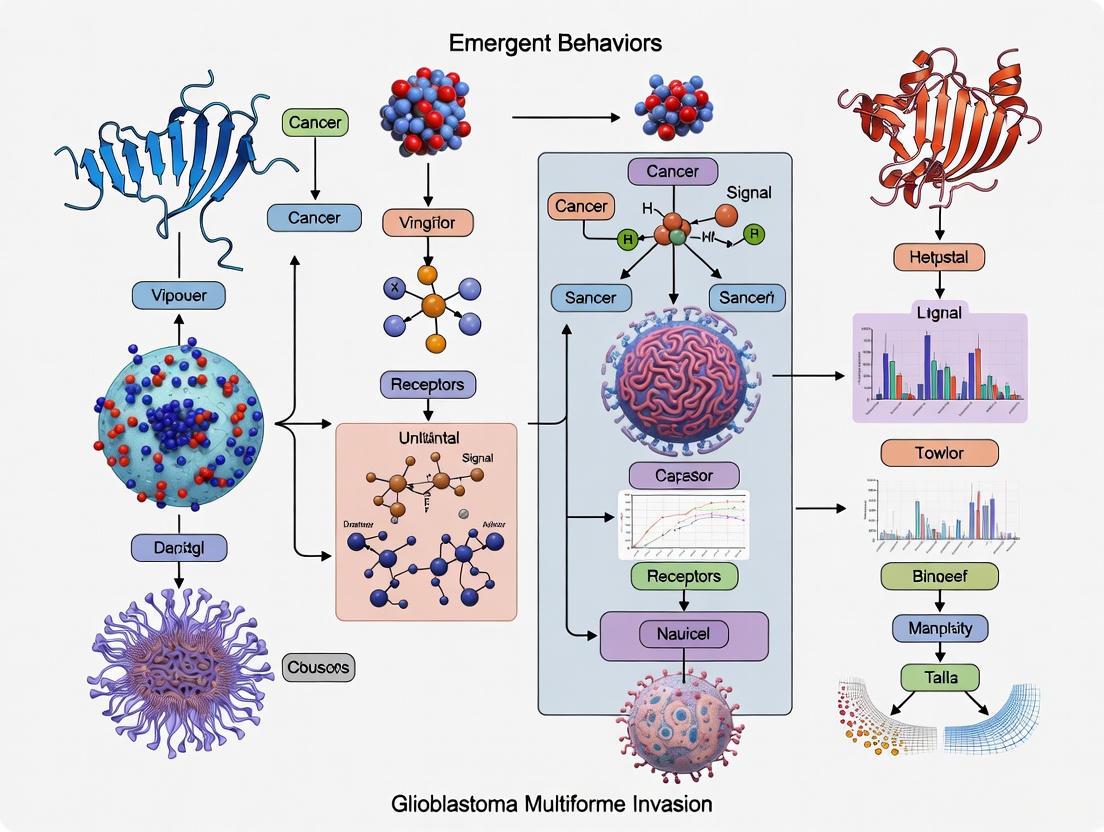
This review synthesizes current research on the emergent behaviors driving glioblastoma (GBM) invasion, a primary cause of therapeutic failure and mortality.
Emergent Behaviors in Glioblastoma Multiforme Invasion: Decoding Cellular States, Microenvironment Crosstalk, and Therapeutic Implications
Abstract
This review synthesizes current research on the emergent behaviors driving glioblastoma (GBM) invasion, a primary cause of therapeutic failure and mortality. We explore the foundational principles of GBM cellular heterogeneity, focusing on the dynamic interplay between distinct glioma stem cell states and their specialized invasion routes. The article details advanced methodological approaches, including single-cell multi-omics and innovative in vivo models, that are unraveling these complex behaviors. We critically analyze the significant challenges in therapeutic targeting, such as adaptive resistance and the immunosuppressive tumor microenvironment, and evaluate emerging clinical strategies. Finally, we discuss the validation of novel targets and comparative efficacy of new therapeutic paradigms, providing a comprehensive resource for researchers and drug development professionals aiming to overcome the challenge of GBM invasion.
The Cellular and Molecular Basis of GBM Invasion
Glioblastoma (GBM) represents the most common and aggressive primary malignant brain tumor in adults, characterized by profound cellular and molecular heterogeneity that drives its relentless progression and therapeutic resistance [1] [2]. Despite decades of research, the median survival for patients diagnosed with this devastating disease remains a dismal 12-15 months, with a five-year survival rate below 10% [2]. The aggressive clinical course of GBM stems from several interconnected biological traits: intrinsic cellular plasticity enabling dynamic shifts between phenotypic states, infiltrative growth patterns that evade complete surgical resection, and a profoundly immunosuppressive tumor microenvironment [3] [4]. This complex biological landscape fosters emergent behaviors at multiple scales, from molecular networks to cellular communities, creating a disease that consistently outmaneuvers conventional therapeutic approaches. Understanding these layered complexities is essential for developing effective strategies to combat this formidable malignancy.
Molecular and Cellular Heterogeneity
Molecular Subtypes and Classification Systems
Glioblastoma exhibits remarkable molecular heterogeneity, which has been categorized through several complementary classification systems. The Verhaak classification identifies four distinct transcriptional subtypes, each with characteristic genetic alterations and clinical behaviors [1]:
- Proneural: Characterized by PDGFR-α expression and IDH1 mutations, often found in younger patients with somewhat better survival outcomes, though still resistant to conventional therapy.
- Neural: Exhibits gene expression patterns similar to normal neurons (SYT1, GABRA1, NEFL) and shows enhanced sensitivity to radiation and chemotherapy.
- Classical: Defined by EGFR amplification, RB pathway alterations, and activation of sonic hedgehog and Notch signaling pathways, making it more responsive to aggressive treatment.
- Mesenchymal: The most aggressive subtype, featuring extensive necrosis, inflammatory markers, frequent deletions of tumor suppressor genes (PTEN, NF1, p53), and upregulated angiogenesis genes (VEGF-A, VEGF-B), associated with limited treatment success.
Complementing this transcriptional classification, DNA methylation profiling reveals six methylation clusters (M1-M6) with distinct prognostic implications [1]. The glioma-CpG island methylator phenotype (G-CIMP) subtype (cluster M5), characterized by hypermethylation and frequent IDH1 mutations, correlates with improved survival outcomes. In contrast, cluster M6, marked by relative hypomethylation and predominance of IDH1 wild-type tumors, represents a more aggressive phenotype with poorer prognosis.
Table 1: Key Molecular Alterations in Glioblastoma
| Genetic Alteration | Frequency | Functional Impact | Prognostic/Therapeutic Significance |
|---|---|---|---|
| EGFR amplification | 40-57% [5] | Constitutive activation of receptor tyrosine kinase signaling promoting tumor growth and resistance to apoptosis. | Target for therapeutic inhibition; associated with classical subtype. |
| IDH1/2 mutations | More common in secondary GBM [2] | Distinct epigenetic landscape, G-CIMP phenotype, altered cellular metabolism. | Better prognosis, classification marker distinguishing primary vs. secondary GBM. |
| MGMT promoter methylation | Varies [2] | Silencing of DNA repair enzyme, reducing ability to repair alkylating agent-induced DNA damage. | Predictive biomarker for response to temozolomide chemotherapy; favorable prognosis. |
| TP53 mutations | ~85% in secondary GBM [5] | Disruption of cell cycle checkpoints and apoptosis, enabling uncontrolled cell growth. | More common in secondary GBMs; potential target for experimental therapies. |
| PTEN mutations | 20-34% [5] | Dysregulation of PI3K/AKT/mTOR pathway, enhancing tumor growth and survival. | Associated with mesenchymal subtype and poor prognosis; therapeutic target. |
| TERT promoter mutations | Common in primary GBM [1] | Telomerase reactivation, enabling replicative immortality. | Diagnostic marker for primary GBM classification. |
Cellular States and Plasticity
Beyond inter-tumoral heterogeneity, GBM exhibits significant intra-tumoral diversity at the cellular level. Single-cell transcriptomic studies have identified four main cellular states that coexist within individual tumors in varying proportions: mesenchymal-like (MES-like), oligodendrocyte precursor cell-like (OPC-like), neural progenitor cell-like (NPC-like), and astrocyte-like (AC-like) [3] [6]. These states are not fixed but represent plastic phenotypes that glioma cells can transition between in response to environmental cues and therapeutic pressures [4].
This cellular plasticity is a key mediator of therapeutic resistance and tumor recurrence. For instance, the mesenchymal state is associated with increased invasion and inflammation, and its prevalence often increases in recurrent tumors following therapy [3]. A striking example of therapy-induced plasticity was documented in a case study where recurrent GBM cells acquired a radial glia-like phenotype (RGCs) with enhanced adherent properties and elongated processes facilitating migration—characteristics absent in the primary tumor [7]. This transition was observed following standard Stupp protocol chemoradiation and tumor-treating field therapy, suggesting that treatment pressure can select for or induce novel cellular states with increased invasive capability.
Invasion Phenotypes and Mechanisms
Route-Specific Invasion Programs
The invasive behavior of GBM is not random but follows specific anatomical patterns that correlate with distinct cellular states. Recent research has demonstrated a clear association between GBM cell differentiation states and their preferred invasion routes [3]:
- Perivascular Invasion: Tumor cells migrate along blood vessels, characterized by abundance of OPC-like and MES-like cellular states.
- Diffuse Invasion: Tumor cells infiltrate through brain parenchyma and white matter tracts, dominated by NPC-like and AC-like cellular states.
- Leptomeningeal Spread: Dissemination along the meningeal surfaces, associated with unique transcriptional clusters.
This route-specific invasion is governed by distinct molecular drivers. Computational modeling and experimental validation have identified ANXA1 as a key driver of perivascular involvement in GBM cells with mesenchymal differentiation, while the transcription factors RFX4 and HOPX orchestrate growth and differentiation in diffusely invading GBM cells [3]. Ablation of these targets in experimental models redistributes cellular states, alters invasion routes, and extends survival in xenografted mice, highlighting their functional importance in determining invasion phenotypes.
Signaling Pathways Driving Invasion and Progression
Multiple dysregulated signaling pathways converge to promote GBM invasion and progression. Key among these are:
- PI3K/AKT/mTOR Pathway: Frequently altered in GBM, this pathway regulates critical processes including tumor growth, survival, and angiogenesis [1] [5]. Despite being a promising therapeutic target, clinical trials with mTOR inhibitors have shown limited success, partly due to pathway redundancy and feedback mechanisms.
- EGFR Signaling: Amplified or mutated in approximately 40-57% of GBM cases, EGFR drives proliferation, survival, and invasion through multiple downstream effectors [5]. The constitutively active variant EGFRvIII is particularly associated with enhanced tumorigenicity.
- PDGFR Signaling: Altered in approximately 60% of GBM cases, contributing to abnormal signaling that drives tumor progression, including angiogenesis and increased cell proliferation [5].
Diagram 1: Key signaling pathways in GBM. This diagram illustrates the core signaling pathways (EGFR, PDGFR, PI3K/AKT/mTOR) frequently dysregulated in glioblastoma, contributing to its aggressive growth, survival, and invasion.
Therapeutic Challenges and Emerging Strategies
Current Standard of Care and Limitations
The current standard of care for newly diagnosed GBM involves maximal safe surgical resection followed by concomitant radiation therapy and temozolomide chemotherapy, and subsequent adjuvant temozolomide cycles [2]. Tumor-treating fields (TTF) have been incorporated as an additional modality, extending median survival to approximately 20.9 months for eligible patients [2]. Despite this multimodal approach, several fundamental challenges limit therapeutic efficacy:
- Infiltrative Growth: The diffuse infiltration of GBM cells into surrounding brain tissue prevents complete surgical resection, leaving behind residual cells that inevitably drive recurrence [3] [8].
- Blood-Brain Barrier: This protective structure restricts the delivery of many therapeutic agents to tumor cells, particularly large molecules and poorly lipid-soluble drugs [9].
- Immunosuppressive Microenvironment: The GBM TME creates a profoundly immunosuppressive niche through multiple mechanisms, including recruitment of tumor-associated macrophages (TAMs), myeloid-derived suppressor cells (MDSCs), regulatory T cells, upregulation of immune checkpoint proteins (PD-L1, PD-1), and accumulation of immunosuppressive metabolites like lactate and TGF-β [1] [4] [9].
- Therapeutic Resistance Mechanisms: GBM employs multiple resistance strategies, including intact DNA repair systems (particularly in MGMT-unmethylated tumors), the presence of quiescent glioma stem cells (GSCs) that evade conventional therapies, and cellular plasticity that allows adaptation to treatment pressure [7] [9].
Table 2: Clinical Challenges in Glioblastoma Management
| Challenge | Impact on Disease Course | Current Approaches |
|---|---|---|
| Cellular & Molecular Heterogeneity | Diverse therapeutic responses within same tumor; targeted therapy resistance. | Multi-targeted approaches; combination therapies; adaptive treatment strategies. |
| Invasive Growth | Prevents complete surgical resection; recurrence within 2-3 cm of original lesion in 75-90% of cases [5]. | Supramarginal resection when feasible; locoregional therapies; targeting invasion mechanisms. |
| Therapeutic Resistance | Limited efficacy of radiation and chemotherapy; tumor recurrence. | Alternating electric fields (TTF); combination alkylating agents (lomustine + TMZ in methylated MGMT [5]). |
| Immunosuppressive Microenvironment | Creates "cold" tumor immune landscape; limits efficacy of immunotherapies. | Immune checkpoint inhibitors; combination immunotherapies; targeting TME components. |
| Blood-Brain Barrier | Restricts drug delivery to tumor sites; limits therapeutic options. | Focused ultrasound; chemical modification of drugs; novel delivery systems (nanoparticles). |
Novel Therapeutic Approaches
Innovative strategies are being developed to overcome these challenges, targeting specific aspects of GBM biology:
- Targeting Cellular Motors: An out-of-the-box approach involves targeting myosin motors, nanoscale proteins that enable cell movement and invasion. The experimental compound MT-125, which received FDA approval to move to clinical trials, demonstrates a multifaceted mechanism of action—rendering resistant GBM cells sensitive to radiation, blocking invasion capability, preventing cell division, and synergizing with kinase inhibitors to create extended disease-free states in preclinical models [10].
- Immunotherapy Strategies: Despite initial challenges, immunotherapies continue to evolve with more sophisticated approaches:
- Immune Checkpoint Inhibitors: Nivolumab and pembrolizumab (PD-1 inhibitors) have shown limited efficacy as monotherapies but demonstrate promise in specific subgroups (MGMT-methylated) and when combined with other modalities like laser interstitial thermal therapy (LITT) which disrupts the blood-brain barrier [9].
- Neoadjuvant Immunotherapy: Preoperative administration of checkpoint inhibitors has shown promise in recurrent GBM by leveraging the intact tumor microenvironment to enhance immune activation [9].
- CAR-T Therapy and Oncolytic Viruses: These emerging approaches aim to more directly target GBM cells while stimulating anti-tumor immunity, though they face challenges related to tumor heterogeneity and immunosuppressive TME [9].
- Targeting GBM Stem Cells and Plasticity: Recognizing the crucial role of glioma stem cells in tumor initiation, therapeutic resistance, and recurrence, new strategies focus on targeting these resilient subpopulations and the molecular mechanisms underlying cellular plasticity [6]. Cancer stem cells drive tumor recurrence and resistance to chemotherapy, making them critical therapeutic targets [6].
Experimental Models and Research Methodologies
Advanced Model Systems for Investigating GBM Heterogeneity
The complexity of GBM biology demands sophisticated experimental models that faithfully recapitulate tumor heterogeneity and host-tumor interactions:
- Patient-Derived Xenograft (PDX) Models: These models, established by implanting patient tumor cells into immunodeficient mice, maintain the molecular and cellular heterogeneity of original tumors and have demonstrated high fidelity for studying GBM biology and therapeutic responses [3] [6]. The Human Glioblastoma Cell Culture (HGCC) resource represents a extensively characterized collection of such models, enabling systematic investigation of invasion phenotypes and drug sensitivity [3].
- Single-Cell Transcriptomics in Model Systems: Advanced single-cell RNA sequencing of patient-derived models both in vitro and in vivo has revealed that cells transplanted into mice exhibit a wider variety of cell states compared to those maintained in culture, highlighting how exposure to the brain microenvironment activates latent differentiation potential [3]. This approach has identified six distinct transcriptional states in mice implanted with patient-derived tumors, five of which correspond to different cell lineages in the central nervous system [6].
Methodologies for Analyzing Invasion and Cellular States
- Single-Cell Regulatory Network Analysis: Techniques like single-cell regulatory-driven clustering (scregclust) simultaneously cluster genes into modules and predict upstream regulators (transcription factors, kinases), enabling reconstruction of the regulatory landscape governing GBM invasion and cell state determination [3].
- Spatial Proteomics and Transcriptomics: Combining single-cell profiling with spatial protein detection in patient-derived xenograft models and clinical samples enables correlation of transcriptional states with anatomical invasion routes, providing crucial context for understanding the spatial organization of heterogeneous tumor cell populations [3].
- Metabolic Imaging: Hyperpolarized MRI (HP MRI) using multiple tracing substances (dehydroascorbate and pyruvate) allows simultaneous study of different metabolic activities across the brain, providing real-time imaging of brain metabolism that can reveal tumor metabolic heterogeneity and treatment response [6].
Diagram 2: Experimental workflow for GBM heterogeneity. This workflow outlines key methodologies from sample collection through single-cell analysis to spatial and functional validation used in contemporary GBM research.
Table 3: Essential Research Reagents and Platforms for GBM Investigation
| Research Tool Category | Specific Examples | Research Application |
|---|---|---|
| Patient-Derived Models | HGCC (Human Glioblastoma Cell Culture) resource [3]; Patient-derived xenografts (PDX) [6] | Maintains tumor heterogeneity and invasive properties for preclinical studies. |
| Single-Cell Genomics | Single-cell RNA sequencing (scRNA-seq) [3] [6]; Single-cell regulatory-driven clustering (scregclust) [3] | Deconvolutes cellular heterogeneity; identifies distinct transcriptional states and their regulators. |
| Spatial Biology Platforms | Multiplexed immunofluorescence; Spatial transcriptomics [3] [4] | Correlates cellular states with anatomical location and invasion routes in intact tissue. |
| Metabolic Imaging | Hyperpolarized MRI (HP MRI) with dehydroascorbate and pyruvate tracers [6] | Provides real-time, simultaneous imaging of different metabolic activities in the brain. |
| Cell State Markers | STEM121 (human tumor cell marker); Cell type-specific markers (CD31, MBP, AQP4, NeuN) [3] | Identifies and tracks tumor cells and specific neural cell types in complex environments. |
The aggressive clinical course of glioblastoma is fundamentally rooted in its multidimensional heterogeneity—from molecular alterations and cellular plasticity to diverse invasion programs and immunosuppressive microenvironmental niches. These layered complexities generate emergent behaviors that confound conventional therapeutic approaches and drive inevitable recurrence. Current research has made significant strides in deconvoluting this heterogeneity through advanced single-cell technologies, sophisticated model systems, and spatial analysis techniques, revealing the intricate connections between cellular states, invasion routes, and therapeutic resistance. The future of GBM management lies in developing innovative strategies that target the dynamic interplay between these different scales of heterogeneity, particularly the mechanisms underlying cellular plasticity and adaptation. By integrating molecular targeting, immunomodulation, and technological advances to overcome delivery barriers, the field moves toward more effective approaches for this devastating disease.
This technical guide explores the emergent behaviors in glioblastoma multiforme (GBM), where complex interactions between cellular plasticity, the tumor microenvironment (TME), and biophysical forces drive aggressive invasion and treatment resistance. We dissect the hierarchical framework through which molecular and cellular heterogeneity gives rise to macroscopic tumor phenotypes, providing a comprehensive resource for researchers and drug development professionals. By integrating recent findings on transcriptional states, fluid dynamics, and immune-modulatory interactions, this review outlines mechanistic drivers, experimental methodologies, and potential therapeutic vulnerabilities inherent to these emergent properties.
Glioblastoma (GBM) remains the most lethal primary brain cancer, with median survival of just 15-18 months despite aggressive multimodal therapy [1] [5]. A primary contributor to its poor prognosis is its diffuse invasive nature, which precludes complete surgical resection and drives inevitable recurrence. Critically, GBM invasion represents a classic emergent behavior—a complex tissue-level phenotype that arises from dynamic, multi-scale interactions between heterogeneous cellular subpopulations and their microenvironmental niches [1] [11]. These behaviors cannot be predicted by studying individual components in isolation but require understanding how GBM cells leverage genetic, epigenetic, and biophysical cues to cooperatively invade the brain parenchyma.
This review frames GBM invasion within the context of emergent behaviors, exploring how transcriptional plasticity, metabolic adaptations, and stromal interactions converge to produce the hallmark invasive patterns observed in patients. We synthesize recent advances from single-cell technologies, engineered microenvironment models, and in vivo imaging to provide a mechanistic decomposition of this complex pathological process, offering a roadmap for therapeutic intervention against these coordinated invasive programs.
Molecular and Cellular Foundations of Plasticity
Transcriptional States and Differentiation Hierarchies
GBM exhibits a spectrum of cellular states influenced by developmental hierarchies and microenvironmental cues. Single-cell RNA sequencing (scRNA-seq) has identified four predominant states: mesenchymal-like (MES-like), oligodendrocyte precursor cell-like (OPC-like), neural progenitor cell-like (NPC-like), and astrocyte-like (AC-like) [11]. These states are not fixed but represent plastic differentiation capacities that GBM cells can transition between based on environmental pressures and therapeutic interventions.
- Mesenchymal-like (MES-like) State: Associated with inflammatory signaling, ECM remodeling, and activation of pathways like NF-κB and TGF-β [1] [12]. This state demonstrates strong association with perivascular invasion routes and exhibits resistance to conventional therapies.
- OPC-like State: Characterized by expression of oligodendrocyte lineage markers such as PDGFRA and SOX10, this state shows preferential invasion along white matter tracts [11].
- NPC-like State: Expresses neural progenitor markers including ASCL1 and DCX, demonstrates heightened migratory capacity through brain parenchyma [11].
- AC-like State: Shows similarities to mature astrocytes and demonstrates association with diffuse infiltration patterns [11].
The distribution of these states is not random but correlates strongly with invasion routes. Studies using patient-derived xenograft (PDCX) models demonstrate that tumors dominated by OPC-like and MES-like states preferentially invade via perivascular spaces, while those enriched in NPC-like and AC-like states favor diffuse parenchymal infiltration [11]. This fundamental connection between cell state and invasion pattern represents a primary layer of emergent behavior in GBM.
Key Signaling Pathways Driving Plasticity
Cellular plasticity in GBM is regulated by several core signaling pathways that respond to both intrinsic mutations and extrinsic microenvironmental cues:
- PI3K/AKT/mTOR Pathway: Frequently dysregulated in GBM through PTEN loss or EGFR amplification, this pathway integrates growth signals and metabolic cues to promote survival and invasion [1] [5]. Hyperactivation correlates with mesenchymal transition and therapy resistance.
- EGFR Signaling: Amplified or mutated in approximately 40-57% of GBM cases, EGFR drives proliferation through MAPK and PI3K cascades [1] [5]. The constitutively active variant EGFRvIII is a key oncogenic driver that enhances invasive capacity.
- TGF-β Pathway: Activated in the perivascular niche, TGF-β promotes mesenchymal differentiation and stemness while simultaneously inducing ECM remodeling through factors like TGFBI (BIGH3) [12].
Diagram Title: Signaling Networks Driving Cellular Plasticity and Invasion
Microenvironmental Niches and Biophysical Forces
Interstitial Fluid Dynamics as an Invasion Guide
Recent studies utilizing dynamic contrast-enhanced MRI (DCE-MRI) have revealed how interstitial fluid flow (IFF) creates spatial guidance cues for invading GBM cells. Elevated interstitial pressure within the tumor core drives abnormal fluid flow across the tumor margin, establishing chemical and mechanical gradients that direct cell migration [13].
Quantitative analysis demonstrates that specific IFF parameters correlate strongly with invasion patterns:
- Velocity Magnitude: Regions with elevated flow velocity (0.47 µm/s ± 0.28) show significantly higher presence of invading cells compared to low-flow regions (0.40 µm/s ± 0.25) [13].
- Tumor-Originating Pathline Density: A novel metric quantifying fluid volume originating from the tumor core, with higher density values predicting invasion locations with 60.14% accuracy across studied models [13].
- Diffusion Coefficient: Inversely correlated with invasion, as regions with infiltrating cells demonstrate significantly lower diffusion coefficients (11.59 ± 5.73) compared to non-invaded areas (13.87 ± 4.96) [13].
These fluid dynamics create a spatially explicit roadmap that guides GBM cell migration, exemplifying how physical forces in the TME emerge as critical regulators of invasive behavior.
Immune-Ecological Niches
The GBM immune landscape is dominated by tumor-associated macrophages (TAMs), which can comprise up to 40% of the total tumor cellularity [12]. TAMs are not passive bystanders but active participants in shaping invasive behaviors through multiple mechanisms:
- M2-Polarized Macrophage Secretome: M2-polarized TAMs secrete pro-invasive factors including TGFBI (BIGH3) and S100A9 that induce mesenchymal transition in GBM stem cells (GSCs) [12]. In 3D hydrogel models, M2-conditioned media stimulates invasion in 5 out of 6 patient-derived GSC lines.
- Metabolic Support: TAMs contribute to an immunosuppressive niche by secreting metabolites and cytokines that support GSC survival under hypoxic conditions.
- ECM Remodeling: TAM-derived factors including matrix metalloproteinases and lysyl oxidases reorganize the extracellular matrix to create permissive migration tracks for invading cells.
Table 1: Quantitative Fluid Dynamics Correlates with GBM Invasion
| Parameter | Measurement Technique | Value in Invasive Regions | Value in Non-Invasive Regions | Statistical Significance |
|---|---|---|---|---|
| Velocity Magnitude | DCE-MRI with Lymph4D algorithm | 0.47 µm/s ± 0.28 | 0.40 µm/s ± 0.25 | p < 0.001; Cohen's D = 0.28 |
| Tumor-Originating Pathline Density | Vector-based pathline analysis | 5.55 ± 11.31 | 2.35 ± 7.54 | p < 0.001; Cohen's D = 0.33 |
| Diffusion Coefficient | DCE-MRI quantification | 11.59 ± 5.73 | 13.87 ± 4.96 | p < 0.001; Cohen's D = 0.43 |
| Correlation with Distance to Boundary | Spatial regression analysis | Negative correlation in 4/7 models | N/A | Mouse-specific variability |
Experimental Models for Deconstructing Emergent Behaviors
Engineered 3D Microenvironment Platforms
Traditional 2D culture systems fail to recapitulate the emergent invasion behaviors of GBM. Recent advances in 3D engineered models have enabled more accurate dissection of these complex processes:
Hyaluronic Acid (HA)-Based Hydrogel Coculture System [12]:
- Platform Composition: HA conjugated to GCGYGRGDSPG peptide (HA-RGD) to mimic brain ECM composition and integrin binding sites.
- Macrophage-GSC Coculture: THP-1-derived or patient-derived macrophages are distributed throughout the hydrogel with embedded GSC spheroids.
- Invasion Quantification: High-content imaging of protrusion length and area, with automated analysis of invasive cell area.
- Key Findings: M2 macrophage conditioned media alone sufficient to induce invasive phenotype, indicating paracrine signaling rather than direct cell contact drives emergence.
Patient-Derived Xenograft (PDCX) Models with Route-Specific Invasion [11]:
- Model Selection: Six representative HGCC cultures selected based on principal component analysis of invasion patterns—three with perivascular dominance, three with diffuse infiltration.
- Multiplexed Immunofluorescence: STEM121 for tumor cells, CD31 (vessels), MBP (white matter), AQP4 (astrocytes), NeuN (neurons).
- Survival Correlation: Diffusely invading models associated with longer survival (log-rank test: χ² = 9.08, df = 1, p = 0.0026).
Single-Cell Multi-Omic Integration
Computational analysis of single-cell data has enabled reverse engineering of the regulatory networks driving invasion behaviors:
Single-Cell Regulatory-Driven Clustering (scregclust) [11]:
- Method Purpose: Simultaneously clusters genes into modules and predicts upstream regulators (transcription factors, kinases).
- Workflow: Applied to scRNA-seq data from PDCX and PDC models to identify metamodules with shared functional profiles.
- Key Output: Regulatory landscape mapping connections between transcriptional states and invasion route preferences.
- Identified Regulators: ANXA1 as driver of perivascular invasion in MES-like cells; RFX4 and HOPX as orchestrators of diffuse invasion.
Table 2: Experimental Models for Studying Emergent Invasion Behaviors
| Model System | Key Readouts | Technical Advantages | Limitations | Representative Findings |
|---|---|---|---|---|
| 3D HA-Hydrogel Coculture [12] | Invasion area, protrusion length, gene expression | Enables controlled manipulation of specific microenvironmental variables | Does not fully capture in vivo complexity | M2 macrophages induce mesenchymal transition via secreted factors |
| PDCX Models [11] | Invasion routes, survival, cellular states | Maintains patient-specific genetics and heterogeneity in vivo | Time-intensive, expensive | Cell state distribution predicts invasion route preference |
| DCE-MRI Pathline Analysis [13] | Fluid velocity, direction, diffusion, pathline density | Clinically translatable, spatially explicit | Indirect measurement of cell movement | Fluid transport metrics predict invasion locations |
| scRNA-seq + Regulatory Clustering [11] | Gene modules, upstream regulators, state transitions | Data-driven identification of key drivers | Computational complexity | ANXA1, RFX4, HOPX identified as route-specific regulators |
The Scientist's Toolkit: Essential Research Reagents and Methodologies
Table 3: Key Research Reagent Solutions for Investigating GBM Invasion
| Reagent/Resource | Function/Application | Key Characteristics | Representative Use |
|---|---|---|---|
| HA-RGD Hydrogels [12] | 3D extracellular matrix mimic for invasion assays | Tunable mechanical properties, brain-mimetic composition | Coculture of GSCs and macrophages to study paracrine invasion signals |
| Lymph4D Algorithm [13] | Quantifies interstitial fluid velocity, direction, and diffusion from DCE-MRI | Enables non-invasive calculation of fluid transport metrics | Prediction of high-risk invasion regions in preclinical models |
| scregclust Computational Tool [11] | Identifies gene modules and upstream regulators from scRNA-seq data | Data-driven approach to reverse engineering regulatory networks | Discovery of ANXA1 as perivascular invasion regulator |
| Patient-Derived GSC Lines [12] | Maintains tumor stem cell properties and heterogeneity in culture | Representative of intertumoral heterogeneity, tumorigenic capacity | Testing invasion responses to macrophage-secreted factors |
| Multiplexed Immunofluorescence Panel [11] | Simultaneous detection of tumor cells, vasculature, neural elements | Enables spatial mapping of invasion routes in tissue | Correlation of cell states with perivascular versus diffuse invasion |
Therapeutic Targeting of Emergent Invasion Programs
The emergent nature of GBM invasion creates both challenges and opportunities for therapeutic intervention. Successful strategies must account for the multi-scale regulation of these behaviors:
Targeting Route-Specific Regulators
Experimental ablation of identified route-specific regulators demonstrates the therapeutic potential of targeting emergent invasion behaviors:
- ANXA1 Inhibition: Targeting this perivascular invasion driver in MES-like cells alters invasion route distribution and extends survival in xenograft models [11].
- RFX4 and HOPX Modulation: Manipulation of these diffuse invasion orchestrators redistributes cellular states and reduces parenchymal infiltration [11].
- BIGH3 (TGFBI) Neutralization: Targeting this TAM-secreted factor reduces M2 macrophage-driven invasion and downstream mTOR signaling activation [12].
Disrupting Microenvironmental Cues
Therapeutic strategies that modify the tumor microenvironment rather than directly targeting cancer cells may overcome plasticity-driven resistance:
- Interstitial Flow Modulation: Although currently experimental, approaches that normalize tumor interstitial pressure could disrupt fluid-based guidance cues [13].
- TAM Repolarization: Shifting M2-like TAMs toward M1-like phenotypes reduces pro-invasive secretome factors and slows invasion in engineered models [12].
- ECM-Targeting Approaches: Inhibiting collagen deposition and organization through targeting factors like COL1A1 and COL4A1 may create less permissive environments for invasion [14].
The emergent behaviors driving GBM invasion represent a fundamental challenge in neuro-oncology, requiring a paradigm shift from targeting individual cells to disrupting the cooperative networks that enable tissue-level invasion. The hierarchical framework presented here—from cellular plasticity programs to microenvironmental guidance cues—provides a roadmap for identifying critical intervention points in these complex processes.
Future research directions should focus on: (1) developing more sophisticated engineered models that capture the dynamic evolution of invasion programs over time; (2) advancing computational methods to predict emergent behaviors from multi-scale data; and (3) designing clinical trials that incorporate targeting of plasticity regulators alongside conventional therapies. By embracing the complex, emergent nature of GBM invasion, the field may finally overcome the therapeutic barriers posed by this devastating disease.
Glioblastoma (GBM) is the most aggressive and lethal primary brain tumor in adults, characterized by its profound molecular heterogeneity and invasive behavior. The classification of GBM into distinct molecular subtypes—Proneural, Mesenchymal, Classical, and Neural—has fundamentally advanced our understanding of its pathobiology and therapeutic resistance. These subtypes are not merely descriptive categories but represent entities with divergent oncogenic drivers, cellular origins, tumor microenvironment compositions, and clinical behaviors. Critically, these molecular profiles dictate invasive phenotypes through specific mechanobiological adaptations, metabolic reprogramming, and unique interactions with the brain microenvironment. Within the context of emergent behaviors in GBM invasion research, this molecular taxonomy provides a framework for understanding how seemingly discrete cellular systems self-organize into coordinated invasive networks. This review comprehensively examines the defining characteristics, invasive mechanisms, and experimental methodologies for investigating these molecular subtypes, with particular emphasis on their emergent behavioral patterns in the context of tumor progression and treatment resistance.
Molecular Classification Systems and Historical Evolution
The molecular classification of GBM has evolved significantly over the past decade, refining our understanding of its biological diversity. Initial systematic categorization was pioneered by Phillips et al., who identified three distinct subtypes: Proneural, Mesenchymal, and Proliferative [1]. This classification was subsequently expanded by Verhaak et al. using data from The Cancer Genome Atlas (TCGA), which established the four-subtype system now widely referenced: Proneural, Neural, Classical, and Mesenchymal [1] [15]. More recent work by Wang et al. has suggested that the Neural subtype may reflect normal brain tissue contamination rather than representing a distinct tumor-specific entity, proposing a refined tripartite classification (Proneural, Classical, Mesenchymal) for IDH-wildtype GBM [16] [15]. This progression in classification schemas underscores the dynamic nature of GBM molecular taxonomy and its continuing refinement.
Table 1: Evolution of GBM Molecular Classification Systems
| Classification System | Subtypes Identified | Key Distinguishing Features | Clinical Implications |
|---|---|---|---|
| Phillips et al. (2006) [15] | Proneural, Mesenchymal, Proliferative | Based on 35 characteristic genes; mutually exclusive expression of PN and MES biomarkers | PN associated with better survival; MES with worst prognosis |
| Verhaak et al. (2010) [1] [15] | Proneural, Neural, Classical, Mesenchymal | Unsupervised analysis of 200 GBM cases; association with specific genomic alterations | Established four canonical subtypes with distinct therapeutic responses |
| Wang et al. (2017) [16] [15] | Proneural, Classical, Mesenchymal (IDH-wildtype) | Excluded Neural subtype as potential normal cell contamination; reclassified IDH-wildtype GBMs | Proposed tripartite model now widely accepted; MES shows highest immune infiltration |
The current WHO classification of central nervous system tumors incorporates essential molecular parameters, with GBM diagnosis now primarily applied to IDH-wildtype tumors, while IDH-mutant tumors are classified as "IDH-mutant astrocytoma, CNS WHO grade 4" [17]. This integration of histopathological and molecular features represents a paradigm shift in neuro-oncology, enabling more precise prognostic stratification and therapeutic targeting.
Characterizing the Molecular Subtypes
Proneural Subtype
The Proneural (PN) subtype is characterized by transcriptional programs resembling developing neural cells, with enrichment of oligodendrocytic and neural precursor gene expression patterns. Key molecular features include frequent PDGFRA amplification, IDH1 mutations, and TP53 mutations [1] [15]. Characteristic marker genes include DLL3, OLIG2, SOX, NKX2-2, ASCL1, TCF4, and DCX [15]. From a clinical perspective, PN GBM typically presents in younger patients and demonstrates relatively longer survival compared to other subtypes, though it shows reduced response to conventional chemoradiation [1] [15]. The PN subtype exhibits a distinct invasive pattern characterized by extensive infiltration throughout the brain parenchyma, often following white matter tracts [18]. Interestingly, PN tumors demonstrate significant plasticity and frequently undergo proneural-to-mesenchymal transition (PMT) following therapy, contributing to treatment resistance and recurrence [16] [15].
Mesenchymal Subtype
The Mesenchymal (MES) subtype represents the most aggressive GBM variant, characterized by prominent inflammatory and angiogenic signatures alongside extensive necrotic regions. Molecular hallmarks include frequent NF1 mutations/deletions, PTEN loss, and elevated expression of angiogenesis-related genes (VEGF, PECAM1) and inflammatory pathway components (TNF-α, NF-κB) [1] [15]. Characteristic markers include YKL40, CD44, STAT3, Vimentin, MET, and MERTK [16] [15]. The MES subtype creates a profoundly immunosuppressive tumor microenvironment with abundant infiltration of tumor-associated macrophages (TAMs), myeloid-derived suppressor cells, and other immune populations [1] [16]. Clinically, this subtype correlates with the worst prognosis and demonstrates associations with radiation resistance and bevacizumab treatment failure [16]. Mesenchymal invasion is characterized by intense interaction with extracellular matrix components, particularly hyaluronic acid, through CD44 and RHAMM receptors, facilitating aggressive dissemination through brain parenchyma [19] [20].
Classical Subtype
The Classical subtype exhibits pronounced epidermal growth factor receptor (EGFR) pathway activation, with EGFR amplification present in approximately 97% of cases and frequent CDKN2A deletion [1] [15]. This subtype demonstrates high activation of Notch and Sonic hedgehog signaling pathways while typically lacking mutations in TP53 or NF1 [1]. The Classical subtype displays efficient proliferative capacity with relatively well-defined tumor margins compared to other subtypes, though it still exhibits substantial invasive potential. From a therapeutic perspective, the Classical subtype shows enhanced response to aggressive treatment regimens targeting EGFR pathways [1]. Cellular states within this subtype often resemble astrocytic lineages, reflecting possible cellular origins.
Neural Subtype
The Neural subtype remains the most controversial categorization in GBM classification. This subtype expresses markers typically associated with normal neurons, including NEFL, GABRA1, SYT1, and SLC12A5 [1] [15]. However, subsequent analyses have suggested that the Neural signature may reflect substantial contamination by non-neoplastic neural cells within tumor samples rather than representing a bona fide tumor-intrinsic program [15]. The validity of the Neural subtype as a distinct entity continues to be debated, with some researchers excluding it from contemporary classification schemas in favor of a tripartite model [15]. When considered as a distinct subtype, it demonstrates intermediate clinical characteristics between Proneural and Mesenchymal phenotypes.
Table 2: Comprehensive Molecular and Clinical Features of GBM Subtypes
| Feature | Proneural | Mesenchymal | Classical | Neural |
|---|---|---|---|---|
| Key Genetic Alterations | PDGFRA amp, IDH1 mut, TP53 mut [1] [15] | NF1 del/mut, PTEN loss [1] [15] | EGFR amp, CDKN2A del [1] [15] | Neuronal marker expression [1] |
| Characteristic Markers | DLL3, OLIG2, SOX, ASCL1 [15] | CD44, YKL40, VIM, MET [16] [15] | EGFR, NOTCH, SHH genes [1] | NEFL, SYT1, GABRA1 [1] [15] |
| Signaling Pathway Activation | PDGFR, Oligodendrocyte development [1] [15] | NF-κB, TNF, Angiogenesis, Inflammation [1] [16] | EGFR, NOTCH, SHH [1] | Neuronal signaling [1] |
| TME Characteristics | Lower immune infiltration [15] | High TAMs, MDSCs, immune suppression [1] [16] | Moderate immune cells [1] | Normal neuron-like [15] |
| Typinical Patient Age | Younger [1] [15] | All ages | All ages | All ages |
| Survival | Best prognosis [15] | Worst prognosis [16] | Intermediate [1] | Intermediate [1] |
| Therapeutic Response | Poor to standard therapy [1] | Radioresistant, bevacizumab resistance [16] | Responsive to aggressive therapy [1] | Moderate [1] |
Invasion Mechanisms and Emergent Behaviors
Subtype-Specific Invasive Patterns
GBM subtypes employ distinct invasion strategies reflecting their molecular identities. Proneural cells demonstrate exceptional adaptability to anatomical structures, preferentially migrating along white matter tracts and blood vessels (Scherer's structures) using amoeboid-like movement patterns [18]. This migration resembles developmental neuronal migration, with cells extending leading processes and somal translocation [21]. At the molecular level, Proneural invasion is characterized by PDGFRA-mediated motility and responsiveness to chemotactic gradients [18].
In contrast, Mesenchymal invasion represents a protease-dependent, mesenchymal mode of movement requiring active extracellular matrix (ECM) remodeling [19] [20]. This subtype dramatically upregulates hyaluronic acid (HA) receptors (CD44, RHAMM) and secretes abundant matrix metalloproteinases (MMPs) including MMP2, MMP9, and MT-MMP to degrade ECM components [19] [20]. The Mesenchymal subtype also exhibits heightened responsiveness to inflammatory cytokines and chemokines such as CXCL12/CXCR4 signaling, enhancing its invasive capacity [18].
Classical subtype invasion is predominantly driven by EGFR-mediated signaling, activating downstream PI3K/AKT/mTOR and RAS/RAF/MAPK pathways to promote cytoskeletal reorganization and motility [1] [5]. These cells demonstrate efficient focal adhesion turnover and generate substantial contractile forces to propel through brain parenchyma [1].
Emergent Network Behaviors
Recent research has revealed sophisticated emergent behaviors in GBM invasion that transcend individual cell movements. Two distinct cellular subpopulations collaborate to enable comprehensive brain colonization: connected tumor cells forming multicellular networks via tumor microtubes (TMs), and unconnected, highly motile cells that invade distant regions [21]. The unconnected cells predominantly exhibit Neural and Proneural transcriptional states and demonstrate remarkable invasion efficiency by hijacking developmental neuronal migration mechanisms [21]. These cells receive synaptic input from neurons through functional AMPA receptor-mediated signaling, which increases intracellular calcium transients and promotes TM dynamics and invasion speed [21].
This cellular cooperation represents a sophisticated division of labor: unconnected cells pioneer invasion routes, while connected cells establish tumor networks supporting proliferation and treatment resistance. This emergent behavior enables the tumor to function as an integrated system with complementary cellular phenotypes driving distinct aspects of malignancy.
Metabolic and Microenvironmental Adaptation
GBM subtypes demonstrate distinct metabolic programs influencing their invasive behaviors. The Mesenchymal subtype operates under hypoxic conditions that induce metabolic reprogramming toward glycolytic metabolism and alter lipid utilization [1]. This subtype also secretes abundant extracellular vesicles containing pro-invasive miRNAs and proteins that modify the microenvironment to support invasion [1].
The Proneural subtype demonstrates unique interactions with neuronal networks, receiving glutamatergic input that activates calcium-dependent signaling pathways to promote invasion [19] [21]. Additionally, Proneural cells respond to electrical cues (galvanotaxis) in the brain microenvironment, further directing their migratory behavior [18].
All subtypes demonstrate mechanosensing capabilities, responding to topographical cues in the brain ECM. Cells migrate more efficiently along aligned fiber structures (white matter tracts) compared to random ECM organizations, with migration velocities increasing more than four-fold on linear tracks [18].
Experimental Methodologies for Investigating GBM Invasion
Biomimetic Hydrogel Systems
Advanced three-dimensional culture systems have been developed to model the unique brain extracellular matrix and investigate subtype-specific invasion mechanisms. The HA-COL semi-interpenetrating polymer network (semi-IPN) hydrogel replicates the HA-rich brain ECM microenvironment by interpenetrating long HA chains into a cross-linked collagen network [20]. This system typically uses 4 mg/ml collagen hydrogel combined with 4 mg/ml HA to create stable matrices with mechanical properties comparable to native brain tissue (elastic modulus: 118 Pa at 1 Hz) [20]. Methodology involves embedding patient-derived glioblastoma tumorspheres (TSs) within these hydrogels and monitoring invasive protrusion formation and single-cell migration over 72-96 hours. This approach has demonstrated that Mesenchymal subtype cells dramatically alter their invasion strategy in HA-rich environments, exhibiting enhanced protease-dependent mesenchymal invasion mediated through CD44-HA interactions and HAS2 upregulation [20].
Single-Cell RNA Sequencing with Intravital Imaging
Integrating single-cell RNA sequencing (scRNA-seq) with intravital two-photon microscopy enables correlation of transcriptional states with dynamic invasive behaviors in living animals [21]. The experimental protocol involves:
- Patient-derived xenograft (PDX) models with fluorescently labeled GBM cells
- SR101 and mGFP labeling to distinguish connected versus unconnected tumor subpopulations
- Long-term intravital imaging through cranial windows to track migration patterns and cellular behaviors
- Fluorescent Rhod-2 AM calcium imaging to monitor intracellular Ca2+ dynamics during invasion
- Cell sorting of distinct subpopulations followed by scRNA-seq analysis
- Computational integration of transcriptional profiles with behavioral data
This methodology revealed that unconnected, highly invasive cells predominantly exhibit Neural and Proneural transcriptional states, while connected, network-forming cells display Mesenchymal characteristics [21]. Furthermore, it demonstrated that neuronal activity promotes invasion through AMPAR-mediated calcium transients in tumor cells [21].
Pharmacological Perturbation Studies
Targeted inhibition of subtype-specific invasion mechanisms provides both functional validation and therapeutic insights. Experimental approaches include:
- CD44-blocking antibodies (5-10 μg/mL) to disrupt HA-mediated Mesenchymal invasion [19] [20]
- MMP inhibitors (e.g., marimastat, 10 μM) to probe protease-dependent invasion pathways [19]
- HAS2 knockdown via siRNA to disrupt hyaluronic acid synthesis and modify invasion strategy [20]
- AMPAR antagonists (e.g., NBQX, 20-50 μM) to inhibit neuronal activity-driven invasion [21]
- EGFR inhibitors (e.g., erlotinib, 5-10 μM) to target Classical subtype invasion [1] [5]
These perturbation studies typically combine treatment with time-lapse imaging and endpoint invasion assays in Boyden chambers or 3D hydrogels to quantify changes in invasive capacity.
Table 3: Experimental Models for Investigating GBM Subtype Invasion
| Methodology | Key Applications | Technical Considerations | Subtype-Specific Insights |
|---|---|---|---|
| HA-COL semi-IPN Hydrogels [20] | Modeling HA-rich brain ECM; testing anti-invasion therapies | Optimize HA concentration (4 mg/ml); ensure mechanical compatibility with brain tissue | Mesenchymal subtype shows HA-dependent invasion strategy switching |
| scRNA-seq + Intravital Imaging [21] | Linking molecular states to invasive behaviors in vivo | Requires PDX models with cranial windows; complex computational integration | Revealed unconnected Proneural/Neural cells as primary invaders |
| Pharmacological Inhibition [19] [21] [20] | Validating molecular mechanisms; therapeutic screening | Dose optimization critical; monitor potential toxicity | AMPAR blockade inhibits neuronal-driven invasion |
| Nanofiber Alignment Systems [18] | Studying topography-guided migration | Fiber diameter and alignment critical parameters | All subtypes migrate faster on aligned fibers (4x velocity increase) |
| Calcium Imaging [19] [21] | Monitoring signaling dynamics during invasion | Rhod-2 AM or GCaMP dyes; control for phototoxicity | Neuronal activity increases Ca2+ event frequency in GBM cells |
The Scientist's Toolkit: Essential Research Reagents
Table 4: Key Research Reagents for Investigating GBM Subtype Invasion
| Reagent/Category | Specific Examples | Research Application | Subtype Relevance |
|---|---|---|---|
| Hydrogel Systems | HA-COL semi-IPN hydrogel [20] | Biomimetic brain ECM for 3D invasion assays | Mesenchymal (HA-rich microenvironment) |
| Molecular Inhibitors | CD44-blocking antibodies [19], MMP inhibitors [19], AMPAR antagonists (NBQX) [21] | Pathway perturbation studies | All subtypes (mechanism-dependent) |
| Cell Line Models | Patient-derived tumorspheres (TSs) [20], PDX models [21] | Maintaining subtype fidelity in culture | All subtypes (preserve molecular features) |
| Fluorescent Reporters | mGFP, SR101 [21], Rhod-2 AM (Ca2+) [21] | Cell labeling and signaling monitoring | All subtypes (visualization and tracking) |
| Gene Expression Tools | HAS2 siRNA [20], scRNA-seq platforms [21] | Genetic manipulation and profiling | All subtypes (mechanistic studies) |
| Extracellular Matrix Components | Hyaluronic acid [20], laminin, fibronectin [19] | Microenvironment modification | Mesenchymal (HA response), Classical (adhesion) |
Signaling Pathways and Molecular Regulation
The molecular subtypes of GBM are maintained by distinct signaling networks that regulate both tumor identity and invasive behavior. The Mesenchymal subtype is characterized by NF-κB and TNF signaling pathway activation, which promotes expression of pro-inflammatory cytokines and matrix-remodeling enzymes [1] [16]. This inflammatory signature is further reinforced by TGF-β signaling, which contributes to immunosuppression and mesenchymal transition [16]. Key transcriptional regulators include STAT3, C/EBPβ, and TAZ, which establish and maintain the mesenchymal gene expression program [16].
The Proneural subtype demonstrates activation of PDGFR and oligodendrocyte transcription factors including OLIG2, SOX, and ASCL1 [1] [15]. These factors establish a developmental neural progenitor-like state that confers sensitivity to neuronal signaling inputs. Notably, NOTCH pathway activation appears particularly important in Proneural GBM stem cell maintenance [1].
The Classical subtype is dominated by EGFR signaling with downstream activation of PI3K/AKT/mTOR and RAS/RAF/MAPK pathways [1] [5]. This signaling network drives proliferative programs while simultaneously enhancing invasive capacity through cytoskeletal reorganization and adhesion dynamics.
Therapeutic Implications and Future Perspectives
The molecular subtype classification provides a framework for developing targeted therapeutic approaches against GBM invasion. For the Mesenchymal subtype, strategies include TAM-targeting therapies to disrupt the immunosuppressive microenvironment, NF-κB pathway inhibitors, and CD44-blocking agents to impair HA-mediated invasion [16] [19]. For the Proneural subtype, neuronal signaling inhibitors targeting AMPA receptors or downstream calcium signaling may specifically block neuronal activity-driven invasion [21]. Classical subtype tumors may respond to EGFR-targeted therapies combined with conventional treatments [1] [5].
A critical therapeutic challenge is subtype plasticity, particularly the proneural-to-mesenchymal transition (PMT) that occurs following radiation and chemotherapy [16] [15]. This transition represents an adaptive, emergent behavior at the population level, enabling tumors to acquire treatment-resistant phenotypes. Targeting the transcriptional regulators of this transition (STAT3, C/EBPβ, TAZ) may help prevent acquisition of the aggressive Mesenchymal phenotype after therapy [16].
Future research directions should focus on understanding cellular plasticity at single-cell resolution, developing multi-targeted therapies that address subtype heterogeneity within individual tumors, and creating advanced delivery systems that overcome the blood-brain barrier [22]. The emerging concept of GBM as an integrated, adaptive system with emergent behaviors necessitates therapeutic strategies that target not only individual cells but also the communication networks and population-level dynamics that drive invasion and treatment resistance.
The Critical Role of Glioma Stem Cells (GSCs) in Driving Invasion and Recurrence
Glioblastoma (GBM) is the most common and aggressive primary malignant brain tumor in adults, characterized by near-universal recurrence and a median survival of only 12-15 months despite aggressive multimodal therapy [1] [23] [24]. The therapeutic recalcitrance of GBM is now widely attributed to glioma stem cells (GSCs)—a subpopulation of tumor-initiating cells with stem-like properties that drive tumor initiation, progression, and recurrence [23] [25] [24]. GSCs demonstrate remarkable cellular plasticity, allowing them to dynamically transition between cellular states in response to environmental cues and therapeutic pressures [3] [26] [24]. This plasticity, coupled with their capacity for self-renewal and differentiation into multiple lineages, enables GSCs to survive conventional treatments and regenerate the tumor cellular hierarchy, ultimately leading to therapeutic resistance and recurrence [25] [24]. Understanding the molecular mechanisms governing GSC biology, particularly their role in facilitating invasion and recurrence, is paramount for developing novel therapeutic strategies to improve patient outcomes in this devastating disease.
Molecular Identity and Heterogeneity of GSCs
Defining Characteristics and Stemness Markers
GSCs constitute a minor cell population within glioma tissues capable of maintaining population stability through asymmetric division while generating new GSCs [25]. They are defined by several functional capabilities: self-renewal, multi-lineage differentiation, unlimited proliferation, and significant invasiveness [25]. The identification of GSCs has fundamentally altered conventional understanding of glioma initiation and progression, offering novel insights for precision therapy.
GSCs are characterized by the expression of specific stem cell markers, though this expression exhibits substantial heterogeneity and dynamic plasticity. Table 1 summarizes the principal stemness marker molecules and their functional significance in GSCs.
Table 1: Key Glioma Stem Cell Markers and Their Functional Significance
| Marker | Full Name | Functional Role in GSCs | Clinical/Experimental Significance |
|---|---|---|---|
| CD133 | Prominin-1 | Enhances sphere-forming ability, drug resistance, and tumorigenicity [25] | Expression is dynamically plastic under stress; controversial but functionally relevant [25] |
| CD44 | - | Marker for mesenchymal-like (MES-like) GSCs [26] | Associated with aggressive invasion and therapy resistance [26] |
| EGFR | Epidermal Growth Factor Receptor | Marker for astrocyte-like (AC-like) GSCs; regulates proliferation and survival [26] | Amplified in classical GBM; triggers PI3K-AKT-mTOR pathway [17] |
| CD24 | - | Highest expression in neural-progenitor-like (NPC-like) cells [26] | Identifies distinct cellular state within GSC hierarchy [26] |
| CD109 | - | Marker for perivascular GSCs; maintains stemness via IL-6/STAT3 pathway [25] | Associated with disease recurrence and chemoresistance [25] |
| SOX2 | SRY-box transcription factor 2 | Maintains stemness and self-renewal capacity [26] [24] | Used in combination with other markers to define GSC-like tumor cells [26] |
Cellular States and Spatial Distribution
Single-cell RNA sequencing studies have revealed that GSCs exist in multiple transcriptional states that mirror neurodevelopmental lineages, including neural progenitor cell (NPC)-like, oligodendrocyte precursor cell (OPC)-like, astrocyte (AC)-like, and mesenchymal-like (MES-like) states [3] [26]. These states are not fixed; GSCs exhibit high plasticity, transitioning between states in response to environmental cues and therapeutic pressures [26] [24].
The spatial distribution of GSCs within tumors is non-random and critically influenced by the tumor microenvironment. GSCs are typically enriched in specialized niches, particularly around the microvasculature [25]. This perivascular niche is modulated by adjacent cells and the cytokines they secrete, which regulate stem cell division and departure from the niche. Additionally, hypoxic regions significantly impact GSC function, where hypoxia-inducible factors (HIFs) activate genes that promote angiogenesis, cell survival, and metabolic adaptation [25].
GSC-Driven Invasion: Mechanisms and Pathways
Route-Specific Invasion and Cellular States
A critical aspect of GBM malignancy is its highly invasive nature, with tumor cells disseminating through the brain parenchyma via specific anatomical routes, including white matter tracts, perivascular spaces, and the leptomeninges [3]. Recent integrative studies combining single-cell profiling and spatial protein detection have demonstrated a tight coupling between GSC differentiation states and their choice of invasion route [3].
Table 2: GSC Cellular States and Their Associated Invasion Phenotypes
| GSC Cellular State | Preferred Invasion Route | Molecular Drivers | Experimental Models |
|---|---|---|---|
| MES-like | Perivascular invasion | ANXA1, CD44, SRGN-NFκB axis [3] [26] | HGCC PDCX models (e.g., U3013MG, U3054MG) [3] |
| OPC-like | Perivascular invasion | SOX10, Eph-EGFR signaling [3] | HGCC PDCX models (e.g., U3220MG) [3] |
| AC-like | Diffuse parenchymal infiltration | RFX4, HOPX [3] | HGCC PDCX models (e.g., U3031MG, U3179MG) [3] |
| NPC-like | Diffuse parenchymal infiltration | SOX2, NOTCH signaling [3] | HGCC PDCX models (e.g., U3180MG) [3] |
This route-specific invasion is regulated by distinct transcriptional programs. For instance, ANXA1 has been identified as a key driver of perivascular invasion in GBM cells with mesenchymal differentiation, while the transcription factors RFX4 and HOPX orchestrate growth and differentiation in diffusely invading GBM cells [3]. Ablation of these targets in tumor cells alters their invasion route, redistributes cell states, and extends survival in xenografted mice [3].
Molecular Pathways Regulating GSC Invasion
The following diagram illustrates the core signaling pathways and transcriptional regulators that drive GSC invasion, highlighting the distinct mechanisms underlying different invasion routes:
Diagram 1: Molecular pathways regulating GSC invasion. Two distinct invasion programs are driven by different GSC cellular states, with key regulators identified through recent single-cell and spatial profiling studies [3] [26].
GSC-Mediated Therapeutic Resistance and Recurrence
Mechanisms of Therapy Resistance
GSCs employ multiple strategies to evade conventional therapies, making them primary mediators of tumor recurrence. These mechanisms include:
Enhanced DNA Repair Capacity: GSCs frequently exhibit elevated expression of DNA repair enzymes, notably O6-methylguanine-DNA methyltransferase (MGMT), which counteracts the effects of alkylating agents like temozolomide (TMZ) [17]. MGMT promoter methylation status serves as a key predictive biomarker for TMZ response, with methylated patients showing improved treatment outcomes [17] [27].
Quiescence and Metabolic Adaptations: A subpopulation of GSCs can enter a quiescent state, becoming metabolically inactive and resistant to radiotherapy and chemotherapy that typically target rapidly dividing cells [24]. GSCs also demonstrate metabolic reprogramming, preferentially utilizing glycolysis over oxidative phosphorylation even in the presence of oxygen (the Warburg effect), which supports their survival in hypoxic niches [25] [27].
Epigenetic Regulation: GSCs exhibit distinctive chromatin features, including alterations in histone modifications (e.g., H3K9me3, H3K27me3) and DNA methylation patterns [25]. They show heightened sensitivity to histone demethylase inhibition due to mutations in epigenetic regulators like KDM4A, EZH2, and DNMT3A [25].
Interaction with the Tumor Microenvironment: GSCs engage in complex crosstalk with immune cells and other components of the tumor microenvironment, creating an immunosuppressive niche that protects them from immune surveillance [1] [26]. For instance, the MEOX2-NOTCH and SRGN-NFκB axes in classical and mesenchymal GSCs respectively confer resistance to macrophage phagocytosis [26].
GSC Plasticity and Tumor Recurrence
The remarkable plasticity of GSCs enables them to dynamically shift between cellular states in response to therapy, contributing significantly to tumor recurrence. Following conventional treatment, GSCs that survive often demonstrate state transitions, frequently toward the more aggressive mesenchymal (MES) state [3] [26]. This state switching is driven by both cell-intrinsic reprogramming and extrinsic pressures from the post-treatment microenvironment.
The hierarchical organization of GBM, with GSCs at its apex, means that even successful elimination of the bulk tumor mass may leave behind residual GSCs that can regenerate the entire tumor cellular hierarchy, leading to inevitable recurrence [25] [24]. This understanding has shifted therapeutic focus toward targeting the core GSC population rather than merely debulking the tumor mass.
Experimental Models and Methodologies for GSC Research
Key Experimental Approaches
The following diagram outlines a representative integrated experimental workflow for identifying and validating GSC-specific targets, combining single-cell transcriptomics, functional validation, and therapeutic testing:
Diagram 2: Integrated experimental workflow for GSC target discovery and validation. This pipeline illustrates the multi-step approach used in recent studies to identify GSC-specific regulators and test therapeutic strategies [3] [26].
Essential Research Reagents and Models
Table 3: Key Research Reagent Solutions for GSC Investigation
| Reagent/Model Type | Specific Examples | Application in GSC Research | Functional Readouts |
|---|---|---|---|
| Patient-Derived Cell Culture (PDC) | HGCC Resource (e.g., U3013MG, U3031MG) [3] | Maintain GSC heterogeneity and tumorigenic potential in vitro | Neurosphere formation, differentiation capacity |
| Patient-Derived Xenograft (PDX) | PDCX models in immunodeficient mice [3] | Study invasion routes and therapeutic response in vivo | Survival analysis, invasion pattern characterization |
| Single-Cell RNA Sequencing | 10X Genomics Platform [3] [26] | Deconvolute GSC heterogeneity and identify cellular states | UMAP visualization, cluster analysis, trajectory inference |
| Spatial Transcriptomics | Multiplexed immunofluorescence (CD31, MBP, AQP4) [3] | Correlate GSC states with anatomical location and invasion routes | Spatial mapping of cell states to tumor regions |
| CRISPR Screening | CRISPR off-target tools for MGMT promoter editing [17] | Identify essential genes and modulate epigenetic states | Functional validation of targets, overcoming TMZ resistance |
| Cell State Markers | CD133, CD44, EGFR, SOX2 [26] [25] | Isolate and characterize distinct GSC subpopulations | FACS sorting, immunostaining, functional assays |
Emerging Therapeutic Strategies Targeting GSCs
Targeting GSC-Specific Vulnerabilities
Current therapeutic development has shifted toward targeting GSC-specific mechanisms to overcome treatment resistance. Promising approaches include:
Combination Targeting of Multiple GSC States: Given the heterogeneity of GSCs within individual tumors, effective therapies must target multiple GSC subpopulations simultaneously. Recent research has identified MEOX2 as a specific target for classical (AC-like) GSCs and SRGN for mesenchymal GSCs [26]. Combined targeting of both populations demonstrates enhanced efficacy in disrupting malignant progression both in vitro and in vivo [26].
Epigenetic Therapies: GSCs exhibit unique epigenetic dependencies, showing heightened sensitivity to inhibitors targeting histone demethylases (e.g., KDM4A) and histone methyltransferases (e.g., EZH2) [25]. These approaches take advantage of the distinct chromatin accessibility landscapes in GSCs compared to differentiated tumor cells.
Immunotherapeutic Approaches: Despite the generally immunosuppressive nature of GBM, strategies to enhance immune recognition of GSCs are being explored. This includes overcoming the resistance of GSCs to macrophage phagocytosis by targeting the MEOX2-NOTCH and SRGN-NFκB axes [26].
Metabolic Interventions: Targeting GSC-specific metabolic dependencies, particularly their reliance on glycolysis and altered amino acid metabolism, represents another promising avenue [27]. This approach aims to exploit the unique metabolic reprogramming that sustains GSC survival in hypoxic niches.
Clinical Translation and Challenges
The translation of GSC-targeting therapies to clinical practice faces several challenges, including the blood-brain barrier, tumor heterogeneity, and the adaptive plasticity of GSCs that allows them to evade targeted therapies [24]. Successful clinical strategies will likely require combination approaches that simultaneously target multiple GSC subpopulations and their supportive niches.
Notable advances include the development of vorasidenib, an inhibitor targeting IDH1/2-mutant gliomas, which in the phase III INDIGO trial significantly improved progression-free survival and time to next intervention in patients with residual or recurrent IDH1/2-mutant low-grade glioma [28]. This represents a successful paradigm of targeting a GSC-relevant mutation with a brain-penetrant inhibitor.
Glioma stem cells occupy a central role in driving glioblastoma invasion and recurrence through their stem-like properties, cellular plasticity, and adaptive interactions with the tumor microenvironment. The heterogeneity of GSC populations, coupled with their capacity to transition between cellular states, enables them to disseminate through distinct anatomical routes and survive conventional therapies. Recent advances in single-cell technologies have begun to unravel the molecular regulators of these processes, identifying potential therapeutic targets for specific GSC subpopulations. Moving forward, effective therapeutic strategies will need to address GSC heterogeneity by simultaneously targeting multiple cellular states while accounting for their dynamic plasticity. Combining GSC-directed therapies with conventional treatments offers a promising approach to overcome therapeutic resistance and prevent tumor recurrence, potentially improving the dismal prognosis for glioblastoma patients.
Glioblastoma multiforme (GBM) represents the most aggressive and lethal primary brain tumor in adults, characterized by marked molecular heterogeneity and therapeutic resistance. The aggressive behavior and dismal prognosis of GBM are fundamentally driven by the dysregulation of core oncogenic signaling pathways, including the Epidermal Growth Factor Receptor (EGFR), Platelet-Derived Growth Factor Receptor (PDGFR), Phosphoinositide 3-Kinase/Protein Kinase B/Mammalian Target of Rapamycin (PI3K/AKT/mTOR), and broader Receptor Tyrosine Kinase (RTK) cascades [5] [1]. These pathways integrate extracellular signals with intracellular processes that govern proliferation, survival, invasion, angiogenesis, and metabolic adaptation, creating a complex signaling network that enables tumor progression and treatment evasion [29]. The emergent invasive behaviors of GBM arise not from isolated pathway alterations but from the complex crosstalk and feedback mechanisms between these systems, fostering adaptive resistance and cellular plasticity that confound conventional therapeutic approaches [30] [31]. This technical review examines the molecular architecture, experimental investigation, and therapeutic targeting of these core pathways, providing a framework for understanding GBM's pathobiology within the context of modern neuro-oncology research.
Molecular Architecture of Core Signaling Pathways
EGFR Signaling Cascades
The Epidermal Growth Factor Receptor, a transmembrane tyrosine kinase belonging to the ErbB family, represents one of the most frequently altered oncogenic drivers in GBM, with amplifications and mutations occurring in 40-60% of IDH-wildtype glioblastomas [32] [29]. EGFR activation initiates multiple downstream signaling cascades that collectively promote tumor development through distinct mechanistic routes. The PI3K/AKT/mTOR system facilitates cellular survival, proliferation, and metabolic adaptability, directly contributing to treatment resistance [29]. Concurrently, the RAS/RAF/MEK/ERK pathway promotes proliferation, invasion, and extracellular matrix remodeling, while the JAK/STAT pathway governs transcription of genes associated with survival, angiogenesis, and immune evasion [29] [33]. Additional signaling arms include the PLCγ/PKC pathway, which affects cytoskeletal dynamics and cellular motility, and SRC family kinases that augment oncogenic signaling to enhance invasiveness and angiogenesis [29].
A critical aspect of EGFR signaling in GBM is the prevalence of mutant variants, most notably EGFRvIII, which results from an in-frame deletion of exons 2-7 in the extracellular domain [33]. This truncation produces a constitutively active receptor that hyperphosphorylates EGFR, persistently activating RAS/MAPK, JAK/STAT, and particularly the PI3K/AKT signal transduction pathway in a ligand-independent manner [33]. Another variant, EGFRx, identified in GBM stem cells, lacks exons 2-7 and 2-14 and encodes an EGFR protein that constitutively activates STAT5, directly contributing to tumor progression [33]. The significant interaction and redundancy among these pathways enhance GBM's plasticity, creating a resilient signaling network that complicates molecular targeted interventions.
Table 1: EGFR Genetic Alterations in Glioblastoma
| Genetic Alteration | Frequency | Functional Consequences | Therapeutic Implications |
|---|---|---|---|
| EGFR Amplification | 40-60% of IDH-wt GBM [32] [29] | Increased receptor density, enhanced downstream signaling | Diagnostic biomarker; target for TKIs and monoclonal antibodies |
| EGFRvIII Mutation | ~50% of amplified cases [29] | Constitutive activation, hyperphosphorylation of EGFR | Tumor-specific neoantigen for vaccine and CAR-T approaches |
| EGFRx Mutation | Found in GBM stem cells [33] | STAT5 activation, tumor progression | Potential stem cell-targeted therapy |
| Overexpression | 70-90% of GBM cases [33] | Pathway hyperactivation, increased proliferation | Correlates with poor prognosis; IHC detection |
PDGFR Signaling Network
The Platelet-Derived Growth Factor Receptor pathway plays a crucial role in GBM pathogenesis, particularly in the proneural subtype where PDGFR amplifications are prevalent [29]. PDGFR signaling activation promotes angiogenesis, tumor cell migration, and extracellular matrix remodeling through complex interactions within the tumor microenvironment. Recent investigations have revealed that PDGFRβ+ pericytes attract macrophages, facilitating immune evasion through microenvironment modulation [29]. This pathway exhibits significant crosstalk with other RTK systems, creating compensatory activation routes that contribute to therapeutic resistance when individual pathways are targeted. The PDGFR network integrates with core survival signaling through PI3K/AKT and MAPK intermediaries, establishing redundant signaling routes that maintain oncogenic outputs despite pathway-specific inhibition.
PI3K/AKT/mTOR Signaling Axis
The PI3K/AKT/mTOR pathway represents one of the most frequently dysregulated signaling cascades in GBM, with molecular alterations considered a hallmark of this malignancy [34] [35]. This pathway serves as a crucial integration point for upstream signals from growth factors, nutrients, and cellular energy status, regulating fundamental processes including cell proliferation, growth, angiogenesis, and treatment evasion [35]. In physiological conditions, PI3K activation occurs through binding of growth factors to RTKs, leading to autophosphorylation of tyrosine residues and recruitment of PI3K to the membrane via Src homology 2 (SH2) domains present in the adapter unit [33]. Activated PI3K catalyzes the production of phosphatidylinositol-3,4,5-triphosphate (PIP3) from phosphatidylinositol-4,5-bisphosphate (PIP2), recruiting signaling proteins including serine/threonine protein kinase-3′-phosphoinositide-dependent kinase 1 (PDK1) and AKT/protein kinase B (PKB) to the membrane [33].
AKT activation regulates mechanisms controlling cell survival and cell cycle progression through multiple downstream effectors. AKT directly phosphorylates and inactivates pro-apoptotic factors including BAD and procaspase-9, while activating survival factors such as nuclear factor kappa B (NF-κB) via IκB kinase (IKK) regulation [33]. The central pathway effector, mTOR, functions as part of two structurally and functionally distinct complexes: mTORC1 and mTORC2 [33]. mTORC1, composed of mTOR, Raptor, mLST8 and PRAS40, activates ribosomal protein S6 kinase p70 (S6K) and inactivates eIF4E-binding protein 1 (4EBP1), resulting in protein translation and cell growth [33]. mTORC2, containing mTOR, Rictor, Sin1 and mLST8, activates AKT and promotes cell proliferation and survival while inhibiting apoptosis [33]. Pathway negative regulators include phosphatase and tensin homolog (PTEN), which inhibits signaling through PI3K/AKT by dephosphorylating PIP3, and the tuberous sclerosis complex (TSC1 and TSC2) [33].
Table 2: PI3K/AKT/mTOR Pathway Components in GBM
| Component | Alteration Frequency | Functional Role | Regulatory Relationships |
|---|---|---|---|
| PI3K | Mutations in regulatory subunits | PIP2 to PIP3 conversion; membrane recruitment signal | Activated by RTKs; inhibited by PTEN |
| AKT | Hyperphosphorylation common | Cell survival, proliferation, metabolic regulation | Activated by PDK1/mTORC2; inhibits apoptosis |
| mTORC1 | Constitutively active in GBM | Protein translation, cell growth | Regulated by AKT, AMPK, nutrients |
| mTORC2 | Activated in advanced GBM | Cytoskeletal organization, AKT phosphorylation | Regulated by growth factors; activates AKT |
| PTEN | Lost in 20-34% of GBM [5] | PIP3 phosphatase; pathway brake | Frequently deleted/mutated; negative regulator |
RTK Cascades and Integrated Signaling
Beyond EGFR and PDGFR, multiple additional receptor tyrosine kinases contribute to GBM pathogenesis, including MET, AXL, VEGFR, and FGFR, creating a complex signaling ecosystem with substantial redundancy and adaptive capacity [29]. MET demonstrates amplifications in approximately 30% of GBM cases, with specific mutations including exon 14 skipping variants and PTPRZ1-MET fusions that increase MAPK signaling and drive aggressive phenotypic states [29]. AXL receptor overexpression correlates with poor prognosis in GBM, enhancing immune evasion, therapy resistance, and invasion through mechanisms including glutamine-dependent micropinocytosis that supports GBM survival under nutrient stress [29]. The integrated nature of RTK signaling creates resilient networks capable of maintaining oncogenic outputs through compensatory activation when individual receptors are targeted, representing a fundamental challenge in GBM therapeutics.
Experimental Methodologies for Pathway Investigation
Genomic Alteration Detection
Comprehensive molecular profiling of GBM signaling pathways requires multi-platform approaches to detect genetic, transcriptional, and protein-level alterations. Fluorescence in situ hybridization (FISH) remains the gold standard for identifying gene copy number alterations, particularly for assessing EGFR amplification status in clinical settings [32]. The standard FISH protocol involves hybridizing fluorescent DNA probes complementary to the EGFR gene locus (7p11.2) and a reference probe for chromosome 7 centromere (CEP7) to formalin-fixed paraffin-embedded (FFPE) tissue sections. Amplification is defined by an EGFR/CEP7 ratio ≥2.0, or presence of tight gene clusters and ≥10 copies of EGFR in ≥10% of analyzed cells [32]. Methylation-specific quantitative PCR (MS-qPCR) determines MGMT promoter methylation status through bisulfite conversion of unmethylated cytosine to uracil, followed by amplification with methylated-specific primers targeting the modified sequence [32]. Next-generation sequencing panels comprehensively assess mutation profiles across multiple pathway genes (EGFR, PTEN, PIK3CA, NF1, etc.), while RNA sequencing characterizes expression patterns, fusion events, and variant transcripts such as EGFRvIII.
Protein Expression and Activation Analysis
Immunohistochemistry (IHC) provides accessible assessment of protein overexpression and localization in FFPE tissues, with EGFR overexpression typically detected using antibodies against the extracellular domain (e.g., Clone EGFR.113) [32]. Scoring follows standardized systems, with 3+ staining intensity indicating strong complete membrane staining in ≥10% of tumor cells and correlating significantly with EGFR amplification [32]. Western blotting quantitatively measures protein expression and phosphorylation status for pathway activation assessment, with phospho-specific antibodies detecting activated forms of EGFR (pY1068), AKT (pS473), S6K (pT389), and ERK (pT202/Y204). Proximity ligation assay (PLA) can visualize protein-protein interactions and receptor dimerization in situ, providing spatial information about pathway activation states within tumor histology contexts.
Functional Pathway Interrogation
In vitro kinase assays directly measure enzymatic activity of purified or immunoprecipitated kinases using specific substrates and ATP, with radioactivity or fluorescence-based detection quantifying phosphorylation events. RNA interference (siRNA/shRNA) and CRISPR-Cas9 gene editing enable systematic functional validation of pathway components through targeted knockdown or knockout in GBM cell models, assessing resulting phenotypic consequences on proliferation, survival, and invasion. Pharmacologic inhibition with selective small molecules (e.g., EGFR inhibitors: erlotinib, gefitinib; PI3K inhibitors: buparlisib; mTOR inhibitors: rapalogs) characterizes pathway dependency and identifies potential therapeutic vulnerabilities. Three-dimensional spheroid and organoid models better recapitulate the tumor microenvironment and cell-cell interactions, enabling investigation of pathway activation in contexts resembling in vivo conditions [36].
Diagram 1: Integrated RTK signaling network in GBM showing key oncogenic pathways and their functional outputs. Negative regulators (PTEN, NF1) are indicated with red inhibitory arrows.
The Scientist's Toolkit: Essential Research Reagents
Table 3: Key Research Reagents for GBM Pathway Investigation
| Reagent Category | Specific Examples | Research Application | Technical Notes |
|---|---|---|---|
| EGFR Inhibitors | Erlotinib, Gefitinib, Afatinib | Selective targeting of EGFR tyrosine kinase | Limited blood-brain barrier penetration; variable efficacy |
| PI3K/mTOR Inhibitors | Buparlisib (PI3Ki), Everolimus (mTORi) | Pathway node inhibition; combination studies | Feedback activation common; cytostatic rather than cytotoxic |
| MEK/ERK Inhibitors | Trametinib (MEKi), SCH772984 (ERKi) | MAPK pathway blockade; vertical inhibition | Resistance develops rapidly as monotherapy |
| Phospho-Specific Antibodies | p-EGFR (Y1068), p-AKT (S473), p-S6 (S235/236) | Pathway activation assessment by IHC/WB | Validation in appropriate cell models essential |
| FISH Probes | EGFR/CEP7 dual color probes | Gene amplification detection | Standard for clinical EGFR amplification assessment |
| Molecular Barcodes | TruSeq RNA/DNA panels, NanoString codes | Multi-parameter molecular profiling | Enables integrated genomic/transcriptomic analysis |
| 3D Culture Matrices | Matrigel, synthetic hydrogels | Microenvironment modeling | Better recapitulates in vivo signaling contexts |
| Metabolic Tracers | 13C-glucose, 15N-glutamine | Pathway-linked metabolic studies | Identifies metabolic dependencies from pathway activation |
Pathway Crosstalk and Emergent Behaviors in GBM Invasion
The invasive behavior of GBM emerges from complex crosstalk between the core signaling pathways, creating network-level properties that cannot be predicted from studying isolated components. EGFR activation stimulates multiple parallel pathways (PI3K/AKT, RAS/MAPK, JAK/STAT) that exhibit compensatory signaling when individual arms are inhibited [29]. This redundancy creates resilient networks capable of maintaining oncogenic outputs through alternative routes. Additionally, feedback mechanisms create adaptive resistance; mTORC1 inhibition relieves feedback suppression of RTK signaling, resulting in paradoxical AKT activation and sustained survival signaling [35]. This dynamic regulation enables rapid cellular adaptation to targeted therapies.
The tumor microenvironment further modulates pathway activity through reciprocal interactions between GBM cells and non-malignant components. Tumor-associated macrophages and microglia secrete EGF, PDGF, and cytokines that activate corresponding RTKs on GBM cells, while GBM-derived factors including VEGF and IL-6 remodel the microenvironment to support invasion and angiogenesis [1]. This bidirectional crosstalk creates signaling circuits that sustain invasion and protect tumor cells from therapeutic insults. Metabolic reprogramming represents another emergent property of oncogenic signaling, with EGFR and AKT activation driving glycolytic metabolism through HIF-1α and MYC regulation, while mTORC1 stimulates protein and lipid synthesis to support rapid proliferation [29].
At the cellular level, glioma stem cells (GSCs) demonstrate enhanced activation of multiple RTK pathways, maintaining their self-renewal capacity and therapeutic resistance through redundant signaling inputs [1]. Different GSC subtypes utilize distinct pathway combinations, with mesenchymal GSCs dependent on both EGFR and NF1-mediated signaling, while proneural GSCs rely more heavily on PDGFR activation [1]. This cellular heterogeneity, coupled with pathway crosstalk and adaptive feedback, creates the emergent invasive behavior that characterizes GBM and constitutes the primary challenge for successful therapeutic intervention.
Diagram 2: Therapeutic challenges and strategic solutions in targeting GBM signaling pathways, highlighting the relationship between biological barriers and intervention approaches.
The investigation of key oncogenic signaling pathways in GBM continues to evolve beyond linear cascade mapping toward understanding the emergent properties arising from network interactions. Future research directions must prioritize multi-level integration of genomic, proteomic, metabolomic, and microenvironmental data to construct predictive models of pathway crosstalk and adaptive resistance mechanisms [29]. The development of advanced in vitro and in vivo models that better recapitulate the spatial organization and cellular heterogeneity of GBM will be essential for understanding how pathway activation translates to invasive behavior [36]. From a therapeutic perspective, rational combination strategies that simultaneously target multiple pathway nodes while circumventing feedback activation represent the most promising approach for durable disease control [35] [31].
Technological innovations in CNS-penetrant therapeutics, including nanoparticle delivery systems and BBB disruption techniques, may overcome the pharmacokinetic barriers that have limited the efficacy of molecular targeted agents [31]. Additionally, longitudinal molecular monitoring through liquid biopsy approaches may enable dynamic assessment of pathway adaptation and resistance evolution during treatment, permitting therapy adjustment before clinical progression [1]. The integration of single-cell multi-omics with spatial transcriptomics will further elucidate the cellular ecosystems and niche-specific signaling states that drive GBM invasion and recurrence [29]. By embracing these innovative approaches and recognizing the emergent properties of signaling networks, the neuro-oncology research community can develop more effective therapeutic strategies that meaningfully impact the progression of this devastating disease.
The glioblastoma (GBM) tumor microenvironment (TME) is a complex and dynamic ecosystem that extends beyond a passive physical scaffold to an active participant in tumor progression. It is composed of a heterogeneous population of cellular components, including glioma stem cells (GSCs), tumor-associated macrophages (TAMs), myeloid-derived suppressor cells (MDSCs), astrocytes, and various other immune and stromal cells, all embedded within an altered extracellular matrix (ECM) [1] [37]. These components engage in relentless crosstalk, generating emergent behaviors that drive the highly invasive and treatment-resistant nature of GBM. A critical emergent property is the association between specific GBM cell states and their preferred routes of brain invasion, a phenomenon that transcends genetic mutations and contributes significantly to patient mortality [11]. This whitepaper delves into the core components and pathways of the GBM TME, providing a technical guide for researchers and drug development professionals aiming to dissect and therapeutically target this pro-invasive niche.
Core Components of the Pro-Invasive GBM Niche
Cellular Actors and Their Roles
The GBM TME is orchestrated by a multitude of resident and infiltrating cells, each contributing to a pro-tumorigenic and pro-invasive milieu.
- Glioma Stem Cells (GSCs): GSCs are a self-renewing subpopulation pivotal for tumor initiation, therapeutic resistance, and recurrence. Their plasticity and adaptability allow them to drive tumor progression and influence the surrounding microenvironment [1].
- Tumor-Associated Macrophages (TAMs): TAMs, comprising both brain-resident microglia and bone marrow-derived macrophages, can constitute up to 50% of the tumor mass [38]. They predominantly exhibit an immunosuppressive M2-like phenotype, promoting angiogenesis, extracellular matrix (ECM) remodeling, and direct suppression of T-cell function, thereby fostering an environment conducive to invasion and immune evasion [1] [38].
- Myeloid-Derived Suppressor Cells (MDSCs): These immature myeloid cells are potent suppressors of anti-tumor immunity. Their recruitment to the TME is associated with T-cell exhaustion and poor prognosis, further cementing the immunosuppressive landscape [1] [14].
- Altered Extracellular Matrix (ECM): The brain's ECM undergoes significant remodeling in GBM. Key components like COL1A1 and COL4A1 are upregulated in GBM tissues compared to low-grade gliomas and are significantly associated with poor survival outcomes. The ECM provides not only a physical scaffold for invasion but also activates pro-survival and pro-invasive signaling cascades in tumor cells [14].
Table 1: Key Cellular and Molecular Components in the GBM TME
| Component | Role in GBM Invasion | Therapeutic Implications |
|---|---|---|
| M2-like TAMs | Promotes immunosuppression, angiogenesis, ECM remodeling [38]. | Target chemotaxis (e.g., CSF-1R, CXCR4 inhibitors) to reduce infiltration [38]. |
| Glioma Stem Cells (GSCs) | Drives tumor recurrence, therapy resistance, and cellular heterogeneity [1]. | Target self-renewal pathways and stemness-related signaling. |
| MDSCs | Suppresses T-cell activity, contributes to "cold" tumor phenotype [1] [14]. | Deplete or inhibit recruitment to reverse immunosuppression. |
| ECM Proteins (COL1A1, COL4A1) | Forms a pro-invasive physical niche; correlates with poor prognosis [14]. | Target ECM-receptor interactions and downstream signaling. |
Signaling Pathways Driving Invasion and Immunosuppression
Specific signaling axes form the communication network that coordinates the pro-invasive functions of the TME.
- CSF-1/CSF-1R Axis: Colony-stimulating factor 1 (CSF-1) secreted by GBM cells binds to its receptor (CSF-1R) on TAMs, driving their recruitment, survival, and polarization towards an M2-like state [38].
- CXCL12/CXCR4 Axis: The chemokine CXCL12 (SDF-1) highly expressed in the GBM TME interacts with its receptor CXCR4 on both TAMs and tumor cells. This axis is a potent chemoattractant for TAMs and also directly promotes GBM cell invasion and stemness [38].
- HGF/MET Axis: Hepatocyte growth factor (HGF) activates the MET receptor tyrosine kinase on GBM cells. This signaling promotes tumor cell motility, invasion, and survival, and is often upregulated in hypoxic regions of the tumor [38].
The diagram below illustrates the core signaling pathways and cellular interactions within the GBM TME.
Emergent Behaviors: Linking Cell State to Invasion Routes
A paradigm-shifting emergent behavior in GBM is the tight coupling between the transcriptional state of tumor cells and their choice of invasion route. This relationship is orthogonal to genetic driver mutations and represents a cellular-level adaptation to the brain microenvironment [11].
Experimental Protocol: Mapping Cell States to Invasion Phenotypes
Objective: To identify the association between GBM cell differentiation states and specific brain invasion routes using patient-derived xenograft (PDX) models and single-cell RNA sequencing (scRNA-seq).
Methodology:
- Model Selection: Utilize a panel of patient-derived GBM cell cultures (e.g., from the Human Glioblastoma Cell Culture (HGCC) Resource) that exhibit distinct invasion phenotypes in nude mouse models (e.g., bulk-forming with perivascular invasion vs. diffusely infiltrating) [11].
- In Vivo Phenotyping: Characterize the invasion patterns of these xenografts using multiplexed immunofluorescence staining of brain sections. Key markers include:
- STEM121: To identify human-derived tumor cells.
- CD31: To label blood vessels and assess perivascular invasion.
- MBP: To identify white matter tracts.
- NeuN: To identify neurons and assess perineuronal satellitosis.
- AQP4: To label astrocytic end-feet and perivascular spaces [11].
- Single-Cell RNA Sequencing: Perform scRNA-seq on tumor cells isolated from the mouse brains at the experimental endpoint, as well as on the adherent cultures before injection.
- Cell State Analysis: Map the transcriptomes to established GBM cell states—Mesenchymal-like (MES-like), Oligodendrocyte Precursor Cell-like (OPC-like), Neural Progenitor Cell-like (NPC-like), and Astrocyte-like (AC-like)—using reference signatures [11].
- Data Integration and Modeling: Correlate the distribution of cell states with the observed invasion routes. Employ data-driven computational approaches (e.g., single-cell regulatory-driven clustering) to identify potential upstream regulators (transcription factors, kinases) of the gene modules associated with each invasion phenotype [11].
Key Findings: This integrated approach revealed that:
- Perivascular invasion is strongly biased towards GBM cells in the OPC-like and MES-like states.
- Diffuse invasion (through parenchyma and white matter) is characterized by a dominance of NPC-like and AC-like states [11].
- Key regulators were identified for each route; for example, ANXA1 was a driver of perivascular involvement in MES-like cells, while RFX4 and HOPX orchestrated diffuse invasion [11]. Ablation of these targets in mouse models altered invasion patterns and extended survival, validating their functional importance.
Table 2: Association Between GBM Cell States and Invasion Routes
| Invasion Route | Dominant Cell States | Functional/Regulatory Drivers | Experimental Model |
|---|---|---|---|
| Perivascular Invasion | OPC-like, MES-like [11] | ANXA1, CEBPB [11] | HGCC PDCX models (e.g., U3013MG) [11] |
| Diffuse Invasion | NPC-like, AC-like [11] | RFX4, HOPX, SOX10 [11] [1] | HGCC PDCX models (e.g., U3031MG) [11] |
The following diagram synthesizes the experimental workflow for uncovering these cell state-invasion relationships.
The Scientist's Toolkit: Research Reagent Solutions
Targeting the GBM TME requires a specific toolkit of reagents and models for preclinical research. The table below details key resources for investigating TME-driven invasion.
Table 3: Essential Research Reagents and Models for GBM TME Studies
| Reagent / Model | Function / Application | Specific Examples |
|---|---|---|
| Patient-Derived Xenograft (PDX) Models | In vivo models that recapitulate the cellular heterogeneity and invasive behavior of human GBM. | HGCC (Human Glioblastoma Cell Culture) resource cultures with characterized invasion phenotypes (e.g., U3013MG for perivascular, U3031MG for diffuse invasion) [11]. |
| CSF-1R Inhibitors | Small molecule inhibitors that block TAM recruitment and survival, used to study TAM function and as therapeutic agents. | PLX3397 (Pexidartinib) [38]. |
| CXCR4 Antagonists | Compounds that disrupt the CXCL12/CXCR4 axis, inhibiting TAM and GBM cell migration. | AMD3100 (Plerixafor) [38]. |
| MET Inhibitors | Kinase inhibitors that target HGF/MET signaling, reducing tumor cell motility and invasion. | Crizotinib [38]. |
| scRNA-seq Platforms | Technology for profiling transcriptomes of individual cells from TME to deconvolute cellular heterogeneity and states. | 10x Genomics Chromium platform; analysis pipelines (Seurat, Scanpy) [14] [11]. |
| Multiplexed Imaging Platforms | Technologies for simultaneous detection of multiple protein markers on tissue sections to study spatial relationships in the TME. | Imaging Mass Cytometry (IMC), CODEX, multiplexed immunofluorescence (mIHC) [39] [11]. |
The GBM TME is a master regulator of tumor invasion, whose behavior emerges from complex, multi-scale interactions. The delineation of specific cell state-invasion route dependencies reveals a new layer of GBM biology that offers novel therapeutic entry points. Future strategies must move beyond targeting tumor cells in isolation and instead focus on disrupting the critical interactions within the TME. This includes combining TAM-depleting or reprogramming agents (e.g., CSF-1R inhibitors), ECM-modifying therapies, and cell state-specific inhibitors with standard-of-care and immunotherapies. Such combinatorial approaches, informed by deep molecular and spatial profiling of both tumor and TME components, hold the promise of undermining the adaptive and emergent capabilities of GBM, potentially leading to more durable treatment responses.
Extracellular Matrix (ECM) Remodeling and its Role in Facilitating Cell Migration
The extracellular matrix (ECM) constitutes a dynamic, non-cellular network of macromolecules that provides critical structural and biochemical support within tissues. In glioblastoma (GBM), the most aggressive primary brain tumor in adults, the ECM undergoes extensive remodeling—a process characterized by altered composition, architecture, and mechanical properties. This remodeling is not merely a passive consequence of tumor growth but an active driver of malignant progression, creating a permissive environment for invasion, treatment resistance, and recurrence [40] [41]. The glioblastoma microenvironment is notably heterogeneous, beginning with a softer tumor core and progressing to significantly stiffer regions at the invasive periphery [42]. This stiffness gradient is instrumental in promoting a migratory phenotype in GBM cells. Furthermore, the ECM serves as a critical signaling reservoir and physical scaffold, modulating cellular behaviors through biomechanical and biochemical cues. Its components interact with cell surface receptors, notably integrins, to activate downstream signaling pathways that regulate cytoskeletal organization, gene expression, and cell survival. Understanding the mechanisms of ECM remodeling is therefore paramount to developing novel therapeutic strategies aimed at curbing GBM invasion.
Core Mechanisms of ECM-Driven Migration
Mechanical Memory and Sustained Invasion
A pivotal concept in GBM invasion is "mechanical memory," wherein GBM cells exposed to stiffer ECM conditions retain a migratory phenotype even after transitioning back to softer microenvironments [42]. This memory effect is believed to be driven by the sustained activity of mechanosensitive transcription factors and lasting epigenetic remodeling [42]. Essentially, the physical properties of the ECM condition the cells for long-distance migration, which has dire implications for tumor recurrence. Post-surgery, residual GBM cells at the resection margin—a region often characterized by altered ECM stiffness—may maintain this primed, invasive state, leading to the inevitable recurrence observed in patients. This process implicates mechanosensitive pathways and epigenetic alterations that lock cells into a pro-invasive program, making mechanical memory a critical therapeutic target to prevent relapse.
Key Molecular Players and Signaling Pathways
ECM remodeling in GBM involves a complex interplay of specific molecular components and the signaling cascades they activate:
- Critical ECM Components: Key proteins upregulated in the GBM ECM include Collagen I (COL1A1), Collagen IV (COL4A1), Vimentin, Fibronectin, and Laminin [40] [14] [43]. These components alter the tumor's mechanical integrity and provide binding sites for cell adhesion receptors.
- Integrin-Mediated Signaling: Engagement of integrins with ECM ligands initiates intracellular signaling that converges on central oncogenic pathways, most notably the PI3K/AKT/mTOR axis [1] [5]. This signaling promotes cell survival, proliferation, and motility.
- Matrix Metalloproteinases (MMPs): These enzymes are crucial for degrading ECM components, thereby clearing a path for invading cells and releasing bioactive fragments (matrikines) that further stimulate migration and angiogenesis [44] [41]. Their activity is tightly regulated by tissue inhibitors of metalloproteinases (TIMPs).
Table 1: Key ECM Components Upregulated in Glioblastoma and Their Functional Roles
| ECM Component | Functional Role in GBM | Association with Patient Prognosis |
|---|---|---|
| Collagen I (COL1A1) | Promotes ECM stiffness, cell adhesion, and activation of pro-survival signaling. | High expression correlated with poor survival [14]. |
| Collagen IV (COL4A1) | Major component of basement membrane; its disruption facilitates invasion. | Upregulated in GBM tissues; part of a 17-gene prognostic signature [14]. |
| Vimentin | A intermediate filament protein linked to ECM structure and stiffness in tumors. | High expression associated with poor prognosis [14] [43]. |
| Fibronectin | Enhances cell adhesion, migration, and stores growth factors like VEGF and PDGF. | Overexpressed in tumor ECM; promotes invasive gene expression [40] [43]. |
| Laminin | Facilitates tumor cell invasion into brain parenchyma by forming invasive tracks. | Associated with the formation of an invasive tumor boundary [40]. |
Synergy with Neuronal Signaling
GBM invasion is uniquely supported by the brain's specialized environment. Glioma cells can integrate into functional neural circuits by forming synapse-like connections with neurons [14]. Communication occurs through neurotransmitter signaling, where neurons release glutamate that activates AMPA receptors on glioma cells, stimulating intracellular calcium fluxes that promote migration [14]. This reciprocal relationship demonstrates how GBM co-opts the brain's native cellular network to fuel its invasive spread, representing a novel axis for therapeutic intervention.
Quantitative Data and Research Findings
Recent genomic and proteomic studies have quantified the impact of ECM remodeling on GBM progression. Integrative analyses of glioma datasets have identified a 17-gene prognostic signature heavily enriched in ECM-related genes, including COL1A1, COL4A1, and VIM (Vimentin) [14]. Patients with high expression of this signature exhibit significantly poorer survival outcomes, underscoring the clinical relevance of the ECM.
Functional enrichment analyses, such as Weighted Gene Co-expression Network Analysis (WGCNA), have isolated specific gene modules correlated with glioma progression. The "blue module" is notably enriched in biological processes like ECM organization and ECM-receptor interaction and is strongly associated with high-grade tumors, immunosuppression, and resistance to chemoradiotherapy [14].
Table 2: Therapeutic Strategies Targeting the ECM in Glioblastoma
| Therapeutic Strategy | Mechanism of Action | Example Agents / Approaches |
|---|---|---|
| Targeting ECM Components | Directly degrades or blocks the function of pro-invasive ECM proteins. | Chondroitinase ABC (targets CSPG); Fibronectin antagonists [40]. |
| Inhibiting ECM Enzymes | Blocks the activity of enzymes that remodel the ECM, such as MMPs or cross-linking enzymes. | MMP inhibitors; Lysyl oxidase (LOX) inhibitors [44] [41]. |
| Modulating Mechanosignaling | Disrupts the downstream signaling cascades activated by cell-ECM interactions. | Integrin inhibitors (e.g., Volociximab); FAK inhibitors [40] [43]. |
| Combination with Immunotherapy | Remodels the ECM to overcome its physical and immunosuppressive barriers, enhancing immune cell infiltration. | CXCR4 antagonists (e.g., Plerixafor) combined with anti-PD-1 therapy [40]. |
| Energy-Based Therapies | Utilizes physical energy to disrupt the ECM structure or enhance drug delivery across the BBB. | Focused Ultrasound (FUS) with microbubbles [45]. |
Experimentally, bioinformatic pipelines designed to identify hub genes of invasiveness have highlighted markers such as CAV1, CXCR4, and TGFB1 [43]. When breast cancer cells were cultured on patient-derived tumor scaffolds, these genes were significantly overexpressed, confirming the ECM's role in driving a malignant genetic program. This was coupled with a dramatic increase in secretion of IL-6 (122.91 pg/10⁶ cells vs. 30.23 pg/10⁶ cells on normal scaffolds), a cytokine strongly linked to tumor progression and metastasis [43].
Experimental Models and Methodologies
Patient-Derived Scaffolds (PDS) for 3D Culture
Objective: To recapitulate the native tumor ECM in vitro for studying its specific influence on cancer cell behavior. Protocol:
- Tissue Acquisition and Decellularization: Surgically resected GBM and normal brain tissues are decellularized using a detergent-based protocol (e.g., SDS) to remove all cellular components while preserving the structural and biochemical integrity of the native ECM [43].
- Validation of Decellularization: The success of cell removal is confirmed via:
- Histology (H&E staining): Visual confirmation of nuclear removal.
- DNA quantification: A significant reduction in DNA content (e.g., from 527.1 ng/μL to 7.9 ng/μL) confirms decellularization [43].
- ECM Composition Analysis: Staining (Trichrome, Sirius Red, Alcian Blue) and biochemical assays ensure retention of key components like glycosaminoglycans (GAGs) and collagen [43].
- 3D Cell Culture: GBM cell lines (e.g., MCF-7, U87) are seeded onto the decellularized PDS and cultured for up to 15 days.
- Downstream Analysis:
- Cell Viability/Proliferation: Assessed using MTT assays and DAPI staining of nuclei.
- Gene Expression: qPCR analysis of invasiveness hub genes (e.g., CAV1, CXCR4, TGFB1).
- Cytokine Secretion: ELISA is used to quantify secreted factors like IL-6 from the culture media [43].
Computational Identification of ECM Signatures
Objective: To identify ECM-related gene signatures predictive of GBM prognosis and therapeutic resistance. Protocol:
- Data Acquisition: Publicly available glioma datasets (e.g., from GEO or TCGA) are acquired, containing gene expression data from low-grade gliomas (LGG) and GBM samples [14].
- Weighted Gene Co-expression Network Analysis (WGCNA):
- A soft-threshold power is selected to achieve a scale-free topology network.
- Genes are clustered into modules (e.g., "blue," "turquoise") based on their co-expression patterns.
- Modules are correlated with clinical traits like tumor grade [14].
- Functional Enrichment Analysis: Genes within clinically significant modules (e.g., the "blue" ECM module) are subjected to Gene Ontology (GO) and KEGG pathway analysis to identify overrepresented biological processes and pathways [14].
- Prognostic Model Building: A LASSO Cox regression model is used to refine ECM-related genes into a concise prognostic signature, and a risk score is calculated for each patient [14].
Visualization of Signaling Pathways and Workflows
Diagram 1: ECM-driven migration signaling.
Diagram 2: Patient-derived scaffold workflow.
The Scientist's Toolkit: Essential Research Reagents
Table 3: Key Reagents for Studying ECM in GBM
| Reagent / Material | Function in Research | Specific Application Example |
|---|---|---|
| Patient-Derived Scaffolds (PDS) | Provides a biologically relevant 3D ECM environment for cell culture that mimics the in vivo TME. | Studying tumor-specific ECM effects on GBM cell invasion and gene expression in vitro [43]. |
| Decellularization Agents (e.g., SDS) | Removes cellular material from tissues while preserving the native ECM structure and composition. | Preparation of acellular PDS from human GBM or normal brain tissue samples [43]. |
| Collagenase / MMP Inhibitors | Enzymatically degrades collagen or pharmacologically inhibits MMP activity to probe ECM function. | Testing the necessity of specific ECM components for GBM cell migration in invasion assays [44]. |
| Integrin-Blocking Antibodies | Antagonizes integrin-ECM interactions to disrupt mechanosignaling. | Functional studies to determine the role of specific integrins in ECM-mediated invasion and survival [40] [43]. |
| Cytokine ELISA Kits (e.g., IL-6) | Quantifies secreted cytokines in cell culture supernatants. | Measuring pro-inflammatory and pro-metastatic cytokine output from cells cultured on tumor vs. normal ECM [43]. |
| GBM Cell Lines (e.g., U87, U251, GL261) | Standardized in vitro and in vivo models for studying GBM biology. | Use in orthotopic mouse models or 3D culture systems to test hypotheses related to ECM remodeling [14] [45]. |
The ECM is a master regulator of glioblastoma invasion, functioning through biomechanical conditioning, biochemical signaling, and intricate crosstalk with the neural and immune microenvironments. The concept of mechanical memory underscores the long-lasting impact of the ECM, suggesting that effective therapies must not only halt active invasion but also erase this pro-invasive cellular programming [42]. Future therapeutic strategies must evolve to simultaneously target multiple facets of the ECM ecosystem—including its structural components, the enzymes that remodel it, and the downstream signaling pathways they activate. Promising approaches include combinatorial regimens that pair ECM-modifying agents with immunotherapies or standard-of-care treatments to overcome the dual barriers of immune exclusion and physical resistance [40] [45]. The ongoing development of sophisticated in vitro models like PDS, coupled with advanced computational analyses, will continue to refine our understanding of ECM dynamics and accelerate the discovery of novel therapeutic vulnerabilities in this devastating disease.
Advanced Models and Multi-Omics Technologies for Dissecting Invasion
Single-Cell RNA Sequencing (scRNA-seq) for Deconvoluting Cellular States and Lineages
Glioblastoma multiforme (GBM) is characterized by profound cellular heterogeneity, adaptive plasticity, and emergent invasive behaviors that drive treatment resistance and recurrence. Single-cell RNA sequencing (scRNA-seq) has revolutionized our capacity to deconvolute this complexity by enabling high-resolution profiling of transcriptional states and Lineages at unprecedented resolution. Within the broader thesis of emergent behaviors in GBM invasion, scRNA-seq provides the foundational technology to identify cellular hierarchies, trace lineage trajectories, and uncover cell-cell communication networks that coordinate malignant progression. This technical guide outlines core methodologies, analytical frameworks, and applications of scRNA-seq specifically contextualized to GBM research, serving the needs of researchers, scientists, and drug development professionals seeking to leverage this transformative technology.
Core Methodological Framework for GBM scRNA-seq
Experimental Workflow and Best Practices
The standard scRNA-seq workflow for GBM tissues involves multiple critical stages, each requiring specialized protocols to ensure data quality and biological relevance.
Tissue Processing and Cell Isolation: GBM samples obtained via surgical resection require immediate processing. Mechanical and enzymatic dissociation (using papain-based systems or accutase) generates single-cell suspensions while preserving cell viability. For sensitive cell types or archival tissues, single-nucleus RNA sequencing (snRNA-seq) provides a valuable alternative that avoids dissociation-induced stress responses [46]. Quality control metrics include cell viability assessment (>80% typically required), ribosomal RNA ratio evaluation, and quantification of mitochondrial gene percentage.
Library Preparation and Sequencing: Following cell isolation, current best practices utilize microfluidic droplet-based platforms (e.g., 10x Genomics) for high-throughput library generation. The sequencing depth recommendation for GBM samples is 50,000-100,000 reads per cell to adequately capture the diverse transcriptional states present within these heterogeneous tumors [47].
Critical Computational Processing Steps: Raw sequencing data undergoes alignment, quantification, and quality control using established pipelines. For GBM specifically, key preprocessing steps include:
- Doublet Detection: Identifying multiple cells within single partitions
- Ambient RNA Removal: Correcting for background RNA signal using tools like SoupX or DecontX
- Batch Effect Correction: Harmonizing data across multiple samples or patients using Harmony or Seurat's CCA integration [47]
Table 1: Key Quality Control Thresholds for GBM scRNA-seq Data
| Parameter | Threshold Value | Rationale |
|---|---|---|
| Genes Detected per Cell | 500-6,000 | Filters low-quality cells and potential doublets |
| Mitochondrial Gene Percentage | <10-20% | Excludes stressed or dying cells |
| Read Depth per Cell | 50,000-100,000 reads | Balances cost with gene detection sensitivity |
| Cell Number per Sample | >5,000 cells | Ensures adequate sampling of cellular diversity |
Cell Type Identification and Annotation in GBM
Accurate cell type identification is fundamental to deconvoluting GBM heterogeneity. The standard approach combines unsupervised clustering with marker-based annotation.
Malignant Cell Identification: Unlike normal cell types, malignant GBM cells lack consistent universal markers. They are instead identified through inferred copy number variation (CNV) analysis, which detects large-scale chromosomal amplifications and deletions characteristic of cancer cells [48] [46]. The "infercnv" R package implements this approach by comparing tumor cell expression patterns to reference normal cells (e.g., neurons, oligodendrocytes) from the same sample.
Non-Malignant Cell Annotation: The GBM microenvironment comprises diverse non-malignant populations annotated using established marker genes:
- Microglia/TAMs: P2RY12, TMEM119, AIF1 (IBA1)
- Astrocytes: GFAP, AQP4, ALDH1L1
- Oligodendrocytes: MOG, MBP, PLP1
- Neurons: SYT1, SLC17A7, GABRA1
- Endothelial cells: CLDN5, VWF, CD31
- Fibroblasts: PDGFRB, COL1A1 [46] [14]
Cellular State Classification: Beyond discrete cell types, malignant GBM cells exist in multiple transcriptional states resembling neural development lineages: neural progenitor-like (NPC-like), oligodendrocyte progenitor-like (OPC-like), astrocyte-like (AC-like), and mesenchymal-like (MES-like) [26] [3]. These states are identified through reference-based classification using previously defined gene signatures.
Diagram Title: GBM scRNA-seq Analysis Workflow
Key Applications in GBM Invasion Research
Deciphering Cellular States and Their Functional Roles
scRNA-seq has revealed that GBM cellular states exhibit distinct functional specializations and microenvironmental preferences that collectively drive invasion and treatment resistance.
State-Specific Invasion Patterns: Recent work demonstrates that GBM invasion routes are closely linked to cellular states. MES-like and OPC-like states preferentially associate with perivascular invasion, localizing along blood vessels, while NPC-like and AC-like states dominate diffuse parenchymal invasion [3]. This association persists across patient-derived xenograft models and clinical specimens, suggesting fundamental biological differences in how states navigate brain infrastructure.
Metabolic and Microenvironmental Specialization: Each cellular state exhibits distinct metabolic programs and microenvironmental interactions. MES-like states show enhanced inflammatory signaling and extracellular matrix remodeling, while AC-like states demonstrate neuronal signaling capacity [3]. OPC-like states resemble proliferative progenitor cells, and NPC-like states maintain developmental signaling pathways.
Therapeutic Vulnerabilities: Cellular states display differential drug sensitivities. MES-like GBM stem cells (GSCs) depend on the SRGN-NFκB axis for stemness maintenance and phagocytosis resistance, while classical (CL) GSCs rely on MEOX2-NOTCH signaling [26]. Combined targeting of both pathways demonstrates enhanced efficacy in preclinical models, highlighting the therapeutic potential of state-specific targeting.
Table 2: Functional Properties of GBM Cellular States
| Cellular State | Key Regulators | Invasion Preference | Therapeutic Vulnerabilities |
|---|---|---|---|
| MES-like | SRGN, CEBPB, ANXA1 | Perivascular space | SRGN inhibition, B7-H3 targeting |
| AC-like | MEOX2, EGFR, NOTCH | Diffuse parenchymal | MEOX2 targeting, EGFR inhibition |
| OPC-like | PDGFRA, SOX10, OLIG2 | Perivascular space | PDGFR inhibition |
| NPC-like | ASCL1, DLL3, HES6 | Diffuse parenchymal | NOTCH pathway inhibition |
Lineage Tracing and Plasticity in GBM
Understanding the relationships between cellular states and their capacity for interconversion is crucial for targeting GBM adaptation and emergence of resistance.
Developmental Hierarchy Mapping: Pseudotime analysis algorithms (e.g., Monocle3, Slingshot) reconstruct developmental trajectories from scRNA-seq data, placing cells along continuous transitions. In GBM, these analyses reveal branched lineages with multiple potential differentiation endpoints rather than simple linear hierarchies [49]. Some trajectories recapitulate normal neural development, while others represent aberrant cancer-specific paths.
Therapy-Induced State Transitions: Treatment exerts selective pressure that reshapes GBM cellular composition. A prominent transition observed in recurrent GBM is the proneural-to-mesenchymal shift, wherein tumors increasingly enrich for MES-like states following therapy [50]. scRNA-seq of paired primary and recurrent specimens enables direct observation of these dynamics, revealing both selective outgrowth of pre-existing MES-like clones and adaptive plasticity of other states adopting MES-like features.
Stem Cell Plasticity: Glioma stem cells (GSCs) display considerable bidirectional plasticity between cellular states. Regulatory network analysis using SCENIC has identified transcription factors (e.g., JUN, FOXO3, MYC) that are consistently activated across GBM subtypes and may enforce stemness programs [48]. The C2 PCLAF+ subtype identified through integrated scRNA-seq and spatial transcriptomics exhibits high stemness and proliferative activity, driven by transcription factor YEATS4 [47].
Tumor Microenvironment Deconvolution
The GBM microenvironment comprises diverse non-malignant cell populations that actively participate in tumor progression and modulate therapeutic response.
Immune Landscape Evolution: Longitudinal scRNA-seq studies in GBM models have revealed dynamic immune composition changes during progression. Early tumors contain predominantly proinflammatory microglia, while late-stage tumors accumulate immunosuppressive macrophages, myeloid-derived suppressor cells (MDSCs), and exhausted T cells [49]. This immune evolution parallels blood-brain barrier breakdown and extensive GBM cell expansion, suggesting coordinated malignant and microenvironmental reprogramming.
Cell-Cell Communication Networks: Ligand-receptor analysis tools (CellChat, CellPhoneDB) applied to scRNA-seq data infer intercellular communication patterns within GBM. These analyses reveal specific signaling axes between tumor states and microenvironmental elements, such as MDK-LRP1 interactions between the C2 PCLAF+ tumor subtype and fibroblasts [47]. Such communication networks represent potential therapeutic targets for disrupting tumor-stroma collaborations.
Spatial Organization of Cellular States: Integrating scRNA-seq with spatial transcriptomics technologies reveals the topographic distribution of cellular states within intact GBM specimens. MES-like and AC-like GSCs localize to immune-reactive regions with distinct cytokine milieus, while other states occupy different anatomical niches [26]. This spatial organization creates specialized microenvironments that support state-specific functions and represent distinct therapeutic delivery challenges.
Diagram Title: Cellular States Drive Emergent Invasion Behaviors
Advanced Analytical Approaches
Gene Regulatory Network Inference
Gene regulatory networks (GRNs) model the complex interactions between transcription factors and their target genes, providing systems-level understanding of state-specific regulation.
SCENIC Pipeline: The Single-Cell Regulatory Network Inference and Clustering (SCENIC) algorithm reconstructs GRNs through three stages: (1) identification of co-expression modules between transcription factors and potential targets, (2) enrichment analysis of transcription factor binding motifs to validate direct regulatory relationships, and (3) quantification of regulon activity in individual cells [48]. Applied to GBM, SCENIC has revealed shared regulons (e.g., JUN, FOXO3, MYC, E2F4) active across subtypes alongside state-specific regulators.
Subtype-Specific Regulatory Programs: GRN analysis across GBM molecular subtypes (proneural, classical, mesenchymal) identifies distinct regulatory architectures underlying their phenotypic differences. For example, GATA3 has emerged as a potential prognostic regulator linked to homologous recombination deficiency in specific subtypes [48]. These subtype-resolved networks provide frameworks for understanding how genetic alterations propagate through regulatory circuits to manifest as distinct cellular states.
Integrative Multi-Omics Analysis
Combining scRNA-seq with complementary genomic technologies provides a more comprehensive view of GBM biology.
Spatial Transcriptomics Integration: Computational methods like Multimodal Intersection Analysis (MIA), TransferData, and Robust Cell Type Decomposition (RCTD) map cell types identified through scRNA-seq onto spatial transcriptomics coordinates [47]. This integration confirms that transcriptional states occupy distinct anatomical niches—for example, revealing the C2 PCLAF+ subtype's preferential localization within specific tumor regions with high proliferative activity.
Bulk RNA-seq Deconvolution: Algorithms like CIBERSORT leverage scRNA-seq-derived signatures to estimate cellular composition from bulk RNA-seq data, enabling retrospective analysis of existing datasets [14]. This approach has demonstrated that extracellular matrix-related gene expression signatures in bulk data correlate with macrophage and immunosuppressive cell infiltration [14].
TCR/BCR Sequencing Integration: Pairing scRNA-seq with single-cell immune repertoire sequencing captures antigen receptor diversity alongside transcriptional identity, enabling tracking of clonal T and B cell populations across tumor compartments and their association with specific malignant states.
Experimental Protocols for Key Applications
Protocol 1: Identifying Therapy-Resistant Cellular States
Objective: Characterize cellular states enriched following therapy and identify their regulatory drivers.
Methodology:
- Establish patient-derived xenograft (PDX) models from treatment-naïve GBM specimens
- Treat cohorts with temozolomide (TMZ; 50mg/kg, 5 days on/9 days off, 2 cycles) or vehicle control
- Harvest tumors at endpoint progression for scRNA-seq processing
- Process paired primary and recurrent patient specimens when available
Analytical Workflow:
- Integrate scRNA-seq data from treated and untreated samples using Seurat's CCA integration
- Identify differentially abundant cell states between conditions using mixed-effects models
- Perform differential expression analysis within states to identify therapy-responsive genes
- Infer regulatory networks using SCENIC to identify transcription factors driving resistance states
- Validate functional roles of candidate regulators through in vitro CRISPR screening in matched GSCs
Expected Outcomes: Identification of therapy-enriched cellular states (e.g., MES-like transition) and their key regulatory dependencies, nominating combination therapy targets to counteract resistance [46] [50].
Protocol 2: Mapping Cell-Cell Communication Networks
Objective: Define ligand-receptor interactions between cellular states that promote invasion.
Methodology:
- Perform scRNA-seq on minimally dissociated GBM specimens to preserve native microenvironment
- Annotate cell types using integrated reference mapping and marker-based classification
- Calculate state-specific ligand and receptor expression profiles
Analytical Workflow:
- Implement CellChat or CellPhoneDB to infer significant ligand-receptor interactions
- Identify differentially expressed ligands across states and their cognate receptors on interacting cells
- Validate top interactions through spatial co-localization analysis using multiplexed immunofluorescence
- Test functional significance using organotypic slice culture models with inhibitory antibodies
Expected Outcomes: Definition of communication networks between specific cellular states and microenvironment components, such as MDK-LRP1 signaling between C2 PCLAF+ tumor cells and fibroblasts [47] [14].
Research Reagent Solutions
Table 3: Essential Research Reagents for GBM scRNA-seq Studies
| Reagent/Category | Specific Examples | Application in GBM scRNA-seq |
|---|---|---|
| Dissociation Kits | Papain-based neural tissue dissociation kits | Generation of single-cell suspensions from GBM tissue with viability preservation |
| Cell Viability Assays | AO/PI staining, Calcein AM | Assessment of cell integrity pre-sequencing |
| Cell Sorting Markers | CD133, CD15, EGFR, CD44 | Isolation of GSC subpopulations for comparative analysis |
| 10x Chemistry | Chromium Next GEM Single Cell 3' v3.1 | Standardized library preparation for droplet-based scRNA-seq |
| Reference Atlases | Neftel et al. 2019 classification | Annotation of GBM cellular states using standardized framework |
| Analysis Packages | Seurat v4, SCENIC, CellChat | End-to-end computational analysis of scRNA-seq data |
| Spatial Validation | Multiplexed IF (CODEX/GeoMx) | Spatial confirmation of scRNA-seq-identified states |
Single-cell RNA sequencing has fundamentally transformed our understanding of glioblastoma heterogeneity by providing an unparalleled view of its cellular architecture, lineage relationships, and microenvironmental interactions. The technology has revealed how diverse cellular states, each with distinct functional properties and regulatory programs, collectively drive emergent invasion behaviors and therapeutic resistance. As scRNA-seq methodologies continue to evolve—increasing in throughput, multi-omic capacity, and spatial context—they will further illuminate the complex cellular ecosystems underlying GBM pathogenesis. For researchers and drug developers, leveraging these insights enables more effective therapeutic strategies that account for and target the multifaceted nature of this devastating disease.
Patient-Derived Xenograft (PDX) and Zebrafish Models for In Vivo Invasion Studies
Glioblastoma multiforme (GBM) is the most common and aggressive primary brain tumor in adults, characterized by its highly invasive nature and poor prognosis, with a median survival of only 12-18 months post-diagnosis [51] [52]. A primary clinical challenge lies in the tumor's diffuse infiltration into surrounding brain tissue, which complicates complete surgical resection and inevitably leads to recurrence [53]. This invasive behavior represents a critical emergent property of GBM that arises from complex, dynamic interactions between tumor cells and their microenvironment—interactions that cannot be fully captured in traditional in vitro systems.
Patient-derived xenograft (PDX) models have emerged as invaluable tools for studying tumor biology and therapeutic response, as they maintain the genetic heterogeneity and phenotypic characteristics of original patient tumors better than conventional cell line models [54] [55]. When combined with the unique advantages of the zebrafish (Danio rerio) host—including optical transparency, genetic tractability, and suitability for high-throughput screening—this platform offers unprecedented opportunities to dissect the molecular mechanisms driving GBM invasion and to identify novel therapeutic vulnerabilities [56] [53] [57].
This technical guide outlines the methodology, applications, and emerging insights from PDX-zebrafish models in GBM invasion research, with particular focus on how these models reveal emergent behaviors in tumor progression and treatment resistance.
The Zebrafish Advantage in GBM Research
Zebrafish models provide a unique combination of biological relevance and experimental practicality for GBM research. Their genetic homology to humans is approximately 70-87% for disease-related genes, with high conservation of key glioma-related genes and pathways [51] [53] [58]. The optical transparency of zebrafish embryos and larvae enables real-time, high-resolution imaging of tumor cell behaviors—including invasion, angiogenesis, and metastasis—at the single-cell level within a living organism [53] [58]. Furthermore, the absence of a fully functional adaptive immune system during early development (up to 28 days post-fertilization) permits xenograft studies without host rejection [51] [58].
Table 1: Comparative Advantages of Zebrafish versus Mammalian Models for GBM Research
| Feature | Zebrafish Model | Traditional Mammalian Models | Research Implications |
|---|---|---|---|
| Genetic Homology | 70-87% for disease-related genes [53] [58] | Higher (~95% with mice) | Conserved disease mechanisms despite evolutionary distance |
| Experimental Throughput | High (100-1000 embryos weekly) [56] [57] | Low to moderate | Suitable for high-throughput drug screening |
| Imaging Capability | Excellent (real-time, single-cell resolution) [51] [53] | Limited (requires specialized techniques) | Direct observation of invasion, angiogenesis, and metastasis |
| Development Timeline | Rapid (3-7 days for xenograft studies) [56] | Prolonged (weeks to months) | Accelerated experimental timelines |
| Cost Considerations | Low maintenance and husbandry costs [56] [57] | High | Enables larger sample sizes and more replicates |
| Immune System | Immature adaptive immunity in early stages [51] [58] | Competent innate and adaptive immunity | Xenograft acceptance without immunosuppression |
| Drug Administration | Water immersion (systemic) [58] | Oral gavage, injection, implanted pumps | High-throughput screening but challenges with insoluble compounds |
Establishing PDX-Zebrafish Models for GBM Invasion Studies
Zebrafish Host Selection and Strains
The selection of appropriate zebrafish strains is critical for optimizing xenograft studies. Commonly used strains include:
- AB wild-type: General purpose strain with well-characterized genetics [56]
- Casper mutant (roy;nacre): Lacks pigmentation, enhancing optical clarity for imaging [56]
- Transgenic Tg(fli1:EGFP): Labels vascular endothelium with GFP, enabling visualization of tumor angiogenesis [56] [58]
- Crossbred strains (e.g., Tg(kdrl:EGFP)×Casper): Combine multiple advantageous traits [56]
GBM PDX models can be established from various sources, each with distinct advantages:
- Established cell lines (U87, U251): Well-characterized, reproducible, but may not fully recapitulate tumor heterogeneity [56]
- Patient-derived cells (PDCs): Maintain original tumor characteristics better than traditional lines [3]
- Direct patient tissue: Highest clinical relevance but technically challenging [54]
Cell labeling techniques include stable expression of fluorescent proteins (GFP, mCherry), fluorescent dye labeling (CellTracker, CFSE), or luciferase reporters for bioluminescence imaging [56].
Standardized Orthotopic Injection Protocol
Orthotopic implantation into the zebrafish brain provides the most physiologically relevant microenvironment for studying GBM invasion. The following protocol represents current best practices:
Table 2: Standardized Parameters for Orthotopic GBM Xenografting in Zebrafish
| Parameter | Optimal Specification | Alternative Options | Rationale |
|---|---|---|---|
| Developmental Stage | 48 hours post-fertilization (hpf) [56] | 24-72 hpf [56] | Blood-brain barrier not fully developed; innate immune system immature |
| Cell Number | 50-100 cells [56] | 100-300 cells [56] | Balance between sufficient engraftment and avoidance of overcrowding |
| Injection Volume | 3-5 nL [56] | Up to 10 nL | Precision delivery while minimizing tissue damage |
| Injection Site | Midbrain (optic tectum) [56] | Hindbrain, forebrain [56] | Regions homologous to human brain structures; suitable for invasion studies |
| Temperature Regimen | 32-34°C post-injection [56] | Gradual acclimatization from 28°C [56] | Compromise between zebrafish physiology (28°C) and human GBM cells (37°C) |
Step-by-step orthotopic injection procedure:
- Preparation: Dechorionate 48 hpf embryos if necessary. Prepare cell suspension at high concentration (10,000-20,000 cells/μL) in sterile PBS or cell culture medium.
- Anesthesia: Immobilize embryos in tricaine solution.
- Loading: Backload cell suspension into borosilicate glass needles (pulled to 10-15 μm tip diameter).
- Injection: Position needle using a micromanipulator. For midbrain injection, target the optic tectum. Deliver 3-5 nL containing 50-100 cells.
- Recovery: Transfer injected embryos to fresh egg water and maintain at 32-34°C.
- Quality control: Image immediately post-injection to verify correct location and cell number.
Methodological Considerations and Technical Challenges
Temperature Optimization
The differential between optimal growth temperatures for zebrafish (28°C) and human GBM cells (37°C) presents a significant challenge. Several strategies have been developed:
- Gradual acclimatization: Slowly increase temperature from 28°C to 32-34°C over several hours [56]
- High-temperature tolerant strains: Development of zebrafish strains capable of surviving at higher temperatures [51] [53]
- Limited duration experiments: Most xenograft studies completed within 3-7 days, during which zebrafish tolerate elevated temperatures [56] [58]
Imaging and Quantification of Invasion
The transparency of zebrafish embryos enables sophisticated imaging approaches:
- Confocal microscopy: For high-resolution, 3D reconstruction of tumor invasion [53] [58]
- Light-sheet microscopy: For rapid imaging of large samples with minimal phototoxicity [58]
- Time-lapse imaging: To track dynamic invasion processes in real time [53]
Quantitative analysis typically involves:
- Measuring distribution of tumor cells from injection site
- Counting cells in specific brain regions
- Assessing vascular co-option and angiogenesis
- Evaluating metastatic dissemination
Experimental Workflow for PDX-Zebrafish GBM Invasion Studies
Emergent Invasion Behaviors and Signaling Pathways in GBM
Recent research using PDX-zebrafish models has revealed that GBM invasion is not a random process but follows specific patterns influenced by cellular differentiation states and microenvironmental cues. Single-cell RNA sequencing studies have identified distinct GBM cell states associated with different invasion routes:
- Mesenchymal-like (MES-like) and OPC-like states: Associated with perivascular invasion [3]
- NPC-like and AC-like states: Predominate in diffuse invasion patterns [3]
These findings demonstrate an emergent property of GBM—the connection between transcriptional cell states and invasion route selection—which has profound implications for understanding treatment resistance and developing targeted therapies.
Key molecular regulators of route-specific invasion identified through zebrafish PDX models include:
- ANXA1: Drives perivascular invasion in mesenchymal-like cells [3]
- RFX4 and HOPX: Transcription factors orchestrating diffuse invasion [3]
- VEGF signaling: Mediates angiogenesis and vascular co-option [53] [57]
- TGF-β: Promotes formation of functional microtube networks between GBM cells [52]
- Neuroligin-3: Released in response to neural activity, driving glioma growth [52]
Emergent Invasion Behavior in GBM
The Scientist's Toolkit: Essential Research Reagents
Table 3: Essential Research Reagents for PDX-Zebrafish GBM Studies
| Reagent/Category | Specific Examples | Function/Application | Technical Notes |
|---|---|---|---|
| Zebrafish Strains | Casper (roy;nacre), Tg(fli1:EGFP), AB wild-type [56] | Host organisms with varying optical and genetic properties | Strain selection depends on imaging needs and experimental goals |
| GBM Cell Models | U87, U251, Patient-derived cells (HGCC resource) [56] [3] | Tumor sources with different characteristics | Patient-derived cells best maintain tumor heterogeneity |
| Fluorescent Reporters | GFP, mCherry, Luciferase, CellTracker dyes [56] | Cell labeling and tracking | Stable expression preferred for long-term studies |
| Imaging Platforms | Confocal microscopy, Light-sheet microscopy [58] | Visualization of tumor invasion and microenvironment interactions | Light-sheet enables rapid imaging with minimal phototoxicity |
| Molecular Tools | CRISPR-Cas9, Tol2 transgenesis, Morpholinos [51] [58] | Genetic manipulation of host or tumor cells | CRISPR-Cas9 enables precise genome editing |
| Invasion Assay Components | Matrigel, Transwell inserts [52] | In vitro assessment of invasive potential | Often used to validate in vivo findings |
| Drug Screening Components | 96-well plates, Chemical libraries [58] [57] | High-throughput therapeutic evaluation | Water-soluble compounds preferred for immersion administration |
Applications in Therapeutic Development
The PDX-zebrafish platform has significant applications in drug discovery and personalized medicine approaches:
- High-throughput compound screening: The small size and rapid development of zebrafish enable testing of hundreds to thousands of compounds in vivo [58] [57]
- Combination therapy evaluation: Assessment of synergistic effects between conventional chemotherapy, targeted agents, and immunotherapies [54]
- Personalized medicine approaches: "Zebrafish avatars" implanted with patient-specific tumors to guide clinical treatment decisions [58]
- Immunotherapy development: Evaluation of novel immunotherapeutic strategies in humanized zebrafish models [51] [53]
Notably, studies have demonstrated that zebrafish PDX models can accurately predict patient responses to chemotherapy, with one breast cancer study showing perfect concordance between zebrafish avatar responses and patient outcomes in all 18 cases tested [58]. This predictive capacity highlights the clinical relevance of this model system.
The integration of PDX models with zebrafish hosts represents a powerful approach for studying GBM invasion and developing novel therapeutic strategies. Future developments in this field will likely focus on:
- Humanized zebrafish models: Engineering zebrafish with human immune components to better study immunotherapy [51] [53]
- Advanced imaging technologies: Implementation of real-time, multi-photon imaging to capture dynamic invasion processes [53]
- Complex microenvironment modeling: Incorporation of various stromal components to better mimic the human GBM microenvironment [52] [57]
- Automated high-content screening: Development of automated systems for injection, maintenance, and imaging to increase throughput and reproducibility [56] [58]
In conclusion, PDX-zebrafish models provide a unique platform that combines clinical relevance with experimental tractability, offering unprecedented insights into the emergent behaviors that drive GBM invasion and treatment resistance. As these models continue to be refined and validated, they hold significant promise for accelerating the development of effective therapies for this devastating disease.
Glioblastoma (GBM) remains the most aggressive primary brain tumor in adults, characterized by rapid progression, recurrence, and resistance to conventional therapies. A defining feature of GBM is its highly invasive nature, with tumor cells infiltrating healthy brain tissue through specific anatomical routes, making complete surgical resection nearly impossible and leading to inevitable recurrence [1] [30]. Unlike other cancers that metastasize distantly, GBM causes death primarily through rapid local invasion along established pathways including white matter tracts, perivascular spaces, and the brain parenchyma—structures collectively known as Secondary Scherer structures [3]. The emergence of spatial transcriptomics and proteomics has revolutionized our understanding of these invasion patterns by preserving the crucial architectural context of tumor tissue, enabling researchers to map molecular signatures directly to their spatial locations and invasion routes.
These advanced spatial profiling technologies have revealed that GBM invasion is not a random process but rather governed by distinct cellular states and molecular programs that correlate with specific anatomical pathways [3]. This technical guide explores how integrating spatial multi-omics data with functional validation is uncovering the fundamental principles of GBM invasion, providing researchers with both methodological frameworks and conceptual insights into emergent behaviors in this lethal cancer.
Core Technologies and Integrated Workflows
Spatial Transcriptomics Platforms
Spatial transcriptomics enables genome-wide mRNA expression profiling while retaining crucial spatial localization information within tissue sections. The technology utilizes barcoded oligo arrays patterned on glass slides, where tissue sections are mounted and permeabilized to allow mRNA to bind to spatially indexed capture probes. After reverse transcription and library preparation, sequencing data can be mapped back to specific tissue locations, creating comprehensive maps of gene expression patterns across the tumor microenvironment.
Recent applications in GBM research have utilized platforms such as the CosMx Spatial Molecular Imager to map cellular gene expression within patient tumors, revealing critical insights into cellular dispersion patterns [59]. This approach has identified distinct "dispersed" cell populations that detach from main tumor clusters and exhibit reduced expression of cell adhesion molecules alongside increased expression of genes related to cellular plasticity—features correlated with treatment resistance and worse patient outcomes [59].
Spatial Proteomics Approaches
Spatial proteomics complements transcriptomic data by providing protein-level expression and activation information within tissue architecture. Multiplexed immunofluorescence techniques using cyclic staining with DNA-barcoded antibodies enable simultaneous detection of dozens of protein markers while preserving tissue morphology. Key markers for GBM invasion studies include STEM121 for tumor cells, CD31 for blood vessels, MBP for white matter, AQP4 for astrocytes, and NeuN for neurons [3].
This protein-level spatial information is particularly valuable for validating transcriptional findings and understanding post-translational modifications that drive invasion. For instance, spatial proteomics has revealed that lactylation-related proteins are significantly upregulated in GBM and associated with poor prognosis and immunosuppressive tumor microenvironments, with high-lactylation malignant subpopulations enriched in hypoxic tumor cores [60].
Integrated Multi-Omic Analysis Pipeline
The true power of spatial technologies emerges when transcriptomic and proteomic data are integrated with computational analysis to reconstruct invasion routes and identify key drivers. A representative workflow includes:
- Tissue preparation and spatial profiling: Fresh frozen or FFPE tissue sections are processed for spatial transcriptomics and proteomics.
- Image processing and feature segmentation: High-resolution tissue images are analyzed to identify cellular and subcellular features.
- Data integration and clustering: Multi-omic data are integrated to identify distinct cell states and communities.
- Spatial neighborhood analysis: Relationships between different cell types and states are mapped across the tissue architecture.
- Trajectory inference and route mapping: Invasion pseudotime analyses reconstruct the paths and molecular transitions of invading cells.
Spatial Multi-omics Workflow: Diagram illustrates the integrated pipeline for processing and analyzing spatial transcriptomic and proteomic data to reconstruct GBM invasion routes and identify therapeutic targets.
Key Findings: Linking Cell States to Invasion Routes
Integrative studies combining single-cell profiling and spatial protein detection in patient-derived xenograft models and clinical tumor samples have demonstrated a close association between differentiation states of GBM cells and their choice of invasion route [3]. Computational modeling of these spatial relationships has identified specific transcription factors and signaling molecules that orchestrate route-specific invasion behaviors.
Table 1: GBM Cell State Preferences for Invasion Routes
| Invasion Route | Dominant Cell States | Key Driver Genes | Spatial Localization |
|---|---|---|---|
| Perivascular Invasion | Mesenchymal-like (MES-like), Oligodendrocyte Precursor-like (OPC-like) | ANXA1, S100A6 | Hypoxic tumor cores, Blood vessel interfaces |
| Diffuse Parenchymal Invasion | Neural Progenitor-like (NPC-like), Astrocyte-like (AC-like) | RFX4, HOPX | White matter tracts, Brain parenchyma |
| Leptomeningeal Spread | Distinct mesenchymal variant | Not specified | Brain surface, Meningeal spaces |
Research indicates that perivascular invading cultures show a strong bias toward OPC-like and MES-like states, while diffusely invading cultures are associated with NPC-like and AC-like states (Pearson's chi-squared test: p < 2.22 × 10⁻¹⁶) [3]. This relationship is not merely correlative—genetic ablation of identified driver genes alters invasion phenotypes and extends survival in xenografted mice, demonstrating functional causality [3] [61].
Metabolic Regulation of Invasion Niches
Spatial analyses have further revealed that lactylation-associated metabolic reprogramming defines distinct tumor cell clusters in GBM that are spatially localized, metabolically reprogrammed, and immunosuppressive [60]. Single-cell and spatial transcriptomic data demonstrate that lactylation-related genes are significantly upregulated in GBM and associated with poor prognosis, with high-lactylation malignant subpopulations enriched in hypoxic tumor cores and exhibiting enhanced immune evasion capabilities.
Spatial transcriptomics has specifically confirmed the localization of S100A6-high-lactylation GBM cells in aggressive tumor regions, and experimental knockdown of S100A6 reduces GBM cell proliferation, migration, and invasion [60]. This suggests that metabolic adaptations, as identified through spatial profiling, are not merely consequences but active drivers of invasion route selection.
Invasion Route Regulation: Diagram illustrates molecular drivers and regulators of distinct GBM invasion routes identified through spatial multi-omics approaches.
Experimental Protocols for Spatial Mapping of GBM Invasion
Sample Preparation and Spatial Profiling
For comprehensive mapping of GBM invasion routes, the following protocol has been successfully employed in recent studies [3] [61]:
- Tissue Source: Utilize patient-derived xenograft (PDX) models with documented invasion phenotypes (bulk-forming with perivascular invasion vs. diffusely growing) alongside clinical GBM specimens.
- Sectioning: Prepare fresh frozen or OCT-embedded tissue sections at 10μm thickness using a cryostat. Collect consecutive sections for paired transcriptomic and proteomic analysis.
- Spatial Transcriptomics: Process sections using the 10x Genomics Visium platform per manufacturer's protocol, including fixation, hematoxylin and eosin staining, imaging, permeabilization, cDNA synthesis, and library preparation.
- Spatial Proteomics: Perform multiplexed immunofluorescence using platforms such as CODEX or GeoMx, staining with validated antibody panels targeting GBM cell states (MES, OPC, NPC, AC markers) and microenvironment components (vascular, neuronal, glial markers).
Data Processing and Integration
The computational workflow for analyzing spatial invasion patterns involves:
- Image Processing: Align H&E images with spatial omics data using reference markers. Segment tissue regions and identify cellular features.
- Quality Control: Filter spatial spots/cells based on gene counts, protein counts, and mitochondrial percentage. Normalize data using SCTransform for transcriptomics and centered log-ratio for proteomics.
- Multi-omic Integration: Employ weighted nearest neighbor analysis (as implemented in Seurat) to integrate transcriptomic and proteomic data, leveraging shared cellular barcodes and spatial coordinates.
- Spatial Clustering: Identify spatially coherent domains using methods like BayesSpace or SpaGCN that incorporate spatial neighborhood information into clustering algorithms.
Invasion Route Reconstruction
To specifically reconstruct invasion routes and their molecular signatures:
- Cell State Mapping: Project single-cell RNA sequencing references onto spatial data using cell2location or Tangram to infer the spatial distribution of GBM cell states.
- Cell-Cell Communication: Model interactions between tumor cells and microenvironment using CellChat or NicheNet applied to spatial data, focusing on invasion front interfaces.
- Pseudotime Analysis: Construct invasion pseudotime trajectories using methods like Slingshot or Monocle3 applied to spatially-constrained cells.
- Spatial Variable Gene Detection: Identify genes with spatially patterned expression using spatialDE or SPARK, particularly those correlated with invasion routes.
Therapeutic Implications and Target Discovery
Novel Therapeutic Targets from Spatial Profiling
Spatial multi-omics approaches have identified several promising therapeutic targets for inhibiting GBM invasion:
Table 2: Therapeutic Targets Identified Through Spatial Profiling of GBM Invasion
| Therapeutic Target | Biological Function | Invasion Route Association | Therapeutic Approach |
|---|---|---|---|
| ADAR1 | Double-stranded RNA editing, innate immune suppression | Multiple routes | Inhibition reprograms immunosuppressive TME and stalls proliferation [62] |
| Engineered TIMPs (mTC1, mTC3) | MMP-9 inhibition, extracellular matrix protection | Diffuse invasion | Cell-penetrating variants block invasion with minimal toxicity [63] [64] |
| ANXA1 | Perivascular invasion driver | Perivascular invasion | Genetic ablation alters invasion route distribution [3] [61] |
| RFX4/HOPX | Transcription factors for diffuse invasion | Diffuse parenchymal invasion | Knockdown extends survival in xenograft models [3] |
| S100A6 | Lactylation-associated invasion | Aggressive tumor regions | Knockdown reduces proliferation, migration, invasion [60] |
Notably, targeting ADAR1 represents a novel strategy that potentially undermines multiple sources of GBM resistance. ADAR1 loss induces intracellular signaling that suspends protein manufacturing in GBM cells, arresting their proliferation while simultaneously reprogramming the tumor microenvironment into an anti-tumoral state by boosting CD8+ T cells, pro-inflammatory macrophages, and natural killer cells while depleting immunosuppressive cell populations [62].
Emerging Therapeutic Platforms
Several innovative therapeutic platforms have emerged from these spatial mapping efforts:
Engineered TIMP Variants: Minimal Tissue Inhibitors of Metalloproteinases (mTC1 and mTC3) have been designed with smaller molecular sizes and cell-penetrating peptides to enhance blood-brain barrier penetration and intracellular delivery, showing significant reduction in glioblastoma cell movement and invasion in laboratory models with minimal toxicity to healthy cells [63] [64].
Combination Immunotherapy: Spatial analyses of patient responders to SurVaxM vaccine therapy revealed that long-term survivors showed high infiltration of B and T cells and marked activation of genes related to interferon-γ and interferon-α, providing biomarkers for patient stratification [59]. This has led to clinical exploration of combinations such as nogapendekin alpha-inbakicept (stimulating T and NK cells) with tumor treating fields (Optune Gio), with pilot studies showing significant tumor shrinkage in recurrent GBM [59].
Research Reagent Solutions
Table 3: Essential Research Reagents for Spatial Analysis of GBM Invasion
| Reagent Category | Specific Examples | Research Application |
|---|---|---|
| Cell State Markers | MES: CHI3L1, CD44; OPC: PDGFRA, BCAN; NPC: SOX2, ASCL1; AC: GFAP, S100B | Identification of GBM cellular states in spatial contexts |
| Microenvironment Antibodies | CD31 (endothelium), MBP (myelin), AQP4 (astrocytes), NeuN (neurons) | Mapping tumor microenvironment structures and invasion routes |
| Metabolic Probes | Anti-lactylation antibodies, HIF-1α, MCT1 | Detection of metabolic adaptation in invasion niches |
| Invasion Route Drivers | ANXA1, RFX4, HOPX, S100A6 | Validation of spatially-predicted invasion route regulators |
| Engineered Inhibitors | mTC1, mTC3 TIMP variants, ADAR1 inhibitors | Functional validation of therapeutic targets in invasion assays |
Spatial transcriptomics and proteomics have fundamentally transformed our understanding of glioblastoma invasion by revealing the precise molecular programs and cellular states that drive route-specific dissemination patterns. The integration of these spatial technologies with functional validation has identified novel therapeutic targets, including ADAR1, route-specific drivers like ANXA1 and RFX4/HOPX, and lactylation-associated proteins such as S100A6, offering promising avenues for intervention. These approaches have further illuminated the critical role of metabolic reprogramming and cellular plasticity in invasion and treatment resistance.
As these spatial technologies continue to evolve, they will undoubtedly uncover additional layers of complexity in GBM invasion biology and enable more effective therapeutic strategies that account for the spatial organization and emergent behaviors of this devastating disease. The convergence of spatial multi-omics with innovative therapeutic platforms represents a paradigm shift in GBM research, moving toward precision approaches that target not just specific mutations but the spatial context and cellular ecosystems that drive invasion and treatment resistance.
Integrative multi-omics represents a paradigm shift in biological research, enabling the comprehensive analysis of complex systems through the combined lens of genomics, transcriptomics, proteomics, and metabolomics. This approach is particularly valuable in studying emergent behaviors in glioblastoma multiforme (GBM) invasion, where the interplay between multiple molecular layers generates complex pathological characteristics that cannot be understood by examining any single layer in isolation [65]. The aggressive and invasive nature of GBM, coupled with its remarkable heterogeneity and therapy resistance, makes it an ideal candidate for multi-omics investigation [66] [67]. By simultaneously analyzing variations at the DNA, RNA, protein, and metabolite levels, researchers can reconstruct intricate molecular networks that drive glioma pathogenesis and identify novel therapeutic targets for this lethal disease [68] [69].
The fundamental premise of multi-omics integration lies in the recognition that biological systems exhibit properties that emerge from interactions between multiple components across different organizational scales. In GBM, this is evident in how genetic alterations influence transcriptional programs, which subsequently modify protein expression and metabolic activity, ultimately driving the invasive behavior that characterizes this malignancy [66]. These emergent behaviors include the formation of dendritic invasive branches composed of chains of tumor cells, therapeutic resistance mechanisms, and the complex interplay between tumor cells and their microenvironment [70] [67]. This technical guide provides a comprehensive framework for designing, executing, and interpreting multi-omics studies focused on understanding these emergent behaviors in GBM invasion research.
Core Principles and Methodological Framework
Theoretical Foundations of Multi-Omics Integration
The power of integrative multi-omics stems from its ability to capture biological information across multiple molecular layers, each providing complementary insights into system behavior. Genomics identifies hereditary patterns and somatic mutations that predispose to or initiate disease; transcriptomics reveals dynamic gene expression patterns and regulatory networks; proteomics characterizes the functional effectors of cellular processes; and metabolomics captures the ultimate biochemical outputs and metabolic state of the system [65] [68]. In GBM research, each layer provides unique information: genomic analyses have identified critical mutations in genes such as IDH1, PTEN, TP53, EGFR, and PDGFR; transcriptomic profiling has revealed molecular subtypes with distinct clinical behaviors; proteomic studies have elucidated post-translational modifications and signaling pathway alterations; and metabolomic investigations have uncovered metabolic adaptations that support rapid proliferation and invasion [66].
The integration of these data layers follows either a hypothesis-driven or discovery-oriented approach. Hypothesis-driven integration begins with known relationships between molecular layers and seeks to validate these connections within the specific context of GBM invasion. In contrast, discovery-oriented integration uses computational methods to identify novel relationships across omics layers without predefined hypotheses, allowing for the identification of emergent patterns not evident in single-omics analyses [65]. Both approaches have proven valuable in GBM research, with hypothesis-driven studies confirming the role of known pathways in invasion, and discovery-oriented approaches revealing previously unappreciated molecular networks.
Experimental Design Considerations
Robust multi-omics studies require careful experimental design to ensure meaningful biological interpretation. Sample collection and preparation must be standardized across omics platforms, with particular attention to sample quality, quantity, and preservation methods appropriate for each analytical modality. For GBM studies, this often involves coordinated collection of tumor tissue, blood, cerebrospinal fluid (CSF), and when possible, adjacent normal brain tissue [71]. The temporal dimension is especially important in invasion studies, as the molecular profiles may evolve during disease progression and in response to therapeutic interventions [70].
Spatial considerations are equally critical in GBM research due to the pronounced heterogeneity within individual tumors. Recent advances in spatial transcriptomics and proteomics enable researchers to preserve geographical information about molecular distributions within tumor specimens, revealing how positional relationships influence invasive behavior [72]. Additionally, matched sample analysis—where multiple omics profiles are generated from the same biological specimen—strengthens the ability to draw causal inferences across molecular layers. This approach was effectively employed in a study that identified TGFA as a novel glioma susceptibility gene by integrating genomic, transcriptomic, and proteomic data from matched samples [69].
Computational Methods and Data Integration Strategies
Artificial Intelligence and Machine Learning Approaches
The analysis of multi-omics data requires sophisticated computational methods capable of handling high-dimensional datasets and identifying complex patterns. Artificial intelligence (AI), particularly machine learning (ML) and deep learning (DL), has emerged as an essential tool for multi-omics integration in GBM research [65]. These approaches can be categorized into supervised, unsupervised, and semi-supervised methods, each with distinct advantages for different research questions.
Supervised learning algorithms, including Random Forest, Support Vector Machines (SVM), and regression models, are used when reliable phenotype or outcome data are available. In GBM research, these methods have been applied to predict disease status, treatment response, and survival outcomes from multi-omics features [65]. For example, supervised ML algorithms have been used to classify GBM molecular subtypes based on integrated genomic, transcriptomic, and epigenomic profiles, improving prognostic accuracy beyond histological classification alone. Unsupervised learning methods, such as clustering, principal component analysis (PCA), and autoencoders, are valuable for exploring unlabeled multi-omics datasets to identify novel patient subgroups or molecular patterns associated with invasive behavior [65]. These approaches have revealed previously unappreciated heterogeneity in GBM, identifying distinct tumor cell states with different invasive potentials.
Deep learning architectures, including convolutional neural networks (CNNs) and recurrent neural networks (RNNs), extend these capabilities by learning hierarchical representations from raw multi-omics data without manual feature engineering [65]. These methods have demonstrated particular utility in capturing complex, non-linear relationships between different molecular layers—precisely the type of interactions that give rise to emergent behaviors in GBM invasion. For instance, DL models have successfully predicted regulatory interactions between genetic variants, epigenetic modifications, and gene expression patterns that promote invasive growth.
Specific Integration Methods in GBM Research
Several specialized computational approaches have been developed specifically for multi-omics integration in GBM research. Mendelian Randomization (MR) has emerged as a powerful method for inferring causal relationships between molecular features and GBM risk by using genetic variants as instrumental variables [73] [71] [69]. This approach was pivotal in establishing causal roles for LGALS9 and SELL in GBM pathogenesis, with MR analyses demonstrating that these genes influence GBM risk through specific immunometabolic networks [73]. Similarly, MR studies have identified causal relationships between plasma and cerebrospinal fluid proteins and GBM risk, revealing RPN1, von Willebrand factor (vWF), and macrophage-stimulating protein (MSP) as potential therapeutic targets [71].
Bayesian colocalization provides a complementary approach by determining whether different molecular traits share the same causal genetic variant, helping to prioritize genes for functional validation [71] [69]. This method was used to validate the association between TGFA and glioma susceptibility, providing statistical evidence that genetic variants influencing TGFA expression also modulate disease risk [69]. Weighted Gene Co-expression Network Analysis (WGCNA) identifies groups of genes with similar expression patterns across samples, which can then be integrated with other omics data to identify multi-omics modules associated with invasive behavior [68]. This approach has revealed co-expression modules specifically enriched in invasive GBM cells, highlighting coordinated changes across molecular layers that enable invasion.
Table 1: Computational Methods for Multi-Omics Data Integration in GBM Research
| Method Category | Specific Methods | Applications in GBM Research | Key Advantages |
|---|---|---|---|
| Dimensionality Reduction | PCA, UMAP, t-SNE | Identifying inherent clustering of tumor samples; visualizing high-dimensional data | Reduces complexity while preserving structure; reveals sample patterns |
| Network-Based Approaches | WGCNA, PPI networks | Mapping gene co-expression modules; identifying protein interaction hubs | Captures system-level properties; identifies functional modules |
| Causal Inference Methods | Mendelian Randomization, Bayesian colocalization | Establishing causal genes in GBM pathogenesis; prioritizing therapeutic targets | Provides evidence for causal relationships; uses genetic instruments |
| Machine Learning Classification | Random Forest, SVM, Neural Networks | Predicting molecular subtypes; classifying treatment response | Handles high-dimensional data; captures complex patterns |
| Pathway and Enrichment Analysis | GSEA, GSVA, Over Representation Analysis | Identifying activated pathways in invasion; functional interpretation | Contextualizes findings in known biology; hypothesis generation |
Experimental Protocols for Multi-Omics Studies in GBM Invasion
Sample Processing and Data Generation
Comprehensive multi-omics studies begin with careful sample processing to generate high-quality data across multiple analytical platforms. For GBM invasion research, this typically involves processing tumor tissues obtained during surgical resection, with careful attention to preserving molecular integrity. The following protocols outline standard approaches for each omics layer:
Genomic Analysis Protocol: DNA extraction from fresh-frozen or optimally preserved tumor tissue followed by whole genome sequencing or targeted sequencing of known GBM-associated genes. Quality control measures include assessing DNA integrity, sequencing depth, and coverage uniformity. Variant calling identifies single nucleotide variants (SNVs), insertions/deletions (indels), and copy number variations (CNVs) using established pipelines such as GATK. Special attention should be paid to GBM-relevant genes including IDH1/2, TP53, PTEN, EGFR, TERT promoter, and ATRX [66].
Transcriptomic Profiling Protocol: RNA extraction using methods that preserve RNA integrity (RIN > 7.0), followed by RNA sequencing library preparation. Both bulk RNA-seq and single-cell RNA-seq (scRNA-seq) approaches are valuable, with scRNA-seq particularly useful for resolving cellular heterogeneity in invasive fronts. Analytical steps include read alignment, transcript quantification, differential expression analysis, and alternative splicing detection. For invasion studies, spatial transcriptomics protocols that preserve geographical information within tumor specimens provide particularly valuable insights [72].
Proteomic Analysis Protocol: Protein extraction from tissue samples followed by digestion and liquid chromatography-tandem mass spectrometry (LC-MS/MS). Data-independent acquisition (DIA) methods such as SWATH-MS provide comprehensive protein quantification across samples. Post-acquisition data processing includes peptide identification, protein inference, and quantification. Phosphoproteomic analyses can reveal signaling network alterations associated with invasive behavior [73] [71].
Metabolomic Profiling Protocol: Metabolite extraction using methods appropriate for both polar and non-polar metabolites, followed by LC-MS or GC-MS analysis. Multiple reaction monitoring (MRM) can target specific metabolites of interest in GBM, such as those involved in energetics, redox homeostasis, and neurotransmitter synthesis. Bioinformatic processing includes peak detection, alignment, compound identification, and normalization [73].
Integrated Data Analysis Workflow
Once data from individual omics platforms are generated and processed, the integration workflow follows a structured pathway:
Step 1: Data Preprocessing and Quality Control - Each omics dataset undergoes platform-specific quality control, normalization, and batch effect correction. For genomic data, this includes variant quality score recalibration; for transcriptomic data, normalization for sequencing depth and composition; for proteomic data, normalization based on protein abundance and missing value imputation.
Step 2: Intra-omics Analysis - Each data type is analyzed independently to identify significant features. For genomics, this includes variant annotation and pathway enrichment; for transcriptomics, differential expression analysis; for proteomics, differential abundance testing; for metabolomics, differential metabolite analysis.
Step 3: Cross-omics Integration - Significant features from each platform are integrated using methods such as multi-omics factor analysis (MOFA), similarity network fusion, or integrated clustering. This step identifies concordant and discordant patterns across molecular layers.
Step 4: Network and Pathway Analysis - Integrated features are mapped to biological pathways and networks to identify systems-level alterations associated with invasive behavior. Tools such as Ingenuity Pathway Analysis (IPA) or Cytoscape with relevant plugins enable visualization of these complex interactions.
Step 5: Validation and Functional Interpretation - Key findings are validated using orthogonal methods such as immunohistochemistry, Western blotting, or targeted metabolomics. Functional implications are assessed through in silico modeling and connection to clinical outcomes.
Diagram 1: Multi-Omics Experimental Workflow. This diagram illustrates the integrated workflow from sample processing through data generation to computational analysis, highlighting the parallel processing of different molecular layers and their eventual integration.
Key Signaling Pathways in GBM Invasion Revealed by Multi-Omics
Multi-omics approaches have dramatically advanced our understanding of the signaling networks that drive GBM invasion. By integrating across molecular layers, researchers have identified both canonical and novel pathways that represent potential therapeutic targets. The most significant pathways include:
The PI3K/AKT/mTOR pathway emerges consistently as a central regulator of GBM invasion across multi-omics studies. Genomic analyses reveal frequent mutations in upstream regulators including EGFR, PTEN, and PIK3CA, while transcriptomic and proteomic profiling demonstrates consequent activation of downstream effectors that promote cell survival, proliferation, and motility [66]. Phosphoproteomic data further refine our understanding of signaling dynamics within this pathway, revealing post-translational modifications that enhance invasive capacity. Multi-omics integration has demonstrated coordinated alterations across genomic, transcriptomic, and proteomic layers that hyperactivate this pathway specifically in invasive GBM cells.
The Wnt/β-catenin signaling pathway demonstrates equally complex regulation across molecular layers in invasive GBM. Genomic studies have identified mutations in Wnt pathway components, while transcriptomic analyses reveal altered expression of Wnt ligands and receptors in the invasive front. Proteomic investigations further demonstrate post-translational modifications that stabilize β-catenin and enhance its nuclear translocation, where it activates transcriptional programs associated with epithelial-mesenchymal transition and invasion [66]. Multi-omics time-course studies have shown how Wnt signaling dynamically evolves during invasion, with different molecular layers responding at distinct temporal phases.
NF-κB and TGF-β signaling pathways form a particularly interconnected network in GBM invasion. Multi-omics analyses reveal cooperative interactions between these pathways across molecular layers, with genomic alterations in upstream regulators, transcriptomic evidence of pathway activation, and proteomic confirmation of nuclear translocation of transcription factors. These pathways promote invasion partly through their influence on the tumor microenvironment, inducing extracellular matrix remodeling and creating permissive conditions for invasive growth [66]. Spatial multi-omics approaches have demonstrated distinct activation patterns for these pathways in different tumor regions, with heightened activity specifically at the invasive front.
Table 2: Key Molecular Pathways in GBM Invasion Identified Through Multi-Omics Integration
| Pathway | Genomic Alterations | Transcriptomic Signatures | Proteomic/Metabolomic Features | Role in Invasion |
|---|---|---|---|---|
| PI3K/AKT/mTOR | PTEN loss, PIK3CA mutations, EGFR amplification | Upregulation of metabolic and translational programs | Increased phosphorylation of AKT substrates; altered lipid metabolism | Enhances cell survival in peritumoral environment; promotes metabolic adaptation |
| Wnt/β-catenin | APC mutations, CTNNB1 mutations | Upregulation of EMT transcription factors | β-catenin stabilization; cytoskeletal reorganization | Drives epithelial-mesenchymal transition; enhances migratory capacity |
| NF-κB | NFKBIA deletions, REL amplifications | Inflammatory signature; cytokine upregulation | Nuclear translocation of NF-κB subunits; secretion of MMPs | Promotes pro-inflammatory microenvironment; facilitates ECM degradation |
| TGF-β | SMAD4 mutations, TGFBR alterations | Mesenchymal signature; extracellular matrix genes | Phosphorylated SMAD complexes; secreted TGF-β ligands | Induces mesenchymal transition; enhances cell motility |
| RTK Signaling | EGFRvIII, PDGFR amplifications | Proliferation and survival programs | Receptor autophosphorylation; adaptor protein recruitment | Activates multiple downstream pathways; enhances growth factor independence |
Diagram 2: Key Signaling Pathways in GBM Invasion. This diagram illustrates the major signaling networks that drive glioblastoma invasion, highlighting the integration points between pathways and their functional consequences for invasive behavior.
Successful multi-omics studies require carefully selected reagents and resources optimized for each analytical platform. The following table summarizes essential tools specifically validated for GBM multi-omics research:
Table 3: Essential Research Reagents and Resources for GBM Multi-Omics Studies
| Category | Specific Reagent/Resource | Application in GBM Multi-Omics | Key Features |
|---|---|---|---|
| Cell Line Models | U87, U251, GL261, Patient-derived glioblastoma stem cells (GSCs) | In vitro validation of multi-omics findings; mechanistic studies | U87 shows characteristic invasive behavior in spheroid models; GSCs recapitulate tumor heterogeneity |
| Animal Models | Orthotopic xenografts, Genetically engineered mouse models (GEMMs) | In vivo validation of candidate genes; therapeutic testing | Orthotopic models maintain spatial invasion patterns; GEMMs enable study of tumor-microenvironment interactions |
| Omics Assays | Illumina sequencing platforms, SWATH-MS proteomics, LC-MS metabolomics | Data generation across molecular layers | Illumina provides comprehensive genomic coverage; SWATH-MS enables quantitative proteomics; LC-MS covers broad metabolite classes |
| Bioinformatics Tools | Seurat (scRNA-seq), GATK (genomics), MaxQuant (proteomics), XCMS (metabolomics) | Data processing and quality control | Seurat handles single-cell data complexity; GATK provides robust variant calling; MaxQuant identifies and quantifies proteins; XCMS processes metabolomic data |
| Integration Platforms | MOFA+, iCluster, Cytoscape with Omics Visualizer | Multi-omics data integration and visualization | MOFA+ identifies latent factors across omics layers; iCluster performs integrated subtype discovery; Cytoscape enables network visualization |
| Databases | TCGA, CGGA, GTEx, CPTAC, PubChem | Data comparison and contextualization | TCGA provides multi-omics data for GBM; CGGA offers Asian population data; GTEx gives normal tissue reference; CPTAC includes proteomic data; PubChem contains compound information |
Case Study: Multi-Omics Analysis of LGALS9 and SELL in GBM Invasion
A comprehensive multi-omics study exemplifies the power of integrated approaches to elucidate emergent behaviors in GBM invasion [73]. This investigation combined bioinformatics, transcriptomics, proteomics, and Mendelian Randomization (MR) to identify LGALS9 and SELL as critical regulators of GBM pathogenesis. The experimental workflow proceeded through several clearly defined phases:
First, differential gene expression analysis identified genes significantly altered between GBM and normal brain tissues. These differentially expressed genes were intersected with expression quantitative trait loci (eQTL) and protein quantitative trait loci (pQTL) datasets to identify genes with potential causal roles in GBM pathogenesis. The overlapping genes served as instrumental variables in MR analyses with GBM as the outcome, revealing LGALS9 and SELL as having significant causal associations with elevated GBM risk [73].
The study then employed two-step MR analyses to elucidate the mechanisms through which these genes promote GBM. For LGALS9, the analysis revealed that approximately 7% of its effect was mediated through CD3 on CD39+ resting regulatory T cells, indicating an immunomodulatory mechanism. For SELL, about 16% of the effect was mediated through the cerebrospinal fluid metabolite X-22162, suggesting a metabolic component to its mechanism of action [73]. This sophisticated approach demonstrates how multi-omics integration can move beyond mere association to propose specific mechanistic pathways.
Functional validation through in vitro experiments confirmed that both LGALS9 and SELL enhance GBM cell proliferation, migration, and invasion, consistent with their proposed roles in driving aggressive behavior. Finally, drug-gene interaction analyses identified promising therapeutic compounds, with meclofenamate emerging as a potential SELL-targeting agent confirmed through molecular docking studies [73]. This end-to-end application of multi-omics technologies illustrates the complete pathway from discovery to therapeutic candidate validation.
Integrative multi-omics represents a transformative approach to understanding emergent behaviors in GBM invasion. By simultaneously interrogating multiple molecular layers, researchers can reconstruct the complex networks that drive invasive behavior and identify critical control points for therapeutic intervention. The continued refinement of multi-omics technologies—particularly single-cell and spatial methods—promises to further resolve the heterogeneity and dynamic evolution of GBM invasion.
Future directions in the field include the development of more sophisticated computational methods for multi-omics integration, with particular emphasis on dynamic modeling of pathway interactions and causal inference. The incorporation of additional data layers, such as epigenomics and lipidomics, will provide even more comprehensive views of the molecular landscape. Additionally, the integration of multi-omics data with clinical imaging and outcomes will facilitate the translation of molecular discoveries to improved patient stratification and treatment selection.
As these technologies become more accessible and analytical methods more refined, multi-omics approaches will increasingly move from discovery tools to clinical applications, enabling precision medicine approaches for GBM patients. The continued application of these powerful methods to GBM invasion research will undoubtedly yield new insights into this devastating disease and identify novel opportunities for therapeutic intervention.
Data-Driven Computational Modeling to Identify Master Regulators of Invasion
The invasive capacity of Glioblastoma multiforme (GBM) is a primary determinant of its lethality, driving recurrence and treatment resistance. This whitepaper details a systematic, data-driven computational framework designed to identify master regulators (MRs) governing the invasive behavior in GBM. By integrating multi-omics data, network biology, and specialized algorithms, this approach moves beyond correlative gene signatures to pinpoint key causal transcriptional drivers. The methodologies outlined herein—including regulon inference, master regulator analysis (MRA), and experimental validation protocols—provide a technical guide for researchers and drug development professionals to elucidate and target the core regulatory machinery of GBM invasion.
GBM invasion is a complex, emergent behavior orchestrated by dysregulated transcriptional networks. While histological hallmarks like diffuse infiltration are well-documented, the upstream regulatory logic remains a critical frontier. The tumor microenvironment (TME) heavily influences this process, creating a dynamic niche where cancer cells interact with resident brain cells, immune cells, and non-cellular components through direct contact and paracrine signaling [74]. These interactions contribute to a profound immunosuppressive microenvironment that facilitates tumor survival and invasion [74].
Data-driven computational modeling is essential to dissect this complexity. By treating the tumor transcriptome as a network of regulated interactions, it is possible to reverse-engineer the system and identify master regulators (MRs)—influential transcriptional drivers whose activity patterns are critical to a patient's clinical diagnosis and the maintenance of the invasive phenotype [75]. Targeting these MRs offers a promising strategy for disrupting the invasive program at its source.
Computational Frameworks for Master Regulator Analysis
A robust workflow for identifying MRs of invasion involves specific computational steps, each requiring careful execution.
Data Acquisition and Preprocessing
The foundation of any MR analysis is high-quality transcriptomic data from curated patient cohorts.
- Data Sources: Public repositories like The Cancer Genome Atlas (TCGA) and the Gene Expression Omnibus (GEO) are primary sources. For invasion studies, it is critical to utilize datasets with patient outcome data to stratify samples into Invasiveness-High (INV-H) and Invasiveness-Low (INV-L) groups [75] [76].
- Stratification Method: Patients can be stratified using consensus clustering based on a established invasive gene signature. For example, a validated 24-gene signature including COL1A1, THBS2, and VEGFA has been used for this purpose [75]. The invasiveness score for a sample is the average expression of the signature genes [75].
- Normalization: RNA-Seq raw count data should be processed using quantile normalization followed by log2 transformation to ensure comparability across samples [75].
Network and Regulon Inference
A regulatory network must be constructed to understand the relationships between transcription factors (TFs) and their target genes.
- Algorithm Selection: The ARACNe (Algorithm for the Reconstruction of Accurate Cellular Networks) is a widely used method to infer regulons. It infers potential transcriptional interactions based on mutual information, identifying the set of genes (regulon) regulated by each TF [75].
- Promoter Analysis: An alternative or complementary approach is promoter analysis of differentially expressed genes (DEGs) using databases like TRANSFAC and algorithms such as MATCH to identify enriched transcription factor binding sites [77] [76]. This helps link dysregulated genes upstream to their potential regulators.
Master Regulator Analysis (MRA) and Validation
With regulons defined, their activity in INV-H versus INV-L phenotypes can be quantified.
- Activity Inference: Algorithms like VIPER can be used to compute a enrichment score for each regulon in individual samples, assessing whether the genes in a regulon are consistently up- or down-regulated in a particular phenotype [75].
- Consensus Approach: A consensus of multiple network-based MRA pipelines is recommended for comprehensive results [75]. MRs are identified as TFs whose activity is consistently and significantly associated with the INV-H phenotype across multiple cancer types or independent datasets.
- Validation: The activity of candidate MRs must be validated on independent datasets from repositories like PRECOG. Their prognostic value is confirmed by analyzing the correlation between MR activity and overall survival in GBM cohorts [75] [76].
Table 1: Key Algorithms and Tools for Computational Master Regulator Analysis
| Tool/Algorithm | Primary Function | Application in Invasion MR Analysis |
|---|---|---|
| ARACNe | Regulatory network inference | Infers regulons for transcription factors from gene expression data [75]. |
| VIPER | Master Regulator Analysis | Infers protein activity from gene expression data and calculates regulon enrichment [75]. |
| ConsensusClusterPlus | Sample Stratification | Unsupervised clustering of tumor samples into INV-H and INV-L groups [75]. |
| MATCH / CMA | Promoter Analysis | Identifies enriched transcription factor binding sites in promoter sequences [76]. |
| Upstream Analysis | Network Reconstruction | Reconstructs signaling pathways upstream of identified TFs to find MRs [77] [76]. |
Experimental Protocols for Validation
Computational predictions require rigorous experimental validation to confirm biological and therapeutic relevance.
In Vitro Functional Validation
- Gene Manipulation: Perform knockdown (e.g., siRNA, shRNA) or overexpression of candidate MRs in GBM cell lines (e.g., U87-MG, U251).
- Invasion Assays: Quantify changes in invasive potential using the Boyden chamber assay (transwell system with Matrigel coating). A significant reduction in invasion upon MR knockdown confirms its functional role.
- Phenotypic Microscopy: Utilize live-cell imaging to track transitions between invasion modes (e.g., "walking" vs. "crawling" motility) in response to MR perturbation, drawing parallels to data-driven models of cell movement [78].
In Vivo and Ex Vivo Validation
- Animal Models: Use intracranial xenograft models in immunodeficient mice. Implant GBM cells with and without MR knockdown and compare tumor volume, diffuse infiltration into surrounding brain parenchyma, and overall mouse survival.
- Advanced Models: Employ genetically engineered mouse models (GEMMs) or 3D tumor organoids that better recapitulate the human GBM TME and invasive properties [74].
- Blind Testing: Conduct radiologist blind tests on MRI scans from animal models or patient-derived data to validate if computational models of tumor invasion, such as those generated by a Tumor Invasion Generative Adversarial Network (TI-GAN), accurately reflect radiological manifestations of invasion [79].
Molecular Validation
- Chromatin Immunoprecipitation (ChIP): Perform ChIP-seq or ChIP-qPCR for validated MRs to confirm direct binding to the promoter regions of downstream target genes involved in invasion (e.g., genes in the 24-gene signature).
- Pathway Analysis: Use tools like ConsensusPathDB to perform downstream pathway analysis of MR targets. This identifies enriched pathways such as Epithelial-to-Mesenchymal Transition (EMT) and TGF-β signaling, which are critical for invasion [75].
Case Studies and Key Regulatory Players in GBM
The application of this framework has identified several key MRs driving GBM invasion.
Table 2: Validated Master Regulators of GBM Invasion and Their Functions
| Master Regulator | Regulatory Role | Associated Pathways/Processes | Prognostic Value |
|---|---|---|---|
| IGFBP2 | Upstream regulator of multiple TFs (e.g., FRA-1); drives immunosuppression in mesenchymal subtype [76]. | EMT, Response to Hypoxia [76] | High expression correlated with short-term survival (<12 months) [76]. |
| VEGFA | Mediator of angiogenesis; promoter of stem-like cells [76]. | Angiogenesis, PI3K/AKT pathway [1] [76] | Associated with poor prognosis and invasive mesenchymal subtype [1]. |
| FRA-1 | Key molecule of tumor invasiveness and progression; regulated by IGFBP2 [76]. | EMT, TGF-β signaling [75] [76] | A critical downstream TF in the invasive network. |
| AEBP1 | Drives pathogenesis through NF-κB activation [76]. | NF-κB signaling, Inflammation [76] | Potential biomarker for aggressive disease [76]. |
| COL1A1 | Part of the core 24-gene invasiveness signature; also identified as an MR [75]. | Extracellular matrix organization [75] | Serves as a positive control in MR analyses [75]. |
IGFBP2 serves as a paradigm for a master regulator. Upstream analysis of genes dysregulated in short-term GBM survivors revealed a dense network controlled by MRs, with IGFBP2 occupying a central position. It regulates key TFs like FRA-1, which in turn controls a network of genes involved in EMT and hypoxia response, two processes critical for invasion [76]. This network is characterized by positive feedback loops, making it robust and sustainable to pharmacological intervention [77].
The following diagram illustrates a simplified gene regulatory network driven by master regulators like IGFBP2, leading to GBM invasion.
The Scientist's Toolkit: Research Reagent Solutions
This section details essential reagents and materials for conducting experiments on master regulators of invasion.
Table 3: Essential Research Reagents for Investigating Invasion Master Regulators
| Reagent / Material | Function & Application | Specific Examples / Notes |
|---|---|---|
| GBM Cell Lines | In vitro models for functional studies. | Use invasive, well-characterized lines (e.g., U87-MG, U251, patient-derived GSCs). |
| siRNA/shRNA Libraries | Gene knockdown to validate MR function. | Target sequences for MRs like IGFBP2, AEBP1, VEGFA. |
| Matrigel | Extracellular matrix for invasion assays. | Coat Transwell inserts for Boyden chamber assays. |
| TCGA/CEO Datasets | Foundational data for computational analysis. | RNA-Seq data for sample stratification and network inference [75] [76]. |
| TRANSFAC / TRANSPATH | Databases for promoter and pathway analysis. | Identify TF binding sites and reconstruct upstream signaling pathways [76]. |
| Species-Specific Antibodies | Detection and localization of MR proteins. | Antibodies for IHC (tissue) and Western Blot (cell lysates) for targets like IGFBP2. |
| Animal Models | In vivo validation of invasion and therapeutic response. | Intracranial xenograft models in immunodeficient mice; GEMMs [74]. |
The data-driven computational framework outlined provides a powerful, systematic approach to deciphering the emergent behavior of GBM invasion by pinpointing its master regulators. The transition from correlative gene signatures to causal MRs represents a paradigm shift, offering high-value therapeutic targets. The future of GBM therapy lies in combining these targeted approaches with strategies that address the broader tumor microenvironment and immunosuppressive niche [74] [1]. As computational models become more refined—integrating additional data layers like epigenetics and spatial transcriptomics—and as delivery systems improve, targeting the master regulators of invasion holds the transformative potential to curb GBM's most lethal characteristic and improve patient survival.
Functional Imaging and Liquid Biopsies for Tracking Invasion Clinically
Glioblastoma (GBM) is the most aggressive and lethal primary brain tumor in adults, with a median survival of only 12-15 months despite intensive treatment protocols [80] [1]. A defining feature contributing to this poor prognosis is its highly invasive nature, characterized by the dissemination of tumor cells into surrounding brain tissue, which complicates complete surgical resection and leads to inevitable recurrence [1]. The current standard for monitoring disease progression and treatment response relies heavily on magnetic resonance imaging (MRI), particularly contrast-enhanced T1-weighted and T2-weighted/FLAIR sequences [81] [82]. However, a significant clinical challenge emerges in distinguishing true tumor progression (TP) from treatment-induced effects, specifically pseudoprogression (PsP)—a transient, treatment-related increase in contrast enhancement that mimics progression [81] [82]. This distinction is critical for appropriate clinical decision-making, as misdiagnosis can lead to premature discontinuation of effective therapy or unnecessary surgical interventions.
The limitations of conventional imaging underscore the need for advanced monitoring techniques that can provide complementary biological information. This technical guide explores the integration of advanced functional imaging and liquid biopsy technologies as a multidisciplinary framework for tracking glioma invasion, characterizing tumor heterogeneity, and addressing the pitfalls of treatment response assessment. By converging genetic, metabolic, and imaging-based strategies, these approaches offer transformative potential for understanding the emergent behaviors that drive GBM invasion and resistance.
Advanced Functional Imaging Modalities
Advanced functional imaging techniques move beyond structural assessment to probe the hemodynamic, microstructural, and metabolic alterations within the tumor microenvironment that correlate with invasive behavior and treatment effects.
Key Imaging Techniques for Invasion Tracking
Table 1: Advanced Functional Imaging Techniques for Glioma Monitoring
| Imaging Technique | Primary Measured Parameters | Correlation with Invasion/Treatment Effect | Key Clinical Utility |
|---|---|---|---|
| Perfusion-Weighted Imaging (PWI) | Cerebral blood volume (CBV), Cerebral blood flow (CBF) | Elevated rCBV suggests high tumor vascularity and true progression [82]. | Differentiates TP from PsP; identifies regions of high-grade transformation [82]. |
| Diffusion-Weighted Imaging (DWI) | Apparent diffusion coefficient (ADC) | Low ADC indicates high cellularity, a hallmark of aggressive tumor regions [82]. | Assesses tumor cellularity; helps distinguish radiation necrosis from recurrence [82]. |
| Magnetic Resonance Spectroscopy (MRS) | Metabolite ratios (e.g., Choline/NAA, Choline/Creatine) | Elevated choline indicates active membrane turnover; decreased NAA reflects neuronal loss [82]. | Provides non-invasive metabolic profiling to identify tumor-infiltrated tissue [82]. |
Experimental Protocol: Acquisition of Perfusion-Weighted MRI for rCBV Calculation
Objective: To quantitatively assess tumor neovascularization and differentiate true progression from pseudoprogression using relative cerebral blood volume (rCBV) maps.
Materials:
- Clinical MRI Scanner: 3.0 Tesla preferred for improved signal-to-noise ratio.
- Contrast Agent: Gadolinium-based contrast agent (e.g., Gd-DTPA) at a standard dose of 0.1 mmol/kg.
- Dedicated PWI Software: For processing dynamic susceptibility contrast (DSC) data and generating rCBV maps.
Methodology:
- Patient Preparation: Establish intravenous access. Position the patient in the MRI head coil, ensuring comfort to minimize motion.
- Sequence Acquisition:
- Acquire standard structural images (T1, T2, FLAIR).
- Initiate the T2*-weighted gradient-echo echo-planar imaging (GRE-EPI) sequence for DSC-PWI. Parameters: TR/TE = 1500-2000/30-50 ms, flip angle = 90°, matrix = 128x128, slice thickness = 5 mm.
- After the acquisition of 5-10 baseline dynamics, administer the gadolinium contrast agent as a rapid bolus injection (≥3 mL/s), followed by a 20 mL saline flush at the same rate.
- Continue the PWI sequence for 60-90 seconds to capture the first-pass of the contrast agent through the cerebral vasculature.
- Data Processing:
- Process the DSC-MRI data using dedicated software to generate concentration-time curves for each voxel.
- Calculate CBV maps by numerically integrating the area under the concentration-time curve for each voxel.
- Generate an rCBV map by normalizing the CBV values in the tumor region of interest (ROI) to the CBV in contralateral normal-appearing white matter.
- Analysis:
- Place ROIs on the enhancing portion of the lesion, avoiding obvious vessels, necrosis, or hemorrhage.
- An rCBV ratio threshold of ≥2.0 is frequently suggestive of true progression, while values <2.0 are more indicative of pseudoprogression, though institution-specific validation is recommended [82].
Liquid Biopsy Biomarkers for Invasion and Monitoring
Liquid biopsy involves the analysis of tumor-derived components in biofluids, offering a minimally invasive window into the tumor's genetic and molecular landscape. This is particularly valuable for capturing the spatial and temporal heterogeneity of invasive gliomas [83] [84].
Circulating Biomarkers and Their Clinical Significance
Table 2: Liquid Biopsy Biomarkers in Glioblastoma
| Biomarker Class | Biofluid Source | Detection Method Examples | Role in Invasion & Monitoring |
|---|---|---|---|
| Circulating Tumor DNA (ctDNA) | Plasma, CSF | ddPCR, NGS, MAESTRO-Pool [81] | Detects driver mutations (e.g., TERTp, IDH1); longitudinal tracking of tumor dynamics [81]. |
| Cell-Free DNA Methylation | Plasma, Serum | cfMeDIP-seq, GeLB Score [81] | Classification of tumor subtype; discrimination of TP from PsP via epigenetic profiling [81]. |
| MicroRNA (miRNA) | Plasma, Serum | RT-qPCR, Microarray | miR-21 upregulation linked to poor survival; therapy-induced changes in miR-128, miR-342 [80] [1]. |
| Extracellular Vesicles (EVs) | Plasma, CSF | Immunocapture, Ultracentrifugation | Carry proteins (EGFRvIII) and nucleic acids from invasive tumor cells; reflect tumor heterogeneity [83] [80]. |
| Circulating Tumor Cells (CTCs) | Blood, CSF | Microfluidic chips, Density centrifugation | Rare, but provide direct access to invasive cells for single-cell analysis [84]. |
Experimental Protocol: ctDNA Analysis from Plasma for TERT Promoter Mutation Monitoring
Objective: To isolate and quantify tumor-derived DNA from patient plasma to monitor tumor burden via a specific mutation (e.g., TERT promoter mutation) using digital droplet PCR (ddPCR).
Materials:
- Blood Collection Tubes: Cell-free DNA BCT tubes (Streck) or K2EDTA tubes.
- Plasma Preparation: Centrifuge capable of 1600-2500 x g.
- Nucleic Acid Extraction Kit: cfDNA extraction kit (e.g., QIAamp Circulating Nucleic Acid Kit).
- ddPCR System: QX200 Droplet Digital PCR system (Bio-Rad) or equivalent.
- Assay Reagents: ddPCR Supermix for Probes, TERT promoter mutation-specific primers and probes (FAM-labeled), and reference gene assay (HEX-labeled).
Methodology:
- Sample Collection and Processing:
- Collect 10 mL of peripheral blood into cfDNA-stabilizing tubes. Process within 6 hours.
- Centrifuge blood at 1600-2500 x g for 10-20 minutes at room temperature to separate plasma.
- Carefully transfer the supernatant (plasma) to a fresh tube without disturbing the buffy coat.
- Perform a second, high-speed centrifugation at 16,000 x g for 10 minutes to remove any residual cells.
- Aliquot and store plasma at -80°C if not extracting immediately.
- cfDNA Extraction:
- Extract cfDNA from 2-5 mL of plasma using a commercial cfDNA kit, following the manufacturer's protocol. Elute in a low-EDTA TE buffer or nuclease-free water.
- ddPCR Setup and Run:
- Prepare the reaction mix: 10 µL of 2x ddPCR Supermix for Probes, 1 µL of TERT mutation assay (FAM), 1 µL of reference assay (HEX), and 8 µL of extracted cfDNA.
- Generate droplets using the QX200 Droplet Generator.
- Transfer the emulsified samples to a 96-well PCR plate and seal.
- Perform PCR amplification on a thermal cycler using optimized cycling conditions for the assay.
- Data Analysis:
- Read the plate on the QX200 Droplet Reader.
- Analyze the data using the associated software to determine the concentration (copies/µL) of mutant and wild-type TERT DNA in the original sample.
- Calculate the mutant allele frequency (MAF) as: (Mutant DNA concentration / (Mutant + Wild-type DNA concentration)) * 100.
- Interpretation: A decreasing MAF after resection and chemoradiation indicates treatment response, while a rising MAF suggests tumor progression or recurrence [81].
Table 3: Essential Research Reagents for Liquid Biopsy and Invasion Studies
| Reagent / Resource | Function / Application | Example Product/Catalog Number |
|---|---|---|
| cfDNA BCT Tubes | Stabilizes nucleated blood cells and prevents release of genomic DNA, preserving the cfDNA profile. | Streck Cell-Free DNA BCT Tubes |
| cfDNA Extraction Kit | Isolation of high-quality, low-concentration cfDNA from plasma or other biofluids. | QIAamp Circulating Nucleic Acid Kit (Qiagen) |
| Digital Droplet PCR (ddPCR) System | Absolute quantification of rare mutant alleles (e.g., TERTp, IDH1) in a background of wild-type DNA. | QX200 Droplet Digital PCR System (Bio-Rad) |
| Microfluidic CTC Chip | Isolation of rare circulating tumor cells from whole blood based on size/deformability. | CTC-iChip [84] |
| EV Isolation/Detection Reagents | Capture and analysis of tumor-derived extracellular vesicles for protein and nucleic acid content. | ExoQuick (System Biosciences), CD63-immunobeads |
| Next-Generation Sequencing Kit | Comprehensive profiling of mutations and copy number variations in ctDNA. | AVENIO ctDNA Analysis Kits (Roche) |
Integrated Analysis: Correlating Imaging and Liquid Biopsy Data
The convergence of functional imaging and liquid biopsy data provides a more robust framework for clinical decision-making than either modality alone. For instance, a rising rCBV on perfusion MRI coupled with an increasing TERT promoter mutant allele frequency in plasma cfDNA strongly supports a diagnosis of true progression [81] [82]. Conversely, stable or declining biomarker levels in the context of ambiguous imaging findings may favor pseudoprogression. This integrated approach is particularly powerful for assessing emergent behaviors in GBM, such as the development of treatment resistance. Longitudinal liquid biopsy can reveal the clonal evolution of resistant tumor subpopulations, which may exhibit distinct invasive patterns detectable by advanced imaging before they become apparent on conventional MRI [83] [1]. This multi-parametric monitoring strategy is paving the way for personalized, adaptive therapy regimens in neuro-oncology.
CRISPR-Cas9 and High-Throughput Screening for Target Discovery
Glioblastoma (GBM) is the most aggressive primary brain malignancy, characterized by extraordinary heterogeneity, invasive potential, and therapeutic resistance. Despite multimodal treatment approaches, median survival remains a dismal 12-15 months, underscoring the urgent need for novel therapeutic strategies [85] [1]. The CRISPR-Cas9 system has revolutionized functional genomics by enabling precise, high-throughput interrogation of gene function across the entire genome. This powerful screening approach utilizes guide RNA (gRNA) libraries to direct the Cas9 nuclease to specific DNA sequences, creating targeted knockouts that allow researchers to identify genes essential for cancer cell survival, proliferation, and invasion [85] [86].
In GBM research, CRISPR-based screens have uncovered critical vulnerabilities by systematically testing which genetic perturbations affect tumor cell behavior. The Dependency Map (DepMap) consortium has been instrumental in this effort, providing comprehensive datasets of gene essentiality scores across hundreds of cancer cell lines, including GBM models [85]. These screens generate quantitative metrics such as CERES scores, which measure the effect of gene knockout on cellular fitness, normalized against non-essential and pan-essential genes [85]. This approach has identified numerous GBM-specific dependencies, revealing potential therapeutic targets for this devastating disease.
CRISPR Screening Methodologies for GBM Invasion Research
Core Screening Approaches
Multiple CRISPR screening modalities have been developed to dissect the molecular mechanisms underlying GBM pathogenesis, each with distinct advantages for investigating invasive behaviors:
Genome-Wide Knockout Screens provide an unbiased survey of gene essentiality across the entire genome. In GBM, these screens have identified core essential genes and pathways required for tumor cell survival and proliferation. Analysis of DepMap data from 49 GBM cell lines has revealed proliferation-related essential genes with prognostic significance [85]. These screens typically employ lentiviral delivery of pooled gRNA libraries at low multiplicity of infection (MOI ~0.3-0.4) to ensure single gRNA integration per cell, followed by selection and tracking of gRNA abundance over time to identify depleted guides indicating essential genes [85] [87].
CRISPR Interference (CRISPRi) Screens utilize a catalytically dead Cas9 (dCas9) fused to transcriptional repressors to knock down gene expression without altering DNA sequence. This approach enables investigation of essential genes that would be lethal in knockout format and allows temporal control of gene suppression. Recent large-scale CRISPRi screens have linked metabolic stress to GBM chemoresistance, revealing how perturbations in genes like phosphoglycerate kinase 1 (PGK1) affect temozolomide sensitivity [87]. CRISPRi is particularly valuable for studying emergent behaviors in invasion, as it enables partial rather than complete gene disruption, potentially mimicking pharmacological inhibition more closely than complete knockouts.
Focused Library Screens target specific gene families or pathways with heightened statistical power. The EpiDoKOL (Epigenetic Domain-specific Knock Out Library) represents one such approach, targeting 251 chromatin modifier enzymes with 1,628 gene-targeting sgRNAs designed against functional protein domains [86]. This domain-targeting strategy increases the proportion of null mutations and has identified epigenetic regulators like ASH2L, a histone lysine methyltransferase complex subunit essential for GBM cell viability [86]. Focused screens are particularly efficient for dissecting specific biological processes like invasion, where pathway-specific knowledge can guide library design.
Advanced Screening Modalities for Invasion Biology
Perturb-Seq combines CRISPR perturbations with single-cell RNA sequencing (scRNA-seq) to capture both the genetic perturbation and resulting transcriptional state at single-cell resolution. This approach has been applied in human GBM models to identify genes conferring radiation resistance, with scRNA-seq revealing how individual knockouts (e.g., in BRCA2, ERCC4, LIG4) alter the expression of hundreds of downstream genes [88]. For invasion research, Perturb-Seq can reveal how specific genetic alterations reprogram GBM cells toward different invasive states (mesenchymal, amoeboid, collective).
In Vivo CRISPR Screens introduce genetically perturbed cells into animal models to identify genes required for tumor growth, invasion, and survival in a physiological microenvironment. Patient-derived xenograft (PDX) models preserve patient-specific heterogeneity and invasion patterns, enabling clinically relevant assessment of genetic dependencies [89]. Zebrafish xenografts provide real-time, high-resolution visualization of tumor-vascular interactions, facilitating rapid assessment of invasion dynamics [89]. These models capture emergent behaviors arising from complex tumor-host interactions that cannot be recapitulated in vitro.
Table 1: Comparison of CRISPR Screening Modalities in GBM Research
| Screening Type | Key Features | Applications in GBM Invasion | Considerations |
|---|---|---|---|
| Genome-Wide Knockout | Unbiased; surveys all genes; identifies essential genes | Discovering novel regulators of invasion and proliferation [85] | Lethal for essential genes; requires large library size |
| CRISPRi | Reversible knockdown; temporal control; hypomorphic phenotypes | Studying essential genes; metabolic adaptation to invasion microenvironments [87] | Variable knockdown efficiency; requires dCas9 expression |
| Focused Libraries | High statistical power; domain-targeting; pathway-focused | Epigenetic regulation of invasion; kinase signaling networks [86] | Requires prior knowledge; limited discovery scope |
| Perturb-Seq | Single-cell resolution; captures transcriptional responses | Mapping gene regulatory networks in invasive subpopulations [88] | Technically complex; expensive; computational challenges |
| In Vivo Screening | Physiological context; tumor-microenvironment interactions | Identifying genes required for in vivo invasion and colonization [89] | Animal model limitations; lower throughput; recovery bias |
Key Molecular Pathways in GBM Invasion Identified Through CRISPR Screens
CRISPR screening approaches have systematically identified genetic dependencies across GBM models, revealing core pathways and processes essential for tumor maintenance and invasion behavior.
Proliferation and Cell Cycle Regulation
Multiple CRISPR screens have identified genes critical for GBM cell proliferation, with DepMap analyses revealing a five-gene prognostic signature (CLSPN, HSP90B1, MED10, SAMM50, and TOMM20) constructed through univariate, LASSO, and multivariate Cox regression analyses [85]. Gene set enrichment analysis (GSEA) of CRISPR screening data has particularly highlighted the E2F targets pathway as central to GBM proliferation, consistent with the known importance of cell cycle dysregulation in GBM pathogenesis [85]. Functional validation has confirmed that MED10 regulates GBM cell proliferation and migration, establishing this component of the mediator complex as a novel candidate therapeutic target [85].
Beyond these core proliferative genes, CRISPR screens have identified multiple regulators of cell cycle progression and immortality, including components of the RB/E2F pathway and cyclin-dependent kinases [88]. The Retinoblastoma (Rb) protein serves as a critical repressor that complexes with E2F transcription factors to control G1 to S phase progression, with mutations in the Rb pathway occurring in approximately 78% of GBM cases [88]. CRISPR screens have further validated CDK1 as a key regulator in GBM, with increased CDK1 levels associated with higher mTOR and MYC activity [88].
Epigenetic Regulation of Invasion States
Focused epigenetic CRISPR screens have revealed chromatin modifiers as central regulators of GBM cell survival and potentially invasion phenotypes. The EpiDoKOL screen identified ASH2L, a core component of the SET1/MLL histone H3K4 methyltransferase complexes, as essential for GBM viability [86]. ASH2L depletion led to cell cycle arrest and apoptosis, with transcriptomic analyses identifying downstream cell cycle regulatory genes including TRA2B, BARD1, KIF20B, ARID4A, and SMARCC1 [86]. Mass spectrometry revealed ASH2L interaction partners as SET1/MLL family members (SETD1A, SETD1B, MLL1, MLL2), with GBM cells showing differential dependency on specific family members for survival [86].
The importance of epigenetic regulation in GBM invasion is further supported by single-cell transcriptomic analyses revealing that invasion routes correlate with specific differentiation states. GBM cells exhibiting perivascular invasion show strong bias toward OPC-like and MES-like states, while diffusely invading cultures associate with NPC-like and AC-like states [11]. Data-driven modeling has identified transcription factors RFX4 and HOPX as orchestrators of growth and differentiation in diffusely invading GBM cells, while ANXA1 drives perivascular involvement in mesenchymal GBM cells [11]. Ablation of these regulators alters invasion routes and extends survival in xenograft models, establishing epigenetic programs as determinants of invasive behavior.
Metabolic Dependencies and Stress Adaptation
Large-scale CRISPRi screens have revealed complex connections between metabolic perturbation and therapeutic resistance in GBM. Screens targeting kinases, phosphatases, and drug targets identified phosphoglycerate kinase 1 (PGK1) as a key determinant of temozolomide (TMZ) sensitivity [87]. Paradoxically, while PGK1 inhibition suppressed tumor growth, it enhanced TMZ resistance by inducing metabolic stress that activated AMPK and HIF-1α pathways, leading to enhanced DNA damage repair through 53BP1 [87]. This finding demonstrates the complex relationship between metabolic targeting and drug resistance, suggesting that metabolic adaptation represents an emergent behavior with significant therapeutic implications.
GBM metabolism is characterized by classical Warburg metabolism, with reliance on glycolysis even in oxygen-rich conditions [88] [87]. CRISPR screens have identified multiple metabolic regulators beyond PGK1, including genes involved in iron regulation (SLC7A11) and lipid metabolism, with altered lipid metabolism impacting GBM morphology and conferring TMZ resistance [88]. The intersection between metabolic pathways and glioma stem cell (GSC) stemness further highlights how metabolic reprogramming supports the invasive, treatment-resistant populations that drive GBM recurrence.
DNA Repair and Therapy Resistance
CRISPR screens have systematically identified DNA repair pathways that modulate response to standard GBM therapies. Perturb-Seq screens examining radiation response identified eight genes (BRCA2, ERCC4, LIG4, Mre11a, PRKDC, BORA, HSD17B10, and CYP19A1) for which individual knockouts led to differential expression of over one hundred other genes following radiotherapy [88]. DNA repair genes identified in these screens typically sensitize GBM to chemo- or radiation therapy, as deficiencies in repair pathways increase genomic instability while simultaneously creating therapeutic vulnerabilities [88].
The PI3K/AKT/mTOR pathway emerges as a central node in both DNA repair and invasion regulation, with PIK3R1 mutations found in nearly 10% of GBM cases [88]. This pathway mediates cancer cell growth, survival, and DNA damage response, creating a direct connection between invasive capacity and therapy resistance. CRISPR screens have helped elucidate how DNA repair deficiencies, while promoting genetic heterogeneity and evolution, can be exploited therapeutically in GBM.
Table 2: Key GBM Invasion Regulators Identified Through CRISPR Screens
| Gene/Pathway | Function | Screening Approach | Invasion Relevance |
|---|---|---|---|
| MED10 | Subunit of mediator complex; regulates transcription | Genome-wide DepMap analysis [85] | Promotes cell proliferation and migration; prognostic signature component |
| ASH2L | Epigenetic regulator; H3K4 methylation | Focused epigenetic screen (EpiDoKOL) [86] | Essential for viability; regulates cell cycle genes; potential therapeutic target |
| PGK1 | Glycolytic enzyme; metabolic regulator | CRISPRi screen for TMZ resistance [87] | Metabolic adaptation under therapeutic stress; regulates chemoresistance |
| RFX4/HOPX | Transcription factors | scRNA-seq + data-driven modeling [11] | Orchestrators of diffuse invasion; regulate differentiation state |
| ANXA1 | Calcium-binding protein; inflammation regulator | scRNA-seq + spatial proteomics [11] | Driver of perivascular invasion in mesenchymal GBM cells |
| E2F Pathway | Cell cycle regulation; proliferation control | GSEA of CRISPR essentiality data [85] | Central to proliferation-associated invasion; therapeutic target |
| CYP19A1 | Aromatase; estrogen synthesis | Perturb-Seq for radiation response [88] | Facilitates oxidative stress control; potential role in invasion microenvironment |
Experimental Framework for Invasion-Focused CRISPR Screens
Essential Research Reagents and Tools
Table 3: Research Reagent Solutions for GBM CRISPR Screening
| Reagent/Tool | Function | Application in Invasion Screens |
|---|---|---|
| Lentiviral gRNA Libraries | Delivery of CRISPR constructs; stable integration | Pooled screening format enables high-throughput assessment of invasion phenotypes |
| dCas9-KRAB (for CRISPRi) | Transcriptional repression without DNA cleavage | Studying essential genes in invasion; hypomorphic phenotypes |
| Patient-Derived GBM Cultures | Maintain tumor heterogeneity and stem cell populations | Preserves invasion patterns seen in patients; clinically relevant models |
| Transwell/ Boyden Chambers | Quantitative migration and invasion assessment | High-throughput measurement of invasive capacity following genetic perturbation |
| Single-Cell RNA Sequencing | Transcriptional profiling at single-cell resolution | Resolving heterogeneous invasion states following perturbations (Perturb-Seq) |
| Animal Xenograft Models | In vivo assessment of invasion in physiological context | Validating invasion phenotypes in microenvironmental context [89] |
| Spatial Proteomics | Protein localization in tissue context | Mapping invasion routes of perturbed cells relative to anatomical structures [11] |
Protocol for Invasion-Focused CRISPR Screen
Step 1: Library Selection and Design Select or design a gRNA library appropriate for invasion biology questions. For focused screens, the EpiDoKOL library targeting chromatin modifiers provides a template for domain-specific targeting [86]. For genome-wide approaches, the Brunello or similar libraries provide broad coverage with high-quality guides. Consider including controls for invasion-specific artifacts, such as guides targeting genes known to affect proliferation generally versus invasion specifically.
Step 2: Lentiviral Production and Transduction Produce lentivirus in HEK293T cells using third-generation packaging systems for enhanced safety. For large-scale production, transfert 5×10⁶ HEK293T cells in 15-cm dishes with 15μg library plasmid and 15μg packaging mix using polyethylenimine (PEI) transfection [87]. Collect viral supernatant at 48 hours post-transfection, filter through 0.45μm filters, and concentrate if necessary. Transduce target GBM cells at low MOI (0.3-0.4) to ensure single integration events, then select with appropriate antibiotics (e.g., 2μg/mL puromycin for 48 hours) to eliminate uninfected cells [87].
Step 3: Invasion Phenotyping and Selection For in vitro screens, implement selection based on invasive capacity using transwell assays with Matrigel coating or similar basement membrane matrix. Allow genetically perturbed cells to invade toward chemoattractants (e.g., 10% FBS) for 12-48 hours, then separately collect both invasive and non-invasive populations for gRNA quantification. For in vivo screens, inject perturbed cells intracranially into immunocompromised mice, allow tumors to establish and invade for predetermined intervals, then microdissect invasive fronts versus tumor cores for separate analysis [89].
Step 4: gRNA Amplification and Sequencing Extract genomic DNA from each population using commercial kits (e.g., MN Nucleospin Tissue kit). Amplify gRNA regions using nested PCR with primers containing Illumina adapters and barcodes [86]. Purify amplicons using bead-based cleanup (e.g., Hieff NGS DNA Selection Beads), quantify, and pool libraries for sequencing on Illumina platforms (HiSeq2500, NovaSeq) or DNBSEQ-T7 platform [87].
Step 5: Bioinformatic Analysis and Hit Calling Process sequencing data through established pipelines such as MAGeCK (version 0.5.8 or higher) to quantify gRNA abundance and identify significantly depleted or enriched guides between conditions [86] [87]. For invasion screens, compare gRNA representation in invasive versus non-invasive populations, with statistical correction for proliferation effects. Integrate results with complementary datasets including DepMap essentiality scores, transcriptomic profiles, and clinical association data to prioritize hits with functional and translational relevance [85].
Signaling Pathways in GBM Invasion
CRISPR Screening Workflow
CRISPR-Cas9 screening technologies have fundamentally transformed our approach to understanding GBM invasion, moving beyond correlation to direct functional assessment of genetic dependencies. The integration of these screens with emerging technologies—particularly single-cell transcriptomics, spatial proteomics, and advanced in vivo models—promises to further elucidate the emergent behaviors that underlie GBM's devastating invasiveness. As screening methodologies continue to evolve toward greater physiological relevance and higher resolution, they will undoubtedly yield novel therapeutic targets to combat this formidable disease.
The future of CRISPR screening in GBM invasion research lies in capturing increasing complexity—from the molecular to the microenvironmental scale. Screens conducted in physiological microenvironments, with attention to tumor-stromal interactions and spatial organization, will be essential for understanding how emergent invasive behaviors arise from the interplay between genetic programs and microenvironmental cues. Combined with clinical data and therapeutic validation, these approaches offer genuine hope for disrupting the invasive programs that make GBM so relentlessly progressive and ultimately fatal.
Overcoming Therapeutic Resistance and Targeting the Pro-Invasive Niche
Mechanisms of Therapy Resistance in Invasive GBM Cells
Glioblastoma multiforme (GBM) remains the most aggressive and lethal primary brain tumor in adults, characterized by its profound therapeutic resistance and invasive potential. Despite multimodal treatment approaches including maximal safe surgical resection, radiotherapy, and temozolomide (TMZ) chemotherapy, the median survival of GBM patients remains a dismal 12-15 months, with a 5-year survival rate of only 7% [31] [1]. The relentless recurrence of GBM is primarily driven by a subpopulation of invasive tumor cells that evade therapeutic targeting through a complex interplay of cellular, molecular, and microenvironmental adaptation mechanisms. These invasive cells exhibit emergent behaviors that cannot be fully explained by studying individual resistance pathways in isolation, representing instead a systems-level response to therapeutic pressure within the unique brain microenvironment.
The therapeutic resistance of invasive GBM cells operates through multiple integrated mechanisms including tumor heterogeneity, the blood-brain barrier (BBB), enhanced DNA repair capacity, epigenetic plasticity, and dynamic interactions with the tumor microenvironment (TME) [31] [90] [91]. Understanding these interconnected resistance mechanisms is crucial for developing effective therapeutic strategies against this devastating disease. This review synthesizes current knowledge on the fundamental mechanisms underlying therapy resistance in invasive GBM cells, with particular emphasis on their emergent behaviors in the context of tumor invasion and recurrence.
Tumor Heterogeneity and Cellular Plasticity
Molecular Classification and Cellular States
GBM exhibits remarkable intertumoral and intratumoral heterogeneity, which provides a reservoir for the selection of resistant cell populations under therapeutic pressure. The molecular landscape of GBM has been categorized into multiple subtypes through transcriptomic profiling:
- Proneural: Characterized by PDGFR-α expression and IDH1 mutations, associated with neural developmental pathways [1]
- Classical: Defined by EGFR amplification and high activation of sonic hedgehog and Notch signaling pathways [1]
- Mesenchymal: Marked by NF1 loss, PTEN mutations, and activation of inflammatory and angiogenic pathways, associated with the most aggressive clinical behavior [1]
- Neural: Exhibiting gene expression patterns similar to normal neurons [1]
Single-cell RNA sequencing studies have further revealed that GBM cells exist in four major cellular states: neural progenitor-like (NPC), oligodendrocyte progenitor-like (OPC), astrocyte-like (AC), and mesenchymal-like (MES) [90] [11]. These states demonstrate remarkable plasticity, with cells transitioning between states in response to therapeutic stimuli and microenvironmental cues.
Glioma Stem-like Cells and Phenotypic Plasticity
A critical determinant of therapeutic resistance in GBM is the presence of glioma stem-like cells (GSCs), a subpopulation with enhanced DNA repair capacity, self-renewal potential, and adaptive plasticity [90] [91]. GSCs demonstrate the ability to transdifferentiate into various cell types, including endothelial-like and pericyte-like cells, which integrate into tumor vasculature and contribute to treatment resistance [90]. This phenotypic plasticity is regulated by both cell-intrinsic factors and extrinsic cues from the TME.
Table 1: GBM Cellular States and Their Association with Invasion Routes
| Cellular State | Transcriptional Features | Preferred Invasion Route | Therapeutic Vulnerabilities |
|---|---|---|---|
| Mesenchymal-like (MES) | Injury response, macrophage-like signatures | Perivascular invasion | ANXA1 inhibition |
| Oligodendrocyte Progenitor-like (OPC) | Oligodendrocyte development genes | Perivascular invasion | RFX4, HOPX targeting |
| Neural Progenitor-like (NPC) | Neurodevelopmental signatures | Diffuse parenchymal invasion | Synaptic signaling modulation |
| Astrocyte-like (AC) | Astrocytic markers, outer radial glia | Diffuse parenchymal invasion | Metabolic targeting |
Recent single-cell analyses have demonstrated that the invasion route preference of GBM cells is closely linked to their cellular state. Mesenchymal-like and OPC-like states preferentially invade via perivascular spaces, while NPC-like and AC-like states favor diffuse parenchymal invasion [11]. This relationship between cellular state and invasion pattern has profound implications for therapy resistance, as different anatomical niches present distinct protective environments and barriers to drug delivery.
Blood-Brain Barrier and Drug Delivery Challenges
Structural and Functional Components of the BBB
The blood-brain barrier represents a formidable obstacle to effective drug delivery in GBM. This dynamic interface regulates molecular transport between systemic circulation and brain parenchyma through several specialized structures:
- Endothelial cells with tight junctions: Formed by claudins, occludins, and zonula occludens proteins, creating high trans-endothelial electrical resistance (>1,800 Ω·cm²) that restricts paracellular passage [31]
- Supporting cellular components: Pericytes stabilize endothelial junctions via PDGFR-β signaling, while astrocytes cover >99% of the endothelial surface [31]
- Basement membrane: A 50-100 nm extracellular matrix rich in collagen IV and laminins that provides structural support [31]
- Efflux transporters: ATP-dependent transporters including P-glycoprotein (P-gp) and breast-cancer-resistance protein (BCRP) that actively remove therapeutic agents [31]
Heterogeneous BBB Disruption in GBM
The BBB in GBM exhibits regional heterogeneity, with leaky regions alternating with areas of intact barrier function. Surgical and imaging data show that tumor cells extend beyond contrast-enhancing MRI regions, with PET tracers confirming metabolic activity in these areas indicating preserved BBB integrity [31]. This creates "sanctuary sites" where invasive GBM cells are protected from therapeutic exposure. Most GBM recurrences originate near contrast-enhancing regions, but infiltrative cells in non-enhancing areas contribute to progression through this mechanism of differential drug delivery [31].
Table 2: Strategies to Overcome BBB-Mediated Drug Resistance
| Strategy | Mechanism | Examples | Clinical Status |
|---|---|---|---|
| Physical BBB Disruption | Temporary opening of tight junctions | Focused ultrasound with microbubbles (Exablate, SonoCloud-9) | Clinical trials (NCT04417088, NCT03744026) |
| Chemical Modification | Enhanced lipid solubility for improved penetration | Liposomal doxorubicin, Berubicin (doxorubicin analog) | Clinical trials (NCT04762069) |
| Efflux Transporter Inhibition | Blockade of P-gp and BCRP transporters | Combined with doxorubicin, vemurafenib | Preclinical and early clinical development |
| Trojan Horse Approaches | Receptor-mediated transcytosis | Nanoparticle formulations, tumor-tropic neural stem cells | Preclinical and early clinical development |
Molecular Mechanisms of Drug Resistance
DNA Repair Pathways
Invasive GBM cells employ multiple DNA repair mechanisms to counteract the genotoxic effects of radiotherapy and alkylating chemotherapy:
O6-methylguanine-DNA methyltransferase (MGMT) MGMT represents a critical resistance mechanism to TMZ by directly repairing O6-methylguanine adducts. MGMT promoter methylation status serves as both a prognostic and predictive biomarker, with methylated tumors showing improved response to TMZ chemotherapy [31] [5]. The presence of MGMT promoter methylation is associated with a nearly doubling of median overall survival (23.4 months vs. 12.1 months) in patients treated with RT and TMZ [5].
Additional DNA Repair Pathways Beyond MGMT, GBM cells utilize multiple complementary DNA repair systems:
- Mismatch repair (MMR): Defective MMR systems contribute to TMZ resistance by failing to recognize TMZ-induced DNA damage [31]
- Base excision repair (BER): Enhanced BER activity correlates with a 60% decrease in TMZ effectiveness in GBM models [92]
- Homologous recombination (HR): Upregulated in therapy-resistant GBM stem cells, with RAD51 expression correlating with platinum resistance in other cancers [92]
Oncogenic Signaling Pathways
Multiple dysregulated signaling pathways contribute to therapy resistance in invasive GBM cells:
- PI3K/AKT/mTOR pathway: Frequently activated in GBM, promoting cell survival, proliferation, and resistance to apoptosis [1] [5]
- Wnt/β-catenin signaling: Promotes BBB integrity while driving tumor progression and stemness [31]
- NF-κB pathway: Activated in mesenchymal GBM subtypes, associated with inflammatory responses and therapy resistance [31]
- Hippo pathway: Regulates cell proliferation and stem cell maintenance, contributing to therapeutic resistance [31]
The following diagram illustrates the key signaling pathways driving therapy resistance in GBM:
Signaling Pathways in GBM Therapy Resistance
Epigenetic Regulation of Plasticity
Epigenetic mechanisms have emerged as crucial regulators of phenotypic plasticity and therapy resistance in GBM. Key epigenetic modifications include:
- DNA methylation: MGMT promoter methylation status predicts response to alkylating agents, while global methylation patterns define the glioma-CpG island methylator phenotype (G-CIMP) associated with improved prognosis [1] [5]
- Histone modifications: Alterations in histone methyltransferases (KMT2A) and histone deacetylases (HDACs) drive cellular state transitions and therapeutic resistance [1] [90]
- Non-coding RNAs: MicroRNAs (miR-21, miR-128, miR-342-3p) and long non-coding RNAs regulate GSC maintenance, invasion, and therapy resistance [1]
These epigenetic regulators facilitate rapid adaptation to therapeutic stress, enabling invasive GBM cells to transition between cellular states with different drug sensitivity profiles. Hypoxia and radiation therapy have been shown to alter DNA methylation and histone modifications, allowing GSCs to dynamically shift between phenotypic states [90].
Tumor Microenvironment and Metabolic Adaptation
Immunosuppressive Niche
The GBM microenvironment creates an immunosuppressive niche that protects invasive tumor cells from immune-mediated destruction. Key cellular components include:
- Tumor-associated macrophages/microglia (TAMs): Promote stemness and proneural-to-mesenchymal transition (PMT) through secretion of proinflammatory cytokines (CCL20, IL-6/8) and activation of NF-κB and YAP/TAZ signaling [1] [90]
- Myeloid-derived suppressor cells (MDSCs): Inhibit T-cell function and promote angiogenesis [1]
- Regulatory T cells (Tregs): Suppress antitumor immune responses [1]
Recurrent GBMs show intensified immunosuppressive dynamics, with increased immune cell infiltration and upregulation of checkpoint proteins such as PD-L1 and PD-1 [1].
Hypoxia and Metabolic Reprogramming
Hypoxic regions within GBM drive therapeutic resistance through multiple mechanisms:
- Hypoxia-inducible factors (HIFs): Stabilized under low oxygen conditions, HIF-1α promotes glucose uptake, glycolytic metabolism, and proneural-to-mesenchymal transition [22] [90]
- Acidic extracellular pH: Resulting from lactate production through aerobic glycolysis, inducing PMT and creating a hostile environment for immune cells [90]
- Metabolic symbiosis: Invasive GBM cells demonstrate metabolic flexibility, utilizing different energy sources based on local availability [22]
Hypoxia-driven metabolic reprogramming represents an emergent behavior of the tumor ecosystem, creating a self-reinforcing cycle that promotes invasion, stemness, and therapy resistance.
Experimental Models and Methodologies
In Vivo and In Vitro Models
The study of therapy resistance in invasive GBM cells relies on diverse experimental models that recapitulate different aspects of tumor biology:
Patient-Derived Xenograft (PDX) Models
- Orthotopic implantation of human GBM cells into immunocompromised mice preserves tumor heterogeneity and invasive behavior [11]
- Enables study of tumor-stroma interactions and therapy response in a physiologically relevant context
- Allows for serial transplantation and assessment of clonal evolution under therapeutic pressure
Patient-Derived Cell Culture (PDC) Models
- Maintenance of GBM cells in serum-free neural stem cell conditions preserves GSC populations and cellular heterogeneity [11]
- Enables high-throughput drug screening and mechanistic studies
- Facilitates integration with genetic manipulation approaches
The following diagram illustrates a representative experimental workflow for studying invasion phenotypes in GBM:
Experimental Workflow for Invasion Studies
Research Reagent Solutions
Table 3: Essential Research Reagents for Studying GBM Therapy Resistance
| Reagent/Category | Specific Examples | Research Application |
|---|---|---|
| Patient-Derived Models | HGCC resource, PDCX models | Preservation of tumor heterogeneity and invasive properties |
| Cell State Markers | CD133, SOX2, OLIG2 (stemness); GFAP (astrocytic); MBP (oligodendrocytic) | Identification and isolation of cellular subpopulations |
| Extracellular Matrix Components | Collagen I (COL1A1), Collagen IV (COL4A1) | Study of ECM remodeling and invasion routes |
| Signaling Pathway Modulators | EGFR inhibitors (erlotinib), PI3K inhibitors (buparlisib), Wnt inhibitors | Functional validation of resistance pathways |
| Epigenetic Probes | HDAC inhibitors, DNMT inhibitors, KMT2A targeting compounds | Investigation of epigenetic plasticity |
| Metabolic Assays | Seahorse extracellular flux analyzers, stable isotope tracing | Analysis of metabolic reprogramming in hypoxia |
| Invasion Assays | Boyden chambers, 3D spheroid invasion models, organotypic slices | Quantification of invasive capacity |
Discussion and Future Perspectives
The therapeutic resistance of invasive GBM cells represents an emergent property of a complex adaptive system, where interactions between heterogeneous cellular populations and dynamic microenvironmental niches generate collective behaviors that cannot be predicted from studying individual components in isolation. This systems-level understanding suggests that effective therapeutic strategies will require targeting multiple resistance mechanisms simultaneously, rather than pursuing single-target approaches that inevitably lead to compensatory adaptation.
Future directions in overcoming therapy resistance in invasive GBM should include:
- Multi-scale computational modeling: Integrating genomic, transcriptomic, and microenvironmental data to predict emergent resistance patterns and identify therapeutic vulnerabilities [93]
- Advanced drug delivery systems: Nanotechnology, convection-enhanced delivery, and focused ultrasound-mediated BBB disruption to improve drug penetration to invasive tumor regions [31] [22]
- Dynamic therapeutic adaptation: Treatment strategies that evolve in response to tumor plasticity and clonal evolution, guided by repeated molecular profiling
- Microenvironment normalization: Targeting the immunosuppressive niche and abnormal tumor vasculature to reduce protection of invasive GBM cells
- Cellular plasticity interception: Epigenetic therapies aimed at stabilizing GBM cells in drug-sensitive states and preventing adaptive resistance
The study of therapy resistance in invasive GBM cells must embrace the complexity of this disease, recognizing that effective solutions will require interdisciplinary approaches that bridge molecular biology, systems biology, clinical oncology, and biomedical engineering. By framing GBM invasion and resistance as emergent behaviors of a complex system, we can develop more effective strategies to overcome therapeutic resistance and improve outcomes for patients with this devastating disease.
The blood-brain barrier (BBB) is a highly selective, semi-permeable membrane that precisely regulates the exchange of molecules between the circulatory system and the central nervous system (CNS), thereby maintaining the delicate homeostasis required for optimal neuronal function [94] [95]. This protective shield is anatomically composed of specialized endothelial cells interconnected by tight junctions, which together with pericytes, astrocytes, and the basement membrane, form the neurovascular unit [94]. Under physiological conditions, the BBB effectively prevents the paracellular diffusion of hydrophilic compounds, mediates active nutrient transport, facilitates efflux transport of hydrophobic molecules, and regulates immune cell trafficking [94]. However, in pathological states such as glioblastoma multiforme (GBM), this meticulously regulated barrier undergoes significant transformation, giving rise to a compromised blood-tumor barrier (BTB) that, despite being "leaky," still presents a formidable challenge for drug delivery [3] [96].
The study of these barriers is particularly crucial within the context of emergent behaviors in GBM invasion research. GBM, the most common and aggressive primary malignant brain tumor in adults, exhibits remarkable heterogeneity and adaptive invasion strategies that contribute to its treatment resistance and inevitable recurrence [3] [97]. The intricate crosstalk between GBM cells and the neurovascular unit drives phenotypic plasticity and route-specific invasion patterns, creating a dynamically evolving tumor microenvironment that continues to challenge conventional therapeutic approaches [3] [98]. This technical guide examines the structural and functional properties of the BBB and BTB, their role in GBM pathogenesis and treatment resistance, and the innovative drug delivery strategies being developed to overcome these barriers.
BBB Structure and Function
Cellular Components of the Neurovascular Unit
The BBB's exceptional selectivity stems from its unique multicellular composition, with each component contributing distinct functional capabilities:
Endothelial Cells: Cerebral endothelial cells form the fundamental physical barrier, characterized by continuous tight junctions, absent fenestrations, and significantly reduced pinocytic vesicular transport compared to peripheral endothelial cells [94] [95]. These specialized features result in high transendothelial electrical resistance (TEER), severely restricting paracellular flux [95]. Additionally, BBB endothelial cells exhibit a polarized expression of transport systems and elevated mitochondrial content, reflecting the substantial energy demands required to maintain the barrier and transport nutrients [95].
Tight Junctions: These specialized junctional complexes, composed of proteins including claudin-5, occludin, and ZO-1, form continuous seals between adjacent endothelial cells, effectively eliminating the paracellular pathway for most substances [94] [95]. Tight junctions block the aqueous diffusional pathways between cells, thereby sealing microvessels and impeding passive diffusion of proteins and polar solutes [94].
Pericytes: Embedded within the capillary basement membrane, pericytes play crucial roles in angiogenesis, maintaining structural integrity, and facilitating the formation of endothelial tight junctions [94] [95]. Through PDGF-B signaling pathways, pericytes communicate closely with endothelial cells, influencing tight junction numbers and astrocyte end-feet polarization [95]. Pericyte deficiency directly correlates with increased BBB permeability and compromised barrier function [95].
Astrocytes: Their terminal end-feet processes extensively ensheath cerebral microvessels, contributing to BBB induction and maintenance [94] [95]. Astrocytes help regulate cerebral blood flow, maintain ion homeostasis, and support neuronal function by releasing neurotransmitters and removing toxins [94]. While not forming a physical barrier themselves in mammalian brains, astrocyte-derived signals are essential for establishing and maintaining the BBB phenotype in endothelial cells [94] [99].
Functional Mechanisms of the BBB
The BBB employs multiple coordinated mechanisms to regulate CNS permeability:
- Physical Barrier: Tight junctions between endothelial cells create a continuous cellular membrane that prevents paracellular diffusion of most blood-borne substances [94] [95].
- Transport Systems: Selective carrier-mediated transport systems facilitate the uptake of essential nutrients (e.g., glucose, amino acids), while active efflux transporters (e.g., P-glycoprotein) actively remove xenobiotics and metabolic waste [94] [95].
- Enzymatic Barrier: Intracellular and membrane-bound enzymes metabolize potential neurotoxins and restrict transcellular passage of specific molecules [94].
- Immunological Privilege: Limited expression of leukocyte adhesion molecules reduces immune surveillance under normal conditions, though this function is altered in pathological states [95].
Table 1: Cellular Components of the Neurovascular Unit and Their Functions
| Component | Key Markers | Primary Functions | Pathological Significance |
|---|---|---|---|
| Endothelial Cells | CD31, GLUT1, P-gp | Barrier formation, selective transport, efflux pumping | Altered transporter expression in disease; target for drug delivery |
| Tight Junctions | Claudin-5, Occludin, ZO-1 | Paracellular sealing, regulation of permeability | Downregulated in inflammation, tumors, and neurodegeneration |
| Pericytes | PDGFRβ, NG2 | Angiogenesis, structural support, TJ formation | Loss correlates with increased permeability in AD, GBM, and stroke |
| Astrocytes | GFAP, AQP4 | Barrier induction, ionic homeostasis, neurovascular coupling | Reactive astrogliosis in pathology alters BBB function |
The Blood-Tumor Barrier in Glioblastoma
Pathological Alterations of the BBB in GBM
In glioblastoma, the intact BBB undergoes significant pathological alterations, resulting in the formation of what is termed the blood-tumor barrier (BTB). While the BTB exhibits regional heterogeneity and increased permeability compared to the normal BBB, it remains a formidable obstacle to drug delivery [3] [96]. Key alterations include:
Heterogeneous Barrier Disruption: GBM-associated vessels display abnormal morphology with defective endothelial monolayers, intercellular gaps, and discontinuous basement membranes [100] [96]. This results in "leaky" regions that permit limited passive diffusion, though this permeability is inconsistent and insufficient for effective drug delivery [96].
Altered Cellular Composition: Tumor-associated endothelial cells demonstrate an abnormal phenotype characterized by high proliferative potential, genetic instability, and enhanced expression of specific markers including CD34, CD61, and ALDH [100]. GBM cells secrete angiogenic factors like VEGF, which promotes vascular abnormalities and barrier breakdown [94] [98].
Persistent Efflux Transport: Despite structural abnormalities, the BTB often retains or upregulates efflux transporters such as P-glycoprotein, which actively removes chemotherapeutic agents from the brain [96] [17]. This functional preservation significantly limits the accumulation of therapeutic compounds within tumor tissue.
Inflammatory Activation: GBM creates a profoundly immunosuppressive microenvironment where endothelial cells express adhesion molecules (ICAM-1, VCAM-1) and immune checkpoint molecules (PD-L1, PD-L2) that modulate immune cell infiltration and function [100] [98].
GBM Invasion Patterns and Barrier Interactions
Glioblastoma exhibits distinct invasion patterns that interact dynamically with the neurovascular system, representing emergent behaviors that complicate treatment:
Perivascular Invasion: GBM cells preferentially migrate along blood vessels, a behavior associated with mesenchymal-like (MES-like) and oligodendrocyte precursor cell-like (OPC-like) transcriptional states [3]. This invasion route facilitates vascular co-option, where tumor cells utilize existing vessels rather than triggering angiogenesis, potentially sheltering them from therapies targeting angiogenesis [3].
Diffuse Parenchymal Invasion: Single glioma cells infiltrate the brain parenchyma through extracellular spaces, exhibiting a migration-proliferation dichotomy ("Go-or-Grow" mechanism) where migratory cells demonstrate reduced proliferation rates [97]. This invasion pattern is associated with neural progenitor cell-like (NPC-like) and astrocyte-like (AC-like) states [3].
Mechanisms of Phenotypic Plasticity: GBM cells demonstrate remarkable adaptability, transitioning between cellular states in response to environmental cues and therapeutic pressures [3] [97]. Transcription factors such as RFX4 and HOPX orchestrate growth and differentiation in diffusely invading cells, while ANXA1 drives perivascular involvement in mesenchymal cells [3]. This plasticity represents a key emergent behavior that promotes treatment resistance and recurrence.
Diagram Title: GBM Invasion Routes and Molecular Drivers
Experimental Models and Methodologies for BBB/BTB Research
In Vitro BBB Models
Various experimental systems have been developed to study BBB and BTB properties and drug penetration:
2D Transwell Models: These systems culture brain endothelial cells on porous membranes, allowing measurement of TEER and compound permeability coefficients [101]. Co-culture systems incorporating astrocytes, pericytes, or GBM cells provide more physiological relevance by better mimicking cell-cell interactions [101] [96].
3D Microfluidic Models ("BBB-on-a-Chip"): These advanced platforms incorporate fluid flow and multiple cell types in a three-dimensional architecture, more accurately replicating the physiological shear stress and cellular organization of the neurovascular unit [101] [96]. They permit real-time monitoring of barrier integrity and compound transport.
Cerebral Organoids: Stem cell-derived organoids containing various neural cell types offer opportunities to study BBB development and function in a more complex, human-derived system, though their utility for permeability studies remains limited by incomplete barrier formation [101].
Diagram Title: Experimental Models for BBB/BTB Research
In Vivo and Imaging Approaches
Animal Models: Rodent models remain essential for preclinical evaluation of BBB penetration and drug efficacy. Patient-derived xenograft (PDX) models of GBM better recapitulate human tumor heterogeneity and invasion patterns compared to traditional cell line models [3]. These models demonstrate reproducible invasion phenotypes, with approximately 96% concordance for diffuse infiltration and 88% for perivascular invasion across individuals [3].
Mathematical Modeling: Computational approaches help quantify and predict glioma invasion dynamics and treatment responses. Continuum models have identified that invasive cells may exhibit stronger directional motility bias away from the tumor core and different cell shedding rates, potentially reflecting variations in cell-cell adhesion characteristics [99] [97]. These models incorporate the "Go-or-Grow" hypothesis to simulate the migration-proliferation dichotomy observed in GBM [97].
Advanced Imaging Techniques: Magnetic resonance imaging (MRI) with contrast agents (e.g., gadolinium) can detect BBB/BTB disruption in clinical and preclinical settings [94] [96]. Dynamic contrast-enhanced MRI (DCE-MRI) provides quantitative measures of permeability, while susceptibility-weighted imaging (SWI) detects microhemorrhages associated with advanced barrier disruption [96].
Table 2: Quantitative Assessment of BBB/BTB Alterations in Pathology
| Parameter | Normal BBB | Early AD | Established GBM | Measurement Techniques |
|---|---|---|---|---|
| Transporter Expression | Normal GLUT1, LRP1, P-gp | Reduced GLUT1, LRP1 prior to atrophy [101] | Decreased P-gp activity [101] [96] | Immunohistochemistry, proteomics |
| Tight Junction Protein Expression | Normal occludin, claudin-5, ZO-1 | Minimal changes initially | Progressive loss, delocalization [101] | Western blot, immunofluorescence |
| Permeability to Small Molecules | Restricted (<400-600 Da) | Slightly increased in hippocampus [101] | Focal leakage, heterogeneous [96] | DCE-MRI, tracer accumulation |
| Immune Cell Infiltration | Minimal | Early inflammatory changes | Significant neutrophil, macrophage, T cell penetration [101] | Flow cytometry, histology |
The Scientist's Toolkit: Essential Research Reagents and Materials
Table 3: Key Research Reagents for BBB/BTB and GBM Invasion Studies
| Reagent/Category | Specific Examples | Research Application | Functional Role |
|---|---|---|---|
| Endothelial Markers | CD31/PECAM-1, von Willebrand Factor, CD34 | Identification and isolation of endothelial cells | Label vascular structures; assess endothelial purity in cultures |
| Tight Junction Markers | Claudin-5, Occludin, ZO-1 | Barrier integrity assessment | Evaluate TJ protein expression/localization by IF/Western |
| GBM Cell State Markers | MES: CD44, YKL-40; OPC: PDGFRA; NPC: SOX2; AC: GFAP | Characterization of GBM heterogeneity | Identify invasion phenotypes; correlate states with drug response |
| Efflux Transporter Substrates | Rhodamine 123 (P-gp), D-Luciferin (MRPs) | Functional transport activity | Quantify efflux activity; screen inhibitors |
| Permeability Tracers | Sodium fluorescein (376 Da), Dextrans (4-70 kDa) | Barrier integrity quantification | Measure paracellular and transcellular permeability |
| Cytokines/Growth Factors | VEGF, FGF, TGF-β, Angiopoietins | Modeling pathological BBB | Induce angiogenesis; mimic tumor microenvironment |
| Nanoparticle Systems | PLGA, PEGylated liposomes, Gold nanoparticles | Drug delivery vector development | Enhance brain penetration; enable targeted delivery |
Innovative Strategies for Overcoming the BBB/BTB
Nanotechnology-Based Delivery Systems
Nanoparticle systems represent a promising approach for enhancing drug delivery across the BBB/BTB:
Lipid-Based Nanoparticles: Liposomes and solid lipid nanoparticles can encapsulate both hydrophilic and hydrophobic drugs, providing protection from degradation and clearance. Surface modifications with PEG prolong circulation time, while ligand conjugation enables targeted delivery [101] [96].
Polymeric Nanoparticles: Biodegradable polymers such as PLGA and chitosan can be engineered for controlled drug release and functionalized with targeting ligands. These systems offer versatile loading capacities and tunable properties for optimized delivery [101] [96].
Inorganic Nanoparticles: Gold, silica, and iron oxide nanoparticles provide unique advantages for theranostic applications, combining therapeutic delivery with imaging capabilities. Their surfaces can be readily modified with targeting ligands, and their intrinsic properties enable visualization via various imaging modalities [96].
Barrier Permeability Modulation Strategies
Receptor-Mediated Transcytosis (RMT): Nanoparticles can be functionalized with ligands (e.g., transferrin, lactoferrin, insulin) that bind receptors expressed on BBB endothelial cells, triggering vesicular transport across the endothelium [101] [95]. This approach leverages natural nutrient transport pathways while minimizing non-specific distribution.
Adsorptive-Mediated Transcytosis (AMT): Cationic molecules attached to drug carriers interact with negatively charged membrane surfaces, inducing vesicular uptake and transcellular transport. While efficient, this approach may lack the specificity of RMT strategies [101].
Transient Barrier Disruption: Focused ultrasound with microbubbles can temporarily disrupt the BBB in a targeted manner, allowing enhanced drug penetration to specific brain regions. This physical approach shows promise for localized delivery while minimizing systemic exposure [96].
Emerging Therapeutic Paradigms
Tertiary Lymphoid Structure Induction: Tumor-associated endothelial cells contribute to the development of tertiary lymphoid structures (TLS) at tumor sites, which have been associated with enhanced response to immune checkpoint inhibitors [100]. Promoting TLS formation may represent a novel strategy for enhancing anti-tumor immunity in GBM.
Phenotypic State Targeting: As GBM invasion routes closely correlate with specific transcriptional states (MES-like with perivascular invasion; NPC-like/AC-like with diffuse invasion), targeting state-specific drivers such as ANXA1, RFX4, or HOPX may provide opportunities to modulate invasion patterns and enhance treatment efficacy [3].
Endothelial-Immune Cell Crosstalk Modulation: Emerging evidence indicates that endothelial cells express immune checkpoint molecules (e.g., PD-L1) that can inhibit T cell function within the tumor microenvironment [98]. Combining anti-angiogenic therapies with immune checkpoint blockade may simultaneously target vascular abnormalities and immunosuppression [100] [98].
The blood-brain barrier and its pathological counterpart in glioblastoma, the blood-tumor barrier, represent dynamic interfaces that profoundly influence disease progression and treatment response. The emergent behaviors observed in GBM invasion—including phenotypic plasticity, route-specific invasion patterns, and adaptive interactions with the vascular microenvironment—create complex challenges that demand innovative therapeutic approaches. Future research directions should focus on developing more sophisticated models that better recapitulate human-specific barrier properties and tumor heterogeneity, identifying novel targets based on the molecular drivers of invasion phenotypes, and optimizing delivery strategies that can overcome the persistent obstacle of the BTB. As our understanding of the dynamic interplay between GBM cells and the neurovascular unit deepens, new opportunities will emerge for designing interventions that effectively account for the adaptive and emergent behaviors that characterize this devastating disease.
Metabolic Reprogramming and Hypoxia as Drivers of Invasion and Resistance
Glioblastoma (GBM) is the most aggressive and lethal primary brain tumor in adults, characterized by its profound heterogeneity, invasive nature, and resistance to conventional therapies. The median survival remains a dismal 12-15 months despite standard-of-care treatment involving surgical resection, radiotherapy, and temozolomide (TMZ) chemotherapy [102] [1]. A critical factor driving this therapeutic resistance and aggressive behavior is the dynamic interplay between metabolic reprogramming and hypoxia within the tumor microenvironment (TME). GBM cells undergo extensive metabolic rewiring to meet the biosynthetic and energetic demands of rapid proliferation while adapting to the hypoxic conditions characteristic of the tumor core [102]. This metabolic adaptation involves a shift from oxidative phosphorylation (OXPHOS) to aerobic glycolysis (the Warburg effect), even under oxygen-sufficient conditions, and extends to alterations in lipid, nucleotide, and iron metabolism [102]. These adaptations are not merely passive responses to nutrient and oxygen deprivation but are actively orchestrated by oncogenic signaling pathways and hypoxia-inducible factors (HIFs), creating a favorable niche for tumor progression, immune evasion, and treatment resistance. Understanding these complex metabolic interactions is paramount for developing novel therapeutic strategies to target the emergent behaviors that define GBM pathogenesis.
Core Metabolic Alterations in Glioblastoma
The Warburg Effect and Glycolytic Flux
The most studied metabolic alteration in GBM is the Warburg effect, wherein tumor cells preferentially utilize glycolysis for ATP production rather than the more efficient OXPHOS, even in the presence of oxygen [102]. This accelerated glycolytic metabolism is supported by enhanced glucose uptake via glucose transporters (GLUT1 and GLUT3) and rapid conversion of pyruvate to lactate by lactate dehydrogenase (LDH) [102]. The resulting lactate is secreted into the tumor microenvironment, creating an acidic niche that facilitates tumor invasion and suppresses anti-tumor immunity [102]. Recent quantitative analyses using stable isotope tracing in GBM patients and mouse models have revealed that while both cortical tissue and gliomas exhibit robust glucose uptake, the fate of glucose-derived carbon differs profoundly. In the healthy cortex, glucose carbons fuel physiological processes like tricarboxylic acid (TCA) cycle oxidation and neurotransmitter synthesis. In contrast, gliomas downregulate these pathways and repurpose glucose carbons toward nucleotide synthesis and other biomass requirements needed for proliferation [103].
Table 1: Key Metabolic Pathways Altered in Glioblastoma
| Metabolic Pathway | Physiological Role | Alteration in GBM | Functional Consequence |
|---|---|---|---|
| Aerobic Glycolysis | ATP generation via glucose metabolism | Enhanced glycolysis & lactate production (Warburg effect) | Acidic TME, invasion, immune suppression [102] |
| Oxidative Phosphorylation | Efficient ATP production via electron transport chain | Relative suppression | Metabolic plasticity, niche adaptation [102] |
| Glutamine Metabolism | Nitrogen donation, TCA cycle anaplerosis | Upregulated in mesenchymal subtype | Supports biosynthesis & treatment resistance [102] |
| Nucleotide Synthesis | DNA/RNA biosynthesis | Glucose-derived carbons redirected to nucleotides | Enhanced proliferative capacity [103] |
| Lipid Metabolism | Membrane biosynthesis, signaling | Rewiring of synthesis and oxidation pathways | Membrane generation, energy storage [102] |
The Role of Hypoxia and HIF-1α Signaling
Hypoxia is a master regulator of metabolic reprogramming in GBM. The poorly formed and dysfunctional tumor vasculature creates regions of severe oxygen deprivation [102]. Under normoxic conditions, HIF-1α is hydroxylated by prolyl hydroxylase domain (PHD) enzymes and targeted for proteasomal degradation. In hypoxia, PHD activity is inhibited, leading to HIF-1α stabilization and its translocation to the nucleus, where it dimerizes with HIF-1β and activates the transcription of hundreds of genes by binding to hypoxia response elements (HREs) [102] [104]. This transcriptional program upregulates glucose transporters, glycolytic enzymes, and LDHA, thereby reinforcing the glycolytic phenotype [102]. Furthermore, hypoxia and HIF-1α promote a mesenchymal phenotype in GBM, which is associated with increased aggressiveness and therapy resistance [102]. Interestingly, the relationship between HIF-1α and glycolysis can be complex and context-dependent. In some proliferating primary cells, hypoxia has been shown to decrease glycolysis despite HIF-1α stabilization and increased glycolytic enzyme expression, a phenomenon attributed to the overriding influence of the oncoprotein MYC, which uncouples glycolytic gene transcription from glycolytic flux [104].
Metabolic Heterogeneity and the Tumor Microenvironment
GBM Subtype-Specific Metabolic Profiles
GBM is not a single disease but comprises multiple molecular subtypes with distinct metabolic signatures. The proneural, classical, and mesenchymal subtypes exhibit differential metabolic dependencies that influence their aggressiveness and treatment response [102] [1]. The proneural subtype is often associated with a quieter metabolic profile, while the mesenchymal subtype is the most aggressive and exhibits a hyper-glycolytic and pro-inflammatory phenotype, secreting higher levels of lactate [102]. This lactate-rich microenvironment contributes to immunosuppression by polarizing tumor-associated macrophages (TAMs) toward a pro-tumoral M2 phenotype and inhibiting the function of cytotoxic T cells and natural killer (NK) cells [102]. Furthermore, GBM cells can undergo a proneural-to-mesenchymal transition (PMT), often driven by therapy, which is linked to increased therapy resistance and a poorer prognosis [102]. This metabolic heterogeneity necessitates a personalized approach to therapy, as a metabolic treatment effective for one subtype may be ineffective for another.
Table 2: Metabolic Features of GBM Molecular Subtypes
| GBM Subtype | Key Genetic Alterations | Metabolic Features | Clinical & Therapeutic Implications |
|---|---|---|---|
| Proneural | PDGFR-α, IDH1 mutations [1] | Lower glycolysis, higher OXPHOS tendency [102] | Better prognosis, but resistant to conventional therapy [1] |
| Classical | EGFR amplification [1] | Metabolic profile intermediate | More responsive to aggressive treatment [1] |
| Mesenchymal | NF1, PTEN mutations [1] | Hyper-glycolytic, high lactate secretion, upregulated glutamine metabolism [102] | Most aggressive, poor prognosis, strong immunosuppression [102] [1] |
Metabolic Crosstalk and Immune Evasion
The metabolic reprogramming of GBM cells extends its influence to the non-cancerous cells within the TME, creating a supportive niche for tumor growth. The high lactate output from glycolytic tumor cells, facilitated by monocarboxylate transporters (MCTs), acidifies the TME [102]. This acidic milieu directly impairs the function and proliferation of cytotoxic T lymphocytes (CTLs), while promoting the differentiation of TAMs into a pro-tumoral M2 phenotype and enhancing regulatory T cell (Treg) activity [102]. Beyond its role as a metabolic waste product, lactate also acts as a signaling molecule that induces epigenetic reprogramming of immune cells through a novel post-translational modification known as histone lactylation, which can alter gene expression to further support tumor growth [102] [105]. Hypoxia itself directly impacts CTLs. A proteomic study of CTLs exposed to hypoxia revealed increased expression of glucose transporters, checkpoint receptors, and adhesion molecules, which can simultaneously augment certain effector functions while contributing to their dysfunction in the TME, highlighting the complex role of oxygen-sensing pathways in controlling CD8+ T cell activity [106].
Experimental Approaches for Investigating GBM Metabolism
Stable Isotope Tracing and Metabolic Flux Analysis
To move beyond correlative metabolite measurements and quantitatively define pathway activities, stable isotope tracing is the gold-standard technique. This method involves feeding cells or organisms nutrients labeled with heavy isotopes (e.g., ¹³C, ¹⁵N) and tracking the incorporation of these labels into downstream metabolites using mass spectrometry (MS) [103].
Detailed Protocol: In Vivo [U-¹³C] Glucose Tracing in GBM Models [103]
- Infusion Setup: Establish a continuous intravenous infusion of uniformly labeled ¹³C-glucose ([U-¹³C]glucose) into an animal model bearing orthotopic GBM tumors. The infusion should be maintained at a constant rate to achieve a steady-state enrichment of labeled glucose in the blood.
- Blood Sampling: Periodically collect arterial or venous blood during the infusion to monitor the enrichment (m+6 isotopologue) of [U-¹³C]glucose and its derived metabolites (e.g., lactate) in the circulation.
- Tissue Collection: At designated time points (e.g., after 1-3 hours of infusion), rapidly harvest tumor tissue, adjacent non-tumor brain cortex, and other relevant tissues. Samples should be flash-frozen in liquid nitrogen within seconds to halt metabolic activity.
- Metabolite Extraction: Homogenize frozen tissue in a cold methanol-water-chloroform solvent system to extract polar and non-polar metabolites.
- Mass Spectrometry Analysis: Analyze the metabolite extracts using Liquid Chromatography-coupled MS (LC-MS). Configure the instrument to detect the mass and isotopologue distributions of key central carbon metabolites (e.g., glycolytic intermediates, TCA cycle intermediates, amino acids, nucleotides).
- Data Analysis and Flux Modeling: Calculate the fractional enrichment of ¹³C in each metabolite. Integrate this labeling data with extracellular flux measurements (e.g., nutrient consumption, waste product secretion rates) and cell proliferation rates into computational metabolic flux models (e.g., Metabolic Flux Analysis - MFA). These models use stoichiometric constraints to fit the data and reconstruct comprehensive maps (flux maps) that depict the absolute in vivo rates (fluxes) of metabolic reactions.
Single-Cell RNA Sequencing for Metabolic Heterogeneity
Bulk sequencing methods mask the metabolic heterogeneity within GBM. Single-cell RNA sequencing (scRNA-seq) allows for the unbiased assessment of transcriptional heterogeneity at the resolution of individual cells.
Detailed Protocol: scRNA-seq Analysis of Metabolic States [107] [105]
- Tissue Dissociation and Cell Sorting: Create a single-cell suspension from fresh GBM tissue using enzymatic and mechanical dissociation. Viability should be maximized.
- Library Preparation and Sequencing: Use a platform (e.g., 10x Genomics) to barcode and capture the transcriptome of thousands of individual cells. Sequence the resulting libraries to an appropriate depth.
- Bioinformatic Processing and Clustering: Process raw sequencing data using pipelines (e.g., Cell Ranger) for demultiplexing, alignment, and gene counting. Subsequent analysis in R (using Seurat) includes quality control, normalization, dimensionality reduction (PCA), and graph-based clustering (Louvain algorithm) to identify distinct cell populations.
- Cell Type Annotation: Annotate cell clusters (e.g., malignant cells, astrocytes, microglia, T cells, macrophages) based on canonical marker genes from literature and databases (e.g., CellMarker).
- Metabolic Pathway Scoring: Calculate single-cell metabolic pathway activity scores (e.g., for hypoxia, glycolysis, lactylation) using gene set enrichment methods like AUCell. This involves scoring each cell based on the expression of a predefined gene set for each pathway.
- Trajectory Inference and Cell-Cell Communication: Use pseudotime analysis tools (e.g., Monocle3) to infer dynamic metabolic transitions. Analyze ligand-receptor interactions to investigate how metabolic states influence cell-cell communication within the TME.
The Scientist's Toolkit: Key Research Reagents and Models
Table 3: Essential Reagents and Models for GBM Metabolism Research
| Category / Item | Specific Example(s) | Function & Application | Key Findings Enabled |
|---|---|---|---|
| Stable Isotopes | [U-¹³C]Glucose, ¹³C-Glutamine | Tracing carbon fate through metabolic networks; quantitative flux analysis [103] | Revealed GBM redirection of glucose to nucleotides, away from TCA cycle [103] |
| Mass Spectrometry | LC-MS, MALDI-MS | Quantifying metabolite abundance and isotope labeling [103] | Provided direct evidence of metabolic rewiring in human GBM patients [103] |
| PHD Inhibitors | Molidustat (BAY-85-3934) [104] | Pharmacologically stabilizes HIF-1α in normoxia to study its specific effects [104] | Demonstrated that MYC can override HIF-1α-driven glycolysis in hypoxia [104] |
| Patient-Derived Models | HF2303 (Mesenchymal), GBM38 (Classical), GBM12 (Proneural) [103] | Orthotopic xenografts that recapitulate tumor heterogeneity and TME | Identified subtype-specific and region-specific (enhancing vs. non-enhancing) metabolic profiles [103] |
| scRNA-seq Platforms | 10x Genomics, Seurat, AUCell, Monocle3 [107] [105] | Unbiased profiling of cell types, states, and metabolic gene signatures at single-cell resolution | Revealed intratumoral metabolic heterogeneity and hypoxia-induced metabolic subpopulations [107] |
Therapeutic Implications and Future Directions
The profound metabolic reprogramming in GBM, while a driver of aggression, also presents a suite of targetable vulnerabilities. Current investigational strategies focus on combining metabolic inhibitors with standard-of-care treatments to overcome therapy resistance. Targeting glycolysis, such as through the inhibition of glucose transporters (GLUT1) or lactate secretion, has been shown to reduce tumor proliferation and counteract immunosuppression by decreasing pro-tumoral M2 macrophages [102]. The plasticity of GBM metabolism is a significant hurdle, as tumors can adaptively upregulate alternative pathways in response to therapy [103]. This underscores the need for combination therapies. A promising approach involves targeting the metabolic rewiring with precision dietary interventions. For instance, restricting dietary amino acids in mouse models of GBM selectively shifted tumor metabolism away from biomass production and augmented the efficacy of chemoradiation [103]. Future therapeutic efforts will need to account for GBM's metabolic heterogeneity across subtypes and spatial regions within the tumor, moving towards personalized metabolic targeting integrated with immunotherapies and standard treatments to disrupt the emergent, therapy-resistant behaviors of this devastating disease.
Glioblastoma (GBM) is the most aggressive and lethal primary brain tumor in adults, with a median survival of only 12-16 months despite multimodal therapeutic interventions. [1] [108] The standard of care—maximal safe surgical resection followed by radiotherapy and temozolomide chemotherapy—provides only modest survival benefits, underscoring the critical need for novel treatment strategies. [109] [1] A major obstacle in GBM treatment is its profound immunosuppressive tumor microenvironment (TME), which is notably dominated by tumor-associated macrophages and microglia (TAMs). These cells constitute approximately 30-50% of the total tumor mass, far outnumbering other immune cell populations and positioning them as central regulators of GBM pathogenesis. [109] [110] [111] This whitepaper examines how TAMs instigate immunosuppression and invasion, representing an emergent behavior in GBM that arises from complex cellular interactions within the TME.
The failure of conventional immunotherapies in GBM, including immune checkpoint inhibitors that have demonstrated efficacy in other malignancies, highlights the unique immunosuppressive nature of the GBM landscape. [109] [108] Within this "immune-cold" niche, TAMs play a pivotal role in creating and maintaining immunosuppression while simultaneously facilitating tumor invasion into the surrounding brain parenchyma. [108] [112] Their abundance correlates strongly with poor prognosis and therapeutic resistance, making them attractive targets for novel therapeutic interventions. [109] [110] This review synthesizes current understanding of TAM biology, focusing on their origins, functional diversity, and mechanisms of promoting immunosuppression and invasion, while providing technical guidance for researchers investigating these critical cellular components.
Cellular Composition and Origins of the TAM Compartment
The TAM compartment in glioblastoma comprises two distinct cellular populations with different developmental origins: brain-resident microglia and bone marrow-derived macrophages (BMDMs). [109] [110] [111] Despite their different origins, both populations exhibit similar pro-tumor functions in the GBM microenvironment and are often studied collectively, though they possess unique markers and spatial distributions within tumors.
Table 1: Origins and Characteristics of TAM Populations in Glioblastoma
| Characteristic | Brain-Resident Microglia | Bone Marrow-Derived Macrophages |
|---|---|---|
| Developmental Origin | Yolk sac erythromyeloid progenitors during early embryogenesis [109] [110] | Hematopoietic stem cells in bone marrow [109] [113] |
| Entry into CNS | Colonize brain around embryonic day 9.5 (E9.5) in mice [109] | Infiltrate through compromised blood-brain barrier in response to tumor signals [109] [110] |
| Key Identifying Markers | CX3CR1, SALL1, P2RY12, TMEM119 [113] [108] | CCR2, CD45RA, CD49D [113] |
| Self-Renewal Capacity | Long-lived with local self-renewal capabilities [110] [111] | Replenished from circulating monocytes [109] |
| Spatial Distribution in GBM | Predominate at invasive tumor margin [108] | Aggregate in tumor core and perivascular regions [109] [108] |
The identification and distinction between these two TAM populations requires a multi-marker approach, as traditional markers like CD45 can be unreliable in the inflammatory tumor context where microglia may upregulate CD45 expression. [113] Advanced single-cell technologies have enabled more precise characterization, revealing transcriptomic and functional differences that were previously obscured.
Diagram 1: Developmental origins of TAM populations in glioblastoma, showing the distinct pathways through which brain-resident microglia and bone marrow-derived macrophages enter the tumor microenvironment.
Spatial Distribution and Heterogeneity in the GBM Microenvironment
The spatial organization of TAMs within glioblastoma follows distinct patterns that reflect functional specialization and regional microenvironmental influences. Recent advances in spatial transcriptomics, CODEX spatial proteomics, and multiplex immunofluorescence technologies have enabled precise mapping of TAM distribution at single-cell resolution, revealing complex organizational structures within the tumor. [109]
Greenwald et al. have proposed a five-layer spatial model (L1-L5) that characterizes the GBM microenvironment and corresponding TAM distributions: [109]
- L1 (Hypoxic/Necrotic Core): Dominated by mesenchymal-hypoxic cells with inflammatory macrophages displaying immunosuppressive characteristics
- L2 (Hypoxia-Associated Layer): Contains mesenchymal-astrocytic cells and inflammatory macrophages co-localizing with hypoxic cells
- L3 (Angiogenic/Immune Hub): Enriched with vascular cells, conventional macrophages, and proliferative metabolically active cells
- L4 (Neurodevelopmental-like Malignant Cell Layer): Interface region with specific TAM subpopulations
- L5 (Brain Parenchyma Layer): Infiltrating edge with distinct microglial populations
Bone marrow-derived macrophages predominantly localize in the tumor core and perivascular regions, where they play crucial roles in establishing immunosuppressive niches and supporting angiogenic processes. [109] [108] In contrast, microglia are more abundant at the invasive tumor margin, where they participate in local immune regulation and facilitate tumor cell invasion into surrounding brain tissue. [108] This spatial segregation corresponds with functional specialization, as different TAM subpopulations exhibit distinct gene expression profiles tailored to their specific microenvironments.
Single-cell RNA sequencing studies have identified multiple functionally specialized TAM subpopulations, including: [109]
- Mo-TAM_inf: Inflammation-related gene expression, enriched around necrotic areas
- Mo/Mg-TAM_APP: Antigen presentation-related genes
- Mg-TAM_sec: Chemokine-secreting, enriched at tumor-brain interface
- Mg-TAM_hom: Homeostatic microglial characteristics
- Mo-TAM_quiescent: Low inflammatory activity
The perivascular niche represents a critical anatomical region where TAMs accumulate, with studies demonstrating that bone marrow-derived macrophages position closer to vessels than microglia, with significant spatial overlap with microvascular structures. [109] This distribution supports their role in regulating immune evasion, angiogenesis, and tumor progression through direct interaction with vascular components.
Mechanisms of Immunosuppression
TAMs employ multiple sophisticated mechanisms to establish and maintain an immunosuppressive microenvironment in glioblastoma, effectively creating an "immune-cold" tumor that resists conventional immunotherapies.
Table 2: Key Immunosuppressive Mechanisms Mediated by TAMs in Glioblastoma
| Mechanism | Key Molecular Players | Functional Consequences |
|---|---|---|
| Cytokine-Mediated Suppression | IL-10, TGF-β [110] [113] | Inhibition of T-cell activation and proliferation; induction of T-regulatory cells |
| Checkpoint Molecule Expression | PD-L1, PD-L2 [1] | Direct suppression of T-cell function through PD-1 engagement |
| Metabolic Disruption | ARG1, iNOS, IDO [108] | Depletion of essential amino acids; production of immunosuppressive metabolites |
| Recruitment of Regulatory Cells | CCL17, CCL22 [113] | Attraction of T-regulatory cells to tumor microenvironment |
| Hypoxia-Driven Immunosuppression | HIF-1α, SPP1 [108] [112] | Polarization toward M2-like phenotypes in hypoxic regions |
The hypoxic tumor core serves as a specialized niche for immunosuppressive TAM polarization, where hypoxia-inducible factors (HIFs) drive expression of immunosuppressive mediators including SPP1 (osteopontin). [108] [112] Hypoxia-driven TAMs exhibit potent abilities to inhibit T-cell function and recruit regulatory immune cells, creating regional immunosuppressive hubs within the tumor.
Beyond these mechanisms, TAMs contribute to the generally low T-cell infiltration characteristic of GBM through multiple pathways. The limited T-cell presence in GBM stands in stark contrast to the abundant TAM infiltration, with TAMs actively producing chemokines that preferentially attract immunosuppressive cell types while excluding cytotoxic T-cells. [108] [111] This creates an immune contexture fundamentally different from other solid tumors that respond more favorably to immunotherapy.
Diagram 2: Multifaceted immunosuppressive mechanisms employed by TAMs in glioblastoma, illustrating how different pathways converge to create a profoundly immunosuppressive tumor microenvironment.
Promoting Tumor Invasion: Mechanisms and Signaling Pathways
TAMs actively facilitate glioblastoma cell invasion through multiple interconnected mechanisms involving direct cell-cell interactions, extracellular matrix remodeling, and paracrine signaling. The intricate crosstalk between TAMs and GBM cells creates a symbiotic relationship that drives the highly invasive character of this malignancy.
Soluble Factor-Mediated Invasion
TAMs secrete numerous factors that directly stimulate GBM cell motility and invasion. Transforming growth factor-beta (TGF-β) released by microglia plays a particularly important role by upregulating integrin expression and inducing matrix metalloproteinase (MMP)-2 while suppressing tissue inhibitor of metalloproteinases (TIMP)-2. [110] [111] This imbalance accelerates extracellular matrix degradation, facilitating GBM cell invasion into surrounding brain parenchyma. The TGF-β-mediated invasion is complemented by other TAM-derived factors including epiregulin (EREG), pleiotrophin (PTN), and co-chaperone stress-inducible protein 1 (STI1), which collectively promote both proliferation and invasion of GBM cells. [110] [111]
The membrane type 1 metalloprotease (MT1-MMP) pathway represents another critical invasion mechanism. In response to GBM-derived factors, TAMs upregulate MT1-MMP expression, which then activates pro-MMP2 secreted by GBM cells. This transformation of pro-MMP2 into active MMP2 is dependent on TAM-expressed MT1-MMP and is mediated through Toll-like receptor (TLR) and p38 MAPK signaling pathways. [110] [111] Genetic deletion of the TLR adapter protein MyD88 or inhibition of p38 abrogates MT1-MMP expression and subsequent GBM proliferation, highlighting the importance of this pathway.
Chemokine Signaling Networks
Chemokine networks between TAMs and GBM cells create positive feedback loops that sustain invasion. The CCL2/CCR2/IL-6 axis represents one such loop where glioma-derived CCL2 activates microglia to produce IL-6, which in turn promotes GBM invasion. [110] Similarly, TAM-expressed CCL8 binds to CCR1 and CCR5 receptors on GBM cells, activating ERK1/2 phosphorylation and enhancing pseudopodia formation, thereby increasing invasive capacity. [110]
Colony-stimulating factor-1 (CSF-1) signaling represents another crucial pathway, with GBM-secreted CSF-1 acting as a potent chemoattractant for TAMs while simultaneously facilitating their M2-like activation. [110] In autochthonous models, CSF-1 overexpression induces GBM proliferation, establishing a feed-forward loop where tumor cells recruit and educate TAMs, which then enhance tumor progression.
Table 3: Key TAM-Derived Factors Promoting GBM Invasion and Proliferation
| Factor Category | Specific Molecules | Mechanism of Action | Experimental Evidence |
|---|---|---|---|
| Growth Factors | EGF, CSF-1, PTN [110] [111] | Stimulate glioma stem cell self-renewal and proliferation through receptor tyrosine kinase activation | Co-culture studies show TAM-dependent glioma stem cell proliferation [108] |
| Extracellular Matrix Remodelers | MT1-MMP, MMP-2, MMP-9 [110] [111] | Degrade ECM components to facilitate invasion; activate pro-invasive factors | MMP inhibition reduces invasion in vitro and in vivo [110] |
| Chemokines | CCL2, CCL8, IL-6 [110] | Activate signaling pathways (ERK1/2) that enhance motility and pseudopodia formation | CCR2 and CCR5 inhibition reduces invasion in preclinical models [110] |
| Transcription Regulators | TGF-β [110] [111] | Induce epithelial-mesenchymal transition; regulate integrin expression | TGF-β knockdown decreases motility-promoting activity [110] |
| Metabolic Regulators | STI1, ATX, LPA1 [110] | Support proliferation and invasion through paracrine signaling mechanisms | High expression in TAMs but not peripheral blood monocytes [110] |
Experimental Models and Methodologies for TAM Research
In Vitro Co-culture Systems
Standardized co-culture systems enable precise investigation of TAM-GBM interactions under controlled conditions. The most common approach involves:
Microglia/Glioma Co-culture Protocol: [110] [111]
- Isolate primary microglia from neonatal mouse brains or use immortalized microglial cell lines (BV-2, HMC3)
- Culture glioma cells (U87-MG, U251, GL261, or patient-derived GSCs) in appropriate media
- Establish co-culture systems using transwell inserts (0.4μm pores) to allow soluble factor exchange while maintaining separate cell populations
- Conditioned media collection from respective cell types for treatment studies
- Analyze invasion using Boyden chamber assays, proliferation via MTT assays, and gene expression changes through qRT-PCR and Western blot
Key Readouts: Glioma cell invasion through Matrigel-coated membranes, microglial polarization markers (CD86, CD206), cytokine secretion profiles (IL-10, TGF-β, TNF-α), and expression of invasion-related genes (MMPs, integrins).
In Vivo Models and Depletion Strategies
Animal models provide essential platforms for studying TAM biology in physiologically relevant contexts:
Orthotopic Glioma Models: [110] [108]
- Syngeneic models (GL261, CT-2A) in immunocompetent C57BL/6 mice
- Patient-derived xenograft models in immunocompromised mice
- Genetically engineered mouse models (GEMMs) that spontaneously develop gliomas
TAM Depletion/Modulation Approaches: [113] [112]
- CSF1R inhibition (PLX3397, BLZ945) to deplete TAM populations
- CCR2 antagonism to block monocyte recruitment
- Clodronate liposomes for macrophage ablation
- Genetic models (CX3CR1-CreER; CCR2-RFP) for fate mapping
Advanced Spatial Profiling Techniques
Cutting-edge methodologies enable high-resolution characterization of TAM heterogeneity and spatial organization:
Single-Cell RNA Sequencing Workflow: [109] [108]
- Fresh tumor tissue dissociation using enzymatic digestion
- Immune cell enrichment via density gradient centrifugation or FACS sorting
- Single-cell library preparation (10X Genomics platform)
- Sequencing and bioinformatic analysis (cell clustering, trajectory inference)
Spatial Transcriptomics Protocol: [109]
- Fresh frozen tissue sectioning (10μm thickness)
- Visium spatial gene expression slide preparation
- Tissue permeabilization optimization
- Library construction and sequencing
- Integration with single-cell data for spatial annotation
The Scientist's Toolkit: Essential Research Reagents
Table 4: Key Research Reagents for Investigating TAMs in Glioblastoma
| Reagent Category | Specific Examples | Research Application | Experimental Notes |
|---|---|---|---|
| TAM Depletion Agents | PLX3397 (CSF1R inhibitor), clodronate liposomes [113] [112] | Functional studies of TAM requirement in tumor progression | PLX3397 shows compensatory resistance mechanisms; combination strategies often needed [112] |
| Chemokine Receptor Inhibitors | CCR2 antagonists (PF-04136309), CCR5 antagonists (maraviroc) [110] [112] | Blockade of monocyte recruitment to TME | CCR2 inhibition reduces TAM infiltration but shows limited efficacy as monotherapy [112] |
| Polarization Modulators | IL-4/IL-13 (M2 inducers), IFN-γ/LPS (M1 inducers) [113] | In vitro polarization studies | Oversimplifies complex in vivo states but useful for reductionist experiments [113] |
| Cell Surface Markers | Anti-CD11b, Anti-IBA1, Anti-TMEM119, Anti-P2RY12 [113] [108] | Identification and distinction of TAM subpopulations | Multi-marker panels required for reliable identification; TMEM119 specific for microglia [113] |
| Phagocytosis Modulators | Anti-CD47 antibodies, anti-SIRPα antibodies [113] [112] | Enhancement of TAM phagocytic activity | CD47 blockade shows promise in preclinical models; clinical trials ongoing [112] |
Therapeutic Targeting Strategies and Clinical Translation
Current TAM-targeted therapeutic approaches encompass multiple strategic directions aimed at overcoming immunosuppression and limiting invasion. These can be broadly categorized into three main classes: inhibition of TAM recruitment, reprogramming of TAM polarization states, and enhancement of TAM phagocytic activity. [113] [112]
Recruitment Inhibition
The CCL2-CCR2 axis represents the most extensively studied recruitment pathway, with multiple CCR2 inhibitors entering clinical trials. [112] Preclinical studies demonstrate that CCR2 inhibition reduces TAM infiltration and slows tumor progression, particularly when combined with chemotherapy or other immunotherapies. [112] Similarly, CSF-1R inhibition aims to block survival signals for TAMs, though clinical trials with agents like PLX3397 have shown limited efficacy as monotherapies, highlighting the need for combination approaches. [113] [112]
TAM Reprogramming Strategies
Reprogramming immunosuppressive M2-like TAMs toward pro-inflammatory M1-like states represents a promising therapeutic avenue. Multiple approaches are under investigation, including:
- CD40 agonists: Promote pro-inflammatory polarization and enhance antigen presentation
- TLR agonists: Activate antitumor immune responses through pattern recognition receptors
- Metabolic modulators: Target TAM metabolic pathways to alter functional states
- Histone deacetylase inhibitors: Epigenetic modifiers that can shift TAM polarization
These strategies aim to fundamentally alter the functional state of TAMs within the TME, potentially creating a more favorable antitumor immune environment.
Phagocytosis Enhancement
The CD47-SIRPα axis represents a critical "don't eat me" signal that protects cancer cells from phagocytosis. [113] [112] Antibodies blocking CD47 or SIRPα disrupt this interaction, enhancing phagocytic clearance of tumor cells by TAMs. Multiple CD47-targeting agents are currently in clinical development, with early studies showing promise particularly in combination with other therapeutic modalities.
Despite these promising approaches, significant challenges remain in clinical translation. The blood-brain barrier represents a major obstacle for systemic therapies, while TAM plasticity and compensatory mechanisms often limit the durability of responses. [113] [112] Future directions will likely focus on personalized approaches based on detailed TME profiling, advanced delivery systems to improve brain penetration, and rational combination therapies that target multiple aspects of the TAM-GBM symbiosis simultaneously.
Tumor-associated macrophages and microglia represent central orchestrators of the immunosuppressive and invasive characteristics that define glioblastoma. Their remarkable plasticity, spatial organization, and multifaceted interactions with tumor cells create emergent behaviors that drive disease progression and therapeutic resistance. The dual origin of TAMs—from brain-resident microglia and bone marrow-derived macrophages—creates functional diversity that is only beginning to be understood through advanced single-cell and spatial technologies.
Targeting TAMs offers promising avenues for novel therapeutic interventions, though the complexity of their biology presents significant challenges. Future research directions should focus on deciphering context-dependent TAM functions, understanding the metabolic symbiosis between TAMs and GBM cells, and developing sophisticated delivery systems to modulate TAM biology in the brain. As our understanding of TAM heterogeneity and plasticity deepens, so too will opportunities to develop more effective therapeutic strategies that exploit these abundant immune cells to combat this devastating malignancy.
Strategies for Targeting the Tumor Microenvironment
The tumor microenvironment (TME) of glioblastoma (GBM) represents a highly complex and dynamic ecosystem that plays a fundamental role in tumor progression, therapeutic resistance, and recurrence. As the most aggressive primary brain tumor in adults, GBM creates a profoundly immunosuppressive niche that supports its growth and invasion capabilities. The GBM TME comprises both cellular and non-cellular components, including tumor-associated macrophages (TAMs), microglia, myeloid-derived suppressor cells (MDSCs), regulatory T cells (Tregs), astrocytes, and an altered extracellular matrix [114]. This hostile environment facilitates immune evasion and represents a critical barrier to effective treatment, making it a prime therapeutic target. Emerging research increasingly demonstrates that successful GBM management requires strategies that simultaneously target tumor cells and modulate the supportive TME, moving beyond traditional approaches that focus exclusively on cancer cells themselves [1] [114].
The significance of understanding and targeting the GBM TME is underscored by the tumor's dismal prognosis, with median survival remaining approximately 15 months despite standard aggressive treatment [114]. This poor outcome is directly linked to the TME's role in fostering treatment resistance through multiple mechanisms, including physical barriers like the blood-brain barrier, immunosuppressive cellular networks, and dynamic cellular plasticity that allows tumor cells to adapt to therapeutic pressures [115] [7]. This technical guide examines current and emerging strategies for targeting the GBM TME, with a specific focus on their application within the context of emergent behaviors in GBM invasion research.
Molecular and Cellular Characterization of the GBM TME
Key Cellular Components
The cellular composition of the GBM TME is dominated by immunosuppressive populations that collectively establish a barrier to effective anti-tumor immunity. Tumor-associated macrophages (TAMs) constitute up to 30-50% of the total GBM tumor mass and include both brain-resident microglia and infiltrating monocyte-derived macrophages [114] [38]. These populations exhibit distinct spatial localization patterns, with microglia enriched in peritumoral regions and infiltrating macrophages clustered in perivascular niches. TAMs predominantly adopt an M2-like immunosuppressive phenotype, releasing cytokines such as IL-10, TGF-β, and VEGF that support angiogenesis, promote tumor growth, and inhibit cytotoxic T-cell activity [114] [38]. The density of CD163+ M2-polarized TAMs shows a strong correlation with poor patient prognosis [114].
Myeloid-derived suppressor cells (MDSCs) represent another critical immunosuppressive population that expands in GBM patients and contributes to T-cell dysfunction through multiple mechanisms, including arginase-1 production and reactive oxygen species generation [114]. Additionally, regulatory T cells (Tregs) are significantly enriched in GBM and frequently outnumber effector T cells within the tumor bulk. Treg expansion is driven by TGF-β and IL-10, and their presence correlates with shorter overall survival due to potent suppression of anti-tumor immunity [114]. Beyond these immune populations, the TME includes glioma stem cells (GSCs) that reside in specialized niches and contribute to therapeutic resistance, recurrence, and tumor invasion through their self-renewal capabilities and adaptability [1].
Molecular Signaling Pathways
Multiple dysregulated signaling pathways create a pro-tumorigenic signaling network within the GBM TME. The PI3K/AKT/mTOR pathway represents a central signaling axis frequently altered in GBM, regulating critical processes including tumor growth, survival, and metabolic adaptation [1] [5]. The EGFR signaling pathway is mutated in approximately 40-57% of GBM cases, often resulting in constitutive activation that promotes tumor proliferation and resistance to apoptosis [5]. Additionally, PDGFR signaling is altered in about 60% of GBM cases, driving tumor progression through enhanced cell growth, migration, and angiogenesis [5].
Table 1: Key Signaling Pathways in the GBM Tumor Microenvironment
| Pathway | Alteration Frequency | Primary Functions in TME | Therapeutic Targeting Approaches |
|---|---|---|---|
| PI3K/AKT/mTOR | Frequently altered | Tumor growth, survival, metabolic reprogramming | mTOR inhibitors (limited clinical success) [1] |
| EGFR | 40-57% of cases | Proliferation, differentiation, survival | EGFR inhibitors, targeted therapies [5] |
| PDGFR | ~60% of cases | Cell growth, migration, angiogenesis | PDGFR inhibitors, multi-targeted approaches [5] |
| CSF-1/CSF-1R | Key TAM pathway | TAM recruitment, polarization, survival | CSF-1R inhibitors (e.g., PLX3397) [38] |
| CXCR4/CXCL12 | Chemotaxis axis | TAM and stem cell recruitment, invasion | CXCR4 antagonists (e.g., AMD3100) [38] |
Recent single-cell transcriptomic studies have revealed an intricate relationship between GBM cell differentiation states and invasion routes, with specific transcriptional programs associated with distinct invasion patterns [3]. This cellular plasticity represents an emergent behavior that enables tumor adaptation to therapeutic pressure and environmental constraints. The mesenchymal-like (MES-like) state is associated with perivascular invasion and is enriched in recurrent tumors, while neural progenitor cell (NPC)-like and astrocyte (AC)-like states characterize diffuse infiltration patterns [3]. This relationship between cell state and invasion route illustrates how intrinsic tumor cell programs and extrinsic environmental factors interact to determine tumor behavior.
Therapeutic Strategies for Targeting the GBM TME
Targeting Tumor-Associated Macrophages and Microglia
Therapeutic strategies aimed at reprogramming or depleting TAMs represent a promising approach for modulating the GBM TME. A primary focus involves disrupting chemotactic signaling pathways that recruit TAMs to the tumor site. The CSF-1/CSF-1R axis serves as a critical regulator of microglia and macrophage survival, proliferation, and differentiation, making it a valuable therapeutic target [38]. Preclinical studies with CSF-1R inhibitors such as PLX3397 have demonstrated reduced TAM infiltration and altered polarization toward an anti-tumor phenotype, though clinical translation has shown limited efficacy as monotherapy [38].
The CXCR4/CXCL12 signaling axis represents another key pathway mediating TAM and glioma stem cell recruitment within the TME. CXCR4 antagonists like AMD3100 have shown promise in preclinical models by disrupting this chemotactic axis and reducing immunosuppressive cell infiltration [38]. Additionally, the HGF/MET pathway promotes tumor invasion and macrophage recruitment, particularly under hypoxic conditions, and inhibitors such as Crizotinib have demonstrated potential in targeting this signaling node [38]. Emerging evidence suggests that combination approaches targeting multiple TAM recruitment pathways simultaneously may yield superior therapeutic outcomes compared to single-agent strategies.
Immunotherapeutic Approaches
Immunotherapeutic strategies for GBM face unique challenges due to the profoundly immunosuppressive TME and physical barriers like the blood-brain barrier. Chimeric antigen receptor (CAR) T-cell therapy has shown promise in early clinical trials, with ongoing efforts focused on optimizing target antigen selection and overcoming T-cell exhaustion within the TME [114] [116]. The DNG64-CAR-V gene therapy, which utilizes an RNA vector encoding a CCNG1 inhibitor gene, recently qualified for Phase 2 basket studies based on positive efficacy and safety data in advanced sarcoma, pancreatic cancer, and breast cancer [117].
Cancer vaccines represent another immunotherapeutic modality undergoing extensive investigation, with approaches including neoantigen vaccines, cell-based vaccines, and nucleic acid-based platforms [116]. These strategies aim to generate robust anti-tumor T-cell responses capable of infiltrating and functioning within the immunosuppressive TME. Combination approaches pairing vaccines with immune checkpoint inhibitors like anti-PD-1/PD-L1 antibodies may help overcome T-cell exhaustion and enhance therapeutic efficacy [114] [116].
Bispecific antibodies and immune cell engagers represent a novel class of immunotherapeutics that physically bridge immune effector cells with tumor cells to facilitate targeted killing. These engineered molecules are moving beyond proof-of-concept studies into broader clinical development, with ongoing trials assessing their durability, safety, and efficacy across various indications [118]. The conditional activation of these engagers specifically within the TME may enhance their therapeutic index by sparing healthy tissues.
Advanced Technology-Driven Approaches
Recent technological innovations have opened new avenues for targeting the GBM TME. Nanoparticle-based delivery systems offer significant potential for enhancing drug delivery across the blood-brain barrier and achieving therapeutic concentrations within the tumor [115]. Stimuli-responsive nanocarriers designed to react to tumor-associated cues such as pH, redox gradients, or enzymatic activity can improve target specificity and reduce off-target effects [115]. Biomimetic approaches utilizing platelet membranes or other natural vesicles show promise for evading immune clearance and actively targeting tumor endothelium [115].
Radiopharmaceuticals represent an emerging class of theranostic agents that combine diagnostic and therapeutic capabilities. These systems utilize targeting vectors (peptides, antibodies, or engineered proteins) conjugated to radioactive isotopes for precise tumor delivery and localized radiation exposure [118]. The Radio-DARPins platform from Molecular Partners exemplifies next-generation radiopharmaceuticals designed with optimized pharmacokinetic properties for improved tumor targeting [118].
Electric field therapy (tumor-treating fields) represents a non-invasive modality that disrupts cell division through low-intensity alternating electric fields, and has been incorporated into standard GBM treatment regimens based on survival benefits in clinical trials [1] [5]. This approach demonstrates how physical targeting of the TME can complement molecular and immunologic strategies.
Table 2: Emerging Therapeutic Platforms for Targeting the GBM TME
| Therapeutic Platform | Mechanism of Action | Development Stage | Key Challenges |
|---|---|---|---|
| CAR-T Cell Therapy | Engineered T cells targeting tumor antigens | Phase 1/2 trials for GBM | T-cell exhaustion, antigen escape [114] |
| Cancer Vaccines | Activate tumor-specific T cells | Adjuvant trials for low tumor burden | Immunosuppressive TME [116] |
| Bispecific Antibodies | Bridge immune cells with tumor cells | Expanded clinical development | Cytokine release syndrome, on-target/off-tumor [118] |
| Nanoparticle Delivery | Enhanced drug penetration, controlled release | Preclinical and early clinical | Scalable manufacturing, biocompatibility [115] |
| Radiopharmaceuticals | Targeted radiation delivery | Phase 2/3 trials for other cancers | Optimal dosing, renal protection [118] |
Experimental Models and Methodologies
In Vitro and In Vivo Models
Faithfully modeling the complex GBM TME requires sophisticated experimental systems that recapitulate key aspects of the human disease. Patient-derived cell culture (PDC) systems, such as those in the Human Glioblastoma Cell Culture (HGCC) Resource, maintain genomic and phenotypic characteristics of original tumors and serve as valuable platforms for investigating TME interactions [3]. These cultures can be maintained under stem cell conditions to preserve their differentiation potential and cellular heterogeneity.
Patient-derived xenograft (PDX) models established by implanting human GBM cells into immunodeficient mice enable the study of tumor-stroma interactions in a more physiologically relevant context [3]. These models recapitulate characteristic invasion patterns observed in human GBM, including perivascular spread and diffuse parenchymal infiltration [3]. Recent studies utilizing PDX models have demonstrated a clear correlation between transcriptional cell states and invasion routes, with perivascular invasion associated with OPC-like and MES-like states, while diffuse invasion correlates with NPC-like and AC-like states [3].
Advanced 3D organoid systems and ex vivo slice cultures offer additional platforms for investigating GBM-TME interactions while preserving native tissue architecture. These models facilitate the study of cell invasion, microenvironmental niches, and therapeutic responses in a controlled setting that bridges the gap between traditional 2D cultures and in vivo models.
Analytical Techniques
Comprehensive characterization of the GBM TME requires integration of multiple advanced analytical technologies. Single-cell RNA sequencing (scRNA-seq) enables resolution of cellular heterogeneity and identification of distinct transcriptional states within the tumor and stromal compartments [3]. Computational methods such as single-cell regulatory-driven clustering (scregclust) can simultaneously cluster genes into modules and predict upstream regulators, providing insights into the regulatory landscape driving TME dynamics [3].
Spatial transcriptomics and proteomics technologies preserve spatial context while capturing molecular information, allowing researchers to map cellular distributions and signaling activities within tissue architecture [3]. Multiplexed immunofluorescence staining using markers such as CD31 (blood vessels), MBP (white matter), AQP4 (astrocytes), and NeuN (neurons) enables detailed characterization of tumor-TME interactions and invasion routes [3].
Circulating biomarker analysis including detection of circulating tumor DNA (ctDNA), extracellular vesicles (EVs), and non-coding RNAs offers potential for non-invasive monitoring of TME dynamics and therapeutic responses [1]. These liquid biopsy approaches may provide valuable insights into tumor evolution and adaptation under therapeutic pressure.
Research Reagent Solutions
Table 3: Essential Research Reagents for Investigating the GBM TME
| Reagent Category | Specific Examples | Research Application | Key Functions |
|---|---|---|---|
| Cell State Markers | STEM121, GFAP, OLIG2, IBA1 | Cell phenotyping, spatial analysis | Identification of tumor cells, astrocytes, oligodendrocyte lineage, microglia [3] |
| TME Component Markers | CD31 (endothelium), MBP (myelin), AQP4 (astrocytes), NeuN (neurons) | Microenvironment mapping | Visualization of vascular, white matter, astrocytic, and neuronal components [3] |
| Signaling Pathway Inhibitors | PLX3397 (CSF-1R), AMD3100 (CXCR4), Crizotinib (MET) | Functional targeting studies | Inhibition of TAM recruitment pathways [38] |
| Cytokines/Chemokines | Recombinant CSF-1, CXCL12, HGF | Migration, polarization assays | TAM recruitment and polarization studies [38] |
| Extracellular Matrix Components | Laminin, Fibronectin, Collagen | Invasion, migration assays | Modeling tumor cell invasion through ECM [3] |
Signaling Pathways and Experimental Workflows
Key Signaling Pathways in GBM TME
The following diagram illustrates the major signaling pathways involved in TAM recruitment and their therapeutic targeting within the GBM TME:
TAM Recruitment Signaling and Therapeutic Inhibition
Integrated Workflow for TME Analysis
The following diagram outlines a comprehensive experimental workflow for analyzing cell state heterogeneity and invasion phenotypes in GBM:
Integrated TME Analysis Workflow
Targeting the GBM TME represents a promising therapeutic approach that addresses the complex, adaptive nature of this aggressive malignancy. Future research directions will likely focus on combination therapies that simultaneously target multiple TME components, such as concurrently disrupting TAM recruitment pathways while enhancing anti-tumor immunity [38]. The integration of advanced analytics including artificial intelligence and machine learning for multidimensional data integration may identify novel therapeutic vulnerabilities and predictive biomarkers [117] [116].
Understanding and targeting therapy-induced cellular plasticity represents another critical frontier, as evidence suggests that standard treatments can drive phenotypic evolution toward more aggressive and treatment-resistant states [7]. Case studies have documented the emergence of radial glial-like cells in recurrent GBM following chemo-radiation therapy, highlighting how therapeutic pressure can shape the TME and tumor cell phenotypes [7]. Developing strategies to anticipate and counter these adaptive responses will be essential for improving long-term treatment outcomes.
The continued development of * sophisticated experimental models* that faithfully recapitulate human GBM TME complexity, coupled with advanced analytical technologies for dissecting cellular and molecular interactions, will accelerate progress in this challenging field. As our understanding of emergent behaviors in GBM invasion deepens, therapeutic strategies that dynamically address the evolving ecosystem of the TME offer the greatest promise for meaningfully improving outcomes for patients with this devastating disease.
Nanotechnology-Based Approaches for Enhanced CNS Drug Delivery
Glioblastoma (GBM) is the most aggressive primary brain tumor in adults, characterized by its highly invasive nature, significant heterogeneity, and formidable resistance to conventional therapies. Despite multimodal treatment approaches combining maximal safe surgical resection, radiotherapy, and chemotherapy with temozolomide (TMZ), the median survival remains a dismal 12-15 months, with a five-year survival rate of only 4-7% [1] [119]. A principal obstacle in GBM management is the blood-brain barrier (BBB), a highly selective semipermeable border of endothelial cells that protects the brain from harmful substances but also prevents most therapeutic agents from reaching the central nervous system (CNS) in effective concentrations [120] [121]. The BBB restricts the passage of approximately 98% of small-molecule drugs and nearly 100% of large-molecule therapeutics, severely limiting treatment options for CNS disorders, particularly GBM [119] [122].
The challenge is further compounded by GBM's complex biology, which includes emergent behaviors in invasion patterns driven by plastic and reprogrammable cell states. Recent research has demonstrated that GBM invasion routes are closely tied to transcriptional cell states, with perivascular invasion associated with OPC-like and MES-like states, while diffuse invasion correlates with NPC-like and AC-like states [3]. This cellular plasticity, combined with the tumor's genetic and epigenetic heterogeneity, creates a constantly evolving therapeutic landscape that conventional delivery systems cannot adequately address [1]. Nanotechnology offers promising solutions to these challenges through engineered systems capable of crossing the BBB, targeting specific cell populations, and responding to the dynamic tumor microenvironment, thereby opening new avenues for effective GBM treatment.
Nanoparticle Platforms for CNS Drug Delivery
Classification and Properties of Nanocarriers
Various nanoparticle platforms have been developed to overcome the BBB, each with distinct structural and functional characteristics that influence their drug delivery capabilities. These systems can be broadly categorized into lipid-based, polymeric, inorganic, and biomimetic nanoparticles, with sizes typically ranging from 1-1000 nm, though the optimal size for brain delivery generally falls between 100-300 nm [119] [122].
Table 1: Major Nanoparticle Classes for CNS Drug Delivery
| Nanoparticle Class | Key Subtypes | Structural Features | Advantages for CNS Delivery | Current Status |
|---|---|---|---|---|
| Lipid-Based | Liposomes, SLNs, NLCs | Phospholipid bilayers (liposomes) or solid lipid matrices (SLNs) | High biocompatibility, enhanced hydrophobic drug encapsulation, potential for functionalization | Extensive preclinical validation; some clinical trials (e.g., liposomal doxorubicin) |
| Polymeric | PLGA, Chitosan, PEG-based | Biodegradable polymer matrices | Controlled release kinetics, tunable degradation rates, surface modifiability | Significant preclinical progress; increasing clinical translation |
| Inorganic/Metallic | Gold, Silver, Iron Oxide | Metallic cores with organic coatings | Multimodal capabilities (imaging + therapy), responsive to external stimuli (light, magnetic fields) | Preclinical stage; promising theranostic applications |
| Biomimetic | Cell membrane-coated, EV-based | Natural membrane coatings on synthetic cores | Enhanced biocompatibility, reduced immune clearance, inherent targeting | Emerging field with high translational potential |
Lipid-based nanoparticles, particularly liposomes and solid lipid nanoparticles (SLNs), offer excellent biocompatibility and can encapsulate both hydrophilic and hydrophobic drugs within their lipid bilayers or solid lipid cores [119]. Their surface can be modified with various targeting ligands to enhance specificity. Polymeric nanoparticles, such as those made from poly(lactic-co-glycolic acid) (PLGA) or chitosan, provide controlled drug release through tunable degradation rates and have demonstrated significant potential in preclinical GBM models [119] [122]. Metallic nanoparticles, including gold and silver varieties, offer unique advantages for both therapy and imaging, while emerging biomimetic systems leverage natural cellular components to improve biodistribution and targeting efficiency [122] [123].
Surface Modification Strategies for Enhanced BBB Crossing
Surface engineering represents a critical advancement in nanoparticle design for CNS applications. Unmodified nanoparticles often suffer from rapid clearance and poor BBB permeability, but strategic surface modifications can dramatically improve their performance [123]. Common approaches include PEGylation to extend systemic circulation time and reduce immune recognition, and functionalization with specific ligands that facilitate receptor-mediated transcytosis across the BBB [121] [123].
Table 2: Surface Modification Strategies for Enhanced CNS Delivery
| Modification Approach | Specific Ligands/Agents | Target Receptors/Mechanisms | Demonstrated Efficacy |
|---|---|---|---|
| PEGylation | Polyethylene glycol polymers | Steric stabilization, reduced opsonization | 2-3 fold increase in circulation half-life |
| Receptor-Targeting Ligands | Transferrin, Lactoferrin, Angiopep-2 | TfR, LfR, LRP1 receptor-mediated transcytosis | 2-5 fold enhanced brain accumulation in preclinical models |
| Tumor-Targeting Ligands | Anti-EGFRvIII, IL13Rα2 binders, Hyaluronic acid | EGFRvIII, IL13Rα2, CD44 | Enhanced tumor specificity and reduced off-target effects |
| Cell-Penetrating Peptides | TAT peptide, Penetratin | Adsorptive-mediated transcytosis | Improved cellular uptake and parenchymal penetration |
| Dual-Targeting Systems | BBB + tumor receptor combinations | Sequential targeting mechanism | Enhanced tumor accumulation through multi-stage targeting |
Ligand-based functionalization utilizing transferrin, lactoferrin, angiopep-2, and folic acid facilitates receptor-mediated transcytosis across the BBB, enhancing brain accumulation by 2- to 5-fold in preclinical models [123]. Once across the BBB, additional targeting ligands such as hyaluronic acid (binding CD44 on glioma stem cells) or antibodies against EGFRvIII and IL13Rα2 can further improve tumor specificity and cellular uptake [123]. Advanced dual-targeting strategies that address both BBB crossing and tumor-specific delivery have demonstrated particular promise, with some systems achieving tumor-to-brain uptake ratios exceeding 5:1 [121] [123].
Mechanisms of Nanoparticle Transport Across the BBB
Primary Transport Pathways
Nanoparticles utilize multiple mechanisms to cross the BBB, with the dominant pathways including receptor-mediated transcytosis, adsorption-mediated transcytosis, and carrier-mediated transport. The specific mechanism employed depends on the nanoparticle's physicochemical properties and surface modifications [119] [122].
Receptor-mediated transcytosis represents the most targeted approach, where nanoparticles functionalized with specific ligands (e.g., transferrin, lactoferrin) bind to corresponding receptors on endothelial cells, initiating vesicular transport across the BBB [119] [123]. Adsorption-mediated transcytosis relies on electrostatic interactions between positively charged nanoparticle surfaces and negatively charged cell membranes, facilitating internalization and transcellular transport [122]. Carrier-mediated transport utilizes nanoparticles designed to mimic natural substrates of endogenous transport systems, effectively "hijacking" these pathways for CNS delivery [119]. The enhanced permeability and retention (EPR) effect, while more relevant to peripheral tumors, may play a secondary role in BBB-compromised regions of established GBM tumors [119].
Targeting GBM Invasion Niches and Cellular States
The application of nanotechnology in GBM must account for the disease's complex invasion patterns and cellular heterogeneity. Recent single-cell transcriptomic studies have revealed distinct associations between GBM cell states and preferred invasion routes: perivascular invasion is dominated by OPC-like and MES-like states, while diffuse invasion through brain parenchyma is characterized by NPC-like and AC-like states [3]. This understanding enables the design of nanotechnology approaches that target specific invasion niches and cellular populations driving GBM progression and recurrence.
Nanoparticles can be engineered to address these distinct invasion phenotypes through state-specific targeting ligands. For instance, mesenchymal-state cells often overexpress CD44, making them susceptible to hyaluronic acid-functionalized nanoparticles [123]. Similarly, receptors such as EGFRvIII and PDGFR show subtype-specific expression patterns that can be leveraged for targeted delivery [1]. This precise targeting is particularly important for addressing therapy-resistant glioma stem cells (GSCs) that drive recurrence and exhibit distinct surface marker profiles [122] [123].
Experimental Models and Methodologies for Evaluating Nano-Delivery Systems
In Vitro and In Vivo Assessment Platforms
Robust evaluation of nanoparticle delivery systems requires integrated experimental approaches spanning in vitro models, animal systems, and advanced imaging methodologies. Each model offers distinct advantages for assessing specific aspects of nanoparticle performance, from basic BBB traversal to complex tumor targeting in physiological environments.
Table 3: Experimental Models for Evaluating CNS Nano-Delivery Systems
| Model Type | Key Variants | Applications in Nano-Delivery Research | Advantages | Limitations |
|---|---|---|---|---|
| In Vitro BBB Models | Transwell systems with brain endothelial cells | Initial screening of NP transport efficiency | High throughput, cost-effective, reduced ethical concerns | Simplified biology, lacks full microenvironment |
| Rodent Models | Patient-derived xenografts (PDX), Genetically engineered models (GEM) | Assessment of NP biodistribution, tumor targeting, and therapeutic efficacy | Preservation of tumor heterogeneity, pathophysiological relevance | Species differences, immune limitations (in immunocompromised models) |
| Zebrafish Models | Xenograft models in transparent strains | Real-time visualization of NP extravasation and tumor interactions | High-resolution live imaging, rapid screening capability | Anatomical differences from mammals, smaller size constraints |
| Imaging Modalities | MRI, bioluminescence, fluorescence imaging | Quantitative tracking of NP distribution and pharmacokinetics | Non-invasive monitoring, translational relevance | Resolution limits, potential signal attenuation |
In vitro BBB models typically employ transwell systems with brain endothelial cell monolayers (such as bEnd.3 or hCMEC/D3 cells) to assess nanoparticle transport efficiency via measurements of transendothelial electrical resistance (TEER) and apparent permeability (Papp) [89]. These systems may be enhanced by co-culture with astrocytes and pericytes to better mimic the neurovascular unit. For therapeutic assessment, 3D spheroid and organoid models of GBM provide more physiologically relevant environments for evaluating nanoparticle penetration and tumor cell targeting [89].
Animal models remain indispensable for preclinical evaluation, with patient-derived xenograft (PDX) models in rodents offering particular value as they maintain the cellular heterogeneity and invasion patterns of original patient tumors [89]. These models have demonstrated strong correlation between specific cellular states and invasion routes, enabling rigorous testing of state-targeted nanotherapies [3]. Zebrafish models provide complementary advantages through their transparency, allowing high-resolution real-time visualization of nanoparticle extravasation and tumor interactions [89].
Protocol: Evaluating Nanoparticle BBB Penetration and GBM Targeting
Objective: To quantitatively assess the ability of surface-modified nanoparticles to cross the blood-brain barrier and target glioblastoma cells in a patient-derived xenograft model.
Materials:
- Fluorescently or radiolabeled nanoparticles (with and without surface modifications)
- Patient-derived glioblastoma cells with characterized invasion phenotype [3]
- Immunocompromised mice (e.g., nude or NSG strains)
- In vivo imaging system (IVIS) or microPET/CT scanner
- Confocal fluorescence microscope
- BBB integrity markers (e.g., IgG immunohistochemistry)
Methodology:
- Nanoparticle Formulation and Characterization: Prepare nanoparticles with specific surface modifications (e.g., transferrin receptor targeting, cell-penetrating peptides) and control particles. Characterize size, zeta potential, and encapsulation efficiency using dynamic light scattering and other appropriate analytical methods.
Animal Model Establishment: Intracranially implant patient-derived GBM cells with defined invasion phenotypes (e.g., perivascular-invading U3013MG or diffusely-invading U3031MG lines) into immunocompromised mice [3]. Monitor tumor growth via bioluminescence imaging until tumors reach predetermined size criteria.
Nanoparticle Administration and Tracking: Systemically administer labeled nanoparticles via tail vein injection. For quantitative biodistribution studies, utilize multiple animal groups (n=5-8) with staggered sacrifice timepoints (1h, 4h, 24h, 48h post-injection). For real-time tracking, use non-invasive imaging modalities at regular intervals.
Tissue Processing and Analysis:
- Perfuse animals with PBS to remove circulating nanoparticles
- Collect and weigh major organs (brain, heart, liver, spleen, kidneys, lungs)
- For brain tissue: divide into ipsilateral/contralateral hemispheres and process for:
- Quantitative fluorescence/radioactivity measurement for biodistribution
- Cryosectioning and immunohistochemistry for spatial localization (e.g., CD31 for vasculature, STEM121 for tumor cells)
- Confocal microscopy to visualize nanoparticle distribution relative to invasion routes (perivascular spaces, white matter tracts)
Data Analysis and Validation:
- Calculate % injected dose per gram of tissue (%ID/g) for each organ
- Determine tumor-to-normal brain ratio and other relevant targeting indices
- Correlate nanoparticle distribution with cellular states using marker analysis (e.g., MES-like, OPC-like states) [3]
- Assess therapeutic efficacy in subsequent studies by monitoring survival and tumor growth inhibition
This protocol enables comprehensive evaluation of nanoparticle targeting efficiency while accounting for the relationship between GBM invasion routes and cellular states, providing critical insights for optimizing delivery systems to address tumor heterogeneity and plasticity.
Signaling Pathways and Molecular Targets in GBM Nanotherapy
Key Oncogenic Pathways and Nanoparticle Targeting Strategies
GBM pathogenesis involves dysregulation of multiple signaling pathways that drive tumor growth, invasion, and therapeutic resistance. Nanoparticle systems can be designed to specifically target these pathways through coordinated delivery of therapeutic agents to relevant cellular compartments.
The PI3K/AKT/mTOR pathway represents a central signaling axis frequently hyperactivated in GBM through various mechanisms, including PTEN loss and receptor tyrosine kinase (RTK) amplification [1]. Nanoparticles can deliver small molecule inhibitors targeting this pathway (e.g., AKT inhibitors, mTOR inhibitors) while overcoming the poor pharmacokinetics that limit their clinical application. Similarly, the RAS/MAPK pathway, commonly dysregulated in GBM, can be targeted through nanoparticle-mediated delivery of pathway inhibitors or siRNA constructs [1].
Epidermal growth factor receptor (EGFR) amplification and mutation (particularly the constitutively active EGFRvIII variant) occur in approximately 50% of GBM cases, making it a prime target for nanotherapeutic approaches [1] [121]. Nanoparticles functionalized with EGFR-targeting ligands serve dual purposes: they facilitate tumor-specific delivery through receptor-mediated transcytosis across the BBB and simultaneously inhibit EGFR signaling through competitive binding [123]. This dual-targeting strategy exemplifies the multi-functionality achievable with engineered nanocarriers.
The Scientist's Toolkit: Essential Reagents and Materials
Table 4: Essential Research Reagents for Nanotechnology-Based CNS Drug Delivery Studies
| Reagent Category | Specific Examples | Function/Application | Key Considerations |
|---|---|---|---|
| Nanoparticle Components | PLGA, PEG, phospholipids (DSPC, DOPC), chitosan | Form nanoparticle matrix structure and determine physicochemical properties | Purity, molecular weight, batch-to-batch consistency impact reproducibility |
| Targeting Ligands | Transferrin, lactoferrin, angiopep-2, TAT peptide, RVG29 | Enable receptor-mediated transcytosis and cell-specific targeting | Conjugation efficiency, orientation, and stability on nanoparticle surface |
| Characterization Tools | Dynamic light scattering (DLS), HPLC, fluorescence spectroscopy | Quantify size, distribution, drug loading, and release kinetics | Method validation and standardization across experiments |
| Cell Culture Models | bEnd.3, hCMEC/D3 cells, patient-derived GBM cultures, 3D spheroids | In vitro assessment of BBB penetration and tumor cytotoxicity | Authentication, passage number, and culture conditions affect barrier properties |
| Animal Models | Patient-derived xenografts (PDX), genetically engineered mice (GEM), zebrafish | Preclinical evaluation of biodistribution and efficacy | Model selection based on research question (invasion, immunotherapy, etc.) |
| Imaging Agents | DiR, ICG, quantum dots, radiolabels (^99mTc, ^64Ga) | Track nanoparticle distribution in real-time using various modalities | Signal stability, potential toxicity, and imaging compatibility |
This toolkit represents essential materials for conducting rigorous research in nanotechnology-based CNS delivery. Selection of appropriate reagents requires careful consideration of the specific biological questions being addressed, particularly regarding GBM heterogeneity and invasion phenotypes. For instance, utilizing patient-derived cells with characterized invasion patterns (e.g., perivascular-invading vs. diffusely-invading models) enables more physiologically relevant assessment of targeting strategies [3]. Similarly, the choice of animal model should align with the specific aspects of GBM biology under investigation, with PDX models offering superior preservation of tumor heterogeneity compared to traditional cell line-based models [89].
Future Perspectives and Translational Challenges
Despite significant preclinical advances, the clinical translation of nanotechnology-based approaches for GBM faces several substantial challenges. Scalability and manufacturing consistency represent primary hurdles, as complex multifunctional nanoparticles require rigorous quality control and standardized production methods to ensure batch-to-batch reproducibility [121] [123]. Long-term toxicity profiles and potential immune reactions to repeated administration of engineered nanocarriers remain incompletely characterized and require comprehensive evaluation [123].
The remarkable heterogeneity of GBM, both between patients and within individual tumors, necessitates personalized approaches to nanotherapy. Molecular profiling of patient tumors to identify dominant signaling pathways and cellular states could inform the selection of optimally targeted nanocarriers [1] [3]. Additionally, the dynamic evolution of GBM under therapeutic pressure highlights the need for adaptive nanocarrier systems capable of targeting emergent resistant populations [3].
Future directions in the field include the development of "smart" nanoparticles responsive to specific microenvironmental cues such as pH, enzyme activity, or hypoxia [121] [122]. These systems could provide spatiotemporal control over drug release, maximizing therapeutic impact while minimizing off-target effects. Combination therapies leveraging nanoparticle-mediated delivery of multiple therapeutic agents (e.g., chemotherapy drugs with siRNA targeting resistance mechanisms) show particular promise for addressing GBM's complex pathophysiology [121] [123]. As understanding of GBM biology continues to advance, particularly regarding the relationship between cellular states, invasion routes, and therapeutic resistance, nanotechnology offers a versatile platform for translating these insights into improved clinical outcomes for this devastating disease.
Combination Therapies to Overcome Adaptive Resistance and Plasticity
Glioblastoma (GBM) remains the most aggressive and lethal primary brain tumor in adults, with a median survival of only 12-15 months despite intensive multimodal treatment [1] [5]. The standard of care—maximal safe surgical resection followed by radiotherapy and temozolomide (TMZ) chemotherapy—provides limited clinical benefit, with tumor recurrence occurring in 75-90% of cases, typically within 2-3 cm of the original lesion's margins [5]. A fundamental driver of this therapeutic failure lies in the remarkable adaptive resistance and cellular plasticity of GBM, which enables tumor cells to dynamically evade cytotoxic insults through multiple parallel mechanisms [31] [90].
The concept of "emergent behaviors" in GBM invasion research refers to the complex, systems-level properties that arise from interactions between diverse cellular populations and their microenvironment. These behaviors cannot be fully predicted by studying individual components in isolation and include therapeutic resistance, phenotypic switching, and infiltrative growth patterns [124] [90]. This whitepaper examines the molecular underpinnings of GBM adaptability and presents a comprehensive framework for developing combination therapies that simultaneously target multiple resistance pathways to achieve durable treatment responses.
Molecular Mechanisms of Adaptive Resistance and Plasticity
Key Resistance Pathways and Cellular Niches
GBM employs multiple sophisticated mechanisms to resist therapy, which can be categorized into intrinsic cellular programs and microenvironmental protective niches.
Table 1: Major Mechanisms of Therapeutic Resistance in GBM
| Resistance Category | Specific Mechanisms | Clinical Impact |
|---|---|---|
| DNA Repair Activation | MGMT upregulation, MMR deficiency, BER pathway activation | Reduces efficacy of alkylating agents like TMZ [31] [125] |
| Cellular Plasticity | Phenotypic switching, GSC differentiation, PMT transition | Enables escape from targeted therapies [1] [90] |
| Microenvironmental Protection | Perivascular niche, tumor microtube networks, hypoxia | Creates sanctuaries for resistant cells [124] [90] |
| BBB/Drug Delivery Limitations | Efflux transporters, heterogeneous BBB disruption | Prevents therapeutic drug accumulation [31] [22] |
| Immune Evasion | Immunosuppressive TME, TAMs, MDSCs, Treg recruitment | Limits efficacy of immunotherapies [1] [5] |
The perivascular niche (PVN) and tumor microtube (TM) networks represent two crucial microenvironmental niches that confer robust resistance capabilities. Intravital microscopy studies have demonstrated that PVN-associated glioma cells exhibit long-term quiescence and are highly resistant to radiotherapy and TMZ chemotherapy, independent of their integration into TM networks [124]. NOTCH1 signaling has been identified as a central regulator of PVN occupancy, with proficient NOTCH1 expression being essential for this protective association [124]. Simultaneously, TM-connected multicellular networks enable resource sharing and damage distribution among tumor cells, creating a collaborative resistance system that promotes tumor resilience and self-repair capabilities [124].
Signaling Pathways Driving Plasticity and Resistance
Multiple interconnected signaling pathways coordinate the adaptive response capabilities of GBM cells, creating a robust network that maintains core survival functions even when individual pathways are disrupted.
Diagram 1: Signaling networks in GBM adaptive resistance. Therapeutic stress and microenvironmental triggers activate multiple interconnected pathways that drive resistance mechanisms.
Epigenetic mechanisms serve as critical regulators of this adaptive capability, allowing GBM cells to dynamically reprogram their transcriptional output in response to therapeutic pressure. Single-cell RNA sequencing studies have revealed that GBM cells exist in multiple cellular states—neural progenitor (NPC), oligodendrocyte progenitor (OPC), astrocytic (AC), and mesenchymal (MES)—and can transition between these states under therapeutic selection pressure [90]. Radiation and TMZ chemotherapy have been shown to promote the transition from proneural to mesenchymal states (PMT), which is associated with enhanced invasiveness, stem-like properties, and therapy resistance [90]. Histone modifications, DNA methylation changes, and non-coding RNA networks mediate these state transitions, creating an epigenetic landscape that facilitates adaptive resistance [90] [126].
Current Experimental Approaches and Methodologies
Preclinical Models for Studying Combination Therapies
Robust preclinical models are essential for evaluating promising combination strategies. Orthotopic patient-derived xenograft (PDX) models in immunocompetent mice currently represent the gold standard for therapy testing, as they maintain the cellular heterogeneity and invasive growth patterns of human GBM [45]. Recent analyses of preclinical studies from 2019-2025 have identified 63 experimental GBM therapy regimens evaluated in mouse (49 studies) or rat (14 studies) models, with the most commonly used models being GL261 (20 studies) and U87 (14 studies) [45].
Table 2: Experimental Models for GBM Combination Therapy Research
| Model Type | Key Features | Utility in Combination Therapy Studies |
|---|---|---|
| Patient-Derived Xenografts (PDX) | Maintain tumor heterogeneity, invasive growth | Assessing human-specific therapeutic responses [45] |
| Syngeneic Models (GL261, CT2A) | Intact immune system, tumor-stroma interactions | Immunotherapy combinations [45] |
| 3D Organoid Cultures | Preserve cell-cell interactions, spatial organization | High-throughput drug screening [22] |
| Orthotopic Implantation | Brain microenvironment, BBB presence | Evaluating drug delivery strategies [45] |
Advanced imaging and tracking technologies have enabled unprecedented insights into therapy responses at cellular resolution. Intravital two-photon microscopy allows long-term tracking of individual tumor cells and their interactions with microenvironmental components, revealing differential responses between perivascular and parenchymal populations [124]. These approaches have demonstrated that PVN-associated tumor cells show significantly higher resistance to radiotherapy and TMZ chemotherapy compared to parenchymal cells, highlighting the importance of niche-specific targeting strategies [124].
Targeting DNA Repair Mechanisms
The base excision repair (BER) pathway represents a promising target for combination strategies with TMZ. BER efficiently resolves the majority of cytotoxic lesions caused by TMZ (N7-MeG and N3-MeA), serving as a critical resistance mechanism [125]. Experimental protocols for targeting BER involve the use of PARP inhibitors (e.g., olaparib, veliparib) in combination with TMZ, typically administered in sequential schedules to maximize therapeutic synergy [125]. Preclinical studies demonstrate that PARP inhibition significantly sensitizes GBM cells to TMZ, with combination treatments resulting in increased DNA double-strand breaks and apoptotic cell death [125].
For researchers developing combination therapies targeting DNA repair pathways, key experimental considerations include:
- Sequencing of administration: PARP inhibitors are typically administered after TMZ to prevent repair of TMZ-induced damage
- MGMT status assessment: MGMT promoter methylation status must be determined as it significantly influences response to alkylating agents
- Biomarker development: Evaluation of MSH6 expression and BER pathway components as predictive biomarkers
Strategic Framework for Combination Therapies
Targeting Multiple Resistance Pathways Simultaneously
Effective combination strategies must address the multifactorial nature of GBM resistance through vertical targeting of core signaling pathways and horizontal targeting of parallel resistance mechanisms. Based on emergent behaviors observed in GBM invasion and adaptation research, successful combinations should target both the tumor cell-intrinsic resistance programs and the microenvironmental protective niches.
Diagram 2: Combinatorial strategy addressing parallel resistance mechanisms. Simultaneous targeting of multiple resistance pathways prevents compensatory adaptations.
Epigenetic therapies represent particularly promising components of combination regimens due to their ability to modulate cellular plasticity and target the GSC populations that drive recurrence. Histone deacetylase inhibitors (HDACi) such as vorinostat have demonstrated potential in preclinical models for suppressing GSC maintenance and preventing phenotypic transitions that enable therapy escape [90] [126]. When combined with TMZ, HDAC inhibitors can sensitize resistant GBM cells by modulating the expression of DNA repair enzymes and apoptosis regulators [126]. Experimental protocols typically involve pretreatment with HDAC inhibitors (e.g., 24-48 hours) followed by concurrent administration with TMZ to maximize epigenetic priming effects.
The Scientist's Toolkit: Research Reagent Solutions
Table 3: Essential Research Reagents for Studying GBM Combination Therapies
| Reagent Category | Specific Examples | Research Application |
|---|---|---|
| DNA Repair Inhibitors | PARP inhibitors (olaparib), MGMT inhibitors (lomeguatrib) | Sensitizing to alkylating chemotherapy [125] |
| Epigenetic Modulators | HDAC inhibitors (vorinostat), DNMT inhibitors | Targeting cellular plasticity & GSC populations [90] [126] |
| Signal Transduction Inhibitors | NOTCH inhibitors (DAPT), PI3K/AKT inhibitors | Disrupting niche interactions & survival pathways [124] |
| Drug Delivery Enhancers | Nanoparticles, sonosensitizers (5-ALA), microbubbles | Improving BBB penetration & tumor accumulation [31] [45] |
| Metabolic Targeting Agents | Glycolysis inhibitors, glutamine antagonists | Exploiting metabolic vulnerabilities in GSCs [1] |
Advanced Delivery Strategies for Combination Regimens
The blood-brain barrier (BBB) represents a fundamental challenge for delivering combination therapies to GBM cells, particularly those located in non-enhancing tumor regions where the BBB remains largely intact [31]. Emerging strategies to overcome this limitation include focused ultrasound (FUS) with microbubbles for transient BBB disruption, nanoparticle-based delivery systems for enhanced penetration, and convection-enhanced delivery for direct local administration [31] [45] [22].
Recent preclinical studies have demonstrated promising approaches for targeted therapy delivery:
- FUS with microbubbles: Temporary BBB opening enhances drug penetration 2-4 fold in preclinical models [45]
- Nanoparticle systems: Engineered for BBB traversal and tumor-specific targeting improve therapeutic index [22]
- Tumor-tropic neural stem cells: Engineered to deliver anticancer agents show promise in clinical trials [31]
Experimental protocols for evaluating these delivery strategies typically combine orthotopic tumor models with advanced imaging techniques (MRI, bioluminescence) to quantify drug distribution and target engagement. For example, studies evaluating FUS-mediated BBB opening typically administer microbubbles intravenously followed by ultrasound application to targeted brain regions, with subsequent administration of therapeutic agents [45].
Future Directions and Clinical Translation
The development of effective combination therapies for GBM requires a paradigm shift from sequential single-agent testing to rationally designed multi-target approaches based on systems-level understanding of tumor adaptability. Key considerations for clinical translation include:
Robust patient stratification: Biomarker-driven patient selection based on MGMT status, IDH mutations, and molecular subtypes is essential for matching the right combinations to the right patients [1] [5]
Adaptive therapy approaches: Evolving treatment strategies based on real-time assessment of therapeutic response and resistance emergence [90]
Advanced clinical trial designs: Basket trials, platform trials, and N-of-1 approaches that can efficiently evaluate multiple combinations simultaneously [22]
Integrative biomarker development: Combining molecular, imaging, and liquid biopsy biomarkers to monitor therapy response and resistance evolution [126]
The convergence of molecular targeting, immune modulation, and advanced delivery technologies represents the most promising path forward for overcoming adaptive resistance in GBM. By simultaneously targeting multiple nodes in the resistance network and preventing compensatory adaptations, rationally designed combination therapies offer the potential to fundamentally alter the therapeutic landscape for this devastating disease.
Translating Discovery: Clinical Validation and Emerging Therapeutic Paradigms
Phase 0 and Window-of-Opportunity Clinical Trials for Early Go/No-Go Decisions
Glioblastoma (GBM) remains the most aggressive and lethal primary brain tumor in adults, characterized by rapid progression, recurrence, and formidable resistance to conventional therapies. Despite advancements in surgical techniques, radiation oncology, and chemotherapy, the median overall survival for GBM patients remains a dismal 12-15 months, with a five-year survival rate below 7% [1] [45]. The average duration from the initiation of phase II trials to the conclusion of phase III trials stands at 7.2 years, with over 91% of phase III trials for GBM proving unsuccessful [127]. This daunting statistic underscores the critical need for innovative trial designs that can rapidly identify promising therapeutic agents while eliminating ineffective candidates early in the development process.
Phase 0 and window-of-opportunity (WoO) trials have emerged as transformative approaches that address these challenges by providing early pharmacokinetic (PK) and pharmacodynamic (PD) data in humans before committing to large-scale clinical trials. These trials represent a paradigm shift in neuro-oncology drug development, offering a strategic framework for making early go/no-go decisions that can accelerate the identification of effective therapies and conserve resources by terminating development of suboptimal candidates [127]. Within the context of GBM's emergent invasive behaviors—characterized by diffuse infiltration, cellular plasticity, and route-specific invasion patterns—these trial designs enable researchers to evaluate whether investigational compounds can effectively reach their intended targets within the complex brain microenvironment and engage expected biological mechanisms [11].
Scientific Rationale: Addressing the Biological Complexity of Glioblastoma
Molecular Heterogeneity and Invasion Dynamics
The biological complexity of GBM presents formidable challenges for therapeutic development. GBM exhibits pronounced intratumoral heterogeneity, comprising multiple transcriptional states including mesenchymal-like (MES-like), oligodendrocyte precursor cell (OPC)-like, neural progenitor cell (NPC)-like, and astrocyte (AC)-like states [11]. Recent research has demonstrated a compelling association between these differentiation states and specific invasion routes. Perivascular invasion is predominantly associated with OPC-like and MES-like states, while diffuse infiltration through the brain parenchyma is characterized by NPC-like and AC-like states [11]. This connection between cellular states and invasion patterns has profound implications for therapeutic targeting, as successful agents must effectively engage these distinct populations within their specific microenvironments.
GBM invasion is further facilitated by interstitial fluid flow dynamics that create pathways for tumor cell migration. Recent studies utilizing dynamic contrast-enhanced magnetic resonance imaging (DCE-MRI) have quantified elevated interstitial fluid velocity in regions histologically confirmed to contain invading tumor cells (0.47 µm/s ± 0.28 in invasive regions versus 0.40 µm/s ± 0.25 in non-invasive regions; p < 0.001) [13]. The introduction of tumor-originating pathline density as a novel metric has demonstrated that regions experiencing outward fluid flow from the tumor core contain significantly more invading cells (pathline density 5.55 ± 11.31 in invasive regions versus 2.35 ± 7.54 in non-invasive regions; p < 0.001) [13]. These quantitative imaging biomarkers offer potential endpoints for evaluating therapeutic effects on the invasive niche in WoO trials.
The Blood-Brain Barrier Challenge
A primary obstacle in GBM drug development is the blood-brain barrier (BBB), which restricts access of systematically administered therapeutics to tumor cells. Paradoxically, PK values in blood often lack significance as indicators for brain exposure since most systematically administered therapeutics exhibit limited penetration into the brain [127]. Even purportedly "brain-penetrant" therapeutics have not consistently undergone rigorous evaluation for their efficacy in entering intact brain tissue. This delivery challenge frequently underlies trial failures in neuro-oncology and necessitates early assessment of drug penetration in human trials [127].
Table 1: Key Biological Challenges in GBM Drug Development
| Challenge | Impact on Drug Development | Phase 0/WoO Application |
|---|---|---|
| Cellular Heterogeneity | Multiple transcriptional states with differential drug sensitivity | Assess target engagement across cellular subpopulations |
| Invasive Phenotypes | Tumor cells protected in perivascular spaces and white matter tracts | Evaluate drug penetration into invasive niches |
| Blood-Brain Barrier | Limited drug delivery to tumor cells | Measure drug concentrations in tumor tissue versus plasma |
| Tumor Microenvironment | Immunosuppressive niche promotes resistance | Assess PD effects on immune cell populations and signaling pathways |
Phase 0 and Window-of-Opportunity Trial Designs: Principles and Applications
Definition and Distinguishing Characteristics
Phase 0 and WoO trials represent complementary approaches to early clinical drug evaluation with distinct characteristics. Phase 0 trials typically involve limited cohorts exposed to a singular regimen of a low, non-toxic dosage of a pharmaceutical agent for a constrained duration (typically less than 7 days) [127]. The primary objective is to scrutinize the PK and PD characteristics of a pharmaceutical agent of considerable interest; typically, these trials do not harbor therapeutic intent. In contrast, window-of-opportunity trials assess both PK and PD features while investigating doses and schedules postulated to contribute to a therapeutic effect [127]. WoO trials typically utilize therapeutic doses, albeit for a brief duration during the "window" between diagnosis and standard treatment initiation.
The transition from phase 0 to WoO studies is plausible; when a drug in the phase 0 stage exhibits promise, the treatment can progress to the subsequent stage involving higher therapeutic doses. In neuro-oncology, both trial designs involve administering a potential drug for a brief duration between the "window" of treatment and surgery, followed by the collection of samples to evaluate PD effects [127]. The use of therapeutic doses in WoO trials is aimed at ensuring adequate drug penetrance, facilitating a successful assessment of the PD effects of the drug.
Key Design Principles and Considerations
WoO trials operate according to several fundamental principles. First, the treatment duration should be short and limited to a few days or weeks to avoid delaying curative treatment. Investigations consider the PK and mechanisms of action of the compound to determine the final duration, ensuring the compound is administered long enough to reach a steady state to generate meaningful results [127]. The ideal time to implement a WoO design is during the preparatory phase between diagnosis and standard treatment, typically within a four-week timeframe [127].
Second, the primary endpoint should be a molecular or functional imaging parameter serving as a surrogate marker of treatment efficacy impacting overall survival (OS) and progression-free survival (PFS). The cut-off value for binary endpoints should be sufficiently precise to distinguish responders from non-responders and closely linked to clinical outcomes [127]. When the primary endpoint is based on comparing pre- and post-treatment biopsies, paired biopsies should be conducted under identical conditions and procedures to mitigate the effects of tumor heterogeneity and procedure-induced modifications.
Table 2: Comparison of Phase 0 and Window-of-Opportunity Trial Designs
| Characteristic | Phase 0 Trials | Window-of-Opportunity Trials |
|---|---|---|
| Dose | Low, non-therapeutic microdoses | Therapeutic doses |
| Treatment Duration | Typically < 7 days | Few days to weeks |
| Primary Objectives | PK/PD assessment | PK/PD assessment + preliminary efficacy |
| Therapeutic Intent | Non-therapeutic | Therapeutic intent present |
| Patient Population | Limited cohort (typically 10-15 patients) | Larger cohorts than phase 0 |
| Key Endpoints | Drug penetration, target modulation | Molecular, pathological, or imaging biomarkers |
| Timing | Before phase I or integrated with phase I | Between diagnosis and standard treatment |
Methodological Framework: Implementing Phase 0 and WoO Trials
Experimental Workflow and Protocol Development
The successful implementation of phase 0 and WoO trials requires meticulous planning and execution of a standardized workflow. The following diagram illustrates the core operational workflow for these trial designs:
Diagram 1: Phase 0/WoO Trial Core Workflow
This workflow operationalizes the key scientific principles of phase 0 and WoO trials. The investigational treatment period must be sufficiently long to achieve steady-state drug levels and elicit PD effects, yet short enough not to compromise standard care. For targeted therapies, modulation of phosphoproteins is generally achieved shortly after drug administration if appropriate blood levels are reached. However, for comprehensive evaluation of molecular profiles like gene/protein expression or individual immune responses, longer exposure may be required [127].
The tissue collection phase is critically dependent on standardized surgical procedures and immediate sample processing to preserve molecular integrity. PK analysis typically involves measuring drug concentrations in plasma and tumor tissue using techniques such as liquid chromatography-mass spectrometry (LC-MS). PD analysis employs various platforms including immunohistochemistry (IHC), RNA sequencing, and functional proteomics to evaluate target modulation and biological effects [127].
Endpoint Selection and Biomarker Development
Endpoint selection is a critical consideration in phase 0 and WoO trial design. Appropriate endpoints serve as early indicators of biological activity and inform go/no-go decisions for further drug development. The following table outlines key endpoint categories with their applications and methodological considerations:
Table 3: Endpoint Categories for Phase 0 and Window-of-Opportunity Trials
| Endpoint Category | Specific Examples | Applications | Methodological Considerations |
|---|---|---|---|
| Pharmacokinetic | Tumor drug concentration, Plasma-to-tumor ratio, AUC in tumor tissue | Assessment of blood-brain barrier penetration, Tissue exposure | LC-MS/MS, MALDI-MSI, Radioisotope tracing |
| Molecular Pharmacodynamic | Target protein modulation, Phosphoprotein signaling, Pathway inhibition | Verification of mechanism of action, Biological activity | IHC, Western blot, Phosphoproteomics, RNA-seq |
| Cellular Response | Apoptosis markers, Proliferation indices (Ki-67), Immune cell infiltration | Assessment of preliminary antitumor activity | TUNEL assay, Ki-67 IHC, Multiplex immunofluorescence |
| Imaging Biomarkers | ADC values, Perfusion parameters, Metabolic activity (FET-PET) | Non-invasive assessment of treatment effects | DCE-MRI, DWI, PET imaging |
| Pathological Response | Residual tumor cell quantification, Tumor regression grading | Correlation with long-term outcomes | Histopathological evaluation, Digital pathology |
When selecting endpoints, several factors require consideration. For molecular endpoints based on comparing pre- and post-treatment biopsies, paired biopsies should be conducted under identical conditions and procedures to mitigate the effects of tumor heterogeneity and procedure-induced modifications [127]. Pathological response, combined with the quantification of viable residual tumor cells in the surgical specimen, could correlate with long-term outcomes and might serve as a valid endpoint. Functional imaging measurements heavily rely on imaging standardization levels, necessitating established imaging guidelines beforehand to ensure standardized imaging acquisition [127].
The Scientist's Toolkit: Essential Research Reagent Solutions
Implementing phase 0 and WoO trials requires a comprehensive toolkit of validated reagents and platforms for sample acquisition, processing, and analysis. The following table details essential research reagent solutions with their specific applications in GBM trials:
Table 4: Essential Research Reagent Solutions for GBM Phase 0/WoO Trials
| Reagent/Platform | Function | Application in GBM Trials |
|---|---|---|
| 5-Aminolevulinic Acid (5-ALA) | Fluorescent porphyrin precursor | Intraoperative tumor visualization, Sonodynamic therapy sensitizer [59] [45] |
| Dynamic Contrast-Enhanced MRI (DCE-MRI) | Quantitative imaging of vascular permeability and interstitial flow | Assessment of drug delivery, Evaluation of tumor invasion patterns [13] |
| Lymph4D Algorithm | Analysis of fluid transport dynamics from DCE-MRI | Quantification of interstitial fluid velocity and directionality [13] |
| Single-cell RNA Sequencing | High-resolution transcriptional profiling | Characterization of cellular states, Identification of route-specific invasion signatures [11] |
| Multiplex Immunofluorescence | Simultaneous detection of multiple protein markers | Spatial analysis of tumor microenvironment, Immune cell populations |
| Mass Spectrometry Imaging | Spatial mapping of drug distribution and metabolites | Assessment of drug penetration, Tumor metabolism analysis |
| CRISPR-Cas9 Gene Editing | Precision genome engineering | Validation of therapeutic targets, Functional studies of invasion regulators [45] |
| Patient-Derived Xenograft (PDX) Models | In vivo propagation of patient tumors in immunodeficient mice | Preclinical validation, Biomarker discovery [11] |
This toolkit enables comprehensive characterization of drug effects across multiple biological dimensions. The integration of spatial transcriptomics and multiplex proteomics has revealed previously unappreciated heterogeneity in GBM, including the identification of "dispersed" cell populations with reduced expression of cell adhesion molecules and increased expression of genes related to plasticity [59]. These dispersed cells demonstrate enhanced treatment resistance and are correlated with worse patient outcomes, highlighting their potential value as biomarkers for evaluating therapeutic efficacy in WoO trials.
Signaling Pathways and Regulatory Networks in GBM Invasion
Understanding the molecular networks that drive GBM invasion provides the scientific foundation for target selection in early-phase trials. The complex interplay between oncogenic signaling, cellular states, and invasion routes can be visualized through the following regulatory network:
Diagram 2: GBM Invasion Signaling Network
This network illustrates the hierarchical organization of molecular regulators that drive GBM invasion. Extracellular signals such as EGFR amplification (present in approximately 60% of GBM cases) and PDGFR signaling activate intracellular pathways including PI3K/AKT/mTOR and MAPK/ERK, which are critical for tumor growth and survival [1] [30]. These pathways converge on transcription factors and regulators that define cellular states and invasion routes. For instance, ANXA1 has been identified as a driver of perivascular invasion in GBM cells with mesenchymal differentiation, while the transcription factors RFX4 and HOPX orchestrate growth and differentiation in diffusely invading GBM cells [11]. Ablation of these targets in tumor cells alters invasion routes, redistributes cell states, and extends survival in xenografted mice, validating their therapeutic potential [11].
The association between specific cellular states and invasion routes provides a framework for developing state-specific therapeutic approaches. Perivascular invasion is marked by an abundance of OPC-like and MES-like states, while diffuse invasion is characterized by NPC-like and AC-like state dominance [11]. This spatial organization of cellular states within the tumor microenvironment has important implications for drug delivery and efficacy, as therapeutic agents must penetrate distinct anatomical compartments to engage their cellular targets.
Integrative Analysis Framework: From Data to Decisions
The ultimate value of phase 0 and WoO trials lies in their ability to generate multidimensional data that informs development decisions. An integrative analysis framework is essential for translating complex biological data into actionable insights. The following workflow illustrates the sequential decision-making process in early clinical development:
Diagram 3: Go/No-Go Decision Framework
This sequential framework establishes clear criteria for progression decisions based on cumulative evidence of target validation. The first critical question addresses drug delivery to the tumor tissue, with success defined by adequate tumor drug concentrations relative to preclinical efficacy models. For compounds demonstrating sufficient penetration, the next question evaluates target engagement through direct measurement of drug-target interactions or modulation of immediate downstream effectors. Successful target engagement should then translate to pathway modulation affecting broader signaling networks and ultimately to biological response manifesting as altered tumor cell viability or microenvironment interactions.
This structured approach enables rational decision-making while acknowledging the complex biology of GBM. The framework accommodates the emerging understanding of GBM's emergent invasion behaviors, including the recently identified "dispersed" cell population that demonstrates reduced expression of cell adhesion molecules and increased expression of genes related to plasticity [59]. These dispersed cells prove more aggressive and treatment-resistant than their clustered counterparts, and their presence may serve as a valuable biomarker for evaluating therapeutic efficacy in WoO trials.
Phase 0 and window-of-opportunity trials represent a transformative approach to drug development in glioblastoma, offering a strategic framework for making early go/no-go decisions based on human pharmacokinetic and pharmacodynamic data. These trial designs align with the emerging understanding of GBM as a dynamic ecosystem characterized by cellular plasticity, route-specific invasion patterns, and adaptive resistance mechanisms. By evaluating drug effects within the complex tumor microenvironment before committing to large-scale clinical trials, these approaches accelerate the identification of promising therapeutics while conserving resources for ineffective candidates.
The future of GBM drug development will likely involve increased integration of quantitative imaging biomarkers such as interstitial fluid velocity measurements [13], single-cell spatial profiling technologies [11], and computational models that predict therapeutic response based on multiscale data. Furthermore, the successful implementation of these trial designs requires multidisciplinary collaboration among neurosurgeons, neuro-oncologists, translational scientists, and biostatisticians within specialized centers that maintain adequate patient volumes, advanced molecular diagnostics, and access to innovative clinical trials [59]. As these capabilities continue to evolve, phase 0 and WoO trials will play an increasingly vital role in overcoming the biological challenges of GBM and delivering effective therapies to patients.
Glioblastoma (GBM) is the most aggressive and prevalent primary malignant brain tumor in adults, characterized by rapid progression, therapeutic resistance, and poor prognosis with a median overall survival of approximately 15 months despite multimodal treatment approaches [5] [1]. The significant molecular heterogeneity of GBM presents formidable challenges for precise diagnosis and effective treatment, necessitating a shift from conventional histopathological assessment to molecular stratification [17]. In this context, biomarker development has emerged as a cornerstone of precision neuro-oncology, enabling improved diagnostic accuracy, prognostic stratification, and therapeutic targeting [128].
The DNA repair enzyme O6-methylguanine-DNA methyltransferase (MGMT) represents one of the most critically established molecular biomarkers in GBM. MGMT promoter methylation status serves as both a prognostic indicator and a predictive biomarker for response to alkylating agents such as temozolomide (TMZ), with methylated status associated with improved treatment response and survival outcomes [5] [17]. However, the clinical utility of MGMT extends beyond a static biomarker, as emerging research reveals dynamic aspects of its regulation and function that contribute to emergent behaviors in GBM pathogenesis and treatment resistance [129]. This technical guide explores the established protocols for MGMT assessment, examines its circadian regulation as an emergent system behavior, details experimental methodologies for investigating MGMT dynamics, and situates MGMT within the broader landscape of GBM biomarker development, including novel therapeutic strategies targeting MGMT-mediated resistance mechanisms.
MGMT as a Predictive Biomarker: Established Mechanisms and Clinical Utility
Molecular Mechanisms of MGMT in Treatment Response
MGMT is a DNA repair enzyme that confers resistance to alkylating chemotherapeutic agents by reversing the damaging methylation of guanine residues at the O6 position. This repair process involves the transfer of methyl groups from O6-methylguanine in DNA to a cysteine residue within the MGMT protein itself, resulting in the irreversible inactivation and subsequent degradation of the enzyme [130]. The expression of MGMT is primarily regulated by epigenetic modification through methylation of CpG islands in the promoter region and untranslated regions of its first exon. Hypermethylation of the MGMT promoter leads to transcriptional silencing and reduced protein expression, thereby impairing the tumor's capacity to repair DNA damage induced by alkylating agents such as TMZ [130].
This molecular mechanism underlies the clinical significance of MGMT promoter methylation status as a predictive biomarker. GBM tumors with MGMT promoter methylation exhibit reduced DNA repair capacity, resulting in increased sensitivity to TMZ and improved clinical outcomes [17]. Patients with MGMT promoter-methylated tumors who receive combined radiotherapy and TMZ chemotherapy demonstrate significantly better treatment responses and longer survival compared to those with unmethylated promoters [5]. The survival difference is substantial, with one study reporting mean survival of 478 days for patients with MGMT promoter methylated tumors versus 142 days for patients with unmethylated promoters [130].
Table 1: MGMT Promoter Methylation Status and Clinical Implications
| MGMT Status | Protein Expression | DNA Repair Capacity | Response to TMZ | Median Overall Survival |
|---|---|---|---|---|
| Promoter Methylated | Reduced or absent | Impaired | Sensitive | 15-21 months (with TMZ) |
| Promoter Unmethylated | High | Intact | Resistant | 9-12 months (with TMZ) |
Methodologies for MGMT Promoter Methylation Analysis
The clinical assessment of MGMT promoter methylation status typically utilizes bisulfite conversion of DNA followed by various detection methods. The standard workflow involves:
DNA Extraction and Purification: Genomic DNA is extracted from tumor tissue, typically from formalin-fixed, paraffin-embedded (FFPE) specimens, using commercial kits such as the DNeasy Blood and Tissue Kit (Qiagen) [129].
Bisulfite Conversion: Purified DNA undergoes bisulfite treatment using specialized kits (e.g., EZ DNA Methylation-Gold Kit, Zymo Research), which converts unmethylated cytosine residues to uracil while leaving methylated cytosines unchanged [129] [130].
Methylation Detection: Several methods are employed for the final detection of methylation status:
- Methylation-Specific PCR (MSP): Conventional PCR using primers specific for either methylated or unmethylated sequences after bisulfite conversion.
- Quantitative Methylation-Specific PCR (qMSP): Real-time PCR version of MSP that provides quantitative measurements of methylation levels [129].
- Pyrosequencing: Quantitative method that provides methylation percentages at specific CpG sites within the promoter region.
- Next-Generation Sequencing: Comprehensive methylation analysis providing genome-wide methylation profiling, including the MGMT promoter region.
The consistent implementation of standardized MGMT testing protocols is essential for reliable clinical decision-making, particularly regarding the use of alkylating agent chemotherapy in GBM patients.
Emergent Behaviors: Circadian Regulation of MGMT and Implications for Chronotherapy
Dynamic Rhythms in MGMT Expression and Promoter Methylation
Recent investigations have revealed that MGMT promoter methylation and protein expression exhibit intrinsic daily fluctuations, challenging the conventional view of MGMT status as a static biomarker. This circadian regulation represents an emergent behavior in GBM biology with significant implications for diagnostic timing and therapeutic scheduling [129].
Research demonstrates robust daily rhythms in MGMT promoter methylation in GBM models, with parallel oscillations observed in patient biopsies that peak around midday. Correspondingly, MGMT protein levels follow a circadian pattern, reaching their peak at Circadian Time 4 (CT4) in vitro, which corresponds to the early subjective morning [129]. These molecular oscillations correlate with time-dependent variations in TMZ efficacy, with GBM cells showing maximal sensitivity to TMZ when administered during specific circadian phases.
The molecular machinery governing these circadian oscillations involves the core clock gene BMAL1, which appears to regulate the daily expression patterns of MGMT. Knockdown experiments using shRNA targeting BMAL1 in LN229 GBM cells disrupted the circadian regulation of MGMT, confirming the integral role of the circadian clock in modulating this DNA repair enzyme [129].
Table 2: Circadian Dynamics of MGMT and Therapeutic Implications
| Circadian Parameter | Peak Timing | Experimental Evidence | Therapeutic Implication |
|---|---|---|---|
| MGMT Promoter Methylation | Midday | Daily rhythms in GBM in vitro and patient biopsies | Diagnostic timing affects methylation detection |
| MGMT Protein Level | CT4 (Early subjective morning) | Protein measurements at 4-hour intervals in synchronized GBM cells | TMZ dosing when MGMT peaks and begins to decline |
| TMZ Efficacy | In phase with BMAL1 expression peak | Significantly increased tumor cell death at specific dosing times | Chronotherapy optimization based on circadian timing |
Mathematical Modeling of Circadian MGMT Dynamics
The integration of circadian MGMT oscillations into mathematical models of GBM chemotherapy has provided theoretical frameworks for optimizing treatment scheduling. These models capture the dynamic interactions between MGMT expression, TMZ pharmacokinetics, and DNA damage response, predicting that maximum DNA damage occurs when TMZ is administered as daily MGMT levels peak and begin to decline [129].
Theoretical simulations suggest that the optimal timing for TMZ administration varies with dosage, indicating the potential for personalized chronotherapy regimens based on both the circadian profile of the tumor and the planned drug dose. This approach represents a significant advancement over static biomarker assessment, incorporating temporal dynamics as an essential variable in treatment planning [129].
Experimental Platforms for Investigating MGMT Dynamics
In Vitro Models and Methodologies
Cell culture models provide fundamental platforms for investigating MGMT biology and its role in therapeutic resistance. Established GBM cell lines including LN229, T98G, U87, and U1242 are commonly utilized, each with distinct molecular characteristics and MGMT expression profiles [129] [130]. Primary human GBM cultures, such as B165 cells, offer enhanced clinical relevance by preserving patient-specific tumor heterogeneity [129].
Key methodological approaches for manipulating MGMT expression in vitro include:
CRISPR/Cas9-Mediated Knockout:
- Guide RNAs (e.g., target sequence: GGTGCGCACCGTTTGCGACT) designed against exon 2 of the MGMT gene
- Transfection using Turbofectin 8.0 or similar reagents
- Selection with puromycin (2 μg/mL) followed by clonal selection and expansion
- Validation of knockout via Western blotting using MGMT-specific antibodies [130]
RNA Interference:
- SMARTpool siRNA targeting human MGMT (e.g., ON-TARGETplus, Dharmacon)
- Transfection with DharmaFECT 1 or similar transfection reagents
- Confirmation of knockdown efficiency by qRT-PCR and Western blot [130]
Forced Overexpression:
- Transfection with human MGMT-pCMV6 plasmid or empty vector control
- Lipofectamine 3000 or similar transfection systems
- Validation of overexpression by Western blot [130]
Functional assays for characterizing MGMT effects include:
- Soft Agar Clonogenicity Assays: Assessment of anchorage-independent growth capability
- Annexin V Binding Assays: Quantification of apoptosis following treatment
- TMZ Sensitivity Assays: Dose-response curves determining IC50 values
In Vivo Models and Advanced Imaging
Animal models remain indispensable for studying the role of MGMT in GBM pathogenesis and treatment response within a physiologically relevant context [89]. Several model systems offer distinct advantages:
Orthotopic Xenograft Models:
- Implantation of human GBM cells (e.g., U1242) into immunocompromised mouse brains
- Preservation of patient-specific tumor heterogeneity in patient-derived xenograft (PDX) models
- Capability to assess tumor invasion patterns along perivascular spaces and white matter tracts [89] [130]
Genetically Engineered Mouse Models (GEMMs):
- Spontaneous tumor development in native immune-competent environments
- Precise control of specific genetic alterations driving invasive behaviors [89]
Zebrafish Xenograft Models:
- Real-time, high-resolution visualization of tumor-vascular interactions
- Rapid assessment of invasion dynamics and drug screening [89]
Advanced in vivo imaging techniques enable longitudinal monitoring of tumor progression and treatment response:
- Bioluminescence Imaging: Tracking of tumor growth dynamics in real-time
- Magnetic Resonance Imaging (MRI): High-resolution anatomical assessment of tumor invasion
- Positron Emission Tomography (PET): Functional imaging of metabolic activity [89]
These experimental platforms provide complementary insights into MGMT-mediated resistance mechanisms and facilitate the development of strategies to overcome therapeutic resistance in GBM.
Signaling Pathways and Molecular Interactions: Visualization Framework
The following diagrams illustrate key signaling pathways and molecular interactions involving MGMT in glioblastoma, providing a visual framework for understanding its role in therapeutic resistance and tumor biology.
MGMT-Mediated TMZ Resistance Mechanism
Core Signaling Pathways in GBM Progression
Research Reagent Solutions: Essential Tools for MGMT Investigation
Table 3: Key Research Reagents for MGMT and GBM Biomarker Studies
| Reagent/Cell Line | Manufacturer/Source | Primary Application | Key Characteristics |
|---|---|---|---|
| LN229 Cells | American Type Culture Collection | In vitro MGMT regulation studies | Female human GBM cell line; circadian clock competence |
| U1242 MGMT KO | CRISPR-generated | TMZ resistance mechanisms | MGMT knockout variant; failed tumor formation in vivo |
| B165 Primary Cells | Patient-derived (MGMT-methylated) | Personalized therapy models | Male human primary GBM; grown as spheres |
| MGMT Knockout Kit | Origene (KN201612) | Genetic manipulation of MGMT | Contains gRNAs targeting exon 2 of MGMT gene |
| MGMT-pCMV6 Plasmid | Origene (RC229131) | MGMT overexpression studies | Human MGMT cDNA in mammalian expression vector |
| MGMT siRNA SMARTpool | Dharmacon (L-008856-01-0005) | Transient MGMT knockdown | Pooled siRNA targeting human MGMT |
| MGMT Antibody | Invitrogen (35-7000) | Western blot detection | Mouse monoclonal; 1:500 dilution |
| EZ DNA Methylation-Gold Kit | Zymo Research | MGMT promoter methylation analysis | Bisulfite conversion for methylation studies |
Beyond MGMT: Integrated Biomarker Approaches in GBM
Complementary Molecular Biomarkers in GBM Stratification
While MGMT represents a critical biomarker in GBM, comprehensive molecular stratification requires assessment of additional genetic and epigenetic alterations that drive tumor pathogenesis and therapeutic resistance [1] [17]. Key complementary biomarkers include:
IDH Mutation Status: Isocitrate dehydrogenase (IDH) mutations represent a fundamental biomarker in GBM classification, with profound prognostic implications. IDH mutant tumors demonstrate significantly improved survival compared to IDH wild-type GBMs, leading to the reclassification of IDH-mutant GBMs as "IDH-mutant astrocytoma, CNS WHO grade 4" in the updated WHO classification system [17]. The metabolic reprogramming associated with IDH mutations results in production of the oncometabolite 2-hydroxyglutarate, which competitively inhibits α-ketoglutarate-dependent enzymes and alters epigenetic regulation [17].
EGFR Amplification: Epidermal growth factor receptor (EGFR) amplification occurs in 40-60% of GBM cases and activates multiple downstream pathways including PI3K/AKT/mTOR, RAS/RAF/MEK/ERK, and JAK/STAT, promoting tumor proliferation, survival, and invasion [131] [17]. The constitutively active EGFRvIII variant is present in approximately 50% of tumors with EGFR amplification and drives aggressive tumor behavior [131].
TERT Promoter Mutations: Telomerase reverse transcriptase (TERT) promoter mutations represent the most common clonally activating mutation in GBM, maintaining telomere length through telomerase overexpression to achieve genomic stability [17]. The prognostic significance of TERT mutations appears context-dependent, influenced by factors such as extent of surgical resection and adjuvant therapy regimens [17].
Chromosomal Aberrations: The coexistence of chromosome 7 gain and chromosome 10 loss (+7/-10) constitutes a fundamental molecular characteristic of GBM pathogenesis, promoting tumor proliferation and invasion through gene dosage effects [17]. This chromosomal imbalance is associated with the highest histological grade of IDH-wildtype GBM and shortened patient survival [17].
Novel Therapeutic Strategies Targeting MGMT and Resistance Pathways
Emerging therapeutic approaches aim to overcome MGMT-mediated resistance through direct and indirect targeting strategies:
MGMT Promoter Editing: Genome editing approaches utilizing CRISPR-based systems to induce targeted methylation of the MGMT promoter have demonstrated promising results in preclinical models. This epigenetic editing strategy effectively silences MGMT expression and sensitizes GBM cells to TMZ, potentially overcoming acquired chemoresistance [17].
Alternative Combination Therapies: For tumors with MGMT promoter hypomethylation and inherent TMZ resistance, alternative treatment strategies are being investigated. The combination of the AURKA inhibitor alisertib with carboplatin has shown selective induction of apoptosis in high MGMT-expressing GBM cells and extends survival in orthotopic mouse models, suggesting a promising approach for chemotherapy-resistant GBM [130].
Dual Alkylating Agent Regimens: The combination of lomustine with TMZ and radiotherapy has demonstrated significantly improved overall survival compared to standard TMZ monotherapy in patients with newly diagnosed MGMT promoter-methylated GBM. The CeTeG/NOA-09 trial reported a median overall survival of 34.3 months with this combination approach, surpassing the 23.4-month median survival observed with standard therapy in the EORTC-NCIC trial [5].
Invasion-Targeted Therapies: Research identifying genes that drive specific invasion patterns in GBM, such as ANXA1 (mediating perivascular invasion) and RFX4/HOPX (driving diffuse parenchymal invasion), opens new avenues for targeting the invasive behaviors that characterize GBM recurrence. Inhibition of ANXA1 disrupts perivascular invasion, suggesting a potential strategy to limit tumor spread along vascular networks [132].
The landscape of GBM biomarker development continues to evolve beyond static assessment of MGMT promoter methylation status toward dynamic, multi-dimensional profiling that captures the emergent behaviors driving therapeutic resistance and tumor recurrence. Future directions include the integration of circadian biology into therapeutic scheduling, the development of liquid biopsy approaches for minimally invasive monitoring, and the implementation of multi-omics technologies for comprehensive molecular characterization [128] [131].
Advanced experimental models that preserve tumor heterogeneity and microenvironmental interactions will be essential for validating novel biomarker candidates and targeted therapeutic approaches [89]. The convergence of genetic, metabolic, and immune-based strategies offers transformative potential in GBM management, paving the way for improved patient survival and quality of life through precision medicine approaches that address the dynamic complexity of this devastating disease [1] [5].
Glioblastoma (GBM) is the most aggressive and lethal primary malignant brain tumor in adults, characterized by a median survival of just 12-15 months despite multimodal standard care [1] [133]. The 2021 World Health Organization classification of central nervous system tumors categorizes GBM as a grade IV astrocytoma with distinct molecular features that drive its aggressive behavior and therapeutic resistance [1]. The profound intratumoral heterogeneity, diffuse infiltrative growth patterns, and complex tumor microenvironment (TME) collectively contribute to treatment failure and nearly universal recurrence [7] [45]. GBM's molecular landscape is marked by key oncogenic drivers, including epidermal growth factor receptor (EGFR) amplification and mutations (most notably EGFR variant III, or EGFRvIII), platelet-derived growth factor receptor (PDGFR) alterations, and dysregulation of the PI3K/AKT/mTOR pathway, all of which represent rational targets for therapeutic intervention [1].
The current standard of care—maximal safe surgical resection followed by radiotherapy with concomitant and adjuvant temozolomide chemotherapy—provides limited clinical benefit, with recurrence occurring almost invariably within the irradiated field [45] [133]. This therapeutic plateau has fueled extensive research into molecularly targeted approaches, including tyrosine kinase inhibitors (TKIs), angiogenesis inhibitors, and novel strategies beyond these categories. These approaches aim to disrupt specific signaling pathways that drive GBM pathogenesis while potentially overcoming the resistance mechanisms that render conventional therapies ineffective. The integration of these targeted agents with existing modalities and their combination with emerging immunotherapies represents a promising frontier in GBM management, though one fraught with challenges related to the blood-brain barrier (BBB), adaptive resistance, and tumor evolution under selective pressure [45].
Table 1: Key Molecular Targets in Glioblastoma and Their Therapeutic Implications
| Target Category | Specific Targets | Frequency in GBM | Therapeutic Approaches | Challenges |
|---|---|---|---|---|
| Receptor Tyrosine Kinases | EGFR/EGFRvIII, PDGFR, MET | EGFR amplification: ~60%; EGFRvIII: 25-30% [134] [1] | Small molecule TKIs (e.g., afatinib, dacomitinib), monoclonal antibodies [134] | Redundant signaling pathways, blood-brain barrier penetration, tumor heterogeneity |
| Angiogenesis Pathways | VEGF/VEGFR, ANG1/2 | Highly expressed in mesenchymal subtype [1] | Anti-VEGF antibodies (e.g., bevacizumab), VEGFR inhibitors [135] | Alternative pro-angiogenic pathways, increased invasion, vessel co-option |
| Downstream Signaling | PI3K/AKT/mTOR, RAS/MAPK | PI3K pathway alterations: ~90% of GBM [1] | mTOR inhibitors, AKT inhibitors, combination approaches | Pathway feedback loops, narrow therapeutic index |
| Tumor Microenvironment | Immune checkpoints, TAMs, ECM | Myeloid cells: 25-40% of tumor cellularity [133] | Immune checkpoint inhibitors, CAR-T cells, TAM reprogramming | Immunosuppressive niche, T-cell exhaustion, physical barriers |
Tyrosine Kinase Inhibitors (TKIs) in GBM: Mechanism, Efficacy, and Limitations
Tyrosine kinase inhibitors represent a class of small molecule therapeutics designed to target the intracellular kinase domains of receptor tyrosine kinases (RTKs) and their downstream signaling effectors. In GBM, TKIs primarily focus on inhibiting aberrantly activated RTKs such as EGFR, PDGFR, and MET, which drive tumor proliferation, survival, and invasion through constitutive activation of growth signaling pathways [1]. The strategic rationale for TKI development centers on their potential to selectively target cancer cells while sparing normal tissue, their oral bioavailability, and their ability to penetrate the central nervous system to varying degrees, though the blood-brain barrier remains a significant obstacle for many compounds in this class [134].
First-generation EGFR TKIs such as erlotinib and gefitinib demonstrated limited efficacy in GBM despite promising preclinical data, largely due to inadequate target inhibition, redundant signaling pathways, and the presence of the EGFRvIII mutation which alters receptor function and downstream signaling [1]. Second-generation irreversible TKIs like afatinib and dacomitinib were developed to overcome some of these limitations by covalently binding to their targets and providing more sustained pathway inhibition. Clinical evidence suggests that patients with EGFRvIII-positive tumors treated with afatinib experience longer median progression-free survival compared to those with EGFRvIII-negative tumors (3.35 months vs. 0.99 months) [134]. However, the therapeutic benefits remain modest, highlighting the challenges of effective RTK targeting in GBM.
The limitations of TKI monotherapy have prompted investigations into combination strategies. TKIs have been combined with conventional chemotherapy such as temozolomide in an effort to enhance cytotoxic effects. For instance, the combination of afatinib with temozolomide has been evaluated in clinical trials, though with limited success in unselected patient populations [134]. Additional challenges include on-target and off-target toxicities, the development of resistance mutations, and the activation of compensatory signaling pathways that maintain tumor survival despite effective inhibition of the intended target. These limitations underscore the need for better patient stratification biomarkers and more sophisticated combination approaches that address the complex network of signaling abnormalities in GBM.
Table 2: Clinical Efficacy of Selected TKIs in Glioblastoma
| Therapeutic Agent | Primary Target(s) | Trial Phase | Patient Population | Key Efficacy Outcomes | Reference |
|---|---|---|---|---|---|
| Afatinib | Pan-ErbB inhibitor | Phase II | EGFRvIII+ rGBM | Median PFS: 3.35 months in EGFRvIII+ vs. 0.99 months in EGFRvIII- [134] | [134] |
| Dacomitinib | Pan-ErbB inhibitor | Phase II | rGBM | Limited single-agent activity; evaluation in combination ongoing | [134] |
| Tesevatinib | EGFR, HER2, VEGFR | Phase II | rGBM (EGFRvIII+) | ORR: 9.1% in EGFRvIII+ subset [134] | [134] |
| Depatuxizumab mafodotin (DM) | EGFR/EGFRvIII (ADC) | Phase II | rGBM | DM + TMZ vs control: HR for OS 0.70 (0.43-1.13) [134] | [134] |
Diagram 1: TKI Mechanism and Clinical Challenges - This diagram illustrates how TKIs target intracellular kinase domains of receptor tyrosine kinases to inhibit downstream signaling pathways, alongside the major clinical challenges including blood-brain barrier penetration, tumor heterogeneity, and resistance mechanisms.
Angiogenesis Inhibitors: Targeting the Tumor Vasculature
Angiogenesis, the formation of new blood vessels from pre-existing vasculature, is a hallmark of GBM pathogenesis driven by the profound hypoxic nature of these tumors. GBM cells secrete abundant pro-angiogenic factors, most notably vascular endothelial growth factor (VEGF), which promotes the formation of an abnormal, disorganized vascular network that fuels tumor growth and contributes to the immunosuppressive microenvironment [1]. The therapeutic targeting of this process represents a rationally designed strategy to starve tumors of essential nutrients and oxygen while potentially normalizing the dysfunctional vasculature to improve drug delivery and reduce intracranial pressure.
Bevacizumab, a humanized monoclonal antibody that neutralizes VEGF-A, represents the most extensively studied anti-angiogenic agent in GBM. When administered as monotherapy or in combination with chemotherapy for recurrent GBM, bevacizumab has demonstrated significant improvements in progression-free survival and radiographic response rates, though its impact on overall survival has been consistently modest across multiple clinical trials [135]. The combination of bevacizumab with the EGFRvIII-targeted vaccine rindopepimut has shown particularly promising results in patients with EGFRvIII-positive recurrent GBM, emerging as one of the most effective regimens in a recent network meta-analysis with advantages in overall survival, progression-free survival, and objective response rate while demonstrating the lowest incidence of all-grade and grade ≥3 adverse events [134]. This combination exemplifies the potential of rationally designed therapeutic partnerships that simultaneously target different aspects of GBM biology.
The concept of "vascular normalization" has emerged as an important paradigm in anti-angiogenic therapy. Rather than simply destroying tumor vasculature, the appropriate dosing and scheduling of VEGF pathway inhibitors can transiently restore the structure and function of tumor blood vessels, leading to improved perfusion, reduced hypoxia, and enhanced delivery of concurrently administered chemotherapeutic agents [1]. This normalization window represents a therapeutic opportunity that may be exploited through carefully timed combination therapies. Despite these theoretical advantages, the clinical benefits of angiogenesis inhibitors in GBM have been limited by the emergence of adaptive resistance mechanisms, including the upregulation of alternative pro-angiogenic factors, increased tumor invasiveness in response to vascular targeting, and the recruitment of pro-angiogenic myeloid cells that sustain tumor vasculature through VEGF-independent pathways [133].
Table 3: Efficacy Outcomes of Angiogenesis Inhibitors in Glioblastoma
| Therapeutic Approach | Regimen Details | Patient Population | Efficacy Outcomes | Reference |
|---|---|---|---|---|
| Bevacizumab monotherapy | Anti-VEGF antibody | rGBM | Improved PFS vs. historical controls; limited OS benefit | [135] |
| Rindopepimut + Bevacizumab | EGFRvIII vaccine + anti-VEGF | EGFRvIII+ rGBM | Superior OS (HR: 0.53), PFS, and ORR; lowest AE incidence [134] | [134] |
| Bevacizumab + Chemoradiotherapy | Anti-VEGF + standard CRT | Newly diagnosed GBM | Improved PFS; limited OS benefit in most trials [135] | [135] |
Novel Therapeutic Strategies Beyond Conventional TKIs and Angiogenesis Inhibitors
The limitations of conventional targeted therapies have spurred the development of innovative approaches that move beyond traditional TKIs and angiogenesis inhibitors. These emerging strategies include armed antibodies, cellular therapies, novel small molecules targeting non-kinase vulnerabilities, and locoregional delivery platforms designed to overcome the blood-brain barrier.
Antibody-drug conjugates (ADCs) represent a promising class of targeted therapeutics that combine the specificity of monoclonal antibodies with the potency of cytotoxic payloads. Depatuxizumab mafodotin (Depatux-M) is an ADC composed of ABT-806 (an antibody that selectively targets mutant EGFRvIII) linked to the toxin monomethylauristatin-F. Clinical studies have demonstrated potential efficacy in recurrent GBM with EGFRvIII mutations when combined with temozolomide, with a more pronounced overall survival advantage observed in newly diagnosed GBM compared to recurrent disease [134]. Another ADC, AMG 595, which targets EGFRvIII and delivers a maytansinoid toxin, has shown favorable pharmacokinetics in phase 1 trials and may benefit certain EGFRvIII-positive GBM patients with limited treatment options [134].
Chimeric antigen receptor (CAR) T-cell therapy has emerged as a powerful immunotherapeutic approach that engineers patients' own T cells to recognize and eliminate tumor cells expressing specific antigens. In GBM, CAR-T cells have been developed against multiple targets, including IL13Rα2, EGFRvIII, HER2, and B7-H3 [136]. Early-phase clinical trials have confirmed the feasibility and relative safety of intracavitary or intraventricular CAR-T cell infusion, though therapeutic efficacy remains variable and often transient. The field is rapidly evolving from early focus on single-antigen CAR designs toward dual-target constructs, "armored" CAR-T cells engineered to resist suppression in the tumor microenvironment, and combinatorial immunotherapies [136]. Recent research hotspots include immunomodulation strategies, precision medicine approaches, and novel delivery platforms such as nanoparticles and oncolytic viruses to enhance CAR-T cell efficacy in GBM.
Novel small molecule approaches are also being explored that target non-canonical vulnerabilities in GBM. A recent innovative strategy targets myosin motors, nanoscale proteins that convert cellular energy into mechanical activity essential for cell division, movement, and invasion. The experimental agent MT-125, which inhibits specific myosin motors, has demonstrated multifunctional activity in preclinical GBM models by rendering malignant cells newly sensitive to radiation, blocking cell division, inhibiting invasion, and synergizing with kinase inhibitors [10]. This out-of-the-box approach has received FDA approval to proceed to clinical trials as a possible first-line treatment for the most aggressive form of brain cancer and exemplifies the potential of targeting fundamental cellular machinery beyond traditional signaling pathways [10].
Diagram 2: Novel Therapeutic Strategies Beyond Conventional Approaches - This diagram categorizes emerging therapeutic strategies for glioblastoma that extend beyond traditional TKIs and angiogenesis inhibitors, including antibody-drug conjugates, cellular therapies, novel small molecules, and advanced delivery platforms.
Experimental Models and Methodologies for Evaluating Targeted Therapies
The preclinical evaluation of targeted therapies for GBM employs a diverse array of experimental models and methodologies designed to recapitulate key aspects of tumor biology and therapeutic response. Orthotopic animal models, in which human or murine glioma cells are implanted directly into the brain parenchyma of immunocompetent or immunocompromised hosts, represent the gold standard for assessing therapeutic efficacy and biodistribution [45]. These models preserve critical aspects of the brain microenvironment and blood-brain barrier that influence drug penetration and activity, providing more clinically relevant data than subcutaneous xenografts.
Recent advances in preclinical modeling include the development of patient-derived xenografts (PDX) that maintain the molecular heterogeneity and histopathological features of original tumors, genetically engineered mouse models (GEMMs) that spontaneously develop gliomas through the somatic activation of oncogenes and inactivation of tumor suppressors, and organoid systems that enable three-dimensional modeling of tumor-stroma interactions [45]. These refined models have become increasingly important for evaluating complex therapeutic combinations and understanding mechanisms of resistance. For example, in vitro analysis of recurrent GBM cells has revealed atypical behaviors not observed in primary tumors, including rapid adhesion and the formation of radial glial-like cells that facilitate invasion—phenotypic shifts potentially induced by therapeutic pressure that highlight the dynamic adaptability of GBM under treatment [7].
Methodologically, the evaluation of targeted therapies incorporates a range of biochemical and cellular assays to assess target engagement, pathway modulation, and functional consequences. Standard protocols include Western blotting and phosphoproteomic analyses to verify inhibition of intended signaling pathways, immunohistochemistry and immunofluorescence to examine target expression and drug distribution in tissue sections, and advanced imaging techniques to monitor tumor growth and response in live animals [45]. Functional assays measure parameters such as cell viability, apoptosis, cell cycle arrest, migration, and invasion following treatment. For immunomodulatory agents, flow cytometric analysis of immune cell populations in tumors and peripheral lymphoid organs provides critical insights into effects on the tumor immune microenvironment [133].
Table 4: The Scientist's Toolkit: Essential Research Reagents and Platforms for GBM Therapeutic Development
| Research Tool Category | Specific Examples | Key Applications | Technical Considerations |
|---|---|---|---|
| In Vivo Models | Orthotopic xenografts (U87, U251, GL261); Patient-derived xenografts (PDX); Genetically engineered mouse models (GEMM) | Therapeutic efficacy assessment, biodistribution studies, toxicity evaluation | Species-specific differences, microenvironment fidelity, immune competence requirements |
| Molecular Profiling | RNA sequencing, whole exome sequencing, phosphoproteomics, single-cell RNA-seq | Target identification, biomarker discovery, resistance mechanism elucidation | Sample quality, data integration challenges, spatial heterogeneity considerations |
| Cell-Based Assays MTS/MTT viability assays, colony formation, Transwell migration/invasion, 3D spheroid cultures | High-throughput drug screening, mechanism of action studies, combination therapy optimization | Culture condition artifacts, monolayer vs. 3D discrepancies, stemness preservation | |
| Imaging & Analysis | Bioluminescence imaging, magnetic resonance imaging (MRI), immunohistochemistry, digital pathology | Treatment response monitoring, pharmacokinetic studies, target engagement verification | Quantification standardization, registration challenges, multimodal correlation |
The comparative analysis of targeted therapies in glioblastoma reveals a complex and evolving landscape where traditional approaches like TKIs and angiogenesis inhibitors have demonstrated limited success as monotherapies but hold promise as components of rational combination strategies. The integration of molecular targeting with immunotherapeutic approaches, locoregional delivery strategies, and novel mechanism-based agents represents the most promising direction for advancing GBM treatment. The combination of rindopepimut with bevacizumab in EGFRvIII-positive recurrent GBM exemplifies this approach, leveraging both specific antigen targeting and modulation of the tumor microenvironment to achieve superior outcomes compared to either agent alone [134].
Future progress in GBM targeted therapy will likely depend on several key factors: First, improved patient stratification based on molecular biomarkers beyond IDH status and MGMT promoter methylation status is essential for matching the right therapies to the right patients. Second, the development of innovative delivery strategies to overcome the blood-brain barrier—including focused ultrasound, convection-enhanced delivery, and nanocarrier systems—will be critical for ensuring adequate drug exposure in the central nervous system [45]. Third, a deeper understanding of therapy-induced cellular plasticity and adaptive resistance mechanisms, such as the emergence of radial glial-like cells observed in recurrent GBM [7], may reveal new vulnerabilities that can be therapeutically exploited to prevent treatment failure.
Finally, the integration of targeted therapies with emerging modalities such as electric field therapy, metabolic interventions, and approaches that disrupt the neuro-immune axis [133] offers multidimensional strategies to address the profound heterogeneity and adaptability of GBM. As our understanding of glioma biology continues to advance through sophisticated preclinical models and high-dimensional molecular profiling, the next generation of targeted therapies will likely be more selective, more combinatorial, and more effectively delivered, offering renewed hope for meaningful clinical progress against this devastating disease.
Glioblastoma (GBM) remains the most aggressive and lethal primary brain tumor in adults, with a median overall survival of only 12-18 months despite standard multimodal therapy involving maximal safe surgical resection, radiotherapy, and temozolomide chemotherapy [137] [5]. This profound therapeutic resistance emerges from GBM's complex biology, characterized by significant tumor heterogeneity, an immunosuppressive tumor microenvironment (TME), physical shielding by the blood-brain barrier (BBB), and diffuse infiltrative growth patterns that prevent complete surgical removal [137] [9]. In recent years, immunotherapy has emerged as a transformative approach across oncology, aiming to reprogram the host immune system to recognize and eliminate malignant cells. However, its application in GBM faces unique challenges that have limited clinical success thus far [138].
The concept of emergent behaviors in GBM invasion research provides a critical framework for evaluating immunotherapeutic strategies. GBM progression is not merely a consequence of autonomous cancer cell proliferation but emerges from dynamic, multi-scale interactions between tumor cells and their microenvironment [74]. These complex interactions create self-organizing systems that exhibit adaptive resistance to therapeutic perturbation. The immunosuppressive TME, comprising glioma-associated microglia/macrophages (GAMs), myeloid-derived suppressor cells (MDSCs), regulatory T cells, and their associated signaling molecules, constitutes a dominant emergent property that facilitates immune evasion and treatment failure [74]. Understanding these network-level behaviors is essential for developing effective immunotherapies that can disrupt the tumor's adaptive resistance mechanisms.
This review provides a comprehensive technical evaluation of three principal immunotherapy modalities—immune checkpoint inhibitors, chimeric antigen receptor (CAR) T-cell therapies, and oncolytic viruses—within the context of GBM's emergent pathobiology. We examine their mechanisms of action, clinical trial outcomes, technical challenges, and future directions through an integrative analysis of current literature and emerging clinical data.
Immune Checkpoint Inhibitors: Clinical Outcomes and Resistance Mechanisms
Mechanism of Action and Signaling Pathways
Immune checkpoint inhibitors (ICIs) function by blocking inhibitory receptors on T cells or their ligands on antigen-presenting cells and tumor cells, thereby reversing tumor-induced T-cell exhaustion and restoring anti-tumor immunity [137]. The primary targets in current clinical development for GBM are the programmed death-1 (PD-1)/programmed death-ligand 1 (PD-L1) axis and cytotoxic T-lymphocyte-associated protein 4 (CTLA-4). Under physiological conditions, PD-1 engagement by its ligands PD-L1 or PD-L2 transmits an inhibitory signal that dampens T-cell activation, preventing excessive immune responses and autoimmunity [137]. GBM cells exploit this pathway by overexpressing PD-L1, leading to suppressed T-cell function within the TME [138]. Similarly, CTLA-4 competitively inhibits the costimulatory CD28 receptor by binding to CD80/CD86 with higher affinity, thereby limiting T-cell activation early in the immune response [9]. ICI antibodies block these interactions, potentially restoring T-cell-mediated tumor killing.
Diagram 1: Immune checkpoint inhibitor mechanism of action, showing progression from physiological T-cell regulation to GBM-mediated immunosuppression and therapeutic reactivation with anti-PD-1 blockade.
Clinical Trial Data and Outcomes
Despite compelling mechanistic rationale, ICIs have demonstrated limited efficacy in GBM, as evidenced by several pivotal phase III clinical trials. The challenges of ICI therapy in GBM are reflected in the outcomes of major clinical trials summarized in Table 1.
Table 1: Outcomes of Major Immune Checkpoint Inhibitor Clinical Trials in Glioblastoma
| Trial Name | Phase | Patient Population | Intervention | Comparison | Primary Outcome | Result |
|---|---|---|---|---|---|---|
| CheckMate 498 [137] | III | Newly diagnosed MGMT unmethylated GBM (n=560) | RT + nivolumab | RT + TMZ | Median OS | 13.4 vs 14.9 months (NS) |
| CheckMate 548 [137] | III | Newly diagnosed MGMT methylated GBM (n=716) | RT + TMZ + nivolumab | RT + TMZ | Median OS | 28.9 vs 32.1 months (NS) |
| CheckMate 143 [137] | III | Recurrent GBM (n=369) | Nivolumab | Bevacizumab | Median OS | 9.8 vs 10.0 months (NS) |
| - [9] | II | Recurrent GBM | Pembrolizumab | - | Median OS | 10.3 months |
| - [9] | II | Recurrent GBM | Pembrolizumab + Bevacizumab | - | Median OS | 11.5 months |
NS: Not statistically significant; OS: Overall survival; RT: Radiotherapy; TMZ: Temozolomide
The disappointing results from these large randomized trials highlight the profound resistance of GBM to ICI monotherapy. Several emergent resistance mechanisms have been identified: (1) T-cell exhaustion and depletion caused by the immunosuppressive TME and prior chemoradiation [9]; (2) low tumor mutational burden and consequent neoantigen scarcity, reducing inherent immunogenicity [9]; (3) compensatory upregulation of alternative immune checkpoints beyond PD-1 and CTLA-4, including LAG-3, TIM-3, and TIGIT [137]; and (4) GBM-induced systemic immunosuppression mediated by cytokines such as TGF-β and IL-10 [138] [74].
Notably, alternative treatment schedules have shown promise. Neoadjuvant PD-1 blockade in recurrent GBM demonstrated significant survival benefit (median OS 13.7 vs. 7.5 months) compared with adjuvant-only administration, associated with enhanced T-cell infiltration and clonal diversity [137]. This timing-dependent effect represents an important emergent behavior where therapeutic sequence fundamentally alters the immune response.
Experimental Protocols for ICI Evaluation
Protocol 1: Preclinical Evaluation of Combination Checkpoint Inhibition in Murine GBM Models
- Animal Model Preparation: Implant 50,000 GL261-luc cells intracranially into C57BL/6 mice using stereotactic coordinates (2mm right lateral, 1mm anterior to bregma, 3mm depth).
- Treatment Administration: Begin treatment on day 7 post-implantation when tumors are established:
- Group 1: Anti-PD-1 antibody (200μg, i.p., twice weekly)
- Group 2: Anti-CTLA-4 antibody (100μg, i.p., twice weekly)
- Group 3: Combination anti-PD-1 + anti-CTLA-4
- Group 4: Isotype control antibody
- Immunological Monitoring: On day 21, harvest brains and generate single-cell suspensions for flow cytometry analysis of T-cell populations (CD3+, CD4+, CD8+), activation markers (CD69, CD25), and exhaustion markers (PD-1, TIM-3, LAG-3).
- Tumor Assessment: Monitor survival or sacrifice at predefined endpoints for histological analysis of immune cell infiltration (CD3, CD8, Iba1 immunohistochemistry).
Protocol 2: Analysis of T-cell Clonality Following Neoadjuvant Checkpoint Blockade
- Patient Sampling: Obtain tumor tissue pre- and post-neoadjuvant anti-PD-1 therapy (pembrolizumab 200mg IV every 3 weeks).
- DNA Extraction: Isolve gDNA from FFPE tumor sections using commercial kits with >50ng input requirement.
- T-cell Receptor Sequencing: Amplify TCRβ CDR3 regions using multiplex PCR and subject to high-throughput sequencing (Illumina platform).
- Bioinformatic Analysis: Process raw sequences through standardized pipelines (MiXCR) to determine TCR clonality metrics, Shannon diversity index, and track clonal expansion.
CAR-T Cell Therapy: Engineering Solutions for GBM Complexity
CAR-T Design Evolution and Mechanisms
Chimeric antigen receptor (CAR) T-cell therapy represents a sophisticated form of adoptive cell transfer that engineers autologous T cells to express synthetic receptors targeting tumor-associated antigens. First-generation CAR-T designs for GBM focused on single antigens such as EGFRvIII and IL13Rα2, demonstrating feasibility but limited efficacy due to antigen escape and poor T-cell persistence [139]. The field has since evolved toward more sophisticated "next-generation" platforms that incorporate multiple antigen recognition domains and resistance modules to counter the immunosuppressive TME.
Recent innovations include bivalent CARs targeting both EGFRvIII and wild-type EGFR, "armored" CARs expressing cytokine transgenes (IL-12, IL-15) to enhance persistence, and dominant-negative TGF-β receptors to resist immunosuppression [139]. Most notably, the CAR-TEAM platform represents a convergence of CAR-T technology with bispecific engagers, where CAR-T cells are engineered to secrete T-cell engaging antibody molecules (TEAMs) that recruit bystander T cells against wild-type tumor antigens not targeted by the primary CAR [140]. This approach addresses the critical challenge of intra-tumoral heterogeneity by enabling simultaneous targeting of multiple antigen populations.
Diagram 2: Evolution of CAR-T engineering strategies for GBM, showing progression from simple antigen recognition to multi-target approaches with resistance modules.
Clinical Outcomes and Delivery Strategies
CAR-T therapy for GBM has demonstrated remarkable but transient efficacy in recent clinical trials, with response dynamics heavily influenced by delivery route and antigen selection. Key clinical outcomes are summarized in Table 2.
Table 2: Clinical Outcomes of CAR-T Cell Therapy Trials in Glioblastoma
| Target Antigen | Trial Design | Delivery Route | Patient Population | Key Efficacy Findings | Toxicity Profile |
|---|---|---|---|---|---|
| EGFRvIII [139] | Phase I | Intravenous | Recurrent GBM (n=10) | No objective responses; rapid antigen escape | Minimal CRS; no DLT |
| IL13Rα2 [139] | Phase I | Intraventricular + intratumoral | Recurrent GBM (n=65) | 2 CR, 2 PR; median OS 10.2 months (dual-route) | No DLT; 2 grade 3 neurological events |
| CARv3-TEAM-E [140] | Phase I (INCIPIENT) | Intraventricular | Recurrent GBM (n=3) | Rapid regression within days; near-CR in 1 patient | Grade 1-2 fevers, altered mental status |
| Bivalent EGFR/IL13Rα2 [139] | Phase I | Intraventricular | Recurrent GBM | 62% radiographic regression; 1 PR, 1 SD >16 months | 56% grade 3 neurological events |
CR: Complete response; PR: Partial response; SD: Stable disease; OS: Overall survival; DLT: Dose-limiting toxicity; CRS: Cytokine release syndrome
Delivery route has emerged as a critical determinant of CAR-T efficacy in GBM. While initial trials utilized intravenous administration, recent studies demonstrate superior outcomes with locoregional delivery via intracerebroventricular or intratumoral routes [139]. These approaches enhance CAR-T bioavailability within the CNS compartment while reducing systemic exposure and toxicity. The INCIPIENT trial of CARv3-TEAM-E cells demonstrated that intraventricular delivery enables rapid tumor distribution and dramatic radiographic regression within days of administration [140]. However, the transient nature of these responses across multiple trials highlights the persistent challenges of T-cell exhaustion and adaptive immunosuppression within the GBM microenvironment.
Experimental Protocols for CAR-T Evaluation
Protocol 1: Manufacturing and Validation of CAR-T Cells for GBM
- Leukapheresis and T-cell Isolation: Collect peripheral blood mononuclear cells (PBMCs) via leukapheresis from consented patients. Isolve T cells using CD3/CD28 magnetic bead selection.
- Viral Transduction: Activate T cells with anti-CD3/CD28 beads for 24 hours, then transduce with lentiviral vectors encoding the CAR construct at MOI 5-10 in the presence of 8μg/mL polybrene.
- Ex Vivo Expansion: Culture transduced T cells in X-VIVO 15 media supplemented with 5% human AB serum, IL-7 (5ng/mL), and IL-15 (10ng/mL) for 10-14 days to achieve therapeutic dose (1-5×10^8 CAR+ T cells).
- Quality Control Assessments:
- CAR expression: Flow cytometry using protein L or antigen-specific staining
- Sterility testing: BacT/ALERT culture system
- Potency: IFN-γ ELISpot in response to antigen-positive target cells
Protocol 2: Intracranial Delivery and Monitoring of CAR-T Cells in Preclinical Models
- CAR-T Cell Administration: Anesthetize tumor-bearing mice and administer CAR-T cells (5×10^5 in 5μL PBS) via intracerebral injection using stereotactic coordinates matching original tumor implantation.
- In Vivo Bioluminescence Imaging: Inject D-luciferin (150mg/kg, i.p.) and image using IVIS Spectrum system at days 0, 3, 7, 14, and 21 post-CAR-T administration to monitor tumor regression/regrowth.
- Cerebrospinal Fluid (CSF) Sampling: Perform cisterna magna puncture at serial timepoints to collect CSF for cytokine analysis (IFN-γ, IL-2, IL-6) and CAR-T quantification by flow cytometry.
- Endpoint Immunophenotyping: Harvest brains at study endpoint, prepare single-cell suspensions, and analyze by flow cytometry for CAR-T persistence (CD3+CAR+), activation markers (CD69, 4-1BB), and exhaustion markers (PD-1, LAG-3, TIM-3).
Oncolytic Virotherapy: Immunogenic Conversion of the GBM Microenvironment
Mechanism of Action and Viral Platforms
Oncolytic viruses (OVs) represent a unique class of immunotherapy that utilizes replication-competent viruses to selectively infect and lyse cancer cells while stimulating systemic anti-tumor immunity [141]. The dual mechanism of action involves direct viral oncolysis of tumor cells and subsequent induction of immunogenic cell death, which releases tumor-associated antigens, danger signals, and pro-inflammatory cytokines that convert the immunosuppressive "cold" GBM microenvironment into an immunologically "hot" one [141]. This transformation facilitates enhanced T-cell infiltration and can potentially sensitize tumors to other immunotherapies.
Multiple viral platforms are under investigation for GBM, including herpes simplex virus (HSV-1), adenovirus, poliovirus, and measles virus, each with distinct tropisms and genetic modification strategies to enhance tumor selectivity and safety [141]. The HSV-1-based vector G47Δ (teserpaturev) has demonstrated particular promise, showing significant survival benefit in a phase II trial of recurrent GBM that led to its approval in Japan [141]. Key modifications include deletion of the γ34.5 neurovirulence gene to enhance safety and the ICP47 gene to increase antigen presentation.
Clinical Outcomes and Combination Strategies
While early-phase OV trials have demonstrated safety and biological activity, monotherapy efficacy remains limited, leading to increased focus on combination approaches. DNX-2401 (tasadenoturev), a conditionally replicative adenovirus, demonstrated a 3-year survival rate of 20% in a phase I trial of recurrent GBM, with long-term survivors showing evidence of T-cell-mediated anti-tumor immunity [138]. The combination of OVs with immune checkpoint inhibitors represents a particularly promising strategy, as viral-mediated inflammation may reverse the immunosuppressive TME and create permissive conditions for checkpoint blockade efficacy [141].
Bibliometric analysis of the OV research landscape reveals a clear paradigm shift from direct oncolysis toward immuno-virotherapy, with recent hotspots dominated by combination strategies, TME remodeling, and T-cell responses [141]. This evolution reflects the growing recognition that the primary value of OVs may lie in their ability to initiate systemic anti-tumor immunity rather than direct cytolytic activity alone.
Experimental Protocols for Oncolytic Virotherapy
Protocol 1: Evaluation of Oncolytic Virus Tropism and Replication in GBM Models
- In Vitro Infection Studies: Seed patient-derived GBM neurospheres and normal human astrocyte controls in 96-well plates (10,000 cells/well). Infect with OV at MOI 0.1-10 in serum-free media for 2 hours, then replace with complete media.
- Viral Replication Quantification: Collect supernatants at 24, 48, and 72 hours post-infection. Extract viral DNA and quantify genome copies by qPCR using virus-specific primers.
- Cytopathic Effect Assessment: Measure cell viability at 96 hours using MTT assay and calculate selective index (SI = IC50 normal astrocytes / IC50 GBM cells).
- Immunogenic Cell Death Markers: Analyze supernatant for HMGB1, ATP, and calreticulin release by ELISA at 24 hours post-infection.
Protocol 2: Combination Therapy with Immune Checkpoint Inhibition
- Orthotopic GBM Model Establishment: Implant 50,000 murine GL261 glioma cells intracranially into syngeneic C57BL/6 mice.
- Treatment Protocol:
- Day 7: Intratumoral injection of OV (1×10^7 PFU in 2μL) or vehicle control
- Days 10, 13, 16: Intraperitoneal anti-PD-1 antibody (200μg) or isotype control
- Immune Monitoring: Sacrifice cohorts at day 21 for flow cytometric analysis of tumor-infiltrating lymphocytes (CD4+, CD8+, Tregs), myeloid cells (microglia, macrophages), and activation/exhaustion markers.
- Memory Response Assessment: In long-term survivors, rechallenge with GL261 cells in the contralateral hemisphere to evaluate immunological memory.
Table 3: Essential Research Reagents for GBM Immunotherapy Development
| Reagent Category | Specific Examples | Research Application | Key Considerations |
|---|---|---|---|
| GBM Preclinical Models | GL261 syngeneic (mouse), CT-2A, patient-derived xenografts (PDX), human organoids | Therapy efficacy screening, mechanism studies | GL261 has higher mutational burden than human GBM; PDX models maintain heterogeneity but require immunodeficient hosts |
| Immune Profiling Reagents | CD3/CD4/CD8 flow cytometry panels, MHC multimers, cytokine multiplex arrays, TCR sequencing kits | Immune monitoring, pharmacodynamics | CSF often provides more relevant immune metrics than peripheral blood in GBM |
| CAR-T Engineering Tools | Lentiviral/retroviral vectors, CRISPR-Cas9 systems, mRNA electroporation platforms | Cellular therapy development | Lentivectors preferred for stable integration; mRNA enables transient expression with better safety profile |
| Viral Vectors | HSV G47Δ, DNX-2401 adenovirus, poliovirus PVSRIPO | Oncolytic virotherapy research | Select vectors based on receptor tropism (e.g., HSV for HER2, adenovirus for αvβ integrins) |
| BBB Modeling Systems | Static transwell models, microfluidic organ-on-chip, in vivo bioluminescence | Delivery assessment | No in vitro system fully recapitulates the neurovascular unit; in vivo validation remains essential |
| Immunosuppression Assays | TGF-β bioassays, IDO activity kits, arginase activity assays, myeloid suppression co-cultures | TME resistance mechanism studies | Focus on functional readouts beyond transcriptional profiling |
The evaluation of these three immunotherapeutic modalities reveals both distinct and shared challenges within the context of GBM's emergent pathobiology. The limited success of monotherapy approaches underscores the adaptive resilience of GBM, which utilizes multiple redundant mechanisms to maintain immunosuppression and resist eradication [74]. Immune checkpoint inhibitors face barriers of T-cell exhaustion and compensatory immune evasion; CAR-T therapies contend with antigen heterogeneity and TME-driven dysfunction; and oncolytic viruses struggle to achieve comprehensive tumor penetration and durable immune activation.
Future advances will likely require rational combination strategies that simultaneously target multiple emergent vulnerabilities in the GBM ecosystem. Promising directions include: (1) CAR-T cells armored with cytokine payloads or dominant-negative TGF-β receptors to resist immunosuppression [139]; (2) neoadjuvant ICI regimens that prime T-cell responses before tumor debulking [137]; (3) OV-ICI combinations that leverage viral inflammation to sensitize tumors to checkpoint blockade [141]; and (4) multi-antigen targeting approaches that address GBM heterogeneity [140]. Additionally, personalized treatment selection based on comprehensive immune profiling, tumor antigen landscape, and TME characterization may be necessary to match patients with optimal immunotherapy strategies.
The emergent behaviors that define GBM invasion and therapeutic resistance necessitate a systems-level approach to immunotherapy development. By targeting the dynamic interactions between tumor cells and their microenvironment, rather than focusing exclusively on autonomous cancer cell properties, next-generation immunotherapies may finally disrupt the resilient systems that have made glioblastoma one of oncology's most formidable challenges.
Electric Field Therapy (TTFields) and Locoregional Treatment Modalities
Tumor Treating Fields (TTFields) represent a novel, non-invasive anticancer modality that utilizes low-intensity, intermediate-frequency alternating electric fields to disrupt cellular division processes. When integrated with locoregional treatment strategies for glioblastoma multiforme (GBM), TTFields demonstrate emergent antineoplastic effects that extend beyond simple additive mechanisms. This whitepaper examines the multifaceted biological mechanisms of TTFields therapy, its synergistic potential with stereotactic radiosurgery (SRS) and other localized interventions, and the complex interplay with GBM's invasive behaviors. Through analysis of preclinical models and clinical trial data, we elucidate how TTFields disrupt mitotic fidelity, induce replication stress, alter tumor immunogenicity, and ultimately suppress the adaptive resistance mechanisms that characterize GBM progression. The convergence of physical energy-based therapy with precision radiation delivery offers a promising paradigm for managing this devastating disease.
Glioblastoma multiforme remains the most aggressive primary brain tumor in adults, characterized by its diffuse infiltrative growth pattern and remarkable adaptive resistance to conventional therapies. The emergent behaviors exhibited by GBM during invasion—including cellular plasticity, metabolic reprogramming, and microenvironmental interaction—create fundamental challenges for therapeutic intervention [1] [30]. Standard locoregional approaches, particularly maximal safe resection followed by radiotherapy, provide limited disease control due to these complex adaptive behaviors [142] [143].
TTFields therapy delivers low-intensity (1-3 V/cm), intermediate-frequency (100-300 kHz) alternating electric fields via cutaneous transducer arrays, creating a regionally focused antimitotic effect while sparing non-dividing neural tissue [144] [145]. For GBM, the optimal frequency is 200 kHz, though ongoing research investigates tumor-specific optimization [146] [147]. The FDA approved TTFields for newly diagnosed GBM in 2015 based on the EF-14 trial, which demonstrated a significant overall survival improvement from 16.0 to 20.9 months when combining TTFields with maintenance temozolomide chemotherapy compared to chemotherapy alone [145].
The integration of TTFields with locoregional strategies represents a significant advancement in managing GBM's spatial complexity. By targeting the fundamental biophysical properties of dividing cells throughout the treatment field, TTFields introduce constraints on the evolutionary adaptability that drives GBM recurrence [144] [142]. This technical review examines the mechanisms underlying TTFields efficacy, its synergistic potential with established locoregional modalities, and the experimental frameworks for evaluating these combinatorial approaches.
Mechanisms of Action: Multimodal Antineoplastic Effects
Primary Antimitotic Effects
TTFields exert their most characterized effects during mitosis, where they disrupt the assembly and function of the mitotic spindle through physical interactions with highly polarizable intracellular components [144] [142]. The key mechanisms include:
Microtubule Disruption: TTFields reduce the ratio between polymerized and total tubulin by inducing conformational changes that promote depolymerization, preventing proper mitotic spindle assembly [144]. The electric fields exert directional forces on tubulin dimers due to their high dipole moment, interfering with polymerization kinetics.
Dielectrophoretic Effects: During metaphase-to-anaphase transition, TTFields generate non-uniform field distributions that force organelles and polar macromolecules toward the cytokinetic cleavage furrow, ultimately leading to mitotic catastrophe [142]. This effect is intensity- and frequency-dependent, with optimal parameters varying by cell type [144].
Septin Complex Disruption: TTFields inhibit the proper localization of the highly polar septin protein complex to the anaphase spindle midline and cytokinetic furrow, resulting in abnormal membrane contraction and failed cytokinesis [144]. This leads to p53-dependent apoptotic cell death following a G0-G1 cell cycle block [144].
Table 1: Threshold Field Strengths for Antimitotic Efficacy Across Cancer Types
| Cancer Type | Threshold for Significant Efficacy | Field Strength for 100% Efficacy |
|---|---|---|
| Glioblastoma | ~1 V/cm | ~2.45 V/cm |
| Lung Cancer | ~1 V/cm | ~2.6 V/cm |
| Breast Cancer | ~1 V/cm | ~3.5 V/cm |
| Melanoma | ~1 V/cm | ~1.4 V/cm |
| Biliary Tract | ~1.3 V/cm | >2.1 V/cm |
Interphase Effects: DNA Damage and Replication Stress
Beyond mitotic disruption, TTFields significantly impact cellular processes during interphase:
DNA Replication Stress: TTFields exposure downregulates multiple Fanconi anemia pathway genes and reduces expression of DNA repair, replication fork, and chromosome maintenance genes [144]. This decreases replication fork speed and increases the formation of DNA R-loops, markers of replication stress [144] [142].
Impaired DNA Damage Repair: TTFields delay the repair of DNA damage caused by ionizing radiation or chemicals by downregulating BRCA1/2 gene expression, creating a conditional vulnerability (BRCAness) [144]. Treatment increases γH2AX foci (a marker of DNA damage) and slows repair kinetics of radiation-induced double-strand breaks [144].
Endoplasmic Reticulum Stress: TTFields exert endoplasmic reticulum and genotoxic stress on proliferating cells, activating unfolded protein response pathways that contribute to cellular dysfunction [142].
Immunogenic Cell Death and Microenvironment Modulation
Emerging evidence indicates that TTFields induce immunogenic cell death (ICD), potentially enhancing antitumor immune responses:
Damage-Associated Molecular Pattern Release: TTFields treatment triggers exposure of calreticulin on the cell membrane and increases extracellular release of HMGB1 and ATP—established biomarkers of ICD [147]. This phenomenon has been demonstrated in biliary tract cancer cells, suggesting a conserved mechanism across malignancies.
Autophagy Activation: RNA analysis of TTFields-treated cells shows >2-fold increase in multiple autophagy-related genes [144]. Cellular changes consistent with autophagy include increased vacuoles, autophagosomes, and mitochondria with swollen matrices [144]. The functional consequences of TTFields-induced autophagy remain complex, with evidence supporting both cytotoxic and protective roles depending on context [144].
Membrane Permeability Effects: TTFields increase cell membrane permeability, potentially enhancing delivery of concomitant chemotherapeutic agents [142] [143]. This blood-brain barrier modulation may particularly benefit CNS malignancies by improving drug penetration to tumor sites.
Figure 1: Multimodal Antineoplastic Mechanisms of TTFields. TTFields exert effects during mitosis (disrupting spindle formation and cytokinesis) and interphase (inducing DNA damage and cellular stress), culminating in various cell death pathways and potential immune activation.
Integration with Locoregional Treatment Strategies
TTFields and Stereotactic Radiosurgery: The METIS Trial
The phase 3 METIS trial (NCT02831959) established the efficacy of combining TTFields with stereotactic radiosurgery for brain metastases from non-small cell lung cancer, providing a paradigm for locoregional integration [148]. This randomized study assigned 298 adults with 1-10 newly diagnosed NSCLC brain metastases to SRS alone or SRS followed by TTFields (150 kHz).
Key Efficacy Outcomes: TTFields significantly delayed time to intracranial progression (HR 0.72; 95% CI, 0.53-0.98; Fine-Gray P = .044) [148]. The intracranial progression rates demonstrated separation favoring the TTFields arm at months 2 (13.6% vs 22.1%), 6 (33.7% vs 46.4%), 12 (46.9% vs 59.4%), and 24 (53.6% vs 65.2%) [148].
Immunotherapy Enhancement: In the subgroup receiving immune checkpoint inhibitors (n=118), the combination showed more pronounced benefits for both time to intracranial progression (HR 0.63; 95% CI, 0.39-1.0) and time to distant intracranial progression (HR 0.41; 95% CI, 0.21-0.81) [148].
Safety Profile: Device-related adverse events were primarily grade ≤2 skin events, with no significant cognitive function deterioration or quality of life impairment observed in the TTFields group [148].
Table 2: METIS Trial Outcomes for TTFields + SRS vs SRS Alone
| Endpoint | Hazard Ratio | 95% Confidence Interval | P-value |
|---|---|---|---|
| Time to Intracranial Progression | 0.72 | 0.53-0.98 | 0.044 |
| Time to Distant Intracranial Progression | 0.76 | 0.51-1.12 | 0.165 |
| TTIP in Immunotherapy Subgroup | 0.63 | 0.39-1.0 | 0.049 |
| TTDIP in Immunotherapy Subgroup | 0.41 | 0.21-0.81 | 0.0087 |
Source: [148]
Biological Rationale for Synergy
The combination of TTFields with radiation-based modalities demonstrates non-overlapping mechanisms that target complementary vulnerability pathways in GBM:
DNA Repair Inhibition: TTFields impair the homologous recombination repair pathway, compromising the cellular response to radiation-induced DNA damage [144] [142]. This effect is particularly pronounced in cells with replicative stress, creating conditional synthetic lethality.
Cell Cycle Interactions: Radiation efficacy varies across the cell cycle, with greatest potency during G2/M phases. TTFields cause mitotic arrest and delay cell cycle progression, potentially increasing the fraction of cells in radiation-sensitive phases during fractionated regimens.
Blood-Brain Barrier Modulation: The ability of TTFields to increase membrane permeability may enhance drug delivery to tumor tissue when combined with systemic agents, though evidence for blood-brain barrier disruption remains preliminary [142] [143].
Spatial Cooperation: TTFields provide continuous low-intensity antineoplastic activity throughout the treatment volume, potentially suppressing micrometastatic disease and regions of subclinical involvement beyond the high-dose radiation target volume.
Figure 2: Synergistic Mechanisms of TTFields and Radiosurgery. TTFields inhibit DNA repair pathways, increasing the lethality of radiation-induced DNA damage while independently causing replication stress and membrane changes that enhance overall antineoplastic efficacy.
Experimental Models and Methodological Approaches
In Vitro TTFields Application Protocols
Standardized methodologies have emerged for evaluating TTFields effects in preclinical models:
Field Parameter Optimization: Initial experiments determine optimal frequency and intensity parameters for specific cancer types. For example, in biliary tract cancer cells, frequency testing at 100, 150, and 200 kHz identified 150 kHz as most effective, with intensity-dependent responses observed from 1.3-2.1 V/cm [147].
Treatment Duration: Typical in vitro applications maintain continuous TTFields exposure for 72-96 hours, with assessment of clonogenicity requiring longer observation periods post-treatment [147]. The field direction changes at 1-2 Hz intervals to ensure comprehensive cellular exposure regardless of orientation [144].
Endpoint Assessments:
- Clonogenic Survival: Cells harvested after TTFields treatment and plated at low density for colony formation (7-14 days) [147]
- Cell Migration: Scratch assays performed pre- and post-treatment with wound closure monitoring for 24-72 hours [147]
- Immunogenic Cell Death: Flow cytometry for surface calreticulin exposure; ELISA for HMGB1 and ATP release [147]
- Mitotic Disruption: Immunofluorescence staining for tubulin and DNA to visualize spindle abnormalities and multipolar divisions [147]
In Vivo Translation and Technical Considerations
Orthotopic models represent the gold standard for evaluating TTFields in GBM, with transducer arrays miniaturized for rodent applications [45]. Key technical aspects include:
Array Placement and Field Distribution: Computational modeling ensures adequate field penetration and intensity throughout the tumor volume, accounting for tissue heterogeneity and skull attenuation effects [144] [145].
Treatment Compliance Monitoring: Automated systems track device usage time, with clinical efficacy correlating strongly with >18 hours daily application [145] [143].
Combination Therapy Scheduling: Sequential versus concurrent administration requires empirical optimization. The METIS trial delivered SRS after one week of TTFields initiation, with a 5-day interruption during radiation delivery [148].
The Scientist's Toolkit: Essential Research Reagents
Table 3: Key Reagents for TTFields Mechanistic Investigation
| Reagent/Cell Line | Application | Experimental Function |
|---|---|---|
| U87-MG [45] | In vitro/vivo GBM models | Human glioblastoma cell line for orthotopic xenografts |
| GL261 [45] | Syngeneic murine models | Immunocompetent GBM screening |
| U251-MG [146] | Sensitivity profiling | TTFields-responsive GBM line |
| Tubulin Antibodies [147] | Immunofluorescence | Mitotic spindle visualization |
| γH2AX Antibodies [144] | DNA damage quantification | Replication stress and repair assessment |
| LC3-GFP Constructs [144] | Autophagy monitoring | Autophagosome formation tracking |
| CRT Surface Detection [147] | Flow cytometry | Immunogenic cell death quantification |
| LDH Release Assay [147] | Cytotoxicity measurement | Membrane integrity and cell death |
Discussion: Emergent Behaviors and Clinical Translation
Predictive Biomarkers and Resistance Mechanisms
The heterogeneous response to TTFields therapy underscores the need for predictive biomarkers to guide patient selection:
Proliferation Rate Limitations: Contrary to initial hypotheses, proliferation rate alone does not reliably predict TTFields sensitivity across cell lines, suggesting additional determinants of response [146].
Genetic Influences: Preliminary analyses indicate potential associations between mutational status (TP53, EGFR, NF1, BRCA1) and TTFields response, though limited dataset size precludes definitive conclusions [146]. Aneuploid cell lines may demonstrate altered sensitivity compared to diploid counterparts [146].
Emergent Resistance: Prolonged TTFields exposure can induce adaptive mutations, with reports of mTOR activating mutations and CDKN2A loss potentially contributing to treatment resistance [144]. This evolutionary response mirrors conventional targeted therapies and underscores the need for combination approaches.
Future Directions and Clinical Trial Landscape
Ongoing clinical investigations continue to refine the integration of TTFields with locoregional strategies:
The TaRRGET Trial (NCT04671459): This phase II study evaluates concomitant SRS and TTFields in GBM, specifically assessing whether TTFields-induced DNA repair disruption increases radiation sensitivity while minimizing cognitive toxicity [143].
Novel Device Development: Engineering advancements focus on array design optimization, field distribution modeling, and compliance-enhancing wearable systems to maximize therapeutic exposure [145] [143].
Combination with Immunotherapy: Building on the METIS subgroup analysis, prospective trials are evaluating TTFields with immune checkpoint inhibitors, leveraging potential synergy through immunogenic cell death induction [148] [147].
The integration of TTFields with locoregional treatment modalities represents a significant advancement in managing glioblastoma's spatial complexity and adaptive resistance. By targeting fundamental biophysical properties of dividing cells, TTFields introduce constraints on the evolutionary trajectories available to GBM populations under therapeutic pressure. The multimodal mechanism of action—spanning mitotic disruption, DNA damage impairment, and immunogenic modulation—creates complementary vulnerability when combined with radiation-based approaches.
Future progress will require refined patient selection strategies, optimized treatment sequencing, and continued mechanistic investigation into the emergent behaviors that arise at the interface of electric fields and cellular physiology. As clinical experience grows and device technology evolves, TTFields promise to remain a cornerstone of locoregional management for this devastating disease.
Systematic Review of Clinical Trial Outcomes for Invasion-Targeting Therapies
Glioblastoma (GBM) remains the most aggressive and lethal primary brain tumor in adults, characterized by its highly invasive nature, which represents a principal barrier to curative therapy [1]. This invasive phenotype is a quintessential emergent behavior arising from complex interactions between tumor cell-intrinsic molecular pathways and the dynamic tumor microenvironment (TME) [30]. The infiltrative growth pattern of GBM prevents complete surgical removal, leading to inevitable recurrence despite multimodal treatment approaches [9]. The current standard of care—maximal safe surgical resection followed by concurrent chemoradiotherapy and adjuvant temozolomide—provides only modest survival benefits, with median overall survival remaining approximately 20.9 months [9]. The profound therapeutic resistance observed in GBM stems from pronounced intra- and intertumoral heterogeneity, the persistence of therapy-resistant glioblastoma stem-like cells (GSCs), and the restrictive nature of the blood-brain barrier (BBB) [22]. This systematic review synthesizes current clinical evidence for invasion-targeting therapeutic strategies, framing them within the broader context of emergent behaviors in GBM pathogenesis to inform future drug development paradigms.
Molecular Basis of Glioblastoma Invasion
Key Genetic Drivers and Signaling Networks
The invasive behavior of GBM is orchestrated by complex molecular networks involving multiple interconnected signaling pathways. Key oncogenic drivers include epidermal growth factor receptor (EGFR) amplification, which occurs in approximately 60% of cases and activates downstream pathways promoting cell migration and invasion [1]. The platelet-derived growth factor receptor (PDGFR) pathway is similarly implicated in propagating pro-invasive signals [1]. Among the most critical signaling cascades is the PI3K/AKT/mTOR axis, which integrates environmental cues to regulate cytoskeletal dynamics, metabolic reprogramming, and invasive capacity [1] [30]. Additional pathways including MAPK/ERK, Notch, Wnt, Hedgehog, TGF-β, and NF-κB further contribute to the invasive phenotype through their roles in regulating cell fate determination, epithelial-mesenchymal transition, and microenvironmental crosstalk [30].
Table 1: Key Molecular Pathways in Glioblastoma Invasion
| Pathway | Genetic Alterations | Role in Invasion | Therapeutic Targeting Status |
|---|---|---|---|
| EGFR | Amplification, EGFRvIII mutation | Enhances motility via RAS/MAPK and PI3K signaling | Antibodies (e.g., cetuximab), TKIs in clinical trials |
| PI3K/AKT/mTOR | PTEN loss, PIK3CA mutations | Regulates cytoskeletal reorganization and metabolism | mTOR inhibitors (e.g., everolimus) with limited efficacy |
| PDGFR | Amplification, overexpression | Stimulates glioma cell migration | TKIs (e.g., imatinib) in clinical evaluation |
| Notch Signaling | NOTCH1, NOTCH2 overexpression | Promotes stemness and invasion | γ-secretase inhibitors in preclinical development |
| Wnt/β-catenin | APC mutations, β-catenin stabilization | Drives epithelial-mesenchymal transition | Small molecule inhibitors in early research |
| TGF-β | SMAD mutations, overexpression | Induces ECM remodeling and immunosuppression | Galunisertib in phase II trials |
Glioma Stem Cells and Tumor Microenvironment
Glioma stem cells (GSCs) represent a critical cellular determinant of GBM invasion and therapeutic resistance. These cells demonstrate remarkable self-renewal capacity and adaptability, driving tumor progression and recurrence through their ability to initiate tumors at low densities [1]. GSCs preferentially localize to specialized niches within the TME, particularly hypoxic regions, where hypoxia-inducible factors (HIFs) activate transcriptional programs enhancing invasive behavior [22]. The GSC-TME interface constitutes a bidirectional signaling network wherein tumor-associated macrophages (TAMs), myeloid-derived suppressor cells (MDSCs), and regulatory T cells create an immunosuppressive milieu that simultaneously sustains GBM growth and facilitates immune evasion [1]. This cellular ecosystem further promotes invasion through the secretion of matrix metalloproteinases (MMPs), extracellular vesicles (EVs), and various cytokines that collectively remodel the extracellular matrix to enable tumor cell dissemination [1].
Figure 1: Glioma Stem Cell and Microenvironment in Invasion
Methodologies for Systematic Review
Search Strategy and Study Selection
This systematic review was conducted according to PRISMA 2020 guidelines, employing a comprehensive search strategy across multiple electronic databases [149]. The population, intervention, comparison, outcome (PICO) framework was utilized to formulate the research question: "In patients with glioblastoma, do invasion-targeting therapies compared with standard care improve progression-free survival and overall survival while reducing invasive recurrence?" [150]. Electronic searches were performed in MEDLINE, Embase, Cochrane Central Register of Controlled Trials (CENTRAL), and ClinicalTrials.gov from inception to 2025, with no language restrictions [30]. The search strategy incorporated controlled vocabulary (MeSH terms) and keywords related to "glioblastoma," "invasion," "targeted therapy," and "clinical trials," combined with Boolean operators [149] [150].
Table 2: Systematic Review Search Strategy
| Database | Search Date | Search Terms | Results |
|---|---|---|---|
| MEDLINE | October 2025 | ("glioblastoma" OR "gbm") AND ("invasion" OR "infiltrat*") AND ("therapy" OR "treatment") AND "clinical trial" | 347 |
| Embase | October 2025 | ('glioblastoma'/exp OR 'gbm') AND ('tumor invasion'/exp OR 'infiltration') AND ('clinical trial'/exp) | 412 |
| Cochrane Library | October 2025 | (glioblastoma) AND (invasion) AND "clinical trial" | 128 |
| ClinicalTrials.gov | October 2025 | "glioblastoma" AND "invasive" | 89 |
| Total after deduplication | 726 |
Data Extraction and Quality Assessment
Study selection was performed in duplicate by independent reviewers, with a piloted screening process to ensure consistency in applying eligibility criteria [149]. The initial title and abstract screening excluded 612 records, leaving 114 articles for full-text review. Ultimately, 16 clinical trials met all inclusion criteria for qualitative synthesis. Data extraction was conducted using a standardized form capturing author, publication year, study design, sample size, patient demographics, intervention details, comparator groups, and outcomes including overall survival, progression-free survival, and invasive recurrence patterns [150]. Methodological quality was assessed using the Cochrane Risk of Bias tool for randomized trials and the Newcastle-Ottawa Scale for non-randomized studies [149]. Inter-rater reliability was calculated using Cohen's kappa (κ) coefficients, which measured 0.87 at the title/abstract stage and 0.92 at full-text review, indicating excellent agreement [149].
Figure 2: PRISMA Study Selection Flowchart
Invasion-Targeting Therapeutic Strategies
Molecular Targeted Therapies
Invasion-targeting molecular therapies aim to disrupt specific signaling pathways driving glioblastoma infiltration into brain parenchyma. EGFR inhibitors have been extensively investigated given the high frequency of EGFR alterations in GBM. While early-generation tyrosine kinase inhibitors demonstrated limited efficacy, newer agents with improved blood-brain barrier penetration show promise in early-phase trials [1]. PI3K/AKT/mTOR pathway inhibitors represent another strategic approach, as this signaling axis integrates multiple pro-invasive inputs. However, clinical trials of mTOR inhibitors have shown limited success, likely due to compensatory signaling and pathway reactivation [1]. Integrin antagonists, particularly cilengitide, were designed to disrupt tumor-ECM interactions but failed to demonstrate overall survival benefit in phase III trials despite promising preclinical data [1]. Met inhibitors have gained attention for their potential to block HGF-mediated invasion, with several agents currently in clinical evaluation [30].
Table 3: Molecular Targeted Therapies in Clinical Trials
| Therapeutic Class | Specific Agents | Phase | Patient Population | Key Findings |
|---|---|---|---|---|
| EGFR Inhibitors | Gefitinib, Erlotinib | II | Recurrent GBM | Limited efficacy, poor BBB penetration |
| EGFR/HDAC Inhibitor | Laptinib | II | Newly diagnosed GBM | Modest PFS improvement in MGMT unmethylated |
| Integrin Antagonists | Cilengitide | III | Newly diagnosed GBM | No OS benefit despite promising preclinical data |
| mTOR Inhibitors | Everolimus | II | Recurrent GBM | Limited single-agent activity |
| Multi-TKI | Cabozantinib | II | Recurrent GBM | Modest activity with anti-angiogenic effects |
| FAK Inhibitors | Defactinib | I/II | Recurrent GBM | Combined with immunotherapy |
Immunotherapeutic Approaches
Immunotherapy represents a promising frontier for targeting the invasive GBM ecosystem. Immune checkpoint inhibitors, including anti-PD-1 (nivolumab, pembrolizumab) and anti-CTLA-4 (ipilimumab) antibodies, aim to reverse T-cell exhaustion within the immunosuppressive TME [9]. CheckMate 143, a phase III trial evaluating nivolumab versus bevacizumab in recurrent GBM, failed to demonstrate overall survival benefit in the overall population, though subgroup analysis revealed potential efficacy in MGMT-methylated patients [9]. Similarly, pembrolizumab has shown modest activity in recurrent GBM, with phase II randomized controlled trials reporting a median overall survival of 10.3 months for monotherapy [9]. Chimeric antigen receptor (CAR) T-cell therapies targeting GBM-associated antigens such as IL13Rα2, EGFRvIII, and HER2 have demonstrated promising results in early-phase trials, with evidence of localized inflammatory responses and occasional dramatic responses [9] [22]. Oncolytic viral therapies represent another innovative immunotherapeutic strategy, with engineered viruses selectively replicating in and lysing GBM cells while stimulating antitumor immunity [1] [9].
Nanotechnology and Novel Delivery Platforms
Advanced delivery technologies are critical for overcoming the blood-brain barrier and achieving therapeutic concentrations of invasion-targeting agents within invasive tumor regions. Nanoparticle-based systems, including liposomal formulations, polymeric nanoparticles, and dendrimers, enhance brain penetration through surface modifications with receptor-specific ligands that mediate transcytosis [30] [22]. Convection-enhanced delivery (CED) utilizes catheter-based continuous infusion to generate positive pressure gradients that distribute therapeutics throughout the brain parenchyma, bypassing the BBB [22]. Focused ultrasound with microbubbles represents another innovative approach, temporarily disrupting BBB integrity to facilitate drug entry in targeted regions [22]. Exosome-based delivery platforms leverage natural biological nanoparticles for efficient CNS drug delivery, demonstrating superior biocompatibility and brain accumulation compared to synthetic carriers [22]. These advanced delivery systems are increasingly being integrated with invasion-targeting therapeutic agents in clinical trials.
Experimental Models and Methodologies
In Vitro Invasion Assays
The evaluation of invasion-targeting therapies relies on robust experimental models that recapitulate the invasive behavior of GBM. Boyden chamber assays, particularly Transwell systems with Matrigel-coated membranes, represent the gold standard for in vitro invasion assessment [30]. These systems quantify the ability of tumor cells to migrate through extracellular matrix components toward chemoattractants such as fetal bovine serum or specific growth factors. Spheroid invasion assays provide a more physiologically relevant model, wherein GBM cell spheroids are embedded in three-dimensional matrices (collagen, Matrigel) and invasive outgrowth is monitored over time [30]. Organotypic brain slice cultures offer an ex vivo platform that preserves the native brain architecture, allowing investigation of GBM cell invasion into authentic neural tissue [22]. Microfluidic devices have emerged as sophisticated tools for modeling the complex spatial dynamics of GBM invasion, enabling real-time visualization of individual cell behaviors in response to microenvironmental gradients [22].
Table 4: Key Research Reagents and Experimental Tools
| Reagent/Technology | Vendor/Model | Application in Invasion Research |
|---|---|---|
| Matrigel | Corning | ECM for 3D invasion assays |
| Transwell Inserts | Corning, Falcon | Boyden chamber migration/invasion assays |
| GBM Stem Cell Media | StemCell Technologies | Culture of patient-derived GSCs |
| Patient-Derived Xenografts | Jackson Laboratory | In vivo modeling of human GBM invasion |
| CRISPR-Cas9 Systems | Thermo Fisher | Genetic manipulation of invasion pathways |
| Live-Cell Imaging System | IncuCyte, Essen BioScience | Real-time monitoring of invasion dynamics |
| Extracellular Flux Analyzer | Agilent Seahorse | Metabolic profiling of invasive cells |
| Hypoxia Chambers | STEMCELL Technologies | Modeling hypoxic invasion niches |
In Vivo Models and Imaging
Animal models remain indispensable for evaluating the efficacy of invasion-targeting therapies in a biologically complex context. Orthotopic xenograft models, established through intracranial implantation of patient-derived GBM cells or stem cells in immunocompromised mice, recapitulate characteristic invasive patterns and patient-specific therapeutic responses [30]. Genetically engineered mouse models (GEMMs) with conditional knockout of tumor suppressor genes (PTEN, p53, NF1) and activation of oncogenic drivers (EGFR, KRAS) develop spontaneous gliomas with invasive features, enabling investigation of therapies in immunocompetent hosts [30]. Advanced in vivo imaging technologies, including bioluminescence imaging, magnetic resonance imaging (MRI), and multiphoton microscopy, enable longitudinal monitoring of invasive progression and treatment response [30]. Particularly, diffusion tensor imaging (DTI) tracks white matter tract invasion, while contrast-enhanced MRI quantifies blood-brain barrier disruption in invasive regions [22]. These imaging modalities provide critical biomarkers for assessing the efficacy of invasion-targeting interventions in clinical trials.
Figure 3: Experimental Pipeline for Invasion Therapeutics
Clinical Trial Outcomes and Emerging Trends
Analysis of Completed Clinical Trials
Systematic analysis of completed clinical trials reveals both challenges and opportunities in targeting GBM invasion. Anti-angiogenic therapies, particularly bevacizumab (a VEGF-specific antibody), initially generated enthusiasm based on radiographic responses and progression-free survival benefits [9]. However, these agents demonstrated limited overall survival impact and may potentially promote a more invasive phenotype as tumors adapt to vascular targeting [9]. Molecular targeted therapies against EGFR and PI3K/AKT/mTOR pathways have largely failed to deliver meaningful clinical benefits as monotherapies, likely due to pathway redundancy, feedback mechanisms, and inadequate target engagement [1] [30]. Immunotherapeutic approaches have shown modest success in selected patient subgroups, with emerging evidence that neoadjuvant immune checkpoint inhibition may enhance efficacy by engaging with a broader repertoire of tumor antigens [9]. Across therapeutic categories, agents targeting invasion have demonstrated more pronounced effects on progression-free survival than overall survival, suggesting that combination strategies addressing multiple hallmarks of GBM may be necessary for substantial clinical impact [1] [30].
Emerging Therapeutic Combinations
Combination therapies represent the most promising direction for effectively targeting GBM invasion. Rational combinations may simultaneously address multiple aspects of the invasive program while limiting compensatory adaptation and resistance emergence [22]. EGFR or MET inhibitors combined with radiotherapy demonstrate enhanced efficacy against invasive fronts, potentially by sensitizing migratory cells to DNA damage [30]. Immune checkpoint inhibitors paired with focal therapies such as laser interstitial thermal therapy (LITT) show synergistic effects, with LITT generating antigen release and localized BBB disruption that enhances T-cell infiltration and function [9]. Targeted molecular therapies combined with metabolism-modulating agents may exploit the unique bioenergetic requirements of invasive GBM cells, which often demonstrate enhanced glycolytic flux and mitochondrial flexibility [1] [22]. Nanocarrier-mediated co-delivery of invasion inhibitors with standard chemotherapeutics represents another strategic approach, enabling spatial-temporal coordination of complementary mechanisms while minimizing systemic toxicity [30] [22].
Future Perspectives and Research Directions
The future of invasion-targeting therapies lies in developing multidimensional strategies that account for the emergent behaviors arising from GBM's complex adaptive system. Next-generation clinical trials should incorporate biomarker-enriched patient selection, adaptive designs, and sophisticated endpoints that specifically capture anti-invasive effects [22]. Advanced imaging biomarkers, including measures of white matter tract infiltration and computational analysis of invasion patterns, may provide early indicators of therapeutic efficacy [30]. From a therapeutic development perspective, targeting the neuronal-glial-tumor synaptic network, mechanosensing pathways, and metabolic coupling between invasive cells and neural elements represents promising frontiers [1] [22]. Additionally, the integration of artificial intelligence and computational modeling can help predict resistance patterns and optimize combination therapies by simulating tumor evolutionary dynamics [30]. Ultimately, meaningful progress against GBM invasion will require continued convergence of multidisciplinary expertise, innovative clinical trial designs, and therapeutic approaches that acknowledge the complex, emergent nature of this devastating disease process.
The Promise of Drug Repurposing and Personalized Combination Regimens
Glioblastoma (GBM) is the most aggressive primary brain tumor in adults, characterized by rapid growth, diffuse infiltration, and remarkable resistance to conventional therapies. Despite advances in standard treatment involving maximal safe surgical resection, radiotherapy, and temozolomide (TMZ) chemotherapy, the median survival remains a dismal 15-18 months [151]. The profound therapeutic challenge of GBM stems not only from its physical location behind the blood-brain barrier (BBB) but also from its complex biology, characterized by significant intra- and intertumor heterogeneity, adaptive signaling networks, and emergent behaviors at the tumor population level [137] [151].
Emergent behaviors in GBM invasion refer to complex growth patterns and adaptive resistance mechanisms that arise from relatively simple interactions between individual tumor cells and their microenvironment. Recent research has established that GBM progression cannot be fully understood by studying isolated cellular components alone. Instead, sophisticated behaviors emerge from multiscale interactions, including mechanical pressure from proliferating cells, degradation of extracellular matrix (ECM), nutrient and oxygen gradient-driven motility, and short-range mechanical interactions between cells [152] [153]. These microscopic-scale tumor-host interactions give rise to macroscopic phenomena such as the formation of dendritic invasive branches composed of chains of tumor cells emanating from the primary tumor mass [152]. Understanding these emergent behaviors is crucial for developing effective therapeutic strategies that can anticipate and counter GBM's adaptive resistance mechanisms.
Drug repurposing represents a particularly promising approach in this context. By investigating approved drugs with known safety profiles against newly identified targets and emergent behaviors in GBM, researchers can accelerate therapeutic development while reducing costs associated with traditional drug discovery [154] [155]. When combined into personalized regimens informed by individual tumor characteristics, repurposed drugs offer the potential to target multiple resistance mechanisms simultaneously, potentially disrupting the emergent behaviors that underlie GBM's devastating invasiveness and treatment resistance.
Computational Approaches for Drug Repurposing in GBM
Integrated Workflows for Candidate Identification
The initial step in systematic drug repurposing involves comprehensive computational screening to identify promising candidates from existing drug libraries. An integrated model for predicting GBM sensitivity to alternative chemotherapeutics has demonstrated particular utility in this process [154]. This approach employs a multi-criterion in silico filtering strategy that begins with drug sensitivity data for hundreds of compounds, then applies sequential filters including BBB permeability prediction, evaluation of drug target upregulation in GBM versus normal tissue, and assessment of the prognostic relevance of target genes [154].
Table 1: Key Filters in Computational Drug Repurposing Pipelines
| Filter Category | Specific Parameters | Tools & Databases | Application in GBM |
|---|---|---|---|
| BBB Permeability | Predicted brain penetration | cBioligand, ADMETlab3.0 | Prioritize CNS-penetrant compounds [154] |
| Target Expression | Upregulation in tumor vs. normal | TCGA, GTEx datasets | Identify overexpressed targets in GBM [154] |
| Prognostic Relevance | Association with survival | TCGA clinical data | Focus on targets linked to poor outcomes [154] |
| Drug Sensitivity | Predicted IC50 values | CancerRxTissue | Compare efficacy to temozolomide [154] |
| Chemical Suitability | Charge, lipophilicity, solubility | Chemicalize software | Identify candidates for local delivery systems [155] |
This computational pipeline successfully predicted that GBM would show greater sensitivity to Etoposide and Cisplatin compared to TMZ, which was subsequently confirmed through in vitro validation in GBM cellular models [154]. The workflow further identified novel candidates with high predicted GBM sensitivity, including Daporinad, a NAMPT inhibitor with predicted BBB permeability that demonstrated significant anti-tumor activity in preclinical validation [154].
Targeting Emergent Invasion Behaviors
Computational models have been particularly valuable in understanding and targeting the emergent invasion behaviors of GBM. Cellular automaton (CA) models enable efficient simulation of invasive tumor growth in heterogeneous host microenvironments by taking into account various microscopic-scale tumor-host interactions [152]. These models can reproduce the salient features of dendritic invasive growth observed in experiments, including least-resistance paths of cells and intrabranch homotype attraction, while predicting nontrivial coupling between the growth dynamics of the primary tumor mass and invasive cells [152].
More recent integrative modular frameworks simulate collective cell behavior by considering the most relevant mechanisms involved in cell migration: chemotaxis of attractant factors, mechanical interactions, and random movement [153]. These models fit and reproduce emergent behaviors observed in migration assays where single-cell trajectories were tracked, and can predict the effect of migration inhibition from simple experimental characterization of single treated cell tracks [153]. Such computational approaches are invaluable for testing how repurposed drug combinations might disrupt the emergent invasive behaviors that characterize GBM progression.
Promising Repurposing Candidates and Their Targets
Neurological Drugs with Anti-GBM Activity
Systematic screening of neurological therapeutics has revealed numerous candidates with potential for GBM treatment. A comprehensive analysis of the 'neurology/psychiatry' category of the Broad Institute Drug Repurposing Hub identified 468 compounds, with 283 charged at physiological pH [155]. Among these, 146 charged candidates demonstrated anticancer activity, with 91 showing promising activity against at least one type of brain neoplasm [155]. This represents a substantial repository for future research on repurposing neurological drugs via electrostatic affinity-based drug delivery systems.
Notable candidates that have advanced to clinical investigation include chlorpromazine, valproic acid, and sertraline, while most others have been assessed through in vitro viability studies [155]. The charged nature of many neurological drugs makes them particularly suitable for affinity-based local delivery systems, which could provide controlled release of therapeutics within the tumor resection cavity after surgery [155].
Multi-Drug Regimens Targeting Multiple Mechanisms
The AVRO regimen represents an innovative approach to drug repurposing that uses four already-approved drugs—aprepitant, vortioxetine, roflumilast, and olanzapine—to target various mechanisms involved in GBM tumor growth [156]. This regimen aims to simultaneously address inflammation, neurotransmitter signaling, proliferation, cellular damage response, and quality-of-life symptoms such as nausea, loss of appetite, and sleep disturbances [156]. Although currently supported primarily by preclinical evidence, the established safety profiles and availability of these drugs make them attractive candidates for Phase II clinical trials as complements to standard therapies [156].
Table 2: Promising Repurposed Drug Candidates for GBM
| Drug Candidate | Original Indication | Proposed Mechanism in GBM | Research Stage |
|---|---|---|---|
| Daporinad | Not specified (NAMPT inhibitor) | NAMPT inhibition, energy metabolism disruption | Preclinical validation in GBM models [154] |
| Chlorpromazine | Antipsychotic | Multiple mechanisms including calcium signaling | Clinical investigation [155] |
| Valproic Acid | Antiepileptic | HDAC inhibition, differentiation induction | Clinical investigation [155] |
| Sertraline | Antidepressant (SSRI) | Serotonin pathway modulation | Clinical investigation [155] |
| Aprepitant | Antiemetic | NK-1 receptor inhibition, inflammation reduction | Component of AVRO regimen [156] |
| Vortioxetine | Antidepressant | Serotonin receptor modulation | Component of AVRO regimen [156] |
| Etoposide | Various cancers | Topoisomerase II inhibition | Predicted higher sensitivity than TMZ [154] |
| Cisplatin | Various cancers | DNA crosslinking, apoptosis induction | Predicted higher sensitivity than TMZ [154] |
Targeting Migrasome-Mediated Invasion
Recent research has identified migrasomes—organelles produced by highly migratory cells that mediate intercellular communication—as novel contributors to GBM invasion [157]. GBM cells form migrasomes during migration, and expression levels of the key migrasome formation factor TSPAN4 correlate positively with pathological grade and poor prognosis [157]. Knockdown of TSPAN4 significantly inhibits GBM cell migration and invasion by reducing migrasome formation [157].
Proteomic analysis reveals that migrasomes are enriched in extracellular matrix (ECM)-related proteins such as p21-activating kinase 4 (PAK4) and laminin alpha 4 (LAMA4), suggesting they promote GBM cell migration by releasing such proteins into the extracellular space [157]. This emerging understanding of migrasome biology presents new opportunities for repurposing drugs that might disrupt this novel invasion mechanism.
Experimental Models and Validation Methodologies
Preclinical Models for Evaluating Repurposed Drugs
Robust experimental validation of computational predictions is essential for advancing repurposed drugs toward clinical application. Multiple GBM models serve distinct purposes in this validation pipeline [154]:
- Commercial GBM cell lines (U-251, LN-229, U-87): Cultured in DMEM supplemented with 5% FBS and 1% penicillin-streptomycin, providing standardized models for initial drug screening.
- Murine GBM neurospheres: Derived from wtIDH and mIDH gliomas developed by genetic engineering in mouse brains, maintained in DMEM/F12 medium supplemented with B-27, N-2, bFGF, and EGF under non-adherent conditions to preserve stem-like properties.
- Patient-derived GBM cell cultures: Isolated from human biopsies and cultured on Geltrex-coated dishes with serum-free neurobasal medium supplemented with B27, N2, bFGF, EGF, and other specific factors to maintain tumor heterogeneity.
Each model offers distinct advantages, with patient-derived cells particularly valuable for assessing how well repurposed drugs can address the heterogeneity characteristic of GBM in patients [154].
Key Experimental Protocols
Drug Sensitivity Assessment (MTT Assay)
The anti-tumor effects of repurposed drug candidates are typically assessed using the 3-(4,5-dimethylthiazol-2-yl)-2,5-diphenyltetrazolium bromide (MTT) colorimetric assay [154]. The standardized protocol involves:
- Seeding 5000 cells per well in 96-well plates
- Incubation for 24 hours to allow cell attachment
- Washing and incubation with 100 μL of respective treatments for 72 hours
- Treatment removal and washing
- Addition of 110 μL of MTT (450 μg/mL) and incubation
- Measurement of formazan crystal formation to determine cell viability
This protocol provides quantitative data on drug efficacy across different GBM models, enabling comparison of repurposed drugs to standard TMZ chemotherapy [154].
Migration and Invasion Assays
Evaluating the impact of repurposed drugs on GBM invasion requires specific methodologies:
- Wound-healing assays: Measure two-dimensional cell migration capacity by creating a "wound" in a cell monolayer and tracking closure over time.
- Transwell assays: Assess both migration (uncoated membranes) and invasion (Matrigel-coated membranes) through a porous barrier toward a chemoattractant.
- Spheroid migration assays: GBM spheroids expressing fluorescent nuclear markers (e.g., pBABE-H2BGFP) are plated in Geltrex-coated multiwells and imaged for 24+ hours to track single-cell migration away from spheroids [153].
These assays are particularly important for determining whether candidate drugs can disrupt the emergent invasive behaviors that characterize GBM progression.
The Scientist's Toolkit: Essential Research Reagents
Table 3: Key Research Reagents for GBM Drug Repurposing Studies
| Reagent Category | Specific Examples | Function/Application | Reference |
|---|---|---|---|
| Cell Culture Media | DMEM, DMEM/F-12, Neurobasal Medium | Base medium for different GBM models | [154] |
| Culture Supplements | B-27, N-2, bFGF, EGF | Maintenance of stem-like properties in neurospheres | [154] |
| Extracellular Matrix | Geltrex, Matrigel | 3D culture and invasion assays | [154] [153] |
| Cell Dissociation | Trypsin-EDTA, Accutase | Gentle dissociation of neurospheres to single cells | [154] |
| Viability Assay | MTT reagent | Colorimetric measurement of cell viability | [154] |
| Migration Tracking | pBABE-H2BGFP | Fluorescent nuclear marker for single-cell tracking | [153] |
| Migrasome Markers | TSPAN4-GFP, INT-α5, WGA staining | Visualization and study of migrasome formation | [157] |
Clinical Translation and Trial Design Innovations
Phase 0 and Window-of-Opportunity Trials
Accelerating the clinical translation of repurposed drug combinations requires innovative trial designs. Phase 0 and window-of-opportunity trials have emerged as valuable approaches for obtaining early-stage signals of drug activity in GBM [127]. These trials involve administering a potential drug for a brief duration between diagnosis and surgery, followed by collection of tumor samples to evaluate pharmacokinetics (PK) and pharmacodynamics (PD) effects [127].
Key principles of window-of-opportunity trial design include [127]:
- Short treatment duration: Typically limited to a few days or weeks to avoid delaying curative treatment, with duration informed by the investigational compound's PK and mechanism of action.
- Molecular primary endpoints: Use of molecular or functional imaging parameters as surrogate markers of treatment efficacy, rather than traditional clinical endpoints.
- Pre- and post-treatment biopsies: Paired biopsies conducted under identical conditions to mitigate the effects of tumor heterogeneity and procedure-induced modifications.
The optimal timing for window-of-opportunity trials is during the preparatory phase between diagnosis and standard treatment, generally within a four-week timeframe [127]. This approach helps eliminate ineffective therapies early in the drug development process, thereby enhancing overall trial quality and efficiency.
Biomarker-Driven Personalized Combinations
Personalizing combination regimens requires robust biomarkers to identify patients most likely to benefit from specific drug combinations. For instance, analysis of the relationship between NAMPT expression (the target of Daporinad) and TMZ efficacy reveals that elevated NAMPT expression is associated with reduced TMZ efficacy, supporting the rationale for combining Daporinad with TMZ in selected patients [154].
The growing understanding of GBM molecular subtypes—classical, mesenchymal, proneural, and neural—further enables targeted application of repurposed drugs [151]. For example, the mesenchymal subtype, associated with NF1 alterations and increased microglia/macrophage infiltration, demonstrates higher expression of migrasome formation factors like TSPAN4, potentially making it more susceptible to drugs targeting this invasion mechanism [157].
The promise of drug repurposing and personalized combination regimens for GBM lies in their potential to rapidly deliver more effective therapeutic strategies by leveraging existing pharmacological agents with known safety profiles. When framed within the context of emergent behaviors in GBM invasion research, this approach offers the opportunity to target multiple scales of tumor organization simultaneously—from molecular pathways to cellular collective behaviors.
Future progress in this field will depend on several key developments: (1) refined computational models that better predict how drug combinations disrupt emergent invasion patterns; (2) advanced drug delivery systems that overcome the BBB while minimizing systemic toxicity; (3) biomarker-driven clinical trial designs that efficiently match repurposed drug combinations to patient subpopulations most likely to benefit; and (4) continued investigation of novel emergent behaviors in GBM, such as migrasome-mediated invasion, that may reveal new therapeutic vulnerabilities.
By integrating computational prediction, experimental validation across representative models, and innovative clinical trial designs, the research community can accelerate the development of repurposed drug combinations that meaningfully impact the devastating progression of glioblastoma.
Conclusion
The emergent invasive behaviors of Glioblastoma are not dictated by a single pathway but arise from the complex, dynamic interplay between plastic cellular states, a supportive tumor microenvironment, and profound inter- and intra-tumoral heterogeneity. A foundational understanding of the specific cellular states—such as MES-like and OPC-like—and their preferred invasion routes provides a new axis for therapeutic targeting. While methodological advances in multi-omics and sophisticated models are rapidly illuminating these complexities, the clinical translation hinges on overcoming the dual challenges of therapeutic resistance and drug delivery. Future research must pivot towards multi-targeted, combinatorial strategies that simultaneously address the genetic drivers, the pro-invasive TME, and the adaptive resilience of GSCs. The integration of innovative clinical trial designs, like window-of-opportunity studies, with robust biomarker-driven patient stratification offers the most promising path forward to finally curbing GBM invasion and improving patient survival.
References
- 1. Glioblastoma at the crossroads: current understanding and ... [https://www.nature.com/articles/s41392-025-02299-4]
- 2. Glioblastoma: Clinical Presentation, Multidisciplinary ... [https://pmc.ncbi.nlm.nih.gov/articles/PMC11719842/]
- 3. The invasion phenotypes of glioblastoma depend on ... [https://www.nature.com/articles/s41467-025-61999-1]
- 4. Unraveling Glioblastoma Heterogeneity [https://pubmed.ncbi.nlm.nih.gov/40867165/]
- 5. Glioblastoma multiforme: insights into pathogenesis, key ... [https://molecular-cancer.biomedcentral.com/articles/10.1186/s12943-025-02267-0]
- 6. MSK Research Highlights, January 17, 2025 [https://www.mskcc.org/news/msk-research-highlights-january-17-2025]
- 7. Atypical behavior of recurrent glioblastoma tumor cells with a ... [https://pmc.ncbi.nlm.nih.gov/articles/PMC12452472/]
- 8. Glioblastoma multiforme: Diagnosis, treatment, and invasion [http://www.jbr-pub.org.cn/article/doi/10.7555/JBR.36.20220156]
- 9. An update on the clinical trial research of immunotherapy ... [https://www.frontiersin.org/journals/immunology/articles/10.3389/fimmu.2025.1582296/full]
- 10. Scientists wipe out aggressive brain cancer tumors by ... [https://ufhealth.org/news/2025/scientists-wipe-out-aggressive-brain-cancer-tumors-by-targeting-cellular-motors]
- 11. The invasion phenotypes of glioblastoma depend on plastic ... [https://pmc.ncbi.nlm.nih.gov/articles/PMC12276355/]
- 12. An engineered glioblastoma model yields macrophage ... [https://pmc.ncbi.nlm.nih.gov/articles/PMC12406725/]
- 13. Interstitial fluid transport dynamics predict glioblastoma ... [https://www.nature.com/articles/s44385-025-00033-x]
- 14. network and single-cell analyses | Scientific Reports [https://www.nature.com/articles/s41598-025-92867-z]
- 15. Comprehensive understanding of glioblastoma molecular ... [https://pmc.ncbi.nlm.nih.gov/articles/PMC11131044/]
- 16. Perspective of mesenchymal transformation in glioblastoma [https://pmc.ncbi.nlm.nih.gov/articles/PMC7992784/]
- 17. Progress in the study of molecular markers in the prognosis ... [https://pmc.ncbi.nlm.nih.gov/articles/PMC12599557/]
- 18. Mechanisms of invasion and motility of high-grade gliomas in ... [https://pmc.ncbi.nlm.nih.gov/articles/PMC6254577/]
- 19. Mechanisms of Invasion in Glioblastoma: Extracellular Matrix ... [https://pmc.ncbi.nlm.nih.gov/articles/PMC8206529/]
- 20. Strategies of Mesenchymal Invasion of Patient-derived ... [https://www.nature.com/articles/srep24912]
- 21. Neuronal Mechanisms Govern Glioblastoma Cell Invasion [https://pmc.ncbi.nlm.nih.gov/articles/PMC10264303/]
- 22. Frontiers in glioblastoma therapy: Novel therapeutics ... [https://www.sciencedirect.com/science/article/abs/pii/S2773044125001330]
- 23. Stem cell therapies and glioma stem cells in glioblastoma [https://pmc.ncbi.nlm.nih.gov/articles/PMC12326703/]
- 24. Targeting Glioma Stem Cells: Therapeutic Opportunities ... [https://www.mdpi.com/2073-4409/14/9/675]
- 25. Glioma stem cells: drivers of tumor progression and ... [https://stemcellres.biomedcentral.com/articles/10.1186/s13287-025-04352-z]
- 26. Combined targeting of glioblastoma stem cells of different ... [https://www.nature.com/articles/s41467-025-58366-5]
- 27. Glioblastoma metabolomics: uncovering biomarkers for ... [https://jeccr.biomedcentral.com/articles/10.1186/s13046-025-03497-2]
- 28. Vorasidenib in IDH1/2-Mutant Low-Grade Glioma [https://ascopost.com/news/november-2025/vorasidenib-in-idh12-mutant-low-grade-glioma/]
- 29. Current Research Trends in Glioblastoma: Focus on Receptor ... [https://pmc.ncbi.nlm.nih.gov/articles/PMC12027435/]
- 30. Unlocking glioblastoma: breakthroughs in molecular ... - PMC [https://pmc.ncbi.nlm.nih.gov/articles/PMC12182518/]
- 31. Drug resistance in glioblastoma: Challenges, mechanisms ... [https://pmc.ncbi.nlm.nih.gov/articles/PMC12635603/]
- 32. EGFR gene amplification in IDH-wildtype glioblastomas [https://pmc.ncbi.nlm.nih.gov/articles/PMC12540234/]
- 33. Signaling pathways in glioblastoma [https://www.sciencedirect.com/science/article/abs/pii/S1040842825000356]
- 34. The mTOR pathway in Gliomas: From molecular insights to ... [https://pubmed.ncbi.nlm.nih.gov/40544748/]
- 35. The mTOR pathway in Gliomas: From molecular insights to ... [https://www.sciencedirect.com/science/article/pii/S0753332225004317]
- 36. Disrupting DNA damage response and mTOR cascades ... [https://www.sciencedirect.com/science/article/pii/S0891584925007579]
- 37. Brain microenvironment orchestrates highly aggressive tumor ... [https://pmc.ncbi.nlm.nih.gov/articles/PMC12627011/]
- 38. Emerging strategies for targeting tumor-associated ... [https://www.sciencedirect.com/science/article/abs/pii/S0024320525003972]
- 39. Bi-level graph learning unveils prognosis-relevant tumor ... [https://pmc.ncbi.nlm.nih.gov/articles/PMC11962943/]
- 40. Extracellular matrix dynamics in tumor immunoregulation [https://pmc.ncbi.nlm.nih.gov/articles/PMC12178005/]
- 41. ECM formation and degradation during fibrosis, repair, and ... [https://www.nature.com/articles/s44324-025-00063-4]
- 42. Extracellular Matrix Stiffness Conditions Glioblastoma Cells ... [https://pubmed.ncbi.nlm.nih.gov/40973065/]
- 43. Tumor extracellular matrix enhances invasive gene ... [https://www.nature.com/articles/s41598-025-12196-z]
- 44. The role of MMPs and TIMPs in regenerative medicine [https://pubmed.ncbi.nlm.nih.gov/40819542/]
- 45. New experimental therapies for glioblastoma: a review of ... [https://actaneurocomms.biomedcentral.com/articles/10.1186/s40478-025-02105-w]
- 46. Single-nucleus RNA sequencing reveals a preclinical ... [https://www.nature.com/articles/s42003-025-08092-x]
- 47. Single-cell and spatial atlas of glioblastoma heterogeneity [https://pmc.ncbi.nlm.nih.gov/articles/PMC12331606/]
- 48. Single-Cell RNA-Seq Dissects Specific Marker in ... - PMC - NIH [https://pmc.ncbi.nlm.nih.gov/articles/PMC12620859/]
- 49. Single-cell RNA sequencing reveals evolution of immune ... [https://www.nature.com/articles/s41590-022-01215-0]
- 50. Advances and challenges in personalized diagnosis ... [https://www.sciencedirect.com/science/article/pii/S2950523225000387]
- 51. Zebrafish models in glioma research - PubMed Central - NIH [https://pmc.ncbi.nlm.nih.gov/articles/PMC12234541/]
- 52. Understanding Current Experimental Models of Glioblastoma ... [https://pmc.ncbi.nlm.nih.gov/articles/PMC11056965/]
- 53. Zebrafish models in glioma research [https://www.frontiersin.org/journals/immunology/articles/10.3389/fimmu.2025.1601656/full]
- 54. Generation of orthotopic intracranial glioblastoma patient ... [https://www.sciencedirect.com/science/article/pii/S1476558625001137]
- 55. Glioblastoma preclinical models: Strengths and weaknesses [https://www.sciencedirect.com/science/article/pii/S0304419X23002081]
- 56. Glioblastoma research on zebrafish xenograft models [https://pmc.ncbi.nlm.nih.gov/articles/PMC10810942/]
- 57. Speeding up Glioblastoma Cancer Research: Highlighting ... [https://www.mdpi.com/1422-0067/25/10/5394]
- 58. Zebrafish cancer models for in vivo oncology drug screening [https://www.zeclinics.com/blog/zebrafish-cancer-models]
- 59. RESEARCH NEWS FOR THE FIFTH BIMESTER OF 2025 [https://www.glioblastomamultiforme.it/en/research-news-for-the-fifth-bimester-of-2025/]
- 60. Single-cell and spatial transcriptomics reveal lactylation ... [https://pubmed.ncbi.nlm.nih.gov/41275140/]
- 61. GEO Accession viewer - NCBI - NIH [https://www.ncbi.nlm.nih.gov/geo/query/acc.cgi?acc=GSE270083]
- 62. Hitting one target could cripple brain tumors in two critical ... [https://www.ludwigcancerresearch.org/news-releases/hitting-one-target-could-cripple-brain-tumors-in-two-critical-ways/]
- 63. Engineered Proteins Show Promise in Stopping Glioblastoma ... [https://www.oncotarget.org/2025/05/21/engineered-proteins-show-promise-in-stopping-glioblastoma-invasion/]
- 64. Engineered TIMP molecules show potential to slow ... [https://ecancer.org/en/news/26098-engineered-timp-molecules-show-potential-to-slow-glioblastoma-brain-cancer-spread]
- 65. Artificial Intelligence-Driven Multi-Omics Approaches in ... [https://pmc.ncbi.nlm.nih.gov/articles/PMC12524854/]
- 66. Glioblastoma multiforme: insights into pathogenesis, key ... [https://pmc.ncbi.nlm.nih.gov/articles/PMC11863469/]
- 67. Targeting glioblastoma invasion and therapy resistance [https://accscience.com/journal/TD/articles/online_first/4812]
- 68. Multi-omics analysis identifies novels genes involved in ... [https://www.nature.com/articles/s41598-025-90658-0]
- 69. Integrative multi-omics analysis identifies TGFA as a novel ... [https://www.frontiersin.org/journals/neurology/articles/10.3389/fneur.2025.1656490/full]
- 70. Emergent Behaviors from a Cellular Automaton Model for ... [https://journals.plos.org/ploscompbiol/article?id=10.1371/journal.pcbi.1002314]
- 71. A multi-omics target study for glioblastoma multiforme ... [https://www.sciencedirect.com/science/article/pii/S2667242125000296]
- 72. Integrative multi-omics analysis identifies AEBP1 and ... [https://link.springer.com/article/10.1007/s12672-025-03500-4]
- 73. Comprehensive multi-omics approach reveals critical ... [https://pubmed.ncbi.nlm.nih.gov/40557537/]
- 74. Tumor microenvironment in glioblastoma - PubMed Central [https://pmc.ncbi.nlm.nih.gov/articles/PMC10034917/]
- 75. Pancancer network analysis reveals key master regulators for ... [https://pmc.ncbi.nlm.nih.gov/articles/PMC10440887/]
- 76. Frontiers | IGFBP2 Is a Potential Master Driving the... Regulator [https://www.frontiersin.org/journals/genetics/articles/10.3389/fgene.2021.670240/full]
- 77. Analysis of transcription profiles for the identification ... [https://www.sciencedirect.com/science/article/pii/S2001037024003106]
- 78. Data–driven modelling makes quantitative predictions ... [https://journals.plos.org/ploscompbiol/article?id=10.1371/journal.pcbi.1012063]
- 79. of tumor Computational from limited and diverse... modeling invasion [https://pubmed.ncbi.nlm.nih.gov/39342741/]
- 80. Liquid Biopsy in Glioblastoma: Opportunities, Applications and ... [https://pmc.ncbi.nlm.nih.gov/articles/PMC6679205/]
- 81. Liquid biopsies for the monitoring of gliomas and brain ... [https://pmc.ncbi.nlm.nih.gov/articles/PMC12033197/]
- 82. Imaging and Liquid Biopsy for Distinguishing True ... [https://www.sciencedirect.com/science/article/pii/S1076633224001624]
- 83. Circulating Liquid Biomarkers in Biopsy : Advances and... Glioblastoma [https://pubmed.ncbi.nlm.nih.gov/39063215/]
- 84. The Quest for Non-Invasive Diagnosis: A Review of Liquid ... [https://www.mdpi.com/2072-6694/17/16/2700]
- 85. CRISPR-Cas9 screening identifies a gene signature ... [https://www.nature.com/articles/s41598-025-07815-8]
- 86. Epigenetic-focused CRISPR/Cas9 screen identifies (absent ... [https://pmc.ncbi.nlm.nih.gov/articles/PMC10652464/]
- 87. Large-scale CRISPRi screens link metabolic stress to ... [https://translational-medicine.biomedcentral.com/articles/10.1186/s12967-025-06261-4]
- 88. Defining treatment-resistant brain cancer: Genetic ... [https://www.nature.com/articles/s41417-025-00980-y]
- 89. Choice of Animal Models to Investigate Cell Migration and ... [https://pmc.ncbi.nlm.nih.gov/articles/PMC12427382/]
- 90. Epigenetic mechanisms of plasticity and resistance in ... [https://www.frontiersin.org/journals/epigenetics-and-epigenomics/articles/10.3389/freae.2025.1519449/full]
- 91. Targeting drug resistance in glioblastoma (Review) [https://www.spandidos-publications.com/10.3892/ijo.2024.5668]
- 92. Multilevel Mechanisms of Cancer Drug Resistance [https://www.mdpi.com/1422-0067/25/22/12402]
- 93. Multiscale modeling of drug resistance in glioblastoma with ... [https://www.sciencedirect.com/science/article/pii/S2001037023003938]
- 94. Anatomy, Head and Neck: Blood Brain Barrier - NCBI [https://www.ncbi.nlm.nih.gov/books/NBK519556/]
- 95. The blood–brain barrier: Structure, regulation and drug ... [https://www.nature.com/articles/s41392-023-01481-w]
- 96. Challenges and material innovations in drug delivery to ... [https://www.sciencedirect.com/science/article/abs/pii/S0142961225000997]
- 97. The biology and mathematical modelling of glioma invasion [https://pmc.ncbi.nlm.nih.gov/articles/PMC5721156/]
- 98. Exploring the crosstalk between endothelial cells, immune ... [https://www.nature.com/articles/s41419-023-06119-x]
- 99. A Mathematical Model of Glioblastoma Tumor Spheroid ... [https://pmc.ncbi.nlm.nih.gov/articles/PMC1697862/]
- 100. Endothelial cells in tumor microenvironment - PubMed Central [https://pmc.ncbi.nlm.nih.gov/articles/PMC10902062/]
- 101. Targeted Nanoparticles for Drug Delivery Across the Blood ... [https://pmc.ncbi.nlm.nih.gov/articles/PMC12627166/]
- 102. Targeting metabolic reprogramming in glioblastoma as a ... [https://www.frontiersin.org/journals/cell-and-developmental-biology/articles/10.3389/fcell.2025.1535073/full]
- 103. Rewiring of cortical glucose metabolism fuels human brain ... [https://www.nature.com/articles/s41586-025-09460-7]
- 104. MYC overrides HIF-1α to regulate proliferating primary cell ... [https://pmc.ncbi.nlm.nih.gov/articles/PMC10332812/]
- 105. A comprehensive characterization of metabolic signatures ... [https://www.frontiersin.org/journals/molecular-biosciences/articles/10.3389/fmolb.2025.1593390/full]
- 106. Quantitative Analyses Reveal How Hypoxia Reconfigures the ... [https://pmc.ncbi.nlm.nih.gov/articles/PMC8484760/]
- 107. Single-cell characterization revealed hypoxia-induced ... [https://www.sciencedirect.com/science/article/pii/S2405844022031541]
- 108. Microglia and macrophages in glioblastoma - PubMed Central [https://pmc.ncbi.nlm.nih.gov/articles/PMC11619806/]
- 109. Exploring tumor-associated macrophages in glioblastoma [https://www.nature.com/articles/s41698-025-00920-x]
- 110. Tumor-associated microglia and macrophages in glioblastoma [https://pmc.ncbi.nlm.nih.gov/articles/PMC9363573/]
- 111. Frontiers | Tumor - associated and microglia in... macrophages [https://www.frontiersin.org/journals/immunology/articles/10.3389/fimmu.2022.964898/full]
- 112. Therapeutic potential of targeting macrophages and ... [https://www.sciencedirect.com/science/article/abs/pii/S016561472500149X]
- 113. Targeting Macrophages in Glioblastoma: Current Therapies ... [https://pmc.ncbi.nlm.nih.gov/articles/PMC12384213/]
- 114. Current strategies and novel immunotherapeutic approaches ... [https://pmc.ncbi.nlm.nih.gov/articles/PMC12546171/]
- 115. Advances in Nano-Drug Delivery for Tumor ... [https://pmc.ncbi.nlm.nih.gov/articles/PMC12298278/]
- 116. Experts Forecast Cancer Research and Treatment ... [https://www.aacr.org/blog/2025/01/10/experts-forecast-cancer-research-and-treatment-advances-in-2025/]
- 117. BostonGene Showcases AI-Powered Multimodal Analytics ... [https://bostongene.com/news-and-publications/news/bostongene-showcases-ai-powered-multimodal-analytics-at-esmo-congress-2025-to-advance-cancer-research-and-drug-development]
- 118. Key oncology trends to watch in 2025 [https://www.labiotech.eu/in-depth/oncology-trends-2025/]
- 119. Progress in Drug Delivery Systems Based on Nanoparticles ... [https://pmc.ncbi.nlm.nih.gov/articles/PMC11852615/]
- 120. Nanoparticle-Based Approaches for Glioblastoma Treatment [https://pubmed.ncbi.nlm.nih.gov/40993928/]
- 121. Advancements in nanotechnology-based targeted drug ... [https://www.sciencedirect.com/science/article/abs/pii/S1773224725005842]
- 122. a focus on enhanced delivery systems and efficacy [https://www.frontiersin.org/journals/bioengineering-and-biotechnology/articles/10.3389/fbioe.2025.1601673/full]
- 123. Advancing glioblastoma therapy with surface-modified ... [https://link.springer.com/article/10.1007/s10072-025-08457-4]
- 124. Tumor cell plasticity, heterogeneity, and resistance in ... [https://www.nature.com/articles/s41467-021-21117-3]
- 125. Glioblastoma multiforme: an updated overview of ... [https://pmc.ncbi.nlm.nih.gov/articles/PMC12069213/]
- 126. non-coding RNA targeted therapy and adjuvant approaches [https://clinicalepigeneticsjournal.biomedcentral.com/articles/10.1186/s13148-025-01900-5]
- 127. Glioma drug development benefits from emerging phase 0 ... [https://pmc.ncbi.nlm.nih.gov/articles/PMC12465642/]
- 128. Translational Role of Molecular Biomarkers in Developing ... [https://www.sciencedirect.com/science/article/pii/S2667242125001836]
- 129. Circadian variation in MGMT promoter methylation and ... [https://pmc.ncbi.nlm.nih.gov/articles/PMC12546296/]
- 130. O6-methylguanine DNA methyltransferase ( ... [https://www.frontiersin.org/journals/cellular-neuroscience/articles/10.3389/fncel.2025.1552015/full]
- 131. Current Research Trends in Glioblastoma [https://www.mdpi.com/1422-0067/26/8/3503]
- 132. Genes Causing Spread of Glioblastoma Open Treatment ... [https://www.insideprecisionmedicine.com/topics/oncology/genes-causing-spread-of-glioblastoma-open-treatment-avenues/]
- 133. Targeting the neuroimmune axis in glioblastoma [https://www.frontiersin.org/journals/immunology/articles/10.3389/fimmu.2025.1661327/full]
- 134. Comparative efficacy and safety of therapeutic strategies for ... [https://pmc.ncbi.nlm.nih.gov/articles/PMC12410358/]
- 135. Comparative efficacy of glioma treatment strategies [https://pmc.ncbi.nlm.nih.gov/articles/PMC12224736/]
- 136. Global research trends in CAR-T cell therapy for glioblastoma [https://link.springer.com/article/10.1007/s12672-025-03285-6]
- 137. Immunotherapy for glioblastoma: current state, challenges ... [https://www.nature.com/articles/s41423-024-01226-x]
- 138. Immunotherapy in Glioblastoma: An Overview of Current Status [https://pmc.ncbi.nlm.nih.gov/articles/PMC12305673/]
- 139. Chimeric antigen receptor (CAR) T-cell therapy for ... [https://pmc.ncbi.nlm.nih.gov/articles/PMC12581071/]
- 140. Preliminary Clinical Trial Results Show 'Dramatic and ... [https://www.massgeneral.org/news/press-release/clinical-trial-results-show-dramatic-regression-of-glioblastoma-after-next-generation-car-t-therapy]
- 141. Oncolytic Virotherapy for Glioma: A Bibliometric Roadmap for ... [https://pmc.ncbi.nlm.nih.gov/articles/PMC12484103/]
- 142. Tumor Treating Fields and Combination Therapy in ... [https://pmc.ncbi.nlm.nih.gov/articles/PMC11987984/]
- 143. Tumor treating fields for the treatment of glioblastoma [https://surgicalneurologyint.com/surgicalint-articles/tumor-treating-fields-for-the-treatment-of-glioblastoma-current-understanding-and-future-perspectives/]
- 144. The Mechanisms of Action of Tumor Treating Fields - PMC [https://pmc.ncbi.nlm.nih.gov/articles/PMC9574373/]
- 145. Tumour treating fields therapy for glioblastoma: current ... [https://www.nature.com/articles/s41416-020-01136-5]
- 146. Selective antitumor activity of Tumor Treating Fields ... [https://pmc.ncbi.nlm.nih.gov/articles/PMC12517075/]
- 147. Tumor treating fields suppress tumor cell growth and ... [https://www.nature.com/articles/s41598-025-16341-6]
- 148. Tumor Treating Fields (TTFields) therapy after stereotactic ... [https://www.sciencedirect.com/science/article/pii/S0360301625062170]
- 149. Writing a Systematic Review and Meta-analysis: A Step-by ... [https://pmc.ncbi.nlm.nih.gov/articles/PMC12402582/]
- 150. How to structure your Table for Systematic Review and ... [https://pubrica.com/academy/literature-review/how-to-structure-your-table-for-systematic-review-and-meta-analysis/]
- 151. Evolving therapeutic strategies in glioblastoma [https://pmc.ncbi.nlm.nih.gov/articles/PMC12394108/]
- 152. Emergent Behaviors from a Cellular Automaton Model for ... [https://pmc.ncbi.nlm.nih.gov/articles/PMC3245298/]
- 153. An Integrative and Modular Framework to Recapitulate ... [https://www.frontiersin.org/journals/cell-and-developmental-biology/articles/10.3389/fcell.2020.615759/full]
- 154. Integrated Workflow for Drug Repurposing in Glioblastoma [https://pmc.ncbi.nlm.nih.gov/articles/PMC12191016/]
- 155. Repurposing neurological drugs for brain cancer ... [https://www.sciencedirect.com/science/article/pii/S0378517325007720]
- 156. RESEARCH NEWS IN THE FOURTH BIMESTER OF 2025 [https://www.glioblastomamultiforme.it/en/research-news-in-the-fourth-bimester-of-2025/]
- 157. Glioblastoma-derived migrasomes promote migration and ... [https://www.nature.com/articles/s42003-025-07526-w]