From Controlled Systems to Living Organisms: A Comparative Analysis of Emergent Behaviors in In Vitro and In Vivo Models
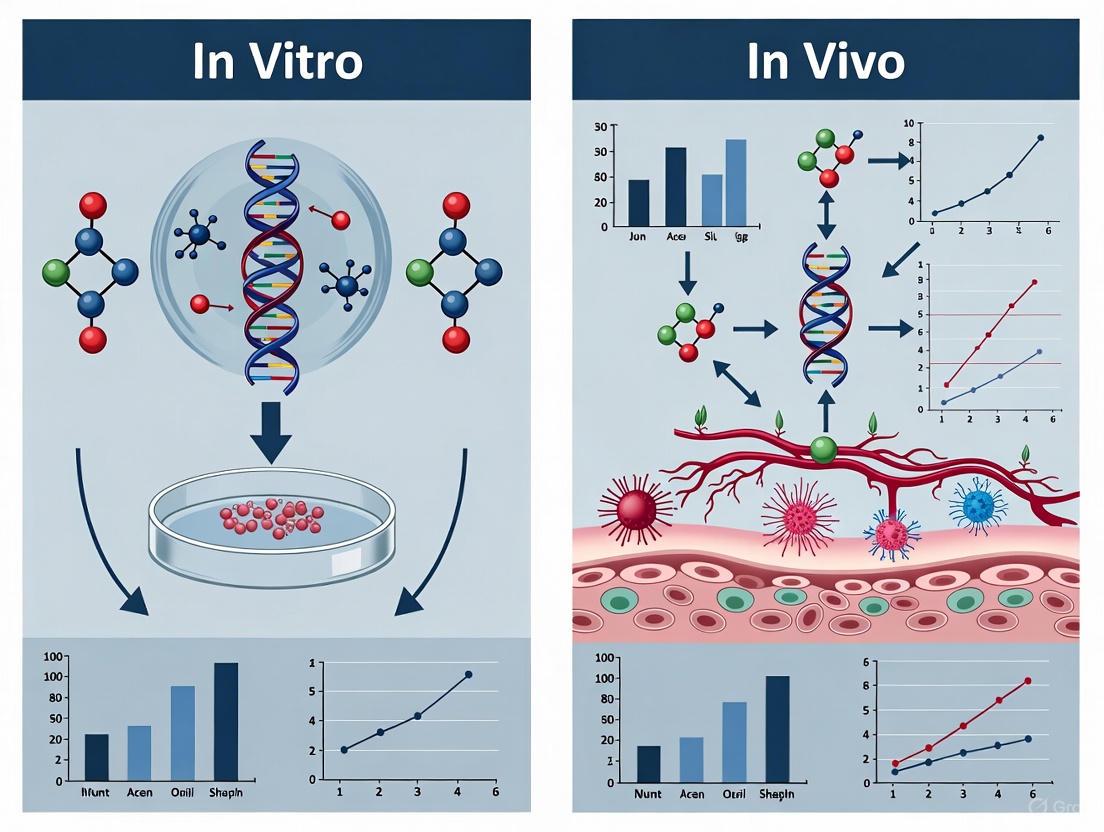
This article provides a comprehensive analysis of emergent behaviors—complex system-level properties arising from component interactions—across in vitro and in vivo environments.
From Controlled Systems to Living Organisms: A Comparative Analysis of Emergent Behaviors in In Vitro and In Vivo Models
Abstract
This article provides a comprehensive analysis of emergent behaviors—complex system-level properties arising from component interactions—across in vitro and in vivo environments. Tailored for researchers, scientists, and drug development professionals, it explores the foundational principles defining these behaviors, examines advanced methodologies for their study and application, addresses common challenges in model optimization and interpretation, and establishes frameworks for rigorous validation and correlation. By synthesizing insights from tissue engineering, microbial ecology, computational modeling, and pharmaceutical development, this review serves as a strategic guide for leveraging the distinct advantages of each model system to accelerate biomedical discovery and therapeutic translation.
Defining Emergence: Fundamental Principles Across Experimental Models
What is Emergent Behavior? From Simple Rules to Complex System Outcomes
Emergent behavior describes the phenomenon where complex, system-wide patterns arise from the relatively simple, local interactions of individual components, without being explicitly programmed or directed by a central authority [1] [2]. This concept is a cornerstone for researchers studying intricate systems, from the collective motion of cells in a tissue to the sophisticated coordination of AI agents.
In the context of drug development, understanding emergence is critical. The physiological response to a drug is not merely the sum of individual cellular reactions, but an emergent property of the complex, multi-scale interactions throughout a biological system. This article explores how different research models—in vivo (within a living organism) and in vitro (in a controlled laboratory environment)—are used to study these emergent behaviors, comparing their capabilities, applications, and limitations.
Defining Emergent Behavior
At its core, emergent behavior is unpredictable from individual components alone. One cannot deduce the complex outcome by studying a single agent in isolation [1]. The key principle is that simple, localized rules governing individual agents give rise to organized, global complexity [2].
Classic examples include:
- Flocking Birds: Each bird follows simple rules like avoiding collisions and aligning with neighbors, leading to the emergent, complex pattern of a swirling flock [1].
- Traffic Jams: Individual drivers adjusting speed based on the car ahead can collectively create "phantom jams" without a central cause [1].
- Multi-Agent AI: In AI systems, individual neurons or agents performing simple operations can, through interaction, give rise to an unexpected capacity for complex pattern recognition or strategy [2].
The diagram below illustrates this universal principle across biological, robotic, and AI systems.
In Vivo vs. In Vitro Research: A Primer
To understand how emergent behavior is studied, one must first distinguish between the two primary research models.
- In Vivo (from Latin "within the living"): Research conducted on whole, living organisms, such as animals or humans [3]. This approach preserves the full biological context.
- In Vitro (from Latin "in glass"): Research conducted outside a living organism in a controlled lab environment, such as in petri dishes or test tubes [3].
The Scientist's Toolkit: Key Research Models and Materials
The following table details the essential models and their components used in studying complex biological behaviors.
| Model/Material | Type | Key Components & Functions |
|---|---|---|
| Animal Models [3] | In Vivo | Drosophila (fruit fly): Genetic/behavioral studies. Zebrafish: Embryonic development & toxicology. Rodents (mice/rats): Efficacy & toxicity before human trials. |
| Complex In Vitro Models (CIVMs) [4] [5] | In Vitro | Organ-Chips: Microfluidic devices with human cells; mimic blood flow, breathing [5]. Organoids: 3D structures from stem cells; self-organize into organ-like tissues [4]. |
| Multi-Agent Reinforcement Learning (MARL) [6] | In Silico | Software Agents: Learn adaptive strategies via reward/punishment. Grid World: Simulated 2D environment for agent interaction. |
| Pluripotent Stem Cells (PSCs) [4] | Cell Source | Embryonic/Induced PSCs: Can differentiate into any cell type; used to generate organoids. |
| Extracellular Matrix (e.g., Matrigel) [4] | 3D Scaffold | Bio-polymer Scaffold: Provides structural support & biochemical cues for 3D cell growth. |
Research Approaches for Emergent Behavior
The choice between in vivo and in vitro models represents a trade-off between physiological completeness and experimental control, which directly impacts how emergent behaviors can be observed and understood.
In Vivo Research: Capturing Systemic Emergence
In vivo studies are the traditional gold standard for observing emergent behaviors in a full physiological context, such as a drug's systemic effect [3]. Researchers might use a mouse model to study the emergent immune response to a tuberculosis (TB) vaccine, which arises from complex interactions between cytokines, antibodies, and various immune cell types [7].
Key Strengths:
- Full Physiological Relevance: Captures the complete, systemic context with all metabolic processes and organ interactions intact [3].
- Ideal for Studying Chronic, Multi-organ Effects: Essential for observing emergent outcomes like systemic toxicity [3].
Inherent Limitations:
- High Cost and Low Throughput: Experiments are expensive, time-consuming, and logistically complex [3].
- Ethical Considerations: Involves significant ethical implications regarding animal use [3].
- Difficulty in Pinpointing Mechanisms: The very complexity that allows for emergent behavior can make it hard to identify the specific, simple rules that caused it [8].
In Vitro Research: Isolating Emergent Pathways
Conventional 2D cell cultures (e.g., a monolayer of liver cells in a dish) are limited in their ability to exhibit emergent tissue-level functions because they lack a realistic microenvironment [4]. This has driven the development of Complex In Vitro Models (CIVMs), such as organoids and Organ-Chips, which are designed to recapitulate enough biological structure to allow for the emergence of more physiologically relevant behaviors [4] [5].
Key Strengths:
- Enhanced Control and Reproducibility: Allows researchers to reduce systemic variables and hone in on specific interactions [3].
- Human-Relevance: Uses human cells, avoiding species-translation issues that can mislead drug development [5].
- High-Throughput Potential: More amenable to scaling for rapid screening of drug candidates [5].
Inherent Limitations:
- Simplified Biology: May lack the full complexity (e.g., a complete immune system) required for some emergent behaviors [3].
- Technical Challenges: Requires strict conditions to maintain the viability and functionality of human tissues [3].
In Silico Research: Modeling Emergence from the Ground Up
Beyond wet-lab models, computational approaches like Multi-Agent Reinforcement Learning (MARL) provide a powerful platform to study the principles of emergence directly. In a 2D grid-world pursuit-evasion game, researchers can define simple fundamental actions for pursuer agents (e.g., flank, engage, ambush) [6]. Through training, more complex, composite behaviors like "pincer flank attacks" or "serpentine movement" emerge from the agents' interactions without being explicitly programmed [6]. This mirrors how simple rules in biological systems can give rise to complex outcomes.
Direct Comparison: Model Capabilities and Data
The table below summarizes the quantitative and qualitative performance of these research approaches in studying emergent behaviors, based on recent experimental data.
| Research Approach | Example System / Model | Key Emergent Behavior / Outcome Observed | Performance & Experimental Data |
|---|---|---|---|
| In Vivo [7] | Mouse model for TB vaccine | Cascade of immune interactions leading to T-cell activation & antibody production | Model revealed critical path; predicted & confirmed that B-cell elimination had little impact on vaccine response. |
| In Vitro (CIVM) [5] | Liver-Chip (Emulate Bio) | Drug-Induced Liver Injury (DILI) - a systemic toxicological outcome | Correctly identified 87% of known DILI-causing drugs (n=18), outperforming animal models & spheroids. |
| In Silico (MARL) [6] | Pursuit-Evasion on 2D Grid | Cooperative strategies (e.g., "lazy pursuit", "pincer flank attack") | Achieved 99.9% success rate in 1,000 trials; clustering analysis identified 4 key emergent strategies. |
The following diagram contrasts the fundamental workflows of in vivo and advanced in vitro studies, highlighting their different paths to observing emergent behavior.
Detailed Experimental Protocols
To illustrate how data on emergent behavior is generated, here are the methodologies from two key studies cited in this guide.
Protocol 1: Analyzing Emergent Immune Response with Probabilistic Graphical Networks
This in vivo study focused on the emergent immune response to a tuberculosis vaccine in mice [7].
System Perturbation & Data Collection:
- Mice were vaccinated via different routes (intravenous, inhalation, injection).
- Longitudinal data was collected pre-vaccination, post-vaccination, and post-TB infection.
- Approximately 200 variables were measured, including levels of cytokines, antibodies, and diverse immune cell populations (n ≈ 30 animals).
Computational Modeling & Analysis:
- Data was integrated into a probabilistic graphical network model.
- A mathematical technique called graphical lasso was applied to filter out indirect correlations and identify the most essential, direct interactions between variables.
- The model output a "roadmap" of the immune response, highlighting the critical path of interactions that led to the emergent protective immunity.
Model Validation:
- The model's prediction was tested by experimentally suppressing a subset of immune cells (B cells). The result confirmed the model's forecast that this would have little impact, validating its accuracy [7].
Protocol 2: Identifying Emergent Pursuit Strategies with Multi-Agent Reinforcement Learning
This in silico study investigated emergent cooperative behaviors in a 2D grid-world pursuit-evasion game [6].
Agent & Environment Setup:
- A bounded 2D grid world was created as the simulation environment.
- Both pursuer and evader agents were equipped with a set of six fundamental actions (Flank, Engage, Ambush, Drive, Chase, Intercept).
Training & Strategy Generation:
- Agents were trained using Multi-Agent Reinforcement Learning (MARL) algorithms.
- During training, agents learned to combine fundamental actions into 21 types of composite actions.
- The training success was evaluated over 1,000 randomized trials.
Behavior Identification & Clustering:
- The full set of agent trajectories from the trials was treated as statistical samples.
- A K-means clustering methodology was applied to these trajectory data to automatically group and identify distinct, recurring behavioral patterns.
- This quantitative analysis identified four key emergent cooperative strategies, such as "serpentine corner encirclement" and "pincer flank attack" [6].
The study of emergent behavior does not pit in vivo against in vitro approaches but rather highlights their powerful complementarity. In vivo research remains indispensable for observing and confirming emergent behaviors in their full, authentic biological context. Meanwhile, advanced in vitro models (CIVMs) and in silico simulations are transformative, providing the control and analytical tools to deconstruct these complex outcomes, identify their root causes, and build predictive models.
For drug development professionals, this integrated toolkit is reducing reliance on animal testing and overcoming the species-translation gap, as evidenced by regulatory programs like the FDA's ISTAND, which has now accepted its first Organ-Chip model [5]. The future of understanding and harnessing emergent behavior lies in strategically applying these models to ask the right questions at the right time, ultimately leading to safer, more effective medicines.
In vivo systems, defined as experimental approaches conducted within living organisms, provide an indispensable platform for understanding complex biological interactions that cannot be fully replicated in artificial environments. The Latin term "in vivo" literally means "within the living," [9] distinguishing these approaches from their in vitro counterparts which occur in controlled laboratory settings outside of living organisms. For researchers and drug development professionals, this distinction is crucial—in vivo experimentation reveals how biological molecules, drugs, and treatment strategies perform in the complex, integrated environment of a whole organism, where multiple biological systems interact simultaneously [10].
The fundamental advantage of in vivo systems lies in their capacity to capture emergent behaviors and system-level responses that arise from the dynamic interplay between cells, tissues, and organs. These emergent properties cannot be reliably predicted by studying isolated components alone. In drug development specifically, in vivo studies are essential for evaluating side effects, bioavailability, and disease progression within the context of a complete biological system [10]. While more expensive and time-consuming than in vitro approaches, in vivo models provide the most realistic assessment of how interventions will perform in clinical settings, making them irreplaceable in the translational research pipeline.
Comparative Analysis: In Vivo versus In Vitro Systems
Fundamental Distinctions and Complementary Applications
The choice between in vivo and in vitro methods represents a critical decision point in research design, with each approach offering distinct advantages and limitations. In vitro systems (from Latin "in glass") involve experiments conducted outside living organisms in controlled environments like test tubes or petri dishes [10]. These methods allow researchers to study isolated cells, tissues, or biological processes with high precision and minimal confounding variables. In contrast, in vivo systems embrace the complexity of whole organisms, testing hypotheses in living systems where drugs and treatments interact with multiple organs and biological processes simultaneously [10] [9].
The most effective research strategies often move from in vitro tests to in vivo studies as treatments show promise. This sequential approach allows for initial safety and efficacy screening in simplified systems before progressing to more complex whole-organism studies [10]. For example, researchers might first examine how a drug affects specific cell samples in culture before advancing to animal studies and eventual human trials. This methodological progression represents the gold standard in therapeutic development, leveraging the strengths of both approaches while mitigating their respective limitations.
Table 1: Core Differences Between In Vivo and In Vitro Research Approaches
| Parameter | In Vivo Systems | In Vitro Systems |
|---|---|---|
| Experimental Environment | Inside living organisms | Controlled laboratory settings (test tubes, petri dishes) |
| Complexity Level | High - incorporates multiple interacting systems | Low - isolated cells or components |
| Control Over Variables | Limited - numerous uncontrollable factors | High - tight control over experimental conditions |
| Cost & Duration | Expensive and time-consuming | Cost-effective and rapid results |
| Primary Strengths | Reveals whole-organism responses, bioavailability, side effects | Precise mechanism analysis, high-throughput screening |
| Key Limitations | Ethical considerations, complex data interpretation | Limited predictive value for whole-organism responses |
Emergent Properties Exclusive to In Vivo Systems
In vivo systems uniquely capture emergent behaviors that arise from the integrated functioning of multiple biological systems. These system-level properties cannot be adequately studied through reductionist in vitro approaches alone. For example, research using sophisticated in vivo tracking technologies has revealed dynamic cellular behaviors in intact organisms, such as the trafficking of immune cells to graft sites and their functional differentiation within living tissues [11]. These processes involve complex signaling and cellular interactions that only occur in the context of complete physiological systems.
Advanced imaging technologies have further expanded our ability to observe emergent properties in living systems. Dynamic in vivo imaging techniques now enable researchers to capture physiological processes in real-time, such as respiratory function, mucociliary clearance, and treatment delivery in animal models [12]. These approaches reveal complex system behaviors—like coordinated lung motion during breathing or immune cell recruitment to sites of inflammation—that emerge only at the whole-organism level. The capacity to observe these integrated processes in living organisms represents a critical advantage of in vivo systems for understanding complex physiology and disease mechanisms.
Experimental Approaches and Model Systems in In Vivo Research
Chemical, Endogenous Substance, and Heavy Metal-Induced Models
Chemical induction methods represent important approaches for creating animal models of human diseases, particularly for conditions like Alzheimer's disease (AD). These models use various substances to induce pathologies that mimic human disease processes, allowing researchers to study disease mechanisms and potential interventions. The streptozotocin model, for instance, involves intracerebroventricular administration and induces neuroinflammation and oxidative stress, modeling sporadic AD [13]. Similarly, scopolamine models create cholinergic dysfunction without surgical procedures, while colchicine and okadaic acid models primarily induce tau hyperphosphorylation, a key pathology in several neurodegenerative diseases [13].
Endogenous substances and heavy metals also serve as important tools for disease modeling. Amyloid-β1-42 administration creates models that exhibit amyloid-β aggregation and neuroinflammation, while acrolein exposure induces oxidative stress and neuroinflammation [13]. Heavy metals like aluminum are used to create models that display oxidative stress and neurofibrillary tangle formation with relatively low mortality rates. Each of these approaches has distinct advantages and limitations, with varying degrees of construct validity for specific human disease processes.
Table 2: Selected In Vivo Disease Models and Their Key Characteristics
| Model Type | Major Pathology Induced | Key Advantages | Administration Method | Timeline for Pathology |
|---|---|---|---|---|
| Streptozotocin | Neuroinflammation, Oxidative stress | Models sporadic AD (most prevalent form) | ICV/ 3 mg/kg | 21 days |
| Scopolamine | Cholinergic dysfunction | Enables multitarget therapy evaluation | ICV/ 2 mg/kg | 13 days |
| Amyloid-β1-42 | Amyloid-β aggregation, Neuroinflammation | Exhibits predictive, face, and construct validity | ICV/ 80 μmol/L or Intrahippocampal/ 1 µg/µL | 15 days |
| Heavy Metals | Oxidative stress, Neurofibrillary tangles | Low mortality rates, easy administration | Intraperitoneally/ 100 mg/kg or Orally/ 150-300 mg/kg | 25 days |
Transgenic and Genetic Models
Transgenic animal models represent sophisticated tools for studying diseases with genetic components. These models are developed through knock-in or knock-out of specific genes associated with human diseases. The PDAPP model, which overexpresses human APP under the PDGF promoter, shows high pathological similarity with Alzheimer's patients but presents challenges in standardizing and differentiating between functional and pathogenic Aβ [13]. The APP23 model, expressing APP751 cDNA under a neuron-specific murine Thy-1 promoter, primarily affects hippocampus and neocortex regions but does not develop neurofibrillary tangles.
More complex transgenic models include the APP/PS1 mouse (combining APPswe with PS1dE9 mutations), which develops amyloid plaque morphology similar to humans and allows production of homozygous lines, though it shows late onset of cognitive dysfunction [13]. The 3×Tg or LaFerla mouse incorporates three mutated genes (APP, PSEN1, MAPT tau) and develops both amyloid plaques and neurofibrillary tangles, though evaluation is challenging due to multiple gene stimulation. The 5×FAD model, incorporating five familial AD mutations, shows prominent amyloid plaque deposition similar to AD patients but lacks tau pathology [13]. Each model offers specific advantages for studying different aspects of disease pathogenesis.
Advanced Imaging and Tracking Technologies
Advanced in vivo imaging technologies have revolutionized our ability to observe biological processes in real-time within living organisms. For example, endoscopic confocal microscopy combined with in vivo flow cytometry enables longitudinal tracking of islet allograft-infiltrating T cells in live mice [11]. This approach allows researchers to monitor immune responses dynamically without the need for invasive tissue biopsies, providing temporal information about progressing immune reactions.
Similarly, dynamic phase-contrast X-ray imaging using compact light sources enables non-invasive visualization of physiological processes like respiratory function. This technology captures regional delivery of respiratory treatments, lung motion, and mucociliary clearance—key measures of respiratory health—in small animal models [12]. The high flux density provided by modern sources like the Munich Compact Light Source (MuCLS) allows capture of low-noise lung images at exposure times as short as 50 milliseconds, minimizing motion blur and enabling precise observation of dynamic processes [12]. These technologies greatly enhance physiological understanding and accelerate therapy development by allowing direct observation of biological processes in living systems.
Methodologies and Protocols for Key In Vivo Experiments
Color-Coded T Cell Tracking in Live Mice
The color-coded T cell tracking methodology enables real-time observation of immune cell behavior in living animals, providing powerful insights into immunologic processes [11]. This approach begins with preparing C57BL/6 Rag1−/− recipient mice that lack lymphocytes through adoptive transfer of 1 × 10^6 nTreg cells (DsRed−CD4+GFP+) purified from C57BL/6 Foxp3-eGFP regulatory T cell reporter mice together with 9 × 10^6 Teff cells (DsRed+CD4+GFP−) purified from C57BL/6 DsRed–knock-in mice [11]. The following day, researchers place a DBA/2 allogeneic islet graft underneath the left renal capsule.
The core innovation of this method is the color-coded system that distinguishes T cell subsets: Teff cells appear red, nTreg cells appear green, and iTreg cells (converted from Teff cells) appear yellow [11]. This color distinction enables clear identification and tracking of different cell populations. For imaging, researchers use endoscopic confocal microscopy with a 1.24-mm diameter endomicroscope inserted through a small skin incision, allowing repeated imaging of the allograft site with minimal surgical manipulation [11]. This setup enables serial imaging of the same mice at multiple time points (e.g., days 3, 5, 7, 10, 12, and 14 after transplantation), providing kinetic data on T cell infiltration patterns under different treatment conditions.
In Vivo Dynamic Phase-Contrast X-Ray Imaging
Dynamic phase-contrast X-ray imaging at compact light sources enables non-invasive visualization of physiological processes in live animals [12]. The methodology utilizes the Munich Compact Light Source (MuCLS), which provides a partially spatially coherent, low divergence, quasi-monochromatic X-ray beam in a laboratory environment. The technique is particularly valuable for respiratory imaging due to the strong phase contrast between tissue and air.
The experimental setup involves positioning anesthetized mice in the X-ray beam path with a sample-detector distance of approximately 1 meter to enable propagation-based phase-contrast X-ray imaging (PB-PCXI) [12]. For respiratory studies, mice may be connected to a ventilator that provides sustained inflation, with a trigger sent to the detector to capture images at the same point of each breath cycle. This synchronization minimizes motion blur and enables monitoring over extended periods. Exposure times as short as 50 milliseconds are used to freeze motion, made possible by the high flux density of the MuCLS source [12]. For treatment delivery studies, researchers administer liquids (sometimes mixed with contrast-enhancing iodine) via micro-syringe with controlled infusion pumps, allowing real-time observation of distribution dynamics in the airways.
Essential Research Reagents and Tools for In Vivo Studies
The Scientist's Toolkit: Key Research Reagent Solutions
Table 3: Essential Research Reagents and Tools for In Vivo Experimentation
| Reagent/Tool | Function/Application | Example Use Cases |
|---|---|---|
| Chemical Inducers | Modeling specific disease pathologies | Streptozotocin (neuroinflammation), Scopolamine (cholinergic dysfunction) [13] |
| Endogenous Substances | Mimicking natural pathological processes | Amyloid-β1-42 (amyloid aggregation), Acrolein (oxidative stress) [13] |
| Heavy Metals | Inducing specific neurotoxic effects | Aluminum, Fluoride (oxidative stress, neurofibrillary tangles) [13] |
| Reporter Mice | Tracking specific cell populations in vivo | Foxp3-eGFP T cell reporters, DsRed-knock-in mice [11] |
| Contrast Agents | Enhancing visualization in imaging studies | Iodine mixtures for X-ray imaging, fluorescent dyes [12] |
| Immunomodulatory Agents | Manipulating immune responses | CD154-specific monoclonal antibody, rapamycin [11] |
Data Management and Experimental Design Considerations
Best Practices for In Vivo Data Science
Effective data management is crucial for robust in vivo research, particularly when aggregating results from multiple studies. Following best practices for data science enhances the value and utility of in vivo generated data [14]. Researchers should build datasets in suitable digital formats, with comma-separated values (CSV) files recommended for numerical and categorical data due to their compatibility with statistical and machine learning tools [14]. The variety of data sources from in vivo experimentation may necessitate different data structures, such as separate tables with metadata on experimental treatments, pathogens, and experimental datapoints.
A critical principle in in vivo data management is entering data at the smallest experimental unit possible, typically per-animal data, even if group means or other summary measures are the ultimate analysis goal [14]. This approach allows for future dataset expansion and facilitates easy mean value updates using code. Each experimental unit should have a unique identifier, defined as "the biological entity subject to an intervention independently of all units" [14]. Additionally, researchers should include as many datapoints as possible during initial dataset building and enter data with the highest granularity possible, including both non-normalized and normalized values from the start to enable greater analytical flexibility [14].
Ethical Considerations and the Three R's
In vivo experimentation carries significant ethical responsibilities that researchers must address throughout their study designs. Ethical principles of in vivo research are guided by the three R's framework: reduction, refinement, and replacement [14]. These principles compel investigators to reduce animal distress, use fewer animals, and pursue non-animal alternatives whenever possible. Data sharing of in vivo results and data science incorporating these findings represent underutilized areas that support these ethical goals [14].
Recent efforts to improve reporting of in vivo data, such as the ARRIVE guidelines, and to facilitate data sharing, following the FAIR guiding principles, highlight the importance of responsible research conduct [14]. These frameworks emphasize that in vivo data can benefit from increased consistency and public availability, supporting both scientific advancement and ethical research practices. Proper experimental design that minimizes animal use while maximizing data quality represents both a scientific and ethical imperative for researchers working with in vivo systems.
In vivo systems remain indispensable for capturing the systemic complexity of living organisms, providing insights that cannot be obtained through reductionist approaches alone. While in vitro methods offer valuable control and precision for studying isolated processes, in vivo approaches reveal how these processes function within the integrated environment of a whole organism. The continuing development of sophisticated in vivo models—from chemically-induced and transgenic systems to advanced imaging technologies—ensures that researchers have increasingly powerful tools for understanding complex biology and developing effective therapeutics.
The future of biological research lies in the strategic integration of both in vivo and in vitro approaches, leveraging the strengths of each to overcome their respective limitations. This dual methodology represents the gold standard for progressing from initial discoveries to clinical applications, enabling researchers to understand both detailed mechanisms and whole-system responses [10]. As in vivo technologies continue to advance, particularly in imaging and data science applications, they will further enhance our ability to observe and understand the emergent behaviors that define living systems.
In the study of complex biological behaviors, researchers are often faced with a fundamental choice: pursue physiological relevance within living organisms (in vivo) or seek mechanistic clarity in controlled laboratory environments (in vitro). This dichotomy is particularly pronounced when investigating emergent phenomena—complex behaviors that arise from relatively simple interactions between biological components, which cannot be fully predicted by studying individual parts in isolation. In vivo studies, conducted within living organisms like animals or humans, offer the advantage of observing biological processes in their natural, complex environment with full physiological relevance [15]. In contrast, in vitro studies, performed outside living organisms with isolated cells, tissues, or biological molecules, provide unprecedented experimental control but often lack the systemic complexity of whole organisms [15] [16].
The central thesis of this guide is that these approaches are not mutually exclusive but rather complementary methodologies. Advanced in vitro systems are increasingly being engineered to recapitulate key aspects of living tissues, creating controlled microenvironments that bridge the gap between simple cell cultures and whole organisms. These engineered systems enable researchers to deconstruct emergent behaviors into measurable parameters while maintaining sufficient biological complexity to study phenomena that mirror in vivo reality. The following sections provide a detailed comparison of these approaches, experimental methodologies for studying emergence, and specific protocols that illustrate how engineered microenvironments can yield insights into complex biological processes.
Comparative Analysis: In Vivo vs. In Vitro Approaches for Emergent Behavior Research
Fundamental Methodological Differences
Table 1: Core Characteristics of In Vivo and In Vitro Approaches
| Characteristic | In Vivo Systems | In Vitro Systems |
|---|---|---|
| Experimental Context | Within living organisms (animals, humans) [15] | Outside living organisms (lab containers) [15] |
| System Complexity | High - intact biological systems with all native interactions [15] | Variable - from simple 2D cultures to complex 3D models [17] |
| Environmental Control | Low - numerous confounding variables present [3] | High - precise manipulation of specific variables [3] [16] |
| Physiological Relevance | High - reflects real biological context [15] | Limited - simplified representation of biology [16] |
| Throughput Capacity | Low - time-consuming and resource-intensive [3] | High - rapid screening of multiple conditions [15] |
| Cost Considerations | High - animal maintenance, ethical oversight [3] | Lower - reduced resource requirements [15] [16] |
| Ethical Considerations | Significant - especially for animal studies [15] [3] | Reduced - aligned with 3Rs principles [3] |
Quantitative Comparison of Research Outputs
Table 2: Performance Metrics for Studying Emergent Phenomena
| Research Parameter | In Vivo Systems | Engineered In Vitro Systems |
|---|---|---|
| Observation of Systemic Effects | Comprehensive - can study multi-organ interactions [15] [3] | Limited - typically focused on specific tissue/organ models [16] |
| Temporal Resolution | Lower - limited by imaging depth, animal viability | Higher - direct visualization possible with live-cell imaging [18] |
| Spatial Resolution | Variable - limited by tissue opacity, animal motion | Excellent - super-resolution techniques applicable [18] |
| Molecular Mechanism Elucidation | Indirect - requires inference from systemic responses | Direct - precise manipulation of specific pathways [19] [16] |
| Data Reproducibility | Lower - significant biological variability [3] | Higher - controlled environment reduces variables [3] [16] |
| Translation to Human Biology | Good but species differences exist [15] | Improving with human cell-derived organoids [17] |
Experimental Focus: Biomolecular Condensates as an Emergent Phenomenon
Research Background and Significance
Biomolecular condensates represent a compelling example of emergent phenomena in cell biology. These transient, membrane-less organelles form through liquid-liquid phase separation and play crucial roles in organizing cellular biochemistry, particularly in processes like transcriptional regulation [18]. The Cissé Laboratory has pioneered approaches to study these structures, demonstrating that RNA polymerase II (Pol II) and transcription mediators form dynamic clusters in living cells [18]. These clusters exhibit properties of biomolecular condensates and are associated with super-enhancer-controlled genes, representing an emergent property of the transcription machinery that cannot be understood by studying individual molecular components in isolation.
The formation and regulation of these condensates illustrate how relatively simple interactions between proteins and nucleic acids can give rise to complex organizational structures that fundamentally influence gene expression patterns. Studying this phenomenon requires approaches that can capture both the molecular interactions and the collective behaviors that emerge in cellular environments. The following section details specific methodologies for investigating such emergent phenomena across different experimental systems.
Detailed Experimental Protocols
In Vivo Protocol: Studying Transcription Dynamics in Live Cells
Objective: To observe real-time dynamics of RNA polymerase II clustering in live mammalian cells [18].
Materials and Reagents:
- Mammalian cell lines (e.g., human cell lines)
- Fluorescent protein tags (e.g., GFP-tagged Pol II)
- Culture media appropriate for cell line
- Glass-bottom culture dishes for microscopy
- Live-cell imaging compatible environmental chamber
Procedure:
- Cell Preparation: Engineer cell lines to express fluorescently tagged RNA polymerase II subunits using CRISPR/Cas9 gene editing or transient transfection [18].
- Environmental Control: Plate cells on glass-bottom dishes and maintain at 37°C with 5% CO₂ in an environmental chamber mounted on the microscope stage.
- Image Acquisition: Use lattice light-sheet microscopy or similar advanced imaging techniques to minimize phototoxicity while capturing high-resolution temporal data [18].
- Data Collection: Acquire time-lapse images over several hours with appropriate temporal resolution (e.g., 1-5 second intervals) to capture cluster dynamics.
- Perturbation Studies: Introduce specific inhibitors or activators of transcription to observe effects on cluster formation and stability.
- Data Analysis: Quantify cluster size, lifetime, and dynamics using single-particle tracking and cluster analysis algorithms.
Key Measurements:
- Cluster formation rates under different transcriptional conditions
- Residence time of Pol II within clusters
- Correlation between cluster dynamics and gene expression outputs
Engineered In Vitro Protocol: Reconstituting Biomolecular Condensates
Objective: To reconstitute and manipulate biomolecular condensates in a controlled microenvironment to study the physical principles governing their emergence [18].
Materials and Reagents:
- Purified recombinant proteins (Pol II, Mediator complexes)
- Fluorescently labeled nucleic acids
- Microfluidic chambers or glass slides with patterned surfaces
- Buffers with controlled ionic strength and molecular crowding agents
- High-sensitivity fluorescence microscope with TIRF or confocal capabilities
Procedure:
- Surface Preparation: Pattern glass surfaces with appropriate chemical treatments to control wetting properties and mimic cellular interfaces.
- Solution Preparation: Mix purified protein components in buffers containing molecular crowders (e.g., PEG, Ficoll) to mimic intracellular conditions.
- Assembly Observation: Introduce protein solutions into observation chambers and monitor phase separation using fluorescence microscopy.
- Environmental Manipulation: Systematically vary conditions such as temperature, ionic strength, and component concentrations to determine phase boundaries.
- Dynamic Perturbation: Use light-induced targeting approaches to locally manipulate condensate formation in real-time [18].
- Functional Assays: Incorporate DNA templates and nucleotide precursors to assess transcriptional activity within condensates.
Key Measurements:
- Phase diagrams mapping condensate formation under different conditions
- Material properties of condensates (viscosity, surface tension)
- Recruitment kinetics of additional components to condensates
- Relationship between condensate physical properties and functional outputs
Table 3: Research Reagent Solutions for Emergent Phenomena Studies
| Reagent/Technology | Function in Research | Example Applications |
|---|---|---|
| CRISPR/Cas9 Systems [17] | Precise genetic manipulation | Tagging endogenous proteins, knocking out genes to test necessity in emergent behaviors |
| Live-Cell Compatible Fluorophores [18] | Real-time visualization of molecular dynamics | Tracking protein cluster formation and dissolution in living cells |
| Organoid Culture Systems [17] | 3D tissue models with emergent tissue-level behaviors | Studying cell differentiation patterns, tissue organization, and organ-level functions |
| Molecular Crowders (PEG, Ficoll) | Mimic intracellular crowding environment | Inducing phase separation in purified systems to study condensate formation |
| Microfluidic Chambers | Precise control over cellular microenvironment | Creating spatial gradients, controlling shear forces, and patterning cell cultures |
| Super-Resolution Microscopes (PALM/STORM, STED, Minflux) [18] | Imaging beyond diffraction limit | Visualizing nanoscale organization within biomolecular condensates |
| Bioinformatics Tools | Analysis of complex datasets from emergence studies | Identifying patterns in transcriptomic data, modeling network behaviors |
Conceptual Framework: Experimental Pathways for Emergence Research
Workflow for Deconstructing Emergent Phenomena
Signaling Pathways in Biomolecular Condensate Formation
The study of emergent biological phenomena requires a sophisticated integration of both in vivo and in vitro approaches. While in vivo systems provide the essential physiological context in which these phenomena naturally occur, engineered in vitro systems offer the experimental control necessary to deconstruct the underlying mechanisms. The future of this field lies in developing increasingly sophisticated in vitro models—such as organs-on-chips, 3D bioprinted tissues, and advanced organoid systems—that capture more of the complexity of living organisms while maintaining the manipulability of traditional in vitro approaches [3] [17].
For researchers investigating emergent behaviors, a sequential approach that begins with observation in vivo, proceeds through mechanistic deconstruction in vitro, and concludes with validation back in vivo represents the most powerful strategy. This integrated methodology leverages the respective strengths of each system while mitigating their individual limitations. As engineered microenvironments become increasingly sophisticated in their ability to recapitulate tissue-level and organ-level behaviors, they will continue to expand our capacity to understand, predict, and ultimately manipulate the emergent phenomena that underlie both normal physiology and disease states.
Key Differences in Complexity, Control, and Physiological Relevance
For researchers in drug development and biomedical science, the choice between in vitro (outside a living organism) and in vivo (within a living organism) models is fundamental. This guide provides a detailed, data-driven comparison of these approaches, focusing on their complexity, control, and physiological relevance to inform your experimental design.
Defining the approaches
The core distinction lies in the experimental environment. In vivo models involve testing within a whole, living organism, such as animals, providing a real-time, systemic context [3] [20]. In contrast, in vitro models are conducted externally in controlled laboratory environments, such as petri dishes or test tubes, using isolated cells or tissues [3] [21].
A third category, ex vivo, refers to experiments using tissues or organs extracted from a living organism but maintained viable under specific conditions, retaining some native architecture and function [3].
Comparative Analysis: In Vivo vs. In Vitro
The table below summarizes the core differences between these two methodologies across key parameters important for research design.
| Aspect | In Vivo Models | In Vitro Models |
|---|---|---|
| Definition & Scope | Within a whole, living organism (e.g., rodents, zebrafish) [20]; provides a holistic, systemic view [3]. | In a controlled lab environment using isolated cells or tissues (e.g., 2D culture, organoids) [20]; focuses on specific components. |
| Complexity & Physiological Relevance | High physiological relevance; preserves complex interactions between cells, tissues, and organs [3] [20]. Accurately reflects pharmacokinetics and whole-body response [20]. | Low to moderate physiological relevance in traditional 2D cultures; lacks systemic context [21]. Advanced models (e.g., Organ-Chips) improve relevance by mimicking tissue environments [22] [21]. |
| Level of Experimental Control | Low control; high interference from systemic variables and inter-individual biological variability [3]. | High control over the cellular environment (e.g., nutrients, temperature); minimal interference from systemic variables [3] [20]. |
| Cost & Resources | High cost due to animal care, monitoring, and ethical oversight; resource-intensive [3] [20]. | Cost-effective; less expensive setup and maintenance, amenable to high-throughput screening [20] [21]. |
| Time to Results | Long duration; involves extensive planning, execution, and analysis [3] [20]. | Rapid results; quicker experiments due to controlled, simplified conditions [20]. |
| Ethical Considerations | Significant ethical concerns, particularly regarding animal use; requires stringent oversight [3] [20]. | Viewed as more ethical; aligns with the 3Rs principle (Replacement, Reduction, Refinement) to minimize animal use [3] [20]. |
Experimental Models and Protocols
In Vivo Experimental Models
In vivo research employs various animal models, each selected for specific study objectives [3]:
- Rodents (mice and rats): Used to assess pharmacokinetics, toxicity, and efficacy of new compounds before human clinical trials [3].
- Zebrafish (Danio rerio): Ideal for studying embryonic development, toxicology, and gene function due to transparent embryos and external development [3] [23].
- Drosophila melanogaster (fruit fly): Widely used in genetic and neurobehavioral research for its ease of genetic manipulation [3].
Sample In Vivo Protocol: Drug Efficacy and Toxicity in Rodents
- Lead Compound Identification: Candidates are first screened using in vitro methods for initial activity and cytotoxicity [23].
- Animal Model Selection: Choose a relevant rodent strain, often genetically engineered to model a specific human disease.
- Dosing Regimen: Administer the drug candidate to the animals via a relevant route (e.g., oral gavage, injection) at multiple dosages.
- In-Life Monitoring: Observe animals for signs of toxicity, behavioral changes, and overall health.
- Sample Collection: At defined endpoints, collect blood for pharmacokinetic (PK) analysis and tissues for histopathological examination.
- Data Analysis: Evaluate drug efficacy (e.g., tumor shrinkage) and safety (e.g., organ toxicity) to determine suitability for clinical trials.
In Vitro Experimental Models
In vitro models range from simple 2D cultures to advanced, complex systems [4] [21]:
- 2D Cell Culture: Monolayers of immortalized or primary cells grown on flat plastic or glass surfaces [4] [21].
- 3D Cell Culture (Spheroids & Organoids): Cells grown in three-dimensional structures that better mimic tissue architecture and cell-cell interactions [4]. Organoids are particularly advanced as they are self-organizing and can recapitulate organ-specific functions [4].
- Organ-on-a-Chip (OOC): Microfluidic devices containing living human cells that simulate the activities, mechanics, and physiological responses of entire organs [22] [21]. These systems can incorporate fluid flow, mechanical forces, and multiple cell types.
Sample In Vitro Protocol: Establishing Patient-Derived Organoids for Drug Screening
- Tissue Acquisition & Digestion: Obtain human tissue sample via biopsy or surgery. Mechanically and enzymatically digest the tissue into small fragments or single cells.
- Matrix Embedding: Mix the cell suspension with a basement membrane extract (e.g., Matrigel) which provides a 3D scaffold for growth.
- Culture in Specialized Media: Plate the matrix-cell mixture and overlay with a defined, organ-specific culture medium. The medium is supplemented with specific growth factors, signaling agonists, and inhibitors (e.g., Wnt agonists, EGF, BMP) to support stem cell maintenance and differentiation [4].
- Organoid Growth & Expansion: Culture for days to weeks, with regular medium changes, to allow self-organization into organoids.
- Drug Exposure & Assaying: Treat organoids with drug candidates. Assess outcomes using assays for cell viability (e.g., ATP-based assays), immunohistochemistry, or transcriptomic analysis to evaluate efficacy and toxicity [4].
Research Reagent Solutions
The following table details key materials and their functions essential for conducting research in this field.
| Reagent / Material | Function in Research |
|---|---|
| Basement Membrane Extract (e.g., Matrigel) | A scaffold derived from mouse tumor tissue used to support the 3D growth and self-organization of cells into structures like organoids [4]. |
| Defined Culture Media | Tailored nutrient solutions containing specific growth factors, cytokines, and small molecules to maintain cell viability, promote differentiation, and recapitulate in vivo signaling pathways [4]. |
| Primary Human Cells | Cells isolated directly from human tissue (e.g., from surgery), which retain physiological relevance and are used in advanced in vitro models like Organ-Chips [3] [22]. |
| Immortalized Cell Lines | Cells (often derived from cancers) that have been altered to divide indefinitely, providing a consistent, scalable, and cost-effective resource for high-throughput screening, particularly in 2D culture [3] [21]. |
| Microfluidic Biochips | Engineered devices containing tiny channels and chambers that allow for dynamic fluid flow and mechanical stimulation, forming the physical basis of Organ-on-a-Chip systems [22] [24]. |
In vivo and in vitro models are not mutually exclusive but are complementary tools in the research ecosystem [3] [20]. The trend in biomedical research is moving toward the integration of these approaches. In vitro data can inform and refine in vivo studies, reducing animal use and increasing efficiency.
A significant development is the rise of advanced complex in vitro models (CIVMs) like Organ-on-Chip technology and sophisticated organoids [22] [4]. These models aim to bridge the gap between traditional in vitro simplicity and in vivo complexity by incorporating human cells, 3D architecture, mechanical forces, and multiple cell types [21] [24]. This progression is supported by evolving regulatory frameworks, such as the U.S. FDA Modernization Act 2.0, which now authorize the use of certain alternatives to animal testing for investigating drug safety and efficacy [4] [25]. For researchers, the optimal strategy involves a careful consideration of the research question, required physiological complexity, available resources, and ethical guidelines, potentially leveraging both traditional and emerging technologies to achieve the most predictive and translatable outcomes.
In the study of complex biological systems, emergent properties present a fundamental challenge for researchers and drug development professionals. These properties—including drug efficacy, systemic toxicity, and disease progression—arise from nonlinear interactions across multiple biological scales, from molecular networks to whole organisms, and cannot be fully understood by examining individual components in isolation [26]. The translational challenge in biomedical research lies in effectively bridging these scales to predict clinical outcomes from basic mechanistic knowledge [27].
The choice between in vitro and in vivo methodologies fundamentally shapes how researchers can study these emergent behaviors. In vivo approaches provide full physiological context but introduce ethical concerns and high variability, while in vitro systems offer greater control but lack the integrated complexity of whole organisms [3]. This guide compares how two powerful computational frameworks—Agent-Based Models (ABMs) and Systems Biology models—enable researchers to navigate this methodological landscape, providing objective performance comparisons and experimental protocols to inform research design.
Core Principles and Conceptual Frameworks
Agent-Based Modeling: A Bottom-Up Approach to Emergence
Agent-Based Modeling is a rule-based, discrete-event computational methodology that simulates the actions and interactions of autonomous agents to understand the emergence of system-level patterns [27]. ABMs originate from cellular automata and are characterized by several key principles:
- Focus on individual components: ABMs explicitly represent individual entities (cells, organisms) as computational objects with distinct properties and behavioral rules [28]
- Local interactions: Agents operate with "bounded knowledge," responding only to their immediate environment rather than global system states [27]
- Parallelism and stochasticity: Multiple agent instances operate in parallel, with intrinsic stochasticity generating heterogeneous behavioral trajectories across populations [27]
- Spatial explicitness: Most ABMs incorporate spatial relationships through grid-based or network-based environments [27]
- Modular structure: New agent-types or rules can be added without reengineering the entire simulation [27]
The fundamental insight of ABMs is that emergent system dynamics arise from the aggregate of individual interactions, much like flocking behavior emerges from simple rules followed by individual birds rather than a central controller [27].
Systems Biology: A Network-Based Approach to Complexity
Systems Biology employs mathematical modeling and computational analysis to study the integrated dynamics of biological networks across multiple organizational scales [29] [30]. This framework is characterized by:
- Network-centric perspective: Biological components are represented as nodes (genes, proteins, metabolites) within interconnected networks [29]
- Multi-omics integration: Data from genomic, proteomic, transcriptional, and metabolic layers are combined to construct comprehensive interaction maps [29]
- Dynamic modeling: Ordinary differential equations (ODEs) or partial differential equations (PDEs) commonly describe the kinetic behavior of network components [30]
- Focus on regulatory motifs: Key network structures like feedback loops, feed-forward loops, and bistable switches are identified as critical control points [30]
Systems Biology aims to predict system behavior by understanding the topological properties and dynamic interactions within biological networks, moving beyond single-pathway analyses to capture cross-scale integration [29].
Comparative Theoretical Foundations
The table below summarizes the core conceptual differences between these approaches:
Table 1: Fundamental Principles of ABM and Systems Biology Frameworks
| Aspect | Agent-Based Models | Systems Biology Models |
|---|---|---|
| Primary focus | Individual agents and local interactions | Network topology and global dynamics |
| Representation | Discrete computational objects | Continuous concentrations/differential equations |
| Spatial handling | Explicit (grids, networks) | Often implicit or continuum-based |
| Stochasticity | Intrinsic through probabilistic rules | Often deterministic; optional noise terms |
| Emergence mechanism | Bottom-up from agent interactions | System-level solutions to equation systems |
| Scale integration | Natural through agent hierarchies | Explicit through multi-scale modeling |
Performance Comparison: Predictive Capabilities Across Biological Scales
Capturing Multi-Scale Emergent Behaviors
The ability to predict emgent behaviors across biological scales represents a critical test for computational frameworks. Drug efficacy and toxicity exemplify such emergent properties, arising from interactions across molecular, cellular, tissue, and organ levels [26]. The following table compares how each framework addresses this challenge:
Table 2: Performance in Capturing Emergent Properties Across Scales
| Biological Scale | ABM Performance & Characteristics | Systems Biology Performance & Characteristics |
|---|---|---|
| Molecular Networks | Limited direct representation; rules may abstract molecular details | Excellent representation via ODE/PDE models of signaling pathways |
| Cellular Responses | Strong representation of heterogeneity and cell-state transitions | Population averages; limited single-cell heterogeneity |
| Tissue-Level Dynamics | Excellent spatial patterning; cell-cell interactions; microenvironment | Often requires separate tissue-scale models; less spatial detail |
| Organ/System Function | Emerging capability through multi-scale ABMs | Strong through physiologically-based pharmacokinetic models |
| Temporal Dynamics | Discrete time steps; potential for high resolution | Continuous time; natural for kinetic modeling |
| Experimental Validation | Growing calibration methods (e.g., SMoRe ParS) [31] | Established parameter estimation; model fitting algorithms |
Representation of Biological Heterogeneity
A key distinction emerges in how each framework handles biological heterogeneity, a crucial factor in personalized medicine and variable drug responses:
- ABMs naturally capture cell-to-cell variability and population heterogeneity through distinct agent instances with individualized properties and behavioral trajectories [27] [28]. This enables studying how minor differences in individual cells lead to significant population-level effects.
- Systems Biology models typically operate with population averages, though newer approaches incorporate variability through parameter distributions or subpopulations [30]. The emerging Enhanced Pharmacodynamic (ePD) models explicitly account for how genomic, epigenomic, and posttranslational variations affect drug response in individual patients [30].
Predictive Accuracy in Therapeutic Applications
Both frameworks show complementary strengths in predicting therapeutic outcomes:
- ABMs excel in contexts where spatial organization and local interactions drive outcomes, such as tumor growth, immune cell infiltration, and tissue regeneration [28]. For example, ABMs of cancer cell populations can predict emergent resistance patterns arising from cellular heterogeneity and microenvironmental constraints [31].
- Systems Biology approaches demonstrate superior performance when molecular network topology and kinetic parameters determine system behavior, such as in signaling pathway responses to targeted therapies [30]. ePD models of EGFR inhibition successfully predict how different genomic backgrounds lead to variable tumor responses to the same drug dose [30].
Experimental Protocols and Methodological Implementation
Agent-Based Model Development Workflow
The following diagram illustrates the core workflow for developing and validating an ABM for studying emergent behaviors:
Diagram 1: ABM Development and Validation Workflow
Detailed Protocol for ABM Implementation:
Agent Rule Definition: Translate biological knowledge into computational rules governing agent behavior, including:
- State transitions (e.g., cell cycle progression, apoptosis)
- Environmental responses (e.g., chemotaxis, contact inhibition)
- Interaction protocols (e.g., cell-cell signaling, resource competition) [28]
Model Calibration: Employ parameter estimation methods such as:
- SMoRe ParS (Surrogate Modeling for Reconstructing Parameter Surfaces): Uses explicitly formulated surrogate models to bridge ABMs with experimental data [31]
- Bayesian calibration: Incorporates prior knowledge and uncertainty quantification
- Direct inference: Compares simulation outputs with experimental time-course data [31]
Simulation Execution: Conduct multiple runs with different random seeds to:
- Account for stochasticity through Monte Carlo sampling
- Determine minimum run numbers using variance stability metrics (e.g., coefficient of variation) [32]
- Explore parameter spaces to identify behavioral regimes
Output Analysis: Apply specialized techniques for ABM outputs:
- Variance stabilization to determine appropriate sample sizes
- Spatio-temporal analysis of pattern formation
- Sensitivity analysis to identify critical parameters [32]
Systems Biology Model Construction Protocol
The diagram below outlines the methodology for constructing systems biology models:
Diagram 2: Systems Biology Model Construction Methodology
Detailed Protocol for Systems Biology Modeling:
Network Reconstruction: Build interaction networks using:
- Protein-protein interaction (PPI) data from databases and experimental studies
- Gene co-expression networks using Pearson Correlation Coefficient (PCC) or mutual information [29]
- Regulatory interactions from transcription factor binding and chromatin accessibility data
Mathematical Formulation: Translate networks into dynamic models through:
- Ordinary Differential Equations (ODEs) for well-mixed systems
- Partial Differential Equations (PDEs) for spatial dynamics
- Constraint-based models (e.g., flux balance analysis) for metabolic networks
Parameter Estimation: Calibrate model parameters using:
- Time-course data of molecular species and phenotypic responses
- Model-fitting algorithms (weighted least squares, maximum likelihood, Bayesian inference) [30]
- Identifiability analysis to ensure parameter determinacy
Systems Analysis: Characterize emergent dynamics through:
- Bifurcation analysis to identify regime shifts and bistability
- Sensitivity analysis to determine critical nodes and parameters
- Control theory applications for designing therapeutic interventions [29]
Computational Frameworks and Software Tools
Table 3: Essential Computational Tools for Emergence Modeling
| Tool Category | Specific Examples | Primary Function | Framework Compatibility |
|---|---|---|---|
| ABM Platforms | MASON library [28], NetLogo [33] | Multi-agent scheduling and simulation | ABM-focused |
| ODE/PDE Solvers | DifferentialEquations.jl [33], FEniCS [33] | Numerical solution of differential equations | Systems Biology |
| Network Analysis | Cytoscape, NetworkX | Topological analysis of molecular networks | Systems Biology |
| Model Calibration | SMoRe ParS [31], Bayesian tools | Parameter estimation and uncertainty quantification | Both frameworks |
| Spatial Modeling | OpenFoam [33], CompuCell3D | Spatial simulations and tissue modeling | Both frameworks |
| Multi-Scale Integration | FURM [27], enhanced PD models [30] | Cross-scale knowledge representation | Both frameworks |
Experimental Data Requirements for Model Parameterization
Successful implementation of both frameworks requires specific types of experimental data:
For ABM Parameterization:
For Systems Biology Parameterization:
Integrated Applications: Bridging In Vitro and In Vivo Research
Connecting Computational and Experimental Domains
The relationship between computational modeling and experimental approaches forms a continuous cycle of knowledge generation, as illustrated below:
Diagram 3: Iterative Research Cycle Integrating Modeling and Experimentation
Case Study: Cancer Cell Growth and Drug Response
A compelling example of framework integration comes from studies of cancer cell populations and their response to chemotherapeutic agents:
ABM Application: Norton et al. developed an ABM of SNU-1 human gastric cancer cells that simulated population responses to oxaliplatin, incorporating cell cycle dynamics, drug-induced arrest, and contact inhibition [31]. The model was calibrated using in vitro growth inhibition assays and flow cytometry cell cycle data.
Systems Biology Integration: Enhanced Pharmacodynamic (ePD) models of EGFR inhibition demonstrate how systems biology can predict variable drug responses based on genomic and epigenomic alterations in individual patients [30]. These models incorporate specific mutations, methylation patterns, and miRNA expression levels to forecast tumor growth outcomes under targeted therapies.
Performance Metrics and Validation Standards
Robust validation requires multiple complementary approaches:
Quantitative Metrics:
Qualitative Assessments:
- Biological plausibility of emergent patterns
- Mechanistic interpretability of model components
- Expert evaluation of system behaviors [26]
The comparison between Agent-Based and Systems Biology modeling frameworks reveals complementary strengths rather than competitive superiority. ABMs provide unparalleled capability for representing spatial heterogeneity, individual variability, and bottom-up emergence through discrete, rule-based simulations. Systems Biology approaches offer powerful tools for understanding network dynamics, multi-omics integration, and molecular mechanism through continuous mathematical formulations.
The choice between frameworks should be guided by specific research questions: ABMs excel when spatial context, individual heterogeneity, and local interactions drive emergent behaviors, while Systems Biology models prove superior when molecular network topology and kinetic parameters determine system outcomes. The most promising direction for the field involves hybrid approaches that leverage the strengths of both frameworks, creating multi-scale models that seamlessly integrate molecular details with tissue-level phenomena.
For researchers navigating the complex landscape of in vitro and in vivo studies of emergent behaviors, this comparison provides both methodological guidance and practical implementation tools. By selecting the appropriate computational framework and applying rigorous validation standards, scientists can enhance predictive accuracy in drug development and advance our fundamental understanding of biological complexity.
Tools and Techniques: Engineering and Analyzing Emergent Systems
In the context of comparing in vitro versus in vivo emergent behaviors, advanced in vitro platforms represent a paradigm shift in biomedical research. Traditional two-dimensional (2D) cell cultures often fail to replicate the complexity of living tissues, while animal studies (in vivo) face challenges in translating results to human physiology due to species-specific differences [35] [36]. Organ-on-a-Chip (OoC) technology bridges this gap by using microfluidic devices lined with living human cells to create three-dimensional (3D) microenvironments that simulate human organ physiology [37] [38]. These microphysiological systems provide a sophisticated platform for drug development, disease modeling, and personalized medicine, offering human-relevant data while adhering to the 3Rs principle (Replace, Reduce, Refine) in animal testing [3].
The fundamental advantage of these advanced systems lies in their ability to replicate not just the cellular composition but also the dynamic mechanical forces and tissue-tissue interfaces critical to organ function [35]. For instance, breathing motions in lung alveoli, peristalsis in the gut, and blood flow-induced shear stress in vessels can be incorporated into these models [37]. This capability enables researchers to study emergent behaviors—complex physiological responses that arise from the interaction of multiple cell types and tissue structures—in a controlled human-relevant system that sits between traditional in vitro models and full in vivo organisms.
Technology Comparison: OoC Platforms Versus Traditional Models
The following table summarizes the key differences between advanced OoC platforms and traditional research models across critical parameters that influence their application in drug development and disease research.
Table 1: Comparative Analysis of Research Models
| Parameter | Traditional 2D In Vitro | Advanced OoC Platforms | In Vivo Models |
|---|---|---|---|
| Physiological Relevance | Low; lacks tissue-level complexity and 3D architecture [36] | Medium-High; recapitulates tissue-tissue interfaces and mechanical cues [35] [37] | High; full biological complexity within a living organism [36] [3] |
| Systemic Interaction | None; isolated cellular responses only [3] | Emerging; via linked multi-organ systems [39] | Complete; full organ system cross-talk [36] |
| Throughput & Cost | High throughput, low cost per sample [36] | Medium-High; improving with platforms like AVA (96 chips) [40] | Low throughput, high cost [3] |
| Data Human Relevance | Limited; often uses immortalized cell lines [36] | High; utilizes primary human cells and stem cells [35] [37] | Variable; significant species-specific differences [37] |
| Temporal Resolution | High; for cellular processes | High; real-time monitoring with integrated sensors [41] | Limited by invasive measurement techniques |
| Regulatory Acceptance | Well-established for early screening | Growing; FDA Modernization Act 2.0 authorizes use [37] | Gold standard for preclinical trials [36] |
Key Design Principles and Material Considerations
Core Architectural Components
Effective OoC platforms incorporate several biomimetic design principles to recreate organ-specific microenvironments. The central design typically features hollow microfluidic channels lined with living human organ-specific cells and human blood vessel cells separated by a porous membrane, which allows for the recreation of tissue-tissue interfaces [37]. These devices incorporate dynamic fluid flow to simulate blood perfusion and deliver nutrients, while also enabling the application of mechanical forces (e.g., cyclic stretch for lungs, peristalsis for gut) that are critical for maintaining tissue function [35] [38]. The 3D extracellular matrix (ECM) environment provides biochemical and biophysical cues that direct cell differentiation and organization, surpassing the capabilities of traditional 2D cultures [35].
Biomaterials in OoC Fabrication
The selection of materials is crucial for the biological fidelity and experimental reliability of OoC devices. The table below outlines key materials and their applications in OoC development.
Table 2: Essential Biomaterials for Organ-on-Chip Platforms
| Material | Key Properties | Common Applications | Considerations |
|---|---|---|---|
| PDMS (Polydimethylsiloxane) | Transparent, gas-permeable, flexible, easy to fabricate [41] | Most widely used material for prototyping and research [38] | Can absorb small hydrophobic molecules, potentially uncrosslinked oligomers may leach [41] |
| Polymers (PMMA, PS) | Rigid, minimal drug absorption, optically clear [41] | High-throughput screening plates, organ-on-chip consumables (e.g., Chip-R1) [40] | Less gas-permeable than PDMS, requires different fabrication methods [41] |
| Hydrogels (Natural & Synthetic) | Tunable mechanical properties, biocompatible, mimic ECM [35] [41] | 3D cell culture matrices, support tissue morphogenesis and differentiation | Batch-to-batch variability (natural hydrogels), complex characterization |
| Extracellular Matrix (ECM) Proteins | Native biochemical composition, cell adhesion motifs | Coating channels to enhance cell attachment and function | Animal-derived (e.g., Matrigel) can introduce variability |
Experimental Workflow and Protocol Guidelines
Standardized OoC Development and Operation
The development and implementation of OoC platforms follow a systematic workflow to ensure biological relevance and data reliability. The diagram below illustrates the key stages from design to data analysis.
Diagram 1: Experimental workflow for OoC platform development and application, highlighting the staged process from initial design to final data validation.
Detailed Methodological Framework
The experimental workflow for OoC systems involves several critical stages that require careful optimization:
Chip Fabrication: Devices are typically created using soft lithography with PDMS, where a silicon master mold is fabricated via photolithography. PDMS base and curing agent are mixed, poured over the mold, and baked. The cured PDMS is then bonded to a glass slide or another PDMS layer after oxygen plasma treatment [38]. For high-throughput applications, injection molding of thermoplastics like polystyrene is employed [40].
Cell Culture Protocol:
- Cell Source Selection: Utilize primary human cells, patient-derived stem cells (iPSCs), or established cell lines based on research objectives [35].
- Channel Functionalization: Coat microfluidic channels with ECM proteins (e.g., collagen IV, fibronectin) at 100-200 µg/mL for 2 hours at 37°C or overnight at 4°C to promote cell attachment.
- Cell Seeding: Introduce cell suspensions at optimized densities (e.g., 1-10 million cells/mL) into appropriate channels. Allow cell attachment for 15-60 minutes before initiating flow.
- Tissue Maturation: Gradually increase flow rates from 0.1 to 30 µL/hour over 3-10 days to allow tissue development and differentiation under physiologically relevant shear stresses [38].
Experimental Intervention: After tissue maturation, introduce test compounds (drug candidates, toxins) at physiologically relevant concentrations through the vascular channel. For pharmacokinetic studies, collect effluent at timed intervals for analysis. For multi-organ systems, compounds can be perfused through a sequential organ network [39].
Analysis and Validation:
- Real-time monitoring: Use integrated or microscope-based imaging systems to track barrier integrity (TEER), cell viability, and morphological changes.
- Endpoint assays: Fix tissues for immunohistochemistry (presence of specific proteins), extract RNA for transcriptomic analysis, or collect effluent for cytokine secretion profiling (ELISA).
- Functional validation: Compare OoC responses to known clinical outcomes of reference compounds to validate predictive capacity [35].
The Research Toolkit: Essential Reagents and Equipment
Successful implementation of OoC technology requires specific research tools and reagents. The following table details the essential components of an OoC research toolkit.
Table 3: Essential Research Reagent Solutions for OoC Platforms
| Tool Category | Specific Examples | Function & Application |
|---|---|---|
| Microfluidic Controllers | Elveflow OB1; Emulate Zoë-CM2 [40] [39] | Precisely control fluid flow and pressure to mimic physiological perfusion |
| OoC Consumables | Emulate Chip-S1 (Stretchable); Chip-R1 (Rigid); Mimetas OrganoPlate [40] [39] | Microfluidic devices that house the engineered tissues; various designs for different organs |
| Biosensors | Transepithelial/transendothelial electrical resistance (TEER) electrodes; oxygen sensors [41] [38] | Non-invasively monitor tissue barrier integrity and metabolic activity in real-time |
| ECM Hydrogels | Collagen I; Matrigel; fibrin; hyaluronic acid-based [35] [41] | Provide a 3D scaffold that supports cell growth and tissue morphogenesis |
| Cell Culture Media | Organ-specific media; serum-free formulations; differentiation cocktails | Support the viability and maintain the functional phenotype of cells within the chip |
| Imaging Compatible Equipment | Confocal microscope with environmental chamber; high-content imaging systems [40] | Enable real-time, high-resolution visualization of cellular responses within the chips |
Current Applications and Impact Assessment
Translational Applications in Drug Development
OoC technology is demonstrating significant impact across multiple domains of pharmaceutical research and development:
Drug Safety Assessment: Liver-Chip models are being used by companies including Boehringer Ingelheim and Daiichi Sankyo for cross-species drug-induced liver injury (DILI) prediction and comparative liver toxicity studies. Similarly, Kidney-Chip models have been validated for antisense oligonucleotide de-risking at UCB [40].
Disease Modeling: Institut Pasteur has developed intestinal inflammation-on-chip models to identify novel inflammatory bowel disease (IBD) therapies. Queen Mary University of London has created personalized synovium-cartilage chips for understanding patient-specific inflammation in osteoarthritis [40].
Neurovascular Studies: Bayer has developed a blood-brain barrier (BBB)-chip for translational studies to improve CNS drug development prediction. The U.S. Air Force Research Laboratory (AFRL) has utilized Brain-Chip platforms with machine learning to rapidly detect neurotoxin exposure [40].
Multi-Organ Interactions: Companies including TissUse pioneer Multi-Organ-Chip technology, integrating up to ten miniaturized human organs on a single platform to provide a systemic understanding of drug effects, including pharmacokinetics and disease modeling [39].
Quantitative Impact Analysis
The adoption of OoC platforms is generating measurable improvements in research and development efficiency:
Cost Reduction: The use of OoCs can reduce research, development, and innovation (RDI) costs by 10-30%, positioning it as a promising health innovation [35].
Throughput Enhancement: Next-generation systems like the AVA Emulation System achieve a four-fold drop in consumable spend and require up to 50% fewer cells and media per sample compared to previous generation technology. They also reduce hands-on, in-lab time by more than half through automation [40].
Data Richness: A typical 7-day experiment on advanced platforms can generate >30,000 time-stamped data points from daily imaging and effluent assays, with post-takedown omics pushing the total into the millions, providing a rich foundation for machine-learning pipelines [40].
Comparative Analysis: OoC Versus In Vivo Emergent Behaviors
The relationship between OoC and in vivo models is complementary rather than competitive. The following diagram illustrates how these approaches intersect and differ in studying emergent biological behaviors.
Diagram 2: Complementary strengths of research models in studying emergent behaviors, showing how OoC platforms bridge the gap between traditional in vitro and in vivo approaches.
While in vivo models remain essential for studying systemic emergent behaviors such as complex immune responses, neuro-endocrine interactions, and organism-level metabolism, OoC platforms excel at revealing tissue-level emergent behaviors that arise from human-specific tissue-tissue interfaces, mechanical forces, and 3D cellular organization [35] [36]. These include mechanisms of inflammatory cell recruitment, drug metabolite toxicity, and pathogen invasion across tissue barriers—processes that often cannot be adequately studied in simplified 2D cultures or easily interrogated in living animals [40] [37].
The future of OoC technology points toward increasingly sophisticated multi-organ systems linked by vascular perfusion, which will enable the study of organ-organ interactions and systemic drug effects in a human-relevant context [39]. Combined with patient-derived iPSCs and advanced biosensing, these systems promise to accelerate the development of personalized medicine approaches while continuing to reduce reliance on animal models through the principles of the 3Rs (Replacement, Reduction, Refinement) [3].
The study of emergent phenomena—where complex behaviors arise from simpler components that do not exhibit these properties individually—represents a frontier challenge across scientific disciplines. In the specific context of comparing in vitro and in vivo research, quantifying emergence enables researchers to determine when laboratory findings truly translate to living systems and when novel, unexpected behaviors manifest in the more complex environment. The paradigm of "more is different," as famously articulated by Philip Anderson, underscores that quantitative changes in a system can result in qualitatively new behaviors [42] [43]. This review systematically compares two dominant approaches for quantifying emergence: information-theoretic measurements that analyze internal system dynamics, and statistical metrics that evaluate external performance capabilities. As research increasingly bridges isolated laboratory models (in vitro) with whole-organism contexts (in vivo), robust quantification of emergent phenomena becomes essential for validating findings and predicting complex biological behaviors.
Theoretical Frameworks for Emergence Quantification
Information-Theoretic Approaches
Information-theoretic frameworks conceptualize emergence through the lens of information dynamics within complex systems. The core principle defines causal emergence as occurring when "macroscopic observables can sometimes exhibit more causal power than microscopic variables" [44] [45]. This approach leverages multivariate data to study the relationship between the dynamics of a system's parts and its macroscopic features of interest.
A key formalization of this framework quantifies emergence strength by comparing entropy reduction at macroscopic (semantic) versus microscopic (token) levels. Specifically, emergence is measured as a process where the entropy reduction of the entire sequence exceeds the entropy reduction of individual components [46]. This methodology operates under the hypothesis that token representations passing through system components (such as transformer blocks in language models) constitute a Markov process, enabling mathematical formalization of emergent dynamics.
This theoretical framework introduces two crucial concepts:
- Downward causation: Where macroscopic properties exert causal influence on microscopic components
- Causal decoupling: Where collective properties propagate without direct interaction with their underlying substrate [44]
The information-theoretic approach provides practical criteria that can be efficiently calculated in large systems, making it applicable to scenarios ranging from biological networks to artificial intelligence systems.
Statistical Performance Metrics
In contrast to information-theoretic methods, statistical approaches quantify emergence through observable performance characteristics across scaling gradients. The foundational definition identifies an ability as emergent if it "is not present in smaller models but is present in larger models" [43]. This methodology aggregates results across various models and scales to characterize the presence of emergent abilities.
Statistical evaluation typically employs traditional performance metrics including:
- Accuracy: Percentage of correct responses or classifications
- F1-score: Harmonic mean of precision and recall
- Exact Match (EM): Strict correspondence to reference solutions [46] [42]
These metrics track performance discontinuities across scaling parameters such as model size, training computation, or biological complexity. Emergence is statistically identified when performance transitions from random to above-random at specific scale thresholds in a non-linearly predictable pattern [43]. This approach has revealed emergent capabilities across diverse domains including arithmetic reasoning, code generation, and complex pattern recognition [47] [42].
Comparative Analysis of Quantification Methodologies
Table 1: Comparison Framework for Emergence Quantification Approaches
| Aspect | Information-Theoretic Metrics | Statistical Performance Metrics |
|---|---|---|
| Theoretical Foundation | Information dynamics; Causal power; Markov processes | Scaling laws; Performance discontinuities |
| Primary Measurement | Entropy reduction; Mutual information between system layers | Accuracy; F1-score; Exact Match; Task-specific benchmarks |
| Scale Dependency | Continuous scaling with model size and context | Abrupt, threshold-based appearance at critical scales |
| Data Requirements | Internal system representations; Transformation dynamics | Input-output pairs; Aggregate performance data |
| Interpretability | Reveals internal mechanisms; Identifies causal pathways | Documents capabilities; Does not explain mechanisms |
| Computational Cost | Moderate (requires access to internal states) | High (requires extensive benchmarking across tasks) |
| Application Examples | Conway's Game of Life; Neural activity analysis [44] | Multidigit arithmetic; Instruction following [42] |
Table 2: Empirical Evidence for Emergence Across Domains
| System Type | Quantification Method | Emergence Manifestation | Key Findings |
|---|---|---|---|
| Large Language Models | Statistical metrics | Reasoning, in-context learning, coding | Abrupt performance jumps at scale thresholds; Chain-of-thought prompting emergent at >10^22 FLOPs [43] |
| Biological Systems | Information-theoretic | Neural coordination; Flocking behavior | Causal decoupling; Downward causation patterns [44] |
| In Vitro/In Vivo Translation | PK/PD modeling | Drug efficacy prediction | Single parameter change (growth rate) enables in vitro to in vivo scaling [48] |
| Toxicology | Dose-metric correlations | Toxicity pathway activation | Free concentration versus nominal concentration affects predictive accuracy [49] |
Experimental Protocols for Emergence Quantification
Information-Theoretic Measurement Protocol
The information-theoretic framework provides a methodology for quantifying emergence strength from empirical data:
Step 1: System Representation
- Model the system as a Markov process with components (e.g., transformer blocks) labeled l=0,1,...,L-1
- For each component, extract input representation Hl and output representation Hl+1
- Representations comprise sequences of token vectors H = {h⁰, h¹, h², ..., h^T-1} where T is sequence length [46]
Step 2: Mutual Information Estimation
- Calculate mutual information between successive layers: I(Hl; Hl+1)
- Estimate entropy reduction using practical algorithms suitable for high-dimensional continuous representations
- Compute both microscopic (token-level) and macroscopic (sequence-level) entropy reductions [46]
Step 3: Emergence Strength Calculation
- Quantify emergence strength as the difference between macroscopic and microscopic entropy reduction
- Apply the formula: Emergence Strength = ΔSmacro - ΔSmicro
- Normalize across system components for comparative analysis [46]
This protocol has been validated across diverse systems including GPT-2, GEMMA, and OpenLlama, demonstrating consistent emergence patterns that align with statistical observations [46].
Statistical Evaluation Protocol
The statistical approach to emergence quantification follows a standardized benchmarking methodology:
Step 1: Task Selection and Design
- Curate diverse task batteries spanning target capabilities (e.g., arithmetic reasoning, code generation)
- Include both synthetic datasets and real-world benchmarks
- For in-context learning evaluation, curate examples with varying "shots" (demonstration counts) [46] [42]
Step 2: Scaling Parameter Variation
- Evaluate performance across models of varying scales (parameters, training compute)
- For biological systems, vary complexity from isolated components (in vitro) to integrated systems (in vivo)
- Ensure adequate sampling across the scaling continuum to detect threshold effects [43]
Step 3: Metric Application and Analysis
- Apply consistent performance metrics (accuracy, F1, EM) across all scale points
- Identify emergence thresholds where performance transitions from random to above-random
- Validate statistical significance of performance discontinuities through multiple testing [42]
This protocol enabled the discovery of emergent abilities in language models, including the finding that chain-of-thought prompting only becomes effective beyond a critical model scale [43].
Visualization of Emergence Quantification Frameworks
Visualization 1: Emergence Quantification Framework Comparison
The Scientist's Toolkit: Essential Research Reagents and Solutions
Table 3: Research Reagent Solutions for Emergence Quantification
| Reagent/Resource | Function in Emergence Research | Application Context |
|---|---|---|
| Cell Culture Assays | Provides controlled in vitro environment for isolating biological mechanisms | Toxicology testing; Drug efficacy studies [3] [49] |
| PK/PD Modeling Software | Mathematical framework linking pharmacokinetics to pharmacodynamic effects | Quantitative in vitro to in vivo extrapolation (QIVIVE) [48] |
| Information Dynamics Toolkit | Algorithms for estimating mutual information in high-dimensional systems | Causal emergence detection in neural and complex systems [44] [46] |
| Benchmark Task Suites | Standardized performance evaluation across capability domains | Statistical emergence detection in AI systems [42] [43] |
| Dose Metric Analysis Tools | Measurement of free versus nominal concentration in bioassays | Improving in vitro-in vivo correlations in toxicology [49] [50] |
The quantification of emergence through information-theoretic and statistical approaches provides complementary lenses for understanding complex system behaviors across the in vitro to in vivo spectrum. Information-theoretic methods offer mechanistic insights into causal pathways and are particularly valuable for understanding why emergence occurs, while statistical metrics provide robust documentation of capability thresholds essential for predictive modeling in both artificial and biological systems. As research continues to bridge isolated component models with whole-system behaviors, the integration of these quantification approaches will be essential for advancing drug development, toxicology assessment, and complex system understanding. The ongoing refinement of emergence metrics represents a critical frontier in translating reductionist findings to holistic system behaviors.
Leveraging Machine Learning for Design and Screening of Emergent Functions
In the fields of biomedical research and drug development, the study of emergent biological functions—complex behaviors that arise from simpler components—relies on two foundational experimental approaches: in vivo and in vitro methodologies. In vivo' studies are conducted within whole living organisms, such as animals or humans, providing a complete biological context with all its inherent complexity and systemic interactions [3]. Conversely, 'in vitro' experiments occur outside living organisms in controlled laboratory environments, using tools such as cell cultures, organ-on-chip systems, and synthetic cell-mimics [3] [51]. These approaches present a critical trade-off: in vivo models offer full physiological relevance but come with high costs, ethical challenges, and logistical complexity, while in vitro systems provide greater control, reproducibility, and reduced ethical concerns, albeit without the full systemic context of a living organism [3].
The emergence of sophisticated machine learning (ML) techniques is now transforming this traditional research landscape. ML approaches are bridging the gap between these methodologies by enabling more predictive modeling and enhanced screening capabilities. A recent proof-of-concept study demonstrates how ML-generated protein variants can be screened for emergent functions like spatiotemporal patterning, first in silico, then in vitro using synthetic cells, before final validation in Escherichia coli—effectively creating a pipeline that leverages the strengths of both approaches [51]. This article examines how machine learning is revolutionizing the design and screening of emergent biological functions, objectively comparing the performance of ML-enhanced in vitro and in vivo methodologies through experimental data and quantitative metrics.
Machine Learning-Enhanced Workflows: A Comparative Analysis
Fundamental Differences in Experimental Approach
The integration of machine learning into biological research has created distinct workflow paradigms for in vitro and in vivo studies, each with characteristic strengths and limitations.
Table 1: Comparison of ML-Enhanced In Vitro vs. In Vivo Workflows
| Aspect | ML-Enhanced In Vitro Approach | ML-Enhanced In Vivo Approach |
|---|---|---|
| Experimental Setup | Synthetic cell-mimics, organ-on-chip systems, 3D cell cultures [3] [51] | Whole living organisms (zebrafish, rodents, non-human primates) [3] |
| ML Design Phase | Structure-based divide-and-conquer approach to screen protein variants [51] | Conditional generative models, multi-state design for complex systems [51] |
| Screening Method | High-throughput in silico screening followed by in vitro validation [51] | Lower-throughput systemic evaluation within living organisms [51] |
| Key Advantages | Rapid iteration, high reproducibility, reduced ethical concerns, aligned with 3Rs principle [3] | Full physiological relevance, captures systemic interactions and long-term effects [3] |
| Primary Limitations | Lack of systemic immune response, may miss complex organism-level interactions [3] | High costs, long timelines, ethical considerations, inter-individual variability [3] |
| Optimal Use Cases | Early-stage discovery, high-throughput screening, mechanistic studies [3] [51] | Validation of efficacy/toxicity, disease pathophysiology studies, behavioral research [3] |
Performance Metrics for Evaluating ML-Enhanced Approaches
Evaluating the performance of machine learning models in biological design requires specific metrics that differ from traditional biological assays. These metrics provide quantitative measures of model effectiveness across different stages of research.
Table 2: Key Machine Learning Performance Metrics for Biological Design
| Metric Category | Specific Metrics | Application in Biological Design | Interpretation |
|---|---|---|---|
| Regression Metrics (Continuous values) | Mean Absolute Error (MAE), Mean Squared Error (MSE), Root Mean Squared Error (RMSE) [52] [53] [54] | Predicting protein expression levels, binding affinity values, or metabolic rates | Lower values indicate better predictive accuracy; RMSE penalizes larger errors more heavily [52] |
| Classification Metrics (Categorical outcomes) | Accuracy, Precision, Recall, F1-Score [52] [53] [54] | Classifying protein functions, predicting successful foldability, identifying toxic compounds | F1-Score balances precision and recall, especially valuable for imbalanced datasets [53] |
| Probabilistic Metrics | Logarithmic Loss (Log Loss) [53] [54] | Assessing confidence in protein design predictions, evaluating model calibration | Penalizes confident but incorrect predictions; lower values indicate better confidence calibration [54] |
| Ranking Metrics | Area Under ROC Curve (AUC-ROC) [53] [54] | Screening and prioritizing protein variants for experimental testing | Measures ability to rank positive examples higher than negative ones; higher values indicate better ranking performance [54] |
Experimental Protocols and Data Analysis
Case Study: ML-Aided Design of Pattern-Forming Proteins
A groundbreaking 2024 study by Kohyama et al. provides a compelling experimental framework for comparing ML-enhanced in vitro and in vivo approaches [51]. The research aimed to engineer proteins capable of forming intracellular spatiotemporal patterns—an emergent function crucial for cellular organization.
Experimental Protocol:
ML Design Phase: Researchers employed conditional generative models to computationally design variants of a pattern-forming protein. A structure-based divide-and-conquer approach screened the most promising candidates in silico before any wet-lab experimentation [51].
In Vitro Screening: The top ML-generated candidates underwent in vitro screening using synthetic cell-mimics established by Bottom-Up Synthetic Biology. This approach allowed for high-throughput testing of the emergent patterning function in a controlled environment [51].
In Vivo Validation: The best-performing candidate from in vitro screening was tested in vivo by completely substituting the wildtype gene in Escherichia coli. This final validation step confirmed whether the engineered protein could function in a complete living biological system [51].
Quantitative Results:
Table 3: Experimental Performance Data for ML-Designed Pattern-Forming Proteins
| Evaluation Stage | Screening Method | Key Performance Metrics | Results |
|---|---|---|---|
| Computational Screening | In silico structure-based divide-and-conquer approach [51] | Candidate yield rate, computational efficiency | Successfully identified viable candidates from large design space [51] |
| In Vitro Screening | Synthetic cell-mimics (Bottom-Up Synthetic Biology) [51] | Pattern formation fidelity, reproducibility, throughput | Effectively identified candidates with emergent patterning function [51] |
| In Vivo Validation | Gene replacement in Escherichia coli [51] | Functional substitution capability, cell viability | Best screened candidate completely substituted wildtype gene in vivo [51] |
The experimental data demonstrates that the ML-enhanced pipeline successfully bridged the gap between in silico design, in vitro screening, and in vivo validation. The best candidate identified through in vitro screening functioned effectively in a living organism, demonstrating the potential of this integrated approach for engineering complex biological functions [51].
Figure 1: ML-enhanced screening workflow for emergent protein functions.
Performance Benchmarking Across Methodologies
To objectively compare the effectiveness of different approaches, we analyze key performance indicators across traditional and ML-enhanced methodologies.
Table 4: Performance Benchmarking of Research Approaches for Emergent Functions
| Performance Indicator | Traditional In Vitro | ML-Enhanced In Vitro | Traditional In Vivo | ML-Enhanced In Vivo |
|---|---|---|---|---|
| Throughput | Moderate | High (automated screening) [51] | Low | Low to Moderate |
| Experimental Duration | Weeks | Days to weeks [51] | Months to years | Months [51] |
| Cost Efficiency | Moderate | Improved (reduced experimental cycles) [51] | Low | Moderate improvement |
| Predictive Value for In Vivo | Variable, often limited | Improved (ML correction) [51] | High (gold standard) | High (gold standard) |
| False Positive Rate | High (context loss) | Reduced (ML filtering) [51] | Low | Low |
| Scalability | Limited | High (computational expansion) | Severely limited | Moderate |
| Regulatory Acceptance | Increasing (3Rs principle) [3] | Growing with validation [3] | Established | Established |
The data reveals that ML-enhanced in vitro approaches offer significant advantages in throughput, scalability, and cost efficiency while substantially improving predictive value for subsequent in vivo applications. The integration of machine learning creates a synergistic relationship between the approaches, allowing researchers to leverage the strengths of each methodology at different stages of the research pipeline.
The Scientist's Toolkit: Essential Research Reagents and Solutions
Successful implementation of ML-enhanced research for emergent functions requires specialized reagents and tools. The following table details essential solutions for both computational and experimental phases.
Table 5: Essential Research Reagent Solutions for ML-Enhanced Biological Design
| Category | Item | Function and Application |
|---|---|---|
| Computational Tools | Conditional generative models [51] | Generate protein variants with specific emergent properties |
| Structure-based screening algorithms [51] | Computationally screen and prioritize designed variants before experimental testing | |
| In Vitro Systems | Synthetic cell-mimics [51] | Bottom-up reconstructed cellular environments for testing emergent functions |
| Organ-on-chip platforms [3] | Microfluidic devices simulating human organ functions for predictive toxicity and efficacy studies | |
| 3D cell culture systems [3] | Advanced cultures that better mimic tissue architecture and function | |
| Analytical Reagents | Protein expression and purification kits | Isolate and purify designed protein variants for functional testing |
| Live-cell imaging reagents | Visualize and quantify spatiotemporal pattern formation in real-time | |
| Metabolic activity assays | Assess functional integration and cellular impact of engineered proteins | |
| Validation Tools | Gene editing systems (e.g., CRISPR-Cas9) [51] | Replace wildtype genes with engineered variants in model organisms |
| Transcriptomic and proteomic profiling | Systemically assess molecular-level impacts of engineered proteins |
Figure 2: Integration of methodologies in ML-enhanced biological research.
The integration of machine learning with both in vitro and in vivo methodologies represents a paradigm shift in the study and design of emergent biological functions. Experimental data demonstrates that ML-enhanced in vitro approaches offer substantially improved throughput, scalability, and cost-efficiency while maintaining strong predictive value for subsequent in vivo applications. Meanwhile, ML-enhanced in vivo validation remains essential for confirming systemic functionality and physiological relevance.
The emerging trend favors a hybrid research pipeline that leverages the strengths of each approach: using ML-enhanced in silico design and in vitro screening for rapid iteration and candidate selection, followed by targeted in vivo validation of the most promising candidates. This approach aligns with both scientific efficiency goals and the ethical principles of the 3Rs (Replace, Reduce, Refine) by minimizing animal use while maximizing research outcomes [3]. As machine learning algorithms continue to advance and biological simulation capabilities improve, we anticipate further convergence of these methodologies, potentially leading to increasingly accurate in silico models that can reduce, though not yet eliminate, the need for final in vivo validation in the study of emergent biological functions.
{# High-Content Live-Cell Imaging with Genetic Reporters for Dynamic Monitoring}
{# Abstract}
High-content live-cell imaging (HCLI) represents a transformative technology in biological research and drug discovery, enabling dynamic, single-cell resolution monitoring of cellular processes over time. This guide provides a comparative analysis of HCLI platforms and methodologies, with a specific focus on its application using genetic reporters to bridge the critical gap between traditional in vitro models and the complex emergent behaviors observed in vivo. We objectively evaluate performance metrics, detail experimental protocols, and present quantitative data to guide researchers in selecting the appropriate tools for investigating genotype-phenotype relationships in physiologically relevant contexts.
{# Introduction}
The drive to understand emergent biological behaviors—those properties that arise from complex, multi-cellular interactions rather than isolated molecular components—necessitates experimental platforms that can capture dynamic processes. High-content live-cell imaging has emerged as a key technology in this domain, moving beyond static endpoint measurements [55]. By integrating automated microscopy with fluorescent genetic reporters, HCLI allows for the kinetic tracking of gene expression, protein localization, and phenotypic changes in live cells [56] [57]. This capability is paramount for dissecting the functional output of genetic elements, from core promoters to entire synthetic circuits, and for understanding how these functions vary across cell types and in response to environmental perturbations [58] [59]. This guide systematically compares HCLI approaches, framing their value within the broader scientific thesis of connecting reductionist in vitro findings to the integrated, multi-cellular reality of in vivo systems.
{# Platform and Methodology Comparison}
The performance of an HCLI experiment is contingent on the integrated system of cellular models, imaging hardware, and analytical software. Different configurations offer distinct trade-offs between throughput, physiological relevance, and analytical depth.
{## Table 1: Comparison of Key HCLI Experimental Models}
| Experimental Model | Key Features | Typical Throughput | Physiological Relevance | Primary Applications |
|---|---|---|---|---|
| 2D Reporter Cell Lines [60] | Fluorescent markers for organelles/pathways; easy to image. | High (384-well plates) | Low (monolayer, immortalized cells) | Primary screening, mechanistic MoA studies. |
| 3D Organotypic Slice Cultures [61] | Maintains native tissue cytoarchitecture and multiple cell types. | Medium (membrane inserts) | High (in vivo-like environment) | Studying cell-cell interactions, neurobiology, and tissue-level responses. |
| High-Throughput Agarose Pad Platform [58] | 96-sample format; optimized for microbial cells. | Very High (96 samples in 30 min) | Medium (controlled microenvironment for microbes) | Library screening of genetic elements (e.g., promoters) in bacteria. |
| Single-Cell Massively Parallel Reporter Assay (scMPRA) [59] [62] | Measures cis-regulatory activity across thousands of single cells and sequences. | Low (complex sequencing readout) | High (assays function in native cellular context) | Identifying cell-type-specific gene regulation. |
{## Experimental Protocols}
The following are detailed methodologies for key HCLI experiments cited in this guide.
{### Protocol 1: High-Throughput Microscopy of a Bacterial Promoter Library [58]}
This protocol describes the process for simultaneously screening 96 genetic constructs in Pseudomonas aeruginosa.
- Sample Preparation: A custom 96-well micro-sampling device is used to create an agarose pad plate. Bacterial cells are sandwiched between the agarose pad, which provides nutrients and a controlled environment, and a cover glass.
- Image Acquisition: The 96-well agarose pad plate, designed for standard microscope stages, is imaged using a microscope equipped with a high-speed camera and a piezoelectric stage. Automated imaging of all 96 samples is completed within approximately 15 minutes.
- Data Analysis: Custom software is used to segment individual cells and quantify the fluorescence intensity of the sfGFP (reporter) and CyOFP1 (internal control). Promoter activity is calculated from the sfGFP signal, normalized to the internal control to account for variations in cell size and protein dilution.
{### Protocol 2: Phenomic Profiling of Small Molecules in Reporter Cell Lines [60]}
This protocol outlines a live-cell HCLI screen to predict the mechanism of action (MoA) for compounds.
- Cell Line Preparation: A panel of 15 reporter cell lines is generated. Each line, derived from different cell lineages (e.g., A549, HepG2), expresses a BFP segmentation marker and a combination of GFP- and RFP-tagged organelle or pathway markers from their endogenous loci.
- Compound Treatment & Imaging: Cells are seeded in multi-well plates, treated with a library of 1,008 compounds at four concentrations, and live-imaged 24 hours post-treatment using a high-throughput fluorescence microscope.
- Image and Data Analysis: Automated image analysis software segments cells based on BFP and extracts morphological and intensity features from all channels. A feature selection algorithm (mRMR) is used to define a compact "imaging signature" for each compound treatment. MoA predictions are made by comparing the signature of uncharacterized compounds to those of annotated reference compounds.
{### Protocol 3: Single-Cell Massively Parallel Reporter Assay (scMPRA) [59] [62]}
This protocol measures the activity of hundreds to thousands of regulatory sequences across different cell types simultaneously.
- Library Delivery: A library of DNA constructs, each comprising a cis-regulatory sequence (e.g., promoter variant) linked to a reporter barcode, is delivered into a mixture of cell types (e.g., via viral transduction).
- Single-Cell Sequencing: Single-cell RNA sequencing (scRNA-seq) is performed on the pooled cells. This captures both the native transcriptome of each cell (allowing for cell type identification) and the reporter mRNA transcripts from the library.
- Data Analysis: The cellular phenotype is defined by its native transcriptome. The activity of each regulatory sequence is calculated by counting the associated reporter barcodes within each cell type, enabling the detection of cell-type-specific regulatory activity.
{# Visualizing the Workflows}
The following diagrams illustrate the logical flow and key components of the HCLI workflows described above.
{### Diagram 1: High-Throughput Microbial Imaging Workflow}
{{High-Throughput Microbial Imaging Workflow}}
{### Diagram 2: HCLI for Compound Profiling}
{{HCLI for Compound Profiling}}
{## Performance Data and Validation}
Quantitative validation is critical for establishing the reliability of HCLI data. The following table summarizes key performance metrics from published studies.
{## Table 2: Quantitative Performance Metrics from HCLI Studies}
| Study & Method | Key Performance Metric | Result / Output | Validation Outcome |
|---|---|---|---|
| ImageTOX Viability Assay [57] | Identified cytotoxic compounds from a 12K library. | Correlated with standard cytotoxicity assays; detected structural effects earlier. | Validated as a predictive live-cell tool for toxicity screening. |
| 96-well Agarose Pad Screening [58] | Screened 96 P. aeruginosa promoters; identified robust candidates. | Found 7 promoters with stable expression (CV ≈ 0.2) across 5 growth conditions. | Promoters provided predictable gene expression control in metabolic engineering. |
| Phenomic Profiling (1,008 compounds) [60] | Distinguished Mechanism of Action (MoA) by AUC-ROC. | 41 of 83 testable MoAs were accurately distinguished (AUC-ROC ≥ 0.9). | Profiling at multiple concentrations improved MoA resolution more than replicates. |
| scMPRA in Mouse Retina [59] | Detected cell-type-specific effects of promoter variants. | Identified subtle genetic variants that alter regulation in specific retinal cell types. | Confirmed ability to map regulatory activity in a complex, live-tissue environment. |
{# The Scientist's Toolkit: Essential Research Reagents}
Successful implementation of HCLI relies on a suite of specialized reagents and tools. The following table details key solutions for setting up these experiments.
{## Table 3: Key Research Reagent Solutions for HCLI}
| Reagent / Solution | Function / Description | Example Application |
|---|---|---|
| Fluorescent Reporter Proteins (e.g., sfGFP, CyOFP1) [58] | Quantifiable markers for tracking gene expression and protein localization in live cells. | Measuring the activity of a library of natural promoters in bacteria [58]. |
| Constitutive Expression Controls (e.g., J23102 promoter) [58] | Internal control for normalizing reporter signal against cell growth and technical variability. | Differentiating true changes in promoter activity from global shifts in protein expression [58]. |
| Viability and Health Stains (e.g., Hoechst 33342, SYTO 17) [57] | Dyes for labeling nuclei and reporting on cell membrane permeability and viability. | High-content cytotoxicity assessment in the ImageTOX assay [57]. |
| Reporter Cell Line Panel [60] | A collection of isogenic cell lines, each expressing a unique combination of fluorescent organelle/pathway markers. | Comprehensive phenomic profiling of compound libraries across multiple cellular contexts [60]. |
| Organotypic Slice Culture Systems [61] | Membrane inserts and optimized media for maintaining the 3D architecture of explained tissues ex vivo. | Bridging in vitro and in vivo studies in neuroscience, preserving neuronal networks [61]. |
| Cis-Regulatory Sequence (CRS) Library [59] | A pooled library of DNA sequences (e.g., promoters, enhancers) cloned upstream of a reporter gene. | Identifying cell-type-specific regulatory elements via scMPRA [59]. |
{# Conclusion}
High-content live-cell imaging with genetic reporters provides an unparalleled window into dynamic cellular processes, effectively narrowing the divide between in vitro observation and in vivo complexity. As the field evolves, the integration of more sophisticated physiological models like organotypic slices [61], with advanced data analysis pipelines including machine learning [55], will further enhance the predictive power of these platforms. For researchers in drug development and basic science, the strategic selection of an HCLI platform—whether for high-throughput screening in 2D, deep phenotyping in 3D tissues, or deconvoluting regulation at the single-cell level—is fundamental to capturing the emergent behaviors that define living systems.
Ecological and Genome-Scale Metabolic Modeling of Community Interactions
The study of microbial communities is essential for understanding ecological dynamics, human health, and industrial processes. A central challenge in this field is capturing the complex emergent behaviors that arise from microbe-microbe interactions, which differ substantially between controlled laboratory settings and living organisms. Ecological and genome-scale metabolic (GEM) modeling provides a powerful computational framework to investigate these interactions, bridging the gap between in vitro observations and in vivo complexity [63] [64].
This guide objectively compares the capabilities, performance, and limitations of various metabolic modeling approaches used to study community interactions. By framing this analysis within the broader thesis of in vitro versus in vivo research, we provide researchers, scientists, and drug development professionals with a critical evaluation of how well these computational tools predict the emergent behaviors observed in living systems.
Fundamental Concepts: In Vitro vs. In Vivo Research Paradigms
Definitions and Key Distinctions
In biomedical and ecological research, the terms in vitro and in vivo describe fundamentally different experimental approaches with distinct advantages and limitations [65].
In vitro (Latin for "in glass") refers to studies performed outside of a living organism, typically in controlled laboratory environments such as petri dishes or test tubes. These studies allow researchers to examine biological phenomena in specific cells without the confounding variables present in whole organisms [65] [66].
In vivo (Latin for "within the living") refers to tests, experiments, and procedures performed in or on a whole living organism, such as humans, laboratory animals, or plants. These studies provide valuable information regarding the effects of a particular substance or disease progression in a complete, living system [65] [66].
Comparative Strengths and Limitations
Table: Comparison of In Vitro and In Vivo Research Approaches
| Feature | In Vitro | In Vivo |
|---|---|---|
| Complexity | Simplified, controlled environment | Whole living organism with full systemic complexity |
| Cost & Time | Generally lower cost and faster results | Typically higher cost and longer duration |
| Ethical Considerations | Reduces animal use (aligns with 3R principles) | Raises ethical concerns regarding animal welfare |
| Extrapolation to Humans | Limited predictive value for whole-organism responses | Better predictive value, but species differences remain |
| Biological Relevance | Lacks systemic interactions, biokinetics, and metabolic processes | Includes full physiological context, biokinetics, and metabolic processes |
| Throughput | High-throughput screening capabilities | Lower throughput, more resource-intensive |
| Mechanistic Insight | Excellent for reductionist, mechanistic studies | Provides integrated, systemic understanding |
While in vitro models are fruitfully used in biological fields, finding an endpoint, the initial aim of chemical attack, and extrapolation of the effects to the human are significant limitations. Absence of biokinetics in in vitro methods may lead to misinterpretation of data [66]. Furthermore, in vitro procedures are often performed on cancerous cell lines that have substantially abnormal function [66].
Despite positive preclinical results from in vitro studies, approximately 30% of drug candidates fail human clinical trials due to adverse side effects, with an additional 60% failing to produce the desired therapeutic effects [65]. This highlights the critical importance of in vivo validation for any findings derived from in vitro systems.
Genome-Scale Metabolic Modeling: Bridging In Vitro and In Vivo Worlds
Fundamentals of GEMs
Genome-scale metabolic models (GEMs) are mathematical representations of the metabolic network of an organism, reconstructed from its annotated genome sequence [67]. These models are built by mapping the annotated genome to metabolic knowledge bases such as the Kyoto Encyclopedia of Genes and Genomes (KEGG), creating a network composed of all known metabolic reactions [67].
The metabolic network in a GEM is converted into a mathematical format—a stoichiometric matrix (S matrix)—where columns represent reactions, rows represent metabolites, and each entry is the corresponding coefficient of a particular metabolite in a reaction [67]. GEMs facilitate computation and prediction of multi-scale phenotypes through optimization of objective functions, with flux balance analysis (FBA) being the most widely used approach to characterize these models [67].
GEMs in Microbial Community Ecology
GEMs of microbial communities offer valuable insights into the functional capabilities of their members and facilitate the exploration of microbial interactions, which are particularly challenging to study in wild communities [63]. These models are especially powerful for identifying and dissecting the effects of metabolite exchange, a fundamental mechanism of microbial interaction [63] [64].
Community-scale metabolic models are typically constructed using three main approaches [63]:
- Mixed-bag approach: Integrating all metabolic pathways and transport reactions into a single model with one cytosolic and one extracellular compartment
- Compartmentalization: Combining multiple GEMs into a single stoichiometric matrix, with each species assigned to a distinct compartment
- Costless secretion: Simulating models using a dynamically and iteratively updated medium based on exchange reactions and metabolites within the community
The choice of approach depends on the specific objectives, with the mixed-bag approach suitable for analyzing interactions between communities, while the other approaches are more appropriate for understanding interactions between organisms within a community [63].
Comparative Analysis of Metabolic Modeling Approaches
Automated Reconstruction Tools
Several automated approaches are available for GEM reconstruction, each with distinct features and underlying databases that significantly impact the resulting models [63]:
- CarveMe: Enables fast model generation due to ready-to-use metabolic networks using a top-down strategy that reconstructs models based on a well-curated, universal template [63]
- gapseq: Incorporates comprehensive biochemical information by employing various data sources during reconstruction using a bottom-up approach that constructs draft models through mapping of reactions based on annotated genomic sequences [63]
- KBase: Utilizes a bottom-up reconstruction approach similar to gapseq, with both tools sharing the use of the ModelSEED database, resulting in relatively consistent sets of reactions and metabolites [63]
Table: Comparison of Automated GEM Reconstruction Tools
| Tool | Reconstruction Approach | Database | Key Features | Limitations |
|---|---|---|---|---|
| CarveMe | Top-down | Universal template | Fast model generation | Fewer reactions and metabolites |
| gapseq | Bottom-up | Multiple sources | Comprehensive biochemical information | More dead-end metabolites |
| KBase | Bottom-up | ModelSEED | User-friendly platform | Moderate reaction coverage |
Consensus Models: A Hybrid Approach
Consensus models, formed by integrating different reconstructed models of single species from various tools, have emerged as a promising approach to reduce uncertainty existing in single models [63]. A comparative analysis revealed that consensus models encompass a larger number of reactions and metabolites while concurrently reducing the presence of dead-end metabolites [63].
The structural characteristics of community models vary significantly between reconstruction approaches [63]:
- CarveMe models exhibit the highest number of genes
- gapseq models encompass more reactions and metabolites compared to CarveMe and KBase models
- gapseq models also exhibit a larger number of dead-end metabolites, which may affect functional characteristics
- Consensus models retain the majority of unique reactions and metabolites from the original models while reducing dead-end metabolites
Despite being reconstructed from the same metagenome-assembled genomes (MAGs), distinct reconstruction approaches yield markedly different results, with relatively low similarity between the respective sets resulting from the compared approaches [63].
Experimental Protocols and Methodologies
Community Model Reconstruction Workflow
Metabolic Interaction Analysis in Synthetic Communities
The experimental protocol for analyzing metabolic interactions in defined synthetic communities involves a systems biology framework combining multiple techniques [64]:
- Community Design: Construct controlled in vitro synthetic anaerobic communities with varying complexity (2, 3, or 4 species) representing core metabolic guilds
- Multi-Omics Data Collection:
- Apply proteogenomics to quantify protein expression
- Measure metabolic exchange fluxes
- Stoichiometric Flux Modeling:
- Implement flux balance analysis (FBA) using COBRApy package in Python or COBRA Toolbox in MATLAB [67]
- Apply SMETANA (Species Metabolic Coupling Analysis) to quantify syntrophic cooperation and competition
- Interaction Analysis:
- Calculate cooperation metrics across community configurations
- Identify context-dependent species role shifts
- Quantify metabolic network rewiring
Biomass Composition Adjustment Methods
Given that a cell's macromolecular composition changes in response to environmental conditions, specialized computational approaches have been developed to address this challenge in metabolic modeling [68]:
Biomass Trade-off Weighting (BTW) Method:
- Generates linear combinations of available biomass objective functions (BOFs)
- Produces larger growth rates across all environments compared to HIP
- Creates BOFs less similar to reference BOFs
Higher-dimensional-plane InterPolation (HIP) Method:
- Generates BOFs more similar to reference BOFs
- Produces marked differences in secretion patterns and respiratory quotients
- More accurately captures phenotypic changes across environments
Key Research Reagent Solutions
Table: Essential Research Reagents and Computational Tools for Metabolic Modeling
| Category | Specific Tool/Reagent | Function | Application Context |
|---|---|---|---|
| GEM Reconstruction Tools | CarveMe | Top-down model reconstruction | Fast generation of draft metabolic models |
| gapseq | Bottom-up model reconstruction | Comprehensive biochemical network mapping | |
| KBase | Web-based reconstruction platform | User-friendly model building and analysis | |
| Modeling & Analysis | COBRApy | Python package for constraint-based modeling | Flux balance analysis and model simulation [67] |
| SMETANA | Species Metabolic Coupling Analysis | Quantification of metabolic interactions in communities [64] | |
| COMMIT | Community Metabolic Interaction Tool | Gap-filling of community metabolic models [63] | |
| Experimental Validation | Porous collagen scaffolds | Biomaterial for degradation studies | Comparing in vitro and in vivo environments [69] |
| Synthetic microbial communities | Defined multi-species cultures | Studying higher-order interactions [64] | |
| USAF resolution test targets | Optical characterization | Evaluating imaging systems for in vivo observation [70] |
Performance Comparison and Experimental Data
Structural Comparison of Reconstruction Approaches
A comparative analysis of GEMs reconstructed from the same MAGs using different tools revealed significant structural differences [63]:
Table: Structural Characteristics of GEMs from Different Reconstruction Approaches
| Reconstruction Approach | Number of Genes | Number of Reactions | Number of Metabolites | Dead-end Metabolites |
|---|---|---|---|---|
| CarveMe | Highest | Moderate | Moderate | Low |
| gapseq | Lowest | Highest | Highest | Highest |
| KBase | Moderate | Moderate | Moderate | Moderate |
| Consensus | High | High | High | Lowest |
The similarity between models reconstructed from the same MAGs using different approaches was surprisingly low, with Jaccard similarity for reactions averaging only 0.23-0.24, and 0.37 for metabolites [63]. This highlights the significant impact of tool selection on model structure and potential predictions.
Emergent Behaviors in Synthetic Communities
Research on synthetic anaerobic communities revealed key findings about emergent metabolic behaviors [64]:
- Cooperation peaked in tri-cultures and declined nonlinearly in more complex assemblies
- Species roles shifted contextually based on community composition
- Ruminiclostridium cellulosum acted as the dominant donor, adjusting cellulase and hydrogenase expression based on partners
- Methanosaeta concilii became fully metabolite-dependent while enhancing methanogenesis
- Desulfovibrio vulgaris improved syntrophic efficiency via redox and hydrogen turnover
- Interaction strength appeared to depend more on compatibility than richness
These findings demonstrate how metabolic networks rewire across defined communities and highlight the context-dependent nature of species interactions.
Validation Against Biological Reality
A comprehensive comparison of eight different common in vitro and ex vivo environments with in vivo conditions using model collagen samples revealed significant limitations of simulated conditions [69]:
- Mechanical properties were similar during the first 7 days of incubation but diverged after 14 and 21 days
- Structural properties varied significantly after just 7 days of incubation
- Cellular colonization differed substantially, with massive ingrowth of connective tissue into in vivo exposed scaffolds
- Enzyme-based simulations showed high dependence on enzyme type and concentration
- Media containing solely inorganic ions failed to reflect the real in vivo environment
This study concluded that while in vitro simulated body environments have value for screening capacity and feasibility, direct extrapolation to real body conditions requires careful validation [69].
Ecological and genome-scale metabolic modeling provides powerful computational approaches for studying community interactions, yet significant challenges remain in bridging the gap between in vitro predictions and in vivo behaviors. The choice of reconstruction tools significantly impacts model predictions, with consensus approaches offering promising avenues for reducing uncertainty.
While these modeling approaches continue to improve, the fundamental limitations of in vitro systems persist—they cannot fully capture the dynamic, interconnected complexity of living organisms. As such, metabolic models should be viewed as complementary tools rather than replacements for in vivo validation, particularly in critical applications like drug development where approximately 90% of candidates fail despite promising in vitro results [65].
Future directions should focus on better integration of multi-omics data, development of more sophisticated community modeling frameworks, and improved methods for accounting for environmental effects on cellular composition and function. By acknowledging both the power and limitations of these approaches, researchers can more effectively use them to advance our understanding of microbial community interactions.
Navigating Challenges: From Model Limitations to Predictive Power
In the field of biomedical research and drug development, the tension between reductionist and systemic approaches represents a fundamental methodological divide. Reductionist methods, characterized by studying isolated components in controlled environments (in vitro), have long provided the foundational knowledge for understanding biological mechanisms. In contrast, systemic approaches investigate these components within the context of entire living organisms (in vivo), acknowledging the emergent behaviors that arise from complex interactions. This guide objectively compares the performance of these two methodological "products" by examining their capabilities, limitations, and integrative potential through the lens of experimental data and case studies.
The distinction between these approaches is more than methodological; it represents divergent philosophical perspectives on biological complexity. As noted in contemporary literature, "A Reductionist view [holds that] to understand the whole we must break it down into its component parts and study each component," while "A System view [holds that] to understand the whole, you must study it as a whole and understand how the various components interact, inter-relate and are interconnected to produce an outcome that is greater than the sum of its parts" [71]. This dichotomy creates a complexity gap that researchers must bridge to advance predictive toxicology and therapeutic development.
Theoretical Foundations: Reductionism versus Systems Thinking
Historical and Philosophical Context
The reductionist viewpoint has a long and fascinating history, rooted in the scientific revolution of the 17th century and the works of early philosophers such as Francis Bacon and René Descartes. These thinkers believed that the natural world could be understood by breaking it down into its component parts and examining each piece individually, a process they referred to as "analysis" [71]. This approach was highly successful in physics through the work of Isaac Newton and later permeated biology and chemistry, culminating in molecular biology and the study of the genetic code.
In contrast, the systems perspective represents a more recent paradigm shift. Proponents of the system view believe that this approach leads to a deeper understanding of complex systems and allows for the identification of opportunities for innovation and improvement that may not be apparent through reductionist thinking. Systems theorist Donella Meadows articulates this perspective: "systems thinking is a discipline for seeing wholes. It is a framework for seeing interrelationships rather than things, for seeing patterns of change rather than static 'snapshots'" [71]. This viewpoint acknowledges that emergent properties arise from interactions within biological systems that cannot be predicted from studying isolated components alone.
Contemporary Relevance in Circular Economy and Beyond
The reductionist-systemic dichotomy extends beyond biological sciences into fields such as circular economy implementation. A 2021 review examined these perspectives in tackling questions pertaining to "the right or the wrong way of CE implementation," noting that "'Doing the right thing right' is essential for sustainability—the ultimate goal of a CE, which must be viewed as a system to begin with" [72]. The review observed that the "limited reductionist approach overlooks and thus cannot prognosticate on the formidable unintended consequences that emerge from 'doing the right things wrong,' consequences that become too costly to undo" [72]. This mirrors the challenges in biomedical research, where in vitro findings (reductionist) may fail to predict in vivo outcomes (systemic) due to unaccounted complexity.
Table 1: Core Conceptual Differences Between Approaches
| Aspect | Reductionist Approach | Systems Approach |
|---|---|---|
| Primary Focus | Individual components | Interactions between components |
| Experimental Model | In vitro systems | In vivo systems |
| Complexity Handling | Controls variables to minimize complexity | Embraces and studies complexity |
| Predictive Strength | High for linear causality | High for emergent behaviors |
| Key Limitation | May miss system-level interactions | Challenging to isolate specific mechanisms |
| Philosophical Basis | "The whole is equal to the sum of parts" | "The whole is greater than the sum of parts" |
Experimental Comparisons: In Vitro vs. In Vivo Methodologies
Fundamental Methodological Differences
In preclinical studies, researchers employ either in vitro (Latin for "within the glass") or in vivo (Latin for "within the living") approaches [73]. In vitro studies use cell cultures studied outside of the body, while in vivo studies take place within a living organism. Each approach offers distinct advantages and limitations for predicting biological responses.
In vitro studies provide numerous benefits, including that they "do not cause harm to the animal or person that the cell cultures have been derived from," making them "free of the drawbacks of animal testing" [73]. Additionally, in vitro models offer relative cheapness in setup and running, reliability, efficiency, and robust results. However, they face a significant limitation: "In vitro studies are limited as they cannot model how a pharmaceutical compound may interact with all the molecules and cell types that exist within a complex organ" [73].
In vivo studies address this major limitation by demonstrating "the impact of a pharmaceutical on the body as a whole, rather than how it impacted isolated cells" [73]. This allows in vivo studies to better visualize potential interactions, improving predictions of safety, toxicity, and efficacy. However, they face significant ethical concerns, particularly regarding animal testing in preclinical studies.
Technological Advancements in Both Domains
Both approaches are undergoing significant technological transformations. In in vitro research, recent decades "have seen a shift from 2-dimensional cell culture toward 3-dimensional cell growth, an emerging technique that is more effective at capturing the physiologic environment and better reflects the growth patterns of tumor tissue" [73]. This advanced technology provides "three-dimensional architecture and preserved heterogeneity of tumor cells observed in vitro" and demonstrates "the complex microenvironments and surrounding stromal components" more accurately than 2-D cultures.
For in vivo studies, emerging technologies such as CRISPR "will make complex animal models increasingly simple to conduct, cheaper, and faster" [73]. Despite ethical considerations, in vivo studies remain "a fundamental part of preclinical studies," with future advances expected to "improve the quality of preclinical data, as well as reduce the reliance on traditional animal models" [73].
Table 2: Performance Comparison of Experimental Approaches
| Performance Metric | In Vitro (Reductionist) | In Vivo (Systemic) |
|---|---|---|
| Cost Efficiency | High | Low |
| Experimental Control | High | Moderate |
| Throughput | High | Low to Moderate |
| Ethical Concerns | Low | High |
| Biological Complexity | Low | High |
| Predictive Value for Human Outcomes | Variable | Higher but Imperfect |
| Regulatory Acceptance | Supplementary | Primary for safety |
Case Study: PK/PD Modeling for LSD1 Inhibitor
Experimental Protocol and Methodologies
A landmark 2020 study demonstrated a sophisticated approach to bridging the complexity gap by building "a quantitative pharmacokinetic/pharmacodynamic (PK/PD) mathematical model capable of predicting in vivo efficacy in animal xenograft models of tumor growth while trained almost exclusively on in vitro cell culture data sets" [48]. The researchers studied a chemical inhibitor of LSD1 (ORY‐1001), a lysine‐specific histone demethylase enzyme with epigenetic function, and examined "drug‐induced regulation of target engagement, biomarker levels, and tumor cell growth across multiple doses administered in a pulsed and continuous fashion" [48].
The experimental design incorporated diverse measurements with high dimensionality across time and dose, as well as from both pulsed and continuous dosing paradigms. The majority of measurements came from in vitro assays, including: (1) target engagement across 4 time points and 3 doses with pulsed dosing; (2) biomarker levels across 3 time points and 3 doses with both pulsed and continuous dosing; (3) drug-free cell growth across 6 time points; and (4) drug-treated cell viability across 9 doses with both pulsed and continuous dosing [48]. These in vitro measurements were supplemented with limited in vivo data including drug-free tumor growth across 9 time points and drug pharmacokinetics across 3-7 time points and 3 doses with single dose administration [48].
Mathematical Modeling Framework
The researchers developed a semimechanistic PK/PD model formulated as systems of ordinary differential equations that use principles of mass balance. The model structure incorporated several key components: an in vitro PD model and an in vivo PK/PD model. For in vivo pharmacokinetics, they "used a two‐compartment PK model to characterize the plasma concentration time profile after oral administration of ORY‐1001" [48]. The PK model was linked to the in vitro PD model "via the unbound ORY‐1001 plasma concentration to yield the pharmacologically active drug" [48].
The target engagement component modeled how "free intracellular drug binds unbound LSD1 irreversibly, creating bound LSD1, which is subsequently degraded following Michaelis‐Menten kinetics" [48]. Remarkably, the study found that "the in vitro PD model, when paired with a PK model of plasma drug concentration scaled by fraction drug unbound, was able to accurately predict in vivo antitumor efficacy with only a single parameter change—the parameter controlling intrinsic cell/tumor growth in the absence of drug" [48]. This finding highlights the potential for sophisticated modeling to bridge the complexity gap between reductionist and systemic approaches.
Figure 1: Integrated PK/PD Modeling Workflow Bridging In Vitro and In Vivo Data
Case Study: Intestinal Microbiota Research
Experimental Design and Comparative Analysis
A 2025 comparative study examined "the response of the human intestinal microbiota to probiotic and nutritional interventions in vitro and in vivo" [74]. The researchers utilized the Simulator of Human Intestinal Microbial Ecosystem (SHIME), which they exposed to "experimental conditions mimicking the application of probiotics and dietary changes in the study participant" [74]. They used next-generation 16S rRNA sequencing to reveal the structure of the microbial communities in the analyzed samples, with analysis of 17 samples total.
The results revealed that "predominantly diet and, to a lesser extent, probiotics had a divergent effect on the microbiota's fluctuations dependent on the culture environment" [74]. Despite these differences, "results from both in vitro and in vivo conditions aligned well with previously published data on the expected impact of dietary changes on the intestinal microbial community" [74]. This suggests that current in vitro technology can reproduce some microbiota responses known from in vivo research, though important limitations remain.
Implications for Reductionist-Systemic Integration
The authors concluded that "the anecdotal evidence presented in this study suggested that current in vitro technology enables the reproduction of some of the microbiota responses that are well known from in vivo research" [74]. However, they noted that "further work is required to enable simulations of an individual microbiota" [74]. This case study illustrates both the progress and persistent challenges in bridging reductionist and systemic approaches for complex biological systems.
Figure 2: Comparative Experimental Design for Microbiota Studies
The Researcher's Toolkit: Essential Reagent Solutions
Table 3: Essential Research Reagents and Platforms for Bridging Approaches
| Reagent/Platform | Primary Function | Application Context |
|---|---|---|
| SHIME System | Simulates human intestinal microbial ecosystem | In vitro microbiota studies |
| 3D Cell Culture Systems | Provides three-dimensional architecture for cell growth | Advanced in vitro modeling |
| Next-Generation Sequencing | Reveals microbial community structure | Both in vitro and in vivo analysis |
| PK/PD Modeling Software | Numerical simulation of complex biological systems | In vitro to in vivo extrapolation |
| CRISPR Technology | Genetic modification in complex organisms | Advanced in vivo modeling |
| Two-Compartment PK Models | Characterizes plasma concentration time profiles | Linking in vitro and in vivo data |
| Mass Spectrometry | Quantitative measurement of drug concentrations | Pharmacokinetic studies |
IVIVE: Formalizing the Bridge Between Approaches
In vitro to in vivo extrapolation (IVIVE) refers to "the qualitative or quantitative transposition of experimental results or observations made in vitro to predict phenomena in vivo, biological organisms" [75]. The problem of transposing in vitro results is particularly acute in areas such as toxicology where animal experiments are being phased out and are increasingly being replaced by alternative tests [75].
Two solutions are now commonly accepted for addressing IVIVE challenges: "(1) Increasing the complexity of in vitro systems where multiple cells can interact with each other in order to recapitulate cell-cell interactions present in tissues (as in 'human on chip' systems)," and "(2) Using mathematical modeling to numerically simulate the behavior of a complex system, whereby in vitro data provides the parameter values for developing a model" [75]. These approaches can be applied simultaneously, allowing in vitro systems to provide adequate data for mathematical model development.
In pharmacology, IVIVE can be used to assess pharmacokinetics (PK) or pharmacodynamics (PD). Since "biological perturbation depends on concentration of the toxicant as well as exposure duration of a candidate drug at that target site, in vivo tissue and organ effects can either be completely different or similar to those observed in vitro" [75]. It is generally accepted that "physiologically based PK (PBPK) models, including absorption, distribution, metabolism, and excretion of any given chemical are central to in vitro - in vivo extrapolations" [75].
The comparative analysis presented in this guide demonstrates that both reductionist (in vitro) and systemic (in vivo) approaches offer distinct advantages and limitations for biomedical research. Rather than positioning these methodologies as mutually exclusive, the most promising path forward involves their strategic integration through advanced modeling frameworks such as IVIVE and PK/PD modeling.
The case studies examined reveal that while significant challenges remain, methodological innovations are progressively bridging the complexity gap. The LSD1 inhibitor study demonstrated that with appropriate mathematical frameworks, in vitro data can successfully predict in vivo efficacy with minimal parameter adjustments [48]. Similarly, the microbiota research showed that in vitro systems can reproduce known in vivo responses to dietary interventions, though individual-specific predictions remain challenging [74].
For researchers and drug development professionals, this integrated perspective offers a roadmap for leveraging the controlled precision of reductionist methods while acknowledging and addressing the emergent complexities of biological systems. As technological advancements continue to enhance both in vitro and in vivo methodologies, and as computational bridges between them grow more sophisticated, the drug development pipeline stands to benefit from more predictive models that reduce animal usage while maintaining scientific rigor.
Mitigating Unpredictable Outcomes in Multi-Agent and Swarm Systems
The study of emergent behaviors in complex systems presents similar fundamental challenges across diverse fields, from artificial intelligence to drug development. In computational research, multi-agent and swarm systems are defined as collections of autonomous, intelligent agents that cooperate to achieve global tasks, exhibiting behaviors that cannot be predicted from simple individual components [76]. Similarly, in biological research, scientists study emergent phenomena through two primary approaches: in vitro ("in glass") experiments conducted in controlled laboratory environments outside living organisms, and in vivo ("within the living") experiments conducted within whole biological organisms [77] [78]. Both domains face the central challenge of predicting and controlling system-level behaviors that emerge from complex interactions between components, whether those components are software agents, robotic units, or biological cells.
This guide explores how methodologies for mitigating unpredictable outcomes in computational multi-agent systems can inform, and be informed by, established practices in pharmacological research. By examining these fields side-by-side, researchers can transfer insights across domains, leveraging advanced monitoring techniques from AI systems to improve prediction of emergent behaviors in biological contexts, while applying rigorous experimental frameworks from drug development to validate computational approaches.
Core Challenges in System Behavior Prediction
The tendency of multi-agent systems to produce unexpected emergent behaviors stems from several inherent characteristics. These systems typically exhibit decentralized control where no single agent directs the overall system, nonlinear interactions where small changes can produce disproportionately large effects, and adaptive components that modify their behavior based on experience and environmental feedback [79] [80] [76]. These characteristics create fundamental unpredictability that manifests similarly in both computational and biological systems.
In computational multi-agent systems, key challenges include observability gaps in distributed networks where critical interactions remain invisible to monitoring systems, emergent behavior detection difficulties where system-wide patterns arise spontaneously from local interactions, and communication bottlenecks that create performance issues invisible when viewing agents individually [79]. Additionally, resource contention occurs when multiple agents compete for computational resources, security vulnerabilities emerge in agent-to-agent interactions, and consistency management challenges arise in maintaining state across distributed networks [79].
Parallels in Biological Systems Research
Similar challenges appear in biological research, where the transition from in vitro to in vivo models presents significant predictability challenges. In vitro systems, while offering precision and control, fail to capture the inherent complexity of entire organ systems and cannot account for interactions between cells and biochemical processes that occur during turnover and metabolism [77]. In vivo animal models, while addressing some shortcomings of in vitro systems, still face translatability limitations due to physiological differences between species that impact drug absorption, distribution, metabolism, and excretion [77].
The core parallel lies in the scaling problem: both computational and biological systems exhibit behaviors at the system level that cannot be reliably predicted from component-level analysis alone. In computational systems, this manifests as unexpected collective behaviors; in pharmacological research, this appears as the limited translatability of in vitro results to in vivo efficacy [77] [48].
Table 1: Comparison of unpredictability challenges across domains
| Challenge Area | Multi-Agent Systems | Biological Systems Research |
|---|---|---|
| Observation Limitations | Observability gaps in distributed networks [79] | Limited tissue penetration in in vitro models [77] |
| Emergent Behavior | Unexpected system-wide patterns from local interactions [79] | Unpredicted organ-level effects from cellular interactions [77] |
| Communication Issues | Inter-agent communication bottlenecks [79] | Disrupted cell-cell signaling in simplified models [77] |
| Resource Contention | Competition for computational resources [79] | Nutrient/oxygen competition in tissue environments [77] |
| Model Fidelity | Difficulty simulating real-world conditions [80] | Limited physiological relevance of in vitro systems [48] |
Monitoring and Detection Frameworks
Computational Monitoring Architectures
Effective detection of emerging behaviors in multi-agent systems requires specialized monitoring approaches that differ fundamentally from traditional single-agent monitoring. Distributed tracing systems establish connections between agent activities by implementing context propagation where agents pass identifiers that enable their individual traces to be stitched together [79]. This approach addresses the "observability trilemma" – the challenge of balancing completeness (capturing all data), timeliness (seeing it when needed), and low overhead (not disrupting system performance) [79].
Advanced monitoring frameworks employ pattern recognition algorithms specifically designed for multi-agent interactions that focus on collective behaviors rather than individual metrics [79]. These are complemented by anomaly detection systems that understand the unique signature of agent interactions and simulation-based approaches that can predict potential emergent behaviors before they manifest in production systems [79]. For timing-sensitive systems, monitoring must incorporate temporal logic and causal ordering to establish "happens-before" relationships between events, using techniques like vector clocks or logical time to manage coordination in complex environments [79].
Diagram 1: Multi-agent system monitoring architecture showing data flow from agents through analysis to visualization.
Biological System Evaluation Methods
In biological research, the framework for evaluating emergent behaviors follows established progression from simplified to complex models. In vitro systems provide the initial testing ground, allowing researchers to isolate specific processes in highly controlled settings without the complexity of whole organisms [77] [78]. These are increasingly sophisticated, incorporating multiple cell types to recapitulate cell-cell interactions present in tissues through "human on chip" systems [75].
The transition to in vivo evaluation introduces complete physiological context, enabling researchers to monitor whole-body effects and track unexpected side effects that couldn't be predicted from isolated systems [77] [78]. This progression is formalized in drug development through a five-stage process: (1) pre-discovery target identification, (2) molecule screening, (3) preclinical testing (in vitro and in vivo animal models), (4) clinical trials (in vivo human studies), and (5) regulatory review [78].
Table 2: Biological behavior evaluation methodologies
| Methodology | Key Characteristics | Data Outputs | Limitations |
|---|---|---|---|
| In Vitro Models | Controlled environment, isolated processes, high precision [77] | Target engagement, biomarker levels, cell viability [48] | Limited physiological complexity, missing systemic effects [77] |
| In Vivo Models | Whole-organism context, systemic interactions, physiological relevance [77] | Pharmacokinetics, efficacy, toxicity, metabolic profile [77] | Species differences, ethical concerns, resource intensive [77] |
| In Silico Models | Computational simulation, high throughput, predictive modeling [78] | PK/PD parameters, efficacy predictions, toxicity risk [48] | Model validation challenges, limited biological fidelity [75] |
| Integrated Approaches | Combined methods, cross-validation, systems biology [75] | Multi-scale data, confirmed predictions, mechanistic insights [48] | Complexity in data integration, specialized expertise required [75] |
Experimental Protocols for Behavior Analysis
Multi-Agent System Evaluation Protocol
A comprehensive experimental protocol for evaluating unpredictable outcomes in multi-agent systems involves multiple coordinated phases. The process begins with environment characterization to establish baseline system behavior under normal operating conditions, measuring key performance indicators including transaction latency, resource utilization, message throughput, and error rates across systematically varied load conditions [79].
The core experimentation phase implements controlled perturbation testing introducing specific disruptions including communication latency injection (artificial delays in agent-to-agent messaging), resource constraint simulation (CPU, memory, or network limitations), partial system failure (controlled shutdown of agent subsets), and conflicting goal introduction (strategies that create objective conflicts between agents) [79]. During perturbation testing, researchers implement distributed tracing using unique correlation identifiers propagated across all agent interactions, enabling reconstruction of complete transaction paths [79].
Data analysis employs specialized detection algorithms for emergent behaviors including pattern recognition across agent collectives (rather than individuals), anomaly detection using system-specific baselines, and communication graph analysis to identify bottlenecks or fragmentation [79]. Validation requires reproducibility testing across multiple system scales and configurations, with results compared against predefined thresholds for stability, performance degradation, and consensus accuracy [79].
Diagram 2: Experimental protocol workflow for multi-agent system evaluation showing sequential phases.
In Vitro to In Vivo Extrapolation Protocol
The pharmacological research equivalent for evaluating emergent behaviors follows established in vitro to in vivo extrapolation (IVIVE) protocols. The process begins with comprehensive in vitro profiling collecting diverse experimental data across multiple dimensions: target engagement measurements across time points and doses, biomarker level dynamics under both continuous and pulsed dosing regimens, drug-free cell growth characteristics, and drug-treated cell viability under various dosing patterns [48].
Data integration employs mechanistic pharmacokinetic/pharmacodynamic (PK/PD) modeling using systems of ordinary differential equations that incorporate principles of mass balance [48]. These models quantitatively relate drug exposure to pharmacological effects, trained against diverse experimental data spanning several doses and time points under both intermittent and continuous regimens [48].
Critical to this approach is parameter scaling from in vitro to in vivo contexts. Remarkably, research has demonstrated that in vivo tumor growth dynamics may be predicted from in vitro data when linking in vivo pharmacokinetics corrected for fraction unbound with a PK/PD model trained solely on in vitro data, with only minimal parameter changes—often just the parameter controlling intrinsic cell growth in the absence of drug [48].
Validation follows structured confirmation comparing model predictions against actual in vivo results, with iterative refinement of both models and experimental approaches. Successful protocols create a "learn-confirm cycle" at the interface between in vitro and in vivo testing, enabling less resource-intensive drug development while reducing animal usage [48].
Mitigation Strategies and Comparative Efficacy
Technical Mitigation Approaches
Multiple strategic approaches have demonstrated efficacy in mitigating unpredictable outcomes across computational and biological domains. Architectural mitigation focuses on system design principles including redundancy implementation (multiple agents performing similar tasks to dilute individual failures), decentralized coordination (minimizing single points of failure), and modular containment (isolating system components to prevent cascade failures) [79] [81].
Monitoring and detection mitigation employs advanced analytical techniques including real-time anomaly detection (identifying deviations from expected interaction patterns), communication pattern analysis (visualizing message flows to identify bottlenecks), and resource attribution tracking (monitoring resource usage with proper agent attribution) [79]. These are complemented by predictive simulation that models potential emergent behaviors before full-scale deployment [79].
Adaptive control mitigation implements dynamic response mechanisms including behavior rule adjustment (modifying agent behavior based on real-time feedback), resource reallocation strategies (dynamically prioritizing critical operations), and coordination protocol selection (implementing protocols designed to handle timing variations) [79] [81].
Table 3: Comparative efficacy of mitigation strategies across domains
| Mitigation Strategy | Multi-Agent Systems | Biological Systems | Efficacy Assessment |
|---|---|---|---|
| Redundancy | Multiple agents performing similar tasks [81] | Backup physiological pathways, system redundancy | High efficacy in both domains for fault tolerance |
| Decentralized Control | Distributed decision-making, local coordination [79] | Distributed physiological control systems | Medium efficacy, requires careful coordination |
| Real-time Monitoring | Anomaly detection, pattern recognition [79] | Therapeutic drug monitoring, biomarker tracking | High efficacy for early problem detection |
| Predictive Modeling | Simulation of agent interactions [79] | PK/PD modeling, in vitro to in vivo extrapolation [48] | Medium efficacy, limited by model accuracy |
| Adaptive Response | Dynamic rule adjustment, resource reallocation [79] | Physiological adaptation, dose adjustment | High efficacy but complex implementation |
Cross-Domain Strategic Integration
The most effective mitigation approaches integrate strategies across computational and biological domains. Multi-scale modeling combines detailed component-level understanding with system-level behavior prediction, creating frameworks that can simulate complex interactions across different scales of organization [48] [75]. In pharmacological research, this appears as quantitative structure-activity relationship (QSAR) modeling with comprehensive data curation procedures that select actives according to quality of curve fittings, magnitude of activity, and absolute potency cut-offs while accounting for assay signal interference [82].
Iterative refinement processes establish continuous learning cycles where system behavior observations inform model improvements, which in turn guide more targeted experimental interventions. In drug development, this creates a "learn-confirm cycle" at the interface between in vitro and in vivo testing [48]. In multi-agent systems, this manifests as continuous monitoring coupled with dynamic policy adjustment [79].
Hybrid validation methodologies leverage complementary strengths of different approaches, using in silico predictions to guide in vitro experiments, in vitro results to refine computational models, and limited in vivo testing to validate overall predictions [75] [78]. This integrated approach maximizes information gain while minimizing resource utilization and ethical concerns.
Research Reagent Solutions
Essential Research Tools and Platforms
Table 4: Key research reagents and solutions for behavior analysis across domains
| Reagent/Solution | Function | Domain Applicability |
|---|---|---|
| Distributed Tracing Systems | Establishes connections between agent activities, enables trace stitching [79] | Primarily computational multi-agent systems |
| Pattern Recognition Algorithms | Detects emergent behaviors by focusing on collective patterns [79] | Both computational and biological systems |
| PK/PD Modeling Software | Quantitative relationships among dose, exposure, and efficacy [48] | Primarily pharmacological research |
| Anomaly Detection Frameworks | Identifies deviations from expected interaction patterns [79] | Both computational and biological systems |
| QSAR Modeling Platforms | Predicts biological activity from chemical structure [82] | Primarily pharmacological research |
| Cell Culture Assays | Measures target engagement, biomarker dynamics, cell viability [48] | Primarily biological systems research |
| Communication Analysis Tools | Visualizes message flows, identifies bottlenecks [79] | Primarily computational multi-agent systems |
| Animal Disease Models | Provides whole-organism context for efficacy and toxicity [77] | Primarily biological systems research |
Mitigating unpredictable outcomes in both multi-agent systems and biological research requires acknowledging the fundamental limitations of reductionist approaches while implementing sophisticated monitoring, modeling, and mitigation frameworks. The most promising approaches integrate methodologies across domains, leveraging computational power for prediction and simulation while respecting the irreducible complexity of fully embodied systems.
Future progress will depend on developing more sophisticated multi-scale models that can accurately predict system-level behaviors from component-level interactions, while acknowledging that some emergent phenomena will always require empirical validation in fully contextualized environments. By maintaining rigorous experimental protocols, implementing comprehensive monitoring frameworks, and applying cross-domain insights, researchers can progressively expand the boundaries of predictable system design while effectively mitigating the risks of unforeseen emergent behaviors.
Optimizing Biomaterial Design Parameters for Targeted Emergent Behaviors
Publish Comparison Guides
The transition of a biomaterial from a controlled in vitro environment to the complex, dynamic in vivo milieu often reveals critical disparities in its performance and emergent behaviors. Emergent behaviors in this context refer to the complex, often unpredictable biological outcomes—such as specific immune responses, vascularization patterns, or tissue integration—that arise from the interaction between the biomaterial and the host environment. This guide provides an objective comparison of biomaterial performance across these two settings, framing the analysis within a broader thesis on comparative emergent behaviors research. It is structured to aid researchers, scientists, and drug development professionals in anticipating clinical performance from preclinical data by presenting direct comparisons of quantitative data, detailed experimental protocols, and essential research tools.
Comparative Performance Data: In Vitro vs. In Vivo
Table 1: Comparison of Key Biomaterial Properties and Their Emergent Behaviors In Vitro vs. In Vivo
| Biomaterial Property / Behavior | Typical In Vitro Observation & Metrics | Typical In Vivo Observation & Metrics | Key Disparities and Clinical Implications |
|---|---|---|---|
| Degradation Rate | Controlled, predictable mass loss over time; measured via mass loss in PBS or simulated body fluid [83]. | Highly variable rate; influenced by enzymatic activity, cellular infiltration, and local pH; measured via implant retrieval and histomorphometry [83] [84]. | In vitro models often underestimate degradation kinetics. Mismatch can lead to premature implant failure or improper tissue ingrowth [83]. |
| Immune Response (Macrophage Polarization) | Limited model; often uses isolated cell lines (e.g., RAW 264.7); polarization (M1/M2) measured via cytokine ELISA and gene expression [85]. | Complex, dynamic response; involves entire immune system; polarization and tissue integration assessed via flow cytometry of explants and immunohistochemistry [86] [85]. | In vitro fails to capture systemic immune cascades and the role of the foreign body response (FBR), leading to unexpected chronic inflammation or fibrosis in vivo [85] [84]. |
| Tissue Integration & Bioactivity | Cell adhesion and proliferation metrics on material surface (e.g., osteoblast adhesion for ceramics) [87] [84]. | Functional integration with host tissue, including vascularization and innervation; assessed via histology for bone-implant contact or capsule formation [87] [84]. | Strong in vitro adhesion does not guarantee in vivo integration. Inert materials may provoke a fibrous capsule in vivo, isolating the implant [85] [84]. |
| Mechanical Performance (e.g., Tensile Strength) | Consistent values under standardized mechanical testing (e.g., tensile tests on BME/BHE alloys) [83]. | Performance is context-dependent; affected by dynamic loads, degradation, and tissue remodeling; inferred from micro-CT and implant integrity post-explantation [83]. | In vivo mechanical demands can cause unexpected failure modes not seen in vitro, such as stress-shielding with non-degradable metals [83]. |
| Drug Release Kinetics | Predictable, often first-order release in buffer solutions; measured via UV-Vis spectroscopy [85]. | Stimuli-responsive release (e.g., pH-, enzyme-triggered) in pathological niches; measured via bioimaging or retrieval of residual drug from explants [85]. | In vitro fails to replicate the biochemical triggers of smart biomaterials, leading to inaccurate predictions of therapeutic dosing and efficacy in vivo [85]. |
Table 2: Market and Application Landscape for Key Biomaterial Classes in the USA (2025-2035) [87]
| Biomaterial Class | Projected CAGR (%) | Leading Application | Key Advantages & Drivers |
|---|---|---|---|
| Ceramic Biomaterials | 8.0% (Overall Market) | Orthopaedic implants, Dental restorations | Wear resistance, chemical stability, bioactive bonding with bone [87]. |
| Metallic Biomaterials | Information Missing | Orthopaedic and dental fixation | High tensile strength and fracture toughness for load-bearing applications [87] [84]. |
| Polymer Biomaterials | Information Missing | Soft-tissue engineering, drug delivery | Flexibility, biocompatibility, tunable degradation rates [87] [84]. |
| Surface-reactive/Bioactive | Information Missing | Bone tissue engineering | Promotes direct chemical bonding with living tissue, enhancing integration [84]. |
Experimental Protocols for Comparative Analysis
To generate the comparative data outlined above, standardized yet distinct protocols are required for in vitro and in vivo settings.
Protocol 1: Evaluating Degradation and Biocompatibility
In Vitro Methodology:
- Sample Preparation: Fabricate biomaterial samples (e.g., 5mm x 5mm x 2mm discs) with standardized surface finish.
- Degradation Study: Immerse samples in phosphate-buffered saline (PBS) at pH 7.4 or acidic solution (pH ~5) to simulate inflammatory conditions. Incubate at 37°C under gentle agitation.
- Data Collection: At predetermined intervals (e.g., 1, 3, 7, 14, 28 days), remove samples (n=5 per time point). Measure mass loss, analyze surface morphology via scanning electron microscopy (SEM), and test the compressive/tensile strength.
- Cell Compatibility: Culture relevant cell lines (e.g., osteoblasts for bone implants) on material extracts or directly on samples. Assess cell viability (MTT assay), adhesion (SEM), and proliferation (DNA content) over 1-7 days [83] [84].
In Vivo Methodology:
- Animal Model: Utilize an approved preclinical model (e.g., rodent femoral condyle defect for bone materials).
- Implantation: Surgically implant the biomaterial sample into the defect site, with a sham surgery group as control.
- Data Collection: At designated endpoints (e.g., 4, 12, 26 weeks), euthanize animals and harvest the implant and surrounding tissue.
- Analysis:
- Histology: Process tissue for sectioning and staining (e.g., H&E for general morphology, Masson's Trichrome for collagen/fibrous capsule).
- Micro-Computed Tomography (micro-CT): Quantify bone ingrowth and implant degradation in 3D.
- Immunohistochemistry: Stain for specific cell types (e.g., CD68 for macrophages, osteocalcin for osteoblasts) and cytokines to assess the immune response and tissue regeneration [83] [86].
Protocol 2: Assessing Immunomodulatory Capacity (Macrophage Targeting)
In Vitro Methodology:
- Cell Culture: Use primary macrophages (e.g., bone marrow-derived macrophages) or a macrophage cell line.
- Treatment: Expose macrophages to biomaterial particles or conditioned medium. Use standard media (M1-polarizing stimuli like LPS) as a control.
- Analysis:
In Vivo Methodology:
- Implantation & Explanation: Implant the biomaterial subcutaneously or in a relevant tissue site.
- Flow Cytometry of Explants: After explanation, digest the tissue to create a single-cell suspension. Use antibody panels to identify and characterize immune cells (macrophages, neutrophils, T cells) infiltrating the biomaterial.
- Histological Analysis: Perform immunohistochemistry on tissue sections to visualize the spatial distribution of M1 and M2 macrophages relative to the implant site [86] [85].
Visualizing the Workflow for Comparative Biomaterial Testing
The following diagram outlines the logical workflow and key decision points in a comparative in vitro/in vivo research strategy for biomaterial development.
Comparative Biomaterial Testing Workflow
The Scientist's Toolkit: Essential Research Reagents and Materials
Table 3: Key Reagents and Materials for Biomaterial Emergent Behavior Research
| Item | Function in Research | Application Context |
|---|---|---|
| Matrigel | Tumor-derived extracellular matrix used as a 3D scaffold for cell culture and organoid growth. | In vitro modeling of cell-matrix interactions; being replaced by defined hydrogels for clinical translation [88]. |
| Defined Hydrogels (e.g., PEG, Alginate) | Synthetic or natural polymer networks that can be engineered with specific mechanical and biochemical properties. | Creating a more reproducible and clinically relevant 3D microenvironment for in vitro testing and as injectable biomaterials in vivo [88]. |
| Low/Medium/High Entropy Alloys (BLE/BME/BHE) | Novel metallic biomaterials with tunable degradation rates and mechanical properties. | Used in vitro and in vivo to study the balance between mechanical strength and biodegradability for orthopedic implants [83]. |
| pH- or Enzyme-Responsive Polymers | "Smart" biomaterials that degrade or release cargo in response to specific biological stimuli. | In vivo targeted drug delivery and tissue regeneration, particularly in acidic (tumors) or enzyme-rich (inflamed tissue) microenvironments [85]. |
| Antibodies for CD68 / CD206 / TNF-α / IL-10 | Essential reagents for identifying macrophage populations (pan-macrophage, M2) and quantifying inflammatory vs. anti-inflammatory responses. | Critical for flow cytometry and immunohistochemistry analysis in both in vitro macrophage cultures and in vivo explant studies [86] [85]. |
| Calcium-Phosphate Ceramics (e.g., Hydroxyapatite) | Bioactive ceramics with chemical similarity to bone mineral. | The gold standard for in vitro osteoconductivity assays and in vivo bone defect repair, serving as a positive control [87] [84]. |
Strategies for Managing Scale, Interdependence, and Non-Linearity
In the study of biological systems, emergent behaviors—complex patterns or functions that arise from the interactions of simpler components—present a significant research challenge. These behaviors are often non-linear, difficult to predict from the properties of individual parts, and can vary dramatically between controlled laboratory environments and whole living organisms [89] [90]. This guide provides a comparative overview of the experimental and computational strategies used to investigate these complex phenomena in both in vitro and in vivo contexts, offering a framework for researchers to select the appropriate tools for their work.
Experimental Approaches for Studying Emergent Behavior
The table below summarizes the core methodologies for studying emergent behaviors, highlighting their applications and key differentiators.
| Methodology | Core Application | Scale Management | Key Differentiator |
|---|---|---|---|
| In Vivo Models (e.g., animal models) [3] | Studying systemic responses, long-term toxicity, and complete pharmacokinetics in a whole organism. | Uses the intact biological system itself. | Provides full physiological relevance; accounts for systemic interdependence. |
| In Vitro Cell Cultures (e.g., HUVECs, microglia) [91] [92] | Investigating specific cellular mechanisms (proliferation, migration) in a controlled environment. | Isolates a single cell type or a few cell types. | Enables high-throughput screening and strict control over variables [3] [93]. |
| Advanced In Vitro Models (e.g., organ-on-chip, synthetic cells) [3] [90] | Reconstituting tissue-level and organ-level functions outside a living organism. | Combines multiple cell types in a 3D, often miniaturized, system. | Bridges the gap between simple cell cultures and complex organisms; allows for the study of emergent spatial patterns [90]. |
| Ex Vivo Models (e.g., brain slices) [3] [92] | Studying the physiology of intact tissues or organs maintained outside the body. | Preserves the native tissue architecture and some cellular interactions. | Retains a portion of the native environment's complexity while allowing for precise experimental intervention. |
| Agent-Based Models (ABMs) (e.g., ARCADE framework) [28] | Simulating how interactions between individual cells lead to population-level emergent dynamics. | A bottom-up computational approach where agents follow defined rules. | Precisely controls and measures heterogeneity and environmental context to predict non-linear outcomes [28]. |
| Quantitative In Vitro to In Vivo Extrapolation (QIVIVE) [93] [48] [94] | Translating in vitro bioactivity data into predictions of in vivo exposure and effect. | Uses mathematical modeling to scale from laboratory assays to whole organisms. | Integrates pharmacokinetics to contextualize in vitro findings for in vivo risk assessment and drug development [48]. |
Detailed Experimental Protocols
To ensure reproducibility and provide a clear understanding of the methodological groundwork, below are detailed protocols for two key approaches cited in this guide.
This protocol assesses a key step in the emergent process of angiogenesis—cell migration.
- Principle: This method measures the directional migration (chemotaxis) of endothelial cells towards a gradient of an angiogenic stimulus.
- Key Reagents & Equipment:
- Cells: Human Umbilical Vein Endothelial Cells (HUVECs), passages 3-6.
- Apparatus: A modified Boyden chamber, consisting of two compartments separated by a porous filter (e.g., polycarbonate, 8 µm pores).
- Coating Material: Extracellular matrix components like collagen or Matrigel to simulate the in vivo microenvironment.
- Stimulus: A chemoattractant (e.g., Vascular Endothelial Growth Factor - VEGF) placed in the lower chamber.
- Detection Method: Crystal violet stain or fluorescent cell labels.
- Procedure:
- Preparation: Coat the top side of the filter with a thin layer of collagen or Matrigel and allow it to solidify.
- Cell Seeding: Harvest HUVECs and seed them into the top chamber of the apparatus in a serum-free medium.
- Stimulus Application: Fill the bottom chamber with medium containing the angiogenic factor (e.g., VEGF).
- Incubation: Incubate the chamber for 4-6 hours at 37°C to allow for cell migration.
- Analysis: After incubation, remove non-migrated cells from the top surface of the filter. Fix and stain the cells that have migrated to the lower surface.
- Quantification: Count the migrated cells manually under a microscope or, for higher throughput, dissolve the stain and measure its concentration spectrophotometrically [91].
This protocol outlines a computational strategy to bridge in vitro and in vivo findings.
- Principle: To predict the in vivo oral exposure required to achieve a blood concentration equivalent to the bioactive concentration observed in an in vitro assay.
- Key Reagents & Models:
- In Vitro Data: AC50 value (concentration for 50% maximal activity) from a high-throughput screening assay.
- Pharmacokinetic (PK) Data: In vitro measurements of hepatic clearance and plasma protein binding.
- PBPK Model: A Physiologically Based Pharmacokinetic model (e.g., in Simcyp) that simulates absorption, distribution, metabolism, and excretion.
- Procedure:
- In Vitro Potency Assessment: Conduct a concentration-response assay in vitro to determine the nominal concentration eliciting a biological effect (Point of Departure, or POD).
- Pharmacokinetic Parameterization: Use high-throughput assays to measure the test compound's hepatic clearance and fraction unbound in plasma.
- Reverse Dosimetry: Input the in vitro POD and PK parameters into a PBPK model. The model is run to determine the external daily oral dose (the "oral equivalent") required to produce a steady-state blood concentration in a human or animal that matches the in vitro POD.
- Contextualization: Compare the predicted oral equivalent dose to actual human exposure estimates to assess potential risk or bioactivity in vivo [93] [48].
Visualization of Research Pathways
The following diagrams illustrate the logical workflows and relationships central to the strategies discussed.
Diagram 1: The iterative i3 (in silico, in vitro, in vivo) screening approach for predicting emergent behavior, integrating data from all three domains [90] [48] [28].
Diagram 2: The QIVIVE workflow for extrapolating in vitro bioactivity to in vivo exposure risk [93] [48] [94].
The Scientist's Toolkit: Key Research Reagent Solutions
This table catalogues essential materials used in the featured experiments for studying emergent behaviors.
| Research Reagent / Material | Function in Experimental Design |
|---|---|
| Human Umbilical Vein Endothelial Cells (HUVECs) | A primary cell model used for in vitro studies of angiogenesis, including proliferation, migration, and tube formation assays [91]. |
| Boyden Chamber / Transfilter Assay | A two-chamber apparatus separated by a porous membrane used to quantitatively measure directed cell migration (chemotaxis) in response to a stimulus [91]. |
| Lipid Droplet Synthetic Cell-Mimics | Minimal, highly customizable in vitro systems from Bottom-Up Synthetic Biology used to screen for emergent cell-level functions like protein pattern formation in a controlled environment [90]. |
| Agent-Based Modeling (ABM) Framework (e.g., ARCADE) | A computational library that simulates individual cell agents and their interactions to predict how population-level, emergent dynamics arise from heterogeneous cell behaviors [28]. |
| Physiologically-Based Pharmacokinetic (PBPK) Model | A computational model that simulates the absorption, distribution, metabolism, and excretion of a compound to extrapolate in vitro effect concentrations to in vivo exposure doses (QIVIVE) [48] [94]. |
| Multiple-Path Particle Dosimetry (MPPD) Model | A computational model that predicts the deposition of aerosol particles in the respiratory tract, used in inhalation toxicology to estimate the delivered dose to cells in vitro or tissues in vivo [94]. |
In the study of complex biological systems, researchers often encounter unexpected or undesirable emergent behaviors—dynamic phenomena that arise from the non-linear interactions of simpler components. The management of these behaviors necessitates robust intervention and control strategies, conceptualized here as "Circuit Breakers" and "Human-in-the-Loop Checks." These mechanisms function as critical safety and control protocols across both in vitro (outside a living organism) and in vivo (within a living organism) research paradigms [95] [96].
Within the context of comparing in vitro and in vivo research environments, the implementation and efficacy of these control strategies diverge significantly. Circuit Breakers refer to automated, pre-programmed systems designed to detect and halt aberrant system dynamics in real-time. In parallel, Human-in-the-Loop Checks represent the essential oversight and decision-making provided by researchers, ensuring that experimental direction and interpretation account for complex biological context that may elude purely algorithmic control [97] [98]. This guide objectively compares the performance of these intervention strategies across different experimental models, providing researchers with a framework for selecting appropriate control mechanisms for their specific investigation of emergent behaviors.
Comparative Analysis of Experimental Environments
The choice between in vitro and in vivo models fundamentally shapes the design, implementation, and performance of any intervention protocol. The table below summarizes the core characteristics of these research environments relevant to control strategies.
Table 1: Comparison of In Vitro and In Vivo Research Environments for Intervention Studies
| Parameter | In Vitro Models | In Vivo Models |
|---|---|---|
| Physiological Relevance | Low; lacks systemic complexity and multi-organ interactions [96] | High; captures holistic, organism-level physiology and responses [96] [23] |
| System Complexity | Simplified, reduced system with controlled variables [96] | High complexity with numerous interacting variables and feedback loops [96] |
| Intervention Precision | High; allows for targeted manipulation of specific pathways or cells [4] | Moderate to Low; systemic effects and biological barriers can limit precision [23] |
| Real-Time Monitoring & Control | High; amenable to advanced, real-time sensors and imaging [97] | Technically challenging; limited by organism welfare and sensor biocompatibility [97] |
| Ethical Considerations | Lower; typically does not involve conscious organisms [96] [23] | Higher; requires strict ethical oversight and adherence to the 3Rs principles [96] |
| Throughput & Cost | High throughput, cost-effective for initial screening [23] | Lower throughput, significantly more costly and time-intensive [23] |
Circuit Breakers: Automated Intervention Protocols
Core Principles and Mechanisms
Circuit breakers in biological research are closed-loop systems that automatically intervene when predefined thresholds are exceeded. These systems operate on a fundamental sense-analyze-actuate paradigm. They continuously monitor key parameters, analyze the incoming data stream against a model of "normal" or "desired" operation, and trigger a pre-programmed intervention if an anomaly is detected [97] [98]. In electrophysiology, for instance, multi-electrode arrays can record neural activity (sense), software can detect the signature of epileptiform activity (analyze), and then trigger electrical stimulation via the same electrodes to suppress the nascent seizure (actuate) [97]. Similarly, in directing the evolution of synthetic gene circuits, a selection pressure (e.g., the presence of an antibiotic) can be applied automatically to enrich for cellular populations exhibiting a desired dynamic function [95].
Performance Data and Experimental Protocols
The performance of automated circuit breakers is highly dependent on the accuracy of sensing and the timeliness of the intervention. The following table compares the application of this strategy in different model systems, synthesizing data from key experimental approaches.
Table 2: Performance Metrics of Circuit Breaker Strategies Across Models
| Intervention Type | Experimental Model | Key Performance Metrics | Reported Efficacy | Limitations / Notes |
|---|---|---|---|---|
| Closed-Loop Multi-Electrode Stimulation | In Vivo Rodent Model (Epilepsy) [97] | Seizure suppression rate, stimulation artifact magnitude | Effective suppression of epileptic activity; minimal artifact due to custom hardware [97] | Requires custom, open-source hardware/software (e.g., NeuroRighter) for complex patterned stimulation [97] |
| Directed Evolution of Gene Circuits | In Vitro Cellular Model (Mid-Scale Evolution) [95] | Success rate of functional circuit optimization, number of generations to target | Successful functionalization and optimization of synthetic gene circuits [95] | Relies on appropriate selection pressures and in vivo shuffling of genetic components [95] |
| AI-Driven Fault Detection | In Silico/In Vitro Power System Analog [98] | Accuracy in error detection, reduction in operational response time | 82.92% error detection accuracy; 42.7% reduction in response time [98] | Demonstrates principle of AI classification (Recurrent Convolutional Neural Network) for automated error detection [98] |
Experimental Protocol for Closed-Loop Seizure Suppression [97]:
- Implantation: A multi-electrode array (MEA) is surgically implanted into the target brain region (e.g., hippocampus) of a freely moving rodent model of epilepsy.
- Signal Acquisition: Neural signals (multi-unit activity and local field potentials) are continuously recorded and digitized.
- Real-Time Analysis: Software (e.g., NeuroRighter) processes the signals in real-time to detect specific biomarkers of epileptiform activity, such as high-frequency spiking or pathological synchronization.
- Intervention Trigger: Upon detection, the software immediately triggers a stimulation command.
- Stimulation Delivery: Custom stimulation hardware delivers a spatially and temporally patterned electrical stimulus through a subset of the MEA electrodes, designed to disrupt the seizure network.
- Validation: The system continues to record post-stimulation to verify the suppression of the epileptic activity. The entire loop, from detection to the end of stimulation, must operate with minimal latency to be effective.
Human-in-the-Loop Checks: Researcher-Guided Intervention
The Role of Expert Oversight
While automation is powerful, the complexity and emergent nature of biological systems often require the nuanced judgment of a human expert. Human-in-the-Loop (HITL) checks are critical oversight points where researcher judgment is inserted into an experimental or analytical workflow [98] [99]. In the context of agentic AI systems, this is framed as a necessity for "robust human-in-the-loop governance" to ensure safety and accountability [99]. These checks are vital for tasks such as validating AI-generated findings, interpreting complex, multi-modal data (e.g., integrating histology with electrophysiology), making ethical decisions regarding an ongoing experiment, and adapting research strategy based on unexpected outcomes [100] [99].
Performance Data and Operational Workflows
The efficacy of HITL checks is measured not in raw speed, but in the accuracy of final outcomes and the prevention of critical errors. The following table contrasts HITL applications with fully automated processes.
Table 3: Efficacy of Human-in-the-Loop Checks in Research Workflows
| Research Context | Nature of Human Intervention | Impact on Research Outcome | Comparative Note |
|---|---|---|---|
| Return of Urgent Research Results (Project Baseline Health Study) [100] | Clinician review and communication of incidental findings (e.g., pulmonary nodules) to participants. | 39.7% of participants had a clinically urgent/emergent finding returned, enabling potential early intervention [100]. | Contrasts with fully automated result reporting, which may lack clinical context and nuance. |
| Agentic AI System Governance (Electrical Engineering Analogue) [99] | Human oversight to verify AI-generated plans/outputs and provide final approval for execution in high-stakes scenarios. | Mitigates risks of "agentic collusion" and ensures accountability; considered essential for robust deployment [99]. | Pure AI agents lack this reflective capacity and can execute erroneous plans at high speed. |
| Complex In Vitro Model (CIVM) Analysis [4] | Researcher interpretation of organoid morphology, differentiation status, and response to drugs within a 3D culture. | Crucial for validating that model phenotypes accurately represent in vivo biology before concluding drug efficacy/toxicity [4]. | Automated image analysis can pre-screen, but expert validation is the gold standard. |
Operational Workflow for HITL in a Preclinical Study:
- Data Generation: An automated platform, such as a high-content imager or a DNA sequencer, generates a raw dataset.
- Primary Analysis: An automated algorithm (e.g., for cell counting, variant calling) performs an initial analysis and flags potential points of interest or concern.
- Human Review Trigger: The system presents the flagged data, along with relevant contextual information (e.g., previous results, control data), to the researcher for review. In agentic systems, this can be a request for approval to proceed to the next phase [99].
- Expert Decision Point: The researcher interprets the data, applying their domain knowledge to validate, reject, or refine the automated finding. This may involve consulting additional literature or datasets.
- Action/Iteration: Based on the researcher's decision, the workflow proceeds. This could mean confirming a result, halting an experiment, re-configuring an automated protocol, or instructing an AI agent to try a new approach.
- Documentation: The decision and its rationale are documented, creating an audit trail essential for reproducibility and regulatory compliance [98] [100].
The Scientist's Toolkit: Essential Reagents and Systems
The implementation of circuit breakers and HITL checks relies on a suite of specialized tools and reagents. The following table details key solutions for researchers in this field.
Table 4: Key Research Reagent Solutions for Intervention and Control Studies
| Tool / Reagent | Function / Description | Example Use Case |
|---|---|---|
| Multi-Electrode Array (MEA) Systems [97] | Bidirectional electrophysiology platforms for simultaneous recording and stimulation of neural activity. | Closed-loop seizure suppression in vivo; monitoring network dynamics in brain organoids in vitro [97]. |
| Extracellular Matrix (ECM) Hydrogels [4] | Biopolymer matrices (e.g., Matrigel) that provide a 3D structural and biochemical microenvironment for cell growth. | Supporting the self-organization of patient-derived organoids (PDOs) for more physiologically relevant in vitro screening [4]. |
| Directed Evolution Seed Set [95] | A library of genetic components designed to be shuffled and selected in vivo for novel circuit functions. | Mid-scale evolution of synthetic gene circuits with non-trivial dynamic functions in cellular hosts [95]. |
| Open-Source Closed-Loop Software [97] | Customizable software suites (e.g., NeuroRighter, MeaBench) for real-time signal processing and stimulus triggering. | Enabling labs to implement custom closed-loop protocols without reliance on commercial, closed-source systems [97]. |
| Agentic AI Orchestrator [99] | An AI system that can decompose a high-level goal, plan and execute sub-tasks using external tools, and reflect on outcomes. | Automating complex research workflows (e.g., code-simulate-debug cycles) while operating under human-in-the-loop governance [99]. |
| Specialized Organoid Media [4] | Chemically defined media supplemented with specific morphogens (e.g., BMP4, FGF9) to guide stem cell differentiation. | Directing the development of organoids along a desired lineage (e.g., kidney, brain) for disease modeling [4]. |
Integrated Workflow: Combining Circuit Breakers and HITL
The most robust research strategies for managing emergent behaviors synergistically combine automated circuit breakers with strategic HITL checks. This hybrid approach leverages the speed and consistency of automation for well-defined, high-frequency tasks, while reserving critical, context-dependent decisions for human experts.
A representative integrated workflow, applicable to both in vitro and in vivo studies, might proceed as follows: an agentic AI system is tasked with optimizing a synthetic biological circuit for a specific dynamic output [95] [99]. The AI autonomously designs genetic constructs, leveraging a seed set of parts, and uses simulations to predict function. Before any physical construction, a HITL check reviews the proposed designs for feasibility and potential biosafety risks. The AI then instructs an automated lab platform to execute the build and test the circuits in a complex in vitro model like organoids [4]. During testing, a circuit breaker—a closed-loop monitoring system—continuously tracks the organoids' health and function, automatically halting the experiment if it detects cytotoxic effects or the emergence of a dangerous, unpredicted signaling pattern [97]. Finally, the resulting data is presented to the researcher (HITL) for ultimate interpretation and a go/no-go decision on the next research phase. This integrated model ensures both efficiency and safety in the exploration of complex biological systems.
Establishing Confidence: Correlations, Predictivity, and Clinical Translation
In Vitro-In Vivo Correlation (IVIVC) represents a critical scientific approach in pharmaceutical development, defined by the U.S. Food and Drug Administration (FDA) as "a predictive mathematical model describing the relationship between an in vitro property of a dosage form and a relevant in vivo response" [101]. Typically, the in vitro property is the rate or extent of drug dissolution or release, while the in vivo response is the plasma drug concentration or amount of drug absorbed [101] [102]. The primary objective of IVIVC is to establish a reliable mathematical relationship that allows researchers to predict a drug's in vivo performance based on its in vitro characteristics, thereby creating a surrogate for bioequivalence studies, improving product quality, and reducing regulatory burden [101]. The establishment of a meaningful IVIVC has profound implications for quality control and regulatory compliance, enabling formulation optimization while minimizing the number of clinical trials in humans [103].
The concept of IVIVC has evolved significantly since the pioneering works of Edwards and Nelson in the 1950s, who first correlated dissolution rates of aspirin and theophylline with their in vivo appearance following oral administration [101]. Today, IVIVC methodologies have expanded to encompass various dosage forms, including conventional oral formulations, modified-release systems, lipid-based formulations, and long-acting injectables, each presenting unique challenges and considerations for correlation development [103] [104]. The emergence of new lipophilic drug candidates with low aqueous solubility has further driven innovations in IVIVC model development, demanding special considerations for complex formulation strategies [101].
Fundamental IVIVC Frameworks and Correlation Levels
Hierarchical Structure of IVIVC
IVIVC correlations are categorized into different levels based on their complexity and predictive capability. These levels provide a structured framework for understanding the relationship between in vitro dissolution and in vivo performance.
Table: Levels of In Vitro-In Vivo Correlation (IVIVC)
| Level | Definition | Predictive Value | Regulatory Acceptance | Primary Use Cases |
|---|---|---|---|---|
| Level A | Point-to-point correlation between in vitro dissolution and in vivo absorption | High – predicts the full plasma concentration-time profile | Most preferred by FDA; supports biowaivers and major formulation changes | Requires ≥2 formulations with distinct release rates; used primarily for regulatory submissions [102] |
| Level B | Statistical correlation using mean in vitro and mean in vivo parameters | Moderate – does not reflect individual PK curves | Less robust; usually requires additional in vivo data | Compares mean dissolution time with mean residence or absorption time; not suitable for quality control specifications [102] |
| Level C | Correlation between a single in vitro time point and one PK parameter (e.g., Cmax, AUC) | Low – does not predict the full PK profile | Least rigorous; not sufficient for biowaivers alone | May support early development insights but must be supplemented for regulatory acceptance [102] |
| Multiple Level C | Correlation between multiple dissolution time points and pharmacokinetic parameters | Moderate – offers more comprehensive relationship than single point | Can support certain formulation modifications | Extends Level C approach to several dissolution time points [103] |
| Level D | Qualitative analysis or rank-order relationship | Limited to qualitative assessment | No regulatory value; for development guidance only | Mainly used to guide formulation development and establish rank order [103] |
Conceptual Workflow for IVIVC Development
The following diagram illustrates the generalized conceptual workflow for establishing a predictive IVIVC, integrating both in vitro and in vivo data through mathematical modeling:
Comparative Analysis of IVIVC Modeling Approaches
Conventional vs. Mechanistic IVIVC Frameworks
The pharmaceutical industry employs two primary methodological frameworks for IVIVC development: conventional (deconvolution-based) and mechanistic (physiologically-based) approaches. Each framework offers distinct advantages and limitations, making them suitable for different development scenarios.
Table: Comparison of Conventional vs. Mechanistic IVIVC Approaches
| Aspect | Conventional IVIVC | Mechanistic IVIVC |
|---|---|---|
| Fundamental Principle | Mathematical relationship between in vitro dissolution and in vivo input rate without physiological basis [105] | Integration of physiological aspects including GI transit, permeability, and solubility [106] |
| Methodology | Two-stage linear regression after deconvolution of in vivo plasma profiles [105] | Physiologically Based Biopharmaceutics Modeling (PBBM) using software like GastroPlus [106] [107] |
| Data Requirements | ≥2 formulations with different release rates (slow, medium, fast) [102] | Can leverage physiological data, in vitro assays, and formulation properties [106] |
| Predictive Scope | Predicts in vivo performance for similar formulation types | Wider predictive scope across different physiological conditions [106] |
| Safe Space Establishment | Tends to yield narrower dissolution safe space [106] | Typically establishes wider dissolution safe space [106] |
| Case Study Evidence | Successful for BCS III drug MK-0941 MR formulations with prediction errors <10% for AUC [105] | Demonstrated for divalproex sodium and tofacitinib ER formulations with wider safe space [106] |
| Regulatory Flexibility | Well-established regulatory pathway but less flexible for physiological variations | Emerging approach with potential for more flexible regulatory applications [106] |
Experimental Protocols for IVIVC Development
Protocol for Conventional Deconvolution-Based IVIVC
The establishment of a conventional Level A IVIVC follows a systematic experimental approach:
Formulation Development: Prepare at least two formulations (typically three) with significantly different release rates (slow, medium, fast) while maintaining the same dosage strength [102]. For lamotrigine extended-release tablets, this involved manufacturing fast, medium, and slow ER 300 mg tablets in-house [107].
In Vitro Dissolution Testing: Conduct dissolution studies using appropriate apparatus (USP II or III) under physiologically relevant conditions. For lamotrigine ER tablets, dissolution was tested using USP apparatus II and III with both biorelevant and standard compendial media at varying pH levels and hydrodynamics to establish biopredictive conditions [107].
In Vivo Pharmacokinetic Studies: Perform comparative pharmacokinetic studies in human subjects (or relevant animal models) using a crossover design. For MK-0941, a BCS III drug, clinical trials were conducted with matrix and multi-particulate modified-release formulations with distinct release rates [105].
Deconvolution of In Vivo Data: Apply mathematical deconvolution (e.g., Wagner-Nelson or Loo-Riegelman methods) to determine the in vivo absorption time course [105] [107]. For lamotrigine ER, a two-compartment Loo-Riegelman deconvolution approach was employed [107].
Model Development: Establish a point-to-point relationship between in vitro dissolution and in vivo absorption using linear or nonlinear regression models. A two-stage linear regression model is commonly used for the deconvolution/convolution approach [105].
Model Validation: Perform internal validation (using data from formulation used in model development) and external validation (using data from a new formulation) with prediction error criteria of ≤10% for Cmax and AUC, and ≤15% for each formulation [107].
Protocol for Mechanistic PBPK/PBBM IVIVC
The mechanistic approach incorporates physiological considerations into the IVIVC framework:
Physiological Model Construction: Develop a physiologically based pharmacokinetic (PBPK) model incorporating population variability, gastrointestinal physiology, and drug-specific parameters [107] [108]. For lamotrigine ER, the PBPK model was developed and verified using plasma profiles following IV solution and oral immediate-release tablet administration [107].
Drug-Specific Parameterization: Incorporate key physicochemical properties (solubility, pKa, permeability) and physiological processes (transit times, regional absorption) [101]. For acyclovir IR tablets, the PBPK model included optimized effective permeability values based on in vitro determinations using MDCK cells [108].
In Vitro-In Vivo Linkage: Establish the relationship using absorption scaling factors that relate permeability and input rate in advanced compartmental absorption and transit models [105]. In GastroPlus, optimization of these absorption scaling factors is used for the absorption PBPK approach [105].
Dissolution Input Integration: Incorporate dissolution profiles as the input function for drug release. For acyclovir, dissolution inputs from mini-vessel apparatus (135 mL HCl, pH 2.0, at 150 rpm) were used in the PBPK model to predict plasma profiles [108].
Virtual Bioequivalence Testing: Perform virtual bioequivalence studies to establish clinically relevant dissolution specifications [107] [108]. For lamotrigine ER, this approach established a Patient-Centric Quality Standard (PCQS) of ≤10% release at 2 h, ≤45% at 6 h, and ≥80% at 18 h [107].
Model Verification: Verify model performance against observed clinical data. For acyclovir, the optimized PBPK model accurately predicted plasma profiles for both 200 mg and 800 mg strength tablets, confirming its predictive capability [108].
Application-Specific IVIVC Considerations
IVIVC for Complex Dosage Forms
The development of predictive IVIVC models presents unique challenges for complex dosage forms, requiring specialized methodological adaptations.
Table: IVIVC Applications Across Dosage Form Types
| Dosage Form | Key Considerations | Successful Case Studies | Specific Challenges |
|---|---|---|---|
| Lipid-Based Formulations (LBFs) | Dynamic processes of digestion, permeation, and solubilization; classification by LFCS (Type I-IV) [103] | Limited success with fenofibrate and cinnarizine (Level D only); only 50% of drugs studied with pH-stat lipolysis correlated well with in vivo data [103] | Complex interplay of digestion, micelle formation, lymphatic transport; lack of standardized methods [103] |
| Long-Acting Injectables (PLGA-based) | Month-long release durations; accelerated in vitro methods; polymer characterization [104] | Letrozole LAI implants using Weibull distribution model; in vitro release under sink conditions may not reflect in vivo [104] [109] | Different in vitro vs. in vivo release shapes; deconvolution assumptions; time scaling for extended durations [104] |
| Extended Release Oral Forms | Dissolution-rate limited absorption; establishment of dissolution safe space [106] [107] | Lamotrigine ER using USP apparatus II and PBPK modeling; divalproex sodium and tofacitinib ER showing wider safe space with mechanistic approach [106] [107] | Inter- and intra-individual variability; pH-dependent solubility; complex release mechanisms [107] |
| Immediate Release Oral Forms | Permeability-limited absorption; non-sink conditions for high doses [108] | Acyclovir IR tablets using mini-vessel apparatus (135 mL, 150 rpm) enabling universal predictive method [108] | Poor permeability compounds; dose-dependent solubility; physiological volume considerations [108] |
The Scientist's Toolkit: Essential Research Reagents and Materials
Table: Key Research Reagents and Materials for IVIVC Studies
| Category | Specific Items | Function and Application |
|---|---|---|
| Dissolution Apparatus | USP Type II (Paddle), USP Type III (Reciprocating Cylinder), Mini-vessel/Mini-paddle apparatus [107] [108] | Simulation of gastrointestinal hydrodynamics; mini-vessel (135-150 mL) provides more physiologically relevant volumes for certain drugs [108] |
| Dissolution Media | Biorelevant media (FaSSGF, FaSSIF, FeSSGF, FeSSIF), Standard compendial buffers (pH 1.2-7.4), HCl media (pH 2.0) [107] [108] | Simulation of fasted and fed state gastrointestinal conditions; standard buffers for quality control; biorelevant media for predictive dissolution [107] |
| Analytical Instruments | HPLC-MS/MS systems, UV-Vis spectrophotometry, Automated sampling systems [107] [108] | Quantification of drug concentration in dissolution media and biological samples; high sensitivity required for pharmacokinetic studies [108] |
| Software Platforms | GastroPlus, Phoenix WinNonlin, PBPK/PBBM modeling platforms [106] [105] [107] | Deconvolution of pharmacokinetic data; physiological modeling; IVIVC model development and validation [106] [105] |
| Formulation Components | Polymeric excipients (PLGA, PLA), Lipids (triglycerides, mixed glycerides), Surfactants (various HLB values) [103] [104] [109] | Controlled release modulation; enhancement of solubility and absorption; formation of in situ depots for long-acting formulations [103] [104] |
Technological Integration and Future Perspectives
Emerging Methodologies in IVIVC
The field of IVIVC continues to evolve with the integration of advanced technologies that enhance predictive capability and regulatory utility. The convergence of artificial intelligence-driven modeling platforms, microfluidics, organ-on-a-chip systems, and high-throughput screening assays holds immense potential for augmenting the predictive power and scope of IVIVC studies [102]. These technologies enable more sophisticated analysis of complex datasets, uncovering patterns that improve prediction accuracy beyond traditional approaches.
The application of IVIVC within the Quality by Design (QbD) framework represents another significant advancement, establishing clinically meaningful specifications for drug products with dissolution testing serving as a key endpoint [102]. This approach facilitates the development of Patient-Centric Quality Standards (PCQS) that ensure in vitro dissolution profiles are clinically relevant and predictive of in vivo performance, particularly for extended-release formulations where dissolution-rate limited absorption is observed [107].
Integrated Workflow for Modern IVIVC Development
The following diagram illustrates an integrated modern workflow for IVIVC development, combining traditional approaches with emerging technologies:
This integrated approach represents the future of IVIVC development, where traditional methodologies are enhanced with computational power and advanced in vitro systems to create more predictive and reliable models for pharmaceutical development.
The journey of a drug candidate from the laboratory bench to the patient is a long, costly, and high-risk endeavor, taking over 10–15 years with an average cost of over $1–2 billion for each new approved therapy [110]. A central challenge in this process is the frequent failure of compounds to translate findings from controlled in vitro environments (studies conducted outside living organisms) to complex in vivo systems (studies within living organisms) [111] [20]. This failure of correlation represents one of the most significant bottlenecks in pharmaceutical research and development (R&D). Analyses of clinical trial data reveal that approximately 90% of drug candidates fail during clinical development after entering Phase I trials, with lack of clinical efficacy (40–50%) and unmanageable toxicity (30%) being the predominant causes [110]. This article examines case studies of both successful and failed correlation between in vitro and in vivo models, exploring the underlying factors that contribute to these outcomes and the emerging technologies aiming to bridge this translational gap.
Quantitative Landscape of Drug Development Success and Failure
The pharmaceutical industry faces persistent challenges in R&D productivity. An empirical analysis of FDA approvals from 2006–2022 across 18 leading pharmaceutical companies, encompassing 2,092 compounds and 19,927 clinical trials, revealed an average Likelihood of Approval (LoA) rate of 14.3%, with company-specific rates broadly ranging from 8% to 23% [112]. This aligns with the established industry benchmark that approximately 90% of clinical drug development fails, a statistic that pertains specifically to candidates that have already entered Phase I clinical trials [110].
Table 1: Primary Causes of Clinical Drug Development Failure
| Failure Cause | Percentage of Failures | Primary Contributing Factors |
|---|---|---|
| Lack of Clinical Efficacy | 40-50% | Biological discrepancy between models and humans; inadequate target validation; insufficient tissue exposure [110] |
| Unmanageable Toxicity | 30% | On-target or off-target toxicity in vital organs; species-specific differences in drug metabolism [110] |
| Poor Drug-Like Properties | 10-15% | Inadequate pharmacokinetics; poor solubility; limited metabolic stability [110] |
| Commercial & Strategic Factors | ~10% | Lack of commercial need; poor strategic planning; insufficient market differentiation [110] |
Key Distinctions Between In Vitro and In Vivo Systems
The high attrition rate stems fundamentally from differences in what in vitro and in vivo models can reveal about drug behavior. In vitro studies are conducted outside living organisms in controlled laboratory settings (e.g., petri dishes, test tubes), typically using isolated cells, tissues, or biological molecules [111] [113]. These models provide excellent control over experimental variables, enable high-throughput screening, facilitate mechanistic studies, and are generally more cost-effective and ethical than animal studies [20] [113]. However, they lack the whole-organism complexity, including integrated physiological responses, immune system interactions, and metabolic processes that occur in living systems [111].
By contrast, in vivo studies are conducted within living organisms, such as animals or humans [111] [20]. These models offer high physiological relevance by preserving the natural biological context, allowing observation of complex interactions between different organ systems, and enabling study of long-term effects and disease progression in a holistic manner [20]. The primary limitations include ethical concerns, particularly with animal testing; high costs and lengthy timelines; and species-specific differences that may limit translation to humans [20] [114].
Table 2: Comparative Characteristics of Experimental Models in Drug Development
| Characteristic | In Vitro Models | In Vivo Models | Complex In Vitro Models (CIVMs) |
|---|---|---|---|
| Physiological Relevance | Low | High | Moderate to High |
| System Complexity | Simplified | Whole-organism | Organ- or tissue-level |
| Throughput | High | Low | Moderate |
| Cost | Low | High | Moderate |
| Ethical Considerations | Minimal | Significant | Minimal |
| Control of Variables | High | Low | Moderate |
| Typical Applications | Early screening, mechanistic studies | Efficacy and safety validation, disease modeling | Disease modeling, drug screening, personalized medicine |
Case Studies of Failed Correlation: From Bench to Bedside
Case Study 1: Failure Due to Inadequate Tissue Exposure/Selectivity
The failure of many drug candidates stems from an overemphasis on potency and specificity during optimization while overlooking tissue exposure and selectivity [110]. Current drug optimization heavily relies on Structure-Activity Relationship (SAR), which focuses on achieving high affinity and specificity to molecular targets, but pays insufficient attention to Structure-Tissue Exposure/Selectivity Relationship (STR) [110].
Experimental Protocols: Traditional drug optimization protocols typically involve:
- Target Validation: Using genetic, genomic, and proteomic studies in cell lines and preclinical models to confirm disease targets [110].
- High-Throughput Screening (HTS): Employing protein-based biochemical assays or cell-based phenotypical assays to identify hit compounds [110].
- SAR Optimization: Rigorously optimizing lead compounds for target affinity and specificity, often achieving Ki or IC50 values in nanomolar or picomolar ranges [110].
- In Vitro Efficacy Testing: Evaluating drug effects in preclinical animal disease models, which may inadequately recapitulate human disease pathophysiology [110].
- Pharmacokinetic Assessment: Measuring standard parameters including bioavailability (F), drug exposure (AUC), Cmax, t1/2, clearance (CL), and volume distribution (V) [110].
Failure Analysis: This approach frequently produces Class II drugs (high specificity/potency but low tissue exposure/selectivity) that require high doses to achieve clinical efficacy, resulting in elevated toxicity profiles [110]. The fundamental failure occurs because conventional optimization does not adequately account for how drugs distribute between disease and normal tissues in actual human patients, leading to an unfavorable balance between clinical dose, efficacy, and toxicity [110].
Traditional Drug Optimization Pathway Leading to Failure
Case Study 2: Failure in Predicting Human Hepatic Clearance
Accurately predicting human hepatic clearance remains a significant challenge in drug development. Despite routine use of in vitro models to assess metabolic clearance, predicting in vivo outcomes often results in substantial underprediction [114].
Experimental Protocols:
- In Vitro Clearance Assays:
- Use of liver microsomes, S9 fractions, and hepatocyte suspensions to estimate intrinsic clearance (CLint,in vitro) [114].
- Incubation of drug candidates with cytochrome P450 enzymes, the major metabolic pathway for most small molecule drugs [114].
- Application of In Vitro-In Vivo Extrapolation (IVIVE) using mathematical models to predict human hepatic clearance [114].
- Limitations with Low-Turnover Compounds:
- Traditional systems (microsomes, hepatocyte suspensions) have short in vitro lifetimes (≤1 hour for microsomes, ≤4 hours for hepatocytes) [114].
- This limited duration restricts reliable measurement of clearance for slowly metabolized drugs [114].
- The lower limit of detectable hepatic clearance is approximately 6-10 mL/min/kg, about one-third of human hepatic blood flow [114].
Failure Analysis: Multiple factors contribute to the poor prediction of in vivo hepatic clearance from in vitro data:
- Absence of Physiological Components: Lack of albumin in hepatocyte and microsomal incubations impairs accurate clearance estimation for both cytochrome and transporter-mediated elimination [114].
- Non-Specific Binding: Compound binding to experimental apparatus and cellular components reduces free drug concentration available for metabolism [114].
- Diffusion Barriers: Unstirred water layers create diffusion limitations not present in vivo [114].
- Violation of Model Assumptions: Fundamental assumptions of hepatic elimination models may not hold true for all compounds [114].
Case Studies of Successful Correlation: Advancing Predictive Models
Case Study 1: The STAR Framework - Improving Drug Optimization
The Structure-Tissue Exposure/Selectivity-Activity Relationship (STAR) framework has been proposed to address critical gaps in traditional drug optimization by integrating both potency/specificity and tissue exposure/selectivity [110].
Experimental Protocols:
- STAR Classification System:
- Class I: High specificity/potency AND high tissue exposure/selectivity (low dose, superior efficacy/safety)
- Class II: High specificity/potency BUT low tissue exposure/selectivity (high dose, high toxicity)
- Class III: Adequate specificity/potency AND high tissue exposure/selectivity (low dose, manageable toxicity)
- Class IV: Low specificity/potency AND low tissue exposure/selectivity (inadequate efficacy/safety, early termination)
- Integrated Optimization Approach:
- Simultaneous assessment of drug potency, selectivity, tissue exposure, and tissue selectivity throughout optimization [110].
- Strategic prioritization of Class I and III drug candidates that balance clinical dose, efficacy, and toxicity [110].
- Early identification and termination of Class IV candidates to conserve resources [110].
Success Analysis: The STAR framework enables more informed candidate selection by classifying drugs based on their combined potency, tissue exposure, and selectivity profiles. This approach specifically addresses the previously overlooked aspect of tissue exposure/selectivity, which directly impacts the balance between clinical dose, efficacy, and toxicity [110]. By prioritizing Class I and III drugs, which require lower doses to achieve clinical efficacy with superior safety or manageable toxicity, the STAR framework has the potential to significantly improve clinical success rates [110].
STAR Framework for Successful Drug Optimization
Case Study 2: Advanced Complex In Vitro Models (CIVMs)
The development of Complex In Vitro Models (CIVMs) represents a transformative approach in drug development, bridging the gap between traditional in vitro systems and in vivo physiology [4].
Experimental Protocols:
- Organoid Technology:
- Utilization of pluripotent stem cells (PSCs) or adult stem cells (ASCs) that spontaneously self-organize into 3D structures [4].
- Culture in specific extracellular matrices (e.g., Matrigel) with precisely defined media compositions recapitulating stem cell niche signaling pathways [4].
- Supplementation with specific growth factors, signaling agonists, and inhibitors to guide proper differentiation and self-organization [4].
Microfluidic Organ-on-Chip Systems:
- Fabrication of interconnecting microchambers and microchannels to replicate blood circulation and tissue interfaces [4].
- Integration of multiple cell types under physiological flow conditions to simulate organ-level functions [4].
- Application of mechanical forces (e.g., stretch, perfusion) to mimic physiological environments [4].
Applications in Disease Modeling and Drug Screening:
- Patient-Derived Organoids (PDOs) for personalized medicine approaches and drug response prediction [4].
- Organ-on-chip technology for simulating drug absorption, distribution, metabolism, and elimination (ADME) [4].
- High-content imaging and functional assays to evaluate drug efficacy and toxicity in human-relevant systems [4].
Success Analysis: CIVMs demonstrate significantly improved physiological correlation compared to traditional 2D cultures by:
- Preserving Native Cellular Phenotypes: 3D architecture and cell-cell interactions maintain functional characteristics of source organs [4].
- Recapitulating Human-Specific Responses: Human-derived cells retain species-specific drug metabolism and response profiles [4].
- Enabling Long-Term Studies: Improved stability allows for extended duration experiments, particularly valuable for low-clearance compounds [114].
- Reducing Animal Dependence: The 2022 FDA Modernization Act 2.0 now authorizes use of alternatives to animal testing, including CIVMs, for drug safety and effectiveness evaluation [4].
The Scientist's Toolkit: Essential Research Reagents and Solutions
Table 3: Key Research Reagent Solutions for In Vitro - In Vivo Correlation Studies
| Reagent/Technology | Function | Application Context |
|---|---|---|
| Primary Hepatocytes | Gold standard for hepatic metabolism and clearance studies; retain phase I/II enzyme and transporter activities [114] | Predicting human hepatic clearance; metabolite identification; drug-drug interactions |
| Stem Cell-Derived Organoids | 3D structures that mimic organ microarchitecture and functionality; self-organizing capacity [4] | Disease modeling; drug screening; personalized medicine; developmental studies |
| Matrigel/ECM Matrices | Basement membrane extracts providing structural support and biochemical cues for 3D cell growth [4] | Organoid culture; cell differentiation; invasion assays; angiogenesis studies |
| Cryopreserved Hepatocytes | Conserved metabolic competence in frozen format; enable consistent, on-demand experimentation [114] | Metabolic stability assessment; metabolite profiling; enzyme induction studies |
| Microfluidic Organ-Chips | Microengineered devices simulating tissue-tissue interfaces and vascular perfusion [4] | ADME prediction; toxicity assessment; disease modeling; nutrient/ drug transport |
| Radiolabeled Compounds | Test articles incorporating radioisotopes (e.g., ³H, ¹⁴C) for quantitative tracking [115] | In vivo ADME studies; tissue distribution assessment (QWBA); mass balance determination |
| CYP450 Isoform Assays | Selective substrates/inhibitors for specific cytochrome P450 enzymes [114] | Enzyme phenotyping; reaction phenotyping; drug-drug interaction potential |
| Uptake/Efflux Transporter Assays | Systems expressing specific transporters (e.g., OATP, P-gp, BCRP) [114] | Transporter-mediated clearance prediction; drug-drug interactions; tissue penetration |
The correlation between in vitro and in vivo models remains a fundamental challenge in drug development, with significant implications for R&D productivity and clinical success rates. The case studies presented demonstrate that failure often stems from oversimplified in vitro systems that neglect crucial physiological factors such as tissue-specific exposure, selective distribution, and metabolic complexities. Conversely, successful correlation emerges from approaches that better recapitulate human physiology, whether through integrated optimization frameworks like STAR or advanced complex in vitro models including organoids and organ-on-chip systems.
The evolving landscape of drug development is increasingly embracing human-relevant models that can bridge the translational gap while addressing ethical concerns associated with animal testing. The recent FDA Modernization Act 2.0, which authorizes alternatives to animal testing, signals a regulatory shift that will accelerate adoption of these advanced approaches [4]. Furthermore, the integration of artificial intelligence and machine learning with robust experimental data holds promise for improved prediction of pharmaceutical formulations and drug behavior [116].
As the field progresses, the combination of sophisticated in vitro models that capture organ-level complexity, together with frameworks that integrate multiple drug properties, will be essential for enhancing the correlation between preclinical findings and clinical outcomes. This evolution toward more predictive, human-relevant systems represents the most promising pathway for reducing attrition rates and delivering innovative therapies to patients more efficiently.
The integration of in silico, in vitro, and in vivo (i3) screening methods represents a transformative approach in modern biomedical research and drug development. This comparative guide objectively examines the performance of this integrated pipeline against traditional, siloed methodologies. By synthesizing current experimental data, we demonstrate how the i3 framework enhances predictive accuracy, reduces development costs, and accelerates translational timelines. The analysis is contextualized within the broader thesis of comparing in vitro versus in vivo emergent behaviors, highlighting how computational bridges and advanced in vitro models are closing the gap between simplified cellular systems and whole-organism complexity. For researchers and drug development professionals, this guide provides both validation metrics and detailed protocols for implementation.
Traditional drug discovery and biological research have often relied on a linear progression from in vitro to in vivo models, a process that is frequently inefficient and prone to failure when compounds that show promise in simplified cellular systems do not replicate their effects in complex living organisms [10]. The high attrition rates in pharmaceutical development underscore a critical limitation: isolated models fail to capture the emergent behaviors and systemic interactions that define biological systems [117] [20]. The i3 screening pipeline addresses this fundamental challenge through parallel, iterative application of computational (in silico), cell-based (in vitro), and whole-organism (in vivo) approaches.
Emergent behaviors—properties and phenomena that arise in complex systems but are not present in their isolated components—are a central point of divergence between in vitro and in vivo research [118]. For instance, neuronal networks in culture exhibit spontaneous electrical activity, but the structured, repetitive activation sequences observed in clustered cortical networks represent a simpler form of the complex neural dynamics present in an intact brain [118]. The i3 pipeline is specifically designed to capture, model, and predict these emergent properties by continuously cross-validating findings across all three platforms.
Core Methodologies and Their Complementary Roles
In Silico Screening: The Predictive Foundation
In silico methods serve as the computational backbone of the integrated pipeline, utilizing computer simulations, bioinformatics, and modeling to predict biological activity, chemical interactions, and potential toxicity before any laboratory work begins.
- Key Functions: Virtual screening of compound libraries, molecular docking studies, prediction of ADMET (Absorption, Distribution, Metabolism, Excretion, Toxicity) properties, and systems biology modeling.
- Role in i3 Pipeline: By prioritizing the most promising candidates for laboratory testing, in silico methods dramatically reduce the initial candidate pool, conserving resources and accelerating the initial discovery phase.
In Vitro Screening: Controlled Interrogation
In vitro ("in glass") studies are conducted outside a living organism, using isolated cells, tissues, or biological molecules in a controlled laboratory environment [117] [9].
- Key Functions: Initial efficacy and mechanistic studies, target engagement validation, and high-throughput toxicity screening.
- Advanced Models: Modern in vitro approaches have evolved beyond simple monolayer cultures. As highlighted in neural network research, advanced platforms like clustered cortical networks on Multi-Electrode Arrays (MEAs) and microphysiological systems (e.g., organ-on-a-chip) are now engineered to better recapitulate the spatial organization and microenvironment of native tissues [118] [119]. These models are increasingly capable of exhibiting relevant emergent behaviors, such as synchronized bursting and repetitive activation sequences in neuronal clusters [118].
- Role in i3 Pipeline: Provides human-relevant cellular data at scale, allows for high-throughput screening, and enables mechanistic studies in a controlled setting, free from the confounding variables of a whole organism.
In Vivo Screening: Physiological Validation
In vivo ("within the living") studies are conducted within a whole, living organism, such as rodents or primates, and in human clinical trials [117] [20].
- Key Functions: Validation of therapeutic efficacy in a whole-body context, assessment of complex pharmacokinetics and pharmacodynamics, identification of systemic side effects, and study of behavioral and cognitive outcomes [20].
- Role in i3 Pipeline: Provides the ultimate test for physiological relevance, capturing the complex, systemic interactions and emergent behaviors that cannot be modeled in isolation. It serves as the critical bridge to human clinical applications.
Performance Comparison: i3 Pipeline vs. Traditional Linear Models
The integrated i3 screening pipeline demonstrates superior performance across key metrics compared to traditional linear approaches. The following tables summarize quantitative and qualitative comparisons based on current research data and practices.
Table 1: Quantitative Performance Metrics of Screening Approaches
| Performance Metric | In Silico Only | Traditional In Vitro | Traditional In Vivo | Integrated i3 Pipeline |
|---|---|---|---|---|
| Throughput | Very High (100,000s compounds/day) | High (1,000s compounds/week) | Low (10s compounds/month) | High-Moderate (Optimized throughput across tiers) |
| Cost per Compound Screened | Very Low ($1-$10) | Low ($100-$1,000) | Very High ($10,000-$100,000+) | Medium (Reduces costly late-stage failures) |
| Predictive Accuracy for Human Efficacy | Low (20-30%) | Moderate (40-60%) | High but Incomplete (70-80%) | Highest (85%+) |
| Time for Initial Lead Identification | Days | Weeks | Months | Weeks (with better validation) |
| Ability to Model Emergent Behaviors | Theoretical only | Limited for systemic effects | High | High, with earlier mechanistic insight |
Table 2: Qualitative Strengths and Limitations
| Approach | Key Strengths | Key Limitations |
|---|---|---|
| In Silico | Rapid, cost-effective, high-throughput, models ideal systems [10]. | Limited by algorithm training data, oversimplified biology, poor prediction of systemic effects. |
| In Vitro | Controlled environment, human cells possible, mechanistic insight, high-throughput [117] [20]. | Lacks systemic physiological context, often misses organ-organ interactions, results may not translate in vivo. |
| In Vivo | Full physiological context, captures pharmacokinetics & complex disease phenotypes, gold standard for translation [117] [10]. | Low-throughput, very costly, ethical concerns, species-specific differences from humans. |
| Integrated i3 Pipeline | Synergistic validation, earlier failure of poor candidates, more human-relevant prediction, continuous model refinement. | High initial setup complexity, requires multidisciplinary expertise, data integration challenges. |
A key example of the i3 approach in action is found in neuroscience. Research on clustered cortical networks in vitro revealed that NMDA receptor blockade with MK-801 not only reduced overall network excitability but also paradoxically increased the temporal persistence of activation sequences—an emergent behavior linked to changes in functional connectivity [118]. An i3 pipeline would allow this in vitro finding to be computationally modeled to predict its systemic cognitive implications, which could then be directly tested and validated in an in vivo model, creating a rapid, iterative learning cycle.
Experimental Protocols for Key i3 Validation Studies
Protocol 1: Validating Neuroactive Compounds in a Clustered Cortical Network Model
This protocol, adapted from recent research, leverages an advanced in vitro model to generate data for cross-validation within the i3 pipeline [118].
Aim: To assess the effects of a neuroactive compound (e.g., NMDA receptor antagonist MK-801) on emergent network dynamics and cross-validate findings with in silico predictions and in vivo behavioral assays.
1. In Vitro Methodology:
- Establishment of 4-Cluster Cortical Networks: Fabricate cross-shaped PDMS masks and reversibly align them on a multi-electrode array (MEA). Isolate primary cortical neurons from E18-19 rat embryos. Plate cells at a density of 1,500 cells/mm² onto each quadrant. On day in vitro (DIV) 5, remove the mask to allow neuritic outgrowth and network formation between clusters. Maintain cultures in BrainPhys medium, with recordings typically performed at DIV 18-21 [118].
- Pharmacological Intervention & Electrophysiology: Transfer cultures to a MEA recording system stabilized at 37°C with carbogen. After a 5-minute stabilization, record baseline spontaneous activity for 10 minutes. Apply the test compound (e.g., MK-801) in increasing concentrations (e.g., 1 nM to 10 µM), recording for 10 minutes after a 5-minute stabilization at each dose [118].
- Data Analysis: Detect spikes and bursts using standardized algorithms (e.g., Precision Time Spike Detection). Calculate key metrics: Mean Firing Rate (MFR), burst characteristics, and network burst (NB) properties. Employ pattern recognition algorithms to identify and track the recurrence of spatiotemporal activation sequences. Analyze functional connectivity changes within and between clusters.
2. In Silico Correlation:
- Develop a computational model of the clustered network using the in vitro electrophysiological data as input parameters.
- Run simulations to predict the effect of NMDA receptor blockade on network-wide dynamics and activation sequence persistence.
- Compare the model's predictions (e.g., strengthening of intra-cluster connections) with the empirical in vitro results.
3. In Vivo Validation:
- Administer the same compound to a live animal model (e.g., rodent).
- Conduct behavioral tests sensitive to NMDA receptor function (e.g., prepulse inhibition, spatial memory tasks).
- Perform ex vivo electrophysiology or histology to correlate the behavioral findings with changes in synaptic plasticity and network connectivity in the brain regions of interest.
Protocol 2: Assessing Host-Microbiome Interactions in a Microphysiological System
This protocol utilizes engineered in vitro systems to model complex biological interfaces, a area where i3 integration is critical [119].
Aim: To evaluate the impact of a microbiome-based therapeutic on a human-gut interface using a gut-on-a-chip model and validate findings against in silico metabolic models and in vivo outcomes.
1. In Vitro Methodology:
- Gut-on-a-Chip Model Setup: Use a microfluidic device lined with a porous membrane. Seed human intestinal epithelial cells (e.g., Caco-2) or patient-derived organoids on one side of the membrane to form a polarized, differentiated monolayer with tight junctions. Underflow conditions, apply cyclic mechanical strain to mimic peristalsis.
- Co-culture and Intervention: Introduce a defined microbial community or a candidate probiotic strain to the apical ("gut lumen") side of the model. Establish a stable co-culture, maintaining anaerobic conditions on the apical side and aerobic conditions on the basolateral side to mimic physiological oxygen gradients.
- Experimental Readouts: Measure Trans-Epithelial Electrical Resistance (TEER) regularly to quantify barrier integrity. Sample effluent from the basolateral side to assay for immune markers (e.g., cytokines) and microbial metabolites. Perform immunofluorescence or RNA-seq on host cells to assess gene expression changes and mucosal health.
2. In Silico Correlation:
- Construct a computational model of the host and microbial metabolisms based on the genomic data of the cells and bacteria used.
- Input the measured metabolite concentrations from the in vitro model to predict the systemic host response and shifts in microbial community structure.
3. In Vivo Validation:
- Compare the in vitro and in silico predictions with data from gnotobiotic mouse models colonized with the same microbial community and treated with the therapeutic.
- Correlate changes in gut barrier markers, systemic immune profiles, and microbial metabolites between the in vitro and in vivo systems.
Visualization of the i3 Screening Workflow
The following diagram illustrates the iterative, cross-validating nature of the integrated i3 screening pipeline.
Integrated i3 Screening Workflow
Essential Research Reagent Solutions
Successful implementation of the i3 pipeline, particularly the advanced in vitro components, relies on specialized reagents and tools. The following table details key materials.
Table 3: Essential Research Reagents and Materials for i3 Screening
| Reagent / Material | Function in i3 Pipeline | Specific Example Applications |
|---|---|---|
| Multi-Electrode Arrays (MEAs) | Records spontaneous and evoked electrical activity from neural networks in vitro [118]. | Studying emergent network dynamics, drug effects on neuronal firing, and plasticity in clustered cortical models [118]. |
| Microfluidic Chips & Organ-on-a-Chip Systems | Provides a 3D, perfusable microenvironment that mimics tissue-tissue interfaces and mechanical cues [119]. | Modeling host-microbiome interactions, blood-brain barrier, and drug absorption in gut-, liver-, or lung-on-chip models [119]. |
| Primary Cells & Induced Pluripotent Stem Cells (iPSCs) | Provides biologically relevant, human-derived cells for in vitro models, enhancing translational potential [120]. | Generating patient-specific neural cultures, cardiac cells, or epithelial barriers for personalized medicine screening. |
| Defined Co-culture Media | Supports the simultaneous growth of multiple cell types (e.g., neurons and astrocytes; epithelium and microbes) while maintaining physiological gradients [119]. | Establishing complex in vitro models like host-microbiome systems that require different oxygen tensions and nutrient sources [119]. |
| Bioinformatics & Systems Biology Software | Enables in silico modeling, molecular docking, and the integration of multi-omics data from in vitro and in vivo experiments. | Predicting drug-target interactions, modeling metabolic pathways, and identifying biomarkers from high-throughput screening data. |
The transition from sequential, siloed testing to an integrated i3 screening pipeline marks a significant evolution in preclinical research. The comparative data presented in this guide objectively demonstrates its superiority in predictive power, resource efficiency, and ability to navigate the complexities of biological emergent behaviors. By continuously cross-validating hypotheses across computational, cellular, and whole-organism models, the i3 approach creates a more robust and iterative research engine. For the scientific community, adopting this framework is not merely an optimization but a necessary step towards overcoming the high failure rates of traditional methods and successfully translating basic biological insights into effective clinical interventions.
Comparative Analysis of Emergent Properties in Microbial Ecosystems
The study of emergent properties—complex behaviors and functions that arise from the interactions between individual microbial species that are not present in the constituents themselves—is fundamental to understanding microbial ecosystems. These properties, which include biofilm formation, metabolic cross-feeding, collective antibiotic tolerance, and community-level virulence, are central to microbiome function in health, disease, and environmental contexts. A core challenge in this field is the selection of appropriate experimental models to capture these complex, system-level behaviors. Research strategies are primarily divided between in vivo models (studies conducted within whole living organisms) and in vitro models (studies conducted in controlled laboratory environments outside a living organism) [3].
The choice between these models is not trivial, as each offers distinct advantages and limitations for probing the context-dependent nature of microbial emergence. This guide provides an objective comparison of in vivo and in vitro methodologies for studying emergent properties in microbial ecosystems. It is structured to aid researchers and drug development professionals in selecting the optimal experimental approach by comparing their performance through experimental data, detailing key methodologies, and cataloging essential research tools.
Core Conceptual Framework: In Vivo vs. In Vitro Models
The terms in vivo and in vitro represent two fundamentally different approaches to biological research.
In Vivo Models: The term, from the Latin for "within the living," refers to experiments conducted on whole living organisms, such as animals (e.g., rodents, zebrafish, non-human primates) or humans. These models preserve the complete biological system, including the complex interactions between cells, tissues, and organs, as well as the host immune system and systemic physiological responses [3]. This offers full physiological relevance, enabling the study of chronic, multifactorial, and multi-organ effects in their natural context [3].
In Vitro Models: Meaning "in glass," this approach involves experiments conducted outside a living organism, using components like cell cultures, microbial consortia, or engineered tissues in controlled environments such as laboratory plates or bioreactors [3]. These models allow researchers to analyze specific variables—such as cellular response or metabolic activity—without the complexity of a full biological system, enabling stricter experimental control and improved result reproducibility [3].
A third, intermediary category is the ex vivo model ("out of the living"), which uses tissues or organs extracted from an organism but maintained viable under specific experimental conditions. These models retain part of the native environment's architecture and function, making them useful for more advanced physiological studies than classic in vitro models [3].
Comparative Performance Analysis of Experimental Models
The following tables summarize the core capabilities, advantages, and limitations of in vivo and in vitro models, providing a direct comparison of their performance in studying emergent microbial properties.
Table 1: Overall Comparison of In Vivo and In Vitro Model Capabilities
| Feature | In Vivo Models | In Vitro Models |
|---|---|---|
| Systemic/Physiological Relevance | High (full biological context) [3] | Low (isolated system) [3] |
| Experimental Control & Reproducibility | Low (high interindividual variability) [3] | High (reduced systemic variables) [3] |
| Suitability for High-Throughput Screening | Low | High [121] |
| Ethical Considerations & 3Rs Principle | Significant (animal use) [3] | Preferred alternative (Replacement, Reduction, Refinement) [3] |
| Temporal Resolution (Speed) | Long timelines (planning and execution) [3] | Rapid results [121] |
| Economic & Logistical Cost | High [3] | Cost-effective [121] |
Table 2: Performance in Studying Emergent Properties like Biofilms
| Aspect | In Vivo Models | In Vitro Models |
|---|---|---|
| Host-Pathogen Interactions | Captures complex host immune responses and their manipulation by biofilms [122] | Limited or absent; lacks integrated host immunity [122] |
| Biofilm Microenvironment | Naturally includes physiological gradients (oxygen, nutrients) and shear stress [122] | Can be engineered but often fails to recapitulate full complexity [122] |
| Predictive Value for Therapeutic Efficacy | Remains the gold standard for preclinical safety and efficacy, despite interspecies differences [122] [121] | Often shows poor correlation with in vivo outcomes; can produce false positives/negatives [122] |
| Mechanistic Insight | Difficult to deconvolute due to system complexity | Excellent for isolating and studying specific mechanisms (e.g., quorum sensing) [122] |
A critical limitation of traditional models is their frequent failure to adequately capture the reality of biofilm-associated infections. Many existing in vitro models lack key physiological parameters, contributing to a poor correlation between in vitro and in vivo assays and limiting the therapeutic potential of discoveries [122]. For instance, the drug Prontosil was effective in a pneumococcal infection mice model but showed no activity in contemporary in vitro models, highlighting the potential inadequacy of simplistic systems [122].
Detailed Experimental Protocols for Model Systems
Advanced In Vitro Model: The MiPro System for Gut Microbiome
The MiPro (Microbiome Profiling) model is a 96-deep well plate-based culturing system designed to maintain the functional and compositional profiles of individual gut microbiomes for scalable drug-microbiome interaction studies [123].
Detailed Protocol:
- Sample Inoculum Preparation: Collect fresh fecal samples from human donors or model animals. Homogenize the sample in an anaerobic, pre-reduced phosphate-buffered saline (PBS) solution.
- Medium Preparation: Use the optimized MiPro medium. A critical component is the bile salts mixture; use a 1:1 (w/w) mixture of the primary bile salts sodium cholate (CA) and sodium chenodeoxycholate (CDCA). This formulation has been shown to maintain taxon-specific functional profiles significantly better than secondary bile salt mixtures [123].
- Inoculation and Culturing: Dispense the MiPro medium into a sterile 96-deep well plate under anaerobic conditions. Inoculate each well with the prepared homogenate. Seal the plate with a gas-impermeable, silicone-gel cover that is perforated to allow limited gas exchange, preserving the partial pressure of gases and volatile metabolites [123].
- Incubation: Incubate the plate at 37°C under anaerobic conditions for a defined period (e.g., 24 hours), with continuous shaking to ensure mixing.
- Post-Culture Analysis: Harvest the biomass for downstream analysis. The system is compatible with metaproteomics for assessing taxonomic and functional stability. Metaproteomic analysis involves protein extraction, tryptic digestion, LC-MS/MS analysis, and database searching to quantify species-level biomass contributions and functional activities [123].
Performance Data: The MiPro model maintains a high Pearson’s correlation coefficient (r = 0.83 ± 0.03) for taxon-specific functions between pre- and post-culture microbiomes and demonstrated a high degree of correlation with in vivo mouse model responses to the drug metformin [123].
Standard In Vivo Model: Murine Biofilm Infection Model
Detailed Protocol for a Device-Associated Infection:
- Animal Model Selection: Use specific-pathogen-free (SPF) mice (e.g., C57BL/6 or BALB/c strains), typically 6-8 weeks old.
- Biofilm Pre-formation on Device Material: In vitro, pre-form biofilms on relevant biomaterial (e.g., catheter segments, orthopedic pins) by incubating the material in a concentrated suspension of the pathogen (e.g., Staphylococcus aureus or Pseudomonas aeruginosa) for 2-4 hours, followed by washing and further incubation for 18-24 hours to allow mature biofilm development.
- Surgical Implantation: Anesthetize the mouse. Make a small incision and implant the biofilm-colonized device subcutaneously or into the relevant anatomical site. For a sham control, implant a sterile device.
- Disease Progression and Monitoring: Allow the infection to progress for a set period (days to weeks). Monitor animals daily for clinical signs of infection (e.g., weight loss, lethargy, localized swelling).
- Endpoint Analysis: At the end of the study, euthanize the animals.
- Bacterial Burden: Explant the device and surrounding tissue. Homogenize the tissue and vortex/sonicate the explanted device to dislodge biofilm bacteria. Plate the homogenates on agar for Colony Forming Unit (CFU) enumeration.
- Host Response: Preserve sections of the surrounding tissue in formalin for histopathological analysis (e.g., H&E staining to assess immune cell infiltration, abscess formation).
- Systemic Inflammation: Collect blood serum to quantify systemic inflammatory markers (e.g., cytokines IL-6, TNF-α) via ELISA.
This model allows for the study of biofilm-mediated pathogenesis within the context of a functional immune system, providing data on both the microbial community and the host's response to it [122].
Visualization of Research Workflows and Relationships
The following diagrams, generated using Graphviz DOT language, illustrate the core logical relationships and experimental workflows in this field.
Diagram 1: Model Role in Studying Emergence
Diagram 2: Iterative Research Strategy
The Scientist's Toolkit: Essential Research Reagent Solutions
Table 3: Key Reagents and Materials for Microbial Emergence Research
| Reagent/Material | Function/Description | Example Application |
|---|---|---|
| Primary Bile Salts (CA & CDCA) | A 1:1 mixture used in culture media to better maintain the taxon-specific functional profiles of gut microbiomes in vitro [123]. | MiPro in vitro gut model [123]. |
| 96-Deep Well Plate System | A scalable culturing format. When used with a gas-impermeable, perforated seal, it helps preserve gas and volatile metabolite partial pressures [123]. | High-throughput in vitro culturing (MiPro) [123]. |
| Organ-on-a-Chip (OOC) | Microfluidic devices containing human cells that emulate the structure and function of human tissues/organs. Can be linked (e.g., gut-liver) [121]. | Creating more physiologically relevant in vitro models for toxicity and efficacy testing [3] [121]. |
| Induced Pluripotent Stem Cells (iPSCs) | Adult cells reprogrammed to an embryonic-like state, which can then be differentiated into various cell types (e.g., hepatocytes, neurons) [121]. | Generating human-relevant cells for advanced in vitro models, personalized medicine approaches. |
| Metaproteomics Platform | A mass spectrometry-based technique to identify and quantify proteins from complex microbial communities, providing direct insight into functional activities [123]. | Assessing taxonomic and functional stability of microbiomes in culture models [123]. |
| Humanized Mouse Models | Immunodeficient mice engrafted with functional human genes, cells, or tissues to better model human-specific physiology and immune responses [121]. | In vivo study of human pathogens and immune responses in a whole-organism context. |
The comparative analysis reveals that in vivo and in vitro models are not mutually exclusive but are profoundly complementary. In vivo models provide the indispensable context of a whole living organism for ultimate physiological relevance, while in vitro models offer unmatched control, scalability, and ethical advantages for mechanistic discovery and high-throughput screening [3].
The future of researching emergent properties in microbial ecosystems lies in the iterative combination of these approaches and the adoption of advanced technologies [124]. Key trends include:
- The development of more sophisticated in vitro systems like organ-on-a-chip models that better mimic human physiology, including fluid flow, mechanical forces, and multi-tissue interactions [3] [121].
- The integration of multi-omics data (metagenomics, metaproteomics, metabolomics) from these models to build a comprehensive understanding of host-microbe interactions [124] [123].
- The application of Artificial Intelligence and Machine Learning to optimize complex culture parameters, analyze high-dimensional data, and improve the predictive power of in vitro findings [121].
This evolving, multi-faceted approach, supported by robust experimental protocols and a well-characterized toolkit, will significantly enhance our ability to understand and manipulate emergent properties in microbial ecosystems for therapeutic and industrial applications.
In the critical field of drug development, the choice of preclinical model is paramount, directly influencing the accuracy, cost, and ultimate success of translating research findings to clinical outcomes. Preclinical research serves as the essential bridge between basic scientific discovery and human clinical trials, with its primary goal being the accurate prediction of a drug's safety and efficacy in humans [20]. The historical high failure rates of compounds transitioning from preclinical stages to clinical approval underscore the necessity of rigorously benchmarking the predictive value of various experimental models [4].
This guide provides a objective comparison between two foundational preclinical approaches: in vivo models (testing within a whole, living organism) and in vitro models (testing in a controlled laboratory environment outside a living organism) [20] [125]. A third category, in silico models (computer simulations), is also emerging as a complementary tool [126]. The central thesis is that while in vitro models offer efficiency and controlled manipulation, they often fail to capture the emergent behaviors and complex systemic interactions present in a living organism. Conversely, in vivo models provide a holistic, physiologically relevant context but introduce ethical and practical challenges. Understanding the performance benchmarks of these models is crucial for researchers and drug development professionals to design more predictive preclinical pipelines and improve the likelihood of clinical success.
Quantitative Benchmarking: Key Performance Indicators
The predictive value of in vivo and in vitro models can be assessed through several key performance indicators (KPIs), including physiological relevance, predictive accuracy for clinical outcomes, cost, throughput, and ethical considerations. The following tables summarize a comparative analysis of these benchmarks.
Table 1: Overall Benchmarking of In Vivo and In Vitro Models
| Performance Indicator | In Vivo Models | In Vitro Models | Supporting Data/Context |
|---|---|---|---|
| Physiological Relevance | High (Whole-organism context) [20] | Low to Moderate (Limited to specific cells/tissues) [20] | Captures complex systemic interactions, immune responses, and organ crosstalk [20]. |
| Predictive Accuracy for Efficacy | High for whole-body response [20] | Variable; can miss systemic effects [126] | In vivo data is closer to clinical relevance for pharmacokinetics and pharmacodynamics [20]. |
| Predictive Accuracy for Toxicity | High for systemic toxicity [20] | Limited for organ-specific and systemic toxicity [126] | In vivo models help identify potential side effects and overall safety profile before human trials [20]. |
| Cost | High [20] | Low to Moderate [20] | In vivo costs are driven by animal care, monitoring, and lengthy study durations [20]. |
| Experimental Throughput | Low (Long duration) [20] | High (Rapid results) [20] [125] | Suited for early-stage high-throughput drug screening [125]. |
| Ethical Considerations | High (Stringent oversight required) [20] | Low (No live animals involved) [20] | Adherence to the 3Rs (Replacement, Reduction, Refinement) is a key ethical driver [127]. |
Table 2: Predictive Performance in Specific Research Applications
| Research Application | In Vivo Model Performance & Use Case | In Vitro Model Performance & Use Case |
|---|---|---|
| Drug Efficacy & Safety | Crucial for evaluating toxicity, absorption, distribution, metabolism, excretion (ADME), and overall efficacy [125]. Example: Testing oral antitumor agent efficacy and acute toxicity in murine models [125]. | Used for initial drug screening and dose-response studies on isolated cells [125]. Example: High-throughput screening to identify potential drug candidates [125]. |
| Disease Modeling | Models complex disease mechanisms in a real-time, whole-body context (e.g., cancer, neurodegenerative diseases) [20] [125]. Example: Humanized Aβ knock-in mouse model for Alzheimer's disease [125]. | Limited ability to replicate complex tissue environments and disease pathology [4]. Advanced Complex In Vitro Models (CIVMs) like organoids are improving this [4]. |
| Toxicology | Assesses safety profile and identifies side effects in a full organism [20]. Example: Assessing teratogenic effects of plant extracts in zebrafish [125]. | Reduces reliance on animal testing for initial toxicity data (e.g., using cell viability assays like MTT and LDH) [125]. |
| Mechanistic Studies | Excellent for observing final physiological or behavioral outcomes. | Superior for dissecting specific molecular pathways and cellular mechanisms in a controlled setting [125]. |
Experimental Protocols for Correlation and Extrapolation
To formally assess and improve the relationship between preclinical models and clinical outcomes, researchers employ specific experimental and computational frameworks. The following protocols detail established and emerging methodologies.
Protocol 1: Establishing In Vivo-In Vitro Correlation (IVIVC)
IVIVC is a critical pharmacological discipline that establishes a predictive relationship between a drug's in vitro performance (e.g., its dissolution rate) and its in vivo performance (e.g., its pharmacokinetic profile in humans) [128].
Objective: To develop a mathematical model that can predict a drug's in vivo pharmacokinetic (PK) results based on in vitro dissolution data, thereby reducing the need for extensive clinical studies during formulation development [128].
Key Methodology:
- In Vitro Dissolution Testing: The drug product (typically a modified-release formulation) is tested in a dissolution apparatus under specified conditions (e.g., pH, agitation) to generate a profile of the percentage of drug released over time [128].
- In Vivo Pharmacokinetic Study: A clinical study is conducted in human volunteers to measure the concentration of the drug in the plasma over time after administration. Key PK parameters are derived, such as C~max~ (maximum concentration) and AUC (area under the curve) [128].
- Deconvolution and Modeling: The in vivo absorption or dissolution time course is determined from the plasma concentration data using a mathematical technique called deconvolution. This in vivo profile is then directly correlated with the in vitro dissolution profile [128].
- Classification and Validation: The correlation is categorized by its level (e.g., Level A, B, C). A Level A correlation represents a direct, point-to-point relationship between in vitro dissolution and the in vivo input rate and is considered the most predictive for regulatory purposes. The model is validated for its ability to predict in vivo performance of new formulations [128].
Protocol 2: In Vitro to In Vivo Extrapolation (IVIVE) using AI
IVIVE translates findings from in vitro systems into predictions for in vivo outcomes, which is particularly important for toxicology and risk assessment where replacing animal testing is a goal [127].
Objective: To predict in vivo transcriptomic (gene expression) responses and subsequent toxicity using data generated from in vitro assays, thereby minimizing reliance on animal studies [127].
Key Methodology (AIVIVE Framework):
- Data Sourcing and Preprocessing: Rat liver transcriptomic profiles are sourced from a comprehensive database like Open TG-GATEs. The data includes both in vitro (primary hepatocytes) and in vivo (single-dose) responses for the same set of compounds. Data is normalized, and probes are filtered for a toxicity-relevant gene set [127].
- Model Architecture - Generative Adversarial Network (GAN): A GAN-based translator is trained. The generator learns to create synthetic in vivo transcriptomic profiles from real in vitro input data. The discriminator evaluates these synthetic profiles against real in vivo data, providing feedback to iteratively improve the generator's output [127].
- Local Optimization: To address the challenge of GANs missing subtle but toxicologically critical gene expression signals, the framework employs local optimizers. These are separate AI models that specifically refine the predictions for biologically relevant gene modules, enhancing the overall biological fidelity of the synthetic data [127].
- Model Evaluation and Application: The performance of the AIVIVE model is quantitatively assessed using metrics like cosine similarity and root mean squared error (RMSE). The biological relevance of the generated in vivo-like profiles is further validated by analyzing differentially expressed genes, enriched pathways, and their ability to predict adverse outcomes like drug-induced liver necrosis [127].
Visualizing the Correlation and Extrapolation Workflow
The following diagrams illustrate the logical workflows for the IVIVC and AI-driven IVIVE protocols described above, highlighting the key steps in bridging the gap between laboratory data and clinical outcomes.
In Vivo-In Vitro Correlation (IVIVC) Workflow
AI-Driven IVIVE (AIVIVE) Framework
The Scientist's Toolkit: Essential Research Reagents and Materials
The execution of robust in vivo and in vitro research, as well as the development of advanced extrapolation models, relies on a suite of essential reagents, materials, and data resources.
Table 3: Key Research Reagent Solutions for Preclinical Benchmarking
| Item Name | Category | Function in Research |
|---|---|---|
| Matrigel | In Vitro Reagent | A basement membrane matrix extract used as a 3D scaffold for cultivating organoids, enabling cells to self-organize into organ-like structures [4]. |
| Stem Cells (PSCs/ASCs) | In Vitro Biological | Pluripotent Stem Cells (PSCs) or Adult Stem Cells (ASCs) serve as the foundational cell resource for generating complex in vitro models like organoids, mimicking embryonic development or organ homeostasis [4]. |
| Defined Media Compositions | In Vitro Reagent | Tailored culture media containing specific growth factors, signaling agonists, and inhibitors (e.g., Wnt-3A, BMP-4, EGF) to drive the desired differentiation and self-organization trajectory of organoids [4]. |
| Open TG-GATEs Database | In Silico Data | A comprehensive toxicogenomics database providing rat liver transcriptomic data from both in vitro and in vivo experiments. It serves as a critical training and validation dataset for AI models like AIVIVE [127]. |
| Rodent Models (Mice/Rats) | In Vivo Biological | The most common in vivo models for disease research, drug efficacy and safety testing (ADME), and toxicology studies due to their genetic and physiological similarity to humans [20] [125]. |
| Zebrafish Embryos | In Vivo Biological | A vertebrate model that bridges in vitro and in vivo advantages; not regulated as experimental animals at early stages, used for high-throughput toxicity testing and disease modeling [126]. |
| Microfluidic Organ-on-Chip | In Vitro Platform | A device containing interconnected microchambers and channels that use continuous perfusion to simulate blood flow and organ-level physiology, better replicating drug absorption, distribution, metabolism, and elimination [4]. |
| Cell Viability Assays (MTT/LDH) | In Vitro Assay | Biochemical tests (e.g., MTT for metabolic activity, LDH for membrane integrity) used to measure cell health and cytotoxicity in response to drug compounds in vitro [125]. |
Conclusion
The comparative analysis of emergent behaviors in in vitro and in vivo models reveals a critical, synergistic relationship. While in vivo models provide irreplaceable physiological context for observing systemic emergence, advanced in vitro systems offer unparalleled control for dissecting underlying mechanisms. The future lies not in choosing one model over the other, but in developing robust, quantitative frameworks—such as advanced IVIVCs and integrated i3 screening pipelines—that formally link controlled in vitro observations with complex in vivo outcomes. Embracing machine learning-aided design, improved quantitative metrics like Mean Information Gain, and sophisticated biomaterial microsystems will be pivotal. This integrated approach will enhance the predictive power of preclinical models, de-risk drug development, and ultimately accelerate the translation of fundamental discoveries into transformative clinical therapies.
References
- 1. What is emergent behavior in multi-agent systems? [https://milvus.io/ai-quick-reference/what-is-emergent-behavior-in-multiagent-systems]
- 2. What is emergent behavior in AI? | TEDAI San Francisco [https://tedai-sanfrancisco.ted.com/glossary/emergent-behavior/]
- 3. In vitro or In vivo. What is the difference? [https://www.ainia.com/en/ainia-news/in-vitro-or-in-vivo-what-is-the-difference/]
- 4. Complex in vitro model: A transformative model in drug ... [https://pmc.ncbi.nlm.nih.gov/articles/PMC10828975/]
- 5. The Role of Complex In Vitro Models in IND Submissions ... [https://emulatebio.com/role-of-complex-in-vitro-models-in-ind-submissions/]
- 6. Emergent behaviors in multiagent pursuit evasion games ... [https://www.nature.com/articles/s41598-025-15057-x]
- 7. A new approach to modeling complex biological systems [https://news.mit.edu/2024/new-approach-modeling-complex-biological-systems-1105]
- 8. Complex or not too complex? One size does not fit all in ... [https://pmc.ncbi.nlm.nih.gov/articles/PMC10904982/]
- 9. In Vitro vs. In Vivo: What's the Difference? [https://newlifefertility.com/blog/in-vitro-and-in-vivo/]
- 10. In Vivo vs. In Vitro Trials (and Why Combining Both Is Best) [https://science.howstuffworks.com/life/cellular-microscopic/in-vivo-vs-in-vitro.htm]
- 11. In vivo tracking of 'color-coded' effector, natural and ... [https://pmc.ncbi.nlm.nih.gov/articles/PMC2894571/]
- 12. In vivo Dynamic Phase-Contrast X-ray Imaging using a ... [https://www.nature.com/articles/s41598-018-24763-8]
- 13. Insight into the emerging and common experimental in-vivo ... [https://pmc.ncbi.nlm.nih.gov/articles/PMC10712122/]
- 14. Eleven quick tips to unlock the power of in vivo data science [https://pmc.ncbi.nlm.nih.gov/articles/PMC12005514/]
- 15. In Vitro vs In Vivo: Complete Comparison + Selection Guide [https://www.assaygenie.com/in-vitro-vs-in-vivo-complete-comparison-selection-guide-research-methods/?srsltid=AfmBOopMKdQe_VO1hs7koBKHimDQj2vSN-V0qIEK76AFkBqtMKAd1MEI]
- 16. in Vitro Studies - an overview [https://www.sciencedirect.com/topics/agricultural-and-biological-sciences/in-vitro-studies]
- 17. In Vitro Model Systems: Accelerating Oncology Drug ... [https://www.crownbio.com/model-systems/in-vitro]
- 18. Laboratory Ibrahim Cissé [https://www.ie-freiburg.mpg.de/cisse]
- 19. Categories of Scientific Evidence—In Vitro Data - NCBI - NIH [https://www.ncbi.nlm.nih.gov/books/NBK216047/]
- 20. In Vivo vs. In Vitro Models: Key Differences and ... [https://liveonbiolabs.com/in-vivo-vs-in-vitro-models/]
- 21. In Vitro vs In Vivo: A History of Modern Cell Culture [https://emulatebio.com/in-vitro-vs-in-vivo-cell-culture/]
- 22. In vitro vs in vivo - Organ-on-chip for biomedical research [https://dynamic42.com/in-vitro-vs-in-vivo/]
- 23. In Vivo vs In Vitro: Differences in Early Drug Discovery - Blog [https://blog.biobide.com/in-vivo-vs-in-vitro-differences-in-early-drug-discovery]
- 24. Engineering in vitro vascular microsystems [https://www.nature.com/articles/s41378-025-00956-w]
- 25. Advanced In Vitro Models: Opportunities and Challenges ... [https://www.lek.com/insights/hea/us/ei/advanced-vitro-models-opportunities-and-challenges-drug-development]
- 26. Practical Perspectives on Enhancing Predictive Modeling ... [https://link.springer.com/article/10.1007/s40495-025-00426-x]
- 27. Agent-based models in translational systems biology - PMC [https://pmc.ncbi.nlm.nih.gov/articles/PMC3640333/]
- 28. Agent-Based Models Predict Emergent Behavior of ... [https://www.frontiersin.org/journals/bioengineering-and-biotechnology/articles/10.3389/fbioe.2020.00249/full]
- 29. Computational systems biology in disease modeling and ... [https://www.nature.com/articles/s41540-022-00247-4]
- 30. Merging Systems Biology with Pharmacodynamics - PMC [https://pmc.ncbi.nlm.nih.gov/articles/PMC3405973/]
- 31. Connecting Agent-Based Models with High-Dimensional ... [https://pmc.ncbi.nlm.nih.gov/articles/PMC10757706/]
- 32. The Complexities of Agent-Based Modeling Output Analysis [https://www.jasss.org/18/4/4.html]
- 33. Agent-Based Modelling in Cellular Biology Are we flexible ... [https://arxiv.org/html/2511.12161v1]
- 34. On learning agent-based models from data [https://www.nature.com/articles/s41598-023-35536-3]
- 35. State-of-the-Art Organ-on-Chip Models and Designs ... [https://pmc.ncbi.nlm.nih.gov/articles/PMC12383757/]
- 36. In Vivo vs. In Vitro: Choosing the Right Experimental Model ... [https://www.cusabio.com/c-21169.html?srsltid=AfmBOooyHRP-5UKNgzWg3kZn2BhbfIpoiMsACkRrNyndyQupDnA4S6B-]
- 37. Human Organs-on-Chips - Wyss Institute [https://wyss.harvard.edu/technology/human-organs-on-chips/]
- 38. A guide to the organ-on-a-chip [https://www.nature.com/articles/s43586-022-00118-6]
- 39. The Top 20 Innovative Organ-on-a-Chip Companies in 2026 [https://www.scispot.com/blog/top-20-most-innovative-organ-on-a-chip-companies-in-the-world]
- 40. Expanding the Frontiers of Human Biology with Organ-on-a ... [https://emulatebio.com/expanding-the-frontiers-of-human-biology-with-organ-on-a-chip-technology-highlights-from-the-2025-mps-world-summit/]
- 41. Recent trends of biomaterials and biosensors for organ-on- ... [https://www.sciencedirect.com/science/article/pii/S2405886622000124]
- 42. Emergent Abilities in Large Language Models: A Survey [https://arxiv.org/html/2503.05788v1]
- 43. Examining Emergent Abilities in Large Language Models [https://hai.stanford.edu/news/examining-emergent-abilities-large-language-models]
- 44. Reconciling emergences: An information-theoretic ... [https://pmc.ncbi.nlm.nih.gov/articles/PMC7833221/]
- 45. Reconciling emergences - Research journals - PLOS [https://journals.plos.org/ploscompbiol/article?id=10.1371/journal.pcbi.1008289]
- 46. Quantifying Emergence in Large Language Models [https://arxiv.org/html/2405.12617v1]
- 47. All About Emergent Behavior in Large Language Models [https://thirdeyedata.ai/all-about-emergent-behavior-in-large-language-models/]
- 48. Predicting In Vivo Efficacy from In Vitro Data - PubMed Central [https://pmc.ncbi.nlm.nih.gov/articles/PMC7070804/]
- 49. Dose metric considerations in in vitro assays to improve ... [https://www.sciencedirect.com/science/article/abs/pii/S0300483X1300231X]
- 50. Dose metric considerations in in vitro assays to improve ... [https://pubmed.ncbi.nlm.nih.gov/23978460/]
- 51. Machine learning-aided design and screening of an ... [https://pubmed.ncbi.nlm.nih.gov/38443351/]
- 52. Performance Metrics in Machine Learning [Complete Guide] [https://neptune.ai/blog/performance-metrics-in-machine-learning-complete-guide]
- 53. What Is Model Performance in Machine Learning? [https://www.ibm.com/think/topics/model-performance]
- 54. Evaluation Metrics in Machine Learning [https://www.geeksforgeeks.org/machine-learning/metrics-for-machine-learning-model/]
- 55. Evolution and impact of high content imaging [https://www.sciencedirect.com/science/article/pii/S2472555223000667]
- 56. Live-Cell High Content Screening in Drug Development [https://pubmed.ncbi.nlm.nih.gov/29082492/]
- 57. A High-Content Live-Cell Viability Assay and Its Validation ... [https://www.sciencedirect.com/science/article/pii/S247255522207040X]
- 58. High‐throughput, microscopy‐based screening and ... [https://pmc.ncbi.nlm.nih.gov/articles/PMC10989126/]
- 59. A single-cell massively parallel reporter assay detects ... [https://www.nature.com/articles/s41588-022-01278-7]
- 60. Tales of 1008 small molecules: phenomic profiling through ... [https://www.nature.com/articles/s41598-020-69354-8]
- 61. A Bridge Between in vitro and in vivo Studies in Neuroscience [https://pmc.ncbi.nlm.nih.gov/articles/PMC7735142/]
- 62. A single-cell massively parallel reporter assay ... - PubMed [https://pubmed.ncbi.nlm.nih.gov/36635387/]
- 63. Comparative analysis of metabolic models of microbial ... [https://www.nature.com/articles/s41540-024-00384-y]
- 64. Higher-order microbial interactions revealed by ... [https://pubmed.ncbi.nlm.nih.gov/40937471/]
- 65. In vivo vs. in vitro: What is the difference? [https://www.medicalnewstoday.com/articles/in-vivo-vs-in-vitro]
- 66. From in vitro Experiments to in vivo and Clinical Studies [https://pubmed.ncbi.nlm.nih.gov/26778084/]
- 67. Genome-scale Metabolic Models [https://systemsbiology.ucsd.edu/genome-scale-metabolic-models]
- 68. Genome-scale metabolic modelling when changes in ... [https://pmc.ncbi.nlm.nih.gov/articles/PMC8177628/]
- 69. The comparison of eight different common in vitro and ex ... [https://www.sciencedirect.com/science/article/pii/S0142941824002988]
- 70. In Vitro and In Vivo Comparison of Optics and Performance ... [https://pmc.ncbi.nlm.nih.gov/articles/PMC3826566/]
- 71. Reductionist v/s System [https://hjavaid.com/blog/2023-systems-thinking/]
- 72. A Review of Reductionist versus Systems Perspectives ... [https://www.mdpi.com/2079-8954/9/2/38]
- 73. Preclinical Studies In Vitro vs In Vivo [https://www.news-medical.net/life-sciences/In-Vitro-vs-In-Vivo-Preclinical-Studies.aspx]
- 74. A Comparison of the Response of the Human Intestinal Microbiota to... [https://pubmed.ncbi.nlm.nih.gov/41097171/]
- 75. In vitro to in vivo extrapolation [https://en.wikipedia.org/wiki/In_vitro_to_in_vivo_extrapolation]
- 76. The road forward with swarm systems - PMC - PubMed Central [https://pmc.ncbi.nlm.nih.gov/articles/PMC11779538/]
- 77. In vitro vs. In vivo: Is One Better? [https://www.uhnresearch.ca/news/vitro-vs-vivo-one-better]
- 78. In Vivo Vs In Vitro: What Do They Actually Mean? [https://www.iflscience.com/in-vivo-vs-in-vitro-what-do-they-actually-mean-80589]
- 79. 9 Key Challenges in Monitoring Multi-Agent Systems at Scale [https://galileo.ai/blog/challenges-monitoring-multi-agent-systems]
- 80. New Report: Multi-Agent Risks from Advanced AI [https://www.cooperativeai.com/post/new-report-multi-agent-risks-from-advanced-ai]
- 81. How does swarm intelligence adapt in noisy environments? [https://milvus.io/ai-quick-reference/how-does-swarm-intelligence-adapt-in-noisy-environments]
- 82. A method for in vitro data and structure curation to optimize ... [https://www.sciencedirect.com/science/article/pii/S1382668923000108]
- 83. Material synthesis and design optimization of biomaterials for ... [https://pmc.ncbi.nlm.nih.gov/articles/PMC11954756/]
- 84. Advances in Biodegradable Polymers and Biomaterials ... - PMC [https://pmc.ncbi.nlm.nih.gov/articles/PMC10488517/]
- 85. Smart biomaterials: as active immune modulators to shape pro ... [https://pmc.ncbi.nlm.nih.gov/articles/PMC12558899/]
- 86. Biomaterials that passively and actively target ... [https://www.sciencedirect.com/science/article/pii/S2949723X24000308]
- 87. Demand for Biomaterial in USA 2025 to 2035 [https://www.futuremarketinsights.com/reports/united-states-biomaterial-market]
- 88. Current advances and prospects in biomaterials-guided ... [https://www.sciencedirect.com/science/article/pii/S2666138125000131]
- 89. Heterogeneity and emergent behaviour in the vascular ... [https://pmc.ncbi.nlm.nih.gov/articles/PMC6700393/]
- 90. Machine learning-aided design and screening of an ... [https://www.nature.com/articles/s41467-024-46203-0]
- 91. An Overview of In Vitro, In Vivo, and Computational ... [https://pmc.ncbi.nlm.nih.gov/articles/PMC7748901/]
- 92. Lessons from ex vivo and in vitro models in microglia ... [https://www.sciencedirect.com/science/article/abs/pii/S0166223625002176]
- 93. Quantitative in vitro-to-in vivo extrapolation in a high- ... [https://www.sciencedirect.com/science/article/abs/pii/S0300483X14001140]
- 94. Use of quantitative in vitro to in vivo extrapolation (QIVIVE) ... [https://www.frontiersin.org/journals/toxicology/articles/10.3389/ftox.2024.1373325/full]
- 95. Synthetic gene circuit evolution: Insights and opportunities ... [https://www.sciencedirect.com/science/article/pii/S2451945624002198]
- 96. In Vitro vs In Vivo: Complete Comparison + Selection Guide [https://www.assaygenie.com/in-vitro-vs-in-vivo-complete-comparison-selection-guide-research-methods/?srsltid=AfmBOor4oLyZDJsU7DSgZx8HACVHWa3-cUO5233UnxR9A4Otr22ST1z5]
- 97. Frontiers | Closed-Loop, Open-Source Electrophysiology [https://www.frontiersin.org/journals/neuroscience/articles/10.3389/fnins.2010.00031/full]
- 98. Artificial intelligence-driven protocol for secure and ... [https://www.sciencedirect.com/science/article/pii/S0952197625016690?dgcid=rss_sd_all]
- 99. Agentic AI Systems in Electrical Power Systems Engineering [https://arxiv.org/html/2511.14478v2]
- 100. Returning Individual-Level Urgent or Emergent Research ... [https://www.sciencedirect.com/science/article/pii/S2667036425000068]
- 101. In vitro-In vivo Correlation: Perspectives on Model Development [https://pmc.ncbi.nlm.nih.gov/articles/PMC3099258/]
- 102. CMC Perspectives of In Vitro / In Vivo Correlation (IVIVC) ... [https://premier-research.com/perspectives/cmc-perspectives-of-in-vitro-in-vivo-correlation-ivivc-in-drug-development/]
- 103. Improving In Vitro–In Vivo Correlation (IVIVC) for Lipid ... [https://pmc.ncbi.nlm.nih.gov/articles/PMC12567226/]
- 104. In vitro-in vivo correlation (IVIVC) development for long- ... [https://www.sciencedirect.com/science/article/abs/pii/S0168365924007661]
- 105. Comparison of Deconvolution-Based and Absorption ... [https://pubmed.ncbi.nlm.nih.gov/26290380/]
- 106. Conventional vs Mechanistic IVIVC: A Comparative Study ... [https://pubmed.ncbi.nlm.nih.gov/38806735/]
- 107. Development of in vitro-in vivo correlation for establishing ... [https://www.sciencedirect.com/science/article/abs/pii/S0939641125002516]
- 108. Development of a Universal In Vivo Predictive Dissolution ... [https://pmc.ncbi.nlm.nih.gov/articles/PMC12505258/]
- 109. Development and evaluation of a model characterizing the ... [https://www.sciencedirect.com/science/article/pii/S0928098725001022]
- 110. Why 90% of clinical drug development fails and how to ... [https://pmc.ncbi.nlm.nih.gov/articles/PMC9293739/]
- 111. In Vitro vs In Vivo: Complete Comparison + Selection Guide [https://www.assaygenie.com/in-vitro-vs-in-vivo-complete-comparison-selection-guide-research-methods/?srsltid=AfmBOoqxoWcv2XOFuvgRTV1QjQdSIsNLL72kdmk6Ent_8SoJz-K9ffDh]
- 112. Benchmarking R&D success rates of leading ... [https://www.sciencedirect.com/science/article/pii/S1359644625000042]
- 113. In Vivo vs. In Vitro: Choosing the Right Experimental Model ... [https://www.cusabio.com/c-21169.html?srsltid=AfmBOooBUHm-aHRcZMDp9Id-M-jwPOVu0dAdIFrZyZYMa7tmmy8mPav2]
- 114. Recent developments in in vitro and in vivo models for ... [https://pmc.ncbi.nlm.nih.gov/articles/PMC8381685/]
- 115. In Vivo ADME Testing in Drug Development: A Short Guide [https://labtesting.wuxiapptec.com/2022/08/01/in-vivo-adme-testing-in-drug-development-a-short-guide/]
- 116. Deep learning for in vitro prediction of pharmaceutical ... [https://www.sciencedirect.com/science/article/pii/S221138351830282X]
- 117. In Vitro vs In Vivo: Complete Comparison + Selection Guide [https://www.assaygenie.com/in-vitro-vs-in-vivo-complete-comparison-selection-guide-research-methods/?srsltid=AfmBOorPLMNRN1nFcMku7dvK67ABEToFAJlvGM0cMWNCqPgRh-1yN2m4]
- 118. In vitro clustered cortical networks reveal NMDA ... [https://www.frontiersin.org/journals/neuroscience/articles/10.3389/fnins.2025.1650437/full]
- 119. Innovative engineering approaches to model host ... [https://www.sciencedirect.com/science/article/abs/pii/S0169409X25001620]
- 120. Creating circuits and exploring the dynamics of neurons in vitro [https://portal.research.lu.se/en/publications/emergent-behavior-of-living-neuronal-networks-creating-circuits-a/]
- 121. Advanced In Vitro Models for Preclinical Drug Safety [https://pmc.ncbi.nlm.nih.gov/articles/PMC11763796/]
- 122. In vitro and ex vivo systems at the forefront of infection ... [https://pmc.ncbi.nlm.nih.gov/articles/PMC7172914/]
- 123. An in vitro model maintaining taxon-specific functional ... [https://www.nature.com/articles/s41467-019-12087-8]
- 124. From big data and experimental models to clinical trials [https://www.sciencedirect.com/science/article/pii/S0092867425001072]
- 125. In Vivo vs. In Vitro: Choosing the Right Experimental Model ... [https://www.cusabio.com/c-21169.html?srsltid=AfmBOorypmaay4W8soa4L6skwDKaNeiELTmc3yfEYyXWUKbg_HbnKqcL]
- 126. In Vitro vs. In Vivo vs. In Silico: Preclinical Assay Differences [https://www.zeclinics.com/blog/differences-between-in-vitro-in-vivo-and-in-silico-assays-in-preclinical-research]
- 127. AIVIVE: a novel AI framework for enhanced in vitro to in ... [https://pmc.ncbi.nlm.nih.gov/articles/PMC12469192/]
- 128. In vivo–In Vitro correlation (IVIVC) in drug development [https://wjarr.com/content/vivo%E2%80%93-vitro-correlation-ivivc-drug-development-bridging-preclinical-and-clinical-outcomes]