From Single Cells to Clinical Practice: A Roadmap for Validating Biomarkers Discovered by Single-Cell Sequencing
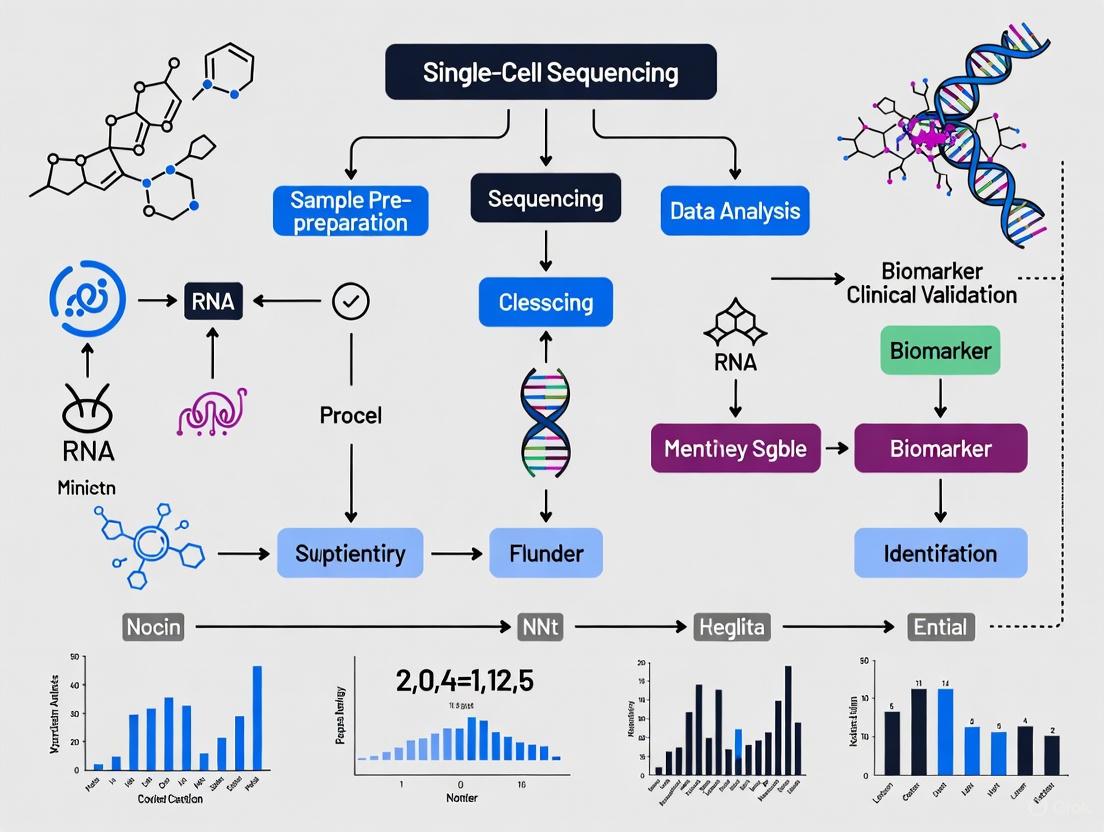
Single-cell sequencing has revolutionized biomarker discovery by revealing cellular heterogeneity and identifying novel cell-type-specific signatures with high resolution.
From Single Cells to Clinical Practice: A Roadmap for Validating Biomarkers Discovered by Single-Cell Sequencing
Abstract
Single-cell sequencing has revolutionized biomarker discovery by revealing cellular heterogeneity and identifying novel cell-type-specific signatures with high resolution. However, translating these discoveries into clinically validated tools presents significant methodological and analytical challenges. This article provides a comprehensive roadmap for researchers and drug development professionals, covering the foundational principles of single-cell biomarker discovery, methodological approaches for robust assay development, strategies for troubleshooting technical and biological variability, and rigorous statistical frameworks for clinical validation. By synthesizing current best practices and emerging trends, this guide aims to bridge the critical gap between pioneering single-cell research and clinically applicable diagnostic and predictive biomarkers, ultimately accelerating the development of precision medicine.
Unraveling Cellular Heterogeneity: The Foundation of Single-Cell Biomarker Discovery
In the evolving landscape of personalized medicine, biomarkers serve as critical molecular signposts that illuminate intricate pathways of health and disease, bridging the gap between benchside discovery and bedside application [1]. The FDA-NIH Biomarker Working Group defines a biomarker as "a characteristic that is objectively measured and evaluated as an indicator of normal biological processes, pathogenic processes, or pharmacologic responses to a therapeutic intervention" [2]. These measurable indicators can take the form of molecules, genes, proteins, cells, hormones, enzymes, or physiological traits, helping researchers and clinicians detect, diagnose, and track diseases with increasing precision [1].
Biomarkers are broadly categorized based on their functional roles and clinical applications, with diagnostic, prognostic, and predictive biomarkers representing three fundamental categories that guide clinical decision-making [3]. Understanding the distinctions between these biomarker types is essential for appropriate study design, therapeutic strategy, and patient management in clinical practice and research settings. The emergence of sophisticated technologies like single-cell RNA sequencing (scRNA-seq) has further refined our ability to discover and validate these biomarkers at unprecedented resolution, revealing cellular heterogeneity that was previously obscured by bulk analysis methods [4] [5].
Defining the Fundamental Biomarker Types
Diagnostic Biomarkers
Diagnostic biomarkers are used to detect or confirm the presence of a specific disease or medical condition [3]. These biomarkers can also provide valuable information about the characteristics of a disease, enabling clinicians to make accurate and timely diagnoses. The key function of diagnostic biomarkers is to answer the fundamental question: "Does this patient have the disease?"
For a diagnostic biomarker to be clinically useful, it must demonstrate high sensitivity (ability to correctly identify those with the disease) and specificity (ability to correctly identify those without the disease) [1]. An effective diagnostic biomarker should also be easy to measure using available technology, cost-effective for widespread implementation, and consistent in performance across diverse populations [1].
Table 1: Key Characteristics and Examples of Diagnostic Biomarkers
| Characteristic | Description | Exemplary Biomarkers |
|---|---|---|
| Primary Function | Detect or confirm disease presence | Prostate-specific antigen (PSA), C-reactive protein (CRP) |
| Measurement Timing | At time of suspected diagnosis | Carcinoembryonic antigen (CEA), Neuron-specific enolase (NSE) |
| Sample Types | Tissue, blood, urine, other body fluids | CA-125 for ovarian cancer in blood |
| Key Attributes | High sensitivity and specificity | Elevated CRP indicates inflammation |
Prognostic Biomarkers
Prognostic biomarkers predict the likelihood of future clinical outcomes, including disease recurrence or progression, in patients who have already been diagnosed with a disease [6] [3]. Unlike diagnostic biomarkers that focus on current disease status, prognostic biomarkers look forward to anticipate the natural course of the disease, independent of any specific treatment. They address the clinical question: "What is the likely course of this patient's disease?"
These biomarkers help clinicians understand how aggressive a disease might be and identify patients who may benefit from more intensive monitoring or treatment approaches [6] [3]. Prognostic biomarkers are often identified from observational studies that track patient outcomes over time, and they regularly serve to stratify patients based on their risk profile [6].
Table 2: Key Characteristics and Examples of Prognostic Biomarkers
| Characteristic | Description | Exemplary Biomarkers |
|---|---|---|
| Primary Function | Predict disease outcome or progression | Ki-67 (MKI67), p53 (TP53) |
| Measurement Timing | After diagnosis, before treatment selection | BRAF mutation status in melanoma |
| Sample Types | Tumor tissue, blood, body fluids | High Ki-67 indicates aggressive tumors |
| Key Attributes | Correlates with disease aggressiveness | Identifies high-risk patient subgroups |
Predictive Biomarkers
Predictive biomarkers identify individuals who are more likely than similar individuals without the biomarker to experience a favorable or unfavorable effect from exposure to a specific medical product or environmental agent [6]. These biomarkers are directly linked to treatment decisions and form the cornerstone of personalized medicine by helping match the right therapy to the right patient. They answer the critical question: "Is this patient likely to respond to this specific treatment?"
The identification of predictive biomarkers generally requires a comparison of treatment to control in patients with and without the biomarker [6]. In some circumstances, compelling preclinical and early clinical evidence may justify definitive clinical trials only in populations enriched for the putative predictive biomarker, as was the case with BRAF inhibitor development for BRAF V600E-positive melanoma [6].
Table 3: Key Characteristics and Examples of Predictive Biomarkers
| Characteristic | Description | Exemplary Biomarkers |
|---|---|---|
| Primary Function | Predict response to specific therapy | HER2/neu status, EGFR mutations |
| Measurement Timing | Before treatment initiation | PD-L1 (CD274), NRAS |
| Sample Types | Tumor tissue, blood (liquid biopsy) | HER2 positivity predicts trastuzumab response |
| Key Attributes | Treatment-specific predictive value | RAS mutations predict lack of anti-EGFR response |
Comparative Analysis of Biomarker Types
Clinical Applications and Distinctions
Understanding the nuanced differences between prognostic and predictive biomarkers is particularly important, as these categories are frequently confused but have distinct clinical implications [6]. A prognostic biomarker provides information about the patient's overall disease outcome regardless of specific treatments, while a predictive biomarker provides information about the effect of a specific therapeutic intervention.
The FDA-NIH Biomarker Working Group illustrates this distinction with clear examples: Figure 1A shows how a difference in survival associated with biomarker status in patients receiving an experimental therapy might be misinterpreted as evidence of predictive value. However, when survival curves for patients receiving standard therapy are added in Figure 1B, it becomes apparent that the same survival differences according to biomarker status exist with standard therapy, indicating the biomarker is prognostic but not predictive [6].
In contrast, Figure 2A and Figure 2B demonstrate a scenario where a biomarker initially appears non-informative but upon full analysis proves to be predictive, showing that biomarker-positive patients who do worse on standard therapy derive clear benefit from the experimental therapy [6]. This distinction has profound implications for clinical trial design and therapeutic decision-making.
Evaluation Methodologies and Statistical Approaches
Different biomarker types require distinct methodological approaches for validation and clinical implementation. Simple methods for evaluating these biomarkers have been developed to facilitate their translation into clinical practice [2].
For prognostic biomarkers, researchers typically compare two risk prediction models in a validation sample: Model 1 based on standard predictors, and Model 2 based on standard predictors plus the new prognostic biomarker [2]. The validation sample should represent the target population, potentially using stratified nested case-control designs. Rather than relying solely on statistical measures like changes in the area under the ROC curve, a decision-analytic approach that weighs the costs of biomarker assessment against the anticipated net benefit of improved risk prediction is recommended [2].
For predictive biomarkers, a multivariate subpopulation treatment effect pattern plot involving risk difference or responders-only benefit function can help identify promising subgroups in randomized trials [2]. This approach is particularly valuable for determining whether a biomarker identifies patients who are most likely to benefit from a specific intervention.
Table 4: Methodological Approaches for Different Biomarker Types
| Biomarker Type | Key Evaluation Method | Statistical Considerations | Clinical Validation Requirements |
|---|---|---|---|
| Diagnostic | Sensitivity/specificity analysis | ROC curves, positive/negative predictive values | Comparison to gold standard in relevant population |
| Prognostic | Risk prediction model comparison | Decision curve analysis, net reclassification improvement | Prospective observation of natural disease history |
| Predictive | Treatment-by-biomarker interaction | Subpopulation treatment effect pattern plots | Randomized comparison of treatment vs. control in biomarker-defined groups |
Single-Cell Sequencing in Biomarker Discovery and Validation
Technological Advancements and Workflow
The emergence of single-cell RNA sequencing (scRNA-seq) technology has revolutionized our capacity to study cell functions in complex tissue microenvironments [4]. Traditional transcriptomic approaches, such as microarrays and bulk RNA sequencing, lacked the resolution to distinguish signals from heterogeneous cell populations or rare cell types, limiting their clinical utility for biomarker discovery [4]. Since its inception in 2009, scRNA-seq has evolved as a powerful tool for revisiting somatic evolution and functions under physiological and pathological conditions, enabling researchers to dissect cellular heterogeneity at unprecedented resolution [4] [7].
The fundamental scRNA-seq workflow begins with sample preparation and dissociation, followed by single-cell capture, transcript barcoding, reverse transcription, cell lysis, cDNA amplification, and culminates in library construction and sequencing [4]. The technology has diversified into multiple platforms, including droplet-based systems (e.g., 10× Genomics Chromium) and plate-based fluorescence-activated cell sorting (FACS), each with distinct advantages for particular applications [4]. For cells exceeding size limitations of droplet-based systems (typically >30μm), plate-based FACS employing larger nozzles offers a viable alternative [4].
SCS Biomarker Discovery Workflow: This diagram illustrates the key steps in single-cell sequencing for biomarker discovery, from sample preparation through data analysis.
Application in Biomarker Heterogeneity Studies
Single-cell technologies have proven particularly valuable for unraveling biomarker heterogeneity, which presents a significant challenge in clinical validation. A compelling example comes from a 2025 study investigating CDK4/6 inhibitor resistance in breast cancer, where scRNA-seq revealed marked intra- and inter-cell-line heterogeneity in established resistance biomarkers [5]. Researchers performed single-cell RNA sequencing of seven palbociclib-naïve luminary breast cancer cell lines and their palbociclib-resistant derivatives, analyzing 10,557 cells total (5,116 parental and 5,441 resistant cells) [5].
This study demonstrated that transcriptional features of resistance could be observed in naïve cells and correlated with sensitivity levels (IC50) to palbociclib [5]. Resistant derivatives showed transcriptional clusters that significantly varied for proliferative, estrogen response signatures, or MYC targets. The marked heterogeneity was validated in the FELINE trial, where ribociclib-resistant tumors developed higher clonal diversity and greater transcriptional variability for resistance-associated genes compared to sensitive ones [5]. This heterogeneity challenges the validation of clinical biomarkers and may facilitate resistance development.
Experimental Protocols for scRNA-seq Biomarker Studies
The methodology for scRNA-seq biomarker studies requires careful optimization at each step to generate high-quality data. Sample preparation is particularly crucial, with protocols needing adjustment for variables including cellular dimensions, viability, and cultivation conditions [4]. Single-cell suspensions are typically procured through enzymatic and mechanical dissociation techniques, followed by capture using methodologies such as droplet-based systems or FACS [4].
For the data analysis phase, specialized bioinformatic tools are essential. The SEURAT platform and Galaxy Europe Single Cell Lab provide valuable resources for processing scRNA-seq data [4]. Quality control procedures must exclude subpar data from individual cells, which may arise from compromised cell viability, inefficient mRNA recovery, or inadequate cDNA synthesis [4]. Standard QC criteria encompass evaluation of relative library size, number of detected genes, and proportion of reads aligning with mitochondrial genes [4].
Following quality control, principal component analysis is commonly employed for dimensionality reduction, often augmented by advanced machine learning algorithms like t-distributed stochastic neighbor embedding (t-SNE) and Gaussian process latent variable modeling (GPLVM) [4]. Cells are then categorized into subpopulations based on transcriptome profiles, with trajectory-inference methodologies helping trace linear differentiation pathways and multifaceted fate decisions [4].
The Scientist's Toolkit: Essential Research Reagents and Platforms
Implementing robust single-cell sequencing studies for biomarker validation requires specialized reagents and platforms. The table below details key solutions essential for conducting these sophisticated analyses.
Table 5: Essential Research Reagent Solutions for Single-Cell Biomarker Studies
| Reagent/Platform | Function | Application Context |
|---|---|---|
| 10× Genomics Chromium | Droplet-based single-cell partitioning | High-throughput cell capture and barcoding |
| Parse Biosciences Evercode v3 | Combinatorial barcoding chemistry | Scalable profiling of up to 10 million cells |
| Fluidigm C1 | Automated microfluidic cell capture | Plate-based single-cell isolation |
| SEURAT | scRNA-seq data analysis platform | Quality control, clustering, and differential expression |
| BEAMing Technology | Circulating tumor DNA mutation detection | Non-invasive biomarker monitoring in plasma |
| Single-Cell Combinatorial Indexing (SCI-seq) | Low-cost library construction | Somatic cell copy number variation detection |
Signaling Pathways and Biomarker Mechanisms
Understanding the signaling pathways in which biomarkers operate provides critical insights into their biological significance and potential therapeutic implications. Biomarkers frequently function within complex interconnected networks that drive disease progression and treatment response.
Biomarker Signaling Network: This diagram illustrates key signaling pathways containing important predictive biomarkers, showing how mutations in genes like RAS can affect treatment response.
The interconnected nature of these pathways explains why biomarkers like RAS mutations serve as negative predictive biomarkers for anti-EGFR therapies in colorectal cancer [8]. When RAS is mutated, it results in permanent activation of signaling pathways that control cell proliferation, differentiation, adhesion, apoptosis, and migration, independent of EGFR status [8]. This understanding has direct clinical implications, as anti-EGFR antibodies like cetuximab and panitumumab are only effective in patients with wild-type RAS tumors [8].
Diagnostic, prognostic, and predictive biomarkers each serve distinct but complementary roles in clinical practice and research. Diagnostic biomarkers answer "What disease does the patient have?", prognostic biomarkers address "What is the likely disease course?", and predictive biomarkers determine "Which treatment is most appropriate?" [6] [3]. The emergence of single-cell sequencing technologies has dramatically enhanced our ability to discover and validate these biomarkers at unprecedented resolution, revealing heterogeneity that impacts treatment response and resistance mechanisms [4] [5].
As we look toward the future of biomarker analysis, the integration of artificial intelligence with multi-omics approaches and the advancement of liquid biopsy technologies promise to further transform this landscape [9]. Single-cell analysis in particular is expected to become more sophisticated and widely adopted, providing deeper insights into tumor microenvironments and rare cell populations that drive disease progression [9]. These technological advances, combined with evolving regulatory frameworks and patient-centric approaches, will continue to drive the field of personalized medicine forward, ultimately improving patient outcomes through more precise biomarker-guided therapeutic strategies.
Article Contents
- Introduction: The Resolution Revolution in Sequencing
- Fundamental Differences: Bulk RNA-seq vs. Single-Cell RNA-seq
- Key Applications: Where scRNA-seq Reveals What Bulk Sequencing Cannot
- Experimental Deep Dive: Protocol and Workflow
- Case Study 1: Unraveling Therapy Resistance in Breast Cancer
- Case Study 2: Deconvoluting the Pancreatic Cancer Microenvironment
- The Scientist's Toolkit: Essential Reagents and Solutions
- Conclusion and Future Perspectives
The advent of next-generation sequencing marked a significant milestone in molecular biology, with bulk RNA sequencing (bulk RNA-seq) becoming a cornerstone for profiling gene expression. However, this approach provides only a population-level average, obscuring critical cellular differences within complex tissues. The limitations of bulk sequencing become particularly consequential when studying highly heterogeneous samples like tumors, where rare but biologically critical cell populations—such as therapy-resistant clones or cancer stem cells—can drive disease progression and treatment failure. The emergence of single-cell RNA sequencing (scRNA-seq) has fundamentally addressed this blind spot by enabling researchers to profile gene expression at the resolution of individual cells. This technological shift has been transformative for biomarker discovery and clinical validation, moving the field beyond population averages to reveal the precise cellular underpinnings of disease mechanisms [10] [11].
This guide provides an objective comparison of bulk and single-cell RNA sequencing, with a focused examination of how scRNA-seq overcomes the inherent limitations of bulk approaches. Through experimental data, detailed protocols, and case studies, we will demonstrate how single-cell resolution is revealing critical but rare cell populations that were previously masked in bulk analyses, thereby advancing the development of more precise diagnostic and therapeutic strategies.
Fundamental Differences: Bulk RNA-seq vs. Single-Cell RNA-seq
The core distinction between these two methodologies lies in their fundamental unit of analysis. Bulk RNA-seq processes RNA from a mixture of thousands to millions of cells, resulting in a single, averaged gene expression profile for the entire sample. In contrast, scRNA-seq isolates, barcodes, and sequences RNA from individual cells within a sample, generating thousands of distinct transcriptome profiles [10] [12].
A common analogy is that a bulk RNA-seq readout is like viewing a forest from a distance, seeing only the collective canopy, while a scRNA-seq readout is like examining every single tree individually, understanding its species, health, and unique position [10]. This difference in resolution has profound implications for what each technology can detect, especially in the context of cellular heterogeneity [10] [11].
Table 1: Core Methodological Comparison of Bulk RNA-seq and scRNA-seq
| Feature | Bulk RNA-seq | Single-Cell RNA-seq |
|---|---|---|
| Resolution | Population average | Individual cells |
| Detection of Rare Cells | Masks rare cell types (<1-5% of population) | Capable of identifying rare cell types (<0.1% of population) [11] |
| Insight into Heterogeneity | None; provides a homogeneous signal | Reveals and quantifies cellular heterogeneity [10] |
| Ideal Application | Differential expression between conditions (e.g., diseased vs. healthy tissue) | Defining cell types/states, developmental trajectories, and rare cell populations [10] |
| Cost (per sample) | Lower | Higher |
| Data Complexity | Lower; more straightforward analysis | Higher; requires specialized bioinformatics [10] |
| Sample Input | Total RNA from cell population | Viable single-cell suspension |
The critical advantage of scRNA-seq is its ability to unmask cellular heterogeneity. In a tumor, for instance, bulk sequencing might indicate moderate expression of a specific oncogene across the sample. scRNA-seq, however, can reveal that this signal is actually driven by a small, aggressive subpopulation of cells, while the majority of tumor cells do not express it. This level of insight is indispensable for understanding complex biological systems and disease mechanisms [10] [5] [12].
Key Applications: Where scRNA-seq Reveals What Bulk Sequencing Cannot
The applications of scRNA-seq are particularly powerful in situations where cellular identity and state are not uniform. These include:
- Characterizing Heterogeneous Cell Populations: scRNA-seq can systematically catalog all cell types and states present in a complex tissue, such as distinguishing different immune cell subtypes in a tumor or identifying novel neuronal types in the brain [10].
- Discovering Rare Cell Populations: The technology is uniquely suited for identifying and characterizing rare, functionally important cells that are invisible to bulk sequencing. This includes cancer stem cells responsible for tumor initiation and metastasis, drug-tolerant persister cells that survive therapy, and rare progenitor cells during development [11] [12].
- Reconstructing Developmental Lineages: By analyzing transcriptional relationships between individual cells, scRNA-seq can infer developmental trajectories and lineage pathways, answering questions about how cells transition from one state to another during differentiation or disease progression [10].
- Defining Disease-Specific Cell States: It can reveal specific transcriptional programs activated in subpopulations of cells under disease conditions, such as T-cell exhaustion in cancer or the pro-fibrotic state of fibroblasts in diseased lungs [13] [14].
Experimental Deep Dive: Protocol and Workflow
A typical high-throughput scRNA-seq experiment, such as those performed on the 10x Genomics Chromium platform, follows a multi-step workflow that is more complex than bulk RNA-seq, primarily due to the need to handle individual cells [10] [15].
Sample Preparation and Single-Cell Suspension: The process begins with tissue dissection and dissociation into a viable single-cell suspension using enzymatic or mechanical methods. Cell viability and concentration are critical quality control points at this stage. This step is a major source of potential artifacts, as the dissociation process can induce stress-related gene expression [10] [15]. As an alternative, single-nucleus RNA sequencing (snRNA-seq) can be used for samples that are difficult to dissociate or for frozen tissues, as nuclei are more easily isolated and lack the stress response of whole cells [4] [15].
Single-Cell Partitioning and Barcoding: The single-cell suspension is loaded onto a microfluidic chip, where each cell is encapsulated in a nanoliter-scale droplet (Gel Bead-in-emulsion, or GEM) together with a gel bead. Each bead is coated with oligonucleotides containing a cell barcode (unique to each bead), a unique molecular identifier (UMI), and a poly(dT) sequence for mRNA capture. This ensures that all cDNA derived from a single cell shares the same barcode, and every unique mRNA molecule is labeled with a UMI to control for amplification biases [10] [15] [12].
Library Preparation and Sequencing: Within the droplets, cells are lysed, and mRNA is reverse-transcribed into barcoded cDNA. The cDNA is then purified, amplified, and used to construct a sequencing library. Finally, the libraries are sequenced on a high-throughput platform [10].
The following diagram illustrates this core workflow, highlighting the steps that enable single-cell resolution.
Case Study 1: Unraveling Therapy Resistance in Breast Cancer
The marked heterogeneity of biomarkers associated with resistance to CDK4/6 inhibitors (a mainstay treatment for luminal breast cancer) has been a major clinical challenge. A 2025 study used scRNA-seq to investigate this heterogeneity at an unprecedented resolution [5].
Experimental Protocol:
- Cell Lines: Seven palbociclib-sensitive (PDS) luminal breast cancer cell lines and their palbociclib-resistant derivatives (PDR) were used.
- Single-Cell RNA Sequencing: scRNA-seq was performed on both PDS and PDR models. A total of 10,557 high-quality cells (median genes/cell >3000) were selected for analysis.
- Data Analysis: Uniform Manifold Approximation and Projection (UMAP) was used for dimensionality reduction and visualization. Established biomarkers of resistance (e.g.,
CCNE1,RB1,CDK6) and Hallmark gene sets were analyzed for expression. An ordinary least squares (OLS) approach was applied to predict if single cells transcriptomically resembled sensitive or resistant populations [5].
Key Findings and Comparison to Bulk Data: The scRNA-seq analysis revealed a marked intra- and inter-cell-line heterogeneity in resistance biomarkers that is completely obscured in bulk sequencing.
- Heterogeneity of Known Markers: While bulk analysis confirmed known trends like
CCNE1upregulation in resistant lines, scRNA-seq showed the degree of upregulation varied dramatically between individual cells within the same resistant population. Similarly, the expression of other resistance markers likeFAT1andFGFR1was highly heterogeneous [5]. - Presence of Resistant-like Cells in Naïve Populations: A critical finding was that small subpopulations of cells in the treatment-naïve (PDS) cultures already exhibited a transcriptional profile similar to resistant (PDR) cells. These "PDR-like" cells, which could serve as a reservoir for developing resistance, are impossible to detect with bulk sequencing [5].
- Diverse Pathway Enrichment: Enrichment analysis of Hallmark signatures showed that each PDR model had a distinctive pattern of pathway activation (e.g., "MTORC1 signaling," "Estrogen Response Early"), suggesting multiple convergent paths to resistance. Bulk analysis would only reveal the dominant pathway, missing this critical diversity [5].
Table 2: Heterogeneity of Resistance Markers Revealed by scRNA-seq in Breast Cancer Cell Lines
| Biomarker / Pathway | Bulk RNA-seq Finding | scRNA-seq Revelation |
|---|---|---|
| CCNE1 | Upregulated in resistant derivatives. | The level of upregulation is highly heterogeneous across cells within a resistant population [5]. |
| RB1 | Downregulated in resistant derivatives. | Expression loss is not uniform; some cells retain higher RB1 levels [5]. |
| Interferon Response | Can be elevated in resistant models. | Only a subset of resistant cell lines and a subpopulation of cells within them show strong interferon signature [5]. |
| Proliferative State | Resistant population appears homogeneous. | Resistant cells cluster into distinct transcriptional groups with varying proliferative, estrogen response, and MYC target signatures [5]. |
| Pre-existing Resistance | Not detectable. | Rare "PDR-like" cells pre-exist in drug-naïve populations, predicting adaptive response [5]. |
This study demonstrates that resistance is not a uniform state acquired by a whole cell population, but rather a heterogeneous and dynamic process driven by distinct subpopulations. This complexity likely explains the difficulty in validating a single, universal biomarker for CDK4/6 inhibitor resistance in the clinic [5].
Case Study 2: Deconvoluting the Pancreatic Cancer Microenvironment
Pancreatic ductal adenocarcinoma (PDAC) is characterized by an aggressive, therapy-resistant nature and a complex tumor immune microenvironment (TIME). A 2025 scRNA-seq study sought to better understand the immune landscape of PDAC, with a focus on T-cell exhaustion, a state of T-cell dysfunction that limits anti-tumor immunity [13].
Experimental Protocol:
- Data Source: Researchers performed a re-analysis of a publicly available human PDAC scRNA-seq dataset, which included cells from primary tumors and adjacent normal tissues.
- Cell Type Identification: Cells were clustered and annotated based on their transcriptomic profiles to identify major cell types, including cancer cells and T-cells.
- Differential Expression and Network Analysis: Upregulated genes in cancer cells and T-cells from PDAC samples versus normal were identified. Pathway analysis (Reactome) was performed, and protein-protein interaction (PPI) networks were constructed to identify hub genes.
- Validation: Hub gene expression was validated using external databases (GEPIA2, TISCH2), and overall survival analysis was performed [13].
Key Findings and Comparison to Bulk Data: Bulk sequencing of PDAC tumors provides an averaged view of the TIME, conflating signals from cancer cells, immune cells, and stromal cells. scRNA-seq successfully deconvoluted this mixture.
- Identification of T-cell Substates: The study was able to precisely characterize the exhausted T-cell population within the PDAC TIME, distinguishing it from functional effector or memory T-cells. Bulk sequencing can indicate the overall presence of T-cells but cannot reveal their functional state [13].
- Discovery of Novel Biomarkers: The analysis unraveled 16 novel markers associated with cancer cells and T-cells in PDAC. These hub genes, central to the protein interaction networks, provide new potential targets for overcoming T-cell exhaustion and improving immunotherapy responses [13].
- Cell-Type-Specific Pathways: By analyzing pathways separately in cancer cells and T-cell clusters, the study provided a clear, cell-type-specific map of dysregulated biological processes in PDAC. This is a significant advantage over bulk sequencing, where the cellular origin of pathway activation is often ambiguous [13].
The Scientist's Toolkit: Essential Reagents and Solutions
Successfully implementing a scRNA-seq experiment requires careful selection of reagents and platforms. The following table details key solutions and their critical functions in the workflow.
Table 3: Key Research Reagent Solutions for scRNA-seq Experiments
| Reagent / Solution | Function | Key Considerations | |
|---|---|---|---|
| Tissue Dissociation Kit | Enzymatically and/or mechanically dissociates tissue into a single-cell suspension. | Optimization is tissue-specific; harsh digestion can reduce viability and induce stress genes. Working at 4°C can minimize stress responses [15]. | |
| Viability Stain (e.g., DAPI) | Distinguishes live from dead cells. | High viability (>80%) is crucial; high dead cell content can sequester barcoding beads and reduce data quality. | |
| Barcoded Gel Beads | Contains cell barcodes and UMIs for labeling all mRNA from a single cell. | Platform-specific (e.g., 10x Genomics). Determines the number of cells that can be multiplexed in a single run. | |
| Partitioning Chip & Reagents | Creates the microfluidic environment for generating GEMs. | Must be matched to the desired cell number recovery (e.g., Chip K for 10K cells). | |
| Reverse Transcriptase & Amplification Kit | Converts barcoded RNA into stable cDNA and amplifies it for library construction. | High-fidelity enzymes are critical to minimize amplification bias and errors. | |
| Library Preparation Kit | Prepares the final, barcoded cDNA pool for sequencing on a specific platform (e.g., Illumina). | The following diagram maps how these key tools are integrated into the workflow, from tissue to data. |
The objective comparison presented in this guide unequivocally demonstrates that scRNA-seq overcomes the fundamental limitation of bulk RNA-seq by revealing the cellular heterogeneity inherent to biological systems. The case studies in breast and pancreatic cancers provide experimental evidence that critical, often rare, cell populations—such as pre-resistant cancer subclones and exhausted T-cells—are not just academic curiosities but central players in disease pathology and treatment response. The ability to identify these populations and define their unique transcriptional signatures is accelerating the discovery of novel, more precise biomarkers [5] [13] [11].
The future of clinical biomarker validation will increasingly rely on single-cell and spatial multi-omics technologies. While challenges in data complexity and cost remain, ongoing advancements in microfluidics, sequencing chemistry, and automated bioinformatics pipelines are making scRNA-seq more accessible and scalable [10] [4]. The integration of scRNA-seq with other omics layers, such as spatial transcriptomics and proteomics, and the application of AI for data interpretation, will further enrich our understanding of disease biology within its tissue context [14] [9]. For researchers and drug developers, embracing single-cell resolution is no longer an option but a necessity for uncovering the true drivers of disease and developing transformative, targeted therapies.
Single-cell RNA sequencing (scRNA-seq) has revolutionized biomedical science by enabling the high-throughput measurement of gene expression in individual cells, thereby revealing cellular heterogeneity that was previously masked by bulk analysis techniques [4] [16] [11]. This technology provides a high-resolution view of cellular diversity and function, making it an powerful tool for biomarker discovery across a wide spectrum of medical research [17]. By moving beyond the averaging effects of traditional bulk sequencing, scRNA-seq allows researchers to identify rare cell populations, delineate complex cellular relationships within tissues, and uncover novel biomarkers with high specificity and sensitivity [4] [11]. This article objectively compares the performance of scRNA-seq in four key application areas—radiation dosimetry, cancer research, neurology, and immunology—by examining its specific capabilities, validated biomarkers, and experimental data supporting its clinical utility.
Experimental Protocols in Single-Cell Sequencing
The standard scRNA-seq workflow involves multiple critical steps that ensure the generation of high-quality, interpretable data. While specific protocols may vary slightly depending on the technological platform, the core methodology remains consistent across applications [4] [16].
Sample Preparation and Single-Cell Isolation
The process begins with the preparation of a viable single-cell suspension from tissue samples through a combination of enzymatic and mechanical dissociation techniques. Accurate sample preparation is crucial for generating high-quality transcriptome data, with protocols requiring optimization for variables such as cellular dimensions, viability, and cultivation conditions [4]. Individual cells are then isolated using various methodologies:
- Droplet-based systems (e.g., 10× Genomics Chromium System): Utilize microfluidic innovations to facilitate rapid, simultaneous profiling of thousands of cells within discrete droplets, though this system constrains cell diameter to less than 30 µm [4].
- Plate-based fluorescence-activated cell sorting (FACS): Employs nozzles of up to 130 µm, offering a feasible alternative for capturing larger cells [4].
- Microwell-based approaches: Provide another high-throughput option for single-cell capture [16].
For clinical research applications, single-nuclei RNA sequencing (snRNA-seq) presents a viable alternative that doesn't require immediate processing of clinical samples, allowing valuable specimens to be snap-frozen and stored properly for later analysis [4].
Library Preparation and Sequencing
Upon cell capture, all transcripts from individual cells are barcoded with unique molecular identifiers (UMIs) to enable multiplexing and track transcript origins. The subsequent steps include:
- Reverse transcription (RT) of mRNA into barcoded cDNA
- Cell lysis and cDNA amplification via polymerase chain reaction (PCR)
- Construction of sequencing libraries
- High-throughput sequencing using next-generation sequencers [4]
Library construction approaches vary; 3' end enrichment methods are cost-effective and produce reduced sequencing noise, while full-length transcript libraries typically offer superior transcriptome insights, such as alternative splicing and isoforms [4].
Data Processing and Bioinformatics Analysis
The massive datasets generated by scRNA-seq require sophisticated bioinformatic processing [4]. Standard workflow includes:
- Quality Control: Filtering data based on doublets, mitochondrial content, erythrocyte gene expression, and other parameters to exclude low-quality cells [4] [16] [18].
- Normalization and Scaling: Using functions like "NormalizeData" and "ScaleData" in Seurat to standardize expression values [19] [18].
- Feature Selection: Identifying highly variable genes (typically 2,000) for downstream analysis [19] [18].
- Dimensionality Reduction: Applying principal component analysis (PCA) followed by visualization techniques such as t-distributed stochastic neighbor embedding (t-SNE) or uniform manifold approximation and projection (UMAP) [4] [16] [19].
- Clustering and Cell Type Annotation: Using algorithms to identify cell subpopulations and annotate them with biological cell types through marker gene selection methods [4] [20].
- Differential Expression Analysis: Identifying significantly changed genes between conditions or cell types using methods like the Wilcoxon rank-sum test, Student's t-test, or logistic regression [20].
For batch correction across multiple samples, tools such as Harmony, Seurat's canonical correlation analysis (CCA), or mutual nearest neighbors (MNN) are employed to correct for technical variations [16] [19].
Comparative Performance Across Application Domains
The application of scRNA-seq technologies has led to significant advances across multiple research domains, with each field leveraging its capabilities to address domain-specific challenges. The table below summarizes key performance metrics and notable biomarkers identified through scRNA-seq across four major application areas.
| Application Domain | Key Identified Biomarkers/Cell Populations | Resolution Advantage | Clinical/Research Utility | Supporting Experimental Data |
|---|---|---|---|---|
| Radiation Dosimetry | HARS-predictive genes [17]; Specific radiation-responsive biomarkers in individual cell types [17] | Identifies cell-specific features of dose-response genes beyond bulk NGS capabilities [17] | Rapid triage in nuclear emergencies; understanding individual cell sensitivity to radiation [17] | Targeted NGS of 1000 samples in <30 hours identified 4 HARS genes; Detection within 2h-3d post-irradiation [17] |
| Cancer Research | Immunoregulatory C2 IGFBP3+ melanoma subtype; FOSL1 transcription factor [19]; Tumor antigen-specific TProlif_Tox T-cells [21] | Reveals tumor microenvironment heterogeneity and rare, immunomodulatory malignant cell subtypes [19] [21] | Identifies drug resistance mechanisms; predicts immunotherapy response; discovers novel therapeutic targets [19] | FOSL1 knockdown increased apoptosis, decreased migration/proliferation (A375, MEWo cells) [19]; Multi-omic analysis of pre/post-radiation HNSCC biopsies [21] |
| Neurology | Cell-type-specific transcriptional profiles in neurons/glia; Preclinical-stage cellular aberrations [11] | Detects early gene expression changes in nerve cells before overt symptoms [11] | Early diagnosis of neurodegenerative diseases (Alzheimer's, Parkinson's); disease monitoring [11] | Analysis of brain tissue/CSF-derived cells; Identification of molecular signatures for emerging neurodegeneration [11] |
| Immunology | Tumor-infiltrating lymphocyte (TIL) subpopulations (TProlif_Tox); Regulatory, naïve T-cell clones [21]; Immune cell repertoire diversity (scTCR-seq, scBCR-seq) [16] | Characterizes immune repertoire and identifies specific functional T-cell states driving response/resistance [16] [21] | Understanding immunotherapy resistance mechanisms; guiding immune-oncology strategies [21] | Longitudinal scRNA+TCRseq of HNSCC biopsies showed rapid depletion of TProlif_Tox post-radiation, repopulation by regulatory clones [21] |
Key Signaling Pathways and Regulatory Networks
Visualizing the molecular interactions and signaling pathways discovered through scRNA-seq is crucial for understanding disease mechanisms. The following diagram illustrates a key signaling network identified in melanoma research:
Diagram Title: Melanoma Neuro-Immune Signaling Network
The FOSL1-regulated IGFBP3+ melanoma subtype (C2) functions as a neuro-immunoregulatory hub, mediating signaling to myeloid/plasmacytod dendritic cells via the MHC-II pathway and to fibroblasts/pericytes via the PROS pathway [19]. These interactions have roles in neuroimmunology, neuroinflammation, and pain regulation within the tumor microenvironment [19].
Research Reagent Solutions Toolkit
Successful single-cell sequencing experiments rely on a suite of specialized reagents and computational tools. The following table details essential solutions used in the featured studies.
| Product/Tool | Category | Primary Function | Application Example |
|---|---|---|---|
| 10× Genomics Chromium | Hardware/Reagents | Single-cell capture, barcoding, and library preparation | High-throughput cell profiling in cancer studies [4] |
| Seurat | Software | scRNA-seq data analysis, integration, and visualization | QC, clustering, and differential expression in melanoma and diabetes studies [4] [19] [18] |
| Scanpy | Software | scRNA-seq data analysis in Python | Alternative analysis pipeline to Seurat [20] [16] |
| Harmony | Software/Algorithm | Batch effect correction and data integration | Integrating multiple samples in melanoma studies [16] [19] |
| CellChat | Software/Algorithm | Inference and analysis of cell-cell communication | Predicting interactions between malignant cells and other cell types [19] |
| CIBERSORT | Software/Algorithm | Deconvolution of immune cell types from bulk data | Quantifying immune cell infiltration in T2D islet samples [18] |
| DoubletFinder | Software/Algorithm | Detection and removal of doublet cells | Quality control in melanoma data processing [19] |
| PySCENIC | Software/Algorithm | Inference of transcription factor regulatory networks | Revealing TF networks in melanoma subtypes [19] |
| CytoTRACE | Software/Algorithm | Prediction of cellular differentiation state | Identifying differentiation potency in melanoma subtypes [19] |
Single-cell RNA sequencing has established itself as a transformative technology across diverse research domains, from radiation biology to clinical oncology, by providing unprecedented resolution for detecting cellular heterogeneity and identifying novel biomarkers. The comparative analysis presented demonstrates that while the core technology remains consistent, its application yields field-specific insights that advance both fundamental understanding and clinical translation. In radiation dosimetry, scRNA-seq enables the identification of cell-specific radiation responses beyond the capabilities of traditional biodosimetry methods. In cancer research, it reveals intricate tumor microenvironment interactions and therapy resistance mechanisms. For neurological disorders, it offers hope for early detection by identifying subtle cellular changes preceding clinical symptoms. In immunology, it delineates the complex dynamics of immune cell populations in health and disease. The continued evolution of single-cell multi-omics approaches, integration with spatial transcriptomics, and advancement of computational analytical frameworks will further solidify scRNA-seq's role as an indispensable tool for biomarker discovery and validation in precision medicine.
The biomarker development pipeline represents a systematic, multi-stage process designed to transform raw biological data into validated, clinically actionable insights. This pipeline methodically progresses from initial discovery to full clinical implementation, with the overarching goal of identifying objectively measurable indicators of biological processes, pathological states, or responses to therapeutic interventions [22]. In the era of precision medicine, biomarkers have become indispensable tools, moving healthcare away from a one-size-fits-all model toward more personalized strategies for disease diagnosis, prognosis, and treatment selection [23].
The emergence of sophisticated technologies—particularly single-cell sequencing and artificial intelligence—has fundamentally reshaped this pipeline. These advances allow researchers to decipher disease complexity with unprecedented resolution, capturing the intricate heterogeneity within cell populations that traditional bulk analysis methods inevitably obscure [4] [11]. This technological evolution is critical for developing robust biomarkers that can successfully navigate the arduous path from discovery to clinical adoption, a journey notoriously marked by high failure rates and translational challenges [24] [25].
Pipeline Stages: From Discovery to Clinical Implementation
The biomarker development pipeline can be conceptualized as a multi-stage funnel, with numerous candidates entering at the discovery phase but only a select few emerging as clinically validated tools. The following diagram illustrates the key stages and their interconnected nature.
Stage 1: Discovery
The discovery phase initiates the pipeline, focusing on identifying potential biomarker candidates from complex biological data sources.
- Data Acquisition: Researchers collect biological samples appropriate for their disease context, which may include tissues, blood, urine, or other bodily fluids [24] [25]. For single-cell analyses, this begins with creating high-quality single-cell suspensions through combined enzymatic and mechanical dissociation techniques [4].
- Preprocessing: Raw data undergoes rigorous cleaning, harmonization, and standardization to ensure comparability and reproducibility [24] [26]. This includes quality control procedures to exclude subpar data from individual cells that may arise from compromised cell viability, inefficient mRNA recovery, or inadequate cDNA synthesis [4].
- Feature Extraction: Advanced computational methods, including AI and machine learning algorithms, identify meaningful patterns and potential biomarker signatures from high-dimensional data [24] [23]. This stage leverages techniques such as principal component analysis (PCA) and t-distributed stochastic neighbor embedding (t-SNE) for dimensionality reduction and visualization of cellular heterogeneity [4].
Stage 2: Validation
The validation stage subjects discovery-phase candidates to rigorous testing to confirm their analytical and clinical performance.
- Analytical Validation: This step establishes that the biomarker test itself is reliable, reproducible, and accurate in measuring the intended analyte [23]. It requires demonstrating adequate sensitivity, specificity, and precision according to established regulatory standards.
- Clinical Validation: Biomarker candidates must prove their clinical utility by demonstrating reliability, sensitivity, and specificity across large, diverse populations through extensive statistical analysis against established clinical endpoints [24]. This phase often involves retrospective and prospective studies using well-characterized patient cohorts [26].
Stage 3: Clinical Implementation
Successful clinical implementation integrates validated biomarkers into healthcare workflows to guide patient management decisions.
- Regulatory Approval: Biomarker tests must undergo review by regulatory bodies (e.g., FDA, EMA), which are increasingly implementing more streamlined approval processes for biomarkers validated through large-scale studies and real-world evidence [9].
- Clinical Integration: Implemented biomarkers are incorporated into clinical practice guidelines, requiring educational initiatives for healthcare providers and the development of decision support systems to ensure appropriate utilization [24] [23].
Single-Cell Sequencing: A Transformative Technology
Single-cell RNA sequencing (scRNA-seq) has emerged as a revolutionary technology in biomarker discovery, overcoming the limitations of traditional bulk sequencing approaches that average signals across heterogeneous cell populations [4] [11]. By providing high-resolution data at the individual cell level, scRNA-seq enables the identification of rare cell types, characterization of tumor microenvironment diversity, and dissection of cellular heterogeneity driving disease progression and treatment resistance [4] [5].
The following workflow details the core experimental protocol for scRNA-seq biomarker discovery:
Experimental Protocol: scRNA-seq for Biomarker Discovery
Sample Preparation and Single-Cell Isolation
- Sample Acquisition: Obtain fresh tissue samples or bodily fluids relevant to the disease context under study [4]. For neurological studies, cerebrospinal fluid (CSF) may be collected; for tumor studies, tissue biopsies or liquid biopsy samples (blood, urine) are appropriate [25] [11].
- Tissue Dissociation: Create single-cell suspensions using optimized enzymatic and mechanical dissociation protocols tailored to the specific tissue type [4]. Critical parameters include cellular dimensions, viability, and cultivation conditions.
- Cell Isolation: Separate individual cells using fluorescence-activated cell sorting (FACS), microfluidic systems, or droplet-based platforms [4] [11]. The Chromium system from 10× Genomics represents a widely used droplet-based platform that facilitates simultaneous profiling of thousands of cells [4].
Single-Cell Capture and Barcoding
- Cell Capture: Isolate individual cells into separate reaction chambers using microfluidic devices [4]. For cells exceeding 30μm in diameter, plate-based FACS with nozzles of up to 130μm provides a viable alternative [4].
- mRNA Capture and Barcoding: Within each reaction chamber, cellular mRNA transcripts are captured by poly-dT oligonucleotides containing unique molecular identifiers (UMIs) and cell barcodes that tag all transcripts from the same cell [4].
cDNA Synthesis and Amplification
- Reverse Transcription: Perform reverse transcription to convert barcoded mRNA into cDNA [4].
- cDNA Amplification: Amplify cDNA using polymerase chain reaction (PCR) to generate sufficient material for library construction [4]. Droplet-based systems employ pooled PCR coupled with cell barcoding techniques to markedly enhance throughput [4].
Library Preparation and Sequencing
- Library Construction: Prepare sequencing libraries from the amplified, barcoded cDNA. Libraries with 3' end enrichment are cost-effective and produce reduced sequencing noise, while full-length transcript libraries offer superior transcriptome insights, including alternative splicing and isoform information [4].
- High-Throughput Sequencing: Sequence libraries using next-generation sequencing platforms (e.g., Illumina) with sufficient depth to adequately capture the cellular transcriptome [4].
Bioinformatic Analysis and Biomarker Identification
- Quality Control: Process raw sequencing data through bioinformatic QC procedures to exclude low-quality cells using criteria such as relative library size, number of detected genes, and proportion of mitochondrial genes [4].
- Data Normalization and Integration: Normalize data to account for technical variability and integrate multiple datasets if applicable [4].
- Dimensionality Reduction and Clustering: Apply PCA, t-SNE, or uniform manifold approximation and projection (UMAP) algorithms to visualize cellular heterogeneity and identify distinct cell subpopulations [4] [5].
- Differential Expression Analysis: Identify genes significantly differentially expressed between conditions (e.g., healthy vs. disease, treatment-responsive vs. resistant) using specialized packages [4].
- Biomarker Candidate Selection: Select potential biomarker genes based on statistical significance, effect size, and biological relevance for further validation [5].
Research Reagent Solutions for scRNA-seq
Table 1: Essential research reagents and platforms for single-cell sequencing biomarker discovery
| Reagent Category | Specific Products/Platforms | Key Functions | Technical Considerations |
|---|---|---|---|
| Single-Cell Isolation Platforms | 10× Genomics Chromium, Fluidigm C1, Flow Cytometry with FACS | Separation of individual cells from tissues/body fluids | Throughput, cell size compatibility, viability preservation |
| Reverse Transcription & Amplification Kits | SMART-seq, Maxima H Minus Reverse Transcriptase | cDNA synthesis from single-cell mRNA with UMIs | Sensitivity, coverage bias, amplification efficiency |
| Library Prep Kits | Nextera, Illumina RNA Prep | Sequencing library construction from amplified cDNA | Insert size selection, complexity preservation, cost |
| Sequencing Reagents | Illumina NovaSeq, NextSeq | High-throughput sequencing of barcoded libraries | Read length, depth requirements, cost per cell |
| Bioinformatic Tools | SEURAT, Galaxy Europe Single Cell Lab | Quality control, normalization, clustering, differential expression | Computational requirements, user expertise, reproducibility |
Comparative Performance of Biomarker Technologies
The evolving landscape of biomarker technologies offers researchers multiple platforms with distinct strengths and limitations. The following comparison highlights key technologies used in modern biomarker development:
Table 2: Comparative analysis of biomarker discovery technologies
| Technology | Resolution | Key Applications | Throughput | Cost | Limitations |
|---|---|---|---|---|---|
| Single-Cell RNA Sequencing | Single-cell | Cellular heterogeneity, rare cell populations, tumor microenvironment | Medium to High | High | Complex data analysis, high cost, technical noise |
| Spatial Transcriptomics | Single-cell with spatial context | Tissue architecture, cell-cell interactions, tumor microenvironment organization | Medium | High | Limited resolution in some platforms, high cost |
| Liquid Biopsy (ctDNA) | Bulk tissue representation | Early cancer detection, monitoring treatment response, minimal residual disease | High | Medium to High | Low analyte concentration in early disease stages |
| DNA Methylation Analysis | Base-level (bulk or single-cell) | Early cancer detection, tumor classification, origin determination | High | Medium | Tissue-of-origin challenges, bioinformatic complexity |
| Proteomic Platforms | Protein-level (bulk or single-cell) | Signaling pathway analysis, drug target engagement, functional biomarkers | Low to Medium | Medium to High | Limited multiplexing, dynamic range constraints |
Single-Cell Sequencing in Breast Cancer Resistance Biomarkers
A compelling application of scRNA-seq in biomarker discovery comes from research on CDK4/6 inhibitor resistance in breast cancer. A 2025 study performed scRNA-seq on seven palbociclib-naïve luminal breast cancer cell lines and their palbociclib-resistant derivatives, analyzing 10,557 cells total (5,116 parental and 5,441 resistant cells) [5].
Key findings demonstrated that established biomarkers and pathways related to CDK4/6 inhibitor resistance present marked intra- and inter-cell-line heterogeneity. Transcriptional features of resistance could already be observed in naïve cells, correlating with levels of sensitivity (IC50) to palbociclib [5]. Resistant derivatives showed transcriptional clusters that significantly varied for proliferative, estrogen response signatures, or MYC targets [5].
This heterogeneity was validated in the FELINE trial, where ribociclib-resistant tumors developed higher clonal diversity at the genetic level and showed greater transcriptional variability for genes associated with resistance compared to sensitive ones [5]. The study successfully identified a potential signature of resistance inferred from the cell-line models that separated sensitive from resistant tumors and revealed higher heterogeneity in resistant versus sensitive cells [5].
Clinical Validation Frameworks and Challenges
The transition from discovery to clinical implementation represents the most significant hurdle in the biomarker pipeline. The clinical validation pathway requires meticulous planning and execution, as illustrated below:
Key Challenges in Biomarker Validation
Despite technological advances, significant challenges persist in biomarker development and validation:
- Data Heterogeneity and Standardization: Inconsistent data formats, processing methods, and analytical pipelines create reproducibility crises and undermine scientific trust [24] [26]. For example, different teams processing EEG data at different frequencies can produce conflicting results, invalidating comparisons [24].
- Limited Generalizability: Findings from small, homogeneous cohorts often fail to generalize across larger, diverse populations [24] [26]. This is particularly problematic for scRNA-seq studies, where specialized bioinformatic support remains indispensable for appropriate data interpretation [4].
- Clinical Translation Barriers: Substantial barriers including high implementation costs, regulatory hurdles, and workflow integration challenges impede clinical adoption [26] [25]. The "valley of death" between discovery and clinical application is evidenced by the stark contrast between thousands of biomarker publications and the minimal number achieving FDA approval [24] [25].
- Analytical Validation Requirements: Rigorous proof that a biomarker works in real-world settings, not just controlled lab environments, requires demonstration of reliability, sensitivity, and specificity across large, diverse populations [24].
Validation Strategies for Single-Cell Sequencing Biomarkers
Successful validation of scRNA-seq-derived biomarkers requires addressing these challenges through structured approaches:
- Independent Cohort Validation: Confirm biomarker performance in independent patient cohorts that reflect target population diversity [5]. The FELINE trial validation of breast cancer resistance signatures exemplifies this approach [5].
- Multi-Omics Integration: Strengthen biomarker validity through integration with complementary data types (genomic, proteomic, spatial) to develop comprehensive molecular disease maps [27] [26].
- Longitudinal Sampling: Implement serial sampling designs to capture dynamic biomarker changes over time, as trajectories often provide more comprehensive predictive information than single measurements [26] [22].
- Standardized Bioinformatics: Adopt standardized analytical frameworks and quality control metrics to enhance reproducibility [4]. Open-source initiatives like the Digital Biomarker Discovery Pipeline (DBDP) promote toolkits, reference methods, and community standards to overcome development challenges [24].
The biomarker development pipeline continues to evolve rapidly, driven by technological innovations in single-cell sequencing, multi-omics integration, and artificial intelligence. While significant challenges remain in translating discoveries to clinical practice, structured approaches that prioritize rigorous validation, standardization, and clinical utility assessment offer promising pathways forward.
The integration of AI and machine learning algorithms into biomarker analysis represents a particularly promising frontier, enabling identification of complex patterns in high-dimensional data that traditional methods overlook [23] [26]. Similarly, the emergence of multi-cancer early detection (MCED) tests based on DNA methylation patterns in liquid biopsies highlights the potential for minimally invasive biomarker platforms to transform cancer screening and monitoring [23] [25].
As single-cell technologies become more accessible and computational methods more sophisticated, the next decade will likely witness an acceleration in clinically validated biomarkers derived from these approaches. However, success will depend not only on technological advancement but also on addressing the fundamental challenges of standardization, validation, and implementation that have historically constrained biomarker translation. By learning from both successes and failures in the field, researchers can continue to advance the critical pathway from biomarker discovery to meaningful clinical impact.
From Data to Assays: Methodological Strategies for Translating Single-Cell Findings
Single-cell technologies have revolutionized biomarker discovery and clinical validation research by enabling the precise dissection of cellular heterogeneity within complex tissues. These approaches have moved beyond bulk tissue analysis to reveal distinct cellular subpopulations, rare cell types, and dynamic transitional states that were previously obscured. The integration of single-cell RNA sequencing (scRNA-seq), single-cell Assay for Transposase-Accessible Chromatin using sequencing (scATAC-seq), and Cellular Indexing of Transcriptomes and Epitopes by sequencing (CITE-seq) provides a comprehensive multi-modal framework for understanding the complex relationship between chromatin state, gene expression, and protein expression at single-cell resolution [28] [29] [4]. This technological triad forms the cornerstone of modern investigative pathology, allowing researchers to uncover novel biomarkers with enhanced predictive power for disease diagnosis, prognosis, and therapeutic response.
The clinical translation of single-cell biomarkers requires technologies capable of capturing the full complexity of the tumor microenvironment while maintaining cellular context. Spatial omics technologies have emerged as a powerful complement to single-cell methods, preserving the architectural context of cell-cell interactions that is lost in dissociated single-cell preparations [30] [31]. When integrated with single-cell multi-omics data, spatial profiling enables the validation of candidate biomarkers within their native tissue architecture, providing critical insights into cellular neighborhoods and spatial patterns of disease progression. This review provides a comprehensive comparison of core single-cell technologies, their experimental parameters, and their application in clinical biomarker research.
Core Single-Cell Technology Specifications
Table 1: Technical specifications and performance metrics of core single-cell technologies
| Technology | Measured Analytes | Key Applications in Biomarker Research | Throughput (Cells) | Key Strengths | Key Limitations |
|---|---|---|---|---|---|
| scRNA-seq | mRNA transcripts | Cell type identification, differential expression, transcriptional states, rare cell population discovery [4] | Thousands to millions [29] | High-throughput, extensive benchmarking, well-established analysis pipelines [4] [32] | Limited to transcriptome only, loses spatial context |
| scATAC-seq | Accessible chromatin regions | Regulatory element activity, transcription factor binding, epigenetic mechanisms [28] [33] | Thousands to hundreds of thousands [33] | Identifies regulatory drivers of disease, links non-coding variants to function [28] | Lower library complexity than scRNA-seq, computationally challenging [33] |
| CITE-seq | mRNA + surface proteins | Immune cell phenotyping, protein expression validation, cell surface biomarker discovery [29] [32] | Thousands to millions [32] | Direct protein measurement complements transcriptomics, validates potential targets [32] | Limited to surface proteins, antibody panel design required |
| Spatial Transcriptomics | mRNA with spatial context | Tumor microenvironment mapping, cellular neighborhood analysis, spatial biomarker validation [30] [31] | Tissue area-dependent | Preserves architectural context, validates single-cell findings in situ [30] | Lower resolution than dissociated methods, higher cost |
Experimental Protocol Details and Methodological Considerations
Sample Preparation and Quality Control
Optimal sample preparation is critical for generating high-quality single-cell data, particularly for clinical validation studies where sample quality may vary. For scRNA-seq, accurate sample preparation is crucial for generating high-quality transcriptome data, with protocols requiring optimization for variables such as cellular dimensions, viability, and cultivation conditions [4]. Single-cell suspensions are typically procured through a combination of enzymatic and mechanical dissociation techniques, which must be carefully optimized to preserve cell viability while achieving complete dissociation [4]. For frozen archival tissues, single-nuclei RNA sequencing (snRNA-seq) presents a viable alternative, as it does not require immediate processing of clinical samples and allows for the analysis of biobanked specimens [4].
Quality control metrics vary by technology but generally include assessments of cell viability, library complexity, and technical artifacts. For scATAC-seq data, key quality metrics include fragment number per cell, transcription start site (TSS) enrichment, and nucleosome signal [28] [33]. Low-quality cells in scRNA-seq data are typically identified based on unique gene counts, total counts, and mitochondrial percentage [28] [4]. For CITE-seq data, additional quality controls include antibody-derived tag (ADT) counts and the separation between signal and background for each protein marker [29] [32].
Platform Selection and Experimental Design
Droplet-based microfluidic systems, particularly the 10x Genomics Chromium platform, represent the most widely adopted approach for single-cell genomics due to their high throughput and commercial availability [29] [4]. These systems partition individual cells into nanoliter-scale droplets containing barcoded beads, enabling massively parallel barcoding of thousands of cells in parallel [29]. The choice between full-length transcript protocols (e.g., SMART-seq2) and 3'-counting methods (e.g., 10x Genomics) depends on the research objectives, with the former providing superior transcriptome insights including alternative splicing and isoforms, while the latter offers higher throughput and reduced sequencing noise [4].
Experimental design must carefully consider control samples, replication strategies, and cell loading concentrations. Species-mixing experiments using human and mouse cells are a gold-standard technique for benchmarking and quantifying cell doublets, which occur when two or more cells are mistakenly encapsulated together [29]. As cells are Poisson-loaded into droplets, higher cell densities raise the probability of doublet formation, requiring careful optimization of cell loading concentrations or the use of computational doublet detection methods [29]. For multi-omics studies, the higher costs and technical complexity of these approaches must be balanced against the additional biological insights gained from paired modality measurements [28] [34].
Experimental Workflows and Data Analysis
Integrated Multi-Omics Workflow
Diagram 1: Integrated multi-omics workflow for biomarker discovery, combining scATAC-seq, scRNA-seq, and CITE-seq technologies with spatial validation.
Computational Analysis Pipelines
Data Preprocessing and Quality Control
The computational analysis of single-cell data requires specialized pipelines for each modality. For scATAC-seq data, the PUMATAC pipeline provides a universal preprocessing approach that includes cell barcode error correction, adapter trimming, reference genome alignment, and mapping quality filtering [33]. The Signac package in R is widely used for scATAC-seq data analysis, including peak calling, dimension reduction, and integration with scRNA-seq data [28]. For scRNA-seq data, the Seurat package provides comprehensive tools for quality control, normalization, and clustering, while the DoubletFinder package can identify potential doublets [28].
Quality control thresholds vary by technology and experimental protocol. For scATAC-seq, typical QC metrics include nCountpeaks (2000-30,000), nucleosome signal (<4), and TSS enrichment (>2) [28]. For scRNA-seq, common filters include nCountRNA (<50,000), nFeature_RNA (500-6,000), and mitochondrial percentage (<25%) [28]. For CITE-seq data, additional quality controls focus on the antibody-derived tags, including checks for background signal and nonspecific binding [29] [32].
Data Integration and Multi-Omic Analysis
The integration of multiple modalities presents both computational challenges and opportunities for biological discovery. Multi-omics technologies enable the joint profiling of multiple modalities within individual cells, offering the potential to uncover new cross-modality relationships [34]. However, multi-omics data remain scarcer than their single-modality counterparts due to higher costs, and often show poorer data quality for each individual modality [34]. Computational methods like scPairing have been developed to integrate and generate single-cell multi-omics data by pairing separate unimodal datasets, effectively creating artificially paired data that closely resemble true multi-omics data [34].
For clustering analysis, benchmarking studies have evaluated 28 computational algorithms on paired transcriptomic and proteomic datasets [32]. The top-performing methods across both omics modalities include scAIDE, scDCC, and FlowSOM, with FlowSOM also offering excellent robustness [32]. For users prioritizing memory efficiency, scDCC and scDeepCluster are recommended, while TSCAN, SHARP, and MarkovHC are recommended for users who prioritize time efficiency [32].
Key Research Reagent Solutions
Table 2: Essential research reagents and platforms for single-cell multi-omics studies
| Reagent/Platform | Function | Key Features | Considerations for Biomarker Studies |
|---|---|---|---|
| 10x Genomics Chromium | Single-cell partitioning and barcoding | High-throughput, multi-ome capabilities (RNA+ATAC) | Widely adopted, standardized workflows, commercial support [28] [29] |
| Chromium Next GEM Chip Kits | Microfluidic cell partitioning | Sub-Poisson loading efficiency, consistent performance | Optimal cell loading critical for doublet rates [28] [29] |
| Single Cell Multiome ATAC + Gene Expression | Simultaneous RNA and chromatin accessibility profiling | Paired measurements from same cells | Direct correlation of regulatory elements with gene expression [28] |
| CITE-seq Antibodies | Oligonucleotide-conjugated antibodies for protein detection | Multiplexed protein measurement alongside transcriptome | Panel design crucial, validation required for specificity [29] [32] |
| Nuclei Isolation Reagents | Tissue dissociation and nuclei preparation | Preservation of nuclear RNA and chromatin accessibility | Essential for frozen archival samples [28] [4] |
| Single Cell 3' Reagent Kits | Library preparation for gene expression | 3' counting method with UMIs | Higher throughput but limited splice variant information [4] [35] |
Applications in Clinical Biomarker Validation
Cancer Regulatory Programs and Therapeutic Targets
Single-cell multi-omics analysis has revealed critical cancer regulatory elements and transcriptional programs with significant clinical implications. A comprehensive study integrating scATAC-seq and scRNA-seq data from eight distinct carcinoma tissues identified extensive open chromatin regions and constructed peak-gene link networks that reveal distinct cancer gene regulation and genetic risks [28]. This approach identified cell-type-associated transcription factors that regulate key cellular functions, such as the TEAD family of TFs, which widely control cancer-related signaling pathways in tumor cells [28]. In colon cancer, tumor-specific TFs that are more highly activated in tumor cells than in normal epithelial cells were identified, including CEBPG, LEF1, SOX4, TCF7, and TEAD4, which are pivotal in driving malignant transcriptional programs and represent potential therapeutic targets [28].
Tumor Microenvironment and Immunotherapy Biomarkers
The application of spatial and single-cell omics has significantly advanced biomarker discovery in tumor immunotherapy by addressing critical challenges such as tumor heterogeneity, immune evasion, and variability within the tumor microenvironment (TME) [30]. Immunotherapeutic strategies, including immune checkpoint inhibitors and adoptive T-cell transfer, have demonstrated promising clinical outcomes; however, their efficacy is limited by low response rates and the incidence of immune-related adverse events (irAEs) [30]. Spatial omics integrates molecular profiling with spatial localization, providing comprehensive insights into the cellular organization and functional states within the TME, thereby enabling the identification of spatial biomarkers of therapeutic response [30].
Comparative studies of spatial transcriptomics platforms using formalin-fixed paraffin-embedded (FFPE) tumor samples have demonstrated the capability of these technologies to characterize the tumor microenvironment at single-cell resolution [31]. These studies have revealed intricate differences between ST platforms and highlighted the importance of parameters such as probe design in determining data quality [31]. The integration of spatial technologies with single-cell multi-omics data provides a powerful approach for validating candidate biomarkers within their architectural context, bridging the gap between cellular identity and tissue function.
The integration of scRNA-seq, scATAC-seq, and CITE-seq technologies provides a powerful multi-modal framework for clinical biomarker discovery and validation. Each technology offers complementary strengths: scRNA-seq reveals cellular heterogeneity and transcriptional states, scATAC-seq identifies regulatory mechanisms driving disease, and CITE-seq validates protein-level expression of candidate biomarkers. The convergence of these approaches with spatial profiling technologies and advanced computational methods creates an unprecedented opportunity to understand disease mechanisms at cellular resolution, accelerating the development of precision medicine approaches across diverse human diseases.
As these technologies continue to evolve, key challenges remain in standardization, data integration, and clinical translation. However, the rapid pace of innovation in single-cell multi-omics promises to further enhance our understanding of cellular biology in health and disease, ultimately leading to more precise diagnostic, prognostic, and predictive biomarkers for clinical application.
The study of biological systems has evolved significantly from single-omics investigations to integrated multi-omics approaches. This paradigm shift enables researchers to construct comprehensive molecular portraits of health and disease by simultaneously analyzing genomic, transcriptomic, and proteomic data layers. The integration of these diverse data types provides unprecedented insights into complex biological processes, disease mechanisms, and therapeutic opportunities, particularly in the context of single-cell sequencing biomarker validation research [36] [14]. This guide objectively compares the performance of different multi-omics integration strategies and presents supporting experimental data to inform researchers, scientists, and drug development professionals about the current landscape of holistic molecular signature discovery.
Multi-omics Integration Strategies: A Comparative Analysis
Horizontal vs. Vertical Integration Approaches
Multi-omics integration strategies can be broadly categorized into horizontal and vertical approaches, each with distinct advantages and applications in biomedical research.
Horizontal integration combines data within the same omics layer from multiple technologies or dimensions. A prominent example is the combination of single-cell RNA sequencing (scRNA-seq) with spatial transcriptomics, which compensates for the limitations of each method when used independently. This approach addresses the mixed-cell signals and resolution constraints of spatial transcriptomics while resolving the loss of spatial context inherent in scRNA-seq [14]. For instance, in lung adenocarcinoma research, this strategy enabled the discovery of KRT8+ alveolar intermediate cells (KACs) located proximal to tumor regions, representing an intermediate state in the transformation of alveolar type II cells into tumor cells [14].
Vertical integration connects multiple biological layers from genomics to transcriptomics to proteomics, establishing causal relationships from genetic alterations to functional protein consequences. This approach links genetic variants with their downstream effects on gene expression and protein abundance, providing a more complete understanding of molecular mechanisms [14]. For example, in Alzheimer's disease research, vertical integration has been employed to identify candidate susceptibility factors and biomarkers by connecting GWAS-identified SNPs with expression quantitative trait loci (eQTL) data and subsequent protein-level validation [37].
Table 1: Comparison of Multi-omics Integration Strategies
| Integration Type | Definition | Key Applications | Advantages | Limitations |
|---|---|---|---|---|
| Horizontal Integration | Combines data within the same omics layer from multiple technologies | Spatial mapping of cell populations, resolving cellular heterogeneity | Compensates for technical limitations of individual platforms, preserves spatial context | Requires larger sample sizes, higher costs, complex batch effect correction |
| Vertical Integration | Connects different biological layers (e.g., genomics to transcriptomics to proteomics) | Identifying causal mechanisms from genotype to phenotype, biomarker validation | Establishes functional relationships across molecular layers, enhances biomarker specificity | Integration complexity, requires sophisticated computational algorithms |
| Single-cell Multi-omics | Simultaneously profiles multiple omics layers at single-cell resolution | Characterizing tumor heterogeneity, identifying rare cell populations, developmental biology | Unprecedented resolution of cellular diversity, reveals tumor microenvironment dynamics | High technical complexity, specialized instrumentation, data sparsity challenges |
Predictive Performance Across Omics Layers
Comparative analyses have revealed significant differences in the predictive performance of different molecular layers for complex diseases. A systematic comparison of genomic, proteomic, and metabolomic data from the UK Biobank demonstrated that proteins consistently outperformed other molecular types for both disease incidence and prevalence prediction [38].
The study found that using only five proteins per disease resulted in median areas under the receiver operating characteristic curves (AUCs) of 0.79 (range: 0.65-0.86) for incidence and 0.84 (range: 0.70-0.91) for prevalence across nine complex diseases including rheumatoid arthritis, type 2 diabetes, and atherosclerotic vascular disease [38]. Metabolites yielded median AUCs of 0.70 and 0.86 for incidence and prevalence, respectively, while genetic variants showed more modest performance with median AUCs of 0.57 and 0.60 [38].
Table 2: Predictive Performance of Different Omics Layers for Complex Diseases
| Disease | Genomics AUC (Incidence/Prevalence) | Proteomics AUC (Incidence/Prevalence) | Metabolomics AUC (Incidence/Prevalence) | Top Performing Proteins |
|---|---|---|---|---|
| Atherosclerotic Vascular Disease | 0.61/0.63 | 0.86/0.88 | 0.80/0.90 | MMP12, TNFRSF10B, HAVCR1 |
| Type 2 Diabetes | 0.67/0.70 | 0.83/0.89 | 0.80/0.89 | Not specified |
| Crohn's Disease | 0.65/0.68 | 0.65/0.70 | 0.62/0.65 | Not specified |
| Rheumatoid Arthritis | 0.53/0.49 | 0.79/0.84 | 0.62/0.86 | Not specified |
Experimental Protocols for Multi-omics Integration
Integrated Genomic, Transcriptomic and Proteomic Analysis Workflow
A comprehensive multi-omics workflow for biomarker discovery typically involves sequential integration across molecular layers, as demonstrated in Alzheimer's disease research [37]:
1. Genome-wide Data Collection:
- Selection of candidate Single Nucleotide Polymorphisms (SNPs) from published meta-analyses of GWAS
- Inclusion of SNPs associated with relevant phenotypic traits (e.g., cortical structure, cognitive function)
- Compilation of unique SNPs for further analysis (2,978 SNPs in the referenced study)
2. Expression Quantitative Trait Loci (eQTL) Identification:
- Utilization of Genotype-Tissue Expression (GTEx) data from multiple brain regions
- Identification of significant variant gene-SNP pairs below the false discovery rate threshold
- Selection of genes whose expression is significantly altered by candidate SNPs
3. Brain and Blood Transcriptomic Analysis:
- Differential expression analysis between cases and controls using multiple datasets
- Application of random effects models for meta-analysis across studies
- Validation in both brain regions (cortex, hippocampus) and blood samples
4. Proteomic Data Validation:
- Expression profiling of candidate genes at the protein level in blood and cortex samples
- Differential protein expression analysis with relevant covariates (PMI, age, sex)
- Meta-analysis of multiple independent proteomic datasets
This integrated approach allows researchers to identify candidate biomarkers with supporting evidence across multiple molecular layers, enhancing the robustness of findings compared to single-omics studies [37].
Single-cell Multi-omics Experimental Protocol
Advanced single-cell multi-omics approaches require specialized experimental protocols, as illustrated by a comprehensive carcinoma study [28]:
1. Sample Preparation and Tissue Dissociation:
- Acquisition of fresh tumor and adjacent normal tissues
- Tissue dissociation using pre-chilled Dounce homogenizer with homogenization buffer
- Sequential filtration through 70-μm and 40-μm nylon mesh to remove debris
- Centrifugation-based nucleus isolation using iodixanol density gradient
2. Library Preparation and Sequencing:
- Nuclei concentration determination and quality assessment
- Library construction using Chromium Next GEM Chip J Single Cell Kit
- Simultaneous scATAC-seq and scRNA-seq using Multiome ATAC + Gene Expression reagent kits
- Sequencing on Illumina platforms with minimum 50,000 reads per cell
3. Data Processing and Quality Control: For scATAC-seq data:
- Identification of accessible chromatin regions using MACS2
- Quality filtering based on nCount_peaks (2000-30,000), nucleosome signal (<4), TSS enrichment (>2)
- Cluster annotation using differential accessible regions associated with cell-type marker genes
- Batch effect correction using Harmony algorithm
For scRNA-seq data:
- Quality control thresholds: nCountRNA (500-50,000), nFeatureRNA (500-6,000), mitochondrial percentage (<25%)
- Doublet identification and removal using DoubletFinder R package
- Integration with scATAC-seq data to construct peak-gene link networks
This protocol enables the identification of cell-type-specific regulatory elements and transcription factors driving malignant transcriptional programs, providing insights into potential therapeutic targets [28].
Signaling Pathways and Regulatory Networks
Multi-omics Revealed Regulatory Dynamics in Carcinoma
Integrated single-cell multi-omics analysis of eight carcinoma tissues identified conserved epigenetic regulation across cell types and revealed cell-type-associated transcription factors that regulate key cellular functions [28]. The TEAD family of transcription factors was found to widely control cancer-related signaling pathways in tumor cells. In colon cancer, tumor-specific transcription factors including CEBPG, LEF1, SOX4, TCF7, and TEAD4 were identified as highly activated in tumor cells compared to normal epithelial cells, playing pivotal roles in driving malignant transcriptional programs [28].
Multi-omics Integration Reveals Causal Pathways
Alzheimer's Disease Molecular Pathways
Integrated multi-omics analysis in Alzheimer's disease identified several functionally enriched pathways, including immune-related functions driven by HLA and CR1 loci, amyloid-related pathways (ABCA7, BIN1, PICALM genes), protein-lipid complexes, and vesicle trafficking mechanisms [37]. These findings demonstrate how multi-omics integration can elucidate complex disease mechanisms spanning multiple biological processes.
The Scientist's Toolkit: Research Reagent Solutions
Successful multi-omics research requires specialized reagents and platforms designed to maintain sample integrity and enable simultaneous profiling of multiple molecular layers. The following table details essential research reagents and their applications in multi-omics studies:
Table 3: Essential Research Reagents for Multi-omics Studies
| Reagent/Platform | Function | Application Notes |
|---|---|---|
| Chromium Next GEM Chip Kits | Single-cell partitioning and barcoding | Enables simultaneous scRNA-seq and scATAC-seq from same cells |
| Homogenization Buffer | Tissue dissociation and nucleus isolation | Critical for preserving RNA and protein integrity during processing |
| Iodixanol Density Gradient | Nuclei purification | Separates intact nuclei from cellular debris for high-quality sequencing |
| Tn5 Transposase | Chromatin tagmentation | Identifies accessible chromatin regions in scATAC-seq experiments |
| UCSC Xena Browser | Multi-omics data repository | Provides integrated analysis of genomic, transcriptomic, and epigenomic data |
| Signac R Package | scATAC-seq data analysis | Processes chromatin accessibility data and integrates with gene expression |
| Seurat R Package | Single-cell RNA-seq analysis | Standard toolkit for scRNA-seq data processing, visualization, and integration |
| Harmony Algorithm | Batch effect correction | Integrates datasets from different sources while preserving biological variance |
The integration of genomics, transcriptomics, and proteomics represents a transformative approach in biomedical research, enabling the identification of holistic molecular signatures that transcend single-layer analyses. Horizontal and vertical integration strategies each offer distinct advantages for different research questions, with emerging evidence suggesting that proteomic measurements may provide superior predictive performance for complex diseases compared to genomic or metabolomic markers alone. The continued refinement of experimental protocols and analytical frameworks for multi-omics integration promises to accelerate biomarker discovery and validation, particularly in the context of single-cell sequencing and spatial molecular profiling. As these technologies become more accessible and standardized, they are poised to revolutionize precision medicine approaches across diverse disease contexts.
In the era of precision medicine, the journey of a biomarker from discovery to clinical application is long and arduous, requiring rigorous statistical validation across multiple phases [39]. Single-cell RNA sequencing (scRNA-seq) has emerged as a transformative technology in this landscape, enabling researchers to dissect cellular heterogeneity at unprecedented resolution. This high-resolution view is crucial for identifying novel cell types, discovering rare cell populations, and understanding complex disease mechanisms—all essential components for robust biomarker development [40] [7]. The bioinformatics workflow for scRNA-seq data analysis represents a critical pathway for transforming raw sequencing data into biologically meaningful insights with clinical utility.
The analytical pipeline for scRNA-seq data encompasses several interconnected stages, each with distinct goals and challenges. Quality control ensures that only high-quality cells inform downstream analyses, preventing technical artifacts from masquerading as biological discoveries [41] [42]. Dimensionality reduction techniques combat the "curse of dimensionality" inherent in high-throughput genomic data, enabling visualization and capturing the essential structure of the data [43] [44]. Clustering algorithms group cells based on transcriptional similarity, facilitating cell type identification and characterization [40] [45]. Finally, differential expression analysis identifies genes that vary systematically between conditions or cell types, providing candidate biomarkers and insights into molecular mechanisms [46] [47]. This guide systematically compares tools and methods at each stage, with a particular focus on their performance in generating clinically actionable biomarkers.
Quality Control: Ensuring Data Integrity for Reliable Biomarkers
Key QC Metrics and Threshold Determination
Quality control forms the foundation of any scRNA-seq analysis, as conclusions drawn from poor-quality data can lead to spurious biological interpretations. The primary goals of QC include filtering out low-quality cells, identifying failed samples, and retaining cells that truly represent the underlying biology [42]. scRNA-seq data presents unique challenges for QC, including distinguishing poor-quality cells from biologically distinct populations with naturally low complexity, and choosing filtering thresholds that remove technical artifacts without eliminating rare but biologically relevant cell types [41] [42].
Three key metrics are central to scRNA-seq quality assessment: the number of counts per barcode (count depth), the number of genes detected per barcode, and the fraction of counts originating from mitochondrial genes [41]. Low gene counts and low count depth often indicate poorly captured cells, while a high mitochondrial fraction typically suggests broken cell membranes and cytoplasmic mRNA leakage, characteristic of dying or stressed cells [41] [42]. These metrics must be considered jointly, as cells with high mitochondrial content might represent genuine biological states in certain cell types, such as those involved in respiratory processes [41].
Threshold determination can be approached through manual inspection of distributions or automated statistical methods. Manual thresholding involves visualizing the distribution of QC metrics and identifying outliers [42]. Automated methods like Median Absolute Deviation (MAD) provide a more systematic approach, identifying cells that differ by a specified number of MADs from the median [41]. This method is particularly valuable for large datasets where manual inspection becomes impractical.
Experimental Protocols for Quality Control
A standard QC workflow begins with calculating quality metrics from the raw count matrix. The scanpy function sc.pp.calculate_qc_metrics() is widely used for this purpose and can compute proportions of counts for specific gene subsets [41]. Mitochondrial genes are typically identified by prefixes ("MT-" for human, "mt-" for mouse), while ribosomal genes often start with "RPS" or "RPL," and hemoglobin genes contain "HB" [41]. Key computed metrics include n_genes_by_counts (number of genes with positive counts per cell), total_counts (total number of counts per cell, also known as library size), and pct_counts_mt (percentage of total counts mapping to mitochondrial genes) [41].
After metric computation, filtering decisions are implemented. The following DOT language visualization illustrates the complete QC decision workflow:
Figure 1: Quality Control Workflow for scRNA-seq Data
Performance Comparison of QC Approaches
Different QC tools exhibit varying strengths in identifying specific quality issues. Tools like Scrublet specialize in doublet detection, while others like SinQC integrate both gene expression patterns and sequencing library qualities to identify low-quality cells [40]. The table below summarizes the performance characteristics of different QC approaches:
Table 1: Performance Comparison of scRNA-seq QC Methods
| Method/Tool | Primary Focus | Strengths | Limitations | Computational Efficiency |
|---|---|---|---|---|
| Manual Thresholding [41] [42] | All QC metrics | Direct researcher oversight, adaptable to specific datasets | Subjective, time-consuming for large datasets | High |
| MAD-Based Filtering [41] | All QC metrics | Automated, robust statistical basis | May not account for biological heterogeneity | High |
| Scrublet [40] | Doublet detection | Specifically designed for doublet identification | Performance varies across datasets | Medium |
| SinQC [40] | Comprehensive quality | Integrates expression patterns and library qualities | More complex implementation | Medium |
For biomarker development, stringent QC is particularly crucial as technical artifacts can create false biomarker candidates. The National Institutes of Health (NIH) best practices emphasize that patient and specimen selection should directly reflect the target population and intended use of the biomarker [39]. Randomization and blinding during biomarker data generation can help minimize bias—a systematic shift from truth that represents one of the greatest causes of failure in biomarker validation studies [39].
Dimensionality Reduction: Navigating High-Dimensional Single-Cell Data
Theoretical Foundations and Method Categories
Single-cell RNA-sequencing data suffers from the "curse of dimensionality," where the high-dimensional space (thousands of genes) makes distance measures unreliable and visualization challenging [43] [40] [44]. Dimensionality reduction techniques address this by projecting data into a lower-dimensional space while preserving essential structures [44]. These methods can be broadly categorized into linear approaches, non-linear techniques, and those based on neural networks [44].
Principal Component Analysis (PCA) represents the most widely used linear dimensionality reduction method [43] [40] [44]. PCA identifies orthogonal principal components that capture maximum variance in the data, creating new uncorrelated variables that are linear combinations of original features [44]. While computationally efficient and highly interpretable, PCA may struggle to capture non-linear relationships prevalent in scRNA-seq data due to dropout events and technical noise [40].
Non-linear methods like t-Distributed Stochastic Neighbor Embedding (t-SNE) and Uniform Manifold Approximation and Projection (UMAP) have become standards for single-cell visualization [43] [40] [44]. t-SNE converts high-dimensional Euclidean distances between data points into conditional probabilities representing similarities, then uses Student's t-distribution to compute similarities in low-dimensional space [44]. UMAP operates on similar principles but uses Riemannian geometry and assumes data is uniformly distributed on a locally connected Riemannian manifold [44]. Deep learning-based approaches like Variational Autoencoders (VAE) and Deep Count Autoencoder (DCA) have also emerged, with DCA specifically extending autoencoders with zero-inflated negative binomial loss functions to denoise scRNA-seq data [44].
Experimental Protocols for Dimensionality Reduction
Implementing dimensionality reduction typically follows data normalization and feature selection. The workflow generally involves:
- Data Preparation: Start with normalized data, often using the shifted logarithm transformation or other appropriate normalization methods [43].
- PCA Application: Compute principal components, typically retaining the top 10-50 PCs for downstream analyses [43]. The
sc.pp.pca()function in scanpy is commonly used with thesvd_solver="arpack"parameter [43]. - Non-linear Projection: For visualization purposes, apply t-SNE or UMAP to the PCA-reduced data. UMAP requires first computing a neighborhood graph with
sc.pp.neighbors()before runningsc.tl.umap()[43].
The following DOT language visualization illustrates the relationship between different dimensionality reduction methods and their outputs:
Figure 2: Dimensionality Reduction Method Categories and Characteristics
Performance Comparison of Dimensionality Reduction Methods
A comprehensive benchmark study evaluating 10 dimensionality reduction methods on 30 simulation datasets and 5 real datasets revealed important performance characteristics [44]. The study assessed accuracy, stability, computing cost, and sensitivity to hyperparameters, providing valuable insights for method selection.
Table 2: Performance Comparison of scRNA-seq Dimensionality Reduction Methods
| Method | Category | Accuracy | Stability | Computing Cost | Key Strengths | Key Limitations |
|---|---|---|---|---|---|---|
| PCA [43] [44] | Linear | Moderate | High | Low | Fast, interpretable, preserves global structure | Cannot capture non-linear relationships |
| t-SNE [43] [44] | Non-linear | High | Moderate | High | Excellent local structure preservation | Computational intensive, loses global structure |
| UMAP [43] [44] | Non-linear | High | High | Medium | Preserves both local and global structure | Sensitive to hyperparameters |
| ZIFA [44] | Model-based | Moderate | Moderate | Medium | Accounts for dropout events | Limited to linear transformations |
| DCA [44] | Neural Network | High | High | High | Denoises data while reducing dimensions | Complex implementation, requires tuning |
The benchmark study found that t-SNE yielded the best overall performance with the highest accuracy but at the highest computing cost [44]. UMAP exhibited the highest stability with moderate accuracy and the second-highest computing cost, while also preserving the original cohesion and separation of cell populations better than other methods [44]. For large-scale studies aimed at biomarker discovery, UMAP often represents a balanced choice, though researchers should be aware that its performance depends on appropriate hyperparameter tuning [43] [44].
Clustering: Identifying Cell Types and States for Biomarker Discovery
Algorithm Categories and Underlying Principles
Clustering represents a cornerstone of scRNA-seq analysis, enabling the identification of cell types and states that form the basis for biomarker discovery [40] [45]. Clustering algorithms for scRNA-seq data can be broadly classified into four categories based on how they estimate the optimal number of clusters: (1) intra- and inter-cluster similarity methods, (2) community detection-based approaches, (3) eigenvector-based techniques, and (4) stability-based methods [45].
Intra- and inter-cluster similarity methods calculate indices that measure the closeness of items within each cluster and the separation between clusters [45]. Examples include scLCA (using Silhouette index), CIDR (using Calinski-Harabasz index), and SHARP (using both indices) [45]. RaceID uses the Gap statistic, which compares within-cluster dispersion to expected null distribution [45].
Community detection-based techniques primarily rely on the Louvain or Leiden algorithms to optimize community structure and identify the best possible grouping [45]. This approach has been widely adopted in popular tools such as Seurat, Monocle3, and ACTIONet [45]. These methods are particularly valued for their scalability to large datasets.
Eigenvector-based techniques typically apply eigengap heuristics to estimate the number of cell types [45]. SIMLR partitions data by maximizing the eigengap, while Spectrum extends this concept with a multimodality gap heuristic applicable to both Gaussian and non-Gaussian structures [45]. SC3 examines eigenvalues based on the Tracy-Widom test for cluster determination [45].
Stability-based methods operate on the principle that clustering results using the optimal number of clusters should be more robust to small data perturbations compared to suboptimal cluster numbers [45]. DensityCut estimates cell types by modeling cell distribution density and selecting the most stable clusters in a hierarchical tree, while scCCESS uses random sampling-based ensemble deep clustering to assess stability across multiple resampled datasets [45].
Experimental Protocols for Clustering Analysis
A systematic benchmarking study evaluated fourteen clustering methods on datasets sampled from the Tabula Muris project, covering various data characteristics including different numbers of cell types (5-20), varying cells per type (50-250), and different cell type proportions [45]. The evaluation assessed deviation from true cell type numbers, clustering concordance with predefined labels, and computational efficiency.
The following DOT language visualization illustrates the clustering workflow and methodological categories:
Figure 3: scRNA-seq Clustering Workflow and Method Categories
Performance Comparison of Clustering Algorithms
The benchmarking study revealed distinct performance patterns across methods [45]. Monocle3, scLCA, and scCCESS-SIMLR generally showed smaller median deviation from the true number of cell types, while methods like Spectrum, SINCERA, and RaceID exhibited high variability in their estimates [45]. Some methods demonstrated systematic biases, with SHARP and densityCut tending to underestimate, and SC3, ACTIONet, and Seurat showing tendencies to overestimate cluster numbers [45].
Table 3: Performance Comparison of scRNA-seq Clustering Algorithms
| Method | Category | Estimation Deviation | Clustering Concordance | Computational Efficiency | Recommended Use Cases |
|---|---|---|---|---|---|
| Monocle3 [45] | Community detection | Low | High | High | Large datasets, standard cell types |
| scLCA [45] | Intra/inter similarity | Low | High | Medium | Datasets with clear separation |
| scCCESS-SIMLR [45] | Stability-based | Low | High | Low | Critical applications requiring accuracy |
| Seurat [45] | Community detection | High (overestimation) | Moderate | High | Standard analyses, large datasets |
| SC3 [45] | Eigenvector-based | High (overestimation) | Moderate | Low | Small to medium datasets |
| SHARP [45] | Intra/inter similarity | High (underestimation) | Moderate | High | Large datasets with computational constraints |
For biomarker discovery, accurate clustering is essential as it defines the cellular contexts in which differential expression will be assessed. Methods that demonstrate both accurate estimation of cluster numbers and high concordance with known cell types, such as scCCESS-SIMLR and Monocle3, may be particularly valuable for defining precise cellular populations between which biomarkers can be identified [45].
Differential Expression Analysis: Identifying Candidate Biomarkers
Methodological Approaches and Statistical Frameworks
Differential expression (DE) analysis in scRNA-seq serves to identify genes that vary systematically between conditions or cell types, forming the basis for biomarker candidate selection [46] [47]. Unlike bulk RNA-seq where DE detects differences between experimental conditions, scRNA-seq DE primarily identifies markers across cell types, though multi-condition DE within cell types is also possible [46] [47]. The unique characteristics of scRNA-seq data—including high noise, overdispersion, low library sizes, sparsity, and high proportions of zeros (dropouts)—require specialized statistical approaches [47].
DE methods for scRNA-seq can be classified into six major categories based on their underlying statistical frameworks [47]:
- Generalized Linear Models (GLM): Approaches like NBID and ZINB-WaVE use negative binomial (NB) or zero-inflated negative binomial (ZINB) distributions to model count data, testing for differential expression using likelihood ratio tests (LRT) or Wald tests [47].
- Generalized Additive Models (GAM): Methods such as Monocle2 and tradeSeq use GAMs to capture non-linear expression patterns, particularly useful for trajectory inference and time-series data [47].
- Hurdle Models: MAST (Model-based Analysis of Single-cell Transcriptomics) employs a two-part hurdle model that separately models the probability of expression (binary part) and the conditional mean expression level (continuous part) [47].
- Mixture Models: Techniques like SCDE and BASiCS use Bayesian mixture models to account for multiple sources of variation, providing posterior probabilities for differential expression [47].
- Two-Class Parametric Tests: Seurat uses negative binomial models for differential expression between clusters, employing likelihood ratio tests [47].
- Non-parametric Tests: Methods like D3E use Cramér-von Mises or Kolmogorov-Smirnov tests to compare entire expression distributions rather than just means [47].
For multi-condition DE analysis with biological replicates, three main approaches have emerged: mixed-effects models, pseudobulk methods, and differential distribution tests [46]. Mixed-effects models include sample-specific random effects to account for correlation between cells from the same donor, while pseudobulk methods sum counts within cell types for each sample before applying bulk RNA-seq methods [46]. Differential distribution tests examine differences in entire expression distributions rather than just mean expression [46].
Experimental Protocols for Differential Expression Analysis
A critical consideration in experimental design for differential expression is the appropriate handling of biological replicates. When analyzing differences between conditions (e.g., case vs. control), treating individual cells as independent observations leads to pseudoreplication, as cells from the same sample are more similar to each other than to cells from different samples [46]. This can result in inflated false discovery rates, as the variability between samples is not properly accounted for [46].
The following DOT language visualization illustrates the differential expression analysis workflow with proper replicate handling:
Figure 4: Differential Expression Analysis Workflow with Replicate Handling
Performance Comparison of Differential Expression Methods
Different DE methods exhibit varying strengths depending on the biological question, data characteristics, and experimental design. The table below summarizes key performance characteristics of major DE approaches:
Table 4: Performance Comparison of scRNA-seq Differential Expression Methods
| Method | Category | Replicate Handling | Key Strengths | Key Limitations | Computational Efficiency |
|---|---|---|---|---|---|
| muscat [46] | Mixed-effects/Pseudobulk | Excellent | Comprehensive framework for multi-condition DE | Complex implementation | Medium |
| NEBULA [46] | Mixed-effects | Excellent | Fast algorithm for large datasets | Requires some statistical expertise | High |
| MAST [46] [47] | Hurdle model | Good (with random effects) | Specifically models scRNA-seq characteristics | Can be conservative | Medium |
| Pseudobulk (scran) [46] | Pseudobulk | Excellent | Simple, uses established bulk methods | Loses single-cell resolution | High |
| distinct [46] | Distribution test | Good | Detects distribution differences beyond means | Computationally intensive | Low |
| Seurat [47] | Two-class parametric | Poor (for multi-condition) | User-friendly, fast | Pseudoreplication with multiple samples | High |
For biomarker development, the choice of DE method should align with the specific biomarker application. Prognostic biomarkers, which provide information about overall clinical outcomes regardless of therapy, can be identified through main effect tests of association between the biomarker and outcome [39]. Predictive biomarkers, which inform expected outcomes based on treatment decisions, require interaction tests between treatment and biomarker in statistical models, ideally using data from randomized clinical trials [39].
The Scientist's Toolkit: Essential Research Reagent Solutions
The following table summarizes key reagents, tools, and platforms essential for implementing the scRNA-seq bioinformatics workflow described in this guide:
Table 5: Essential Research Reagent Solutions for scRNA-seq Bioinformatics
| Category | Item | Function | Examples/Alternatives |
|---|---|---|---|
| Data Generation | scRNA-seq Platform | Generates single-cell transcriptomic data | 10x Genomics, Parse Biosciences Evercode v3 [7] |
| Analysis Framework | Programming Environment | Provides computational foundation for analysis | R/Bioconductor, Python with scanpy [41] [43] |
| Quality Control | QC Metrics Calculator | Computes quality metrics for cell filtering | sc.pp.calculateqcmetrics() in scanpy [41] |
| Doublet Detection | Doublet Identification | Detects multiple cells labeled as single | Scrublet, DoubletFinder [40] |
| Normalization | Normalization Method | Removes technical variation between cells | SCnorm, scran, sctransform [40] |
| Dimensionality Reduction | DR Algorithm | Reduces data complexity for visualization | PCA, UMAP, t-SNE [43] [44] |
| Clustering | Clustering Algorithm | Identifies cell types and states | Seurat, SC3, Monocle3 [45] |
| Differential Expression | DE Analysis Tool | Identifies differentially expressed genes | MAST, muscat, NEBULA [46] [47] |
| Biomarker Validation | Statistical Framework | Validates biomarker clinical utility | Interaction tests for predictive biomarkers [39] |
The bioinformatics workflow for scRNA-seq data—encompassing quality control, dimensionality reduction, clustering, and differential expression—provides a powerful pipeline for biomarker discovery and validation. As single-cell technologies continue to advance, generating increasingly large and complex datasets, the rigorous application of these computational methods becomes ever more critical for extracting biologically meaningful insights with clinical utility.
For biomarker development specifically, the NIH best practices emphasize defining the intended use and target population early in development, ensuring specimens directly represent the target population, and implementing randomization and blinding to minimize bias [39]. The predictive power of scRNA-seq in identifying cell-type-specific expression in disease-relevant tissues has been shown to robustly predict a target's progression through clinical trial phases [7], highlighting the translational potential of properly analyzed single-cell data.
As the field progresses, integration of multi-omics data at single-cell resolution, improved methods for addressing sparsity and technical noise, and development of standardized frameworks for biomarker validation will further enhance our ability to translate single-cell discoveries into clinically actionable biomarkers. The tools and methods compared in this guide provide a foundation for researchers to build upon in this exciting and rapidly evolving field.
Liquid biopsy has emerged as a transformative approach in oncology, enabling minimally invasive detection and monitoring of cancer through the analysis of circulating tumor-derived biomarkers in bodily fluids. This paradigm shift from traditional tissue biopsy addresses critical limitations including invasiveness, tumor heterogeneity, and the inability to perform serial monitoring [48] [49]. The integration of liquid biopsy into clinical practice represents a significant advancement for precision medicine, particularly when contextualized within the framework of single-cell sequencing biomarker validation research. As the field progresses toward standardized clinical applications, understanding the comparative performance of various liquid biopsy platforms and methodologies becomes essential for researchers and drug development professionals seeking to implement these technologies in biomarker-driven studies and therapeutic development.
Liquid biopsy encompasses the analysis of multiple analyte classes, including circulating tumor cells (CTCs), circulating tumor DNA (ctDNA), tumor-derived extracellular vesicles (EVs), and cell-free RNA (cfRNA) [48] [49]. Each biomarker category offers complementary insights into tumor biology, with distinct advantages and limitations for clinical application. The clinical validity of these biomarkers is being progressively established through extensive validation studies, many of which utilize single-cell sequencing technologies to decipher tumor heterogeneity at unprecedented resolution [17] [50]. This review provides a comprehensive comparison of current liquid biopsy technologies, their performance metrics against traditional alternatives, and detailed experimental protocols, with particular emphasis on their role in clinical validation research for single-cell sequencing-derived biomarkers.
Comparative Performance Analysis of Liquid Biopsy Platforms
Analytical and Clinical Performance Metrics
Table 1: Performance Comparison of Leading Liquid Biopsy Assays
| Assay/Platform | Analyte Type | Key Performance Metrics | Clinical Validation Status | Limitations/Challenges |
|---|---|---|---|---|
| Guardant360 CDx | ctDNA | FDA-approved as CDx for ESR1 mutations in breast cancer; Sixth FDA-approved CDx claim [51] | Approved for guiding therapy in ER-positive, HER2-negative advanced breast cancer | Tissue concordance variations; Limited in low tumor shed situations |
| Northstar Select (BillionToOne) | ctDNA | Detected 51% more pathogenic SNVs/indels and 109% more CNVs vs. comparators; 45% fewer null reports [51] | Prospective head-to-head validation against 6 commercial assays | Limited real-world evidence outside validation studies |
| Exact Sciences Cancerguard | Multi-analyte | Multi-cancer early detection for >50 cancer types [51] | Launched as LDT; Partnership with Quest for blood collection | Specificity and PPV data not yet comprehensive |
| NeXT Personal (Personalis) | ctDNA (MRD) | Ultra-sensitive tumor-informed MRD detection; Predicts outcomes in neoadjuvant setting [51] | Phase 3 NeoADAURA trial in EGFR-mutated NSCLC | Requires tumor tissue sequencing first; Higher cost |
| CellSearch | CTCs | FDA-cleared for prognostic monitoring in metastatic breast, prostate, and colorectal cancers [49] | Included in clinical guidelines (AJCC, CSCO) | Limited sensitivity in early-stage disease |
Concordance Analysis with Tissue Biopsy
Table 2: Liquid vs. Tissue Biopsy Comparative Performance
| Performance Parameter | Liquid Biopsy | Tissue Biopsy | Clinical Implications |
|---|---|---|---|
| Invasiveness | Minimally invasive (blood draw) [49] | Invasive procedures (surgical, needle) [49] | Liquid enables serial monitoring; Tissue limited by procedure risks |
| Turnaround time | Significantly quicker (days) [52] | Longer (days to weeks) [52] | Faster treatment decisions with liquid |
| Tumor representation | Captures heterogeneity from multiple sites [52] | Limited to sampled region [52] | Liquid better for metastatic disease; Tissue may miss heterogeneity |
| Sensitivity in early-stage | Lower sensitivity (ctDNA ~0.1% of cfDNA) [49] | High sensitivity for localized disease | Tissue remains gold standard for initial diagnosis |
| Mutation detection concordance | Variable (17-87% across studies) [52] | Reference standard but imperfect | Discordance necessitates complementary use |
| Sample quality issues | Minimal degradation with proper tubes [53] | Formalin fixation degrades DNA [52] | Liquid provides superior nucleic acid quality |
Key Experimental Protocols in Liquid Biopsy Research
Sample Collection and Pre-analytical Processing
Protocol 1: Blood Collection and Plasma Separation for ctDNA Analysis
- Materials: Specialized blood collection tubes (Streck, Roche, Thermo Fisher) with preservatives to prevent nucleic acid degradation [53]
- Procedure:
- Collect whole blood via venipuncture (typically 10-20 mL) into stabilized tubes
- Invert tubes gently 8-10 times immediately after collection to ensure mixing with preservatives
- Store at room temperature if processing within 6 hours, or refrigerate for longer storage (up to 7 days for some tubes)
- Centrifuge at 1600-2000 × g for 10 minutes at room temperature to separate plasma
- Transfer supernatant to microcentrifuge tubes without disturbing buffy coat
- Perform second centrifugation at 16,000 × g for 10 minutes to remove residual cells
- Aliquot plasma and store at -80°C until DNA extraction
- Quality Control: Monitor hemolysis visually or by spectrophotometry; document time from collection to processing [53]
ctDNA Extraction and Quantification
Protocol 2: Cell-free DNA Extraction Using Magnetic Bead-Based Kits
- Materials: Commercial cfDNA extraction kits (BioChain, QIAamp Circulating Nucleic Acid Kit)
- Procedure:
- Thaw plasma aliquots on ice or at 4°C
- Add proteinase K and lysis buffer to plasma sample (typically 1-5 mL plasma)
- Incubate at 60°C for 30 minutes with occasional vortexing
- Add binding buffer and magnetic beads to bind nucleic acids
- Incubate with rotation for 15 minutes at room temperature
- Place on magnetic stand until solution clears, then remove and discard supernatant
- Wash beads twice with wash buffer while on magnetic stand
- Elute cfDNA in low-EDTA TE buffer or nuclease-free water (typically 20-50 μL)
- Quantify cfDNA using fluorometric methods (Qubit dsDNA HS Assay)
- Quality Assessment: Analyze fragment size distribution using Bioanalyzer or TapeStation; expected peak at ~166 bp [49]
Mutation Detection and Sequencing Library Preparation
Protocol 3: Targeted Next-Generation Sequencing for ctDNA Mutation Detection
- Materials: Hybridization capture panels or amplicon-based target enrichment systems
- Procedure:
- Convert 10-50 ng cfDNA to sequencing library using ligase-based methods
- Add dual-indexed adapters with unique molecular identifiers (UMIs)
- Amplify libraries with limited PCR cycles (typically 8-12 cycles)
- Perform target enrichment using either:
- Hybridization capture: Incubate with biotinylated probes (15-24 hours), capture with streptavidin beads, wash stringently
- Amplicon approach: Perform targeted PCR with gene-specific primers
- Amplify captured libraries (12-16 PCR cycles)
- Quantify libraries by qPCR and pool at equimolar ratios
- Sequence on appropriate NGS platform (Illumina, Ion Torrent) with minimum 10,000x raw coverage
- Bioinformatic Analysis:
- Demultiplex using barcode information
- Group reads by UMI to create consensus sequences
- Align to reference genome (hg38)
- Call variants using specialized ctDNA algorithms
- Annotate variants and filter against population databases
Research Reagent Solutions for Liquid Biopsy Applications
Table 3: Essential Research Reagents for Liquid Biopsy Workflows
| Reagent Category | Specific Products | Function & Application | Key Performance Characteristics |
|---|---|---|---|
| Blood Collection Tubes | Streck Cell-Free DNA BCT, Roche Cell-Free DNA Collection Tubes | Stabilize nucleated cells and prevent cfDNA release during storage [53] | Enables room temp storage up to 7 days; Maintains cfDNA profile integrity |
| cfDNA Extraction Kits | BioChain cfDNA Extraction Kit, QIAamp Circulating Nucleic Acid Kit | Isolation of high-quality cfDNA from plasma/serum [52] | Optimized for short fragments; High recovery from <1 mL plasma [52] |
| Library Preparation | Illumina DNA Prep, KAPA HyperPrep, Swift Accel-NGS | Convert limited cfDNA to sequencing libraries [51] | UMI incorporation; Low input compatibility (≤10 ng) |
| Target Enrichment | IDT xGen Pan-Cancer Panel, Guardant Health Target Selector | Enrich cancer-relevant genomic regions [51] | Comprehensive gene coverage; Optimized for ctDNA variant detection |
| Quality Control | Agilent Bioanalyzer, Qubit dsDNA HS Assay, ddPCR | Quantify and qualify input DNA and final libraries [49] | Fragment size analysis; Sensitivity to 0.1% variant allele frequency |
| Bioinformatics | Archer Analysis, Dragen Liquid Biopsy App, Custom pipelines | Variant calling, annotation, and interpretation [50] | UMI-aware consensus building; Noise reduction algorithms |
Advanced Integration with Single-Cell Sequencing Biomarker Validation
Synergistic Applications in Cancer Research
The integration of liquid biopsy with single-cell RNA sequencing (scRNA-seq) represents a powerful approach for comprehensive biomarker discovery and validation. scRNA-seq enables deconvolution of tumor heterogeneity at cellular resolution, identifying distinct cell subpopulations and their characteristic gene expression signatures [17] [50]. These findings directly inform liquid biopsy assay development by prioritizing biomarkers that reflect critical biological processes such as metastasis, drug resistance, and immune evasion.
In hepatocellular carcinoma (HCC) research, scRNA-seq has identified macrophage infiltration patterns contributing to immune evasion, with specific genes (APOE, ALB, XIST, FTL) correlated with patient survival [50]. These biomarkers can subsequently be monitored in liquid biopsy platforms for non-invasive disease monitoring. Similarly, pseudotime trajectory analysis using Slingshot algorithm reconstructs cellular differentiation pathways, identifying early versus late-stage tumor cell populations whose signatures can be tracked in circulation [50].
Multimodal Integration with Radiomics
Advanced diagnostic models now integrate liquid biopsy with radiological features for improved cancer detection. The GBCseeker model for gallbladder cancer diagnosis combines cfDNA genetic signatures, radiomic features, and clinical information, achieving 93.33% accuracy in the discovery cohort and 87.76% in external validation [54]. This multimodal approach reduced diagnostic errors by 56.24%, demonstrating the powerful synergy between liquid biomarkers and imaging data.
Emerging Applications and Future Directions
Liquid biopsy technology continues to evolve with several emerging applications showing significant promise. Multi-cancer early detection tests represent a frontier in cancer screening, with Exact Sciences' Cancerguard detecting over 50 cancer types as a laboratory-developed test [51]. Minimal residual disease (MRD) monitoring represents another rapidly advancing application, where ultra-sensitive ctDNA assays like NeXT Personal and Signatera can detect recurrence months before clinical or radiographic evidence [51].
The clinical trial landscape reflects growing confidence in liquid biopsy, with numerous trials incorporating these technologies. As of 2025, 20 recruiting and 5 not-yet-recruiting U.S. registered clinical trials are targeting immunotherapy and liquid biopsy integration [48]. The technology is also expanding beyond oncology, with applications in radiation biodosimetry where liquid biopsy can identify radiation-sensitive biomarkers for triage in nuclear emergencies [17].
Future directions focus on enhancing sensitivity and specificity through technological improvements. 'New era platforms' with advanced liquid handling technologies promise improved efficiency, reduced costs, and higher-throughput experiments with larger sample sizes [55]. Integration with artificial intelligence, particularly graph neural networks (GNNs), shows robust predictive performance (R²: 0.9867, MSE: 0.0581) for drug-gene interaction prediction and therapeutic candidate ranking [50].
As liquid biopsy continues its integration into clinical practice and research, the complementary relationship with single-cell sequencing technologies will be essential for validating novel biomarkers and understanding the complex biology underlying liquid biopsy findings. This synergy promises to accelerate the development of increasingly sophisticated non-invasive diagnostics for precision medicine applications across the cancer care continuum.
Intellectual Disability (ID) is a neurodevelopmental condition characterized by significant limitations in intellectual functioning and adaptive behavior, affecting approximately 1-3% of the global population [56]. A significant challenge in ID research lies in its considerable genetic and clinical heterogeneity, with hundreds of genes implicated in its pathology, making the identification of reliable diagnostic biomarkers particularly challenging [56]. Traditional bulk RNA sequencing approaches average gene expression across all cells in a sample, effectively masking critical cell-type-specific expression patterns that might underlie disease mechanisms [57] [4].
This case study explores how single-cell RNA sequencing (scRNA-seq) overcomes this limitation by enabling researchers to investigate transcriptional patterns at the level of individual cells [56]. The specific experimental rationale was to leverage scRNA-seq's resolution to identify cell-specific biomarkers, with a particular focus on T-cell populations, given that specific genetic disorders resulting in ID can also present with immune system anomalies, including altered T-cell activity [56] [58]. The study aimed to define unique biomarkers associated with specific T-cell types throughout the progression of ID, thereby contributing to a deeper understanding of its pathophysiology [56].
Detailed Experimental Protocols & Workflows
Single-Cell RNA Sequencing Wet-Lab Methodology
The scRNA-seq workflow began with standard sample preparation steps crucial for generating high-quality data. Single-cell suspensions were obtained from samples using a combination of enzymatic and mechanical dissociation techniques tailored to the specific tissue type [4]. Following dissociation, individual cells were captured using a droplet-based microfluidic system, specifically the Chromium system from 10× Genomics, which facilitates the rapid, simultaneous profiling of thousands of individual cells within discrete droplets [4]. This platform was selected for its high throughput capabilities.
Upon cell capture, all transcripts from individual cells were barcoded with unique molecular identifiers (UMIs) during the reverse transcription (RT) step, which converts mRNA into barcoded cDNA. This was followed by second-strand synthesis and polymerase chain reaction (PCR)-based cDNA amplification. The droplet-based system employed a pooled PCR approach coupled with cell barcoding, significantly enhancing throughput. Finally, deep sequencing libraries were constructed from the amplified, barcoded cDNA and sequenced using high-throughput next-generation sequencers [4].
Computational Bioinformatic Analysis Pipeline
The computational analysis of the raw scRNA-seq data involved a multi-stage bioinformatic pipeline, executed primarily using the Seurat package in R [56] [4].
- Data Quality Control (QC) and Preprocessing: The raw data was first subjected to rigorous QC checks. Low-quality cells were filtered out using thresholds for the number of expressed features (genes) per cell (<200 genes) and the proportion of mitochondrial transcripts. Genes detected in fewer than three cells were also removed. The data was then normalized, and the effects of technical covariates were regressed out [56].
- Feature Selection and Dimensionality Reduction: Highly variable genes were identified to focus subsequent analysis on the most biologically informative features. Principal component analysis (PCA) was performed on these variable genes to reduce dimensionality [59].
- Clustering and Cell Type Annotation: Cells were grouped into clusters using a graph-based clustering algorithm, such as the K-nearest neighbors (KNN) algorithm as implemented in Seurat. These clusters were then visualized in two-dimensional space using Uniform Manifold Approximation and Projection (UMAP). Cell types were assigned to each cluster through reference-based annotation using known marker genes for T cells, B cells, natural killer cells, monocytes, and dendritic cells [56].
- Differential Expression and Cross-Dataset Validation: Differential expression analysis was performed on the annotated T-cell clusters to identify genes significantly up- or down-regulated in ID compared to controls. To enhance the robustness of the findings, these scRNA-seq-derived differentially expressed genes (DEGs) were cross-referenced with DEGs identified from a bulk RNA-seq dataset (GSE46831) analyzed via the GREIN database. This cross-validation yielded 196 shared DEGs for further investigation [56].
The following diagram illustrates the core computational workflow for analyzing and validating scRNA-seq data in this study.
Data Presentation & Comparative Analysis
Key Quantitative Findings from the ID scRNA-seq Study
The application of the described protocols yielded specific, quantifiable results on cell populations and gene expression changes in Intellectual Disability.
Table 1: Key Experimental Findings from the ID scRNA-seq Study
| Analysis Category | Specific Finding | Quantitative Result |
|---|---|---|
| Identified DEGs | Total unique DEGs from 7 T-cell clusters | 3,510 genes [56] |
| Shared DEGs from cross-matching with bulk RNA-seq | 196 genes [56] | |
| Regulation of shared DEGs | 102 up-regulated, 89 down-regulated [56] | |
| Hub Genes (PPI Network) | Primary hub gene (RPS27A) | Identified by all 11 topological algorithms [56] [58] |
| Secondary hub genes (Ribosomal Proteins) | RPS21, RPS18, RPS7, RPS5, and RPL9 [56] | |
| Regulatory Molecules | Key Transcriptional Factors (TFs) | FOXC1, FOXL1, GATA2 [56] |
| Key microRNAs (miRNAs) | mir-92a-3p, mir-16-5p [56] |
Comparative Performance of scRNA-seq vs. Alternative Methods
The value of the scRNA-seq approach becomes evident when its performance is compared against traditional genomic and cytogenetic techniques.
Table 2: Method Comparison for Biomarker Discovery
| Method | Key Capability / Application | Throughput & Key Limitation |
|---|---|---|
| Single-cell RNA-seq (scRNA-seq) | Identifies cell-specific biomarkers; reveals heterogeneity; discovers rare cell types [56] [60]. | High-throughput (1000s of cells); Complex data processing and high cost [4] [11]. |
| Bulk RNA Sequencing | Provides snapshot of average gene expression in a tissue [57]. | High-throughput; Masks cell-type-specific signals and heterogeneity [57] [4]. |
| Dicentric Chromosome Assay (DCA) | Gold standard for radiation biodosimetry; detects chromosomal aberrations [57]. | Low-throughput, labour-intensive; not suitable for large-scale screening [57]. |
| Immunohistochemistry / ELISA | Detects specific protein biomarkers in tissue or serum [60]. | Limited ability to detect novel biomarkers and low-abundance targets [60]. |
Signaling Pathways and Functional Analysis
Functional enrichment analysis of the 196 shared DEGs was conducted using gene ontology (GO) and multiple pathway databases (KEGG, Reactome, Wiki, BioCarta) to interpret their biological significance [56].
Table 3: Enriched Functional Pathways from 196 Shared DEGs
| Database | Most Enriched Pathways | Gene Involvement |
|---|---|---|
| Gene Ontology (GO) | Biological Process: Signal Transduction, Translation, Immune Response [56] | 15.7%, 15.7%, 9% of genes [56] |
| Cellular Component: MHC Class II Protein Complex [56] | 3.8% of genes [56] | |
| Molecular Function: Protein Binding, RNA Binding [56] | 84.4%, 20.6% of genes [56] | |
| KEGG | Allograft Rejection, Type I Diabetes Mellitus, Graft-versus-host Disease [56] | 21%, 18%, 20% [56] |
| Reactome | Viral mRNA Translation, Eukaryotic Translation Elongation [56] | 24.32%, 24.32% [56] |
| BioCarta | Antigen Processing and Presentation [56] | 23.05% [56] |
The pathway analysis highlights a strong signal related to immune system function, particularly antigen presentation via the MHC class II complex, and fundamental cellular processes like ribosomal translation. The following diagram summarizes the core signaling pathways and biological functions implicated by the biomarker discovery analysis.
The Scientist's Toolkit: Key Research Reagents & Solutions
Successful execution of a scRNA-seq study for biomarker discovery requires a suite of specialized reagents and computational tools.
Table 4: Essential Research Reagents and Solutions for scRNA-seq Biomarker Discovery
| Tool / Reagent | Specific Function / Role | Application in the ID Case Study |
|---|---|---|
| 10× Genomics Chromium | Droplet-based single-cell capture and barcoding [4]. | Platform for generating single-cell libraries from dissociated tissue samples. |
| Seurat / Scanpy | Comprehensive R/Python toolkit for scRNA-seq data analysis [56] [4]. | Used for QC, normalization, clustering, and differential expression analysis. |
| STRING Database | Online resource for known and predicted Protein-Protein Interactions (PPI) [56]. | Construction of the PPI network to identify hub genes like RPS27A. |
| Cytoscape with cytoHubba | Network visualization and analysis; identifies hub nodes from networks [56]. | Visualization of PPI network and application of 11 topological algorithms. |
| DAVID / FunRich | Functional enrichment analysis and gene annotation tool [56]. | Used for Gene Ontology and pathway enrichment analysis of the 196 DEGs. |
| UMAP/t-SNE | Dimensionality reduction algorithms for visualizing high-dimensional data [4]. | Visualization of cell clusters in 2D space after PCA. |
Cyclin-dependent kinase 4/6 inhibitors (CDK4/6is), combined with endocrine therapy, represent the standard of care for patients with hormone receptor-positive, HER2-negative (HR+/HER2-) metastatic breast cancer (mBC) [61]. Despite their efficacy, intrinsic resistance occurs in approximately one-third of patients, leading to early disease progression, while acquired resistance eventually develops in nearly all patients [61]. This resistance presents a major clinical challenge, compounded by the absence of reliable predictive biomarkers in clinical practice.
The difficulty in validating resistance biomarkers stems largely from profound heterogeneity in resistance mechanisms. Studies using bulk sequencing approaches have identified disparate genomic and transcriptomic alterations across different resistant tumors, but these methods average cellular signals and obscure critical subpopulation dynamics [5]. Single-cell RNA sequencing (scRNA-seq) has emerged as a transformative technology that enables high-resolution dissection of this heterogeneity by profiling individual cells within complex tumor ecosystems [62] [63].
This case study examines how scRNA-seq technologies are deconstructing the heterogeneity of CDK4/6i resistance in breast cancer. We compare the performance of single-cell approaches against traditional bulk sequencing methods and highlight how the resolution of scRNA-seq is uncovering novel biomarkers, cellular dynamics, and therapeutic opportunities that were previously undetectable.
Methodology: Single-Cell Approaches to Resistance
Experimental Models and Patient Cohorts
Research in CDK4/6i resistance has utilized two primary approaches: in vitro cell line models and direct patient tumor profiling.
Cell line studies typically involve establishing palbociclib-resistant derivatives (PDR) from multiple parental luminal breast cancer models (PDS) through prolonged exposure to increasing drug concentrations [5]. These models encompass diverse genomic backgrounds, including ER+/HER2- lines (MCF7, T47D, ZR751), endocrine-resistant derivatives (EDR, TamR), and ER+/HER2+ models (BT474, MDAMB361) [5].
Patient cohort studies focus on metastatic biopsies from HR+/HER2- mBC patients collected before CDK4/6i treatment (baseline) and/or at disease progression [61]. Patients are stratified by response: responders (median progression-free survival [mPFS] = 25.5 months), early progressors (EP, mPFS = 3 months), and late progressors (LP, mPFS = 11 months) [61]. Metastatic sites commonly analyzed include liver, pleural effusions, ascites, and bone [61].
Single-Cell RNA Sequencing Workflow
The general scRNA-seq workflow for resistance studies follows these key stages [62] [63] [64]:
- Sample Preparation: Tissue dissociation into single-cell suspensions using mechanical and enzymatic methods.
- Single-Cell Isolation: Cell capture via droplet-based systems (e.g., 10x Genomics Chromium) or plate-based methods (e.g., Smart-seq2).
- Library Preparation: Reverse transcription, cDNA amplification, and barcoding for individual cells.
- Sequencing: High-throughput sequencing on platforms such as Illumina NovaSeq.
- Bioinformatic Analysis: Quality control, normalization, clustering, and differential expression analysis using tools like Seurat.
Figure 1: scRNA-seq Experimental Workflow. The process from sample collection to data generation for deconstructing drug resistance heterogeneity.
Key Analytical Methods
- Dimensionality Reduction and Clustering: Uniform Manifold Approximation and Projection (UMAP) and t-distributed Stochastic Neighbor Embedding (t-SNE) visualize high-dimensional data and identify distinct cell subpopulations [5] [62].
- Differential Gene Expression: Identifies transcriptional differences between sensitive and resistant cells, or between cell subpopulations [5].
- Trajectory Inference: Tools like Monocle and Slingshot reconstruct cellular evolution and transitions during resistance development [62] [65].
- Cell-Cell Communication Analysis: Packages like CellPhoneDB and NicheNet infer ligand-receptor interactions between tumor cells and microenvironment components [65] [61].
- Copy Number Variation Analysis: InferCNV distinguishes malignant epithelial cells from stromal and immune cells based on chromosomal alterations [65].
Results: scRNA-seq Versus Bulk Sequencing
Technical Performance Comparison
Table 1: Performance comparison of scRNA-seq versus bulk RNA-seq
| Parameter | Single-Cell RNA-seq | Bulk RNA-seq |
|---|---|---|
| Resolution | Single-cell level | Population average |
| Heterogeneity Detection | Identifies rare subpopulations and continuous transitions | Masks cellular diversity |
| Key Applications in Resistance | Identifying resistant subclones, tumor microenvironment interactions, cellular trajectories | Overall expression changes, established pathway activity |
| Sensitivity to Rare Cells | High (can identify <1% subpopulations) | Low (requires >10% representation) |
| Throughput | Moderate to high (thousands of cells) | High (multiple samples) |
| Cost per Sample | High | Moderate |
| Data Complexity | High (requires specialized bioinformatics) | Moderate (standardized pipelines) |
| Compatibility with Samples | Requires viable single-cell suspensions; challenging for FFPE | Compatible with FFPE and frozen tissues |
| Spatial Information | Lost (requires integration with spatial transcriptomics) | Lost |
Biomarker Discovery Capabilities
scRNA-seq reveals a more complex landscape of resistance biomarkers compared to bulk sequencing approaches. In cell line models, established resistance markers including CCNE1, RB1, CDK6, FAT1, and interferon signaling pathways demonstrate marked heterogeneity both between and within cell lines [5].
Table 2: Heterogeneity of CDK4/6i resistance biomarkers identified by scRNA-seq
| Biomarker Category | Specific Markers | Resistance Association | Heterogeneity Observation |
|---|---|---|---|
| Cell Cycle Regulators | CCNE1 ↑ | Amplified in resistant models | Highest in CCNE1-amplified TamR and BT474 PDR [5] |
| RB1 ↓ | Loss of function | Most pronounced in RB1-deleted T47D and MDAMB361 PDR [5] | |
| CDK6 ↑ | Overexpression | Significant in MCF7, EDR, ZR751, MDAMB361 only [5] | |
| Signaling Pathways | FAT1 ↓ | Loss of function | Downregulated in MCF7, TamR, ZR751, MDAMB361 only [5] |
| FGFR1 ↑ | Amplification/Overexpression | Upregulated in T47D but downregulated in other models [5] | |
| Interferon Signaling ↑ | Activation | Increased in MCF7, EDR, T47D, MDAMB361; decreased in ZR751 [5] | |
| Transcription Programs | MYC Targets ↑ | Pathway activation | Enriched in late progressors and resistant derivatives [5] [61] |
| Estrogen Response ↓ | Pathway suppression | Heterogeneous modulation across models [5] | |
| EMT Signatures ↑ | Pathway activation | Enhanced in late progressors [61] | |
| Immune Microenvironment | CD8+ T cells ↓ | Reduced infiltration | Lower in early progressors versus responders [61] |
| NK cells ↓ | Reduced infiltration | Lower in early progressors versus responders [61] | |
| Exhaustion Markers ↑ (HSP90, HSPA8) | Immune dysfunction | Upregulated in T cells from progressing tumors [61] |
In patient tumors, scRNA-seq of metastatic lesions reveals that late progressors (LP) display enhanced MYC targets, epithelial-mesenchymal transition (EMT), TNF-α signaling, and inflammatory pathways compared to early progressors (EP) [61]. Responding tumors show increased tumor-infiltrating CD8+ T cells and natural killer (NK) cells compared to non-responders [61]. Ligand-receptor analysis identifies enhanced interactions associated with inhibitory T-cell proliferation (SPP1-CD44) and suppression of immune activity (MDK-NCL) in LP tumors [61].
Signaling Pathways in Resistance
scRNA-seq analyses have reconstructed key signaling pathways associated with CDK4/6i resistance, highlighting the complexity and heterogeneity of these networks.
Figure 2: Resistance Pathways in CDK4/6i Resistance. Key signaling pathways identified through scRNA-seq analyses showing heterogeneous activation across resistant tumors.
The Scientist's Toolkit
Essential Research Reagents and Platforms
Table 3: Key research reagents and solutions for scRNA-seq resistance studies
| Category | Specific Product/Platform | Key Function | Application in Resistance Research |
|---|---|---|---|
| Cell Capture Systems | 10x Genomics Chromium (GEM-X & Flex) | Single-cell partitioning in droplets | High-throughput profiling of resistant tumor ecosystems [64] |
| Smart-seq2/3 (plate-based) | Full-length transcript coverage | In-depth isoform analysis in rare resistant subpopulations [62] | |
| Sequencing Platforms | Illumina NovaSeq 6000 | High-throughput sequencing | Scalable sequencing of large single-cell libraries [66] |
| Illumina NextSeq 1000/2000 | Moderate-throughput sequencing | Mid-scale resistance studies with cost efficiency [63] | |
| Bioinformatics Tools | Seurat Package | Single-cell data analysis | Quality control, normalization, and clustering of resistant samples [5] [65] |
| Monocle, Slingshot | Trajectory inference | Reconstruction of resistance development pathways [62] [65] | |
| CellPhoneDB, NicheNet | Cell-cell communication analysis | Mapping interactions between resistant cells and microenvironment [65] [61] | |
| Sample Preparation Kits | Chromium Next GEM Single Cell Kits | Library preparation | Optimized workflows for fresh/frozen resistant samples [64] |
| Enzymatic tissue dissociation kits | Tissue processing | Generation of viable single-cell suspensions from resistant tumors [61] | |
| Validation Assays | RT-qPCR reagents | Gene expression validation | Confirmation of candidate resistance biomarkers [65] |
| Western blot reagents | Protein expression analysis | Validation at protein level for identified resistance markers [65] |
Discussion
Clinical Translation and Biomarker Validation
The transition of scRNA-seq discoveries to clinically applicable biomarkers requires careful validation. A key finding from resistance studies is that transcriptional features of resistance can be observed in naïve cells, correlating with their eventual level of sensitivity (IC50) to palbociclib [5]. This suggests potential for predictive biomarker development before treatment initiation.
In the FELINE trial, validation studies confirmed that ribociclib-resistant tumors developed higher clonal diversity and showed greater transcriptional variability for resistance-associated genes compared to sensitive tumors [5]. A resistance signature inferred from cell-line models - positively enriched for MYC targets and negatively enriched for estrogen response markers - successfully separated sensitive from resistant tumors in the FELINE trial [5].
For clinical implementation, focused biomarker panels derived from scRNA-seq discoveries show promise. One study validated a 17-gene prognostic signature in independent cohorts, where it consistently predicted significant improvement in mPFS in signature-high versus low groups [61]. Such panels represent a more clinically feasible approach than comprehensive scRNA-seq for routine patient management.
Challenges and Future Directions
Despite its powerful insights, scRNA-seq faces challenges in clinical translation. The technology remains costly and computationally intensive, requiring specialized expertise for data interpretation [62] [63]. Tumor dissociation procedures can introduce technical artifacts and sampling biases, particularly for fragile immune or stromal populations [62]. Additionally, the loss of spatial context in conventional scRNA-seq limits understanding of microenvironmental niches that foster resistance [62].
Future directions include integrating scRNA-seq with spatial transcriptomics to preserve architectural context, and multi-omics approaches simultaneously capturing genomic, transcriptomic, and epigenomic information from single cells [62] [61]. Longitudinal sampling and analysis of circulating tumor cells through scRNA-seq could provide non-invasive monitoring of resistance evolution [62]. Computational methods development remains crucial for better distinguishing technical noise from biological heterogeneity and for integrating single-cell data with clinical outcomes [63].
Single-cell RNA sequencing has fundamentally transformed our understanding of CDK4/6 inhibitor resistance heterogeneity in breast cancer. By deconstructing the complex cellular ecosystems of treatment-resistant tumors at unprecedented resolution, scRNA-seq has revealed that resistance manifests through diverse molecular pathways that vary both between patients and within individual tumors.
The technology's superior capability to identify rare resistant subpopulations, trace developmental trajectories of resistance, and characterize tumor-immune interactions positions it as an indispensable tool in precision oncology. While bulk sequencing provides a population-average perspective, scRNA-seq captures the cellular diversity and dynamic evolution that underpin treatment failure.
As the field advances, the integration of scRNA-seq with spatial multi-omics platforms and computational analytics promises to further unravel the complexity of therapeutic resistance. These insights are paving the way for novel biomarker-driven strategies that target the diverse mechanisms of resistance, ultimately enabling more personalized and effective approaches for managing advanced breast cancer.
Navigating Technical and Biological Complexity: Troubleshooting in Single-Cell Studies
In single-cell RNA sequencing (scRNA-seq) biomarker research, the journey from cellular-level discovery to clinically validated assays is fraught with technical challenges. Among these, batch effects—systematic technical variations introduced when samples are processed in different batches, by different personnel, or using different sequencing platforms—represent a critical bottleneck that can confound biological signals and compromise the validity of findings [67] [68]. For drug development professionals and clinical researchers, distinguishing true biomarker signals from technical artifacts is paramount for ensuring reproducible and translatable results. This guide provides a comprehensive comparison of computational strategies for batch effect correction, with a focused examination of Harmony alongside other established and emerging methods, to empower robust biomarker clinical validation.
Understanding Batch Effects: From Source to Impact
Origins and Types of Batch Effects
Batch effects arise from multiple sources throughout the experimental workflow. Technical variations can occur during wet-lab procedures such as cell lysis, reverse transcriptase enzyme efficiency, and unequal amplification during PCR [67]. Furthermore, differences in sequencing platforms, reagent lots, handling personnel, and capture times can introduce non-biological variability that manifests as batch effects [67] [68]. These effects are particularly problematic in scRNA-seq data due to its inherent sparsity and high prevalence of "dropout" events (where a gene is observed at a low level in one cell but not detected in another cell of the same type) [69] [70].
Consequences for Biomarker Validation
In the context of clinical validation, unresolved batch effects can lead to false biomarker discovery, inaccurate cell type annotation, and erroneous trajectory inferences [68]. This directly impacts drug development by compromising the identification of genuine therapeutic targets and patient stratification markers. Moreover, overcorrection—where true biological variation is erroneously removed along with technical noise—can be equally detrimental, erasing subtle but biologically significant signals [71] [68]. Thus, the choice of batch correction methodology must carefully balance effective technical noise removal with preservation of biological integrity.
Experimental Design: The First Line of Defense
While computational correction is essential, prudent experimental design remains the most effective strategy for minimizing batch effects.
Laboratory Mitigation Strategies: Several practices can reduce technical variation at its source. These include processing cells on the same day, using the same handling personnel, maintaining consistent reagent lots and protocols, and employing the same equipment throughout a study [67]. These measures help ensure that observed variations reflect true biological differences rather than technical artifacts.
Sequencing Strategies: During library preparation and sequencing, multiplexing libraries across flow cells can distribute technical variation evenly across samples. For instance, if samples originate from different patients, pooling libraries together and spreading them across flow cells can mitigate flow cell-specific variation [67].
Despite these efforts, some batch effects remain inevitable, particularly when integrating publicly available datasets or conducting multi-center studies, necessitating robust computational correction methods.
Computational Correction: A Comparative Analysis of Methods
Computational batch correction methods can be broadly categorized into several approaches. Non-procedural methods like ComBat and Limma rely on direct statistical modeling to adjust for batch effects [72]. In contrast, procedural methods such as Seurat, Harmony, and MNN Correct employ multi-step computational workflows that align features or samples across batches [72] [73]. More recently, deep learning-based approaches like variational autoencoders (VAEs) and residual neural networks have emerged, offering enhanced capability to model complex data structures [70] [71].
Comparative Performance of Leading Tools
A comprehensive benchmark study evaluating 14 batch correction methods on ten datasets using multiple metrics recommended Harmony, LIGER, and Seurat 3 as top performers [74]. Due to its significantly shorter runtime, Harmony was suggested as the first method to try, with the others serving as viable alternatives [74].
Table 1: Key Characteristics of Prominent Batch Correction Methods
| Method | Underlying Approach | Key Features | Output | Considerations |
|---|---|---|---|---|
| Harmony [74] [75] | Iterative clustering and integration | Fast, sensitive, accurate; uses PCA embeddings | Low-dimensional embeddings | Requires precomputed PCA; not full-dimensional |
| Seurat [67] [74] | Canonical Correlation Analysis (CCA) and Mutual Nearest Neighbors (MNNs) | Identifies "anchors" between datasets | Full gene expression matrix | Can handle diverse data types |
| LIGER [67] [74] | Integrative Non-negative Matrix Factorization (iNMF) | Joint matrix factorization to identify shared and dataset-specific factors | Low-dimensional factors | Effective for large-scale integration |
| Scanorama [67] [74] | Mutual Nearest Neighbors (MNNs) in reduced space | Panoramic stitching of datasets | Low-dimensional embeddings | Designed for large datasets |
| ComBat [72] [68] | Empirical Bayes framework | Adjusts for additive and multiplicative batch effects; order-preserving | Full gene expression matrix | Originally for bulk RNA-seq; may struggle with scRNA-seq sparsity |
| RECODE/iRECODE [69] | High-dimensional statistics with noise variance-stabilizing normalization | Simultaneously reduces technical and batch noise; parameter-free; preserves full dimensions | Full gene expression matrix | Extensible to other modalities (e.g., scHi-C, spatial transcriptomics) |
| sysVI [71] | Conditional VAE with VampPrior and cycle-consistency | Effective for substantial batch effects (cross-species, organoid-tissue) | Low-dimensional embeddings | Particularly suited for challenging integrations |
Table 2: Performance Metrics Across Batch Correction Methods
| Method | Batch Mixing (iLISI) | Cell Type Separation (cLISI) | Computational Speed | Preserves Biological Variation | Handles Large Datasets |
|---|---|---|---|---|---|
| Harmony | High [74] | High [74] | Fast [74] | Moderate [71] | Good [74] |
| Seurat | High [74] | High [74] | Moderate [74] | Moderate [68] | Good [74] |
| LIGER | High [74] | High [74] | Moderate [74] | Good [74] | Good [74] |
| Scanorama | Moderate [68] | High [74] | Moderate [74] | Good [68] | Good [74] |
| RECODE/iRECODE | High (comparable to Harmony) [69] | High (stable cell-type identities) [69] | ~10x more efficient than combined methods [69] | High (preserves subtle biological phenomena) [69] | Good (improved computational efficiency) [69] |
| Order-Preserving Methods [72] | Varies by implementation | Varies by implementation | Typically slower (deep learning) | High (maintains inter-gene correlations) [72] | Limited information |
Specialized and Emerging Approaches
Order-Preserving Methods: A significant advancement in batch correction is the development of order-preserving methods that maintain the relative rankings of gene expression levels within each batch after correction [72]. This feature is crucial for preserving biologically meaningful patterns essential for downstream analyses like differential expression or pathway enrichment studies [72]. While non-procedural methods like ComBat naturally possess this property, procedural methods often neglect it, potentially leading to loss of valuable intra-batch information [72].
Federated Learning for Privacy Preservation: For multi-institutional studies constrained by genomic privacy concerns, FedscGen presents a privacy-preserving federated approach built upon the scGen model [70]. This method enables collaborative batch effect correction without sharing raw data, addressing critical legal and ethical concerns under data protection regulations like GDPR [70].
Handling Substantial Batch Effects: Recent research has focused on correcting substantial batch effects that occur when integrating across different biological systems (e.g., species, organoids vs. primary tissue) or technologies (e.g., single-cell vs. single-nuclei RNA-seq) [71]. Methods like sysVI, which combines conditional VAE with VampPrior and cycle-consistency constraints, have demonstrated superior performance in these challenging scenarios compared to traditional approaches [71].
Experimental Protocols and Evaluation Metrics
Standardized Workflow for Method Evaluation
To ensure reliable comparison of batch correction methods, researchers should follow a standardized evaluation protocol:
Data Preprocessing: Begin with quality control, normalization, and feature selection following standard scRNA-seq processing pipelines.
Method Application: Apply the batch correction methods to the processed data, using consistent parameter settings across comparable methods.
Visual Assessment: Generate UMAP or t-SNE plots to visually inspect batch mixing and cell type separation [72] [74].
Quantitative Metrics: Calculate multiple complementary metrics to assess different aspects of correction quality [74].
Key Evaluation Metrics
Batch Mixing Metrics:
Biological Preservation Metrics:
- ASW (Average Silhouette Width): Evaluates cluster compactness and separation [72] [74].
- ARI (Adjusted Rand Index): Measures clustering accuracy against known cell type labels [72] [74].
- NMI (Normalized Mutual Information): Assesses the agreement between clustering results and ground truth annotations [70] [68].
Overcorrection Awareness:
- RBET (Reference-informed Batch Effect Testing): A novel framework that uses reference genes (e.g., housekeeping genes) to evaluate batch effect correction with sensitivity to overcorrection [68]. Unlike LISI and kBET, RBET maintains discrimination capacity even with large batch effect sizes and can detect when biological variation has been erroneously removed [68].
The following workflow diagram illustrates the relationship between these evaluation components:
Table 3: Key Research Reagent Solutions for scRNA-seq Batch Effect Studies
| Reagent/Resource | Function | Considerations for Batch Effect Mitigation |
|---|---|---|
| Single-Cell Isolation Kits | Dissociating tissue into single-cell suspensions | Consistency in enzyme lots and digestion times minimizes batch variations |
| scRNA-seq Library Prep Kits | Converting RNA to sequencer-ready libraries | Using the same kit version across batches reduces technical variability |
| Sequenceing Platforms | Generating raw sequence data | Platform-specific effects necessitate correction in multi-platform studies |
| Cell Hashing Reagents | Multiplexing samples within a single run | Redances technical variation by processing samples simultaneously |
| Viability Stains | Assessing cell quality and integrity | Consistent gating thresholds maintain comparable quality control |
| Reference Housekeeping Genes [68] | Evaluating overcorrection in batch effect correction | Tissue-specific validated genes serve as stable expression controls |
For clinical validation of single-cell sequencing biomarkers, where reproducibility and reliability are paramount, selecting an appropriate batch effect correction strategy requires careful consideration of both technical performance and biological preservation.
Method Selection Guidelines:
- For standard integrations with moderate batch effects, Harmony represents an excellent starting point due to its balanced performance, computational efficiency, and ease of use [74].
- When full-dimensional data is required for downstream analyses or when simultaneously addressing technical dropouts and batch effects, RECODE/iRECODE offers a powerful solution [69].
- In scenarios involving substantial batch effects (e.g., cross-species integration or organoid-to-tissue comparisons), sysVI demonstrates superior capability [71].
- For multi-institutional collaborations with privacy constraints, FedscGen enables effective correction without raw data sharing [70].
- When preserving gene-gene relationships is critical for biological interpretation, order-preserving methods should be prioritized [72].
Future Directions: As single-cell technologies evolve toward multi-omics and spatial profiling, batch effect correction methods must similarly advance. The extension of RECODE to scHi-C and spatial transcriptomics data represents a promising step in this direction [69]. Furthermore, the development of evaluation metrics like RBET with heightened sensitivity to overcorrection will be crucial for validating methods in clinical biomarker discovery [68]. By strategically implementing these computational approaches alongside careful experimental design, researchers can overcome the challenge of batch effects and unlock the full potential of single-cell genomics for robust clinical validation.
In the pursuit of clinical validation for disease biomarkers using single-cell RNA sequencing (scRNA-seq), researchers face a critical challenge: balancing the need for large, statistically powerful sample sizes with the substantial costs and technical limitations of high-throughput technologies. Sample multiplexing, the process of pooling and labeling multiple samples for simultaneous processing in a single sequencing run, has emerged as a powerful strategy to overcome this hurdle [76] [77]. This approach exponentially increases the number of samples analyzed in a single experiment without a proportional increase in time or cost, making large-scale clinical studies more feasible [78]. For research aimed at translating single-cell discoveries into clinically validated biomarkers, platforms like those from Parse Biosciences and 10x Genomics offer distinct paths forward. This guide objectively compares their performance, providing the experimental data and methodologies needed to inform platform selection for robust, cost-effective clinical validation studies.
Technology Comparison: Parse Biosciences vs. 10x Genomics
Key Performance Metrics from Independent Studies
Independent, head-to-head comparisons provide the most reliable data for evaluating platform performance. The following table summarizes key findings from a controlled study using human Peripheral Blood Mononuclear Cells (PBMCs), an ideal model due to their well-defined heterogeneity.
Table 1: Experimental Comparison: Evercode WT v2 vs. Chromium 3' v3.1 in Human PBMCs [79]
| Metric | Parse Biosciences Evercode WT v2 | 10x Genomics Chromium 3' v3.1 |
|---|---|---|
| Sample Multiplexing in Experiment | 11 samples multiplexed together | Samples processed individually (not multiplexed) |
| Median Genes Detected per Cell | ~2,300 | ~1,900 |
| Cell Type Annotation Accuracy | Higher | Lower |
| Rare Cell Type Detection | Plasmablasts and dendritic cells detected | These rare cell types not detected |
| Data Quality with Multiplexing | No degradation with multiple samples | Not Applicable (samples not multiplexed in study) |
The data demonstrates that Parse's Evercode WT v2 kit provided superior sensitivity in gene detection, which directly translated into more precise cell type identification and the ability to uncover rare, potentially biologically critical cell populations [79]. Furthermore, it achieved this while multiplexing nearly a dozen samples, a key factor for cost-efficient study design.
Handling Challenging and Fragile Samples
Clinical samples are often precious and fragile, requiring robust protocols that preserve cell integrity and RNA quality. A 2024 study highlights that while all multiplexing reagents work well for robust cell types, they can suffer from signal-to-noise issues in more delicate samples [77]. The same study notes that fixed scRNA-Seq kits, such as the one from Parse Biosciences, offer a distinct advantage for fragile samples [77]. This is particularly relevant for clinical biomarker research where sample integrity can be variable, such as with patient-derived xenografts (PDXs) or finely dissected tissues.
Experimental Protocols for Multiplexed scRNA-Seq
Core Workflow of a Multiplexed scRNA-Seq Experiment
The following diagram illustrates the generalized workflow for a multiplexed single-cell RNA sequencing experiment, from sample preparation to data analysis.
Detailed Methodologies for Key Steps
Sample Preparation and Cell Labeling (Multiplexing): Individual samples are processed into single-cell suspensions. Each sample is then labeled with a unique "hashtag" antibody (e.g., BioLegend TotalSeq-B antibodies) or a lipid-based tag (e.g., MULTI-Seq) that binds to ubiquitous surface markers [77]. This step is critical, and its efficiency depends on careful titration of the multiplexing reagents and rapid processing to maintain cell viability [77].
Platform-Specific Processing and Library Preparation: This is where the core technology of each platform comes into play.
- 10x Genomics Chromium: The labeled cell suspension is loaded onto a microfluidic chip to encapsulate single cells into droplets with barcoded beads (GEMs). Within each droplet, the poly-dT barcodes on the beads capture mRNA from a single cell, and the cell's unique hashtag is also captured, allowing for sample multiplexing [77].
- Parse Biosciences Evercode: This platform uses a split-pool combinatorial indexing approach. Cells are fixed and permeabilized, and their mRNA is tagged with a series of barcodes through successive rounds of splitting, barcoding, and re-pooling. This method is performed in a plate-based format and does not require specialized microfluidic equipment at the time of processing [80] [77].
Bioinformatic Demultiplexing and Analysis: After sequencing, raw data is processed using pipelines like Cell Ranger (10x Genomics) or Parse's analysis suite. A crucial step is the use of demultiplexing algorithms (e.g., Seurat, MULTI-Seq demux, or HTODemux) to assign each cell back to its original sample based on the hashtag signal [77]. The performance of these algorithms can vary, and they are sensitive to the quality of the initial multiplexing labeling.
The Scientist's Toolkit for Multiplexed scRNA-Seq
Table 2: Essential Research Reagent Solutions for Multiplexed scRNA-Seq
| Item | Function | Examples & Notes |
|---|---|---|
| Multiplexing Reagents | Labels cells from individual samples for pooling | Hashtag antibodies (BioLegend), MULTI-Seq reagents, CellPlex [77] |
| scRNA-seq Kit | Core reagents for library preparation | Parse Evercode WT kits, 10x Genomics Chromium Next GEM kits [80] [79] |
| Fixation Reagents | Preserves cells for delayed or batched processing | Evercode Low Input Fixation; beneficial for rare/fragile samples [80] |
| Barcoded Adapters | Indexes samples for multiplexed sequencing | SMRTbell adapter indexes (for long-read); internal barcodes in ligation-based methods [76] [81] |
| Demultiplexing Software | Bioinformatic tool to assign cells to original samples | Seurat, MULTI-Seq demux, HTODemux; performance varies [77] |
Strategic Considerations for Clinical Biomarker Research
Scaling and Cost-Efficiency
For large-scale clinical studies aimed at biomarker validation, scaling capacity is a primary concern. Parse Biosciences has recently announced that its Evercode WT Mega Kit can now analyze up to 384 samples and 1 million cells in a single run [80]. This massive multiplexing capability can dramatically streamline workflows for high-throughput drug screening, genetic screening, and longitudinal time-course studies that require numerous conditions and replicates [80]. The associated cost savings per sample can make ambitious clinical validation projects financially viable.
Navigating Technical Challenges and Risks
Multiplexing is not without its risks, which must be managed for successful clinical research.
- Signal-to-Noise Ratio: A key finding across studies is that all multiplexing reagents can suffer from poor signal-to-noise ratios in delicate sample types, leading to difficulties in accurately assigning cells to their sample of origin [77].
- Workflow Optimization: Simple improvements to laboratory workflows, such as careful titration of multiplexing tags and rapid processing to minimize stress on cells, are critical for optimal performance [77].
- Data Analysis Demands: Highly multiplexed experiments generate vast amounts of data, requiring more sequencing resources and sophisticated bioinformatic support for demultiplexing and interpretation [4] [77]. Some researchers are exploring CRISPR-based methods to remove abundant, non-informative transcripts, thereby enhancing the value of sequencing depth [77].
The integration of sample multiplexing into single-cell RNA sequencing workflows represents a significant advancement for the clinical validation of biomarkers. The choice between platforms like Parse Biosciences and 10x Genomics depends heavily on the specific demands of the research project. Parse's Evercode platform offers compelling advantages in sensitivity, rare cell detection, and scalability for massive studies, all within a flexible, fixed RNA workflow that benefits fragile clinical samples [80] [79] [77]. Conversely, 10x Genomics provides a widely established, droplet-based system. For translational scientists, a careful evaluation of these performance metrics, coupled with a robust and optimized experimental protocol, is essential for designing cost-effective and powerful studies that can bridge the gap from cellular discovery to clinically actionable biomarkers.
{# The Challenge of Tumor Heterogeneity}
Tumor heterogeneity, the presence of diverse cell subpopulations within and between tumors, presents a fundamental challenge to the consistency and reproducibility of cancer biomarkers. Traditional bulk sequencing approaches, which average molecular signals across thousands of cells, often fail to capture this cellular diversity, leading to biomarkers that lack precision and clinical robustness [82] [83]. The emergence of single-cell RNA sequencing (scRNA-seq) and other high-resolution omics technologies is revolutionizing this landscape by enabling the dissection of the tumor microenvironment (TME) at the level of individual cells [82] [83] [84]. This guide objectively compares how single-cell technologies are confronting tumor heterogeneity to enhance biomarker discovery and validation, providing a detailed comparison of experimental approaches and the requisite tools for their implementation.
Single-Cell vs. Bulk Analysis: A Technical Comparison
The core advantage of single-cell technologies lies in their ability to resolve cellular heterogeneity, which is obscured in bulk analyses. The table below provides a technical comparison of bulk and single-cell sequencing approaches in the context of tumor heterogeneity.
Table 1: Comparison of Bulk and Single-Cell Sequencing for Addressing Tumor Heterogeneity
| Feature | Bulk Sequencing | Single-Cell Sequencing |
|---|---|---|
| Resolution | Population average; masks cellular diversity [83] | Single-cell level; reveals cellular diversity and rare subpopulations [82] [83] [84] |
| Impact on Biomarker Consistency | Can lead to inconsistent biomarkers due to variable cell type proportions between samples [83] | Identifies cell-type-specific biomarkers, improving consistency and reproducibility [82] [30] |
| Ability to Discover New Cell States | Limited; cannot identify novel or rare cell states [83] | High; powerful for discovering novel cell subpopulations and transitional states [82] [85] |
| Typical Workflow Cost | Lower cost per sample [86] | Higher cost per cell, though costs are decreasing [83] |
| Key Applications | Identifying common driver mutations; molecular subtyping [86] | Deconstructing TME; tracking tumor evolution; identifying rare resistant clones [82] [83] [84] |
A prime example of scRNA-seq's power is its use in identifying rare but critical cell populations. In breast cancer, scRNA-seq of tumors from young and elderly patients revealed that malignant cells in young patients progressively upregulated a specific set of interferon-stimulated genes (ISGs) like IFIT1 and IFIT3 along a pseudotime trajectory. High expression of these genes was significantly associated with poor overall survival, a finding that would be diluted in a bulk analysis [87]. Similarly, a pan-cancer study of Natural Killer (NK) cells using integrated scRNA-seq data from 716 patients uncovered a previously unknown subset of dysfunctional DNAJB1+ CD56dimCD16hi NK cells (dubbed TaNK cells) that is enriched in tumors and associated with poor prognosis and immunotherapy resistance [85].
Core Single-Cell Technologies and Protocols
Several technology platforms form the backbone of modern single-cell analysis, each with distinct methodologies and strengths. The experimental workflow for a typical scRNA-seq study involves critical steps from single-cell suspension preparation to sophisticated bioinformatic analysis [83].
Table 2: Comparison of Common Single-Cell RNA Sequencing Platforms
| Platform | Core Technology | Throughput | Key Advantages | Common Applications |
|---|---|---|---|---|
| 10x Genomics Chromium [82] [83] | Droplet-based | High (thousands to millions of cells) | High cell throughput, stability, and commercial support [82] | Large-scale atlas building (e.g., lung cancer cell atlas [82]); clinical studies |
| BD Rhapsody [82] [83] | Microwell-based | High | Flexibility in sample processing; compatibility with multimodal omics [82] [83] | Targeted transcriptomics; immune cell profiling |
| Smart-seq2 (or similar) | Plate-based | Low (hundreds of cells) | High sensitivity for genes and full-length transcript coverage | In-depth analysis of rare cell populations; splice variant analysis |
A critical experimental step in scRNA-seq data analysis is the identification of malignant cells versus non-malignant stromal and immune cells. This is often achieved using computational tools like inferCNV, which infers large-scale chromosomal copy number variations (CNVs) from gene expression data. In a study on breast cancer, epithelial cells were analyzed against a reference of genomically stable B/plasma cells. Cells with widespread genomic instability, as revealed by inferCNV, were classified as malignant [87]. Another essential analytical technique is pseudotime trajectory analysis (e.g., using Monocle3), which models the progression of cells along a dynamic biological process, such as from a normal to a malignant state or during therapy-induced adaptation [87].
Figure 1: A generalized experimental workflow for single-cell RNA sequencing studies, from tissue dissociation to the identification of biomarkers that account for tumor heterogeneity.
Key Signaling Pathways in Heterogeneity and Therapy Resistance
Single-cell analyses have been instrumental in elucidating how specific signaling pathways within the TME contribute to tumor heterogeneity and therapy resistance. These pathways often involve complex cross-talk between different cell types.
- The KDR-VEGFA Signaling Axis: In non-small cell lung cancer (NSCLC), integrated analysis of scRNA-seq data revealed significant upregulation of communication between tumor cells and a subset of tissue-resident neutrophils (TRNs) via the KDR-VEGFA signaling axis. This interaction is postulated to contribute to an immunosuppressive microenvironment [82].
- The FOLR2+ TAM / NR4A3+ CD4+ T / Treg Axis: In lung adenocarcinoma (LUAD), scRNA-seq delineated a novel immune suppression axis. Here, FOLR2+ tumor-associated macrophages (TAMs) induce dendritic cells (DCs) to secrete chemokines (CCL17/19/22), which recruit CD4+ T cells. This cascade ultimately leads to the expansion of regulatory T cells (Tregs), which dampen anti-tumor immunity [82].
- Interferon-Stimulated Gene (ISG) Signature: As mentioned, a pseudotime analysis in breast cancer showed the gradual upregulation of ISGs (IFI44, IFI44L, IFIT1, IFIT3) in malignant cells from young patients, identifying this pathway as a key driver of aggressive tumor behavior and poor survival [87].
Figure 2: A cell-cell interaction axis in lung adenocarcinoma that promotes an immunosuppressive microenvironment, as revealed by scRNA-seq.
The Scientist's Toolkit: Essential Research Reagents and Platforms
Successfully implementing a single-cell research program to confront tumor heterogeneity requires a suite of specialized reagents and platforms. The table below details key solutions used in the field.
Table 3: Key Research Reagent Solutions for Single-Cell Studies
| Item / Solution | Function / Description | Example Use-Case |
|---|---|---|
| Single-Cell Isolation Kits (e.g., for FACS, MACS) [83] | Efficiently and viably dissociate tissue into single-cell suspensions for sequencing. | Preparing single-cell suspensions from fresh or preserved NSCLC tumor samples [82] [83]. |
| Single-Cell Barcoding Kits (e.g., 10x Genomics) [83] | Uniquely label RNA from individual cells with barcodes and UMIs during library preparation. | Enabling multiplexing of thousands of cells in a single run for high-throughput studies [82] [83]. |
| Cell Surface Antibody Panels | Tag surface proteins with antibody-derived tags (ADTs) for multimodal analysis (CITE-seq). | Simultaneously profiling transcriptome and key surface proteins (e.g., CD3, CD45, PD-1) on T cells [83]. |
| inferCNV Software [87] | Computational tool to infer copy number variations from scRNA-seq data to distinguish malignant from non-malignant cells. | Identifying malignant epithelial cells in breast cancer scRNA-seq data against a reference of stable immune cells [87]. |
| Cell-Cell Communication Tools (e.g., CellPhoneDB, CellChat) [82] | Bioinformatics algorithms to infer ligand-receptor interactions between cell clusters from scRNA-seq data. | Discovering the KDR-VEGFA interaction between tumor cells and neutrophils in the NSCLC TME [82]. |
The integration of single-cell transcriptomics with spatial omics technologies is the next frontier for understanding the spatial context of cellular heterogeneity. This combination allows researchers to not only identify a rare, dysfunctional T cell subset but also map its physical location within the tumor, revealing whether it is excluded from the tumor core or clustered with immunosuppressive stromal cells, thereby providing a more complete picture of therapy resistance mechanisms [30].
In single-cell sequencing biomarker clinical validation, the high-dimensional nature of the data (thousands of genes across thousands of cells) presents a severe multiple testing problem. Standard statistical methods increase the false discovery rate (FDR), potentially leading to invalid biomarkers. This guide compares prominent statistical approaches for FDR control.
Comparison of FDR Control Methods in Single-Cell RNA-Seq Analysis
The following table compares the performance of different multiple testing correction methods when applied to a simulated single-cell RNA-seq dataset (5,000 cells, 15,000 genes, 2 conditions, 200 differentially expressed genes).
Table 1: Performance Comparison of FDR Control Methods on Simulated scRNA-seq Data
| Method | Principle | Adjusted P-value | True Positives Detected | False Positives Detected | Computational Speed (Relative) |
|---|---|---|---|---|---|
| Benjamini-Hochberg (BH) | Controls the expected FDR under independence | Yes | 175 | 12 | Fast (1.0x) |
| Bonferroni Correction | Controls the Family-Wise Error Rate (FWER) | Yes | 155 | 0 | Fast (1.0x) |
| q-value / Storey's Method | Estimates the posterior probability of a feature being null | Yes | 178 | 11 | Medium (1.5x) |
| Permutation-Based FDR | Empirically estimates the null distribution | Yes | 182 | 10 | Very Slow (>50x) |
Experimental Protocol for Benchmarking FDR Methods
Objective: To empirically evaluate the performance of various FDR control methods in identifying differentially expressed genes (DEGs) from single-cell RNA-seq data.
Methodology:
- Data Simulation: Use the
splatterR package to simulate a realistic single-cell RNA-seq dataset with a known ground truth. Parameters include 5,000 cells, 15,000 genes, two distinct cell groups (e.g., treatment vs. control), and a predefined set of 200 DEGs with varying effect sizes (log-fold changes between 0.5 and 2). - Differential Expression Testing: For each gene, perform a Wilcoxon rank-sum test between the two cell groups to generate a raw p-value for differential expression.
- Multiple Testing Correction: Apply each of the following methods to the list of raw p-values:
- Benjamini-Hochberg (BH) procedure.
- Bonferroni correction.
- q-value estimation (using the
qvalueR package). - Permutation-based FDR (by randomly shuffling group labels 1,000 times and recalculating p-values to build a null distribution).
- Performance Assessment: Compare the number of True Positives (correctly identified simulated DEGs) and False Positives (non-DEGs incorrectly called significant) at a significance threshold of FDR < 0.05.
Visualization of FDR Control Workflow
Title: Statistical Workflow for FDR Control
The Scientist's Toolkit: Research Reagent Solutions
Table 2: Essential Tools for Robust Single-Cell Biomarker Discovery
| Item | Function in Research |
|---|---|
| 10x Genomics Chromium | A leading platform for capturing thousands of single cells and preparing barcoded libraries for sequencing. |
| BD Rhapsody | An alternative single-cell analysis system that uses microwell-based capture and is known for high sensitivity. |
| Seurat R Toolkit | A comprehensive software package for quality control, analysis, and interpretation of single-cell data, including differential expression. |
| Scanpy Python Toolkit | A scalable Python-based toolkit for analyzing single-cell gene expression data, analogous to Seurat. |
| DESeq2 / edgeR | Bulk RNA-seq methods sometimes adapted for pseudo-bulk single-cell analysis; they incorporate sophisticated count data modeling. |
| splatter R Package | A tool for simulating single-cell RNA sequencing data with a known ground truth, essential for benchmarking methods. |
The successful clinical validation of single-cell sequencing biomarkers is fundamentally dependent on the initial technical steps of experimental design, particularly when the target is a rare cell population. Whether the objective is to identify pre-malignant cells in early cancer detection, trace therapy-resistant clones, or characterize unique immune responders, the inability to adequately capture and sequence these rare types can lead to false negatives and irreproducible findings. Optimizing for sufficient cell capture and sequencing depth is not merely a technical consideration but a prerequisite for generating biologically meaningful and clinically actionable data. This guide provides a systematic comparison of current technologies, protocols, and analytical methods, offering a framework for researchers to design robust single-cell studies capable of reliably detecting rare cellular biomarkers.
Performance Benchmarking: Platforms and Protocols for Rare Cell Detection
Comparative Performance of Single-Cell Clustering Algorithms
The accurate identification of rare cell types from single-cell data is heavily influenced by the choice of clustering algorithm. A comprehensive 2025 benchmark study evaluated 28 computational algorithms across 10 paired transcriptomic and proteomic datasets, providing critical insights for rare cell detection [32].
Table 1: Top-Performing Clustering Algorithms for Single-Cell Data (2025 Benchmark)
| Algorithm | Overall Ranking (Transcriptomics) | Overall Ranking (Proteomics) | Key Strengths | Considerations for Rare Cells |
|---|---|---|---|---|
| scAIDE | 2nd | 1st | Top performance across omics; excellent for complex heterogeneity | High accuracy in distinguishing subtle subpopulations |
| scDCC | 1st | 2nd | Superior transcriptomic clustering; memory-efficient | Balanced performance across cell type frequencies |
| FlowSOM | 3rd | 3rd | Excellent robustness; fast processing | Particularly effective for proteomic data from CITE-seq |
| PARC | 5th (Transcriptomics) | Significantly lower (Proteomics) | Fast community detection | Performance drops substantially with proteomic data |
| CarDEC | 4th (Transcriptomics) | Significantly lower (Proteomics) | Advanced deep learning | Modality-specific; less generalizable |
The benchmark revealed that scAIDE, scDCC, and FlowSOM demonstrated consistent top-tier performance across both transcriptomic and proteomic modalities, making them particularly suitable for multi-omics approaches to rare cell detection [32]. Algorithms specifically designed for transcriptomics (e.g., CarDEC, PARC) often showed significantly reduced performance when applied to proteomic data, highlighting the importance of modality-matched tool selection.
Sequencing Platform and Protocol Selection
The choice of sequencing platform and library preparation protocol fundamentally determines the sensitivity and quantitative accuracy for detecting rare cell types.
Table 2: scRNA-seq Protocol Comparison for Rare Cell Applications
| Protocol | Isolation Strategy | Transcript Coverage | UMI | Amplification Method | Throughput | Advantages for Rare Cells |
|---|---|---|---|---|---|---|
| Smart-Seq2 | FACS | Full-length | No | PCR | Low | Enhanced sensitivity for low-abundance transcripts; identifies isoforms |
| Drop-Seq | Droplet-based | 3'-end | Yes | PCR | High | High-throughput captures more rare cells; cost-effective |
| inDrop | Droplet-based | 3'-end | Yes | IVT | High | Efficient barcode capture; lower cost per cell |
| MATQ-Seq | Droplet-based | Full-length | Yes | PCR | Medium | Superior accuracy in transcript quantification; detects variants |
| Seq-well | Droplet-based | 3'-only | Yes | PCR | High | Portable; minimal equipment requirements for field use |
For rare cell detection, the trade-off between throughput and transcript coverage presents a critical decision point. Droplet-based methods (Drop-Seq, inDrop, Seq-well) enable the processing of thousands to tens of thousands of cells, dramatically increasing the probability of capturing rare populations within a heterogeneous sample [88]. Conversely, full-length protocols (Smart-Seq2, MATQ-Seq) provide more comprehensive molecular information from each captured cell, which can be crucial for validating the biological significance of rare populations [88].
Experimental Design and Methodologies for Rare Cell Optimization
Sample Preparation and Cell Capture Strategies
The initial steps of sample preparation are paramount for successful rare cell capture. As detailed in a 2025 bladder carcinoma study, rigorous quality control measures must be implemented before sequencing [65]. Their protocol retained only cells with nFeature_RNA > 200 and < 5000, along with mitochondrial gene percentage (percent.mt) < 5% to exclude low-quality or dying cells that could confound rare population analysis [65]. Furthermore, they utilized the decontX package to remove ambient RNA contamination, significantly improving data purity—a critical consideration when rare cell signatures might be obscured by background noise [65].
For physical cell separation, multiple approaches offer distinct advantages:
- Fluorescence-Activated Cell Sorting (FACS): Enables precise selection based on specific surface markers, allowing for pre-enrichment of target populations before sequencing [63].
- Microfluidic Systems: Provide high-throughput capture with random distribution, ideal for unbiased discovery of novel rare populations without pre-specification of markers [89].
- Magnetic-Activated Cell Sorting (MACS): Offers cost-effective enrichment with up to 98% purity for specific cell types, serving as a practical compromise between FACS and completely unbiased approaches [63].
Multi-Omic Integration for Enhanced Resolution
Combining multiple molecular modalities from the same single cells significantly enhances confidence in rare population identification. A novel approach called Single-cell DNA–RNA sequencing (SDR-seq) simultaneously profiles up to 480 genomic DNA loci and genes in thousands of single cells [90]. This technology enables accurate determination of coding and noncoding variant zygosity alongside associated gene expression changes, providing orthogonal validation of rare cell identities [90]. In practice, SDR-seq demonstrated detection of 80% of all gDNA targets with high confidence in more than 80% of cells, with only minor decreases in detection efficiency for larger panel sizes [90].
For computational integration of multi-omics data, benchmark studies have evaluated seven feature integration methods (moETM, sciPENN, scMDC, totalVI, JTSNE, JUMAP, and MOFA+) that enable joint analysis of transcriptomic and proteomic data from technologies like CITE-seq, creating a more comprehensive foundation for identifying and validating rare cell states [32].
Analytical Framework for Rare Cell Identification
The analytical approach must be specifically tailored to address the statistical challenges of rare cell detection. A 2025 sepsis biomarker study employed a sophisticated multi-algorithm framework to identify rare immune cell populations [91]. Their methodology included:
- Differential Expression Analysis: Comparing gene expression profiles across conditions to identify marker genes associated with rare cell states.
- Weighted Gene Co-expression Network Analysis (WGCNA): Identifying co-expressed gene modules that may define functional rare cell subpopulations.
- Machine Learning Integration: Applying 101-machine learning algorithm combinations to robustly identify biomarkers resistant to technical variability [91].
This multi-algorithm approach provides a consensus strategy that minimizes the limitations of any single method, particularly important for validating the biological reality of putative rare populations rather than technical artifacts.
Workflow for rare cell type identification, from sample preparation to computational analysis and validation.
Research Reagent Solutions
Table 3: Essential Research Reagents for Rare Cell Single-Cell Studies
| Reagent/Kit | Function | Application in Rare Cell Studies |
|---|---|---|
| DecontX | Computational removal of ambient RNA contamination | Improves signal-to-noise ratio for detecting authentic rare cell transcripts [65] |
| Cell Hashing | Sample multiplexing with barcoded antibodies | Enables sample pooling to reduce batch effects and increase cell throughput [89] |
| Unique Molecular Identifiers (UMIs) | Correction for PCR amplification bias | Enables accurate transcript counting essential for quantifying rare cell expression [89] |
| Poly(T) Primers | Selective capture of polyadenylated mRNA | Minimizes ribosomal RNA contamination, maximizing informative reads [88] |
| Fixatives (PFA, Glyoxal) | Cell preservation for multi-omics | Glyoxal shows superior RNA target detection compared to PFA in SDR-seq [90] |
Computational Tools for Data Analysis
The computational landscape for single-cell analysis has evolved dramatically, with several platforms now offering specialized functionality for rare cell detection:
- Nygen Analytics: Provides AI-powered automated cell annotation with confidence scores, particularly valuable for classifying rare cell types that may be poorly represented in existing atlases [92].
- BBrowserX: Integrates access to BioTuring's Single-Cell Atlas, enabling comparison of putative rare cells against an extensive reference database to validate their uniqueness [92].
- Partek Flow: Offers a modular, scalable workflow builder that can be optimized for sensitivity to rare populations through customizable clustering parameters [92].
- Seurat Package: Widely used toolkit that incorporated decontX for ambient RNA removal in a recent bladder cancer study, demonstrating its utility for cleaning data before rare cell analysis [65].
Key signaling pathways in cell-cell communication, like CXCL2/MIF-CXCR2 identified in bladder cancer, which may be active in rare cell populations [65].
Optimizing single-cell studies for rare cell type detection requires a coordinated strategy spanning experimental design, technology selection, and computational analysis. No single protocol or algorithm universally outperforms others; rather, the optimal approach depends on the specific biological question and sample characteristics. For clinical validation of rare cell biomarkers, the most robust strategy incorporates multi-omic confirmation, independent validation through multiple computational methods, and sufficient cell capture throughput to ensure rare populations are adequately represented. As single-cell technologies continue to advance, with methods like SDR-seq enabling more comprehensive molecular profiling [90] and benchmarking studies clarifying the strengths of specific algorithms [32], the capacity to reliably identify and characterize rare cell populations will increasingly power the discovery and validation of next-generation clinical biomarkers.
Establishing Clinical Utility: Rigorous Validation and Comparative Analysis Frameworks
In the field of single-cell sequencing for biomarker discovery, rigorous statistical validation is paramount for translating research findings into clinically applicable tools. The evaluation of biomarker performance relies on a suite of statistical metrics—Sensitivity, Specificity, Positive Predictive Value (PPV), Negative Predictive Value (NPV), and Receiver Operating Characteristic-Area Under the Curve (ROC-AUC)—that together provide a comprehensive framework for assessing diagnostic accuracy [93] [94]. These metrics enable researchers and drug development professionals to quantify how well a biomarker distinguishes between biological states, such as healthy versus diseased cells, or responds to therapeutic interventions.
Single-cell sequencing technologies have revolutionized biomedical science by enabling the analysis of cellular state and intercellular heterogeneity at unprecedented resolution [16]. As these technologies advance toward clinical application, the proper use of validation metrics becomes increasingly critical. These metrics not only evaluate biomarker performance but also guide decisions in therapeutic development and clinical implementation. The unique characteristics of single-cell data, including high dimensionality, technical noise, and cellular heterogeneity, present special challenges for statistical validation that require careful consideration of these metrics in experimental design and interpretation [63] [95].
Core Statistical Metrics: Definitions and Interpretations
Fundamental Metric Definitions and Formulas
The validation of biomarkers derived from single-cell sequencing relies on several interconnected statistical parameters that measure different aspects of diagnostic performance. Each metric provides a distinct perspective on biomarker efficacy, with specific strengths and limitations that must be understood for proper interpretation.
Sensitivity measures a test's ability to correctly identify positive cases—those with the condition or biomarker of interest. It is calculated as the proportion of true positives detected among all actual positive cases: Sensitivity = TP / (TP + FN) [93] [94]. In single-cell research, this translates to a biomarker's capacity to correctly identify cells with a specific characteristic, such as malignant cells in cancer studies [96].
Specificity quantifies a test's ability to correctly identify negative cases—those without the condition. It is calculated as the proportion of true negatives correctly identified among all actual negative cases: Specificity = TN / (TN + FP) [93] [94]. For single-cell biomarkers, this reflects how well the biomarker avoids falsely classifying normal cells as abnormal [96].
Positive Predictive Value (PPV), also referred to as Precision, represents the probability that a positive test result truly indicates the presence of the condition: PPV = TP / (TP + FP) [93]. This metric is particularly valuable in clinical decision-making, as it indicates how likely a positive finding is to be correct.
Negative Predictive Value (NPV) indicates the probability that a negative test result truly indicates the absence of the condition: NPV = TN / (TN + FN) [93]. NPV helps assess the reliability of negative findings in single-cell assays.
Accuracy provides an overall measure of a test's correctness by calculating the proportion of all true results among all cases tested: Accuracy = (TP + TN) / (TP + TN + FP + FN) [93]. While useful as a summary statistic, accuracy can be misleading when class sizes are imbalanced.
Table 1: Fundamental Statistical Metrics for Biomarker Validation
| Metric | Definition | Formula | Interpretation |
|---|---|---|---|
| Sensitivity | Ability to correctly identify positive cases | TP / (TP + FN) | Proportion of actual positives correctly identified |
| Specificity | Ability to correctly identify negative cases | TN / (TN + FP) | Proportion of actual negatives correctly identified |
| PPV (Precision) | Probability that positive results are truly positive | TP / (TP + FP) | Likelihood a positive finding is correct |
| NPV | Probability that negative results are truly negative | TN / (TN + FN) | Likelihood a negative finding is correct |
| Accuracy | Overall probability of correct classification | (TP + TN) / (TP + TN + FP + FN) | Overall correctness across all classifications |
Interrelationships and Clinical Implications
These statistical metrics are interrelated in ways that have important implications for both research and clinical applications. Sensitivity and Specificity typically have an inverse relationship—as one increases, the other tends to decrease when moving along a test's decision threshold [93] [94]. Similarly, PPV and NPV are influenced by disease prevalence, with PPV increasing and NPV decreasing as prevalence rises [93] [94].
In single-cell sequencing studies, these relationships necessitate careful consideration of the clinical or biological context. For example, in minimal residual disease detection where identifying even rare malignant cells is critical, high Sensitivity might be prioritized even at the expense of lower Specificity [96]. Conversely, when confirming the presence of a therapeutic target where false positives could lead to inappropriate treatment, high Specificity and PPV become more important.
The application of these metrics in single-cell sequencing presents unique challenges due to the nature of the data. The high dimensionality, technical variability, and complex heterogeneity of single-cell populations require specialized statistical approaches that account for these factors while properly applying validation metrics [63] [95].
ROC-AUC Analysis in Biomarker Performance Assessment
Principles of ROC Curve Analysis
The Receiver Operating Characteristic (ROC) curve provides a comprehensive graphical representation of a biomarker's diagnostic performance across all possible classification thresholds [93] [94]. This curve plots the True Positive Rate (Sensitivity) against the False Positive Rate (1 - Specificity) for various threshold settings, creating a visual profile of the trade-off between sensitivity and specificity [94]. The Area Under the ROC Curve (AUC) serves as a summary measure of overall discriminative ability, with values ranging from 0.5 (no discriminative power, equivalent to random chance) to 1.0 (perfect discrimination) [94].
ROC analysis is particularly valuable in single-cell sequencing biomarker development because it enables researchers to evaluate biomarker performance independently of any specific decision threshold. This threshold-agnostic assessment is crucial during the discovery and validation phases, as the optimal operating point may vary depending on the clinical or research context [93]. The ROC curve visually demonstrates how different thresholds affect the balance between sensitivity and specificity, allowing researchers to select thresholds that align with their specific objectives—whether prioritizing sensitivity for screening applications or specificity for confirmatory testing.
Advanced ROC Applications and Extensions
Recent methodological advances have expanded traditional ROC analysis to include additional diagnostic parameters that provide more comprehensive biomarker assessment. These include Precision-ROC (PRC-ROC) curves, which focus on the relationship between precision and other metrics, and novel Accuracy-ROC (AC-ROC) curves that incorporate overall accuracy into the evaluation framework [93]. These extended ROC approaches enable more nuanced biomarker profiling by simultaneously considering multiple performance characteristics across the entire range of possible cutoffs.
The integration of cutoff distribution curves within multi-parameter ROC diagrams represents another significant advancement [93]. This approach allows researchers to visualize how different threshold values affect all relevant diagnostic parameters simultaneously, facilitating the identification of optimal cutoff points that balance clinical priorities. For single-cell sequencing biomarkers, where classification decisions may involve complex multidimensional data, these comprehensive ROC frameworks provide invaluable guidance for establishing robust analytical thresholds.
Table 2: Interpretation Guidelines for ROC-AUC Values
| AUC Value Range | Discriminative Power | Interpretation in Single-Cell Context |
|---|---|---|
| 0.90 - 1.00 | Excellent | Biomarker nearly perfectly distinguishes cell states |
| 0.80 - 0.90 | Good | Strong discrimination with moderate overlap |
| 0.70 - 0.80 | Fair | Useful discrimination but substantial overlap |
| 0.60 - 0.70 | Poor | Limited utility for classification |
| 0.50 - 0.60 | Fail | No better than random classification |
AUC in Single-Cell Sequencing Applications
In single-cell sequencing studies, ROC-AUC analysis plays a critical role in evaluating biomarkers identified through differential expression analysis or other computational approaches. For example, when identifying gene signatures that distinguish cell types or states, AUC values provide a standardized metric for comparing the relative performance of different candidate markers [95]. This application is particularly important in therapeutic development, where biomarkers must reliably identify target cell populations or predict treatment response.
The utility of AUC as a comparative tool extends to method validation in single-cell analytics. Studies evaluating differential expression analysis methods for scRNA-seq data frequently use AUC to benchmark performance across computational approaches [95]. This application ensures that analytical methods maintain high sensitivity and specificity when identifying biologically relevant signals amidst technical noise and biological variability characteristic of single-cell datasets.
Experimental Design and Protocols for Metric Validation
Establishing Ground Truth in Single-Cell Studies
Robust validation of statistical metrics requires definitive determination of ground truth, which presents particular challenges in single-cell sequencing studies. Innovative approaches have emerged to address this fundamental requirement, including the use of single-cell DNA sequencing (scDNA-Seq) as an objective reference standard for cell annotation [96]. This method leverages somatic copy number alterations (CNAs) that are present in most solid tumors but rare in benign tissues, providing a biological ground truth independent of morphological assessment [96].
In one exemplary implementation, researchers utilized scDNA-Seq to validate a deep learning model for detecting exfoliated tumor cells (ETCs) in bronchoalveolar lavage fluid from lung cancer patients [96]. The experimental protocol involved:
- Cell Selection and Retrieval: Random selection and retrieval of cells from Papanicolaou-stained cytology slides using an automated micromanipulator
- Single-Cell Sequencing: Implementation of Tn5 transposase-based single-cell low-pass whole genome sequencing to survey genome-wide copy number alterations
- Malignancy Determination: Identification of malignant cells based on concordant CNA profiles across multiple cells, established as a quantitative criterion for malignancy
- Performance Assessment: Comparison of morphological classification by expert cytopathologists against scDNA-Seq ground truth to calculate sensitivity, specificity, PPV, and NPV [96]
This approach demonstrated the limitations of expert morphological assessment alone, which showed sensitivity of 40.5% and specificity of 87.5% for single ETCs compared to scDNA-Seq validation [96]. The method provides a framework for establishing objective ground truth in single-cell biomarker studies, particularly when morphological features are ambiguous or overlapping.
Validation Workflows in Single-Cell Transcriptomics
For single-cell RNA sequencing (scRNA-seq) biomarkers, validation typically follows a structured workflow that incorporates multiple statistical metrics at different analytical stages. A comprehensive scRNA-seq analysis pipeline generally includes:
- Quality Control and Preprocessing: Filtering cells based on quality metrics (mitochondrial content, gene counts), normalization, and feature selection
- Dimensionality Reduction: Application of PCA, UMAP, or t-SNE to visualize cellular heterogeneity
- Cell Clustering and Annotation: Identification of cell populations using marker genes and reference datasets
- Differential Expression Analysis: Statistical comparison of gene expression across conditions or cell types
- Biomarker Validation: Performance assessment using sensitivity, specificity, and ROC-AUC metrics [16]
This workflow emphasizes the importance of validating biomarkers within the context of specific analytical parameters. Computational tools like scPipeline provide modular workflows for multicellular annotation, incorporating co-dependency index-based differential expression and resolution optimization to enhance biomarker discovery [97]. The validation of biomarkers identified through these pipelines requires careful experimental design that accounts for technical variability, batch effects, and biological heterogeneity inherent in single-cell data.
Diagram 1: Experimental workflow for validating statistical metrics in single-cell sequencing biomarker studies, highlighting key stages from study design through independent validation.
Comparative Performance Data from Single-Cell Sequencing Studies
Performance Benchmarking in Diagnostic Applications
Single-cell sequencing approaches have demonstrated remarkable performance in diagnostic applications when validated using rigorous statistical metrics. In a groundbreaking study developing a deep learning model (LESSEL) for detecting exfoliated tumor cells in bronchoalveolar lavage fluid for lung cancer diagnosis, researchers reported comprehensive performance data validated against scDNA-Seq ground truth [96]:
The LESSEL model achieved an AUC of 0.997 for detecting large-sized exfoliated tumor cells and 0.956 for small-sized tumor cells, demonstrating exceptional discriminative ability [96]. When applied to a validation cohort of 158 patients, the model yielded 47.6% sensitivity and 97.7% specificity in lung cancer diagnosis, significantly outperforming conventional cytology which showed only 19.0% sensitivity [96]. In an external validation cohort of 141 patients, the model maintained strong performance with 60.0% sensitivity and 92.5% specificity [96].
This study highlights how properly validated single-cell sequencing approaches can substantially improve diagnostic accuracy compared to conventional methods. The use of multiple validation cohorts further strengthens the reliability of the reported performance metrics, demonstrating consistent biomarker performance across different patient populations.
Table 3: Performance Comparison of Single-Cell Sequencing vs. Conventional Cytology in Lung Cancer Diagnosis
| Method | Sensitivity | Specificity | AUC | Cohort Size |
|---|---|---|---|---|
| LESSEL Model (Large ETCs) | Not Reported | Not Reported | 0.997 | Discovery Cohort |
| LESSEL Model (Small ETCs) | Not Reported | Not Reported | 0.956 | Discovery Cohort |
| LESSEL Model (Validation) | 47.6% | 97.7% | Not Reported | 158 patients |
| LESSEL Model (External Validation) | 60.0% | 92.5% | Not Reported | 141 patients |
| Conventional Cytology | 19.0% | Not Reported | Not Reported | Comparison Group |
Performance Variation Across Single-Cell Analytical Methods
The performance of biomarkers derived from single-cell sequencing data is influenced by the analytical methods used for differential expression analysis. A comprehensive evaluation of 19 differential expression methods across 11 real scRNA-seq datasets revealed substantial variation in performance based on multiple criteria, including AUC as a key metric [95].
This large-scale benchmarking study found that while methods specifically designed for scRNA-seq data generally performed well, some bulk RNA-seq methods remained quite competitive when applied to single-cell data [95]. The performance of these methods depended on underlying statistical models, differential expression test statistics, and specific data characteristics. Under multi-criteria and combined-data analysis, DECENT and EBSeq emerged as top-performing options for differential expression analysis in scRNA-seq data [95].
These findings underscore the importance of method selection in single-cell biomarker development, as the choice of analytical approach can significantly impact the sensitivity, specificity, and overall performance of resulting biomarkers. The study further revealed similarities among methods in terms of detecting common differentially expressed genes, providing valuable guidance for researchers selecting analytical pipelines for biomarker validation [95].
The Scientist's Toolkit: Essential Research Reagents and Materials
Successful implementation of single-cell sequencing biomarker studies requires specialized reagents and technologies designed to preserve cell integrity, enable precise measurements, and facilitate downstream analysis. The following essential materials represent critical components of a well-equipped single-cell research laboratory:
Table 4: Essential Research Reagent Solutions for Single-Cell Sequencing Biomarker Studies
| Reagent/Technology | Function | Application in Biomarker Validation |
|---|---|---|
| Single-Cell RNA-seq Kits (10X Genomics, SMART-seq) | High-throughput transcriptome profiling | Biomarker discovery through gene expression analysis |
| Cell Sorting Technologies (FACS, MACS) | Isolation of specific cell populations | Target cell enrichment for focused biomarker analysis |
| Unique Molecular Identifiers (UMIs) | Correction for amplification bias | Improved accuracy in transcript quantification |
| Single-Cell DNA Sequencing Kits | Genomic and copy number variation analysis | Establishment of ground truth for validation [96] |
| Multiplexing Barcodes (Cell Hashing, MULTI-seq) | Sample multiplexing and batch effect reduction | Improved experimental design and statistical power |
| Viability Stains (Propidium Iodide, DAPI) | Assessment of cell viability and quality | Data quality control to minimize technical artifacts |
| Single-Cell ATAC-seq Kits | Chromatin accessibility profiling | Epigenetic biomarker discovery and validation |
| CITE-seq Antibodies | Surface protein quantification | Multimodal validation of transcriptional biomarkers |
These reagents and technologies form the foundation of rigorous single-cell sequencing studies aimed at biomarker development and validation. Their proper selection and implementation directly impact the quality of resulting data and the reliability of statistical metrics used to evaluate biomarker performance.
The validation of single-cell sequencing biomarkers requires the thoughtful application of multiple statistical metrics—Sensitivity, Specificity, PPV, NPV, and ROC-AUC—to ensure robust performance assessment across diverse biological contexts. These interdependent metrics provide complementary perspectives on biomarker efficacy, each contributing unique insights that collectively support rigorous evaluation. The integration of advanced validation approaches, such scDNA-seq ground truthing and multi-parameter ROC analysis, strengthens biomarker development by providing objective performance benchmarks.
As single-cell technologies continue to evolve toward clinical application, maintaining rigorous statistical validation standards remains paramount. Proper implementation of these metrics requires careful experimental design, appropriate analytical methods, and independent validation in diverse patient cohorts. By adhering to these principles, researchers can develop single-cell biomarkers with the reliability necessary to advance precision medicine and therapeutic development.
In the evolving landscape of precision medicine, biomarkers have become indispensable tools for guiding therapeutic decisions, monitoring treatment response, and understanding disease mechanisms. Within the specific context of single-cell sequencing biomarker research, the process of analytical validation takes on heightened importance due to the unique technical challenges and exquisite sensitivity of these methodologies. Analytical validation constitutes the foundational process of assessing an assay's performance characteristics and determining the conditions under which it generates reproducible and accurate data [98] [99]. This process is distinct from clinical validation, which establishes the biomarker's relationship with biological processes and clinical endpoints [98].
For single-cell sequencing technologies, which are revolutionizing our understanding of cellular heterogeneity in diseases like cancer and neurodegenerative disorders [4] [11], analytical validation ensures that the intricate molecular patterns detected reflect true biology rather than technical artifacts. The emergence of these advanced technologies has necessitated a reevaluation of traditional validation approaches, emphasizing the need for fit-for-purpose methodologies that align with the intended application of the biomarker data [99]. As we progress toward increasingly sophisticated multi-omics integrations and clinical applications, robust analytical validation frameworks become the critical gateway to reliable scientific discovery and clinical translation.
Core Principles of Biomarker Assay Validation
Defining Analytical Validation
Analytical validation represents the comprehensive process of establishing that the performance characteristics of a biomarker assay are sufficient to support its intended purpose [99]. This systematic assessment verifies that an analytical method consistently generates reliable, reproducible, and accurate data under specified conditions [100]. In practical terms, analytical validation demonstrates that an assay measures what it claims to measure (accuracy), does so consistently (precision), and can detect the biomarker at biologically relevant concentrations (sensitivity) [100].
The fundamental distinction between analytical validation and clinical qualification must be emphasized. While analytical validation focuses on assessing the assay's technical performance, clinical qualification is the evidentiary process of linking a biomarker with biological processes and clinical endpoints [98]. This distinction is crucial in single-cell sequencing biomarker research, where a technically validated assay for measuring cell-specific transcriptomes may not necessarily be clinically qualified for predicting treatment response. The intended use of the biomarker data fundamentally drives the extent and stringency of validation required, with applications spanning from early research to clinical decision-making [99].
Key Performance Parameters
The analytical validation of biomarker assays, including single-cell sequencing approaches, requires rigorous assessment of multiple interconnected performance parameters. The table below summarizes these critical characteristics and their significance for single-cell sequencing applications:
Table 1: Essential Performance Parameters for Biomarker Assay Validation
| Parameter | Definition | Significance in Single-Cell Sequencing |
|---|---|---|
| Accuracy | The closeness of agreement between measured value and true value | Ensures transcript counts reflect true biological expression levels rather than technical artifacts [100] |
| Precision | The closeness of agreement between repeated measurements | Assesses consistency in cell capture, reverse transcription, and amplification across multiple runs [100] |
| Analytical Sensitivity | The lowest amount of analyte reliably detected | Determines ability to detect low-abundance transcripts in individual cells [100] |
| Specificity | The ability to measure analyte accurately in presence of interfering substances | Verifies that sequencing reads map uniquely to correct genes without cross-hybridization [100] |
| Reproducibility | Precision under varied conditions (different operators, instruments, days) | Critical for multi-center studies and confirming that biological heterogeneity exceeds technical variability [98] [99] |
| Range | The interval between upper and lower analyte concentrations with suitable accuracy and precision | Defines the dynamic range of transcript detection from lowly to highly expressed genes [99] |
| Robustness | Capacity to remain unaffected by small, deliberate variations in method parameters | Tests resilience to variations in cell viability, reaction temperatures, or reagent lots [99] |
For single-cell RNA sequencing (scRNA-seq), these parameters require special consideration due to the technology's unique workflow encompassing single-cell capture, reverse transcription, cDNA amplification, and library construction [4]. The precision of cell isolation methods—whether using droplet-based systems, microfluidic technologies, or fluorescence-activated cell sorting—directly impacts data quality [4] [11]. Similarly, the efficiency of mRNA capture and conversion to cDNA introduces technical variability that must be characterized during validation [4]. The application of appropriate quality control metrics, such as the number of genes detected per cell, the proportion of mitochondrial reads, and the utilization of unique molecular identifiers (UMIs), forms an essential component of the validation process [4].
Single-Cell Sequencing Workflow and Technical Considerations
Single-Cell Sequencing Process
The analytical validation of single-cell sequencing biomarker assays requires a thorough understanding of its multi-step workflow, where each stage introduces specific technical considerations that must be controlled and characterized. The process begins with sample preparation, where tissues are dissociated into single-cell suspensions using enzymatic and mechanical methods optimized to preserve cell viability and RNA integrity [4]. This initial step is particularly critical for clinical samples, where immediate processing or snap-freezing for single-nuclei RNA sequencing (snRNA-seq) may be necessary to preserve transcriptomic profiles [4].
Following preparation, single-cell capture is achieved through various technologies, each with distinct advantages and limitations. Droplet-based systems, such as the 10× Genomics Chromium platform, enable high-throughput profiling of thousands of cells simultaneously but constrain cell size to approximately 30μm [4]. Alternative approaches, including plate-based systems with fluorescence-activated cell sorting (FACS), accommodate larger cells but typically offer lower throughput [4]. After capture, the workflow proceeds through cell lysis, reverse transcription with cell-specific barcoding, cDNA amplification, and library preparation for sequencing [4]. The validation process must account for potential biases introduced at each step, including amplification bias, batch effects, and the efficiency of nucleic acid recovery.
The following diagram illustrates the core workflow and critical validation checkpoints in a typical single-cell sequencing experiment:
Special Considerations for Single-Cell Sequencing Biomarkers
The analytical validation of single-cell sequencing assays presents unique challenges that distinguish them from bulk sequencing approaches. * Cellular heterogeneity, while being the primary subject of investigation, also represents a fundamental validation parameter [11] [5]. The ability to resolve distinct cell populations must be demonstrated using well-characterized samples with known cellular composition. The *sensitivity validation must establish the minimum number of RNA molecules that can be reliably detected in a single cell, which directly impacts the ability to identify rare cell types or low-abundance transcripts with biological significance [11].
Batch effects represent a particularly pernicious challenge in scRNA-seq workflows, where technical variability across processing batches can obscure biological signals [4]. The validation process must include experiments demonstrating that batch effects can be identified and corrected using appropriate normalization methods and that the biological variability of interest exceeds the technical variability introduced by processing. The specificity of cell type identification requires special attention, as transcriptomic overlap between closely related cell populations can lead to misclassification [11] [5]. This is often addressed by validating cell type markers using orthogonal methods such as immunohistochemistry or flow cytometry.
For clinical applications, the reproducibility of single-cell sequencing assays across multiple sites, operators, and instrumentations must be rigorously established [11]. Inter-laboratory studies using standardized reference materials are essential for demonstrating that the assay performance remains within acceptable parameters across implementation sites. The robustness of the assay to variations in sample quality—particularly relevant for clinical specimens with variable cell viability, RNA integrity, and processing delays—must be characterized through deliberate stress testing of the methodology [4] [11].
Experimental Design for Validation Studies
Reference Materials and Controls
The analytical validation of single-cell sequencing biomarker assays requires carefully designed experiments incorporating appropriate reference materials and controls. Well-characterized cell line mixtures with known proportions of distinct cell types serve as invaluable reference materials for establishing the accuracy of cell type identification and quantification [5]. These controlled samples allow for the determination of false positive and false negative rates in cell population detection by comparing the computationally derived cell type proportions to the experimentally defined inputs.
External RNA controls, such as the External RNA Control Consortium (ERCC) spike-in RNAs, enable the assessment of technical sensitivity and the identification of amplification biases [4]. By adding known quantities of synthetic RNA transcripts to the cell lysis buffer, researchers can quantify the relationship between input RNA molecules and sequencing reads, establishing the quantitative performance of the assay across the dynamic range of expression. UMIs incorporated during reverse transcription allow for the precise quantification of transcript counts while correcting for amplification bias, providing a more accurate representation of the original mRNA abundance within each cell [4].
The validation experimental design should incorporate replication at multiple levels, including technical replicates (aliquots of the same sample processed independently), processing replicates (the same sample processed across different batches), and operator replicates (the same sample processed by different personnel) [99]. This hierarchical replication strategy enables the quantification of different sources of variability and establishes the overall reproducibility of the assay under realistic operating conditions.
Statistical Approaches for Validation Data Analysis
The analysis of validation data requires appropriate statistical methodologies to establish whether assay performance meets pre-defined acceptance criteria. For accuracy assessment, correlation analyses comparing measured values to reference standards, along with Bland-Altman plots to evaluate agreement, provide robust statistical evidence [101]. For single-cell sequencing, this may involve comparing transcript counts from bulk RNA sequencing of the same cell lines or using quantitative PCR on sorted cell populations as a reference method.
Precision is typically evaluated through variance component analysis, which partitions the total variability into its constituent sources (e.g., within-run, between-run, between-operator) [101]. The coefficient of variation (CV) is calculated for repeated measurements of the same sample, with acceptance criteria established based on the biological variability of the biomarker and the intended application [99]. For clinical applications, total CVs of less than 20-25% are often targeted, though the specific criteria should be justified based on the biomarker's biological context [99].
The limit of detection (LOD) is established through statistical analysis of the response curve for dilution series of known inputs, typically defined as the concentration that can be distinguished from zero with 95% confidence [101]. For single-cell sequencing assays, this may involve serial dilutions of RNA extracts or cells spiked into complex backgrounds to establish the minimal input requirements for reliable detection of rare cell populations or low-abundance transcripts.
Fit-for-Purpose Validation Framework
Aligning Validation with Application
The concept of "fit-for-purpose" validation has gained significant traction in the biomarker community, emphasizing that the extent and stringency of validation should be commensurate with the intended application of the biomarker data [99]. This approach recognizes that the validation requirements for exploratory research biomarkers differ substantially from those used in critical decision-making contexts, such as patient selection for clinical trials or clinical diagnostics. The fit-for-purpose framework provides a flexible yet rigorous pathway for biomarker development, ensuring appropriate resource allocation while maintaining scientific integrity.
For exploratory research applications, such as the initial discovery of novel cell types or signaling pathways in disease, a focused validation establishing basic assay performance (sensitivity, specificity, and reproducibility) under controlled conditions may be sufficient [98] [99]. At this stage, the goal is to ensure that the data generated are reliable enough to guide further investigation rather than to support definitive conclusions about clinical utility.
In contrast, biomarkers intended for patient stratification in clinical trials require more extensive validation, including demonstration of robustness across multiple sites and sample types, and establishment of standardized operating procedures to minimize pre-analytical and analytical variability [98] [101]. The validation must provide high confidence that the biomarker measurements will be consistent throughout the trial and across participating clinical sites.
For companion diagnostics that guide treatment decisions in clinical practice, the most stringent validation requirements apply, typically following regulatory guidelines such as the U.S. Food and Drug Administration's (FDA) criteria for bioanalytical method validation [99] [100]. This level of validation must comprehensively address all performance parameters under clinically relevant conditions and demonstrate reliability across the intended patient population.
Regulatory and Standardization Landscape
The regulatory framework for biomarker assay validation continues to evolve in response to technological advancements. While formal regulatory guidelines specifically addressing single-cell sequencing assays are still emerging, established principles from related fields provide valuable guidance [99] [100]. The FDA's 2013 draft guidance on bioanalytical method validation, though primarily focused on pharmacokinetic assays, establishes important principles for assay validation that can be adapted to novel technologies [99].
Important distinctions exist between analytical validation requirements for laboratory-developed tests (LDTs) used in research contexts versus in vitro diagnostics (IVDs) approved for clinical use [100]. For LDTs, compliance with Clinical Laboratory Improvement Amendments (CLIA) regulations requires demonstration of accuracy, precision, analytical sensitivity, and reportable range, but allows greater flexibility in validation approaches compared to the premarket approval process for IVDs [100].
Standardization initiatives led by organizations such as the American Association of Pharmaceutical Scientists (AAPS), Global CRO Council (GCC), and European Bioanalysis Forum (EBF) are promoting consensus on best practices for biomarker assay validation [99]. These collaborative efforts aim to establish standardized protocols that enhance reproducibility and reliability across different laboratories while maintaining the flexibility needed for innovative technologies like single-cell sequencing.
Essential Research Reagents and Technologies
The successful implementation of analytically validated single-cell sequencing biomarker assays relies on a comprehensive toolkit of specialized reagents and technologies. The table below details key solutions and their critical functions in the validation workflow:
Table 2: Essential Research Reagent Solutions for Single-Cell Sequencing Validation
| Category | Specific Examples | Function in Validation |
|---|---|---|
| Cell Capture Systems | 10× Genomics Chromium, Fluidigm C1, Drop-seq | Isolate individual cells with high efficiency and minimal bias; require validation of capture rate and cell viability [4] |
| Barcoding Reagents | Nucleotide Unique Molecular Identifiers (UMIs), Cell Barcodes | Enable multiplexing and track amplification molecules; critical for quantifying technical variability and eliminating PCR duplicates [4] |
| Amplification Kits | SMART-seq2, Template-switching oligonucleotides | Amplify cDNA from single cells while maintaining representation; require validation of amplification uniformity and bias [4] |
| Quality Control Assays | Bioanalyzer, Fluorescence-activated cell sorting (FACS) | Assess RNA integrity, cell viability, and sample quality; establish pre-analytical acceptance criteria [4] [11] |
| Reference Materials | ERCC spike-in RNAs, Synthetic RNA controls, Cell line mixtures | Quantify technical performance, establish detection limits, and enable cross-platform comparisons [4] |
| Bioinformatic Tools | SEURAT, Galaxy Europe Single Cell Lab | Perform quality control, normalization, clustering, and differential expression; require validation of analytical pipelines [4] |
| Enzymes & Master Mixes | Reverse transcriptases, Polymerases | Convert RNA to cDNA and amplify libraries; require validation of efficiency and fidelity [4] |
The selection and validation of these reagent solutions directly impact the performance characteristics of the single-cell sequencing assay. For example, the choice of polymerase can influence cDNA yield and amplification bias, while the cell capture method affects cell throughput and doublet rates [4]. The incorporation of UMIs is particularly critical for quantitative accuracy, as they enable correction for amplification bias and provide absolute molecular counts [4]. The validation process should include comparative testing of alternative reagents and technologies to establish their performance characteristics and ensure consistency when reagent lots are changed.
Future Directions and Emerging Technologies
The field of single-cell sequencing biomarker analysis is evolving rapidly, with several emerging technologies poised to impact analytical validation practices. The integration of artificial intelligence and machine learning into analytical workflows promises to enhance quality control, batch effect correction, and cell type identification, potentially introducing new validation considerations for these computational methods [4] [9]. The rise of multi-omics approaches that simultaneously measure transcriptomics, epigenomics, and proteomics at single-cell resolution creates novel validation challenges related to data integration and the reconciliation of different data types [9].
Spatial transcriptomics technologies, which preserve spatial information while capturing transcriptomic data, introduce additional validation parameters related to spatial resolution and integration with histological features [11]. The continuing development of reference materials and benchmarking standards specifically designed for single-cell technologies will strengthen validation practices by providing community-wide standards for performance assessment [4].
As these technologies mature, regulatory science is expected to evolve in parallel, with anticipated updates to validation guidelines that address the unique characteristics of single-cell and multi-omics assays [9]. The growing emphasis on real-world evidence and patient-centric approaches in biomarker development may also influence validation strategies, potentially requiring demonstration of robustness under more diverse and realistic conditions [9].
Analytical validation constitutes the essential foundation for generating reliable, reproducible, and meaningful data from biomarker assays, with particular importance in the technically complex domain of single-cell sequencing. The process requires careful attention to established performance parameters—accuracy, precision, sensitivity, specificity, and reproducibility—while adapting traditional validation approaches to address the unique characteristics of single-cell technologies. The fit-for-purpose framework provides a rational paradigm for matching the rigor of validation with the intended application of the biomarker, ensuring efficient resource allocation while maintaining scientific integrity.
For single-cell sequencing biomarker assays, successful analytical validation enables researchers to distinguish biological heterogeneity from technical variability, thereby unlocking the revolutionary potential of these technologies to reveal novel cellular mechanisms of health and disease. As the field advances toward increasingly sophisticated multi-omics integrations and clinical applications, robust validation practices will remain essential for translating technological innovations into improved biological understanding and, ultimately, enhanced patient care.
In the evolving landscape of precision medicine, clinical validation represents the pivotal process that transitions a promising biomarker from a research finding to a clinically useful tool. Clinical validation is defined as the process of assessing a biomarker's ability to accurately and reliably predict specific clinical endpoints, outcomes, or responses in a defined patient population [102]. This process establishes that a biomarker is sufficiently informative about a clinical phenotype, disease state, or treatment response to warrant its use in medical decision-making [103]. For single-cell sequencing-derived biomarkers, clinical validation presents unique opportunities and challenges. While this technology provides unprecedented resolution to uncover cellular heterogeneity and rare cell populations with biomarker potential [4] [11], it also generates complex data that must be rigorously linked to clinically meaningful endpoints.
The United States Food and Drug Administration (FDA) and other regulatory agencies emphasize that biomarker validation depends substantially on the context of use (COU)—the specific application and population in which the biomarker will be deployed [103]. A biomarker intended for diagnostic purposes requires different validation evidence than one used for prognostic stratification or treatment selection. Across all contexts, however, the fundamental requirement remains demonstrating a consistent and measurable association between the biomarker and clinically relevant endpoints in a well-defined population [39] [102]. This article examines the key considerations, methodologies, and statistical frameworks for establishing these critical associations, with particular emphasis on biomarkers emerging from single-cell sequencing technologies.
Biomarker Classification and Context of Use
Regulatory Definitions and Categories
Biomarkers are classified based on their specific application in clinical care and drug development. Understanding these categories is essential for designing appropriate validation studies, as the evidence requirements vary significantly by intended use [103] [102].
Table 1: Biomarker Categories Based on Clinical Application
| Biomarker Category | Definition | Validation Requirements |
|---|---|---|
| Diagnostic | Confirms presence of a disease or disease subtype | High sensitivity and specificity against reference standard; clinical accuracy in intended population |
| Prognostic | Predicts disease trajectory or likelihood of recurrence | Association with clinical outcomes independent of treatment; time-to-event analyses |
| Predictive | Identifies patients likely to respond to a specific treatment | Treatment-by-biomarker interaction in randomized trials; differential treatment effect |
| Pharmacodynamic/Response | Measures biological response to a therapeutic intervention | Association with drug exposure and downstream biological effects |
| Monitoring | Tracks disease status or treatment response over time | Sensitivity to change over time; correlation with clinical progression |
Defining Context of Use
The context of use (COU) statement precisely specifies how the biomarker will be used, in which population, and for what purpose [103]. A clearly defined COU guides all aspects of validation, including study design, patient selection, endpoint selection, and statistical analysis plan. For single-cell sequencing biomarkers, the COU must address technical considerations such as sample requirements (e.g., fresh tissue vs. archived specimens), cellular resolution needed, and analytical thresholds for positivity [4] [5].
Methodological Framework for Clinical Validation
Analytical Validation Prerequisites
Before embarking on clinical validation, biomarkers must first undergo rigorous analytical validation to ensure the test itself generates accurate, reproducible, and reliable results [103]. This establishes that the biomarker can be measured consistently across different operators, instruments, and time points. For single-cell sequencing approaches, key analytical validation parameters include cell viability thresholds, minimum cell number requirements, gene detection sensitivity, and technical reproducibility [4] [11].
Study Design Considerations
Appropriate study design is fundamental to robust clinical validation. The optimal design depends on the biomarker category, intended use, and available resources [39].
Prognostic Biomarker Validation: Prognostic biomarkers are typically validated through well-conducted retrospective studies using archived specimens from cohorts that represent the target population [39]. The STK11 mutation in non-squamous non-small cell lung cancer (NSCLC) exemplifies successful prognostic biomarker validation, where tissue samples from consecutive series of patients undergoing curative-intent surgical resection were analyzed, with validation in two external datasets [39]. Such designs require a priori power calculations to ensure sufficient clinical events (e.g., deaths, progression events) for adequate statistical power.
Predictive Biomarker Validation: Predictive biomarkers require a higher level of evidence, ideally from randomized controlled trials where treatment-by-biomarker interaction can be formally tested [39]. The IPASS study of EGFR mutations in NSCLC represents a paradigm for predictive biomarker validation, where patients were randomized to receive gefitinib or carboplatin plus paclitaxel, with EGFR mutation status determined retrospectively [39]. The highly significant interaction (P<0.001) between treatment and mutation status demonstrated the biomarker's predictive value, with dramatically different outcomes based on EGFR status.
Patient Population Definition
Precise specification of the target population is essential for meaningful clinical validation. The study population should reflect the intended use population in terms of disease characteristics, demographic features, and clinical setting [39] [102]. For single-cell sequencing biomarkers, particular attention must be paid to sample acquisition and processing, as these factors can significantly impact data quality and interpretability [4] [11]. Inclusion and exclusion criteria should be explicitly defined, with careful consideration of potential confounding factors and effect modifiers.
Statistical Considerations for Clinical Validation
Endpoint Selection
Clinical endpoints for biomarker validation span a spectrum from clearly patient-centric outcomes (e.g., overall survival) to biomarkers themselves [103]. The choice of endpoint should align with the biomarker's proposed mechanism and intended use.
Table 2: Common Endpoints for Biomarker Clinical Validation
| Endpoint Category | Examples | Advantages | Limitations |
|---|---|---|---|
| Overall Survival | Death from any cause; disease-specific survival | Clinically unambiguous; patient-centered | Requires large sample size and long follow-up; confounded by subsequent therapies |
| Event-Free Survival | Progression-free survival; disease-free survival | Earlier assessment; fewer patients needed | Subject to assessment bias; may not correlate with overall survival |
| Patient-Reported Outcomes | Quality of life; symptom burden | Direct patient perspective; meaningful to patients | Subject to placebo effects; measurement variability |
| Biomarker Surrogates | Tumor shrinkage; circulating tumor DNA reduction | Objective; early readout | Requires validation against clinical outcomes |
Analytical Approaches
Statistical methods for clinical validation must be pre-specified in an analysis plan developed prior to data examination [39]. Key considerations include:
Discrimination Metrics: For classification biomarkers, receiver operating characteristic (ROC) analysis with area under the curve (AUC) quantification measures how well the biomarker distinguishes between clinical states [39]. Sensitivity, specificity, positive predictive value, and negative predictive value provide complementary information about clinical utility.
Association Analyses: Cox proportional hazards models for time-to-event endpoints and logistic regression for binary endpoints quantify the strength of association between biomarker and outcome, with appropriate adjustment for confounding variables [39].
Multiple Comparison Control: When evaluating multiple biomarkers or endpoints, false discovery rate (FDR) control methods are essential to minimize spurious findings, particularly with high-dimensional single-cell data [39].
Continuous vs. Dichotomized Analyses: Retaining biomarker measurements in continuous form maximizes statistical power and information; dichotomization for clinical decision-making is best addressed in later stages of development [39].
Case Study: Single-Cell Transcriptomics of CDK4/6 Inhibitor Resistance in Breast Cancer
Experimental Protocol and Methodology
A recent investigation exemplifies the application of single-cell sequencing to biomarker discovery and validation in therapeutic resistance [5]. Researchers performed single-cell RNA sequencing on seven palbociclib-naïve luminary breast cancer cell lines and their palbociclib-resistant derivatives to explore biomarker heterogeneity linked to CDK4/6 inhibitor resistance.
Sample Preparation: Single-cell suspensions were obtained through optimized enzymatic and mechanical dissociation techniques appropriate for each cell line model [5]. Cell viability and quality metrics were rigorously assessed before sequencing.
Single-Cell Capture and Sequencing: The 10× Genomics Chromium system was employed for droplet-based single-cell capture, leveraging its high-throughput capability to profile thousands of cells simultaneously [4] [5]. Following capture, transcripts were barcoded, reverse-transcribed, and amplified for library construction. Deep sequencing was performed on Illumina platforms with a target of 50,000 reads per cell.
Quality Control and Data Processing: Sequenced cells were filtered to exclude low-quality cells (fewer than 2,000 genes detected), and data underwent standard preprocessing including normalization, scaling, and removal of confounding sources of variation [5]. A total of 10,557 high-quality cells (5,116 parental and 5,441 resistant) were retained for analysis, with median genes detected exceeding 3,000 per cell and median UMIs ranging from ~3,000-4,500 across samples.
Bioinformatic Analysis: Dimensionality reduction was performed using uniform manifold approximation and projection (UMAP). Differential expression analysis between parental and resistant cells identified candidate resistance biomarkers. Ordinary least squares (OLS) approach was applied to estimate heterogeneity of resistance features within cell populations [5].
Key Findings and Clinical Implications
The study revealed marked intra- and inter-cell-line heterogeneity in established CDK4/6i resistance biomarkers including CCNE1, RB1, CDK6, FAT1, and FGFR1 [5]. Resistance-associated transcriptional features were already observable in a subpopulation of naïve cells, correlating with sensitivity levels (IC50) to palbociclib. Resistant derivatives showed distinct transcriptional clusters with significant variation in proliferative signatures, estrogen response, and MYC targets.
This heterogeneity was validated in the FELINE trial, where ribociclib-resistant tumors developed higher clonal diversity and greater transcriptional variability for resistance-associated genes compared to sensitive tumors [5]. A resistance signature inferred from the cell-line models successfully separated sensitive from resistant tumors in the clinical trial data, demonstrating the potential for single-cell derived biomarkers to predict treatment response.
Diagram Title: Single-CELl Biomarker Heterogeneity in CDK4/6i Resistance
Essential Research Toolkit for Single-Cell Biomarker Validation
Laboratory and Analytical Reagents
Table 3: Essential Research Reagents for Single-Cell Biomarker Studies
| Reagent/Category | Specific Examples | Function in Validation Workflow |
|---|---|---|
| Single-Cell Isolation | 10× Genomics Chromium; FACS; Microfluidic devices | Partition individual cells for sequencing while preserving viability |
| Nucleic Acid Processing | Reverse transcriptase; Template switching oligonucleotides; Barcoded beads | Convert RNA to cDNA with cell-specific barcodes for multiplexing |
| Library Preparation | Nextera XT; Illumina library prep kits | Prepare sequencing libraries with appropriate adapters |
| Sequencing Reagents | Illumina sequencing primers; PhiX control | Generate high-quality sequence data with minimal bias |
| Bioinformatic Tools | Seurat; Scanpy; Cell Ranger; Monocle | Process raw data, perform QC, clustering, and differential expression |
| Validation Reagents RNAscope probes; Antibodies for CITE-seq; PCR assays | Orthogonal validation of biomarker candidates |
Analytical and Statistical Tools
Beyond laboratory reagents, robust clinical validation requires specialized analytical frameworks. The SEURAT package and Galaxy Europe Single Cell Lab provide comprehensive environments for scRNA-seq analysis [4]. For statistical analysis of clinical associations, R packages such as survival (for time-to-event endpoints), pROC (for ROC analyses), and lme4 (for mixed models) are essential. Multiple testing correction methods (e.g., Benjamini-Hochberg for FDR control) must be implemented when evaluating numerous biomarker candidates [39].
Clinical validation represents the critical bridge between biomarker discovery and clinical implementation. For single-cell sequencing-derived biomarkers, this process requires meticulous attention to study design, population definition, endpoint selection, and statistical analysis. The case study of CDK4/6 inhibitor resistance in breast cancer illustrates both the power and challenges of single-cell approaches, revealing extensive heterogeneity that may explain difficulties in validating consistent resistance biomarkers. As single-cell technologies continue to mature and integrate with spatial transcriptomics and other multimodal approaches [104], they offer unprecedented opportunities to identify robust biomarkers linked to clinical endpoints. However, realizing this potential will require even more rigorous attention to the principles of clinical validation outlined here, ensuring that biomarkers emerging from these powerful technologies deliver meaningful improvements in patient care.
The Critical Role of Randomized Trials and Interaction Tests for Predictive Biomarkers
The advent of targeted therapies has ushered in a new era of personalized cancer treatment, where predictive biomarkers are used to guide patient-specific treatment selection based on the genetic makeup of the tumor and the genotype of the patient [105]. Unlike prognostic biomarkers, which are associated with disease outcome regardless of treatment, predictive biomarkers identify individuals who are likely to have a favorable clinical outcome in response to a particular targeted therapy [105]. The clinical validation of these predictive biomarkers represents a substantial challenge, requiring robust clinical trial designs and specialized statistical approaches to demonstrate their utility reliably.
The fundamental statistical framework for establishing a biomarker's predictive value relies on demonstrating a significant interaction between the biomarker and treatment effect. As Rothwell emphasized, testing the interaction between the biomarker and treatment is the only reliable approach for assessing the predictiveness of biomarkers [106]. This principle forms the cornerstone of modern biomarker validation strategies, which must account for high-dimensional data, multiple testing, and the need for rigorous statistical evidence before clinical implementation.
Clinical Trial Designs for Predictive Biomarker Validation
Classification of Trial Designs
The validation of predictive biomarkers through clinical research can be approached through various trial designs, broadly classified as retrospective or prospective. Each design presents distinct advantages, limitations, and appropriate contexts for application, as summarized in Table 1 below.
Table 1: Clinical Trial Designs for Predictive Biomarker Validation
| Design Type | Key Features | Applicability | Known Examples | Key Considerations |
|---|---|---|---|---|
| Retrospective | Uses archived specimens from previously conducted RCTs; requires prospectively stated analysis plan [105] | When preliminary evidence is strong and well-conducted RCTs with available specimens exist [105] | KRAS validation for anti-EGFR antibodies in colorectal cancer [105] | Potential selection bias if specimens not available for majority patients; requires predefined assay methods [105] |
| Targeted/Enrichment | Only patients with specific biomarker status enrolled [105] | Strong preliminary evidence that benefit is restricted to marker-defined subgroup [105] | Trastuzumab for HER2-positive breast cancer [105] | May leave questions about benefit in excluded populations; requires highly reproducible assay [105] |
| Unselected/All-comers | All eligible patients enrolled regardless of biomarker status; stratified by biomarker [105] | When preliminary evidence regarding treatment benefit is uncertain [105] | EGFR inhibitors in lung cancer [105] | Provides data across all biomarker subgroups; requires larger sample size [105] |
| Hybrid | Combines elements of enrichment and unselected designs; different randomization schemes by biomarker status [105] | When it's unethical to randomize certain biomarker subgroups based on prior evidence [105] | Multigene assays in breast cancer [105] | Complex design but addresses ethical concerns in specific subgroups [105] |
| Adaptive | Allows pre-specified modifications based on interim analyses [105] | When biomarker signatures are complex or multiple biomarkers are being evaluated [105] | Various modern platform trials | Requires careful statistical planning to control type I error [105] |
Statistical Framework for Interaction Testing
In randomized phase II cancer clinical trials designed to validate predictive biomarkers, the primary statistical analysis typically involves testing the interaction between treatment allocation and biomarker status [107]. The fundamental statistical model for a binary endpoint (e.g., tumor response) can be expressed using logistic regression:
logitPr(y=1|z₁,z₂)=β₀+β₁z₁+β₂z₂+β₃z₁z₂
Where:
- y = response outcome (0 for non-response, 1 for response)
- z₁ = treatment assignment (0 for control, 1 for experimental treatment)
- z₂ = biomarker status (0 for negative, 1 for positive)
- β₃ = interaction term coefficient [107]
The critical test for validating a predictive biomarker is the hypothesis test: H₀:β₃=0 versus H₁:β₃≠0 [107]. A significant interaction indicates that the treatment effect differs by biomarker status, confirming the biomarker's predictive value.
For time-to-event endpoints (e.g., progression-free survival or overall survival), the Cox proportional hazards model with a multiplicative interaction term between biomarker and treatment is commonly used:
h(t|T,X) = h₀(t)exp(αT + ΣβᵢXᵢ + ΣγᵢXᵢT)
Where the γᵢ parameters represent the biomarker-by-treatment interactions [106].
Advanced Methodologies for Biomarker Validation
Statistical Approaches for High-Dimensional Biomarker Data
With the increasing complexity of biomarker signatures derived from genomic, transcriptomic, and proteomic platforms, numerous statistical methods have been developed to handle high-dimensional data where the number of biomarkers (p) far exceeds the sample size (n). A comprehensive evaluation of 12 different approaches revealed varying performance across scenarios [106].
Table 2: Statistical Methods for High-Dimensional Biomarker-Treatment Interaction Analysis
| Method Category | Specific Approaches | Selection Performance | Key Characteristics |
|---|---|---|---|
| Penalized Regression | Full lasso; Adaptive lasso (multiple variants); Ridge + lasso [106] | Generally good performance, though full lasso struggles with only nonnull main effects [106] | Variable selection via penalty terms; adaptive lasso penalizes large coefficients less [106] |
| Grouped Penalization | Group lasso [106] | Performs poorly with nonnull main effects in null scenarios; good in alternative scenarios [106] | Forces hierarchy constraint by selecting prespecified variable groups [106] |
| Dimension Reduction | PCA + lasso; PLS + lasso [106] | Moderate performance [106] | Reduces main effect space through linear combinations before selection [106] |
| Alternative Parameterizations | Modified covariates; Two-I model [106] | Modified covariates approach shows moderate performance; Two-I model performs poorly with nonnull main effects [106] | Modified covariates approach uses no main effects, only interactions with treatment [106] |
| Other Machine Learning | Gradient boosting [106] | Performs poorly with nonnull main effects in null scenarios; good in alternative scenarios [106] | Ensemble method combining multiple weak predictors [106] |
| Univariate Approach | Univariate testing with multiple testing correction [106] | Poor performance in alternative scenarios [106] | Tests each biomarker individually; controls family-wise error rate [106] |
Addressing Small Sample Size Challenges
In settings with limited sample sizes, which are common in early-phase biomarker studies, specialized statistical approaches are needed to address the inherent challenges. Case-only analysis with logistic regression has been proposed as an alternative to traditional Cox regression, particularly when the event rate is low and treatment assignment is independent of marker level (as in randomized studies) [108].
This method analyzes only patients who experience the event of interest (cases) rather than the full cohort, offering potential cost savings and efficiency in specific scenarios [108]. However, simulation studies demonstrate that this approach is generally inferior to full cohort analysis except when the marker is protective or null among patients receiving standard treatment and the event rate is low [108].
For small studies, Firth's bias-eliminating correction applied to Cox models has shown improved performance over standard methods, reducing bias in the estimation of interaction terms [108].
Integrating Single-Cell Sequencing into Biomarker Validation
Single-Cell Technologies in Biomarker Discovery
Single-cell RNA sequencing (scRNA-seq) has emerged as a transformative technology for dissecting cellular heterogeneity and identifying novel predictive biomarkers across various cancer types. The experimental workflow for scRNA-seq biomarker discovery involves multiple critical steps, each requiring specific reagents and analytical approaches.
Table 3: Research Reagent Solutions for Single-Cell Biomarker Studies
| Research Reagent | Function/Purpose | Application Example |
|---|---|---|
| Single-cell RNA sequencing kits | Transcriptome profiling at single-cell resolution | Identifying CD8Teff cell activation as predictive biomarker in TNBC immunotherapy [109] |
| Cell hashing antibodies | Multiplexing samples; distinguishing multiple samples in single run | Tracking clonal evolution in resistance studies [5] |
| Feature barcoding reagents | Capturing surface protein expression alongside transcriptome | Immune profiling of tumor microenvironment [50] |
| Cell sorting reagents | Isolation of specific cell populations for sequencing | Analyzing palbociclib-resistant derivatives in breast cancer [5] |
| Single-cell multiome kits | Simultaneous measurement of transcriptome and epigenome | Mapping transcriptional heterogeneity in HCC [50] |
| Bioinformatics pipelines | Data processing, normalization, clustering, and trajectory inference | Identifying prognostic genes in HCC constructs [110] |
Analytical Workflows for Single-Cell Data
The analysis of scRNA-seq data follows a structured workflow to ensure robust biomarker identification. As demonstrated in hepatocellular carcinoma research, this includes quality control, feature selection, dimensionality reduction, clustering, differential gene expression, pseudotime trajectory inference, and immune cell profiling [50].
In triple-negative breast cancer, scRNA-seq has identified CD8 effector T cell (CD8Teff) activation as a predictive biomarker for immunotherapy response [109]. This approach revealed that CD8Teff cells were predominantly enriched in "hot" tumors and strongly correlated with improved progression-free and overall survival, with the cytokine CXCL13 emerging as a key regulator of an immune-active tumor microenvironment favorable to immune checkpoint inhibitor efficacy [109].
Similarly, in luminal breast cancer, scRNA-seq of palbociclib-sensitive and resistant cell lines has uncovered substantial heterogeneity in established biomarkers and pathways related to CDK4/6 inhibitor resistance, explaining why single biomarkers have struggled in clinical validation [5]. This heterogeneity was confirmed in the FELINE trial, where ribociclib-resistant tumors developed higher clonal diversity and greater transcriptional variability for resistance-associated genes [5].
Bridging the Translational Gap: From Discovery to Clinical Utility
Challenges in Biomarker Translation
Despite remarkable advances in biomarker discovery, a significant translational gap persists, with less than 1% of published cancer biomarkers entering clinical practice [111]. This gap stems from multiple factors, including over-reliance on traditional animal models with poor human correlation, lack of robust validation frameworks, inadequate reproducibility across cohorts, and failure to account for disease heterogeneity in human populations [111].
The translational challenges are particularly pronounced for biomarkers derived from sophisticated technologies like single-cell sequencing, where the complexity of the data and analytical methods creates additional hurdles for clinical implementation. Furthermore, small study sizes in early development phases often lead to underpowered analyses and inconclusive results, potentially abandoning promising biomarkers [108].
Strategies for Successful Translation
Several strategic approaches can enhance the translation of predictive biomarkers from discovery to clinical utility:
Human-relevant models: Utilizing patient-derived xenografts (PDX), organoids, and 3D co-culture systems that better mimic human physiology and tumor microenvironment complexity [111]. For example, PDX models have played crucial roles in validating HER2 and BRAF biomarkers and demonstrated that KRAS mutant PDX models do not respond to cetuximab, potentially expediting biomarker validation if employed earlier in development [111].
Longitudinal and functional validation: Moving beyond single timepoint measurements to capture biomarker dynamics over time and employing functional assays to confirm biological relevance rather than just correlation [111].
AI-driven biomarker discovery: Implementing neural network frameworks based on contrastive learning, such as the Predictive Biomarker Modeling Framework (PBMF), which can systematically explore potential predictive biomarkers in an automated, unbiased manner [112]. Applied retrospectively to immuno-oncology trials, such algorithms have identified biomarkers of individuals who survive longer with immunotherapy compared to other therapies, with one application uncovering a predictive biomarker that showed 15% improvement in survival risk compared to the original trial population [112].
Cross-species integration: Employing methods like cross-species transcriptomic analysis to integrate data from multiple species and models, providing a more comprehensive picture of biomarker behavior [111].
The successful validation of predictive biomarkers requires an integrated approach combining rigorous clinical trial designs, appropriate statistical methods for interaction testing, and advanced technologies like single-cell sequencing. The fundamental principle remains that reliable biomarker validation depends on demonstrating a significant interaction between the biomarker and treatment effect within randomized controlled trials, regardless of the technological sophistication of the discovery platform.
As biomarker strategies continue to evolve, the integration of human-relevant models, longitudinal sampling, functional validation, and AI-driven analytics will be critical for bridging the translational gap. Furthermore, acknowledging and accounting for tumor heterogeneity at the single-cell level will be essential for developing robust biomarkers that can withstand the challenges of clinical application. Through the systematic implementation of these approaches, the field can accelerate the development of validated predictive biomarkers that truly personalize cancer therapy and improve patient outcomes.
Single-cell RNA sequencing (scRNA-seq) has transitioned from a novel method to a standard tool in biology, crucially enabling researchers to decode gene expression profiles at the individual cell level and revolutionizing our understanding of cellular heterogeneity in development, immunology, and cancer biology [113] [114]. As the technology landscape expands with diverse commercial platforms and methods, researchers face the challenge of selecting the optimal system for their specific study design, sample type, and biological questions. The performance of these platforms—particularly their sensitivity (ability to detect genes and transcripts) and specificity (accuracy in distinguishing true biological signals from noise)—directly impacts the reliability of downstream analyses and the validation of clinical biomarkers. This guide provides a systematic, data-driven comparison of current high-throughput scRNA-seq platforms, focusing on their performance in sensitivity and specificity metrics to inform researchers conducting biomarker clinical validation studies.
Single-cell RNA sequencing technologies can be broadly categorized based on their core methodology: droplet-based systems, which use microfluidics to encapsulate single cells in droplets for barcoding; microwell-based systems, which use arrays of tiny wells to capture individual cells with barcoded beads; and combinatorial indexing methods, which use sequential barcoding in plate-based formats [113] [115]. Each approach presents distinct trade-offs in throughput, cellular recovery, and multiplexing capabilities.
Recent commercial platforms have significantly advanced in throughput and gene detection capacity. The 10x Genomics Chromium system remains the most widely adopted droplet-based platform globally, leveraging microfluidics to enable high-throughput profiling with strong reproducibility and recovery of up to ~65% of input cells [113]. The BD Rhapsody platform employs a microwell-based approach with magnetic barcoded beads, offering high capture rates (up to 70%) and particular strength in combined RNA and surface protein analysis [113]. Emerging platforms like Parse Biosciences' Evercode utilize combinatorial barcoding chemistry that can profile up to 10 million cells across thousands of samples in a single experiment, offering exceptional scalability without specialized equipment [7].
The selection of an appropriate platform involves balancing multiple parameters: required cell throughput, sequencing depth, sensitivity for detecting rare cell populations or low-abundance transcripts, compatibility with sample types (including fresh, frozen, or FFPE tissues), and overall budget constraints [113] [115]. For biomarker validation studies specifically, platform choice must ensure sufficient sensitivity to detect expression changes in candidate genes and specificity to minimize false positives in heterogeneous clinical samples.
Experimental Design for Platform Benchmarking
Sample Preparation and Experimental Workflow
Rigorous benchmarking requires standardized sample processing across platforms to enable fair comparisons. Experimental designs typically utilize well-characterized cell lines or complex tissues with known composition. For instance, studies often employ homogeneous cancer cell lines (e.g., K562 human myeloma cells) mixed with mouse embryonic stem cells (mESCs) at defined ratios, providing a controlled system for evaluating cross-species specificity and detection accuracy [115]. Complex tissue samples with defined cell type composition further assess performance in biologically relevant contexts.
A standardized workflow involves: (1) cell culture and preparation using standardized media and conditions; (2) cell counting and viability assessment using automated systems; (3) single-cell partitioning using platform-specific controllers or sorters; (4) library preparation following manufacturer protocols; (5) sequencing on Illumina systems with balanced depth across platforms; and (6) data processing using harmonized bioinformatic pipelines [115] [116]. For plate-based methods (Smart-seq3, PlexWell, FLASH-seq, SORT-seq, VASA-seq), cells are typically sorted into 96- or 384-well plates in checkerboard patterns using instruments like the CellenOne X1, then lysed in cell-specific lysis buffers before cDNA synthesis [115].
Key Performance Metrics and Statistical Analysis
Benchmarking studies evaluate multiple quantitative metrics to assess platform performance:
- Gene Sensitivity: Number of genes detected per cell, measured using unique molecular identifiers (UMIs) to correct for amplification bias [115] [116].
- Transcriptome Diversity: Complexity of detected transcriptomes, evaluated by sequencing saturation curves [115].
- Capture Efficiency: Percentage of input cells successfully recovered and sequenced [113].
- Specificity and Ambient RNA: Level of background noise and cross-cell contamination, quantified using species-mixing experiments [116].
- Cell Type Representation: Accuracy in reflecting true cellular composition in complex tissues [116].
- Multiplet Rate: Frequency of multiple cells labeled as single cells, particularly critical in droplet-based systems [113].
Data processing typically employs standardized pipelines implemented in Snakemake or similar workflow managers, using the same reference genomes (e.g., concatenated GRCh38 and GRCm38) and alignment parameters where possible [115]. Downstream analyses use tools like Seurat for quality control, normalization, and clustering, with statistical comparisons assessing significant differences in performance metrics across platforms [115] [116].
Comparative Performance Analysis
Sensitivity and Specificity Metrics Across Platforms
Comprehensive benchmarking reveals significant differences in sensitivity and specificity across platforms. The following table summarizes key performance metrics from recent systematic comparisons:
Table 1: Performance Comparison of Single-Cell RNA Sequencing Platforms
| Platform | Technology Type | Genes Detected per Cell | Cell Capture Efficiency | Multiplet Rate | Sample Compatibility | Strength in Biomarker Studies |
|---|---|---|---|---|---|---|
| 10x Chromium | Droplet-based | ~1,500-3,000 genes [116] | ~65% recovery [113] | <0.9% per 1,000 cells [113] | Fresh, frozen, FFPE [113] | High throughput, reproducibility [113] |
| BD Rhapsody | Microwell-based | Similar to 10x [116] | Up to 70% [113] | Lower in complex tissues [116] | Lower viability samples (~65%) [113] | Protein-RNA integration, clinical samples [113] |
| Smart-seq3 | Plate-based | Highest in plate-based [115] | Limited by well number | Very low | Full-length transcripts | Transcript coverage, isoform detection |
| FLASH-seq | Plate-based | High features [115] | Limited by well number | Very low | Automated processing | Best metrics in plate-based [115] |
| Parse Evercode | Combinatorial barcoding | ~2,500-4,000 [7] | High at scale | Low with optimization | Million-cell scale | Massive scaling, rare cell detection [7] |
| MobiDrop | Droplet-based | Comparable to 10x [113] | High | Low | Cost-effective large studies | Cost efficiency, automation [113] |
In direct comparisons using complex tissues, BD Rhapsody and 10x Chromium demonstrate similar gene sensitivity, though with notable cell type detection biases—BD Rhapsody shows lower proportions of endothelial and myofibroblast cells, while 10x Chromium has reduced gene sensitivity in granulocytes [116]. Plate-based methods like FLASH-seq and VASA-seq achieve superior metrics in features detected per cell, though with lower throughput [115]. Ambient RNA contamination sources also differ significantly between plate-based and droplet-based platforms, affecting data specificity in complex tissues [116].
Experimental Data Supporting Platform Selection for Biomarker Studies
For clinical biomarker validation, platform performance in detecting rare cell populations and accurately quantifying gene expression is paramount. A recent study analyzing metastatic breast cancer patients demonstrated that scRNA-seq could identify molecular biomarkers predicting response to CDK4/6 inhibitors, with specific gene expression profiles in tumor-infiltrating CD8+ T cells and natural killer cells distinguishing early from late progressors [61]. This required platform sensitivity to detect subtle expression differences in rare immune cell populations within tumor microenvironments.
Large-scale perturbation studies further highlight sensitivity requirements; research analyzing 90 cytokine perturbations across 12 donors found that detecting responses in rare cell types (e.g., CD16 monocytes representing 5-10% of monocytes) required sequencing thousands of cells, with differentially expressed genes barely detectable in small sample sizes [7]. This underscores how platform choice directly impacts biomarker detection capability, with scalable platforms like Parse Evercode and 10x Chromium providing the cell throughput needed for robust statistical power in clinical validation studies.
Table 2: Platform Recommendations for Specific Biomarker Applications
| Research Application | Recommended Platforms | Key Performance Rationale | Experimental Considerations |
|---|---|---|---|
| Rare cell population detection | Parse Evercode, 10x Chromium | High cell throughput, sensitivity for rare transcripts [7] | Require large cell numbers (thousands) for statistical power [7] |
| Tumor heterogeneity studies | BD Rhapsody, 10x Chromium | Cell type representation accuracy, complex tissue performance [116] | Account for platform-specific cell type detection biases [116] |
| Immune cell profiling | BD Rhapsody, 10x Chromium with FLEX | Protein-RNA integration, T-cell receptor sequencing [113] | BD Rhapsody superior for combined protein and RNA analysis [113] |
| Full-length transcript analysis | Smart-seq3, FLASH-seq | Complete transcript coverage, isoform detection [115] | Lower throughput but superior transcript characterization [115] |
| Large-scale drug screening | Parse Evercode, MobiDrop | Cost-effective scaling, minimal hands-on time [113] [7] | Combinatorial barcoding enables massive parallelization [7] |
| Archival clinical samples | 10x FLEX, BD Rhapsody | FFPE compatibility, lower viability tolerance [113] | 10x FLEX specifically designed for archived samples [113] |
Analytical Frameworks for Single-Cell Data
Clustering Algorithms for Cell Type Identification
Clustering represents a critical analytical step for identifying cell populations and expression patterns in biomarker studies. Recent benchmarking of 28 clustering algorithms on paired transcriptomic and proteomic data revealed that scDCC, scAIDE, and FlowSOM consistently achieve top performance across both omics types, with scAIDE ranking first for proteomic data and scDCC for transcriptomic data [32]. These methods demonstrate strong generalization across different data modalities, making them suitable for diverse biomarker validation projects.
For users prioritizing computational efficiency, TSCAN, SHARP, and MarkovHC offer the best time efficiency, while scDCC and scDeepCluster provide optimal memory efficiency [32]. Community detection-based methods (e.g., Leiden, Louvain) effectively balance performance and computational demands. When integrating transcriptomic and proteomic data for multimodal biomarker discovery, scAIDE, scDCC, and FlowSOM maintain robust performance on integrated features, with FlowSOM exhibiting particularly strong robustness to noise variations common in clinical samples [32].
Machine Learning in Single-Cell Transcriptomics
Machine learning (ML) has become integral to scRNA-seq analysis, with applications spanning dimensionality reduction, clustering, developmental trajectory inference, and cell type annotation [114]. China and the United States dominate research output in this interdisciplinary field, with research hotspots concentrating on random forest and deep learning models, showing a distinct transition from algorithm development to clinical applications like tumor immune microenvironment analysis [114].
The integration of ML with scRNA-seq has demonstrated significant value in cancer diagnosis, prediction of immunotherapy responses, and assessment of infectious disease severity [114]. These approaches help identify key cellular subpopulations and immune biomarkers, advancing precision diagnostics and personalized treatment. However, technical challenges persist, including data heterogeneity, insufficient model interpretability, and limited cross-dataset generalization capability—particularly relevant for clinical biomarker validation requiring robust, reproducible analytical frameworks [114].
Research Reagent Solutions
Table 3: Essential Research Reagents and Platforms for Single-Cell Biomarker Studies
| Reagent/Platform | Function | Application in Biomarker Research |
|---|---|---|
| 10x Chromium Controller | Single-cell partitioning | High-throughput cell capture for large cohort studies [113] |
| BD Rhapsody Scanner | Microwell imaging | Real-time monitoring of cell capture efficiency [113] |
| CellenOne X1 | Cell sorting into plates | Precise dispensing for plate-based methods [115] |
| Evercode Combinatorial Barcodes | Cell labeling | Massive parallelization for population studies [7] |
| CITE-seq Antibodies | Protein detection | Simultaneous surface protein and RNA measurement [32] |
| InferCNV Package | CNV analysis | Malignant cell identification in tumor ecosystems [65] [61] |
| CellChat Package | Cell communication analysis | Ligand-receptor interaction mapping in TME [65] [61] |
| Seurat Toolkit | Single-cell analysis | Comprehensive data processing and integration [65] |
| Harmony Package | Batch correction | Multi-sample integration for clinical cohorts [65] |
Workflow and Pathway Diagrams
Single-Cell Experimental Workflow
Diagram 1: Single-Cell RNA Sequencing Workflow. This diagram outlines the standardized workflow from sample preparation through bioinformatic analysis, highlighting critical steps where platform-specific protocols diverge, particularly in cell partitioning and barcoding methods.
Biomarker Validation Pathway
Diagram 2: Biomarker Discovery and Validation Pipeline. This diagram illustrates the analytical pathway from initial single-cell profiling to clinical biomarker application, emphasizing the iterative validation process required for robust biomarker identification.
Systematic benchmarking of single-cell RNA sequencing platforms reveals a complex landscape where technological trade-offs directly impact biomarker discovery and validation. Platform selection must align with specific research objectives: BD Rhapsody offers advantages for integrated protein-RNA analysis in immunology studies; 10x Chromium provides robust, high-throughput profiling for large cohort studies; Parse Evercode enables unprecedented scaling for rare cell population detection; and plate-based methods (FLASH-seq, Smart-seq3) deliver superior sensitivity for full-length transcript characterization.
For clinical biomarker validation specifically, platform sensitivity and specificity directly impact the reliability of candidate biomarkers. The emerging consensus emphasizes that platform choice should be guided by the specific cellular populations and expression patterns of interest, acknowledging that each system exhibits distinct detection biases in complex tissues. As machine learning approaches continue to evolve and multi-omics integration becomes more sophisticated, the field moves toward increasingly refined analytical frameworks that will enhance biomarker discovery and accelerate the development of personalized therapeutic strategies.
Leveraging Real-World Evidence and Collaborative Efforts for Broader Validation
Single-cell RNA sequencing (scRNA-seq) has fundamentally transformed our approach to biological research and clinical diagnostics by enabling the profiling of gene expression at the resolution of individual cells. Since its inception in 2009, this technology has evolved from a specialized tool used by genomics experts to an accessible method that is revolutionizing how we understand cellular heterogeneity and function in complex tissues [4] [117]. Unlike traditional bulk RNA sequencing, which averages signals across thousands to millions of cells, scRNA-seq can identify rare cell populations, uncover novel cellular states, and reveal previously unappreciated levels of heterogeneity within seemingly homogeneous cell populations [117]. This unprecedented resolution makes it particularly powerful for biomarker discovery, as it allows researchers to identify cell-specific features of disease progression and treatment response that would otherwise be masked in bulk analyses [17].
The clinical validation of biomarkers discovered through single-cell technologies represents a critical challenge and opportunity in modern biomedical research. As we move toward more personalized approaches to medicine, the integration of real-world evidence (RWE) and collaborative efforts across institutions has become increasingly important for establishing the robustness and utility of these biomarkers [9]. This guide examines the current landscape of scRNA-seq technologies, their performance characteristics in complex tissues, and the analytical frameworks necessary for translating single-cell discoveries into clinically validated biomarkers that can inform diagnostic and therapeutic decisions.
Performance Comparison of scRNA-seq Platforms in Complex Tissues
Key Platforms and Their Methodological Differences
The selection of an appropriate scRNA-seq platform is a critical first step in any study aiming for clinical biomarker validation. Current high-throughput 3'-scRNA-seq platforms employ distinct strategies for cell capture, barcoding, and library preparation, leading to differences in their performance characteristics. Two widely used systems—10× Genomics Chromium (a droplet-based system) and BD Rhapsody (a plate-based system)—demonstrate how methodological differences can impact experimental outcomes in complex tissues like tumors [116].
Droplet-based systems like the 10× Genomics Chromium platform utilize microfluidic technology to encapsulate individual cells in droplets containing barcoded beads, enabling rapid profiling of thousands of cells simultaneously. These systems typically constrain cell diameter to less than 30μm but offer high throughput and efficiency [4]. In contrast, plate-based systems like BD Rhapsody use fluorescence-activated cell sorting (FACS) to deposit individual cells into wells of a plate, accommodating larger cells (up to 130μm) but with generally lower throughput [4]. For cells that cannot be easily dissociated or are particularly sensitive, single-nuclei RNA sequencing (snRNA-seq) provides a viable alternative that doesn't require immediate processing and allows for the analysis of archived samples [4].
Experimental Data on Platform Performance
A systematic comparison of these platforms using tumors with high cellular diversity reveals important performance differences that researchers must consider during experimental design. The study included both fresh and artificially damaged samples from the same tumors, providing insights into how these platforms perform under challenging conditions that may be encountered with real-world clinical specimens [116].
Table 1: Performance Metrics of High-Throughput scRNA-seq Platforms in Complex Tissues
| Performance Metric | 10× Genomics Chromium | BD Rhapsody |
|---|---|---|
| Gene Sensitivity | Similar to BD Rhapsody | Similar to 10× Genomics Chromium |
| Mitochondrial Content | Lower | Highest |
| Cell Type Detection Bias | Lower gene sensitivity in granulocytes | Lower proportion of endothelial and myofibroblast cells |
| Ambient RNA Contamination | Different source compared to plate-based | Different source compared to droplet-based |
| Reproducibility | High | High |
| Clustering Capabilities | Effective | Effective |
The experimental data reveal that while both platforms have similar gene sensitivity, they exhibit distinct biases in cell type representation and different sources of ambient RNA contamination [116]. These findings highlight the importance of platform selection based on the specific cell populations of interest for biomarker discovery. For instance, a study focused on granulocyte biology might favor the BD Rhapsody platform, while research on endothelial or myofibroblast cells might benefit from using the 10× Genomics Chromium system.
Analytical Frameworks for Robust scRNA-seq Data Integration
The Critical Role of Feature Selection in Data Integration
The construction of comprehensive cell atlases from scRNA-seq data depends heavily on successful integration of multiple samples, and feature selection has emerged as a pivotal step in this process. With over 250 computational tools now available for single-cell data integration, the preprocessing steps—particularly feature selection—significantly impact integration quality and subsequent analysis [59].
Benchmarking studies have demonstrated that using highly variable genes for feature selection generally leads to better integrations compared to using all features or randomly selected genes [59]. The number of features selected also plays a crucial role, with studies indicating that the interaction between feature selection methods and integration models affects multiple performance categories, including batch effect removal, conservation of biological variation, quality of query-to-reference mapping, label transfer accuracy, and the ability to detect unseen cell populations [59].
Table 2: Feature Selection Methods and Their Impact on scRNA-seq Integration
| Feature Selection Approach | Key Characteristics | Impact on Integration Performance |
|---|---|---|
| Highly Variable Genes | Selects genes with highest expression variance | Effective for producing high-quality integrations; common practice |
| Batch-Aware Selection | Accounts for technical batch effects | Improves integration across datasets from different sources |
| Lineage-Specific Selection | Focuses on genes relevant to specific cell lineages | Enhances resolution for particular biological questions |
| Random Selection | No biological basis for selection | Poor performance; not recommended |
| Stably Expressed Genes | Selects genes with minimal expression variance | Negative control; should be avoided for integration |
Experimental Protocols for scRNA-seq Data Processing and QC
The generation of reliable, clinically actionable insights from scRNA-seq data requires rigorous quality control (QC) and processing protocols. The following workflow outlines the essential steps for scRNA-seq data analysis:
The quality control phase is particularly critical for identifying and removing damaged cells, dying cells, stressed cells, and doublets (multiple cells incorrectly identified as a single cell) [118]. The three primary metrics used for cell QC are:
- Total UMI count (count depth): Low values indicate damaged cells or cell debris
- Number of detected genes: Low numbers suggest damaged cells
- Fraction of mitochondria-derived counts: High proportions indicate dying cells [118]
Notably, cells with abnormally high numbers of detected genes and count depth may represent doublets and should be removed from the analysis [118]. The establishment of standardized thresholds for these QC metrics remains challenging, as optimal values depend on the tissue studied, cell dissociation protocol, and library preparation method. Researchers are advised to consult publications with similar experimental designs when establishing QC parameters for their studies.
Case Study: Integrated Multi-Omics Approach for Type 2 Diabetes Biomarker Discovery
Experimental Protocol Combining Bulk and Single-Cell Sequencing
A comprehensive study on Type 2 Diabetes (T2D) demonstrates the power of integrating bulk and single-cell sequencing approaches for biomarker discovery. The research employed a multi-stage analytical framework:
1. Differential Expression Analysis: Using the GSE76895 dataset from the Gene Expression Omnibus (GEO), researchers identified 112 differentially expressed genes (DEGs) between islet samples from T2D and non-diabetic (ND) individuals, applying a fold change threshold of ≥1.5 and adjusted p-value <0.05 [119].
2. Machine Learning-Based Feature Selection: Two machine learning algorithms—Least Absolute Shrinkage and Selection Operator (LASSO) and Support Vector Machine-Recursive Feature Elimination (SVM-RFE)—were applied to identify the most promising biomarker candidates from the DEGs [119].
3. Immune Cell Infiltration Analysis: The CIBERSORT algorithm was used to deconvolve bulk gene expression data and quantify 22 immune cell types in T2D and ND islet samples, revealing correlations between candidate biomarkers and specific immune populations [119].
4. Single-Cell Validation: scRNA-seq data from ArrayExpress (E-MTAB-5061) was processed and analyzed using the Seurat package, enabling validation of candidate biomarker expression at cellular resolution [119].
5. Experimental Validation: In vivo studies using T2D models provided final confirmation of the identified biomarkers [119].
Key Findings and Biological Validation
This integrated approach identified SLC2A2 as a promising biomarker for T2D. The scRNA-seq analysis revealed that SLC2A2 was highly expressed in beta cells of T2D islets but down-regulated in the T2D group overall, highlighting the importance of single-cell resolution for understanding complex disease mechanisms [119]. Furthermore, immune infiltration analysis demonstrated a correlation between SLC2A2 expression and resting CD4+ memory T cells, suggesting a potential link between metabolic dysfunction and immune response in T2D pathogenesis [119].
The successful identification and validation of SLC2A2 exemplifies how multi-optic integration can yield robust biomarkers with clinical potential. The combination of computational approaches with experimental validation creates a powerful framework for biomarker discovery that can be applied across diverse disease contexts.
Successful scRNA-seq studies require both wet-lab reagents and computational tools. The following table outlines key resources for researchers designing biomarker validation studies:
Table 3: Essential Research Reagents and Computational Resources for scRNA-seq Studies
| Resource Category | Specific Tools/Reagents | Function and Application |
|---|---|---|
| Commercial Platforms | 10× Genomics Chromium, BD Rhapsody, Fluidigm C1 | Single-cell capture, barcoding, and library preparation |
| Wet-Lab Reagents | SMARTer chemistry (Clontech), Nextera kits (Illumina) | mRNA capture, reverse transcription, cDNA amplification, and library preparation |
| Data Processing Pipelines | Cell Ranger (10× Genomics), CeleScope (Singleron), scPipe, zUMIs | Raw data processing, read mapping, demultiplexing, and UMI count matrix generation |
| Quality Control Tools | Seurat, Scater | Cell QC, filtering, and preliminary analysis |
| Data Integration Methods | SEURAT, Harmony, scVI | Batch correction, data integration, and reference mapping |
| Cell Type Annotation | SingleR, SCINA | Automated cell type identification using reference datasets |
| Trajectory Inference | Monocle, PAGA | Reconstruction of developmental trajectories and cellular dynamics |
| Cell-Cell Communication | CellChat, NicheNet | Inference of intercellular signaling networks |
| Online Portals | Galaxy Europe Single Cell Lab | Web-based platforms for accessible data analysis |
The availability of these resources has dramatically increased the accessibility of scRNA-seq technologies, enabling biomedical researchers and clinicians without specialized computational expertise to incorporate single-cell approaches into their research programs [118] [117]. However, effective collaboration between wet-lab researchers and bioinformaticians remains essential for generating robust and biologically meaningful insights.
Future Perspectives: AI Integration and Evolving Regulatory Frameworks
The Growing Role of Artificial Intelligence and Machine Learning
The integration of artificial intelligence (AI) and machine learning (ML) algorithms into scRNA-seq data analysis is poised to address current challenges in biomarker validation. By 2025, AI-driven approaches are expected to revolutionize several aspects of biomarker research:
Predictive Analytics: AI will enable sophisticated models that forecast disease progression and treatment responses based on biomarker profiles, enhancing clinical decision-making and patient management strategies [9].
Automated Data Interpretation: ML algorithms will facilitate automated analysis of complex datasets, significantly reducing the time required for biomarker discovery and validation while streamlining workflows in both research and clinical settings [9].
Personalized Treatment Plans: By leveraging AI to analyze individual patient data alongside biomarker information, clinicians will be better equipped to develop tailored treatment plans that maximize efficacy while minimizing adverse effects [9].
These advancements will be particularly valuable for addressing the computational challenges associated with scRNA-seq data, including dimensionality reduction, clustering, and the identification of rare cell populations [4].
Evolving Regulatory Considerations for Biomarker Validation
As biomarker analysis continues to evolve, regulatory frameworks are adapting to ensure that new biomarkers meet the necessary standards for clinical utility. Key developments expected by 2025 include:
Streamlined Approval Processes: Regulatory agencies are likely to implement more efficient approval processes for biomarkers, particularly those validated through large-scale studies and real-world evidence [9].
Standardization Initiatives: Collaborative efforts among industry stakeholders, academia, and regulatory bodies will promote the establishment of standardized protocols for biomarker validation, enhancing reproducibility and reliability across studies [9].
Emphasis on Real-World Evidence: Regulatory bodies will increasingly recognize the importance of real-world evidence in evaluating biomarker performance, allowing for a more comprehensive understanding of their clinical utility in diverse populations [9].
The successful translation of scRNA-seq-derived biomarkers into clinical practice will depend on addressing these regulatory considerations while maintaining scientific rigor throughout the validation process.
The integration of single-cell sequencing technologies with real-world evidence and collaborative frameworks represents a powerful paradigm for biomarker discovery and validation. As this field continues to evolve, researchers must carefully consider platform selection, analytical approaches, and validation strategies to ensure the robustness and clinical utility of their findings. The experimental data and protocols presented in this guide provide a foundation for designing studies that can overcome current challenges in single-cell biomarker research.
Future advances in AI integration, multi-omics approaches, and regulatory frameworks will further enhance our ability to translate single-cell discoveries into clinically actionable biomarkers. By leveraging these developments while maintaining rigorous standards for validation, researchers can contribute to the growing arsenal of precision medicine tools that improve patient outcomes across a wide range of diseases.
Conclusion
The journey from a biomarker discovered via single-cell sequencing to a clinically validated tool is complex but essential for advancing precision medicine. Success requires a multidisciplinary approach that integrates sophisticated single-cell technologies, robust bioinformatics, rigorous statistical validation, and a deep understanding of clinical context. The future of this field will be shaped by the enhanced integration of AI and machine learning for predictive analytics, the standardization of multi-omics protocols, the maturation of liquid biopsy applications, and the development of more patient-centric validation frameworks. By systematically addressing the challenges outlined in this roadmap, researchers can unlock the full potential of single-cell sequencing to deliver biomarkers that truly improve patient diagnosis, prognosis, and treatment outcomes.
References
- 1. Types of biomarkers and their applications [https://www.abcam.com/en-us/knowledge-center/immunology-and-infectious-disease/types-of-biomarkers-and-their-applications]
- 2. Simple Methods for Evaluating 4 Types of Biomarkers [https://pmc.ncbi.nlm.nih.gov/articles/PMC7412628/]
- 3. 7 Types of Biomarkers [https://www.atlasantibodies.com/knowledge-hub/blog/7-types-of-biomarkers/]
- 4. Clinical application of single‐cell RNA sequencing in disease ... [https://pmc.ncbi.nlm.nih.gov/articles/PMC12576031/]
- 5. Single-cell transcriptomics reveals biomarker ... [https://www.nature.com/articles/s41523-025-00803-1]
- 6. Understanding Prognostic versus Predictive Biomarkers - NCBI [https://www.ncbi.nlm.nih.gov/books/NBK402284/]
- 7. Single Cell Sequencing and The Future of Drug Discovery [https://www.parsebiosciences.com/blog/single-cell-sequencing-and-the-future-of-drug-discovery/]
- 8. Predictive and prognostic biomarkers in personalized ... [https://jgo.amegroups.org/article/view/11109/html]
- 9. Challenges and Future Trends in Biomarker Analysis for ... [https://blog.crownbio.com/challenges-and-future-trends-in-biomarker-analysis-for-clinical-research-whats-ahead-in-2025]
- 10. Bulk vs. single cell RNA-seq: Experimental differences and ... [https://www.10xgenomics.com/blog/bulk-vs-single-cell-RNA-seq-experimental-differences-and-advantages-of-single-cell-resolution]
- 11. Single-cell sequencing: accurate disease detection [https://link.springer.com/article/10.1007/s12094-025-04007-8]
- 12. From bulk, single-cell to spatial RNA sequencing [https://www.nature.com/articles/s41368-021-00146-0]
- 13. Novel Insights into T-Cell Exhaustion and Cancer ... [https://pubmed.ncbi.nlm.nih.gov/40906153/]
- 14. Harnessing multi-omics approaches to decipher tumor ... [https://biomarkerres.biomedcentral.com/articles/10.1186/s40364-025-00859-y]
- 15. Single‐cell RNA sequencing technologies and applications [https://pmc.ncbi.nlm.nih.gov/articles/PMC8964935/]
- 16. - Single to multi-omics: technologies and applications cell sequencing [https://biomarkerres.biomedcentral.com/articles/10.1186/s40364-024-00643-4]
- 17. Single-Cell Sequencing: An Emerging Tool for Biomarker ... [https://pmc.ncbi.nlm.nih.gov/articles/PMC12153836/]
- 18. Integrated bulk and single with cell ... sequencing experimental [https://www.nature.com/articles/s41598-025-14915-y?error=cookies_not_supported&code=9f3d9c42-4105-46cb-b89a-5a7cdfd4445f]
- 19. Single-Cell Transcriptomics Identifies FOSL1-Regulated ... [https://www.frontiersin.org/journals/immunology/articles/10.3389/fimmu.2025.1662869/full]
- 20. A comparison of marker gene selection methods for single-cell ... [https://pmc.ncbi.nlm.nih.gov/articles/PMC10895860/]
- 21. Radiation therapy results in preferential tumor antigen ... [https://www.nature.com/articles/s41467-025-60827-w]
- 22. Applications and challenges of biomarker-based predictive ... [https://pmc.ncbi.nlm.nih.gov/articles/PMC12399543/]
- 23. AI-Powered Biomarker Discovery: 7 ... [https://lifebit.ai/blog/ai-powered-biomarker-discovery/]
- 24. Biomarker discovery pipeline: 3 Critical Steps 2025 [https://lifebit.ai/blog/biomarker-discovery-pipeline/]
- 25. a roadmap for DNA methylation biomarkers in liquid biopsies [https://www.nature.com/articles/s41388-025-03624-5]
- 26. Frontiers | Applications and challenges of biomarker -based predictive... [https://www.frontiersin.org/journals/public-health/articles/10.3389/fpubh.2025.1633487/full]
- 27. Emerging Technologies in Biomarker Discovery You ... [https://blog.crownbio.com/emerging-technologies-in-biomarker-discovery-you-should-know-about]
- 28. Single-cell multi-omics analysis reveals cancer regulatory ... [https://www.nature.com/articles/s41419-025-08060-7]
- 29. Concepts and new developments in droplet-based single-cell ... [https://pmc.ncbi.nlm.nih.gov/articles/PMC11568944/]
- 30. Application of spatial and single-cell omics in tumor ... [https://www.sciencedirect.com/science/article/pii/S3050474025000254]
- 31. Comparison of imaging based single-cell resolution spatial ... [https://www.nature.com/articles/s41467-025-63414-1]
- 32. Comparative benchmarking of single-cell clustering ... [https://genomebiology.biomedcentral.com/articles/10.1186/s13059-025-03719-y]
- 33. Systematic benchmarking of single-cell ATAC-sequencing ... [https://www.nature.com/articles/s41587-023-01881-x]
- 34. Single-cell multiomics data integration and generation with ... [https://www.sciencedirect.com/science/article/pii/S2667237525002474]
- 35. Comparison of single-cell long-read and short ... [https://pmc.ncbi.nlm.nih.gov/articles/PMC12231600/]
- 36. Multi-omics strategies for biomarker discovery and application ... [https://pmc.ncbi.nlm.nih.gov/articles/PMC12638490/]
- 37. Integrated Genomic, Transcriptomic and Proteomic Analysis ... [https://pmc.ncbi.nlm.nih.gov/articles/PMC8700271/]
- 38. An interactive atlas of genomic, proteomic, and ... [https://www.nature.com/articles/s41598-024-63399-9]
- 39. Biomarker Discovery and Validation: Statistical Considerations [https://pmc.ncbi.nlm.nih.gov/articles/PMC8012218/]
- 40. Review of single-cell RNA-seq data clustering for cell-type ... [https://pmc.ncbi.nlm.nih.gov/articles/PMC10158997/]
- 41. 6. Quality Control [https://www.sc-best-practices.org/preprocessing_visualization/quality_control.html]
- 42. Single-cell RNA-seq: Quality Control Analysis - GitHub Pages [https://hbctraining.github.io/scRNA-seq/lessons/04_SC_quality_control.html]
- 43. 9. Dimensionality Reduction [https://www.sc-best-practices.org/preprocessing_visualization/dimensionality_reduction.html]
- 44. A Comparison for Dimensionality Reduction Methods of ... [https://www.frontiersin.org/journals/genetics/articles/10.3389/fgene.2021.646936/full]
- 45. Benchmarking clustering algorithms on estimating the number ... [https://genomebiology.biomedcentral.com/articles/10.1186/s13059-022-02622-0]
- 46. Differential Gene Expression Analysis in scRNA-seq Data ... [https://www.10xgenomics.com/analysis-guides/differential-gene-expression-analysis-in-scrna-seq-data-between-conditions-with-biological-replicates]
- 47. Differential Expression Analysis of Single-Cell RNA-Seq Data [https://pmc.ncbi.nlm.nih.gov/articles/PMC9315519/]
- 48. Liquid biopsy – a narrative review with an update on current ... [https://pmc.ncbi.nlm.nih.gov/articles/PMC12333414/]
- 49. Liquid biopsy in cancer: current status, challenges and ... [https://www.nature.com/articles/s41392-024-02021-w]
- 50. Integrating single-cell RNA sequencing and artificial ... [https://www.nature.com/articles/s41698-025-00952-3]
- 51. Liquid Biopsy | September Round-Up 2025 [https://www.decibio.com/insights/liquid-biopsy-september-round-up-2025]
- 52. A Tale of Two Biopsies: Liquid Biopsy vs Tissue Biopsy [https://www.biochain.com/blog/a-tale-of-two-biopsies-liquid-biopsy-vs-tissue-biopsy/]
- 53. Blood Collection Tubes For Liquid in the Real World: 5 Uses... Biopsy [https://www.linkedin.com/pulse/blood-collection-tubes-liquid-biopsy-real-world-5-uses-n8ssf]
- 54. Multimodal integration of liquid and radiology for the... biopsy [https://pubmed.ncbi.nlm.nih.gov/40068597/]
- 55. Smaller, cheaper, faster: where next for liquid biopsies? [https://pubmed.ncbi.nlm.nih.gov/40657811/]
- 56. Identification of cell specific biomarkers for intellectual ... [https://www.nature.com/articles/s41598-025-85162-4]
- 57. Single-Cell Sequencing: An Emerging Tool for Biomarker ... [https://www.mdpi.com/2072-6694/17/11/1801]
- 58. Identification of cell specific biomarkers for intellectual ... [https://pubmed.ncbi.nlm.nih.gov/40399537/]
- 59. Feature selection methods affect the performance of ... [https://www.nature.com/articles/s41592-025-02624-3]
- 60. Biomarker discovery using scRNA-seq: what's the big deal? [https://www.biomage.net/blog/biomarker-discovery-using-scrnaseq]
- 61. Single-cell RNA sequencing identifies molecular biomarkers ... [https://molecular-cancer.biomedcentral.com/articles/10.1186/s12943-025-02226-9]
- 62. Single-cell transcriptomics in metastatic breast cancer [https://pmc.ncbi.nlm.nih.gov/articles/PMC12588578/]
- 63. Single-cell sequencing in molecular diagnostics [https://www.frontiersin.org/journals/genetics/articles/10.3389/fgene.2025.1621081/full]
- 64. Next-Gen Immune Monitoring: The Value of Single-Cell ... [https://cellcarta.com/science-hub/next-gen-immune-monitoring-the-value-of-single-cell-sequencing/]
- 65. Single-cell RNA sequencing identifies potential critical ... [https://www.nature.com/articles/s41598-025-23975-z]
- 66. Precision Oncology Guided by Genomic Profiling in Breast ... [https://pmc.ncbi.nlm.nih.gov/articles/PMC12346032/]
- 67. Batch Effect Correction [https://www.10xgenomics.com/analysis-guides/introduction-batch-effect-correction]
- 68. Reference-informed evaluation of batch correction for ... [https://www.nature.com/articles/s42003-025-07947-7]
- 69. Comprehensive noise reduction in single-cell data with the ... [https://pmc.ncbi.nlm.nih.gov/articles/PMC12570323/]
- 70. FedscGen: privacy-preserving federated batch effect ... [https://genomebiology.biomedcentral.com/articles/10.1186/s13059-025-03684-6]
- 71. Integrating single-cell RNA-seq datasets with substantial ... [https://bmcgenomics.biomedcentral.com/articles/10.1186/s12864-025-12126-3]
- 72. An order-preserving batch-effect correction method based ... [https://pmc.ncbi.nlm.nih.gov/articles/PMC12207412/]
- 73. Integration of Single-Cell RNA-Seq Datasets: A Review ... [https://www.sciencedirect.com/science/article/pii/S101684782300016X]
- 74. A benchmark of batch-effect correction methods for single- ... [https://www.rna-seqblog.com/a-benchmark-of-batch-effect-correction-methods-for-single-cell-rna-sequencing-data/]
- 75. immunogenomics/harmony: Fast, sensitive and accurate ... [https://github.com/immunogenomics/harmony]
- 76. Decrease your cost-per-sample with multiplexing [https://www.pacb.com/multiplexing/]
- 77. A risk-reward examination of sample multiplexing reagents ... [https://www.sciencedirect.com/science/article/pii/S0888754324000144]
- 78. Cost of NGS | Comparisons and budget guidance [https://www.illumina.com/science/technology/next-generation-sequencing/beginners/ngs-cost.html]
- 79. Evercode WT v2 Compared with Chromium 3' v3.1 in ... [https://www.parsebiosciences.com/customer-datasets/evercode-wt-v2-compared-with-chromium-3-v3-1-in-human-pbmcs/]
- 80. Parse Biosciences Quadruples Sample Multiplexing ... [https://www.parsebiosciences.com/news/parse-biosciences-quadruples-sample-multiplexing-abilities-for-evercode-wt-mega-kits/]
- 81. Cost-effective, high-throughput DNA sequencing libraries ... [https://pmc.ncbi.nlm.nih.gov/articles/PMC3337438/]
- 82. Advancements in Single-cell RNA Sequencing Technology ... [https://pmc.ncbi.nlm.nih.gov/articles/PMC11258646/]
- 83. Single-cell multi-omics in cancer immunotherapy: from tumor ... [https://pmc.ncbi.nlm.nih.gov/articles/PMC12376342/]
- 84. 单细胞测序助力肿瘤异质性研究新思路 [https://www.aksomics.com/resource/danxibaocexuyanjiu/1676.html]
- 85. 科研人员通过大规模整合生物信息分析揭示泛癌种自然杀伤 ... [https://news.bioon.com/article/a7a0e88779b7.html]
- 86. PrecisionOncology WhitePaper 0725 CN-web - Life Science [https://collateral.meridianlifescience.com/view/216014212]
- 87. Single-cell RNA sequencing reveals age-related ... [https://www.nature.com/articles/s41598-025-24720-2]
- 88. Navigating single-cell RNA-sequencing: protocols, tools ... [https://pmc.ncbi.nlm.nih.gov/articles/PMC12085826/]
- 89. Emerging technologies of single-cell multi-omics - PMC [https://pmc.ncbi.nlm.nih.gov/articles/PMC12130758/]
- 90. Functional phenotyping of genomic variants using joint ... [https://www.nature.com/articles/s41592-025-02805-0]
- 91. Portfolio analysis of single-cell RNA-sequencing and ... [https://pubmed.ncbi.nlm.nih.gov/41246299/]
- 92. Powerful scRNA-seq Data Analysis Tools in 2025 [https://www.nygen.io/resources/blog/single-cell-scrna-seq-multi-omics-data-analysis-tools]
- 93. Interrelationships Among Sensitivity, Precision, Accuracy ... [https://pmc.ncbi.nlm.nih.gov/articles/PMC11854876/]
- 94. Evaluating Risk Prediction with ROC Curves [https://www.publichealth.columbia.edu/research/population-health-methods/evaluating-risk-prediction-roc-curves]
- 95. A Comprehensive Survey of Statistical Approaches for ... [https://www.mdpi.com/2073-4425/12/12/1947]
- 96. Single‐Cell Sequencing‐Guided Annotation of Rare Tumor ... [https://pmc.ncbi.nlm.nih.gov/articles/PMC12165082/]
- 97. Multi-level cellular and functional annotation of single-cell ... [https://www.nature.com/articles/s42003-022-04093-2]
- 98. Validation of Analytical Methods for Biomarkers Employed ... [https://pmc.ncbi.nlm.nih.gov/articles/PMC2744124/]
- 99. Biomarker Assay Validations – A Time for Change? [https://drug-dev.com/assay-validation-biomarker-assay-validations-a-time-for-change/]
- 100. An introductory guide to biomarkers, precision, ... [https://www.almacgroup.com/diagnostics/diagnostic-resource/an-introductory-guide-to-biomarkers-precision-personalised-and-stratified-medicine/]
- 101. An overview of statistical methods for biomarkers relevant to ... [https://pmc.ncbi.nlm.nih.gov/articles/PMC11371698/]
- 102. Discovery and validation of biomarkers to aid the ... [https://www.nature.com/articles/s41582-020-0362-2]
- 103. Perspectives on Biomarker and Surrogate Endpoint Evaluation [https://www.ncbi.nlm.nih.gov/books/NBK209561/]
- 104. Single-cell and spatial transcriptomics integration [https://www.frontiersin.org/journals/immunology/articles/10.3389/fimmu.2025.1649468/full]
- 105. Clinical Trial Designs for Predictive Biomarker Validation [https://pmc.ncbi.nlm.nih.gov/articles/PMC2734400/]
- 106. Identification of biomarker‐by‐treatment interactions in ... [https://pmc.ncbi.nlm.nih.gov/articles/PMC5763402/]
- 107. Randomized Phase II Cancer Clinical Trials to Validate ... [https://pmc.ncbi.nlm.nih.gov/articles/PMC11504450/]
- 108. Case-only analysis in small studies of predictive biomarkers [https://www.nature.com/articles/s41598-025-96904-9]
- 109. Single-cell RNA sequencing identifies CD8Teff ... [https://pubmed.ncbi.nlm.nih.gov/40971094/]
- 110. Clinical potential and experimental validation of prognostic ... [https://www.frontiersin.org/journals/immunology/articles/10.3389/fimmu.2025.1541252/full]
- 111. Bridging the Gap: Translating Preclinical Biomarkers to ... [https://blog.crownbio.com/bridging-the-gap-translating-preclinical-biomarkers-to-clinical-success]
- 112. AI-driven predictive biomarker discovery with contrastive ... [https://www.sciencedirect.com/science/article/pii/S1535610825001308]
- 113. Comparing Single-Cell Sequencing Platforms [https://www.omicsempower.com/blog/single-cell-sequencing-platforms-comparison/]
- 114. Global trends in machine learning applications for single-cell ... [https://hereditasjournal.biomedcentral.com/articles/10.1186/s41065-025-00528-y]
- 115. Comparison of Single Cell Transcriptome Sequencing ... [https://pmc.ncbi.nlm.nih.gov/articles/PMC10743076/]
- 116. Performance comparison of high throughput single-cell ... [https://www.sciencedirect.com/science/article/pii/S2405844024132161]
- 117. A practical guide to single-cell RNA-sequencing for ... [https://genomemedicine.biomedcentral.com/articles/10.1186/s13073-017-0467-4]
- 118. Data analysis guidelines for single-cell RNA-seq in ... [https://pmc.ncbi.nlm.nih.gov/articles/PMC9716519/]
- 119. Integrated bulk and single cell sequencing with ... [https://www.nature.com/articles/s41598-025-14915-y]