Gut Microbiota in Cancer: Mechanisms, Therapeutic Modulation, and Clinical Translation
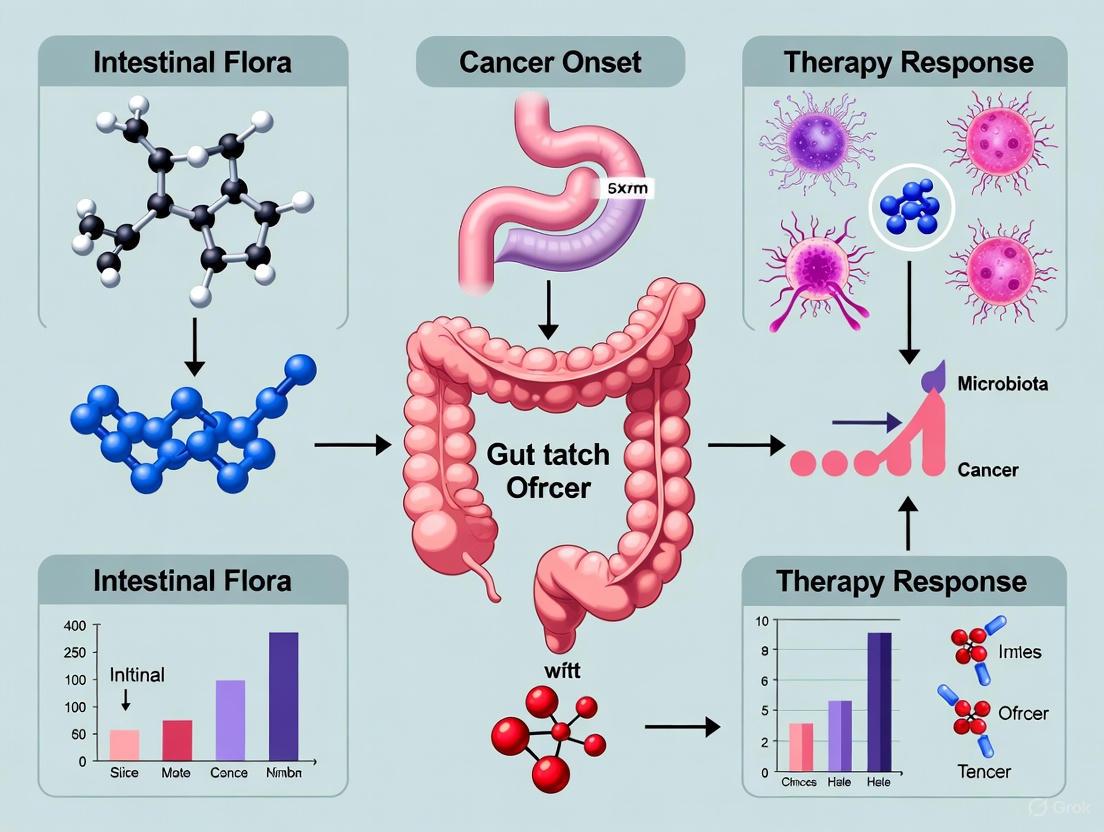
The gut microbiome has emerged as a pivotal regulator of carcinogenesis and anti-tumor therapy efficacy.
Gut Microbiota in Cancer: Mechanisms, Therapeutic Modulation, and Clinical Translation
Abstract
The gut microbiome has emerged as a pivotal regulator of carcinogenesis and anti-tumor therapy efficacy. This review synthesizes current evidence on the mechanisms by which intestinal flora influences cancer onset and modulates responses to immunotherapy, chemotherapy, and targeted therapies. We explore foundational host-microbe interactions, methodological approaches for microbiome analysis, strategies to overcome therapeutic resistance through microbiota modulation, and comparative evaluations across cancer types and treatment modalities. For researchers and drug development professionals, this article provides a comprehensive framework for understanding microbiota-cancer interactions and developing novel microbiome-based diagnostic and therapeutic strategies.
The Gut Microbiome as a Regulator of Carcinogenesis and Anti-Tumor Immunity
The human body supports a complex ecosystem of microorganisms, collectively known as the microbiota, which plays an integral role in regulating host physiology, metabolism, and immunity. Over the past decade, compelling evidence has revealed that disruption of this delicate ecosystem—termed dysbiosis—represents a critical factor in cancer pathogenesis, progression, and treatment response [1] [2]. The oncobiome concept has emerged to describe the unique microbial communities associated with carcinogenesis, wherein specific microorganisms and broader community shifts can directly or indirectly influence cancer hallmarks. While early research established clear correlations between microbial dysbiosis and cancer risk, recent advances have begun to elucidate causal mechanisms, transforming our understanding of cancer biology and opening new avenues for therapeutic intervention [3].
This technical review examines the evolving paradigm from correlation to causation in microbiome-cancer research, with particular emphasis on intestinal flora and its multifaceted role in cancer onset, progression, and therapy response. For researchers and drug development professionals, we synthesize current mechanistic understanding, methodological considerations, and translational opportunities, providing a comprehensive framework for integrating microbiome science into precision oncology.
Mechanisms Linking Microbial Dysbiosis to Carcinogenesis
Direct Carcinogenic Mechanisms
Specific microorganisms have evolved mechanisms that directly damage host DNA and promote genetic instability, representing the most straightforward pathway from microbial colonization to carcinogenesis.
Table 1: Bacteria with Direct Carcinogenic Mechanisms
| Bacterial Species | Molecular Mechanism | Cancer Type | Key Virulence Factors |
|---|---|---|---|
| pks+ Escherichia coli | DNA double-strand breaks via colibactin production | Colorectal cancer | Genomic island pks, colibactin [3] |
| Fusobacterium nucleatum | E-cadherin/β-catenin signaling activation via FadA adhesin | Colorectal, oral cancers | FadA adhesin, Fap2 protein [4] [1] |
| Enterotoxigenic Bacteroides fragilis (ETBF) | Cleavage of E-cadherin, inflammatory cytokine production | Colorectal cancer | Bacteroides fragilis toxin (BFT) [4] [3] |
| Enterococcus faecalis | Reactive oxygen species generation, chromosomal instability | Colorectal cancer | Extracellular superoxide production [1] |
The colibactin-producing pks+ E. coli strain exemplifies direct carcinogenesis through its production of a genotoxin that induces DNA double-strand breaks and creates a distinct mutational signature in human colorectal tumors [3]. This bacterium employs lectin-like adhesins (FimH and FmlH) to bind distinct glycan ligands, enabling spatially resolved colonization of the tumor epithelium [3]. Fusobacterium nucleatum utilizes its FadA adhesin to bind E-cadherin on epithelial cells, activating Wnt/β-catenin signaling and driving proliferative gene expression programs [4] [1]. Meanwhile, Enterococcus faecalis generates extracellular superoxide and hydroxyl radicals through demethylmenaquinone-mediated autoxidation, leading to DNA damage and chromosomal instability associated with colorectal carcinogenesis [1].
Immunomodulation and Inflammation-Driven Carcinogenesis
Chronic inflammation represents a fundamental pathway connecting microbial dysbiosis to cancer development, with specific bacteria manipulating host immune responses to create a permissive tumor microenvironment.
Fusobacterium nucleatum potently inhibits anti-tumor immunity through multiple mechanisms. Its Fap2 protein binds directly to the human inhibitory receptor TIGIT on T lymphocytes and natural killer (NK) cells, suppressing their cytotoxic activity and enabling immune evasion [4]. F. nucleatum also promotes M2 macrophage polarization through TLR4-dependent mechanisms and activates the IL-6/STAT3/c-MYC and NF-κB/S100A9 pathways, creating an immunosuppressive microenvironment [4]. Additionally, it upregulates TGFβ1 expression in colon cancer cells, further facilitating immune escape [4].
Chronic inflammation induced by dysbiotic microbiota leads to repeated cycles of tissue damage and repair, creating conditions ripe for malignant transformation. F. nucleatum stimulates upregulation of inflammatory and chemokine genes, resulting in the release of mediators like IL-8 and CXCL1 that recruit immune cells and establish a pro-tumorigenic inflammatory milieu [4]. In oral cancers, bacteria such as Porphyromonas gingivalis increase prostaglandin-endoperoxide synthase expression through cyclooxygenase-2 gene expression, bringing pro-inflammatory mediators into the site of infection that can promote carcinogenesis [1].
Diagram 1: F. nucleatum oncogenic signaling pathways
Metabolic Reprogramming and Microbiota-Derived Metabolites
Gut microbiota significantly influences host metabolic pathways, with microbial metabolites directly shaping the tumor microenvironment and influencing cancer cell behavior.
Short-chain fatty acids (SCFAs), including butyrate, acetate, and propionate, are produced through bacterial fermentation of dietary fiber and exhibit dual roles in carcinogenesis. Butyrate serves as the primary energy source for normal colonocytes but induces apoptosis in cancerous colonocytes through histone deacetylase inhibition [5]. Butyrate also promotes toll-like receptor 4 (TLR4)-mediated NF-κB signaling, enhancing innate immunity, while simultaneously suppressing Warburg effect metabolism by promoting PKM2 tetramerization [5].
The acidic tumor microenvironment resulting from glycolytic metabolism (Warburg effect) influences both immune cell function and microbial communities. Lactate accumulation stimulates Propionibacterium freudenreichii to produce acetic acid, which further modulates cancer cell metabolic reprogramming [5]. Bacteria possessing the ldh, mgsA, and lldD genes facilitate lactate production, creating a self-reinforcing cycle that promotes tumor progression [5].
Methodological Advances: Establishing Causality
Technical Challenges and Contamination Control
Establishing causal relationships between microbial dysbiosis and cancer pathogenesis requires rigorous methodological approaches to overcome the challenges inherent in microbiome research, particularly in low-biomass tumor samples.
The Cancer Microbiome Atlas (TCMA) represents a significant advancement through its implementation of a statistical model that distinguishes tissue-resident microbes from contaminants by comparing species prevalence across tissue types and blood samples [6]. This approach revealed that species equally prevalent across sample types are predominantly contaminants bearing unique signatures from each sequencing center, while truly tissue-resident species show distinct enrichment patterns [6]. Validation using original matched TCGA samples confirmed that decontaminated microbial profiles accurately reflected the genuine tissue microbiome, enabling more reliable host-microbe interaction analyses [6].
Quantitative microbiome profiling (QMP) represents another critical methodological innovation, addressing limitations of relative abundance profiling that can produce spurious associations due to compositionality effects [7]. When applied to fecal samples from 589 patients across colorectal cancer developmental stages, QMP combined with rigorous confounder control identified transit time, fecal calprotectin (intestinal inflammation), and body mass index as primary microbial covariates, explaining more variance than CRC diagnostic groups [7]. This approach revealed that well-established CRC targets like Fusobacterium nucleatum did not significantly associate with diagnostic groups when controlling for these covariates, while other species including Anaerococcus vaginalis, Dialister pneumosintes, Parvimonas micra, Peptostreptococcus anaerobius, Porphyromonas asaccharolytica, and Prevotella intermedia maintained robust associations [7].
Diagram 2: Microbial analysis workflow with QC
Experimental Models for Establishing Causality
Moving from correlation to causation requires experimental models that can demonstrate the functional contribution of specific microorganisms to cancer phenotypes.
Gnotobiotic mouse models, wherein animals are colonized with defined microbial communities, have been instrumental in establishing causal roles for specific bacteria in carcinogenesis. Studies using these models have shown that colonization with pks+ E. coli fosters an immunosuppressive tumor microenvironment by diminishing CD3⁺ and CD8⁺ tumor-infiltrating lymphocytes, thereby impairing responses to anti-PD-1 therapy [3]. Similarly, murine models demonstrate that Fusobacterium nucleatum accelerates tumor progression through reconstruction of the tumor microenvironment and infiltration into tumors, promoting cell proliferation [1].
Spatial analysis technologies have revealed how bacteria physically localize within tumors and directly influence cancer cell behavior. MD Anderson researchers discovered that Fusobacterium nucleatum accumulates in specific tumor regions, settling between cancer cells and inducing a reversible quiescent state that enables evasion of the immune system and chemoresistance [8]. This spatial organization creates microenvironments where bacterial proximity directly modulates cancer cell phenotype and treatment response.
Table 2: Experimental Protocols for Establishing Causality
| Methodology | Key Application | Technical Considerations | References |
|---|---|---|---|
| Gnotobiotic Mouse Models | Functional validation of tumor-promoting bacteria | Defined microbial communities in germ-free hosts | [3] |
| Spatial Transcriptomics with Microbiome Mapping | Correlate bacterial localization with tumor phenotypes | Preservation of spatial organization in tissue samples | [8] |
| Quantitative Microbiome Profiling (QMP) | Absolute abundance measurement vs. relative profiling | Requires internal standards and spike-in controls | [7] |
| The Cancer Microbiome Atlas (TCMA) Decontamination | Distinguish contaminants from tissue-resident microbes | Batch effect correction across sequencing centers | [6] |
| Engineered Bacterial Strains | Mechanistic dissection of virulence factors | Genetic manipulation of candidate oncobacteria | [3] |
Microbial Modulation of Cancer Therapy
Chemotherapy Efficacy and Toxicity
The gut microbiota significantly influences the efficacy and toxicity of conventional chemotherapeutic agents through multiple mechanisms, including drug metabolism, immunomodulation, and alteration of the tumor microenvironment.
A systematic review of 22 studies revealed specific bacterial taxa associated with chemotherapy response across different cancer types [9]. In lung cancer patients receiving platinum-based chemotherapy, responders showed relative enrichment of Streptococcus mutans, Enterococcus casseliflavus, and Bacteroides species in pretreatment samples, while non-responders were enriched with Leuconostoc lactis, Eubacterium siraeum, and Rothia dentocariosa [9]. For gastrointestinal tumors, treatment response was associated with higher relative abundances of Lactobacillaceae, Bacteroides fragilis, and Roseburia faecis [9].
The microbiota also plays a crucial role in chemotherapy-induced toxicity. Irinotecan-induced diarrhea provides a well-characterized example where bacterial β-glucuronidase (β-GUS) enzymes reactivate the inactive SN-38G metabolite into the cytotoxic SN-38, causing gastrointestinal damage [9]. Bacteria with SN-38G specific β-GUS activity, including Escherichia coli and Clostridium perfringens, are associated with this dose-limiting toxicity [9]. Similarly, oxaliplatin efficacy relies on reactive oxygen species (ROS) production from myeloid cells, a process modulated by the gut microbiota, as demonstrated by reduced therapeutic efficacy in antibiotic-treated and germ-free mice [10].
Immunotherapy Response
The gut microbiota has emerged as a critical determinant of response to immune checkpoint blockade (ICB) and other immunotherapies, with specific bacterial taxa capable of either enhancing or diminishing treatment efficacy.
Bacteroides fragilis enhances anti-CTLA-4 response by increasing IL-12-dependent TH1 immune responses through dendritic cell activation in the lamina propria [10] [5]. Similarly, engineered bacteria expressing tail length tape measure protein (TMP) activate the immune system through molecular mimicry, improving clinical outcomes of anti-PD-1 immunotherapy [5]. Conversely, systemic short-chain fatty acids (SCFAs) have been shown to diminish the efficacy of anti-CTLA-4 therapy by reducing expression of ICOS molecules on CD4⁺ T cells and CD80/CD86 molecules on dendritic cells [5].
Faecal microbiota transplantation (FMT) has demonstrated promise for restoring response to immunotherapy in refractory patients. A phase II clinical trial showed that FMT restored microbiota diversity in patients with PD-1-refractory melanoma and dramatically improved the safety and responsiveness to immune checkpoint inhibitors [5]. This approach highlights the potential of microbiota-directed interventions to overcome resistance to cancer immunotherapy.
The Scientist's Toolkit: Research Reagent Solutions
Table 3: Essential Research Reagents and Platforms for Cancer Microbiome Studies
| Category | Specific Reagents/Platforms | Research Application | Key Considerations |
|---|---|---|---|
| Sequencing Technologies | 16S rRNA amplicon sequencing (V3-V4), Whole-genome shotgun metagenomics, RNA sequencing | Microbial community profiling, strain-level identification, functional potential | 16S for community structure, WGS for functional capacity [9] [6] |
| Reference Databases | The Cancer Microbiome Atlas (TCMA), Human Microbiome Project, MetaHIT | Contamination filtering, comparative analysis, biomarker discovery | TCMA provides decontaminated tissue microbiome profiles [6] |
| Gnotobiotic Models | Germ-free C57BL/6 mice, Defined microbial consortia gavage, Antibiotic cocktail depletion | Causality testing, mechanism dissection, therapeutic validation | Enable functional studies of specific bacterial strains [10] [3] |
| Cell Culture Systems | Organoid-microbe co-cultures, Transwell systems, Anaerobic culture chambers | Host-microbe interaction studies, barrier function assessment, therapeutic screening | Maintain oxygen sensitivity while enabling direct interaction studies [8] |
| Quantitative Standards | Internal spike-in controls (e.g., ZymoBIOMICS Spike-in Control) | Absolute abundance quantification, technical variation normalization | Essential for quantitative microbiome profiling [7] |
| Spatial Analysis Platforms | GeoMx Digital Spatial Profiler, Visium Spatial Gene Expression, CODEX multiplex imaging | Microbial localization within tumors, spatial host-microbe interactions | Preserve spatial context of microbiome-tumor interfaces [8] |
The transition from correlative observations to causal understanding of microbial contributions to cancer pathogenesis represents a paradigm shift in oncology research. Mounting evidence demonstrates that specific microorganisms directly drive carcinogenesis through DNA damage, chronic inflammation, metabolic reprogramming, and immunomodulation, while broader dysbiotic states create permissive environments for tumor development and progression. The implications extend to cancer therapy, where the microbiome significantly influences treatment efficacy and toxicity.
Future research directions should focus on integrating high-resolution multi-omics approaches, developing more sophisticated experimental models that recapitulate human microbial ecosystems, and advancing microbiota-targeted therapeutic interventions. The promising preliminary results from FMT and probiotic studies in modulating therapy response warrant larger, well-controlled clinical trials. For drug development professionals, considering the microbiome as a key variable in clinical trial design and therapeutic development will be essential for advancing precision oncology. As methodologies continue to improve and causal relationships become more firmly established, targeting the oncobiome may become a fundamental component of cancer prevention and treatment strategies.
The human microbiome, particularly the intestinal flora, has emerged as a significant environmental factor in the development, progression, and therapeutic response of various cancers. While host genetic susceptibility and environmental exposures have long been recognized as contributors to oncogenesis, a new paradigm recognizes the microbiota as a crucial player in regulating cancer development and drug resistance [11]. A dysbiosis, or imbalance, in microbial diversity and functionality can promote disease development, with accumulating evidence linking microbial pathogens to approximately 15-20% of cancer cases [11]. Beyond carcinogenesis, the microbiome significantly influences response to chemotherapy, immunotherapy, and other anticancer treatments [12] [13]. This whitepaper provides an in-depth technical analysis of key bacterial species with established oncogenic roles, focusing on Fusobacterium nucleatum and enterotoxigenic Bacteroides fragilis (ETBF), their molecular mechanisms, and their implications for cancer therapy and research.
Molecular Mechanisms of Oncogenic Bacteria
Fusobacterium nucleatum: A Bridge to Carcinogenesis
Fusobacterium nucleatum (Fn), a Gram-negative anaerobic oral commensal, is mislocalized to various tissues and has been mechanistically linked to multiple cancers including colorectal cancer (CRC), head and neck cancer, esophageal cancer, pancreatic cancer, and breast cancer [11] [14]. Its oncogenic potential is mediated through a multi-step process involving adhesion, invasion, host response induction, and modulation of the tumor microenvironment.
Table 1: Key Virulence Factors of Fusobacterium nucleatum
| Virulence Factor | Type | Function in Oncogenesis | Molecular Targets |
|---|---|---|---|
| FadA | Adhesin | Binds to host cell-junction molecules, forms complex with E-cadherin and AnnexinA1, leading to β-catenin activation [11]. | E-cadherin, VE-cadherin, Annexin A1, β-catenin |
| Fap2 | Lectin (autotransporter protein) | Mediates binding to tumor cells via Gal-GalNAc; inhibits immune cell cytotoxicity and activity [11] [14]. | D-galactose-β(1-3)-N-acetyl-D-galactosamine (Gal-GalNAc) |
| LPS (Lipopolysaccharide) | Cell wall component | Activates β-catenin signaling through TLR4/PAK1/β-catenin S675 cascade [11]. | TLR4, PAK1 |
| Outer Membrane Vesicles (OMVs) | Bacterial secretion vesicles | Contain multiple antigenic components (FomA, FadA, etc.) that activate TLRs and NF-κB pathway, producing proinflammatory cytokines [14]. | Toll-like Receptors (TLRs), NF-κB |
The initial step in Fn-mediated oncogenesis involves adherence to and invasion of human epithelial and endothelial cells. Fn reaches distant sites, including tumors, potentially via hematogenous spread from its primary oral niche [11]. This translocation is facilitated by its key virulence factors FadA and Fap2. FadA exists in two forms—pre-FadA (membrane-anchored) and mature FadA (secreted)—which form an active complex (FadAc) that binds to cadherins on host cells [11]. The binding of FadAc to E-cadherin on epithelial cells or VE-cadherin on endothelial cells initiates a cascade of oncogenic signaling. Specifically, the formation of a FadA-E-cadherin-AnnexinA1-β-catenin complex leads to internalization and activation of β-catenin signaling, resulting in elevated expression of Wnt-related genes, oncogenes, and inflammatory genes [11]. Simultaneously, Fap2 functions as a lectin that recognizes overexpressed Gal-GalNAc on tumor epithelial cells, mediating Fn attachment and subsequently inhibiting immune cell cytotoxicity [11] [14].
Following adhesion and invasion, Fn induces host responses that drive tumor initiation and promotion through several mechanisms:
DNA Damage: Fn infection is associated with tumor suppressor gene promoter methylation, promoting high microsatellite instability (MSI-H) and a high level of CpG island methylation (CIMP-H) [11]. Fn-high tumors correlate with increased mutation rates in genes like APC and ATM [11]. Mechanistically, Fn can suppress NEIL2, an oxidized base-specific DNA glycosylase, leading to accumulated double-strand breaks and inflammatory responses [11]. Additionally, Fn can cause DNA damage and promote proliferation via the Ku70/p53 pathway in oral cancer cells [11].
Pro-inflammatory Microenvironment: Fn activates NF-κB signaling, a crucial pathway in inflammatory gene transcription. This occurs either through FadA-mediated β-catenin activation or via Fn lipopolysaccharides (LPS) triggering a TLR4/PAK1/β-catenin S675 cascade [11]. The resulting chronic inflammation supports cancer initiation and progression.
Chemoresistance: Recent evidence indicates Fn contributes to chemotherapy resistance in CRC by affecting autophagy, altering the tumor microenvironment, and modifying the expression of genes involved in drug resistance [14]. Fn enrichment is associated with poor prognosis and treatment failure in CRC patients [14].
Enterotoxigenic Bacteroides fragilis: Toxin-Driven Carcinogenesis
Enterotoxigenic Bacteroides fragilis (ETBF), a subset of the common gut commensal B. fragilis, produces a 20 kDa zinc-dependent metalloprotease toxin known as B. fragilis toxin (BFT) or fragilysin [15]. ETBF is distinguished from non-toxigenic B. fragilis (NTBF) by the presence of the bft gene and its ability to form biofilm, with only ETBF associated with intestinal inflammation, tissue injury, and CRC development [15].
Table 2: Oncogenic Mechanisms of Enterotoxigenic Bacteroides fragilis (ETBF)
| Mechanism | Key Molecules/Pathways | Biological Outcome |
|---|---|---|
| Toxin Activity | BFT (fragilysin) degrades E-cadherin [15]. | Loss of epithelial barrier function, increased intestinal permeability, alteration of cell signaling. |
| Inflammation Pathway | STAT3 activation, IL-17 production, IL-6, Th17 cell generation [15]. | Chronic intestinal inflammation, promotion of cancer cell survival and proliferation. |
| Oxidative Stress | Reactive oxygen species (ROS) induction [15]. | DNA damage, genetic mutations. |
| Biofilm Formation | Polymicrobial communities on colonic mucosa [15]. | Sustained local inflammation, epithelial proliferation. |
| COX-2 Induction | Increased prostaglandin E2 (PGE2) release [15]. | Control of cell proliferation, angiogenesis, inhibition of apoptosis. |
ETBF triggers carcinogenesis through a coordinated series of molecular events. BFT degradation of E-cadherin disrupts epithelial barrier integrity, increasing intestinal permeability and initiating pro-carcinogenic signaling [15]. This leads to upregulation of spermine oxidase, resulting in ROS generation and DNA damage [15]. Simultaneously, ETBF triggers STAT3 activation via interaction between epithelial cells and BFT, reducing IL-2 and generating Th17 cells that increase IL-17 levels [15]. IL-17 promotes cancer cell survival and proliferation and stimulates IL-6 production, which further activates the STAT3 pathway in a positive feedback loop [15]. ETBF also induces cyclooxygenase-2 (COX-2) expression, leading to prostaglandin E2 (PGE2) release that controls cell proliferation and activates oncogenic signaling pathways [15].
Experimental Models and Methodologies
Key Experimental Approaches for Bacterial Oncogenesis Research
The investigation of bacterial contributions to cancer requires sophisticated experimental models that can dissect complex host-microbe interactions. Several key methodologies have emerged as critical for advancing this field.
Table 3: Essential Methodologies for Studying Bacterial Oncogenesis
| Methodology | Application | Technical Considerations |
|---|---|---|
| Germ-Free (GF) Mouse Models | Establishing causal relationships by allowing controlled colonization with specific bacteria [12]. | Require specialized facilities; pretreatment with antibiotics used as alternative. |
| 16S rRNA Amplicon Sequencing | Taxonomic profiling of microbial communities in tissues and stools [16] [7]. | V3-V4 hypervariable region commonly targeted; requires careful bioinformatic analysis. |
| Quantitative Microbiome Profiling (QMP) | Absolute quantification of microbial abundance, overcoming compositionality issues of relative profiling [7]. | Combines 16S sequencing with flow cytometry or internal standards. |
| Fluorescence In Situ Hybridization (FISH) | Spatial localization of bacteria within tissues and biofilms [16]. | Allows visualization of bacterial invasion and community structure. |
| Multi-probe FISH | Detection of specific bacterial genera/species within complex communities [16]. | Uses multiple labeled probes for different taxa simultaneously. |
Recent advances in sequencing and spatial analysis have revealed important aspects of Fn biology in CRC. A 2025 study combining these approaches demonstrated that Fn and its subspecies animalis clade 2 (Fna C2) are specifically enriched in colon tumors with invasive biofilms [16]. The experimental workflow involved:
- Sample Collection: Paired tumor and distant normal colon tissues from CRC patients at resection surgery.
- Biofilm Detection: FISH on methacarn-fixed tissues to visualize biofilms and their composition.
- Microbial Community Analysis: 16S rRNA amplicon sequencing with species-level taxonomic assignment.
- Data Integration: Correlation of microbial findings with clinical and pathological features.
This integrated approach revealed that polymicrobial biofilms containing Fusobacterium were associated with later tumor stages, highlighting the importance of community partnerships in Fn pathogenesis [16].
The Scientist's Toolkit: Essential Research Reagents
Table 4: Key Research Reagent Solutions for Bacterial Oncogenesis Studies
| Reagent/Category | Specific Examples | Research Application |
|---|---|---|
| Antibodies for Immunodetection | Anti-E-cadherin, Anti-β-catenin, Anti-IL-17, Anti-STAT3 (phospho) [15]. | Detection of pathway activation and host response to bacterial effectors. |
| PCR and qPCR Assays | bft gene detection, Fusobacterium 16S rRNA primers, Fap2 and FadA gene targets [15] [14]. | Species identification, virulence factor detection, and bacterial load quantification. |
| Cytokine/Chemokine Analysis | IL-6, IL-8, IL-17, IL-10 ELISA kits [11] [15]. | Quantification of inflammatory responses to bacterial colonization. |
| Bacterial Culture Media | Anaerobic culture systems for Fusobacterium and Bacteroides [16]. | Isolation and propagation of anaerobic bacterial species. |
| Metabolite Detection | Short-chain fatty acid (SCFA) analysis, PGE2 ELISA, ROS detection kits [15] [13]. | Measurement of bacterial and host-derived metabolites. |
Clinical Implications and Therapeutic Opportunities
Diagnostic and Prognostic Biomarkers
Oncogenic bacteria show significant potential as biomarkers for cancer diagnosis and prognosis. Fn has been repeatedly validated as a diagnostic and prognostic marker for CRC patients [17]. High levels of Fn in the intestine are associated with poor postoperative prognosis in CRC [17]. Quantification of fecal Fn DNA, either alone or combined with fecal immunochemical testing (FIT), improves diagnostic performance, with the area under the curve (AUC) increasing from 0.86 for FIT alone to 0.95 when combined with Fn abundance [17]. Furthermore, circulating levels of anti-FadA complex (FadAc) IgA are elevated in CRC patients, suggesting potential as a serological biomarker for early detection [17].
Recent research emphasizes the importance of accounting for confounders in microbiome-cancer associations. A 2024 study implementing quantitative microbiome profiling with rigorous confounder control found that transit time, fecal calprotectin (intestinal inflammation), and body mass index were primary microbial covariates, explaining more variance than CRC diagnostic groups [7]. When controlling for these covariates, well-established microbiome CRC targets like Fn did not significantly associate with CRC diagnostic groups, while other species including Parvimonas micra, Peptostreptococcus anaerobius, and Prevotella intermedia maintained robust associations [7].
Therapeutic Targeting and Microbiome Modulation
The growing understanding of bacterial contributions to oncogenesis has opened new avenues for therapeutic intervention. Potential strategies include:
- Antibiotic Targeting: Selective elimination of oncogenic bacteria, though this requires careful consideration to avoid disrupting beneficial commensals.
- Virulence Factor Inhibition: Developing small molecules or antibodies that block key virulence factors like FadA or BFT.
- Probiotic and Microbiome Modulation: Using beneficial bacteria to compete with or suppress oncogenic species.
- Fecal Microbiota Transplantation (FMT): Restoring a healthy microbial ecosystem to counteract dysbiosis [12] [17].
The gut microbiota also significantly influences responses to cancer immunotherapy, particularly immune checkpoint inhibitors (ICIs) [17] [13]. Specific microbial signatures can predict ICI efficacy, with antibiotic use associated with reduced survival in melanoma patients treated with PD-1/PD-L1 inhibitors [17]. Akkermansia muciniphila colonization enhances PD-1 inhibitor efficacy, while skewed Firmicutes/Bacteroidetes ratio predicts non-response in hepatocellular carcinoma patients treated with nivolumab [17]. These findings highlight the potential of microbial modulation to improve cancer therapy outcomes.
The established roles of Fusobacterium nucleatum and enterotoxigenic Bacteroides fragilis in oncogenesis represent a paradigm shift in cancer biology, revealing the microbiome as a significant contributor to cancer development, progression, and therapeutic response. Their distinct yet complementary mechanisms—from adhesion and invasion to chronic inflammation and DNA damage—highlight the multifaceted nature of bacteria-mediated carcinogenesis.
Future research directions should focus on: (1) developing standardized quantitative microbiome profiling protocols to enable cross-study comparisons; (2) implementing rigorous control for confounders such as transit time, inflammation, and BMI in microbiome studies; (3) exploring combination therapies that target oncogenic bacteria while preserving beneficial microbiota; and (4) advancing spatial analysis techniques to better understand bacterial localization and community dynamics within tumors. As the field progresses, integrating microbiome analysis into standard oncological practice promises to enhance cancer diagnosis, prognosis, and treatment, ultimately advancing toward more personalized and effective cancer management strategies.
The human body represents a complex biological system where host physiology is profoundly influenced by symbiotic microorganisms, particularly the intestinal flora. Recent research has illuminated the crucial role of gut microbiota in modulating cancer onset, progression, and therapeutic response through intricate molecular mechanisms involving metabolites, immune surveillance, and epigenetic modifications. The gut microbiome, comprising trillions of bacteria, viruses, fungi, and archaea, forms a dynamic ecosystem that co-evolves with the host, participating in numerous physiological functions including nutrient metabolism, immune system development, and maintenance of intestinal barrier integrity [18]. Disruptions in this delicate ecosystem, known as dysbiosis, have been linked to various disease states, including cancer, through mechanisms such as chronic inflammation, DNA damage, metabolic alterations, and epigenetic reprogramming [19] [18].
The tumor microenvironment (TME) represents a critical interface where host cells, tumor cells, and microorganisms interact, creating a complex landscape that influences therapeutic outcomes. Within this microenvironment, microbial metabolites serve as key signaling molecules that shape both epigenetic landscapes and immune responses, creating a bidirectional communication network that extends far beyond the gastrointestinal tract [20] [21]. This review explores the intricate connections between gut microbiota-derived metabolites, epigenetic modifications, and anti-tumor immunity, with a focus on the molecular mechanisms that underlie these relationships and their implications for cancer therapy.
Metabolite-Mediated Mechanisms in Cancer Biology
Key Microbial Metabolites and Their Functions
Gut microbiota significantly influences host physiology through the production of diverse metabolites that can either promote or inhibit carcinogenesis. These microbial-derived compounds modulate cellular processes including gene expression, immune function, and cellular proliferation through direct and indirect mechanisms. The table below summarizes the major classes of microbiota-derived metabolites and their roles in cancer biology.
Table 1: Key Microbial Metabolites and Their Roles in Cancer Biology
| Metabolite Class | Representative Molecules | Producing Bacteria | Biological Functions | Impact on Cancer |
|---|---|---|---|---|
| Short-chain fatty acids (SCFAs) | Butyrate, Acetate, Propionate | Bifidobacterium, Lactobacillus, Faecalibacterium | HDAC inhibition; Treg differentiation; Strengthen intestinal barrier | Anti-tumor via immune activation; Enhanced chemotherapy efficacy [22] [18] |
| Secondary bile acids | Deoxycholate, Lithocholate | Clostridium, Eubacterium | Activate FXR, TGR5 receptors; Induce DNA damage | Pro-carcinogenic in CRC; Promote chronic inflammation [18] |
| Polyamines | Spermidine, Spermine | Bacteroides, Bifidobacterium | Regulate cell growth; Stabilize DNA | Dual roles (pro/anti-tumor) depending on context |
| Tryptophan metabolites | Indole, Kynurenine | Bacteroides, Clostridium | AHR ligand activation; T cell suppression | Immune modulation; Influence immunotherapy response [23] |
Molecular Mechanisms of Metabolite Action
Microbial metabolites exert their effects through multiple molecular mechanisms. Short-chain fatty acids (SCFAs), particularly butyrate, function as histone deacetylase (HDAC) inhibitors, leading to hyperacetylation of histones and altered gene expression patterns in both tumor and immune cells [22]. Butyrate has been shown to enhance gemcitabine-induced apoptosis in cancer cells, while simultaneously modulating immune responses through regulation of regulatory T cell (Treg) differentiation and function [22]. Additionally, SCFAs strengthen intestinal barrier function by promoting tight junction assembly, thereby reducing systemic inflammation and limiting metastasis [18].
Bile acid metabolism represents another crucial pathway linking gut microbiota to cancer development. Primary bile acids are converted to secondary bile acids by specific gut bacteria, and at elevated concentrations, these secondary bile acids can exert carcinogenic effects by inducing DNA damage, promoting chronic inflammation, and stimulating cellular proliferation [18]. In hepatocellular carcinoma (HCC), altered bile acid profiles have been associated with tumor progression and modified responses to therapy [24].
Table 2: Metabolites as Substrates and Cofactors for Epigenetic Enzymes
| Metabolite | Biosynthetic Pathway | Epigenetic Role | Molecular Targets | Functional Outcome |
|---|---|---|---|---|
| S-adenosylmethionine (SAM) | Methionine cycle, one-carbon metabolism | Universal methyl donor | DNMTs, HMTs | DNA and histone methylation; Gene silencing/activation [20] |
| Acetyl-CoA | Glycolysis, fatty acid oxidation, ACSS2 | Substrate for acetylation | HATs | Histone acetylation; Chromatin opening; Gene activation [20] |
| α-ketoglutarate (α-KG) | TCA cycle | Cofactor for TETs, JmjC KDMs | TET DNA demethylases, JmjC histone demethylases | DNA/histone demethylation; Promotes differentiation [21] |
| Lactate | Glycolysis, Warburg effect | Substrate for lactylation | Histone lysine residues | Histone lactylation; Gene activation in angiogenesis, immune regulation [25] |
| Nicotinamide adenine dinucleotide (NAD+) | Tryptophan metabolism, salvage pathway | Co-substrate for sirtuins | SIRT deacetylases | Histone deacetylation; Gene silencing; Metabolic adaptation [20] |
Immune Surveillance and Microbiota Interactions
Regulation of Innate and Adaptive Immunity
The gut microbiota plays a pivotal role in shaping both innate and adaptive immune responses, with significant implications for anti-tumor immunity. Specific microbial species have been identified that enhance dendritic cell (DC) maturation, antigen presentation, and subsequent T cell priming, thereby augmenting responses to immune checkpoint inhibitors (ICIs) [24] [23]. For instance, Akkermansia muciniphila has been associated with improved responses to PD-1 blockade therapy by stimulating dendritic cell maturation and enhancing CD8+ T cell infiltration into tumors [24] [23]. Similarly, Bifidobacterium species enhance anti-PD-L1 responses in melanoma models by promoting tumor-specific CD8+ T cell effector functions [22].
The mechanistic basis for these effects involves multiple pathways, including activation of pattern recognition receptors such as Toll-like receptors (TLRs) on immune cells. Bacteroides fragilis, for example, stimulates Th1 cell activation in tumor-draining lymph nodes and enhances intra-tumoral dendritic cell maturation, thereby restoring anti-CTLA-4 efficacy in melanoma models [24]. Additionally, Clostridium perfringens has been shown to activate the STING pathway, promoting PD-L1 expression and IFN-γ+ CD8+ tumor-infiltrating lymphocyte accumulation, which sensitizes tumors to PD-L1 blockade [22].
Microbiota Modulation of Immunotherapy Efficacy
Clinical and preclinical studies have consistently demonstrated that gut microbiota composition significantly influences responses to cancer immunotherapy. Patients with non-small cell lung cancer (NSCLC) and renal cell carcinoma (RCC) who exhibit higher gut microbial diversity show better responses to anti-PD-1 therapy [24]. In metastatic melanoma, responders to ICIs display increased levels of Bifidobacterium longum, Collinsella aerofaciens, and Enterococcus faecium, and fecal microbiota transplantation (FMT) from these patients into germ-free mice improves anti-PD-L1 therapy outcomes [24].
The critical importance of gut microbiota in shaping anti-tumor immune responses is further highlighted by retrospective studies linking antibiotic use to reduced ICI efficacy and lower survival rates in patients with advanced solid tumors [24]. Prospective studies have confirmed significant correlations between microbiome composition and ICI outcomes in melanoma, NSCLC, and hepatocellular carcinoma (HCC) [24]. Notably, FMT from ICI responders, combined with anti-PD-1 therapy, can overcome resistance in patients with refractory melanoma [24].
Epigenetic Modulation by Microbial Metabolites
Metabolic Regulation of Epigenetic Enzymes
The interplay between microbial metabolites and epigenetic regulation represents a crucial mechanism by which gut microbiota influences cancer biology. Metabolites such as S-adenosylmethionine (SAM), acetyl-CoA, and nicotinamide adenine dinucleotide (NAD+) serve as direct coenzymes or substrates for epigenetic enzymes, tightly linking cellular metabolic states to epigenetic regulation [20]. SAM, synthesized through the methionine cycle and one-carbon metabolism, functions as the universal methyl donor for DNA methyltransferases (DNMTs) and histone methyltransferases (HMTs) [20]. The ratio of SAM to S-adenosylhomocysteine (SAH) determines methylation capacity, with SAH accumulation inhibiting DNMT and HMT activity [20].
In cancer, the one-carbon metabolic pathway is frequently upregulated to support rapid cell division, with enzymes such as phosphoglycerate dehydrogenase (PHGDH) enhancing serine biosynthesis, which elevates SAM levels [20]. This metabolic shift leads to hypermethylation of tumor-suppressor genes and altered histone modifications, promoting tumor progression [20]. Similarly, acetyl-CoA, a central metabolite derived from glycolysis, fatty acid oxidation, or acetate metabolism through acetyl-CoA synthetase 2 (ACSS2), serves as the essential substrate for histone acetyltransferases (HATs) [20]. In various cancers, elevated ATP citrate lyase (ACLY) expression is linked to increased histone acetylation, driving oncogenes such as MYC and HIF-1α, which play pivotal roles in tumor progression [20].
Novel Epigenetic Modifications: Histone Lactylation
A recently discovered epigenetic modification directly links metabolic reprogramming to gene expression regulation. Histone lactylation, identified in 2019, involves the transfer of lactate-derived lactyl groups to lysine residues on histones, creating a novel mark that stimulates gene transcription [25]. This modification directly connects the Warburg effect, a hallmark of cancer metabolism characterized by high lactate production even under aerobic conditions, to epigenetic regulation.
Lactate, previously considered a metabolic waste product, is now recognized as an important signaling molecule that regulates various biological processes, including immune cell metabolism and TME remodeling [25]. In macrophages, lactate induces lactylation of high mobility group box-1 (HMGB1) and stimulates its acetylation through Hippo/YAP-mediated Sirtuin 1 (SIRT1) and β-arrestin 2-mediated p300/CBP recruitment, promoting HMGB1 release and influencing tumor progression, inflammation, and immune responses [25]. Histone lactylation has been shown to promote transcriptional programs supporting angiogenesis and M2-like macrophage polarization, creating an immunosuppressive TME that facilitates tumor progression [25].
Experimental Methodologies and Research Tools
Advanced Microbial Detection Technologies
Studying the complex interactions between gut microbiota, host metabolism, and epigenetic regulation requires sophisticated experimental approaches. Next-generation sequencing (NGS) technologies have revolutionized microbiome research, enabling comprehensive characterization of microbial communities [19]. 16S rRNA gene sequencing provides a cost-effective method for profiling microbial community structure, while shotgun metagenomics offers species- and strain-level resolution, allowing researchers to assess the genomic functional potential of the microbiome [19].
Emerging technologies such as microbial single-cell RNA sequencing (scRNA-seq) and spatial transcriptomics have further enhanced our ability to investigate host-microbe interactions at unprecedented resolution. Techniques like microbial split-pool ligation transcriptomics (MicroSPLiT) facilitate single-cell transcriptome sequencing of bacteria, revealing heterogeneity in behavior, metabolism, and stress responses among bacterial populations [19]. Similarly, smRandom-seq2, a high-throughput single-microbe RNA sequencing technology, has enabled the identification of host-phage interactions within the human gut microbiome and revealed functional heterogeneity between bacteria and phages [19].
Spatial transcriptomic technologies, including 10x Visium and GeoMx digital spatial analysis, allow for in situ sequencing of genes within tissues, preserving spatial context and enabling visualization of host-microbe interactions within the TME [19]. These advanced methodologies are crucial for understanding the spatial distribution of bacterial communities and their relationship with immune cell populations in tumors.
Intervention Studies and Functional Validation
To establish causal relationships between specific microbial taxa and cancer phenotypes, researchers employ various interventional approaches including fecal microbiota transplantation (FMT), probiotic and prebiotic administration, and germ-free animal models. FMT from ICI responders to germ-free or antibiotic-treated mice has been used to demonstrate that microbial communities can transfer enhanced responsiveness to immunotherapy [24]. In a phase I clinical trial (NCT03772899), healthy donor FMT combined with PD-1 inhibitors in treatment-naïve advanced melanoma patients resulted in a 65% response rate, with microbiome analysis showing donor strain engraftment and increased similarity over time in responders [22].
Probiotic supplementation with specific strains such as Lactobacillus and Bifidobacterium has been shown to reduce chemotherapy-induced mucositis, diarrhea, and gut inflammation in colorectal cancer patients [22]. Similarly, prebiotics including inulin, fructooligosaccharides (FOS), and galactooligosaccharides (GOS) serve as metabolic substrates for commensal bacteria, modulating systemic inflammation, immune cell activation, and anti-tumor responses [23].
For mechanistic studies, genetic manipulation of specific microbial species, dietary interventions, and metabolite administration are employed to dissect the molecular pathways linking gut microbiota to cancer progression and treatment response. These approaches have been instrumental in identifying specific microbial metabolites and their mechanisms of action in shaping anti-tumor immunity and epigenetic regulation.
Table 3: Essential Research Reagents and Experimental Platforms
| Research Tool Category | Specific Examples | Key Applications | Technical Considerations |
|---|---|---|---|
| Microbial Sequencing Technologies | 16S rRNA sequencing, Shotgun metagenomics, Microbial scRNA-seq | Microbial community profiling, Strain-level identification, Functional potential assessment | Low biomass challenges in tumor samples; Contamination controls; Bioinformatics pipelines [19] |
| Epigenetic Analysis Platforms | ChIP-seq, ATAC-seq, BS-seq, Epigenome-wide association studies | Genome-wide mapping of histone modifications, DNA methylation, chromatin accessibility | Cell-type specificity; Requires fresh/frozen tissue; Integration with transcriptomic data [20] [21] |
| Metabolic Profiling | LC-MS, GC-MS, Stable isotope tracing | Quantification of metabolites, Metabolic flux analysis | Sensitivity for low-abundance metabolites; Rapid metabolite turnover; Sample preparation [20] [25] |
| Animal Models | Germ-free mice, Gnotobiotic models, Humanized mice | Establishing causality, Testing microbial interventions, Studying host-microbe interactions | Cost and facility requirements; Translational relevance to humans [24] [19] |
| Intervention Approaches | Fecal microbiota transplantation, Probiotics/Prebiotics, Antibiotic depletion | Modulating microbial communities, Therapeutic testing | Standardization challenges; Interindividual variability; Safety in immunocompromised [24] [22] |
The intricate interplay between gut microbiota-derived metabolites, immune surveillance, and epigenetic modifications represents a rapidly advancing frontier in cancer biology with profound implications for cancer prevention and treatment. Microbial metabolites, including SCFAs, bile acids, and lactate, serve as critical signaling molecules that shape the epigenetic landscape and modulate anti-tumor immune responses through multiple molecular mechanisms. The recent discovery of histone lactylation as a direct link between metabolic reprogramming and epigenetic regulation highlights the dynamic nature of this research field and the continuous emergence of novel mechanisms connecting microbiota to cancer biology.
Understanding these complex interactions provides exciting opportunities for developing innovative diagnostic and therapeutic approaches. Microbiome-based biomarkers show promise for predicting treatment response and patient stratification, while microbiota-targeted interventions including FMT, probiotics, prebiotics, and dietary modifications offer potential strategies for enhancing cancer therapy efficacy and reducing treatment-related toxicity. Furthermore, the integration of multi-omics approaches, single-cell technologies, and spatial analysis methods will continue to advance our understanding of the molecular mechanisms underlying microbiota-cancer interactions, potentially leading to more personalized and effective cancer treatments in the future.
Short-Chain Fatty Acids, Bile Acids, and Other Microbial Metabolites in Tumor Microenvironment Remodeling
The human gastrointestinal tract harbors a complex ecosystem of trillions of microorganisms that fundamentally influence host physiology, particularly in immune regulation and cancer biology [26]. The gut microbiota and its metabolic output are now recognized as critical determinants in tumor development, progression, and therapeutic response [27] [28]. Beyond their traditional roles in digestion, microbiota-derived metabolites—including short-chain fatty acids (SCFAs), bile acids (BAs), and various amino acid derivatives—function as potent signaling molecules that systematically reshape the tumor immune microenvironment (TIME) [29] [30]. These metabolites engage specific host receptors, modulate epigenetic programs, and reprogram cellular metabolism across diverse immune and stromal cell populations within tumors [28] [30].
The intestinal barrier normally maintains a state of immune tolerance toward commensal microbes through a combination of physical separation and anti-inflammatory signaling [29]. However, dysbiosis—an imbalance in microbial community structure—disrupts this homeostasis, leading to altered metabolite production, compromised barrier function, and translocation of microbial components that foster chronic inflammation and create a pro-tumorigenic milieu [29] [27]. This review comprehensively examines how key microbial metabolites, particularly SCFAs and BAs, remodel the TIME through defined molecular mechanisms, and explores the translational potential of targeting these pathways for cancer therapy.
Short-Chain Fatty Acids: Dual Roles in Tumor Immunity
Short-chain fatty acids (SCFAs), including acetate, propionate, and butyrate, are produced primarily through bacterial fermentation of dietary fibers in the colon [31] [30]. These metabolites serve as crucial mediators between dietary patterns, gut microbiota, and systemic immune responses. While generally recognized for their anti-inflammatory and antitumor properties, SCFAs demonstrate context-dependent effects influenced by concentration, tumor type, and metabolic environment [28].
Molecular Mechanisms of SCFA Action
SCFAs exert their immunomodulatory effects through multiple complementary mechanisms:
- Receptor-mediated signaling: SCFAs activate G protein-coupled receptors (GPCRs) such as GPR41, GPR43, and GPR109a, which are expressed on various immune and epithelial cells [30]. These interactions trigger intracellular signaling cascades that regulate immune cell function, differentiation, and cytokine production.
- Epigenetic regulation: Butyrate and propionate function as potent histone deacetylase (HDAC) inhibitors, leading to increased histone acetylation, chromatin remodeling, and altered gene expression patterns in immune and cancer cells [32] [30].
- Metabolic reprogramming: SCFAs influence cellular metabolism by serving as energy sources, modulating mitochondrial function, and regulating metabolic pathways in both tumor and immune cells [31] [30].
Table 1: Quantitative Protective Associations of SCFAs Against Colorectal Cancer and Advanced Adenoma
| SCFA Type | Association with CRC Risk (OR, 95% CrI) | Association with A-CRA Risk (OR, 95% CrI) | Protective Strength |
|---|---|---|---|
| Total SCFAs | 0.78 (0.65–0.92) | 0.72 (0.59–0.87) | Moderate |
| Butyrate | 0.63 (0.51–0.77) | 0.61 (0.49–0.75) | Strong |
| Acetate | 0.82 (0.70–0.95) | 0.79 (0.66–0.93) | Moderate |
| Propionate | 0.85 (0.72–0.99) | 0.81 (0.68–0.95) | Moderate |
Data derived from a systematic Bayesian meta-analysis of 14 peer-reviewed studies [33]. OR: Odds Ratio; CrI: Credible Interval; CRC: Colorectal Cancer; A-CRA: Advanced Colorectal Adenoma.
SCFA Modulation of Immune Cell Populations
SCFAs differentially regulate specific immune cell populations within the TIME:
- T lymphocytes: Butyrate promotes the differentiation and function of regulatory T cells (Tregs) through enhanced histone H3 acetylation at the Foxp3 locus, while simultaneously strengthening CD8+ T cell memory and cytotoxic function [30]. This apparent paradox may be resolved by concentration gradients and temporal aspects of exposure.
- Macrophages and Dendritic Cells: SCFAs promote anti-inflammatory macrophage polarization and enhance the antigen-presenting capacity of dendritic cells, potentially improving T cell priming against tumor antigens [31] [30].
- Natural Killer Cells: Butyrate has been shown to strengthen NK cell cytotoxic function against tumor cells, though specific mechanisms require further elucidation [26].
The concentration-dependent effects of SCFAs are particularly relevant to their translational application. While physiological concentrations typically exert anti-inflammatory and antitumor effects, excessively high SCFA levels in certain contexts (e.g., non-alcoholic fatty liver disease) may promote tumor progression, highlighting the importance of context and dosage [28].
Figure 1: SCFA Signaling and Immunomodulation in the Tumor Microenvironment. SCFAs produced from microbial fermentation of dietary fibers signal through GPCRs and inhibit HDACs to modulate multiple immune cell populations, collectively enhancing anti-tumor immunity.
Bile Acids: Complex Immunomodulators in the TIME
Bile acids represent another crucial class of microbiota-shaped signaling molecules with profound influence on tumor immunity. Beyond their classical roles in lipid digestion, BAs function as pleiotropic signaling molecules that engage specific host receptors to regulate immune cell differentiation, function, and inflammatory responses within the TIME [29] [30].
BA Metabolism and Receptor Interactions
The gut microbiota enzymatically transforms primary bile acids (cholic acid and chenodeoxycholic acid) into diverse secondary and modified bile acids, including deoxycholic acid (DCA) and lithocholic acid (LCA) [29]. These microbial BAs exhibit distinct receptor affinities and activities compared to their precursors, enabling sophisticated host-microbiome communication. Key BA receptors include:
- Farnesoid X Receptor (FXR): A nuclear receptor that regulates BA homeostasis and exerts anti-inflammatory effects in multiple cell types [29].
- Takeda G Protein-Coupled Receptor 5 (TGR5): A membrane receptor that modulates immune and metabolic functions through cAMP-mediated signaling [29] [30].
- Vitamin D Receptor (VDR) and Sphingosine-1-Phosphate Receptor 2 (S1PR2): Additional receptors that mediate BA signaling in immune cells [29].
Table 2: Bile Acid Receptors and Their Immunomodulatory Effects in the TIME
| Receptor | Type | Key Bile Acid Ligands | Immune Cell Effects | Net Impact on TIME |
|---|---|---|---|---|
| FXR | Nuclear Receptor | CDCA, DCA | Suppresses pro-inflammatory cytokines (TNF-α, IL-6); promotes M2-like macrophage features | Generally immunosuppressive |
| TGR5 | GPCR | LCA, DCA | Reduces inflammatory signaling via cAMP; enhances IL-10 expression | Immunosuppressive |
| VDR | Nuclear Receptor | LCA | Modulates dendritic cell function; regulates T cell responses | Context-dependent |
| S1PR2 | GPCR | TCA, TCDCA | Influences cell migration and calcium signaling | Requires further characterization |
Data synthesized from multiple studies on bile acid immunology [29] [30].
BA-Mediated Regulation of Innate and Adaptive Immunity
Bile acids directly modulate the function of key immune populations within the TIME:
- Macrophages: FXR activation by primary BAs suppresses pro-inflammatory cytokine production (TNF-α, IL-6) and promotes M2-like polarization via inhibition of NF-κB and NLRP3 inflammasome pathways [29]. TGR5 signaling similarly reduces inflammatory responses through cAMP-dependent mechanisms.
- T Lymphocytes: Secondary bile acids promote the generation of peripheral regulatory T cells, contributing to immunosuppression in the TIME [30]. Specific BAs can also impair CD8+ T cell function, facilitating immune evasion.
- Natural Killer T Cells: In hepatocellular carcinoma, secondary bile acids impair the antitumor function of hepatic NKT cells, accelerating tumor progression [30].
- Dendritic Cells: LCA inhibits dendritic cell activation by reducing intracellular glutathione via TGR5 signaling, potentially compromising antigen presentation and T cell priming [30].
The balance between primary and secondary bile acids, shaped by microbial metabolism, critically determines the net immunomodulatory outcome. Dysbiosis-associated shifts toward specific secondary BAs (e.g., increased DCA and LCA) frequently contribute to a pro-inflammatory, immunosuppressive TIME that facilitates tumor immune evasion and progression [29].
Figure 2: Bile Acid Signaling and Immune Regulation. Microbiota-transformed secondary bile acids engage multiple host receptors to suppress immune cell function, fostering an immunosuppressive tumor microenvironment conducive to cancer progression.
Other Microbial Metabolites in Tumor Immunity
Beyond SCFAs and BAs, diverse microbial metabolites significantly influence tumor immunity and TIME composition:
Lipopolysaccharide (LPS)
As an essential component of Gram-negative bacterial cell walls, LPS functions as a potent immune stimulant that engages the CD14/TLR4/MD-2 receptor complex on innate immune cells [29] [28]. Sustained LPS-TLR4-NF-κB signaling establishes chronic inflammation within the TME, promoting tumor progression through multiple mechanisms:
- Induction of pro-inflammatory cytokines (TNF-α, IL-6, IL-1β) that sustain a tumor-promoting inflammatory state [29]
- Upregulation of immune checkpoint molecules (e.g., PD-L1) that facilitate immune evasion [28]
- Recruitment and accumulation of immunosuppressive cells (Tregs, MDSCs) [28]
- Promotion of angiogenesis and metastasis through VEGF and MMP production [29]
Tryptophan Metabolites
Microbial metabolism of the essential amino acid tryptophan generates various immunoregulatory metabolites, particularly through the kynurenine pathway [30]. These metabolites activate the aryl hydrocarbon receptor (AHR), which exerts complex effects on tumor immunity:
- Suppression of antitumor immunity through AHR-mediated polarization of tumor-associated macrophages [30]
- Context-dependent enhancement of immunotherapy efficacy when specific tryptophan metabolites are produced by intratumoral bacteria [30]
Additional Metabolites with Immunomodulatory Potential
- Succinate: Produced by Fusobacterium nucleatum metabolism, succinate hampers IFN-β synthesis and restricts CD8+ T-cell infiltration into the TME, suppressing antitumor immunity [28].
- Inosine: This microbial nucleoside metabolite can amplify checkpoint blockade efficacy by enhancing T cell stemness and function [30].
- Polyamines: Compounds like spermine and spermidine influence cell proliferation, differentiation, and immune function, though their specific roles in the TIME require further characterization.
Experimental Approaches and Methodologies
Key Experimental Protocols
SCFA Treatment and CYP1A1 Gene Expression Analysis in Caco-2 Cells [32]:
- Cell Culture: Caco-2 human colorectal adenocarcinoma cells are maintained in DMEM/F-12 medium supplemented with 20% fetal bovine serum, penicillin (50 U/ml), and streptomycin (50 U/ml) at 37°C in a humidified atmosphere with 5% CO₂.
- Treatment Protocol: Cells are treated with varying concentrations (7.5, 15, and 30 mM) of sodium acetate (NaA), sodium butyrate (NaB), and sodium propionate (NaP) for different time periods (24, 48, and 72 hours).
- AHR Inhibition Studies: Parallel treatments include the AHR antagonist CH223191 (2.5 and 10 μM) alone and in combination with SCFAs for 48 hours to elucidate receptor-dependent mechanisms.
- Viability Assessment: MTT (3-(4,5-dimethylthiazol-2-yl)-2,5-diphenyltetrazolium bromide) assays are performed to assess cell viability following SCFA treatments.
- Gene Expression Analysis: RNA is extracted using cytoplasmic & nuclear RNA purification kits, followed by cDNA synthesis with reverse transcriptase. CYP1A1 gene expression is quantified using Real-time PCR with appropriate controls.
Bile Acid Receptor Signaling Studies [29]:
- Receptor Activation Assays: Luciferase reporter gene assays in immune cell lines transfected with FXR, TGR5, or VDR response elements to quantify receptor activation by specific bile acids.
- Immune Cell Functional Assays: Isolation of primary macrophages, T cells, or dendritic cells from mouse spleen or human blood, followed by treatment with physiological concentrations of bile acids and assessment of cytokine production, polarization markers, and phagocytic capacity.
- In Vivo Tumor Models: Use of germ-free or antibiotic-treated mice supplemented with specific bile acids or BA receptor agonists/antagonists in syngeneic tumor models to assess effects on tumor growth and immune cell infiltration.
The Scientist's Toolkit: Essential Research Reagents
Table 3: Key Research Reagents for Studying Microbial Metabolites in Cancer
| Reagent/Category | Specific Examples | Research Applications | Key Functions |
|---|---|---|---|
| SCFA Reagents | Sodium butyrate, Sodium acetate, Sodium propionate | Treatment of cancer/immune cells; animal studies | HDAC inhibition; GPCR activation; epigenetic modulation |
| Bile Acids | Chenodeoxycholic acid (CDCA), Deoxycholic acid (DCA), Lithocholic acid (LCA) | Receptor signaling studies; immune cell assays | FXR, TGR5, VDR receptor ligands; immune modulation |
| Receptor Modulators | FXR agonists (Obeticholic acid), TGR5 agonists, AHR antagonist (CH223191) | Mechanism dissection; therapeutic targeting | Specific pathway activation/inhibition |
| Cell Lines | Caco-2 (colorectal adenocarcinoma), THP-1 (monocytic), Primary immune cells | In vitro signaling and functional studies | Model systems for metabolite effects |
| Animal Models | Germ-free mice, Antibiotic-treated mice, Syngeneic tumor models | In vivo validation of metabolite effects | Controlled microbiome studies |
| Detection Kits | MTT assay kits, RNA extraction kits, cDNA synthesis kits | Cell viability assessment; gene expression analysis | Metabolic activity measurement; molecular analysis |
Therapeutic Implications and Translational Perspectives
The growing understanding of microbial metabolite functions in TIME remodeling has stimulated development of novel therapeutic strategies for cancer treatment:
Microbiota-Targeted Interventions
- Dietary Modifications: Precision fiber interventions tailored to ethnic backgrounds—Europeans (25–30 g/d dietary fiber), Asians (20–25 g/d with vegetables ≥500 g/d)—and targeted approaches like High-Amylose Maize Starch Butyrate (HAMSB) for high-risk populations [33].
- Probiotics and Prebiotics: Specific bacterial strains (e.g., Clostridium butyricum, Lactobacillus spp.) and prebiotic compounds that selectively promote beneficial metabolite-producing communities [26].
- Fecal Microbiota Transplantation: Transfer of complete microbial communities from treatment-responsive patients or healthy donors to restore favorable metabolite profiles and improve immunotherapy outcomes [26].
Pharmacological Approaches
- Bile Acid Receptor Modulators: FXR agonists (obeticholic acid) and TGR5 antagonists in development for cancer immunotherapy applications [30].
- Metabolite Delivery Systems: Nano-formulations for targeted delivery of SCFAs or receptor agonists to tumor sites, enhancing efficacy while minimizing systemic exposure [30].
- Combination with Immunotherapy: Strategic pairing of metabolite-based interventions with immune checkpoint inhibitors to overcome resistance and enhance antitumor immunity [29] [26].
Clinical Translation Challenges
Several challenges remain in translating microbial metabolite research into clinical practice:
- Inter-individual Variability: Significant heterogeneity in microbiome composition and metabolite processing across individuals and populations complicates standardized interventions [29] [33].
- Context-Dependent Effects: Dual roles of many metabolites (e.g., SCFAs in different cancer types) necessitate careful patient stratification and dosage optimization [28].
- Methodological Standardization: Lack of unified protocols for metabolite detection, sampling, and data analysis across research centers [33].
Future research directions should prioritize multi-omics integration, advanced animal models that recapitulate human microbial metabolism, and robust biomarker development for patient stratification. Long-term randomized controlled trials are essential to validate the efficacy and safety of microbiota-targeting interventions in oncology [29] [33].
Microbiota-derived metabolites, particularly short-chain fatty acids and bile acids, serve as essential communicators along the gut-tumor axis, fundamentally reshaping the tumor immune microenvironment through defined receptor-mediated mechanisms and epigenetic regulation. The complex interplay between microbial communities, their metabolic output, and host immune responses represents a crucial layer of regulation in cancer biology with profound implications for therapeutic development. While significant progress has been made in deciphering these relationships, the translational potential of targeting the microbiota-metabolite-cancer axis remains largely untapped. Future research integrating multi-omics approaches, advanced spatial technologies, and carefully designed clinical trials will be essential to harness these insights for improved cancer prevention and treatment strategies tailored to individual microbiome and metabolic profiles.
Gut Microbiota Interactions with the Innate and Adaptive Immune Systems
The gastrointestinal tract hosts a complex and dynamic ecosystem of microorganisms, collectively known as the gut microbiota, which encompasses bacteria, fungi, viruses, and archaea. This community exhibits a profound symbiotic relationship with the host, particularly through its extensive interactions with the immune system [34]. The crosstalk between gut microbiota and host immunity represents a fundamental biological dialogue that begins at birth and continues throughout life, critically influencing health and disease states [35]. In physiological conditions, this interaction is characterized by mutualistic symbiosis, where the microbiota guides immune system development and function, while host immunity shapes microbial composition and maintains compartmentalization to mucosal surfaces [34]. The gut microbiota contributes to immune homeostasis through multiple mechanisms, including the production of immunomodulatory metabolites, competitive exclusion of pathogens, and direct regulation of immune cell function [36] [35].
Within the context of oncology, understanding this bidirectional relationship has become increasingly important. Disruptions to the gut microbiota, termed dysbiosis, can trigger aberrant immune responses that promote chronic inflammation, disrupt antitumor surveillance, and ultimately contribute to carcinogenesis [4] [26]. Conversely, a balanced microbiota can enhance antitumor immunity and improve responses to cancer therapies, particularly immunotherapy [26]. This review comprehensively examines the mechanisms through which gut microbiota interacts with both innate and adaptive immune systems, with specific emphasis on implications for cancer onset and therapeutic response.
Microbiota-Driven Maturation and Maintenance of Intestinal Immunity
Early-Life Immune Programming
The initial colonization of mucosal surfaces plays a decisive role in immune system maturation, with the first three years of life constituting a critical developmental window characterized by high microbiota volatility preceding stabilization into adult-like configurations [34]. Early-life microbial colonization limits the expansion of invariant natural killer T (iNKT) cells via production of sphingolipids, preventing potential disease-promoting activity within the intestinal lamina propria and lungs [34]. Delivery mode critically shapes initial microbial composition: vaginally delivered infants acquire microbes resembling maternal vaginal/enteric communities (e.g., Lactobacillus, Prevotella), whereas cesarean-delivered neonates are colonized by skin-associated taxa (e.g., Staphylococcus, Corynebacterium) [34].
Studies using germ-free (GF) mice reveal profound immunological deficits in the absence of microbiota, including impaired development of gut-associated lymphoid tissues (GALT), reduced αβ/γδ intraepithelial lymphocytes, absence of intestinal lamina propria Th17 cells, diminished Th1 responses, and markedly reduced IgA secretion—all reversible upon microbial colonization [34] [36]. Specifically, segmented filamentous bacteria drive the differentiation of T helper 17 (Th17) cells, while Bacteroides fragilis polysaccharide A (PSA) promotes regulatory T cell (Treg) development, establishing critical balance between pro-inflammatory and tolerogenic immune responses [34] [35].
Perpetual Immune Maintenance in Adulthood
In mature gut environments, commensal communities continuously maintain, educate, and fine-tune immune function through several mechanisms. Persistent antigenic stimulation trains resident immune cells to distinguish between commensals and pathogens, reinforcing immune tolerance toward beneficial microbes while preserving vigilance against pathogens [34]. Microbiota-derived metabolites, particularly short-chain fatty acids (SCFAs) like butyrate, propionate, and acetate, signal through G-protein-coupled receptors (GPR41, GPR43, GPR109a) and inhibit histone deacetylases (HDACs) in various immune cells, promoting anti-inflammatory responses and enhancing epithelial barrier integrity [34] [35].
The healthy adult microbiota also continuously stimulates IgA production by plasma cells in GALT. Secretory IgA (sIgA) plays a vital role in coating commensal bacteria, restricting their penetration into the epithelium, shaping microbial composition, and neutralizing potential pathobionts [34]. Additionally, microbial components prime systemic innate immunity; for example, peptidoglycan fragments enhance neutrophil bone marrow egress and functional readiness, while commensal signals maintain the "inflammatory anergy" of intestinal macrophages, preventing inappropriate activation against commensals [34].
Interactions with the Innate Immune System
The gut microbiota critically shapes innate immunity through multifaceted molecular dialogues involving microbial-derived ligands and immunomodulatory metabolites that engage host pattern recognition receptors (PRRs) to fine-tune immune activation.
Epithelial Barrier and Antimicrobial Defense
The intestinal epithelial barrier serves as the first line of defense against pathogenic microbes, with its integrity frequently disrupted in cancer states. Gut pathobionts can actively compromise this barrier; for instance, enterotoxigenic Bacteroides fragilis (ETBF) secretes toxins that damage tight junction integrity, increase intestinal permeability, and induce systemic inflammation [26]. Once breached, PRRs including Toll-like receptors (TLRs), NOD-like receptors (NLRs), and RIG-I-like receptors (RLRs) recognize microbe-derived pathogen-associated molecular patterns (PAMPs), triggering chronic inflammation and stimulating oncogenic signaling pathways such as NF-κB and cGAS-STING [26].
Fusobacterium nucleatum (Fn), a key pathobiont in colorectal cancer (CRC), downregulates antimicrobial peptide (AMP) expression in colon epithelial cells and secretes virulence factors like adhesin FadA and Fap2, which promote epithelial adhesion and induce immunosuppression [4] [26]. The following diagram illustrates how Fn activates proliferative signaling in colorectal epithelial cells:
Innate Immune Cell Modulation
Myeloid Cells: Gut pathobionts significantly influence myeloid cell function in cancer. In pancreatic ductal adenocarcinoma (PDAC), Enterococcus faecalis and Escherichia coli migrate from intestines to pancreatic tumors, driving immunosuppression via TLR activation [26]. Eradicating these bacteria induces tumor-associated macrophage (TAM) polarization toward "M1" proinflammatory phenotypes and reduces CD206+ "M2"-like TAMs, restoring antitumor immunity [26].
Natural Killer (NK) Cells: Pathogenic bacteria actively suppress NK cell function. Helicobacter pylori decreases expression of NKG2D activation receptors on NK cells, inhibiting their antitumor capacity and facilitating immune escape in gastric cancer [26]. In hepatocellular carcinoma (HCC), Bacteroidetes ovatus metabolizes chenodeoxycholic acid into isolithocholic acid, impairing hepatic NK cell cytotoxicity in a phosphorylated CREB1-dependent manner [26].
Innate Lymphoid Cells (ILCs): These innate effectors with adaptive-like functions are categorized into three subsets (ILC1s, ILC2s, ILC3s) producing Th1-type, Th2-type, and Th17-type cytokines respectively. Gut microbiota composition directly influences ILC populations and their cytokine profiles, though mechanistic details in cancer contexts remain under investigation [26].
Interactions with the Adaptive Immune System
T Cell Regulation
The gut microbiota profoundly shapes the development, differentiation, and function of T lymphocytes. As previously mentioned, specific commensals direct the balance between pro-inflammatory Th17 cells and anti-inflammatory Tregs [34] [35]. SCFAs, particularly butyrate, promote Treg differentiation through epigenetic mechanisms involving HDAC inhibition, while also enhancing their suppressive function [34]. This balance is crucial in cancer immunity, as Th17 cells can promote inflammation-driven carcinogenesis, while Tregs may suppress antitumor immunity [36].
Beyond these established pathways, microbiota influences CD8+ T cell responses. Studies demonstrate that commensal microbiota-derived SCFAs strengthen the memory potential of activated CD8+ T cells, enhancing their antitumor capabilities [36]. GF mice show impaired CD8+ T cell memory formation following antigen exposure, reversible upon microbial colonization or SCFA administration [36].
B Cells and Immunoglobulin Production
The gut microbiota is essential for the development and function of intestinal B cells and their production of immunoglobulin A (IgA). GF animals exhibit markedly reduced IgA secretion, reversible upon microbial colonization [34]. Intestinal plasma cells produce IgA in T cell-dependent and T cell-independent mechanisms, both influenced by microbial signals [34]. This IgA plays a crucial role in mucosal immunity by coating commensal bacteria, restricting their access to the epithelium, neutralizing pathogens, and shaping the composition of the microbiota [34]. In cancer contexts, microbiota-specific IgA responses may influence inflammation and tumor development, though mechanisms require further elucidation.
Microbiota-Immune Interactions in Cancer Pathogenesis
Dysbiosis and Immune Evasion in Colorectal Cancer
Dysbiosis, characterized by altered microbial diversity and enrichment of pathobionts, creates a permissive environment for carcinogenesis through multiple immune mechanisms. CRC-associated bacteria such as Fusobacterium nucleatum, enterotoxigenic Bacteroides fragilis (ETBF), and Helicobacter pylori actively subvert antitumor immunity [4] [37].
Fusobacterium nucleatum demonstrates multiple immunosuppressive mechanisms in CRC. It promotes M2 macrophage polarization through TLR4-dependent activation of IL-6/STAT3/c-MYC and NF-κB/S100A9 pathways [4]. Its surface protein Fap2 binds directly to the human inhibitory receptor TIGIT on T lymphocytes and NK cells, suppressing their cytotoxic activity and protecting tumor cells from immune destruction [4]. Fn also engages the inhibitory receptor CEACAM1, further dampening T cell and NK cell function [4]. The following table summarizes key immune-modulating bacteria in colorectal cancer:
Table 1: Microbial Species Modulating Immunity in Colorectal Cancer
| Bacterial Species | Impact on CRC | Immune Mechanisms | References |
|---|---|---|---|
| Fusobacterium nucleatum | Promoter | Inhibits NK & T cell cytotoxicity via Fap2-TIGIT/CEACAM1; induces M2 macrophage polarization; promotes Th17 inflammation | [4] [26] |
| Enterotoxigenic Bacteroides fragilis (ETBF) | Promoter | Secretes BFT toxin damaging gut barrier; induces Th17 responses; stimulates chronic inflammation | [4] [26] |
| Helicobacter pylori | Promoter (gastric cancer) | Decreases NKG2D expression on NK cells; induces chronic inflammatory milieu | [26] |
| Faecalibacterium prausnitzii | Protective | Produces butyrate; anti-inflammatory; promotes Treg differentiation | [35] [37] |
| Bifidobacterium spp. | Protective | Enhances antitumor immunity; improves immunotherapy response; produces immunomodulatory metabolites | [4] [26] |
Microbiota Influence on Cancer Immunotherapy
The gut microbiota significantly impacts responses to immune checkpoint blockade (ICB) therapy, including anti-PD-1/PD-L1 and anti-CTLA-4 treatments. Specific microbial signatures correlate with improved ICB efficacy across multiple cancer types, including melanoma, renal cell carcinoma, and non-small cell lung cancer [26].
Mechanistically, beneficial commensals enhance ICB responses through multiple pathways: (1) activating dendritic cells to promote CD8+ T cell priming and infiltration into tumors; (2) modulating myeloid cell populations to reduce immunosuppressive environments; and (3) producing metabolites that stimulate inflammatory pathways or epigenetic modifications favorable to antitumor immunity [26]. The following diagram illustrates how microbiota influences immunotherapy response:
Clinical trials of fecal microbiota transplantation (FMT) from ICB responders to non-responders have demonstrated restored sensitivity to anti-PD-1 treatment in metastatic melanoma patients [26]. Similarly, specific probiotic supplementation (e.g., Bifidobacterium combinations) improves tumor control in conjunction with ICB [26]. These findings highlight the therapeutic potential of manipulating microbiota-immune interactions for cancer treatment.
Experimental Models and Methodologies
Germ-Free and Gnotobiotic Mouse Models
Germ-free (GF) mice raised in sterile isolators provide a fundamental tool for dissecting microbiota-immune interactions. These animals exhibit multiple immunological deficits, including underdeveloped gut-associated lymphoid tissues, reduced intestinal lymphocytes, and diminished IgA production [34] [36]. Researchers can then colonize GF mice with specific bacterial species or defined microbial communities (gnotobiotic models) to investigate causal relationships between particular microbes and immune phenotypes [34].
Protocol: Immune Cell Analysis in GF vs. Conventionalized Mice
- Maintain GF mice in sterile flexible film isolators with autoclaved food, water, and bedding.
- Colonize experimental groups with specific bacterial strains or human microbiota transplants via oral gavage.
- After predetermined periods (e.g., 2-4 weeks), harvest intestinal tissues (Peyer's patches, lamina propria), mesenteric lymph nodes, and spleen.
- Isolate immune cells using enzymatic digestion (collagenase/DNase) and density gradient centrifugation.
- Analyze immune populations by flow cytometry: IELs (CD3+CD8αα+), lamina propria Th17 (CD4+RORγt+), Tregs (CD4+FoxP3+), dendritic cell subsets (CD11c+MHCII+).
- Measure IgA levels in intestinal lavage by ELISA.
- Compare results between GF, conventionalized, and specific pathogen-free (SPF) controls.
Antibiotic-Induced Dysbiosis Models
Administration of broad-spectrum antibiotics provides an alternative approach to deplete gut microbiota and study its functional contributions. Common antibiotic cocktails include vancomycin, neomycin, metronidazole, amphotericin, and ampicillin (VNMAA) administered in drinking water for 2-4 weeks [36]. However, interpretation requires caution due to antibiotic off-target effects and incomplete microbiota ablation.
Microbial Metabolite Supplementation Studies
To directly test mechanisms of microbiota-immune communication, researchers administer purified microbial metabolites to GF or antibiotic-treated mice. For SCFA studies, butyrate, propionate, and acetate are typically provided in drinking water (100-200mM) or via slow-release subcutaneous implants [34]. Other metabolites like tryptophan derivatives (indole-3-propionic acid) or secondary bile acids are administered via oral gavage or dietary supplementation [35] [26].
Research Reagent Solutions
Table 2: Essential Research Tools for Investigating Microbiota-Immune Interactions
| Category | Specific Reagents | Research Applications | Key Functions |
|---|---|---|---|
| Gnotobiotic Models | Germ-free C57BL/6 mice; Isolator facilities | Establish causal relationships; Identify immunomodulatory microbes | Enable controlled colonization studies without confounding microbial influences |
| Bacterial Culturing | Anaerobic chambers; YCFA medium; GAM broth | Propagate specific bacterial strains for colonization experiments | Maintain viability of fastidious anaerobic gut commensals |
| Flow Cytometry | Antibodies: CD3, CD4, CD8, CD11b, CD11c, F4/80, RORγt, FoxP3, B220, IgA | Immune phenotyping of mucosal and systemic compartments | Quantify immune cell populations and activation states |
| Cytokine Analysis | ELISA kits: IL-10, IL-17, IL-22, TGF-β; Multiplex bead arrays | Measure immune responses to specific microbes | Profile inflammatory vs. regulatory cytokine milieu |
| Metabolite Detection | GC-MS for SCFAs; LC-MS for tryptophan metabolites, bile acids | Quantify microbial metabolites in feces, serum, tissues | Correlate metabolite levels with immune parameters |
| Sequencing | 16S rRNA gene primers; Shotgun metagenomic kits; RNA-seq | Characterize microbial community structure and function | Identify microbiota composition and gene content |
Concluding Perspectives
The intricate dialogue between gut microbiota and the host immune system represents a fundamental determinant of cancer susceptibility and treatment response. Understanding these interactions provides critical insights for developing novel diagnostic, preventive, and therapeutic approaches. Key future research directions include: (1) elucidating strain-specific immunomodulatory effects within complex microbial communities; (2) deciphering temporal dynamics of microbiota-immune crosstalk during cancer initiation and progression; (3) developing standardized microbiota-based adjuvants for cancer immunotherapy; and (4) translating preclinical findings into validated clinical interventions through rigorously designed trials. As research methodologies advance and multi-omics integration becomes more sophisticated, the potential for harnessing microbiota-immune interactions to improve cancer outcomes continues to expand.
Microbiome-Based Diagnostic Tools and Therapeutic Interventions in Oncology
Microbial Biomarkers for Cancer Diagnosis, Prognosis, and Treatment Prediction
The human microbiome, particularly the gut microbiota, has emerged as a critical component in the field of oncology, influencing carcinogenesis, treatment response, and patient outcomes. Cumulative evidence demonstrates that an altered gut microbiota enriched with pathogenic bacteria can actively promote immune evasion and disrupt antitumor immunity, thereby supporting tumor growth and survival [26]. Conversely, beneficial commensal bacteria have emerged as therapeutic probiotics for cancer prevention and as adjuvants for cancer therapy [17]. This technical review examines the current landscape of microbial biomarkers in oncology, focusing on their applications in diagnosis, prognosis, and treatment prediction, with emphasis on mechanistic insights, methodological approaches, and translational potential. The integration of microbiome analysis into multi-omics frameworks holds great potential to revolutionize precision oncology, though challenges such as interindividual variability and regulatory hurdles remain [38].
Microbial Biomarkers for Cancer Diagnosis
Microbial biomarkers offer promising non-invasive approaches for early cancer detection. The diagnostic potential of specific microbial signatures has been demonstrated across various cancer types, with particular promise in gastrointestinal malignancies.
Table 1: Diagnostic Microbial Biomarkers in Various Cancers
| Cancer Type | Key Microbial Biomarkers | Diagnostic Performance | Sample Type |
|---|---|---|---|
| Colorectal Cancer | Fusobacterium nucleatum, Parvimonas, Bacteroides, Faecalibacterium [17] | AUC 0.95 when combined with FIT [17] | Stool, Tissue |
| Nasopharyngeal Carcinoma | Clostridium ramosum, Citrobacter spp., Veillonella spp. [39] | AUC 1.0 for familial vs. normal [39] | Stool |
| Esophageal Squamous Cell Carcinoma | Prevotella, Alistipes, Agathobacter, Parabacteroides [17] | Functional metagenomic changes [17] | Stool |
| Lung Cancer | Reduced metagenomic potential for neurotransmitters [17] | Diversity and structural changes [17] | Stool |
| Breast Cancer | β-glucuronidase producing bacteria (Bacteroidetes, Firmicutes, Escherichia) [17] | Affects circulating estrogen levels [17] | Stool |
In colorectal cancer (CRC) screening, specific bacterial genus combinations demonstrate remarkable diagnostic efficacy. Research conducted among community-based screening participants has revealed that a model incorporating 13 bacterial genera can distinguish CRC and advanced adenomas from normal controls with an area under the curve (AUC) of 0.81 [40]. More specifically, a 55-bacterial-genera combination model achieved exceptional performance in differentiating CRC from normal controls (AUC 0.98; 95% CI, 0.96-1), while a 25-genera model effectively distinguished advanced adenomas from normal controls (AUC 0.95) [40]. These findings highlight the potential of microbiota-based biomarkers to identify various stages of colorectal lesions in screening populations.
The diagnostic utility of microbial biomarkers extends beyond CRC. In nasopharyngeal carcinoma (NPC), distinct microbial signatures differentiate both familial and sporadic cases from healthy controls [39]. Notably, the areas under the ROC curves plotted for distinguishing familial NPC from normal controls reached 1.0 based on Bray Curtis and Unweighted UniFrac indices, suggesting perfect discrimination in the studied cohort [39]. These findings indicate that intestinal flora disruption is associated with NPC, opening avenues for non-invasive disease risk prediction and screening of high-risk populations.
Prognostic Applications of Microbial Biomarkers
Microbial communities residing in tumors constitute a critical component of the tumor microenvironment, particularly in gastrointestinal cancers arising from mucosal sites [41]. Research has identified core microbiota signatures that demonstrate significant prognostic value across multiple cancer types.
Table 2: Prognostic Microbial Biomarkers in Cancer
| Cancer Type | Prognostic Microbial Biomarkers | Prognostic Value | Associated Mechanisms |
|---|---|---|---|
| Gastrointestinal Cancers (Composite) | 15-genera core microbiota (Dorea, Cosenzaea, Thioalkalispira, etc.) [41] | High-risk score: poorer prognosis, increased metastasis [41] | EMT, angiogenesis, KRAS, TGF-β signaling [41] |
| Hepatocellular Carcinoma | 18-gut-bacterial species prediction model [17] | AUC 75.63% for sustained immunotherapy benefit [17] | Immune modulation |
| Colorectal Cancer | Fusobacterium nucleatum [17] | High levels associated with poor postoperative prognosis [17] | Wnt/β-catenin pathway interference, immune suppression [38] |
| Hepatocellular Carcinoma (Nivolumab treatment) | Skewed Firmicutes/Bacteroidetes ratio, low Prevotella/Bacteroides ratio [17] | Predictive markers of non-response [17] | Treatment resistance mechanisms |
A comprehensive analysis of the tumor microbiome across six gastrointestinal cancer types identified a core microbiota composed of 15 bacterial genera strongly associated with patient prognosis [41]. Using bacterial abundance data, researchers developed a microbiota-based prognostic model that calculates a "risk score" where patients with high-risk scores exhibited poorer prognosis and increased metastatic potential. This enhanced metastatic capability is driven by the activation of tumor metastasis-related signaling pathways, including epithelial-mesenchymal transition (EMT), angiogenesis, KRAS, and TGF-β signaling [41]. The risk score calculation is based on the following equation derived from multivariate Cox regression analysis:
Risk score = (-0.135) × Abundance Dorea + 0.930 × Abundance Cosenzaea + 0.800 × Abundance Thioalkalispira + 0.067 × Abundance Granulicella + 0.513 × Abundance Syntrophococcus + 1.392 × Abundance Catenuloplanes + 0.308 × Abundance Turicella + 0.382 × Abundance Formosa + 0.157 × Abundance Candidatus Carsonella + 0.572 × Abundance Methylopila + 1.086 × Abundance Phaseolibacter + 0.238 × Abundance Kaistobacter + 0.368 × Abundance Gelidibacter + 0.534 × Abundance Microbispora + 0.380 × Abundance Smithella [41]
The predictive efficiency of this model has been validated across multiple independent cohorts (cholangiocarcinoma, colon, esophageal, liver hepatocellular, pancreatic, and stomach adenocarcinoma), with high-risk groups consistently showing significantly higher mortality risks and shorter overall survival compared to low-risk groups [41]. The area under the receiver operating characteristic (ROC) curve for 1-, 3-, and 5-year survival exceeded 0.6, indicating robust predictive accuracy [41].
In colorectal cancer, Fusobacterium nucleatum has emerged as a particularly important prognostic biomarker. Multiple studies have confirmed that high levels of F. nucleatum in the intestine or tumor tissue are associated with poor postoperative prognosis in CRC patients [17]. The level of F. nucleatum is highest in stage IV CRC patients, suggesting a potential role in disease progression [17]. Furthermore, circulating levels of anti-FadA complex IgA (a major virulence factor of F. nucleatum) are increased in patients with both early and advanced colorectal cancer, potentially serving as a serological biomarker for early detection [17].
Predicting Treatment Response
The gut microbiota significantly influences responses to various cancer therapies, particularly immunotherapy. Microbial communities can modulate treatment efficacy through multiple mechanisms, including immune system regulation, metabolite production, and alteration of the tumor microenvironment.
Immunotherapy Response Prediction
The gut microbiota plays a crucial role in modulating responses to immune checkpoint inhibitors (ICIs). Clinical evidence demonstrates that antibiotic-naïve melanoma patients have significantly higher survival rates than those treated with antibiotics, and responders to anti-PD-1/PD-L1 therapy show greater gut microbiota diversity compared to non-responders [17]. Specific microbial taxa have been identified as positive predictors of ICI response, including Akkermansia muciniphila, which induces immunoglobulin G1 (IgG1) antibodies and antigen-specific T cell responses in lymphoma mice [17]. Its substantial colonization of the gut greatly enhances the efficacy of PD-1 inhibitors, a process that appears to rely on T follicular helper cells [17].
The gut microbiota also influences the tumor immune microenvironment and impacts the antitumor immune response. Patients with high-risk scores based on the 15-genera core microbiota were less likely to benefit from immunotherapy [41]. Immune profiling revealed significant differences in immune cell populations between high- and low-risk groups, with high-risk patients showing increased abundance of central memory CD4+ T cells, effector memory CD8+ T cells, macrophages, mast cells, natural killer cells, natural killer T cells, and plasmacytoid dendritic cells [41]. Conversely, activated CD8+ T cells, CD56 bright natural killer cells, γδT cells, memory B cells, and monocytes were significantly more abundant in the low-risk group [41].
Predicting Response to Other Therapies
The microbiota-based prognostic model also shows potential for predicting responses to conventional anti-cancer drugs. Gene set enrichment analysis (GSEA) of differentially expressed drug target genes between high- and low-risk score groups revealed that target genes of anti-cancer drugs such as XL999 and tandutinib were more highly expressed in the high-risk score group [41]. These drugs are not currently used in clinical settings for gastrointestinal tumors but may represent potential therapeutic options for patients with high-risk scores. In contrast, target genes of common anti-cancer drugs, such as apigenin and lapatinib, were significantly less expressed in the high-risk group, suggesting these drugs may be less effective in these patients [41].
Mechanisms of Action
Microbial biomarkers influence cancer development and treatment response through multiple interconnected mechanisms. Understanding these pathways is essential for leveraging microbiota-based approaches in clinical oncology.
Carcinogenesis Pathways
The intestinal microbiota interacts with critical oncogenic pathways in CRC, such as p53 and Wnt/β-catenin [38]. Fusobacterium nucleatum has been shown to interfere with the Wnt/β-catenin pathway, stimulating tumor cell proliferation and enhancing their survival within the tumor microenvironment [38]. F. nucleatum promotes tumorigenesis and proliferation through two primary mechanisms: (1) The FadA protein on the surface of F. nucleatum binds to E-cadherin in colorectal cancer cells, triggering the Wnt/β-catenin pathway, which activates cyclin-dependent kinase 5 (Cdk5) and promotes CRC cell proliferation [42]; (2) F. nucleatum activates the RAS signaling pathway by activating the TLR4 receptor and NF-κB signaling pathway, leading to increased intracellular miR-21 and inhibited expression of RASA1, thereby inducing S-phase accumulation and enhancing CRC cell proliferation [42].
Diagram 1: F. nucleatum Promotes CRC Proliferation. Fusobacterium nucleatum enhances colorectal cancer cell proliferation through two primary mechanisms: FadA binding to E-cadherin activates Wnt/β-catenin signaling, while LPS activation of TLR4 triggers NF-κB signaling, increasing miR-21 and activating RAS signaling.
Immune Modulation
Microbial biomarkers significantly impact antitumor immunity. Fusobacterium nucleatum inhibits the host immune response through multiple mechanisms. The enrichment level of F. nucleatum in CRC tissues is negatively correlated with the number of tumor-infiltrating lymphocytes, resulting in anti-tumor immunosuppression [42]. F. nucleatum can promote the polarization of M2 macrophages through TRL4-dependent mechanisms and produce immunosuppressive effects, including activation of the IL-6/p-STAT3/c-MYC pathway and NF-κB/S100A9 pathway, which protect the survival and proliferation of F. nucleatum in host cells [42]. The Fap2 protein functions as an adhesin, facilitating recognition and adherence to colorectal cancer cells and binding to TIGIT, an immune checkpoint receptor, further suppressing immune responses [42].
Beyond specific pathogens, beneficial commensal bacteria enhance antitumor immunity through various mechanisms. For instance, Bifidobacterium can enhance dendritic cell function and improve anti-PD-L1 efficacy [17]. In melanoma models, translocated microbiota in mesenteric lymph nodes was found to enhance the function of adoptively transferred CD8+ T cells through TLR4 signaling, suggesting that microbiota can stimulate anti-tumor immune responses [17].
Metabolic Influence
Gut microbiota influences cancer development and treatment response through the production of metabolites. In postmenopausal women, metabolites produced by gut microbiota (such as β-glucuronidase from Bacteroidetes, Firmicutes, and Escherichia) affect circulating estrogen levels through the enterohepatic circulation, potentially influencing breast cancer risk and treatment [17]. In hepatocellular carcinoma, enriched Bacteroidetes ovatus metabolizes chenodeoxycholic acid into isolithocholic acid, impairing the cytotoxicity of hepatic natural killer (NK) cells in a phosphorylated CREB1-dependent manner, resulting in accelerated tumor progression [26].
Short-chain fatty acids (SCFAs) produced by microbial fermentation play complex roles in cancer. Butyrate, a metabolite produced by fermentative bacteria, plays a paradoxical role: under normal conditions, it exerts anti-inflammatory and pro-apoptotic effects beneficial for colon health, but in a dysbiotic state, its concentration may become unfavorable, negatively impacting epithelial cell metabolism [38].
Methodological Approaches
The accurate identification and quantification of microbial biomarkers require sophisticated methodological approaches. Several technologies are currently employed in research and clinical settings, each with distinct capabilities and limitations.
Table 3: Methodological Approaches for Microbial Biomarker Analysis
| Method | Targets | Relative Abundance | Absolute Abundance | Species Richness | Resistome | Clinical Applications |
|---|---|---|---|---|---|---|
| Culture-Based Methods [43] | Culturable organisms | Semiquantitative for culturable organisms | Semiquantitative for culturable organisms | Culturable organisms | In vitro phenotypic susceptibility | Narrow hypothesis-driven identification |
| qPCR [43] | Known targets | Limited | Limited | Limited | If known resistance sequences exist | Target-specific detection with high sensitivity |
| 16S rRNA Sequencing [43] | All bacterial targets | Yes | No | Yes | Possibly inferred from taxonomic information | Species/genus-level identification |
| Shotgun Metagenomic Sequencing (MGS) [43] | All microorganisms | Yes | No | Yes | Identifies known resistance sequences | Comprehensive genomic characterization |
| Quantitative Microbiome Profiling (QMP) [43] | Depends on technique | Yes | Yes | Yes | Depends on sequencing technique | Absolute quantification |
16S rRNA Sequencing
16S ribosomal RNA (rRNA) gene sequencing has been a cornerstone of microbiome research for decades, leveraging highly conserved regions interspersed with hypervariable regions across species [43]. This method involves amplifying and sequencing specific variable regions of the 16S rRNA gene, which allows for taxonomic classification at various levels (phylum to genus). In cancer research, 16S sequencing has been used to identify gut microbiome features that predict pathogen colonization and infection risk, including with antibiotic-resistant organisms [43]. For example, gut microbiome profiling in a prospective cohort of patients admitted to an intensive care unit showed that high abundance of "protective" bacterial taxa (e.g., Prevotella and Morganella spp.) was associated with lower odds of subsequent carbapenem-resistant Pseudomonas aeruginosa colonization [43].
The experimental protocol for 16S rRNA sequencing typically involves: (1) DNA extraction from stool or tissue samples; (2) PCR amplification of target variable regions (e.g., V3-V4) using barcoded primers; (3) library preparation and sequencing on platforms such as Illumina MiSeq or NovaSeq; (4) bioinformatic processing including quality filtering, OTU (operational taxonomic unit) or ASV (amplicon sequence variant) picking, taxonomic assignment against reference databases (e.g., SILVA, Greengenes); and (5) statistical analysis of microbial community structure and composition [40] [43].
Shotgun Metagenomic Sequencing
Shotgun metagenomic sequencing (MGS) provides a more comprehensive view of the microbiome by sequencing all genetic material in a sample without prior amplification of specific marker genes [43]. This approach enables not only taxonomic profiling at higher resolution (often to species or strain level) but also functional characterization of microbial communities, including identification of metabolic pathways and antibiotic resistance genes. MGS has been instrumental in identifying specific bacterial strains and functional pathways associated with cancer development and treatment response [43].
The typical workflow for shotgun metagenomics includes: (1) DNA extraction; (2) library preparation with fragmentation and adapter ligation; (3) high-throughput sequencing; (4) quality control and host sequence removal; (5) taxonomic profiling using reference-based methods (e.g., MetaPhlAn) or assembly-based approaches; (6) functional annotation using databases such as KEGG, COG, or eggNOG; and (7) association analysis linking microbial features to clinical outcomes [41] [43].
Quantitative Microbiome Profiling
A significant limitation of standard sequencing approaches is their reliance on relative abundance, which fails to reflect true changes in microbial abundance when overall microbial load changes but proportions remain constant [43]. Quantitative microbiome profiling (QMP) addresses this limitation by combining sequencing data with absolute quantification methods, such as flow cytometry or quantitative PCR targeting universal marker genes [43]. This approach provides absolute abundances of microbial taxa, offering a more accurate representation of microbial community dynamics in relation to health and disease states.
The Scientist's Toolkit: Research Reagent Solutions
The investigation of microbial biomarkers in cancer requires a diverse array of research reagents and methodologies. The following table outlines essential materials and their applications in this field.
Table 4: Essential Research Reagents and Methodologies
| Category | Specific Examples | Function/Application |
|---|---|---|
| Sequencing Technologies [43] | 16S rRNA sequencing, Shotgun metagenomic sequencing, Whole genome sequencing | Comprehensive microbiome characterization, taxonomic and functional profiling |
| Bioinformatic Tools [41] [44] | Dirichlet-multinomial distribution fitting, Dirichlet-multinomial Recursive Partitioning (DM-RPart), ROC analysis | Microbiome data analysis, identification of differentially abundant taxa, biomarker validation |
| Reference Databases [43] | SILVA, Greengenes, KEGG, COG | Taxonomic classification, functional annotation of sequencing data |
| Cell Culture Models [26] | CRC cell lines, organoid cultures | In vitro investigation of host-microbe interactions, pathway analysis |
| Animal Models [26] [17] | Mouse melanoma models, PDAC mouse models, CRC mouse models | In vivo validation of microbial biomarkers, mechanistic studies |
| Immunological Assays [26] | Flow cytometry, cytokine profiling, immunohistochemistry | Immune cell population analysis, cytokine measurement, tissue immune profiling |
| Metabolomic Platforms [17] | Mass spectrometry, NMR spectroscopy | Identification and quantification of microbial metabolites |
Microbial biomarkers represent a promising frontier in cancer diagnosis, prognosis, and treatment prediction. The integration of microbiome analysis into multi-omics frameworks holds tremendous potential for advancing precision oncology. Significant challenges remain, including standardization of methodologies, establishment of causal relationships, and navigation of regulatory pathways for clinical implementation. Future research directions should focus on validating microbial biomarkers in large, diverse cohorts, developing standardized analytical protocols, and exploring targeted microbiota modulation strategies to improve cancer outcomes. As understanding of host-microbe interactions in the context of cancer deepens, microbial biomarkers are poised to become increasingly integral to personalized cancer care.
Fecal Microbiota Transplantation (FMT) represents a therapeutic approach that involves transferring processed fecal matter from a healthy, pre-screened donor into the gastrointestinal tract of a recipient. The fundamental premise is to restore a healthy gut microbiome, thereby correcting dysbiosis—an imbalance in the microbial community associated with numerous disease states [45] [46]. While its most established application is in treating recurrent Clostridioides difficile infection (rCDI), FMT is now being rigorously investigated for a range of other conditions, including inflammatory bowel disease (IBD), metabolic syndrome, and cancer, the latter being a key focus within the broader context of intestinal flora's role in disease onset and therapy response [47] [17].
The efficacy of FMT is attributed to its ability to re-establish a diverse and functional microbial ecosystem. This restored community contributes to host health through multiple mechanisms, including competitive exclusion of pathogens, production of beneficial metabolites like short-chain fatty acids (SCFAs), restoration of bile acid metabolism, and modulation of local and systemic immune responses [17] [46]. The growing understanding of the gut microbiome as a critical interface between environment, immunity, and cellular homeostasis has positioned FMT as a pivotal intervention in the exploration of microbiome-targeted therapies, particularly in oncology [17].
Standardized Protocols and Methodological Frameworks
The success and safety of FMT are contingent upon rigorous, standardized protocols encompassing donor selection, fecal material processing, and product administration. Global consensus conferences, such as the second ROME conference, have been convened specifically to address methodological gaps and establish robust frameworks for clinical trials, particularly for conditions like ulcerative colitis [48].
Donor Screening and Fecal Biomass Characterization
Donor selection is a critical first step to ensure safety and efficacy. Potential donors undergo a multi-stage screening process to minimize the risk of transmitting infectious agents or predisposing recipients to other diseases.
Table 1: Key Components of Donor Screening Protocols
| Screening Stage | Key Components | Purpose |
|---|---|---|
| Initial Questionnaire | Comprehensive health and lifestyle assessment; exclusion of risks for chronic diseases (e.g., metabolic syndrome, autoimmune diseases), recent travel, high-risk behaviors. | Identify suitable candidates and exclude those with potential health risks [45] [46]. |
| Serological Testing | Screening for HIV, Hepatitis A/B/C, Helicobacter pylori, and Treponema pallidum [46]. | Detect transmissible blood-borne pathogens. |
| Stool Testing | Pathogen testing for C. difficile, Salmonella, Shigella, Campylobacter, E. coli O157:H7; multi-drug resistant organisms (MDROs); and parasites [46]. | Ensure the stool material is free from enteric pathogens. |
Beyond pathogen screening, there is growing interest in characterizing the microbial composition of donor biomass. While not yet mandatory, some protocols ensure a minimum concentration of beneficial bacteria, such as Bacteroides [47]. Factors like donor age, sex, and genetic relatedness to the recipient are also emerging as potential factors influencing engraftment success and clinical outcomes, highlighting the complexity of donor-recipient compatibility [45].
Administration Routes and Treatment Regimens
FMT can be administered via several routes, each with distinct advantages and considerations for clinical trials. The choice of route can influence engraftment efficiency and therapeutic outcomes.
- Lower Gastrointestinal Delivery: This includes colonoscopy and enema administration. These methods allow for direct delivery of the microbial consortium to the colon, bypassing the upper GI tract. Enema administration, used for the FDA-approved product Rebyota, offers a less invasive option that can be performed in outpatient settings [47] [46].
- Upper Gastrointestinal Delivery: Methods include nasogastric/nasojejunal tubes or gastroduodenoscopic infusion. While less invasive than colonoscopy, they carry a theoretical risk of aspiration [46].
- Oral Capsules: Encapsulated, frozen fecal microbiota (e.g., Vowst) offers significant convenience, allowing for at-home administration and improving patient acceptance. This method relies on acid-resistant capsules to protect the microbes through the stomach [47] [49].
The optimal number of administrations for conditions beyond rCDI is an active area of research. While rCDI often responds to a single infusion, complex chronic conditions like UC or obesity may require an induction regimen followed by multiple maintenance doses to achieve and sustain clinical remission [48] [50].
Diagram 1: Simplified FMT Clinical Workflow. This chart outlines the key stages in a standardized FMT procedure, from patient identification to post-treatment follow-up.
Quantitative Efficacy and Clinical Trial Outcomes
The efficacy of FMT has been evaluated across a spectrum of diseases, with the most robust evidence originating from the management of rCDI. The following table synthesizes key efficacy data from recent clinical trials and meta-analyses.
Table 2: Clinical Efficacy of FMT Across Different Indications
| Disease/Condition | Clinical Trial Outcomes | Key Efficacy Endpoints |
|---|---|---|
| Recurrent C. difficile Infection (rCDI) | Rebyota (Fecal microbiota, live-jslm): 70.6% success rate vs. 57.5% for placebo at 8 weeks in Phase 3 trial (PUNCH CD3) [47].Vowst (Fecal microbiota spores, live-brpk): 12.4% recurrence rate vs. 39.8% for placebo at 8 weeks [47].Traditional FMT: Cure rates of 80-90% in clinical practice [51]. | Lack of CDI recurrence at 8 weeks post-treatment. |
| Ulcerative Colitis (UC) | Pooled results from RCTs show FMT superior to placebo in achieving clinical remission and endoscopic improvement [48] [45]. The second ROME consensus provides endpoint readout guidance [48]. | Clinical remission, endoscopic improvement, steroid-free remission. |
| Depressive Symptoms | Meta-analysis of 12 RCTs (n=681): FMT significantly reduced depressive symptoms (SMD = -1.21; p = 0.0003). Effects were most notable short- to mid-term and stronger in patients with comorbid IBS [49]. | Standardized Mean Difference (SMD) in depressive symptom scales. |
| Obesity (Adolescent, 4-year follow-up) | No significant difference in BMI vs. placebo. Significant improvements in waist circumference (-10.0 cm, p=0.026), total body fat (-4.8%, p=0.024), and metabolic syndrome severity (-0.58, p=0.003) [50]. | Anthropometric and metabolic syndrome severity scores. |
Efficacy in Cancer Management and Immunotherapy
The gut microbiome's role in modulating anti-tumor immunity has positioned FMT as a promising adjunct to cancer therapy, particularly immunotherapy. Studies have shown that the composition of the gut microbiota can influence the efficacy of immune checkpoint inhibitors (ICIs). For instance, the enrichment of specific species like Akkermansia muciniphila has been associated with a better response to anti-PD-1 therapy [17]. Conversely, antibiotic use, which disrupts the microbiome, is linked to lower survival rates in ICI-treated patients [17]. FMT from ICI responders to non-responders or germ-free mice has been shown to improve anti-tumor responses, providing causal evidence for the microbiome's role [17]. Furthermore, specific gut microbes, such as colibactin-producing E. coli, have been implicated in the pathogenesis of colorectal cancer (CRC) by causing DNA damage, with signatures of these mutations being more common in early-onset CRC [52] [53]. This suggests a potential role for microbiome modulation, including FMT, in both cancer prevention and improving oncological outcomes.
The Scientist's Toolkit: Essential Research Reagents and Materials
Conducting FMT research requires a suite of specialized reagents and materials to ensure the standardization, safety, and analytical depth of studies.
Table 3: Key Research Reagent Solutions for FMT Studies
| Reagent/Material | Function in FMT Research |
|---|---|
| Stool Stabilization Buffers | Preserves microbial composition and viability from the moment of donor collection during storage and transport for processing [47]. |
| Anaerobic Chambers & Culture Systems | Creates an oxygen-free environment essential for cultivating and manipulating obligate anaerobic gut bacteria, which are crucial for efficacy [51]. |
| Shotgun Metagenomic Sequencing Kits | Enables comprehensive analysis of the entire microbial community (bacteria, viruses, fungi) and their functional genes in donor and recipient samples [50]. |
| 16S rRNA Gene Sequencing Primers & Reagents | Provides a cost-effective method for profiling bacterial community composition and diversity to track engraftment [45]. |
| Bile Acid Standards & LC-MS Kits | Quantifies primary and secondary bile acids, key metabolites that mediate FMT's mechanism of action in rCDI and metabolic health [46]. |
| Cytokine Panels & ELISA Kits | Measures host immune responses (e.g., inflammatory cytokines) in recipient blood or tissue to correlate microbial changes with immunological outcomes [17]. |
| Gnotobiotic Mouse Models | Provides an animal model born and raised in sterile conditions, essential for establishing causality by testing the effects of defined human microbiota [17]. |
Mechanisms and Pathways: Linking Microbiota to Host Physiology
The therapeutic effects of FMT are mediated through complex, interconnected biological pathways that restore host-microbe symbiosis. Two primary mechanisms in the context of cancer and immunity are the modulation of the tumor immune microenvironment and the direct genotoxic effects of certain bacteria.
Diagram 2: FMT Mechanisms in Cancer. This diagram illustrates how FMT can influence cancer through immunomodulation, potentially enhancing therapy, or how specific pathogens in a dysbiosed microbiome can promote carcinogenesis.
FMT has evolved from a niche procedure to a well-established treatment for rCDI, supported by robust clinical evidence and standardized protocols. Its application is now expanding into modulating the microbiome to improve outcomes in complex chronic diseases, including cancer. The future of microbiota-based therapeutics lies in moving beyond the "black box" of donor-derived FMT toward defined, laboratory-grown microbial consortia, known as Live Biotherapeutic Products (LBPs) [47] [51]. Products like SER-109 (Vowst), which contains only purified Firmicutes spores, represent the first step in this direction [47]. This shift will enhance safety, standardization, and regulatory oversight. Future research must focus on elucidating the precise microbial taxa and mechanisms responsible for therapeutic effects, developing reliable donor-recipient matching strategies, and conducting large, long-term RCTs to firmly establish FMT and its next-generation derivatives as mainstream interventions in oncology and beyond.
Probiotic and Prebiotic Strategies for Enhancing Treatment Response
The human gut microbiota, a complex ecosystem of bacteria, viruses, fungi, and archaea, constitutes a crucial interface between host physiology and environmental factors. With over 100 times more genes than the human genome, this "second genome" has emerged as a pivotal regulator in cancer development, progression, and therapeutic response [24] [17]. The gastrointestinal tract houses approximately 70% of the body's immune cells, making it the largest peripheral immune organ, and positioning the gut microbiota as a master modulator of systemic immunity with profound implications for oncology [24] [17]. Within the framework of a broader thesis on intestinal flora, this review examines how probiotic and prebiotic interventions (collectively termed PPSPs—probiotics, prebiotics, synbiotics, and postbiotics) can be harnessed to improve cancer management by targeting host-microbiome interactions [54].
Molecular epidemiological studies have consistently demonstrated that gut microbial dysbiosis is causally linked to cancer risk through multiple mechanisms including genotoxicity, inflammation, and metabolite signaling [55]. Beyond carcinogenesis, the microbiota significantly influences the efficacy and toxicity of conventional chemotherapy, radiotherapy, and cutting-edge immunotherapies [17] [5]. The past decade has witnessed a qualitative leap in understanding how gut microbes regulate metabolic reprogramming in the tumor microenvironment and reshape antitumor immunity [5]. This knowledge has catalyzed the development of microbiome-based precision oncology strategies, where PPSPs represent promising adjuvants to enhance treatment response while mitigating adverse effects [54].
Table 1: Core Definitions in Microbiome-Targeted Interventions
| Term | Definition | Key Components | Mechanistic Role in Cancer Therapy |
|---|---|---|---|
| Probiotics | Live microorganisms that confer health benefits when administered in adequate amounts [54] | Lactobacillus, Bifidobacterium, Saccharomyces [54] [56] | Immune activation, pathogen suppression, intestinal barrier reinforcement [54] |
| Prebiotics | Nondigestible food components that selectively stimulate beneficial gut bacteria [54] | FOS, GOS, XOS, inulin [54] [57] | Fuel for beneficial microbes; enhance SCFA production [54] [57] |
| Synbiotics | Combinations of probiotics and prebiotics [54] | Lactobacillus reuteri + inulin [57] | Improve probiotic survival and colonization; synergistic effects [54] [57] |
| Postbiotics | Preparations of inanimate microorganisms and/or their components that confer health benefits [54] | Bacterial lysates, cell-free supernatants, SCFAs [54] | Direct immunomodulation without requiring live organisms [54] |
Mechanisms of Action: Molecular Pathways and Immunomodulation
Immune System Modulation
Probiotics and prebiotics orchestrate antitumor immunity through sophisticated crosstalk with both innate and adaptive immune compartments. Specific probiotic strains, particularly Lactobacillus and Bifidobacterium, enhance dendritic cell (DC) maturation and antigen-presenting capacity, leading to more robust activation of tumor-specific CD8+ T cells [24]. This process is crucial for the efficacy of immune checkpoint inhibitors (ICIs), as demonstrated by Sivan et al. who first reported that oral administration of Bifidobacterium significantly potentiated the anti-tumor efficacy of PD-L1 blockade in melanoma models [24]. Similarly, Bacteroides fragilis has been shown to reverse resistance to anti-CTLA-4 therapy by stimulating Th1 cell activation in tumor-draining lymph nodes and enhancing intra-tumoral dendritic cell maturation [24].
The gut microbiota also modulates systemic cytokine profiles, with specific strains reducing pro-inflammatory mediators such as IL-6 and TNF-α while promoting anti-inflammatory networks [56]. Clinical evidence from endometrial cancer patients demonstrates that probiotic supplementation significantly lowers IL-6 (SMD = -0.76, 95% CI: -1.05 to -0.47, p < 0.001) and TNF-α (SMD = -0.64, 95% CI: -0.93 to -0.35, p < 0.001) levels postoperatively, creating a less favorable environment for tumor progression [56]. Beyond direct immune cell activation, microbial metabolites including short-chain fatty acids (SCFAs) such as butyrate function as histone deacetylase inhibitors (HDACi), epigenetically reprogramming immune cells toward antitumor phenotypes [5].
Metabolic Reprogramming and Barrier Function
Microbiota-derived metabolites significantly influence the metabolic competition between tumor cells and immune cells in the tumor microenvironment [5]. Butyrate, a primary bacterial metabolite from dietary fiber fermentation, serves as the preferred energy source for normal colonocytes but induces apoptosis in cancerous colonocytes through HDAC inhibition when its oxidative metabolism is impaired in transformed cells [5]. Butyrate also contributes to the dephosphorylation and tetramerization of pyruvate kinase M2 (PKM2), suppressing the Warburg effect and redirecting anabolic metabolism toward energy production, thereby inhibiting tumorigenesis [5].
Prebiotic fibers resist digestion in the upper gastrointestinal tract and undergo microbial fermentation in the colon, generating SCFAs that strengthen intestinal barrier function by promoting mucus production and tight junction assembly [54] [5]. This enhanced barrier integrity reduces systemic translocation of pathogenic bacteria and pro-inflammatory molecules, mitigating chronic inflammation that fuels cancer progression [54]. Additionally, specific probiotic strains competitively exclude pathobionts and produce antimicrobial compounds that directly suppress carcinogen-producing bacteria such as Fusobacterium nucleatum, which is strongly associated with colorectal carcinogenesis [17] [55].
Diagram 1: Core mechanisms of prebiotics and probiotics in cancer therapy. Prebiotics ferment into SCFAs, while probiotics introduce live microbes. These activate immune responses, enhance gut barrier function, and modulate metabolism, ultimately improving treatment outcomes.
Clinical Applications and Evidence Base
Enhancing Immunotherapy Efficacy
Immune checkpoint inhibitors (ICIs) targeting PD-1, PD-L1, and CTLA-4 have revolutionized oncology but exhibit variable response rates, with primary or acquired resistance affecting many patients [24]. The gut microbiota has emerged as a crucial determinant of ICI efficacy, with clinical evidence demonstrating that specific microbial signatures can predict treatment response [24] [17]. Prospective studies have revealed that patients with non-small cell lung cancer (NSCLC) and renal cell carcinoma (RCC) exhibiting higher gut microbial diversity respond more favorably to anti-PD-1 therapy [24]. In melanoma, responders show enriched populations of Bifidobacterium longum, Collinsella aerofaciens, and Enterococcus faecium, while Akkermansia muciniphila abundance correlates with improved anti-PD-1 efficacy in NSCLC, RCC, and hepatocellular carcinoma (HCC) patients [24] [17].
Intervention studies demonstrate that modulating the gut microbiome can overcome resistance to immunotherapy. Fecal microbiota transplantation (FMT) from ICI responders to refractory melanoma patients has successfully restored therapeutic response in clinical trials [24]. Similarly, probiotic supplementation, particularly with Bifidobacterium strains, has been shown to enhance DC function and improve anti-PD-L1 efficacy in preclinical models [24] [17]. The proposed mechanism involves bacterial stimulation of dendritic cells, leading to enhanced CD8+ T cell priming and trafficking to tumors, along with reprogramming of the tumor microenvironment toward a more immunogenic state [24].
Table 2: Microbial Biomarkers Associated with Immunotherapy Response Across Cancers
| Cancer Type | Favorable Taxa | Unfavorable Taxa | Key Metabolites | Clinical Impact |
|---|---|---|---|---|
| Melanoma | Bifidobacterium longum, Collinsella aerofaciens, Enterococcus faecium, Ruminococcaceae, Lachnospiraceae [24] | Not specified | Not specified | Improved anti-PD-1 response [24] |
| NSCLC, RCC, HCC | Akkermansia muciniphila [24] [17] | Not specified | Not specified | Enhanced anti-PD-1 efficacy [24] [17] |
| Hepatocellular Carcinoma | Not specified | Actinomyces, Senegalimassilia [17] | Galanthaminone [17] | Predictor of low survival with ICI treatment [17] |
| Multiple Cancers | Bacteroides fragilis [24] | Not specified | Not specified | Reversal of anti-CTLA-4 resistance [24] |
Mitigating Treatment-Related Toxicity
Beyond enhancing therapeutic efficacy, probiotic and prebiotic interventions demonstrate significant potential in reducing treatment-related adverse events, particularly gastrointestinal toxicity associated with conventional cancer therapies. A comprehensive meta-analysis of randomized controlled trials (RCTs) in endometrial cancer patients revealed that probiotic supplementation significantly alleviated chemotherapy-induced diarrhea (RR = 0.45, 95% CI: 0.32–0.63, p < 0.001) and constipation (RR = 0.57, 95% CI: 0.42–0.78, p < 0.001) [56]. These gastrointestinal benefits were accompanied by significant improvements in overall quality of life (MD = 8.74, 95% CI: 5.12–12.36, p < 0.001), underscoring the clinical value of microbiota-targeted supportive care [56].
The protective mechanisms against therapy-induced mucositis involve reinforcement of intestinal barrier function through enhanced mucus production, tight junction protein expression, and reduced epithelial apoptosis [54]. Additionally, probiotic strains competitively exclude opportunistic pathogens that might exploit barrier defects during cytotoxic therapy, while anti-inflammatory metabolites such as SCFAs help dampen excessive mucosal immune activation [54] [5]. This multi-faceted protection preserves gut homeostasis despite treatment assaults, reducing systemic complications and treatment interruptions that compromise oncological outcomes.
Strain-Specific and Cancer-Type Specific Effects
The efficacy of probiotic interventions exhibits significant strain-specific and cancer-type dependent variations, necessitating precision approaches in clinical application. Meta-analyses indicate that multi-strain probiotic formulations generally demonstrate superior efficacy compared to single-strain preparations, suggesting synergistic interactions between complementary bacterial species [56]. Similarly, higher probiotic dosages (≥10¹⁰ CFU/day) and extended treatment durations (≥8 weeks) correlate with significantly better outcomes in gut microbiota restoration and clinical endpoints [56].
Different cancer types exhibit distinct microbial ecologies that may require tailored interventions. In colorectal cancer, Fusobacterium nucleatum has consistently emerged as both a diagnostic and prognostic biomarker, with elevated levels associated with poor postoperative outcomes [17] [55]. Conversely, in breast cancer, gut bacteria producing β-glucuronidase influence estrogen recycling through the enterohepatic circulation, potentially modulating hormone-driven tumor progression [17]. These cancer-specific microbial relationships underscore the importance of developing precision probiotic strategies matched to both the malignancy type and treatment modality.
Experimental Models and Methodologies
In Vitro and Animal Models
Preclinical investigation of probiotic and prebiotic mechanisms relies on sophisticated experimental models that recapitulate host-microbiome-tumor interactions. Gnotobiotic mouse models, reared under sterile conditions and colonized with defined microbial communities, have been instrumental in establishing causal relationships between specific bacterial strains and treatment responses [24]. For instance, germ-free mice receiving fecal transplants from ICI responders demonstrate improved anti-PD-L1 outcomes compared to those receiving microbiota from non-responders [24]. Similarly, antibiotic-depleted mouse models have revealed that supplementation with Bacteroides fragilis can restore anti-CTLA-4 efficacy by stimulating Th1 immune responses [24].
Advanced in vitro systems including gut-on-a-chip models and 3D organoid cultures incorporate human intestinal epithelial cells, immune components, and microbial communities to simulate the gut-tumor axis with high fidelity [57]. These platforms enable rigorous dissection of microbial mechanisms in controlled environments while permitting real-time monitoring of host-microbe interactions. For example, synbiotic hydrogel capsules containing Lactobacillus reuteri and inulin have been tested in both colon cancer cell lines and murine models, demonstrating multi-modal antitumor effects including glutathione depletion, NLRP3 activation, M1 macrophage polarization, and intestinal barrier restoration [57].
Diagram 2: Experimental workflow for developing probiotic/prebiotic therapies. Research progresses from in vitro screening to animal models and human studies, incorporating multi-omics analysis and clinical endpoints to elucidate mechanisms and validate efficacy.
Analytical Approaches for Microbiome Assessment
Cutting-edge multi-omics technologies enable comprehensive characterization of microbiome composition, function, and metabolic output in the context of cancer therapy. Metagenomic sequencing provides a culture-free assessment of microbial community structure and functional potential, while metatranscriptomics reveals actively expressed genes and pathways [24] [5]. Metabolomic profiling of stool, blood, and even tumor tissues identifies microbially derived molecules that mediate systemic effects on host physiology and treatment response [5].
Integration of these datasets through advanced computational approaches, including machine learning algorithms, has facilitated the development of predictive models for treatment outcomes. Researchers have successfully used machine learning to analyze microbiome and metabolome datasets from patients with gastrointestinal cancers, identifying cross-disease biomarker patterns that can predict therapeutic responses across different conditions [58] [59]. These models leverage bacterial taxa and metabolites such as dihydrouracil and taurine in gastric cancer, or isoleucine and nicotinamide in colorectal cancer, to generate prognostic signatures with clinical potential [58] [59].
Table 3: Key Research Reagents and Experimental Systems
| Category | Specific Reagents/Models | Research Application | Key Findings Enabled |
|---|---|---|---|
| Probiotic Strains | Lactobacillus reuteri, Bifidobacterium longum, Bifidobacterium species [57] [56] | Immune modulation, barrier enhancement | Enhanced DC function, improved anti-PD-L1 efficacy [24] |
| Prebiotics | Inulin, FOS, GOS, XOS [54] [57] | Selective microbial stimulation | Enhanced SCFA production, beneficial taxa expansion [54] |
| Animal Models | Gnotobiotic mice, antibiotic-depleted models [24] | Causality establishment | FMT from responders improves ICI efficacy [24] |
| Analytical Platforms | Metagenomic sequencing, metabolomics (LC-MS, GC-MS) [58] [5] | Microbial community and metabolite profiling | Identification of predictive biomarkers [58] |
| Engineering Approaches | Synbiotic hydrogel capsules (GI "shield") [57] | Enhanced probiotic delivery | Acid protection, improved colonization [57] |
Research Reagents and Technical Solutions
Advanced Delivery Systems
Conventional oral probiotic formulations face significant challenges in surviving gastric acidity and reaching the intestinal tract in viable states. Innovative delivery systems have been engineered to overcome these barriers, dramatically improving bacterial viability and therapeutic efficacy. A prominent example is the development of a modified prebiotic-based "shield" composed of gelatin and inulin (GI) that encapsulates Lactobacillus reuteri to form synbiotic hydrogel capsules (Lr@GI) [57]. This dynamic barrier significantly enhances bacterial resistance to gastric acid while facilitating adhesion and bioactivity in the gastrointestinal tract, resulting in superior antitumor effects through multiple mechanisms including glutathione depletion, NLRP3 activation, and M1 macrophage polarization [57].
Nanotechnology approaches further expand the possibilities for precision microbiome modulation. Engineered nanoparticles can selectively target specific bacterial populations or deliver antimicrobials to pathobionts while sparing commensals [5]. Similarly, bacterial outer membrane vesicles (OMVs) serve as natural nanocarriers for delivering effector molecules to both microbial communities and host cells, demonstrating potential as novel vaccine platforms or drug delivery systems [5]. Yue et al. developed an oral tumor vaccine based on Escherichia coli that releases immunogenic OMVs, effectively overcoming the intestinal barrier to maximize antitumor immune responses [5].
Engineered Microbial Therapeutics
Synthetic biology approaches enable the design of sophisticated probiotic chassis with enhanced therapeutic capabilities. Engineered bacterial strains can be programmed to produce immunomodulatory molecules, metabolic enzymes, or antitumor agents directly within the tumor microenvironment or gut ecosystem [5]. For instance, non-pathogenic E. coli strains have been modified to express tumor antigens or immune-stimulatory cytokines, effectively transforming commensals into in situ vaccine platforms [5].
Bacteriophage-based therapies offer another precision approach for reshaping microbial communities without broad-spectrum disruption. Phages can be designed to selectively target and eliminate specific pathogenic bacteria associated with cancer progression, such as Fusobacterium nucleatum in colorectal cancer, while preserving beneficial commensals [5]. When combined with probiotics and prebiotics, these targeted approaches enable sophisticated microbiome editing strategies that optimize community structure for enhanced treatment response and reduced toxicity.
Probiotic and prebiotic strategies represent promising adjuvants in the oncologist's arsenal, offering multifaceted approaches to enhance treatment response while mitigating adverse effects. The accumulating evidence from preclinical models and clinical trials underscores the profound influence of gut microbiota on therapeutic outcomes across diverse cancer types and treatment modalities. As reviewed herein, PPSPs modulate key biological processes including immune activation, intestinal barrier reinforcement, pathogen suppression, and metabolic reprogramming of the tumor microenvironment [54].
Despite substantial progress, several challenges remain in translating these findings to routine clinical practice. Strain-specific effects, interindividual microbiome variability, and optimal dosing regimens require further elucidation through well-designed randomized controlled trials [54] [56]. Future research priorities should include large-scale multicenter trials, standardized intervention protocols, and deeper mechanistic insights into host-microbiome-cancer crosstalk [54]. Personalized microbiota therapies, engineered microbial consortia, and rational combination regimens represent the next frontier in microbiome-based precision oncology [54] [5].
With robust clinical evidence and careful attention to safety considerations, probiotics, prebiotics, and related interventions are poised to emerge as essential components of comprehensive cancer care, ultimately improving outcomes while minimizing treatment-related toxicity for cancer patients worldwide.
Dietary Interventions and Microbial Metabolism in Cancer Therapy
The interplay between dietary interventions, gut microbial metabolism, and cancer therapy represents a paradigm shift in oncology research. This whitepaper synthesizes current evidence on how targeted nutritional strategies modulate gut microbiota composition and function to influence cancer progression and treatment response. We examine specific microbial taxa implicated in colorectal cancer pathogenesis, evaluate dietary interventions including ketogenic diets, caloric restriction, and specific nutrient limitations, and explore underlying molecular mechanisms. The document further provides technical guidance on experimental methodologies, visualization of key pathways, and essential research tools for investigating diet-microbiota-cancer interactions, offering a comprehensive resource for researchers and drug development professionals working at this innovative frontier.
The human gut microbiota, a complex ecosystem of approximately 100 trillion microorganisms, plays an integral role in maintaining host metabolic, immune, and epithelial homeostasis [60]. Recent research has illuminated its profound influence on cancer pathogenesis and treatment efficacy, establishing the gut microbiome as a critical environmental factor and a promising therapeutic target [61]. Colorectal cancer (CRC), the third most common malignancy worldwide with over 1.9 million new cases annually, serves as a primary model for understanding microbiota-cancer interactions [60] [61]. The relationship between intestinal flora and CRC is multifaceted; dysbiosis—an imbalance in microbial communities characterized by an increase in pathogenic bacteria and a decrease in beneficial species—is closely associated with and participates in the occurrence and development of CRC [60]. Beyond CRC, microbial influences extend to treatment responses across cancer types, with gut microbiota modulating the efficacy and toxicity of chemotherapy, immunotherapy, and radiotherapy [61]. This whitepaper examines how dietary interventions can strategically manipulate microbial metabolism to create a tumor-suppressive microenvironment, enhance conventional cancer therapies, and overcome treatment resistance mechanisms.
Microbial Signatures in Colorectal Cancer Pathogenesis
Advancements in next-generation sequencing and metagenomics have enabled detailed characterization of microbial communities associated with colorectal carcinogenesis. Consistent patterns of microbial alteration, or dysbiosis, have been identified in CRC patients compared to healthy individuals [60] [7] [61].
Table 1: Key Microbial Taxa Associated with Colorectal Cancer Pathogenesis
| Microbial Taxon | Association with CRC | Proposed Mechanisms | Experimental Evidence |
|---|---|---|---|
| Fusobacterium nucleatum | Enriched | Induces cancer cell quiescence to evade therapy; modulates immune response; promotes inflammation [8] [61]. | Preclinical models show enrichment in tumor areas with reduced epithelial cell density; spatial analysis in 52 CRC and oral cancer patients [8]. |
| pks+ Escherichia coli | Enriched | Genotoxic: produces colibactin causing DNA double-strand breaks [61]. | Associated with CRC in human studies; promotes tumorigenesis in APCmin/+ and Zeb2IEC-Tg/+ mouse models [61]. |
| Enterotoxigenic Bacteroides fragilis (ETBF) | Enriched | Secretes toxin that promotes inflammation, epithelial cell proliferation, and downregulates tumor-suppressive miRNAs [61]. | Confirmed in human studies; promotes tumor development in AOM and AOM/DSS mouse models [61]. |
| Peptostreptococcus anaerobius | Enriched | Activates AHR–ALDH1A3–FSP1–CoQ10 axis to inhibit ferroptosis [61]. | Enriched in human CRC studies; limited evidence from APCmin/+ mouse models [61]. |
| Oral Pathogens (e.g., Parvimonas, Porphyromonas) | Enriched | Associated with specific CRC molecular subtypes; potential role in creating pro-inflammatory microenvironment [7] [61]. | Meta-analyses of human cohort studies consistently show enrichment in CRC tissues and stools [7] [61]. |
| Butyrate Producers (e.g., Faecalibacterium, Roseburia) | Depleted | Loss of beneficial, anti-inflammatory metabolites including butyrate [60] [61]. | Consistent observation in human cohort studies and meta-analyses [60] [7] [61]. |
Quantitative microbiome profiling (QMP), which moves beyond relative abundance measurements, has revealed that well-established CRC-associated microbes like Fusobacterium nucleatum may not significantly associate with CRC diagnostic groups when controlling for covariates such as fecal transit time, intestinal inflammation (fecal calprotectin), and body mass index [7]. This highlights the critical importance of rigorous confounder control in microbiome studies. Furthermore, microbial profiles align with tumor phenotype and molecular subtypes, exemplified by the association of Fusobacterium-dominated communities with CMS1 tumors (typically right-sided, microsatellite instability-high) [61].
Dietary Interventions Targeting Cancer Metabolism and Gut Microbiota
Dietary composition directly influences nutrient availability in the tumor microenvironment (TME), affecting both cancer cells and immune cells. Different dietary interventions modulate host and microbial metabolism through distinct pathways, offering adjunctive strategies for cancer therapy.
Table 2: Dietary Interventions in Cancer Therapy: Mechanisms and Evidence
| Dietary Intervention | Key Metabolic Shifts | Impact on Microbiota & Tumor | Experimental & Clinical Evidence |
|---|---|---|---|
| Ketogenic Diet (High-Fat, Low-Carbohydrate) | Reduces blood glucose and plasma insulin; increases ketone bodies as energy source [62] [63]. | Deprives tumor cells of glucose; may modulate inflammation and immune function [62]. | Improves metabolic parameters; overcomes PI3K inhibitor resistance in mice [62]; strengthens anti-tumor immunity in glioma models [62]; favorable outcomes in some late-stage cancer patients [62]. |
| Caloric Restriction (CR) & Intermittent Fasting (IF) | Lowers plasma insulin, leptin, and inflammatory cytokines; promotes metabolic switch to utilization of stored energy [62] [63]. | May alter microbial community structure and function; suppresses glutamine-driven nucleotide synthesis [62]. | Suppresses tumor growth in various animal models [62] [63]; IF prolongs therapeutic response to hormone therapy in breast cancer [62]; challenges with long-term adherence in humans [62]. |
| Specific Nutrient Restriction (e.g., Glutamine, BCAAs) | Targets amino acid avidity of cancer cells; disrupts TCA cycle, nucleotide synthesis, and redox homeostasis [62]. | Alters nitrogen availability and microbial metabolite production; low-glutamine diet extends survival in medulloblastoma mice [62]. | Glutaminase inhibitors (e.g., CB-839) in clinical trials; combination with ketogenic diet improves survival in glioblastoma mice [62]; BCAA restriction impacts PDAC and leukemia models [62]. |
| High-Fiber Diet | Increases production of microbial metabolites, particularly short-chain fatty acids (SCFAs) like butyrate [63]. | Promotes growth of beneficial, SCFA-producing bacteria; SCFAs have anti-inflammatory effects and may enhance immune surveillance [63] [61]. | Epidemiological association with reduced CRC risk [63]; potential to modulate immunotherapy response via gut microbiome [61]. |
The efficacy of dietary interventions is influenced by the metabolic heterogeneity of cancers. For instance, the ketogenic diet targets the Warburg effect—the preference of many cancer cells for glycolysis even in the presence of oxygen [62] [63]. This metabolic reprogramming creates an immunosuppressive TME by depleting glucose and accumulating lactate, which inhibits antitumor T cells and natural killer cells while supporting regulatory T cells and tumor-associated macrophages [63]. By reducing glucose availability, ketogenic diets may counteract these immunosuppressive mechanisms.
Experimental Protocols for Investigating Diet-Microbe-Cancer Interactions
Gnotobiotic Mouse Models for Mechanistic Studies
Purpose: To establish causality in diet-microbiota-cancer interactions using mice with defined microbial compositions. Detailed Methodology:
- Animal Preparation: Utilize germ-free or antibiotic-treated mice. For human microbiota transplantation, collect fresh fecal samples from healthy donors or cancer patients under anaerobic conditions and process immediately [7].
- Microbial Inoculation: Orally gavage mice with a single bacterial strain (e.g., pks+ E. coli), a defined bacterial consortium, or a homogenized human stool sample (e.g., 200 µL of 100 mg/mL suspension per mouse) [61].
- Dietary Intervention: After colonization, randomize mice into control and experimental diet groups (e.g., standard chow vs. ketogenic diet, Bio-Serv F3666). The ketogenic diet typically provides 90% of calories from fat, <1% from carbohydrates [62].
- Tumor Induction/Monitoring: Employ chemical carcinogenesis models (e.g., Azoxymethane/Dextran Sodium Sulfate - AOM/DSS) or genetic models (e.g., APCmin/+ mice). Monitor tumor development via endoscopy, bioluminescent imaging, or terminal dissection for tumor enumeration and collection [61].
- Sample Collection: Aseptically collect tumors, adjacent normal tissue, and fecal samples at endpoint. Split samples for DNA/RNA extraction, metabolomics (flash-freeze in liquid N₂), and histology (fix in formalin) [7].
Quantitative Microbiome Profiling (QMP) in Human Cohorts
Purpose: To obtain absolute microbial abundances and control for confounders in correlative human studies [7]. Detailed Methodology:
- Cohort Design & Sample Collection: Recruit patients across cancer stages (e.g., healthy, adenoma, carcinoma). Collect stool samples before colonoscopy using standardized kits. Simultaneously collect extensive metadata (>150 variables), including diet questionnaires, medication use, BMI, and fecal calprotectin [7].
- DNA Extraction & Quantification: Extract microbial DNA using a kit with bead-beating (e.g., QIAamp PowerFecal Pro DNA Kit). Quantify total bacterial load per gram of stool using quantitative PCR (qPCR) targeting the 16S rRNA gene, creating an "external spike-in" standard curve [7].
- 16S rRNA Gene Sequencing: Amplify the V4 region of the 16S rRNA gene using dual-indexed primers. Perform sequencing on an Illumina MiSeq platform.
- Data Integration & Analysis:
- Relative Abundance (RMP): Process sequences (DADA2, QIIME2) to get Amplicon Sequence Variants (ASVs). Normalize by rarefaction.
- Absolute Abundance (QMP): Multiply relative abundance of each taxon by the total bacterial load measured via qPCR.
- Statistical Modeling: Use PERMANOVA and linear models to identify covariates (transit time, calprotectin, BMI) explaining microbial variance. Test associations between microbial features and CRC diagnosis after adjusting for significant confounders [7].
Visualization of Key Pathways and Workflows
The following diagrams, generated with Graphviz, illustrate core concepts and experimental workflows in the study of dietary interventions and microbial metabolism in cancer therapy.
Diet-Microbiota-Therapy Axis
Microbial Mechanism in Therapy Resistance
The Scientist's Toolkit: Essential Research Reagents and Solutions
Table 3: Key Research Reagent Solutions for Diet-Microbiota-Cancer Investigations
| Reagent / Material | Function / Application | Example Product / Note |
|---|---|---|
| Defined Rodent Diets | To control macronutrient composition for dietary intervention studies (e.g., Ketogenic, Low-protein). | Bio-Serv F3666 (Ketogenic Diet); Research Diets, Inc. custom formulas. |
| Anaerobic Chamber | To culture and manipulate oxygen-sensitive gut bacteria under controlled atmospheric conditions. | Coy Laboratory Products; Bacchus Anaerobic Chamber. |
| DNA Extraction Kits (with bead-beating) | To efficiently lyse Gram-positive bacterial cell walls for comprehensive microbial DNA recovery from stool/tissue. | QIAamp PowerFecal Pro DNA Kit (Qiagen); ZymoBIOMICS DNA Miniprep Kit. |
| Quantitative PCR (qPCR) Assays | To quantify absolute abundance of total bacteria (16S rRNA gene) or specific pathogens (e.g., F. nucleatum). | TaqMan assays; 16S rRNA gene primers (e.g., 515F/806R for V4 region). |
| Fecal Calprotectin ELISA Kit | To quantitatively measure intestinal inflammation, a major microbiota confounder. | Bühlmann fCAL ELISA; Eagle Biosciences Calprotectin ELISA. |
| Gnotobiotic Isolators | To house and study germ-free or defined-flora (gnotobiotic) mouse models. | Park Bio; Class Biologically Clean flexible film isolators. |
| AOM (Azoxymethane) & DSS (Dextran Sulfate Sodium) | Chemical carcinogens to induce colorectal tumors in mouse models that mimic human CRC pathogenesis. | Sigma-Aldrich; AOM for initiation, DSS for promoting inflammation. |
| SCFA Analysis Standards | For quantification of microbially-produced short-chain fatty acids (e.g., butyrate, acetate) via GC-MS/LC-MS. | Sigma-Aldrich; Isotope-labeled internal standards (e.g., d₄-butyrate). |
The integration of dietary interventions with microbial metabolism represents a frontier in precision oncology. Evidence from preclinical models and emerging clinical trials indicates that ketogenic diets, caloric restriction, and specific nutrient limitations can remodel the gut microbiome and tumor microenvironment, potentially enhancing the efficacy of conventional therapies and overcoming resistance mechanisms. Future research must prioritize rigorous quantitative microbiome profiling, robust control for confounders, and well-designed clinical trials that move beyond correlation to establish causality. The ultimate goal is to develop microbiome-informed dietary prescriptions as standardized, safe, and effective adjuvants to cancer therapy, ushering in a new era of holistic and personalized oncology.
Engineered Microbes and Precision Microbiome Modulation Approaches
The human gut microbiome, a complex ecosystem of bacteria, fungi, archaea, and viruses, has emerged as a critical modulator of human health and disease, particularly in oncology. Comprising over 30-40 dominant bacterial species and housing up to 60-70% of the body's peripheral immune cells, the gut functions as the largest peripheral immune organ [22] [24]. In cancer, the microbiome influences both tumorigenesis and therapeutic response through metabolic reprogramming, immune modulation, DNA damage, and tumor microenvironment (TME) remodeling [22]. Dysbiosis, or disruption of microbial homeostasis, has been linked to malignancies including colorectal, hepatocellular, and breast carcinomas [22] [64]. The growing understanding of these interactions has spurred the development of advanced engineering strategies to precisely manipulate microbial communities, positioning microbiome modulation as a novel frontier in precision oncology alongside established modalities like immunotherapy, chemotherapy, and targeted therapy [22] [24] [65].
Scientific Rationale: Mechanisms Linking Microbiome to Cancer Therapy Response
Key Biological Pathways
The gut microbiota influences cancer therapy through multiple interconnected biological pathways, with particular significance for immunotherapy:
- Immunomodulation and Checkpoint Inhibition: Specific commensal bacteria enhance responses to immune checkpoint inhibitors (ICIs) by modulating dendritic cell (DC) maturation, promoting tumor-specific CD8+ T cell activity, and increasing immune cell infiltration into tumors [22] [24]. For instance, Bifidobacterium species enhance anti-PD-L1 efficacy by promoting DC activation and CD8+ T cell infiltration, while Bacteroides fragilis can restore anti-CTLA-4 efficacy by stimulating Th1 cell activation [24].
- Metabolic Programming: Microbial enzymes and metabolites directly influence drug metabolism and efficacy. Microbial β-glucuronidase can reactivate the active metabolite of irinotecan (SN-38), leading to toxicity, while cytidine deaminase may inactivate gemcitabine, promoting drug resistance [22]. Conversely, beneficial metabolites like short-chain fatty acids (SCFAs) including butyrate can enhance gemcitabine-induced apoptosis [22].
- Tumor Microenvironment Remodeling: Intratumoral and gut microbiota can reshape the TME by modulating inflammation, promoting immune cell infiltration, and enhancing drug-induced immunogenic cell death [24]. Pathogenic bacteria like Fusobacterium nucleatum create an immunosuppressive TME by recruiting myeloid-derived suppressor cells and upregulating PD-L1 expression [64].
- Hormonal Regulation: In breast cancer, gut microbial β-glucuronidase deconjugates estrogens in the intestine, facilitating their reabsorption and potentially elevating estrogen-driven cancer risk [64].
Microbial Influence on Specific Therapy Classes
Table 1: Microbial Impact on Different Cancer Therapeutics
| Therapy Class | Microbial Enhancers | Microbial Inhibitors | Primary Mechanisms |
|---|---|---|---|
| Immunotherapy (ICIs) | Bifidobacterium spp., Akkermansia muciniphila, Enterococcus faecium [24] | Antibiotic-associated dysbiosis [24] | Dendritic cell activation, CD8+ T cell priming, STING pathway activation [22] [24] |
| Chemotherapy | Microbes producing butyrate [22] | Microbes expressing β-glucuronidase, cytidine deaminase [22] | Drug metabolism, immune modulation, barrier integrity [22] |
| Targeted Therapy | Trichoderma, Bifidobacterium, Prevotella (for Trastuzumab) [22] | Klebsiella pneumoniae, Coccidioides, Mycobacterium [22] | Immune modulation (CD4+ T cells), steroid hormone biosynthesis [22] |
| Radiotherapy | Lactobacillus rhamnosus, Bifidobacterium, Akkermansia [22] | Pro-inflammatory microbial populations [22] | Mitigation of mucosal injury, reduction of ROS and IL-1β [22] |
Engineering Strategies for Precision Microbiome Modulation
Synthetic Microbial Communities
Moving beyond fecal microbiota transplantation (FMT), which faces challenges related to donor variability and safety, synthetic microbial communities represent a defined and controllable therapeutic approach [66]. These Defined Microbial Consortia are built in the laboratory from individual strains and can be designed to perform specific functions, such as producing anti-tumor metabolites or modulating specific immune pathways [66]. They serve as powerful tools for mechanistic research, enabling the creation of 'knockout' communities to study the function of specific bacterial strains in the context of cancer therapy [66]. The regulatory framework for these products is evolving under the category of Live Biotherapeutic Products (LBPs) [66].
Nanomaterial-Based Microbiome Modulation
Nanotechnology offers transformative solutions for targeting pathogenic microbes with high specificity, thereby overcoming the limitations of broad-spectrum antibiotics.
- Pathogen-Targeted Nanoplatforms: For example, to combat Fusobacterium nucleatum in breast cancer, researchers have developed Gal/GalNAc-functionalized nanoparticles that specifically bind to F. nucleatum via its Fap2 surface protein, enabling targeted delivery of antimicrobial payloads [64].
- Biomimetic Nanosystems: A prominent example is Colistin-LipoFM, a nanovehicle engineered by combining bacterial membranes from F. nucleatum with antibiotic-loaded liposomes. This system specifically targets and eliminates tumor-infiltrating F. nucleatum, reversing chemotherapy resistance and showing >90% tumor growth inhibition in preclinical models [64].
- Multifunctional Nanosystems: Metallic nanoparticles (e.g., silver, gold) can be designed to disrupt bacterial biofilms associated with chemoresistance, while simultaneously acting as sensitizing agents for radiotherapy or chemotherapy [64].
Engineered Bacterial Vectors
Commensal and non-pathogenic bacteria are being engineered as delivery vehicles for anti-cancer agents. Key bacterial genera under investigation include Clostridium, Bifidobacterium, Listeria, Salmonella, and Escherichia [65]. These bacteria can be programmed via synthetic biology to:
- Selectively colonize hypoxic tumor niches.
- Locally release cytotoxic payloads, such as immunotherapeutics or prodrug-converting enzymes, directly within the TME.
- Express specific antigens to stimulate anti-tumor immunity [65].
Experimental Workflows and Methodologies
Key Experimental Protocols
Table 2: Summary of Key Experimental Methodologies
| Method Category | Specific Protocol | Key Steps | Application in Microbiome-Cancer Research |
|---|---|---|---|
| Community Engineering | Design of Defined Microbial Consortia [66] | 1. Strain selection based on functional traits2. In vitro assembly and stability testing3. Validation in gnotobiotic mouse models | Create synthetic communities to test causal relationships in therapy response |
| Nanoparticle Synthesis & Evaluation | Development of Pathogen-Targeted NPs (e.g., Colistin-LipoFM) [64] | 1. Formulation (e.g., bacterial membrane coating, drug loading)2. In vitro targeting specificity and efficacy assays3. In vivo assessment of tumor control and microbiome impact | Precisely eliminate tumor-promoting pathogens like F. nucleatum |
| Microbiome Analysis | Multi-omics Integration [24] | 1. Metagenomic sequencing (fecal/tumor samples)2. Metabolomic profiling (LC-MS, GC-MS)3. Functional validation of identified metabolites in vivo | Identify microbial and metabolic predictors of immunotherapy response |
| Therapeutic Assessment | Fecal Microbiota Transplantation (FMT) in Clinical Trials [22] [24] | 1. Donor screening and material preparation2. Patient conditioning (e.g., antibiotics)3. FMT administration (capsule/endoscopy)4. Monitoring of engraftment and clinical outcome | Overcome resistance to immune checkpoint inhibitors in melanoma |
Workflow Diagram: Developing a Targeted Microbial Intervention
The following diagram outlines a generalized workflow for developing a targeted microbial intervention, from initial patient stratification to therapeutic application and monitoring.
The Scientist's Toolkit: Essential Research Reagents and Materials
Table 3: Key Research Reagent Solutions for Microbiome Engineering
| Reagent/Material | Function/Description | Example Application |
|---|---|---|
| Gnotobiotic Mouse Models | Germ-free animals for colonization with defined microbial communities; essential for establishing causality. | Testing the anti-tumor efficacy of synthetic bacterial consortia [66]. |
| Gal/GalNAc-functionalized Nanoparticles | NPs engineered to target Fap2 protein on Fusobacterium nucleatum for specific pathogen elimination. | Targeted killing of intratumoral F. nucleatum in breast cancer models [64]. |
| Bacterial Membrane-Coated Nanoplatforms | Biomimetic NPs using bacterial membranes for targeted drug delivery to tumor niches. | Colistin-LipoFM for reversing F. nucleatum-induced chemoresistance [64]. |
| Metagenomic Sequencing Kits | Tools for comprehensive profiling of microbial community composition and functional potential from fecal/tissue DNA. | Identifying microbial signatures predictive of ICI response [24]. |
| Metabolomic Profiling Platforms | LC-MS/GC-MS systems for quantifying microbial metabolites (e.g., SCFAs, bile acids) in biofluids. | Linking gut microbial phenotypes to immunotherapy efficacy via metabolome [24]. |
Clinical Translation and Future Directions
Clinical trials are actively exploring microbiome-based interventions. A phase I trial (NCT03772899) demonstrated that FMT from healthy donors combined with PD-1 inhibitors was safe and led to a 65% response rate in treatment-naïve advanced melanoma patients [22]. Future efforts will focus on overcoming interindividual variability, regulatory hurdles, and incomplete mechanistic understanding [22]. The integration of AI-driven microbial profiling, microbiome-responsive nanosystems, and personalized consortium design will be critical for advancing this field toward routine clinical application [22] [64]. The ultimate goal is to integrate precision microbiome modulation as a standard component of combination therapy in oncology, tailoring microbial interventions to the individual patient's microbiome profile and cancer type to maximize therapeutic efficacy and minimize adverse effects.
Overcoming Therapeutic Resistance and Managing Microbiome-Related Adverse Events
The efficacy of immune checkpoint inhibitors (ICIs) has transformed oncology, yet a significant proportion of patients exhibit poor or no response. Emerging evidence underscores the critical role of the gut microbiome as a modulator of anti-tumor immunity. This whitepaper synthesizes current research demonstrating that concomitant use of antibiotics and proton pump inhibitors (PPIs)—common supportive care medications—can induce gut dysbiosis and significantly impair ICI efficacy. Meta-analyses and clinical studies consistently associate these drugs with reduced progression-free survival (PFS) and overall survival (OS) across multiple cancer types. Conversely, microbiome-targeted interventions like probiotics show promise in improving outcomes. Within the broader thesis that intestinal flora is a key determinant of cancer therapy response, this review provides a mechanistic overview, summarizes clinical evidence in structured tables, details essential experimental protocols, and visualizes core pathways. The findings advocate for the judicious use of these medications in cancer patients undergoing immunotherapy and highlight the gut microbiome as a promising target for predictive biomarkers and combination strategies.
The human gut microbiome, a complex ecosystem of trillions of microorganisms, is now recognized as a pivotal factor influencing host immunity, inflammation, and response to disease [24]. In oncology, the role of the gut microbiota extends beyond the gastrointestinal tract, systemically shaping the tumor microenvironment (TME) and modulating the efficacy of anticancer therapies, particularly ICIs [22] [5]. ICIs, including inhibitors of PD-1, PD-L1, and CTLA-4, have demonstrated remarkable efficacy across various malignancies. However, primary and acquired resistance remain substantial challenges [67].
The composition and functional integrity of the gut microbiome are highly susceptible to disruption by pharmacologic agents. Antibiotics, by their nature, induce broad-spectrum changes in microbial communities, while proton pump inhibitors (PPIs), through gastric acid suppression, can profoundly alter the gastrointestinal milieu and promote the overgrowth of specific bacterial taxa [68]. A compelling body of evidence from preclinical models and clinical cohorts has established that exposure to these drugs around the time of ICI initiation is correlated with diminished therapeutic benefit [67] [69] [70].
This whitepaper frames the impact of antibiotics and PPIs within the central thesis that intestinal flora is a fundamental component in understanding cancer onset and therapeutic success. By integrating findings from recent meta-analyses, clinical studies, and mechanistic investigations, we aim to provide researchers and drug development professionals with a comprehensive technical resource. The following sections will delineate the underlying biological mechanisms, present synthesized clinical data in tabular format, detail key experimental methodologies, and utilize standardized visualizations to clarify complex pathway interactions and clinical relationships.
Mechanistic Insights: How Medications Influence Immunotherapy via the Microbiome
The gut microbiome modulates host immune responses through several interconnected mechanisms, including metabolite production, immunomodulation, and maintenance of intestinal barrier integrity. Antibiotics and PPIs interfere with these processes, ultimately impairing the anti-tumor immunity activated by ICIs.
Key Microbial Metabolites and Immune Pathways
Microbial metabolites serve as crucial signaling molecules that bridge gut microbiota composition with systemic immune function.
- Short-Chain Fatty Acids (SCFAs): Bacteria such as Faecalibacterium and Roseburia ferment dietary fiber to produce SCFAs like butyrate, acetate, and propionate. Butyrate enhances the antitumor activity of ICIs by promoting the differentiation and function of CD8+ cytotoxic T cells and dendritic cells (DCs). However, systemic SCFAs can also exhibit immunosuppressive effects by reducing the expression of ICOS on CD4+ T cells and CD80/CD86 on DCs, thereby diminishing the efficacy of anti-CTLA-4 therapy [5].
- Bile Acids (BAs): Primary BAs are metabolized by gut bacteria into secondary BAs. These secondary BAs can activate immune pathways, such as the nuclear farnesoid X receptor (FXR), and promote the differentiation of pro-inflammatory T helper 17 (Th17) cells while simultaneously inhibiting the accumulation of regulatory T cells (Tregs), thereby creating an immune-favorable environment for ICIs [5].
- Amino Acids and Other Metabolites: Gut microbes modulate host amino acid metabolism. For instance, microbial-derived inosine can activate adenosine A2A receptors on T cells, enhancing their antitumor activity [24]. Conversely, certain bacteria can deplete essential nutrients required for effective T-cell function, leading to T-cell exhaustion.
Impact of Medication-Induced Dysbiosis
Antibiotics cause a rapid and significant reduction in microbial diversity, depleting key commensal bacteria essential for optimal immune function. For example, they can reduce the abundance of Akkermansia muciniphila and Bifidobacterium species, which are associated with improved ICI responses in non-small cell lung cancer (NSCLC) and melanoma [24] [69]. This depletion can lead to reduced antigen presentation by DCs, impaired CD8+ T cell priming and infiltration into tumors, and a blunted response to ICIs [67].
PPIs, by elevating gastric pH, disrupt the natural barrier against orally ingested microorganisms, leading to bacterial overgrowth in the upper gastrointestinal tract and a shift in the overall gut microbial community. PPI use is associated with a decreased abundance of beneficial Bacteroidetes and an increase in Streptococcaceae and Enterococcaceae [68]. This dysbiosis can reduce the production of immunostimulatory microbial metabolites, thereby creating an immunosuppressive TME that is less responsive to ICIs [68] [70].
The diagram below illustrates the core mechanisms through which a healthy microbiome supports ICI efficacy and how antibiotics and PPIs disrupt this process, leading to therapy resistance.
Clinical Evidence and Quantitative Data Synthesis
Robust clinical data from numerous cohorts and meta-analyses have quantified the detrimental impact of antibiotics and PPIs on ICI efficacy. The following tables synthesize key survival outcomes and response rates from recent studies.
Table 1: Impact of Concomitant Medications on Survival Outcomes in ICI-Treated Patients
| Medication | Cancer Type(s) | Effect on PFS | Effect on OS | Study Details / Meta-Analysis Reference |
|---|---|---|---|---|
| Antibiotics | Various (NSCLC, RCC, Melanoma, etc.) | HR = 1.52 (95% CI: 1.30-1.78) [67] | HR = 1.60 (95% CI: 1.36-1.88) [67] | Large meta-analysis of 69 studies (n=22,568); exposure window: within 3 months of ICI initiation. |
| Proton Pump Inhibitors (PPIs) | Various Solid Tumors | HR = 1.12 (95% CI: 0.90-1.34) [68] | HR = 1.18 (95% CI: 1.11-1.25) [68] | Focused meta-analysis of recent studies (n=10,420 for OS). |
| PPIs | Non-Small Cell Lung Cancer (NSCLC) | HR = 2.44 (p < 0.001) [70] | HR = 2.04 (p = 0.01) [70] | Single-center retrospective study (n=124); baseline PPI use. |
| Antibiotics | NSCLC | Significant reduction [69] | Significant reduction [69] | Systematic review; effect most pronounced with use 1 month before ICI initiation. |
Table 2: Impact on Objective Response Rate (ORR) and Key Associated Microbiota
| Medication / Factor | Impact on ORR | Associated Microbial Signatures |
|---|---|---|
| Antibiotics | Significantly lower ORR [67] | Decreased diversity; depletion of Akkermansia muciniphila, Bifidobacterium, and Faecalibacterium [24]. |
| Proton Pump Inhibitors (PPIs) | Significantly lower ORR [67] | Decreased Bacteroidetes; increased Streptococcaceae and Enterococcaceae [68]. |
| Favorable Microbiome | Higher ORR | Enriched Actinobacteria, Bacteroidetes, and Verrucomicrobiota (e.g., Akkermansia) in NSCLC [69]. Enriched Ruminococcaceae and Lachnospiraceae in melanoma [24]. |
| Probiotic Supplementation | Improved efficacy metrics [67] | Increased abundance of beneficial Bifidobacterium and Lactobacillus species [22]. |
The data demonstrate a consistent negative association between antibiotic/PPI use and ICI effectiveness. The timing of exposure is critical, with antibiotic use in the -30 to +90 day window around ICI initiation showing the strongest negative association [67] [69]. The following diagram synthesizes these clinical relationships and the mitigating effect of positive interventions.
Experimental Protocols and Methodologies
To evaluate the impact of concomitant medications on ICI efficacy, researchers employ a combination of clinical study designs and rigorous laboratory techniques. Below is a detailed methodology for a representative clinical meta-analysis and for microbiome analysis.
Protocol for a Systematic Review and Meta-Analysis
This protocol is based on the comprehensive methodology used in recent high-impact meta-analyses [67] [68].
- 1. Study Registration and Proposal: The study protocol is pre-registered in a prospective register of systematic reviews (e.g., PROSPERO) with a defined registration number (e.g., CRD42024547198) [67].
- 2. Data Sources and Search Strategy:
- Databases: A systematic search is conducted across major electronic databases (PubMed, The Cochrane Library, Embase, Web of Science).
- Time Frame: From database inception to a specific cut-off date (e.g., May 12, 2024) [67].
- Search Terms: Combine subject headings and free-text terms related to ICIs (e.g., "PD-1/PD-L1", "pembrolizumab", "nivolumab"), "Neoplasm", and gut microbiota (e.g., "Gut Microbiotas", "Microbiome") [67].
- 3. Study Selection (PICOS Criteria):
- Population (P): Cancer patients (any type) receiving ICI immunotherapy.
- Intervention (I): Exposure to antibiotics, PPIs, or probiotics before and/or within 90 days after ICI initiation.
- Comparator (C): No exposure to the aforementioned drugs.
- Outcomes (O): Primary: Progression-free survival (PFS) and Overall survival (OS). Secondary: Objective response rate (ORR).
- Study Design (S): Cohort studies (retrospective or prospective) and clinical trials.
- 4. Data Extraction:
- Two independent researchers extract data using a standardized form.
- Extracted data includes: first author, publication year, study type, patient demographics, cancer type, ICI regimen, concomitant drug details (type, timing), and outcome data (Hazard Ratios (HRs) for PFS/OS with 95% Confidence Intervals (CIs), ORR) [67].
- Multivariate-adjusted statistics are prioritized over univariate ones to control for confounders.
- 5. Quality Assessment:
- 6. Data Synthesis and Statistical Analysis:
- Pooled HRs and 95% CIs for PFS and OS are calculated for each drug intervention (antibiotics, PPIs, probiotics) using both fixed-effects and random-effects models.
- Heterogeneity between studies is quantified using I² statistics.
- Subgroup analyses are performed based on tumor type, exposure time window, and ICI treatment scheme [67].
Protocol for Microbiome Analysis from Patient Fecal Samples
This workflow is standard in clinical studies linking microbiome to ICI response [69] [9].
- 1. Sample Collection and Storage:
- Collect fecal samples from patients prior to and/or during ICI therapy.
- Immediately freeze samples at -80°C to preserve microbial integrity until DNA extraction.
- 2. DNA Extraction and Sequencing:
- Extract microbial genomic DNA from fecal samples using commercial kits.
- Choose one of two primary sequencing approaches:
- 16S rRNA Gene Amplicon Sequencing: Amplify and sequence hypervariable regions (e.g., V3-V4) of the bacterial 16S rRNA gene. This is cost-effective for profiling taxonomic composition.
- Shotgun Metagenomic Sequencing: Sequence all genetic material in the sample. This allows for higher taxonomic resolution (strain-level) and functional profiling of microbial communities [9].
- 3. Bioinformatic Analysis:
- Pre-processing: Quality filter raw sequences, remove chimeras, and cluster sequences into Operational Taxonomic Units (OTUs) or Amplicon Sequence Variants (ASVs) for 16S data. For shotgun data, perform quality control and host DNA read removal.
- Taxonomic Assignment: Assign taxonomy to sequences by aligning them to reference databases (e.g., SILVA, Greengenes for 16S; NCBI, UniProt for metagenomics).
- Diversity Analysis:
- Alpha-diversity: Calculate within-sample diversity metrics (e.g., Shannon Index, Chao1). Lower diversity is often associated with dysbiosis and poorer ICI response [9].
- Beta-diversity: Calculate between-sample diversity metrics (e.g., Bray-Curtis dissimilarity, UniFrac) to visualize microbial community differences between patient groups (e.g., responders vs. non-responders) using PCoA plots.
- 4. Statistical and Association Analysis:
- Use multivariate statistical models (e.g., MaAsLin 2) to identify specific microbial taxa or metabolic pathways that are significantly associated with clinical outcomes (PFS, OS, ORR), while adjusting for confounders like age, diet, and concomitant medications [69].
The Scientist's Toolkit: Research Reagent Solutions
The following table details key reagents, tools, and technologies essential for conducting research in this field.
Table 3: Essential Research Reagents and Tools for Microbiome-Immunotherapy Studies
| Category | Item / Technology | Function and Application |
|---|---|---|
| Sequencing Technologies | 16S rRNA Gene Sequencing (e.g., Illumina MiSeq) | Cost-effective profiling of bacterial community structure and taxonomy. |
| Shotgun Metagenomic Sequencing (e.g., Illumina NovaSeq) | Comprehensive analysis of all genes (bacterial, viral, fungal) in a sample, enabling functional pathway analysis. | |
| Bioinformatics Tools | QIIME 2, mothur | Integrated pipelines for processing and analyzing 16S rRNA sequencing data. |
| HUMAnN2, MetaPhlAn | Tools for profiling microbial metabolic pathways and community composition from shotgun metagenomic data. | |
| MaAsLin 2 | Statistical model for finding associations between clinical metadata and microbial abundances. | |
| Animal Models | Germ-Free (GF) Mice | Mice raised in sterile isolators with no resident microbiota. Used to establish causality by colonizing with specific human-derived bacteria. |
| Gnotobiotic Mice | GF mice colonized with a defined, known set of microorganisms. | |
| Intervention Tools | Fecal Microbiota Transplantation (FMT) Kit | Materials for processing and administering filtered donor stool supernatant to recipient mice or patients to test microbiome functionality. |
| Engineered Bacteria (e.g., E. coli) | Genetically modified bacteria designed to deliver specific therapeutic payloads (e.g., immunostimulatory molecules) to the gut. | |
| Cell Culture & Assays | Dendritic Cell (DC) Co-culture | In vitro system to test the ability of microbial metabolites or bacterial strains to activate DCs. |
| Tumor-Infiltrating Lymphocyte (TIL) Assay | Flow cytometry or immunofluorescence to quantify CD8+/CD4+ T cell infiltration in tumors from treated vs. control animals. |
The evidence is conclusive: concomitant use of antibiotics and proton pump inhibitors poses a significant threat to the efficacy of immunotherapy by disrupting the delicate ecosystem of the gut microbiome. This review has synthesized the mechanistic pathways, clinical outcomes, and research methodologies that underpin this critical drug-microbiome-immune interaction. The consistent association between these medications and reduced survival metrics across multiple cancer types necessitates a paradigm shift in clinical practice towards more judicious prescription.
Future research must focus on several key areas to translate these findings into clinical action. First, there is a need for prospective, randomized controlled trials that systematically evaluate the effect of withholding or modifying the use of PPIs and antibiotics in ICI-treated patients [68] [70]. Second, efforts should be intensified to define high-evidence microbial signatures that can reliably predict which patients are most vulnerable to medication-induced dysbiosis [22]. Finally, the development of personalized microbiome-based interventions—such as next-generation probiotics, precision FMT, and engineered microbial therapeutics—holds immense promise for mitigating the negative effects of necessary concomitant medications and for broadly enhancing ICI response rates [24] [5]. By integrating microbiome science into the core of oncology drug development and treatment planning, we can move closer to a future where immunotherapy fulfills its promise for a greater number of patients.
Microbiome Signatures of Resistance to Immune Checkpoint Inhibitors
The human gut microbiome, a complex ecosystem of bacteria, viruses, and other microorganisms, has emerged as a critical tumor-extrinsic factor influencing antitumor immunity [24]. Within the context of cancer onset and therapy response, the intestinal flora actively modulates host immune system function, thereby impacting the efficacy of immune checkpoint inhibitors (ICIs) [71]. ICIs, including antibodies targeting programmed cell death protein 1 (PD-1), its ligand PD-L1, and cytotoxic T-lymphocyte-associated protein 4 (CTLA-4), have revolutionized cancer treatment by reactivating T-cell-mediated antitumor responses [72] [73]. However, clinical benefits remain variable, with primary and acquired resistance observed across malignancies [73]. The gut microbiome represents a pivotal component in personalized oncology, as its composition and functional output can significantly determine the outcome of immunotherapy, serving as both a predictive biomarker and a therapeutic target [74] [24].
Microbial Signatures of Response and Resistance: Clinical Evidence
Clinical studies across multiple cancer types, particularly melanoma, non-small cell lung cancer (NSCLC), and renal cell carcinoma (RCC), have identified specific bacterial taxa and community structures associated with favorable and unfavorable responses to ICI therapy.
Key Bacterial Taxa Linked to ICI Response
The table below summarizes specific microbial taxa consistently identified in clinical studies as associated with response or resistance to ICI therapy.
Table 1: Microbial Taxa Associated with Clinical Response to Immune Checkpoint Inhibitors
| Bacterial Taxon | Association with ICI Response | Relevant Cancer Type(s) | Proposed Mechanism(s) |
|---|---|---|---|
| Akkermansia muciniphila | Favorable [74] [72] [75] | NSCLC, RCC | Immunomodulation; potential colonization of TME [74] |
| Faecalibacterium prausnitzii | Favorable [74] [72] [75] | Melanoma | Enhanced antigen presentation and effector T cell function [76] |
| Bifidobacterium species (e.g., B. longum, B. pseudocatenulatum) | Favorable [72] [24] [75] | Melanoma | Dendritic cell maturation; increased CD8+ T cell activity [24] |
| Lachnospiraceae family (e.g., Ruminococcaceae, Blautia producta) | Favorable [24] [77] | Melanoma | Production of immunomodulatory metabolites [77] |
| Bacteroides fragilis | Favorable (in some studies) [78] [24] | Melanoma | Stimulation of Th1 cell activation [24] |
| Bacteroides genus (specific species) | Unfavorable [77] [76] | Melanoma, NSCLC | Positive correlation with pro-inflammatory CXCL8; induction of inflammatory gene signature [74] [77] |
| Proteobacteria phylum (Gram-negative) | Unfavorable [77] | Melanoma | LPS-mediated systemic and enteric inflammation; high neutrophil-to-lymphocyte ratio [77] |
| Streptococcaceae family | Unfavorable [78] [77] | Melanoma | Association with distinct immune-related adverse effects [77] |
| Ruminococcus bromii | Unfavorable (in specific contexts) [74] | Melanoma | Found in fecal matter from non-responding donors [74] |
Community-Level Features and Cross-Cohort Heterogeneity
Beyond individual species, community-level characteristics of the gut microbiome are strong predictors of ICI efficacy.
- Microbial Diversity: Higher baseline alpha diversity (within-sample diversity) is consistently associated with improved progression-free survival (PFS) and overall survival (OS) in patients receiving ICIs [78] [24]. A meta-analysis of 71 studies demonstrated that microbial diversity correlated with improved PFS (HR = 0.64, 95% CI: 0.42–0.98) [78].
- Microbiotypes and Geographic Variation: Distinct gut microbial community types, or "microbiotypes," with non-uniform geographical distribution have been identified. These microbiotypes are differentially associated with ICI outcomes and partly explain the discrepancies in microbial signatures observed between different study cohorts [77] [75]. This highlights the challenge of identifying universal single-species biomarkers and underscores the need for community-level analysis.
Mechanisms of Microbiome-Mediated Resistance to ICIs
The gut microbiota influences response to ICIs through multiple interconnected mechanisms involving immunomodulation, metabolite production, and alteration of the tumor microenvironment (TME).
Immunosuppression via Regulatory T Cell Induction
Fermentation of dietary fibers by gut microbiota produces short-chain fatty acids (SCFAs) like butyrate, acetate, and propionate. Butyrate enhances histone H3 acetylation in the promoter region of the FOXP3 locus, a master regulator for regulatory T cells (Tregs), thereby promoting their differentiation and expansion [74]. While Tregs are crucial for maintaining immune homeostasis, within the TME, they exert potent immunosuppressive effects that inhibit antitumor immunity and can lead to ICI resistance [74]. Patients with multiple myeloma or metastatic prostate carcinoma with high serum butyrate levels and elevated Treg counts showed a poorer response to anti-CTLA-4 therapy [74].
Pro-Inflammatory Pathways and Intestinal Barrier Dysfunction
An unfavorable microbiome, often enriched with Gram-negative bacteria, is associated with a pro-inflammatory state that can hinder effective anti-tumor immunity.
- Lipopolysaccharide (LPS) and Inflammation: Enrichment of Gram-negative bacteria in non-responders leads to increased LPS biosynthesis [77]. LPS is a potent activator of pro-inflammatory pathways. Transcriptomic analysis of intestinal luminal cells from ICI non-responders showed increased expression of genes encoding pro-inflammatory cytokines (IL1B, CXCL8) and transcription factors (NFKBIZ, NFKBIA) [77].
- Systemic Inflammatory Signature: This gut inflammation is reflected systemically by an elevated neutrophil-to-lymphocyte ratio (NLR), a clinical marker consistently associated with poorer survival in ICI-treated patients [77].
Modulation of T Cell Function by Bacterial Metabolites
Microbial metabolites can have both positive and negative effects on effector T cell function, which is crucial for ICI success.
- Tryptophan Metabolites: The gut microbiota metabolizes the amino acid tryptophan into bioactive compounds. Lactobacillus reuteri produces indole-3-aldehyde (I3A), which activates cytotoxic T lymphocytes (CTLs) and increases γ-interferon production, thereby improving ICI efficacy in preclinical models [74]. In contrast, other tryptophan metabolites can promote immune tolerance.
- Dual Role of SCFAs: Butyrate also demonstrates a paradoxical function. Apart from inducing Tregs, it can simultaneously stimulate the activation of CTLs, leading to increased production of γ-interferon and granzyme [74]. This dual role underscores the complexity of microbial metabolite effects, which are highly context-dependent.
The following diagram illustrates the core mechanisms through which the gut microbiome can mediate resistance to Immune Checkpoint Inhibitors.
Experimental Methodologies for Microbiome Analysis in ICI Research
To investigate microbiome signatures of ICI resistance, researchers employ a suite of advanced omics technologies and bioinformatic tools.
Sample Processing and Metagenomic Sequencing
- Sample Collection: Research typically begins with the non-invasive collection of stool samples from ICI-naive patients prior to treatment initiation. Consistent collection and immediate freezing at -80°C are critical for preserving microbial DNA and RNA [77] [75].
- DNA Extraction and Sequencing: Shotgun metagenomic sequencing is the gold standard for comprehensive taxonomic and functional profiling. This involves the direct sequencing of all microbial DNA from a sample, bypassing the amplification bias associated with 16S rRNA gene sequencing. Studies like the PRIMM study sequenced at an average depth of 7.74 Gb per sample to achieve sufficient coverage [75].
- Host Transcriptomics from Stool: Non-invasive transcriptomic analysis of shed intestinal luminal cells (the "exfoliome") can be performed on the same fecal samples. This allows for correlating microbial composition with host intestinal gene expression patterns, revealing pathways involved in inflammation and barrier function [77].
Bioinformatics and Statistical Analysis
- Taxonomic and Functional Profiling: Tools like bioBakery 3 are used to process raw sequencing data, performing quality control, and assigning reads to microbial taxa and functional genes (e.g., from the KEGG pathway database) [75].
- Survival and Association Analysis: Time-to-event analyses (e.g., Cox regression for PFS/OS) are used to link baseline microbial abundances with clinical outcomes. Methods like the "Evaluate Cutpoints" algorithm can identify optimal abundance thresholds for dichotomizing patients into high- and low-risk groups for Kaplan-Meier analysis [77].
- Machine Learning for Prediction: Supervised machine learning algorithms (e.g., all-minus-one models) are trained on batch-corrected microbiome data to build predictive models of ICI response. These models must be validated on independent cohorts to assess generalizability [77] [75].
- Network Analysis: Transkingdom network analysis constructs statistical models of robust interactions between clinical phenotypes (e.g., NLR, PFS), host gene expression, and microbial taxa/genes, revealing hub features that drive clinical outcomes [77].
Table 2: Essential Research Reagents and Methodologies for Microbiome-ICI Studies
| Category | Item / Technique | Function & Application |
|---|---|---|
| Sample Collection | Stool Collection Kits | Standardized collection and stabilization of microbial community DNA/RNA. |
| Sequencing | Shotgun Metagenomic Sequencing | Comprehensive profiling of all microbial genes for taxonomy and functional potential. |
| Bioinformatics | bioBakery 3 Pipeline | Integrated suite for quality control, taxonomic profiling (MetaPhlAn), and functional analysis (HUMAnN). |
| Statistical Analysis | Cox Proportional-Hazards Model | Evaluates the association between microbial features and time-to-event outcomes (PFS, OS). |
| Machine Learning | All-Minus-One Supervised Learning | Trains predictive models on multiple cohorts while correcting for batch effects. |
| Animal Models | Germ-Free / Gnotobiotic Mice | Used to establish causality by colonizing with defined microbial communities from patient samples. |
| Causality Experiments | Fecal Microbiota Transplantation (FMT) | Tests the functional impact of a donor's microbiome on ICI response in a recipient mouse model. |
Therapeutic Modulation of the Microbiome to Overcome Resistance
Manipulating the gut microbiome presents a promising strategy to circumvent resistance and improve ICI efficacy.
- Fecal Microbiota Transplantation (FMT): Proof-of-concept trials have demonstrated that FMT from ICI responders can reverse resistance in a subset of patients with refractory melanoma [74] [24]. For instance, a phase 1 trial showed that FMT combined with anti-PD-1 therapy led to clinical responses in 6 out of 15 previously unresponsive patients [74]. The success of FMT is highly donor-dependent, underscoring the importance of "super-donor" selection [74].
- Probiotics and Defined Bacterial Consortia: Instead of transferring entire communities, administration of specific, beneficial bacterial strains is being investigated. Preclinical studies show that oral supplementation with Bifidobacterium or Akkermansia muciniphila can enhance the efficacy of PD-1/PD-L1 blockade [72] [24]. Early clinical trials are exploring the use of single strains (e.g., Lactobacillus) or defined bacterial consortia (synthetic microbial communities) as adjuncts to immunotherapy [72].
- Dietary Interventions: As diet is a primary determinant of gut microbiota composition, dietary modifications (e.g., high-fiber, Mediterranean diet) are being explored to shape a favorable microbiome. These interventions aim to increase the abundance of SCFA-producing bacteria and support a healthy gut environment conducive to robust anti-tumor immunity [24].
The gut microbiome is a decisive factor in shaping the clinical response to immune checkpoint inhibitors. Signatures of resistance, characterized by low microbial diversity, enrichment of specific pro-inflammatory bacteria, and a deficit of key immunostimulatory taxa, are now well-documented across multiple cancers. The mechanisms involve a complex interplay of microbial metabolites, host immune cell education, and the induction of local and systemic inflammatory states.
Future research must focus on overcoming cohort-specific heterogeneity to define universal, robust microbiotypes of resistance. This will require large-scale, multi-center studies with standardized protocols for sample processing and data analysis. Furthermore, a deeper dive into the functional roles of microbial strains and their metabolites, rather than just species-level presence, is crucial. The ultimate goal is to translate these insights into reliable microbiome-based diagnostics and effective microbiome-modulating therapies, such as next-generation probiotics and precision FMT, to expand the population of cancer patients who can achieve durable benefits from immunotherapy.
Strategies for Mitigating Treatment-Related Toxicity Through Microbiota Modulation
The human gut microbiota, a complex ecosystem of bacteria, viruses, fungi, and archaea, has emerged as a critical factor influencing both the efficacy and toxicity of cancer treatments. While the role of intestinal flora in cancer onset and therapy response has been extensively documented, this review focuses specifically on its profound impact on treatment-related adverse effects. Mounting evidence demonstrates that microbial dysbiosis—a disruption in the composition and function of the gut microbiome—contributes significantly to toxicities associated with chemotherapy, immunotherapy, and other anticancer modalities [79]. The mechanistic pathways through which microbiota influence toxicity include modulation of drug metabolism, regulation of intestinal barrier integrity, and orchestration of local and systemic immune responses [80] [3].
Understanding these mechanisms has opened promising avenues for therapeutic intervention. This technical guide synthesizes current research on microbiota-based strategies for mitigating treatment-related toxicity, providing researchers and drug development professionals with experimentally-validated approaches, detailed methodologies, and essential resources for advancing this rapidly evolving field. By targeting the gut ecosystem through fecal microbiota transplantation, probiotics, prebiotics, and engineered microbial therapeutics, we can potentially revolutionize supportive care in oncology, enabling more patients to complete prescribed treatment courses without dose reductions or delays due to adverse events.
Mechanisms of Microbiota-Mediated Toxicity Modulation
Microbial Influence on Drug Metabolism and Bioactivation
The gut microbiota significantly influences the metabolism of chemotherapeutic agents, directly impacting their toxicity profiles. Specific bacterial enzymes can either activate prodrugs into their toxic forms or detoxify active compounds, with substantial implications for treatment-related adverse effects [9]. For instance, bacterial β-glucuronidase reactivates the inactive metabolite of irinotecan (SN-38G) into its active form (SN-38) within the gut lumen, leading to severe diarrhea that often necessitates dose reduction or treatment discontinuation [9]. Similarly, microbial regulation of fluoropyrimidine metabolism significantly influences gastrointestinal toxicity patterns observed in patients [81].
Beyond direct chemical modification, gut bacteria modulate host metabolic pathways involved in drug processing. Microbial metabolites including short-chain fatty acids (SCFAs), secondary bile acids, and polyamines can either induce or repress the expression of host hepatic enzymes responsible for chemotherapeutic agent metabolism [3] [79]. This secondary regulation creates interindividual variability in drug exposure and toxicity risk, highlighting the microbiome's role as a key pharmacokinetic variable. Understanding these species-specific and strain-specific metabolic capabilities is essential for predicting and managing treatment-related adverse events.
Preservation of Intestinal Barrier Function
Chemotherapy and radiation therapy frequently compromise intestinal barrier integrity, leading to increased permeability, bacterial translocation, and systemic inflammation that manifests as diarrhea, mucositis, and other gastrointestinal toxicities [80]. The gut microbiota plays a crucial protective role through multiple mechanisms that maintain epithelial homeostasis. Specific commensal bacteria, particularly those producing SCFAs like butyrate, promote epithelial cell proliferation, differentiation, and tight junction assembly [80]. Butyrate-producing species such as Faecalibacterium prausnitzii and Roseburia intestinalis enhance barrier function through activation of AMPK and GPR109A signaling pathways [80].
Additionally, certain microbial taxa regulate mucus production by goblet cells, creating a physical barrier that separates luminal contents from the epithelium [80]. This mucus layer prevents direct contact between potentially pathogenic bacteria and epithelial cells, reducing the activation of pro-inflammatory pathways. The depletion of mucus-promoting bacteria like Akkermansia muciniphila during cancer therapy contributes to barrier disruption and subsequent toxicity [3]. Therapeutic strategies aimed at restoring these protective microbes represent a promising approach for maintaining intestinal barrier function during treatment.
Immunomodulation of Inflammatory Responses
The gut microbiota plays a pivotal role in calibrating host immune responses, significantly influencing the development of immune-related adverse events (irAEs) associated with immunotherapy and the inflammatory components of chemotherapy-induced toxicities [24]. Commensal bacteria regulate the differentiation and function of multiple immune cell populations, including T regulatory cells, Th17 cells, and antigen-presenting cells, which collectively determine the threshold for inflammatory activation [79]. Specific microbial patterns, such as enrichment of Bacteroidetes, have been associated with increased incidence of colitis following immune checkpoint inhibitor therapy, while other taxa demonstrate protective effects [24].
Microbial metabolites serve as key signaling molecules in host immunomodulation. SCFAs, particularly butyrate, promote the generation of regulatory T cells through inhibition of histone deacetylases, creating an anti-inflammatory milieu that counteracts treatment-induced inflammation [82] [3]. Conversely, microbiota-derived lipopolysaccharides from gram-negative bacteria can trigger pro-inflammatory responses through Toll-like receptor 4 (TLR4) signaling, exacerbating tissue damage and toxicity [80]. The balance between these opposing immunomodulatory influences determines the severity of treatment-related inflammatory adverse events.
Table 1: Microbial Metabolites and Their Impact on Treatment-Related Toxicity
| Metabolite | Producing Bacteria | Impact on Toxicity | Mechanism of Action |
|---|---|---|---|
| Short-chain fatty acids (Butyrate, Propionate, Acetate) | Faecalibacterium prausnitzii, Roseburia spp., Eubacterium spp. | Reduces chemotherapy-induced diarrhea, mucositis | Enhances epithelial barrier function, promotes Treg differentiation, inhibits HDACs |
| Secondary bile acids | Clostridium spp., Lactobacillus spp. | Modulates irinotecan-induced toxicity | Alters enzyme activity, membrane integrity |
| Tryptophan metabolites | Lactobacillus spp., Bifidobacterium spp. | Attenuates immunotherapy-related colitis | Activates aryl hydrocarbon receptor, regulates immune responses |
| Polyamines | Bacteroides spp., Bifidobacterium spp. | Influences mucosal healing | Supports epithelial proliferation, oxidative stress reduction |
Experimental Models and Methodologies for Investigating Microbiota-Toxicity Interactions
Gnotobiotic Mouse Models
Germ-free (GF) mouse models provide a foundational platform for establishing causal relationships between specific microbial communities and treatment-related toxicities. These animals, raised in completely sterile isolators, lack any resident microbiota and can be colonized with defined microbial consortia to test specific hypotheses. The standard protocol involves colonizing adult GF mice with specific bacterial strains or human fecal microbiota transplants (FMT) from patients with documented toxicity profiles, followed by anticancer treatment and systematic toxicity assessment [24]. The detailed methodology includes: (1) Acclimatization of GF mice in sterile flexible film isolators for 7 days; (2) Oral gavage with 200μl of bacterial suspension or filtered human stool supernatant; (3) A 21-day colonization period with verification of engraftment through 16S rRNA sequencing of fecal samples; (4) Administration of chemotherapeutic agents or immunotherapies at clinically relevant doses; (5) Daily monitoring for toxicity signs using standardized scoring systems (e.g., diarrhea scale, weight loss, activity); and (6) Endpoint analyses including histopathological assessment of intestinal tissue, measurement of inflammatory markers, and evaluation of barrier permeability using FITC-dextran assay.
The major advantage of gnotobiotic models is the ability to control microbial variables precisely, enabling definitive conclusions about causality. However, limitations include the incomplete representation of human immune system development in GF mice and the substantial technical expertise and infrastructure required. Recent refinements include humanized mouse models that incorporate human immune cells alongside human microbiota transplants, creating more physiologically relevant systems for studying immune-related adverse events [24].
Fecal Microbiota Transplantation (FMT) Protocols
FMT has emerged as both a therapeutic intervention and an experimental tool for investigating microbiota-toxicity relationships. The standard protocol for FMT in preclinical toxicity studies involves: (1) Donor selection based on thorough screening for pathogens and defined toxicity phenotypes; (2) Stool collection and processing within 15 minutes of defecation under anaerobic conditions; (3) Homogenization in sterile saline or glycerol (10% w/v) with filtration through 100μm mesh to remove particulate matter; (4) Administration to antibiotic-pretreated recipient mice via oral gavage (200μl daily for 3-5 days) or colonoscopy; (5) Verification of engraftment through longitudinal fecal sampling and 16S rRNA sequencing; and (6) Subsequent challenge with anticancer agents [3] [81].
For clinical applications, rigorous donor screening protocols are essential, including comprehensive medical history assessment, serological testing for infectious diseases, and extensive stool pathogen testing. The current evidence supports FMT as a promising approach for mitigating immunotherapy-related colitis and recurrent Clostridium difficile infection following antibiotic treatment during chemotherapy [3]. Ongoing clinical trials are further refining FMT protocols for specific toxicity management scenarios.
Microbial Profiling and Metabolomic Analyses
Comprehensive characterization of microbial communities and their functional outputs is essential for understanding toxicity mechanisms. The standard workflow includes: (1) Sample collection (feces, intestinal tissues, blood) with immediate freezing at -80°C or use of stabilization buffers; (2) DNA extraction using bead-beating protocols for thorough bacterial lysis; (3) 16S rRNA gene amplification targeting V3-V4 hypervariable regions or shotgun metagenomic sequencing; (4) Bioinformatic processing using QIIME2 or similar pipelines for taxonomic assignment and functional prediction; (5) Metabolomic profiling of stool and serum samples via LC-MS/MS to quantify microbial metabolites; and (6) Integrated analysis linking microbial features with metabolite levels and toxicity endpoints [9] [83].
Advanced methodologies include metatranscriptomics to assess microbial gene expression, metaproteomics for protein-level functional analysis, and stable isotope probing to track nutrient flux through microbial communities. These multi-omics approaches provide unprecedented resolution for identifying specific bacterial strains, genes, and metabolites responsible for modulating treatment toxicity, enabling the development of precision microbiota-based interventions.
Research Framework for Microbiota-Toxicity Investigations
Clinically-Relevant Microbiota-Based Toxicity Mitigation Strategies
Probiotic and Prebiotic Interventions
Probiotics represent a promising approach for preventing and managing treatment-related toxicities through targeted modulation of gut microbial communities. Specific strains with documented protective effects include Lactobacillus rhamnosus GG, which reduces incidence and severity of irinotecan-induced diarrhea by inhibiting bacterial β-glucuronidase activity [81]. Similarly, Bifidobacterium species have demonstrated efficacy in mitigating intestinal mucositis through enhancement of epithelial barrier function and reduction of pro-inflammatory cytokine production [80] [81]. The optimal dosing regimens identified in preclinical models typically range from 10^9 to 10^10 CFU daily, administered starting one week before treatment initiation and continuing throughout the therapy course.
Prebiotics, non-digestible fibers that selectively promote the growth of beneficial bacteria, offer a complementary approach. Fructooligosaccharides (FOS) and galactooligosaccharides (GOS) increase the abundance of Bifidobacteria and Lactobacilli, enhancing SCFA production and reducing gastrointestinal toxicity [81]. The combination of probiotics and prebiotics, known as synbiotics, may provide synergistic benefits, as demonstrated in a clinical trial where synbiotic supplementation significantly reduced the incidence of severe diarrhea in patients receiving pelvic radiotherapy [80]. Current research focuses on identifying specific prebiotic formulations that selectively support protective taxa without promoting potentially harmful microorganisms.
Table 2: Evidence-Based Microbial Interventions for Specific Treatment Toxicities
| Toxicity Type | Intervention | Mechanism | Evidence Level |
|---|---|---|---|
| Irinotecan-induced diarrhea | Lactobacillus rhamnosus GG, Clostridium butyricum CBM588 | Inhibits bacterial β-glucuronidase, enhances barrier function | Phase 2 clinical trials [82] [9] |
| Immune checkpoint inhibitor colitis | Fecal microbiota transplantation from healthy donors, Bifidobacterium consortium | Restores microbial diversity, promotes Treg differentiation, reduces Th17 polarization | Phase 1/2 trials [24] [3] |
| 5-FU/ Capecitabine-induced mucositis | Lactobacillus acidophilus, Bifidobacterium infantis | Enhances mucus production, reduces epithelial apoptosis, downregulates pro-inflammatory cytokines | Preclinical and small clinical studies [80] [81] |
| Radiotherapy-induced enteritis | VSL#3 probiotic mixture, Lactobacillus casei Zhang | Scavenges reactive oxygen species, preserves crypt integrity, modulates TLR signaling | Randomized controlled trials [80] |
| Oxaliplatin-induced neuropathy | Bacteroides fragilis, Faecalibacterium prausnitzii | Produces SCFAs, reduces systemic inflammation, maintains blood-nerve barrier | Preclinical models [9] |
Dietary Modulations for Microbiome Management
Strategic dietary interventions represent a powerful approach for shaping the gut microbiota to reduce treatment toxicity. Specific nutritional strategies with documented efficacy include: (1) High-fiber diets rich in resistant starch and non-digestible oligosaccharides, which increase the abundance of SCFA-producing bacteria and reduce gastrointestinal inflammation during chemotherapy [79]; (2) Ketogenic diets, which have shown promise in preclinical models for reducing intestinal mucositis through selective modulation of microbial communities [84]; and (3) Specific amino acid restrictions, which can alter microbial composition to favor anti-inflammatory species [83].
The timing and composition of dietary interventions are critical factors determining their efficacy. Research indicates that dietary modifications should be implemented at least 1-2 weeks before treatment initiation to allow for stable microbial community shifts. Personalized nutrition approaches based on individual microbial baseline characteristics represent the future of dietary management for treatment toxicity. Ongoing studies are utilizing machine learning algorithms to predict individual responses to dietary interventions based on baseline microbiota composition, enabling precision nutrition strategies for toxicity prevention [79].
Pharmacologic Modulation of Microbiome Function
Small molecule inhibitors targeting specific bacterial enzymes offer a precise approach for mitigating treatment toxicity without altering overall microbial composition. The most advanced example in this category is the development of β-glucuronidase inhibitors to prevent irinotecan-induced diarrhea [9]. These compounds selectively inhibit bacterial β-glucuronidase activity in the gut lumen without systemic absorption, effectively blocking the reactivation of SN-38G to the toxic SN-38 metabolite. In preclinical models, β-glucuronidase inhibitors reduce diarrhea incidence by over 70% without compromising the anticancer efficacy of irinotecan [9].
Other promising targets include bacterial bile salt hydrolases (involved in diarrhea pathogenesis), tryptophanases (linked to immune activation), and histone-like protein A (implicated in mucosal inflammation). The development of non-absorbable, microbiome-targeted pharmaceuticals represents an emerging frontier in toxicity management, combining the precision of pharmacotherapy with the safety profile of locally-acting agents. Current challenges include ensuring target specificity to avoid unintended effects on beneficial microbes and optimizing drug delivery to the appropriate gastrointestinal segments.
The Scientist's Toolkit: Essential Research Reagents and Methodologies
Table 3: Essential Research Reagents for Microbiota-Toxicity Investigations
| Reagent Category | Specific Examples | Research Application | Key Considerations |
|---|---|---|---|
| Gnotobiotic Animal Models | Germ-free C57BL/6 mice, Humanized microbiota mice | Establishing causality, mechanistic studies | Requires specialized facilities, significant expertise |
| Bacterial Strain Collections | ATCC reference strains, Human Microbiome Project isolates | Functional validation, probiotic development | Strain-specific effects necessitate careful selection |
| Sequencing Kits | Illumina 16S rRNA kits, Shotgun metagenomics kits | Microbial community profiling | Choice of variable region critical for 16S resolution |
| Cell Culture Systems | Caco-2 intestinal epithelial cells, HT-29-MTX co-culture | Barrier function assessment, host-microbe interactions | Limited complexity compared to in vivo environment |
| Metabolic Assays | β-glucuronidase activity kits, SCFA quantification (GC-MS) | Functional microbiome analysis | Sample processing significantly impacts results |
| Cytokine Panels | Luminex multiplex arrays, ELISA kits | Inflammatory response quantification | Both systemic and local measurements recommended |
| Barrier Integrity Assays | FITC-dextran permeability, TEER measurement, ZO-1 staining | Epithelial barrier function assessment | Multiple complementary methods provide robust data |
The strategic modulation of gut microbiota represents a paradigm shift in how we approach treatment-related toxicity in oncology. The evidence reviewed demonstrates that targeting the gut ecosystem through probiotics, FMT, dietary interventions, and microbiome-targeted pharmaceuticals can significantly mitigate adverse effects without compromising anticancer efficacy. As we advance in this field, several key areas warrant focused investigation: (1) the development of standardized, reproducible microbial consortia for specific toxicity profiles; (2) the identification of predictive biomarkers to guide personalized microbiota-directed interventions; and (3) the implementation of robust safety monitoring for microbiome-based therapies, particularly in immunocompromised cancer patients.
The integration of microbiota management into standard oncology practice holds tremendous potential for improving patient quality of life, enabling treatment completion at optimal doses, and potentially expanding therapeutic windows. Future research should prioritize well-designed clinical trials with standardized endpoints, deeper mechanistic understanding of microbiota-toxicity interactions, and development of innovative delivery systems for microbiome-based therapeutics. As we continue to unravel the complex relationships between intestinal flora and treatment outcomes, microbiota modulation is poised to become an essential component of comprehensive cancer care.
Timing and Sequencing of Microbiome Interventions in Combination Therapies
The gut microbiome has emerged as a critical modulator of cancer therapy efficacy and toxicity, creating novel opportunities for strategic intervention timing in combination treatment regimens. This technical review synthesizes current evidence and methodologies for integrating microbiome-based interventions with conventional cancer therapies, focusing on mechanistic insights, temporal considerations, and translational applications. We provide a comprehensive analysis of how sequenced microbial modulation can enhance therapeutic outcomes through immune remodeling, metabolic reprogramming, and toxicity reduction, with particular emphasis on colorectal cancer models. The whitepaper establishes a framework for optimizing intervention sequencing in preclinical and clinical settings, supported by quantitative data summaries, experimental protocols, and visual schematics of underlying biological mechanisms.
The human gut microbiome constitutes a complex ecosystem of bacteria, viruses, fungi, and other microorganisms that profoundly influences host physiology, immune function, and disease progression [5]. In oncology, dysbiosis—defined as the disruption of microbial homeostasis—has been implicated in carcinogenesis, treatment response, and toxicity management [38]. The strategic timing of microbiome interventions relative to conventional cancer treatments represents a paradigm shift in therapeutic sequencing, moving beyond standalone approaches toward integrated combination strategies [3].
Microbiome-directed therapies function through multiple mechanistic pathways: (1) immunomodulation of the tumor microenvironment; (2) metabolic reprogramming of host and microbial pathways; (3) enhancement of epithelial barrier integrity; and (4) direct modulation of drug pharmacokinetics and pharmacodynamics [5]. The temporal alignment of these mechanisms with conventional treatment cycles determines their efficacy, necessitating precise sequencing protocols [9]. This review establishes an evidence-based framework for timing microbiome interventions within combination therapy regimens, with application across research and drug development sectors.
Mechanistic Foundations for Timing Considerations
Microbial Influence on Therapy Efficacy and Toxicity
The gut microbiota modulates chemotherapy and immunotherapy through diverse biochemical pathways that inform timing strategies. For chemotherapy, microbial enzymes can directly metabolize drugs, altering their efficacy and toxicity profiles. A prominent example is irinotecan (CPT-11), where bacterial β-glucuronidase (β-GUS) reactivates the inactive metabolite SN-38G into the cytotoxic SN-38, causing dose-limiting diarrhea [9]. This mechanism suggests that β-GUS inhibition should precede irinotecan administration, creating a pre-treatment window for microbial modulation.
For immunotherapy, specific microbial taxa differentially influence host immune responses to immune checkpoint inhibitors (ICIs). Bacteroides fragilis and Akkermansia muciniphila enhance anti-CTLA-4 and anti-PD-1 efficacy respectively by activating dendritic cells and increasing CD8⁺ T-cell infiltration [3] [5]. Faecalibacterium species support immunotherapy response through anti-inflammatory effects, while Roseburia intestinalis sensitizes colorectal cancer cells to radiotherapy by promoting radiation-induced autophagy [3]. These findings indicate that microbiome composition at therapy initiation critically determines outcomes, supporting pre-treatment microbial optimization.
Table 1: Microbial Taxa Modulating Cancer Therapy Responses
| Taxon | Therapy | Effect | Proposed Mechanism | Timing Implication |
|---|---|---|---|---|
| Akkermansia muciniphila | Anti-PD-1/PD-L1 | Enhanced response | Immune cell activation [85] | Pre-treatment colonization |
| Bacteroides fragilis | Anti-CTLA-4 | Enhanced response | Th1 immune activation [5] | Pre-treatment colonization |
| Roseburia intestinalis | Radiotherapy | Sensitization | Radiation-induced autophagy [3] | Concurrent administration |
| β-GUS producing bacteria (e.g., E. coli) | Irinotecan | Increased toxicity | Drug reactivation [9] | Pre-treatment suppression |
| Fusobacterium nucleatum | 5-FU, Oxaliplatin | Resistance | Immune suppression, autophagy activation [3] | Pre-treatment reduction |
Pathway Mapping: Microbial Modulation of Therapy Response
The following diagram illustrates key pathways through which gut microbiota influences cancer therapy efficacy and toxicity, highlighting potential intervention points for timing strategies:
Diagram 1: Microbial Modulation Pathways in Cancer Therapy. Gut microbiota influences therapy outcomes through multiple interconnected pathways, creating distinct temporal windows for intervention.
Intervention Modalities and Timing Considerations
Microbiome-Targeted Intervention Strategies
Multiple microbiome-directed modalities offer complementary approaches for combination therapies, each with distinct timing requirements:
Fecal Microbiota Transplantation (FMT) involves transferring processed stool material from healthy donors to patients, resulting in rapid and comprehensive microbial community alteration. In melanoma patients refractory to anti-PD-1 therapy, FMT restored microbial diversity and converted 65% of non-responders to responders [5]. The intervention required pre-treatment administration (2-4 weeks before immunotherapy re-initiation) to establish a permissive microbial environment. This approach demonstrates the critical importance of lead-time for community-wide microbial restructuring before conventional treatment.
Probiotics and Prebiotics offer more targeted modulation, with timing dependent on their mechanistic actions. Probiotic strains like Lactobacillus and Bifidobacterium enhance gut barrier function and reduce chemotherapy-induced intestinal inflammation, supporting concurrent administration with treatment cycles [38]. Prebiotics (non-digestible fibers that selectively stimulate beneficial bacteria) require pre-treatment initiation (1-2 weeks) to allow for microbial ecological shifts. Synbiotics (combined pro- and prebiotics) demonstrate synergistic effects when initiated prior to and maintained throughout therapy [38].
Engineered Microbial Therapeutics represent precision approaches with temporally specific actions. For example, Escherichia coli engineered to produce immunostimulatory molecules or deliver drugs directly to tumors can be timed for maximum tumor exposure during therapy [5]. Similarly, phage therapy targeting pro-tumorigenic bacteria like Fusobacterium nucleatum should be administered before treatment initiation to remove resistance-conferring species [3].
Table 2: Microbiome Intervention Modalities and Timing Guidelines
| Intervention | Mechanism | Optimal Timing | Duration | Evidence Level |
|---|---|---|---|---|
| Fecal Microbiota Transplantation | Whole community restoration | 2-4 weeks pre-therapy | Single or repeated | Clinical trials [5] |
| Probiotics (e.g., Lactobacillus) | Barrier enhancement, anti-inflammatory | Concurrent with therapy | Throughout treatment cycles | Preclinical & clinical [38] |
| Prebiotics (e.g., FOS, GOS) | Selective growth of beneficial taxa | 1-2 weeks pre-therapy + concurrent | Continuous | Preclinical [38] |
| Phage Therapy | Targeted pathogen reduction | 1-3 weeks pre-therapy | Until pathogen clearance | Preclinical [3] |
| Engineered Microbes | Local drug delivery, immune activation | Timing aligned with tumor vulnerability | Variable based on design | Preclinical [5] |
Experimental Workflow for Timing Optimization
The following diagram outlines a systematic approach for determining optimal intervention timing in preclinical models:
Diagram 2: Experimental Workflow for Timing Optimization. Systematic approach to determine optimal intervention sequencing through mechanistic investigation and temporal mapping.
The Scientist's Toolkit: Research Reagent Solutions
Table 3: Essential Research Reagents for Microbiome-Timing Studies
| Category | Specific Reagents/Tools | Application in Timing Research | Technical Notes |
|---|---|---|---|
| Sequencing Technologies | 16S rRNA primers (V3-V4), Shotgun metagenomic kits, RNA extraction kits | Baseline characterization, temporal tracking of microbial dynamics | Storage temperature critical for reproducibility [9] |
| Gnotobiotic Models | Germ-free mice, Defined microbial consortia, Isolators | Controlled studies of microbial timing effects on therapy | Requires specialized facilities [5] |
| Microbial Culturing | Anaerobic culture systems, Selective media for specific taxa | Functional validation of timing effects | Antibiotic sensitivity testing recommended [38] |
| Molecular Analysis | qPCR kits for bacterial quantification, Immunoassay kits for inflammatory markers, Metabolomic profiling kits | Assessment of microbial and host response at different timepoints | Multiplex approaches reduce sample volume needs [9] |
| Intervention Materials | Clinical-grade probiotics, FMT processing equipment, Prebiotic substrates | Testing different timing regimens with interventions | Quality control essential for consistency [38] |
The timing and sequencing of microbiome interventions in combination therapies represent a frontier in precision oncology with significant potential to enhance efficacy and reduce toxicity. Evidence supports a paradigm of pre-treatment microbial optimization for immunotherapies, concurrent administration for chemotherapy toxicity management, and pathogen-targeted preconditioning for resistant malignancies. The field requires standardized protocols for temporal mapping of host-microbe-drug interactions and validated biomarkers to guide personalized sequencing approaches.
Future research directions should prioritize: (1) temporal multi-omics integration to resolve dynamic interactions; (2) engineered microbial therapeutics with precisely timed activation; (3) artificial intelligence-driven timing optimization; and (4) clinical trials specifically designed to compare sequencing regimens rather than just microbial compositions. As microbiome research continues to elucidate the complex temporal relationships between microbial ecology and therapeutic outcomes, strategically timed interventions will increasingly become integral components of combination cancer therapy regimens.
Addressing Interindividual Variability in Microbiome Composition and Function
The human gut microbiome exhibits profound interindividual variability, presenting a significant challenge for researchers investigating its role in cancer onset and therapy response. This heterogeneity stems from multiple factors including host genetics, diet, environment, medication use, and geographic location [38] [86]. In colorectal cancer (CRC) research, dysbiosis—a disruption of the gut microbiome—has been directly linked to carcinogenesis through mechanisms including chronic inflammation, metabolic alterations, and modulation of oncogenic pathways [38]. Specific microbial taxa such as Fusobacterium nucleatum and colibactin-producing Escherichia coli have been associated with tumor progression and treatment resistance, highlighting the critical importance of understanding and accounting for microbial variability in oncology research [38] [82].
The compositional nature of microbiome data, characterized by high dimensionality, sparsity, zero-inflation, and overdispersion, further complicates analysis and interpretation [87]. Overcoming these challenges requires sophisticated methodological approaches spanning study design, laboratory processing, bioinformatic analysis, and statistical interpretation. This technical guide provides comprehensive frameworks and methodologies for addressing interindividual variability in microbiome studies focused on cancer research, enabling more robust and reproducible investigations into the microbiome-cancer axis.
Methodological Frameworks for Accounting for Variability
Standardized Reporting and Metadata Collection
Comprehensive metadata collection is fundamental for addressing interindividual variability in microbiome studies. The STORMS (Strengthening The Organization and Reporting of Microbiome Studies) checklist provides a standardized framework for reporting microbiome research, encompassing 17 items organized into six sections corresponding to typical scientific publication sections [86]. Key metadata essential for accounting for variability includes:
- Participant characteristics: Demographics, lifestyle behaviors, dietary patterns, biomedical interventions, and geographical information [86]
- Temporal context: Start and end dates for recruitment, follow-up, and data collection [86]
- Exclusion criteria: Documentation of recent antibiotic or other medication use [86]
- Sample processing: Detailed protocols for collection, preservation, and DNA extraction [86]
- Sequencing information: Platform, protocols, and quality control metrics [88]
Standardized metadata enables researchers to identify confounding factors, perform appropriate stratification, and account for batch effects during statistical analysis. The integration of machine learning approaches for metadata retrieval and analysis shows promise for enhancing our ability to identify patterns within complex, high-dimensional microbiome datasets [88].
Statistical Methods for Handling Microbiome Data Characteristics
Microbiome data presents unique statistical challenges that require specialized methodologies. The table below summarizes key approaches for addressing data characteristics that complicate the analysis of interindividual variability:
Table 1: Statistical Methods for Addressing Microbiome Data Characteristics
| Data Characteristic | Statistical Challenge | Recommended Methods | Key Considerations |
|---|---|---|---|
| Compositionality | Relative abundance data sum to a constant, making cross-sample comparisons problematic | ANCOM, ALDEx2, PhILR | Addresses spurious correlations inherent in compositional data [87] |
| Zero Inflation | Excess zeros from biological absence or technical limitations | ZIBSeq, ZIGDM, metagenomeSeq | Distinguishes between true and false zeros is essential [87] |
| High Dimensionality | More features (taxa) than samples, increasing false discovery risk | DESeq2, edgeR, MaAsLin2 | Multiple testing correction and regularization techniques are crucial [87] |
| Overdispersion | Variance exceeds mean, violating many statistical assumptions | Beta-binomial models (corncob), Dirichlet-Multinomial models | Accounts for extra variation beyond sampling variability [87] |
| Batch Effects | Technical variation introduced during processing | ComBat, Remove Unwanted Variation (RUV), linear mixed models | Should be addressed during both design and analysis phases [87] [86] |
Experimental Design Considerations
Robust experimental design is crucial for managing interindividual variability in microbiome-cancer studies. Strategic approaches include:
- Blocking designs: Grouping subjects by known sources of variability (e.g., age, BMI, geographic location) to reduce confounding [86]
- Longitudinal sampling: Collecting multiple samples from the same individual over time to distinguish transient from stable microbial features [86]
- Sample size calculation: Ensuring adequate power despite high variability through pilot studies or published effect sizes [86]
- Randomization: Balancing processing order and batch assignments across experimental groups to distribute technical variability equally [86]
- Control samples: Including positive and negative controls throughout processing to monitor technical variation [88]
Experimental Protocols for Microbiome-Cancer Studies
Sample Collection and Preservation Protocol
Proper sample collection and preservation are critical for minimizing technical variability and ensuring reproducible results in microbiome-cancer studies:
Sample Collection:
- Collect fecal samples using standardized collection kits with stabilizers that preserve microbial DNA/RNA (e.g., OMNIgene•GUT, DNA/RNA Shield)
- For tissue samples, obtain both tumor and adjacent normal tissue using aseptic techniques
- Record time of collection, processing delays, and storage conditions [86]
DNA Extraction:
- Use mechanical lysis (bead beating) combined with chemical lysis for comprehensive cell disruption
- Include extraction controls to monitor contamination
- Utilize standardized kits (e.g., QIAamp PowerFecal Pro DNA Kit) across all samples [88]
Quality Control:
- Quantify DNA using fluorometric methods (e.g., Qubit) rather than spectrophotometry
- Assess DNA quality via gel electrophoresis or fragment analyzer
- Establish minimum concentration thresholds for inclusion [88]
Sequencing and Bioinformatics Workflow
The selection of sequencing approach significantly impacts the ability to resolve interindividual variability:
Table 2: Comparison of Sequencing Approaches for Microbiome-Cancer Studies
| Parameter | 16S rRNA Amplicon Sequencing | Shotgun Metagenomic Sequencing |
|---|---|---|
| Resolution | Genus to species level | Species to strain level [88] |
| Functional Insight | Limited (inferred) | Comprehensive (direct gene detection) [88] |
| Cost per Sample | Lower | Higher (3-5x) [88] |
| Sample Throughput | Higher | Lower |
| Host DNA Depletion | Not required | Often necessary for tissue samples |
| Bioinformatic Complexity | Moderate | High |
| Best Applications | Large cohort studies, initial screening | Mechanistic studies, functional profiling [88] |
The bioinformatic processing pipeline should include:
- Quality filtering: Trimming of adapters and low-quality bases using tools like Trimmomatic or Cutadapt [88]
- Contaminant identification: Using tools like Decontam to identify and remove contaminants based on negative controls [88]
- Taxonomic profiling: Utilizing reference databases (Greengenes, SILVA) for 16S data or tools like MetaPhlAn for shotgun data [88]
- Functional annotation: Employing HUMAnN2 or similar pipelines for pathway analysis in shotgun data [88]
Multi-Omics Integration Protocol
Integrating multiple data types enhances the ability to resolve functional variability across individuals:
Metatranscriptomics:
- RNA extraction with ribosomal RNA depletion
- cDNA synthesis and library preparation
- Alignment to reference genomes or de novo assembly
- Normalization using TPM or FPKM accounting for gene length [88]
Metabolomics:
- LC-MS/MS for untargeted profiling
- NMR for structural identification
- Integration with microbial pathways using tools like MIMOSA or MelonnPan [88]
Metaproteomics:
- Protein extraction and tryptic digestion
- LC-MS/MS analysis
- Database searching against protein catalogs from metagenomic data [88]
Integrated analysis can be performed using multi-omics integration tools such as MMvec for detecting microbe-metabolite relationships or Songbird for differential ranking analysis across multi-omics datasets [88].
Analytical Approaches for Resolving Biological Signals
Addressing Compositionality in Differential Abundance Analysis
Compositional data analysis requires specialized methods to avoid spurious results. Recommended approaches include:
- ANCOM (Analysis of Composition of Microbiomes): Uses log-ratios of abundances to identify differentially abundant taxa while accounting for compositionality [87]
- DESeq2 and edgeR: Originally developed for RNA-Seq, adapted for microbiome data with modifications for zero-inflation [87]
- Aldex2: Uses a Dirichlet-multinomial model to infer technical and biological variation [87]
These methods help distinguish true biological signals from artifacts introduced by the compositional nature of relative abundance data, which is particularly important when comparing across individuals with different underlying microbiome structures.
Network Analysis for Microbial Interactions
Network analysis methods enable researchers to characterize complex microbial interactions that contribute to interindividual variability:
- Correlation-based networks: Identify co-occurrence and co-exclusion patterns using SparCC or SPIEC-EASI, which account for compositionality [89]
- Conditional dependence networks: Infer direct interactions using graphical models that condition on other taxa in the network [89]
- Integration with host factors: Incorporate clinical metadata as additional nodes to connect microbial features with host phenotypes [89]
These approaches reveal higher-order organization in microbial communities that may explain functional differences between individuals despite similar taxonomic profiles.
Visualization Strategies for High-Dimensional Data
Effective visualization is essential for interpreting complex microbiome data and communicating findings:
Table 3: Visualization Approaches for Microbiome Data Interpretation
| Analysis Type | Recommended Visualizations | Key Applications | Tools/Packages |
|---|---|---|---|
| Alpha Diversity | Box plots (group comparisons), Scatterplots (sample-level) | Comparing species richness and evenness across individuals [90] | ggplot2, phyloseq |
| Beta Diversity | PCoA plots (group-level), Dendrograms (sample-level) | Visualizing compositional similarities between samples [90] | QIIME2, vegan |
| Taxonomic Composition | Stacked bar charts (group-level), Heatmaps (sample-level) | Comparing abundance profiles across individuals or groups [90] | ggplot2, ComplexHeatmap |
| Differential Abundance | Volcano plots, Bar charts of effect sizes | Identifying taxa that differ between conditions [90] | DESeq2, MaAsLin2 |
| Core Microbiome | UpSet plots (>3 groups), Venn diagrams (≤3 groups) | Identifying shared taxa across individuals [90] | UpSetR, VennDiagram |
| Microbial Interactions | Network diagrams, Correlograms | Visualizing co-occurrence patterns [90] | igraph, corrplot |
The Scientist's Toolkit: Essential Research Reagents and Materials
Table 4: Essential Research Reagents for Microbiome-Cancer Studies
| Reagent/Category | Specific Examples | Function/Application | Key Considerations |
|---|---|---|---|
| Sample Preservation | OMNIgene•GUT, DNA/RNA Shield, RNAlater | Stabilizes microbial composition between collection and processing [86] | Compatibility with downstream applications; storage requirements |
| DNA Extraction Kits | QIAamp PowerFecal Pro DNA Kit, DNeasy PowerSoil Kit | Efficient lysis of diverse microbial taxa; inhibitor removal [88] | Bead-beating efficiency; yield consistency across sample types |
| Library Preparation | Illumina DNA Prep, Nextera XT, KAPA HyperPlus | Preparation of sequencing libraries from low-input DNA [88] | Optimization needed to minimize batch effects and index hopping |
| Positive Controls | ZymoBIOMICS Microbial Community Standards, Mock Microbial Communities | Monitoring technical variability and batch effects [88] | Should resemble expected sample composition; include rare taxa |
| Negative Controls | Extraction blanks, PCR blanks, Sterile Swabs | Identifying contamination sources [88] | Process identically to samples; include in all batches |
| Reference Databases | Greengenes, SILVA, GTDB, UNITE | Taxonomic classification of sequence data [87] | Database version consistency; curation approach |
| Bioinformatic Tools | QIIME2, DADA2, mothur, MetaPhlAn | Processing raw sequences into biological insights [87] [88] | Parameter documentation; reproducibility; version control |
Addressing interindividual variability in microbiome composition and function is not merely a methodological challenge but a fundamental requirement for advancing our understanding of the microbiome's role in cancer pathogenesis and treatment response. By implementing robust experimental designs, comprehensive metadata collection, appropriate statistical methods, and integrative analytical approaches, researchers can transform variability from a confounding factor into a source of biological insight. The methodologies outlined in this technical guide provide a framework for developing microbiome-based biomarkers and interventions that account for the inherent diversity of human microbial ecosystems, ultimately supporting the development of more personalized approaches to cancer prevention and therapy. As the field progresses, standardization of these practices across research groups will be essential for generating comparable, reproducible findings that can be translated into clinical applications.
Comparative Efficacy and Validation of Microbiome-Based Approaches Across Cancer Types
The human gastrointestinal tract harbors a complex ecosystem of microorganisms, collectively known as the gut microbiota, which consists of bacteria, fungi, archaea, and viruses with a genetic repertoire over 100 times larger than the human genome [24]. This microbial community plays a crucial role in maintaining intestinal homeostasis through metabolic and immune-mediated pathways, influencing key physiological processes including metabolism, inflammation, and immunity [24]. In recent years, compelling evidence has demonstrated that the gut microbiota significantly influences cancer development and therapeutic responses across multiple treatment modalities. The intricate relationship between gut microbes and anticancer therapies represents a paradigm shift in oncology, opening new avenues for precision medicine approaches.
This comprehensive review examines the influence of the gut microbiome across three major cancer therapeutic modalities: immunotherapy, chemotherapy, and targeted therapy. We explore the underlying mechanisms, identify key microbial species and their metabolites, summarize clinical evidence, and provide methodological frameworks for researchers investigating host-microbe interactions in cancer. Understanding these relationships is critical for harnessing the microbiome to enhance treatment efficacy, reduce toxicity, and overcome resistance mechanisms.
Gut Microbiome and Immunotherapy
Mechanisms of Interaction
Immunotherapy, particularly immune checkpoint inhibitors (ICIs), has revolutionized cancer treatment by harnessing the host immune system to combat malignancies. The gut microbiota modulates immunotherapy responses through several interconnected mechanisms: (1) activation of innate and adaptive immune pathways, (2) production of immunostimulatory or immunosuppressive metabolites, (3) remodeling of the tumor microenvironment (TME), and (4) regulation of immune cell infiltration [24] [91] [5].
Specific bacterial species enhance ICI efficacy by stimulating dendritic cell maturation, increasing tumor-specific CD8+ T cell activity, and promoting Th1 cell activation in tumor-draining lymph nodes [24]. For instance, Bifidobacterium species enhance anti-PD-L1 efficacy by promoting dendritic cell maturation and CD8+ T cell activation [24], while Bacteroides fragilis improves anti-CTLA-4 response by stimulating Th1 immune responses [5]. Conversely, some microbial metabolites can suppress beneficial immune responses; for example, certain short-chain fatty acids (SCFAs) may diminish anti-CTLA-4 efficacy by reducing ICOS expression on CD4+ T cells and CD80/CD86 on dendritic cells [5].
Key Microbial Players and Clinical Evidence
Table 1: Gut Microbiota Associated with Immunotherapy Response
| Cancer Type | Bacteria Associated with Improved Response | Bacteria Associated with Reduced Response | Key Metabolites/Mechanisms |
|---|---|---|---|
| Melanoma | Bifidobacterium longum, Collinsella aerofaciens, Enterococcus faecium, Faecalibacterium prausnitzii | Not specified | Dendritic cell maturation, CD8+ T cell activation [24] [92] |
| NSCLC & RCC | Akkermansia muciniphila, Bifidobacterium, Ruminococcaceae | Not specified | MHC Class II-restricted CD4+ T cell stimulation, cytokine secretion [24] [92] |
| Multiple Cancers | Bacteroides thetaiotaomicron, B. fragilis | Not specified | TH1 immune responses, dendritic cell maturation [92] |
| Various | Ruminococcaceae family (R. obeum, R. bromii) | Not specified | Increased CD4+ and CD8+ T cells [92] |
Clinical evidence consistently demonstrates that gut microbiota composition correlates with ICI outcomes. Patients with higher gut microbial diversity generally respond better to anti-PD-1 therapy [24]. Prospective studies have confirmed significant correlations between microbiome composition and ICI outcomes in melanoma, NSCLC, and hepatocellular carcinoma [24]. Notably, fecal microbiota transplantation (FMT) from ICI responders combined with anti-PD-1 therapy can overcome resistance in patients with refractory melanoma [24].
Antibiotic usage prior to or during ICI treatment is associated with reduced efficacy and lower survival rates across multiple cancer types, highlighting the critical role of an intact microbiota [24]. Multi-omics approaches have revealed that microbial metabolites rather than specific bacterial species may be more reliable predictors of ICI response due to the high inter-individual variability in microbial composition [93].
Experimental Models and Methodologies
Standard protocols for investigating microbiome-immunotherapy interactions typically involve:
- Sample Collection: Fresh stool samples collected before treatment initiation and at regular intervals during therapy [93]
- Microbiome Profiling: 16S rRNA sequencing or shotgun metagenomics on fecal samples [24]
- Metabolomic Analysis: LC-MS/MS to quantify microbial metabolites in stool and blood [93]
- Immune Monitoring: Flow cytometry of peripheral blood and tumor infiltrating lymphocytes [24]
- Germ-Free Mouse Models: FMT from human responders/non-responders to establish causality [24]
The Netherlands Cancer Institute's approach of analyzing bacterial signaling molecules rather than bacterial species presence represents an innovative methodological advancement, identifying molecules like HMBPP that stimulate beneficial immune cells [93].
Gut Microbiome and Chemotherapy
Mechanisms of Interaction
The gut microbiota influences chemotherapy efficacy and toxicity through multiple mechanisms: (1) direct drug metabolism and bioactivation, (2) immunomodulation, (3) alteration of host gene expression, (4) enhancement of drug absorption, and (5) production of metabolites that synergize or antagonize drug effects [9].
A well-characterized example is irinotecan, which undergoes reactivation by bacterial β-glucuronidase (β-GUS) enzymes, converting the inactive metabolite SN-38G back to the cytotoxic SN-38, leading to severe gastrointestinal toxicity [9]. Specific bacteria including Escherichia coli and Clostridium perfringens exhibit high β-GUS activity [9]. Conversely, certain microbial metabolites can enhance chemotherapeutic efficacy; for instance, butyrate has been shown to sensitize colorectal cancer cells to various chemotherapeutic agents through multiple mechanisms including histone deacetylase inhibition [5].
Key Microbial Players and Clinical Evidence
Table 2: Gut Microbiota Associated with Chemotherapy Response and Toxicity
| Cancer Type | Therapy | Bacteria Associated with Positive Outcomes | Bacteria Associated with Negative Outcomes | Key Mechanisms |
|---|---|---|---|---|
| Lung Cancer | Platinum-based | Streptococcus mutans, Enterococcus casseliflavus, Bacteroides spp. | Leuconostoc lactis, Eubacterium siraeum, Rothia dentocariosa | Not specified [9] |
| Esophageal Cancer | Chemoradiotherapy | Lactobacillaceae, Streptococcaceae | Burkholderiaceae | Not specified [9] |
| Colorectal Cancer | FOLFOX/FOLFIRI | Lactobacillus, Bifidobacterium | Holdemanella, Anaerostipes, Collinsella (RAS mutant) | Immunomodulation [94] [95] |
| Various | Irinotecan | Reduced β-GUS bacteria | E. coli, C. perfringens | SN-38 reactivation causing diarrhea [9] |
A systematic review of 22 studies demonstrated distinctive bacterial taxa associated with chemotherapy response across different cancer types [9]. In lung cancer, responders to platinum-based chemotherapy showed enrichment of Streptococcus mutans and Enterococcus casseliflavus, while non-responders had higher abundances of Leuconostoc lactis and Eubacterium siraeum [9]. In gastrointestinal tumors, Lactobacillaceae and Bacteroides fragilis were associated with better responses [9].
Microbiome composition also predicts chemotherapy-induced toxicity. Patients experiencing gastrointestinal toxicity from platinum-based therapies had higher baseline abundances of Prevotella, Megamonas, Streptococcus, and Faecalibacterium [9]. The ratio of beneficial to pathogenic bacteria appears crucial for determining toxicity severity.
Methodological Considerations
Key methodological approaches in microbiome-chemotherapy research include:
- Longitudinal Sampling: Collection of fecal samples before, during, and after chemotherapy [9]
- Functional Metagenomics: Assessment of bacterial enzymes (e.g., β-GUS) rather than just taxonomic composition [9]
- Metabolomic Profiling: Quantification of microbial metabolites in stool and serum [5]
- In Vitro Cultures: Co-culture of bacteria with chemotherapeutic agents to assess biotransformation [9]
Studies should control for potential confounders including diet, proton pump inhibitors, and antibiotic usage, which significantly impact microbiome composition [9]. Sample size considerations are particularly important given the high inter-individual variability in gut microbiota.
Gut Microbiome and Targeted Therapy
Mechanisms of Interaction
Targeted therapies directed against specific molecular pathways in cancer cells are influenced by the microbiome through: (1) modulation of intracellular signaling pathways, (2) regulation of receptor tyrosine kinase expression, (3) production of metabolites that mimic or antagonize drug effects, and (4) immunomodulatory effects that complement targeted approaches [96].
Bacterial metabolites including short-chain fatty acids (SCFAs), secondary bile acids, indole derivatives, and lipopolysaccharide (LPS) engage with cellular targets to initiate intracellular signaling pathways that can either enhance or inhibit targeted therapy efficacy [96]. For example, LPS activates Toll-like receptor 4 (TLR4)/NF-κB pathway in cancer cells, subsequently enhancing VEGFR-3 transcription and increasing invasion capability [96]. Additionally, LPS stimulates the mTOR/NF-κB and mTOR/STAT3 pathways through TLR4/MyD88/MAPK signaling, potentially hindering therapies targeting the PI3K/AKT/mTOR pathway [96].
Key Metabolites and Pathways
Secondary bile acids including deoxycholic acid (DCA), lithocholic acid (LCA), and ursodeoxycholic acid (UDCA) significantly influence targeted therapy responses. DCA induces phosphorylation of EGFR and activates VEGFR2 signaling, potentially contributing to resistance in colon cancer and hepatocellular carcinoma [96]. Conversely, UDCA inhibits the EGFR/ERK pathway and suppresses PI3K and AKT expression, exhibiting anti-tumor properties [96]. UDCA also enhances sorafenib-induced downregulation of phospho-STAT3 in hepatocellular carcinoma [96].
Short-chain fatty acids (SCFAs), particularly butyrate, demonstrate complex effects on targeted therapy pathways. Butyrate downregulates VEGF expression and inhibits the VEGF and JAK2/STAT3 signaling pathways, exerting anti-tumor effects [96]. However, in certain contexts, sodium butyrate enhances expression of VEGFR2 and pro-angiogenic proteins including NOx, AKT, ERK1/2, and VEGF-A, demonstrating context-dependent effects [96].
Research Approaches
Methodologies for investigating microbiome-targeted therapy interactions include:
- Multi-omics Integration: Combining metagenomics, metabolomics, and transcriptomics to link microbial functions with host signaling pathways [96]
- Pathway-Specific Reporter Assays: Assessment of microbial metabolite effects on specific targeted pathways (e.g., EGFR, VEGFR, PI3K/AKT) [96]
- Gnotobiotic Models: Use of germ-free animals colonized with specific bacterial consortia to establish causal relationships [96]
- Molecular Pathological Epidemiology: Integrated approach examining relationships between environmental exposures, microbiome, and molecular subtypes [96]
The molecular pathological epidemiology (MPE) framework is particularly valuable for understanding how the exposome (diet, medications, lifestyle) alters the microbiome and immune system to influence tumor phenotypes and treatment responses [96].
Comparative Analysis Across Modalities
Table 3: Comparative Influence of Gut Microbiome Across Therapeutic Modalities
| Aspect | Immunotherapy | Chemotherapy | Targeted Therapy |
|---|---|---|---|
| Primary Mechanisms | Immune cell activation, TME remodeling, metabolite signaling | Drug metabolism/bioactivation, immunomodulation, toxicity modulation | Signaling pathway modulation, receptor expression, metabolite antagonism/agonism |
| Key Microbial Components | Akkermansia muciniphila, Bifidobacterium, Faecalibacterium | Lactobacillus, Bacteroides, β-GUS producing bacteria | SCFA-producing bacteria, secondary bile acid producers, LPS-containing bacteria |
| Key Metabolites | HMBPP, SCFAs, polyamines | SN-38 (reactivated), SCFAs | Butyrate, secondary bile acids, LPS, TMAO |
| Main Effects | Enhanced efficacy, overcoming resistance | Reduced toxicity, enhanced efficacy | Pathway-specific enhancement or resistance |
| Modulation Strategies | FMT, probiotics, dietary interventions | Probiotics, β-GUS inhibitors, prebiotics | Metabolite supplementation, dietary interventions, bacterial inhibition |
The gut microbiome influences each therapeutic modality through distinct yet overlapping mechanisms. While immunotherapy is primarily modulated through immune activation, chemotherapy is significantly affected by direct microbial metabolism of drugs, and targeted therapy is influenced by microbial modulation of specific signaling pathways. Despite these differences, several common themes emerge across modalities: (1) microbial diversity generally correlates with improved outcomes, (2) specific metabolites rather than individual bacterial species may be more reliable predictors and effectors, and (3) dietary interventions represent a promising approach for modulating all treatment types.
Experimental Protocols and Methodologies
Standardized Sample Processing
For consistent and reproducible results in microbiome studies across therapeutic modalities, the following protocols are recommended:
Stool Sample Collection and Preservation
- Use OM-200 kit (DNA Genotek) or similar standardized collection systems [95]
- Store samples at -20°C immediately after collection [95]
- Transport on ice packs to laboratory [95]
- Long-term storage at -80°C, minimizing freeze-thaw cycles [95]
DNA Extraction and Sequencing
- Fecal bacterial genomic DNA extraction using Mag-Bind Universal Pathogen Kit (Omega Bio-tek) [95]
- 16S rRNA gene amplification targeting V3-V4 hypervariable regions [9]
- Alternatively, shotgun metagenomic sequencing for higher resolution [9]
- Sequence analysis via QIIME 2 or similar platforms [95]
Analytical Approaches
Diversity Metrics
- Alpha diversity: Chao1, Shannon, and Simpson indices [9] [95]
- Beta diversity: Bray-Curtis and weighted UniFrac distance matrices [95]
- Principal coordinate analysis for visualization [95]
Differential Abundance Analysis
- Linear discriminant analysis Effect Size (LEfSe) for taxonomic biomarkers [95]
- Default parameters: p < 0.05, LDA score > 2.0 [95]
- Mann-Whitney test for abundance differences between groups [95]
Multi-omics Integration
- Correlate microbial taxa with metabolomic profiles [93]
- Integrate microbial data with host transcriptomic and proteomic data [96]
- Pathway enrichment analysis using KEGG or similar databases [5]
Visualization of Key Mechanisms
Microbial Modulation of Cancer Therapy Responses
Microbial Metabolite Signaling Pathways
The Scientist's Toolkit
Table 4: Essential Research Reagents and Platforms for Microbiome-Cancer Studies
| Category | Specific Product/Platform | Application | Key Features |
|---|---|---|---|
| Sample Collection | OM-200 kit (DNA Genotek) | Stool sample preservation | Standardized collection, DNA stabilization [95] |
| DNA Extraction | Mag-Bind Universal Pathogen Kit (Omega Bio-tek) | Microbial DNA isolation | Efficient lysis, inhibitor removal [95] |
| Sequencing | 16S rRNA V3-V4 amplification | Taxonomic profiling | Cost-effective, established bioinformatics [9] |
| Sequencing | Shotgun metagenomics | Strain-level resolution, functional potential | Comprehensive gene content analysis [9] |
| Bioinformatics | QIIME 2 platform | Microbiome data analysis | Integrated pipeline, diversity metrics [95] |
| Bioinformatics | LEfSe algorithm | Biomarker identification | Effect size estimation, visualization [95] |
| Animal Models | Germ-free mice | Causality studies | Controlled colonization, FMT experiments [24] |
| Metabolomics | LC-MS/MS platforms | Metabolite quantification | High sensitivity, broad dynamic range [93] |
The gut microbiome exerts profound influences across all major cancer therapeutic modalities, with distinct yet overlapping mechanisms affecting treatment efficacy, toxicity, and resistance. While significant progress has been made in characterizing these relationships, several challenges remain. The high inter-individual variability in microbiome composition, confounding factors such as diet and medications, and methodological inconsistencies across studies complicate the identification of universally applicable microbial biomarkers.
Future research directions should focus on:
- Strain-Level Analysis: Investigating microbial effects at the strain level rather than species level [24]
- Metabolite-Centered Approaches: Prioritizing bacterial functional output over taxonomic presence [93]
- Standardization: Developing consensus protocols for sample processing, sequencing, and analysis [9]
- Multi-omics Integration: Combining metagenomics, metabolomics, transcriptomics, and immunoprofilining [5]
- Intervention Studies: Conducting well-controlled trials of microbiota-directed therapies including FMT, probiotics, and dietary interventions [92]
The growing understanding of host-microbe interactions in cancer therapy response heralds a new era of precision oncology, where microbiome assessment and modulation may become standard components of cancer management. As research methodologies mature and large-scale clinical trials incorporate microbiome endpoints, we anticipate rapid translation of these findings into clinical practice, ultimately improving outcomes for cancer patients across all therapeutic modalities.
The human intestinal flora, a complex ecosystem of bacteria, fungi, viruses, and their genetic material, has emerged as a pivotal regulator of systemic immunity and metabolism, with profound implications for cancer onset and therapeutic efficacy. Disruptions in gut microbial composition, known as dysbiosis, have been linked to cancer development through mechanisms including chronic inflammation, immune dysregulation, genomic instability, and direct modulation of the tumor microenvironment (TME) [53] [24]. The relationship is bidirectional; while dysbiosis can promote carcinogenesis, the commensal microbiota also plays an essential beneficial role in the fight against cancer, particularly by shaping the host's immune response to various treatments [10]. The influence of the gut microbiome extends beyond gastrointestinal malignancies, significantly impacting systemic anti-tumor immunity in cancers of distant organs such as the lung, skin, and kidney. This whitepaper provides an in-depth technical guide to the cancer-type specific microbial signatures associated with Colorectal Cancer (CRC), Non-Small Cell Lung Cancer (NSCLC), Melanoma, and Renal Cell Carcinoma (RCC), framing these findings within the context of intestinal flora's role in cancer onset and therapy response. We synthesize quantitative data on key microbial taxa, detail experimental methodologies for profiling and validation, and visualize the mechanistic pathways through which the microbiome modulates oncology outcomes, offering a resource for researchers, scientists, and drug development professionals.
Microbial Signatures Across Cancer Types
The composition and functional output of the microbiome exhibit distinct patterns that are associated with the pathogenesis and treatment response of different cancers. The tables below summarize the key microbial signatures and their functional correlates for CRC, NSCLC, Melanoma, and RCC.
Table 1: Microbial Taxa Associated with Specific Cancers and Treatment Outcomes
| Cancer Type | Associated Microbial Taxa (Enriched in Disease/Poor Response) | Associated Microbial Taxa (Enriched in Health/Positive Response) |
|---|---|---|
| Colorectal Cancer (CRC) | Fusobacterium nucleatum, Escherichia coli, Enterotoxigenic Bacteroides fragilis (ETBF), Enterococcus faecalis [53] [97] | Reduced bacterial diversity and abundance; reduction in beneficial commensals like Faecalibacterium prausnitzii is a hallmark of dysbiosis [53] [10] |
| Non-Small Cell Lung Cancer (NSCLC) | Enrichment of Bacteroidetes, Fusobacteria, Cyanobacteria, Spirochaetes; Reduction of Firmicutes [83] | Higher alpha diversity; Bacteroides caccae; Akkermansia muciniphila (in anti-PD-1 therapy) [98] [24] |
| Melanoma | Enrichment of Bacteroidota; Proinflammatory skin taxa like Fusobacterium and Trueperella [99] | Akkermansia muciniphila, Faecalibacterium prausnitzii, Bifidobacterium longum, Collinsella aerofaciens, Enterococcus faecium [99] [24] [100] |
| Renal Cell Carcinoma (RCC) | (Information on specific detrimental taxa in RCC was not prominently featured in the provided search results) | Higher gut microbial diversity; Akkermansia muciniphila (in anti-PD-1 therapy) [24] |
Table 2: Functional Metabolites and Pathways Modulated by the Microbiome
| Cancer Type | Key Functional Metabolites & Pathways | Impact on Cancer & Therapy |
|---|---|---|
| CRC | Microbial metabolites cause DNA damage, co-metabolic dysfunction, inflammation, and epigenetic programming [97]. Folate metabolism modulation by E. durans under ROS stress [101]. | Promotes adenoma formation and CRC risk. Microbial folate can exhibit cytotoxic effects on cancer cells [101]. |
| NSCLC | Enrichment of amino acid metabolism pathways in immunotherapy responders [98]. Elevated sphingolipids, fatty acyls, and glycerophospholipids in patients [83]. | Amino acid metabolism supports anti-tumor immunity. Specific serum metabolites may serve as early-stage biomarkers [83] [98]. |
| Melanoma | Short-chain fatty acids (SCFAs) like butyrate, propionate, acetate [99] [100]. | SCFAs inhibit HDACs, activate GPCRs, promote T cell stemness, and preserve CD8+ T cell function, enhancing immunotherapy [99] [100]. |
| RCC | (Specific metabolite information for RCC was not prominently featured in the provided search results) | Higher gut microbial diversity correlates with improved response to anti-PD-1 therapy [24]. |
Detailed Experimental Protocols for Microbiome Research in Oncology
To ensure the reproducibility and translational potential of microbiome studies, standardized and detailed methodologies are critical. The following protocols are compiled from key studies cited in this review.
Protocol 1: Metagenomic Sequencing and Analysis for Biomarker Discovery
This protocol is adapted from large-scale integrative studies aiming to identify gut microbial signatures predictive of immunotherapy response in lung cancer and melanoma [98].
1. Sample Collection and Storage:
- Material: Collect fresh fecal samples from patients (e.g., baseline samples prior to immunotherapy administration).
- Storage: Immediately freeze samples at -80°C to preserve microbial DNA integrity.
2. DNA Extraction and Metagenomic Sequencing:
- DNA Extraction: Use standardized kits (e.g., QIAamp PowerFecal Pro DNA Kit) to extract high-quality microbial DNA.
- Library Preparation and Sequencing: Prepare sequencing libraries using kits like Illumina Nextera XT and sequence on platforms such as Illumina NovaSeq to generate paired-end (e.g., 2x150 bp) shotgun metagenomic reads.
3. Bioinformatic Processing:
- Quality Control: Use Fastp (v0.21.0) to remove low-quality bases, adapter sequences, and duplicate reads [98].
- Host DNA Depletion: Align reads to the human reference genome (GRCh38.p13) using Bowtie2 and remove host-derived sequences.
- Assembly and Gene Prediction: Perform de novo assembly of quality-filtered reads using MEGAHIT. Predict open reading frames on contigs (≥500 bp) using MetaGeneMark.
- Gene Catalog Construction: Create a non-redundant gene catalog using CD-HIT (95% identity, 90% coverage threshold).
4. Taxonomic and Functional Profiling:
- Taxonomic Assignment: Profile microbial composition using MetaPhlAn4 with default parameters.
- Functional Annotation: Annotate genes against the Kyoto Encyclopedia of Genes and Genomes (KEGG) database using DIAMOND/HUMAnN3. Identify enriched pathways using Reporter Score algorithm.
5. Statistical and Machine Learning Analysis:
- Diversity Analysis: Calculate alpha (Shannon index) and beta (Bray-Curtis dissimilarity) diversity metrics with the VEGAN R package.
- Differential Abundance: Identify taxa associated with clinical response using Linear Discriminant Analysis Effect Size (LEfSe).
- Predictive Modeling: Train a machine learning classifier (e.g., Random Forest) on microbial abundance data to predict immunotherapy response. Validate model performance using Area Under the Curve (AUC) of the Receiver Operating Characteristic (ROC).
Protocol 2: In Vitro and In Vivo Validation of Microbial Metabolite Effects
This protocol is based on studies investigating the mechanistic role of microbiota-derived metabolites, such as short-chain fatty acids (SCFAs), in modulating anti-tumor immunity [101] [100].
1. In Vitro T Cell Functional Assay:
- T Cell Isolation: Isolate CD8+ T cells from mouse spleen or human peripheral blood mononuclear cells (PBMCs) using magnetic-activated cell sorting (MACS).
- Metabolite Treatment: Culture isolated T cells in the presence of relevant metabolites (e.g., sodium butyrate at physiological concentrations of 0.1-1 mM) or vehicle control.
- Functional Readouts:
- Proliferation: Use CFSE dilution assay or flow cytometry-based analysis of Ki-67 expression.
- Cytokine Production: Stimulate T cells with anti-CD3/CD28 beads and measure IFN-γ, TNF-α production via intracellular cytokine staining and flow cytometry.
- Gene Expression Analysis: Perform RNA-seq or qRT-PCR to assess the expression of transcription factors (e.g., FOXO1, TCF7) and effector molecules.
2. In Vivo Mouse Model of Cancer Therapy:
- Animal Model: Use C57BL/6 mice implanted with syngeneic tumor cells (e.g., B16-F10 melanoma or MC38 colon adenocarcinoma).
- Microbiome Modulation:
- Antibiotic Depletion: Administer a broad-spectrum antibiotic cocktail (e.g., vancomycin, neomycin, metronidazole) in drinking water for 2-3 weeks to deplete the gut microbiota.
- Fecal Microbiota Transplantation (FMT): Transplant fecal material from human responders/non-responders or from defined microbial consortia into antibiotic-pre-treated or germ-free mice.
- Dietary Intervention: Feed mice a controlled high-fiber or low-fiber diet.
- Treatment and Monitoring: Treat mice with immune checkpoint inhibitors (e.g., anti-PD-1, anti-CTLA-4). Monitor tumor volume regularly with calipers.
- Endpoint Analysis:
- Immune Profiling: Harvest tumors and analyze tumor-infiltrating lymphocytes (TILs) by flow cytometry for markers of T cell exhaustion (PD-1, TIM-3, LAG-3) and memory/effector phenotypes.
- Metabolite Measurement: Quantify SCFA levels in fecal samples or tumor tissue using Gas Chromatography-Mass Spectrometry (GC-MS).
Mechanisms and Pathways: Visualizing the Microbiome-Immunity Axis
The following diagrams, generated using Graphviz DOT language, illustrate the key mechanistic pathways through which the gut microbiota influences anti-tumor immunity and therapy response.
Diagram 1: Microbiota Modulation of Immunotherapy Efficacy
Title: Microbiome Enhances Immunotherapy
Diagram 2: Intracellular Signaling of Microbial Metabolites in T Cells
Title: Butyrate Signaling in T Cells
The Scientist's Toolkit: Essential Research Reagents and Materials
The following table details key reagents and materials essential for conducting research in the field of cancer microbiome.
Table 3: Essential Research Reagents and Materials
| Item Name | Function/Application | Example Use Case |
|---|---|---|
| Illumina NovaSeq Series | High-throughput shotgun metagenomic sequencing. | Comprehensive profiling of all microbial genes in fecal samples from clinical cohorts [98]. |
| MetaPhlAn4 Software | Taxonomic profiling of metagenomic data. | Identifying specific bacterial species and their relative abundance in patient samples [98]. |
| Anti-PD-1 / Anti-CTLA-4 Antibodies | Immune checkpoint blockade in mouse models. | Evaluating the role of specific microbes in modulating response to immunotherapy [99] [24]. |
| Germ-Free (GF) Mice | Animal models devoid of any microorganisms. | Establishing causal relationships between specific microbes and cancer phenotypes via colonization [10] [24]. |
| Fecal Microbiota Transplantation (FMT) Protocol | Transferring entire microbial communities between hosts. | Restoring ICI response in antibiotic-treated or GF mice using donor human stool [24] [100]. |
| Sodium Butyrate | A key short-chain fatty acid (SCFA) for in vitro and in vivo studies. | Investigating direct effects of microbial metabolites on T cell function and tumor growth [99] [100]. |
| Broad-Spectrum Antibiotic Cocktail | Depleting the gut microbiota in experimental models. | Assessing the contribution of the microbiome to therapy efficacy (e.g., for platinum salts, CpG-ODN) [10]. |
| Flow Cytometry Panels (for TILs) | Analyzing immune cell populations in the tumor microenvironment. | Quantifying CD8+ T cell infiltration, exhaustion markers, and activation status post-therapy [99] [100]. |
Discussion and Future Perspectives
The convergence of evidence across CRC, NSCLC, Melanoma, and RCC solidifies the paradigm that the intestinal flora is a fundamental determinant of cancer biology and therapeutic outcomes. The cancer-type specific microbial signatures outlined herein provide a roadmap for developing novel diagnostic, prognostic, and therapeutic strategies. For instance, the consistent enrichment of Akkermansia muciniphila and Faecalibacterium prausnitzii in ICI responders across multiple cancers highlights their potential as universal biomarkers or live biotherapeutics. Similarly, the mechanistic insights into SCFA action, particularly butyrate's role in preserving T cell fitness, offer a rational basis for metabolite-based adjunct therapies.
Future research must transition from correlation to causation and address the significant challenge of heterogeneity. This requires large-scale, multi-omic longitudinal studies that integrate metagenomics, metabolomics, and host immunophenotyping. Furthermore, the field must move beyond species-level identification to strain-level resolution and functional characterization, as critical immunomodulatory effects can be strain-specific [99]. Finally, the translation of these findings into the clinic will be contingent on the success of well-designed interventional trials testing FMT, defined microbial consortia, and precision nutrition. By systematically targeting the microbiome, the oncology community can unlock a powerful new avenue for improving patient survival and quality of life.
The human gut microbiome, a complex ecosystem of bacteria, viruses, fungi, and other microorganisms, exerts a profound influence on host physiology, metabolism, and immunity. Within oncology, the relationship between intestinal flora and cancer is a frontier of significant promise, influencing everything from oncogenesis to therapeutic efficacy. Specific microbial compositions not only differentiate cancer patients from healthy individuals but also correlate strongly with immunotherapy outcomes, positioning the microbiome as a potent predictive biomarker [102] [24]. The validation of predictive models that integrate microbial diversity with host factors is therefore paramount for advancing precision oncology. This guide details the journey of these models from development through to robust clinical validation, providing a technical roadmap for researchers and drug development professionals working at the intersection of microbiome science and machine learning.
Gut Microbiota as a Predictor in Oncology
The gut microbiome's role in cancer management has expanded from a passive observer to an active participant in diagnosis, prognosis, and treatment response. Dysbiosis, or an imbalance in the gut microbial community, is an early event in the development of several cancers and can be leveraged for predictive modeling.
- Diagnostic and Prognostic Biomarkers: The fecal microbiome serves as a rich source of non-invasive biomarkers. For instance, Fusobacterium nucleatum is consistently enriched in colorectal cancer (CRC) tissues. Its presence and abundance are associated with a poor postoperative prognosis, with the highest levels found in stage IV CRC patients. The secretion of the FadA adhesin by F. nucleatum is a key virulence factor driving cancer cell proliferation [102]. Beyond CRC, gut microbial signatures show diagnostic potential for other cancers. In esophageal squamous cell carcinoma (ESCC), genera like Prevotella, Alistipes, Agathobacter, and Parabacteroides may promote cancer by regulating the synthesis of indole derivatives, suggesting their utility as diagnostic biomarkers [102].
- Predicting Therapy Response: The gut microbiota significantly shapes responses to anticancer therapies, particularly immunotherapy. Higher gut microbial diversity is frequently associated with improved responses to immune checkpoint inhibitors (ICIs) in melanoma, non-small cell lung cancer (NSCLC), and renal cell carcinoma [24]. Specific bacterial taxa can modulate this response; for example, Bifidobacterium enhances anti-PD-L1 efficacy by promoting dendritic cell maturation and CD8+ T cell activity, while Akkermansia muciniphila is linked to improved anti-PD-1 outcomes in NSCLC and hepatocellular carcinoma (HCC) [102] [24]. Conversely, antibiotic use, which disrupts the gut microbiome, is correlated with reduced ICI efficacy and lower survival rates [24].
Table 1: Key Gut Microbiota Biomarkers in Cancer Diagnosis and Prognosis
| Gut Microbiota | Cancer Type | Role (Diagnosis/Prognosis) | Clinical Association |
|---|---|---|---|
| Fusobacterium nucleatum | Colorectal Cancer (CRC) | Diagnosis & Prognosis | High levels associated with poor postoperative prognosis; levels highest in stage IV [102]. |
| Bacteroides | CRC | Prognosis | Enrichment associated with poor prognosis in patients [102]. |
| Prevotella / Bacteroides Ratio | Hepatocellular Carcinoma (HCC) | Prognosis | A higher ratio indicates better efficacy of nivolumab treatment [102]. |
| Akkermansia muciniphila | NSCLC, HCC | Prognosis | Enrichment indicates a good response to anti-PD-1 therapy [102] [24]. |
| Bifidobacterium | Melanoma | Prognosis | Improves anti-PD-L1 efficacy by enhancing dendritic cell and CD8+ T cell activity [24]. |
Types of Predictive Models and Their Applications
Predictive models in this domain leverage multivariable data to estimate the probability of a clinical outcome, offering superior accuracy compared to single-factor assessments [103]. They are broadly categorized as diagnostic (estimating the probability of a current condition) or prognostic (estimating the probability of a future outcome) [103].
Models Based on Microbial Features
Models incorporating microbiome data rely on specific ecological metrics and features:
- Alpha Diversity Metrics: These metrics describe the within-sample diversity, encompassing richness (number of species), evenness (distribution of abundances), and phylogeny. They are categorized as follows [104]:
- Richness: Metrics like Chao1 and ACE estimate the number of species, including unobserved ones.
- Dominance/Evenness: Metrics like Berger-Parker and Simpson index quantify the dominance of the most abundant species.
- Phylogenetic Diversity: Faith's PD incorporates the evolutionary relationships among species.
- Information Indices: Shannon index and others combine richness and evenness. Selecting a comprehensive set from these categories is critical, as they capture non-redundant aspects of diversity [104].
- Taxonomic Abundance and Signature Panels: Simple models may use the relative abundance of key predictive taxa (e.g., F. nucleatum), while more complex models employ signature panels combining multiple bacteria to improve diagnostic performance. For example, a model combining Fusobacterium, Parvimonas, Bacteroides, and Faecalibacterium has been proposed for early CRC diagnosis [102].
Machine Learning and Statistical Approaches
The choice of modeling technique depends on the data structure and research question.
- Traditional Regression Models: Logistic regression (for binary outcomes) and Cox proportional hazards models (for time-to-event outcomes like survival) are foundational approaches that provide interpretable, linear models [103].
- Machine Learning (ML) Models: ML techniques can capture complex, non-linear relationships in high-dimensional data. These range from decision trees and random forests to neural networks [103]. Their flexibility is particularly useful for integrating multimodal data, such as combining microbiome data with genomic, clinical, and metabolomic features.
Framework for Model Validation
Robust validation is non-negotiable for any predictive model intended for clinical use. A flawed or overfitted model can lead to misleading conclusions and patient harm.
Key Validation Steps and Considerations
The validation pipeline must be meticulously planned and executed.
Table 2: Key Considerations for Clinical Prediction Model Validation
| Step | Challenge | Recommendation |
|---|---|---|
| Clinical Purpose & End-User Involvement | Models may be clinically irrelevant or misaligned with workflows [103]. | Engage clinicians and patients early to define the clinical need and ensure the model supports a specific decision [103]. |
| Protocol & Registration | Lack of transparency increases risk of bias [103]. | Register the study (e.g., on clinicaltrials.gov) and prepare a publicly available protocol [103]. |
| Sample Size | Small samples lead to overfitted, unstable models [103]. | Calculate sample size a priori to minimize overfitting and ensure precise performance estimates [103]. |
| Missing Data | Excluding subjects with incomplete data introduces bias [103]. | Use imputation methods instead of complete-case analysis [103]. |
| Model Evaluation | Reliance on internal validation alone masks poor generalizability [103]. | Use bootstrapping or cross-validation for internal validation. Perform external validation in new data from the intended population [103]. |
| Performance Assessment | Selected metrics may lack clinical relevance [103]. | Assess discrimination (e.g., C-statistic), calibration (calibration plots), and clinical utility (e.g., net benefit) [103]. |
The Critical Role of Targeted Validation
A pivotal concept in validation is targeted validation—estimating model performance within its specific intended population and clinical setting [105]. A model is not universally "valid"; it is only "valid for" a particular context. For example, a model predicting acute myocardial infarction must be validated specifically in emergency department patients with chest pain, not just any hospital patient [105]. This underscores that external validation in an arbitrary, convenient dataset is uninformative and potentially misleading. The validation dataset must match the target population in terms of demographics, disease stage, and clinical setting [105]. When the development data is already representative of the target population, a thorough internal validation with optimism correction may be sufficient, and the lack of an external validation is not necessarily a concern [105].
Experimental Protocols for Microbiome-Based Predictive Modeling
Sample Collection and Storage
The chosen protocol directly impacts data quality and must align with the clinical question.
- Sample Type: Stool is the most accessible material and is suitable for longitudinal studies. However, it may not capture mucosally adherent microbes or the microbiome of specific gastrointestinal regions [106].
- Gold Standard Protocol: For stool, this involves immediate homogenization of the whole stool, followed by flash-freezing in liquid nitrogen, with an aliquot preserved in glycerol for culturing [106].
- Practical Alternatives: For DNA analysis, room-temperature stabilization methods like FTA cards or fecal occult blood test cards are stable for days and offer practical ease [106]. Dry swabs of fecal material left on bathroom tissue can be used for 16S rRNA gene profiling but are problematic for shotgun metagenomics [106].
Laboratory and Computational Analysis
- 16S rRNA Gene Sequencing: This amplicon-based method is cost-effective for profiling bacterial community composition and diversity. It involves amplifying and sequencing hypervariable regions of the 16S rRNA gene, followed by clustering sequences into Amplicon Sequence Variants (ASVs) or Operational Taxonomic Units (OTUs) using pipelines like DADA2 or DEBLUR [104] [106].
- Shotgun Metagenomic Sequencing: This approach sequences all DNA in a sample, allowing for strain-level identification, functional profiling (determining which metabolic pathways are present), and the study of non-bacterial members of the microbiome [106].
- Data Visualization for Repeated Measures: Longitudinal microbiome studies present visualization challenges. Standard Principal Coordinates Analysis (PCoA) can be confounded by within-subject correlations. An advanced method involves adjusting the PCoA similarity matrix for covariates and subject-level random effects using Linear Mixed Models (LMMs), which clarifies temporal patterns or effects of interest by removing obfuscating variability [107].
The following workflow diagram illustrates the key stages in developing and validating a microbiome-based predictive model for cancer therapy response.
Diagram 1: Workflow for Microbiome-Based Predictive Model Development and Validation. This chart outlines the key stages from defining the clinical objective to model deployment, highlighting critical validation steps.
The Scientist's Toolkit: Essential Reagents and Materials
Table 3: Key Research Reagent Solutions for Microbiome Studies
| Item | Function/Application | Key Considerations |
|---|---|---|
| Stool Collection Cards (e.g., FTA cards, fecal occult blood test cards) | Room-temperature stabilization of fecal DNA for transport and storage [106]. | Induce small systematic shifts in taxon profiles compared to freezing but offer high practical utility [106]. |
| Nucleic Acid Protectants (e.g., RNAlater) | Stabilizes RNA and DNA in samples at non-freezing temperatures [106]. | Renders samples unsuitable for metabolomics; should be used on a separate aliquot [106]. |
| Glycerol/Lysogeny Broth (LB) Solution | Cryopreservation medium for maintaining microbial viability for subsequent culturing [106]. | Essential for culturomics approaches to isolate and grow live bacteria [106]. |
| DNA Extraction Kits (e.g., MoBio PowerSoil Kit) | Isolation of high-quality microbial DNA from complex sample matrices like stool [106]. | Must include mechanical lysis steps (e.g., bead beating) to break tough bacterial cell walls [106]. |
| 16S rRNA Gene Primers (e.g., 515F/806R targeting V4 region) | Amplification of a conserved bacterial gene for taxonomic profiling via sequencing [106]. | Choice of hypervariable region can impact results and interoperability between studies [104]. |
| Linear Mixed Models (LMMs) | Statistical adjustment for repeated measures in longitudinal or clustered microbiome studies [107]. | Critical for advanced visualization (PCoA) and analysis to account for within-subject correlation [107]. |
The integration of microbial ecology with machine learning presents a powerful paradigm for personalizing cancer care. The path to a clinically useful model, however, is rigorous. It requires a foundation of high-quality, appropriately collected biospecimens, a thoughtful selection of microbial features that capture the underlying biology, and a robust modeling approach subjected to a stringent, targeted validation framework. By adhering to these principles, researchers can transform the compelling association between the gut microbiome and cancer into validated tools that reliably improve patient diagnosis, prognosis, and treatment outcomes.
Cross-Study Comparative Analysis of Microbiome Intervention Outcomes
The human gut microbiome, a complex ecosystem of bacteria, fungi, archaea, and viruses, has emerged as a critical modulator of human health and disease. Comprising approximately 40 trillion microorganisms with over 100 times as many genes as the human genome, this microbial community significantly influences host physiology through metabolic and immune-mediated pathways [24]. In recent years, compelling evidence has established the gut microbiota as a pivotal factor influencing cancer development, progression, and therapeutic response. The gut constitutes the largest peripheral immune organ, housing 60-70% of peripheral immune cells and continuously interacting with a substantial microbial population [24]. This intimate relationship positions the microbiome as a key determinant in cancer pathogenesis and treatment outcomes.
Microbiome research faces substantial challenges in cross-study comparability due to methodological variations, heterogeneous populations, and analytical approaches. High interindividual variability driven by genetic and environmental factors further complicates meta-analyses [108]. However, novel computational approaches, particularly machine learning frameworks applied to multidimensional microbiome data, are now enabling robust cross-study comparisons that can identify conserved microbial signatures across diverse populations and disease states [109] [110]. This technical guide provides a comprehensive framework for conducting cross-study comparative analyses of microbiome interventions, with particular emphasis on their role in cancer onset and therapy response.
Methodological Framework for Cross-Study Analysis
Unified Bioinformatic Processing Pipelines
Cross-study comparative analysis requires standardized processing of microbiome sequencing data to eliminate technical artifacts and batch effects. A validated workflow encompasses the following critical stages:
Sequence Quality Control and Denoising: Raw sequencing data from multiple studies should be processed through a uniform quality control pipeline. The DADA2 algorithm within the QIIME2 platform (version 2021.11 or later) effectively denoises sequences into amplicon sequence variants (ASVs), with parameters optimized for each dataset's characteristics [109]. The trunc-len parameter is typically set to zero initially and adjusted based on sequence quality profiles.
Taxonomic Assignment and Filtering: Taxonomic classification should be performed using standardized reference databases (SILVA version 138 or Greengenes) with a Naïve Bayes classifier. ASVs classified as mitochondria or chloroplasts should be removed, along with those appearing in fewer than 2 samples and with a total frequency below 10 [109]. This ensures elimination of non-bacterial sequences and rare variants that may represent sequencing artifacts.
Data Transformation and Normalization: Filtered ASVs are collapsed at the genus and species levels and transformed into relative abundances for downstream analyses. For functional profiling, tools like PICRUSt2 predict metabolic pathway composition from ASV tables [109]. This standardized approach enables meaningful comparisons across disparate studies.
Table 1: Key Bioinformatics Tools for Cross-Study Microbiome Analysis
| Tool Name | Primary Function | Application in Cross-Study Analysis |
|---|---|---|
| QIIME2 | Pipeline integration and data provenance | Provides reproducible workflow for multiple datasets |
| DADA2 | ASV inference from raw sequencing data | Denoising and quality filtering across platforms |
| MetaPhlAn4 | Taxonomic profiling | Species-level abundance estimation from metagenomes |
| PICRUSt2 | Metabolic pathway prediction | Inference of functional capabilities from 16S data |
| SILVA Database | Taxonomic reference | Standardized classification across studies |
Machine Learning Approaches for Cross-Study Validation
Machine learning (ML) algorithms are indispensable for identifying robust microbiome biomarkers across heterogeneous study populations. Ensemble approaches that integrate multiple ML models have demonstrated superior performance for cross-study prediction [109].
Algorithm Selection and Implementation: An effective ensemble includes Random Forest (RF), Extremely Randomized Trees (EXTRA), Light Gradient-Boosting Machine (LGBM), and Multilayer Perceptron (MLP) predictive models. These algorithms capture complementary patterns in microbiome data through different learning mechanisms [109].
Feature Selection and Model Training: For optimal performance, feature selection should precede model training. Top features (e.g., 3,000 for mRNA, 5,000 for miRNA) are selected based on median absolute deviation (MAD) and filtered using Cox regression with appropriate p-value cutoffs (0.01-0.05) [111]. For microbial features, the top 15 highest standard deviations typically provide optimal discrimination [111].
Cross-Study Validation: Models trained on one dataset should be validated on external cohorts using Nearest Template Prediction (NTP) and Prediction Analysis for Microarrays (PAM) methods. Agreement between subtyping methods is assessed using Cohen's kappa coefficient, with values >0.6 indicating substantial agreement [111].
Meta-Analysis Frameworks for Microbiome Data
Robust meta-analysis of microbiome intervention outcomes requires specialized statistical approaches to account for heterogeneity across studies:
Bayesian Hierarchical Models: Bayesian meta-analysis incorporates prior evidence from mechanistic studies and quantifies result reliability through posterior probability distributions. This approach effectively handles heterogeneity arising from detection methods and ethnic genetic backgrounds [33].
Effect Size Calculation: For case-control studies, odds ratios (OR) with 95% credible intervals (CrI) are calculated using random-effects models. For continuous outcomes (e.g., SCFA levels), mean differences (MD) are appropriate. Multi-ancestry stratification reveals ethnic heterogeneity in intervention responses [33].
Heterogeneity Quantification: Between-study heterogeneity should be quantified using I² statistics or similar metrics. Subgroup analyses based on ethnicity, sample type, and intervention protocol identify sources of variability in effect sizes [33].
Microbiome Interventions in Cancer Therapy
Fecal Microbiota Transplantation (FMT)
FMT involves transferring processed fecal matter from a healthy donor to a recipient with the goal of restoring a healthy gut microbiome. In oncology, FMT has emerged as a promising adjunct to immunotherapy [112] [113].
Clinical Protocol Specifications:
- Donor Screening: Comprehensive pathogen testing including HIV, hepatitis B/C, syphilis, and multi-drug resistant organisms
- Material Preparation: Fresh or frozen fecal suspension (typically 50g stool in 250-500mL saline) processed within 6 hours of collection
- Administration Routes: Colonoscopy delivery, nasoduodenal tube, or encapsulated formulations
- Dosing Schedule: Single administration or multiple doses over 2-8 weeks based on clinical response
Mechanistic Basis: Donor FMT restores gut microbiota diversity and reprograms the gut ecosystem, with increases in tumor-infiltrating lymphocytes and lower levels of regulatory T cells observed in responders [113]. Specific bacterial taxa including Akkermansia muciniphila and Faecalibacterium are consistently associated with positive outcomes [112].
Efficacy Evidence: A recent meta-analysis of 10 studies involving 164 patients with solid tumors demonstrated a pooled objective response rate of 43% (95% CI: 0.35-0.51) when FMT was combined with immune checkpoint inhibitors [112]. Subgroup analysis revealed significantly higher response rates with combination anti-PD-1 and anti-CTLA-4 therapy (60%) compared to anti-PD-1 monotherapy (37%) [112].
Table 2: Clinical Outcomes of FMT with Immune Checkpoint Inhibitors Across Studies
| Cancer Type | Number of Studies | Pooled ORR | Grade 1-2 AEs | Grade 3-4 AEs |
|---|---|---|---|---|
| Melanoma | 4 | 45% (35-55%) | 44% (34-54%) | 32% (22-42%) |
| NSCLC | 3 | 41% (31-51%) | 39% (29-49%) | 35% (25-45%) |
| RCC | 2 | 38% (28-48%) | 43% (33-53%) | 41% (31-51%) |
| Mixed Solid Tumors | 1 | 43% (33-53%) | 42% (32-52%) | 37% (28-46%) |
Probiotic and Prebiotic Interventions
Probiotics (live beneficial microorganisms) and prebiotics (compounds that stimulate microbial growth) represent less invasive approaches to microbiome modulation.
Strain-Specific Effects: Specific probiotic strains show distinct immunomodulatory properties. For example, Bifidobacterium supplementation enhances anti-PD-L1 efficacy by promoting dendritic cell maturation and increasing tumor-specific CD8+ T cell activity [24].
SCFA-Producing Interventions: Short-chain fatty acids (SCFAs), particularly butyrate, demonstrate protective effects against colorectal cancer. A Bayesian meta-analysis revealed total SCFAs were negatively associated with CRC (OR = 0.78, 95% CrI: 0.65-0.92) and advanced colorectal adenoma (OR = 0.72, 95% CrI: 0.59-0.87), with butyrate showing the strongest protective effect (CRC: OR = 0.63, 95% CrI: 0.51-0.77) [33].
Ethnicity-Specific Responses: Intervention efficacy varies significantly by ethnicity. Europeans show the strongest SCFA protection (OR = 0.71), Asians intermediate protection (OR = 0.86), while African Americans have the lowest fecal SCFA levels and highest CRC risk [33]. This highlights the necessity for personalized intervention strategies based on ethnic background and baseline microbiota composition.
Dietary Modulations
Dietary interventions directly influence microbiome composition and metabolic output, offering a scalable approach to cancer therapy adjuvants.
High-Amylose Maize Starch Butyrate (HAMSB): This specialized starch targets butyrate delivery to the colon, demonstrating superior efficacy in increasing fecal butyrate (MD = 4.2 mmol/L) compared to traditional fiber (MD = 2.8 mmol/L) [33]. In familial adenomatous polyposis patients, 40g/d HAMSB increased fecal butyrate by 47-50% [33].
Fiber Supplementation Protocols: Recommended daily fiber intake varies by ethnicity: 25-30g/d for Europeans, 20-25g/d for Asians, with probiotic supplementation (e.g., Clostridium) recommended for African American populations [33].
Analytical Workflow for Comparative Intervention Analysis
The integration of multi-omics data enables comprehensive assessment of microbiome interventions across studies. The following diagram illustrates the core analytical workflow:
Mechanisms of Microbiome-Mediated Therapy Response
The gut microbiota influences cancer therapy responses through multiple interconnected mechanisms. The following diagram illustrates the primary pathways involved in microbiome-mediated enhancement of immunotherapy:
Essential Research Reagents and Methodologies
Table 3: Essential Research Reagents for Microbiome Intervention Studies
| Reagent Category | Specific Products/Assays | Research Application | Technical Considerations |
|---|---|---|---|
| Sequencing Reagents | 16S rRNA kits (V3-V4 region), Shotgun metagenomics kits | Microbial community profiling | Standardized regions enable cross-study comparisons |
| DNA Extraction Kits | QIAamp PowerFecal Pro, MoBio PowerSoil kits | Microbial DNA isolation | Critical for removing PCR inhibitors from stool samples |
| Metabolic Assays | GC-MS for SCFAs, LC-MS for bile acids | Metabolite quantification | Standardized protocols needed for cross-study comparisons |
| Cell Culture Reagents | RPMI-1640, FBS, antibiotic-antimycotic | In vitro validation studies | Maintain physiological relevance in model systems |
| Immunological Assays | ELISA kits (IL-6, TNF-α), flow cytometry antibodies | Immune response measurement | Standardized panels enable multi-study meta-analysis |
| Animal Models | Germ-free mice, gnotobiotic facilities | Mechanistic validation | Essential for establishing causality in microbiome studies |
Cross-study comparative analysis of microbiome interventions represents a transformative approach for advancing cancer therapeutics. The integration of standardized bioinformatic pipelines, machine learning frameworks, and multi-omics data enables identification of conserved microbial signatures that predict therapy response across diverse populations. Key findings indicate that microbiome-based interventions, particularly FMT and targeted microbial supplementation, can significantly enhance response to immune checkpoint inhibitors while reducing treatment-related toxicity.
Future research priorities include expanding diversity in study populations, particularly for underrepresented ethnic groups; developing standardized protocols for microbiome modulation; and validating predictive biomarkers in large-scale randomized controlled trials. The continued refinement of cross-study analytical frameworks will accelerate the development of personalized microbiome-based adjuvants for cancer therapy, ultimately improving outcomes for patients across diverse cancer types and demographic backgrounds.
Conclusion
The gut microbiota represents a fundamental determinant of cancer pathogenesis and therapeutic outcomes, with compelling evidence supporting its role across multiple cancer types and treatment modalities. Key takeaways include the identification of specific microbial signatures as predictive biomarkers, the demonstrated efficacy of microbiota modulation strategies like FMT and probiotics in enhancing treatment response, and the critical impact of concomitant medications on therapeutic outcomes through microbiome-mediated mechanisms. Future research must focus on standardizing methodologies, elucidating causal mechanisms through multi-omics approaches, validating interventions in large-scale clinical trials, and developing personalized microbiome-based strategies integrated with conventional therapies. The translation of microbiome science into clinical oncology promises to advance precision medicine and improve patient outcomes through novel diagnostic, prognostic, and therapeutic applications.
References
- 1. Role of microbial dysbiosis in carcinogenesis & cancer ... [https://pmc.ncbi.nlm.nih.gov/articles/PMC8224166/]
- 2. Microbial influences on cancer: Mechanisms and implications [https://journalmeddbu.com/full-text/339]
- 3. Harnessing gut microbiota for colorectal cancer therapy [https://www.nature.com/articles/s41522-025-00818-3]
- 4. Advances in intestinal flora for the development, diagnosis ... [https://pmc.ncbi.nlm.nih.gov/articles/PMC12158951/]
- 5. Combination strategies of gut microbiota in cancer therapy ... [https://biosignaling.biomedcentral.com/articles/10.1186/s12964-025-02275-z]
- 6. The cancer microbiome atlas: a pan-cancer comparative ... [https://pmc.ncbi.nlm.nih.gov/articles/PMC7878430/]
- 7. Microbiome confounders and quantitative profiling ... [https://www.nature.com/articles/s41591-024-02963-2]
- 8. Study reveals how bacteria in tumors drive treatment ... [https://www.mdanderson.org/newsroom/research-newsroom/study-reveals-how-bacteria-in-tumors-drive-treatment-resistance-.h00-159780390.html]
- 9. The role of the gut microbiota in chemotherapy response ... [https://www.nature.com/articles/s41698-025-01034-0]
- 10. The Role of Microbiota in Cancer Therapy - PMC [https://pmc.ncbi.nlm.nih.gov/articles/PMC4801762/]
- 11. Fusobacterium nucleatum: a new player in regulation of ... [https://pmc.ncbi.nlm.nih.gov/articles/PMC9255244/]
- 12. Role of the gut microbiota in anticancer therapy [https://www.nature.com/articles/s41392-023-01406-7]
- 13. The influence of the gut microbiome on cancer, immunity, and ... [https://pmc.ncbi.nlm.nih.gov/articles/PMC6529202/]
- 14. Exploring the role of Fusobacterium nucleatum in ... [https://biosignaling.biomedcentral.com/articles/10.1186/s12964-024-01909-y]
- 15. The Mechanism of Bacteroides fragilis Toxin Contributes to ... [https://pmc.ncbi.nlm.nih.gov/articles/PMC7444842/]
- 16. Fusobacterium nucleatum is enriched in invasive biofilms ... [https://www.nature.com/articles/s41522-025-00717-7]
- 17. Gut microbiota as a new target for anticancer therapy [https://www.nature.com/articles/s41522-025-00678-x]
- 18. Progress on the mechanism of intestinal microbiota against ... [https://www.frontiersin.org/journals/cellular-and-infection-microbiology/articles/10.3389/fcimb.2025.1565103/full]
- 19. The tumor microbiome in cancer progression: mechanisms ... [https://molecular-cancer.biomedcentral.com/articles/10.1186/s12943-025-02403-w]
- 20. The emerging intertwined activities of metabolism and ... [https://www.nature.com/articles/s12276-025-01537-7]
- 21. Metabolism and epigenetics in cancer - PubMed Central - NIH [https://pmc.ncbi.nlm.nih.gov/articles/PMC12331500/]
- 22. Focus on gut microbes: new direction in cancer treatment - PMC [https://pmc.ncbi.nlm.nih.gov/articles/PMC12427127/]
- 23. The mechanisms and therapeutic potential of ... [https://link.springer.com/article/10.1007/s44340-025-00031-0]
- 24. Gut microbiota shapes cancer immunotherapy responses [https://www.nature.com/articles/s41522-025-00786-8]
- 25. From metabolic reprogramming to epigenetic modification [https://www.frontiersin.org/journals/immunology/articles/10.3389/fimmu.2025.1542664/full]
- 26. The gut microbiota in cancer immunity and immunotherapy [https://www.nature.com/articles/s41423-025-01326-2]
- 27. The gut dysbiosis-cancer axis: illuminating novel insights and ... [https://pmc.ncbi.nlm.nih.gov/articles/PMC10288883/]
- 28. Microbial metabolites affect tumor progression, immunity and ... [https://pmc.ncbi.nlm.nih.gov/articles/PMC11173369/]
- 29. Interplay between bile acids, gut microbiota, and the tumor ... [https://pmc.ncbi.nlm.nih.gov/articles/PMC12354525/]
- 30. Microbiota Metabolism and Immune Regulation [https://www.sciencedirect.com/science/article/abs/pii/S1044579X25001609]
- 31. Modulation of the Tumor Microenvironment by Microbiota ... [https://pmc.ncbi.nlm.nih.gov/articles/PMC10048801/]
- 32. The effects of gut microbiota-derived short-chain fatty acids ... [https://pmc.ncbi.nlm.nih.gov/articles/PMC12613018/]
- 33. Short-Chain Fatty Acids and Colorectal Cancer [https://www.mdpi.com/2072-6643/17/22/3552]
- 34. Interaction between gut microbiota and immunity in health ... [https://www.frontiersin.org/journals/immunology/articles/10.3389/fimmu.2025.1673852/full]
- 35. Gut microbiota: a promising new target in immune tolerance [https://pmc.ncbi.nlm.nih.gov/articles/PMC12488628/]
- 36. The crosstalk between the gut microbiota and tumor immunity [https://pmc.ncbi.nlm.nih.gov/articles/PMC9885097/]
- 37. Interaction between microbiota and immunity and its ... [https://www.frontiersin.org/journals/immunology/articles/10.3389/fimmu.2022.963819/full]
- 38. Gut Microbiome Alterations in Colorectal Cancer [https://pmc.ncbi.nlm.nih.gov/articles/PMC12293209/]
- 39. Disruption and Novel Intestinal Associated With... Flora Biomarkers [https://pubmed.ncbi.nlm.nih.gov/31867274/]
- 40. Frontiers | Intestinal microbiota as biomarkers for different colorectal... [https://www.frontiersin.org/journals/microbiology/articles/10.3389/fmicb.2025.1529858/full]
- 41. Intratumoral core microbiota predicts prognosis and ... [https://pmc.ncbi.nlm.nih.gov/articles/PMC12502792/]
- 42. Advances in intestinal flora for the development, diagnosis ... [https://www.frontiersin.org/journals/microbiology/articles/10.3389/fmicb.2025.1495274/full]
- 43. Current Capabilities of Gut Microbiome–Based Diagnostics ... [https://pmc.ncbi.nlm.nih.gov/articles/PMC8206793/]
- 44. Development and Validation of a Novel Microbiome-Based ... [https://www.frontiersin.org/journals/microbiology/articles/10.3389/fmicb.2021.781275/full]
- 45. Fecal Microbiota Transplantation: Application Scenarios ... [https://www.frontiersin.org/journals/microbiology/articles/10.3389/fmicb.2025.1556827/full]
- 46. Fecal microbiota transplantation: Current evidence and ... [https://www.ccjm.org/content/92/7/421]
- 47. What's New and What's Next in Fecal Microbiota ... [https://pmc.ncbi.nlm.nih.gov/articles/PMC12377394/]
- 48. Guidance for Fecal Microbiota Transplantation Trials in ... [https://pubmed.ncbi.nlm.nih.gov/39932857/]
- 49. Clinical efficacy of fecal microbiota transplantation in ... [https://pmc.ncbi.nlm.nih.gov/articles/PMC12536323/]
- 50. Long-term health outcomes in adolescents with obesity ... [https://www.nature.com/articles/s41467-025-62752-4]
- 51. Fecal Microbiota Transplants (FMT): Past, Present and Future [https://asm.org/articles/2024/february/fecal-microbiota-transplants-past-present-future]
- 52. Gut bacteria may play a role in the rise in colon cancer ... [https://www.npr.org/sections/shots-health-news/2025/04/25/g-s1-62623/colon-cancer-gut-health-microbiome-young]
- 53. Mechanisms of intestinal flora in colorectal cancer [https://pubmed.ncbi.nlm.nih.gov/40042622/]
- 54. Microbial Therapeutics in Cancer: Translating Probiotics ... [https://pmc.ncbi.nlm.nih.gov/articles/PMC12551701/]
- 55. The Gut Microbiota and Colorectal Cancer [https://www.sciencedirect.com/science/article/pii/S2773160X25000364]
- 56. Research progress of probiotics intervention on ... [https://www.frontiersin.org/journals/cellular-and-infection-microbiology/articles/10.3389/fcimb.2025.1670836/full]
- 57. Improved prebiotic-based “shield” equipped probiotics for ... [https://www.sciencedirect.com/science/article/pii/S2211383525003788]
- 58. Gut bacteria may hold key to unlocking better cancer ... [https://www.birmingham.ac.uk/news/2025/gut-bacteria-may-hold-key-to-unlocking-better-cancer-treatment]
- 59. Gut bacteria may hold key to unlocking better cancer ... [https://ecancer.org/en/news/26529-gut-bacteria-may-hold-key-to-unlocking-better-cancer-treatment]
- 60. Research progress on the correlation between intestinal ... [https://pmc.ncbi.nlm.nih.gov/articles/PMC11288818/]
- 61. Harnessing gut microbiota for colorectal cancer therapy [https://pmc.ncbi.nlm.nih.gov/articles/PMC12485087/]
- 62. Cancer metabolism and dietary interventions - PMC [https://pmc.ncbi.nlm.nih.gov/articles/PMC8832959/]
- 63. Effects of dietary intervention on human diseases [https://www.nature.com/articles/s41392-024-01771-x]
- 64. Microbiome-targeted nanoplatforms and engineering ... [https://molecular-cancer.biomedcentral.com/articles/10.1186/s12943-025-02456-x]
- 65. Bacteria-mediated cancer therapy (BMCT): Therapeutic ... [https://www.sciencedirect.com/science/article/pii/S075333222500753X]
- 66. Design and application of synthetic human gut microbial ... [https://pubmed.ncbi.nlm.nih.gov/41239968/]
- 67. Unraveling gut microbiome interferences in cancer ... - PMC [https://pmc.ncbi.nlm.nih.gov/articles/PMC12625028/]
- 68. Impact of Proton Pump Inhibitor Use on Progression-Free ... [https://pmc.ncbi.nlm.nih.gov/articles/PMC12248532/]
- 69. Gut microbes and immunotherapy for non-small cell lung ... [https://www.frontiersin.org/journals/oncology/articles/10.3389/fonc.2025.1518474/full]
- 70. Effect of the Combination of Concomitant Drugs on Efficacy ... [https://pmc.ncbi.nlm.nih.gov/articles/PMC12590243/]
- 71. The role of intestinal flora on tumor immunotherapy [https://www.sciencedirect.com/science/article/pii/S2405844023111273]
- 72. Gut microbiome on immune therapy and... checkpoint inhibitor [https://pmc.ncbi.nlm.nih.gov/articles/PMC10626011/]
- 73. Resistance mechanisms to immune checkpoint inhibitors [https://molecular-cancer.biomedcentral.com/articles/10.1186/s12943-024-02212-7]
- 74. Role of microbiota in the outcome of immune checkpoint ... [https://pmc.ncbi.nlm.nih.gov/articles/PMC12635439/]
- 75. Cross-cohort gut microbiome associations with immune ... - PMC [https://pmc.ncbi.nlm.nih.gov/articles/PMC8938272/]
- 76. Frontiers | Interaction between gut microbiota and immune ... checkpoint [https://www.frontiersin.org/journals/immunology/articles/10.3389/fimmu.2022.1001623/full]
- 77. Intestinal microbiota signatures of clinical response and ... [https://pmc.ncbi.nlm.nih.gov/articles/PMC10246505/]
- 78. Microbiome meets immunotherapy: unlocking the hidden ... [https://www.nature.com/articles/s41522-025-00819-2]
- 79. The gut microbiome and gastrointestinal cancers [https://www.frontiersin.org/journals/physiology/articles/10.3389/fphys.2025.1676796/full]
- 80. Important Role of Intestinal Microbiota in Chemotherapy ... [https://pmc.ncbi.nlm.nih.gov/articles/PMC11685696/]
- 81. Targeting the gut microbiota: a new strategy for colorectal ... [https://translational-medicine.biomedcentral.com/articles/10.1186/s12967-024-05671-0]
- 82. Optimizing Cancer Treatment Through Gut Microbiome ... [https://pmc.ncbi.nlm.nih.gov/articles/PMC11988035/]
- 83. Gut microbiota and metabolites: emerging prospects in the ... [https://pmc.ncbi.nlm.nih.gov/articles/PMC12627001/]
- 84. Strategic modulation of the gastrointestinal microbiome to ... [https://www.sciencedirect.com/science/article/pii/S1359644625002417]
- 85. Microbiota as diagnostic biomarkers: advancing early ... [https://www.frontiersin.org/journals/immunology/articles/10.3389/fimmu.2025.1559480/full]
- 86. Reporting guidelines for Human Microbiome Research [https://pmc.ncbi.nlm.nih.gov/articles/PMC9105086/]
- 87. A Survey of Statistical Methods for Microbiome Data Analysis [https://www.frontiersin.org/journals/applied-mathematics-and-statistics/articles/10.3389/fams.2022.884810/full]
- 88. A comprehensive overview of microbiome data in the light ... [https://pmc.ncbi.nlm.nih.gov/articles/PMC10900530/]
- 89. Network analysis methods for studying microbial ... [https://www.sciencedirect.com/science/article/pii/S2001037021001823]
- 90. Choosing the Perfect Way to Visualize Your Microbiome Data [https://bitesizebio.com/78637/visualize-microbiome-data/]
- 91. The gut microbiota in cancer immunity and immunotherapy [https://pubmed.ncbi.nlm.nih.gov/40770084/]
- 92. Gut microbiome changes and cancer immunotherapy ... [https://translational-medicine.biomedcentral.com/articles/10.1186/s12967-025-06586-0]
- 93. Gut bacteria behavior sheds light on cancer ... [https://www.nki.nl/news-events/news/gut-bacteria-behavior-sheds-light-on-cancer-immunotherapy-response]
- 94. Gut microbiome with RAS mutation and chemotherapy ... [https://pubmed.ncbi.nlm.nih.gov/40958854/]
- 95. Gut microbiome with RAS mutation and chemotherapy ... [https://www.frontiersin.org/journals/oncology/articles/10.3389/fonc.2025.1565661/full]
- 96. New insights into the effects of microbiome and its derived ... [https://jenci.springeropen.com/articles/10.1186/s43046-025-00330-x]
- 97. A systematic review of microbiome-derived biomarkers for ... [https://pmc.ncbi.nlm.nih.gov/articles/PMC9804137/]
- 98. Exploring fecal microbiota signatures associated with ... [https://pmc.ncbi.nlm.nih.gov/articles/PMC12336193/]
- 99. The microbiome as a therapeutic co-driver in melanoma ... [https://pmc.ncbi.nlm.nih.gov/articles/PMC12477143/]
- 100. New research uncovers how the microbiome helps fight ... [https://www.doherty.edu.au/news-events/news/new-research-uncovers-how-the-microbiome-helps-fight-melanoma]
- 101. Metabolic modeling of host–microbe interactions ... - Nature [https://www.nature.com/articles/s41540-021-00210-9]
- 102. Gut microbiota as a new target for anticancer therapy [https://pmc.ncbi.nlm.nih.gov/articles/PMC11897378/]
- 103. Clinical prediction models using machine learning in ... [https://pmc.ncbi.nlm.nih.gov/articles/PMC12506039/]
- 104. Key features and guidelines for the application of microbial ... [https://www.nature.com/articles/s41598-024-77864-y]
- 105. Targeted validation: validating clinical prediction models in ... [https://diagnprognres.biomedcentral.com/articles/10.1186/s41512-022-00136-8]
- 106. Microbiome 101: Studying, Analyzing, and Interpreting Gut ... [https://pmc.ncbi.nlm.nih.gov/articles/PMC6391518/]
- 107. Enhanced visualization of microbiome data in repeated ... [https://www.frontiersin.org/journals/genetics/articles/10.3389/fgene.2024.1480972/full]
- 108. Host/microbiota interactions in health and diseases—Time ... [https://www.nature.com/articles/s41385-021-00383-w]
- 109. Machine-learning analysis of cross-study samples ... [https://pmc.ncbi.nlm.nih.gov/articles/PMC10734493/]
- 110. A population-scale analysis of 36 gut microbiome studies ... [https://www.nature.com/articles/s41522-024-00567-9]
- 111. Integrative analysis of multi-omics data and gut microbiota ... [https://www.nature.com/articles/s41598-025-08915-1]
- 112. Microbiota boost immunotherapy? A meta-analysis dives into ... [https://bmcmedicine.biomedcentral.com/articles/10.1186/s12916-025-04183-y]
- 113. Fecal microbiota transplantation to enhance cancer ... [https://www.sciencedirect.com/science/article/pii/S0305737225001471]