More Than Just a String of DNA
What if the very blueprint of life—the instruction manual that makes you uniquely you—depended on the precise folding and careful distribution of structures too small to see?
Within the nucleus of nearly every one of your cells lies a masterpiece of biological engineering: the chromosome. These intricate structures do far more than simply package DNA; they are the dynamic, active guardians of inheritance, ensuring that genetic information is accurately passed from one generation to the next.
Recent breakthroughs have begun to unravel the chromosome's deepest secrets, revealing a world of stunning molecular choreography that safeguards our health and shapes our very existence. This is a homage to the chromosome—an exploration of the elegant architecture that defines life itself.
DNA Packaging
Meters of DNA compacted into microscopic structures
Genetic Exchange
Crossovers create unique genetic combinations
Information Protection
Sophisticated mechanisms safeguard genetic integrity
The Dance of Inheritance: How Chromosomes Are Passed Down
To understand the magic of chromosomes, we must look to the specialized cell division that creates eggs and sperm, a process called meiosis. This intricate dance ensures that each generation receives a perfect set of genetic instructions.
The Crucial Connection: Crossing Over
Humans have 46 chromosomes, arranged in 23 pairs—one set from each parent. For eggs and sperm to end up with the correct 23 chromosomes, these parental pairs must find each other, align perfectly, and perform a carefully orchestrated exchange of genetic material known as a crossover 1 8 .
Crossovers serve two vital functions:
Genetic Diversity
They shuffle the genetic deck, creating new combinations of genes that make every individual unique.
Physical Connection
They act like molecular handshakes, tethering the paired chromosomes together to guide accurate separation 1 .
Guardians of the Double Holliday Junction: A Landmark Discovery
For decades, scientists understood that crossovers were vital, but the precise molecular choreography that protected these fragile junctions until they could be resolved remained a mystery. A landmark 2025 study from the University of California, Davis, has now illuminated this critical process 1 8 .
The Experiment: Real-Time Genetics in Yeast
Professor Neil Hunter and his team used budding yeast—a powerful model organism whose fundamental cellular processes are remarkably similar to humans—to watch this molecular event unfold in unprecedented detail 1 .
Synchronized Cells
They first created populations of yeast cells that were all undergoing meiosis at the same time, allowing them to study the process in a coordinated manner.
Targeted Protein Degradation
Using genetic engineering, they made the cells rapidly degrade specific proteins within the structure associated with the double Holliday junctions.
DNA Analysis
They then analyzed the DNA from these cells to determine whether the junctions had been successfully resolved into crossovers.

Real-time genetics allows researchers to observe molecular processes as they happen.
Results and Analysis: A Protective Embrace
The team discovered that a network of proteins, including one called cohesin, forms a protective complex around the double Holliday junction. Their crucial finding was that this complex acts as a molecular shield, preventing other enzymes—specifically, the STR complex (known as the Bloom complex in humans)—from prematurely dismantling the junctions before they can complete their transformation into stable crossovers 1 .
The Architecture of Life: How Chromosomes Achieve Their Shape
While crossovers are essential for accurate distribution, another equally fascinating process allows meters of DNA to be packed into a microscopic nucleus. Just before a cell divides, its chromosomes transform into the familiar, compact, X-shaped structures. How do they achieve this rod-like form? A second groundbreaking study from the European Molecular Biology Laboratory (EMBL) has provided the answer.
Visualizing the Fold with LoopTrace
Using a revolutionary, gentle imaging technique called LoopTrace, scientists directly visualized DNA in dividing human cells. This method avoided the harsh chemicals of previous techniques, preserving the native chromosome structure and allowing the team to observe the folding process in high resolution .
They observed that large protein complexes called condensins bind to DNA and extrude it to form loops. The process occurs in two distinct stages :
Large Stable Loops
First, the DNA forms large, stable loops.
Nested Smaller Loops
These large loops then subdivide into smaller, more dynamic nested loops.
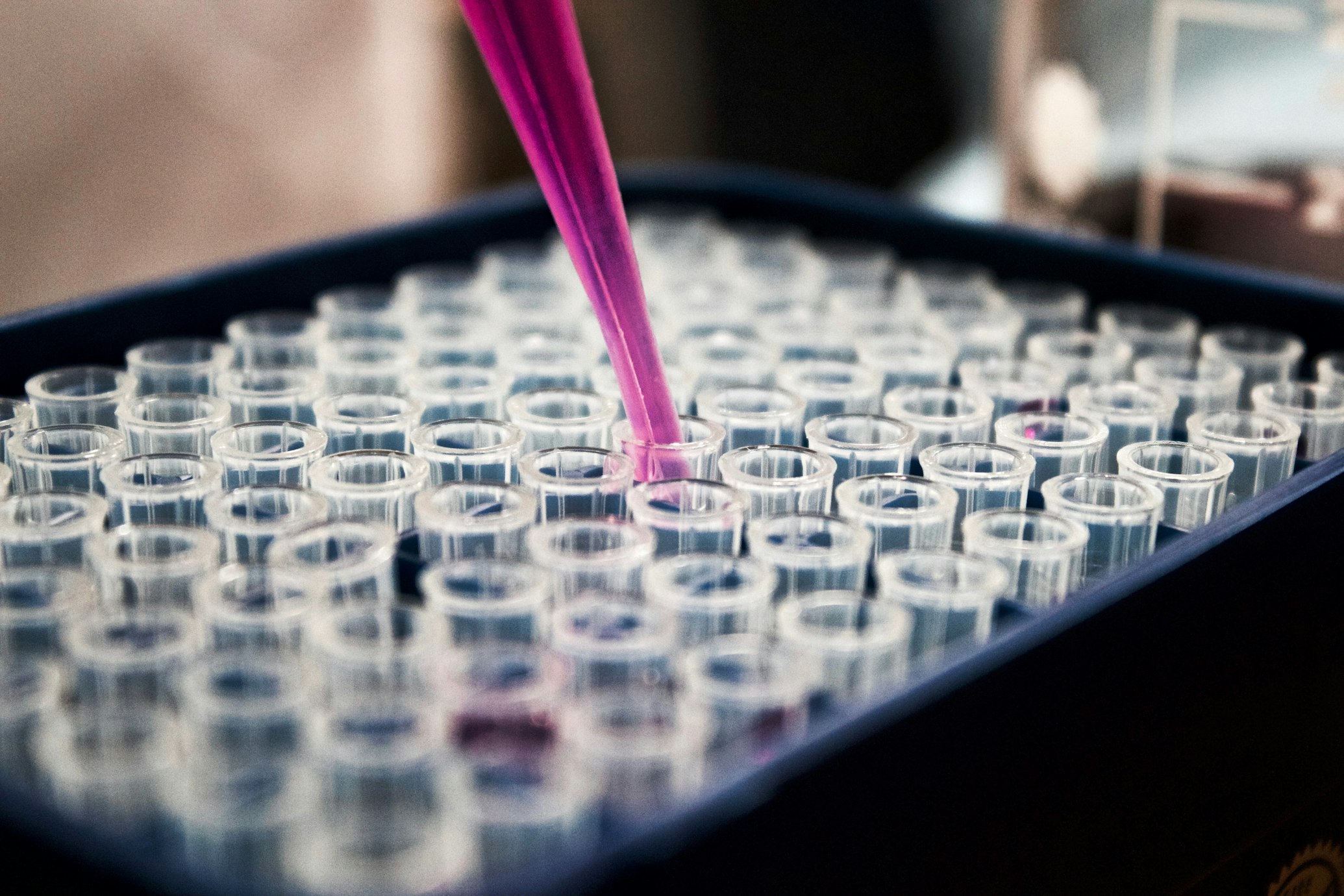
Advanced imaging techniques reveal the intricate folding of chromosomes.
The Principle of Repulsion and Compaction
The researchers built a computational model that revealed a simple, elegant principle: these overlapping loops repel each other due to their structure and the chemistry of DNA. This mutual repulsion causes the loops to stack and compact, ultimately forming the classic, tightly packed rod-shape of a chromosome ready for division. This mechanism is not just for cell division; a related protein complex called cohesin uses a similar looping principle to organize chromosomes during the cell's growth phase, though the loops are less overlapping, resulting in a less compact structure .
The Two-Stage Process of Chromosome Compaction
| Stage | Loop Type | Key Protein Complex | Result |
|---|---|---|---|
| Stage 1 | Large, stable loops | Condensin | Initial compaction and organization |
| Stage 2 | Smaller, nested loops | Condensin | Tight compaction into rod-shaped chromosomes |
The Chromosomics Revolution: Integrating the View of the Genome
These discoveries highlight a paradigm shift in biology: the move toward "chromosomics," an approach that integrates genome sequencing, cytogenetics, and cell biology to understand chromosomes in their full context 4 . For too long, the study of DNA sequence has been separated from the study of chromosome structure and function.
Chromosomics recognizes that where a gene is located on a chromosome and how it interacts with other parts of the genome are as important as the gene's sequence itself. Chromosomes are not randomly arranged; they occupy specific territories within the nucleus, and changes in their 3D structure can influence gene regulation and genome stability 4 7 .
The completion of truly complete, "telomere-to-telomere" (T2T) human genome sequences is now enabling scientists to explore previously unmappable regions, such as the highly repetitive DNA around centromeres and telomeres, opening new frontiers for understanding human evolution and disease 7 .
- Integrates multiple disciplines
- Studies chromosomes in context
- Examines 3D genome architecture
- Explores previously unmappable regions
The Scientist's Toolkit: Key Reagents and Technologies
Advancements in our understanding of chromosomes rely on a sophisticated toolkit of reagents and technologies. The table below details some of the essential tools used in cytogenetic research.
Essential Reagents for Cytogenetic and Chromosome Research
| Reagent/Technology | Primary Function | Application in Research |
|---|---|---|
| Cell Synchronization Kit | Halts cell division at a specific stage | Enables high-resolution chromosomal analysis by creating a population of cells at the same stage of division 3 . |
| Colcemid Solution | Inhibits the formation of the mitotic spindle | Arrests cells in metaphase, when chromosomes are most condensed, facilitating karyotyping and chromosome analysis 3 . |
| Phytohemagglutinin (PHA) | Stimulates lymphocyte division | Used in peripheral blood lymphocyte cultures to induce cell division for karyotyping 3 . |
| AminoMAX / MarrowMAX Media | Optimized culture media | Supports the growth of specific primary cells, such as amniotic fluid cells or bone marrow, for cytogenetic analysis 6 . |
| LoopTrace Microscopy | Gentle, high-resolution DNA imaging | Allows visualization of native chromosome structure and the dynamics of DNA looping during compaction . |
| Hi-C Sequencing | Captures chromatin interactions | Reveals the 3D architecture of the genome within the nucleus 4 7 . |
The discovery of the crossover protection mechanism also revealed the critical function of specific proteins. The following table summarizes the key molecular players identified in the 2025 study.
Key Proteins in Crossover Formation
| Protein/Complex | Function in Crossover Formation |
|---|---|
| Double Holliday Junction | The essential DNA structure formed when homologous chromosomes exchange strands; the precursor to a crossover 1 . |
| Cohesin | Forms a protective complex that shields the double Holliday junction from premature disassembly 1 . |
| STR/Bloom Complex | An enzyme that can inappropriately dismantle the double Holliday junction; its activity is regulated by the protective complex 1 . |
| RecA/Rad51 (Homologs) | The core recombinase enzyme (in bacteria and humans, respectively) that catalyzes homologous strand exchange 2 . |
Conclusion: The Dynamic Chromosome
The chromosome is far from a static storage container. It is a dynamic, active, and exquisitely regulated entity—a master of transformation that compacts meters of DNA into parcels small enough to fit in a nucleus yet accessible enough to run a cell. It is a careful dancer, performing the crossover waltz to ensure genetic diversity and accurate inheritance. It is a resilient structure, maintaining critical connections for decades in the case of human eggs.
Future Research Directions
As scientists continue to integrate the tools of genomics, cytogenetics, and cell biology into the unified field of chromosomics, we can expect even greater revelations.
Medical Applications
These discoveries will not only satisfy our fundamental curiosity about life but will also pave the way for new diagnoses and treatments for infertility, genetic diseases, and cancer.
All by paying homage to the intricate and magnificent chromosome.
References
References will be added here.