Liquid Biopsy Revolution: ctDNA Detection for Early-Stastage Breast Cancer Management and Drug Development
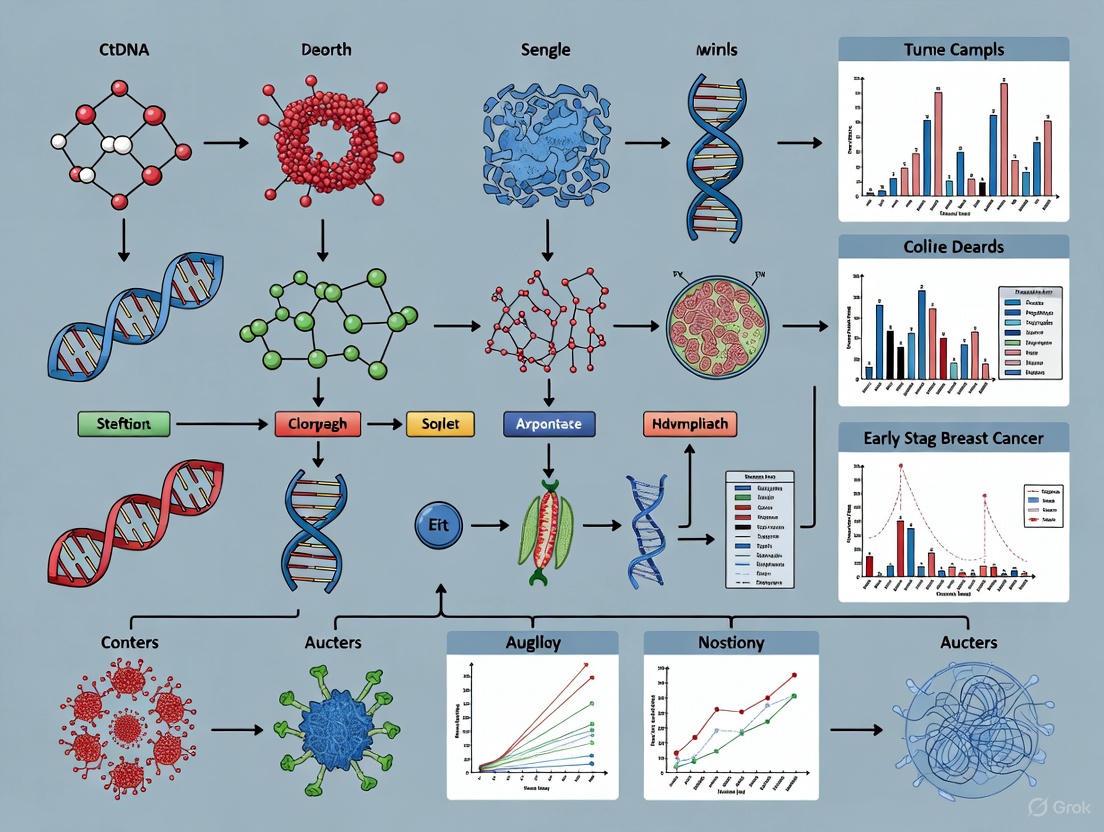
Circulating tumor DNA (ctDNA) analysis represents a transformative, non-invasive tool in the management of early-stage breast cancer, offering real-time insights into tumor dynamics.
Liquid Biopsy Revolution: ctDNA Detection for Early-Stastage Breast Cancer Management and Drug Development
Abstract
Circulating tumor DNA (ctDNA) analysis represents a transformative, non-invasive tool in the management of early-stage breast cancer, offering real-time insights into tumor dynamics. This article synthesizes current evidence and technological advances for a research and drug development audience. It explores the foundational role of ctDNA in detecting minimal residual disease (MRD) and predicting recurrence, compares the methodological landscape of tumor-informed versus tumor-agnostic assays, and addresses key technical and biological challenges. Furthermore, it critically examines the growing body of clinical validation data from prospective trials and discusses the imperative of equitable application and integration of ctDNA endpoints into future clinical study designs.
The Basis of ctDNA: From Biology to Clinical Signal in Early-Stage Disease
Core Biological Properties of ctDNA
Circulating tumor DNA (ctDNA) consists of small, double-stranded DNA fragments shed into the bloodstream by tumor cells through processes including apoptosis, necrosis, and active secretion [1] [2]. These fragments typically range from 140–200 base pairs in length and represent a subset of the total cell-free DNA (cfDNA) present in circulation [1] [2].
A critical property of ctDNA is its remarkably short half-life, estimated to be between 16 minutes to 2.5 hours [3] [1] [2]. This brief window enables ctDNA to serve as a near real-time biomarker for dynamic tumor monitoring, as its rapid clearance from the bloodstream reflects current tumor activity rather than historical disease state.
The proportion of ctDNA within total cfDNA, known as the tumor fraction (TF), exhibits considerable variation across patients and disease stages, ranging from 0.01% to over 90% of total cfDNA [2]. This fraction is influenced by multiple factors including tumor burden, cellular turnover rates, and tumor vascularity.
Table 1: Fundamental Biological Characteristics of ctDNA
| Property | Specification | Clinical/Research Significance |
|---|---|---|
| Molecular Structure | Double-stranded DNA fragments | Distinguishable from normal cfDNA by tumor-specific alterations |
| Fragment Length | 140-200 base pairs | Longer fragments may indicate recent cellular necrosis |
| Half-Life | 16 minutes - 2.5 hours | Enables real-time monitoring of tumor dynamics |
| Tumor Fraction Range | 0.01% - >90% of total cfDNA | Lower fractions present detection challenges in early-stage disease |
| Clearance Mechanisms | Hepatic metabolism, renal excretion, nuclease degradation | Affected by patient organ function and comorbidities |
ctDNA Shedding Dynamics in Breast Cancer
The release of ctDNA into circulation, known as shedding, varies significantly across breast cancer molecular subtypes and disease stages. Tumors with high proliferative activity and aggressive biology, such as triple-negative breast cancer (TNBC) and HER2-positive disease, demonstrate substantially higher ctDNA shedding rates compared to hormone receptor-positive/HER2-negative (HR+/HER2-) subtypes [3]. This differential shedding directly impacts assay sensitivity, with one study reporting 100% detection sensitivity in HER2-positive and TNBC compared to 88% in HR+/HER2- disease [1].
Multiple biological factors influence ctDNA shedding dynamics. Tumor proliferative activity directly correlates with shedding levels, with high-grade tumors releasing more ctDNA than indolent lesions [4]. The tumor microenvironment, including stromal density and vascular supply, further modulates DNA release into circulation [4]. Additionally, specific mutational profiles affect shedding, with TP53-mutated tumors demonstrating higher ctDNA levels and positivity rates compared to non-TP53 mutated tumors, even at similar disease stages [4].
Notably, shedding dynamics may vary across racial and ethnic populations. Emerging evidence suggests that patients of African ancestry have significantly higher ctDNA positivity rates and ctDNA levels compared to other ancestries, even after adjusting for disease stage [4]. This may reflect both biological differences in tumor behavior and the higher prevalence of aggressive subtypes like TNBC in this population.
Table 2: Factors Influencing ctDNA Shedding in Breast Cancer
| Factor | Impact on Shedding | Clinical Implications |
|---|---|---|
| Molecular Subtype | TNBC & HER2+ > HR+/HER2- | Affects detection sensitivity in early-stage disease |
| Tumor Stage | Metastatic > Early-stage | Early-stage tumors present detection challenges due to lower shedding |
| Tumor Proliferation Rate | High-grade > Low-grade | Correlates with cellular turnover and DNA release |
| Genetic Alterations | TP53-mutated > non-TP53 mutated | Influences assay sensitivity and detection rates |
| Metabolic Comorbidities | May affect clearance | Potential impact on ctDNA kinetics and interpretation |
ctDNA Lifecycle: Shedding and Clearance Dynamics
Experimental Protocols for ctDNA Analysis
Pre-Analytical Phase: Blood Collection and Plasma Processing
Protocol: Blood Collection and Plasma Separation for ctDNA Analysis
Blood Collection: Draw 7-14 mL of peripheral blood into EDTA-containing tubes [5]. Invert tubes gently 8-10 times immediately after collection to ensure proper mixing with anticoagulant.
Initial Centrifugation: Process samples within 4 hours of collection. Centrifuge at 1600× g for 20 minutes at 4°C to separate plasma from cellular components [5].
Secondary Centrifugation: Transfer the supernatant to a fresh tube without disturbing the buffy coat. Centrifuge at 12,000× g for 10 minutes at 4°C to remove remaining cellular debris [5].
Plasma Storage: Aliquot cleared plasma into cryovials and store at -80°C until DNA extraction. Avoid repeated freeze-thaw cycles to prevent DNA fragmentation.
Analytical Phase: ctDNA Extraction and Quantification
Protocol: ctDNA Extraction Using Commercial Kits
Extraction Requirements: Use a minimum of 4 mL of plasma for optimal DNA yield [5]. Employ specialized ctDNA isolation kits (e.g., AVENIO ctDNA Isolation Kit, Roche Diagnostics) following manufacturer's instructions.
Quality Assessment: Quantify extracted ctDNA using fluorometric methods (e.g., PicoGreen dsDNA assay) [5]. Verify DNA purity via spectrophotometry (NanoDrop), accepting 260/280 ratios between 1.8-2.0.
Concentration Normalization: Adjust samples to appropriate concentration for downstream applications (typically 1-10 ng/μL for NGS libraries).
Detection Methodologies
Digital PCR (dPCR) for Target Mutation Detection
Assay Design: Design TaqMan probes or EvaGreen assays targeting specific mutations of interest (e.g., PIK3CA, TP53, ESR1).
Partitioning: Divide each sample into thousands of nanoliter-sized partitions using microfluidics or water-oil emulsion droplets.
Endpoint PCR: Amplify templates within each partition using optimized thermal cycling conditions.
Fluorescence Reading and Quantification: Count positive and negative partitions to determine mutant allele frequency using Poisson statistics.
Next-Generation Sequencing (NGS) for Comprehensive Profiling
Library Preparation: Use either:
Unique Molecular Identifiers (UMIs): Incorporate barcodes during library preparation to tag original DNA molecules, enabling error suppression and accurate quantification [3].
Sequencing: Perform ultra-deep sequencing (typically >10,000x coverage) to detect low-frequency variants.
Bioinformatic Analysis: Align sequences to reference genome, identify somatic variants, and filter out clonal hematopoiesis of indeterminate potential (CHIP) variants using matched white blood cell DNA [3].
ctDNA Analysis Workflow: From Blood Draw to Detection
Research Reagent Solutions for ctDNA Studies
Table 3: Essential Research Reagents and Platforms for ctDNA Analysis
| Reagent/Platform | Primary Function | Key Features | Example Applications |
|---|---|---|---|
| AVENIO ctDNA Isolation Kit (Roche) | ctDNA extraction from plasma | Optimized for low-abundance DNA; processes ≥4 mL plasma | Pre-analytical phase for NGS or dPCR [5] |
| AVENIO ctDNA Targeted Kit (Roche) | Targeted NGS library preparation | 17-gene panel; integrated bioinformatics | Comprehensive mutation profiling in breast cancer [5] |
| Guardant360 CDx | Comprehensive ctDNA profiling | FDA-approved; hybrid capture-based NGS; >800 genomic targets | Detection of PIK3CA mutations in HR+/HER2- MBC [2] |
| FoundationOne Liquid CDx | Comprehensive genomic profiling | FDA-approved; detects SNVs, indels, CNVs, fusions | Therapy selection in metastatic breast cancer [2] |
| Signatera Test | MRD detection and monitoring | Tumor-informed, personalized assay | Recurrence monitoring in early-stage disease [2] |
| Digital PCR Systems (Bio-Rad QX200) | Absolute quantification of mutations | High sensitivity for low-frequency variants; no standard curve needed | Monitoring specific mutations (ESR1, PIK3CA) during treatment [5] |
Technical Considerations and Challenges
The accurate analysis of ctDNA requires careful consideration of multiple technical factors. Pre-analytical variables including blood collection tube type, processing time, and centrifugation protocols significantly impact DNA quality and yield [1]. The limit of detection (LoD) varies substantially between platforms, with dPCR typically detecting variants at 0.01-0.1% variant allele frequency (VAF) while NGS methods can achieve sensitivities down to ~0.02% VAF with error-suppression methods [3].
A critical challenge in ctDNA analysis is distinguishing true tumor-derived variants from clonal hematopoiesis of indeterminate potential (CHIP), which represents age-related mutations in hematopoietic cells [3]. This necessitates simultaneous profiling of matched white blood cell DNA to identify and filter CHIP-related mutations.
Tumor fraction directly impacts assay sensitivity, with samples containing <0.5% tumor fraction presenting significant detection challenges, particularly in early-stage disease [2]. Analytical approaches must be optimized according to the clinical context, with tumor-informed assays generally offering superior sensitivity for minimal residual disease detection, while tumor-agnostic approaches provide broader mutation screening without requiring prior tissue sequencing [3] [1].
Circulating tumor DNA (ctDNA) has emerged as a transformative biomarker in oncology, offering a non-invasive method for obtaining real-time tumor information. In the context of early-stage breast cancer (EBC), its application is particularly promising for addressing clinical challenges such as detecting minimal residual disease (MRD), predicting recurrence, and monitoring treatment response [6] [3]. ctDNA consists of small DNA fragments released into the bloodstream through apoptosis or necrosis of tumor cells, representing a fraction of the total cell-free DNA (cfDNA) [3]. With a short half-life of approximately 16 minutes to 2.5 hours, ctDNA provides a dynamic snapshot of current tumor burden and genomic landscape, enabling serial monitoring throughout a patient's treatment journey [3] [7]. This application note details the key applications, supporting data, and experimental protocols for implementing ctDNA analysis in early-stage breast cancer research, providing researchers and drug development professionals with practical frameworks for integrating these approaches into their workflows.
Key Application 1: Detection of Minimal Residual Disease (MRD)
Clinical Rationale and Definition
Minimal residual disease (MRD) refers to the presence of subclinical cancer after curative-intent treatment, which eventually leads to clinical recurrence if not eradicated [8]. In early-stage breast cancer, more than 90% of patients are diagnosed without macroscopic evidence of metastasis; however, micrometastatic disease persists in some individuals, causing metastatic recurrence that remains a major cause of cancer-related mortality [8]. Traditional imaging techniques lack the sensitivity to detect MRD, creating a critical need for more sensitive biomarkers. ctDNA-based MRD detection identifies molecular evidence of cancer through tumor-derived somatic variants and methylation profiles in plasma, offering a highly sensitive and specific approach for identifying patients at risk of recurrence [6] [8].
Supporting Clinical Evidence
Multiple studies have demonstrated the prognostic significance of ctDNA detection in the post-treatment setting. A 2025 pilot study evaluating a plasma-only multiomic ctDNA assay found that ctDNA was detected at or before distant recurrence in 11/14 (79%) of EBC patients, with a sensitivity of 85% for samples collected within 2 years from recurrence [8]. The assay demonstrated 100% specificity, with no ctDNA detection in the recurrence-free control group (n=13) [8]. Importantly, this study demonstrated lead times ranging from 3.4 to 18.5 months, meaning ctDNA detection preceded clinical or radiographic evidence of recurrence by these intervals [8].
The ChemoNEAR study utilizing the NeXT Personal tumor-informed platform, which can detect ctDNA down to 1 part per million, demonstrated 100% sensitivity and specificity for MRD detection in early breast cancer [6]. At a median follow-up of 76 months, detection of ctDNA was associated with an increased risk of relapse and decreased overall survival, with a median lead time of 12.5 months before clinical recurrence [6]. Similarly, the Exploratory Breast Lead Interval Study (EBLIS) detected ctDNA ahead of overt recurrence in 30 of 34 patients that relapsed, with a lead time of up to 38 months (median 10.5 months) [6].
Table 1: Performance Characteristics of ctDNA Assays for MRD Detection in Early Breast Cancer
| Assay/Study | Technology | Sensitivity | Specificity | Median Lead Time |
|---|---|---|---|---|
| Guardant Reveal (2025) [8] | Plasma-only multiomic (genomic + epigenomic) | 85% (within 2 years of recurrence) | 100% | 3.4-18.5 months (range) |
| NeXT Personal (ChemoNEAR) [6] | Tumor-informed sequencing | 100% | 100% | 12.5 months |
| Signatera (EBLIS) [6] | Tumor-informed sequencing | 88% (30/34 patients) | Not specified | 10.5 months (median) |
| Invitae Personalized Cancer Monitoring [6] | Tumor-informed sequencing | 76.9% | 100% | ~12 months |
Protocol: MRD Detection Using Tumor-Informed ctDNA Analysis
Principle: This protocol utilizes patient-specific mutations identified through tumor tissue sequencing to create a personalized assay for tracking MRD in plasma samples [3] [9].
Materials:
- Tumor tissue sample (fresh frozen or FFPE)
- Matched normal blood sample (buffy coat)
- Blood collection tubes (e.g., PAXgene, Streck, or EDTA tubes)
- DNA extraction kits for tissue and plasma
- Next-generation sequencing platform
- Bioinformatics pipeline for variant calling and patient-specific assay design
Procedure:
Tissue and Blood Collection
- Collect tumor tissue during surgical resection or diagnostic biopsy
- Collect peripheral blood (10-20 mL) in appropriate blood collection tubes for matched normal DNA extraction and plasma preparation
Sample Processing
- Process blood samples within 2-6 hours of collection
- Centrifuge blood at 800-1600 × g for 10-20 minutes to separate plasma
- Transfer plasma to a fresh tube and centrifuge at 16,000 × g for 10 minutes to remove residual cells
- Store plasma at -80°C until DNA extraction
Tumor and Normal DNA Sequencing
- Extract DNA from tumor tissue and matched normal buffy coat
- Perform whole exome sequencing or targeted sequencing of tumor and normal DNA
- Identify tumor-specific somatic mutations (typically 16-50 variants) through paired analysis
Personalized Assay Design
- Select 8-16 clonal, non-HLA mutations for inclusion in the patient-specific assay
- Design custom primers or probes to target selected mutations
Longitudinal Plasma Monitoring
- Collect longitudinal blood samples post-treatment (typically every 3-6 months for 2-3 years, then annually)
- Extract cfDNA from plasma using commercial kits
- Analyze cfDNA using the patient-specific assay with deep sequencing (typically >100,000X coverage)
- Monitor for presence of tumor-derived mutations
Data Analysis and Interpretation
- Use unique molecular identifiers (UMIs) for error correction and artifact removal
- Apply statistical models to distinguish true variants from background noise
- Report ctDNA status (positive/negative) and variant allele frequency (VAF)
Technical Notes:
- The limit of detection (LoD) for MRD assays typically ranges from 0.0001% to 0.01% variant allele frequency [3]
- Always sequence matched normal DNA to distinguish somatic mutations from germline variants and clonal hematopoiesis of indeterminate potential (CHIP) [3]
- Optimal timing for baseline MRD assessment is 2-4 weeks after completion of curative-intent therapy [10]
Key Application 2: Recurrence Prediction
Clinical Rationale
The ability to accurately predict recurrence risk in early-stage breast cancer enables personalized adjuvant treatment strategies. Current risk stratification based on clinicopathological features has limited precision, potentially leading to overtreatment of low-risk patients and undertreatment of high-risk patients [3] [8]. ctDNA analysis provides a direct measure of residual tumor cells, offering superior prognostic stratification compared to conventional biomarkers.
Quantitative Evidence
Multiple studies across cancer types have established the strong prognostic value of ctDNA detection during follow-up. A comprehensive meta-analysis in esophageal cancer demonstrated that ctDNA detection during follow-up was associated with significantly poorer progression-free survival (HR = 5.42, 95% CI: 3.97-7.38) and overall survival (HR = 4.93, 95% CI: 3.31-7.34) [11]. The prognostic impact increased over time, with higher hazard ratios during follow-up compared to baseline or post-neoadjuvant therapy timepoints [11].
In a combined cohort of early-stage non-small cell lung cancer patients from the LEMA and LUCID studies, ctDNA detection after treatment completion was associated with significantly shorter recurrence-free survival (HR 11.4, 95% CI: 7.0-18.7) and overall survival (HR 8.1, 95% CI: 4.6-14.2) [9]. The positive predictive value for recurrence was 90-92%, demonstrating the strong association between post-treatment ctDNA detection and disease relapse [9].
Table 2: Prognostic Value of ctDNA Detection at Different Time Points Across Cancer Types
| Cancer Type | Time Point | Hazard Ratio for PFS | Hazard Ratio for OS | Study |
|---|---|---|---|---|
| Esophageal cancer | Baseline | 1.64 (95% CI: 1.30-2.07) | 2.02 (95% CI: 1.36-2.99) | [11] |
| Esophageal cancer | Post-neoadjuvant therapy | 3.97 (95% CI: 2.68-5.88) | 3.41 (95% CI: 2.08-5.59) | [11] |
| Esophageal cancer | During follow-up | 5.42 (95% CI: 3.97-7.38) | 4.93 (95% CI: 3.31-7.34) | [11] |
| Early-stage NSCLC | Post-treatment | 11.4 (95% CI: 7.0-18.7) | 8.1 (95% CI: 4.6-14.2) | [9] |
| Early breast cancer | MRD detection | Not specified | Significantly decreased (P<0.0001) | [6] |
Protocol: Longitudinal Monitoring for Recurrence Prediction
Principle: This protocol outlines a structured approach for longitudinal ctDNA monitoring to predict recurrence risk in early-stage breast cancer patients after curative-intent treatment.
Materials:
- Blood collection tubes (cell-stabilizing tubes recommended for longitudinal studies)
- cfDNA extraction kits
- Tumor-informed or tumor-agnostic ctDNA detection platform
- Laboratory information management system (LIMS) for tracking longitudinal samples
Procedure:
Establish Monitoring Schedule
- Baseline: Pre-treatment sample (after diagnosis, before any treatment)
- Post-treatment: 2-8 weeks after completion of all curative-intent therapy
- Longitudinal monitoring: Every 3-6 months for years 1-3, then every 6-12 months for years 3-5
- At time of suspected recurrence
Blood Collection and Processing
- Collect 20-30 mL blood per time point in cell-stabilizing tubes
- Process within 48-96 hours according to manufacturer's specifications (within 6 hours for EDTA tubes)
- Isolate plasma through double centrifugation (1600 × g for 10 min, then 16,000 × g for 10 min)
- Aliquot plasma and store at -80°C
ctDNA Analysis
- Extract cfDNA from 4-10 mL plasma using validated extraction kits
- Quantify cfDNA yield and quality (e.g., Fragment Analyzer, Bioanalyzer)
- Analyze using either:
- Tumor-informed assay (as described in Section 2.3)
- Tumor-agnostic assay (e.g., methylation-based, mutation panel, or fragmentomics)
Data Interpretation and Risk Stratification
- Categorize patients as ctDNA-positive or ctDNA-negative at each time point
- For quantitative assays, track variant allele frequency or tumor fraction over time
- Integrate ctDNA results with clinicopathological risk factors
Statistical Analysis
- Calculate recurrence-free survival based on ctDNA status
- Determine lead time between ctDNA detection and clinical recurrence
- Compute positive and negative predictive values for recurrence
Technical Notes:
- For multicenter studies, standardize blood collection and processing protocols to minimize pre-analytical variability
- The optimal post-operative timing for ctDNA assessment appears to be approximately 4 weeks after surgery, as very early sampling (e.g., 2 weeks) may be affected by normal cell-free DNA dilution from surgical inflammation [10]
- In the VICTORI study on colorectal cancer, 87% of recurrences were ctDNA-positive within the landmark 8-week post-surgical period when adjuvant chemotherapy is typically administered [10]
Key Application 3: Treatment Response Monitoring
Clinical Rationale
Monitoring treatment response using traditional imaging has limitations, including delayed assessment of response and inability to detect molecular progression. ctDNA dynamics provide real-time feedback on treatment effectiveness, allowing for earlier response assessment and intervention [12]. In the neoadjuvant setting, ctDNA monitoring can identify patients who are not responding to therapy, potentially enabling treatment adaptation [6] [3].
Supporting Clinical Evidence
In the I-SPY2 trial, patients with HER2-negative early breast cancer were monitored with ctDNA during neoadjuvant chemotherapy. Persistent ctDNA positivity via Signatera assay three weeks after neoadjuvant chemotherapy completion was significantly associated with a lack of pathologic complete response (pCR) (82% vs 52% non-pCR; odds ratio 4.33, P = 0.012) [6]. Conversely, early ctDNA clearance predicted improved outcomes and higher pCR rates in triple-negative breast cancer patients (P = 0.0002) [6].
The Translational Breast Cancer Research Consortium (TBCRC)-030 trial demonstrated that post-treatment ctDNA clearance via a tumor-informed assay strongly correlated with favorable residual cancer burden (RCB) scores, with a 285-fold decrease in ctDNA tumor fraction observed in responders after 3 weeks of treatment [6]. Furthermore, recent results from the PREDICT-DNA/TBCRC 040 trial showed that TNBC patients with detectable ctDNA prior to surgery were approximately 12 times more likely to experience a recurrence regardless of pCR (HR = 12.8; 95% CI 2.3-71.5) [6].
The ctMoniTR project, which aggregated patient-level data from clinical trials, found that molecular response (assessed by ctDNA reduction) at both early (up to 7 weeks) and later (7-13 weeks) timepoints was significantly associated with improved overall survival in advanced NSCLC patients treated with anti-PD(L)1 therapy [13]. The strength of association was influenced by the timing of ctDNA assessment and treatment modality, highlighting the importance of standardized collection timepoints [13].
Protocol: Monitoring Treatment Response in the Neoadjuvant Setting
Principle: This protocol describes ctDNA monitoring during neoadjuvant therapy to assess early treatment response and predict pathological outcomes.
Materials:
- Blood collection tubes
- cfDNA extraction kits
- Digital PCR or NGS platform for ctDNA quantification
- Standardized response criteria (e.g., molecular response definitions)
Procedure:
Establish Sampling Time Points
- T0: Baseline (after diagnosis, before treatment initiation)
- T1: Early during treatment (e.g., after 1-2 cycles, 3-6 weeks)
- T2: Mid-treatment (e.g., after 3-4 cycles)
- T3: Post-treatment (after completion of neoadjuvant therapy, before surgery)
- Optional: During surgery or after surgery
Sample Collection and Processing
- Collect 10-20 mL blood at each time point
- Process within 2-6 hours of collection (depending on tube type)
- Isolate plasma through double centrifugation
- Store plasma at -80°C until analysis
ctDNA Analysis
- Extract cfDNA from 4-10 mL plasma
- Analyze using either:
- Tumor-informed assay (preferred for sensitivity)
- Tumor-agnostic assay targeting breast cancer-specific mutations or methylation patterns
- Quantify ctDNA levels (variant allele frequency or tumor fraction)
Response Assessment
- Calculate molecular response using predefined thresholds:
- Molecular Response (MR): ≥50% decrease in ctDNA levels
- Major Molecular Response (MMR): ≥90% decrease in ctDNA levels
- Complete Molecular Response (CMR): ctDNA clearance to undetectable levels
- Compare ctDNA dynamics with pathological response at surgery
- Calculate molecular response using predefined thresholds:
Data Correlation and Interpretation
- Correlate ctDNA clearance with pathological complete response (pCR)
- Assess association between persistent ctDNA and residual cancer burden
- Evaluate ctDNA dynamics as predictor of recurrence-free survival
Technical Notes:
- Different molecular response thresholds may have varying predictive value depending on cancer type and treatment modality [13]
- In the I-SPY2 trial, ctDNA negativity after neoadjuvant therapy showed significant association with improved distant recurrence-free survival irrespective of RCB status [6]
- For hormone receptor-positive, HER2-negative breast cancer with RCB II/III status, decreased risk of metastatic recurrence was observed in patients with negative ctDNA result prior to surgery compared to patients with positive result (HR 5.65; 95% CI 2.45-12.99) [6]
Experimental Workflows and Signaling Pathways
The following diagrams illustrate key experimental workflows and biological concepts in ctDNA analysis for early-stage breast cancer.
ctDNA Analysis Workflow for MRD Detection
ctDNA Shedding and Detection Biology
The Scientist's Toolkit: Research Reagent Solutions
Table 3: Essential Research Reagents and Platforms for ctDNA Analysis in Early Breast Cancer
| Reagent/Platform | Type | Primary Applications | Key Features | Considerations for Early Breast Cancer |
|---|---|---|---|---|
| Signatera (Natera) | Tumor-informed NGS | MRD detection, Treatment monitoring | Personalized assay based on 16 variants; High sensitivity (85-90%) | Validated in EBC; Requires tumor tissue; Lead time up to 38 months [6] |
| Guardant Reveal (Guardant Health) | Tumor-agnostic multiomic | MRD detection, Recurrence prediction | Combines genomic and epigenomic analysis; No tissue required | 85% sensitivity within 2 years of recurrence; 100% specificity in validation [8] |
| NeXT Personal | Tumor-informed ultra-sensitive | MRD detection | Detection threshold of 1 part per million | 100% sensitivity/specificity in ChemoNEAR study; 12.5-month median lead time [6] |
| Invitae Personalized Cancer Monitoring | Tumor-informed NGS | MRD detection | 76.9% sensitivity, 100% specificity | ~12 month median lead time in early validation [6] |
| Safe-SeqS | Amplicon-based NGS | Mutation detection | Error-corrected sequencing; 0.1-0.02% LoD | Suitable for tracking known mutations; Requires prior knowledge of variants [3] [7] |
| CAPP-Seq | Hybrid capture NGS | Comprehensive profiling | Targets ~125kb; ~0.02% LoD at 96% specificity | Broadly applicable without personalization; Good for heterogeneous tumors [7] |
| ddPCR | Digital PCR | Targeted mutation detection | Absolute quantification; High sensitivity | Rapid turnaround (72 hours); Limited to known variants; Excellent for validation [7] |
The applications of ctDNA analysis in early-stage breast cancer research—MRD detection, recurrence prediction, and treatment response monitoring—represent significant advancements in precision oncology. The protocols and data presented in this document provide researchers with practical frameworks for implementing these approaches in both clinical trials and translational research settings. As ctDNA technologies continue to evolve with improved sensitivity and multiomic approaches, their integration into standard research protocols will enhance our understanding of cancer dynamics and accelerate the development of more personalized treatment strategies for early-stage breast cancer patients. Future directions include standardization of assay protocols, validation of clinical utility in prospective interventional trials, and exploration of combination approaches incorporating multiple liquid biopsy analytes.
The management of early-stage breast cancer (ESBC) has been transformed by the advent of liquid biopsy and the analysis of circulating tumor DNA (ctDNA). Detection of ctDNA after curative-intent therapy, termed minimal residual disease (MRD), provides a powerful, non-invasive method to identify patients at high risk of relapse long before clinical or radiographic recurrence becomes apparent [6] [14]. This application note details the quantitative evidence linking ctDNA detection to relapse-free survival (RFS) and overall survival (OS) and provides standardized protocols for implementing ctDNA analysis in a research setting, framed within a broader thesis on ctDNA in ESBC.
Quantitative Evidence: ctDNA as a Prognostic Biomarker
The prognostic value of ctDNA has been validated across numerous studies and breast cancer molecular subtypes. The consistent finding is that the detection of ctDNA following neoadjuvant therapy or after surgery is a significant indicator of poor prognosis.
Table 1: Prognostic Value of ctDNA Detection in Early-Stage Breast Cancer
| Study / Trial | Breast Cancer Subtype | ctDNA Detection Timepoint | Key Prognostic Finding (Hazard Ratio for Recurrence/Death) |
|---|---|---|---|
| I-SPY2 Trial [6] | HR+/HER2- | After neoadjuvant chemotherapy | ctDNA+ vs ctDNA-: HR 5.65 for metastatic recurrence (95% CI 2.45–12.99) |
| Prospective Study (n=168) [15] | All Early-Stage (High-Risk) | Pre-operative (Pre-op) | ctDNA+ vs ctDNA-: Adjusted HR 3.09 for DFS (95% CI 2.65–80.0) |
| ChemoNEAR Study [6] | Not Specified | Post-operative (MRD) | ctDNA+ vs ctDNA-: HR undefined; P < 0.0001 for RFS |
| LIBERATE Study [16] | ER+/HER2- & TNBC | Post-operative (MRD) | ctDNA+ vs ctDNA-: Significant for Event-Free Survival (P< 0.0001) |
| Systematic Review [17] | HR- (incl. TNBC) | Various (Post-treatment) | ctDNA+ vs ctDNA-: HR 4.03 for RFS (P < 0.001); HR 3.21 for OS (P < 0.001) |
| Systematic Review [17] | HR+ | Various (Post-treatment) | ctDNA+ vs ctDNA-: Association with RFS and OS was not statistically significant |
Table 2: Performance Metrics of Key ctDNA Assays in Predicting Recurrence
| Assay Name | Assay Type | Reported Sensitivity | Reported Specificity | Median Lead Time to Recurrence |
|---|---|---|---|---|
| Signatera [6] | Tumor-Informed | 85-90% | High (Not specified) | 10.5 months (up to 38 months) |
| NeXT Personal [6] | Tumor-Informed | 100% (in ChemoNEAR) | 100% (in ChemoNEAR) | 12.5 months |
| Guardant Reveal [16] | Tumor-Agnostic (Methylation) | 71% (Overall); 100% (ER+/HER2-) | 100% | 152 days (~5 months) |
| Invitae Personalized Cancer Monitoring [6] | Tumor-Informed | 76.9% | 100% | Nearly 1 year |
Key Clinical Correlations
- Lead Time: ctDNA detection provides a significant lead time over standard clinical imaging for predicting relapse, with studies reporting a median lead time of 9.7 to 12.5 months [6] [15]. In one study, ctDNA was detected up to 38 months before overt clinical recurrence [6].
- Molecular Subtypes: The prognostic power of ctDNA is particularly strong in more aggressive subtypes. A systematic review and meta-analysis found that ctDNA positivity was a significant predictor of worse RFS and OS in hormone receptor-negative (HR-) and triple-negative breast cancer (TNBC) subgroups, but less so in the HR+ subgroup [17]. This may be related to higher baseline ctDNA shedding in these subtypes [15].
- Dynamic Monitoring: The persistence of ctDNA after neoadjuvant chemotherapy or its emergence during adjuvant therapy is a stronger negative prognostic factor than traditional pathologic complete response (pCR) assessment in some contexts [6] [14] [18]. For instance, in the I-SPY2 trial, ctDNA negativity after neoadjuvant therapy was significantly associated with improved distant RFS, irrespective of residual cancer burden (RCB) status [6].
Experimental Protocols for ctDNA Analysis
This section outlines detailed methodologies for two primary approaches to ctDNA-based MRD detection in research settings.
Protocol 1: Tumor-Informed MRD Detection Workflow
This is a multi-step, patient-specific protocol used by assays like Signatera and NeXT Personal [6] [15].
Principle: The patient's tumor tissue is first sequenced to identify somatic mutations, which are then used to create a personalized assay for tracking these mutations in plasma.
Procedure:
Tumor and Germline DNA Extraction:
- Obtain Formalin-Fixed Paraffin-Embedded (FFPE) tumor tissue block and matched peripheral blood mononuclear cells (PBMCs) or whole blood for germline DNA.
- Extract genomic DNA from both sources using a commercial kit (e.g., QIAamp DNA FFPE Tissue Kit, QIAamp DNA Blood Maxi Kit).
Tumor Sequencing and Somatic Variant Calling:
- Prepare sequencing libraries from tumor and germline DNA using a targeted panel (e.g., a 95-gene cancer panel [15]) or whole-exome sequencing.
- Perform next-generation sequencing (NGS) on an Illumina platform to a high depth of coverage (>500x).
- Use bioinformatics pipelines (e.g., BWA-MEM for alignment, GATK for variant calling) to compare tumor and germline sequences and identify tumor-specific somatic mutations (SNVs, indels).
Personalized Assay Design:
Plasma Collection and Cell-Free DNA (cfDNA) Extraction:
- Collect patient blood in Streck Cell-Free DNA BCT tubes to stabilize nucleated cells. Process within 6-48 hours.
- Centrifuge blood twice to separate plasma from cellular components.
- Extract cfDNA from plasma using a circulating nucleic acid kit (e.g., QIAamp Circulating Nucleic Acid Kit). Quantify cfDNA using a fluorescence-based assay (e.g., Qubit dsDNA HS Assay).
Targeted Amplification and Sequencing of Plasma cfDNA:
- Use the patient-specific primer panel to amplify and create sequencing libraries from the plasma cfDNA.
- Perform ultra-deep sequencing (>100,000x coverage) to detect the presence of trace-level mutations.
Bioinformatic Analysis and MRD Calling:
- Align sequencing data to the reference genome.
- Use a bespoke algorithm to detect and quantify the patient-specific mutations, filtering out background noise and clonal hematopoiesis variants.
- A sample is classified as ctDNA-positive if one or more of the tracked mutations are detected above a pre-defined statistical threshold (e.g., after applying a VAF and unique molecule count cutoff) [15].
Protocol 2: Tumor-Agnostic MRD Detection via Methylation Analysis
This approach, used by assays like Guardant Reveal, does not require prior tissue sequencing and is based on cancer-specific epigenetic signatures [16].
Principle: The assay targets a pre-defined panel of genomic regions that exhibit differential methylation patterns between cancer cells and normal cells.
Procedure:
Plasma Collection and cfDNA Extraction:
- Identical to Steps 1-4 in Protocol 1.
Methylation-Sensitive Library Preparation:
- Treat plasma cfDNA with sodium bisulfite, which converts unmethylated cytosine residues to uracil, while methylated cytosines remain unchanged.
- Prepare NGS libraries from the bisulfite-converted DNA.
Targeted Sequencing and Analysis:
- Perform hybrid capture or amplification using probes designed for the targeted methylated regions.
- Sequence the libraries on an NGS platform.
- Bioinformatic analysis aligns the bisulfite-converted sequences to a reference genome and determines the methylation status at hundreds to thousands of targeted CpG sites.
Methylation Scoring and MRD Calling:
- A machine learning classifier analyzes the aggregate methylation data from the panel and compares it to a database of cancer and normal methylation profiles.
- The output is a score that classifies the sample as ctDNA-positive or ctDNA-negative based on the presence of a cancer-like methylation signal [16].
The Scientist's Toolkit: Essential Research Reagents & Materials
Table 3: Key Reagents and Kits for ctDNA MRD Research
| Item | Function/Description | Example Product(s) |
|---|---|---|
| Cell-Free DNA Blood Collection Tubes | Stabilizes blood cells to prevent genomic DNA contamination and preserve cfDNA profile for up to several days. | Streck Cell-Free DNA BCT, PAXgene Blood cDNA Tube |
| cfDNA Extraction Kit | Isolves short-fragment, low-concentration cfDNA from plasma with high efficiency and purity. | QIAamp Circulating Nucleic Acid Kit, MagMAX Cell-Free DNA Isolation Kit |
| DNA Quantitation Assay | Precisely quantifies low yields of double-stranded cfDNA. Critical for input normalization. | Qubit dsDNA HS Assay, TapeStation D1000/5000 ScreenTape |
| Targeted Sequencing Panels | Predesigned sets of probes/primers for capturing and sequencing cancer-associated genes. | Illumina TruSight Oncology 500, Custom Panels (e.g., 95-gene panel [15]) |
| NGS Library Prep Kit | Prepares cfDNA samples for sequencing by adding adapters and amplifying libraries. | KAPA HyperPrep Kit, Illumina DNA Prep |
| Bisulfite Conversion Kit | Chemically modifies DNA for methylation analysis by converting unmethylated cytosines. | EZ DNA Methylation-Gold Kit, NEBNonvert Bisulfite Conversion Kit |
| Bioinformatic Pipelines | Software for alignment, variant calling (for tumor-informed), or methylation classification (for tumor-agnostic). | GATK, BWA-MEM, Custom MRD classifiers (e.g., Signatera, Guardant Reveal) |
Analytical Considerations and Pathways to Clinical Utility
The transition of ctDNA from a prognostic biomarker to a predictive one that guides therapy requires careful consideration of analytical factors. The diagram below outlines the clinical pathway and key decision points based on ctDNA status.
- Timing of Blood Collection: The association between ctDNA dynamics and overall survival is influenced by the timing of plasma collection. Evidence from the ctMoniTR project in lung cancer suggests that while an early timepoint (T1, up to 7 weeks post-treatment) is prognostic, a later timepoint (T2, 7-13 weeks) may have a marginally stronger association with OS, particularly for chemotherapy [19]. This underscores the need for standardized phlebotomy schedules in trial protocols.
- Defining Molecular Response: A key analytical question is the threshold for a "molecular response." Studies have evaluated different thresholds, including ≥50% decrease, ≥90% decrease, and 100% clearance of ctDNA, all of which show association with improved survival [19]. The optimal cutoff may depend on the treatment modality and cancer type.
- Equity in Assay Performance: Research indicates that biological factors like tumor subtype and possibly patient ancestry can influence ctDNA shedding. For example, TP53-mutated tumors (more common in TNBC and Black patients) may shed more DNA, potentially increasing assay sensitivity in these groups [4]. Ensuring that ctDNA biomarkers perform equitably across all populations is a critical area of ongoing research [4].
In the management of early-stage breast cancer (EBC), the early identification of patients at risk of relapse remains a paramount clinical challenge. Current surveillance protocols, which rely primarily on physical examinations and imaging, possess limited sensitivity for detecting subclinical disease [20]. The emergence of circulating tumor DNA (ctDNA) analysis has introduced a transformative approach to cancer monitoring, enabling the detection of minimal residual disease (MRD)—molecular evidence of cancer in the absence of radiographic findings [6]. This paradigm of "molecular relapse" describes a state where ctDNA is detectable in plasma months or even years before clinical recurrence becomes evident. The interval between ctDNA detection and clinical or radiological confirmation of relapse is termed the "lead time" [21]. This application note delineates the quantitative evidence for this lead time advantage and provides detailed protocols for its detection within the context of early-stage breast cancer research.
Quantitative Evidence: The Lead Time of ctDNA Detection
Prospective clinical studies have consistently validated the prognostic power of ctDNA-based MRD monitoring, demonstrating its ability to anticipate clinical recurrence across all major breast cancer subtypes.
Table 1: Lead Time of ctDNA Detection Before Clinical Recurrence in Selected Studies
| Study / Cohort | Patient Population | Detection Assay | Median Lead Time (Months) | Sensitivity for Relapse |
|---|---|---|---|---|
| Exploratory Breast Lead Interval Study (EBLIS) [6] | Early-Stage Breast Cancer | Signatera (tumor-informed) | 10.5 (up to 38) | 88% (30/34 patients) |
| UK Prospective Multicenter Study [21] | Early-Stage Breast Cancer | Tumor-informed dPCR | 10.7 | 96% (22/23) for distant extracranial relapse |
| Fenretinide Prevention Trial Analysis [20] | T1-T2 N0 EBC | Tumor-informed dPCR | Up to 28 | 83% (5/6 LRR patients) |
| ChemoNEAR Study [6] | Early-Stage Breast Cancer | NeXT Personal (tumor-informed) | 12.5 | 100% |
The data underscore several critical findings. First, the lead time is substantial, providing a window of opportunity for early intervention. Second, tumor-informed assays—where sequencing of the primary tumor is used to create patient-specific dPCR or NGS panels—form the backbone of high-sensitivity MRD detection [20] [21]. Finally, while sensitivity for detecting distant metastatic relapse is exceptionally high, brain-only metastases are less frequently detected in plasma, suggesting that relapse at this sanctuary site may require complementary surveillance methods [21].
Experimental Workflow for ctDNA-Based Relapse Detection
The standard methodology for detecting molecular relapse involves a multi-step process that begins with tumor tissue sequencing and extends to longitudinal plasma monitoring.
Detailed Protocol: Tumor-Informed dPCR for MRD Monitoring
This protocol is adapted from methodologies used in pivotal studies [20] [21].
Primary Tumor Sequencing and Assay Design
- Objective: To identify patient-specific somatic mutations for tracking in plasma.
- Procedure:
- DNA Extraction from Tumor Tissue: Isolate DNA from four sections of primary tumor FFPE tissues (10 μm thick slides with tumor cellularity ≥50%) using a commercial kit (e.g., GeneRead DNA FFPE Kit, Qiagen). Assess DNA quantity using a fluorescence-based assay (e.g., Qubit dsDNA HS Assay Kit) [20].
- Targeted Sequencing: Perform Next-Generation Sequencing (NGS) using a targeted cancer hotspot panel (e.g., Ion AmpliSeq Cancer Hotspot Panel v2 covering 50 genes). For cases with no detectable variants, a more comprehensive panel (e.g., covering 409 genes) can be employed [20].
- Variant Selection and Assay Design: Select 1-2 clonal, high-confidence somatic mutations (e.g., in
TP53orPIK3CA). Design mutation-specific dPCR assays (TaqMan SNP Genotyping Assays, Thermo Fisher). Custom assays can be designed using the manufacturer's tools if validated assays are unavailable [20].
Plasma Collection and cfDNA Processing
- Objective: To obtain high-quality cell-free DNA (cfDNA) from patient blood samples.
- Procedure:
- Blood Collection: Collect blood in K2EDTA tubes. For historical cohorts using heparin tubes, treat plasma eluates with heparinase I (1u/µl) for 1 hour at room temperature to mitigate PCR inhibition [20].
- Plasma Separation: Centrifuge blood samples twice (e.g., 1600 × g for 10 min, then 16,000 × g for 10 min) to separate plasma from cellular components.
- cfDNA Extraction: Extract cfDNA from plasma using a specialized kit (e.g., QIAamp Circulating Nucleic Acid Kit, Qiagen). Elute in a small volume (e.g., 35 µL) to concentrate the sample [20].
- Pre-Amplification (Optional): For very low ctDNA levels, pre-amplify plasma DNA using a PreAmp Master Mix Kit with the same dPCR primers and probes (12 cycles). Dilute the pre-amplified product 1:100-1:500 before dPCR analysis. This step has shown a strong linear correlation (r² = 0.96) with non-pre-amplified VAF estimates [20].
dPCR Analysis and MRD Calling
- Objective: To detect and quantify patient-specific mutations in longitudinal cfDNA samples.
- Procedure:
- dPCR Setup: Prepare dPCR reactions using a platform such as the QuantStudio 3D Digital PCR System. Include negative controls (wild-type genomic DNA and no-template controls) in every run [20] [21].
- Thermal Cycling: Run the following protocol on a thermal cycler: 96°C for 10 min; 45 cycles of [98°C for 30 sec, 56°C for 2 min, 60°C for 2 min]; final hold at 10°C [20].
- Data Analysis: Read the chips on the dPCR instrument and analyze the data using the manufacturer's software (e.g., QuantStudio 3D AnalysisSuite Server). The result is a variant allele frequency (VAF) for the tracked mutation(s) in each plasma sample.
- MRD Positivity Criterion: A sample is considered MRD-positive if the ctDNA concentration (copies/mL) or VAF is significantly above the pre-specified background threshold of the assay. In research settings, this is often defined as the presence of ≥3 mutant molecules in a sample or a statistically significant increase over the limit of detection/blank [21].
The Scientist's Toolkit: Essential Reagents and Platforms
Table 2: Key Research Reagent Solutions for ctDNA-Based Relapse Monitoring
| Item | Specific Examples | Function/Benefit |
|---|---|---|
| Tumor DNA Extraction Kit | GeneRead DNA FFPE Kit (Qiagen), QIAamp DNA Mini Kit (Qiagen) | High-yield DNA extraction from challenging FFPE or frozen tumor tissues. |
| Targeted NGS Panels | Ion AmpliSeq Cancer Hotspot Panel v2, Comprehensive Cancer Panel (Thermo Fisher) | Identifies trackable somatic mutations from limited tumor DNA input. |
| Blood Collection Tube | K2EDTA Tubes, Cell-Free DNA Blood Collection Tubes (e.g., Streck) | Stabilizes nucleated cells to prevent genomic DNA contamination of plasma. |
| cfDNA Extraction Kit | QIAamp Circulating Nucleic Acid Kit (Qiagen) | Optimized for low-abundance cfDNA from large-volume plasma samples. |
| dPCR System | QuantStudio 3D Digital PCR (Thermo Fisher), QX200 Droplet Digital PCR (Bio-Rad) | Absolute quantification of target mutations without a standard curve; essential for low-VAF detection. |
| Tumor-Informed MRD Assays | Signatera (Natera), NeXT Personal (Personal Genome Diagnostics), RaDaR (Inivata), Invitae Personalized Cancer Monitoring | Commercially available, CLIA-certified platforms that provide an end-to-end service from tumor sequencing to longitudinal plasma testing. |
The detection of molecular relapse via ctDNA analysis represents a significant advance in the management of early-stage breast cancer. The consistent and clinically meaningful lead time advantage, often exceeding 10 months, provides a critical window for therapeutic intervention before the establishment of overt, incurable metastatic disease [20] [6] [21]. The protocols and tools detailed herein provide a roadmap for researchers to implement this powerful biomarker in their translational studies. The ongoing integration of these assays into large-scale prospective therapeutic trials (e.g., to guide treatment escalation at molecular relapse) is the next essential step in validating this approach and ultimately changing the standard of care for breast cancer survivors.
Navigating the Technological Landscape: Assays, Platforms, and Clinical Applications
Within the context of early-stage breast cancer research, the detection of circulating tumor DNA (ctDNA) for minimal residual disease (MRD) represents a significant advance in precision oncology. MRD refers to the small group of cancer cells that persist after treatment, often evading detection by conventional imaging but serving as a harbinger of cancer recurrence [22] [6]. The core methodological divide in this field lies between two paradigm approaches: tumor-informed and tumor-agnostic assays. Tumor-informed assays are patient-specific, requiring initial sequencing of the primary tumor to identify unique mutations, which then guide the creation of a customized assay for tracking these alterations in the patient's blood [23]. In contrast, tumor-agnostic assays are "universal" and do not require prior tumor tissue analysis; instead, they use fixed panels targeting recurrent cancer alterations or computational algorithms to estimate ctDNA burden [23] [3]. This application note provides a comparative analysis of these approaches, focusing on their analytical sensitivity and laboratory workflow, to inform researchers and drug development professionals working in early-stage breast cancer.
Comparative Performance and Sensitivity
The analytical sensitivity of an assay, particularly its Limit of Detection (LoD), is paramount in early-stage breast cancer where ctDNA fractions can be exceptionally low, often representing ≤ 0.1% of total cell-free DNA [24]. The table below summarizes key performance metrics for the main assay categories.
Table 1: Analytical Performance of ctDNA Assay Categories
| Assay Category | Representative Examples | Limit of Detection (LoD) | Key Strengths | Key Limitations |
|---|---|---|---|---|
| Tumor-Informed | Signatera, RaDaR, NeXT Personal, CancerDetect [22] [6] | 0.001% (1 part per 100,000) [22] [6] | Ultra-high sensitivity; high specificity; ideal for MRD detection [22] [23] | Longer turnaround time; requires tumor tissue; higher cost [3] |
| Tumor-Agnostic (Targeted NGS) | Guardant Reveal, CAPP-Seq [23] [3] | ~0.02% - 0.1% [3] | Faster turnaround; no tissue required; broader genomic overview [3] [25] | Lower sensitivity; risk of false negatives in low-shedding tumors [22] [26] |
| Digital PCR (dPCR) | ddPCR (QX200), pdPCR (Absolute Q) [24] | ~0.1% and below [24] | High sensitivity for known mutations; rapid; absolute quantification [27] [24] | Low multiplexing capability; requires a priori knowledge of mutations [27] |
The superior sensitivity of tumor-informed assays is demonstrated by clinical data. In the cTRAK-TN trial for early-stage triple-negative breast cancer, a tumor-informed personalized sequencing assay detected MRD earlier than tumor-informed digital PCR in 47.9% of patients, with a significantly longer median lead time to clinical relapse (6.1 months vs. 3.9 months) [27]. This performance is achieved by leveraging a large-scale mutation profiling strategy, where tracking hundreds to thousands of patient-specific mutations increases the probability of detecting minute ctDNA fragments [22]. Furthermore, assays like NeXT Personal report a detection threshold of 1 part per million (0.0001%) in clinical studies, demonstrating the potential for single-digit parts per million sensitivity in the near future [6].
Workflow and Operational Considerations
The operational workflows for tumor-informed and tumor-agnostic assays differ significantly, impacting turnaround time, resource allocation, and clinical applicability. The following diagrams illustrate the core processes for each approach.
Tumor-Informed Assay Workflow
Tumor-Agnostic Assay Workflow
The tumor-informed workflow is inherently more complex and lengthier, requiring tissue sequencing, sophisticated bioinformatics for variant selection, and the synthesis of a bespoke panel before the actual liquid biopsy can be analyzed [22] [3]. This process can take several weeks. In contrast, the tumor-agnostic pathway is more streamlined, bypassing the need for tumor tissue and proceeding directly to plasma analysis with a pre-existing panel, significantly reducing the turnaround time [23] [3]. A key challenge for tumor-agnostic NGS panels is distinguishing tumor-derived mutations from clonal hematopoiesis of indeterminate potential (CHIP), which are age-related mutations in blood cells that can be a source of false-positive results if not filtered out via matched white blood cell sequencing [3].
Experimental Protocols for Key Applications
Protocol: Analytical Validation of LoD for a Tumor-Informed MRD Assay
This protocol, adapted from the validation of CancerDetect, details the steps to establish a precise LoD [22].
Sample Preparation:
- Reference Material: Use commercially available, well-characterized cell lines (e.g., NA12891 and NA12892 from Coriell Institute) or synthetic ctDNA reference standards (e.g., Seraseq ctDNA MRD Panel Mix).
- VAF Series Preparation: Fragment genomic DNA to ~180 bp to mimic cell-free DNA. Create mixtures at defined variant allele frequencies (VAFs), for example: 0.5%, 0.1%, 0.05%, 0.01%, 0.005%, 0.001%, and 0% (wild-type control).
- Interference Test: Spike reference materials into pooled human plasma. Add potential interfering substances (e.g., bilirubin to 20 mg/dL, hemoglobin to 5 mg/mL) to test assay robustness.
Library Preparation and Sequencing:
- Input: Use a fixed input of cfDNA (e.g., 30 ng) for library construction using a kit such as the Maxwell RSC ccfDNA Plasma Kit.
- Indexing: Prepare index-tagged libraries in 3-20 replicates for each VAF to ensure statistical power.
- Hybridization Capture: Hybridize up to 1000 ng of pooled library DNA with a bespoke biotinylated probe panel (e.g., from Twist Bioscience) designed against the selected mutations.
- Sequencing: Perform sequencing on an Illumina NovaSeq 6000 platform with 2x150 bp paired-end reads, targeting an average on-target coverage of 100,000x.
Data Analysis:
- Processing: Trim FASTQ files with tools like
fastp. Extract UMIs and align reads to the reference genome (hg38) usingbwa. - Variant Calling: Use a custom bioinformatics pipeline to generate consensus sequences from UMI families and call variants.
- LoD Calculation: The LoD is defined as the lowest VAF at which a variant can be reliably detected with ≥95% probability. This is determined by testing multiple replicates and calculating the hit rate at each VAF level. The validated LoD for CancerDetect under these conditions was 0.001% with 99.9% specificity [22].
- Processing: Trim FASTQ files with tools like
Protocol: Comparative Performance Study of dPCR Systems
This protocol outlines a method for comparing digital PCR platforms for ctDNA detection in early-stage breast cancer, as described in a 2024 study [24].
Sample Collection and Processing:
- Cohort: Collect baseline plasma samples (e.g., 5 mL in Streck tubes) from patients with early-stage breast cancer prior to any treatment.
- Centrifugation: Process blood samples per standard operating procedures (e.g., centrifuge at 3,134 g for 10 minutes) to isolate plasma and cell debris.
- cfDNA Extraction: Extract cfDNA from plasma using a commercial kit, and quantify using a fluorescence-based assay (e.g., Qubit).
dPCR Analysis:
- Assay Design: Design and validate dPCR assays for known tumor-specific mutations (e.g., in TP53 or PIK3CA).
- Parallel Testing: Analyze each sample on two different dPCR systems, for instance:
- Droplet dPCR (ddPCR): QX200 system from Bio-Rad.
- Plate-based dPCR (pdPCR): Absolute Q system from Thermo Fisher Scientific.
- Protocol: Follow manufacturers' instructions for partitioning, PCR amplification, and fluorescence reading for each system.
Data Analysis and Comparison:
- Concordance: Calculate the percentage agreement in ctDNA positivity (mutant allele frequency above a predefined cutoff) between the two systems. The cited study reported >90% concordance [24].
- Correlation: Perform a statistical correlation analysis (e.g., Pearson correlation) of the mutant allele frequencies (MAF) obtained from both platforms.
- Technical Assessment: Record and compare hands-on time, total workflow duration, and the stability of the compartment number for each system.
The Scientist's Toolkit: Essential Research Reagents
The following table details key materials and reagents essential for conducting experiments in ctDNA-based MRD detection.
Table 2: Essential Research Reagents for ctDNA MRD Assays
| Reagent / Material | Function | Example Products / Notes |
|---|---|---|
| cfDNA Extraction Kits | Isolation of high-quality, intact cfDNA from plasma samples. | Maxwell RSC ccfDNA Plasma Kit (Promega) [22] |
| Library Preparation Kits | Preparation of sequencing libraries from low-input cfDNA. | NEBNext Ultra II DNA Library Prep Kit; kits supporting UMI ligation are critical [22] [3] |
| Hybridization Capture Kits | Enrichment of target genomic regions prior to sequencing. | Twist Target Enrichment System (Twist Bioscience) [22] |
| Bespoke Probe Panels | For tumor-informed assays; custom panels designed to target patient-specific mutations. | Custom panels from Twist Bioscience or Agilent [22] |
| Fixed Gene Panels | For tumor-agnostic assays; target recurrently mutated genes or methylation sites in cancer. | Commercial panels (e.g., Guardant360, FoundationOne Liquid CDx) [3] |
| dPCR Master Mixes | Reaction mixes optimized for partitioning and amplification in digital PCR. | ddPCR Supermix for Probes (Bio-Rad), Absolute Q Digital PCR Master Mix (Thermo Fisher) [24] |
| Reference Standards | Analytical validation and quality control; provide known VAFs. | Seraseq ctDNA MRD Reference Material (LGC SeraCare) [22] |
| UMI Adapters | Unique Molecular Identifiers for error suppression and accurate variant calling. | Integrated into many library prep kits or available separately [22] [3] |
The choice between tumor-informed and tumor-agnostic assays for ctDNA detection in early-stage breast cancer research is a strategic one, balancing the paramount need for ultra-high sensitivity against practical considerations of workflow complexity and turnaround time. Tumor-informed assays, with their demonstrated LoDs as low as 0.001%, currently provide the highest sensitivity for MRD detection and recurrence risk stratification, making them particularly suited for clinical trials investigating therapy de-escalation in ctDNA-negative patients [22] [23]. Tumor-agnostic assays, while less sensitive, offer a streamlined workflow and are valuable for applications where speed and the lack of tissue are primary concerns. Ultimately, the selection of an assay should be dictated by the specific clinical or research question. As the field evolves, emerging approaches like tumor-type informed methylation panels [25] and hybrid strategies that combine the strengths of both paradigms [22] promise to further enhance the sensitivity and accessibility of ctDNA monitoring, solidifying its role in the future management of early-stage breast cancer.
Circulating tumor DNA (ctDNA) has emerged as a transformative biomarker in precision oncology, providing a non-invasive method for real-time diagnostic testing and dynamic monitoring of disease status [6]. In the context of early-stage breast cancer, ctDNA analysis offers significant potential across multiple clinical applications: minimal residual disease (MRD) detection after curative-intent therapy, assessment of treatment response during neoadjuvant chemotherapy, and early recurrence detection often months to years before clinical or radiographic manifestation [6] [4]. The commercial landscape for ctDNA testing has rapidly evolved, with several advanced platforms now employing sophisticated methodologies including tumor-informed sequencing, tumor-agnostic approaches, and epigenomic analyses to achieve unprecedented detection sensitivity down to single-digit parts per million levels [28] [6]. This article provides a comprehensive technical overview of leading commercial ctDNA platforms, their performance characteristics, and detailed experimental protocols tailored for research applications in early-stage breast cancer.
Platform Specifications and Performance Metrics
Table 1: Technical Specifications of Major Commercial ctDNA Platforms
| Platform | Technology Type | Key Technology Features | Reported Sensitivity in Breast Cancer | Reported Specificity in Breast Cancer | Detection Limit |
|---|---|---|---|---|---|
| Signatera | Tumor-informed NGS | Personalized assay based on somatic variants from tumor whole exome sequencing | 100% longitudinal sensitivity (pan-cancer) [28]; 85-90% for MRD detection [6] | 100% (pan-cancer) [28] | 1 part per million (PPM) for Signatera Genome [28] |
| NeXT Personal | Tumor-informed NGS | Ultra-sensitive detection using patient-specific mutations | 100% [6] | 100% [6] | 1 PPM [6] |
| Guardant Reveal | Tumor-agnostic (methylation-based) | Interrogates nearly 30,000 methylated regions; does not require tissue [16] [29] | 100% in ER+/HER2-; 71% overall [16]; 83% in TNBC [16] | 100% [16]; 99.5% in TNBC [16] | Not specified |
| Guardant360 CDx | Tumor-agnostic NGS | Comprehensive genomic profiling of ctDNA; FDA-approved for solid tumors [2] | Not specified | Not specified | Not specified |
| FoundationOne Liquid CDx | Tumor-agnostic NGS | Comprehensive genomic profiling of ctDNA; analyzes 300+ genes [2] | Not specified | Not specified | Not specified |
Table 2: Clinical Performance of ctDNA Platforms in Early-Stage Breast Cancer
| Platform | Lead Time for Recurrence Detection | Prognostic Value | Therapeutic Guidance Potential |
|---|---|---|---|
| Signatera | 3 years (range: 0-38 months) [6]; 10.5 months median in EBLIS study [6] | Signatera-positive patients: 41% DRFS at 12 months, 14% at 24 months; Signatera-negative patients: 100% DRFS at 12 months, 99% at 24 months [28] | Signatera-positive patients receiving adjuvant therapy: 83% 12-month DRFS vs. 49% without therapy [28] |
| NeXT Personal | 12.5 months median [6] | ctDNA detection associated with increased risk of relapse (HR undefined, P <0.0001) and decreased OS (P <0.0001) [6] | Not specified |
| Guardant Reveal | 152 days median (range: 15-748 days) [16] | Post-operative ctDNA detection significantly prognostic for EFS (P<0.0001) [16] | Not specified |
| Various (Real-world evidence) | Not specified | ctDNA-positive vs negative: 5-year OS 85% vs 98%; Higher recurrence risk across all subtypes [30] | Potential to refine risk stratification and inform treatment personalization [30] |
Platform-Specific Methodologies and Workflows
Signatera (Natera)
Signatera employs a tumor-informed, personalized approach for molecular residual disease detection and recurrence monitoring [28]. The assay begins with whole exome sequencing (WES) of tumor tissue and matched normal samples to identify 16-18 somatic single nucleotide variants (SNVs) unique to the patient's tumor. A patient-specific multiplex PCR assay is then designed to track these variants in plasma cell-free DNA. This platform utilizes ultra-sensitive sequencing techniques capable of detecting ctDNA at concentrations as low as 1 part per million (PPM) [28]. The recent Signatera Genome assay has demonstrated 94% pan-cancer sensitivity and 100% specificity across five tumor types, including breast cancer, with 100% longitudinal sensitivity specifically in breast cancer and renal cancer [28]. In clinical studies, Signatera has shown significant prognostic power, with Signatera-negative patients exhibiting 99% distant relapse-free survival (DRFS) at 24 months compared to just 14% for Signatera-positive patients [28].
Guardant Reveal (Guardant Health)
Guardant Reveal utilizes a tissue-free, methylation-based approach that interrogates nearly 30,000 methylated regions across the genome to detect and monitor ctDNA [16] [29]. This tumor-agnostic methodology eliminates the requirement for tumor tissue sequencing, enabling broader application across diverse patient populations. The platform employs epigenomic analysis focusing on cancer-derived methylation patterns rather than somatic mutations. In the LIBERATE study focusing on early-stage breast cancer, Guardant Reveal demonstrated 100% sensitivity for distant recurrence in ER+/HER2- breast cancer (representing approximately 70% of all breast cancers) and 71% overall sensitivity, with 100% specificity and 100% positive predictive value for relapse [16]. The test also showed significant prognostic power, with post-operative ctDNA detection being significantly prognostic for event-free survival with a median lead time of 152 days ahead of clinical recurrence [16].
NeXT Personal (Personal Genome Diagnostics)
NeXT Personal employs a tumor-informed, ultra-sensitive sequencing approach capable of detecting ctDNA at concentrations as low as 1 part per million [6]. This platform utilizes comprehensive genomic profiling of tumor tissue to identify patient-specific mutations, which are then tracked in serial plasma samples. In the ChemoNEAR study, NeXT Personal demonstrated 100% sensitivity and specificity for MRD detection in breast cancer patients [6]. At a median follow-up of 76 months, detection of ctDNA using this platform was associated with an increased risk of relapse and decreased overall survival, providing a median lead time of 12.5 months for recurrence detection before clinical manifestation [6].
Experimental Protocols for ctDNA Analysis in Research Settings
Sample Collection and Processing Protocol
Proper sample collection and processing is critical for reliable ctDNA analysis. The following protocol outlines standardized procedures for plasma collection and cell-free DNA extraction:
Blood Collection: Collect peripheral blood (typically 2-4 × 10mL tubes) in commercially available cell-free DNA collection tubes (e.g., Streck Cell-Free DNA BCT or PAXgene Blood cDNA Tubes) to prevent leukocyte degradation and preserve ctDNA integrity.
Processing Timeline: Process blood samples within 4-6 hours of collection when using conventional EDTA tubes, or within up to 7 days when using specialized cell-free DNA preservation tubes.
Plasma Separation:
- Centrifuge blood at 800-1600 × g for 10-20 minutes at 4°C to separate plasma from cellular components.
- Transfer supernatant to a fresh tube without disturbing the buffy coat.
- Perform a second centrifugation at 16,000 × g for 10 minutes at 4°C to remove remaining cellular debris.
Cell-free DNA Extraction:
- Use commercial cell-free DNA extraction kits (e.g., QIAamp Circulating Nucleic Acid Kit, MagMAX Cell-Free DNA Isolation Kit) following manufacturer protocols.
- Elute DNA in low-EDTA TE buffer or nuclease-free water.
- Quantify DNA yield using fluorometric methods (e.g., Qubit dsDNA HS Assay).
Sample Storage:
- Store extracted cell-free DNA at -80°C if not used immediately.
- Avoid multiple freeze-thaw cycles to prevent DNA degradation.
Tumor-Informed MRD Assay Workflow (Signatera Protocol)
The following detailed protocol outlines the research workflow for tumor-informed MRD detection:
Tumor and Normal Sequencing:
- Isolate high-quality DNA from tumor tissue (FFPE blocks with ≥20% tumor content preferred) and matched normal sample (blood, saliva, or buccal swab).
- Perform whole exome sequencing (WES) at minimum 100x coverage for tumor and normal samples.
- Analyze sequencing data to identify 16-18 somatic single nucleotide variants (SNVs) present in tumor but absent in normal tissue.
Patient-Specific Assay Design:
- Design custom multiplex PCR primers targeting the identified patient-specific somatic variants.
- Include additional primers for reference genes to normalize for total cell-free DNA input.
Plasma Cell-free DNA Analysis:
- Amplify patient-specific targets in plasma cell-free DNA using multiplex PCR.
- Construct sequencing libraries incorporating unique molecular identifiers (UMIs) to correct for PCR and sequencing errors.
- Perform ultra-deep sequencing (typically >100,000x coverage) to detect rare variant molecules.
Bioinformatic Analysis:
- Process raw sequencing data through bioinformatic pipelines to quantify variant allele frequencies (VAFs).
- Apply UMI error correction to distinguish true somatic variants from technical artifacts.
- Calculate ctDNA concentration based on VAFs of tumor-derived variants.
- Establish positivity threshold using statistical models accounting for background error rates.
Tumor-Agnostic Methylation-Based Detection (Guardant Reveal Protocol)
For research utilizing methylation-based ctDNA detection without matched tumor tissue:
Plasma Processing and Bisulfite Conversion:
- Extract cell-free DNA from plasma as described in Section 4.1.
- Treat extracted DNA with sodium bisulfite to convert unmethylated cytosine residues to uracil while preserving methylated cytosines.
- Purify bisulfite-converted DNA using commercial cleanup kits.
Methylation Sequencing:
- Prepare sequencing libraries from bisulfite-converted DNA.
- Perform targeted sequencing of approximately 30,000 methylated regions using hybridization capture or multiplex PCR approaches.
- Sequence to sufficient depth (typically >20,000x coverage) to detect methylation patterns.
Bioinformatic Processing:
- Align bisulfite-converted sequencing reads to reference genomes.
- Calculate methylation levels at individual CpG sites across targeted regions.
- Apply machine learning algorithms to distinguish cancer-derived methylation patterns from non-cancer background.
- Quantify tumor fraction based on the proportion of molecules showing cancer-associated methylation signatures.
Research Reagent Solutions and Essential Materials
Table 3: Essential Research Reagents for ctDNA Analysis
| Reagent/Material | Function | Examples/Specifications |
|---|---|---|
| Cell-Free DNA Blood Collection Tubes | Preserves blood samples for ctDNA analysis by stabilizing nucleated blood cells | Streck Cell-Free DNA BCT; PAXgene Blood cDNA Tubes |
| Cell-Free DNA Extraction Kits | Isolates cell-free DNA from plasma samples | QIAamp Circulating Nucleic Acid Kit; MagMAX Cell-Free DNA Isolation Kit |
| DNA Quantitation Assays | Precisely measures low concentrations of cell-free DNA | Qubit dsDNA HS Assay; Agilent TapeStation High Sensitivity D5000 |
| Library Preparation Kits | Prepares sequencing libraries from low-input cell-free DNA | KAPA HyperPrep Kit; Illumina DNA Prep Kit |
| Target Enrichment Reagents | Enriches for genomic regions of interest | IDT xGen Lockdown Probes; Twist Human Methylation Panel |
| Bisulfite Conversion Kits | Converts unmethylated cytosines to uracils for methylation analysis | EZ DNA Methylation Kit; TrueMethyl Kit |
| Unique Molecular Identifiers (UMIs) | Tags individual DNA molecules to correct for amplification and sequencing errors | IDT UMIs; Custom duplex UMIs |
| Sequencing Platforms | Performs high-throughput sequencing of ctDNA libraries | Illumina NovaSeq; Illumina NextSeq |
Clinical Validation and Research Applications
Prognostic Validation in Clinical Studies
Multiple platforms have demonstrated strong prognostic value in clinical studies of early-stage breast cancer. The DARE clinical trial, a prospective, randomized study investigating Signatera for guiding adjuvant endocrine therapy in 585 women with high-risk, ER+/HER2- breast cancer, recently reported interim results [31]. The trial assesses the novel concept of "treatment on molecular recurrence" (TOMR), where patients who were Signatera-positive but imaging-negative were randomized to standard-of-care endocrine therapy versus escalated therapy with fulvestrant and palbociclib. Key findings from the interim analysis include:
- Strong negative predictive value: Among patients who remained persistently Signatera-negative during screening (>400 patients), 99% remained recurrence-free with a median follow-up of 27.4 months [31].
- High randomization rate: Of patients who tested Signatera-positive, 73% were negative on imaging, and 93% were willing to be randomized [31].
- Two-fold higher ctDNA clearance: Patients in the standard therapy arm had a two-fold higher rate of ctDNA clearance at 3 months compared to those in the escalated therapy arm [31].
Real-world evidence further supports the prognostic utility of ctDNA monitoring. A recent analysis of 4,639 patients with early-stage breast cancer from the Flatiron Health Research Database demonstrated that ctDNA positivity was associated with significantly worse outcomes, with ctDNA-positive patients showing a 5-year overall survival probability of 85% compared to 98% in ctDNA-negative patients [30]. This association remained consistent across all breast cancer subtypes evaluated.
Therapeutic Monitoring Applications
ctDNA platforms have shown significant utility in monitoring treatment response in both early-stage and metastatic breast cancer. Research applications include:
Neoadjuvant Therapy Response Monitoring:
- In the I-SPY2 trial, patients with HER2-negative early breast cancer were monitored with Signatera at multiple timepoints during neoadjuvant chemotherapy [6]. Persistent ctDNA positivity after neoadjuvant chemotherapy completion was significantly associated with a lack of pathologic complete response (82% vs 52% non-pCR; odds ratio 4.33, P = 0.012) [6].
- Early ctDNA clearance predicted improved outcomes in terms of pathologic complete response rates in triple-negative breast cancer patients (P = 0.0002) [6].
Metastatic Treatment Monitoring:
- A real-world analysis of over 600 metastatic breast cancer patients across all disease subtypes demonstrated that serial ctDNA testing at appropriate cadence (approximately 6 weeks) can inform treatment response and clinical decisions [31].
- Signatera ctDNA dynamics were the strongest predictor of treatment benefit in multivariate analysis, based on measuring time to next treatment [31].
- Nearly 75% of patients with favorable ctDNA dynamics remained on the same treatment for over 4 months, including those receiving antibody-drug conjugates where therapy response can be challenging to evaluate using conventional imaging [31].
Technical Considerations and Limitations
Despite significant advancements, several technical challenges remain in ctDNA analysis for early-stage breast cancer:
Sensitivity Limitations in Early-Stage Disease:
- Early-stage breast cancer patients often have very low levels of ctDNA, creating challenges for detection and a non-trivial risk of false-negative results [26].
- The limit of detection varies significantly across different ctDNA assays, with tests having lower limits of detection offering decreased chances of false negatives [26].
Biological Variability:
- Tumor shedding patterns vary in early-stage breast cancer and across different pathologic subtypes, potentially limiting ctDNA detection sensitivity [6].
- Evidence suggests that patients of African ancestry may have significantly higher ctDNA positivity rates and ctDNA levels compared to patients of other ancestries, even after adjusting for disease stage, suggesting that ancestry-related biological differences may influence ctDNA shedding and interpretation [4].
Analytical Validation:
- Most supporting data for ctDNA clinical utility are currently retrospective, with a significant absence of prospective clinical trials demonstrating that ctDNA-guided treatment decisions improve long-term patient outcomes [26].
- Routine clinical use of ctDNA for MRD detection in early-stage breast cancer is not currently recommended outside of clinical trials due to the need for additional validation [26].
The commercial landscape for ctDNA analysis in early-stage breast cancer research has evolved dramatically, with platforms now offering detection sensitivities approaching single parts per million. The tumor-informed approaches (Signatera, NeXT Personal) provide highly personalized MRD detection with exceptional specificity, while tumor-agnostic methodologies (Guardant Reveal) offer broader accessibility without requiring tissue samples. These platforms have demonstrated significant prognostic value across multiple clinical studies, with the ability to detect recurrence months to years before clinical manifestation. However, challenges remain regarding standardization, analytical validation, and biological variability in ctDNA shedding. Ongoing prospective trials like DARE are beginning to provide evidence for the clinical utility of ctDNA-guided treatment decisions, potentially paving the way for more personalized adjuvant therapy approaches in early-stage breast cancer management. As these technologies continue to evolve, they hold promise for transforming breast cancer management through more dynamic, individualized treatment strategies.
Pathological complete response (pCR) to neoadjuvant therapy (NAT) represents a critical prognostic indicator in breast cancer management, strongly associated with improved long-term survival outcomes. The ability to predict pCR early during treatment enables personalized therapeutic strategies, potentially allowing for treatment escalation in non-responders or de-escalation in likely responders. Circulating tumor DNA (ctDNA) has emerged as a powerful, non-invasive biomarker that dynamically reflects tumor burden and treatment response. This protocol outlines comprehensive methodologies for utilizing ctDNA analysis to monitor treatment response and predict pCR in patients with early-stage breast cancer undergoing NAT, providing researchers with standardized approaches for implementing these techniques in clinical trials and translational research settings.
Predictive Value of ctDNA Status for pCR at Multiple Time Points
Table 1: Association between ctDNA negativity and pathological response across NAT timepoints (meta-analysis data) [32]
| Time Point | Response Metric | Odds Ratio (OR) | 95% Confidence Interval | Statistical Significance |
|---|---|---|---|---|
| Baseline (T0) | pCR | Not significant | Not reported | Not significant |
| First cycle (T1) | pCR | 0.34 | 0.21-0.57 | Significant |
| Mid-treatment (MT) | pCR | 0.35 | 0.20-0.60 | Significant |
| End of treatment (EOT) | pCR | 0.38 | 0.22-0.66 | Significant |
| Mid-treatment (MT) | RCB-0/I | 0.34 | 0.21-0.55 | Significant |
| End of treatment (EOT) | RCB-0/I | 0.26 | 0.15-0.46 | Significant |
OR < 1 indicates ctDNA negativity is associated with increased probability of pCR/RCB-0-I [32]
Prognostic Significance of ctDNA Detection During NAT
Table 2: Association between ctDNA detection and survival outcomes across clinical studies
| Study Reference | Time Point | Endpoint | Hazard Ratio (HR) | 95% CI | Clinical Context |
|---|---|---|---|---|---|
| Niu et al. 2025 [32] | T1 (First cycle) | Progression | 2.73 | 1.29-5.75 | Meta-analysis of NAT in breast cancer |
| I-SPY2 Trial [6] | Post-NAT | DRFS | 5.65 | 2.45-12.99 | HR+/HER2- with RCB II/III |
| Nature Communications 2025 [33] | Baseline | RFI | 2.89 | 1.003-8.31 | Real-world EBC cohort |
| Nature Communications 2025 [33] | Mid-NAT | RFI | Significant (p<0.05) | Not reported | HER2-negative disease |
Experimental Protocols
Sample Collection and Processing Workflow
Figure 1: Sample collection and processing workflow for ctDNA analysis
Blood Collection and Processing Protocol
- Collection Volume: Collect 10-20mL peripheral blood into Streck Cell-Free DNA BCT tubes [2]
- Processing Time: Process within 4-6 hours of collection (maximum 24 hours if stored at 4°C)
- Centrifugation Protocol:
- Initial spin: 800 × g for 10 minutes at room temperature to separate plasma
- Secondary spin: 16,000 × g for 10 minutes to remove residual cells
- Plasma Storage: Aliquot plasma into 1-2mL cryovials and store at -80°C until extraction
- Quality Metrics: Record hemolysis index (reject samples with significant hemolysis, >0.5 g/L free hemoglobin)
Cell-Free DNA Extraction Protocol
- Extraction Kit: QIAamp Circulating Nucleic Acid Kit (Qiagen) or equivalent
- Input Volume: 2-4mL plasma per extraction
- Elution Volume: 20-50μL TE buffer or nuclease-free water
- Quality Assessment:
- Quantification: Qubit dsDNA HS Assay Kit (Thermo Fisher)
- Size distribution: Fragment Analyzer or Bioanalyzer (expect peak at ~167bp)
- Yield Expectations: Typically 5-50ng cfDNA per mL plasma (higher in advanced disease)
- Storage: Store extracted cfDNA at -20°C or -80°C for long-term preservation
Tumor-Informed ctDNA Assay Methodology
Figure 2: Tumor-informed ctDNA assay workflow for MRD detection
Tumor Whole Exome Sequencing Protocol
- DNA Input: 50-200ng tumor DNA from FFPE sections (minimum 20% tumor content)
- Sequencing Platform: Illumina NovaSeq 6000 with 150bp paired-end reads
- Coverage Target: Minimum 250x median coverage [33]
- Variant Calling:
- Use paired white blood cell DNA (buffy coat) to exclude germline variants
- Apply GATK Mutect2 or VarScan2 for somatic variant calling
- Minimum variant allele frequency threshold: 5% for tumor tissue
- Variant Selection: Prioritize clonal, non-homopolymer, and non-repetitive region variants
Personalized Panel Design and Testing
- Panel Size: 16-50 variants per patient (median 48 variants) [33]
- Variant Types: Include single nucleotide variants (SNVs) and small insertions/deletions (indels)
- Exclusion Criteria:
- Remove variants in genomic regions with poor mappability
- Exclude variants detected in buffy coat (germline exclusion)
- Avoid variants in clonal hematopoiesis-associated genes (DNMT3A, TET2, ASXL1)
- Validation: Wet-lab validation of 3-5 top-ranked variants using digital PCR
Plasma ctDNA Sequencing and Analysis
- Library Preparation: 10-30ng cfDNA input using hybrid capture or amplicon-based approach
- Sequencing Depth: Minimum 100,000x unique coverage per locus
- Unique Molecular Identifiers: Incorporate UMIs to correct for PCR duplicates and sequencing errors
- Variant Calling Threshold:
- Limit of Detection (LoD): 0.001% variant allele frequency [33]
- Limit of Blank (LoB): <0.0001% false positive rate
- Statistical significance: p<0.05 after multiple testing correction
- ctDNA Quantification: Report estimated variant allele frequency (eVAF) and mean tumor molecules per mL plasma
Response Monitoring Time Points Protocol
- Baseline (T0): Pre-treatment blood draw (within 2 weeks of NAT initiation)
- Early Treatment (T1): After first cycle of NAT (2-3 weeks after initiation) [32]
- Mid-Treatment (MT): At therapy midpoint (varies by regimen, typically 8-12 weeks) [32]
- End of Treatment (EOT): Within 2 weeks prior to surgery [32]
- Postoperative: 2-4 weeks after surgical resection
- Surveillance: Every 3-6 months for years 1-2, then every 6-12 months for years 3-5
Technical Considerations and Research Reagent Solutions
Research Reagent Solutions for ctDNA Analysis
Table 3: Essential research reagents and platforms for ctDNA detection in NAT monitoring
| Category | Product/Platform | Key Features | Application in Protocol |
|---|---|---|---|
| Blood Collection Tubes | Streck Cell-Free DNA BCT | Preserves ctDNA integrity for up to 7 days | Sample collection & storage |
| cfDNA Extraction Kits | QIAamp Circulating Nucleic Acid Kit (Qiagen) | Optimized for low-concentration cfDNA | High-yield cfDNA isolation from plasma |
| Targeted NGS Panels | Signatera (Natera) | Tumor-informed, custom panels | MRD detection & monitoring |
| Liquid Biopsy Assays | Guardant360 CDx | Tumor-naive, 80+ gene panel | Baseline mutation profiling |
| Liquid Biopsy Assays | FoundationOne Liquid CDx | Tumor-naive, comprehensive genomic profile | Baseline mutation profiling |
| Digital PCR Systems | Bio-Rad ddPCR System | Absolute quantification, high sensitivity | Validation of specific variants |
| Sequencing Platforms | Illumina NovaSeq 6000 | Ultra-deep sequencing capacity | High-sensitivity variant detection |
| Analysis Software | Archer Analysis (Invivoscribe) | Integrated variant calling & reporting | Bioinformatics pipeline |
Critical Methodological Considerations
Pre-Analytical Factors
- Sample Quality: Implement strict hemolysis assessment; reject severely hemolyzed samples
- Processing Consistency: Maintain consistent time-to-processing across all samples in a study
- Contamination Prevention: Use dedicated pre-PCR workspace and implement no-template controls
- Sample Tracking: Utilize laboratory information management system (LIMS) for complete sample chain of custody
Analytical Performance Metrics
- Baseline Detection Rate: Tumor-informed assays achieve 77-99% detection in early breast cancer [33]
- Limit of Detection: High-sensitivity assays can detect ctDNA at VAF of 0.001% [33]
- Specificity: Tumor-informed approaches demonstrate >99% specificity after germline filtering
- Reproducibility: Implement duplicate samples at multiple time points to assess technical variability
Biological and Equity Considerations
- Tumor Shedding Variability: Recognize that ctDNA shedding differs by subtype (higher in TNBC: 89.7% baseline detection vs. 70.0% in ER+) [33]
- Ancestry-Related Differences: Consider that patients of African ancestry may have higher ctDNA positivity rates independent of disease stage [4]
- Mutational Profile Variations: Account for different mutation frequencies across racial groups (higher TP53 in Black patients, higher PIK3CA in White patients) [4]
Data Interpretation Guidelines
Defining ctDNA Clearance and Persistence
- ctDNA Clearance: Shift from detectable to undetectable ctDNA using an assay with predefined LoD
- ctDNA Persistence: Continued detection of ctDNA above the LoD at consecutive time points
- Molecular Response: Classification based on ctDNA dynamics:
- Complete molecular response: ctDNA clearance confirmed at two consecutive time points
- Partial molecular response: >50% reduction in eVAF but persistence above LoD
- Molecular progression: >25% increase in eVAF or new mutations detected
Correlation with Pathological and Clinical Outcomes
- Positive Predictive Value: Postoperative ctDNA detection demonstrates 100% PPV for recurrence in some studies [33]
- Lead Time: ctDNA detection precedes clinical recurrence by median 10.5-12.5 months [6]
- pCR Prediction: Early ctDNA clearance (by first cycle) strongly predicts pCR (OR = 13.06 in some studies) [34]
- Residual Disease: Persistent ctDNA at EOT predicts residual disease with high sensitivity (98%) though variable specificity (53%) [34]
The integration of ctDNA monitoring into neoadjuvant therapy protocols provides researchers with a powerful tool for predicting treatment response and understanding tumor dynamics in real-time. The methodologies outlined in this protocol enable standardized assessment of ctDNA for predicting pCR in breast cancer patients, with potential applications in adaptive trial designs and treatment personalization. As the field evolves, ongoing validation of ctDNA as a predictive biomarker in prospective interventional trials remains essential to establish its clinical utility for guiding therapeutic decisions in both research and clinical settings.
Circulating tumor DNA (ctDNA) has emerged as a transformative biomarker in oncology, offering a non-invasive method for detecting tumor-derived genetic material in blood. In the adjuvant setting for early-stage cancers, ctDNA analysis enables the detection of minimal residual disease (MRD)—molecular evidence of cancer that persists after curative-intent treatment, predicting future clinical recurrence [35] [6]. This capability positions ctDNA as a powerful tool for guiding post-treatment management, particularly for informing decisions on treatment escalation or de-escalation. The short half-life of ctDNA (minutes to hours) allows for real-time assessment of tumor dynamics, providing a window into therapeutic efficacy and disease progression long before radiographic evidence emerges [35] [12]. This application note details the current evidence, protocols, and methodologies for implementing ctDNA analysis in adjuvant treatment decision-making within early-stage breast cancer research.
Clinical Evidence for ctDNA-Guided Strategies
Prognostic Value and Trial Evidence
The foundational value of ctDNA lies in its strong prognostic capability. Multiple studies across cancer types have consistently demonstrated that detectable ctDNA after curative therapy is associated with a very high risk of recurrence, while undetectable ctDNA identifies patients with an excellent prognosis [35] [6]. In the context of clinical trials, this prognostic power is being leveraged to test intervention strategies.
Key findings from recent studies include:
- DYNAMIC-III Trial in Colon Cancer: This randomized phase 2/3 trial demonstrated that ctDNA status post-surgery is a powerful classifier of recurrence risk. At a median follow-up of 47 months, ctDNA-negative patients had significantly superior 3-year recurrence-free survival (RFS) compared to ctDNA-positive patients (87% versus 49%) [36]. While ctDNA-guided de-escalation reduced chemotherapy use and hospitalizations, it did not meet non-inferiority for RFS (85.3% versus 88.1% with standard management) [36].
- Breast Cancer Applications: Although prospective interventional data in breast cancer are still maturing, multiple studies confirm the prognostic relevance. The I-SPY2 trial showed that persistent ctDNA after neoadjuvant chemotherapy was associated with lower pathological complete response rates, while ctDNA clearance predicted improved outcomes [6]. Research indicates that ctDNA detection can precede clinical recurrence by a median lead time of 10.5-12.5 months [6].
Table 1: Key Prospective Trials of ctDNA-Guided Adjuvant Therapy
| Trial Name | Cancer Type | Intervention | Key Findings |
|---|---|---|---|
| DYNAMIC-III [36] | Stage III Colon Cancer | ctDNA-guided vs standard adjuvant chemotherapy | ctDNA-negative: 3-year RFS 87% vs 49% for positive; de-escalation reduced oxaliplatin use (34.8% vs 88.6%) and hospitalizations. |
| I-SPY2 [6] | Early Breast Cancer | ctDNA monitoring during neoadjuvant therapy | Persistent ctDNA post-treatment predicted lower pathological complete response and worse RFS. |
| SERENA-6 [14] | Advanced HR+/HER2- Breast Cancer | Switch to camizestrant upon ESR1 mutation detection in ctDNA | Improvement in progression-free survival and quality of life with therapy switch. |
A critical challenge highlighted by recent trials is that while ctDNA effectively identifies high-risk patients, treatment escalation for ctDNA-positive patients has not consistently improved outcomes with currently available therapies. In the DYNAMIC-III trial, escalated therapy did not improve 2-year RFS over standard management (51% versus 61%) [36] [14]. This suggests that novel therapeutic approaches are needed for the MRD setting, as conventional chemotherapy intensification may be insufficient [36] [14].
Current Clinical Status and Economic Considerations
As of late 2025, using ctDNA to guide adjuvant therapy remains primarily investigational in breast cancer. Experts emphasize that "the primary recommendation for these patients is enrollment in clinical trials," and "there are no currently available data or guidelines to support the safe de-escalation or cessation of treatment based on ctDNA clearance or sustained negativity" [37]. A cost-effectiveness analysis in stage III colon cancer concluded that ctDNA-guided strategies were not currently cost-effective compared to universal adjuvant chemotherapy, partly due to the "non-negligible recurrence risk in ctDNA-negative patients" [38]. These analyses suggest that ctDNA-guided approaches could become economically viable with improvements in assay prognostic value, treatment effects in ctDNA-positive patients, and/or reduced testing costs [38].
Experimental Protocols for ctDNA Analysis
Pre-Analytical Phase: Blood Collection and Processing
The pre-analytical phase is critical for reliable ctDNA analysis, as improper handling can significantly impact results [39].
- Blood Collection Tubes: Use K2- or K3-EDTA tubes or specialized cell preservation tubes (e.g., PAXgene, Streck) [39] [40]. EDTA tubes require plasma separation within 4-6 hours of collection to prevent leukocyte lysis and contamination with genomic DNA. Cell preservation tubes extend this window to 5-7 days at room temperature [39].
- Blood Volume and Processing: Collect a minimum of 10 mL of blood, with larger volumes (e.g., 20-30 mL) recommended for MRD detection to increase input DNA and improve sensitivity [39]. Process samples using a two-step centrifugation protocol: initial centrifugation at 800-1,600×g for 10 minutes at 4°C to separate plasma, followed by a second centrifugation at 14,000-16,000×g for 10 minutes to remove remaining cellular debris [39].
- Plasma Storage: After separation, aliquot plasma and store at -80°C for long-term preservation. Avoid repeated freeze-thaw cycles, which can degrade cfDNA [39].
Table 2: Key Pre-Analytical Parameters for ctDNA Analysis
| Parameter | Recommendation | Rationale |
|---|---|---|
| Sample Type | Plasma (over serum) | Higher ctDNA fraction, avoids contamination from leukocyte lysis during clotting [39]. |
| Collection Tube | K2/K3-EDTA or cell preservation tubes | Prevents coagulation; cell preservation tubes stabilize cells for longer processing windows [39]. |
| Processing Time | ≤ 6 hours (EDTA); ≤ 7 days (cell preservation tubes) | Minimizes background cfDNA from white blood cell lysis [39]. |
| Centrifugation | Two-step protocol | Effectively removes cells and debris to yield cell-free plasma [39]. |
| Storage | -80°C | Preserves cfDNA integrity by minimizing nuclease activity [39]. |
Analytical Phase: ctDNA Detection Methodologies
The low abundance of ctDNA in early-stage disease requires highly sensitive detection methods, primarily leveraging next-generation sequencing (NGS) technologies [12] [40].
- Tumor-Informed Assays: These approaches require prior sequencing of the patient's tumor tissue to identify patient-specific mutations. Probes are then designed to track these specific alterations in plasma. Examples include Signatera and RaDaR [6]. These assays typically offer high sensitivity for MRD detection by focusing sequencing depth on a limited set of highly specific markers [35] [6].
- Tumor-Agnostic (Plasma-Only) Assays: These assays detect ctDNA without prior knowledge of tumor mutations by targeting recurrent features in cancer, such as known driver mutations, methylation patterns, or fragmentation profiles [6] [12]. These include platforms like Guardant Reveal [6].
- Sequencing and Error Suppression: To achieve the required sensitivity for MRD detection (often at variant allele frequencies <0.01%), methods employ unique molecular identifiers (UMIs) and error correction techniques (e.g., Safe-SeqS, Duplex Sequencing) to distinguish true low-frequency variants from sequencing artifacts [12].
Timing of Sample Collection for MRD Assessment
Appropriate timing is essential for accurate MRD assessment. Key considerations include:
- Post-Surgery: Collect baseline sample at least 2-4 weeks after curative-intent surgery to avoid false positives from cfDNA released due to surgical trauma [35].
- During/Following Adjuvant Therapy: For monitoring treatment response, collect serial samples every 4-12 weeks during active treatment and surveillance [35] [6]. The precise interval depends on the clinical question and treatment duration.
- Avoid Post-Chemotherapy Nadir: Do not collect blood immediately after chemotherapy, as tissue injury can increase background cfDNA, potentially diluting the ctDNA signal below the detection limit [39].
The Scientist's Toolkit: Essential Research Reagents and Materials
Table 3: Essential Research Reagents and Materials for ctDNA Studies
| Category/Item | Specific Examples | Function/Application |
|---|---|---|
| Blood Collection Tubes | K2/K3-EDTA tubes (e.g., BD Vacutainer), Cell-Free DNA Blood Collection Tubes (e.g., Streck, PAXgene) | Prevents coagulation and preserves blood cell integrity during transport and storage [39]. |
| Nucleic Acid Extraction Kits | QIAamp Circulating Nucleic Acid Kit (Qiagen), MagMAX Cell-Free DNA Isolation Kit (Thermo Fisher) | Isulates high-quality, short-fragment cfDNA from plasma [39]. |
| Library Prep Kits | KAPA HyperPrep Kit (Roche), xGen cfDNA & MSI Library Prep Kit (IDT) | Prepares sequencing libraries from low-input, fragmented cfDNA [12] [40]. |
| Hybridization Capture Reagents | xGen Lockdown Probes (IDT), SureSelectXT (Agilent) | For tumor-informed panels; enriches for patient-specific mutations [40]. |
| NGS Platforms | Illumina NovaSeq, Seq. II; Thermo Fisher Ion GeneStudio S5 | Provides the high sequencing depth required for low VAF detection [12]. |
| Bioinformatic Tools | MuTect, VarScan, custom pipelines for UMI processing & error correction | Identifies somatic mutations and distinguishes them from sequencing artifacts [12] [40]. |
ctDNA analysis represents a paradigm shift in managing early-stage cancers, moving from population-based risk estimates to personalized residual disease detection. The current evidence firmly establishes ctDNA as a powerful prognostic biomarker, and ongoing research is defining its role in guiding therapeutic interventions. For the research community, standardizing pre-analytical protocols, validating analytical assays for the MRD setting, and developing novel therapeutic strategies for ctDNA-positive patients are critical priorities. The future of ctDNA-guided adjuvant therapy will likely involve combination biomarkers (e.g., integrating ctDNA with immunoscore or other molecular features) and the development of novel therapeutic agents specifically targeting minimal residual disease. As these tools mature, ctDNA is poised to become an integral component of precision oncology, enabling truly personalized adjuvant treatment strategies.
In the pursuit of detecting minimal residual disease (MRD) and early-stage breast cancer, circulating tumor DNA (ctDNA) analysis has moved beyond the sole identification of somatic mutations. While tumor-informed assays tracking private mutations are highly sensitive, the field is increasingly embracing two powerful, tumor-agnostic approaches: DNA methylation and cfDNA fragmentomics. These methods leverage universal cancer signatures, offering a complementary and often more versatile strategy for non-invasive cancer detection.
DNA methylation involves the addition of a methyl group to a cytosine base, typically in a CpG dinucleotide context, and is a key epigenetic regulator. In cancer, aberrant methylation patterns, including hypermethylation of tumor suppressor gene promoters and global hypomethylation, are among the earliest molecular alterations, often preceding genetic mutations [41]. These changes are highly tissue- and cancer-specific, providing a robust biomarker for detecting tumor-derived DNA.
Fragmentomics, meanwhile, analyzes the patterns of cfDNA fragmentation across the genome. The cleavage of DNA by nucleosomes and other factors is not random; it produces characteristic fragment sizes and genomic distributions. In cancer, these patterns are altered due to differences in chromatin organization and nuclease activity, creating a distinct "fragmentome" signature that can differentiate cancer patients from healthy individuals, even at very low tumor fractions [42].
This application note details the experimental protocols and analytical frameworks for integrating methylation and fragmentomic analyses into ctDNA-based detection strategies for early-stage breast cancer research.
DNA Methylation Analysis
Clinical Significance and Workflow
Methylation changes are particularly valuable biomarkers because they are frequent, occur in dense clusters (CpG islands), and reflect the cell of origin, aiding in both cancer detection and tissue-of-origin determination [41] [3]. In breast cancer, specific methylation signatures can differentiate molecular subtypes, such as triple-negative breast cancer (TNBC), offering potential for patient stratification [41].
The typical workflow for methylation-based ctDNA analysis, from sample collection to data interpretation, is summarized below.
Key Detection Methodologies and Protocols
Established and emerging methods for detecting DNA methylation in ctDNA offer a range of options for discovery and targeted applications.
Table 1: DNA Methylation Detection Methods for Liquid Biopsy
| Method Category | Specific Technique | Key Principle | Advantages | Limitations | Suitability for Low-input ctDNA |
|---|---|---|---|---|---|
| Locus-Specific (Non-NGS) | Methylation-Specific PCR (qMSP, ddPCR) | PCR amplification with primers specific to methylated sequences after bisulfite conversion. | High sensitivity, cost-effective, ideal for validating known markers. | Restricted to pre-defined CpG sites. | Excellent (ddPCR is highly sensitive) [41] |
| Epigenome-Wide (NGS) | Whole-Genome Bisulfite Sequencing (WGBS) | Provides a single-base resolution, comprehensive view of the methylome after bisulfite treatment. | Gold standard, unbiased genome-wide coverage. | High cost, computational intensity, high DNA input. | Challenging, but low-input (1ng) protocols exist [41] |
| Targeted (NGS) | Reduced Representation Bisulfite Seq (RRBS) | Enzyme-based enrichment of CpG-rich regions followed by bisulfite sequencing. | Cost-effective vs. WGBS, focuses on informative regions. | Incomplete genome coverage. | Good (cfDNA-adapted methods available) [41] |
| Targeted (NGS) | Hybrid-Capture Methylation Sequencing | Uses biotinylated probes to capture regions of interest (e.g., cancer-specific markers) for sequencing. | High multiplexing capability, focuses on clinically relevant signals. | Requires prior knowledge for probe design. | Excellent [41] [3] |
| Emerging (Bisulfite-Free) | Enzymatic Methylation Seq (EM-seq), TAPS | Uses enzymes or chemical oxidation to detect 5mC without DNA-damaging bisulfite. | Preserves DNA integrity, improved sequencing library complexity. | Newer technology, still being adopted. | Promising [41] |
Detailed Protocol: Bisulfite Conversion and Targeted Methylation Sequencing
This protocol is adapted for analyzing low-concentration cfDNA from patient plasma and is suitable for techniques like targeted panels.
I. Sample Preparation and Bisulfite Conversion
- cfDNA Extraction: Isolate cfDNA from 4-10 mL of patient plasma using a commercially available cell-free DNA extraction kit. Quantify DNA using a fluorometer suitable for low-concentration samples (e.g., Qubit). A yield of 5-30 ng is typical for downstream library preparation.
- Bisulfite Conversion: Treat the extracted cfDNA (e.g., 5-20 ng) with a sodium bisulfite reagent using a commercial kit (e.g., EZ DNA Methylation series).
- Incubation: Incubate the DNA in bisulfite conversion reagent at a thermal cycler program (e.g., 98°C for 10 minutes, 64°C for 2.5 hours). This step deaminates unmethylated cytosines to uracils, while methylated cytosines remain unchanged.
- Desalting and Clean-up: Purify the bisulfite-converted DNA using the provided columns or beads.
- Desulfonation: Incubate the DNA with a desulphonation buffer (e.g., at room temperature for 20 minutes) to complete the conversion. Elute the converted DNA in a low-volume elution buffer.
II. Library Preparation and Sequencing
- Library Construction: Prepare sequencing libraries from the bisulfite-converted DNA. For targeted panels, use a hybrid-capture approach:
- Adapter Ligation: Ligate sequencing adapters containing unique molecular identifiers (UMIs) to the converted DNA fragments.
- Target Enrichment: Hybridize the library with a panel of biotinylated oligonucleotide probes designed to capture breast cancer-specific methylated regions (e.g., genes like RASSF1A, BRCA1). Wash away non-specific fragments.
- Amplification: Perform a final PCR amplification to enrich for the captured targets.
- Quality Control and Sequencing: Validate library quality and size distribution using a Bioanalyzer or TapeStation. Sequence on an appropriate NGS platform (e.g., Illumina NovaSeq) to a sufficient depth (typically >50,000x raw coverage for ctDNA detection).
Detailed Protocol: Bisulfite-Free Methylation Sequencing (TAPS)
Tet-assisted pyridine borane sequencing (TAPS) is a bisulfite-free method that preserves DNA integrity and improves library quality [41].
- cfDNA Extraction: As in Step I.1 above.
- β-Glucosyltransferase Treatment: Protect 5-hydroxymethylcytosine (5hmC) by adding a glucose moiety.
- TET Enzyme Oxidation: Use a recombinant TET enzyme to oxidize 5-methylcytosine (5mC) and 5hmC to 5-carboxylcytosine (5caC).
- Pyridine Borane Reduction: Treat the DNA with pyridine borane, which selectively deaminates 5caC to dihydrouracil. Native cytosines remain unchanged.
- PCR Amplification and Sequencing: Amplify the DNA with PCR. During this step, dihydrouracil is read as thymine, while cytosine is read as cytosine. This allows for the identification of original methylated positions without DNA degradation.
Reagent Solutions for Methylation Analysis
Table 2: Research Reagent Solutions for DNA Methylation Analysis
| Item | Function | Example Product/Note |
|---|---|---|
| Cell-free DNA Blood Collection Tubes | Preserves blood sample stability for up to 3 days, preventing genomic DNA contamination from white blood cell lysis. | Streck Cell-Free DNA BCT, PAXgene Blood cDNA Tube |
| cfDNA Extraction Kit | Isulates high-purity, short-fragment cfDNA from plasma. | QIAamp Circulating Nucleic Acid Kit, MagMAX Cell-Free DNA Isolation Kit |
| Bisulfite Conversion Kit | Chemically converts unmethylated cytosine to uracil for downstream detection. | EZ DNA Methylation-Gold Kit, EpiJET Bisulfite Conversion Kit |
| UMI Adapters | Unique Molecular Identifiers (UMIs) tag original DNA molecules to correct for PCR and sequencing errors. | Illumina TruSeq DNA UD Indexes, IDT for Illumina UMI Adapters |
| Targeted Methylation Panel | Biotinylated probe set for enriching breast cancer-specific genomic regions. | AnchorIRIS assay [41], Custom Panels (e.g., Agilent SureSelect, IDT xGen) |
| Bisulfite-Free Conversion Reagents | Enzymatic conversion of methylated cytosine, minimizing DNA damage. | TAPSbeta Kit [41] |
| Methylation Control DNA | Provides fully methylated and unmethylated DNA as process controls. | EpiTect PCR Control DNA Set |
cfDNA Fragmentomics Analysis
Clinical Significance and Workflow
Fragmentomics leverages the observation that ctDNA fragments exhibit systematic differences in size, end motifs, and genomic coverage compared to non-tumor-derived cfDNA. These patterns are influenced by nucleosome positioning, chromatin accessibility, and nuclease activity in tumor cells [42]. Analyzing these features can detect cancer with high specificity, even when mutation-based signals are absent due to low tumor burden or heterogeneity.
The core workflow for a fragmentomics analysis involves standard library preparation followed by deep computational analysis of the sequencing data to extract multiple fragment-level features.
Key Fragmentomic Features and Analytical Protocols
Table 3: Key Fragmentomic Features for Breast Cancer Detection
| Feature Category | Specific Metric | Biological Basis | Analytical Method | Utility in Breast Cancer |
|---|---|---|---|---|
| Size Profiling | Fragment Length Distribution | Tumors show a shift towards shorter fragments (e.g., peak ~145 bp) vs. healthy (peak ~167 bp). | Size analysis from sequencing data (e.g., Bioanalyzer). | High sensitivity; can detect cancer from low-pass WGS [42]. |
| End Motif Analysis | 4-base sequence frequency at fragment ends | Preferred cleavage patterns by nucleases differ in cancer. | Counting frequency of all 4-nucleotide endings (e.g., "CCTG"). | High specificity; creates a "nuclease fingerprint" of cancer [42]. |
| Nucleosome Positioning | Coverage patterns at transcription start sites (TSS) | Nucleosome occupancy and spacing are altered in cancer, affecting gene expression. | Mapping fragment midpoints and depth across genomic features. | Can infer gene expression and identify cancer-specific open chromatin [42]. |
Detailed Protocol: Fragmentomics Analysis via Low-Pass Whole Genome Sequencing (LP-WGS)
This protocol outlines how to generate and analyze data for fragmentomic features from plasma cfDNA.
I. Wet-Lab Protocol: Library Preparation and Sequencing
- cfDNA Extraction: Extract cfDNA from plasma as described in the methylation protocol (Step I.1). Note: Bisulfite conversion is NOT performed for fragmentomics.
- Library Construction: Prepare a sequencing library using a standard kit designed for low-input DNA.
- End Repair & A-Tailing: Repair fragment ends and add an 'A' base for adapter ligation.
- Adapter Ligation: Ligate UMI-containing adapters to the fragments.
- Limited-Cycle PCR: Amplify the library with a minimal number of PCR cycles (e.g., 8-12) to preserve the original fragment size distribution.
- Sequencing: Perform shallow whole-genome sequencing (sWGS) on an Illumina platform. A depth of 0.5x to 5x genome coverage is often sufficient for fragmentomic analysis, making this a cost-effective approach.
II. Bioinformatic Analysis Protocol
- Data Preprocessing:
- Quality Control: Use FastQC to assess raw read quality.
- Alignment: Align reads to the human reference genome (hg38) using aligners like BWA or Bowtie2. Remove duplicate reads marked by UMIs.
- Feature Extraction:
- Fragment Size: Calculate the insert size of each fragment from the aligned BAM file. Generate a genome-wide size distribution profile.
- End Motif Analysis: Extract the first and last few nucleotides (e.g., 4 bp) of each fragment. Count the frequency of each unique 4-mer start and end motif across the dataset.
- Nucleosome Positioning: Calculate the coverage depth in sliding windows across the genome. Analyze the protection pattern around transcription start sites (TSS) by aggregating fragment midpoints.
- Copy Number Alteration (Optional): Although not strictly fragmentomics, LP-WGS data can also be analyzed for large-scale copy number variations.
- Machine Learning Classification:
- Use the extracted features (size, end motifs, coverage) as input for a classifier (e.g., Random Forest, Support Vector Machine, or deep learning model) trained on cohorts of cancer patients and healthy controls. This model will output a probability score for the presence of breast cancer.
Reagent Solutions for Fragmentomics Analysis
Table 4: Research Reagent Solutions for Fragmentomics Analysis
| Item | Function | Example Product/Note |
|---|---|---|
| Cell-free DNA Blood Collection Tubes | (As in Table 2) Essential for preserving native fragment size profiles. | Streck Cell-Free DNA BCT |
| cfDNA Extraction Kit | (As in Table 2) Optimized for recovery of short fragments. | QIAamp Circulating Nucleic Acid Kit |
| Low-Input DNA Library Prep Kit | Constructs sequencing libraries from low nanogram amounts of cfDNA without altering size bias. | KAPA HyperPrep Kit, ThruPLEX Plasma-Seq Kit |
| UMI Adapters | (As in Table 2) Critical for accurate removal of PCR duplicates, ensuring true fragment size analysis. | IDT for Illumina UMI Adapters |
| qPCR Quantification Kit | Accurately quantifies the final sequencing library for effective pooling and loading. | KAPA Library Quantification Kit |
Performance Data and Integration with Mutational Analysis
The performance of methylation and fragmentomics assays in early breast cancer detection is promising, as shown by recent studies.
Table 5: Performance of Emerging ctDNA Assays in Early Breast Cancer Detection
| Assay / Approach | Technology / Basis | Reported Performance (Cancer Detection) | Key Study Findings |
|---|---|---|---|
| Eight-miRNA Panel | miRNA expression profiling | AUC: 0.915, Sens: 72.2%, Spec: 91.5% [43] | Detected breast cancer across Caucasian and Asian populations, including pre-malignant lesions (stage 0; AUC 0.831). |
| Exosomal miR-1910-3p | Exosomal miRNA cargo analysis | Sens: 88%, Spec: 76% [43] | Identified as a promising single miRNA biomarker for diagnosis. |
| AnchorIRIS Assay | Targeted methylation sequencing of cfDNA | Sens: 89.37%, Spec: 100% [41] | Profiles tumor-derived methylation signatures from low-input cfDNA. |
| ELSA-seq | Targeted methylation sequencing with enhanced signal recovery | Sens: 52-81%, Spec: 96% [41] | Integrates machine learning to enhance ctDNA detection for early cancer diagnosis. |
| Fragmentomics (Theoretical) | Machine learning on fragment size, end motifs, and coverage | High specificity, complementary sensitivity to mutations [42] | Creates a "nuclease fingerprint" of cancer; effective even from low-pass WGS data. |
The future of ctDNA-based detection lies in multi-modal integration. Combining mutation, methylation, and fragmentomic data in a single assay, analyzed by advanced machine learning models, can significantly boost sensitivity and specificity beyond any single-method approach [41] [44] [42]. This is particularly crucial for early-stage breast cancer and MRD detection, where ctDNA abundance is minimal. Methylation and fragmentomics provide complementary, tumor-agnostic signals that can capture tumor heterogeneity more broadly than patient-specific mutations, paving the way for more sensitive and accessible liquid biopsy tests for breast cancer management.
Overcoming Hurdles: Technical, Biological, and Analytical Challenges in ctDNA Detection
In the field of early-stage breast cancer research, the detection of circulating tumor DNA (ctDNA) presents a significant technical challenge. ctDNA, a fraction of total cell-free DNA (cfDNA), often constitutes less than 0.1% of the total circulating DNA in early-stage disease, placing it at the frontier of current detection technologies [45] [3]. This ultra-low variant allele frequency (VAF) creates a substantial sensitivity barrier for minimal residual disease (MRD) monitoring, recurrence prediction, and treatment response assessment. Overcoming this barrier is crucial for translating liquid biopsy into clinical practice for early-stage breast cancer patients. This application note details the current limits of detection, explores advanced methodological approaches, and provides standardized protocols to address the central challenge: reliably identifying a minute tumor-derived genetic signal within an overwhelming background of wild-type DNA.
The Current Landscape of Detection Limits
The sensitivity of ctDNA assays is primarily defined by their Limit of Detection (LoD), the lowest VAF at which a mutation can be reliably detected. The table below summarizes the performance characteristics of current and emerging technologies.
Table 1: Analytical Performance of ctDNA Detection Technologies in Early-Stage Breast Cancer
| Technology/Assay | Reported LoD (VAF) | Key Principle | Typical Application |
|---|---|---|---|
| Digital PCR (ddPCR) [3] | ~0.1% | Target amplification and partitioning into droplets | Targeted mutation detection |
| Amplicon-based NGS (Safe-SeqS, SiMSen-Seq) [3] | 0.02% - 0.1% | PCR-based enrichment with unique molecular identifiers (UMIs) | Targeted mutation profiling |
| Hybrid Capture NGS (CAPP-Seq, Guardant360) [3] | ~0.02% - 0.04% | Probe-based hybridization and enrichment of genomic regions | Broad genomic profiling |
| Structural Variant (SV) Assays [45] | < 0.01% | Detection of tumor-specific chromosomal rearrangements | MRD detection |
| PhasED-Seq [45] | < 0.0001% | Targeting multiple phased SNVs on a single DNA fragment | Ultra-sensitive MRD detection |
| Methylation Profiling (MeD-Seq) [46] | Varies; enables detection in 57.5% of EBC patients* | Genome-wide analysis of tumor-specific methylation patterns | Tumor-agnostic detection |
| Tumor-Informed Assays (Signatera, NeXT Personal) [6] [47] | ~1 part per million (0.0001%) | Personalized assay tracking multiple patient-specific mutations | MRD surveillance and recurrence prediction |
Note: EBC: Early Breast Cancer; *MeD-Seq detected ctDNA in 23/40 patients in a comparative study, demonstrating utility despite a less-defined VAF-based LoD [46].
The evolution from older technologies capable of detecting ~0.1% VAF to newer platforms reaching parts-per-million (ppm) sensitivity (0.0001%) represents an improvement of three orders of magnitude [45] [47]. This enhanced sensitivity is critical in early-stage disease, where baseline median VAFs can be as low as 0.15%, with a significant portion of patients presenting below 0.01% [45].
Methodological Approaches to Ultra-Sensitive Detection
Tumor-Informed vs. Tumor-Agnostic Strategies
Overcoming the sensitivity barrier requires sophisticated assay strategies, primarily categorized as tumor-informed or tumor-agnostic.
Tumor-Informed Approaches: These require prior sequencing of the patient's tumor tissue to identify somatic mutations. A personalized, highly multiplexed PCR-based assay is then designed to track these specific mutations in plasma. This strategy significantly reduces the background noise by focusing on a set of high-probability, patient-specific variants, thereby achieving ultra-high sensitivity down to 1 ppm [6] [3]. While considered the gold standard for MRD detection, drawbacks include longer turnaround times, higher cost, and the requirement for tumor tissue [3].
Tumor-Agnostic Approaches: These methods do not require prior knowledge of tumor genetics and use fixed panels or genome-wide analyses. They are more practical for screening and initial diagnosis. Techniques include:
- Methylation Analysis: Identifies cancer-specific DNA methylation patterns, an early event in tumorigenesis. The MeD-Seq assay, for example, demonstrated superior detection (57.5%) in early breast cancer compared to SNV- or CNV-based agnostic methods [46].
- Fragmentomics: Exploits differences in fragment size and patterns between ctDNA and non-tumor cfDNA. ctDNA is typically shorter (90-150 bp), and size selection during library preparation can enrich the tumor fraction several-fold [45] [3].
- Shallow Whole-Genome Sequencing (sWGS): Used to detect copy number variations (CNVs) and estimate tumor fraction, though with lower sensitivity (LoD ~1-3%) [48].
Emerging Technological Innovations
Novel bioengineering approaches are pushing the boundaries of sensitivity even further:
- Nanomaterial-Based Electrochemical Sensors: Platforms utilizing magnetic nanoparticles or graphene can capture and enrich target ctDNA, achieving attomolar limits of detection within minutes, showing promise for point-of-care applications [45].
- SV and Phased Variant Assays: Moving beyond single nucleotide variants (SNVs), assays that detect structural variants (e.g., translocations) or multiple phased SNVs on a single DNA fragment (PhasED-Seq) offer higher specificity and dramatically lower background, enabling ppm-level sensitivity [45].
- Error-Corrected Sequencing and Bioinformatic Suppression: Ultra-deep sequencing coupled with Unique Molecular Identifiers (UMIs) and advanced bioinformatic pipelines helps distinguish true low-frequency mutations from PCR and sequencing artifacts [45] [49].
The following diagram illustrates the core logical relationship between the sensitivity challenge and the primary technological strategies employed to overcome it.
Detailed Experimental Protocols
Protocol: Tumor-Informed ctDNA Assay for MRD Detection
This protocol outlines the steps for developing and utilizing a personalized, ultra-sensitive ctDNA assay, synthesizing methodologies from commercial platforms like Signatera and NeXT Personal [6] [3].
Principle: A patient-specific assay is designed based on somatic variants (typically 16-50 SNVs) identified from whole-exome or genome sequencing of the tumor and matched normal tissue. This personalized panel is then used to track ctDNA in serial plasma samples with high specificity and sensitivity.
Workflow:
Diagram Title: Tumor-Informed ctDNA Assay Workflow
Materials and Reagents:
- Tumor Tissue: FFPE blocks or frozen tissue with tumor cellularity ≥50% [50].
- Matched Normal Tissue: Peripheral blood mononuclear cells (PBMCs) or adjacent normal tissue.
- Blood Collection Tubes: Cell-stabilizing tubes (e.g., Streck cfDNA BCT) or K2EDTA tubes [49].
- DNA Extraction Kits: For tissue (e.g., QIAamp DNA FFPE Kit, QIAamp DNA Mini Kit) and plasma cfDNA (e.g., QIAamp Circulating Nucleic Acid Kit) [50] [46].
- Library Prep Kits: For whole-exome/genome sequencing and for targeted amplification using the custom panel.
- Sequencing Platform: Illumina or Ion Torrent systems for high-depth sequencing (>50,000x coverage for plasma).
Procedure:
- Tissue and Normal DNA Sequencing:
- Extract genomic DNA from tumor and matched normal samples. Assess quality and quantity using a fluorometer (e.g., Qubit) [50].
- Perform whole-exome sequencing (WES) or whole-genome sequencing (WGS) on both samples. A minimum coverage of 100x is recommended.
Bioinformatic Assay Design:
- Align sequencing data to a reference genome (e.g., GRCh38).
- Call somatic mutations (SNVs, small indels) by comparing tumor and normal BAM files.
- Select 16-50 high-confidence, clonal somatic mutations to create a patient-specific fingerprint. Avoid regions with germline polymorphisms or clonal hematopoiesis (CH) variants.
Plasma Collection and Processing:
- Collect 2x10 mL of blood into appropriate BCTs. Process within the manufacturer's specified window (e.g., 96 hours for Streck tubes, 2-6 hours for EDTA tubes) [49].
- Centrifuge blood twice: first at 1,711 × g for 10 min at room temperature to isolate plasma, then at 12,000 × g for 10 min at 4°C to remove residual cells [46].
- Aliquot and store plasma at -80°C until cfDNA extraction.
cfDNA Extraction and Quantification:
Personalized Library Preparation and Sequencing:
- Use the patient-specific mutation panel to design a multiplex PCR assay.
- For each plasma timepoint, construct sequencing libraries from 10-30 ng of cfDNA. Incorporate Unique Molecular Identifiers (UMIs) during the initial amplification steps to tag original DNA molecules [3].
- Perform deep sequencing to achieve a minimum unique coverage of 50,000x per amplicon.
Bioinformatic Analysis and MRD Calling:
- Process raw sequencing data using a pipeline that groups reads by UMI to create error-corrected consensus sequences.
- Align consensus reads to the reference genome and count reads supporting reference and alternative alleles for each tracked mutation.
- A sample is declared ctDNA-positive if two or more different patient-specific mutations are detected above a background error threshold. The tumor fraction is calculated from the aggregated VAFs of the detected mutations [6].
Protocol: Tumor-Agnostic Methylation Analysis Using MeD-Seq
This protocol is adapted from a comparative study that found MeD-Seq to be the most sensitive tumor-agnostic method for early breast cancer [46].
Principle: The MeD-Seq assay uses the methylation-dependent restriction enzyme LpnPI to digest and sequence DNA fragments only from methylated CpG sites. The resulting genome-wide methylation profiles are then compared to reference profiles from breast cancer and healthy controls to detect and classify ctDNA.
Workflow:
Diagram Title: MeD-Seq Tumor-Agnostic Workflow
Materials and Reagents:
- cfDNA: 10 ng input from plasma.
- LpnPI Restriction Enzyme (New England Biolabs).
- Library Preparation Kit (e.g., with dual-indexed adaptors).
- Sequencing Platform: Illumina MiSeq or similar.
Procedure:
- Digestion: Digest 10 ng of plasma cfDNA with LpnPI. This enzyme cuts specifically at methylated CpG sites, generating 32 bp fragments around each site [46].
- Library Preparation: Ligate dual-indexed adaptors to the LpnPI-derived fragments. Amplify the library via PCR.
- Sequencing and QC: Multiplex and sequence libraries. Continue sequencing until a sample achieves at least 3,000,000 LpnPI-derived reads. Samples with a low fraction of LpnPI-derived reads (<20%) should be excluded.
- Bioinformatic Analysis:
- Map sequencing reads to the human reference genome.
- Count the number of methylated reads mapping within predefined genomic windows (e.g., 1,000 base pairs).
- Use a pre-trained classifier, developed from methylome profiles of breast cancer tissues and healthy donor cfDNA, to score the sample. A sample is classified as ctDNA-positive if its methylation profile significantly matches the cancer reference.
The Scientist's Toolkit: Essential Research Reagents
Successful implementation of ultra-sensitive ctDNA assays requires careful selection of reagents and tools at each step of the workflow. The following table catalogs key solutions for pre-analytical and analytical stages.
Table 2: Research Reagent Solutions for Ultra-Sensitive ctDNA Analysis
| Category | Product/Technology | Critical Function | Considerations for Early-Stage Cancer |
|---|---|---|---|
| Blood Collection | Streck cfDNA BCT, PAXgene Blood ccfDNA Tube [49] | Preserves blood sample integrity; prevents leukocyte lysis and background gDNA release. | Enables standardized multi-center studies; allows sample shipping at room temperature. |
| cfDNA Extraction | QIAamp Circulating Nucleic Acid Kit (Qiagen) [46] | High-efficiency isolation of short-fragment cfDNA from large plasma volumes (4-10 mL). | Maximizing yield from low-concentration samples is critical. |
| Tumor-Informed Assay | Signatera (Natera), NeXT Personal (Personal Genome Diagnostics) [6] | Provides an end-to-end platform for designing/applying patient-specific MRD assays. | High sensitivity (ppm-level) but requires tumor tissue and has longer turnaround time. |
| Tumor-Agnostic SNV Panel | Oncomine Breast cfDNA NGS Panel (Thermo Fisher) [46] | Targeted NGS panel for 150 hotspots in 10 breast cancer genes (e.g., PIK3CA, TP53). | Lower sensitivity in early-stage; useful for identifying actionable mutations. |
| Tumor-Agnostic Methylation | MeD-Seq Assay [46] | Genome-wide methylation profiling for cancer detection and subtyping. | Shows higher detection rates than other agnostic methods in early breast cancer. |
| Tumor-Agnostic CNV | mFAST-SeqS LINE-1 Assay [46] | Low-cost aneuploidy screening via shallow sequencing of LINE-1 repeats. | Rapid and inexpensive, but lower sensitivity for early-stage disease. |
| Bioinformatic Error Suppression | Unique Molecular Identifiers (UMIs) [3] | Tags original DNA molecules to correct for PCR/sequencing errors. | Essential for distinguishing true ultra-low VAF mutations from technical artifacts. |
The journey to reliably detect ctDNA in early-stage breast cancer is a battle against ultra-low VAFs. While the sensitivity barrier is formidable, technological innovations in tumor-informed sequencing, methylation profiling, and fragment analysis are progressively lowering the LoD to the parts-per-million range. The protocols and tools detailed in this application note provide a framework for researchers to implement these advanced methods. As these techniques continue to mature and undergo rigorous clinical validation, they hold the definitive promise of integrating liquid biopsy into the standard of care for early-stage breast cancer, enabling earlier intervention and more personalized treatment strategies.
The analysis of circulating tumor DNA (ctDNA) has emerged as a transformative approach in precision oncology, offering a non-invasive method for tumor genotyping, minimal residual disease (MRD) monitoring, and treatment response assessment in early-stage breast cancer [51] [3]. However, the accurate detection and interpretation of ctDNA signals face significant biological challenges that can confound analytical results. Two primary sources of biological noise—tumor shedding heterogeneity and clonal hematopoiesis of indeterminate potential (CHIP)—substantially impact the sensitivity and specificity of ctDNA-based assays [52] [53]. Understanding these confounders is essential for developing robust clinical applications, particularly in early-stage breast cancer where ctDNA levels are inherently low and false positives/negatives carry substantial clinical consequences.
Tumor shedding heterogeneity refers to the variability in the release of DNA fragments from tumor cells into the bloodstream, influenced by factors such as tumor volume, vascularity, location, and subtype-specific biological characteristics [6] [4]. This heterogeneity creates unequal representation of tumor genomes in circulation, potentially leading to underestimation of tumor burden or failure to detect minimal residual disease. Concurrently, CHIP represents an age-related phenomenon wherein hematopoietic progenitor cells acquire mutations that are detectable in cell-free DNA but originate from non-malignant blood cells, creating false positive signals that can be misinterpreted as tumor-derived variants [3] [52]. Together, these confounders present substantial obstacles for the reliable implementation of ctDNA analysis in early breast cancer management, necessitating specialized methodological approaches to ensure accurate results.
Tumor Shedding Heterogeneity: Biological Basis and Impact
Biological Mechanisms and Variability
Tumor shedding heterogeneity stems from fundamental differences in how cancer cells release DNA into the circulation. The process occurs primarily through apoptosis, necrosis, and active secretion, with each mechanism contributing distinct fragment size profiles and DNA quantities [53]. In breast cancer, this heterogeneity manifests prominently across molecular subtypes, with triple-negative and HER2-positive breast cancers demonstrating higher ctDNA shedding rates compared to hormone receptor-positive subtypes [6] [54]. This variability correlates with underlying biological aggressiveness, as tumors with high proliferative activity and cellular turnover typically release more abundant ctDNA.
The tumor microenvironment significantly influences shedding patterns through stromal density, vascular supply, and immune cell infiltration [4]. Additionally, recent research has identified that ctDNA fragmentation patterns are non-random, with tumor-derived fragments typically shorter (90-150 bp) than those derived from healthy cells [53]. These size differences reflect distinct nucleosomal packaging and chromatin organization in cancer cells versus normal cells, providing both a challenge and opportunity for ctDNA detection methodologies.
Quantitative Impact on ctDNA Detection
Table 1: Tumor Shedding Heterogeneity Across Breast Cancer Subtypes
| Parameter | Triple-Negative BC | HR+/HER2- BC | HER2+ BC |
|---|---|---|---|
| Baseline ctDNA Detection Rate | 59-73% | 33-48% | 65-80% |
| Median Variant Allele Frequency | 0.5-2.1% | 0.08-0.4% | 0.3-1.7% |
| Clearance During NAC | Early clearance predicts pCR (p=0.0002) [6] | Less pronounced clearance-significance correlation | High clearance rates with targeted therapy |
| Post-NAC Detection with RCB II/III | 75-85% | 45-60% | 50-65% |
| Association with DRFS | HR=12.8 for detectable ctDNA post-NAC [6] | HR=5.65 for detectable ctDNA post-NAC [6] | Undetectable ctDNA predicts excellent outcomes |
The clinical impact of shedding heterogeneity is substantial, particularly in the neoadjuvant setting where ctDNA dynamics inform treatment response. In the I-SPY2 trial, TNBC patients demonstrated higher ctDNA positivity rates at baseline (73%) compared to HR+/HER2- patients (48%) [54]. Moreover, early ctDNA clearance after three weeks of neoadjuvant chemotherapy strongly predicted pathologic complete response (pCR) in TNBC (p=0.0002) but showed less pronounced predictive value in HR+/HER2- disease [6] [54]. This subtype-specific shedding behavior necessitates tailored approaches to ctDNA monitoring throughout the treatment continuum.
Figure 1: Impact of Tumor Shedding Heterogeneity on ctDNA Detection. Tumors with high shedding characteristics release more DNA into circulation, increasing detection likelihood, while low-shedding tumors risk false-negative results due to insufficient ctDNA concentration.
Clonal Hematopoiesis (CHIP): Biological Basis and Impact
Origins and Prevalence of CHIP
Clonal hematopoiesis of indeterminate potential (CHIP) represents a prevalent biological confounder in ctDNA analysis, characterized by age-related accumulation of somatic mutations in hematopoietic stem cells without overt hematological malignancy [52]. These mutations drive clonal expansion within the bone marrow, resulting in mutant blood cell populations that release DNA fragments indistinguishable from tumor-derived ctDNA through conventional sequencing approaches. CHIP prevalence increases dramatically with age, affecting less than 5% of individuals under 50 but rising to approximately 10-20% of individuals aged 70-80 years [52].
The mutational landscape of CHIP is dominated by genes regulating epigenetic modification and cell signaling, with DNMT3A, TET2, and ASXL1 representing the most frequently mutated genes [52]. Importantly, CHIP mutations can occur in genes commonly altered in solid tumors, including TP53, PIK3CA, and KRAS, creating direct overlap with variant calling in cancer detection. Liu et al. demonstrated that 60% of healthy individual cfDNA samples harbored at least one non-synonymous mutation or indel, with mutation frequency increasing significantly with age [52]. This high background mutation rate presents substantial challenges for ctDNA assay specificity, particularly in early-stage breast cancer where true tumor-derived variant allele frequencies are often very low (0.01%-0.1%).
Distinguishing CHIP from Tumor-Derived Mutations
Table 2: Characteristics Differentiating CHIP from Tumor-Derived Mutations
| Feature | CHIP Mutations | Tumor-Derived Mutations |
|---|---|---|
| Variant Allele Frequency | Typically stable over time | Dynamic changes with treatment |
| Affected Genes | DNMT3A (52%), TET2, ASXL1, JAK2 | TP53, PIK3CA, ESR1, HER2 |
| Mutation Types | Primarily loss-of-function | Oncogenic activating mutations common |
| Correlation with Blood DNA | High correlation (R=0.87) [52] | No correlation with blood DNA |
| Fragment Size Profile | Similar to normal cfDNA | Shorter fragments (90-150 bp) [53] |
| Response to Therapy | Unaffected by cancer treatments | Clearance with effective therapy |
Differentiating CHIP-derived mutations from true tumor-derived variants requires multi-faceted analytical approaches. CHIP mutations demonstrate high variant allele frequency correlation between matched cell-free DNA and peripheral blood cellular DNA (R=0.87), whereas tumor-derived mutations show no such correlation [52]. Additionally, CHIP mutations typically lack the characteristic shortening of DNA fragment sizes observed in ctDNA, which predominantly enriches in the 90-150 bp range [53]. The persistence of mutant signals despite effective cancer therapy further suggests CHIP origin, as these mutations remain stable throughout treatment courses while true ctDNA should clear with response.
Experimental Protocols for Mitigating Biological Confounders
Protocol 1: CHIP Identification and Filtering
Objective: To distinguish true tumor-derived ctDNA variants from CHIP-derived mutations in plasma sequencing data.
Materials and Reagents:
- Matched EDTA blood samples (plasma and buffy coat)
- Cell-free DNA extraction kit (e.g., QIAamp Circulating Nucleic Acid Kit)
- White blood cell DNA extraction kit (e.g., DNeasy Blood & Tissue Kit)
- Target enrichment panels (500+ cancer genes)
- Unique molecular identifiers (UMIs)
- High-sensitivity DNA library preparation kit
- Sequencing platform (Illumina NovaSeq or similar)
Procedure:
- Sample Collection and Processing:
- Collect 20-30 mL whole blood in EDTA tubes
- Process within 2 hours of collection: centrifuge at 1,600×g for 10 minutes at 4°C
- Transfer supernatant to fresh tubes; centrifuge at 16,000×g for 10 minutes to remove residual cells
- Aliquot plasma and store at -80°C until extraction
- Reserve buffy coat for matched white blood cell DNA extraction
Parallel DNA Extraction:
- Extract cell-free DNA from 4-8 mL plasma using commercial kits
- Extract genomic DNA from buffy coat using standard methods
- Quantify DNA yield using fluorometric methods (Qubit)
- Assess DNA quality via fragment analyzer
Library Preparation and Sequencing:
- Prepare sequencing libraries with UMIs for both cfDNA and WBC DNA
- Enrich using comprehensive cancer gene panels (500+ genes)
- Sequence to high depth (>30,000x raw coverage for cfDNA, >500x for WBC)
- Process sequencing data through bioinformatic pipelines with UMI error correction
Variant Filtering and CHIP Identification:
- Call variants from cfDNA using tumor variant callers
- Cross-reference with variants detected in matched WBC DNA
- Filter variants present in WBC DNA at similar VAFs (>30% of cfDNA VAF)
- Annotate remaining variants for known CHIP-associated genes
- Apply fragment size analysis to confirm tumor origin
Expected Outcomes: This protocol typically identifies CHIP variants in 60% of healthy individuals and 10-20% of cancer patients, with the number of variants increasing with patient age. Implementation should reduce false positive rates by >80% while maintaining sensitivity for true tumor-derived mutations.
Protocol 2: Fragment Size Selection for Enhanced Specificity
Objective: To exploit size differences between tumor-derived and normal cfDNA fragments to improve detection sensitivity.
Materials and Reagents:
- Purified cell-free DNA
- Automated electrophoresis system (e.g., Agilent TapeStation)
- Size selection beads (SPRIselect or similar)
- Microfluidic size selection device (Pippin Prep or similar)
- Library preparation reagents compatible with low DNA input
- High-sensitivity DNA quantification kits
Procedure:
- cfDNA Fragment Size Analysis:
- Analyze baseline cfDNA fragment size distribution using microelectrophoresis
- Confirm expected peak at 167 bp (mononucleosomal DNA)
- Identify proportion of fragments in 90-150 bp range
In Vitro Size Selection:
- Use microfluidic devices to physically isolate DNA fragments of 90-150 bp
- Validate size selection efficiency by re-analysis of size distribution
- Proceed with library preparation using size-selected material
Alternative In Silico Size Selection:
- Prepare sequencing libraries from total cfDNA without physical size selection
- Sequence using standard protocols (0.4-1x coverage for WGS, >10,000x for targeted)
- Apply bioinformatic filters to select read pairs with 90-150 bp insert sizes
- Analyze size-selected and non-size-selected data separately
Enrichment Quantification:
- Calculate t-MAD (trimmed Median Absolute Deviation) scores for copy number analysis
- Compare variant allele frequencies between size-selected and non-selected data
- Determine enrichment factors for tumor-derived mutations
Expected Outcomes: Size selection typically enriches tumor-derived DNA by 2-4 fold in >95% of cases, with some cases showing >6-fold enrichment. This approach particularly benefits detection in low-shedding tumors and enables identification of copy number alterations otherwise masked by normal DNA background.
The Scientist's Toolkit: Essential Research Reagents
Table 3: Essential Research Reagents for Confounder Mitigation
| Reagent/Category | Specific Examples | Research Function |
|---|---|---|
| UMI Adapters | IDT Duplex Sequencing Adapters, Twist UMI Adapters | Enables error correction and reduces sequencing artifacts |
| Targeted Panels | Guardian360, Signatera, CAPP-Seq panels | Comprehensive coverage of cancer-associated genes |
| Size Selection Kits | AMPure XP Size Selection, Pippin HT Systems | Physical isolation of shorter ctDNA fragments |
| Methylation Analysis | Illumina EPIC Array, Whole-genome bisulfite sequencing | Identifies tissue-of-origin via methylation patterns |
| CHIP Filtering Databases | dbCHIP, COSMIC CHIP annotations | Reference databases for known CHIP mutations |
| Bioinformatic Tools | FastP, MuTect2, t-MAD analysis | Specialized algorithms for variant calling and copy number analysis |
Integrated Workflow for Comprehensive Confounder Mitigation
Figure 2: Integrated Workflow for Comprehensive Confounder Mitigation. This multi-faceted approach combines physical size selection, matched white blood cell sequencing, and advanced bioinformatic analysis to distinguish true tumor-derived signals from biological noise.
The confounding effects of tumor shedding heterogeneity and clonal hematopoiesis present substantial but surmountable challenges in ctDNA analysis for early-stage breast cancer. Through integrated methodological approaches that combine physical size selection, matched white blood cell sequencing, and advanced bioinformatic filtering, researchers can significantly improve assay specificity without compromising sensitivity. The protocols and reagents described herein provide a foundation for robust ctDNA detection capable of distinguishing true tumor-derived signals from biological noise.
Future directions in the field include the development of more comprehensive CHIP databases that capture population-specific variation, refined fragmentomics approaches that exploit multi-dimensional features of ctDNA beyond simple length measurements, and machine learning algorithms that integrate multiple discrimination features simultaneously. As these methodologies mature, they will enable more reliable application of ctDNA analysis across diverse breast cancer populations and clinical scenarios, ultimately supporting personalized treatment approaches and improved patient outcomes in early-stage disease.
The analysis of circulating tumor DNA (ctDNA) from liquid biopsies presents a formidable technical challenge, particularly in the context of early-stage breast cancer research and minimal residual disease (MRD) monitoring. The central obstacle is the ultra-low abundance of tumor-derived DNA fragments within a substantial background of wild-type cell-free DNA (cfDNA) [55] [56]. In early-stage disease or post-treatment settings, variant allele frequencies (VAFs) for critical somatic mutations can fall to 0.1% or lower, demanding exceptionally sensitive and specific detection methods to distinguish true tumor signals from sequencing artifacts and stochastic noise [56]. This application note details the core technical roles of two pivotal components in optimizing ctDNA next-generation sequencing (NGS) workflows: Unique Molecular Identifiers (UMIs) for error correction and sufficient sequencing depth to ensure statistical confidence in variant detection.
The Role of Unique Molecular Identifiers (UMIs) in Error Correction
Core Principle and Mechanism
UMIs, also known as molecular barcodes, are short random nucleotide sequences (typically 8-12 bases long) that are ligated to individual DNA fragments during library preparation, prior to PCR amplification [57] [58]. The fundamental principle is that each original DNA molecule is tagged with a unique, random sequence. After amplification and sequencing, all reads sharing the same UMI are considered "PCR duplicates" derived from a single original molecule and can be grouped into a "UMI family" [57]. A consensus sequence is then generated for each family, effectively filtering out low-frequency artifacts introduced during PCR amplification or sequencing, as these errors will not be present in all reads within the family [57] [58]. This process, often called "digital sequencing" or "error-corrected sequencing," significantly enhances the signal-to-noise ratio.
Impact on Assay Performance and Structured UMIs
The implementation of UMIs is crucial for reducing false positives. Benchmarking studies have shown that standard variant callers without UMI-awareness, while sensitive, tend to call a higher number of putative false-positive variants in ctDNA data. In contrast, UMI-aware variant callers like UMI-VarCal demonstrate a superior ability to filter out these artifacts, thereby improving specificity without sacrificing sensitivity [57]. Recent advances focus on optimizing UMI design itself. Traditional UMIs use fully random sequences, but these can form unwanted secondary structures that promote non-specific PCR products. Structured UMIs, which incorporate predefined nucleotides at specific positions, have been developed to minimize such interactions. Experimental data demonstrate that structured UMI designs can significantly improve library purity—by over 30 percentage points in some cases—and enhance overall assay specificity compared to unstructured UMIs [58].
The Critical Relationship Between Sequencing Depth and Variant Detection
Statistical Foundation and Depth Requirements
Sequencing depth, or the number of times a given genomic base is sequenced, is a primary determinant of an assay's limit of detection (LoD). The statistical probability of detecting a variant at a specific VAF is a direct function of the depth of coverage at that locus [56]. The relationship can be modeled using binomial statistics. To achieve a 99% probability of detecting a true variant, the required depth escalates dramatically as the VAF decreases. For example, detecting a variant at a 1% VAF requires a depth of approximately 1,000x, while detecting a variant at a 0.1% VAF requires a depth of approximately 10,000x [56]. It is critical to note that this depth must be maintained after bioinformatic processing, including UMI-based deduplication, which typically reduces the effective read depth by about 90% [56]. Consequently, an initial raw coverage of 20,000x might yield only ~2,000x of unique, deduplicated coverage, which defines the true sensitivity of the assay.
Table 1: Sequencing Depth Requirements for ctDNA Variant Detection
| Target Variant Allele Frequency (VAF) | Required Depth for >99% Detection Probability (After Deduplication) | Estimated Raw Sequencing Depth Required (Assuming ~90% Deduplication) |
|---|---|---|
| 1.0% | ~1,000x | ~10,000x |
| 0.5% | ~2,000x | ~20,000x |
| 0.1% | ~10,000x | ~100,000x |
Practical Limitations and Input DNA Considerations
Achieving the ultra-deep coverage needed for very low VAF detection is constrained by cost and sequencing capacity. Furthermore, a fundamental biological limitation is the amount of input ctDNA available. The ultimate constraint on sensitivity is the absolute number of mutant DNA molecules in a sample [56]. For instance, a 10 mL blood draw from a patient with early-stage breast cancer may yield only ~8,000 haploid genome equivalents. If the ctDNA fraction is 0.1%, this provides only about 8 mutant molecules for the entire assay, making detection statistically challenging regardless of technical sequencing depth [56]. Therefore, assay design must balance practical sequencing depths with the biological reality of ctDNA abundance.
Integrated Experimental Protocol for UMI-Based ctDNA Sequencing in Breast Cancer
This protocol provides a detailed workflow for targeted ctDNA sequencing in breast cancer, incorporating UMI-based error correction and optimized for sensitivity.
Sample Collection and Plasma Processing
- Blood Collection: Draw blood into specialized blood collection tubes (BCTs) containing cell-stabilizing preservatives (e.g., Streck cfDNA BCTs or PAXgene Blood ccfDNA Tubes) to prevent genomic DNA release from blood cells during storage and transport [59]. If using standard EDTA tubes, process plasma within 2-6 hours of collection [59].
- Plasma Separation: Perform double centrifugation. First, centrifuge at 380–3,000 × g for 10 minutes at room temperature to separate plasma from blood cells. Transfer the supernatant to a new tube and perform a second centrifugation at 12,000–20,000 × g for 10 minutes at 4°C to remove any remaining cellular debris [59].
- Storage: Aliquot the cell-free plasma and store at -80°C. Avoid multiple freeze-thaw cycles.
cfDNA Extraction and Library Construction
- Extraction: Extract cfDNA from plasma using silica membrane-based kits (e.g., QIAamp Circulating Nucleic Acid Kit), which typically yield more ctDNA than magnetic bead-based methods [59]. Elute in a low-volume buffer to maximize concentration.
- Library Preparation with UMIs: Use a library preparation kit that incorporates UMI adapters. The protocol should ligate UMI-containing adapters to the blunt-ended, repaired cfDNA fragments. The Kapa HyperPrep Kit with in-house UMI adapters is one validated example [60]. Consider using structured UMI designs (e.g., Design III or X from [58]) to minimize non-specific PCR products.
- Target Enrichment: Perform hybrid capture-based enrichment using a custom panel targeting breast cancer-relevant genes (e.g., ESR1, PIK3CA, ERBB2, TP53) [60] [61]. The eSENSES panel, for instance, integrates 15,000 genome-wide SNPs and exons from 81 breast cancer-associated genes to enable simultaneous detection of single nucleotide variants (SNVs) and somatic copy number alterations (SCNAs) [61].
Sequencing and Bioinformatics Analysis
- Sequencing: Sequence the enriched libraries on an Illumina platform (e.g., HiSeq 4000) to a raw depth that accounts for anticipated deduplication rates. A minimum of 20,000x raw coverage is often targeted to achieve an effective ~2,000x deduplicated depth, supporting a LoD near 0.5% [56].
- Bioinformatic Processing:
- Demultiplexing: Assign reads to samples based on library index sequences.
- UMI Annotation & Consensus Building: Use tools like
fgbioto annotate reads with their UMI sequences and group them into families by genomic start/end positions. Generate a consensus sequence for each UMI family to correct for errors [57] [60]. - Variant Calling: Align consensus reads to the reference genome (e.g., hg38) and perform variant calling. For UMI-aware data, use specialized callers such as
UMI-VarCalorMutect2configured for UMI data, which have been shown to provide an optimal balance of sensitivity and specificity [57].
The following workflow diagram illustrates the key experimental and computational steps in this UMI-based ctDNA sequencing protocol.
The Scientist's Toolkit: Essential Research Reagents and Materials
Table 2: Key Reagents and Materials for ctDNA NGS Workflows
| Item | Function/Description | Example Products/References |
|---|---|---|
| Stabilizing Blood Collection Tubes | Prevents release of wild-type genomic DNA from blood cells, allowing for longer storage and transport. | Streck cfDNA BCTs; PAXgene Blood ccfDNA Tubes [59] |
| cfDNA Extraction Kit | Isulates cell-free DNA from plasma with high efficiency and purity. | QIAamp Circulating Nucleic Acid Kit (silica membrane) [59] |
| UMI Adapters | Molecular barcodes ligated to DNA fragments for error correction and deduplication. | Structured UMI designs (e.g., Design III, X) [58]; IDT for synthesizing custom adapters |
| Targeted Capture Panel | Enriches for genomic regions of interest (e.g., breast cancer genes) prior to sequencing. | Custom breast cancer panels (e.g., eSENSES [61]); IDT Xgen Custom Panels [60] |
| Bioinformatics Tools | Software for processing UMI data, generating consensus reads, and variant calling. | fgbio (UMI processing); UMI-VarCal, Mutect2 (variant calling) [57] |
The synergistic application of UMIs for error suppression and adequate sequencing depth for statistical power is foundational to robust ctDNA NGS analysis in early-stage breast cancer research. UMIs directly address the issue of technical false positives by enabling digital error correction, while sufficient sequencing depth ensures the detection of biologically true, low-frequency variants. As the field advances towards detecting ever-lower VAFs for MRD monitoring and therapy response assessment, continued optimization of UMI chemistries, bioinformatic pipelines, and cost-effective deep-sequencing strategies will be paramount to translating liquid biopsy into routine clinical practice.
The analysis of circulating tumor DNA (ctDNA) has emerged as a transformative approach in oncology, enabling non-invasive tumor genotyping and disease monitoring. In early-stage breast cancer, ctDNA represents only a small fraction (0.01% to 1.0%) of the total cell-free DNA (cfDNA) in circulation, making accurate quantification and analysis particularly challenging [62]. The precise quantification of input DNA is therefore a fundamental prerequisite for reliable downstream molecular analysis, as insufficient or inaccurately quantified DNA can lead to false negatives and compromised data quality, especially when detecting minimal residual disease (MRD) or mutations at low allele frequencies [61].
Input DNA quantification serves as a critical quality control checkpoint that determines the success of subsequent analytical steps. Traditional UV-spectrophotometry methods are inadequate for cfDNA quantification due to their inability to distinguish between intact, amplifiable DNA and degraded fragments or environmental contaminants. This application note outlines standardized methodologies for accurate input DNA quantification and analysis, specifically addressing the challenges of low-yield samples encountered in early-stage breast cancer research.
Technical Considerations for cfDNA Quantification
Biological and Analytical Challenges in Early-Stage Breast Cancer
The reliable detection of ctDNA in early-stage breast cancer presents significant challenges due to biological and technical factors. Biologically, early-stage tumors often shed minimal DNA into the bloodstream, resulting in low ctDNA fractions that can fall below 1% of total cfDNA [61]. Technically, the short half-life of ctDNA (approximately 15 minutes to 2.5 hours) necessitates careful sample handling and rapid processing to prevent degradation [2]. Additionally, the fragment size of ctDNA (typically 160-200 base pairs) differs slightly from non-tumor cfDNA, providing both a challenge and an opportunity for enrichment strategies [62].
These challenges are compounded by the need to detect somatic copy number alterations (SCNAs) in samples with low ctDNA fractions. As noted in recent studies, "characterizing samples with ctDNA fractions below 10%-15% remains highly challenging" with current methodologies, highlighting the critical importance of optimal input DNA quantification and quality assessment [61].
Quantification Technologies for Low-Yield Samples
Table 1: Comparison of DNA Quantification Methods for Low-Yield cfDNA Samples
| Technology | Principle | Sensitivity | Advantages | Limitations | Suitable for Low-Yield Samples |
|---|---|---|---|---|---|
| qPCR-based (InnoQuant HY) | Quantitative PCR of multi-copy genomic elements | 2 pg total DNA [63] | Degradation assessment, inhibitor detection | Requires specific equipment and reagents | Excellent - provides quality metrics |
| Digital PCR | Absolute quantification via partitioning | <0.1% AF [2] | Absolute quantification, high precision | Limited multiplexing, higher cost | Good for known mutations |
| Targeted NGS | Sequencing of selected genomic regions | <1% AF with specialized panels [61] | Multiplexing, simultaneous variant detection | Complex workflow, data analysis burden | Excellent with customized panels |
| Fluorometric Methods | Fluorescent dye binding | ~50 pg/μL | Rapid, inexpensive | Does not distinguish DNA integrity | Poor - not recommended for low-yield |
Experimental Protocols for Quantification and Quality Assessment
Protocol 1: Quantitative PCR for Input DNA and Degradation Assessment
Purpose: To accurately quantify amplifiable human DNA and assess degradation state in low-yield cfDNA samples.
Principle: This method utilizes multiplex qPCR targeting conserved genomic elements of different lengths to quantify total human DNA while simultaneously evaluating degradation through calculation of a Degradation Index (DI) [63].
Reagents and Equipment:
- InnoQuant HY Kit (InnoGenomics Technologies) or equivalent
- Real-time PCR instrument with FAM and VIC/JOE detection channels
- Low-binding microcentrifuge tubes and pipette tips
- Standard thermal cycler
Procedure:
- Sample Preparation: Dilute extracted cfDNA samples in low TE buffer (pH 8.0) to achieve optimal concentration range for quantification (typically 1:10 to 1:100 dilution).
- Reaction Setup: Prepare master mix according to manufacturer's specifications. Include no-template controls and quantification standards in each run.
- Plate Setup: Load 10-20 μL reactions in duplicate or triplicate to ensure technical reproducibility.
- Thermal Cycling: Run the following program:
- Hold: 95°C for 2 minutes (polymerase activation)
- Cycles: 40 cycles of:
- 95°C for 15 seconds (denaturation)
- 60°C for 1 minute (annealing/extension)
- Data Analysis:
- Calculate DNA concentration using standard curve method
- Determine Degradation Index (DI) = concentration of long target ÷ concentration of short target
- Interpret results: DI < 10 indicates minimal degradation; DI > 50 suggests significant degradation [63]
Technical Notes:
- For samples with DI > 20, consider increasing input DNA in downstream applications or using specialized assays with shorter amplicons
- Samples with DI > 100 may require specialized degradation-tolerant methods
- Always include control samples with known degradation states for assay validation
Protocol 2: Targeted NGS Panel for Simultaneous Quantification and Mutation Detection
Purpose: To enable sensitive detection of ctDNA in low-yield samples while simultaneously identifying genomic alterations.
Principle: Custom targeted sequencing panels enriched for genome-wide and gene-specific single nucleotide polymorphisms (SNPs) can enhance detection sensitivity for somatic copy number alterations (SCNAs) and ctDNA estimation, even at levels below 1% [61].
Reagents and Equipment:
- eSENSES or similar breast cancer-targeted NGS panel
- Library preparation reagents
- Next-generation sequencer (Illumina platforms recommended)
- Bioinformatics pipeline for data analysis
Procedure:
- Library Preparation:
- Use 5-30 ng of quantified cfDNA as input
- Perform end-repair, A-tailing, and adapter ligation according to manufacturer's protocol
- Amplify libraries with limited cycle PCR (8-12 cycles) to minimize amplification bias
- Target Capture:
- Hybridize libraries with custom biotinylated probes targeting:
- Approximately 15,000 genome-wide SNPs
- 500 focal SNPs in breast cancer driver regions
- Exonic regions of 81 commonly altered breast cancer genes
- Capture using streptavidin beads and wash stringently
- Hybridize libraries with custom biotinylated probes targeting:
- Sequencing:
- Pool libraries at equimolar concentrations
- Sequence on appropriate platform to achieve average coverage of >750x
- Data Analysis:
- Align sequences to reference genome
- Calculate allelic fractions for heterozygous SNPs
- Detect SCNAs using integrated read-depth and allelic imbalance algorithms
- Estimate ctDNA fraction using specialized computational approaches
Technical Notes:
- For samples with expected low ctDNA (<1%), increase sequencing depth to 2500x coverage
- Include control samples with known ctDNA fractions for assay calibration
- Utilize synthetic datasets for algorithm training and validation
Analytical Validation and Quality Control
Establishing Quality Thresholds for Reliable Analysis
Robust quality control metrics must be established to ensure reliable data interpretation from low-input cfDNA samples. Based on recent studies, the following thresholds are recommended for early-stage breast cancer applications:
Table 2: Quality Control Thresholds for Low-Input cfDNA Experiments
| Parameter | Optimal Range | Minimal Acceptable | Corrective Action if Unacceptable |
|---|---|---|---|
| Total Input DNA | >10 ng | 5 ng | Use whole genome amplification or increase blood collection volume |
| Degradation Index (DI) | <10 | <50 | For DI >20, use degradation-tolerant library prep methods |
| Tumor Fraction | >2% for SNV detection | >0.5% with ultra-sensitive methods | Increase sequencing depth or use tumor-informed approaches |
| Library Complexity | >80% unique reads | >60% unique reads | Optimize library amplification cycles |
| Sequencing Coverage | >750x for targeted panels | >500x for targeted panels | Increase sequencing depth or reduce multiplexing |
Reference Materials for Assay Validation
The use of well-characterized reference materials is essential for validating assay performance across the entire workflow. The Seraseq ctDNA Complete Reference Material provides multiplexed variants across different allele frequencies (0.1% to 5%) in a plasma-like matrix, allowing for end-to-end evaluation of assay performance [64]. These materials should be incorporated into each sequencing run to monitor sensitivity, specificity, and limit of detection, particularly for low-frequency variants relevant to early-stage breast cancer monitoring.
The Scientist's Toolkit: Essential Research Reagents
Table 3: Key Research Reagent Solutions for Input DNA Quantification and Analysis
| Reagent/Kit | Manufacturer | Primary Function | Application Notes |
|---|---|---|---|
| InnoQuant HY | InnoGenomics Technologies | Quantitative PCR with degradation assessment | Ideal for quality assessment of limited samples; requires only 2 pg input [63] |
| Seraseq ctDNA Complete | SeraCare | Reference material for assay validation | Contains 25 variants at AF 0.5%; ideal for validating low-frequency mutation detection [64] |
| eSENSES Panel | Custom research panel | Targeted NGS for SCNA detection | Designed for sensitive ctDNA detection (<1%) in breast cancer; includes 15,000 genome-wide SNPs [61] |
| QuickExtract FFPE | Lucigen | Rapid DNA extraction | Suitable for difficult samples; preserves low molecular weight DNA [63] |
| Guardant360 CDx | Guardant Health | Comprehensive ctDNA profiling | FDA-approved for comprehensive genomic profiling; detects multiple biomarker types [2] |
Accurate input DNA quantification represents a foundational element in the reliable detection of ctDNA for early-stage breast cancer research. As technologies evolve toward greater sensitivity, the precise quantification and quality assessment of limited cfDNA samples becomes increasingly critical. Emerging approaches that combine multiple quantification methods with specialized bioinformatics analyses show promise in pushing detection limits below 1% tumor fraction, potentially enabling earlier intervention opportunities. Furthermore, considerations of biological variability across diverse populations must be incorporated into assay development and validation to ensure equitable application of these technologies across all patient demographics [4]. By implementing robust quantification protocols and quality control measures, researchers can navigate the challenges of low cfDNA yields while generating reliable, clinically-translatable data for early-stage breast cancer management.
Circulating tumor DNA (ctDNA) has emerged as a powerful tool in precision oncology, offering a noninvasive approach for tumor profiling, minimal residual disease (MRD) detection, and treatment monitoring in early-stage breast cancer [4] [51]. However, the application and benefits of this promising technology have not been equitably realized across all populations [4]. Significant disparities exist in both the biological performance of ctDNA assays and the utilization of these advanced diagnostics across racially, ethnically, and geographically diverse populations [4]. These disparities risk perpetuating and potentially widening existing inequities in breast cancer outcomes if not systematically addressed in research and clinical implementation.
The integration of ctDNA technologies faces inherent challenges across diverse practice settings and populations due to variations in laboratory availability, technical expertise, and inconsistent insurance coverage of biomarker testing [4]. This is particularly concerning in breast cancer, where striking racial and ethnic disparities in outcomes persist [4]. Black women experience nearly twice the incidence of triple-negative breast cancer (TNBC) compared to White women and have higher breast cancer mortality across all subtypes [4]. These outcome gaps are further exacerbated by the persistent underrepresentation of diverse populations in cancer clinical trials, raising critical concerns about the generalizability of emerging precision oncology tools [4].
This Application Note provides a structured framework for researchers to address biological variability and equity considerations in ctDNA assay development and validation, with specific focus on early-stage breast cancer applications.
Biological Variability in ctDNA Dynamics Across Populations
Multiple biological factors contribute to variability in ctDNA detection performance across diverse populations. Understanding these sources is essential for developing equitable assay systems.
Table 1: Biological Factors Influencing ctDNA Detection Across Populations
| Biological Factor | Impact on ctDNA Detection | Population-Specific Considerations |
|---|---|---|
| Tumor Biology | Tumors with high proliferative activity (e.g., TNBC) release more ctDNA [4] | Black women have higher incidence of TNBC and TP53-mutated tumors [4] |
| ctDNA Shedding Patterns | Variable release of ctDNA into circulation affects detection sensitivity [4] | Patients of African ancestry show higher ctDNA positivity rates and levels, even after stage adjustment [4] |
| ctDNA Clearance | Hepatic and renal function affect ctDNA half-life (typically 1-2 hours) [4] | Comorbidity profiles (e.g., metabolic syndrome prevalence) may differ across populations [4] |
| Tumor Mutational Profiles | Detection depends on presence of assay-targeted mutations [4] | Black patients show higher frequencies of TP53, CDKN2, GATA3 alterations; lower PIK3CA mutations [4] |
| Clonal Hematopoiesis (CHIP) | Somatic mutations in blood cells confound ctDNA interpretation [65] | CHIP prevalence and mutation spectra may vary across ancestries [65] |
Population-Specific Genomic Landscapes
Emerging evidence reveals significant differences in mutational profiles captured by ctDNA across racial and ethnic groups. A recent analysis of Black and White patients with metastatic breast cancer identified notable disparities [4]. Black patients had significantly higher frequencies of single-nucleotide variants in CDKN2 (OR 5.37), GATA3 (OR 1.99), and PTPN11 (OR 7.96), and copy number variations in CCND2 (OR 3.36) compared to White patients [4].
In terms of pathway-level alterations, Black patients most commonly had alterations in TP53 SNV (47.4%), PI3K SNV (31.8%), receptor tyrosine kinase CNV (27.4%), and ER SNV (26.7%) [4]. These somatic differences have been replicated in other genomic analyses, further supporting the pattern of elevated TP53 mutation rates and reduced PIK3CA alteration frequencies in breast tumors from Black patients [4].
Notably, emerging data suggest that patients with TP53-mutated tumors may have higher ctDNA levels and are more likely to be ctDNA positive, even at similar disease stages, compared to patients with non-TP53 mutated tumors [4]. This biological difference may potentially influence assay sensitivity across populations with varying mutation profiles.
Technical Protocols for Equitable Assay Development
Standardized Pre-Analytical Procedures
Protocol: Blood Collection and Processing for Diverse Study Populations
- Sample Collection: Draw whole blood using butterfly needles, avoiding excessively thin needles and prolonged tourniquet use. Collect a minimum of 2 × 10 mL of blood into appropriate collection tubes [59].
- Collection Tube Selection:
- Plasma Processing: Perform double centrifugation:
- First step: 380-3,000 g for 10 minutes at room temperature
- Second step: 12,000-20,000 g for 10 minutes at 4°C [59]
- Plasma Storage: Store cell-free plasma at -80°C. Avoid freeze-thaw cycles by storing plasma in small fractions [59].
Assay Selection and Optimization for Diverse Genomic Profiles
Protocol: Assay Design Considerations for Population-Inclusive ctDNA Detection
- Gene Panel Selection: Ensure panels include population-specific mutations based on genomic studies across diverse ancestries. For breast cancer, this should include TP53, GATA3, CCND2, and PTPN11, in addition to traditionally included genes like PIK3CA and ESR1 [4].
- Detection Technology Selection:
- Tumor-informed assays: Utilize patient-specific mutations identified through tissue sequencing for enhanced sensitivity and specificity for MRD detection [4] [48].
- Tumor-agnostic approaches: Rely on pre-determined panels of mutations; ensure these panels are validated across diverse populations [48].
- Analytical Sensitivity Validation: Establish limit of detection (LOD) for each variant class, with particular attention to variants with differing allele frequencies across populations [4] [59].
The following workflow outlines a comprehensive approach to addressing disparities in ctDNA research:
Analytical Framework for Equity Assessment
Metrics for Evaluating Equitable Performance
Table 2: Key Metrics for Assessing Equity in ctDNA Assay Performance
| Performance Dimension | Equity Metric | Target Benchmark |
|---|---|---|
| Analytical Sensitivity | Limit of detection (LOD) stratified by ancestry/ethnicity | <0.1% variant allele fraction across all groups [59] |
| Analytical Specificity | False positive rates across populations | >99% specificity across all groups [59] |
| Clinical Sensitivity | Detection rates in early-stage disease by population | Comparable stage-specific detection across groups [4] |
| Variant Detection | Capture of population-specific genomic alterations | Detection of >95% of driver mutations present in each population [4] |
| Assay Failure Rates | Technical failure rates across populations | <5% with no significant differences between groups [66] |
Statistical Considerations for Diverse Cohort Studies
- Power Calculations: Ensure sufficient sample size for subgroup analyses by ancestry/ethnicity. Most studies are underpowered to detect meaningful differences in performance metrics across populations [4].
- Stratified Analysis Plans: Pre-specify analysis of assay performance metrics (sensitivity, specificity, LOD) stratified by racial/ethnic groups in study protocols [4] [67].
- Confounding Control: Account for factors that may differ across populations and affect ctDNA levels, including BMI, comorbidities, tumor characteristics, and social determinants of health [4] [67].
Implementation Strategies for Equitable Access
Addressing Structural Barriers
Beyond biological and technical considerations, structural barriers significantly impact the equitable application of ctDNA technologies:
- Testing Utilization: Real-world studies show disparities in ctDNA testing utilization. In one study, non-Hispanic individuals had four times higher odds of receiving genomic testing compared to Hispanic individuals [4]. Another study showed lower-than-expected rates of ctDNA testing among Hispanic patients with breast cancer [4].
- Insurance Coverage: Inconsistent insurance coverage for biomarker testing creates financial barriers that disproportionately affect racial and ethnic minority populations [4] [68].
- Geographic Access: Limited availability of advanced molecular diagnostics in underserved areas, particularly rural and low-income urban communities, restricts access [4].
- Clinical Trial Representation: Underrepresentation of diverse populations in clinical trials raises concerns about the generalizability of ctDNA biomarkers and algorithms [4]. Black patients comprised only 7.44% of participants in trials supporting FDA approvals of cancer therapeutics between 2014 and 2018 [4].
The Scientist's Toolkit: Research Reagent Solutions
Table 3: Essential Research Tools for Equitable ctDNA Studies
| Research Tool | Function | Equity Application |
|---|---|---|
| Cell-free DNA BCT Tubes (Streck, PAXgene, Roche) | Preserve blood samples during transport | Enable inclusion of samples from remote/underserved sites [59] |
| cfDNA Extraction Kits (QIAamp, Cobas, Maxwell) | Isolate high-quality cfDNA | Standardize pre-analytical variables across diverse collections [59] |
| UMI-based NGS Panels | Error-suppressed sequencing | Improve detection of low-frequency variants across diverse mutational profiles [65] [59] |
| Tumor-informed Assays (e.g., Signatera, Safe-SeqS) | Patient-specific mutation tracking | Enhance sensitivity for MRD detection independent of population-specific mutations [4] [48] |
| Multi-omic Approaches (methylation, fragmentomics) | Complementary detection methods | Capture broader genomic features that may vary across populations [65] [51] |
To advance equity in ctDNA applications for early-stage breast cancer, researchers should prioritize several key areas:
- Inclusive Cohort Recruitment: Implement intentional strategies to recruit diverse populations in ctDNA research studies and clinical trials [4].
- Assay Refinement: Continuously refine assay panels to include mutations relevant across diverse populations based on emerging genomic data [4] [65].
- Standardized Reporting: Implement standardized reporting of performance metrics stratified by race, ethnicity, and ancestry in publications [67].
- Resource-Adapted Protocols: Develop and validate ctDNA protocols suitable for resource-limited settings to enable global implementation [4] [65].
Addressing disparities in ctDNA assay performance and utilization requires a multifaceted approach that acknowledges both biological variability and structural inequities. By incorporating these protocols and considerations into research and development workflows, scientists can contribute to a more equitable future for precision oncology in breast cancer, ensuring that the benefits of ctDNA technologies reach all patients regardless of race, ethnicity, or geographic location.
From Bench to Bedside: Clinical Trial Data, Validation, and Future Directions
Circulating tumor DNA (ctDNA) has emerged as a transformative biomarker in precision oncology, providing a non-invasive method for real-time monitoring of disease burden and treatment response in solid tumors [12]. In early-stage breast cancer, ctDNA analysis offers a powerful tool for detecting minimal residual disease (MRD) and predicting recurrence risk, often months to years before clinical or radiographic evidence emerges [6]. The dynamic nature of ctDNA, with a half-life of approximately 16 minutes to several hours, enables near real-time assessment of tumor dynamics and therapeutic efficacy, addressing critical limitations of traditional imaging and tissue biopsies [12].
This Application Note examines three pivotal prospective trials—I-SPY 2, c-TRAK TN, and DAPHNe—that have advanced our understanding of ctDNA utility in breast cancer management. These investigations explore distinct clinical applications: predicting treatment response and long-term outcomes in high-risk early breast cancer (I-SPY 2), assessing MRD-directed therapeutic intervention in triple-negative disease (c-TRAK TN), and evaluating ctDNA clearance as a surrogate endpoint for excellent prognosis (DAPHNe). Collectively, they provide a robust evidence base for integrating ctDNA monitoring into clinical trial designs and ultimately into routine patient care.
The following tables synthesize key design elements and quantitative findings from the I-SPY 2, c-TRAK TN, and DAPHNe trials, providing a consolidated overview of their contributions to the ctDNA evidence base.
Table 1: Trial Design and Patient Characteristics
| Trial Name | Study Design | Patient Population | Primary Endpoint(s) | ctDNA Assay(s) Used |
|---|---|---|---|---|
| I-SPY 2 [69] [70] | Adaptive phase 2 platform trial testing multiple agents in neoadjuvant setting | High-risk stage II/III breast cancer; tumor ≥2.5 cm | Pathologic complete response (pCR) | Tumor-informed personalized multiplex PCR assay (Signatera) [6] |
| c-TRAK TN [71] | Phase II trial with prospective ctDNA surveillance and intervention | Early-stage TNBC with residual disease after neoadjuvant chemo or stage II/III after adjuvant chemo | (i) ctDNA detection rate; (ii) sustained ctDNA clearance on pembrolizumab | Tumor-informed digital PCR |
| DAPHNe [6] | Biomarker analysis within a clinical trial | HER2-positive breast cancer receiving neoadjuvant therapy (NAC) | ctDNA dynamics and association with long-term outcomes | NeXT Personal assay |
Table 2: Key ctDNA Findings and Clinical Implications
| Trial Name | Key ctDNA Findings | Lead Time for Recurrence Prediction | Association with Clinical Outcomes |
|---|---|---|---|
| I-SPY 2 [6] [69] | - 73% ctDNA+ at baseline (T0)- Persistent ctDNA at 3 weeks (T1) predicted non-pCR (OR 4.33, p=0.012)- Pre-treatment ctDNA+ associated with 3x higher recurrence risk (HR 3.1, p<0.001) [72] | Not specified in reviewed results | Strong association with pCR and distant recurrence-free survival (DRFS) |
| c-TRAK TN [71] | - 27.3% ctDNA detection rate by 12 months- 72% of ctDNA+ patients had metastatic disease on staging scans at time of detection | Not specified; high metastatic burden at detection limited lead time | No sustained ctDNA clearance with pembrolizumab intervention |
| DAPHNe [6] | - 92% ctDNA+ at baseline, reduced to 4% after NAC- 100% of patients with undetectable post-NAC ctDNA had no recurrences at 50 months | Not applicable (excellent prognosis in ctDNA-negative patients) | Undetectable post-NAC ctDNA associated with 100% recurrence-free survival |
Experimental Protocols
I-SPY 2 Trial: Protocol for ctDNA Analysis in Neoadjuvant Monitoring
Principle: A personalized, tumor-informed ctDNA assay was used to track MRD and predict treatment response and long-term outcomes in patients with high-risk, early-stage breast cancer receiving neoadjuvant chemotherapy (NAC) [69].
Workflow Diagram: I-SPY 2 ctDNA Analysis
Step-by-Step Methodology:
Patient and Sample Collection: Enroll patients with high-risk, stage II/III breast cancer. Collect baseline (T0) primary tumor tissue biopsy and matched normal sample (e.g., blood or saliva). Collect peripheral blood (10-20 mL in EDTA or Streck tubes) at predefined timepoints: T0 (pretreatment), T1 (3 weeks after NAC initiation), T2 (between paclitaxel and anthracycline regimens), and T3 (after NAC completion, prior to surgery) [69].
Tumor Sequencing and Panel Design: Perform whole exome sequencing (WES) on the T0 tumor and matched normal DNA to identify somatic mutations. Bioinformatically select up to 16 top-ranked, clonal somatic mutations for each patient. Design patient-specific multiplex PCR primers to amplify these genomic regions [69].
Plasma Processing and cfDNA Extraction: Isolate plasma from blood samples via centrifugation (e.g., 1600 × g for 10 min, followed by 16,000 × g for 10 min to remove cellular debris). Extract cell-free DNA (cfDNA) from plasma using commercial kits (e.g., QIAamp Circulating Nucleic Acid Kit). Quantify cfDNA yield and quality [69].
Library Preparation and Ultra-Deep Sequencing: Amplify the patient-specific mutation targets from cfDNA using the custom multiplex PCR assay. Construct sequencing libraries and perform ultra-deep next-generation sequencing (NGS), achieving a median coverage of >100,000X per base to detect low-frequency variants [69].
ctDNA Calling and Data Analysis: Use a pre-established error model and confidence score threshold (e.g., 0.97) based on ~1000 negative control samples to distinguish true mutations from sequencing artifacts. A sample is classified as "ctDNA-positive" if at least two of the tracked variants are detected with confidence scores above the threshold. Analyze ctDNA dynamics across timepoints (clearance vs. persistence) [69].
Statistical Correlation with Outcomes: Correlate ctDNA status (positive/negative) and levels (variant allele frequency) at each timepoint with pathological complete response (pCR) at surgery. Perform survival analysis (e.g., Kaplan-Meier, Cox regression) to associate ctDNA status with distant recurrence-free survival (DRFS) and overall survival (OS) [6] [69].
c-TRAK TN Trial: Protocol for ctDNA-Guided Intervention
Principle: This prospective trial assessed the utility of ctDNA monitoring to direct therapy in triple-negative breast cancer (TNBC) patients by identifying MRD and triggering treatment with pembrolizumab [71].
Workflow Diagram: c-TRAK TN Intervention
Step-by-Step Methodology:
Patient Enrollment and Tumor Sequencing: Register patients with moderate- to high-risk early-stage TNBC who have completed neoadjuvant or adjuvant chemotherapy. Sequence the primary tumor tissue (from biopsy or residual surgical specimen) to identify somatic mutations. Confirm the presence of "trackable" mutations suitable for ctDNA monitoring [71].
Prospective ctDNA Surveillance: Patients with trackable mutations enter the ctDNA surveillance program. Collect blood samples every three months for up to 12 months (extended to 18 months if samples are missed). Analyze plasma cfDNA using a tumor-informed digital PCR (dPCR) assay designed against the patient's specific mutations [71].
Intervention Trigger and Staging: If a patient becomes ctDNA-positive (ctDNA+) at any surveillance timepoint, perform comprehensive radiological staging (CT scans or PET-CT) to rule out macroscopic metastatic disease. Note: In c-TRAK TN, 72% of ctDNA+ patients already had radiologically detectable metastases at the time of ctDNA detection [71].
Randomization and Treatment: Randomize ctDNA+ patients without evidence of macroscopic metastasis 2:1 to Intervention versus Observation. Patients in the intervention arm receive pembrolizumab (200 mg intravenously every three weeks for up to 8 cycles). Note: After a protocol amendment, the observation arm was closed, and all subsequent ctDNA+ patients were allocated to intervention [71].
Endpoint Assessment: Monitor ctDNA levels in the intervention arm during and after pembrolizumab treatment. The co-primary endpoints are (i) the rate of ctDNA detection during the surveillance period, and (ii) the rate of sustained ctDNA clearance on pembrolizumab therapy [71].
DAPHNe Trial: Protocol for ctDNA in HER2-Positive Disease
Principle: This biomarker study evaluated the utility of a highly sensitive, tumor-informed ctDNA assay (NeXT Personal) for monitoring treatment response and predicting long-term outcomes in patients with HER2-positive breast cancer receiving neoadjuvant therapy [6].
Step-by-Step Methodology:
Baseline and Serial Sampling: Collect baseline tumor tissue and serial blood samples from patients with HER2-positive breast cancer before, during, and after completion of neoadjuvant chemotherapy (NAC) with anti-HER2 agents.
Tumor-Informed Assay with Ultra-High Sensitivity: Perform whole-genome or whole-exome sequencing on the baseline tumor to define a patient-specific mutation panel. Use the NeXT Personal assay, which is capable of detecting ctDNA down to a threshold of 1 part per million (0.0001%), providing ultra-high sensitivity for MRD detection [6].
ctDNA Quantification and Clearance Assessment: Quantify ctDNA levels (tumor fraction) at each timepoint. Define ctDNA clearance as the reduction of ctDNA to undetectable levels. In the DAPHNe trial, 92% of patients had detectable ctDNA at baseline, which decreased to only 4% after 12 weeks of NAC [6].
Correlation with Pathological Response and Survival: Correlate ctDNA clearance with pathological response at surgery. Analyze long-term outcomes (recurrence-free survival) based on post-NAC ctDNA status. In DAPHNe, patients who achieved undetectable ctDNA after NAC had excellent long-term outcomes, with no recurrences after a median follow-up of 50 months, even among the 34% of patients who had residual disease at surgery [6].
The Scientist's Toolkit: Research Reagent Solutions
Table 3: Essential Reagents and Platforms for ctDNA Research
| Reagent/Platform | Primary Function | Key Features & Applications |
|---|---|---|
| Signatera (Natera) [6] [72] | Tumor-informed MRD detection and monitoring | - Custom-built per patient- 85-90% sensitivity in early-stage breast cancer- Validated for prognosis and response monitoring |
| NeXT Personal (Personal Genome Diagnostics) [6] | Ultra-sensitive tumor-informed ctDNA detection | - Sensitivity down to 1 part per million- 100% sensitivity/specificity for MRD in ChemoNEAR study |
| Guardant360 CDx (Guardant Health) [2] | Comprehensive genomic profiling of ctDNA | - FDA-approved- NGS-based; detects SNVs, indels, CNVs, fusions- Useful for therapy selection in metastatic disease |
| FoundationOne Liquid CDx (Foundation Medicine) [2] | Comprehensive genomic profiling of ctDNA | - FDA-approved- NGS-based; detects SNVs, indels, CNVs, rearrangements- Guides personalized treatment |
| Digital PCR (dPCR) Systems [71] | Absolute quantification of low-frequency mutations | - High sensitivity for known mutations- Used in c-TRAK TN for ctDNA surveillance- No NGS required |
| Cell-Free DNA Collection Tubes (e.g., Streck, Roche) [12] | Blood sample stabilization for ctDNA analysis | - Preserves cfDNA for up to several days- Prevents release of genomic DNA from white blood cells- Critical for multi-center trials |
The evidence from I-SPY 2, c-TRAK TN, and DAPHNe solidifies the role of ctDNA as a powerful prognostic biomarker in early-stage breast cancer. I-SPY 2 demonstrates that baseline ctDNA levels and on-treatment dynamics are independent predictors of pCR and long-term survival, potentially refining risk stratification beyond clinicopathologic features [72] [73]. The DAPHNe trial highlights that ctDNA clearance after neoadjuvant therapy can identify a patient subgroup with an excellent prognosis, supporting potential treatment de-escalation strategies in patients who become ctDNA-negative [6].
However, c-TRAK TN underscores the challenges in therapeutic targeting of MRD, where a high prevalence of macroscopic metastasis at the time of ctDNA detection and lack of efficacy of the chosen intervention (pembrolizumab) limited its utility [71]. This highlights the need for more sensitive ctDNA assays and frequent monitoring schedules to identify MRD at its earliest stage, as well as the development of more effective interventions for MRD-positive disease.
Future research should focus on standardizing ctDNA assays, validating ctDNA-directed intervention strategies in larger randomized trials, and integrating ctDNA monitoring with other biomarkers to realize the full potential of liquid biopsies in personalizing breast cancer therapy.
The management of early-stage breast cancer (EBC) has traditionally relied on tissue biopsy for initial diagnosis and imaging techniques for monitoring treatment response and disease recurrence. However, these methods possess inherent limitations in capturing tumor heterogeneity and detecting minimal residual disease (MRD). The emergence of circulating tumor DNA (ctDNA) analysis represents a paradigm shift towards personalized, genomically guided cancer care [74]. ctDNA, comprising fragmented tumor-derived DNA found in the bloodstream, provides a minimally invasive source of real-time tumor information, overcoming the spatial and temporal constraints of traditional methods [3] [1]. This Application Note delineates the comparative clinical utility of ctDNA analysis against conventional imaging and tissue biopsy within the context of early-stage breast cancer research and drug development.
Comparative Analytical Performance
The following tables summarize the key characteristics and performance metrics of ctDNA, traditional imaging, and tissue biopsy.
Table 1: Direct Comparison of Primary Biomarkers and Techniques in EBC Management
| Feature | ctDNA/Liquid Biopsy | Traditional Imaging (CT, PET) | Tissue Biopsy |
|---|---|---|---|
| Invasiveness | Minimally invasive (blood draw) [75] | Non-invasive | Invasive (surgical procedure) [75] |
| Tumor Heterogeneity | Captures heterogeneity from multiple sites [74] | Limited; detects macroscopic masses | Limited to the sampled site [74] |
| Turnaround Time | Relatively fast (days to weeks) [48] | Rapid (hours to days) | Slow (includes processing time) |
| Sensitivity for MRD | High (can detect molecular relapse months before imaging) [74] [20] | Low; requires ~1 cm lesion | Not applicable post-resection |
| Primary Clinical Utility | Dynamic monitoring, MRD, therapy guidance [1] | Anatomical localization, staging | Definitive diagnosis, histology, initial biomarker status [75] |
| Limitations | Low shed in early disease, false positives from CHIP [3] | Limited resolution for small lesions, radiation exposure | Sampling error, cannot be performed serially [75] |
Table 2: Quantitative Performance of ctDNA in Early-Stage Breast Cancer
| Parameter | Reported Performance / Value | Context / Notes |
|---|---|---|
| Lead Time to Recurrence | Anticipates recurrence by up to 28 months [20] | Based on serial ctDNA monitoring prior to clinical or radiological diagnosis of loco-regional recurrence. |
| Detection Sensitivity by Subtype | HER2-positive & TNBC: ~100% [1]HR+/HER2-: ~88% [1] | Higher proliferative activity in HER2-positive and TNBC leads to increased ctDNA shedding. |
| Half-life in Plasma | 16 minutes to 2.5 hours [3] | Enables real-time monitoring of tumor dynamics and treatment response. |
| Variant Allele Frequency (VAF) in EBC | Can be detected as low as 0.02% [3] | Requires highly sensitive techniques like tumor-informed NGS or dPCR. |
| Correlation with Tumor Burden | Strongly correlated with tumor volume [48] | ctDNA levels (tumor fraction) are prognostic in advanced cancer. |
Clinical Applications and Utility
Detection of Minimal Residual Disease (MRD) and Recurrence
The most compelling application of ctDNA in EBC is the detection of MRD following curative-intent therapy. ctDNA analysis can identify molecular relapse long before it becomes radiologically apparent. A seminal study demonstrated that ctDNA was detectable in plasma prior to surgery for loco-regional recurrence, anticipating the clinical diagnosis by up to 28 months [20]. This significant lead time offers a critical window for therapeutic intervention. In contrast, imaging modalities are limited to detecting structurally evident disease, typically at a later, less treatable stage [74] [1].
Therapy Guidance and Response Monitoring
ctDNA enables dynamic, real-time assessment of treatment response.
- Neoadjuvant Setting: ctDNA dynamics during neoadjuvant therapy can predict pathological complete response (pCR), potentially stratifying patients for treatment escalation or de-escalation [1].
- Metastatic Setting: ctDNA analysis identifies actionable mutations (e.g., ESR1, PIK3CA) to guide targeted therapy. The PADA-1 trial showed that switching to fulvestrant upon detection of emerging ESR1 mutations in ctDNA improved progression-free survival in metastatic breast cancer [3].
- Tumor Fraction as a Biomarker: The fraction of ctDNA in total cell-free DNA (tumor fraction) is a quantitative biomarker. In metastatic breast cancer, a tumor fraction >10% is associated with significantly worse survival [48].
Early Screening and Diagnosis
While tissue biopsy remains the gold standard for definitive diagnosis, ctDNA shows promise in early cancer screening, especially in high-risk populations. Integrating ctDNA analysis with traditional imaging (e.g., mammography) can improve the positive predictive value, potentially reducing unnecessary invasive procedures [1]. Innovative sources like breast milk-derived ctDNA have been shown to contain significantly higher cfDNA concentrations, allowing for detection months before clinical diagnosis, positioning ctDNA as a powerful complementary tool for early detection [1].
Experimental Protocols for ctDNA Analysis
Workflow for ctDNA Detection and MRD Monitoring
The following diagram illustrates the two primary methodological approaches for ctDNA analysis in clinical studies.
Detailed Protocol: Tumor-Informed ctDNA Analysis for MRD
Principle: This method involves first sequencing the patient's primary tumor tissue to identify somatic mutations, followed by the design of a personalized assay to track these mutations in plasma with ultra-high sensitivity [3] [1].
Procedure:
Tissue DNA Extraction and Sequencing:
- Extract DNA from Formalin-Fixed Paraffin-Embedded (FFPE) primary tumor tissue with tumor cellularity ≥50% using a kit such as the GeneRead DNA FFPE Kit (Qiagen) [20].
- Quantify DNA using a fluorescence-based method (e.g., Qubit dsDNA HS Assay Kit).
- Perform targeted sequencing using a panel like the Ion AmpliSeq Cancer Hotspot Panel v2 (covering 50 genes) or a comprehensive panel (e.g., Ion AmpliSeq Comprehensive Cancer Panel for 409 genes) [20]. For broader discovery, Whole Exome Sequencing (WES) may be employed [1].
Patient-Specific Assay Design:
Plasma Collection and cfDNA Processing:
- Collect peripheral blood in cell-stabilizing tubes (e.g., K2EDTA or Streck). Process within 2-4 hours of collection [3] [1].
- Centrifuge blood twice to separate plasma from cellular components.
- Extract cfDNA from plasma using specialized kits (e.g., QIAamp Circulating Nucleic Acid Kit, Qiagen). Elute in a small volume (e.g., 35 µL) to maximize concentration.
Ultra-Deep Sequencing of Plasma cfDNA:
- Use the patient-specific assay designed in Step 2 to amplify and sequence the plasma cfDNA.
- Attach Unique Molecular Identifiers (UMIs) to each original DNA fragment before amplification to correct for PCR errors and generate accurate variant allele frequencies (VAF) [3].
- Sequence to a high depth (often >100,000x) to detect ctDNA fragments present at very low VAFs (down to 0.001%) [3].
Bioinformatic Analysis and MRD Calling:
- Align sequencing reads to the reference genome.
- Use UMI information to group sequencing reads and generate consensus sequences, filtering out low-quality and erroneous reads.
- A sample is classified as ctDNA-positive if two or more of the tracked mutations are detected above a pre-defined statistical threshold [3].
The Scientist's Toolkit: Essential Reagent Solutions
Table 3: Key Research Reagents and Kits for ctDNA Analysis
| Reagent / Kit | Primary Function | Key Characteristics |
|---|---|---|
| QIAamp Circulating Nucleic Acid Kit (Qiagen) | Extraction of cell-free DNA from plasma | Optimized for low-abundance nucleic acids; high recovery efficiency from large plasma volumes [20]. |
| Ion AmpliSeq Cancer Hotspot Panel v2 (Thermo Fisher) | Targeted sequencing of tumor tissue | Covers 207 amplicons in 50 oncogenes/tumor suppressors; suitable for FFPE-derived DNA [20]. |
| Unique Molecular Identifiers (UMIs) | Tagging original DNA molecules | Enables error correction and accurate quantification of variant allele frequency by mitigating PCR amplification biases [3]. |
| TaqMan PreAmp Master Mix Kit | Pre-amplification of low-input cfDNA | Allows for signal enhancement from limited ctDNA material prior to dPCR, maintaining a strong correlation with original VAF [20]. |
| ddPCR Mutation Detection Assays | Absolute quantification of specific mutations | High sensitivity and specificity for tracking known variants; does not require sequencing; used for validation and longitudinal monitoring [20]. |
Critical Considerations for Implementation
Analytical Validity and Technical Challenges
The analytical validity of ctDNA tests is paramount, defined by their limit of detection (LoD), sensitivity, and specificity [3]. In EBC, the low concentration of ctDNA is a major challenge. Tumor-informed assays offer the highest sensitivity (LoD down to ~0.001%) but are time-consuming and require tumor tissue. Tumor-agnostic assays are faster but generally less sensitive [3]. A significant source of false positives is clonal hematopoiesis of indeterminate potential (CHIP), where age-related mutations in blood cells are misattributed to cancer. Best practice mandates simultaneous sequencing of white blood cell DNA (buffy coat) to filter out CHIP-originating variants [3].
Equity in Genomic Profiling and Access
The application of ctDNA must be considered within the context of global health equity. Genomic profiles can differ across racial and ethnic populations; for example, Black patients with breast cancer show higher frequencies of TP53 mutations and lower frequencies of PIK3CA mutations compared to White patients [4]. As most genomic databases are derived from populations of European ancestry, assays and interpretations may not be universally generalizable. Furthermore, disparities in access to ctDNA testing and subsequent targeted therapies exist, driven by structural barriers including insurance coverage, geographic location, and underrepresentation in clinical trials [4].
ctDNA analysis represents a transformative technology in the management of early-stage breast cancer, offering unparalleled advantages for the detection of minimal residual disease, monitoring treatment response, and guiding therapy. While traditional imaging and tissue biopsy remain indispensable for anatomical staging and initial diagnosis, respectively, ctDNA provides a complementary, dynamic molecular lens through which to view the disease. Its ability to anticipate recurrence months before radiological evidence creates a new paradigm for proactive intervention. For researchers and drug developers, the integration of robust, sensitive, and accessible ctDNA methodologies into clinical trial design is crucial for advancing personalized medicine and improving outcomes for all patients with breast cancer.
Regulatory Landscape and FDA Guidance on ctDNA as a Biomarker for Drug Development
Circulating tumor DNA (ctDNA) refers to small fragments of tumor-derived DNA released into the bloodstream, serving as a non-invasive biomarker for detecting genetic alterations associated with cancer [76]. Carrying tumor-specific characteristics, ctDNA enables real-time monitoring of tumor heterogeneity and subclonal changes, providing a dynamic platform for personalized therapeutic interventions [12]. The half-life of ctDNA in circulation is estimated between 16 minutes and several hours, enabling near real-time monitoring of treatment response and disease progression [12].
In November 2024, the FDA issued final guidance titled "Use of Circulating Tumor Deoxyribonucleic Acid for Early-Stage Solid Tumor Drug Development" to help sponsors planning to use circulating cell-free plasma derived tumor DNA (ctDNA) as a biomarker in cancer clinical trials conducted under an investigational new drug application (IND) and/or to support marketing approval of drugs and biological products [77]. This guidance reflects FDA's current thinking regarding drug development and clinical trial design issues related to the use of ctDNA as a biomarker in clinical trials for solid tumor malignancies in the curative-intent setting, with particular focus on assay considerations to assess for molecular residual disease (MRD) [77].
FDA Regulatory Framework for ctDNA
Scope and Purpose of FDA Guidance
The FDA guidance document (Docket No. FDA-2022-D-0084) addresses the use of ctDNA in early-stage solid tumors where curative intent is the goal [77]. This guidance is intended for sponsors using ctDNA as a biomarker in trials conducted under an IND and to support subsequent marketing applications. The document emphasizes the need for standardization and harmonization of ctDNA assays and methodologies, reflecting the FDA's current position on the appropriate use of this biomarker in drug development programs [77].
ctDNA in Early-Stage Drug Development
The FDA guidance specifically focuses on the use of ctDNA in the early-stage (curative-intent) setting, distinguishing it from applications in advanced disease [77]. This distinction is critical because the biological context, clinical implications, and regulatory considerations differ significantly between these settings. In early-stage disease, ctDNA detection often indicates molecular residual disease (MRD) and predicts future recurrence, whereas in advanced disease, it primarily reflects current tumor burden [12].
Current Regulatory Thinking
The guidance represents the FDA's current thinking on several key aspects of ctDNA utilization in drug development, including clinical trial design, assay validation, and interpretation of results [77]. It emphasizes that ctDNA assays used in regulatory decision-making must undergo rigorous validation to ensure their reliability, accuracy, and reproducibility across different laboratory settings.
Technical Approaches for ctDNA Analysis
Detection Methodologies
Multiple technological platforms are available for ctDNA analysis, each with distinct strengths and limitations:
Table 1: ctDNA Detection Technologies and Their Characteristics
| Technology | Key Features | Sensitivity | Primary Applications | Limitations |
|---|---|---|---|---|
| Next-Generation Sequencing (NGS) | Analyzes multiple genetic variations simultaneously; enables broad genomic profiling [76]. | Variable (depends on sequencing depth) | MRD detection, treatment monitoring, comprehensive genomic profiling [12] | Higher cost, complex data analysis, requires specialized expertise |
| Digital PCR (dPCR) | High sensitivity and specificity for predefined mutations; absolute quantification without standards [78]. | High (can detect <0.1% variant allele frequency) | Tracking known mutations, treatment response monitoring [79] | Limited to known mutations, lower multiplexing capability |
| PCR-based Assays | Cost-effective, FDA approvals for companion diagnostics targeting specific gene panels [76]. | Moderate to High | Companion diagnostics, recurrence monitoring | Limited to predefined mutations, potentially lower sensitivity than dPCR |
| BEAMing | Combines beads, emulsion, amplification, and magnetics; high sensitivity [12]. | Very High | Detection of rare mutations, MRD assessment | Complex workstream, limited multiplexing capability |
Tumor-Informed vs. Tumor-Agnostic Approaches
ctDNA assays for minimal residual disease (MRD) detection fall into two main categories with distinct characteristics and applications:
Table 2: Comparison of Tumor-Informed vs. Tumor-Agnostic ctDNA Assays
| Characteristic | Tumor-Informed Assays | Tumor-Agnostic Assays |
|---|---|---|
| Design Principle | Patient-specific; requires analysis of primary tumor to identify unique mutations [23] | Computational; uses algorithms to estimate ctDNA proportion without prior tumor analysis [23] |
| Sensitivity | Generally higher sensitivity; preferable in early-stage setting with low MRD levels [23] | Currently considered less sensitive [23] |
| Applications | Therapy de-escalation trials, MRD detection in low-disease contexts [23] | Treatment escalation studies, universal patient screening [23] |
| Generational Improvements | New generation assays track thousands of alterations with ultra-sensitive detection [23] | Evolving computational methods improving sensitivity |
Analytical Validation Considerations
The FDA guidance emphasizes the need for thorough analytical validation of ctDNA assays, including:
- Limit of Detection (LOD): Establishing the lowest concentration of ctDNA that can be reliably detected
- Precision and Reproducibility: Demonstrating consistent results across replicates, operators, and laboratories
- Specificity: Establishing the assay's ability to distinguish true mutations from artifacts
- Linearity and Quantitative Range: Defining the relationship between input and output across the assay's dynamic range
Application in Early-Stage Breast Cancer
Current Evidence and Clinical Utility
In breast cancer, ctDNA has demonstrated significant promise across multiple clinical contexts, particularly in the early-stage setting [4]. The TRICIA trial, a clinical validation study of digital PCR-based ctDNA detection for risk stratification in residual triple-negative breast cancer (TNBC), demonstrated that 97% of patients with ctDNA detection before clinical relapse were accurately identified [78]. The study confirmed that the lack of detection of ctDNA at the post-neoadjuvant chemotherapy (NAC) pre-operative time point is highly prognostic, with 95% distant-disease relapse free survival [78].
Technical Workflow for ctDNA Analysis in Breast Cancer
The following diagram illustrates the complete workflow for ctDNA analysis in early-stage breast cancer:
Key Time Points for ctDNA Monitoring in Breast Cancer
The TRICIA trial established critical time points for ctDNA monitoring in early-stage breast cancer patients with residual disease after neoadjuvant chemotherapy:
Table 3: Critical Time Points for ctDNA Monitoring in Early-Stage Breast Cancer
| Time Point | Designation | Clinical Context | Prognostic Value |
|---|---|---|---|
| T1 | Post-NAC, Pre-operative | After neoadjuvant chemotherapy, before surgery | Highest prognostic value; undetectable ctDNA associated with 95% distant-disease relapse-free survival [78] |
| T2 | Post-surgery | After surgical resection of residual tumor | Less strongly prognostic than T1 [78] |
| T3 | During adjuvant therapy | During capecitabine treatment | ctDNA clearance observed in 41% of cases; associated with good prognosis [78] |
| T4 | Post-treatment completion | After completion of all adjuvant therapy | Late monitoring for recurrence detection [78] |
Experimental Protocols and Methodologies
Sample Collection and Processing Protocol
Based on methodologies from the COMBI-d and COMBI-MB trials, as well as the TRICIA trial, the following standardized protocol is recommended for ctDNA analysis in early-stage breast cancer clinical trials:
Materials Required:
- EDTA blood collection tubes
- Centrifuge capable of maintained temperature control
- Low-binding micropipettes and tips
- QIAamp DSP Circulating NA Kit (Qiagen) or equivalent
- Freezers maintaining -70°C or colder
Step-by-Step Procedure:
Blood Collection: Collect whole blood in EDTA tubes and gently invert 8-10 times for proper mixing [79].
Plasma Separation: Centrifuge samples following a two-step protocol:
- First centrifugation: 10 minutes at 1500g ± 150g
- Second centrifugation: 10 minutes at 3000g ± 150g [79]
Plasma Storage: Immediately transfer plasma supernatant to cryovials and store at -70°C or colder prior to use [79].
cfDNA Extraction:
- Thaw plasma at room temperature and centrifuge for 10 minutes at 16000g immediately before extraction
- Extract ctDNA using the QIAamp DSP Circulating NA Kit according to manufacturer's instructions
- Elute in 85 μL of elution buffer [79]
Sample Quality Control: Quantify and qualify extracted DNA using appropriate methods (e.g., fluorometry, fragment analysis)
Tumor-Informed ddPCR Assay Protocol
The TRICIA trial utilized a validated digital droplet PCR (ddPCR) approach for ctDNA detection:
Materials Required:
- QX200 Droplet Digital PCR System (Bio-Rad Laboratories)
- QuantaSoft Analysis Pro software (version 1.0.596 or higher)
- ddPCR Supermix for Probes
- Custom-designed primer/probe sets for patient-specific mutations
Step-by-Step Procedure:
Assay Design: Design patient-specific assays based on mutations identified in tumor tissue sequencing.
Reaction Setup:
- Divide total eluate from each sample into eight replicate wells
- Set up 20μL reactions containing ddPCR Supermix and custom primer/probe sets [79]
Droplet Generation: Generate droplets using the QX200 Droplet Generator according to manufacturer's instructions.
PCR Amplification:
- Run thermal cycling with the following conditions:
- 95°C for 10 minutes (enzyme activation)
- 40 cycles of: 94°C for 30 seconds (denaturation) and 55-60°C for 60 seconds (annealing/extension)
- 98°C for 10 minutes (enzyme deactivation)
- 4°C hold [79]
- Run thermal cycling with the following conditions:
Droplet Reading and Analysis:
- Read plates using the QX200 Droplet Reader
- Analyze data using QuantaSoft Analysis Pro software
- Establish positivity threshold using limit of blank determined from healthy donor plasma [79]
Research Reagent Solutions
Table 4: Essential Research Reagents for ctDNA Analysis
| Reagent/Category | Specific Examples | Function/Purpose | Considerations for Early-Stage Breast Cancer |
|---|---|---|---|
| Blood Collection System | EDTA tubes [79] | Prevents coagulation and preserves cell-free DNA | Gentle inversion (8-10x) crucial for sample integrity |
| Nucleic Acid Extraction Kit | QIAamp DSP Circulating NA Kit (Qiagen) [79] | Isolation of high-quality cfDNA from plasma | Elution in 85μL optimizes for low-abundance ctDNA |
| Digital PCR System | QX200 Droplet Digital PCR System (Bio-Rad) [79] | Absolute quantification of mutant alleles | Eight replicate wells increase detection sensitivity |
| Analysis Software | QuantaSoft Analysis Pro (Bio-Rad) [79] | Data analysis and mutation calling | Version control critical for reproducibility |
| Reference Materials | Plasma from healthy donors [79] | Establishing limit of blank and specificity | 30 healthy donors recommended for robust baselines |
| NGS Library Prep | CAPP-Seq, TEC-Seq, Safe-SeqS [12] | Comprehensive mutation profiling | UMIs essential for error correction in low-frequency variants |
Regulatory Considerations for Clinical Trial Design
Biomarker Qualification and Assay Validation
The FDA guidance emphasizes that ctDNA tests used for regulatory decision-making must undergo rigorous validation. The agency recognizes different categories of biomarkers with distinct regulatory implications:
Table 5: Biomarker Categories in Oncology Drug Development
| Biomarker Category | Regulatory Significance | Example in ctDNA Context |
|---|---|---|
| Integral Biomarker | Fundamental to trial design; defines eligibility, stratification, or endpoints [80] | BRCA1/2 mutations for PARP inhibitor trials |
| Integrated Biomarker | Pre-planned collection and analysis to test specific hypotheses, but not required for trial success [80] | PIK3CA mutation as indicator of response in breast cancer |
| Exploratory Biomarker | Analyzed retrospectively or with unclear relationship to variables of interest; hypothesis-generating [80] | ctDNA testing to identify resistance mutations |
ctDNA as a Biomarker for Dosage Optimization
Recent FDA-AACR workshops have highlighted the potential of ctDNA as a biomarker for establishing the biologically effective dose (BED) range of investigational agents, particularly for targeted therapies [80]. This represents a shift from the traditional maximum tolerated dose (MTD) paradigm toward dose optimization based on biological activity. Retrospective analyses have shown that changes in ctDNA concentration in blood over the course of treatment correlate with radiographic response, enabling determination of biologically active dosages [80].
Equity Considerations in ctDNA Applications
The integration of ctDNA technologies must address inherent challenges in equitable implementation across diverse populations [4]. Biological variability in ctDNA shedding and clearance may influence assay performance across different patient populations. For example, tumors with high proliferative activity such as triple-negative breast cancer (TNBC) tend to release more ctDNA due to increased cellular turnover [4]. Additionally, emerging evidence suggests that both genomic profiles captured by ctDNA and the way ctDNA findings are used in clinical care may vary across racial and ethnic groups [4].
Key considerations for equitable implementation include:
- Representation in Validation Studies: Ensuring diverse populations in ctDNA assay development and validation
- Biological Variability: Understanding differences in ctDNA shedding across breast cancer subtypes and populations
- Access and Implementation: Addressing structural barriers including cost, insurance coverage, and geographic access
The regulatory landscape for ctDNA in drug development is rapidly evolving, with the FDA providing specific guidance for its use in early-stage solid tumors, including breast cancer. The demonstrated prognostic value of ctDNA in early-stage breast cancer, particularly in the post-neoadjuvant setting, supports its growing importance in drug development. Ongoing prospective trials on ctDNA-guided management (DYNAMIC, CIRCULATE, and others) are expected to generate the supportive evidence needed for broader regulatory acceptance and clinical adoption [81].
Future directions include continued refinement of ctDNA assays for enhanced sensitivity, standardization across platforms, and expanded applications in dosage optimization and clinical trial enrichment. As evidence accumulates, ctDNA is poised to become an integral component of precision oncology drug development, potentially transforming trial design and regulatory decision-making in early-stage breast cancer and beyond.
Circulating tumor DNA (ctDNA) consists of small fragments of tumor-derived DNA released into the bloodstream through processes including apoptosis, necrosis, or active secretion from tumor cells [1]. As a component of cell-free DNA (cfDNA), ctDNA carries tumor-specific genomic alterations and provides a non-invasive method for obtaining real-time tumor information, accessible through a simple blood draw [3]. In early-stage breast cancer, ctDNA analysis has emerged as a transformative tool with applications spanning cancer screening, minimal residual disease (MRD) detection, treatment response monitoring, and therapy guidance [1] [82].
The clinical interest in ctDNA for early breast cancer management stems from its potential to address critical challenges in treatment personalization. Despite its promise, technical challenges remain, particularly in early-stage disease where ctDNA concentrations are significantly lower than in metastatic settings [3]. This lower tumor DNA shedding necessitates highly sensitive detection methods and raises important questions about the economic viability of implementing ctDNA-guided pathways in routine clinical practice [83] [84]. This analysis examines the cost-effectiveness evidence for ctDNA-guided management in early-stage breast cancer, providing structured data comparison, detailed experimental protocols, and practical implementation frameworks to inform researchers and drug development professionals.
Economic Evidence for ctDNA-Guided Interventions
Cost-Effectiveness Analysis Across Cancer Types
Health economic evaluations of ctDNA testing have yielded varied conclusions depending on cancer type, clinical context, and comparator strategies. The evidence base, while growing, presents a complex picture of the economic viability of ctDNA implementation.
Table 1: Health Economic Findings for ctDNA-Based Cancer Screening
| Cancer Type | ctDNA Test | Comparator | Cost-Effectiveness Conclusion | Key Factors | Citation |
|---|---|---|---|---|---|
| Colorectal Cancer | mt-sDNA | FIT or Colonoscopy | Cost-effective when uptake higher than conventional tests | Test performance, participation rates | [84] |
| Colorectal Cancer | mSEPT9 | CT Colonography | Cost-effective in one study | Specific comparative strategy | [84] |
| Breast Cancer | cfDNA | Conventional screening | Not cost-effective | Lower sensitivity in early-stage disease | [84] |
| Nasopharyngeal | EBV-DNA | No screening | Not cost-effective | Limited effectiveness for screening | [84] |
| Stage II Colon Cancer | Tumor-informed ctDNA | Standard clinicopathological features | Cost-effective if test cost <€1500 | Test cost, predictive value for treatment response | [83] |
A systematic review of 18 health economic evaluations found that most ctDNA tests were not cost-effective compared to conventional screening methods, except in specific scenarios such as when the mt-sDNA test for colorectal cancer demonstrated higher uptake than conventional tests, or when mSEPT9 was compared with computed tomography colonography [84]. The same review identified only one study evaluating ctDNA for breast cancer screening, which concluded it was not cost-effective compared to conventional testing [84].
Cost-Effectiveness in Breast Cancer Management
In breast cancer, the economic evidence for ctDNA testing varies significantly based on disease stage and testing purpose. Research specifically addressing early-stage breast cancer remains limited, with most economic evaluations focusing on advanced disease or other cancer types.
A Colombian cost-effectiveness analysis evaluated liquid biopsy for determining treatment changes in women with HER2-positive advanced breast cancer [85]. The study concluded that adding liquid biopsy (ctDNA detection) to conventional treatment was both more expensive and less effective (US $177,985.35 and 0.533889206 QALY) compared to conventional treatment without liquid biopsy [85]. The incremental cost with liquid biopsy was US $7,333.17 with minimal incremental effectiveness (0.00042256 QALY), rendering it not cost-effective in this setting [85].
For early-stage disease, indirect evidence from colon cancer may inform potential economic considerations in breast cancer. A model-based evaluation of ctDNA-guided selection for adjuvant chemotherapy in stage II colon cancer in the Netherlands found that combination strategies incorporating both ctDNA status and standard clinicopathological features (pT4 and pMMR) were more effective than current guidelines alone, reducing recurrences by 3.6% and adding 0.038 QALYs [83]. However, these strategies were not cost-effective at the willingness-to-pay threshold of €50,000 per QALY, with an incremental cost-effectiveness ratio of €67,413 per QALY [83]. Sensitivity analysis revealed that cost-effectiveness could be achieved if ctDNA test costs were reduced below €1500, if ctDNA status was predictive of treatment response, or with substantially improved test performance [83].
Table 2: Economic Impact of ctDNA Testing in Breast Cancer
| Setting | Testing Purpose | Intervention Cost | Comparator Cost | Incremental Cost-Effectiveness Ratio (ICER) | Conclusion | Citation |
|---|---|---|---|---|---|---|
| HER2+ Advanced Breast Cancer (Colombia) | Treatment change guidance | US $177,985.35 (per QALY) | US $170,652.18 (per QALY) | Dominated (more costly, less effective) | Not cost-effective | [85] |
| Stage II Colon Cancer (Netherlands) | ACT selection guidance | - | - | €67,413 per QALY | Not cost-effective at WTP of €50,000/QALY | [83] |
| Early Breast Cancer (General) | Screening | $149-$187 per test | $6,081 for MR mammography | - | Potential cost savings through early detection | [86] |
The potential for cost savings through ctDNA testing is particularly evident when compared to traditional imaging modalities. One analysis noted that liquid biopsy costs between $149 and $187 per test, compared to $6,081 for MR mammography [86]. Another study suggested that reliable blood-based biomarkers could reduce detection costs in the United States by 50%, with annual savings between $200 and $500 million even if only a single case could be prevented by a blood test [86].
Experimental Protocols for ctDNA Analysis
Sample Collection and Processing Protocol
Proper sample collection and processing are critical for reliable ctDNA analysis, particularly in early-stage breast cancer where ctDNA fractions may be minimal.
Materials Required:
- Blood collection tubes (cell-stabilizing tubes preferred, e.g., Streck, EDTA)
- Centrifuge with temperature control
- Plasma preparation tubes
- DNA extraction kits (silicon-membrane or magnetic bead-based)
- Quantitation instruments (fluorometric methods)
- Freezer (-80°C) for storage
Procedure:
- Blood Collection: Draw 10-20 mL of peripheral blood into appropriate collection tubes. Gently invert tubes 8-10 times immediately after collection.
- Transport: Maintain samples at room temperature and process within 4-6 hours of collection if using EDTA tubes, or within 72-96 hours if using cell-stabilizing tubes.
- Plasma Separation: Centrifuge samples at 1600-2000 × g for 10 minutes at 4°C to separate plasma from cellular components.
- Secondary Centrifugation: Transfer supernatant to a fresh tube and perform a second centrifugation at 16,000 × g for 10 minutes to remove remaining cellular debris.
- Plasma Storage: Aliquot cleared plasma into cryovials and store at -80°C until DNA extraction.
- DNA Extraction: Use commercially available cfDNA extraction kits following manufacturer protocols. Elute DNA in low-EDTA TE buffer or nuclease-free water.
- DNA Quantification and Quality Control: Quantify DNA using fluorometric methods (e.g., Qubit) and assess fragment size distribution (e.g., Bioanalyzer). Expected fragment size peak is approximately 160-170 bp [3] [1].
Tumor-Informed ctDNA Detection Protocol
Tumor-informed approaches require prior sequencing of tumor tissue to identify patient-specific mutations for tracking in plasma.
Materials Required:
- Tumor tissue (FFPE blocks or fresh frozen)
- Plasma samples
- DNA extraction kits for tissue and plasma
- Next-generation sequencing platform
- Bioinformatics pipeline for variant calling
- Personalized assay design software
Procedure:
- Tumor DNA Extraction: Extract genomic DNA from tumor tissue using appropriate methods for the sample type (FFPE or fresh frozen).
- Tumor Sequencing: Perform whole-exome or whole-genome sequencing of tumor DNA and matched germline DNA (from buffy coat) at sufficient depth (minimum 80-100x).
- Variant Identification: Use bioinformatics pipelines to identify somatic mutations (single nucleotide variants, indels) present in the tumor but absent in germline DNA.
- Personalized Assay Design: Select 10-20 high-confidence, clonal mutations for designing a patient-specific multiplex PCR panel or hybrid capture probes.
- ctDNA Analysis: Amplify target regions from plasma cfDNA using the personalized assay and sequence with unique molecular identifiers (UMIs) for error suppression.
- Variant Calling: Sequence plasma DNA to ultra-high depth (typically >50,000x) and analyze for presence of tumor-specific mutations using UMI-corrected reads.
- Result Interpretation: Calculate variant allele frequency (VAF) for detected mutations. Consider a sample positive if ≥2 tumor-informed mutations are detected at a frequency above the assay's limit of detection (typically 0.01% for early-stage disease) [3].
Tumor-Agnostic ctDNA Detection Protocol
Tumor-agnostic approaches use fixed panels or methylation patterns without prior knowledge of tumor mutations.
Materials Required:
- Plasma samples
- Targeted NGS panels (e.g., cancer gene panels)
- Methylation detection reagents (bisulfite conversion kit)
- Bioinformatics pipeline for variant calling or methylation analysis
Procedure:
- DNA Extraction: Extract cfDNA from plasma as described in Section 3.1.
- Library Preparation: Prepare sequencing libraries using either:
- Amplicon-based NGS: Add unique molecular identifiers (UMIs) to each original DNA fragment before PCR amplification to tag them and suppress false-positive signals introduced by PCR.
- Hybrid Capture-based NGS: Use biotinylated probes to enrich the library for genomic regions of interest by isolating them from other non-targeted regions.
- Sequencing: Perform deep sequencing (typically >10,000x coverage) of target regions.
- Variant Calling: Use bioinformatics pipelines to identify somatic variants while filtering out sequencing errors and clonal hematopoiesis of indeterminate potential (CHIP) by comparing with white blood cell DNA or using bioinformatic filters.
- Methylation Analysis (Alternative Approach): Treat DNA with bisulfite to convert unmethylated cytosines to uracils. Perform whole-genome bisulfite sequencing or targeted methylation sequencing. Compare methylation patterns to reference databases of breast cancer subtypes.
- Result Interpretation: Report detected mutations or abnormal methylation patterns with their respective variant allele frequencies or methylation scores [3] [1].
Workflow Visualization of ctDNA Analysis
The Scientist's Toolkit: Research Reagent Solutions
Table 3: Essential Research Reagents for ctDNA Analysis in Breast Cancer
| Reagent/Category | Specific Examples | Function | Technical Notes |
|---|---|---|---|
| Blood Collection Tubes | Streck Cell-Free DNA BCT, PAXgene Blood cDNA Tube | Preserves blood sample integrity | Inhibits nucleases and prevents cell lysis during transport |
| DNA Extraction Kits | QIAamp Circulating Nucleic Acid Kit, MagMax Cell-Free DNA Isolation Kit | Isolates high-quality cfDNA from plasma | Optimized for low DNA concentrations; minimal fragmentation |
| Library Preparation | AVENIO ctDNA Library Prep Kits, NEBNext Ultra II DNA | Prepares sequencing libraries | Incorporates UMIs for error correction; compatible with low input |
| Target Enrichment | IDT xGen Lockdown Probes, Twist Human Core Exome | Enriches for cancer-related genes | Custom panels available for breast cancer-specific genes |
| Sequencing Platforms | Illumina NovaSeq, Ion Torrent Genexus | High-throughput sequencing | Enables ultra-deep sequencing (>50,000x coverage) |
| Methylation Analysis | QIAseq Methyl Library Kit, TruSeq Methyl Capture EPIC | Detects methylation patterns | Uses bisulfite conversion or enrichment approaches |
| ddPCR Assays | Bio-Rad ddPCR Mutation Assays, Qiagen QIAcuity | Validates specific mutations | High sensitivity for tracking known mutations; absolute quantification |
| Bioinformatics Tools | MuTect2, VarScan2, bespoke ctDNA pipelines | Identifies somatic variants | Distinguishes true variants from sequencing errors and CHIP |
Prognostic Validation and Clinical Utility
The prognostic value of ctDNA detection in early breast cancer has been established through multiple studies, providing the clinical foundation for its potential cost-effectiveness.
A systematic review and meta-analysis investigating the prognostic value of ctDNA in patients with early breast cancer undergoing neoadjuvant therapy found that detection of ctDNA, both at baseline and after completion of neoadjuvant therapy, was significantly associated with worse relapse-free survival (RFS) and overall survival (OS) [87] [88]. Specifically, ctDNA detection at baseline correlated with worse RFS (HR 4.22, 95% CI: 1.29-13.82) and worse OS (HR 19.1, 95% CI: 6.9-53.04) [87] [88]. Even more compelling, ctDNA detection after completion of neoadjuvant therapy was strongly associated with worse RFS (HR 5.67, 95% CI: 2.73-11.75) and worse OS (HR 4.00, 95% CI: 1.90-8.42) [87] [88].
These findings underscore the potent prognostic value of ctDNA as a biomarker for minimal residual disease and recurrence risk stratification. Interestingly, the same analysis found that ctDNA status at baseline was not associated with the probability of achieving a pathological complete response (pCR), suggesting that its value lies predominantly in risk stratification rather than predicting initial treatment response [87] [88].
Equity and Implementation Considerations
The implementation of ctDNA-guided management must account for potential disparities in access and biological variability across diverse populations. Current evidence suggests that both biological and structural factors may affect the equitable application of ctDNA technologies.
Biological variability in ctDNA shedding has been observed across breast cancer subtypes and racial groups. Studies indicate that patients of African ancestry may have significantly higher ctDNA positivity rates and ctDNA levels compared to patients of other ancestries, even after adjusting for disease stage [4]. Additionally, racial differences in mutational profiles have been documented, with Black patients showing higher frequencies of TP53 mutations and lower rates of PIK3CA mutations compared to White patients [4]. These biological differences may influence test performance and clinical utility across diverse populations.
Structural barriers to equitable implementation include disparities in testing utilization, with one study showing that individuals who were not Hispanic or Latino had four times higher odds of receiving next-generation sequencing testing compared to those who were Hispanic or Latino [4]. Additionally, cost and access barriers particularly affect implementation in low- and middle-income countries (LMICs), where limited healthcare resources constrain the adoption of advanced molecular diagnostics [86].
Innovative approaches such as the proposed "OncoCheck" model, which integrates liquid biopsy with point-of-care testing and artificial intelligence, aim to address these disparities by creating more accessible and cost-effective diagnostic solutions for resource-limited settings [86]. Such approaches highlight the importance of considering equity in the development and implementation of ctDNA testing to avoid widening existing disparities in cancer outcomes.
The cost-effectiveness of ctDNA-guided management in early-stage breast cancer presents a complex picture with significant promise tempered by economic and implementation challenges. Current evidence suggests that while ctDNA testing offers substantial clinical value for risk stratification, treatment monitoring, and recurrence detection, its economic viability depends heavily on context-specific factors including test cost, clinical setting, and integration with existing care pathways.
The strong prognostic validation of ctDNA detection, particularly for minimal residual disease assessment after neoadjuvant therapy, provides a compelling clinical foundation for its implementation. However, achieving cost-effectiveness will require optimized testing strategies, appropriate patient selection, and potentially combination approaches that integrate ctDNA status with conventional clinicopathological factors.
For researchers and drug development professionals, continued refinement of testing methodologies, demonstration of clinical utility in prospective trials, and development of equitable implementation frameworks will be essential to realize the full potential of ctDNA-guided management in early-stage breast cancer. As evidence matures and testing costs decrease, ctDNA analysis is positioned to become an increasingly integral component of precision oncology approaches, potentially transforming the economic landscape of breast cancer management while improving patient outcomes.
The detection of circulating tumor DNA (ctDNA) in early-stage breast cancer (EBC) represents a paradigm shift in oncology, moving us toward a future of ultra-sensitive, minimal residual disease (MRD) monitoring and highly personalized adjuvant therapy. In the curative setting for EBC, ctDNA analysis offers a non-invasive, real-time snapshot of the tumor's genetic landscape, enabling the detection of molecular relapse months to years before clinical or radiographic recurrence [89] [6]. The prognostic validity of ctDNA in this context is well-established; however, the critical next step is to demonstrate that interventional trials using ctDNA as a biomarker can meaningfully improve patient outcomes [26]. This document outlines essential application notes and protocols for designing such ctDNA-directed trials, focusing on novel endpoints, analytical validation, and practical considerations for the research and drug development community. The overarching goal is to provide a framework for converting the prognostic power of ctDNA into predictive capability, thereby paving the way for new treatment strategies that can eradicate MRD and prevent overt metastatic recurrence.
Core Trial Design Paradigms and Endpoints
The design of interventional trials in the ctDNA space can be broadly categorized into two complementary paradigms: treatment escalation and treatment de-escalation. Furthermore, the unique nature of ctDNA has prompted the exploration of novel, regulatory-grade endpoints.
Trial Design Paradigms
Current ctDNA-directed trial concepts primarily follow two strategic pathways, as illustrated in the logic flow below.
Table 1: Core Interventional Trial Paradigms Using ctDNA in Early Breast Cancer
| Paradigm | Target Population | Intervention | Primary Objective | Key Considerations |
|---|---|---|---|---|
| Treatment Escalation | EBC patients with detectable ctDNA (MRD+) after definitive therapy [6]. | Novel systemic therapies (e.g., immunotherapy, targeted therapy, chemotherapy) in the adjuvant setting. | To determine if the intervention leads to ctDNA clearance and improves recurrence-free survival (RFS) or overall survival (OS). | - High risk of recurrence in MRD+ population provides strong rationale.- Requires highly sensitive/specific ctDNA assay.- Ethical considerations for control arm (observation vs. standard of care). |
| Treatment De-Escalation | EBC patients with undetectable ctDNA (MRD-) at a defined timepoint (e.g., post-neoadjuvant therapy) [6] [3]. | Reduction in the duration or intensity of standard adjuvant therapy (e.g., chemotherapy, endocrine therapy). | To demonstrate that de-escalation does not negatively impact RFS or OS compared to standard therapy. | - Requires extremely high negative predictive value (NPV) of the ctDNA assay.- Long follow-up needed to confirm non-inferiority.- High patient acceptance potential. |
Novel Endpoints and Regulatory Considerations
The short half-life of ctDNA and its correlation with tumor burden make it an ideal candidate for a dynamic biomarker that can serve as an early endpoint in clinical trials [3]. The Friends of Cancer Research ctMoniTR project, which aggregated data from multiple NSCLC trials, demonstrated that ctDNA molecular response (e.g., ≥50% reduction or 100% clearance) after initiating treatment is associated with improved overall survival, providing a foundational model for its use as an intermediate endpoint in breast cancer trials [90].
Key Novel Endpoints:
- ctDNA Clearance Rate: The proportion of patients who convert from ctDNA-positive to ctDNA-negative after intervention [91] [3].
- ctDNA Molecular Response: A predefined reduction (e.g., ≥90%) in ctDNA variant allele frequency (VAF) or tumor fraction from baseline at an early on-treatment timepoint [90].
- Lead Time: The interval from ctDNA detection to radiographic recurrence. This can be used as a metric to evaluate the performance of different ctDNA assays and to define the window of opportunity for intervention [91] [6].
Regulatory acceptance of these endpoints for accelerated approval requires rigorous prospective validation. The FDA has emphasized the need to establish a strong relationship between the novel endpoint (e.g., ctDNA clearance) and long-term clinical benefit (e.g., Overall Survival) [90]. Trial designs should incorporate this validation pathway, potentially using ctDNA-based endpoints for accelerated approval and traditional survival endpoints for confirmatory analysis.
Analytical Methods and Assay Selection
The choice of ctDNA detection assay is paramount, as its analytical performance directly influences trial feasibility, patient selection, and endpoint interpretation.
Comparison of ctDNA Detection Approaches
CtDNA assays are broadly classified as tumor-informed or tumor-agnostic, each with distinct advantages and limitations for clinical trial design [3] [46].
Table 2: Key ctDNA Assay Characteristics for Trial Design
| Assay Characteristic | Tumor-Informed Approach | Tumor-Agnostic Approach |
|---|---|---|
| Principle | Requires sequencing of tumor tissue to identify patient-specific mutations; a personalized assay is then designed to track these mutations in plasma [89] [3]. | Uses a fixed panel of mutations, copy number alterations, or methylation patterns without prior knowledge of the patient's tumor genome [3] [46]. |
| Sensitivity (LoD) | Very high; can detect ctDNA at variant allele frequencies (VAF) as low as 0.001% [91] [6]. | Generally lower than tumor-informed; LoD varies by technology but is typically >0.1% for mutation-based panels [46]. |
| Lead Time | Provides a longer lead time to recurrence (e.g., median 6.1-12.5 months) [91] [6]. | Shorter lead time compared to tumor-informed assays [91]. |
| Turnaround Time | Longer (several weeks) due to need for tumor sequencing and custom assay design [46]. | Shorter (days to a week), as the same assay is applied to all patients [46]. |
| Tissue Requirement | Mandatory, high-quality tumor tissue sample. | Not required. |
| Ability to Track Evolution | Limited to mutations present in the original tumor; may miss new, emergent resistance mutations. | Can detect novel mutations not present in the primary tumor, useful for monitoring evolution and resistance [3]. |
| Ideal Trial Context | MRD detection in the adjuvant setting where maximum sensitivity is required. | Screening for actionable mutations in metastatic setting; response monitoring where speed is critical. |
A comparative study demonstrated the performance gap: in early breast cancer, the tumor-informed RaDaR assay detected MRD in 47.9% of patients earlier than tumor-informed dPCR, with a significantly longer lead time (6.1 vs. 3.9 months) [91]. This underscores the importance of selecting the most sensitive assay for trials intervening in MRD.
The Scientist's Toolkit: Essential Research Reagents and Platforms
Table 3: Key Research Reagent Solutions for ctDNA Analysis
| Reagent / Solution | Function | Considerations for Protocol Design |
|---|---|---|
| Specialized Blood Collection Tubes | Preserve cell-free DNA in blood samples during transport and storage (e.g., Streck, CellSave, EDTA tubes) [46]. | Tube type affects cfDNA yield and stability. Protocols must standardize tube type and time-to-centrifugation. |
| cfDNA Extraction Kits | Isolate high-quality, ultra-pure cfDNA from plasma (e.g., QIAamp Circulating Nucleic Acid Kit) [91] [46]. | Kit selection impacts DNA yield, fragment size distribution, and downstream sequencing performance. |
| Unique Molecular Identifiers | Short DNA barcodes ligated to individual DNA fragments prior to PCR amplification [3]. | UMIs are critical for error correction in NGS, reducing false positives and enabling accurate quantification of very low VAF variants. |
| Buffy Coat DNA | Genomic DNA isolated from the white blood cell fraction of the same blood draw. | Essential for distinguishing somatic tumor mutations from clonal hematopoiesis of indeterminate potential, a major source of false positives [3]. |
| Targeted Sequencing Panels | Commercially available panels for tumor-agnostic sequencing (e.g., Oncomine Breast cfDNA, Guardant360) or for tumor tissue sequencing to inform personalized assays [89] [46]. | Panel size and content (e.g., focus on hotspot mutations vs. full genes) dictate the breadth of genomic information captured. |
Detailed Experimental Protocol: Tumor-Informed ctDNA MRD Detection
This protocol provides a step-by-step guide for detecting minimal residual disease using a tumor-informed, personalized sequencing approach, as this method is currently the most sensitive for the EBC setting [91] [3].
The following diagram illustrates the end-to-end workflow for tumor-informed ctDNA analysis, from sample collection to final reporting.
Step-by-Step Protocol
Step 1: Sample Collection and Processing
- Tissue Biopsy: Obtain formalin-fixed, paraffin-embedded (FFPE) tumor tissue block from the primary tumor resection or diagnostic biopsy.
- Blood Collection: Draw a minimum of 10 mL of peripheral blood into cell-stabilizing collection tubes (e.g., Streck Cell-Free DNA BCT).
- Processing: Centrifuge blood within the prescribed time window (e.g., within 96 hours for Streck tubes) using a two-step protocol: first at 1,711 × g for 10 minutes to isolate plasma, followed by a second centrifugation of the plasma at 12,000 × g for 10 minutes to remove residual cells [46]. Aliquot and store plasma at -80°C.
- Buffy Coat: Isolate the buffy coat layer from the first centrifugation step for subsequent germline DNA extraction.
Step 2: Tumor and Germline Whole Exome Sequencing (WES)
- DNA Extraction: Extract DNA from the FFPE tumor tissue and the buffy coat using a dedicated kit (e.g., QIAamp DNA Investigator Kit for FFPE, QIAamp DNA Blood Mini Kit for buffy coat) [91].
- Library Preparation & Sequencing: Prepare sequencing libraries (e.g., using KAPA HyperPlus kit) and perform WES on both tumor and germline DNA to a high depth of coverage (e.g., >100x). This identifies somatic mutations unique to the tumor.
Step 3: Design of Patient-Specific ctDNA Assay
- Variant Prioritization: From the WES data, use a proprietary algorithm (e.g., as used in RaDaR or Signatera assays) to select 10-50 high-confidence, clonal somatic mutations for tracking [91].
- Primer Design: Design targeted PCR primers or hybrid-capture probes specific to the selected set of mutations for each individual patient.
Step 4: Plasma cfDNA Extraction and Quantification
- Extract cfDNA from 2-6 mL of plasma using a specialized cfDNA isolation kit (e.g., QIAamp Circulating Nucleic Acid Kit) [91] [46].
- Precisely quantify the extracted cfDNA using a fluorescence-based assay (e.g., Quant-IT dsDNA HS Assay on a Qubit Fluorometer) [46].
Step 5: Target Enrichment and Next-Generation Sequencing Library Preparation
- Use the patient-specific primer/probe set from Step 3 to enrich the cfDNA libraries for the tumor-derived targets.
- For the RaDaR assay, this involves constructing a library that tracks up to 48 patient-specific variants [91].
- Incorporate Unique Molecular Identifiers during library preparation to tag original DNA molecules for error correction.
Step 6: High-Depth Sequencing
- Sequence the prepared libraries on a high-throughput platform (e.g., Illumina NovaSeq 6000) to achieve a very high depth of coverage (often >100,000x) to detect the extremely low VAFs associated with MRD [91].
Step 7: Bioinformatic Analysis
- Alignment and UMI Processing: Demultiplex sequencing data and align reads to the reference genome (e.g., using Burrows-Wheeler Aligner). Process UMIs to group reads originating from the same original DNA molecule and generate a consensus sequence to eliminate PCR and sequencing errors.
- Variant Calling: Identify sequencing reads that contain the patient-specific mutations.
Step 8: MRD Calling and Reporting
- Statistical Modeling: Apply a proprietary statistical model to determine if the number of observed mutant molecules is significantly above the background error rate. The information is integrated across all tracked variants to make a sample-level call of "MRD detected" or "MRD not detected" [91].
- Reporting: Report the final result (positive/negative) along with the estimated tumor fraction (VAF). A sample is typically called positive only if the statistical score crosses a pre-set threshold of significance [91].
Implementation Challenges and Future Directions
Successfully implementing ctDNA-directed trials requires addressing several key challenges. Assay Standardization and Validation: There is currently no gold-standard assay, and performance varies significantly between platforms [91] [46]. Cross-platform comparisons are essential, and trials should utilize a single, centrally validated laboratory and assay to ensure consistency. Defining Actionable Results: The clinical significance of low-level, transient, or solitary positive ctDNA results remains unclear. Trial protocols must pre-specify the ctDNA result that triggers intervention (e.g., a single positive test vs. two consecutive positives) [26]. Equity and Access: The high cost and complexity of tumor-informed assays, coupled with the underrepresentation of diverse populations in genomic studies, risk widening disparities in cancer care. Proactive efforts are needed to ensure equitable access to these innovative trials and to validate assay performance across diverse ancestral backgrounds [4]. The future of ctDNA in EBC research lies in the successful completion of these interventional trials, which will ultimately determine if targeting molecular relapse can definitively improve the cure rate for early-stage breast cancer.
Conclusion
The integration of ctDNA analysis into the framework of early-stage breast cancer management marks a significant leap toward precision oncology. Evidence robustly confirms its prognostic value for predicting recurrence and monitoring treatment efficacy, outperforming traditional clinicopathologic markers. While methodological advancements continue to enhance assay sensitivity, challenges related to low tumor DNA shedding, technical standardization, and equitable application require ongoing focus. For researchers and drug developers, ctDNA offers a dynamic biomarker to enrich clinical trial populations, validate therapeutic efficacy through MRD clearance, and accelerate the development of personalized adjuvant therapies. Future efforts must prioritize large-scale, prospective interventional trials that not only confirm clinical utility but also ensure these innovative tools benefit all patient populations equitably, ultimately transforming patient outcomes through earlier, more informed interventions.
References
- 1. Clinical Management of Circulating Tumor DNA in Breast ... [https://pmc.ncbi.nlm.nih.gov/articles/PMC12479222/]
- 2. Advances in CTC and ctDNA detection techniques [https://breast-cancer-research.biomedcentral.com/articles/10.1186/s13058-025-02024-7]
- 3. Use of ctDNA in early breast cancer: analytical validity and ... [https://www.nature.com/articles/s41523-024-00653-3]
- 4. ctDNA, genomics, and equity in breast cancer care [https://www.nature.com/articles/s41523-025-00811-1]
- 5. TP53 and/or BRCA1 Mutations Based on CtDNA Analysis ... [https://pmc.ncbi.nlm.nih.gov/articles/PMC10969106/]
- 6. Liquid clues: tracking early-stage breast cancer with ctDNA [https://pmc.ncbi.nlm.nih.gov/articles/PMC12420329/]
- 7. Circulating Tumor DNA and Minimal Residual Disease (MRD ... [https://pmc.ncbi.nlm.nih.gov/articles/PMC8637327/]
- 8. Detection of minimal residual disease and prediction of ... [https://pmc.ncbi.nlm.nih.gov/articles/PMC11982450/]
- 9. Recurrence prediction using circulating tumor DNA in patients ... [https://journals.plos.org/plosmedicine/article?id=10.1371/journal.pmed.1004574]
- 10. A Liquid Biopsy-based Assay Could Detect Recurrence ... [https://www.aacr.org/about-the-aacr/newsroom/news-releases/a-liquid-biopsy-based-assay-could-detect-recurrence-prior-to-imaging-in-patients-with-resectable-colorectal-cancer/]
- 11. Circulating tumor DNA predicts prognosis at different time ... [https://pmc.ncbi.nlm.nih.gov/articles/PMC12507613/]
- 12. Circulating tumor DNA to monitor treatment response in ... [https://www.nature.com/articles/s41698-025-00876-y]
- 13. Molecular response cutoffs and ctDNA collection ... [https://pubmed.ncbi.nlm.nih.gov/40983343/]
- 14. Circulating tumour DNA assays in focus - Nature [https://www.nature.com/articles/s44276-025-00181-y]
- 15. Personalized mutation tracking in circulating-tumor DNA ... [https://www.nature.com/articles/s41523-025-00778-z]
- 16. New Study Published in ESMO Open Highlights ... [https://investors.guardanthealth.com/press-releases/press-releases/2025/New-Study-Published-in-ESMO-Open-Highlights-Guardant-Reveals-Performance-in-Detecting-Minimal-Residual-Disease-in-Patients-with-Early-Stage-Breast-Cancer/default.aspx]
- 17. The prognostic role of circulating tumor DNA across breast ... [https://www.sciencedirect.com/science/article/pii/S2667005424000267]
- 18. 5 Breast Cancer Highlights to Know About From ASCO 2025 [https://www.bcrf.org/blog/asco-2025-breast-cancer-highlights/]
- 19. Molecular response cutoffs and ctDNA collection ... [https://pmc.ncbi.nlm.nih.gov/articles/PMC12458711/]
- 20. Circulating tumor DNA to anticipate loco-regional ... [https://pmc.ncbi.nlm.nih.gov/articles/PMC12460102/]
- 21. Assessment of Molecular Relapse Detection in Early-Stage ... [https://pmc.ncbi.nlm.nih.gov/articles/PMC6681568/]
- 22. Analytical validation of a hybrid-approach combining tumor ... [https://pmc.ncbi.nlm.nih.gov/articles/PMC12599964/]
- 23. Tumor-Informed vs Tumor-Agnostic ctDNA: A Deep Dive ... [https://www.targetedonc.com/view/tumor-informed-vs-tumor-agnostic-ctdna-a-deep-dive-into-mrd-assay-selection]
- 24. Comparative study of droplet-digital PCR and absolute Q ... [https://www.sciencedirect.com/science/article/pii/S0009898123004758]
- 25. Improved tumor-type informed compared to tumor-informed ... [https://jeccr.biomedcentral.com/articles/10.1186/s13046-025-03433-4]
- 26. Circulating Tumor DNA in Breast Cancer: Clinical Utility ... [https://www.targetedonc.com/view/circulating-tumor-dna-in-breast-cancer-clinical-utility-and-limitations]
- 27. Comparison of Circulating Tumor DNA Assays for ... [https://pubmed.ncbi.nlm.nih.gov/38078899/]
- 28. Signatera™ Genome Clinical Performance Highlighted at ... [https://www.natera.com/company/news/signateratm-genome-clinical-performance-highlighted-at-asco-2025/]
- 29. New Study Validates Guardant Reveal Blood Test's ... [https://investors.guardanthealth.com/press-releases/press-releases/2025/New-Study-Validates-Guardant-Reveal-Blood-Tests-Effectiveness-in-Monitoring-Chemotherapy-Response/default.aspx]
- 30. Real-World ctDNA Positivity Predicts Poorer Outcomes in ... [https://www.onclive.com/view/real-world-ctdna-positivity-predicts-poorer-outcomes-in-early-breast-cancer]
- 31. Natera to Present over 25 Signatera™ Studies at 2025 ... [https://investor.natera.com/news/news-details/2025/Natera-to-Present-over-25-Signatera-Studies-at-2025-ASCO-Annual-Meeting/default.aspx]
- 32. Multiple time points for detecting circulating tumor DNA to ... [https://pubmed.ncbi.nlm.nih.gov/39844103/]
- 33. Longitudinal evaluation of circulating tumor DNA in ... [https://www.nature.com/articles/s41467-025-56658-4]
- 34. Circulating tumor DNA clearance as a predictive biomarker ... [https://www.sciencedirect.com/science/article/abs/pii/S0923753425001309]
- 35. Using Circulating Tumor DNA in Colorectal Cancer: Current and... [https://pmc.ncbi.nlm.nih.gov/articles/PMC9390824/]
- 36. the randomized phase 2/3 DYNAMIC-III trial - Nature [https://www.nature.com/articles/s41591-025-04030-w]
- 37. Leveraging ctDNA Status to Guide Treatment Strategies ... [https://www.targetedonc.com/view/leveraging-ctdna-status-to-guide-treatment-strategies-in-breast-cancer]
- 38. CtDNA-guided de-escalation of adjuvant chemotherapy in ... [https://pmc.ncbi.nlm.nih.gov/articles/PMC12592672/]
- 39. Clinical Practice Guideline for Blood-based Circulating Tumor ... [https://pmc.ncbi.nlm.nih.gov/articles/PMC10813828/]
- 40. A clinician’s handbook for using ctDNA throughout the patient journey [https://molecular-cancer.biomedcentral.com/articles/10.1186/s12943-022-01551-7]
- 41. DNA methylation in breast cancer: early detection and ... [https://translational-medicine.biomedcentral.com/articles/10.1186/s12967-025-06495-2]
- 42. Review Cell-free DNA fragmentomics in cancer [https://www.sciencedirect.com/science/article/pii/S1535610825003988]
- 43. Liquid biopsy in breast cancer: a practical guide for surgeons [https://pmc.ncbi.nlm.nih.gov/articles/PMC12093179/]
- 44. Cancer Biomarkers: Reflection on Recent Progress, Emerging ... [https://pmc.ncbi.nlm.nih.gov/articles/PMC12468363/]
- 45. Monitoring and Assessment of Circulating Tumor DNA in ... [https://pmc.ncbi.nlm.nih.gov/articles/PMC12550271/]
- 46. A comparative study of four cell-free DNA assays for detecting ... [https://breast-cancer-research.biomedcentral.com/articles/10.1186/s13058-025-02077-8]
- 47. Clinical Implications of Ultrasensitive MRD Detection With ... [https://www.onclive.com/view/clinical-implications-of-ultrasensitive-mrd-detection-with-next-gen-ctdna-assays]
- 48. Circulating DNA tumor fraction as a biomarker for ... [https://pmc.ncbi.nlm.nih.gov/articles/PMC12640844/]
- 49. Improvement of the sensitivity of circulating tumor DNA- ... [https://www.explorationpub.com/Journals/etat/Article/1002333]
- 50. Circulating tumor DNA to anticipate loco-regional ... [https://www.frontiersin.org/journals/oncology/articles/10.3389/fonc.2025.1621322/full]
- 51. Circulating tumor DNA: from discovery to clinical application in ... [https://pmc.ncbi.nlm.nih.gov/articles/PMC11091288/]
- 52. a source of biological noise in cell-free DNA analyses [https://pmc.ncbi.nlm.nih.gov/articles/PMC6442654/]
- 53. Enhanced detection of circulating tumor DNA by fragment size ... [https://pmc.ncbi.nlm.nih.gov/articles/PMC6483061/]
- 54. Clinical significance and biology of circulating tumor DNA ... [https://www.sciencedirect.com/science/article/pii/S1535610823001344]
- 55. Advantages and Challenges of Using ctDNA NGS to ... [https://pmc.ncbi.nlm.nih.gov/articles/PMC8616165/]
- 56. Real-World Technical Hurdles of ctDNA NGS Analysis [https://pmc.ncbi.nlm.nih.gov/articles/PMC12564474/]
- 57. Benchmarking UMI-aware and standard variant callers for low ... [https://bmcgenomics.biomedcentral.com/articles/10.1186/s12864-024-10737-w]
- 58. Digital sequencing is improved by using structured unique ... [https://pmc.ncbi.nlm.nih.gov/articles/PMC11853513/]
- 59. Improvement of the sensitivity of circulating tumor DNA-based ... [https://pmc.ncbi.nlm.nih.gov/articles/PMC12332530/]
- 60. Detection of genomic alterations in breast cancer with ... [https://www.nature.com/articles/s41598-020-72818-6]
- 61. Enabling sensitive and precise detection of ctDNA through ... [https://www.nature.com/articles/s41523-025-00739-6]
- 62. Liquid biopsy in cancer: current status, challenges and ... [https://www.nature.com/articles/s41392-024-02021-w]
- 63. Optimizing DNA recovery and forensic typing of degraded ... [https://pmc.ncbi.nlm.nih.gov/articles/PMC6949324/]
- 64. Seraseq® ctDNA Complete™ Reference Material AF0.5% [https://www.seracare.com/Seraseq-ctDNA-Complete-Reference-Material-AF05-0710-0672/]
- 65. The biological and technical challenges facing utilizing ... [https://www.sciencedirect.com/science/article/abs/pii/S0304383525001387]
- 66. Validation and Clinical Utility of a Pan-Cancer Circulating ... [https://www.sciencedirect.com/science/article/pii/S1525157825002211]
- 67. Pursuing Equity In Performance Measurement - PMC [https://pmc.ncbi.nlm.nih.gov/articles/PMC10088056/]
- 68. Importance of equity in the performance and utilization ... [https://www.urologytimes.com/view/importance-of-equity-in-the-performance-and-utilization-of-diagnostic-testing]
- 69. Circulating tumor DNA in neoadjuvant treated breast ... [https://pmc.ncbi.nlm.nih.gov/articles/PMC9348585/]
- 70. I-SPY 2: a Neoadjuvant Adaptive Clinical Trial Designed to ... [https://pmc.ncbi.nlm.nih.gov/articles/PMC7731787/]
- 71. Results of the c-TRAK TN trial: a clinical trial utilising ctDNA ... [https://pubmed.ncbi.nlm.nih.gov/36423745/]
- 72. Signatera Data From I-SPY 2 Trial to Be Presented at ... [https://www.natera.com/company/news/signatera-data-from-i-spy-2-trial-to-be-presented-at-esmo-breast-annual-congress/]
- 73. ctDNA to track endocrine therapy resistance in adv breast ... [https://dailyreporter.esmo.org/esmo-breast-cancer-2025/latest-news/study-findings-refine-the-use-of-ctdna-to-track-resistance-to-endocrine-therapy-in-advanced-breast-cancer]
- 74. the emerging role of ctDNA and MRD on breast cancer ... [https://pmc.ncbi.nlm.nih.gov/articles/PMC11885725/]
- 75. A Review of Circulating Tumor DNA (ctDNA) and the Liquid ... [https://pmc.ncbi.nlm.nih.gov/articles/PMC12032849/]
- 76. Circulating Tumor DNA (ctDNA) Market Size 2025 to 2034 [https://www.precedenceresearch.com/circulating-tumor-dna-market]
- 77. Use of Circulating Tumor Deoxyribonucleic Acid for Early- ... [https://www.fda.gov/regulatory-information/search-fda-guidance-documents/use-circulating-tumor-deoxyribonucleic-acid-early-stage-solid-tumor-drug-development-guidance]
- 78. Clinical Validation of Digital PCR-based ctDNA detection ... [https://www.medrxiv.org/content/10.1101/2025.07.02.25330747v1]
- 79. Clinical validation study of circulating tumour DNA in patients ... [https://pmc.ncbi.nlm.nih.gov/articles/PMC8034833/]
- 80. FDA-AACR Strategies for Optimizing Dosages for Oncology ... [https://pmc.ncbi.nlm.nih.gov/articles/PMC12614637/]
- 81. ASCO 2025 Highlights [https://www.diaceutics.com/articles/asco-2025-highlights]
- 82. The impact of liquid biopsy in breast cancer [https://www.sciencedirect.com/science/article/pii/S2950195425000153]
- 83. Early evaluation of the effectiveness and cost-effectiveness of ... [https://pmc.ncbi.nlm.nih.gov/articles/PMC11339739/]
- 84. Health Economic Evaluations of Circulating Tumor DNA ... [https://pmc.ncbi.nlm.nih.gov/articles/PMC11795416/]
- 85. Analysis of the Cost-Effectiveness of Liquid Biopsy to ... [https://pmc.ncbi.nlm.nih.gov/articles/PMC7025648/]
- 86. Socioeconomic impact of artificial intelligence–driven point-of ... [https://pmc.ncbi.nlm.nih.gov/articles/PMC12325499/]
- 87. Prognostic value of ctDNA detection in patients with early ... [https://pubmed.ncbi.nlm.nih.gov/35219090/]
- 88. Prognostic value of ctDNA detection in patients with early ... [https://www.sciencedirect.com/science/article/pii/S0305737222000263]
- 89. Circulating Tumor DNA in Early and Metastatic Breast ... [https://pmc.ncbi.nlm.nih.gov/articles/PMC11640659/]
- 90. Friends study points to ctDNA's potential to serve as an ... [https://cancerletter.com/regulatory-news/20251024_1/]
- 91. Comparison of Circulating Tumor DNA Assays for Molecular ... [https://pmc.ncbi.nlm.nih.gov/articles/PMC10870111/]