Methylation Sequencing for Multi-Cancer Early Detection: Technologies, Applications, and Clinical Translation
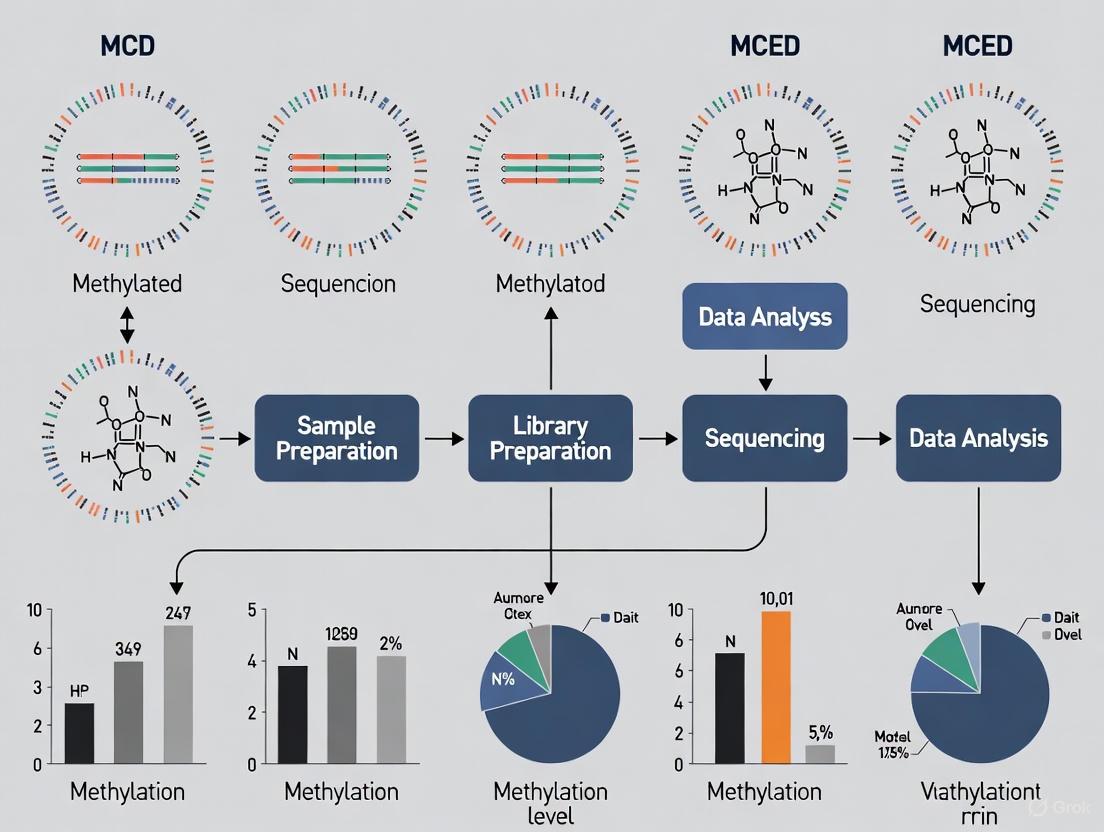
Multi-cancer early detection (MCED) tests represent a paradigm shift in oncology, with DNA methylation sequencing emerging as a cornerstone technology due to the stability, abundance, and cancer-specificity of methylation patterns.
Methylation Sequencing for Multi-Cancer Early Detection: Technologies, Applications, and Clinical Translation
Abstract
Multi-cancer early detection (MCED) tests represent a paradigm shift in oncology, with DNA methylation sequencing emerging as a cornerstone technology due to the stability, abundance, and cancer-specificity of methylation patterns. This article provides a comprehensive analysis for researchers and drug development professionals, exploring the foundational role of DNA methylation as a biomarker and detailing the sequencing landscape—from bisulfite and enzymatic methods to long-read and targeted approaches. It further addresses critical challenges in troubleshooting and optimizing assays for low-input liquid biopsy samples and outlines rigorous validation frameworks and comparative performance metrics essential for clinical implementation. By synthesizing technological advancements with practical application guidelines, this review serves as a roadmap for developing robust, clinically viable MCED tests.
The Foundation of MCED: Why DNA Methylation is a Pivotal Biomarker
Scientific Foundation and Rationale
Multi-Cancer Early Detection (MCED) represents a paradigm shift in oncology, enabling simultaneous screening for multiple cancers through a single, minimally invasive liquid biopsy. These tests primarily analyze circulating cell-free DNA (cfDNA) in blood, focusing on cancer-specific DNA methylation patterns that emerge early in tumorigenesis and remain stable throughout tumor evolution [1].
The fundamental biological rationale stems from the epigenetic alterations characteristic of cancer cells. DNA methylation involves the addition of a methyl group to the 5' position of cytosine, typically at CpG dinucleotides, forming 5-methylcytosine. Cancer cells exhibit widespread reprogramming of this epigenetic landscape, displaying both genome-wide hypomethylation and promoter-specific hypermethylation of CpG islands that often silences tumor suppressor genes [1] [2]. These aberrant methylation patterns are highly cancer-specific, stable, and detectable in ctDNA, making them ideal biomarkers for early detection [1] [2].
Liquid biopsies offer distinct advantages over traditional tissue biopsies and single-cancer screening approaches. They provide a comprehensive view of tumor heterogeneity through a minimally invasive procedure, allowing repeated sampling to monitor disease progression or treatment response [1]. Compared to single-cancer tests that suffer from cumulative false-positive rates when used in combination, MCED tests maintain high specificity across multiple cancer types simultaneously [3].
Current MCED Technologies and Analytical Approaches
Multiple technological platforms have been developed for MCED testing, primarily leveraging targeted methylation sequencing of cell-free DNA. The Galleri test (GRAIL, Inc.) exemplifies this approach, using machine learning algorithms to detect cancer-specific DNA methylation patterns and predict the tissue of origin or Cancer Signal Origin (CSO) [3]. Other technologies in development include fragmentomics (DELFI), combined mutation and protein analysis (CancerSEEK), and multi-omics approaches [4].
The following table summarizes prominent MCED tests and their reported performance characteristics:
Table 1: Performance Characteristics of Selected MCED Tests
| Test Name | Company/Developer | Technology Platform | Sensitivity Range | Specificity | Detectable Cancer Types |
|---|---|---|---|---|---|
| Galleri | GRAIL, Inc. | Targeted methylation sequencing | 51.5% (overall) [4] | 99.5% [4] | >50 types [3] |
| Shield | Guardant Health | cfDNA mutation, methylation and fragment size | 83.1% (CRC) [5] | 89.6% (for advanced tumors) [5] | Colorectal cancer [5] |
| CancerSEEK | Exact Sciences | Multiplex PCR + protein biomarkers | 62% (overall) [4] | >99% [4] | 8 cancer types [4] |
| DELFI | Delfi Diagnostics | cfDNA fragmentation profiles + machine learning | 73% (overall) [4] | 98% [4] | Multiple including lung, breast, colorectal [4] |
| Epi proColon | Epigenomics AG | Septin9 methylation (PCR) | 68% (CRC) [5] | 80% (CRC) [5] | Colorectal cancer [5] |
Recent real-world data from over 100,000 Galleri tests demonstrated a cancer signal detection rate of 0.91%, with 87% accuracy in predicting the tissue of origin when cancer was confirmed [3]. The positive predictive value (PPV) was 49.4% in asymptomatic individuals and 74.6% in symptomatic patients, significantly higher than many established single-cancer screening tests [3].
DNA Methylation Biomarkers in MCED Applications
DNA methylation biomarkers demonstrate exceptional utility for MCED applications due to their early emergence in carcinogenesis, high stability in circulation, and tissue-specific patterns [1] [2]. The following table highlights selected methylation biomarkers with demonstrated clinical validity for specific cancer types:
Table 2: DNA Methylation Biomarkers for Early Cancer Detection
| Cancer Type | Methylation Biomarkers | Sample Type | Performance Characteristics |
|---|---|---|---|
| Colorectal Cancer | SDC2, SFRP2, SEPT9 [2] | Tissue, Feces, Blood | SEPT9: 68% sensitivity, 80% specificity (Epi proColon) [5] |
| Lung Cancer | SHOX2, RASSF1A, PTGER4 [2] | Tissue, Blood, Bronchoalveolar Lavage Fluid | SHOX2/RASSF1A/PTGER4 panel: 86.83% sensitivity, 95.59% specificity [5] |
| Breast Cancer | TRDJ3, PLXNA4, KLRD1, KLRK1 [2] | PBMC, Tissue, Blood | 4-marker panel: 93.2% sensitivity, 90.4% specificity [2] |
| Hepatocellular Carcinoma | SEPT9, BMPR1A, PLAC8 [2] | Tissue, Blood | Varies by specific marker and technology |
| Bladder Cancer | CFTR, SALL3, TWIST1 [2] | Urine | Varies by specific marker and technology |
| Pancreatic Cancer | PRKCB, KLRG2, ADAMTS1, BNC1 [2] | Tissue, Blood | Varies by specific marker and technology |
Methylation biomarkers can be detected in various biological samples, with blood plasma being most common for MCED applications. For cancers in direct contact with body fluids, local liquid biopsy sources (e.g., urine for urological cancers, bile for biliary tract cancers) often provide higher biomarker concentration and reduced background noise [1].
Experimental Protocols for Methylation-Based MCED Research
Biomarker Discovery Workflow
The development of methylation-based MCED tests follows a structured pathway from discovery to clinical validation:
Sample Collection and Processing: For blood-based MCED tests, collect peripheral blood in EDTA or specialized cfDNA collection tubes (e.g., Streck Cell-Free DNA BCT). Process within 4-6 hours by double centrifugation (e.g., 1600×g for 10 minutes, then 16,000×g for 10 minutes) to isolate platelet-poor plasma [1]. Store at -80°C until DNA extraction.
Methylation Profiling Methods: For discovery phases, several comprehensive methylation profiling approaches are available:
- Whole-Genome Bisulfite Sequencing (WGBS): Provides single-base resolution methylation status across the entire genome [1]
- Reduced Representation Bisulfite Sequencing (RRBS): Captures methylation patterns in CpG-rich regions at lower cost [1]
- Enzymatic Methyl-sequencing (EM-seq): An alternative to bisulfite conversion that better preserves DNA integrity [1]
- Methylation Microarrays: Cost-effective for profiling large sample sets (e.g., Illumina Infinium MethylationEPIC) [6]
Bioinformatic Analysis Pipeline: Process raw sequencing data through:
- Quality Control: FastQC, MultiQC
- Adapter Trimming: Trim Galore, Cutadapt
- Alignment: Bismark, BWA-meth
- Methylation Calling: MethylDackel, methylKit
- Differential Methylation Analysis: dmrseq, methylSig
Biomarker Selection Criteria: Prioritize markers based on:
- High differential methylation between cancer and normal samples
- Low variability within normal tissues
- Early appearance in carcinogenesis
- Technical robustness for assay development
Targeted Methylation Analysis for Clinical Validation
For clinical validation and eventual implementation, targeted approaches are preferred:
Bisulfite Conversion Protocol:
- Extract cfDNA from plasma using commercial kits (e.g., QIAamp Circulating Nucleic Acid Kit)
- Treat 5-30ng cfDNA with sodium bisulfite using conversion kits (e.g., EZ DNA Methylation-Lightning Kit)
- Optimize conversion conditions to minimize DNA degradation (typically >99% conversion efficiency)
- Purify bisulfite-converted DNA and elute in low TE buffer
Methylation-Specific Digital PCR (ddPCR):
- Design primers and probes targeting converted methylated sequences
- Prepare reaction mix with bisulfite-converted DNA, primers, probes, and ddPCR supermix
- Generate droplets using automated droplet generator
- Perform PCR amplification: 95°C for 10 minutes, then 40 cycles of 94°C for 30 seconds and annealing temperature for 60 seconds, followed by 98°C for 10 minutes
- Read plates on droplet reader and analyze using quantitation software
- Calculate fractional abundance of methylated alleles [6]
Targeted Methylation Sequencing:
- Library Preparation: Use targeted amplification panels or hybridization capture approaches
- PCR Amplification: Amplify target regions with bisulfite-converted DNA as template
- Indexing: Add dual indices and sequencing adapters
- Library Quantification: Use fluorometric methods (e.g., Qubit) and qualitative assessment (e.g., Bioanalyzer)
- Sequencing: Perform on high-throughput platforms (e.g., Illumina NovaSeq) with appropriate coverage (typically >100,000x per marker)
Machine Learning Classification:
- Process methylation data to generate beta-values (methylation ratios)
- Train ensemble classifiers (e.g., random forests, gradient boosting) on methylation patterns
- Implement cancer signal detection and tissue of origin prediction algorithms
- Validate model performance on independent test sets [3]
Research Reagent Solutions
Table 3: Essential Research Reagents for MCED Development
| Reagent Category | Specific Products | Application Notes |
|---|---|---|
| Blood Collection Tubes | Streck Cell-Free DNA BCT, PAXgene Blood cDNA Tubes | Preserve cfDNA for up to 14 days at room temperature [1] |
| cfDNA Extraction Kits | QIAamp Circulating Nucleic Acid Kit, MagMAX Cell-Free DNA Isolation Kit | Optimized for low-abundance cfDNA recovery from plasma [6] |
| Bisulfite Conversion Kits | EZ DNA Methylation-Lightning Kit, Premium Bisulfite Kit | Critical for conversion efficiency while preserving DNA integrity [6] |
| Methylation-Specific PCR Reagents | ddPCR Supermix for Probes, TaqMan Methylation Master Mix | Enable sensitive detection of low-frequency methylated alleles [6] |
| Targeted Sequencing Panels | Illumina MethylationEPIC, Custom hybridization capture panels | Comprehensive methylation profiling [1] |
| Methylation Controls | Methylated and unmethylated human DNA controls, synthetic spike-ins | Quality control and standardization across batches [6] |
Clinical Implementation Considerations
Successful translation of MCED tests requires careful consideration of clinical utility and implementation pathways. Key considerations include:
Clinical Validation Requirements: MCED tests must demonstrate not just analytical validity but clinical utility through large-scale prospective studies. The PATHFINDER study demonstrated the feasibility of MCED implementation, showing a median time of 39.5 days from result receipt to diagnosis when using CSO-guided workup [3].
Health Economic Considerations: Modeling studies suggest that adding MCED tests to existing screening can be efficient, with one study estimating a true-positive:false-positive ratio of 1:1.8 and diagnostic costs of $7,060 per cancer detected in the US, compared to 1:18 and £2,175 in the UK for current screening [7].
Regulatory Status: As of 2025, several MCED tests have received FDA Breakthrough Device designation (e.g., Galleri, OverC MCDBT) or FDA approval for specific cancers (e.g., Epi proColon, Shield) [1] [5]. However, no MCED test has yet received full FDA approval for pan-cancer screening, highlighting the need for further validation.
Integration with Existing Screening: MCED tests are intended to complement rather than replace recommended single-cancer screening, particularly for cancers with established screening methods demonstrating mortality reduction [3] [7].
The continued advancement of MCED technologies holds promise for transforming cancer screening paradigms, potentially enabling detection of many cancers at earlier, more treatable stages. However, realizing this potential requires rigorous validation through ongoing large-scale clinical trials and careful consideration of implementation pathways within healthcare systems.
In the evolving landscape of multi-cancer early detection (MCED), circulating tumor DNA (ctDNA) methylation has emerged as a cornerstone biomarker class. ctDNA refers to fragmented tumor-derived DNA circulating in the bloodstream, carrying characteristic molecular fingerprints of its tissue of origin. Among these fingerprints, DNA methylation – the covalent addition of a methyl group to the 5' position of cytosine in CpG dinucleotides – stands out for its exceptional stability, cancer-specificity, and early emergence during tumorigenesis [1] [8]. This epigenetic modification regulates gene expression without altering the underlying DNA sequence and undergoes predictable, reproducible alterations in cancer, making it ideally suited for liquid biopsy applications [1]. In MCED research, profiling ctDNA methylation patterns enables not only cancer detection but also prediction of the tissue of origin (TOO), or cancer signal origin (CSO), which is critical for guiding diagnostic follow-up [3] [9]. The inherent stability of the DNA double helix, combined with evidence that methylation impacts ctDNA fragmentation and offers protection against nuclease degradation, results in a relative enrichment of methylated DNA fragments within the cell-free DNA (cfDNA) pool, thereby enhancing their detectability [1].
Core Mechanisms and Stability of DNA Methylation
Biological Basis of DNA Methylation
DNA methylation is a fundamental epigenetic mechanism essential for normal cellular development, differentiation, and genomic stability [1]. In healthy cells, methylation patterns are tightly regulated, involving the addition of a methyl group to cytosine bases primarily within CpG-rich regions known as CpG islands. These modifications play crucial roles in genomic imprinting, X-chromosome inactivation, and transposon silencing [1]. In cancer, this precise regulation is disrupted, leading to a characteristic landscape of global hypomethylation juxtaposed with localized hypermethylation at specific CpG islands [1] [8]. The hypermethylation of promoter regions is particularly significant in MCED research, as it frequently leads to the transcriptional silencing of critical tumor suppressor genes [1] [8]. Conversely, widespread genomic hypomethylation can induce chromosomal instability and oncogene activation, further driving malignant transformation [1]. These aberrant methylation patterns often manifest early in tumor development and remain remarkably stable throughout tumor evolution and metastasis, making them ideal biomarkers for detecting cancer at its most treatable stages [1].
Unique Stability of Methylated ctDNA
The analytical utility of ctDNA methylation in MCED tests is underpinned by several key stability features:
- Early Emergence and Stability: Aberrant DNA methylation patterns represent some of the earliest molecular events in carcinogenesis, often preceding clinical symptoms [8]. These patterns remain stable throughout tumor progression and are consistently maintained between primary tumors and metastatic lesions, ensuring that the methylation markers detected in plasma are representative of the underlying disease [10].
- Resistance to Degradation: Methylated DNA demonstrates enhanced resistance to nuclease degradation compared to unmethylated DNA. This stability arises from interactions between methylated DNA and nucleosomes, which provide structural protection [1]. This results in a relative enrichment of methylated DNA fragments within the total cfDNA population, thereby enhancing detection sensitivity [1].
- Molecular Stability: The covalent nature of the methyl group attachment to cytosine confers considerable biochemical stability, surpassing that of labile molecules like RNA [1]. This stability is crucial for withstanding the rigors of sample collection, storage, and processing in clinical settings.
- Short Half-Life with Stable Patterns: While individual ctDNA fragments have a short half-life in circulation (ranging from minutes to a few hours) [1] [11], the methylation patterns they carry are stable. This combination enables real-time monitoring of tumor dynamics, as changes in ctDNA methylation levels rapidly reflect treatment response or disease recurrence [12].
Table 1: Advantages of ctDNA Methylation as a Biomarker for MCED
| Feature | Advantage for MCED | Underlying Mechanism |
|---|---|---|
| Epigenetic Nature | Provides tissue-specific signatures without DNA sequence changes | Methylation patterns are cell-type specific, allowing for Cancer Signal Origin (CSO) prediction [3] |
| Early Aberration | Enables very early cancer detection | Methylation changes often initiate in pre-malignant stages [1] [8] |
| Stability | Withstands pre-analytical variables | Covalent bond and nucleosome protection enhance resistance to degradation [1] |
| Ubiquitous Alterations | Broad cancer coverage | Most cancers exhibit characteristic methylation changes [1] [9] |
| Multiple Markers | High specificity through combinatorial profiling | Simultaneous assessment of hundreds to thousands of CpG sites [9] |
Analytical Techniques for ctDNA Methylation Profiling
The successful implementation of ctDNA methylation analysis in MCED research requires sophisticated detection technologies capable of handling low-abundance targets against a high background of normal cfDNA. The following workflow illustrates the major steps and methodological branches in a typical ctDNA methylation analysis pipeline:
Technology Comparison and Selection
Different methylation profiling technologies offer distinct trade-offs between genome-wide coverage, sensitivity, cost, and clinical practicality, making them suitable for different phases of MCED research and development.
Table 2: ctDNA Methylation Detection Technologies for MCED Research
| Technology | Principle | Best Application in MCED | Advantages | Limitations |
|---|---|---|---|---|
| Whole-Genome Bisulfite Sequencing (WGBS) [1] | Bisulfite conversion followed by whole-genome sequencing | Biomarker discovery | Comprehensive, base-resolution methylome | High cost, computationally intensive, large DNA input |
| Reduced Representation Bisulfite Sequencing (RRBS) [9] | Restriction enzyme digestion & bisulfite sequencing | Discovery in CpG-rich regions | Cost-effective vs WGBS, focuses on informative regions | Limited genome coverage, biased toward CpG islands |
| Targeted Methylation Sequencing (e.g., Galleri, GutSeer) [3] [9] | Bisulfite sequencing of pre-defined marker panels | Clinical validation & diagnostic use | High sensitivity, cost-effective, optimized for low-ctDNA | Limited to pre-selected markers, panel design critical |
| Enzymatic Methyl-Seq (EM-seq) [1] | Enzymatic conversion without bisulfite | Discovery & validation when DNA integrity is vital | Better DNA preservation, less fragmentation | Newer method, requires protocol optimization |
| Methylated DNA Immunoprecipitation Sequencing (MeDIP-seq) [1] [13] | Antibody-based enrichment of methylated DNA | Discovery & validation balancing cost/coverage | Lower cost, no conversion step | Lower resolution, antibody bias |
Emerging Approaches: Multi-Modal Integration
Cutting-edge MCED research is increasingly moving beyond methylation-only analysis, integrating multiple features from sequencing data to boost detection sensitivity and specificity. The GutSeer assay for gastrointestinal cancers exemplifies this trend, combining targeted methylation sequencing with fragmentomics – the analysis of cfDNA fragmentation patterns, such as fragment size, end motifs, and nucleosomal positioning [9]. This multi-modal approach leverages the fact that DNA methylation changes are often accompanied by alterations in chromatin structure, meaning that cfDNA fragments carrying methylation markers inherently encapsulate fragmentomic information as well [9]. This integrated model has demonstrated superior performance compared to whole-genome sequencing-based fragmentomics alone, highlighting the power of combining complementary data types from a single assay to enhance early cancer detection [9].
Experimental Protocols for MCED Applications
Protocol: Targeted Methylation Sequencing for MCED
This protocol outlines the key steps for developing and implementing a targeted methylation sequencing assay, similar to those used in established MCED tests [9].
Objective: To detect and quantify cancer-specific methylation patterns in plasma cfDNA for multi-cancer early detection and tissue-of-origin prediction.
Materials and Reagents:
- Streck cfDNA BCT tubes or equivalent for blood collection
- QIAamp Circulating Nucleic Acid Kit (QIAGEN) or equivalent cfDNA extraction kit
- MethylCode Bisulfite Conversion Kit (ThermoFisher) or equivalent
- KAPA Library Quantification Kit (KAPA Biosystems)
- Illumina sequencing platforms (e.g., NextSeq 6000, NovaSeq 6000)
- Custom-designed targeted methylation panel (e.g., 1,656-marker panel as in GutSeer [9])
Procedure:
Sample Collection and Processing:
- Collect peripheral blood in cfDNA stabilization tubes (e.g., Streck BCT).
- Centrifuge at 1,600 × g for 10 min at 4°C to separate plasma.
- Perform a second centrifugation of the plasma at 16,000 × g for 10 min at 4°C to remove residual cell debris.
- Aliquot and store clarified plasma at -80°C.
cfDNA Extraction:
- Extract cfDNA from plasma using the QIAamp Circulating Nucleic Acid kit.
- Include a 1-hour incubation at 60°C during the lysis step to optimize yield.
- Quantify cfDNA using a fluorescence-based assay (e.g., Qubit).
Library Preparation and Bisulfite Conversion:
- Convert 10-20 ng of cfDNA using a bisulfite conversion kit, following the manufacturer's protocol.
- Perform dephosphorylation and ligate to a randomized splint adapter containing a Unique Molecular Identifier (UMI).
- Conduct second-strand synthesis and purification.
- Perform semi-targeted amplification using a primer panel designed for the selected methylation markers. This approach captures one fragment end within the targeted region while preserving the natural cfDNA end on the opposite side, enabling concurrent fragmentomics analysis [9].
- Perform a second PCR to add sample-specific barcodes and full-length sequencing adapters.
Sequencing:
- Quantify the final libraries using the KAPA Library Quantification Kit.
- Sequence on an Illumina platform (e.g., paired-end 150-bp on NextSeq 6000) with a minimum of 40 million reads per sample.
Data Analysis:
- Merge paired-end reads and trim adapters.
- Align processed reads to an in silico bisulfite-converted reference genome (e.g., hg19) using tools like Bismark.
- Extract methylation calls and fragmentomic features (e.g., regional fragment densities, end motifs).
- Apply a pre-trained machine learning classifier to integrate methylation and fragmentomic features for cancer signal detection and CSO prediction.
The Scientist's Toolkit: Essential Research Reagents
Table 3: Essential Reagents and Kits for ctDNA Methylation Analysis
| Item | Function/Application | Example Products |
|---|---|---|
| Cell-Free DNA Blood Collection Tubes | Stabilizes blood cells prevents genomic DNA contamination for up to several days, critical for pre-analytical integrity. | Streck cfDNA BCT tubes, PAXgene Blood ccfDNA Tubes |
| cfDNA Extraction Kits | Isolves low-abundance cfDNA from plasma with high efficiency and reproducibility. | QIAamp Circulating Nucleic Acid Kit (QIAGEN), MagMAX Cell-Free DNA Isolation Kit (Thermo Fisher) |
| Bisulfite Conversion Kits | Chemically converts unmethylated cytosines to uracils, while methylated cytosines remain unchanged, enabling methylation detection. | MethylCode Bisulfite Conversion Kit (ThermoFisher), EZ DNA Methylation-Gold Kit (Zymo Research) |
| Library Prep Kits for Bisulfite-Seq | Constructs sequencing libraries from bisulfite-converted DNA, often incorporating UMIs for error correction. | Illumina DNA Prep with Enrichment, Accel-NGS Methyl-Seq DNA Library Kit (Swift Biosciences) |
| Targeted Methylation Panels | Hybrid-capture or amplicon-based panels for enriching cancer-specific CpG regions prior to sequencing. | Custom designs (e.g., GutSeer's 1,656-marker panel [9]), AnchorIRIS pre-library [10] |
| Quantitative PCR Assays | Validates methylation status of specific loci or assesses library quality and quantity before sequencing. | MethylLight, ddPCR methylation assays, KAPA Library Quantification Kit |
Data Interpretation and Clinical Validation in MCED Research
Translating ctDNA methylation data into clinically actionable insights for MCED requires robust bioinformatic pipelines and rigorous validation. The core output is a classification based on the presence or absence of a cancer-associated methylation signature and a predicted tissue of origin. Key performance metrics must be evaluated extensively [3] [9]:
- Sensitivity and Specificity: MCED tests prioritize high specificity (e.g., >99%) to minimize false positives that could lead to unnecessary invasive procedures, while maintaining the best possible sensitivity across multiple cancer types [3] [14].
- Positive Predictive Value (PPV): This is a crucial metric for population screening. In a real-world clinical experience with over 100,000 tests, the Galleri MCED test demonstrated an empirical PPV of 49.4% in asymptomatic individuals, meaning nearly half of the positive results were confirmed to have cancer [3].
- Cancer Signal Origin (CSO) Prediction Accuracy: The ability to correctly identify the tumor tissue is vital for directing diagnostic workup. High-performing tests have shown CSO prediction accuracy of approximately 87% in confirmed cancer cases [3].
The path from a research assay to a clinically validated tool involves several stages, from initial discovery using whole-genome methods in tissue and plasma samples to the development of a locked, targeted model that is blindly tested in large, independent prospective cohorts [1] [9]. These studies must include relevant control populations and patients with early-stage disease to truly demonstrate clinical utility for early detection.
DNA methylation represents a fundamental epigenetic mechanism that is profoundly dysregulated in cancer, manifesting as two paradoxical yet co-existing states: global hypomethylation and promoter-specific hypermethylation [15]. This dual aberration is now recognized as a core hallmark of cancer, facilitating tumorigenesis through the simultaneous activation of oncogenes and silencing of tumor suppressor genes (TSGs) without altering the underlying DNA sequence [15] [16]. The dynamic interplay between these opposing states creates an epigenome that is primed for malignant transformation, proliferation, and metastasis.
Global hypomethylation predominantly affects repetitive DNA elements and intergenic regions, leading to genomic instability and activation of latent oncogenes [15]. Conversely, promoter hypermethylation targets CpG islands in gene regulatory regions, resulting in the transcriptional repression of critical tumor suppressor pathways [15] [17]. These coordinated changes are orchestrated by the aberrant activity of DNA methyltransferases (DNMTs), ten-eleven translocation (TET) enzymes, and other chromatin regulators that are frequently mutated in cancer [15] [16]. The stability and tissue-specificity of these methylation patterns have positioned them as promising biomarkers for multi-cancer early detection (MCED) tests, which leverage liquid biopsies to identify cancer-specific methylation signatures in cell-free DNA (cfDNA) [9] [3].
Molecular Mechanisms and Functional Consequences
Global Hypomethylation: Unleashing Genomic Instability and Oncogenic Potential
Global DNA hypomethylation contributes to tumorigenesis through multiple interconnected mechanisms that promote genomic instability and activate oncogenic pathways. This widespread loss of methylation predominantly affects heterochromatic regions, repetitive sequences, and latent oncogenes, creating a permissive environment for malignant transformation.
- Activation of Repetitive Elements and Transposons: Hypomethylation of normally silenced repetitive DNA elements, including LINE-1 and Alu sequences, leads to their reactivation, potentially causing insertional mutagenesis, DNA double-strand breaks, and chromosomal rearrangements [15].
- Oncogene Activation: Specific genes that are typically methylated in normal tissues become hypomethylated and transcriptionally activated in cancer. For example, the FASN gene, which encodes an androgen-regulated enzyme involved in lipid metabolism, shows promoter hypomethylation and concomitant overexpression in prostate cancer tissues compared to normal prostate [17]. Similarly, the TFF3 promoter demonstrates significant hypomethylation in prostate cancer, contributing to its oncogenic activation [17].
- Chromosomal Instability: Loss of methylation in pericentromeric regions compromises chromatin condensation and proper chromosome segregation during mitosis, leading to aneuploidy and other chromosomal abnormalities that are characteristic of advanced cancers [15].
Promoter Hypermethylation: Silencing the Guardians of the Genome
Promoter hypermethylation represents a targeted epigenetic mechanism for the heritable silencing of tumor suppressor genes in cancer. This phenomenon predominantly affects CpG-rich promoter regions of genes controlling critical cellular processes, including cell cycle regulation, DNA repair, and apoptosis.
- Tumor Suppressor Gene Inactivation: Hyper methylation of promoter-associated CpG islands leads to condensed chromatin states and transcriptional repression of key tumor suppressor genes. In prostate cancer, GSTP1 hypermethylation is one of the most frequent epigenetic alterations, with an area under the curve (AUC) of 0.939 for cancer classification, demonstrating its exceptional diagnostic performance [17]. The molecular mechanism involves the formation of a piR31470/PIWIL4 RNA complex that recruits DNMT3A to facilitate de novo methylation of the GSTP1 promoter [17].
- Developmental Gene Silencing: Beyond classical tumor suppressors, hypermethylation also targets developmental genes and differentiation factors. For example, CAMK2N1, a well-established tumor suppressor in prostate cancer, is downregulated via promoter hypermethylation in PCa cell lines and patient samples [17]. Chromatin immunoprecipitation experiments have confirmed DNMT1 recruitment to this locus, providing a mechanism for its silencing [17].
- Super-Enhancer Dysregulation: Aberrant DNA methylation also affects super-enhancers, specialized regulatory regions that control the expression of genes essential for cell identity and oncogenesis. In cancer, hypermethylation of super-enhancers can repress tumor suppressor mechanisms, while hypomethylation can drive oncogene hyperactivation [18]. For instance, studies on head and neck squamous cell carcinomas (HNSCC) and breast cancer show that hypermethylated super-enhancers are associated with reduced expression of genes critical for cellular homeostasis [18].
Table 1: Examples of Hypermethylated and Hypomethylated Genes in Cancer
| Gene Name | Methylation Status | Cancer Type | Functional Consequence |
|---|---|---|---|
| GSTP1 | Hypermethylation | Prostate Cancer | Tumor suppressor silencing [17] |
| RASSF1A | Hypermethylation | Prostate Cancer | Tumor suppressor silencing [17] |
| CAMK2N1 | Hypermethylation | Prostate Cancer | Tumor suppressor silencing [17] |
| DEFB1 | Hypermethylation | Prostate Cancer | Reduced expression of defensive genes [17] |
| FASN | Hypomethylation | Prostate Cancer | Oncogene activation [17] |
| TFF3 | Hypomethylation | Prostate Cancer | Oncogene activation [17] |
| Super-enhancers | Both hyper/hypomethylation | Multiple Cancers | Oncogene activation or tumor suppressor repression [18] |
Enzymatic Regulators of the Cancer Methylome
The balance between DNA methylation and demethylation is maintained by writer, reader, and eraser enzymes that are frequently dysregulated in cancer.
- DNA Methyltransferases (DNMTs): The DNMT family includes de novo methyltransferases (DNMT3A, DNMT3B) and the maintenance methyltransferase DNMT1 [15]. Aberrant expression of DNMT family members is associated with many forms of cancer, with DNMT3A mutations frequently found in acute myeloid leukemia (AML) [15].
- TET Enzymes: Ten-eleven translocation (TET) enzymes mediate DNA demethylation by converting 5-methylcytosine (5mC) to its oxidized forms (5hmC, 5fC, 5caC) [15]. TET1 and TET2 are frequently mutated or suppressed in cancers such as AML and lymphomas, resulting in altered DNA methylation patterns that promote tumorigenesis [15].
Diagram Title: Molecular Mechanisms of DNA Methylation Dysregulation in Cancer
Therapeutic Targeting and Clinical Translation
Epigenetic Therapies: Targeting the Methylation Machinery
The dynamic and potentially reversible nature of epigenetic alterations has motivated the development of therapeutic agents targeting DNA methylation machinery. These agents seek to reverse aberrant methylation patterns and restore normal gene expression in cancer cells.
- DNMT Inhibitors (DNMTis): First-generation DNMT inhibitors, including the cytosine analogues 5-azacytidine (AZA) and decitabine, were approved by the FDA in 2004 and 2006 for the treatment of myelodysplastic syndrome (MDS) [15]. These agents incorporate into DNA and covalently trap DNMTs, leading to DNA hypomethylation and reactivation of silenced tumor suppressor genes. However, they are associated with significant toxicity and short half-lives, limiting their clinical effectiveness [15].
- Next-Generation Epigenetic Therapies: Second-generation DNMTis, such as SGI-110 (guadecitabine) and MG98, were developed to improve efficacy and stability but failed to achieve FDA approval [15]. More recently, the DNMT1-specific inhibitor GSK3285032 has shown promise in preclinical studies focused on hematological malignancies [15]. Additional strategies include targeting DNMT-protein interactions, developing novel small molecules, and exploring combination therapies that pair DNMT inhibition with immune checkpoint blockade [15].
- EZH2 Inhibitors: Beyond direct DNA methylation targeting, inhibition of associated chromatin modifiers has emerged as a promising strategy. Tazemetostat, a first-in-class Ezh2 inhibitor, was approved by the FDA in 2020 for refractory follicular lymphoma and epithelioid sarcoma [15]. Ezh2 catalyzes histone methylation that frequently collaborates with DNA methylation to silence tumor suppressor genes.
Table 2: DNA Methylation-Targeting Therapeutics in Cancer
| Therapeutic Agent | Target | Clinical Status | Key Cancers | Mechanism of Action |
|---|---|---|---|---|
| 5-azacytidine (AZA) | DNMTs | FDA Approved (2004) | MDS | Cytosine analogue, DNMT trapping [15] |
| Decitabine | DNMTs | FDA Approved (2006) | MDS | Cytosine analogue, DNMT trapping [15] |
| SGI-110 (guadecitabine) | DNMTs | Clinical Development | AML, MDS | Dinucleotide of decitabine and deoxyguanosine [15] |
| GSK3285032 | DNMT1 | Preclinical Research | Hematological malignancies | Specific DNMT1 inhibition [15] |
| Tazemetostat | EZH2 | FDA Approved (2020) | Follicular lymphoma, Epithelioid sarcoma | Inhibition of H3K27 methyltransferase [15] |
Methylation-Based Biomarkers for Multi-Cancer Early Detection
The stability and cancer-specificity of DNA methylation patterns have been harnessed for the development of liquid biopsy-based multi-cancer early detection (MCED) tests. These tests analyze methylation patterns of cell-free DNA (cfDNA) in blood to detect the presence of cancer and predict its tissue of origin.
- GutSeer Assay for GI Cancers: The GUIDE study developed GutSeer, a blood-based assay combining DNA methylation and fragmentomics for detection of five major gastrointestinal cancers (colorectal, esophageal, gastric, liver, and pancreatic) [9]. Using a targeted bisulfite sequencing panel of 1,656 markers, GutSeer achieved an area under the curve (AUC) of 0.950 for cancer detection in the validation cohort, with 82.8% sensitivity and 95.8% specificity [9]. Notably, it detected 92.2% of colorectal, 75.5% of esophageal, 65.3% of gastric, 92.9% of liver, and 88.6% of pancreatic cancers [9].
- Galleri MCED Test: The Galleri test (GRAIL, Inc.) analyzes methylation patterns of cfDNA to detect a cancer signal and predict the anatomical cancer signal origin (CSO) [3]. Real-world data from over 111,000 individuals demonstrated a cancer signal detection rate of 0.91%, with the test correctly predicting the CSO in 87% of cases with a reported cancer type [3]. The test showed a positive predictive value (PPV) of 49.4% in asymptomatic patients and 74.6% in symptomatic individuals [3].
- Methylation Biomarkers in Prostate Cancer: DNA methylation biomarkers have shown particular promise for prostate cancer diagnosis and stratification. Analysis of TCGA and GEO datasets has identified multiple differentially methylated genes with high diagnostic performance, including panels of 8 DMCpGs across six promoters (CBX5, CCDC8, CYBA, EFEMP1, KCNH2, and SOSTDC1) that individually achieved AUCs ≥0.91 for cancer classification [17].
Diagram Title: MCED Test Workflow from Blood Draw to Result
Experimental Protocols for Methylation Analysis
Targeted Bisulfite Sequencing for MCED Applications
Targeted methylation sequencing represents the current gold standard for clinical MCED tests due to its balance of coverage, cost-effectiveness, and sensitivity. The following protocol outlines the key steps for implementing targeted bisulfite sequencing for cancer detection, based on methodologies from the GUIDE study and Galleri test [9] [3].
Sample Collection and Processing
- Blood Collection: Collect peripheral blood in cell-free DNA BCT tubes (Streck). Centrifuge at 1,600 × g for 10 minutes at 4°C to separate plasma from cellular components [9].
- Plasma Clarification: Perform a second centrifugation of the plasma at 16,000 × g for 10 minutes at 4°C to remove residual cell debris [9].
- cfDNA Extraction: Extract cell-free DNA from plasma using the QIAamp Circulating Nucleic Acid kit (QIAGEN) with a modified lysis step including a 1-hour incubation at 60°C [9]. Store extracted DNA at -20°C until library construction.
Library Preparation and Bisulfite Conversion
- Bisulfite Conversion: Treat 10-20 ng of cfDNA with bisulfite using the MethylCode Bisulfite Conversion Kit (ThermoFisher) according to manufacturer's instructions [9]. This conversion transforms unmethylated cytosines to uracils while leaving methylated cytosines unchanged.
- Adapter Ligation: Dephosphorylate bisulfite-converted DNA and ligate to a randomized 6 N splinter adapter containing a unique molecular identifier (UMI) to track original DNA molecules [9].
- Semi-Targeted Amplification: Perform PCR amplification that captures one fragment end within targeted regions while preserving natural cfDNA ends on the opposite side. This enables simultaneous analysis of methylation and fragmentomic features [9].
- Library Indexing: Conduct a second PCR to add sample-specific barcodes and full-length sequencing adapters. Quantify libraries using the KAPA Library Quantification Kit (KAPA) [9].
Sequencing and Data Analysis
- Sequencing: Sequence libraries on Illumina platforms (NextSeq 6000 or NovaSeq 6000) in paired-end 150-bp mode, requiring a minimum of 40 million reads per sample [9].
- Bioinformatic Processing:
- Merge paired-end reads using PEAR software (Version 0.9.6)
- Trim adapters using trim_galore (Version 0.4.0)
- Extract UMIs from each read
- Align preprocessed reads to bisulfite-converted reference genomes
- Call methylation status at individual CpG sites
- Apply machine learning algorithms for cancer detection and tissue of origin prediction [9]
Quality Control and Validation Measures
Robust quality control is essential for reliable methylation analysis, particularly in clinical applications:
- Bisulfite Conversion Efficiency: Monitor conversion rates using spike-in controls (e.g., unmethylated λ-bacteriophage DNA), with target conversion rates >99% [19].
- Sample Quality Metrics: Assess DNA quantity, fragment size distribution, and adapter contamination prior to library construction.
- Sequencing Metrics: Evaluate sequencing depth, coverage uniformity, duplicate rates, and UMI utilization to ensure data quality.
Table 3: Essential Research Tools for Cancer Methylation Analysis
| Category | Product/Resource | Application | Key Features |
|---|---|---|---|
| Commercial MCED Tests | Galleri (GRAIL, Inc.) | Multi-cancer early detection | Targeted methylation sequencing of cfDNA [3] |
| Bisulfite Conversion Kits | MethylCode Bisulfite Conversion Kit (ThermoFisher) | DNA methylation analysis | Efficient conversion of unmethylated cytosines to uracils [9] |
| cfDNA Extraction Kits | QIAamp Circulating Nucleic Acid Kit (QIAGEN) | Isolation of cell-free DNA from plasma | Optimized for low-concentration cfDNA [9] |
| Library Prep Kits | KAPA Library Quantification Kit (KAPA) | NGS library preparation and quantification | Accurate quantification of bisulfite-converted libraries [9] |
| Bioinformatics Tools | SeSAMe | Methylation array data analysis | End-to-end analysis of Infinium Methylation BeadChips [20] |
| Bioinformatics Tools | Minfi | Methylation array analysis | Comprehensive package for differential methylation analysis [20] |
| Bioinformatics Tools | ChAMP | Epigenome-Wide Association Study | Pre-processing, differential calling, and visualization [20] |
| Experimental Reagents | DNMT3B (E8A8A) Rabbit Monoclonal Antibody #57868 (CST) | Detection of DNMT3B expression | Immunofluorescence applications [15] |
| Experimental Reagents | TET2 (D6C7K) Rabbit Monoclonal Antibody #36449 (CST) | Detection of TET2 expression | Immunofluorescence applications [15] |
Multi-cancer early detection (MCED) represents a paradigm shift in oncology, moving from organ-specific screening to a comprehensive, pan-cancer approach. Methylation sequencing of cell-free DNA (cfDNA) has emerged as a leading technological foundation for MCED tests, offering a powerful and biologically grounded method for detecting cancerous signals in the bloodstream [21]. This approach analyzes specific epigenetic modifications—the addition of methyl groups to DNA—that are profoundly altered during carcinogenesis. These methylation patterns provide three distinct and critical advantages for early cancer detection: they appear early in cancer development, allow for the precise tracing of the cancer's tissue of origin, and form a stable signal robust enough for clinical detection. This document details the experimental protocols and applications underpinning these advantages, providing a framework for researchers and drug development professionals.
Advantage 1: Early Emergence of Methylation Alterations
Aberrant DNA methylation is a hallmark of cancer and often one of the earliest molecular events in tumorigenesis. These changes can occur even before clinical symptoms manifest, making methylation patterns an ideal biomarker for early detection [21]. MCED tests leveraging whole-genome methylation (WG methylation) profiling can identify these minute, cancer-derived signals in a patient's blood sample, enabling detection at stages when the disease is most treatable [22].
Performance Data: Early-Stage Cancer Detection
The following table summarizes the sensitivity of a reflex MCED test based on cfDNA methylation in detecting early- and late-stage cancers, demonstrating its capability for early intervention [23].
Table 1: Sensitivity of a Reflex MCED Test by Cancer Stage (at 98.3% Specificity)
| Cancer Stage | Conventional Sensitivity | Clinical Significance |
|---|---|---|
| Early-Stage (I-II) | 25.8% | Potential for curative-intent treatment |
| Late-Stage (III-IV) | 80.3% | Guides therapy for advanced disease |
| Cancers without recommended screening | 50.9% | Addresses a critical gap in current care |
Protocol: WG Methylation Profiling for Early Signal Detection
Objective: To isolate cfDNA from plasma and identify cancer-associated methylation patterns indicative of early-stage disease.
Materials:
- Research Reagent Solutions:
- cfDNA Extraction Kit: For isolating cell-free DNA from blood plasma [24].
- Bisulfite Conversion Kit: For chemical treatment that converts unmethylated cytosines to uracils, while leaving methylated cytosines unchanged.
- Methylation-Aware Library Prep Kit: For preparing next-generation sequencing (NGS) libraries from bisulfite-converted DNA.
- High-Throughput Sequencer: Platform for whole-genome bisulfite sequencing (WGBS).
- Bioinformatics Pipeline: Software for aligning bisulfite-treated sequences to a reference genome and calling methylation status at individual CpG sites.
Methodology:
- Sample Collection & Processing: Collect peripheral blood into Streck tubes or K2EDTA tubes. Process within 6 hours to separate plasma from cellular components via double centrifugation (e.g., 800 x g for 10 minutes, then 16,000 x g for 10 minutes) [24].
- cfDNA Extraction: Isolve cfDNA from the plasma using a commercial extraction kit, following the manufacturer's protocol. Quantify and qualify the extracted cfDNA using a fluorometer.
- Bisulfite Conversion: Treat 10-50 ng of cfDNA with sodium bisulfite using a commercial kit. This step deaminates unmethylated cytosine residues to uracil, which are then read as thymine during sequencing, while methylated cytosines remain as cytosine.
- Library Preparation & Sequencing: Construct sequencing libraries from the bisulfite-converted DNA. Amplify the library and perform whole-genome sequencing on a high-throughput platform to achieve sufficient coverage for low-concentration cfDNA fragments.
- Data Analysis & Classification:
- Alignment: Map the sequenced reads to a bisulfite-converted reference genome.
- Methylation Calling: Calculate the methylation ratio for each CpG site as the number of reads reporting a cytosine divided by the total reads covering that site.
- Signal Detection: Input the genome-wide methylation profiles into a pre-trained machine learning classifier (e.g., a convolutional neural network). The classifier compares the sample's pattern against a reference database of cancerous and non-cancerous methylation signatures to generate a "cancer signal detected" or "not detected" result [23].
Workflow: From Blood Draw to Early Signal Detection
The diagram below illustrates the streamlined workflow for detecting early cancer signals from a blood sample.
Advantage 2: Precise Tissue of Origin (TOO) Tracing
A critical feature of clinically actionable MCED tests is not only detecting a cancer signal but also predicting its Tissue of Origin (TOO). Cancer-specific methylation patterns are highly tissue-specific, serving as a molecular "ZIP code" that can be used to trace the cancer signal back to its likely anatomic origin [25]. This prediction is vital for guiding clinicians toward efficient, targeted diagnostic workups, such as follow-up imaging or biopsies.
Performance Data: Accuracy of Origin Prediction
The following table summarizes the performance of a reflex MCED test in predicting the tissue of origin for specific cancer types, a key metric for clinical utility [23].
Table 2: Tissue of Origin (TOO) Prediction Performance of a Reflex MCED Test
| Metric | Value | Interpretation |
|---|---|---|
| Overall Intrinsic Accuracy | 36% | Proportion of correct TOO predictions among cases with a readout |
| Positive Predictive Value (PPV) - Hepatobiliary | 15% | Probability of hepatobiliary cancer given a hepatobiliary TOO prediction |
| Positive Predictive Value (PPV) - Upper GI | 22% | Probability of upper GI cancer given an upper GI TOO prediction |
| Positive Predictive Value (PPV) - Colorectal | 33% | Probability of colorectal cancer given a colorectal TOO prediction |
| Positive Predictive Value (PPV) - Lung | 25% | Probability of lung cancer given a lung TOO prediction |
Protocol: Reflex Testing for TOO Determination
Objective: To confirm a cancer signal and pinpoint the Tissue of Origin (TOO) using a targeted, high-depth methylation panel.
Materials:
- Research Reagent Solutions:
- Primary MCED Assay Reagents: As listed in Protocol 1.
- Reflex MCED Assay Panel: A targeted panel of genomic loci with known, highly tissue-specific methylation patterns (e.g., expanded methylation panel covering 1,000-100,000 CpG sites) [23].
- Targeted Methylation Sequencing Kit: For library preparation and enrichment of the specific genomic regions in the reflex panel.
Methodology:
- Primary Screening: Perform WG methylation profiling as described in Protocol 1. Samples flagged as "cancer signal detected" proceed to the next step.
- Reflex Assay Initiation: Use the remaining cfDNA extract or a dedicated aliquot from the original plasma sample for the reflex test.
- Targeted Enrichment & Sequencing: Prepare sequencing libraries from the cfDNA and use a targeted approach (e.g., hybrid capture or amplicon-based) to enrich for the genomic loci contained within the proprietary reflex panel. Sequence the enriched libraries at a high depth of coverage to ensure robust data from the low-abundance cfDNA.
- TOO Prediction Algorithm:
- Methylation Profile Analysis: Generate a high-resolution methylation profile from the sequenced reflex panel.
- Pattern Matching: Input this profile into a TOO-specific machine learning model. This model is trained on a large atlas of methylation patterns from confirmed tumors of various tissue types.
- Origin Prediction: The algorithm calculates a probability score for each possible tissue of origin and reports the one with the highest confidence, along with the associated PPV [23].
Workflow: Reflex Testing for Tissue of Origin
The two-step reflex testing workflow, which enhances positive predictive value, is illustrated below.
Advantage 3: Stability of the Methylation Signal
The stability of DNA methylation patterns is a fundamental advantage over other potential biomarkers like gene expression or proteins. Methylation marks on cfDNA are chemically stable and are protected from rapid degradation in the bloodstream by nucleosomes, which act as protective packaging [24]. This stability ensures that the cancer-specific methylation signature remains intact from the tumor to the point of blood collection and analysis, making it a reliable analyte.
Key Factors Contributing to Signal Stability
Table 3: Factors Enhancing Methylation Signal Stability in MCED
| Factor | Description | Impact on Assay Performance |
|---|---|---|
| Covalent Chemical Bond | Methylation is a covalent modification of the cytosine base. | Resists degradation during sample handling and processing. |
| Nucleosome Protection | cfDNA is fragmented and wrapped around histone proteins in nucleosomes. | The core DNA is shielded from serum nucleases, preserving the methylation signature [24]. |
| Consistent Release Mechanism | cfDNA is consistently released into the blood via mechanisms like apoptosis and necrosis. | Provides a steady, representative sample of the tumor's methylation landscape. |
Protocol: Assessing cfDNA Fragmentomics and Methylation Stability
Objective: To evaluate the integrity and methylation stability of cfDNA fragments, which is crucial for assay reliability.
Materials:
- Research Reagent Solutions:
- Agilent Bioanalyzer/Tapestation or FEMTO Pulse System: For fragment size distribution analysis.
- qPCR Assay: Targeting housekeeping genes with known methylation status to assess amplifiability post-bisulfite conversion.
- Bisulfite Conversion Control Oligos: Synthetic oligonucleotides with defined methylation patterns to monitor conversion efficiency.
Methodology:
- Fragment Size Analysis: Analyze 1 µL of extracted cfDNA using a high-sensitivity DNA assay on a bioanalyzer. A predominant peak at ~167 bp confirms the presence of nucleosome-protected cfDNA, which is indicative of stable, high-quality material [24].
- Bisulfite Conversion Efficiency Control: Spike a known quantity of control oligos (both methylated and unmethylated) into the cfDNA sample prior to bisulfite conversion. After conversion and sequencing, the measured methylation status of these controls should match their known status. Efficiency should be >99%.
- Stability Monitoring: Process control samples (from healthy donors and cancer patients) under varying pre-analytical conditions (e.g., different plasma processing delays, storage temperatures). Monitor the consistency of the final methylation calls and fragment size profiles to establish the robust operating conditions for the MCED assay.
The Scientist's Toolkit: Essential Research Reagents
The following table catalogs key reagents and materials essential for developing and conducting methylation-based MCED research.
Table 4: Essential Research Reagent Solutions for MCED Development
| Research Reagent | Function/Application | Key Characteristics |
|---|---|---|
| Cell-Free DNA Blood Collection Tubes | Stabilizes nucleated blood cells during transport and storage. | Prevents genomic DNA contamination, critical for assay accuracy [24]. |
| cfDNA Extraction Kit | Isolves cell-free DNA from plasma. | Optimized for low-abundance DNA, high recovery efficiency. |
| Bisulfite Conversion Kit | Differentiates methylated from unmethylated cytosines. | High conversion efficiency, minimal DNA degradation. |
| Methylation-Aware NGS Library Prep Kit | Prepares bisulfite-converted DNA for sequencing. | Compatible with fragmented, low-input cfDNA. |
| Targeted Methylation Panel | A custom probe set for enriching cancer-specific methylated regions. | Covers loci informative for multiple cancer types and tissues of origin [23]. |
| Bioinformatics Pipeline | Analyzes sequencing data for methylation calling and classification. | Includes alignment to bisulfite-converted genome, machine learning models for cancer detection and TOO prediction [23]. |
The analysis of DNA methylation signatures in cfDNA provides a powerful and multi-faceted foundation for MCED tests. The early emergence of these epigenetic alterations in tumorigenesis enables detection at a stage when interventions are most likely to succeed. The tissue-specific nature of methylation patterns allows for accurate prediction of the tissue of origin, which is indispensable for guiding subsequent clinical workup. Finally, the inherent chemical and structural stability of the methylation signal in cfDNA ensures its reliable passage from tumor to test tube, making it a robust analyte for clinical diagnostics. As evidenced by ongoing clinical trials and emerging data, methylation-based MCED tests are poised to fundamentally reshape the cancer screening landscape, potentially extending routine screening to many cancer types that currently have none.
Liquid biopsy-based Multi-Cancer Early Detection (MCED) represents a paradigm shift in oncology, moving from single-cancer screening to the simultaneous detection of multiple cancer types from a simple, minimally invasive sample [26]. The core principle involves analyzing circulating tumor-derived biomarkers, such as cell-free DNA (cfDNA) and circulating tumor DNA (ctDNA), that carry cancer-specific signatures, with DNA methylation being one of the most promising due to its early emergence, stability, and tissue-specific patterns [1] [2]. While blood plasma has been the predominant liquid biopsy source, the clinical utility of other bodily fluids is increasingly recognized for offering higher biomarker concentration and reduced background noise for cancers in close anatomical proximity [1]. This application note details the characteristics, applications, and experimental protocols for using blood, urine, and other bodily fluids in MCED research, with a focus on methylation sequencing approaches.
The choice of liquid biopsy source is critical and should be guided by the cancer types of interest, the abundance of the target biomarkers, and the specific clinical question. The systemic nature of blood provides a universal reservoir of tumor-derived material, while local fluids can offer a more concentrated source for specific cancers.
Table 1: Comparison of Liquid Biopsy Sources for MCED Applications
| Liquid Biopsy Source | Key Advantages | Primary Cancer Applications | Key Challenges | Noteworthy MCED Tests/Studies |
|---|---|---|---|---|
| Blood (Plasma) | Minimally invasive; systemic reach for most cancer types; rich source of ctDNA and other biomarkers [27] [28]. | Pan-cancer MCED; cancers without a local fluid output [26] [1]. | Low ctDNA fraction, especially in early-stage disease; high background noise from hematopoietic cells [1]. | Galleri (GRAIL), CancerSEEK, DETECT-A, PATHFINDER, SPOT-MAS [26]. |
| Urine | Completely non-invasive; high patient compliance; superior sensitivity for urological cancers [1] [2]. | Bladder, prostate, and renal cancers [1]. | Lower ctDNA concentration for non-urological cancers; variable sample composition [1]. | Tests for TERT mutations in bladder cancer (sensitivity: 87% in urine vs 7% in plasma) [1]. |
| Cerebrospinal Fluid (CSF) | High tumor DNA fraction for CNS malignancies; low background noise [1]. | Brain tumors, leptomeningeal carcinomatosis [1]. | Invasive collection via lumbar puncture; limited to CNS pathologies. | - |
| Bile | Direct contact with biliary tract tumors; higher concentration of tumor DNA than plasma [1]. | Cholangiocarcinoma, other biliary tract cancers [1]. | Highly invasive collection procedure; limited to specific indications. | - |
| Saliva | Extremely non-invasive and cost-effective collection [28]. | Head and neck cancers [28]. | Dilution and degradation of biomarkers; limited to proximal cancers. | - |
| Stool | Direct contact with colorectal neoplasia [2]. | Colorectal cancer [2]. | Patient acceptance of sample collection; complex sample composition. | ColonSecure (fecal methylation test for CRC) [2]. |
Table 2: Performance Metrics of Selected MCED Tests from Clinical Studies
| Study/Assay | Cancer Types | Sensitivity (%) (Overall / Stage I-II) | Specificity (%) | Tissue of Origin (TOO) Accuracy (%) |
|---|---|---|---|---|
| DETECT-A [26] | 8 | 27.1 / NA | 98.9 | NA |
| PATHFINDER [26] | >50 | 28.9 / NA | 99.1 | 85.0 |
| SYMPLIFY [26] | >50 | 66.3 / 37.3 | 98.4 | 85.2 |
| K-DETEK [26] | 5 | 70.8 / 70.6 | 99.7 | 52.9 |
| SPOT-MAS [26] | 5 | 72.4 / NA | 97.0 | 73.0 |
| MERCURY [26] | 13 | 87.4 / 76.9 (Stage I) | 97.8 | 83.5 |
Methylation Analysis Workflows: From Sample to Insight
The workflow for methylation-based MCED tests involves multiple critical steps, from sample collection to data analysis. The integrity of each step is paramount for obtaining reliable results, especially given the low abundance of ctDNA in liquid biopsies.
Detailed Protocol: Targeted Methylation Sequencing from Plasma
Principle: This protocol leverages bisulfite conversion and targeted hybridization capture to enrich for and sequence specific genomic regions with cancer-specific methylation patterns, providing a cost-effective and sensitive method for MCED applications [29].
Materials:
- Sample: Cell-free DNA extracted from 3-10 mL of patient plasma.
- Bisulfite Conversion Kit: e.g., Cells-to-CpG Bisulfite Conversion Kit (Thermo Fisher) [30].
- Library Preparation Kit: Compatible with bisulfite-converted DNA.
- Targeted Methylation Panel: e.g., myBaits Custom Methyl-Seq system (Arbor Biosciences) [29].
- Next-Generation Sequencer: Illumina platforms are commonly used.
Procedure:
- cfDNA Extraction and Quantification: Isolve cfDNA from plasma using a commercially available kit. Precisely quantify the cfDNA using a fluorometric method (e.g., Qubit). A typical input is 1-30 ng of cfDNA [29].
- Bisulfite Conversion: Treat the purified cfDNA with sodium bisulfite using a commercial kit. This critical step deaminates unmethylated cytosines to uracils, while methylated cytosines remain unchanged [30] [31]. Purify the converted DNA.
- Library Preparation: Construct sequencing libraries from the bisulfite-converted DNA. This involves end-repair, adapter ligation, and limited-cycle PCR amplification.
- Targeted Capture Hybridization: Incubate the library with the custom biotinylated probe panel (e.g., myBaits) designed against your regions of interest. The probes are designed to account for the reduced sequence complexity after bisulfite conversion. Perform hybridization, wash away non-specifically bound fragments, and elute the captured targets [29].
- Sequencing: Amplify the captured library and sequence on an NGS platform to achieve high coverage (e.g., >1000x) of the target regions, which is crucial for detecting low-frequency methylation alleles from ctDNA.
Expected Outcomes: The method can achieve high performance, with over 80% of reads on-target, representing an 8000- to 9000-fold enrichment [29]. This allows for the detection of low-frequency methylation signatures indicative of early-stage cancer.
Detailed Protocol: Methylation-Sensitive High-Resolution Melting (MS-HRM)
Principle: MS-HRM is a cost-effective, rapid method for quantifying DNA methylation at specific loci without the need for sequencing. It is ideal for validating individual methylation biomarkers discovered via larger screens [30].
Materials:
- Bisulfite-converted DNA (from Step 2 above).
- Methylation-Sensitive PCR Primers: Designed specifically for bisulfite-converted DNA, avoiding CpG sites.
- MeltDoctor HRM Reagents (Thermo Fisher) or similar [30].
- Real-Time PCR System with HRM capability: e.g., QuantStudio series (Thermo Fisher) [30].
Procedure:
- Primer Design: Design primers that flank, but do not include, the CpG sites of interest. Amplicon length, number of methylation sites, and primer design significantly influence assay sensitivity [30].
- PCR Amplification: Perform real-time PCR in the presence of a saturating DNA dye. Include standards with known methylation levels (0%, 50%, 100%) in each run.
- High-Resolution Melting: After amplification, gradually increase the temperature while monitoring fluorescence. The melt curve profile is determined by the sequence composition of the amplicon. Differences in methylation status result in distinct melt curves due to the different melting temperatures of methylated (retains C/G content) versus unmethylated (converted to T/A) sequences.
- Analysis: Software compares the melt curve of the unknown sample to the standards to estimate its methylation level, which can be as low as 0.1% to 2% [30].
Expected Outcomes: MS-HRM provides a semi-quantitative measurement of the methylation status at a specific locus. It is a highly sensitive method for screening or validating candidate biomarkers before moving to more comprehensive sequencing.
The Scientist's Toolkit: Essential Reagents and Technologies
Table 3: Key Research Reagent Solutions for Methylation-Based MCED
| Reagent / Technology | Primary Function | Key Characteristics | Example Products |
|---|---|---|---|
| Bisulfite Conversion Kits | Chemically converts unmethylated cytosine to uracil, enabling methylation status determination via sequencing or PCR. | Key is to minimize DNA degradation and maximize recovery. | Cells-to-CpG Kit (Thermo Fisher), EZ DNA Methylation Kit (Zymo Research) [30] [31]. |
| Enzymatic Conversion Kits | An alternative to bisulfite, using enzymes (TET2, APOBEC) to convert bases, preserving DNA integrity. | Reduces DNA fragmentation and bias; better for low-input samples. | EM-Seq Kit (NEB) [31]. |
| Targeted Methylation Panels | Probes designed to enrich specific genomic regions of interest for sequencing, increasing depth and reducing cost. | High on-target efficiency (>80%); compatible with low-input cfDNA. | myBaits Custom Methyl-Seq (Arbor Biosciences) [29]. |
| Methylation-Sensitive PCR Reagents | For locus-specific methylation detection and quantification via qPCR or HRM. | Includes optimized buffers, polymers, and dyes for sensitive detection. | MeltDoctor HRM Reagents (Thermo Fisher) [30]. |
| Methylation Data Analysis Software | Bioinformatics tools for processing sequencing data, calling methylated bases, and generating classification models. | Capable of handling bisulfite sequencing data; integrates with machine learning algorithms. | Methyl Primer Express Software (Thermo Fisher), custom pipelines [30] [2]. |
Technical Considerations and Method Selection
Selecting the appropriate methylation analysis method depends on the research goal, sample type, and available resources. The following diagram outlines the decision-making logic for method selection.
Key Comparison of Technologies:
- Whole-Genome Bisulfite Sequencing (WGBS): Considered the gold standard for discovery as it provides single-base resolution across ~80% of all CpGs. However, it is costly, suffers from DNA degradation due to bisulfite treatment, and generates complex data [31].
- Methylation Microarrays (e.g., EPIC): A cost-effective solution for profiling over 935,000 CpG sites in large sample cohorts. Their limitations include fixed content (only pre-designed sites can be interrogated) and lower dynamic range compared to sequencing [31].
- Enzymatic Methyl-Seq (EM-seq): An emerging robust alternative to WGBS that uses enzymes instead of bisulfite for conversion. It demonstrates high concordance with WGBS while preserving DNA integrity and providing more uniform coverage [31].
- Targeted Methylation Sequencing: Provides deep sequencing of specific regions, making it highly sensitive and cost-effective for validated MCED panels. It is ideal for detecting low-frequency methylation events in ctDNA [29].
- Third-Generation Sequencing (e.g., Nanopore): Allows for direct detection of methylation without conversion and provides long reads for phasing information. However, it currently requires high DNA input and has higher error rates [31].
The effective utilization of diverse liquid biopsy sources—from universal blood to local fluids like urine and bile—significantly enhances the scope and precision of MCED tests. When coupled with advanced methylation analysis techniques, ranging from comprehensive genome-wide sequencing to highly sensitive targeted validation, researchers are equipped to develop the next generation of non-invasive cancer diagnostics. Careful selection of the biological fluid and corresponding methylation profiling technology, guided by the specific clinical and research objectives, is paramount for success in this rapidly evolving field.
The MCED Sequencing Toolkit: From Genome-Wide Discovery to Targeted Detection
Whole-genome bisulfite sequencing (WGBS) is the reference method for unbiased DNA methylation profiling at single-base resolution across the entire genome. By treating DNA with sodium bisulfite and applying next-generation sequencing, researchers can precisely map 5-methylcytosine (5mC) positions, providing a comprehensive methylome landscape. This capability is foundational for multi-cancer early detection (MCED) tests, which rely on accurate identification of aberrant methylation patterns in cell-free DNA (cfDNA) to detect and localize cancers. WGBS offers the unbiased discovery power necessary to identify novel methylation biomarkers without prior selection, establishing it as the gold standard for exploratory epigenetic research in oncology and beyond [32] [33] [34].
Core Principles of WGBS
The fundamental principle of WGBS relies on the differential reactivity of methylated and unmethylated cytosines to sodium bisulfite treatment. This process chemically deaminates unmethylated cytosines, converting them to uracils, which are then read as thymines during subsequent PCR amplification and sequencing. In contrast, methylated cytosines (5mC) are protected from this conversion and are still sequenced as cytosines [32] [33]. The location of methylated cytosines is identified by comparing the bisulfite-treated sequences to a reference genome, allowing for the detection of methylated sites at single-nucleotide resolution [32].
This principle enables WGBS to evaluate methylation contexts beyond CpG islands, including CHG and CHH sites (where H is A, C, or T), which is critical for studying non-CG methylation prevalent in pluripotent stem cells and other tissues [33] [35]. The method's ability to profile nearly every cytosine in the genome—approximately 95% of all cytosines in known genomes—makes it exceptionally powerful for complete epigenetic characterization [33].
WGBS in Multi-Cancer Early Detection (MCED) Tests
The application of WGBS in MCED test development represents a paradigm shift in cancer screening. MCED tests are designed to detect a shared cancer signal across multiple cancer types from a single blood draw, capitalizing on the epigenetic window provided by tumor-derived cell-free DNA [36]. WGBS serves as a foundational technology in this field by enabling the discovery of pan-cancer methylation signatures that form the basis of these tests.
In the development of the Galleri MCED test, a targeted methylation assay was built upon insights gained from WGBS. Initial studies comparing different sequencing approaches found that "whole genome bisulfite sequencing outperformed targeted and whole genome sequencing approaches" for cancer signal detection, leading to the selection of a methylation-based assay for further development [36]. The resulting clinical test demonstrates the real-world impact of this technology, having detected early-stage ovarian cancer, renal cell carcinoma, and oropharyngeal squamous cell carcinoma in asymptomatic individuals through their distinctive methylation profiles in cfDNA [36].
The power of WGBS in this context lies in its ability to identify novel methylation biomarkers without prior knowledge of specific regions of interest, making it indispensable for the discovery phase of MCED test development. Furthermore, the comprehensive methylation maps generated by WGBS enable accurate prediction of the tissue of origin for detected cancers, guiding subsequent diagnostic evaluations [36].
Detailed WGBS Experimental Protocol
Sample Preparation and Library Construction
Successful WGBS begins with rigorous sample preparation. DNA extraction should yield high-quality, high-molecular-weight DNA. For human samples, the recommended input is ≥1μg of intact genomic DNA with a concentration ≥50 ng/μl, though protocols using tagmentation (T-WGBS) can sequence material with minimal DNA (~20 ng) [32] [37]. Library preparation methods are broadly categorized as pre-bisulfite and post-bisulfite, distinguished by whether adapter ligation occurs before or after bisulfite treatment [38].
Pre-bisulfite protocols (e.g., MethylC-seq) involve fragmenting genomic DNA, followed by end repair and adapter ligation before bisulfite conversion. While well-established, this approach requires substantial DNA input (up to 5μg) and can lead to significant sample loss due to bisulfite-induced fragmentation [38].
Post-bisulfite protocols (e.g., PBAT, SPLAT, Accel-NGS) ligate adapters after bisulfite treatment, preserving more material and enabling work with low-input samples (as low as 100 ng). These methods reduce CG-context coverage biases and demonstrate high correlation with methylation levels measured by mass spectrometry [38].
Table 1: Comparison of WGBS Library Preparation Methods
| Method | DNA Input | Key Advantages | Limitations |
|---|---|---|---|
| Pre-bisulfite (MethylC-seq) | 5μg | Well-established protocol; suitable for standard applications | Significant DNA loss due to fragmentation; high input requirement |
| Post-bisulfite (PBAT) | 100 ng | Reduced fragmentation; lower input requirements; less bias | Site preferences in random priming |
| Tagmentation (T-WGBS) | ~20 ng | Fast protocol with few steps; minimal DNA requirement | Cannot distinguish between 5mC and 5hmC |
| Enzymatic (EM-seq) | Varies | Less DNA damage; better GC distribution | Enzymatic conversion instead of bisulfite |
Bisulfite Conversion and Quality Control
The bisulfite conversion step is critical for accurate methylation detection. Treatment with sodium bisulfite at low pH and high temperatures converts unmethylated cytosines to uracils through a three-step process: sulfonation at the carbon-6 position of cytosine, hydrolytic deamination to uracil sulfonate, and desulfonation under alkaline conditions to generate uracil [33].
Quality control of the conversion process is essential. The bisulfite conversion rate should be ≥98%, and the CpG quantification should have a Pearson correlation of ≥0.8 for sites with ≥10x coverage [35]. For human samples, the NIH Roadmap Epigenomics Project recommends a minimum of 30x coverage sequencing to achieve accurate results, corresponding to approximately 80 million aligned, high-quality reads [33] [35].
Sequencing and Data Analysis
Following library preparation and bisulfite conversion, samples undergo high-throughput sequencing. The BGI platform utilizes DNBSEQ technology with 100bp paired-end sequencing, while Illumina platforms are also commonly used [37]. The resulting data requires specialized bioinformatics processing to account for the reduced sequence complexity after bisulfite conversion.
The standard WGBS analysis pipeline includes:
- Quality assessment using tools like FastQC to evaluate base quality scores and adapter contamination
- Read alignment to a reference genome using bisulfite-aware aligners such as Bismark [35] [38]
- Methylation calling to identify methylated cytosines and calculate methylation ratios
- Differential methylation analysis to identify regions with significant methylation differences between samples
- Functional annotation of differentially methylated regions (DMRs) through Gene Ontology (GO) and Kyoto Encyclopedia of Genes and Genomes (KEGG) pathway analyses [34]
The Scientist's Toolkit: Essential Research Reagents and Materials
Table 2: Essential Research Reagents for WGBS Experiments
| Reagent/Material | Function | Specifications & Considerations |
|---|---|---|
| High-Quality DNA | Starting material for library preparation | ≥1μg for standard protocols; ≥100ng for low-input methods; concentration ≥50 ng/μl; OD260/280=1.8-2.0 [34] [37] |
| Sodium Bisulfite | Chemical conversion of unmethylated cytosines | Must achieve ≥99% conversion rate for reliable results; purity critical to prevent DNA degradation [32] [37] |
| Methylated Adapters | Library preparation for sequencing | Compatible with sequencing platform; methylated bases prevent conversion during bisulfite treatment [38] |
| Bisulfite Conversion Kit | Standardized conversion workflow | Commercial kits ensure reproducibility; include desulfonation steps [32] |
| High-Fidelity Polymerase | Amplification of bisulfite-converted DNA | Must efficiently amplify uracil-rich templates; minimal sequence bias [38] |
| Bisulfite-Aware Aligner Software | Bioinformatics processing | Tools like Bismark account for C-to-T conversions; require transformed reference genomes [35] [38] |
Data Analysis Pipeline and Performance Assessment
Processing WGBS data requires specialized computational workflows designed to handle the reduced sequence complexity resulting from bisulfite conversion. The ENCODE consortium has established standardized pipelines for WGBS data processing, which involve alignment against a Bismark-transformed genome and extraction of methylation patterns for CpG, CHG, and CHH contexts [35].
Critical performance metrics for WGBS pipelines include:
- Mapping efficiency: Typically 70%-83% for modern library preparation methods [38]
- C-to-T conversion rate: Should be ≥98% to ensure complete bisulfite conversion [35]
- Coverage uniformity: Assessment of evenness across genomic regions
- Duplicate reads: Measurement of PCR amplification bias
A comprehensive benchmarking study comparing computational workflows for DNA methylation sequencing data found that certain pipelines consistently demonstrated superior performance, though the field continues to evolve rapidly [39]. The stability, memory requirements, and user-friendly interfaces of these pipelines are important practical considerations for researchers.
For differential methylation analysis, the pipeline typically includes:
- Alignment with bisulfite-aware tools (Bismark, BSMAP)
- Methylation calling to calculate percentage methylation at each cytosine
- Identification of differentially methylated regions (DMRs)
- Annotation of DMRs with genomic features (promoters, enhancers, gene bodies)
- Integration with other omics data (transcriptomics, chromatin accessibility)
Advanced analyses may include examination of haplotype-dependent allele-specific DNA methylation and correlation between methylation levels and transcriptional activity [34] [38].
Emerging Alternatives and Future Directions
While WGBS remains the gold standard for comprehensive methylation profiling, several emerging technologies address its limitations:
Oxidative bisulfite sequencing (oxBS-Seq) differentiates between 5mC and 5-hydroxymethylcytosine (5hmC) by oxidizing 5hmC to 5-formylcytosine (5fC), which then deaminates to uracil upon bisulfite treatment. This enables precise identification of 5mC locations at base resolution [32].
Enzymatic methyl sequencing (EM-seq) utilizes enzyme-based conversion rather than bisulfite treatment, resulting in less DNA damage and improved coverage in GC-rich regions. Studies show EM-seq outperforms WGBS in correlation across input amounts and methylation call accuracy in non-CpG contexts [38].
TET-assisted pyridine borane sequencing (TAPS) offers single-base resolution without the DNA degradation associated with bisulfite treatment, making it valuable for clinical diagnostics [40].
Illumina's 5-base solution directly converts only 5mC to T in a single-step process that is non-damaging to DNA and retains library complexity, enabling simultaneous genetic variant and methylation detection in a single assay [32].
The field is also advancing through integration of artificial intelligence (AI) and machine learning algorithms to analyze complex epigenetic data, enabling more precise predictions of disease markers and facilitating personalized treatment plans based on individual methylation profiles [40].
For MCED test development, these technological advancements are critical for improving detection sensitivity, reducing false positives, and accurately predicting tissue of origin—ultimately enabling earlier cancer detection when treatments are most effective.
DNA methylation is a fundamental epigenetic mechanism that regulates gene expression and plays a critical role in cellular differentiation, development, and disease pathogenesis [41]. In multicancer early detection (MCED) tests, DNA methylation patterns serve as highly specific biomarkers for identifying cancer signals from circulating cell-free DNA (cfDNA) and predicting tissue of origin [42]. The development of clinically viable MCED tests requires methylation profiling technologies that balance comprehensive genome coverage with cost-effectiveness, especially when analyzing large sample sets in population-scale studies [43] [42].
Reduced Representation Bisulfite Sequencing (RRBS) and methylation microarrays represent two established approaches for cost-effective DNA methylation profiling. RRBS, introduced in 2005, utilizes restriction enzymes to selectively target CpG-rich regions of the genome for bisulfite sequencing, providing a focused yet informative view of the methylome [44] [45]. Methylation microarrays, particularly Illumina's Infinium platforms, offer a highly multiplexed solution for assessing predefined CpG sites across thousands of samples [45] [46]. This application note provides a detailed comparison of these technologies and their experimental protocols within the context of MCED research.
Technology Comparison: RRBS vs. Methylation Microarrays
Technical Specifications and Performance Characteristics
Table 1: Comparative analysis of RRBS and Methylation Microarray technologies
| Parameter | Reduced Representation Bisulfite Sequencing (RRBS) | Methylation Microarrays (EPIC BeadChip) |
|---|---|---|
| Genome Coverage | ~1.5-2 million CpG sites (5-10% of total) [47] | ~850,000-935,000 predefined CpG sites [41] |
| Resolution | Single-base resolution [45] | Single-CpG site resolution [41] |
| Primary Targets | CpG islands, promoters, and CpG-rich regions [45] | CpG islands, promoters, enhancers, DNase hypersensitive sites [41] |
| Throughput | Moderate to high (multiplexing possible) [43] | Very high (parallel processing of multiple samples) [46] |
| DNA Input Requirements | 50-100 µg (original protocol) [44] | 500 ng (standard requirement) [41] |
| Cost Effectiveness | Cost-effective for focused analysis [45] | Highly cost-effective for large sample sets [45] [46] |
| Best Applications in MCED Research | Discovery phase for novel methylation biomarkers | Validation and screening of established methylation signatures across large cohorts |
| Limitations | Biased toward high-CpG density regions; uneven coverage [47] | Limited to predefined sites; cannot detect novel CpGs [45] |
Relevance to MCED Test Development
In MCED research, both technologies enable the identification and validation of cancer-specific methylation signatures. The targeted methylation approach used in the Galleri MCED test (utilizing ~4 million CpG sites) demonstrates the clinical translation of these principles, successfully discriminating aggressive from indolent cancers based on their methylation profiles [42]. RRBS provides greater discovery potential for novel methylation markers, while microarrays offer superior throughput for validating these markers across large clinical cohorts [43] [45]. Recent studies indicate that microarray-based methods demonstrate more robust and convergent results for differential methylation analysis compared to NGS-based methods, which show higher heterogeneity [48].
Experimental Protocols
RRBS Wet-Lab Protocol
The following protocol adapts the original RRBS methodology for MCED research applications, incorporating contemporary improvements [44] [43].
3.1.1 DNA Digestion and Size Selection
- Starting Material: 50-100 ng of high-quality genomic DNA or cfDNA from patient plasma.
- Restriction Digestion: Digest DNA overnight at 37°C with 20U of BglII or Mspl restriction enzyme per µg DNA in appropriate buffer.
- Size Selection: Separate digested fragments on a 2-3% agarose gel. Excise the 500-600 bp region and extract DNA using gel extraction kit. Expected yield: 300-600 ng [44].
3.1.2 Library Preparation and Bisulfite Conversion
- End Repair and A-tailing: Use commercial end repair and A-tailing modules according to manufacturer protocols.
- Adapter Ligation: Ligate methylated adapters to size-selected fragments using T4 DNA ligase. Remove excess adapters through purification.
- Bisulfite Conversion: Treat adapter-ligated DNA with sodium bisulfite using commercial kits (e.g., Zymo EZ DNA Methylation Kit). Incubate at 55°C for 16-24 hours with optimized conditions to achieve >99.9% conversion efficiency [44].
- PCR Amplification: Amplify converted DNA with 10-18 cycles using bisulfite-converted DNA-compatible polymerase. Minimize cycles to reduce bias [44] [47].
3.1.3 Quality Control and Sequencing
- QC Steps: Assess library quality using Bioanalyzer or TapeStation (expected size: 500-600 bp) and quantify via qPCR.
- Sequencing: Sequence on Illumina platforms (NovaSeq, NextSeq) with 75-150 bp paired-end reads to achieve 5-10 million reads per sample [44].
Microarray Processing Protocol
3.2.1 Sample Preparation and Bisulfite Conversion
- DNA Input: 500 ng of genomic DNA or cfDNA.
- Bisulfite Conversion: Treat DNA using the EZ DNA Methylation Kit (Zymo Research) following manufacturer's protocol for Infinium arrays. Converted DNA should be eluted in 20-30 µL elution buffer [41].
3.2.2 Array Processing
- Whole-Genome Amplification: Amplify bisulfite-converted DNA using the Infinium HD Assay Methylation Protocol.
- Hybridization: Apply amplified DNA to Infinium MethylationEPIC v2.0 BeadChip (targeting >935,000 CpG sites). Hybridize for 16-24 hours at 48°C.
- Extension and Staining: Perform single-base extension with labeled nucleotides, followed by staining process.
- Scanning: Scan arrays using Illumina iScan system with appropriate laser and camera settings [41].
3.2.3 Quality Control Metrics
- Staining and Extension: Monitor intensity values for successful nucleotide incorporation.
- Background Levels: Ensure background intensities are within acceptable ranges.
- Control Probes: Verify bisulfite conversion efficiency using internal controls.
- Sample-dependent Controls: Check hybridization, target removal, and staining performance [41].
Workflow Visualization
Diagram 1: Comparative workflows for RRBS and microarray technologies in MCED research. Both methods begin with DNA samples but diverge in their technical approaches before converging on the generation of methylation signatures for MCED applications.
The Scientist's Toolkit: Essential Research Reagents
Table 2: Key research reagents and materials for RRBS and microarray applications
| Reagent/Material | Function | Example Products |
|---|---|---|
| Methylation-Specific Restriction Enzymes | Digest genomic DNA at specific recognition sites to enrich for CpG-rich regions | BglII, MspI, Mspl [44] |
| Bisulfite Conversion Kits | Convert unmethylated cytosines to uracils while preserving methylated cytosines | Zymo EZ DNA Methylation Kit, CpGenome DNA Modification Kit [44] [41] |
| Methylated Adapters | Provide universal primer binding sites for amplification and sequencing of bisulfite-converted DNA | Illumina Methylated Adapters, NEB Next Multiplex Methylated Adaptors [44] |
| Bisulfite-Converted DNA-Compatible Polymerases | Amplify bisulfite-treated DNA without bias against uracil residues | PfuTurboCx Hotstart DNA Polymerase [44] |
| Methylation BeadChips | Simultaneously interrogate methylation status at hundreds of thousands of predefined CpG sites | Illumina Infinium MethylationEPIC v2.0 BeadChip [41] |
| DNA Quantitation Assays | Precisely quantify DNA concentration and quality before library preparation | PicoGreen fluorescence assay, Qubit fluorometer [44] [41] |
| Bioinformatics Tools | Process raw data, align sequences, and calculate methylation levels | Bismark, BSMAP, Minfi, SeSAMe [48] [41] |
Data Analysis and Interpretation for MCED Applications
RRBS Data Processing Pipeline
6.1.1 Primary Analysis
- Read Quality Control: Assess sequence quality using FastQC and trim low-quality bases with TrimGalore! or Trimmomatic.
- Alignment: Map bisulfite-converted reads to a bisulfite-converted reference genome using specialized aligners (Bismark, BSMAP).
- Methylation Calling: Extract methylation information at each cytosine position, calculating methylation percentages as methylated reads / (methylated + unmethylated reads) [44].
6.1.2 Downstream Analysis for MCED
- Differential Methylation: Identify differentially methylated regions (DMRs) between case and control samples using tools like methylKit or DSS.
- Signature Identification: Apply machine learning approaches to define minimal methylation signatures that optimally discriminate cancer types.
- Validation: Confirm discovered signatures using orthogonal methods (microarrays, targeted sequencing) in independent sample sets [43] [42].
Microarray Data Analysis
6.2.1 Preprocessing and Normalization
- Raw Data Import: Load IDAT files into R/Bioconductor using minfi or similar packages.
- Background Correction: Subtract background fluorescence using appropriate methods.
- Normalization: Apply normalization techniques (BMIQ, SWAN) to correct for technical variation between arrays.
- Quality Assessment: Evaluate bisulfite conversion efficiency, staining performance, and hybridization quality [41].
6.2.2 Statistical Analysis for MCED Development
- β-value Calculation: Compute methylation levels using the ratio of methylated signal intensity to total signal (β = M/(M+U+α), where α=100 to prevent division by zero).
- Differential Methylation: Identify differentially methylated positions (DMPs) using linear models (limma) accounting for relevant covariates.
- Multivariate Modeling: Develop classification algorithms (random forests, penalized regression) to predict cancer status and tissue of origin from methylation profiles [42] [41].
Technology Selection Guidelines for MCED Studies
Diagram 2: Technology selection workflow for different phases of MCED test development. The optimal technology choice depends on the research phase, with RRBS excelling in discovery and microarrays in validation of methylation signatures.
The selection between RRBS and microarray technologies should be guided by study objectives, sample size, and budget constraints. RRBS is particularly advantageous during discovery phases where novel methylation biomarker identification is prioritized, as it provides single-base resolution across millions of CpG sites without being limited to predefined genomic positions [44] [45]. Microarrays offer superior throughput and cost-efficiency for large-scale validation studies, with the EPIC array covering >935,000 CpGs including those in enhancers and open chromatin regions [46] [41]. For the ultimate clinical application in MCED testing, targeted approaches like Enzymatic Methyl Sequencing (EM-seq) or Targeted Methylation Sequencing (TMS) provide focused analysis of validated methylation markers across population samples [43] [49].
Recent advancements in enzymatic methylation sequencing (EM-seq) present a promising alternative to bisulfite-based methods, offering reduced DNA damage while maintaining high concordance with both WGBS and microarray data (R² = 0.97-0.99) [43] [41]. This emerging technology demonstrates particular utility for MCED applications involving low-input or degraded DNA samples, such as cfDNA from liquid biopsies [43].
Multi-cancer early detection (MCED) tests represent a paradigm shift in oncology, offering the potential to identify multiple cancer types from a single blood draw by detecting cancer-derived signals in cell-free DNA (cfDNA). A cornerstone of this approach is the analysis of DNA methylation, an epigenetic mark where a methyl group is added to a cytosine base, most commonly within CpG dinucleotides [50] [4]. Aberrant methylation patterns are strongly associated with cancer development and progression, making them highly specific biomarkers for early detection [51] [4]. For MCED tests to be effective, they must reliably detect these subtle methylation changes from the tiny amounts of highly fragmented cfDNA found in blood samples, which is a formidable technical challenge [4] [3].
For years, bisulfite sequencing (BS-seq) has been the gold standard for 5-methylcytosine (5mC) detection. However, this method has significant drawbacks for low-input clinical samples like cfDNA. The harsh chemical treatment involving high temperatures and extreme pH causes severe DNA damage, including fragmentation and depyrimidination, leading to substantial DNA loss and biased sequencing data [50] [52] [53]. These limitations severely constrain its application in MCED research where maximizing information from minimal input is paramount [51].
Enzymatic Methyl-Sequencing (EM-seq) has emerged as a robust, non-destructive alternative that overcomes the critical limitations of bisulfite-based methods. By replacing the damaging chemical conversion with a gentle enzymatic process, EM-seq enables high-quality methylation profiling from the low-input and fragmented DNA typical of liquid biopsy samples, thereby unlocking new possibilities for MCED research and development [52] [53].
EM-seq: A Superior Mechanism for Preserving DNA Integrity
The EM-seq workflow employs a series of enzymatic reactions to discriminate between methylated and unmethylated cytosines without damaging the DNA backbone. This process detects both 5-methylcytosine (5mC) and 5-hydroxymethylcytosine (5hmC) at single-base resolution [52].
The core conversion process involves two key steps performed by three enzymes:
- Protection of Methylated Cytosines: Tet methylcytosine dioxygenase 2 (TET2) and T4 phage β-glucosyltransferase (T4-BGT) work to protect methylated cytosines. TET2 oxidizes 5mC to 5-carboxylcytosine (5caC) through intermediate steps, while T4-BGT glucosylates 5hmC to 5-(β-glucosyloxymethyl)cytosine (5gmC) [52].
- Deamination of Unmodified Cytosines: Apolipoprotein B mRNA editing enzyme, catalytic polypeptide-like 3A (APOBEC3A) then deaminates unmodified cytosines, converting them to uracils. The protected 5caC and 5gmC remain unchanged [52].
Subsequent PCR amplification replaces uracil with thymine, allowing for the same C-to-T transition readout as bisulfite sequencing but without the associated DNA damage.
The following diagram illustrates this streamlined, non-destructive workflow.
Diagram: The EM-seq Workflow. Enzymatic protection of 5mC and 5hmC followed by deamination of unmodified cytosines enables discrimination of methylation states without DNA damage.
Comparative Performance: EM-seq Outperforms Bisulfite Methods
Independent studies consistently demonstrate that EM-seq outperforms bisulfite-based methods across critical performance metrics, especially with low-input and fragmented DNA samples relevant to MCED test development [51] [50] [53].
Key Advantages for Low-Input and Challenging Samples
Reduced DNA Damage and Higher Library Yield: EM-seq preserves DNA integrity, resulting in significantly less fragmentation and higher DNA recovery compared to bisulfite conversion. When using cfDNA, EM-seq effectively preserves the characteristic triple-peak profile after treatment, whereas conventional bisulfite methods do not [51]. A 2025 study showed that Ultra-Mild Bisulfite Sequencing (UMBS-seq, an improved bisulfite method) and EM-seq both preserved cfDNA integrity, but UMBS-seq produced higher library yields across all input levels (5 ng to 10 pg) [51].
Higher Library Complexity and Lower Duplication Rates: EM-seq libraries consistently exhibit higher complexity, meaning they provide more unique information from the same amount of starting material. In a comparison using cerebrospinal fluid (CSF) DNA, EM-seq produced lower duplication rates than Post-Bisulfite Adaptor Tagging (PBAT), a common bisulfite method for low-input samples, indicating more efficient use of the input DNA [50].
Improved Coverage Uniformity and Genomic Representation: EM-seq demonstrates more even coverage across genomic regions with varying GC content. Both EM-seq and UMBS-seq show improved coverage in GC-rich regulatory elements such as promoters and CpG islands compared to conventional bisulfite sequencing (CBS-seq) [51]. This is critical for MCED tests, as these regions often contain biologically informative methylation patterns.
Robust Performance with Crude Lysates: EM-seq can be successfully performed using crude cell lysates, bypassing the need for DNA purification—a step that often leads to substantial sample loss. This makes it exceptionally suitable for very rare cell samples or applications where minimizing processing is key [54].
The quantitative superiority of EM-seq is summarized in the table below.
Table 1: Performance Comparison of EM-seq vs. Bisulfite-Based Methods for Low-Input DNA
| Performance Metric | EM-seq | Conventional Bisulfite (e.g., PBAT) | Experimental Context |
|---|---|---|---|
| Library Complexity | Higher | Lower | Low-input DNA (1-10 ng) from CSF [50] |
| Duplication Rate | Lower (∼5-10%) | Higher (∼10-20% or more) | Low-input DNA (1-10 ng) from CSF [50] |
| DNA Fragmentation | Significantly less fragmentation and higher DNA recovery | Severe fragmentation and lower DNA recovery | Lambda DNA and cfDNA models [51] [52] |
| Mapping Efficiency | Higher alignment rates | Reduced alignment rates | Low-input DNA (1-10 ng) from CSF [50] |
| CpG Coverage | Higher number of CpGs detected | Lower number of CpGs detected | Low-input DNA (1-10 ng) from CSF [50] |
| Input DNA Flexibility | Effective with purified DNA and crude lysates | Requires purified DNA | Crude cell lysate evaluation [54] |
| Background Conversion | ~0.1% at medium inputs, can increase at very low inputs [51] | <0.5% | Unmethylated lambda phage DNA control [51] |
Limitations and Considerations
While EM-seq presents significant advantages, researchers must also consider its limitations. The method involves a lengthier and more complex workflow than some bisulfite kits and requires careful quality control of the enzymatic reagents [51]. Furthermore, some studies note that EM-seq can exhibit a slightly lower cytosine-to-thymine conversion efficiency compared to bisulfite methods, particularly in lower-input crude DNA-derived samples, which may lead to a hypermethylated background pattern [54]. As with all conversion-based methods, the sequence context can influence enzyme activity, a factor that should be considered during bioinformatic analysis [52].
EM-seq Protocol for Low-Input Cell-Free DNA
This protocol is optimized for generating high-quality whole-genome methylation libraries from low-input (1-10 ng) cfDNA, such as that isolated from plasma, for MCED-related research.
Reagent Preparation and Sample Shearing
- Recommended Kit: NEBNext Enzymatic Methyl-seq Kit (EM-seq).
- Essential Controls: Spike-in unmethylated lambda phage DNA and methylated pUC19 plasmid DNA to monitor conversion efficiency and assay performance [50] [52].
- DNA Shearing: Prior to library preparation, shear genomic DNA using a focused-ultrasonicator (e.g., Covaris E220) targeting an average insert size of ~350 bp [50]. For native cfDNA, which is already fragmented, this step may be omitted.
Enzymatic Conversion and Library Construction
- Protection and Deamination: In a single tube, combine the sheared/low-input cfDNA with the TET2, T4-BGT, and APOBEC3A enzyme mix from the kit. Incubate according to the manufacturer's instructions to complete the enzymatic conversion of unmodified cytosines [52].
- Post-Conversion Purification: Purify the reaction using a bead-based clean-up system (e.g., Agencourt AMPure XP beads) to remove enzymes and reaction buffers. Elute in a low-EDTA TE buffer or nuclease-free water.
- Library Amplification: Amplify the purified, converted DNA by PCR. The number of cycles should be adjusted based on input DNA:
- Final Library Purification and QC: Perform a final bead-based purification to remove primers and adapter dimers. Assess library quality and quantity using a High-Sensitivity DNA kit on an Agilent Bioanalyzer or TapeStation and validate via qPCR-based quantification [50].
Sequencing and Data Analysis Recommendations
- Sequencing: Sequence libraries on an Illumina NovaSeq 6000 system using a 2 × 150 bp paired-end configuration [50].
- Bioinformatic Processing: Process raw sequencing data through a dedicated methylation pipeline (e.g., the nf-core/methylseq pipeline or Bismark [50]) using the
--em_seqparameter to ensure proper handling of EM-seq data characteristics [50]. Key steps include:- Adapter trimming and quality control with Trim Galore.
- Alignment to a bisulfite-converted reference genome.
- Deduplication of reads and extraction of methylation calls.
Research Reagent Solutions for EM-seq
A successful EM-seq experiment relies on a specific set of reagents and controls. The following table details the essential components.
Table 2: Essential Research Reagents for EM-seq Library Construction
| Reagent / Material | Function / Role | Example Product (Supplier) |
|---|---|---|
| EM-seq Conversion Kit | Provides core enzymes (TET2, T4-BGT, APOBEC3A) and buffers for the enzymatic conversion reaction. | NEBNext Enzymatic Methyl-seq Kit (New England Biolabs) [50] [52] |
| DNA Purification Beads | For post-conversion and post-amplification clean-up steps to purify DNA fragments. | Agencourt AMPure XP Beads (Beckman Coulter) [50] |
| Indexed PCR Primers | To amplify the final library and add unique dual indices for sample multiplexing. | NEBNext Unique Dual Index Primers (New England Biolabs) [50] |
| High-Fidelity PCR Mix | For robust and accurate amplification of the converted DNA library. | KAPA HiFi HotStart ReadyMix (Roche) [50] |
| Conversion Controls |
|
Unmethylated & Methylated Lambda DNA (e.g., Zymo Research) [50] [52] |
| DNA Quantification Kit | Accurate quantification of library concentration for pooling and sequencing. | Qubit dsDNA HS Assay Kit (Thermo Fisher Scientific) [50] |
| Fragment Analyzer | Quality control of final library size distribution and integrity. | Agilent High Sensitivity DNA Kit (Agilent Technologies) [50] |
EM-seq represents a significant technological advancement for methylation analysis in the context of MCED research. By providing a non-destructive, highly efficient alternative to bisulfite sequencing, it enables the generation of higher-quality methylation data from the low-input, fragmented cfDNA typical of liquid biopsies. The superior performance of EM-seq—characterized by higher library complexity, better genomic coverage, and reduced duplication rates—directly translates to more robust and reliable detection of cancer-associated methylation signatures.
As the field of MCED matures, with tests like Galleri demonstrating the power of methylation patterns in real-world settings [3], the adoption of refined methods like EM-seq will be crucial for discovering and validating new biomarkers, improving test sensitivity and specificity, and ultimately achieving the goal of detecting cancer at its earliest, most treatable stages.
In the development of multi-cancer early detection (MCED) tests, DNA methylation profiling stands out as a primary source for biomarker discovery due to its stability, early alteration in tumorigenesis, and tissue-specific patterns [55] [1]. For large-scale and cost-sensitive studies, enrichment-based strategies such as meCUT&RUN and MeDIP-seq provide a practical balance between genome-wide coverage and sequencing depth, making them viable for profiling hundreds to thousands of clinical samples. The table below summarizes the core characteristics of these methods against other common profiling technologies.
Table 1: Comparison of DNA Methylation Profiling Technologies for MCED Research
| Technology | Resolution | Genome Coverage | Approx. Sequencing Needs | Relative Cost | Best Suited for MCED Phase |
|---|---|---|---|---|---|
| meCUT&RUN | Genome-wide (optional base-pair) | ~80% of methylated CpGs [56] | 20-50 million reads [56] [57] | Low | Discovery & Validation |
| MeDIP-seq | Genomic region | Biased towards hypermethylated regions [56] [45] | ~30 million reads [45] | Low | Discovery |
| WGBS/EM-seq | Base-pair | >95% of CpGs [56] | >600 million reads [56] [57] | Very High | Discovery |
| RRBS | Base-pair | ~3-15% of CpGs (CpG island biased) [56] [55] | 55-90 million reads [58] | Medium | Targeted Discovery |
| Methylation Array | Pre-defined CpG sites | ~1% of CpGs (pre-defined) [45] | N/A (Microarray) | Low | Large-scale Validation |
meCUT&RUN: A Flexible and Sensitive Approach
Principle and Workflow
The CUTANA meCUT&RUN technology utilizes a GST-tagged methylation-binding domain (MBD) derived from human MeCP2 protein to selectively bind and enrich for methylated DNA regions without fragmenting the genome [57] [55]. This targeted enrichment avoids harsh bisulfite conversion, preserving DNA integrity—a crucial advantage for low-input and precious clinical samples like liquid biopsies [56].
Diagram: meCUT&RUN Experimental Workflow
Performance and Data Output
In side-by-side comparisons with whole-genome enzymatic methyl sequencing (EM-seq), meCUT&RUN demonstrates high sensitivity, capturing approximately 80% of methylated CpGs detected by the comprehensive method while requiring only 20-50 million reads—a 20-fold reduction in sequencing depth [56] [55]. This efficiency translates to significant cost savings without substantially compromising data quality for MCED biomarker discovery.
The method provides uniform coverage across key genomic features, identifying >10-fold more DNA methylation at enhancers, gene bodies, transcription start sites, and repetitive elements compared to RRBS [55]. This broad coverage is vital for discovering novel cancer-specific methylation signatures that may reside outside traditional CpG islands.
Application Notes for MCED
- Sample Compatibility: Robust performance with as few as 10,000 cells, compatible with fresh, frozen, and FFPE tissues [57]. This enables studies with limited clinical material.
- Liquid Biopsy Suitability: The low-input requirement and high sensitivity make it suitable for analyzing cell-free DNA (cfDNA) from blood plasma, urine, and other liquid biopsy sources [1].
- Modular Design: Researchers can choose between direct sequencing for efficient genome-wide mapping or adding an enzymatic conversion (EM-seq) step for base-pair resolution, providing flexibility based on project needs [56] [55].
MeDIP-seq: Traditional Immunoenrichment Approach
Principle and Workflow
Methylated DNA Immunoprecipitation Sequencing (MeDIP-seq) uses antibodies specific for 5-methylcytosine (5mC) to immunoprecipitate methylated DNA fragments from sheared genomic DNA [45]. The enriched fragments are then sequenced, typically at around 30 million reads, providing a genome-wide but lower-resolution profile of methylated regions [45].
Diagram: MeDIP-seq Experimental Workflow
Limitations for MCED Applications
While cost-effective, MeDIP-seq presents several challenges for sensitive MCED research:
- Technical Variability: Poor quality 5-methylcytosine antibodies can lead to inconsistent results and high background noise [56] [55].
- Regional Bias: The method demonstrates preference towards hypermethylated regions and areas with low GC content, potentially missing clinically relevant methylation changes in moderately methylated regions [56] [57].
- Resolution Limitations: Provides regional methylation data rather than single-base resolution, making it difficult to pinpoint specific CpG sites as precise biomarkers [45].
- Input Requirements: Typically requires higher cell numbers and DNA input compared to meCUT&RUN, which can be challenging for precious clinical samples [56].
The Scientist's Toolkit: Essential Research Reagents
Successful implementation of enrichment-based DNA methylation profiling requires specific reagents and components. The table below outlines key solutions for meCUT&RUN and MeDIP-seq protocols.
Table 2: Research Reagent Solutions for Methylation Profiling
| Reagent/Component | Function | meCUT&RUN | MeDIP-seq |
|---|---|---|---|
| Methylation Binding Domain | Selective enrichment of methylated DNA | GST-tagged MBD from MeCP2 [57] | Not Applicable |
| 5mC Antibody | Immunoprecipitation of methylated DNA | Not Applicable | Critical: Quality varies significantly [56] |
| Magnetic Beads | Separation and purification | For fragment purification [57] | For immunoprecipitation [45] |
| Library Prep Kit | Sequencing library construction | Compatible with standard or EM-seq kits [56] | Standard NGS library prep kits |
| Enzymatic Conversion Kit | Base-pair resolution mapping | Optional: NEBNext EM-seq [56] | Not typically used |
| Fragmentation Method | DNA processing | Enzymatic (MNase) [57] | Physical (sonication) [45] |
Protocol Implementation for MCED Research
meCUT&RUN Step-by-Step Protocol
Time Commitment: 2-3 days Sample Input: 10,000 - 100,000 cells [57]
- Cell Preparation: Harvest and permeabilize cells using digitonin-containing buffers. Prepare nuclei if working with tissue samples.
- MBD Binding: Incubate permeabilized cells with GST-tagged MBD enzyme (EpiCypher CUTANA meCUT&RUN kit) for 1-2 hours at 4°C with gentle rotation.
- pA-MNase Addition: Add protein A-Micrococcal Nuclease (pA-MNase) fusion protein and incubate to allow binding to the MBD enzyme.
- Chromatin Cleavage: Activate MNase by adding calcium chloride and incubate briefly (15-30 minutes) to release bound fragments. Stop reaction with EGTA.
- DNA Purification: Extract released DNA fragments using phenol-chloroform or column-based purification methods.
- Library Preparation:
- Option A (Standard): Proceed directly to library preparation using Illumina-compatible kits.
- Option B (High-Resolution): Incorporate NEBNext EM-seq enzymatic conversion before library prep for base-pair resolution [56].
- Sequencing: Sequence libraries to a depth of 20-50 million reads per sample on Illumina platforms.
MeDIP-seq Step-by-Step Protocol
Time Commitment: 3-4 days Sample Input: 100 ng - 1 µg genomic DNA [45]
- DNA Fragmentation: Shear genomic DNA to 100-500 bp fragments using sonication or enzymatic methods.
- Denaturation: Heat-denature DNA to create single-stranded fragments for antibody binding.
- Immunoprecipitation: Incubate denatured DNA with anti-5mC antibody (e.g., Diagenode) overnight at 4°C with rotation.
- Bead Capture: Add magnetic beads (e.g., Dynabeads) conjugated with appropriate secondary antibody and incubate 2-4 hours.
- Wash Steps: Perform multiple washes with appropriate buffers to remove non-specifically bound DNA.
- Elution: Elute bound methylated DNA from beads using elution buffer or proteinase K treatment.
- Library Preparation: Convert enriched DNA into sequencing libraries using standard NGS library prep kits.
- Sequencing: Sequence libraries to a depth of approximately 30 million reads per sample.
Enrichment-based methods provide a cost-effective bridge between discovery and validation phases in MCED test development. For most MCED applications, meCUT&RUN offers superior performance with lower input requirements, reduced sequencing costs, and fewer technical artifacts compared to MeDIP-seq. Its modular design allows researchers to balance resolution with throughput, making it suitable for both initial biomarker discovery and larger validation studies. As MCED tests move toward clinical implementation, these enrichment strategies enable the large-scale profiling necessary to identify and validate methylation signatures across diverse cancer types and patient populations.
Multi-cancer early detection (MCED) research is undergoing a paradigm shift, moving beyond traditional protein biomarkers to genomic and epigenomic signatures detectable in circulating tumor DNA (ctDNA). The limited sensitivity and specificity of early single-marker approaches have given way to assays analyzing complex genomic features, with DNA methylation emerging as the most sensitive and widely accepted epigenetic biomarker for early cancer detection [26] [9]. The critical challenge lies in accurately capturing these modifications alongside other variant types across the complex genomic regions where they occur.
Long-read sequencing technologies from Oxford Nanopore Technologies (ONT) and Pacific Biosciences (PacBio) have revolutionized this landscape by providing single-molecule sequencing data that preserves phasing information and enables direct detection of base modifications. Unlike short-read sequencing, which fragments genomic context, long reads span repetitive elements and structurally complex regions, allowing researchers to detect structural variants (SVs), phase haplotypes, and identify methylation patterns simultaneously from a single dataset [59]. This multi-parameter detection capability is particularly valuable for MCED test development, where maximizing information from limited ctDNA samples is paramount.
The integration of long-read sequencing into MCED research pipelines addresses fundamental limitations of previous approaches. Short-read sequencing struggles with mapping ambiguity in repetitive regions and cannot resolve long-range haplotypes or detect many larger SVs that alter gene regulation in cancer [60] [59]. Additionally, bisulfite conversion required for methylation detection with short reads degrades DNA and cannot distinguish between different cytosine modifications [61]. By contrast, ONT and PacBio technologies enable native DNA sequencing without bisulfite conversion, preserving DNA integrity while directly detecting multiple types of base modifications [61] [62].
Technology Platform Comparison
Sequencing Principles and Performance Characteristics
The two leading long-read sequencing platforms employ fundamentally different approaches to sequence determination, resulting in complementary strengths for MCED research applications.
Oxford Nanopore Technology utilizes protein nanopores embedded in an electro-resistant polymer membrane. As DNA strands pass through these nanopores under an applied voltage, they cause characteristic disruptions in ionic current that are decoded into sequence information using machine learning algorithms [62] [59]. This approach enables real-time sequencing analysis, potentially reducing time-to-result for critical applications. Recent advances in ONT chemistry and basecalling have significantly improved raw read accuracy, with the latest Super Accurate (SUP) models achieving >99% basecalling accuracy through sophisticated neural networks that incorporate bi-directional recurrent neural networks (RNNs) [62]. A key advantage for epigenomics research is ONT's ability to directly detect multiple DNA base modifications, including 5mC, 5hmC, and 6mA, using specialized basecalling models without additional chemical treatment or separate assays [62].
PacBio HiFi Sequencing employs Single Molecule, Real-Time (SMRT) technology based on zero-mode waveguides. The technology monitors DNA polymerase incorporation of fluorescently-labeled nucleotides in real time [63] [59]. Through Circular Consensus Sequencing (CCS), where the same molecule is sequenced multiple times, PacBio generates highly accurate HiFi reads with typical accuracies exceeding 99.5% [63] [59]. This high per-base accuracy makes HiFi reads particularly suitable for applications requiring precise variant calling, including single nucleotide variant (SNV) detection and exact structural variant breakpoint mapping. While PacBio can also detect base modifications through kinetic analysis, this requires specialized library preparation and analysis approaches.
Table 1: Performance Characteristics Comparison of Long-Read Sequencing Platforms
| Feature | Oxford Nanopore Technologies | PacBio HiFi Sequencing |
|---|---|---|
| Sequencing Principle | Nanopore current sensing | SMRT technology with fluorescent detection |
| Typical Read Length | Up to >1 Mb ultra-long reads [59] | 10-25 kb [59] |
| Raw Read Accuracy | Improved with SUP models (>99%) [62] | >99.5% with HiFi reads [63] [59] |
| Base Modification Detection | Direct detection with specialized models (5mC, 5hmC, 6mA) [62] | Possible through kinetic analysis |
| Real-time Analysis | Yes, during sequencing [62] [59] | After CCS generation |
| Throughput Scalability | MinION to PromethION (modular) [62] | Sequel II/IIe systems [63] |
| Typical MCED Application | Simultaneous methylation profiling and SV detection [64] | High-confidence SV calling and phasing [63] |
Performance in Structural Variant Detection and Phasing
Both platforms excel over short-read technologies in comprehensive variant detection, but with distinct performance characteristics. ONT's ultra-long reads provide unparalleled ability to span large structural variants and complex genomic regions, making them particularly valuable for detecting large cancer-associated rearrangements [64] [59]. In a recent study of Han Chinese individuals, ONT sequencing identified 111,288 SVs, with 24.56% being novel discoveries missed by previous short-read datasets [64]. The technology successfully captured large, complex SVs affecting gene function, enhancers, and regulatory elements, demonstrating its power for discovering novel cancer-related variants [64].
PacBio HiFi reads provide exceptional base-level accuracy for precise breakpoint resolution of structural variants. This high accuracy simplifies variant calling pipelines and reduces false positive rates [63] [59]. HiFi sequencing enables researchers to comprehensively study all variation types - SNVs, indels, SVs, and CNVs - in a single assay [63]. For MCED applications requiring the highest confidence in variant calls, particularly for clinical assay development, HiFi's accuracy advantage can be significant.
In phasing performance, both technologies can resolve haplotypes over long ranges, enabling determination of cis/trans relationships between cancer-associated mutations and methylation patterns. ONT's ultra-long reads can phase variants across hundreds of kilobases to megabases, while PacBio's HiFi reads typically phase across tens to hundreds of kilobases [59]. This phasing capability is crucial for understanding the compound effects of multiple variants on the same haplotype in cancer development.
Table 2: Structural Variant Detection Performance Across Sequencing Technologies
| Performance Metric | Short-Read Sequencing | Oxford Nanopore | PacBio HiFi |
|---|---|---|---|
| SV Recall Rate | Low (<50% for many SV types) [60] | High [64] [60] | High [63] [60] |
| Breakpoint Precision | Limited by read length | Moderate to high | High [59] |
| Novel Insertion Detection | Limited | Excellent [59] | Excellent [63] |
| Complex SV Resolution | Poor | Excellent [64] [59] | Very good [63] |
| Repetitive Region Performance | Poor | Good [59] | Very good [63] |
| Typical Coverage Needed | 30-50× | 20-30× [59] | 15-20× [63] |
Methylation Analysis for MCED Applications
Methylation Detection Approaches
DNA methylation represents a cornerstone biomarker for MCED tests due to its cancer-specific patterns and early appearance in carcinogenesis. Long-read technologies enable comprehensive methylation analysis through different detection principles:
ONT Direct Methylation Detection utilizes specialized basecalling models trained to recognize the distinctive current signatures of modified bases. The SUP basecalling models can detect 5mC and 5hmC in CG-context or all contexts, as well as 6mA modifications [62]. This direct detection occurs during standard sequencing without additional library preparation steps, preserving DNA integrity and providing methylation data alongside sequence information. Tools like Remora and modkit provide advanced processing for modified base calls, while Bonito software enables training of custom models for specific methylation patterns [62].
PacBio Kinetic Analysis detects base modifications through changes in DNA polymerase kinetics during SMRT sequencing. Modified bases cause characteristic interpulse duration (IPD) changes that can be detected computationally [61]. While this approach can identify various modifications, it typically requires higher coverage and specialized library preparation compared to standard HiFi sequencing.
The performance of methylation calling tools varies across genomic contexts. A comprehensive evaluation of seven ONT methylation-calling tools revealed that prediction performance differs significantly in regions with discordant DNA methylation patterns, intergenic regions, low CG density regions, and repetitive regions [61]. This benchmarking highlights the importance of tool selection and validation for specific MCED research applications.
Integration of Methylation with Fragmentomics in MCED
Advanced MCED assays increasingly combine multiple analytic approaches to improve detection sensitivity and specificity. The GutSeer assay exemplifies this integration, combining targeted DNA methylation analysis with fragmentomics features for multi-cancer detection of gastrointestinal cancers [9]. This approach leverages the observation that DNA methylation changes are often accompanied by alterations in chromatin structure, which manifest as characteristic fragmentation patterns in ctDNA.
By designing a targeted panel of 1,656 methylation markers specific to five major GI cancers, GutSeer achieves simultaneous methylation profiling and fragmentomic analysis from a single assay [9]. In validation studies, this integrated approach achieved an AUC of 0.950 for cancer detection, with 82.8% sensitivity and 95.8% specificity, outperforming whole-genome sequencing-based fragmentomics alone [9]. This demonstrates the power of combining multiple long-read data types for enhanced MCED performance.
Experimental Protocols for MCED Research
Protocol 1: Comprehensive SV and Methylation Analysis Using ONT
Application: Simultaneous detection of structural variants, base modifications, and phased haplotypes from native DNA.
Materials:
- Oxford Nanopore sequencing device (MinION, GridION, or PromethION)
- Ligation Sequencing Kit (SQK-LSK114)
- Native DNA extract (>50 kb fragment size)
- Magnetic bead-based cleanup beads
Methodology:
- DNA Extraction and Quality Control: Use gentle extraction methods to preserve long fragments. Assess DNA quality via pulsed-field gel electrophoresis or Fragment Analyzer systems. Input requirement: 1-5 μg genomic DNA or 50-100 ng ctDNA.
Library Preparation:
- Perform DNA repair and end-prep using NEBNext Ultra II End Repair/dA-tailing Module.
- Adapter ligation using ONT Adapter Mix.
- Purify with bead-based cleanup.
- Prime SpotON flow cell with Sequencing Buffer.
Sequencing Run:
- Load library onto primed flow cell.
- Sequence for 72 hours using MinKNOW software.
- Enable live basecalling with Super Accurate model and modified base calling for 5mC/5hmC detection.
- Target coverage: 20-30× for whole genomes; deeper coverage for targeted regions.
Data Analysis:
- Basecalling with Dorado basecaller using SUP model and modified basecalling.
- Alignment with minimap2 for optimal SV calling [60].
- SV calling with Sniffles2 for read-based approach.
- Methylation analysis with modkit for modified base counts.
- Phasing with WhatsHap for haplotype reconstruction.
Quality Control Metrics:
- Read N50 >20 kb
- >Q20 read quality
- Alignment rate >85%
- Modified base frequency in expected ranges
Protocol 2: High-Accuracy SV Detection and Phasing with PacBio HiFi
Application: High-confidence variant detection with precise breakpoint resolution for clinical MCED assay development.
Materials:
- PacBio Sequel II or IIe system
- SMRTbell prep kit
- Size selection beads
- High-quality DNA input
Methodology:
- DNA Extraction and Size Selection:
- Extract high-molecular-weight DNA using gentle methods.
- Assess DNA integrity (DV200 >80% recommended).
- Size selection for 15-18 kb inserts optimal for HiFi sequencing.
SMRTbell Library Preparation:
- DNA repair and end-prep.
- Hairpin adapter ligation to create SMRTbell templates.
- Nuclease treatment to remove unligated fragments.
- Size selection using SageELF or bead-based methods.
Sequencing:
- Binding calculator for polymerase-template complex formation.
- Load onto SMRT Cell 8M.
- Sequence with 30-hour movie time.
- Target 15-20× coverage for human genomes.
Data Analysis:
- CCS read generation using SMRT Link.
- Alignment with pbmm2 optimized for HiFi data.
- SV calling with pbsv (PacBio's variant caller).
- Small variant calling with DeepVariant using PacBio model.
- Phasing with WhatsHap.
Quality Control Metrics:
- HiFi read accuracy >99%
- Mean read length >10 kb
- CCS passes >10
- Mapping quality >Q20
Implementation in MCED Research Workflows
The Scientist's Toolkit: Essential Research Reagents and Solutions
Table 3: Essential Research Reagents for Long-Read MCED Studies
| Reagent/Solution | Function | Example Products |
|---|---|---|
| High-Integrity DNA Isolation Kits | Preserve long DNA fragments for accurate SV detection | QIAGEN Genomic-tip, Nanobind CBB |
| Methylation-Aware Basecallers | Convert raw signals to sequence with modified base calls | Dorado with SUP model, Remora [62] |
| Structural Variant Callers | Identify insertions, deletions, inversions from long reads | Sniffles2, pbsv, cuteSV [60] [59] |
| Phasing Tools | Resolve haplotypes from long-read data | WhatsHap, HapCUT2 |
| Targeted Enrichment Panels | Focus sequencing on cancer-relevant regions for ctDNA | GutSeer panel (1,656 markers) [9] |
| Alignment Algorithms | Map long reads to reference genomes | minimap2, ngmlr [60] [59] |
Workflow Visualization and Decision Pathways
Long-read technologies have fundamentally transformed the landscape of MCED research by enabling comprehensive genomic, epigenomic, and structural variant analysis from single-molecule sequencing data. The complementary strengths of ONT and PacBio platforms provide researchers with powerful options tailored to specific MCED applications—whether prioritizing real-time methylation detection with ONT or pursuing highest base-level accuracy with PacBio HiFi.
As MCED tests evolve toward clinical implementation, the ability of long-read sequencing to simultaneously capture multiple biomarker types from limited ctDNA samples will be increasingly valuable. The integration of methylation data with structural variant calls and phased haplotypes offers unprecedented insight into cancer biology and early detection markers. With continuing improvements in accuracy, throughput, and analysis tools, long-read sequencing is poised to remain at the forefront of MCED research and development, potentially enabling the next generation of highly sensitive, multi-analyte cancer detection tests.
The rising global cancer burden, with projections of over 35 million new annual cases by 2050, underscores the urgent need for advanced diagnostic tools [1]. Multi-cancer early detection (MCED) tests represent a paradigm shift, moving beyond single-cancer screening to simultaneously detect multiple cancers from a single, minimally invasive liquid biopsy [4]. The success of these tests hinges on identifying highly specific molecular biomarkers, with DNA methylation emerging as a premier candidate due to its stability, cancer-specific patterns, and early emergence in tumorigenesis [1] [17].
Targeted methylation sequencing occupies a critical niche in the MCED research pipeline, bridging the gap between expansive discovery phases and clinical application. While whole-genome bisulfite sequencing (WGBS) provides comprehensive methylome coverage during discovery, targeted sequencing enables researchers to focus on previously identified, cancer-specific methylation markers with deep coverage, high sensitivity, and cost-effectiveness [19] [65]. This approach is particularly vital for analyzing liquid biopsies, where the target signal—tumor-derived methylated DNA—is often present in minute quantities amidst a high background of normal cell-free DNA [1]. This application note details protocols and strategies for employing targeted methylation sequencing to validate biomarkers for MCED test development, providing a roadmap for achieving the analytical robustness required for clinical translation.
Key Principles of DNA Methylation in MCED
DNA methylation involves the addition of a methyl group to the fifth carbon of a cytosine residue, primarily within CpG dinucleotides. In cancer, this process becomes dysregulated, leading to genome-wide hypomethylation and site-specific hypermethylation of CpG-rich gene promoters, often associated with the silencing of tumor suppressor genes [1] [17]. These aberrant methylation patterns are not merely consequences of cancer; they are active drivers of malignant transformation and offer several properties that make them ideal biomarkers for MCED tests:
- Early and Stable Alterations: DNA methylation changes often occur early in tumor development and remain relatively stable throughout tumor evolution, making them detectable in early-stage cancers [1].
- Tissue-Specific Patterns: Methylation patterns are often tissue-specific, allowing MCED tests not only to detect cancer but also to predict the tissue of origin (TOO) with high accuracy, a crucial feature for guiding subsequent clinical workup [4] [66].
- Chemical Stability: The DNA double helix provides superior stability compared to single-stranded nucleic acids or proteins, offering enhanced resistance to degradation during sample handling and processing [1].
The following table summarizes the advantages of DNA methylation biomarkers over other analytes in liquid biopsies.
Table 1: Comparison of Biomarker Analytes in Liquid Biopsy for MCED
| Analyte | Advantages | Challenges for MCED |
|---|---|---|
| DNA Methylation | - Early emergence in cancer- High tissue specificity- Chemical stability- Can infer cell/tissue origin | - Requires bisulfite conversion, which damages DNA |
| Somatic Mutations | - Clear functional link to cancer- Well-annotated databases | - Lower specificity (some mutations occur in clonal hematopoiesis)- Limited TOO prediction power |
| Cell-Free DNA (cfDNA) Fragmentation Patterns | - No chemical conversion needed- Reflects nucleosome positioning | - Novel field, less established patterns- Can be influenced by non-cancerous conditions |
| Protein Biomarkers | - Established detection methods (e.g., immunoassays)- Can be complementary | - Often lack specificity for individual cancer types |
Workflow for Validating Methylation Biomarkers
The journey from a candidate methylation biomarker to a validated component of an MCED test involves a multi-stage process. The workflow below outlines the key stages, highlighting the central role of targeted sequencing in the validation and clinical assay development phases.
Biomarker Discovery and Target Selection
The initial discovery phase typically employs genome-wide techniques like whole-genome bisulfite sequencing (WGBS) or methylation microarrays (e.g., Illumina's EPIC array) on large cohorts of cancer and normal tissue samples [1] [19] [20]. The goal is to identify differentially methylated regions (DMRs) that robustly distinguish multiple cancer types from normal blood cells and from each other. Public databases such as The Cancer Genome Atlas (TCGA) and Gene Expression Omnibus (GEO) are invaluable resources for this initial discovery and independent verification [17]. Successful candidates are CpG sites or regions that exhibit:
- High Differential Methylation: Large and consistent methylation difference between cancer and normal.
- Pan-Cancer Prevalence: Occurrence across multiple cancer types.
- Cancer-Type Specificity: Ability to help distinguish one cancer from another for TOO prediction.
Targeted Panel Design
Once a set of candidate biomarkers is identified, a targeted sequencing panel is designed. Two primary enrichment methods are used:
- Hybridization Capture: This method uses biotinylated RNA or DNA probes complementary to the regions of interest (after in silico bisulfite conversion) to pull down target sequences from a sequencing library. It is highly flexible and efficient for covering large, discontinuous genomic regions [67] [65].
- Amplicon Sequencing (PCR-based): This approach uses primers designed to flank the target DMRs to amplify them for sequencing. It is highly sensitive and requires less input DNA but can be challenging for multiplexing hundreds of targets and may introduce amplification biases [65].
The design must account for the DNA fragmentation profile of cell-free DNA and the reduced complexity of the genome after bisulfite conversion, which converts unmethylated cytosines to uracils [19].
Laboratory Workflow and Sequencing
The wet-lab workflow for targeted methylation sequencing involves several critical steps, each requiring optimization for sensitive detection of circulating tumor DNA (ctDNA). The process is tailored to handle the low-input, fragmented nature of cfDNA from plasma.
Detailed Protocol: Targeted Methylation Sequencing from Plasma cfDNA
Sample Preparation and DNA Extraction
- Input Material: Collect blood in cell-stabilizing tubes (e.g., Streck, PAXgene). Isolate plasma via a double-centrifugation protocol (e.g., 1,600 x g for 10 min, then 16,000 x g for 10 min) to minimize cellular contamination.
- cfDNA Extraction: Extract cfDNA from 2-10 mL of plasma using commercially available kits (e.g., QIAamp Circulating Nucleic Acid Kit, MagMAX Cell-Free DNA Isolation Kit). Elute in a low volume (e.g., 20-40 µL) to maximize concentration. Quantify using a fluorescence-based assay (e.g., Qubit dsDNA HS Assay).
Bisulfite Conversion
- Convert 5-50 ng of cfDNA using a kit designed for low-input samples (e.g., EZ DNA Methylation-Lightning Kit, Epitect Fast DNA Bisulfite Kit).
- Critical Step: Include a spike-in of unmethylated λ-phage DNA to monitor conversion efficiency. Aim for >99.5% conversion, as calculated by the percentage of non-CpG cytosines that are converted to thymines in the sequencing data [19].
- Post-conversion, purify the DNA according to the kit's protocol.
Library Preparation
- Construct sequencing libraries from the bisulfite-converted DNA. Due to the single-stranded nature of bisulfite-converted DNA, use library prep kits specifically validated for this application (e.g., Accel-NGS Methyl-Seq DNA Library Kit, KAPA HyperPrep).
- This step involves end-repair, adapter ligation, and PCR amplification with a low number of cycles (e.g., 8-12) to minimize duplicate reads and amplification bias.
Target Enrichment
- For Hybridization Capture: Pool libraries and hybridize with the custom biotinylated probe set for 16-24 hours. Capture target regions using streptavidin-coated magnetic beads. Wash stringently and perform a post-capture PCR amplification (e.g., 12-14 cycles) [67].
- For Amplicon Sequencing: Use a multiplex PCR approach with primers designed for bisulfite-converted DNA to amplify all target regions simultaneously.
Sequencing
- Perform sequencing on an Illumina platform (NovaSeq or NextSeq) using a 2x150 bp paired-end run. This read length is sufficient for the short fragment sizes of cfDNA.
- Sequencing Depth: Target a minimum mean coverage of 1,000x-3,000x per sample to confidently detect low-abundance methylated alleles, which may be present at a variant allele frequency of <0.1% in early-stage cancer [65].
Data Analysis and Bioinformatics
The analysis of targeted methylation sequencing data requires specialized bioinformatic pipelines to accurately determine methylation status at each CpG site.
- Quality Control and Trimming: Use tools like
fastpto remove adapters and low-quality bases from raw sequencing reads [67]. - Alignment: Map quality-trimmed reads to a bisulfite-converted reference genome using aligners such as
BWA-methorBS-Seeker2, which account for C-to-T conversions [19]. - Methylation Calling: For each CpG site in the target panel, tools like
BismarkorMethylDackelcalculate a "beta-value," representing the ratio of methylated reads to total reads covering that site (β = mC / (mC + uC)), providing a value between 0 (unmethylated) and 1 (fully methylated) [19]. - Machine Learning Classification: The beta-values for the panel of markers are fed into a pre-trained machine learning model (e.g., a random forest or neural network). This model performs two key tasks:
- Cancer Signal Detection: Classifies the sample as "cancer" or "non-cancer" based on the combined methylation profile.
- Tissue of Origin (TOO) Prediction: For samples classified as cancer, the model predicts the originating cancer type based on the tissue-specific methylation signature [66].
Essential Reagents and Tools
Successful implementation of targeted methylation sequencing relies on a suite of specialized reagents and computational tools.
Table 2: Research Reagent Solutions for Targeted Methylation Sequencing
| Category | Product/Kit Examples | Function |
|---|---|---|
| cfDNA Extraction | QIAamp Circulating Nucleic Acid Kit (Qiagen), MagMAX Cell-Free DNA Isolation Kit (Thermo Fisher) | Isolation of high-quality, high-molecular-weight cfDNA from plasma. |
| Bisulfite Conversion | EZ DNA Methylation-Lightning Kit (Zymo Research), Epitect Fast DNA Bisulfite Kit (Qiagen) | Chemical conversion of unmethylated cytosines to uracils for downstream sequencing. |
| Library Preparation | Accel-NGS Methyl-Seq DNA Library Kit (Swift Biosciences), KAPA HyperPlus Kit (Roche) | Preparation of sequencing-ready libraries from bisulfite-converted DNA. |
| Target Enrichment | Custom Probe Panels (Integrated DNA Technologies, Twist Bioscience), SureSelectXT Methyl-Seq (Agilent) | Hybridization-based capture of target genomic regions for focused sequencing. |
| Sequencing | Illumina NovaSeq 6000, NextSeq 1000/2000 | High-throughput sequencing of enriched libraries. |
| Bioinformatics | Bismark, BS-Seeker2, SeSAMe, Minfi | Alignment, methylation calling, and quality control of sequencing data [19] [20]. |
Analytical Validation and Performance Metrics
Before a targeted methylation assay can be deployed in clinical studies, its analytical performance must be rigorously validated. This involves testing the assay's limits using reference standards and contrived samples.
Table 3: Key Analytical Performance Metrics for a Validated MCED Test
| Performance Metric | Target Threshold | Example from Clinical Validation (Galleri Test) |
|---|---|---|
| Analytical Sensitivity (LOD) | Detect methylated alleles at ≤0.1% VAF | Varies by specific marker; established using diluted reference materials. |
| Specificity | >99% in a non-cancer population | 99.5% (95% CI: 99.0% - 99.8%) in a validation set of 1,254 confirmed non-cancer participants [66]. |
| Overall Sensitivity | High for late-stage, robust for early-stage | 51.5% (49.6% - 53.3%) across >50 cancer types. Increased with stage: I: 16.8%, II: 40.4%, III: 77.0%, IV: 90.1% [66]. |
| Tissue of Origin (TOO) Accuracy | >85% in true positives | 88.7% (87.0% - 90.2%) accuracy in predicting the origin of the cancer signal [66]. |
| Reproducibility | >95% concordance across replicates | Assessed via intra-run and inter-run replicates of reference standards (e.g., HD701, HD753) [67]. |
Validation Protocol: Establishing Analytical Sensitivity
- Reference Materials: Use commercially available reference standards with known methylation patterns (e.g., from Horizon Discovery) or create contrived samples by mixing DNA from methylated and unmethylated cell lines [67].
- Dilution Series: Create a dilution series of methylated DNA in a background of unmethylated genomic DNA (e.g., from white blood cells) to mimic low tumor fractions. A typical series might include 1%, 0.5%, 0.1%, and 0.05% methylated alleles.
- Testing and Analysis: Process each sample in the dilution series through the entire wet-lab and bioinformatic workflow. The limit of detection (LOD) is defined as the lowest VAF at which the methylated allele is consistently detected with ≥95% probability.
Targeted methylation sequencing is an indispensable tool for translating promising epigenetic discoveries into clinically viable MCED tests. By focusing sequencing power on a pre-defined set of informative biomarkers, this approach achieves the high sensitivity and specificity required to detect the faint molecular signals of early-stage cancer in a blood sample. The detailed protocols for panel design, library preparation, bioinformatic analysis, and analytical validation outlined in this document provide a framework for researchers to robustly validate methylation biomarkers. As the field advances, these rigorously validated targeted panels will form the analytical core of the next generation of cancer screening tests, ultimately fulfilling the promise of reducing cancer mortality through early detection.
Navigating MCED Challenges: Optimization for Low-Input and Complex Samples
The analysis of circulating tumor DNA (ctDNA) and extracellular vesicle-derived DNA (EV-DNA) from liquid biopsies represents a revolutionary approach for minimally invasive cancer detection and monitoring. However, a significant translational gap exists between research discovery and clinical application, primarily due to the inherently low abundance of these analytes in biological fluids [1] [68]. In pediatric central nervous system (CNS) tumors and early-stage cancers, the concentration of ctDNA can be exceptionally low, creating a major barrier for reliable detection using standard protocols [68]. Similarly, while EV-DNA can contain tumor-specific information, its yield is often limited [69]. For methylation sequencing approaches in Multi-Cancer Early Detection (MCED) tests, this low-input challenge is compounded by the need for sufficient DNA material to achieve comprehensive genome-wide methylation profiling. This application note details advanced strategies and optimized protocols to overcome these hurdles, enabling robust methylation sequencing from minimal ctDNA and EV-DNA inputs.
Quantitative Landscape of Low-Input DNA in Liquid Biopsies
Understanding the typical yields of ctDNA and EV-DNA from various sources is fundamental to designing appropriate sequencing strategies. The following table summarizes key quantitative data from recent studies, highlighting the low-input challenge.
Table 1: Characteristic Yields of ctDNA and EV-DNA from Different Liquid Biopsy Sources
| Liquid Biopsy Source | Analyte | Typical Yield/Concentration | Key Contextual Findings |
|---|---|---|---|
| Cerebrospinal Fluid (CSF)(Pediatric CNS Tumors) [68] | cfDNA/ctDNA | Often requires protocols for picogram-level inputs [68] | CSF is a richer source for CNS tumors than serum; ctDNA detected in 45% of CSF samples vs. 3% of serum samples [68]. |
| Blood (Plasma/Serum)(Early-Stage HCC) [70] | ctDNA | Low tumor DNA fraction in early disease [70] | In early-stage HCC detection, DMMs in blood showed low sensitivity (16.2–43.2%); high background methylation from cirrhosis is a confounder [70]. |
| Blood (Plasma)(Various Cancers) [69] | EV-DNA | Fragment length longer than cfDNA; can be up to 4 kb [69] | EV-DNA allows detection of tumor mutations; dsDNA is often surface-associated, while a smaller, higher-quality fraction is enclosed within vesicles [69]. |
| Urine(Bladder Cancer) [1] | ctDNA | Higher concentration than in plasma for urological cancers [1] | For bladder cancer, sensitivity for detecting TERT mutations was 87% in urine versus 7% in plasma [1]. |
Optimized Experimental Protocols for Low-Input Methylation Sequencing
Protocol: Ultra-Low-Input cfDNA Library Construction for lcWGS
This protocol, adapted from a pediatric CNS tumor study, is designed for picogram-level cfDNA inputs from serum or CSF, enabling copy number variation (CNV) analysis where targeted mutation panels are less effective [68].
1. Sample Collection and cfDNA Isolation:
- Collection: Collect CSF in sterile tubes and serum in BD Vacutainer tubes with clot activator. Centrifuge blood samples at 2000 rpm for 10 min at room temperature to isolate serum. Store all samples immediately at -70 °C [68].
- Isolation: Use the NucleoSnap cfDNA kit (Machery Nagel). Elute in 50 µL of nuclease-free water. Quantify DNA using a Qubit fluorometer with the dsDNA High Sensitivity Assay. Assess fragment length distribution and confirm low concentration using an Agilent 2100 Bioanalyzer with the High Sensitivity DNA Kit [68].
2. Library Construction (Low-Coverage Whole Genome Sequencing - lcWGS):
- Kit: Accel-NGS 2 S Hyb DNA Library Kit with Accel-NGS 2 S Set A + B MID Indexing Kit (Swift Biosciences) [68].
- Input: Use cfDNA without fragmentation. Adjust input to ≥100 pg where possible. For samples with no measurable DNA, increase amplification cycles to 12–15 [68].
- Quality Control: Quality-check final libraries using Qubit and Bioanalyzer. Multiplex libraries at ~0.2 nM and sequence (100 bp paired-end) on an Illumina NovaSeq 6000 platform. A median coverage of 1-2x can be sufficient for CNV detection [68].
3. Data Analysis:
- Preprocessing: Use a pipeline (e.g., AlignmentAndQCWorkflows) for adapter trimming, alignment to GRCh37, duplicate marking, and sorting [68].
- CNV Calling: Perform PCR deduplication using unique molecular identifiers (UMIs) with tools like
fgbio. Analyze aligned data for large-scale copy number variations [68].
Protocol: Methylated DNA Sequencing (MeD-seq) for Low-Input Biomarker Discovery
This protocol is designed for genome-wide methylation profiling from limited tissue or blood samples, useful for identifying DNA methylation markers (DMMs) [70].
1. DNA Isolation:
- From Tissue: Use the QIAamp DNA Mini Kit (Qiagen) on snap-frozen tissues [70].
- From Plasma: Isolate cfDNA using a dedicated cfDNA isolation kit.
2. MeD-seq Library Preparation:
- Principle: This method sequences a representative fraction of the methylated genome, covering over 50% of all potentially methylated CpGs, making it efficient for low-input scenarios [70].
- Application: Apply to as little as 1-10 ng of input DNA to identify differentially methylated regions (DMRs) between, for example, hepatocellular carcinoma (HCC) and cirrhotic control tissues [70].
3. Validation via Quantitative Methylation-Specific PCR (qMSP):
- Purpose: Validate top candidate DMMs from MeD-seq in larger sample cohorts.
- Process: This targeted, PCR-based method is highly sensitive and requires minimal DNA, making it ideal for validating findings from low-input discovery experiments in both tissues and blood [70].
The Scientist's Toolkit: Essential Research Reagent Solutions
Successful low-input methylation sequencing relies on a carefully selected set of reagents and kits designed to maximize information from minimal starting material.
Table 2: Key Research Reagents for Low-Input DNA Methylation Studies
| Research Reagent / Kit | Function in Workflow | Key Characteristic for Low-Input |
|---|---|---|
| NucleoSnap cfDNA Kit(Machery Nagel) [68] | Isolation of cfDNA from serum/CSF | Optimized for small volumes and low concentrations of cfDNA. |
| Accel-NGS 2 S Hyb DNA Library Kit(Swift Biosciences) [68] | Library preparation for sequencing | Designed for ultra-low-input (≥100 pg) and cell-free DNA, minimizing sample loss. |
| QIAamp DNA Mini Kit(Qiagen) [70] | Genomic DNA isolation from tissue | Efficient extraction from small tissue biopsies or limited sample amounts. |
| Methylated DNA Sequencing (MeD-seq) [70] | Genome-wide methylation profiling | Covers >50% of methylated CpGs; suitable for low DNA inputs (1-10 ng). |
| Infinium MethylationEPIC BeadChip(Illumina) [31] | Methylation microarray profiling | Interrogates >935,000 CpG sites; a cost-effective solution for large studies with limited DNA. |
Method Comparison and Workflow Strategy
Choosing the right methylation profiling method is critical. The table below compares the primary technologies, highlighting their suitability for low-input applications.
Table 3: Comparison of DNA Methylation Detection Methods for Liquid Biopsy Applications
| Method | Key Principle | Suitability for Low-Input | Advantages | Limitations |
|---|---|---|---|---|
| Enzymatic Methyl-Seq (EM-seq) [31] | Enzymatic conversion of unmodified cytosines; avoids bisulfite. | High. Handles lower DNA input than WGBS and preserves DNA integrity [31]. | High concordance with WGBS, uniform coverage, less DNA damage [31]. | Higher cost than microarrays. |
| Bisulfite Sequencing (WGBS) [31] | Chemical conversion via bisulfite; gold standard for base resolution. | Medium. Harsh chemical treatment causes DNA degradation and loss [31]. | Single-base resolution, comprehensive genome coverage [31]. | DNA degradation, sequencing bias, high input requirement. |
| Methylation Microarray (EPIC) [31] [70] | Hybridization-based profiling of pre-defined CpG sites. | High. Standardized, low-cost, and requires minimal DNA input [31]. | Cost-effective for large cohorts, easy data analysis, low input needs [31]. | Limited to pre-designed CpG set, no discovery outside targets. |
| Nanopore Sequencing (ONT) [31] | Direct detection of methylation via electrical signals in long reads. | Low. Requires relatively high DNA input (~1 µg) [31]. | Long reads, detects modifications directly, access to complex genomic regions [31]. | High DNA input, current lower agreement with WGBS/EM-seq. |
The following workflow diagram illustrates a recommended strategic pathway for navigating method selection and analysis in low-input methylation studies:
Overcoming the low-input hurdle in ctDNA and EV-DNA analysis is paramount for advancing methylation sequencing in MCED research. As detailed in these application notes, success hinges on a multi-faceted strategy: selecting the optimal liquid biopsy source (e.g., CSF for CNS tumors), employing specialized library preparation kits designed for picogram inputs, and choosing a methylation profiling method aligned with the project's discovery or validation goals. Furthermore, leveraging powerful data interpretation frameworks like KnowYourCG (KYCG) can help extract meaningful biological signals from sparse methylation data, turning technical challenges into actionable insights [71]. By integrating these protocols and strategic considerations, researchers can robustly profile methylation patterns from minimal material, accelerating the development of sensitive and specific liquid biopsy-based MCED tests.
In the development of methylation sequencing approaches for multi-cancer early detection (MCED) tests, the integrity of input DNA is a paramount concern [72]. Cell-free DNA (cfDNA) and DNA from formalin-fixed paraffin-embedded (FFPE) tissues are often fragmented and available in limited quantities, making them highly susceptible to the damaging effects of conventional bisulfite treatment [51] [73]. This DNA degradation significantly reduces library complexity, compromises methylation calling accuracy, and ultimately diminishes the sensitivity of MCED assays [51]. To address these challenges, two principal strategies have emerged: enzymatic conversion methods and improved bisulfite-based techniques. This application note provides a detailed comparison of these methods, with a focused protocol for the novel Ultra-Mild Bisulfite Sequencing (UMBS-seq) approach, which demonstrates superior performance for low-input MCED applications [51].
Technical Comparison of Conversion Methods
The following table summarizes the key performance characteristics of three primary DNA methylation conversion techniques when applied to low-input samples typical in MCED research.
Table 1: Performance Comparison of Methylation Conversion Techniques for Low-Input DNA
| Performance Metric | Conventional Bisulfite Sequencing (CBS-seq) | Enzymatic Methyl Sequencing (EM-seq) | Ultra-Mild Bisulfite Sequencing (UMBS-seq) |
|---|---|---|---|
| DNA Damage | Severe fragmentation [51] | Minimal fragmentation [51] | Significantly reduced fragmentation vs. CBS [51] |
| Library Yield | Low, especially at low inputs [51] | Lower than UMBS-seq across inputs [51] | Highest across all input levels (5 ng to 10 pg) [51] |
| Library Complexity | High duplication rates (low complexity) [51] | Comparable to or worse than UMBS-seq [51] | Highest complexity (lowest duplication rates) [51] |
| Background Noise (Unconverted C) | ~0.5% [51] | >1% at low inputs, less consistent [51] | ~0.1%, highly consistent even at lowest inputs [51] |
| Conversion Efficiency | Incomplete in high GC regions [51] | Incomplete at low inputs due to enzyme limitations [51] | Highly efficient, complete conversion [51] |
| Insert Size Length | Shortest [51] | Long, comparable to UMBS-seq [51] | Long, comparable to EM-seq [51] |
| Robustness | Robust [51] | Less robust due to enzyme instability [51] | Robust [51] |
| Workflow & Cost | Fast, automation-compatible, low cost [51] | Lengthy, complex workflow, high reagent cost [51] | Streamlined, automation-compatible, cost-effective [51] |
Featured Protocol: Ultra-Mild Bisulfite Sequencing (UMBS-seq)
UMBS-seq is a recently developed method that re-engineers bisulfite chemistry to minimize DNA degradation while maintaining high conversion efficiency, making it particularly suitable for precious MCED samples like cfDNA [51] [72].
Principle and Workflow
The UMBS-seq method is based on the hypothesis that maximizing bisulfite concentration at an optimal pH enables efficient cytosine-to-uracil conversion under ultra-mild conditions, thereby preserving DNA integrity. The workflow involves specific reagent formulation, a gentle conversion reaction, and library construction.
Reagent Formulation and Preparation
UMBS Reaction Buffer Formulation:
- Component 1: 100 μL of 72% v/v Ammonium Bisulfite [51].
- Component 2: 1 μL of 20 M Potassium Hydroxide (KOH) [51].
- Preparation: Titrate ammonium bisulfite with KOH to achieve an optimized pH that maximizes bisulfite concentration while facilitating the N3-protonation of cytosines necessary for efficient deamination [51].
- Storage: Prepare fresh before use.
Step-by-Step Conversion Protocol
- DNA Denaturation: Mix up to 20 ng of cfDNA or fragmented DNA with an alkaline denaturation buffer and DNA protection buffer. Incubate at the temperature specified by the buffer manufacturer to ensure complete denaturation without significant damage [51].
- Bisulfite Conversion: Add the UMBS Reaction Buffer to the denatured DNA. Mix thoroughly and incubate at 55°C for 90 minutes [51]. This specific temperature and time combination was identified as optimal for balancing conversion efficiency and DNA preservation [51].
- Purification: Purify the converted DNA using a commercial bisulfite cleanup kit or standard ethanol precipitation. Ensure all bisulfite salts are completely removed.
- Library Construction: Proceed with standard bisulfite sequencing library preparation protocols. The high integrity of UMBS-treated DNA allows for efficient adapter ligation and PCR amplification, resulting in libraries with high yield and complexity [51].
Critical Steps and Troubleshooting
- Reagent Quality: The purity and concentration of ammonium bisulfite are critical for success. Use a high-quality, fresh source [51].
- pH Precision: Accurate titration with KOH is essential. Slight deviations from the optimal pH can reduce conversion efficiency.
- Temperature Control: Maintain a consistent 55°C during conversion. Fluctuations can lead to incomplete conversion or increased damage.
- Low Input Considerations: For inputs below 1 ng, the inclusion of the DNA protection buffer during denaturation is crucial for maximizing recovery [51].
The Scientist's Toolkit
Table 2: Essential Research Reagents for Methylation Conversion Techniques
| Reagent / Kit | Function / Application | Notes |
|---|---|---|
| Ammonium Bisulfite (72% v/v) | Active nucleophile for cytosine deamination in UMBS-seq [51]. | High concentration and purity are critical for UMBS efficiency. |
| DNA Protection Buffer | Protects DNA backbone from hydrolysis and degradation during bisulfite treatment [51]. | Key component for preserving low-input and cfDNA integrity. |
| MethylCode Bisulfite Conversion Kit | Commercial kit for conventional bisulfite conversion [9]. | Used in multiple studies for targeted methylation panels [9]. |
| NEBNext EM-seq Kit | Commercial enzymatic conversion kit for 5mC detection [51]. | TET2 and APOBEC enzymes for non-destructive conversion. |
| QIAamp Circulating Nucleic Acid Kit | Extraction of cell-free DNA from blood plasma [9]. | Standard for obtaining input material for MCED assays. |
| KAPA Library Quantification Kit | Accurate quantification of bisulfite-converted libraries prior to sequencing [9]. | Essential for ensuring balanced sequencing representation. |
Application in MCED Research and Performance Data
MCED tests, such as the Galleri test, rely on detecting cancer-specific DNA methylation patterns in cfDNA to identify the presence of cancer and predict its tissue of origin (Cancer Signal Origin) [3]. The performance of these tests is directly linked to the quality of the underlying methylation data.
UMBS-seq demonstrates significant advantages in this context. It effectively preserves the characteristic cfDNA triple-peak profile after treatment, which is lost with harsher bisulfite methods [51]. Furthermore, as shown in the comparative data below, its high library yield and complexity from minimal input directly translate into more robust and reliable detection metrics, which is critical for achieving the high sensitivity and specificity required for population-scale cancer screening [51] [3].
In real-world MCED applications, tests analyzing methylation patterns have demonstrated a cancer signal detection rate of 0.91% in a large cohort of over 111,000 individuals, correctly predicting the cancer signal origin in 87% of diagnosed cases [3]. The implementation of gentler conversion methods like UMBS-seq that enhance data quality from minimal cfDNA input is therefore foundational to the success and future improvement of these clinical tools.
The application of artificial intelligence (AI) and machine learning (ML) has become foundational to advancing multi-cancer early detection (MCED) tests based on methylation sequencing. These computational approaches are critical for interpreting the vast epigenetic datasets generated from patient blood samples, enabling the identification of subtle cancer signals within biological noise. MCED tests analyze cell-free DNA (cfDNA) methylation patterns, which are highly specific to cancer type and origin, providing a robust biomarker for early detection [3] [74]. The integration of AI allows for the recognition of complex, multidimensional patterns across thousands of methylation sites simultaneously, transforming raw sequencing data into clinically actionable information.
Targeted methylation sequencing, which focuses on specific genomic regions of interest, has emerged as a particularly effective approach for MCED development [29]. By concentrating on carefully selected CpG sites, this method generates optimized datasets for ML algorithms, enhancing both analytical performance and computational efficiency. The resulting models can detect cancer-associated methylation changes with high sensitivity and specificity, even at low tumor DNA fractions typical of early-stage disease [9]. Furthermore, ML techniques enable accurate prediction of the tumor's tissue of origin (TOO) or cancer signal origin (CSO), a crucial feature for guiding diagnostic follow-up after a positive screening result [3] [75].
Core Machine Learning Methodologies in Methylation Analysis
Supervised Learning Frameworks for Cancer Classification
Supervised machine learning represents the primary approach for developing classification models in MCED tests. These algorithms learn from labeled training data comprising methylation profiles from confirmed cancer cases and non-cancer controls, enabling them to distinguish cancer-specific epigenetic signatures. Several algorithmic families have demonstrated particular utility in methylation-based cancer detection:
Conventional supervised methods including support vector machines, random forests, and gradient boosting are widely employed for classification, prognosis, and feature selection across tens to hundreds of thousands of CpG sites [74]. These methods provide robust performance with interpretable feature importance metrics, helping researchers identify the most biologically relevant methylation markers. For instance, random forest algorithms have been successfully applied in wrapper methods like Boruta for feature selection in methylation studies of hematological malignancies [76].
Deep learning architectures including multilayer perceptrons and convolutional neural networks offer enhanced capacity to capture nonlinear interactions between CpGs and genomic context directly from data [74]. These approaches have demonstrated superior performance for complex tasks such as tumor subtyping, tissue-of-origin classification, and survival risk evaluation. More recently, transformer-based foundation models pretrained on extensive methylation datasets (e.g., MethylGPT, CpGPT) have shown remarkable cross-cohort generalization capabilities, producing contextually aware CpG embeddings that transfer efficiently to various clinical prediction tasks [74].
Feature Selection and Dimensionality Reduction Techniques
The high-dimensional nature of methylation data, often encompassing hundreds of thousands of CpG sites, necessitates sophisticated feature selection strategies to identify the most informative markers while mitigating overfitting. Multiple complementary approaches are typically employed:
Filter methods such as Monte Carlo Feature Selection (MCFS) utilize random sampling and ensemble learning to robustly evaluate feature importance across many data subsets [76]. Wrapper methods like Boruta incorporate random forest classifiers to recursively eliminate less significant features, capturing all relevant markers for the prediction task [76]. Embedded methods including Least Absolute Shrinkage and Selection Operator (LASSO) regression perform feature selection during model training by applying regularization penalties that drive coefficients of unimportant features to zero [76]. Additionally, tree-based approaches like Light Gradient Boosting Machine (LightGBM) evaluate feature importance through a histogram-based algorithm that accelerates training while managing large-scale data efficiently [76].
Table 1: Machine Learning Approaches for Methylation Analysis in MCED Tests
| Method Category | Specific Algorithms | Key Applications | Advantages |
|---|---|---|---|
| Conventional Supervised | Support Vector Machines, Random Forests, Gradient Boosting | Cancer detection, feature selection, TOO/CSO prediction | High interpretability, robust performance with limited data |
| Deep Learning | Multilayer Perceptrons, Convolutional Neural Networks | Tumor subtyping, survival risk evaluation, cfDNA signal identification | Captures nonlinear feature interactions, minimal need for feature engineering |
| Foundation Models | MethylGPT, CpGPT | Pan-cancer detection, cross-cohort generalization | Transfer learning capability, context-aware embeddings |
| Feature Selection | Boruta, LASSO, MCFS, LightGBM | Methylation signature identification, dimensionality reduction | Improves model generalizability, enhances computational efficiency |
Data Imputation and Enhancement Strategies
Handling Missing Methylation Data
Missing data presents a significant challenge in methylation analyses due to technical variability in sequencing platforms, sample quality issues, and coverage inconsistencies. ML-based imputation strategies have been developed to address these gaps while preserving biological signals:
The impute package (https://bioconductor.org/packages/release/bioc/html/impute.html) with k-nearest neighbors (k-NN) alignment (typically k=10) represents a widely adopted approach for handling missing values in methylation datasets [76]. This method identifies samples with similar methylation patterns across the majority of measured CpG sites and uses these to estimate missing values, effectively leveraging the high correlation structure inherent in methylation data. For cases with missing values exceeding 15%, exclusion criteria are often applied prior to imputation to minimize bias in subsequent analyses [76].
More advanced neural network architectures now offer enhanced imputation capabilities, particularly for large-scale methylation studies. These models can learn complex patterns across the entire methylome, enabling more accurate reconstruction of missing data points based on both local and global methylation contexts. The integration of these imputation strategies ensures that subsequent AI analyses maintain statistical power and biological relevance despite technical artifacts in the source data.
Data Augmentation and Synthetic Sample Generation
In clinical methylation studies, class imbalance between cancer cases and non-cancer controls often limits model performance, particularly for rare cancer types. To address this challenge, ML techniques for data augmentation and synthetic sample generation have been developed:
Generative Adversarial Networks (GANs) and related approaches can create synthetic methylation profiles that maintain the statistical properties of real clinical samples while expanding underrepresented classes in training datasets. These synthetic samples help prevent model overfitting to majority classes and improve generalizability across cancer types with varying prevalence. Additionally, agentic AI systems are emerging as tools for orchestrating comprehensive bioinformatics workflows, including quality control, normalization, and augmentation procedures with human oversight [74].
Experimental Protocols for AI-Enhanced Methylation Analysis
Protocol 1: Development of a Targeted Methylation MCED Classifier
Objective: To develop and validate an AI-powered methylation-based classifier for multi-cancer early detection using targeted sequencing data.
Materials:
- Plasma samples from cancer patients and non-cancer controls
- Cell-free DNA extraction kit (e.g., QIAamp Circulating Nucleic Acid kit)
- Bisulfite conversion kit (e.g., MethylCode Bisulfite Conversion Kit)
- Targeted methylation sequencing panel (e.g., myBaits Custom Methyl-Seq)
- High-throughput sequencer (e.g., Illumina NextSeq 6000)
Procedure:
- Sample Preparation: Extract cfDNA from plasma samples using validated protocols [9].
- Library Construction: Perform bisulfite conversion on 10-20 ng of cfDNA followed by ligation with randomized splint adapters containing unique molecular identifiers (UMIs) [9].
- Targeted Enrichment: Apply custom hybridization probes to enrich for cancer-relevant genomic regions (e.g., 1,656-marker panel for GI cancers) [9].
- Sequencing: Sequence enriched libraries on high-throughput platform (minimum 40 million reads per sample) [9].
- Data Processing:
- Align sequencing reads to bisulfite-converted reference genomes
- Extract methylation ratios at targeted CpG sites
- Calculate fragmentomic features from sequencing data
- Model Training:
- Apply feature selection algorithms (Boruta, LASSO, MCFS) to identify informative methylation markers
- Train ensemble classifier (e.g., Random Forest, Gradient Boosting) using methylation and fragmentomic features
- Optimize model hyperparameters through cross-validation
- Validation: Assess model performance on independent test cohort using sensitivity, specificity, and AUC metrics [9].
Protocol 2: Tissue of Origin Prediction Using Methylation Patterns
Objective: To implement a deep learning approach for accurate prediction of cancer tissue of origin based on plasma methylation patterns.
Materials:
- Curated methylation dataset with confirmed tissue origins
- High-performance computing environment with GPU acceleration
- Deep learning frameworks (e.g., TensorFlow, PyTorch)
Procedure:
- Data Curation: Compile methylation dataset with confirmed cancer diagnoses and tissue origins [3].
- Feature Engineering:
- Select top differentially methylated regions across cancer types
- Normalize methylation beta-values across samples
- Address batch effects using harmonization algorithms
- Model Architecture:
- Implement multi-layer perceptron with attention mechanisms
- Design output layer with softmax activation for multi-class prediction
- Incorporate custom loss function addressing class imbalance
- Training Protocol:
- Partition data into training (70%), validation (15%), and test (15%) sets
- Apply progressive learning rate scheduling
- Implement early stopping based on validation performance
- Evaluation:
- Assess CSO prediction accuracy on held-out test set
- Calculate confidence metrics for prediction reliability
- Compare against baseline methods (e.g., gradient boosting) [3]
Performance Metrics and Validation Frameworks
Analytical Validation of AI-Methylation Models
Robust validation is essential for establishing the clinical utility of AI-driven methylation classifiers. The following performance metrics should be evaluated across multiple independent cohorts:
Cancer Detection Performance: Sensitivity (true positive rate) and specificity (true negative rate) represent fundamental metrics, with high-performing MCED tests achieving specificity ≥99% to minimize false positives in screening populations [3] [75]. The area under the receiver operating characteristic curve (AUC) provides a comprehensive measure of classification performance, with values ≥0.95 indicating excellent discrimination in validated models [9].
Tissue of Origin Accuracy: For MCED tests with CSO prediction capability, the accuracy of origin prediction should be evaluated, with current models achieving 87-92% accuracy in real-world settings [3] [75]. This metric is particularly important as correct origin prediction directly impacts the efficiency of subsequent diagnostic workups.
Clinical Utility Measures: Positive predictive value (PPV) indicates the probability of cancer given a positive test result, with recent MCED tests demonstrating PPVs of 43-62% in asymptomatic populations [3] [75]. The diagnostic resolution timeline (median days from positive result to diagnosis) provides insight into the clinical efficiency enabled by accurate CSO prediction, with current medians of 39.5-46 days [3] [75].
Table 2: Performance Metrics of Validated MCED Tests Incorporating AI
| Performance Metric | Galleri Test (Real-World) [3] | Galleri (PATHFINDER 2) [75] | GutSeer (GI Cancers) [9] |
|---|---|---|---|
| Sensitivity (All Cancer) | 63% (in confirmed cases) | 40.4% (Episode Sensitivity) | 81.5% (GI Cancers) |
| Specificity | 99.1% (Implied) | 99.6% | 94.4% |
| Positive Predictive Value | 49.4% (Asymptomatic) | 61.6% | N/R |
| Cancer Signal Origin Accuracy | 87% | 92% | N/R |
| Early-Stage Sensitivity (I/II) | N/R | 53.5% (Stage I/II Detection) | 66.4% (Stage I/II in Cohort) |
Cross-Study Validation and Generalizability Assessment
The translational potential of AI-methylation models depends critically on their performance across diverse populations and study designs. Several approaches ensure generalizability:
External Validation: Testing pre-trained models on completely independent cohorts from different institutions and geographic regions represents the gold standard for assessing generalizability [74]. For example, the Galleri test demonstrated consistent performance across racial and ethnic groups, supporting broader applicability [3].
Cross-Platform Compatibility: Evaluating model performance across different methylation profiling platforms (e.g., Illumina EPIC array, targeted sequencing, whole-genome bisulfite sequencing) ensures that findings are not platform-specific [74]. Techniques for harmonizing data across platforms are essential for meta-analyses and clinical implementation.
Prospective Clinical Validation: Ultimately, MCED tests must demonstrate clinical utility in prospective interventional studies such as PATHFINDER 2 (n=25,578), which showed that adding the Galleri test to standard screening increased cancer detection more than seven-fold [75].
The Scientist's Toolkit: Research Reagent Solutions
Table 3: Essential Research Reagents and Platforms for AI-Methylation Studies
| Reagent/Platform | Manufacturer/Provider | Function | Application Notes |
|---|---|---|---|
| myBaits Custom Methyl-Seq | Arbor Biosciences | Targeted enrichment of methylated regions | Achieves >80% on-target rates; compatible with low-input (1 ng) DNA [29] |
| Infinium MethylationEPIC BeadChip | Illumina | Genome-wide methylation profiling | Covers >850,000 CpG sites; ideal for discovery phase [76] |
| QIAamp Circulating Nucleic Acid Kit | QIAGEN | cfDNA extraction from plasma | Optimized for low-abundance cfDNA; includes safeguards against contamination [9] |
| MethylCode Bisulfite Conversion Kit | ThermoFisher | Chemical conversion of unmethylated cytosines | High conversion efficiency (>99%); minimal DNA degradation [9] |
| Unique Molecular Identifiers (UMIs) | Custom synthesis | Tagging original DNA molecules | Enables accurate quantification and error correction in sequencing [9] |
Visualizing Computational Workflows
The diagram below illustrates the integrated computational workflow for AI-driven methylation analysis in MCED test development:
MCED AI Analysis Workflow
The diagram below illustrates the machine learning model development and refinement process:
ML Model Development Process
The integration of artificial intelligence with methylation sequencing has fundamentally advanced the development of multi-cancer early detection tests. Through sophisticated pattern recognition capabilities, ML algorithms can identify cancer-specific methylation signatures in cell-free DNA with increasing accuracy, while data imputation techniques ensure robust performance across diverse sample qualities. The resulting MCED tests demonstrate promising clinical performance, detecting dozens of cancer types simultaneously with high specificity and accurate tissue of origin prediction.
Future developments in this field will likely focus on several key areas: (1) enhancement of early-stage sensitivity through more nuanced feature engineering and larger training datasets; (2) refinement of tissue of origin accuracy to further streamline diagnostic pathways; (3) reduction of costs through optimized marker panels and computational efficiencies; and (4) demonstration of mortality benefit in large-scale prospective trials. As foundation models pretrained on massive methylation datasets become more accessible, and as agentic AI systems begin to orchestrate complex analytical workflows, the pace of innovation in this space will continue to accelerate. Ultimately, these computational advances promise to transform cancer screening by enabling comprehensive early detection through a simple blood test.
Addressing Tumor Heterogeneity and Background Noise from Healthy Cells
Liquid biopsy-based methylation sequencing for Multi-Cancer Early Detection (MCED) represents a paradigm shift in oncology. However, two significant technical challenges impede its clinical application: tumor heterogeneity, where a single tumor comprises subpopulations of cells with distinct methylation patterns, and background noise from circulating cell-free DNA (cfDNA) derived from healthy cells, which vastly outnumbers tumor-derived cfDNA (ctDNA), especially in early-stage disease [1]. DNA methylation, a stable epigenetic mark that frequently alters early in carcinogenesis, offers a promising framework to address these challenges. This Application Note details a robust protocol for targeted methylation sequencing that leverages pan-cancer biomarkers and a tailored bioinformatic pipeline to enhance detection sensitivity and specificity in heterogeneous cancer populations.
Technical Challenges and Our Approach
Tumor Heterogeneity
Methylation patterns can vary significantly between cancer types, subtypes, and even within different regions of the same tumor [77]. This heterogeneity means that a limited marker panel might miss certain tumor clones, reducing test sensitivity. Our strategy employs a pan-cancer methylation panel targeting regions known to be consistently altered across multiple cancer types. Furthermore, we analyze Methylation Haplotype Blocks (MHBs), which are genomic regions where CpG sites show coordinated methylation. MHBs have demonstrated high cancer-type specificity and serve as effective biomarkers, effectively capturing a broader epigenetic landscape from a limited ctDNA input [77].
Background Noise from Healthy Cells
In blood samples from early-stage cancer patients, ctDNA can constitute less than 0.1% of total cfDNA [1]. This low fraction poses a formidable detection challenge. We mitigate this issue through two primary methods:
- Enrichment of ctDNA Signals via Multi-locus Analysis: By aggregating signals from multiple, independently hypermethylated loci, we increase the probability of detecting the scarce ctDNA molecules against the background of unmethylated DNA from healthy cells [78].
- Utilization of Local Liquid Biopsy Sources: For cancers in specific anatomical locations, using local fluids (e.g., urine for bladder cancer, bile for biliary tract cancer) can yield a higher concentration of tumor-derived DNA and lower background noise compared to blood plasma [1].
Materials and Reagents
Table 1: Essential Research Reagents and Solutions
| Item | Function / Description | Example / Specification |
|---|---|---|
| Plasma cfDNA Extraction Kit | Isolation of high-integrity cfDNA from blood plasma. | QIAamp Circulating Nucleic Acid Kit (Qiagen) |
| Enzymatic Methyl-seq Kit | Bisulfite-free conversion for methylation profiling; preserves DNA integrity. | NEBNext EM-seq Kit (NEB) [78] |
| Targeted Methylation Panel | Multiplexed PCR or hybrid capture for enrichment of target regions. | Twist Pan-Cancer Methylation Panel [78] |
| High-Sensitivity DNA Assay | Quantification of low-concentration cfDNA samples. | Qubit dsDNA HS Assay Kit (Thermo Fisher) |
| Library Prep Kit | Preparation of sequencing-ready libraries from converted DNA. | Illumina DNA Prep Kit |
| Bioinformatic Tools | Critical software for data processing and analysis. | nf-core/methylseq, DMRichR, Bismark/BWA-meth [79] [78] |
Experimental Protocol
Sample Collection and cfDNA Isolation
- Blood Collection: Collect peripheral blood into cell-stabilizing tubes (e.g., Streck Cell-Free DNA BCT). Process within 6 hours of collection.
- Plasma Separation: Perform double centrifugation (e.g., 1,600 × g for 10 min at 4°C, then 16,000 × g for 10 min at 4°C) to obtain cell-free plasma.
- cfDNA Extraction: Extract cfDNA from 2-10 mL of plasma using a dedicated circulating nucleic acid kit, following the manufacturer's protocol. Elute in a low-EDTA TE buffer.
- Quality Control: Quantify cfDNA using a fluorometric high-sensitivity assay. Analyze fragment size distribution using a Bioanalyzer or Tapestation; the expected peak should be ~167 bp.
Library Preparation and Methylation Conversion
This protocol utilizes Enzymatic Methyl-seq (EM-seq) due to its superior DNA preservation compared to traditional bisulfite conversion, which is critical for low-input cfDNA samples [41].
- DNA Input: Use 2-20 ng of plasma cfDNA for library construction. Include a non-template control (water) and a control from healthy donor plasma.
- Enzymatic Conversion: Treat the cfDNA with the EM-seq kit. This involves:
- TET2 Enzyme: Oxidizes 5-methylcytosine (5mC) and 5-hydroxymethylcytosine (5hmC) to 5-carboxylcytosine (5caC).
- APOBEC Enzyme: Deaminates unmodified cytosines to uracils, while 5caC is protected from deamination. This process converts unmethylated cytosines to thymines in subsequent PCR, while methylated cytosines remain as cytosines, all without significant DNA fragmentation [41].
- Library Construction: Prepare sequencing libraries from the converted DNA using a compatible library prep kit. Incorporate dual-index barcodes to allow for sample multiplexing.
- Target Enrichment: Perform hybrid capture-based enrichment using the pan-cancer methylation panel according to the manufacturer's instructions (e.g., Twist Target Capture Protocol).
- Library QC and Sequencing: Validate the final enriched libraries using a High-Sensitivity DNA assay and analyze size distribution. Pool libraries at equimolar concentrations and sequence on an Illumina platform (e.g., NovaSeq 6000) to a minimum depth of 50-100 million paired-end 150bp reads per sample.
Bioinformatic Analysis Workflow
The following workflow is designed to maximize signal-to-noise ratio and manage batch effects.
Diagram 1: Bioinformatic analysis workflow for methylation sequencing data. Key steps include quality control, methylation-aware alignment, and machine learning classification.
Read Preprocessing & Alignment:
- Use
FastQCfor initial quality assessment. - Trim adapters and low-quality bases using
Trim Galore!(which incorporatesCutadaptandFastQC). - Perform alignment to a bisulfite-converted reference genome using a methylation-aware aligner such as
Bismark[79] orBWA-meth. These tools account for the C-to-T conversion in the sequencing reads.
- Use
Methylation Calling & Data Extraction:
- Use
Bismark methylation_extractorto generate a per-CpG-site report of methylation status. - Calculate methylation ratios (β-values) for each CpG site: β = methylatedreads / (methylatedreads + unmethylated_reads).
- Aggregate methylation levels across predefined genomic regions or MHBs [77].
- Use
Batch Effect Correction:
- Use an incremental batch effect correction framework like
iComBatto adjust for technical variations between sequencing runs without the need to re-process previous data [80]. This is vital for longitudinal studies and multi-center trials.
- Use an incremental batch effect correction framework like
Differential Methylation & Feature Selection:
- Identify Differentially Methylated Regions (DMRs) between cancer and control samples using a tool like
DMRichR[78]. - In a typical pan-cancer analysis, expect a majority (~95%) of DMRs to be hypermethylated in cancer samples [78]. Select the top DMRs (e.g., 20 key regions) with the largest and most consistent differences for model building.
- Identify Differentially Methylated Regions (DMRs) between cancer and control samples using a tool like
Machine Learning for Cancer Classification
A supervised machine learning model is trained to distinguish cancer from non-cancer samples based on methylation patterns.
- Feature Matrix: Construct a feature matrix where rows are samples and columns are methylation β-values for the selected DMRs or MHBs.
- Model Training & Validation:
- Use a cross-validation approach (e.g., 10-fold) on the training set to tune model hyperparameters and prevent overfitting.
- Algorithms such as Random Forest or Gradient Boosting (XGBoost) are well-suited for this high-dimensional data [74].
- Validate the final model on a held-out test set or an external validation cohort.
Table 2: Example Performance Metrics from a Pan-Cancer Methylation Study
| Metric | Training Set (Cross-Validation) | Final Model (Test Set) |
|---|---|---|
| Area Under Curve (AUC) | 0.73 | 0.88 |
| Sensitivity | 57.1% | 83.8% |
| Specificity | 77.5% | 83.8% |
| Specificity on Unseen Controls | N/A | 79.2% |
Data adapted from a study using enzymatic conversion and targeted sequencing on plasma cfDNA from patients with a spectrum of cancers [78].
Troubleshooting and Optimization
Table 3: Common Issues and Recommended Solutions
| Problem | Potential Cause | Solution |
|---|---|---|
| Low library yield | Insufficient cfDNA input or degradation. | Increase plasma input volume; verify sample quality post-extraction. |
| High background noise | Incomplete enzymatic conversion or high levels of wild-type DNA. | Include control DNA with known methylation status; optimize conversion reaction conditions. |
| Poor classifier performance | Overfitting to training data or high batch effects. | Implement robust cross-validation; apply batch effect correction (iComBat) [80]; increase training cohort size. |
| Low sensitivity for early-stage cancer | ctDNA fraction below detection limit. | Integrate fragmentomics (size selection); utilize local liquid biopsy sources where applicable [1]. |
The detailed protocol outlined in this Application Note provides a comprehensive framework for developing robust MCED tests via methylation sequencing. By strategically addressing tumor heterogeneity through pan-cancer marker panels and MHB analysis, and minimizing background noise via enzymatic conversion and advanced bioinformatics, this approach significantly enhances the feasibility of detecting early-stage cancers from liquid biopsies. The continuous evolution of sequencing technologies, bioinformatic algorithms, and machine learning models promises to further refine these methods, accelerating the translation of methylation-based MCED tests into routine clinical practice.
The advent of liquid biopsy for multi-cancer early detection (MCED) represents a paradigm shift in oncology, with DNA methylation analysis emerging as one of the most promising biomarkers. However, the transition from research to clinical application requires robust, efficient, and reproducible wet-lab workflows that maximize data quality from minimal input samples. This application note provides detailed protocols and data-driven strategies for optimizing library preparation specifically for methylation-based MCED assays, enabling researchers to achieve superior sequencing yield while maintaining critical epigenetic information.
Cell-free DNA (cfDNA) methylation profiling has established itself as a highly sensitive and specific approach for blood-based cancer detection [9]. The fragmentation pattern of cfDNA is non-random and correlates with epigenetic states, including methylation profiles, providing complementary information that can enhance detection accuracy [81]. The integration of methylation and fragmentomics data from a single assay presents both opportunities and challenges for library preparation protocols, requiring careful optimization at each step to preserve these subtle biological signals while achieving sufficient library complexity for downstream analysis.
Market and Technological Landscape
The global next-generation sequencing library preparation market, valued at USD 2.07 billion in 2025, is projected to expand at a CAGR of 13.47% to reach approximately USD 6.44 billion by 2034, driven significantly by precision medicine and genomic research applications [82]. Several key trends are shaping the optimization landscape for MCED workflows:
Table 1: NGS Library Preparation Market Trends and Implications for MCED Workflows
| Trend Category | Specific Trend | Market Share/CAGR | Relevance to MCED Methylation Workflows |
|---|---|---|---|
| Product Type | Library Preparation Kits | 50% market share (2024) | Foundation for high-quality DNA/RNA libraries with adaptability across applications |
| Automation & Library Prep Instruments | 13% CAGR (2025-2034) | Reduces manual intervention, improves reproducibility for high-throughput processing | |
| Technology Platform | Illumina Preparation Kits | 45% market share (2024) | Broad compatibility, high accuracy, and established clinical validation protocols |
| Oxford Nanopore Technologies | 14% CAGR (2025-2034) | Real-time data output, long-read sequencing for comprehensive methylation profiling | |
| Library Preparation Type | Manual/Bench-Top Preparation | 55% market share (2024) | Cost-effectiveness and customization for specialized applications or small-scale studies |
| Automated/High-Throughput Preparation | 14% CAGR (2025-2034) | Standardized workflows for large-scale genomics, reduced human error in clinical settings |
Technological shifts are particularly relevant for MCED applications. Automation of workflows reduces manual intervention while increasing throughput efficiency and reproducibility, enabling processing of hundreds of samples simultaneously at high-throughput sequencing facilities [82]. Advancements in single-cell and low-input library preparation kits now allow high-quality sequencing from minimal DNA or RNA quantities, which is crucial for working with limited cfDNA samples where target molecules may be scarce [82].
Methylation Sequencing Protocols for MCED
Targeted Methylation Sequencing Library Construction
The following protocol, adapted from the GUIDE study for gastrointestinal cancer detection, optimizes library preparation for methylation-based MCED assays [9]:
Reagents and Equipment:
- QIAamp Circulating Nucleic Acid Kit (QIAGEN)
- MethylCode Bisulfite Conversion Kit (ThermoFisher, MECOV50)
- Randomized 6N splint adapter with unique molecular identifier (UMI)
- KAPA Library Quantification Kit (KAPA, KK4844)
- Illumina NextSeq 6000 platform
Step-by-Step Protocol:
cfDNA Extraction and Quantification
- Collect blood in cfDNA BCT tubes (Streck)
- Centrifuge at 1,600g for 10 min at 4°C to separate plasma
- Perform second centrifugation at 16,000g for 10 min at 4°C to remove residual cell debris
- Extract cfDNA from plasma using QIAamp Circulating Nucleic Acid kit with modified lysis step including 1-hour incubation at 60°C
- Elute in final volume of 50μL and quantify using Qubit 4.0
Bisulfite Conversion
- Use 10-20ng of cfDNA as input
- Perform bisulfite conversion with MethylCode Bisulfite Conversion Kit following manufacturer's protocol
- Note: This step chemically converts unmethylated cytosines to uracils while methylated cytosines remain intact
Library Preparation
- Dephosphorylate bisulfite-converted DNA and ligate to randomized 6N splint adapter with UMI
- Perform second strand synthesis and purification
- Conduct semi-targeted amplification to capture one fragment end within targeted region while preserving natural cfDNA end on opposite side
- Perform second PCR to add sample-specific barcodes and full-length sequencing adapters
- Purify libraries and quantify using KAPA Library Quantification Kit
Sequencing
- Sequence on Illumina NextSeq 6000 platform in paired-end 150-bp mode
- Minimum requirement: 40 million reads per sample
This targeted approach enables analysis of both methylation status and fragmentomic features (regional fragment densities and end motifs) from the same dataset, providing multidimensional information from a single assay [9].
Whole-Genome Bisulfite Sequencing (WGBS) Protocol
For comprehensive methylome profiling, WGBS remains the gold standard, though it requires optimization for cfDNA applications [81]:
Protocol:
- Input: 10-20ng of cfDNA
- Digest with MspI and ligate to methylated adapters
- Bisulfite conversion using MethylCode Bisulfite Conversion Kit
- Amplify to add Illumina sequencing indices
- Sequence on Illumina NovaSeq 6000 in pair-end 150-bp mode
- Target depth: Minimum 8.74× with 12.24× on average
Predicting Methylation from Fragmentation Patterns
An innovative approach that avoids bisulfite conversion involves predicting methylation status from cfDNA fragmentation patterns using whole-genome sequencing (WGS) data [81]. This method leverages the non-random cleavage profile of cfDNA, which correlates with methylation status:
Experimental Design:
- Perform both WGBS and WGS on plasma samples from healthy individuals and cancer patients
- Investigate cytosine-phosphate-guanine (CpG) cleavage profile within an 11-nucleotide window
- Build machine learning models (XGBoost) using cleavage proportions as features to predict methylation status of individual CpG sites
Data Processing Pipeline:
- Trim adapter sequences and low-quality bases using fastp
- Align filtered reads to reference genome (GRCh38) using bsbolt
- Sort and remove PCR duplicates from aligned BAM file
- Extract CpG site information and methylation expression using MethyDackel
- Calculate cleavage proportion at each nucleotide position within CpG cleavage windows
This approach demonstrates that methylation profiles can be obtained from a single WGS assay, potentially reducing costs and complexity for MCED tests while avoiding bisulfite-induced DNA damage [81].
Workflow Automation and Efficiency Optimization
Automated library preparation systems significantly enhance workflow efficiency for clinical MCED applications. A recent performance evaluation of the Tecan MagicPrep NGS system for clinical microbial whole-genome sequencing demonstrated 5 hours less hands-on time per run compared to manual methods while maintaining sequence quality [83]. When implemented for MCED methylation workflows, automation provides:
Table 2: Workflow Efficiency Comparison: Automated vs. Manual Library Preparation
| Parameter | Manual Preparation | Automated System | Impact on MCED Assay Performance |
|---|---|---|---|
| Hands-on Time | ~8 hours per run | ~3 hours per run (5-hour reduction) | Enables higher throughput for large-scale screening studies |
| Library Concentration | Variable depending on technician skill | Higher concentrations with smaller sizes | Improved library complexity from limited cfDNA input |
| Sequence Quality Metrics | Technically dependent | No significant impact on overall results | Maintains detection sensitivity and specificity |
| Reproducibility | Higher inter-run variability | Standardized across runs | Essential for longitudinal monitoring in clinical applications |
| Processing Flexibility | Limited by manual capacity | More flexibility for batch processing | Adaptable to fluctuating sample volumes in clinical settings |
The MagicPrep NGS system produced higher library concentrations with smaller sizes and correspondingly higher molarity compared to the Illumina Nextera DNA Flex Library Prep method, while maintaining 100% concordance with reference methods for microbial identification and genomic characterization [83]. This demonstrates how automation can improve workflow efficiency without compromising data quality - a critical consideration for clinical MCED implementations.
Essential Research Reagent Solutions
Table 3: Key Research Reagent Solutions for Methylation-Based MCED Workflows
| Reagent/Kit | Manufacturer | Function in Workflow | Application Notes |
|---|---|---|---|
| HiPure Circulating DNA Midi Spin Kit S | Magen Biotech | cfDNA isolation and purification from plasma | Maintains fragment integrity; elution volume of 50μL for concentration |
| MethylCode Bisulfite Conversion Kit | ThermoFisher | Chemical conversion of unmethylated cytosines to uracils | Gold standard for methylation detection; causes DNA damage requiring optimization |
| RainbowMerry cfDNA Methylseq Library Prep Kit | Rapha Biotech | Combines bisulfite conversion and single-stranded NGS library preparation | More efficient than conventional WGBS; suitable for ultra-low DNA input |
| RainbowOne Universal DNA Library Prep Kit | Rapha Biotechnology | WGS library construction from cfDNA | Fundamental principles: end repair, adaptor ligation, library cleanup |
| KAPA Library Quantification Kit | KAPA | Accurate quantification of sequencing libraries | Essential for pooling libraries and ensuring balanced sequencing representation |
| QIAamp Circulating Nucleic Acid Kit | QIAGEN | Extraction of cell-free DNA from plasma | Modified lysis step with 1-hour incubation at 60°C improves yield |
Experimental Workflow Visualization
MCED Methylation Analysis Workflow
Data Analysis and Integration Framework
Integrated Data Analysis Pipeline
Performance Metrics and Validation
The GutSeer assay, a targeted methylation and fragmentomics approach for GI cancer detection, demonstrates the performance achievable with optimized workflows [9]:
Table 4: Performance Metrics of Optimized Methylation MCED Assay
| Performance Parameter | Validation Cohort | Independent Test Cohort | Methodological Considerations |
|---|---|---|---|
| Area Under Curve (AUC) | 0.950 [0.937-0.962] | Maintained robust performance | Targeted panel of 1,656 markers specific to five major GI cancers |
| Sensitivity | 82.8% [79.5-86.0] | 81.5% [77.1-85.9] | Detected 66.4% early-stage (I/II) cancers in test cohort |
| Specificity | 95.8% [94.3-97.2] | 94.4% [92.4-96.5] | Non-cancer controls from both inpatient and outpatient settings |
| Tissue of Origin Accuracy | High accuracy for five GI cancers | Maintained in independent testing | Combined methylation and fragmentomics features improved localization |
| Precancerous Lesion Detection | N/A | Detected 63 advanced precancerous lesions | Single non-invasive blood test for colorectal, esophageal, and gastric lesions |
In a direct comparison, GutSeer's integrated model outperformed WGS-based fragmentomics approaches in both accuracy and clinical applicability, demonstrating the value of optimized targeted sequencing for MCED applications [9]. The assay successfully detected 92.2% of colorectal, 75.5% of esophageal, 65.3% of gastric, 92.9% of liver, and 88.6% of pancreatic cancers in the validation cohort, highlighting its utility across multiple cancer types with varying methylation landscapes.
Optimizing wet-lab workflows from library preparation to sequencing yield is paramount for successful implementation of methylation-based MCED tests. The protocols and data presented herein demonstrate that integrated approaches combining methylation and fragmentomics data from targeted sequencing panels outperform genome-wide methods in both accuracy and clinical practicality. As the field advances toward routine clinical adoption, continued refinement of automation, reduction of input requirements, and enhancement of multiplexing capabilities will further improve the efficiency and accessibility of these transformative cancer detection technologies.
From Bench to Bedside: Validating and Comparing Methylation-Based MCED Tests
The advent of Multi-Cancer Early Detection (MCED) tests represents a transformative innovation in oncology, with the potential to diagnose cancers at early, more treatable stages through a simple blood draw [84]. These tests utilize liquid biopsies to analyze circulating tumor DNA (ctDNA) and other biomarkers, such as DNA methylation patterns, released into the bloodstream by tumors [84] [70]. The core analytical challenge lies in distinguishing these faint cancer signals from the abundant background of normal cell-free DNA, a task that relies heavily on advanced machine learning algorithms [84]. For researchers and clinicians developing and implementing these tests, a rigorous understanding of three key performance metrics—sensitivity, specificity, and the limit of detection (LOD)—is paramount. These metrics are intrinsic to the test and provide the foundation for evaluating its analytical validity, guiding its refinement, and interpreting its clinical utility [85] [86]. This document details the definitions, established measurement protocols, and specific considerations for these metrics within the context of methylation-based MCED test research.
Defining and Calculating Core Performance Metrics
Sensitivity and Specificity
In the context of MCED tests, sensitivity and specificity are complementary metrics that describe the test's fundamental accuracy in classifying samples relative to a reference method or "gold standard" [85] [87].
Sensitivity, or the true positive rate, is defined as the probability that the test will return a positive result when the cancer is present. It measures the test's ability to correctly identify individuals with the disease [85] [87]. The formula for sensitivity is: Sensitivity = Number of True Positives / (Number of True Positives + Number of False Negatives) [85]. A test with high sensitivity is crucial for a "rule-out" strategy, as a negative result in a high-sensitivity test reliably indicates the absence of disease [87]. For MCED tests, which aim to detect low concentrations of ctDNA in early-stage cancer, achieving high sensitivity is a primary technical challenge [84] [88].
Specificity, or the true negative rate, is defined as the probability that the test will return a negative result when the cancer is absent. It measures the test's ability to correctly identify healthy individuals [85] [87]. The formula for specificity is: Specificity = Number of True Negatives / (Number of True Negatives + Number of False Positives) [85]. A test with high specificity is essential for a "rule-in" strategy, as a positive result in a high-specificity test strongly suggests the presence of disease [87]. MCED tests prioritize very high specificity (e.g., >99%) to minimize false positives that could lead to unnecessary, invasive, and costly follow-up diagnostic procedures in healthy individuals [84] [89].
There is typically a trade-off between sensitivity and specificity; adjusting the test's decision threshold to increase one will often decrease the other [87].
Predictive Values and Relationship to Prevalence
While sensitivity and specificity are stable test characteristics, Positive Predictive Value (PPV) and Negative Predictive Value (NPV) are highly dependent on disease prevalence in the population being tested [85].
- Positive Predictive Value (PPV) is the proportion of individuals with a positive test result who actually have the disease. PPV = True Positives / (True Positives + False Positives) [85].
- Negative Predictive Value (NPV) is the proportion of individuals with a negative test result who truly do not have the disease. NPV = True Negatives / (True Negatives + False Negatives) [85].
In a low-prevalence setting like general population cancer screening, even a test with excellent specificity can yield a significant number of false positives, which can lower the PPV [85]. Real-world data from the Galleri MCED test, for example, demonstrated a PPV of 49.4% in asymptomatic individuals, meaning about half of the positive test results were confirmed as cancer [89].
Limit of Detection (LOD)
The Limit of Detection (LOD) is the lowest concentration of an analyte (in this case, ctDNA with cancer-specific methylation patterns) that can be reliably distinguished from a blank sample containing no analyte [86]. It is a critical parameter for MCED tests because it defines the test's ability to detect the faint biological signals from small, early-stage tumors that shed very little DNA into the bloodstream [90].
The LOD is determined through a structured protocol that involves two key components [86]:
- Limit of Blank (LoB): The highest apparent analyte concentration observed when replicates of a blank sample are tested. LoB = meanblank + 1.645(SDblank) (assuming a Gaussian distribution).
- LOD Calculation: The LOD is then established using replicates of a sample with a low concentration of the analyte. LOD = LoB + 1.645(SD_low concentration sample).
This formulation ensures that the LOD is the concentration at which a signal can be detected with a defined level of confidence, typically set so that 95% of low-concentration samples yield a result above the LoB [86]. It is important to distinguish LOD from the Limit of Quantitation (LoQ), which is the lowest concentration at which the analyte can be measured with acceptable precision and bias, and is always ≥ LOD [86]. For methylation-based MCED tests, the "clinical LOD" (cLOD) may be defined in terms of the minimum ctDNA tumor fraction (the proportion of tumor-derived DNA in the total cfDNA) that can be consistently detected [90].
Table 1: Summary of Core Performance Metrics for MCED Tests
| Metric | Definition | Formula | Clinical/Research Significance |
|---|---|---|---|
| Sensitivity | Ability to correctly identify cancer presence | True Positives / (True Positives + False Negatives) | Measures test performance in detecting true disease; high value is critical for ruling out cancer. |
| Specificity | Ability to correctly identify cancer absence | True Negatives / (True Negatives + False Positives) | Measures test performance in identifying healthy individuals; high value minimizes unnecessary follow-ups. |
| Positive Predictive Value (PPV) | Proportion of positive tests that are true positives | True Positives / (True Positives + False Positives) | Influenced by prevalence; indicates the confidence in a positive result. |
| Negative Predictive Value (NPV) | Proportion of negative tests that are true negatives | True Negatives / (True Negatives + False Negatives) | Influenced by prevalence; indicates the confidence in a negative result. |
| Limit of Detection (LOD) | Lowest analyte concentration reliably detected | LoB + 1.645(SD_low concentration sample) | Defines the lower boundary of assay sensitivity; key for detecting low ctDNA fractions in early cancer. |
Experimental Protocols for Metric Validation
Protocol for Establishing LOD for a Methylation-Based MCED Assay
This protocol outlines the experimental procedure for determining the LOD for a specific cancer signal, such as a distinct methylation signature, within an MCED panel.
1. Objective: To empirically determine the lowest concentration (e.g., tumor fraction) of a methylated ctDNA target that can be reliably detected by the MCED assay with 95% confidence.
2. Materials and Reagents:
- Synthetic Methylated DNA Controls: Fragmented DNA synthetically engineered to contain the specific methylation signature of interest at CpG sites.
- Wild-Type cfDNA Matrix: Pooled cell-free DNA isolated from healthy donor plasma, confirmed to be negative for the target methylation signature.
- Streck cfDNA Blood Collection Tubes or equivalent for sample stability.
- Bisulfite Conversion Kit, for targeted or whole-genome methylation sequencing.
- Next-Generation Sequencing (NGS) Library Prep Kit and associated reagents.
- Bioanalyzer or TapeStation for quality control of nucleic acids.
- NGS Platform (e.g., Illumina NovaSeq).
3. Procedure:
- Step 1: Sample Preparation.
- Prepare a dilution series of the synthetic methylated DNA control in the wild-type cfDNA matrix. The dilution series should span a range expected to bracket the LOD (e.g., from 0.01% to 0.5% tumor fraction).
- Include a minimum of 20 replicates of the blank sample (wild-type cfDNA matrix only) and 20 replicates for at least one low-concentration sample near the expected LOD.
- Step 2: Assay Execution.
- Process all samples (blanks and low-concentration replicates) through the entire MCED workflow: bisulfite conversion, library preparation, sequencing, and bioinformatic analysis using the standard machine learning classifier.
- Step 3: Data Analysis.
- For the blank replicates, calculate the mean and standard deviation (SD) of the classifier score or output signal. Calculate the LoB = meanblank + 1.645(SDblank).
- For the low-concentration sample replicates, calculate the mean and SD of the output signal. Calculate the provisional LOD = LoB + 1.645(SD_low concentration sample).
- Verification: The LOD is verified if no more than 5% of the results from the low-concentration sample fall below the LoB. If a higher proportion fails, the LOD must be re-estimated using a sample with a higher concentration [86].
Protocol for Determining Clinical Sensitivity and Specificity
This protocol describes a case-control study design to estimate the clinical sensitivity and specificity of an MCED test.
1. Objective: To estimate the clinical sensitivity and specificity of the MCED test against a histopathological cancer diagnosis as the gold standard.
2. Study Cohort:
- Case Group: Individuals with a confirmed, treatment-naive cancer diagnosis (across the cancer types the test is designed to detect). Staging information should be captured.
- Control Group: Individuals with no clinical evidence of cancer, confirmed by a minimum of 12 months of clinical follow-up after blood draw [88].
3. Materials and Reagents:
- Blood collection tubes for plasma separation (e.g., Streck cfDNA BCT).
- DNA extraction kits (QIAamp DNA Mini Kit or equivalent cfDNA extraction system).
- NGS library preparation and sequencing reagents, as in Section 3.1.
- Reference Materials: Use well-characterized, biobanked samples from repositories for initial assay validation.
4. Procedure:
- Step 1: Blinded Testing. Process plasma samples from all cases and controls through the MCED test workflow in a blinded manner.
- Step 2: Result Classification. For each sample, the test output is classified as "Cancer Signal Detected" or "No Cancer Signal Detected" based on a pre-specified score threshold.
- Step 3: Contingency Table Construction. After unblinding, construct a 2x2 contingency table comparing the MCED test results to the true disease status.
- Step 4: Metric Calculation.
- Sensitivity = (Number of true positive cases / Total number of cases) × 100.
- Specificity = (Number of true negative controls / Total number of controls) × 100.
- Calculate 95% confidence intervals for both estimates.
Table 2: Example Performance of Validated MCED Tests
| Test Name (Developer) | Technology Core | Reported Sensitivity | Reported Specificity | Cancer Types Detected | Source (Study) |
|---|---|---|---|---|---|
| Galleri (GRAIL) | Targeted methylation sequencing of cfDNA | 75% (across >50 cancer types) | 99.5% | >50 types | PATHFINDER [84] |
| SPOT-MAS | Multimodal cfDNA analysis (methylation, fragmentomics) | 70.83% | 99.71% | 5 common types (e.g., breast, liver, colorectal, lung, gastric) | K-DETEK Prospective [88] |
| Shield (Guardant Health) | ctDNA analysis (focus on colorectal cancer) | 83% (for colorectal cancer) | 90% | Single cancer (colorectal) | [84] |
Visualization of Experimental Workflows and Concepts
LOD Determination Workflow
This diagram illustrates the stepwise experimental and statistical process for determining the Limit of Detection.
LOD Determination Workflow
MCED Test Performance Evaluation
This diagram outlines the overall process for evaluating the clinical sensitivity and specificity of an MCED test.
MCED Clinical Validation Workflow
The Scientist's Toolkit: Essential Research Reagents and Materials
The development and validation of methylation-based MCED tests require a specialized set of reagents, instruments, and computational tools.
Table 3: Essential Research Reagents and Materials for MCED Test Development
| Category | Item | Critical Function |
|---|---|---|
| Sample Collection & Stabilization | Cell-Free DNA Blood Collection Tubes (e.g., Streck BCT) | Preserves blood sample integrity by preventing white blood cell lysis and cfDNA degradation during transport. |
| Nucleic Acid Extraction | Silica Membrane/Magnetic Bead-based cfDNA Kits (e.g., QIAamp) | Isulates high-quality, short-fragment cfDNA from plasma with high efficiency and purity. |
| Methylation Analysis | Bisulfite Conversion Kits | Chemically deaminates unmethylated cytosines to uracils, allowing methylation status to be resolved via sequencing. |
| Library Preparation & Sequencing | NGS Library Prep Kits for Bisulfite-Treated DNA; High-Throughput Sequencers (e.g., Illumina) | Prepares DNA fragments for sequencing and generates millions to billions of reads for analysis. |
| Bioinformatics & Data Science | Methylation-Aware Aligners (e.g., Bismark); Machine Learning Frameworks (e.g., Python, R) | Maps sequencing reads to reference genome and builds predictive models to classify cancer vs. non-cancer. |
| Quality Control & Validation | Bioanalyzer/TapeStation; Synthetic Methylated DNA Controls; Reference Standard Materials | Assesses nucleic acid quality and quantity, and provides known-positive controls for assay calibration. |
The emergence of blood-based multi-cancer early detection (MCED) tests represents a paradigm shift in oncology, with the potential to screen for multiple cancers simultaneously from a single blood draw. The Galleri test, for instance, demonstrated a positive predictive value of 49.4% in asymptomatic individuals in a real-world cohort of over 100,000 tests [3]. The core of these revolutionary assays lies in their ability to detect cancer-specific DNA methylation patterns in cell-free DNA (cfDNA), a stable epigenetic modification that regulates gene expression and is frequently dysregulated in cancer [91]. The choice of sequencing technology to profile these methylation patterns is therefore a critical determinant of the test's performance, cost, and scalability. This application note provides a comparative analysis of current sequencing technologies, detailing their respective advantages in the context of MCED research and development.
Sequencing Technology Landscape and Selection Criteria
DNA sequencing has evolved through distinct generations, from the first-generation Sanger method to the massively parallel next-generation sequencing (NGS) and the long-read third-generation sequencing. For MCED tests, which rely on identifying subtle methylation changes in often low-abundance cfDNA, the selection of an appropriate sequencing platform is paramount. The primary technologies can be benchmarked based on three core criteria:
- Cost: The total expense per sample, inclusive of instrument, consumables, and data analysis.
- Scalability: The ability to process samples from low-throughput pilot studies to high-throughput population-scale screening.
- Performance: Metrics including accuracy, sensitivity, specificity, and the ability to detect methylation natively or after conversion.
Different sequencing strategies are employed based on the specific goals of the methylation assay, ranging from whole-genome approaches to targeted and enrichment-based methods.
Table 1: Core DNA Methylation Sequencing Methods for MCED Research
| Method | Resolution & Coverage | Key Advantage | Key Limitation | Ideal MCED Application |
|---|---|---|---|---|
| Whole-Genome Bisulfite Sequencing (WGBS) [45] | Base-pair; Whole genome | Gold standard; comprehensive coverage | Harsh chemical treatment degrades DNA; resource-intensive | Discovery of novel methylation markers in high-quality DNA |
| Enzymatic Methylation Sequencing [45] | Base-pair; Whole genome | Gentler on DNA; distinguishes 5mC/5hmC; better for low-input | Newer method; fewer comparative studies | High-precision profiling in low-input or degraded samples (e.g., FFPE) |
| Reduced Representation Bisulfite Sequencing (RRBS) [45] [91] | Base-pair; ~5-10% of CpGs (CpG islands, promoters) | Cost-effective; focused on key regulatory regions | Limited genome coverage; biased towards high CpG density | Cost-sensitive studies focusing on known regulatory regions |
| Methylation Microarrays [45] | Predefined CpG sites (>900,000) | Cost-effective for large sample sets; high-throughput; simple analysis | Limited to predefined sites; no discovery capability | Large-scale epidemiological studies or biomarker validation |
| Long-Read Sequencing (Nanopore/PacBio) [45] [92] | Base-pair; Long reads (kb-Mb) | Direct detection of methylation on native DNA; phased haplotyping | Historically higher error rates; less established pipelines | Phasing methylation with genetic variants; repetitive regions |
| meCUT&RUN [45] | Non-quantitative; Whole genome | Ultra-low sequencing depth (20-50M reads); identifies methylated regions | No percent methylation output; base-pair resolution is optional | Cost-sensitive whole-genome studies to map key regulatory regions |
Experimental Protocols for Key Methylation Sequencing Methods
Targeted Methylation Sequencing for MCED Tests
This protocol is adapted from methodologies used in the development of MCED tests like the one described by Gainullin et al. (2025), which utilizes a methylation and protein (MP) classifier on prospectively collected clinical samples [93].
Workflow Overview: The process involves extracting cell-free DNA from blood plasma, bisulfite conversion to differentiate methylated and unmethylated cytosines, targeted amplification of methylated regions of interest, and high-throughput sequencing.
Detailed Protocol:
Sample Collection and cfDNA Extraction:
- Collect peripheral blood in stabilizing tubes (e.g., LBgard).
- Centrifuge to isolate plasma.
- Extract cfDNA from a defined volume of plasma (e.g., 6 mL) using a commercial cfDNA extraction kit.
Bisulfite Conversion:
- Treat extracted cfDNA with sodium bisulfite using an automated system (e.g., Hamilton Microlab STARlet). This process converts unmethylated cytosines to uracils, while methylated cytosines remain unchanged.
Targeted Amplification and Library Preparation:
- Multiplex PCR: Perform a multiplex PCR to amplify pre-defined Methylated DNA Markers (MDMs) and a reference methylation marker from the bisulfite-converted DNA. These MDMs are typically identified from genome-wide discovery in cancer tissues and selected for differential hypermethylation in cases versus controls [93].
- Library Construction: Dilute the PCR products and prepare sequencing libraries using a quantitative amplified signal technology.
Sequencing:
- Sequence the prepared libraries on a high-throughput short-read sequencer (e.g., Illumina NovaSeq series).
Data Analysis:
- Alignment: Map bisulfite-converted sequencing reads to a bisulfite-converted reference genome.
- Methylation Calling: Calculate the methylation level at each CpG site by comparing the ratio of C (methylated) to T (unmethylated) reads.
- Classifier Application: Input methylation data, often combined with protein biomarker data, into a machine learning classifier trained to detect the presence of a cancer signal and predict the tissue of origin [93] [3].
Whole-Genome Bisulfite Sequencing (WGBS)
As the gold standard for methylation analysis, WGBS provides unbiased, base-pair-resolution data across the entire genome [45].
Workflow Overview: The protocol involves fragmenting genomic DNA, bisulfite conversion, library preparation, and deep sequencing.
Detailed Protocol:
DNA Fragmentation:
- Fragment high-quality, high-molecular-weight DNA to a desired size (e.g., 200-500 bp) using sonication or enzymatic digestion.
Library Preparation and Bisulfite Conversion:
- Two primary strategies exist:
- Traditional Method: Repair DNA ends, add 'A'-base overhangs, and ligate methylated adapters. Then, perform sodium bisulfite conversion.
- Post-Bisulfite Adapter Tagging (PBAT): Treat naked DNA with bisulfite first, followed by adapter ligation and amplification. This can reduce DNA loss [91].
- Two primary strategies exist:
Amplification:
- Perform a limited number of PCR cycles to enrich for the bisulfite-converted library.
Sequencing:
- Sequence the library on a platform capable of high coverage (e.g., 30x genome coverage). This generates massive data, requiring significant computational resources for alignment and analysis.
Data Analysis:
- Use specialized bisulfite sequencing aligners (e.g., Bismark, BS-Seeker2) to map reads and calculate methylation levels for each cytosine in the genome.
Diagram 1: Targeted methylation sequencing workflow for MCED tests. MDMs: Methylated DNA Markers.
Comparative Performance and Cost-Benefit Analysis
The selection of a sequencing platform involves trade-offs between performance, cost, and operational throughput. The following table and analysis summarize these factors for MCED applications.
Table 2: Sequencing Platform Benchmarking for MCED Research (Data as of 2025)
| Platform / Technology | Typical Read Type | Key Technological Feature | Methylation Detection | Relative Cost per Genome | Throughput & Scalability |
|---|---|---|---|---|---|
| Illumina (NovaSeq X) [94] [92] | Short-read | Sequencing-by-Synthesis (SBS) | Bisulfite or enzymatic conversion | Low (Est. <$1000) | Ultra-high (16 Tb/run); ideal for population-scale |
| Pacific Biosciences (Revio) [92] | Long-read (HiFi) | Single Molecule Real-Time (SMRT) | Direct (on native DNA) | High | Medium-High (360 Gb/run); scalable for large studies |
| Oxford Nanopore (PromethION) [92] [95] | Long-read | Nanopore; electrical signal | Direct (on native DNA) | Medium | High (200 Gb/flow cell); portable options available |
| Element Biosciences (AVITI) [95] | Short-read | AVITI chemistry | Bisulfite or enzymatic conversion | Low | Medium (Benchtop); flexible for mid-scale projects |
Analysis:
- For Large-Scale MCED Validation Studies: Short-read platforms like Illumina's NovaSeq X are the dominant choice due to their low cost per genome and massive throughput [94] [92]. Their high accuracy is well-suited for detecting low-frequency methylation patterns in cfDNA. The global NGS market, valued at USD 15.53 billion in 2025, is propelled by these cost and throughput advantages [96].
- For Discovery and Complex Genomics: Long-read platforms from PacBio and Oxford Nanopore are invaluable. Their ability to perform direct methylation detection without destructive bisulfite conversion preserves DNA integrity and reveals haplotype-phased methylation, providing deeper biological insights [45] [92]. PacBio's HiFi reads offer exceptional accuracy (>99.9%), while Nanopore's latest duplex sequencing chemistry also achieves Q30 (>99.9%) accuracy [92].
- Emerging Technologies: New entrants like Roche's SBX and Illumina's 5-base chemistry are pushing the boundaries. The latter is particularly relevant for MCED as it enables simultaneous detection of standard bases and methylation states in a single run, streamlining multi-omic workflows [95].
Diagram 2: Decision workflow for selecting a sequencing technology in MCED research.
The Scientist's Toolkit: Essential Reagents and Materials
Successful execution of methylation sequencing for MCED requires a suite of specialized reagents and tools.
Table 3: Essential Research Reagent Solutions for Methylation Sequencing
| Item | Function | Example Kits/Products |
|---|---|---|
| Cell-Free DNA Extraction Kit | Isulates cfDNA from plasma samples while preserving fragment integrity. | Kits from QIAGEN, Thermo Fisher Scientific, or Roche. |
| Bisulfite Conversion Kit | Chemically converts unmethylated cytosines to uracils for downstream detection. | EZ DNA Methylation kits (Zymo Research), Epitect Bisulfite kits (QIAGEN). |
| Methylated Adapters & Library Prep Kit | Prepares bisulfite-converted DNA for sequencing on specific platforms. | Illumina DNA Methylation Library Prep, Swift Biosciences Accel-NGS Methyl-Seq DNA Library Kit. |
| Target Enrichment Panels | Multiplex PCR or hybrid capture-based panels to focus sequencing on specific methylated markers. | Custom panels based on discovered MDMs [93]. |
| Methylation Control DNA | Provides unmethylated and methylated DNA as controls for bisulfite conversion efficiency and sequencing performance. | CpGenome Universal Methylated DNA (Merck). |
| DNA Methylation Analysis Software | Aligns bisulfite-treated reads and calls methylation levels at single-base resolution. | Bismark, BS-Seeker2, commercial bioinformatics platforms. |
The development of robust MCED tests hinges on a strategic choice of sequencing technology. For large-scale clinical validation studies, where thousands of samples must be processed cost-effectively, targeted bisulfite sequencing on high-throughput short-read platforms is the current industry standard, as evidenced by real-world data from over 100,000 tests [3]. However, for discovery-phase research aimed at identifying novel methylation markers or understanding methylation in complex genomic contexts, long-read sequencing technologies offer unparalleled advantages by detecting methylation natively and providing haplotype-resolved data.
The field is rapidly evolving, with improvements in accuracy and cost from both established and emerging players. The integration of artificial intelligence and machine learning is further enhancing the analysis of NGS data, improving variant calling and the interpretation of complex methylation patterns [94] [96]. Researchers are advised to align their technology selection with the specific phase of their MCED project, balancing the need for comprehensive discovery against the demands of scalable and cost-effective validation.
Multi-cancer early detection (MCED) tests represent a transformative approach in oncology, leveraging liquid biopsy to screen for multiple cancers simultaneously from a single blood sample. This is a significant advancement over traditional single-cancer screening methods, which are limited to a narrow subset of cancers and are often associated with access barriers and suboptimal participation rates. Current United States Preventive Services Task Force (USPSTF) grade A/B recommendations cover only four cancer types: breast, cervical, colorectal, and lung [3]. Consequently, approximately 70% of cancer deaths originate from cancers without recommended screening tests, which are typically detected at late stages when prognosis is poor [75]. MCED technologies, particularly those utilizing methylation sequencing, are poised to address this critical gap in the cancer screening paradigm. This application note provides a detailed review of the clinical performance, experimental protocols, and technical underpinnings of key MCED tests, with a specific focus on the methylation-based approach central to a broader thesis on MCED research.
MCED tests detect cancer-derived components in the blood, primarily focusing on circulating tumor DNA (ctDNA). The leading technological approaches include analyzing DNA methylation patterns, genomic mutations, and protein biomarkers. Among these, methylation sequencing has emerged as a frontrunner due to the highly cell-type-specific nature of DNA methylation, which allows for both cancer detection and prediction of the tissue of origin, or Cancer Signal Origin (CSO) [3] [4].
The following table summarizes the key characteristics of prominent MCED tests discussed in this note.
Table 1: Comparative Analysis of Select MCED and Single-Cancer Screening Tests
| Test Name (Company) | Technology/Methodology | Detectable Cancer Types | Key Performance Metrics (as reported) |
|---|---|---|---|
| Galleri (GRAIL) [75] [3] | Targeted Methylation Sequencing of cfDNA | >50 types | PPV: 61.6% (PATHFINDER 2); Specificity: 99.6%; CSO Accuracy: 92% |
| Epi proColon (Epigenomics AG) [97] | Methylated Septin9 DNA Detection | Colorectal Cancer | Sensitivity: Comparable to FIT; Specificity: Comparable to FIT |
| Cancerguard (Exact Sciences) [98] | DNA Methylation + Protein Biomarkers | >50 types and subtypes | Sensitivity for deadliest cancers: 68%; Specificity: 97.4% |
| Shield (Guardant Health) [4] | Genomic Mutations + Methylation + DNA Fragmentation | Colorectal Cancer | Sensitivity for CRC: 83% (Stage I: 65%); Sensitivity for Advanced Adenomas: 13% |
| Standard Screening (Mammography, FIT, etc.) [3] [4] | Varies (Imaging, Stool, etc.) | Single cancer per test | PPV: 4.4-28.6% (Mammography); 7.0% (FIT); Specificity: 85-98% |
The quantitative data from recent studies underscore the potential of MCED tests. In the PATHFINDER 2 interventional study with 23,161 participants, adding the Galleri test to standard USPSTF A and B recommended screenings led to a more than seven-fold increase in the number of cancers detected. Notably, 53.5% of the new cancers detected by Galleri were early-stage (I or II), and approximately three-quarters of the detected cancers are types that lack standard-of-care screening options [75]. Real-world evidence from over 111,000 Galleri tests showed a consistent cancer signal detection rate of 0.91% and a median time of 39.5 days from result receipt to cancer diagnosis [3].
Detailed Experimental Protocols and Methodologies
Core Methylation Analysis Workflow for MCED
The following diagram illustrates the generalized experimental protocol for a targeted methylation-based MCED test, such as Galleri.
Figure 1: Core workflow for targeted methylation-based MCED testing.
Protocol Steps:
- Whole Blood Collection & Processing: A peripheral blood sample (typically 2-4 tubes) is collected in cell-stabilizing blood draw tubes to preserve nucleated blood cells and prevent genomic DNA contamination. Plasma is separated from whole blood via a double-centrifugation process to generate cell-free plasma [3].
- cfDNA Extraction: Cell-free DNA (cfDNA) is isolated from the plasma using automated magnetic bead-based extraction kits. The yield and fragment size distribution of the extracted cfDNA may be quality-controlled using capillary electrophoresis systems.
- Library Preparation & Targeted Methylation Sequencing: The extracted cfDNA undergoes library construction for next-generation sequencing (NGS). This involves end-repair, adapter ligation, and bisulfite conversion—a critical chemical process that deaminates unmethylated cytosines to uracils (which are read as thymines during sequencing), while methylated cytosines remain unchanged. This allows for base-resolution detection of methylation status. Subsequently, the libraries are enriched for a targeted panel of genomic regions (e.g., ~100,000 informative methylation markers) using hybrid capture-based methods [3] [4].
- Bioinformatic Analysis & Machine Learning: The sequenced reads are aligned to the bisulfite-converted reference genome. Methylation calls are made at each CpG site in the targeted panel. These millions of data points are fed into a pre-trained machine learning classifier. The algorithm, developed using large-scale clinical studies like CCGA (Circulating Cell-Free Genome Atlas), distinguishes the abnormal methylation patterns associated with cancer from the background noise of normal methylation and non-malignant biological signals [3]. The classifier outputs two primary results: a) the presence or absence of a cancer signal, and b) in the case of a positive signal, a prediction of the Cancer Signal Origin (CSO) with high accuracy (e.g., 92% in PATHFINDER 2 [75]).
Multi-Biomarker Class Integration
Some MCED tests, such as Cancerguard, employ a multi-analyte approach. The diagram below outlines the workflow for integrating DNA methylation with protein biomarkers.
Figure 2: Multi-biomarker class integration workflow in MCED testing.
The Scientist's Toolkit: Key Research Reagent Solutions
The development and execution of MCED tests rely on a suite of specialized reagents and materials. The following table details essential components for a methylation-based MCED workflow.
Table 2: Essential Research Reagents and Materials for Methylation-Based MCED Development
| Research Reagent / Material | Function / Application in MCED Workflow |
|---|---|
| Cell-Stabilizing Blood Collection Tubes | Preserves nucleated cell integrity during blood shipment and storage, preventing the release of genomic DNA that would dilute the ctDNA signal. |
| cfDNA Extraction Kits | Automated, magnetic bead-based kits for the isolation of high-purity, short-fragment cfDNA from plasma samples. |
| Bisulfite Conversion Reagents | Chemical kit for the deamination of unmethylated cytosine to uracil, enabling discrimination of methylated vs. unmethylated cytosines during sequencing. |
| Targeted Methylation Sequencing Panels | A pre-designed set of probes (e.g., hybrid capture baits) targeting 100,000+ genomically informative CpG sites for enrichment prior to sequencing. |
| Methylation-Aware NGS Library Prep Kits | Reagents for constructing sequencing libraries from bisulfite-converted DNA, which is often fragmented and damaged. |
| Bioinformatic Pipelines & Classifiers | Software and pre-trained machine learning models for aligning bisulfite-seq data, calling methylation states, and classifying cancer signals and origin. |
MCED tests, particularly those harnessing the power of methylation sequencing, are demonstrating compelling real-world and clinical trial performance. They significantly increase the detection of early-stage cancers, many of which currently lack any screening option, while maintaining high specificity that minimizes false positives. The ability to predict the cancer signal origin is a critical feature that facilitates efficient diagnostic workups. The ongoing development of these tests, including the integration of multiple biomarker classes like proteins and fragmentomics, promises further improvements in sensitivity and specificity.
The future of this field hinges on the completion of large-scale, prospective studies demonstrating the ultimate impact of MCED testing on cancer mortality. Furthermore, the regulatory pathway is advancing, with companies like GRAIL preparing comprehensive Premarket Approval (PMA) submissions for the FDA, expected in 2026 [75]. As these tests evolve and integrate into standard care, they hold the potential to fundamentally reshape cancer screening paradigms and meaningfully reduce the global burden of cancer.
The translation of DNA methylation biomarkers from research discoveries into clinically viable tools for Multi-Cancer Early Detection (MCED) requires a rigorous, multi-stage validation framework. DNA methylation, a stable covalent modification of CpG dinucleotides, has emerged as a powerful biomarker class due to its critical role in gene regulation, development, and disease pathogenesis [99] [100]. The path to clinical utility demands systematic analytical validation to ensure the test method itself is robust and reliable, followed by comprehensive clinical validation to establish real-world performance and medical value [100]. This framework is particularly crucial for MCED tests, where high sensitivity for early-stage cancers and exceptional specificity to avoid false positives are paramount. The process is methodologically complex, requiring careful consideration of study design, technology selection, and statistical rigor to generate clinically actionable evidence [100]. This article outlines the essential components of analytical and clinical validation frameworks specifically for methylation-based MCED tests, providing detailed protocols and application notes for researchers and drug development professionals.
Analytical Validation: Establishing Assay Robustness
Analytical validation constitutes the foundational stage where the technical performance of a methylation assay is rigorously characterized using well-defined samples. This process verifies that the assay measures the intended methylation markers accurately, reliably, and reproducibly under specified conditions.
Core Analytical Performance Parameters
A comprehensive analytical validation assesses multiple key parameters, each with specific acceptance criteria that should be established a priori based on the test's intended use.
Table 1: Core Analytical Validation Parameters for Methylation-Based MCED Tests
| Parameter | Definition | Typical Experiment & Acceptance Criteria |
|---|---|---|
| Precision (Repeatability & Reproducibility) | Closeness of agreement between independent results under specified conditions | Measure multiple replicates across days, operators, instruments; >90% concordance in methylation calls/cancer classification [101] |
| Accuracy | Closeness of agreement between measured value and true value | Comparison against orthogonal methods (e.g., pyrosequencing) or reference standards; >95% concordance [99] [101] |
| Analytical Sensitivity (Limit of Detection) | Lowest input DNA concentration reliably detected | Serial dilution of methylated DNA in unmethylated background; detect methylation at ≤1% variant allele frequency [102] |
| Analytical Specificity | Ability to detect target methylated signal without cross-reactivity | Spike-in experiments with non-target DNA; demonstrate minimal impact on methylation quantification [102] |
| Sample Stability | Consistency of results across pre-analytical variables | Evaluate different storage times/temperatures, tube types; maintain performance for clinically relevant conditions [101] |
Method Selection for Analytical Validation
Choosing appropriate validation methods depends on whether the test is targeted or genome-wide, with bisulfite conversion remaining a cornerstone technology despite its limitations.
Diagram 1: Methylation Analysis Workflow Selection
Bisulfite Conversion-Based Methods
Sodium bisulfite conversion remains the most widely used approach, where unmethylated cytosines are converted to uracils while methylated cytosines remain unchanged [45]. This process enables the detection of methylation status through subsequent PCR and sequencing. However, the harsh chemical treatment causes significant DNA degradation (up to 90% loss), requiring high-input DNA (typically 50-100ng) and complicating analysis of precious samples [45] [103]. For targeted validation, Pyrosequencing provides quantitative methylation measurements for individual CpG sites with high accuracy and reproducibility, making it suitable for orthologous verification of methylation hotspots [99]. Quantitative Methylation-Specific PCR (qMSP) offers extreme sensitivity for detecting rare methylated molecules but requires meticulous primer design and optimization to avoid preferential amplification bias [99]. Multiplex Targeted Bisulfite Sequencing enables high-throughput validation of dozens to hundreds of regions simultaneously, combining the quantitative precision of bisulfite sequencing with cost-effective focused analysis [104].
Enzymatic Conversion Methods
Emerging enzymatic approaches like Enzymatic Methyl-seq (EM-seq) use TET2 and T4-BGT to protect 5mC and 5hmC while APOBEC3A converts unmodified cytosines to uracils, providing a gentler alternative that preserves DNA integrity [103]. EM-seq demonstrates superior performance with low-input samples (as low as 100pg) and shows >95% concordance with bisulfite-based methods while capturing more CpGs with better coverage uniformity [103] [101]. This makes it particularly valuable for analyzing circulating cell-free DNA where sample is limited.
Protocol: Analytical Validation of a Methylation Marker Panel
This protocol outlines the key steps for analytically validating a targeted methylation panel using bisulfite conversion and multiplex sequencing.
Table 2: Research Reagent Solutions for Targeted Methylation Sequencing
| Reagent/Category | Specific Examples | Function & Application Notes |
|---|---|---|
| Bisulfite Conversion Kits | EZ DNA Methylation Gold Kit (Zymo), EpiTect Fast Bisulfite Kit (Qiagen) | Convert unmethylated C to U; critical for methylation detection. Assess conversion efficiency (>99.5%) [99]. |
| Targeted Amplification | KAPA2G Fast Multiplex Mix (Roche), Primer pools for target regions | Amplify bisulfite-converted DNA of specific loci. Use degenerate primers (Y=C/T, R=A/G) for bisulfite-converted templates [104]. |
| Library Preparation | QIAseq Methyl DNA Library Kit, Accel-NGS Methyl-Seq DNA Library Kit | Prepare sequencing libraries from converted DNA. Incorporate unique molecular identifiers to track PCR duplicates [103]. |
| Positive/Negative Controls | Fully methylated genomic DNA, Whole Genome Amplified DNA, Unmethylated DNA | Establish assay performance bounds. Use commercially available controls or characterize in-house [102]. |
| Methylation-Specific Software | Bismark, BSMAP, SAAP-BS | Align bisulfite-converted reads and call methylation. Compare multiple pipelines for consensus [103] [105]. |
Procedure:
Sample Qualification: Quantify DNA using fluorometry and assess quality via Fragment Analyzer. Input requirement: 10-25ng for standard protocols, 1-10ng for low-input optimized protocols [103].
Bisulfite Conversion: Convert 200ng-1μg DNA using commercial kit. Include unmethylated and fully methylated controls to monitor conversion efficiency. Desired conversion rate: >99.5% [99] [104].
Multiplex PCR Amplification: Design primers with online tools (MethPrimer, Bisearch) incorporating adapter sequences. Include at least four non-CpG cytosines in each primer to ensure specific amplification of converted DNA [99] [104]. Perform PCR with carefully optimized cycling conditions.
Library Preparation and Sequencing: Incorporate dual indices using limited cycle PCR. Quality control libraries via Fragment Analyzer and Qubit fluorometry. Sequence on Illumina platforms (NovaSeq 6000) to achieve >500x coverage per amplicon [104] [102].
Bioinformatic Processing:
Performance Calculation: Assess precision through inter-run and intra-run concordance (>90%), accuracy against pyrosequencing (>95% concordance), and sensitivity via dilution series detecting ≤1% methylated alleles [102] [101].
Clinical Validation: Establishing Medical Utility
Clinical validation demonstrates that the methylation test effectively addresses the clinical need it was designed for, establishing diagnostic accuracy, prognostic value, or predictive utility in relevant patient populations.
Phased Clinical Validation Framework
A structured, phased approach ensures efficient resource allocation and progressive evidence generation.
Diagram 2: Phased Clinical Validation Framework
Clinical Study Design Considerations
Robust clinical validation requires meticulous attention to study design elements that directly impact the reliability and generalizability of results.
Population Selection: Define clear inclusion/exclusion criteria covering age, cancer types/stages, comorbidities, and confounding conditions. For MCED tests, include relevant cancer types at representative stages and appropriate controls (healthy individuals and those with benign conditions) [102]. Sample size should provide adequate statistical power with precision targets (e.g., sensitivity/specificity estimated within ≤15% confidence intervals) [102].
Reference Standard: Use histopathological confirmation (gold standard for tissue samples) or clinical follow-up (for liquid biopsies) as reference truth. For cervical cancer validation, histologically confirmed cases of normal/benign, CIN1, CIN2, CIN3, and invasive cancer ensure accurate classification [102].
Blinding Procedures: Implement double-blinding where neither investigators nor participants know reference standard results during testing to prevent interpretation bias [102].
Multi-Center Validation: Conduct studies across geographically distinct sites with different population demographics to demonstrate generalizability and control for center-specific effects [102].
Protocol: Clinical Validation Study for MCED Test
This protocol details the implementation of a clinical validation study for a methylation-based MCED test using cell-free DNA from blood samples.
Study Population Recruitment:
- Recruit participants through a multi-center design with sites representing diverse demographics.
- Include four cohorts: (1) Healthy controls with no cancer history, (2) Patients with benign conditions mimicking cancer, (3) Early-stage cancer patients (Stage I/II), and (4) Late-stage cancer patients (Stage III/IV).
- Target sample size of at least N=25 per diagnosis group to control confidence interval precision [102].
- Collect comprehensive clinical data including age, sex, cancer type/stage, treatment history, and comorbidities.
Sample Collection and Processing:
- Collect blood in cell-stabilizing tubes (e.g., Blood Nucleic Acids Tubes) and process within 7 days for stable performance [101].
- Isociate plasma within 48 hours of collection and store at -80°C.
- Extract cell-free DNA using specialized kits optimized for low-concentration samples.
- Quantify DNA yield and quality using fluorometry and Fragment Analyzer.
Blinded Testing and Analysis:
- Perform methylation analysis using the analytically validated protocol (Section 2.3).
- Implement blinding so laboratory personnel are unaware of clinical diagnoses.
- Use pre-specified classification algorithms to predict cancer presence and potentially tissue of origin.
- Compare test results against reference standard diagnoses.
Statistical Analysis and Performance Calculation:
Table 3: Key Performance Metrics for MCED Clinical Validation
| Metric | Calculation | Target Performance for MCED |
|---|---|---|
| Overall Sensitivity | True Positives / All Cancer Cases | Stage I/II: ~68% [101] |
| Stage-Specific Sensitivity | TP / Cancer Cases by Stage | Stage I/II: >65%; Stage III/IV: >85% |
| Specificity | True Negatives / All Non-Cancer Cases | >95% in healthy controls [102] [101] |
| Area Under ROC Curve | Overall discrimination accuracy | 0.88-0.93 for high-grade lesions/cancer [102] |
| Tissue of Origin Accuracy | Correct TOO / True Positives | >80% for major cancer types |
Case Studies in Validation
Cervical Cancer Methylation Marker Panel
A comprehensive validation study evaluated a 5-gene methylation panel (FMN2, EDNRB, ZNF671, TBXT, MOS) for detecting high-grade cervical lesions [102]. The validation spanned tissue sections (N=252) and cervical smears (N=244) across three countries (USA, South Africa, Vietnam). In cervical smears, the panel detected squamous cell carcinoma with 87% sensitivity and 95% specificity compared to normal samples, and high-grade squamous intraepithelial lesions (HSIL) with 70% sensitivity and 94% specificity compared to low-grade lesions/normal [102]. The multi-center design and large sample size provided robust evidence of clinical performance across diverse populations and sample types.
Pancreatic Cancer Early Detection Test
The Avantect Pancreatic Cancer Test, which utilizes 5-hydroxymethylation (5hmC) signatures in cell-free DNA, underwent comprehensive analytical validation demonstrating 100% concordance in biological replicates and stable performance for up to 7 days after blood collection [101]. Clinical validation in an independent case-control cohort showed 68.3% sensitivity for early-stage (stage I/II) pancreatic cancer at 96.9% specificity [101]. The test showed equal detection performance between early- and late-stage cancers, emphasizing its strong early-detection characteristics. Comparison with orthogonal methods (EM-seq) demonstrated >95% concordance, validating the 5hmC approach as robust and reproducible [101].
The path to clinical utility for methylation-based MCED tests demands rigorous, systematic validation across both analytical and clinical domains. Analytical validation must establish robust performance across precision, accuracy, sensitivity, and specificity parameters using appropriate technologies ranging from targeted methods like pyrosequencing to broader approaches like EM-seq. Clinical validation should follow a phased framework progressing from discovery to clinical utility studies, with particular attention to population selection, reference standards, and multi-center design. The case studies in cervical and pancreatic cancer demonstrate that well-validated methylation markers can achieve the sensitive detection and high specificity required for clinical implementation. As the field advances, continuous benchmarking of computational workflows and adherence to established validation frameworks will be essential for translating promising methylation biomarkers into clinically impactful MCED tests that improve patient outcomes through earlier cancer detection.
Multi-cancer early detection (MCED) represents a transformative approach in oncology, aiming to identify multiple cancer types through a single, minimally invasive test. Current population-based screening programs target only a limited number of cancers (such as breast, colorectal, lung, and cervical), leaving approximately 45.5% of annual cancer cases without recommended screening options [4]. MCED tests address this critical gap by leveraging liquid biopsies to detect tumor-derived biomarkers in blood, including circulating tumor DNA (ctDNA), with DNA methylation patterns emerging as one of the most promising analytical targets [106] [4].
The integration of multi-omics strategies—combining genomics, transcriptomics, proteomics, and metabolomics—has revolutionized biomarker discovery, enabling novel applications in personalized oncology [107]. This approach is particularly powerful for MCED development, as it allows for the simultaneous analysis of multiple biological signals, thereby casting a wider net for detecting cancer in its early stages [98]. For instance, the Cancerguard test exemplifies this integration by combining DNA methylation analysis with protein biomarkers to boost detection of six of the deadliest cancer types [98]. Technological advancements in methylation sequencing, computational biology, and artificial intelligence are collectively pushing the boundaries of what's possible in early cancer detection, potentially revolutionizing cancer screening and management.
Multi-Omics Integration Frameworks for Biomarker Discovery
Analytical Strategies and Workflows
Multi-omics integration employs both horizontal and vertical strategies to synthesize information across molecular layers. Horizontal integration combines similar data types across different samples or conditions, enabling the identification of pan-cancer biomarkers—molecular signatures common across multiple cancer types. This approach is particularly valuable for MCED tests, which must distinguish cancer-derived signals from a diverse biological background. Vertical integration analyzes different omics layers (e.g., methylation, mutational, and proteomic data) from the same biological sample, providing a comprehensive view of the molecular mechanisms driving carcinogenesis [107].
The analytical workflow for multi-omics biomarker discovery typically involves multiple stages: data generation from various omics technologies, preprocessing and quality control, feature selection, integration using computational frameworks, and validation of candidate biomarkers. Machine learning and deep learning approaches have become indispensable for data interpretation, capable of identifying complex, non-linear patterns that might escape conventional statistical methods [107]. These computational tools can integrate diverse inputs—including DNA mutations, abnormal DNA methylation patterns, fragmented DNA, and other tumor-derived biomarkers—to indicate both the presence of cancer and predict its tissue of origin [4].
Application in MCED Test Development
Multi-omics approaches have yielded promising biomarker panels at various levels, including single-molecule, multi-molecule, and cross-omics levels, supporting cancer diagnosis, prognosis, and therapeutic decision-making [107]. The power of integrated analysis is demonstrated by several MCED tests currently in development:
- Guardant Health Shield: This FDA-approved test for colorectal cancer detection combines genomic mutations, methylation, and DNA fragmentation patterns. In the ECLIPSE study (n > 20,000), this multi-analyte approach demonstrated 83% sensitivity for detecting colorectal cancer, with 100% sensitivity for stages II–IV, and also detected 13% of advanced adenomas [4].
- Cancerguard: This test analyzes multiple DNA and protein markers to detect over 50 cancer types and subtypes. By combining DNA methylation with protein biomarkers, it achieves a 68% sensitivity for the most deadly cancers (including pancreatic, lung, liver, esophageal, stomach, and ovarian cancers) with 97.4% specificity [98].
- CancerSEEK: This test simultaneously analyzes eight cancer-associated proteins and 16 cancer gene mutations. The combination increases test sensitivity from 43% (using genetic mutations alone) to 69% (using the integrated approach) [4].
Table 1: Performance Metrics of Selected MCED Tests Utilizing Multi-Omics Approaches
| Test Name | Biomarkers Analyzed | Sensitivity | Specificity | Key Cancer Types Detected |
|---|---|---|---|---|
| Guardant Health Shield | Mutations, methylation, fragmentation | 83% (CRC) | Not specified | Colorectal cancer |
| Cancerguard | DNA methylation, proteins | 68% (deadly cancers) | 97.4% | Pancreatic, lung, liver, esophageal, stomach, ovarian |
| CancerSEEK | Gene mutations (16), proteins (8) | 69% | >99% | Lung, breast, colorectal, pancreatic, gastric, hepatic, esophageal, ovarian |
| Galleri | Targeted methylation | 51.5% | 99.5% | >50 cancer types |
| EpiPanGI Dx | Methylation, machine learning | 85-95% (AUC 0.88) | Not specified | Gastrointestinal cancers |
The integration of multiple biomarker classes not only improves overall detection sensitivity but also enhances the ability to predict the tissue of origin (TOO). For example, the Galleri test demonstrates >90% accuracy in TOO prediction, which is crucial for guiding subsequent diagnostic workups [106]. Recent results from the PATHFINDER 2 study showed that adding the Galleri test to standard screening found seven times more cancers than screening alone, with 73% of detected cancers having no existing screening tests [106].
DNA Methylation Sequencing Technologies for MCED Applications
Methodological Comparison and Selection Criteria
DNA methylation sequencing technologies form the cornerstone of many MCED tests, with different methods offering distinct advantages depending on the research or clinical application. The following table summarizes the key characteristics of major methylation sequencing approaches:
Table 2: Comparison of DNA Methylation Sequencing Methods for MCED Research
| Method | Resolution | Coverage | Best For | Advantages | Limitations |
|---|---|---|---|---|---|
| Whole Genome Bisulfite Sequencing (WGBS) | Single-base | Genome-wide | Comprehensive methylation analysis in high-quality DNA | Gold standard; complete genome coverage; detects all methylated sites | High DNA requirement; expensive; computationally intensive; bisulfite degrades DNA |
| Reduced Representation Bisulfite Sequencing (RRBS) | Single-base | ~5-10% of CpGs (CpG islands, promoters) | Cost-sensitive studies focusing on CpG-rich regions | Cost-effective; focused on functionally relevant regions; high data utilization | Limited genome coverage; biased toward high CpG density; 85-95% reproducibility |
| Targeted Methyl-Seq | Single-base | Customizable (e.g., CpG islands, promoters, enhancers) | Hypothesis-driven studies; clinical assay development | High depth at targeted regions; cost-effective for large samples; >97% reproducibility | Limited to predefined regions; panel design required |
| Methylation Microarrays | Single-base | ~900,000 predefined CpG sites | Large-scale epidemiological studies; biomarker validation | High-throughput; cost-effective for large cohorts; well-established analysis pipelines | Limited to predefined sites; no discovery capability |
| Enzymatic Methylation Sequencing | Single-base | Genome-wide | Low-input or degraded samples (e.g., FFPE, cfDNA) | Gentler on DNA; distinguishes 5mC/5hmC; better with fragmented DNA | Newer method with fewer comparative studies |
| Long-Read Sequencing (PacBio/Nanopore) | Single-base | Genome-wide | Phasing methylation with genetic variants; repetitive regions | Direct detection without conversion; long reads enable haplotype resolution | Higher error rates; more DNA required; less established pipelines |
| meCUT&RUN | Non-quantitative (presence/absence) | 80% of methylome with 20-50M reads | Cost-sensitive whole-genome studies; regulatory region analysis | Ultra-low sequencing requirements (20x less than WGBS); works with 10,000 cells | No quantitative methylation levels |
Methylation Sequencing Protocol for MCED Biomarker Discovery
The following application note details a protocol for targeted methylation sequencing optimized for cell-free DNA (cfDNA) analysis, which is particularly relevant for MCED test development.
Application Note: Targeted Methyl-Seq for cfDNA-Based Biomarker Discovery
Introduction: This protocol describes a workflow for targeted bisulfite sequencing of cell-free DNA using hybridization capture, enabling cost-effective, deep coverage methylation analysis of biologically relevant regions for MCED biomarker discovery.
Sample Requirements:
- Input: 1-100 ng cfDNA (before bisulfite conversion)
- Sample Types: Plasma-derived cfDNA, tissue DNA, FFPE-derived DNA
Reagents and Equipment:
- Bisulfite conversion kit
- xGen Methyl-Seq DNA Library Prep Kit (IDT)
- xGen Custom Hyb Panel (designed for target regions)
- xGen Hybridization and Wash Kit
- xGen Universal Blockers TS
- Library quantification kit
- Sequencing platform (Illumina)
Procedure:
DNA Extraction and Quality Control:
- Extract cfDNA from plasma using validated methods.
- Quantify using fluorometric methods; assess fragmentation profile.
Bisulfite Conversion:
- Convert 1-100 ng cfDNA using sodium bisulfite.
- Desalt and purify converted DNA.
- Critical Step*: Monitor conversion efficiency with spike-in controls.
Library Preparation (xGen Methyl-Seq DNA Library Prep Kit):
- Convert bisulfite-induced single-stranded DNA fragments directly into sequencing libraries.
- Process can be completed in approximately 2 hours post-bisulfite conversion.
- Incorporate unique dual indices (UDIs) to enable sample multiplexing.
Hybridization Capture:
- Pool libraries as needed for multiplexing.
- Hybridize with custom xGen Hyb Panel for 16 hours.
- Perform wash steps to remove non-specifically bound fragments.
- Amplify captured libraries using high-fidelity PCR.
Sequencing and Data Analysis:
- Sequence on Illumina platform (2×75 bp or 2×150 bp recommended).
- Include 10% PhiX spike-in to address low diversity of bisulfite-converted libraries.
- Process data through methylation-specific bioinformatics pipeline:
- Trim adapters and low-quality bases
- Map bisulfite-converted reads to reference genome
- Extract methylation calls at CpG sites
- Perform differential methylation analysis
Validation Data: This targeted approach demonstrates high correlation with whole-genome bisulfite sequencing (Pearson, r ≥ 0.97) while requiring significantly less sequencing depth [108]. The method maintains high data quality across input amounts as low as 5 ng cfDNA, with on-target percentages >70% and uniform coverage across targeted regions.
Artificial Intelligence and LLMs in Biomarker Discovery
Advanced Computational Approaches for Multi-Omics Data
The complexity and volume of data generated by multi-omics MCED research necessitates sophisticated computational approaches. Machine learning and deep learning algorithms have become essential tools for identifying subtle patterns in high-dimensional data that might escape conventional statistical methods [107]. These techniques can integrate diverse inputs—including DNA methylation patterns, fragmentomics profiles, and protein biomarkers—to develop classification models that not only detect cancer signals but also predict the tissue of origin with high accuracy.
Recent advances have demonstrated the particular power of large language models (LLMs) in analyzing genomic data for cancer detection. The iLLMAC model (instruction-tuned LLM for assessment of cancer) represents a groundbreaking application of this technology, using cfDNA end-motif profiles to diagnose cancer with remarkable accuracy [109]. Developed on plasma cfDNA sequencing data from 1,135 cancer patients and 1,106 controls across three datasets, iLLMAC achieved an area under the receiver operating curve (AUROC) of 0.866 for cancer diagnosis and 0.924 for hepatocellular carcinoma detection using just 16 end-motifs [109]. Performance improved with more motifs, reaching 0.956 for HCC detection with 64 end-motifs.
The application of LLMs to methylation data represents a particularly promising direction. These models can process sequential methylation patterns similarly to how they process language, identifying complex spatial relationships between methylation sites that correspond to specific cancer types. Furthermore, LLMs demonstrate exceptional transfer learning capabilities, potentially reducing the sample sizes required for developing new biomarker panels for rare cancers.
Implementation Framework for LLM-Based Biomarker Discovery
Workflow for LLM-Powered Methylation Analysis:
Diagram 1: LLM-Powered Methylation Analysis Workflow
Implementation Protocol:
Data Preparation and Preprocessing:
- Collect methylation data (WGBS, targeted Methyl-Seq, or array data)
- Annotate samples with clinical metadata (cancer type, stage, outcome)
- Convert methylation beta values into sequential tokens
- Partition data into training, validation, and test sets
Model Architecture Selection:
- Choose foundation model (e.g., transformer architecture)
- Adapt model for numerical sequence processing
- Implement attention mechanisms for pattern recognition
Instruction Tuning:
- Fine-tune model on cancer detection tasks
- Use contrastive learning to distinguish cancer vs. normal patterns
- Incorporate tissue-of-origin prediction as multi-task learning
Validation and Interpretation:
- Evaluate on held-out test sets using AUROC, sensitivity, specificity
- Perform ablation studies to identify most informative motifs/regions
- Apply interpretability methods (attention visualization) to identify key biomarkers
Performance Benchmarks: The iLLMAC model demonstrated exceptional performance on external validation sets, achieving AUROC of 0.912 for cancer diagnosis and 0.938 for HCC detection with 64 end-motifs, significantly outperforming traditional machine learning methods [109]. This approach also maintained high classification performance on datasets with bisulfite and 5-hydroxymethylcytosine sequencing, indicating robustness across methylation profiling techniques.
Experimental Protocols for MCED Biomarker Development
Integrated Multi-Omics Profiling Protocol
Objective: To discover and validate DNA methylation biomarkers for multi-cancer early detection through integrated analysis of multiple omics layers.
Sample Preparation:
- Cohort Design: Case-control study with minimum 500 cases (across multiple cancer types) and 500 controls
- Sample Types: Plasma (for cfDNA isolation), matched tissue (when available), peripheral blood mononuclear cells (PBMCs)
- Ethical Considerations: Obtain informed consent; institutional review board approval
Methodology:
DNA Methylation Profiling:
- Extract cfDNA from plasma using validated kits
- Perform targeted methyl-seq using custom panel covering:
- CpG islands and shores
- Gene promoters (especially tumor suppressor genes)
- Enhancer regions
- Repetitive elements
- Known cancer-specific differentially methylated regions
- Process samples in batches with randomized case-control distribution
- Include technical replicates and control samples in each batch
Genomic Alteration Analysis:
- Sequence cancer gene panels (100-500 genes) on same samples
- Detect single nucleotide variants, indels, copy number alterations
- Correlate mutational profiles with methylation patterns
Fragmentomics Analysis:
- Analyze cfDNA fragmentation patterns (size distribution, end motifs)
- Calculate genome-wide fragmentation scores
- Integrate with methylation and mutational data
Proteomic Biomarker Analysis (optional):
- Measure cancer-associated proteins using multiplex immunoassays
- Integrate protein levels with DNA-based biomarkers
Data Analysis Pipeline:
Quality Control:
- Assess bisulfite conversion efficiency (>99%)
- Check sequencing metrics (on-target rate >70%, coverage uniformity)
- Remove outliers based on quality metrics
Differential Methylation Analysis:
- Identify differentially methylated regions (DMRs) between cancer and controls
- Perform cancer type-specific DMR analysis
- Adjust for age, sex, and other clinical covariates
Multi-Omics Integration:
- Use multi-view machine learning to integrate methylation, genomic, and fragmentomic features
- Build classification models for cancer detection and tissue of origin
- Validate using cross-validation and independent test sets
Validation Studies:
- Technical validation: Reproducibility across replicates and batches
- Clinical validation: Independent cohort with prospective design
- Biological validation: Functional studies of top biomarker regions
Research Reagent Solutions for Methylation-Based MCED Studies
Table 3: Essential Research Reagents for Methylation-Based MCED Development
| Reagent Category | Specific Products | Application in MCED Research | Key Considerations |
|---|---|---|---|
| Bisulfite Conversion Kits | EZ DNA Methylation kits, MethylEdge | Convert unmethylated cytosines to uracils for methylation detection | Conversion efficiency, DNA damage minimization, input DNA requirements |
| Targeted Methyl-Seq Panels | xGen Custom Hyb Panels, Illumina TSCA Methylation | Enrich cancer-relevant genomic regions for cost-effective deep sequencing | Coverage of regulatory regions, CpG density, panel size customization |
| Library Prep Kits | xGen Methyl-Seq DNA Library Prep, Accel-NGS Methyl-Seq | Prepare sequencing libraries from bisulfite-converted DNA | Input DNA range, compatibility with degraded cfDNA, workflow duration |
| Methylation Controls | Horizon HDx Methylation Reference Standards | Assess technical performance and batch effects | Defined methylation ratios, compatibility with analysis pipelines |
| cfDNA Extraction Kits | QIAamp Circulating Nucleic Acid, MagMAX Cell-Free DNA | Isolve high-quality cfDNA from plasma samples | Yield, fragment size distribution, inhibition removal |
| Enzymatic Methylation Conversion | EM-seq Kit | Gentle alternative to bisulfite conversion | 5mC/5hmC discrimination, DNA integrity preservation, input requirements |
| Quality Control Assays | Bioanalyzer, TapeStation, Qubit, ddPCR | Assess DNA quality, quantity, and fragmentation | Sensitivity, required input, reproducibility |
The integration of multi-omics approaches with advanced computational methods like large language models represents a paradigm shift in cancer biomarker discovery. Methylation sequencing technologies, particularly targeted approaches optimized for cfDNA analysis, provide the foundational data required to develop sensitive and specific MCED tests. The convergence of these technologies enables the detection of previously undetectable cancers at earlier stages, potentially transforming cancer screening and prevention.
Future directions in this field will likely focus on several key areas: First, the refinement of single-cell and spatial multi-omics technologies will deepen our understanding of tumor heterogeneity and the evolution of methylation patterns during carcinogenesis [107]. Second, the development of more efficient computational methods will enable real-time analysis of multi-omics data for clinical decision support. Third, prospective validation in diverse populations will be essential to demonstrate clinical utility and secure regulatory approval and reimbursement.
The ultimate goal is a new era of personalized oncology in which multi-omics profiling enables not only early detection but also precise risk stratification and individualized intervention strategies. As these technologies mature and evidence accumulates, integrated multi-omics approaches coupled with artificial intelligence will likely become standard tools in the cancer detection arsenal, significantly impacting cancer mortality through earlier diagnosis and intervention.
Conclusion
Methylation sequencing stands as a powerful and versatile engine driving the development of MCED tests. The convergence of advanced sequencing methods—ranging from refined bisulfite-based techniques to gentle enzymatic and long-read technologies—with sophisticated computational analytics and AI is systematically overcoming the challenges of low tumor fraction and sample integrity inherent to liquid biopsies. Successful clinical translation hinges on a rigorous, end-to-end approach that encompasses robust biomarker discovery, optimized assay design for real-world samples, and thorough clinical validation in large, diverse cohorts. The future of MCED will likely be shaped by the integration of methylation data with other omics layers, the application of explainable AI for enhanced biomarker interpretation, and the continued innovation of sequencing platforms that offer greater accuracy, throughput, and affordability, ultimately fulfilling the promise of non-invasive, population-scale cancer screening.
References
- 1. a roadmap for DNA methylation biomarkers in liquid biopsies [https://www.nature.com/articles/s41388-025-03624-5]
- 2. Advancements in DNA methylation technologies and their ... [https://pmc.ncbi.nlm.nih.gov/articles/PMC12309559/]
- 3. Real-world data and clinical experience from over ... [https://www.nature.com/articles/s41467-025-64094-7]
- 4. the potential of multi-cancer early detection (MCED) ... [https://pmc.ncbi.nlm.nih.gov/articles/PMC11785667/]
- 5. Development and clinical applications of liquid biopsy ... [https://pmc.ncbi.nlm.nih.gov/articles/PMC12268391/]
- 6. Novel DNA methylation biomarkers show high sensitivity and ... [https://clinicalepigeneticsjournal.biomedcentral.com/articles/10.1186/s13148-019-0757-3]
- 7. Estimating the population health impact of a multi-cancer ... [https://www.nature.com/articles/s41416-021-01498-4]
- 8. Decoding the epigenetic landscape: ctDNA methylation as ... [https://www.sciencedirect.com/science/article/abs/pii/S0304419X25002392]
- 9. GUIDE: a prospective cohort study for blood-based early ... [https://molecular-cancer.biomedcentral.com/articles/10.1186/s12943-025-02367-x]
- 10. Combining the DNA methylation markers of circulating tumor ... [https://pmc.ncbi.nlm.nih.gov/articles/PMC12336224/]
- 11. Research trends and prospects of Circulating tumor DNA ... [https://pmc.ncbi.nlm.nih.gov/articles/PMC12360996/]
- 12. Circulating tumor DNA to monitor treatment response in ... [https://www.nature.com/articles/s41698-025-00876-y]
- 13. A comparative study of four cell-free DNA assays for detecting ... [https://breast-cancer-research.biomedcentral.com/articles/10.1186/s13058-025-02077-8]
- 14. Are we ready for multi-cancer detection tests? [https://www.fredhutch.org/en/news/center-news/2025/09/are-we-ready-for-multi-cancer-detection-tests.html]
- 15. Hallmarks of Cancer: Nonmutational Epigenetic Reprogramming [https://blog.cellsignal.com/nonmutational-epigenetic-reprogramming]
- 16. It's all in the combination: decoding the epigenome for cancer ... [https://pmc.ncbi.nlm.nih.gov/articles/PMC9168437/]
- 17. The Years 2015–2025 as a Prospective Decade for the ... [https://pmc.ncbi.nlm.nih.gov/articles/PMC12467249/]
- 18. Super-enhancer DNA methylation in cancer - PubMed Central [https://pmc.ncbi.nlm.nih.gov/articles/PMC12520912/]
- 19. A Practical Guide to the Measurement and Analysis of DNA ... [https://pmc.ncbi.nlm.nih.gov/articles/PMC6775954/]
- 20. Methylation Array Data Analysis Tips [https://www.illumina.com/techniques/microarrays/methylation-arrays/methylation-array-data-analysis-tips.html]
- 21. Review Liquid biopsy-based multi-cancer early detection [https://www.sciencedirect.com/science/article/pii/S2095927325006565]
- 22. Multicancer Early Detection Test Usage at Different ... [https://pmc.ncbi.nlm.nih.gov/articles/PMC12543369/]
- 23. Harbinger Health Showcases Multi-Cancer Early Detection ... [https://harbinger-health.com/2025/05/31/harbinger-health-mced-performance-high-risk-populations-asco-2025/]
- 24. The comings and goings of cell-free DNA: Biological and ... [https://www.sciencedirect.com/science/article/pii/S2666634025003538]
- 25. Modeled Benefit of Individual Cancer Signal Origin ... [https://pubmed.ncbi.nlm.nih.gov/40323021/]
- 26. Liquid biopsy-based multi-cancer early detection [https://pmc.ncbi.nlm.nih.gov/articles/PMC12399432/]
- 27. Liquid biopsy – a narrative review with an update on current ... [https://pmc.ncbi.nlm.nih.gov/articles/PMC12333414/]
- 28. Liquid biopsy for precision diagnostics and therapeutics [https://www.sciencedirect.com/science/article/abs/pii/S000989812300548X]
- 29. Targeted methylation sequencing – the next frontier in ... [https://arborbiosci.com/targeted-methylation-sequencing-the-next-frontier-in-epigenetic-research/]
- 30. Methylation Analysis | Thermo Fisher Scientific - US [https://www.thermofisher.com/us/en/home/life-science/pcr/real-time-pcr/real-time-pcr-applications/genetic-variation-analysis-using-real-time/high-resolution-melting-hrm/methylation-analysis.html]
- 31. Comparison of current methods for genome-wide DNA ... [https://pmc.ncbi.nlm.nih.gov/articles/PMC12376410/]
- 32. Bisulfite Sequencing (BS-Seq)/WGBS [https://www.illumina.com/techniques/sequencing/methylation-sequencing/bisulfite-sequencing.html]
- 33. Whole genome bisulfite sequencing [https://en.wikipedia.org/wiki/Whole_genome_bisulfite_sequencing]
- 34. Whole Genome Bisulfite Sequencing (WGBS) [https://www.cd-genomics.com/whole-genome-bisulfite-sequencing.html]
- 35. Whole-Genome Bisulfite Sequencing Data Standards and ... [https://www.encodeproject.org/data-standards/wgbs/]
- 36. A multi-cancer early detection blood test using machine ... [https://pmc.ncbi.nlm.nih.gov/articles/PMC11024170/]
- 37. Whole Genome Bisulfite Sequencing, WGBS [https://www.bgi.com/us/sequencing-services/epigenetics/whole-genome-bisulfite-sequencing/]
- 38. Analysis and performance assessment of the whole ... [https://pmc.ncbi.nlm.nih.gov/articles/PMC8963483/]
- 39. continuable benchmarking of computational workflows for ... [https://pubmed.ncbi.nlm.nih.gov/41118575/?dopt=abstract]
- 40. 2025 Trends in Methylation and Epigenetic Testing [https://www.geneusdna.com/en-sa/blog/methylation-epigenetic-trends-2025?]
- 41. Comparison of current methods for genome-wide DNA ... [https://epigeneticsandchromatin.biomedcentral.com/articles/10.1186/s13072-025-00616-3]
- 42. A Targeted Methylation–Based Multicancer Early Detection ... [https://pmc.ncbi.nlm.nih.gov/articles/PMC11371104/]
- 43. Cost-effective solutions for high-throughput enzymatic DNA ... [https://journals.plos.org/plosgenetics/article?id=10.1371/journal.pgen.1011667]
- 44. Reduced representation bisulfite sequencing for ... [https://pmc.ncbi.nlm.nih.gov/articles/PMC1258174/]
- 45. A Comprehensive Guide to DNA Methylation Sequencing ... [https://www.epicypher.com/resources/blog/a-comprehensive-guide-to-dna-methylation-sequencing-methods/]
- 46. Future of Methylation Arrays: Innovations and Applications [https://www.cd-genomics.com/resource-methylation-arrays-future-innovations-applications.html]
- 47. Cost-effective promoter methylation analysis via target long ... [https://pmc.ncbi.nlm.nih.gov/articles/PMC12309061/]
- 48. Assessing the Differential Methylation Analysis Quality for Microarray ... [https://pmc.ncbi.nlm.nih.gov/articles/PMC10218268/]
- 49. Cost-effective solutions for high-throughput enzymatic DNA ... [https://pubmed.ncbi.nlm.nih.gov/40402999/]
- 50. Comparison of EM-seq and PBAT methylome library methods ... [https://pmc.ncbi.nlm.nih.gov/articles/PMC9542412/]
- 51. Ultra-mild bisulfite outperforms existing methods for 5- ... [https://www.nature.com/articles/s41467-025-66033-y]
- 52. Enzymatic methyl sequencing detects DNA methylation at ... [https://pmc.ncbi.nlm.nih.gov/articles/PMC8256858/]
- 53. Comprehensive comparison of enzymatic and bisulfite DNA ... [https://pmc.ncbi.nlm.nih.gov/articles/PMC12495756/]
- 54. Quality assessment of enzymatic methyl-seq library ... [https://www.sciencedirect.com/science/article/pii/S0006291X24000238]
- 55. DNA Methylation: A Promising Biomarker and Potential Therapeutic Target | The Scientist [https://www.the-scientist.com/dna-methylation-a-promising-biomarker-and-potential-therapeutic-target-72942]
- 56. A Cost-Effective Breakthrough in Genome-Wide DNA Methylation Sequencing | Fierce Biotech [https://www.fiercebiotech.com/research/cost-effective-breakthrough-genome-wide-dna-methylation-sequencing]
- 57. DNA Methylation Sequencing More Affordable Without Compromising Results [https://www.genengnews.com/topics/omics/dna-methylation-sequencing-more-affordable-without-compromising-results/]
- 58. Cost-effective DNA methylation profiling by FML-seq - PMC [https://pmc.ncbi.nlm.nih.gov/articles/PMC9882132/]
- 59. Long-Read Sequencing : Structural Variant Detection & Phasing [https://www.cd-genomics.com/resource-long-read-sequencing-applications.html]
- 60. A Hitchhiker Guide to Structural Variant Calling [https://pmc.ncbi.nlm.nih.gov/articles/PMC12383524/]
- 61. DNA methylation -calling tools for Oxford ... Nanopore sequencing [https://pubmed.ncbi.nlm.nih.gov/34663425/]
- 62. Data analysis [https://nanoporetech.com/document/data-analysis]
- 63. Variant detection [https://www.pacb.com/products-and-services/applications/whole-genome-sequencing/variant-detection/]
- 64. Science unlocked: publication picks from February [https://nanoporetech.com/blog/science-unlocked-publication-picks-from-february-2025]
- 65. Targeted Sequencing Approach and Its Clinical ... [https://pmc.ncbi.nlm.nih.gov/articles/PMC9913990/]
- 66. Clinical validation of a targeted methylation-based multi- ... [https://www.sciencedirect.com/science/article/pii/S0923753421020469]
- 67. Development and Analytical Validation of a Targeted Next- ... [https://pmc.ncbi.nlm.nih.gov/articles/PMC8039190/]
- 68. Ultra-low-input cell-free DNA sequencing for tumor detection ... [https://actaneurocomms.biomedcentral.com/articles/10.1186/s40478-025-02024-w]
- 69. DNA-Loaded Extracellular Vesicles in Liquid Biopsy [https://www.frontiersin.org/journals/cell-and-developmental-biology/articles/10.3389/fcell.2020.622579/full]
- 70. Genome-Wide Methylation Sequencing to Identify DNA ... [https://pmc.ncbi.nlm.nih.gov/articles/PMC12079860/]
- 71. KnowYourCG: Facilitating base-level sparse methylome ... [https://pmc.ncbi.nlm.nih.gov/articles/PMC12551721/]
- 72. University of Chicago scientists develop ultra-mild bisulfite ... [https://physicalsciences.uchicago.edu/news/article/university-of-chicago-scientists-develop-ultra-mild-bisulfite-sequencing-to-preserve-dna-integrity-in-methylation-analysis/]
- 73. Assessing DNA Degradation through Differential ... [https://pmc.ncbi.nlm.nih.gov/articles/PMC11120943/]
- 74. DNA methylation and machine learning - PubMed Central - NIH [https://pmc.ncbi.nlm.nih.gov/articles/PMC12512482/]
- 75. GRAIL PATHFINDER 2 Results Show Galleri® Multi ... [https://grail.com/press-releases/grail-pathfinder-2-results-show-galleri-multi-cancer-early-detection-blood-test-increased-cancer-detection-more-than-seven-fold-when-added-to-uspstf-a-and-b-recommended-screenings/]
- 76. Machine learning approaches reveal methylation ... [https://www.nature.com/articles/s41598-025-99258-4]
- 77. Toward the DNA methylation haplotype map of 11 common ... [https://www.sciencedirect.com/science/article/pii/S2211124725009684]
- 78. Pan-Cancer Detection Through DNA Methylation Profiling ... [https://www.mdpi.com/1422-0067/26/20/10165]
- 79. PMC - PubMed Central [https://pmc.ncbi.nlm.nih.gov/articles/PMC12539629/]
- 80. iComBat: An incremental framework for batch effect ... [https://www.sciencedirect.com/science/article/pii/S2001037025003745]
- 81. Prediction of methylation status using WGS data of plasma ... [https://pmc.ncbi.nlm.nih.gov/articles/PMC10898085/]
- 82. Next-generation Sequencing Library Preparation Market ... [https://www.precedenceresearch.com/next-generation-sequencing-library-preparation-market]
- 83. Performance Evaluation of a Commercial Automated ... [https://www.sciencedirect.com/science/article/pii/S1525157824001193]
- 84. Machine Learning Transforms Multicancer Detection Tests | Targeted Oncology - Immunotherapy, Biomarkers, and Cancer Pathways [https://www.targetedonc.com/view/machine-learning-transforms-multicancer-detection-tests]
- 85. Diagnostic Testing Accuracy: Sensitivity, Specificity, Predictive ... [https://www.ncbi.nlm.nih.gov/books/NBK557491/]
- 86. Limit of Blank, Limit of Detection and Limit of Quantitation - PMC [https://pmc.ncbi.nlm.nih.gov/articles/PMC2556583/]
- 87. Sensitivity and specificity [https://en.wikipedia.org/wiki/Sensitivity_and_specificity]
- 88. Prospective validation study: a non-invasive circulating tumor... [https://bmcmedicine.biomedcentral.com/articles/10.1186/s12916-025-03929-y]
- 89. Real-world data and clinical experience from... | Nature Communications [https://www.nature.com/articles/s41467-025-64094-7?error=cookies_not_supported&code=94390876-e6b9-4026-b9e3-b9854866574e]
- 90. GRAIL CCGA Discovery Results Published in Cancer Cell ... [https://grail.com/press-releases/grail-ccga-discovery-results-published-in-cancer-cell-reveal-methylation-as-promising-dna-hallmark-for-multi-cancer-early-detection/]
- 91. Technologies and applications of single-cell DNA methylation ... [https://pmc.ncbi.nlm.nih.gov/articles/PMC10196823/]
- 92. A Primer on NGS Technologies and Their Specs (2025) [https://blog.latch.bio/p/a-primer-on-ngs-technologies-and]
- 93. Performance of a multi-target, multi-cancer early detection ... [https://www.medrxiv.org/content/10.1101/2025.08.24.25334244v1.full-text]
- 94. DNA Sequencing Market Size, Share, Growth and Forecast ... [https://www.biospace.com/press-releases/dna-sequencing-market-size-share-growth-and-forecast-2025-to-2034]
- 95. DNA Sequencing: How to Choose the Right Technology [https://frontlinegenomics.com/dna-sequencing-how-to-choose-the-right-technology/]
- 96. Next Generation Sequencing Market Size 2025 to 2034 [https://www.precedenceresearch.com/next-generation-sequencing-market]
- 97. FDA Approves Blood-based Colorectal Cancer Screening ... [https://www.aacr.org/blog/2016/04/26/fda-approval-epi-pro-colon-colorectal-cancer/]
- 98. Cancerguard™ Multi-Cancer Early Detection Test [https://www.exactsciences.com/cancer-testing/cancerguard-mced-providers]
- 99. DNA Methylation Methods: a Coherent Review with... Validation [https://biologicalproceduresonline.biomedcentral.com/articles/10.1186/s12575-019-0107-z]
- 100. Strategies for validation and testing of DNA methylation biomarkers [https://pubmed.ncbi.nlm.nih.gov/25531255/]
- 101. Analytical Validation of an Early Detection Pancreatic ... [https://www.sciencedirect.com/science/article/pii/S1525157824001582]
- 102. Discovery and technical validation of high-performance ... [https://clinicalepigeneticsjournal.biomedcentral.com/articles/10.1186/s13148-024-01669-z]
- 103. Performance comparisons of methylation and structural ... [https://pmc.ncbi.nlm.nih.gov/articles/PMC10072131/]
- 104. Frontiers | Multiplexing and massive parallel sequencing of targeted... [https://www.frontiersin.org/journals/aging/articles/10.3389/fragi.2025.1467639/full]
- 105. Evaluating DNA Workflows - Simple Science Methylation Sequencing [https://scisimple.com/en/articles/2025-04-22-evaluating-dna-methylation-sequencing-workflows--a3j5r77]
- 106. New Study Finds Multi-Cancer Blood Test May Detect More ... [https://privatehealth.com/new-study-finds-multi-cancer-blood-test-may-detect-more-cancers-earlier/]
- 107. Multi-omics strategies for biomarker discovery and ... [https://pubmed.ncbi.nlm.nih.gov/41269529/]
- 108. Targeted DNA Methylation Sequencing | IDT [https://www.idtdna.com/pages/products/next-generation-sequencing/methods/methyl-seq]
- 109. Large language model produces high accurate diagnosis ... [https://pubmed.ncbi.nlm.nih.gov/39222060/]