Molecular Methods in Cancer Genetics: Integrating Genomic Profiling and Precision Oncology for Targeted Therapies
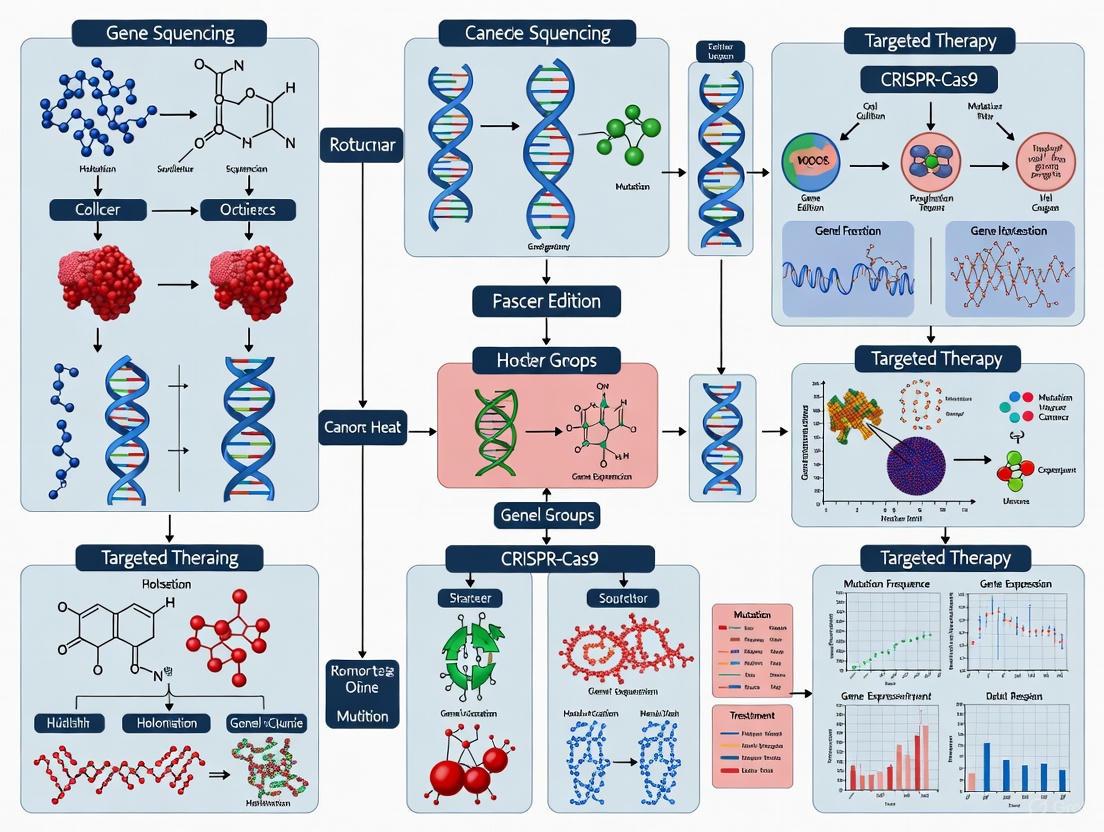
This article provides a comprehensive analysis of contemporary molecular methods revolutionizing precision oncology for researchers, scientists, and drug development professionals.
Molecular Methods in Cancer Genetics: Integrating Genomic Profiling and Precision Oncology for Targeted Therapies
Abstract
This article provides a comprehensive analysis of contemporary molecular methods revolutionizing precision oncology for researchers, scientists, and drug development professionals. It explores foundational genomic technologies including next-generation sequencing (NGS), PCR-based techniques, and multi-omics approaches that enable detailed tumor characterization. The content examines methodological applications in clinical diagnostics, drug discovery, and therapeutic matching, while addressing critical challenges in data interpretation, resistance mechanisms, and implementation barriers. Through validation frameworks and comparative assessments of emerging technologies, we evaluate clinical utility, analytical performance, and computational integration strategies that are shaping the future of cancer genetics and personalized treatment paradigms.
Fundamental Molecular Technologies and Genomic Landscapes in Precision Oncology
Next-generation sequencing (NGS) has fundamentally transformed cancer genetics research and clinical practice by providing unprecedented insights into the molecular underpinnings of malignancy. This technology enables the comprehensive profiling of tumor genomes, transcriptomes, and epigenomes, facilitating the discovery of driver mutations, prognostic biomarkers, and therapeutic targets [1]. The transition from single-gene testing to multigene panels and whole-genome sequencing has accelerated the development of precision medicine strategies, allowing researchers and clinicians to match targeted therapies to the specific molecular alterations driving a patient's cancer [2]. The application of NGS in oncology has demonstrated significant clinical benefits, with studies showing that patients receiving sequencing-matched therapies exhibit improved overall response rates (27% vs. 5%), longer time to treatment failure (median 5.2 vs. 2.2 months), and superior survival (median 13.4 vs. 9.0 months) compared to those receiving non-matched therapy [1]. As of 2025, the sequencing landscape features 37 distinct instruments from 10 key companies, offering researchers an extensive array of technological approaches to address diverse research questions in cancer genetics [3].
The Evolution and Current State of NGS Technologies
The development of NGS technologies represents a dramatic evolution from first-generation methods. The foundational Sanger sequencing method, developed in 1977, enabled the first sequencing of the 5,000-base bacteriophage φX174 genome but was limited by low throughput and high cost [3]. The Human Genome Project, completed in 2003, required a decade and approximately $3 billion using these first-generation methods, highlighting the pressing need for more efficient sequencing technologies [4].
The mid-2000s marked the beginning of the "NGS revolution" with the introduction of massively parallel short-read sequencing platforms from 454 Life Sciences, Solexa/Illumina, and Applied Biosystems SOLiD [3]. These second-generation technologies could generate gigabases of data in days rather than years, reducing sequencing costs from approximately $10,000 per megabase to mere cents and making large-scale genomic studies feasible [3]. Illumina's sequencing-by-synthesis (SBS) technology emerged as the dominant platform, at times capturing approximately 80% of the sequencing market share due to its high accuracy and throughput [3].
The 2010s witnessed the rise of third-generation sequencing technologies characterized by the ability to sequence single molecules and produce much longer reads. Pacific Biosciences (PacBio) pioneered this transition in 2011 with their Single Molecule Real-Time (SMRT) sequencing platform, which observes individual DNA polymerases incorporating fluorescent nucleotides in real time [3]. Oxford Nanopore Technologies (ONT) developed an alternative approach using protein nanopores to detect electrical signal changes as DNA strands pass through [3]. While early long-read technologies faced skepticism due to higher error rates, these errors were random rather than systematic and became correctable through consensus approaches [3]. The development of PacBio's HiFi reads (achieving >99.9% accuracy) and ONT's Q20+ chemistry (achieving ~99% accuracy) established long-read sequencing as a powerful tool for addressing challenging genomic regions, de novo genome assembly, and full-length isoform sequencing [3].
The current sequencing landscape (2025) is defined by ultra-high-throughput systems, multi-omic compatibility, and spatially resolved sequencing [3]. Modern production-scale sequencers like Illumina's NovaSeq X Plus can generate up to 16 terabases of data in a single run, while emerging players like Ultima Genomics promise further cost reductions [3] [5]. The convergence of technologies continues, with short-read companies adding long-read capabilities and vice versa, providing researchers with an increasingly sophisticated toolkit for precision oncology research [3].
Comparative Analysis of Modern NGS Platforms
Table 1: Comparison of High-Throughput NGS Platforms (2025)
| Platform | Max Output | Run Time | Max Read Length | Key Applications in Cancer Research | Technology |
|---|---|---|---|---|---|
| Illumina NovaSeq X Plus | 16 Tb | 17-48 hours | 2×150 bp | Large WGS, exome sequencing, single-cell profiling, liquid biopsy | Patterned flow cell, SBS chemistry |
| Illumina NextSeq 1000/2000 | 540 Gb | 8-44 hours | 2×300 bp | Exome sequencing, large panels, transcriptomics, methylation | SBS chemistry with X-Cell Biofluid |
| PacBio Revio | 360 Gb HiFi per SMRT Cell | ~1 day per run | 10-25 kb | Structural variant detection, phased sequencing, de novo assembly, isoform sequencing | SMRT sequencing (HiFi) |
| Oxford Nanopore PromethION | Varies by flow cell | Real-time | >4 Mb (ultra-long) | Structural variation, epigenetics, direct RNA sequencing, rapid diagnostics | Nanopore sensing |
| Ultima UG 100 | Up to 20,000 genomes/year | Varies | Not specified | Large-scale population genomics, WGS | Not specified |
Table 2: Comparison of Benchtop NGS Platforms (2025)
| Platform | Max Output | Run Time | Max Read Length | Key Applications in Cancer Research | Technology |
|---|---|---|---|---|---|
| Illumina MiSeq | 30 Gb | ~4-24 hours | 2×500 bp | Small panels, microbial sequencing, validation studies | SBS chemistry |
| Illumina NextSeq 550 | 120 Gb | ~11-29 hours | 2×150 bp | Targeted panels, RNA-seq, single-cell analysis | SBS chemistry |
Application Notes: NGS Strategies for Precision Oncology
Comprehensive Genomic Profiling in Cancer Research
Comprehensive Genomic Profiling (CGP) represents a powerful NGS approach that consolidates the analysis of hundreds of cancer-related biomarkers into a single assay [2]. This methodology enables simultaneous detection of single nucleotide variants (SNVs), insertions and deletions (indels), copy number variations (CNVs), gene fusions, and other structural variants across a broad panel of cancer-driver genes [2]. The efficiency of CGP eliminates the need for multiple sequential single-gene tests, preserving precious tumor samples—particularly critical for biopsies with limited material—and significantly reducing the time to therapeutic decision [2].
In research settings, CGP has demonstrated that approximately 30% of sequenced tumors harbor potentially actionable mutations that could be targeted by existing therapies [1]. The utility of CGP extends beyond targeted therapy selection to include estimation of tumor mutational burden (TMB)—a emerging biomarker for immunotherapy response—and microsatellite instability (MSI) status [2]. The integration of CGP into clinical research protocols has shown substantial benefits, with studies reporting improved progression-free survival (86 vs. 49 days) and overall response rates (19% vs. 9%) for patients receiving sequencing-matched therapies versus non-matched treatments [1].
Circulating Tumor DNA (ctDNA) Analysis for Cancer Monitoring
Liquid biopsy approaches utilizing ctDNA sequencing offer a minimally invasive method for cancer detection, monitoring, and genomic profiling [2]. This technique detects and analyzes tumor-derived DNA fragments circulating in the bloodstream, providing a comprehensive representation of tumor heterogeneity without the need for invasive tissue biopsies [6]. The high sensitivity of NGS enables detection of mutations present at as little as 5% of the DNA isolated from a clinical sample, making it particularly valuable for monitoring minimal residual disease (MRD) and early detection of recurrence [2].
In 2025, ctDNA analysis is increasingly incorporated into early-phase clinical trials to guide dose escalation, monitor therapeutic response, and inform go/no-go decisions for drug development [6]. Research applications include tracking clonal evolution under therapeutic pressure, identifying resistance mechanisms, and capturing spatial tumor heterogeneity [6]. However, experts emphasize that while ctDNA shows promise as a short-term biomarker, correlation with long-term clinical outcomes such as overall survival remains essential for validation [6].
Single-Cell and Spatial Transcriptomics in Tumor Microenvironment Analysis
Single-cell RNA sequencing (scRNA-seq) and spatial transcriptomics represent cutting-edge applications of NGS technology that enable unprecedented resolution in characterizing the tumor microenvironment [6]. These approaches move beyond bulk tissue analysis to reveal cellular heterogeneity, identify rare cell populations (including cancer stem cells), and delineate cell-cell communication networks that drive tumor progression and therapy resistance [6].
The 10x Genomics Chromium X platform exemplifies this technology, employing microfluidics and molecular barcoding to analyze tens of thousands of individual cells simultaneously [7]. When coupled with spatial transcriptomics platforms like the 10x Genomics Visium HD, which provides high-resolution, full-transcriptome mapping while preserving tissue morphology, researchers can correlate gene expression patterns with specific tissue locations and cellular contexts [7]. These technologies are particularly valuable for immunotherapy research, where understanding the spatial distribution of immune cell populations within tumors may reveal novel predictive biomarkers and therapeutic targets beyond the current standards (PD-L1, MSI status, and tumor mutational burden) [6].
Expanded Whole Exome Sequencing for Enhanced Mutation Detection
While conventional whole exome sequencing (WES) focuses primarily on protein-coding regions where approximately 95% of known pathogenic variants reside, a significant subset of disease-causing variants occur outside these regions [8]. Expanded WES approaches represent a cost-effective strategy to improve diagnostic yield by extending target capture to include deep intronic regions, untranslated regions (UTRs), and other functionally important non-coding elements [8].
Research applications of expanded WES demonstrate its utility in detecting pathogenic variants located outside typical exonic regions, including structural variants with breakpoints in intronic regions, repeat expansions associated with hereditary disorders, and mitochondrial DNA mutations [8]. This approach provides a middle ground between conventional WES and more expensive whole genome sequencing (WGS), offering enhanced mutation detection at a cost comparable to standard exome sequencing [8]. For cancer research, expanded WES panels can be tailored to include intronic and UTR regions of genes relevant to hereditary cancer syndromes (such as those covered by the ACMG Secondary Findings list) and known repeat expansion loci associated with cancer predisposition [8].
Table 3: NGS Application Selection Guide for Cancer Research
| Research Application | Recommended Platform Type | Optimal Read Length | Coverage Depth | Key Considerations |
|---|---|---|---|---|
| Targeted Gene Panels | Benchtop sequencers (MiSeq, NextSeq 550) | Short (2×150 bp) | >500× | Cost-effective for focused studies; enables ultra-deep sequencing |
| Whole Exome Sequencing | Production-scale (NovaSeq X, NextSeq 1000/2000) | Short (2×150 bp) | 100-150× | Balanced coverage of coding regions; expanded WES includes non-coding regions |
| Whole Genome Sequencing | Production-scale (NovaSeq X, UG 100) | Short to Long | 30-50× | Comprehensive variant discovery; requires high accuracy in challenging regions |
| Structural Variant Detection | Long-read (PacBio Revio, ONT) | Long (>10 kb) | 20-30× | Resolves complex rearrangements; HiFi reads provide high accuracy |
| Single-Cell RNA-seq | Benchtop (NextSeq 550, Chromium X) | Short (2×50 bp) | Varies by cell number | Captures cellular heterogeneity; requires specialized library prep |
| ctDNA Analysis | High-sensitivity systems | Short (2×150 bp) | >10,000× | Requires ultra-deep sequencing for low-frequency variant detection |
Experimental Protocols
Protocol: Comprehensive Genomic Profiling Using Targeted Panels
Principle: This protocol describes the methodology for using hybridization capture-based targeted sequencing to identify clinically actionable mutations in tumor samples. The approach combines multiplexed library preparation with hybrid capture using custom bait panels designed to target cancer-associated genes.
Materials:
- DNA Extraction: QIAamp DNA FFPE Tissue Kit (for formalin-fixed paraffin-embedded samples) or DNeasy Blood & Tissue Kit (for fresh/frozen samples)
- Library Preparation: Illumina DNA Prep Kit, IDT for Illumina DNA/RNA UD Indexes
- Target Enrichment: xGen Hybridization and Wash Kit, custom xGen Lockdown Panels (Integrated DNA Technologies)
- Quality Control: Agilent 4200 TapeStation, High Sensitivity D1000 ScreenTape, Qubit dsDNA HS Assay Kit
- Sequencing: Illumina NextSeq 1000/2000 or NovaSeq X Series with appropriate reagent kits
Procedure:
- DNA Extraction and QC:
- Extract DNA from tumor samples (FFPE, fresh frozen, or cytology specimens) using appropriate kits.
- Quantify DNA using Qubit dsDNA HS Assay and assess quality via TapeStation analysis.
- Require minimum DNA input of 40ng (10-100ng range acceptable); DV200 >30% for FFPE samples.
Library Preparation:
- Fragment DNA to 200-300bp using Covaris ultrasonication or enzymatic fragmentation.
- Perform end repair, A-tailing, and adapter ligation using Illumina DNA Prep Kit with unique dual indexes for sample multiplexing.
- Clean up libraries using SPRIselect beads and amplify with 8-10 PCR cycles.
Target Enrichment:
- Pool up to 96 libraries in equimolar ratios for multiplexed capture.
- Hybridize pooled libraries with biotinylated capture probes (xGen Panels) for 16 hours at 65°C.
- Capture probe-bound fragments using streptavidin magnetic beads.
- Wash to remove non-specifically bound DNA and perform post-capture amplification (10-12 cycles).
Sequencing and Analysis:
- Quantify final libraries by qPCR and load onto Illumina sequencer.
- Sequence to average coverage depth of >500× using 2×150 bp paired-end reads.
- Analyze data using DRAGEN Bio-IT Platform for alignment, variant calling, and annotation.
Troubleshooting:
- Low Library Yield: Increase input DNA quantity or PCR amplification cycles
- Uneven Coverage: Optimize hybridization conditions or redesign capture probes
- High Duplicate Rate: Increase input DNA or optimize fragmentation
Protocol: Expanded Whole Exome Sequencing for Enhanced Variant Detection
Principle: This protocol extends conventional WES by incorporating additional capture probes targeting non-coding regions of clinical relevance, including deep intronic regions, untranslated regions (UTRs), repeat expansion loci, and mitochondrial genome, enabling more comprehensive mutation detection without requiring whole genome sequencing [8].
Materials:
- Library Preparation: Twist Library Preparation EF Kit 2.0
- Target Capture: Twist Exome 2.0 plus Comprehensive Exome spike-in, custom additional probes for expanded regions
- Mitochondrial Capture: Twist Mitochondrial Panel Kit
- Sequencing: Illumina NextSeq 500 or equivalent with 150 bp paired-end reads
- Analysis: GATK v4.5.0.0, DRAGEN v4.3, ExpansionHunter, CNVkit
Procedure:
- Custom Capture Probe Design:
- Select target genes based on research context (e.g., ACMG SF v3.2 genes, hereditary cancer panels)
- Design probes for intronic and UTR regions of selected genes (8.6 Mb additional coverage)
- Include probes for 70 known disease-associated repeat regions
- Incorporate full mitochondrial genome capture probes
Library Preparation and Capture:
- Extract genomic DNA and fragment to 200-300bp
- Prepare libraries using Twist Library Preparation EF Kit 2.0 following manufacturer's protocol
- Hybridize libraries with combined probe sets (Twist Exome + expanded regional probes) using fast protocol (90-minute hybridization)
- Capture with magnetic beads, wash, and amplify captured libraries
Sequencing and Data Analysis:
- Sequence using 150 bp paired-end reads on Illumina platform to mean coverage >100× for exons, >30× for expanded regions
- Process data through GATK Best Practices workflow for SNV and indel calling
- Use ExpansionHunter for repeat expansion detection
- Employ DRAGEN and CNVkit for structural variant calling
- Annotate variants using population frequency and functional prediction databases
Validation:
- Verify coverage of expanded regions using control samples (e.g., HG001/NA12878, HG002/NA24385)
- Assess sensitivity and precision against orthogonal methods or gold standard datasets
- Validate detection of known pathogenic variants in non-coding regions
Diagram 1: Expanded Whole Exome Sequencing Workflow. The protocol extends conventional WES with additional capture probes for non-coding regions of clinical relevance [8].
The Scientist's Toolkit: Essential Research Reagents and Platforms
Table 4: Essential Research Reagents and Platforms for NGS in Cancer Research
| Category | Product/Platform | Key Features | Research Applications |
|---|---|---|---|
| Library Prep | Twist Library Preparation EF Kit 2.0 | Fast workflow, compatible with expanded probe sets | Expanded WES, custom target capture |
| Target Enrichment | Twist Exome 2.0 plus Comprehensive Exome spike-in | Comprehensive coverage, flexible probe design | Whole exome sequencing, focused panels |
| Single-Cell Analysis | 10x Genomics Chromium X | High-throughput single-cell partitioning, multiomic capabilities | Tumor heterogeneity, immune profiling, T-cell receptor sequencing |
| Spatial Transcriptomics | 10x Genomics Visium HD | High-resolution spatial mapping, full-transcriptome coverage | Tumor microenvironment, spatial gene expression patterns |
| Long-Read Sequencing | PacBio Revio System | HiFi reads with >99.9% accuracy, 15× increased throughput | Structural variant detection, phased haplotypes, complex rearrangement mapping |
| Bioinformatics | DRAGEN Bio-IT Platform | Accelerated secondary analysis, accurate variant calling | Germline and somatic variant detection, RNA-seq analysis |
| Protein Biomarker Detection | Olink Explore HT | High-throughput multiplexed protein analysis, high specificity | Proteogenomic integration, biomarker verification |
Technology Comparison and Selection Framework
Accuracy and Performance Considerations
The accuracy of NGS platforms varies significantly across different genomic contexts and variant types. Recent comparative analyses demonstrate that the Illumina NovaSeq X Series achieves 99.94% accuracy for SNV calling when measured against the full NIST v4.2.1 benchmark, which includes challenging repetitive regions and complex genomic architectures [5]. In contrast, emerging platforms like the Ultima Genomics UG 100 demonstrate higher error rates, with 6× more SNV errors and 22× more indel errors compared to Illumina platforms when assessed against the complete benchmark regions [5]. This performance gap is particularly pronounced in homopolymer regions longer than 10 base pairs, where indel accuracy decreases significantly for some platforms [5].
The definition of "accuracy regions" requires careful consideration in platform selection. Some platforms report accuracy metrics using masked genome subsets that exclude challenging regions, such as the Ultima Genomics "high-confidence region" (HCR) that excludes 4.2% of the genome, including 2.3% of the exome and 1.0% of ClinVar variants [5]. These excluded regions often contain biologically relevant loci in disease-associated genes, potentially limiting insights into conditions like Ehlers-Danlos syndrome (B3GALT6 gene) and fragile X syndrome (FMR1 gene) [5]. For cancer research, comprehensive coverage of clinically relevant genes is essential, as even small gaps in coverage may miss pathogenic variants critical for therapeutic decision-making.
Decision Framework for Platform Selection
Diagram 2: NGS Platform Selection Decision Framework. Researchers should consider application needs, throughput requirements, structural variant resolution, and budget constraints when selecting sequencing technologies [3] [4].
Cost-Benefit Analysis in Research Settings
The economic considerations of NGS platform selection extend beyond initial instrument costs to encompass reagent expenses, personnel requirements, bioinformatics infrastructure, and total cost per sample. While the promise of the "$100 genome" has garnered significant attention, the true value of sequencing data depends on its fitness for specific research applications and the comprehensiveness of genomic coverage [5].
Targeted sequencing approaches offer the most cost-effective solution for focused research questions, with benchtop sequencers like the Illumina MiSeq and NextSeq 550 providing sufficient throughput at manageable costs [9] [7]. Large-scale genomics initiatives requiring hundreds or thousands of whole genomes benefit from production-scale systems like the NovaSeq X Plus or Ultima UG 100, which offer the lowest cost per gigabase despite higher initial investment [3] [5]. For applications requiring long-read data, the PacBio Revio system provides high-throughput HiFi sequencing at approximately 15× the throughput of previous PacBio systems, significantly reducing the cost per long-read genome [7].
Research programs should also consider hidden costs associated with each platform, including the bioinformatics pipeline development, computational storage requirements, and personnel training needs. Platforms with established analysis pipelines like Illumina's DRAGEN platform may offer lower total cost of ownership despite higher initial reagent costs, particularly for laboratories without extensive bioinformatics support [5].
The NGS landscape continues to evolve rapidly, with emerging technologies promising to further transform cancer research. The integration of artificial intelligence and machine learning for sequence analysis, variant interpretation, and predictive biomarker discovery represents a particularly promising frontier [6]. Spatial transcriptomics technologies are advancing toward single-cell resolution, enabling increasingly detailed characterization of the tumor microenvironment and cellular interactions [6] [7]. Meanwhile, multi-omic approaches that combine genomic, transcriptomic, epigenomic, and proteomic data from the same samples are providing more comprehensive views of cancer biology [3] [7].
The ongoing reduction in sequencing costs is making large-scale genomic studies increasingly accessible, potentially enabling the routine application of whole genome sequencing in cancer research and clinical care [3] [4]. However, realizing the full potential of these technological advances will require parallel developments in bioinformatics infrastructure, data interpretation capabilities, and evidence generation linking genomic findings to clinical outcomes [1] [6]. As NGS technologies continue to mature and integrate into cancer research pipelines, they promise to deepen our understanding of cancer biology and accelerate the development of more effective, personalized cancer therapies.
Polymerase Chain Reaction (PCR) technologies constitute a cornerstone of modern molecular diagnostics in oncology, enabling the sensitive and specific detection of cancer-associated nucleic acids. These methodologies facilitate the transition toward precision medicine by allowing for non-invasive disease monitoring, early detection, and personalized treatment strategies. This application note provides a comprehensive technical overview of quantitative PCR (qPCR), droplet digital PCR (ddPCR), and Reverse Transcription PCR (RT-PCR) in cancer detection, focusing on their respective applications, performance characteristics, and implementation protocols for research use.
Principle of Operations
Quantitative PCR (qPCR) enables real-time monitoring of DNA amplification through fluorescent probes or DNA-binding dyes, providing relative quantification of target sequences against a standard curve. Its established workflow, rapid turnaround time (typically hours), and cost-effectiveness make it particularly suitable for high-throughput screening and validated clinical assays in resource-conscious settings [10].
Droplet Digital PCR (ddPCR) employs a water-oil emulsion droplet technology to partition samples into thousands of nanoliter-sized reactions, allowing absolute quantification of nucleic acid molecules without requiring standard curves. This partitioning enhances sensitivity for detecting rare mutations and provides high precision in quantifying low-abundance targets, making it ideal for minimal residual disease (MRD) monitoring and liquid biopsy applications [11] [12].
Reverse Transcription PCR (RT-PCR) combines reverse transcription of RNA into complementary DNA (cDNA) with subsequent PCR amplification, enabling gene expression analysis of cancer-related biomarkers, including microRNAs (miRNAs) and messenger RNAs (mRNAs) from various sample types.
Performance Characteristics in Cancer Detection
The table below summarizes key performance metrics and applications of PCR methodologies in cancer detection:
Table 1: Performance Comparison of PCR Technologies in Cancer Detection Applications
| Parameter | qPCR | ddPCR | RT-PCR |
|---|---|---|---|
| Quantification Method | Relative (requires standard curve) | Absolute (digital counting) | Relative or Absolute |
| Sensitivity (Variant Allele Frequency) | 1-5% | 0.01-0.1% | 1-5% |
| Sample Throughput | High (96- or 384-well formats) | Medium to High | High |
| Turnaround Time | 2-4 hours | 4-6 hours | 3-5 hours |
| Cost per Sample | $50-$200 | $100-$300 | $75-$200 |
| Key Applications in Oncology | Mutation detection, gene expression profiling, biomarker validation | MRD detection, liquid biopsy, low-frequency mutation detection | miRNA analysis, fusion transcript detection, expression profiling |
| Multiplexing Capability | Moderate (typically 4-6 plex) | Moderate (typically 2-5 plex) | Low to Moderate |
| Input Material Requirements | Low (compatible with cfDNA, FFPE) | Very Low (effective with limited cfDNA) | Requires high-quality RNA |
qPCR demonstrates particular strength in scalable cancer screening programs where cost-effectiveness and rapid turnaround are critical. Studies have documented its successful implementation in population-scale screening initiatives, such as HPV-based cervical cancer screening in India and EGFR mutation testing across Chinese hospitals [10]. The technology's compatibility with standardized 96- or 384-well formats facilitates automation and high-throughput testing without significant infrastructure investment [10].
ddPCR excels in applications requiring exceptional sensitivity, such as detecting circulating tumor DNA (ctDNA) in liquid biopsies. In a 2025 comparative study of non-metastatic rectal cancer, ddPCR demonstrated significantly higher detection rates (58.5%) compared to next-generation sequencing (NGS) (36.6%) in baseline plasma samples [11]. This enhanced sensitivity is particularly valuable for monitoring treatment response and detecting minimal residual disease, where ctDNA concentrations can be extremely low.
Table 2: Clinical Performance of PCR Methodologies in Specific Cancer Types
| Cancer Type | Technology | Application | Performance Metrics | Reference |
|---|---|---|---|---|
| Lung Cancer | Methylation-specific ddPCR | Detection across disease stages | 38.7-46.8% sensitivity (non-metastatic); 70.2-83.0% sensitivity (metastatic) | [13] |
| Rectal Cancer | ddPCR vs. NGS | Baseline ctDNA detection | 58.5% detection rate (ddPCR) vs. 36.6% (NGS) | [11] |
| Non-Small Cell Lung Cancer | Multiplex qPCR | Simultaneous assessment of EGFR, KRAS, BRAF, ALK | Rapid results with minimal input material | [10] |
| Multiple Cancers | qPCR | MRD monitoring | Tracking of mutations (e.g., EGFR) during treatment | [14] |
Experimental Protocols
ddPCR Protocol for ctDNA Detection in Liquid Biopsies
Background: Detection of circulating tumor DNA in plasma samples provides a non-invasive approach for cancer monitoring and treatment response assessment. This protocol describes a methylation-specific ddPCR approach for lung cancer detection, adaptable to other cancer types.
Sample Preparation and DNA Extraction:
- Blood Collection and Processing: Collect whole blood in EDTA-containing tubes. Process within 4 hours of venipuncture by centrifugation at 2,000 × g for 10 minutes to separate plasma [13].
- Plasma Storage: Aliquot and store plasma at -80°C until cfDNA extraction.
- cfDNA Extraction: Extract cfDNA from 4 mL plasma using the DSP Circulating DNA Kit (Qiagen) on QIAsymphony SP instrumentation according to manufacturer's instructions [13].
- DNA Quantification and Quality Control: Assess cfDNA concentration using fluorescence-based quantification methods. Verify fragment size distribution (expected peak ~166 bp) using bioanalyzer systems.
Reaction Setup and Partitioning:
- Bisulfite Conversion: Concentrate extracted DNA to 20 μL using Amicon Ultra-0.5 Centrifugal Filter units (Merck). Perform bisulfite conversion using the EZ DNA Methylation-Lightning Kit (Zymo Research) with elution in 15 μL M-Elution Buffer [13].
- ddPCR Reaction Preparation: Prepare reaction mixtures containing:
- 10 μL of 2× ddPCR Supermix for Probes
- 1 μL of methylation-specific primer/probe mix (final concentration 900 nM primers, 250 nM probes)
- 8 μL of bisulfite-converted DNA
- 1 μL of restriction enzyme (if required for specific assays)
- Droplet Generation: Transfer 20 μL of reaction mixture to DG8 cartridges. Add 70 μL of droplet generation oil to each well. Generate droplets using the QX200 Droplet Generator [13].
Amplification and Analysis:
- PCR Amplification: Transfer 40 μL of generated droplets to a 96-well PCR plate. Seal the plate and perform amplification using the following cycling conditions:
- 95°C for 10 minutes (enzyme activation)
- 40 cycles of:
- 94°C for 30 seconds (denaturation)
- 55-60°C (assay-specific) for 60 seconds (annealing/extension)
- 98°C for 10 minutes (enzyme deactivation)
- 4°C hold [13]
- Droplet Reading: Place plate in QX200 Droplet Reader for fluorescence detection of positive and negative droplets.
- Data Analysis: Analyze results using QuantaSoft software. Determine absolute copy numbers of methylated and unmethylated targets based on Poisson distribution statistics.
Figure 1: ddPCR Workflow for ctDNA Detection
qPCR Protocol for Mutation Detection in FFPE Samples
Background: Formalin-fixed paraffin-embedded (FFPE) tissues represent a valuable resource for cancer biomarker validation. This protocol describes a qPCR approach for detecting actionable mutations in oncology.
Sample Preparation:
- DNA Extraction from FFPE: Extract DNA from FFPE tissue sections (5-10 μm thickness) using the Maxwell RSC system with Maxwell FFPE Plus DNA Kit (Promega) according to manufacturer's instructions [13].
- DNA Quantification and Quality Assessment: Quantify DNA using fluorometric methods. Assess DNA quality through absorbance ratios (A260/A280) and fragment analysis.
qPCR Setup and Run:
- Reaction Preparation: Prepare reactions containing:
- 10 μL of 2× qPCR Master Mix (inhibitor-resistant formulations recommended)
- 1 μL of primer-probe mix (final concentrations: 400-900 nM primers, 100-250 nM probes)
- 5 μL of template DNA (10-50 ng total)
- Nuclease-free water to 20 μL final volume
- Plate Preparation: Dispense reactions into 96-well or 384-well PCR plates in triplicate. Include positive controls (known mutant DNA) and negative controls (no template and wild-type DNA).
- qPCR Run: Perform amplification using the following cycling parameters:
- 95°C for 2-10 minutes (initial denaturation/activation)
- 40-45 cycles of:
- 95°C for 15 seconds (denaturation)
- 60°C for 60 seconds (annealing/extension with data acquisition)
- Data Analysis: Calculate ΔΔCt values for relative quantification or use standard curves for absolute quantification. Determine mutation status based on established threshold values.
Research Reagent Solutions
The table below outlines essential reagents and kits for implementing PCR-based cancer detection assays:
Table 3: Essential Research Reagents for PCR-Based Cancer Detection
| Reagent/Kits | Function | Key Features | Representative Examples |
|---|---|---|---|
| Inhibitor-Resistant Master Mixes | Enhanced amplification efficiency in challenging samples | Tolerant to PCR inhibitors in plasma, FFPE, whole blood | Meridian Bioscience Lifescience reagents [10] |
| Bisulfite Conversion Kits | DNA modification for methylation analysis | Rapid conversion, high DNA recovery | EZ DNA Methylation-Lightning Kit (Zymo Research) [13] |
| cfDNA Extraction Kits | Isolation of cell-free DNA from plasma | High recovery of short fragments, removal of contaminants | DSP Circulating DNA Kit (Qiagen) [13] |
| FFPE DNA Extraction Kits | Nucleic acid purification from archived tissues | Effective de-crosslinking, high yield | Maxwell FFPE Plus DNA Kit (Promega) [13] |
| Primer-Probe Sets | Target-specific amplification | Tumor-specific mutations, methylation markers, reference genes | Commercially available and custom-designed assays |
| Droplet Generation Oil | Partitioning for ddPCR | Consistent droplet formation, low background fluorescence | ddPCR Droplet Generation Oil (Bio-Rad) |
| Nuclease-Free Water | Reaction preparation | Free of contaminating nucleases | Various manufacturers |
Technology Selection Guide
Choosing the appropriate PCR methodology depends on specific research requirements and sample characteristics. The following decision tree provides guidance for method selection:
Figure 2: PCR Technology Selection Guide
qPCR, ddPCR, and RT-PCR each offer distinct advantages in cancer detection applications, enabling researchers to address diverse questions in molecular oncology. qPCR provides a cost-effective, high-throughput solution for mutation screening and expression analysis, while ddPCR offers exceptional sensitivity for liquid biopsy and MRD applications. RT-PCR remains essential for gene expression studies and fusion transcript detection. As precision medicine continues to evolve, these PCR methodologies will maintain their foundational role in cancer research, particularly when integrated with emerging technologies such as next-generation sequencing and artificial intelligence-driven analytics.
In the era of precision medicine, the accurate molecular classification of cancer is paramount for guiding targeted therapies and predicting patient outcomes. Immunohistochemistry (IHC) and Fluorescence In Situ Hybridization (FISH) represent two cornerstone techniques in routine molecular pathology, providing complementary insights into protein expression and genetic alterations within the context of tissue architecture. These techniques enable the translation of molecular findings into clinically actionable information, particularly in cancer diagnostics. The integration of IHC and FISH has proven indispensable in classifying breast cancer subtypes and directing HER2-targeted treatments, illustrating their critical role in modern oncology research and drug development [15] [16]. As therapeutic paradigms evolve to include patients with lower levels of target expression, the precision and reliability of these conventional techniques face new challenges and opportunities for refinement.
Technical Principles and Methodologies
Immunohistochemistry (IHC): Protein Detection in Situ
Immunohistochemistry leverages antibody-antigen interactions to localize specific proteins within tissue sections. The technique involves multiple critical steps to preserve tissue morphology while maintaining antigenicity and enabling specific detection.
The foundational IHC protocol encompasses several phases: sample preparation, antigen retrieval, blocking, antibody incubation, detection, and counterstaining. Tissue samples must be properly fixed and processed to preserve morphological details while maintaining antigen integrity. For formalin-fixed, paraffin-embedded (FFPE) tissues, this involves dehydration through graded ethanol series, clearing in xylene, and infiltration with paraffin [17]. Sectioned tissues are then mounted on slides for subsequent staining procedures.
Antigen retrieval is a crucial step for reversing the cross-links formed during formalin fixation, which often mask antigenic epitopes. This can be achieved through heat-induced epitope retrieval (HIER) using buffers such as sodium citrate (pH 6.0), EDTA (pH 8.0), or Tris-EDTA (pH 9.0) at elevated temperatures (95°-98°C) for 15-20 minutes [17] [18]. Alternatively, protease-induced epitope retrieval (PIER) using enzymes like trypsin or pepsin may be employed for specific antigens [17].
Blocking steps prevent non-specific antibody binding through incubation with normal serum or protein-blocking solutions. Primary antibodies are then applied, with optimal dilution and incubation conditions (typically overnight at 4°C) determined empirically for each antibody-target pair [17]. Detection systems amplify the signal through enzyme conjugates (HRP or AP) with chromogenic or fluorescent substrates, followed by counterstaining and mounting for microscopic analysis.
Fluorescence In Situ Hybridization (FISH): Genetic Alteration Analysis
FISH enables the visualization of specific DNA sequences within intact cells and tissues using fluorescently labeled nucleic acid probes. This technique is particularly valuable for detecting gene amplifications, deletions, translocations, and aneuploidy in cancer diagnostics.
The standard FISH protocol involves tissue preparation, pretreatment, denaturation, hybridization, and signal detection. Tissue sections are deparaffinized and rehydrated similarly to IHC protocols, followed by pretreatment with proteases to digest proteins and permit probe access to target DNA sequences. Both probe and target DNA are denatured simultaneously, then hybridized typically overnight under controlled conditions. Post-hybridization washes remove unbound probe, and counterstaining with DAPI allows nuclear visualization before fluorescence microscopy analysis.
In HER2 testing, FISH assesses both the HER2/CEP17 ratio (HER2 gene signals to chromosome 17 centromere signals) and average HER2 copy number, providing quantitative genetic information to complement IHC protein expression data [15].
Application Notes in Cancer Diagnostics
HER2 Testing in Breast Cancer: A Case Study
The complementary application of IHC and FISH in HER2 testing exemplifies their critical role in treatment decision-making for breast cancer patients. Current guidelines define HER2-positive status as either IHC 3+ (strong, complete membrane staining in >10% of tumor cells) or IHC 2+ with confirmed gene amplification by FISH (HER2/CEP17 ratio ≥2.0 with an average HER2 copy number ≥4.0) [16].
Recent research has highlighted the clinical significance of HER2-low expression (IHC 1+ or IHC 2+/FISH-negative), as this population may benefit from novel antibody-drug conjugates (ADCs) [15] [19]. This emerging paradigm presents new challenges for pathological assessment, as distinguishing HER2-low from HER2-zero (IHC 0) requires exceptional technical consistency and interpretive accuracy.
Table 1: HER2 Status Classification by IHC and FISH
| HER2 Category | IHC Result | FISH Result | Clinical Significance |
|---|---|---|---|
| Positive | 3+ | Not required | Eligible for traditional anti-HER2 therapies |
| Positive | 2+ | HER2/CEP17 ratio ≥2.0 | Eligible for traditional anti-HER2 therapies |
| Low | 1+ | Not required/negative | May benefit from novel ADCs |
| Low | 2+ | HER2/CEP17 ratio <2.0 | May benefit from novel ADCs |
| Negative (Zero) | 0 | Not required/negative | Limited benefit from current anti-HER2 agents |
Studies reveal significant differences in clinicopathological features between HER2-low and HER2-zero tumors. HER2-low tumors demonstrate fewer grade III tumors (39.74% vs. 55.65%, P=0.005) and higher positivity for estrogen receptor (ER, 88.89% vs. 61.74%, P<0.001) and progesterone receptor (PR, 84.62% vs. 57.39%, P<0.001) compared to HER2-zero tumors [15]. These distinctions underscore the biological heterogeneity within traditionally HER2-negative breast cancers.
Furthermore, differential response to therapy based on HER2 expression level has been observed. Research demonstrates that HER2(3+) patients achieve significantly higher pathological complete response (pCR) rates after dual-target neoadjuvant therapy (TCbHP regimen) compared to HER2(2+)/FISH-positive patients (P<0.001) [16]. Multivariate analysis confirms HER2 status as an independent prognostic factor for treatment response, emphasizing the importance of accurate classification [16].
Technical Concordance and Challenges
Studies evaluating technical concordance between different IHC antibody clones reveal variability in HER2 assessment. One investigation reported only 64.22% (95% CI: 58.76-69.42%) agreement between clone 4B5 and clone EP3 [15]. Additionally, interpreter experience significantly impacts accuracy, with one study showing higher consistency (94.19%) for a pathologist with more extensive experience compared to 74.31% for a less experienced colleague [15].
FISH analysis demonstrates significant differences in HER2/CEP17 ratio and average HER2 copy numbers between HER2-zero and HER2-low tumors, though no clear cut-off value distinguishes these categories [15]. HER2/CEP17 ratios mostly fall between 1 and 2, with HER2-zero tumors primarily ≤1.4, while average HER2 copy numbers are typically ≥2 and <4, with HER2-zero tumors primarily ≤2.5 [15].
Experimental Protocols
IHC Protocol for Formalin-Fixed Paraffin-Embedded (FFPE) Tissues
Table 2: Key Research Reagent Solutions for IHC
| Reagent | Composition/Preparation | Function |
|---|---|---|
| Antigen Retrieval Buffer | 10 mM sodium citrate (pH 6.0), 1 mM EDTA (pH 8.0), or 10 mM Tris/1 mM EDTA (pH 9.0) | Reverses formaldehyde cross-links to expose epitopes |
| Blocking Solution | 1X TBST/5% normal goat serum or animal-free blocking solution | Reduces non-specific antibody binding |
| Antibody Diluent | Commercial antibody diluent or TBST/5% normal goat serum | Maintains antibody stability during incubation |
| Wash Buffer | 1X Tris Buffered Saline with Tween 20 (TBST) or 1X Phosphate Buffered Saline with Tween 20 (PBST) | Removes unbound reagents while preserving tissue integrity |
| Detection System | HRP or AP-based detection reagents with compatible chromogenic substrates | Amplifies specific signal for visualization |
Deparaffinization and Rehydration:
- Incubate slides in three changes of xylene for 5 minutes each [18].
- Transfer through two changes of 100% ethanol for 10 minutes each [18].
- Incubate in two changes of 95% ethanol for 10 minutes each [18].
- Rinse in deionized water (dH₂O) twice for 5 minutes each [18].
Antigen Retrieval:
- Perform Heat-Induced Epitope Retrieval (HIER) by boiling slides in appropriate retrieval buffer (e.g., 10 mM sodium citrate, pH 6.0) for 20 minutes at approximately 98°C [17].
- Cool slides for 30 minutes at room temperature [17].
- Alternatively, for Protease-Induced Epitope Retrieval (PIER), incubate with 0.05% trypsin in 0.1% calcium chloride (pH 7.8) for 10 minutes at 37°C [17].
Staining Procedure:
- Wash sections in dH₂O three times for 5 minutes each [18].
- Quench endogenous peroxidase with 3% hydrogen peroxide for 10 minutes [18].
- Wash in dH₂O twice for 5 minutes, then in wash buffer for 5 minutes [18].
- Apply blocking solution for 1 hour at room temperature [17].
- Incubate with primary antibody diluted in appropriate diluent overnight at 4°C [17].
- Wash with wash buffer three times for 5 minutes each [17].
- Apply species-appropriate detection reagent for 30 minutes at room temperature [18].
- Wash with wash buffer three times for 5 minutes each [17].
- Develop with appropriate chromogenic substrate (e.g., DAB) until optimal signal-to-noise ratio is achieved [17].
- Counterstain with hematoxylin, dehydrate, clear, and mount with compatible mounting medium [17].
Workflow Visualization: IHC Protocol for FFPE Tissues
Emerging Innovations and Complementary Technologies
While IHC and FISH remain fundamental to molecular pathology, emerging technologies offer enhanced capabilities for biomarker assessment. Quantitative transcriptomics using RNA sequencing (RNA-Seq) has demonstrated sensitivity in detecting HER2 expression below the reliable threshold of IHC [19]. Studies analyzing breast tumors reveal detectable ERBB2 mRNA in 86% of IHC 0 cases, with expression distributed across "low" (41%), "intermediate" (42%), and "high" (4%) categories [19]. This sensitivity suggests transcriptomics could complement conventional techniques in identifying patients who might benefit from novel ADCs.
The integration of mRNA profiling with traditional protein and gene amplification analysis represents a growing trend in comprehensive biomarker assessment. As precision medicine advances toward targeting increasingly minimal expression levels, these multimodal approaches will likely become standard in oncology research and clinical trial design.
IHC and FISH maintain their position as indispensable techniques in routine molecular pathology, providing critical protein expression and genetic information that directly informs cancer classification and therapeutic decisions. The standardized protocols presented herein provide reliable methodologies for researchers pursuing precision medicine initiatives. As therapeutic landscapes evolve to encompass patients with lower target expression levels, the continued refinement of these conventional techniques and their integration with novel technologies like quantitative transcriptomics will be essential for advancing oncology research and optimizing patient outcomes.
Multi-omics integration represents a transformative approach in precision oncology, enabling a comprehensive understanding of cancer biology through the combined analysis of molecular layers. This integrated methodology reveals the complex interplay between the genome, epigenome, transcriptome, and immunome, providing unprecedented insights into tumor heterogeneity, therapeutic resistance, and novel therapeutic targets [20] [21]. The convergence of transcriptomics, epigenetics, and immunophenotyping has proven particularly valuable for deciphering the molecular intricacies of various cancers, including lung adenocarcinoma (LUAD), colorectal cancer (CRC), and other malignancies [22] [23] [24].
The fundamental premise of multi-omics integration lies in recognizing that biological systems operate through complex, interconnected layers including the genome, transcriptome, proteome, metabolome, and immunome. Genetic information flows through these layers to shape observable traits, and elucidating the genetic basis of complex phenotypes demands an analytical framework that captures these dynamic, multi-layered interactions [20]. In cancer research, this approach has identified novel biomarkers and therapeutic targets while offering deeper insights into the molecular intricacies of tumor development and progression [20] [25].
Recent technological advancements in single-cell RNA sequencing (scRNA-seq), spatial transcriptomics, and epigenomic profiling have further enhanced our ability to correlate molecular profiles with clinical features, refining the prediction of therapeutic responses [22] [23]. However, integrating these disparate data types presents substantial computational and analytical challenges that require advanced statistical, network-based, and machine learning methods to model interdependencies and extract meaningful biological insights [20] [26].
Theoretical Framework and Significance
Component Technologies and Their Synergistic Value
The power of multi-omics integration emerges from the synergistic relationship between its component technologies, each contributing unique insights into cancer biology:
Transcriptomics captures dynamic gene expression changes, revealing regulatory mechanisms and disease pathways that active in specific cellular contexts [20]. Technologies such as bulk RNA-seq and scRNA-seq provide comprehensive profiling of RNA transcripts, enabling the identification of expression patterns associated with tumor progression and treatment response [22] [23].
Epigenetics explores heritable changes in gene expression that do not involve alterations to the underlying DNA sequence, including DNA methylation, histone modifications, and non-coding RNA regulation [25]. These mechanisms serve as crucial molecular switches that dynamically regulate gene expression patterns to maintain cellular homeostasis, with dysregulation significantly promoting cancer initiation, progression, and therapeutic resistance [25] [24].
Immunophenotyping characterizes the composition and functional state of immune cells within the tumor microenvironment (TME), providing critical insights into tumor-immune interactions and mechanisms of immune evasion [27] [28]. Through techniques such as flow cytometry and single-cell analysis, researchers can quantify immune cell populations, assess their activation states, and identify expression patterns of immune checkpoint molecules [28].
When integrated, these technologies provide a more comprehensive understanding of cancer biology than any single approach alone. For example, epigenetic modifications can regulate gene expression patterns that shape the transcriptomic landscape, which in turn influences the immunophenotype of the TME [25] [24]. This interconnected relationship creates a molecular network that drives tumor behavior and therapeutic response.
Analytical Approaches for Data Integration
The integration of multi-omics data requires sophisticated analytical strategies to extract biologically meaningful insights from complex, high-dimensional datasets:
Table 1: Multi-Omics Data Integration Strategies
| Integration Strategy | Description | Applications | Advantages |
|---|---|---|---|
| Early Integration | Direct concatenation of raw datasets from multiple omics layers prior to analysis | Preliminary biomarker discovery | Preserves global structure; simple implementation |
| Intermediate Integration | Identification of common latent structures through joint matrix decomposition or similarity-based methods | Molecular subtyping; dimension reduction | Handles data heterogeneity; reveals shared patterns |
| Late Integration | Separate analysis of each omics layer with subsequent integration of results | Predictive modeling; prognostic signature development | Leverages method-specific optimizations; flexible framework |
| Model-Based Integration | Use of statistical or machine learning models to integrate omics data within a unified analytical framework | Network analysis; pathway mapping | Incorporates biological priors; enables mechanistic insights |
Machine learning approaches have emerged as particularly powerful tools for multi-omics integration. These include supervised learning methods (e.g., Random Forest, Support Vector Machines) for classification and prediction tasks, unsupervised learning (e.g., k-means clustering) for pattern discovery, and deep learning architectures for automatic feature extraction from raw data [26]. The MOVICS algorithm represents one such integrative tool that enables multi-omics clustering analysis through a multi-step approach incorporating feature selection, cluster number optimization, and robust integration of diverse molecular data types [24].
Application Notes: Protocol for Integrated Multi-Omics Analysis
Sample Preparation and Quality Control
Protocol 3.1.1: Integrated Sample Processing for Multi-Omics Analysis
Tissue Collection and Preservation
- Collect fresh tumor tissue samples (minimum 50mg) under sterile conditions
- Divide each sample into three aliquots for:
- Transcriptomic analysis: Preserve in RNAlater at -80°C
- Epigenetic analysis: Flash-freeze in liquid nitrogen
- Immunophenotyping: Process immediately for single-cell suspension
- Record patient demographics, clinical history, and treatment background
RNA Extraction and Quality Control for Transcriptomics
- Extract total RNA using silica-membrane based kits with DNase treatment
- Assess RNA integrity number (RIN) using Bioanalyzer or TapeStation (RIN ≥7.0 required)
- Quantify RNA concentration using fluorometric methods (Qubit RNA HS Assay)
- Proceed only with samples showing 260/280 ratio between 1.8-2.1 and 260/230 ratio ≥2.0
DNA Extraction for Epigenetic Analysis
- Isolate genomic DNA using phenol-chloroform extraction or commercial kits
- Verify DNA integrity through agarose gel electrophoresis (high molecular weight band)
- Quantify DNA using fluorometry (Qubit dsDNA HS Assay)
- Ensure minimum concentration of 50ng/μL for downstream applications
Single-Cell Suspension for Immunophenotyping
- Process fresh tissue using mechanical dissociation followed by enzymatic digestion (1 mg/mL collagenase D + 0.2 mg/mL DNase I, 37°C for 30 minutes)
- Filter through 70μm cell strainer and wash with PBS containing 2% FBS
- Perform viability assessment using trypan blue exclusion (>85% viability required)
- Count cells using automated cell counter or hemocytometer
Data Generation Protocols
Protocol 3.2.1: Single-Cell and Spatial Transcriptomic Profiling
Single-Cell RNA Sequencing Library Preparation
- Load single-cell suspension onto 10X Genomics Chromium Controller to target 5,000-10,000 cells per sample
- Generate barcoded cDNA using Chromium Single Cell 3' Reagent Kits v3.1
- Amplify cDNA (12-14 cycles) and assess quality using Bioanalyzer High Sensitivity DNA Kit
- Construct libraries with sample indices and validate using qPCR or Bioanalyzer
- Sequence on Illumina NovaSeq 6000 with recommended read parameters: Read1: 28bp, i7: 10bp, i5: 10bp, Read2: 90bp
Spatial Transcriptomics Using 10X Visium
- Cryosection fresh frozen tissue at 10μm thickness onto Visium Spatial Tissue Optimization slides
- Perform H&E staining and imaging following manufacturer's protocol
- Permeabilize tissue to determine optimal conditions (12-18 minutes typically)
- Proceed with Visium Spatial Gene Expression workflow including reverse transcription, second strand synthesis, and cDNA amplification
- Sequence libraries targeting 50,000 read pairs per spot
Bulk RNA Sequencing
- Deplete ribosomal RNA using NEBNext rRNA Depletion Kit
- Prepare libraries using NEBNext Ultra II Directional RNA Library Prep Kit
- Perform quality control using Agilent TapeStation D1000 ScreenTape
- Sequence on Illumina platform with minimum 30 million 150bp paired-end reads per sample
Protocol 3.2.2: Epigenetic Profiling
DNA Methylation Analysis Using EPIC Array
- Treat 500ng genomic DNA with sodium bisulfite using EZ DNA Methylation Kit
- Process samples through whole-genome amplification, fragmentation, and hybridization to Infinium MethylationEPIC BeadChip
- Wash arrays per manufacturer specifications and scan using iScan System
- Extract intensity data and perform quality control using minfi R package
Histone Modification Profiling
- Perform chromatin immunoprecipitation (ChIP) using validated antibodies targeting H3K27ac, H3K4me3, and H3K27me3
- Cross-link cells with 1% formaldehyde for 10 minutes at room temperature
- Sonicate chromatin to 200-500bp fragments using Covaris M220
- Immunoprecipitate with 2-5μg antibody overnight at 4°C
- Reverse cross-links, purify DNA, and prepare libraries for sequencing
- Sequence on Illumina platform with minimum 20 million 75bp single-end reads
Protocol 3.2.3: Comprehensive Immunophenotyping
High-Dimensional Flow Cytometry
- Aliquot 1×10^6 cells per staining reaction
- Block Fc receptors using purified anti-mouse CD16/CD32 for 10 minutes at 4°C
- Stain with viability dye (Zombie UV) for 15 minutes at room temperature
- Incubate with surface antibody cocktail for 30 minutes at 4°C in the dark
- For intracellular staining: fix and permeabilize using FoxP3/Transcription Factor Staining Buffer Set, then stain with intracellular antibodies for 30 minutes at 4°C
- Acquire data on spectral flow cytometer (Cytek Aurora) with minimum 100,000 events per sample
Antibody Panels for Tumor Immunophenotyping
- T-cell panel: CD3, CD4, CD8, CD45RA, CD62L, CD25, CD127, PD-1, CTLA-4, TIM-3, LAG-3
- Myeloid panel: CD11b, CD11c, CD14, CD16, CD33, HLA-DR, CD80, CD86, PD-L1, CD163, CD206
- Innate lymphoid panel: CD56, CD16, CD94, NKG2A, NKG2C, NKG2D, DNAM-1
- Activation/functional panel: CD107a, granzyme B, perforin, Ki-67, IFN-γ, TNF-α
Computational Integration and Analysis
Protocol 3.3.1: Data Preprocessing and Normalization
Transcriptomic Data Processing
- Process bulk RNA-seq data: quality control (FastQC), adapter trimming (Trim Galore!), alignment (STAR), and quantification (featureCounts)
- Process scRNA-seq data: cellranger pipeline for alignment and feature-barcode matrix generation
- Normalize using DESeq2 for bulk data and scTransform for single-cell data
- Batch correction using Harmony or ComBat-seq
Epigenetic Data Analysis
- Process methylation array data: background correction, normalization (ssNoob), and β-value calculation
- Identify differentially methylated regions (DMRs) using bumphunter or DMRcate
- Analyze ChIP-seq data: alignment (Bowtie2), peak calling (MACS2), and differential binding (DiffBind)
Immunophenotyping Data Analysis
- Preprocess flow cytometry data: compensation, transformation, and gating using FlowJo
- Conduct high-dimensional analysis: dimension reduction (UMAP, t-SNE) and clustering (PhenoGraph)
- Quantify cell population frequencies and perform statistical comparison between groups
Protocol 3.3.2: Multi-Omics Data Integration
MOVICS Pipeline Implementation
- Install MOVICS R package (version 0.99.17 or higher)
- Perform feature selection for each data type:
- mRNA: survival-associated epigenetic genes (Cox p < 0.05)
- lncRNA: top 1,500 features by median absolute deviation (MAD)
- miRNA: top 50% features by variation followed by survival filtering
- Methylation: top 1,500 MAD-filtered sites with survival significance
- Mutation: genes with >5% frequency in cohort
- Determine optimal cluster number (k=2-8) using consensus clustering
- Integrate multi-omics data using Gaussian models for expression/methylation and binomial model for mutation data
- Evaluate clustering robustness through silhouette analysis
Machine Learning Integration
- Employ Random Survival Forest (RSF) for prognostic model construction
- Implement Least Absolute Shrinkage and Selection Operator (LASSO) regression for feature selection
- Validate models using 10-fold cross-validation and external datasets
- Assess performance through time-dependent ROC analysis and Kaplan-Meier survival curves
Representative Workflow and Experimental Design
The following diagram illustrates a comprehensive multi-omics integration workflow for cancer research, encompassing sample processing, data generation, computational integration, and clinical translation:
Diagram 1: Comprehensive Multi-Omics Integration Workflow. This workflow illustrates the sequential process from sample collection through clinical application, highlighting the integration of transcriptomic, epigenetic, and immunophenotyping data.
Case Study: Epigenetic Classification of Lung Adenocarcinoma
A recent study demonstrated the power of multi-omics integration by establishing an epigenetic-based molecular classification system for LUAD [24]. The research employed an integrated analysis of 432 LUAD patients from TCGA and 398 patients from GEO datasets, incorporating mRNA expression, miRNA expression, lncRNA profiles, DNA methylation, and somatic mutation information.
The analytical approach involved:
- Feature Selection: Epigenetics-related genes were filtered, and survival-associated features were selected using Cox regression (p < 0.05)
- Multi-Omics Clustering: The MOVICS algorithm integrated the diverse molecular data types to identify robust molecular subtypes
- Subtype Characterization: Two distinct molecular subtypes (CS1 and CS2) were identified with significant differences in epigenetic modification patterns, immune microenvironment, and clinical outcomes (P = 0.005)
- Prognostic Modeling: A Random Survival Forest-based prognostic model demonstrated robust performance in both training and validation cohorts, with time-dependent AUC values ranging from 0.625 to 0.694
This epigenetic classification system revealed subtype-specific therapeutic vulnerabilities, with low-risk patients showing enhanced immune cell infiltration (particularly CD8+ T cells and M1 macrophages) and better responses to immune checkpoint inhibitors [24].
Case Study: Immune and Prognostic Biomarkers in Colorectal Cancer
Another innovative application integrated molecular dynamics simulation with single-cell and spatial transcriptomics to validate immune and prognostic biomarkers in colorectal cancer [22]. This comprehensive approach identified three hub genes (ULBP2, INHBB, and STC2) through LASSO and Cox regression analyses alongside five machine learning algorithms.
The validation workflow included:
- Diagnostic performance assessment in GEO dataset GSE21815, showing AUC values of 0.908, 0.742, and 0.934 for ULBP2, INHBB, and STC2, respectively
- Molecular docking and dynamics simulations to identify potential therapeutic compounds (valproic acid, cyclosporine, and genistein) with strong binding affinities to the hub genes
- Single-cell RNA sequencing and spatial transcriptomics to characterize hub gene expression patterns and interactions within the tumor microenvironment
- Pathway enrichment analysis revealing significant involvement in TGF-β signaling and natural killer cell-mediated cytotoxicity
This multi-platform validation strategy provided a robust framework for biomarker identification and therapeutic targeting in colorectal cancer [22].
Research Reagent Solutions
Table 2: Essential Research Reagents for Multi-Omics Integration Studies
| Category | Reagent/Kit | Specific Function | Application Notes |
|---|---|---|---|
| Sample Processing | RNAlater Stabilization Solution | Preserves RNA integrity in fresh tissues | Critical for maintaining transcriptomic profiles; compatible with downstream applications |
| Collagenase D + DNase I | Tissue dissociation for single-cell suspensions | Optimized concentration: 1 mg/mL collagenase D + 0.2 mg/mL DNase I; 37°C for 30 minutes | |
| Transcriptomics | 10X Genomics Chromium Single Cell 3' Kit | scRNA-seq library preparation | Targets 5,000-10,000 cells per sample; enables cell type identification and differential expression |
| NEBNext rRNA Depletion Kit | Ribosomal RNA removal for bulk RNA-seq | Essential for mRNA enrichment in degraded or low-quality samples | |
| Epigenetics | Infinium MethylationEPIC BeadChip | Genome-wide DNA methylation profiling | Covers >850,000 CpG sites; ideal for biomarker discovery and epigenetic clock analysis |
| EZ DNA Methylation Kit | Bisulfite conversion of genomic DNA | Critical step for DNA methylation analysis; requires careful optimization of conversion conditions | |
| H3K27ac, H3K4me3, H3K27me3 Antibodies | Histone modification profiling | Validated for ChIP-seq applications; enables mapping of active and repressive regulatory elements | |
| Immunophenotyping | Zombie UV Fixable Viability Kit | Live/dead cell discrimination | Critical for flow cytometry quality control; distinguishes intact from compromised cells |
| Anti-mouse CD16/CD32 (2.4G2) | Fc receptor blocking | Reduces non-specific antibody binding; improves signal-to-noise ratio in flow cytometry | |
| Flow Cytometry Antibody Panels | Immune cell population identification | Customizable panels for T-cells, myeloid cells, and innate lymphoid cells; enables comprehensive immunophenotyping |
Concluding Remarks
The integration of transcriptomics, epigenetics, and immunophenotyping represents a paradigm shift in cancer research, enabling a more comprehensive understanding of tumor biology and therapeutic resistance mechanisms. The protocols and application notes outlined herein provide a robust framework for implementing multi-omics approaches in precision oncology research.
As the field continues to evolve, several emerging trends promise to further enhance the power of multi-omics integration. Spatial multi-omics technologies are revolutionizing our understanding of the tumor microenvironment by providing spatial coordinates of cellular and molecular heterogeneity [25] [23]. Advanced machine learning algorithms, particularly deep learning approaches, are enabling more effective extraction of patterns from high-dimensional omics data [26]. Additionally, the combination of epigenetic therapies with other treatment modalities shows potential for synergistically enhancing efficacy and reducing drug resistance [25].
The future of multi-omics research lies in developing standardized frameworks for data integration that can bridge the gap between molecular discoveries and clinical applications. By fully characterizing the molecular landscape of cancer, integrated multi-omics approaches hold the promise of advancing personalized therapies and ultimately improving patient outcomes through more effective and targeted treatment strategies [20] [21].
Liquid biopsy has emerged as a pivotal modality for cancer surveillance through the analysis of circulating biomarkers in biofluids such as blood, urine, or saliva [29]. Unlike conventional tissue biopsies that require surgical procedures, liquid biopsy is a minimally invasive approach for real-time analysis of cancer burden, disease progression, and response to treatment [29]. The procedural ease, low cost, and diminished invasiveness of liquid biopsy confer substantial promise for integration into routine clinical practice, providing a dynamic platform for personalized therapeutic interventions [29].
Circulating tumor DNA (ctDNA) refers to small fragments of DNA that are released by tumor cells into the bloodstream, primarily through apoptosis and necrosis [29] [30]. The quantity of ctDNA found in the blood has been correlated to tumor burden and cell turnover, ranging from below 1% of total cell-free DNA (cfDNA) in early-stage cancer to upwards of 90% in late-stage disease [29]. The half-life of cfDNA in circulation is remarkably short, estimated between 16 minutes and several hours, which enables real-time monitoring of tumor dynamics and subclonal changes [29].
Clinical Applications of ctDNA Analysis
ctDNA carries tumor-specific characteristics such as somatic mutations, methylation profiles, or viral sequences that distinguish it from cfDNA of non-tumor origin [29]. This fundamental property allows ctDNA to inform multiple critical aspects of cancer management.
Table 1: Clinical Applications of ctDNA Analysis in Oncology
| Application Area | Clinical Utility | Common Cancer Types |
|---|---|---|
| Treatment Selection | Identifies targetable mutations to guide targeted therapies | Lung, colorectal, breast [29] |
| Response Monitoring | Detects early molecular response to therapy through ctDNA dynamics | Multiple solid tumors [29] |
| Minimal Residual Disease (MRD) | Identifies residual disease post-treatment before clinical recurrence | Colorectal, breast [29] [30] |
| Resistance Mechanism Identification | Detects emerging mutations conferring treatment resistance | Lung (EGFR), breast (ESR1) [29] |
| Tumor Heterogeneity Assessment | Captures mutational profile across multiple metastatic sites | Advanced cancers [29] |
Monitoring Treatment Response
ctDNA offers significant advantages in providing a simple approach to detect minimal levels of disease specifically and non-invasively, allowing assessment of response to treatment, presence of residual disease, and emergence of resistance [29]. Assessing molecular response using ctDNA involves evaluating ctDNA clearance after treatment, percent change from baseline, and other quantitative measures [29]. Elevated concentration of ctDNA in treatment-naïve cancer patients is associated with poor prognosis, while treatment-related ctDNA clearance increases the probability of a favorable disease outcome [30].
Advancing Precision Medicine
Biomarker testing, including ctDNA analysis, is an important part of precision medicine, also called personalized medicine [31]. For cancer treatment, precision medicine means using biomarker and other tests to select treatments that are most likely to help you, while at the same time sparing you from getting treatments that are not likely to help [31]. The integration of molecular methods has enhanced our understanding of cancer etiology, progression, and treatment response, opening new avenues for personalized medicine and targeted therapies [32].
Analytical Methods for ctDNA Detection
Given the low abundance of ctDNA compared to non-cancer cfDNA, highly sensitive techniques are essential for effectively detecting tumor-specific DNA in the circulation. The content of ctDNA in the bloodstream of cancer patients is vanishingly low, typically less than 1-100 copies per 1 mL of plasma, creating significant analytical challenges [30].
PCR-Based Methods
Targeted approaches, such as polymerase chain reaction (PCR) methods, can detect mutations with high sensitivity and rapid turnaround times [29]. Digital PCR (dPCR) and droplet digital PCR (ddPCR) are particularly powerful for detecting rare mutations in a background of wild-type DNA.
Table 2: Comparison of Major ctDNA Detection Technologies
| Technology | Sensitivity | Advantages | Limitations | Best Applications |
|---|---|---|---|---|
| qPCR | >10% MAF | Rapid, cost-effective, simple workflow | Limited sensitivity, low multiplexing capability | Known hotspot mutations [32] |
| ddPCR | <0.1% MAF | Absolute quantification, high sensitivity, low cost | Limited multiplexing, requires prior knowledge of mutations | Tracking known mutations, treatment monitoring [32] |
| Targeted NGS | 0.1%-1% MAF | Multigene analysis, discovery capability | Higher cost, complex data analysis, longer turnaround | Comprehensive profiling, resistance monitoring [29] |
| Whole Exome/Genome Sequencing | 1%-5% MAF | Unbiased discovery, comprehensive view | Highest cost, largest data burden, lowest sensitivity | Discovery research, clinical trials [29] [33] |
Experimental Protocol: Droplet Digital PCR (ddPCR) for ctDNA Mutation Detection
Principle: ddPCR partitions a single PCR reaction into thousands of nanoliter-sized droplets, allowing absolute quantification of target DNA molecules without the need for standard curves [32].
Procedure:
- DNA Extraction: Extract ctDNA from 2-10 mL plasma using silica membrane columns (e.g., QIAamp Circulating Nucleic Acid Kit) [30].
- Droplet Generation: Mix extracted DNA with ddPCR supermix, primers, and probes for mutant and wild-type targets. Generate droplets using droplet generator.
- PCR Amplification: Perform thermal cycling with the following conditions:
- 95°C for 10 minutes (enzyme activation)
- 40 cycles of: 94°C for 30 seconds (denaturation) and 55-60°C for 60 seconds (annealing/extension)
- 98°C for 10 minutes (enzyme deactivation)
- Droplet Reading: Transfer plate to droplet reader which counts positive (mutant) and negative (wild-type) droplets.
- Data Analysis: Calculate mutant allele frequency using the formula: MAF = (number of mutant droplets / total number of droplets) × 100% [32].
Quality Control: Include negative controls (water), wild-type controls, and positive controls with known mutation frequency. Samples with <10,000 total droplets should be repeated.
Next-Generation Sequencing Approaches
Next-generation sequencing (NGS) methodologies offer a broader genomic coverage within patient samples without necessitating a tumor-informed approach [29]. These methods are particularly relevant for heterogeneous cancers with high genomic instability.
Experimental Protocol: Targeted NGS Library Preparation for ctDNA
Principle: Target enrichment followed by high-throughput sequencing enables detection of multiple mutations simultaneously across various genomic regions [29].
Procedure:
- DNA Quality Assessment: Verify DNA quality using fluorometric methods (e.g., Qubit). Input requirement: 5-50 ng cfDNA.
- Library Preparation:
- End-repair and A-tailing of DNA fragments
- Ligation of unique molecular identifiers (UMIs) to distinguish true mutations from PCR errors [29]
- Amplify libraries with index primers for sample multiplexing
- Target Enrichment: Hybridize libraries with biotinylated probes targeting cancer-related genes (e.g., 50-200 gene panels). Capture using streptavidin beads.
- Sequencing: Perform sequencing on Illumina platforms with minimum 10,000x coverage for ctDNA detection at 0.5% variant allele frequency.
- Bioinformatic Analysis:
- Align sequences to reference genome (hg38)
- Group reads by UMI families to generate consensus sequences
- Call variants using specialized ctDNA pipelines (e.g., VarScan2, MuTect)
- Annotate variants using cancer databases (COSMIC, ClinVar) [34]
Troubleshooting: Low library yield may indicate degraded DNA. Poor coverage uniformity suggests issues with hybridization efficiency.
Preanalytical Considerations for ctDNA Analysis
The quality of ctDNA analysis is profoundly influenced by preanalytical factors, which must be carefully controlled to ensure reliable results.
Blood Collection and Processing
Conventional EDTA-containing tubes require almost immediate processing of the blood, with the waiting time not exceeding 2-6 hours at 4°C [30]. Specialized blood collection tubes (BCT) containing cell stabilizers (e.g., Streck, PAXgene) allow for storage and transportation of blood samples for up to 7 days at room temperature by preventing the release of normal genomic DNA from blood cells [30].
Recommended Protocol: Plasma Processing for ctDNA Analysis
- Blood Collection: Collect blood using butterfly needles, avoiding excessively thin needles and prolonged tourniquet use [30]. Draw 2 × 10 mL of blood per tube for single-analyte liquid biopsy.
- Centrifugation: Perform double centrifugation:
- First step: 380-3,000 g for 10 minutes at room temperature to separate plasma from cells
- Second step: 12,000-20,000 g for 10 minutes at 4°C to remove remaining cellular debris [30]
- Plasma Storage: Aliquot plasma and store at -80°C. Avoid freeze-thaw cycles.
- ctDNA Extraction: Use silica membrane columns (e.g., QIAamp Circulating Nucleic Acid Kit) which typically yield more ctDNA than methods utilizing magnetic beads [30].
Approaches to Enhance ctDNA Detection Sensitivity
Several innovative approaches have been developed to improve the sensitivity of ctDNA detection, particularly in challenging cases with low tumor DNA shedding:
Stimulation of ctDNA Release: Irradiation of tumor masses before blood collection has been shown to result in a transient increase in ctDNA concentration in 6-24 hours after the procedure [30]. Similarly, mechanical stress such as mammography for breast cancer or digital rectal examination for prostate cancer can enhance ctDNA release [30].
Advanced Error Correction: Sophisticated modifications of ultra-deep NGS protocols, including unique molecular identifiers (UMIs) and duplex sequencing methods, can discriminate between true low-copy mutation signals and sequencing artifacts [29].
Fragmentomic Approaches: Analysis of ctDNA fragmentation patterns and end motifs can provide additional discriminatory power to differentiate ctDNA from normal cfDNA [29].
Interpretation and Reporting Standards
The interpretation and reporting of ctDNA findings should follow established guidelines to ensure consistency and clinical utility. The Association for Molecular Pathology (AMP) has established a four-tiered system to categorize somatic sequence variations based on their clinical significance [34]:
Table 3: AMP/ASCO/CAP Tier System for Somatic Variant Classification
| Tier | Category | Description | Reporting Recommendation | Examples |
|---|---|---|---|---|
| Tier I | Strong clinical significance | Variants with strong evidence for diagnostic, prognostic, or therapeutic implications | Report with specific clinical recommendations | EGFR T790M in NSCLC, BRAF V600E in melanoma [34] |
| Tier II | Potential clinical significance | Variants with potential clinical significance in cancer | Report as potential targets for clinical trials | Novel kinase domain mutations with preclinical evidence [34] |
| Tier III | Unknown clinical significance | Variants of unknown significance due to insufficient evidence | Do not report or report with clear indication of unknown significance | Novel missense variants without functional data [34] |
| Tier IV | Benign or likely benign | Variants deemed benign or likely benign | Do not report | Common population polymorphisms [34] |
Essential Research Reagent Solutions
Successful implementation of ctDNA analysis requires carefully selected reagents and materials at each step of the workflow.
Table 4: Essential Research Reagents for ctDNA Analysis
| Category | Specific Products | Function | Key Considerations |
|---|---|---|---|
| Blood Collection Tubes | Streck cfDNA BCT, PAXgene Blood ccfDNA tubes | Preserve blood sample integrity during transport | Enable room temperature storage for up to 7 days; prevent genomic DNA contamination [30] |
| Nucleic Acid Extraction | QIAamp Circulating Nucleic Acid Kit, Cobas ccfDNA Sample Preparation Kit | Isolation of high-quality cfDNA from plasma | Silica membrane methods yield more ctDNA than magnetic bead-based approaches [30] |
| Library Preparation | KAPA HyperPrep, Illumina DNA Prep | Preparation of sequencing libraries | Incorporation of UMIs is essential for error correction [29] |
| Target Enrichment | IDT xGen Panels, Twist Panels | Capture of cancer-relevant genomic regions | Panel size (50-500 genes) balances coverage depth and comprehensiveness [29] |
| ddPCR Reagents | Bio-Rad ddPCR Supermix, PrimePCR assays | Absolute quantification of specific mutations | FAM/HEX probe systems for wild-type/mutant discrimination [32] |
| Bioinformatic Tools | VarScan, MuTect, GATK | Variant calling from sequencing data | Specialized algorithms needed for low VAF detection [29] [34] |
Future Perspectives and Challenges
While ctDNA analysis holds tremendous promise, several challenges must be addressed to realize its full potential. Low ctDNA abundance in early-stage cancers and the lack of technical standardization remain significant hurdles [29]. Addressing these challenges requires refining detection methods, establishing standardized protocols, and conducting large-scale clinical trials to validate the clinical utility of ctDNA across diverse cancer populations [29].
The field is expanding beyond DNA-centric diagnostics to include other analytes such as proteins, RNA, and extracellular vesicles, which may provide complementary information for a more comprehensive understanding of tumor biology [35]. Multi-analyte liquid biopsy approaches, where multiple analytes are analyzed within the same sample, represent the next frontier in cancer diagnostics and monitoring [29] [35].
As technology continues to advance and evidence accumulates, ctDNA analysis is poised to become an increasingly integral component of cancer management, enabling more personalized and dynamic treatment approaches throughout the patient journey.
Emerging Long-Read Sequencing Technologies for Complex Structural Variants
Cancer is fundamentally a disease of genomic instability, characterized by extensive structural variants (SVs) that drive tumor initiation, progression, and therapeutic resistance [36]. Structural variants—defined as genomic alterations involving 50 base pairs or more, including deletions, duplications, inversions, insertions, and complex rearrangements—represent a major class of pathogenic variation in cancer genomes that have been systematically undercharacterized by conventional short-read sequencing technologies [37] [36]. The limitations of short-read sequencing are particularly pronounced in repetitive genomic regions, including centromeres, telomeres, and segmental duplications, where mapping brief sequence reads proves unreliable [36] [38].
Long-read sequencing (LRS) technologies from Pacific Biosciences (PacBio) and Oxford Nanopore Technologies (ONT) have emerged as transformative tools capable of generating sequence reads tens of thousands of bases in length, effectively spanning complex genomic regions and enabling comprehensive variant detection [39]. These technologies provide unprecedented opportunities to resolve the full spectrum of genomic alterations in cancer, delivering more complete variant profiles, resolving epigenetic complexity, and building individualized reference frameworks that better reflect real-world genomic diversity [40] [36]. This application note examines current LRS methodologies, their applications in precision oncology research, and provides detailed protocols for implementing these technologies in cancer genomics studies.
Technology Landscape and Performance Characteristics
Platform Comparison and Selection Criteria
The two dominant LRS platforms—PacBio and Oxford Nanopore Technologies—offer complementary strengths for structural variant detection in cancer genomics research. Understanding their technical characteristics is essential for appropriate experimental design and platform selection.
Table 1: Comparison of Long-Read Sequencing Platforms for Structural Variant Detection
| Feature | PacBio HiFi Sequencing | Oxford Nanopore Technologies (ONT) |
|---|---|---|
| Read Length | 10-25 kb (HiFi reads) | Up to >1 Mb (typical reads 20-100 kb) |
| Accuracy | >99.9% (HiFi consensus) | ~98-99.5% (Q20+ with recent improvements) |
| Throughput | Moderate–High (up to ~160 Gb/run Sequel IIe) | High (varies by device; PromethION > Tb) |
| Instrument Cost | High (Sequel IIe system) | Lower (MinION, GridION, scalable options) |
| Consumable Cost | Higher per Gb | Lower per Gb |
| Strengths in SV Detection | Exceptional accuracy for clinical applications, phased variant calling | Ultra-long reads for complex rearrangements, portability, real-time analysis |
| Methylation Detection | Direct detection of 5mC without special treatment | Direct detection of 5mC and other base modifications |
PacBio's HiFi (High Fidelity) sequencing employs circular consensus sequencing (CCS), which involves repeatedly sequencing individual DNA molecules to obtain a precise consensus read with exceptional base-level accuracy exceeding 99.9% (Q30-Q40) [37] [39]. This high accuracy makes PacBio particularly suitable for clinical-grade applications where variant calling precision is critical, such as identifying rare somatic variants in heterogeneous tumor samples or detecting minimal residual disease [37].
Oxford Nanopore Technologies utilizes a fundamentally different approach, detecting nucleotide sequences as single DNA molecules pass through protein nanopores embedded in a synthetic membrane [37] [39]. This technology enables the generation of ultra-long reads, frequently exceeding 1 megabase in length, providing unparalleled resolution of large or complex structural variants and highly repetitive genomic regions [37]. While historically characterized by higher error rates, recent advancements in basecalling algorithms (Bonito, Dorado) and sequencing chemistry (Q20+) have elevated ONT accuracy beyond 99%, enhancing its competitiveness for cancer genomics applications [37] [38].
Performance Benchmarking for Structural Variant Detection
Comparative evaluations have demonstrated that both LRS platforms achieve substantial performance improvements in SV detection compared to short-read technologies. In the PrecisionFDA Truth Challenge V2, PacBio HiFi consistently delivered top performance in structural variant detection, attaining F1 scores greater than 95% [37]. This high precision stems from HiFi reads' exceptional base-level accuracy, which minimizes false positives and enables confident detection of variants in both unique and repetitive genomic regions.
ONT sequencing has demonstrated higher recall rates for specific classes of SVs, particularly larger or more complex rearrangements, with recent chemistry improvements yielding SV calling F1 scores ranging from 85% to 90%, depending on genomic context and variant type [37]. The exceptional read length achievable with ONT (frequently >100 kb) enables the resolution of massive structural variants and complex rearrangements that remain intractable to other technologies [37].
Clinical validation studies have demonstrated the superior diagnostic yield of LRS in cancer and rare disease applications. Following extensive short-read sequencing without diagnosis, PacBio HiFi whole-genome sequencing increased diagnostic yield by 10-15% in rare disease populations, with these cases frequently encompassing cryptic structural variants, phasing-dependent compound heterozygous mutations, or repetitive expansions that eluded detection by conventional methodologies [37].
Research Applications in Precision Oncology
Comprehensive Structural Variant Detection
Long-read sequencing enables researchers to overcome the limitations of incomplete reference genomes by providing a comprehensive view of structural variations across the entire genome, including previously inaccessible regions. The All of Us Research Program demonstrated the transformative potential of LRS in population-scale genomics, with researchers completing the first large-scale analyses of long-read sequencing in this diverse cohort [40]. In a study of 1,027 individuals self-identifying as Black or African American, researchers identified 273 high-priority, previously unreported SVs, including 172 that overlapped 170 medically relevant genes and 15 affecting 14 genes associated with cancer risk [40]. Critically, 50.9% of disease associations involved SVs completely absent from matched short-read whole-genome sequencing data, underscoring the unique discovery potential of LRS technologies [40].
In cancer genomics, LRS has proven particularly valuable for resolving complex rearrangements in tumors characterized by genomic instability. A landmark study by the SMaHT consortium used a multi-technology approach to generate diploid, near-telomere-to-telomere (T2T) donor-specific assemblies of cancer genomes, providing an accurate and complete representation of both germline and somatic variation [40]. The research revealed that 16% of somatic variants occur in sequences absent from the standard GRCh38 reference genome, particularly in satellite repeat regions prone to UV-induced damage [40]. These findings demonstrate that conventional reference-based somatic variant catalogs systematically underrepresent the true extent of somatic variation in cancer samples.
Resolving Repetitive Regions and Epigenetic Modifications
The ability of LRS to interrogate repetitive genomic regions has enabled novel discoveries in cancer epigenomics, particularly in regions historically excluded from genomic analyses. In high-grade serous ovarian carcinoma (HGSOC), Nanopore long-read sequencing of tumor and matched normal samples revealed significant hypomethylation in centromeric regions, with methylation profiles distinctly separating homologous recombination deficient (HRD) tumors from non-HRD tumors [38]. Additionally, LINE1 and ERV transposable elements showed marked hypomethylation in tumors without germline BRCA1 mutations, suggesting novel epigenetic mechanisms in ovarian cancer pathogenesis [38].
The integration of genomic and epigenomic data from LRS has also illuminated allele-specific methylation patterns in cancer. In a study of 189 patient tumors and 41 matched normal samples sequenced using Oxford Nanopore PromethION, long-range phasing facilitated the discovery of allelicially differentially methylated regions (aDMRs) in cancer genes including RET and CDKN2A [41] [42]. The study directly observed MLH1 germline promoter methylation in Lynch syndrome and demonstrated that BRCA1 and RAD51C promoter methylation likely drives homologous recombination deficiency in cases where no coding driver mutation was found [41] [42].
Advancing Molecular Diagnostics and Therapy Selection
Long-read sequencing shows significant promise for advancing molecular diagnostics and therapy selection in precision oncology. A notable application is the comprehensive profiling of homologous recombination deficiency (HRD), a therapeutic biomarker for PARP inhibitor response in multiple cancer types. LRS enables simultaneous assessment of sequence mutations, structural variants, and epigenetic modifications affecting HRD genes, providing a more complete molecular portrait than sequential single-assay approaches [38] [41].
Additionally, LRS technologies have demonstrated utility in resolving complex regions of clinical relevance, such as the SMN1/SMN2 locus targeted by life-saving antisense therapies for spinal muscular atrophy [43]. Complete sequencing of this region enables precise haplotyping and methylation profiling, which can inform therapeutic decisions and patient stratification [44] [43]. Similar approaches are being applied to the major histocompatibility complex (MHC) region, which influences cancer immunotherapy response and is linked to autoimmune syndromes and more than 100 other diseases [43].
Experimental Protocols and Methodologies
Whole Genome Long-Read Sequencing for Structural Variant Detection
Table 2: Essential Research Reagent Solutions for Long-Read Sequencing in Cancer Genomics
| Reagent Category | Specific Products/Systems | Function and Application Notes |
|---|---|---|
| DNA Extraction | Nanobind CBB Big DNA Kit (Circulomics), QIAGEN Genomic-tip, SRE (Sage Science) | High-molecular-weight DNA isolation (>50 kb fragment size), critical for long-read library preparation |
| Library Preparation | SMRTbell Express Template Prep Kit 3.0 (PacBio), Ligation Sequencing Kit (ONT) | DNA repair, end-prep, adapter ligation for platform-specific sequencing |
| Size Selection | BluePippin System (Sage Science), Short Read Eliminator XS (Circulomics) | Removal of short fragments, enrichment of ultra-long molecules |
| Sequencing Systems | PacBio Revio/Sequel IIe, ONT PromethION/PromethION P2 | Platform-specific instrumentation for high-throughput LRS |
| Basecalling | Dorado (ONT), PacBio SMRT Link | Signal to base conversion, haplotype phasing, modification detection |
| Variant Callers | Sniffles2, SVIM, cuteSV, nanomonsv | Specialized algorithms for structural variant detection in LRS data |
Protocol: Whole-Genome Long-Read Sequencing of Tumor-Normal Paired Samples
Sample Requirements and Quality Control:
- Input DNA: 3-5 µg of high-molecular-weight DNA per sample (tumor and matched normal)
- DNA Quality: Fragment size >50 kb, as assessed by pulsed-field gel electrophoresis or Fragment Analyzer
- Tumor Purity: >70% tumor cellularity recommended for somatic variant detection
- Sample Types: Fresh frozen tissue preferred; archival cryopreserved samples with minimal fixation acceptable
Library Preparation for Oxford Nanopore Sequencing:
- DNA Repair and End-Prep: Treat 3 µg of genomic DNA using the NEBNext Ultra II End Repair/dA-tailing Module (New England Biolabs) according to manufacturer's specifications.
- Adapter Ligation: Incubate end-prepped DNA with Oxford Nanopore Native Barcodes and Ligation Sequencing Kit components for 30 minutes at room temperature.
- Size Selection: Perform size selection using the Short Read Eliminator XS (Circulomics) to enrich for fragments >10 kb, following manufacturer's guidelines.
- Library Quantification: Assess final library concentration using Qubit dsDNA HS Assay Kit (Thermo Fisher Scientific).
- Sequencing: Load 50-100 fmol of library onto Oxford Nanopore R10.4.1 or R10.4.1 flow cells and sequence on PromethION P2 or P48 instruments using standard operating procedures.
Library Preparation for PacBio HiFi Sequencing:
- DNA Shearing: Shear 5 µg of high-molecular-weight DNA to target size of 15-20 kb using Megaruptor 3 (Diagenode) with appropriate settings.
- SMRTbell Library Construction: Use the SMRTbell Express Template Prep Kit 3.0 (PacBio) according to manufacturer's instructions, including DNA repair, end-prep, and adapter ligation steps.
- Size Selection: Perform two rounds of size selection with 0.45x and 0.2x AMPure PB bead ratios to enrich for appropriately sized fragments.
- Primer Annealing and Binding: Anneal sequencing primers to the SMRTbell template and bind polymerase using the Sequel II Binding Kit 3.2.
- Sequencing: Load prepared library onto PacBio Sequel IIe or Revio SMRT Cells and sequence with 30-hour movie times for optimal HiFi yield.
Quality Control Metrics:
- Target Coverage: Minimum 30X genome coverage for both tumor and normal samples
- Read Length N50: >20 kb for PacBio, >30 kb for ONT recommended
- Mapping Rate: >85% of reads aligned to reference genome
- Mean Read Quality: Q20+ for ONT, Q30+ for PacBio HiFi reads
Bioinformatic Analysis Workflow for Structural Variant Detection
Figure 1: Structural Variant Analysis Workflow from Long-Read Sequencing Data
Detailed Bioinformatics Protocol:
1. Basecalling and Read QC (Oxford Nanopore):
- Perform basecalling using Dorado basecaller (v0.5.0 or higher) with super-accuracy model:
- Demultiplex samples using Dorado demux or qcat based on barcode sequences
- Assess read quality and length distribution using NanoPlot (v1.41.0)
2. Read Alignment and Processing:
- Align reads to reference genome (GRCh38 or T2T-CHM13) using minimap2 (v2.24):
- Generate alignment statistics and coverage metrics using samtools (v1.16) and mosdepth (v0.3.3)
- For PacBio HiFi data, use the following minimap2 parameters:
3. Structural Variant Calling:
- Perform SV calling using multiple callers to improve sensitivity:
- Sniffles2 (v2.2.0):
sniffles --input sorted.bam --vcf output.vcf --tandem-repeats repeats.bed - cuteSV (v1.0.13):
cutesv sorted.bam reference.fa output.vcf work_directory - For somatic SV detection in tumor-normal pairs, use nanomonsv (v0.6.0) for ONT data
- Sniffles2 (v2.2.0):
- Merge calls from multiple callers using SURVIVOR (v1.0.7):
4. Variant Filtering and Annotation:
- Filter SVs based on supporting evidence:
- Minimum supporting reads: 5 for germline, 3 for somatic
- Minimum SV size: 50 bp
- Remove SVs in low-complexity regions if evidence is weak
- Annotate SVs using AnnotSV (v3.3.0) with cancer gene databases (COSMIC, CGC)
- Prioritize SVs based on:
- Overlap with cancer census genes and regulatory elements
- Presence in population databases (gnomAD-SV) with frequency <0.01
- Predicted functional impact (e.g., gene disruptions, fusions)
5. Integration with Epigenetic Features:
- Extract methylation information using modkit (v0.2.0) for ONT or PBSV for PacBio
- Identify allelically differentially methylated regions (aDMRs) using MethylScore
- Correlate SV breakpoints with methylation changes and chromatin accessibility
Specialized Protocol for Repetitive Region Analysis
Centromere and Telomere Analysis from Long-Read Data:
Reference Preparation:
- Use T2T-CHM13 reference genome for complete centromere and telomere representation
- Download specialized annotations for repetitive regions from T2T consortium resources
Centromeric Variant Detection:
- Extract reads mapping to centromeric regions using bedtools (v2.31.0)
- Perform repeat-aware assembly of centromeric reads using Canu (v2.2)
- Identify structural variations in centromeres using Assemblytics (v1.2.1)
- Quantify centromere satellite array length and variation using CEN-tools
Telomere Length Estimation:
- Estimate telomere length per chromosome using Telometer or Telomerecat
- Compare tumor vs. normal telomere length patterns
- Correlate telomere length with telomerase activity and alternative lengthening of telomeres (ALT) status
Long-read sequencing technologies have fundamentally transformed our approach to detecting and characterizing complex structural variants in cancer genomics. By providing unprecedented access to repetitive regions, enabling complete haplotype phasing, and simultaneously capturing genomic and epigenomic information, LRS platforms have revealed previously invisible dimensions of cancer genomes [40] [36] [38]. As these technologies continue to evolve toward higher throughput, lower costs, and simplified workflows, their integration into routine precision oncology research will accelerate the discovery of novel therapeutic targets and biomarkers.
The future clinical implementation of LRS in cancer diagnostics will be strengthened by the development of more comprehensive reference resources, including the complete human pangenome representing global genetic diversity [43]. International initiatives are already addressing the historical underrepresentation of diverse populations in genomic references, with recent studies decoding complex structural variation across 65 individuals from diverse ancestries and closing 92% of remaining data gaps in the human genome [43]. These advances will ensure that genomic discoveries in cancer research benefit all populations equally, fulfilling the promise of truly inclusive precision medicine.
For research laboratories implementing long-read sequencing, the current recommendations include (1) establishing standardized protocols for high-molecular-weight DNA extraction from clinical specimens, (2) implementing multi-platform validation strategies for confirmed variant detection, and (3) developing integrated bioinformatic pipelines that leverage the complementary strengths of both PacBio and Oxford Nanopore technologies. Through continued methodological refinement and collaborative data sharing, the research community can fully harness the potential of long-read sequencing to unravel the complexity of cancer genomes and advance the field of precision oncology.
Clinical Implementation and Therapeutic Applications in Precision Medicine
The field of oncology is undergoing a fundamental transformation, moving away from traditional organ-based classification toward molecular-driven treatment strategies. This evolution has been catalyzed by the emergence of tissue-agnostic therapeutic approaches that target molecular drivers irrespective of tumor origin [45]. The landmark 2017 FDA approval of pembrolizumab for microsatellite instability-high (MSI-H) or mismatch repair-deficient (dMMR) solid tumors established a new framework for cancer drug development, demonstrating that molecular biomarkers could serve as definitive indicators for therapeutic efficacy across diverse cancer types [46]. This paradigm shift represents more than an academic distinction—it constitutes a fundamental reimagining of how we understand and treat cancer, with the future of oncology becoming molecular, not anatomical [45].
Biomarker-driven clinical trials now stand as the cornerstone of precision oncology, enabling more targeted patient selection, improved therapeutic outcomes, and accelerated drug development pathways. The development of tumor-agnostic therapies necessitates innovative clinical trial designs to evaluate efficacy across diverse patient populations, requiring methodologies that transcend traditional tumor-specific frameworks [46]. This evolution has been facilitated by advances in comprehensive genomic profiling technologies and a deeper understanding of cancer biology, which have revealed that shared molecular alterations across different tumor types can be effectively targeted with specific therapeutic agents [46]. As we move forward, the integration of scientific innovation with clinical pragmatism—embracing complexity while pursuing precision—will be essential for advancing personalized cancer treatment [45].
Evolution of Biomarker-Driven Trial Designs
The strategic implementation of biomarker-driven trial designs has been instrumental in advancing precision oncology. These designs can be systematically categorized into four core approaches, each with distinct characteristics, applications, and operational considerations for drug development professionals.
Table 1: Core Biomarker-Driven Clinical Trial Designs in Oncology
| Trial Design | Key Characteristics | Primary Applications | Regulatory Considerations |
|---|---|---|---|
| Enrichment Design | Enrolls and randomizes only biomarker-positive participants [47] | Predictive biomarkers with strong mechanistic rationale [47] | May result in narrower labels; requires companion diagnostic planning [47] |
| Stratified Randomization | Enrolls all patients but randomizes within biomarker (+/-) subgroups [47] | Prognostic biomarkers to isolate treatment effect [47] | Removes confounding when biomarker is prognostic [47] |
| All-Comers Design | Enrolls biomarker +/- without stratification; assesses biomarker effect retrospectively [47] | Hypothesis generation for future studies [47] | Overall results may appear diluted if drug only works in specific subgroup [47] |
| Tumor-Agnostic Basket Trial | Patients with biomarker-positive tumors from different cancer types enrolled into separate arms [47] | Therapies with strong predictive biomarkers across tumor types [47] | High operational efficiency; single protocol for multiple indications [47] |
The enrichment design offers efficient signal detection for therapies with strong biomarker linkages but may limit regulatory labels by excluding biomarker-negative populations. This design requires robust assay validation and upfront planning for companion diagnostics to avoid subsequent bridging studies [47]. In contrast, stratified randomization manages prognostic biomarker influence by ensuring balanced distribution across treatment arms, providing unbiased efficacy comparisons when both biomarker-positive and negative patients may benefit [47].
The all-comers approach provides valuable hypothesis-generating data in early development phases but risks diluting overall treatment effects if efficacy is restricted to biomarker-defined subsets. This design is particularly valuable for exploring novel biomarkers where clinical utility is not yet established [47]. Most transformative has been the tumor-agnostic basket trial, which evaluates therapies across multiple cancer types sharing common molecular alterations within a single protocol, dramatically increasing operational efficiency and accelerating drug development for precision therapies [47].
The visualization below illustrates the logical relationships and decision pathways for selecting appropriate biomarker-driven trial designs:
Several landmark trials have demonstrated the transformative potential of these innovative designs. The NCI-MATCH (Molecular Analysis for Therapy Choice) trial pioneered matched therapy based on actionable molecular targets, demonstrating the feasibility of genomic sequencing for diverse cancers [46]. The KEYNOTE-158 trial evaluated pembrolizumab in MSI-H or dMMR tumors, supporting its approval as a tissue-agnostic therapy and validating the basket trial approach for immunotherapy development [46]. Similarly, the Vitrakvi basket trials assessed larotrectinib for NTRK fusions across multiple cancer types, resulting in FDA approval and demonstrating impressive efficacy regardless of tumor origin [46].
Molecular Methodologies for Biomarker Detection
Advancing biomarker-driven trials requires sophisticated molecular methodologies that accurately identify actionable alterations. While DNA-based sequencing remains fundamental, emerging technologies are enhancing detection capabilities for critical biomarkers.
Integrated Genomic Profiling Approaches
Next-generation sequencing (NGS) technologies have become the foundation for comprehensive genomic profiling in precision oncology. The ongoing transformation toward personalized therapies is significantly increasing demand for molecular testing platforms, with the oncology molecular diagnostics market projected to grow from $3.79 billion in 2024 to $6.46 billion by 2033, driven largely by NGS adoption [48]. This technology enables simultaneous assessment of multiple biomarker classes—including mutations, fusions, copy number alterations, and tumor mutational burden (TMB)—from limited tissue samples.
The critical distinction between driver mutations that initiate and sustain tumor growth versus passenger mutations that do not directly drive tumorigenesis is fundamental to tumor-agnostic strategies [46]. Driver mutations represent ideal therapeutic targets, while passenger mutations offer insights into tumor evolution and microenvironment interactions [46]. DNA sequencing alone, however, cannot always distinguish functional drivers from passive alterations, highlighting the need for complementary approaches.
RNA Sequencing for Expressed Mutation Detection
RNA sequencing represents a powerful complementary approach that bridges the "DNA to protein divide" in precision medicine [49]. While DNA-based assays determine variant presence, RNA sequencing reveals whether these variants are functionally expressed, providing critical information about biological activity and potential clinical relevance.
Table 2: Comparative Analysis of DNA vs. RNA Sequencing Approaches
| Parameter | DNA Sequencing | RNA Sequencing |
|---|---|---|
| Primary Output | Presence/absence of genetic variants [49] | Expression of genetic variants [49] |
| Key Advantages | High accuracy for mutation detection; established standards [49] | Detects functional expression; identifies fusion transcripts [49] |
| Limitations | Does not confirm functional expression [49] | Alignment errors near splice junctions; RNA editing sites [49] |
| Clinical Utility | Determines mutation status for treatment eligibility [49] | Prioritizes clinically relevant expressed mutations [49] |
| Tumor Purity | Requires sufficient tumor content [49] | Can provide stronger mutation signal in expressed genes [49] |
Targeted RNA-seq panels have demonstrated particular value in clinical decision-making. Studies show that RNA-seq uniquely identifies variants with significant pathological relevance that were missed by DNA-seq, while also revealing that some variants detected by DNA-seq are not transcribed and may lack clinical relevance [49]. One analysis found that up to 18% of somatic single nucleotide variants detected by DNA sequencing were not transcribed, suggesting they may be clinically irrelevant [49]. This emphasizes the importance of validating the functional expression of putative driver mutations.
The experimental workflow below outlines a protocol for integrated DNA and RNA sequencing analysis to identify clinically actionable mutations:
Protocol for Integrated DNA and RNA Sequencing Analysis
Objective: To comprehensively identify and validate clinically actionable mutations through orthogonal DNA and RNA sequencing approaches.
Materials:
- Fresh frozen or FFPE tumor tissue with matched normal sample
- DNA extraction kit (e.g., QIAamp DNA FFPE Tissue Kit)
- RNA extraction kit (e.g., RNeasy FFPE Kit)
- Targeted DNA and RNA sequencing panels (e.g., Agilent Clear-seq or Roche Comprehensive Cancer panels)
- Next-generation sequencing platform
- Bioinformatics pipeline for variant calling and expression analysis
Procedure:
- Nucleic Acid Extraction: Isolate DNA and RNA from tumor samples following manufacturer protocols. Assess quality and quantity using appropriate methods (e.g., Qubit, Bioanalyzer).
- Library Preparation: Prepare sequencing libraries using targeted panels that cover key cancer-associated genes. For DNA panels, ensure coverage of critical exons and intronic regions for fusion detection. For RNA panels, include exon-exon junction spanning probes.
- Sequencing: Perform sequencing on appropriate NGS platforms to achieve minimum coverage of 500x for DNA and 100x for RNA.
- Variant Calling: Implement a bioinformatics pipeline utilizing multiple callers (VarDict, Mutect2, LoFreq) for sensitive variant detection. Apply filters for minimum read depth (≥20) and variant allele frequency (≥2%).
- Expression Validation: Compare DNA variants with RNA sequencing data to confirm expression. Filter out DNA variants that lack RNA evidence unless strong biological rationale exists for non-expressed drivers.
- Clinical Interpretation: Prioritize variants based on functional expression, known clinical actionability, and biological relevance to the tumor type.
This integrated approach significantly enhances the reliability of somatic mutation findings for clinical diagnosis, prognosis, and prediction of therapeutic efficacy [49].
The Scientist's Toolkit: Research Reagent Solutions
Implementing robust biomarker-driven trials requires carefully selected research reagents and platforms that ensure reproducible, clinically actionable results. The following essential materials represent critical components for successful precision oncology research.
Table 3: Essential Research Reagent Solutions for Biomarker-Driven Trials
| Reagent Category | Specific Examples | Primary Function | Key Considerations |
|---|---|---|---|
| Targeted NGS Panels | FoundationOne CDx, Guardant360 CDx, Agilent Clear-seq, Roche Comprehensive Cancer panels [48] [49] | Comprehensive genomic profiling for actionable mutations [48] [49] | Coverage of relevant genes; validation status; regulatory approval [48] |
| RNA Sequencing Panels | Afirma Xpression Atlas (XA), Targeted RNA-seq panels [49] | Detection of expressed mutations and fusion transcripts [49] | Exon-exon junction coverage; expression quantification accuracy [49] |
| Companion Diagnostics | cobas EGFR Mutation Test v2, PD-L1 IHC assays [48] | Biomarker-specific detection for treatment selection [48] | Alignment with therapeutic indications; regulatory compliance [47] |
| Liquid Biopsy Assays | Guardant360, AVENIO ctDNA tests [48] | Non-invasive biomarker monitoring and resistance detection [48] | Sensitivity for low VAF variants; correlation with tissue testing [6] |
| Automated Platforms | QIAGEN QIASymphony, Cepheid Xpert systems [48] | Standardized nucleic acid extraction and analysis [48] | Throughput; integration with downstream applications; reproducibility [48] |
The selection of appropriate research reagents requires careful consideration of analytical validation, clinical utility, and regulatory status. Targeted DNA panels form the foundation for mutation detection, with comprehensive genomic profiling platforms like FoundationOne CDx receiving FDA approvals for multiple biomarker-therapy combinations [48]. The growing importance of RNA sequencing is reflected in specialized panels like the Afirma Xpression Atlas, which covers 593 genes and 905 variants specifically designed for clinical decision-making [49].
Companion diagnostics represent a critical category, with assays like the cobas EGFR Mutation Test v2 supporting targeted therapy decisions for NSCLC patients [48]. These reagents require rigorous validation and alignment with specific therapeutic indications. Liquid biopsy platforms have emerged as essential tools for non-invasive monitoring, with technologies like Guardant360 CDx receiving regulatory approval for advanced non-small cell lung cancer biomarkers [48].
Automated systems such as QIAGEN's QIASymphony and Cepheid's Xpert platforms standardize sample processing, reducing variability and enhancing reproducibility across multiple research sites [48]. These systems are particularly valuable for multi-center trials where consistency in biomarker assessment is critical for reliable results.
Concluding Perspectives: Implementation Challenges and Future Directions
The transition from tissue-specific to tumor-agnostic trial designs represents a fundamental evolution in cancer drug development, yet significant implementation challenges persist. Real-world analyses reveal that only about one-third of eligible patients with rare tumor-agnostic indications, such as NTRK fusions, actually receive appropriate therapy—highlighting a substantial treatment gap despite regulatory approvals [45]. This implementation gap reflects systemic challenges in which healthcare systems, regulatory frameworks, and medical education remain structured around traditional organ-based classifications while precision oncology has shifted toward molecular profiling [45].
Several critical factors will determine the successful expansion of tumor-agnostic approaches in clinical trials and practice. Universal genomic testing that includes both somatic and germline analysis for all cancer patients at diagnosis—not just after standard therapies fail—is essential for identifying eligible patients [45]. Additionally, developing an oncogenomic-savvy workforce equipped to interpret complex molecular data and match patients to appropriate targeted therapies represents a crucial infrastructure requirement [45]. Regulatory frameworks must continue evolving to recognize the molecular basis of cancer alongside traditional classifications, potentially incorporating real-world evidence to support broader indications [45].
Future directions will likely see increased integration of artificial intelligence and machine learning for biomarker discovery and validation. AI methods are poised to identify more tissue-agnostic targets, and by focusing on cancer's genetic drivers while respecting tissue-specific biology, we can move toward a more precise, effective, and compassionate approach—personalizing treatment one patient, one tumor, and one molecular profile at a time [45]. Additionally, the combination of targeted therapies addressing multiple oncogenic mechanisms through complementary approaches will be essential for overcoming resistance and improving outcomes [45].
The remarkable progress in biomarker-driven trials demonstrates that tissue-agnostic approaches represent not an endpoint but a promising beginning—a foundation for truly personalized oncology that transcends conventional classification systems to focus on the fundamental molecular drivers of cancer [45]. As these strategies continue to evolve, they offer the potential to bridge molecular precision with broad applicability, ultimately delivering more effective and equitable cancer care.
Machine Learning and AI in Drug Optimization and ADMET Property Prediction
The integration of artificial intelligence (AI) and machine learning (ML) into pharmacology has revolutionized the drug discovery pipeline, particularly in the optimization of drug candidates and the prediction of their absorption, distribution, metabolism, excretion, and toxicity (ADMET) properties [50]. Within precision medicine research, especially in oncology, these computational approaches are indispensable for translating molecular data from cancer genetics into viable, personalized therapeutic strategies [51] [52]. By leveraging AI/ML, researchers can now navigate the complex chemical and biological space more efficiently, significantly accelerating the development of safer and more effective drugs while reducing late-stage attrition rates [53].
Performance Benchmarks of ML in ADMET Prediction
Machine learning models have demonstrated substantial promise in predicting key ADMET endpoints, often outperforming traditional quantitative structure-activity relationship (QSAR) models [53]. The following tables summarize benchmark performances and data characteristics for critical ADMET properties, providing a clear comparison for researchers.
Table 1: Benchmark Performance of ML Models on Key ADMET Properties (TDC Datasets)
| ADMET Property | Best Performing Model(s) | Key Metric | Reported Performance |
|---|---|---|---|
| Human Plasma Protein Binding (PPBR) | LightGBM with Combined Features [54] | MAE (Mean Absolute Error) | ~0.37 (log-scale) |
| Microsomal Clearance | Random Forest / Graph Neural Networks [50] [54] | MAE | ~0.33 (log-scale) |
| Half-Life (Obach) | LightGBM with Combined Features [54] | MAE | ~0.28 (log-scale) |
| Volume of Distribution (Vdss) | LightGBM with Combined Features [54] | MAE | ~0.25 (log-scale) |
| Solubility (Kinetic) | CatBoost / Random Forest [53] [54] | MAE | ~0.48 (log-scale) |
| CYP450 Inhibition | Graph Neural Networks / SVM [50] [53] | BA (Balanced Accuracy) | >80% |
| hERG Cardiotoxicity | Graph Neural Networks / Random Forest [50] [53] | BA (Balanced Accuracy) | >75% |
Table 2: Characteristics of Public ADMET Datasets for Model Training
| Dataset / Endpoint | Public Source | Typical Data Points | Data Type |
|---|---|---|---|
| PPBR (Az) | TDC [54] | ~1,000 | Continuous (Log-value) |
| Clearance (Microsomal) | TDC [54] | ~1,200 | Continuous (Log-value) |
| Half-Life (Obach) | TDC [54] | ~667 | Continuous (Log-value) |
| Solubility (NIH) | PubChem [54] | ~3,000+ | Continuous (Log-value) |
| hERG Inhibition | TDC, ChEMBL [53] | ~5,000+ | Binary |
| CYP450 2D6 Inhibition | TDC, ChEMBL [53] | ~10,000+ | Binary |
Experimental Protocols for ADMET Model Development
This section details a standardized protocol for developing robust ligand-based ML models for ADMET prediction, incorporating best practices from recent benchmarking studies [54].
Protocol 1: Data Curation and Preprocessing
Objective: To generate a clean, consistent, and non-redundant dataset from public or proprietary sources suitable for model training.
Materials:
- Raw Data: Molecular structures in SMILES format and associated experimental property values.
- Software: RDKit cheminformatics toolkit, standardisation tool [54].
Methodology:
- Remove Inorganics: Filter out inorganic salts and organometallic compounds.
- Extract Parent Compound: For salt complexes, extract the parent organic compound. A truncated salt list is recommended, omitting components with two or more carbons (e.g., citrate) [54].
- Standardize Tautomers: Adjust functional groups to achieve consistent tautomer representation.
- Canonicalize SMILES: Convert all SMILES strings to a canonical form.
- Deduplicate:
- Identify duplicates based on canonical SMILES.
- For binary tasks, keep the first entry if all target values are identical (all 0 or all 1). Remove the entire group if values are inconsistent.
- For regression tasks, remove the entire group if duplicate measurements fall outside 20% of the inter-quartile range.
- Visual Inspection: Use tools like DataWarrior for final manual inspection of the cleaned dataset, especially for smaller datasets [54].
Protocol 2: Molecular Feature Engineering and Selection
Objective: To represent molecules numerically using optimal feature representations that maximize predictive performance for a specific ADMET endpoint.
Materials: Cleaned dataset of canonical SMILES, RDKit, pre-trained deep learning models for molecular embeddings.
Methodology:
- Compute Feature Representations: Generate multiple feature sets for each molecule:
- 2D Descriptors: Calculate using RDKit (e.g.,
rdkit_desc). - Fingerprints: Generate Morgan fingerprints (e.g., radius=2,
morgan_2). - Deep-Learned Embeddings: Use pre-trained models to generate fixed-size molecular embeddings (e.g., from Chemprop MPNN) [54].
- 2D Descriptors: Calculate using RDKit (e.g.,
- Feature Selection: Systematically evaluate individual feature sets and their combinations to identify the best performer for the specific dataset and task.
- Filter Methods: Use correlation-based feature selection (CFS) to rapidly remove duplicated and redundant features [53].
- Wrapper/Embedded Methods: Employ iterative methods with the ML algorithm (e.g., via LightGBM or Random Forest) to identify the optimal feature subset, balancing performance and computational cost [53] [54].
Protocol 3: Model Training, Validation, and Evaluation
Objective: To train, optimize, and rigorously evaluate ML models using a robust workflow that ensures generalizability.
Materials: Processed dataset with selected features, machine learning libraries (scikit-learn, LightGBM, CatBoost, DeepChem, Chemprop).
Methodology:
- Data Splitting: Split the dataset using scaffold-based splitting to ensure that molecules with different core structures are in training and test sets, providing a more challenging and realistic assessment of generalizability [54].
- Model Selection & Hyperparameter Tuning:
- Train a diverse set of baseline models (e.g., Random Forest, SVM, LightGBM, CatBoost, Graph Neural Networks like Chemprop MPNN) [54].
- Perform hyperparameter optimization for each model architecture in a dataset-specific manner.
- Model Validation with Statistical Testing:
- Perform k-fold cross-validation (e.g., k=5) across multiple random seeds.
- Apply statistical hypothesis tests (e.g., paired t-test) to the distribution of results from cross-validation to determine if performance improvements from optimization steps are statistically significant [54].
- Final Evaluation: Assess the performance of the optimized model on the held-out scaffold-based test set using relevant metrics (MAE for regression, Balanced Accuracy for classification).
ADMET ML Model Development Workflow
Advanced AI Applications in Precision Oncology
Beyond ligand-based models, advanced AI architectures are being deployed to integrate multi-modal data for patient-specific treatment optimization in cancer.
Multi-Modal AI for Treatment Selection
In oncology, AI systems can integrate tumor genomic profiling, histopathological images, and clinical data from electronic health records to predict patient responses to specific therapies, such as immunotherapy [52]. Platforms like DeepHRD use deep learning on standard biopsy slides to detect Homologous Recombination Deficiency (HRD) characteristics with up to three times more accuracy than current genomic tests, identifying patients who may benefit from PARP inhibitors [55]. This multi-modal approach mirrors clinical reasoning by considering the complex interplay of factors that determine treatment success [52].
Federated Learning for Collaborative Model Development
A significant challenge in building generalizable ADMET models is the scarcity and heterogeneity of high-quality data, which is often siloed across institutions. Federated learning (FL) has emerged as a privacy-preserving solution [56].
FL Protocol Overview:
- Local Training: Participating institutions train models on their own private datasets without sharing the raw data.
- Parameter Exchange: Only model updates (e.g., weights and gradients) are sent to a central server.
- Aggregation: The server aggregates these updates (e.g., using Federated Averaging) to create an improved global model.
- Distribution: The updated global model is sent back to all participants.
This process alters the geometry of the chemical space the model learns from, leading to systematic performance improvements, expanded applicability domains, and increased robustness, even when data across partners is heterogeneous [56]. Cross-pharma collaborations like MELLODDY have demonstrated that federated models consistently outperform local baselines, with benefits scaling with the number and diversity of participants [56].
Federated Learning for ADMET Model Training
The Scientist's Toolkit: Essential Research Reagents and Solutions
Table 3: Key Research Reagents and Computational Tools for AI-Driven ADMET Research
| Item / Resource | Type | Function / Application | Example Tools / Databases |
|---|---|---|---|
| Cheminformatics Toolkits | Software Library | Calculates molecular descriptors, fingerprints, and handles SMILES processing. | RDKit [54] |
| Public ADMET Databases | Data Repository | Provides curated experimental data for training and benchmarking ML models. | TDC (Therapeutics Data Commons) [54], NIH PubChem [54], ChEMBL [53] |
| Machine Learning Frameworks | Software Library | Provides implementations of algorithms for model development, from classical to deep learning. | Scikit-learn, LightGBM, CatBoost [54], DeepChem, Chemprop [54] |
| Federated Learning Platform | Software Infrastructure | Enables collaborative training of ML models across institutions without centralizing sensitive data. | Apheris Platform, kMoL [56] |
| Data Standardization Tool | Software Utility | Cleans and standardizes molecular structure data (SMILES) for consistent model input. | Standardisation tool by Atkinson et al. [54] |
In the framework of molecular methods for precision medicine research, the validation of therapeutic targets is a critical step in oncological drug discovery. Clustered Regularly Interspaced Short Palindromic Repeats (CRISPR) and CRISPR-associated protein 9 (CRISPR/Cas9) technology has emerged as a powerful and precise functional genomics tool for this purpose. The CRISPR/Cas9 system enables efficient and specific gene manipulation, allowing researchers to directly link genetic targets to cancer phenotypes and therapeutic vulnerabilities [57]. Its cost-effectiveness, facile design, and high efficiency have positioned it as the preferred gene-editing tool with enormous potential for identifying and validating cancer dependencies, thereby accelerating the development of targeted therapies [57] [58].
The system functions as a bacterial adaptive immune mechanism repurposed for programmable gene editing. The core mechanism involves a single-guide RNA (sgRNA) that directs the Cas9 endonuclease to a specific DNA sequence. Upon binding, Cas9 creates a double-stranded break (DSB) at the target site, provided a protospacer adjacent motif (PAM), typically "NGG," is present upstream [57]. The cell repairs this break primarily through one of two pathways: error-prone non-homologous end joining (NHEJ), which often results in insertions or deletions (indels) that disrupt gene function, or homology-directed repair (HDR), which can introduce precise genetic changes using a DNA template [57] [59]. This fundamental mechanism is the basis for its application in functional genomics and target validation.
Table: Major CRISPR System Variants and Their Applications in Oncology
| Cas Variant | Class/Type | Target | Primary Activity | Key Applications in Cancer Research |
|---|---|---|---|---|
| Cas9 | Class 2, Type II | dsDNA | cis-cleavage (DSB) | Gene knockout, knock-in, high-throughput screening [57] [58] |
| dCas9 (dead Cas9) | N/A (engineered) | DNA | Binding without cleavage | CRISPRa/i for transcriptional activation/repression, epigenome editing [57] |
| Base Editor | Class 2 (derived) | dsDNA | Chemical base conversion (e.g., C to T, A to G) | Modeling single-nucleotide variants (SNVs) without DSBs [57] |
| Prime Editor | Class 2 (derived) | dsDNA | All 12 base-to-base changes, small insertions/deletions | Precise gene editing with a single pegRNA, modeling multi-mutant alleles [57] |
| Cas12 | Class 2, Type V | dsDNA/ssDNA | cis- and trans-cleavage | Diagnostics (e.g., DETECTR), gene editing [58] |
| Cas13 | Class 2, Type VI | RNA | cis- and trans-cleavage | Diagnostics (e.g., SHERLOCK), RNA knockdown [58] |
Application Notes: CRISPR-Based Strategies for Target Identification and Validation
High-Throughput Functional Genomic Screening
CRISPR/Cas9-based pooled genetic screening has rapidly become an indispensable method for uncovering cancer-specific vulnerabilities on a genome-wide scale. Its simplicity of design, multiplexing capability, and high efficiency enable the systematic interrogation of gene function and the identification of genetic dependencies across a wide variety of cancer cell lines [57].
A prominent example is the Cancer Dependency Map (DepMap) project, which performs viability-based CRISPR knockout screens in hundreds of cancer cell lines. This resource provides an unparalleled source of information on gene essentiality and context-specific genetic dependencies, allowing researchers to prioritize novel cancer drug targets, validate existing ones, and identify biomarkers associated with drug sensitivity or resistance [57]. For instance, these screens identified WRN helicase as a synthetic lethal target in cancers with microsatellite instability, revealing a new therapeutic avenue [57].
Furthermore, CRISPR screens are powerful for discovering genes that mediate drug response. A CRISPR/Cas9 deletion screen revealed that loss of KEAP1 confers resistance to inhibitors targeting the RTK/MAPK pathway in lung cancer cells [57]. Similarly, CRISPR-mediated mutagenesis screens have identified specific resistance-conferring variants in genes like MEK1 and BRAF to targeted therapies in melanoma [57]. These approaches are also instrumental in mapping synthetic lethal interactions, such as identifying genes that are essential only in the context of specific oncogenic drivers like mutant KRAS, which is prevalent in colon, ovarian, lung, and pancreatic cancers [57].
In Vivo and Ex Vivo Disease Modeling for Therapeutic Confirmation
Beyond cell lines, CRISPR/Cas9 is crucial for creating more physiologically relevant models to validate targets. This includes the generation of genetically modified mouse models and the engineering of primary human cells, such as T-cells for immunotherapy.
The process of creating a genetically modified mouse model using CRISPR/Cas9 involves the microinjection or electroporation of Cas9 protein and guide RNAs (gRNAs) directly into mouse zygotes. A key step in this protocol is the validation of gene editing in preimplantation embryos before proceeding to embryo transfer. A recent protocol described a cleavage assay (CA) that efficiently detects mutants by leveraging the inability of the Cas9 ribonucleoprotein (RNP) complex to re-cleave a successfully modified target locus, thus streamlining the production of mutant mice with limited animal usage [60].
In immuno-oncology, CRISPR/Cas9 has been successfully used to engineer chimeric antigen receptor (CAR)-T cells. A landmark clinical trial (NCT03399448) involved the CRISPR/Cas9-mediated simultaneous knockout of three genes: the endogenous T-cell receptor (TCR) subunits α (TRAC) and β (TRBC) and the immune checkpoint protein PD-1 (PDCD1). This was followed by the lentiviral introduction of a transgenic TCR specific for the NY-ESO-1 cancer antigen. The engineered T cells showed durable engraftment with edits in all targeted loci and persisted for up to 9 months in patients, demonstrating the feasibility of multiplexed CRISPR editing for advanced cellular therapies [58].
Table: Key Experimental Outcomes from CRISPR-Cas9 Screening and Validation
| Experimental Goal | Target Gene/Pathway | CRISPR Tool | Key Finding/Validation Readout | Implication for Cancer Therapy |
|---|---|---|---|---|
| Identify drug resistance mechanisms | KEAP1 | CRISPR/Cas9 nuclease (pooled screen) | Loss of KEAP1 confers resistance to RTK/MAPK pathway inhibitors [57] | Predicts treatment failure and suggests combination therapies. |
| Discover synthetic lethal interactions | WRN helicase | CRISPR/Cas9 nuclease (DepMap screen) | WRN is essential in mismatch repair-deficient cancers [57] | Identifies a new target for a specific patient subgroup. |
| Model resistance variants | MEK1, BRAF | CRISPR/Cas9-mediated mutagenesis screen | Identified specific variants conferring resistance to selumetinib and vemurafenib [57] | Anticipates clinical resistance mechanisms. |
| Engineer therapeutic T-cells | TRAC, TRBC, PDCD1 | CRISPR/Cas9 knockout | Multiplex editing enabled persistent NY-ESO-1-targeted T-cells [58] | Enhances efficacy and safety of cell-based immunotherapies. |
| Validate novel cancer driver | IL-30 (IL27/p28) | CRISPR/Cas9 knockout | Deletion hindered tumor growth and vascularization [58] | Proposes IL-30 as a new therapeutic target. |
Experimental Protocols
Protocol 1: CRISPR/Cas9-Mediated Gene Knockout in Mouse Zygotes for Target Validation
This protocol outlines the steps for creating gene-edited mouse embryos via zygote electroporation, based on a recently published method for rapid validation of gene editing prior to embryo transfer [60].
The Scientist's Toolkit: Research Reagent Solutions
- Cas9 Nuclease: Wildtype or high-fidelity NLS-Cas9 protein (e.g., IDT, 61 µM). Function: Creates double-stranded DNA breaks at the target site.
- Guide RNA (gRNA): A complex of crRNA and tracrRNA, or a synthetic single-guide RNA (sgRNA). Function: Directs Cas9 to the specific genomic locus.
- Zygotes: Collected from superovulated (C57BL/6 × CBA/H) F1 or other suitable mouse strain.
- Electroporation System: Genome Editor electroporator with a platinum plate electrode (e.g., BEX Co. Ltd.).
- Culture Media: M2 and KSOM media for embryo handling and culture.
Detailed Methodology:
- gRNA and RNP Complex Preparation:
- For electroporation, anneal crRNA and tracrRNA (each 100 µM) in nuclease-free duplex buffer by incubating at 95°C for 3 minutes and cooling slowly to room temperature.
- Prepare the RNP complex by mixing the annealed gRNA with NLS-Cas9 protein and Opti-MEM I medium (e.g., 0.48 µL Cas9 + 0.3 µL gRNA + 5 µL Opti-MEM I) [60].
Zygote Electroporation:
- Wash zygotes in Opti-MEM I to remove serum.
- Line up to 40 zygotes in the electrode gap filled with the RNP complex solution.
- Perform electroporation (e.g., 30 V, 3 ms ON + 97 ms OFF, 10 pulses) [60].
- Immediately collect zygotes and wash sequentially in M2 and KSOM media.
Embryo Culture and Validation via Cleavage Assay (CA):
- Culture the electroporated zygotes in KSOM medium at 37°C under 5% CO₂ until the blastocyst stage.
- To validate editing, extract genomic DNA from blastocysts. The CA is performed by re-exposing the extracted DNA to a fresh RNP complex in vitro. Successful initial editing modifies the target site, making it resistant to this second cleavage, which can be analyzed by PCR and electrophoresis, providing a rapid and cost-effective alternative to Sanger sequencing [60].
Embryo Transfer:
- Transfer validated embryos into the oviducts of pseudopregnant foster females approximately 1 hour post-electroporation to generate live-born gene-edited mice.
Diagram 1: Workflow for generating gene-edited mice via zygote electroporation and cleavage assay validation.
Protocol 2: Pooled CRISPR Knockout Screening in Cancer Cell Lines
This protocol describes the workflow for a genome-wide CRISPR knockout screen to identify genes essential for cell viability or drug response in cancer cell lines [57].
The Scientist's Toolkit: Research Reagent Solutions
- CRISPR Library: A pooled, lentiviral sgRNA library (e.g., genome-wide GeCKO or Brunello library).
- Cell Line: A relevant cancer cell line of interest (e.g., A549 lung cancer cells).
- Lentiviral Packaging Plasmids: psPAX2 and pMD2.G.
- Antibiotics: Puromycin for selection of transduced cells.
- Genomic DNA Extraction Kit: For harvesting DNA from a large number of cells.
- Next-Generation Sequencing (NGS): For quantifying sgRNA abundance.
Detailed Methodology:
- Library Transduction:
- Produce lentivirus by co-transfecting the sgRNA library with packaging plasmids in HEK293T cells.
- Transduce the target cancer cell line at a low multiplicity of infection (MOI ~0.3) to ensure most cells receive a single sgRNA. Include a non-transduced control.
Selection and Cell Passaging:
- Begin puromycin selection 48 hours post-transduction to eliminate non-transduced cells.
- Passage the transduced cell population for 2-3 weeks to allow for the manifestation of phenotypic effects (e.g., cell death due to essential gene knockout).
Genomic DNA Extraction and NGS Library Prep:
- Harvest cells at the endpoint. Extract genomic DNA from both the initial transduced population (T0) and the final population (TEnd).
- Amplify the integrated sgRNA sequences from the genomic DNA by PCR using specific primers that add NGS adapters and barcodes.
Data Analysis:
- Sequence the PCR amplicons by NGS.
- Map the sequenced reads to the sgRNA library to determine the abundance of each sgRNA in the T0 and TEnd samples.
- Use bioinformatics tools like MAGeCK to identify sgRNAs that are significantly depleted or enriched in the TEnd sample compared to T0, which indicates essential genes or genes conferring a growth advantage/drug resistance, respectively [61].
Diagram 2: Workflow for a pooled CRISPR knockout screen in cancer cells.
Discussion and Future Perspectives
CRISPR/Cas9 technology has fundamentally transformed the target validation landscape in precision oncology. Its ability to directly link genotype to phenotype through efficient and precise gene editing has accelerated the identification of cancer vulnerabilities and the development of targeted therapies [57] [58]. As the field progresses, advanced CRISPR systems like base editing, prime editing, and epigenome editing (CRISPRa/i) are expanding the scope of target validation beyond simple gene knockouts, enabling the modeling of specific point mutations and the functional study of non-coding genomic regions [57].
The transition of CRISPR-based therapies into clinical trials underscores its translational impact. The first approved therapy, Casgevy, for sickle cell disease and beta-thalassemia, paves the way for oncological applications [62]. Furthermore, the first personalized in vivo CRISPR treatment for a rare genetic disease (CPS1 deficiency) was developed and delivered in just six months, demonstrating a regulatory pathway for bespoke gene therapies [62]. In oncology, clinical trials are underway using CRISPR to engineer T-cells (e.g., knocking out PD-1 and endogenous TCR) and for direct in vivo therapy, such as using lipid nanoparticles (LNPs) to target genes in the liver for diseases like hereditary transthyretin amyloidosis (hATTR) and hereditary angioedema (HAE) [62] [58].
However, challenges remain, including optimizing delivery to non-liver tissues, minimizing off-target effects, and navigating the financial and regulatory landscapes [62]. Continued innovation in CRISPR tool development and bioinformatics, such as improved tools for sgRNA design (CHOPCHOP) and analysis of editing outcomes (CRISPResso, CRISPR-detector), will be crucial to fully realize the potential of CRISPR/Cas9 in validating targets and delivering precision cancer medicines [61] [63].
Molecular Tumor Boards (MTBs) are multidisciplinary teams dedicated to interpreting complex genomic data and translating this information into clinically actionable treatment recommendations for cancer patients [64]. The rise of comprehensive genomic profiling, particularly through next-generation sequencing (NGS), has generated vast amounts of molecular data, creating a critical need for specialized platforms where experts collaboratively determine the biological significance of genetic alterations and match them to targeted therapies, either within standard-of-care, off-label use, or clinical trials [64] [65]. MTBs represent the operationalization of genomic expertise, integrating diverse specialist knowledge to advance precision oncology by moving beyond a tumor's organ of origin to focus on its fundamental molecular drivers [64] [65].
Molecular Tumor Board Workflow and Composition
Core Workflow
The standard MTB workflow encompasses a sequential process from case selection to treatment implementation. While specific steps may vary by institution, the fundamental workflow generally follows these stages [64] [66]:
- Patient Selection and Referral: Identification of appropriate cases, typically including patients with advanced cancers exhausted from standard options, rare tumors, or those with complex genomic profiles.
- Data Collection and CGP: Comprehensive Genomic Profiling (CGP) of tumor tissue and/or circulating tumor DNA (ctDNA) using NGS panels, accompanied by collection of clinical data and treatment history.
- Bioinformatic Analysis and Variant Annotation: Processing of raw sequencing data, variant calling, and annotation using clinical knowledgebases (OncoKB, CIViC) and evidence frameworks (ESCAT).
- Multidisciplinary Case Discussion: Collaborative review of genomic alterations in clinical context, assessment of clinical actionability, and formulation of therapeutic recommendations.
- Recommendation Implementation and Follow-up: Communication of recommendations to the primary oncology team, assistance with therapy access, and monitoring of patient outcomes.
The following diagram illustrates the logical sequence and iterative nature of this process:
Multidisciplinary Composition
MTBs require diverse expertise to thoroughly interpret genomic findings. The European Society for Medical Oncology (ESMO) has established guidelines defining the optimal composition of MTBs, categorizing participants into minimum essential members and additional valuable contributors [66]:
Table: Molecular Tumor Board Composition as Recommended by ESMO Guidelines
| Role | Essential/Optimal | Primary Responsibilities |
|---|---|---|
| Medical Oncologist with Genomic Expertise | Essential | Leads clinical interpretation, integrates genomic findings with patient history and treatment options |
| Pathologist with Molecular Training | Essential | Validates tissue quality, interprets molecular findings in pathological context |
| Clinical Geneticist | Essential | Assesses potential germline implications, advises on hereditary cancer risk |
| MTB Administrator/Coordinator | Essential | Manages case logistics, schedules meetings, ensures documentation |
| Bioinformatician | Recommended | Manages NGS data pipelines, supports variant calling and annotation |
| Clinical Trial Specialist | Recommended | Identifies available clinical trials matching molecular alterations |
| Pharmacist/Pharmacologist | Optimal | Advises on drug mechanisms, interactions, dosing, and availability |
| Surgical Oncologist | Optimal | Provides insights on tissue acquisition feasibility and surgical options |
| Radiation Oncologist | Optimal | Considers radiotherapeutic approaches targeting molecular alterations |
| Data Manager | Optimal | Ensures systematic data collection and outcome tracking |
This multidisciplinary structure ensures comprehensive evaluation of each case from diagnostic, therapeutic, and technical perspectives [67] [66]. A systematic review of 35 MTB publications confirmed that oncologists participate in 100% of MTBs, followed by pathologists (91%), geneticists (69%), bioinformaticians (38%), and pharmacists (22%) [67].
Quantitative Impact on Clinical Decision-Making
Therapy Recommendation and Implementation Rates
Real-world evidence demonstrates that MTBs successfully provide biomarker-driven treatment recommendations for a substantial proportion of presented cases. The following table synthesizes key outcomes from recent studies:
Table: Real-World Outcomes of Molecular Tumor Board Recommendations
| Study Cohort | Patients with Actionable Findings | Therapy Recommendation Rate | Implementation Rate | Clinical Benefit |
|---|---|---|---|---|
| Czech Republic Cohort (n=553) [68] | 59.0% (326/553) | 59.0% | 17.4% (96/553) | PFS ratio ≥1.3 in 41.4% of evaluable patients |
| Systematic Review (14 studies, 3,328 patients) [67] | Not reported | 22-43% (adoption range) | 22-43% | Clinical benefit range: 42-100% |
| TARGET National MTB Survey [64] | 35.7-87% (literature range) | 7-41% (literature range) | Not specified | Improved PFS in MTB-directed therapy |
The Czech study particularly highlighted that reimbursement was successfully secured in 75.7% of cases where it was requested from insurance providers, demonstrating the feasibility of implementing MTB recommendations even within constrained healthcare systems [68].
Educational and Confidence-Building Value
Beyond direct patient recommendations, MTBs provide significant educational value for healthcare professionals. A UK survey of 44 MTB participants revealed substantial non-therapeutic benefits [64] [69]:
- 97.7% reported increased awareness of clinical trials matching genomic alterations
- 84% expressed greater confidence in interpreting genomic data
- 95.4% valued MTBs as important educational opportunities
- 90.1% appreciated enhanced collaborative opportunities across institutions
These findings underscore the role of MTBs as continuing education platforms that enhance genomic literacy throughout the oncology community [64].
Implementation Protocols and Methodologies
Evidence Frameworks and Interpretation Guidelines
Standardized variant interpretation is fundamental to MTB operations. Several evidence frameworks have been developed to classify genomic alterations based on clinical actionability:
ESMO Scale for Clinical Actionability of Molecular Targets (ESCAT)
- Tier I: Alterations associated with improved outcomes in randomized trials
- Tier II: Alterations predictive of response to drugs in single-arm trials
- Tier III: Alterations with preclinical evidence supporting drug sensitivity
- Tier IV: Alterations suggesting resistance to specific therapies
- Tier V: Alterations with known functional significance but lacking therapeutic implications
Joint CAP/ASCO/AMP Guidelines
- Provide standards for somatic variant interpretation and reporting
- Define evidence levels for variant-disease-drug associations
- Establish classification systems for therapeutic, prognostic, and diagnostic implications [67]
Research Reagent Solutions and Computational Tools
MTBs rely on specialized reagents, databases, and software tools to process and interpret genomic data. The following table details essential components of the MTB technical toolkit:
Table: Essential Research Reagents and Computational Tools for MTB Operations
| Category | Specific Examples | Primary Function | Application Context |
|---|---|---|---|
| NGS Panels | FoundationOne CDx, Tempus xT, MSK-IMPACT | Comprehensive genomic profiling using tumor DNA | Detection of somatic mutations, copy number alterations, gene fusions |
| ctDNA Assays | Guardant360, FoundationOne Liquid | Liquid biopsy for circulating tumor DNA analysis | When tissue is unavailable; monitoring treatment response |
| Variant Knowledgebases | OncoKB, CIViC, JAX CKB | Curate evidence for variant-disease-drug associations | Clinical interpretation of mutation significance and treatment implications |
| Trial Matching Tools | ECMC trial finder, DCR trial finder | Match molecular alterations to open clinical trials | Identification of targeted therapy opportunities for patients |
| Bioinformatics Pipelines | GATK, VarScan, custom institutional pipelines | Process raw NGS data, perform variant calling | Convert sequencing data to analyzable variant formats |
These tools enable the technical execution of genomic analysis, while MTBs provide the clinical context for their application [64] [67].
Challenges and Optimization Strategies
Despite their established value, MTBs face several operational challenges that can impact their effectiveness:
Turnaround Time and Workflow Efficiency
The interval from tissue acquisition to treatment initiation remains a critical challenge. One study noted that less than 40% of potentially eligible patients ultimately received MTB-recommended therapies, primarily due to molecular profiling delays and clinical deterioration during the process [67]. Strategies to address this include:
- Parallel ctDNA testing: Implementing liquid biopsy concurrently with tissue analysis to accelerate results availability [67]
- Reflex testing protocols: Automating the ordering of molecular tests upon diagnosis to reduce administrative delays
- Pre-MTB case triage: Identifying cases with limited options earlier in the process to prioritize analysis
Reimbursement and Resource Allocation
Financial constraints present significant barriers to MTB implementation. Specific challenges include:
- Complex reimbursement policies: Heterogeneous coverage for NGS testing and off-label targeted therapies across insurers [67]
- Uncompensated preparation time: Significant time investments by pathologists and other specialists that lack direct billing mechanisms
- Drug access limitations: Even when recommendations are made, 75% of surveyed UK MTB participants were unaware of evidence demonstrating MTB cost-effectiveness, potentially impacting institutional support [64]
Interpretation Heterogeneity
Studies have demonstrated significant variability in variant interpretation and treatment recommendations across different institutions. One analysis sending simulated cases to five institutions across four countries found substantial heterogeneity in final recommendations [67]. Standardization efforts include:
- Adoption of common evidence frameworks: Implementing ESCAT or OncoKB tiers across institutions
- MTB maturity assessment tools: Utilizing validated 59-question assessments to evaluate and standardize MTB processes [67]
- Inter-institutional collaboration: Developing shared databases and consensus guidelines
Emerging Standards and Future Directions
Recent guidelines from professional organizations are helping to standardize MTB operations. The ESMO Precision Oncology Working Group has established specific quality indicators and structural recommendations [66]:
ESMO Quality Metrics
- Patient Selection: Clear criteria focusing on cases with complex genomic alterations, rare cancers, limited treatment options, and educational value
- Therapy Implementation Benchmarks:
- Minimum: 10% of discussed patients should receive MTB-guided therapy
- Recommended: 25% implementation rate
- Optimal: 33% implementation rate
- Documentation Standards: Structured reports including treatment recommendations, germline alteration assessment, and evidence levels
Technological Innovations
Future MTB development will likely incorporate:
- Artificial intelligence: Machine learning algorithms to assist with variant interpretation and trial matching
- Longitudinal data integration: Incorporating serial genomic testing results to track evolution of resistance mechanisms
- Digital twinning: Creating virtual patient models to simulate treatment responses based on molecular profiles
Molecular Tumor Boards have evolved from specialized forums to essential components of modern oncology infrastructure. By integrating multidisciplinary expertise with comprehensive genomic data, MTBs translate complex molecular findings into clinically actionable recommendations, directly advancing precision medicine. While challenges remain in standardization, reimbursement, and workflow efficiency, ongoing guideline development and process optimization continue to enhance their impact. As genomic technologies advance and therapeutic options expand, MTBs will play an increasingly critical role in ensuring that cancer patients receive personalized treatments matched to the unique molecular characteristics of their malignancies.
Application Notes: Transforming Precision Oncology through Innovative Trial Designs
The advancement of molecular methods in cancer genetics is driving a fundamental shift in clinical trial design, moving from traditional histology-based approaches toward patient-centric and biomarker-driven models. This transformation is essential for realizing the promise of precision medicine, where therapies are tailored to the specific molecular characteristics of an individual's cancer. The limitations of conventional drug development frameworks are particularly apparent in the context of rare molecular alterations and significant interpatient tumor heterogeneity. N-of-1 trials and basket trials have emerged as two powerful, innovative designs that address these challenges, accelerating the development and validation of targeted therapies.
N-of-1 trials represent a paradigm shift from a "drug-centric" to a "patient-centric" model. In this design, a single patient is the sole unit of observation, acting as their own control to evaluate the efficacy and safety of an intervention. Traditionally, these trials involve administering different treatments or a placebo in sequential, randomized, and blinded periods, allowing for intraperson comparison that eliminates interpatient heterogeneity bias. While historically used in chronic conditions, their application in oncology has required adaptation due to the dynamic nature of cancer progression. Modern modified N-of-1 designs in oncology instead often focus on intra-patient dose escalation guided by real-time pharmacokinetics to rapidly identify effective doses and uncover resistance mechanisms, providing a fast-tracked approach for developmental therapeutics [70].
Basket trials, a category of master protocol trials, are fundamentally biomarker-driven. They evaluate a single targeted therapy across multiple patient "baskets," which are defined by a common molecular alteration (e.g., a specific mutation like BRAF V600E) rather than by tumor histology. This design is exceptionally efficient for investigating therapies for rare molecular alterations that appear across numerous cancer types. The core premise is the tumor-agnostic effect—the hypothesis that a drug targeting a specific molecular vulnerability will be effective regardless of the cancer's tissue of origin. This design has been instrumental in securing several landmark FDA tumor-agnostic drug approvals, such as pembrolizumab for MSI-H/dMMR solid tumors and selpercatinib for RET fusion-positive solid tumors [71] [72].
Table 1: Key Characteristics of N-of-1 and Basket Trials
| Feature | N-of-1 Trial | Basket Trial |
|---|---|---|
| Primary Unit of Study | Single Patient | Multiple patient subgroups (baskets) |
| Primary Objective | Determine optimal intervention for an individual | Evaluate a single drug's efficacy across different diseases sharing a biomarker |
| Control | Patient as own control (e.g., crossover, washout) | Often single-arm; may use historical controls |
| Key Advantage | Eliminates inter-patient heterogeneity; highly personalized | Efficient for studying rare mutations; identifies tumor-agnostic effects |
| Common Phase | Early-phase (I/II), proof-of-concept | Early-phase (II) |
| Typical Randomization | Yes (within patient) | Less common (only ~10% of basket trials are randomized) [73] |
The systematic application of these designs is yielding tangible results. A methodological review of randomized N-of-1 trials found a median of 9 participants per study, with 16% involving only a single patient, underscoring their focused nature [74]. Meanwhile, the number of basket trials has rapidly increased, with a recent systematic review identifying 146 such trials in oncology, largely conducted as single-arm Phase II investigations [71]. The efficiency of basket trials is further enhanced by innovative statistical methods, such as Bayesian hierarchical modeling and model averaging, which "borrow information" across tumor types to improve the quality of inference, especially in baskets with small sample sizes [71] [75].
Experimental Protocols
Protocol 1: Systems Biology-Driven N-of-1 Trial for Master Regulator Identification
This protocol outlines a comprehensive, systems biology-based N-of-1 approach to identify patient-specific master regulators of tumor survival and to nominate personalized therapeutic combinations.
1. Objective: To identify and therapeutically target the critical, patient-specific master regulator proteins driving tumor maintenance in an individual patient.
2. Background: Many tumors, even of the same histologic type, are sustained by different molecular pathways. Regulatory network analysis derived from systems biology can identify key master regulator proteins that act as bottlenecks for tumor cell survival, representing high-value therapeutic targets for individualized combination therapy [76].
3. Materials and Reagents:
- Tumor Tissue: Fresh or frozen tumor sample from biopsy or resection.
- DNA/RNA Extraction Kits: For high-quality nucleic acid isolation.
- Next-Generation Sequencing (NGS): For whole-genome sequencing (WGS) and RNA-sequencing (RNA-seq).
- Computational Infrastructure: High-performance computing cluster to run regulatory network models and algorithms (e.g., VIPER, MARINa).
- Patient-Derived Model Systems: Immunodeficient mice for patient-derived xenografts (PDXs) and/or reagents for 3D cell culture.
- Compound Libraries: Collections of FDA-approved drugs and investigational agents.
4. Methodology:
- Step 1: Comprehensive Tumor Molecular Profiling.
- Isolate DNA and RNA from the patient's tumor sample and matched normal tissue (if available).
- Perform whole-genome sequencing to identify somatic mutations, copy number variations, and structural variants.
- Perform whole-transcriptome RNA-sequencing to quantify gene expression profiles.
Step 2: Computational Analysis and Master Regulator Identification.
- Process sequencing data through a standardized bioinformatics pipeline for quality control, alignment, and variant calling.
- Input the normalized gene expression profile of the tumor into a pre-compiled, context-specific regulatory network model (e.g., for the relevant tissue or cancer type).
- Use algorithms like the Virtual Inference of Protein-activity by Enriched Regulon analysis (VIPER) to infer the activity of master regulator proteins from the mRNA expression data.
- Identify the top 2-5 candidate master regulators that are critically and aberrantly active in the patient's tumor.
Step 3: Therapeutic Agent Nomination.
- Interrogate drug-target databases to identify existing FDA-approved drugs or agents in advanced clinical testing that inhibit the activity of the nominated master regulators.
- Prioritize drug combinations that synergistically target multiple nodes within the identified regulatory module.
Step 4: Ex Vivo and In Vivo Validation.
- Test the nominated single agents and combinations on the patient's tumor cells in culture or in a PDX model.
- Assess efficacy through standard endpoints like cell viability/apoptosis assays (in vitro) and tumor growth inhibition (in vivo).
5. Diagram: N-of-1 Master Regulator Workflow
Protocol 2: Adaptive Bayesian Basket Trial for Tumor-Agnostic Drug Development
This protocol describes the design and analysis plan for a Phase II adaptive basket trial to evaluate a novel targeted therapy across multiple tumor types harboring a specific genomic alteration.
1. Objective: To assess the objective response rate (ORR) of a single investigational drug in multiple, independent cohorts of patients with different tumor types that share a common predictive biomarker.
2. Background: Basket trials efficiently evaluate the tumor-agnostic potential of a targeted therapy. Adaptive designs with Bayesian information borrowing increase statistical power and trial efficiency, especially for baskets with small sample sizes, by leveraging data from other baskets while controlling for false positives [71] [75].
3. Materials and Reagents:
- Biomarker Assay: A validated, Clinical Laboratory Improvement Amendments (CLIA)-certified/ISO-certified diagnostic test for the specific molecular alteration (e.g., NTRK fusion, RET mutation).
- Investigational Drug Product: The targeted therapy being studied.
- Clinical Data Collection System: Electronic data capture (EDC) system for standardized collection of patient demographics, treatment history, efficacy, and safety data.
- Radiologic Imaging Equipment: CT, MRI, or PET scanners for standardized tumor assessment per RECIST 1.1 criteria.
- Statistical Computing Software: R, Python, or SAS with capabilities for Bayesian hierarchical modeling (e.g.,
brmsin R).
4. Methodology:
- Step 1: Patient Screening and Cohort Assignment.
- Screen patients with advanced, refractory solid tumors for the presence of the predefined molecular alteration using the validated assay.
- Assign eligible patients to a "basket" based on their tumor histology (e.g., NSCLC basket, colorectal cancer basket, breast cancer basket). An "all other tumors" basket may be included for rare histologies.
Step 2: Treatment and Monitoring.
- Administer the investigational drug at the recommended Phase II dose (RP2D) determined in prior studies.
- Schedule tumor assessments radiologically at baseline and every 8 weeks thereafter per RECIST 1.1.
- Monitor and record adverse events continuously according to NCI CTCAE guidelines.
Step 3: Interim Analysis and Adaptive Decision-Making.
- Perform an interim analysis when a pre-specified number of patients in each basket have at least one post-baseline tumor assessment.
- Homogeneity Assessment: Statistically evaluate the heterogeneity of treatment effects (e.g., response rates) across baskets. A common method is to use a Bayesian hierarchical model where the true response rate for each basket, θk, is assumed to be drawn from a common distribution [75].
- Decision Logic:
- If the results suggest homogeneity (i.e., the drug's effect is similar across baskets), consider pooling the baskets for the remainder of the trial to maximize power for the overall tumor-agnostic hypothesis.
- If the results suggest heterogeneity (i.e., the drug's effect varies significantly), continue the trial independently only in baskets showing promising activity, potentially closing accrual to futile baskets.
Step 4: Final Analysis.
- For baskets analyzed independently or for the overall pooled analysis, calculate the ORR and its credible/confidence interval.
- A basket or the overall study will be considered positive if the posterior probability that the ORR exceeds a predefined null response rate (e.g., 20%) is greater than a threshold (e.g., 0.95).
5. Diagram: Basket Trial Adaptive Decision Pathway
The Scientist's Toolkit: Essential Research Reagents and Materials
Table 2: Key Reagents and Materials for Novel Trial Implementation
| Tool Category | Specific Examples | Primary Function in Trial Design |
|---|---|---|
| Genomic Profiling Tools | Next-Generation Sequencer (NGS), RNA/DNA Extraction Kits, CLIA-Certified Biomarker Assay | Enable comprehensive molecular characterization for patient stratification (basket trials) and master regulator identification (N-of-1). |
| Computational & Analytical Tools | Bayesian Statistical Software (R, Stan), Regulatory Network Algorithms (VIPER), High-Performance Computing Cluster | Perform complex analyses: information borrowing in basket trials; inference of master regulator activity from transcriptomic data in N-of-1 trials. |
| Preclinical Model Systems | Patient-Derived Xenograft (PDX) Models, 3D Organoid Culture Systems | Provide a platform for functional validation of candidate therapeutic targets and combinations identified in N-of-1 analyses before clinical use. |
| Data Management Systems | Electronic Data Capture (EDC) System, Clinical Trial Management System (CTMS) | Standardize and centralize collection of clinical, molecular, and patient-reported outcome data across multiple trial sites and cohorts. |
| Reference Materials | validated cell lines with known mutations, reference genomes (e.g., GRCh38), standard operating procedures (SOPs) | Ensure analytical validity, reproducibility, and quality control of all laboratory and computational processes. |
Companion Diagnostics Development for Targeted Therapies
Companion diagnostics (CDx) are medical devices, often in vitro diagnostics, that provide information essential for the safe and effective use of a corresponding drug or biological product [77]. In the context of precision oncology, these tools enable clinicians to identify patients who are most likely to benefit from specific targeted therapies based on the molecular characteristics of their tumors [78]. The development of these diagnostics represents a critical bridge between molecular methods in cancer genetics and the clinical application of precision medicine principles.
The co-development of therapeutics and companion diagnostics has fundamentally transformed cancer care over the past decades. This approach marks a significant departure from traditional histology-based treatment decisions toward a genomics-guided strategy that leverages our understanding of cancer biology at the molecular level [79]. The first landmark companion diagnostic was approved in 1998 alongside the breast cancer drug trastuzumab (Herceptin), which targeted HER2 overexpression in tumors [79]. This success established the drug-diagnostic co-development model that has since enabled more precise patient stratification across numerous cancer types and targeted therapies.
Table 1: Key Milestones in Companion Diagnostics Development
| Year | Development Milestone | Significance |
|---|---|---|
| 1998 | First CDx (HercepTest) for HER2-positive breast cancer [79] | Established drug-diagnostic co-development model |
| 2011 | First PCR-based CDx for BRAF V600E melanoma [79] | Introduced molecular techniques beyond IHC/ISH |
| 2016 | First liquid biopsy CDx for EGFR mutations in NSCLC [79] | Enabled less invasive biomarker monitoring |
| 2017 | First broad companion diagnostic for solid tumors (FoundationOneCDx) [78] | Pioneered comprehensive genomic profiling approach |
| 2020 | FDA guidance for class claims in oncology [77] [79] | Streamlined regulatory pathway for biomarker-class based approvals |
Regulatory Framework and Development Pathways
The regulatory landscape for companion diagnostics is rigorously structured to ensure that these critical devices demonstrate analytical validity, clinical validity, and clinical utility before they can be implemented in clinical decision-making [78]. The U.S. Food and Drug Administration (FDA) defines a companion diagnostic as a device that must undergo extensive testing and rigorous review prior to market availability, with approval specifically tied to use with a designated therapeutic product or class of products [78] [77].
The FDA has issued several guidance documents to streamline the development process. The 2014 guidance "In Vitro Companion Diagnostic Devices" helped companies identify the need for companion diagnostics earlier in drug development [77]. The 2016 draft guidance "Principles for Codevelopment of an In Vitro Companion Diagnostic Device with a Therapeutic Product" provides a practical guide for simultaneous development [77]. Most significantly, the 2020 final guidance "Developing and Labeling In Vitro Companion Diagnostic Devices for a Specific Group or Class of Oncology Therapeutic Products" facilitates class labeling for oncology therapeutic products where scientifically appropriate [77] [79]. This approach allows a single companion diagnostic to support a broader labeling claim for use with a specific group of oncology therapeutics rather than individual products, reducing the need for multiple tests and additional biopsies [79].
Clinical Trial Assay Regulatory Submissions
Before an assay achieves marketing authorization as a companion diagnostic, it must be used in investigational studies as a Clinical Trial Assay (CTA). The regulatory requirements for CTAs are determined based on risk assessment and intended use within clinical trials [80]. The investigational device exemption (IDE) regulations govern all devices used in clinical investigations, with requirements ranging from exemption to full IDE approval based on risk level [80].
Table 2: Regulatory Pathways for Clinical Trial Assays
| Submission Type | Key Components | Timing & Purpose |
|---|---|---|
| Study Risk Determination (SRD) Q-Submission | Background on compound/disease; Investigational plan summary; Intended use description; Risk assessment [80] | Streamlined submission for lower-risk scenarios; Determines if device use in clinical context presents non-significant risk |
| Pre-IDE Q-Submission | Draft protocols or detailed study design summaries [80] | Pre-submission feedback opportunity on approximately 3-4 topics from CDRH prior to IDE submission |
| Investigational Device Exemption (IDE) | Comprehensive background information; Device description with biomarker definition; Validation studies including concordance data [80] | Required for significant risk devices; More comprehensive submission requiring analytical validation data |
The risk assessment for determining regulatory pathway considers both study and device factors. Key considerations include whether test results determine treatment allocation, whether false positives would deprive patients of effective standard therapy, how the therapeutic's safety profile compares to standard of care, and the invasiveness of required sampling procedures [80].
Biomarker Development Strategies
Biomarker development forms the foundation of companion diagnostic development, beginning with discovery and validation of molecular characteristics that indicate normal or pathogenic processes or predict response to therapeutic intervention [80]. Biomarkers in oncology companion diagnostics have evolved from single gene mutations to complex genomic signatures that require sophisticated analytical approaches and precise cutoff determinations for clinical implementation.
Single-Gene Biomarker Development
When developing a single-gene oncology biomarker, it is ideal to have a locked biomarker definition prior to patient enrollment in registrational studies. This definition specifies which alteration(s) constitute a "biomarker positive" result, such as an exon 19 deletion in the EGFR gene [80]. The validated biomarker should not change after initiation of a registrational study to maintain analytical consistency.
For clinical trial assays used in early development phases, optimal practice involves analytical validation within one central CLIA-validated laboratory. When multiple local tests are used to enroll patients, it is critical to evaluate these tests for differences in cutoffs, analytical sensitivity, and accuracy [80]. Best practices include ensuring that each test covers all alterations within the biomarker definition and collecting detailed assay-specific information to support equivalent performance claims.
Complex Signature Biomarkers
Companion diagnostics may also involve complex signature biomarkers that provide a continuum of numerical values requiring establishment of a cutoff for treatment eligibility [80]. The cutoff for complex biomarker signatures can be established through retrospective analysis of completed therapeutic studies, where analysis reveals clinical efficacy for a patient subset not originally evaluated for that signature upon enrollment.
For early phase studies where the cutoff is unknown, applying an all-comers approach or performing retrospective analysis to establish cutoffs for later phase studies is recommended because clinical efficacy may vary based on expression levels [80]. When the initial signature is established through retrospective analysis, separate patient populations are needed for cutoff establishment and validation prior to implementing the validated cutoff in a registrational study.
Technological Platforms and Methodologies
The technological evolution of companion diagnostics has progressed from immunohistochemistry (IHC) and in situ hybridization (ISH) platforms to encompass polymerase chain reaction (PCR) methods and, most recently, comprehensive genomic profiling (CGP) using next-generation sequencing (NGS) [79]. Each technological approach offers distinct advantages and limitations for different clinical and developmental scenarios.
Comprehensive Genomic Profiling Approaches
Next-generation sequencing enables massive parallel DNA sequencing, allowing multiple tests to be performed on limited amounts of tumor tissue within a rapid timeframe [79]. Comprehensive genomic profiling analyzes hundreds of cancer-related genes simultaneously, providing a comprehensive molecular portrait of a patient's tumor that can inform treatment decisions across multiple therapeutic options [78].
Foundation Medicine's FoundationOneCDx, approved in 2017 as the first broad companion diagnostic for solid tumors, analyzes 324 cancer-related genes and key biomarkers with over 40 FDA-approved companion diagnostic indications [78]. Their blood-based test, FoundationOneLiquid CDx, approved in 2020, performs similar analysis from a simple blood draw (liquid biopsy) and has more than 15 FDA-approved indications [78]. This comprehensive approach helps clarify next steps in patient treatment plans by providing breadth of information combined with scientific and regulatory rigor.
Liquid Biopsy Technologies
Liquid biopsy companion diagnostics, first approved in 2016 to detect EGFR mutations in metastatic non-small cell lung cancer, utilize blood samples to analyze circulating tumor DNA (ctDNA) [79]. This approach offers significant advantages over traditional tissue biopsies, including being less invasive, enabling serial monitoring, and providing shorter turnaround times for results [79].
Liquid biopsy is particularly valuable when patients are too ill for invasive procedures or when tissue samples are insufficient or unavailable. For some applications, such as detection of NTRK1/2/3 and ROS1 fusions for ROZLYTREK eligibility or MET alterations for TEPMETKO, plasma testing is only appropriate when tumor tissue is unavailable, with negative results requiring reflex to tumor tissue testing [78].
Table 3: Comparison of Companion Diagnostic Technological Platforms
| Platform | Applications | Advantages | Limitations |
|---|---|---|---|
| IHC/ISH | Protein expression, gene amplification [79] | Widely available, cost-effective | Limited multiplexing capability |
| PCR-based | Single gene mutations (e.g., BRAF V600E) [79] | High sensitivity, rapid turnaround | Limited to known targets |
| NGS (Tissue) | Comprehensive genomic profiling [78] | Multi-gene analysis, novel discovery | Tissue requirement, longer turnaround |
| NGS (Liquid Biopsy) | Blood-based ctDNA analysis [78] [79] | Minimally invasive, serial monitoring | Lower sensitivity for some alterations |
Experimental Protocols and Methodologies
Next-Generation Sequencing Companion Diagnostic Protocol
Principle: Comprehensive Genomic Profiling (CGP) via NGS enables simultaneous analysis of hundreds of cancer-related genes from tissue or liquid biopsy samples to identify actionable genomic alterations matched to targeted therapies [78].
Materials:
- DNA extraction kit (validated for FFPE tissue or blood collection tubes)
- Library preparation reagents (hybridization-capture based)
- Sequencing platform (Illumina-based systems)
- Bioinformatic analysis pipeline
Procedure:
- Sample Preparation: Extract DNA from FFPE tissue sections (minimum 20% tumor content) or from blood collection tubes (minimum 50ng ctDNA).
- Library Construction: Fragment DNA, attach adapters, and perform hybridization-based capture using bait sets covering target genes.
- Sequencing: Sequence libraries to high uniform coverage (≥500x for tissue, ≥10,000x for liquid biopsy).
- Variant Calling: Align sequences to reference genome, identify single nucleotide variants, insertions/deletions, copy number alterations, and rearrangements.
- Interpretation & Reporting: Compare identified alterations to clinically validated biomarkers and match with appropriate targeted therapies.
Quality Control:
- Monitor DNA quality metrics (fragment size, degradation)
- Ensure minimum coverage depth across all targets
- Include positive and negative controls in each run
- Validate against reference materials for all variant types
Clinical Validation Study Design
Objective: Establish clinical validity and utility of companion diagnostic for specific therapeutic product.
Study Population: Patients with advanced cancer refractory to standard therapy, stratified by biomarker status.
Study Design:
- Prospective-retrospective approaches using archived specimens from registrational therapeutic trials
- Analytical validation against orthogonal methods
- Clinical performance assessment through response correlation
Endpoint Evaluation:
- Primary Endpoints: Objective response rate, progression-free survival
- Secondary Endpoints: Overall survival, disease control rate
- Statistical Considerations: Pre-specified statistical plan, sample size justification based on prevalence and effect size
Research Reagent Solutions and Essential Materials
The development and implementation of companion diagnostics requires specialized reagents and materials validated for clinical use. The following table details essential components for companion diagnostic research and development.
Table 4: Essential Research Reagent Solutions for Companion Diagnostic Development
| Reagent/Material | Function | Application Examples |
|---|---|---|
| Hybridization Capture Probes | Target enrichment for NGS panels | FoundationOneCDx analyzes 324 genes [78] |
| ctDNA Preservation Tubes | Stabilize circulating tumor DNA in blood | Liquid biopsy collections for FoundationOneLiquid CDx [78] |
| FFPE DNA Extraction Kits | Nucleic acid isolation from tissue specimens | Tissue-based comprehensive genomic profiling [78] |
| PCR Master Mixes | Amplification of target sequences | BRAF V600E mutation detection [79] |
| IHC Antibody Panels | Protein expression detection | HER2 testing for trastuzumab eligibility [79] |
| Reference Standard Materials | Assay validation and quality control | Analytical validation for FDA submissions [80] |
| Bioinformatic Pipelines | Variant calling and interpretation | Comprehensive genomic profiling analysis [78] |
Current Developments and Future Perspectives
The field of companion diagnostics continues to evolve with several emerging trends shaping future development. Tumor-agnostic approaches represent a significant shift from traditional histology-based diagnostics to molecularly-defined indications [51]. The 2025 partnership between Illumina and multiple pharmaceutical companies to develop companion diagnostics for KRAS biomarkers across tumor types exemplifies this trend toward tissue-agnostic claims [81].
Artificial intelligence is increasingly being integrated into companion diagnostic development and implementation. AI-driven tools like DeepHRD, a deep-learning tool for detecting homologous recombination deficiency, demonstrate three times greater accuracy compared to current genomic tests [55]. Similarly, MSI-SEER, an AI-powered diagnostic tool, identifies microsatellite instability-high regions in tumors that are often missed by traditional testing [55].
Despite these advances, challenges remain in the companion diagnostics landscape. Current precision medicine approaches are more accurately described as 'stratified cancer medicine' rather than truly personalized medicine, as they typically focus primarily on genomics without incorporating additional biomarker layers such as pharmacokinetics, pharmacogenomics, imaging, and patient-specific factors [51]. Additionally, access to advanced companion diagnostics remains unequal, with barriers in rural or under-resourced regions limiting implementation [82].
The future of companion diagnostics development will likely involve increased standardization through initiatives like the FDA's pilot program for oncology drug products used with certain in vitro diagnostic tests, which aims to provide greater transparency regarding performance characteristics [77]. Additionally, the expansion of comprehensive genomic profiling platforms and liquid biopsy technologies will continue to enhance our ability to match patients with optimal targeted therapies based on the molecular drivers of their disease [78] [79].
Overcoming Technical Challenges and Optimizing Molecular Workflows
Addressing Tumor Heterogeneity and Low Tumor Content Issues
Tumor heterogeneity presents a significant challenge in precision oncology, complicating molecular diagnosis, biomarker identification, and therapeutic targeting. This diversity occurs at multiple levels, including intratumor heterogeneity (within a single tumor), intermetastatic heterogeneity (between different metastases), and intrametastatic heterogeneity (within a single metastasis) [83]. The presence of low tumor content in biopsy samples further exacerbates these challenges, potentially leading to false-negative molecular results and missed therapeutic opportunities. Within the framework of molecular methods for precision medicine research, addressing these issues is paramount for accurate tumor profiling and effective treatment stratification [51] [83].
Technological Platforms for Heterogeneity Analysis
Advanced molecular technologies have revolutionized our ability to dissect tumor heterogeneity, moving beyond traditional bulk sequencing methods.
Table 1: Technologies for Addressing Tumor Heterogeneity
| Technology | Primary Application | Key Advantage | Limitation |
|---|---|---|---|
| Single-Cell Multiomics | Analysis of genomic, transcriptomic, epigenomic, and proteomic variations at individual cell level [83] | Resolves cellular heterogeneity; identifies rare cell populations | High cost; complex computational analysis; technical artifacts |
| Spatial Multiomics | Mapping molecular features within tissue architecture [83] | Preserves spatial context of tumor heterogeneity | Limited resolution for some platforms; tissue processing requirements |
| Liquid Biopsy | Detection of circulating tumor DNA (ctDNA) and cells [83] | Non-invasive; captures heterogeneity across tumor sites; monitors evolution | Lower sensitivity for very low tumor burden; may not reflect entire heterogeneity |
| Digital Pathology with AI | Quantitative analysis of whole-slide images [84] | High-throughput pattern recognition; identifies morphological heterogeneity | Requires validation; infrastructure demands |
| Next-Generation Sequencing (NGS) | High-throughput molecular profiling [83] | Comprehensive mutation profiling; applicable to various sample types | May miss heterogeneity in bulk analysis; requires sufficient tumor content |
Quantitative Assessment of Heterogeneity: PD-L1 Case Study
A comprehensive study evaluating PD-L1 expression in non-small cell lung cancer demonstrates both the challenges of heterogeneity and methodological approaches for its assessment [85].
Table 2: Quantitative Heterogeneity in PD-L1 Assessment Across Multiple Tumor Blocks
| Assessment Parameter | Tumor Cell PD-L1 Expression | Stromal/Immune Cell PD-L1 Expression |
|---|---|---|
| Inter-pathologist Concordance | 94% agreement (High) [85] | 27% agreement (Low) [85] |
| Block-to-Block Reproducibility | 94% consistency [85] | 75% consistency [85] |
| Concordance with Quantitative Immunofluorescence | 94% (Lin's concordance) [85] | 68% (Lin's concordance) [85] |
| Key Finding | One block sufficient to represent entire tumor [85] | Significant heterogeneity requires multiple assessment approaches [85] |
This study highlights that while tumor cell PD-L1 expression shows relatively consistent spatial distribution, stromal and immune cell markers exhibit substantial heterogeneity, necessitating more comprehensive sampling or analytical approaches for accurate assessment [85].
Experimental Protocols
Single-Cell RNA Sequencing Workflow for Heterogeneity Analysis
Purpose: To characterize cellular heterogeneity and identify rare cell populations within tumors with low cellularity.
Materials:
- Fresh or properly preserved tumor tissue (optimal: 0.5-1 cm³)
- Single-cell suspension kit or reagents
- Viable cell enrichment kit (e.g., dead cell removal beads)
- Single-cell RNA sequencing platform (10X Genomics, BD Rhapsody, etc.)
- Library preparation reagents
- Sequencing platform (Illumina recommended)
Procedure:
- Single-Cell Suspension Preparation:
- Mechanically dissociate tumor tissue using gentleMACS Dissociator or similar system.
- Enzymatically digest using tumor-specific enzyme cocktail (e.g., collagenase/hyaluronidase) at 37°C for 15-45 minutes with periodic agitation.
- Filter through 40μm strainer to remove aggregates.
- Centrifuge at 300-400 × g for 5 minutes and resuspend in appropriate buffer.
Cell Viability Enhancement and Debris Removal:
- Perform dead cell removal using magnetic-activated cell sorting (MACS).
- Assess viability using trypan blue or automated cell counter (>80% viability required).
- Adjust concentration to 700-1,200 cells/μl for optimal loading.
Single-Cell Partitioning and Barcoding:
- Load cells onto appropriate single-cell platform according to manufacturer's instructions.
- Ensure cell capture efficiency is monitored through system metrics.
- Proceed with reverse transcription and barcoding in emulsion droplets.
Library Preparation and Sequencing:
- Amplify cDNA and construct sequencing libraries with appropriate unique molecular identifiers (UMIs).
- Assess library quality using Bioanalyzer or TapeStation.
- Sequence on Illumina platform with recommended depth: 50,000 reads/cell minimum.
Quality Control Parameters:
- Minimum viable cells: 2,000 per sample
- Median genes per cell: >500
- Mitochondrial gene percentage: <20%
- Doublet rate: <10%
Tumor Enrichment Protocol for Low Tumor Content Samples
Purpose: To enhance tumor content from samples with low cellularity or high stromal contamination.
Materials:
- FFPE tissue sections or fresh frozen tissue
- Laser capture microdissection system or macrodissection tools
- Tissue lysis buffer appropriate for downstream application
- DNA/RNA extraction kits
- Quantitation instrumentation (Qubit, NanoDrop)
Procedure:
- Pathologist-guided Sample Selection:
- Have certified pathologist review H&E-stained sections and mark tumor-rich regions.
- Define tumor content percentage and cellularity estimate.
- Circle areas with highest tumor purity for enrichment.
Laser Capture Microdissection:
- Prepare consecutive unstained sections (5-10μm thickness).
- Deploy LCM system to selectively capture tumor cells from marked regions.
- Collect minimum of 1,000 cells for DNA analysis, 5,000 cells for RNA applications.
- Transfer cells directly into appropriate lysis buffer.
DNA/RNA Extraction from LCM-captured Cells:
- Extract nucleic acids using single-tube extraction methods to maximize yield.
- Use carrier RNA if necessary for low-input RNA extraction.
- Elute in reduced volume (10-15μl) to concentrate nucleic acids.
Quality Assessment:
- Quantitate using fluorometric methods (Qubit) for accuracy at low concentrations.
- Assess integrity via Bioanalyzer/TapeStation (DV200 >30% acceptable for FFPE RNA).
- Proceed only if minimum quantity requirements met: 10ng DNA for NGS, 5ng RNA for expression analysis.
Computational and Analytical Workflows
Artificial intelligence approaches are increasingly critical for interpreting complex data from heterogeneous tumors [84]. These methods can integrate multi-omics data to identify subtle patterns indicative of heterogeneity that may be missed by conventional analysis.
Single-Cell Multiomics Computational Workflow for Heterogeneity Analysis
Integrated Approach for Clinical Translation
Decision Pathway for Low Tumor Content and Heterogeneous Samples
Research Reagent Solutions
Table 3: Essential Research Reagents for Addressing Tumor Heterogeneity
| Reagent/Category | Specific Examples | Function in Heterogeneity Research |
|---|---|---|
| Single-Cell Isolation Kits | 10X Genomics Chromium, BD Rhapsody | Partition individual cells for molecular barcoding and heterogeneity analysis [83] |
| Nucleic Acid Extraction Kits | Qiagen AllPrep, Arcturus PicoPure | Maximize yield from low-input and microdissected samples [85] |
| Cell Viability Assays | Trypan blue, Fluorescent viability dyes | Assess sample quality prior to single-cell analysis; exclude compromised cells [83] |
| Spatial Transcriptomics Kits | 10X Visium, Nanostring GeoMx | Map molecular features within tissue architecture to preserve spatial heterogeneity information [83] |
| Immunohistochemistry Antibodies | PD-L1 clones (SP142, etc.) [85] | Assess protein expression heterogeneity and validate molecular findings in tissue context |
| NGS Library Prep Kits | Illumina DNA/RNA Prep | Prepare sequencing libraries from limited input material with unique dual indices to track samples |
| Computational Tools | SCALEX, scLearn, MIDAS [84] | Integrate and analyze multi-omics data; identify cell populations and heterogeneity patterns |
Addressing tumor heterogeneity and low tumor content requires an integrated methodological approach combining careful sample selection, appropriate enrichment strategies, advanced molecular profiling technologies, and sophisticated computational analysis. As precision medicine continues to evolve, recognizing and accounting for tumor heterogeneity will be essential for developing truly effective, personalized cancer therapies. The protocols and analytical frameworks presented here provide researchers with practical tools to overcome these challenges in both basic research and clinical translation contexts.
Managing Complex Data Interpretation and Bioinformatics Challenges
Precision oncology, which involves tailoring anticancer therapies and preventative strategies based on molecular tumour profiling, represents a paradigm shift from traditional cancer care [86]. This approach promises enhanced clinical efficacy, reduced safety concerns, and decreased economic burden by matching the right treatment to the right patient at the right time [86]. However, the implementation of genomics-guided precision cancer medicine (PCM) currently benefits only a minority of patients, as many tumours lack actionable mutations, and treatment resistance remains a significant challenge [51]. The complexity of cancer biology, with its multiple layers of genomic, transcriptomic, and proteomic alterations, generates enormous datasets that require sophisticated bioinformatics pipelines for meaningful interpretation [87]. Managing this complex data interpretation represents one of the most significant challenges in advancing molecular methods in cancer genetics for precision medicine research.
The promise of PCM is tempered by implementation challenges. Beyond genomic alterations, multiple biological layers attenuate or completely remove the impact of genomic changes on clinical outcomes [51]. True personalized cancer medicine requires a joint analysis of all possible biomarkers—not only genomics but also pharmacokinetics, pharmacogenomics, other 'omics' biomarkers, imaging, histopathology, patient nutrition, comorbidity, and concomitant drug use [51]. The integration of these diverse data types demands robust bioinformatics strategies and computational frameworks that can handle the volume, variety, and velocity of modern cancer research data while ensuring reproducibility and accuracy.
Key Challenges in Cancer Data Interpretation
Analytical and Technical Hurdles
Bioinformatics pipelines face several fundamental challenges in processing cancer genomic data. The sheer scale of data generated by high-throughput technologies like next-generation sequencing (NGS) requires substantial computational resources and efficient data management strategies [87]. Data quality issues, including inconsistent or noisy data, can lead to inaccurate results if not properly addressed through rigorous quality control measures [87]. Tool compatibility presents another significant challenge, as integrating software with different input/output formats creates technical barriers that can compromise pipeline efficiency [87]. Furthermore, the field suffers from reproducibility issues, where ensuring that results can be replicated across different systems and datasets remains problematic, undermining the scientific integrity of findings [87].
Clinical Translation Barriers
Translating bioinformatics findings into clinical practice faces substantial obstacles. The current strong focus on genomics often comes at the expense of investigating and applying other valuable biomarkers that could better guide cancer treatment [51]. This limitation is exemplified by the different predictive impacts of BRAF mutations depending on tumour type [51]. Additionally, distinguishing between the application of PCM in routine healthcare versus research settings presents challenges [51]. In routine care, specific genomic biomarkers must demonstrate benefit based on controlled clinical trials with established endpoints like overall survival and quality of life. In contrast, research settings often rely on surrogate endpoints that may not correlate with long-term clinical benefit [51]. Perhaps most importantly, there is a concerning disconnect between the rapid expansion of molecular technologies and their successful integration into healthcare systems, leading to fragmented care, inconsistent practices, and limited patient access to precision oncology [86].
Table 1: Key Challenges in Bioinformatics for Cancer Precision Medicine
| Challenge Category | Specific Challenges | Impact on Research/Clinical Care |
|---|---|---|
| Data Quality & Management | Large dataset volume, noisy data, storage requirements | Increased computational costs, potential inaccurate results |
| Tool Integration | Software compatibility issues, differing input/output formats | Reduced pipeline efficiency, implementation barriers |
| Reproducibility | Variable results across systems and datasets | Undermined scientific integrity, limited verification |
| Biomarker Limitations | Over-reliance on genomics, insufficient validation of other biomarkers | Incomplete biological picture, suboptimal treatment guidance |
| Clinical Translation | Disconnect between research and routine care, reliance on surrogate endpoints | Limited patient access, unproven long-term clinical benefit |
Bioinformatics Pipeline Framework for Cancer Genomics
Core Components and Workflow
A robust bioinformatics pipeline for cancer genomics requires a structured, step-by-step framework that transforms raw biological data into actionable knowledge [87]. The key components include data acquisition from experiments, databases, or sequencing platforms; preprocessing to clean and format data while removing noise; data analysis using specialized algorithms and statistical methods; visualization to represent data in interpretable graphical formats; and validation to ensure accuracy and reliability through quality control and benchmarking [87]. Each component plays a critical role in the pipeline, and their careful integration ensures a seamless flow of data from raw input to clinically actionable output.
The bioinformatics pipeline workflow for cancer data interpretation can be visualized as follows:
Experimental Protocol: Implementing an RNA-Seq Analysis Pipeline
Protocol Title: RNA-Seq Data Analysis Pipeline for Differential Gene Expression in Cancer Samples
Purpose: To identify differentially expressed genes between tumour and normal tissue samples, enabling discovery of potential biomarkers and therapeutic targets.
Materials and Reagents:
- RNA samples from tumour and matched normal tissues
- High-throughput sequencing platform (e.g., Illumina)
- Computational resources (high-performance computing cluster or cloud platform)
- Reference genome and annotation files (e.g., GENCODE)
Methodology:
- Data Acquisition and Quality Control
- Obtain raw sequencing files in FASTQ format from sequencing core facility
- Perform quality assessment using FastQC (v0.12.0) to evaluate read quality, GC content, adapter contamination, and sequence duplication levels
- Document quality metrics and identify potential issues requiring preprocessing
Preprocessing and Alignment
- Remove adapters and low-quality bases using Trimmomatic (v0.39) with parameters: LEADING:3 TRAILING:3 SLIDINGWINDOW:4:15 MINLEN:36
- Align cleaned reads to reference genome using STAR aligner (v2.7.10a) with genome index generated for the appropriate reference build
- Convert SAM files to BAM format and sort by coordinate using SAMtools (v1.15)
Quantification and Normalization
- Generate read counts for genes using featureCounts (v2.0.3) with appropriate annotation file
- Perform normalization and differential expression analysis using DESeq2 (v1.38.0) in R
- Apply independent filtering to remove low-count genes and adjust p-values for multiple testing using Benjamini-Hochberg procedure
Visualization and Interpretation
- Create principal component analysis (PCA) plot to assess sample similarity and batch effects
- Generate volcano plot to visualize fold changes versus statistical significance
- Produce heatmaps of significantly differentially expressed genes (adjusted p-value < 0.05, |log2FoldChange| > 1)
Validation and Reporting
- Perform functional enrichment analysis (GO, KEGG) on significant gene sets using clusterProfiler (v4.6.0)
- Export normalized counts, differential expression results, and functional analysis findings
- Document all parameters, software versions, and computational environment for reproducibility
Expected Outcomes: Identification of significantly differentially expressed genes between tumour and normal samples with statistical rigor, providing candidates for further validation as biomarkers or therapeutic targets.
Troubleshooting Notes:
- If alignment rates are low, verify reference genome compatibility with sequencing data
- If batch effects are detected in PCA, include batch as covariate in DESeq2 design formula
- If too few significant genes are identified, consider less stringent filtering criteria
Essential Research Reagent Solutions
Table 2: Key Research Reagent Solutions for Cancer Bioinformatics
| Reagent/Tool | Function | Application in Cancer Research |
|---|---|---|
| Python/R | Scripting and statistical analysis | Custom pipeline development, statistical analysis, data visualization |
| Snakemake/Nextflow | Workflow management | Pipeline orchestration, reproducibility, scalability |
| GATK | Variant calling | Identification of somatic mutations, germline variants |
| DESeq2 | Differential expression analysis | RNA-Seq analysis to identify gene expression changes |
| ggplot2/Matplotlib | Data visualization | Creation of publication-quality figures, exploratory data analysis |
| FastQC | Quality control | Assessment of sequencing data quality before analysis |
| STAR | Sequence alignment | Rapid alignment of RNA-Seq reads to reference genome |
| Cytoscape | Network visualization | Pathway analysis, protein-protein interaction networks |
| Cloud Platforms (AWS, Google Cloud, Azure) | Scalable computing resources | Handling large datasets, collaborative analysis |
Advanced Computational Methods and Emerging Approaches
Artificial Intelligence and Machine Learning Applications
Artificial intelligence (AI) and machine learning (ML) are revolutionizing cancer data interpretation by enhancing data analysis and predictive modeling capabilities [87]. In precision oncology, AI/ML algorithms applied to hematoxylin and eosin (H&E) slides can impute transcriptomic profiles of patient tumour samples, potentially identifying hints of treatment response or resistance earlier than conventional methods [6]. This approach is particularly valuable for immunotherapies, where identifying predictive biomarkers beyond PD-L1, microsatellite instability (MSI) status, and tumour mutational burden has proven challenging [6]. With high-resolution spatial technologies and AI/ML implementation in digital pathology, researchers have improved chances of identifying additional predictive biomarkers as well as novel immunotherapy targets or combinations that would be more effective than current strategies [6].
Emerging AI applications extend to single-cell analysis, which enables high-resolution studies of cellular heterogeneity [87]. Advances in single-cell analysis of gene expression, chromatin accessibility, and methylation are helping identify rare cell populations already wired with metabolic and epigenetic properties that cause them to resist standard therapy [6]. These technologies offer a wider look at the genome, unlocking additional information about tumour evolution and resistance mechanisms. The integration of AI with these complex datasets promises to accelerate the discovery of novel cancer dependencies and therapeutic vulnerabilities that would remain hidden using conventional analytical approaches.
Circulating Tumour DNA (ctDNA) Analysis
Liquid biopsy approaches using circulating tumour DNA (ctDNA) represent another advancing area in cancer monitoring and treatment response assessment. In the coming year, more early-phase clinical trials are expected to incorporate ctDNA testing to guide dose escalation and optimization and potentially aid in go/no-go decisions about whether a trial should move forward to later phases [6]. However, experts stress that while ctDNA may be helpful as a short-term biomarker in clinical trials, it is not sufficient to use as the only endpoint at the present time [6]. Researchers must follow patients through to see whether clearance of ctDNA actually predicts and correlates with long-term outcomes, such as event-free survival and overall survival [6].
The workflow for ctDNA analysis and integration with other data types can be visualized as follows:
Implementation Strategies and Best Practices
Optimizing Bioinformatics Pipeline Efficiency
To maximize the efficiency of bioinformatics pipelines in cancer research, several best practices should be implemented. Automating repetitive tasks through workflow management systems like Snakemake or Nextflow significantly enhances reproducibility and reduces manual errors [87]. Code optimization through efficient scripting practices reduces runtime and resource consumption, which is particularly important when handling large genomic datasets [87]. Adopting a modular design approach, where pipelines are broken into independent modules that can be updated or replaced without affecting the entire workflow, allows for flexibility and continuous improvement as new tools and methods emerge [87]. Implementing rigorous quality control checkpoints at each processing stage validates data quality and prevents propagation of errors through downstream analyses [87]. Finally, leveraging cloud computing platforms provides scalable storage and computing power, enabling researchers to handle dataset fluctuations without maintaining expensive local infrastructure [87].
Validation and Quality Control Framework
Rigorous validation is essential for ensuring the accuracy and reliability of bioinformatics pipelines in cancer research. The following table outlines key validation metrics and benchmarks for critical pipeline components:
Table 3: Validation Metrics for Bioinformatics Pipeline Components
| Pipeline Component | Quality Metrics | Benchmark Standards | Validation Approach |
|---|---|---|---|
| Raw Data QC | Read quality scores, GC content, adapter contamination | Q-score ≥ 30 for >80% bases, GC content within expected range | FastQC report review, comparison to expected distributions |
| Alignment | Alignment rate, duplicate rate, insert size distribution | Alignment rate >90%, duplicate rate <20% for WGS | Comparison with gold standard datasets, manual inspection |
| Variant Calling | Sensitivity, precision, F-score | >95% sensitivity for known variants, <5% false discovery rate | Benchmarking against GIAB references, orthogonal validation |
| Expression Quantification | Count distribution, gene detection rate | >70% of expected genes detected in RNA-Seq | qPCR validation of selected genes, correlation analysis |
Implementing a Learning Health System for Precision Oncology
A promising approach to addressing implementation challenges is the Learning Health System model, which creates a continuous cycle of data-to-knowledge, knowledge-to-practice, and practice-to-data [86]. This system leverages clinical informatics to capture data at the clinical encounter and uses those data to embed and support knowledge generation processes for rapid research adoption into clinical care and continuous improvement [86]. The Precision Care Initiative exemplifies this approach by establishing a model of care that provides supporting infrastructure to deliver well-coordinated precision medicine services as part of routine public healthcare, harmonizes research and clinical care priorities and practices across healthcare contexts, and uses clinical informatics for continuous improvement [86].
The implementation of such systems requires multidisciplinary expertise in medical oncology, cancer genetics, implementation science, data science, and health economics [86]. Hybrid effectiveness-implementation trial designs can simultaneously assess real-world implementation, service, clinical, and cost-effectiveness of novel precision oncology care models [86]. These approaches acknowledge that progress and adoption require coordinated action in evidence generation, regulatory adaptation, and equity considerations [51]. Robust data must define where precision cancer medicine adds most value to ensure clinical benefit and cost-efficiency, while regulatory and reimbursement models should adapt to recognize real-world data and registry-based evidence alongside traditional clinical trials [51].
In precision medicine research, the accuracy of molecular methods in cancer genetics is paramount. The performance of diagnostic and prognostic assays is fundamentally governed by their sensitivity, specificity, and associated error rates. Next-generation sequencing (NGS) has become a standard tool in oncology for profiling advanced solid tumors, enabling the detection of somatic mutations and germline variants that inform therapeutic decisions [33]. However, technical artefacts inherent to these technologies can limit accuracy, particularly for low-allele-frequency variants, posing significant challenges for clinical interpretation and application [88]. This application note details structured methodologies and analytical frameworks to quantify, manage, and mitigate these limitations, ensuring robust data for precision medicine research.
Core Diagnostic Parameters & Quantitative Relationships
Evaluating test performance requires an understanding of key metrics derived from the confusion matrix (true positives-TP, true negatives-TN, false positives-FP, false negatives-FN).
Definitions and Formulas:
- Sensitivity: The ability of a test to correctly identify patients with a disease. Calculated as TP/(TP + FN) [89].
- Specificity: The ability of a test to correctly identify individuals without the disease. Calculated as TN/(TN + FP) [89].
- Accuracy: The overall ability of a test to correctly differentiate between patients and healthy cases. Calculated as (TP + TN)/(TP + TN + FP + FN) [89].
- Precision (Positive Predictive Value, PPV): The probability that a positive test result truly indicates the disease. Calculated as TP/(TP + FP) [89].
- Negative Predictive Value (NPV): The probability that a negative test result truly indicates the absence of disease. Calculated as TN/(TN + FN) [89].
The interrelationships among these parameters are complex and change with the chosen threshold or cutoff value. Traditional Sensitivity-Specificity ROC (SS-ROC) curves plot sensitivity against 1-specificity to visualize this trade-off [89]. Novel multi-parameter approaches, such as accuracy-ROC and precision-ROC curves, provide a more transparent method to identify appropriate cutoffs by integrating multiple diagnostic parameters into a single graph [89].
Table 1: Performance Characteristics of Sequencing Technologies in Cancer Genomics
| Technology / Method | Primary Function | Key Advantages | Inherent Limitations / Error Considerations |
|---|---|---|---|
| Next-Generation Sequencing (NGS) [33] | Parallel sequencing of millions of DNA fragments | Low cost; high precision; high-throughput analysis of hundreds to thousands of genes. | Prone to technical artefacts that limit accuracy for low-allele-frequency variants [88]. Error rates are sequence-dependent [90]. |
| Sanger Sequencing [33] | DNA sequencing of specific genomic regions | High accuracy for small regions; considered a gold standard for validating specific variants. | Time-consuming for large-scale sequencing; higher cost per gene. |
| Polymerase Chain Reaction (PCR) [33] | Amplification of targeted DNA sequences | Rapid amplification; cost-effective. | Risk of sample contamination; requires prior knowledge of the target sequence. |
Experimental Protocols for Error Assessment and Management
Protocol: Constructing Multi-Parameter ROC Curves for Cutoff Optimization
This protocol outlines the steps for profiling a biomarker using combined ROC curves to determine an optimal diagnostic cutoff that balances multiple parameters, moving beyond the traditional sensitivity-specificity trade-off [89].
I. Sample Preparation and Data Collection
- Cohort Selection: Establish two defined cohorts: a patient cohort with a confirmed disease diagnosis (e.g., cancer) and a control cohort without evidence of the disease. The study by Oehr et al. included 91 bladder cancer patients and 1152 controls [89].
- Quantitative Measurement: Perform quantitative measurements on all samples. This may involve using a photometric reader on qualitative test cassettes or other quantitative assays to obtain continuous data [89].
II. Data Analysis and Curve Construction
- Define Thresholds: Select a series of threshold or cutoff values across the range of the quantitative measurement (e.g., 5, 10, 30, 50, 90, 110, 250, 300 µg/L) [89].
- Calculate Diagnostic Parameters: For each threshold, calculate the TP, TN, FP, and FN values. Use these to compute sensitivity, specificity, accuracy, precision (PPV), and NPV for every cutoff [89].
- Plot ROC Curves: Construct the following curves on a single graph:
- SS-ROC Curve: Plot Sensitivity vs. (1 - Specificity).
- Accuracy-ROC Curve: Plot Accuracy vs. Cutoff value.
- Precision-ROC Curve: Plot Precision (PPV) vs. Cutoff value.
- PV-ROC Curve: Plot PPV vs. NPV [89].
- Integrate Cutoff Distribution: Include the distribution of cutoff values for both case and control cohorts on the graph to visualize overlap [89].
- Generate Index Cutoff Diagram: Create a diagram plotting the Youden Index (Sensitivity + Specificity - 1) and other relevant indices (e.g., for accuracy, precision) against the cutoff values to identify a consensus optimal cutoff [89].
Protocol: Singleton Correction for UMI-Based Error Suppression in NGS
This protocol describes a strategy to enhance the detection of low-frequency variants in NGS data, which is critical for applications like liquid biopsy or analysis of impure tumor samples [88].
I. Library Preparation and Sequencing
- UMI Adapter Ligation: During library preparation, ligate unique molecular identifiers (UMIs) to each DNA fragment. UMIs are short random nucleotide sequences that tag individual molecules before PCR amplification.
- High-Depth Sequencing: Sequence the library to a sufficient depth (e.g., ≤16,000x coverage is effective for Singleton Correction) [88].
II. Bioinformatics Processing for Error Suppression
- Cluster Reads by UMI: Group all sequencing reads that share the same UMI. These reads are PCR duplicates derived from a single original DNA molecule.
- Assemble Consensus Sequences: For each UMI family, generate a consensus sequence. A base call is made if it exceeds a defined frequency threshold within the family, effectively suppressing random sequencing errors.
- Apply Singleton Correction: Retain and analyze single-read sequences (singletons) that are typically discarded. Integrate these singletons into the consensus assembly process where possible, boosting the efficiency of UMI-based error suppression and leading to greater sensitivity while maintaining high specificity [88].
The following workflow diagram illustrates the key steps and decision points in this error suppression protocol:
Diagram 1: NGS Error Suppression Workflow with Singleton Correction.
The Scientist's Toolkit: Research Reagent Solutions
Table 2: Essential Reagents and Materials for Precision Oncology Assays
| Item / Reagent | Function / Application | Key Considerations |
|---|---|---|
| UMI Adapters [88] | Tags individual DNA molecules before amplification to enable error correction and accurate quantification. | Essential for detecting low-frequency variants; critical for ctDNA analysis. |
| Hybrid Capture Probes [91] [88] | Enriches specific genomic regions of interest (e.g., cancer gene panels) from complex DNA samples prior to sequencing. | Probe design impacts coverage uniformity and off-target rates. |
| Matched Normal DNA [91] | A non-malignant tissue sample (e.g., blood, saliva) from the same patient used as a reference. | Crucial for distinguishing somatic tumor mutations from germline variants. |
| Cell Line Dilution Series [88] | A controlled mixture of DNA from characterized cancer cell lines and wild-type cells. | Used as a positive control and for validating assay sensitivity and limit of detection. |
Advanced Analytical Frameworks
Distinguishing Somatic and Germline Variants
Tumor-based NGS profiling, while designed to detect somatic changes, frequently identifies variants of potential germline origin. Pathogenic/likely pathogenic (P/LP) germline variants are critical biomarkers for risk stratification and treatment planning (e.g., PARP inhibitor use in BRCA1/2 carriers) [91]. The following logic flow aids in the identification and confirmation of these variants:
Diagram 2: Germline Variant Identification Logic Flow.
Large pan-cancer studies report that 3%–17% of patients undergoing tumor-based sequencing harbor incidental P/LP germline variants [91]. The ESMO Precision Medicine Working Group recommends further evaluation of specific genes with high germline conversion rates when detected in tumor profiling [91].
Performance Metrics in the Context of Imbalanced Data
In cancer genomics, datasets are often imbalanced (e.g., few positive responders to a drug among many patients). In such contexts, accuracy can be a misleading metric. A model that simply classifies all cases as "negative" would achieve high accuracy but no clinical utility [92]. Therefore, metrics like sensitivity and specificity, which are independent of disease prevalence, are more appropriate for evaluating model performance [92]. The selection of the primary metric should be guided by the clinical consequence of a missed diagnosis (false negative) versus a false alarm (false positive).
Optimizing Cost-Effective Testing Strategies and Resource Allocation
The integration of molecular methods into cancer genetics represents a paradigm shift in precision medicine research, offering unprecedented opportunities for personalized therapeutic interventions. However, this advancement brings significant challenges in balancing diagnostic sophistication with economic sustainability. Comprehensive Genomic Profiling (CGP) stands at the forefront of this transformation, enabling researchers and clinicians to identify targetable mutations across multiple genes simultaneously [93]. The economic burden of cancer treatment necessitates rigorous cost-effectiveness analyses to guide resource allocation decisions, particularly as diagnostic technologies evolve from single-gene tests to multi-analyte panels. Evidence from real-world studies demonstrates that CGP can improve patient outcomes while presenting manageable incremental cost-effectiveness ratios (ICERs) compared to traditional testing approaches [93]. This application note provides a structured framework for implementing cost-effective testing strategies. It details specific protocols. It also offers quantitative comparisons to optimize resource allocation in precision oncology research.
Quantitative Analysis of Testing Modalities
Cost-Effectiveness Comparison of Genomic Testing Strategies
Table 1: Cost-Effectiveness Analysis of Comprehensive Genomic Profiling vs. Small Panel Testing
| Parameter | United States | Germany | Notes |
|---|---|---|---|
| Incremental Overall Survival (CGP vs. SP) | 0.10 years | 0.10 years | Based on real-world data from the Syapse study [93] |
| Base Case ICER (per Life-Year Gained) | $174,782 | €63,158 | Versus small panel testing [93] |
| ICER with Increased Treatment Access | $86,826 | €29,235 | Scenario with higher percentage of patients receiving targeted therapies [93] |
| ICER with Immunotherapy + Chemotherapy | $223,226 | €83,333 | Less favorable scenario [93] |
| Key Cost Driver | Higher drug acquisition costs due to more patients receiving targeted therapy | Higher drug acquisition costs due to more patients receiving targeted therapy | CGP identifies more actionable targets [93] |
Performance and Economic Comparison of BRAF V600E Detection Methods
Table 2: Analytical and Economic Comparison of BRAF V600E Testing Platforms in Colorectal Cancer
| Method | Concordance with Genetic Testing | Approximate Turnaround Time | Key Advantages | Key Limitations |
|---|---|---|---|---|
| Next-Generation Sequencing (NGS) | High (Reference Standard) | Several days to weeks | High accuracy, multiplex capability [94] | Elevated costs, prolonged turnaround [94] |
| Quantitative PCR (qPCR) | High | 1-2 days | High accuracy, established workflow | Limited multiplex capability, moderate cost |
| Immunohistochemistry (IHC) with Optimized Criteria | 80.4% - 84.8% [94] | 1 day | Cost-effective, operational simplicity, rapid results [94] | Requires standardized criteria to avoid discordance [94] |
| Deep Learning-Guided IHC | Improved Concordance (Study Goal) [94] | 1 day (plus algorithm processing) | Reduced interobserver variability, quantitative results [94] | Requires validation, computational resources |
Assessment of Multi-Cancer Early Detection Test Harms and Benefits
Table 3: Impact of Disease Characteristics on Multi-Cancer Test Outcomes for a Single-Occasion Test
| Cancer Pair | Age at Testing | Expected Unnecessary Confirmations per Cancer Detected (EUC/CD) | Key Influencing Factors |
|---|---|---|---|
| Breast + Lung | 50 | 1.1 | Higher prevalence improves harm-benefit ratio [95] |
| Breast + Liver | 50 | 1.3 | Lower prevalence leads to less favorable tradeoff [95] |
| Breast + Lung | 50 | 19.9 (Lives Saved perspective) | More favorable for higher-mortality cancers with common 10% mortality reduction [95] |
| Breast + Liver | 50 | 30.4 (Lives Saved perspective) | Less favorable due to lower mortality [95] |
| Test Characteristic | Impact on Harm-Benefit Tradeoff | Rationale | |
| High Specificity (e.g., 99%) | Overwhelmingly reduces EUC [95] | Minimizes false positives, which are a major component of unnecessary confirmations | |
| Inclusion of High-Prevalence Cancers | Improves EUC/CD ratio [95] | Increases the denominator (Cancers Detected) without increasing the numerator (EUC) | |
| Inclusion of High-Mortality Cancers | Improves EUC/Lives Saved ratio [95] | Increases the potential benefit of early detection |
Application Note: Comprehensive Genomic Profiling in Advanced NSCLC
Background and Rationale
In advanced non-small-cell lung cancer (NSCLC), treatment selection is increasingly guided by the molecular characterization of tumors. While small-panel (SP) tests can identify a limited number of canonical mutations, Comprehensive Genomic Profiling (CGP) Interrogates a broader set of genes, potentially revealing rare but actionable alterations that would otherwise remain undetected [93]. The subsequent increase in matched targeted therapy administration, though initially costly, drives improved survival outcomes. Real-world evidence from the Syapse study indicates that this survival benefit (averaging 0.10 additional years) can be achieved at ICERs that fall within ranges considered for funding in many healthcare systems, especially under scenarios that maximize patient access to treatments [93].
Experimental Protocol: Cost-Effectiveness Analysis Using a Partitioned Survival Model
Objective: To estimate the life years, quality-adjusted life years (QALYs), and lifetime healthcare costs associated with CGP versus SP testing in patients with advanced NSCLC.
Materials and Software:
- R statistical software (for model simulation and analysis) [96]
- Real-world data on patient outcomes, treatment patterns, and costs (e.g., from the Syapse study) [93]
- Partitioned survival model framework with three health states: Progression-Free, Progressed, and Death
Methodology:
- Model Structure: Develop a partitioned survival model that simulates patient cohorts through the health states over a lifetime horizon. Extrapolate survival curves beyond the available data using standard parametric distributions.
- Parameter Estimation:
- Clinical Inputs: Populate the model with real-world overall survival and progression-free survival data for patients receiving matched targeted therapy, matched immunotherapy, or no matched therapy. The proportion of patients in each treatment pathway must be specific to the CGP and SP testing strategies [93].
- Cost Inputs: Include direct medical costs such as drug acquisition costs, genomic testing costs, administration costs, monitoring costs, and end-of-life care. Drug costs should be weighted by the proportion of patients receiving each therapy.
- Utility Inputs: Assign health-related quality of life weights (utilities) to the Progression-Free and Progressed health states, typically derived from the literature.
- Analysis:
- Calculate the discounted total costs and life years (or QALYs) for both the CGP and SP strategies.
- Compute the Incremental Cost-Effectiveness Ratio (ICER) using the formula: ICER = (Total CostCGP - Total CostSP) / (Total Life YearsCGP - Total Life YearsSP)
- Conduct deterministic and probabilistic sensitivity analyses to assess the impact of parameter uncertainty on the model results. Key parameters to vary include survival curve extrapolations, drug costs, and utility values.
Workflow for Economic Evaluation of Genomic Testing
Application Note: Optimized Protein Biomarker Analysis in FFPE Tissues
Background and Rationale
Formalin-Fixed Paraffin-Embedded (FFPE) tissues represent a vast and invaluable resource for cancer biomarker research. However, conventional immunohistochemistry (IHC) suffers from limitations in multiplexity, quantification, and inter-laboratory reproducibility [97]. Multiple Reaction Monitoring Mass Spectrometry (MRM-MS) coupled with immunoaffinity enrichment (immuno-MRM) presents a robust, multiplexed, and quantitative alternative. This protocol details an optimized workflow for extracting and quantifying proteins from FFPE tissues, achieving performance comparable to analysis of fresh frozen tissues [97]. This enables large-scale verification studies of candidate biomarkers in archival biospecimens, which is critical for the development of companion diagnostics.
Experimental Protocol: Multiplexed Protein Quantification via MRM-MS
Objective: To achieve highly reproducible and quantitative analysis of hundreds of protein analytes from archival FFPE tissue specimens.
Materials:
- Reagents: Xylene, Ethanol series, RapiGest SF Surfactant (Waters), Urea, Sequencing-grade Trypsin, Tris(2-carboxyethyl)phosphine (TCEP), Iodoacetamide (IAM), Stable Isotope-Labeled Standard (SIS) Peptides [97].
- Equipment: Microtome, Thermomixer, Sonicator (cup horn probe), Liquid Chromatography system coupled to a Triple Quadrupole Mass Spectrometer.
- Tissues: FFPE tissue sections (10 μm thickness) mounted on glass slides.
Methodology:
- Deparaffinization and Rehydration:
- Incubate slide-mounted FFPE sections in xylene (3x, 3 min each).
- Transfer through a series of ethanol solutions: 100% (2x, 3 min), 85% (2x, 3 min), 70% (1x, 3 min).
- Rinse in distilled water (1x, 3 min). Scrape rehydrated tissue into a microfuge tube [97].
Protein Extraction and Antigen Retrieval (RapiGest Protocol):
- Add extraction buffer (0.2% RapiGest in 50 mM NH₄HCO₃).
- Incubate at 95°C for 30 min with mixing at 1000 rpm.
- Cool on ice, then sonicate in a cup horn probe (50% power, 2x 30 s, on ice).
- Incubate at 80°C for 120 min with mixing [97].
Protein Digestion (Urea-Based Protocol):
- Add TCEP (to 5 mM) and incubate at room temperature for 30 min to reduce disulfide bonds.
- Add IAM (to 15 mM) and incubate in the dark for 30 min to alkylate cysteine residues.
- Dilute the sample with 50 mM NH₄HCO₃. Add trypsin (1:20-1:50 enzyme-to-protein ratio).
- Incubate at 37°C overnight (~16 hours) [97].
Peptide Cleanup and Analysis:
- Acidify the digest with formic acid to stop the reaction and precipitate RapiGest.
- Centrifuge and collect the supernatant containing the peptides.
- Spike in known quantities of SIS peptides for absolute quantification.
- Analyze by LC-MRM-MS. The median precision achieved with this protocol is 11.4% across 249 analytes, with excellent correlation (R² = 0.94) between FFPE and frozen tissue measurements [97].
Workflow for Quantitative Proteomics in Archival Tissues
Application Note: Accessible Genetic Screening for Prostate Cancer Risk
Background and Rationale
Prostate cancer screening, primarily reliant on PSA testing, can lead to overdiagnosis and unnecessary invasive biopsies. There is a growing need for more specific biomarkers to improve risk stratification. Germline mutations in genes like BRCA2 and HOXB13 are strongly associated with a significantly increased risk of prostate cancer [98]. While Next-Generation Sequencing (NGS) is a powerful tool for genetic screening, its cost and technical requirements can be prohibitive in resource-limited settings. This protocol describes the use of PCR-Restriction Fragment Length Polymorphism (PCR-RFLP) as a robust, accessible, and cost-effective alternative for genotyping key prostate cancer risk alleles, facilitating earlier detection and personalized screening plans [98].
Experimental Protocol: PCR-RFLP for BRCA2 and HOXB13 Genotyping
Objective: To detect specific single nucleotide polymorphisms (SNPs) in the BRCA2 (rs80359550) and HOXB13 (rs9900627) genes associated with prostate cancer risk.
Materials:
- Reagents: DNA extraction kit, PCR master mix, specific forward and reverse primers for BRCA2 and HOXB13 loci, appropriate restriction enzymes (e.g., TspRI), gel electrophoresis system, DNA molecular weight ladder.
- Equipment: Thermal cycler, water bath or heat block, agarose gel electrophoresis apparatus, gel documentation system.
- Samples: Genomic DNA extracted from whole blood or saliva.
Methodology:
- PCR Amplification:
- Design primers flanking the target SNP.
- Set up a 25 μL PCR reaction containing: ~50-100 ng genomic DNA, 1X PCR buffer, 1.5 mM MgCl₂, 0.2 mM dNTPs, 0.2 μM of each primer, and 1 unit of DNA polymerase.
- Run PCR with optimized cycling conditions (e.g., initial denaturation at 95°C for 5 min; 35 cycles of 95°C for 30 s, primer-specific annealing temperature for 30 s, 72°C for 45 s; final extension at 72°C for 7 min).
Restriction Enzyme Digestion:
- Select a restriction enzyme that differentially cuts the wild-type and mutant alleles based on the SNP.
- Mix the PCR product (e.g., 10 μL) with the appropriate restriction enzyme buffer and 5-10 units of the enzyme. Incubate at the enzyme's optimal temperature for 2-4 hours.
Analysis by Gel Electrophoresis:
- Separate the digested DNA fragments by size using agarose gel electrophoresis (e.g., 2.5-3% agarose).
- Visualize the DNA fragments under UV light after staining with ethidium bromide or a safer alternative.
- Genotype Interpretation: Compare the fragment sizes observed in the sample to the expected sizes for the wild-type, heterozygous, and mutant genotypes. The study by Umarane et al. found that men carrying BRCA2 mutations had an odds ratio >10 for prostate cancer, confirming the clinical utility of this test [98].
The Scientist's Toolkit: Essential Reagents for Featured Methodologies
Table 4: Key Research Reagent Solutions for Molecular Cancer Diagnostics
| Reagent / Material | Application | Critical Function | Example / Note |
|---|---|---|---|
| Stable Isotope-Labeled Standard (SIS) Peptides | MRM-MS Proteomics | Enables absolute, precise quantification of target peptides by acting as an internal standard [97] | Heavy-labeled (13C, 15N) version of the target peptide |
| RapiGest SF Surfactant | Protein Extraction from FFPE | Aiding protein solubilization and digestion efficiency; is MS-compatible as it is hydrolyzed by acid [97] | Waters Corporation; used in the optimized MRM protocol |
| Restriction Enzymes | PCR-RFLP Genotyping | Cuts PCR-amplified DNA at sequence-specific sites, allowing for discrimination between alleles [98] | Enzyme choice is critical and depends on the target SNP |
| Anti-Peptide Antibodies | Immuno-MRM | Provides high-sensitivity enrichment of specific target peptides from complex digests prior to MS analysis [97] | Custom monoclonal antibodies generated against target peptide sequences |
| Formalin-Fixed Paraffin-Embedded (FFPE) Tissue | Biomarker Research | The most widely available archival biospecimen resource, enabling retrospective validation studies [94] [97] | Requires specialized protocols for molecular analysis |
The optimization of cost-effective testing strategies requires a multi-faceted approach that integrates sophisticated genomic, proteomic, and genetic tools with rigorous health economic analysis. Evidence indicates that Comprehensive Genomic Profiling, while initially more expensive than small panels, can be a cost-effective strategy by improving survival through better treatment matching [93]. For protein biomarker verification, quantitative MRM-MS protocols unlock the potential of vast FFPE archives with robust, multiplexable assays [97]. In genetic screening, low-cost PCR-RFLP methods provide a viable pathway to precision medicine in resource-constrained settings by targeting high-impact mutations like those in BRCA2 and HOXB13 [98]. Successful resource allocation depends on choosing the right tool for the biological question and clinical context, ensuring that the benefits of precision oncology are realized sustainably and equitably.
Navigating Therapy Resistance Mechanisms and Adaptive Treatment Strategies
Therapy resistance remains a principal obstacle in oncology, often leading to poor clinical outcomes despite significant initial treatment responses [99]. Resistance mechanisms are broadly categorized into two types: active (cell-autonomous) and adaptive (non-cell-autonomous). Active resistance is driven by genetic and epigenetic alterations within tumor cells themselves, such as decreased drug accumulation, altered drug metabolism, and enhanced DNA repair capability. In contrast, adaptive resistance is primarily regulated by the tumor microenvironment (TME), where dynamic interactions between cancer cells and their surrounding stromal components enable survival under therapeutic pressure [99].
The emerging paradigm of adaptive therapy represents a fundamental shift from traditional maximum tolerated dose (MTD) approaches. Rather than aiming for complete tumor eradication, adaptive therapy seeks to exploit the evolutionary dynamics between drug-sensitive and drug-resistant cell populations to achieve long-term disease control [100]. This approach leverages competitive interactions between these populations, maintaining a stable tumor burden by strategically modulating treatment intensity based on real-time monitoring of tumor dynamics [100].
Table 1: Core Concepts in Therapy Resistance and Adaptive Treatment
| Concept | Traditional Approach | Adaptive Approach |
|---|---|---|
| Treatment Goal | Complete tumor eradication | Long-term disease control |
| Dosing Strategy | Maximum tolerated dose (MTD) | Dynamic modulation based on tumor burden |
| Resistance Perspective | Resistance as treatment failure | Resistance as manageable evolutionary dynamic |
| Sensitive Cell Population | Target for elimination | Competitive suppressors of resistant cells |
| Monitoring Frequency | Fixed intervals | Continuous or frequent monitoring |
Tumor Microenvironment-Mediated Resistance Mechanisms
The tumor microenvironment is a complex ecosystem consisting of cancer-associated fibroblasts (CAFs), immune cells, vascular cells, and extracellular matrix components that collectively promote therapeutic resistance through multiple mechanisms [99].
Cancer-Associated Fibroblasts (CAFs) in Resistance
CAFs contribute extensively to therapy resistance through secretion of various factors that activate pro-survival signaling pathways in cancer cells:
- Secretion of PAI-1 activates AKT and MAPK pathways, reducing chemotherapy-induced DNA damage and ROS generation in esophageal squamous cell carcinoma [99].
- HGF secretion activates PI3K-Akt and MAPK pathways through MET receptor binding, conferring resistance to BRAF and EGFR inhibitors in glioblastoma, colon cancer, and melanoma [99].
- WNT16B upregulation in CAFs mitigates cytotoxic effects of chemotherapy through NF-κB pathway activation in prostate cancer [99].
- IL-6 and IL-8 release by specific CAF subtypes promotes cancer stem cell (CSC) maintenance, driving chemotherapy resistance in breast and lung tumors [99].
Signaling Pathways in TME-Mediated Resistance
The following diagram illustrates key resistance pathways activated by TME components:
Non-Genitalic Mechanisms of Resistance
Beyond genetic alterations, non-genetic mechanisms significantly contribute to therapy resistance through rapid adaptive responses:
- Epithelial-to-Mesenchymal Transition (EMT): This cellular program enhances migratory capacity, invasiveness, and resistance to apoptosis, contributing to therapeutic escape [100].
- Drug Efflux Pump Overexpression: Increased expression of membrane transport proteins such as P-glycoprotein actively exports chemotherapeutic agents from cancer cells, reducing intracellular drug accumulation [100].
- Extracellular Vesicle-Mediated Transfer: Tumor-derived vesicles transfer resistance-conferring molecules between cells, disseminating resistant phenotypes throughout the tumor population [100].
- Metabolic Remodeling: Adaptive changes in cellular metabolism support survival under therapeutic stress through altered nutrient utilization and energy production pathways [99].
Adaptive Therapy: Principles and Protocols
Adaptive therapy represents a novel treatment approach grounded in evolutionary principles that aims to control rather than eliminate tumor burden [100].
Core Principles of Adaptive Therapy
The foundational concepts of adaptive therapy include:
- Competitive Release Management: MTD approaches eliminate drug-sensitive cells, releasing resistant populations from competition. Adaptive therapy maintains sensitive cells to suppress resistant population expansion [100].
- Fitness Cost Exploitation: Resistant cells often bear metabolic and proliferative costs for maintaining resistance mechanisms. Therapy withdrawal allows sensitive cells to outcompete resistant counterparts [100].
- Dynamic Dosing: Treatment intensity is modulated based on continuous monitoring of tumor burden markers rather than fixed protocols [100].
Adaptive Therapy Workflow Protocol
The following diagram outlines the standard workflow for implementing adaptive therapy:
Biomarker Monitoring Protocol for Adaptive Therapy
Successful implementation of adaptive therapy requires robust biomarker monitoring systems:
- Liquid Biopsy Applications: Circulating tumor DNA (ctDNA) and protein biomarkers (e.g., PSA for prostate cancer, CA125 for ovarian cancer) enable real-time tracking of tumor dynamics and emergence of resistant subclones [100].
- Radiomics Integration: Quantitative analysis of medical images can identify regionally distinct tumor habitats harboring cell populations with different resistance profiles [100].
- Frequency Considerations: Monitoring should occur at intervals appropriate to the cancer's expected dynamics, typically ranging from weekly to monthly depending on tumor growth rates [100].
Table 2: Monitoring Modalities for Adaptive Therapy
| Monitoring Method | Biomarkers | Frequency | Applications |
|---|---|---|---|
| Liquid Biopsy | ctDNA, protein biomarkers (PSA, CA125) | Weekly to monthly | Tracking tumor burden and resistant subclone emergence |
| Radiomics | Texture features, intensity patterns | Monthly to quarterly | Spatial heterogeneity and habitat monitoring |
| Molecular Imaging | Metabolic activity, receptor status | As clinically indicated | Functional assessment of tumor response |
| Digital PCR | Specific resistance mutations | As needed for therapy decisions | Quantifying rare resistant alleles |
Molecular Diagnostic Methods for Resistance Detection
Advanced molecular techniques enable detection of resistance mechanisms at various sensitivity levels, informing adaptive therapy decisions.
PCR-Based Detection Methods
- Digital PCR (dPCR): Partitions samples into thousands of individual reactions, enabling detection of mutant allele frequencies as low as 0.1% [32]. Particularly valuable for monitoring emerging resistant subclones in liquid biopsies.
- Droplet Digital PCR (ddPCR): Demonstrates 93.3% sensitivity and 100% specificity for detecting PIK3CA mutations in breast cancer patients using plasma tumor DNA [32].
- Quantitative PCR (qPCR): Cost-effective for detecting mutant allele frequencies above 10%, suitable for monitoring abundant resistance mutations [32].
- Multiplex PCR Mass Spectrometry: Enables simultaneous detection of multiple resistance mutations with sensitivity down to 0.1% mutant allele frequency [32].
Next-Generation Sequencing Applications
- Targeted Pan-Cancer Panels: The Experimental Cancer Medicine Centre (ECMC) network consensus panel includes 99 genes applicable across multiple cancers, enabling comprehensive resistance mutation profiling [101].
- Tumor Mutational Burden (TMB) Assessment: High TMB serves as a biomarker for immunotherapy response and resistance mechanisms [101].
- Microsatellite Instability (MSI) Detection: MSI status informs both therapeutic selection and resistance risk assessment [101].
- Structural Variation Analysis: Detection of gene fusions, copy number variations, and chromosomal rearrangements contributing to therapy resistance [101].
Research Reagent Solutions
Table 3: Essential Research Reagents for Studying Therapy Resistance
| Reagent/Category | Specific Examples | Research Applications |
|---|---|---|
| PCR Reagents | dPCR, ddPCR, qPCR platforms | Detection of resistance mutations in ctDNA and tissue samples |
| NGS Panels | ECMC 99-gene panel, RMH200 panel | Comprehensive genomic profiling for resistance mutations |
| Cell Culture Models | 3D co-culture systems, CAF-tumor cell models | Studying TME-mediated resistance mechanisms |
| Animal Models | PDX models with humanized stroma | In vivo validation of adaptive therapy protocols |
| Biomarker Assays | CA125, PSA, ctDNA detection kits | Monitoring tumor dynamics during adaptive therapy |
| Pathway Inhibitors | AKT inhibitors, MAPK inhibitors, STAT3 inhibitors | Mechanistic studies of resistance signaling pathways |
Experimental Protocols
CAF-Cancer Cell Co-culture Resistance Protocol
Purpose: To evaluate the contribution of cancer-associated fibroblasts to therapy resistance.
Materials:
- Primary CAFs isolated from patient samples or commercially sourced
- Cancer cell lines with relevant genetic backgrounds
- Transwell co-culture system (0.4μm pores)
- Therapeutic agents of interest (chemotherapy, targeted therapies)
- Cell viability assay kits (e.g., MTT, CellTiter-Glo)
- ROS detection reagents
- DNA damage markers (γH2AX immunofluorescence)
Procedure:
- Culture CAFs in the lower chamber of Transwell plates until 80% confluent
- Seed cancer cells in the upper chamber inserts at appropriate density
- Allow establishment of paracrine signaling for 48-72 hours
- Treat with therapeutic agents at clinically relevant concentrations
- Assess viability after 72 hours of treatment
- Measure ROS generation and DNA damage markers
- Analyze pathway activation (AKT, MAPK, NF-κB) via Western blot
Validation: Compare resistance levels in co-culture versus monoculture conditions [99].
Liquid Biopsy Monitoring Protocol for Adaptive Therapy
Purpose: To track tumor dynamics and resistant clone emergence during adaptive therapy.
Materials:
- Blood collection tubes (cfDNA preservation tubes)
- DNA extraction kits optimized for ctDNA
- ddPCR or NGS platform
- Target-specific probes/primers for resistance mutations
- Bioinformatics tools for variant calling
Procedure:
- Collect blood samples at predetermined intervals (e.g., weekly)
- Isolate plasma within 2 hours of collection
- Extract ctDNA using validated protocols
- Analyze target resistance mutations via ddPCR
- Quantify mutant allele frequency
- Correlate with clinical tumor markers (e.g., PSA, CA125)
- Adjust therapy based on predefined ctDNA thresholds
Interpretation: Rising mutant allele frequencies indicate expansion of resistant subclones, necessitating therapy modification [100].
The strategic navigation of therapy resistance requires a multifaceted approach that integrates understanding of TME-mediated adaptive mechanisms, sophisticated molecular monitoring, and evolution-informed treatment strategies. Adaptive therapy represents a paradigm shift from maximum dose escalation to controlled modulation based on tumor dynamics. Implementation success depends on robust diagnostic methods capable of detecting emerging resistance and monitoring tumor burden in real-time. As precision medicine advances, combining comprehensive molecular profiling with adaptive treatment algorithms offers promise for overcoming therapeutic resistance across cancer types.
Implementing Quality Control and Standardization Across Platforms
The successful implementation of precision medicine in oncology hinges on the ability to generate reproducible, accurate molecular data across different laboratories and technology platforms. Inconsistent variant interpretation, assay performance, and reporting formats currently create significant barriers to effective cancer research and clinical translation [51]. As molecular profiling becomes increasingly complex—encompassing DNA sequencing, RNA analysis, and protein expression—the need for standardized quality control frameworks has never been more critical. This document outlines comprehensive protocols and application notes to establish robust quality control measures that ensure data reliability and interoperability across diverse research and clinical settings.
Standardized Variant Classification and Interpretation Framework
Tiered System for Somatic Variant Classification
The Association for Molecular Pathology (AMP), in collaboration with the American Society of Clinical Oncology (ASCO) and College of American Pathologists (CAP), has established a standardized four-tier system for categorizing somatic sequence variants based on their clinical significance [34]. This framework provides a consistent approach to variant interpretation that is essential for multisite research collaborations and comparative effectiveness studies.
Table 1: AMP/ASCO/CAP Tiered Classification System for Somatic Sequence Variants
| Tier | Classification | Definition | Reporting Guidance |
|---|---|---|---|
| Tier I | Variants with strong clinical significance | Variants with definitive evidence supporting diagnostic, prognostic, or therapeutic implications | Should always be reported |
| Tier II | Variants with potential clinical significance | Variants with strong biological evidence but limited clinical validation | Recommended for reporting |
| Tier III | Variants of unknown clinical significance | Variants lacking sufficient evidence for classification into Tier I or II | May be reported for specific research contexts |
| Tier IV | Benign or likely benign variants | Variants with evidence against clinical impact | Should not be reported in clinical contexts |
This classification system requires continuous reevaluation as cancer genomics evolves, with clinical significance assessments updated based on emerging evidence [34]. Implementation of this framework across research platforms ensures consistent annotation and prioritization of somatic variants, enabling reliable data pooling and meta-analyses.
Standardized quality control requires well-characterized reference materials and data resources. The National Institute of Standards and Technology (NIST) has addressed this need through its Cancer Genome in a Bottle program, which provides extensively characterized cancer genomic data from consented patients [102].
Table 2: Genomic Data Resources for Quality Control
| Resource Name | Provider | Content | Research Applications |
|---|---|---|---|
| Cancer Genome in a Bottle | NIST | Pancreatic cancer cell line with matched normal cells, sequenced using 13 distinct technologies | QC for sequencing platforms, algorithm validation, analytical benchmarking |
| Genomic Data Commons (GDC) | NCI | Unified data repository from multiple cancer genomic programs (TCGA, TARGET) | Cross-platform validation, reference datasets |
| Catalog of Somatic Mutations in Cancer (COSMIC) | Sanger Institute | Curated database of somatic mutation annotations | Variant interpretation, frequency analysis |
| SEER Database | NCI | Population-based cancer incidence and survival data | Clinical outcomes correlation |
The NIST pancreatic cancer cell line represents a particularly valuable resource as it was developed from a patient who explicitly consented to public data sharing, eliminating ethical impediments to use [102]. This dataset enables laboratories to perform quality control on their sequencing equipment by comparing results against a reference standard, thereby increasing confidence in analytical outputs.
Experimental Protocols for Cross-Platform Standardization
Comprehensive Tumor Genomic Profiling Workflow
The following experimental protocol outlines a standardized approach for tumor genomic profiling that incorporates quality control checkpoints at critical stages to ensure data reliability across platforms.
Protocol 1: Standardized Tumor DNA/RNA Extraction and QC
Specimen Collection and Handling
- Collect tumor tissue specimens in appropriate stabilization media (e.g., RNAlater for RNA preservation)
- Document cold ischemic time (time from resection to preservation) – target <30 minutes
- Record specimen characteristics (tumor cellularity, necrosis percentage)
- Aliquot portions for histopathological confirmation and molecular analysis
Nucleic Acid Extraction
- Extract DNA using validated kits (e.g., QIAamp DNA FFPE Tissue Kit for formalin-fixed samples)
- Extract RNA using column-based methods with DNase treatment
- Quantify yield using fluorometric methods (Qubit) – minimum 50ng DNA and 100ng RNA required
- Assess quality: DNA integrity number (DIN) >7.0 for fresh tissue, >4.0 for FFPE; RNA integrity number (RIN) >7.0
Quality Control Checkpoints
- spectrophotometric analysis (A260/A280 ratios: 1.8-2.0)
- Fragment analyzer for size distribution assessment
- Pre-PCR QC for amplifiability (assay-specific qPCR)
Protocol 2: Next-Generation Sequencing Library Preparation and QC
Library Preparation
- Utilize targeted gene panels covering minimum 150 cancer-associated genes
- Include unique molecular identifiers (UMIs) to correct for amplification artifacts and enable accurate variant allele frequency quantification
- Maintain consistent input amounts (recommended: 100ng DNA or cDNA)
- Use multiplexed PCR or hybrid capture-based approaches according to validated protocols
Library QC
- Quantify libraries by qPCR (avoid fluorometry alone for accurate quantification)
- Assess size distribution by microfluidic electrophoresis (e.g., Bioanalyzer, TapeStation)
- Verify adapter ligation efficiency
- Pool libraries at equimolar concentrations after QC confirmation
Sequencing
- Sequence on approved platforms (Illumina, Ion Torrent) with minimum 500x mean coverage for DNA
- Achieve >300x mean coverage for >95% of target bases
- Include positive and negative control samples in each run
Analytical Validation and Bioinformatics QC
Protocol 3: Bioinformatic Processing and Variant Calling
Data Processing
- Demultiplex sequencing data using bcl2fastq or manufacturer's software
- Perform quality assessment with FastQC
- Align to reference genome (GRCh38) using optimized aligners (BWA-MEM, STAR)
- Process BAM files: coordinate sorting, duplicate marking, base quality recalibration
Variant Calling and Annotation
- Call variants using at least two complementary algorithms for each variant type
- Single nucleotide variants: MuTect2, VarScan2
- Insertions/Deletions: Pindel, VarScan2
- Copy number alterations: Control-FREEC, CNVkit
- Structural variants: Manta, Delly
- Annotate variants using consistent versions of databases (dbSNP, gnomAD, COSMIC, ClinVar)
Quality Metrics
- Minimum 80% of bases at ≥100x coverage
- Cross-contamination assessment (<3%)
- Sensitivity >95% for variant allele frequency ≥5%
- Specificity >99% for all variant types
Diagram 1: Comprehensive Genomic Analysis Workflow (76 characters)
The Scientist's Toolkit: Essential Research Reagent Solutions
Table 3: Key Research Reagents and Materials for Standardized Cancer Genomics
| Reagent/Material | Function | Quality Specifications |
|---|---|---|
| NIST Reference Cell Lines | Quality control standards for assay validation | Comprehensively characterized using multiple technologies; consented for research use [102] |
| Unique Molecular Identifiers (UMIs) | Correction of PCR amplification biases; accurate quantification of variant allele frequencies | Double-stranded UMIs with random base composition; minimum 8-12 nucleotides in length |
| Targeted Capture Panels | Enrichment of cancer-relevant genomic regions | Minimum 150 genes covering established cancer drivers; uniform coverage performance |
| FFPE DNA Repair Enzymes | Restoration of DNA damage from formalin fixation | Capability to repair cytosine deamination artifacts; compatible with downstream applications |
| Multiplex PCR Master Mixes | Amplification of target regions for sequencing | High-fidelity polymerases with low error rates; optimized for GC-rich regions |
| Hybridization Capture Reagents | Solution-based target enrichment | Efficient capture with minimal off-target binding; compatible with automation platforms |
| RNA Preservation Reagents | Stabilization of RNA transcripts in tissue specimens | Maintain RNA integrity (RIN >7.0) for 24+ hours at room temperature |
| Indexed Adapter Libraries | Sample multiplexing in sequencing runs | Balanced nucleotide composition; minimal index hopping rates |
Implementation Framework for Standardized Precision Oncology
Successful implementation of quality control and standardization measures requires systematic approaches that address both technical and operational challenges. The Precision Care Initiative demonstrates a structured model for integrating standardized precision medicine into cancer care and research [86].
Diagram 2: Implementation Framework for Standardization (65 characters)
This implementation model utilizes hybrid effectiveness-implementation trial designs to simultaneously assess real-world implementation, service, clinical, and cost-effectiveness of standardized precision oncology approaches [86]. The framework emphasizes:
- Co-design from inception with all stakeholders, including clinicians, researchers, and patients
- Learning Health System principles that enable continuous improvement through data feedback loops
- Flexible implementation strategies that can be adapted to local contexts while maintaining core standardization elements
- Economic evaluations to ensure sustainability of quality control measures
Implementation of robust quality control and standardization protocols across platforms is fundamental to realizing the full potential of precision medicine in oncology. The frameworks, protocols, and resources outlined in this document provide a roadmap for generating reliable, reproducible molecular data that can be confidently compared across research institutions and clinical settings. By adopting standardized variant classification systems, utilizing reference materials for quality control, and implementing systematic approaches to assay validation, the cancer research community can accelerate the translation of molecular discoveries into effective patient therapies. As the field continues to evolve with emerging technologies such as artificial intelligence and single-cell sequencing, maintaining these standardization principles will be essential for ensuring that precision oncology delivers on its promise of improved cancer care.
Analytical Validation and Comparative Performance Assessment of Molecular Platforms
Clinical Validation Frameworks for Molecular Assays and Biomarkers
In the evolving landscape of precision oncology, clinical validation of molecular assays and biomarkers represents the critical gateway between biomarker discovery and routine clinical implementation. While discovery research has produced numerous candidate biomarkers, only approximately 0.1% progress to routine clinical use, primarily due to validation failures [103]. The 2025 FDA Bioanalytical Method Validation for Biomarkers (BMVB) guidance formalizes the "fit-for-purpose" approach, recognizing that biomarker assays require fundamentally different validation frameworks than traditional pharmacokinetic assays [104]. This application note delineates comprehensive protocols for validating molecular assays and biomarkers within the context of precision medicine research, addressing both technical and regulatory requirements for successful clinical translation.
Regulatory Framework and Key Principles
Evolving Regulatory Landscape
The 2025 FDA BMVB guidance establishes a distinct validation pathway for biomarker assays, separating them from the ICH M10 framework used for pharmacokinetic assays [104]. This guidance endorses a fit-for-purpose validation strategy where the extent of validation aligns with the biomarker's Context of Use (COU), defined as "a concise description of a biomarker's specified use in drug development" [104]. The European Medicines Agency similarly emphasizes biomarker qualification in its Regulatory Science Strategy to 2025 [103]. These regulatory developments reflect the growing recognition that biomarker assays present unique validation challenges, including frequent absence of reference materials identical to endogenous analytes and the need to demonstrate clinical utility beyond analytical performance.
Foundational Validation Concepts
Context of Use (COU): The specific application of a biomarker in drug development or clinical decision-making dictates validation stringency [104]. COU categories include understanding mechanisms of action, identifying patients for targeted therapies, monitoring treatment response, and predicting recurrence risk [105].
Analytical Validity: Assessment of the assay's technical performance including accuracy, precision, sensitivity, specificity, and reproducibility [103]. The 2025 FDA BMVB emphasizes that assessments must demonstrate performance with endogenous biomarkers, not just reference standards [104].
Clinical Validity: Evidence establishing consistent correlation between the biomarker measurement and clinical endpoints or outcomes [103]. This represents the most significant hurdle in biomarker development.
Parallelism Assessment: Critical demonstration that the endogenous analyte and reference calibrator behave similarly in the assay system, particularly for ligand binding and hybrid LC-MS/MS assays [104].
Experimental Protocols for Biomarker Validation
Protocol 1: Fit-for-Purpose Analytical Validation
Objective: Establish analytical performance parameters commensurate with the biomarker's intended Context of Use.
Materials:
- Well-characterized patient samples (N≥50) representing biological variability
- Appropriate reference standards (when available)
- Matrix-matched quality controls
- Platform-specific reagents and instruments
Procedure:
- Precision Profile: Analyze quality controls at multiple concentrations across ≥3 runs (≥5 replicates per run) to determine intra-assay and inter-assay precision. Acceptable criteria: CV ≤20% for small molecules, ≤30% for macromolecules [104] [103].
- Parallelism Assessment: Prepare serial dilutions of endogenous patient samples and reference standards. Compare dilutional response curves using linear regression. Acceptance: slope = 1.0 ± 0.1, R² ≥0.95 [104].
- Stability Studies: Evaluate analyte stability under various conditions (freeze-thaw, benchtop, long-term storage) using endogenous samples. Report percent deviation from baseline measurements.
- Specificity/Selectivity: Challenge assay with potentially interfering substances (hemolyzed, lipemic, icteric matrices; concomitant medications). Acceptance: ≤20% deviation from baseline [104].
- Reportable Range: Establish through serial dilution of high-concentration patient samples. Determine upper and lower limits of quantification where precision and accuracy criteria are met.
Data Analysis: Compute accuracy as percent relative error, precision as coefficient of variation, and total error as the sum of absolute relative error and CV. Compare against pre-defined acceptance criteria based on COU.
Protocol 2: Clinical Validation for Predictive Biomarkers
Objective: Establish association between biomarker status and clinical response to targeted therapy.
Materials:
- Archived or prospective patient samples (N≥100 recommended)
- Clinical outcome data (response rates, progression-free survival, overall survival)
- Standardized sample collection and processing protocols
- Blinded sample analysis setup
Procedure:
- Sample Cohort Definition: Establish inclusion/exclusion criteria. Document prior treatments, cancer types, and demographic characteristics.
- Blinded Analysis: Perform biomarker testing without knowledge of clinical outcomes using validated analytical method.
- Clinical Data Collection: Document objective response rates, progression-free survival (PFS), and overall survival (OS) according to standard criteria (e.g., RECIST 1.1).
- Statistical Analysis:
- For continuous biomarkers: Establish optimal cutoff using ROC curve analysis or continuous association models
- For categorical biomarkers: Compare outcomes between groups using chi-square, log-rank, or Cox proportional hazards models
- Calculate positive predictive value (PPV), negative predictive value (NPV), and likelihood ratios
Interpretation: A validated predictive biomarker should demonstrate statistically significant association with treatment response (p<0.05) with clinically meaningful effect size (e.g., hazard ratio ≤0.7 for PFS).
Advanced Protocol: Multi-Omics Biomarker Integration
Objective: Develop and validate integrated biomarker signatures combining genomic, proteomic, and transcriptomic data.
Materials:
- Multi-omics platforms (NGS, LC-MS/MS, multiplex immunoassays)
- Computational infrastructure for data integration
- Validation sample set with matched multi-omics data
Procedure:
- Discovery Phase: Perform unsupervised clustering to identify natural groupings in multi-omics data from training cohort.
- Classifier Development: Build multivariate model using machine learning algorithms (random forest, support vector machines) with cross-validation.
- Analytical Validation: Assess reproducibility across platforms and sites using concordance metrics.
- Clinical Validation: Evaluate classifier performance in independent validation cohort using time-to-event analyses.
Table 1: Required Sample Sizes for Biomarker Validation Studies
| Validation Type | Minimum Sample Size | Key Endpoints | Statistical Considerations |
|---|---|---|---|
| Analytical Validation | 50-100 patients | Precision, accuracy, LOQ | Power to detect ≥20% difference in precision |
| Clinical Validation | 100-200 patients | ORR, PFS, OS | Power to detect HR≤0.7 with α=0.05 |
| Multi-omics Signature | 200-500 patients | Classification accuracy | Cross-validation, false discovery rate control |
Technological Solutions and Workflows
Advanced Analytical Platforms
The migration beyond traditional ELISA platforms to advanced technologies is essential for robust biomarker validation [103]. The following platforms offer enhanced sensitivity, multiplexing capability, and dynamic range:
Meso Scale Discovery (MSD): Electrochemiluminescence technology providing up to 100-fold greater sensitivity than ELISA with broader dynamic range. The U-PLEX platform enables simultaneous measurement of multiple analytes from limited sample volumes [103].
Liquid Chromatography-Tandem Mass Spectrometry (LC-MS/MS): Unmatched specificity for small molecules and peptides with capability to analyze hundreds to thousands of proteins in a single run. Particularly valuable for post-translational modification analysis [103].
Single-Cell Analysis Technologies: Enable resolution of tumor heterogeneity and identification of rare cell populations driving therapeutic resistance. Essential for understanding complex tumor microenvironments [106].
Next-Generation Sequencing (NGS): Comprehensive genomic profiling for mutation detection, fusion identification, and biomarker signature development. Critical for homologous recombination deficiency (HRD) detection and other complex genomic biomarkers [55].
Research Reagent Solutions
Table 2: Essential Research Reagents for Biomarker Validation
| Reagent Category | Specific Examples | Function/Application | Technical Considerations |
|---|---|---|---|
| Reference Standards | Recombinant proteins, synthetic peptides, certified reference materials | Calibrator qualification, assay standardization | Characterize similarity to endogenous analyte; purity assessment critical |
| Quality Controls | Pooled patient samples, commercial QC material | Monitoring assay performance, inter-run precision | Should mimic patient sample matrix; multiple concentrations needed |
| Capture/Detection Reagents | Monoclonal antibodies, aptamers, hybridization probes | Analyte-specific recognition and detection | Specificity validation required; lot-to-lot consistency critical |
| Assay Diluents | Matrix-matched buffers, protein-stabilizing solutions | Sample dilution, reagent preparation | Must minimize matrix effects; optimize for analyte stability |
| Signal Generation | Electrochemiluminescent tags, fluorescent dyes, enzymes | Detection and quantification | Compatibility with platform; stability; linear dynamic range |
Implementation Framework and Decision Pathways
Biomarker Validation Workflow
The following diagram illustrates the complete biomarker validation pathway from assay development through clinical implementation:
Technology Readiness Assessment
Successful biomarker translation requires honest assessment of technology readiness level (TRL). The Dutch Cancer Society (KWF) emphasizes validation of biomarkers at TRL 5/6, indicating readiness for clinical testing in relevant environments [107]. Key assessment criteria include:
- TRL 5 (Preclinical Relevance): Analytical validation completed in biologically relevant models; proof-of-concept clinical data available
- TRL 6 (Clinical Prototyping): Technology demonstrated in relevant clinical setting; initial clinical validity established
- TRL 7 (Clinical Qualification): Multi-site validation completed; evidence for clinical utility accumulating
Validation Decision Framework
The following decision framework guides appropriate validation strategies based on biomarker category and context of use:
Economic and Regulatory Considerations
Cost Analysis and Resource Planning
Biomarker validation represents a significant investment with substantial variability based on technological complexity and regulatory requirements. Economic analyses demonstrate that multiplexed approaches such as MSD provide approximately 69% cost reduction per analyte compared to individual ELISAs ($19.20 vs $61.53 per sample for 4-plex inflammatory panel) [103]. The Dutch Cancer Society recommends budgets of €0.8-2 million for comprehensive biomarker validation programs spanning 2-5 years [107]. Early health technology assessment (HTA) is mandatory for funded programs to evaluate downstream healthcare economic impact [107].
Regulatory Submission Strategy
Successful regulatory qualification requires meticulous planning and evidence integration:
- Pre-submission Meetings: Critical for biomarkers supporting regulatory decisions or employing novel technologies [104]
- Evidence Integration: Combine analytical performance, clinical validity, and clinical utility data with assessment of biological variability [104]
- Standardized Terminology: Use "fit-for-purpose validation" rather than "qualification" to prevent confusion with formal biomarker qualification processes [104]
- Real-World Evidence: Regulatory bodies increasingly accept real-world evidence complementing traditional clinical trials [106]
Table 3: Biomarker Validation Success Metrics by Category
| Biomarker Category | Key Validation Endpoints | Regulatory Evidence Threshold | Common Pitfalls |
|---|---|---|---|
| Predictive Biomarkers | Response rate differences, hazard ratios | Randomized trial data preferred; significant p-value (p<0.05) with clinically meaningful effect size | Failure to pre-specify analysis plan; inadequate statistical power |
| Prognostic Biomarkers | Separation of survival curves, multivariate significance | Independent validation in representative cohort; adjustment for standard prognostic factors | Overfitting in development cohort; lack of independent validation |
| Diagnostic Biomarkers | Sensitivity, specificity, AUC | Comparison to gold standard with blinded assessment | Spectrum bias; verification bias in patient selection |
| Pharmacodynamic Biomarkers | Dose-response relationship, target modulation | Demonstration of mechanistic relevance to drug action | Failure to establish relationship to clinical outcomes |
Clinical validation of molecular assays and biomarkers remains the critical bottleneck in precision medicine implementation. The 2025 regulatory framework emphasizes fit-for-purpose approaches that align validation rigor with clinical application stakes [104]. Successful validation requires multidisciplinary collaboration spanning laboratory medicine, clinical oncology, biostatistics, and regulatory science [107]. Emerging trends including multi-omics integration, artificial intelligence-enhanced validation, and liquid biopsy technologies will continue to transform the validation landscape through 2025 and beyond [106] [6]. By adopting the structured frameworks and protocols outlined in this application note, researchers can navigate the complex pathway from biomarker discovery to clinical implementation with greater efficiency and regulatory success.
Next-generation sequencing (NGS) technologies have revolutionized genomic research by enabling massively parallel DNA sequencing that is faster, cheaper, and more accurate than traditional methods, creating a fundamental paradigm shift in cancer genetics and precision medicine research [108]. These technologies allow researchers to sequence millions of DNA fragments simultaneously, providing comprehensive insights into genome structure, genetic variations, gene expression profiles, and epigenetic modifications [109]. The versatility of NGS platforms has dramatically expanded the scope of cancer genomics, facilitating groundbreaking studies on rare genetic diseases, cancer heterogeneity, microbiome analysis, infectious diseases, and population genetics [109].
In precision oncology, molecular profiling of tumors enables the design of specific therapies targeting genomic aberrations that drive cancer progression [110]. The transition from a "one-size-fits-all medicine" to a personalized approach where therapy is established on the molecular profile of an individual patient's tumor represents one of the most significant advancements in modern cancer care [110]. The primary objectives of this approach are to maximize therapeutic potential, minimize toxicity, and identify patients who will benefit from targeted therapies based on their unique genetic alterations [110]. Large-scale tumor molecular profiling programs using NGS have fostered substantial growth in precision cancer medicine, making NGS-based molecular pathology an essential tool not only for diagnosing and predicting cancer prognosis but also for driving therapeutic decision-making [111].
Second-Generation Sequencing Platforms
Illumina Sequencing Technology
Illumina's sequencing platforms utilize a sequencing-by-synthesis approach with fluorescently labeled nucleotides and reversible terminators [108] [109]. The process begins with DNA libraries being loaded onto a flow cell, where they undergo cluster generation through bridge PCR amplification to form clusters of identical sequences [108]. During sequencing, the system cycles through the four labeled nucleotides. In each cycle, DNA polymerase incorporates a complementary base at each cluster, and a specialized camera captures the fluorescent signal emitted [108]. Each nucleotide carries a reversible terminator, ensuring only one base is added per cycle. After imaging, the terminator is removed to allow incorporation of the next base [108]. This cyclical process of incorporation, imaging, and deprotection enables the instrument to determine the sequence of millions of clusters in parallel [108].
A key advantage of Illumina technology is its ability to generate paired-end reads, sequencing each DNA fragment from both ends [108]. This approach effectively doubles the information obtained per fragment and significantly aids in read alignment, detection of structural variants, and resolution of complex genomic regions [108]. Illumina sequencers produce highly uniform read lengths since the number of cycles is predetermined, with current instruments generating reads up to 300 bases long per end in standard mode [108]. Throughput varies considerably across Illumina's range of instruments, from benchtop systems like the MiSeq to production-scale systems like the NovaSeq, with output ranging from millions to billions of reads per run [108] [9].
Ion Torrent Sequencing Technology
Ion Torrent sequencing employs semiconductor technology that directly translates chemical signals into digital sequence data without requiring optical detection systems [108] [109]. DNA libraries are prepared similarly to other NGS platforms but undergo amplification via emulsion PCR on microscopic beads [108]. Each DNA-coated bead is deposited into a well on a semiconductor chip containing millions of wells. As the sequencer cycles through each DNA base, incorporation of a complementary base releases a hydrogen ion (proton), causing a minute pH change in the surrounding solution [108]. This pH shift is detected by an ion-sensitive sensor beneath each well, enabling direct translation of chemical signals into digital sequence information [108].
This detection mechanism eliminates the need for lasers, cameras, or fluorescent dyes, resulting in more compact instruments and potentially simplified maintenance [108]. Ion Torrent systems generate single-end reads only, with sequencing occurring in one direction along each DNA fragment [108]. Read lengths depend on the specific chip and system used, with newer platforms achieving lengths of approximately 400-600 bases [108]. The platform is recognized for its rapid turnaround times, with some runs completing in just a few hours, making it particularly suitable for applications requiring fast results [108].
Third-Generation Sequencing Platforms
Third-generation sequencing (TGS) technologies, also known as single-molecule sequencing technologies, represent a significant advancement beyond second-generation platforms by enabling the sequencing of single DNA or RNA molecules without the need for PCR amplification [112]. The two major TGS technologies are Pacific Biosciences (PacBio) single-molecule real-time (SMRT) sequencing and Oxford Nanopore Technologies (ONT) sequencing [112]. These platforms produce substantially longer reads—typically averaging 10,000-30,000 bases—compared to second-generation technologies [109].
PacBio's SMRT sequencing employs specialized flow cells containing millions of tiny wells called zero-mode waveguides (ZMWs) [109]. Individual DNA molecules are immobilized within these wells, and as the polymerase incorporates each nucleotide, the instrument detects light emissions in real-time, allowing direct observation of the sequencing process [109]. In contrast, ONT technology relies on the electrophoretic movement of linearized DNA or RNA molecules through biological nanopores approximately eight nanometers in width [109]. As nucleic acids pass through these pores, they cause characteristic disruptions in an electrical current that are decoded into sequence information [109]. A key advantage of both TGS platforms is their ability to detect epigenetic modifications directly from native DNA, without requiring bisulfite conversion or other pretreatment methods [112].
Comparative Performance Analysis
Technical Specifications and Performance Metrics
The following table summarizes the key technical specifications and performance characteristics of major NGS platforms:
Table 1: Comparative technical specifications of major NGS platforms
| Parameter | Illumina | Ion Torrent | PacBio SMRT | Oxford Nanopore |
|---|---|---|---|---|
| Sequencing Principle | Sequencing-by-synthesis with reversible terminators [108] | Semiconductor sequencing [108] | Single-molecule real-time sequencing [109] | Nanopore electrical detection [109] |
| Amplification Method | Bridge PCR [108] | Emulsion PCR [108] | None required [109] | None required [109] |
| Maximum Read Length | 2 × 300 bp (paired-end) [9] | ~400-600 bp (single-end) [108] | 10,000-25,000 bp average [109] | 10,000-30,000 bp average [109] |
| Typical Accuracy | >99.9% [108] | ~99% [108] | >99.9% (with HiFi reads) [112] | ~95-98% [109] |
| Run Time | ~4-48 hours (varies by platform) [9] | 2-24 hours [108] | Several hours to days | Real-time streaming [112] |
| Key Strengths | High accuracy, high throughput, paired-end reads [108] | Fast run times, lower instrument costs [108] | Long reads, epigenetic modification detection [112] | Ultra-long reads, real-time analysis, portability [112] |
| Primary Limitations | Higher instrument costs, shorter reads [108] | Homopolymer errors, no paired-end reads [108] | Higher cost per sample, larger DNA input requirements [112] | Higher error rates for single reads [109] |
Performance in Cancer Genomics Applications
In clinical cancer genomics, the analytical performance of NGS platforms directly impacts diagnostic accuracy and therapeutic decision-making. A 2020 study comparing the Ion Torrent Personal Genome Machine with the therascreen Rotor-Gene Q PCR method for detecting mutations in NSCLC, metastatic colorectal cancer, and melanoma demonstrated approximately 98% concordance between the platforms [110]. However, in about 2% of cases, the techniques yielded discordant results, highlighting the importance of understanding platform-specific limitations in clinical settings [110].
Illumina platforms generally demonstrate superior performance for detecting single-nucleotide variants (SNVs) and small insertions/deletions (indels) with error rates typically below 0.1%-0.5% per base [108]. This high accuracy makes Illumina the preferred platform for applications requiring precise variant calling, such as identifying low-frequency somatic mutations in heterogeneous tumor samples [108]. In contrast, Ion Torrent platforms exhibit higher error rates (approximately 1% per base), particularly in homopolymer regions where precise determination of identical base counts remains challenging [108]. These limitations necessitate careful bioinformatics processing and may require orthogonal validation for certain clinical applications [110].
Third-generation sequencing platforms address several limitations of short-read technologies, particularly for resolving complex genomic regions, detecting structural variants, characterizing fusion genes, and phasing haplotypes [112]. The long reads generated by PacBio and Oxford Nanopore technologies enable sequencing through repetitive elements and complex structural variations that are prevalent in cancer genomes but difficult to characterize with short-read technologies [112]. Additionally, the ability of both platforms to detect epigenetic modifications directly from native DNA provides valuable insights into cancer epigenetics without requiring specialized library preparations [112].
Experimental Protocols for Cancer Genomics
Sample Preparation and Library Construction
Proper sample preparation is critical for successful NGS-based cancer genomics studies. The following protocol outlines the standard workflow for DNA-based analysis of solid tumors:
Protocol 1: DNA Extraction and Library Preparation from FFPE Tumor Samples
Sample Selection and DNA Extraction:
- Select representative FFPE tumor tissue sections (4-5 sections of 10μm thickness) with sufficient tumor cellularity (typically >20%) [110].
- Perform manual microdissection to enrich tumor content if necessary [111].
- Extract genomic DNA using the QIAamp DNA FFPE Tissue Kit (Qiagen) or similar systems [110] [111].
- Quantify DNA concentration using fluorometric methods (e.g., Qubit dsDNA HS Assay) and assess purity via spectrophotometry (A260/A280 ratio between 1.7-2.2) [111].
Library Preparation for Illumina Platforms:
- Fragment DNA to desired size (typically 200-500bp) using acoustic shearing or enzymatic fragmentation.
- Perform end-repair, A-tailing, and adapter ligation using Illumina-compatible library preparation kits.
- For targeted sequencing, perform hybrid capture using biotinylated probes (e.g., Agilent SureSelectXT) according to manufacturer protocols [111].
- Amplify captured libraries with limited-cycle PCR (typically 8-12 cycles).
Library Preparation for Ion Torrent Platforms:
- Fragment DNA and prepare libraries using Ion Torrent-compatible kits.
- Perform emulsion PCR using the Ion OneTouch 2 system to amplify template-positive Ion Sphere Particles.
- Enrich template-positive ISPs using the Ion OneTouch ES instrument.
Library Preparation for Third-Generation Sequencing:
- For PacBio: Size-select high molecular weight DNA (>20kb) using BluePippin or similar systems. Prepare SMRTbell libraries without DNA fragmentation.
- For Oxford Nanopore: Repair and end-prep DNA, followed by adapter ligation using the Ligation Sequencing Kit. Size selection can be performed using Short Read Eliminator kits for ultra-long reads.
Targeted Gene Sequencing for Cancer Panel Analysis
Targeted sequencing panels have become the method of choice for cancer diagnostics in clinical laboratories due to their optimal balance between content, sequencing quality, cost-effectiveness, and turnaround time [112]. The following protocol describes the implementation of a comprehensive cancer panel:
Protocol 2: SNUBH Pan-Cancer v2.0 Targeted Sequencing Workflow
Panel Design and Specifications:
- The SNUBH Pan-Cancer v2.0 Panel targets 544 cancer-related genes and includes assessment of microsatellite instability (MSI) status and tumor mutational burden (TMB) [111].
- Design covers exonic regions of all target genes with additional intronic coverage for fusion detection.
Sequencing and Data Analysis:
- Sequence libraries on the Illumina NextSeq 550Dx system using 2×150bp paired-end reads [111].
- Achieve minimum coverage of 100× with at least 80% of targets covered at 100× or higher [111].
- Align reads to the human reference genome (hg19) using optimized aligners.
- Call single nucleotide variants and small indels using Mutect2 with a variant allele frequency threshold of ≥2% [111].
- Identify copy number variations using CNVkit with an average copy number ≥5 considered amplified [111].
- Detect gene fusions using LUMPY with read counts ≥3 interpreted as positive [111].
- Determine MSI status using mSINGs and calculate TMB as the number of eligible variants within the panel size (1.44 megabase) [111].
Variant Interpretation and Reporting:
- Classify variants according to Association for Molecular Pathology guidelines:
- Tier I: Variants of strong clinical significance (FDA-approved or guideline-recommended therapies)
- Tier II: Variants of potential clinical significance (investigational therapies)
- Tier III: Variants of unknown clinical significance
- Tier IV: Benign or likely benign variants [111]
- Generate comprehensive reports highlighting actionable alterations and associated targeted therapies.
- Classify variants according to Association for Molecular Pathology guidelines:
Research Reagent Solutions for NGS in Cancer Genomics
Table 2: Essential research reagents and materials for NGS-based cancer genomics
| Reagent/Material | Function | Examples/Specifications |
|---|---|---|
| Nucleic Acid Extraction Kits | Isolation of high-quality DNA/RNA from diverse sample types | QIAamp DNA FFPE Tissue Kit [110] [111], Qubit dsDNA HS Assay for quantification [111] |
| Library Preparation Kits | Fragment processing, adapter ligation, and library amplification | Illumina DNA Prep kits, Ion Torrent Library Preparation kits, PacBio SMRTbell Prep kits |
| Target Enrichment Systems | Selection of genomic regions of interest | Agilent SureSelectXT Target Enrichment System [111], IDT xGen Panels |
| Sequencing Chemistry | Nucleotides and enzymes for sequencing reactions | Illumina SBS reagents, Ion Torrent Sequencing reagents, PacBio SMRTbell reagents |
| Quality Control Tools | Assessment of DNA/RNA and library quality | Agilent 2100 Bioanalyzer [111], TapeStation, Fragment Analyzer |
| Bioinformatics Tools | Data analysis, variant calling, and interpretation | GATK for variant calling, CNVkit for copy number analysis [111], LUMPY for structural variants [111] |
Workflow Visualization
Diagram 1: Comprehensive workflow for NGS-based cancer genomics analysis
Diagram 2: NGS platform selection guide for cancer research applications
The comparative analysis of NGS platforms reveals a complex landscape where each technology offers distinct advantages for specific applications in cancer genetics and precision medicine research. Illumina platforms remain the gold standard for applications requiring high accuracy and throughput, particularly for targeted sequencing and liquid biopsy applications where detection of low-frequency variants is critical [108] [111]. Ion Torrent systems provide compelling alternatives for laboratories requiring rapid turnaround times and lower initial investment, despite limitations in homopolymer accuracy and lack of paired-end sequencing [108]. Third-generation sequencing technologies address fundamental limitations of short-read platforms by enabling comprehensive characterization of structural variants, epigenetic modifications, and complex genomic regions that are increasingly recognized as critical drivers in cancer biology [112].
The real-world clinical implementation of NGS testing, as demonstrated by the SNUBH study involving 990 patients with advanced solid tumors, confirms the substantial impact of these technologies on precision oncology [111]. In this cohort, 26.0% of patients harbored tier I variants with strong clinical significance, and 13.7% of these patients received NGS-based therapy that directly resulted from the genomic findings [111]. Importantly, among patients with measurable lesions who received NGS-guided therapy, 37.5% achieved partial response and 34.4% achieved stable disease, demonstrating meaningful clinical benefit from this approach [111].
Future developments in NGS technologies will likely focus on improving read lengths, accuracy, and cost-effectiveness while streamlining workflows to make genomic analysis more accessible in routine clinical practice. The integration of artificial intelligence with NGS data analysis shows particular promise for enhancing variant interpretation and clinical decision support in complex cancer genomes [113]. As these technologies continue to evolve, multi-platform approaches that leverage the complementary strengths of different sequencing technologies may offer the most comprehensive solution for unraveling the complexity of cancer genomes and advancing personalized cancer treatment.
In the field of precision oncology, the performance of molecular diagnostic tests is paramount. Accurate cancer detection, prognosis, and treatment selection rely fundamentally on the analytical robustness of these tests, which is quantified by key performance metrics including sensitivity, specificity, and limit of detection (LOD) [32]. These metrics provide researchers and clinicians with essential information about a test's reliability, helping to determine its suitability for clinical or research applications. As molecular methods become increasingly integrated into cancer genetics research for precision medicine, a rigorous understanding of these parameters ensures that resulting data accurately reflects the underlying biology, thereby supporting valid scientific conclusions and safe clinical translation [51] [32].
This document outlines the critical performance metrics for molecular methods in cancer genetics, provides structured data from contemporary studies, details standardized experimental protocols for their determination, and visualizes key workflows and relationships.
Core Performance Metrics
The three metrics form the foundation for evaluating any diagnostic assay:
- Sensitivity: The ability of a test to correctly identify positive samples. In cancer diagnostics, this refers to the proportion of patients with cancer who test positive. High sensitivity is crucial for ruling out disease and is particularly important for early-stage cancer detection where analyte levels may be low [114] [115].
- Specificity: The ability of a test to correctly identify negative samples. It measures the proportion of patients without cancer who test negative. High specificity minimizes false positives, which is essential to avoid unnecessary and invasive diagnostic procedures [114] [115].
- Limit of Detection (LOD): The lowest concentration of an analyte that can be reliably distinguished from zero. In molecular cancer diagnostics, this is often expressed as the lowest mutant allele frequency or the smallest number of mutant molecules detectable within a background of wild-type genetic material [116] [117].
Performance Data of Current Molecular Methods in Cancer
The tables below summarize the performance of various contemporary molecular techniques as reported in recent literature.
Table 1: Performance Metrics of Multi-Cancer Early Detection and Diagnostic Tests
| Test Name / Technology | Cancer Type / Context | Sensitivity | Specificity | Limit of Detection (LOD) | Source (Year) |
|---|---|---|---|---|---|
| Carcimun Test (Plasma protein conformational changes) | Multiple cancer types (Stages I-III) | 90.6% | 98.2% | Cut-off value: 120 (extinction units) [114] | 2025 |
| Galleri MCED Test (cfDNA methylation & ML) | >50 cancer types (across all stages) | 51.5% (overall); 67.6% (Stage I-III for high-mortality cancers) | 99.5% | N/R [115] | 2024 |
| AOA Dx Multi-Omic Test (Lipidomic & proteomic biomarkers) | Early-stage ovarian cancer | 94.8% (early-stage); 94.4% (all stages) | N/R | N/R [118] | 2025 |
| Belay Summit Assay (CSF-liquid biopsy) | Central nervous system tumors | 90% (Clinical Sensitivity) | 95% | 0.30% variant allele fraction (for SNVs/indels) [119] | 2025 |
Table 2: Analytical Performance of PCR-Based Technologies for Mutation Detection
| Technology | Typical Application | Advantages | Limit of Detection (LOD) for Mutant Alleles |
|---|---|---|---|
| Real-Time PCR (qPCR) | Mutation detection, gene expression | Rapid, cost-effective | ~10% Mutant Allele Frequency (MAF) [32] |
| Droplet Digital PCR (ddPCR) | Liquid biopsy, low-frequency mutation detection | High sensitivity, absolute quantification | <0.1% MAF [32]; Specific example: EGFR L858R assay: 1 in 180,000 wild-type molecules [116] |
| Mass Spectrometry-Based PCR | Multiplex mutation detection | High multiplexing capability | ~0.1% MAF [32] |
| Next-Generation Sequencing (NGS) | Comprehensive genomic profiling, MSI detection | Broad, hypothesis-free discovery | ~1% MAF for MSI detection [117] |
Abbreviations: MAF, Mutant Allele Frequency; SNVs, Single-Nucleotide Variants; indels, insertions/deletions; N/R, Not Reported.
Experimental Protocols
Protocol: Determining Sensitivity and Specificity in a Multi-Cancer Early Detection Test
This protocol is based on a prospective, single-blinded validation study for a blood-based test [114].
1. Objective: To evaluate the clinical sensitivity and specificity of a multi-cancer early detection test.
2. Experimental Design:
- Cohort: Recruit a minimum of three distinct participant groups:
- Healthy volunteers: Individuals with no known medical conditions.
- Cancer patients: Patients with various cancer types, confirmed by histopathology and/or imaging.
- Non-cancer, disease controls: Individuals with inflammatory conditions (e.g., fibrosis, sarcoidosis, pneumonia) or benign tumors.
- Blinding: Personnel conducting the laboratory test must be blinded to the clinical diagnosis of all samples.
3. Materials and Reagents:
- Blood collection tubes (e.g., K2EDTA)
- NaCl solution (0.9%)
- Distilled water
- Acetic acid solution (0.4%)
- Clinical chemistry analyzer (e.g., Indiko, Thermo Fisher Scientific)
4. Procedure:
- Sample Collection & Processing: Collect peripheral blood from all participants. Centrifuge to isolate plasma.
- Test Execution:
- Add 70 µL of 0.9% NaCl to the reaction vessel.
- Add 26 µL of blood plasma (total volume: 96 µL).
- Add 40 µL of distilled water (total volume: 136 µL; NaCl concentration: 0.63%).
- Incubate at 37°C for 5 minutes for thermal equilibration.
- Perform a blank measurement at 340 nm.
- Add 80 µL of 0.4% acetic acid solution (final volume: 216 µL).
- Perform the final absorbance measurement at 340 nm.
- Data Analysis:
- The test result is the final extinction value.
- Compare values against a pre-defined, validated cut-off (e.g., 120) to classify samples as positive or negative.
- Calculate performance metrics by comparing test results to the ground truth clinical diagnoses.
5. Calculation of Metrics:
- Sensitivity = (True Positives / (True Positives + False Negatives)) × 100
- Specificity = (True Negatives / (True Negatives + False Positives)) × 100
- Accuracy = ((True Positives + True Negatives) / Total Participants) × 100
Protocol: Determining the Limit of Detection (LOD) for a dPCR Assay
This protocol outlines the process for establishing the LOD for a droplet digital PCR (dPCR) assay designed to detect cancer-related point mutations [116].
1. Objective: To determine the lower limit of detection for a specific mutant allele (e.g., EGFR p.L858R) in a background of wild-type genomic DNA.
2. Experimental Design:
- Sample Preparation: Create serial dilutions of mutant DNA (e.g., from a cell line with a known mutation) into wild-type genomic DNA. The dilutions should span a wide range of mutant allele frequencies (e.g., from 1% down to below 0.001%).
- Replication: Each dilution level should be tested with a sufficient number of technical replicates (e.g., n≥3) to allow for statistical analysis of confidence limits.
3. Materials and Reagents:
- dPCR System: Droplet generator and reader (e.g., Bio-Rad QX200).
- Assay Reagents: dPCR supermix, mutation-detection assays (e.g., hydrolysis probes for mutant and wild-type sequences).
- DNA Samples: Well-characterized mutant and wild-type genomic DNA.
4. Procedure:
- Droplet Generation: For each sample dilution, partition the PCR reaction into thousands of nanoliter-sized droplets.
- PCR Amplification: Run the dPCR reaction to endpoint.
- Droplet Reading: Analyze each droplet individually using a droplet reader to count the number of positive (mutant) and negative (wild-type) droplets.
5. Data Analysis and LOD Determination:
- Poisson Statistics: Apply Poisson statistics to the counts of positive and negative droplets to determine the absolute concentration of mutant and wild-type molecules in the input sample.
- Calculation of Observed MAF: Calculate the observed mutant allele frequency for each dilution.
- Statistical Modeling: Fit a model to determine the lowest mutant allele frequency that can be detected with a predefined confidence level (e.g., 95%). The LOD is influenced by the false-positive rate of the assay and the total amount of amplifiable DNA analyzed.
- Reporting: Report the LOD as the mutant-to-wild-type ratio (e.g., 1:180,000) achievable when analyzing a specific mass of DNA (e.g., 3.3 µg), and the theoretical LOD based on the assay's false-positive rate.
Visualizing Concepts and Workflows
Performance Metrics and Their Impact on Patient Outcomes
The following diagram illustrates the logical relationship between the core performance metrics and their downstream impact on patient management and outcomes in the context of a positive or negative test result.
Performance Metrics and Patient Impact: This diagram shows how sensitivity, specificity, and LOD are fundamental properties of a test that influence the accuracy of positive and negative results, ultimately driving critical clinical decisions and patient outcomes.
Workflow for dPCR Limit of Detection Determination
This diagram outlines the key experimental and analytical steps for determining the Limit of Detection (LOD) of a droplet digital PCR (dPCR) assay, a common protocol in molecular cancer diagnostics [116].
dPCR Limit of Detection Workflow: This workflow depicts the process of establishing the LOD for a dPCR assay, from creating a dilution series of mutant DNA to the final statistical determination of the detection limit.
The Scientist's Toolkit: Research Reagent Solutions
Table 3: Essential Reagents and Materials for Featured Experiments
| Item / Category | Specific Example(s) | Function / Application in Protocol |
|---|---|---|
| Nucleic Acid Isolation Kits | Cell-free DNA blood collection tubes; Genomic DNA extraction kits | Isolation of high-quality, amplifiable DNA from whole blood, plasma, or tissue for downstream PCR or NGS. |
| dPCR Systems & Reagents | Bio-Rad QX200 Droplet Digital PCR System; dPCR supermix; hydrolysis probe assays (e.g., for EGFR mutations) | Partitioning samples for absolute quantification and ultra-sensitive detection of low-frequency mutations, as per the LOD protocol. |
| NGS Library Prep Kits | Targeted gene panels (e.g., for MSI detection); Whole-genome bisulfite sequencing kits (e.g., for methylation analysis) | Preparation of sequencing libraries for comprehensive genomic profiling, including MSI status and epigenetic markers. |
| Clinical Chemistry Analyzers | Indiko Clinical Chemistry Analyzer (Thermo Fisher Scientific) | Automated measurement of optical density/extinction for tests relying on protein conformational changes or other spectrophotometric readouts. |
| Validated Reference Materials | Genomic DNA from characterized cell lines; Synthetic DNA controls with known mutations | Serving as positive controls and for creating standard curves in sensitivity, specificity, and LOD determination studies. |
| Microsatellite Marker Panels | Bethesda/NCI panel (BAT-25, BAT-26, D2S123, D5S346, D17S250) | The historical gold standard for determining Microsatellite Instability (MSI) status via fragment analysis or NGS. |
Real-World Evidence and Clinical Utility Assessment Across Cancer Types
Real-world evidence (RWE) is increasingly recognized as a vital component in bridging evidence gaps between clinical trials and routine practice in oncology. The U.S. Food and Drug Administration (FDA) defines RWE as "the clinical evidence about the usage and potential benefits or risks of a medical product derived from analysis of real-world data (RWD)" [120]. In precision oncology, RWE derived from comprehensive genomic profiling, molecular tumor boards, and real-world clinical outcomes provides critical insights into the effectiveness of targeted therapies across diverse patient populations and clinical settings. The FDA's Oncology Center of Excellence Real World Evidence Program systematically advances the application of RWD to generate RWE for regulatory purposes, focusing on evidence development modernization through scientific collaboration and policy development [120]. This framework enables researchers to evaluate how molecular diagnostics and targeted therapies perform in routine clinical practice, complementing the controlled environment of randomized clinical trials.
The establishment of clinical utility—demonstrating that using a molecular diagnostic test to guide patient management improves outcomes compared to not using the test—represents a significant challenge in precision oncology [121]. While analytical validity ensures a test accurately measures the intended biomarkers, and clinical validation links test results to clinical outcomes, clinical utility requires evidence that test-guided decisions lead to better patient outcomes or improved benefit-to-harm ratios [121]. Real-world evidence plays an increasingly important role in demonstrating clinical utility across diverse cancer types and biomarkers by providing insights from routine practice settings that may not be fully captured in traditional clinical trials.
Molecular Tumor Boards: Integrating Real-World Evidence into Clinical Decision-Making
Operational Framework and Impact
Molecular Tumor Boards (MTBs) serve as critical infrastructures for interpreting complex genomic data and translating real-world evidence into clinical recommendations. These multidisciplinary teams bring together physicians, geneticists, molecular biologists, and bioinformaticians to interpret molecular profiles alongside clinical information [64]. The general MTB workflow involves: (1) assigning biological significance to genetic abnormalities, (2) interpreting genetic evidence for diagnosis and prognosis, (3) identifying candidate drugs matched to genetic abnormalities, (4) reviewing potential germline implications, (5) matching patients to clinical trials based on molecular and clinical characteristics, and (6) considering patient-specific factors for treatment selection [64].
Survey data from healthcare professionals participating in MTBs in the United Kingdom demonstrate their significant impact: 97.7% of respondents reported increased awareness of clinical trials matched to genomic alterations, 84% felt more confident interpreting genomic data, and 95.4% valued MTBs as educational opportunities [64]. These platforms also foster collaborative opportunities between clinicians across networks, enhancing the implementation of precision oncology approaches in real-world settings.
Table 1: Outcomes from Real-World Molecular Tumor Board Implementations
| Study/Institution | Patients Discussed | Recommendation Rate | Treatment Initiation Rate | Key Findings |
|---|---|---|---|---|
| University Hospital Brno, Czech Republic [68] | 553 | 59.0% (326/553) | 17.4% (96/553) | 75.7% reimbursement approval rate; PFS ratio ≥1.3 in 41.4% of evaluable patients |
| TARGET National & CUP-COMP MTBs, UK [64] | Multiple centers | 35.7-87% actionable findings | 7-15% trial enrollment | Increased clinician confidence in genomic data interpretation (84%) |
| Miller et al. Phase II Trial [64] | Advanced malignancies | N/A | N/A | PFS ratio (targeted therapy PFS/prior therapy PFS) >1.3 probability: 0.59 (95% CI 0.47-0.75) |
Real-World Implementation Challenges
Despite their established value, MTBs face several implementation challenges in real-world settings. Surveyed healthcare professionals identified hurdles including MTB frequency and capacity constraints, tissue sample collection difficulties, laboratory turnaround times, and the challenge of regularly attending MTBs due to clinical workload (affecting one-third of respondents) [64]. Additional challenges include the rapid pace of technological evolution in genomic sequencing, the high costs of novel diagnostic technologies, and limited access to specialized expertise outside major academic centers [121].
Optimization strategies for MTBs include improving meeting efficiency, reducing molecular analysis turnaround times, implementing reliable trial matching tools, and formally including MTB responsibilities in healthcare professionals' job plans [64]. Digital solutions like the eTARGET platform used in UK MTBs help address some challenges by seamlessly integrating clinical and genomic sequencing data to facilitate virtual national discussions [64].
Real-World Evidence Applications Across Cancer Types
Breast Cancer: T-DXd Rechallenge after ILD
Real-world evidence from City of Hope researchers presented at ASCO 2025 demonstrated the safety and feasibility of readministering trastuzumab deruxtecan (T-DXd) to metastatic breast cancer patients following low-grade interstitial lung disease (ILD) [122]. A multicenter retrospective analysis of 712 patients revealed that among 47 patients who underwent T-DXd rechallenge after grade 1 ILD resolution, 81% had experienced initial grade 1 ILD, with the majority experiencing prolonged clinical benefit post-rechallenge [122].
Critical real-world findings showed that patients treated with steroids demonstrated significantly faster radiographic improvement (median 24 days versus 82 days without steroids), establishing the importance of early corticosteroid intervention [122]. Among rechallenged patients, recurrent ILD rates remained low, with most cases classified as grade 1 and no grade 5 events reported. Patients remained on T-DXd for a median of 215 days post-rechallenge, demonstrating significant clinical benefit in this real-world cohort [122].
Renal Cell Carcinoma: Biomarker Discovery
Real-world biomarker analysis from the IMmotion010 trial identified specific genomic predictors of benefit from adjuvant atezolizumab in renal cell carcinoma patients despite the trial's negative primary endpoint [122]. Analysis of 754 patient samples revealed seven molecular subgroups, with cluster 6 (stromal/proliferative) patients demonstrating apparent benefit from atezolizumab therapy [122].
The KIM-1 biomarker emerged as the most robust predictor of atezolizumab efficacy, with KIM-1-high patients and those with elevated Teff cell populations showing prolonged disease-free survival [122]. Researchers performed whole transcriptome sequencing of RCC tumors before atezolizumab use and at disease recurrence when possible, revealing genomic evolution in disease progression that offers insights into relapse mechanisms [122].
Colorectal Cancer: Breaking Immunotherapy Barriers
Phase II real-world results presented at ASCO 2025 demonstrated promising activity for the combination of checkpoint inhibitors Vilastobart (XTX101) and atezolizumab in microsatellite stable metastatic colorectal cancer—a population historically unresponsive to immunotherapy [122]. Among 40 patients, 27% without liver metastases achieved partial responses, defined as greater than 50% target lesion shrinkage [122].
The combination demonstrated notable safety, with low rates of severe immune-related adverse events and treatment discontinuation [122]. Patients achieving tumor shrinkage showed significant decreases in circulating tumor DNA, confirming clinical efficacy. This finding represents a potential breakthrough for the 96% of metastatic colorectal cancer cases that are microsatellite stable [122].
Prostate Cancer: Cardiovascular Safety
Large-scale real-world evidence comparing cardiovascular safety between abiraterone acetate and enzalutamide in metastatic castration-resistant prostate cancer provided crucial insights for treatment selection [122]. The analysis of more than 68 million Medicare and Medicaid beneficiaries confirmed clinical trial findings showing higher cardiovascular event rates with abiraterone acetate [122].
The study found statistically significant increased risks of myocardial infarction, stroke, coronary revascularization, heart failure, arrhythmias, and thromboembolism with abiraterone acetate compared to enzalutamide [122]. Importantly, mortality risk remained higher with abiraterone acetate regardless of baseline cardiovascular disease history, highlighting the value of population-based studies in informing clinical practice [122].
Table 2: Key Real-World Evidence Findings Across Cancer Types
| Cancer Type | Intervention/Biomarker | Real-World Evidence Impact | Data Source |
|---|---|---|---|
| Breast Cancer [122] | T-DXd rechallenge after ILD | Established safety of rechallenge protocol; identified steroid benefit | Multicenter retrospective analysis (712 patients) |
| Renal Cell Carcinoma [122] | KIM-1 biomarker for atezolizumab | Identified predictive biomarker despite negative trial | IMmotion010 trial biomarker analysis (754 samples) |
| Colorectal Cancer [122] | Vilastobart + atezolizumab in MSS disease | Demonstrated efficacy in historically unresponsive population | Phase II trial (40 patients) |
| Prostate Cancer [122] | Abiraterone vs. enzalutamide cardiovascular safety | Confirmed differential safety profile in real-world population | Medicare/Medicaid data (68 million beneficiaries) |
| Various Cancers [68] | MTB-guided therapy | 59% recommendation rate; 17.4% treatment initiation | Single-center MTB cohort (553 patients) |
Clinical Utility Assessment Protocols
Methodological Framework
The assessment of clinical utility for molecular diagnostics in oncology requires a structured methodological approach. Clinical utility is established when using a test to guide patient management improves outcomes or the benefit-to-harm ratio compared to not using the test [121]. While randomized controlled trials represent the preferred standard for demonstrating clinical utility, real-world evidence can provide complementary insights under specific conditions [123].
The regulatory framework for next-generation sequencing-based tests recognizes different levels of evidence requirements based on intended use [121]. Companion diagnostics (Level 1) require the highest rigor, including analytical validation for each biomarker and clinical studies correlating test results with outcomes. Tests for cancer mutations with evidence of clinical significance (Level 2) require demonstration of analytical validity and clinical validity based on professional guidelines or peer-reviewed literature. Tests with the least rigorous requirements (Level 3) focus on discovery and hypothesis generation [121].
Real-World Endpoint Assessment
The evaluation of real-world endpoints requires careful methodology to ensure validity and reliability. The FDA's Oncology Real World Evidence Program has established collaborative projects to advance real-world endpoint assessment, including "Assessment of real-world endpoints including Real World Response" in partnership with Aetion [120]. These initiatives focus on developing robust methodologies for evaluating treatment response and outcomes in real-world settings.
Core variable sets have been developed to standardize real-world data collection for precision oncology evidence generation. Expert panels have defined approximately 150 core variables covering the entirety of the patient journey in oncology, with highest priority given to patient demographics, socioeconomic information, comorbidities, cancer details, molecular information (particularly predictive biomarkers in routine use and next-generation sequencing technical aspects), systemic cancer therapies, other treatments, outcome assessments, and survival outcomes [124]. This harmonized list enables dataset connectivity and interoperability across different research initiatives and regulatory studies.
Research Reagent Solutions and Essential Materials
Table 3: Essential Research Reagents and Platforms for Real-World Evidence Generation
| Category | Specific Tools/Platforms | Research Application | Key Features |
|---|---|---|---|
| Genomic Profiling Platforms [68] [64] | Comprehensive Genomic Profiling (CGP) panels; Whole Genome Sequencing (WGS) | Tumor molecular characterization; biomarker discovery | Multi-gene analysis; tissue and liquid biopsy applications |
| Liquid Biopsy Technologies [125] | FoundationOne Liquid CDx; Guardant Health assays | Circulating tumor DNA analysis; therapy selection; MRD monitoring | FDA-approved companion diagnostic capabilities |
| Data Integration Platforms [64] | eTARGET software; digital trial matching tools | Clinical-genomic data integration; patient-trial matching | Cloud-based solutions; facilitates virtual MTBs |
| Real-World Data Sources [120] [122] | Medicare/Medicaid data; institutional cancer registries | Population-level outcomes assessment; safety monitoring | Large sample sizes; diverse patient populations |
| Quality of Life Metrics [126] | EORTC QLU-C10D; EQ-5D-3L | Health economic evaluations; patient-reported outcomes | Cancer-specific utility measures; validation in glioblastoma |
Experimental Workflows and Signaling Pathways
Molecular Tumor Board Workflow
Clinical Utility Assessment Framework
Real-world evidence has become an indispensable component of clinical utility assessment across cancer types, providing complementary insights to traditional clinical trials and enabling more rapid translation of molecular discoveries into clinical practice. Through molecular tumor boards, standardized data collection frameworks, and rigorous methodological approaches, researchers can generate robust evidence demonstrating how molecular diagnostics and targeted therapies improve patient outcomes in real-world settings. As precision oncology continues to evolve, the integration of real-world evidence with clinical trial data will be essential for delivering on the promise of personalized cancer care across diverse patient populations and clinical scenarios.
In the field of precision medicine research, particularly in cancer genetics, the validation of computational methods is not merely a technical formality but a critical determinant of translational success. Machine learning (ML) models designed to predict treatment response, identify molecular subtypes, or discover novel biomarkers must demonstrate robust performance and generalizability to be trusted in clinical settings [51]. The inherent complexity of cancer genomics, coupled with the high-stakes nature of therapeutic decisions, necessitates validation protocols that exceed standard practices in other domains [127]. This document outlines application notes and experimental protocols for the rigorous validation of machine learning models, specifically framed within molecular methods for cancer genetics research.
A model's predictive performance on its training data often provides an optimistic estimate of its capabilities; true validation occurs through assessing performance on independent, unseen datasets that simulate real-world application [128]. Key challenges in this domain include molecular tumor heterogeneity, dataset shift between institutions, the "black-box" nature of complex algorithms, and the critical need for model interpretability in clinical decision-making [129] [51]. Furthermore, the evolving nature of cancer requires models that are not only accurate but also resilient to biological and technical variations encountered in diverse patient populations.
Core Performance Metrics for Model Validation
Quantitative Metrics for Classification and Regression
Model performance must be quantified using multiple complementary metrics to provide a comprehensive assessment. The selection of appropriate metrics should align with the clinical or biological question the model is designed to address. For instance, in classifying actionable mutations, sensitivity might be prioritized, while for prognostic stratification, a balanced metric like the F1-score may be more appropriate [130] [131].
Table 1: Core Performance Metrics for Machine Learning Models in Cancer Genetics
| Metric | Formula | Clinical/Biological Use Case | Interpretation |
|---|---|---|---|
| Accuracy | (TP+TN)/(TP+TN+FP+FN) | Initial screening models; balanced datasets | Overall correctness; misleading for imbalanced classes |
| Precision | TP/(TP+FP) | Biomarker confirmation; minimizing false positives | When cost of false positives is high (e.g., targeted therapy selection) |
| Recall (Sensitivity) | TP/(TP+FN) | Cancer detection; risk prediction; minimizing false negatives | When missing a positive case is dangerous (e.g., early detection) |
| F1-Score | 2×(Precision×Recall)/(Precision+Recall) | Overall performance assessment with class imbalance | Harmonic mean balancing precision and recall |
| AUC-ROC | Area under ROC curve | Diagnostic test performance; model discrimination ability | Model's ability to separate classes across all thresholds |
| Mean Absolute Error (MAE) | Σ|ypred-ytrue|/n | Predicting continuous values (e.g., drug response IC50) | Average magnitude of errors in regression tasks |
| Root Mean Squared Error (RMSE) | √[Σ(ypred-ytrue)²/n] | Penalizing large prediction errors (e.g., survival time prediction) | Errors are penalized more severely due to squaring |
These metrics provide the foundational quantitative assessment of model performance. However, in precision oncology, metrics must be interpreted in the specific clinical context. For example, a model with high overall accuracy but poor sensitivity for a rare but aggressive cancer subtype would be clinically inadequate [131].
Advanced Validation Metrics for Specific Applications
Beyond standard metrics, specialized validation approaches are required for specific computational tasks in cancer genetics:
- For biomarker discovery models: Positive Predictive Value (PPV) and Negative Predictive Value (NPV) are crucial when prevalence of specific mutations varies across populations [130].
- For survival prediction models: Concordance index (C-index) validates the model's ability to correctly rank survival times, while calibration plots assess how well predicted probabilities match observed outcomes [129].
- For molecular subtyping models: Silhouette coefficient and Davies-Bouldin Index evaluate cluster separation and cohesion in unsupervised learning applications [128].
Experimental Protocols for Model Validation
Protocol 1: Cross-Validation for Robust Performance Estimation
Purpose: To obtain a reliable estimate of model performance while maximizing data utility, particularly critical in biomedical research where sample sizes may be limited.
Materials/Software:
- Pre-processed genomic dataset with known outcomes
- Computing environment (Python/R with scikit-learn, TensorFlow, or PyTorch)
- Implementation of machine learning algorithm of choice
Procedure:
- Data Preparation: Ensure the dataset is properly pre-processed (normalization, missing value imputation, feature scaling) and annotated with ground truth labels.
- Stratification: For classification tasks, implement stratified splitting to maintain class distribution across folds, preserving the proportion of rare mutation classes.
- K-Fold Configuration:
- Partition the dataset into k equally sized folds (typically k=5 or k=10)
- For each iteration i (where i = 1 to k):
- Reserve fold i as the validation set
- Use the remaining k-1 folds as the training set
- Train the model on the training set
- Evaluate performance on the validation set
- Record all performance metrics
- Performance Aggregation: Calculate mean and standard deviation for each performance metric across all k iterations.
- Hyperparameter Tuning: When tuning hyperparameters, perform nested cross-validation where an inner cross-validation loop is used for parameter selection within each training fold.
Validation Notes: In cancer genomics, where dataset sizes may be small, leave-one-out cross-validation (LOOCV) may be appropriate, particularly for rare cancer subtypes. However, LOOCV has higher computational cost and may yield higher variance estimates [129].
Protocol 2: External Validation with Independent Datasets
Purpose: To assess model generalizability and transportability across different populations, sequencing platforms, and institutions—a critical step for clinical translation.
Materials/Software:
- Internally trained ML model with documented performance
- Independent dataset from different source (e.g., public repository, collaborating institution)
- Data harmonization tools
Procedure:
- Dataset Acquisition: Secure one or more independent validation datasets that:
- Represent the target patient population
- Were generated using different sequencing platforms or protocols
- Come from different geographical regions or healthcare systems
- Data Harmonization:
- Apply identical pre-processing steps used during model development
- Address batch effects using ComBat or similar methods
- Ensure consistent feature representation across datasets
- Blinded Prediction: Apply the trained model to the external dataset without any further model adjustment or retraining.
- Performance Assessment: Calculate all relevant performance metrics (Table 1) on the external validation set.
- Comparison Analysis:
- Compare performance between internal validation and external validation
- Assess performance consistency across patient subgroups
- Evaluate calibration in the new population
Validation Notes: Significant performance degradation in external validation suggests overfitting to institution-specific artifacts or poor generalizability. In such cases, model refinement with diverse training data or domain adaptation techniques may be necessary before clinical application [127].
Protocol 3: Temporal Validation for Model Stability
Purpose: To evaluate model performance over time, accounting for drifts in cancer classifications, treatment protocols, and genomic technologies.
Materials/Software:
- Model trained on historical data
- Prospective dataset collected after model development
- Monitoring framework for performance tracking
Procedure:
- Temporal Splitting: If using historical data, reserve the most recent portion (e.g., most recent 1-2 years) as the validation set.
- Prospective Collection: For optimal validation, apply the model to prospectively collected samples over a defined period (e.g., 6-12 months).
- Performance Tracking:
- Monitor performance metrics at regular intervals (e.g., monthly)
- Establish performance degradation thresholds for model retraining
- Document changes in data distributions (e.g., variant allele frequencies, mutation spectrum)
- Stability Assessment: Evaluate whether performance remains within acceptable bounds over time.
Validation Notes: In rapidly evolving fields like precision oncology, models may require regular retraining or updating to maintain performance as standard-of-care treatments evolve and new biomarkers are discovered [51].
Visualization of Validation Workflows
Comprehensive Model Validation Pathway
Diagram 1: Model validation workflow showing the pathway from development to deployment decision.
Cross-Validation Methodology
Diagram 2: K-fold cross-validation process for robust performance estimation.
Research Reagents and Computational Tools
Table 2: Essential Research Reagents and Computational Tools for Validation
| Category | Specific Tool/Resource | Function in Validation | Application Context |
|---|---|---|---|
| Genomic Data Resources | TCGA (The Cancer Genome Atlas) | Reference datasets for model training/validation | Pan-cancer genomic analysis; molecular subtyping |
| cBioPortal | Platform for accessing and visualizing cancer genomics data | Exploratory analysis; clinical-genomic correlation | |
| GENIE (AACR Project) | Real-world clinical-genomics data | Validation of clinical utility; generalizability assessment | |
| Machine Learning Frameworks | Scikit-learn | Standard ML algorithms; metrics calculation; cross-validation | Prototyping; standard classification/regression tasks |
| TensorFlow/PyTorch | Deep learning model development | Complex architectures (e.g., for pathology image analysis) | |
| XGBoost | Gradient boosting framework | High-performance tabular data analysis; biomarker discovery | |
| Specialized Bioinformatics | GATK (Genome Analysis Toolkit) | Genomic variant discovery and analysis | Pre-processing of sequencing data for model inputs |
| MLPa (Multipoint Ligation-dependent Probe Amplification) | Validation of copy number variations | Orthogonal confirmation of model predictions | |
| Validation-Specific Software | TRIPOD-AI reporting guideline | Structured reporting of prediction model studies | Ensuring comprehensive validation reporting [129] |
| SHAP (SHapley Additive exPlanations) | Model interpretability and feature importance | Understanding model decisions; clinical trust-building [129] |
Discussion and Application Notes
Interpretation of Validation Results in Clinical Context
Successful model validation extends beyond achieving satisfactory metric scores. Researchers must interpret results within the specific clinical context of precision oncology. A model with an AUC of 0.85 for predicting response to targeted therapy may be clinically useful if it identifies a patient subgroup with dramatically improved outcomes, even if overall accuracy is moderate [6]. Conversely, a model with high accuracy but poor calibration (systematic over- or under-estimation of probabilities) could lead to inappropriate clinical decisions.
The growing emphasis on explainable AI in healthcare necessitates that validation protocols include interpretability assessments. Models that achieve high performance through biologically implausible mechanisms should be viewed with skepticism, regardless of metric performance [51]. Techniques such as SHAP (SHapley Additive exPlanations) analysis can help validate that models are relying on clinically relevant features [129].
Special Considerations for Cancer Genetics Applications
Validation of ML models in cancer genetics presents unique challenges that require specialized approaches:
- Class Imbalance: Rare mutations or cancer subtypes necessitate stratified sampling and emphasis on precision-recall curves rather than ROC analysis alone [130] [131].
- Molecular Heterogeneity: Intra-tumor heterogeneity can lead to label noise in training data, requiring robust loss functions and thorough pathological review.
- Censored Data: Survival outcomes with censoring events require specialized metrics like the concordance index and appropriate statistical methods.
- Ethical Considerations: Models must be validated across diverse populations to ensure equitable performance and avoid healthcare disparities [131].
Implementation Roadmap for Research Applications
For research teams implementing these validation protocols, we recommend a phased approach:
- Initial Validation: Begin with robust internal validation using k-fold cross-validation and bootstrap sampling.
- External Collaboration: Seek external validation datasets through research collaborations or public data resources.
- Prospective Validation: When possible, implement a prospective validation study to assess real-world performance.
- Continuous Monitoring: Establish systems for ongoing performance monitoring once the model is deployed in research settings.
Rigorous validation according to these protocols ensures that computational methods for cancer genetics research are reliable, reproducible, and ready for potential translation to clinical applications that ultimately advance precision medicine.
Regulatory Considerations and Accreditation Standards for Molecular Testing
Molecular testing serves as the cornerstone of modern precision oncology, enabling the development of tailored cancer therapies based on the unique genetic profile of a patient's tumor [105]. The regulatory and accreditation landscape for these tests is undergoing significant transformation, with new standards from the FDA, AABB, and ISO taking effect in 2025 [132] [133] [134]. These changes collectively heighten requirements for test validation, quality management, and demonstrated clinical utility. For researchers and drug development professionals operating in cancer genetics, understanding these evolving frameworks is not merely a compliance issue but a fundamental component of scientific rigor and translational success. This document outlines the critical regulatory considerations and provides detailed protocols for navigating this complex environment while advancing precision medicine research.
Major 2025 Regulatory Updates and Implications
FDA Oversight of Laboratory Developed Tests (LDTs)
The U.S. Food and Drug Administration (FDA) has published a final rule establishing a phased enforcement approach for Laboratory Developed Tests (LDTs) over the next five years, with the final stage requiring premarket review for qualifying low- and moderate-risk LDTs by May 2028 [132]. This represents a paradigm shift for molecular labs, which have historically operated LDTs for complex oncology and inherited disease testing under CLIA regulations without FDA oversight. Laboratories must now evaluate their test menus and development pipelines against these forthcoming requirements.
Key Exemptions: The FDA has outlined specific scenarios where enforcement discretion will be exercised [132]:
- Veterans Affairs Administration (VAA) or Department of Defense (DoD) laboratories are exempt from all requirements.
- Labs with New York State CLEP approval are exempt only from premarket review requirements.
- Integrated health systems offering tests that serve unmet needs may be exempt from most quality system and premarket review requirements for those specific tests.
- LDTs marketed prior to May 6, 2024 are exempt from quality system and premarket review requirements if not significantly modified.
For research applications, these regulatory changes impact how translational studies must be designed, particularly when intending to eventually deploy tests clinically. Documentation of analytical and clinical validity must meet higher standards, and quality systems must be implemented early in the development process.
Enhanced Quality Management Standards
Table 1: Key Updated Accreditation Standards Effective in 2025
| Standard | Issuing Body | Effective Date | Key Updates & Focus Areas |
|---|---|---|---|
| Standards for Molecular Testing for Red Cell, Platelet, and Neutrophil Antigens (7th Edition) | AABB | January 1, 2025 | Updated Quality Systems Essentials template; new requirements for LDTs and investigational products; expanded minimum DNA resources [133]. |
| ISO 15189:2022 | International Organization for Standardization | Deadline: December 2025 | Integration of Point of Care Testing (POCT) requirements; enhanced focus on risk management; updated structural governance and resource management [134]. |
| FBI Quality Assurance Standards (QAS) | Federal Bureau of Investigation | July 1, 2025 | Clarified implementation of Rapid DNA technology for forensic samples and qualifying arrestees at booking stations [135]. |
The updated AABB standards specifically require that laboratories using LDTs or "research use only" kits follow specified requirements and ensure proper labeling of investigational products [133]. Meanwhile, ISO 15189:2022's emphasis on proactive risk management aligns with the FDA's focus on quality systems, creating a consistent theme across multiple regulatory frameworks.
Experimental Protocols for Regulatory Compliance
Protocol: Integrated DNA and RNA Sequencing for Variant Confirmation
Purpose: To detect and verify somatic mutations in tumor samples using a complementary DNA and RNA sequencing approach, strengthening clinical relevance and supporting regulatory submissions for assay validity [49].
Background: DNA sequencing identifies variants, but cannot determine if they are expressed. RNA sequencing bridges the "DNA to protein divide" by confirming which mutations are transcribed, providing greater confidence in their functional and potential clinical relevance [49].
Table 2: Research Reagent Solutions for Targeted RNA-Seq Validation
| Reagent / Material | Function | Specification Notes |
|---|---|---|
| Targeted RNA-Seq Panel | Captures transcripts of cancer-related genes for sequencing. | Select panels with exon-exon junction coverage (e.g., Agilent Clear-seq, Roche Comprehensive Cancer panel). Panels with longer probes (~120bp) may offer different performance than shorter ones (~70-100bp) [49]. |
| RNA Extraction Kit | Isales high-quality, intact RNA from tumor samples. | Ensure compatibility with your sample type (e.g., FFPE, fresh frozen). Include DNase I treatment step to remove genomic DNA contamination. |
| Reverse Transcription Kit | Synthesizes complementary DNA (cDNA) from RNA templates. | Use kits with high fidelity and yield, suitable for input into library preparation. |
| Next-Generation Sequencing Library Prep Kit | Prepares cDNA libraries for sequencing on NGS platforms. | Must be compatible with your chosen targeted RNA-seq panel. |
| Bioinformatics Pipeline | Identifies expressed variants from sequencing data. | Must include tools for alignment (e.g., STAR), variant calling (e.g., VarDict, Mutect2, LoFreq), and false positive rate control [49]. |
Procedure:
- Sample Preparation: Extract DNA and RNA from matched tumor samples using qualified methods. For RNA, assess integrity and purity.
- Sequencing Library Construction:
- For DNA: Using a targeted cancer gene panel (e.g., covering 500+ genes), prepare sequencing libraries per manufacturer's protocol.
- For RNA: Using a targeted RNA-seq panel designed to capture expressed sequences of cancer genes (including exon-exon junctions), prepare libraries from the synthesized cDNA.
- Sequencing: Perform next-generation sequencing on both DNA and RNA libraries to achieve sufficient coverage. For RNA, deeper coverage may be required for low-abundance transcripts.
- Bioinformatic Analysis:
- DNA Analysis: Process DNA-seq data through an established somatic variant calling pipeline to generate a list of putative DNA mutations.
- RNA Analysis: Process RNA-seq data through a complementary pipeline. Align reads to a reference transcriptome, then call variants using callers validated for RNA data (e.g., VarDict) [49].
- Apply stringent filters to control the false positive rate (FPR) in the RNA data, using parameters such as Variant Allele Frequency (VAF) ≥ 2%, total read depth (DP) ≥ 20, and alternative allele depth (ADP) ≥ 2 [49].
- Data Integration and Interpretation:
- Confirm Expressed Variants: Cross-reference the DNA and RNA variant lists. Variants detected in both are considered expressed and of higher potential clinical relevance.
- Identify RNA-Unique Variants: Note any variants detected only in RNA-seq data, which may arise from transcriptional events or be missed by DNA-seq due to technical factors.
- Assess Unexpressed DNA Variants: Note DNA variants not detected in RNA data, which may be less clinically relevant if the gene is not expressed in the tumor [49].
Regulatory Considerations: This protocol provides orthogonal validation of variant calls, which strengthens the evidence for analytical validity required by the FDA for LDTs. Detailed documentation of all steps, including bioinformatic parameters and version control, is essential for quality systems compliance [132] [136].
Protocol: Implementation of a Risk-Based Quality Management System
Purpose: To establish a risk management framework that meets the updated requirements of ISO 15189:2022 and aligns with FDA Quality System Regulations for LDT development [132] [134].
Background: The updated ISO 15189 standard mandates a more robust focus on risk management, requiring laboratories to proactively identify and mitigate potential failures in the testing process [134]. This is directly applicable to the "establishment of a quality system" required under Stage 3 of the FDA's LDT final rule [132].
Procedure:
- Process Mapping: Deconstruct the entire testing process, from test ordering and sample collection to result reporting and data storage. For a molecular test, this includes pre-analytical (nucleic acid extraction), analytical (amplification, sequencing), and post-analytical (bioinformatics analysis, interpretation) phases [136].
- Risk Identification: For each step in the process, identify potential failure modes. Examples include:
- Pre-analytical: Sample misidentification, inadequate specimen volume, improper storage affecting RNA integrity.
- Analytical: PCR contamination, sequencing run failures, reagent lot-to-lot variability.
- Post-analytical: Bioinformatics pipeline errors, data misinterpretation, transcription errors in reporting.
- Risk Assessment: Evaluate each identified risk based on its Severity (potential impact on patient care or research results) and Likelihood of occurrence. Use a predefined scoring matrix to prioritize high-severity, high-likelihood risks.
- Risk Control: Develop and implement mitigation strategies for the highest-priority risks. These may include:
- Preventive Controls: Staff training, procedure standardization, automated sample tracking using a specialized Laboratory Information System (LIS) [136].
- Detection Controls: Internal quality control samples, genomic controls, independent review of variant calls, and regular audit of bioinformatics pipeline versions and outputs [136].
- Monitoring and Review: Establish a schedule for periodic review of the risk management file. Update it whenever a new test is introduced, a process is significantly changed, or a non-conforming event occurs.
Regulatory Considerations: This proactive risk management approach provides objective evidence of a functioning quality system for both ISO 15189 assessors and, potentially, the FDA. Documentation of the entire process—including the risk file, mitigation actions, and review dates—is critical for audit readiness [134].
The regulatory landscape for molecular testing in 2025 demands a more integrated and proactive approach from precision medicine researchers. Successfully navigating this environment requires viewing compliance not as a separate burden, but as an integral part of rigorous scientific practice. Key to this is the early adoption of a quality management system with risk assessment at its core, planning for the evidentiary requirements of FDA submission for LDTs, and leveraging technological solutions like specialized LIS to ensure data integrity and traceability [132] [136]. By embedding these regulatory considerations and accreditation standards into the research and development workflow, scientists can accelerate the translation of discoveries into validated, clinically impactful diagnostic tools that advance the field of precision oncology.
Conclusion
Molecular methods in cancer genetics have fundamentally transformed precision oncology, enabling a shift from organ-based to molecularly-defined cancer classification. The integration of comprehensive genomic profiling with multi-omics data and advanced computational analytics provides unprecedented opportunities for personalized therapeutic interventions. Future directions will focus on single-cell analyses, real-time monitoring through liquid biopsies, AI-driven combination therapy optimization, and decentralized trial models to improve accessibility. As the clinical genomics market continues expanding at 17.54% CAGR, successful implementation will require addressing cost barriers, data complexity, and ethical considerations while advancing functional genomics to distinguish driver mutations from passenger events. The convergence of these technologies promises to further refine precision medicine approaches, ultimately improving patient outcomes through increasingly tailored cancer management strategies.
References
- 1. The Role of Next-Generation Sequencing in Precision ... [https://pmc.ncbi.nlm.nih.gov/articles/PMC6164147/]
- 2. Benefits of NGS in Oncology [https://www.illumina.com/areas-of-interest/cancer/ngs-in-oncology.html]
- 3. A Primer on NGS Technologies and Their Specs (2025) [https://blog.latch.bio/p/a-primer-on-ngs-technologies-and]
- 4. Next Generation Sequencing Platform: Ultimate Guide 2025 [https://lifebit.ai/blog/next-generation-sequencing-platform/]
- 5. Ultima Genomics UG 100 platform vs. Illumina NovaSeq X ... [https://www.illumina.com/science/genomics-research/articles/ultima-ug-100-vs-illumina-novaseq-x-wgs-data.html]
- 6. Experts Forecast Cancer Research and Treatment ... [https://www.aacr.org/blog/2025/01/10/experts-forecast-cancer-research-and-treatment-advances-in-2025/]
- 7. Next Generation Sequencing Platforms [https://www.genewiz.com/public/resources/ngs-platforms]
- 8. Augmenting cost-effectiveness in clinical diagnosis using ... [https://www.nature.com/articles/s10038-025-01403-4]
- 9. Sequencing Platforms | Illumina NGS platforms [https://www.illumina.com/systems/sequencing-platforms.html]
- 10. qPCR in Early Cancer Detection: Why It Still Leads the Pack [https://www.meridianbioscience.com/lifescience-blog/why-qpcr-still-leads-in-oncology/]
- 11. Performance Comparison of Droplet Digital PCR and Next- ... [https://pubmed.ncbi.nlm.nih.gov/40346007/]
- 12. Digital PCR Breaks Into the Mainstream in 2025 - Vocal Media [https://vocal.media/feast/digital-pcr-breaks-into-the-mainstream-in-2025]
- 13. Development and validation of a methylation-specific ... [https://www.nature.com/articles/s41598-025-15228-w]
- 14. Cancer Research to Microbes: Harnessing the Power of ... [https://www.thermofisher.com/blog/behindthebench/harnessing-the-power-of-qpcr/]
- 15. Exploring the heterogeneity of HER2 gene status and ... [https://pubmed.ncbi.nlm.nih.gov/39794852/]
- 16. Differences in treatment response and survival between ... [https://www.frontiersin.org/journals/oncology/articles/10.3389/fonc.2025.1530793/full]
- 17. Immunohistochemistry Protocols | Antibodies.com [https://www.antibodies.com/applications/immunohistochemistry/ihc-protocol]
- 18. IHC-P Protocol - for SignalStain Boost Detection Reagent | Cell Signaling Technology [https://www.cellsignal.com/learn-and-support/protocols/protocol-ihc-paraffin-signalstain]
- 19. Enhancing HER2-low breast cancer detection with ... [https://www.nature.com/articles/s41523-025-00817-9]
- 20. Navigating Cancer Complexity: Integrative Multi-Omics ... [https://pmc.ncbi.nlm.nih.gov/articles/PMC12553891/]
- 21. Genomics and multiomics in the age of precision medicine [https://www.nature.com/articles/s41390-025-04021-0]
- 22. Molecular dynamics simulation and single-cell and spatial ... [https://pubmed.ncbi.nlm.nih.gov/41234880/]
- 23. A novel cancer-associated membrane signature predicts ... [https://www.nature.com/articles/s41598-025-11105-8]
- 24. Integration of multi-omics profiling reveals an epigenetic ... [https://www.frontiersin.org/journals/pharmacology/articles/10.3389/fphar.2025.1540477/full]
- 25. Targeting epigenetic regulators as a promising avenue to ... [https://www.nature.com/articles/s41392-025-02266-z]
- 26. Machine learning and multi-omics integration [https://translational-medicine.biomedcentral.com/articles/10.1186/s12967-025-06425-2]
- 27. The immunophenotype of immune checkpoint-induced ... [https://pmc.ncbi.nlm.nih.gov/articles/PMC12583264/]
- 28. Comprehensive immunophenotyping reveals distinct tumor ... [https://www.nature.com/articles/s41598-025-91979-w]
- 29. Circulating tumor DNA to monitor treatment response in ... [https://www.nature.com/articles/s41698-025-00876-y]
- 30. Improvement of the sensitivity of circulating tumor DNA-based ... [https://pmc.ncbi.nlm.nih.gov/articles/PMC12332530/]
- 31. Biomarker Testing for Cancer Treatment - NCI [https://www.cancer.gov/about-cancer/treatment/types/biomarker-testing-cancer-treatment]
- 32. Molecular methods in cancer diagnostics: a short review - PMC [https://pmc.ncbi.nlm.nih.gov/articles/PMC11100444/]
- 33. Advancing Precision Medicine: The Role of Genetic Testing ... [https://pmc.ncbi.nlm.nih.gov/articles/PMC12007469/]
- 34. Standards and Guidelines for the Interpretation and Reporting ... [https://pmc.ncbi.nlm.nih.gov/articles/PMC5707196/]
- 35. Exploring the Next Frontier of Cancer Biomarkers in ... [https://www.cancernetwork.com/view/exploring-the-next-frontier-of-cancer-biomarkers-in-precision-medicine]
- 36. Unraveling the hidden complexity of cancer through long-read ... [https://pmc.ncbi.nlm.nih.gov/articles/PMC12047254/]
- 37. Long-Read Sequencing and Structural Variant Detection [https://pmc.ncbi.nlm.nih.gov/articles/PMC12293859/]
- 38. Long read sequencing reveals novel genomic and ... [https://www.nature.com/articles/s41598-025-21907-5]
- 39. The application of long-read sequencing in clinical settings [https://humgenomics.biomedcentral.com/articles/10.1186/s40246-023-00522-3]
- 40. Powered by PacBio: Selected publications from October ... [https://www.pacb.com/blog/powered-by-pacbio-selected-publications-from-october-2025/]
- 41. Long-read sequencing of an advanced cancer cohort ... [https://www.sciencedirect.com/science/article/pii/S2666979X24002933]
- 42. Long-read sequencing of an advanced cancer cohort | LC 25 [https://nanoporetech.com/resource-centre/long-read-sequencing-of-an-advanced-cancer-cohort]
- 43. The most complete view of the human genome yet sets ... [https://www.jax.org/news-and-insights/2025/july/the-most-complete-view-of-the-human-genome-yet-sets-new-standard-for-use-in-precision-medicine]
- 44. Long read sequencing enhances pathogenic and novel ... [https://www.nature.com/articles/s41467-025-57695-9]
- 45. Tissue-agnostic cancer therapies: promise, reality, and the ... [https://www.nature.com/articles/s41467-025-60369-1]
- 46. Tumor-Agnostic Therapies in Practice - PubMed Central - NIH [https://pmc.ncbi.nlm.nih.gov/articles/PMC11899253/]
- 47. Biomarker-Driven Clinical Trials in Oncology [https://www.precisionformedicine.com/blog/biomarker-driven-clinical-trials-in-oncology-enrichment-stratification-all-comers-basket-when-to-use-what-and-why]
- 48. Oncology Molecular Diagnostics Market to Reach US ... [https://www.prnewswire.com/news-releases/oncology-molecular-diagnostics-market-to-reach-us-6-46-billion-by-2033--driven-by-precision-oncology-and-accelerating-biomarker-based-therapies---according-to-datam-intelligence-302618364.html]
- 49. Augmenting precision medicine via targeted RNA-Seq ... [https://www.nature.com/articles/s41698-025-00993-8]
- 50. Revolutionizing pharmacology: AI-powered approaches in ... [https://www.sciencedirect.com/science/article/pii/S259009862500020X]
- 51. Precision cancer medicine 2025: some concerns - PMC [https://pmc.ncbi.nlm.nih.gov/articles/PMC12439214/]
- 52. How genomics and multi-modal AI are reshaping precision ... [https://www.frontiersin.org/journals/medicine/articles/10.3389/fmed.2025.1660889/full]
- 53. Leveraging machine learning models in evaluating ADMET ... [https://pmc.ncbi.nlm.nih.gov/articles/PMC12205928/]
- 54. Benchmarking ML in ADMET predictions: the practical impact ... [https://jcheminf.biomedcentral.com/articles/10.1186/s13321-025-01041-0]
- 55. Top Oncology Innovations That Shaped the First Half of 2025 [https://binaytara.org/cancernews/article/top-oncology-innovations-that-shaped-the-first-half-of-2025]
- 56. Federated Learning for ADMET Prediction [https://www.apheris.com/resources/blog/federated-learning-for-admet-prediction-expanding-model-applicability]
- 57. Applications of CRISPR-Cas9 for advancing precision ... [https://pmc.ncbi.nlm.nih.gov/articles/PMC10613999/]
- 58. State of the art CRISPR-based strategies for cancer ... [https://biomarkerres.biomedcentral.com/articles/10.1186/s40364-024-00701-x]
- 59. Quantitative analysis of CRISPR/Cas9-mediated provirus ... [https://www.nature.com/articles/s41598-022-19861-7]
- 60. A simple validation and screening method for CRISPR/Cas9 ... [https://journals.plos.org/plosone/article?id=10.1371/journal.pone.0312722]
- 61. CRISPR-Cas9 and Its Bioinformatics Tools: A Systematic ... [https://pmc.ncbi.nlm.nih.gov/articles/PMC12109910/]
- 62. CRISPR Clinical Trials: A 2025 Update [https://innovativegenomics.org/news/crispr-clinical-trials-2025/]
- 63. CRISPR-detector: fast and accurate detection, visualization ... [https://www.sciencedirect.com/science/article/pii/S1673852723000747]
- 64. Real-world experience of Molecular Tumour Boards for ... [https://www.nature.com/articles/s41698-025-00863-3]
- 65. The Precision Medicine Molecular Tumor Board [https://cinj.org/patient-care/precision-medicine-molecular-tumor-board]
- 66. ESMO Develops Molecular Tumor Boards Guidelines to ... [https://www.cancernetwork.com/view/esmo-develops-molecular-tumor-boards-guidelines-to-standardize-practice]
- 67. Pathologists at the Forefront: Shaping the Future of Cancer ... [https://www.cap.org/member-resources/articles/pathologists-at-the-forefront-shaping-the-future-of-cancer-treatment-with-molecular-tumor-boards]
- 68. Real-World Data From a Molecular Tumor Board-Assisted ... [https://pubmed.ncbi.nlm.nih.gov/40755376/]
- 69. Real-world experience of Molecular Tumour Boards for ... [https://pubmed.ncbi.nlm.nih.gov/40133697/]
- 70. N-of-1 Trials in Cancer Drug Development - PMC [https://pmc.ncbi.nlm.nih.gov/articles/PMC10236153/]
- 71. Basket trials in oncology: a systematic review of practices and ... [https://pmc.ncbi.nlm.nih.gov/articles/PMC10684308/]
- 72. Tumor-agnostic baskets to N-of-1 platform trials and real- ... [https://www.sciencedirect.com/science/article/abs/pii/S0305737224000215]
- 73. Systematic review of basket trials, umbrella trials, and platform ... [https://trialsjournal.biomedcentral.com/articles/10.1186/s13063-019-3664-1]
- 74. A methodological review of randomised n-of-1 trials [https://trialsjournal.biomedcentral.com/articles/10.1186/s13063-024-08100-1]
- 75. An Efficient Basket Trial Design - PMC [https://pmc.ncbi.nlm.nih.gov/articles/PMC5380524/]
- 76. N-of-1 Clinical Trials and Precision Medicine - Andrea Califano [http://califano.c2b2.columbia.edu/n-of-1-clinical-trials-precision-medicine-cancer]
- 77. Companion Diagnostics [https://www.fda.gov/medical-devices/in-vitro-diagnostics/companion-diagnostics]
- 78. Companion Diagnostics Explained [https://www.foundationmedicine.com/blog/companion-diagnostics-explained-their-critical-role-cancer-care-and-our-latest-approvals]
- 79. Companion diagnostics in targeted therapy | LabLeaders [https://diagnostics.roche.com/global/en/article-listing/lab-leaders/article/companion-diagnostics-targeted-therapy.html]
- 80. Companion Diagnostics: Strategies for Biomarker ... [https://www.precisionformedicine.com/blog/companion-diagnostics-strategies-for-biomarker-development-and-early-phase-clinical-studies/]
- 81. Illumina advances personalized cancer care with new ... [https://investor.illumina.com/news/press-release-details/2025/Illumina-advances-personalized-cancer-care-with-new-pharma-development-partnerships/default.aspx]
- 82. Precision Medicine in Cancer Care: Benefits and Limitations [https://www.ncoa.org/article/precision-medicine-a-game-changer-in-cancer-management/]
- 83. Precision Oncology: Current Landscape, Emerging Trends ... [https://www.mdpi.com/2073-4409/14/22/1804]
- 84. Advancing precision medicine: the transformative role of ... [https://www.cancerbiomed.org/content/early/2025/01/06/j.issn.2095-3941.2024.0376]
- 85. Quantitative and Pathologist-Read comparison of the ... [https://pmc.ncbi.nlm.nih.gov/articles/PMC5334264/]
- 86. Integration of precision medicine into routine cancer care ... [https://pmc.ncbi.nlm.nih.gov/articles/PMC12530401/]
- 87. Bioinformatics Pipeline For Data Interpretation [https://www.meegle.com/en_us/topics/bioinformatics-pipeline/bioinformatics-pipeline-for-data-interpretation]
- 88. High efficiency error suppression for accurate detection of low-frequency variants - PubMed [https://pubmed.ncbi.nlm.nih.gov/31127310/]
- 89. Interrelationships Among Sensitivity, Precision, Accuracy, Specificity and Predictive Values in Bioassays, Represented as Combined ROC Curves with Integrated Cutoff Distribution Curves and Novel Index Values [https://www.mdpi.com/2075-4418/15/4/410]
- 90. Comparative analyses of error handling strategies for next-generation sequencing in precision medicine | Scientific Reports [https://www.nature.com/articles/s41598-020-62675-8]
- 91. Detecting likely germline variants during tumor-based ... [https://pmc.ncbi.nlm.nih.gov/articles/PMC12321393/]
- 92. Artificial intelligence in healthcare applications targeting cancer diagnosis—part II: interpreting the model outputs and spotlighting the performance metrics - ScienceDirect [https://www.sciencedirect.com/science/article/abs/pii/S2212440325000069]
- 93. Cost-Effectiveness Analysis of Comprehensive Genomic ... [https://pubmed.ncbi.nlm.nih.gov/40701291/]
- 94. Deep Learning-Guided Quantitative Analysis Establishes ... [https://www.sciencedirect.com/science/article/abs/pii/S0023683725001254]
- 95. A Quantitative Framework to Study Potential Benefits and ... [https://pmc.ncbi.nlm.nih.gov/articles/PMC8755582/]
- 96. Improving resource allocation in the precision medicine Era [https://pubmed.ncbi.nlm.nih.gov/39051663/]
- 97. Optimized protocol for quantitative multiple reaction ... [https://pmc.ncbi.nlm.nih.gov/articles/PMC5017241/]
- 98. Genetic Testing Offers a Cost-Effective Tool for Early ... [https://www.oncoscience.us/news/pr/genetic-testing-offers-a-cost-effective-tool-for-early-prostate-cancer-detection/]
- 99. Adaptive Mechanisms of Tumor Therapy Resistance Driven by ... [https://pmc.ncbi.nlm.nih.gov/articles/PMC7957022/]
- 100. Adaptive cancer therapy: can non-genetic factors become ... [https://www.nature.com/articles/s41388-025-03582-y]
- 101. Experimental Cancer Medicine Centre (ECMC) network ... [https://www.nature.com/articles/s41416-025-03252-6]
- 102. NIST Releases Trove of Genetic Data to Spur Cancer ... [https://www.nist.gov/news-events/news/2025/07/nist-releases-trove-genetic-data-spur-cancer-research]
- 103. Beyond ELISA: the future of biomarker validation [https://www.drugtargetreview.com/article/154316/beyond-elisa-the-future-of-biomarker-validation/]
- 104. Why is Biomarker Assay Validation Different from that of ... [https://link.springer.com/article/10.1208/s12248-025-01135-5]
- 105. Precision Oncology: Transforming Cancer Treatment in 2025 [https://www.brownhealth.org/centers-services/cancer-institute/treatments-and-specialists/precision-medicine]
- 106. Challenges and Future Trends in Biomarker Analysis for ... [https://blog.crownbio.com/challenges-and-future-trends-in-biomarker-analysis-for-clinical-research-whats-ahead-in-2025]
- 107. Call for Validation of biomarker candidates 2025 [https://www.kwf.nl/en/forresearchers/funding/biomarkers2025]
- 108. Comparing NGS Platforms: Ion Torrent vs. Illumina [https://www.biotechveritas.com/blog/ngs]
- 109. Next-Generation Sequencing Technology: Current Trends ... [https://pmc.ncbi.nlm.nih.gov/articles/PMC10376292/]
- 110. Comparative Study of NGS Platform Ion Torrent Personal ... [https://pmc.ncbi.nlm.nih.gov/articles/PMC7151067/]
- 111. Clinical implementation of next-generation sequencing ... [https://www.nature.com/articles/s41598-024-84909-9]
- 112. Application of third-generation sequencing in cancer ... [https://pmc.ncbi.nlm.nih.gov/articles/PMC10388785/]
- 113. Precision oncology through next generation sequencing in ... [https://www.sciencedirect.com/science/article/pii/S2405844025004347]
- 114. Evaluation of an innovative multi-cancer early detection test [https://pmc.ncbi.nlm.nih.gov/articles/PMC11922694/]
- 115. A multi-cancer early detection blood test using machine ... [https://www.nature.com/articles/s41698-024-00568-z]
- 116. Determining lower limits of detection of digital PCR assays ... [https://www.sciencedirect.com/science/article/pii/S2214753514000047]
- 117. Molecular and Computational Methods for the Detection of ... [https://www.frontiersin.org/journals/oncology/articles/10.3389/fonc.2018.00621/full]
- 118. New Peer-Reviewed Publication Shows Multi-Omic Blood ... [https://aoadx.com/diagnostics-peer-reviewed-publication/]
- 119. Analytical Validation and Clinical Sensitivity of the Belay ... [https://www.sciencedirect.com/science/article/pii/S1525157825000923]
- 120. Oncology Real World Evidence Program [https://www.fda.gov/about-fda/oncology-center-excellence/oncology-real-world-evidence-program]
- 121. Molecular Diagnostics with Clinical Utility: Their Promise in ... [https://globalforum.diaglobal.org/issue/october-2018/molecular-diagnostics-with-clinical-utility-their-promise-in-advancing-precision-medicine-in-cancer/]
- 122. Insights from ASCO 2025: Real-world evidence drives ... [https://cancerletter.com/sponsored-article/20250613_5/]
- 123. Generating and evaluating evidence of the clinical utility of ... [https://www.sciencedirect.com/science/article/pii/S1098360021044178]
- 124. Core variables for real-world clinicogenomic data ... [https://www.sciencedirect.com/science/article/pii/S2949820125000062]
- 125. Clinical utility and future perspectives of liquid biopsy in ... [https://www.nature.com/articles/s43856-025-00852-4]
- 126. clinical validation of the EORTC QLU-C10D in patients with ... [https://pmc.ncbi.nlm.nih.gov/articles/PMC12204889/]
- 127. Vanderbilt scientist tackles key roadblock for AI in drug ... [https://medschool.vanderbilt.edu/basic-sciences/2025/10/16/vanderbilt-scientist-tackles-key-roadblock-for-ai-in-drug-discovery/]
- 128. Model validation in machine learning: How to do it [https://www.leewayhertz.com/model-validation-in-machine-learning/]
- 129. Development and validation of a machine learning-based ... [https://pmc.ncbi.nlm.nih.gov/articles/PMC12410600/]
- 130. 12 Important Model Evaluation Metrics for Machine ... [https://www.analyticsvidhya.com/blog/2019/08/11-important-model-evaluation-error-metrics/]
- 131. What Is Model Performance in Machine Learning? [https://www.ibm.com/think/topics/model-performance]
- 132. Navigating your molecular lab's test selection and ... [https://velsera.com/navigating-your-molecular-labs-test-selection-and-development-over-the-next-two-years/]
- 133. Standards for Molecular Testing for Red Cell, Platelet, and ... [https://www.aabb.org/aabb-store/product/standards-for-molecular-testing-for-red-cell-platelet-and-neutrophil-antigens-7th-edition-portal-18521492]
- 134. ISO 15189 Quality Requirements by December 2025 [https://theproficientlab.com/navigating-the-transition-iso-15189-quality-requirements-by-december-2025/]
- 135. 2025 FBI Quality Assurance Standards [https://a2la.org/2025-fbi-quality-assurance-standards/]
- 136. Why Your Molecular Lab Needs a Specialized LIS in 2025 [https://www.prolisphere.com/specialized-lis-for-molecular-labs-2025/]