Optimizing ctDNA Extraction: A Comprehensive Method Comparison for Precision Oncology Research
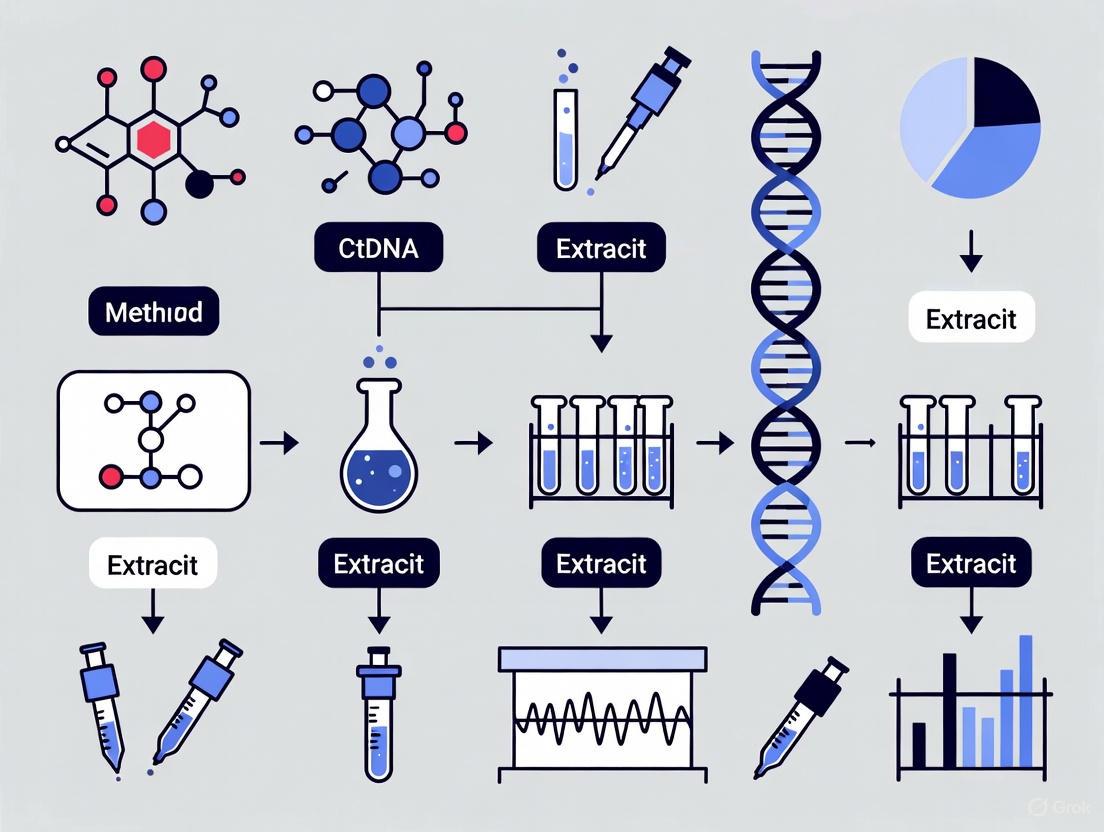
The analysis of circulating tumor DNA (ctDNA) has emerged as a transformative tool in oncology, enabling non-invasive cancer diagnosis, treatment selection, and response monitoring.
Optimizing ctDNA Extraction: A Comprehensive Method Comparison for Precision Oncology Research
Abstract
The analysis of circulating tumor DNA (ctDNA) has emerged as a transformative tool in oncology, enabling non-invasive cancer diagnosis, treatment selection, and response monitoring. However, the accurate detection of ctDNA is technically challenging due to its low abundance in total cell-free DNA and susceptibility to pre-analytical variables. This article provides a systematic comparison of current ctDNA extraction methodologies, from foundational principles to advanced applications. We evaluate the performance of leading commercial kits, automated platforms, and blood collection systems, highlighting critical factors affecting yield, purity, and analytical sensitivity. By synthesizing evidence from recent inter-laboratory studies and clinical validations, this review offers researchers and drug development professionals a practical framework for selecting, optimizing, and validating ctDNA extraction protocols to enhance the reliability of liquid biopsy in precision oncology.
The Biology of ctDNA: Origins, Characteristics, and Pre-Analytical Foundations
Biological and Molecular Differences: cfDNA vs. ctDNA
FAQ: What are the fundamental biological distinctions between total cell-free DNA (cfDNA) and circulating tumor DNA (ctDNA)?
The key distinction lies in their origin. Total cfDNA is a heterogeneous mixture of DNA fragments released into the bloodstream primarily through apoptosis and necrosis of healthy cells throughout the body. In contrast, ctDNA is a specific subset of cfDNA derived exclusively from tumor cells, whether from the primary tumor or metastatic sites [1] [2] [3]. While ctDNA is physically part of the total cfDNA pool, its tumor-specific molecular features allow for its discrimination.
The table below summarizes the core differentiating characteristics:
Table 1: Core Characteristics of cfDNA vs. ctDNA
| Feature | Total cfDNA | ctDNA |
|---|---|---|
| Biological Source | Apoptotic/necrotic normal cells (e.g., hematopoietic cells) [1] [3] | Tumor cells (via apoptosis, necrosis, or active secretion) [1] [2] [3] |
| Primary Fragment Size | Predominant peak at ~166 bp (nucleosomal length) [1] [3] | Shorter fragments (<150 bp) alongside longer strands; bimodal distribution [3] |
| Typical Concentration | 1-100 ng/mL of plasma in healthy individuals [1] [3] | Often <1% of total cfDNA, especially in early-stage disease [1] [4] [3] |
| Molecular Profile | Wild-type sequence [3] | Carries tumor-specific alterations (e.g., mutations, methylation changes) [1] [3] |
These molecular profiles are critical for detection. Total cfDNA can be quantified using methods like qPCR that target repetitive elements (e.g., ALU repeats). Detecting ctDNA, however, requires ultra-sensitive techniques capable of identifying rare mutant molecules amid a vast background of wild-type DNA, such as droplet digital PCR (ddPCR) or targeted Next-Generation Sequencing (NGS) panels [3].
Experimental Workflow for Discrimination
FAQ: What is a standard experimental workflow to isolate and distinguish ctDNA from total cfDNA in a research setting?
Discriminating ctDNA from total cfDNA requires a multi-step process focused on pre-analytical sample integrity and high-sensitivity downstream analysis. The following workflow diagram outlines the key stages from sample collection to data interpretation.
Diagram Title: Workflow for ctDNA Analysis from Blood
Detailed Protocol: ctDNA Extraction and Mutation Detection via Targeted NGS
This protocol is designed for the isolation of total cfDNA and the subsequent detection of tumor-derived ctDNA fragments using a targeted NGS approach, suitable for inclusion in a thesis methodology section [5] [6].
I. Pre-analytical Sample Processing
- Blood Collection: Draw whole blood (recommended volume: 2x10 mL) into Streck Cell-Free DNA BCTs or similar stabilizer tubes to prevent leukocyte lysis and preserve sample integrity during transport or short-term storage [4] [7]. If using EDTA tubes, process plasma within 2-4 hours of collection [2] [3].
- Plasma Separation: Perform dual centrifugation.
- Plasma Storage: Aliquot the clarified plasma and store at -80°C until cfDNA extraction. Avoid multiple freeze-thaw cycles.
II. cfDNA Extraction
This critical step influences the recovery of short ctDNA fragments.
- Extract cfDNA from 2-4 mL of plasma using a bead-based extraction kit, such as the MagMAX Cell-Free DNA Isolation Kit or the QiaAMP Circulating Nucleic Acid Kit, following the manufacturer's instructions. Magnetic bead methods are preferred for better recovery of short (<150 bp) ctDNA fragments compared to silica-column methods [1] [3].
- Elute the purified total cfDNA in a suitable buffer (e.g., AVE buffer from Qiagen) [6].
- Quantify the total cfDNA yield using a fluorescence-based assay like the Qubit dsDNA HS Assay [5] [6].
III. Targeted NGS for ctDNA Detection
- Library Preparation: Prepare NGS libraries from ~10-20 ng of total cfDNA using a targeted panel, for example, the Oncomine Breast cfDNA panel or the UltraSEEK Lung Panel [5] [6]. These panels use multiplex PCR to amplify specific genomic regions harboring common cancer hotspot mutations.
- Sequencing: Sequence the libraries on an appropriate NGS platform (e.g., Illumina MiSeq) to achieve high sequencing depth (>20,000x coverage), which is necessary to detect variants with very low allele frequencies [5] [8].
- Bioinformatic Analysis: Align sequencing reads to a reference genome. Use variant-calling algorithms designed for high sensitivity and specificity to distinguish true low-frequency somatic mutations (ctDNA) from sequencing artifacts. A variant allele frequency (VAF) threshold above the limit of detection (LOD) of the assay is considered a positive ctDNA signal [5] [6].
Troubleshooting Common Experimental Issues
FAQ: What are the most common pre-analytical and analytical challenges in ctDNA analysis, and how can they be mitigated?
The greatest challenges in ctDNA analysis stem from its low abundance and the risk of contamination by wild-type genomic DNA. The following table addresses frequent issues and their solutions.
Table 2: Troubleshooting Guide for ctDNA Experiments
| Problem | Potential Cause | Recommended Solution | Prevention Tip |
|---|---|---|---|
| Low ctDNA yield or signal | Low tumor burden; inefficient extraction of short fragments. | Increase starting plasma volume (≥4 mL). Use bead-based extraction methods optimized for short DNA fragments [4] [3]. | For early-stage cancer studies, plan for larger blood draws. |
| High wild-type DNA background | Leukocyte lysis due to delayed processing or improper handling; hemolysis. | Use specialized blood collection tubes (Streck, PAXgene). Process EDTA tubes within 2-4 hours. Implement a rigorous dual-centrifugation protocol [2] [7]. | Visually inspect plasma for pink/red discoloration indicating hemolysis [3]. |
| Inconsistent results between replicates | Ultra-low input of ctDNA molecules; technical artifacts in PCR/NGS. | Use unique molecular identifiers (UMIs) to correct for amplification bias and duplicates. Increase the number of technical replicates [8] [4]. | Ensure consistent sample processing across all replicates. |
| Failure to detect known mutations | ctDNA fraction below assay's limit of detection (LOD). | Employ more sensitive detection platforms (e.g., ddPCR, tumor-informed NGS). Enrich for ctDNA by size selection of short fragments during bioinformatic analysis [8] [2]. | Pre-screen samples with a highly sensitive method to estimate ctDNA fraction. |
The Scientist's Toolkit: Essential Reagents and Materials
The selection of reagents and kits is crucial for the success of ctDNA analysis. The following table lists key solutions used in the field.
Table 3: Research Reagent Solutions for ctDNA Analysis
| Item | Function | Example Products & Kits |
|---|---|---|
| Blood Collection Tubes (BCTs) | Preserves blood sample integrity by preventing white blood cell lysis, allowing for delayed processing. | Streck cfDNA BCTs, PAXgene Blood ccfDNA Tubes (Qiagen), CellSave Preservation Tubes [4] [7] |
| cfDNA Extraction Kits | Isolates total cfDNA (including ctDNA) from plasma with high efficiency and recovery of short fragments. | MagMAX Cell-Free DNA Isolation Kit (Thermo Fisher), QiaAMP Circulating Nucleic Acid Kit (Qiagen) [1] [6] |
| Targeted NGS Panels | Enables multiplexed, deep sequencing of specific genomic regions to identify tumor-specific mutations in ctDNA. | Oncomine Precision Assay, UltraSEEK Lung Panel, AVENIO cfDNA Assays [5] [9] [6] |
| Digital PCR Systems | Provides absolute quantification of specific mutant alleles with exceptional sensitivity for low-frequency variants. | Droplet Digital PCR (ddPCR) systems (Bio-Rad), BEAMing (Beads, Emulsification, Amplification, and Magnetics) [8] [2] |
Scientific Foundations of ctDNA Fragmentomics
Circulating tumor DNA (ctDNA) fragmentomics is a rapidly advancing field in liquid biopsy that focuses on analyzing the size distribution and nucleosomal patterns of tumor-derived DNA fragments in the bloodstream. These fragments are released into circulation primarily through apoptosis and necrosis of tumor cells, with the majority of ctDNA exhibiting characteristics of nucleosome-protected DNA, typically ranging from 120 to 220 base pairs (bp) and peaking around 167 bp [10]. The nucleosome, which is the fundamental building block of chromatin, protects DNA from enzymatic degradation, resulting in this characteristic fragmentation pattern [11].
Advanced prostate cancer research has demonstrated that nucleosome positioning patterns in ctDNA are associated with transcriptional regulation and can reveal the activity of key phenotype-defining transcriptional regulators, including AR, ASCL1, HOXB13, HNF4G, and GATA2 [11]. This finding is particularly significant because it suggests that ctDNA analysis can provide insights into tumor phenotypes beyond simple genetic alterations, enabling classification of androgen receptor-active (ARPC) and neuroendocrine (NEPC) prostate cancers with reported accuracies of 97% for dominant phenotypes and 87% for mixed clinical phenotypes [11].
The analysis of ctDNA fragmentation patterns and nucleosomal positioning provides a minimally invasive method for cancer detection, molecular classification, and treatment monitoring. Since nucleosome organization in ctDNA reflects the transcriptional activity state regulated by histone post-translational modifications, researchers can infer critical information about gene regulation and chromatin architecture directly from plasma samples [11].
Experimental Protocols for ctDNA Fragment Analysis
ctDNA Extraction and Quality Control
Proper extraction of cell-free DNA (cfDNA) is crucial for accurate fragmentomic analysis, as different extraction methods can significantly impact the yield and integrity of recovered DNA:
- Plasma Preparation: Collect blood in stabilizing tubes (e.g., PAXgene) or standard EDTA tubes. Process samples within 1-2 hours of collection through double centrifugation (e.g., 800-1600 × g for 10 minutes, then 10,000-14,000 × g for 10 minutes) to remove cells and debris. Store plasma at -80°C if not used immediately [12] [10].
- cfDNA Extraction: Use validated extraction kits with optimization for recovery of short fragments. Studies comparing the Qiagen CNA, Maxwell RSC ccfDNA Plasma, and Zymo Quick ccfDNA kits have shown that the CNA kit generally yields the highest DNA quantity, while the RSC kit may provide higher variant allelic frequencies (VAFs) for mutation detection [10].
- Quality Control and Quantification: Assess extracted cfDNA using fluorometric methods (e.g., Qubit) for concentration and fragment analysis systems (e.g., Fragment Analyzer, Bioanalyzer, or TapeStation) to determine size distribution and integrity. A distinct peak at ~167 bp indicates good preservation of mononucleosomal DNA [10] [13].
Analytical Methods for Fragmentomics
Table 1: Methods for ctDNA Fragmentomic Analysis
| Method | Application | Key Features | Considerations |
|---|---|---|---|
| Whole Genome Sequencing (WGS) | Genome-wide nucleosome positioning, fragmentation patterns | Provides comprehensive profiling without prior knowledge of specific regions; ideal for discovering novel patterns | Requires sufficient sequencing depth (recommended >20-30x coverage); more expensive than targeted approaches [11] |
| Targeted NGS | Focused analysis of specific genes or regions | Cost-effective; enables deeper sequencing of areas of interest; uses unique molecular identifiers (UMIs) for error correction | Limited to predefined regions; may miss novel patterns outside targeted areas [9] [12] |
| Computational Tools | Nucleosome mapping, pattern recognition | Specialized algorithms (e.g., NucleoMap) identify nucleosome positions from high-resolution data; integrates read density and spacing information | Requires bioinformatics expertise; performance varies between tools [14] [15] |
Whole Genome Sequencing (WGS) Protocol: For nucleosome pattern analysis, use 1-10 ng of cfDNA to prepare libraries using kits designed for low-input and degraded DNA. Sequence to a minimum depth of 20-30x coverage on platforms such as Illumina. For identification of nucleosome positioning and spacing, employ computational tools like NucleoMap, which integrates read density, contact distances, and nucleosome binding preferences to precisely locate nucleosomes, including those in poorly-positioned regions [14] [11].
Targeted Sequencing Protocol: Design panels to cover key regulatory regions, transcription factor binding sites, and nucleosome-dense regions. Incorporate Unique Molecular Identifiers (UMIs) before amplification to enable accurate error correction and detection of low-frequency variants. Sequence with high depth (>3000x) to detect subtle fragmentation pattern changes [12] [16].
Fragment Size Analysis Protocol: Using the Fragment Analyzer system with high-sensitivity DNA reagents, prepare samples according to manufacturer specifications. Include an internal size standard in each sample. Analyze the resulting electrophoregrams to determine the relative abundance of different fragment sizes and calculate the ratio of short to long fragments (e.g., 137/420 bp or 137/1950 bp) as a measure of cfDNA integrity [10] [13].
Technical Support: Troubleshooting Guides and FAQs
Pre-analytical and Analytical Challenges
Table 2: Troubleshooting Common Fragmentomics Issues
| Problem | Potential Causes | Solutions |
|---|---|---|
| Low cfDNA yield | Improper blood collection or processing; delayed plasma separation; inefficient extraction method | Use stabilizing blood collection tubes; process samples within 2 hours of draw; increase plasma input volume; compare and optimize extraction methods [12] [10] |
| Abnormal fragment size profile | Excessive hemolysis; cellular contamination; nuclease activity; degradation | Ensure proper centrifugation; avoid freeze-thaw cycles; use nuclease-free reagents; check plasma for hemolysis before extraction [10] |
| High background noise in sequencing | PCR artifacts; low library complexity; sequencing errors | Implement UMIs; optimize PCR cycles; use high-fidelity polymerases; increase input DNA when possible [12] [16] |
| Poor nucleosome positioning data | Insufficient sequencing depth; low tumor fraction; suboptimal data analysis | Increase sequencing depth; enrich for tumor-derived fragments using bioinformatic methods; use specialized nucleosome mapping tools (e.g., NucleoMap) [14] [11] |
| Inconsistent results between replicates | Technical variability; sample heterogeneity; platform differences | Standardize protocols across batches; use multiple replicates; include control samples in each run; validate with orthogonal methods [17] [10] |
Frequently Asked Questions
Q: What is the optimal plasma volume for ctDNA fragmentomics studies, and how does extraction method impact results?
A: For optimal fragmentomics analysis, a minimum of 2-4 mL of plasma is generally recommended, with larger volumes (up to 8 mL) improving sensitivity for low-abundance fragments. Studies directly comparing extraction methods have shown that the Qiagen CNA kit typically yields the highest total DNA, while the Maxwell RSC kit may provide higher variant allelic frequencies for mutation detection. The choice of method should align with your study goals—whether total yield or mutation detection sensitivity is prioritized [10].
Q: How does blood collection tube choice and processing delay affect ctDNA fragment size distribution?
A: Blood collection in stabilizing tubes (e.g., PAXgene) better preserves the original fragment profile compared to standard EDTA tubes, especially with processing delays beyond 2 hours. Studies show that delays in processing can increase background wild-type DNA from leukocyte lysis, diluting the tumor-derived signal and potentially altering apparent fragment size ratios. For consistent results, process samples within 1-2 hours of collection when using EDTA tubes [12] [10].
Q: What are the key bioinformatic considerations for analyzing nucleosome positioning patterns from ctDNA sequencing data?
A: Effective analysis requires specialized tools such as NucleoMap, which integrates three key data types: (1) aligned read density, (2) inter-nucleosome distances from paired-end reads, and (3) nucleosome binding preferences reflected in sequence motifs. This integrated approach significantly improves identification of both well-positioned and poorly-positioned nucleosomes compared to methods relying solely on read density [14]. Normalization for technical variations in sequencing depth and GC bias is also essential.
Q: How can we distinguish tumor-derived fragments from normal cfDNA based on fragmentation patterns?
A: Tumor-derived fragments often show distinct size distributions and end-motif preferences compared to normal cfDNA. ctDNA typically exhibits a more pronounced peak at ~167 bp but may have different proportions of shorter and longer fragments depending on the cancer type and disease stage. Nucleosome positioning at specific regulatory elements (e.g., transcription start sites) also differs between tumor and normal DNA, with tumor fragments showing patterns reflective of altered chromatin organization in cancer cells [11] [16].
Q: What molecular response cutoffs and monitoring timepoints are clinically relevant in ctDNA monitoring?
A: Recent research has evaluated three primary molecular response (MR) thresholds: ≥50% decrease, ≥90% decrease, and 100% clearance of ctDNA. For patients with advanced NSCLC treated with anti-PD(L)1 therapy, ctDNA reductions at both early (up to 7 weeks) and later (7-13 weeks) timepoints were significantly associated with improved overall survival across all MR thresholds. The optimal timepoint may vary by treatment type, with later timepoints (7-13 weeks) potentially showing stronger associations with outcomes [17].
Visualizing Fragmentomics Concepts and Workflows
Experimental Workflow for ctDNA Fragmentomics
(Diagram 1: Experimental workflow for ctDNA fragmentomics analysis)
Nucleosome Patterns and Transcriptional Regulation
(Diagram 2: Relationship between nucleosome patterns and transcriptional regulation in ctDNA)
The Scientist's Toolkit: Essential Research Reagents and Materials
Table 3: Key Research Reagent Solutions for ctDNA Fragmentomics
| Category | Product/Kit | Key Features | Application in Fragmentomics |
|---|---|---|---|
| Blood Collection | PAXgene Blood ccfDNA Tubes | Stabilizes nucleosomal patterns; enables delayed processing | Preserves in vivo fragment size distribution for up to 7 days at room temperature [12] |
| cfDNA Extraction | QIAamp Circulating Nucleic Acid Kit | High yield of short fragments; compatible with 2-5 mL plasma input | Optimal recovery of mononucleosomal DNA (∼167 bp) [10] |
| cfDNA Extraction | Maxwell RSC ccfDNA Plasma Kit | Automated; higher VAF for mutation detection | Better recovery of tumor-derived fragments in some studies [10] |
| Fragment Analysis | DNA Fragment Size Analysis Kit (MCLAB) | Single-base resolution; high sensitivity | Accurate sizing and quantification of ctDNA fragments [13] |
| Library Prep | Oncomine Precision Assay (Thermo Fisher) | Targeted NGS; includes UMI | Multigene analysis for mutation detection and fragmentomics [9] |
| Computational Tool | NucleoMap | Identifies nucleosome positions from contact maps | Precisely locates well-positioned and poorly-positioned nucleosomes [14] |
| Analysis Software | Sequence Scanner Software | Views, edits, prints, and exports Sanger sequencing data | Quality assessment of sequencing traces [18] |
The choice of blood collection tube is a fundamental pre-analytical variable in circulating tumor DNA (ctDNA) research, directly impacting the yield, quality, and reliability of genetic analyses. Uncontrolled pre-analytical variability can introduce catastrophic bias, invalidate clinical analytical results, and lead to irreproducible research findings [19]. This technical support center guide provides a detailed comparison of common blood collection systems—EDTA, Streck, PAXgene, and Norgen—within the context of ctDNA extraction method comparison research. For researchers, scientists, and drug development professionals, selecting the appropriate tube is not merely a procedural step but a critical decision that can determine the success or failure of downstream liquid biopsy applications, including early cancer detection, molecular profiling, and monitoring of minimal residual disease (MRD) [20] [21].
Technical Comparison of Blood Collection Tubes
The following tables summarize the key characteristics and performance data for the blood collection tubes discussed in this guide, providing a quick reference for researchers.
Table 1: Key Characteristics and Specifications of Blood Collection Tubes
| Tube Type | Additive/Preservative | Key Stabilization Mechanism | Recommended Initial Storage Temperature Post-collection | Compatibility with Automated Systems |
|---|---|---|---|---|
| EDTA | Ethylenediaminetetraacetic acid | Anticoagulant | 4°C | Varies by downstream system |
| Streck BCT | Proprietary formulation (non-formaldehyde) [19] | Stabilizes nucleated blood cells to prevent lysis | Room Temperature (18-25°C) | Yes (e.g., QIAsymphony) |
| PAXgene Blood ccfDNA | Proprietary EDTA-based formulation [22] | Stabilizes nucleated blood cells to prevent lysis | Room Temperature (18-25°C) | Yes (e.g., QIAsymphony, QIAcube) |
| Norgen cfDNA/cfRNA Preservative | Proprietary cell-stabilizing agents | Stabilizes nucleated blood cells to prevent lysis | Room Temperature (18-25°C) | Information from manufacturer recommended |
Table 2: Experimental Performance Data in ctDNA Studies
| Tube Type | Max Room Temp Storage (No DNA Yield Change) | Plasma DNA Yield Stability vs. EDTA | Impact on cfDNA Fragment Size Profile | Documented Use in Key Studies |
|---|---|---|---|---|
| EDTA | 2-6 hours [4] [19] | Reference standard | Preserves native fragmentome | Multiple clinical LC-MS/MS and NGS studies [4] |
| Streck BCT | Up to 7 days [23] [4] [19] | Stable concentration over 4 days [23] | Stable profile over 4 days; slight increase in high-MW DNA possible [23] | ORCA trial (colorectal cancer), decentralized profiling studies [20] |
| PAXgene Blood ccfDNA | Up to 7 days [23] [4] [19] | Stable concentration over 4 days [23] | Stable profile over 4 days [23] | exRNAQC study for extracellular RNA [24] |
| Norgen cfDNA/cfRNA Preservative | Up to 7 days [4] | Information from manufacturer recommended | Information from manufacturer recommended | Various liquid biopsy research applications |
Frequently Asked Questions (FAQs)
1. Why should I use specialized stabilizer tubes instead of standard EDTA tubes? While conventional EDTA tubes are widely used, they require immediate processing (typically within 2-6 hours at 4°C) to prevent white blood cell lysis and the subsequent release of genomic DNA into the plasma [4] [19]. This release dilutes the ctDNA fraction, increasing the wild-type DNA background and compromising the detection of low-frequency variants [20]. Stabilizer tubes (Streck, PAXgene, Norgen) contain preservatives that prevent cell lysis, allowing for room temperature storage and transportation for up to 7 days without significant loss of sample quality or increase in background DNA [23] [4]. This is crucial for multi-center trials and clinical settings where prompt processing is not feasible.
2. How do I choose between Streck, PAXgene, and Norgen tubes? All three stabilizer tubes perform their primary function effectively. The choice may depend on:
- Downstream Applications: PAXgene ccfDNA tubes have been validated for unbiased quantification of methylated sequences, making them a strong choice for methylation analyses [19]. One study raised a concern that Streck tubes might contain formaldehyde that could induce DNA deaminations, but this was later dismissed by other research showing no difference in background error rate compared to EDTA samples [19].
- Compatibility: Check compatibility with your preferred automated nucleic acid extraction platforms (e.g., QIAsymphony).
- Multi-analyte Goals: If your research requires simultaneous analysis of other biomarkers like circulating tumor cells (CTCs) or extracellular RNA, ensure the tube is compatible. Some stabilizer tubes may not be optimal for all analytes [4].
3. Can I use serum instead of plasma for ctDNA analysis? No, plasma is strongly recommended over serum for ctDNA analysis. The clotting process in serum tubes causes lysis of white blood cells, leading to a massive and variable contamination of the sample with genomic DNA. Studies show that serum yields five to eightfold higher DNA than plasma, but this DNA is a mixture of cfDNA and genomic DNA fragments, which dilutes the ctDNA fraction and alters the fragment size profile, making reliable ultra-sensitive detection very difficult [19].
4. What is the minimum and ideal blood volume to collect for ctDNA analysis? For a single-analyte ctDNA test, collecting 2 x 10 mL of blood is a common recommendation [4]. However, for applications requiring ultra-high sensitivity, such as minimal residual disease (MRD) detection or early-stage cancer screening, exploring larger blood volumes (e.g., 20-40 mL of plasma) can significantly improve detection rates by increasing the absolute number of mutant DNA molecules available for analysis [25].
Troubleshooting Guides
Problem: Low ctDNA Yield or Failed Detection
Potential Causes and Solutions:
- Insufficient Input Material: The absolute number of mutant DNA fragments is the ultimate constraint on sensitivity [20]. For low-shedding tumors or early-stage disease, increase the plasma input volume for DNA extraction. Research shows that using 20 mL of plasma instead of 5 mL can increase detection rates from 66.66% to 100% in pre-treatment early breast cancer patients [25].
- Suboptimal Centrifugation: Ensure a two-step centrifugation protocol is used. The first, lower-speed step (e.g., 800-1600 x g) to separate plasma from blood cells, followed by a higher-speed step (e.g., 10,000-16,000 x g) of the plasma to remove any remaining cellular debris [4].
- Incorrect Tube Handling:
- For EDTA tubes, process blood within 2-6 hours of draw. If using stabilizer tubes, invert them gently 8-10 times immediately after collection to ensure proper mixing of the preservative with blood.
- Always follow the manufacturer's recommended protocols for DNA extraction. For example, one study observed a slight decrease in DNA yield from Streck and PAXgene tubes after 1 hour at 4°C, which was reversed by extending the proteinase K digest step to 60 minutes during extraction [23].
Problem: High Background Wild-type DNA
Potential Causes and Solutions:
- Cell Lysis in EDTA Tubes: This is the most common cause. If using EDTA, strict adherence to cold storage and short processing times is mandatory. Switching to a cell-stabilizing tube (Streck, PAXgene, Norgen) is the most effective solution, as they are specifically designed to prevent white blood cell lysis during storage [23] [19].
- Hemolysis: Avoid using difficult-to-draw or excessively thin needles, and minimize tourniquet time. Visually inspect plasma samples; a pink or red color indicates hemoglobin release, which is correlated with cell lysis and genomic DNA contamination [4].
Problem: Inconsistent Results Between Sample Batches
Potential Causes and Solutions:
- Lack of Standardization: Variability in sample collection, handling, and processing is a major source of irreproducibility.
- Solution: Implement a Standard Operating Procedure (SOP) that is strictly followed by all personnel. The SOP should definitively specify:
- The blood collection tube type.
- The maximum time-to-processing for each tube type.
- The centrifugation speed, time, and temperature.
- The plasma aliquoting procedure.
- The long-term storage conditions for plasma and extracted DNA.
Workflow Visualization
The following diagram illustrates the key decision points and recommended workflows for using the different blood collection tubes in a ctDNA research setting.
The Scientist's Toolkit: Essential Research Reagent Solutions
Table 3: Key Reagents and Kits for ctDNA Analysis Workflows
| Item | Function/Application | Example Products/Brands |
|---|---|---|
| Cell-Free DNA BCTs | Stabilize blood cells for up to 7 days at room temperature, preventing gDNA contamination. | Streck BCT, PAXgene Blood ccfDNA Tubes, Norgen cfDNA/cfRNA Preservative Tubes |
| cfDNA Extraction Kits | Isolate and purify short-fragment cfDNA from plasma with high efficiency and yield. | QIAamp Circulating Nucleic Acid Kit, QIAamp DSP DNA Blood Mini Kit (for PAXgene tubes) [22] |
| Ultra-Sensitive NGS Kits | Detect ultra-low frequency variants (VAF < 0.1%) for MRD and early-stage cancer applications. | Guardant360 CDx, FoundationOne Liquid CDx [20] |
| Digital PCR Systems | Absolutely quantify rare mutant alleles with high precision without the need for standard curves. | ddPCR assays [25] |
| Unique Molecular Identifiers (UMIs) | Short nucleotide tags added to DNA fragments pre-amplification to correct for PCR errors and duplicates, improving sensitivity and specificity. | Incorporated in many advanced NGS library prep kits [20] |
| Fragment Size Analysis Kits | Quality control step to confirm the presence of the characteristic ~167 bp cfDNA peak and assess gDNA contamination. | Agilent Bioanalyzer with High Sensitivity DNA kits, Femto Pulse systems [24] |
The Impact of Processing Time and Centrifugation Protocols on Sample Integrity
Troubleshooting Guides
Poor cfDNA Yield or Quality
Problem: Low concentration of extracted cfDNA or high levels of genomic DNA contamination.
| Possible Cause | Diagnostic Indicators | Recommended Solution | Preventive Measures |
|---|---|---|---|
| Delayed sample processing (using EDTA tubes) | Significant increase in long DNA fragments (>500 bp); high yields of contaminating genomic DNA [26] [7]. | Process samples within 2-6 hours of collection if using EDTA tubes [26] [4]. | Use specialized cell-stabilizing blood collection tubes (BCTs) if a processing delay is anticipated [7] [27]. |
| Incomplete centrifugation | Cellular debris in plasma; high molecular weight genomic DNA detected [7]. | Implement a standardized two-step centrifugation protocol [28] [7]. | Always perform a second, high-speed centrifugation step (e.g., 14,000-16,000 g for 10 min) to clear residual cells and debris [7]. |
| Improper sample storage | Degraded cfDNA; decreased fragment quality. | For long-term storage, keep plasma at -80°C and avoid multiple freeze-thaw cycles (no more than three) [7]. | Aliquot plasma into single-use volumes immediately after centrifugation [7]. |
Inconsistent ctDNA Detection Results
Problem: High variability in ctDNA detection between replicate samples or unexpected negative results.
| Possible Cause | Diagnostic Indicators | Recommended Solution | Preventive Measures |
|---|---|---|---|
| Pre-analytical workflow variability | Inconsistent cfDNA fragment profiles between samples; fluctuating variant allele frequencies (VAF) [21] [29]. | Audit and standardize every pre-analytical step, from blood draw to DNA extraction, across all lab personnel [26] [29]. | Adopt and validate a single, detailed Standard Operating Procedure (SOP) based on international best practices [28] [29]. |
| Use of different blood collection tubes | Significant differences in cfDNA yield and fragment size distribution [27]. | For a study, use the same type of blood collection tube for all samples to eliminate tube-to-tube variability [27]. | Select the appropriate tube type (EDTA vs. stabilizer tubes) based on the study's logistical needs and validate the entire workflow [4] [27]. |
| Insufficient sample volume | ctDNA concentration below the assay's limit of detection. | Increase the input plasma volume for DNA extraction where possible. | For low-shedding tumors or minimal residual disease (MRD) detection, collect a sufficient volume of blood (e.g., 2x10 mL tubes) [4]. |
Frequently Asked Questions (FAQs)
Q1: What is the maximum time I can leave blood in an EDTA tube before processing, and why is this critical?
Blood collected in standard K2EDTA tubes should be processed within 2 to 6 hours of draw [26] [4]. This time constraint is critical because nucleated blood cells begin to lyse ex vivo, releasing their genomic DNA into the plasma. This genomic DNA dilutes the tumor-derived ctDNA fraction and increases the background of wild-type DNA, which can severely impair the detection of low-frequency mutations, a key challenge in ctDNA analysis [26] [7].
Q2: How do specialized cell-stabilizing blood collection tubes (BCTs) work, and how long do they preserve the sample?
Tubes such as those from Streck, PAXgene, and Norgen contain chemical preservatives that crosslink or stabilize nucleated blood cells, preventing them from lysing and releasing genomic DNA [27]. They maintain the integrity of the cell-free DNA profile, allowing for room temperature storage for up to 3 to 7 days before processing without significant degradation or contamination [7] [4]. This is invaluable for multi-center trials or when immediate processing is logistically challenging.
Q3: What is the recommended centrifugation protocol to generate high-quality plasma for ctDNA studies?
A two-step centrifugation protocol is widely recommended to ensure cell-free plasma [28] [7]:
- First centrifugation (Low-speed): 800–1,900 ×g for 10 minutes at 4°C or room temperature. This step pellets the bulk of blood cells.
- Second centrifugation (High-speed): Carefully transfer the supernatant to a new tube and centrifuge at 14,000–16,000 ×g for 10 minutes. This critical step pellets any remaining cells and cellular debris, yielding a clean plasma fraction suitable for cfDNA extraction [7].
Q4: Can the number of centrifugation steps affect my cfDNA yield?
Yes. Some studies indicate that a single centrifugation step can result in a higher cfDNA yield compared to double centrifugation for certain tube types (K2EDTA, PAXgene, Norgen) [27]. However, this higher yield may come at the cost of increased genomic DNA contamination from residual cells. Therefore, the dual-centrifugation protocol is generally recommended as the standard for ctDNA studies to prioritize sample purity over absolute yield [7].
Impact of Processing Delay on cfDNA Yield
The following table summarizes data on how delayed processing affects cfDNA concentration in different blood collection tubes, demonstrating the necessity of using stabilizer tubes when delays are unavoidable [27].
| Blood Collection Tube | cfDNA Yield at 0 hours (ng/mL plasma) | cfDNA Yield at 48 hours (ng/mL plasma) | cfDNA Yield at 168 hours (ng/mL plasma) | Recommended Max Hold Time before Processing |
|---|---|---|---|---|
| K2EDTA | 2.41 | 7.39 | 68.19 | 2 - 6 hours [26] [4] |
| Streck | 2.74 | 2.59 | 2.38 | Up to 7 days [7] [4] |
| PAXgene | 1.66 | 1.92 | 2.48 | Up to 5-7 days [7] |
| Norgen | 0.76 | 0.76 | 0.75 | Up to 7 days [4] |
Standardized Centrifugation Protocols
Comparison of two established centrifugation protocols for plasma preparation, highlighting their specific parameters [7].
| Protocol Step | Adapted CEN Protocol [7] | Original CEN Protocol [7] |
|---|---|---|
| First Spin | 1,900 ×g for 10 min (Room Temperature) | 1,900 ×g for 10 min (4°C) |
| Second Spin | 16,000 ×g for 10 min (Room Temperature) | 16,000 ×g for 10 min (4°C) |
| Key Advantage | Suitable for use with cell-stabilizer tubes. | Standard protocol for EDTA samples. |
Experimental Protocols
Protocol: Evaluation of Processing Time on cfDNA Integrity
Objective: To determine the effect of delayed blood processing on cfDNA yield and genomic DNA contamination using different collection tubes.
Materials:
- Blood collection tubes (K2EDTA, Streck, PAXgene)
- Centrifuge capable of 16,000 ×g
- Qubit fluorometer and dsDNA HS Assay Kit
- TapeStation 4200 with Cell-Free DNA ScreenTape assay (or similar fragment analyzer)
- qPCR assays for short (e.g., 74 bp) and long (e.g., 445 bp) DNA fragments [27]
Methodology:
- Sample Collection: Draw blood from consented donors or patients into the different tube types.
- Processing Time Groups: For each tube type, process aliquots of blood at different time points: 0 hours (<60 min), 48 hours, and 168 hours (7 days) post-collection. Store tubes at room temperature as per manufacturer instructions.
- Plasma Generation: Process all samples using a standardized two-step centrifugation protocol (e.g., 1,900 ×g for 10 min, followed by 16,000 ×g for 10 min) [7].
- cfDNA Extraction: Extract cfDNA from the generated plasma using a magnetic bead-based automated system (e.g., QIAsymphony SP) or manual column-based kit, keeping the method consistent across all samples.
- Quantification and Analysis:
- Measure total DNA concentration using fluorometry (Qubit).
- Perform qPCR with assays targeting short and long DNA fragments. The ratio of long/short amplifications indicates the level of genomic DNA contamination [27].
- Analyze fragment size distribution using the TapeStation system.
Protocol: Comparing Single vs. Dual Centrifugation
Objective: To assess the trade-off between cfDNA yield and sample purity when using a single versus a dual centrifugation step.
Materials: (As in Protocol 4.1)
Methodology:
- Sample Collection: Collect blood into K2EDTA and Streck tubes.
- Plasma Generation: Split the supernatant from the first low-speed spin (1,900 ×g for 10 min) into two aliquots.
- Analysis: Compare the total cfDNA yield (by Qubit and short-fragment qPCR) and the level of genomic DNA contamination (by long-fragment qPCR and fragment analysis) between the two groups.
Workflow and Relationship Diagrams
Sample Processing Workflow
Impact of Processing Time
Research Reagent Solutions
Essential materials and reagents for standardizing pre-analytical workflows in ctDNA research.
| Reagent / Solution | Function | Key Considerations |
|---|---|---|
| Cell-Free DNA BCTs (Streck) | Prevents white blood cell lysis, stabilizes cfDNA profile for up to 7 days at room temperature [7] [4]. | Ideal for multi-site trials or when immediate processing is not feasible. |
| PAXgene Blood ccfDNA Tubes (Qiagen) | Stabilizes blood cells via prevention of apoptosis, allowing delayed processing [4] [27]. | Performance may vary slightly between different stabilizer tube types; validate for your specific assay [27]. |
| K2EDTA Tubes | Standard anticoagulant tubes that inhibit coagulation. | Require processing within 2-6 hours to avoid gDNA contamination. Cost-effective for rapid-processing workflows [26] [7]. |
| Magnetic Bead-based cfDNA Kits | Enable automated, high-throughput extraction of cfDNA with high efficiency for small fragments [7]. | Often superior for recovering the short DNA fragments typical of ctDNA. |
| Silica Membrane Spin Columns | A reliable and widely used method for manual cfDNA extraction [7]. | A robust standard for many laboratories; ensure protocols are optimized for low DNA inputs. |
Troubleshooting Guide: Addressing Core Challenges in ctDNA Analysis
FAQ 1: How can I improve the detection of low-abundance ctDNA in my samples?
Challenge: The extremely low concentration of ctDNA, often constituting less than 0.1% of total cell-free DNA, is a major barrier, particularly for early-stage cancer or minimal residual disease (MRD) monitoring [21]. This low variant allele frequency (VAF) can fall below 0.01%, demanding ultra-sensitive detection methods [21].
Solutions and Methodologies:
- Utilize Structural Variant (SV) Assays: Instead of relying solely on single nucleotide variants (SNVs), employ assays that detect somatic structural variants like translocations, insertions, or deletions. These tumor-specific rearrangements have breakpoint sequences unique to the tumor, effectively eliminating background noise from sequencing errors and PCR artifacts. One study using an SV-based assay in early-stage breast cancer detected ctDNA in 96% of patients at baseline, with some VAFs as low as 0.0011% [21].
- Incorporate Fragmentomics: Leverage the difference in fragment length between ctDNA and normal cfDNA. Tumor-derived cfDNA is typically more fragmented, with lengths of 90-150 base pairs. Using bead-based or enzymatic size selection during library preparation to enrich for these shorter fragments can increase the fractional abundance of ctDNA in sequencing libraries by several folds, thereby improving the detection of low-frequency variants [21].
- Employ Ultrasensitive Biosensors: Investigate emerging technologies such as nanomaterial-based electrochemical sensors. These platforms use magnetic nanoparticles conjugated with DNA probes to capture and enrich target ctDNA, achieving attomolar limits of detection within 20 minutes, which is highly relevant for point-of-care applications [21].
- Adopt Tumor-Informed, Error-Suppressed Sequencing: For the highest sensitivity, use patient-specific assays (tumor-informed) designed from prior sequencing of the tumor tissue. Combine this with error-corrected next-generation sequencing (NGS) protocols, such as those using unique molecular identifiers (UMIs), to discriminate true low-copy mutations from sequencing artifacts [21] [30].
FAQ 2: What are the best practices to manage the short half-life of ctDNA and prevent pre-analytical degradation?
Challenge: ctDNA has a very short half-life of less than 2 hours in the bloodstream [31]. Improper blood collection, handling, or transport can lead to the release of genomic DNA from lysed white blood cells, which dilutes the ctDNA fraction and causes false negatives.
Solutions and Methodologies: Table 1: Standardized Pre-analytical Protocol for ctDNA Analysis
| Step | Recommendation | Key Details & Rationale |
|---|---|---|
| Blood Collection | Use preservative tubes or process EDTA tubes immediately. | K₂EDTA tubes: Must be processed within 2-6 hours of draw [30] [31].Cell-stabilizing tubes (e.g., Streck, PAXgene): Preserve sample integrity for up to 3-7 days at room temperature, preventing leukocyte lysis and genomic DNA contamination [30] [31]. |
| Plasma Processing | Perform double centrifugation. | 1st step: Slow spin (380–3,000 g for 10 min at room temp) to separate plasma from cells [30].2nd step: High-speed spin (12,000–20,000 g for 10 min at 4°C) to remove remaining cellular debris and platelets [30]. |
| Plasma Storage | Store at -80°C in small aliquots. | Prevents degradation for long-term storage (years for mutation detection) and minimizes freeze-thaw cycles, which can fragment DNA and reduce sensitivity [30] [31]. |
| Thawing | Thaw slowly on ice. | Preserves the integrity of the ctDNA fragments [30]. |
Diagram 1: Optimal blood processing workflow for ctDNA analysis.
FAQ 3: How can I minimize background interference from wild-type cell-free DNA?
Challenge: The vast excess of wild-type, non-tumor cfDNA released from hematopoietic cells can obscure the signal from ctDNA, making it difficult to detect low-frequency mutations [21] [30].
Solutions and Methodologies:
- Optimize DNA Extraction: Choose extraction kits that maximize the yield of short-fragment DNA. Studies suggest that silica membrane-based kits (e.g., QIAamp Circulating Nucleic Acid Kit) can yield more ctDNA than some magnetic bead-based methods, potentially improving the recovery of the shorter, tumor-derived fragments [30].
- Leverage Multi-Modal Assays: Combine mutation analysis with other orthogonal features of ctDNA. For example, methylation profiling detects tumor-specific hypermethylated gene promoters. One tumor-agnostic genome-wide methylation assay (MeD-Seq) demonstrated a significantly higher ctDNA detection rate (57.5%) in early breast cancer patients compared to SNV or copy number variation (CNV) methods [5]. Fragment size pattern analysis can also help distinguish tumor-derived fragments from normal ones [31].
- Induce Transient ctDNA Release: Experimental approaches to increase the ctDNA fraction in blood immediately before collection are being investigated. These include:
- Localized Irradiation: A modest, transient spike in ctDNA concentration can occur 6-24 hours after targeted irradiation of a tumor lump [30].
- Ultrasound (Sonobiopsy): Particularly for brain tumors, ultrasound has been shown to temporarily increase ctDNA shedding [30].
- Mechanical Stress: Procedures like mammography or digital rectal examination may also provoke the release of ctDNA [30].
Experimental Protocols for Enhanced ctDNA Detection
Protocol 1: Fragment Size-Selective Library Preparation
Purpose: To enrich the sequencing library for shorter, tumor-derived DNA fragments, thereby increasing the effective variant allele frequency of ctDNA and improving sensitivity, especially for MRD detection [21].
Detailed Methodology:
- Extract cfDNA: Isolate total cfDNA from plasma using a standard silica-membrane or magnetic bead-based kit.
- Prepare Library: Perform initial library preparation according to your chosen NGS kit's protocol, including end-repair, adapter ligation, and initial amplification.
- Size Selection: Use a bead-based size selection system (e.g., AMPure XP beads) with optimized bead-to-sample ratios. A higher ratio of beads will bind and remove longer DNA fragments, allowing the shorter fragments (desired 90-150 bp range) to remain in the supernatant.
- Validate Fragment Size: Analyze the size distribution of the final library using a high-sensitivity bioanalyzer or tape station to confirm enrichment for the shorter peak.
- Sequence: Proceed with ultra-deep, error-corrected sequencing on the enriched library.
Protocol 2: Tumor-Agnostic Methylation Profiling (MeD-Seq)
Purpose: To detect ctDNA based on cancer-specific epigenetic alterations, which can be more pervasive than genetic mutations and provide high detection sensitivity in a tumor-agnostic context [5].
Detailed Methodology:
- Digest cfDNA: Digest 10 ng of input cfDNA with the restriction enzyme LpnPI. This enzyme cleaves DNA at specific sequences, generating 32-base pair fragments around methylated CpG sites [5].
- Ligate Adapters: Ligate dual-indexed adapters to the digested fragments to create the sequencing library.
- Amplify and Multiplex: Amplify the library and multiplex samples for efficient sequencing.
- Sequence and Analyze: Sequence the libraries to a depth of ~20 million reads. Bioinformatic analysis is then performed to map the reads and identify the tumor-specific methylation signatures by comparing them to reference databases [5].
Research Reagent Solutions
Table 2: Essential Materials for Advanced ctDNA Research
| Reagent / Kit | Function | Application Context |
|---|---|---|
| Cell-Stabilizing Blood Collection Tubes (e.g., Streck cfDNA BCT, PAXgene Blood ccfDNA) | Prevents white blood cell lysis during transport/storage, preserving ctDNA fraction and reducing wild-type gDNA background [30] [31]. | Critical for multi-center trials and when immediate plasma processing is not feasible. |
| Silica-Membrane cfDNA Extraction Kits (e.g., QIAamp Circulating Nucleic Acid Kit) | Solid-phase extraction and purification of cfDNA, with reported high yields of short-fragment DNA [30]. | Optimal for maximizing ctDNA recovery from limited plasma volumes. |
| Ultra-Sensitive NGS Panels (e.g., Oncomine Precision Assay, Custom Panels) | Targeted sequencing for detecting SNVs, indels, CNVs, and fusions with high coverage, enabling low-VAF variant calling [5] [9]. | Genotyping in advanced cancer; requires high input DNA quality. |
| Methylation-Sensitive Restriction Enzymes (e.g., LpnPI) | Enzymatic digestion of cfDNA to generate fragments for methylation-based library preparation (e.g., MeD-Seq) [5]. | Tumor-agnostic detection and cancer of origin determination. |
| Magnetic Nano-electrodes / Nanomaterials | Used in biosensors for label-free electrochemical detection of ctDNA, offering attomolar sensitivity and rapid results [21]. | Emerging technology for potential point-of-care and rapid diagnostic applications. |
Method Selection and Workflow Design
Diagram 2: A logic flow for selecting the optimal ctDNA analysis method.
Extraction Technologies and Workflow Implementation: From Kits to Automated Platforms
Within the broader research on circulating tumor DNA (ctDNA) extraction method comparisons, silica-based column technology represents a cornerstone methodology for isolating high-quality genetic material from liquid biopsies. The performance of these methods is crucial for downstream analytical success in cancer detection, treatment monitoring, and precision oncology. The QIAamp Circulating Nucleic Acid (CNA) Kit and QIAamp MinElute ccfDNA Kit both utilize silica-membrane technology that exploits the specific affinity between the negatively charged DNA backbone and the positively charged silica surface under specific buffer conditions [7]. This binding enables effective separation of cell-free DNA from contaminants, followed by elution in a small volume suitable for sensitive downstream applications such as next-generation sequencing (NGS) and droplet digital PCR (ddPCR) [10].
The critical importance of optimizing ctDNA extraction cannot be overstated, as ctDNA often represents less than 1% of total circulating cell-free DNA (ccfDNA) in plasma, with the actual fraction being highly fragmented and present at low concentrations [10] [7]. Efficient extraction of these short-sized fragments (typically 160-200 base pairs) is essential for achieving adequate sensitivity in mutation detection [10] [7]. This technical evaluation focuses on the comparative performance of two silica-column-based extraction kits, providing researchers with practical guidance, troubleshooting solutions, and performance data to inform methodological selection within ctDNA research workflows.
The following tables summarize key performance metrics for the QIAamp CNA and QIAamp MinElute kits derived from comparative experimental studies.
Table 1: Direct Performance Comparison of ccfDNA Extraction Kits
| Performance Parameter | QIAamp CNA Kit | QIAamp MinElute Kit | Experimental Context |
|---|---|---|---|
| Plasma Input Volume | 2 mL | 8 mL | Standard operational protocols [10] |
| Total ccfDNA Yield | Significantly higher yield compared to RSC and Zymo kits [10] | Not directly compared to CNA in same study | 21 cancer patient plasma samples [10] |
| Short Fragment (137 bp) Recovery | Highest number of copies/mL for 137 bp and 420 bp fragments [10] | Not specifically reported for short fragments | β-actin ddPCR assay on patient plasma [10] |
| Variant Allelic Frequency (VAF) | Lower VAF in 3 of 4 samples compared to RSC kit [10] | Higher VAF compared to CNA kit [10] | Mutation-specific ddPCR on patient plasma [10] |
| Suitability for NGS | Preferred for general ctDNA isolation due to reliability [7] | Enables processing of higher plasma volumes for concentrated eluates [10] | Clinical setting requirement for diagnostic NGS [10] |
Table 2: Performance in Context of Other Extraction Technologies
| Extraction Method | Technology | Key Advantage | Key Disadvantage |
|---|---|---|---|
| QIAamp CNA Kit | Silica spin-column | High total DNA yield, effective short and long fragment recovery [10] | May yield lower VAF for mutant alleles compared to some methods [10] |
| QIAamp MinElute Kit | Silica spin-column | Processes larger plasma input (8 mL), generating concentrated eluate [10] | Lower total yield per mL of plasma compared to CNA kit [10] |
| Maxwell RSC ccfDNA | Magnetic beads | Higher VAF detected in some cases, potential for automation [10] [7] | Lower total ccfDNA yield compared to CNA kit [10] |
| Magnetic Ionic Liquid (MIL) | Magnetic ionic liquid | Superior enrichment factors for multiple DNA fragments [7] | Novel method, not yet widely established in clinical routines [7] |
Frequently Asked Questions & Troubleshooting
Q1: My ccfDNA yield from the QIAamp CNA Kit is lower than expected. What could be the cause?
- Pre-analytical Variable Check: Ensure blood samples were processed promptly. For EDTA tubes, plasma should be separated within 4 hours of draw to prevent leukocyte lysis and genomic DNA contamination. If using specialized blood collection tubes (e.g., Streck, CellSave), confirm they were stored and handled according to manufacturer specifications [7].
- Centrifugation Protocol Verification: Implement an optimized two-step centrifugation protocol. Initial low-speed centrifugation at 1,900 g for 10 minutes to pellet blood cells, followed by a high-speed centrifugation at 16,000 g for 10 minutes to remove remaining cellular debris. This maximizes cfDNA purity and yield [7].
- Elution Optimization: Ensure the silica membrane is thoroughly dried after wash steps to prevent residual ethanol from inhibiting downstream reactions. Elute the bound DNA using a pre-heated elution buffer (e.g., AVE buffer or Tris-EDTA) and let it incubate on the membrane for 3-5 minutes before centrifugation to increase elution efficiency.
Q2: When should I choose the QIAamp MinElute Kit over the QIAamp CNA Kit?
- High-Volume Plasma Processing: Select the MinElute kit when you need to process larger volumes of plasma (up to 8 mL) in a single run to maximize the input material for detecting very low-abundance mutations [10].
- Concentrated Eluate Requirement: Use the MinElute kit when a highly concentrated eluate is critical for downstream applications, as it allows for elution in a very small volume (as low as 15-20 µL) [10].
- VAF Sensitivity Priority: Consider the MinElute kit if the primary goal is maximizing variant allelic frequency (VAF) detection, as studies suggest it can yield a higher VAF compared to the CNA kit, potentially due to differences in the recovery of tumor-derived fragments versus wild-type background [10].
Q3: How does the performance of silica-column kits compare to magnetic bead-based methods?
- Yield vs. Purity/Speed: The QIAamp CNA kit consistently demonstrates higher total ccfDNA yields [10]. In contrast, magnetic bead-based methods (e.g., Maxwell RSC) may provide lower overall yields but can sometimes result in a higher variant allelic frequency for detected mutations, which is critical for low VAF detection [10]. Magnetic bead systems offer advantages in processing time and full automation potential [7].
- Fragment Size Bias: Silica spin-columns are generally effective across a range of fragment sizes and are considered the preferred choice for general ctDNA isolation [7]. Magnetic bead methods can be exceptionally efficient at recovering the smaller DNA fragments that are characteristic of ctDNA [7].
Detailed Experimental Protocols for Performance Assessment
The following protocols outline key methodologies used to generate the comparative data referenced in this document.
Protocol: Quantitative Comparison of DNA Yield and Fragment Integrity
Objective: To compare the total yield and fragment size distribution of ccfDNA extracted using different kits [10].
- Sample Preparation: Use aliquots from the same patient plasma sample (e.g., from patients with metastatic disease such as GIST or NSCLC) to ensure comparability across different extraction kits.
- Extraction: Perform ccfDNA extraction in parallel using the:
- QIAamp CNA Kit (2 mL plasma input)
- QIAamp MinElute ccfDNA Kit (8 mL plasma input)
- Other kits for comparison (e.g., Maxwell RSC ccfDNA Plasma Kit)
- DNA Quantification: Measure the concentration of extracted ccfDNA using a fluorescence-based assay like the Quant-iT dsDNA HS Assay and Qubit Fluorometer. Normalize the results to yield per mL of plasma.
- Fragment Analysis: Analyze the integrity and size distribution of the extracted ccfDNA using a Fragment Analyzer or similar microcapillary electrophoresis system.
- Amplifiability Assessment: Perform a ddPCR assay targeting different fragment lengths of a reference gene (e.g., β-actin with amplicon sizes of 137 bp, 420 bp, and 1950 bp) to determine the number of amplifiable copies per mL of plasma for each size category.
Protocol: Mutation Detection Sensitivity and VAF Assessment
Objective: To evaluate the efficiency of each extraction method in recovering mutant ctDNA fragments and its impact on the measured Variant Allelic Frequency [10].
- Sample Preparation: Use patient plasma samples with known, detectable mutations (e.g., from a biobank of metastatic cancer patients).
- Extraction: Extract ccfDNA from the same patient plasma sample using the kits being compared (CNA, MinElute, etc.).
- Mutation Detection: For each extracted ccfDNA sample, perform a mutation-specific ddPCR assay targeting the known variant(s).
- Data Analysis:
- Calculate the absolute number of mutant copies per mL of plasma for each extraction method.
- Calculate the total number of wild-type copies per mL of plasma.
- Determine the Variant Allelic Frequency (VAF) using the formula: VAF = (Mutant copies / (Mutant copies + Wild-type copies)) * 100%.
- Compare the VAF and mutant copies/mL between the different extraction kits.
Workflow Visualization: ctDNA Extraction and Analysis
The following diagram illustrates the key decision points and steps in the ctDNA extraction and analysis workflow, highlighting where the QIAamp CNA and MinElute kits are typically applied.
The Scientist's Toolkit: Essential Research Reagents & Materials
Table 3: Key Materials and Reagents for ctDNA Extraction and Analysis
| Item Name | Function/Application | Specific Example/Kits |
|---|---|---|
| Blood Collection Tubes with Stabilizers | Preserves ctDNA integrity by preventing leukocyte lysis during storage/transport. | Streck Cell-Free DNA BCT, Roche CellSave Tubes, PAXgene Blood ccfDNA Tubes [7] |
| Silica-Based ccfDNA Extraction Kits | Isolation of high-quality, amplifiable ccfDNA from plasma. | QIAamp Circulating Nucleic Acid Kit, QIAamp MinElute ccfDNA Kit [10] |
| Fluorometric DNA Quantification Assay | Accurate quantification of low-concentration, fragmented ccfDNA. | Quant-iT dsDNA High-Sensitivity Assay (Invitrogen), Qubit Fluorometer [5] [10] |
| Fragment Analysis System | Assess ccfDNA size distribution and integrity; confirm absence of high molecular weight gDNA contamination. | Fragment Analyzer, Agilent Bioanalyzer [10] |
| Droplet Digital PCR (ddPCR) | Absolute quantification of mutant allele copies and determination of Variant Allelic Frequency (VAF). | Bio-Rad QX200 system, mutation-specific assays [10] |
| Next-Generation Sequencing (NGS) Panels | Comprehensive profiling of somatic mutations in ctDNA for theranostic applications. | Oncomine Precision Assay, Custom Solid Tumor Panels (e.g., SOPHiA Genetics) [5] [9] |
Performance Comparison and Data Tables
The selection of an appropriate circulating cell-free DNA (ccfDNA) extraction method is a critical pre-analytical step in liquid biopsy workflows, directly impacting the sensitivity of subsequent circulating tumor DNA (ctDNA) analysis. The following tables summarize key quantitative comparisons between different extraction technologies.
Table 1: Comparison of ccfDNA Extraction Kit Performance
This table summarizes the performance of different ccfDNA extraction kits as evaluated in a study using cancer patient-derived plasma samples [10].
| Extraction Kit | Technology Platform | Relative ccfDNA Yield | Variant Allelic Frequency (VAF) | Performance Characteristics |
|---|---|---|---|---|
| QIAamp CNA Kit | Silica membrane column | Highest yield | Lower VAF in some cases | Highest yield of ccfDNA and short-sized fragments; consistent performance [10]. |
| Maxwell RSC ccfDNA Kit | Magnetic beads (Promega) | Lower yield than CNA | Higher VAF in some cases | Can show higher mutant copies per mL and VAF despite lower total yield [10]. |
| QIAamp MinElute (ME) Kit | Magnetic beads (Qiagen) | Not specified | Higher VAF | Designed for higher plasma input (e.g., 8 mL); yields higher VAF compared to CNA with 2 mL input [10]. |
Table 2: Impact of Pre-analytical Conditions on ccfDNA Yield
This table outlines how the choice of blood collection tube and processing time affects ccfDNA yield, which is crucial for planning automated extraction on systems like the QIAsymphony SP [27].
| Blood Collection Tube | Recommended Plasma Processing Time | Relative ccfDNA Yield (at 0 hours) | Key Considerations |
|---|---|---|---|
| K2EDTA Tubes | < 2-6 hours (4°C) | High | Yield increases significantly over time due to genomic DNA release from blood cells; requires fast processing [30] [27]. |
| Streck BCTs | Up to 7 days (Room Temp) | Highest at 0h | cfDNA yield remains stable or slightly decreases over time; ideal for shipping/storage [30] [27]. |
| PAXgene Blood ccfDNA Tubes | Up to 7 days (Room Temp) | Medium | cfDNA yield shows a moderate increase over time [27]. |
| Norgen BCTs | Up to 7 days (Room Temp) | Low | cfDNA yield remains stable over time [27]. |
Detailed Experimental Protocols
Protocol: Manual ccfDNA Extraction using the Maxwell RSC ccfDNA Plasma Kit
This protocol is adapted from studies comparing the performance of magnetic bead-based kits in a research setting [10] [30].
- Principle: This method uses magnetic beads to bind nucleic acids. The Maxwell RSC instrument automates the purification steps, including lysis, binding, washing, and elution, for up to 16 samples at a time.
- Materials:
- Maxwell RSC Instrument.
- Maxwell RSC ccfDNA Plasma Kit (Cartridge, Tips, Reagents).
- Processed Plasma Sample (200-1000 µL, double-centrifuged).
- Nuclease-free Water or TE Buffer (for elution).
- Procedure:
- Plasma Preparation: Centrifuge blood collected in K2EDTA or preservative tubes using a two-step protocol. First, low-speed centrifugation (380–3,000 g for 10 min at room temperature) to separate plasma from cells, followed by a high-speed centrifugation (12,000–20,000 g for 10 min at 4°C) to remove any remaining cellular debris [30].
- Instrument Setup: Load the processed plasma sample and the required elution volume into the designated wells of the prefilled reagent cartridge.
- Run Execution: Place the cartridge and a tip tray into the Maxwell RSC instrument. Select the appropriate method and start the run. The process is fully automated.
- Post-run: Retrieve the eluted ccfDNA and store at -80°C if not used immediately.
- Technical Notes:
- The Maxwell RSC kit may yield less total DNA than some silica-column methods but can provide a higher variant allelic frequency for ctDNA, which is critical for detecting low-frequency variants [10].
- Consistency in plasma input volume is key for reproducible results across samples.
Protocol: Automated ccfDNA Extraction using the QIAsymphony SP System
This protocol describes an automated, high-throughput workflow for ccfDNA extraction [32] [27].
- Principle: The QIAsymphony SP is a modular, automated system that uses magnetic bead-based technology (with specific DSP Kits) to purify nucleic acids from multiple sample types, including plasma for ccfDNA isolation.
- Materials:
- QIAsymphony SP Instrument.
- QIAsymphony DSP Virus/Pathogen Kit or similar ccfDNA-compatible kit.
- Primary sample tubes or plates containing processed plasma.
- Associated consumables (tip guards, elution tubes).
- Procedure:
- Workflow Definition: Use the touchscreen interface to select the appropriate purification protocol for ccfDNA from plasma.
- Loading: Load the sample input drawer with primary sample tubes or plates containing your plasma. Load the reagent cartridge and consumables as prompted by the instrument.
- Automated Run: The instrument performs an inventory scan and executes the run automatically. It can process 1–96 samples in batches of 24, with sample volumes up to 10 mL [32].
- Output: Retrieve the purified ccfDNA from the eluate drawer.
- Technical Notes:
- The system provides full traceability with barcode reading of samples and reagents [32].
- Studies using the QIAsymphony SP have shown that ccfDNA yield is highly dependent on the type of blood collection tube used and the time between sampling and plasma isolation [27]. For K2EDTA tubes, process plasma immediately (<60min) for highest purity.
ctDNA Extraction Workflow
Troubleshooting Guides and FAQs
Frequently Asked Questions
Q1: Our Maxwell RSC extractions consistently yield lower total ccfDNA compared to column-based methods. Is the kit underperforming?
A: Not necessarily. A comparative study found that while the Maxwell RSC ccfDNA kit can yield less total DNA than the Qiagen CNA column kit, it often results in a higher variant allelic frequency (VAF) for tumor-derived mutations [10]. This suggests that the magnetic bead-based method may more efficiently isolate the clinically relevant, shorter ctDNA fragments while excluding some of the longer, non-target background genomic DNA. Focus on the mutant copy number and VAF, not just total yield.
Q2: How does the choice of blood collection tube impact the performance of automated extraction on the QIAsymphony SP?
A: The blood collection tube is a critical pre-analytical variable. Research using the QIAsymphony SP shows:
- K2EDTA Tubes: Provide high ccfDNA yield if processed immediately (<60 minutes). However, yield increases significantly over 48-168 hours due to genomic DNA contamination from cell lysis, which can dilute ctDNA VAF [27].
- Streck/Paxgene Tubes: Maintain cell integrity, preventing genomic DNA release and ensuring stable ccfDNA yield for up to a week at room temperature [30] [27]. This is ideal for ensuring sample integrity in multi-center trials or when immediate processing is not feasible.
Q3: We are detecting high-molecular-weight genomic DNA contamination in our final ccfDNA eluate. What steps can we take to prevent this?
A: Genomic DNA contamination typically arises during blood processing. To minimize it:
- Ensure Double Centrifugation: Always perform a second, high-speed centrifugation (e.g., 12,000-20,000 g for 10 min at 4°C) of plasma before loading it onto any extraction system [30].
- Optimize Processing Time: For K2EDTA tubes, process plasma within 2-6 hours of blood draw. If logistics are a challenge, switch to preservative tubes [30].
- Quality Control: Use a qPCR assay that targets long DNA fragments (>400 bp) or capillary electrophoresis to monitor the size profile of your extracted DNA and detect contamination [27].
Q4: For detecting low-frequency mutations, should I prioritize high ccfDNA yield or high extraction efficiency of short fragments?
A: Prioritize the efficient extraction of short fragments. The total ccfDNA yield can be inflated by longer DNA fragments released from leukocytes. The critical ctDNA signal is often concentrated in the short fragments (~167 bp) [10]. Kits that efficiently recover these short fragments, even with a lower total yield, often provide a more robust template for detecting low-abundance mutants, as reflected by a higher VAF [10].
The Scientist's Toolkit: Essential Research Reagents and Materials
Table 3: Key Reagents and Materials for ccfDNA Research
This table lists essential tools for conducting and optimizing ctDNA extraction workflows.
| Item | Function/Description | Example Products/Brands |
|---|---|---|
| Preservative Blood Collection Tubes (BCTs) | Stabilize nucleated blood cells to prevent genomic DNA release, allowing room-temperature storage and shipping. | Cell-Free DNA BCT (Streck), PAXgene Blood ccfDNA (Qiagen) [30] [27]. |
| Magnetic Bead-Based ccfDNA Kits | Selective binding and purification of ccfDNA using magnetic particles; amenable to automation. | Maxwell RSC ccfDNA Plasma Kit (Promega), QIAamp MinElute ccfDNA Kit (Qiagen) [10] [30]. |
| Automated Nucleic Acid Purification System | Provides walk-away automation for consistent, high-throughput ccfDNA extraction, reducing human error. | QIAsymphony SP (Qiagen) [32] [27]. |
| Droplet Digital PCR (ddPCR) | An absolute quantification method used for ultra-sensitive detection and validation of low-frequency mutations in ctDNA. | Bio-Rad ddPCR systems [10]. |
| Fragment Analyzer / Bioanalyzer | Microcapillary electrophoresis system used to assess the size distribution and integrity of extracted ccfDNA, confirming the presence of the characteristic ~167 bp peak. | Agilent Bioanalyzer, Agilent TapeStation, Fragment Analyzer [10]. |
The analysis of circulating tumor DNA (ctDNA) has emerged as a cornerstone of liquid biopsy in oncology, enabling non-invasive tumor genotyping, monitoring of treatment response, and detection of minimal residual disease. The efficacy of this analysis is fundamentally dependent on the initial extraction of cell-free DNA (cfDNA) from plasma. This technical support document provides a comparative analysis of major cfDNA extraction methods, focusing on the critical performance metrics of DNA yield, short-fragment recovery, and processing throughput, framed within the context of ctDNA extraction method comparison research.
Performance Comparison of ctDNA Extraction Methods
The selection of a cfDNA extraction method involves trade-offs between yield, purity, recovery of short fragments, and operational efficiency. The following table summarizes the quantitative performance of several commonly used and novel platforms.
Table 1: Performance Comparison of ctDNA Extraction Methods
| Extraction Method / Kit | Technology Principle | Plasma Input Volume | Total DNA Yield | Mutant Copy / Short-Fragment Recovery | Throughput (Samples per Run) | Handling Time per Run |
|---|---|---|---|---|---|---|
| QIAamp (QA) Circulating Nucleic Acid Kit [33] | Manual Silica Column | 1.0–5.0 mL | Baseline (Reference) | Baseline (Reference) | 24 | 180–240 min |
| QIAsymphony (QS) Circulating DNA Kit [33] | Automated Magnetic Beads | 2.0–8.0 mL | Comparable to QA | Comparable to QA; optimal for variant detection [33] | 96 | ~30 min |
| Maxwell (MX) RSC LV ccfDNA [33] | Automated Magnetic Beads | 2.0–4.0 mL | Lower than QA/QS | Lower recovery efficiency than QA/QS [33] | 16 (or 48) | ~30 min |
| PHASIFY MAX Kit [34] | Aqueous Two-Phase System (ATPS) | 1 mL | 60% increase vs. QCNA (QA kit) | 171% increase in mutant copies vs. QCNA [34] | Data Not Specified | Data Not Specified |
| PHASIFY ENRICH Kit [34] | ATPS with Size Selection | 1 mL | 35% decrease vs. QCNA | 153% increase in mutant copies vs. QCNA; enriches for <500 bp fragments [34] | Data Not Specified | Data Not Specified |
Experimental Protocols for Key Studies
Protocol: Comparison of Automated vs. Manual Extraction Platforms
This protocol is adapted from a study comparing the performance of automated platforms (QIAsymphony, Maxwell) to the manual QIAamp "gold standard" [33].
- Sample Preparation: Collect blood in specialized tubes (e.g., CellSave or EDTA). Process plasma by double centrifugation (e.g., 800-2000 g for 10 min) to remove cells and debris. Store plasma at -80°C.
- cfDNA Isolation:
- QIAamp (QA): Use the QIAamp Circulating Nucleic Acid Kit according to the manufacturer's instructions.
- QIAsymphony (QS): Use the QIAsymphony SP Circulating DNA Kit. A modification of adding 1 μg of carrier RNA (cRNA) to the plasma sample before isolation is recommended.
- Maxwell (MX): Use the Maxwell RSC LV ccfDNA Plasma Kit. Include a third centrifugation step (2000 g for 10 min) of thawed plasma to eliminate residual leukocytes. Use a custom protocol for large plasma volumes.
- Elution: Elute all samples in a standard volume (e.g., 60 μL) of the provided elution buffer.
- Downstream Analysis: Quantify total cfDNA yield using fluorometry (e.g., Qubit) or qPCR for a single-copy gene (e.g., TERT). Assess recovery efficiency using spiked-in synthetic DNA. Evaluate ctDNA quality and variant detection using digital PCR.
Protocol: Evaluation of a Novel Liquid-Phase Extraction (PHASIFY)
This protocol is based on a study investigating an ATPS-based method for cfDNA extraction [34].
- Sample Preparation: Use 1 mL of plasma, either from healthy donors spiked with synthetic DNA fragments or from cancer patient cohorts.
- cfDNA Isolation with PHASIFY:
- PHASIFY MAX: Mix 1 mL of plasma with the first ATPS formulation. Centrifuge to achieve phase separation. Transfer the cfDNA-containing bottom phase to a second, distinct ATPS. After a second phase separation, the cfDNA partitions into a small-volume top phase, concentrating the sample. Recover DNA via conventional isopropanol precipitation.
- PHASIFY ENRICH: Follow the same steps as PHASIFY MAX, but after the second ATPS, add a size-selection solution that preferentially precipitates large genomic DNA (>500 bp). The supernatant, enriched for small cfDNA fragments, is then precipitated with isopropanol.
- Comparison Method: In parallel, extract cfDNA from the same plasma samples using the QIAamp Circulating Nucleic Acid (QCNA) kit as a reference.
- Downstream Analysis: Quantify total DNA yield. Use droplet digital PCR (ddPCR) with mutation-specific assays to compare the recovery of mutant copies from patient samples. Analyze fragment size distribution using a Bioanalyzer.
Troubleshooting Guide & FAQs
Common Experimental Issues and Solutions
Table 2: Troubleshooting Guide for ctDNA Workflows
| Problem | Possible Cause | Solution |
|---|---|---|
| Low DNA Yield | • Suboptimal plasma processing (cell lysis)• Inefficient binding during extraction• Overly aggressive purification/size selection [35] | • Ensure rapid processing and double centrifugation of blood [36].• For manual column protocols, ensure proper pipetting to avoid touching the upper column area, which can cause salt carryover [37].• For bead-based cleanups, optimize the bead-to-sample ratio and avoid over-drying beads [35]. |
| Poor Short-Fragment Recovery | • Solid-phase extraction methods preferentially lose small fragments [34] | • Consider switching to an ATPS-based method (e.g., PHASIFY) specifically designed for efficient recovery of short DNA [38] [34]. |
| Inconsistent Results (High Ct Variation in qPCR) | • Manual pipetting errors• Inhibitors carried over from extraction | • Use automated liquid handlers to improve precision and reproducibility [39].• Ensure complete removal of contaminants during the wash steps; check the purity of eluted DNA (A260/A230 ratio) [37]. |
| Genomic DNA Contamination | • Leukocyte lysis during blood draw or storage | • Use blood collection tubes with cell-stabilizing agents [40] [36].• Process plasma within the recommended time frame (e.g., within 96h for CellSave tubes) [33].• Employ a size-selection method (e.g., PHASIFY ENRICH) to remove high molecular weight gDNA [34]. |
Frequently Asked Questions (FAQs)
Q1: How does the choice of extraction method impact the sensitivity of downstream ctDNA detection? The extraction method directly determines the number of mutant DNA molecules available for detection. Methods with higher recovery efficiency of short, tumor-derived fragments (like ATPS) provide more template material, thereby lowering the limit of detection and increasing the assay's sensitivity. This is critical for applications like early cancer detection or MRD, where ctDNA fractions can be below 0.1% [34] [36].
Q2: For a high-throughput clinical study, should I choose an automated platform? Yes. Automated platforms like the QIAsymphony significantly reduce hands-on time (e.g., 30 min vs. 3-4 hours for a manual kit) and can process up to 96 samples per run with high reproducibility, making them ideal for large-scale studies. They have been validated to perform comparably to the manual "gold standard" (QIAamp) in terms of yield and variant detection [33].
Q3: Why is short-fragment recovery so important for ctDNA analysis? ctDNA is highly fragmented, with a peak at ~166 bp, corresponding to DNA wrapped around a nucleosome. In many cancers, ctDNA fragments are even shorter. Therefore, extraction methods that efficiently recover these short fragments are essential to capture the true ctDNA population and maximize the signal for mutation detection [34] [36].
Workflow Visualization
The following diagram illustrates the logical decision process for selecting an extraction method based on research priorities.
The Scientist's Toolkit: Key Reagent Solutions
Table 3: Essential Research Reagents for ctDNA Extraction & Analysis
| Reagent / Kit | Function in Workflow |
|---|---|
| CellSave or PAXgene Blood ccfDNA Tubes | Specialized blood collection tubes that prevent white blood cell lysis, preserving plasma quality and minimizing background genomic DNA contamination [33] [40]. |
| QIAamp Circulating Nucleic Acid Kit | The widely used manual silica-column-based method often considered the "gold standard" for benchmarking the performance of new cfDNA extraction techniques [33] [34]. |
| QIAsymphony Circulating DNA Kit | An automated, magnetic bead-based solution for high-throughput, reproducible isolation of cfDNA, with performance comparable to the manual QIAamp method [33]. |
| PHASIFY Kits (MAX/ENRICH) | A novel liquid-phase extraction method utilizing Aqueous Two-Phase Systems (ATPS) to achieve superior recovery of short-fragment cfDNA and mutant copies, enhancing detection sensitivity [34]. |
| Droplet Digital PCR (ddPCR) | An absolute quantification method used for ultrasensitive detection and validation of specific mutations in extracted cfDNA, crucial for evaluating extraction efficiency [34]. |
FAQ: Core Protocol Differences and Applications
What are the primary technical differences between a 2 mL and an 8 mL plasma input protocol? The choice between a 2 mL and 8 mL plasma protocol involves a trade-off between practicality and analytical sensitivity. The 2 mL protocol is often more convenient for sample-limited studies and can provide a higher DNA yield per mL of plasma. In contrast, the 8 mL protocol processes a larger total volume of plasma, which increases the absolute number of tumor DNA fragments recovered. This is critical for detecting low-frequency mutations, as it provides a more representative sample of the total circulating tumor DNA (ctDNA) population, thereby improving the reliability of variant detection [10].
When should I prioritize using an 8 mL input over a 2 mL input? You should prioritize an 8 mL plasma input in scenarios that demand high analytical sensitivity. This is particularly crucial for:
- Minimal Residual Disease (MRD) Monitoring: Where ctDNA levels can be extremely low (variant allele frequencies, or VAFs, < 0.1%).
- Early-Stage Cancer Detection: Where the tumor burden is low and the ctDNA fraction is small.
- Comprehensive Genomic Profiling: When using large next-generation sequencing (NGS) panels or whole-genome sequencing, as a larger input increases the probability of detecting a wider array of low-abundance mutations.
- Samples with Ultra-Low ctDNA Fraction: A higher input volume helps overcome the statistical challenge of finding rare mutant molecules against a high background of wild-type DNA [40] [30].
What are the main challenges associated with using 8 mL of plasma? The primary challenge is the requirement for a larger volume of patient blood at collection—typically drawn from two or more standard blood collection tubes (BCTs). This can be a logistical and practical constraint in clinical studies. Furthermore, not all commercial extraction kits are optimized or validated for such large input volumes, which may necessitate protocol adjustments or the selection of specific kits designed for high-volume processing, such as the QIAamp MinElute ccfDNA kit [10].
Troubleshooting Guide
| Problem | Possible Cause | Recommended Solution |
|---|---|---|
| Low DNA yield from an 8 mL protocol | - Inefficient extraction chemistry for large volumes- Incomplete binding during extraction | - Use a kit specifically validated for high-volume inputs (e.g., QIAamp MinElute).- Ensure proper mixing and adequate processing time during the binding step [10]. |
| High wild-type background masking low VAF variants | - Insufficient plasma input volume- Pre-analytical gDNA contamination from white blood cell lysis | - Increase plasma input to 8 mL to capture more mutant molecules.- Use specialized BCTs (e.g., Streck, PAXgene) to prevent cell lysis during transport. Process EDTA tubes within 2-6 hours. Employ double centrifugation to remove cellular debris [30] [7]. |
| Inconsistent results between sample batches | - Variable plasma input volumes- Differences in sample storage conditions | - Strictly standardize the plasma input volume (e.g., consistently 2 mL or 8 mL).- Adhere to standardized pre-analytical protocols: store plasma at -80°C, minimize freeze-thaw cycles, and use consistent centrifugation forces [10] [41]. |
Experimental Data and Comparison
The following table summarizes quantitative findings from a study that directly compared ctDNA extraction from high-volume plasma, highlighting the performance characteristics of different kit and volume combinations.
Table 1: Comparative Performance of Extraction Kits with Different Plasma Input Volumes
| Extraction Kit | Plasma Input Volume | Key Performance Characteristics | Best-Suited Application |
|---|---|---|---|
| QIAamp CNA | 2 mL | - Highest yield per mL of plasma- Consistent integrity and levels of short-sized fragments | - Sample-limited studies- Situations where DNA concentration is the primary concern [10] |
| QIAamp MinElute (ME) | 8 mL | - Higher Variant Allelic Frequencies (VAFs) detected- Enables processing of average amount from two BCTs in a single run | - Low VAF detection (MRD, early detection)- Generating concentrated eluates for downstream NGS [10] |
| Maxwell RSC ccfDNA | Not Specified (Compared at same volume as CNA) | - Higher VAFs compared to CNA kit at the same input volume- Lower overall yield than CNA kit | - Targeted mutation detection where allele frequency accuracy is critical [10] |
Essential Experimental Protocols
Protocol A: ccfDNA Extraction from 2 mL Plasma using a Silica-Membrane Kit
This protocol is based on the use of kits like the QIAamp Circulating Nucleic Acid Kit (CNA) [10].
- Sample Preparation: Thaw frozen plasma on ice. Centrifuge at 16,000 × g for 10 minutes at 4°C to remove any residual cells or debris. Carefully transfer the supernatant to a new tube without disturbing the pellet.
- Lysis: Mix the 2 mL plasma sample thoroughly with a lysis buffer and Proteinase K. Incubate at 60°C for 30-60 minutes to digest proteins.
- Binding: Add ethanol to the lysate and mix well to create conditions for DNA binding. Pass the mixture through a silica-membrane column by centrifugation.
- Washing: Wash the column twice with wash buffers. Perform a second wash with an ethanol-containing buffer and ensure a dry spin to remove residual ethanol.
- Elution: Elute the DNA in a small volume (e.g., 20-60 µL) of nuclease-free water or a low-EDTA TE buffer.
Protocol B: ccfDNA Extraction from 8 mL Plasma using a High-Volume Kit
This protocol is adapted for kits designed for larger volumes, such as the QIAamp MinElute ccfDNA Kit [10].
- Sample Preparation: Thaw and clear plasma by high-speed centrifugation (16,000 × g, 10 min, 4°C). For an 8 mL input, this step is critical to avoid column clogging.
- Lysis: Combine the 8 mL of plasma with a larger volume of lysis buffer and Proteinase K. Ensure thorough mixing. Incubate at 60°C, potentially with extended time or intermittent mixing for complete lysis.
- Binding: After adding ethanol, the large volume may require processing in multiple batches through the silica-membrane column or the use of a vacuum manifold instead of centrifugation.
- Washing and Elution: Follow kit-specific washing steps. Elute into a similarly small volume (20-60 µL) to produce a concentrated DNA extract suitable for sensitive downstream assays.
Workflow Decision Diagram
The following diagram illustrates the decision-making process for selecting the appropriate plasma input volume.
The Scientist's Toolkit: Research Reagent Solutions
Table 2: Essential Reagents and Kits for ctDNA Extraction Protocols
| Item | Function/Description | Example Products |
|---|---|---|
| Specialized Blood Collection Tubes (BCTs) | Prevents white blood cell lysis during storage/transport, preserving ctDNA quality and reducing wild-type DNA background. | Streck cfDNA BCT, PAXgene Blood ccfDNA Tube, Roche cfDNA Tube [30] [7] |
| Silica-Membrane Extraction Kits | Standard method for binding and purifying DNA; ideal for 2mL protocols and known for high yield per mL. | QIAamp Circulating Nucleic Acid Kit (CNA), Cobas ccfDNA Sample Preparation Kit [10] [30] |
| High-Volume Input Kits | Optimized for processing larger plasma volumes (e.g., 8 mL) in a single run, improving total mutant molecule recovery. | QIAamp MinElute ccfDNA Kit [10] |
| Magnetic Bead-Based Kits | Amenable to automation, efficient for recovering short DNA fragments, and scalable for different input volumes. | Maxwell RSC ccfDNA Plasma Kit, MagNa Pure 24 Total NA Isolation Kit [10] [41] |
| Reference Standard Materials | Commercially available synthetic cfDNA with known mutations and concentrations, used for spike-in recovery experiments to validate extraction efficiency and assay performance. | Seraseq ctDNA, AcroMetrix ctDNA, nRichDx cfDNA Standard [41] |
NGS Library Preparation Troubleshooting
Question: My NGS library prep for ctDNA analysis is resulting in low yields or high adapter dimer contamination. What are the primary causes and solutions?
Low library yield and adapter dimer formation are common challenges in ctDNA NGS workflows, often stemming from input sample quality or protocol-specific errors [35].
Key Troubleshooting Steps:
- Verify Input Sample Quality: Degraded ctDNA or contaminants from plasma can inhibit enzymes. Check sample purity using spectrophotometry (260/280 ratio ~1.8) and fluorometric quantification [35].
- Optimize Adapter Ligation: Adapter dimers (sharp peak at ~70-90 bp on electropherogram) often result from suboptimal adapter-to-insert molar ratios. Titrate adapter concentration and ensure proper ligase activity [35].
- Adjust Purification Steps: Use precise bead-based cleanup ratios to exclude small fragments. Over-drying beads can cause sample loss; beads should remain shiny, not matte [35].
Table 1: Troubleshooting Common NGS Library Preparation Issues
| Problem | Root Cause | Diagnostic Signal | Solution |
|---|---|---|---|
| Low library yield | Degraded input DNA, contaminants, inaccurate quantification | Low molar concentration despite sufficient input; smear on electropherogram | Re-purify input sample; use fluorometric quantification (Qubit) vs. absorbance; optimize fragmentation [35] |
| High adapter dimers | Improper adapter-to-insert ratio; inefficient ligation | Sharp peak at ~70-90 bp on BioAnalyzer; reduced target fragments | Titrate adapter concentration; include size selection step; optimize ligation temperature and time [35] [42] |
| Low complexity libraries | Over-amplification; insufficient input material | High duplicate rates in sequencing data; biased coverage | Reduce PCR cycles; increase input material within system limits; use unique molecular identifiers (UMIs) [35] |
| Inconsistent results between preps | Operator variation; reagent degradation | Sporadic failures across different technicians or batches | Implement master mixes; emphasize critical SOP steps; use checklists; track reagent lots [35] |
Digital PCR Optimization Guide
Question: How can I optimize my ddPCR assays for absolute quantification of methylated ctDNA biomarkers?
ddPCR provides absolute quantification of DNA targets without standard curves, making it ideal for detecting rare methylated ctDNA alleles in liquid biopsies [43]. Optimization focuses on partition quality, reaction efficiency, and precise threshold setting.
Critical Optimization Parameters:
- Partition Quality: Ensure uniform droplet generation with >10,000 droplets per sample for statistical significance [43].
- Reaction Specificity: Optimize primer and probe concentrations (typically 0.5-0.9 µM for primers, 0.25 µM for probes) to maximize fluorescence amplitude and cluster separation [44].
- Threshold Setting: Use negative controls to establish baseline fluorescence and set thresholds to distinguish positive and negative partitions clearly [44].
Table 2: ddPCR Troubleshooting Guide for Methylation Analysis
| Issue | Possible Cause | Solution | Preventive Measures |
|---|---|---|---|
| Poor partition separation | Inhibitors in sample; suboptimal probe design | Dilute sample; redesign probes with appropriate fluorophore-quencher combinations | Ensure high template purity; validate probes using positive controls [44] |
| Low positive droplet count | Input template too low; inefficient bisulfite conversion | Increase input volume; check bisulfite conversion efficiency with controls | Use 0.5-3 copies/partition as ideal range; verify conversion with control DNA [44] [45] |
| High background fluorescence | Probe degradation; inappropriate quencher | Prepare fresh probe aliquots; avoid repeated freeze-thaw cycles; use compatible quenchers | Store probes in TE buffer pH 7.0 (Cy5/Cy5.5) or pH 8.0 (others) at -20°C [44] |
| Inconsistent replicates | Pipetting errors; uneven partitioning | Use master mixes; ensure proper droplet generation technique | Include technical replicates; calibrate pipettes regularly; verify droplet generator function [44] |
Methylation Analysis Integration
Question: What are the key considerations when integrating ctDNA extraction with downstream methylation profiling applications?
The choice of methylation analysis method significantly impacts the required ctDNA input quality, quantity, and processing steps. Different methods offer trade-offs between resolution, genome coverage, and sensitivity [46] [47].
Method Selection Framework:
- Discovery vs. Targeted Analysis: Whole-genome bisulfite sequencing (WGBS) provides base-pair resolution but requires high DNA input and deep sequencing. Targeted methods like ddPCR offer high sensitivity for specific loci with minimal input [46] [45].
- Sample Quality Considerations: Bisulfite conversion degrades DNA, limiting utility with fragmented ctDNA. Enzymatic conversion methods preserve DNA integrity better for low-quality samples [46].
- Multiplexing Potential: ddPCR enables simultaneous quantification of multiple methylation markers, increasing detection sensitivity in heterogeneous samples like liquid biopsies [45].
Table 3: Methylation Analysis Method Comparison for ctDNA Applications
| Method | Resolution | DNA Input | Best For | Limitations |
|---|---|---|---|---|
| Whole-Genome Bisulfite Sequencing (WGBS) | Base-pair | High (100+ ng) | Discovery of novel methylation marks; comprehensive coverage | High DNA damage from bisulfite; requires deep sequencing; computationally intensive [46] |
| Reduced Representation Bisulfite Sequencing (RRBS) | Base-pair (CpG-rich regions) | Medium (10-100 ng) | Cost-effective focus on CpG islands and promoters | Limited to ~5-10% of CpGs; biased toward high CpG density regions [46] |
| Methylation-Specific ddPCR | Single locus | Low (1-10 ng) | Absolute quantification of known methylation biomarkers; high sensitivity | Limited to predefined targets; not suitable for discovery [45] [43] |
| Enzymatic Methylation Sequencing | Base-pair | Medium (10-100 ng) | Gentler alternative to bisulfite; better performance with degraded DNA | Relatively new with fewer comparative studies; still requires deep sequencing [46] |
| Methylation Microarrays | Predefined CpG sites | Medium (50-250 ng) | High-throughput analysis of large sample sets; well-established | Limited to predefined sites; favors CpG islands; no discovery capability [46] [47] |
Research Reagent Solutions
Table 4: Essential Reagents for ctDNA Methylation Analysis Workflows
| Reagent/Category | Function | Examples/Considerations |
|---|---|---|
| Bisulfite Conversion Kits | Chemical conversion of unmethylated cytosines to uracil | EZ DNA Methylation-Lightning Kit; EpiTect Bisulfite Kit; critical for bisulfite-based methods [48] [45] |
| Enzymatic Conversion Kits | Gentler alternative to bisulfite for methylation conversion | EM-seq kits; preserves DNA integrity; better for fragmented ctDNA [46] |
| Methylation-Specific PCR Reagents | Amplification and detection of methylated sequences | Optimized primer/probe sets; TaqMan MGB probes; hot-start polymerases [45] |
| ctDNA Extraction Kits | Isolation of cell-free DNA from plasma | DSP Circulating DNA Kit; column- or bead-based methods; ensure high fragment recovery [45] |
| Digital PCR Master Mixes | Partitioned amplification for absolute quantification | ddPCR Supermix for Probes; QIAcuity PCR Master Mix; optimized for droplet or nanoplate formats [48] [44] |
| Quality Control Assays | Assessment of input material quality | Qubit fluorometry; BioAnalyzer/TapeStation; spike-in controls (e.g., CPP1) [49] [45] |
Overcoming Technical Hurdles: Strategies for Enhanced Yield and Sensitivity
In circulating tumor DNA (ctDNA) research, genomic DNA (gDNA) contamination represents one of the most significant pre-analytical challenges, potentially compromising assay sensitivity and specificity. ctDNA typically constitutes less than 1% of total cell-free DNA (cfDNA) in plasma, and this fraction can be even lower in early-stage cancers or minimal residual disease monitoring [3]. gDNA contamination, originating predominantly from lysed leukocytes, introduces excessive wild-type DNA background that can mask low-abundance tumor-derived mutations, leading to false-negative results and reduced variant allele frequency (VAF) detection [36] [3]. Within the broader context of ctDNA extraction method comparison research, controlling gDNA contamination is paramount for meaningful methodological evaluations and ensuring the reliability of downstream clinical applications.
The fragmentation patterns of ctDNA and gDNA provide a critical differentiation point. Authentic ctDNA fragments typically measure 166 base pairs (bp) or less, reflecting nucleosomal protection, while gDNA contamination consists of longer, high-molecular-weight fragments [10] [3]. Effective contamination control leverages this size disparity through physical separation methods like double-centrifugation and enzymatic degradation approaches such as DNase treatment. The choice between these strategies, or their combination, depends on the specific ctDNA extraction methodology and intended downstream applications, highlighting the need for standardized, reproducible protocols in comparative research.
Troubleshooting Guide: gDNA Contamination
PROBLEM: gDNA contamination in ctDNA extracts, leading to reduced assay sensitivity and potential false negatives.
| Observation | Possible Cause | Recommended Solution |
|---|---|---|
| Pink discoloration of plasma sample [3] | Hemolysis during blood collection, causing release of genomic DNA from blood cells. | Use blunt needles for blood collection; assess plasma quality spectroscopically (A414/A375 ratio) before processing. |
| High molecular weight bands on Bioanalyzer/Fragment Analyzer [3] | Inefficient removal of cellular debris during plasma preparation. | Implement optimized double-centrifugation protocol (1600 × g → 16,000 × g) [3] [7]. |
| Elevated wild-type background in ddPCR/NGS [36] | Carryover of leukocyte DNA due to delayed processing or improper tube handling. | Process EDTA tubes within 2-4 hours; use cell-stabilizing blood collection tubes (e.g., Streck) for longer storage [3] [7]. |
| Low variant allele frequency (VAF) despite high total DNA yield [10] | gDNA dilution of the ctDNA fraction, reducing relative abundance of tumor-derived mutations. | Employ size-selection methods during extraction to enrich for shorter fragments; implement DNase treatment for silica-column extracts [3]. |
| PCR inhibition requiring sample dilution [3] | Co-purification of inhibitors with DNA, or residual DNase enzyme if not properly inactivated. | For cfDNA: dilute sample 1:5. For ctDNA: add dedicated inhibitor removal step; ensure proper heat inactivation of DNase post-treatment. |
Detailed Methodologies for Contamination Control
Double-Centrifugation Protocol
The double-centrifugation method is a physical separation technique that efficiently removes cells and cellular debris to prevent lysis and subsequent gDNA release during sample processing and storage [7].
Materials:
- Fresh whole blood collected in K₂EDTA or cell-stabilizing tubes (e.g., Streck)
- Centrifuge with swinging-bucket rotor
- Sterile polypropylene tubes
- Piper and sterile tips
Step-by-Step Procedure:
- Initial Low-Speed Spin: Centrifuge whole blood at 800–1,900 × g for 10 minutes at room temperature (or 4°C if using standard EDTA tubes). This step pellets blood cells [7].
- Plasma Transfer: Carefully transfer the supernatant (plasma) to a new sterile tube using a pipette, avoiding disturbance of the buffy coat layer at the bottom. Take a wide bore tip if available.
- High-Speed Spin: Centrifuge the transferred plasma at 14,000–16,000 × g for 10 minutes. This critical second spin pellets any remaining cellular debris and platelets [7].
- Final Aliquot: Transfer the clarified plasma into fresh, sterile tubes for immediate cfDNA extraction or storage at -80°C. For long-term studies, note that samples stored at -20°C or -80°C for up to 9 months remain suitable for mutation detection [7].
DNase Treatment Protocol
DNase treatment is an enzymatic approach to digest double-stranded gDNA contaminants, particularly effective after extraction when using silica-column based methods that may not efficiently separate short-fragment ctDNA from longer gDNA fragments [3].
Materials:
- Commercially available DNase I enzyme and corresponding reaction buffer (e.g., 10X DNase I Buffer)
- Purified cfDNA extract (from silica-column or magnetic bead-based kits)
- Thermostatic mixer or water bath
- EDTA for enzyme inactivation
Step-by-Step Procedure:
- Reaction Setup: Combine the following in a sterile microcentrifuge tube:
- cfDNA extract (up to 50 µL volume)
- 5 µL of 10X DNase I Reaction Buffer
- 1-5 µL of DNase I enzyme (concentration as per manufacturer's recommendation)
- Nuclease-free water to a final volume of 60 µL.
- Incubation: Mix gently and incubate at 37°C for 30-60 minutes.
- Enzyme Inactivation: Add 6 µL of 50 mM EDTA (final concentration ~5 mM) and incubate at 65°C for 10 minutes to inactivate the DNase I. Avoid using this method if your downstream application is sensitive to EDTA.
- Clean-Up (Optional): If necessary, perform a clean-up step using the same extraction kit's binding buffer and wash steps to remove enzymes and salts, followed by elution.
Frequently Asked Questions (FAQs)
Q1: Which is more effective for preventing gDNA contamination: double-centrifugation or DNase treatment? Both methods target different stages of contamination. Double-centrifugation is a preventive measure during plasma preparation and is considered the first line of defense. It is highly effective at removing the source of contamination (cells and debris) and is compatible with all downstream extraction and analysis methods [7]. DNase treatment is a corrective measure applied after DNA extraction to digest any contaminating gDNA that may have co-purified [3]. For the highest purity, especially when working with low-abundance mutations, a combination of both methods is recommended: double-centrifugation during plasma preparation followed by DNase treatment for silica-column purified DNA.
Q2: How does the choice of blood collection tube affect gDNA contamination risk? The choice of tube is critical. Standard K₂EDTA tubes are effective but require plasma separation within 2-4 hours of blood draw to prevent leukocyte lysis and gDNA release [3] [7]. Cell-stabilizing tubes (e.g., Streck, Roche) contain preservatives that prevent leukocyte lysis and can maintain sample integrity for up to 5-7 days at room temperature, significantly reducing the risk of gDNA contamination during transport and storage [7]. This makes them ideal for multi-center studies where immediate processing is not feasible.
Q3: Can I use DNase treatment if my downstream application is Next-Generation Sequencing (NGS)? Yes, but with caution. While DNase treatment effectively removes gDNA, residual enzyme or incomplete inactivation can degrade your library DNA. It is crucial to: 1) Ensure complete heat inactivation with EDTA after digestion, and 2) Perform a post-treatment clean-up column to remove the enzyme, salts, and EDTA. Always validate the entire workflow, including the DNase step, with control samples before processing precious patient-derived samples.
Q4: My plasma appears clear after double-centrifugation, but I still see high-molecular-weight DNA on the fragment analyzer. What should I do? Clear plasma does not guarantee the absence of cell-free gDNA from prior in vivo or ex vivo lysis. If you observe high-molecular-weight contamination post-extraction:
- Verify your centrifugation speeds and times against the recommended protocol.
- Ensure you are not disturbing the pellet during plasma transfer.
- Consider incorporating a size-selection step into your workflow. This can be done during library preparation for NGS or by using extraction kits based on magnetic beads, which are reported to have better recovery of the shorter ctDNA fragments compared to some silica-column methods, thus inherently enriching for the desired analyte [10] [7].
Research Reagent Solutions
The following table details key reagents and kits mentioned in this guide for addressing gDNA contamination.
| Reagent/Kit | Primary Function | Utility in gDNA Contamination Control |
|---|---|---|
| K₂EDTA Blood Collection Tubes [3] | Anticoagulant for blood collection | Inhibits coagulation; requires fast processing (2-4h) to prevent gDNA release from leukocytes. |
| Streck Cell-Free DNA BCTs [3] [7] | Blood collection with cellular stabilizers | Prevents leukocyte lysis and gDNA release for up to 5-7 days at room temperature. |
| DNase I Enzyme [3] | Enzymatic DNA digestion | Degrades double-stranded gDNA contaminants in purified DNA extracts. |
| QIAamp Circulating Nucleic Acid Kit (Silica-column) [10] | cfDNA extraction from plasma | Provides high purity; may benefit from post-extraction DNase treatment for gDNA removal. |
| MagMAX Cell-Free DNA Isolation Kit (Magnetic beads) [3] | cfDNA extraction from plasma | Better recovery of short ctDNA fragments, offering inherent size-based reduction of gDNA contamination. |
Workflow Diagram: Strategies to Mitigate gDNA Contamination
The following diagram illustrates the decision-making pathway for selecting the appropriate method to address gDNA contamination in ctDNA analysis, based on the specific experimental context and observation.
Frequently Asked Questions (FAQs)
1. What is considered a "low yield" of ctDNA, and why is it a problem? A "low yield" is not a single value but depends on your downstream application. For example, while quantitative PCR (qPCR) may require only 10–50 ng of DNA, next-generation sequencing (NGS) often needs 100–1000 ng to avoid issues like poor library preparation or biased sequencing results. Epigenetic assays can be even more demanding. A yield that is sufficient for one application may be completely unusable for another [50].
2. Can I simply increase the input plasma volume to improve ctDNA yield? Yes, increasing the input plasma volume is a primary and effective strategy for boosting yield, especially for samples with inherently low ctDNA content. This is a standard recommendation for troubleshooting low DNA yield from low-white-blood-cell samples, effectively concentrating the analyte [50]. One validation study demonstrated a linear increase in cfDNA recovery when the input volume of plasma was scaled from 0.5 mL up to 6 mL [51].
3. What are the key advantages of magnetic bead-based extraction for ctDNA? Magnetic bead-based systems offer several advantages for ctDNA extraction. They are cost-effective, fast, scalable, and compatible with full automation, enabling high-throughput processing [51] [7]. Critically, they are highly efficient at recovering the short, fragmented DNA molecules that characterize ctDNA, and they provide high-quality yields suitable for sensitive downstream applications like NGS [51] [7].
4. My ctDNA yield is low despite sufficient plasma volume. What step should I check first? Your first step should be to audit the pre-analytical phase. Check sample quality for signs of hemolysis (pink/red plasma) or clotting. Verify that blood was processed promptly—using EDTA tubes typically requires processing within 2-6 hours—or that appropriate stabilizer tubes were used if processing was delayed. Proper double-centrifugation (e.g., 1,900 g for 10 min, then 16,000 g for 10 min) is also essential to remove cellular debris and prevent genomic DNA contamination [30] [7].
5. How can I optimize the magnetic bead-based extraction protocol itself? You can optimize the binding and lysis steps. Ensure proper and thorough mixing during the binding step to keep magnetic particles fully suspended, which is necessary for nucleic acids to make contact with the beads [52]. For the lysis step, extending the incubation time (e.g., to 30 minutes at 56°C) and ensuring adequate mixing can significantly improve extraction efficiency, particularly for viscous samples [50]. Also, always use fresh reagents like Proteinase K, as its degradation over time can quietly undermine lysis efficiency [50].
Troubleshooting Guides
Problem: Consistently Low ctDNA Yield
This guide addresses a situation where yields are consistently below the requirements for your intended downstream assay.
Step-by-Step Investigation:
Assess Sample Quality & Collection:
- Action: Check the collection tube type and sample condition.
- Details: Ensure EDTA tubes were used (heparin inhibits PCR). Inspect plasma for hemolysis. If using standard EDTA tubes, confirm that blood was processed within 2-6 hours of draw. If delays are unavoidable, validate and switch to specialized cell-stabilizing blood collection tubes (e.g., Streck, PAXgene) [30] [7].
- Action: Consider the patient profile.
- Details: Samples from pediatric, geriatric, or immunocompromised patients may have inherently low white blood cell counts and thus lower total cfDNA. A low yield may be optimal for that sample, and increasing plasma input volume is the solution [50].
Analyze DNA QC Metrics:
- Action: Compare quantification methods.
- Details: Use both Nanodrop and Qubit for quantification. A significant discrepancy where Nanodrop reads much higher than Qubit suggests contaminant overestimation, and the Qubit value (measuring dsDNA) is more reliable [50].
- Action: Check A260/280 and A260/230 ratios.
- Details: A260/280 < 1.6 suggests protein contamination. A260/230 < 2.0 indicates residual salts or organics, pointing to an issue with wash steps during extraction [50].
Audit and Optimize the Extraction Workflow:
- Action: Use a positive control.
- Details: Process a known high-quality sample or a commercial cfDNA reference standard alongside your problem samples. This confirms if the issue is with the specific samples or the entire workflow [51].
- Action: Optimize lysis conditions.
- Details: Increase lysis incubation time to 30 minutes at 56°C with adequate mixing to improve efficiency [50].
- Action: Verify reagent freshness.
- Details: Replace reagents like Proteinase K and lysis buffers if they are expired or have undergone multiple freeze-thaw cycles [50].
- Action: Increase plasma input volume.
- Details: If your system allows, scale up the plasma input volume (e.g., from 1 mL to 3-5 mL) to directly increase the amount of ctDNA available for extraction [50] [51].
Problem: Optimizing a Bead-Based Extraction Protocol
This guide focuses on fine-tuning a magnetic bead-based method for maximum yield and purity.
Key Optimization Parameters:
- 1. Ensure Complete Mixing: Visually confirm that a complete vortex forms during mixing steps and that magnetic beads are fully suspended. Incomplete mixing is a primary cause of inefficient binding and washing, leading to low yield and poor purity [52].
- 2. Enhance Lysis: For viscous or protein-rich samples like plasma, the addition of Proteinase K during lysis is highly recommended. It degrades proteins, improves viral particle/cell lysis, and reduces bead clumping, thereby increasing yield [52].
- 3. Improve Washing: If purity is an issue (indicated by low A260/230), add an extra wash step. Ensure beads are fully resuspended in each wash buffer to effectively carry away contaminants [52].
- 4. Evaluate Elution: For maximum concentration, elute in a smaller final volume. Ensure the elution buffer is thoroughly pipetted over the dried bead pellet and incubated for an adequate time to allow full DNA dissociation.
The following workflow summarizes the key decision points and optimization strategies in a bead-based ctDNA extraction protocol:
Data Tables
Table 1: DNA Yield Requirements for Downstream Applications
This table outlines the typical DNA input requirements for common molecular techniques, defining what "low yield" means for each.
| Downstream Application | Typical Input Requirement | Consequences of Low Yield (< Minimum) |
|---|---|---|
| qPCR / ddPCR | 10 – 50 ng | Increased background noise, late Ct values, reduced accuracy in quantitative applications like viral load or ctDNA detection [50]. |
| NGS (Next-Generation Sequencing) | 100 – 1000 ng (platform-dependent) | Failed libraries, uneven coverage, increased duplication rates, and sequencing bias [50]. |
| Methylation Profiling / CNV Detection | ~500 ng or more | Loss of statistical significance, inability to detect subtle biological signals [50]. |
Table 2: Impact of Scaling Plasma Input Volume on cfDNA Recovery
This table summarizes quantitative data from a validation study that systematically increased the input volume of plasma during extraction [51].
| Input Plasma Volume (mL) | Total Input cfDNA (ng) * | Measured Recovery | Key Finding |
|---|---|---|---|
| 0.5 | 10 ng | Baseline | A linear increase in cfDNA recovery was demonstrated as the input plasma volume was scaled. |
| 1.0 | 20 ng | Increased | |
| 2.0 | 40 ng | Increased | Scaling input volume is a valid strategy to increase total yield. |
| 3.0 | 60 ng | Increased | |
| 4.0 | 80 ng | Increased | |
| 5.0 | 100 ng | Increased | |
| 6.0 | 120 ng | Increased |
Note: The total input cfDNA was calculated based on a spiked-in cfDNA reference standard at a concentration of 20 ng/mL [51].
Experimental Protocols
Detailed Methodology: Validation of a Magnetic Bead-Based cfDNA Extraction System
The following protocol is adapted from a study that presented a comprehensive analytical validation of a high-throughput, magnetic bead-based cfDNA extraction system [51].
1. Sample Preparation and Linearity Testing:
- Matrix: DNA-free plasma was used as the background matrix.
- Spike-in Standard: A commercially available cfDNA reference standard (e.g., nRichDx), consisting primarily of mononucleosomal (~150 bp) and dinucleosomal (~340 bp) DNA fragments, was spiked into the matrix.
- Linearity Assessment: To test the impact of plasma volume, different starting volumes (0.5, 1, 2, 3, 4, 5, and 6 mL) were processed. To test the impact of input concentration, different amounts of the reference standard (10, 40, 80, 120, 160, and 200 ng) were spiked into a constant volume of plasma (e.g., 2 mL) prior to extraction [51].
2. Extraction and Quantification:
- Extraction Method: The extraction was performed using a magnetic bead-based, high-throughput cfDNA system, following the manufacturer's instructions.
- Quantification: The concentration and fragment size distribution of the extracted cfDNA were analyzed using a fluorometric method (e.g., Qubit) and a fragment analyzer (e.g., Agilent TapeStation), respectively.
- qPCR Analysis: Extraction recovery was further evaluated using quantitative real-time PCR (qPCR) targeting a specific mutation (e.g., KRAS p.G12V) present in the reference standard. A standard curve was generated for absolute quantification [51].
3. Key Outcome Measures:
- Recovery Rate: The percentage of spiked-in DNA successfully recovered after extraction.
- Fragment Size Profile: Confirmation that the extracted DNA maintained the expected mononucleosomal and dinucleosomal peak distribution.
- Linearity: Demonstration that both increasing plasma volume and input DNA concentration resulted in a proportional, linear increase in the amount of cfDNA recovered [51].
The Scientist's Toolkit: Research Reagent Solutions
| Item | Function in ctDNA Research |
|---|---|
| Cell-Free DNA BCT Tubes (e.g., Streck, PAXgene) | Blood collection tubes containing preservatives that prevent white blood cell lysis and stabilize ctDNA, allowing for delayed processing (up to several days) [30] [7]. |
| Magnetic Bead-Based Extraction Kits (e.g., Promega Maxwell RSC, Qiagen QIAamp MinElute) | Kits utilizing silica-coated magnetic beads to bind and purify nucleic acids. They are efficient for short-fragment ctDNA, automatable, and provide high-quality yields [51] [7]. |
| cfDNA Reference Standards (e.g., nRichDx, Seraseq, AcroMetrix) | Commercially available synthetic or cell line-derived materials with known concentrations and mutations. Used for spike-in experiments to validate extraction efficiency, assay sensitivity, and reproducibility [51]. |
| Proteinase K | A critical enzyme used during the lysis step to degrade proteins and nucleases, improving the lysis of cells/viral particles and enhancing DNA yield and purity [50] [52]. |
| Droplet Digital PCR (ddPCR) | An ultra-sensitive detection technology used for absolute quantification of rare mutations in ctDNA. It is often employed to validate extraction recovery and assay performance, especially for low-VAF variants [53]. |
Managing PCR Inhibition and Hemolysis in Downstream Analysis
FAQ: How does hemolysis affect my ctDNA analysis, and how can I identify it?
Hemolysis, the rupture of red blood cells (RBCs), is a significant pre-analytical challenge that can severely compromise the accuracy of your circulating tumor DNA (ctDNA) analysis [54] [55]. It introduces both biological interferences, by altering the true concentration of analytes, and analytical interferences, particularly by inhibiting the Polymerase Chain Reaction (PCR) essential for ctDNA detection [54] [56].
- Mechanisms of PCR Inhibition: The primary inhibitor released during hemolysis is hemin, a component of hemoglobin [56]. Hemin can directly inhibit DNA polymerase activity, which is crucial for amplifying ctDNA targets, potentially leading to false-negative results or an underestimation of variant allele frequency (VAF) [56] [57].
- Differentiating In Vivo from In Vitro Hemolysis: It is critical to determine the origin of hemolysis.
- In vitro hemolysis is caused by improper sample handling (e.g., difficult blood collection, jarring transport, delayed processing) and is the most common type, accounting for up to 70% of unsuitable samples [54] [58].
- In vivo hemolysis occurs within the body due to pathological conditions [54].
- Key differentiator: A reliable marker for identifying in vivo hemolysis is a reduction in plasma haptoglobin, as haptoglobin-hemoglobin complexes are rapidly cleared from circulation. In contrast, haptoglobin levels are typically unaffected by in vitro hemolysis [54].
For consistent and accurate detection, use automated Hemolysis Index (HI) assessment on chemistry analyzers instead of visual inspection, which is highly subjective and inaccurate [54].
FAQ: What are the most effective methods to remove PCR inhibitors from a hemolyzed sample?
If you are working with a hemolyzed sample, several nucleic acid purification strategies can effectively remove PCR-inhibitory compounds like hemin.
The table below summarizes the efficiency of different extraction methods for hemolyzed serum, based on a study that successfully detected low levels of hepatitis B virus DNA in such samples [56]:
Table: Efficiency of Nucleic Acid Purification Methods for Hemolyzed Samples
| Method | Type | Key Feature | Efficiency for Hemolyzed Samples |
|---|---|---|---|
| QIAamp HCV Kit | Commercial Kit | Silica-gel membrane technology | Suitable for eliminating inhibitors [56] |
| Dialysis with Millipore Filters | Non-commercial | Physical separation of inhibitors | Suitable for eliminating inhibitors [56] |
| Bovine Serum Albumin (BSA) Absorption | Non-commercial | BSA binds inhibitory compounds | Suitable for eliminating inhibitors [56] |
| Conventional Methods (e.g., Ethanol Precipitation) | Standard | General nucleic acid precipitation | Not sufficient for removal of PCR-inhibitory compounds [56] |
Beyond specialized extraction, general methods to overcome inhibition include:
- Sample Dilution: Diluting the extracted nucleic acids can reduce the concentration of inhibitors to a non-inhibitory level, though this also dilutes your target ctDNA [57].
- Use of Robust DNA Polymerases: Select polymerases known for high inhibitor tolerance, such as those from Thermus thermophilus (rTth) or Thermus flavus (Tfl), or engineered mutant Taq polymerases with greater resistance to inhibitors found in blood [57].
- PCR Additives: Adding facilitators like Bovine Serum Albumin (BSA) can bind to inhibitors and alleviate their effect. Betaine or DMSO can also help by destabilizing secondary structures and improving amplification specificity [59] [57].
FAQ: My PCR results show no amplification or low yield. Is this due to hemolysis, and how do I troubleshoot it?
While hemolysis is a potential cause, no amplification or low yield can result from issues across multiple components of your PCR setup. A systematic troubleshooting approach is essential.
Table: Comprehensive Troubleshooting Guide for No/Low PCR Amplification
| Problem Area | Possible Cause | Recommended Solution |
|---|---|---|
| DNA Template | Poor integrity or purity (e.g., inhibitors like hemin from hemolysis) | Minimize DNA shearing during isolation. Re-purify DNA to remove inhibitors. Evaluate integrity by gel electrophoresis [60]. |
| Insufficient quantity | Increase the amount of input DNA. Choose DNA polymerases with high sensitivity. Increase the number of PCR cycles (up to 40 for very low copy numbers) [60]. | |
| Complex targets (GC-rich, secondary structures) | Use a PCR additive (e.g., DMSO, betaine). Increase denaturation time/temperature. Choose a polymerase with high processivity [60]. | |
| Primers | Problematic design | Review design to ensure specificity. Use online primer design tools. Avoid complementarity at 3' ends to prevent primer-dimer formation [60] [59]. |
| Insufficient quantity | Optimize primer concentration, typically between 0.1–1 μM [60]. | |
| Reaction Components | Inappropriate DNA polymerase | Use hot-start DNA polymerases to prevent non-specific amplification and primer-dimer formation [60] [59]. |
| Insufficient Mg2+ concentration | Optimize Mg2+ concentration. Note that EDTA from blood collection tubes or high dNTPs can chelate Mg2+, requiring a higher concentration [60]. | |
| Insufficient dNTPs or enzyme | Ensure adequate concentrations of dNTPs and DNA polymerase. Increase amounts if necessary [59]. | |
| Thermal Cycling | Suboptimal denaturation | Increase denaturation time and/or temperature, especially for GC-rich templates [60]. |
| Suboptimal annealing temperature | Optimize annealing temperature in 1–2°C increments. The optimal temperature is usually 3–5°C below the lowest primer Tm [60]. |
FAQ: What are the best practices for blood collection and processing to prevent hemolysis for ctDNA studies?
Preventing hemolysis begins with strict control over pre-analytical variables. Adhering to standardized protocols for blood collection and processing is the most effective way to ensure sample quality for downstream ctDNA analysis [61].
- Blood Collection:
- Needle Size: Use a large gauge diameter needle (e.g., 21 G or larger) to reduce shear forces that can rupture RBCs [61] [58].
- Tourniquet Use: Limit tourniquet application to less than one minute to minimize trauma and stasis [58].
- Collection Tubes: Draw blood into K2EDTA or cell-stabilizing tubes (e.g., Streck cfDNA collection tubes) [61].
- Plasma Processing:
- Time to Processing: Plasma isolation should be performed as soon as possible: within 4-6 hours if using K2EDTA tubes (stored at 4°C), or within 2-7 days if using cell-stabilizing tubes (stored at 10-30°C) [61]. Never freeze unspun blood [61].
- Centrifugation Protocol: Use sequential centrifugation. An initial centrifugation at 800–1,600 × g to separate plasma from cells, followed by a higher-speed centrifugation (e.g., 16,000 × g) of the transferred plasma to remove remaining cellular debris [62] [61]. Studies show that a two-spin vs. three-spin protocol and higher-speed vs. slower-speed second spin show no significant difference in ccfDNA yield or ctDNA VAF, simplifying the workflow [62].
- Storage: After processing, aliquot plasma to avoid multiple freeze-thaw cycles and store immediately at -80°C [61].
Workflow: Preventing Hemolysis in ctDNA Analysis
The following diagram illustrates the critical steps for proper blood collection and processing to prevent hemolysis and ensure reliable ctDNA analysis:
FAQ: My PCR shows non-specific products or primer-dimer. How can I increase specificity?
Non-specific amplification and primer-dimer formation reduce the yield of your target product and can interfere with downstream analysis.
- Use Hot-Start DNA Polymerases: This is a primary solution. Hot-start enzymes remain inactive until a high-temperature activation step, preventing enzyme activity during reaction setup and minimizing elongation of misprimed fragments [60] [59].
- Optimize Primer Design: Carefully design primers to ensure specificity to the target. Use software tools to avoid primers with complementary sequences to each other, especially at their 3' ends, which promotes primer-dimer formation [60] [59].
- Optimize Reaction Conditions:
- Annealing Temperature: Increase the annealing temperature stepwise (in 1–2°C increments) to improve stringency. Use a gradient thermal cycler if available. The optimal temperature is typically 3–5°C below the calculated Tm of your primers [60].
- Primer Concentration: Optimize primer concentrations (usually 0.1–1 μM). High primer concentrations promote both non-specific binding and primer-dimer formation [60].
- Mg2+ Concentration: Review and potentially lower the Mg2+ concentration, as excess Mg2+ can reduce specificity and favor misincorporation [60].
- Employ PCR Additives: Additives like DMSO or formamide can help influence primer-template stability and increase reaction specificity [60] [57].
The Scientist's Toolkit: Essential Reagents and Materials
Table: Key Reagents for Managing Hemolysis and PCR Inhibition
| Item | Function/Application |
|---|---|
| Cell-Stabilizing Blood Tubes (e.g., Streck) | Prevents cell lysis and preserves cfDNA integrity for up to 7 days before processing, mitigating in vitro hemolysis [61]. |
| Hot-Start DNA Polymerase | Enzyme inactive at room temperature, preventing non-specific amplification and primer-dimer formation during reaction setup [60] [59]. |
| Inhibitor-Tolerant DNA Polymerase (e.g., rTth) | Polymerases with high processivity and inherent resistance to PCR inhibitors commonly found in blood and hemolyzed samples [60] [57]. |
| Bovine Serum Albumin (BSA) | PCR additive that binds to inhibitors like hemin, humic acid, and tannic acid, alleviating their inhibitory effects on the polymerase [56] [57]. |
| Betaine | An amplification facilitator that reduces the formation of secondary structures in DNA, particularly useful for GC-rich targets, and can enhance specificity [59] [57]. |
| QIAamp DNA Extraction Kits | Silica-membrane based technology validated for efficient removal of PCR inhibitors from challenging samples like hemolyzed serum [56]. |
| Antioxidants (e.g., Ascorbic Acid) | Added during sample processing to prevent oxidation of sensitive analytes, which can be exacerbated by heme released during hemolysis [55]. |
Unique Molecular Identifiers (UMIs) and Error Correction for NGS Applications
Unique Molecular Identifiers (UMIs), also known as molecular barcodes or random barcodes, are short random nucleotide sequences incorporated into next-generation sequencing (NGS) libraries to address amplification biases and improve quantification accuracy [63] [64]. In circulating tumor DNA (ctDNA) research, where detecting rare cancer-associated mutations against a background of normal cell-free DNA is critical, UMIs enable researchers to distinguish true biological variants from errors introduced during library preparation and sequencing [65] [63]. The utility of UMIs is particularly valuable in ctDNA studies where tumor-derived DNA fragments can be present at very low frequencies, necessitating techniques with high sensitivity and specificity [49] [66].
Frequently Asked Questions (FAQs)
What are UMIs and what problems do they solve?
UMIs are random oligonucleotide barcodes that tag individual DNA fragments prior to PCR amplification [63]. They address two primary challenges in NGS:
- PCR Amplification Bias: During library preparation, PCR can overrepresent specific sequences, skewing quantitative results [64]. UMIs allow bioinformatic identification and correction of these amplification duplicates.
- Error Identification: Conventional NGS has error rates (~0.1-0.5%) that interfere with confident detection of low-frequency variants [63]. UMIs facilitate error correction through consensus building from read families.
When should I use UMIs in my ctDNA research?
UMIs are recommended for:
- Very low input samples (e.g., limited ctDNA material) [63]
- Detection of ultra-low frequency mutations (below 5% allele frequency, often around or below 1%) [65]
- Very deep sequencing (>80 million reads per sample for RNA-seq) [63]
- Single-cell sequencing applications [64]
- Quantitative sequencing where accurate molecule counting is essential [63]
How do UMIs correct errors in NGS data?
UMIs enable error correction through a multi-step process:
- Tagging: Each original DNA fragment is labeled with a unique barcode before PCR amplification [65]
- Amplification: All PCR duplicates derived from the same original molecule share the identical UMI [64]
- Bioinformatic Processing: Reads with the same UMI are grouped into "read families" [65]
- Consensus Building: A consensus sequence is generated from each read family, eliminating random PCR and sequencing errors [65] [67]
Table 1: Common Sources of UMI Errors and Their Impact
| Error Source | Error Type | Impact on Data | Correction Approach |
|---|---|---|---|
| PCR Amplification | Nucleotide substitutions | Inaccurate molecule counting | Homotrimer design with majority voting [68] |
| Sequencing | Base miscalling, indels | Artifactual UMI sequences | Network-based clustering methods [67] |
| PCR Jumping | Chimeric sequences | Incorrect fragment assignment | Examination of UMIs at neighboring coordinates [67] |
What are the key considerations for designing UMI-based experiments?
- UMI Length and Complexity: Ensure sufficient diversity (e.g., 10 random nucleotides provides ~1 million unique sequences) to tag all molecules in your sample [64]
- Sequencing Depth: Deeper sequencing is required as each original molecule must be sequenced multiple times to generate consensus [65]
- Bioinformatic Support: Specific tools (UMI-tools, zUMIs, fastp) are needed for processing UMI-containing data [63]
- Early Incorporation: UMIs should be added as early as possible in library preparation, ideally before any PCR steps [64]
Troubleshooting Common UMI Issues
Problem: Inflated UMI counts after increased PCR cycles
Issue: A higher number of PCR cycles results in greater UMI counts, suggesting PCR errors are causing inaccurate molecule quantification [68].
Solution:
- Experimental: Implement homotrimeric UMI designs where nucleotides are synthesized in blocks of three, enabling a "majority vote" error correction method that significantly improves accuracy [68]
- Computational: Apply advanced UMI deduplication tools that account for PCR errors through network-based methods rather than simple Hamming distance thresholds [67] [68]
Supporting Evidence: Recent research demonstrates that PCR errors (not sequencing errors) are the primary source of UMI inaccuracies. When PCR cycles increased from 20 to 25 in single-cell experiments, monomeric UMI deduplication identified over 300 differentially regulated transcripts, while homotrimer correction showed no significant differences, highlighting the improved accuracy of advanced error correction methods [68].
Problem: Low sensitivity for rare variants in ctDNA
Issue: Inability to confidently detect low-frequency mutations in ctDNA samples due to background error rates.
Solution:
- Molecular Barcoding: Use UMIs in conjunction with duplex sequencing approaches [63]
- Increased Sequencing Depth: Ensure sufficient coverage to generate multiple reads per original molecule for consensus building [65]
- Error-Correcting UMIs: Implement homotrimeric UMI designs that correct both substitution errors and indels, which monomer-based approaches cannot address effectively [68]
Table 2: Comparison of UMI Error Correction Methods
| Method | Principle | Advantages | Limitations |
|---|---|---|---|
| Unique | Treats each UMI as distinct | Simple implementation | Overestimates molecules due to errors [67] |
| Cluster | Merges UMIs within set edit distance | Reduces error impact | May underestimate complex networks [67] |
| Adjacency | Network-based resolution using node counts | Handles complex networks better | Computationally intensive [67] |
| Directional | Uses read count-informed networks | Accounts for error propagation | Requires sufficient coverage [67] |
| Homotrimer | Majority voting on nucleotide blocks | Corrects substitutions and indels | Longer oligonucleotide design [68] |
Problem: Inefficient deduplication despite UMI incorporation
Issue: PCR duplicates are not being properly identified and collapsed, leading to quantification biases.
Solution:
- Verify UMI Position: Ensure UMIs are positioned correctly in read structure and extracted properly during preprocessing [63]
- Adjust Bioinformatics: Utilize established UMI processing tools (UMI-tools, zUMIs, fastp) that transfer UMI information to read headers before alignment [63]
- Quality Control: Assess library complexity by examining the relationship between sequencing depth and unique molecules identified [64]
Experimental Protocols
Protocol: UMI Incorporation in ctDNA Library Preparation
This protocol outlines the steps for incorporating UMIs into ctDNA libraries for sensitive mutation detection.
Materials:
- Plasma-derived ctDNA samples
- UMI-containing adapter ligation kit (e.g., ThruPLEX Tag-seq)
- Fluorometry and spectrophotometry equipment for quantification (Qubit, Nanodrop)
- Real-time PCR system with TaqMan probes or NGS platform [49]
Methodology:
- Extract ctDNA from plasma using standard column-based methods [49]
- Prepare UMI-tagged libraries using ligation-based approaches that incorporate molecular tags before PCR amplification [65]
- Amplify libraries using the minimum number of PCR cycles necessary for library generation [68]
- Sequence with sufficient depth to ensure each original molecule is sequenced multiple times [65]
- Bioinformatic processing:
- Extract UMIs and add to read headers
- Align reads to reference genome
- Group reads by genomic coordinates and UMIs
- Generate consensus sequences for each read family
- Collapse PCR duplicates [63]
Protocol: Evaluating UMI Error Correction Efficiency
This protocol describes how to validate and compare UMI error correction methods.
Materials:
- Synthetic DNA controls with known mutations
- UMI-containing library preparation reagents
- Multiple error correction software tools (UMI-tools, TRUmiCount, custom homotrimer approaches) [68]
Methodology:
- Spike-in Controls: Use synthetic DNA molecules with known sequences and variant frequencies [68]
- Library Preparation: Process samples with UMI incorporation and varying PCR cycles (e.g., 15, 20, 25 cycles) [68]
- Sequencing: Sequence libraries across appropriate platform (Illumina, PacBio, or ONT) [68]
- Error Correction: Process data through multiple error correction pipelines [67] [68]
- Accuracy Assessment:
- Compare detected vs. expected variant frequencies
- Calculate false positive and false negative rates
- Assess molecule counting accuracy across PCR cycle numbers [68]
UMI Error Correction Workflow
Research Reagent Solutions
Table 3: Essential Reagents for UMI-Based ctDNA Studies
| Reagent/Library Kit | Primary Function | Key Features | Considerations |
|---|---|---|---|
| ThruPLEX Tag-seq | UMI incorporation via stem-loop adapters | Provides over 16 million unique UMIs | Compatible with various NGS platforms [65] |
| QuantSeq-Pool | 3' mRNA library prep with UMIs | Includes UMIs as part of oligo(dT) primers | Specifically designed for transcriptome studies [64] |
| Column-based ctDNA extraction kits | Nucleic acid isolation from plasma | Efficient recovery of low-abundance ctDNA | Critical for obtaining sufficient input material [49] |
| TaqMan Universal Master Mix | Real-time PCR detection | High sensitivity for low-frequency variants | Compatible with UMI-based quantification [49] |
Advanced Error Correction Techniques
Network-Based Error Correction with UMI-Tools
Traditional methods for handling UMI errors rely on fixed thresholds or simple clustering, but network-based approaches in UMI-tools provide more accurate quantification:
- Network Formation: UMIs at the same genomic locus are connected if they differ by a single nucleotide (edit distance = 1) [67]
- Error Resolution: Three primary methods are employed:
Performance: Studies demonstrate that proper error correction with network methods improves quantification accuracy in both simulated conditions and real datasets (iCLIP, single-cell RNA-seq), enhancing reproducibility between replicates [67].
Homotrimeric UMI Designs for Enhanced Error Correction
Recent advances in UMI design have introduced homotrimeric nucleotides that significantly improve error correction:
Homotrimer Error Correction Principle
Principle: Instead of single nucleotides, UMIs are synthesized in blocks of three identical nucleotides (homotrimers) [68]
Error Correction Mechanism:
- Each trimer is assessed for nucleotide similarity
- Errors are corrected by adopting the most frequent nucleotide in a "majority vote" approach [68]
- This method effectively corrects both substitution errors and indels, which monomer-based approaches struggle with
Performance Benefits: Experimental validation shows homotrimer correction achieves 98.45-99.64% accuracy across Illumina, PacBio, and Oxford Nanopore platforms, substantially outperforming monomer-based UMI-tools and TRUmiCount [68].
Frequently Asked Questions (FAQs)
FAQ 1: What are the primary quality control metrics used in ctDNA analysis? The primary quality control metrics for ctDNA analysis include concentration (yield), fragment size distribution, and purity (absence of contaminating genomic DNA). Concentration is typically measured using fluorometry or quantitative PCR (qPCR), while fragment size distribution and detection of high molecular weight contamination are assessed using parallel capillary electrophoresis [69].
FAQ 2: Why might my ctDNA yields be low or inconsistent? Low ctDNA yields can often be traced to pre-analytical variables. The choice of blood collection tube and the time delay between blood draw and plasma processing are critical factors. For instance, plasma should ideally be isolated from standard K2EDTA tubes within less than 60 minutes of sampling. While preservative tubes like Streck tubes offer more stability, yielding high cfDNA even after one week, delays with K2EDTA tubes can lead to significant increases in DNA concentration due to leukocyte lysis, which contaminates the sample with genomic DNA [69].
FAQ 3: How can I detect contamination from cellular genomic DNA in my ctDNA sample? Contaminating cellular DNA can be detected using a combination of techniques:
- qPCR with Long vs. Short Amplicons: Using a long qPCR assay (e.g., targeting a 445 bp sequence) alongside a short one (e.g., targeting a 74 bp sequence). A high ratio of long to short fragment amplification indicates the presence of unfragmented cellular DNA [69].
- Parallel Capillary Electrophoresis: This method provides an electropherogram showing the size distribution of DNA fragments. A peak around the 167 bp marker indicates pure ctDNA, while a smear or peaks at higher molecular weights suggests contamination with cellular genomic DNA [69].
FAQ 4: My fluorometry and qPCR results for the same sample are different. Which one should I trust? It is common to observe a linear correlation between fluorometry and qPCR results, though variability can increase at lower concentrations [69]. Fluorometry quantifies all double-stranded DNA present but cannot distinguish between ctDNA and contaminating genomic DNA. qPCR, especially with short amplicons, is more specific for the highly fragmented ctDNA and is often considered a more reliable metric for downstream molecular applications. The two methods provide complementary information.
Troubleshooting Guide
Table 1: Common Problems and Solutions in ctDNA QC
| Problem | Potential Cause | Recommended Solution |
|---|---|---|
| Low ctDNA yield | Suboptimal blood collection tube; prolonged processing time for K2EDTA tubes. | Use Streck tubes if a processing delay is expected; process K2EDTA tubes within 1 hour [69]. |
| High background genomic DNA contamination | Incomplete plasma separation; leukocyte lysis due to delayed processing. | Implement a double centrifugation protocol (e.g., initial spin at 1600×g, followed by a high-speed spin at 16,000×g) to remove cells and platelets [69]. |
| Discrepancy between fluorometric and qPCR quantification | Presence of contaminating DNA or DNA fragments not targeted by the qPCR assay. | Use qPCR as the primary quantification method for downstream sequencing or PCR-based assays. Use parallel capillary electrophoresis to assess sample purity [69]. |
| Inconclusive fragment size analysis | Low concentration of cfDNA for capillary electrophoresis. | Concentrate the cfDNA sample before analysis to ensure a detectable signal for accurate sizing [69]. |
Table 2: Advantages and Limitations of QC Techniques
| Technique | Key Advantage | Key Limitation | Key Metric(s) Provided |
|---|---|---|---|
| Fluorometry | Fast, cost-effective, and simple workflow [69]. | Cannot distinguish between ctDNA and contaminating gDNA; may overestimate usable ctDNA [69]. | Total nucleic acid concentration (ng/µL). |
| qPCR | Highly specific and sensitive to short-fragment ctDNA; provides a copy number estimate [69]. | Requires prior knowledge of target sequences; assay design is critical. | Concentration of amplifiable ctDNA (ng/mL or copies/mL). |
| Parallel Capillary Electrophoresis | Directly visualizes fragment size profile; identifies high molecular weight gDNA contamination [69]. | Generally less sensitive than qPCR and may require sample concentration [69]. | Fragment size distribution (e.g., peak at ~167 bp); sample purity. |
Experimental Protocols
Protocol 1: Quantification of ctDNA by Fluorometry and qPCR
This protocol is adapted from research on ctDNA extraction method comparison [69].
1. Sample Preparation:
- Extract ctDNA from blood plasma using a magnetic bead-based automated extraction system (e.g., QIAsymphony SP) or a column-based kit.
- Elute the purified ctDNA in a recommended elution buffer.
2. Fluorometric Quantification:
- Utilize a fluorometer (e.g., Qubit) with a dsDNA HS Assay Kit.
- Follow manufacturer's instructions: prepare a working solution by diluting the reagent in buffer, add your sample to the assay tube, vortex, incubate for 2 minutes, and read the concentration.
3. Quantitative PCR (qPCR) Quantification:
- Assay Design: Use validated qPCR assays. A short, single-locus assay (e.g., 74 bp amplicon in the PDGFRA gene) is recommended for specific quantification of fragmented ctDNA. A multi-locus assay (e.g., 60 bp Alu consensus sequence) can provide a broader measure of total cfDNA load [69].
- Reaction Setup: Prepare a master mix containing TaqMan Universal Master Mix, forward and reverse primers, a TaqMan probe, and nuclease-free water. Aliquot into a qPCR plate and add the template ctDNA.
- Amplification: Run the plate on a real-time PCR system (e.g., QuantStudio5) using standard cycling conditions.
- Data Analysis: Determine the ctDNA concentration by comparing the Cycle threshold (Ct) values of samples to a standard curve of known concentration.
Protocol 2: Assessing Sample Purity with Parallel Capillary Electrophoresis
This protocol is used to detect contaminating high molecular weight genomic DNA [69].
1. Sample Preparation:
- If the ctDNA concentration is low, concentrate the sample using a vacuum concentrator or magnetic beads.
- Follow the instructions for your specific capillary electrophoresis instrument (e.g., Agilent Tapestation or Bioanalyzer).
2. Analysis:
- Load the required amount of concentrated ctDNA onto the appropriate chip or cartridge.
- Run the analysis. The resulting electropherogram will show the fragment size distribution.
- Interpretation: A pure ctDNA sample will show a dominant peak at approximately 167 base pairs. The presence of a smear or additional peaks at higher molecular weights (e.g., >1000 bp) indicates contamination with cellular genomic DNA.
Research Reagent Solutions
Table 3: Essential Materials for ctDNA QC Workflow
| Item | Function | Example(s) |
|---|---|---|
| Preservative Blood Collection Tubes | Stabilizes nucleated blood cells to prevent gDNA release during storage and transport. | Cell-Free DNA BCT (Streck), PAXgene Blood ccfDNA Tubes [69]. |
| Automated Nucleic Acid Extractor | Provides high-throughput, reproducible purification of ctDNA from plasma. | QIAsymphony SP (QIAGEN) [69]. |
| Fluorometer & Assay Kits | Accurately quantifies double-stranded DNA concentration. | Qubit Fluorometer with dsDNA HS Assay Kit [69]. |
| Real-Time PCR System | Enables sensitive, target-specific quantification of ctDNA via qPCR. | QuantStudio5 (Applied Biosystems) [49] [69]. |
| Capillary Electrophoresis System | Analyzes DNA fragment size distribution to assess ctDNA purity and profile. | Agilent Bioanalyzer or similar platforms [69]. |
| qPCR Assays | Target-specific reagents for amplifying and detecting ctDNA. | Custom TaqMan assays (e.g., for PDGFRA 74 bp, FLI1 445 bp, Alu elements) [69]. |
Workflow Diagrams
ctDNA Quality Control Workflow
Contaminating DNA Detection Logic
Performance Benchmarking: Inter-Laboratory Validation and Clinical Correlation
Within the context of a broader thesis on circulating tumor DNA (ctDNA) extraction method comparison, this guide addresses the critical pre-analytical variables that impact downstream analysis. Efficient and accurate ctDNA analysis is foundational to precision oncology, enabling non-invasive tumor genotyping, therapy selection, and disease monitoring [9]. However, the journey from blood collection to variant calling is fraught with technical challenges. A primary source of variability stems from the initial isolation of cell-free DNA (cfDNA), where the choice of extraction kit can significantly influence the yield, the recovery of mutant copies, and the accurate determination of variant allele frequency (VAF) [70] [51] [71]. This technical support document synthesizes findings from comparative studies to provide researchers and scientists with a structured framework for troubleshooting common issues in their ctDNA workflows, framed within a rigorous kit-to-kit comparison paradigm.
Core Performance Metrics: A Quantitative Kit Comparison
The selection of a cfDNA extraction kit is a critical determinant of experimental success. Performance can be quantified by several key metrics, summarized in the table below from independent comparative studies.
Table 1: Performance Comparison of cfDNA/ctDNA Workflow Components
| Kit / Assay Name | Technology/Type | Key Performance Findings | Optimal Input/Parameters | Citation |
|---|---|---|---|---|
| SafeCAP 2.0 | Magnetic Bead-based Extraction | Limit of Detection (LoD): 0.3 pg/μL; Limit of Quantification (LoQ): 1 pg/μL; Superior or equivalent recovery vs. Apostle MiniMax; No PCR inhibition. | - | [70] |
| QIAamp Circulating Nucleic Acid Kit | Silica-membrane Column | High recovery rate for short DNA fragments (~173 bp); Recovery up to 21.25 ng/mL. | - | [72] |
| Microdiag Circulating DNA Kit | Not Specified | High recovery rate for short DNA fragments (~173 bp); Recovery up to 21.25 ng/mL. | - | [72] |
| Assay F (NGS) | Hybrid Capture NGS | Low cfDNA extraction efficiency from plasma (mean 16%). | - | [71] |
| Multiple NGS Assays (A-E) | Hybrid Capture NGS | Sensitivity ≥90% for VAFs of 0.5% or 1.0% with 30-50 ng DNA input. Performance decreased significantly at 0.1% VAF and/or with low DNA input (10 ng). | 30-50 ng DNA; VAF ≥0.5% | [73] |
| MicroDiag EGFR Kit | PCR-based Detection | Highest detection rate and sensitivity for EGFR mutations at a 0.5% mutant frequency. | 0.5% Mutant Frequency | [72] |
| QuantStudio Absolute Q (pdPCR) | Plate-based Digital PCR | High agreement with droplet digital PCR (ddPCR) (>90% concordance); more stable compartments and less hands-on time than ddPCR. | - | [74] |
| QuantStudio 3D Digital PCR | Digital PCR | Detected EGFR T790M mutations with allele frequencies as low as 0.1%; more sensitive than ARMS-PCR. | - | [75] |
The following workflow diagram illustrates the general process of ctDNA analysis and the key comparison points evaluated in this guide:
Troubleshooting Guides & FAQs
Low cfDNA Yield or Poor Recovery
Q: My cfDNA yields are consistently low, leading to insufficient material for downstream sequencing. What could be the cause and how can I improve recovery?
A: Low yield is a common pre-analytical challenge often linked to the extraction kit's efficiency and sample handling.
Cause 1: Inefficient Extraction Chemistry.
- Explanation: Different kits have varying affinities for short-fragment cfDNA. Silica-membrane columns may lose fragments during wash steps, while optimized magnetic bead formulations can offer higher recovery [70] [72].
- Solution:
- Switch Kits: Consider switching to a magnetic bead-based kit validated for high recovery of short fragments. Studies have shown kits like the QIAamp Circulating Nucleic Acid Kit and Microdiag Circulating DNA Kit can achieve recovery rates of up to 21.25 ng/mL for 173 bp fragments, a key size for ctDNA [72].
- Optimize Protocol: If using a bead-based kit, ensure the bead-to-sample ratio and binding conditions (e.g., PEG concentration, incubation time) are optimized, as demonstrated in the development of the SafeCAP 2.0 kit [70].
Cause 2: Suboptimal Sample Input or Quality.
- Explanation: The volume of plasma used for extraction directly influences the total cfDNA yield. Furthermore, prolonged storage or improper handling can degrade cfDNA.
- Solution:
- Increase Input: Use a larger volume of starting plasma (e.g., 3-5 mL instead of 1-2 mL) to increase the absolute amount of cfDNA collected, provided the sample volume is available.
- Adhere to QC Protocols: Implement strict sample stability protocols. Plasma should be separated from blood cells within a few hours of draw and stored at -80°C if not processed immediately [51].
Inconsistent Variant Allele Frequency (VAF) or Failed Low-Frequency Variant Detection
Q: My results show high variability in VAF measurements between replicates, or I am failing to detect variants known to be present at low frequencies (<0.5%). How can I improve sensitivity and reproducibility?
A: This issue often stems from a combination of low input DNA, kit-specific biases, and the limits of the detection technology.
Cause 1: Insufficient or Inaccurate DNA Input for Downstream Assay.
- Explanation: The performance of NGS assays is highly dependent on input. A study comparing five ctDNA NGS assays found that sensitivity and reproducibility were 90% or higher at 0.5% VAF with 30-50 ng DNA input, but decreased dramatically with only 10 ng input [73]. Furthermore, inaccurate quantification of extracted cfDNA can lead to under-loading the sequencing library.
- Solution:
- Meet Input Requirements: Ensure you are providing the optimal amount of cfDNA (typically >20 ng, ideally 30-50 ng) for your chosen downstream NGS assay [73] [71].
- Accurate Quantification: Use fluorometric methods (e.g., Qubit) rather than spectrophotometry for quantifying cfDNA, as the latter is less accurate for low-concentration, fragmented DNA.
Cause 2: High Background Noise or Inhibition.
- Explanation: Some extraction kits may carry over PCR inhibitors or suffer from high levels of genomic DNA contamination, which increases background noise and obscures low-VAF variants [51].
- Solution:
- Select High-Purity Kits: Choose extraction kits that demonstrate minimal PCR inhibition and gDNA contamination. For instance, the SafeCAP 2.0 kit was explicitly validated to have no detectable PCR inhibition [70].
- Use Digital PCR for Low VAF: For variants known to be at very low frequencies (<0.5%), consider using digital PCR (dPCR) platforms. Technologies like QuantStudio 3D Digital PCR and Absolute Q digital PCR have demonstrated high sensitivity and specificity for detecting alleles at frequencies of 0.1% and below, outperforming traditional methods like ARMS-PCR [74] [75].
The decision-making process for addressing variant detection issues is summarized in the following diagram:
Poor Inter-Kit or Inter-Assay Reproducibility
Q: When I process the same sample with different extraction kits or different NGS panels, I get different variant profiles. How can I standardize my workflow?
A: Reproducibility is a significant hurdle in ctDNA analysis, driven by technical variability across platforms.
- Cause: Lack of Standardized Workflows.
- Explanation: Each kit and NGS assay has unique chemistries, capture efficiencies, and bioinformatics pipelines. A systematic evaluation of nine ctDNA sequencing assays revealed variations in cfDNA extraction efficiency, quantification, and ultimately, sensitivity and reproducibility, particularly at lower inputs and VAFs [71].
- Solution:
- Implement a Single, Validated Workflow: For a given study or diagnostic pipeline, commit to a single, well-validated extraction and analysis platform from start to finish to minimize variability.
- Use Reference Materials: Incorporate commercially available reference standards (e.g., Seraseq ctDNA, AcroMetrix ctDNA controls) into your workflow [51] [71]. These materials have defined mutations at known VAFs and allow you to benchmark the performance of your entire pipeline, from extraction to variant calling, ensuring consistency over time and across batches.
- Automate Where Possible: Automated magnetic bead-based extraction systems demonstrate a lower margin of error and superior reproducibility compared to manual protocols [70].
The Scientist's Toolkit: Essential Research Reagent Solutions
This table details key reagents and materials critical for robust ctDNA analysis, as highlighted in the cited research.
Table 2: Essential Reagents and Materials for ctDNA Analysis
| Item | Function & Importance | Examples / Key Features |
|---|---|---|
| Magnetic Beads | Core of extraction; surface chemistry determines cfDNA binding efficiency and recovery. | Carboxylated or hydroxylated beads; size (100-600 nm) affects kinetics and yield [70]. |
| Reference Standard Materials | Critical for assay validation, QC, and benchmarking kit performance. | Seraseq ctDNA: Multiplexed variants at defined VAFs. AcroMetrix Multi-analyte ctDNA Control: Multiple VAF levels (0.1%, 0.5%, 1%) [51] [71]. |
| Specialized Buffers | Enable efficient lysis, binding, washing, and elution of cfDNA. | Lysis Buffer: Contains guanidinium HCl/Triton X-100. Binding Buffer: Contains PEG/isopropanol. Wash Buffers: Ethanol-based with low salt [70]. |
| Digital PCR Master Mix | Enables ultra-sensitive detection and absolute quantification of low-frequency variants. | Used in platforms like QuantStudio Absolute Q (pdPCR) and QX200 (ddPCR) for VAFs down to 0.1% [74] [75]. |
| DNA-free Plasma | Serves as a negative control matrix for spike-in/recovery experiments during kit optimization. | Used to spike in synthetic cfDNA to calculate recovery rates without background interference [51]. |
Circulating tumor DNA (ctDNA) analysis has emerged as a pivotal tool in precision oncology, enabling non-invasive assessment of tumor burden, genetic heterogeneity, and therapeutic response [21]. However, the reproducibility of ctDNA testing across different laboratories and technological platforms remains a significant challenge in the field. Inter-laboratory proficiency testing is essential to ensure reliable, comparable results that can inform critical clinical decisions.
The fundamental challenge stems from the biological nature of ctDNA itself, which often constitutes less than 0.1% of total circulating cell-free DNA (cfDNA), particularly in early-stage disease and minimal residual disease (MRD) monitoring [21]. This low abundance, combined with pre-analytical variables and platform-specific differences, creates substantial variability in detection sensitivity and specificity across laboratories. Recent studies have highlighted how factors including extraction methodology, detection platforms, and bioinformatic pipelines significantly influence inter-laboratory concordance [51] [76].
Critical Factors Affecting Inter-Laboratory Reproducibility
Pre-Analytical Variables
Pre-analytical factors introduce significant variability in ctDNA testing outcomes across laboratories. The sample collection process itself represents a primary source of inconsistency, with different blood collection tubes (e.g., EDTA vs. Streck tubes) demonstrating variable stability profiles [3]. Plasma preparation protocols further compound this variability, particularly regarding centrifugation forces and timing [51].
Sample storage and stability parameters also critically impact reproducibility. Studies evaluating sample stability under different temperature conditions (room temperature vs. 4°C) for up to 48 hours have revealed substantial differences in cfDNA yield and quality [51]. The extraction methodology itself represents another major variable, with significant efficiency differences observed between silica columns, magnetic beads, and phenol-chloroform methods [3].
Table 1: Pre-Analytical Variables Affecting Inter-Laboratory Reproducibility
| Variable Category | Specific Parameters | Impact on Reproducibility |
|---|---|---|
| Sample Collection | Collection tube type (EDTA, Streck, ACD) | Affects cfDNA stability and processing timeline [51] [3] |
| Time to processing | Longer processing times increase genomic DNA contamination risk [51] | |
| Plasma Preparation | Centrifugation speed (1,600 × g → 16,000 × g) | Inconsistent forces affect cell removal efficiency [3] |
| Number of centrifugation steps | Single vs. double centrifugation impacts sample purity [51] | |
| Sample Storage | Temperature conditions | Room temperature vs. 4°C storage affects cfDNA degradation rates [51] |
| Storage duration | Longer storage before extraction reduces cfDNA yield [51] | |
| Extraction Methods | Silica columns vs. magnetic beads | Varying recovery efficiencies for different fragment sizes [76] [3] |
| Input volume | Inconsistent plasma volumes (0.5-6 mL) affect yield normalization [51] |
Analytical Platform Variability
Detection platforms demonstrate markedly different performance characteristics that directly impact inter-laboratory reproducibility. Key performance metrics including limit of detection (LOD), variant allele frequency (VAF) sensitivity, and error rates vary substantially across platforms [21].
Structural variant (SV)-based ctDNA assays have demonstrated superior sensitivity compared to single nucleotide variant (SNV)-targeting approaches in cross-platform evaluations, achieving parts-per-million sensitivity in some configurations [21]. Emerging technologies including nanomaterial-based electrochemical sensors and magnetic nano-electrode platforms claim attomolar sensitivity, though independent validation across laboratories remains limited [21].
Bioinformatic pipelines for error suppression and variant calling represent another significant source of inter-laboratory variability. Artificial intelligence-based error suppression methods and specialized algorithms like LossFinder for PTEN homozygous deletion detection demonstrate how computational approaches can improve reproducibility, though standardization remains elusive [21] [77].
Table 2: Analytical Platform Performance Characteristics Affecting Reproducibility
| Platform Category | Key Performance Metrics | Inter-Laboratory Variability Sources |
|---|---|---|
| PCR-Based Platforms (ddPCR, qPCR) | Limit of detection (LOD) ~0.01% VAF | Assay design, primer specificity, detection chemistry [3] |
| Next-Generation Sequencing (Targeted panels) | Sensitivity at <0.01% VAF | Library prep methods, sequencing depth, unique molecular identifiers [21] [9] |
| Structural Variant Assays | Sensitivity to 0.0011% VAF | Personalized probe design, breakpoint detection algorithms [21] |
| Methylation-Based Assays (e.g., STELLA) | LOD of 0.02% tumor fraction | Target regions (341 methylation sites), quantification algorithms [77] |
| Electrochemical Sensors | Attomolar sensitivity | Nanomaterial properties, signal transduction methods [21] |
Troubleshooting Guides & FAQs
Pre-Analytical Troubleshooting Guide
Q: Our laboratory consistently obtains lower cfDNA yields compared to published protocols. What are the potential causes and solutions?
A: Low cfDNA yields can stem from multiple pre-analytical factors:
- Cause: Suboptimal plasma preparation with incomplete cell removal.
- Solution: Implement standardized double-centrifugation protocols (1,600 × g for 10-20 minutes followed by 16,000 × g for 10 minutes) to ensure complete platelet removal [3].
- Cause: Inefficient extraction methodology for short cfDNA fragments.
- Cause: Inadequate plasma input volume.
- Solution: Increase plasma input volume to ≥4 mL, with validation data showing improved recovery with 4-6 mL ranges [51].
Q: We observe high genomic DNA contamination in our cfDNA extracts. How can this be mitigated?
A: Genomic DNA contamination significantly impacts assay sensitivity and reproducibility:
- Cause: Incomplete centrifugation or delayed sample processing.
- Cause: Cellular lysis during sample handling.
- Solution: Use blunt needles during blood collection and avoid vigorous pipetting or vortexing. For problematic samples, incorporate DNase treatment post-extraction or size selection to remove high molecular weight DNA [3].
Analytical Platform Troubleshooting Guide
Q: Our variant detection sensitivity varies significantly between runs. What quality control measures can improve consistency?
A: Run-to-run variability in sensitivity indicates potential QC issues:
- Cause: Inconsistent library preparation or input DNA quality.
- Solution: Implement spike-in controls like CEREBIS (Construct to Evaluate the Recovery Efficiency of cfDNA extraction and BISulphite modification) to monitor extraction efficiency and detect PCR inhibition. Studies show CEREBIS demonstrates reproducible extraction efficiencies (84.1% ± 8.17 for plasma) across methods [76].
- Cause: Variable sequencing depth or quality.
- Cause: Inadequate limit of detection (LOD) validation.
- Solution: Perform regular LOD verification using commercially available reference materials (e.g., Seraseq ctDNA, AcroMetrix) with known variant allele frequencies (0.1%, 0.5%, 1%) [51].
Q: How can we improve concordance between tissue and liquid biopsy results?
A: Tissue-liquid biopsy discordance remains challenging:
- Cause: Biological factors including tumor heterogeneity and temporal genomic evolution.
- Solution: Ensure proximal timing (<30 days) between tissue and blood collection when assessing concordance [9].
- Cause: Sensitivity limitations of ctDNA platforms for low-VAF variants.
- Solution: Implement ultra-sensitive technologies like PhasED-Seq or SV-based assays that can detect variants at <0.01% VAF, with studies showing 96% detection in early-stage breast cancer at baseline [21].
- Cause: Variant calling threshold differences.
- Solution: Harmonize bioinformatic pipelines across platforms, using standardized variant filtering criteria and validation with orthogonal methods when discordant [9].
Experimental Protocols for Proficiency Testing
Cross-Platform DNA Extraction Efficiency Protocol
Objective: To evaluate and compare the efficiency of different cfDNA extraction methods across participating laboratories using standardized reference materials.
Materials:
- Commercial cfDNA reference standards (nRichDx, Seraseq, AcroMetrix)
- DNA-free plasma matrix (Zeptometrix)
- Extraction kits (silica column, magnetic bead-based, and in-house methods)
- Fragment analysis system (Agilent TapeStation, Bioanalyzer)
- Digital PCR system (ddPCR) for absolute quantification
Methodology:
- Sample Preparation: Spike commercial cfDNA reference materials into DNA-free plasma at concentrations ranging from 10-200 ng/mL to create standardized samples for distribution [51].
- Extraction Procedures: Each participating laboratory extracts cfDNA from identical aliquots using their standard protocols alongside a common reference method.
- Quality Assessment: Quantify cfDNA yield using fluorometry (Qubit) and fragment size distribution via TapeStation (expected peak ~166 bp for cfDNA) [51].
- Efficiency Calculation: Calculate extraction efficiency using spike-in controls (e.g., CEREBIS) with known input quantities:
- Extraction Efficiency (%) = (Output Concentration / Input Concentration) × 100 [76]
- Data Analysis: Compare fragment size profiles, yield, and purity metrics across laboratories and methods.
Expected Outcomes: Reproducible extraction efficiencies specific for each method (e.g., 84.1% ± 8.17 for QIAamp in plasma, 58.7% ± 11.1 for Zymo in urine) [76].
Inter-Laboratory Variant Detection Concordance Study
Objective: To assess the reproducibility of variant detection across different sequencing platforms and laboratories using standardized reference materials with known variant profiles.
Materials:
- Seraseq ctDNA Complete Reference Material (0.1%, 0.5%, 1%, and 5% VAF)
- AcroMetrix multi-analyte ctDNA plasma controls (0%, 0.1%, 0.5%, 1% VAF)
- Next-generation sequencing platforms (Illumina, Thermo Fisher)
- Bioinformatic pipelines for variant calling
Methodology:
- Sample Distribution: Distribute identical aliquots of reference materials to participating laboratories, ensuring consistent shipping conditions.
- Library Preparation & Sequencing: Each laboratory processes samples according to their standard NGS protocols (e.g., Oncomine Precision Assay, Custom Solid Tumor Panels) [9].
- Variant Calling: Laboratories employ their established bioinformatic pipelines for variant detection while also implementing a standardized minimal variant allele frequency threshold (e.g., 0.1% for high-sensitivity applications).
- Data Analysis: Compare detected variants against expected variants from reference materials. Calculate concordance metrics including:
- Positive Percentage Agreement (PPA) = True Positives / (True Positives + False Negatives)
- Negative Percentage Agreement (NPA) = True Negatives / (True Negatives + False Positives)
- Overall Concordance = (True Positives + True Negatives) / Total Variants [9]
Expected Outcomes: Establishment of platform-specific expected performance metrics (e.g., 79.8% Tier I/II variants detected on Illumina vs. 87% on Thermo Fisher platforms) [9].
Essential Research Reagent Solutions
Table 3: Key Reagents and Reference Materials for ctDNA Proficiency Testing
| Reagent Category | Specific Products | Application in Proficiency Testing |
|---|---|---|
| Reference Standards | Seraseq ctDNA Complete (0.1-5% VAF) | Analytical validation, limit of detection studies, inter-laboratory comparison [51] |
| AcroMetrix multi-analyte ctDNA controls | Multi-level VAF assessment (0%, 0.1%, 0.5%, 1%) across 7 SNVs, 4 INDELs, 2 CNVs [51] | |
| Extraction Controls | CEREBIS spike-in (180 bp, 89 bp fragments) | Extraction efficiency calculation, normalization for technical variability [76] |
| nRichDx cfDNA reference standard | Yield assessment, fragment size distribution analysis (mono-, di-, tri-nucleosomes) [51] | |
| Extraction Kits | Magnetic bead-based (MagMAX) | High recovery of short fragments, automation compatibility, high-throughput processing [51] [3] |
| Silica membrane (QIAamp Circulating Nucleic Acid) | Established reference method, high purity yields, widespread adoption [76] | |
| Quality Assessment | Agilent TapeStation/Bioanalyzer | Fragment size distribution analysis, gDNA contamination assessment [51] |
| Qubit Fluorometer | Accurate quantification despite fragmentation differences [51] |
Workflow Visualization for Proficiency Testing
Inter-Laboratory Proficiency Testing Workflow
Troubleshooting Poor Inter-Laboratory Concordance
Achieving robust inter-laboratory reproducibility in ctDNA testing requires systematic addressing of pre-analytical, analytical, and bioinformatic variables. The implementation of standardized proficiency testing protocols, common reference materials, and harmonized quality metrics provides a pathway toward improved concordance across platforms and laboratories.
Critical to this effort is the adoption of standardized reference materials with known variant profiles at clinically relevant frequencies (0.1-1% VAF) [51], implementation of spike-in controls for extraction efficiency monitoring [76], and validation of bioinformatic pipelines using shared datasets. Furthermore, the development of tumor-agnostic detection methods based on methylation patterns or fragmentomics profiles shows promise for reducing platform-specific variability while maintaining high sensitivity for minimal residual disease detection [77].
As ctDNA analysis continues to expand into earlier disease stages and MRD monitoring, where detection sensitivity requirements are most stringent, inter-laboratory proficiency testing will remain essential for ensuring that results are reliable, reproducible, and actionable for clinical decision-making across the diverse ecosystem of testing platforms and laboratories.
Frequently Asked Questions (FAQs)
FAQ 1: How is ctDNA analysis used to predict patient prognosis? ctDNA analysis serves as a powerful prognostic biomarker across multiple cancer types. The presence of ctDNA, known as Molecular Residual Disease (MRD), after curative-intent therapy is strongly associated with a higher risk of recurrence and poorer survival outcomes. In esophageal cancer, for example, a positive ctDNA test at any time point is linked to worse progression-free survival (PFS) and overall survival (OS), with the risk increasing from baseline through post-neoadjuvant therapy to follow-up monitoring [78].
FAQ 2: Can ctDNA detection predict cancer recurrence earlier than standard methods? Yes, ctDNA testing can identify recurrence significantly earlier than conventional radiological imaging. In a meta-analysis on esophageal cancer, ctDNA detection predicted clinical recurrence an average of 4.53 months earlier than imaging, with a lead time range of 0.98 to 11.6 months [78]. Similarly, in head and neck cancer, a methylome-based MRD assay demonstrated a mean lead time of 4.1 months, and up to 14.9 months in some cases [79].
FAQ 3: What is the difference between tumor-informed and non-tumor-informed ctDNA assays? Tumor-informed assays (also called tumor-guided) require initial genomic analysis of the patient's primary tumor tissue to identify patient-specific mutations. These alterations are then tracked in the blood. Non-tumor-informed assays (tumor-agnostic) do not require prior tissue sequencing and instead detect cancer using fixed gene panels or other tumor-agnostic features like methylation patterns. Tumor-informed assays often show a trend towards higher sensitivity and risk prediction for recurrence [78] [79].
FAQ 4: What are the main technological approaches for ctDNA detection? The two primary technological categories are PCR-based methods (e.g., droplet digital PCR) and Next-Generation Sequencing (NGS)-based methods. NGS can be further divided into amplicon-based (e.g., TAm-Seq) and hybridization capture-based (e.g., CAPP-Seq) approaches. The choice of technology involves a trade-off between sensitivity, specificity, coverage, and cost [80] [16].
Troubleshooting Common Experimental Issues
Issue 1: Low ctDNA Yield or Poor Detection Sensitivity
| Potential Cause | Troubleshooting Steps | Underlying Principle |
|---|---|---|
| Suboptimal blood collection or processing | Use EDTA or specialized cell-stabilizing blood collection tubes (e.g., Streck). Process plasma within 2 hours (EDTA) or up to 48-72 hours (stabilizer tubes). Perform two-step centrifugation [7]. | Prevents contamination of plasma with genomic DNA from white blood cell lysis, preserving ctDNA integrity [7]. |
| Inefficient DNA extraction | Use magnetic bead-based extraction kits optimized for short-fragment DNA recovery. Consider novel methods like magnetic ionic liquid (MIL)-based extraction for higher enrichment factors [7]. | ctDNA fragments are typically short (90-150 bp). Standard silica-column methods may preferentially recover longer DNA fragments [80] [7]. |
| Low tumor DNA shedding | Employ ultra-sensitive methods like PhasED-Seq or SV-based assays that can detect ctDNA at variant allele frequencies (VAF) <0.01% [21]. | Some tumors, especially early-stage or low-shedding types, release very little DNA into the bloodstream, requiring extremely high assay sensitivity [21] [16]. |
Issue 2: High Background Noise or False Positives
| Potential Cause | Troubleshooting Steps | Underlying Principle |
|---|---|---|
| Clonal hematopoiesis | If using a tumor-informed assay, design the panel to avoid mutations commonly associated with clonal hematopoiesis (e.g., in DNMT3A, TET2, ASXL1) [16]. | Age-related mutations in blood cell precursors can release DNA with somatic mutations into the bloodstream, confounding ctDNA analysis [16]. |
| PCR or sequencing errors | Use assays that incorporate Unique Molecular Identifiers (UMIs) and error-correction bioinformatics (e.g., Safe-SeqS, CAPP-Seq) [80] [16]. | UMIs tag original DNA molecules before amplification, allowing bioinformatic tools to distinguish true mutations from errors introduced during PCR and sequencing [80]. |
Standardized Experimental Protocols for Key Applications
Protocol 1: Monitoring Treatment Response and MRD
Principle: Quantify changes in ctDNA levels (molecular response) during and after therapy to assess efficacy and detect residual disease [16].
Workflow:
- Baseline Sampling: Collect plasma prior to initiation of treatment.
- On-Treatment Sampling: Collect plasma at defined intervals during therapy (e.g., after 1-2 cycles).
- Post-Treatment Sampling: Collect plasma after completion of therapy to assess for MRD.
- Longitudinal Surveillance: Collect plasma at regular intervals during follow-up (e.g., every 3-6 months).
- Analysis: Use a sensitive NGS method (tumor-informed or tumor-agnostic) to quantify ctDNA levels (e.g., mean tumor molecules per milliliter of plasma, VAF). A significant decrease or clearance of ctDNA indicates a positive molecular response, while persistent or rising levels suggest resistance or MRD [16].
Protocol 2: PNB-qPCR for Ultra-Sensitive Mutation Quantification
Principle: The Pooled, Nested, WT-Blocking qPCR (PNB-qPCR) protocol is designed for highly specific detection and quantification of minute amounts of mutant ctDNA from limited plasma samples [81].
Detailed Methodology:
- First-Round PCR (Enrichment):
- Perform a multiplexed PCR on plasma-derived cfDNA using primers flanking the mutation hotspots of interest (e.g., KRAS exon 2).
- Include wild-type (WT) specific blocking primers that are modified to prevent amplification of the WT sequence, thereby enriching the sample for mutant alleles.
- Pooling:
- To reduce variance and improve quantification accuracy, distribute the sample into multiple separate first-round PCR reactions (e.g., 5 replicates).
- Pool the products of these replicates together.
- Second-Round qPCR (Detection & Quantification):
- Perform a mutation-specific qPCR on the pooled product.
- Use ARMS (Amplification Refractory Mutation System) primers and short LNA (Locked Nucleic Acid) probes to ensure high specificity for the mutant allele and to generate short amplicons suitable for fragmented ctDNA.
- Analysis: Quantify mutant copies against a standard curve. This method has achieved a limit of detection (LOD) of down to one mutant copy in a background of 30,000 WT copies (0.003% VAF) [81].
Table 1: Prognostic Value of ctDNA at Different Time Points in Esophageal Cancer (Meta-Analysis) [78]
| Time Point of ctDNA Detection | Hazard Ratio (HR) for Progression-Free Survival (PFS) | Hazard Ratio (HR) for Overall Survival (OS) |
|---|---|---|
| Baseline (after diagnosis, before treatment) | HR = 1.64 (95% CI: 1.30-2.07) | HR = 2.02 (95% CI: 1.36-2.99) |
| After Neoadjuvant Therapy (before surgery) | HR = 3.97 (95% CI: 2.68-5.88) | HR = 3.41 (95% CI: 2.08-5.59) |
| During Follow-up (post-treatment surveillance) | HR = 5.42 (95% CI: 3.97-7.38) | HR = 4.93 (95% CI: 3.31-7.34) |
Table 2: Comparison of Common ctDNA Detection Methods [80] [16] [7]
| Method | Key Principle | Approximate Limit of Detection (LOD) | Advantages | Disadvantages |
|---|---|---|---|---|
| Droplet Digital PCR (ddPCR) | Partitions sample into thousands of droplets for absolute quantification. | ~0.1% VAF | Low cost, rapid turnaround, high specificity for known variants. | Limited to a small number of pre-defined mutations; not ideal for MRD. |
| Amplicon-Based NGS (e.g., TAm-Seq) | Uses PCR amplicons to target specific genomic regions. | ~0.01% VAF | High sensitivity, can cover a panel of genes. | Amplification bias; limited to queried amplicon space. |
| Hybrid-Capture-Based NGS (e.g., CAPP-Seq) | Uses biotinylated probes to hybridize and capture target DNA. | ~0.02% VAF (can be higher with error correction) | Broad coverage, can detect SNVs, indels, fusions; suitable for tumor-informed MRD. | Higher cost and complexity; longer turnaround time. |
Workflow and Pathway Diagrams
Diagram 1: Clinical MRD Decision Pathway
Diagram 2: PNB-qPCR Workflow
The Scientist's Toolkit: Research Reagent Solutions
Table 3: Essential Reagents and Materials for ctDNA Analysis
| Item | Function/Description | Example Application/Note |
|---|---|---|
| Cell-Free DNA Blood Collection Tubes | Tubes containing preservatives that prevent white blood cell lysis and stabilize ctDNA for up to several days. | Essential for multi-center trials or when immediate processing is not possible. Examples: Streck BCTs, Roche Cell-Free DNA Collection Tubes [7]. |
| Magnetic Bead-Based cfDNA Extraction Kits | Kits optimized for the efficient isolation of short-fragment cfDNA from plasma. | Provide higher yields of ctDNA compared to some traditional silica-column methods [7]. |
| Unique Molecular Identifiers (UMIs) | Short DNA barcodes ligated to individual DNA molecules prior to PCR amplification. | Allows for bioinformatic error correction and accurate quantification by distinguishing true mutations from PCR/sequencing errors. Used in many NGS-based assays (e.g., Safe-SeqS, CAPP-Seq) [80] [16]. |
| Tumor-Informed NGS Panels | Custom-designed NGS panels based on the mutational profile of a patient's tumor tissue. | Used for highly sensitive MRD detection by tracking multiple patient-specific mutations. Examples: assays based on CAPP-Seq or similar principles [78] [16]. |
| Blocking Oligonucleotides | Modified primers/probes that bind to and suppress the amplification of wild-type sequences. | Critical for increasing the specificity of PCR-based assays like PNB-qPCR or clamping PCR, enabling the detection of low-VAF mutations [81]. |
In circulating tumor DNA (ctDNA) research, achieving a low limit of detection (LoD) for variant allele frequency (VAF) is critical for applications like early cancer detection, minimal residual disease (MRD) monitoring, and therapy response assessment. The fraction of tumor-derived DNA can be very low, especially in early-stage disease or MRD, often falling below 0.01% of total cell-free DNA (cfDNA) [82]. This technical guide addresses the key challenges and solutions for validating and improving analytical sensitivity in ctDNA extraction method comparisons.
Key Concepts and Definitions
Variant Allele Frequency (VAF) is the percentage of sequencing reads that contain a specific genetic variant relative to the total reads at that locus. Limit of Detection (LoD) is the lowest VAF at which a variant can be reliably detected with high confidence, typically requiring a minimum of 10 mutant reads for certain detection [83]. The relationship between sequencing depth and detectable VAF is fundamental; detecting a 1% VAF variant requires a minimum of 1000X depth, while a 0.1% VAF variant requires approximately 10,000X depth [83] [82].
Established Techniques and Their Performance
The following table summarizes key methodologies for low-frequency variant detection and their published performance characteristics:
Table 1: Analytical Techniques for Low VAF Detection in ctDNA
| Technique | Principle | Breadth | Published LoD |
|---|---|---|---|
| Digital Droplet PCR (ddPCR) [82] | Partitioning into millions of droplets for single-molecule PCR and counting | 1-4 loci per reaction | 0.01% - 0.05% VAF |
| BEAMing [82] | Emulsion PCR on magnetic beads with flow-cytometric counting | 1-2 hot-spots | 0.02% VAF |
| Amplicon Panels (UMI-based) [82] | Two-step PCR with unique molecular identifiers (UMIs) | 150-300 kb | ~0.1% VAF |
| UMI-based Hybrid Capture [82] | UMIs + Unique Dual Indices (UDIs) to suppress errors | 0.5-2 Mb | 0.2% - 0.5% VAF |
| Safe-SeqS [82] | UMI-tagged amplicons; consensus sequencing | 10-50 kb | 0.1% VAF |
| QBDA (Quantitative Blocker Displacement Amplification) [84] | Integrates UMI barcoding with variant enrichment | 22-plex panel | 0.001% VAF (at 23,000X depth) |
| iDES-CAPP-Seq [82] | Personalized hybrid capture + in-silico & UMI error modelling | 200-500 kb | 0.004% - 0.01% VAF |
| Duplex Sequencing [82] | Complementary strands carry matched UMIs; duplex consensus | Whole genome | ≤ 0.01% VAF |
Detailed Experimental Protocols
Protocol: UMI-Based Targeted Sequencing for 0.1% VAF Detection
This widely used approach employs Unique Molecular Identifiers (UMIs) to correct for amplification and sequencing errors [82].
- Step 1: Library Preparation. Use a specialized cfDNA library prep kit (e.g., NEXTFLEX Cell-free DNA-Seq) that assigns a unique UMI to each original DNA molecule. The forward and reverse strands of the same molecule share the same UMI, while orthogonal i5/i7 Unique Dual Indices (UDIs) are assigned to each sample to prevent cross-contamination [82].
- Step 2: Target Enrichment. Perform hybrid capture or amplicon-based PCR to enrich for your genes of interest.
- Step 3: Sequencing. Sequence to a raw coverage of approximately 25,000X on a targeted panel. This typically yields a UMI-deduplicated molecular consensus depth of ~4,000X, which is sufficient to call variants down to 0.1% VAF [82].
- Step 4: Bioinformatics Analysis.
- Group reads bearing the same genomic coordinates and UMI.
- Generate a molecule-level consensus sequence for each UMI group to suppress polymerase and sequencing errors.
- Call variants based on the consensus sequences, which reduces errors by approximately two orders of magnitude [82].
Protocol: Quantitative Blocker Displacement Amplification (QBDA) for <0.01% VAF
QBDA combines UMI error correction with enzymatic variant enrichment, allowing ultra-sensitive detection without excessive sequencing depth [84].
- Step 1: UMI Barcoding. A PCR-based UMI addition step is performed to tag each individual DNA strand in the original templates [84].
- Step 2: Variant Enrichment via BDA. A "blocker" oligonucleotide, designed to overlap the 3' end of the forward primer, is introduced. It competitively binds to and suppresses the amplification of wild-type templates. Any template with a mutation in the blocker-binding region will allow the forward primer to extend, enabling preferential amplification of variant alleles [84] [85].
- Step 3: Sequencing and Quantitation. After enrichment, the library is sequenced. VAF is calculated not from the wild-type count (which is suppressed), but from the variant molecule count and the input molecule count. Input molecule count is derived from the input DNA amount (using 300 haploid genomes per 1 ng human DNA) and a pre-characterized UMI barcoding conversion yield (χ) for each amplicon [84]. The formula is:
VAF = Mv / (2 × winput × cgenome × χ)whereMvis the UMI family count of the mutation,winputis the input DNA in ng, andcgenomeis 300 ng⁻¹ [84].
QBDA Workflow for Ultra-Rare Variants
Troubleshooting Common Sensitivity Issues
FAQ: Our data shows high coverage, but we cannot reliably detect variants below 5% VAF. What is the most likely cause?
The issue is likely a high error rate from PCR amplification or sequencing overwhelming the true biological signal. At 0.1% VAF, only 1 in 1000 molecules carries the mutation, which is close to the native error rate of some polymerases. Solution: Implement a Unique Molecular Identifier (UMI) system. UMIs are short random sequences added to each original DNA molecule before amplification. By grouping sequencing reads with the same UMI and generating a consensus sequence, you can distinguish true mutations from random errors, reducing the error rate by up to 100-fold [82] [84].
FAQ: We are using UMIs but still struggle with sensitivity below 0.1% VAF. How can we improve further?
The limitation may be due to an insufficient number of input template molecules. For a mutation at 0.005% VAF, you need ~500 ng of input gDNA to obtain an average of 3.75 mutant copies, which is often impractical [84]. Solution: Integrate an enrichment technology like Blocker Displacement Amplification (BDA) with your UMI protocol. BDA enriches variant alleles prior to sequencing, effectively increasing their frequency in the final library and allowing for confident detection at VAFs as low as 0.001% with a manageable sequencing depth of 23,000X [84].
FAQ: Our negative controls show false-positive variant calls. How can we improve specificity?
False positives can arise from cross-sample contamination or index hopping. Solution: Use Unique Dual Indices (UDIs) in your library preparation. UDIs ensure that each sample has a completely unique combination of i5 and i7 indices, virtually eliminating the risk of misassignment of reads between samples (index hopping) during sequencing [82]. Furthermore, always include and sequence a "panel of normal" samples—multiple normal control samples processed alongside your experimental samples—to identify and filter out recurrent technical artifacts and sequencing errors [85].
The Scientist's Toolkit: Essential Research Reagents
Table 2: Key Reagents for Sensitive ctDNA VAF Detection
| Reagent / Solution | Critical Function | Example Product / Technology |
|---|---|---|
| Specialized cfDNA Kits | Optimized for short, fragmented cfDNA; maximizes yield from plasma. | Column-based extraction kits (e.g., Nucleospin XS [49]) |
| UMI Adapters | Tags each original DNA molecule with a unique barcode to enable error correction. | NEXTFLEX UDI-UMI Barcodes [82] |
| Blockers (for BDA) | Oligonucleotides that suppress wild-type amplification to enrich for variant alleles. | NGSure Custom Assay [85] |
| Target Enrichment Panels | Multiplexed PCR or hybrid capture probes to focus sequencing on genes of interest. | QIAseq Targeted cfDNA Panels [86], AML Panels [84] |
| DNA Repair Mix | Crucial for FFPE-derived DNA; repairs damage-induced artifacts that mimic mutations. | NEBNext FFPE DNA Repair Mix [85] |
Bioinformatics Pipeline for Specificity
Quantitative Comparison of ctDNA Workflow Components
The following tables summarize key quantitative data on the performance and characteristics of different ctDNA analysis technologies, based on recent comparative studies.
Table 1: Comparison of ctDNA Analysis Technologies and Their Clinical Applications
| Technology Type | Key Characteristics | Throughput & Automation Potential | Reported Sensitivity (VAF) | Primary Clinical Applications |
|---|---|---|---|---|
| Large-panel NGS (Hybrid Capture) [73] [71] | Panels of ~400-600 genes; requires bioinformatics; detects SNVs, Indels, CNAs, fusions. | Moderate to high throughput; amenable to library automation; data analysis can be a bottleneck. | ~0.1% - 0.5% (highly dependent on input) | Comprehensive tumor profiling, therapy selection, MRD monitoring. |
| PCR-based (dPCR, qPCR) [87] [16] | Targets 1-2 specific mutations; simple data analysis. | High throughput for targeted queries; well-suited for automated liquid handling. | ~0.1% | Monitoring known mutations, MRD detection in tumor-informed settings. |
| Personalized Multimutation Assays (e.g., RaDaR) [87] | Tumor-informed; tracks up to 48 patient-specific mutations via sequencing. | Lower throughput due to custom assay design; post-design workflow can be automated. | <0.01% (high sensitivity) | High-sensitivity MRD detection, early relapse monitoring. |
Table 2: Impact of Pre-analytical and Analytical Factors on Assay Performance
| Factor | Impact on Cost & Workflow | Comparative Performance Data |
|---|---|---|
| cfDNA Extraction Kit [10] | Input volume, processing time, manual vs. automated steps impact cost and labor. | Significantly different yields: CNA kit showed highest DNA yield, while RSC and MinElute (ME) kits showed higher variant allelic frequencies (VAFs) in mutation detection [10]. |
| DNA Input Quantity [73] [71] | Lower input saves sample but can increase sequencing costs per usable data point. | Sensitivity and reproducibility decrease dramatically with low input (e.g., 10 ng); 30-50 ng is recommended for reliable low-VAF mutation detection [73]. |
| Target Enrichment Method [88] | Hybrid capture vs. Amplicon-based; impacts uniformity, specificity, and panel size flexibility. | Avenio (hybrid capture): More uniform coverage, higher sensitivity/concordance. QIAseq (amplicon): Larger panel size, covers more variants per patient but lower normalized sensitivity [88]. |
Troubleshooting Guides and FAQs
FAQ 1: We are getting low cfDNA yields from patient plasma samples. What are the potential causes and solutions?
- A: Low yield can stem from several pre-analytical and analytical factors.
- Pre-analytical Causes: Delay in plasma processing (should be within 1 hour of blood draw), improper centrifugation steps, or hemolysis during blood draw [49] [10].
- Extraction Kit Selection: Different kits have vastly different extraction efficiencies. If yield is critical, consider switching to a kit demonstrated to have high recovery, such as the QIAamp Circulating Nucleic Acid (CNA) Kit, which consistently showed the highest yield in a comparative study [10].
- Solution: Standardize blood collection and plasma processing protocols across all staff. If sample volume is not limiting, consider increasing the plasma input volume for extraction, provided your kit allows it.
FAQ 2: Our assay fails to detect mutations that are known to be present at low frequencies (e.g., in MRD settings). How can we improve sensitivity?
- A: Sensitivity is a function of multiple workflow steps.
- Increase DNA Input: Ensure you are using the maximum recommended input for your library preparation kit (e.g., 30-50 ng) to increase the number of mutant DNA molecules being assayed [73].
- Assay Technology: For MRD, PCR-based methods may be insufficient. Transition to a more sensitive, tumor-informed, multimutation sequencing assay. One study showed that such assays detected MRD before digital PCR in 47.9% of patients, providing a significantly longer lead time to relapse (6.1 vs. 3.9 months) [87].
- Library Preparation: Use a library prep kit optimized for cfDNA to maximize the conversion of scarce fragments into sequenceable libraries. Kits with high conversion rates and compatibility with duplex sequencing methods significantly improve sensitivity and reduce false negatives [89].
FAQ 3: We encounter high background noise or false-positive variant calls, especially at low allele frequencies. How can we improve specificity?
- A: False positives often arise from sequencing artifacts or library preparation errors.
- Implement Unique Molecular Identifiers (UMIs): Use workflows that incorporate UMIs to tag original DNA molecules. This allows bioinformatic correction of PCR and sequencing errors, which is crucial for reliable low-frequency variant calling [16] [89].
- Adopt Duplex Sequencing: For the highest specificity, use library prep methods compatible with duplex sequencing, which sequences both strands of a DNA duplex. A true mutation must appear on both strands, effectively eliminating false positives from single-strand artifacts [16] [89].
- Verify Wet-lab Steps: Ensure the use of a high-fidelity polymerase during library amplification to minimize PCR-introduced errors [89].
FAQ 4: How can we scale our ctDNA workflow for higher throughput without compromising quality?
- A: Scaling requires a focus on automation and workflow efficiency.
- Automate Repetitive Steps: Implement liquid handling robots for library preparation, which improves reproducibility and frees up technician time.
- Choose Scalable Kits: Select kits with high multiplexing capabilities. For example, kits with 96 dual-index adapters allow for more samples to be pooled in a single sequencing run than those with only 16 single-index adapters, improving throughput [88].
- Benchmark Performance: When changing any part of the workflow (e.g., moving from manual to automated pipetting), run a parallel comparison with your existing gold-standard method to ensure sensitivity and specificity are maintained.
The Scientist's Toolkit: Essential Reagents and Materials
Table 3: Key Research Reagent Solutions for ctDNA Analysis
| Reagent / Kit | Function in Workflow | Technical Notes |
|---|---|---|
| QIAamp Circulating Nucleic Acid (CNA) Kit [10] [87] | Extraction of cfDNA from plasma. | Demonstrated to provide the highest yield of ccfDNA in a comparative study. Ideal when maximum DNA recovery is the priority [10]. |
| Maxwell RSC ccfDNA Plasma Kit [10] | Automated extraction of cfDNA on the Maxwell RSC platform. | While yielding less total DNA than the CNA kit in one study, it resulted in higher variant allelic frequencies (VAFs) for some mutations, potentially due to different size selectivity [10]. |
| Twist cfDNA Library Preparation Kit [89] | Preparation of NGS libraries from low-input, fragmented cfDNA. | Optimized for high conversion efficiency and library complexity. Compatible with duplex sequencing for ultra-high specificity [89]. |
| Avenio ctDNA Expanded Panel (Roche) [88] | Hybrid-capture-based target enrichment for a 162 kbp gene panel. | Designed specifically for ctDNA; demonstrates high sensitivity, concordance, and uniform coverage. A solid choice for targeted NGS [88]. |
| QIAseq Human Comprehensive Cancer Panel (Qiagen) [88] | Amplicon-based target enrichment for an 837 kbp gene panel. | Covers a very wide range of genes, offering more variants per patient. However, its large size can reduce normalized sensitivity and increase sequencing costs [88]. |
| TaqMan Probes for dPCR [49] [87] | Target-specific detection and quantification of known mutations in digital PCR. | Enables highly sensitive and absolute quantification of a limited number of pre-defined mutations. Essential for tumor-informed dPCR MRD workflows [87]. |
Workflow Visualization
The following diagram illustrates the core pathway for a ctDNA analysis experiment, from sample collection to data interpretation, highlighting key decision points.
This more detailed diagram breaks down the critical "Bioinformatic Analysis" step, showing the data processing pathway required to accurately identify tumor-derived mutations.
Conclusion
The selection and optimization of ctDNA extraction methodology is a critical determinant of liquid biopsy success, directly impacting detection sensitivity and clinical utility. This comprehensive analysis demonstrates that while silica-column methods like the QIAamp CNA kit may provide superior total DNA yield, magnetic bead-based technologies often offer better recovery of the short DNA fragments characteristic of ctDNA and higher variant allelic frequencies. Pre-analytical factors—particularly blood collection tube selection and processing timelines—emerge as equally important as the extraction method itself. Future directions must focus on standardizing protocols across laboratories, developing dynamic limit-of-detection approaches calibrated to sequencing depth, and validating multi-omic liquid biopsy workflows. As ctDNA analysis continues to transition into routine clinical practice, harmonized extraction and analysis standards will be essential for realizing the full potential of liquid biopsy in precision oncology, ultimately enabling earlier cancer detection, more accurate monitoring of minimal residual disease, and improved personalized treatment strategies.
References
- 1. - Cell (cfDNA) vs. Circulating Tumor Free ( DNA ) Explained DNA ctDNA [https://www.thermofisher.com/blog/life-in-the-lab/cfdna-vs-ctdna/]
- 2. Circulating tumor DNA - Wikipedia [https://en.wikipedia.org/wiki/Circulating_tumor_DNA]
- 3. Comparative Overview of cfDNA and ctDNA : Biology ... - CD Genomics [https://www.cd-genomics.com/resource-cfdna-ctdna-key-differences-applications-extraction-considerations.html]
- 4. Improvement of the sensitivity of circulating tumor DNA- ... [https://www.explorationpub.com/Journals/etat/Article/1002333]
- 5. A comparative study of four cell-free DNA assays for ... [https://pmc.ncbi.nlm.nih.gov/articles/PMC12217890/]
- 6. Detection of actionable mutations in circulating tumor DNA ... [https://www.nature.com/articles/s43856-025-00921-8]
- 7. Circulating tumor DNA laboratory processes and clinical ... [https://www.frontiersin.org/journals/oncology/articles/10.3389/fonc.2025.1520733/full]
- 8. A clinician’s handbook for using ctDNA throughout the patient journey [https://molecular-cancer.biomedcentral.com/articles/10.1186/s12943-022-01551-7]
- 9. Implementation of Circulating Tumor DNA (ctDNA) Testing ... [https://www.sciencedirect.com/science/article/pii/S2950195425000359]
- 10. Comparison of Circulating Cell-Free DNA Extraction ... [https://pmc.ncbi.nlm.nih.gov/articles/PMC7281769/]
- 11. Nucleosome Patterns in Circulating Tumor DNA Reveal ... [https://pmc.ncbi.nlm.nih.gov/articles/PMC9976992/]
- 12. Comparison of different semi-automated cfDNA extraction ... [https://pmc.ncbi.nlm.nih.gov/articles/PMC6779285/]
- 13. DNA Fragment Size Analysis Kit [https://mclab.com/mc/dna-fragment-size-analysis-kit/]
- 14. NucleoMap: A computational tool for identifying nucleosomes ... [https://pmc.ncbi.nlm.nih.gov/articles/PMC9321407/]
- 15. Mapping nucleosome and chromatin architectures [https://www.sciencedirect.com/science/article/pii/S2001037022003178]
- 16. Circulating tumor DNA to monitor treatment response in ... [https://www.nature.com/articles/s41698-025-00876-y]
- 17. Molecular response cutoffs and ctDNA collection timepoints ... [https://pmc.ncbi.nlm.nih.gov/articles/PMC12458711/]
- 18. Sanger Sequencing and Fragment Analysis Software [https://www.thermofisher.com/us/en/home/life-science/sequencing/sanger-sequencing/sanger-dna-sequencing/sanger-sequencing-data-analysis.html]
- 19. Biospecimen Science of Blood for cfDNA Genetic Analyses [https://link.springer.com/article/10.1007/s40139-019-00193-7]
- 20. Real-World Technical Hurdles of ctDNA NGS Analysis [https://pmc.ncbi.nlm.nih.gov/articles/PMC12564474/]
- 21. Monitoring and Assessment of Circulating Tumor DNA in ... [https://pmc.ncbi.nlm.nih.gov/articles/PMC12550271/]
- 22. PAXgene Blood DNA Tube (IVD) [https://www.qiagen.com/us/products/diagnostics-and-clinical-research/solutions-for-laboratory-developed-tests/paxgene-blood-dna-tube-ivd]
- 23. Evaluation of Streck BCT and PAXgene Stabilised Blood ... Collection [https://pubmed.ncbi.nlm.nih.gov/28631163/]
- 24. Blood collection tube and RNA purification method ... [https://pmc.ncbi.nlm.nih.gov/articles/PMC12081633/]
- 25. Increased blood draws for ultrasensitive ctDNA and CTCs ... [https://www.nature.com/articles/s41523-024-00642-6]
- 26. Liquid Biopsy Preservation Solutions for Standardized Pre ... [https://pmc.ncbi.nlm.nih.gov/articles/PMC6290703/]
- 27. Evaluation of automatic cell free DNA extraction metrics ... [https://www.nature.com/articles/s41598-025-03508-4]
- 28. Implementation of circulating tumor DNA (ctDNA) testing in ... [https://pmc.ncbi.nlm.nih.gov/articles/PMC12356032/]
- 29. International society of liquid biopsy (ISLB) perspective on ... [https://www.sciencedirect.com/science/article/pii/S2950195425000177]
- 30. Improvement of the sensitivity of circulating tumor DNA-based ... [https://pmc.ncbi.nlm.nih.gov/articles/PMC12332530/]
- 31. Circulating tumor DNA in patients with cancer: insights f... [https://www.degruyterbrill.com/document/doi/10.1515/almed-2025-0010/html?lang=en&srsltid=AfmBOoqK8JjH2Mg1nmWwFdiO9QPi7z3CrejVIjisADXT4EUbparSL7GZ]
- 32. QIAsymphony SP/AS instruments [https://www.qiagen.com/us/products/discovery-and-translational-research/dna-rna-purification/instruments-equipment/qiasymphony-spas-instruments]
- 33. High‐throughput isolation of circulating tumor DNA [https://pmc.ncbi.nlm.nih.gov/articles/PMC6360376/]
- 34. A novel method for liquid-phase extraction of cell-free DNA ... [https://www.nature.com/articles/s41598-021-98815-x]
- 35. How to Troubleshoot Sequencing Preparation Errors (NGS ... [https://www.cd-genomics.com/resource-sequencing-preparation-troubleshooting.html]
- 36. Considerations and quality controls when analyzing cell-free ... [https://pmc.ncbi.nlm.nih.gov/articles/PMC6416156/]
- 37. Troubleshooting Guide for Genomic DNA Extraction & ... [https://www.neb.com/en-us/tools-and-resources/troubleshooting-guides/troubleshooting-guide-for-t3010?srsltid=AfmBOoqaqlQ0tvO88ECY0D6YTu92zCk2AJhEwhexdmULEBxe5QEZZ1y4]
- 38. Extraction and purification of short DNA fragments from ... [https://www.sciencedirect.com/science/article/pii/S1383586625014819]
- 39. qPCR Troubleshooting: How to Ensure Successful ... [https://dispendix.com/blog/qpcr-troubleshooting]
- 40. A clinician's handbook for using ctDNA throughout the patient ... [https://pmc.ncbi.nlm.nih.gov/articles/PMC8935823/]
- 41. Standardized Workflow and Analytical Validation of Cell ... [https://www.mdpi.com/2073-4409/14/14/1062]
- 42. Troubleshooting Tips for cDNA Library Preparation in Next ... [https://www.stackwave.com/antibody-discovery-faqs/troubleshooting-tips-for-cdna-library-preparation-in-next-generation-sequencing]
- 43. A comparison of DNA methylation specific droplet digital ... [https://pmc.ncbi.nlm.nih.gov/articles/PMC4622657/]
- 44. dPCR assay development | Digital PCR troubleshooting [https://www.qiagen.com/us/applications/digital-pcr/beginners/dpcr-guide/setup-and-troubleshooting]
- 45. Development and validation of a methylation-specific ... [https://www.nature.com/articles/s41598-025-15228-w]
- 46. A Comprehensive Guide to DNA Methylation Sequencing ... [https://www.epicypher.com/resources/blog/a-comprehensive-guide-to-dna-methylation-sequencing-methods/]
- 47. DNA Methylation Analysis: Choosing the Right Method - PMC [https://pmc.ncbi.nlm.nih.gov/articles/PMC4810160/]
- 48. Comparative Analysis of Two Digital PCR Platforms for ... [https://pmc.ncbi.nlm.nih.gov/articles/PMC12361875/]
- 49. Comparison of level of circulating tumor DNA between oral ... [https://pmc.ncbi.nlm.nih.gov/articles/PMC12228288/]
- 50. Troubleshooting Low DNA Yield from Blood Samples [https://www.cambrianbioworks.com/blog/troubleshooting-low-dna-yield-from-blood-samples-a-guide-for-clinical-labs]
- 51. Standardized Workflow and Analytical Validation of Cell ... [https://pmc.ncbi.nlm.nih.gov/articles/PMC12293894/]
- 52. How to Automate Viral Nucleic Acid Extraction from Plasma ... [https://www.promega.com/resources/technologies/lab-automation-resource-center/how-to-automate-viral-nucleic-acid-extraction/]
- 53. Correlation between circulating tumor DNA quantity ... [https://www.nature.com/articles/s41598-025-13160-7]
- 54. Hemolyzed Specimens: Major Challenge for Identifying ... [https://pmc.ncbi.nlm.nih.gov/articles/PMC6425048/]
- 55. Hemolysis in Labs: Causes, Effects on Bioanalysis, and ... [https://dmpkservice.wuxiapptec.com/articles/64-hemolysis-in-labs-causes-effects-on-bioanalysis-and-tactics/]
- 56. Comparison of methods for extraction of nucleic acid from ... [https://pmc.ncbi.nlm.nih.gov/articles/PMC229868/]
- 57. Inhibit inhibition: PCR inhibition and how to prevent it [https://www.bioecho.com/blog/inhibit-inhibition-pcr-inhibition-and-how-to-prevent-it]
- 58. In Vitro Hemolysis & How to Prevent it [https://www.akadeum.com/rbc/in-vitro-hemolysis-how-are-lab-tests-affected-by-hemolysis-hemolyzed-blood-cell-causes/?srsltid=AfmBOoqHZ7TYnmjEDXrPt2uk-9Nky0pa8N1Lo_kwl_qEY60paWlXZdYE]
- 59. PCR Troubleshooting: Common Problems and Solutions [https://www.mybiosource.com/learn/pcr-troubleshooting-common-problems-and-solutions/]
- 60. PCR Troubleshooting Guide | Thermo Fisher Scientific - US [https://www.thermofisher.com/us/en/home/life-science/cloning/cloning-learning-center/invitrogen-school-of-molecular-biology/pcr-education/pcr-reagents-enzymes/pcr-troubleshooting.html]
- 61. ctDNA applications and integration in colorectal cancer [https://www.nature.com/articles/s41571-020-0392-0]
- 62. Optimization of Sources of Circulating Cell-Free DNA ... [https://pubmed.ncbi.nlm.nih.gov/34454115/]
- 63. What are UMIs and why are they used in high-throughput ... [https://dnatech.ucdavis.edu/faqs/what-are-umis-and-why-are-they-used-in-high-throughput-sequencing]
- 64. What are Unique Molecular Identifiers (UMIs) and Why do ... [https://www.lexogen.com/blog/rna-lexicon-what-are-unique-molecular-identifiers-umis-and-why-do-we-need-them/]
- 65. Using Unique Molecular Identifiers (UMIs) in NGS ... [https://www.takarabio.com/about/bioview-blog/tips-and-troubleshooting/using-umis-in-ngs-experiments?srsltid=AfmBOopJ4hOEdliq7X4sSu7qYNynKKm6pjZuQvpYlUrPsc3cQubBpHF4]
- 66. Integrating Circulating Tumor DNA into Clinical ... [https://www.mdpi.com/2072-6694/17/15/2520]
- 67. UMI-tools: modeling sequencing errors in Unique Molecular ... [https://pmc.ncbi.nlm.nih.gov/articles/PMC5340976/]
- 68. Correcting PCR amplification errors in unique molecular ... [https://www.nature.com/articles/s41592-024-02168-y]
- 69. Evaluation of automatic cell free DNA extraction metrics ... [https://pmc.ncbi.nlm.nih.gov/articles/PMC12134210/]
- 70. Design, Development, and Clinical Validation of a Novel ... [https://pmc.ncbi.nlm.nih.gov/articles/PMC12346676/]
- 71. Analytical evaluation of circulating tumor DNA sequencing ... [https://www.nature.com/articles/s41598-024-54361-w]
- 72. Performance comparison of commercial kits for isolating ... [https://pubmed.ncbi.nlm.nih.gov/33999736/]
- 73. Direct comparison of circulating tumor DNA sequencing ... [https://pmc.ncbi.nlm.nih.gov/articles/PMC9049497/]
- 74. Comparative study of droplet-digital PCR and absolute Q ... [https://www.sciencedirect.com/science/article/pii/S0009898123004758]
- 75. A comparison of QuantStudio™ 3D Digital PCR and ARMS ... [https://pmc.ncbi.nlm.nih.gov/articles/PMC5783148/]
- 76. Evaluation of variability in cell-free DNA extraction ... [https://www.nature.com/articles/s41598-025-06563-z]
- 77. 2025 AACR丨燃石医学最新临床研究壁报集锦 - ByDrug [https://bydrug.pharmcube.com/news/detail/2af520e2d3ee27ae1efd740c2d2de55e]
- 78. Circulating tumor DNA predicts prognosis at different time ... [https://pmc.ncbi.nlm.nih.gov/articles/PMC12507613/]
- 79. Clinical validation of a tissue-agnostic genome-wide ... [https://www.sciencedirect.com/science/article/pii/S0923753424039292]
- 80. Minimal residual disease (MRD) detection in solid tumors ... [https://pmc.ncbi.nlm.nih.gov/articles/PMC10448395/]
- 81. Establishing PNB-qPCR for quantifying minimal ctDNA ... [https://www.nature.com/articles/s41598-017-09137-w]
- 82. Cell-free DNA: dynamic regulation and NGS strategies for ... [https://www.revvity.com/blog/cell-free-dna-dynamic-regulation-and-ngs-strategies-ultra-low-frequency-variant-detection]
- 83. [Blog] Determining Optimal Sequencing Depth and Limit of ... [https://www.celemics.com/resources/blogs/determining-optimal-sequencing-depth-and-limit-of-detectable-vaf-in-ngs/]
- 84. Calibration-free NGS quantitation of mutations below 0.01% VAF [https://pmc.ncbi.nlm.nih.gov/articles/PMC8531361/]
- 85. Confirming putative variants at ≤ 5% allele frequency ... [https://www.nature.com/articles/s41598-021-91142-1]
- 86. Finding ultra-rare variants in liquid biopsy samples using ... [https://www.qiagen.com/us/knowledge-and-support/knowledge-hub/events-and-webinars/webinars/finding-ultra-rare-variants-in-liquid-biopsy]
- 87. Comparison of Circulating Tumor DNA Assays for Molecular ... [https://pmc.ncbi.nlm.nih.gov/articles/PMC10870111/]
- 88. Comparison of Target Enrichment Platforms for Circulating ... [https://www.nature.com/articles/s41598-020-60375-x]
- 89. What's The Key To ctDNA Detection? Good Preparation [https://www.twistbioscience.com/blog/science/cfDNA-library-preparation-kit]