Overcoming PCR Inhibition in ctDNA Analysis: Advanced Strategies for Sensitive Liquid Biopsy in Precision Oncology
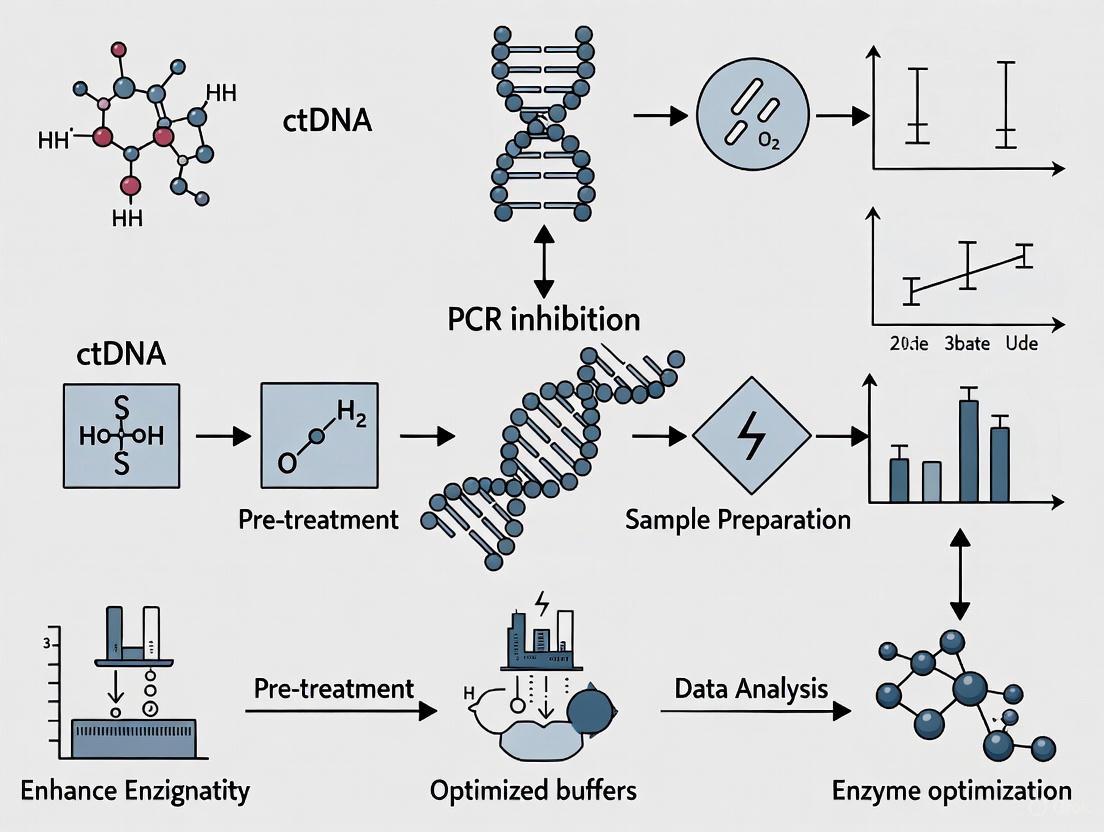
The analysis of circulating tumor DNA (ctDNA) via PCR-based methods is fundamental to liquid biopsy but is critically limited by PCR inhibition and the ultra-low abundance of target DNA, which...
Overcoming PCR Inhibition in ctDNA Analysis: Advanced Strategies for Sensitive Liquid Biopsy in Precision Oncology
Abstract
The analysis of circulating tumor DNA (ctDNA) via PCR-based methods is fundamental to liquid biopsy but is critically limited by PCR inhibition and the ultra-low abundance of target DNA, which can lead to false negatives and impede accurate cancer monitoring. This article provides a comprehensive resource for researchers and developers, exploring the foundational causes of these analytical hurdles, reviewing advanced methodological solutions like unique molecular identifiers and novel assay designs, and detailing optimization strategies from pre-analytical handling to bioinformatic correction. It further presents rigorous validation frameworks and comparative performance data for emerging technologies, synthesizing a pathway toward achieving the high-sensitivity detection required for minimal residual disease assessment and early intervention in solid tumors.
The ctDNA Landscape: Understanding Fundamental Challenges in PCR Amplification
Troubleshooting Guides
How can I improve the detection of variants with very low VAF (below 0.5%)?
Achieving reliable detection for variants below 0.5% VAF requires optimizing both wet-lab and bioinformatics processes. A key strategy involves increasing your sequencing depth. As shown in the table below, detecting a 0.1% VAF variant with 99% confidence requires approximately 10,000x depth of coverage [1]. Furthermore, utilize Unique Molecular Identifiers (UMIs) during library preparation. UMIs are short sequences added to DNA fragments before PCR amplification, allowing bioinformatic removal of PCR duplicates and helping distinguish true signals from background noise [1]. Ensure sufficient input DNA is critical; aim for a minimum of 60 ng of cell-free DNA to obtain the required number of unique genome equivalents for analysis [1].
The primary sources of false positives are sequencing errors and PCR artifacts. To minimize them, implement a robust bioinformatics pipeline that uses "allowed" and "blocked" lists to enhance accuracy [1]. Adjust your variant calling thresholds; while n=5 supporting reads might work for FFPE tissue, lowering this to n=3 can be feasible for liquid biopsies because the DNA is not prone to cytosine deamination, a common cause of artifacts in FFPE samples [1]. The use of UMIs, as mentioned above, is also critical for reducing false positives caused by PCR amplification biases [1].
My ctDNA levels are low. How does input DNA quantity impact variant discovery?
The quantity of input DNA directly determines the number of genome equivalents (GEs) available for analysis. With 1 ng of human genomic DNA corresponding to roughly 300 haploid GEs, achieving a high deduplicated coverage (e.g., 20,000x) requires a minimum of 60 ng of input DNA [1]. The concentration of circulating tumor DNA (ctDNA) in patient plasma is highly variable and depends on tumor type, stage, and burden [1]. If low input is a consistent issue, consider methods that increase the breadth of analysis (the number of genomic regions screened) to compensate for the low probability of capturing any single mutant fragment [2].
Frequently Asked Questions (FAQs)
What is the typical limit of detection (LoD) for current ctDNA NGS assays, and how can it be improved?
Most commercial therapy selection panels have a reported LoD of approximately 0.5% VAF [1]. Research demonstrates that improving the LoD from 0.5% to 0.1% could significantly increase the detection of alterations from around 50% to approximately 80% [1]. Adopting a dynamic LoD approach that is calibrated against your final, deduplicated sequencing depth can enhance the reliability of results and confidence in clinical interpretation [1]. Novel methods like Unmodified-Blocker Cleavage PCR (UBC-PCR) have shown potential to detect mutant DNA at VAFs as low as 0.01% [3].
How does sequencing depth relate to the ability to detect low-frequency variants?
There is a direct mathematical relationship between sequencing depth and the probability of detecting a low-frequency variant. Lower VAFs require exponentially higher depth to maintain the same level of detection confidence [1]. The following table summarizes the depth of coverage needed for a 99% probability of detecting a variant at different VAFs [1]:
| Target Variant Allele Frequency (VAF) | Required Depth of Coverage |
|---|---|
| 1.0% | 1,000x |
| 0.5% | 2,000x |
| 0.2% | 5,000x |
| 0.1% | 10,000x |
Can I use ctDNA analysis for minimal residual disease (MRD) monitoring?
Yes, ctDNA analysis is a promising tool for MRD monitoring. Studies have shown that the presence of ctDNA after surgery for colorectal cancer is a strong predictor of recurrence and can identify patients who will benefit from adjuvant chemotherapy [4]. Patients with a positive ctDNA test after surgery had significantly longer disease-free survival when treated with chemotherapy, whereas ctDNA-negative patients derived no significant benefit from it [4]. This underscores the high sensitivity required for MRD applications, as the goal is to detect microscopic disease burden with VAFs often far below 1%.
Coverage Requirements for Variant Detection
The table below details the depth of coverage required for a 99% probability of detecting a variant, based on a binomial model [1].
| Target VAF | Required Depth of Coverage |
|---|---|
| 1.0% | 1,000x |
| 0.5% | 2,000x |
| 0.2% | 5,000x |
| 0.1% | 10,000x |
Impact of LoD Improvement on Alteration Detection
Improving the assay's sensitivity directly increases the rate of detectable alterations in patient samples [1].
| Limit of Detection (LoD) | Approximate Alteration Detection Rate |
|---|---|
| 0.5% | 50% |
| 0.1% | 80% |
Experimental Protocols
Protocol: UBC-PCR for Ultra-Low VAF Detection
Unmodified-Blocker Cleavage PCR (UBC-PCR) is a method to identify rare mutations at VAFs as low as 0.01%. It combines mutant-specific primers with wild-specific blockers that are cleaved by Taq polymerase, improving variant distinction without relying on strand displacement or base modification [3].
- Primer and Blocker Design: Design mutant-specific PCR primers. Design wild-specific blocking oligos that are complementary to the wild-type sequence.
- Reaction Setup: Set up a qPCR reaction containing the DNA sample (e.g., extracted cfDNA), mutant-specific primers, and the wild-specific blockers.
- Amplification: Run the PCR. During the reaction, the Taq polymerase will cleave the blockers that are bound to the wild-type template, suppressing wild-type amplification. The mutant template, to which the blocker does not bind perfectly, will be preferentially amplified.
- Detection and Analysis: Monitor amplification in real-time. The method has demonstrated 100% concordance with ddPCR and commercial ARMS kits in validation studies using lung cancer ctDNA samples [3]. Multiplexing for a reference target and three mutations in a single tube is feasible with a sensitivity of 0.01% VAF [3].
Workflow and Pathway Visualizations
ctDNA NGS Analysis Workflow
Relationship Between Coverage and VAF Detection
Research Reagent Solutions
Essential materials and reagents for sensitive ctDNA analysis.
| Reagent / Material | Function in ctDNA Analysis |
|---|---|
| Specialized Blood Collection Tubes (e.g., PAXgene) | Stabilizes blood cells to prevent lysis, minimizing background wild-type DNA release [2]. |
| Unique Molecular Identifiers (UMIs) | Short DNA barcodes added to each original DNA fragment before PCR to correct for amplification biases and errors during bioinformatics analysis [1]. |
| Mutant-Specific Primers & Blockers | For methods like UBC-PCR; primers amplify mutant sequences, while blockers suppress wild-type amplification to enhance specificity for ultra-low VAF detection [3]. |
| Targeted NGS Panels | Pre-designed sets of probes to capture and sequence specific genomic regions of interest (e.g., 139-gene lung cancer panel), enabling high-depth sequencing [5]. |
The analysis of circulating tumor DNA (ctDNA) via liquid biopsy has emerged as a transformative approach in precision oncology, enabling non-invasive insights into tumor genetics for diagnosis, monitoring treatment response, and detecting minimal residual disease [6] [7]. However, the polymerase chain reaction (PCR), a cornerstone technique for ctDNA detection, is highly susceptible to inhibition. Inhibitors present in patient-derived biofluids can lead to false-negative results, compromising clinical decision-making. Understanding the sources and mechanisms of this inhibition is therefore critical for reliable ctDNA analysis. This guide details the common challenges and provides actionable protocols to overcome them.
Troubleshooting Guide: Identifying and Resolving PCR Inhibition
The following table outlines common symptoms of PCR inhibition, their potential causes in liquid biopsy workflows, and recommended solutions.
| Symptom | Possible Cause (Source/Mechanism) | Recommended Solution |
|---|---|---|
| Poor or no amplification (low yield) [8] | Carryover of PCR inhibitors from the biofluid (e.g., heparin, bile salts, urea) [9]. Inhibitors bind to DNA polymerase or co-factors, preventing enzyme activity [9]. | Re-purify DNA using silica-column based kits. Include a wash step with 70% ethanol to remove residual salts [8]. Use DNA polymerases with high processivity and inhibitor tolerance [8]. |
| High background noise, nonspecific amplification [8] | Insufficient purity of DNA template; excess Mg2+ concentration [8]. | Optimize Mg2+ concentration. Use hot-start DNA polymerases to prevent nonspecific amplification at room temperature [8]. |
| Inconsistent results between replicates [9] | Inhomogeneous sample due to uneven distribution of inhibitors or incomplete lysis of cells in the biofluid [9]. | Ensure thorough mixing of reagent stocks and the prepared reaction mixture. Follow standardized, validated lysis protocols for the specific specimen type [9]. |
| Inhibition detected by internal control [9] | High inhibitor load in specific specimen types like urine or formalin-fixed, paraffin-embedded (FFPE) tissue [9]. | Dilute the DNA template to dilute out the inhibitor. Re-extract the specimen using a validated protocol, potentially incorporating a bead-beating step for tough matrices [9]. |
FAQs on PCR Inhibition in Liquid Biopsy
1. What are the most common sources of PCR inhibitors in liquid biopsy samples? Inhibitors originate from the biofluid itself or from collection devices. Common sources include:
- Heparin in blood collection tubes, which can directly inhibit the DNA polymerase enzyme [9].
- Bile salts in stool samples [9].
- Urea in urine specimens [9].
- Heme (from hemoglobin) in whole blood and plasma [9].
- Formalin from FFPE tissue processing, which can cross-link and fragment DNA [9].
2. How can I detect PCR inhibition in my ctDNA assay? The most robust method is to use an internal inhibition control. This involves spiking a known amount of a non-target DNA sequence (e.g., a plasmid or whole organism) into the reaction. If the control fails to amplify, it indicates the presence of inhibitors in the sample. Inhibition rates are typically determined empirically for each specimen matrix [9].
3. Are some biofluids more prone to causing inhibition than others? Yes. A large-scale retrospective analysis found that while overall inhibition rates can be low (e.g., 0.87% for pre-extraction spiking), certain matrices have higher rates. For example, urine and formalin-fixed, paraffin-embedded (FFPE) tissue show significantly higher inhibition rates compared to others like plasma or cerebrospinal fluid [9].
4. My PCR yield is low. Is this always due to inhibition? No. Low yield can also result from insufficient input DNA, degraded DNA template, suboptimal primer design, or incorrect thermal cycling conditions. A systematic troubleshooting approach is required to isolate the true cause [8].
Experimental Protocol: Determining Inhibition Rates by Specimen Matrix
This protocol is adapted from large-scale validation studies to help laboratories establish the inhibition profile of their own workflows [9].
Objective
To determine the rate of PCR inhibition for different specimen matrix types used in ctDNA liquid biopsy analysis.
Materials
- Clinical specimens (e.g., plasma, urine, CSF, FFPE tissue sections)
- DNA extraction kit (e.g., MagNA Pure LC total nucleic acid isolation kit)
- PCR master mix components, including a DNA polymerase suitable for your assay
- Inhibition control (e.g., target DNA plasmid or whole virus/organism)
- Real-time PCR instrument
Methodology
- Specimen Processing: Process the clinical specimens according to a standardized protocol. For swab specimens, this may involve a lysis step at 99°C for 6 minutes. For stool samples, use a dilution in a transport and recovery buffer [9].
- Nucleic Acid Extraction: Extract nucleic acids from the processed specimens using an automated system (e.g., MagNA Pure LC) according to the manufacturer's instructions.
- Spiking with Inhibition Control: Spike an aliquot of the extracted nucleic acid sample with a known, low concentration of the inhibition control (e.g., plasmid DNA). Alternatively, for pre-extraction assessment, the control can be added directly to the raw specimen before processing [9].
- PCR Amplification: Perform real-time PCR amplification targeting both the ctDNA of interest and the spiked inhibition control.
- Analysis: Calculate the inhibition rate for each specimen matrix type as the percentage of samples in which the spiked inhibition control failed to amplify.
Expected Outcomes
Data from a study of over 380,000 specimens showed that when the inhibition control was added post-extraction, the overall inhibition rate was very low (0.01%). However, rates were higher for specific matrices like urine and FFPE tissue [9].
Workflow Diagram: Inhibition Testing and Resolution
The diagram below illustrates the logical workflow for identifying and resolving PCR inhibition in a liquid biopsy sample.
The Scientist's Toolkit: Key Reagent Solutions
The following table lists essential reagents and materials used to mitigate PCR inhibition in ctDNA workflows.
| Research Reagent / Material | Function in Overcoming Inhibition |
|---|---|
| Inhibitor-Tolerant DNA Polymerases | Engineered enzymes with high processivity that maintain activity in the presence of common PCR inhibitors carried over from blood, plasma, or other complex matrices [8]. |
| Silica-Membrane Purification Kits | For DNA extraction and cleanup; effectively remove salts, heme, and other impurities that inhibit PCR through binding and washing steps [8] [9]. |
| Internal Inhibition Control (Plasmid/ Synthetic DNA) | A non-target DNA sequence spiked into the reaction to detect the presence of inhibitors by serving as an amplification control [9]. |
| Proteinase K | An enzyme used during sample lysis to digest proteins that may bind to DNA or the polymerase, thereby reducing inhibition from proteinaceous compounds [9]. |
| MagNA Pure LC System | An automated nucleic acid extraction platform that uses standardized protocols to minimize manual variability and improve the consistency of inhibitor removal [9]. |
Impact of Pre-Analytical Variables on ctDNA Yield and Amplification Efficiency
Troubleshooting Guide: Common Pre-Analytical Challenges in ctDNA Analysis
FAQ: How does blood collection tube choice affect cfDNA levels and stability?
Issue: Cell lysis during blood storage increases background wild-type DNA, diluting the tumor-derived signal and reducing detection sensitivity for low-frequency variants [2].
Solution:
- Cell-free DNA Blood Collection Tubes (BCTs) are recommended when plasma processing is delayed beyond a few hours. These tubes contain a cell-stabilizing preservative that minimizes leukocyte lysis [10].
- K3EDTA tubes are suitable only if plasma is processed promptly (within 1 hour of venipuncture). cfDNA levels in K3EDTA tubes increase significantly with processing delays, especially at room temperature [10].
- Refrigeration (4°C) of K3EDTA tubes can slow the increase in cfDNA levels compared to room temperature storage, but levels remain elevated compared to BCTs [10].
FAQ: What is the optimal centrifugation protocol for plasma preparation?
Issue: Inefficient removal of blood cells during plasma preparation leads to contamination of plasma with cellular genomic DNA, inhibiting PCR and reducing assay sensitivity [11].
Solution:
- A two-step centrifugation protocol is standard [12] [10].
- An initial lower-speed centrifugation (e.g., 800-1600 × g for 10-20 minutes) is performed to separate plasma from blood cells [13].
- A second, higher-speed centrifugation (e.g., 16,000 × g for 10 minutes) of the transferred plasma is done to remove any remaining cells and debris [12].
- For frozen plasma, a second centrifugation at 3,000 × g has been shown to be as effective as 16,000 × g on fresh plasma and does not affect cfDNA levels [12].
FAQ: Which DNA extraction method provides the highest yield of amplifiable ctDNA?
Issue: Different extraction kits have varying efficiencies in recovering the short, fragmented DNA that is characteristic of ctDNA, directly impacting downstream assay sensitivity [13].
Solution:
- Extraction efficiency varies significantly between kits [13]. When comparing seven commercial cfDNA extraction kits, spin column-based methods generally yielded the highest quantities of LMW cfDNA [13].
- The highest-yielding kit in one study recovered nearly double the amount of cfDNA compared to other methods [12].
- Look for kits specifically marketed for cfDNA extraction, as they are designed to recover short fragments [13].
FAQ: How can I assess the quality of my extracted cfDNA before downstream analysis?
Issue: Traditional quantification methods do not distinguish between short, tumor-derived fragments and longer, background genomic DNA, leading to inefficient use of sequencing resources and poor library diversity [13].
Solution:
- Implement a multiplexed droplet digital PCR (ddPCR) assay with short and long amplicons [13].
- Target short amplicons (mean ~71 bp) to represent total amplifiable DNA.
- Target long amplicons (mean ~471 bp) to represent unwanted high molecular weight (HMW) DNA from cell lysis.
- Calculate the optimal, low molecular weight (LMW) cfDNA concentration as the difference between short and long genome equivalents [13]. This quality metric strongly correlates with sequencing library diversity [13].
FAQ: How can fragment size selection improve ctDNA detection sensitivity?
Issue: The high background of wild-type DNA from lysed blood cells can mask low-frequency tumor variants [14].
Solution:
- Exploit the natural size difference of ctDNA. Tumor-derived cfDNA is typically shorter (90–150 bp) than DNA from non-tumor cells [14].
- Use bead-based or enzymatic size selection during library preparation to intentionally enrich for shorter fragments [14].
- This "fragment enrichment" can increase the fractional abundance of tumor-derived signals in sequencing libraries by several folds, enhancing the detection of low-frequency variants and reducing the required sequencing depth for minimal residual disease (MRD) detection [14].
Experimental Protocols & Data
Detailed Methodology: Multiplexed ddPCR for cfDNA Quality Control
This protocol is adapted from a study that designed a multiplexed ddPCR assay with 5 short and 4 long amplicons targeting single-copy genomic loci to assess cfDNA quality [13].
- Assay Design: Design two sets of PCR assays:
- Multiplexed ddPCR: Run all 9 assays together in a single ddPCR reaction.
- Data Analysis:
- The number of FAM-positive droplets represents 5 times the number of haploid genome equivalents (GEs) with fragments long enough to be amplified by the short assays.
- The number of TET-positive droplets represents 4 times the number of GEs with fragments amplifiable by the long assays.
- Calculate the concentration of low molecular weight (LMW) cfDNA (the desired fraction) using the formula:
LMW GEs/mL = (FAM GEs/5 - TET GEs/4) × Dilution Factor × Volume [13].
Table 1: Comparison of Blood Collection Tube Performance
| Tube Type | Processing Delay | Mean LMW cfDNA Yield (GEs/mL plasma) | Mean LMW Fraction | Key Findings |
|---|---|---|---|---|
| K3EDTA [10] | 1 hour | 1,925 [13] | 87% [13] | cfDNA levels increase significantly with delayed processing [10]. |
| Cell-free DNA BCT [10] | 24 hours | 1,591 [13] | 88% [13] | cfDNA levels remain stable for up to 72 hours [13] [10]. |
| Cell-free DNA BCT [10] | 72 hours | 1,514 [13] | 90% [13] | Suitable for sample shipment without significant impact on yield [10]. |
Table 2: Comparison of cfDNA Extraction Kit Performance (from 1 mL Plasma)
| Extraction Kit | Extraction Method | Median LMW cfDNA Yield (GEs/mL) | Median LMW Fraction | Performance Note |
|---|---|---|---|---|
| Kit A [13] | Spin Column | 1,936 [13] | 89% [13] | Highest yield; significantly higher than most bead-based kits [13]. |
| Kit B [13] | Spin Column | 1,760 [13] | Not Specified | High yield, but results were more variable than Kit A [13]. |
| Kit E [13] | Magnetic Beads | 1,515 [13] | 90% [13] | Highest yield among magnetic bead-based methods [13]. |
Workflow Visualization: Optimized Pre-Analytical Pathway for ctDNA Analysis
The Scientist's Toolkit: Key Research Reagent Solutions
Table 3: Essential Materials for Robust ctDNA Analysis
| Reagent / Material | Function / Application | Key Considerations for Use |
|---|---|---|
| Cell-free DNA BCTs (Streck, PAXgene) | Blood collection tubes with preservative to stabilize nucleated blood cells and prevent lysis [10] [2]. | Enables standardized multi-center studies and simplifies logistics by allowing room temperature shipment and extended processing windows [13] [10]. |
| High-Yield Spin Column cfDNA Kits (e.g., QIAamp Circulating Nucleic Acid Kit) | Solid-phase extraction for purifying cfDNA from plasma [13]. | Validated protocols show significantly higher recovery of LMW cfDNA compared to many magnetic bead-based methods, directly increasing material for analysis [12] [13]. |
| Multiplexed ddPCR Assay (Custom designed) | Pre-analytical quality control to quantify amplifiable LMW cfDNA and assess fragment size [13]. | Provides a more relevant metric than fluorometry for downstream NGS, as it predicts library diversity and helps avoid wasting resources on poor-quality samples [13]. |
| Size Selection Beads (e.g., SPRIselect) | Post-extraction enrichment of short DNA fragments to improve tumor signal-to-noise ratio [14]. | By selectively retaining cfDNA in the 90-150 bp range, this step can increase the fractional abundance of tumor-derived variants in a sample [14]. |
| Tumor-Informed NGS Panels | Ultra-sensitive detection of patient-specific mutations for MRD monitoring [15]. | Tracking a larger number of mutations (breadth) increases the probability of detecting ctDNA when it is present at very low fractions (<0.01%) [2]. |
Troubleshooting Guides & FAQs
Frequently Asked Questions (FAQs)
Q1: What are the most common sources of PCR inhibitors in ctDNA analysis? PCR inhibitors are organic or inorganic molecules that interfere with the polymerase chain reaction. Common sources include:
- Blood-derived inhibitors: Hemoglobin, immunoglobulin G, lactoferrin, and anticoagulants like EDTA and heparin from blood samples [16].
- Co-extracted substances: Polyphenolics, humic acids, tannins, and melanin that can be co-purified with DNA during extraction [17].
- Reagents: Substances like phenol, proteinase K, or ionic detergents used in sample preparation if not adequately removed [18].
Q2: How can I quickly check if my sample contains PCR inhibitors? The simplest method is sample dilution. Dilute your extracted DNA sample (e.g., 1:10) and re-run the PCR analysis. In qPCR, if the diluted sample has a lower Ct (cycle threshold) value than the undiluted sample, it indicates the presence of inhibitors. In an uninhibited sample, dilution should result in a higher Ct value due to the reduced template concentration [17].
Q3: Why is digital PCR (dPCR) often considered more tolerant to inhibitors than qPCR? dPCR is less affected by many PCR inhibitors for two main reasons:
- End-point measurement: Quantification is based on the final count of positive and negative partitions, not on the kinetics of amplification (Cq values), making it less skewed by inhibitors that merely slow the reaction [16].
- Partitioning: Partitioning the reaction into thousands of nanodroplets or nanowells can reduce the local concentration of the inhibitor, effectively diluting its effect within positive partitions [19] [16].
Q4: My ctDNA levels are very low. How can I improve my detection sensitivity without introducing too many errors? Pre-amplification of cfDNA can enhance sensitivity. For instance, the TOP-PCR method can enable the detection of mutations at a limit of detection as low as 0.02% [20]. However, this requires careful optimization:
- Optimize Input and Cycles: Use sufficient cfDNA input (e.g., 20 ng) and the minimum number of PCR cycles necessary (e.g., 5-7 cycles) to preserve a linear amplification and avoid saturation [20].
- Implement Controls: Always include negative controls and use unique molecular identifiers (UMIs) to tag original DNA molecules before amplification. This allows bioinformatics pipelines to distinguish true mutations from errors introduced during pre-amplification and PCR [20] [1].
Q5: What is a practical way to lower the Limit of Detection (LoD) in my ctDNA NGS assay? Lowering the LoD from a typical 0.5% to 0.1% can significantly increase alteration detection rates. This can be achieved by:
- Increasing Sequencing Depth: A deeper sequencing depth provides more reads covering each genomic position, improving the statistical power to detect low-frequency variants [1].
- Using UMIs: Incorporating UMIs during library preparation is critical. They allow for the bioinformatic correction of PCR amplification errors and errors introduced during sequencing, reducing background noise and enabling more confident identification of true low-frequency variants [1].
Troubleshooting Guide: PCR Inhibition
| Symptom | Possible Cause | Solution |
|---|---|---|
| Low or failed amplification in qPCR/dPCR; delayed Ct values or reduced number of positive partitions. | Presence of PCR inhibitors from sample matrix or extraction. | 1. Dilute the DNA template to reduce inhibitor concentration [17] [21].2. Use inhibitor-tolerant polymerases or enzyme blends [16].3. Add PCR enhancers like BSA or T4 gp32 [21].4. Re-purify DNA using dedicated inhibitor removal kits [17] [21]. |
| High background noise or false positives in pre-amplified ctDNA samples. | PCR errors accumulated during pre-amplification cycles. | 1. Optimize pre-amplification cycles: Use the minimum number of cycles needed (e.g., 5-7 cycles for TOP-PCR) [20].2. Establish a stringent variant calling threshold based on negative controls [20].3. Implement a UMI-based bioinformatics pipeline to correct for amplification errors [1]. |
| Inconsistent results between technical replicates; high coefficient of variation (CV) in dPCR. | Suboptimal reaction conditions or inhibitor interference. | 1. Evaluate restriction enzymes: Enzyme choice (e.g., HaeIII vs. EcoRI) can significantly impact precision, especially in dPCR [19].2. Ensure homogeneous partitioning in dPCR by vortexing sufficiently.3. Check for inhibitor presence and apply relevant mitigation strategies [16]. |
Experimental Protocols & Data
Protocol: Evaluating PCR Enhancers to Mitigate Inhibition
This protocol is adapted from studies on optimizing viral detection in wastewater, a matrix rich in inhibitors, and is applicable for recovering ctDNA signals from inhibiting patient samples [21].
1. Sample and Reagents:
- Test DNA: Extracted cfDNA from plasma.
- PCR Enhancers to Test:
- Bovine Serum Albumin (BSA)
- T4 gene 32 protein (gp32)
- Dimethyl Sulfoxide (DMSO)
- Formamide
- TWEEN-20
- Glycerol
- Inhibitor Removal Kit: A commercial kit designed to remove polyphenolics, humic acids, and tannins.
- Control: A known uninhibited DNA sample.
2. Procedure:
- Prepare a master mix for your qPCR or dPCR assay.
- Aliquot the master mix into separate tubes for each enhancement condition.
- Spike the enhancers into their respective tubes at different final concentrations (e.g., for gp32, test 0.2 μg/μL [21]).
- For the "dilution" condition, perform a 10-fold dilution of the extracted DNA sample.
- For the "kit" condition, pass the DNA through the inhibitor removal column.
- Run your qPCR/dPCR protocol. Include a no-template control and a positive control with known DNA.
3. Analysis:
- For qPCR, compare the Cycle threshold (Cq) values across conditions. A lower Cq in a test condition compared to the uninhibited control indicates successful inhibition mitigation.
- For dPCR, compare the measured copy number concentration and the %CV of replicates. A higher copy number and lower %CV indicate improved performance.
The table below summarizes data from a study that evaluated different approaches for removing PCR inhibition [21].
Table 1: Comparison of PCR Inhibition Mitigation Strategies
| Strategy | Key Outcome | Relative Performance |
|---|---|---|
| 10-fold Sample Dilution | Eliminated false negative results. | Effective, but reduces sensitivity by diluting the DNA template. |
| Addition of T4 gp32 (0.2 μg/μL) | Most significant removal of inhibition; improved detection and recovery. | Highly effective, simple to implement, and cost-effective. |
| Addition of BSA | Eliminated false negative results. | Effective. |
| Use of Inhibitor Removal Kit | Eliminated false negative results. | Effective, but adds cost and processing time; risk of DNA loss. |
| DMSO, Formamide, TWEEN-20, Glycerol | Did not eliminate false negatives in the tested wastewater system. | Ineffective in the cited study; performance may vary by inhibitor type. |
The Scientist's Toolkit: Research Reagent Solutions
Table 2: Essential Reagents for Overcoming PCR Inhibition in ctDNA Research
| Reagent | Function in ctDNA Research |
|---|---|
| T4 Gene 32 Protein (gp32) | A single-stranded DNA binding protein that stabilizes DNA and prevents the action of inhibitory substances like humic acids. It can significantly improve detection in inhibited samples [21]. |
| Bovine Serum Albumin (BSA) | Binds to inhibitors, preventing them from interfering with the DNA polymerase. A common additive to mitigate inhibition from a wide range of substances [21]. |
| Inhibitor-Tolerant DNA Polymerase | Enzyme blends or engineered polymerases designed to maintain activity in the presence of common PCR inhibitors, enabling more robust amplification [16]. |
| Unique Molecular Identifiers (UMIs) | Short random nucleotide sequences ligated to each DNA fragment prior to PCR amplification. They allow bioinformatic identification and correction of PCR/sequencing errors, which is crucial after pre-amplification and for detecting ultra-low frequency variants [1]. |
| SPRI Beads (e.g., AMPure XP) | Magnetic beads used for solid-phase reversible immobilization to purify and size-select nucleic acids. They are used to clean up pre-amplification products and to enrich for shorter cfDNA fragments [20] [14]. |
| OneStep PCR Inhibitor Removal Kit | A column-based purification kit containing a specialized matrix that binds common polyphenolic PCR inhibitors (e.g., humic acids, tannins, melanin), allowing purified DNA to pass through [17]. |
Workflow Visualization
Inhibition Troubleshooting Workflow
Ultra-Sensitive ctDNA Detection Workflow
Advanced PCR and Sequencing Technologies for Enhanced ctDNA Detection
Digital PCR (dPCR) and BEAMing represent significant advancements in nucleic acid detection technology, offering absolute quantification and exceptional sensitivity crucial for circulating tumor DNA (ctDNA) research. These techniques are particularly valuable for overcoming challenges like PCR inhibition, enabling reliable detection of rare genetic mutations in liquid biopsies. This technical resource center provides essential guidance for researchers and drug development professionals utilizing these platforms in precision oncology.
Fundamental Principles of dPCR
Digital PCR operates by partitioning a PCR reaction mixture into thousands to millions of individual reactions, so that each partition contains either zero, one, or a few nucleic acid target molecules [22]. Following amplification, the fraction of positive partitions is counted via endpoint fluorescence measurement, and the target concentration is absolutely quantified using Poisson statistics, without requiring a standard curve [23]. This partitioning step effectively concentrates target molecules and reduces the impact of inhibitors by diluting them across many reactions, thereby enhancing tolerance to substances that typically interfere with PCR [23].
BEAMing Technology Workflow
BEAMing (Beads, Emulsion, Amplification, and Magnetics) combines dPCR principles with flow cytometry to achieve ultra-sensitive detection [24]. This sophisticated method involves several distinct stages, beginning with primer-conjugated magnetic beads and culminating in the enumeration of mutant alleles.
Comparative Analysis of dPCR Platforms
Performance Characteristics for ctDNA Analysis
| Platform Characteristic | Droplet Digital PCR (ddPCR) | BEAMing Technology | Solid-Chip dPCR |
|---|---|---|---|
| Sensitivity (Limit of Detection) | ~0.1% Variant Allele Frequency [24] | ~0.02% Variant Allele Frequency [24] | Higher sensitivity in some studies [25] |
| Partitioning Method | Water-in-oil emulsion [22] | Water-in-oil emulsion with magnetic beads [24] | Microchamber arrays [22] |
| Readout Method | In-line droplet detection [22] | Flow cytometry [24] | Planar imaging [22] |
| Mutation Detection Agreement | Good agreement with BEAMing (κ = 0.87-0.91) [26] | Good agreement with ddPCR (κ = 0.87-0.91) [26] | Moderate agreement with ddPCR [25] |
| Key Advantage | Cost-effectiveness, scalability [22] | Ultra-high sensitivity, combination with flow cytometry [24] | Reproducibility, ease of automation [22] |
Clinical Performance in Cancer Mutation Detection
| Cancer Type | Mutation | Detection Rate (ddPCR) | Detection Rate (BEAMing) | Detection Rate (Solid dPCR) |
|---|---|---|---|---|
| Advanced Breast Cancer | ESR1 | 25.3% [26] | 24.2% [26] | N/A |
| Advanced Breast Cancer | PIK3CA | 22.9% [26] | 26.2% [26] | N/A |
| NSCLC | EGFR | 58.8% [25] | N/A | 100% [25] |
| Colorectal Cancer | KRAS | 72.7% [25] | N/A | 86.4% [25] |
The Scientist's Toolkit: Essential Research Reagents
| Reagent/Material | Function | Technical Considerations |
|---|---|---|
| Cell-Free DNA Blood Collection Tubes | Preserves blood sample integrity | EDTA tubes preferred; specialized stabilizer tubes (Streck, Roche) allow longer storage [27] |
| Magnetic Beads with Conjugated Primers | Solid support for amplification in BEAMing | Biotin-streptavidin conjugation common; critical for emulsion stability [24] |
| Emulsion Surfactants | Stabilizes water-in-oil droplets | Prevents coalescence during thermal cycling; crucial for assay reproducibility [22] |
| Sequence-Specific Fluorescent Probes | Detection of amplified targets | TaqMan probes most common; design crucial for specificity in mutant detection [22] |
| Unique Molecular Identifiers (UMIs) | Error correction in NGS-based digital assays | Molecular barcodes to distinguish true mutations from PCR errors [28] |
Troubleshooting Guides
Pre-Analytical Sample Processing Issues
Problem: Low ctDNA Yield and Quality
- Cause: Improper blood collection, processing delays, or suboptimal centrifugation [27].
- Solution:
- Use EDTA blood collection tubes or specialized cell-free DNA BCTs [27].
- Process plasma within 2-4 hours for EDTA tubes; stabilizer tubes allow up to 48-72 hours [27].
- Implement dual centrifugation: 800-1,900 × g for 10 min (cellular component removal), followed by 14,000-16,000 × g for 10 min (debris removal) [27].
- Aliquot and store plasma at -80°C; avoid multiple freeze-thaw cycles [27].
Problem: Inconsistent Partitioning in dPCR
- Cause: Improper emulsion formation, surfactant issues, or sample contaminants [22].
- Solution:
- Ensure proper oil-aqueous phase ratios and fresh emulsion reagents.
- Include appropriate surfactants in oil phase to prevent droplet coalescence.
- Assess droplet/partition quality using control samples before running precious specimens.
Analytical Sensitivity and Inhibition Challenges
Problem: Reduced Sensitivity in Rare Mutation Detection
- Cause: Stochastic sampling effects at very low allele frequencies (<0.1%) [26].
- Solution:
- Increase input sample volume to enhance mutant molecule capture probability.
- Utilize BEAMing technology for ultra-sensitive detection (0.02% VAF) [24].
- For ddPCR, ensure adequate droplet count (20,000+); for array dPCR, use platforms with highest chamber density.
Problem: PCR Inhibition Affecting Quantification
- Cause: Residual contaminants from blood collection tubes or sample processing [23].
- Solution:
Frequently Asked Questions (FAQs)
Q1: What are the key statistical considerations for accurate dPCR quantification?
dPCR relies on Poisson statistics to account for the random distribution of molecules across partitions. The optimal precision is achieved when approximately 20% of partitions are positive (λ = 1.6). Accuracy improves with increasing partition count, scaling as the inverse square root of the number of partitions [23].
Q2: When should I choose BEAMing over conventional ddPCR for ctDNA analysis?
BEAMing is preferable when requiring ultra-high sensitivity (0.02% VAF), particularly for monitoring minimal residual disease or emergent resistance mutations. However, for routine mutation detection where sensitivity of 0.1% suffices, ddPCR offers a more accessible and cost-effective alternative [24].
Q3: How does partitioning in dPCR help overcome PCR inhibition?
Partitioning effectively dilutes inhibitors across thousands of individual reactions, reducing their local concentration. This allows amplification to proceed normally in partitions containing target molecules, even when the overall sample contains substances that would normally inhibit a bulk PCR reaction [23].
Q4: What causes discordant results between dPCR platforms, and how can they be minimized?
Discordancy often occurs at very low allele frequencies (<1%) due to stochastic sampling effects [26]. Platform-specific differences in partition technology and chemistry also contribute [25]. Minimization strategies include analyzing larger sample volumes, using consensus methods, and establishing platform-specific validation protocols.
Q5: What are the critical pre-analytical factors for reliable ctDNA analysis?
Blood collection tube type, processing time, centrifugation protocol, and storage conditions significantly impact results. Plasma is preferred over serum, and dual centrifugation is recommended. Samples should be processed rapidly or preserved with specialized tubes, with storage at -80°C for long-term preservation [27].
Leveraging Unique Molecular Identifiers (UMIs) for Error-Corrected Next-Generation Sequencing
Frequently Asked Questions (FAQs)
Q1: What are UMIs and why are they critical for ctDNA sequencing?
Unique Molecular Identifiers (UMIs) are short, random nucleotide sequences used to tag individual DNA molecules in a sample library before any PCR amplification steps [29] [30]. In the context of ctDNA research, they are critical for two main reasons: Error Correction and Molecular Deduplication [30]. By tagging each original molecule, UMIs allow bioinformatics tools to group sequencing reads that originated from the same molecule (forming a "consensus family") and distinguish true variants present in the original sample from errors introduced during PCR or sequencing [31] [29]. This is essential for detecting low-frequency variants in ctDNA, where true signals can be obscured by background noise [32] [31].
Q2: My negative controls are showing false positives. How can UMIs help?
False positives in negative controls are often caused by PCR or sequencing errors that are misinterpreted as low-frequency variants [31]. UMIs help address this by enabling the creation of consensus sequences from reads sharing the same UMI [30] [33]. A variant is only considered a true positive if it appears in all reads within a UMI family. If a variant appears in only a fraction of the reads within the family, it is discarded as an error [31]. This process significantly reduces background noise and false-positive calls, allowing for confident detection of variants with frequencies as low as 0.1% [31] [30].
Q3: I'm not achieving the expected sensitivity for low-frequency variants. What could be wrong?
Insufficient sensitivity can stem from several factors related to UMI handling and experimental design:
- Insufficient Sequencing Depth: UMI-based deduplication can reduce the final, unique read depth by ~90% [32] [31]. Achieving a final depth of 2,000-3,000x after deduplication may require a raw read depth of 20,000x or more [32] [31].
- Inadequate Input DNA: The absolute number of mutant molecules in the sample is a key limiting factor. For a 0.1% variant allele frequency (VAF), you need a minimum of 60 ng of input cfDNA to have a statistical chance of detecting the variant, equating to approximately 80 mutant haploid genome equivalents [32].
- Suboptimal UMI Design: Traditional monomeric UMIs are susceptible to PCR errors within the barcode sequence itself, which can lead to inaccurate molecule counting [34]. Using error-correcting UMI designs, such as homotrimeric nucleotide blocks, can improve accuracy [34].
Q4: How do I choose a bioinformatics tool for UMI data analysis?
The choice depends on your workflow and needs. Standard pipelines like fgbio involve multi-step processes to annotate reads with UMIs and generate consensus sequences [33] [35]. Alternatively, "UMI-aware" variant callers like UMI-VarCal and UMIErrorCorrect natively process UMI information [35]. Benchmarking studies suggest that UMI-aware callers can improve sensitivity and specificity for low-frequency ctDNA variants compared to standard tools [35]. A key step in many pipelines is using tools like GroupReadsByUmi plus CallMolecularConsensusReads (in fgbio) to group families and call a consensus sequence, which corrects errors before variant calling [33].
Troubleshooting Guides
Issue 1: PCR Errors Inflating Molecular Counts
Problem: PCR amplification introduces errors into the UMI sequences themselves, causing a single original molecule to be counted as multiple unique molecules after sequencing. This leads to overestimation of transcript or molecule counts [34].
Solution: Implement error-correcting UMI designs.
- Protocol: Utilizing Homotrimeric UMI for Error Correction
- Principle: Synthesize UMIs using homotrimeric nucleotide blocks (e.g., triplets of A, T, C, or G). Errors can be corrected via a "majority vote" method within each trimer block [34].
- Procedure:
- Library Preparation: Use library prep kits that incorporate homotrimeric UMI adapters. These can be attached to both ends of the cDNA fragment for enhanced error detection [34].
- Sequencing: Sequence the library on your preferred platform (compatible with Illumina, PacBio, or Oxford Nanopore Technologies) [34].
- Bioinformatic Processing: Process the UMI sequences by assessing trimer nucleotide similarity. The consensus for each trimer block is determined by the most frequent nucleotide, effectively correcting substitution errors and being tolerant to indels [34].
- Experimental Validation: To validate your setup, you can use a Common Molecular Identifier (CMI)—a single known sequence attached to every RNA molecule. In the absence of errors, each transcript is counted once. An inflated count indicates errors, allowing you to benchmark the accuracy of your UMI correction method [34].
Issue 2: High Duplication Rates and Inefficient Sequencing
Problem: Ultra-deep sequencing of cfDNA results in a very high proportion (up to 90%) of PCR duplicates, making sequencing inefficient and expensive [31].
Solution: Strategic panel design and UMI-aware deduplication.
- Workflow:
- Targeted Sequencing: Use a targeted panel instead of whole-genome or whole-exome sequencing to focus sequencing power on genes of interest. This reduces the required number of overall sequencing reads per sample [31] [30].
- UMI Ligation: Perform library preparation with a kit that includes UMI adapters. Ensure the UMI complexity (e.g., over 16 million unique sequences) is sufficient to label every unique molecule in your sample [31] [30].
- Balance Raw and Deduplicated Depth: When planning your sequencing run, account for the ~90% deduplication rate. Aim for a raw depth that will yield your desired effective depth post-deduplication (e.g., 20,000x raw for ~2,000x effective depth) [32] [31].
Issue 3: Difficulty Detecting Ultra-Low Frequency Variants
Problem: Failure to reliably detect variants below 0.5% VAF, which is crucial for MRD detection and early cancer diagnosis [32] [36].
Solution: Optimize the entire wet-lab and computational pipeline for maximum sensitivity.
- Optimization Steps:
- Increase Input DNA: Use the maximum possible input of high-quality cfDNA to increase the absolute number of mutant molecules available for library prep [32].
- Ultra-Deep Sequencing: Commit to the high raw sequencing depths required (see Issue 2) [32] [31].
- Benchmark Variant Callers: Do not rely on a single variant caller. Benchmark several tools, including UMI-aware ones. Studies show that
UMI-VarCalcan produce fewer false positives, whileMutect2can show high sensitivity in UMI-encoded data [35]. Adjust the minimum supporting read threshold for calling a variant; for ctDNA, this can be lowered to 3 unique reads (from a typical 5 for tissue DNA) to enhance sensitivity, as cfDNA is less prone to certain artifacts like cytosine deamination [32].
Table 1: Impact of Sequencing Depth on Variant Detection Probability
| Variant Allele Frequency (VAF) | Required Coverage for 99% Detection Probability |
|---|---|
| 1.0% | 1,000x |
| 0.5% | 2,000x |
| 0.2% | 5,000x |
| 0.1% | ~10,000x |
Data adapted from a study on ctDNA NGS analysis [32].
Table 2: Performance Comparison of UMI-Based Error Correction Methods
| Method | CMI Accuracy (Illumina) | CMI Accuracy (PacBio) | CMI Accuracy (ONT) | Key Feature |
|---|---|---|---|---|
| Uncorrected | 73.36% | 68.08% | 89.95% | Baseline, prone to PCR errors |
| Homotrimer Correction | 98.45% | 99.64% | 99.03% | Uses trimer blocks for majority-vote error correction [34] |
| UMI-tools | Benchmarking showed substantial improvement with homotrimer over this method [34] | Uses Hamming distance, cannot correct indel errors [34] |
CMI: Common Molecular Identifier. Data from a study comparing PCR error correction methods [34].
Table 3: Benchmarking of Variant Calling Tools on ctDNA Data
| Variant Caller | Type | Reported Performance Characteristics |
|---|---|---|
| Mutect2 | Standard | High sensitivity, but may return more false positives in non-UMI data [35] |
| bcftools | Standard | Not specified in detail |
| LoFreq | Standard | Not specified in detail |
| FreeBayes | Standard | Not specified in detail |
| UMI-VarCal | UMI-aware | Detected fewer putative false positives in synthetic datasets [35] |
| UMIErrorCorrect | UMI-aware | Not specified in detail |
Summary of findings from an independent benchmarking study on ctDNA datasets [35].
Experimental Protocols
Protocol 1: UMI-Based Library Preparation for ctDNA
Title: UMI Adapter Ligation for Cell-Free DNA.
Key Reagent Solutions:
- xGen cfDNA & FFPE Library Prep Kit (IDT) or Cell3 Target Kit (Nonacus): These are specialized kits containing UMI adapters designed for low-input and fragmented DNA [31] [33].
- Stem-loop Adapters with UMIs (e.g., ThruPLEX Tag-seq): These proprietary adapters incorporate degenerate bases as UMIs during ligation [30].
Detailed Methodology:
- DNA Quantification: Accurately quantify double-stranded cfDNA using a fluorescence-based method.
- End Repair and A-Tailing: Perform standard end-repair and dA-tailing reactions on the fragmented cfDNA to prepare it for adapter ligation.
- UMI Adapter Ligation: Ligate the UMI-containing adapters to the prepared DNA fragments. This step tags every original molecule with a unique barcode before PCR amplification.
- Limited-Cycle PCR Amplification: Amplify the library using a limited number of PCR cycles (e.g., 10-15) to minimize the introduction of polymerase errors. The number of cycles should be optimized based on input DNA mass.
- Target Enrichment (if using a panel): Hybridize the library to biotinylated probes targeting your genes of interest, followed by pull-down and cleanup.
- Sequencing: Pool libraries and sequence on an Illumina, PacBio, or ONT platform to a sufficient raw depth to account for subsequent deduplication [31] [30] [33].
Protocol 2: Validating UMI Performance with Common Molecular Identifiers
Title: Experimental Validation of UMI Error Rates.
Principle: Spike a known, identical barcode (CMI) into your sample. Any variation from the expected CMI sequence after sequencing and bioinformatic processing represents an error, allowing for direct measurement of your workflow's accuracy [34].
Detailed Methodology:
- Spike-in: Attach the same CMI sequence to every captured RNA or DNA molecule in your sample during library prep.
- Parallel Processing: Split the CMI-tagged library and process it through your standard workflow, including PCR amplification and sequencing on your intended platform.
- Analysis: Calculate the Hamming distance between the observed CMI sequences and the expected sequence.
- Benchmarking: Compare the accuracy (percentage of perfectly called CMIs) before and after applying your chosen UMI error-correction method (e.g., homotrimer correction, UMI-tools) [34].
Workflow and Relationship Diagrams
Title: UMI-Enabled NGS Error Correction Workflow.
Title: Monomer vs. Homotrimer UMI Error Correction.
The Scientist's Toolkit: Research Reagent Solutions
Table 4: Essential Reagents and Kits for UMI-Based ctDNA Sequencing
| Item Name | Function/Benefit |
|---|---|
| xGen cfDNA & FFPE Library Prep Kit (IDT) | Contains UMI adapters designed for challenging, low-input samples like ctDNA and FFPE DNA [33]. |
| Cell3 Target Kit (Nonacus) | A targeted sequencing library prep kit with built-in UMIs for sensitive mutation detection down to 0.1% VAF [31]. |
| ThruPLEX Tag-seq Kit (Takara Bio) | Uses stem-loop adapters with degenerate bases to tag each starting molecule with a UMI [30]. |
| Homotrimeric UMI Adapters | Custom adapters that synthesize UMIs in trimer blocks for enhanced error correction via majority voting [34]. |
| Common Molecular Identifier (CMI) | A synthetic spike-in control with a known sequence to empirically measure and validate UMI error rates in a specific experiment [34]. |
The analysis of circulating tumor DNA (ctDNA) has emerged as a cornerstone of precision oncology, enabling minimally invasive cancer monitoring, treatment selection, and recurrence detection [37] [28]. This DNA is released by tumor cells into the bloodstream and carries tumor-specific genetic alterations, but constitutes only a tiny fraction (often <0.01%) of the total cell-free DNA (cfDNA) in plasma [37]. This low abundance demands exceptionally sensitive detection methods, primarily digital PCR (dPCR) and Next-Generation Sequencing (NGS) [37].
A significant hurdle in achieving this sensitivity is PCR inhibition, where substances co-purified with nucleic acids interfere with polymerase activity, leading to false negatives, reduced sensitivity, and inaccurate quantification [38] [21]. Inhibitors can originate from the patient's blood (hemoglobin, immunoglobulin, lactoferrin) or from sample processing reagents (phenol, heparin) [39]. Their effects are particularly detrimental in ctDNA analysis, where detecting a single mutant molecule among thousands of wild-type fragments is often required. This technical support guide provides targeted troubleshooting and FAQs to help researchers overcome these barriers in both tumor-informed and tumor-naïve ctDNA assay workflows.
Frequently Asked Questions (FAQs) and Troubleshooting Guide
FAQ 1: What are the most common signs of PCR inhibition in my ctDNA assay?
- Observation: No amplification or a significant delay in quantification cycle (Cq) values.
- Observation: A reduction in the total amplitude or intensity of the amplification signal.
- Observation: Inconsistent replicate results or complete amplification failure, especially with low-input samples [38] [21].
FAQ 2: My ctDNA assay shows no amplification. What are the first steps to troubleshoot?
- Run a Positive Control: Always include a positive control reaction to verify that all PCR components are functional [39].
- Check Template Integrity and Purity: Assess DNA quality by gel electrophoresis and ensure no residual PCR inhibitors like phenol or EDTA are present [38].
- Dilute the Template: A simple 10-fold dilution of the DNA template can dilute inhibitors to a level that no longer affects the reaction. Be aware that this also dilutes the target and may affect sensitivity [21].
- Add PCR Enhancers: Incorporate proteins like Bovine Serum Albumin (BSA) or T4 gene 32 protein (gp32), which can bind to inhibitory substances [21].
FAQ 3: I am getting high background or nonspecific products in my tumor-naïve NGS panel. How can I improve specificity?
- Optimize Annealing Temperature: Increase the annealing temperature in increments of 2°C. Use a gradient thermal cycler for systematic optimization [38] [40].
- Use Hot-Start DNA Polymerases: These enzymes remain inactive until the high-temperature denaturation step, preventing primer-dimer formation and nonspecific amplification at lower temperatures [38] [40].
- Reduce Primer/Template Concentration: High concentrations of primers or template DNA can promote mispriming. Optimize these concentrations stepwise [39] [40].
- Employ Touchdown PCR: This technique starts with a higher annealing temperature and gradually decreases it in subsequent cycles, favoring the amplification of the specific target [39].
FAQ 4: How do I choose between a tumor-informed and a tumor-naïve assay approach?
The choice involves a trade-off between sensitivity and practicality. The table below summarizes the core differences:
Table 1: Comparison of Tumor-Informed vs. Tumor-Naïve Assay Approaches
| Feature | Tumor-Informed Assay | Tumor-Naïve Assay |
|---|---|---|
| Principle | Requires prior sequencing of tumor tissue to identify patient-specific mutations. | Uses a predefined panel of common cancer-associated mutations without prior tumor sequencing. |
| Sensitivity | Very High. Can detect ctDNA down to ~0.00024% allele frequency (2.4 parts per million) [41]. | Lower than tumor-informed, as it is not tailored to the individual's tumor. |
| Throughput | Lower; requires tissue sequencing and custom assay design. | Higher; same panel applied to all patients. |
| Turnaround Time | Longer (weeks). | Shorter (days). |
| Ideal Use Case | Minimal Residual Disease (MRD) detection, relapse monitoring, therapy response [41] [42]. | Initial screening, profiling tumors when tissue is unavailable, monitoring known common mutations (e.g., KRAS, ESR1) [28]. |
FAQ 5: What specific additives can I use to mitigate PCR inhibition in complex samples like ctDNA?
Various enhancers can be added to the PCR mix to counteract inhibition. Their effectiveness can vary based on the sample type and the specific inhibitor present.
Table 2: PCR Enhancers for Overcoming Inhibition in ctDNA Assays
| Enhancer | Recommended Concentration | Proposed Mechanism of Action | Effectiveness in Wastewater/Complex Samples |
|---|---|---|---|
| T4 Gene 32 Protein (gp32) | 0.2 μg/μL [21] | Binds to single-stranded DNA, prevents denaturation, and sequesters inhibitors like humic acids. | Most significant for removing inhibition in one study [21]. |
| Bovine Serum Albumin (BSA) | 0.1 - 0.5 μg/μL | Binds to inhibitors (e.g., polyphenols, tannins) and stabilizes the polymerase. | Eliminated false negatives [21]. |
| Dimethyl Sulfoxide (DMSO) | 1-10% | Destabilizes DNA secondary structures, lowering the melting temperature. | Variable effect [21]. |
| Formamide | 1-5% | Acts as a duplex destabilizer, similar to DMSO. | Variable effect [21]. |
| Glycerol | 5-10% | Stabilizes enzymes and reduces thermal stress. | Minimal improvement observed [21]. |
| TWEEN-20 | 0.1-1% | A detergent that counteracts inhibitory effects on Taq DNA polymerase. | Minimal improvement observed [21]. |
Experimental Protocol: Building an Inhibitor-Resistant ctDNA Assay
This protocol outlines a method to develop a robust ddPCR assay for detecting a known point mutation in a ctDNA sample, incorporating steps to handle PCR inhibition.
Goal: To absolutely quantify the allele frequency of a KRAS G12D mutation in patient plasma cfDNA.
Principle: Droplet Digital PCR partitions a single PCR reaction into thousands of nanoliter-sized droplets, allowing for absolute quantification of target DNA molecules and reducing the impact of inhibitors by effectively diluting them across many partitions [37] [21].
Workflow Diagram: Inhibitor-Resistant ctDNA ddPCR Analysis
Step-by-Step Procedure:
cfDNA Extraction:
- Extract cfDNA from 2-4 mL of patient plasma using a commercially available cfDNA blood kit. Elute in a low-EDTA buffer or nuclease-free water. Critical: Follow manufacturer instructions meticulously to minimize inhibitor carryover [38].
DNA Quality Control:
- Quantify cfDNA using a fluorescence-based method (e.g., Qubit). Assess fragment size distribution using a Bioanalyzer or TapeStation. Expected peak should be ~166 bp [37].
Addressing Inhibition (if suspected):
- If previous attempts at amplification have failed or shown signs of inhibition, proceed with one of these mitigation strategies:
- Template Dilution: Perform a 10-fold dilution of the extracted cfDNA in nuclease-free water.
- Add PCR Enhancer: Incorporate T4 gp32 protein into the master mix at a final concentration of 0.2 μg/μL [21].
- If previous attempts at amplification have failed or shown signs of inhibition, proceed with one of these mitigation strategies:
ddPCR Reaction Setup (20 μL total volume):
- 10 μL of 2x ddPCR Supermix for Probes (no dUTP).
- 1 μL of KRAS G12D mutant assay (FAM-labeled probe).
- 1 μL of KRAS wild-type assay (HEX/VIC-labeled probe).
- 5 μL of extracted cfDNA (or diluted/enhanced template).
- 3 μL of nuclease-free water.
- Note: For a hot-start, inhibitor-tolerant polymerase, ensure the supermix is suitable for complex samples.
Droplet Generation and PCR Amplification:
- Following manufacturer's instructions, generate droplets using a droplet generator.
- Transfer the emulsified samples to a 96-well PCR plate, seal, and place in a thermal cycler.
- Use the following cycling conditions:
- Hold: 95°C for 10 minutes (enzyme activation).
- 40 cycles of:
- Denature: 94°C for 30 seconds.
- Anneal/Extend: 55-60°C (optimize based on assay) for 60 seconds.
- Final Hold: 98°C for 10 minutes (enzyme deactivation). Cool to 4°C.
Droplet Reading and Analysis:
- Read the plate on a droplet reader.
- Use the associated software to analyze the fluorescence amplitudes in each droplet. The software will calculate the concentration (copies/μL) of mutant and wild-type targets in the original sample, from which the mutant allele frequency can be derived.
The Scientist's Toolkit: Essential Reagents for ctDNA Research
Table 3: Key Research Reagent Solutions for ctDNA Assay Development
| Reagent / Material | Function | Application Notes |
|---|---|---|
| T4 Gene 32 Protein (gp32) | PCR enhancer that binds ssDNA and inhibitors. | Critical for restoring amplification in highly inhibited samples; use at 0.2 μg/μL [21]. |
| Bovine Serum Albumin (BSA) | Protein-based additive that binds inhibitory compounds. | Effective for mitigating inhibition from humic acids and polyphenols; a versatile first-choice enhancer [21]. |
| Hot-Start High-Fidelity DNA Polymerase | Enzyme engineered to be inactive at room temperature, preventing nonspecific amplification. | Essential for NGS library amplification and any PCR requiring high specificity; reduces primer-dimers [38] [40]. |
| Unique Molecular Identifiers (UMIs) | Short random nucleotide sequences ligated to DNA fragments prior to PCR amplification. | Allows bioinformatic correction of PCR errors and sequencing artifacts, crucial for accurate variant calling in NGS [28]. |
| Inhibitor-Resistant PCR Buffers | Specialized buffer formulations designed to tolerate common inhibitors. | Often proprietary; select polymerases and buffers specifically validated for use with blood-derived DNA [39] [21]. |
| Magnetic Beads for Size Selection | Solid-phase reversible immobilization (SPRI) beads for nucleic acid purification and size selection. | Used in NGS workflows to enrich for the ~166 bp cfDNA fragment and remove longer genomic DNA contaminants [37]. |
Successfully navigating the challenges of PCR inhibition is not merely a technical exercise but a fundamental requirement for unlocking the full potential of ctDNA analysis in precision oncology. By understanding the core principles of tumor-informed and tumor-naïve assays, systematically applying troubleshooting protocols, and strategically employing inhibitor-resistant reagents, researchers can achieve the ultra-sensitive detection necessary to guide cancer diagnosis, monitor treatment response, and detect minimal residual disease. The frameworks and FAQs provided here serve as a practical foundation for developing robust, reliable, and clinically impactful ctDNA assays.
This technical support center is designed for researchers and scientists navigating the advanced circulating tumor DNA (ctDNA) analysis techniques of CODEC (Concatenating Original Duplex for Error Correction) and SPIDER-seq (Sensitive genotyping method based on a peer-to-peer network-derived identifier for error reduction in amplicon sequencing). Framed within a broader thesis on overcoming PCR inhibition and errors in ctDNA research, this guide provides detailed troubleshooting and protocols to help you achieve unprecedented accuracy in detecting rare cancer mutations.
Frequently Asked Questions (FAQs) and Troubleshooting
Q1: What are the primary applications of CODEC and SPIDER-seq in ctDNA analysis? CODEC and SPIDER-seq are designed for high-sensitivity detection of somatic mutations in ctDNA, which is often present at very low frequencies (as low as 0.01%) in a high background of normal cell-free DNA [43] [44]. Their main applications include:
- Monitoring Treatment Response: Tracking changes in mutant allele frequency to assess therapy effectiveness [28].
- Detecting Minimal Residual Disease (MRD): Identifying the presence of cancer cells after treatment that may lead to relapse [43] [28].
- Identifying Emerging Resistance Mutations: Discovering new mutations that appear under the selective pressure of targeted therapies [28] [45].
Q2: During SPIDER-seq analysis, I encounter over-collapsed clusters where UIDs are linked to an unexpectedly high number of paired-UIDs. What is the cause and solution?
- Problem: This over-collapsing can lead to false consensus sequences, reducing the sensitivity for detecting true rare mutations [43].
- Cause: The issue is often traced to Unique Identifiers (UIDs) with a very high GC content (≥80%). Primers containing these high-GC UIDs can preferentially re-anneal and initiate independent amplification lineages, artificially inflating the number of connections in the peer-to-peer network [43].
- Solution: Implement a data filtering step to remove any UIDs for which the number of paired-UIDs is higher than the number of PCR cycles, or where the UID's GC content is 80% or greater [43].
Q3: My CODEC workflow is inefficient, requiring a high number of sequencing reads. How can I improve its efficiency?
- Problem: Traditional duplex sequencing methods, while highly accurate, are inefficient because they require separate sequencing of each of the two DNA strands [28].
- Solution: The CODEC method specifically addresses this by concatenating the information from both strands of a DNA duplex into a single NGS read pair. This innovation allows CODEC to achieve up to 1000-fold higher accuracy than standard NGS while using up to 100-fold fewer reads than conventional duplex sequencing [28].
Q4: How do I verify that the low-frequency variants I detect are true tumor-derived mutations and not PCR or sequencing artifacts?
- Challenge: PCR and sequencing errors can be misidentified as low-frequency variants, a significant hurdle in ctDNA analysis [28].
- Solution with UIDs: Both methods use Unique Molecular Identifiers (UMIs) to tag original DNA molecules before amplification. By grouping sequences with the same UID and generating a consensus, technical errors that appear randomly can be filtered out [43] [28].
- SPIDER-seq's Advanced Error Profiling: SPIDER-seq goes further by using its peer-to-peer network to construct an amplification lineage. This allows you to characterize error patterns: sporadic sequencing errors appear at single nodes, while polymerase errors introduced in early cycles are conserved along branches [43].
Q5: What is the typical sensitivity and input material requirement for SPIDER-seq? SPIDER-seq has demonstrated the ability to detect mutations at allele frequencies as low as 0.125% using a model oligonucleotide and mock ctDNA references. This high sensitivity was achieved after only two consecutive general PCR cycles, making it a rapid and cost-effective option [43].
Experimental Protocols
Protocol 1: SPIDER-seq Workflow for Amplicon Sequencing
This protocol enables molecular identity tracking in PCR-derived libraries where barcodes are overwritten in each cycle [43].
- Library Preparation:
- Extract cfDNA from patient plasma using a method efficient for short fragments (e.g., magnetic bead-based kits) [44].
- Amplify the target region using a general PCR approach with primers containing degenerate UID sequences. Typically, 6 rounds of thermal cycling with a high-fidelity polymerase (e.g., KAPA HiFi) are sufficient [43].
- Sequencing:
- Prepare the amplicon library for paired-end sequencing on a platform such as Illumina.
- Bioinformatic Analysis - Cluster Construction:
- Link Strands: Construct a peer-to-peer network by linking parental and daughter strands via their shared UIDs. A daughter strand shares one UID with its parent and one new UID with its own daughter, creating a chain [43].
- Form Clusters: Recursively add all connected UID-pairs to form a cluster. Assign a Cluster Identifier (CID) to each cluster. This CID represents all descendant strands from one original molecule [43].
- Generate Consensus: For each CID, generate a consensus sequence to eliminate random sequencing errors.
- Filter Data: Filter out UIDs with more paired-UIDs than PCR cycles or with GC content ≥80% to prevent over-collapsing [43].
The following diagram illustrates the core bioinformatics process of SPIDER-seq:
Protocol 2: CODEC Workflow for Ultra-Accurate Sequencing
CODEC achieves exceptional accuracy by reading both strands of a DNA duplex [28].
- Library Preparation:
- Extract cfDNA and ligate adapters containing UMIs to the DNA fragments, as in standard UMI-based protocols.
- CODEC-Specific Processing:
- The CODEC method processes the library so that the information from both strands of the original DNA duplex is concatenated and can be captured within a single pair of sequencing reads [28].
- Sequencing:
- Sequence the library on a next-generation sequencing platform.
- Bioinformatic Analysis:
- Duplex Alignment: Map the concatenated read pairs to the reference genome, identifying the two strand sequences.
- Error Correction: A true mutation is only called if it is found in the same genomic position on both of the complementary strands. Errors, which are typically random and will not match on both strands, are filtered out [28].
The logic of the CODEC error correction method is summarized below:
Performance Data and Technical Specifications
The table below summarizes key quantitative data for the discussed platforms.
Table 1: Performance Comparison of Advanced ctDNA Sequencing Platforms
| Platform | Reported Sensitivity | Key Innovation | Primary Application in ctDNA |
|---|---|---|---|
| SPIDER-seq [43] | 0.125% allele frequency | Peer-to-peer network clustering of overwritten PCR barcodes | Rapid, cost-effective mutation detection and error profiling |
| CODEC [28] | 1000x higher accuracy than NGS | Concatenates both DNA strands for single-read-pair duplex sequencing | Ultra-accurate sequencing for very low-frequency variants |
| SPOT-MAS (For context) [46] | 74.8% overall cancer detection sensitivity | Multimodal analysis of methylation and fragmentomic patterns | Multi-cancer early detection (MCED) |
The Scientist's Toolkit: Essential Research Reagents
Table 2: Key Reagent Solutions for CODEC and SPIDER-seq Experiments
| Reagent / Material | Function | Example / Note |
|---|---|---|
| Magnetic Bead-based cfDNA Kits | Efficient extraction of short, fragmented cfDNA from plasma. Higher recovery of short fragments (<150 bp) compared to silica-column methods [44]. | MagMAX Cell-Free DNA Isolation Kit [46] |
| High-Fidelity DNA Polymerase | PCR amplification with low error rates, crucial for minimizing early-cycle errors that consensus methods cannot fix [43]. | KAPA HiFi Polymerase [43] |
| UID-containing Primers | Oligonucleotide primers with degenerate molecular barcodes to tag original DNA molecules for downstream error correction [43]. | 12-nt degenerate barcodes [43] |
| Cell-Free DNA BCT Tubes | Blood collection tubes that stabilize nucleated cells and prevent lysis, preserving the quality of plasma cfDNA [46]. | Streck Cell-Free DNA BCT tube [46] |
| Bisulfite Conversion Kit | (For methylation-based assays like SPOT-MAS) Chemically converts unmethylated cytosines to uracils to allow for methylation profiling [46]. | Required for SPOT-MAS assay [46] |
Optimizing the Workflow: Practical Strategies to Mitigate Inhibition and Maximize Signal
Troubleshooting Guide: Common Pre-Analytical Errors in Blood Sample Processing
This guide addresses frequent issues encountered during the initial stages of blood sample handling, which are critical for obtaining reliable results in ctDNA research and other molecular analyses.
Table 1: Troubleshooting Common Pre-Analytical Errors
| Error | Impact on Analysis (especially ctDNA/PCR) | Corrective & Preventive Action |
|---|---|---|
| Hemolysis [47] | Releases intracellular components and genomic DNA, diluting ctDNA fraction and potentially inhibiting PCR [47]. | Use appropriate needle gauge; avoid forceful transfer or mixing; ensure proper venipuncture technique [47]. |
| Clotted Sample [47] | Renders the sample unusable for plasma-based tests. Causes erroneous results in hematology and coagulation studies [47]. | Invert collection tube gently 5-8 times immediately after draw to ensure proper mixing with anticoagulant (e.g., EDTA, Citrate) [48] [49]. |
| Incorrect Sample Volume (e.g., underfilled blue-top tube) [47] [50] | Critical in coagulation tubes; alters blood-to-anticoagulant ratio, invalidating coagulation results [48] [50]. | Draw blood until vacuum is exhausted; ensure tube is at least 60% full [50]. For light blue top (sodium citrate) tubes, a 1:9 anticoagulant-to-blood ratio is critical [48] [49]. |
| Use of Wrong Collection Tube [47] | Additive interference (e.g., gel separators can adsorb analytes, K₂EDTA chelates magnesium, a PCR cofactor) [48] [50]. | Strictly adhere to color-coded tube system. Confirm tube compatibility with downstream tests (e.g., use cfDNA BCTs for ctDNA, not standard EDTA) [51] [50]. |
| Prolonged Processing Time [51] | Cellular lysis releases background wild-type DNA, drastically reducing the mutant allele fraction of ctDNA and challenging detection sensitivity [51]. | Process EDTA tubes within 2-6 hours at 4°C. For longer delays, use specialized cell-free DNA BCTs (e.g., Streck, Roche) that stabilize samples for up to 7 days at room temperature [51]. |
Researcher's FAQ: Blood Sample Handling for Sensitive Analyses
Q1: What is the single most critical step to ensure the integrity of a plasma sample for ctDNA analysis? The most critical step is the rapid separation of plasma from cellular components after blood collection. Delays can lead to lysis of white blood cells, which releases a large amount of wild-type genomic DNA into the sample. This dilutes the already scarce ctDNA, dramatically reducing the mutant allele fraction and making detection, especially of low-frequency variants, exceedingly difficult [51].
Q2: How does the choice of blood collection tube specifically help overcome pre-analytical challenges in ctDNA research? Standard EDTA tubes require plasma separation within 2-6 hours of collection [51]. Specialized cell-free DNA Blood Collection Tubes (cfDNA BCTs), such as those from Streck or Roche, contain preservatives that stabilize nucleated blood cells, preventing them from lysing and releasing genomic DNA. This allows for sample storage and transportation at room temperature for up to 7 days without significantly compromising the ctDNA profile, which is vital for multi-center trials and clinical practice [51] [50].
Q3: What is the recommended centrifugation protocol to obtain high-quality plasma for liquid biopsy? A double-centrifugation protocol is widely recommended to ensure platelet-free plasma, which is crucial for analyzing circulating biomarkers [51]:
- First Spin (Low Speed): 380–3,000 x g for 10 minutes at room temperature. This separates plasma from red and white blood cells.
- Second Spin (High Speed): 12,000–20,000 x g for 10 minutes at 4°C. This pellets any remaining platelets and cellular debris. The resulting supernatant is high-quality plasma that should be aliquoted and stored at -80°C to prevent degradation [51].
Q4: Why must light blue-top (sodium citrate) tubes be filled to completion? The concentration of sodium citrate (3.2%) is calibrated to achieve a specific blood-to-anticoagulant ratio of 9:1. An underfilled tube creates an excess of anticoagulant, which chelates more calcium ions than intended. When calcium is added back during coagulation testing in the lab, the clotting times will be artificially prolonged, leading to inaccurate results such as a falsely elevated INR or APTT [48] [50].
Experimental Protocol: Plasma Separation for ctDNA Analysis
Objective: To isolate high-quality, cell-free plasma from whole blood suitable for downstream sensitive molecular applications, including ctDNA extraction and PCR-based assays.
Materials (The Scientist's Toolkit):
- Venous Blood Sample: Drawn into specialized cfDNA BCTs (e.g., Streck cfDNA BCT, Roche cfDNA Tube) or K₂EDTA tubes [51] [50].
- Refrigerated Swing-Bucket Centrifuge: Capable of achieving 20,000 x g [52] [51].
- Micropipettes and Sterile Aerosol-Resistant Tips.
- Sterile Polypropylene Tubes (for aliquoting plasma).
- Personal Protective Equipment (PPE): Lab coat, gloves, safety glasses.
- Permanent Marker for labeling.
- -80°C Freezer for plasma storage.
Methodology:
- Sample Collection: Collect venous blood using a 21-gauge or larger butterfly needle to minimize hemolysis. Draw blood directly into the prescribed cfDNA BCT or K₂EDTA tube [51].
- Immediate Inversion: Gently invert the filled tube 8-10 times to ensure complete mixing of the blood with the anticoagulant or preservative. Do not shake [49] [50].
- Pre-Processing (if using EDTA tubes): If standard K₂EDTA tubes are used and immediate processing is not possible, keep the sample at 4°C. Process within 2-6 hours of collection. cfDNA BCTs can be stored at room temperature for up to 7 days [51].
- First Centrifugation (Cell Separation):
- Plasma Transfer:
- Carefully remove the tubes from the centrifuge without disturbing the layers.
- Using a micropipette, carefully transfer the upper plasma layer (approximately 55% of total blood volume) to a new sterile polypropylene tube. Avoid the buffy coat (white layer) at all costs, as it contains white blood cells and platelets [52] [51].
- Second Centrifugation (Platelet Clearance):
- Centrifuge the transferred plasma at 12,000 - 20,000 x g for 10 minutes at 4°C [51].
- Final Aliquotting and Storage:
- Transfer the supernatant (now platelet-poor plasma) into sterile polypropylene tubes. Aliquot into single-use volumes (e.g., 0.5 mL) to avoid repeated freeze-thaw cycles.
- Clearly label the tubes and store them at -80°C until nucleic acid extraction [51].
Workflow Visualization
Plasma Processing Workflow for ctDNA Analysis
Pre-Analytical Error Cause and Effect
In circulating tumor DNA (ctDNA) research, the accurate detection of tumor-derived genetic signals is paramount for cancer diagnosis, monitoring treatment response, and detecting minimal residual disease. A significant obstacle in this process is PCR inhibition, which can severely compromise assay sensitivity and specificity, leading to false negatives or inaccurate variant allele frequencies. This technical support center provides targeted guidance to overcome these challenges, ensuring robust and reliable next-generation sequencing (NGS) library preparation from precious ctDNA samples.
FAQs: Core Concepts in ctDNA Library Prep
1. Why is optimizing input DNA mass critical in ctDNA library preparation? ctDNA often constitutes a very small fraction (<1%) of the total cell-free DNA (cfDNA) in plasma, especially in early-stage cancers [7] [28]. Using insufficient input mass risks missing the tumor-derived signal due to inadequate sampling of mutant fragments. Conversely, overloading the reaction can introduce excessive background wild-type DNA and increase the co-purification of PCR inhibitors from the sample matrix. Precise input quantification is therefore essential for maximizing the detection of low-abundance variants.
2. How does enzymatic selection help mitigate PCR inhibition in ctDNA workflows? Enzymatic fragmentation methods, compared to mechanical shearing, are integrated into streamlined, one-tube library prep workflows. This reduces sample handling and transfer, thereby minimizing opportunities for the introduction of external inhibitors and reducing sample loss [53] [54]. Furthermore, some modern enzymatic systems demonstrate higher tolerance to common PCR inhibitors carried over from plasma, are amenable to full automation, and minimize DNA damage that can complicate amplification [54].
3. What are the key protocol refinements for improving NGS library complexity from low-input ctDNA? Key refinements include using unique molecular identifiers (UMIs) to correct for amplification biases and sequencing errors, minimizing the number of PCR cycles to reduce duplicate reads, and employing specialized polymerases designed for high sensitivity and fidelity with challenging templates [28] [55]. Incorporating bead-based cleanups with optimized sample-to-bead ratios ensures high recovery of short-fragment ctDNA [53].
Troubleshooting Guides
Table 1: Troubleshooting Low Library Yield
| Symptom | Possible Cause | Recommended Solution |
|---|---|---|
| Insufficient library for sequencing | Suboptimal DNA Input Mass: Input below the system's detection limit. | Increase input DNA within the kit's validated range; use library prep kits designed for low-input samples (e.g., capable of down to 100 pg) [54]. |
| Inefficient End-Repair or A-Tailing: Reaction not proceeding to completion. | Ensure reagents are fully thawed and mixed thoroughly. Verify that reaction buffers are at room temperature before use to prevent precipitate formation [53]. | |
| Incomplete Adapter Ligation: Low efficiency of adapter joining. | Check adapter concentration and quality; ensure the A-tailed DNA fragment is clean and free of contaminants before ligation [55]. | |
| Excessive Sample Loss: From multiple cleanup steps. | Adopt a streamlined workflow that combines enzymatic fragmentation, end-repair, and A-tailing in a single tube to minimize transfers [53] [54]. |
Table 2: Troubleshooting PCR Inhibition and Amplification Bias
| Symptom | Possible Cause | Recommended Solution |
|---|---|---|
| High PCR Duplication Rates | Low Input DNA Mass: Leading to over-amplification of a small number of original molecules. | Increase input DNA if possible; use UMIs to accurately identify and account for PCR duplicates during bioinformatic analysis [28] [55]. |
| Inefficient Library Construction: Low percentage of fragments with correct adapters. | Use high-fidelity, low-bias PCR enzymes and optimize ligation efficiency. Ensure efficient A-tailing to prevent chimera formation [55]. | |
| Inhibition (Poor Amplification, Low Yield) | Carryover of Plasma Inhibitors: e.g., heparin, EDTA, or proteins. | Re-purify DNA using silica column or magnetic bead-based methods. If EDTA is present, consult protocol appendices for handling, as it can chelate Mg²⁺ essential for PCR [53] [38]. |
| Incorrect Mg²⁺ Concentration: Inhibiting polymerase activity. | Optimize Mg²⁺ concentration in the reaction mix. The presence of chelators like EDTA may require a higher Mg²⁺ concentration [38]. | |
| Non-specific Amplification (High Background) | Non-specific Primer Binding | Use hot-start DNA polymerases to prevent activity at room temperature. Optimize annealing temperature stepwise in 1-2°C increments [38]. |
| Excess DNA Polymerase or Primers | Review and optimize the concentration of DNA polymerase and primers. High primer concentrations can promote primer-dimer formation [38]. |
Experimental Protocols for Key Optimizations
Protocol 1: Enzymatic Fragmentation and Library Construction using the KAPA HyperPlus Kit
This protocol is designed for robust, streamlined library construction from ctDNA, reducing hands-on time and sample loss [53].
Materials:
- KAPA HyperPlus Kit (or similar): Contains all enzymes and buffers for fragmentation, end-repair, A-tailing, and ligation.
- DNA Input: 1 ng - 1 µg of ctDNA in a low-EDTA buffer.
- Magnetic Beads: For post-ligation cleanup.
- Thermal Cycler.
- Adapter Oligos: With 3'-dTMP overhangs.
Method:
- Enzymatic Fragmentation: Combine DNA sample with Fragmentation Buffer and Enzyme in a single tube. Incubate at the recommended temperature (e.g., 4°C - 37°C). Note: Precious samples should not be used for initial parameter optimization. Optimize fragmentation time/temperature with a representative bulk DNA sample first [53].
- End-Repair & A-Tailing: Directly add the End-Repair & A-Tailing Buffer and Enzyme to the same tube. Mix thoroughly and incubate to produce end-repaired, 5'-phosphorylated, 3'-dA-tailed dsDNA fragments.
- Adapter Ligation: Add Ligation Buffer and dsDNA Adapters (with 3'-dTMP overhangs) to the reaction. Incubate to ligate adapters to the A-tailed fragments.
- Post-Ligation Cleanup: Purify the adapter-ligated DNA using magnetic beads to remove excess adapters and reaction components. The purified library can be stored at -15°C to -25°C for ≤1 month at this point [53].
- Library Amplification (Optional): Amplify the library using a high-fidelity PCR master mix with primers containing index sequences for multiplexing. Minimize PCR cycles to reduce bias.
Protocol 2: Refinement for Low-Input ctDNA and Inhibition Mitigation
This protocol outlines modifications to standard kits for challenging, low-mass samples.
Materials:
- All materials from Protocol 1.
- Unique Molecular Identifiers (UMIs).
- PCR Enhancers/Additives (e.g., GC enhancer, DMSO).
- High-Sensitivity DNA Quantification Kit (e.g., qPCR-based).
Method:
- Input DNA QC: Accurately quantify input ctDNA using a fluorescence-based method. For ultimate sensitivity, use a qPCR-based kit that quantifies only adapter-ligated fragments.
- UMI Incorporation: Use adapters that contain UMIs. This allows bioinformatic correction of PCR errors and accurate deduplication, which is critical for low-input samples [28].
- Modified Reaction Volumes: For very low inputs, consider scaling down reaction volumes to maintain effective reagent concentrations, if the kit protocol allows.
- Optimized PCR: Use a polymerase known for high sensitivity and robustness to inhibitors. Include the minimal number of PCR cycles required for adequate yield. If the sample is GC-rich or has secondary structure, include a recommended PCR additive [38].
- Double-Sided Size Selection: Perform a bead-based size selection after ligation or amplification to remove short adapter dimers and long non-informative fragments, which can improve sequencing efficiency [53].
Workflow and Pathway Diagrams
Diagram 1: Optimized ctDNA NGS Library Prep Workflow
This diagram visualizes the streamlined enzymatic fragmentation and library construction process, highlighting steps critical for overcoming PCR inhibition.
Optimized ctDNA Library Prep Workflow: This chart outlines a streamlined enzymatic process designed to maximize efficiency and minimize sample loss for high-sensitivity ctDNA sequencing.
Diagram 2: Decision Pathway for PCR Inhibition Troubleshooting
This flowchart provides a systematic approach to diagnosing and resolving common PCR inhibition issues in ctDNA library prep.
PCR Inhibition Troubleshooting Pathway: A step-by-step guide to diagnose and resolve factors causing PCR failure in ctDNA workflows.
Research Reagent Solutions
Table 3: Essential Reagents for ctDNA Library Preparation
| Item | Function | Key Considerations for ctDNA |
|---|---|---|
| Enzymatic Fragmentation & Library Prep Kits (e.g., KAPA HyperPlus, NEBNext Ultra II FS) | Provides a streamlined, all-in-one system for fragmenting DNA and constructing sequencing libraries. | Reduces sample loss vs. mechanical shearing. Kits are optimized for a range of inputs, some down to 100 pg [53] [54]. |
| Magnetic Beads (SPRI) | For size selection and purification of DNA fragments after enzymatic reactions. | Efficiently recovers short-fragment ctDNA. Ratios can be adjusted for selective removal of primers, adapter dimers, or long fragments [53] [27]. |
| UMI Adapters | Short unique barcodes ligated to each DNA fragment before PCR. | Enables bioinformatic correction of PCR/sequencing errors and accurate deduplication, vital for quantifying low-frequency variants [28]. |
| High-Fidelity, Hot-Start DNA Polymerases | Amplifies the library post-ligation for sequencing. | Hot-start prevents non-specific amplification. High-fidelity reduces errors. Some are engineered for better performance with inhibitors [38]. |
| Specialized Blood Collection Tubes (e.g., Streck BCT) | Preserves blood samples for ctDNA analysis. | Inhibits leukocyte lysis and release of wild-type genomic DNA, which can dilute the ctDNA signal, allowing for longer transport times [27]. |
Bioinformatic Pipelines for Noise Reduction and Artifact Filtering
Frequently Asked Questions (FAQs)
General Workflow and Core Concepts
Q1: What are the primary sources of noise in ctDNA sequencing data? The main challenges in ctDNA sequencing stem from the biological nature of the sample and technical artifacts. ctDNA often constitutes less than 1% of the total cell-free DNA (cfDNA) in early-stage cancers, making true somatic variants difficult to distinguish from background noise [56]. Key noise sources include:
- Low Allele Frequency: The very low variant allele frequency (VAF) of ctDNA, often between 0.01% and 1%, approaches the natural error rate of sequencing technologies [57].
- Sequencing Errors: Base-calling errors during next-generation sequencing (NGS) can mimic true variants [58].
- PCR Artifacts: Errors introduced during polymerase chain reaction (PCR) amplification, such as misincorporation or duplications, are a major concern [38] [59].
- Template Damage: DNA damage in the starting template, such as deamination, can create false positive variant calls [59].
Q2: What bioinformatic strategies are used to overcome these challenges? Advanced bioinformatic pipelines employ a multi-layered strategy to reduce noise, combining wet-lab techniques with sophisticated computational filtering.
- Unique Molecular Identifiers (UMIs): Short, random DNA sequences are ligated to each original DNA molecule before amplification. This allows bioinformatic tools to group sequencing reads derived from the same original molecule and generate a consensus sequence, drastically reducing errors introduced during PCR and sequencing [57]. The
umiVartool, for example, uses this method to achieve error rates as low as 7.4×10⁻⁷ [57]. - Error Modeling and Filtering: Pipelines implement statistical models to distinguish true variants from artifacts. This includes filtering out common error patterns, such as strand bias (where an apparent variant appears on only the forward or reverse sequencing strand) or errors caused by specific RNA modifications [58].
- Tumor-Informed Analysis: Designing patient-specific panels based on mutations found in a patient's tumor tissue allows for highly sensitive and targeted monitoring of a select set of variants (e.g., 20-100 SNVs) in the blood, significantly improving the signal-to-noise ratio [57].
Troubleshooting Common Experimental Issues
Q3: My PCR/sequencing reaction appears to be inhibited. What should I do? PCR inhibition is a common issue that can severely impact data quality. The table below summarizes causes and solutions.
Table: Troubleshooting Guide for PCR Inhibition
| Observation | Possible Cause | Recommended Solution |
|---|---|---|
| Low yield or no product; delayed Ct values in qPCR. | Carryover of PCR inhibitors from the sample (e.g., phenol, EDTA, heparin, or proteins). | - Dilute the template DNA to dilute out the inhibitor [60].- Add bovine serum albumin (BSA) to the reaction at 0.4-4 mg/ml to bind inhibitors [60].- Repurify the DNA template via alcohol precipitation or column-based clean-up kits [38] [59]. |
| Residual salts or ions from the purification process. | Precipitate and wash the DNA with 70% ethanol [38]. | |
| Suboptimal reaction components. | Use DNA polymerases known for high processivity and tolerance to common inhibitors [38]. |
Q4: I am observing high background noise or too many false positive variant calls. How can I improve specificity? This issue often arises from a combination of experimental and bioinformatic factors.
- Wet-Lab Optimization:
- Polymerase Selection: Use high-fidelity, hot-start DNA polymerases to minimize misincorporation and non-specific amplification [59].
- Mg²⁺ Concentration: Optimize Mg²⁺ concentration, as excess Mg²⁺ can reduce fidelity and promote non-specific priming [38] [59].
- Cycle Number: Reduce the number of PCR cycles to prevent the accumulation of late-cycle errors [38].
- Bioinformatic Refinement:
- Apply Stringent Filters: In your pipeline, implement filters for strand bias, base quality scores, and mapping quality. For example, the
umiVarpipeline excludes variants with a strand bias ratio exceeding 1:3 [58]. - Leverage UMIs: Ensure your bioinformatic pipeline includes a robust UMI processing step to generate consensus reads and eliminate non-reproducible errors [57].
- Apply Stringent Filters: In your pipeline, implement filters for strand bias, base quality scores, and mapping quality. For example, the
Data Analysis and Pipeline Configuration
Q5: What are the essential steps in a bioinformatics pipeline for reliable ctDNA variant calling? A robust pipeline involves several critical stages to ensure data quality and variant accuracy. The following workflow outlines the core process from raw data to final variant calls.
Figure 1: Core ctDNA Variant Calling Workflow
- Initial Quality Control (QC): Tools like FastQC assess raw sequencing data (FASTQ files) for per-base sequence quality, adapter content, and sequence duplication levels. Low-quality bases and adapters are trimmed [61].
- Alignment: Cleaned reads are mapped to a reference genome using aligners like BWA (for short reads) or Minimap2 (for long reads), producing SAM/BAM files [61].
- UMI Processing & Deduplication: This critical step groups reads by their UMI and genomic location, then generates a high-fidelity consensus sequence for each original DNA molecule to remove PCR and sequencing errors [57].
- Post-Alignment Processing: The aligned BAM files are sorted, indexed, and often processed with tools like the Genome Analysis Toolkit (GATK) for base quality score recalibration (BQSR) to further correct for systematic errors [61].
- Variant Calling & Filtering: Variant callers (e.g., GATK HaplotypeCaller) identify potential mutations. The initial calls are then stringently filtered based on metrics like depth, allele frequency, and strand bias to eliminate artifacts [61] [58].
Q6: How can I design a targeted sequencing panel to maximize sensitivity for ctDNA detection? Effective panel design is crucial for achieving the high sequencing depth needed to detect low-frequency variants. The OPTIC (Oncogene Panel Tester for Identifying Cancers) pipeline provides a method for designing minimal panels that maintain high coverage of tumors [56]. The logical flow of this approach is shown below.
Figure 2: Logic of Compact Panel Design
This bioinformatics-driven approach analyzes mutation profiles from large cohorts (e.g., The Cancer Genome Atlas) to identify the smallest set of genomic regions that contain pathogenic mutations in the vast majority of tumor samples. For colorectal cancer, OPTIC designed a panel covering just ~11 kilobases across 9 genes (APC, TP53, KRAS, BRAF, NRAS, PIK3CA, CTNNB1, RNF43, ACVR2A), which captured mutations in 96.3% of cases [56]. This small size allows for ultra-deep sequencing, making it cost-effective and highly sensitive for ctDNA detection.
Research Reagent Solutions
Table: Essential Materials for Sensitive ctDNA Analysis
| Reagent / Tool | Function | Example Use Case |
|---|---|---|
| High-Fidelity Hot-Start DNA Polymerase | Reduces PCR misincorporation errors and prevents non-specific amplification during reaction setup. | Robust amplification of low-input cfDNA libraries for NGS [59]. |
| Unique Molecular Identifier (UMI) Adapters | Ligation of random barcodes to individual DNA molecules pre-amplification to track PCR duplicates. | Enabling error correction and consensus calling in pipelines like umiVar [57]. |
| Hybridization Capture Probes | Biotinylated oligonucleotides used to enrich specific genomic regions from a sequencing library. | Target enrichment for tumor-informed panels (e.g., in the GeneBits workflow) [57]. |
| Bovine Serum Albumin (BSA) | Additive that binds to and neutralizes common PCR inhibitors found in biological samples. | Relieving PCR inhibition in reactions containing impurities from cfDNA isolation [60]. |
| Commercial cfDNA Reference Standards | Synthetic controls with known variant allele frequencies (VAFs) to benchmark assay performance. | Validating the limit of detection and false-positive rate of a bioinformatics pipeline [57]. |
Detailed Experimental Protocols
Protocol 1: Tumor-Informed ctDNA Monitoring (GeneBits Workflow) This protocol outlines the steps for designing and implementing a patient-specific ctDNA monitoring assay, as used in the GeneBits method [57].
Sample Collection & Processing:
- Collect whole blood from the patient and process to isolate plasma.
- Extract cell-free DNA (cfDNA) from the plasma.
- In parallel, extract DNA from the patient's tumor tissue (e.g., from FFPE block) and matched normal blood.
Tumor-Normal Sequencing & Variant Discovery:
- Perform Whole-Exome Sequencing (WES) or comprehensive cancer panel sequencing on the tumor and normal DNA pairs.
- Use a somatic variant calling pipeline (e.g., the
megSAPpipeline) to generate a list of high-confidence, tumor-specific somatic single-nucleotide variants (SNVs) and short indels.
Panel Design:
- Select 20-100 somatic variants for monitoring. Prioritize exonic variants and avoid those in repetitive or low-complexity regions.
- Synthesize a custom panel of biotinylated oligonucleotide probes (e.g., via IDT or Twist) targeting the selected variants.
Library Preparation & Sequencing:
- Prepare sequencing libraries from patient cfDNA using a kit that supports UMI adapter ligation (e.g., xGen cfDNA & FFPE DNA Library Prep Kit).
- Perform target enrichment by hybridizing the libraries to the custom panel.
- Sequence the enriched libraries on an Illumina platform to ultra-high depth (>50,000x recommended).
Bioinformatic Analysis:
- Process the sequencing data through the
umiVarpipeline or a similar UMI-aware workflow for error correction and variant calling. - Calculate variant allele frequencies (VAFs) for the monitored variants at each time point to track tumor dynamics.
- Process the sequencing data through the
Protocol 2: Benchmarking with cfDNA Reference Standards To quantitatively assess the sensitivity and specificity of your bioinformatic pipeline, use commercial reference standards [57].
- Acquire Standards: Obtain commercially available cfDNA reference standards with pre-defined mutations at known allele frequencies (e.g., 0.1%, 0.5%, 1%).
- Run Parallel Experiments: Process the reference standards through your entire wet-lab and bioinformatic workflow alongside your patient samples.
- Calculate Performance Metrics:
- Sensitivity: The percentage of known true-positive variants that are correctly identified by your pipeline.
- Specificity: The percentage of known true-negative positions that are correctly reported as wild-type by your pipeline.
- Limit of Detection (LOD): The lowest variant allele frequency at which the variant can be reliably detected. The
umiVarpipeline, for instance, demonstrated a LOD as low as 0.0017% [57].
Strategic Panel Design and Coverage Depth to Overcome Low Shedding Tumors
Circulating tumor DNA (ctDNA) analysis offers a non-invasive method for monitoring cancer progression and treatment response. However, the clinical utility of this approach is significantly challenged in low-shedding tumors, where ctDNA constitutes a minimal fraction of the total cell-free DNA (cfDNA). This technical support center provides targeted guidance to help researchers optimize their experimental designs and overcome the specific obstacles associated with detecting ctDNA in low-shedding tumor contexts, with a particular focus on overcoming PCR-related limitations.
FAQs: Addressing Core Challenges in Low Shedding Tumor Analysis
1. What constitutes a "low-shedding" tumor, and why is it problematic for ctDNA detection? A low-shedding tumor releases very small amounts of DNA into the bloodstream. In such cases, ctDNA can constitute less than 0.5% of the total cfDNA, making it difficult to distinguish from normal background cfDNA [62]. This low abundance directly impacts detection sensitivity, as the signal from tumor-derived fragments is easily drowned out by noise from standard sequencing and amplification processes [36].
2. How does strategic panel design improve detection sensitivity for low-frequency variants? Targeted sequencing panels focus sequencing power on specific genomic regions, allowing for much higher coverage depth compared to broader approaches like whole-exome sequencing (WES). This is critical because sensitivity is directly related to the number of times a genomic locus is sequenced (coverage) and the number of independent mutations tracked (breadth) [63]. A well-designed panel that targets multiple frequently mutated regions simultaneously increases the statistical probability of capturing at least one tumor-specific variant, even when individual variant allele frequencies (VAFs) are very low [62] [63].
3. What is the role of coverage depth, and what is a recommended minimum? Coverage depth refers to the average number of sequencing reads that align to a specific genomic base. Deeper coverage dramatically improves the confidence in detecting true positive mutations, especially rare variants present at low frequencies. One study utilizing a basic ctDNA panel ensured each targeted region was covered with a minimum of 5,000 reads, with an average of 12,000 reads, to reliably detect ctDNA at a 0.5% threshold [62]. For very low VAFs, even higher depths are often necessary.
4. What are common PCR-derived artifacts in ctDNA sequencing, and how can they be mitigated? The PCR amplification step in most NGS workflows can introduce low-frequency errors that are easily mistaken for true mutations in ctDNA [28]. These artifacts include base substitution errors and amplification biases. The most effective mitigation strategy is the use of Unique Molecular Identifiers (UMIs), which are molecular barcodes ligated to individual DNA fragments before PCR amplification [28]. This allows bioinformatic tools to group reads originating from the original molecule and generate a consensus sequence, filtering out PCR and sequencing errors.
Troubleshooting Guide: Experimental Optimization
Table 1: Common Experimental Issues and Solutions
| Observed Problem | Potential Root Cause | Recommended Solution |
|---|---|---|
| Low or No Amplification | Suboptimal template quality or quantity; PCR inhibitors. | Analyze DNA integrity via gel electrophoresis; re-purify template to remove inhibitors (e.g., phenol, EDTA); increase input DNA or cycle number [38]. |
| Incorrect annealing temperature. | Recalculate primer Tm; test an annealing temperature gradient starting 5°C below the lower Tm [64] [38]. | |
| High Background Noise / Non-Specific Bands | Primer annealing temperature is too low. | Increase the annealing temperature in 1-2°C increments [64] [38]. |
| Excess Mg2+ concentration. | Optimize Mg2+ concentration, reducing it in 0.2-1 mM increments [64]. | |
| Premature replication activity. | Use a hot-start DNA polymerase to suppress enzyme activity until the first high-temperature denaturation step [38]. | |
| Sequence Errors / Inaccurate Variant Calls | Low-fidelity DNA polymerase. | Use a high-fidelity polymerase [64]. |
| PCR errors misidentified as true variants. | Incorporate Unique Molecular Identifiers (UMIs) into your NGS workflow to generate consensus sequences and filter out amplification artifacts [28]. | |
| Unbalanced dNTP concentrations. | Prepare fresh, equimolar deoxynucleotide mixes [64] [38]. |
Table 2: Optimizing for Complex Targets (e.g., GC-rich regions)
| Challenge | Impact on PCR | Optimization Strategy |
|---|---|---|
| GC-Rich Sequences | Form stable secondary structures that impede polymerase progression, leading to poor yield. | Use a PCR additive or co-solvent (e.g., GC Enhancer, DMSO) to help denature stable structures [38]. |
| Choose DNA polymerases with high processivity, which have a stronger affinity for complex templates [38]. | ||
| Increase denaturation time and/or temperature [38]. |
Essential Workflow Diagrams
Diagram 1: Basic ctDNA Analysis and PCR Challenge Workflow
Diagram 2: Advanced Strategy for Low-Shedding Tumors
The Scientist's Toolkit: Research Reagent Solutions
Table 3: Essential Reagents and Kits for ctDNA Analysis
| Item | Function / Application | Example / Note |
|---|---|---|
| cfDNA Stabilization Tubes | Prevents cell lysis during blood transport, preserving sample quality and reducing background wild-type DNA. | Streck ccfDNA BCT Tubes; PAXgene Blood ccfDNA Tubes [62] [63]. |
| cfDNA Extraction Kits | Isolves high-purity, short-fragment cfDNA from plasma samples. | QIAamp minElute ccfDNA Kit [62]. |
| High-Fidelity Hot-Start Polymerase | Reduces non-specific amplification and base incorporation errors during PCR. | Q5 High-Fidelity DNA Polymerase; Phusion High-Fidelity DNA Polymerase [64]. |
| GC Enhancer / PCR Additives | Improves amplification efficiency of difficult templates, such as GC-rich regions. | Often supplied with specific polymerase systems [38]. |
| Unique Molecular Identifiers (UMIs) | Molecular barcodes for error correction; enable distinction of true mutations from PCR/sequencing artifacts. | Critical for low VAF detection; used in protocols like Duplex Sequencing and SaferSeqS [28]. |
| Targeted Sequencing Panels | Focuses sequencing power on known mutational hotspots for deep coverage. | Panels targeting frequent mutations in genes like KRAS, APC, TP53 for colorectal cancer [62] [65]. |
Benchmarking Performance: Validation Frameworks and Comparative Assay Analysis
FAQ: Understanding Core Validation Parameters
What are LOD, LOB, and Specificity in ctDNA analysis?
In the validation of ctDNA assays, Limit of Detection (LOD), Limit of Blank (LOB), and Specificity are fundamental performance parameters that define an assay's sensitivity and reliability. The LOD is the lowest variant allele frequency (VAF) at which a mutation can be reliably detected, while the LOB represents the highest apparent analyte concentration expected in a blank sample. Specificity measures the assay's ability to distinguish the target variant from non-target material, crucially minimizing false positives.
For ctDNA assays, these metrics are exceptionally stringent due to the low abundance of ctDNA in total cell-free DNA. For example, the Northstar Select liquid biopsy assay demonstrates a 95% LOD of 0.15% VAF for SNVs/Indels and a specificity of >99.9999% across millions of base pairs, which was orthogonally confirmed via digital droplet PCR (ddPCR) [66]. Similarly, for copy number variations (CNVs), it achieves an LOD of 2.11 copies for amplifications and 1.80 copies for losses [66].
Why is reproducibility critical across multiple sites and operators?
Reproducibility, sometimes referred to as intermediate precision, confirms that an assay performs consistently despite normal, expected variations in real-world conditions, such as different operators, instruments, days, and reagent lots. This is vital for ctDNA assays because their results directly influence critical clinical decisions, including therapy selection and monitoring treatment response.
High reproducibility ensures that a patient's result is comparable regardless of where or when the test is performed, forming the foundation for reliable longitudinal monitoring. The American Association of Pharmaceutical Scientists (AAPS) working group emphasizes that validation must account for this inherent variability to support regulatory filings and clinical use [67].
How do pre-analytical factors impact these validation parameters?
Pre-analytical factors are a major source of variability and can severely impact LOD, LOB, and specificity. Adherence to strict pre-analytical protocols is non-negotiable for obtaining valid results [68].
- Blood Collection Tube: The use of K2- or K3-EDTA tubes or specialized cell preservation tubes (e.g., Cell-Free DNA BCTs) is recommended. Plasma must be separated within 4-6 hours for EDTA tubes to prevent leukocyte lysis, which contaminates the sample with wild-type DNA and effectively lowers the tumor fraction, impairing LOD [68] [69].
- Centrifugation Protocol: A two-step centrifugation protocol (e.g., first at 800–1,600×g, then at 14,000–16,000×g) is critical to efficiently remove cells and debris, obtaining truly cell-free plasma [68].
- Plasma QC: Visual inspection of plasma for hemolysis (indicated by a red/orange color) is essential, as hemolysis indicates cellular lysis and genomic DNA contamination, which compromises assay specificity and increases background noise [68].
Troubleshooting Common Experimental Issues
Problem: High Background Noise or False Positives in Negative Controls
- Potential Cause 1: Contamination from PCR amplicons or plasmid DNA.
- Solution: Use physical separation for pre- and post-PCR areas. Employ dedicated equipment and consumables, including aerosol-resistant filter tips. Use uracil-DNA glycosylase (UDG) treatment in the PCR master mix to degrade carryover contamination from previous amplifications.
- Potential Cause 2: Errors introduced during the PCR amplification step, especially in NGS workflows.
- Solution: Incorporate Unique Molecular Identifiers (UMIs). UMIs are short random nucleotide sequences ligated to each DNA fragment before amplification. This allows bioinformatic correction by grouping reads originating from the same original molecule, filtering out low-frequency errors introduced by polymerase. Duplex Sequencing, which sequences both strands of the DNA duplex, provides the highest level of error correction [28].
- Potential Cause 3: Clonal hematopoiesis (CH), where blood cells carry mutations not present in the tumor.
- Solution: A orthogonal confirmation, such as sequencing of white blood cell (WBC) DNA in parallel, can help distinguish true somatic tumor variants from CH-derived variants [66].
Problem: Poor Assay Reproducibility Between Runs or Operators
- Potential Cause 1: Inconsistent manual pipetting techniques or miscalibrated equipment.
- Solution: Implement rigorous training and competency assessments for all operators. Regularly service and calibrate pipettes and liquid handling robots. Where possible, use automated liquid handling systems to minimize human error.
- Potential Cause 2: Variability in critical reagent quality or preparation.
- Solution: Establish strict quality control for all critical reagents, especially primers and probes. Use large, single lots of reagents for longitudinal studies to minimize lot-to-lot variability. The AAPS working group recommends thoroughly characterizing and testing at least three different primer/probe sets during assay development to select the most robust set [67].
- Potential Cause 3: Failure to include a standard curve in every qPCR run.
- Solution: Despite the added cost and time, including a standard curve in every experiment is recommended for reliable quantification. Studies have shown significant inter-assay variability in RT-qPCR efficiency, which can be accounted for only by a per-run standard curve [70].
Problem: Inconsistent Recovery of Low VAF Variants
- Potential Cause 1: Insfficient input cfDNA mass, leading to inadequate sampling of mutant molecules.
- Solution: Increase the plasma input volume. For tests requiring high sensitivity, such as minimal residual disease (MRD) analysis, using additional blood collection tubes is recommended to increase the total cfDNA yield [68]. The input DNA quantity is directly proportional to sensitivity.
- Potential Cause 2: Suboptimal primer and probe design.
- Solution: Utilize specialized software (e.g., PrimerQuest, Primer Express) for in silico design, and empirically test at least three candidate primer/probe sets. Ensure specificity by checking against the host genome (e.g., with NCBI's Primer-Blast) and confirm empirically with naïve genomic DNA [67].
- Potential Cause 3: PCR inhibition from sample matrix components.
- Solution: The following workflow provides a systematic approach to diagnosing and resolving PCR inhibition.
Experimental Protocols for Key Validation Experiments
Protocol: Determination of Limit of Detection (LOD) and Limit of Blank (LOB)
This protocol is adapted from validation studies for advanced liquid biopsy assays [66] [67].
Prepare Contrived Samples:
- For LOB: Use at least 20 replicates of a blank matrix, such as plasma from healthy donors or a synthetic matrix that is confirmed to be wild-type for the targets of interest.
- For LOD: Create a dilution series of tumor-derived DNA (or synthetic substitutes) in wild-type DNA/plasma. The series should cover a range of VAFs bracketing the expected LOD (e.g., from 1.0% down to 0.05% VAF). Use well-characterized reference materials with known mutation status.
Experimental Execution:
- Process all LOB and LOD samples interspersed with routine clinical samples over multiple days, using at least two operators and two instrument lots to incorporate real-world variability.
- Analyze a minimum of 60 replicates per variant at concentrations near the expected LOD to build a robust statistical model [67].
Data Analysis:
- LOB: Calculate the mean and standard deviation of the results from the blank samples. The LOB is defined as the 95th percentile of the blank measurement distribution.
- LOD: The LOD is the lowest concentration where 95% of the replicates are detected (LOD95). This is typically established using a non-linear regression model (e.g., probit or logit regression) that fits the probability of detection versus the analyte concentration.
Table 1: Example LOD and Specificity Data from a Validated ctDNA Assay
| Variant Type | Specificity (LOB) | LOD95 | Key Technical Notes |
|---|---|---|---|
| SNV/Indel | >99.9999% [66] | 0.15% VAF [66] | Orthogonal confirmation with ddPCR is recommended [66]. |
| CNV (Amplification) | >99.9% [66] | 2.11 copies [66] | Requires specialized bioinformatics to distinguish focal events from aneuploidy [66]. |
| Gene Fusion | >99.9% [66] | 0.30% Tumor Fraction [66] | RNA-based detection may be necessary for some fusion types. |
| MSI-H | >99.9% [66] | 0.07% Tumor Fraction [66] | Analysis of multiple microsatellite loci. |
Protocol: Establishing Assay Reproducibility
Sample Panel: Select a panel of 5-10 clinical samples spanning the assay's dynamic range, including low VAF positives (near the LOD), medium/high positives, and negatives.
Experimental Design:
- Run the entire sample panel over at least 3 separate days.
- Involve a minimum of 2 different operators.
- Use 2 different reagent lots.
- If available, use 2 identical instruments.
Data Analysis:
- For qualitative assays (e.g., variant detected/not detected), calculate the positive, negative, and overall percent agreement for all pairwise comparisons.
- For quantitative assays (e.g., VAF reporting), calculate the grand mean, standard deviation, and percent coefficient of variation (%CV) for each sample across all conditions. A %CV of <20-25% is often considered acceptable for complex ctDNA assays.
Table 2: Key Reagents and Materials for Robust ctDNA Validation
| Research Reagent | Function in Experiment | Critical Quality Control Steps |
|---|---|---|
| Cell Preservation Tubes (e.g., Streck BCTs) | Prevents leukocyte lysis during blood storage/transport, preserving the true ctDNA fraction. | Store at room temperature; adhere to manufacturer's stated stability (typically 5-7 days) [68]. |
| cffDNA/cfDNA Extraction Kits | Isolves cell-free DNA from plasma with high efficiency and minimal contamination. | Verify extraction efficiency and consistency using spike-in controls (e.g., synthetic oligos or non-human DNA). |
| PCR Primers & Probes | Specifically amplifies and detects target mutant sequences. | Validate specificity against host gDNA; test multiple designs; use HPLC or equivalent purification [67]. |
| Unique Molecular Identifiers (UMIs) | Tags individual DNA molecules pre-amplification to enable error correction and accurate quantification. | Ensure random and diverse UMI sequences to minimize tagging bias [28]. |
| Reference Standards (e.g., serially diluted tumor DNA, synthetic spikes) | Serves as positive controls for determining LOD, accuracy, and reproducibility. | Use commercially available, well-characterized standards. Document the source, variant, and stated concentration. |
The Scientist's Toolkit
Comprehensive Genomic Profiling (CGP) has become fundamental to precision oncology, enabling clinicians to match patients with targeted therapies and immunotherapies based on the molecular characteristics of their tumors. The testing landscape encompasses both tissue-based profiling, which remains the historical standard, and liquid biopsy approaches that analyze circulating tumor DNA (ctDNA) from blood plasma. While tissue biopsies provide comprehensive tumor characterization, they face significant limitations including insufficient tissue quantity/quality, procedural invasiveness, inability to capture tumor heterogeneity, and extended turnaround times that can delay critical treatment decisions. In real-world settings, studies reveal that up to 26% of solid tumor samples fail to meet minimum input requirements for conventional testing, creating a substantial clinical need for more robust and sensitive approaches [71] [66].
Liquid biopsy has emerged as both a complementary and independent diagnostic tool that addresses many limitations of tissue-based profiling. The non-invasive nature of blood collection, combined with rapid turnaround times and superior ability to capture tumor heterogeneity, has led to the incorporation of liquid biopsy into clinical guidelines for several cancer types. The clinical value of this approach is exemplified in a study of over 8,000 non-small cell lung cancer (NSCLC) cases where researchers observed a 65% increase in the detection rate of driver mutations using ctDNA testing compared to traditional methods, with therapy response rates comparable to tissue-based assays [66]. However, current liquid biopsy assays exhibit variable performance, particularly in sensitivity and positive predictive value at variant allele frequencies (VAF) below 0.5-1%, creating a pressing need for technological advancements [66].
Performance Comparison of Commercial CGP Assays
Tissue-Based CGP Assays
Table 1: Performance Characteristics of Tissue-Based CGP Assays
| Assay Name | Technology | Genes Covered | Key Performance Metrics | Sample Requirements | Clinical Utility |
|---|---|---|---|---|---|
| StrataNGS [71] | PCR-based CGP | 429 genes (current version) | 94.2% success rate across 31,101 samples; 80.5% success with exception samples | FFPE block or 10×5µm slides; Minimum: TSA ≥2mm², TC ≥20%, DNA/RNA ≥1ng/µL | 84.0% of prostate carcinomas and 87.9% of lung adenocarcinomas yielded treatment-informing results |
| GEM ExTra [72] | Whole Exome Sequencing + Whole Transcriptome Sequencing | 19,396 genes + 169 introns | Analytic sensitivity: 98.8%; Specificity: >99.9%; Clinically actionable alterations in 83.9% of 1,435 patients | DNA input: 50-1000 ng; Quality ratio A260/280: 1.8-2.0 | Detected RNA fusions in 2.5% of cases where therapeutic recommendations would otherwise be missed |
| K-4CARE [73] | Targeted NGS (473 genes) | 473 cancer-relevant genes | Sensitivity: >99% for SNVs/Indels; 94% for fusions; >99% for amplifications; Specificity: >99% for all variant types | Mean depth ≥150X; Percent coverage at 100X ≥75% | Integrated ctDNA tracking for MRD detection with 79% detection rate in liquid biopsy |
Liquid Biopsy CGP Assays
Table 2: Performance Characteristics of Liquid Biopsy CGP Assays
| Assay Name | Technology | Genes Covered | Sensitivity/LOD | Key Differentiators | Clinical Validation |
|---|---|---|---|---|---|
| Northstar Select [66] | Quantitative Counting Template (QCT) technology | 84 genes | SNV/Indels: 0.15% VAF; CNVs: 2.11 copies (amp), 1.80 copies (loss); Fusions: 0.30% TF | Identified 51% more pathogenic SNV/indels and 109% more CNVs vs. competitors | 45% fewer null reports; 91% of additional actionable variants detected below 0.5% VAF |
| On-market comparator assays [66] | Various NGS-based ctDNA technologies | Varies (generally larger panels) | Typically >0.2% VAF for most assays | Conventional approaches without specialized enrichment | 20% of reports showed no pathogenic alterations vs. 11% with Northstar Select |
Experimental Protocols for CGP Assay Validation
Tissue-Based CGP Validation Methodology
The analytical validation of tissue-based CGP assays requires rigorous methodology and quality controls. The GEM ExTra assay employs a comprehensive approach using paired tumor-normal subtraction methodology to distinguish somatic variants from germline polymorphisms. This method utilizes whole exome sequencing for tumor DNA profiling with a mean target coverage of 180X for normal (germline) and 400X for tumor DNA. The validation process includes:
- DNA Extraction and Quality Control: DNA input range of 50-1000 ng with A260/280 quality ratio of 1.8-2.0
- Library Preparation: Utilizing the NEBNext Ultra II FS DNA library prep kit following manufacturer's instructions
- Hybrid Capture: Libraries pooled and hybridized with predesigned probes for cancer-relevant genes
- Sequencing: Performed on DNBSEQ-G400 sequencer with average depth of 500X for FFPE and 500X for matched normal samples
- Bioinformatic Analysis: Somatic variants called using specialized pipelines with post-calling filtering to remove artifacts related to formalin treatment and tissue processing [73]
For the K-4CARE assay, quality control metrics require FFPE samples to have a mean depth ≥150X and percent coverage at 100X ≥75%. During validation, this assay demonstrated a 10.4% failure rate, with samples failing QC being removed from analysis [73].
Liquid Biopsy CGP Validation Methodology
Liquid biopsy assays require specialized approaches to address the challenge of low ctDNA abundance. The Northstar Select assay employs proprietary Quantitative Counting Template (QCT) technology that allows for detailed performance analysis across multiple stages of sample processing. The validation protocol includes:
- Plasma Collection and cfDNA Extraction: Blood samples collected in specialized tubes, plasma separated, and cfDNA extracted using optimized protocols to maximize yield
- Library Preparation and Target Enrichment: Custom sequencing protocol enhanced with QCT technology to minimize errors and improve variant detection
- Sequencing and Analysis: Novel bioinformatic pipelines to reduce noise, particularly in CNV analysis
- Orthogonal Validation: Confirmation of limit of detection using digital droplet PCR (ddPCR) across a range of VAFs (0.06%-0.35%) [66]
For accurate ctDNA analysis, specific quality controls are essential:
- Detection of Cellular DNA Contamination: Using simple quantitative PCR assays to assess sample purity
- Assessment of PCR Inhibition: Evaluating potential inhibitors carried over from sample collection
- DNA Fragmentation Analysis: Monitoring fragment size distribution to ensure proper cfDNA characteristics
- Input DNA Quantification: Ensuring sufficient DNA molecules are analyzed to detect low-frequency variants [74]
Troubleshooting Guides and FAQs
Common Experimental Challenges and Solutions
FAQ 1: What strategies can improve detection of low-frequency variants in liquid biopsy samples?
- Increase Plasma Volume: When a standard sample volume contains one ctDNA molecule, the probability of detection can be increased from 63% to 95% by analyzing a 3-fold larger volume [74]
- Analyze Multiple Mutations Simultaneously: The probability of detecting ctDNA increases with the number of independent mutations analyzed. When three independent mutations are analyzed, detection probability reaches 95% even with low ctDNA molecule counts [74]
- Utilize Unique Molecular Identifiers (UMIs): UMIs tagged onto DNA fragments before PCR amplification help filter true mutations from sequencing artifacts, significantly improving detection accuracy [28]
FAQ 2: How can we overcome high failure rates with suboptimal tissue samples?
- Implement Exception Testing Policies: The StrataNGS test successfully reported 80.5% of "exception" samples not meeting standard input requirements (TC <20%, TSA <2mm², specimen age >5 years, or low DNA/RNA yield) [71]
- Optimize DNA Extraction Protocols: For FFPE samples from resource-limited settings, optimize extraction protocols for heavily degraded DNA and RNA resulting from suboptimal fixation and storage conditions [73]
- Utilize PCR-Based CGP: Multiplex PCR-based CGP tests demonstrate superior performance with limited samples compared to hybrid capture approaches, particularly for small specimens (<25mm² TSA) which comprise 59.2% of real-world samples [71]
FAQ 3: What are the key considerations for minimizing false positives in ctDNA analysis?
- Implement Duplex Sequencing Methods: Techniques like SaferSeqS, NanoSeq, and CODEC sequence both strands of DNA fragments, requiring mutations to be present on both strands for verification, reducing false positives by 1000-fold compared to conventional NGS [28]
- Apply Bioinformatics Filtering: Remove clustered events and artifacts related to formalin treatment through specialized bioinformatic pipelines [73]
- Use Paired Normal Samples: Germline sequence subtraction facilitates higher accuracy in detecting tumor-specific alterations, especially important for proper somatic variant calling in ethnic minority patients [72]
Technical Troubleshooting Guide
Table 3: Troubleshooting Common CGP Assay Issues
| Problem | Possible Causes | Recommended Solutions |
|---|---|---|
| Low DNA Yield | Suboptimal extraction; Over-fixed tissue; Minimal sample | Increase starting material; Use specialized extraction kits for FFPE; Implement whole genome amplification |
| Poor Sequencing Library Complexity | DNA degradation; Insufficient input; PCR over-amplification | Quality control DNA fragmentation; Optimize PCR cycle number; Use unique molecular identifiers |
| High Background Noise | PCR errors; Sequencing artifacts; Sample cross-contamination | Implement error correction methods; Use hot-start polymerases; Enhance bioinformatic filtering |
| Inconsistent Variant Calls | Low tumor fraction; Suboptimal bioinformatic thresholds; Coverage dropouts | Adjust variant calling parameters; Increase sequencing depth; Manual review of ambiguous calls |
| Failed Quality Metrics | Sample degradation; Improper storage; Inhibitors in sample | Establish rigorous QC checkpoints; Re-extract from original material; Use internal controls |
Signaling Pathways and Workflow Diagrams
CGP Assay Workflow and Quality Control This diagram illustrates the comprehensive workflow for both tissue-based and liquid biopsy CGP assays, highlighting critical quality control checkpoints that ensure reliable results throughout the process from sample collection to clinical reporting.
Sample Quality Impact and Mitigation Strategies This diagram visualizes the relationship between common sample quality challenges and the specialized CGP technologies that effectively address these limitations to deliver clinically actionable results despite suboptimal starting materials.
The Scientist's Toolkit: Essential Research Reagents and Materials
Table 4: Key Research Reagent Solutions for CGP Assays
| Reagent/Material | Function | Application Notes |
|---|---|---|
| NEBNext Ultra II FS DNA Library Prep Kit | Library preparation for NGS | Optimized for fragmented FFPE-derived DNA; reduces bias in damaged samples [73] |
| Infinium MethylationEPIC BeadChip | Genome-wide DNA methylation analysis | Interrogates >850,000 methylation sites; covers 99% of RefSeq genes [75] |
| Unique Molecular Identifiers (UMIs) | Error correction and quantification | Molecular barcodes tagged onto DNA fragments before PCR amplification to distinguish true mutations from sequencing artifacts [28] [74] |
| APOBEC/TET2 Enzymes | Enzymatic methyl conversion | Alternative to bisulfite treatment in EM-seq; preserves DNA integrity while detecting methylation status [75] |
| Digital Droplet PCR Reagents | Orthogonal validation of low-frequency variants | Confirmation of limit of detection; particularly valuable for variants below 0.5% VAF [66] |
| Cell-free DNA Blood Collection Tubes | Stabilization of blood samples for ctDNA | Preserves ctDNA integrity during transport; prevents background DNA release from blood cells [74] |
The head-to-head comparison of commercial CGP assays reveals a rapidly evolving landscape where technological innovations are directly addressing historical limitations in comprehensive genomic profiling. The development of PCR-based CGP approaches with inclusive exception testing policies has demonstrated remarkable success in handling real-world tissue samples, 59.2% of which are small (<25mm² tumor surface area) and would typically fail analysis by conventional tests requiring larger sample inputs [71]. Similarly, advancements in liquid biopsy technologies like the Northstar Select assay with its 0.15% VAF sensitivity for SNVs/Indels are significantly enhancing our ability to detect clinically actionable variants that would be missed by conventional liquid biopsy assays [66].
The integration of personalized MRD detection through assays like K-4CARE represents another significant advancement, combining comprehensive tissue profiling with subsequent plasma monitoring to provide dynamic assessment of treatment response [73]. Furthermore, the implementation of paired tumor-normal sequencing in assays like GEM ExTra addresses critical limitations in tumor-only approaches, particularly for accurate determination of complex biomarkers like TMB and proper identification of somatic variants in ethnically diverse patient populations [72]. As these technologies continue to mature and validation in real-world clinical settings expands, CGP assays are poised to become increasingly comprehensive, accurate, and accessible, ultimately enhancing their impact on precision oncology outcomes across diverse patient populations and healthcare settings.
Troubleshooting Guides & FAQs
FAQ: What is the typical concordance rate between ctDNA and tissue biopsy for detecting actionable mutations? Recent large-scale studies demonstrate that when plasma and tissue samples are collected contemporaneously, the tissue alteration of interest is detected in the plasma in approximately 81% of patients [76]. One study focusing on Non-Small Cell Lung Cancer (NSCLC) found mutations were concordantly detected in tumor tissue and plasma in 82% of patients [77]. Variations occur; in some cases, tissue detects more mutations, while in a smaller subset, ctDNA may reveal additional alterations not found in tissue [77].
FAQ: What factors can lead to false-negative ctDNA results? A false-negative ctDNA result can stem from pre-analytical or biological factors:
- Low Tumor Shedding: Some tumors do not release sufficient DNA into the bloodstream. This is particularly challenging in early-stage disease or specific metastatic locations [14] [78].
- Pre-analytical Errors: Inadequate blood collection tube handling, prolonged processing times beyond 48 hours, or improper centrifugation can degrade ctDNA or reduce yield [77] [14].
- PCR Inhibition: Substances co-extracted with cell-free DNA from plasma can inhibit enzymatic reactions in downstream steps like PCR or NGS library preparation, reducing assay sensitivity. Implementing rigorous quality control checks, such as spike-in controls during DNA extraction, is essential to identify inhibition [77].
FAQ: How can I improve the sensitivity of my ctDNA assay? To maximize sensitivity:
- Use Approved Collection Tubes: Collect blood in cell-free DNA BCTs (e.g., Streck tubes) to stabilize nucleated cells and prevent genomic DNA contamination [77] [79].
- Optimize Processing: Process plasma within 48 hours of blood draw using a standardized double-centrifugation protocol to ensure platelet-free plasma [77].
- Employ Ultra-Sensitive Methods: Utilize technologies designed for high sensitivity, such as ultradeep sequencing (e.g., 30,000x coverage) [5], unique molecular identifiers (UMIs) to correct for PCR errors and artifacts [28], or size-selection methods to enrich for shorter ctDNA fragments [14].
FAQ: My ctDNA and tissue results are discordant. What should I do? First, verify the quality of both samples. For the tissue sample, confirm the tumor cell percentage was adequate for analysis. For the plasma sample, check that the total cell-free DNA concentration and fragment size profile were within expected ranges. If quality is confirmed, biological reasons for discordance should be considered. These include spatial heterogeneity, where the tissue biopsy may not capture all tumor clones, or a changing mutational landscape if the samples were not collected at the same time [77] [76]. In advanced cancer, clinical guidelines often consider a positive ctDNA result adequate for guiding therapy, while a negative result in the face of high clinical suspicion warrants a tissue biopsy if feasible [77] [28].
Quantitative Concordance Data
The following tables summarize key quantitative findings from recent studies on ctDNA and tissue biopsy concordance.
Table 1: Overall Concordance Rates Across Major Studies
| Study / Trial | Cancer Type | Number of Patients | Key Concordance Finding |
|---|---|---|---|
| NCI-MATCH (EAY131) [76] | Multiple Advanced Cancers | 243 (with contemporaneous samples) | 81.1% (tissue alteration detected in plasma) |
| van der Leest et al. [77] | NSCLC | 180 | 82% (mutations concordantly detected) |
| Gouda et al. (NCI-MATCH) [76] | Multiple Advanced Cancers | 57 (with non-contemporaneous samples) | 56.1% (tissue alteration detected in plasma) |
Table 2: Detection of Actionable Mutations in NSCLC via ctDNA [77]
| Actionable Gene Target | Patients Identified for Targeted Therapy via ctDNA |
|---|---|
| BRAF V600 | 23% of patients (41/180) |
| EGFR | |
| KRAS G12C |
Experimental Protocols for Concordance Analysis
Protocol: Core Methodology for ctDNA-Tissue Concordance Study
This protocol is based on a standardized approach used in recent publications [77] [79].
1. Patient Enrollment and Sample Collection:
- Inclusion Criteria: Patients with histologically confirmed cancer, no prior cancer-related treatment, and sufficient plasma volume for analysis.
- Tissue Sample: Formalin-Fixed Paraffin-Embedded (FFPE) tumor tissue blocks or slides with a confirmed tumor cell percentage ≥20% are used for DNA/RNA extraction.
- Blood Sample: Collect 20 mL of peripheral blood into cell-free DNA BCTs (e.g., Streck Cell-Free DNA BCT). Invert the tube 8-10 times immediately after collection.
2. Plasma Processing and Cell-free DNA Extraction:
- Process blood tubes within 48 hours of collection.
- First Centrifugation: 1600 × g for 10 minutes at room temperature to separate plasma.
- Second Centrifugation: Transfer the supernatant to a new tube and centrifuge at 16,000 × g for 10 minutes to remove any remaining cellular debris.
- Aliquot and store the resulting cell-free plasma at -80°C.
- Extract ccfDNA from 2-4 mL of plasma using a specialized kit (e.g., QIAamp Circulating Nucleic Acid Kit, Qiagen). Elute in a volume of 47-100 µL.
- Quality Control: Quantify ccfDNA using fluorometry (e.g., Qubit dsDNA HS Assay).
3. Molecular Analysis:
- ctDNA Analysis: Use a targeted NGS panel or a highly sensitive platform like the UltraSEEK Lung Panel on the MassARRAY System. Use a minimum of 35 µL of eluate for the reaction, irrespective of concentration, to maximize mutant molecule input.
- Tissue NGS Analysis: Extract DNA from FFPE tissue. Use an NGS panel that covers all relevant actionable genes (e.g., ALK, BRAF, EGFR, KRAS, MET, ROS1). For fusion detection, RNA-based NGS is recommended.
4. Data Analysis and Concordance Assessment:
- Sequence data is aligned to a reference genome (e.g., GRCh37/hg19).
- For ctDNA, variant calling should use unique molecular identifiers (UMIs) for error correction.
- Define Concordance: A patient is considered concordant if the same therapeutically relevant gene alteration is identified in both tissue and plasma samples.
Experimental Workflow for Concordance Analysis
Protocol: Troubleshooting PCR Inhibition in ctDNA Workflows
PCR inhibition can significantly reduce the sensitivity of ctDNA detection. The following workflow outlines steps to identify and overcome this issue.
Troubleshooting PCR Inhibition
The Scientist's Toolkit: Research Reagent Solutions
Table 3: Essential Materials for ctDNA Concordance Studies
| Item | Function | Example Products & Kits |
|---|---|---|
| Cell-free DNA Blood Collection Tubes | Stabilizes blood cells to prevent lysis and preserve the integrity of cell-free DNA for up to 48 hours. | Streck Cell-Free DNA BCT [77] [79] |
| ccfDNA Extraction Kit | Isolates low-concentration, fragmented ccfDNA from plasma with high efficiency and purity. | QIAamp Circulating Nucleic Acid Kit (Qiagen) [77] [79] |
| DNA Quantitation Assays | Precisely quantifies low amounts of double-stranded DNA and assesses fragment size distribution. | Qubit dsDNA HS Assay (Thermo Fisher), LiquidIQ Panel (Agena) [77] |
| Targeted NGS Panels | Simultaneously probes multiple actionable mutations with high sensitivity. Custom or commercial panels covering key cancer genes are used. | UltraSEEK Lung Panel (Agena), Oncomine Precision Assay (Thermo Fisher), Custom Solid Tumor Panels (e.g., SOPHiA Genetics) [77] [80] |
| Unique Molecular Identifiers (UMIs) | Short random nucleotide sequences added to each DNA fragment before PCR amplification to tag and track original molecules, enabling bioinformatic error correction. | Various NGS library prep kits incorporate UMIs [28]. |
| Spike-in Controls | Synthetic DNA molecules added to the sample to monitor the efficiency of extraction, amplification, and to detect the presence of PCR inhibitors. | Various commercial sources [28]. |
The evolution of circulating tumor DNA (ctDNA) analysis has ushered in a new paradigm for precision oncology. Enhanced detection sensitivity, now capable of identifying variant allele frequencies below 0.01%, is fundamentally transforming clinical decision-making, enabling earlier intervention and more personalized treatment strategies [14] [28]. This technical support document explores how overcoming analytical challenges, particularly in low-concentration scenarios, directly improves patient outcomes and refines therapy selection across solid tumors.
Frequently Asked Questions (FAQs): Sensitivity and Clinical Application
Q1: How does improved ctDNA detection sensitivity directly impact patient survival? Enhanced sensitivity allows for earlier detection of molecular relapse and minimal residual disease (MRD), often months before radiographic evidence appears. Studies in colorectal and breast cancers demonstrate that ctDNA-guided intervention can lead to earlier treatment changes, which is associated with improved survival outcomes [28] [81]. For instance, in colorectal cancer, ctDNA-guided management resulted in 93.2% 2-year disease-free survival, comparable to standard management but with the potential for less intensive therapy [81].
Q2: What is the clinical significance of detecting ctDNA at variant allele frequencies (VAF) below 0.1%? Detecting VAF below 0.1% is critical for managing early-stage disease and MRD, where tumor DNA constitutes a tiny fraction of total cell-free DNA. This ultra-sensitive detection enables:
- Prediction of recurrence in breast cancer more than one year before clinical relapse [14].
- Accurate risk stratification after curative-intent therapy [82].
- Therapy guidance, where ctDNA-positive status after treatment indicates the need for adjuvant therapy, while negative status may allow for therapy de-escalation [82] [83].
Q3: My pre-analytical ctDNA yields are low. How can I optimize blood collection and processing? Low yields are often a pre-analytical issue. Adhere to the following standardized protocols derived from current research [84]:
- Blood Collection Tubes: Use cell-stabilizing blood collection tubes (e.g., cfDNA BCT tubes from Streck or PAXgene) that allow room temperature storage for up to 7 days. If using conventional EDTA tubes, process blood within 2-6 hours of collection.
- Sample Volume: Draw a minimum of 10-20 mL of blood per test to ensure sufficient plasma volume for low-abundance ctDNA.
- Handling: Employ double centrifugation to carefully separate plasma from blood cells and cellular debris to prevent genomic DNA contamination.
Q4: Which detection method should I choose for monitoring MRD? The choice depends on your clinical goal and available resources. The following table compares the primary approaches:
| Method | Best For | Key Clinical Utility | Considerations |
|---|---|---|---|
| Tumor-Informed NGS (Personalized panels) | Highest sensitivity for MRD monitoring (e.g., < 0.01% VAF) | Detecting recurrence; guiding adjuvant therapy in CRC, breast cancer [82] [81] | Requires tumor tissue for sequencing; longer turnaround time |
| Tumor-Agnostic NGS (Fixed panels) | Broad genomic profiling without tissue | Identifying actionable mutations for therapy selection (e.g., ESR1 in breast cancer) [85] | Lower sensitivity for MRD than tumor-informed approaches |
| ddPCR | Tracking known, specific mutations | Monitoring resistance mutations (e.g., KRAS in CRC); high sensitivity (0.01%) [85] [86] | Limited to a small number of pre-defined mutations |
Q5: How can I mitigate PCR inhibition and sequencing errors in low-ctDNA samples?
- Use Unique Molecular Identifiers (UMIs): Tagging DNA fragments with UMIs before PCR amplification allows for bioinformatic correction of amplification errors and artifacts, significantly improving signal-to-noise ratio [28].
- Employ Error-Suppression Sequencing: Utilize advanced NGS methods like Safe-SeqS, CAPP-Seq, or duplex sequencing to distinguish true low-frequency mutations from technical errors [28].
- Fragment Size Selection: Enrich for ctDNA by selecting for shorter DNA fragments (90-150 bp), as tumor-derived DNA is typically shorter than wild-type cfDNA. This can increase the mutant allele fraction by several-fold [14].
Troubleshooting Guides
Problem: Inconsistent ctDNA Detection in Serial Monitoring
Potential Causes and Solutions:
- Cause: Pre-analytical variability.
- Solution: Standardize the entire workflow from blood draw to DNA extraction. Use identical blood collection tubes, processing protocols, and plasma volumes across all time points [84].
- Cause: Biological variation (e.g., circadian rhythm, recent physical exertion).
- Solution: Collect blood at the same time of day for each draw and advise patients to avoid strenuous exercise before sample collection [84].
- Cause: Sub-optimal assay sensitivity for the patient's tumor type or burden.
- Solution: Transition to a more sensitive, tumor-informed assay. For example, structural variant (SV)-based or phased variant (PhasED-Seq) assays can achieve parts-per-million sensitivity [14].
Problem: Negative ctDNA Result in a Patient with Suspected Progressive Disease
Potential Causes and Solutions:
- Cause: The assay's limit of detection is above the patient's current ctDNA VAF.
- Cause: "Low-shedding" tumor, where the tumor releases minimal DNA into the bloodstream.
- Solution: Correlate with other biomarkers (e.g., protein markers like CEA or CA19-9) and imaging. Consider techniques to transiently increase ctDNA shed, such as local irradiation, though these are still experimental [84].
The Scientist's Toolkit: Essential Reagents and Materials
The following table details key reagents and materials critical for sensitive ctDNA analysis.
| Item | Function/Benefit | Example Products/Brands |
|---|---|---|
| Cell-Free DNA BCT Tubes | Prevents lysis of white blood cells, preserving sample quality for up to 7 days at room temperature. | Streck cfDNA BCT, PAXgene Blood ccfDNA Tubes (Qiagen) [84] |
| Unique Molecular Identifiers (UMIs) | Short DNA barcodes ligated to each DNA fragment pre-PCR; enables error correction and accurate quantification. | Integrated DNA Technologies (IDT), Twist Bioscience [28] |
| Hybrid-Capture or Multiplex PCR Kits | For target enrichment in NGS workflows, crucial for deep sequencing of specific genomic regions. | IDT xGen Hybridization Capture, QIAseq Ultra Panels [14] |
| Magnetic Beads for Size Selection | Enriches for shorter DNA fragments (e.g., < 160bp) to increase the relative fraction of ctDNA. | AMPure XP Beads (Beckman Coulter) [14] |
| Tumor-Informed Panel | A custom assay built from a patient's tumor sequencing data, providing the highest MRD sensitivity. | Signatera (Natera), Archer LiquidPlex (custom) [82] [83] |
Experimental Workflows and Clinical Pathways
Diagram: Ultra-Sensitive ctDNA Analysis Workflow
This diagram illustrates the core steps for processing samples to achieve ultra-sensitive ctDNA detection, highlighting key stages where protocol optimization is critical.
Diagram: ctDNA-Guided Clinical Decision Pathway
This flowchart shows how sensitive ctDNA results directly inform therapeutic decisions in a modern oncology practice.
Conclusion
Overcoming PCR inhibition and the inherent challenges of low VAF is paramount for unlocking the full potential of ctDNA liquid biopsy. The synthesis of foundational knowledge, advanced methodologies like UMI-based NGS and novel assays such as SPIDER-seq, rigorous workflow optimization, and robust validation creates a powerful framework for achieving the required sensitivity. Future directions must focus on standardizing protocols across laboratories, further innovating to push detection limits below 0.1% VAF, and conducting large-scale clinical trials to cement the role of these sensitive assays in guiding treatment decisions, monitoring MRD, and ultimately improving survival outcomes across cancer types. The continued convergence of biochemical innovation and computational biology promises to make liquid biopsy an even more indispensable tool in precision oncology.
References
- 1. Real-World Technical Hurdles of ctDNA NGS Analysis [https://www.mdpi.com/2079-9721/13/10/312]
- 2. A clinician's handbook for using ctDNA throughout the patient ... [https://pmc.ncbi.nlm.nih.gov/articles/PMC8935823/]
- 3. Identification of DNA variants at ultra-low variant allele ... [https://pubmed.ncbi.nlm.nih.gov/37702773/]
- 4. Blood Test May Help Guide Colorectal Cancer Treatment [https://www.cancer.gov/news-events/cancer-currents-blog/2024/colorectal-cancer-ctdna-may-guide-adjuvant-therapy]
- 5. Circulating Tumor DNA May Guide Immunotherapy Use in ... [https://www.iaslc.org/iaslc-news/press-release/circulating-tumor-dna-may-guide-immunotherapy-use-limited-stage-sclc-new]
- 6. Fundamentals of ctDNA Biomarkers in Tumor Precision Medicine [https://www.sciencepublishinggroup.com/article/10.11648/j.sjcm.20251404.12]
- 7. A Review of Circulating Tumor DNA ( ctDNA ) and the Liquid in... Biopsy [https://pmc.ncbi.nlm.nih.gov/articles/PMC12032849/]
- 8. PCR Troubleshooting Guide | Thermo Fisher Scientific - BR [https://www.thermofisher.com/br/en/home/life-science/cloning/cloning-learning-center/invitrogen-school-of-molecular-biology/pcr-education/pcr-reagents-enzymes/pcr-troubleshooting.html]
- 9. Inhibition Controls for Qualitative Real-Time PCR Assays [https://pmc.ncbi.nlm.nih.gov/articles/PMC4042775/]
- 10. of Collection and Processing Procedures on Plasma Circulating... Effects [https://pubmed.ncbi.nlm.nih.gov/30165204/]
- 11. Overcoming inhibition in real-time diagnostic PCR [https://pubmed.ncbi.nlm.nih.gov/23104280/]
- 12. A Study of Pre-Analytical Variables and Optimization ... [https://pubmed.ncbi.nlm.nih.gov/30824523/]
- 13. Evaluation of pre - analytical plasma DNA analysis factors affecting [https://www.nature.com/articles/s41598-018-25810-0?error=cookies_not_supported&code=f0dbd796-160e-43ae-b312-99f1e128c60b]
- 14. Monitoring and Assessment of Circulating Tumor DNA in ... [https://pmc.ncbi.nlm.nih.gov/articles/PMC12550271/]
- 15. Circulating tumor DNA clearance as a predictive biomarker ... [https://www.sciencedirect.com/science/article/abs/pii/S0923753425001309]
- 16. PCR inhibition in qPCR, dPCR and MPS—mechanisms ... [https://link.springer.com/article/10.1007/s00216-020-02490-2]
- 17. What Are PCR Inhibitors? [https://www.zymoresearch.de/blogs/blog/what-are-pcr-inhibitors]
- 18. Polymerase Chain Reaction (PCR) - StatPearls - NCBI - NIH [https://www.ncbi.nlm.nih.gov/books/NBK589663/]
- 19. Comparing the precision of two digital PCR applications for ... [https://www.nature.com/articles/s41598-025-13143-8]
- 20. Balancing Amplification Errors with Enhanced Sensitivity - PMC [https://pmc.ncbi.nlm.nih.gov/articles/PMC12191314/]
- 21. Evaluation of PCR-enhancing approaches to reduce ... [https://www.sciencedirect.com/science/article/abs/pii/S0048969724069250]
- 22. Digital PCR: from early developments to its future application ... [https://pubs.rsc.org/en/content/articlehtml/2025/lc/d5lc00055f]
- 23. dPCR: A Technology Review - PMC - PubMed Central [https://pmc.ncbi.nlm.nih.gov/articles/PMC5948698/]
- 24. Clinical Circulating Tumor DNA Testing for Precision Oncology - PMC [https://pmc.ncbi.nlm.nih.gov/articles/PMC10101787/]
- 25. Comparison of digital PCR systems for the analysis ... [https://www.sciencedirect.com/science/article/pii/S0009898123000414]
- 26. Comparison of BEAMing and Droplet Digital PCR for ... [https://pubmed.ncbi.nlm.nih.gov/31551314/]
- 27. Circulating tumor DNA laboratory processes and clinical ... [https://www.frontiersin.org/journals/oncology/articles/10.3389/fonc.2025.1520733/full]
- 28. Circulating tumor DNA to monitor treatment response in ... [https://www.nature.com/articles/s41698-025-00876-y]
- 29. Unique Molecular Identifiers (UMIs) | For sequencing accuracy [https://www.illumina.com/techniques/sequencing/ngs-library-prep/multiplexing/unique-molecular-identifiers.html]
- 30. Using Unique Molecular Identifiers (UMIs) in NGS ... [https://www.takarabio.com/about/bioview-blog/tips-and-troubleshooting/using-umis-in-ngs-experiments?srsltid=AfmBOoqovcFkf4iPwtL9DUiq6dnlDLN3s7hASHSM6sx05tZdTLU3T9IH]
- 31. Unique Molecular Identifiers (UMIs) | Nonacus [https://nonacus.com/blog-unique-molecular-identifiers-unmask-low-frequency-variants/]
- 32. Real-World Technical Hurdles of ctDNA NGS Analysis [https://pmc.ncbi.nlm.nih.gov/articles/PMC12564474/]
- 33. How do I use UMIs for error correction? | IDT [https://www.idtdna.com/pages/support/faqs/how-do-i-use-umis-for-error-correction]
- 34. Correcting PCR amplification errors in unique molecular identifiers to generate accurate numbers of sequencing molecules | Nature Methods [https://www.nature.com/articles/s41592-024-02168-y]
- 35. Benchmarking UMI-aware and standard variant callers for low ... [https://bmcgenomics.biomedcentral.com/articles/10.1186/s12864-024-10737-w]
- 36. Strategies for improving detection of circulating tumor DNA ... [https://www.sciencedirect.com/science/article/pii/S0305737223000889]
- 37. Revolution of Circulating Tumor DNA [https://pmc.ncbi.nlm.nih.gov/articles/PMC12192262/]
- 38. PCR Troubleshooting Guide | Thermo Fisher Scientific - US [https://www.thermofisher.com/us/en/home/life-science/cloning/cloning-learning-center/invitrogen-school-of-molecular-biology/pcr-education/pcr-reagents-enzymes/pcr-troubleshooting.html]
- 39. Troubleshooting your PCR [https://www.takarabio.com/learning-centers/pcr/faq/troubleshooting?srsltid=AfmBOoq1qat5EzX_aP07L8QW7Jo67tfFkNZ3sy4_cNa4AsEZUmw8V8jr]
- 40. PCR Troubleshooting Guide [https://www.neb.com/en-us/tools-and-resources/troubleshooting-guides/pcr-troubleshooting-guide?srsltid=AfmBOorYjcAjfS2m6frYOtqzxQFN7HqAOFALvV8IFLshR8VNziNEI0ZM]
- 41. of Comparison - tumor and informed - tumor sequencing naïve ... assays [https://pubmed.ncbi.nlm.nih.gov/37161793/]
- 42. Longitudinal ultrasensitive ctDNA monitoring for high- ... [https://www.sciencedirect.com/science/article/pii/S0092867425011924]
- 43. Correcting errors in PCR-derived libraries for rare allele ... [https://www.nature.com/articles/s42003-025-08537-3]
- 44. Techniques of using circulating tumor DNA as a liquid ... [https://pmc.ncbi.nlm.nih.gov/articles/PMC6197739/]
- 45. Correlation of Next-Generation Sequencing and PCR ... [https://theoncologynurse.com/2020-year-in-review-cholangiocarcinoma/correlation-of-next-generation-sequencing-and-pcr-analysis-of-ctdna-with-clinical-outcomes-and-emerging-mutations-linked-to-drug-resistance]
- 46. Evaluation of a multimodal ctDNA-based assay for detection of ... [https://pmc.ncbi.nlm.nih.gov/articles/PMC11975059/]
- 47. Preanalytical Errors in Clinical Laboratory Testing at a ... [https://pmc.ncbi.nlm.nih.gov/articles/PMC10981510/]
- 48. or Vacutainer: Colors, Blood , Tube & Order of Draw Types Uses [https://myhematology.com/lab-protocols/blood-collection-tube-types/]
- 49. of Types - Hawach Blood Collection Tubes [https://www.hawach.com/news/types-of-blood-collection-tubes.html]
- 50. | Laboratory Test Guide | Dept. of Laboratory... Blood Collection Tubes [https://dlmp.uw.edu/test-guide/view/blood_collection_tubes]
- 51. Improvement of the sensitivity of circulating tumor DNA-based ... [https://pmc.ncbi.nlm.nih.gov/articles/PMC12332530/]
- 52. How Long Does It Take to Separate Plasma from Blood? [https://bloodplasmaseparator.com/how-long-does-it-take-to-separate-plasma-from-blood/]
- 53. DNA Fragmentation & Library Construction [https://www.protocols.io/view/dna-fragmentation-amp-library-construction-bd2gi8bw.html]
- 54. Improving Enzymatic DNA Fragmentation for Next ... [https://www.neb.com/en-us/tools-and-resources/feature-articles/improving-enzymatic-dna-fragmentation-for-next-generation-sequencing-library-construction?srsltid=AfmBOorTqC7vXxURJklryb-AEGer2ytPfaV0YIUBgE5XfgUzm2c_K2I1]
- 55. Sample Preparation for NGS – A Comprehensive Guide [https://frontlinegenomics.com/sample-preparation-for-ngs-a-comprehensive-guide/]
- 56. A set cover algorithm identifies minimal circulating tumour ... [https://www.nature.com/articles/s41598-025-24719-9]
- 57. GeneBits: ultra-sensitive tumour-informed ctDNA monitoring of ... [https://translational-medicine.biomedcentral.com/articles/10.1186/s12967-025-06993-3]
- 58. A bioinformatics pipeline for identifying homoplasmic and ... [https://www.sciencedirect.com/science/article/pii/S0888754325001387]
- 59. PCR Troubleshooting Guide [https://www.neb.com/en-us/tools-and-resources/troubleshooting-guides/pcr-troubleshooting-guide?srsltid=AfmBOop-PyECKcDA1InTMbSXFG3_dFa3RHWpF0WYyUNUcZaqhP4m1ODA]
- 60. What troubleshooting is recommended if the reaction is ... [https://pcrbio.com/resources/faqs/qpcrbio-probe-blue-mix/what-troubleshooting-is-recommended-if-the-reaction-is-being-inhibited-2/]
- 61. Bioinformatics Tools for Analyzing DNA Sequencing Data [https://www.labx.com/resources/bioinformatics-tools-for-analyzing-dna-sequencing-data/5601]
- 62. Basic ctDNA Panel Promises Affordable Clinical Validity in ... [https://pmc.ncbi.nlm.nih.gov/articles/PMC10744654/]
- 63. A clinician's handbook for using ctDNA throughout the patient ... [https://molecular-cancer.biomedcentral.com/articles/10.1186/s12943-022-01551-7]
- 64. PCR Troubleshooting Guide [https://www.neb.com/en-us/tools-and-resources/troubleshooting-guides/pcr-troubleshooting-guide?srsltid=AfmBOorAi2iLUCjKKBYIZ4eziR94HUKFKENxMH4hmrfwBwiwZ-STgDiO]
- 65. “Liquid biopsy”—ctDNA detection with great potential and ... [https://pmc.ncbi.nlm.nih.gov/articles/PMC4598453/]
- 66. Validation of a liquid biopsy assay with increased sensitivity ... [https://pmc.ncbi.nlm.nih.gov/articles/PMC12447423/]
- 67. Recommendations for Method Development and ... [https://link.springer.com/article/10.1208/s12248-023-00880-9]
- 68. Clinical Practice Guideline for Blood-based Circulating Tumor ... [https://pmc.ncbi.nlm.nih.gov/articles/PMC10813828/]
- 69. Detection of actionable mutations in circulating tumor DNA ... [https://www.nature.com/articles/s43856-025-00921-8]
- 70. The Impact of the Variability of RT-qPCR Standard Curves ... [https://pmc.ncbi.nlm.nih.gov/articles/PMC12029521/]
- 71. Real-World Performance of a Comprehensive Genomic ... [https://pmc.ncbi.nlm.nih.gov/articles/PMC8384401/]
- 72. Analytic validation and clinical utilization of the ... [https://www.oncotarget.com/article/27945/text/]
- 73. Analytical validation and clinical utilization of K-4CARE [https://www.frontiersin.org/journals/molecular-biosciences/articles/10.3389/fmolb.2024.1334808/full]
- 74. Considerations and quality controls when analyzing cell-free ... [https://pmc.ncbi.nlm.nih.gov/articles/PMC6416156/]
- 75. Comparison of current methods for genome-wide DNA ... [https://pmc.ncbi.nlm.nih.gov/articles/PMC12376410/]
- 76. Concordance between tumor tissue and plasma DNA ... [https://pubmed.ncbi.nlm.nih.gov/40388547/]
- 77. Detection of actionable mutations in circulating tumor DNA ... [https://pmc.ncbi.nlm.nih.gov/articles/PMC12120126/]
- 78. NGS and ctDNA Testing Guide Treatment Selection and ... [https://www.onclive.com/view/ngs-and-ctdna-testing-guide-treatment-selection-and-sequencing-in-mcrc]
- 79. Mutational profiling using liquid biopsy to guide targeted ... [https://www.nature.com/articles/s41598-025-88094-1]
- 80. Implementation of Circulating Tumor DNA (ctDNA) Testing ... [https://www.sciencedirect.com/science/article/pii/S2950195425000359]
- 81. Integrating Circulating Tumor DNA into Clinical ... [https://www.mdpi.com/2072-6694/17/15/2520]
- 82. 李志刚教授专访:全球首个食管癌围术期MRD检测研究 ... [http://www.liangyihui.net/doc/154613]
- 83. MRD检测的研究进展与临床应用 [https://bokebio.com/mrd%E6%A3%80%E6%B5%8B%E7%9A%84%E7%A0%94%E7%A9%B6%E8%BF%9B%E5%B1%95%E4%B8%8E%E4%B8%B4%E5%BA%8A%E5%BA%94%E7%94%A8/]
- 84. Improvement of the sensitivity of circulating tumor DNA- ... [https://www.explorationpub.com/Journals/etat/Article/1002333]
- 85. ESR1突变、液体活检与人工智能在ER阳性乳腺癌个体化医疗 ... [https://www.ebiotrade.com/newsf/2025-8/20250831001354696.htm]
- 86. Circulating tumor DNA in cholangiocarcinoma: current ... [https://www.frontiersin.org/journals/cell-and-developmental-biology/articles/10.3389/fcell.2025.1616064/full]