Seed and Soil Theory of Metastasis: Molecular Mechanisms, Therapeutic Applications, and Future Directions
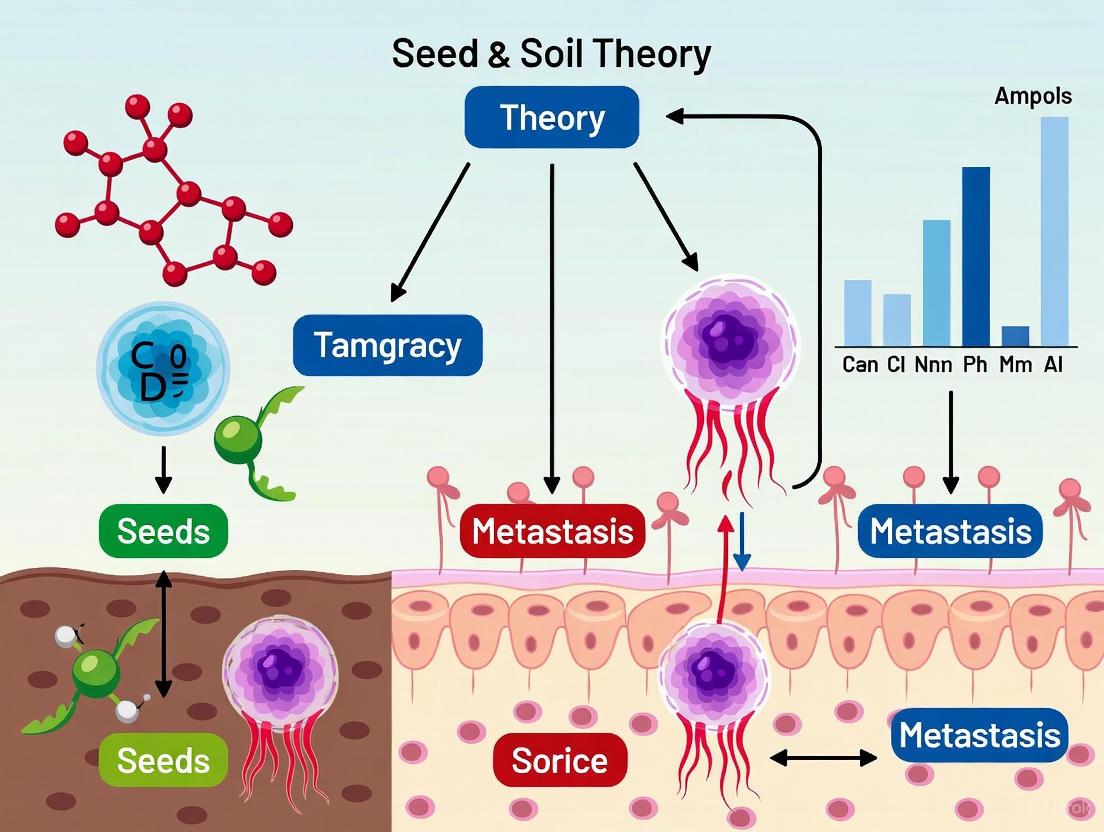
This article provides a comprehensive analysis of the 'Seed and Soil' hypothesis, a foundational concept in metastasis research first proposed by Stephen Paget in 1889.
Seed and Soil Theory of Metastasis: Molecular Mechanisms, Therapeutic Applications, and Future Directions
Abstract
This article provides a comprehensive analysis of the 'Seed and Soil' hypothesis, a foundational concept in metastasis research first proposed by Stephen Paget in 1889. Tailored for researchers, scientists, and drug development professionals, it synthesizes current molecular insights into tumor cell (seed) and microenvironment (soil) interactions. The review systematically explores the invasion-metastasis cascade, organ-specific tropism mechanisms, and the development of therapeutic strategies targeting these interactions. It further examines challenges in translational research, including therapeutic resistance and dormancy, and evaluates emerging technologies and comparative models that are shaping the future of metastasis treatment. By integrating foundational theory with cutting-edge applications, this article serves as a strategic resource for advancing both basic research and clinical drug development.
Deconstructing the Seed and Soil Hypothesis: From Historical Roots to Modern Molecular Insights
First articulated by Stephen Paget in 1889, the "Seed and Soil" hypothesis proposed that the metastasis of cancer is not a random process, but the product of intimate interactions between metastatic tumor cells (the "seed") and the microenvironment of specific distant organs (the "soil") [1] [2]. For decades, this concept was overshadowed by mechanical theories of metastasis. However, contemporary research has not only validated Paget's foundational insight but has expanded upon it, uncovering molecular mechanisms governing organotropism, the pre-metastatic niche, and cellular dormancy [1] [3] [4]. This whitepaper revisits the Paget formulation, synthesizing current quantitative data on metastatic patterns, detailing the experimental methodologies that underpin modern discoveries, and outlining the essential research tools that are shaping the next generation of therapeutic strategies aimed at disrupting the metastatic cascade.
The patterns of metastatic spread—such as breast cancer's propensity to metastasize to bone and lung, or colon cancer's frequent spread to the liver—have been a long-standing observation in clinical oncology [3] [4]. In 1889, the English surgeon Stephen Paget systematically analyzed 735 autopsy records of women who died from breast cancer and concluded that the distribution of secondary growths was not random [2] [5]. He challenged the prevailing anatomical-mechanical theory, championed by others like Virchow, which posited that metastasis was merely a consequence of circulatory patterns and that tumor cells lodged in the first capillary bed they encountered [5] [6].
Paget turned to a botanical analogy, stating, "When a plant goes to seed, its seeds are carried in all directions; but they can only live and grow if they fall on congenial soil" [2]. In this metaphor, the cancer cell is the "seed," and the microenvironment of the distant organ is the "soil." Metastasis, therefore, requires not just a disseminating seed, but a receptive and nurturing soil [1] [3]. Despite its elegance, this hypothesis was largely ignored for nearly a century, as cancer research focused predominantly on the intrinsic properties of the "seed" [3] [2]. The modern era of metastasis research has witnessed a powerful resurgence of Paget's concept, driven by technological advances that allow for deep exploration of the tumor microenvironment, leading to the characterization of critical processes such as the pre-metastatic niche and metastatic dormancy [1] [3].
Molecular Mechanisms: Deconstructing Seed and Soil Crosstalk
The successful establishment of a metastasis is a highly inefficient process, with estimates suggesting that less than 0.01% of circulating tumor cells (CTCs) ultimately form clinically detectable secondary lesions [5]. This inefficiency underscores the biological barriers that must be overcome, a process governed by precise molecular dialogues.
The Pre-Metastatic Niche: Preparing the Soil
A pivotal advancement in the "Soil" hypothesis is the discovery that the primary tumor can actively prepare distant organs for colonization long before the arrival of the first cancer cell, a concept known as the pre-metastatic niche [1] [7].
- Primary Tumor-Derived Factors: The primary tumor secretes various factors, including tumor-derived soluble factors and exosomes (small extracellular vesicles), which mobilize bone marrow-derived hematopoietic cells to future metastatic sites [1].
- Cellular and Extracellular Matrix Changes: These recruited cells, along with resident stromal cells, contribute to an accumulation of aberrant immune cells and extracellular matrix proteins. This creates an immunosuppressive, pro-inflammatory, and pro-angiogenic microenvironment that is conducive to tumor cell homing and colonization [1] [7].
- Universal and Tissue-Specific Mechanisms: Universal mechanisms involve the recruitment of VEGFR1+ bone marrow progenitors and immunosuppressive myeloid cells to suppress local anti-tumor immunity [7]. Tissue-specific mechanisms can include, for example, the secretion of pro-osteoclastogenic cytokines like IL-17F and RANKL by tumor-primed CD4+ T-cells in the bone marrow, prompting bone lysis and the release of stored growth factors like TGFβ to create a permissive niche for breast cancer cells [7].
Key Signaling Pathways in Organotropism
Different cancers exhibit distinct organotropism based on the compatibility between receptor-ligand pairs on the seed and soil. The table below summarizes key molecular players in this process.
Table 1: Key Molecular Mediators of Seed and Soil Interactions in Common Metastatic Sites
| Metastatic Site | Cancer Type | Seed Mechanism (Cancer Cell) | Soil Mechanism (Microenvironment) | Key References |
|---|---|---|---|---|
| Bone | Breast, Prostate | Expression of CXCR4, PTHrP, sLeX antigen | Expression of CXCL12 (SDF-1), RANKL; Constitutive E-selectin on endothelium | [7] [5] |
| Liver | Colorectal, Breast | Expression of CXCR4; TGFα/EGFR signaling | Expression of CXCL12; Formation of a favorable niche via VEGF, MMP-2, MMP-9 upregulation | [7] [4] |
| Lung | Multiple | Re-expression of developmental genes from embryonic lung formation | Provision of a compatible microenvironment for developing lung-like programs | [3] |
| Brain | Breast, Lung, Melanoma | Expression of L1CAM for vessel co-option and growth | Extreme adaptation required for survival in foreign brain parenchyma | [3] |
The CXCL12-CXCR4 axis is a quintexample. CXCL12 (SDF-1) is highly expressed in common metastatic destinations like bone, liver, and lung [7] [5]. Cancer cells expressing the receptor CXCR4 are chemoattracted to these organs. Upon binding, CXCR4 activation triggers pseudopodia formation, increased invasion, and migration, and activates integrins to enhance adhesion to the local microvasculature [5].
Another critical concept is the co-option of developmental programs. Research from Memorial Sloan Kettering Cancer Center revealed that lung cancer cells spreading from a primary location switch on genes that are typically active only during embryonic lung development [3]. In effect, the metastatic cells "go back in time" to an earlier, plastic developmental state, reenacting the program for organ formation "out of time and out of place" to facilitate colonization [3]. This phenomenon is also observed in resistance mechanisms, where lung cancer cells treated with EGFR inhibitors can transform into an entirely different cell type by resorting to these same developmental genes [3].
Figure 1: The Formation of the Pre-Metastatic Niche. The primary tumor systemically primes a distant organ site by secreting factors that recruit BMDCs, leading to ECM remodeling and immunosuppression, creating a receptive environment for incoming circulating tumor cells.
Quantitative Metastatic Patterns and Clinical Timelines
The non-random nature of metastasis is substantiated by extensive clinical data. Understanding these patterns and the timeline of metastatic spread is crucial for prognosis and diagnostic planning.
Site-Specific Metastatic Propensity
Different primary cancers have characteristic metastatic destinations. The following table compiles large-scale clinical data on the frequency of primary tumors found in patients presenting with a metastasis at a common site [7].
Table 2: Primary Tumor Origins Identified at Common Metastatic Sites (Based on Large-Scale Clinical Studies)
| Metastatic Site | Most Common Primary Cancers (and Approximate Frequencies) |
|---|---|
| CNS/Brain | Lung (23.4%), Melanoma (8.6%), Kidney (7.0%) |
| Bone | Breast, Prostate, Lung (See Table 3 for details) |
| Liver | Gastrointestinal Cancers (e.g., Colorectal), Breast, Lung |
| Lung | Lung (Primary), Colorectal, Various others |
The Metastatic Timeline in Breast Cancer
Evidence suggests that metastasis follows not only a specific pattern but also a potential timeline. A 2017 study of 413 patients with brain metastasis analyzed the median time for the first metastasis to appear, referred to as Metastasis-Free Survival (MFS), across different organs [6]. The data revealed a statistically significant chronological order of metastasis emergence (p < 0.009) [6]:
- Early Metastersizing Sites: Bone (MFS: 7.2 months), Adrenal (8.4 months), Liver (14.6 months), Brain (13.2 months).
- Late Metastersizing Sites: Lung (30.2 months), Peritoneum (27.7 months), and notably, Skin (54.2 months).
This timeline further varied significantly based on the molecular subtype of breast cancer (p < 0.0001) [6], indicating that the biology of the "seed" profoundly influences the schedule of metastatic spread.
Table 3: Survival and Metastasis Rates in Common Cancers
| Cancer Type | Incidence of Bone Metastasis | Impact on Survival | Key References |
|---|---|---|---|
| Prostate Cancer | 68% - 85% | 3-year survival: 50% (with BM) vs. higher without | [4] [5] |
| Breast Cancer | 65% - 75% | Major cause of morbidity and mortality | [4] [5] |
| Lung Cancer | ~40% | 1-year SRE incidence: 55%; reduces survival | [4] |
Experimental Protocols: Methodologies for Modern Seed and Soil Research
Advancements in the field are directly tied to the development of sophisticated experimental models that recapitulate the human metastatic cascade.
In Vivo Modeling of Organ-Specific Metastasis
Protocol: Experimental Metastasis Assay via Intracardiac or Tail-Vein Injection.
- Objective: To study the later stages of metastasis (survival in circulation, arrest in organs, extravasation, and colonization) by directly introducing tumor cells into the bloodstream [5].
- Materials:
- Immunodeficient mice (e.g., nude or NSG mice) for human cell lines; Syngeneic mice for murine cell lines.
- Fluorescently or luciferase-labeled tumor cells.
- Matrigel (for subcutaneous implantation if generating cells from a primary tumor).
- Insulin syringes for injection.
- In vivo imaging system (IVIS) for bioluminescence/fluorescence tracking.
- Methodology:
- Cell Preparation: Harvest and resuspend tumor cells in sterile PBS or serum-free medium. Keep on ice.
- Injection: Anesthetize the mouse.
- For intracardiac injection, insert the needle into the left ventricle and slowly inject the cell suspension. This distributes cells systemically, modeling widespread dissemination.
- For tail-vein injection, inject the cell suspension into the lateral tail vein. This primarily models lung metastasis, as cells are trapped in the pulmonary capillary bed.
- Monitoring: Regularly image mice using IVIS to quantify tumor cell burden and location over time.
- Endpoint Analysis: At a predetermined endpoint or when mice become moribund, euthanize and harvest organs for ex vivo imaging, histological analysis (H&E staining, immunohistochemistry), and/or RNA/protein extraction.
- Key Insight: This protocol, pioneered by researchers like Fidler, was instrumental in proving the "seed and soil" theory. A classic experiment by Kinsey demonstrated that lung-homing melanoma cells would metastasize to both normal lung and ectopically transplanted lung tissue, but not to other ectopic tissues, proving the dominance of the "soil" [5].
Profiling the Metastatic Niche with Single-Cell RNA Sequencing
Protocol: Dissecting the Tumor Microenvironment at Single-Cell Resolution.
- Objective: To comprehensively characterize the cellular heterogeneity and transcriptional states of both metastatic cells and the surrounding stromal cells within a secondary lesion [3].
- Materials:
- Fresh metastatic tissue (human or murine).
- Single-cell dissociation kit (enzymatic cocktail for tissue digestion).
- Single-cell RNA sequencing platform (e.g., 10x Genomics).
- Bioinformatic analysis pipelines (e.g., Cell Ranger, Seurat, Scanpy).
- Methodology:
- Single-Cell Suspension: Dissociate the fresh metastatic tumor into a single-cell suspension, ensuring high viability.
- Library Preparation: Use a microfluidic device to partition individual cells into droplets with barcoded beads, creating uniquely indexed cDNA libraries for each cell.
- Sequencing: Perform high-throughput next-generation sequencing on the pooled libraries.
- Bioinformatic Analysis:
- Quality Control: Filter out low-quality cells and doublets.
- Dimensionality Reduction: Use PCA and UMAP/t-SNE to visualize cell populations.
- Cluster Identification: Identify distinct cell types (cancer cells, immune cells, fibroblasts, endothelial cells) based on canonical markers.
- Differential Expression: Compare gene expression profiles between clusters, or between cells from different metastatic sites, to identify key pathways and interactions.
- Key Insight: This technology was critical in the discovery that lung cancer metastases re-express embryonic lung development genes [3]. It allows researchers to move beyond bulk tissue analysis and pinpoint the specific contributions of each cellular component of the "soil".
Figure 2: Single-Cell RNA Sequencing Workflow. This protocol enables the deconvolution of the complex cellular ecosystem within a metastasis, identifying critical interactions between the "seed" (cancer cells) and "soil" (microenvironment).
The Scientist's Toolkit: Essential Reagents and Models
Table 4: Key Research Reagent Solutions for Seed and Soil Investigation
| Reagent / Model | Function/Application | Justification |
|---|---|---|
| CXCR4 Antagonists (e.g., AMD3100) | Small molecule inhibitors of the CXCR4 receptor. | To experimentally block the CXCL12-CXCR4 chemotactic axis, a critical pathway for homing to bone, liver, and lung [7] [5]. |
| Patient-Derived Xenograft (PDX) Models | Immunodeficient mice implanted with fresh human tumor tissue. | Preserves the cellular heterogeneity and stromal interactions of the original patient tumor, providing a more clinically relevant model for studying metastasis and therapy response. |
| L1CAM Blocking Antibodies | Antibodies targeting the L1CAM cell adhesion molecule. | L1CAM is required for metastatic growth in new territories (e.g., for colon cancer repair and regeneration programs); its blockade inhibits colonization [3]. |
| Luciferase/Labeled Cell Lines | Tumor cells engineered to express luciferase or fluorescent proteins (GFP, RFP). | Enables real-time, non-invasive tracking of metastatic dissemination and tumor burden in live animals via bioluminescence/fluorescence imaging (IVIS). |
| Tyrosine Kinase Inhibitors (e.g., Imatinib) | Small molecule inhibitors targeting activated kinase receptors like PDGFR-β. | Used to dissect signaling pathways in the stroma; e.g., imatinib plus taxane showed efficacy in a prostate cancer bone metastasis model [5]. |
Stephen Paget's "Seed and Soil" hypothesis, conceived from astute clinical observation in 1889, has proven to be a remarkably durable and generative framework for oncology [1] [2]. Modern research has transitioned from proving its validity to deconstructing its profound molecular complexity. The discovery of the pre-metastatic niche reveals that the "soil" is not passive but can be actively and systemically cultivated by the primary tumor [1]. The delineation of pathways like CXCL12-CXCR4 and processes like developmental reprogramming provides a mechanistic basis for organotropism [3] [5]. Furthermore, the concept of metastatic dormancy, where cells remain quiescent for years, explains late recurrences and highlights the dynamic, adaptive nature of the "seed" [3].
The future of combating metastasis lies in targeting these intimate interactions. Therapeutic strategies are evolving beyond targeting the cancer cell alone to include:
- Disrupting niche preparation by targeting tumor-derived exosomes or bone marrow-derived cell recruitment.
- Combating dormancy by forcing dormant cells into a proliferative state where they become vulnerable to conventional therapies.
- Developing "soil-specific" therapies, such as bone-modifying agents (bisphosphonates, denosumab) for bone metastasis, to render the environment hostile to colonization.
Paget's legacy is a paradigm that continues to guide the scientific community toward a more holistic understanding of cancer metastasis, emphasizing that the lethal outcome of cancer is written not by the seed alone, but in the complex, sustained dialogue between the traveler and the terrain [3] [2].
Metastasis represents a pivotal event in cancer progression, accounting for over 90% of cancer-related deaths and posing a formidable challenge to the clinical management of advanced cancer patients [4]. This intricate, multi-step process encompasses the uncontrolled proliferation of primary tumor foci and the transmigration of cancerous cells across tissue barriers, leading to new lesions in distant organs that substantially compromise survival rates and quality of life [4]. The invasion-metastasis cascade describes the biological pathway whereby aggressive cancer cells leave the primary tumor, travel through the bloodstream, and eventually colonize distant organs to form metastatic colonies [8]. Understanding this cascade is crucial for developing effective therapeutic strategies against metastatic disease, which remains the greatest cause of death for cancer patients despite advances in primary tumor treatment [9].
The famous "seed and soil" hypothesis, proposed by Stephen Paget in 1889, provides a fundamental framework for understanding metastasis [10] [11]. This hypothesis suggests that metastasis is not random; rather, the "seed" (cancer cells) requires a conducive "soil" (metastatic site) for successful growth, with specific tissue niches providing factors that facilitate their development [4]. Modern research has expanded this concept to include the "pre-metastatic niche", where the distant site is preconditioned by factors secreted by the primary tumor to be more receptive to circulating cancer cells before they even arrive [12]. The intricate interplay between cancer cells and the microenvironment of the target organ represents the core of the metastatic cascade, involving dynamic changes in numerous cytokines, growth factors, and signaling pathways that collectively create a microenvironment conducive to tumor growth and dissemination [4].
The Sequential Steps of the Invasion-Metastasis Cascade
The metastatic cascade represents the ultimate "survival of the fittest" test for cancer cells, as only a small fraction of disseminated tumor cells can overcome the numerous hurdles they encounter during the transition from the site of origin to a distinctly different distant organ [13]. This highly inefficient process requires cancer cells to complete a series of challenging steps, with failure at any single step preventing the formation of clinically detectable metastases [13] [8].
Local Invasion and Stromal Penetration
The metastatic cascade initiates with the local invasion of surrounding tissues by primary tumor cells. Early epithelioid tumor cells are tightly connected by cell junctions, but as the tumor develops, they gradually become more invasive [12]. During this phase, cancer cells acquire the ability to breach the basement membrane and invade the surrounding extracellular matrix (ECM), requiring dramatic changes in cell morphology and behavior [10].
A critical molecular mechanism facilitating local invasion is the epithelial-to-mesenchymal transition (EMT), through which cancer cells acquire invasive and metastatic potential [14]. During EMT, tumor cells undergo molecular transformations that induce cytoskeletal rearrangements, shifting from intercellular adhesions to individual cell-ECM interactions [15]. This transition leads to a more migratory phenotype, accompanied by loss of cell polarity and cohesion at the tumor periphery [15]. Cells undergoing EMT downregulate epithelial markers like E-cadherin and upregulate mesenchymal markers such as vimentin and N-cadherin, enabling detachment from the primary tumor mass [12] [11].
The surrounding tumor microenvironment (TME) plays a crucial role in promoting local invasion. The TME comprises stromal cells, immune cells, and blood vessels interwoven with non-cellular elements like the ECM [15]. Cancer-associated fibroblasts (CAFs) facilitate metastasis development in advanced disease stages by releasing matrix metalloproteinases (MMPs) and cytokines that accelerate tumor cell invasion [13]. Additionally, increased ECM stiffness induces expression of specific microRNAs (e.g., miR-18a) that reduce tumor suppressor phosphatase and tensin homolog (PTEN) expression, promoting cancer progression and metastasis [13].
Intravasation into Circulation
After detaching from the primary tumor and invading the surrounding stroma, cancer cells must intravasate into the blood or lymphatic circulation to disseminate systemically [10]. Tumor cells achieve this by penetrating the endothelial barrier that lines blood vessels, either at the primary site or through newly formed tumor-associated vasculature [8].
Tumor-associated vasculature tends to be tortuous, dilated, and contains dysfunctional pericytes, which may reduce barriers to tumor cell access to the vasculature [10]. During this process, tumor cells secrete proteolytic enzymes including matrix metalloproteinases (MMPs) that degrade the basement membrane and ECM components, creating paths for migration toward vessels [12] [14]. Chemical gradients of chemoattractants and hypoxia within the tumor microenvironment also stimulate directional migration toward vessels [15].
While metastatic cells can disperse through either the lymphatic or hematogenous circulation, the blood appears to be the preferred route for most metastases, though sentinel node status remains important for clinical staging of some cancers [10]. Horizontal microphysiological systems (MPS) with central ECM chambers and side channels have been developed to model this process, allowing researchers to study tumor cell migration toward endothelial-lined channels in response to chemotactic gradients [15].
Survival in Circulation
The circulatory system presents a hostile environment for cells derived from solid tumors, and circulating tumor cells (CTCs) must develop strategies to survive this phase of the metastatic cascade [13]. Once in circulation, pre-metastatic cells must acquire resistance to anoikis, a type of programmed cell death that results from loss of attachment to the ECM [10].
CTCs employ several survival mechanisms in the vascular system. They may bind to platelets to shield themselves from shear forces and immune cells encountered in the blood stream [10]. Some CTCs also form aggregates with other cancer cells or host cells, which provides survival advantages and increases their potential to lodge in capillary beds [12]. The narrowest vessels, the capillaries, have internal diameters smaller than most pre-metastatic cells, thus sieving many CTCs from circulation [10].
Metastasis is a highly inefficient process, and CTCs face numerous stresses during circulation, including fluid shear stress, oxidative stress, and immune surveillance [13]. Tumor cells develop various mechanisms to cope with these stresses, such as activation of survival pathways and metabolic adaptations [13]. Only a small fraction of CTCs that enter circulation successfully survive to extravasate at distant sites.
Extravasation at Distant Organs
Circulating tumor cells that survive the rigors of circulation must exit the vasculature through a process called extravasation [10]. This process involves arrested tumor cells adhering to the endothelial wall of blood vessels in distant organs, transmigrating through the endothelium, and invading the parenchyma of the target organ [10] [15].
The sites for extravasation may be dictated by 'passive tropism', with exit simply being the nearest point to the site of intravasation where capillary sieving occurs (for example, the liver for colon cancer cells) [10]. Additionally, absence of closely apposed mural cells on vessel walls supplying certain organs like bone marrow renders them more vulnerable to pre-metastatic cell seeding [10]. In some cases, tropism of pre-metastatic cells may reflect a pre-adapted state for certain organs, including expression of surface proteins with special affinity for those environments [10].
Microfluidic models have been developed to study extravasation, incorporating endothelial barriers and organ-specific microenvironmental cues to better understand the mechanisms governing this critical step [16] [15]. These models have revealed that cancer cells can extend protrusions through endothelial junctions, apply mechanical forces to disrupt endothelial barriers, and secrete factors that increase vascular permeability [15].
Metastatic Colonization and Outgrowth
The final step in the metastatic cascade is colonization, where extravasated cancer cells establish a new tumor mass in the secondary site [10]. This is considered the most rate-limiting step in metastasis, as most disseminated tumor cells that successfully extravasate fail to form clinically detectable metastases [10] [13].
Successful colonization requires cancer cells to adapt to the foreign microenvironment of the secondary site, evade local immune responses, and eventually proliferate to establish a metastatic lesion [10]. Some disseminated tumor cells may enter a state of dormancy, remaining quiescent for years or even decades before being reactivated to form overt metastases [10] [11]. For a micrometastasis to grow beyond 1-2 mm in diameter requires recruitment of a microvasculature to supply nutrients through neoangiogenesis [10].
The colonization process is significantly influenced by the formation of a pre-metastatic niche, where primary tumor-derived factors precondition distant sites to be more receptive to disseminated cancer cells [12]. This preconditioning involves reprogramming of resident cells, recruitment of myeloid cells, deposition of ECM components, and increased vascular permeability [12]. Metastatic cells increasingly engage in communication with the microenvironment through signaling pathways such as WNT as metastasis progresses [9].
Organotropism in Metastasis: The Seed and Soil Hypothesis
The "seed and soil" hypothesis provides a fundamental framework for understanding why certain cancers preferentially metastasize to specific organs, a phenomenon known as organotropism [4] [11]. This hypothesis, proposed by Stephen Paget in 1889, posits that metastasis is not random; rather, the "seed" (cancer cells) requires a conducive "soil" (metastatic site) for successful growth [4] [10]. Different cancer types exhibit distinct patterns of dissemination to specific organs or tissues, indicating that metastasis is driven by intricate biological mechanisms rather than mere statistical correlation or hemodynamic factors alone [4].
Molecular Mechanisms of Organotropism
The successful spread of cancer cells to distant organs depends on both their intrinsic properties and the distal colonized microenvironment [4]. After detachment from the primary tumor, circulating tumor cells (CTCs) enter the bloodstream and must survive a hostile environment, evade immune surveillance, adhere to the narrow capillaries of distant organs, and extravasate into the surrounding tissue [4]. This extravasation step is particularly significant for organ tropism, as it determines whether cancer cells can establish a niche within specific target organs [4].
Equally important is the "soil," or the microenvironment at the metastatic site [4]. This environment comprises a complex array of growth factors, cytokines, extracellular matrix components, and diverse cell types [4]. Cancer cells, tissue-specific niches, and immune cells engage in intensive cell-cell communication to shape a tumor-favoring ecosystem [4]. Tissue structure also influences metastasis patterns; for example, the lymphatic system often serves as a primary route for dissemination, with lymph nodes providing initial sites for cancer cell trapping and proliferation before further spreading [4].
The blood and lymphatic circulation patterns play a crucial role in determining metastatic sites [4]. Anatomical factors greatly influence where cancer cells disseminate, with the liver and lungs being common metastasis sites owing to their distinctive blood flow patterns [4]. For example, gastrointestinal cancers often metastasize to the liver due to the direct blood flow from the intestines via the portal venous system [4].
Pre-Metastatic Niche Formation
A critical concept expanding the seed and soil hypothesis is the pre-metastatic niche [12]. Long before tumor metastasis occurs, the distant site is already being prepared as a suitable microenvironment through factors secreted by the primary tumor [12]. The formation of the pre-metastatic niche involves several coordinated steps: reprogramming of resident cells, recruitment of myeloid cells, deposition of ECM components, and increased vascular permeability [12].
Primary tumors secrete extracellular vesicles (EVs), cytokines, and other factors that systemically precondition specific distant organs to support metastatic engraftment [11]. These tumor-derived factors educate bone marrow-derived cells to migrate to pre-metastatic sites where they modify the local microenvironment [12]. Additionally, ECM remodeling in target organs creates a supportive niche for disseminated tumor cells, with patterns of matrix remodeling differing between primary and secondary sites [12].
Table 1: Common Sites of Organotropic Metastasis for Different Cancer Types
| Cancer Type | Main Sites of Metastasis | Proposed Mechanisms of Organotropism |
|---|---|---|
| Breast | Lungs, Liver, Bones | Chemokine receptors (CXCR4), bone-derived factors (TGF-β, BMPs) |
| Colon | Liver, Peritoneum, Lungs | Portal venous drainage, chemokine axes (CXCL12-CXCR4) |
| Prostate | Bones, Lungs, Liver | Bone marrow niche adhesion molecules, BMP signaling |
| Lung | Adrenal gland, Liver, Brain, Bones | Inflammatory mediators, vascular patterns |
| Melanoma | Lungs, Skin/Muscle, Liver | Chemokine receptors, integrin expression |
| Pancreas | Liver, Lungs, Peritoneum | Portal circulation, fibrotic microenvironment |
Clinical Implications of Organotropism
Understanding organotropism has significant clinical implications for cancer management. Recognizing organ-specific tendencies in different cancers facilitates more effective monitoring and management of patients by clinicians [4]. This knowledge is crucial for improving patient outcomes and reducing the global burden of cancer-related mortality [4].
Statistical data indicates that over 19 million new cancer cases are registered worldwide annually, with over 60% ultimately developing metastatic disease [4]. The incidence of bone metastasis in patients with breast, prostate, and lung cancers is as high as 75%, 70-85%, and 40%, respectively [4]. Different metastatic sites present distinct clinical challenges; for example, brain metastasis affects 8.3-14.3 per 100,000 individuals, with a prevalence of 1.9-9.6% among cancer patients [4].
Table 2: Clinical Impact of Site-Specific Metastases
| Metastatic Site | Incidence/Prevalence | Clinical Impact |
|---|---|---|
| Bone | 75% (breast), 70-85% (prostate), 40% (lung cancers) | Skeletal-related events (fractures, pain), reduced quality of life, survival rates of 50% (3-year) and 65% (5-year) for prostate cancer with bone metastasis |
| Brain | 8.3-14.3 per 100,000 individuals; 1.9-9.6% of cancer patients | Severe neurological complications, historically poor prognosis though improving with advanced therapies |
| Liver | ~5% of cancer patients; notably prevalent in young women with breast cancer and young men with colorectal cancer | One-year survival rate of only 15.1% (vs. 24.0% without liver metastasis), significant economic and psychological burden |
| Lung | 17.92 per 100,000 individuals; ~13% in primary lung cancer patients, only 0.5% in prostate cancer | Generally poor prognosis, overall survival rates significantly lower than patients without lung metastasis, predominantly affects elderly males with late-stage cancers |
Key Molecular Mechanisms and Signaling Pathways
The metastatic cascade is driven by complex molecular mechanisms that enable cancer cells to complete each step of the journey. Understanding these pathways is essential for developing targeted therapies against metastasis.
Epithelial-Mesenchymal Transition (EMT) and Its Regulation
Epithelial-mesenchymal transition (EMT) represents a critical molecular reprogramming that allows epithelial cancer cells to acquire migratory and invasive capabilities [14] [11]. During EMT, tumor cells undergo biochemical changes that enable them to assume a mesenchymal phenotype, with enhanced migratory capacity, invasiveness, and resistance to apoptosis [11]. This process involves downregulation of epithelial markers (e.g., E-cadherin) and upregulation of mesenchymal markers (e.g., vimentin, N-cadherin) [12].
While EMT is crucial for dissemination, there is evidence that the reverse process - mesenchymal-epithelial transition (MET) - may be important for colonization at distant sites, allowing cancer cells to regain epithelial characteristics and proliferative capacity [11]. This plasticity is regulated by various signaling pathways and transcription factors. Recent single-cell transcriptome analysis across multiple cancer types has identified SP1 and KLF5 as key regulators of metastasis, acting as drivers and suppressors, respectively, at critical steps of the metastatic transition [9].
EMT is induced by various factors in the tumor microenvironment, including growth factors (TGF-β, EGF), cytokines, and ECM components [12]. The process is also influenced by mechanical cues such as ECM stiffness, which can induce EMT through the TWIST1-G3BP2 mechanotransduction pathway and activation of Hippo pathway components YAP/TAZ [13].
Stress Response Pathways in Metastasis
During cancer progression, tumor cells encounter numerous stresses that force them to develop adaptive pathways to gain improved fitness in the metastatic cascade [13]. These "metastasis fitness genes" increase the odds of successful metastasis by relieving stresses not encountered by normal cells in physiological conditions [13].
Hypoxia represents a significant stressor in the tumor microenvironment, triggering activation of hypoxia-inducible factors (HIFs) that coordinate adaptive responses [13]. HIF-1α, stabilized during hypoxia, activates transcription of genes involved in angiogenesis, metabolic reprogramming, and invasion [13]. Hypoxic tumor regions also show increased secretion of pro-angiogenic factors and extracellular vesicles that modify the microenvironment to support metastasis [13].
Metastatic cells also face metabolic stresses as they adapt to different microenvironments during the metastatic cascade [13]. Cancer cells develop metabolic plasticity, altering their nutrient utilization patterns to survive in various conditions [13]. For example, some metastatic cells increase antioxidant production to counteract oxidative stress encountered during circulation and colonization [14].
Pan-Cancer Drivers of Metastasis
Recent pan-cancer analyses have sought to identify conserved molecular drivers of metastasis across different cancer types [9]. Single-cell transcriptome analysis encompassing over 200 patients with metastatic and non-metastatic tumors across six cancer types revealed a core gene signature associated with metastatic progression [9]. This 286-gene signature provides insights into the intricate cellular dynamics and gene regulatory networks driving metastasis at the pan-cancer level [9].
Functional perturbation studies identified SP1 as a key driver of metastasis across multiple cancer types [9]. Through in vivo and in vitro loss-of-function experiments, researchers demonstrated SP1's role in driving cancer cell survival, invasive growth, and metastatic colonization [9]. Furthermore, tumor cells and the microenvironment increasingly engage in communication through WNT signaling as metastasis progresses, driven by SP1 [9].
Experimental Models for Studying Metastasis
Advancements in experimental models have significantly enhanced our understanding of the metastatic cascade, enabling researchers to dissect individual steps and test potential therapeutic interventions.
In Vitro Modeling Approaches
In vitro systems enable modeling of metastasis in a highly controlled environment, allowing scientists to examine discrete steps of the metastatic cascade at a granular level [16]. Classically, laboratories have utilized two-dimensional (2D) cultures of tumor cells to measure intrinsic metastatic capabilities through transwell migration assays, wound-healing assays, and matrix degradation assays [16]. However, continued passaging of cell lines can result in significant genetic shift and loss of heterogeneity compared to original human samples [16].
To address these limitations, three-dimensional (3D) culture systems have been developed, including organoids and organotypic cultures [16]. Organoids, often termed 'mini organs,' are organized 3D cultures designed to mimic the structure and function of human tissue [16]. Patient-derived organoids (PDOs) cultured directly from bio-banked human specimens preserve most of the cellular heterogeneity, histological features, and molecular profiles of the patient's original tumor tissue [16].
Microphysiological systems (MPS), including organ-on-a-chip technologies, have emerged as powerful tools that deliver physiologically relevant cues and precise experimental control to recapitulate step-specific metastatic contexts [15]. These microfluidic devices can model vascular physiology during intravasation, circulation, and extravasation, incorporating multiple stromal, endothelial, and immune cell types to mirror physiological morphology, flow rates, and wall shear stresses in capillary systems [16] [15].
In Vivo Models and Advanced Approaches
In vivo models provide a comprehensive, physiological view of metastatic progression that cannot be fully recapitulated in vitro [16]. Genetically engineered mouse models (GEMMs) developed in immune-competent mice allow scientists to explore the metastatic cascade from the first step of tumor initiation [16]. While most tumorigenic GEMMs do not spontaneously generate metastasis, several models can develop metastasis in the liver, lungs, and lymph nodes [16].
Alternative strategies include retroviral delivery models and patient-derived xenografts (PDX), where human tumor tissues are implanted into immunodeficient mice [16]. However, animal models are hindered by restricted monitoring capabilities and inherent genetic, immune, and metabolic differences from humans, which reduce their clinical relevance [15]. These limitations have driven increased demand for alternative models that more accurately mimic and track tumor cell progression at each stage of metastasis [15].
Recent advances include humanized mouse models that incorporate human immune cells to better study immune-tumor interactions during metastasis, and sophisticated intravital imaging techniques that allow real-time visualization of metastatic processes in living animals [16]. These approaches provide unprecedented insights into the dynamic cellular behaviors during metastasis.
Table 3: Research Reagent Solutions for Metastasis Research
| Research Tool Category | Specific Examples | Application in Metastasis Research |
|---|---|---|
| 3D Culture Systems | Patient-derived organoids (PDOs), Stem-cell-derived organoids, Organotypic cultures | Preserve cellular heterogeneity and structural features of original tumors; study tumor-stroma interactions; drug testing platforms |
| Microphysiological Systems (MPS) | Organ-on-a-chip models, Microfluidic devices with ECM scaffolds, Vascularized MPS | Recapitulate physiological cues specific to each metastatic step; study intravasation/extravasation under flow; real-time monitoring of cell dynamics |
| Animal Models | Genetically engineered mouse models (GEMMs), Patient-derived xenografts (PDX), Humanized mouse models | Study complete metastatic cascade in physiological context; evaluate therapeutic efficacy; investigate immune-tumor interactions |
| Molecular Tools | scRNA-seq, CRISPR-based functional screens, Circulating tumor cell (CTC) isolation platforms | Identify metastatic drivers; characterize heterogeneity; develop prognostic signatures; monitor treatment response |
| Imaging Technologies | Intravital microscopy, Bioluminescence imaging, Multiplexed immunofluorescence | Real-time visualization of metastatic processes; track disseminated cells; analyze cellular heterogeneity in situ |
Therapeutic Implications and Future Directions
Understanding the intricate mechanisms of the invasion-metastasis cascade provides critical insights for developing novel therapeutic strategies against metastatic disease.
Current Therapeutic Approaches and Challenges
Despite over 200 drugs approved in the last six decades targeting various aspects of cancer, the overall survival in metastatic disease remains poor [9]. Conventional treatments such as chemotherapy, radiation, and targeted therapy have achieved considerable success in primary tumors, but metastatic disease is more resistant to these strategies [13]. This treatment resistance arises from several factors: the genetic heterogeneity of metastatic cells, the protective influence of the tumor microenvironment, and the presence of therapy-resistant cancer stem cells [14] [11].
Current clinical studies usually prioritize the development and evaluation of pharmacological treatments, with relative lack of emphasis on comprehensive understanding of metastasis mechanisms and specific mechanisms underlying organ-specific metastasis [4]. However, several targeted approaches have shown promise, including VEGF inhibitors (e.g., bevacizumab) to block angiogenesis, immune checkpoint inhibitors (e.g., anti-PD-1/PD-L1 antibodies) to enhance immune attack on tumors, and specific pathway inhibitors targeting molecular vulnerabilities in metastatic cells [14].
The liquid biopsy approach has emerged as a valuable tool for monitoring metastatic progression and treatment response through minimally invasive blood-based tests [8]. This methodology enables detection and characterization of circulating tumor cells (CTCs), circulating tumor DNA (ctDNA), extracellular vesicles, and tumor-educated platelets, providing real-time information about tumor evolution and therapeutic resistance mechanisms [8].
Emerging Therapeutic Strategies
Novel therapeutic strategies are focusing on targeting specific steps of the metastatic cascade rather than simply trying to kill rapidly dividing cells [9]. Based on pan-cancer analyses of metastasis drivers, researchers are exploring approaches to target transcription factors like SP1 and to inhibit WNT signaling that becomes increasingly important as metastasis progresses [9]. Drug repurposing analyses have identified distinct FDA-approved drugs with anti-metastasis properties, including inhibitors of WNT signaling across various cancers [9].
Other promising approaches include targeting the pre-metastatic niche to make potential metastatic sites less receptive to disseminated tumor cells, developing therapies against EMT-related molecules, and intervening in extracellular matrix remodeling processes [14]. Additionally, targeting tumor stem cells through their specific signaling pathways represents another strategic approach [14].
Due to the heterogeneity of tumor cells and the complexity of metastatic processes, combination therapies that target multiple pathways simultaneously have become increasingly important [14]. Combining targeted therapies with chemotherapy, radiotherapy, and immunotherapy may provide more comprehensive inhibition of metastatic progression [14]. With continuous development of new technologies such as CRISPR gene editing and single-cell sequencing, we can expect more precise therapeutic targets and strategies to emerge in the coming years [14].
The invasion-metastasis cascade represents a complex, multi-step process that remains the greatest challenge in oncology, responsible for the vast majority of cancer-related deaths. Through detailed dissection of each step - from local invasion and intravasation to circulation, extravasation, and colonization - researchers have gained profound insights into the biological mechanisms driving metastatic progression. The enduring relevance of the "seed and soil" hypothesis underscores the importance of understanding both the intrinsic properties of cancer cells and the microenvironmental factors that support metastatic growth.
Recent technological advances, including sophisticated in vitro models, single-cell analyses, and microphysiological systems, have provided unprecedented resolution into the metastatic process. The identification of pan-cancer metastasis drivers and the characterization of organ-specific tropism mechanisms offer promising avenues for therapeutic intervention. As our understanding of metastasis continues to evolve, so too will our ability to prevent and treat metastatic disease, ultimately improving outcomes for cancer patients worldwide.
Future research directions will likely focus on targeting metastatic fitness genes, disrupting the pre-metastatic niche, exploiting metabolic vulnerabilities of metastatic cells, and developing personalized combination therapies based on the specific molecular features of a patient's metastatic disease. With these advances, there is growing hope that we can transform metastasis from a lethal process to a controllable chronic condition.
The "seed and soil" hypothesis, first proposed by Stephen Paget in 1889, posits that metastasis is not a random process but depends on intricate interactions between circulating tumor cells (the "seed") and the microenvironment of distant organs (the "soil") [4]. Over a century later, this theory continues to provide a fundamental framework for understanding metastatic progression, now refined through modern molecular profiling technologies that characterize the biological properties of both circulating tumor cells (CTCs) and cancer stem cells (CSCs) [17] [4]. These rare cell populations represent the functional "seeds" responsible for initiating metastatic colonies in permissive "soil" [18].
CTCs are cancer cells shed from primary tumors or metastases into the bloodstream, acting as critical intermediaries in cancer dissemination [19]. A subset of these cells possesses stem-like properties, including self-renewal capacity, enhanced survival mechanisms, and resistance to conventional therapies [20]. These CSCs exhibit remarkable plasticity, enabling them to adapt to diverse microenvironments and drive tumor initiation, progression, metastasis, and relapse [20]. The molecular characterization of CTCs and CSCs provides unprecedented insights into the metastatic cascade, tumor heterogeneity, and therapy resistance mechanisms, offering new avenues for diagnostic and therapeutic innovation in oncology [21] [20] [18].
Molecular Profiling Technologies and Methodologies
Circulating Tumor Cell Enrichment and Detection Platforms
The isolation and analysis of CTCs is technically challenging due to their extreme rarity in peripheral blood, with approximately only 1 CTC per 10^8 peripheral blood mononuclear cells (PBMCs) in early-stage disease and 1 per 10^5–10^7 PBMCs in metastatic cancers [18]. Multiple technological platforms have been developed to address this challenge, each with distinct advantages and limitations.
Table 1: Comparison of Major CTC Detection Technologies
| Technology | Principle | Markers/Targets | Sensitivity | Specificity | Key Features |
|---|---|---|---|---|---|
| CellSearch [22] | Immunomagnetic positive enrichment | EpCAM | 60%–92% | 85%–98% | FDA-approved; uses anti-EpCAM magnetic beads with fluorescent labeling for CK8/18/19, CD45, and DAPI |
| CytoSorter [22] | Microfluidic immunoaffinity capture | EpCAM | >70% | N/R | Chip-based platform; preserves cell viability |
| AdnaTest [22] | Multiplex immunomagnetic selection + RT-PCR | Tumor-specific antibodies (multiple) | 60%–90% | N/R | Uses multiple tumor-specific antibodies followed by multiplex RT-PCR for tumor markers |
| MagSweeper [22] | Immunomagnetic separation with robotic isolation | EpCAM | 70%–90% | High (leukocyte-free) | Processes whole blood without centrifugation or lysis; maintains cell viability |
| CTC-Chip [22] | Microfluidic immunoaffinity capture | EpCAM | 80%–95% | 90%–97% | Anti-EpCAM microcolumns; enables enzymatic release for downstream analysis |
| ISET [18] | Size-based filtration | Size/pore exclusion | N/R | N/R | Label-free; preserves cell viability but may have lower purity |
| RosetteSep [18] | Density gradient centrifugation | Density differences | N/R | N/R | Label-free; cost-effective but may lack specificity |
Experimental Protocol: Comprehensive CTC Molecular Profiling
The following protocol outlines a comprehensive approach for CTC molecular profiling, integrating methodologies from recent studies [21] [22]:
Sample Collection and Processing:
- Collect 7.5-10 mL of peripheral blood in CellSave or EDTA tubes.
- Process within 48-96 hours of collection (maintain at room temperature).
- Isolate peripheral blood mononuclear cells (PBMCs) using density gradient centrifugation (Ficoll-Paque).
CTC Enrichment (Immunomagnetic Platform - Representative Protocol):
- Incubate blood sample with anti-EpCAM coated magnetic beads.
- Apply to magnetic separator for 10-15 minutes.
- Wash retained cells 3x with PBS + 1% BSA.
- For negative depletion: Use anti-CD45 antibodies to remove leukocytes.
CTC Identification and Characterization:
- Stain with antibody panel: CD45 (leukocyte marker), cytokeratins (CK7/8, CK14/15/16/19), EpCAM, HLA-A,B,C.
- Include viability marker (DAPI) and apoptosis markers as needed.
- Analyze via flow cytometry (Gallios platform) or fluorescence microscopy.
- Define CTCs as: CD45-/EpCAM+/CK+/HLA-A,B,C+ [21].
Molecular Profiling:
- For genomic analysis: Perform whole exome or targeted sequencing of isolated CTCs.
- For transcriptomic analysis: Conduct single-cell RNA sequencing or RT-PCR for stemness markers (OCT4, SOX2, NANOG).
- For protein expression: Implement intracellular staining for phosphorylated signaling markers (pERK, pAkt) or mutant proteins (EGFR mutants).
- Functional assessment: Conduct in vitro culture for drug sensitivity testing or patient-derived xenograft models.
CTC Cluster Analysis:
- Identify clusters defined as ≥2 adherent CTCs.
- Assess cluster-specific markers (CD44, OCT4, SOX2) [18].
- Evaluate presence of stromal or immune cells within clusters.
Figure 1: Comprehensive Workflow for CTC Molecular Profiling. The diagram outlines key steps from blood collection to data analysis, highlighting enrichment methods and molecular profiling approaches.
Cancer Stem Cells: The Archipelago of Metastatic Seeds
CSCs constitute a highly plastic and therapy-resistant cell subpopulation within tumors that drives tumor initiation, progression, metastasis, and relapse [20]. Their ability to evade conventional treatments, adapt to metabolic stress, and interact with the tumor microenvironment makes them critical targets for innovative therapeutic strategies [20].
CSC Markers and Heterogeneity
A major challenge in CSC research is the absence of universal markers, as CSC identity is shaped by both intrinsic genetic programs and extrinsic cues from the tissue of origin and microenvironment [20]. The following table summarizes key CSC markers across different cancer types:
Table 2: Cancer Stem Cell Markers Across Tumor Types
| Cancer Type | Key CSC Markers | Functional Significance | Therapeutic Implications |
|---|---|---|---|
| Acute Myeloid Leukemia [20] | CD34⁺CD38⁻ | SCID-leukemia-initiating capacity | Foundational CSC identification |
| Breast Cancer [20] | CD44⁺, CD133 | Tumor initiation, therapy resistance | Potential CAR-T targets |
| Glioblastoma [20] | Nestin, SOX2 | Neural lineage specification, self-renewal | Maintenance of tumor hierarchy |
| Gastrointestinal Cancers [20] | LGR5, CD166 | Intestinal stem cell identity | Relationship to normal stem cells |
| Prostate Cancer [20] | EpCAM | Tumor initiation | Target for CAR-T therapy [20] |
| Multiple Carcinomas | EpCAM, CD44 | Metastasis, therapy resistance | Enriched in CTC clusters [18] |
Metabolic Plasticity of CSCs
CSCs exhibit remarkable metabolic plasticity, allowing them to switch between glycolysis, oxidative phosphorylation, and alternative fuel sources such as glutamine and fatty acids, enabling survival under diverse environmental conditions [20]. This plasticity is regulated through interactions with stromal cells, immune components, and vascular endothelial cells that facilitate metabolic symbiosis, further promoting CSC survival and drug resistance [20]. The metabolic adaptability of CSCs represents a key mechanism for their persistence in hostile microenvironments and their resistance to conventional therapies that target rapidly dividing cells.
Signaling Pathways in CTC and CSC Biology
The molecular signaling governing CTC and CSC behavior is complex and involves multiple interconnected pathways that regulate stemness, epithelial-mesenchymal transition (EMT), and interaction with metastatic niches.
Figure 2: Key Signaling Pathways in CTC and CSC Biology. The diagram illustrates major molecular pathways regulating CTC and CSC functions and their clinical implications.
The Scientist's Toolkit: Essential Research Reagents
Table 3: Essential Research Reagents for CTC and CSC Studies
| Reagent Category | Specific Examples | Application/Function | Experimental Context |
|---|---|---|---|
| CTC Enrichment Antibodies | Anti-EpCAM (clone 9C4) [21] | Positive selection of epithelial CTCs | Immunomagnetic separation |
| Anti-CD45 (clone J33) [21] | Leukocyte depletion | Negative selection | |
| CSC/Characterization Markers | Cytokeratins (CK-7/-8, clone CAM5.2) [21] | Epithelial cell identification | Immunofluorescence |
| CD44, CD133 [20] | Cancer stem cell identification | Flow cytometry, sorting | |
| HLA-A,B,C (clone W6/32) [21] | CTC confirmation | Flow cytometry | |
| Signaling Pathway Reagents | EGFR E746-A750del specific (clone D6B6) [21] | Detection of EGFR exon 19 deletion | Intracellular staining |
| EGFR L858R mutant specific (clone 43B2) [21] | Detection of L858R mutation | Intracellular staining | |
| Functional Assay Reagents | DAPI (4',6-diamidino-2-phenylindole) [22] | Nuclear staining, viability assessment | Fluorescence microscopy |
| Phospho-ERK, Phospho-Akt antibodies [21] | Signaling pathway activation | Drug response monitoring | |
| Molecular Analysis Tools | Whole exome sequencing panels [23] | Comprehensive mutation profiling | Tumor heterogeneity studies |
| Single-cell RNA sequencing kits | Transcriptomic analysis | Stemness pathway identification |
Clinical Applications and Therapeutic Implications
Case Study: CTC Molecular Profiling Guides Targeted Therapy
A compelling case report demonstrates the clinical utility of CTC molecular profiling in advanced hepatocellular carcinoma (HCC) [21]. A 52-year-old woman with metastatic HCC refractory to multiple treatments underwent CTC analysis, which revealed EGFR exon 19 deletion and L858R mutation in 24.7% of CTCs [21]. Based on this finding, she was treated with EGFR tyrosine kinase inhibitors (erlotinib, then osimertinib), achieving a partial response that lasted 14 months, as confirmed by Response Evaluation Criteria in Solid Tumors [21]. This case illustrates how CTC molecular characterization can identify actionable targets and guide personalized treatment strategies for cancers where tissue biopsy is challenging.
Prognostic and Predictive Value of CTCs and CSCs
Clinical evidence supports the prognostic significance of CTCs and CSCs in multiple cancer types:
- In metastatic breast cancer, the presence of ≥5 CTCs per 7.5 mL of blood is associated with shorter progression-free and overall survival [18].
- CTC clusters (≥2 adherent CTCs) demonstrate significantly higher metastatic potential compared to single CTCs and correlate with worse clinical outcomes [18].
- In hepatocellular carcinoma, patients with phosphorylated ERK+/pAkt- CTCs showing >40% expression experience longer progression-free survival with sorafenib treatment [21].
- PD-L1+ CTCs can predict response to anti-PD-1 therapy in HCC, demonstrating their utility as predictive biomarkers [21].
Future Perspectives and Challenges
The integration of CTC and CSC analysis into clinical oncology faces several challenges, including the lack of universally reliable CSC biomarkers, technical difficulties in CTC isolation and characterization, and the need for standardized protocols across platforms [20] [22]. Emerging technologies such as single-cell sequencing, spatial transcriptomics, multiomics integration, 3D organoid models, CRISPR-based functional screens, and AI-driven multiomics analysis are paving the way for precision-targeted therapies [20].
The development of rare cell capture technologies that can process larger blood volumes and enable advanced single-cell analyses may enhance the range and potential of CTC-based biomarkers [19]. CTCs are increasingly valuable for assessing tumor heterogeneity, guiding protein biomarker-driven cancer immune therapies, and assessing heterogeneous drug resistance, as well as for detecting minimal residual disease [19]. Future therapeutic strategies will likely combine metabolic reprogramming, immunomodulation, and targeted inhibition of CSC vulnerabilities to overcome therapy resistance and improve patient outcomes [20].
In conclusion, molecular profiling of CTCs and CSCs provides critical insights into the "seed" properties that drive metastatic spread according to the "seed and soil" hypothesis. These circulating and stem-like cellular compartments represent promising targets for diagnostic advancement and therapeutic innovation in precision oncology.
The concept of the "pre-metastatic niche" (PMN) represents a paradigm shift in oncology, transforming our understanding of cancer metastasis from a purely tumor cell-centric process to a systemic disease orchestrated by the primary tumor. First proposed by Stephen Paget in 1889, the "seed and soil" hypothesis suggested that metastasis is not random but depends on favorable interactions between disseminated tumor cells (the "seed") and the microenvironment of distant organs (the "soil") [10] [5]. This theory lay dormant for decades until contemporary research validated its significance, demonstrating that primary tumors actively prepare distant sites for colonization before tumor cell arrival [24] [25]. The PMN is defined as a conducive microenvironment in distant organs that undergoes molecular and cellular alterations to establish locations earmarked for metastasis, creating a fertile "soil" for the colonization of metastatic "seeds" [26]. This preparatory process explains the non-random patterns of metastatic dissemination observed across different cancer types and provides critical insights into potential therapeutic interventions aimed at preventing rather than merely treating metastatic disease.
Defining the Pre-Metastatic Niche: Characteristics and Formation
Core Characteristics of the Pre-Metastatic Niche
The pre-metastatic niche is characterized by distinct pathological features that collectively create a hospitable environment for circulating tumor cells. These characteristics enable tumor cell colonization and promote metastatic progression through multiple interconnected mechanisms [27]:
- Immunosuppression: The niche exhibits suppressed anti-tumor immunity, creating an immune-privileged site.
- Inflammation: Pro-inflammatory mediators create a cytokine milieu that supports tumor cell adhesion and survival.
- Angiogenesis and Vascular Permeability: New, often leaky, blood vessels form, facilitating tumor cell extravasation.
- Lymphangiogenesis: New lymphatic vessels develop, potentially providing additional routes for dissemination.
- Organotropism: Specific molecular signatures determine why certain cancers metastasize to particular organs.
- Reprogramming: Fundamental changes in stromal cell function and metabolism support tumor growth.
Temporal Sequence of Niche Formation
The establishment of the PMN follows a coordinated temporal sequence initiated by factors secreted by the primary tumor. Primary tumors secrete a variety of factors including tumor-derived secreted factors (TDSFs), extracellular vesicles (EVs), and other molecular components that systemically condition future metastatic sites [26]. These factors mobilize bone marrow-derived cells (BMDCs), particularly VEGFR1+ hematopoietic progenitor cells, which travel to distant organs and initiate niche formation [24]. At these distant sites, BMDCs interact with local stromal components including fibroblasts, endothelial cells, and resident immune cells, remodeling the extracellular matrix (ECM) and altering the local microenvironment [25]. The VEGFR1+ hematopoietic progenitors express integrin VLA-4 (α4β1), allowing them to adhere specifically to fibronectin deposited by resident fibroblasts, forming cellular clusters that serve as the foundation for the niche [24]. These changes collectively create a permissive environment that attracts circulating tumor cells, facilitating their adhesion, survival, and eventual outgrowth into macroscopic metastases [24] [25].
Table 1: Key Cellular Components of the Pre-Metastatic Niche
| Cell Type | Origin | Key Markers | Primary Functions in PMN |
|---|---|---|---|
| VEGFR1+ HPCs | Bone marrow | VEGFR1, CD34, CD11b, c-kit, Sca-1, VLA-4 | Initiate cellular clusters, produce MMPs, enhance vascular permeability |
| Tumor-associated macrophages | Bone marrow/Resident | CD11b+, M2 phenotype (CD206, ARG1) | Immunosuppression, ECM remodeling, angiogenesis |
| Neutrophils | Bone marrow | CD11b+, Ly6G+ | Produce proteases, generate neutrophil extracellular traps (NETs) |
| Myeloid-derived suppressor cells | Bone marrow | CD11b+, Gr-1+ | Suppress T-cell function, promote immunosuppression |
| Mesenchymal stem cells | Bone marrow | CD73, CD90, CD105 | Differentiate into carcinoma-associated fibroblasts |
Molecular and Cellular Composition of the Pre-Metastatic Niche
Tumor-Derived Factors in Niche Formation
Primary tumors secrete an array of factors that systemically prime distant microenvironments for metastasis. Tumor-derived secreted factors (TDSFs) include growth factors like VEGF-A and placental growth factor (PlGF), which mobilize bone marrow-derived cells and enhance vascular permeability [24] [26]. VEGF-A, in particular, promotes newly synthesized fibronectin deposition predominantly at the peribronchial and distal capsular regions of the lung, creating adhesion sites for incoming progenitor cells [24]. Extracellular vesicles (EVs), including exosomes (30-100 nm diameter) and microvesicles (100-1000 nm diameter), serve as crucial intermediaries in long-distance communication between the primary tumor and future metastatic sites [28] [11]. These EVs carry diverse cargo including proteins, lipids, RNA species (miRNA, lncRNA, mRNA), and DNA fragments that can reprogram recipient cells in distant organs [28]. Notably, tumor-derived EVs direct organotropism through their surface integrins - for instance, EVs with integrin α6β4 associate with lung metastasis, while those with integrin αvβ5 associate with liver metastasis [28].
Bone Marrow-Derived Cellular Components
The recruitment and activation of bone marrow-derived cells is a hallmark of the pre-metastatic niche. VEGFR1+ hematopoietic progenitor cells (HPCs) are among the first cells to arrive at pre-metastatic sites, where they form cellular clusters and express matrix metalloproteinases (MMPs) like MMP-9 that degrade the basement membrane, facilitating further cell infiltration [24]. These progenitor cells maintain their immature state within the tissue parenchyma, expressing markers including CD34, CD11b, c-kit, and Sca-1 [24]. Myeloid cells, including macrophages and neutrophils, are recruited through chemotactic factors such as the CXCL8(IL-8)/CXCR2 axis and S100A8/S100A9 proteins [26]. At the metastatic site, these cells undergo phenotypic changes - for instance, macrophages often polarize toward an M2 phenotype that suppresses immune responses and promotes angiogenesis [26]. The interaction between bone marrow-derived cells and local stromal elements creates a permissive environment that supports subsequent tumor cell colonization.
Extracellular Matrix Remodeling
Fundamental to PMN formation is the remodeling of the extracellular matrix (ECM), which provides structural and biochemical support for incoming tumor cells. Resident fibroblasts and fibroblast-like cells in target organs are induced to produce and deposit fibronectin, a high-molecular-weight glycoprotein that serves as a docking site for VEGFR1+ HPCs expressing its receptor, VLA-4 [24]. This fibronectin-VLA-4 interaction is critical for the initial clustering of bone marrow-derived cells at pre-metastatic sites. Matrix metalloproteinases (MMPs), particularly MMP-9 produced by HPCs, degrade existing ECM components and process bioactive molecules, further facilitating niche development [24]. Additionally, lysyl oxidase (LOX) secreted by hypoxic tumor cells cross-links collagen IV in the basement membrane, enhancing the immobilization of bone marrow cells and creating a chemotactic gradient for metastatic cells [26]. These ECM modifications collectively establish a physical scaffold that supports the adhesion and survival of circulating tumor cells upon their arrival at the secondary site.
The Transition to Metastatic Niches
Establishment of the Metastatic Niche
The transition from a pre-metastatic to a metastatic niche represents a critical phase in the metastatic cascade, occurring after circulating tumor cells (CTCs) arrive at the primed secondary site. The fate of these newly arrived tumor cells is determined by complex interactions with the prepared microenvironment. Some tumor cells may initially remain dormant, entering a quiescent state that can persist for years or even decades before potentially being reactivated [10] [11]. This dormancy is regulated by a balance between proliferative signals and growth constraints within the niche. For successful colonization to occur, tumor cells must adapt to the foreign tissue environment through processes such as the mesenchymal-to-epithelial transition (MET), which may help re-establish proliferative capacity and cellular cohesion [10] [11]. Additionally, successful metastatic growth requires the recruitment of VEGFR2+ endothelial progenitors to promote vasculogenesis, enabling the transition from micrometastases to fully developed metastatic lesions [24]. The cross-talk between tumor cells and various stromal components in the niche ultimately determines whether metastatic colonization succeeds or fails.
Organ-Specific Niches
The concept of organotropism - the preferential metastasis of certain cancers to specific organs - is fundamental to understanding metastatic patterns. Different organ microenvironments present unique challenges and opportunities for disseminating tumor cells, leading to the development of specialized niche characteristics:
Bone metastatic niche: Breast and prostate cancers frequently metastasize to bone, where they interact with various bone cells including osteoblasts and osteoclasts [5]. The CXCL12/CXCR4 axis plays a critical role in homing to bone, while factors like PTHrP (parathyroid hormone-related peptide) stimulate osteoclast differentiation through the RANKL pathway, leading to bone destruction and release of growth factors like TGF-β that further support tumor growth [5].
Brain metastatic niche: The blood-brain barrier presents a unique challenge for metastatic cells, which must either penetrate this barrier or grow within the vascular space. Astrocytes, microglia, and other CNS-specific cells contribute to this specialized niche, creating a supportive microenvironment for established metastases [4].
Liver metastatic niche: The liver's unique vascular architecture and metabolic functions shape its metastatic niche. Hepatic stellate cells, Kupffer cells (liver-resident macrophages), and hepatocytes all contribute to creating a microenvironment that can support colonizing tumor cells, particularly from gastrointestinal cancers [4] [7].
Lung metastatic niche: The lung's extensive capillary network makes it a common site for metastasis from various cancers. Lung epithelial cells, alveolar macrophages, and fibroblasts contribute to niche formation, with factors like VCAM1, MMP-1, and CXCL1 identified as mediators of tumor cell survival and growth in this organ [24] [4].
Table 2: Molecular Mediators of Organ-Specific Metastasis
| Target Organ | Key Molecular Mediators | Primary Cancers | Functional Role |
|---|---|---|---|
| Bone | CXCL12/CXCR4, PTHrP, RANKL, OPN | Breast, Prostate | Promote osteoclastogenesis, bone remodeling |
| Lung | Id1, VCAM1, MMP-1, CXCL1, S100A8/A9 | Breast, Melanoma, Lung | Enhance tumor cell survival, inflammation |
| Liver | TGFα/EGFR, VEGF, MMP-2, MMP-9 | Colorectal, Pancreatic | Autocrine/paracrine signaling, ECM remodeling |
| Brain | COX2, HB-EGF, ST6GALNAC5 | Breast, Lung, Melanoma | Enhance barrier penetration, survival |
Experimental Models and Methodologies
Key Experimental Protocols for PMN Research
The study of pre-metastatic niches relies on sophisticated experimental models that capture the complex, multi-step nature of metastatic progression:
In Vivo Models of PMN Formation: Mouse models are instrumental in studying PMN dynamics. The protocol involves injecting fluorescently labeled (e.g., GFP+) bone marrow cells into recipient mice, followed by orthotopic or subcutaneous implantation of primary tumor cells [24]. At various time points post-implantation, organs are harvested and analyzed by flow cytometry and immunofluorescence to detect the arrival and clustering of bone marrow-derived cells before the appearance of fluorescently labeled tumor cells. This approach has demonstrated that VEGFR1+ HPCs form clusters in specific tissue regions (e.g., subcapsular region) days to weeks before tumor cell arrival [24].
Extracellular Vesicle Isolation and Characterization: Tumor-derived EVs are typically isolated from conditioned media of cultured tumor cells or from patient plasma/serum using differential ultracentrifugation, density gradient centrifugation, or size-exclusion chromatography [28]. For functional studies, isolated EVs are labeled with fluorescent dyes (e.g., PKH67, DiR) and injected intravenously into mice to track their organ-specific homing. The biodistribution of fluorescent EVs is quantified using in vivo imaging systems (IVIS) and confirmed by confocal microscopy of tissue sections [28]. To demonstrate functional significance, researchers employ CRISPR/Cas9 or siRNA approaches to knock down specific integrins (e.g., α6β4, αvβ5) in donor tumor cells, then assess the impact on EV homing and niche formation [28].
Genetic Tools for Cell Fate Mapping: To study the contribution of specific cell populations, researchers use genetically engineered mouse models with cell-type-specific promoters driving Cre recombinase expression, crossed with fluorescent reporter strains (e.g., Rosa26-loxP-stop-loxP-tdTomato) [26]. This approach allows for precise tracking of bone marrow-derived cells (using Vav1-Cre), macrophages (using Csf1r-Cre), or other relevant populations during PMN formation. The temporal control of gene expression can be achieved using inducible systems (e.g., tamoxifen-inducible CreERT2) [26].
The Scientist's Toolkit: Essential Research Reagents
Table 3: Key Research Reagents for PMN Investigation
| Reagent/Category | Specific Examples | Research Application | Function/Mechanism |
|---|---|---|---|
| Antibodies for blocking/inhibition | Anti-VEGFR1, Anti-VLA-4 (integrin α4β1), Anti-S100A8/A9 | Functional studies of PMN formation | Block specific receptor-ligand interactions to assess functional significance |
| Fluorescent tags and reporters | GFP, RFP, tdTomato, Luciferase | Cell tracking, in vivo imaging | Label specific cell populations for fate mapping and visualization |
| Cytokines/growth factors | Recombinant VEGF, PlGF, S100A8/A9, CXCL12 | In vitro and in vivo stimulation | Activate specific signaling pathways in target cells |
| EV isolation tools | Anti-CD63/CD81 magnetic beads, Size-exclusion columns | EV purification from biofluids | Isolate EVs for functional studies and biomarker analysis |
| Genetically engineered mouse models | Vav1-Cre, Csf1r-Cre, LysM-Cre | Cell-type-specific manipulation | Target specific hematopoietic lineages for functional studies |
Signaling Pathways and Molecular Mechanisms
The formation of pre-metastatic and metastatic niches is regulated by complex signaling networks that coordinate cellular behaviors across different systems. The following diagram illustrates key pathways involved in establishing the pre-metastatic niche:
Figure 1: Signaling Pathways in Pre-Metastatic Niche Formation
Key signaling pathways coordinate the formation of pre-metastatic niches through precise molecular mechanisms. The VEGF-VEGFR1 axis serves as a central regulator, where VEGF and PlGF secreted by primary tumors bind to VEGFR1 on bone marrow-derived hematopoietic progenitor cells, promoting their mobilization and recruitment to distant sites [24]. The S100A8/S100A9-TLR4 pathway establishes inflammatory components of the niche, with S100A8/S100A9 proteins secreted in response to tumor-derived factors activating Toll-like receptor 4 (TLR4) on incoming myeloid cells and endothelial cells, further amplifying pro-inflammatory signaling through NF-κB and p38 MAPK pathways [25]. The CXCL12-CXCR4 chemokine axis directs organotropism, particularly for bone metastasis, where CXCL12 (SDF-1) expressed by stromal cells in target organs attracts CXCR4-expressing tumor cells [5]. Integrin-mediated signaling through VLA-4 (α4β1 integrin) facilitates adhesion of hematopoietic progenitors to fibronectin-rich regions in target organs, initiating cellular cluster formation [24]. The MET signaling pathway is activated by tumor-derived exosomes in PMN formation, particularly in melanoma models where exosomal MET reprograms bone marrow progenitors to a pro-vasculogenic phenotype [28]. These interconnected pathways collectively establish the molecular framework that supports subsequent metastatic colonization.
Clinical Implications and Therapeutic Perspectives
Diagnostic and Prognostic Applications
Understanding the pre-metastatic niche provides novel opportunities for early detection and risk stratification in cancer patients. Liquid biopsy approaches that analyze circulating EVs and other tumor-derived factors in blood samples offer promising non-invasive methods for detecting niche formation before overt metastases become radiologically apparent [28]. Specific EV integrin profiles (e.g., α6β4 for lung metastasis, αvβ5 for liver metastasis) may serve as predictive biomarkers for organ-specific metastatic risk [28]. Analysis of bone marrow aspirates for disseminated tumor cells (DTCs) and associated niche cells could help identify patients with subclinical metastatic disease who might benefit from more aggressive adjuvant therapies [11]. Additionally, imaging techniques targeting specific niche components (e.g., fibronectin, MMP activity) using specialized contrast agents or PET tracers could enable visualization of pre-metastatic changes before macroscopic tumor growth occurs [25]. These diagnostic approaches could significantly advance personalized medicine by identifying high-risk patients who would benefit from targeted anti-metastatic interventions.
Therapeutic Strategies Targeting Niche Components
Therapeutic targeting of the pre-metastatic and metastatic niches represents a promising approach to prevent or delay metastatic progression. Neutralizing antibodies against key niche components such as VEGFR1 (to prevent BMDC recruitment) or VLA-4 (to disrupt progenitor cell adhesion) have shown efficacy in preclinical models [24]. Small molecule inhibitors targeting critical signaling pathways in niche formation, including MET inhibitors (targeting exosome-mediated education), CCR5 antagonists (blocking inflammatory cell recruitment), and LOXL2 inhibitors (preventing ECM cross-linking) are under investigation [26] [28]. EV-based therapeutic approaches include blocking EV biogenesis (using GW4869 or other neutral sphingomyelinase inhibitors), secretion, or uptake, as well as engineering EVs as drug delivery vehicles to specifically target metastatic niches [28]. Immunomodulatory strategies that reverse niche immunosuppression, such as checkpoint inhibitors (anti-PD-1/PD-L1), CSF1R inhibitors (depleting protumor macrophages), and CXCR2 antagonists (limiting neutrophil recruitment) may work synergistically with anti-niche therapies [26] [27]. These approaches, particularly when combined with conventional anti-tumor therapies, hold significant potential for preventing metastatic disease rather than merely treating established metastases.
The conceptualization of the pre-metastatic niche has fundamentally transformed our understanding of cancer metastasis from a late-stage stochastic process to an actively orchestrated systemic disease. The intricate interplay between primary tumor-derived factors, bone marrow-derived cells, and local stromal components creates a permissive microenvironment in distant organs that determines the pattern and efficiency of metastatic colonization. Understanding the molecular and cellular mechanisms underlying niche formation provides not only insights into the fundamental biology of cancer progression but also unveils novel diagnostic opportunities and therapeutic targets. Future research directions should focus on elucidating the temporal dynamics of niche evolution, identifying reliable biomarkers for early detection, and developing effective combinatorial strategies that simultaneously target both the metastatic "seeds" and the receptive "soil." As our knowledge of these specialized microenvironments continues to expand, so too does the potential to develop innovative interventions that could prevent metastatic development—the primary cause of cancer mortality—thereby fundamentally improving outcomes for cancer patients.
Metastasis, the principal cause of cancer-related mortality, demonstrates consistent preferences for specific distant organs, a phenomenon termed organotropism [29]. This non-random pattern of dissemination has been observed for over a century, with Stephen Paget's 1889 "seed and soil" hypothesis proposing that metastatic spread depends on favorable interactions between metastatic tumor cells (the "seed") and the microenvironment of specific organs (the "soil") [5] [30]. The global incidence of cancer continues to rise, with predictions indicating 15 million new cases annually and over 12 million deaths, most resulting from therapy-resistant metastases [5]. Despite advances in surgical techniques, radiotherapy, and molecularly targeted therapies, preventing and targeting metastasis remains a significant challenge in oncology [30].
The process of cancer metastasis consists of a sequential series of steps beginning when tumor cells detach from the extracellular matrix and invade surrounding tissue. After localized proteolysis at the tumor cell-basement membrane interface, tumor cells migrate toward blood vessels, intravasate into circulation, and travel to distant sites [5]. Following arrest in capillary beds, tumor cells extravasate into the underlying tissue parenchyma and establish reciprocal signaling networks with stromal cells to promote their growth. Despite the vast number of tumor cells that may enter circulation, metastasis is remarkably inefficient, with less than 0.01% of circulating tumor cells eventually forming secondary growths, largely due to challenges in initiating growth in secondary organs [5].
Contemporary research has refined our understanding of organotropism to include not only anatomical and mechanical factors but also complex molecular crosstalk between tumor cells and target organ microenvironments [29]. The formation of pre-metastatic niches (PMNs)—supportive microenvironments in distant organs that are preconditioned for tumor cell colonization—represents a critical advancement in understanding how primary tumors prepare future metastatic sites before tumor cell dissemination [29] [31]. This review comprehensively examines the key signaling pathways governing site-specific metastasis, with particular emphasis on the CXCL12/CXCR4 axis and RANKL signaling, while providing detailed methodological approaches for their investigation.
Theoretical Foundation: The Seed and Soil Hypothesis Revisited
Historical Context and Modern Validation
Stephen Paget's seminal 1889 analysis of 735 breast cancer autopsy records revealed that the organ distribution of metastases was nonrandom, contradicting the prevailing belief that metastasis occurred through chance distribution [5] [7]. Paget proposed that metastasis required the "seed" (tumor cells) to find congenial "soil" (organ microenvironment) for growth, analogous to how plant seeds only grow in favorable soil [30]. This concept was contested by others who advocated for the anatomical/mechanical hypothesis, which asserted that metastatic patterns were determined primarily by vascular and lymphatic drainage pathways from primary tumors [5].
Modern research demonstrates that neither hypothesis alone sufficiently explains metastatic patterns, and the extent to which each mechanism operates depends on the specific tumor type [5]. For instance, the liver is a common site for gastrointestinal tract tumors due to portal venous drainage (supporting the anatomical hypothesis), while breast cancer cells demonstrate specific molecular adaptations for bone colonization (supporting the seed and soil hypothesis) [5]. The contemporary consensus recognizes that both mechanisms operate concurrently, with molecular compatibility between seeds and soils functioning within anatomical constraints [29].
Experimental validation of the seed and soil hypothesis includes landmark studies by Kinsey, who demonstrated that lung-homing melanoma cells metastasized to both normal lung and ectopically implanted lung tissue but not to other tissues [5]. Similarly, Schackert and Fidler showed that tumor cells selectively metastasize to specific regions within organs, while Greene and Harvey proposed that adhesive interactions between tumor cells and microvascular endothelium determine metastatic localization [5].
The Pre-Metastatic Niche Concept
The pre-metastatic niche refers to the tissue microenvironment that undergoes molecular and cellular changes preparing it for tumor cell colonization before the arrival of cancer cells [31]. Primary tumors release soluble factors—including growth factors, cytokines, and extracellular vesicles (exosomes)—that initiate PMN formation [29] [31]. These factors recruit bone marrow-derived cells (BMDCs), particularly VEGF receptor-1-positive (VEGFR-1+) hematopoietic progenitor cells, which localize to fibronectin-rich areas in target organs and establish cellular clusters that facilitate subsequent tumor cell recruitment [31].
Table 1: Key Components of the Pre-Metastatic Niche
| Component | Description | Functional Significance |
|---|---|---|
| Tumor-Derived Exosomes | Small membrane vesicles (30-100 nm) containing proteins, RNA, DNA, and lipids [30] | Express integrins that determine organotropism (e.g., integrin αvβ5 for liver, α6β4 and α6β1 for lung) [30] |
| Bone Marrow-Derived Cells (BMDCs) | VEGFR-1+ hematopoietic progenitor cells recruited to future metastatic sites [31] | Create fibronectin-rich microenvironments and secrete chemokines like SDF-1 that attract tumor cells [31] |
| Immunosuppressive Myeloid Cells | Myeloid-derived suppressor cells, neutrophils, monocytes, and macrophages [7] | Suppress local anti-tumor immunity, enabling metastatic cell survival [7] |
| Extracellular Matrix Remodeling | Cross-linking of collagen and elastin by enzymes like lysyl oxidase (LOX) [31] | Strengthens ECM structural integrity, facilitating tumor cell anchorage and colonization [31] |
| Soluble Factors | Growth factors, cytokines, and chemokines released by primary tumors [29] | Modify target tissue microenvironments to be more receptive to circulating tumor cells [29] |
Molecular mechanisms underlying PMN formation can be categorized as universal or tissue-specific. Universal mechanisms include recruitment of immunosuppressive myeloid cells and VEGFR-1+ bone marrow progenitors [7]. Tissue-specific mechanisms include secretion of pro-osteoclastogenic cytokines (IL-17F and RANKL) by tumor-primed CD4+ T-cells in bone marrow, promoting osteoclast formation and bone lysis that releases growth factors like TGFβ, creating a permissive niche for breast cancer cells [7].
Molecular Mechanisms of Organotropism
The CXCL12/CXCR4 Signaling Axis
The CXCR4/CXCL12 axis represents one of the most extensively studied pathways in organotropic metastasis. CXCR4 is a seven-transmembrane G-protein-coupled receptor that exclusively binds the chemokine CXCL12 (stromal cell-derived factor-1, SDF-1) [32]. This axis plays a critical role in tumor growth, invasion, angiogenesis, metastasis, relapse, and therapeutic resistance across more than 23 human cancers [32].
CXCL12 is expressed in specific organs that represent common metastatic targets, including the liver, lung, kidney, brain, and particularly bone marrow, where it functions to retain or chemoattract CXCR4-expressing cells [32]. CXCR4 is overexpressed in various cancer types and contributes to directional migration of tumor cells toward organs expressing its ligand [32]. The CXCL12/CXCR4 interaction activates multiple downstream signaling pathways, including phosphatidylinositol-3 kinase (PI3K)/protein kinase B (AKT), mitogen-activated protein kinase (MAPK), and Janus kinase/signal transducer and activator of transcription (JAK/STAT) pathways [33].
CXCL12/CXCR4 Signaling Pathway: This diagram illustrates the major intracellular signaling cascades activated upon CXCL12 binding to CXCR4, including PI3K/AKT, MAPK/ERK, and JAK/STAT pathways, leading to functional outcomes in metastasis.
In tongue squamous cell carcinoma (TSCC), CXCR4/CXCL12 signaling promotes lymphatic metastasis through activation of the PI3K/AKT pathway in a time- and dose-dependent manner [33]. CXCR4 overexpression enhances TSCC cell proliferation, migration, invasion, and epithelial-mesenchymal transition (EMT) while suppressing apoptosis. Inhibition of this pathway using AMD3100 (a CXCR4 antagonist) or LY294002 (a PI3K inhibitor) attenuates these pro-metastatic phenotypes [33].
The CXCR4/CXCL12 axis also promotes lymphangiogenesis by enhancing lymphatic endothelial cell proliferation, migration, and tube formation [33]. In vivo studies demonstrate that CXCR4 overexpression accelerates tumor growth and lymphatic metastasis, while CXCR4 inhibition produces opposite effects [33]. Transcriptomic analyses reveal comprehensive molecular alterations regulated by CXCR4/CXCL12 signaling, establishing this axis as an independent prognostic biomarker and promising therapeutic target [33].
RANK/RANKL Signaling in Bone Metastasis
Bone represents one of the most frequent sites of metastasis for cancers such as breast and prostate carcinoma [5]. The RANK/RANKL signaling pathway plays a pivotal role in the pathophysiology of bone metastasis, particularly in the formation of osteolytic lesions [5]. More than 350,000 individuals die from bone metastasis annually, with breast and prostate cancers exhibiting particularly high incidences of bone metastasis (65-75% and 68%, respectively) [5].
Parathyroid hormone-related peptide (PTHrP) plays a major role in bone destruction observed during breast cancer metastasis [5]. Approximately 90% of breast cancer bone metastases express PTHrP, compared to only 17% of metastases in non-bone organs [5]. PTHrP stimulates stromal cells and osteoblasts to increase production of RANKL, which interacts with RANK expressed on osteoclast precursor cells, promoting their differentiation and activation [5].
RANKL Signaling in Bone Metastasis: This diagram illustrates the vicious cycle of bone metastasis wherein tumor-derived PTHrP stimulates RANKL production, leading to osteoclast activation, bone resorption, and release of growth factors that further promote tumor growth.
Bone resorption releases transforming growth factor-β (TGF-β) and insulin-like growth factors (IGFs) from the bone matrix, which bind to receptors on tumor cells and activate a positive feedback loop by signaling for increased production of PTHrP [5]. This establishes a "vicious cycle" of bone metastasis wherein tumor cells stimulate bone destruction, which in turn releases growth factors that further promote tumor growth [5]. In preclinical models of breast cancer, neutralizing antibodies against PTHrP abrogate osteolytic lesions, though recent studies have identified several PTHrP-independent osteolytic pathways [5].
Organ-Specific Molecular Signatures
Different organ microenvironments present unique challenges and opportunities for metastatic cells, requiring distinct molecular adaptations. The table below summarizes key molecular determinants of organotropism across common metastatic sites:
Table 2: Molecular Determinants of Organotropism in Common Metastatic Sites
| Metastatic Site | Key Molecular Determinants | Primary Cancer Types | Clinical/Pathological Features |
|---|---|---|---|
| Bone | CXCL12/CXCR4 [5], RANKL [5], PTHrP [5], E-selectin/sialyl LewisX [5] | Breast (65-75%) [5], Prostate (68%) [5], Lung (40%) [5], Kidney (40%) [5] | Osteolytic (bone destruction) or osteoblastic (excessive bone formation) lesions [31] |
| Liver | Integrin αvβ5 [30], Kupffer cell uptake [30], S100P [30], TGFα/EGFR [7] | Colorectal [5] [7], Breast (∼30%) [30] | Often associated with poor prognosis; high vascularity facilitates colonization [30] |
| Lung | Integrins α6β4 and α6β1 [30], S100A4+ fibroblasts [30], EGFR ligands [30], COX2 [30] | Breast (particularly triple-negative) [30], Melanoma [29] | First capillary bed encountered by many circulating tumor cells; relatively high oxygenation [29] |
| Brain | Astrocyte-derived exosomes with PTEN-targeting miR-19a [30], BBB penetration mechanisms [30] | Breast (HER2-enriched: 10-30%) [30], Lung [7], Melanoma [7] | Blood-brain barrier represents significant obstacle; unique immune environment [30] |
| Lymph Nodes | CXCR4/CXCL12 [33], VEGF-C/VEGFR-3 [33], EMT markers [33] | Head and neck cancers [33], Breast [29], Melanoma [29] | Often first site of metastasis; relatively immunosuppressive environment [33] |
Breast cancer subtypes demonstrate distinct organotropism patterns that reflect their molecular characteristics. Luminal A and B subtypes (HR+/HER2-) frequently metastasize to bone, while HER2-enriched subtypes (HR-/HER2+) show higher probabilities of brain and liver metastases [30]. Triple-negative breast cancers primarily present with lung metastases [30]. These patterns suggest that intrinsic molecular features of cancer cells determine their compatibility with specific organ microenvironments.
Experimental Approaches for Investigating Organotropism
In Vitro Methodologies
CXCR4/CXCL12 Axis Functional Assays
Immunohistochemical Analysis
- Protocol: Formalin-fixed, paraffin-embedded tissue sections (4 μm) are deparaffinized in xylene and rehydrated through graded ethanol [33]. Antigen retrieval is performed using citrate buffer (pH 6.0) in a pressure cooker for 3 minutes [33]. Endogenous peroxidase activity is quenched with 3% hydrogen peroxide for 10 minutes [33]. After blocking with 5% normal goat serum for 30 minutes at room temperature, sections are incubated with primary antibodies against CXCR4 (1:100 dilution), CXCL12 (1:100 dilution), EMT markers (E-cadherin, N-cadherin, Vimentin; 1:200 dilution), or lymphatic endothelial marker D2-40 (1:100 dilution) overnight at 4°C [33]. After PBS washing, sections are incubated with HRP-conjugated secondary antibody for 30 minutes at room temperature [33]. Immunoreactivity is visualized using 3,3'-diaminobenzidine (DAB) with hematoxylin counterstaining [33].
- Evaluation: Staining intensity is categorized as 0 (negative), 1 (weak), 2 (moderate), or 3 (strong) [33]. Percentage of positive cells is scored as 0 (0%), 1 (1-25%), 2 (26-50%), 3 (51-75%), or 4 (76-100%) [33]. The final IHC score (range: 0-12) is calculated by multiplying intensity by percentage scores [33]. For statistical analysis, patients are stratified into low (score ≤6) and high (score >6) expression groups [33].
Cell Migration and Invasion Assays
- Transwell Migration: CXCR4-overexpressing or knockdown cells are seeded in serum-free medium in the upper chamber of Transwell inserts (8-μm pore size) [33]. Complete medium with CXCL12 (100 ng/mL) is added to the lower chamber as a chemoattractant [33]. After 24-48 hours incubation, non-migrated cells on the upper surface are removed with a cotton swab, and migrated cells on the lower surface are fixed with methanol, stained with crystal violet, and counted under a microscope [33].
- Matrigel Invasion: Transwell inserts are coated with Matrigel (diluted 1:8 in serum-free medium) and incubated at 37°C for 4-6 hours to form a basement membrane matrix [33]. The subsequent steps follow the migration assay protocol, with an extended incubation period of 48-72 hours to allow cells to invade through the Matrigel barrier [33].
Western Blot Analysis for PI3K/AKT Signaling
- Cells are treated with CXCL12 (100 ng/mL) for various time periods (0, 5, 15, 30, 60 minutes) or with PI3K inhibitor LY294002 (10 μM) for 1 hour prior to CXCL12 stimulation [33]. Cells are lysed in RIPA buffer containing protease and phosphatase inhibitors [33]. Protein concentrations are determined using BCA assay, and equal amounts of protein (20-30 μg) are separated by SDS-PAGE and transferred to PVDF membranes [33]. Membranes are blocked with 5% BSA and incubated with primary antibodies against p-AKT (Ser473), total AKT, p-PI3K, total PI3K, and GAPDH overnight at 4°C [33]. After incubation with HRP-conjugated secondary antibodies, protein bands are visualized using enhanced chemiluminescence substrate [33].
RANKL Signaling Functional Assays
Osteoclast Differentiation Assays
- Primary mouse bone marrow cells are isolated from femurs and tibiae of 6-8 week old mice and cultured in α-MEM medium containing 10% FBS with M-CSF (30 ng/mL) for 3 days to generate osteoclast precursors [5] [31]. Cells are then treated with RANKL (50 ng/mL) and M-CSF (30 ng/mL) for 5-7 days to induce osteoclast differentiation [31]. Culture medium is replaced every 2-3 days [31]. Osteoclast formation is assessed by TRAP (tartrate-resistant acid phosphatase) staining using a commercial leukocyte acid phosphatase kit [31]. TRAP-positive multinucleated cells (≥3 nuclei) are counted as osteoclasts [31].
Bone Resorption Assays
- Osteoclast precursors are seeded on dentine slices or bovine cortical bone discs in 96-well plates and differentiated with RANKL and M-CSF as described above [31]. After 7-10 days, cells are removed from the bone surfaces by mechanical agitation and sonication [31]. Resorption pits are visualized by staining with 0.5% toluidine blue or hematoxylin, and pit area is quantified using image analysis software [31]. Alternatively, calcium release into the culture medium can be measured using a calcium colorimetric assay kit [31].
In Vivo Model Systems
Orthotopic Tongue Squamous Cell Carcinoma Model
- To investigate lymphatic metastasis, an orthotopic TSCC mouse model is established by injecting CXCR4-overexpressing or control cells (1×10^6 cells in 50 μL PBS) into the tongues of immunodeficient mice (e.g., nude or SCID mice) [33]. Tumor growth is monitored regularly by caliper measurements, and tumor volume is calculated using the formula: V = (length × width^2)/2 [33]. After 4-8 weeks, mice are euthanized, and tongues, cervical lymph nodes, and other organs are harvested for histological examination [33]. Lymph node metastasis is assessed by H&E staining and immunohistochemistry for tumor markers [33]. Lymphangiogenesis is evaluated by IHC staining for lymphatic endothelial marker D2-40 and quantifying lymphatic vessel density [33].
Bone Metastasis Models
- The intracardiac injection model involves injecting tumor cells (1×10^5 cells in 100 μL PBS) directly into the left ventricle of anesthetized mice, allowing widespread distribution of cells to skeletal sites via arterial circulation [5] [31]. Bone metastasis development is monitored weekly by bioluminescence imaging (if luciferase-expressing cells are used) or X-ray radiography [31]. Osteolytic lesions appear as radiolucent areas on X-ray images and can be quantified using image analysis software [31]. For histomorphometric analysis, hind limbs are fixed in 4% paraformaldehyde, decalcified in EDTA, and embedded in paraffin for sectioning [31]. Sections are stained with H&E or TRAP to visualize osteoclasts and tumor cells [31].
- The intratibial injection model involves direct injection of tumor cells (1×10^5 cells in 20 μL PBS) into the tibial bone marrow cavity of anesthetized mice [31]. This model allows focused study of tumor-bone interactions but bypasses earlier steps of the metastatic cascade [31]. Bone lesion development is monitored as described for the intracardiac model [31].
Experimental Workflow for Organotropism Research: This diagram outlines a systematic approach for investigating molecular mechanisms of organotropism, integrating clinical specimens, in vitro models, and in vivo validation.
The Scientist's Toolkit: Essential Research Reagents
Table 3: Key Research Reagents for Investigating Organotropism Mechanisms
| Reagent/Category | Specific Examples | Research Application | Functional Role |
|---|---|---|---|
| CXCR4/CXCL12 Modulators | AMD3100 (Plerixafor) [33], CXCL12 recombinant protein [32], Anti-CXCR4 antibodies [5] | CXCR4/CXCL12 axis functional studies | AMD3100 blocks CXCR4 binding; CXCL12 activates signaling; antibodies for detection/neutralization [33] |
| PI3K/AKT Pathway Inhibitors | LY294002 [33], AKT inhibitor VIII [32] | Signaling mechanism studies | Block PI3K/AKT pathway activation downstream of CXCR4 to validate pathway requirement [33] |
| RANKL Signaling Reagents | Recombinant RANKL [31], OPG-Fc [31], Anti-RANKL antibodies [5] | Osteoclast differentiation and bone metastasis studies | RANKL stimulates osteoclastogenesis; OPG-Fc and anti-RANKL antibodies inhibit RANKL signaling [31] |
| EMT Markers | Anti-E-cadherin [33], Anti-N-cadherin [33], Anti-Vimentin [33] | Epithelial-mesenchymal transition assessment | E-cadherin loss and N-cadherin/Vimentin gain indicate EMT progression [33] |
| Lymphangiogenesis Assays | VEGF-C [33], Anti-VEGFR-3 antibodies [33], D2-40 antibody [33] | Lymphatic metastasis models | VEGF-C stimulates lymphatic endothelial cell growth; D2-40 identifies lymphatic vessels [33] |
| Extracellular Vesicle Tools | Exosome isolation kits [30], DiI/DiD fluorescent labels [30], Integrin-specific antibodies [30] | Pre-metastatic niche studies | Isolate/track tumor-derived exosomes; block specific integrins to inhibit organotropism [30] |
Therapeutic Implications and Future Directions
Targeting Organotropism Pathways in Clinical Development
The molecular pathways governing organotropism represent promising therapeutic targets for preventing or treating metastatic disease. Several targeting strategies have shown promise in preclinical models and early clinical trials:
CXCR4/CXCL12 Axis Targeting
- AMD3100 (Plerixafor): This CXCR4 antagonist has demonstrated efficacy in disrupting tumor-stromal interactions, sensitizing cancer cells to cytotoxic drugs, and reducing metastatic burden in preclinical models [32] [33]. In tongue squamous cell carcinoma, AMD3100 treatment significantly inhibited PI3K/AKT activation and reduced lymphatic metastasis [33]. While initially developed for HIV treatment and currently used for hematopoietic stem cell mobilization, its application in oncology is being investigated in clinical trials [32].
- CXCR4-neutralizing antibodies: Monoclonal antibodies targeting CXCR4 have shown promise in blocking metastasis in various cancer models [32]. These antibodies prevent CXCL12 binding and subsequent activation of downstream signaling pathways [32].
- CXCL12-targeting approaches: Therapies targeting the ligand rather than the receptor include NOX-A12, an RNA Spiegelmer that binds and neutralizes CXCL12, currently in clinical development for hematological malignancies and solid tumors [32].
RANK/RANKL Pathway Targeting
- Denosumab: This fully human monoclonal antibody against RANKL is approved for prevention of skeletal-related events in bone metastases [5]. By inhibiting RANKL, denosumab prevents osteoclast formation, activation, and survival, thereby reducing bone destruction [5]. Clinical studies have demonstrated its efficacy in delaying time to first skeletal-related event in patients with bone metastases from breast and prostate cancers [5].
- Bisphosphonates: These bone-modifying agents (e.g., zoledronic acid) induce osteoclast apoptosis and inhibit bone resorption [31]. While not specifically targeting RANKL, they disrupt the "vicious cycle" of bone metastasis by reducing osteoclast activity [31]. Combination therapies with bisphosphonates and denosumab are being explored for enhanced efficacy [31].
Future Research Directions
Despite significant advances in understanding organotropism, several challenges remain. Future research should focus on:
Understanding Metabolic Compatibility
- Tumor cells must adapt their metabolic programs to thrive in different organ environments [29]. The bone microenvironment, for instance, presents unique metabolic challenges including hypoxia, acidosis, and specific nutrient availability [31]. Research into how metastatic cells reprogram their metabolism to exploit organ-specific resources may reveal new therapeutic vulnerabilities [29].
Deciphering Immune Contexture
- Distinct immune niches across different organs significantly influence metastatic success [29]. Future studies should elucidate how organ-specific immune compositions determine whether disseminated tumor cells are eliminated, enter dormancy, or proliferate [29]. Understanding immune evasion mechanisms mediated by myeloid-derived suppressor cells, tumor-associated macrophages, and EV-associated PD-L1 in different organ environments will be crucial for developing effective immunotherapies against metastasis [29].
Leveraging Single-Cell Technologies
- Single-cell RNA sequencing, spatial transcriptomics, and proteomics will provide unprecedented resolution of the cellular heterogeneity within primary tumors and their metastases [29]. These technologies can identify rare subpopulations with enhanced metastatic potential and reveal dynamic changes in both tumor cells and stromal components during the metastatic process [30].
Integrating Multi-Omics Approaches
- Combining genomic, transcriptomic, epigenomic, and proteomic data from matched primary tumors and metastases will provide comprehensive insights into the molecular evolution of metastatic cells [30]. Large-scale collaborative efforts like the Metastatic Cancer Network are essential for generating sufficiently powered datasets to identify robust organotropism signatures [30].
Organotropism in cancer metastasis is governed by complex, coordinated interactions between tumor cell intrinsic properties and unique organ microenvironments. The CXCL12/CXCR4 axis and RANKL signaling pathway represent two key molecular mechanisms that mediate site-specific metastasis to bone and other target organs. These pathways facilitate multiple steps of the metastatic cascade, including directional migration, pre-metastatic niche formation, and reciprocal interactions between tumor cells and resident stromal cells.
Experimental investigation of organotropism requires sophisticated methodologies ranging from immunohistochemical analysis of clinical specimens to functional studies using in vitro and in vivo models. The systematic integration of clinical observations with mechanistic studies has identified promising therapeutic targets currently under investigation in preclinical and clinical settings.
As research technologies continue to advance, particularly in single-cell analysis and spatial omics, our understanding of organotropism will undoubtedly deepen, revealing new opportunities for therapeutic intervention. By targeting the specific molecular pathways that govern site-specific metastasis, we may eventually transform cancer from a systemic to a localized disease, significantly improving patient outcomes in advanced malignancies.
The "seed and soil" hypothesis, first articulated by Stephen Paget in 1889, has served as a foundational framework for understanding metastatic organotropism for over a century. This review synthesizes current research demonstrating how this classic model integrates with two other fundamental concepts in metastasis: the "multiclonal origin" theory and anatomical-mechanical models. We examine the compelling body of evidence showing that metastatic spread is not determined by a single mechanism but rather through a dynamic interplay between tumor cell biology, clonal heterogeneity, and circulatory patterns. By integrating these seemingly divergent theories, we provide a comprehensive conceptual framework that more accurately reflects the complexity of metastasis, offering researchers and drug development professionals a unified perspective for developing novel therapeutic strategies aimed at disrupting the metastatic cascade.
The conceptual understanding of cancer metastasis has evolved through several competing yet complementary theories that attempt to explain the non-random patterns of metastatic dissemination. The "seed and soil" hypothesis, proposed by Stephen Paget in 1889 after examining autopsy records of 735 breast cancer patients, posited that metastasis requires specific interactions between cancer cells (the "seed") and receptive microenvironments in distant organs (the "soil") [5] [11] [3]. This contrasted with the purely anatomical-mechanical theory championed by James Ewing, which attributed metastatic patterns primarily to circulatory pathways and hemodynamic factors [5] [11]. Meanwhile, the "multiclonal origin" theory emphasizes the contribution of diverse cancer cell subpopulations within heterogeneous primary tumors to the metastatic process [4].
Contemporary metastasis research has demonstrated that these theories are not mutually exclusive but rather represent different facets of a highly complex biological process. The integration of these models has become essential for fully comprehending the mechanisms underlying organ-specific metastasis and developing effective therapeutic interventions. This review examines the converging evidence supporting a unified model of metastasis that incorporates elements from all three theoretical frameworks, with particular focus on their implications for current research and drug development strategies.
Deconstructing the Theoretical Frameworks
The Seed and Soil Hypothesis: Cellular and Molecular Mechanisms
The seed and soil hypothesis provides a robust framework for understanding organotropism - the non-random distribution of metastases to specific organs. At its core, this theory proposes that successful metastasis requires not only the presence of disseminating tumor cells but also a compatible microenvironment in distant organs that supports their survival and growth [4] [5] [3].
The "seed" component encompasses the biological properties of cancer cells that enable metastasis, including:
- Motility and invasiveness through epithelial-mesenchymal transition (EMT)
- Resistance to anoikis (detachment-induced cell death)
- Adaptive plasticity to survive in foreign microenvironments
- Evasion of immune surveillance mechanisms
The "soil" refers to the microenvironment of the target organ, which includes:
- Growth factors and cytokines that support tumor cell proliferation
- Extracellular matrix components that facilitate adhesion and invasion
- Stromal cells (fibroblasts, endothelial cells, immune cells) that can be co-opted to support metastasis
- Unique physiological properties (oxygen tension, pH, metabolic conditions)
Molecular insights have revealed sophisticated signaling networks that facilitate seed-soil compatibility. For instance, the CXCL12-CXCR4 chemokine axis has been identified as a critical determinant in bone metastasis of breast cancer cells, while E-selectin constitutively expressed on bone endothelial cells facilitates prostate cancer cell adhesion through sialyl LewisX interactions [5].
Multiclonal Origin Theory: Embracing Tumor Heterogeneity
The "multiclonal origin" theory addresses the fundamental heterogeneity of primary tumors and its implications for metastasis. This concept posits that metastatic capability arises not from a single dominant clone but rather through the collective contribution of various cancer cell subpopulations within the primary tumor [4]. The theory helps explain several clinical observations:
- Metastatic inefficiency, where less than 0.01% of circulating tumor cells eventually form secondary tumors [5]
- Therapy resistance in metastatic lesions due to pre-existing resistant subclones
- Differential organotropism among various cellular subpopulations
- Temporal heterogeneity in metastasis development
Evidence supporting this theory includes single-cell lineage tracing studies demonstrating that only a small fraction of tumor cells (fewer than 3% of barcoded populations) successfully intravasate and establish metastases [34]. Additionally, genomic analyses of matched primary and metastatic tumors have revealed complex evolutionary patterns with both linear and parallel progression models, supporting the involvement of multiple clones in metastatic dissemination.
Anatomical-Mechanical Theory: The Role of Circulatory Patterns
The anatomical-mechanical theory emphasizes the importance of circulatory pathways and hemodynamic factors in determining metastatic patterns. This model posits that the anatomical structure of vascular and lymphatic systems creates passive mechanical traps for circulating tumor cells, explaining why the first capillary beds encountered by disseminating cells often become the most common sites of metastasis [5] [10].
Key elements of this theory include:
- Venous drainage patterns (e.g., gastrointestinal cancers metastasizing to the liver via the portal venous system)
- Lymphatic circulation pathways to regional lymph nodes
- Capillary bed diameter and architecture that physically trap circulating tumor cells
- Shear forces in the circulation that influence survival and arrest probability
Modern research has validated that circulatory patterns significantly influence metastatic distribution, particularly through the lymphatic system, which recent single-cell lineage tracing studies identified as the predominant route for breast cancer dissemination [34]. However, the anatomical-mechanical theory alone cannot explain why some tumors metastasize to organs beyond the first capillary bed encountered or why different cancer types exhibit distinct metastatic patterns even when sharing similar circulatory pathways.
Quantitative Patterns of Metastasis Across Cancer Types
Table 1: Organ-Specific Metastasis Patterns Across Common Cancers
| Cancer Type | Primary Metastatic Sites | Incidence of Bone Metastasis | Key Molecular Mediators |
|---|---|---|---|
| Breast | Lungs, liver, bones, brain | 65-75% | CXCR4, PTHrP, RANKL [4] [5] |
| Prostate | Bones, lymph nodes, lungs | 68-85% | E-selectin, sialyl LewisX, PDGFR-β [4] [5] |
| Lung | Brain, bones, liver, adrenal gland | ~40% | PTHrP, VCAM-1 [4] [5] |
| Colorectal | Liver, lungs, peritoneum | Not predominant | CEA, CXCR4, L1CAM [35] [3] |
| Melanoma | Lungs, skin/muscle, liver | Variable | BRAF mutations, L1CAM [3] [10] |
Table 2: Success Rates and Bottlenecks in the Metastatic Cascade
| Metastatic Step | Success Rate | Key Limiting Factors |
|---|---|---|
| Intravasation into blood circulation | <3% of primary tumor cell population [34] | Basement membrane penetration, vascular access |
| Survival in circulation | <0.01% of circulating tumor cells [5] | Shear forces, immune surveillance, anoikis |
| Extravasation and initial survival | Varies by organ site | Endothelial adhesion, matrix compatibility |
| Dormancy escape and colonization | Highly variable; can take years | Angiogenic capability, soil compatibility, immune evasion |
Integrated Experimental Models and Methodologies
Single-Cell Lineage Tracing for Metastatic Route Mapping
Table 3: Key Reagents for Single-Cell Lineage Tracing Studies
| Research Tool | Function/Application | Experimental Utility |
|---|---|---|
| CellTag Barcoding System | Heritable genetic barcoding of individual cells | Enables tracking of clonal origins and metastatic fate [34] |
| scRNA-seq | Single-cell RNA sequencing | Reveals transcriptional states associated with metastatic potential |
| Immunocompetent mouse models | 4T1 and EMT6 mammary carcinoma models in BALB/c mice | Permits study of spontaneous metastasis in intact immune system [34] |
| FACS sorting | Fluorescence-activated cell sorting | Isolation of specifically tagged cell populations |
Recent technological advances, particularly single-cell lineage tracing approaches, have provided unprecedented insights into the integration of seed and soil, multiclonal, and anatomical mechanisms. The experimental workflow typically involves:
Methodology:
- CellTag library generation - Lentiviral transduction with combinatorial barcodes (e.g., 19,973 unique barcodes) at low MOI (0.01) to ensure single-copy integration
- FACS sorting - Selection of GFP-positive tagged cells (e.g., 10,000 cells)
- In vivo modeling - Orthotopic implantation into immunocompetent hosts (e.g., mammary fat pad of BALB/c mice)
- Longitudinal sampling - Blood collection at intervals (e.g., days 10, 20, 30) and complete autopsy at endpoint
- Barcode recovery and analysis - DNA sequencing of metastatic sites with computational reconstruction of clonal relationships
This approach revealed that while fewer than 3% of primary tumor cell barcodes appeared in blood circulation, 71-83% of metastatic tumor barcodes in lungs and liver were not detected in blood, indicating predominant dissemination through the lymphatic system [34]. This finding elegantly integrates anatomical (lymphatic routes), multiclonal (subset-specific dissemination), and seed and soil (organ-specific colonization) mechanisms.
Molecular Pathway Analysis in Seed-Soil Interactions
Advanced molecular techniques have identified critical signaling pathways that mediate interactions between metastatic seeds and receptive soil. Key methodologies include:
Transcriptomic profiling - RNA sequencing of patient-derived xenograft models representing different breast cancer subtypes (ER-positive, HER2-positive, triple-negative) has identified metastasis-associated pathways such as SRC signaling [36].
Pathway inhibition studies - Using small molecule inhibitors (e.g., imatinib targeting PDGFR-β) to validate functional importance of identified pathways in metastatic progression [5].
In vivo imaging - Real-time tracking of cancer cell fate using fluorescent and bioluminescent reporters in ectopic tissue implantation models [5].
These approaches have demonstrated that metastatic cells frequently co-opt developmental pathways, with lung cancer cells found to re-activate embryonic lung development genes during metastasis [3]. Similarly, L1CAM - originally identified in brain development - was shown to be essential for metastatic colonization in colon cancer by enabling cancer cells to repair tumor tissue in new locations [3].
Therapeutic Implications and Future Directions
The integration of seed and soil, multiclonal origin, and anatomical-mechanical models has profound implications for therapeutic development. Rather than targeting individual mechanisms, effective anti-metastatic strategies must address the interconnected nature of these processes:
Targeting seed-soil communication - Disrupting critical signaling pathways such as CXCL12-CXCR4, RANKL in bone metastasis, or L1CAM-mediated colonization represents a promising approach [5] [3]. Combination therapies inhibiting both tumor-intrinsic pathways and microenvironmental support may overcome resistance mechanisms.
Addressing multiclonal heterogeneity - Therapeutic regimens must account for the diversity of metastatic subclones, necessitating combination approaches or targeting common vulnerabilities across subpopulations. Single-cell analysis of patient metastases could guide personalized combination therapies.
Leveraging anatomical insights - Understanding predominant dissemination routes (hematogenous vs. lymphatic) informs strategies for interception. For breast cancers primarily disseminating through lymphatic routes [34], targeted delivery to lymph nodes may prove more effective than focusing solely on blood-borne circulation.
Managing dormancy - Therapeutics that maintain disseminated tumor cells in dormant states or eliminate them during dormancy could prevent late recurrences. Understanding the cycling between quiescent and proliferative states is essential for timing interventions [3].
The integrated model also highlights the importance of timing in therapeutic interventions, with different strategies potentially required for preventing initial dissemination, targeting dormant cells, or controlling established metastases. Future research should focus on developing more sophisticated experimental models that simultaneously capture multiclonal dynamics, organ-specific microenvironments, and anatomical constraints to better reflect the clinical reality of metastatic cancer.
From Mechanism to Medicine: Research Models and Therapeutic Strategies Targeting Seed-Soil Dynamics
The "seed and soil" hypothesis, first proposed by Stephen Paget in 1889, posits that metastatic dissemination ("seed") depends on receptive microenvironments ("soil") in distant organs. While foundational to metastasis research, this theory has historically been investigated through observational and bulk analysis methods that obscure critical cellular heterogeneity and microenvironmental dynamics. Contemporary oncology research now leverages advanced preclinical models that provide unprecedented resolution for deconstructing these complex interactions. The integration of orthotopic implantation for physiologically relevant tumor growth, single-cell RNA sequencing (scRNA-seq) for dissecting cellular heterogeneity, and sophisticated 3D microenvironment cultures that mimic human tissue contexts represents a transformative approach for modern cancer research [37] [38] [39]. These technologies collectively enable researchers to move beyond observational correlations to establish mechanistic links between specific cellular states, ecosystem dynamics, and metastatic efficiency, ultimately refining the seed and soil theory with molecular precision.
This technical guide examines these three foundational methodologies, detailing their experimental protocols, applications, and integration strategies. Designed for researchers and drug development professionals, it provides both practical implementation frameworks and insights into how these tools are reshaping our understanding of metastatic niche formation, immune evasion, and therapeutic resistance.
Orthotopic Implantation: Recapitulating the Native Tumor Ecosystem
Orthotopic implantation involves transplanting tumor cells or tissue fragments into the anatomically corresponding organ or tissue of origin in recipient animal models. Unlike subcutaneous models, orthotopic placement preserves tissue-specific microenvironmental cues, including relevant stromal interactions, vascularization patterns, and organ-specific immune contexts that critically influence metastatic behavior [37] [40]. This model's key advantage lies in its ability to replicate the authentic "soil" that incoming metastatic "seeds" would encounter, making it particularly valuable for studying organotropic metastasis - the preferential colonization of certain cancers to specific distant organs.
Recent technical innovations have enhanced this approach through lentiviral labeling for in vivo tracking and advanced imaging modalities that permit longitudinal monitoring of disease progression. For instance, orthotopic models have demonstrated that the aged brain microenvironment exhibits more extensive tumor invasion patterns compared to younger hosts, providing direct experimental evidence for age as a determinant of "soil" receptivity [37].
Detailed Experimental Protocol: Intracranial GBM Implantation
The following protocol details orthotopic implantation for glioblastoma (GBM) models, with principles adaptable to other cancer types:
Step 1: Preoperative Preparation
- Utilize male C57BL/6J mice at 3 months (young) and 18 months (aged) to model age-related microenvironmental differences [37].
- Culture GL261 mouse high-grade glioma cells in DMEM supplemented with 10% FBS and 1% penicillin/streptomycin at 37°C with 5% CO₂.
- Transfect cells with lentivirus carrying an empty vector expressing mCherry (e.g., Genechem: GV298) for in vivo tracking.
- Select stable transfectants using puromycin (2 µg/mL) for 72 hours prior to implantation.
Step 2: Anesthesia and Stereotactic Injection
- Anesthetize mice with 1.25% tribromoethyl alcohol (0.02 mL/g body weight) [37].
- Secure animal in stereotactic frame and expose the skull through a midline incision.
- Identify coordinates for striatal injection: 1 mm rostral to bregma, 2 mm lateral to midline, 3 mm deep [37].
- Load Hamilton microsyringe with 3 × 10⁵ GL261-mCherry cells in 5 μL saline.
- Lower syringe to target depth at controlled rate and infuse cells at 1 μL/minute.
- Allow needle to remain in place for 2 minutes post-injection before slow withdrawal to prevent backflow.
Step 3: Post-operative Monitoring and Validation
- Confirm tumor establishment via magnetic resonance imaging (MRI) 7-10 days post-implantation.
- Monitor for neurological symptoms and measure survival as primary endpoint.
- For endpoint analyses, perform transcardiac perfusion with 4% PFA-PBS at designated timepoints.
- Process brains for cryosectioning (8 μm thickness) and subsequent histological or immunofluorescence analysis [37].
Key Data Outputs and Applications
Table 1: Representative Data from Orthotopic GBM Model Integrating Age as a Variable
| Parameter | Young Mice (3-month) | Aged Mice (18-month) | Biological Significance |
|---|---|---|---|
| Median Survival | Prolonged | Significantly shorter | Demonstrates age as a negative prognostic factor [37] |
| Tumor Invasion | Limited local spread | Extensive infiltration | Aged microenvironment promotes invasive phenotype [37] |
| Microglial HSPB1 | Low expression | Markedly high expression | Identifies age-associated molecular mediator [37] |
| Therapeutic Response | Enhanced treatment efficacy | Reduced benefit | Informs age-stratified therapy development [37] |
Orthotopic models generate clinically relevant data on tumor-stroma crosstalk, immune contexture, and therapy response that often correlate more closely with human cancer progression than ectopic models. These systems are particularly valuable for preclinical evaluation of microenvironment-targeting agents and immunotherapies where tissue context critically influences drug activity [40].
Single-Cell RNA Sequencing: Decoding Cellular Heterogeneity in Metastatic Niches
Technical Foundations and Recent Advancements
Single-cell RNA sequencing (scRNA-seq) represents a transformative methodology for analyzing gene expression at individual cell resolution, enabling the deconstruction of complex tissues into constituent cell types and states. Unlike bulk RNA sequencing that provides population-averaged data, scRNA-seq reveals the cellular heterogeneity that underpins therapeutic resistance and metastatic progression [41]. This approach has proven particularly powerful for characterizing the tumor immune microenvironment (TIME), where distinct immune cell states exhibit divergent functional roles in either constraining or promoting metastasis [40] [42].
Recent methodological innovations include multimodal omics integration that simultaneously captures transcriptomic and epigenomic information from single cells, and spatial transcriptomics that preserves topological context within tissue architecture [43] [41]. These advancements address the key limitation of conventional scRNA-seq, which required tissue dissociation and consequently lost spatial information about cellular interactions within the "soil" ecosystem.
Comprehensive Workflow: From Tissue Processing to Data Analysis
Step 1: Single-Cell Suspension Preparation
- Isolate fresh tumor tissues from orthotopic models or patient samples.
- Mechanically dissociate using gentleMACS Octo Dissociator with Heaters (Miltenyi Biotec) [40].
- Enzymatically digest with customized enzyme cocktail: 1 mg/ml hyaluronidase, 1 mg/ml collagenase type IV, and 0.5 mg/ml DNase I for 30 minutes at 37°C [42].
- Filter through 70μm cell strainers and lyse erythrocytes with ACK buffer.
- For immune-focused studies, sort viable CD45+ cells using fluorescence-activated cell sorting (FACS) with viability dyes (e.g., Fixable Viability Stain 450) and antibodies (e.g., anti-CD45) [40].
Step 2: Library Preparation and Sequencing
- Resuspend cells at optimal concentration (700-1,200 cells/μL) for targeted cell recovery.
- Load single-cell suspensions onto Chromium Controller (10x Genomics) for droplet-based encapsulation [37] [40].
- Prepare libraries using Single Cell 3' Library and Gel Bead Kit v3 following manufacturer protocol.
- Sequence libraries on Illumina platforms targeting minimum 50,000 reads per cell.
Step 3: Computational Analysis Pipeline
- Process raw sequencing data through Cell Ranger toolkit for alignment to reference genome (GRCh38/mm10) and digital gene expression matrix generation.
- Perform quality control filtering to remove cells with <150 genes or >25% mitochondrial genes [42].
- Utilize Scanny (v1.9.8) for normalization, highly variable gene identification, and principal component analysis [42].
- Apply graph-based clustering algorithms (e.g., Leiden algorithm) and visualize using UMAP/t-SNE.
- Conduct trajectory inference analysis (e.g., Monocle3, PAGA) to reconstruct cellular transition states.
- For spatial context integration, align scRNA-seq data with spatial transcriptomics datasets using correlation-based methods.
Key Analytical Outputs and Biological Insights
Table 2: scRNA-seq Applications in Seed and Soil Research
| Application | Methodological Approach | Key Insight |
|---|---|---|
| Cellular Atlas Construction | Unsupervised clustering and marker gene identification | Reveals previously undercharacterized immune and stromal subsets in metastatic niches [40] [42] |
| Developmental Trajectory Reconstruction | Pseudotemporal ordering algorithms (e.g., Monocle, PAGA) | Maps transition states during epithelial-mesenchymal transition (EMT) or immune cell differentiation [42] |
| Cell-Cell Communication Analysis | Ligand-receptor interaction mapping (e.g., CellChat, NicheNet) | Identifies paracrine signaling networks between "seed" and "soil" components [43] |
| Drug Connectivity Scoring | Correlation with L1000 compound signatures (e.g., ISOSCELES framework) | Predicts cell state-specific drug sensitivities and resistance mechanisms [44] |
The analytical power of scRNA-seq is exemplified in recent studies of triple-negative breast cancer (TNBC), where researchers identified specialized SPP1⁺ macrophages and VEGFA⁺ neutrophils that colocalize in hypoxic regions to form pro-angiogenic niches [42]. Similarly, in glioblastoma, scRNA-seq revealed that microglia in aged brains upregulate HSPB1, establishing a molecular link between age-related microenvironmental changes and tumor progression [37]. These findings demonstrate how scRNA-seq can identify specific cellular actors and molecular pathways that mediate the seed-soil interaction.
3D Microenvironment Cultures: Modeling Human-Specific Tissue Contexts
Platform Diversity and Selection Criteria
Three-dimensional culture systems bridge the gap between conventional 2D cultures and in vivo models by preserving tissue-relevant architecture and cell-cell interactions. The "soil" microenvironment can be modeled through multiple 3D approaches, each with distinct advantages and applications:
- Scaffold-Based Cultures: Utilize biological or synthetic matrices to provide structural support and biochemical cues that influence cell differentiation and organization [38].
- Organoid Systems: Self-assembling 3D structures derived from pluripotent or adult stem cells that recapitulate organ-specific functionality [38].
- Tumor-Microenvironment-on-Chip (TMoC): Microfluidic platforms that incorporate dynamic flow conditions and multiple cell types to model spatial and chemical gradients [39].
- MatriSphere Cultures: Hydrogel-free self-assembly platforms that incorporate decellularized extracellular matrix (ECM) to model cell-ECM interactions [45].
Selection among these platforms depends on research objectives, with organoids optimal for studying epithelial cell-intrinsic mechanisms, while TMoC systems better model stromal interactions and drug penetration gradients.
Protocol: Tumor-Microenvironment-on-Chip (TMoC) Platform
Step 1: Chip Design and Fabrication
- Fabricate TMoC device with elongated culture area (2cm × 1cm × 250μm) using polydimethylsiloxane (PDMS) via soft lithography [39].
- Incorporate two parallel microchannels connected to a central culture chamber to enable continuous perfusion.
- Sterilize chips using ultraviolet irradiation or autoclaving before use.
Step 2: Tumor Cell Preparation and Loading
- Dissociate patient-derived tumors or established cell lines into single-cell suspensions using enzymatic digestion.
- Embed cells in appropriate tumor matrix (e.g., Matrigel-collagen mixture) at concentration of 10-20×10⁶ cells/mL.
- Load cell-matrix mixture into central culture chamber and polymerize at 37°C for 30 minutes.
- Connect chip to perfusion system using biocompatible tubing and medium reservoir.
Step 3: Culture Maintenance and Experimental Manipulation
- Circulate complete medium through perfusion channels at flow rate of 50-100 μL/hour using syringe or peristaltic pump.
- For drug testing, introduce compounds into medium reservoir at clinically relevant concentrations.
- Introduce immune cells (e.g., PBMCs) via perfusion system to model immune-tumor interactions [39].
- Monitor cell viability and morphological changes in real-time using inverted microscope.
Step 4: Regional Analysis and Endpoint Assessment
- Divide culture area into 8 sequential zones for regional analysis (Zone 1: perfused edge; Zone 8: hypoxic core) [39].
- Assess spatial gradient formation using hypoxia markers (e.g., pimonidazole) or fluorescent drug conjugates.
- At endpoint, recover cells from different zones for scRNA-seq or other omics analyses.
- Fix entire chip for immunohistochemistry or RNA in situ hybridization to preserve spatial information.
Key Outputs and Validation Metrics
The TMoC platform generates multidimensional data on how microenvironmental gradients influence tumor behavior and drug response. Key validation experiments should confirm that:
- Molecular gradients (oxygen, nutrients, drugs) recapitulate in vivo tumor physiology [39].
- Gene expression profiles in TMoC show higher correlation with in vivo tumors than 2D cultures [45] [39].
- Therapeutic response data correlates with clinical outcomes or animal model results (93% concordance reported with animal models) [39].
- Cellular heterogeneity is maintained relative to original tumor tissue.
Advanced 3D models like TMoC enable researchers to experimentally manipulate specific aspects of the "soil" environment - including hypoxia, ECM composition, and stromal cell composition - to determine their relative contributions to metastatic efficiency and treatment resistance.
Integrated Workflows: Converging Technologies for Metastasis Research
Sequential Integration Framework
The full power of these technologies emerges when they are combined into integrated workflows that span from in vivo modeling to mechanistic dissection:
- Discovery Phase: Utilize orthotopic models to identify organ-specific metastasis patterns and isolate candidate "seed" and "soil" populations [37].
- Characterization Phase: Apply scRNA-seq to resected tumors to comprehensively map cellular heterogeneity and identify rare metastatic precursors and supportive niche cells [40] [42].
- Mechanistic Phase: Employ 3D culture systems to experimentally validate cellular interactions and test therapeutic targeting of identified pathways [39].
This integrated approach was exemplified in a recent glioblastoma study that combined orthotopic implantation in aged mice with scRNA-seq analysis to identify HSPB1⁺ microglia as a key age-associated mediator of tumor invasion, a finding subsequently validated in 3D coculture models [37].
The Scientist's Toolkit: Essential Research Reagents
Table 3: Key Research Reagents for Advanced Preclinical Models
| Reagent Category | Specific Examples | Research Application |
|---|---|---|
| Dissociation Enzymes | Enzyme D, R, A (Miltenyi Biotec); Collagenase IV; Hyaluronidase | Tissue processing for scRNA-seq and 3D culture establishment [40] [42] |
| Cell Lineage Markers | Anti-CD45 (immune cells); Anti-EPCAM (epithelial cells); Anti-TMEM119 (microglia) | Cell identification and sorting for model system development [37] [40] |
| ECM Components | Decellularized SIS ECM; Matrigel; Collagen I | 3D culture matrix providing structural and biochemical cues [45] |
| Genetic Reporters | mCherry/luciferase lentivirus (e.g., GV298) | Cell tracking in orthotopic models and 3D cultures [37] |
| Viability Assays | Fixable Viability Stain 450; Calcein-AM/EthD-1 | Assessment of cell health across model systems [40] |
Visualizing Experimental Workflows and Biological Pathways
Integrated Metastasis Research Workflow
Seed and Soil Signaling Network in Aged Microenvironment
The integration of orthotopic implantation, single-cell RNA sequencing, and 3D microenvironment cultures represents a powerful paradigm for metastasis research that is breathing new molecular life into the classic "seed and soil" theory. These technologies enable researchers to move beyond descriptive correlations to establish mechanistic causality in metastatic progression, identifying specific cellular actors, molecular pathways, and microenvironmental conditions that dictate organ-specific metastasis.
Future developments will likely focus on multimodal single-cell technologies that simultaneously capture transcriptomic, epigenomic, and proteomic information from the same cells; patient-derived organoid biobanks that capture human genetic diversity; and increasingly sophisticated microphysiological systems that model multi-organ interactions during metastatic cascade. Additionally, the integration of computational approaches including machine learning and spatial modeling will be essential for extracting maximum insight from these complex datasets.
For the research community, embracing these integrated approaches requires cross-disciplinary collaboration and specialized expertise. However, the investment yields substantial returns in the form of enhanced preclinical prediction of therapeutic efficacy and accelerated translation of fundamental biological insights into clinical applications. As these technologies continue to mature and become more accessible, they promise to fundamentally advance our understanding of metastasis and ultimately improve outcomes for cancer patients.
The "seed and soil" hypothesis, first proposed by Stephen Paget in 1889, posits that metastasis is not a random event but rather depends on favorable interactions between circulating tumor cells (the "seed") and the microenvironment of specific distant organs (the "soil") [4] [5]. While anatomical and mechanical factors contribute to metastatic patterns, the functional compatibility between specific seed properties and soil characteristics ultimately determines metastatic success. This foundational theory provides the essential framework for understanding the three critical cellular states that enable metastasis: epithelial-mesenchymal transition (EMT), which facilitates initial dissemination; cancer stem cells (CSCs), which drive tumor initiation and self-renewal; and dormant disseminated tumor cells (DTCs), which serve as reservoirs for future relapse [46] [47] [4]. These interconnected phenotypes represent the most therapeutically challenging tumor cell populations, responsible for therapy resistance, metastatic competence, and cancer recurrence years after initial treatment. This review synthesizes current molecular insights and emerging therapeutic strategies targeting these resilient "seeds" of metastasis, providing a technical guide for researchers and drug development professionals working to overcome the greatest challenge in oncology.
Molecular Interplay Between EMT, CSCs, and Dormancy
EMT as a Driver of Plasticity and Metastatic Initiation
EMT is a reversible cellular program wherein epithelial cells lose their polarity and cell-adhesion properties, gaining mesenchymal traits that enhance motility and invasive capacity [48] [49]. This process is orchestrated by core transcription factors (EMT-TFs) including SNAI1/2, TWIST1/2, and ZEB1/2, which repress epithelial markers (E-cadherin, cytokeratins) and upregulate mesenchymal markers (N-cadherin, vimentin, fibronectin) [49] [50]. Rather than a binary switch, EMT typically generates hybrid E/M states exhibiting features of both epithelial and mesenchymal phenotypes, with these intermediate states demonstrating heightened tumor-initiating capacity and metastatic potential [49].
Table 1: Core EMT Transcription Factors and Their Roles
| Transcription Factor | Primary Regulatory Role | Associated Signaling Pathways |
|---|---|---|
| SNAI1/Snail | Represses E-cadherin transcription; induces basement membrane degradation | TGF-β, Wnt/β-catenin, NF-κB |
| SNAI2/Slug | Promotes stemness and immune evasion; cooperates with SNAI1 | TGF-β, RTK, Hippo |
| TWIST1/2 | Promotes metastatic dissemination through EMT initiation; inhibits p53 | TGF-β, STAT3, HIF-1α |
| ZEB1/2 | Represses epithelial genes; promotes therapy resistance and metabolic adaptation | TGF-β, Wnt, EGFR, KRAS |
The relationship between EMT and stemness demonstrates significant contextual dependence. In breast cancer, hybrid E/M states characterized by SNAI1 expression exhibit enhanced tumor-initiating capacity, while ZEB1 expression drives cells toward a fully mesenchymal state with diminished stemness [49]. Conversely, in pancreatic ductal adenocarcinoma, ZEB1 is essential for maintaining stemness and tumorigenic capacity [49]. This tissue-specific variation underscores the importance of contextual factors in designing therapeutic interventions.
Figure 1: Molecular Interplay Between EMT, CSC States, and Dormancy. The diagram illustrates the dynamic transitions between epithelial, hybrid E/M, and mesenchymal states, and their relationships to stemness acquisition, dormancy entry, and metastatic outgrowth.
Cancer Stem Cells: The Reservoir of Tumorigenic Potential
CSCs represent a subpopulation within tumors capable of self-renewal, differentiation, and tumor initiation [51] [20]. These cells demonstrate remarkable resistance to conventional therapies due to their quiescence, enhanced DNA repair capabilities, and expression of drug efflux transporters [20] [52]. The CSC state is highly plastic, with non-CSCs able to dedifferentiate into CSCs under environmental pressure, including therapy exposure [20].
CSCs utilize multiple metabolic strategies to maintain their stemness and survival. They demonstrate metabolic flexibility, switching between glycolysis and oxidative phosphorylation depending on environmental conditions [20]. Mesenchymal-like PCa cells show a twofold increase in glycolytic flux compared to epithelial cells, with upregulation of GLUT1 and LDHA driving lactate production [48]. Additionally, these cells exhibit heightened glutamine dependence, with GLS1 expression increasing over fourfold to replenish TCA cycle intermediates [48]. This metabolic reprogramming supports both energy production and biosynthetic precursors while creating an immunosuppressive microenvironment through lactate excretion [48].
Table 2: Common CSC Markers Across Cancer Types
| Cancer Type | Key CSC Markers | Functional Significance |
|---|---|---|
| Breast Cancer | CD44+CD24-/low, ALDH+ | Tumor initiation, metastasis, therapy resistance |
| Glioblastoma | CD133+, Nestin+, SOX2+ | Self-renewal, radioresistance, tumor propagation |
| Colorectal Cancer | LGR5+, CD166+, EpCAM+ | Stemness maintenance, intestinal crypt regeneration |
| Prostate Cancer | CD44+, CD133+, ITGB4+ | Tumor initiation, castration resistance |
| Leukemia | CD34+CD38- | Leukemia initiation, dormancy, relapse |
Dormant DTCs: The Hidden Threat of Minimal Residual Disease
Dormant DTCs represent a special state of therapeutic resistance wherein cancer cells enter a reversible growth arrest, typically in the G0/G1 phase of the cell cycle [47]. These cells can remain quiescent for years or even decades before reactivating to form overt metastases [47]. The transition into dormancy is regulated by signaling pathways that balance proliferation and quiescence, particularly the ratio of extracellular signal-regulating kinases (ERKs) to p38 mitogen-activated protein kinase (MAPK) [47]. A low ERK/p38 expression ratio is a key indicator of the dormant state, with p38 phosphorylation opposing ERK-driven proliferation [47].
The bone marrow serves as a privileged sanctuary for dormant DTCs, with factors including TGF-β2, all-trans retinoic acid (atRA), and bone morphogenetic protein 7 (BMP-7) promoting long-term dormancy maintenance [47]. These microenvironmental signals activate pathways that induce cell cycle arrest through upregulation of p15, p21, and p27 while enhancing survival mechanisms [47]. Recent research has identified that breast cancer cells can cannibalize mesenchymal stem cells (MSCs), potentially acquiring a dormant phenotype through TWIST1 and MAPK upregulation [47]. The resulting hybrid cells can remain dormant in tissue and, when reactivated, demonstrate accelerated growth compared to parental cells [47].
Therapeutic Targeting Strategies
Targeting EMT Plasticity and Signaling Pathways
Therapeutic approaches against EMT focus on inhibiting the core transcription factors or their upstream regulators. While directly targeting transcription factors remains challenging, strategies include:
- TGF-β pathway inhibition: Galunisertib and other small-molecule inhibitors target TGF-β receptor I kinase, reducing SMAD phosphorylation and nuclear translocation of EMT-TFs [52].
- Wnt pathway modulation: PRI-724 and CWP232291 target the CBP/β-catenin interaction, disrupting Wnt-driven EMT and CSC maintenance [20] [52].
- Notch signaling inhibition: Gamma-secretase inhibitors (GSIs) prevent Notch cleavage and activation, reducing EMT and stemness in preclinical models [52].
- Dual metabolic inhibition: Targeting both glycolysis (via LDHA inhibitors) and glutamine metabolism (via GLS1 inhibitors) disrupts the metabolic adaptations of mesenchymal-like cells [20] [48].
Eradicating CSCs through Surface Markers and Vulnerabilities
CSC-targeted approaches leverage specific surface markers and biological vulnerabilities:
- Immunotherapy approaches: CAR-T cells engineered to target EpCAM, CD133, or CD44 show efficacy in eliminating CSCs in preclinical models [20]. Antibody-drug conjugates targeting CSC markers deliver cytotoxic payloads specifically to this population.
- Differentiation therapy: Retinoic acid derivatives and BMPs force CSCs to differentiate into treatment-sensitive states, reducing their self-renewal capacity [47] [52].
- Niche disruption: Inhibiting CXCR4 with AMD3100 disrupts CSC homing to protective niches, while FAK inhibitors prevent niche adhesion [20] [5].
- Nanoparticle-based delivery: Liposomal and polymeric nanoparticles improve the delivery of CSC-active drugs while bypassing efflux transporters [52].
Preventing Dormancy Escape and Reactivation
Therapeutic strategies against dormant DTCs aim to either maintain dormancy indefinitely or eradicate quiescent cells:
- p38 MAPK activation: Compounds that enhance p38 signaling may reinforce dormancy programs, preventing reactivation [47].
- TGF-β/BMP pathway modulation: Maintaining appropriate levels of these signals in the bone microenvironment may prevent dormant cell awakening [47].
- Immunotherapy combinations: Immune checkpoint inhibitors may enable T-cell recognition and elimination of dormant cells upon their occasional antigen presentation [46] [47].
- uPAR inhibition: Targeting the urokinase plasminogen activator receptor system may prevent the switch from dormancy to proliferation, as uPAR interacts with integrins to regulate this transition [50].
Figure 2: Therapeutic Strategies Targeting EMT, CSCs, and Dormancy. The diagram categorizes intervention approaches according to their primary cellular targets and molecular mechanisms of action.
Experimental Models and Methodologies
In Vitro Models for Studying Metastatic Competence
Advanced in vitro systems enable dissection of specific metastatic capabilities:
- Sphere formation assays: Low-adhesion, serum-free culture conditions enrich for CSCs through their self-renewal capacity. Protocol: Seed single-cell suspensions (500-1000 cells/cm²) in ultra-low attachment plates with serum-free DMEM/F12 supplemented with B27, EGF (20 ng/mL), and FGF (10 ng/mL). Assess sphere formation after 5-14 days [51].
- Transwell invasion assays: Quantify invasive capacity through ECM-coated membranes. Protocol: Coat Transwell inserts (8μm pore) with Matrigel (1mg/mL). Seed 5×10⁴ cells in serum-free medium in upper chamber, with 10% FBS as chemoattractant below. Fix and stain migrated cells after 24-48 hours [50].
- 3D organoid co-cultures: Patient-derived organoids maintain tumor heterogeneity and enable stromal interaction studies. Protocol: Embed tumor cells in Matrigel with cancer-associated fibroblasts or other stromal cells at 1:1 ratio in advanced DMEM/F12 with growth factors. Refresh medium every 2-3 days [20] [50].
- Microfluidic devices: "Organs-on-chips" model intravasation and extravasation with endothelial barriers. Protocol: Culture endothelial cells in microfluidic channels until confluent, introduce fluorescent tumor cells, and track transmigration in real-time with live-cell imaging [50].
In Vivo Models for Metastasis and Dormancy Studies
- Patient-derived xenografts (PDX): Immunocompromised mice (NSG strains) implanted with patient tumor tissue maintain original tumor heterogeneity and metastatic patterns. Methodology: Implant tumor fragments subcutaneously or orthotopically; monitor for primary growth and metastatic dissemination via bioluminescence or human-specific biomarkers [50].
- Dormancy models: Intracardiac or intratibial injection routes deliver tumor cells to bone marrow niches. Methodology: Inject 1×10⁵ luciferase-tagged tumor cells into left ventricle of anesthetized mice; monitor weekly via bioluminescence for initial dissemination and subsequent reactivation [47].
- Genetically engineered models (GEM): Spontaneous metastasis models with inducible EMT-TFs or lineage tracing. Methodology: Cross transgenic mice with Cre-inducible oncogenes with tissue-specific Cre drivers; induce EMT with doxycycline or tamoxifen to study metastatic progression from defined primary sites [49].
Table 3: Research Reagent Solutions for Metastasis Research
| Research Tool | Specific Application | Key Utility |
|---|---|---|
| ALDEFLUOR Assay | Identification and isolation of CSCs | Measures ALDH enzyme activity via flow cytometry |
| uPAR Antibodies | Detection of invasiveness and dormancy | Marker for metastatically competent phenotypes |
| CD44/CD133 Magnetic Beads | CSC isolation from heterogeneous populations | Positive selection for tumor-initiating cells |
| Phospho-ERK/p38 Antibodies | Dormancy status assessment | Ratio indicates proliferation-quiescence balance |
| Matrigel Invasion Chambers | In vitro invasion capacity measurement | Standardized ECM barrier transmigration assay |
| Luciferase-Tagged Cell Lines | In vivo tracking of metastatic dissemination | Real-time monitoring of seeding and outgrowth |
Clinical Translation and Future Perspectives
The clinical translation of therapies targeting EMT, CSCs, and dormant DTCs faces several significant challenges. Tumor plasticity enables rapid adaptation to targeted agents, necessitating combination approaches that address multiple resistance mechanisms simultaneously [20] [52]. The overlap between normal stem cell and CSC biology creates toxicity concerns, requiring careful therapeutic windows [20]. Additionally, the rarity and heterogeneity of these populations demand sophisticated diagnostic tools for patient stratification and response monitoring [50].
Emerging technologies are paving the way for improved targeting strategies. Single-cell RNA sequencing and spatial transcriptomics are revealing unprecedented heterogeneity in EMT states and CSC populations, identifying novel therapeutic vulnerabilities [20] [49]. CRISPR-based functional screens systematically identify genetic dependencies specific to these resistant populations [20]. AI-driven multiomics integration is accelerating the discovery of predictive biomarkers for metastasis and dormancy escape [20]. Additionally, advanced imaging modalities are enabling the detection and characterization of minimal residual disease with increasing sensitivity [50].
The most promising future directions involve rational combination therapies that simultaneously target multiple aspects of the metastatic cascade. These may include EMT inhibitors with CSC-directed immunotherapies, dormancy-maintaining agents following initial tumor debulking, or nanotechnologies that sequentially release agents to address different cellular states [52]. Successfully targeting the resilient "seeds" of metastasis represents the next frontier in oncology, with the potential to transform advanced cancer from a terminal diagnosis to a manageable chronic disease.
The "seed and soil" hypothesis, first articulated by Stephen Paget in 1889, has evolved from clinical observation to a molecularly defined framework explaining organ-specific metastasis. Contemporary research reveals that the "soil" is not passively receptive but is actively remodeled into a pre-metastatic niche (PMN) through sophisticated crosstalk between primary tumors and distant organs. This review provides an in-depth technical analysis of PMN formation, focusing on pivotal signaling pathways such as TGF-β and PTHrP that orchestrate this fertile ground. We dissect the molecular mechanisms underlying stromal reprogramming, immune suppression, and metabolic adaptation within the niche. Furthermore, we present cutting-edge experimental methodologies for investigating these processes and synthesize emerging therapeutic strategies designed to disrupt tumor-stromal signaling, thereby conditioning the soil to resist metastatic colonization.
The concept of metastatic organotropism—the non-random distribution of metastases to specific distant organs—is a cornerstone of cancer biology that remains the focus of intense investigation [29] [11]. The classical "seed and soil" hypothesis proposed that successful metastasis requires compatible interactions between disseminated tumor cells (the "seed") and the microenvironment of the secondary organ (the "soil") [5] [3]. Modern oncology has expanded this concept, revealing that the primary tumor actively "conditions" the soil before the arrival of circulating tumor cells, creating a pre-metastatic niche (PMN) [26] [53].
The PMN represents a permissive microenvironment in a distant organ, preconditioned by factors derived from the primary tumor to support the seeding, survival, and outgrowth of metastatic cells [26]. This preparatory process involves complex orchestration of cellular components (e.g., bone marrow-derived cells, immune cells) and molecular factors (e.g., cytokines, extracellular vesicles) that collectively remodel the architecture and function of the target tissue [29] [26]. Understanding the formation and maintenance of the PMN is not only critical for decoding the biology of metastasis but also provides a novel therapeutic paradigm: by disrupting the soil preparation, we may prevent the sowing of metastatic seeds.
Molecular Mechanisms of Pre-Metastatic Niche Formation
Cellular and Molecular Orchestrators of the PMN
The formation of the PMN is a multi-step process initiated by the primary tumor through the secretion of various factors that systemically influence distant tissues. These factors reprogram the local stroma to create a supportive environment for incoming circulating tumor cells (CTCs). The major cellular and molecular components involved in this process are detailed below.
Table 1: Key Cellular Components of the Pre-Metastatic Niche
| Cell Type | Origin | Key Functions in PMN | Molecular Mediators |
|---|---|---|---|
| Myeloid-Derived Suppressor Cells (MDSCs) | Bone Marrow | Establish immunosuppression, promote angiogenesis, facilitate tumor cell extravasation | VEGFR1, S100A8/A9, STAT3 |
| Tumor-Associated Macrophages (TAMs) | Monocytes / Tissue-resident | ECM remodeling, M2 polarization promotes immunosuppression & angiogenesis, support extravasation | CCL2, Cav-1 (via exosomes), LOX |
| Neutrophils | Bone Marrow | Early inflammatory response, angiogenesis, NETosis to trap CTCs | CXCL8/IL-8, S100A8/A9, CXCR2 |
| Bone Marrow-Derived Dendritic Cells | Bone Marrow | Antigen presentation dysregulation, tolerance induction | Not detailed in sources |
| Mesenchymal Stem Cells | Bone Marrow | Differentiation into pro-tumor stromal cells, ECM production | TGF-β, PDGF |
The recruitment and education of these cellular components are directed by tumor-derived secreted factors (TDSFs) and extracellular vesicles (EVs). Tumor-derived exosomes (a class of EVs) are particularly crucial for PMN formation, as they deliver proteins, lipids, and nucleic acids to recipient cells in distant organs, initiating molecular reprogramming [26] [11]. For instance, exosomal cargo can upregulate fibronectin production by local fibroblasts, creating a scaffold for the attachment of bone marrow-derived cells [29]. Furthermore, factors such as lysyl oxidase (LOX) secreted by hypoxic tumor cells remodel the extracellular matrix (ECM) at distant sites by cross-linking collagen, thereby enhancing the invasiveness of arriving tumor cells [26] [53].
The PTHrP-Driven Vicious Cycle in Bone Metastasis
Bone is a common site of metastasis for cancers such as breast and prostate carcinoma. The unique microenvironment of the bone, rich in growth factors and cytokines, provides a fertile soil for metastatic growth. A key mediator of this process is Parathyroid Hormone-related Protein (PTHrP).
PTHrP Signaling Pathway in Osteolytic Metastasis:
Diagram Title: PTHrP Signaling in Bone Metastasis
Studies show that approximately 90% of breast cancer bone metastases express PTHrP, compared to only 17% of metastases in non-bone organs [5]. The PTHrP-driven "vicious cycle" of bone metastasis operates as follows:
- Tumor-derived PTHrP stimulates stromal cells and osteoblasts to increase their production of Receptor Activator of Nuclear Factor κB Ligand (RANKL).
- RANKL binds to its receptor RANK on osteoclast precursor cells, promoting their differentiation and activation.
- Active osteoclasts mediate bone resorption, releasing stored growth factors such as TGF-β from the bone matrix.
- Released TGF-β binds to its receptor on tumor cells, activating a positive feedback loop that signals for increased production of PTHrP, further fueling the cycle [5].
- The process also releases other bone-derived growth factors (e.g., IGF, PDGF) that promote tumor proliferation.
This molecular crosstalk creates a self-amplifying loop that drives progressive osteolytic bone destruction. Neutralizing antibodies directed against PTHrP have been shown to abrogate osteolytic lesions in preclinical models, validating this pathway as a therapeutic target [5].
The Dual Role of TGF-β Signaling in Metastasis
Transforming Growth Factor-Beta (TGF-β) is a pleiotropic cytokine that exhibits a dual role in cancer progression, acting as a tumor suppressor in early stages and a tumor promoter in advanced disease [54] [55]. In the context of metastasis and the PMN, its promotional functions are paramount.
TGF-β Signaling and Its Role in Cancer:
Diagram Title: TGF-β Canonical Signaling Pathway
The canonical TGF-β signaling pathway involves ligand binding to transmembrane serine/threonine kinase receptors (TβRII and TβRI), leading to the phosphorylation of downstream SMAD transcription factors (SMAD2/3), which complex with SMAD4 and translocate to the nucleus to regulate gene expression [55]. In advanced cancer, TGF-β promotes metastasis through several mechanisms:
- Induction of Epithelial-Mesenchymal Transition (EMT): TGF-β is a potent inducer of EMT, a process that enhances tumor cell motility, invasiveness, and resistance to apoptosis [29] [55]. This is orchestrated by transcription factors such as SNAIL, SLUG, ZEB1, and TWIST.
- Immune Suppression: TGF-β creates an immunosuppressive microenvironment by inhibiting the cytotoxic activity of CD8+ T cells and Natural Killer (NK) cells, while promoting the differentiation and recruitment of regulatory T cells (Tregs) and myeloid-derived suppressor cells (MDSCs) [29] [55].
- Stromal Remodeling: TGF-β stimulates fibroblasts to differentiate into cancer-associated fibroblasts (CAFs), which produce and remodel the extracellular matrix, fostering a stiff, fibrotic environment conducive to tumor growth [55].
- Angiogenesis: TGF-β signaling in the endothelium promotes the formation of new blood vessels, supplying the growing metastasis with oxygen and nutrients [26] [55].
The activation of latent TGF-β in the microenvironment is a critical regulatory step, mediated by integrins, proteases (MMP9/MMP14), and thrombospondin [55]. This localized control makes the TGF-β activation machinery an attractive therapeutic target.
Experimental Toolkit for Investigating the PMN
Advanced Methodologies for Niche Characterization
Dissecting the complex cellular ecosystem of the PMN requires high-resolution technologies that go beyond traditional bulk analysis.
Table 2: Key Experimental Platforms for PMN Analysis
| Technology | Key Application in PMN Research | Technical Insight |
|---|---|---|
| Single-Cell RNA Sequencing (scRNA-seq) | Identifies novel cellular subpopulations and distinct gene expression programs in both tumor and stromal cells within the niche. Reveals rare, transient cell states critical for metastasis. | Enables inference of cell differentiation trajectories, immune responses, and cell-cell communication by analyzing ligand-receptor interactions [53]. |
| Spatial Transcriptomics | Maps gene expression directly within intact tissue sections, preserving spatial context. Reveals the precise architectural localization of pro-metastatic signals. | Allows mapping of local molecular signals and cell distributions essential for understanding niche interactions lost in dissociative methods [53]. |
| Multiplexed Imaging (e.g., CODEX, Imaging Mass Cytometry) | Spatially resolves dozens of proteins simultaneously within the tissue architecture. Visualizes complex cellular neighborhoods and interaction networks. | CODEX uses iterative fluorescent labeling with DNA-tagged antibodies; Imaging Mass Cytometry uses metal-tagged antibodies analyzed by mass spectrometry [53]. |
| Lineage Tracing | Tracks the clonal origin and evolution of metastatic cells using unique genetic barcodes. Answers whether metastases are monoclonal or polyclonal. | Identifies which subpopulations drive metastasis and their relationship to the primary tumor [53]. |
| Niche-Specific Labeling (e.g., SAMENT) | Preferentially labels and isolates cells in direct contact with tumor cells within the niche. | Sortase-A-based Microenvironment Niche Tagging (SAMENT) actively and covalently tags adjacent cells upon direct contact, providing high specificity [53]. |
Integrated Experimental Workflow for PMN Analysis:
Diagram Title: Integrated Workflow for PMN Dissection
The Scientist's Toolkit: Key Research Reagents
Targeted investigation of specific pathways requires a curated set of high-quality reagents.
Table 3: Essential Research Reagents for PMN and Signaling Studies
| Reagent / Tool | Category | Specific Function in PMN Research |
|---|---|---|
| Neutralizing Anti-PTHrP Antibodies | Functional Antibody | Validates the role of PTHrP in the "vicious cycle" of osteolytic bone metastasis in preclinical models [5]. |
| TGF-β Receptor Kinase Inhibitors (e.g., Galunisertib) | Small Molecule Inhibitor | Blocks TGF-β receptor I (TβRI/ALK5) kinase activity, inhibiting downstream SMAD phosphorylation and pro-metastatic signaling [55]. |
| LOX/LOXL Inhibitors (e.g., β-aminoproprionitrile) | Small Molecule Inhibitor | Inhibits lysyl oxidase activity, preventing ECM remodeling and collagen cross-linking critical for PMN stiffness and integrity [26]. |
| CXCR2 Antagonists | Small Molecule Inhibitor | Blocks the chemokine receptor CXCR2, impairing neutrophil recruitment to pre-metastatic sites in response to tumor-derived signals like CXCL8/IL-8 [26]. |
| SAMENT (Sortase-A-Based System) | Genetic Tool | Enables specific labeling, isolation, and subsequent transcriptional/proteomic profiling of host cells in direct physical contact with tumor cells in the niche [53]. |
| L1CAM-Functionalized Agents | Functional Antibody / Probe | Investigates the role of L1CAM in enabling metastatic cells to colonize and regenerate tumor tissue in foreign microenvironments, a mechanism co-opted from wound healing [3]. |
Therapeutic Targeting of the Pre-Metastatic Niche
The molecular understanding of PMN formation unveils multiple vulnerabilities that can be therapeutically exploited. The strategic goal is to disrupt the soil's preparation, making it inhospitable for metastatic seeds.
Table 4: Therapeutic Strategies Targeting PMN Components
| Therapeutic Target | Agent Type | Mechanism of Action | Development Status |
|---|---|---|---|
| TGF-β Pathway | Neutralizing Antibodies (e.g., Fresolimumab) | Traps active TGF-β ligands, preventing receptor binding and signaling. | Clinical Trials |
| Ligand Traps (e.g., AVID200) | Binds and neutralizes multiple TGF-β family ligands. | Clinical Trials | |
| TβRI Kinase Inhibitors (e.g., Galunisertib) | Inhibits intracellular kinase activity of the TGF-β receptor. | Clinical Trials | |
| PTHrP / RANKL Axis | RANKL Inhibitor (Denosumab) | Monoclonal antibody that inhibits RANKL, blocking osteoclast maturation and bone resorption. | FDA Approved (adjunct) |
| VEGF / VEGFR1 | Anti-Angiogenic Drugs (e.g., Bevacizumab) | Targets VEGF-A, disrupting angiogenesis and recruitment of VEGFR1+ myeloid cells. | FDA Approved |
| Immunosuppressive Myeloid Cells | CSF-1R Inhibitors | Blocks colony-stimulating factor 1 receptor, depleting pro-tumor macrophages. | Clinical Trials |
| Exosome Biogenesis/Release | Inhibitors (e.g., GW4869) | Neutral Sphingomyelinase inhibitor; blocks exosome generation in vitro and in models. | Preclinical |
The future of PMN-targeted therapy lies in rational combination strategies. For instance, combining TGF-β pathway inhibitors with immune checkpoint blockers (e.g., anti-PD-1/PD-L1) can potentially reverse the immunosuppressive landscape of the PMN and enhance anti-tumor immunity [55]. Similarly, integrating bone-targeted agents like denosumab with standard-of-care treatments has shown utility in delaying skeletal-related events in patients with bone metastases [5].
A significant challenge in targeting pleiotropic pathways like TGF-β is managing on-target toxicities due to their critical role in tissue homeostasis. Therefore, biomarker-driven patient selection, localized drug delivery systems, and intermittent dosing schedules are critical areas of ongoing investigation to achieve a favorable therapeutic index [55].
The paradigm of cancer metastasis has irrevocably shifted from a tumor-cell-centric view to a holistic understanding that encompasses dynamic tumor-stromal ecosystems. Conditioning the soil, as articulated by the modern interpretation of the "seed and soil" hypothesis, is an active process orchestrated by the primary tumor via molecular drivers like TGF-β and PTHrP. Disrupting the pre-metastatic niche represents a proactive and promising therapeutic strategy to prevent metastatic colonization.
Future research must focus on several key fronts: 1) the development of sensitive biomarkers for early detection of PMN formation in patients, 2) the design of more specific therapeutic agents that mitigate on-target toxicities associated with disrupting fundamental pathways, and 3) the implementation of sophisticated in vivo models that faithfully recapitulate the human metastatic microenvironment. As single-cell and spatial technologies continue to evolve, they will unveil deeper layers of cellular heterogeneity and plasticity within the niche, identifying novel, druggable dependencies. By continuing to decode the complex dialogue between the seed and the soil, we move closer to the ultimate goal of rendering the body's fertile grounds barren to metastatic invasion.
The "seed and soil" hypothesis, proposed by Stephen Paget in 1889, posits that metastatic spread ("seed") is not random but depends on receptive microenvironments in distant organs ("soil") [5] [11]. This classic theory provides a powerful framework for understanding modern cancer immunotherapy. The tumor immune microenvironment (TIME) represents the local "soil" that can either suppress or promote anti-tumor immunity [56]. Immunotherapies, including immune checkpoint inhibitors (ICIs) and chimeric antigen receptor (CAR)-T cells, aim to fundamentally alter this soil and empower the immune system to recognize and eliminate cancerous seeds [57] [56]. However, the immunosuppressive nature of the TIME remains a critical barrier, and overcoming it is the next frontier in cancer treatment [57] [58] [56]. This review delves into the technical mechanisms of these therapies, their interplay with the TIME, and the experimental approaches driving the field forward, all viewed through the lens of the seed and soil dynamic.
The Tumor Immune Microenvironment (TIME): The Immunosuppressive "Soil"
The TIME is a dynamic ecosystem composed of tumor cells, immune cells, stromal cells, blood vessels, and extracellular matrix (ECM) [56]. Its composition and physical properties actively suppress anti-tumor immune responses, facilitating cancer progression and therapy resistance.
Core Components and Immunosuppressive Mechanisms of the TIME
- Cellular Constituents: Key immunosuppressive cells include:
- Regulatory T cells (Tregs): Suppress effector T cell function and proliferation [59] [56].
- Myeloid-Derived Suppressor Cells (MDSCs): Inhibit T cell and NK cell activity through arginase and reactive oxygen species production [56].
- Tumor-Associated Macrophages (TAMs), particularly the M2 phenotype: Promote tissue remodeling, angiogenesis, and suppress adaptive immunity [56].
- Physical and Metabolic Barriers:
- Abnormal Vasculature: Disorganized and leaky blood vessels hinder immune cell infiltration into the tumor core and create a high-interstitial fluid pressure, impairing drug delivery [56].
- Hypoxia and Acidosis: Rapid tumor growth leads to oxygen depletion (hypoxia) and a buildup of lactic acid (Warburg effect). This acidic, hypoxic environment directly impairs T cell function, cytokine production, and dendritic cell maturation [56].
- Extracellular Matrix (ECM): Dense fibrotic networks create a physical barrier that blocks immune cell migration and activation [56].
The diagram below summarizes the major immunosuppressive mechanisms within the TIME.
Immune Checkpoint Inhibitors (ICIs): Releasing the Brakes on Immunity
Immune checkpoints are regulatory molecules expressed on immune cells that function as "brakes" to maintain self-tolerance and prevent autoimmunity. Tumors co-opt these pathways to suppress T-cell-mediated anti-tumor responses, a key mechanism of immune evasion within the TIME [57] [59]. ICIs are monoclonal antibodies that block these checkpoints, thereby "releasing the brakes" and restoring T cell cytotoxicity [57].
Key Inhibitory Checkpoints and Their Mechanisms
- PD-1/PD-L1: The programmed death-1 (PD-1) receptor on T cells engages with its ligand (PD-L1) expressed on tumor and immune cells. This interaction transmits an inhibitory signal that dampens TCR signaling, leading to T cell exhaustion, reduced cytokine production, and apoptosis [59]. Blocking this axis reverses T cell exhaustion within the TIME.
- CTLA-4: Cytotoxic T-lymphocyte-associated protein 4 (CTLA-4) is a CD28 homolog with higher affinity for B7 ligands (CD80/CD86) on antigen-presenting cells (APCs). It outcompetes CD28 for B7 binding, thereby suppressing the crucial co-stimulatory signal required for full T cell activation. CTLA-4 blockade primarily acts in early T cell activation within lymph nodes [59].
- Emerging Targets: Newer targets include LAG-3, which modulates T cell function and Treg activity; TIGIT, which disrupts activating DNAM-1 signals; and TIM-3, a key regulator of T cell exhaustion [57].
The following diagram illustrates the mechanism of action for PD-1/PD-L1 and CTLA-4 inhibitors.
Clinical Landscape of Approved Immune Checkpoint Inhibitors
ICIs have received regulatory approval for a wide range of malignancies. The table below summarizes key agents, their targets, and representative indications.
Table 1: Approved Immune Checkpoint Inhibitors and Clinical Applications [57]
| Target | Agent (Brand Name) | Key Approved Indications (Representative) |
|---|---|---|
| PD-1 | Pembrolizumab (Keytruda) | NSCLC, Melanoma, HNSCC, Gastric Cancer, HCC |
| Nivolumab (Opdivo) | NSCLC, Melanoma, RCC, Hodgkin Lymphoma | |
| Cemiplimab (Libtayo) | Cutaneous SCC, NSCLC | |
| Toripalimab (Tuoyi) | Melanoma, Nasopharyngeal Carcinoma, ESCC | |
| PD-L1 | Atezolizumab (Tecentriq) | NSCLC, SCLC, TNBC, HCC |
| Durvalumab (Imfinzi) | NSCLC, SCLC, Biliary Tract Cancer | |
| Avelumab (Bavencio) | Merkel Cell Carcinoma, Urothelial Carcinoma | |
| CTLA-4 | Ipilimumab (Yervoy) | Melanoma, RCC, Colorectal Cancer (MSI-H) |
| Tremelimumab (Imjudo) | HCC, NSCLC | |
| LAG-3 | Relatlimab (Opdualag) | Melanoma |
Challenges: Resistance and Immune-Related Adverse Events (irAEs)
Despite their success, ICIs face significant challenges. Primary and acquired resistance are common, driven by factors such as low tumor immunogenicity, T cell exclusion, and compensatory upregulation of alternative checkpoints within the TIME [57] [59]. Furthermore, by unleashing the immune system, ICIs can cause immune-related adverse events (irAEs), which can affect any organ system [60]. A serious example is checkpoint inhibitor pneumonitis (CIP), which has a real-world incidence of 13-19% and a higher mortality rate in lung cancer patients [60]. Risk factors for CIP include combination ICI therapy, pre-existing lung disease, and a history of thoracic radiotherapy [60].
CAR-T Cell Therapy: Engineering Enhanced "Seeds"
CAR-T cell therapy represents a paradigm shift in adoptive cell transfer. It involves genetically engineering a patient's own T cells to express a synthetic chimeric antigen receptor (CAR) that redirects them to specifically recognize and kill tumor cells expressing a target antigen, independent of MHC presentation [58] [61].
Evolution of CAR-T Cell Design
CAR design has evolved through multiple generations, each incorporating enhanced signaling capabilities to improve T cell persistence, expansion, and anti-tumor efficacy.
- First Generation: Contained only the CD3ζ signaling domain. Exhibited limited expansion and persistence in vivo [58] [61].
- Second Generation: Incorporated one co-stimulatory domain (e.g., CD28 or 4-1BB) in addition to CD3ζ. This dramatically improved T cell potency and longevity and is the basis for all currently approved CAR-T products [58].
- Third Generation: Combined two co-stimulatory domains (e.g., CD28 + 4-1BB) for potentially synergistic signaling [58].
- Fourth Generation (TRUCKs): Engineered to secrete transgenic proteins (e.g., cytokines like IL-12) upon CAR signaling to modify the surrounding TIME and recruit endogenous immune cells [58].
- Fifth Generation: Incorporates an additional membrane receptor to enable antigen-dependent JAK/STAT pathway activation, promoting memory T cell formation and broader immune system stimulation [58].
The structural evolution of CAR-T cells is depicted below.
Challenges and Next-Generation Engineering
The clinical success of CAR-T cells is largely confined to B-cell malignancies, with limited efficacy in solid tumors. Key challenges mirror the "seed and soil" problem:
- Target Antigen Heterogeneity: Solid tumors often have variable antigen expression, allowing antigen-negative tumor cells to escape [58].
- Hostile TIME: The immunosuppressive soil of solid tumors (Tregs, MDSCs, inhibitory cytokines) can directly inactivate infused CAR-T cells [58] [56].
- On-target, Off-tumor Toxicity: Attack of healthy tissues expressing the target antigen can cause severe side effects, a significant problem in acute myeloid leukemia (AML) where targets are shared with healthy hematopoietic stem cells [58].
- Cytokine Release Syndrome (CRS): A systemic inflammatory response triggered by massive T cell activation and cytokine release [61].
Innovative strategies to overcome these hurdles include:
- Logic-Gated CARs: AND-gated CARs require recognition of two tumor antigens for full activation, improving specificity [61].
- Armored CARs: CARs engineered to secrete immunomodulatory cytokines (e.g., IL-12) to resist suppression and remodel the TIME [58].
- In vivo CAR-T Generation: A revolutionary approach using mRNA-packed lipid nanoparticles (LNPs) to generate CAR-T cells directly inside the patient's body, eliminating complex ex vivo manufacturing [62].
Experimental and Technical Approaches
This section details key methodologies for evaluating and developing immunotherapies, providing a toolkit for researchers.
In Vivo CAR-T Cell Generation via mRNA-LNPs: A Detailed Protocol
A groundbreaking study from Stanford Medicine demonstrated the feasibility of generating functional CAR-T cells in vivo using targeted lipid nanoparticles (LNPs), offering a potential paradigm shift in CAR-T therapy production [62].
Table 2: Key Research Reagents for In Vivo CAR-T Generation [62]
| Reagent / Component | Function and Specification |
|---|---|
| mRNA Construct | Encodes the chimeric antigen receptor (e.g., anti-CD19 CAR) and a reporter protein (e.g., PSMA) for imaging. |
| Lipid Nanoparticles (LNPs) | Delivery vehicle for mRNA. Composed of ionizable lipids, phospholipids, cholesterol, and PEG-lipids. |
| Anti-CD5 Antibody | Conjugated to the LNP surface to target and facilitate uptake by T cells in vivo. |
| PET Imaging Tracer | (e.g., (^{68})Ga-PSMA-11) - A radiolabeled ligand that binds the reporter protein (PSMA) expressed on engineered T cells, enabling non-invasive tracking. |
Experimental Workflow:
mRNA and LNP Preparation:
- Synthesize mRNA sequences encoding the desired CAR and a reporter protein (e.g., prostate-specific membrane antigen, PSMA) via in vitro transcription.
- Formulate LNPs using microfluidic mixing, encapsulating the mRNA payload. Conjugate the surface of LNPs with an anti-CD5 antibody to enable T cell-specific targeting.
In Vivo Administration and Imaging:
- Inject the targeted LNPs intravenously into tumor-bearing mouse models.
- At various time points post-injection, administer the PET imaging tracer intravenously.
- Perform non-invasive PET/CT imaging to visualize, quantify, and track the location and persistence of the in situ-generated CAR-T cells.
Efficacy and Safety Assessment:
- Monitor tumor volume over time to assess anti-tumor efficacy.
- Collect blood and tissue samples for flow cytometry to quantify the percentage of T cells expressing the CAR.
- Monitor animal weight and perform histological analysis on key organs to assess potential toxicity.
The entire experimental pipeline is summarized in the diagram below.
Assessing the TIME and Therapy-Induced Changes
Understanding the baseline TIME and its evolution post-therapy is critical for predicting response and designing combination strategies.
- Single-Cell RNA Sequencing (scRNA-seq): Allows for deconvolution of the cellular heterogeneity within the TIME at unprecedented resolution, identifying rare immune cell populations and their functional states [57].
- Multiplex Immunofluorescence (mIF): Enables simultaneous spatial analysis of multiple protein markers on tumor tissue sections, revealing the spatial relationships between different immune and tumor cells (e.g., CD8+ T cell proximity to tumor nests) [56].
- Analysis of Soluble Factors: Measurement of cytokines (e.g., IFN-γ, IL-6), chemokines, and metabolites (e.g., lactate) in serum or tumor supernatant provides insights into the systemic and local immune status [56] [60].
The "seed and soil" hypothesis remains profoundly relevant in the era of immunotherapy. While ICIs and CAR-T cells have shown remarkable success, their full potential is limited by the adaptive resistance of the immunosuppressive TIME. The future lies in combination strategies that simultaneously target the cancer "seed" and remodel the hostile "soil." This includes rational combinations of ICIs with CAR-T cells, therapies that normalize tumor vasculature, reverse metabolic acidosis, and degrade ECM barriers. Furthermore, technological breakthroughs like in vivo CAR-T generation [62], logic-gated CARs [61], and AI-driven multi-omics analysis [57] are paving the way for more accessible, precise, and potent immunotherapies. The ongoing translation of these sophisticated approaches from bench to bedside promises to expand the benefits of immunotherapy to a broader range of cancer patients, ultimately turning infertile soil into hostile ground for tumors.
The metastasis of cancer cells from a primary tumor to distant organs, a process responsible for over 90% of cancer-related deaths, remains the most formidable challenge in oncology [4]. The "seed and soil" hypothesis, first proposed by Stephen Paget in 1889, provides a foundational framework for understanding this complex process. It posits that successful metastasis requires specific interactions between the disseminated cancer cells (the "seed") and the conducive microenvironment of the distant organ (the "soil") [4]. In modern terms, this "soil" is the bone marrow niche, a complex microenvironment rich in chemokines, cytokines, and growth factors that can support and promote the colonization and proliferation of metastatic cells [63]. The clinical significance of this organ tropism is stark, with bone metastasis incidence reaching 70-85% in advanced prostate cancer, 75% in breast cancer, and 40% in lung cancer [4]. These metastases often lead to debilitating skeletal-related events (SREs) such as pain, fractures, and spinal cord compression, severely compromising patient quality of life [63].
Conventional treatments for metastatic cancer, including systemic chemotherapy, radiotherapy, and bone-modifying agents like bisphosphonates and denosumab, are often palliative in nature. They provide limited efficacy and are frequently associated with significant side effects, such as nephrotoxicity, osteonecrosis of the jaw, and hypocalcemia [63]. A primary reason for the failure of conventional chemotherapy is its inability to achieve therapeutic drug concentrations at metastatic sites, a challenge compounded by multidrug resistance and the profound physiological differences between primary tumors and their metastases [63] [64]. Nanotechnology has emerged as a transformative approach to overcome these biological barriers. By engineering drug delivery systems (DDS) at the nanoscale, scientists can now create "smart" therapeutics designed to preferentially accumulate in the metastatic "soil," enhance drug penetration, and release their cytotoxic payload in a controlled manner, thereby directly targeting the vicious cycle that sustains metastatic growth [63] [65].
Pathophysiology of Bone Metastasis: Defining the Therapeutic Target
The development of bone metastases is a multi-phase, complex process. Tumor cells must first detach from the primary mass, intravasate into the bloodstream, evade immune surveillance, and then arrest at the bone marrow capillaries before extravasating into the marrow space [63]. The homing of circulating tumor cells (CTCs) to bone is not random; it is directed by specific chemotactic signals. A critical axis is the interaction between the chemokine CXCL12 (Stromal-cell-derived factor-1), secreted by osteoblasts and bone marrow stromal cells, and its receptor CXCR4, which is highly expressed on many cancer cells [63] [4]. This CXCL12/CXCR4 axis acts as a powerful chemoattractant, drawing malignant cells into the bone microenvironment.
Upon successful colonization, tumor cells disrupt the delicate balance between osteoclast-mediated bone resorption and osteoblast-mediated bone formation. Two distinct patterns of lesion are observed:
- Osteolytic Lesions: Tumor cells, particularly from breast cancer, secrete factors like Parathyroid-hormone-related protein (PTHrP), which induce osteoblasts to express Receptor Activator of Nuclear Factor Kappa-B Ligand (RANKL). RANKL stimulates osteoclast maturation and activity, leading to bone destruction. The resorbed bone, in turn, releases stored growth factors such as Transforming Growth Factor-Beta (TGF-β) and Insulin-like Growth Factors (IGFs), which further stimulate tumor growth, establishing a "vicious cycle" [63].
- Osteoblastic Lesions: Commonly associated with prostate cancer, these lesions are characterized by aberrant new bone formation. Tumor-derived factors like Endothelin-1 (ET-1) and Bone Morphogenetic Proteins (BMPs) stimulate osteoblast proliferation, leading to the formation of sclerotic, but often weak, bone [63].
This dysregulated crosstalk between tumor cells and the bone microenvironment creates a sanctuary—a "soil" that is not only permissive for growth but also actively protective against conventional therapeutics. Key molecular players in this process, such as RANK, αvβ3 integrin, and matrix metalloproteinases (MMPs), represent critical targets for nano-drug delivery systems [63].
Table 1: Key Molecular Players in the Bone Metastasis "Vicious Cycle"
| Molecule/Pathway | Role in Metastasis | Therapeutic Target |
|---|---|---|
| CXCL12/CXCR4 Axis | Primary chemoattractant for homing of circulating tumor cells to bone [63]. | Inhibition of homing and colonization. |
| RANK/RANKL | Master regulator of osteoclast differentiation and activity; key driver of osteolysis [63]. | Denosumab (RANKL inhibitor); nano-delivery of osteoclast inhibitors. |
| αvβ3 Integrin | Mediates tumor cell adhesion to the bone matrix and facilitates osteoclast function [63]. | Targeted nanoparticle adhesion. |
| PTHrP | Promotes osteoclastogenesis by upregulating RANKL on osteoblasts [63]. | Downregulation to break the "vicious cycle". |
| TGF-β | Released from bone matrix during resorption; stimulates tumor cell proliferation [63]. | Inhibition to suppress tumor growth. |
The Limitation of Conventional Therapies and the Rationale for Nanotechnology
The standard arsenal for treating bone metastases is hampered by significant limitations. Systemic chemotherapy, while cytotoxic, suffers from a lack of specificity, leading to severe side effects like nausea, vomiting, fatigue, and bone marrow suppression that profoundly impact patients' quality of life [63]. Furthermore, the unique physiology of the bone marrow presents a formidable barrier to drug penetration, resulting in sub-therapeutic drug levels at the metastatic site and fostering drug resistance [63].
Radiotherapy, a mainstay for palliating pain, often requires several weeks to achieve maximal effect and fails to provide complete pain relief in a substantial proportion of patients [63]. For patients with limited survival, this timeframe can be prohibitive. While bone-modifying agents like bisphosphonates and denosumab are effective at reducing SREs, they carry risks of serious adverse events, including nephrotoxicity (zoledronate) and osteonecrosis of the jaw (both). Critically, they lack direct antitumor effects, meaning they only manage the consequences of metastasis rather than attacking the root cause [63].
Nanoparticle-based DDS offer a paradigm shift by addressing these core limitations through several key mechanisms:
- Enhanced Permeability and Retention (EPR) Effect: Tumor vasculature, including that in metastatic lesions, is often leaky, allowing nanoparticles of a specific size (typically 10-200 nm) to extravasate and accumulate preferentially within the tumor tissue. Compromised lymphatic drainage then promotes their retention [63] [66].
- Active Targeting: Nanoparticles can be functionalized with targeting ligands (e.g., bisphosphonates, peptides, antibodies) that recognize and bind to molecules highly expressed in the metastatic niche, such as hydroxyapatite or αvβ3 integrin [63] [65]. This active targeting enhances site-specific drug delivery.
- Controlled Drug Release: "Smart" nanoparticles can be engineered to release their payload in response to specific stimuli unique to the tumor microenvironment (TME), such as low pH, elevated enzyme levels (e.g., MMPs, cathepsins), or redox potential [65]. This ensures that the drug is released predominantly at the disease site.
- Overcoming Biological Barriers: Nanocarriers protect therapeutic agents from premature degradation in the bloodstream, prolong their circulation half-life, and can be designed to bypass multidrug resistance mechanisms [63] [67].
Recent clinical evidence underscores this potential. A 2025 study using an optical metastatic mouse model demonstrated that core-crosslinked polymeric micelles (CCPMs) effectively target breast cancer metastases. While accumulation was lower than in primary tumors—attributed to higher collagen crosslinking in metastases—docetaxel-loaded CCPMs still outperformed standard docetaxel in both efficacy and reduced toxicity [64].
Design Principles and Material Platforms for Metastasis-Targeting Nanomedicine
Optimization of Physicochemical Properties
The effectiveness of a nano-DDS is critically dependent on its inherent properties. Size, surface charge, shape, and stability must be meticulously tuned. An optimal size (typically ~100 nm) leverages the EPR effect, while a slightly negative or neutral surface charge minimizes non-specific interactions with serum proteins and the reticuloendothelial system, thereby prolonging circulation time. Surface functionalization with polyethylene glycol (PEG)—a process known as PEGylation—further enhances stability and stealth properties [67] [65].
Active Targeting Moieties for the Bone Metastasis "Soil"
Exploiting the "seed and soil" theory, nanoparticles are decorated with ligands that confer affinity for the bone metastatic niche:
- Bisphosphonates (BPs): Exhibit a powerful affinity for hydroxyapatite, the mineral component of bone, allowing nanoparticles to anchor directly to the bone matrix [63].
- Bone-Targeting Peptides: Such as aspartic acid-rich sequences, which also bind strongly to hydroxyapatite [63].
- Ligands for Tumor-Associated Receptors: Including antibodies, peptides, or aptamers against αvβ3 integrin or the CXCR4 receptor, enabling direct targeting of the tumor cells and associated vasculature within the bone [63] [65].
Stimuli-Responsive ("Smart") Drug Release
To maximize therapeutic specificity and minimize off-target effects, advanced nanocarriers are designed to be stimuli-responsive. These "smart" systems remain inert during circulation but activate drug release upon encountering the specific conditions of the metastatic TME [65]. For example, a multifunctional superparamagnetic iron oxide nanoparticle system has been engineered to release a furin-inhibitory peptide in response to cleavage by MMP2/9—enzymes highly active in the metastatic niche—exerting simultaneous anticancer and anti-osteoclastic effects [63].
Table 2: Common Nano-Drug Delivery Platforms for Metastatic Cancer
| Platform Type | Key Composition | Mechanism of Action & Advantages | Clinical Stage Examples |
|---|---|---|---|
| Liposomes | Phospholipid bilayers enclosing an aqueous core [67]. | Passive targeting via EPR; biocompatible; can carry hydrophilic/hydrophobic drugs. | Doxil (doxorubicin), Onivyde (irinotecan) [67]. |
| Polymetric Nanoparticles | Biodegradable polymers (e.g., PLGA, chitosan) [65]. | Controlled release kinetics; high encapsulation efficiency; surface easily modified. | Investigational (multiple in clinical trials). |
| Polymeric Micelles | Block copolymers with hydrophobic core/hydrophilic shell [65]. | Superior for delivering insoluble drugs; small size enhances penetration. | Genexol-PM (paclitaxel) [67]; Docetaxel-CCPMs (clinical-stage) [64]. |
| Inorganic Nanoparticles | Gold, mesoporous silica, iron oxide [65]. | Unique properties for theranostics (therapy + diagnosis); tunable morphology. | NU-0129 (gold nanoparticles, clinical trial) [67]. |
| Dendrimers | Highly branched, symmetrical synthetic polymers [65]. | Multivalent surface for high ligand density; well-defined size and structure. | AZD0466 (clinical trial) [67]. |
Experimental Models and Protocols for Evaluating Nano-DDS Efficacy
In Vitro Models for Preliminary Screening
Protocol 1: Evaluation of Targeting and Cell Uptake
- Cell Culture: Use human cancer cell lines with known bone tropism (e.g., PC-3 for prostate, MDA-MB-231 for breast cancer) and control non-tumor cells (e.g., osteoblasts or fibroblasts).
- Nanoparticle Labeling: Label nanoparticles with a fluorescent dye (e.g., Cy5.5, FITC).
- Incubation and Competition: Incubate cells with fluorescent nanoparticles (e.g., 100 µg/mL) for 1-4 hours. To confirm specific targeting, include a competition group where cells are pre-treated with an excess of free targeting ligand (e.g., free bisphosphonate).
- Analysis: Analyze cells using flow cytometry to quantify uptake or confocal microscopy to visualize intracellular localization.
Protocol 2: Testing Anti-Metastatic Efficacy in 3D Cultures
- Spheroid Formation: Generate tumor spheroids using the liquid overlay method or low-adhesion plates.
- Treatment: Treat mature spheroids with free drug, non-targeted nanoparticles, and targeted nanoparticles at equivalent drug concentrations.
- Outcome Measures: Monitor spheroid growth and integrity over time. Use assays like CellTiter-Glo to measure cell viability and immunofluorescence to assess apoptosis (e.g., caspase-3 staining) and proliferation (e.g., Ki-67 staining).
In Vivo Models for Metastatic Targeting
Protocol 3: The Intracardiac Injection Model for Experimental Bone Metastasis This model directly seeds cancer cells into the arterial circulation, mimicking the hematogenous spread to bone.
- Animal Preparation: Use immunodeficient mice (e.g., athymic nude or NSG) for human cell lines or syngeneic mice (e.g., 4T1 for breast cancer) for immunocompetent studies.
- Cell Injection: Anesthetize mice and inject luciferase-expressing cancer cells (e.g., 1x10^5 cells in 100 µL PBS) into the left ventricle of the heart.
- Monitoring: Use bioluminescence imaging (BLI) weekly to non-invasively track the development and burden of bone metastases.
- Therapeutic Intervention: Once metastases are established (detectable by BLI), randomize mice into treatment groups (e.g., saline control, free drug, nano-DDS). Administer treatments via tail vein injection.
- Endpoint Analysis: At the study endpoint, analyze bones by micro-CT to quantify osteolytic lesion volume, histology (H&E, TRAP staining for osteoclasts) to assess tumor burden and bone remodeling, and ex vivo fluorescence imaging to quantify nanoparticle accumulation in metastases versus healthy organs [64].
The following workflow diagram illustrates this integrated experimental pipeline for developing and validating bone-targeted nano-drug delivery systems:
The Scientist's Toolkit: Essential Research Reagents
Table 3: Key Research Reagents for Metastasis-Targeted Nano-DDS Development
| Reagent / Material | Function in R&D | Specific Application Example |
|---|---|---|
| Bisphosphonate (e.g., Alendronate) | Targeting moiety conjugation | Confers hydroxyapatite-binding capability to nanoparticles for bone anchoring [63]. |
| RGD Peptide | Targeting moiety conjugation | Binds to αvβ3 integrin on tumor cells and osteoclasts for active targeting [63]. |
| PLGA Polymer | Nanocarrier material | Forms biodegradable, FDA-approved polymeric nanoparticles with controlled release properties [65]. |
| DSPE-PEG Lipid | Nanocarrier material / Stealth coating | Component of liposomes and micelles; PEGylation provides "stealth" properties to evade immune clearance [67]. |
| Luciferase-Expressing Cancer Cell Lines | In vivo modeling | Enables non-invasive tracking of metastatic burden and treatment response via bioluminescence imaging [64]. |
| Fluorescent Dyes (e.g., DiR, Cy5.5) | Nanoparticle tracking | Labels nanoparticles for ex vivo and in vivo biodistribution and accumulation studies [64]. |
Visualization of Key Biological Pathways and Nano-DDS Action
The following diagram illustrates the critical molecular interactions in the "vicious cycle" of osteolytic bone metastasis and the multi-faceted mechanisms by which targeted nano-drug delivery systems intervene to disrupt this cycle and deliver their therapeutic payload.
The integration of nanotechnology into the treatment of metastatic cancer represents a paradigm shift from non-specific, systemic poisoning to a targeted, rational approach that directly addresses the biological principles of the "seed and soil" hypothesis. By designing drug delivery systems that can navigate the circulatory system, recognize the unique features of the metastatic niche, and release their payload in a controlled manner, researchers are making significant strides in enhancing therapeutic penetration into metastatic sites. The ongoing development of multi-functional nanoparticles that combine targeting, diagnostic imaging, and controlled release of combination therapies (e.g., chemotherapeutics with osteoclast inhibitors) holds immense promise for breaking the vicious cycle of bone metastasis and improving patient survival and quality of life [63] [64] [65].
Future progress in this field will be driven by a deeper understanding of the metastatic microenvironment and its heterogeneity, both between patients and between different lesions within the same patient. The clinical translation of these sophisticated systems will require rigorous preclinical evaluation in models that faithfully recapitulate the human disease, alongside advancements in scalable manufacturing and regulatory science. As research continues, the vision of using artificial intelligence to design patient-specific nanomedicines is coming into focus, potentially ushering in a new era of truly personalized and effective therapy for metastatic cancer [65].
The "seed and soil" hypothesis, first articulated by Stephen Paget in 1889, proposed that cancer metastasis depends on interactions between metastatic tumor cells (the "seed") and the organ microenvironment (the "soil") [5] [3]. This framework provides a crucial foundation for understanding the biology of circulating tumor cells (CTCs) and tumor-derived extracellular vesicles (tdEVs), which serve as the primary vectors of metastatic spread. CTCs are tumor cells that have sloughed off the primary tumor and entered the circulation, while tdEVs are circulating lipid-bilayer particles secreted from cancer cells that carry tumor-specific biological information [68] [69]. These circulating biomarkers offer a window into the metastatic process and present significant opportunities for early cancer detection, monitoring, and personalized treatment strategies.
Metastasis is responsible for 90% of cancer deaths, yet the process is remarkably inefficient - less than 0.01% of circulating tumor cells eventually form secondary tumors [5] [68]. This inefficiency underscores the critical importance of the "seed and soil" interaction, where only compatible matches result in successful metastasis. Different cancers exhibit distinct metastatic patterns; for example, breast cancers frequently metastasize to bone and lungs, while colorectal cancers often spread to the liver [5] [3]. Understanding these organotropic preferences through the lens of CTC and tdEV biology is essential for developing effective biomarkers that can detect early metastasis and guide therapeutic interventions.
Table 1: Key Characteristics of Circulating Biomarkers in Metastasis
| Characteristic | Circulating Tumor Cells (CTCs) | Tumor-Derived Extracellular Vesicles (tdEVs) |
|---|---|---|
| Origin | Primary tumor or metastatic deposits | Virtually all cells, including tumor cells |
| Composition | Whole cells with intact nuclei | Lipid bilayer enclosing cargo (DNA, RNA, proteins) |
| Abundance in Blood | Very rare (1 in a hundred million to billion blood cells) [70] | Significantly more abundant than CTCs [71] |
| Primary Function in Metastasis | Direct seeding of secondary tumors | Preparation of pre-metastatic niche, intercellular communication |
| Half-life/Stability | Short-lived in circulation | Enhanced stability compared to non-encapsulated material [71] |
| Role in "Seed and Soil" | Represent the actual "seeds" | Modify the "soil" and facilitate seed implantation |
Biological Foundations of Circulating Biomarkers
The Metastatic Journey of CTCs
Circulating tumor cells originate from the primary tumor or metastatic deposits after invading and intravasating through the tumor vasculature [70]. The hematogenous spread of tumors results from CTCs, which can also reseed the organ of origin to form new tumors in this location - a process termed "tumor self-seeding" [5]. Most CTCs die in the circulation, but a proportion are preprogrammed with homing receptors that enable them to attach to specific organ vasculature, adhere, extravasate, and proliferate to form metastases [70].
The metastatic cascade consists of multiple sequential steps: tumor cells detach from the extracellular matrix, invade surrounding tissue, undergo localized proteolysis, migrate toward blood vessels, intravasate into circulation, survive the hostile circulatory environment, arrest in distant capillary beds, extravasate into tissue parenchyma, and establish microscopic colonies [5]. CTCs can circulate as single cells or clusters, with evidence suggesting that clusters have increased metastatic potential [70] [68]. Recent research has revealed that CTCs can remain dormant for extended periods - cycling between active division and quiescent states - enabling them to evade immune surveillance and resist therapies [3].
Extracellular Vesicles as Soil Preparation Agents
Tumor-derived extracellular vesicles play a complementary but distinct role in metastasis by modifying the "soil" to receive the "seeds." tdEVs carry various cargo from tumor cells, including DNA, RNA, and proteins that are mutated or dysregulated [69]. Evidence suggests that tdEVs are involved in cancer progression via intercellular communication, suppression of immune responses, and inducing metastasis malignancy-associated phenotypes [71].
These vesicles facilitate the formation of the pre-metastatic niche - preparing distant organ sites for subsequent tumor cell colonization. tdEVs can transfer oncogenic material between cells, suppress immune surveillance, and alter the stromal environment to favor tumor growth [69] [71]. Their abundance in circulation and stability compared to other circulating biomarkers makes them particularly attractive for diagnostic applications. Studies have identified significantly higher tdEV counts compared to respective CTC counts by at least an order of magnitude in various cancers including castration-resistant prostate cancer, metastatic breast cancer, metastatic colorectal cancer, and non-small cell lung cancer [71].
Technical Methodologies for Isolation and Detection
CTC Enrichment and Detection Platforms
The extreme rarity of CTCs in blood presents significant technical challenges for their detection. CTCs are estimated to account for at most one cell in a hundred million to a billion circulating blood cells [70]. Current technologies address this challenge through various enrichment strategies:
EpCAM-Based Capture: The CellSearch system, the first FDA-approved CTC detection platform, uses antibodies against epithelial cell adhesion molecule (EpCAM) to capture CTCs from blood samples [70]. This method has demonstrated prognostic value in multiple cancer types, but has limitations for detecting CTCs that have undergone epithelial-to-mesenchymal transition (EMT) with reduced EpCAM expression.
Size-Based Filtration: Microfluidic devices like the CTC-iChip leverage differences in cell size and deformability to separate CTCs from blood cells without relying on surface markers [68]. This approach can capture both epithelial and mesenchymal CTC populations.
Negative Selection: Methods that deplete hematopoietic cells using CD45 antibodies allow enrichment of untouched CTCs, preserving their native state for downstream analysis [68].
Table 2: Comparison of Major CTC Detection Technologies
| Technology | Principle | Advantages | Limitations |
|---|---|---|---|
| CellSearch | Immunomagnetic enrichment (EpCAM+) | FDA-cleared, standardized, prognostic validation | Misses EMT-CTCs, limited molecular characterization |
| Microfluidic Platforms | Size/deformability or affinity-based capture | High sensitivity, can process whole blood | Throughput limitations, potential clogging |
| CTC-iChip | Inertial focusing + magnetophoresis | Marker-independent option, high purity | Technical complexity, requires instrumentation |
| Filtration Methods | Size-based separation (isolation by size of tumor cells) | Simple, cost-effective, preserves cell viability | May miss small CTCs, leukocyte contamination |
After enrichment, CTC detection typically involves immunocytochemical staining for epithelial (CK8,18,19), mesenchymal (vimentin, N-cadherin), and leukocyte (CD45) markers, with nucleic acid-based methods increasingly used for molecular characterization [68].
EV Isolation and Analysis Techniques
Extracellular vesicle isolation faces different challenges due to their small size and heterogeneous composition. Current methods include:
Ultracentrifugation: The traditional gold standard that separates EVs based on size and density through high-speed centrifugation [69]. While widely used, it may co-isolate non-EV particles and requires specialized equipment.
Size-Exclusion Chromatography: Separates EVs from smaller contaminants based on hydrodynamic volume, providing good preservation of EV structure and function [71].
Immunoaffinity Capture: Uses antibodies against EV surface markers (CD9, CD63, CD81, or tumor-specific antigens) for specific subpopulation isolation [71]. This approach enhances purity but may miss heterogeneous EV populations.
Polymer-Based Precipitation: Utilizes hydrophilic polymers to decrease EV solubility and precipitate them from solution, offering simplicity but potential protein co-precipitation [69].
For tdEV analysis, researchers employ a range of techniques including nanoparticle tracking analysis for concentration and size determination, electron microscopy for morphological characterization, Western blotting for protein marker identification, and molecular analysis of EV cargo (RNA, DNA, proteins) [69] [71].
Molecular Characterization and Biomarker Potential
CTC Biomarkers Across Cancer Types
The molecular characterization of CTCs reveals substantial heterogeneity that reflects the complexity of metastatic processes. Different cancer types employ distinct biomarker panels for CTC detection and analysis:
Epithelial Markers: EpCAM and cytokeratins (CK8,18,19) serve as the foundation for most CTC detection platforms, particularly in carcinomas [70] [68]. However, their expression is variable and can be downregulated during EMT.
EMT Markers: Mesenchymal markers including vimentin, N-cadherin, and transcription factors (SNAI1, TWIST1, ZEB1) identify CTCs with enhanced invasive capabilities [68] [72]. These hybrid epithelial-mesenchymal states may represent the most metastatic CTC populations.
Tissue-Specific Markers: Prostate-specific membrane antigen (PSMA) in prostate cancer, HER2 in breast cancer, and thyroid transcription factor-1 (TTF-1) in lung cancer enable tissue of origin assignment [68].
Stem Cell Markers: CD44, CD133, and ALDH1 identify CTC subpopulations with self-renewal capacity and enhanced metastatic potential [70].
The following diagram illustrates key biomarker classes used in CTC detection and their cellular localization:
tdEV Cargo as Diagnostic Biomarkers
Tumor-derived extracellular vesicles carry molecular cargo that reflects their cells of origin, making them valuable reservoirs of tumor-specific biomarkers:
Nucleic Acids: tdEVs contain DNA that mirrors the mutational landscape of parent tumors, including mutations in genes like BRAF, NRAS, and EGFR [71]. RNA cargo including mRNAs, microRNAs, and long non-coding RNAs provide transcriptomic information.
Proteins: tdEV surface proteins (CD9, CD63, CD81) and internal proteins (mutated oncoproteins, transcription factors) offer proteomic biomarkers for cancer detection and classification [69].
Epigenetic Modifiers: DNA methylation patterns (e.g., BARHL2 methylation in gastric cancer EVs) and histone modifications serve as stable epigenetic biomarkers [71].
The analytical advantages of tdEV biomarkers include their abundance compared to CTCs, enhanced stability due to lipid membrane protection, and representation of heterogeneous tumor subpopulations [71].
Quantitative Biomarker Performance Data
Robust clinical validation requires careful assessment of analytical performance across multiple studies. The following table summarizes key performance metrics for CTC and tdEV biomarkers:
Table 3: Performance Metrics of Circulating Biomarkers in Cancer Detection
| Biomarker Type | Cancer Type | Sensitivity (%) | Specificity (%) | Clinical Utility |
|---|---|---|---|---|
| CTCs (CellSearch) | Metastatic Breast Cancer | 40-80 | >95 | Prognostic stratification, therapy monitoring [70] |
| CTCs (Microfluidic) | Prostate Cancer | 60-90 | 85-95 | Early detection, treatment selection [68] |
| tdEVs (Immunocapture) | Lung Adenocarcinoma | 93.75 | 85.71 | Early stage detection [71] |
| tdEVs (RNA Signature) | Colorectal Cancer | 70-90 | 80-95 | Monitoring minimal residual disease [69] |
| CTC Clusters | Various Cancers | 20-50 | >95 | Assessment of metastatic potential [70] |
| EMT-CTCs | Breast Cancer | 30-70 | 80-95 | Prediction of therapy resistance [72] |
Technical performance characteristics vary significantly between platforms and methodologies. For CTC detection, the CellSearch system demonstrates a recovery rate of approximately 80% for spiked tumor cells in healthy donor blood, with high reproducibility across laboratories [70]. tdEV isolation techniques show substantial variability in yield and purity, with ultracentrifugation recovering 5-25% of input EVs but potentially including contaminants, while immunoaffinity methods offer higher purity but lower yield [71].
Signaling Pathways in Metastasis and Biomarker Implications
The successful metastasis of CTCs depends on intricate signaling pathways that mediate the "seed and soil" interaction. Understanding these pathways is essential for developing predictive biomarkers:
CXCR4/CXCL12 Axis: The CXCR4 chemokine receptor on CTCs interacts with CXCL12 expressed in target organs (bone, brain, liver, lung), directing homing and colonization [5]. This pathway is particularly important in breast and prostate cancer metastasis to bone.
RANKL/RANK Signaling: In bone metastasis, breast cancer CTCs express parathyroid hormone-related peptide (PTHrP) that stimulates stromal cells to produce RANKL, promoting osteoclast differentiation and bone destruction [5].
L1CAM-Mediated Colonization: The L1CAM molecule enables metastatic cells to grow in new locations by co-opting the body's wound-healing system, facilitating colonization across cancer types [3].
EGFR Signaling Pathway: EGFR mutations in lung cancer CTCs predict response to tyrosine kinase inhibitors, while resistance mechanisms often involve additional mutations detectable in CTC DNA [68].
The diagram below illustrates key molecular interactions in the "seed and soil" hypothesis during bone metastasis:
Research Reagent Solutions Toolkit
Successful implementation of CTC and tdEV research requires carefully selected reagents and methodologies. The following table outlines essential research tools:
Table 4: Essential Research Reagents for CTC and tdEV Studies
| Reagent Category | Specific Examples | Research Application | Technical Considerations |
|---|---|---|---|
| CTC Enrichment Antibodies | Anti-EpCAM, Anti-MUC1, Anti-HER2 | Immunomagnetic separation, microfluidic capture | Epitope accessibility, cross-reactivity |
| EMT Detection Reagents | Anti-vimentin, Anti-N-cadherin, Anti-TWIST | Identification of mesenchymal CTC subpopulations | Cytoplasmic vs. nuclear localization |
| Viability Markers | Calcein AM, DAPI, Propidium Iodide | Discrimination of intact vs. apoptotic CTCs | Membrane permeability, toxicity |
| EV Isolation Reagents | CD63/CD9/CD81 antibodies, TIM4, phosphatidylserine binders | tdEV subpopulation isolation | Specificity, yield optimization |
| Nucleic Acid Preservation | RNase inhibitors, DNase, cell stabilization tubes | Molecular analysis of CTC/tdEV cargo | Sample integrity, inhibition concerns |
| Signal Amplification | Polymer-based enzyme conjugates, quantum dots, UCNPs | Enhanced detection sensitivity | Background, photostability, multiplexing |
Recent technological advances have introduced novel reagents that address longstanding challenges in the field. Upconverting nanoparticles (UCNPs) provide significantly higher signal-to-background ratios (40:1 compared to negative controls) than conventional fluorophores, enabling more sensitive detection of low-abundance biomarkers [73]. Similarly, laser-emission-based microscopy (LEM) demonstrates distinct lasing thresholds between cancer (21 μJ/mm²) and normal tissues (32 μJ/mm²) when staining with nucleic acid probes, offering a novel approach to biomarker quantification [74].
The integration of CTC and tdEV biomarkers into clinical practice represents a paradigm shift in cancer management, moving from traditional tissue biopsies toward liquid biopsy-based approaches. The "seed and soil" framework provides a biological context for understanding the complex metastatic process and developing biomarkers that can detect early dissemination, monitor treatment response, and identify therapeutic targets.
Future developments in this field will likely focus on several key areas: (1) Standardization of pre-analytical and analytical protocols to improve reproducibility across laboratories; (2) Integration of artificial intelligence and machine learning for multidimensional data analysis; (3) Development of novel capture technologies that address tumor heterogeneity and epithelial-mesenchymal plasticity; and (4) Validation of clinical utility through prospective trials designed specifically to evaluate biomarker performance.
As single-cell sequencing technologies advance and our understanding of metastasis deepens, CTC and tdEV biomarkers are poised to transform cancer care by enabling earlier detection of metastatic spread, more precise monitoring of treatment response, and ultimately, improved outcomes for cancer patients. The continued exploration of these circulating biomarkers within the "seed and soil" paradigm will undoubtedly yield new insights into the fundamental biology of metastasis and new opportunities for therapeutic intervention.
Overcoming Clinical Hurdles: Addressing Therapeutic Resistance and Metastatic Dormancy
Metastasis accounts for the majority of cancer-related mortality, with therapeutic resistance representing the principal obstacle to durable remission. The "seed and soil" hypothesis provides a powerful framework for understanding this therapeutic challenge, positing that successful metastasis requires compatible interactions between disseminated tumor cells (the "seed") and the microenvironment of distant organs (the "soil"). This technical review examines how dynamic seed-soil interactions drive resistance in treatment-refractory metastases through cellular plasticity, immune evasion, and niche adaptation. We synthesize current molecular insights into organ-specific resistance mechanisms, present quantitative clinical data on metastatic patterns, detail experimental methodologies for investigating these phenomena, and discuss emerging therapeutic strategies targeting the seed-soil continuum. The complex interplay between tumor cell-intrinsic adaptations and microenvironmental protection mechanisms necessitates multimodal approaches that simultaneously target both seed and soil components to overcome therapeutic resistance.
The "seed and soil" hypothesis, first proposed by Stephen Paget in 1889, remains a foundational framework for understanding metastatic organotropism - the non-random pattern of metastasis to specific organs [75] [11]. This theory conceptualizes metastatic cells as "seeds" that require a compatible "soil" - the microenvironment of specific distant organs - to successfully colonize and proliferate [5]. Modern oncology has refined this concept to include bidirectional communication between seeds and soils, wherein cancer cells not only adapt to foreign microenvironments but actively remodel them to support survival and growth [11] [76].
Metastatic progression represents a multistep cascade wherein tumor cells must successfully complete a sequence of events including local invasion, intravasation, survival in circulation, arrest at distant sites, extravasation, and colonization of secondary organs [10]. This process is remarkably inefficient, with less than 0.01% of circulating tumor cells eventually establishing clinically detectable metastases [75]. Those cells that do succeed possess unique adaptations that enable them to not only complete this cascade but also resist therapeutic interventions [4] [77].
Within the context of therapeutic resistance, the seed-soil framework explains why metastases frequently exhibit differential drug sensitivity compared to primary tumors of identical origin. Both cell-autonomous mechanisms within the "seed" (including genetic and epigenetic alterations) and non-cell-autonomous protections provided by the "soil" (such as physical barriers, soluble factors, and cellular components) contribute to treatment failure [5] [78]. Understanding these interconnected resistance mechanisms is paramount for developing effective strategies against advanced metastatic disease.
Clinical Significance and Organ-Specific Metastasis Patterns
Metastatic dissemination follows distinct organotropism patterns that significantly impact patient prognosis and therapeutic approach. Table 1 summarizes the incidence and clinical impact of metastases to key organs, highlighting the profound mortality burden and organ-specific complications that dictate treatment challenges.
Table 1: Clinical Significance of Organ-Specific Metastasis Patterns
| Metastasis Site | Incidence | Common Primary Origins | Clinical Impact |
|---|---|---|---|
| Bone | • 65-75% of metastatic breast cancer• 70-85% of metastatic prostate cancer• 40% of metastatic lung cancer [4] | Breast, prostate, lung, kidney [5] | • Skeletal-related events (fractures, pain)• 3-year survival: 50% (prostate cancer with bone mets) [4] |
| Brain | • 8.3-14.3 per 100,000 individuals• 1.9-9.6% of cancer patients [4] | Lung, breast, melanoma [4] | • Severe neurological complications• Historically poor prognosis, improving with targeted therapies |
| Liver | • ~5% of cancer patients [4] | Colorectal, breast, pancreatic, gastrointestinal cancers [4] [17] | • 1-year survival: 15.1% (vs. 24.0% without liver mets)• Pain, hepatomegaly, liver dysfunction [4] |
| Lung | • 17.92 per 100,000 individuals• 13% of primary lung cancer patients develop lung mets [4] | Lung, colorectal, breast, various sarcomas [4] [10] | • Poor prognosis, especially in elderly males with late-stage disease |
The distribution patterns of metastases reflect both circulatory anatomy and specific molecular compatibilities between cancer cells and target organs. For instance, the high incidence of liver metastasis from gastrointestinal malignancies is partially explained by portal venous drainage, while the propensity for prostate cancer to metastasize to bone involves specific molecular interactions between cancer cells and the bone marrow microenvironment [5]. These organ-specific patterns are clinically significant as they determine monitoring strategies, symptom management, and treatment selection for patients with advanced cancer.
Molecular Mechanisms of Seed-Soil Driven Resistance
Seed Adaptations: Cellular Plasticity and Stemness
Metastatic seeds employ multiple adaptive strategies to survive therapeutic insults, with cellular plasticity and stemness properties representing key resistance mechanisms.
Epithelial-Mesenchymal Transition (EMT) and Plasticity: EMT confers invasive capabilities and therapeutic resistance by enabling cancer cells to adopt a mesenchymal phenotype with enhanced migratory capacity, invasiveness, and resistance to apoptosis [11] [76]. This process involves coordinated repression of epithelial markers (e.g., E-cadherin) and induction of mesenchymal markers (e.g., vimentin, N-cadherin) [79]. Rather than a binary switch, EMT exists along a spectrum of intermediate states, with hybrid epithelial/mesenchymal phenotypes demonstrating particularly high metastatic competence and adaptability [76]. The reverse process (MET) appears crucial for establishing macrometastases from disseminated cells, highlighting the dynamic plasticity required for metastatic success [11] [76].
Cancer Stem Cells (CSCs): CSCs represent a subpopulation of tumor cells with self-renewal capacity, differentiation potential, and enhanced resistance mechanisms [77]. These cells express specific surface markers (CD44, CD133, ALDH, etc.) that enable isolation and characterization [77]. CSCs demonstrate multiple resistance mechanisms including enhanced DNA repair, drug efflux capabilities, and metabolic adaptations [77]. Their persistence following therapy enables tumor regeneration and metastatic recurrence, positioning CSCs as critical therapeutic targets in treatment-refractory disease [77].
Tumor Dormancy: Metastatic seeds can enter a dormant state characterized by cell cycle arrest and metabolic quiescence, enabling evasion of therapies that target proliferating cells [11]. Dormancy is regulated by both intrinsic factors (e.g., p38 signaling, VCAM-1 expression) and extrinsic microenvironmental cues (e.g., TGF-β2, BMP7) [11]. Reactivation from dormancy represents a key mechanism of late recurrence, sometimes occurring years or decades after initial treatment [10] [11].
Soil Protections: Niche-Mediated Resistance
The metastatic microenvironment provides multiple forms of protection that shield cancer cells from therapeutic intervention.
Immune Microenvironment: The tumor immune microenvironment plays a dual role in metastatic progression, with immunosuppressive cell populations including tumor-associated macrophages (TAMs), myeloid-derived suppressor cells (MDSCs), and regulatory T-cells (Tregs) providing protection from immune-mediated destruction [78]. TAMs polarized to the M2 phenotype secrete immunosuppressive cytokines (IL-10, TGF-β) and express checkpoint ligands (PD-L1) that inhibit effector T-cell function [78]. Similarly, Tregs deplete IL-2 and induce TOX expression, leading to CD8+ T-cell exhaustion and impaired cytotoxicity [78].
Metabolic Adaptations: The metabolic microenvironment of metastatic sites influences therapeutic efficacy through multiple mechanisms. Hypoxic conditions activate HIF signaling pathways that promote stemness, immune evasion, and drug resistance [76]. Acidic microenvironments resulting from glycolytic metabolism can impair drug uptake and activity, while nutrient competition between tumor cells and immune cells can suppress anti-tumor immunity [78].
Physical Barriers: The extracellular matrix (ECM) in metastatic sites can create physical barriers to drug delivery, with dense stroma impairing drug penetration in certain malignancies [78]. Additionally, specialized tissue structures like the blood-brain barrier represent particularly formidable obstacles to therapeutic delivery, requiring specific strategies for circumvention [4].
Organ-Specific Resistance Mechanisms
Bone Metastasis: The bone microenvironment provides unique protective factors including biochemical cues (cytokines, growth factors) and physical conditions (acidic pH, high calcium concentration) that support tumor growth and confer resistance [5]. Key signaling pathways involved in bone metastasis resistance include:
- CXCL12-CXCL4 signaling between stromal cells and cancer cells [5]
- RANKL-mediated osteoclast activation driving vicious cycle of bone destruction and tumor growth [5]
- PTHrP-stimulated bone resorption releasing TGF-β that further promotes tumor progression [5]
- Constitutive E-selectin expression on bone endothelial cells facilitating tumor cell adhesion [5]
Brain Metastasis: The blood-brain barrier represents a formidable obstacle to therapeutic delivery, with specialized endothelial cells expressing efflux transporters that actively exclude many chemotherapeutic agents [4]. Additionally, astrocyte interactions provide survival signals to metastatic cells, while the unique metabolic environment of the brain influences therapeutic efficacy [4] [5].
Liver Metastasis: The liver's immunotolerant environment and distinctive sinusoidal vasculature contribute to resistance mechanisms [4] [17]. Hepatic stellate cells can create a fibrotic microenvironment that impairs drug delivery, while hepatocyte-derived survival factors support metastatic cell persistence [17].
Experimental Approaches for Investigating Seed-Soil Interactions
Model Systems for Studying Metastatic Resistance
In Vivo Models: Orthotopic implantation models, wherein cancer cells are injected into the corresponding organ of origin in immunodeficient mice, enable investigation of the complete metastatic cascade [5]. Spontaneous metastasis models, where primary tumors are surgically resected after establishment, allow study of metastatic recurrence and therapeutic response [5]. Patient-derived xenografts (PDX) maintain tumor heterogeneity and microenvironment interactions more effectively than cell line-derived models [77].
In Vitro Systems: 3D organoid cultures preserve cell-cell interactions and tissue architecture more effectively than traditional 2D cultures [77]. Organotypic cultures combining tumor cells with stromal components (fibroblasts, immune cells, endothelial cells) enable reductionist investigation of specific microenvironmental interactions [77]. Microfluidic devices can model the physical constraints of the metastatic cascade, including circulation through narrow capillaries and extravasation across endothelial barriers [76].
Ex Vivo Approaches: Direct implantation of human tumor fragments into murine hosts maintains native stromal interactions and cellular heterogeneity [77]. Tissue slice cultures preserve the architecture of metastatic microenvironments for short-term functional studies [77].
Methodologies for Tracking Metastatic Seeds
Lineage Tracing: Genetic barcoding enables tracking of metastatic clones from primary tumors to distant sites, revealing patterns of polyclonal versus monoclonal seeding [76]. Fluorescent reporter systems under control of EMT-specific promoters allow visualization of plastic phenotypic transitions during metastasis [76].
Circulating Tumor Cell (CTC) Analysis: Isolation and molecular characterization of CTCs provides insight into the evolving biology of metastatic seeds [11]. Single-cell RNA sequencing of CTCs reveals heterogeneity and plasticity among disseminated cells [11] [76]. CTC culture models enable functional studies of metastatic seeds and ex vivo drug testing [11].
Cancer Stem Cell Isolation and Characterization: Fluorescence-activated cell sorting (FACS) and magnetic-activated cell sorting (MACS) enable isolation of CSCs based on surface marker expression [77]. Functional assays including sphere formation, limiting dilution transplantation, and drug treatment evaluate self-renewal capacity and therapeutic resistance [77].
Table 2: Essential Research Reagents for Investigating Seed-Soil Interactions
| Research Tool Category | Specific Examples | Research Application |
|---|---|---|
| CSC Surface Markers | CD44, CD24, CD133, EpCAM, CD90, ALDH [77] | Isolation and characterization of cancer stem cell populations |
| EMT Markers | E-cadherin (epithelial), N-cadherin, vimentin, Twist, Snail (mesenchymal) [11] [76] | Monitoring epithelial-mesenchymal plasticity |
| Cytokine/Chemokine Targeting | CXCL12/CXCR4 axis inhibitors, PTHrP neutralizing antibodies [5] | Disrupting seed-soil signaling pathways |
| Microenvironment Modulators | TGF-β inhibitors, RANKL inhibitors, PDGFR inhibitors [5] [78] | Targeting soil-derived protective signals |
| Metabolic Probes | HIF inhibitors, MCT1 blockers, oxidative stress inducers [17] [76] | Investigating metabolic adaptations |
Signaling Pathways in Seed-Soil Driven Resistance
The following diagram illustrates key molecular pathways mediating seed-soil interactions in bone metastasis, a representative model of organ-specific resistance:
Diagram 1: Molecular pathways in bone metastasis resistance. This diagram illustrates the vicious cycle of bone metastasis, highlighting key seed-soil interactions that drive progression and therapeutic resistance.
These signaling networks represent promising therapeutic targets for disrupting the protective seed-soil interactions that underlie treatment resistance. Simultaneous targeting of multiple pathway components may be necessary to overcome the redundancy and adaptability of these systems.
Therapeutic Implications and Future Directions
Targeting Seed-Soil Interactions
Overcoming seed-soil driven resistance requires simultaneous targeting of both tumor cell-intrinsic adaptations and microenvironmental protections. Promising approaches include:
Dual-Targeting Strategies: Agents that simultaneously target both seed and soil components show enhanced efficacy against resistant metastases [5]. For example, PDGFR inhibitors combined with taxanes demonstrated improved outcomes in prostate cancer bone metastasis models by targeting both tumor cells and stroma [5].
Differentiation Therapy: Inducing differentiation of CSCs represents a promising approach for reducing tumor initiation capacity and reversing resistance [77]. All-trans retinoic acid in acute promyelocytic leukemia provides a paradigm for this approach [77].
Microenvironment Normalization: Strategies to normalize rather than ablate the metastatic microenvironment can improve drug delivery and reduce adaptive resistance [78]. Anti-angiogenic therapies at metronomic dosing can normalize tumor vasculature, enhancing chemotherapeutic penetration [78].
Emerging Research Directions
Single-Cell Omics: Application of single-cell RNA sequencing, ATAC-seq, and spatial transcriptomics to metastatic samples is revealing unprecedented heterogeneity in both seed and soil compartments [76]. These technologies enable identification of rare resistant subpopulations and characterization of their supportive niches.
Metabolic Targeting: The unique metabolic dependencies of metastatic seeds in different soil environments represent promising therapeutic vulnerabilities [17] [76]. MCT1 inhibitors to block lactate uptake, glutaminase inhibitors, and oxidative stress-inducing agents show preclinical promise [17] [76].
Overcoming Dormancy: Understanding the signals that maintain dormancy versus trigger reactivation may enable therapeutic prevention of metastatic recurrence [11]. BMP signaling modulators, VCAM-1 inhibitors, and immunotherapy approaches are being investigated for preventing dormancy escape [11].
The seed-soil hypothesis provides an essential framework for understanding and addressing therapeutic resistance in metastatic cancer. The dynamic interplay between disseminated tumor cells and their microenvironments creates protective niches that shield metastases from therapeutic intervention. Overcoming this resistance requires integrated approaches that simultaneously target seed adaptations and soil protections. Future progress will depend on continued elucidation of the molecular mechanisms driving these interactions and translation of these insights into multimodal therapeutic strategies that disrupt the seed-soil continuum across the spectrum of metastatic disease.
The "seed and soil" hypothesis, first proposed by Stephen Paget in 1889, provides a powerful framework for understanding metastatic patterns, suggesting that circulating tumor cells ("seeds") can only proliferate within a compatible organ microenvironment ("soil") [10]. Tumor dormancy represents a critical yet poorly understood aspect of this paradigm, referring to a prolonged latent state where disseminated tumor cells (DTCs) survive in a quiescent state without progressive growth, sometimes for decades, before potentially reactivating to form overt metastases [80] [81]. This dormancy phenomenon poses a major clinical challenge, as these quiescent cancer cells (QCCs) resist conventional therapies that target proliferating cells and serve as reservoirs for cancer recurrence [80] [82].
The biological state of dormancy involves a reversible cell cycle arrest (G0 phase) where cancer cells maintain minimal cellular activity while retaining the capacity to reactivate and proliferate in response to specific, often poorly defined, environmental cues [80] [81]. Within the bone microenvironment—a common site for dormancy in breast, prostate, and other cancers—specialized pro-dormancy niches have been identified that promote the induction and long-term maintenance of dormant cancer cells [82]. Understanding the mechanisms governing entry into, maintenance of, and exit from this quiescent state is thus essential for developing novel therapeutic strategies to prevent metastatic recurrence.
Molecular Mechanisms of Dormancy Regulation
Intrinsic Cellular Programs and Signaling Pathways
Dormant cancer cells exhibit distinct molecular characteristics that enable prolonged survival in a non-proliferative state. At the cellular level, QCCs are characterized by their entry into the G0 phase, with reduced expression of cell cycle genes and proliferation markers like Ki-67, alongside increased expression of cell cycle inhibitors such as p27 and p21 [80] [82]. These cells demonstrate remarkable phenotypic plasticity, allowing them to adapt to diverse microenvironments while maintaining their quiescent state.
Several key signaling pathways have been identified as critical regulators of dormancy:
- TGF-β/BMP Signaling: Bone morphogenetic proteins (BMPs), particularly BMP7, and transforming growth factor-beta (TGF-β2) signaling maintain dormancy in prostate and breast cancer models in the bone marrow [82]. These pathways activate dormancy-associated genes and suppress proliferative signals.
- GAS6/TYRO3 Axis: Growth arrest-specific 6 (GAS6) produced by osteoblasts and other bone marrow stromal cells binds to the TYRO3 receptor on cancer cells, inducing and maintaining quiescence across multiple cancer types in bone [82].
- p38/ERK Signaling Balance: The balance between stress-activated p38 MAPK and proliferative ERK MAPK signaling appears crucial for dormancy regulation, with elevated p38 signaling favoring quiescence and ERK dominance promoting proliferation [81].
- Autophagy Pathways: Recent findings indicate that autophagy supports dormancy maintenance by enabling cellular survival under metabolic stress, with autophagy inhibitors like hydroxychloroquine being explored therapeutically [82].
- DYRK1A Regulation: The dual-specificity tyrosine phosphorylation-regulated kinase 1A (DYRK1A) has been implicated in maintaining quiescence, with its inhibition potentially contributing to reactivation [80].
Table 1: Key Molecular Regulators of Cancer Cell Dormancy
| Regulator | Function in Dormancy | Cancer Models | Therapeutic Implications |
|---|---|---|---|
| p27, p21 | Cell cycle inhibition | Multiple | Biomarker for quiescence |
| GAS6/TYRO3 | Maintenance of quiescence | Breast, prostate | Potential therapeutic target |
| TGF-β2/BMP7 | Dormancy induction | Prostate, breast | Pathway modulation |
| DYRK1A | Quiescence maintenance | Various | Inhibition triggers reactivation |
| Autophagy-related genes | Cellular survival during stress | Multiple | Hydroxychloroquine trials |
| CXCL12/CXCR4 | Bone marrow homing/retention | Breast, prostate | Axis inhibition strategies |
Extrinsic Niche-Specific Regulation
The concept of the "dormancy niche" has emerged as a critical component of the soil in the seed and soil hypothesis, representing specialized microenvironments that support and maintain cancer cell quiescence [82]. These niches provide specific cellular contexts, signaling molecules, and physical properties that actively induce and sustain dormancy.
In the bone marrow microenvironment, several specific cellular niches have been identified as supporting dormancy:
- Endosteal Niche: Dormant cells reside near bone-lining osteoblasts and osteocytes, which produce pro-dormancy factors like GAS6, TGF-β, and BMPs [82]. Cancer cells in this niche engage with type I collagen and osteopontin expressed by osteoblastic lineage cells.
- Perivascular Niche: Specifically, NG2+Nestin+ mesenchymal stromal cells (MSCs) regulate breast cancer dormancy through BMP7 and TGF-β2 signaling [82]. Endothelial cells in this niche provide additional support through integrin-mediated resistance to chemotherapy.
- Bone Lining Cell Niches: Heterogeneous populations of bone lining cells, including specific subsets like AB bone lining cells, create specialized microenvironments that maintain dormancy through direct cell-cell contact and paracrine signaling [82].
The immune system plays a dual role in dormancy regulation. On one hand, immune surveillance places selective pressure on DTCs, eliminating those that are immunogenic while potentially selecting for immune-evasive clones. On the other hand, specific immune cell populations may actively contribute to maintaining dormancy. For instance, regulatory T cells and myeloid-derived suppressor cells can create an immunosuppressive microenvironment that protects dormant cells from immune elimination [80] [82].
Dormancy Signaling Network: This diagram illustrates the key molecular pathways that regulate cancer cell dormancy within the bone microenvironment, highlighting the interplay between extrinsic niche signals and intrinsic cellular programs.
Experimental Models and Methodologies for Dormancy Research
In Vivo Tracing and Detection Systems
Studying dormant cancer cells presents unique technical challenges due to their rarity, heterogeneity, and the difficulty of distinguishing them from other non-proliferative cell states. Recent advances in tracing technologies have enabled more precise investigation of dormancy dynamics:
- H2B-eGFP Pulse-Chase Systems: These systems utilize histone H2B fused with eGFP under the control of a tetracycline-responsive promoter to label slow-cycling cells. When doxycycline is withdrawn, proliferating cells dilute the label while quiescent cells retain it, allowing identification and tracking of QCCs in xenograft models of colorectal cancer, melanoma, and glioblastoma [80].
- Nestin-ΔTK-GFP Model: In glioblastoma models, this system enables specific ablation of Nestin-positive quiescent glioma cells using ganciclovir, demonstrating that this population serves as propagating seeds for tumor recurrence after chemotherapy [80].
- Lineage Tracing Approaches: Advanced genetic lineage tracing using Cre-lox systems with dormancy-associated promoters allows tracking of dormant cells and their progeny over time, enabling analysis of dormancy dynamics and reactivation events [80].
- Multiplexed Immunohistochemistry: Using panels of markers including Ki-67 (proliferation), p27 and p21 (cell cycle inhibition), and tissue-specific markers enables identification of QCCs within their histological context in patient samples and animal models [82].
Table 2: Experimental Models for Cancer Dormancy Research
| Model System | Key Features | Applications | Limitations |
|---|---|---|---|
| H2B-GFP pulse-chase | Labels slow-cycling cells | Identification, tracking, isolation of QCCs | May miss transiently quiescent cells |
| Nestin-ΔTK-GFP ablation | Specific QCC population ablation | Functional validation of QCC role in recurrence | Limited to Nestin-expressing cancers |
| Bone marrow xenografts | Models bone microenvironment dormancy | Study of niche interactions, therapy testing | Immune-compromised hosts |
| 3D hydrogel cultures | Tunable mechanical, chemical properties | Reductionist niche modeling | Simplified microenvironment |
| Patient-derived xenografts | Maintains patient tumor heterogeneity | Personalized dormancy studies | Engraftment efficiency varies |
| Lineage tracing models | Tracks dormancy entry/exit dynamics | Study of cellular plasticity in dormancy | Technical complexity |
The Scientist's Toolkit: Essential Research Reagents
Table 3: Key Research Reagents for Dormancy Studies
| Reagent/Category | Specific Examples | Research Application | Technical Notes |
|---|---|---|---|
| Cell Cycle Reporters | H2B-eGFP, Fucci systems | Identification of quiescent vs. cycling cells | Requires appropriate promoter selection |
| Dormancy Markers | Anti-p27, anti-p21 antibodies | Immunodetection of QCCs | Combine with Ki-67 negative staining |
| Lineage Tracing Systems | Cre-lox with dormancy promoters | Fate mapping of dormant cells and progeny | Inducible systems enable temporal control |
| Niche Modeling Materials | Tunable hydrogels, bone mimetic scaffolds | Recreation of dormancy niches in vitro | Mechanical properties critically important |
| Cytokine/Chemokine Tools | Recombinant GAS6, BMP7, TGF-β2 | Dormancy induction/maintenance studies | Concentration-dependent effects |
| Pathway Inhibitors/Activators | Hydroxychloroquine (autophagy), DYRK1A inhibitors | Functional studies of dormancy regulation | Monitor off-target effects |
| In Vivo Ablation Systems | Nestin-ΔTK-GFP + ganciclovir | Functional validation of QCC populations | Conditional systems preferred |
Therapeutic Strategies for Reactivation Control
Current Clinical Approaches and Limitations
The current standard of care for many cancers includes adjuvant therapies aimed at eliminating minimal residual disease, yet these approaches often fail to eradicate dormant cancer cells. Conventional chemotherapy and radiotherapy primarily target rapidly dividing cells, making them largely ineffective against quiescent QCCs [80] [82]. This therapeutic resistance is compounded by the fact that dormant cells often reside in protective niches that provide survival signals and limit drug penetration [82].
The challenge is further exacerbated by the lack of reliable biomarkers to detect and monitor dormant disease. While disseminated tumor cells can be detected in bone marrow and circulating tumor cells in blood, the specific subpopulations with stem-like properties and reactivation potential remain difficult to identify and target [80] [81]. Current detection methods for minimal residual disease (MRD) in hematological malignancies have limited application in solid tumors, where dormant cells may be scattered across various organ sites.
Emerging Therapeutic Approaches
Novel strategies are being developed to specifically target dormant cancer cells and prevent reactivation:
- Dormancy Maintenance Therapies: Rather than attempting to eliminate dormant cells, this approach aims to lock them permanently in a quiescent state. Strategies include enhancing pro-dormancy signaling pathways such as TGF-β/BMP, GAS6/TYRO3, or p38 MAPK signaling [82]. Small molecules that activate these pathways could theoretically induce sustained dormancy, effectively containing metastatic disease.
- Therapeutic Reactivation Followed by Targeting: This "wake-and-kill" approach involves deliberately reactivating dormant cells to sensitize them to conventional therapies. Potential reactivation signals include granulocyte colony-stimulating factor (G-CSF), IFN-gamma, or DYRK1A inhibitors [80]. Once reactivated, these cells become vulnerable to chemotherapy, targeted therapies, or immunotherapy.
- Niche-Directed Therapies: Interventions targeting the protective microenvironment include disrupting interactions between cancer cells and niche components. For instance, inhibiting CXCR4 signaling with plerixafor can mobilize dormant cells from their protective niches [82]. Similarly, targeting endothelial-derived factors like von Willebrand factor or VCAM1 can sensitize dormant cells to chemotherapy [82].
- Autophagy Inhibition: With evidence supporting autophagy as a survival mechanism for dormant cells, hydroxychloroquine and other autophagy inhibitors are being evaluated in clinical trials, including for pancreatic cancer and other solid tumors [82].
- Immunotherapy Approaches: Strategies to enhance immune-mediated elimination of dormant cells include checkpoint inhibitors, cancer vaccines targeting dormancy-associated antigens, and engineered T-cells directed against reactivation-associated epitopes [80] [82].
Therapeutic Strategy Map: This diagram categorizes and illustrates the four main strategic approaches being developed to target dormant cancer cells and prevent metastatic recurrence.
The dormancy dilemma represents one of the most significant challenges in oncology, with profound implications for cancer mortality. Within the "seed and soil" framework, dormant cancer cells constitute the most tenacious seeds, capable of surviving in specialized soil for prolonged periods before potentially initiating lethal metastatic growth. Addressing this challenge requires multidisciplinary approaches that integrate advanced model systems, sophisticated detection technologies, and novel therapeutic strategies.
Future research directions should prioritize several key areas: First, the development of more sophisticated human-relevant models that accurately recapitulate the dynamics of dormancy entry, maintenance, and reactivation. Second, the identification of reliable biomarkers that can detect and characterize dormant cells in patients, enabling better risk stratification and monitoring. Third, a deeper understanding of the immune system's role in regulating dormancy, particularly how immune evasion mechanisms operate in this context. Finally, clinical translation of dormancy-targeting therapies will require innovative trial designs that account for the potentially extended timelines between intervention and clinical outcomes.
As our understanding of the molecular regulation of dormancy within its microenvironmental context continues to advance, so too will our ability to develop targeted interventions. The ultimate goal remains clear: to transform cancer from a lethal, recurrent disease to a chronically managed condition by either permanently maintaining dormancy or selectively eliminating dormant cells before they can initiate metastatic growth.
The conceptual framework for understanding metastasis was fundamentally reshaped in 1889 by Stephen Paget's “seed and soil” hypothesis, which proposed that metastatic spread is not random but depends on favorable interactions between cancer cells (the “seed”) and specific organ microenvironments (the “soil”) [5] [11]. While this hypothesis was initially contested by those favoring purely mechanical/anatomical explanations for metastatic patterns, modern oncology recognizes that both mechanisms operate synergistically [5] [4]. Today, this classic theory has been expanded and refined through the lens of tumor heterogeneity, which encompasses both the genetic diversity of cancer cells and the unique ecosystems of metastatic organs. The “seed” is now understood not as a uniform entity but as a collection of distinct cellular subpopulations within polyclonal tumors, each with varying metastatic potential [83] [84]. Similarly, the “soil” constitutes a dynamic niche comprising stromal cells, immune components, and extracellular factors that collectively determine whether disseminated seeds will perish, remain dormant, or proliferate into lethal metastases [5] [4] [11].
The clinical implications of this interplay are profound. Metastasis accounts for over 90% of cancer-related deaths, with the bone, brain, liver, and lungs representing the most frequent metastatic sites [4]. The organ preference patterns for different cancers highlight the biological specificity of these interactions: breast cancer metastasizes to bone in 51-63% of cases, while prostate cancer exhibits a striking 70-85% incidence of bone metastasis [5] [4]. Understanding the molecular mechanisms governing these preferences and the adaptive strategies employed by heterogeneous tumor populations is essential for developing effective therapeutic strategies against advanced cancer.
Quantitative Landscape of Organ-Specific Metastasis
The distribution of metastases across different organs follows distinct patterns depending on the primary cancer type, reflecting underlying biological mechanisms rather than random distribution. The following table summarizes the incidence of metastases to key organs for major cancer types, illustrating the concept of organ tropism.
Table 1: Incidence of Organ-Specific Metastases Across Primary Cancer Types
| Primary Cancer Type | Bone | Brain | Liver | Lung |
|---|---|---|---|---|
| Breast Cancer | 51-63% [84] | 7-16% [84] | 6-26% [84] | 17-30% [84] |
| Prostate Cancer | 70-85% [4] | - | - | 0.5% [4] |
| Lung Cancer | ~40% [5] | 8.3-14.3 per 100,000 [4] | - | 13% (in primary lung cancer) [4] |
| All Cancers (General) | >350,000 deaths/year [5] | 1.9-9.6% of patients [4] | ~5% of patients [4] | 17.92 per 100,000 [4] |
These distribution patterns are clinically significant, as metastatic location profoundly impacts patient survival. For instance, prostate cancer patients with bone metastasis demonstrate three-year and five-year survival rates of 50% and 65%, respectively, compared to those without bone involvement [4]. Similarly, the one-year survival rate for patients with liver metastasis is only 15.1%, considerably lower than the 24.0% observed in patients without liver metastasis [4]. These statistics underscore the critical need to understand the biological mechanisms driving organ-specific metastasis to develop effective therapeutic interventions.
Molecular Mechanisms of Organ Tropism
Seed and Soil Interactions at the Molecular Level
The successful colonization of specific organs by metastatic cells depends on a sophisticated molecular dialogue between cancer cells and the host microenvironment. This crosstalk is mediated by chemokines, adhesion molecules, and growth factors that create a permissive niche for metastatic growth. The following table summarizes key molecular players in organotropism for major metastatic sites.
Table 2: Key Molecular Determinants of Organ-Specific Metastasis
| Metastatic Site | Key Molecular Players | Functional Role in Metastasis |
|---|---|---|
| Bone | CXCL12/CXCR4 [5] | Trafficking and homing of breast and prostate cancer cells to bone |
| Sialyl LewisX/E-selectin [5] | Adhesion of prostate cancer cells to bone marrow endothelium | |
| PTHrP/RANKL [5] | Activation of osteoclasts and bone destruction in breast cancer | |
| TGF-β [5] | Formation of a positive feedback loop that promotes bone metastasis | |
| Brain | VCAM-1 [11] | Supports reactivation of indolent cancer cells and bone metastasis |
| Liver | Chemokine receptors [4] | Facilitate homing to liver tissue (specific receptors not listed) |
| Lung | BMP7 [11] | Induces dormancy of disseminated tumor cells in bone |
| TGF-β2 and p38 signaling [11] | Maintains dormancy in bone marrow but not in lung |
The CXCR4/CXCL12 axis exemplifies the precision of these molecular interactions. CXCL12 is highly expressed in common sites of breast cancer metastasis (bone, brain, liver, lung), while its receptor CXCR4 is identified as a critical determinant in the gene expression signature of bone-colonizing breast cancer cells [5]. Upon activation, CXCR4 stimulates multiple cellular processes essential for metastasis, including pseudopodia formation, invasion, migration, and integrin activation that enhances tumor cell adhesion to microvascular endothelial cells [5].
Diagram: Key Signaling Pathways in Bone Metastasis
Dynamic Tumor-Stromal Interactions in Bone Metastasis
Pathologic bone remodeling exemplifies the dynamic reciprocity between tumor cells and their microenvironment. In breast cancer bone metastasis, a vicious cycle of bone destruction is established through paracrine signaling networks. Approximately 90% of breast cancer bone metastases express parathyroid hormone-related peptide (PTHrP), compared to only 17% of metastases in non-bone organs [5]. PTHrP stimulates stromal cells and osteoblasts to increase production of RANKL, which promotes osteoclast differentiation and activation [5]. Subsequent bone resorption releases TGF-β from the bone matrix, which binds to its receptor on tumor cells and activates a positive feedback loop by signaling for increased production of PTHrP [5]. This cycle of mutual reinforcement between tumor cells and the bone microenvironment represents a compelling therapeutic target, as evidenced by preclinical studies showing that neutralizing antibodies against PTHrP can abrogate osteolytic lesions [5].
Experimental Models for Deconstructing Metastatic Heterogeneity
Methodologies for Investigating Seed-Soil Interactions
Understanding the complex dynamics of polyclonal metastases requires sophisticated experimental models that capture both tumor cell heterogeneity and microenvironmental influences. The following experimental protocols represent key methodologies for investigating these interactions.
Protocol 1: Single-Cell-Derived Clone Establishment for Investigating Seed-Soil Dynamics
- Objective: To isolate genetically distinct cancer cell subpopulations from a heterogeneous tumor to investigate clonal differences in metastatic behavior and microenvironment interactions [84].
- Materials:
- Parental cancer cell line (e.g., 4T1 murine breast cancer cells)
- Standard cell culture reagents and equipment
- Limiting dilution apparatus
- Orthotopic implantation supplies
- Procedure:
- Single-Cell Isolation: Using limiting dilution, plate parental cancer cells at a density of <1 cell per well in a 96-well plate to ensure clonality [84].
- Clone Expansion: Expand individual colonies into stable clonal cell lines, maintaining detailed records of origin [84].
- Phenotypic Characterization: Analyze differential expression of key markers (e.g., PD-L1) and accumulation of immune cells (CD8, CD45, F4/80) across clones [84].
- In Vivo Modeling: Generate orthotopic primary and metastatic (e.g., liver) tumor models by implanting individual clones into immunocompetent mice [84].
- Therapeutic Response Assessment: Treat tumor-bearing subjects with therapeutic antibodies (e.g., anti-PD-L1 IgG) and assess delivery efficiency and therapeutic efficacy in relation to clone-specific characteristics and tumor location [84].
Protocol 2: Analysis of Heterogeneous Therapeutic Antibody Delivery
- Objective: To quantify seed- and soil-dependent variations in antibody delivery and correlate these with therapeutic efficacy [84].
- Materials:
- Fluorescently labeled anti-PD-L1 antibodies
- In vivo imaging system
- Tissue processing equipment for immunohistochemistry
- Fibrinogen staining reagents
- Procedure:
- Antibody Administration: Inject fluorescently labeled anti-PD-L1 antibodies into tumor-bearing models established from single-cell-derived clones [84].
- Longitudinal Imaging: Perform non-invasive fluorescent imaging at multiple time points to track antibody accumulation and distribution patterns in different tumor locations [84].
- Spatial Analysis: Examine antibody distribution relative to PD-L1 expression patterns, noting particularly the tumor periphery versus deeper layers [84].
- Microenvironment Assessment: Quantify fibrinogen deposition and vascular density to identify potential barriers to antibody delivery [84].
- Correlation with Efficacy: Establish correlations between antibody accumulation, immune cell infiltration, and tumor growth inhibition for different clones and locations [84].
The Scientist's Toolkit: Research Reagent Solutions
Table 3: Essential Research Tools for Investigating Metastatic Heterogeneity
| Research Tool | Function/Application | Key Characteristics |
|---|---|---|
| Single-Cell-Derived Clones [84] | Investigation of clonal heterogeneity in metastatic behavior and therapeutic response | Genetically distinct subpopulations from parental cell lines; differential marker expression |
| Orthotopic Metastatic Models [84] | Recreation of organ-specific metastatic niches in vivo | implantation of cancer cells into anatomically correct locations; preserves tissue-specific interactions |
| Fluorescently Labeled Antibodies [84] | Non-invasive tracking of therapeutic antibody delivery and distribution | Allows real-time monitoring of drug penetration; reveals spatial heterogeneity in delivery |
| Patient-Derived Xenografts (PDX) [85] | Preclinical models that preserve tumor heterogeneity and microenvironment | Implantment of patient tumor tissue into immunodeficient mice; maintains original tumor characteristics |
| Organoids [85] | 3D in vitro models that recapitulate tumor architecture | Grown from patient tumor samples; suitable for high-throughput drug screening |
| Circulating Tumor Cell (CTC) Analysis [83] | Isolation and characterization of metastatic precursors from blood | Provides liquid biopsy approach; reveals heterogeneity in disseminating tumor cells |
Therapeutic Implications and Future Directions
The recognition of tumor heterogeneity and microenvironment-driven adaptations has profound implications for cancer therapy. Traditional approaches that target uniform cancer cell populations have demonstrated limited efficacy against metastatic disease, necessitating strategies that account for dynamic tumor-stromal interactions and evolving clonal architectures.
The variable delivery and efficacy of immune checkpoint inhibitors across different tumor clones and locations underscores the therapeutic challenges posed by heterogeneity [84]. Research has demonstrated that tumors derived from clones with higher PD-L1 expression and greater immune cell infiltration show improved responses to anti-PD-L1 therapy, while heterogeneity in fibrinogen deposition and subsequent coagulation can create physical barriers that limit therapeutic antibody delivery [84]. These findings highlight the potential of combination therapies that simultaneously target cancer cells and modulate the microenvironment to enhance drug delivery and efficacy.
Future research directions should focus on the development of integrated models that better capture the complexity of metastatic ecosystems, including advanced PDX models that maintain human tumor microenvironment components [85], and the application of multi-omics approaches to decipher the molecular dialogue between tumors and their host tissues [83]. Additionally, therapeutic strategies that target the dynamic adaptations of metastatic cells, such as dormancy-reactivating mechanisms and microenvironment-induced resistance pathways, hold promise for overcoming the therapeutic challenges posed by polyclonal metastases. As our understanding of seed and soil interactions continues to evolve, so too will our ability to develop effective interventions for advanced cancer.
The journey from a promising discovery in a basic science laboratory to an effective therapy in the clinic remains fraught with challenges, creating a well-documented "translational gap." This disconnect is particularly pronounced in complex diseases like cancer metastasis, where the intricate biological processes involved often fail to be fully recapitulated in preclinical models. The failure of anti-TNF antibodies for sepsis treatment, despite compelling animal model data, exemplifies this translational barrier [86]. Similarly, in metastasis research, while animal models have been instrumental in identifying potential therapeutic targets, this has not consistently translated into clinical success for patients with advanced disease. This whitepaper examines the fundamental limitations of traditional animal models and the parallel challenges in clinical trial design, proposing a integrated framework for enhancing translational success, with a specific focus on the "seed and soil" theory of metastasis.
The "Seed and Soil" Theory: A Framework for Understanding Metastasis
The "seed and soil" hypothesis, first proposed by Stephen Paget in 1889, provides an essential conceptual model for understanding organ-specific metastasis [5]. This theory posits that metastatic cells (the "seed") can only successfully colonize organs that provide a supportive microenvironment (the "soil").
Modern Elaborations of the Classic Theory
Recent research has expanded this foundational concept, revealing multi-faceted mechanisms that govern metastatic organotropism:
- Circulating Tumor Cells (CTCs) and Extravasation: Tumor cells detach from the primary tumor, enter the circulation, and must survive a hostile environment, evade immune surveillance, adhere to distant organ capillaries, and extravasate into the surrounding tissue [4].
- The Pre-Metastatic Niche: Primary tumors can secrete factors such as extracellular vesicles (EVs), cytokines, and chemokines that prepare distant organ sites for subsequent colonization, creating a "pre-metastatic niche" even before tumor cell arrival [11].
- Dynamic Interplay: The successful establishment of metastases depends on continuous, reciprocal signaling between tumor cells and the host microenvironment, including stromal cells, immune cells, and the extracellular matrix [5].
The following diagram illustrates the key biological processes and molecular players in the "seed and soil" theory of metastasis:
Key Molecular Mediators of Organ-Specific Metastasis
Table 1: Key Molecular Players in "Seed and Soil" Interactions for Common Metastatic Sites
| Metastatic Site | Key "Seed" Receptors/Proteins | Key "Soil" Signals/Factors | Primary Cancers |
|---|---|---|---|
| Bone | CXCR4, PTHrP, sLeX/E-selectin ligand | CXCL12 (SDF-1), RANKL, TGF-β, Osteopontin | Breast, Prostate, Lung |
| Liver | CD44, αvβ3/αvβ5 integrins | E-selectin, SDF-1, HGF, Fibronectin | Colorectal, Pancreatic, Breast |
| Lung | α6β4/αvβ6 integrins, VEGFR1 | Tenascin C, SDF-1, Periostin, MMPs | Breast, Colorectal, Melanoma |
| Brain | ST6GALNAC5, αvβ3 integrin | TGF-β, VEGF-A, Astrocyte-derived factors | Lung, Breast, Melanoma |
Data compiled from [4] [5] [11]
Limitations of Animal Models in Recapitulating Human Metastasis
Animal models remain indispensable for systematically dissecting complex pathophysiological mechanisms and evaluating potential therapies in a controlled setting [86]. However, they face significant limitations in accurately modeling human metastasis.
Key Challenges in Modeling the "Seed and Soil" Dynamic
- Genetic and Environmental Homogeneity: Laboratory animals are typically genetically homogeneous and raised in standardized environments, which contrasts sharply with the genetic and environmental diversity of human populations, as well as the variety of infections and comorbidities in clinical settings [86].
- Insufficient Representation of Human Biology: Potential differences in immune responses and other biological pathways between animals and humans pose a significant challenge. Genomic comparisons between mouse models and human sepsis have revealed both significant similarities and noticeable differences, underscoring the complexity of extrapolating findings across species [86].
- Oversimplified Disease Induction: Animal models typically use a single, standardized insult in otherwise healthy animals, failing to capture the complex disease history, multiple comorbidities, and polymicrobial nature often present in human patients [86].
- Inadequate Modeling of Tumor-Host Interactions: The "soil" in animal models may not fully recapitulate the human organ microenvironment, including species-specific differences in stromal cell signaling, immune responses, and metabolic processes [5].
Quantitative Evidence of the Translational Gap
Table 2: Comparative Analysis of Animal Model Limitations in Disease Research
| Model Characteristic | Traditional Animal Model | Human Clinical Reality | Impact on Translation |
|---|---|---|---|
| Genetic Background | Inbred, homogeneous [86] | Outbred, highly diverse [86] | Efficacy in model may not predict human response |
| Comorbidities | Typically young, healthy [86] | Multiple comorbidities common (e.g., diabetes, hypertension) [86] | Overestimates therapeutic window |
| Disease Induction | Single, standardized insult [86] | Multiple etiologies, polymicrobial [86] | Narrow pathophysiological representation |
| Intervention Timing | Precisely controlled [86] | Highly variable after symptom onset [86] | Misses critical therapeutic windows |
| Immune Response | Species-specific differences [86] | Human-specific immune pathways [86] | Fails to predict immune-related complications |
Innovative Preclinical Models to Bridge the Translational Gap
Advanced In Vitro and In Silico Approaches
New Approach Methodologies (NAMs) are emerging as promising tools to enhance the translational value of preclinical research:
- Organ-on-a-Chip and Microphysiological Systems (MPS): These microfluidic cell culture systems emulate the structural, functional, and mechanical microenvironment of human tissues. For example, lung-on-a-chip models replicate alveolar-capillary interface dynamics using human epithelial and endothelial cells, allowing real-time visualization of immune cell adhesion, barrier disruption, and cytokine signaling under mechanical stretch [87].
- Body-on-a-Chip Systems: Comprising interconnected microfluidic organ units, these systems enable simulation of multi-organ interactions and organ crosstalk, particularly valuable for understanding compartmentalized inflammatory responses during conditions like sepsis or cancer metastasis [87].
- Patient-Derived Models: Incorporating cells directly derived from patients can mirror individual-specific genetic, immunological, and metabolic characteristics, providing a unique opportunity to analyze inter-individual variability in disease trajectories and drug responses [87].
- AI and Machine Learning: In silico models are accelerating target identification and compound optimization with remarkable precision, helping to prioritize the most promising candidates for further testing [88].
Refined Animal Model Strategies
- Incorporation of Comorbidities: Developing models that incorporate relevant comorbidities (e.g., diabetes, hypertension) and pre-existing injuries better reflects clinical reality and improves translatability [86].
- Humanized Mouse Models: Mice that express human genes or possess a humanized immune system offer a more promising approach to enhance translatability for immunology-focused research [86].
- Adherence to MQTiPSS Guidelines: Following standardized guidelines like the Minimum Quality Threshold in Pre-Clinical Sepsis Studies (MQTiPSS) improves model rigor and reproducibility [86].
The following workflow illustrates how these advanced models can be integrated into a more effective translational pipeline:
Essential Research Reagents and Platforms
Table 3: Key Research Reagent Solutions for Metastasis and Translational Research
| Reagent/Platform | Function/Application | Example Use Cases |
|---|---|---|
| Organ-on-Chip Systems (e.g., Emulate, CN Bio) | Recapitulates human organ-level physiology and pathology in vitro | Modeling metastatic niche, tumor-stromal interactions, drug permeability [87] [88] |
| Primary Human Cells (from patients or healthy donors) | Provides human-relevant cellular responses; captures patient variability | Creating patient-specific models, studying inter-individual differences [87] |
| Automated Sample Prep Systems (e.g., Curiox C-FREE Pluto) | Automates cell washing, fixation, staining with high cell viability | High-throughput immunophenotyping, processing fragile 3D models [88] |
| Extracellular Matrix Hydrogels (e.g., Matrigel, collagen) | Provides 3D scaffold for cell growth and invasion assays | Modeling tumor invasion, metastatic colonization in 3D cultures |
| Cytokine/Chemokine Profiling Panels | Multiplex analysis of signaling molecules in complex biological samples | Characterizing pre-metastatic niche, immune responses to therapy [88] |
Challenges in Clinical Trial Design and Execution
While improving preclinical models is essential, parallel challenges exist in clinical trial design that contribute to the translational gap.
Key Clinical Trial Challenges
- Patient Heterogeneity and Recruitment: Conventional clinical trial designs accommodate patient heterogeneity poorly, with increasingly restrictive inclusion criteria often leading to low enrollment and poor representation of real-world populations [89]. Retention through the entire study length also proves challenging.
- Trial Complexity and Cost: Clinical trials are more expensive than ever, with demands for advanced technology, extensive data collection, and compliance measures all contributing to escalating financial burdens [89]. This is particularly challenging for trials targeting smaller, more specific patient populations.
- Regulatory Hurdles: The burden of administrative work required to obtain regulatory authorization is a significant impediment. Variation in approval requirements across countries creates additional complexity for global trials [89] [90].
- Lack of Diversity: Historically underrepresented and underserved communities face barriers to trial participation, including financial and logistical challenges, as trials often require participants to commit significant amounts of time and incur travel costs [89].
Innovative Trial Designs to Address Translational Challenges
- Adaptive Clinical Trials: These allow protocol modifications during the study based on data findings, enabling researchers to modify parameters such as sample size, treatment regimens, and selection criteria in response to interim results [89]. Specific types include:
- Platform Trials: Evaluate multiple treatment regimens against the same control group, allowing flexibility to drop and add arms over time (e.g., I-SPY2 for breast cancer) [89].
- Basket Trials: Select patients based on predictive biomarkers rather than indications [89].
- Umbrella Trials: Test multiple targeted interventions against a single disease [89].
- Model-Informed Drug Development: A computational approach used to predict outcomes and reduce patient enrollment needs [89].
- Integration of Real-World Evidence: When rigorously validated, real-world data can provide valuable insights into therapeutic performance in diverse patient populations [89].
Integrated Strategies for Future Success
Bridging the translational gap requires a multifaceted approach that addresses limitations in both preclinical modeling and clinical trial design.
Proposed Framework for Enhanced Translation
- Implement Tiered Preclinical Strategy: Utilize human-relevant in vitro models for initial mechanistic insights and efficacy assessment, followed by targeted animal studies to validate systemic effects, and only then advancing to clinical trials [87] [88].
- Incorporate Biomarker-Driven Stratification: Identify and validate biomarkers that can stratify patients into biologically defined subgroups, enabling more targeted and effective interventions [86] [87].
- Embrace Precision Medicine Approaches: Leverage patient-derived cells and tissues to create personalized models that can predict individual treatment responses and identify which patients are most likely to benefit from specific interventions [87].
- Foster Early Regulatory Engagement: Prioritize early and ongoing dialogue with regulatory agencies to ensure alignment on development plans, endpoints, and evidence requirements, particularly for innovative trial designs [89].
Concluding Remarks
The translational gap between basic research and clinical application remains a significant challenge in biomedical research, particularly in complex fields like cancer metastasis. By understanding and addressing the limitations of traditional animal models through the integration of advanced human-relevant systems, and by simultaneously innovating in clinical trial design to better accommodate patient heterogeneity and complexity, the research community can accelerate the development of more effective therapies. The "seed and soil" hypothesis provides not only a framework for understanding metastasis but also a metaphor for the broader translational challenge: successful outcomes require both promising therapeutic "seeds" and a clinical trial "soil" optimally prepared to nurture their growth and evaluation. Through continued refinement of both preclinical models and clinical methodologies, researchers can bridge this gap and deliver more impactful treatments to patients.
The "seed and soil" hypothesis, proposed by Stephen Paget in 1889, remains a cornerstone of metastasis research, positing that successful metastatic colonization requires compatible interactions between circulating tumor cells ("seeds") and the microenvironment of distant organs ("soil"). Despite therapeutic advances, metastasis remains the leading cause of cancer-related mortality due to conventional therapies' limited efficacy against established metastatic lesions. This whitepaper explores emerging strategies that synergistically target both seed and soil pathways, with particular focus on nanomedicine delivery systems, autophagy modulation, and stromal reprogramming. We present quantitative analyses of therapeutic efficacy across cancer models, detailed experimental protocols for validating combination approaches, and visualization of critical signaling networks. The integration of these parallel targeting strategies represents a paradigm shift in metastatic cancer treatment, addressing both cellular autonomy and microenvironmental support systems that collectively enable metastatic outgrowth.
The conceptual foundation of cancer metastasis has been shaped by the "seed and soil" hypothesis for over a century. Paget's original analogy proposed that metastatic cells ("seeds") can only proliferate when they find themselves in a conducive organ microenvironment ("soil") [5]. This framework has evolved beyond a metaphorical understanding to incorporate detailed molecular mechanisms that govern the metastatic cascade. Modern oncology recognizes that therapeutic resistance in metastatic disease stems from dual adaptations: intrinsic changes within cancer cells themselves and extrinsic support from the tumor microenvironment [11]. Therapeutically targeting either component in isolation has proven insufficient, as cancer cells exploit parallel signaling pathways and possess remarkable phenotypic plasticity.
The invasion-metastasis cascade represents a multi-step process wherein tumor cells must successfully complete each step: local invasion, intravasation, survival in circulation, arrest at distant sites, extravasation, and colonization [10]. The colonization phase – initiating growth in foreign tissue – constitutes the most formidable barrier and rate-limiting step in metastasis, with less than 0.01% of circulating tumor cells eventually forming clinically detectable metastases [5]. This inefficiency underscores the biological stringency of the seed-soil compatibility requirement and presents multiple therapeutic windows for intervention.
Table 1: Key Steps in the Invasion-Metastasis Cascade
| Step | Process | Therapeutic Targeting Opportunities |
|---|---|---|
| 1 | Local invasion | EMT inhibitors, Protease inhibitors |
| 2 | Intravasation | Vascular normalization agents |
| 3 | Circulatory survival | Anoikis sensitizers, Platelet inhibitors |
| 4 | Arrest and extravasation | Adhesion molecule blockers |
| 5 | Micrometastasis formation | Microenvironment modulators |
| 6 | Colonization (growth) | Growth pathway inhibitors, Angiogenesis inhibitors |
Contemporary research has revealed that the seed and soil relationship is dynamic and reciprocal. Metastatic seeds actively precondition their future soil through secreted factors, extracellular vesicles, and bone marrow-derived cell recruitment, establishing "pre-metastatic niches" that welcome circulating tumor cells [11]. Simultaneously, the soil exerts selective pressure that shapes the genomic and phenotypic evolution of metastatic seeds, fostering therapeutic resistance. This understanding necessitates combination approaches that concurrently target both seed autonomy and soil support mechanisms.
Quantitative Analysis of Seed and Soil Targeting Efficacy
Recent advances in targeted therapies and delivery systems have yielded promising data on simultaneous seed and soil pathway inhibition. The following tables summarize efficacy metrics across multiple cancer models and treatment approaches.
Table 2: Efficacy of Seed-Directed Therapies in Preclinical Models
| Therapeutic Agent | Cancer Model | Target Pathway | Efficacy Metric | Result |
|---|---|---|---|---|
| Resveratrol (RSV) | Hepatocellular carcinoma | PI3K/Akt phosphorylation | p-Akt suppression at 48h | >50% suppression [91] |
| RSV + 5-FU | Colorectal cancer | β1-integrin/HIF-1α axis | Tumor growth inhibition | Significant reduction in EMT and tumor-initiating cells [91] |
| RSV + Oxaliplatin | HCC | YAP signaling | In vivo tumor reduction | 60% reduction [91] |
| IP6 | Various cancer cell lines | Multiple signaling pathways | Growth inhibition | Time- and dose-dependent response at 0.5-5.0 mM [92] |
| IP6 + Inositol | Colon cancer models | p53 expression | Tumor incidence reduction | 27% fewer tumors [92] |
Table 3: Soil-Targeting Nanomedicine Delivery Systems
| Delivery System | Therapeutic Agent | Cancer Model | Bioavailability Enhancement | Efficacy Outcome |
|---|---|---|---|---|
| TFC Nanoparticles | Curcumin (Cur) | Androgenetic alopecia (AGA) | High Cur loading capacity (52%) | Superior hair growth vs. minoxidil [93] |
| Hydrogel-based system | Resveratrol (RSV) | Colorectal cancer | 3-5-fold increase vs. free RSV [91] | 70% metastasis suppression [91] |
| αCD47/Ce6@PPG hydrogel | Immunotherapy | 4T1 breast cancer | Enhanced T-cell infiltration | Inhibition of postoperative recurrence [91] |
| Microneedle delivery | TFC nanoparticles | AGA mouse model | Deep follicular penetration | Enhanced angiogenesis and hair follicle proliferation [93] |
Analysis of the quantitative data reveals several important patterns. First, combination approaches consistently outperform monotherapies, with synergistic interactions observed between conventional chemotherapeutic agents and natural compounds like resveratrol and IP6. Second, advanced delivery systems substantially enhance the bioavailability of therapeutic compounds, addressing a major limitation in clinical translation. Third, simultaneous targeting of complementary pathways yields efficacy across multiple cancer types, suggesting conserved mechanisms in seed-soil interactions.
Experimental Protocols for Validating Combination Therapies
Protocol for Assessing Autophagy Modulation in Seed-Soil Interactions
Objective: To evaluate the dual role of autophagy in cancer stem cell (CSC) viability and microenvironmental adaptation.
Materials:
- Human dermal papilla cells (for ROS scavenging assessment)
- Curcumin-loaded TFC nanoparticles [93]
- Hydroxychloroquine (HCQ) as autophagy inhibitor [11]
- Immunofluorescence staining for LC3-II and p62
- Western blot equipment for autophagy flux analysis
Methodology:
- Seed Autophagy Assessment:
- Treat CSC-enriched populations with TFC nanoparticles (0.1-10 μM) for 24-72 hours
- Measure autophagy activation via LC3-I/LC3-II conversion and p62 degradation
- Assess effects on CSC viability using mammosphere formation assays [91]
- Correlate autophagy modulation with EMT markers (E-cadherin, vimentin, N-cadherin)
Soil Autophagy Assessment:
- Condition media from autophagy-modulated CSCs on stromal cells (fibroblasts, endothelial cells)
- Evaluate stromal cell activation through α-SMA expression (CAF marker) and cytokine secretion
- Measure angiogenesis in co-culture systems using tube formation assays
- Assess extracellular matrix remodeling via MMP secretion and collagen degradation
In Vivo Validation:
- Utilize orthotopic and metastatic mouse models
- Administer autophagy modulators via hydrogel systems for sustained release [91]
- Monitor metastatic burden and soil preconditioning through bioluminescent imaging
- Analyze tumor-stroma interactions via immunohistochemistry of harvested tissues
Expected Outcomes: This protocol determines whether autophagy inhibition simultaneously targets seed viability and disrupts soil support mechanisms, providing rationale for combination with soil-directed therapies.
Protocol for Nanomedicine-Mediated Dual Pathway Inhibition
Objective: To evaluate TFC nanoparticles for simultaneous oxidative stress alleviation (soil) and autophagy activation (seed) in metastatic models.
Materials:
- TFC nanoparticles (Curcumin and Tannic Acid with Fe³⁺ via metal coordination) [93]
- Microneedle delivery system
- Reactive oxygen species (ROS) detection probes (DCFDA, MitoSOX)
- Human dermal papilla cells
- Metastatic mouse models
Methodology:
- Soil Modulation Assessment:
- Measure ROS scavenging capacity using antioxidant assay kits
- Evaluate hypoxia alleviation via HIF-1α immunoblotting
- Assess microenvironment normalization through cytokine array profiling
- Quantify angiogenesis using CD31 immunohistochemistry
Seed Targeting Assessment:
- Analyze autophagy activation in cancer cells using GFP-LC3 transfection
- Evaluate cancer cell proliferation and apoptosis (Ki-67, TUNEL staining)
- Measure stemness marker expression (CD44, CD133, ALDH1)
- Assess metastatic potential in transwell invasion assays
Delivery Optimization:
- Compare administration routes (microneedle vs. topical vs. systemic)
- Track nanoparticle biodistribution using fluorescent labeling
- Measure tumor penetration using tissue section analysis
- Optimize dosing schedule based on pharmacokinetic profiling
Expected Outcomes: This protocol validates whether single nanomedicine systems can simultaneously modulate soil conditions and directly target seed populations, potentially simplifying combination therapy regimens.
Signaling Pathways in Seed and Soil Interactions
The following diagrams visualize critical signaling networks connecting seed autonomy and soil support mechanisms, providing targets for combination therapies.
Diagram 1: Signaling Network Integration Points for Combination Therapy
Diagram 2: Therapeutic Agent Classes and Delivery Systems for Seed and Soil Targeting
The Scientist's Toolkit: Research Reagent Solutions
Table 4: Essential Research Reagents for Seed and Soil Investigation
| Reagent/Category | Function | Example Applications | Key Considerations |
|---|---|---|---|
| TFC Nanoparticles | Self-assembling curcumin/tannic acid/Fe³⁺ nanoparticles with high drug loading (52%) and antioxidant properties [93] | ROS scavenging in microenvironment, autophagy activation in cancer cells | Compatible with microneedle delivery for enhanced tissue penetration |
| Hydrogel Systems | Tunable 3D networks enabling sustained, localized drug release; stimuli-responsive to TME cues (pH, enzymes) [91] | RSV delivery for metastasis suppression, reversal of chemoresistance | Can be engineered as nanocomposites with graphene oxide or SPIONs |
| CXCR4 Inhibitors | Blockade of CXCL12/CXCR4 axis critical for bone marrow homing and metastatic trafficking [5] | Prevention of bone metastasis, mobilization of hematopoietic cells | Potential for combination with chemotherapy and targeted agents |
| Autophagy Modulators | Regulation of intracellular degradation system with dual roles in metastasis promotion and suppression [11] | Targeting CSCs, modulating dormancy, overcoming therapy resistance | Context-dependent effects require careful model selection and validation |
| EMT/MET Inhibitors | Intervention in epithelial-mesenchymal plasticity governing dissemination and colonization [11] | Blocking invasion and metastatic outgrowth | Must target both EMT (dissemination) and MET (colonization) for efficacy |
| Extracellular Vesicle Isolation Kits | Isolation and characterization of tumor-secreted exosomes and microvesicles that precondition soil [11] | Study of pre-metastatic niche formation, biomarker discovery | Standardization challenges in isolation methods and quantification |
The synergistic targeting of parallel seed and soil pathways represents a transformative approach in metastatic cancer therapy. The quantitative data and experimental frameworks presented in this whitepaper demonstrate that simultaneous intervention against cancer cell-autonomous pathways and microenvironmental support mechanisms yields superior efficacy compared to sequential or isolated targeting. The development of sophisticated delivery systems, particularly nanomedicines and stimulus-responsive hydrogels, addresses critical pharmacokinetic limitations that have historically hampered clinical translation of natural compounds like resveratrol and curcumin.
Future research priorities should include: (1) advanced biomarker development to identify patients most likely to benefit from specific seed/soil targeting combinations; (2) engineering of next-generation delivery systems with enhanced tumor-specific targeting and programmable release kinetics; (3) systematic investigation of optimal dosing schedules to maximize synergistic interactions while minimizing toxicity; and (4) clinical trial designs that incorporate comprehensive analysis of both cancer cell and microenvironmental responses to therapy.
The integration of these approaches will require multidisciplinary collaboration across cancer biology, materials science, pharmaceutical engineering, and clinical oncology. As our understanding of the dynamic reciprocity between seeds and their soil continues to evolve, so too will our ability to therapeutically exploit these relationships, ultimately transforming metastatic cancer from a terminal diagnosis to a manageable chronic condition.
The "seed and soil" hypothesis, first proposed by Stephen Paget in 1889, posits that the organ-preference patterns of tumor metastasis are the product of favorable interactions between metastatic tumor cells (the "seed") and their organ microenvironment (the "soil") [5]. This framework is essential for understanding the strategic timing of interventions against metastatic cancer. The metastatic cascade is a highly inefficient process comprising a series of sequential steps: local invasion, intravasation, survival in circulation, arrest at distant sites, extravasation, and colonization leading to metastatic outgrowth [5] [94]. Less than 0.01% of circulating tumor cells eventually succeed in forming secondary tumors, with initiating cell growth in secondary organs representing the most challenging step [5].
Critically, disseminated tumor cells (DTCs) can remain dormant in secondary organs for prolonged periods before reactivating [94]. This biological understanding reveals two fundamentally distinct therapeutic windows: a preventative window for targeting micrometastases and dormant cells before they establish vascularized lesions, and a therapeutic window for eradicating already established, active metastases. The strategic timing of interventions requires a deep understanding of the molecular and cellular events that characterize each phase of the metastatic cascade, particularly the transitions between dormancy and proliferative outgrowth.
Table 1: Key Characteristics of Metastatic Intervention Windows
| Intervention Parameter | Preventing Metastatic Outgrowth | Eradicating Established Lesions |
|---|---|---|
| Therapeutic Target | Micrometastases, dormant DTCs, pre-metastatic niche | Macroscopic metastases, active proliferative cells |
| Biological Process | Dormancy maintenance, reactivation prevention | Angiogenesis, immune evasion, proliferation |
| Key Challenges | Detecting occult cells, overcoming dormancy | Tumor heterogeneity, drug delivery, resistance |
| Therapeutic Goals | Prevent transition to active growth | Induce regression, overcome resistance |
| "Seed" Properties | Quiescent, therapy-resistant | Rapidly dividing, heterogeneous |
| "Soil" Properties | Suppressive microenvironment | Pro-tumorigenic, vascularized niche |
Molecular Mechanisms Governing Metastatic Dormancy and Outgrowth
Key Signaling Pathways and Cellular Processes
The transition from dormant DTCs to actively growing metastases represents a critical juncture for therapeutic intervention. Recent research has identified several key molecular pathways that regulate this process:
Epigenetic Regulation of Dormancy: BRD7, a chromatin remodeling protein, has been identified as a critical epigenetic mediator of breast cancer dormancy in the lungs. Loss of BRD7 function causes metastatic reawakening and creates a tumor-promoting immune microenvironment characterized by infiltration of neutrophils, CD8+ exhausted T cells, and CD4+ stress response T cells [95]. This epigenetic switch represents a potential intervention point for maintaining dormancy.
Tumor-Stromal Interactions in Bone Metastasis: Pathologic bone remodeling in metastatic breast and prostate cancer involves paracrine signaling networks between cancer cells and stromal cells. Parathyroid hormone-related peptide (PTHrP) stimulates stromal cells and osteoblasts to increase production of RANKL, promoting osteoclast differentiation and activation [5]. Bone resorption releases TGF-β from the bone matrix, which binds to tumor cell receptors and activates a positive feedback loop by signaling for increased production of PTHrP [5].
Chemokine-Mediated Trafficking: The CXCR4/CXCL12 axis plays a critical role in the trafficking of cancer cells to specific organs. CXCL12 is expressed by stromal cells in target organs of breast cancer metastasis (bone, brain, liver, lung, lymph node), while its receptor CXCR4 is highly expressed on metastatic cells [5]. Activation of CXCR4 stimulates pseudopodia formation, invasion, migration, and increases tumor cell affinity for microvascular endothelial cells [5].
Figure 1: Molecular Transitions from Dormancy to Established Metastasis
Organ-Specific Microenvironmental Influences
The organ microenvironment significantly influences metastatic behavior and treatment response. Recent pan-cancer analyses of lesion-level treatment responses have revealed that:
Liver metastases typically show high initial regression rates but rapid progression, suggesting early efficacy of therapeutics but quick development of resistance [96].
Bone lesions, particularly in prostate cancer, exhibit more stable responses to therapy, potentially reflecting the unique protective aspects of the bone microenvironment [96].
Vascular and immune microenvironment features, quantified through indices like the Vascular Perfusion and Leakiness Index (VaPLI) and tissue immune tolerance scores, serve as significant predictors of lesion behavior and therapeutic response [96].
These organ-specific differences underscore the importance of the "soil" in determining the optimal timing and approach for metastatic interventions.
Strategic Intervention Approaches by Disease Stage
Targeting Dormant Micrometastases and Preventing Outgrowth
The preventative window targets dormant DTCs and micrometastases before they develop into established, vascularized lesions. Key strategic approaches include:
Immune-Mediated Dormancy Enforcement: Research indicates that dormant DTCs can inhibit activation ligands of various NK cells and evade NK cell-mediated clearance [94]. Interventions aimed at enhancing NK cell recognition and killing of dormant cells represent a promising strategy. Checkpoint inhibition has shown potential in reversing the immune-evasive microenvironment created by BRD7 loss [95].
Epigenetic Therapy: Targeting chromatin remodeling proteins such as BRD7 to maintain the dormant state represents a novel approach for preventing metastatic recurrence [95]. Small molecule inhibitors or activators of these epigenetic regulators could potentially lock DTCs in a dormant state indefinitely.
Microenvironment-Targeted Therapy: Since DTC reactivation often depends on non-autonomous cellular mechanisms, targeting the supportive niche components represents a viable strategy. This includes preventing the accumulation of cytokine signals released by primary cancer cells and disrupting the remodeling of the microenvironment by myeloid-derived suppressor cells (MDSCs) that typically precedes reactivation [94].
Table 2: Experimental Models for Studying Dormancy and Intervention Timing
| Model System | Application | Key Readouts | Limitations |
|---|---|---|---|
| In vivo epigenetic screens (e.g., BRD7 study) | Identify regulators of dormancy maintenance | Metastatic burden, immune cell infiltration, recurrence timing | Murine models may not fully recapitulate human immune microenvironment [95] |
| Orthotopic implantation models (e.g., PC3-MM2 prostate cancer) | Study organ-specific tumor-stromal interactions | Tumor growth rates, stromal activation, angiogenesis | May not capture early metastatic dissemination events [5] |
| Circulating tumor cell (CTC) analysis | Monitor dissemination and early colonization | CTC counts, molecular characterization, epithelial-mesenchymal markers | Challenging to isolate and characterize rare dormant populations [94] |
| Lesion-level response modeling | Quantify organ-specific treatment dynamics | Regression rate (kkill), progression rate (kge), resistant fraction (Fx) | Retrospective clinical data, requires large patient cohorts [96] |
Eradicating Established Metastatic Lesions
Once metastases have established vascularized growth and become clinically detectable, therapeutic strategies must shift toward:
Combination Therapies Targeting Multiple Pathways: Established metastases exhibit significant heterogeneity and adaptive resistance mechanisms. For example, in breast cancer bone metastases, neutralizing antibodies against PTHrP can abrogate osteolytic lesions, but this may be insufficient due to the emergence of PTHrP-independent osteolytic pathways [5]. Combination approaches targeting parallel signaling pathways are essential.
Tumor Microenvironment Disruption: The platelet-derived growth factor receptor-β (PDGFR-β) signaling pathway is particularly important in advanced prostate cancer metastasis, with activated PDGFR-β expressed on both tumor and stromal cells [5]. Tyrosine kinase inhibitors such as imatinib in combination with taxanes have shown promise in disrupting these tumor-stromal interactions.
Imm Microenvironment Reprogramming: Established metastases create profoundly immunosuppressive microenvironments. Strategies to reprogram this environment include immune checkpoint inhibitors, bispecific antibodies that engage T cells, and adoptive cellular therapies such as CAR T-cells and tumor-infiltrating lymphocyte (TIL) therapies [97] [98].
Figure 2: Strategic Interventions Across the Metastatic Continuum
Experimental Approaches and Methodologies
High-Content Phenotypic Profiling for Therapeutic Discovery
Conventional target-directed drug discovery has faced challenges in metastatic cancer due to extreme tumor heterogeneity. High-content phenotypic profiling represents an alternative approach:
Cell Painting Assay: This assay captures extensive morphological features by staining multiple cellular components: nuclei (Hoescht 33342), nucleoli (SYTO 14), F-actin (phalloidin 594), Golgi and plasma membrane (wheat germ agglutinin Alexa Fluor 594), endoplasmic reticulum (concanavalin A Alexa Fluor 488), and mitochondria (MitoTracker DeepRed) [99]. Cells are seeded in 384-well plates, treated with compounds for 48 hours, then fixed, permeabilized, and stained.
Machine Learning-Based Mechanism of Action Prediction: Following high-content imaging, automated image analysis pipelines extract quantitative morphological features. Machine learning models trained on reference compound libraries can predict mechanisms of action for novel hits by comparing phenotypic fingerprints [99]. This approach has identified antimetabolites and HDAC inhibitors as particularly effective against heterogeneous esophageal adenocarcinoma cell lines.
Cross-Cell Line Screening: Optimizing assays across panels of genetically distinct cancer cell lines and tissue-matched control lines enables identification of compounds with selective activity against specific cancer genotypes while sparing normal cells [99].
Advanced Biomarker Development and Detection
Novel biomarker approaches are essential for detecting micrometastatic disease and monitoring intervention efficacy:
Circulating Tumor DNA (ctDNA) Analysis: Monitoring ctDNA levels shows promise for tracking minimal residual disease and assessing treatment response. However, while ctDNA clearance may serve as a short-term biomarker in clinical trials, correlation with long-term outcomes like overall survival requires further validation [98].
Epigenetic Biomarkers: Proteins such as BRD7 can serve as prognostic biomarkers to predict metastatic relapse risk [95]. These epigenetic markers reflect the underlying regulatory state that determines dormancy versus reactivation potential.
Artificial Intelligence-Enhanced Pathology: AI tools can analyze standard histopathology slides to detect features predictive of treatment response or resistance. For example, DeepHRD uses deep learning to detect homologous recombination deficiency in tumors from routine biopsy slides with greater accuracy than current genomic tests [97].
Research Reagent Solutions for Metastasis Intervention Studies
Table 3: Essential Research Tools for Metastasis Intervention Timing Studies
| Research Tool Category | Specific Examples | Research Applications | Technical Considerations |
|---|---|---|---|
| Cell Line Models | EPC2-hTERT (esophageal), PC3-MM2 (prostate), Breast cancer dormancy models | Organ-specific metastasis studies, dormancy mechanisms, drug screening | Authentication (STR profiling), mycoplasma testing, genomic characterization [99] [95] |
| Staining Reagents | Hoescht 33342, SYTO 14, Phalloidin 594, WGA Alexa Fluor 594, ConA Alexa Fluor 488, MitoTracker DeepRed | High-content phenotypic profiling (Cell Painting), morphological analysis | Multiplexing optimization, concentration titration, photobleaching prevention [99] |
| Animal Models | Orthotopic implantation models, in vivo epigenetic screens, spontaneous metastasis models | Study tumor-stromal interactions, dormancy regulation, therapeutic efficacy | Species-specific microenvironment differences, imaging capabilities, immune competence [5] [95] |
| Omics Technologies | Next-generation sequencing, single-cell RNA sequencing, spatial transcriptomics, proteomics | Target identification, heterogeneity assessment, resistance mechanism elucidation | Data integration challenges, computational resource requirements [100] [98] |
| Computational Tools | DeepHRD, Prov-GigaPath, MSI-SEER, HopeLLM | Biomarker detection, treatment prediction, clinical trial optimization | Algorithm selection critical, validation with clinical datasets [97] |
The strategic timing of interventions for metastatic cancer—either preventing metastatic outgrowth or eradicating established lesions—represents a critical determinant of therapeutic success. The "seed and soil" framework provides a essential conceptual foundation for understanding the biological events that define these distinct intervention windows. Targeting dormant disseminated tumor cells requires fundamentally different approaches than treating established metastases, with epigenetic regulation, immune microenvironment modulation, and organ-specific niche interactions serving as key determinants of efficacy. Future advances will depend on improved detection methods for micrometastatic disease, more sophisticated model systems that recapitulate the metastatic continuum, and therapeutic strategies that account for the temporal evolution of metastatic lesions within their organ-specific contexts. The integration of high-content screening, multi-omics technologies, and advanced computational analytics offers promising pathways for developing temporally optimized intervention strategies that address the dynamic nature of the metastatic process.
Evaluating Efficacy and Evidence: Clinical Validation and Cross-Cancer Analysis of Metastatic Principles
The "seed and soil" hypothesis, first proposed by Stephen Paget in 1889, has evolved from a theoretical concept to a fundamental framework guiding modern metastatic cancer research and therapeutic development [11]. This hypothesis posits that successful metastasis requires a permissive interaction between disseminated cancer cells (the "seed") and the microenvironment of distant organs (the "soil") [3]. Over a century after its initial description, this paradigm continues to provide critical insights into the organ-specific patterns of cancer dissemination and the profound clinical challenges of treating metastatic disease.
Metastasis accounts for approximately 90% of cancer-related deaths, representing the ultimate bottleneck in improving oncology outcomes [4] [3]. The clinical significance of understanding seed-soil interactions is starkly illustrated by Cancer of Unknown Primary (CUP), which carries a particularly dismal prognosis with 84% of patients succumbing within the first year following diagnosis [7]. The patterns of metastasis observed in cancers of known primary (CKP) provide a roadmap for investigating these complex interactions and developing novel diagnostic and therapeutic approaches.
This review synthesizes current clinical evidence correlating seed-soil signatures with patient outcomes, with particular focus on quantitative survival data, molecular mechanisms governing organotropism, and emerging technologies that are advancing both our understanding and clinical management of metastatic cancer.
Clinical Epidemiology: Quantitative Evidence of Organ-Specific Survival Patterns
The seed-soil relationship manifests clinically through distinct organ-specific metastasis patterns that directly impact patient survival outcomes. Large-scale clinical studies have established clear correlations between metastatic locations, primary tumor types, and resulting survival rates, providing crucial epidemiological evidence for the biological principles underlying Paget's hypothesis.
Table 1: Survival Outcomes by Metastatic Site and Cancer Type
| Metastatic Site | Cancer Type | Median Survival | Key Clinical Statistics | References |
|---|---|---|---|---|
| Liver Metastasis | All Cancers (with liver mets) | 1-year survival: 15.1% | Compared to 24.0% in patients without liver metastasis | [4] |
| Breast Cancer Liver Metastases (BCLM) | 4-8 months (historical); 31.0 months (with comprehensive treatment) | 5-year OS: 8.5%; Liver is second most common site for breast cancer metastasis (40-50% incidence) | [101] | |
| Bone Metastasis | Prostate Cancer (with bone mets) | 3-year survival: 50%; 5-year survival: 65% | Compared to higher rates in patients without bone metastasis | [4] |
| Lung Cancer (with bone mets) | Significant reduction | 55% incidence of SREs within one year of diagnosis | [4] | |
| Brain Metastasis | Various Cancers | Incidence: 8.3-14.3 per 100,000 | Prevalence: 1.9%-9.6% among patients with cancer; Approximately half of intracranial tumors are metastases | [4] |
| Lung Metastasis | All Cancers (synchronous mets) | Significantly lower than without metastasis | Incidence: 17.92 per 100,000; 4% present at diagnosis; Highest in lung cancer (13%), lowest in prostate (0.5%) | [4] |
Beyond these general patterns, molecular subtypes significantly influence metastatic behavior and outcomes. In breast cancer, the liver metastasis rate varies substantially by subtype: Luminal A (10%), Luminal B (28%), HER2-positive (32%), and triple-negative (25%) [101]. Similarly, survival outcomes differ dramatically by subtype, with HER2-positive breast cancer patients with liver or lung metastases showing median overall survival of 63.9 months with ribociclib plus letrozole treatment compared to 53.9 months with palbociclib-based regimens [101].
For triple-negative breast cancer (TNBC), metastatic disease carries particularly grave implications, with patients exhibiting higher incidences of visceral metastasis (almost four times higher compared to non-TNBC patients) and poor clinical outcomes in terms of overall survival, distant metastasis-free survival, and relapse-free survival [102]. The disparity in survival outcomes between metastatic and non-metastatic TNBC underscores the critical need for understanding and targeting the molecular drivers of dissemination.
Molecular Mechanisms: Defining the Seed and Soil Signatures
The clinical patterns of metastasis emerge from complex molecular interactions between circulating tumor cells and potential metastatic niches. Recent research has elucidated specific signaling pathways, cellular adaptations, and microenvironmental factors that collectively determine metastatic success.
Seed Signatures: Mechanisms of Cancer Cell Dissemination
Circulating tumor cells employ sophisticated biological programs to survive the metastatic cascade and colonize distant organs:
Epithelial-Mesenchymal Transition (EMT) and MET: EMT facilitates detachment and invasion from primary tumors, while the reverse process (MET) may be required for colonization at distant sites, creating a dynamic plasticity that enables metastasis [11]. This plasticity is regulated by transcription factors including TWIST1, SNAIL, and ZEB1/ZEB2 [103].
Stem-like Properties: Cancer stem cells (CSCs) represent a subpopulation with enhanced tumorigenic and metastatic capacities, often associated with EMT induction. The "migrating cancer stem cell" concept integrates stemness with mobility, representing a particularly tenacious "seed" [11].
Dormancy Programs: Disseminated tumor cells can enter quiescent states, evading therapies and remaining viable for years before reactivation. Genes such as VCAM-1 in cancer cells support reactivation of indolent cells in bone metastasis models [11].
Metabolic Adaptations: Successful metastatic seeds undergo significant metabolic reprogramming, co-opting developmental pathways and demonstrating remarkable plasticity in nutrient utilization across different microenvironments.
Soil Signatures: Preparing the Pre-Metastatic Niche
The metastatic microenvironment is not a passive recipient but actively participates in metastatic colonization through several mechanisms:
Chemokine Signaling: Stromal-derived factor-1 (SDF-1, CXCL12) serves as a critical chemoattractant for breast and prostate cancer cell homing to bone through CXCR4 receptor-mediated reprogramming [7]. Similarly, colon cancer metastasis to the liver is promoted by TGFα/EGFR signaling with subsequent overexpression of VEGF, MMP-2, and MMP-9 [7].
Immune Modulation: Recruitment of bone marrow-derived immunosuppressive myeloid cells (neutrophils, monocytes, macrophages) suppresses local anti-tumor immunity, creating an immunologically permissive niche [7]. Tissue-specific mechanisms include secretion of pro-osteoclastogenic cytokines IL-17F and RANKL by tumor-primed CD4+ T-cells in bone marrow, promoting bone lysis and growth factor release [7].
Extracellular Vesicle-Mediated Preparation: Tumor-derived exosomes and other extracellular vesicles facilitate soil preparation by transferring molecular information to potential metastatic sites, modifying the microenvironment to support colonization [11].
The following diagram illustrates the key molecular interactions in the seed and soil hypothesis:
Experimental Models: Methodologies for Investigating Seed-Soil Interactions
Advancing our understanding of metastasis requires sophisticated experimental models that recapitulate the complex interactions between circulating tumor cells and host microenvironments. The following experimental workflows represent cutting-edge approaches in metastasis research.
In Vivo Metastasis Models
Table 2: Comparative Analysis of Metastasis Models
| Model Type | Key Applications | Advantages | Limitations | References |
|---|---|---|---|---|
| Genetically Engineered Mouse Models (GEMMs) | Study spontaneous metastasis from primary tumors; Tumor-immune interactions | Immune competence; Authentic tumor progression | Limited range of metastatic organs; Few reliable brain metastasis models | [16] [104] |
| Patient-Derived Xenografts (PDX) | Personalized therapy testing; Preservation of tumor heterogeneity | Maintains genetic features of original tumor; Clinical predictive value | Requires immunocompromised hosts; Costly and time-consuming | [16] [104] |
| Organoid Models | High-throughput drug screening; Tumor-stroma interactions | Preserves tissue architecture and heterogeneity; Patient-specific | Loss of immune components; Limited tumor microenvironment | [16] |
| Microfluidic Systems | Intravasation/extravasation studies; Blood-brain barrier modeling | Controlled microenvironment; Real-time imaging | Simplified physiology; Technical complexity | [16] |
| Cryo-Imaging with AI Analysis | Comprehensive metastasis mapping; Therapy validation | Single-cell resolution; Whole-body context | Complex data processing; Large data volumes (~120 GB/mouse) | [105] |
Cryo-Imaging and AI-Based Metastasis Quantification Protocol
A advanced methodology for comprehensive metastasis analysis involves cryo-imaging coupled with deep learning algorithms, providing unprecedented resolution and quantification of metastatic burden:
Sample Preparation: Mice bearing fluorescent-protein-labeled tumors (e.g., GFP-tagged 4T1 breast cancer cells) are prepared through intracardiac, orthotopic, or tail vein injection models to generate organ-specific metastasis patterns [105].
Cryo-Imaging Acquisition: Whole mice are embedded and sectioned at cryogenic temperatures, with sequential imaging of block face to generate co-registered 3D color anatomy and fluorescence image volumes at 10×10×50 μm resolution, producing approximately 120 GB of data per mouse [105].
Automated Metastasis Segmentation:
- Candidate Identification: Multi-scale Laplacian of Gaussian filtering followed by Otsu segmentation identifies potential metastases across size ranges [105].
- False Positive Reduction: A convolutional neural network (CNN) classifies candidates using multi-scale features, achieving sensitivity of 0.8645±0.0858 and specificity of 0.9738±0.0074 [105].
- Expert Validation: Computer-assisted manual correction reduces analysis time from >12 hours to approximately 2 hours per mouse [105].
Quantitative Analysis: Metastases are quantified by number, volume, and distribution across organs, enabling comprehensive assessment of metastatic patterns and therapeutic efficacy [105].
The following diagram illustrates the experimental workflow for metastasis modeling and analysis:
The Scientist's Toolkit: Essential Reagents and Technologies
Table 3: Key Research Reagent Solutions for Seed-Soil Investigations
| Reagent/Technology | Primary Application | Function in Metastasis Research | Examples/References |
|---|---|---|---|
| Fluorescent Protein Tags (GFP, RFP) | Cell tracking and lineage tracing | Enables visualization of metastatic dissemination and colonization in vivo | GFP-labeled 4T1 breast cancer cells [105] |
| Organoid Culture Systems | 3D tumor modeling | Preserves tumor heterogeneity and structure for studying invasion and drug response | Patient-derived organoids (PDOs) [16] |
| CXCR4 Inhibitors | Chemokine pathway blockade | Targets SDF-1/CXCR4 axis critical for bone and lung homing of cancer cells | AMD3100 (Plerixafor) [7] |
| CDK4/6 Inhibitors | Targeted therapy | Suppresses cell cycle progression in hormone receptor-positive metastatic breast cancer | Ribociclib, Palbociclib, Abemaciclib [101] |
| L1CAM Antibodies | Metastasis blockade | Inhibits molecular mediator of metastatic outgrowth and colonization | Anti-L1CAM therapeutic candidates [3] |
| Single-cell RNA Sequencing | Molecular profiling | Identifies transcriptional programs in rare metastatic cells and microenvironment | 10X Genomics, Smart-seq2 [3] |
| Microfluidic Devices | Intravasation/extravasation modeling | Recreates capillary networks for studying circulation and endothelial interactions | Organ-on-a-chip platforms [16] |
| Cryo-Imaging Systems | Comprehensive metastasis mapping | Provides single-cell resolution 3D visualization of entire metastatic burden | Cryo-imaging with automated segmentation [105] |
Clinical Translation: Therapeutic Implications and Future Directions
The therapeutic targeting of seed-soil interactions represents a promising frontier in oncology, with several approaches showing clinical potential:
Microenvironment-Directed Therapies: Denosumab (RANKL inhibitor) and bisphosphonates target the bone microenvironment to reduce skeletal-related events in patients with bone metastases [4]. These agents modify the "soil" to make it less receptive to metastatic growth.
CXCR4 Inhibitors: Drugs targeting the CXCL12-CXCR4 axis, such as AMD3100 (Plerixafor), disrupt chemokine-mediated homing of cancer cells to specific organs, particularly bone and lung [7].
L1CAM Targeting: Antibodies against L1CAM, a molecule required for metastatic colonization, are under investigation based on discoveries that metastatic cells co-opt developmental and wound-healing pathways [3].
Dormancy Therapies: Approaches to maintain disseminated tumor cells in a dormant state or eradicate them before reactivation represent promising strategies to prevent metastatic recurrence [3] [11].
The integration of advanced technologies including liquid biopsy, AI-driven image analysis, and multi-omics approaches is accelerating the identification of predictive seed-soil signatures and the development of personalized metastasis prevention strategies [103]. As our understanding of the molecular dialogue between cancer cells and host microenvironments deepens, increasingly effective therapeutic interventions that disrupt this lethal conversation will emerge.
The clinical evidence supporting the seed and soil hypothesis continues to accumulate, with clear correlations between organ-specific metastasis patterns and patient survival outcomes. Quantitative data from large-scale studies demonstrate the profound prognostic significance of metastatic location, while molecular research has identified specific pathways governing the dialogue between circulating tumor cells and potential metastatic niches. Advanced experimental models, particularly those combining high-resolution imaging with computational analysis, are providing unprecedented insights into the metastatic cascade. As therapeutic strategies evolve to target both seed and soil components, the continued integration of clinical observation with mechanistic investigation will be essential for translating our understanding of metastasis into improved patient outcomes.
The metastatic spread of cancer cells is the principal cause of cancer-related mortality, accounting for the majority of the over 12 million deaths predicted to occur annually by current estimates [5]. This process is not random; it follows the "seed and soil" hypothesis proposed by Stephen Paget in 1889, which posits that successful metastasis depends on favorable interactions between circulating tumor cells (the "seed") and the microenvironments of specific distant organs (the "soil") [5] [75]. Despite advances in understanding the molecular basis of cancer, metastasis remains largely incurable due to therapeutic resistance [5] [106]. This whitepaper provides a comparative analysis of the bone, brain, liver, and lung microenvironments—the most frequent sites of metastasis—examining the unique cellular compositions, molecular signaling pathways, and immunological setpoints that dictate organotropic metastasis patterns. We integrate quantitative data from large-scale profiling efforts and detail experimental methodologies to support ongoing research and therapeutic development for metastatic disease.
The "seed and soil" hypothesis represents a foundational concept in metastasis research, providing a framework for understanding why different cancers exhibit predictable patterns of spread to specific organs. Stephen Paget's initial analysis of breast cancer autopsies revealed that the distribution of secondary growths was not a matter of chance but reflected the preferential growth of certain tumor cells ("seeds") in the conducive environments of particular organs ("soil") [5] [75]. This theory has been validated and expanded through modern molecular biology, which has identified specific receptor-ligand interactions, chemokine networks, and metabolic adaptations that mediate organ-specific homing and colonization.
The metastatic cascade is a highly inefficient process, with less than 0.01% of circulating tumor cells ultimately forming clinically detectable metastases [5] [75]. This inefficiency underscores the critical importance of the microenvironment in determining metastatic success. The process involves a series of sequential steps: local invasion, intravasation into circulation, survival in the vasculature, arrest in distant organs, extravasation, and colonization [5] [107]. The final step—initiating growth in the secondary site—proves most challenging for disseminating cells and is heavily dependent on compatibility with the organ microenvironment [5] [75].
An emerging extension of the seed and soil hypothesis is the concept of the pre-metastatic niche (PMN), wherein primary tumors actively prepare distant organs for metastasis before tumor cell arrival through the secretion of soluble factors and extracellular vesicles [7] [108]. This preparatory process involves recruiting bone marrow-derived cells, modifying local extracellular matrix (ECM), and inducing immunosuppression, thereby creating a permissive environment for circulating tumor cells [108]. The molecular mechanisms governing PMN formation and organ-specific metastasis are active areas of investigation with profound therapeutic implications.
Comparative Analysis of Major Metastatic Microenvironments
Bone Microenvironment
Incidence and Clinical Significance: Bone represents one of the most frequent sites of metastasis for several solid tumors, with more than 350,000 individuals dying from bone metastasis annually [5]. Breast and prostate cancers exhibit particularly high tropism for bone, with incidence rates of 65-75% and 68% in advanced stages, respectively [5]. Lung and renal cell carcinomas also metastasize to bone in approximately 40% of cases [5].
Key Molecular Interactions: The bone microenvironment provides a unique combination of biochemical and physical properties that facilitate tumor cell homing and growth. Key molecular players include:
CXCL12-CXCR4 Axis: Stromal-derived factor-1 (SDF-1/CXCL12) is highly expressed by stromal cells in bone and other target organs of metastasis. Its receptor, CXCR4, is a critical determinant in the gene expression signature of bone-colonizing breast cancer cells [5]. CXCR4 activation stimulates pseudopodia formation, invasion, migration, and integrin activation, enhancing tumor cell adhesion to bone marrow endothelium [5].
RANK-RANKL Signaling: Breast cancer cells frequently express parathyroid hormone-related peptide (PTHrP), which stimulates stromal cells and osteoblasts to increase production of receptor activator of nuclear factor κB ligand (RANKL) [5]. RANKL promotes osteoclast differentiation and activation, leading to bone resorption and the release of growth factors like TGF-β from the bone matrix [5]. TGF-β then creates a positive feedback loop by signaling for increased PTHrP production from tumor cells [5].
Adhesion Molecules: Prostate cancer cells adhere preferentially to bone marrow endothelial cells through interactions between sialyl LewisX antigen on tumor cells and E-selectin constitutively expressed on bone endothelium [5]. This mechanism regulates the recirculation of both hematopoietic progenitor cells and metastatic tumor cells to bone [5].
Pathophysiological Features: Bone metastases are characterized by pathological bone remodeling, with approximately 80% of stage IV breast cancer patients exhibiting osteolytic lesions [5]. The "vicious cycle" of bone metastasis involves tumor-stimulated osteoclast activity leading to bone resorption, which releases embedded growth factors that further stimulate tumor growth [5]. The bone microenvironment also features distinctive physical properties, including an acidic pH and high extracellular calcium concentration, that provide advantageous conditions for certain tumor cells [5].
Brain Microenvironment
Incidence and Clinical Significance: Brain metastases represent a devastating complication of advanced cancer, particularly in patients with lung cancer, breast cancer, and melanoma [109]. These lesions are notoriously resistant to therapeutic interventions, contributing significantly to cancer mortality.
Unique Microenvironment Features: The brain presents distinctive challenges for metastatic cells, including the blood-brain barrier (BBB) and specialized glial cell populations:
Blood-Brain Barrier Dynamics: The BBB remains intact in and around brain metastases smaller than 0.25 mm in diameter [109]. While the BBB becomes leaky in larger metastases, these lesions remain resistant to many chemotherapeutic drugs due to limited permeability and active efflux mechanisms [109].
Astrocyte Interactions: Activated astrocytes surround and infiltrate brain metastases, playing a complex role in metastatic progression [109]. Beyond their physiological role in protecting against neurotoxicity, activated astrocytes have been demonstrated to protect tumor cells against chemotherapeutic drugs through upregulation of survival genes [109].
Therapeutic Challenges: The brain microenvironment creates substantial barriers to effective treatment. Beyond the physical barrier of the BBB, astrocyte-mediated protection of tumor cells constitutes a major mechanism of therapeutic resistance [109]. Research indicates that astrocytes upregulate survival pathways in metastatic cells, rendering them resistant to conventional chemotherapy [109].
Liver Microenvironment
Incidence and Clinical Significance: The liver is a principal site of metastasis for gastrointestinal malignancies, particularly colorectal cancer (CRC). Up to 25% of CRC patients present with synchronous liver metastases at diagnosis, with an additional 25% developing metachronous liver metastases within three years after primary tumor resection [107]. Colorectal liver metastasis (CRLM) is a major cause of CRC-related deaths worldwide, with five-year survival rates plummeting to approximately 14% once the disease advances to metastatic stages [107].
Anatomical and Molecular Determinants: The liver's susceptibility to CRC metastasis is influenced by both anatomical and molecular factors:
Portal Venous Drainage: The unique venous drainage of the gastrointestinal tract through the portal venous system delivers tumor cells directly from the colon to the liver [107]. This anatomical arrangement provides a mechanical explanation for the high incidence of liver metastasis in CRC.
Extracellular Matrix Composition: The hepatic ECM undergoes significant remodeling during metastasis, with matrix stiffening and collagen cross-linking creating a microenvironment that promotes cancer cell adhesion, invasion, angiogenesis, and immune evasion [107]. Key ECM components include fibrillar collagens, fibronectin, laminins, and various proteoglycans [107].
Chemokine Signaling: The colon cancer metastasis to the liver is promoted by TGFα/EGFR signaling pathway, resulting in overexpression of VEGF, MMP-2, and MMP-9 [7]. These factors induce autocrine and paracrine signaling that leads to the formation of a favorable niche in the liver [7].
Resistance Mechanisms: ECM remodeling in CRLM is closely linked to chemoresistance. Elevated ECM components activate survival pathways like FAK and PI3K/AKT, suppressing apoptosis and limiting drug efficacy [107]. Emerging therapies targeting ECM components, including MMP and lysyl oxidase (LOX) inhibitors, show promise for disrupting metastasis and overcoming chemoresistance [107].
Lung Microenvironment
Incidence and Clinical Significance: The lung represents a common site of metastasis for multiple tumor types, including breast cancer, lung cancer, melanoma, and others [75] [110]. The extensive vascular network and filtration function of the lungs contribute to its susceptibility to metastatic colonization.
Immunological Features: Recent research has revealed distinctive immunological properties of the lung microenvironment that influence metastatic potential:
Organ-Specific Immune Setpoints: Comprehensive immune profiling of multiple metastatic sites from breast cancer patients has demonstrated that immune composition is dictated by organ type rather than tumor presence [106]. The lung microenvironment consistently exhibits greater immune cell infiltration compared to the liver, regardless of metastatic involvement [106].
Distinct Immunosuppressive Mechanisms: Different mechanisms of immunosuppression operate in lung versus liver metastases. Lung metastases show increased expression of PD-L1+ antigen-presenting cells, while liver metastases feature higher numbers of activated regulatory T cells and HLA-DRlow monocytes [106].
Therapeutic Implications: The organ-specific immune contexture has significant implications for immunotherapy response. These findings suggest that immunotherapy strategies may require unique tailoring to tissue-specific features of the immune tumor microenvironment [106]. The predominance of granulocytes as PD-L1–expressing cells in many tissue sites further complicates therapeutic targeting [106].
Table 1: Comparative Molecular Mechanisms in Organ-Specific Metastasis
| Organ Site | Key Molecular Mediators | Cellular Interactions | Therapeutic Challenges |
|---|---|---|---|
| Bone | CXCL12-CXCR4 axis, RANKL, PTHrP, TGF-β | Osteoblasts, osteoclasts, bone marrow endothelial cells | Osteolytic destruction, therapeutic resistance in bone niche |
| Brain | Astrocyte-derived survival factors | Astrocytes, endothelial cells, microglia | Blood-brain barrier, astrocyte-mediated chemoprotection |
| Liver | TGFα/EGFR, VEGF, MMPs, LOX | Hepatic stellate cells, Kupffer cells, hepatocytes | ECM-mediated chemoresistance, anatomical accessibility via portal system |
| Lung | PD-L1+ antigen-presenting cells, chemokines | Alveolar epithelium, immune cells | Organ-specific immune setpoints, granulocyte-dominated immunosuppression |
Quantitative Patterns of Metastatic Spread
Large-scale profiling efforts have systematically quantified organ-specific metastasis patterns, providing insights into the prevalence and distribution of secondary lesions across cancer types. The Metastasis Map (MetMap) project represents a comprehensive resource that characterizes the metastatic potential of 500 human cancer cell lines across 21 tumor lineages using in vivo barcoding strategies [110]. This first-generation metastasis map reveals distinct organ-specific patterns that can be associated with clinical and genomic features.
MetMap analysis demonstrates that metastatic potential varies significantly both between and within cancer lineages [110]. As expected, cell lines derived from metastases generally show higher metastatic potential than those derived from primary tumors, supporting the concept that metastatic capability is encoded within primary tumors [110]. Notably, metastatic potential does not simply correlate with proliferation rate or mutational burden, suggesting more subtle molecular determinants govern organ-specific metastasis [110].
Table 2: Metastasis Patterns in Common Cancers [75]
| Cancer Type | Primary Site | Principal Sites of Metastasis |
|---|---|---|
| Breast adenocarcinoma | Breast | Bone, lung, liver, brain |
| Small cell carcinoma | Lung | Brain, liver, bone |
| Malignant melanoma | Skin | Lung, brain, liver |
| Prostatic adenocarcinoma | Prostate | Bone |
| Colorectal adenocarcinoma | Colon/Rectum | Liver, lung |
| Neuroblastoma | Mediastinum, abdomen | Liver |
Analysis of cancer of unknown primary (CUP) provides additional insights into metastatic patterns. CUP represents a diagnostic challenge with an alarmingly high mortality rate—84% of patients succumb within the first year following diagnosis [7]. The distribution of CUP metastases shows similarities to known primary cancers, suggesting that the patterns observed in cancers of known primary can inform diagnostic strategies for CUP [7].
Experimental Models and Methodologies
In Vivo Barcoding for Metastasis Mapping
The MetMap project employs sophisticated barcoding strategies to enable large-scale, quantitative assessment of metastatic potential across hundreds of cancer cell lines simultaneously [110].
Protocol Details:
- Cell Line Barcoding: Each cell line is engineered to express a unique 26-nucleotide barcode, together with luciferase for in vivo imaging and fluorescent proteins (GFP/mCherry) to facilitate subsequent cell sorting [110].
- Pooled Injection: Barcoded cell lines are combined and injected as a pool into the left cardiac ventricle of immunodeficient mice (NOD-SCID-gamma strain) to model hematogenous dissemination [110].
- Tissue Collection and Analysis: After 5 weeks, target organs (brain, lung, liver, kidney, bone) are collected, and human tumor cells are isolated by fluorescence-activated cell sorting [110].
- Barcode Quantification: Barcode abundances are quantified using RNA sequencing, with validation by quantitative PCR and single-cell RNA-seq [110].
Advantages and Limitations: This approach enables highly reproducible, internally controlled assessment of metastatic potential across multiple organ sites simultaneously [110]. The method demonstrates remarkable robustness, with strong correlation of metastatic potential despite variations in experimental conditions such as cell numbers, mouse age, and cohort size [110]. However, the model focuses specifically on the ability of tumor cells to exit circulation and expand in distant organs following intracardiac injection, potentially bypassing earlier steps in the metastatic cascade [110].
Cancer-Metastasis-on-a-Chip Models
Microfluidic platforms have emerged as powerful tools for investigating complex interactions between cells and their microenvironment, offering several advantages over conventional in vitro models [111].
Platform Specifications:
- Design Principle: Cancer-metastasis-on-a-chip models integrate three-dimensional cell cultures with microfluidic technology, providing physiologically relevant platforms for studying cancer biology and drug screening [111].
- Compartmentalization: These platforms enable compartmentalization of the metastatic cascade, allowing detailed investigation of specific steps including invasion, intravasation, and extravasation [111].
- Application Example: Advanced microfluidic models have been employed to examine invasion dynamics of ovarian cancer cells under fibrotic conditions, demonstrating dramatically increased invasion in carboplatin-resistant variants and testing combination therapies targeting specific genes [111].
Experimental Workflow: The typical workflow involves establishing three-dimensional co-cultures within microfluidic devices, applying therapeutic interventions, and quantifying invasive behavior through time-lapse imaging and endpoint analysis [111]. These systems enable real-time monitoring of cell-ECM interactions and response to treatment in a controlled microenvironment.
Postmortem Tissue Analysis for Immune Profiling
Comprehensive immune profiling of multiple metastatic sites has been facilitated through rapid postmortem tissue collection protocols, enabling unprecedented assessment of immune heterogeneity in multi-organ metastatic disease [106].
Methodological Approach:
- Tissue Collection: Tissues are collected within 6 hours after death through a rapid postmortem donation program, with specimens obtained from multiple metastatic and paired tumor-free sites [106].
- Sample Processing: Solid tissue specimens are segmented for downstream flow cytometry and histology. Single-cell suspensions are obtained through mechanical dissociation and enzymatic treatment [106].
- Immune Phenotyping: Comprehensive flow cytometry panels characterize most major immune cell phenotypes, including T-cell subsets, B cells, NK cells, monocytes/macrophages, dendritic cells, and granulocytes [106].
- Spatial Analysis: Multiplex immunofluorescence enables spatial analysis of immune cell distribution within the tissue architecture, validated by board-certified pathologists [106].
Key Findings: This approach has revealed that metastases harbor immune cell densities and composition similar to paired tumor-free tissues of the same organ type, while immune cell densities differ significantly between organ types [106]. These findings demonstrate that the immune contexture of metastases is dictated by organ type rather than tumor presence [106].
Signaling Pathways and Molecular Mechanisms
Bone Metastasis Signaling
The following diagram illustrates key signaling pathways in bone metastasis:
Bone Metastasis Signaling Pathways
Pre-Metastatic Niche Formation
The concept of the pre-metastatic niche represents a significant advancement in understanding metastatic organotropism. Primary tumors actively prepare distant sites for metastasis through the secretion of soluble factors and extracellular vesicles that modify the microenvironment before tumor cell arrival [108]. Key hallmarks of PMN formation include immunosuppression, inflammation, angiogenesis/vascular permeability, and organotropism [108].
In the bone/bone marrow PMN, tumor-derived factors such as lysyl oxidase (LOX) crosslink collagen and elastin, making the ECM stiffer and more susceptible to circulating tumor cell engraftment [108]. Tumor cells also induce LOX secretion in bone marrow adipocytes, along with pro-inflammatory cytokines including IL-6, IL-1β, and TNFα, which promote vascular leakiness [108]. Additionally, factors like PTHrP, MINDIN, and heparanase activate osteoclastogenesis directly or through the RANK-RANKL pathway, initiating bone resorption and releasing growth factors from the bone matrix [108].
The Scientist's Toolkit: Essential Research Reagents
Table 3: Key Research Reagents for Studying Organ-Specific Metastasis
| Reagent/Category | Specific Examples | Research Application | Functional Role |
|---|---|---|---|
| Barcoding Systems | 26-nucleotide barcodes, luciferase, GFP/mCherry | MetMap development, pooled in vivo screens | Enables tracking of multiple cell lines simultaneously in animal models; quantifies organ-specific metastatic potential [110] |
| Microfluidic Platforms | Cancer-metastasis-on-a-chip devices | 3D modeling of metastatic cascade, drug screening | Recapitulates tumor microenvironment; enables compartmentalization of metastatic steps; high-throughput therapeutic testing [111] |
| Flow Cytometry Panels | Immune phenotyping panels (CD8, CD4, CD11b, etc.) | Tumor microenvironment immune analysis | Characterizes immune cell composition in metastases; identifies organ-specific immune setpoints [106] |
| Cytokine/Antibody Reagents | Anti-PTHrP antibodies, CXCR4 inhibitors, RANKL antagonists | Functional studies of molecular pathways | Blocks specific metastatic pathways; validates therapeutic targets in organ-specific metastasis [5] |
| Extracellular Vesicle Isolation Kits | EV purification and characterization kits | Pre-metastatic niche research | Isolates tumor-derived vesicles that prepare pre-metastatic niches; studies intercellular communication [108] |
The comparative analysis of bone, brain, liver, and lung microenvironments reveals both shared principles and organ-specific specializations in the metastatic process. While Paget's original seed and soil hypothesis continues to provide a valuable framework, contemporary research has identified molecular mechanisms that explain organotropism with increasing precision. The emergence of concepts like the pre-metastatic niche and organ-specific immune setpoints has expanded our understanding of how primary tumors actively prepare distant sites for colonization and how the inherent properties of each organ shape therapeutic responses.
Future research directions should focus on leveraging large-scale datasets like MetMap to identify novel vulnerabilities in organ-specific metastasis, developing sophisticated models that better recapitulate the human metastatic microenvironment, and translating insights about organ-specific biology into targeted therapeutic strategies. The development of tissue-specific drug delivery systems and immunotherapy approaches tailored to distinct metastatic microenvironments represents a promising frontier in metastatic cancer treatment. As single-cell technologies and spatial transcriptomics continue to advance, they will undoubtedly reveal further complexity in organ-specific metastasis, providing new opportunities for therapeutic intervention in this devastating aspect of cancer progression.
The "seed and soil" hypothesis, first articulated by Stephen Paget in 1889, proposes that cancer metastasis is not a random process but depends on critical interactions between circulating tumor cells (the "seed") and the microenvironment of distant organs (the "soil") [4] [7]. This framework provides a mechanistic foundation for understanding organ-specific metastasis patterns observed in clinical practice, wherein particular cancers demonstrate predictable tropism for specific secondary sites. For breast cancer, the predominant metastatic sites are bone and lungs; for prostate cancer, bone; for lung cancer, brain and bone; and for colorectal cancer, the liver [4] [3]. This principle is clinically significant as metastasis accounts for over 90% of cancer-related deaths, making understanding its mechanisms paramount for developing effective therapeutic interventions [4]. The following sections provide a cross-cancer validation of these principles, detailing the key molecular players, experimental methodologies for their investigation, and the translational potential for disrupting these lethal processes.
Molecular Mechanisms of Organotropism
The successful colonization of a distant organ by circulating tumor cells (CTCs) involves a multi-step process encompassing detachment from the primary tumor, survival in circulation, extravasation into distant tissue, and subsequent proliferation within the new microenvironment [4]. This organ-specific colonization is mediated by distinct signaling pathways and molecular interactions in different cancer types.
Key Signaling Pathways and Molecular Interactions
Table 1: Key Molecular Determinants of Organotropism in Major Cancers
| Cancer Type | Common Metastatic Sites | Key Signaling Molecules/Pathways | Biological Function in Metastasis |
|---|---|---|---|
| Breast Cancer | Bone, Lungs | CXCL12/CXCR4 [7], IL-17 F, RANKL [7] | CXCR4-mediated chemotaxis to bone marrow niches; osteoclast activation and bone lysis. |
| Prostate Cancer | Bone | CXCL12/CXCR4 [7] | Homing to bone marrow stromal cells expressing SDF-1 (CXCL12). |
| Lung Cancer | Brain, Bone, Liver | L1CAM [3] | Facilitates perivascular growth and colonization in distant organs like the brain. |
| Colorectal Cancer | Liver | TGFα/EGFR, VEGF, MMP-2, MMP-9 [7] | Promotes autocrine/paracrine signaling and formation of a favorable liver niche. |
The "soil" is actively prepared before the arrival of CTCs through the formation of a pre-metastatic niche. Universal mechanisms include the recruitment of bone marrow-derived immunosuppressive myeloid cells to suppress local anti-tumor immunity [7]. Tissue-specific mechanisms vary; for example, in breast cancer metastasis to bone, tumor-primed CD4+ T-cells secrete pro-osteoclastogenic cytokines (IL-17 F, RANKL), prompting bone lysis and the release of stored growth factors like TGFβ, thereby creating a permissive niche for incoming cancer cells [7]. Furthermore, metastatic cells often co-opt developmental pathways. Lung cancer cells, for instance, have been shown to re-activate gene expression programs from embryonic lung development to facilitate spread and colonization [3].
Quantitative Validation of Metastasis Patterns
Epidemiological and clinical data robustly validate the non-random patterns of metastasis predicted by the seed and soil hypothesis across the four major cancers. The following table synthesizes quantitative evidence for these organotropic behaviors.
Table 2: Cross-Cancer Quantitative Evidence of Metastasis Patterns
| Cancer Type | Incidence of Bone Metastasis | Other Common Sites & Statistics | Impact on Survival |
|---|---|---|---|
| Breast Cancer | Up to 75% [4] | Lung and brain are other frequent sites. | Severe skeletal-related events (SREs) impair quality of life and survival [4]. |
| Prostate Cancer | 70-85% [4] | --- | 3- and 5-year survival rates are 50% and 65%, respectively, in patients with vs. without bone metastasis [4]. |
| Lung Cancer | ~40% [4] | CNS: Lung cancer is the primary source (23.4%) of brain metastases [7]. | 55% of patients with bone metastasis experience SREs within one year, reducing survival [4]. |
| Colorectal Cancer | --- | Liver: A primary site for metastasis, driven by portal venous drainage [4] [7]. | Survival rate for patients with liver metastasis is markedly inferior (1-year survival: 15.1%) [4]. |
Experimental Protocols for Investigating Seed-Soil Interactions
Validating seed-soil interactions requires a suite of sophisticated experimental models and analytical techniques designed to deconstruct the complex, multi-step process of metastasis.
1In VivoandEx VivoModels
- Animal Models of Metastasis: The gold standard involves injecting human cancer cells (e.g., via intracardiac injection for systemic dissemination or intrasplenic/portal vein injection for liver-specific colonization) into immunodeficient or humanized mouse models [7] [3]. These models allow for the study of the entire metastatic cascade, from survival in circulation to the formation of macroscopic colonies in specific organs.
- Experimental Dormancy Studies: To investigate tumor cell dormancy, which is a key aspect of metastatic latency, researchers use xenograft models where cancer cells are engrafted and then monitored over extended periods. The cycling of cells between active division and quiescence is studied through serial biopsies or in vivo imaging, often in conjunction with depletion of immune cells like natural killer (NK) cells to demonstrate their role in controlling dormant populations [3].
Molecular and Cellular Analysis
- Single-Cell RNA Sequencing (scRNA-seq): This technology is critical for profiling the gene expression of individual cells within a heterogeneous tumor or metastatic lesion. The protocol involves: (1) dissociating fresh tumor tissue into a single-cell suspension; (2) capturing cells and barcoding RNA in nanoliter droplets; (3) preparing sequencing libraries; and (4) bioinformatic analysis to identify distinct cell populations and their transcriptional states [3]. This method revealed that lung cancer cells re-activate embryonic developmental programs during metastasis.
- Gene Knockout/Knockdown Studies: To establish the functional necessity of a molecule like L1CAM in metastasis, researchers use CRISPR-Cas9 or shRNA to knock out the gene of interest in cancer cells. These modified cells are then used in animal models, and the significant reduction in metastatic colonization, as seen with L1CAM knockout cells, provides causal evidence for the molecule's role [3].
Metastasis Cascade
Research Reagent and Tool Solutions
The investigation of seed-soil interactions relies on a specialized toolkit of reagents, model systems, and technologies.
Table 3: Essential Research Reagents and Tools for Metastasis Research
| Reagent / Tool Category | Specific Examples | Function in Experimental Design |
|---|---|---|
| In Vivo Models | Immunodeficient mice (e.g., NSG), Syngeneic mouse models, Patient-Derived Xenografts (PDX) | Provide a whole-organism context to study the multi-step metastatic cascade and therapy response. |
| Cell Line Models | Human cancer cell lines with known organotropism (e.g., MDA-MB-231 for breast cancer bone metastasis) | Used for in vitro and in vivo functional studies to dissect molecular mechanisms. |
| Molecular Profiling Tools | Single-Cell RNA Sequencing (scRNA-seq) platform (e.g., 10x Genomics) | Unpicks cellular heterogeneity and identifies transcriptional states of seeds and soil components. |
| Gene Editing Tools | CRISPR-Cas9 systems, Lentiviral shRNAs | Enables functional validation of genes (e.g., L1CAM, CXCR4) critical for metastasis. |
| Cytokines & Chemokines | Recombinant CXCL12/SDF-1, RANKL | Used in migration and invasion assays to test the chemotactic response of cancer cells. |
Visualization of Core Signaling Pathways
The following diagrams, generated with DOT language, summarize the key signaling pathways discussed in this review.
Bone Metastasis Pathway
Liver Colonization Pathway
The management of metastatic cancer requires a sophisticated understanding of the dynamic interplay between disseminated tumor cells and their microenvironment. This whitepaper provides a comprehensive technical evaluation of three primary therapeutic modalities—pharmacological, radiopharmaceutical, and surgical interventions—within the conceptual framework of Stephen Paget's "seed and soil" hypothesis. We present comparative efficacy data, detailed experimental methodologies, and analytical frameworks to guide preclinical and clinical decision-making. By examining how each modality targets the biological processes of metastasis, from initial dissemination to colonization of distant organs, this review aims to equip researchers and drug development professionals with the necessary tools to optimize therapeutic strategies for metastatic disease.
First proposed by Stephen Paget in 1889, the "seed and soil" hypothesis posits that the organ-preference patterns of tumor metastasis are the product of favorable interactions between metastatic tumor cells (the "seed") and their organ microenvironment (the "soil") [5]. This concept has profound implications for therapeutic development, as successful interventions must account for both cellular autonomy and microenvironmental influences. The hypothesis suggests that mere anatomical proximity or circulatory patterns cannot fully explain metastatic patterns; instead, specific molecular interactions determine organotropic metastasis [11].
Contemporary research has refined this concept through several key mechanisms:
- Tumor-stromal interactions: Reciprocal signaling between cancer cells and stromal elements influences metastasis in organs such as bone, brain, liver, and lung [5].
- Pre-metastatic niche formation: Primary tumors release secretory factors and extracellular vesicles that precondition distant sites for subsequent colonization, establishing a supportive microenvironment before metastatic cells arrive [76].
- Metastatic dormancy: Disseminated tumor cells can remain quiescent for extended periods, evading therapies that target proliferating cells, until reactivated by microenvironmental signals [11].
Understanding these mechanisms is crucial for developing interventions that effectively target both the "seed" (cancer cells) and the "soil" (microenvironment). This review examines how pharmacological, radiopharmaceutical, and surgical approaches address these complementary targets throughout the metastatic cascade.
Therapeutic Modalities: Mechanisms and Targets
Pharmacological Interventions
Pharmacological approaches encompass traditional chemotherapies, molecularly targeted agents, and endocrine therapies. These systemic treatments primarily target the "seed" by exploiting biological vulnerabilities of cancer cells, though some also modulate the "soil" through effects on the tumor microenvironment.
Molecularly Targeted Therapies Advanced breast cancer management illustrates the evolution toward precision pharmacology. Next-generation selective estrogen receptor degraders (SERDs) like camizestrant and imlunestrant target estrogen receptor mutations (ESR1) that confer resistance to earlier endocrine therapies. The SERENA-6 phase 3 trial demonstrated that circulating tumor DNA (ctDNA) monitoring can detect emergent ESR1 mutations during first-line treatment with aromatase inhibitors plus CDK4/6 inhibitors, enabling early intervention with camizestrant to significantly improve progression-free survival (PFS) [112].
PROteolysis TArgeting Chimeras (PROTACs) represent a novel pharmacological modality that directs target proteins for degradation via the ubiquitin-proteasome system. The VERITAC-2 phase 3 trial evaluated vepdegestrant in ER-positive/HER2-negative advanced breast cancer with ESR1 mutations, demonstrating a PFS of 5 months compared to 2.1 months with fulvestrant [112].
Targeting Resistance Pathways The phase 3 INAVO120 trial investigated inavolisib, a first-in-class PI3K inhibitor, combined with palbociclib (CDK4/6 inhibitor) and fulvestrant in PIK3CA-mutated, hormone-resistant advanced breast cancer. This combination improved overall survival from 27 to 34 months and more than doubled the time until chemotherapy was required [112].
Antibody-Drug Conjugates (ADCs) ADCs represent a hybrid pharmacological modality combining monoclonal antibody specificity with cytotoxic payload delivery. In gastric cancer targeting Claudin 18.2 (CLDN18.2), SYSA1801 ADC demonstrated superior complete remission (60%) and overall survival rates (60%) compared to radionuclide-drug conjugates (RDCs) in preclinical models [113]. Similarly, the ASCENT-04/KEYNOTE-D19 study evaluated sacituzumab govitecan (an ADC) plus pembrolizumab as first-line treatment for PD-L1-positive triple-negative breast cancer, demonstrating improved PFS compared to chemotherapy plus pembrolizumab (7.2 months vs. 6.3 months) [112].
Table 1: Efficacy Outcomes of Selected Pharmacological Interventions
| Therapeutic Agent | Cancer Type | Study | Progression-Free Survival | Overall Survival | Response Rate |
|---|---|---|---|---|---|
| Vepdegestrant | ER+/HER2- breast cancer with ESR1 mutations | VERITAC-2 Phase 3 | 5.0 months | Preliminary data at 6 months showed doubled PFS vs. fulvestrant | Not specified |
| Inavolisib + palbociclib + fulvestrant | PIK3CA-mutated, HR+/HER2- advanced breast cancer | INAVO120 Phase 3 | More than doubled vs. control | 34 months vs. 27 months (control) | Not specified |
| Sacituzumab govitecan + pembrolizumab | PD-L1+ triple-negative breast cancer | ASCENT-04 Phase 3 | 7.2 months | Not reported | 60% |
| T-DXd + pertuzumab | HER2+ metastatic breast cancer | DESTINY-Breast09 Phase 3 | 70% at 2 years | Preliminary data suggests improvement | 85% |
Radiopharmaceutical Interventions
Radiopharmaceuticals deliver targeted radiation to cancer cells through vectors including small molecules, peptides, and antibodies that bind to tumor-associated antigens [114]. This approach simultaneously targets the "seed" (through direct radiation damage) and the "soil" (through effects on the microenvironment and cross-fire effects).
Mechanisms of Action Radiopharmaceutical therapy (RPT) causes systematic and irreparable damage to targeted cells, primarily through DNA strand breaks [114]. Unlike external beam radiotherapy, RPT delivers radiation internally, restricting toxicity primarily to targeted cells and their immediate microenvironment. The radiotheranostics approach combines diagnostic and therapeutic radiopharmaceuticals (e.g., ⁶⁸Ga/¹⁷⁷Lu-PSMA for prostate cancer) to enable patient stratification, treatment planning, and response monitoring [114].
Clinical Applications In neuroendocrine tumors, [¹⁷⁷Lu]Lu-DOTATATE targets somatostatin receptors overexpressed by tumor cells. The NETTER-1 phase 3 trial led to its approval for inoperable or metastatic, progressive, well-differentiated gastroenteropancreatic neuroendocrine tumors (GEP-NETs) [115]. Ongoing studies like NETTER-2 and COMPOSE are evaluating its efficacy in grade 2 and 3 GEP-NETs [115].
For prostate cancer, [¹⁷⁷Lu]Lu-PSMA-617 targets prostate-specific membrane antigen (PSMA). The VISION phase 3 trial demonstrated efficacy in metastatic castration-resistant prostate cancer (mCRPC), leading to FDA approval [115]. The ACTION-1 trial is investigating [²²⁵Ac]Ac-DOTATATE (RYZ101) in patients who have progressed following ¹⁷⁷Lu-labeled somatostatin analogs [115].
Comparative Efficacy In gastric cancer targeting CLDN18.2, preclinical studies compared antibody-drug conjugates (ADCs) and radionuclide-drug conjugates (RDCs). The RDC ([¹⁷⁷Lu]Lu-DOTA-SYSA1801mAb) demonstrated strong tumor-targeting ability but lower complete remission and overall survival rates compared to ADC monotherapy [113]. Sequential therapy starting with ADC followed by RDC appeared more favorable than the reverse sequence, though it did not significantly outperform ADC monotherapy in this model [113].
Table 2: Selected Radiopharmaceuticals in Phase 3 Clinical Trials
| Radiopharmaceutical | Target | Cancer Type | Clinical Trial | Primary Endpoints |
|---|---|---|---|---|
| [¹⁷⁷Lu]Lu-DOTATATE | Somatostatin receptor | GEP-NETs | NETTER-1 (approved) | PFS, OS |
| [¹⁷⁷Lu]Lu-DOTATOC | Somatostatin receptor | GEP-NETs | COMPETE (NCT03049189) | PFS, OS at 30 months |
| [¹⁷⁷Lu]Lu-PSMA-617 | PSMA | mCRPC | VISION (approved) | PFS, OS |
| [²²⁵Ac]Ac-DOTATATE | Somatostatin receptor | GEP-NETs (progressive after ¹⁷⁷Lu) | ACTION-1 (NCT05477576) | RP3D, PFS |
| [¹⁷⁷Lu]Lu-DOTATATE | Somatostatin receptor | Grade 2/3 GEP-NETs | NETTER-2 (NCT03972488) | PFS |
Surgical and Metastasis-Directed Radiotherapy
While surgical intervention primarily addresses macroscopic disease, metastasis-directed therapy represents a localized approach that can modulate both "seed" and "soil" through physical removal or ablation of metastatic deposits.
Metastasis-Directed Radiation Therapy (MDRT) In oligoprogressive metastatic breast cancer (MBC), MDRT targets progressing lesions while stable disease continues systemically controlled. A retrospective cohort study demonstrated that 60% of patients with oligoprogressive MBC remained on the same systemic therapy for at least 6 months following MDRT, with a median time to next systemic therapy of 6.9 months [116]. Subgroup analysis showed the highest benefit in HR+/HER2- disease (65%) compared to triple-negative breast cancer (25%) [116].
Surgical Metastasectomy Although not directly represented in the current search results, surgical resection of metastases (metastasectomy) represents a cornerstone of oligometastatic disease management. When combined with systemic therapies, surgical intervention can alter the "soil" by physically removing niches that support dormancy and reactivation.
Integration with Systemic Therapies The emerging paradigm recognizes that localized and systemic therapies are complementary. For example, in prostate cancer, analysis of 472 patients with oligometastatic disease from the X-Met consortium demonstrated that metastasis-directed therapy achieved a 92% overall survival rate after three years compared to 86% with standard-of-care treatment alone [117].
Experimental Methodologies for Evaluating Therapeutic Efficacy
Preclinical Models for Assessing Metastatic Behavior
In Vivo Metastasis Models Orthotopic implantation models replicate the appropriate tumor-stromal interactions essential for evaluating therapies targeting the "seed and soil" paradigm. For prostate cancer metastasis to bone, researchers have developed orthotopic models by implanting androgen-independent PC3-MM2 cancer cells into the bone cortex of nude mice. These models recapitulate the tumor-stromal interactions observed in human bone metastases, including activation of the PDGFR-β signaling pathway in both tumor and stromal compartments [5].
Experimental Workflow for Therapy Evaluation
- Cell line selection: Choose appropriate cell lines with known metastatic tropism (e.g., PC3-MM2 for prostate cancer bone metastasis).
- Orthotopic implantation: Inject cells into the anatomically appropriate site (e.g., bone cortex for bone metastasis models).
- Treatment randomization: Once tumors establish (typically 7-14 days), randomize animals to treatment groups.
- Therapeutic administration: Administer test compounds, radiopharmaceuticals, or perform surgical interventions with appropriate controls.
- Longitudinal monitoring: Use in vivo imaging (e.g., bioluminescence), circulating tumor DNA analysis, or serum biomarkers to track disease progression.
- Endpoint analysis: Assess metastatic burden, tumor histology, stromal interactions, and molecular pathway modulation.
CLDN18.2-Targeted Therapy Model In gastric cancer models targeting CLDN18.2, researchers established NUGC-4-CLDN18.2 xenograft tumor models in immunodeficient mice. The experimental design compared:
- Monoclonal antibody (SYSA1801mAb) alone
- ADC (SYSA1801) monotherapy
- RDC ([¹⁷⁷Lu]Lu-DOTA-SYSA1801mAb) monotherapy
- Sequential therapy (ADC→RDC and RDC→ADC)
Tumor volume was measured regularly, and hematological parameters, hepatic function (ALT, AST), and renal function (BUN, creatinine) were monitored to assess toxicity [113].
Clinical Trial Design Considerations
Endpoint Selection Progression-free survival (PFS) has emerged as a primary endpoint in many metastatic cancer trials, as it directly measures disease control and may predict overall survival benefit. Overall survival (OS) remains the gold standard but requires larger sample sizes and longer follow-up. Composite endpoints such as radiographic PFS and castration-resistance free survival are increasingly used in prostate cancer trials [117].
Biomarker-Driven Enrichment Modern trials increasingly incorporate biomarker stratification to identify patients most likely to benefit. The SERENA-6 trial used ctDNA monitoring to detect ESR1 mutations during first-line therapy, enabling early intervention with camizestrant before radiographic progression [112]. This adaptive approach represents a paradigm shift in clinical development.
Molecular Pathways and Signaling Networks
The efficacy of therapeutic modalities depends on their interaction with critical molecular pathways that govern metastatic behavior. These pathways represent potential targets for pharmacological intervention and biomarkers for treatment selection.
Diagram 1: Therapeutic Targeting of Seed and Soil Pathways. This diagram illustrates how different therapeutic modalities interact with key molecular pathways governing the "seed" (cancer cell) and "soil" (microenvironment) interactions in metastasis. Pharmacological approaches primarily target cancer cell-autonomous pathways (EMT, metabolic adaptation), while radiopharmaceuticals and surgical interventions more broadly affect the microenvironment.
Bone Metastasis Signaling
In bone metastasis, breast and prostate cancer cells engage in paracrine signaling with bone stromal cells. The PTHrP-RANKL pathway plays a particularly important role: tumor-derived PTHrP stimulates stromal cells and osteoblasts to increase RANKL production, which activates osteoclasts leading to bone resorption [5]. This releases TGF-β from the bone matrix, which further stimulates tumor cells to produce PTHrP, creating a "vicious cycle" of bone destruction [5]. Neutralizing antibodies against PTHrP can abrogate osteolytic lesions in preclinical models, though PTHrP-independent pathways also contribute [5].
CXCR4/CXCL12 Axis
The CXCR4/CXCL12 axis represents a critical mechanism of organ-specific metastasis. CXCL12 is expressed by stromal cells in common sites of breast cancer metastasis (bone, brain, liver, lung, lymph node), while its receptor CXCR4 is highly expressed on metastatic cancer cells [5]. Activation of CXCR4 stimulates pseudopodia formation, invasion, migration, and integrin activation, enhancing tumor cell adhesion to microvascular endothelial cells in target organs [5]. This pathway has been identified as a critical determinant in the gene expression signature of bone-colonizing breast cancer cells [5].
The Scientist's Toolkit: Essential Research Reagents and Materials
Table 3: Essential Research Reagents for Metastasis and Therapeutic Studies
| Reagent/Material | Application | Specific Examples | Function |
|---|---|---|---|
| Cell Lines with Metastatic Tropism | In vitro and in vivo metastasis models | PC3-MM2 (prostate bone metastasis), NUGC-4-CLDN18.2 (gastric cancer) | Recapitulate organ-specific metastasis for therapy testing |
| Orthotopic Implantation Models | Preclinical therapeutic efficacy | Bone cortex implantation, mammary fat pad implantation | Maintain appropriate tumor-stromal interactions |
| Radiolabeled Targeting Agents | Radiopharmaceutical development and imaging | [⁸⁹Zr]Zr-DFO-SYSA1801mAb, [⁶⁸Ga]Ga-DOTATATE, [¹⁷⁷Lu]Lu-PSMA-617 | Target validation, biodistribution studies, therapy evaluation |
| Circulating Tumor DNA Assays | Biomarker monitoring and treatment guidance | ESR1 mutation detection, PIK3CA mutation monitoring | Track molecular evolution, detect early resistance |
| Extracellular Vesicle Isolation Tools | Study pre-metastatic niche formation | Ultracentrifugation, size-exclusion chromatography, polymer-based precipitation | Investigate intercellular communication and PMN education |
| Immunodeficient Mouse Strains | Xenograft studies | Nude mice, NSG mice | Enable human tumor cell engraftment and metastasis studies |
| Pathway-Specific Inhibitors | Target validation and combination therapy | CDK4/6 inhibitors (palbociclib), PI3K inhibitors (inavolisib), SERDs (camizestrant) | Dissect pathway contributions and therapeutic mechanisms |
The comparative evaluation of pharmacological, radiopharmaceutical, and surgical interventions reveals distinct yet complementary approaches to targeting the "seed and soil" of metastatic cancer. Pharmacological agents, particularly molecularly targeted therapies and ADCs, offer precision targeting of cancer cell vulnerabilities. Radiopharmaceuticals provide unique advantages through their ability to deliver localized radiation while simultaneously targeting both cancer cells and their supportive microenvironment. Surgical interventions and metastasis-directed radiotherapy remain crucial for managing oligometastatic disease and altering the "soil" to prevent recurrence.
Future therapeutic development should focus on several key areas:
- Rational combination strategies: Sequencing or combining modalities to target both "seed" and "soil" simultaneously while managing toxicity.
- Dynamic biomarker development: Utilizing ctDNA and functional imaging to monitor therapy response and resistance evolution in real-time.
- Microenvironment modulation: Developing approaches to normalize the metastatic niche rather than simply killing cancer cells.
- Personalized dosimetry: Advancing radiopharmaceutical therapy through patient-specific dosing based on target expression and biodistribution.
The continuing evolution of therapeutic modalities against metastatic disease will depend on increasingly sophisticated understanding of the biological principles underlying the metastatic process. By targeting both the "seed" and the "soil" through integrated therapeutic approaches, researchers and clinicians can continue to improve outcomes for patients with metastatic cancer.
The progression of cancer from a localized disease to metastatic dissemination accounts for over 90% of cancer-related mortality, a process governed by the complex interplay between tumor cells (the "seed") and the microenvironment of distant organs (the "soil") [4]. Within this framework, biomarker signatures have emerged as critical tools for predicting metastatic behavior, therapeutic response, and patient outcomes. This technical review provides a comprehensive benchmarking analysis of biomarker performance across major cancer types, evaluating predictive value through quantitative metrics including Area Under the Curve (AUC), sensitivity, and specificity. We further detail experimental methodologies for biomarker validation and visualize key signaling pathways driving organotropic metastasis. The integration of robust molecular signatures into clinical decision-making represents a paradigm shift in oncology, enabling more precise interception of the metastatic cascade.
The "seed and soil" hypothesis, first proposed by Stephen Paget in 1889, posits that metastatic spread is non-random, requiring compatible interactions between circulating tumor cells (the "seed") and specific organ microenvironments (the "soil") [11] [5]. This theory provides a mechanistic framework for understanding organ tropism—the preferential metastasis of certain cancers to specific organs. For instance, breast and prostate cancers frequently metastasize to bone (incidence of 65-75% and 70-85%, respectively), while colorectal cancer often spreads to the liver [4].
Biomarkers serve as objectively measurable indicators of these biological processes, bridging the conceptual gap between metastasis theories and clinical application [118]. They capture critical aspects of the seed-soil dialogue, including:
- Seed characteristics: Molecular features of tumor cells that confer metastatic potential, including epithelial-mesenchymal transition (EMT) signatures, cancer stem cell (CSC) markers, and autophagy-related genes [11].
- Soil receptivity: Microenvironmental factors such as chemokine gradients, extracellular matrix components, and stromal cell profiles that create permissive niches for metastatic colonization [4] [5].
The clinical imperative for biomarker development is starkly illustrated by survival statistics: patients with liver metastasis exhibit a one-year survival rate of only 15.1%, compared to 24.0% in patients without liver metastasis [4]. Similarly, the incidence of skeletal-related events in lung cancer patients with bone metastasis reaches 55% within one year of diagnosis [4]. These outcomes underscore the critical need for biomarkers that can predict metastatic patterns and facilitate early intervention.
Quantitative Benchmarking of Biomarker Performance Across Cancer Types
Comprehensive benchmarking of biomarker performance requires evaluation across multiple dimensions, including diagnostic accuracy, stage-shifting capability, and mortality reduction potential. The following analyses provide quantitative comparisons across eight prevalent cancer types.
Predictive Accuracy of Protein Biomarkers by Cancer Type and Stage
Table 1: Biomarker Performance Metrics Across Cancer Types
| Cancer Type | Top-Performing Biomarkers | Stage I AUC | Stage II AUC | Stage III AUC | Sensitivity at 90% Specificity |
|---|---|---|---|---|---|
| Breast | Prolactin, IL-8 | 0.89 | 0.91 | 0.93 | 85% |
| Colorectal | OPN, IL-8 | 0.87 | 0.90 | 0.92 | 82% |
| Esophageal | OPN, HGF, GDF15 | 0.85 | 0.88 | 0.90 | 79% |
| Liver | Endoglin, HGF, OPN | 0.88 | 0.91 | 0.94 | 87% |
| Lung | Prolactin | 0.86 | 0.89 | 0.91 | 83% |
| Ovarian | Prolactin, CA-125 | 0.92 | 0.94 | 0.96 | 91% |
| Pancreatic | TIMP-2, CA19-9 | 0.84 | 0.87 | 0.89 | 78% |
| Stomach | OPN | 0.83 | 0.85 | 0.88 | 76% |
Data adapted from Mostafizi et al. (2025) analysis of the CancerSEEK dataset [119]
The performance metrics reveal several key patterns:
- Multi-marker panels consistently outperform single biomarkers across cancer types, with combinations such as Prolactin/IL-8 for breast cancer and Endoglin/HGF/OPN for liver cancer achieving superior predictive accuracy [119].
- AUC values generally increase with cancer stage, reflecting higher biomarker concentrations in advanced disease. However, the maintained elevated AUC in early stages supports potential for early detection.
- Ovarian cancer biomarkers demonstrate exceptional performance, with CA-125 and Prolactin achieving an AUC of 0.96 for Stage III disease [119].
Potential Impact of Biomarker-Driven Early Detection
Table 2: Projected Mortality Reduction Through Biomarker-Guided Intervention
| Cancer Type | Biomarker Combination | Stage Shift (%) | Mortality Reduction (%) |
|---|---|---|---|
| Breast | Prolactin + IL-8 | 48.2 | 33.7 |
| Colorectal | OPN + IL-8 | 68.7 | 26.8 |
| Esophageal | OPN + HGF + GDF15 | 65.4 | 12.4 |
| Liver | Endoglin + HGF + OPN | 63.0 | 4.4 |
| Lung | Prolactin | 65.1 | 19.0 |
| Ovarian | Prolactin + CA-125 | 79.1 | 50.3 |
| Pancreatic | TIMP-2 + CA19-9 | 81.1 | 9.3 |
| Stomach | OPN | 63.1 | 16.4 |
Data derived from Mostafizi et al. (2025) stage-shift modeling [119]
Stage shifting—the detection of cancers at earlier, more treatable stages—represents a primary mechanism through which biomarkers reduce mortality. The substantial stage-shift percentages across cancer types demonstrate the potential of biomarker-guided screening to alter the natural history of cancer progression [119].
Experimental Methodologies for Biomarker Validation
Robust validation of biomarker performance requires standardized experimental protocols and analytical frameworks. The following section details key methodologies cited in biomarker development research.
Longitudinal Liquid Biopsy Protocol for Immunotherapy Response Prediction
Recent research by Yang et al. (2025) demonstrates the utility of longitudinal liquid biopsy for predicting response to immune checkpoint blockade (ICB) in head and neck squamous cell carcinoma (HNSCC) [120]. This protocol can be adapted across cancer types for dynamic monitoring of treatment response.
Experimental Workflow:
- Subject Enrollment and Sample Collection
- Enroll patients with confirmed diagnosis before initiation of ICB therapy
- Collect blood samples at four strategic time points:
- Pre-treatment (baseline)
- Early on-treatment (e.g., Day 9)
- Mid-treatment (e.g., Day 17)
- Late on-treatment (e.g., Day 24)
Sample Processing and Analysis
- Perform bulk RNA sequencing for comprehensive transcriptomic profiling
- Conduct single-cell RNA sequencing (scRNA-seq) for cellular resolution
- Implement single-cell T-cell receptor (TCR) sequencing to track clonal dynamics
Computational Analysis Pipeline
- Cell type identification: Unsupervised clustering of scRNA-seq data to identify major immune cell populations (CD8+ T cells, CD4+ T cells, B cells, NK cells, neutrophils)
- Differential abundance testing: Compare immune cell frequencies between responders and non-responders at each time point using Wilcoxon rank-sum tests
- Trajectory analysis: Apply Mann-Kendall test to identify monotonic changes in cell populations across time points
- Signature derivation: Develop composite transcriptional signatures predictive of treatment response
Validation
- Validate identified signatures in independent patient cohorts
- Assess generalizability across cancer types (e.g., melanoma, NSCLC, breast cancer)
This methodology identified early expansion of effector memory T cells and B cells as predictive of ICB response, with significant differences between responders and non-responders detectable as early as the first on-treatment time point [120].
Stage-Shift Impact Assessment Methodology
The following protocol, adapted from Mostafizi et al. (2025), provides a framework for evaluating the potential impact of biomarkers on cancer stage distribution and mortality [119].
Mathematical Modeling Framework:
- Input Parameters
- Biomarker sensitivity at each cancer stage (from ROC analysis)
- Stage-specific dwell time (duration of each stage)
- Screening interval (typically 1 year)
- Cancer incidence data
Calculation of Marginal Sensitivity
- For each stage i, calculate marginal sensitivity (Δsi) as:
- Δs2 = s2 - s1 (for Stage II)
- Where s represents cumulative sensitivity
- For each stage i, calculate marginal sensitivity (Δsi) as:
Slip Rate Estimation
- Calculate probability of slipping past stage i without detection:
- ri = e^(-1/Di)
- Where Di represents dwell time for stage i
- Calculate probability of slipping past stage i without detection:
Detection and Interception Modeling
- Stage I detection: N × Δs1 × (1 - r1)
- Slippage to Stage II: N × Δs1 × r1 + N × Δs2
- Stage II detection: (total at II) × (1 - r2)
- Stage III detection: Patients not intercepted at earlier stages
Mortality Impact Assessment
- Calculate expected mortality rates after stage shifts using stage-specific survival data
- Compare pre-intervention and post-intervention mortality rates
This model enables quantitative projection of how biomarker-guided screening could redistribute cancer cases to earlier stages and correspondingly reduce mortality [119].
Visualization of Key Biomarker-Related Pathways and Workflows
Organotropic Metastasis Signaling Network
Figure 1: Molecular Pathways in Organotropic Metastasis. This diagram illustrates key signaling mechanisms that drive site-specific metastasis, representing potential targets for biomarker development. CXCR4/CXCL12 signaling promotes bone homing, while portal circulation facilitates liver metastasis. VCAM-1 mediates brain metastasis, and anatomic factors influence lung colonization [4] [5].
Longitudinal Biomarker Analysis Workflow
Figure 2: Longitudinal Biomarker Analysis Workflow. This experimental pipeline for dynamic biomarker assessment incorporates multi-timepoint sampling and multi-omic analysis to capture treatment-induced immune changes, as implemented in HNSCC immunotherapy response prediction [120].
The Scientist's Toolkit: Essential Reagents and Technologies
Table 3: Key Research Reagent Solutions for Biomarker Development
| Category | Specific Tools | Application in Biomarker Research |
|---|---|---|
| Sequencing Technologies | Bulk RNA-seq, scRNA-seq, scTCR-seq, Next-Generation Sequencing (NGS) | Comprehensive transcriptomic profiling, immune repertoire analysis, mutation detection [120] |
| Protein Detection Assays | ELISA, Mass Spectrometry, Multiplex Immunoassays | Quantification of protein biomarkers (e.g., CA-125, CA19-9, OPN) in blood and tissues [119] |
| Liquid Biopsy Components | ctDNA isolation kits, Circulating Tumor Cell (CTC) capture platforms, Exosome isolation reagents | Non-invasive biomarker detection from blood samples [121] [120] |
| Computational Tools | R/Bioconductor, Python Pandas/Scikit-learn, Seurat, Cell Ranger | Statistical analysis, machine learning modeling, single-cell data processing [118] [119] |
| Reference Databases | CancerSEEK dataset, TCGA, CPTAC, ImmuneCellAI | Benchmarking, validation, and normalization of biomarker signatures [119] |
Clinical Implementation Challenges and Future Directions
Despite promising performance metrics, the translation of biomarker signatures into clinical practice faces significant hurdles. Current biomarker testing rates remain suboptimal, with only 35% of patients with advanced cancer receiving recommended molecular testing despite clinical guideline recommendations [122].
Key implementation challenges include:
- Data heterogeneity: Variability in sample processing, assay protocols, and analytical pipelines compromises result reproducibility [118].
- Limited generalizability: Biomarker signatures developed in specific populations often demonstrate reduced performance when applied to diverse patient cohorts [118].
- Clinical integration barriers: Operational hurdles including reimbursement issues, workflow integration, and interpretation complexity impede widespread adoption [122].
Future research priorities should focus on:
- Multi-omics integration: Combining genomic, transcriptomic, proteomic, and metabolomic data to develop composite biomarkers with enhanced predictive value [118] [121].
- Dynamic monitoring: Implementing longitudinal biomarker assessment to capture disease evolution and treatment response [120].
- Artificial intelligence integration: Leveraging machine learning algorithms to identify complex, non-linear biomarker patterns that escape conventional statistical methods [118].
Benchmarking biomarker performance across cancer types reveals both substantial progress and significant opportunities for advancement. Quantitative metrics demonstrate that well-validated molecular signatures can achieve high predictive accuracy (AUC >0.9) and potentially reduce mortality through stage shifting. However, the translation of these analytical performance characteristics into clinical benefit requires addressing substantial implementation challenges. The ongoing integration of multi-omics technologies, computational biology, and longitudinal sampling strategies promises to further refine biomarker signatures within the conceptual framework of seed and soil interactions. As biomarker science evolves, the focus must expand from technical performance to clinical utility, ensuring that these powerful molecular tools effectively guide therapeutic decisions and improve patient outcomes in the era of precision oncology.
The "seed and soil" hypothesis, first proposed by Stephen Paget in 1889, establishes that the organ-preference patterns of tumor metastasis (the "seed") are the product of favorable interactions with specific organ microenvironments (the "soil") [5] [11]. This biological principle underpins the variable clinical presentation and socioeconomic burden of metastatic disease. While some tumors disseminate widely, the most frequent sites of metastasis are bone, liver, lung, and brain, each creating a distinct clinical profile and economic challenge [5] [123]. The economic burden of cancer is profound, with healthcare expenditures on cancer treatment estimated to reach approximately $200 billion in 2020 [citation:3). Within this context, metastatic bone disease (MBD) alone accounts for nearly one-fifth of total oncology costs, highlighting the significant economic driver that site-specific metastases represent [123]. This whitepaper provides a comprehensive assessment of how different metastatic sites impact patient quality of life, survival, and healthcare systems, framed for researchers and drug development professionals.
Clinical and Economic Burden by Metastatic Site
Site-Specific Impact on Survival and Quality of Life
The location of metastasis is a critical determinant of patient survival. A large-scale analysis of 54,697 patients with metastatic lung cancer demonstrated significant survival disparities based on the site of isolated metastasis [124].
Table 1: Prognosis of Isolated Metastatic Sites in Lung Cancer (n=54,697)
| Metastatic Site | Percentage of Patients | Prognostic Note |
|---|---|---|
| Liver | 10.4% | Statistically significant disadvantage in cause-specific survival [124] |
| Brain | 15.2% | Used as a comparator in survival analysis [124] |
| Bone | 20.0% | Intermediate prognosis |
| Lung | 17.2% | Reduced risk of death from metastases compared to brain metastases [124] |
Beyond survival, the site of metastasis dictates the specific symptom burden and quality of life (QoL) issues. In bone metastases, for instance, a disconnect exists between patient and healthcare professional (HCP) evaluations of health-related QoL. While both groups identify chronic pain and difficulty in carrying out usual daily tasks as paramount, patients place greater emphasis on psychosocial issues. These include worry about loss of mobility, dependence on others, and disease progression. HCPs, conversely, tend to rate somatic issues, particularly pain, as more important [125].
Skeletal metastases frequently lead to Skeletal-Related Events (SREs), which include pathologic fracture, spinal cord compression, hypercalcemia of malignancy, and severe bone pain requiring palliative radiotherapy or surgery [123]. The incidence of SREs is high; in one study, 22% of patients with newly diagnosed MBD presented with an SRE at diagnosis. Of those who did not, 47% of lung cancer patients, 46% of prostate cancer patients, and 52% of breast cancer patients experienced an SRE during follow-up [123]. These events are associated with decreased survival, increased pain, and diminished quality of life [123] [125].
Economic Burden of Skeletal Metastases
The economic burden of metastatic bone disease is substantial and multifaceted, driven by the costs associated with managing SREs and the requirement for prolonged, multi-modal care.
Table 2: Economic Burden of Metastatic Bone Disease (MBD)
| Cost Category | Financial Impact | Context and Details |
|---|---|---|
| Annual Cost per Patient (MBD-attributable) | ~$18,272 | Direct cost of care due to skeletal metastases [123] |
| Mean Direct Medical Cost (Patients with MBD) | $75,329 | Compared to $31,382 in cancer patients without MBD [123] |
| Cost of a Single SRE | $2,684 - $8,923 | Data from a study in Spain [123] |
| Last Year of Life Care (Mean Annual Cost) | $115,655 (Lung), $78,570 (Breast), $77,803 (Prostate) | Illustrates cost variation by primary cancer site in terminal phase [123] |
SREs consume significant healthcare resources, including prolonged hospital stays, numerous outpatient visits, and surgical or radiological procedures [123]. The economic burden extends beyond direct medical costs to include indirect morbidity and mortality costs, such as lost productivity, which are borne by patients, caregivers, families, employers, and society [123].
Biological Mechanisms of Site-Specific Metastasis
The "seed and soil" hypothesis explains the non-random patterns of metastasis through specific molecular interactions between cancer cells and the organ microenvironment [5] [11].
Key Signaling Pathways in Common Metastatic Sites
Bone Metastasis: The homing of breast and prostate cancer cells to bone is facilitated by chemokines like CXCL12 (SDF-1), which is expressed by stromal cells in target organs and interacts with the CXCR4 receptor on cancer cells [5]. This interaction stimulates processes critical for metastasis, including pseudopodia formation, invasion, and migration [5]. Pathologic bone remodeling, a hallmark of advanced disease, is driven by paracrine signaling networks. For example, Parathyroid Hormone Related Peptide (PTHrP) secreted by breast cancer cells stimulates stromal cells to increase RANKL production, promoting osteoclast differentiation and bone resorption [5]. This resorption releases factors like TGF-β from the bone matrix, which in turn activates a positive feedback loop by signaling for increased PTHrP production from tumor cells [5]. Prostate cancer cell adhesion to bone endothelium is mediated by sialyl LewisX (sLeX) antigen on the cancer cells and its receptor, E-selectin, which is constitutively expressed on bone endothelial cells [5].
Pre-Metastatic Niche: A critical concept in the "soil" preparation is the formation of the pre-metastatic niche. Tumor-secreted extracellular vesicles (EVs), including exosomes and microvesicles, play a critical role in mediating the interaction between tumor cells and host cells to prepare a fertile soil for the formation of secondary sites [11].
Diagram 1: Seed and soil interactions in metastasis.
Cellular Phenotype and Metastatic Potential
The metastatic potential of cancer cells is reflected in their morphological phenotype. Quantitative cell imaging and machine learning approaches have demonstrated that cellular and nuclear shape features can classify cells with high and low metastatic potential [126]. For instance, highly metastatic osteosarcoma cells differ from their low-metastatic counterparts in projected cell area and cell volume [126]. Furthermore, in breast cancer, distinct morphological profiles of single-cell clones are linked to differing in vivo outcomes, including tumorigenicity and metastatic potential, condensing the heterogeneous genomic landscape into stereotypical, heritable cell morphologies that predict aggressiveness [126].
Advanced Methodologies for Analyzing Metastatic Burden
Protocol 1: Deep Learning-Based Quantification of Metastases in Preclinical Models
Objective: To automatically segment and quantify GFP-labeled metastases in a whole mouse body using cryo-imaging data [105].
Workflow:
- Cryo-Imaging: Section and image a whole mouse to generate high-resolution (~5 µm) 3D color anatomy and fluorescence image volumes (~120 GB).
- Exclude Immaterial Regions: Use 3D color and fluorescence images to mask out exterior embedding cryo-gel, skin, and fur via intensity thresholding and connected component analysis.
- Candidate Segmentation:
- Big Metastases: Apply a marker-controlled 3D watershed algorithm to the down-sampled fluorescence volume.
- Small Metastases/Micro-Metastases: Use multi-scale Laplacian of Gaussian (LoG) filtering followed by Otsu segmentation on full-resolution data chunks.
- Candidate Classification: Classify segmented candidates using a machine learning classifier (e.g., Random Forest) with multi-scale Convolutional Neural Network (CNN) features and hand-crafted intensity and morphology features.
- Computer-Assisted Correction: Use expert-guided software for final correction and validation of results.
Key Reagent Solutions:
- GFP-labeled Cancer Cells: Enables tracking of metastatic cells via fluorescence.
- Cryo-embedding Matrix (e.g., Cryo-gel): Supports the mouse for block-face imaging.
- Cryo-Imaging System: Provides automated sectioning and imaging of the frozen block.
This pipeline reduces human intervention time from >12 hours to approximately 2 hours per mouse, enabling robust, high-throughput quantification of metastases in therapeutic studies [105].
Diagram 2: Deep learning metastasis analysis workflow.
Protocol 2: 3D Micro-CT Visualization of Tumor Invasion Patterns
Objective: To non-destructively visualize the 3D architecture of tumor invasion and metastasis in its native spatial context [127].
Workflow:
- Sample Generation: Establish a patient-derived orthotopic xenograft (PDOX) model (e.g., of esophageal squamous cell carcinoma).
- Tissue Staining: Immerse intact tumor-bearing tissue samples in an X-ray contrast agent (e.g., iodine, phosphotungstic acid) to enhance soft tissue visualization.
- Micro-CT Imaging: Perform computed microtomography on the stained samples to generate high-resolution (voxel size 1–5 µm³) 3D image volumes.
- 3D Reconstruction and Segmentation: Reconstruct the 3D structure and segment the tumor, invasion fronts, and surrounding tissue microarchitecture.
- Correlative Histology: Process the same, undamaged sample for conventional histological analysis (e.g., H&E staining) to validate findings from the micro-CT data.
Key Reagent Solutions:
- X-ray Contrast Agents (e.g., Iodine): Impregnate tissues to increase X-ray scattering and improve soft tissue contrast.
- PDOX Mouse Models: Provide a biologically relevant context for studying human tumor invasion.
- Micro-CT Scanner: Enables non-destructive, volumetric imaging at near-histological resolution.
This technique allows for the 3D visualization of complex invasion patterns—such as multicellular streaming, tumor strands, and collective migration along anatomical scaffolds—correcting misinterpretations from 2D histology, such as the false appearance of isolated tumor buds [127].
The Scientist's Toolkit: Essential Reagents and Models
Table 3: Key Research Reagent Solutions for Metastasis Studies
| Reagent/Model | Function/Application | Key Utility |
|---|---|---|
| GFP-Labeled Cancer Cell Lines | Tracking disseminated tumor cells in vivo. | Enables high-sensitivity detection and quantification of micro-metastases in preclinical models [105]. |
| Patient-Derived Orthotopic Xenograft (PDOX) Models | Modeling human cancer progression in mice. | Preserves tumor stromal interactions and provides a biologically relevant platform for studying invasion and metastasis [127]. |
| CXCR4 Inhibitors / Neutralizing Antibodies | Targeting homing signaling axes. | Tools for probing the functional role of the CXCL12/CXCR4 chemokine pathway in organ-specific metastasis [5]. |
| RANKL Inhibitors (e.g., Denosumab) | Inhibiting osteoclast-mediated bone resorption. | Used to disrupt the vicious cycle of osteolytic bone metastasis and to study SRE prevention [5] [123]. |
| X-ray Contrast Agents (Iodine, PTA) | Enhancing soft tissue contrast for micro-CT. | Allows for non-destructive 3D visualization of tumor tissue architecture and invasion patterns [127]. |
The economic and clinical burden of cancer is overwhelmingly defined by its metastatic stage, with costs and outcomes heavily influenced by the specific organs involved. The "seed and soil" paradigm provides the essential biological framework for understanding this site-specificity, from molecular homing mechanisms to the development of SREs. For drug development professionals, targeting these site-specific interactions—such as the PTHrP/RANKL loop in bone or the CXCL12/CXCR4 axis—remains a promising therapeutic strategy.
Future research must leverage advanced methodologies, such as the deep learning analysis of cryo-images and 3D micro-CT, to achieve a more quantitative and architecturally accurate understanding of metastatic dissemination. Furthermore, closing the gap between patient and clinician perceptions of QoL burden, particularly regarding psychosocial impacts, is crucial for developing holistic and effective care strategies for patients with advanced cancer.
Conclusion
The 'Seed and Soil' hypothesis remains a powerful and evolving paradigm that encapsulates the complex, interdependent relationship between metastatic cells and their organ microenvironments. The synthesis of insights across the four intents confirms that successful metastasis is not a cell-autonomous process but an emergent property of a dynamic host-tumor ecosystem. Future research must pivot towards a more integrated, systems-level approach. Key priorities include the development of sophisticated multi-omics and spatial profiling technologies to deconstruct metastatic niches in real-time, the design of innovative clinical trials that specifically target seed-soil interactions, and the creation of advanced models that faithfully recapitulate human metastatic dormancy and evolution. The ultimate translation of this knowledge into therapies that simultaneously disarm the seed and impoverish the soil holds the promise of transforming metastatic cancer from a terminal condition into a manageable chronic disease, thereby addressing the principal cause of cancer-related mortality.
References
- 1. Paget's "Seed and Soil" Theory of Cancer Metastasis [https://pubmed.ncbi.nlm.nih.gov/30339548/]
- 2. Beyond the Cell | The Seed the and Revisited Soil [https://www.linkedin.com/pulse/beyond-cell-seed-soil-revisited-nicholas-pulliam-phd-liszc]
- 3. Seed and Soil: Tracing the Journey of Spreading Cancer ... [https://www.mskcc.org/news/seed-and-soil-tracing-journey-spreading-cancer-cells]
- 4. Invasion and metastasis in cancer: molecular insights and ... [https://www.nature.com/articles/s41392-025-02148-4]
- 5. The seed and soil hypothesis revisited - the role of tumor ... [https://pmc.ncbi.nlm.nih.gov/articles/PMC3075088/]
- 6. Timeline metastatic progression: in the wake of the « seed »... and soil [https://link.springer.com/article/10.1007/s12032-017-1045-8]
- 7. Cancer of unknown primary and the «seed and soil [https://www.sciencedirect.com/science/article/abs/pii/S1040842824000404]
- 8. The Metastatic Cascade as the Basis for Liquid Biopsy ... [https://www.frontiersin.org/journals/oncology/articles/10.3389/fonc.2020.01055/full]
- 9. Pan-cancer drivers of metastasis [https://molecular-cancer.biomedcentral.com/articles/10.1186/s12943-024-02182-w]
- 10. Seed and Soil: A Conceptual Framework of Metastasis for ... [https://pmc.ncbi.nlm.nih.gov/articles/PMC6179891/]
- 11. Factors involved in cancer metastasis: a better understanding ... [https://molecular-cancer.biomedcentral.com/articles/10.1186/s12943-017-0742-4]
- 12. The overall process of metastasis: From initiation to a new ... [https://www.sciencedirect.com/science/article/abs/pii/S0304419X22000750]
- 13. Stresses in the metastatic cascade: molecular mechanisms ... [https://pmc.ncbi.nlm.nih.gov/articles/PMC7706714/]
- 14. Editorial: Molecular mechanisms and therapeutic targets of ... [https://www.frontiersin.org/journals/oncology/articles/10.3389/fonc.2025.1571403/full]
- 15. Microphysiological systems for metastasis research [https://link.springer.com/article/10.1007/s13402-025-01110-4]
- 16. Modeling metastasis – leveraging novel tools to streamline ... [https://pmc.ncbi.nlm.nih.gov/articles/PMC12452062/]
- 17. Cancer metastasis: molecular mechanisms and therapeutic ... [https://pmc.ncbi.nlm.nih.gov/articles/PMC11977077/]
- 18. Circulating tumor cells: indicators of cancer progression, ... [https://pmc.ncbi.nlm.nih.gov/articles/PMC12580131/]
- 19. Circulating tumor cells: Blood-based detection, molecular ... [https://www.sciencedirect.com/science/article/pii/S1535610825003149]
- 20. Cancer stem cells: landscape, challenges and emerging ... [https://www.nature.com/articles/s41392-025-02360-2]
- 21. Molecular profiling of circulating tumor cells guides ... [https://www.frontiersin.org/journals/oncology/articles/10.3389/fonc.2025.1608604/full]
- 22. Circulating Tumor Cell Detection for Therapeutic and ... [https://pmc.ncbi.nlm.nih.gov/articles/PMC12119910/]
- 23. FDA-Approved MI Cancer Seek Test Enhances Tumor ... [https://www.oncotarget.com/news/pr/fda-approved-mi-cancer-seek-test-enhances-tumor-profiling-for-precision-oncology/]
- 24. Preparing the “Soil”: The Premetastatic Niche - PMC [https://pmc.ncbi.nlm.nih.gov/articles/PMC2952469/]
- 25. The Metastatic Niche: Adapting the Foreign Soil - PMC [https://pmc.ncbi.nlm.nih.gov/articles/PMC3682494/]
- 26. Pre-metastatic niche: formation, characteristics and ... [https://www.nature.com/articles/s41392-024-01937-7]
- 27. Characteristics and Significance of the Pre-metastatic Niche [https://www.sciencedirect.com/science/article/pii/S1535610816304469]
- 28. Tumor-derived nanoseeds condition the soil for metastatic ... [https://www.sciencedirect.com/science/article/abs/pii/S1044579X23000779]
- 29. Deciphering organotropism reveals therapeutic targets in ... [https://pmc.ncbi.nlm.nih.gov/articles/PMC12549566/]
- 30. Organotropism: new insights into molecular mechanisms ... [https://www.nature.com/articles/s41698-018-0047-0]
- 31. Molecular mechanisms and clinical management of ... [https://www.nature.com/articles/s41413-020-00105-1]
- 32. The Intricate Role of CXCR4 in Cancer - PMC - PubMed Central [https://pmc.ncbi.nlm.nih.gov/articles/PMC4322894/]
- 33. CXCR4/CXCL12 axis promotes lymphatic metastasis in ... [https://translational-medicine.biomedcentral.com/articles/10.1186/s12967-025-06707-9]
- 34. Lymphatic system is the mainstream for breast cancer ... [https://molecular-cancer.biomedcentral.com/articles/10.1186/s12943-025-02279-w]
- 35. Circulating tumor cells: mechanisms and clinical significance ... [https://pmc.ncbi.nlm.nih.gov/articles/PMC12495746/]
- 36. News Center [https://www.masseycancercenter.org/news/massey-researchers-first-to-develop-comprehensive-models-of-seeds-and-soil-as-a-means-to-combat-brea/]
- 37. Integrative analysis of single-cell and bulk transcriptome data ... [https://pmc.ncbi.nlm.nih.gov/articles/PMC12612434/]
- 38. 3D tumor cultures for drug resistance and screening ... [https://molecular-cancer.biomedcentral.com/articles/10.1186/s12943-025-02281-2]
- 39. Real-time and regional analysis of the efficacy of anticancer ... [https://pubs.rsc.org/en/content/articlehtml/2025/lc/d4lc00990h]
- 40. Single-cell atlas of the tumor immune microenvironment ... [https://www.frontiersin.org/journals/immunology/articles/10.3389/fimmu.2025.1676581/full]
- 41. Advancements in single-cell RNA sequencing and spatial ... [https://www.frontierspartnerships.org/journals/acta-biochimica-polonica/articles/10.3389/abp.2025.13922/full]
- 42. Single-cell transcriptomics of the myeloid milieu reveals an ... [https://www.nature.com/articles/s12276-025-01571-5]
- 43. Single-cell RNA-sequencing reveals a unique landscape ... [https://www.nature.com/articles/s41388-024-03161-7]
- 44. DRUG AND SINGLE-CELL GENE EXPRESSION ... [https://pmc.ncbi.nlm.nih.gov/articles/PMC12132552/]
- 45. A 3D Self-Assembly Platform Integrating Decellularized ... [https://pmc.ncbi.nlm.nih.gov/articles/PMC12048290/]
- 46. Understanding pre-metastatic niche formation [https://translational-medicine.biomedcentral.com/articles/10.1186/s12967-025-06328-2]
- 47. Cancer cell dormancy: An update to 2025 [https://bmrat.org/index.php/BMRAT/article/view/994]
- 48. Advances in research regarding epithelial-mesenchymal ... [https://pmc.ncbi.nlm.nih.gov/articles/PMC12162976/]
- 49. Update on Epithelial-Mesenchymal Plasticity in Cancer ... [https://pmc.ncbi.nlm.nih.gov/articles/PMC10872224/]
- 50. Epithelial-to-mesenchymal transition (EMT) and cancer ... [https://molecular-cancer.biomedcentral.com/articles/10.1186/s12943-025-02338-2]
- 51. IJMS | Free Full-Text | The Significance of Cancer Stem Cells and Epithelial–Mesenchymal Transition in Metastasis and Anti-Cancer Therapy [https://www.mdpi.com/1422-0067/24/3/2555/htm]
- 52. EMT and cancer stem cells: Drivers of therapy resistance ... [https://www.sciencedirect.com/science/article/abs/pii/S1368764625000792]
- 53. Decoding metastatic microenvironments through single-cell ... [https://journals.plos.org/plosbiology/article?id=10.1371/journal.pbio.3003299]
- 54. TGF-β Family Signaling in Tumor Suppression and Cancer ... [https://pmc.ncbi.nlm.nih.gov/articles/PMC5710110/]
- 55. Targeting TGFβ signal transduction for cancer therapy [https://www.nature.com/articles/s41392-020-00436-9]
- 56. The tumor immune microenvironment: implications for cancer ... [https://pmc.ncbi.nlm.nih.gov/articles/PMC12497833/]
- 57. The Role of Immune Checkpoint Inhibitors in Cancer Therapy [https://pmc.ncbi.nlm.nih.gov/articles/PMC12497686/]
- 58. CAR-T cell therapy for cancer: current challenges and ... [https://www.nature.com/articles/s41392-025-02269-w]
- 59. Mechanisms of immune checkpoint inhibitors: insights into ... [https://www.nature.com/articles/s41419-023-06389-5]
- 60. Advances in the mechanisms, imaging characteristics and ... [https://www.frontiersin.org/journals/immunology/articles/10.3389/fimmu.2025.1656063/full]
- 61. Tracing the development of CAR-T cell design [https://pubmed.ncbi.nlm.nih.gov/40771804/]
- 62. In-body CAR-T cell generation proves effective, safe in mice in ... [https://med.stanford.edu/news/all-news/2025/07/in-situ-t-cell.html]
- 63. Nano-Drug Delivery Systems for Bone Metastases [https://pmc.ncbi.nlm.nih.gov/articles/PMC12115183/]
- 64. Analysis of nanomedicine primary tumor vs. metastasis ... [https://www.sciencedirect.com/science/article/pii/S2211124725008575]
- 65. Smart nanoparticles for cancer therapy [https://www.nature.com/articles/s41392-023-01642-x]
- 66. Nanotechnology in oncology: advances in biosynthesis, ... [https://link.springer.com/article/10.1007/s12672-025-02664-3]
- 67. Nano drug delivery systems improve metastatic breast ... [https://pmc.ncbi.nlm.nih.gov/articles/PMC10388745/]
- 68. Circulating tumor cells: biology and clinical significance [https://www.nature.com/articles/s41392-021-00817-8]
- 69. Extracellular vesicles as cancer biomarkers and drug ... [https://www.sciencedirect.com/science/article/pii/S1807593225000614]
- 70. Circulating Tumors Cells as Biomarkers - PubMed Central - NIH [https://pmc.ncbi.nlm.nih.gov/articles/PMC3985131/]
- 71. Prospects and Current Challenges of Extracellular Vesicle- ... [https://pmc.ncbi.nlm.nih.gov/articles/PMC11428408/]
- 72. Biomarkers for the detection of circulating tumor cells [https://www.sciencedirect.com/science/article/pii/S001448272500151X]
- 73. High contrast breast cancer biomarker semi-quantification and ... [https://pmc.ncbi.nlm.nih.gov/articles/PMC10890842/]
- 74. Laser-emission imaging of nuclear biomarkers for high- ... [https://pmc.ncbi.nlm.nih.gov/articles/PMC5711465/]
- 75. Behavior of seeds and soil in the mechanism of metastasis [https://pmc.ncbi.nlm.nih.gov/articles/PMC7659190/]
- 76. Molecular principles of metastasis: a hallmark of cancer ... [https://www.nature.com/articles/s41392-020-0134-x]
- 77. Targeting cancer stem cells for reversing therapy resistance [https://www.nature.com/articles/s41392-020-00430-1]
- 78. Soil and Seed: Tumor Microenvironment Nurtures ... [https://www.mdpi.com/1422-0067/26/21/10547]
- 79. Cell fusion as a driver of metastasis: re-evaluating an old ... [https://www.frontiersin.org/journals/immunology/articles/10.3389/fimmu.2025.1524781/full]
- 80. Tracing Quiescent Cancer Cells In Vivo - PMC [https://pmc.ncbi.nlm.nih.gov/articles/PMC11593267/]
- 81. Unveiling cancer dormancy: Intrinsic mechanisms and ... [https://www.sciencedirect.com/science/article/pii/S0304383524002921]
- 82. Cancer Cell Dormancy in the Bone Microenvironment - PMC [https://pmc.ncbi.nlm.nih.gov/articles/PMC12528268/]
- 83. Microenvironment and Tumor Heterogeneity as ... [https://www.mdpi.com/1424-8247/18/6/915]
- 84. Cancer cell type (seed) and tumor microenvironment (soil) ... [https://read.houstonmethodist.org/cancer-cell-type-seed-and-tumor-microenvironment-soil-control-therapeu]
- 85. Transforming Cancer Therapy: Insights from 2025 H1 FDA ... [https://blog.crownbio.com/transforming-cancer-therapy-insights-from-2025-h1-fda-approvals-and-preclinical-drug-discovery]
- 86. Value of animal sepsis research in navigating the ... [https://www.frontiersin.org/journals/immunology/articles/10.3389/fimmu.2025.1593342/full]
- 87. Can patient-derived in vitro models improve clinical ... [https://pmc.ncbi.nlm.nih.gov/articles/PMC12528567/]
- 88. How Merging NAMs and Traditional Models Look in ... [https://www.criver.com/eureka/how-merging-nams-and-traditional-models-look-discovery]
- 89. Navigating Emerging Challenges in Clinical Trial Design [https://www.insideprecisionmedicine.com/topics/translational-research/navigating-emerging-challenges-in-clinical-trial-design/]
- 90. The biggest challenges clinical trials will face in 2025 [https://www.clinicaltrialsarena.com/features/clinical-trials-challenges-expect-2025/]
- 91. A review of synergistic strategies in cancer therapy: resveratrol ... [https://pmc.ncbi.nlm.nih.gov/articles/PMC12279642/]
- 92. IP6: From Seeds to Science—A Natural Compound's Path ... [https://www.mdpi.com/2218-273X/15/12/1652]
- 93. Multifunctional nanomedicine targeting the 'seed-and-soil' ... [https://www.sciencedirect.com/science/article/pii/S259000642500715X]
- 94. Mechanism insights and therapeutic intervention of tumor ... [https://www.nature.com/articles/s41392-024-01885-2]
- 95. Researchers identify epigenetic biomarker for breast ... [https://www.mdanderson.org/newsroom/research-newsroom/researchers-identify-epigenetic-biomarker-for-breast-cancer-metastatic-relapse.h00-159774867.html]
- 96. A Pan-Cancer Analysis of Lesion-Level Treatment ... [https://www.medrxiv.org/content/10.1101/2025.09.16.25335893v1]
- 97. Top Oncology Innovations That Shaped the First Half of 2025 [https://binaytara.org/cancernews/article/top-oncology-innovations-that-shaped-the-first-half-of-2025]
- 98. Experts Forecast Cancer Research and Treatment ... [https://www.aacr.org/blog/2025/01/10/experts-forecast-cancer-research-and-treatment-advances-in-2025/]
- 99. High-Content Phenotypic Profiling in Esophageal ... [https://pmc.ncbi.nlm.nih.gov/articles/PMC7372582/]
- 100. Strategies for the drug development of cancer therapeutics [https://pmc.ncbi.nlm.nih.gov/articles/PMC12518319/]
- 101. Research advances in treatment strategies for breast cancer ... [https://pmc.ncbi.nlm.nih.gov/articles/PMC12446634/]
- 102. miRNA signatures affecting the survival outcome in distant ... [https://www.sciencedirect.com/science/article/abs/pii/S0006295224006841]
- 103. From lab to life: technological innovations in transforming ... [https://link.springer.com/article/10.1007/s12672-025-02910-8]
- 104. Approaches to modeling cancer metastasis: from bench to ... [https://www.frontiersin.org/journals/oncology/articles/10.3389/fonc.2025.1602489/full]
- 105. Quantitative analysis of metastatic breast cancer in mice ... [https://www.nature.com/articles/s41598-021-96838-y]
- 106. Organ-specific immune setpoints underlie divergent immune ... [https://pmc.ncbi.nlm.nih.gov/articles/PMC11534553/]
- 107. Liver Extracellular Matrix in Colorectal Liver Metastasis [https://www.mdpi.com/2072-6694/17/6/953]
- 108. How the “seed” prepares the “soil”: the bone/bone marrow ... [https://www.oaepublish.com/articles/2394-4722.2021.74]
- 109. The brain microenvironment and cancer metastasis [https://link.springer.com/article/10.1007/s10059-010-0133-9]
- 110. A metastasis map of human cancer cell lines [https://www.nature.com/articles/s41586-020-2969-2]
- 111. Cancer-metastasis-on-a-chip reveals efficacy of ... [https://www.sciencedirect.com/science/article/pii/S2590006425008105]
- 112. ASCO 2025 Metastatic Breast Cancer Updates [https://www.bcrf.org/blog/asco-2025-metastatic-breast-cancer-updates/]
- 113. Comparative analysis of the efficacy and safety of antibody‑ ... [https://www.spandidos-publications.com/10.3892/or.2025.9009]
- 114. Radiopharmaceuticals and their applications in medicine - PMC [https://pmc.ncbi.nlm.nih.gov/articles/PMC11697352/]
- 115. An overview of current phase 3 radiopharmaceutical ... [https://pmc.ncbi.nlm.nih.gov/articles/PMC11876376/]
- 116. Efficacy of Metastasis-Directed Radiation Therapy to ... [https://pmc.ncbi.nlm.nih.gov/articles/PMC12248585/]
- 117. MD Anderson Research Highlights for February 10, 2025 [https://www.mdanderson.org/newsroom/featuring-ASCO-GU-studies-personalized-risk-based-screening-breast-cancer-treatment-advances-and-promising-results-for-bladder-and-prostate-cancers.h00-159774078.html]
- 118. Applications and challenges of biomarker-based predictive ... [https://pmc.ncbi.nlm.nih.gov/articles/PMC12399543/]
- 119. LOWERING CANCER-SPECIFIC MORTALITY RATES ... [https://www.medrxiv.org/content/10.1101/2025.09.05.25335207v1.full-text]
- 120. Longitudinal liquid biopsy identifies an early predictive ... [https://www.nature.com/articles/s41467-025-63538-4]
- 121. Emerging biomarkers for early cancer detection and diagnosis [https://eurjmedres.biomedcentral.com/articles/10.1186/s40001-025-03003-6]
- 122. Biomarker Testing Approaches, Treatment Selection, and ... [https://pmc.ncbi.nlm.nih.gov/articles/PMC12254893/]
- 123. Narrative review of the epidemiology, economic burden, and ... [https://pmc.ncbi.nlm.nih.gov/articles/PMC10929274/]
- 124. Prognostic value of site-specific metastases in lung cancer [https://pmc.ncbi.nlm.nih.gov/articles/PMC6603375/]
- 125. Patients' and health care professionals' evaluation of ... [https://www.sciencedirect.com/science/article/abs/pii/S0959804909003815]
- 126. Quantitative cell imaging approaches to metastatic state ... [https://pmc.ncbi.nlm.nih.gov/articles/PMC9640958/]
- 127. Advanced Visualization of Cancer Invasion and Metastasis ... [https://pmc.ncbi.nlm.nih.gov/articles/PMC11988112/]