Sniffing Out Cancer: How Canine Olfaction and AI are Revolutionizing Multi-Cancer Early Detection
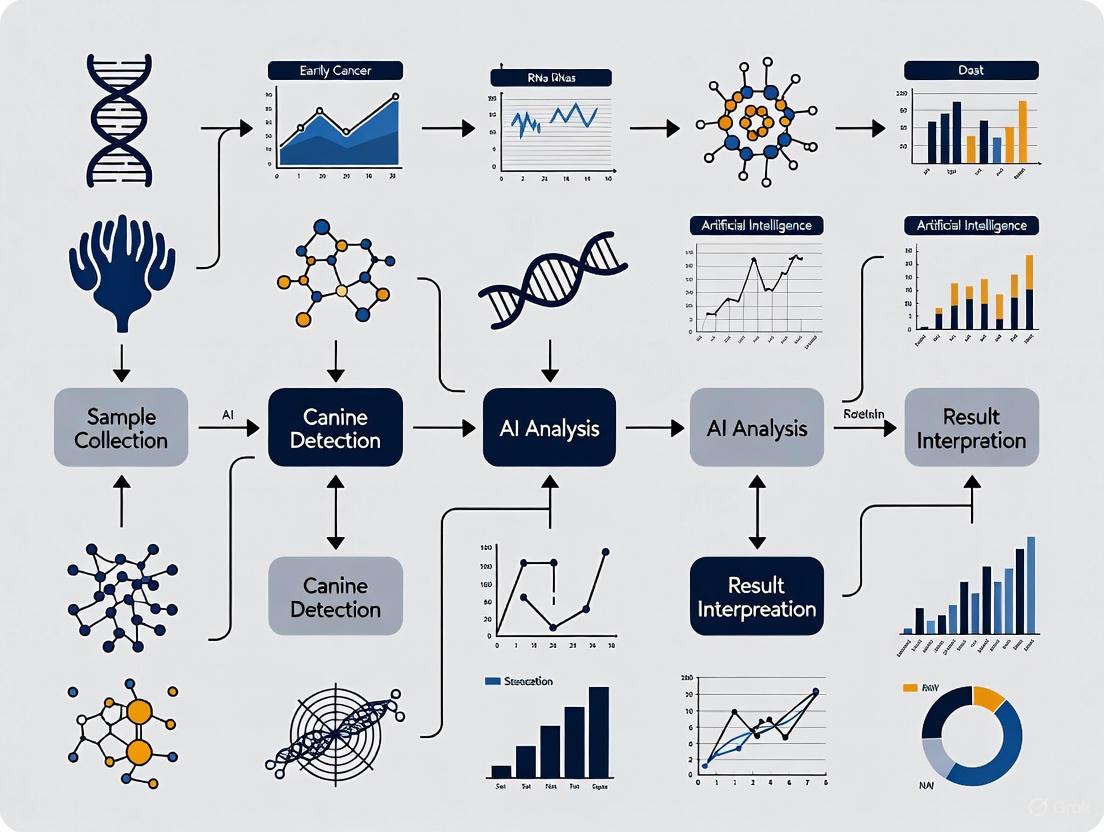
This article explores the scientific foundations, methodology, and clinical validation of a novel bio-hybrid platform that integrates trained detection canines with artificial intelligence for non-invasive, multi-cancer early detection.
Sniffing Out Cancer: How Canine Olfaction and AI are Revolutionizing Multi-Cancer Early Detection
Abstract
This article explores the scientific foundations, methodology, and clinical validation of a novel bio-hybrid platform that integrates trained detection canines with artificial intelligence for non-invasive, multi-cancer early detection. Tailored for researchers, scientists, and drug development professionals, it examines the technology's underlying principles, its demonstrated high sensitivity and specificity in prospective double-blind studies, and the operational framework of the LUCID system. The content further addresses key challenges in optimization and scalability, provides a comparative analysis with other liquid biopsy MCED tests, and discusses the future trajectory and implications of this approach for transforming cancer screening paradigms and biomedical research.
The Science of Scent: Uncovering the Volatile Organic Compound Signature of Cancer
Cancer remains a leading cause of mortality worldwide, with early detection representing a critical strategy for reducing cancer-specific mortality [1]. Current population-wide screening paradigms predominantly follow a single-organ approach, targeting individual cancers such as breast, cervix, colorectum, and prostate with distinct, organ-specific modalities [2]. This traditional framework leaves most cancer types without recommended screening tests, resulting in frequent late-stage diagnosis of unscreened cancers and contributing significantly to cancer mortality [2] [1]. The limitations inherent in single-cancer screening—including restricted scope, logistical inefficiencies, and variable patient compliance—have stimulated the investigation of innovative multi-cancer early detection (MCED) technologies [1]. Among the most promising emerging approaches are bio-hybrid detection systems that integrate the exquisite olfactory sensitivity of canines with artificial intelligence (AI) analytical capabilities [3]. This application note details the limitations of conventional screening methods and provides detailed experimental protocols for implementing canine-AI detection platforms for multi-cancer screening.
Limitations of Current Single-Cancer Screening Modalities
Narrow Scope and Significant Diagnostic Gaps
Current evidence-based screening guidelines cover only a limited number of cancer types, leaving numerous high-mortality malignancies without population-wide screening options. Consequently, cancers of the lung, pancreas, esophagus, stomach, and ovary are frequently diagnosed at advanced, metastatic stages, accounting for approximately 60% of cancer-related deaths for which no widespread screening strategies exist [1]. The over-reliance on single-organ screening approaches inherently excludes less prevalent cancers from detection efforts due to cost-effectiveness constraints when evaluated individually [2].
Table 1: Current Status of Recommended Cancer Screening Modalities
| Cancer Type | Primary Screening Method | Recommended Screening Population | Limitations |
|---|---|---|---|
| Colorectal | Colonoscopy, FIT | Adults aged 45-75 [1] | Invasiveness (colonoscopy), limited adenoma detection (FIT) [1] |
| Breast | Mammography | Women aged 50-74 (varies) [1] | Ionizing radiation, discomfort, false positives [1] |
| Cervical | Pap test, hrHPV testing | Women aged 21-65 [1] | Requires clinical visit, invasiveness |
| Lung | Low-dose CT (LDCT) | High-risk smokers, 50-80 years, ≥20 pack-year [4] | Limited to high-risk smokers, radiation exposure [3] [4] |
| Prostate | PSA testing | Shared decision-making (age varies) | False positives, overdiagnosis [1] |
Inconsistencies in Guideline Recommendations and Harms of Overscreening
Substantial variability exists between screening recommendations from top US cancer centers and evidence-based USPSTF guidelines, particularly for breast, prostate, and cervical cancers [5]. This discordance typically manifests as cancer centers recommending more intensive screening than USPSTF without adequate discussion of potential risks and harms [5]. Overscreening and overdiagnosis present significant problems, exposing patients to financial toxicity, time toxicity, emotional distress, and physical harm from unnecessary procedures [5]. The absence of standardized, evidence-based recommendations across institutions creates public confusion and undermines optimal screening practices.
Practical Barriers to Screening Implementation and Uptake
Single-organ screening modalities face numerous practical challenges that limit their effectiveness and population reach. These include invasiveness (colonoscopy), exposure to ionizing radiation (mammography, LDCT), lengthy preparations, and requirement for clinical visits [3] [1]. Such factors contribute to suboptimal compliance and accessibility barriers, particularly in underserved and rural areas [6]. Furthermore, the disparate nature of current screening modalities—each with unique preparations, intervals, and settings—creates logistical complexities that challenge integration into efficient screening programs and reduce scheduling efficiency [2].
The Multi-Cancer Screening Paradigm: Rationale and Biological Basis
Theoretical Foundation of Multi-Cancer Early Detection
The conceptual framework for universal cancer screening is supported by compelling biological and epidemiological rationale [2]. From an epidemiological perspective, aggregating prevalence rates across multiple cancer types significantly enhances screening efficiency metrics. While individual less-prevalent cancers may not justify population-wide screening alone, their combined prevalence makes multi-cancer screening highly impactful [2].
Table 2: Impact of Aggregate Prevalence on Screening Efficiency Metrics
| Screening Approach | Estimated Number Needed to Screen (NNS) to Detect One Cancer | Positive Predictive Value (PPV) at 90% Specificity |
|---|---|---|
| Single-Organ: Colorectal Cancer | 167 [2] | 16% |
| Single-Organ: Pancreatic Cancer | ~500 [2] | 5% |
| Single-Organ: Esophageal Cancer | ~1000 [2] | 2% |
| Multi-Organ: All GI Cancers | 83 [2] | 30% |
| Universal: All Cancers | 33 [2] | 50% |
Biologically, multi-cancer screening exploits the shared characteristic of tumor marker release into common distant media, such as blood, breath, or other bodily fluids [2]. Malignancies release volatile organic compounds (VOCs) and other metabolic byproducts that create distinct molecular profiles detectable in exhaled breath [3]. This biological principle enables detection of multiple cancer types from a single, easily obtainable sample.
Canine Olfactory Detection as a Multi-Cancer Screening Platform
The canine olfactory system represents a remarkably sophisticated biological sensor capable of detecting VOC patterns associated with malignancies at extremely low concentrations—as minimal as one part per trillion [7]. Canines can be trained to recognize signature VOC profiles associated with various cancer types in breath samples, providing a non-invasive, broadly sensitive screening method [3]. This approach capitalizes on dogs' natural olfactory capabilities while overcoming human sensory limitations through standardized behavioral cue recognition.
Experimental Protocols: Canine-AI Bio-Hybrid Detection System
Sample Collection and Processing Protocol
Materials:
- Surgical masks or specialized breath collection apparatus
- Sealable plastic bags for sample transport
- Barcoding system for sample tracking
- Climate-controlled storage facility (room temperature acceptable)
Procedure:
- Participant Preparation: Instruct participants to avoid smoking for at least 2 hours, and avoid coffee, alcoholic beverages, or meals for at least 1 hour prior to sample collection [3].
- Breath Sample Collection: Participants don a surgical mask and breathe normally through the mouth for 5 minutes [3].
- Sample Storage: Immediately seal the mask in two plastic bags and store at room temperature [3].
- Transport and Registration: Transport samples to laboratory facility, register in laboratory information management system, and prepare for analysis according to validated protocols [3].
- Quality Control: Samples remain stable for up to 3 months when stored properly under validated conditions [3].
Canine Selection and Training Protocol
Materials:
- Labrador Retrievers (or similar breed with demonstrated olfactory acuity)
- Positive reinforcement training equipment (clickers, treats)
- Cancer-positive breath samples (n=147 minimum) from pathologically confirmed cases
- Cancer-negative breath samples (n=340 minimum) from screening-negative individuals
- Dedicated training facility with controlled ventilation
Procedure:
- Canine Selection: Select canines based on specialized protocols assessing olfactory sensitivity, focus, and trainability [3].
- Housing and Care: House canines individually in appropriate kennels with adequate exercise, veterinary care, and environmental enrichment [7].
- Training Paradigm: Implement operant conditioning over 6-month training period:
- Train canines to indicate cancer-positive samples through distinct behavioral cue (sitting beside sample) [3].
- Train canines to indicate cancer-negative samples by continuing to next sample without sitting [3].
- Utilize balanced set of positive and negative training samples distinct from eventual test samples [3].
- Maintenance Training: Conduct ongoing reinforcement sessions throughout testing period to maintain detection accuracy [3].
Bio-Hybrid Testing and AI Analysis Protocol
Materials:
- Testing room with multiple portable sniffing ports
- Multi-angle camera systems with video recording capability
- Audio sensors for vocalization analysis
- Accelerometers for movement tracking
- Centralized monitoring system with real-time data streaming
- AI analytical platform with machine learning algorithms
Procedure:
- Experimental Setup: Place single breath sample in each sniffing port within testing room [3].
- Canine Introduction: Handler introduces canine to testing station following standardized procedure.
- Behavioral Monitoring: As canine sniffs each sample, integrated sensor systems capture:
- AI Integration: Machine learning algorithms analyze canine behavioral data in real-time:
- Result Determination: Platform generates positive/negative determination based on integrated behavioral analysis.
Figure 1: Bio-hybrid canine-AI screening workflow illustrating the integrated process from non-invasive breath sample collection through AI-driven result interpretation.
Performance Validation and Research Applications
Validation Study Design and Outcomes
Clinical Validation Protocol: A prospective double-blind study design is essential for validating canine-AI detection performance [3]. The published validation study included 1,386 participants (59.7% male, median age 56.0 years) who underwent either comprehensive cancer screening or biopsy for suspected malignancy [3]. Among these, 1,048 (75.6%) were cancer-negative and 338 (24.4%) were cancer-positive based on reference standard diagnoses [3]. Samples were analyzed by the bio-hybrid platform with researchers blinded to clinical status until final analysis [3].
Performance Outcomes: The platform demonstrated 93.9% overall sensitivity (95% CI: 90.3-96.2%) and 94.3% specificity (95% CI: 92.7-95.5%) for detecting four trained cancers (breast, lung, colorectal, prostate) [3]. Early-stage (Stage 0-2) detection sensitivity was 94.8% (95% CI: 91.0-97.1%), confirming the platform's efficacy for early detection [3]. Notably, the system also identified 14 other malignant tumor types not specifically trained for with 81.8% sensitivity (95% CI: 71.8-88.8%), suggesting broad cancer detection capability [3].
The Scientist's Toolkit: Essential Research Reagents and Materials
Table 3: Key Research Reagents and Materials for Canine-AI Cancer Detection
| Item | Function/Specification | Application Notes |
|---|---|---|
| Breath Collection Mask | Surgical mask or specialized apparatus for VOC capture | Must maintain molecular integrity of VOCs during storage and transport [3] |
| Sample Storage Bags | Sealable plastic bags for sample containment | Double-bagging system prevents contamination and preserves sample integrity [3] |
| Canine Subjects | Labrador Retrievers selected via specialized protocol | Require specific temperament, olfactory acuity, and trainability; proper housing essential [3] |
| Positive Control Samples | Breath samples from pathologically confirmed cancer patients | Required for training (n=147+) and maintenance; must represent target cancer types [3] |
| Negative Control Samples | Breath samples from cancer-free individuals | Required for training (n=340+) and control; should match demographics of target population [3] |
| Multi-Modal Sensors | Cameras, audio sensors, accelerometers | Capture behavioral data at resolution sufficient for AI analysis of subtle cues [3] |
| AI Analytics Platform | Machine learning algorithms for behavioral interpretation | Must process complex, multi-dimensional data streams in real-time [3] [7] |
The limitations of single-cancer screening modalities—including restricted scope, guideline inconsistencies, and practical implementation barriers—create a significant unmet need in cancer early detection. The canine-AI bio-hybrid detection platform represents a promising multi-cancer screening approach that addresses these limitations through non-invasive breath analysis, achieving high sensitivity and specificity across multiple cancer types, including early-stage disease. The experimental protocols detailed herein provide researchers with a comprehensive framework for implementing and validating this innovative screening methodology. As multi-cancer screening technologies continue to evolve, they hold potential to transform cancer detection paradigms from reactive, single-organ approaches to proactive, population-wide screening strategies.
Volatile organic compounds (VOCs) are a broad group of carbon-based chemicals with high vapor pressure and low water solubility, allowing them to easily evaporate at room temperature and enter various bodily fluids and excretions [9]. In the context of cancer, VOCs originate from altered metabolic pathways within tumor cells, serving as intermediate or end-products that reflect specific pathophysiological processes [10]. Cancer-related metabolic alterations—including hypoxia, oxidative stress from reactive oxygen species, hyperproliferation of cells, and heightened inflammatory responses—significantly change the spectra and concentrations of VOCs both locally and systemically [10]. These compounds subsequently permeate cell membranes, enter the bloodstream, and are eliminated via exhaled breath, skin emissions, and other biological matrices, providing a non-invasive window into pathological states [9] [10].
The analysis of VOCs has emerged as a promising non-invasive approach for cancer diagnosis, offering significant advantages in speed, safety, cost-effectiveness, and potential for real-time monitoring [11] [10]. This Application Note examines the biological foundations of cancer-derived VOCs and details standardized protocols for their collection and analysis, specifically framed within innovative multi-cancer screening approaches that integrate canine olfaction and artificial intelligence (AI) validation.
Key VOC Biomarkers and Diagnostic Performance
Reported VOC Biomarkers Across Cancer Types
Research has identified several categories of VOCs that serve as potential biomarkers in the exhaled breath and bodily emissions of cancer patients. These categories include alkanes, alcohols, aldehydes, ketones, nitriles, and aromatic compounds [10]. The proposed biochemical origins of these compounds are diverse: alkanes may result from oxidative stress in the cancer microenvironment; unsaturated hydrocarbons like isoprene are produced via the mevalonic pathway of cholesterol synthesis; elevated alcohol levels may arise from over-activation of cytochrome P450 enzymes; and ketone production increases due to anaerobic respiration triggering glycolytic pathways [10]. Specific compounds such as hexadecanoic acid have been frequently identified in skin cancer profiles using specialized collection protocols [12].
Table 1: Diagnostic Performance of VOC Analysis in Cancer Detection
| Metric | Overall Performance | MS-Based Methods | Sensor-Based Methods | Canine Detection |
|---|---|---|---|---|
| Mean AUC (95% CI) | 0.94 (0.91-0.96) [11] | 0.91 [11] | 0.93 [11] | 0.94 [8] |
| Sensitivity (95% CI) | 89% (87%-90%) [11] | - | - | 94% [8] |
| Specificity (95% CI) | 87% (84%-88%) [11] | - | - | - |
| Key Advantages | Non-invasive, rapid, cost-effective [11] | High-precision identification of individual compounds [11] [10] | Pattern recognition of disease-specific signatures [11] [10] | Superior olfactory sensitivity, biological relevance [8] [13] |
Biological Mechanisms of Cancer-Derived VOCs
The hypothesis that VOCs can be used in cancer diagnosis stems from the fundamental understanding that tumor proliferation is associated with significant alterations in gene expression and protein composition [10]. These alterations drive metabolic reprogramming that produces distinctive VOC profiles. Several key mechanisms contribute to VOC generation in cancer patients:
- Oxidative Stress Pathways: Hypoxic conditions within tumors lead to increased reactive oxygen species (ROS), which peroxidate polyunsaturated fatty acids in cell membranes, generating alkanes and methylated alkanes that can be detected in breath [10].
- Altered Energy Metabolism: The Warburg effect (aerobic glycolysis) in cancer cells increases production of ketones, alcohols, and aldehydes through anaerobic respiration pathways [10].
- Microbiome Interactions: Gut microbiome dysbiosis, which occurs in various cancers, alters the production of short-chain fatty acids (SCFAs) and other bacterial metabolites that are detectable as VOCs [9].
- Detoxification Enzymes: Overexpression of cytochrome P450 enzymes in cancer tissues elevates levels of oxygenated compounds, including alcohols and carbonyls [10].
These mechanisms collectively produce VOC signatures that reflect the underlying metabolic state of malignancies, providing a biological rationale for their use as diagnostic biomarkers.
Experimental Protocols for VOC Analysis
Breath Sample Collection Protocol
Principle: Exhaled breath contains thousands of VOCs in concentrations typically ranging from parts per trillion (pptv) to parts per billion (ppbv) by volume [10]. Proper collection is critical for analytical accuracy.
Materials Required:
- Thermal desorption (TD) tubes containing appropriate sorbent phases
- Breath collection apparatus (commercially available devices or bags)
- Disposable mouthpieces
- Nitrile gloves
- Sample tracking system
Procedure:
- Patient Preparation: Instruct patients to abstain from eating, drinking (except water), and smoking for at least 2 hours prior to sample collection. Ensure they have not undergone recent invasive procedures that might affect metabolic readings.
- Apparatus Setup: Assemble the breath collection device according to manufacturer instructions. Ensure all components are clean and free from contaminants.
- Sample Collection: Have the patient exhale normally through the disposable mouthpiece into the collection apparatus. Collect end-tidal breath by having the patient exhale against slight resistance to ensure alveolar air is captured.
- Transfer to TD Tubes: If using breath bags, immediately transfer the collected breath sample to pre-conditioned TD tubes using a calibrated pumping system. Stainless steel TD tubes with appropriate sorbent materials are recommended for their robustness and ease of transport [9].
- Storage and Transport: Seal TD tubes with gas-tight caps and store at room temperature. Analyze samples within 24 hours or according to validated stability protocols. Include blank samples for quality control.
Skin VOC Collection Protocol
Principle: Skin emissions contain VOCs from both systemic circulation and local metabolic processes, providing valuable diagnostic information for skin cancers and other malignancies [12].
Materials Required:
- Polydimethylsiloxane/divinylbenzene (PDMS/DVB) Solid Phase Micro Extraction (SPME) fibers
- Sterile gauze
- Aluminum foil
- Hexane or similar solvent for fiber conditioning
- GC-MS vials
Procedure:
- Site Preparation: Identify the sampling area (skin cancer site or control non-affected area). Gently clean the area with odor-free solvent if necessary and allow to dry completely.
- SPME Fiber Conditioning: Prior to use, condition SPME fibers according to manufacturer specifications, typically by heating in a GC injection port.
- Direct Contact Sampling: Apply the SPME fiber directly to the skin surface for a predetermined period (typically 15-30 minutes), maintaining light contact without pressure that might compromise skin integrity.
- Headspace Sampling: Simultaneously or sequentially, collect headspace VOCs by positioning the SPME fiber 1-2 mm above the skin surface within an enclosed collection chamber.
- Sample Storage: Retract the fiber into its protective needle and store in a sealed container if not analyzed immediately. For transport, maintain at cool temperatures (4°C) and analyze within 12 hours.
Canine Olfaction Screening Protocol
Principle: Canine olfaction provides a highly sensitive biological detection system for cancer-specific VOC patterns, with demonstrated accuracy in clinical studies [8] [13].
Materials Required:
- Trained detection canines (typically beagles for their olfactory acuity)
- Breath samples collected in specialized containers
- Automated reward systems
- AI validation platform (e.g., SpotitEarly's LUCID system)
- Behavioral monitoring equipment (cameras, microphones, heart rate monitors)
Procedure:
- Sample Presentation: Position breath samples in a randomized lineup within the canine screening facility. Include positive controls (confirmed cancer samples) and negative controls (healthy samples) for quality assurance.
- Canine Screening: Handle the trained canines to systematically evaluate each sample station. Canines are typically trained to sit when cancer VOCs are detected [8].
- Behavioral Monitoring: Record canine responses using overhead cameras and microphones to capture breathing patterns and behavioral indicators. Monitor heart rate to establish baseline patterns and detect stress indicators [8].
- AI Validation: Input behavioral data into the AI validation platform (e.g., LUCID) which uses machine learning algorithms to cross-validate canine responses and assign confidence scores [13].
- Result Interpretation: Combine canine behavioral data with AI analysis to generate diagnostic reports. Implement continuous learning systems where discordant results refine both canine training and AI algorithms.
Analytical Techniques for VOC Detection
Method Comparison and Applications
Multiple analytical platforms are available for VOC detection, each with distinct advantages and limitations for cancer biomarker research.
Table 2: Comparison of VOC Analytical Techniques
| Technique | Principle | Sensitivity | Analysis Time | Clinical Applicability | Key Strengths | Key Limitations |
|---|---|---|---|---|---|---|
| GC-MS | Separation by gas chromatography followed by mass spectrometry detection | High (ppt-ppb) [9] | Lengthy (>60 min) [9] | Reference standard; limited by complexity | Gold standard for identification and quantification [9] | Requires sample pre-treatment; limited mass range; lengthy analysis [9] |
| Sensor Arrays | Semi-selective sensors with pattern recognition | Moderate to high | Rapid (minutes) [11] | High potential for clinical application [11] | Fast response; portable; cost-effective for screening [11] [10] | Limited specificity; cross-reactivity; environmental interference [9] |
| PTR-MS/SIFT-MS | Direct sampling chemical ionization | High | Real-time (seconds) [9] | Emerging for dynamic studies | No sample pre-treatment; real-time analysis [9] | Limited structural information; requires specialized equipment |
| Canine Olfaction | Biological detection with olfactory receptors | Exceptionally high [8] | Rapid (seconds) | Specialized screening centers | Superior sensitivity; biological pattern recognition [8] [13] | Training intensive; subject to behavioral variability |
Integrated Canine-AI Workflow
The integration of canine olfaction with AI validation represents a novel approach in VOC-based cancer screening. The workflow can be visualized as follows:
Diagram 1: Canine-AI Integrated Screening Workflow
Research Reagent Solutions
Table 3: Essential Research Materials for VOC-Based Cancer Detection Studies
| Item | Function | Application Notes |
|---|---|---|
| Thermal Desorption Tubes | Trapping and preserving VOCs from breath samples | Stainless steel tubes with appropriate sorbent phases; robust for transport and storage [9] |
| SPME Fibers (PDMS/DVB) | Extracting VOCs from skin and other biological surfaces | Superior VOC collecting performance for skin cancer biomarkers [12] |
| GC-MS System | Identifying and quantifying individual VOCs | Gold standard for VOC analysis; requires method validation for each compound [9] |
| Electronic Sensor Arrays | Detecting disease-specific VOC patterns | Nanotechnology-based sensors with high surface-to-volume ratio for sensitivity [9] |
| Breath Collection Apparatus | Standardized sampling of exhaled breath | Commercial systems available; ensure compatibility with analytical platform |
| Trained Detection Canines | Biological detection of cancer VOC patterns | Beagles preferred for olfactory acuity; require specialized training facilities [8] |
| AI Validation Platform | Cross-validating canine responses and assigning confidence scores | Machine learning algorithms that monitor canine behavior and refine detection accuracy [8] [13] |
Metabolic Pathways of Cancer-Derived VOCs
The production of specific VOC classes in cancer tissues follows identifiable biochemical pathways that reflect the underlying metabolic reprogramming of malignancies:
Diagram 2: Metabolic Pathways of Cancer-Derived VOC Production
VOC analysis represents a transformative approach in cancer diagnostics, with demonstrated high diagnostic accuracy across multiple cancer types. The biological basis for VOC biomarkers lies in the fundamental metabolic alterations that characterize cancer pathophysiology, producing detectable chemical signatures in breath, skin, and other biological matrices. The integration of advanced analytical techniques with innovative detection modalities—particularly canine olfaction validated by AI systems—offers a powerful paradigm for multi-cancer screening. Standardized protocols for sample collection, processing, and analysis are essential for realizing the full potential of VOC-based diagnostics in clinical and research settings. As technology advances, VOC profiling is poised to become an increasingly accessible, non-invasive component of comprehensive cancer screening strategies.
Quantitative Performance Data in Cancer Detection
The following tables summarize key quantitative data from recent studies, highlighting the exceptional sensitivity and specificity of trained detection canines in identifying various cancer types and volatile organic compounds (VOCs).
Table 1: Canine Detection Performance for Specific Cancer Types (Double-Blind Clinical Study) [3]
| Cancer Type | Sensitivity (%) | 95% Confidence Interval | Specificity (%) | 95% Confidence Interval |
|---|---|---|---|---|
| Breast | 95.0 | 87.8 - 98.0 | 94.3 | 92.7 - 95.5 |
| Lung | 95.0 | 87.8 - 98.0 | 94.3 | 92.7 - 95.5 |
| Colorectal | 90.0 | 74.4 - 96.5 | 94.3 | 92.7 - 95.5 |
| Prostate | 93.0 | 84.6 - 97.0 | 94.3 | 92.7 - 95.5 |
| Overall (Trained Cancers) | 93.9 | 90.3 - 96.2 | 94.3 | 92.7 - 95.5 |
| Other Malignancies (Not Trained) | 81.8 | 71.8 - 88.8 | 94.3 | 92.7 - 95.5 |
| Early-Stage (0-2) Detection | 94.8 | 91.0 - 97.1 | 94.3 | 92.7 - 95.5 |
Note: Data based on a prospective double-blind study of 1,386 participants analyzing breath samples. The bio-hybrid platform achieved high accuracy in detecting both trained and untrained cancers, with particularly high sensitivity for early-stage cases [3].
Table 2: Canine Olfactory Detection Thresholds for Volatile Organic Compounds (VOCs) [14] [15]
| Compound | Substrate | Minimum Detection Threshold (Molar) | Equivalent Parts-Per-Trillion (PPT) Estimate | Canine Breed |
|---|---|---|---|---|
| Isoamyl Acetate | Artificial Urine | 6.7 x 10⁻⁹ M | ~1 PPT | Springer Spaniel (Nougaro) |
| Isoamyl Acetate | Artificial Urine | 2.1 x 10⁻⁷ M | ~30 PPT | Labrador Retriever (Prince) |
| Amyl Acetate | Mineral Oil (Literature) | 1.5 PPT | 1.5 PPT | Various Breeds [14] |
Note: Detection thresholds can vary significantly between individual dogs and are influenced by the complexity of the substrate. The detection of 1 PPT is analogous to identifying a single grain of sugar dissolved in an Olympic-sized swimming pool [14] [15].
Experimental Protocols
Protocol: Canine Behavioral Training for Cancer Detection from Breath Samples
This protocol outlines the methodology for training detection canines to identify cancer-specific VOC patterns in human breath, as validated in a large-scale clinical study [3].
- Objective: To train canines to reliably indicate the presence of breast, lung, colorectal, or prostate cancer in a breath sample by performing a distinct behavioral response.
- Materials:
- Breath samples collected in sterile containers from cancer-positive (confirmed by gold-standard screening or biopsy) and cancer-negative individuals.
- A controlled testing room with multiple portable sniffing ports.
- Treats or toys for positive reinforcement.
- Cameras and sensors for real-time monitoring of canine behavior and physiology.
- Procedure:
- Sample Collection & Blinding: Collect breath samples from donors using a standardized protocol (e.g., exhaling through a mouthpiece into a sterile container for 5 minutes). Samples are assigned a random identification number to blind laboratory personnel to their clinical status [3].
- Habituation & Target Odor Association: The dog is introduced to the testing setup. A known cancer-positive sample is presented, and the dog is encouraged to investigate it. The moment the dog sniffs the sample, a clicker is activated and immediately followed by a reward (food or toy). This builds a positive association with the target odor [3].
- Cueing the Behavioral Response: The trainer introduces the desired final behavioral response—typically sitting immediately in front of the positive sample. This action is captured, marked with the clicker, and rewarded. The dog learns that sitting after sniffing the target odor yields a reward. Ignoring or moving past a sample is the negative indicator [3] [8].
- Discrimination Training: The canine is presented with a line of ports containing both positive and negative samples. The dog must correctly identify and sit only at the port containing the cancer-positive sample to receive a reward. This step teaches odor discrimination.
- Double-Blind Testing: In the final validation phase, the handler is unaware of which ports contain positive or negative samples. This eliminates the potential for handler bias influencing the dog's behavior. The dog's indications are recorded and later correlated with the sample's clinical diagnosis to calculate sensitivity and specificity [3].
- Quality Control: Regular maintenance training sessions are conducted using samples not included in the test set to sustain the dogs' high performance levels. Real-time monitoring of canine behavior (e.g., attention, hesitation) ensures data quality [3].
Protocol: Remote Monitoring of Canine Olfactory Brain Activity via Speckle Pattern Analysis
This protocol describes a novel, non-invasive laser-based technique for monitoring brain activity in specific regions of the canine brain during olfactory stimulation [16].
- Objective: To remotely capture and analyze neural activity in the olfactory bulb, hippocampus, and amygdala of dogs in response to different smell stimuli.
- Materials:
- Green laser source.
- Digital camera.
- Controlled presentation system for smell stimuli (e.g., garlic, menthol, alcohol, marijuana).
- Computer with analysis software.
- XGBoost model or similar machine learning algorithm for data classification.
- Procedure:
- Animal Preparation: The canine participant is acclimated to the experimental environment. The regions of interest on the dog's head (olfactory bulb, hippocampus, amygdala) are identified.
- System Setup: The laser is positioned to illuminate the specific brain region under investigation. The camera is focused to capture the resulting speckle pattern on the dog's skin/fur above the region [16].
- Data Acquisition: A baseline speckle pattern is recorded before odor presentation. The smell stimulus is then presented to the dog's nose, and the camera records the temporal changes in the speckle pattern during exposure. This process is repeated for multiple stimuli and across all regions of interest [16].
- Signal Processing: The recorded speckle patterns are analyzed for temporal changes in contrast and correlation. These changes are correlated with nanovibrations generated by transient blood flow (hemodynamic activity) and other physiological processes in the underlying cerebral cortex [16].
- Data Analysis & Classification: The processed data from the speckle patterns are fed into an XGBoost model. The model is trained to classify and differentiate the unique speckle signatures associated with the presentation of distinct odorants [16].
- Key Considerations: Laser speckle pattern analysis can penetrate the skull at specific wavelengths to detect surface-level hemodynamic changes. Using lasers with higher wavelengths is recommended to mitigate light scattering caused by fur [16].
Signaling Pathways and Workflows
Canine Olfactory Neural Pathway
The following diagram illustrates the neural pathway of odor processing in the canine brain, from odorant reception to behavioral and emotional response generation.
Bio-Hybrid Cancer Screening Workflow
This workflow details the integrated process of using canine olfaction and artificial intelligence for multi-cancer screening, from sample collection to result delivery.
The Scientist's Toolkit: Research Reagent Solutions
Table 3: Essential Materials for Canine Olfaction Research
| Item / Reagent | Function / Application | Representative Example / Specification |
|---|---|---|
| Artificial Urine Matrix | A complex, stable substrate for evaluating canine detection thresholds of specific VOCs in a clinically relevant medium. Mimics the chemical background of human urine [14] [15]. | Contains 12 most frequently cited VOCs in human urine (e.g., p-cresol, dimethyldisulfide, 2-butanone) in a sterile, pH-balanced (5-6) aqueous solution [15]. |
| Isoamyl Acetate | A standard, safe VOC with a distinct banana-like odor used in psychophysical studies to determine fundamental canine olfactory detection thresholds [14] [15]. | ≥ 99.7% purity (CAS 123-92-2); diluted in serial half-log or quarter-log steps in substrate (water, artificial urine) [15]. |
| Breath Sampling Kit | Non-invasive collection of volatile organic compounds (VOCs) from human breath for presentation to detection canines. | Includes a sterile surgical mask or mouthpiece and sealed plastic bags for storage and transport; samples stable at room temperature for up to 3 months [3]. |
| Laser Speckle Imaging System | Remote, non-invasive monitoring of brain activity by analyzing temporal changes in laser speckle patterns reflected from the skin, correlating with hemodynamic changes in underlying brain regions [16]. | Components: Green laser source, digital camera, computer. Used to detect activity in olfactory bulb, hippocampus, and amygdala in response to odors [16]. |
| XGBoost Model | A machine learning algorithm used to classify and differentiate complex data patterns, such as those derived from canine brain speckle patterns or behavioral metrics, to identify specific odor signatures [16]. | Used for analyzing speckle pattern data to differentiate canine brain reactions to various smell stimuli [16]. |
Application Notes
Canines, renowned for their olfactory acuity, are emerging as powerful biodetectors for early disease identification. When integrated with artificial intelligence (AI), this approach forms a robust, non-invasive platform for multi-cancer screening. The documented evidence from controlled studies, including research published in Nature, demonstrates the viability of this bio-hybrid system for clinical application.
Table 1: Key Performance Metrics from a Double-Blind Study on Multi-Cancer Detection
| Metric | Overall Performance | Breast Cancer | Lung Cancer | Colorectal Cancer | Prostate Cancer | Other Cancers | Early-Stage (0-2) Cancer |
|---|---|---|---|---|---|---|---|
| Sensitivity | 93.9% [3] | 95.0% [3] | 95.0% [3] | 90.0% [3] | 93.0% [3] | 81.8% [3] | 94.8% [3] |
| Specificity | 94.3% [3] | ||||||
| Sample Size (Total) | 1,386 participants [3] | ||||||
| Cancer-Positive Samples | 338 (261 of 4 target types) [3] |
This bio-hybrid platform leverages a fundamental principle: tumor cells and their microenvironment produce a unique pattern of volatile organic compounds (VOCs) that is excreted and can be detected in breath samples [3]. The canines' olfactory system is trained to identify this distinct molecular signature, and their behavioral responses are digitized and interpreted by AI algorithms, enhancing objectivity and scalability [3]. The high sensitivity for early-stage cancer detection is particularly significant, as it enables intervention when treatment is most likely to be successful [3].
Complementary technological advances are further enriching the field of canine cancer detection. AI is also being leveraged to predict cancer risk and analyze treatment responses from molecular data. For instance, one study uses AI to analyze DNA fragments in blood to identify dogs at high risk for developing Diffuse Large B-cell Lymphoma (DLBCL), a common and aggressive cancer [17]. Another AI-driven platform uses a "Personalized Prediction Profile" to forecast how effective specific anticancer drugs will be for an individual dog's lymphoma or leukemia, based on their live cancer cells and medical history [18].
Experimental Protocols
Protocol: Canine Detection of Cancer from Breath Samples
This protocol outlines the methodology for training detection canines and conducting double-blind testing using human breath samples, as validated in a prospective study [3].
Sample Collection and Processing
- Participant Preparation: Participants inhale and exhale normally through a surgical mask for five minutes. Exclusion criteria include smoking within two hours, or consuming coffee, alcohol, or a meal within one hour prior to sampling [3].
- Sample Storage: The mask is sealed in two plastic bags and stored at room temperature. Samples remain viable for analysis for up to three months [3].
Canine Selection and Training
- Canine Selection: Select canines (e.g., Labrador Retrievers) based on a standardized selection protocol. House and care for them following approved animal welfare regulations [3].
- Training to Detection: Train canines over approximately six months using confirmed cancer-positive and cancer-negative breath samples not used in the final double-blind test. Canines are conditioned to perform a distinct behavioral cue (e.g., sitting) to mark a sample as positive and to move on to mark it as negative [3].
- Maintenance Training: Conduct ongoing training sessions throughout the testing period to maintain the canines' detection performance [3].
Double-Blind Testing Procedure
- Testing Room Setup: Present samples in a room equipped with multiple portable sniffing ports. The room should be outfitted with sensors and cameras to stream real-time data on canine behavior to a monitoring system [3].
- Sample Presentation: A test manager, who is the only person with knowledge of the sample arrangement, places the samples in the ports. Each detection test should involve multiple canine handlers to ensure objectivity [3].
- Data Recording: The monitoring system records the canine's reaction to each sample. The test manager documents the final determination for each sample based on the canine's trained behavioral cue [3].
Protocol: AI-Powered Health Monitoring and Prediction
This protocol describes the use of AI and sensor data to monitor canine health and predict disease risk.
Data Collection for Health Monitoring
- Sensor Deployment: Equip dogs with lightweight, collar-mounted activity sensors containing accelerometers and gyro-sensors to monitor daily activities without causing discomfort [19].
- Behavioral Data Collection: Collect baseline data over a minimum of three months. Monitor specific behaviors such as scratching, licking, swallowing, and sleeping patterns. Validate sensor data against video recordings to ensure accuracy [19].
- Algorithm Training: Use an associative memory algorithm or similar machine learning technique to train an AI model on the collected behavioral data. The model learns to classify normal behavior patterns for each individual dog [19].
Health Score Calculation and Risk Prediction
- Abnormal Behavior Detection: The trained AI model identifies deviations from the established baseline for each monitored behavior [19].
- Health Score Assignment: Quantify abnormal behaviors into a numerical "Health Score" on a scale of 1 to 10, where a higher score indicates better health. Scores below 5 suggest a need for veterinary consultation [19].
- Disease Risk Prediction: For cancer risk prediction, use AI models trained on large datasets (e.g., insurance claims, genomic data). These models analyze factors including breed, age, sex, pre-existing conditions, and environmental data to predict the likelihood of specific disease outcomes [17] [20].
Visual Workflows
Bio-Hybrid Screening Workflow
AI Data Processing Pipeline
Research Reagent Solutions
Table 2: Essential Materials and Reagents for Canine Disease Detection Research
| Item | Function/Description | Application in Protocol |
|---|---|---|
| Breath Collection Mask | Non-invasive device for capturing volatile organic compounds (VOCs) from exhaled breath. | Used in the initial sample collection phase for canine olfactory detection studies [3]. |
| Activity Sensor | A lightweight, wearable accelerometer and gyro-sensor (e.g., 15g, 50Hz resolution) attached to a dog collar. | Continuously monitors and quantifies behaviors like scratching, licking, swallowing, and sleeping for AI health scoring [19]. |
| AI Model (Associative Memory Algorithm) | A computational algorithm that filters similar patterns and uses associative techniques to match behavioral data. | Trained on baseline behavioral data to identify abnormal patterns and generate a Health Score [19]. |
| AI Model (Machine Learning) | Predictive models trained on large datasets (genomic, insurance claims, clinical outcomes). | Analyzes complex factors to predict disease risk or optimal treatment strategies for individual patients [18] [20]. |
| Validated Sample Set | Biobanked, clinically confirmed cancer-positive and cancer-negative biological samples (e.g., breath masks, urine). | Serves as the gold standard for training detection canines and validating the performance of the AI models [3] [21]. |
Inside the Bio-Hybrid Platform: Engineering the Canine-AI Workflow from Sample to Result
The integration of non-invasive sample collection with advanced diagnostic platforms is revolutionizing early cancer detection. This protocol details the use of a standard face mask for the at-home collection of exhaled breath samples, which are subsequently analyzed using a bio-hybrid platform of detection canines and artificial intelligence (AI). Exhaled breath is a rich source of volatile organic compounds (VOCs) that constitute a distinct molecular profile of cancer [3]. The method described here provides a simple, non-invasive, and accessible procedure for obtaining high-quality breath samples for multi-cancer screening, forming a critical first link in the diagnostic chain that leads to early and accurate detection [3] [8].
Materials and Equipment
Research Reagent Solutions and Essential Materials
The following materials are required for the at-home breath sample collection procedure.
Table 1: Essential Materials for the At-Home Breath Mask Protocol
| Item | Function and Key Characteristics |
|---|---|
| Surgical Mask (e.g., KF94, N95, or standard surgical mask) | The primary collection device. Certified masks (KF94/N95) use electrostatic filters to efficiently trap exhaled particles and viruses, serving as a wearable sampler for breath analysis [22] [23]. |
| Gas Chromatography-Mass Spectrometry (GC-MS) Systems | An analytical technique used in research to identify and quantify the specific volatile organic compounds (VOCs) in breath samples that form the cancer signature detectable by canines [22] [3]. |
| Polymerase Chain Reaction (PCR) Assays | Used in molecular research to detect and identify specific pathogens (e.g., viruses) collected on mask samplers, confirming the mask's utility as a collection device for biological entities [22] [23]. |
| Thermal Desorption (TD) Tubes | A modification for masks; these tubes contain adsorbent materials to selectively capture and pre-concentrate specific volatile breath metabolites for enhanced chemical analysis [22]. |
| Gelatin Membranes / Electret Filters | Modifications placed inside masks to enhance the adsorption and collection of exhaled microorganisms, including viruses and other bioparticles [22] [23]. |
| Sterile Sealing Plastic Bags | Used for the sanitary storage and transportation of the used mask sample, preventing contamination and preserving sample integrity during shipping to the laboratory [3]. |
Methodological Workflow
Sample Collection Procedure
The following steps outline the protocol for participants to collect a breath sample at home.
- Preparation: Prior to sample collection, participants must not have smoked for at least two hours, or consumed coffee, alcoholic beverages, or a meal within one hour [3].
- Breath Collection: The participant dons a clean, specified surgical mask. They are instructed to inhale and exhale normally through the mouth while wearing the mask for a period of five minutes [3].
- Sample Sealing: After the wearing period, the mask is carefully removed and immediately sealed inside two provided plastic bags to prevent contamination and preserve the sample [3].
- Storage and Shipping: The sealed sample is stored at room temperature and shipped to the central laboratory for analysis. The sample quality is maintained for up to three months after collection when stored according to validated instructions [3].
Laboratory Analysis and Canine-AI Detection
Upon receipt at the laboratory, the sample undergoes analysis via the bio-hybrid platform.
- Sample Registration and Preparation: The mask sample is logged into a laboratory management system and prepared for testing according to standardized operating protocols [3].
- Canine Detection Test: The sample is placed in a testing room equipped with multiple portable sniffing ports. Professionally handled detection canines, trained to recognize the VOC signature of specific cancers, sniff each sample [3].
- Behavioral Marking: Canines are trained to mark a sample as positive for cancer by sitting beside the sample immediately after sniffing. A negative sample is indicated by the dog moving to the next sample without sitting [3].
- AI Validation: The testing room is equipped with sensors and cameras that stream real-time data on canine behavior (e.g., posture, breathing patterns, heart rate) to an AI platform. The AI analyzes this data to validate the dog's indication and provide a final diagnostic output [8].
The entire experimental workflow, from sample collection to final analysis, is summarized in the diagram below.
Performance Data and Validation
The mask-based breath sampling method, when coupled with the canine-AI detection platform, has demonstrated high efficacy in clinical studies. The following table summarizes the performance data from a prospective double-blind study involving 1,386 participants [3].
Table 2: Clinical Performance of the Mask-Based Breath Sampling and Canine-AI Platform in Cancer Detection
| Cancer Type | Sensitivity (%) (95% CI) | Specificity (%) (95% CI) | Key Study Findings |
|---|---|---|---|
| All Combined Cancers | 93.9 (90.3 - 96.2) | 94.3 (92.7 - 95.5) | The platform was trained to detect breast, lung, colorectal, and prostate cancers. |
| Breast Cancer | 95.0 (87.8 - 98.0) | - | Demonstrates high sensitivity for a common cancer. |
| Lung Cancer | 95.0 (87.8 - 98.0) | - | High detection rate for a leading cause of cancer mortality. |
| Colorectal Cancer | 90.0 (74.4 - 96.5) | - | Effective for gastrointestinal cancers. |
| Prostate Cancer | 93.0 (84.6 - 97.0) | - | High sensitivity in detecting prostate cancer. |
| Other Cancers | 81.8 (71.8 - 88.8) | - | Platform also identified 14 other cancer types it was not specifically trained for. |
| Early-Stage (0-2) Cancer | 94.8 (91.0 - 97.1) | - | Highlights the platform's critical capability for early detection. |
| Overall Performance | - | - | The bio-hybrid multi-cancer screening platform demonstrated high sensitivity and specificity and enables early-stage cancer detection. |
The at-home breath mask protocol provides a robust, non-invasive, and user-friendly method for collecting samples for multi-cancer screening. When integrated with a sophisticated bio-hybrid detection platform utilizing trained canines and AI, this method achieves high sensitivity and specificity across several cancer types, including at early stages. This combination of accessible sampling and advanced analytics represents a significant step forward in the field of non-invasive cancer diagnostics, with the potential to improve screening compliance and patient outcomes through early detection.
The integration of canines into multi-cancer early detection research represents a groundbreaking frontier in medical diagnostics. This protocol details the rigorous selection criteria and advanced positive reinforcement training methodologies essential for preparing detection canines for collaborative work with AI in cancer screening. The synergistic combination of canine olfactory capabilities with artificial intelligence is revolutionizing non-invasive cancer detection, achieving diagnostic accuracy rates exceeding 90% in controlled studies [13]. When properly selected and trained using these evidence-based protocols, detection canines serve as highly sensitive biosensors capable of identifying specific cancer-associated volatile organic compounds (VOCs) in human breath samples, providing a critical data stream for AI validation and analysis [7] [13].
Canine Selection Criteria
Fundamental Breed Selection Metrics
Systematic selection begins with evaluating inherent breed characteristics that predispose certain dogs to excel in detection work. The following table summarizes primary selection criteria with associated quantitative metrics:
Table 1: Primary Canine Selection Criteria for Cancer Detection Work
| Selection Criterion | Target Metric | Performance Standard | Assessment Method |
|---|---|---|---|
| Olfactory Sensitivity | Detection threshold | 1 part per trillion [7] | Odor discrimination testing |
| Food Motivation | Training engagement | >90% task completion for food reward [24] | Structured reinforcement trials |
| Temperament Stability | Environmental adaptability | Consistent performance across 3 novel environments | Controlled exposure assessment |
| Cognitive Endurance | Focus duration | >30 minutes sustained concentration [24] | Progressive interval training sessions |
| Physical Constitution | Working longevity | 5-8 years prime detection service [7] | Veterinary health certification |
Based on successful implementation in clinical studies, the Beagle has emerged as a predominant breed in cancer detection work due to its optimal combination of food motivation, temperament stability, and exceptional olfactory capabilities [8] [7]. Other scent-focused breeds including German Shepherds, Labrador Retrievers, and Spaniel varieties may also meet selection criteria with appropriate individual assessment.
Health and Genetic Screening Protocols
Comprehensive health screening is prerequisite for detection canine selection:
- Orthopedic Evaluation: PennHIP or OFA certification excluding hip dysplasia
- Ophthalmic Examination: CERF clearance for hereditary ocular disorders
- Cardiac Assessment: Echocardiogram ruling out congenital heart anomalies
- Genetic Screening: Breed-specific DNA testing for hereditary conditions
- Metabolic Panel: Complete blood count and chemistry profile establishing baseline health
Canines must demonstrate physical soundness for sustained work periods without performance-altering discomfort or fatigue.
Positive Reinforcement Training Framework
Theoretical Foundation
Operant conditioning principles form the scientific basis for all detection training protocols. Positive reinforcement—the contingent addition of a desirable stimulus following a target behavior—increases the future probability of that behavior [24]. This approach builds reliable odor recognition and indication behaviors without the detrimental side effects associated with aversive methods, including fear, anxiety, and reduced initiative [24].
The Premack principle is strategically integrated throughout training progression, allowing dogs to earn access to preferred activities (e.g., play with a ball) by performing less preferred but required behaviors (e.g., stationary odor indication) [24]. This elevates cognitive engagement and behavioral reliability across extended working sessions.
Core Training Techniques
Table 2: Positive Reinforcement Training Methodology Matrix
| Technique | Procedure | Application in Cancer Detection | Success Criteria |
|---|---|---|---|
| Clicker/Marker Training | Precise auditory signal (click/verbal marker) delivered at exact moment of correct behavior, immediately followed by high-value food reward [24] | Marks precise moment of correct odor recognition at sampling port | Dog demonstrates orientation to odor source within 0.5 seconds of marker |
| Behavior Shaping | Successive approximation reinforcing progressively closer versions of final target behavior [24] | Developing final "sit" indication through incremental steps: orientation → approach → final position | Systematic progression through 5-7 shaping steps without behavioral regression |
| Stimulus Fading | Gradual introduction of target odor amid previously mastered odor profiles | Introducing novel cancer VOC signature among known non-target odors | 90% correct indication with novel target odor amid distraction odors |
| Variable Ratio Reinforcement | Transition from continuous to intermittent reward schedule after behavior mastery [24] | Maintaining high-response reliability during extended sample screening sessions | <5% performance reduction when moving from CRF to VR-3 schedule |
Specialized Cancer Detection Training Protocol
Odor Imprinting and Discrimination
Training initiates with imprinting on cancer-specific VOC signatures using breath samples collected in controlled clinical settings:
Phase 1: Odor Imprinting
- Present cancer-positive breath sample paired with high-value reward
- Utilize clicker to mark correct orientation to target odor
- Establish consistent "sit" indication behavior upon VOC detection
- Continue until ≥95% correct indication rate achieved
Phase 2: Odor Discrimination
- Introduce cancer-negative control samples in randomized presentation
- Reinforce only correct identifications (indication on positive, non-indication on negative)
- Systematically increase difficulty with novel distractor odors
- Continue until ≥90% sensitivity and specificity achieved
Phase 3: Concentration Gradation
- Gradually decrease target odor concentration to parts-per-trillion levels
- Train discrimination across clinically relevant VOC concentration ranges
- Establish minimum detection threshold for each canine
Instrumentation and Sample Handling Conditioning
Canines undergo systematic desensitization to laboratory instrumentation and sample handling procedures:
- Apparatus Familiarization: Non-contingent exposure to sampling ports, airflow sounds, and laboratory lighting
- Sample Presentation Protocol: Standardized positioning at sampling port with specific sit-stay maintenance
- Indication Clarity: Unambiguous "sit" alert held for 3-second minimum for AI confirmation
- Environmental Generalization: Training across multiple laboratory settings to ensure reliability
AI-Integrated Canine Detection System
Multi-Modal Canine Response Monitoring
The SpotitEarly implementation exemplifies the integrated canine-AI detection model, employing sophisticated monitoring technology to capture nuanced canine responses [8] [7] [13]:
Diagram: Multi-modal canine response monitoring and AI validation workflow. The system integrates behavioral, physiological, and movement data for objective interpretation of canine alerts.
LUCID AI Validation Platform
SpotitEarly's proprietary LUCID AI platform performs real-time analysis of canine responses through multiple validation layers [13]:
- Behavioral Baseline Modeling: Machine learning algorithms establish individual canine behavioral patterns during non-detection states
- Response Pattern Recognition: Computer vision analysis of video feeds detects indication behaviors too subtle for human observation
- Confidence Scoring: Integrated data streams generate probability scores for cancer detection claims
- Continuous Learning: Deep learning algorithms refine interpretation models with each canine response
This integrated system achieves 94% accuracy in detecting breast, colorectal, prostate, and lung cancers from breath samples in double-blind clinical trials [8] [7].
Research Reagent Solutions
Table 3: Essential Research Materials for Canine Cancer Detection Studies
| Reagent/Material | Specification | Research Application | Validation Requirement |
|---|---|---|---|
| Breath Collection Apparatus | Medical-grade polymer mask with VOC-stable interior surface [7] | Non-invasive sample capture from patients | Consistency across >1,000 collections without contamination |
| VOC Reference Standards | Certified volatile organic compounds at 1ppm concentration in nitrogen | Quality control for canine training samples | Third-party analytical certification |
| Positive Control Samples | Breath samples from biopsy-confirmed cancer patients [13] | Training and validation reference material | IRB-approved collection protocols with patient consent |
| Negative Control Samples | Breath samples from healthy volunteers with normal clinical biomarkers [13] | Specificity training and false positive reduction | Medical confirmation of health status |
| High-Value Food Rewards | Freeze-dried liver, commercial training treats | Positive reinforcement during training sessions | Consistent composition, high palatability |
| Behavioral Recording System | High-speed cameras (240fps), directional microphones, accelerometers [8] | Multi-modal response documentation | Time-synchronization across all sensors |
Quality Assurance and Validation Protocol
Performance Maintenance Standards
Sustained detection accuracy requires rigorous quality control measures:
- Daily Proficiency Testing: 20 randomized sample presentations before operational screening
- Weekly Calibration Sessions: Reinforcement of fundamental odor discrimination skills
- Monthly Blind Validation: External performance assessment with novel sample sets
- Quarterly Health Re-evaluation: Veterinary assessment ensuring continued physical capability
Data Recording and Documentation
Comprehensive recordkeeping is essential for research validity and process improvement:
- Session Logs: Date, time, duration, canine handler, environmental conditions
- Performance Metrics: Sensitivity, specificity, positive/negative predictive values
- Behavioral Observations: Response latency, indication confidence, distraction events
- Sample Documentation: Source, collection date, storage conditions, clinical metadata
The meticulously structured selection and training protocols detailed in these application notes provide a validated framework for deploying canines in multi-cancer early detection research. The integration of purpose-bred detection canines with advanced AI validation systems creates a synergistic diagnostic platform capable of non-invasive, cost-effective cancer screening with exceptional accuracy. Proper implementation of these positive reinforcement protocols ensures both the welfare of the canine partners and the scientific rigor required for groundbreaking cancer detection research. As this field advances, standardized methodologies for canine selection and training will be essential for achieving reproducible results across research institutions and ultimately delivering accessible cancer screening solutions to the global population.
The integration of sophisticated sensing technologies is revolutionizing non-invasive diagnostic methods, particularly in multi-cancer screening. This application note details the architecture of the LUCID system, a bio-hybrid platform that synergizes advanced machine vision hardware with artificial intelligence to support and enhance the capabilities of detection canines in cancer research [3] [13]. We describe the core components—sensors, cameras, and data acquisition protocols—that enable the high-fidelity capture and analysis of volatile organic compound (VOC) patterns in breath samples, providing researchers with a robust framework for reproducible experimental outcomes.
The LUCID system for multi-cancer screening is built on a modular architecture designed for high throughput, accuracy, and minimal operational disruption. The platform operates by collecting breath samples from participants, which are then presented to detection canines in a controlled environment. The canines' behavioral responses are captured via a sophisticated sensor and camera array, and this data is streamed to an AI analysis layer for final classification [3] [13].
Table: Core Functional Modules of the LUCID Bio-Hybrid Screening Platform
| Module Name | Key Components | Primary Function |
|---|---|---|
| Sample Acquisition | Surgical masks, sealed plastic bags, room-temperature storage | Non-invasive collection and preservation of participant breath samples containing VOCs. |
| Canine Detection | 6 trained Labrador Retrievers, portable sniffing ports | Biological detection of cancer-specific VOC profiles via conditioned behavioral response (sitting for positive indication). |
| Data Acquisition & Sensing | Machine vision cameras (e.g., LUCID Atlas25), environmental sensors, real-time monitoring system | Captures canine behavioral cues and streams physical/behavioral data to the internal application. |
| AI Analysis & Validation | LUCID proprietary AI software, deep learning models | Cross-validates canine inputs, assigns confidence scores, and provides a final cancer detection result. |
Sensor Technology & Camera Systems
Image Sensor Fundamentals
At the heart of the data acquisition module are CMOS image sensors, chosen for their global shutter capability, high frame rates, and low noise, which are essential for capturing precise, unmotion-blurred images of fast canine behaviors [25]. These sensors convert incoming light (photons) into digital signals. For the LUCID system's context, the cameras are likely configured to operate in the visible light spectrum to monitor canine posture and movement, rather than to directly image VOCs.
- Shutter Type: Global shutter sensors are critical, as they start and stop exposure for all pixels simultaneously, ensuring accurate capture of rapid canine sitting cues without the temporal distortion (wobble or skewing) inherent in rolling shutter sensors [25].
- Sensor Chroma: Monochromatic (mono) sensors are often preferred in machine vision for their higher sensitivity, as they lack color filters, making each pixel sensitive to all visible light wavelengths. This can enhance performance in variable lighting conditions [25].
Camera Specifications for Behavioral Acquisition
While the specific camera models within the SpotitEarly LUCID platform are not explicitly detailed in the search results, the technological principles from LUCID Vision Labs' industrial cameras provide a benchmark for the required capabilities [26] [27] [28]. The system necessitates cameras that deliver high reliability, low-latency data transfer, and continuous 24/7 operation.
Table: Representative Machine Vision Camera Specifications for High-Fidelity Data Acquisition
| Feature | Technical Specification | Rationale in LUCID Screening Platform |
|---|---|---|
| Interface | 25GigE Vision with RDMA (RoCE v2) [26] | Enables high-throughput, low-latency, low-CPU-overhead streaming of high-resolution video data to the AI system. |
| Data Throughput | Up to 25 Gbps [26] | Supports streaming multiple camera feeds simultaneously without data loss, ensuring all canine behaviors are recorded. |
| Sensor Resolution | Up to 24.5 Megapixels (e.g., Sony IMX535) [26] [27] | Provides sufficient detail to discern subtle canine behavioral cues and posture from a distance. |
| Frame Rate | Up to 184 fps [26] | Captures fast-moving actions without missing critical frames for AI analysis. |
| Shutter Type | Global Shutter [25] | Eliminates motion artifacts when capturing moving canines, ensuring image accuracy. |
| Reliability Feature | Image Buffer (380 MB in Atlas25) [28] | Reduces image loss from network congestion by storing frames for resend, crucial for data integrity. |
| Operating Temperature | -20°C to 50°C ambient [26] | Ensures stable performance in various laboratory environmental conditions. |
Data Acquisition Protocols
Experimental Workflow
The following diagram illustrates the end-to-end protocol for a multi-cancer screening session using the LUCID platform.
Detailed Methodology: Double-Blind Canine Testing
This protocol is adapted from the prospective double-blind study detailed in Scientific Reports [3].
Objective: To evaluate the sensitivity and specificity of the bio-hybrid platform in detecting breast, lung, colorectal, and prostate cancer from human breath samples without introducing bias.
Materials:
- Breath Samples: Collected from 1386 participants undergoing gold-standard cancer screening or biopsy for suspected malignancy [3].
- Detection Canines: Six Labrador Retrievers, trained and maintained per a standardized selection and husbandry protocol [3].
- Testing Room: Equipped with multiple portable sniffing ports, each holding one sample [3].
- Data Acquisition System: An array of machine vision cameras and sensors streaming to a real-time monitoring application [3].
Procedure:
- Sample Preparation: Following collection, breath samples are sealed and assigned a random identification number, de-identifying them from clinical results [3].
- Canine Presentation: A handler presents samples to each canine sequentially in the testing room. The canines are trained to perform a distinct behavioral cue (e.g., sitting) for a positive indication and to move on for a negative [3].
- Data Capture: The camera and sensor system continuously monitors and records the test. It captures:
- The precise moment of the canine's behavioral response.
- Kinematic and postural data.
- Environmental context. This data is streamed to SpotitEarly's proprietary internal management application [3].
- AI Integration: The LUCID AI system analyzes the streamed data in real-time, identifying the canine's response, assigning a confidence score, and integrating results from multiple canines to generate a final classification for each sample [13].
- Unblinding and Analysis: After all tests are complete, sample codes are unblinded, and canine/AI results are compared against clinical screening/biopsy results to calculate sensitivity, specificity, and other performance metrics [3].
The Scientist's Toolkit: Research Reagent Solutions
Table: Essential Materials for the LUCID Bio-Hybrid Screening Platform
| Item | Function/Description | Example/Specification |
|---|---|---|
| Surgical Mask Sample Kit | Non-invasive self-collection of exhaled breath VOCs from participants. | 5-minute breathing through a surgical mask, which is then sealed and stored at room temperature [3]. |
| Trained Detection Canines | The primary biological detector for cancer-specific VOC patterns. | Labrador Retrievers selected, bred, and trained under a standardized protocol to detect malignant tumors via breath [3]. |
| Machine Vision Cameras | High-fidelity capture of canine behavioral cues and test dynamics. | Cameras with global shutter sensors, high resolution (e.g., 24.5 MP), and high-speed interfaces (e.g., 25GigE with RDMA) for lossless streaming [26] [25]. |
| Portable Sniffing Ports | Present one breath sample at a time to the canines in a controlled manner. | Part of the testing room apparatus that holds the sample for canine inspection [3]. |
| Real-Time Monitoring System | Collects and streams canine physical/behavioral data for immediate AI analysis. | Comprises sensors, cameras, and a proprietary software application (LUCID) that monitors for unusual behaviors and logs test data [3]. |
| LUCID AI Software | Cross-validates canine inputs, refines insights via deep learning, and generates final results with confidence scores. | Proprietary platform that performs real-time analysis of acquired data, continuously improving through machine learning [13]. |
The LUCID system architecture demonstrates a powerful fusion of biological sensing and advanced machine vision technology. Its robust data acquisition pipeline, built upon high-performance cameras and sensors, ensures the precise capture of critical canine detection events. This structured, protocol-driven approach provides researchers in oncology and drug development with a reliable, scalable, and highly accurate tool for pioneering non-invasive, multi-cancer screening methodologies.
Within the innovative framework of multi-cancer screening using detection canines and artificial intelligence (AI), the integration of multimodal data is paramount. The core technology developed by SpotitEarly leverages a bio-hybrid platform, where the exquisite sensitivity of canine olfaction for detecting cancer-specific volatile organic compounds (VOCs) in breath is augmented by advanced AI analysis of canine behavior and physiology [29] [30]. This document details the application notes and protocols for the machine learning (ML) analysis of the behavioral and physiological cues exhibited by detection canines during scent work. This analysis is critical for transforming qualitative canine responses into quantitative, high-fidelity diagnostic data, thereby enhancing the accuracy, scalability, and objectivity of the cancer screening process [31] [7].
Key Performance Data
The following tables summarize key quantitative findings from the validation of the bio-hybrid cancer screening platform and the performance benchmarks for anxiety screening frameworks, which share technological parallels with the cue analysis system.
Table 1: Performance of Bio-Hybrid Cancer Detection Platform in a Double-Blind Study (n=1,386 participants) [29] [3]
| Metric | Overall Performance (%) | Breast Cancer (%) | Lung Cancer (%) | Colorectal Cancer (%) | Prostate Cancer (%) |
|---|---|---|---|---|---|
| Sensitivity | 93.9 (90.3-96.2) | 95.0 (87.8-98.0) | 95.0 (87.8-98.0) | 90.0 (74.4-96.5) | 93.0 (84.6-97.0) |
| Specificity | 94.3 (92.7-95.5) | - | - | - | - |
| Early-Stage (0-2) Sensitivity | 94.8 (91.0-97.1) | - | - | - | - |
| Untrained Cancers Sensitivity | 81.8 (71.8-88.8) | - | - | - | - |
Table 2: Comparative Performance of Multimodal AI Frameworks in Behavioral/Physiological Analysis [32]
| Framework / Model | Accuracy (%) | AUC | Precision (%) | Sensitivity (%) | Specificity (%) | F1 Score (%) |
|---|---|---|---|---|---|---|
| ASF-MDGNC (Anxiety Screening) | 93.48 | 94.58 | 90.00 | 81.82 | 97.14 | 85.71 |
| 1DCNNs + GRUs + CNN\textsubscript{Text} | - | - | - | - | - | - |
| SpotitEarly LUCID AI Platform | 94.10 | - | - | 93.90 | 94.20 | - |
Experimental Protocols
Protocol: Canine Behavioral and Physiological Data Acquisition
Objective: To consistently collect high-quality, multimodal data on canine behavioral and physiological cues during the breath sample sniffing process.
Materials: Trained detection canines (e.g., Beagles, Labrador Retrievers), proprietary breath sample sniffing ports, calibrated surgical masks for VOC collection, accelerometer/gyroscope-equipped canine vests, heart rate sensors, high-resolution cameras (wide-angle and facial close-up), and ambient microphones [29] [31] [7].
Procedure:
- Sample Presentation: A breath sample, contained within a sealed sniffing port, is presented to the canine.
- Multimodal Sensor Activation:
- Video Recording: Initiate simultaneous recording from all cameras to capture the canine's gross body movement, approach trajectory, and micro-facial expressions (e.g., nostril flare, ear positioning).
- Physiological Monitoring: The equipped vest continuously streams data on the canine's heart rate and three-dimensional accelerometry.
- Audio Capture: Microphones record ambient sound, including the canine's breathing patterns and vocalizations.
- Behavioral Marking: The canine is trained to indicate a positive (cancer) detection with a distinct behavioral cue, such as sitting immediately beside the sample port. A negative finding is indicated by moving to the next port without sitting. This action typically lasts less than one second [29].
- Data Logging: All sensor data streams are synchronized, timestamped, and fed in real-time to the LUCID data management platform for storage and subsequent analysis [30] [31].
Protocol: Machine Learning Workflow for Cue Analysis
Objective: To process the acquired multimodal data and determine the presence of cancer with high accuracy.
Data Preprocessing:
- Video Data: Frames are extracted and processed using convolutional neural networks (CNNs) to classify postures (e.g., "sitting," "standing," "moving") and identify subtle behavioral markers.
- Sensor Data: Accelerometer and heart rate data are cleaned, and time-domain features (e.g., mean, standard deviation) and frequency-domain features are extracted.
- Data Fusion: Features from all modalities are aligned temporally to create a unified feature vector for each sample sniffing event [32].
Model Training & Analysis: The LUCID platform employs deep learning models, likely including:
- 1D Convolutional Neural Networks (1DCNNs) and Gated Recurrent Units (GRUs): For analyzing sequential physiological and motion data to capture spatiotemporal patterns [32].
- CNNs: For processing video frames to interpret behavioral cues.
- Ensemble Models: The outputs from various feature streams are integrated. The AI does not rely solely on the overt "sit" command but analyzes a constellation of cues to generate a confidence score for the presence of cancer [30] [31]. This approach removes human interpretation bias and allows the system to identify patterns too subtle for the human eye [7].
Signaling Pathways and Workflows
Bio-AI Hybrid Screening Workflow
Multimodal AI Data Integration Architecture
The Scientist's Toolkit: Research Reagent Solutions
Table 3: Essential Materials for Canine Bio-AI Detection Research
| Item | Function / Application | Specification / Notes |
|---|---|---|
| Breath Collection Mask | Non-invasive collection of VOCs from exhaled breath. | Surgical mask-based; validated for VOC integrity during storage and transport [29]. |
| Trained Detection Canines | Primary biological sensors for detecting cancer-specific VOC patterns. | Selected breeds (e.g., Beagles, Labrador Retrievers); trained using positive reinforcement on known cancer samples [29] [31]. |
| Multimodal Sensor Vest | Captures real-time physiological and kinematic data from canines. | Integrated accelerometers and heart rate sensors; minimally obstructive [31]. |
| High-Frequency Camera System | Records behavioral cues and micro-expressions during sniffing. | High-resolution cameras with wide-angle and close-up lenses for frame-by-frame analysis [31] [7]. |
| LUCID AI Platform | Proprietary data management and analysis system. | Integrates hardware, sensors, and software; automates data flow and analysis; uses ML algorithms for final diagnosis [30]. |
| Sniffing Port Array | Controlled presentation of breath samples to canines. | Portable ports; ensures consistent and repeatable sample delivery [29] [7]. |
Early detection of cancer is a critical factor in improving patient survival rates. This document details the operational framework of a bio-hybrid screening platform, which integrates the olfactory capabilities of trained canines with artificial intelligence (AI) to perform non-invasive, multi-cancer early detection (MCED) via breath analysis. The content within is structured as Application Notes and Protocols to provide researchers, scientists, and drug development professionals with a detailed guide to the platform's scalability, laboratory design, and high-throughput workflows, as validated through a prospective double-blind clinical study.
The bio-hybrid platform is designed to detect volatile organic compounds (VOCs) associated with cancer in exhaled breath. The operational model involves at-home breath sample collection, centralized laboratory analysis using detection canines, and AI-driven interpretation of results. The following table summarizes the key performance metrics and scalability data established through clinical validation and operational modeling.
Table 1: Key Performance and Scalability Metrics of the Bio-Hybrid Screening Platform
| Metric | Description | Value / Specification |
|---|---|---|
| Overall Sensitivity | Detection rate for true positive cancer cases [3]. | 93.9% (95% CI: 90.3-96.2%) |
| Overall Specificity | Correct identification of true negative, non-cancer cases [3]. | 94.3% (95% CI: 92.7-95.5%) |
| Early-Stage Sensitivity | Detection rate for cancer stages 0-II [3]. | 94.8% (95% CI: 91.0-97.1%) |
| Cancers Detected | Primary cancer types identified in validation study [33] [3]. | Breast, Lung, Colorectal, Prostate |
| Sample Throughput | Estimated processing capacity of a single lab annually [33] [30]. | >1,000,000 samples |
| Result Turnaround | Time from sample receipt to result delivery [33]. | Few days |
| Sample Type | Self-administered, non-invasive collection method [33] [30]. | Exhaled breath using a surgical mask |
Application Note: High-Throughput Laboratory Design
Core Operational Modules
A scalable lab is structured into distinct, specialized modules to ensure efficiency and quality control:
- Sample Receipt & Logistics: Kits are registered upon arrival using a proprietary laboratory information management system. Each sample is assigned a random ID to maintain blinding and is tracked throughout the process [3].
- Sample Preparation Room: Breath samples, collected on surgical masks, are unpackaged and prepared for analysis. The masks are placed in a proprietary system that produces measurable gases for consistent presentation at the sniffing ports [7].
- Canine Testing Room: This controlled-environment room houses multiple portable sniffing ports. Each sample is presented individually to a canine, which performs a distinct behavioral cue (e.g., sitting) to indicate a positive finding [3].
- AI Command Center: A separate control room is equipped with sensors and cameras that stream real-time data on canine physiology and behavior during testing. This data is fed into the AI platform for analysis [3] [7].
Integrated Workflow Visualization
The end-to-end process, from sample registration to result reporting, is managed by the proprietary LUCID platform, which integrates hardware, software, and data analytics to automate workflows and minimize human intervention [30]. The following diagram illustrates the high-throughput screening workflow.
Experimental Protocols
Protocol: Breath Sample Collection and Handling
This protocol ensures sample integrity from patient collection to laboratory analysis [3].
4.1.1 Reagents and Materials
- Sterile surgical mask for breath sample collection.
- Two plastic zip-top bags for primary and secondary containment.
- Pre-printed barcoded labels for sample tracking.
- At-home collection kit with instructions.
4.1.2 Step-by-Step Procedure
- Patient Preparation: Instruct the patient to avoid smoking for at least 2 hours, and to avoid coffee, alcohol, or meals for at least 1 hour prior to sample collection.
- Sample Collection: The patient dons the surgical mask and breathes normally through the mouth for 5 minutes.
- Sample Sealing: Immediately after collection, the mask is sealed inside the first plastic bag, which is then placed into the second bag to create a double-sealed environment.
- Storage and Shipping: Samples are stored at room temperature and shipped via mail to the central laboratory. Validated laboratory work instructions ensure sample quality is preserved for up to three months after collection [3].
Protocol: Canine Training and Double-Blind Testing
This protocol outlines the training of detection canines and the procedure for a double-blind screening test [3].
4.2.1 Reagents and Materials
- Positive control samples: Breath samples from patients with biopsy-confirmed cancer (e.g., breast, lung, colorectal, prostate).
- Negative control samples: Breath samples from individuals confirmed to be cancer-free via gold-standard screening.
- Portable sniffing ports arranged in a testing room.
- High-value canine rewards (e.g., toys, food).
4.2.2 Canine Selection and Training
- Selection: Select dogs (e.g., Labrador Retrievers) based on a standardized selection protocol. House and care for them in accordance with animal welfare regulations, with routine health checks by a staff veterinarian [3].
- Training: Over a 6-month period, train canines using a distinct, reward-based operant conditioning method.
- Canines are taught to perform a specific behavioral cue (e.g., sitting) immediately upon detecting a cancer-positive sample.
- For a negative sample, the canine is trained to move to the next port without sitting.
- Training uses a distinct set of samples not used in subsequent double-blind testing.
- Maintenance: Conduct regular, ongoing maintenance training sessions throughout the testing period to ensure sustained high performance.
4.2.3 Double-Blind Testing Procedure
- Sample Blinding: All breath samples are assigned a random identification number. Laboratory personnel, canine handlers, and AI system operators are blinded to the clinical status (cancer-positive or negative) of all samples.
- Test Setup: Place a single anonymized sample in each sniffing port within the testing room.
- Canine Handling: A professional handler guides the canine from port to port. The handler is blinded to the sample status and port content.
- Data Recording: The canine's behavior at each port is recorded. A positive indication is registered if the canine sits. The entire process for a single sample takes less than one second [3].
Protocol: AI-Enhanced Data Acquisition and Analysis
This protocol details the use of the LUCID AI platform to digitize, interpret, and validate the canine's findings [33] [30].
4.3.1 Reagents and Materials
- Sensor suite: Cameras, audio sensors, and accelerometers installed in the testing room.
- LUCID software platform for data management and machine learning.
4.3.2 Step-by-Step Procedure
- Real-Time Data Streaming: During canine testing, sensors collect thousands of data points per second on canine behavioral and physiological cues (e.g., sniff duration, hesitation, posture, tail wag dynamics) [7] [30].
- Data Integration: The LUCID platform integrates the real-time canine behavioral data with patient metadata (e.g., age, medical history).
- Pattern Recognition and Analysis: Advanced deep learning algorithms analyze the integrated data streams to identify patterns indicative of a cancer signal. The AI model provides a confidence score for its prediction.
- Result Determination: The platform uses the analyzed data to determine a final diagnostic result (positive or negative for cancer signal), removing the potential for human interpretation bias [7].
The Scientist's Toolkit: Research Reagent Solutions
The following table lists key materials and technologies essential for implementing the described bio-hybrid screening platform.
Table 2: Essential Research Reagents and Materials for Bio-Hybrid Cancer Screening
| Item | Function/Application | Specifications/Notes |
|---|---|---|
| Breath Collection Mask | Non-invasive collection of exhaled VOCs from patients. | Standard surgical mask; allows for 5 minutes of normal breathing [3]. |
| VOC Release Apparatus | Presents a consistent and measurable volume of gas from the breath sample to the canine. | Proprietary system; ensures repeatable sample introduction to sniffing ports [7]. |
| Positive Control Samples | Canine training and validation. | Breath samples from patients with histologically confirmed cancer (e.g., breast, lung) [3]. |
| Negative Control Samples | Canine training and assay validation. | Breath samples from individuals confirmed cancer-free via gold-standard screening methods [3]. |
| Canine Reward | Positive reinforcement during training. | High-value treats or toys. |
| Multi-Sensor Array | Captures canine behavioral and physiological data during testing. | Includes cameras, audio sensors, and accelerometers; streams data at high frequency [3] [30]. |
| LUCID AI Platform | Data integration, machine learning analysis, and result determination. | Proprietary software that automates the diagnostic process and provides a confidence score [30]. |
Navigating the Innovation Pipeline: Challenges in Standardization and Clinical Integration
The detection of cancer through the analysis of volatile organic compounds (VOCs) in breath samples using canines and artificial intelligence (AI) represents a promising, non-invasive screening methodology [3] [34]. The core premise is that cancer cells release a distinct metabolic signature, which trained canines can identify with high sensitivity and specificity, a finding further refined by AI algorithms [35]. However, the accuracy of this bio-hybrid platform is highly susceptible to confounding factors from diet, smoking, and medication, which can alter an individual's VOC profile and mimic or mask cancer signals [3]. This document provides detailed application notes and experimental protocols to mitigate these confounders, ensuring data integrity and the reliability of multi-cancer screening results.
The Impact of Confounders on VOC Profiles
Volatile organic compounds are not exclusive to cancer metabolism. Numerous external and internal factors significantly influence the VOC composition detectable in breath.
- Dietary Compounds: Foods and beverages contain strong volatile compounds that are absorbed into the bloodstream and excreted via gas exchange in the lungs. For instance, coffee, alcoholic beverages, and certain spices can introduce distinct VOCs that may interfere with the target cancer signature [3].
- Smoking: Tobacco smoke introduces a complex mixture of chemicals and induces inflammatory processes in the respiratory tract, both of which can drastically alter the breath VOC profile [3].
- Medications: Pharmaceuticals and their metabolites can be volatilized in breath. Furthermore, medications may alter host metabolism or the gut microbiome, indirectly changing the VOC landscape [34] [36]. Polypharmacy, common in older populations, presents a particularly complex challenge [36].
Failure to control for these variables can lead to both false-positive and false-negative results, undermining the validity of the screening test. The protocols below are designed to standardize sample collection and account for these variables.
Pre-Sample Collection Protocols and Participant Preparation
Strict pre-collection controls are the first and most critical line of defense against confounders. The following table summarizes the key restrictions informed by established research protocols [3].
Table 1: Pre-Sample Collection Restrictions for Participants
| Confounder Category | Specific Restriction | Minimum Abstinence Period | Rationale |
|---|---|---|---|
| Diet | Eating a meal | 1 hour | Prevents interference from food-derived VOCs and metabolic shifts post-prandially [3]. |
| Drinking coffee | 1 hour | Avoids strong volatiles from coffee that could mask target signals [3]. | |
| Alcoholic beverages | 1 hour | Eliminates VOCs from alcohol metabolism and the beverages themselves [3]. | |
| Smoking | Any tobacco use | 2 hours | Reduces direct introduction of tobacco-related chemicals and allows for some clearance from the respiratory tract [3]. |
| Medical Procedures | Thoracic/airway procedures | 2 weeks | Prevents VOC changes associated with post-procedural inflammation or healing [3]. |
| Health Status | Active H. pylori infection, stomach ulcer, IBD flare, active infection | Exclude participant | These conditions produce systemic inflammatory and metabolic states that significantly alter baseline VOC profiles [3]. |
Experimental Protocol: Participant Screening and Preparation
Objective: To ensure participants meet the necessary criteria and adhere to pre-collection restrictions for a standardized breath sample.
Materials:
- Standardized Participant Questionnaire
- Informed Consent Documents
- Breath Sample Collection Kit (Surgical Mask, Sealing Plastic Bags)
Methodology:
- Recruitment and Screening: Prior to enrollment, potential participants are screened against the exclusion criteria listed in Table 1. A history of cancer diagnosis and treatment within the past seven years (except for non-metastatic, excised skin tumors) is also grounds for exclusion, as residual effects of treatment may confound results [3].
- Pre-Visit Instruction: Upon scheduling, participants are provided with clear, written instructions detailing all pre-collection restrictions (Table 1).
- Day-of-Collection Verification: Upon arrival at the clinical site, the study coordinator verbally confirms compliance with all restrictions using the standardized questionnaire.
- Informed Consent: Eligible participants provide written informed consent. The study must be approved by an institutional ethics committee and conducted in accordance with the Declaration of Helsinki [3].
- Sample Collection: The participant is instructed to wear a surgical mask and breathe normally through the mouth for five minutes. The mask is then immediately sealed in two plastic bags to prevent contamination and stored at room temperature for transport to the laboratory [3].
Documenting and Controlling for Medication Use
Medication use is a pervasive confounder, especially in the older demographic targeted for cancer screening. A proactive documentation strategy is essential.
Table 2: Protocol for Medication Documentation and Analysis
| Step | Action | Details & Purpose |
|---|---|---|
| 1. Comprehensive Documentation | Record all prescription medications, over-the-counter drugs, and supplements. | Document drug name, dosage, frequency, and last dose taken. Creates a dataset for post-hoc analysis of potential drug-VOC interactions [36]. |
| 2. Categorization of High-Risk Medications | Flag medications known to affect metabolism or produce volatile metabolites. | Includes drugs with known hepatic enzyme induction/inhibition, inhalers, nitrates, and drugs metabolized to volatile compounds (e.g., dimethyl sulfone). |
| 3. Statistical Covariate Analysis | Include medication data as covariates in AI and statistical models. | During data analysis, medication use can be treated as a covariate to statistically control for its effects on the canine/AI classification [36]. |
Experimental Protocol: Medication Data Integration
Objective: To systematically collect and integrate medication data into the analytical model to control for its confounding effects.
Materials:
- Electronic Health Record (EHR) system or standardized data collection form.
- Data management platform (e.g., laboratory information management system - LIMS).
Methodology:
- Data Collection: Collect the medication history detailed in Table 2, preferably verified against the participant's EHR or medication bottles.
- Data Blinding and Coding: All participant data, including medication logs and clinical results (cancer positive/negative), are de-identified and assigned a random ID number. Laboratory personnel and canine handlers must be blinded to this information until the final analysis to prevent unconscious bias [3].
- AI Model Training: For the AI component of the platform, the curated medication data is included as a feature set. Machine learning models, such as graph neural networks (GNNs) which can model complex relationships, can be trained to discern whether the VOC signature is more likely associated with a medication profile or a cancer profile [36].
The Scientist's Toolkit: Key Research Reagent Solutions
The following table outlines essential materials and their functions for conducting rigorous canine-AI cancer detection studies while mitigating confounders.
Table 3: Essential Research Reagents and Materials
| Item | Function/Application | Protocol-Specific Notes |
|---|---|---|
| Standardized Surgical Masks | Non-invasive collection of exhaled breath VOCs. | Must be identical in material and manufacture to ensure consistency. Stored in sealed bags at room temperature [3]. |
| Sample Tracking LIMS | Laboratory Information Management System for blinding, sample registration, and chain of custody. | Critical for maintaining blinding, sample integrity, and linking de-identified samples to clinical outcomes [3]. |
| Validated Canine Training Samples | Positive and negative control samples for training and maintaining canine detection abilities. | Must be distinct from the double-blind study sample set. Samples should be banked from well-characterized patients (confirmed cancer/confirmed cancer-free) [3]. |
| Controlled Testing Environment | Portable sniffing ports in a room with sensors and cameras. | Allows for real-time monitoring of canine behavior and identification of atypical responses that may indicate distraction or confounder presence [3]. |
| AI & Computational Ethology Tools | Software for analyzing high-dimensional behavioral data from canines (e.g., posture, orientation, kinematics). | Moves beyond binary alerts; machine learning models (CNNs, RNNs) can detect subtle behavioral signatures specific to cancer VOCs, even amidst noise from mild confounders [35]. |
Visualizing the Experimental Workflow
The following diagram illustrates the end-to-end workflow, from participant preparation to final analysis, highlighting key stages for confounder mitigation.
Diagram 1: Confounder-controlled screening workflow.
The high sensitivity (93.9%) and specificity (94.3%) reported for canine-AI multi-cancer screening are contingent upon rigorous experimental control [3]. The protocols detailed herein for standardizing participant preparation, documenting medications, and implementing robust blinding and data analysis practices are not optional but fundamental to validating this innovative screening platform. By systematically mitigating the influence of diet, smoking, and medication, researchers can ensure that the detected signals are truly representative of underlying malignancy, thereby advancing the field towards reliable clinical application.
Within the innovative field of multi-cancer screening using detection canines and artificial intelligence (AI), maintaining the highest standards of canine welfare is not merely an ethical obligation but a fundamental prerequisite for scientific validity and performance sustainability. Detection canines are invaluable biosensors, capable of identifying volatile organic compounds (VOCs) associated with cancers in human breath samples with remarkable sensitivity, often exceeding that of artificial instruments [8] [31]. Their welfare is intrinsically linked to the reliability of their detections. This document outlines application notes and detailed protocols for ensuring the ethical husbandry and optimal working conditions for detection canines, specifically contextualized within a bio-hybrid cancer screening research environment.
Core Ethical Framework and Welfare Domains
The contemporary ethical framework for working dogs recognizes them as sentient co-workers, not merely equipment, and emphasizes their intrinsic value beyond their working contribution [37]. This shift is reflected in global legislative trends and necessitates a proactive approach to welfare. A sustainable research program integrates the Five Domains of Animal Welfare model, adapted to include human-animal interactions, to assure the animals' quality of life [37].
Table: The Five Domains Model in Cancer Detection Canine Research
| Welfare Domain | Key Considerations for Cancer Detection Canines | Application in Research Protocol |
|---|---|---|
| Nutrition | Maintaining lean body condition (4-5/9); supporting microbiome diversity; preventing work-related diarrhea [38]. | Rotating 2-3 balanced diets; using probiotics; ensuring adequate hydration. |
| Environment | Providing housing with space for regular exercise and play; ensuring a stable and predictable kennel environment [3]. | Individual large kennels; scheduled exercise and playtime; environmental enrichment. |
| Health | Preventing occupational hazards (e.g., heat injury, toxin exposure); proactive musculoskeletal care; routine wellness screening [38]. | Fitness conditioning; acclimatization protocols; annual blood work, urinalysis, and fecal exams. |
| Behavioral Interactions | Allowing expression of normal behavior; preventing compulsive behaviors; positive reinforcement training [38] [3]. | Mandatory play and "off-duty" time; behavioral enrichment; force-free training methods. |
| Mental State | Promoting a positive emotional state; minimizing fear, stress, and frustration; building handler confidence [37]. | Monitoring for signs of stress or burnout; ensuring work is a positive experience; strong human-canine bond. |
A critical ethical consideration is the concept of consent and vulnerability. Unlike human research subjects, canines cannot provide informed consent, creating a profound ethical duty for researchers to act as protectors of their interests and to prioritize their wellbeing in all decision-making processes [37].
Detailed Experimental and Husbandry Protocols
Protocol: Canine Selection and Acclimation to the Research Facility
Objective: To select canines with appropriate traits for detection work and ensure a low-stress transition into the research facility, promoting long-term welfare and performance stability.
Materials:
- Pre-selected Labrador Retrievers or Beagles from a breeding program focused on temperament and health [3] [8].
- Individual large kennels with comfortable bedding.
- A variety of environmental enrichment toys (puzzle feeders, chew toys).
- Standardized health screening kit (for blood draw, fecal collection).
Methodology:
- Selection: Canines are selected based on a standardized protocol evaluating traits such as sociability, curiosity, toy/treat motivation, and recoverability from startling stimuli [3].
- Quarantine & Health Clearance: Upon arrival, canines undergo a 10-14 day quarantine period. A staff veterinarian performs a complete physical examination and collects samples for routine wellness screening (CBC, chemistry profile, urinalysis, fecal parasite evaluation) [38].
- Socialization & Acclimation: Handlers and kennel staff engage in non-work-related, positive interactions daily. This includes gentle handling, play sessions, and exploratory walks in neutral areas to build trust.
- Environmental Enrichment: A schedule of rotating enrichment is provided in kennels and common areas to prevent the development of stereotypic or compulsive behaviors [38].
Protocol: Positive Reinforcement Training for Cancer Detection
Objective: To train the canine to reliably indicate the presence of cancer VOCs in a breath sample using a force-free, positive reinforcement method, ensuring the work is a positive and engaging experience.
Materials:
- Breath samples from cancer-positive and cancer-negative donors, stored in sealed bags [3].
- Universal Detector Calibrant (1-Bromooctane, 1-BO) for initial training and calibration [39].
- High-value food rewards or favorite toys.
- A testing room with multiple portable sniffing ports [3].
- Clicker (optional, depending on trainer preference).
Methodology:
- Odor Imprinting: The canine is introduced to the target cancer VOC profile using a positive reinforcement method (e.g., click-treat for investigating the port containing the cancer sample). The Universal Detector Calibrant (1-BO) may be used initially to teach the detection process without committing the dog to a specific discipline [39].
- Final Response (FR) Training: The canine is shaped to perform a distinct, passive behavioral cue (e.g., a sit) immediately upon detecting the target odor. The FR is marked and heavily rewarded.
- Discrimination Training: Cancer-positive samples are presented alongside multiple negative control samples. The canine is rewarded only for correctly indicating the positive sample.
- Cue Association: A command (e.g., "Seek") is introduced to signal the start of a work session.
- Generalization and Fading Rewards: The canine is exposed to a wide variety of positive and negative samples to generalize the target odor. The reward schedule is transitioned to a variable ratio to strengthen the behavior.
The entire process is designed to be a game for the canine. Sessions are kept short (typically 15-20 minutes) to maintain motivation and prevent fatigue [8].
Protocol: Daily Work Session and Welfare Monitoring During Testing
Objective: To conduct double-blind cancer detection tests while continuously monitoring and safeguarding the canine's physical and mental state.
Materials:
- LUCID bio-hybrid platform or equivalent monitoring system [8] [31].
- Canine vest with accelerometer and heart rate sensors [31].
- Cameras and microphones in the testing lab.
- Non-slip mats (e.g., yoga mats) for examination areas [38].
- Cooling mats and ample fresh water.
Methodology:
- Pre-work Health Check: The handler conducts a brief visual assessment of the canine's demeanor, gait, and appetite. The canine is not worked if any signs of illness or lameness are observed.
- Session Structure: A single work session does not exceed 2-4 hours total per day, with ample breaks [8] [31]. The testing room is maintained at a comfortable temperature to mitigate heat stress risk.
- Real-time Welfare Monitoring:
- Physiology: The LUCID system monitors heart rate and movement via the smart vest, establishing a baseline for each dog and flagging anomalies [31].
- Behavior: Cameras and microphones capture behavioral cues. An alert is sent to the test manager for signs of inattention, hesitation, or stress (e.g., lip licking, yawning, whale eye) [3].
- Handler Interpretation: The handler remains attuned to the dog's state. If a dog shows signs of fatigue or disinterest, the session is ended immediately. The handler's bond with the dog is crucial for accurate interpretation of welfare [38].
Diagram: Daily Canine Workflow and Welfare Check Protocol
Protocol: Medical Care and Injury Prevention for Canine Athletes
Objective: To proactively manage the health of detection canines, recognizing them as canine athletes, and to prevent common occupational injuries.
Materials:
- Preventative medications (flea/tick/heartworm).
- Non-core vaccines (e.g., for leptospirosis, Lyme disease based on deployment risk) [38].
- Probiotics and prebiotics.
- Core strength and conditioning equipment (balance balls, cavaletti rails).
- Veterinary first aid kit, including naloxone for potential opioid exposure [38].
Methodology:
- Preventive Medicine: Adhere to a strict schedule of core and non-core vaccinations based on travel risks. Administer monthly flea, tick, and heartworm preventives. Conduct annual wellness screenings [38].
- Musculoskeletal Health: Implement a fitness and conditioning program focused on core strength and flexibility to prevent back and hip pain, which are common in dogs that stand on their hind limbs [38]. Maintain lean body condition to reduce stress on joints.
- Gastrointestinal Health: Use prophylactic probiotics/prebiotics, especially in anticipation of stressful events like deployment, to prevent work-related diarrhea [38]. Avoid metronidazole due to potential impacts on olfactory sensitivity [38].
- Heat Injury Prevention: Educate handlers on the signs of heat stress (excessive panting, flattened tongue, shade-seeking). Ensure weight control, physical fitness, hydration, and acclimatization. Never work dogs in extreme heat [38].
- Emergency Preparedness: Have a protocol and kit for field decontamination and treatment for toxin exposure (e.g., fentanyl), foot injuries, and heat stroke.
The Scientist's Toolkit: Essential Research Reagents and Materials
Table: Key Reagent Solutions for Canine Cancer Detection Research
| Item | Function/Application in Research |
|---|---|
| Human Breath Samples | The primary analyte. Collected via surgical mask or specialized breath collection mask, they contain VOCs that form the cancer signature the canines are trained to detect [3] [31]. |
| Universal Detector Calibrant (1-BO) | A safe, non-target, uncommon chemical used to test and calibrate canine performance without the use of clinical samples. Acts as a positive control to confirm the dog is ready to work, increasing handler confidence and data credibility [39]. |
| Positive/Negative Control Samples | Breath samples from confirmed cancer-positive (via gold-standard screening) and cancer-negative donors. Essential for training, validation, and ongoing calibration of the canines' detection ability [3]. |
| LUCID Bio-Hybrid Platform | An integrated system of hardware (sensors, cameras) and AI algorithms that tracks hundreds of physiological and behavioral data points from the dogs in real-time. Removes human interpretation bias and validates the dogs' final response [8] [31]. |
| High-Value Rewards | Critical for positive reinforcement training. Used to mark and reward correct detections, ensuring the work remains a positive and motivating experience for the canine [3]. |
| Probiotics/Prebiotics | Used to maintain gastrointestinal health and prevent work- or stress-related diarrhea, which can impact a dog's availability and performance [38]. |
In multi-cancer screening research, the welfare of the detection canine is inseparable from the integrity of the scientific data. By implementing these detailed protocols for ethical husbandry, positive reinforcement training, and proactive healthcare, researchers can ensure their canine partners thrive. This commitment to welfare not only fulfills an ethical imperative but also enhances performance, ensures the sustainability of the research program, and maintains the social license to operate. A content and healthy canine is the most sensitive and reliable biosensor for the challenging task of early cancer detection.
The integration of canine olfaction and artificial intelligence (AI) represents a frontier in multi-cancer early detection. However, a significant challenge lies in the inherent subjectivity of interpreting canine behavior in response to specific volatile organic compound (VOC) signatures in breath samples. This document details a standardized protocol for data acquisition and interpretation, designed to minimize this subjectivity and ensure the generation of robust, reproducible data for downstream AI analysis. Establishing this rigor is critical for the development of reliable, non-invasive cancer screening tools that can gain acceptance among researchers, clinicians, and regulatory bodies [13].
Data Standardization Framework
The core of this framework involves translating qualitative canine behaviors into quantitative, machine-readable data. This process mitigates interpreter bias and creates a consistent dataset for AI model training.
Table: Canine Behavior Scoring System for Data Acquisition
| Behavioral Cue | Description | Quantitative Score | Recording Method | Primary Function |
|---|---|---|---|---|
| Freeze/Stillness | Cessation of movement, focused attention on sample port. | 0-5 (duration in seconds) | Video tracking & manual timestamp | High-confidence cancer signal detection [13]. |
| Focused Sniffing | Sustained, deep inhalation at the sample port. | 0-5 (duration in seconds) | Video analysis & airflow sensor | Active investigation of VOC profile. |
| Alert Behavior | Trained final response (e.g., sit, lie down). | Binary (0/1) | Video & handler record | Definitive indication of a detected target compound. |
| Investigation Intensity | Frequency of sniffing bouts and proximity to port. | 1-5 (Likert scale) | Ethogram scoring by blinded reviewer | Gauges strength of canine interest. |
| Ambulation | Pacing or avoidance of sample station. | 0-5 (duration in seconds) | Video tracking | Potential indicator of stress or non-target odors. |
Experimental Protocols
Protocol: Standardized Canine Behavioral Data Acquisition
Objective: To collect consistent and unbiased behavioral data from detection canines during breath sample analysis.
Materials:
- Trained cancer detection dogs [13]
- Breath sample collection kits (e.g., sampling tubes, masks)
- Dedicated, odor-neutral testing environment with controlled airflow
- Multiple high-definition video cameras (side, top views)
- Automated timestamp system
- Randomized sample presentation apparatus
- Pre-validated positive control (known cancer sample) and negative control (blank/sample from confirmed healthy donor)
Methodology:
- Sample Blinding and Randomization: A third-party technician, separate from the handler and data analysts, codes all breath samples (blinded cancer-positive, cancer-negative, and controls) using a random number generator. The sequence is logged in a secure master key.
- Environment Preparation: The testing room is purged with filtered air for 30 minutes between each sample run to prevent odor carryover. Humidity and temperature are logged.
- Handler Blinding: The dog handler is blinded to the sample identity and sequence to prevent unconscious cueing.
- Sample Presentation: The randomized sample is placed in the presentation port. The dog is led into the testing environment and given a "seek" command.
- Data Recording:
- Video: Video recording is initiated simultaneously with the dog's entry. All sessions are recorded in their entirety.
- Timestamps: The handler marks the start time upon entry and the end time upon the dog's final alert or the cessation of investigation (e.g., after 60 seconds without an alert).
- Behavioral Scoring: The handler records the dog's final alert. Subsequently, a blinded, independent reviewer scores the video recording against the predefined ethogram (see Table 1), noting all quantitative scores and durations.
- Data Integration: All data points—behavioral scores, timestamps, and sample ID—are compiled into a single structured database (e.g., CSV or SQL format) for analysis.
Protocol: AI-Driven Data Integration and Model Training
Objective: To integrate standardized canine behavioral data with breath sample metagenomics to train a predictive AI model for cancer detection.
Materials:
- Structured dataset from Protocol 2.1
- Gas chromatography-mass spectrometry (GC-MS) data from analyzed breath samples
- Computational infrastructure (e.g., high-performance computing cluster)
- AI/ML software platforms (e.g., Python with Scikit-learn, TensorFlow, or proprietary systems like LUCID [13])
Methodology:
- Feature Engineering: The quantitative behavioral scores are treated as input features. Additional features are engineered, such as ratios between investigation and alert times.
- Data Fusion: Behavioral features are merged with analytical chemistry data (e.g., relative concentrations of key VOCs from GC-MS) and patient metadata (e.g., age, cancer type confirmed by histopathology).
- Model Training: A machine learning model (e.g., a supervised classifier like XGBoost or a neural network) is trained on this fused dataset. The model's objective is to predict the binary outcome "cancer" or "no cancer," and ideally, the cancer type [40] [13].
- Cross-Validation: The model's performance is evaluated using k-fold cross-validation, assessing key metrics including sensitivity, specificity, and positive predictive value (PPV) [40] [41]. The AI's prediction is cross-validated against the canine's final blinded alert and the ground truth diagnosis.
Visualization of Workflows
Integrated Canine-AI Screening Workflow
Data Standardization and Analysis Pathway
The Scientist's Toolkit: Research Reagent Solutions
Table: Essential Materials for Canine-AI Multi-Cancer Detection Research
| Item | Function / Rationale | Specification Notes |
|---|---|---|
| Breath Sample Collection Kit | Non-invasive collection of VOCs from patient breath for canine and analytical presentation [13]. | Must use standardized tubes/bags to ensure consistency; material should be inert to prevent VOC absorption. |
| Positive Control Samples | Provides a known cancer signal to validate canine and AI performance on each testing day [40]. | Sourced from biobanks with confirmed cancer diagnosis (e.g., Alliance Reference Set [40]); stored in aliquots to prevent freeze-thaw degradation. |
| Negative Control Samples | Confirms the system can correctly identify the absence of cancer and establishes baseline specificity [40]. | Sourced from confirmed healthy donors; matched for confounding factors (e.g., age, diet). |
| Odor Neutralization Solution | Prevents cross-contamination and false alerts between sample runs by purging the testing environment. | Must be proven effective against a wide range of VOCs; leaves no residual scent. |
| Video Recording System | Enables blinded, post-hoc ethogram scoring and raw data archival for quality control and audit [13]. | Requires multiple angles and high enough resolution to discern subtle behavioral cues. |
| Data Management Platform | Securely integrates quantitative behavioral data, VOC profiles, and patient metadata for AI analysis [13]. | Must ensure data integrity, version control, and compliance with data protection regulations (e.g., HIPAA, GDPR). |
The integration of canine olfactory detection with artificial intelligence (AI) represents a novel paradigm in multi-cancer early detection (MCED). This approach leverages the canine olfactory system, which is capable of detecting volatile organic compounds (VOCs) in human breath at concentrations of one part per trillion—a sensitivity level that currently surpasses artificial sensors [31]. This application note details the regulatory strategy and laboratory compliance requirements for deploying such an innovative diagnostic technology, using SpotitEarly's hybrid bio-AI platform as a representative case study [31] [8] [42].
The core technology involves trained beagles sniffing breath samples collected at home, with AI interpreting canine behavioral and physiological responses to identify cancer signatures. Initial clinical studies demonstrate 94% accuracy in detecting early-stage breast, colorectal, prostate, and lung cancers [42]. This document provides a structured framework for navigating the U.S. Food and Drug Administration (FDA) pre-submission process and ensuring compliance with the Clinical Laboratory Improvement Amendments (CLIA) for such novel diagnostic platforms.
FDA Regulatory Pathway for AI/ML-Enabled Diagnostic Devices
Pre-Submission (Q-Submission) Strategy
The Q-Submission program is a critical first step for novel AI/ML-enabled devices. The FDA strongly encourages sponsors to use this process to obtain feedback on proposed regulatory strategies, including the appropriateness of planned modifications under a Predetermined Change Control Plan (PCCP) and the design of validation studies [43]. Early engagement helps align the agency and the sponsor on key requirements, potentially reducing review delays.
For a canine-AI hybrid system, the pre-submission package should comprehensively address:
- Technology Classification: Justification for the chosen regulatory pathway (e.g., 510(k), De Novo, or PMA).
- Algorithm Transparency: Detailed explanation of how the AI component reaches decisions, including data sources and feature engineering.
- Bias Mitigation: Evidence demonstrating the technology's performance across diverse patient demographics (age, sex, race, ethnicity) [43].
- Human Factors: Validation of the entire diagnostic workflow, from at-home sample collection to final result interpretation.
Table 1: Key FDA Guidance Documents for AI/ML Medical Devices
| Document/Framework | Key Focus Areas | Relevance to Canine-AI MCED |
|---|---|---|
| Total Product Lifecycle (TPLC) Approach [43] | Oversight from development through post-market monitoring. | Essential for AI algorithms that learn and adapt over time. |
| Good Machine Learning Practice (GMLP) [43] | Robust data management, model training, transparent development. | Guides the AI component of the LUCID platform. |
| Predetermined Change Control Plan (PCCP) [43] | Pre-approved, planned algorithm modifications. | Allows for iterative improvements to the AI interpretation model. |
| Draft Guidance on Marketing Submissions (Jan 2025) [43] | Comprehensive recommendations for AI device submissions. | Informs the structure and content of the final marketing application. |
Predetermined Change Control Plans (PCCPs) for Adaptive AI
The PCCP framework is a cornerstone of the FDA's adaptive approach to AI/ML devices. A PCCP allows manufacturers to specify planned modifications to their AI algorithms in their initial submission. Once authorized, these changes can be implemented without a new premarket submission [43].
A PCCP for a canine-AI MCED test must include three core components [43]:
- Description of Modifications: Specific, planned changes to the AI algorithm (e.g., updates to the machine learning model that interprets canine signals).
- Modification Protocol: The methodology for developing, validating, and implementing these changes, including data management and performance evaluation.
- Impact Assessment: An evaluation of the benefits and risks of the proposed changes, with robust risk mitigation strategies.
Regulatory Pathways and Real-World Evidence
The chosen regulatory pathway (510(k), De Novo, or PMA) will depend on the device's intended use and the predicates available. Given the novelty of canine-AI diagnostics, a De Novo classification request is a likely pathway for establishing a new device classification [43].
The FDA is increasingly open to real-world data (RWD) and real-world evidence (RWE). For technologies already studied internationally, the agency may consider "pre-existing, real-world safety data from other countries, with comparable regulatory standards" [44]. This can be particularly relevant for validating the clinical utility of the diagnostic test.
CLIA Laboratory Compliance for MCED Test Implementation
The SpotitEarly test is analyzed in a CLIA-registered laboratory [31], which is mandatory for clinical testing in the U.S. For an MCED test to be used for patient diagnosis, the laboratory performing the test must be certified under CLIA and typically also accredited by organizations like the College of American Pathologists (CAP) [45]. This ensures the analytical validity, reliability, and quality of the test results.
CLIA compliance encompasses the entire testing workflow, which for a canine-AI MCED test presents unique considerations.
Table 2: CLIA Laboratory Compliance Framework for Canine-AI MCED
| CLIA Requirement Area | Standard Diagnostic Lab Application | Canine-AI MCED Specific Considerations |
|---|---|---|
| Personnel Qualifications | Directors, consultants, technicians with specific credentials. | Requires qualified veterinarians, certified dog trainers, and AI/data science specialists. |
| Quality Control & Assurance | Daily controls, proficiency testing, calibration. | Includes canine performance validation, daily positive/negative sample controls for dogs, and AI model performance drift monitoring. |
| Procedure Manuals | Detailed, lab-approved instructions for all tests. | Must cover standardized dog training protocols, sample handling procedures, and AI algorithm operation. |
| Test Validation | Establishment of performance specifications (accuracy, precision). | Requires rigorous validation of both canine olfactory detection and AI interpretation, including sensitivity, specificity, and reproducibility. |
| Facilities & Safety | Adequate space, ventilation, safety equipment. | Must include dedicated, humane housing and workspaces for the detection canines. |
Experimental Protocols for Technology Validation
Protocol: Canine Olfactory Detection Training and Validation
This protocol outlines the procedure for training and validating canines to detect cancer-specific VOCs from breath samples, based on the methods employed by SpotitEarly [31] [42].
4.1.1 Research Reagent Solutions & Materials
Table 3: Essential Materials for Canine Olfactory Detection
| Item | Function/Description |
|---|---|
| Breath Collection Mask | A non-invasive, at-home device designed for stable VOC collection over a 3-minute breathing period [31]. |
| Positive Control Samples | Breath samples from patients with biopsy-confirmed cancer (e.g., breast, colorectal, lung, prostate). |
| Negative Control Samples | Breath samples from healthy, cancer-free individuals confirmed by screening. |
| Portable Sniffing Stations | Custom-designed stations with ports for presenting breath samples to canines in a controlled manner. |
| Canine Physiological Monitors | Vest-mounted sensors (accelerometers, heart rate monitors) to track canine physiological signals during sniffing [31]. |
4.1.2 Methodology
- Subject Enrollment and Sample Collection: Enroll participants into cohorts (cancer-positive and cancer-negative) under an IRB-approved protocol. Collect breath samples using the standardized at-home mask kit [31].
- Canine Training (4-6 months):
- Use positive reinforcement techniques to train beagles to associate the cancer VOC signature with a reward.
- Dogs are trained to perform a distinct behavioral cue (sitting) immediately after sniffing a positive sample. A negative sample is indicated by moving to the next port without sitting [31] [8].
- Gradually increase the difficulty by introducing more complex sample sets and distractions.
- Double-Blinded Validation Study:
- Present the trained dogs with a blinded set of breath samples (positive and negative) in a randomized order.
- Record the dog's immediate behavioral response (sit vs. no-sit) for each sample.
- Data Collection: For each sample presentation, collect both the handler's observation of the behavioral cue and the raw data from the canine physiological monitors (heart rate, movement) and overhead cameras [31].
Protocol: LUCID AI Platform Analysis and Integration
This protocol describes the operation of the bio-AI hybrid platform (LUCID) that interprets the canine-derived data to generate a final test result [31] [42].
4.2.1 Research Reagent Solutions & Materials
Table 4: Essential Materials for AI Platform Analysis
| Item | Function/Description |
|---|---|
| LUCID AI Platform | The proprietary software system that integrates data streams from cameras, microphones, and physiological sensors [42]. |
| High-Resolution Cameras & Microphones | Installed above the sniffing lab and at ports to capture canine facial gestures and breathing patterns [31]. |
| Cloud/Server Infrastructure | Secure computational resources for running machine learning algorithms and storing vast datasets. |
| Curated Training Dataset | A large dataset of labeled canine reactions (both behavioral and physiological) linked to known sample outcomes. |
4.2.2 Methodology
- Multi-Modal Data Ingestion: The LUCID platform continuously ingests thousands of data points per second during the canine sniffing test, including:
- Visual Data: Canine posture, gait, and facial gestures.
- Acoustic Data: Breathing patterns and vocalizations.
- Physiological Data: Heart rate and accelerometry data from sensor vests [31].
- Feature Extraction and Model Inference: Machine learning algorithms analyze the ingested data to:
- Establish a baseline "normal" behavior for each dog and the entire pack.
- Detect subtle deviations in physiology and behavior that correlate with the detection of cancer VOCs, which may be imperceptible to human observers.
- Generate a probability score for the presence of cancer.
- Result Generation: The AI platform produces a final report. If a risk of cancer is detected, the report recommends the patient to a physician for further diagnostic procedures [31].
Navigating the regulatory landscape for a novel canine-AI MCED test requires a strategic and proactive approach. Success hinges on early and continuous engagement with the FDA through the Q-Submission process, a clear understanding of the PCCP framework for adaptive AI, and rigorous adherence to CLIA laboratory standards. The experimental protocols outlined provide a foundational roadmap for validating both the biological (canine) and technological (AI) components of this innovative multi-cancer early detection platform.
Application Note: Performance Validation in a Multi-Cancer Screening Bio-Hybrid Platform
Quantitative Performance Data
Robust validation in diverse, large-scale clinical cohorts is fundamental for establishing diagnostic credibility. The data below summarizes key performance metrics from independent clinical studies of multi-cancer early detection (MCED) platforms.
Table 1: Key Performance Metrics from MCED Clinical Validation Studies
| Platform / Test Name | Study Participants (n) | Sensitivity (%) | Specificity (%) | Cancer Types Detected | Reference |
|---|---|---|---|---|---|
| SpotitEarly (Canine-AI) | 1,386 | 93.9 (Overall) | 94.3 (Overall) | 4 (Breast, Lung, Colorectal, Prostate) | [3] |
| - Breast Cancer | - | 95.0 | - | - | [3] |
| - Lung Cancer | - | 95.0 | - | - | [3] |
| - Colorectal Cancer | - | 90.0 | - | - | [3] |
| - Prostate Cancer | - | 93.0 | - | - | [3] |
| - Other Cancers (untrained) | 77 | 81.8 | - | 14 other types | [3] |
| OncoSeek (AI-powered blood test) | 15,122 | 58.4 (Overall) | 92.0 (Overall) | 14 common types | [46] |
| Galleri (MCED blood test) | 23,161 (Interventional) | 40.4 (All Cancers) | 99.6 | >50 types | [47] |
Table 2: Early-Stage Cancer Detection and Real-World Impact Metrics
| Metric | SpotitEarly Platform Performance | Galleri Test Performance |
|---|---|---|
| Early-Stage (0-II) Sensitivity | 94.8% | 53.5% (Stage I & II) [47] |
| Positive Predictive Value (PPV) | - | 61.6% [47] |
| Cancer Signal Origin (CSO) Accuracy | - | 92% [47] |
| Clinical Impact | Detected 81.8% of cancers it was not specifically trained for [3] | 7x increase in cancer detection when added to standard screenings [47] |
Experimental Protocol: Double-Blind Validation Study
The following protocol details the methodology for validating the canine-AI bio-hybrid platform, as employed in a prospective, double-blind study involving 1,386 participants [3].
Protocol Title: Double-Blind Analysis of Canine and AI Detection of Cancer from Volatile Organic Compounds (VOCs) in Breath Samples.
1. Objective: To evaluate the specificity and sensitivity of a trained canine-AI bio-hybrid platform in detecting breast, lung, prostate, and colorectal cancer from human breath samples.
2. Participant Recruitment and Eligibility:
- Cohorts: Two parallel cohorts were established: a cancer screening arm (individuals undergoing extensive gold-standard cancer screening) and an enriched arm (individuals undergoing a biopsy for a suspected malignancy) [3].
- Inclusion Criteria: Males and females aged 18 years or older.
- Exclusion Criteria: Designed to minimize confounders in VOC profiles. Exclusions included: smoking <2 hours prior to sample provision; consumption of coffee, alcohol, or a meal <1 hour prior; diagnosis and treatment for cancer in the previous 7 years (except non-metastatic skin tumors); chemotherapy in the last 7 years; medical procedures in the thorax/airways in the prior two weeks; ongoing H. pylori infection, stomach ulcer, IBD flare, or active infection [3].
3. Sample Collection and Processing:
- Collection: Participants provided informed consent and wore a surgical mask, inhaling and exhaling normally through the mouth for 5 minutes [3].
- Storage: The mask was immediately sealed in two plastic bags and stored at room temperature. Validated laboratory protocols ensured sample quality for up to three months [3].
- Blinding: Samples were assigned a random identification number, de-identified, and laboratory personnel were blinded to clinical results until final analysis [3].
4. Canine Detection Training and Workflow:
- Canines: Six Labrador Retrievers, selected via a proprietary protocol, were individually housed with optimal care and no deprivation or punishment used [3].
- Training: Over 6 months, canines were trained using 147 cancer-positive and 340 cancer-negative samples (distinct from the double-blind set) to detect lung, breast, colorectal, and prostate tumors. Canines were trained to mark a positive sample by sitting beside it [3].
- Maintenance: Ongoing maintenance training sessions were conducted throughout the trial to preserve high performance levels [3].
5. AI-Integrated Behavioral Analysis:
- Testing Environment: A dedicated testing room with multiple portable sniffing ports, each containing one sample [3].
- Data Acquisition: Sensors and cameras collected and streamed real-time data on canine physical and behavioral cues, including heart rate and breathing patterns, to an internal AI application [3].
- AI Analysis: The machine learning platform established a baseline for the entire dog pack. It analyzed the real-time data to validate the canine's behavioral cue (sit vs. no sit), identifying unusual behaviors that might indicate inattention or hesitation and alerting the test manager [3].
6. Outcome Measures and Data Analysis:
- Primary Endpoints: Sensitivity and specificity for detecting the four target cancers, calculated against the gold-standard screening or biopsy results [3].
- Statistical Analysis: Performance metrics with 95% confidence intervals (CI) were calculated for the overall analysis and per cancer type. The analysis also assessed the platform's performance on cancers it was not trained to detect [3].
Workflow Visualization
Bio-Hybrid Screening Workflow
The Scientist's Toolkit: Research Reagent Solutions
Table 3: Essential Materials and Reagents for Canine-AI Cancer Detection Research
| Item | Function / Rationale | Key Considerations |
|---|---|---|
| Surgical Masks | Acts as the non-invasive substrate for collecting volatile organic compounds (VOCs) from exhaled breath [3]. | Must be made of inert material to prevent off-gassing that could interfere with VOC profile. |
| Standardized Sample Bags | Used for double-bagging and storing masks post-collection to preserve VOC integrity and prevent contamination [3]. | Material should be non-permeable to VOCs. Standardized storage at room temperature is validated for up to 3 months [3]. |
| Portable Sniffing Ports | Laboratory apparatus that presents a single breath sample to a detection canine at a time in a controlled manner [3]. | Design minimizes cross-contamination between samples and ensures consistent presentation. |
| Canine Behavioral Cue System | The defined action (sitting) by which a canine indicates a positive detection [3]. | The cue must be unambiguous, instantaneous, and consistently trained across all animals. |
| Multi-Sensor Monitoring Suite | Captures real-time canine biometric and behavioral data (e.g., heart rate, breathing patterns, video) during testing [3]. | Data streams to the AI platform to establish individual and pack baselines, identifying anomalous behaviors. |
| AI Data Integration Platform | Proprietary software that analyzes the multi-modal data stream (canine cue + sensor data) to generate a final, validated result [3]. | Machine learning models must be trained on a distinct dataset not used in the primary validation study. |
Benchmarks and Clinical Evidence: Performance Data Versus Established and Emerging MCED Tests
This application note details the experimental protocols and results from a prospective double-blind clinical study evaluating a novel, non-invasive multi-cancer screening platform. The bio-hybrid system integrates trained detection canines with artificial intelligence (AI) to analyze volatile organic compounds (VOCs) in human breath samples for the early detection of breast, lung, colorectal, and prostate cancers. Data summarized herein, derived from a cohort of 1,386 participants, demonstrate the platform's high sensitivity and specificity in detecting these malignancies, including at early disease stages (0-II) [3].
Early cancer detection is critical for improving patient survival outcomes by enabling intervention before tumor growth and metastasis. Many current screening modalities involve invasive procedures, exposure to ionizing radiation, or suffer from low compliance rates. This creates a significant unmet need for non-invasive, accessible, and accurate screening tools [3].
SpotitEarly Ltd. has developed a bio-hybrid screening platform based on three core principles:
- Cancer cells produce a distinct VOC profile excreted in breath.
- Canines possess exceptional olfactory senses capable of detecting this VOC signature.
- AI tools can analyze canine behavioral data to objectively determine the presence of cancer with high accuracy [3] [8].
This document provides a detailed overview of the clinical trial methodology, presents comprehensive performance data in structured tables, and outlines the essential protocols and reagents required to implement this screening approach.
The platform was evaluated in a double-blind study involving 1,386 participants. The following tables summarize the key quantitative outcomes of the trial, highlighting the test's performance across all target cancers and early stages [3].
Table 1: Overall Trial Outcomes and Detection Performance
| Metric | Overall Result | 95% Confidence Interval |
|---|---|---|
| Total Participants | 1,386 | - |
| Cancer-Positive (Total) | 338 (24.4%) | - |
| Cancer-Negative | 1,048 (75.6%) | - |
| Target Cancers Detected | 261 | - |
| Overall Sensitivity | 93.9% | 90.3% - 96.2% |
| Overall Specificity | 94.3% | 92.7% - 95.5% |
Table 2: Sensitivity by Cancer Type
| Cancer Type | Sensitivity | 95% Confidence Interval |
|---|---|---|
| Breast | 95.0% | 87.8% - 98.0% |
| Lung | 95.0% | 87.8% - 98.0% |
| Prostate | 93.0% | 84.6% - 97.0% |
| Colorectal | 90.0% | 74.4% - 96.5% |
| Other Cancers (not trained for) | 81.8% | 71.8% - 88.8% |
| Early-Stage (0-II) Detection | 94.8% | 91.0% - 97.1% |
Experimental Protocols
Participant Recruitment and Sample Collection
Objective: To collect breath samples from a well-defined cohort of individuals undergoing standard cancer screening or diagnostic biopsy.
- Study Population: Adults (≥18 years) were enrolled from three clinical sites in Israel. The cohort included both individuals attending routine cancer screening and those undergoing biopsy for a suspected malignancy (enriched arm) [3].
- Exclusion Criteria: Participants were excluded for recent smoking (<2 hours), consumption of coffee/alcohol or a meal (<1 hour), prior cancer diagnosis/treatment (within 7 years), recent thoracic/airway medical procedures (<2 weeks), active H. pylori infection, stomach ulcer, active inflammatory bowel disease flare, or ongoing active infection [3].
- Sample Collection: Participants provided informed consent and wore a surgical mask, breathing normally through the mouth for 5 minutes. The mask was then sealed in two plastic bags and stored at room temperature for analysis [3].
- Gold-Standard Verification: All participants underwent conventional cancer screening (e.g., mammography, colonoscopy) or biopsy. Results were recorded as positive or negative for cancer, with type and stage documented using the AJCC cancer staging manual. These results were de-identified and blinded from the laboratory personnel [3].
Canine Training and Handling Protocol
Objective: To train and maintain a cohort of detection canines for consistent and accurate identification of cancer-associated VOCs.
- Canines: Six Labrador Retrievers, selected via a proprietary protocol, were bred and housed in optimal conditions with regular veterinary care. No deprivation or punishment was used [3].
- Training Samples: A distinct set of 147 cancer-positive samples (covering lung, breast, colorectal, and prostate cancers) and 340 cancer-negative samples were used for initial training over six months [3].
- Behavioral Conditioning: Canines were trained to mark a sample as positive by sitting beside it immediately after sniffing. Passing by the sample without sitting indicated a negative result. This action typically lasted less than one second [3] [8].
- Maintenance Training: To maintain high performance, regular training sessions were conducted throughout the trial using samples not included in the double-blind test set [3].
Bio-Hybrid Testing and AI Analysis Workflow
Objective: To execute double-blind testing of breath samples and translate canine behavior into a definitive diagnostic readout using AI.
- Testing Room Setup: Samples were placed in portable sniffing ports within a specialized testing room equipped with sensors and cameras [3].
- Data Acquisition: The system collected real-time data on canine physical and behavioral metrics, including video, audio (breathing patterns), and heart rate. This data was streamed to an internal application [8].
- AI Validation: Machine learning algorithms established a behavioral baseline for the entire dog pack. The AI analyzed the real-time data (e.g., sitting cue, heart rate, breathing) to validate the dogs' responses and determine the final cancer detection result, minimizing reliance on handler interpretation [8].
<100 chars: Bio-Hybrid Screening Workflow
The Scientist's Toolkit: Research Reagent Solutions
The following table details the essential materials, biological components, and technological systems required to establish and operate the described bio-hybrid cancer screening platform.
Table 3: Essential Materials and Reagents
| Item | Function/Description | Specifics in Current Protocol |
|---|---|---|
| Breath Collection Kit | Non-invasive self-administered device for capturing volatile organic compounds (VOCs). | Standard surgical mask sealed in two plastic bags; stable at room temperature for up to 3 months [3]. |
| Reference Samples (Training) | Positive and negative control samples for canine training and system calibration. | 147 cancer-positive (lung, breast, colorectal, prostate) and 340 cancer-negative breath samples, distinct from blinded test sets [3]. |
| Detection Canines | Biological sensors with highly sensitive olfactory systems for VOC pattern recognition. | Six Labrador Retrievers, selectively bred and housed under optimized welfare conditions [3]. |
| Canine Behavioral Cue | A clear, binary indicator of a positive detection event. | Trained to sit beside a positive sample; continuing past indicates negative [3] [8]. |
| Sensor Array & Monitoring System | Captures multimodal behavioral and physiological data from canines during testing. | Cameras, microphones, and heart rate monitors in the testing room streaming data in real-time [3] [8]. |
| AI/ML Analytics Platform | Validates canine responses, establishes pack baselines, and generates final diagnostic output. | Proprietary machine learning algorithms that analyze behavioral data to improve accuracy over handler observation alone [8]. |
| Data Management Application | Secures sample registration, test monitoring, data storage, and ensures regulatory compliance. | HIPAA/HITECH-compliant internal application for data encryption, access control, and audit trails [3]. |
The data and protocols presented confirm the viability of a bio-hybrid platform combining canine olfaction and AI as a highly sensitive and specific method for non-invasive multi-cancer early detection. The system demonstrates robust performance across four major cancer types, with particular promise for identifying early-stage disease. This approach represents a significant innovation in the cancer screening landscape, offering a potential future alternative that is simple, non-invasive, and accessible.
Multi-cancer early detection (MCED) technologies represent a paradigm shift in oncology, moving from single-cancer screening to a comprehensive approach that can identify multiple cancers from a single biosample. This document provides a detailed technical comparison of three leading blood-based MCED tests—Galleri, OncoSeek, and Shield—focusing on their key performance metrics, underlying technologies, and experimental protocols. As the field evolves toward integrating artificial intelligence and multi-modal biomarker analysis, understanding the technical specifications and validation data of these platforms becomes crucial for researchers and clinicians aiming to implement these technologies in both research and clinical settings.
Technology Comparison and Performance Metrics
The following analysis compares the core technological characteristics and published performance data of the Galleri, OncoSeek, and Shield tests. It is critical to note that direct performance comparisons are limited by differences in study designs, patient populations, and cancer type inclusions.
Table 1: Key Metric Comparison of Blood-Based MCED Tests
| Feature | Galleri (GRAIL) | OncoSeek | Shield (Guardant Health) |
|---|---|---|---|
| Primary Technology | Targeted methylation sequencing of cell-free DNA (cfDNA) [47] [48] | AI-powered analysis of 7 protein tumor markers (PTMs) [46] | cfDNA sequencing (focus on genomic & epigenomic alterations) [49] |
| Number of Cancers Detected | >50 cancer types [47] [50] | 14 cancer types cited [46] | 1 cancer type (Colorectal Cancer) - with MCED potential [49] [51] |
| Key Performance Metrics | |||
| - Overall Sensitivity | 40.4% (All cancers, PATHFINDER 2) [47] [52] | 58.4% (All cancers, ALL Cohort) [46] | N/A (Single Cancer) |
| - Sensitivity (Key Cancers) | 73.7% (for 12 high-mortality cancers) [47] | Ranges from 38.9% (Breast) to 83.3% (Bile Duct) [46] | N/A |
| - Specificity | 99.6% (PATHFINDER 2) [47] | 92.0% (ALL Cohort) [46] | >90% (Real-world adherence study) [49] |
| - Positive Predictive Value (PPV) | 61.6% (PATHFINDER 2) [47] [52] | Not explicitly reported for combined cohort | N/A |
| Cancer Signal Origin (CSO) / Tissue of Origin (TOO) Accuracy | 92% (PATHFINDER 2) [47] | 70.6% (Overall accuracy for true positives) [46] | N/A (Single Cancer) |
| Regulatory Status (as of 2025) | Breakthrough Device Designation; PMA submission expected H1 2026 [47] | Research Use | FDA-approved for colorectal cancer screening (Average-risk adults ≥45) [49] |
| Intended Use Population | Adults ≥50 with elevated cancer risk [47] [50] | Studied in symptomatic and screening cohorts [46] | Average-risk adults ≥45 for CRC screening [49] |
Table 2: Strengths and Limitations at a Glance
| Test | Notable Strengths | Inherent Limitations |
|---|---|---|
| Galleri | High specificity and PPV; broad cancer coverage; high CSO accuracy [47] [48] | Lower overall sensitivity for all cancers; premium pricing; not yet FDA-approved [47] [52] |
| OncoSeek | Cost-effective platform (PTMs); consistent across populations/platforms; potential for LMICs [46] | Lower specificity than Galleri; moderate TOO accuracy; fewer cancer types validated [46] |
| Shield | FDA-approved; high patient adherence (>90%); establishes blood-based screening precedent [49] | Currently limited to colorectal cancer; performance as an MCED is prospective [49] [51] |
Experimental Protocols and Workflows
This section delineates the detailed experimental methodologies and workflows for the featured MCED tests, providing a framework for technical replication and validation.
Galleri Experimental Protocol
The Galleri test protocol is based on the PATHFINDER 2 study, a prospective, multi-center, interventional study designed as a registrational trial for FDA submission [47] [48].
3.1.1 Sample Collection and Processing
- Sample Type: Peripheral whole blood.
- Collection: Blood is collected into standard Streck Cell-Free DNA BCT tubes.
- Processing: Plasma is separated via double centrifugation within a specified time from collection. Cell-free DNA is extracted from the plasma.
- Storage: Extracted cfDNA is quantified and stored at -80°C until analysis [47].
3.1.2 Library Preparation and Sequencing
- Technology: Targeted bisulfite sequencing.
- Workflow: Extracted cfDNA undergoes bisulfite conversion to distinguish methylated from unmethylated cytosines. Sequencing libraries are prepared and enriched for a targeted panel of ~100,000 informative methylation regions.
- Platform: Next-generation sequencing on Illumina platforms [47] [48].
3.1.3 Bioinformatic Analysis and Signal Interpretation
- Methylation Analysis: The sequencing data is analyzed to determine the methylation pattern at each targeted region.
- AI/ML Classification: A proprietary machine learning classifier, trained on methylation patterns from cancer and non-cancer samples, analyzes the data to perform two primary functions:
- Cancer Signal Detection: A binary output indicating "Cancer Signal Detected" or "No Cancer Signal Detected."
- Cancer Signal Origin (CSO) Prediction: In the case of a positive signal, the classifier predicts the anatomical tissue origin of the cancer with high accuracy [47].
Diagram 1: Galleri test workflow.
OncoSeek Experimental Protocol
The OncoSeek methodology, validated across 15,122 participants from seven centers, utilizes a multi-analyte approach combining protein assays and clinical data [46].
3.2.1 Sample Collection and Processing
- Sample Type: Plasma or serum.
- Platform Flexibility: The test has been validated on multiple immunoassay platforms, including Roche Cobas e411/e601 and Bio-Rad Bio-Plex 200.
- Assay: The concentrations of seven selected protein tumor markers (PTMs) are measured simultaneously via immunoassay [46].
3.2.2 Data Integration and AI Analysis
- Input Data: The measured levels of the 7 PTMs are integrated with basic clinical data (e.g., age, gender).
- Algorithm: An AI-based algorithm processes the multi-parametric data.
- Output: The test generates a probability score for the presence of cancer and, for true positives, predicts the tissue of origin (TOO) with 70.6% accuracy [46].
Diagram 2: OncoSeek test workflow.
Shield Experimental Protocol
The Guardant Shield test is the first FDA-approved blood test for primary colorectal cancer (CRC) screening. Its protocol is designed for high-throughput clinical use [49].
3.3.1 Sample Collection and Analysis
- Sample Type: Peripheral whole blood.
- Technology: The test analyzes cfDNA in the blood for genomic and epigenomic alterations associated with colorectal cancer.
- Targets: The assay detects CRC-associated biomarkers, including somatic mutations and methylation patterns [49].
3.3.2 Result Interpretation and Clinical Follow-up
- Output: A binary result indicating the presence or absence of alterations suggestive of CRC or advanced adenomas.
- Clinical Action: A positive Shield test result necessitates a confirmatory colonoscopy for definitive diagnosis [49].
The Scientist's Toolkit: Essential Research Reagents and Materials
This section catalogs the critical reagents, instruments, and software solutions employed in the development and execution of the featured MCED tests, providing a resource for researchers designing similar experiments.
Table 3: Key Research Reagent Solutions for MCED Development
| Item / Solution | Function / Application | Test Association / Example |
|---|---|---|
| Streck Cell-Free DNA BCT Tubes | Preserves blood sample integrity, prevents genomic DNA contamination and cfDNA degradation during transport and storage. | Galleri, Shield [47] |
| Bisulfite Conversion Kit | Chemically converts unmethylated cytosines to uracils, allowing for subsequent differentiation of methylated loci via sequencing or PCR. | Galleri (Targeted methylation sequencing) [47] |
| Targeted Methylation Panel | A predefined set of probes designed to capture ~100,000 methylomic regions informative for multi-cancer detection and origin determination. | Galleri [47] |
| Multiplex Immunoassay Panels | Allows for the simultaneous quantification of multiple protein biomarkers (e.g., 7 PTMs) from a single, small-volume sample. | OncoSeek (Roche Cobas, Bio-Plex platforms) [46] |
| Next-Generation Sequencer | High-throughput platform for sequencing enriched cfDNA libraries to generate data for downstream bioinformatic analysis. | Galleri, Shield (Illumina platforms cited) [47] |
| Bioinformatic Pipelines (Custom) | Software for sequence alignment, quality control, biomarker quantification, and feature extraction essential for model training and prediction. | All Tests (Galleri, OncoSeek, Shield) |
| Machine Learning Frameworks | Platforms and libraries used to develop, train, and validate classifiers that integrate complex multi-analyte data for cancer signal detection. | All Tests (Galleri's methylation classifier, OncoSeek's AI algorithm) [47] [46] |
Discussion and Future Directions
The comparative analysis reveals distinct technological trajectories. Galleri's methylation-based approach offers broad cancer coverage and high specificity, while OncoSeek's protein-based AI model presents a potentially more accessible and cost-effective alternative. Shield, though currently a single-cancer test, validates the clinical utility of blood-based screening and paves the way for future MCED expansion.
A critical challenge in the field is the standardization of performance metrics. As noted in a BLOODPAC seminar, terms like sensitivity and specificity can be unstable and context-dependent in screening populations [53]. Researchers are encouraged to adopt more pragmatic metrics such as diagnostic yield (cancers detected per thousand screens) and positive predictive value, which more directly relate to clinical utility and patient benefit [53].
Future development will focus on enhancing sensitivity for early-stage cancers (Stage I/II), reducing false positives, and validating these tests in large-scale randomized controlled trials with mortality reduction as the primary endpoint [54]. Furthermore, ensuring equitable access and addressing the economic implications of population-level screening will be crucial for the successful integration of MCED into global healthcare systems.
This application note presents a structured cost-benefit analysis for a novel, non-invasive multi-cancer early detection (MCED) platform that integrates canine olfactory capabilities with artificial intelligence (AI). The analysis is based on a prospective double-blind clinical study of 1,386 participants and current market data. We project that the platform can achieve a significant cost advantage over existing MCED technologies, with a target price of approximately $250 for a single-cancer test. The platform demonstrated an overall sensitivity of 93.9% and specificity of 94.3% in detecting breast, lung, colorectal, and prostate cancers, with early-stage (0-2) detection sensitivity of 94.8%. Structured data on costs, cost drivers, and a detailed experimental protocol are provided to support research and development in comparative oncology.
Cancer remains a leading cause of mortality worldwide, with early detection being paramount to improving survival outcomes and reducing treatment costs [55] [3]. Traditional screening methods are often cancer-specific, costly, and can be invasive, leading to late-stage diagnoses [56]. The emerging global market for Multi-Cancer Early Detection (MCED) technologies is poised for significant growth, projected to reach between $5.09 billion and $7.52 billion by 2033, driven by advancements in liquid biopsy, genomics, and AI [56] [57]. This analysis evaluates the economic and operational viability of a bio-hybrid MCED platform using detection canines and AI, detailing its cost-benefit profile and providing a reproducible experimental framework for the scientific community.
Quantitative Cost-Benefit Analysis
Projected Cost Structure and Market Comparison
The following tables summarize the projected costs of the canine-AI screening platform alongside comparable technologies and a breakdown of its inherent cost drivers.
Table 1: Comparative Cost Analysis of MCED Platforms and Traditional Methods
| Detection Method / Test | Projected or Current Cost (USD) | Key Notes |
|---|---|---|
| SpotitEarly Canine-AI Breath Test | ~$250 (single cancer) | Projected consumer price; cost-effective for multi-cancer panel [8]. |
| GRAIL's Galleri Test | ~$950 | Leading liquid biopsy MCED test [8]. |
| Whole-Body MRI | ~$2,000+ | Offered by companies like Prenuvo or Ezra [8]. |
| Traditional MR Mammography | ~$6,081 | Cost per test [58]. |
| Liquid Biopsy (General Cost Range) | ~$149 - $187 | For breast cancer detection [58]. |
Table 2: Canine-AI Platform Cost Driver Analysis
| Cost Driver Category | Specific Elements | Impact on Overall Cost |
|---|---|---|
| Research & Development | Clinical trials, biomarker discovery, AI model training, regulatory compliance [57]. | High initial investment but amortized over time. |
| Operational Costs | Canine housing, care, training, handler staffing, sample logistics, AI software maintenance [3] [8]. | Constitutes recurring operational expenses. |
| Technology & Infrastructure | Specialized sniffing ports, sensor arrays, cameras, data storage/cloud computing [3]. | Significant initial setup cost with lower ongoing maintenance. |
Performance and Health Economic Benefits
The clinical validation of this platform demonstrates high efficacy, which directly translates into health economic benefits.
- Clinical Performance: In a study of 1,386 individuals, the platform achieved an overall sensitivity of 93.9% and specificity of 94.3% for detecting four common cancers (breast, lung, colorectal, prostate). Critically, its sensitivity for detecting early-stage (stage 0-2) cancers was 94.8% [3].
- Health Economic Impact: The World Health Organization reports that early detection can lead to a 50% reduction in total cancer treatment expenses [58]. Treating late-stage cancers is estimated to be 2 to 4 times more expensive than early-stage interventions [58]. AI-driven healthcare interventions have consistently shown to improve diagnostic accuracy and enhance quality-adjusted life years (QALYs) while reducing costs, largely by minimizing unnecessary procedures and optimizing resource use [59].
Experimental Protocols
Sample Collection and Handling Protocol
Principle: Volatile organic compounds (VOCs) in exhaled breath form a distinct molecular profile for cancer, which can be captured on a surgical mask [3].
Materials:
- Pre-sterilized surgical masks
- Sealable plastic bags (2 per sample)
- Barcoded labels and tracking system
- Consumable kits for at-home self-collection (for decentralized models)
Procedure:
- Participant Preparation: Participants must not have smoked within two hours, or consumed coffee, alcohol, or a meal within one hour of sample provision [3].
- Sample Collection: The participant dons a surgical mask and breathes normally through the mouth for five minutes.
- Sample Storage: The mask is immediately sealed in two plastic bags and stored at room temperature.
- Transportation: Samples are shipped to the central laboratory and can be stored for up to three months at room temperature under validated conditions [3].
Canine Training and Detection Protocol
Principle: Canines, with their exceptional olfactory capabilities (over 10,000 times more sensitive than humans), can be conditioned to recognize cancer-specific VOC patterns and indicate detection with a behavioral cue [55] [3].
Materials:
- Selected canines (e.g., Labrador Retrievers, Beagles)
- Dedicated kennels with optimal care facilities
- Portable sniffing ports for sample presentation
- Positive and negative control breath samples
- Reward systems for positive reinforcement
Procedure:
- Canine Selection: Canines are selected based on a proprietary protocol focusing on health, temperament, and aptitude.
- Training Phase:
- Maintenance Training: Regular sessions are conducted throughout operational life to maintain high performance using dedicated samples not used in blind testing [3].
AI-Enhanced Behavioral Analysis and Data Integration Protocol
Principle: An AI platform validates the dogs' findings by monitoring and analyzing their behavioral and physiological data in real-time, enhancing accuracy beyond human observation [3] [8].
Materials:
- Testing room equipped with cameras and microphones
- Canine wearable sensors (e.g., heart rate monitors)
- Centralized data processing unit running machine learning algorithms
- Secure cloud-based storage and computing infrastructure
Procedure:
- Data Acquisition: During a detection test, each canine's behavior, heart rate, and breathing patterns are streamed in real-time to the AI platform [8].
- Model Inference: The AI compares the real-time data against a established baseline for the entire dog pack.
- Decision Fusion: The AI platform integrates inputs from multiple canines to generate a final, validated classification (cancer-positive or negative) for the sample [3].
Visualization of Platform Workflow and Economic Drivers
The following diagrams illustrate the integrated operational workflow of the canine-AI platform and the logical relationship between its design and economic advantages.
Integrated Canine-AI Screening Workflow
Cost-Benefit Logic Pathway
The Scientist's Toolkit: Key Research Reagent Solutions
This table details the essential materials and their functions for establishing a canine-AI detection research program.
Table 3: Essential Research Reagents and Materials
| Item | Function/Application in Research |
|---|---|
| Breath Sample Collection Kit | Standardized, non-invasive collection of VOCs from participants for canine training and blind testing. Includes masks and storage bags [3]. |
| Validated Positive & Negative Control Samples | Essential for training canines and validating platform performance. Samples must be clinically confirmed via gold-standard diagnostics (e.g., biopsy) [3]. |
| Selected Detection Canines | Act as highly sensitive biological sensors for complex VOC patterns. Specific breeds (e.g., Labrador Retrievers) are selected for temperament and olfactory acuity [3] [8]. |
| Portable Sniffing Ports & Testing Room | Controlled environment for presenting samples to canines during testing, minimizing distractions and cross-contamination [3]. |
| Behavioral & Physiological Monitoring System | Cameras, microphones, and heart rate sensors to capture canine response data for AI analysis [3] [8]. |
| AI/ML Data Integration Platform | Software that fuses multi-modal canine data, establishes baseline behaviors, and generates validated, high-accuracy detection results [3]. |
Multi-cancer early detection (MCED) represents a paradigm shift in oncology, aiming to identify malignancies at their most treatable stages. Within this field, bio-hybrid detection systems, which combine the exquisite olfactory sensitivity of canines with the analytical power of artificial intelligence (AI), have demonstrated remarkable proficiency not only for cancers they are explicitly trained on but also for novel cancer types. This capability for generalized cancer detection suggests that these systems recognize a universal volatile organic compound (VOC) signature associated with malignancy, rather than only type-specific patterns. This application note details the experimental evidence supporting this phenomenon and provides the protocols necessary for its validation and further investigation, providing researchers and drug development professionals with a framework for leveraging this technology.
Quantitative Performance Data
The performance of canine and bio-hybrid detection systems is quantified using standard diagnostic metrics. The following tables summarize key findings from recent studies, highlighting the systems' ability to detect both trained and untrained cancers.
Table 1: Overall Performance in Detecting Untrained Cancers
| Study & Platform | Cancer Types Trained On | Untrained Cancers Evaluated | Sensitivity for Untrained Cancers (95% CI) | Specificity (95% CI) |
|---|---|---|---|---|
| Bio-hybrid (Canine+AI) Breath Analysis [3] [29] | Breast, Lung, Colorectal, Prostate | 14 other malignant tumors | 81.8% (71.8% - 88.8%) | 94.3% (92.7% - 95.5%) [3] |
| Canine Odorology (Sweat Samples) [60] | Breast Cancer | Benign vs. Malignant Breast Lesions | 68% - 80.4%* | 21.6% - 45.9%* [60] |
*Performance varied significantly based on the number of dogs indicating a positive result, demonstrating the impact of decision protocols on test characteristics.
Table 2: Comparison with Performance on Trained Cancers
| Cancer Status | Cancer Types | Sensitivity (95% CI) | Specificity (95% CI) |
|---|---|---|---|
| Trained Cancers | Breast, Lung, Colorectal, Prostate | 93.9% (90.3% - 96.2%) | 94.3% (92.7% - 95.5%) [3] |
| Breast | 95.0% (87.8% - 98.0%) | ||
| Lung | 95.0% (87.8% - 98.0%) | ||
| Colorectal | 90.0% (74.4% - 96.5%) | ||
| Prostate | 93.0% (84.6% - 97.0%) | ||
| Untrained Cancers | 14 Other Malignancies | 81.8% (71.8% - 88.8%) | 94.3% (92.7% - 95.5%) [3] |
Experimental Protocols
The following protocols are essential for conducting rigorous studies to evaluate the detection of untrained cancers.
Protocol for Sample Collection and Preparation
This protocol is adapted from a prospective double-blind study and is critical for ensuring sample integrity and minimizing confounders [3] [29].
- Objective: To collect human breath samples in a standardized, non-invasive manner that preserves the VOC profile for canine and AI analysis.
- Materials:
- Sterile surgical masks
- Sealable plastic bags (two per sample)
- Sample tracking system (e.g., barcodes)
- Consented human participants from two arms:
- Screening Arm: Individuals undergoing extensive gold-standard cancer screening.
- Enriched Arm: Individuals undergoing a biopsy for a suspected malignancy.
- Procedure:
- Participant Preparation: Exclude participants who have smoked within two hours, or consumed coffee, alcohol, or a meal within one hour of sample donation [3] [29].
- Sample Collection: Instruct the participant to wear a sterile surgical mask and to inhale and exhale normally through the mouth for 5 minutes.
- Sample Sealing: Immediately place the used mask into two sequential sealable plastic bags to prevent VOC contamination and degradation.
- Storage and Transport: Store samples at room temperature and transport them to the analysis laboratory. Samples can be stored for up to three months under validated conditions [3].
- Blinding and Randomization: De-identify all samples and assign a random identification number. Laboratory personnel must be blinded to the clinical diagnosis of the sample donors until after the analysis is complete [3] [29].
Protocol for Canine Detection and AI Integration Testing
This protocol describes the core bio-hybrid testing procedure, which can be used to evaluate detection of both known and novel cancers [3].
- Objective: To assess the canine's ability to identify samples from patients with cancers not included in its training set, with AI-supported analysis of the canine's behavioral data.
- Materials:
- Trained detection canines (e.g., Labrador Retrievers)
- Testing room with multiple portable sniffing ports
- Real-time sensor and camera system to monitor canine behavior
- AI-powered internal application for data streaming and analysis
- Validated breath samples (positive controls, negative controls, and blinded test samples)
- Procedure:
- Test Setup: Place one sample per sniffing port in the testing room. The set should include a mix of samples from patients with cancers the dog was trained on, cancers it was not trained on, and cancer-negative controls.
- Canine Testing: Guide the canine through the sniffing ports. The canine is trained to indicate a positive sample by sitting beside it; a negative is indicated by moving to the next port without sitting [3].
- Data Capture: The sensor system streams real-time data on the canine's physical and behavioral cues (e.g., hesitation, sniffing duration) to the AI application [3].
- AI Analysis: The AI algorithm analyzes the canine's behavioral data to identify patterns associated with attention or hesitation, providing an additional layer of objective analysis to the canine's final alert decision [3].
- Data Recording: Record the canine's final indication (sit/no-sit) for each sample, along with the corresponding AI-processed behavioral metrics.
Visualizing the Workflow and Conceptual Framework
The following diagrams illustrate the experimental workflow and the core concept of generalized cancer detection.
Bio-Hybrid Screening Workflow
Concept of Generalized Detection
The Scientist's Toolkit: Research Reagent Solutions
Table 3: Essential Materials for Bio-Hybrid Cancer Detection Research
| Item | Function in Research | Example/Specification |
|---|---|---|
| Sterile Surgical Masks | Non-invasive collection medium for breath-borne VOCs. Must be sterile to avoid contaminant introduction. | Standard surgical masks, validated for VOC retention [3] [29]. |
| Sealable Plastic Bags | Preserve sample integrity by preventing VOC leakage and external contamination during storage/transport. | Two bags used sequentially per sample for added security [3]. |
| AI-Monitored Canine Lab | Controlled environment for canine testing. Integrated sensors and cameras capture behavioral data for AI analysis. | Facility with multiple sniffing ports and real-time data streaming capabilities [3]. |
| Detection Canines | The primary biological sensor. Selected and trained for odor detection tasks and specific behavioral cues. | Labrador Retrievers bred and trained with positive reinforcement; health monitored [3]. |
| Data Blinding Software | Ensures unbiased results by de-identifying samples and randomizing their presentation to canines and analysts. | Laboratory information management system (LIMS) that assigns random ID numbers [3] [29]. |
| Validated Positive Controls | Samples used during maintenance training to sustain canine detection performance throughout a study. | Confirmed cancer-positive samples not used in the double-blind test set [3]. |
Multi-cancer early detection (MCED) represents a transformative frontier in oncology, with the potential to significantly increase patient survival rates through proactive diagnosis. This document details the application notes and experimental protocols for a novel, non-invasive bio-hybrid screening method that integrates canine olfactory detection with artificial intelligence (AI) analytics. The following sections provide a comprehensive overview of the validation data, detailed methodologies, and essential reagents for the platform, known commercially as SpotitEarly, which is designed to detect breast, lung, colorectal, and prostate cancers from breath samples [3] [8].
The bio-hybrid platform has undergone rigorous prospective double-blind clinical validation. The following tables summarize the key performance metrics from a study of 1,386 participants, which established the platform's high sensitivity and specificity [3].
Table 1: Overall Platform Performance in Double-Blind Study
| Metric | Result | 95% Confidence Interval |
|---|---|---|
| Overall Sensitivity | 93.9% | 90.3% - 96.2% |
| Overall Specificity | 94.3% | 92.7% - 95.5% |
| Sample Size (N) | 1,386 | |
| Positive Samples | 338 (24.4%) | |
| Negative Samples | 1048 (75.6%) |
Table 2: Performance by Cancer Type and Stage
| Category | Subtype / Stage | Sensitivity | 95% Confidence Interval |
|---|---|---|---|
| Trained Cancer Types | Breast | 95.0% | 87.8% - 98.0% |
| Lung | 95.0% | 87.8% - 98.0% | |
| Colorectal | 90.0% | 74.4% - 96.5% | |
| Prostate | 93.0% | 84.6% - 97.0% | |
| Untrained Cancer Types | Other Malignancies | 81.8% | 71.8% - 88.8% |
| Disease Stage | Early Stage (0-II) | 94.8% | 91.0% - 97.1% |
Experimental Protocols
Participant Recruitment and Breath Sample Collection
Objective: To collect breath samples from a well-defined cohort for analysis.
Materials:
- Standard surgical masks
- Sample sealing equipment (plastic bags)
- Deidentified sample containers
- Clinical data collection forms
Procedure:
- Participant Eligibility: Recruit adults (≥18 years) undergoing gold-standard cancer screening or a biopsy for suspected malignancy. Obtain informed consent [3].
- Exclusion Criteria: Exclude participants who have smoked within 2 hours, or consumed coffee, alcohol, or a meal within 1 hour of sample provision. Additional exclusions include a cancer diagnosis treated within the past 7 years (except non-metastatic skin cancer), recent chemotherapy, recent thoracic/airway procedures, active H. pylori infection, stomach ulcer, IBD flare, or active infection [3].
- Sample Collection: Participants wear a surgical mask and breathe normally through the mouth for 5 minutes [3].
- Sample Storage: The mask is sealed in two plastic bags and stored at room temperature. Samples are stable for up to three months under these conditions [3].
- Data Blinding: Each sample is assigned a random identification number. Laboratory personnel are blinded to all clinical outcomes until final analysis [3].
Canine Detection and AI Integration Workflow
Objective: To utilize trained canines for initial sample analysis and AI for behavioral validation and final call.
Materials:
- Trained detection canines (e.g., Labrador Retrievers) [3]
- Testing room with multiple portable sniffing ports [3]
- Real-time monitoring system (cameras, microphones, heart rate monitors) [8]
- AI integration platform (SpotitEarly's internal application) [3]
Procedure:
- Canine Training: Canines are trained over approximately 6 months using positive (cancer) and negative breath samples distinct from the test set. They are conditioned to perform a distinct behavioral cue (e.g., sitting) to indicate a positive sample and to move on to indicate a negative sample [3].
- Maintenance Training: Regular maintenance sessions are conducted throughout the testing phase using dedicated samples to preserve detection acuity [3].
- Double-Blind Testing:
- Samples are placed in sniffing ports in the testing room [3].
- Each canine sniffs the sample. The behavioral response (cue or no cue) is recorded.
- AI-Powered Behavioral Analysis:
- Sensors and cameras collect real-time data on the canine's physical and behavioral state (e.g., heart rate, breathing patterns, attentiveness) [8].
- The AI platform establishes a baseline for the pack and analyzes individual dog responses against this baseline, flagging unusual behaviors that may indicate inattention or uncertainty [8].
- The AI validates the canine's cue, and this integrated result determines the final positive or negative classification for the sample [3] [8].
Diagram 1: Bio-hybrid screening workflow.
The Scientist's Toolkit: Research Reagent Solutions
Table 3: Essential Materials and Reagents for Bio-Hybrid Screening
| Item | Function / Description | Reference / Source |
|---|---|---|
| Breath Collection Mask | Standard surgical mask used as a non-invasive medium for collecting volatile organic compounds (VOCs) from exhaled breath. | [3] |
| Trained Detection Canines | Labrador Retrievers selected and trained to detect cancer-specific VOC profiles via a conditioned behavioral response. | [3] [8] |
| AI Behavioral Monitoring System | Integrated system of cameras, microphones, and physiological monitors to capture real-time canine data for AI analysis. | [3] [8] |
| Positive Control Samples | Breath samples from patients with biopsy-confirmed cancer (e.g., breast, lung, colorectal, prostate), used for canine training and validation. | [3] |
| Negative Control Samples | Breath samples from individuals confirmed to be cancer-free via gold-standard screening, used for canine training and validation. | [3] |
The validation data and detailed protocols outlined herein demonstrate that the integration of canine olfactory capabilities with AI analytics creates a robust, non-invasive platform for multi-cancer screening. The high sensitivity and specificity for detecting early-stage cancers, as validated in a large-scale double-blind study, underscore the potential of this bio-hybrid technology to address critical unmet needs in cancer prevention and early detection. This foundational work supports further development and scaling of the platform for broader clinical application.
Conclusion
The integration of trained detection canines with sophisticated AI represents a paradigm-shifting, highly accurate, and accessible approach to multi-cancer early detection. Prospective clinical studies have validated its high sensitivity and specificity, particularly for early-stage cancers that are often elusive. For the research and drug development community, this bio-hybrid platform not only offers a promising screening tool but also opens new avenues for biomarker discovery by leveraging the canine olfactory system to identify previously unknown VOC signatures of cancer. Future directions must focus on large-scale, multi-center randomized trials to demonstrate a reduction in cancer-specific mortality, rigorous standardization and automation to ensure reproducibility, and deeper investigation into the specific chemical compounds dogs detect. Successfully navigating these steps will be crucial for transforming this innovative technology from a compelling concept into a standardized, life-saving component of the global cancer screening arsenal.
References
- 1. Cancer Screening: Present Recommendations, the Development of Multi-Cancer Early Development Tests, and the Prospect of Universal Cancer Screening - PMC [https://pmc.ncbi.nlm.nih.gov/articles/PMC10969110/]
- 2. Universal cancer screening: revolutionary, rational, and realizable - PMC [https://pmc.ncbi.nlm.nih.gov/articles/PMC6206005/]
- 3. Non-invasive multiple cancer screening using trained ... [https://www.nature.com/articles/s41598-024-79383-2]
- 4. Update 2025: Management of Non‑Small-Cell Lung Cancer - PMC [https://pmc.ncbi.nlm.nih.gov/articles/PMC11937135/]
- 5. Congruence of cancer screening recommendations between ... [https://pmc.ncbi.nlm.nih.gov/articles/PMC11999067/]
- 6. Barriers to cancer screening uptake and approaches ... [https://www.frontiersin.org/journals/oncology/articles/10.3389/fonc.2025.1575820/full]
- 7. The Dogs That Sniff Out Cancer - Science Center [https://sciencecenter.org/blog/the-dogs-that-sniff-out-cancer]
- 8. Startup Battlefield company SpotitEarly trained dogs and AI ... [https://techcrunch.com/2025/10/09/startup-battlefield-company-spotitearly-trained-dogs-and-ai-to-sniff-out-common-cancers-and-will-show-off-its-tech-at-disrupt/]
- 9. Detection of Volatile Organic Compounds as an emerging ... [https://www.nature.com/articles/s41531-025-00993-2]
- 10. Advanced strategy for cancer detection based on volatile ... [https://pmc.ncbi.nlm.nih.gov/articles/PMC12210820/]
- 11. Advanced strategy for cancer detection based on volatile ... [https://pubmed.ncbi.nlm.nih.gov/40598195/]
- 12. Potential biomarkers of skin cancer diagnosis revealed ... [https://www.sciencedirect.com/science/article/pii/S2772611825004616]
- 13. Revolutionizing Global Cancer Detection Through Breath ... [https://www.spotitearly.com/post/spotitearly-s-mission-revolutionizing-global-cancer-detection-through-breath-analysis-and-ai]
- 14. Exploring canine's olfactive threshold in artificial urine for ... [https://pmc.ncbi.nlm.nih.gov/articles/PMC12047819/]
- 15. Exploring canine's olfactive threshold in artificial urine for ... [https://journals.plos.org/plosone/article?id=10.1371/journal.pone.0321394]
- 16. Sensing Dog Brain Reactions to Smell by AI Speckle Pattern ... [https://pmc.ncbi.nlm.nih.gov/articles/PMC12162165/]
- 17. Leveraging artificial intelligence for early canine cancer ... [https://www.dvm360.com/view/leveraging-artificial-intelligence-for-early-canine-cancer-detection]
- 18. AI aids early detection and treatment in pet cancer battle [https://www.imprimedicine.com/blog/ai-in-pet-cancer]
- 19. Development of a Dog Health Score Using an Artificial ... [https://pmc.ncbi.nlm.nih.gov/articles/PMC10812422/]
- 20. Predicting health outcomes in dogs using insurance claims ... [https://www.nature.com/articles/s41598-023-36023-5]
- 21. Cancer detection in dogs using rapid Raman molecular ... [https://pmc.ncbi.nlm.nih.gov/articles/PMC10879274/]
- 22. Mask device as a new wearable sampler for breath analysis [https://pmc.ncbi.nlm.nih.gov/articles/PMC10074379/]
- 23. Collection and detection of SARS-CoV-2 in exhaled breath ... [https://journals.plos.org/plosone/article?id=10.1371/journal.pone.0270765]
- 24. Positive Dog Training 2025: Vet-Reviewed Guide to Kind ... [https://askavet.com/blogs/dog-behavior-training/positive-reinforcement-dog-training-in-2025-vet-reviewed-guide-to-kind-effective-teaching-%F0%9F%90%B6%F0%9F%8E%96%EF%B8%8F?srsltid=AfmBOorTWI6IN1ox5_m26QNZv1538giNWsN8XbWOn1KzX4bqe0jG2f0n]
- 25. Understanding How the Digital Image Sensor Works [https://thinklucid.com/tech-briefs/understanding-digital-image-sensors/?srsltid=AfmBOoqzn590SNMYNwvtM6byfSmBK6hmfmo7O0W8sIGZpUFI8BNJSbt_]
- 26. LUCID Launches Atlas25—25GigE Camera for High- ... [https://thinklucid.com/lucid-launches-atlas25-25gige-camera-series-with-rdma-for-high-speed-industrial-imaging/?srsltid=AfmBOorcDbtQnM6XrqAuRHILsG-7VIO6c81E0EvMq-VM0Li7tCisD28Z]
- 27. LUCID's Latest GigE Vision Cameras at ITE 2025 [https://thinklucid.com/lucid-to-showcase-latest-gige-vision-cameras-and-advanced-sensing-technologies-at-ite-2025/?srsltid=AfmBOoqfb6sxXm8vKlpy6fMrJuSkt1_Zbt7fS8lTyOPkmRUkQx6u06kF]
- 28. Lucid Machine Vision Camera Technology [https://thinklucid.com/lucid-camera-technology/?srsltid=AfmBOop0X2aHrKDoG5LPSNz2CX0kQZ5OmJMzK06BMlG4v_MgDDvMPYpB]
- 29. Non-invasive multiple cancer screening using trained ... [https://pmc.ncbi.nlm.nih.gov/articles/PMC11568277/]
- 30. How SpotitEarly's Bio-AI Hybrid Platform Redefines Early ... [https://adres.bio/harnessing-nature-and-nurture-how-spotitearlys-bio-ai-hybrid-platform-redefines-early-cancer-detection/]
- 31. Hackensack Meridian, SpotitEarly partner to 'sniff out' cancer [https://www.fiercehealthcare.com/ai-and-machine-learning/hackensack-meridian-health-partners-spotitearly-study-cancer-detection]
- 32. An anxiety screening framework integrating multimodal ... [https://www.sciencedirect.com/science/article/abs/pii/S0933365725001241]
- 33. SpotitEarly Breath Test Uses AI And Dogs For Early Cancer ... [https://www.forbes.com/sites/sindhyavalloppillil/2025/07/01/spotitearlys-new-early-cancer-detection-breath-test-is-powered-by-ai-and-dogs/]
- 34. Innovative Approaches to Early Detection of Cancer ... [https://pmc.ncbi.nlm.nih.gov/articles/PMC12153683/]
- 35. Beyond Binary: A Machine Learning Framework for ... [https://www.mdpi.com/2227-9059/13/10/2409]
- 36. Advancing drug-drug interactions research: integrating AI ... [https://pmc.ncbi.nlm.nih.gov/articles/PMC12380558/]
- 37. The Animal Welfare Science of Working Dogs - PubMed Central [https://pmc.ncbi.nlm.nih.gov/articles/PMC8555628/]
- 38. Detection Dogs Medical Care Considerations [https://www.aaha.org/resources/2021-aaha-working-assistance-and-therapy-dog-guidelines/medical-care-considerations/]
- 39. Calibrating canines—a universal detector calibrant for ... - PMC [https://pmc.ncbi.nlm.nih.gov/articles/PMC10963624/]
- 40. Framework to Select Multi-Cancer Detection Assays in the ... [https://pmc.ncbi.nlm.nih.gov/articles/PMC12491945/]
- 41. Preferences for multi-cancer tests (MCTs) in primary care [https://www.nature.com/articles/s41416-025-03063-9]
- 42. SpotitEarly | Early detection test for multiple cancers [https://www.spotitearly.com/]
- 43. How the FDA Reviews AI and Machine Learning Medical ... [https://www.complizen.ai/post/fda-ai-machine-learning-medical-devices-review-2025]
- 44. FDA Announces Plan to Phase Out Animal Testing ... [https://www.fda.gov/news-events/press-announcements/fda-announces-plan-phase-out-animal-testing-requirement-monoclonal-antibodies-and-other-drugs]
- 45. A multi-cancer early detection blood test using machine ... [https://www.nature.com/articles/s41698-024-00568-z]
- 46. A large-scale, multi-centre validation study of an AI- ... [https://www.nature.com/articles/s41698-025-01105-2]
- 47. GRAIL PATHFINDER 2 Results Show Galleri® Multi ... [https://grail.com/press-releases/grail-pathfinder-2-results-show-galleri-multi-cancer-early-detection-blood-test-increased-cancer-detection-more-than-seven-fold-when-added-to-uspstf-a-and-b-recommended-screenings/]
- 48. GRAIL to Present New Galleri® Data From More Than 32000 ... [https://grail.gcs-web.com/news-releases/news-release-details/grail-present-new-gallerir-data-more-32000-participants-across]
- 49. Press Release [https://investors.guardanthealth.com/press-releases/press-releases/2025/Guardant-Health-to-Share-Data-Supporting-Critical-Role-of-Blood-Based-Testing-in-Improving-Cancer-Screening-Adherence-at-ACG-2025/default.aspx]
- 50. Blood Test for Cancer Screening | Galleri® [https://www.galleri.com/]
- 51. Exact Sciences: The Best Stock for Cancer Blood Testing? [https://www.nanalyze.com/2025/07/exact-sciences-the-best-stock-for-cancer-blood-testing/]
- 52. New Grail cancer test data show progress but raise questions [https://www.statnews.com/2025/10/17/grail-galleri-blood-test-cancer-screening-study-results-2025/]
- 53. Performance with Metrics in Early Detection [https://www.bloodpac.org/bloodpac-blog/performancemetrics-in-earlydetection]
- 54. Review Liquid biopsy-based multi-cancer early detection [https://www.sciencedirect.com/science/article/pii/S2095927325006565]
- 55. Dogs Smell Cancer? – The Canine Nose Sniffs Out New ... [https://illumin.usc.edu/dogs-smell-cancer-the-canine-nose-sniffs-out-new-methods-in-cancer-detection-technology/]
- 56. Multi Cancer Early Detection Testing Market to Reach US$ ... [https://finance.yahoo.com/news/multi-cancer-early-detection-testing-142000104.html]
- 57. Global Multi Cancer Early Detection Market Size 2025 - 2034 [https://www.custommarketinsights.com/report/multi-cancer-early-detection-market/]
- 58. Socioeconomic impact of artificial intelligence–driven point-of ... [https://pmc.ncbi.nlm.nih.gov/articles/PMC12325499/]
- 59. Systematic review of cost effectiveness and budget impact ... [https://www.nature.com/articles/s41746-025-01722-y]
- 60. A prospective trial for breast cancer diagnosis by canine ... [https://www.nature.com/articles/s41467-025-65655-6]