Spatial Feature Extraction from MRI with Convolutional Neural Networks: Foundations, Applications, and Advanced Architectures
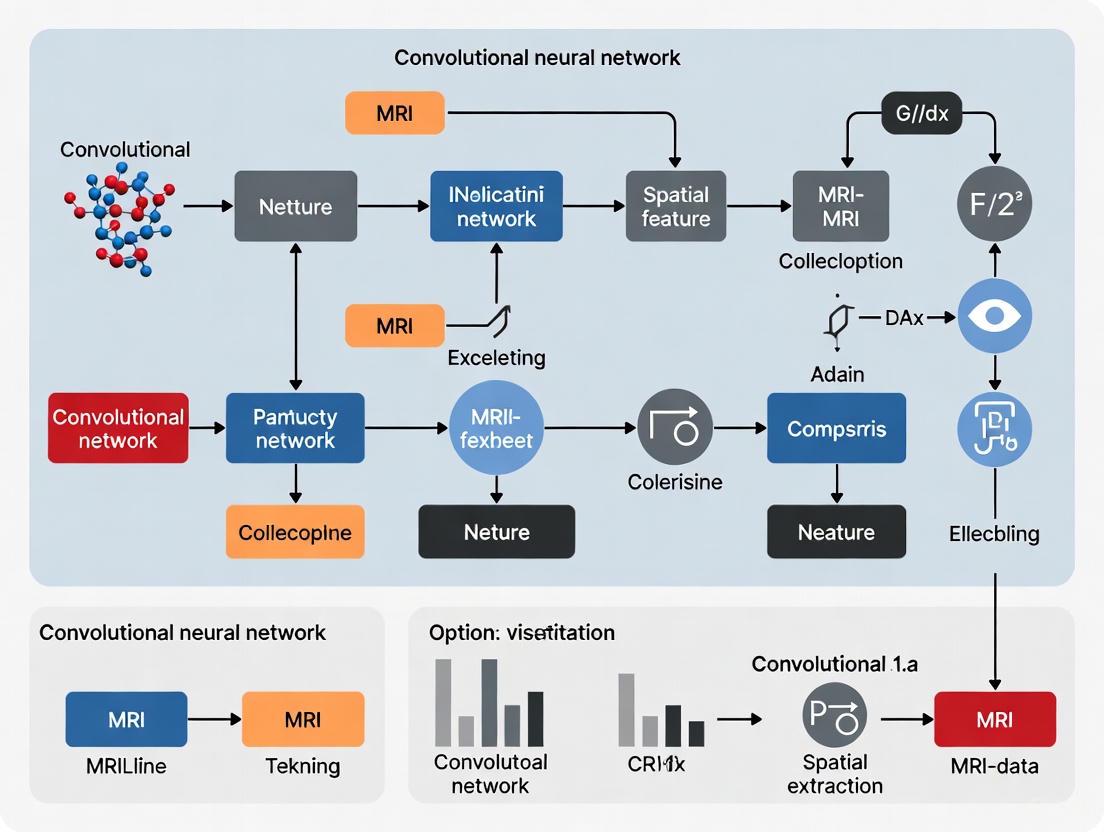
This article provides a comprehensive analysis of Convolutional Neural Networks (CNNs) for spatial feature extraction from Magnetic Resonance Imaging (MRI) data, tailored for researchers, scientists, and drug development professionals.
Spatial Feature Extraction from MRI with Convolutional Neural Networks: Foundations, Applications, and Advanced Architectures
Abstract
This article provides a comprehensive analysis of Convolutional Neural Networks (CNNs) for spatial feature extraction from Magnetic Resonance Imaging (MRI) data, tailored for researchers, scientists, and drug development professionals. It explores the foundational principles of CNN architectures, detailing their evolution and core components for analyzing neurological disorders and oncology. The scope extends to advanced methodological applications, including hybrid models and transfer learning, followed by a critical examination of optimization strategies for computational efficiency and data scarcity. The review culminates in a comparative validation of state-of-the-art models, discussing performance metrics, generalizability, and their integration into clinical and research pipelines to enhance diagnostic accuracy and biomarker discovery.
Core Principles and Architectural Evolution of CNNs for Medical Imaging
Core Architectural Components of CNNs
Convolutional Neural Networks (CNNs) have revolutionized the field of medical image analysis by enabling automated learning of hierarchical features from complex datasets [1]. Their architecture is fundamentally composed of three types of layers that work in concert to transform input images into increasingly abstract representations for classification tasks.
Convolutional Layers
Convolutional layers form the foundational building blocks of CNNs, responsible for detecting spatial hierarchies in images [1]. These layers apply learned filters (kernels) to input data through a mathematical convolution operation. Each filter scans across the input image, producing a feature map that highlights specific visual patterns such as edges, textures, or more complex shapes in deeper layers. The key advantage of this operation is parameter sharing - the same filter weights are used across all spatial locations, significantly reducing the number of parameters compared to fully connected networks. In medical imaging, particularly for MRI analysis, these layers excel at identifying subtle tissue changes and morphological patterns essential for detecting pathological conditions [2].
Pooling Layers
Pooling layers are strategically inserted between convolutional layers to reduce the spatial dimensions of feature maps while preserving critical features [3]. The most common approach, max-pooling, selects the maximum value from a set of inputs within a defined window, effectively highlighting the most prominent features and providing translational invariance. By progressively downsampling feature maps, pooling layers enhance computational efficiency, control overfitting, and increase the receptive field of subsequent layers. This allows the network to build robustness to small spatial variations in medical images, which is particularly valuable given the anatomical variability present in MRI scans across different patients [4].
Fully Connected Layers
Fully connected (dense) layers typically form the final stage of a CNN architecture, where all neurons are connected to all activations from the previous layer [3]. These layers synthesize the high-level features extracted by the convolutional and pooling layers into final predictions. Each neuron in a fully connected layer performs a weighted sum of its inputs followed by a non-linear activation function (commonly ReLU or softmax for classification). In medical diagnosis applications, these layers integrate the spatially distributed feature information to produce probability distributions over target classes (e.g., tumor types or healthy vs. pathological) [2] [5].
CNN Applications in MRI Feature Extraction
The hierarchical feature learning capability of CNNs has demonstrated remarkable success in MRI-based brain tumor analysis. The complementary functions of convolutional, pooling, and fully connected layers enable these networks to extract both fine-grained and high-level tumor features from complex magnetic resonance imaging data [2].
Table 1: Performance of CNN Architectures in Brain Tumor Classification from MRI
| Architecture | Accuracy (%) | Precision (%) | Recall (%) | Specificity (%) | F1-Score (%) |
|---|---|---|---|---|---|
| DCBTN (Proposed) [2] | 98.81 | 97.69 | 97.75 | 99.18 | 97.70 |
| Lightweight CNN [3] | 99.00 | 98.75 | 99.20 | - | 98.87 |
| CNN from Scratch [6] | 99.17 | - | - | - | - |
| Modified EfficientNetB0 [6] | 99.83 | - | - | - | - |
| Ensemble Model [7] | 86.17 | - | - | - | - |
| Hybrid CNN-Transformer [2] | 98.70 | - | - | - | - |
In practical applications, researchers have developed specialized CNN architectures that leverage these core components for enhanced MRI analysis. The Dual Deep Convolutional Brain Tumor Network (DCBTN) combines a pre-trained Visual Geometry Group 19 model with a custom-designed CNN to extract both fine-grained and high-level tumor features [2]. Similarly, lightweight CNN implementations demonstrate that carefully optimized architectures with just three convolutional layers, two pooling layers, and a fully connected dense layer can achieve 99% accuracy in brain tumor detection even with limited training data [3]. These implementations highlight how the strategic arrangement of core CNN components can yield highly effective diagnostic tools for clinical applications.
Experimental Protocols for MRI-Based Brain Tumor Classification
Data Preparation and Preprocessing Protocol
Dataset Acquisition:
- Utilize publicly available brain tumor MRI datasets from repositories such as Kaggle (e.g., Brain Tumor MRI Dataset comprising glioma, meningioma, pituitary tumors, and non-tumor cases) [5].
- Ensure dataset includes balanced representation across classes (e.g., 1000 tumor and 1000 non-tumor images) to mitigate classification bias [5].
- For enhanced generalization, incorporate multiple datasets such as BR35H containing 1500 positive and 1500 negative cases [6].
Image Preprocessing Pipeline:
- Conversion to Grayscale: Transform all images to single-channel to reduce computational complexity while preserving essential intensity information [6].
- Noise Reduction: Apply Gaussian filters to diminish high-frequency noise and enhance relevant features [5].
- Intensity Normalization: Rescale pixel values to [0,1] range to standardize inputs and improve training stability [6].
- Spatial Standardization: Resize all images to consistent dimensions (e.g., 32×32, 64×64, or 224×224 depending on architecture) [6].
- Data Augmentation: Address limited data availability using techniques like random rotation, flipping, and CutMix to improve model robustness [2] [8].
Table 2: Essential Research Reagents and Computational Resources
| Resource Category | Specific Examples | Function in CNN Research |
|---|---|---|
| Programming Frameworks | TensorFlow, TFlearn [3] | Provide high-level APIs for implementing and training CNN architectures |
| Computational Hardware | GPUs [2] | Accelerate training of deep neural networks through parallel processing |
| Public Datasets | Kaggle Brain Tumor MRI [5], BR35H [6] | Supply annotated medical images for training and validation |
| Pre-trained Models | VGG-19 [2], ResNet50 [6], DenseNet121 [6] | Serve as feature extractors or starting points for transfer learning |
| Evaluation Metrics | Accuracy, Precision, Recall, F1-Score, ROC-AUC [3] | Quantify model performance for clinical reliability assessment |
CNN Implementation and Training Protocol
Architecture Configuration:
- Implement a sequential model with alternating convolutional and pooling layers, culminating in fully connected layers for classification [3].
- For convolutional layers, use 3×3 or 5×5 filter sizes with ReLU activation functions to introduce non-linearity [6].
- Configure max-pooling layers with 2×2 windows to progressively reduce spatial dimensions while retaining salient features [3].
- Include batch normalization layers to stabilize training and accelerate convergence [6].
- Add dropout layers before fully connected layers to prevent overfitting (typically 0.2-0.5 dropout rate) [6].
Training Procedure:
- Parameter Initialization: Initialize weights using He or Xavier initialization strategies.
- Optimization: Utilize Adam optimizer with default parameters (learning rate=0.001, β1=0.9, β2=0.999) [3].
- Loss Function: Employ sparse categorical cross-entropy for multi-class classification problems [6].
- Training Regimen: Train for 10-100 epochs with batch sizes of 32-64, monitoring validation loss for early stopping [3].
- Validation: Implement k-fold cross-validation (typically k=10) to ensure robust performance estimation [2].
Evaluation Framework:
- Calculate standard classification metrics including accuracy, precision, recall, specificity, and F1-score [2].
- Generate confusion matrices to visualize performance across different tumor classes.
- Utilize Grad-CAM++ or similar explainable AI techniques to generate heatmaps highlighting regions influencing classification decisions [7].
Workflow Visualization
CNN Hierarchical Feature Learning for MRI Analysis
The diagram illustrates the progressive transformation of MRI data through CNN layers. Input images first undergo feature detection in convolutional layers, followed by dimensionality reduction in pooling layers. This sequence repeats, building spatial hierarchies, before high-level features are integrated by fully connected layers for final classification.
Experimental Protocol for MRI Classification
This workflow outlines the systematic process for developing CNN-based MRI classification systems, from data acquisition through clinical interpretation, highlighting the comprehensive methodology required for robust medical image analysis.
The hierarchical architecture of CNNs, comprising convolutional, pooling, and fully connected layers, provides a powerful framework for spatial feature extraction from MRI data. Through their coordinated functions—local feature detection, spatial hierarchy building, and global feature integration—these networks achieve exceptional performance in brain tumor classification tasks, with recent models reporting accuracy exceeding 98% [2]. The experimental protocols outlined herein offer researchers a methodological foundation for implementing these architectures, while the visualization of workflows and component relationships enhances understanding of how CNNs progressively transform medical images into diagnostic predictions. As research advances, the integration of these core components with emerging techniques like attention mechanisms and explainable AI will further strengthen their utility in clinical neurosciences.
The Role of Spatial Feature Extraction in MRI Analysis for Neurology and Oncology
Spatial feature extraction is a foundational process in medical image analysis that identifies and isolates meaningful patterns or structures within spatial data [9]. In the context of magnetic resonance imaging (MRI), this involves detecting edges, textures, shapes, and other attributes that define spatial relationships and hierarchical patterns within neurological and oncological images [10]. The growing application of Convolutional Neural Networks (CNNs) has revolutionized this domain, enabling automated learning of spatial hierarchies through multiple building blocks including convolution layers, pooling layers, and fully connected layers [10]. This capability is particularly valuable for analyzing the complex and diverse structures of brain tumors and neurological disorders, where accurate identification of spatial features directly impacts diagnosis, treatment planning, and therapeutic monitoring [11] [2] [12].
Within neuro-oncology, the central role of MRI is undisputed, serving as a primary tool for diagnosis, monitoring disease activity, supporting treatment decisions, and evaluating treatment response [13] [12]. The integration of advanced spatial feature extraction techniques, particularly through deep learning approaches, is addressing critical limitations of conventional MRI, including difficulty discerning the full extent of infiltrative tumors and distinguishing between neoplastic and non-neoplastic processes in post-treatment scenarios [12]. This article examines the technical protocols, applications, and emerging frontiers of spatial feature extraction in MRI analysis, with specific focus on implementations for neurology and oncology.
Fundamentals of Spatial Feature Extraction in MRI
Spatial feature extraction in MRI involves converting raw image data into structured, machine-readable features that represent clinically relevant patterns [9]. CNNs automatically and adaptively learn spatial hierarchies of features through backpropagation using multiple building blocks: convolution layers, pooling layers, and fully connected layers [10]. The process begins with convolution operations where kernels (small arrays of numbers) are applied across input image tensors to create feature maps that highlight specific patterns [10]. These features become progressively more complex through successive layers, enabling the network to evolve from detecting simple edges to identifying complex pathological structures.
Key Technical Components:
- Convolution Layers: Perform feature extraction through linear operations optimized by learnable kernels that scan input images [10]. Key hyperparameters include kernel size (typically 3×3, 5×5, or 7×7), number of kernels, padding (typically zero padding to maintain dimensions), and stride (usually 1 for detailed scanning) [10].
- Non-linear Activation Functions: Introduce non-linearity to the system, with Rectified Linear Unit (ReLU) being most common due to its computational efficiency [10].
- Pooling Layers: Provide downsampling operations that reduce feature map dimensionality while introducing translation invariance to small shifts and distortions. Max pooling (2×2 with stride of 2) is most popular, while global average pooling is sometimes applied before fully connected layers [10].
The fundamental advantage of CNN-based spatial feature extraction lies in weight sharing, where kernels are shared across all image positions, allowing detection of learned local patterns regardless of their location while significantly reducing parameters compared to fully connected networks [10].
Spatial Feature Extraction in Neuro-Oncology
Clinical Application Domains
In neuro-oncology, spatial feature extraction enables precise tumor classification, segmentation, and characterization. Malignant brain tumors can be categorized as either metastatic tumors (originating outside the brain) or primary tumors (originating within brain tissue and meninges), with gliomas representing approximately 80% of malignant brain tumors [12]. Accurate spatial feature analysis is crucial for differentiating tumor types and grades, guiding treatment decisions, and monitoring therapeutic response.
Table 1: Performance of Advanced Spatial Feature Extraction Models in Brain Tumor Classification
| Model Architecture | Dataset | Accuracy | Sensitivity/Specificity | Key Spatial Features Extracted |
|---|---|---|---|---|
| ResNet-152 with EChOA feature selection [11] | Figshare dataset | 98.85% | Not specified | Hierarchical texture and shape features optimized via modified chimp algorithm |
| Dual Deep Convolutional Brain Tumor Network (D²CBTN) [2] | Kaggle brain tumor dataset | 98.81% | 97.75% recall, 99.18% specificity | Combined fine-grained and high-level tumor features |
| VGG-19 + Custom CNN [2] | Kaggle brain tumor dataset | 98.81% | 97.69% precision, 97.70% F1-score | Global and local tumor morphological patterns |
| nnU-Net for MS lesion segmentation [14] | 103 patient FLAIR MRI dataset | 83% (slice level) | 100% sensitivity, 75% PPV | MS lesion boundaries and spatial distribution |
Advanced models like the Dual Deep Convolutional Brain Tumor Network (D²CBTN) demonstrate how combining pre-trained networks (VGG-19) with custom CNNs can extract complementary feature sets—global contextual features and localized detailed patterns—significantly enhancing classification accuracy for complex brain tumor types including glioma, meningioma, pituitary tumors, and non-tumor cases [2].
Technical Approaches and Architectures
Contemporary research employs sophisticated architectures for spatial feature extraction. Residual networks like ResNet-152 leverage skip connections to enable training of very deep networks, capturing complex spatial hierarchies while avoiding vanishing gradient problems [11]. The integration of optimization algorithms such as the Enhanced Chimpanzee Optimization Algorithm (EChOA) further improves feature selection by minimizing redundant features and enhancing discriminative spatial patterns [11].
For segmentation tasks, nnU-Net frameworks have demonstrated robust performance in automatically configuring themselves for specific medical imaging datasets, achieving high accuracy in segmenting Multiple Sclerosis (MS) lesions from FLAIR MRI images with Dice Similarity Coefficients of 70-75% [14]. This capability is particularly valuable for quantifying disease burden and monitoring progression in demyelinating disorders.
Spatial Feature Extraction in Neurological Disorders
Beyond oncology, spatial feature extraction plays a crucial role in diagnosing and monitoring neurodegenerative disorders. In cognitive impairment, CNN algorithms applied to structural MRI (sMRI) data have demonstrated significant capability in differentiating between Alzheimer's Disease (AD), Mild Cognitive Impairment (MCI), and normal cognition (NC) [15].
Table 2: CNN Performance in Differentiating Cognitive Impairment Categories Using Structural MRI
| Comparison | Pooled Sensitivity | Pooled Specificity | Clinical Utility |
|---|---|---|---|
| AD vs. NC [15] | 0.92 | 0.91 | High accuracy for definitive diagnosis |
| MCI vs. NC [15] | 0.74 | 0.79 | Moderate accuracy for early detection |
| AD vs. MCI [15] | 0.73 | 0.79 | Moderate differentiation capability |
| pMCI vs. sMCI [15] | 0.69 | 0.81 | Challenging but clinically valuable progression prediction |
The meta-analysis of 21 studies comprising 16,139 participants revealed that CNN algorithms achieve highest accuracy in distinguishing AD from normal cognition, with pooled sensitivity of 0.92 and specificity of 0.91 [15]. This performance reflects the distinct spatial patterns of cortical atrophy, ventricular enlargement, and hippocampal shrinkage characteristic of advanced AD that CNNs can effectively extract and recognize.
For Multiple Sclerosis, spatial feature extraction focuses on detecting demyelinating lesions in white matter, with FLAIR MRI sequences being particularly valuable [14]. The nnU-Net architecture has demonstrated robust performance in this domain, achieving 83% accuracy in slice-level classification and 100% sensitivity in lesion detection on internal test sets [14]. This high sensitivity is clinically crucial as missing lesions could lead to underestimation of disease burden.
Advanced Imaging Modalities and Hybrid Approaches
Beyond conventional MRI, advanced imaging modalities are creating new frontiers for spatial feature extraction. The integration of positron emission tomography (PET) with MRI combines exceptional structural detail with metabolic and functional information, providing a multidimensional view of brain pathology [12]. Amino acid PET tracers like [¹⁸F]FET offer better visualization of tumor borders compared to traditional glucose analogs, as normal brain tissue doesn't exhibit increased amino acid uptake [12].
Table 3: Advanced Imaging Modalities for Enhanced Spatial Feature Extraction
| Imaging Modality | Key Spatial Features | Clinical Advantages | Limitations |
|---|---|---|---|
| Amino Acid PET (e.g., [¹⁸F]FET) [12] | Tumor metabolism, infiltration boundaries | Superior tumor margin delineation, independent of blood-brain barrier disruption | Limited availability, higher cost |
| MR Perfusion Imaging [12] | Vascular density, blood flow characteristics | Differentiates tumor grade, identifies angiogenesis | Requires contrast administration, analysis complexity |
| MR Fingerprinting [12] | Simultaneous quantitative tissue parameter mapping | Rapid multi-parametric quantitative assessment | Emerging technology, validation ongoing |
| MR Elastography [12] | Tissue stiffness, mechanical properties | Differentiates tumor consistency pre-surgery, planning guidance | Motion sensitivity, technical expertise required |
| MR Spectroscopy [12] | Metabolic profiles, chemical composition | Identifies metabolic signatures of specific tumors | Limited spatial resolution, complex interpretation |
Radiomics represents another advanced frontier, converting medical images into mineable high-dimensional data to discover radiomic signatures of disease states [13]. This approach extracts vast numbers of quantitative spatial features—including texture, shape, and intensity patterns—that may not be visually perceptible but contain prognostic and predictive information [13]. When combined with CNN-based deep learning, radiomics enables discovery of complex spatial biomarkers for precision neuro-oncology.
Experimental Protocols and Methodologies
Protocol 1: Brain Tumor Classification with Integrated CNN Architecture
Objective: To implement a dual deep convolutional network for precise classification of brain tumor types from MRI scans [2].
Dataset Preparation:
- Utilize the Kaggle brain tumor classification dataset comprising glioma, no tumor, meningioma, and pituitary categories [2].
- Implement data augmentation using ImageDataGenerator function to address class imbalance [2].
- Apply preprocessing including normalization, skull stripping, and resizing to 224×224 pixels [2].
Experimental Setup:
- Architecture: Dual Deep Convolutional Brain Tumor Network (D²CBTN) integrating pre-trained VGG-19 with custom CNN [2].
- Feature Fusion: Implement "Add" layer to combine global features from VGG-19 and localized features from custom CNN [2].
- Training: 10-fold cross-validation to ensure robust performance estimation [2].
- Optimization: Adam optimizer with categorical cross-entropy loss function [2].
Evaluation Metrics:
- Primary: Accuracy, Precision, Recall, Specificity, F1-score [2].
- Validation: Comparative analysis against ResNet152, EfficientNetB0, DenseNet121, and transformer models [2].
Protocol 2: Multiple Sclerosis Lesion Segmentation with nnU-Net
Objective: To develop an automated system for segmenting MS lesions from FLAIR MRI images using nnU-Net architecture [14].
Dataset Preparation:
- Collect FLAIR MRI images from 103 MS patients with 512×512 pixel resolution [14].
- Acquire external validation set of 10 patients from additional centers [14].
- Expert radiologist annotation using Pixlr Suite program for ground truth masks [14].
Preprocessing Pipeline:
- Skull stripping to remove non-brain tissue [14].
- Intensity normalization to standardize value ranges [14].
- Entropy-based exclusion to filter non-informative slices [14].
- Data augmentation including rotation, flipping, and intensity variations [14].
Model Configuration:
- Architecture: nnU-Net framework configured for 2D slices [14].
- Training: Fivefold cross-validation approach [14].
- Hardware: NVIDIA GeForce RTX 3090 GPU for accelerated training [14].
Evaluation Framework:
- Slice-level metrics: Accuracy, Sensitivity, Positive Predictive Value (PPV), Negative Predictive Value (NPV) [14].
- Voxel-level metrics: Dice Similarity Coefficient (DSC) for segmentation overlap [14].
The Scientist's Toolkit: Essential Research Reagents and Materials
Table 4: Essential Research Materials for MRI Spatial Feature Extraction Experiments
| Research Component | Specifications | Function/Purpose |
|---|---|---|
| MRI Dataset [11] [14] [2] | Figshare, Kaggle brain tumor dataset, or institutional FLAIR MRI collections | Ground truth data for model training and validation |
| Annotation Software [14] | Pixlr Suite or equivalent medical image annotation tools | Expert labeling of regions of interest for supervised learning |
| Deep Learning Framework [11] [2] | Python with TensorFlow/PyTorch, nnU-Net for medical segmentation | Implementation of CNN architectures and training pipelines |
| Computational Hardware [14] | NVIDIA GeForce RTX 3090 GPU or equivalent high-performance computing | Accelerated model training and inference for large volumetric data |
| Data Augmentation Tools [2] | ImageDataGenerator or custom augmentation pipelines | Address dataset imbalance and improve model generalization |
| Optimization Algorithms [11] | Enhanced Chimpanzee Optimization Algorithm (EChOA) or genetic algorithms | Feature selection and dimensionality reduction |
| Evaluation Metrics [14] [2] | Accuracy, Sensitivity, Specificity, Dice Score, F1-score | Quantitative performance assessment and model comparison |
Spatial feature extraction using CNN-based methodologies has fundamentally advanced MRI analysis in neurology and oncology, enabling unprecedented accuracy in tumor classification, lesion segmentation, and disease characterization. The integration of dual-network architectures, advanced optimization algorithms, and comprehensive validation frameworks has yielded systems capable of exceeding 98% accuracy in specific classification tasks [11] [2]. These technological advances are transitioning neuro-imaging from qualitative subjective interpretation to quantitative analytical approaches that enhance diagnostic precision and clinical decision-making.
Future directions in spatial feature extraction research include several critical frontiers. First, the development of explainable AI methodologies is essential to enhance clinical trust and adoption by providing interpretable visualizations of which spatial features drive specific classifications [2]. Second, technical validation and biological correlation remain challenging, requiring rigorous multi-institutional studies to establish reliable imaging biomarkers [13]. Third, the integration of multi-modal data—combining structural MRI with advanced sequences, PET metabolic information, and clinical parameters—will enable more comprehensive disease characterization [12]. Finally, distinguishing between active and non-active lesions in Multiple Sclerosis and differentiating true tumor progression from treatment-related changes represent particularly valuable clinical targets for next-generation spatial feature extraction algorithms [14] [12].
As these advancements mature, spatial feature extraction will increasingly serve as the foundation for precision neuro-oncology, enabling earlier detection, personalized treatment strategies, and more sensitive monitoring of therapeutic response—ultimately improving outcomes for patients with neurological and oncological disorders.
The evolution of Convolutional Neural Network (CNN) architectures has fundamentally transformed the landscape of medical image analysis, particularly in the domain of magnetic resonance imaging (MRI). From the pioneering AlexNet to the sophisticated ResNet and DenseNet, each architectural innovation has addressed specific challenges in model performance, training efficiency, and feature extraction capability. Within MRI spatial feature extraction research, these architectures enable the identification of complex, hierarchical patterns essential for precise diagnosis and therapeutic development. The progression from simple stacked layers to complex residual and densely connected pathways represents a paradigm shift in how deep learning models capture and represent spatial information from volumetric medical data. This evolution is particularly critical for neuroimaging applications, where subtle anatomical variations and pathological signatures require models capable of extracting both local texture details and global contextual information across three-dimensional spatial domains.
Architectural Evolution: From Foundation to Innovation
AlexNet: The Pioneering Architecture
AlexNet marked a watershed moment in deep learning, demonstrating for the first time that complex hierarchical features could be learned directly from image data through an eight-layer architecture. The network employed a series of five convolutional layers followed by three fully-connected layers, utilizing novel approaches that would become standard in subsequent architectures [16] [17]. For MRI research, AlexNet introduced critical capabilities for automated feature extraction from medical images, reducing reliance on manual feature engineering. Its architectural innovations included the use of ReLU activation functions to address the vanishing gradient problem and accelerate training, overlapping max-pooling for dimensional reduction while preserving spatial information, and dropout regularization to prevent overfitting on limited medical datasets [17]. Though comparatively shallow by modern standards, AlexNet established the fundamental blueprint for deep CNN architectures in medical image analysis, with its input configuration (227×227×3) demonstrating that learned hierarchical features could outperform hand-crafted features for complex visual recognition tasks.
VGGNet: The Power of Depth and Simplicity
VGGNet advanced CNN architecture through a systematic investigation of network depth, demonstrating that progressive layers of small 3×3 filters could significantly enhance feature learning capabilities [18] [19]. The VGG-16 and VGG-19 configurations implemented a uniform architecture throughout the network, with stacked convolutional layers followed by spatial reduction via max-pooling. This design created a natural feature hierarchy where early layers captured simple spatial patterns like edges and textures, while deeper layers assembled these into complex anatomical structures - a property particularly valuable for MRI analysis where pathologies often manifest at multiple spatial scales [18]. The VGG architecture's strength in transfer learning is evidenced by its continued application in medical imaging research, such as in the Dual Deep Convolutional Brain Tumor Network (D²CBTN), where VGG-19 serves as a robust feature extractor for classifying brain tumors from MRI scans [2]. However, VGG's computational requirements (138 million parameters in VGG-16) and sensitivity to vanishing gradients in very deep configurations present practical limitations for large-scale volumetric MRI analysis [19].
ResNet: Overcoming the Depth Barrier
The Residual Network (ResNet) architecture represented a fundamental breakthrough in enabling extremely deep networks through the introduction of skip connections and residual learning [20]. Prior architectures, including VGG, faced the degradation problem where accuracy would saturate and then decline with increasing depth, indicating that not all systems were equally easy to optimize. ResNet addressed this by reframing the learning objective: instead of expecting stacked layers to directly learn a desired underlying mapping H(x), they would learn residual functions F(x) = H(x) - x, with the original input x being passed forward via identity skip connections [20] [21]. This innovative approach allowed gradients to flow directly backward through the network during training, mitigating the vanishing gradient problem and enabling the successful training of networks with up to 152 layers for 2D images and even deeper configurations for volumetric medical data [20].
For MRI feature extraction, ResNet's residual blocks prove particularly valuable in capturing multi-scale spatial features across large volumetric datasets. The architecture's ability to maintain feature propagation through deep networks enables learning of complex hierarchical representations essential for distinguishing subtle pathological patterns in neuroimaging. Variants like Wide ResNet challenge the assumption that depth alone is optimal, instead increasing width within residual blocks to enhance feature reuse and computational efficiency - an approach particularly beneficial when working with limited medical data [21]. Similarly, ResNeXt introduces cardinality (parallel pathways within blocks) as an additional dimension, creating models that capture diverse feature representations more efficiently than simply increasing depth or width [21].
DenseNet: Maximizing Feature Reuse with Dense Connections
DenseNet represents a further evolution of connectivity patterns by introducing direct connections between all layers in a dense block, with each layer receiving feature maps from all preceding layers and passing its own feature maps to all subsequent layers [8] [22]. This dense connectivity pattern yields several compelling advantages for medical image analysis: it strengthens feature propagation throughout the network, encourages substantial feature reuse, and substantially reduces the number of parameters through efficient feature learning [22]. In MRI research, where datasets are often limited and computational resources may be constrained, DenseNet's parameter efficiency enables the development of high-capacity models without proportional increases in computational requirements.
The feature concatenation approach in DenseNet ensures that both low-level spatial information from early layers and high-level semantic information from deeper layers remain accessible throughout the network, preserving spatial details that might be lost in other architectures through successive pooling operations. This property is particularly valuable for segmentation tasks and lesion detection in MRI, where precise spatial localization is critical. Research has demonstrated DenseNet's effectiveness in medical applications, with studies employing DenseNet-121 as part of hybrid deep learning frameworks for Alzheimer's disease classification from MRI data, achieving high accuracy in delineating cognitive impairment stages [8].
Comparative Analysis of CNN Architectures
Table 1: Architectural Specifications and Performance Characteristics
| Architecture | Depth (Layers) | Key Innovation | Parameters | Medical Imaging Applications | Strengths for MRI Analysis |
|---|---|---|---|---|---|
| AlexNet | 8 | First successful deep CNN; ReLU & dropout | 62 million | Foundational feature extraction | Demonstrated automated feature learning from medical images |
| VGG-16/VGG-19 | 16/19 | Small 3×3 filters; depth increase | 138/144 million | Brain tumor classification [2] | Hierarchical feature learning; transfer learning capability |
| ResNet | 34-152+ | Skip connections; residual learning | ~25-60 million | Alzheimer's classification [8] | Enables very deep networks; mitigates vanishing gradients |
| DenseNet | 121-264 | Dense inter-layer connectivity | ~8-30 million | Multi-class MRI classification [22] | Feature reuse; parameter efficiency; gradient flow |
Table 2: Experimental Performance on Medical Imaging Tasks
| Architecture | Dataset/Task | Reported Performance | Computational Considerations |
|---|---|---|---|
| VGG-19 | Brain tumor classification (Kaggle dataset) | 98.81% accuracy, 97.69% precision [2] | High memory footprint (528MB); suitable for transfer learning |
| ResNet-152 | CheXpert chest X-ray classification | AUROC 0.882 for multi-label classification [22] | Bottleneck design reduces parameters while maintaining depth |
| DenseNet-121 | OASIS-1 (Alzheimer's classification) | 91.67% accuracy as part of hybrid framework [8] | Parameter efficiency enables training on limited medical data |
| Custom Lightweight CNN | MRI brain tumor classification | 99.54% accuracy with only 1.8M parameters [23] | Optimized for clinical deployment with limited resources |
Experimental Protocols for MRI Feature Extraction
Protocol 1: Transfer Learning for Medical Image Classification
Purpose: To adapt pre-trained CNN architectures for MRI-based classification tasks using transfer learning.
Materials and Reagents:
- Pre-trained Models: ImageNet-trained weights for standard architectures (VGG, ResNet, DenseNet)
- MRI Dataset: Curated collection with appropriate class labels (e.g., ADNI for Alzheimer's, BraTS for tumors)
- Data Augmentation Pipeline: Techniques including random rotation (±10°), flipping, zooming (up to 110%), and intensity variation [2] [22]
- Computational Resources: GPU-enabled workstation (e.g., NVIDIA Titan series with ≥11GB RAM)
Procedure:
- Data Preprocessing: Convert volumetric MRI data to appropriate 2D slice format (224×224 for VGG, 227×227 for AlexNet) with normalization to [0,1] range
- Architecture Modification: Replace final classification layer (1000-class ImageNet output) with task-specific outputs (e.g., 4 classes for tumor types)
- Progressive Training:
- Phase 1: Freeze convolutional base, train only classification head (5-8 epochs)
- Phase 2: Unfreeze entire network, fine-tune with reduced learning rate (1e-5 to 1e-6) for 3-5 additional epochs [22]
- Validation: Implement k-fold cross-validation (typically k=10) to ensure robustness and assess generalization [2]
Troubleshooting: For class imbalance, employ weighted loss functions or oversampling. For overfitting, increase dropout rates or employ additional regularization.
Protocol 2: Hybrid 3D CNN for Volumetric MRI Analysis
Purpose: To extract spatiotemporal features from volumetric MRI data using 3D CNN architectures.
Materials and Reagents:
- Volumetric Data: Preprocessed 3D MRI scans (e.g., 1mm³ isotropic resolution)
- Architecture Framework: 3D CNN implementation (e.g., 3D DenseNet) with self-attention mechanisms [8]
- Memory Optimization: Gradient checkpointing and mixed-precision training for large volumes
Procedure:
- Volumetric Preprocessing: Skull stripping, intensity normalization, and registration to standard space (e.g., MNI152)
- Architecture Configuration: Implement 3D convolutional layers with kernel sizes (3×3×3) and residual/dense connectivity patterns
- Multi-scale Feature Extraction: Incorporate parallel pathways at different resolutions to capture local and global context
- Attention Integration: Augment with self-attention blocks to enhance volumetric brain feature extraction and capture long-range dependencies [8]
- Regularization Strategy: Employ spatial dropout, label smoothing, and early stopping to improve generalization
Applications: Particularly effective for longitudinal MRI analysis and tracking disease progression over time [8].
Visualization of Architectural Evolution
Table 3: Critical Research Reagents and Computational Resources for CNN MRI Research
| Resource Category | Specific Examples | Function/Application | Implementation Notes |
|---|---|---|---|
| Benchmark Datasets | OASIS-1 (cross-sectional), OASIS-2 (longitudinal) [8] | Model training and validation for neuroimaging | Standardized pre-processing essential for cross-study comparison |
| Data Augmentation Tools | ImageDataGenerator (Keras), RandomRotation, CutMix [8] [2] | Address class imbalance and improve generalization | Particularly critical for medical data with limited samples |
| Regularization Techniques | Dropout (rate=0.5), Label Smoothing, Early Stopping [8] [17] | Prevent overfitting on limited medical data | Dropout rate of 0.5 first introduced in AlexNet [17] |
| Optimization Algorithms | SGD with Momentum, Adaptive Learning Rates [16] [22] | Stabilize training and accelerate convergence | Learning rate typically between 1e-5 and 1e-6 for fine-tuning [22] |
| Computational Infrastructure | NVIDIA Titan/RTX Series (≥11GB RAM) [22] [19] | Enable training of deep architectures on volumetric data | Memory constraints often dictate batch size and input dimensions |
| Evaluation Metrics | Accuracy, Precision, Recall, F1-Score, AUROC [8] [2] | Comprehensive performance assessment | Medical applications often prioritize sensitivity for screening |
Emerging Trends and Future Directions
The evolution of CNN architectures continues to advance MRI spatial feature extraction research through several promising directions. Hybrid architectures that combine the strengths of CNNs with attention mechanisms are demonstrating remarkable performance, such as frameworks integrating DenseNet with self-attention mechanisms for Alzheimer's disease classification that achieve up to 97.33% accuracy on longitudinal MRI data [8]. The development of lightweight customized networks represents another significant trend, with research showing that optimized compact models of just 1.8 million parameters can achieve 99.54% accuracy on brain tumor classification while requiring minimal computational resources [23]. These efficient architectures facilitate clinical deployment in resource-constrained environments.
Future architectural innovations will likely focus on multi-modal integration, combining MRI with complementary data sources like genetic markers or clinical history for more comprehensive diagnostic models. Additionally, explainable AI techniques are becoming increasingly important for clinical adoption, providing interpretable visualizations of the spatial features driving model decisions. As architectural complexity grows, efficient volumetric processing methods will be essential for handling high-resolution 3D MRI data without prohibitive computational requirements. The continued evolution of CNN architectures promises to further enhance their capability to extract clinically relevant spatial features from complex medical imaging data, ultimately advancing precision medicine and therapeutic development.
Why CNNs Excel at Interpreting Brain Anatomy and Pathological Patterns in MRI
Convolutional Neural Networks (CNNs) have revolutionized the interpretation of brain Magnetic Resonance Imaging (MRI) by providing an automated, highly accurate framework for analyzing complex neuroanatomical patterns. Their architectural properties align exceptionally well with the spatial hierarchies and structural relationships inherent in brain imaging data. Unlike traditional machine learning approaches that rely on handcrafted features, CNNs autonomously learn hierarchical discriminative patterns directly from raw MRI pixels, capturing nuanced biomarkers that may be missed by conventional metrics [24]. This capability is particularly valuable in clinical neuroscience, where subtle morphological changes often represent the earliest indicators of pathological processes.
The fundamental strength of CNNs lies in their ability to preserve critical spatial hierarchies through convolutional layers, maintaining relationships between adjacent brain regions that are vital for interpreting sMRI data [24]. This spatial awareness enables CNNs to detect early multifocal atrophy patterns in neurodegenerative diseases and precisely delineate tumor boundaries in neuro-oncology. Furthermore, CNN architectures efficiently manage the high-dimensional nature of MRI data (typically 180 × 210 × 180 voxels) through pooling layers that reduce dimensionality without sacrificing diagnostically critical information [24]. These capabilities make CNNs uniquely suited to harness the full spatial richness of MRI data across diverse clinical applications.
Fundamental Architectural Advantages of CNNs for MRI Analysis
Hierarchical Feature Learning Mirroring Brain Organization
CNN architectures excel at MRI interpretation because their fundamental design principles mirror the structural organization of neuroimaging data. The hierarchical feature learning in CNNs progresses from simple edges and textures in early layers to complex morphological patterns in deeper layers, effectively capturing the multi-scale nature of brain anatomy and pathology [25] [1]. This compositional hierarchy allows CNNs to detect everything from local texture variations in tissue microstructure to global volumetric changes in brain regions, providing a comprehensive analytical framework for MRI interpretation.
The spatial invariance achieved through shared weight convolutions and pooling operations enables CNNs to recognize pathological patterns regardless of their location in the brain, a crucial advantage for analyzing tumors and lesions that may appear in diverse neuroanatomical contexts [1]. Furthermore, the translation equivariance property of convolutional operations ensures that spatial relationships between brain structures are preserved throughout the network, allowing the model to learn clinically relevant contextual patterns such as the differential atrophy of hippocampal subfields in early Alzheimer's disease [24]. These intrinsic architectural properties make CNNs uniquely capable of extracting biologically meaningful representations from complex MRI data without requiring explicit spatial priors or manual feature engineering.
Comparative Advantages Over Traditional Methods
Table 1: Comparative Analysis of MRI Interpretation Methods
| Analytical Approach | Feature Representation | Satial Context Preservation | Adaptability to Complex Patterns | Dependency on Domain Expertise |
|---|---|---|---|---|
| Traditional Machine Learning (e.g., SVM, Random Forests) | Handcrafted features (volumetrics, cortical thickness) | Limited (flattened vectors) | Moderate (requires explicit feature engineering) | High (manual feature selection) |
| Convolutional Neural Networks | Self-learned hierarchical features | Excellent (convolutional operations maintain spatial relationships) | High (automatic pattern discovery) | Low (end-to-end learning) |
| Hybrid CNN-Transformer Models [26] | Local and global contextual features | Superior (combines spatial and long-range dependencies) | Very High (multi-scale representation) | Moderate (architecture design) |
CNNs demonstrate distinct advantages over traditional machine learning models in deciphering complex neuroimaging patterns [24]. Unlike support vector machines or decision trees that rely on handcrafted features derived from prior knowledge, CNNs autonomously learn hierarchical discriminative patterns directly from raw sMRI pixels [27]. This end-to-end feature learning mitigates bias from incomplete manual feature engineering and captures nuanced biomarkers, such as microstructural changes in the entorhinal cortex that may be missed by conventional metrics [24].
Quantitative Performance Across Clinical Applications
Neurodegenerative Disease Classification
Table 2: CNN Performance in Neurodegenerative Disease Classification from sMRI
| Classification Task | Pooled Sensitivity | Pooled Specificity | Number of Studies | Participants | Key Regional Biomarkers |
|---|---|---|---|---|---|
| Alzheimer's Disease (AD) vs. Normal Cognition (NC) | 0.92 | 0.91 | 21 | 16,139 | Medial temporal lobe, hippocampal atrophy |
| Mild Cognitive Impairment (MCI) vs. NC | 0.74 | 0.79 | 21 | 16,139 | Hippocampal and entorhinal cortex atrophy |
| AD vs. MCI | 0.73 | 0.79 | 21 | 16,139 | Differential atrophy patterns across cortex |
| Progressive MCI vs. Stable MCI | 0.69 | 0.81 | 21 | 16,139 | Complex, multi-regional degeneration patterns |
CNNs demonstrate promising diagnostic performance in differentiating Alzheimer's disease, mild cognitive impairment, and normal cognition using structural MRI data [24]. The highest accuracy is observed in distinguishing AD from normal cognition, while the classification of progressive MCI versus stable MCI presents greater challenges, reflecting the subtlety of early neurodegenerative changes [24]. This performance spectrum underscores the CNN's sensitivity to both overt atrophy in established disease and subtle morphological changes in prodromal stages.
Brain Tumor Analysis and Segmentation
Table 3: CNN Performance in Brain Tumor Analysis
| Application | Model Architecture | Key Metrics | Dataset | Clinical Utility |
|---|---|---|---|---|
| Tumor Classification [2] | Dual Deep Convolutional Brain Tumor Network (D²CBTN) | Accuracy: 98.81%, Precision: 97.69%, Recall: 97.75%, Specificity: 99.18% | Kaggle Brain Tumor Classification Dataset | Differential diagnosis of glioma, meningioma, pituitary tumors |
| Tumor Segmentation [28] | AG-MS3D-CNN (Attention-Guided Multiscale 3D CNN) | Dice Scores: Whole Tumor: 0.91, Tumor Core: 0.87, Enhancing Tumor: 0.84 | BraTS 2021 | Surgical planning, treatment monitoring |
| Lightweight Tumor Detection [25] [3] | 5-layer CNN | Accuracy: 99%, Precision: 98.75%, Recall: 99.20%, F1-score: 98.87% | 189 grayscale brain MRI images | Accessible diagnosis with limited data |
| Multi-class Tumor Classification [29] | CNN with Firefly Optimization | Average Accuracy: 98.6% | BBRATS2018 | Tumor subtype characterization |
CNNs have revolutionized brain tumor analysis by automating the detection and segmentation processes that traditionally required extensive manual effort by neuroradiologists [30]. The AG-MS3D-CNN model incorporates attention mechanisms and multiscale feature extraction to enhance boundary delineation, particularly for infiltrative tumors with ambiguous margins [28]. This capability is crucial for surgical planning and treatment monitoring in neuro-oncology, where precise volumetric assessment directly impacts clinical decision-making.
Brain Age Estimation and Connectivity Analysis
Emerging CNN applications extend beyond disease classification to quantitative brain aging assessment. The NeuroAgeFusionNet framework demonstrates how hybrid architectures integrating CNNs with transformers and graph neural networks can achieve state-of-the-art performance in brain age estimation, with an MAE of 2.30 years, Pearson correlation of 0.97, and R² score of 0.96 on the UK Biobank dataset [26]. This precise age estimation provides a valuable biomarker for detecting accelerated brain aging associated with various neurological and psychiatric conditions.
Experimental Protocols for CNN Implementation in MRI Analysis
Protocol 1: CNN Pipeline for Brain Tumor Segmentation
Objective: Implement an automated segmentation pipeline for brain tumor subregions using multimodal MRI sequences.
Materials and Equipment:
- Hardware: GPU-enabled workstation (≥8GB VRAM)
- Software: Python 3.8+, TensorFlow 2.8+ or PyTorch 1.12+
- Data: BraTS 2021 dataset (T1, T1c, T2, FLAIR sequences)
Procedure:
- Data Preprocessing:
- Co-register all modalities to a common space
- Apply N4 bias field correction
- Normalize intensity values (zero mean, unit variance)
- Extract patches of size 128×128×128 centered on tumor regions
Model Configuration (AG-MS3D-CNN) [28]:
- Implement a 3D U-Net backbone with residual connections
- Integrate spatial attention gates at skip connections
- Add Monte Carlo dropout for uncertainty estimation
- Use deep supervision at multiple scales
Training Protocol:
- Loss function: Compound loss (Dice + Cross-Entropy + Boundary-aware term)
- Optimizer: Adam (lr=1e-4, β₁=0.9, β₂=0.999)
- Batch size: 2 (limited by GPU memory)
- Training duration: 300 epochs with early stopping
Evaluation Metrics:
- Compute Dice Similarity Coefficient for enhancing tumor, tumor core, and whole tumor
- Calculate Hausdorff Distance for boundary accuracy
- Generate uncertainty maps using Monte Carlo dropout (50 iterations)
Protocol 2: CNN for Alzheimer's Disease Classification
Objective: Develop a CNN model to discriminate between Alzheimer's disease, mild cognitive impairment, and normal cognition based on structural MRI.
Materials and Equipment:
- Hardware: GPU with ≥12GB VRAM
- Software: Python 3.7+, Keras 2.4+ with TensorFlow backend
- Data: ADNI dataset (T1-weighted MRI)
Procedure:
- Data Preprocessing:
- Perform anterior commissure - posterior commissure (AC-PC) alignment
- Apply skull stripping using BET (FSL) or HD-BET
- Segment into gray matter, white matter, and CSF using SPM or FSL
- Normalize to MNI space using non-linear registration
- Apply data augmentation (rotation, scaling, flipping)
Model Architecture:
- Implement a 3D CNN with 4 convolutional blocks
- Each block: 3D convolution (3×3×3), BatchNorm, ReLU, MaxPooling (2×2×2)
- Final layers: Global average pooling, fully connected layer (512 units), softmax output
- Add L2 regularization (λ=0.001) and dropout (rate=0.5)
Training Protocol:
- Loss function: Categorical cross-entropy
- Optimizer: Adam (lr=1e-5)
- Batch size: 8
- Training-validation split: 80-20 with stratified sampling
- Apply learning rate reduction on plateau
Performance Assessment:
- Calculate sensitivity, specificity, accuracy, and AUC-ROC
- Perform 10-fold cross-validation
- Generate saliency maps for model interpretability
Protocol 3: Lightweight CNN for Tumor Detection with Limited Data
Objective: Create an efficient CNN model for binary tumor classification when limited training data is available.
Materials and Equipment:
- Hardware: CPU or GPU with ≥4GB VRAM
- Software: TensorFlow 2.5+, TFlearn
- Data: 189 grayscale brain MRI images (98 tumor, 91 non-tumor)
Procedure:
- Data Preparation:
- Resize all images to 256×256 pixels
- Normalize pixel values to [0,1] range
- Apply data augmentation: rotation (±15°), zoom (±10%), horizontal flipping
- Use class weighting to address imbalance
-
- Input: 256×256 grayscale images
- Conv2D (32 filters, 3×3, ReLU) → MaxPooling (2×2)
- Conv2D (64 filters, 3×3, ReLU) → MaxPooling (2×2)
- Conv2D (128 filters, 3×3, ReLU) → GlobalAveragePooling
- Fully connected (64 units, ReLU) → Dropout (0.5)
- Output: Sigmoid activation (binary classification)
Training Protocol:
- Loss function: Binary cross-entropy
- Optimizer: Adam (lr=0.001)
- Batch size: 16
- Epochs: 10 with early stopping
- Validation split: 20%
Evaluation:
- Compute accuracy, precision, recall, F1-score, ROC-AUC
- Generate confusion matrix
- Plot learning curves for training and validation
Table 4: Key Research Resources for CNN-Based MRI Analysis
| Resource Category | Specific Tools/Datasets | Application | Key Features | Access Information |
|---|---|---|---|---|
| Public MRI Datasets | BraTS (Brain Tumor Segmentation) | Tumor segmentation, classification | Multimodal scans with expert annotations | [28] |
| ADNI (Alzheimer's Disease Neuroimaging Initiative) | Neurodegenerative disease classification | Longitudinal data with clinical correlates | [24] | |
| UK Biobank | Brain age estimation, population studies | Large-scale dataset (N=500,000) | [26] | |
| Kaggle Brain Tumor Dataset | Method development, benchmarking | Curated classification dataset | [25] [3] | |
| Software Frameworks | TensorFlow, PyTorch | Model development, training | Flexible deep learning frameworks | Open source |
| MONAI | Medical imaging-specific tools | Domain-specific optimizations | Open source | |
| SPM, FSL | Medical image preprocessing | Established neuroimaging tools | Academic licenses | |
| Validation Tools | QUADAS-2 | Quality assessment of diagnostic studies | Standardized methodology evaluation | [24] |
| METRICS (Methodological Radiomics Quality Score) | Radiomics methodology quality | Comprehensive quality scoring | [24] |
Advanced Architectures and Future Directions
Hybrid Models and Emerging Paradigms
While standard CNNs provide strong performance for many neuroimaging tasks, recent research has focused on hybrid architectures that address specific limitations of conventional approaches. The NeuroAgeFusionNet framework exemplifies this trend by integrating CNNs with transformers and graph neural networks to capture complementary information types [26]. This ensemble approach leverages CNNs for spatial feature extraction, transformers for long-range contextual dependencies, and GNNs for structural connectivity patterns, resulting in more robust brain age estimation.
Attention mechanisms have emerged as particularly valuable enhancements to CNN architectures, improving model interpretability and performance for complex segmentation tasks. The AG-MS3D-CNN model demonstrates how attention gates can enhance boundary delineation in brain tumor segmentation by selectively emphasizing relevant spatial locations while suppressing irrelevant regions [28]. This capability is especially valuable for infiltrative tumors where precise margin identification directly impacts surgical planning and treatment outcomes.
Uncertainty Quantification and Domain Adaptation
For clinical translation, reliable uncertainty estimation is essential. Monte Carlo dropout integration in models like AG-MS3D-CNN provides confidence measures for segmentation outputs, allowing clinicians to identify regions where model predictions may be less reliable [28]. This transparency builds trust in AI systems and supports informed clinical decision-making.
Domain adaptation techniques address another critical challenge: performance degradation when models are applied to data from different scanners or acquisition protocols. Incorporating domain adaptation modules enhances model robustness, ensuring consistent performance across diverse clinical environments [28]. This capability is particularly important for real-world deployment where MRI protocols vary significantly between institutions.
CNNs have fundamentally transformed MRI analysis by providing an automated, accurate, and scalable framework for extracting clinically relevant information from complex neuroimaging data. Their architectural properties—hierarchical feature learning, spatial relationship preservation, and translation invariance—align exceptionally well with the analytical requirements of brain image interpretation. The demonstrated success across diverse applications including tumor analysis, neurodegenerative disease classification, and brain age estimation underscores the versatility and power of these approaches.
Future advancements will likely focus on enhancing model interpretability, improving generalization across diverse populations and imaging protocols, and integrating multi-modal data for more comprehensive brain analysis. As CNN architectures continue to evolve, their role in clinical neuroscience will expand, ultimately contributing to more precise diagnosis, personalized treatment planning, and improved patient outcomes in neurological disorders.
Advanced Architectures and Practical Implementation for MRI Analysis
The application of Convolutional Neural Networks (CNNs) for analyzing Magnetic Resonance Imaging (MRI) data represents a cornerstone of modern computational pathology. In the context of brain tumor classification, these architectures excel at extracting hierarchical spatial features—from simple edges and textures in initial layers to complex morphological patterns in deeper layers—that are critical for distinguishing pathological tissue from healthy structures and for differentiating between various tumor subtypes [25] [3]. Among the plethora of available architectures, EfficientNet, VGG, and ResNet have emerged as dominant backbones for research and clinical translation. Their widespread adoption stems from their complementary strengths: VGG provides a robust foundational design, ResNet enables the training of very deep networks through residual connections, and EfficientNet optimizes the trade-off between model performance and computational efficiency through compound scaling [31] [32]. This document details the application, performance, and experimental protocols for these key architectures, providing a structured resource for researchers and drug development professionals engaged in neuro-oncology and medical image analysis.
The following tables summarize the quantitative performance of key architectures as reported in recent, high-quality studies focused on brain tumor classification using MRI data.
Table 1: Performance of Dominant Architectures in Brain Tumor Classification
| Model Architecture | Reported Accuracy | Key Strengths | Notable Variants/Applications | Citation |
|---|---|---|---|---|
| EfficientNet | 98.33% - 98.6% | High parameter efficiency, compound scaling, strong performance on multi-class tasks. | EfficientNet-B9, Improved EfficientNet for multi-grade classification. | [33] [32] |
| VGG | 98.69% - 99.46% | Simple, sequential design; strong transfer learning performance; excellent feature extraction. | VGG-16, VGG-19, Hybrid VGG-16 + FTVT-b16. | [34] [35] |
| ResNet | 99.15% - 99.66% | Very deep networks via skip connections; mitigates vanishing gradient; high accuracy. | ResNet-34, ResNet-50, Fine-tuned ResNet34 with Ranger optimizer. | [35] |
| Dual Deep Convolutional Network (D²CBTN) | 98.81% | Combines pre-trained VGG-19 and custom CNN; extracts both fine-grained and high-level features. | Integrated feature fusion via an "Add" layer. | [2] |
| Lightweight Custom CNN | 99% | Minimal computational footprint; effective with limited data and for binary classification. | Five-layer architecture (3 convolutional, 2 pooling, 1 dense). | [25] [3] |
Table 2: Model Complexity and Resource Requirements
| Model Architecture | Parameter Count (Approx.) | Training Time (per epoch) | Inference Throughput (images/sec) | Citation |
|---|---|---|---|---|
| VGG-19 | ~171 million | High | Moderate | [31] |
| ResNet-50 | ~25.6 million | Moderate | High | [31] |
| EfficientNetB0 | ~5.9 million | 25.4 seconds | 226 | [31] |
| MobileNet | ~3.2 million | 23.7 seconds | 226 | [31] |
| Custom Lightweight CNN | Very Low | Very Low | Very High (234.37) | [25] [31] |
Detailed Experimental Protocols
Protocol 1: Implementing a Fine-Tuned ResNet34 for High-Accuracy Classification
This protocol outlines the methodology for achieving state-of-the-art classification accuracy (99.66%) using a fine-tuned ResNet34 architecture [35].
- Dataset Preparation and Preprocessing
- Source: Utilize the public Brain Tumor MRI Dataset (e.g., from Figshare) containing T1-weighted, T2-weighted, and contrast-enhanced MRI volumes.
- Data Curation: Employ the MD5 hashing algorithm to identify and remove duplicate images, mitigating overfitting risk.
- Preprocessing: Resize all 2D slice images to 256x256 pixels. Normalize pixel intensities using the mean and standard deviation from the ImageNet dataset. During training, apply a random 224x224 center crop to each image to introduce scale and position variance.
- Data Augmentation Strategy
To enhance model robustness and generalizability, apply on-the-fly data augmentation during training. Recommended transformations include:
- Vertical Flipping: To account for orientation variability in clinical scans.
- Random Rotation: ±20 degrees.
- Random Zoom: Up to 20%.
- Brightness Adjustment: Maximum delta of 0.4 to simulate scanner setting variations.
- Model Architecture and Training Configuration
- Backbone: Initialize the model with weights from a ResNet34 pre-trained on ImageNet.
- Custom Classification Head: Replace the final fully connected layer with a new head tailored to the number of tumor classes (e.g., 4 classes: glioma, meningioma, pituitary, no tumor). This head can include additional Batch Normalization and Dropout layers for regularization.
- Optimizer: Use the Ranger optimizer, which combines RAdam (Rectified Adam) and Lookahead, for stable and efficient convergence. A common initial learning rate is 1e-4.
- Training: Use a batch size of 32 or 64. Monitor validation loss for early stopping to prevent overfitting.
Protocol 2: Developing a Hybrid VGG-16 and Vision Transformer Model
This protocol describes the procedure for building a hybrid model that leverages both the local feature extraction of CNNs and the global contextual understanding of Transformers, achieving 99.46% accuracy [34].
- Dataset and Preprocessing
- Utilize a multi-class dataset (e.g., 7,023 MRI scans across glioma, meningioma, pituitary, and no tumor).
- Standardize image size to 224x224 pixels to match the input requirements of both VGG-16 and the Vision Transformer.
- Model Architecture and Fusion
- Feature Extraction Branches:
- Branch 1 (VGG-16): Use a pre-trained VGG-16 (without its top classifier) to process the input images and extract hierarchical convolutional features.
- Branch 2 (Fine-Tuned Vision Transformer - FTVT-b16): Use a pre-trained Vision Transformer (ViT-B/16), fine-tuned on the target medical dataset. A custom classifier head with Batch Normalization (BN), ReLU, and Dropout can be added.
- Feature Fusion: Combine the feature maps or embeddings from both branches using an "Add" layer or concatenation. This fused feature set captures both local texture/shape details (from VGG-16) and global spatial dependencies (from FTVT).
- Classification Head: Attach a final fully connected layer with softmax activation on top of the fused features to perform the tumor classification.
- Feature Extraction Branches:
- Training Strategy
- Use transfer learning for both VGG-16 and FTVT components, potentially freezing the early layers during initial training phases.
- Employ the Adam optimizer and train the combined model end-to-end after the individual branches have been preliminarily fine-tuned.
Protocol 3: Building a Lightweight CNN for Data-Constrained Environments
This protocol is designed for scenarios with limited data (e.g., a few hundred images) or computational resources, where a simple 5-layer CNN can achieve 99% accuracy for binary classification [25] [3].
- Data Preparation
- Use a balanced dataset of tumor and non-tumor grayscale MRI images.
- Resize images to a consistent, manageable size (e.g., 128x128 or 256x256).
- Model Architecture
- Layer 1: A convolutional layer with 32 filters of size 3x3, followed by ReLU activation and a 2x2 max-pooling layer.
- Layer 2: A convolutional layer with 64 filters of size 3x3, followed by ReLU activation and a 2x2 max-pooling layer.
- Layer 3: A convolutional layer with 128 filters of size 3x3, followed by ReLU activation.
- Classification Block: Flatten the output and connect to a fully connected (dense) layer with a number of units (e.g., 64), followed by a final output layer with sigmoid (for binary) or softmax (for multi-class) activation.
- Training
- Use the Adam optimizer with default parameters.
- Train for a limited number of epochs (e.g., 10-50), monitoring for overfitting due to the small dataset size.
Workflow Visualization
The following diagram illustrates the logical workflow for model selection and application, integrating the protocols described above.
Model Selection Workflow
The Scientist's Toolkit: Essential Research Reagents and Materials
Table 3: Key Research Reagents and Computational Solutions
| Tool/Resource | Type | Function/Application | Example/Reference |
|---|---|---|---|
| Br35H & Figshare Datasets | Public Dataset | Benchmarking and training models for brain tumor detection and multi-class classification. | [33] [31] [35] |
| Pre-trained Models (ImageNet) | Software Model | Provides powerful feature extractors for transfer learning, significantly reducing required data and training time. | VGG-16, ResNet-34, EfficientNet-B0 [31] [35] |
| Data Augmentation Generators | Software Library | Synthetically expands training datasets to improve model generalization and combat overfitting. | ImageDataGenerator (Keras) [2] |
| Gradient-weighted Class Activation Mapping (Grad-CAM) | Software Tool | Provides visual explanations for model decisions (Explainable AI), highlighting tumor regions in MRIs. | [32] [34] |
| Ranger Optimizer | Software Tool | Combines RAdam and Lookahead optimizers for faster, more stable convergence during model training. | [35] |
| Hybrid Loss Functions (ACL + FL) | Software Tool | Improves segmentation accuracy by combining boundary delineation (ACL) and handling class imbalance (FL). | Active Contour Loss (ACL) & Focal Loss (FL) [36] |
The analysis of Magnetic Resonance Imaging (MRI) data presents a unique computational challenge, requiring the effective integration of spatial, temporal, and structural information. Convolutional Neural Networks (CNNs) have become the cornerstone for spatial feature extraction from medical images due to their exceptional ability to recognize patterns and hierarchical structures in complex image data [4] [37]. These networks utilize a series of convolutional and pooling layers that progressively identify features from simple edges to complex morphological characteristics, making them particularly suited for analyzing anatomical structures in MRI [3]. However, standard 2D CNNs processing individual slices may overlook crucial volumetric context, while 3D CNNs, though more comprehensive, demand significantly greater computational resources and are more challenging to optimize, especially with limited datasets [37].
The integration of CNNs with specialized architectures for sequence modeling and graph-based analysis has emerged as a powerful paradigm to overcome these limitations. Hybrid models leverage the spatial feature extraction capabilities of CNNs while incorporating temporal dependencies and relational reasoning through Long Short-Term Memory (LSTM) networks, Gated Recurrent Units (GRUs), and Spatial-Temporal Graph Networks (STGNs) [4] [38]. These architectures are particularly valuable for dynamic MRI analysis, disease progression monitoring, and capturing complex inter-regional brain connectivity patterns that are inaccessible to purely spatial models. The fusion of these capabilities enables more accurate classification, segmentation, and predictive modeling in neuroimaging, facilitating advances in personalized medicine and treatment planning [37].
Hybrid Model Architectures: Principles and Applications
CNN-LSTM Networks
CNN-LSTM architectures are designed to model spatial-temporal data by processing spatial features extracted by CNNs across sequential time points. The CNN component acts as a feature extractor that identifies relevant spatial patterns from individual MRI slices or volumes, while the LSTM component models temporal dependencies across sequential slices or longitudinal scans [4]. This architecture is particularly effective for tasks such as analyzing 4D functional MRI (fMRI) data, monitoring tumor evolution across multiple time points, and predicting disease progression from longitudinal studies.
Notably, a 3D CNN-LSTM model developed for Alzheimer's disease classification demonstrated the capability to extract spatiotemporal features from resting-state fMRI data with minimal preprocessing, successfully differentiating between Alzheimer's disease, Mild Cognitive Impairment (MCI) stages, and healthy controls [39]. The model architecture began with 1×1×1 convolutional kernels to capture temporal features across the BOLD signal, followed by spatial convolutional layers at multiple scales to integrate spatial information, effectively learning both the when and where of neurologically relevant signals [39].
CNN-GRU Networks
CNN-GRU networks represent an evolution of the hybrid approach, leveraging the simplified gating mechanism of GRUs to reduce computational complexity while maintaining competitive performance in capturing temporal dependencies. The GRU's streamlined architecture, with fewer gates than LSTM, often leads to faster training times and reduced parameter counts, making it particularly suitable for scenarios with limited computational resources or smaller datasets [38].
A novel Vision Transformer-GRU (ViT-GRU) model exemplifies this approach, achieving 98.97% accuracy in brain tumor classification using MRI scans [38]. In this architecture, the Vision Transformer component extracts essential spatial features through self-attention mechanisms, capturing global contextual information often missed by traditional CNNs. The GRU layer then processes the sequence of extracted features, modeling their interdependencies to enhance classification performance. This combination of global spatial attention and temporal modeling addresses both feature representation and sequential relationship challenges in medical image analysis [38].
CNN with Spatial-Temporal Graph Networks
Spatial-Temporal Graph Networks (STGNs) represent the most advanced hybrid architecture for analyzing brain network dynamics. These models combine CNN-based feature extraction with graph neural networks that model the brain as a complex network of interconnected regions. The CNN processes structural or functional imaging data to extract node features, while the graph component models information propagation and functional connectivity between different brain regions [2].
A hybrid model combining Graph Neural Networks (GNNs) and CNNs demonstrated the potential of this approach, leveraging GNNs to capture relational dependencies among image regions while utilizing CNNs to extract spatial features [2]. Though this particular implementation achieved 93.68% accuracy and faced challenges in capturing intricate patterns, the architecture illustrates a promising direction for modeling complex brain network interactions that underlie neurological disorders and tumor characterization.
Table 1: Performance Comparison of Hybrid Models in Medical Imaging Tasks
| Model Architecture | Application Domain | Dataset | Key Performance Metrics | Reference |
|---|---|---|---|---|
| 3D CNN-LSTM | Alzheimer's Disease Classification | ADNI fMRI (120 subjects) | High accuracy in multi-class classification of AD, MCI stages, CN | [39] |
| ViT-GRU | Brain Tumor Classification | BrTMHD-2023 Primary Dataset | 98.97% accuracy with AdamW optimizer | [38] |
| CNN-GRU (GNN hybrid) | Brain Tumor Classification | Multiple MRI Datasets | 93.68% accuracy, challenges with intricate patterns | [2] |
| Hybrid CNN | Alzheimer's Disease Classification | ADNI MRI (1296 scans) | 99.13% accuracy in 5-class classification | [40] |
| Lightweight CNN | Brain Tumor Detection | Kaggle/UCI (189 images) | 99% accuracy, precision: 98.75%, recall: 99.20% | [3] |
Experimental Protocols and Implementation
Data Preparation and Preprocessing Pipeline
Consistent and thorough data preprocessing is essential for training effective hybrid models. The standard pipeline begins with medical image acquisition using appropriate MRI sequences (T1-weighted, T2-weighted, FLAIR, etc.), followed by motion correction to address patient movement artifacts [39]. Intensity normalization ensures consistent signal ranges across different scanners and protocols, while coregistration aligns all images to a standard space such as the Montreal Neurological Institute (MNI) atlas, ensuring uniform spatial dimensions [39].
For temporal data analysis, temporal filtering removes low-frequency drifts and high-frequency noise from fMRI time series. Data augmentation techniques are crucial for addressing limited dataset sizes; these include random rotations, flips, intensity variations, and synthetic sample generation using Generative Adversarial Networks (GANs) [38] [2]. For graph-based approaches, brain parcellation defines nodes based on anatomical or functional atlases, while connectivity matrix construction establishes edges based on structural or functional connectivity measures.
Model Implementation Framework
Implementing a CNN-LSTM hybrid model for fMRI classification involves a structured approach. The input preparation phase involves partitioning 4D fMRI data into overlapping sub-sequences of consecutive volumes to increase training samples [39]. The CNN backbone typically begins with 1×1×1 convolutional kernels to capture temporal BOLD signal patterns, followed by 3D convolutional layers with increasing filter sizes (3×3×3, 5×5×5) to extract spatial features at multiple scales [40] [39]. Batch normalization and leaky ReLU activations (with negative slope of 0.1) stabilize training, while 3D max-pooling layers (2×2×2) progressively reduce spatial dimensions [39].
The temporal modeling component flattens CNN outputs and reshapes them into sequence format for LSTM layers, which typically employ 128-256 units to capture long-range dependencies. The classification head consists of fully connected layers with dropout regularization (0.3-0.5 rate) followed by a softmax output layer for multi-class prediction [39]. Throughout training, the Adam optimizer with learning rate scheduling and categorical cross-entropy loss function are employed, with gradient clipping to address exploding gradients in deep architectures.
Diagram 1: CNN-LSTM fMRI analysis workflow (76 characters)
Training and Optimization Strategies
Effective training of hybrid models requires specialized strategies to address convergence challenges. Transfer learning leverages pre-trained CNN weights (from ImageNet or medical imaging tasks) to initialize the spatial feature extractor, significantly reducing training time and improving performance, especially with limited data [3] [2]. Multi-stage training approaches first train the CNN component separately, then freeze CNN weights while training the LSTM/GRU component, and finally fine-tune the entire network end-to-end with a reduced learning rate [38].
Regularization techniques are critical to prevent overfitting and include spatial dropout, recurrent dropout in LSTM layers, L2 weight regularization, and label smoothing. To address class imbalance common in medical datasets, weighted loss functions like weighted cross-entropy or focal loss assign higher penalties to misclassified minority classes [38]. Gradient normalization techniques, including gradient clipping (values capped at 1.0-5.0 norm) prevent exploding gradients in deep recurrent architectures.
Performance Analysis and Comparative Evaluation
Table 2: Quantitative Performance Metrics of Representative Hybrid Models
| Model Type | Accuracy Range | Precision/Recall | Computational Efficiency | Data Requirements | Clinical Applicability |
|---|---|---|---|---|---|
| CNN-LSTM | 95-99% [4] | Generally balanced >95% | Moderate training time, high inference speed | Large datasets beneficial, data augmentation helpful | Excellent for longitudinal studies, disease progression |
| CNN-GRU | 96-99% [38] | High >97% [38] | Faster training than LSTM, efficient memory usage | Performs well with moderate dataset sizes | Suitable for clinical deployment with resource constraints |
| CNN-GNN | 90-94% [2] | Variable, domain-dependent | Computationally intensive, specialized hardware needed | Requires graph annotations, complex preprocessing | Research-focused, potential for connectome analysis |
| Dual CNN | 98-99.5% [40] [2] | Consistently high >98% | Efficient parallel processing, moderate requirements | Standard image data sufficient | High diagnostic reliability, readily implementable |
The performance evaluation of hybrid models reveals several important trends. CNN-LSTM architectures consistently achieve high accuracy (95-99%) across various classification tasks, effectively balancing temporal and spatial modeling capabilities [4]. CNN-GRU models demonstrate comparable accuracy (96-99%) with improved computational efficiency, making them particularly suitable for resource-constrained environments [38]. The recently proposed ViT-GRU architecture exemplifies this category, achieving 98.97% accuracy in brain tumor classification while utilizing explainable AI techniques for model interpretability [38].
Spatial-temporal graph networks, while showing tremendous potential for modeling brain connectivity, currently face implementation challenges including computational intensity and complex data preparation requirements [2]. These architectures typically achieve 90-94% accuracy but offer unique advantages for understanding network-level disruptions in neurological disorders. Dual-pathway CNN architectures represent another高性能 approach, with some implementations reaching exceptional accuracy up to 99.57% in Alzheimer's disease stage classification by processing features at multiple scales and resolutions [40].
Table 3: Essential Research Resources for Hybrid Model Development
| Resource Category | Specific Tools/Solutions | Primary Function | Implementation Notes |
|---|---|---|---|
| Public Datasets | ADNI [40] [39], BraTS [37], Kaggle Brain Tumor [3] [2] | Model training, validation, and benchmarking | ADNI specializes in neurodegenerative disorders; BraTS focuses on tumor segmentation |
| Software Frameworks | TensorFlow, PyTorch, MONAI, Dipy | Model implementation, preprocessing, and evaluation | MONAI offers medical imaging-specific layers and transformations |
| Computational Hardware | High-RAM GPUs (NVIDIA A100, V100), TPU clusters | Accelerate training of memory-intensive 3D/4D models | Essential for processing high-resolution volumetric data |
| Preprocessing Tools | FSL, SPM12, FreeSurfer, ANTs | Motion correction, normalization, segmentation, registration | SPM12 used in fMRI preprocessing pipeline [39] |
| Data Augmentation | TensorFlow ImageDataGenerator, TorchIO, Albumentations | Address dataset limitations, improve model generalization | TorchIO specializes in 3D medical image transformations |
| Visualization & XAI | SHAP, LIME, Attention Maps, Grad-CAM | Model interpretability, feature importance analysis | Critical for clinical translation and validation [38] |
Advanced Integration Protocols and Future Directions
Multi-Modal Fusion Techniques
Advanced hybrid architectures are increasingly incorporating multi-modal data fusion to enhance diagnostic accuracy. Early fusion integrates raw data from multiple MRI sequences (T1, T2, FLAIR, DWI) at the input level, requiring the CNN component to learn cross-modal relationships [37]. Intermediate fusion processes each modality through separate CNN branches, then combines features before the temporal modeling stage, leveraging modality-specific processing while capturing inter-modal dependencies [37] [41]. Late fusion employs separate hybrid networks for each modality and combines predictions at the output level, allowing for maximal modality-specific optimization while leveraging complementary information.
The U-Net architecture with skip connections has been particularly effective for segmentation tasks, with winning solutions in the BraTS challenge utilizing asymmetric U-Net variants with residual blocks to process multi-modal MRI data [37]. For classification, transformer-based attention mechanisms are increasingly incorporated to weight the importance of different modalities dynamically, with models like the Swin Transformer achieving up to 99.9% accuracy in certain classification tasks [4].
Explainable AI Integration
The clinical translation of hybrid models necessitates explainable AI (XAI) integration to build trust and provide mechanistic insights. Attention visualization techniques generate heatmaps highlighting regions that most influenced the model's decision, analogous to clinical region-of-interest analysis [38]. Feature importance analysis using SHAP (SHapley Additive exPlanations) and LIME (Local Interpretable Model-agnostic Explanations) quantifies the contribution of different input features to the final prediction, enabling validation against established clinical knowledge [38].
The ViT-GRU model exemplifies this approach, incorporating three complementary XAI techniques - Attention Maps, SHAP, and LIME - to provide transparent explanations for brain tumor classification decisions [38]. This multi-faceted interpretability approach not only builds clinician confidence but also facilitates discovery of novel imaging biomarkers by identifying previously unrecognized predictive patterns in the data.
Diagram 2: Multi-modal fusion with XAI integration (65 characters)
Emerging Research Directions
Future developments in hybrid model design are likely to focus on several cutting-edge directions. Foundation models pre-trained on massive diverse datasets offer promising transfer learning capabilities for medical imaging, potentially reducing data requirements while improving performance [37]. Federated learning approaches enable multi-institutional collaboration without sharing sensitive patient data, addressing critical privacy concerns while expanding training dataset diversity and size [42].
Hardware-aware efficient architectures are emerging to optimize model deployment in clinical settings with resource constraints, including lightweight hybrid models that maintain diagnostic accuracy while reducing computational demands [41]. Generative AI integration facilitates synthetic data generation to address rare conditions and class imbalance, while also enabling counterfactual explanations for model decisions [37]. Finally, integrated diagnostic systems that combine detection, classification, and segmentation within unified frameworks are advancing toward comprehensive clinical decision support systems capable of handling diverse diagnostic challenges [42].
These advanced protocols and future directions collectively address the primary challenges in the field: limited annotated data, model interpretability, computational efficiency, and clinical workflow integration. By advancing along these research trajectories, hybrid models for MRI analysis are poised to transition from research tools to clinically deployed systems that enhance diagnostic accuracy, personalize treatment planning, and ultimately improve patient outcomes in neurology and oncology.
Leveraging Transfer Learning with Pre-trained CNNs for Enhanced Performance on Limited Medical Datasets
Within the broader research on convolutional neural networks (CNNs) for MRI spatial feature extraction, a significant practical challenge is how to achieve high performance when labeled medical data is scarce. Training deep CNNs from scratch requires large datasets and substantial computational resources, which are often unavailable in medical research and clinical settings. Transfer learning (TL) has emerged as a powerful technique to overcome these limitations by leveraging knowledge from pre-trained models, originally trained on large-scale natural image datasets like ImageNet [43] [44]. This approach is particularly potent for medical image analysis, as the fundamental features learned by these models—such as edges, textures, and shapes—are often transferable to medical imaging tasks, even across different organs and modalities [45] [44]. This application note details protocols and experimental designs for effectively implementing TL with pre-trained CNNs to enhance performance on limited medical MRI datasets for tasks including brain tumor classification and Alzheimer's disease detection.
Recent studies demonstrate that TL can achieve diagnostic-level accuracy across various medical applications, even with limited target data. The table below summarizes quantitative results from key experiments.
Table 1: Performance of TL Models on Limited Medical MRI Datasets
| Application | Pre-trained Model(s) Used | Dataset Size & Description | Key Performance Metrics |
|---|---|---|---|
| Alzheimer's Disease (AD) Detection [46] | Ensemble (InceptionResNetV2, InceptionV3, Xception) | 6,735 MRI images (4 classes: Non-Demented to Moderately Demented) | Accuracy: 98.96%Precision (Mild/Moderate): 100% |
| Brain Tumor Classification [47] | GoogleNet (Inception) | 4,517 MRI scans (3 tumor types + normal) | Accuracy: 99.2% |
| Brain Tumor Classification [2] | Dual Deep Convolutional Network (VGG-19 + Custom CNN) | Kaggle Brain Tumor Dataset (Glioma, Meningioma, Pituitary, No Tumor) | Accuracy: 98.81%Precision: 97.69%Recall: 97.75%F1-Score: 97.70% |
| Alzheimer's Disease Prediction [48] | 3D-CNN Baseline + TL | 80 3T MRI scans (Addressing domain shift from 1.5T to 3T data) | Baseline Accuracy: 63%Accuracy with TL: 99% |
These results underscore that TL not only delivers high accuracy but also provides robust performance in multi-class settings and can successfully mitigate challenges posed by domain shifts in medical data [48].
Detailed Experimental Protocols
To ensure reproducible and high-quality results, the following sections provide detailed, step-by-step methodologies for implementing TL in medical image analysis.
Protocol A: Ensemble Transfer Learning for Alzheimer's Disease Staging
This protocol is based on the ensemble model that achieved 98.96% accuracy in classifying stages of Alzheimer's disease [46].
Data Preparation
- Dataset: Utilize the Alzheimer's Disease Neuroimaging Initiative (ADNI) dataset or a similar cohort.
- Class Definition: Organize data into four classes:
Non-Demented,Very Mildly Demented,Mildly Demented, andModerately Demented. - Preprocessing: Resize all MRI slices to a uniform dimension compatible with the pre-trained models (e.g., 299x299 for Inception-family models). Apply intensity normalization (e.g., scale pixel values to [0, 1]).
- Data Splitting: Split data into training, validation, and test sets (e.g., 70%/15%/15%), ensuring stratification to maintain class distribution.
Model Adaptation & Fine-Tuning
- Base Model Selection: Load three pre-trained models:
InceptionResNetV2,InceptionV3, andXception. Their pre-trained weights on ImageNet provide a strong foundation for feature extraction [46]. - Classifier Replacement: For each model, remove the original top classification layer (head). Append a new, task-specific head consisting of:
- A global average pooling layer.
- A fully connected (Dense) layer with 128 units and ReLU activation.
- A dropout layer (rate=0.5) for regularization.
- A final dense layer with 4 units and softmax activation.
- Fine-Tuning Strategy:
- Phase 1 (Feature Extractor): Freeze all convolutional base layers and train only the newly added head. Use a moderate learning rate (e.g., 1e-3).
- Phase 2 (Full Fine-Tuning): Unfreeze all layers and train the entire model end-to-end with a very low learning rate (e.g., 1e-5). This stage finely adjusts the pre-trained features to the medical domain.
- Base Model Selection: Load three pre-trained models:
Ensemble Construction
- Voting Mechanism: After individually training the three models, combine their predictions using a majority (hard) voting strategy. The final predicted class is the one voted for by at least two of the three models [46].
Protocol B: Lightweight TL for Brain Tumor Classification
This protocol outlines an efficient approach suitable for standard computational resources, based on models like GoogleNet achieving 99.2% accuracy [47].
Data Preparation
- Dataset: Use a curated dataset such as the Figshare brain tumor dataset, containing classes like
glioma,meningioma,pituitary, andno_tumor. - Handling Class Imbalance: If present, address class imbalance using data augmentation techniques before training [49] [2].
- Augmentation Techniques: Apply random rotations (≤15°), horizontal flips, and slight adjustments to brightness and contrast using an
ImageDataGenerator-like utility [2].
- Augmentation Techniques: Apply random rotations (≤15°), horizontal flips, and slight adjustments to brightness and contrast using an
- Dataset: Use a curated dataset such as the Figshare brain tumor dataset, containing classes like
Model Selection & Adaptation
- Model Choice: Select a lightweight pre-trained model such as
GoogleNet (InceptionV1),MobileNetV2, orEfficientNetB0[47] [50]. These models offer a good balance between performance and parameter efficiency. - Adaptation:
- Replace the model's final classification layer with a new one having neurons equal to the number of tumor classes (e.g., 4).
- Optionally, add a single intermediate dropout layer (rate=0.3-0.5) before the final layer to reduce overfitting.
- Model Choice: Select a lightweight pre-trained model such as
Training Configuration
- Transfer Learning Approach: Employ the Feature Extractor approach. Keep the convolutional base frozen and only train the newly replaced top layers [43].
- Loss Function: Use Categorical Cross-Entropy.
- Optimizer: Use Adam optimizer with a learning rate of 1e-4.
- Callback: Implement Early Stopping to halt training if validation loss does not improve for 10 epochs.
Protocol C: TL for Evolving MRI Data and Domain Shifts
This protocol addresses the critical real-world challenge of domain shift, such as when integrating data from old (1.5T) and new (3T) MRI scanners [48].
Scenario A: When Historical Data is Available
- Approach: Use a pre-trained model (e.g., a 3D-CNN) on the larger, historical dataset (e.g., 1.5T MRI). Use this model as a feature extractor for the new, smaller dataset (e.g., 3T MRI).
- Methodology: Extract features from the new data using the pre-trained model. Train a separate, standard classifier (e.g., Support Vector Machine - SVM, Random Forest) on these extracted features. This bridges the domain gap by leveraging knowledge from the source domain.
Scenario B: When Historical Data is Unavailable
- Approach: Adapt models pre-trained on large-scale natural image datasets (e.g., ImageNet) to process 3D MRI data.
- Methodology (General Approach):
- Extract 2D slices from the 3D MRI volumes.
- Use a pre-trained 2D CNN (e.g., ResNet50) as a feature extractor for each slice.
- Aggregate features (e.g., by averaging) across all slices from a single volume.
- Feed the aggregated features into a classifier.
- Methodology (Deep Approach - Fine-Tuning):
- Adapt the pre-trained 2D model to accept 3D input, or use a model designed for 3D data.
- Fine-tune the entire model on the target 3D MRI dataset. This approach integrates feature extraction and classification into a single, end-to-end trainable system [48].
Workflow Visualization
The following diagram illustrates the logical sequence and decision points for implementing the protocols described above.
The Scientist's Toolkit: Essential Research Reagents & Materials
The table below catalogs the key computational "reagents" and resources required to implement the described TL protocols successfully.
Table 2: Essential Research Reagents and Computational Materials
| Item Name | Function / Purpose | Example Specifications / Notes |
|---|---|---|
| Pre-trained CNN Models | Provides foundational feature extractors, eliminating the need for training from scratch. | InceptionV3, ResNet, VGG-19, GoogleNet, MobileNetV2 [46] [47] [2]. |
| Curated Medical Datasets | Serves as the target domain data for fine-tuning and evaluation. | ADNI (Alzheimer's), Figshare/Kaggle Brain Tumor datasets [46] [47] [2]. |
| Data Augmentation Tools | Artificially expands training dataset size and diversity, combating overfitting and class imbalance. | ImageDataGenerator (Keras), Albumentations, Torchvision Transforms. Techniques: rotation, flipping, contrast shift [2]. |
| Deep Learning Framework | Provides the programming environment for building, adapting, and training neural networks. | TensorFlow/Keras or PyTorch. Must support pre-trained model loading and fine-tuning. |
| GPU Computing Resources | Accelerates the model training process, which is computationally intensive. | NVIDIA GPUs (e.g., Tesla K40c, V100) with CUDA and cuDNN support [48]. |
| Weighted Loss Functions | Adjusts the learning process to focus on under-represented classes, mitigating model bias from imbalanced data. | Focal Loss, Weighted Cross-Entropy [49] [50]. |
Convolutional Neural Networks (CNNs) have revolutionized the analysis of Magnetic Resonance Imaging (MRI) by automating and enhancing the extraction of complex spatial features, which is critical for accurate disease diagnosis. This document presents a series of detailed application notes and experimental protocols, framed within broader research on CNNs for MRI spatial feature extraction. Designed for researchers, scientists, and drug development professionals, it provides a practical resource for implementing state-of-the-art deep learning methodologies in oncology and neurology. The following sections synthesize recent advances into structured data, standardized protocols, and essential toolkits to support reproducible research.
Case Study 1: Alzheimer's Disease Classification
Application Notes
Early and accurate diagnosis of Alzheimer's disease (AD) is crucial for timely intervention and patient care. Traditional diagnostic methods often suffer from low accuracy and lengthy processing times. Deep convolutional neural networks trained on structural MRI data have demonstrated superior capability in classifying AD stages by identifying subtle neurodegenerative patterns imperceptible to the human eye [51]. A recent large-scale study achieved exceptional performance in multi-class classification of AD stages, leveraging a dataset of 6,735 preprocessed brain structural MRI images from the Alzheimer's Disease Neuroimaging Initiative (ADNI) repository [51]. The research addressed a critical gap in the literature by providing a comparative analysis of multiple state-of-the-art CNN architectures, emphasizing the underexplored area of large-scale, multi-class classification.
Quantitative Performance Data
Table 1: Performance of CNN Models in Alzheimer's Disease Stage Classification [51]
| Model | Accuracy | Precision | Recall | F-Score | Notes |
|---|---|---|---|---|---|
| InceptionResNetV2 | 0.99 | 0.99 | 0.99 | 0.99 | Superior overall performance; 100% for Mild and Moderate Dementia classes. |
| Xception | 0.97 | 0.97 | 0.97 | 0.97 | Excelled in precision, recall, and F-score. |
| VGG19 | N/R | N/R | N/R | N/R | Demonstrated faster learning and convergence. |
| VGG16 | N/R | N/R | N/R | N/R | Strong results, achieving 100% for the Moderate Dementia class. |
N/R: Not explicitly reported in the summary, but the study confirmed strong results.
Experimental Protocol
1. Dataset: The Alzheimer MRI Preprocessed Dataset was used, comprising 6,735 structural MRI scans. Images were categorized into four classes: Non-Demented, Very Mild Demented, Mild Demented, and Moderate Demented [51].
2. Pre-processing:
- Normalization: Pixel values were scaled to a range between 0 and 1.
- Resizing: Images were resized to match the input dimensions of each specific CNN architecture.
- Grayscale Conversion: Images were converted from RGB (3 channels) to grayscale (single-channel) [51].
3. Data Splitting: The dataset was randomly divided into a training set (n=4,712 images), a validation set (n=671 images), and a test set (n=1,352 images) [51].
4. Data Augmentation: Geometric transformations (e.g., rotations, flips, shifts) were applied to the training set to artificially increase its size and diversity, improving model generalization. The test set was left unchanged [51].
5. Model Training with Transfer Learning:
- Base Models: Pre-trained versions of Xception, VGG19, VGG16, and InceptionResNetV2 were utilized.
- Customization: A Global Average Pooling 2D layer was added to the end of each base model, followed by three fully connected (dense) layers for classification.
- Training Techniques: Hyperparameter tuning and early stopping were applied to prevent overfitting. A dynamic learning rate adjustment was also employed [51].
6. Evaluation: Model performance was evaluated on the separate test set using accuracy, F-score, recall, and precision [51].
Workflow Diagram
Case Study 2: Brain Tumor Classification
Application Notes
Precise and reliable classification of brain tumors from MRI scans is a critical prerequisite for effective diagnostics and targeted treatment strategies. The complex and diverse structures of brain tumors—including variations in texture, size, and appearance—pose significant challenges for automated systems. Recent research has introduced sophisticated CNN-based models to tackle this problem. One study developed the Dual Deep Convolutional Brain Tumor Network (D²CBTN), which integrates a pre-trained VGG-19 model for extracting global features with a custom-designed CNN for capturing localized, fine-grained tumor features [2]. This fusion of complementary feature sets enhances both classification accuracy and robustness. Another study demonstrated the efficacy of a pre-trained VGG16 architecture, fine-tuned and supplemented with additional layers, to classify tumors into four categories: Glioma, Meningioma, Pituitary, and No Tumor, achieving a remarkable accuracy of 99.24% on a large, augmented dataset [52].
Quantitative Performance Data
Table 2: Performance of Deep Learning Models in Brain Tumor Classification
| Model / Study | Accuracy | Precision | Recall | F1-Score | Dataset / Classes |
|---|---|---|---|---|---|
| D²CBTN [2] | 98.81% | 97.69% | 97.75% | 97.70% | Kaggle (Glioma, No Tumor, Meningioma, Pituitary) |
| VGG16 (Fine-Tuned) [52] | 99.24% | N/R | N/R | N/R | Combined Public Datasets (4 classes) |
| Custom CNN [53] | 97.72% | N/R | N/R | N/R | Kaggle (3,264 images, 4 classes) |
| Optimized ResNet101 [53] | 98.73% | N/R | N/R | N/R | Kaggle (3,264 images, 4 classes) |
| SVM with LBP & CNN Features [5] | 98.06% (small dataset) | N/R | N/R | N/R | Kaggle Brain Tumor MRI Dataset |
N/R: Not explicitly reported in the summary.
Experimental Protocol
1. Dataset: Publicly available brain tumor MRI datasets from platforms like Kaggle were used. A typical dataset includes images across four categories: Glioma, Meningioma, Pituitary Tumor, and No Tumor [52] [53].
2. Pre-processing:
- Grayscale Conversion: Transforming RGB images to grayscale to reduce computational complexity [5].
- Filtering: Applying a Gaussian filter to blur images and reduce high-frequency noise [5].
- Thresholding and Contour Detection: Using binary thresholding and contour detection to highlight and crop the tumor Region of Interest (ROI) [5].
3. Data Augmentation: Techniques such as rotation, random erasing, flipping, and resizing were employed using functions like ImageDataGenerator to address class imbalance and increase the effective training dataset size [2] [52].
4. Model Architecture & Training:
- Approach A (D²CBTN):
- Combine a pre-trained VGG-19 model with a parallel, custom-designed CNN.
- Implement a feature fusion mechanism (e.g., an "Add" layer) to combine the global and local features.
- Train the integrated network for 4-class classification [2].
- Approach B (Fine-Tuned VGG16):
- Use a pre-trained VGG16 as a base model.
- Add custom fully connected layers on top.
- Employ a fine-tuning strategy to adjust the pre-trained weights and data augmentation to enhance performance [52].
- Validation: Use 10-fold cross-validation or a standard train/validation/test split to evaluate model performance rigorously [2] [53].
Workflow Diagram
Case Study 3: Breast Cancer Detection
Application Notes
Breast cancer (BC) is one of the most common cancers among women worldwide. Breast MRI is a highly sensitive modality for detection and monitoring, but its interpretation is time-consuming and requires expert radiologists. The proposed Breast Cancer Deep Convolutional Neural Network (BCDCNN) framework automates this process, aiming to reduce human error and unnecessary biopsies [54]. The model incorporates an adaptive error similarity-based loss function, which dynamically emphasizes samples with ambiguous predictions, thereby improving the model's discriminative capability on challenging cases. This approach highlights the potential of deep learning to not only classify images but also to focus learning effort on diagnostically critical data points.
Quantitative Performance Data
Table 3: Performance of the BCDCNN Model for Breast Cancer Detection [54]
| Model | Accuracy | Sensitivity | Specificity | Key Innovation |
|---|---|---|---|---|
| BCDCNN | 90.2% | 90.6% | 90.9% | Adaptive error similarity-based loss function. |
| Segmentation Stage (PSPNet + JSO) | N/A | N/A | N/A | Pyramid Scene Parsing Network optimized with Jellyfish Search Optimizer. |
Experimental Protocol
1. Pre-processing: The input breast MRI image is first filtered using an Adaptive Kalman Filter (AKF) to enhance image quality by reducing noise [54].
2. Segmentation: The filtered image undergoes cancer area segmentation using a Pyramid Scene Parsing Network (PSPNet). The PSPNet is optimized using the Jellyfish Search Optimizer (JSO), a metaheuristic algorithm, to improve segmentation accuracy and adapt to complex tumor boundaries [54].
3. Image Augmentation: The segmented regions are then augmented using techniques including rotation, random erasing, and slipping to increase the diversity of the training data [54].
4. Feature Extraction: Relevant features are extracted from the processed images [54].
5. Detection & Classification: The final breast cancer detection is performed using the BCDCNN. A key component is its newly designed loss function based on adaptive error similarity, which helps the model focus on diagnostically challenging cases during training [54].
Workflow Diagram
The Scientist's Toolkit: Research Reagent Solutions
Table 4: Essential Datasets, Models, and Computational Tools
| Resource Name | Type | Primary Function / Application | Source / Reference |
|---|---|---|---|
| ADNI Dataset | Data Repository | Provides a large collection of neuroimaging, genetic, and cognitive data for Alzheimer's disease research. | [51] [55] |
| Kaggle Brain Tumor MRI Dataset | Data Repository | A public dataset for developing and benchmarking brain tumor detection and classification models. | [5] [53] |
| Pre-trained CNN Models (VGG16, VGG19, InceptionResNetV2, Xception) | Software Model | Used for transfer learning; provide powerful, pre-trained feature extractors for medical images. | [51] [2] [52] |
| ImageDataGenerator | Software Tool | A function (e.g., in Keras) for real-time data augmentation to improve model generalization. | [2] |
| SCAN Initiative (NACC) | Data Repository & Protocol | Standardizes the acquisition, curation, and analysis of PET and MR images from Alzheimer's Disease Research Centers. | [56] |
| Pyramid Scene Parsing Network (PSPNet) | Software Model | A deep network for semantic segmentation, used for precisely delineating tumor boundaries. | [54] |
Overcoming Data and Computational Challenges in Clinical Deployment
Addressing Data Scarcity and Class Imbalance with Advanced Augmentation Techniques
Data scarcity and class imbalance are fundamental challenges in developing robust Convolutional Neural Networks (CNNs) for medical image analysis, particularly in Magnetic Resonance Imaging (MRI) research. Limited datasets, stemming from factors such as rare diseases, high annotation costs, and privacy concerns, can lead to model overfitting and poor generalization [57]. Furthermore, class imbalance, where critical pathological classes are underrepresented, biases models toward majority classes, reducing diagnostic accuracy for the conditions of greatest interest [58]. Within the specific context of a thesis on CNN-based spatial feature extraction from MRI, these data-related issues directly compromise the model's ability to learn discriminative and representative features of anatomical structures and pathologies.
Advanced data augmentation presents a powerful solution to these problems by artificially expanding and balancing training datasets. This application note details state-of-the-art augmentation techniques and provides explicit experimental protocols, serving as a practical resource for researchers and scientists aiming to build more accurate, robust, and generalizable deep-learning models for neuroimaging and drug development.
The performance of various augmentation strategies has been quantitatively validated across multiple medical imaging tasks. The tables below summarize key results and metrics.
Table 1: Impact of Data Augmentation on Model Performance in Various Medical Imaging Tasks
| Medical Task | Augmentation Strategy | Key Performance Metrics | Reported Performance | Citation |
|---|---|---|---|---|
| Brain Tumor Classification (MRI) | Lightweight CNN with augmentation on limited data (n=189 images) | Accuracy, Precision, Recall, F1-Score, ROC-AUC | Accuracy: 99%, F1-Score: 98.87% | [25] |
| Alzheimer's Disease Staging (MRI) | Hybrid model (IDeepLabV3+ & EResNext) with shifting, flipping, rotation | Multi-class Classification Accuracy | Accuracy: 98.12% | [58] |
| Colorectal Cancer Classification | Foundational Model (UMedPT) with multi-task pretraining | F1-Score with reduced data | 95.4% F1-score with only 1% of training data | [59] |
| Pediatric Pneumonia Diagnosis (CXR) | Foundational Model (UMedPT) with multi-task pretraining | F1-Score with reduced data | 93.5% F1-score with 5% of training data | [59] |
| Brain Tumor Segmentation | Random scaling, rotation, elastic deformation | Dice Similarity Coefficient | Improved Dice scores reported | [57] |
Table 2: Common Evaluation Metrics for Augmentation Techniques in Medical Image Analysis
| Metric | Formula / Definition | Interpretation in Medical Context | ||||||
|---|---|---|---|---|---|---|---|---|
| Dice Similarity Coefficient (DSC) | ( DSC = \frac{2 | X \cap Y | }{ | X | + | Y | } ) | Measures overlap between predicted and ground-truth segmentation; crucial for tumor volume analysis. |
| Area Under ROC Curve (AUC) | Area under the Receiver Operating Characteristic curve | Evaluates model's ability to distinguish between classes across all classification thresholds. | ||||||
| F1-Score | ( F1 = 2 \times \frac{Precision \times Recall}{Precision + Recall} ) | Harmonic mean of precision and recall; especially important for imbalanced datasets. | ||||||
| Mean Average Precision (mAP) | Mean of Average Precision over all classes | Used in object detection tasks (e.g., locating nuclei or lesions); combines recall and precision. |
Advanced Augmentation Techniques: Application Notes
Geometric and Photometric Transformations
These are foundational techniques that create new data by applying label-preserving transformations to existing images. For MRI, this includes 2D slice-wise transformations or 3D volumetric transformations to maintain spatial context across planes.
- Techniques: Rotation, translation, scaling, flipping (mirroring), shearing, and elastic deformation [57]. Elastic deformation is particularly effective for simulating biological variability in soft tissues like the brain.
- Photometric Adjustments: Modifications of image intensity to simulate variations in scanning parameters, including brightness, contrast, gamma correction, and noise injection (e.g., Gaussian, Rician) [57] [60]. Optimal gamma correction for contrast enhancement can be selected using meta-heuristic algorithms to maximize entropy and edge content [60].
Deep Learning-Based Synthesis
These methods use neural networks to generate highly realistic and complex synthetic data.
- Generative Adversarial Networks (GANs): GANs learn the underlying distribution of the training data and can generate novel, synthetic images. They have been used for tasks like virtual contrast enhancement, where a synthetic contrast-enhanced image (e.g., a recombined CESM image) is generated from a non-contrast input (e.g., a low-energy mammogram), potentially eliminating the need for contrast administration [61]. CycleGAN has been identified as a particularly promising architecture for such image-to-image translation tasks [61].
- Mixup and Advanced Blending: Mixup creates new training samples by performing a weighted linear interpolation between two randomly selected images and their labels [57]. This encourages smoother model behavior and improves generalization.
Foundational and Multi-Task Learning
This paradigm addresses scarcity by pre-training models on a large collection of diverse datasets and tasks.
- Universal Biomedical Pretrained Models (e.g., UMedPT): These models are trained in a multi-task fashion on a wide array of biomedical images (tomographic, microscopic, X-ray) with various labeling strategies (classification, segmentation, object detection) [59]. This approach decouples the number of pretraining tasks from memory constraints, allowing the model to learn universal, robust feature representations. For in-domain tasks, such a model can maintain performance with only 1% of the original training data without any fine-tuning, and for out-of-domain tasks, it requires only 50% of the data to match the performance of a model pretrained on ImageNet [59].
Hybrid and Ensemble Frameworks
These methods combine multiple strategies to maximize robustness.
- ETSEF Framework: This ensemble framework combines transfer learning and self-supervised learning (SSL) with ensemble learning. It leverages features from multiple pre-trained models and employs feature fusion, selection, and decision voting to achieve strong performance in data-scarce scenarios, showing improvements of up to 14.4% over state-of-the-art methods [62].
Experimental Protocols
Protocol 1: Basic Geometric and Photometric Augmentation for a 2D MRI Slice Dataset
This protocol is designed for initial experiments and establishing baseline performance with a standard CNN.
Workflow Diagram: Basic Augmentation Pipeline
Materials:
- Dataset: Public brain tumor MRI dataset (e.g., BraTS, Figshare).
- Computing Environment: Python with TensorFlow/PyTorch, and libraries like Albumentations or TorchIO.
- Hardware: GPU with at least 8GB VRAM.
Procedure:
- Data Preparation: Split data into training, validation, and test sets. Ensure no patient overlap between sets. Normalize pixel intensities to a [0, 1] range.
- Define Augmentation Pipeline: Implement a real-time augmentation pipeline that applies transformations stochastically during training. Use the following parameters as a starting point:
- Rotation: Random rotation within ±15 degrees.
- Translation: Random shifts of up to ±10% of image height/width.
- Flipping: Horizontal flip with a 50% probability.
- Brightness/Contrast: Random adjustments of ±20% and ±15%, respectively.
- Model Training: Train a standard CNN (e.g., a lightweight 5-layer CNN [25] or a pre-trained ResNet) using the augmented training set. Monitor loss and accuracy on the unaugmented validation set.
- Evaluation: Report performance on the held-out test set using accuracy, precision, recall, F1-score, and ROC-AUC [25].
Protocol 2: Advanced Synthesis with GANs for Class Imbalance
This protocol addresses severe class imbalance by generating synthetic images for the minority class.
Workflow Diagram: GAN-Based Oversampling
Materials:
- Dataset: Imbalanced dataset where the minority class is a specific pathology (e.g., very mild dementia [58]).
- Computing Environment: PyTorch or TensorFlow with a GAN library (e.g., PyTorch-GAN).
- Hardware: High-end GPU (e.g., NVIDIA V100, A100) with substantial VRAM, as GAN training is computationally intensive.
Procedure:
- Data Curation: Isolate all available images of the minority class from the training set.
- GAN Selection and Training:
- Select an appropriate GAN architecture. For image-to-image translation (e.g., simulating lesions), CycleGAN is effective [61]. For generating images from noise, a DCGAN or StyleGAN is suitable.
- Train the GAN exclusively on the minority class images. Monitor training stability using loss curves and periodically inspect generated samples for visual fidelity.
- Synthetic Data Generation: Use the trained generator to create a sufficient number of synthetic minority class images to balance the training set.
- Model Training and Validation: Combine the synthetic images with the original training data. Train a CNN on this balanced dataset. Crucially, the validation and test sets must contain only real, non-synthetic images to ensure a fair evaluation of model generalization [58].
Protocol 3: Leveraging a Foundational Multi-Task Model
This protocol is for scenarios with very limited target task data, leveraging a pre-trained foundational model.
Workflow Diagram: Foundational Model Fine-Tuning
Materials:
- Dataset: A small, labeled dataset for the specific target task (e.g., early Alzheimer's classification).
- Pre-trained Model: A publicly available foundational model like UMedPT [59].
- Computing Environment: Deep learning framework compatible with the model.
Procedure:
- Model Acquisition: Download the pre-trained weights for the foundational model.
- Feature Extraction (Frozen Encoder):
- Attach a new, randomly initialized classification head to the model's encoder.
- Freeze the encoder weights to preserve the pre-trained features.
- Train only the classification head on the target task data. This is highly efficient and effective with very small datasets (as low as 1-5% of the original data) [59].
- Fine-Tuning (Optional):
- If the target dataset is sufficiently large, unfreeze all or part of the encoder and continue training with a very low learning rate. This adapts the pre-trained features to the specific nuances of the target task.
- Evaluation: Compare the performance against a baseline model trained from scratch or pre-trained on natural images (e.g., ImageNet). Expect significant gains in data-scarce settings [59].
The Scientist's Toolkit: Research Reagent Solutions
Table 3: Essential Tools and Datasets for Augmentation Research
| Research Reagent | Type | Function and Application Note |
|---|---|---|
| Albumentations / TorchIO | Software Library | Highly optimized libraries for geometric and photometric transformations. Albumentations is excellent for 2D images, while TorchIO is specialized for 3D volumetric medical data. |
| Generative Adversarial Networks (GANs) | Model Architecture | Framework for generating synthetic medical images. CycleGAN is preferred for unpaired image-to-image translation tasks (e.g., virtual contrast enhancement [61]). |
| UMedPT / Other Foundational Models | Pre-trained Model | A universal biomedical pre-trained model that provides powerful, transferable feature representations, drastically reducing the data required for new tasks [59]. |
| BraTS Dataset | Public Dataset | Benchmark multimodal brain tumor MRI dataset with segmentation labels, ideal for validating augmentation techniques for segmentation and classification. |
| ADNI (Alzheimer's Disease Neuroimaging Initiative) | Public Dataset | A comprehensive dataset for Alzheimer's disease, including MRI scans and patient metadata, suitable for developing staging models on imbalanced data [58]. |
| Grad-CAM / SHAP | eXplainable AI (XAI) Tool | Provides visual explanations for CNN decisions, which is critical for validating that augmentation does not introduce confounding features and for building clinical trust [62]. |
Designing Lightweight and Efficient CNN Models for Resource-Constrained Environments
The application of Convolutional Neural Networks (CNNs) in medical image analysis, particularly for Magnetic Resonance Imaging (MRI), has revolutionized the capacity for early and accurate diagnosis of conditions such as brain tumors and Alzheimer's Disease (AD). However, the deployment of these models in real-world clinical settings, which often involve resource-constrained environments like point-of-care diagnostics or embedded systems in medical devices, presents significant challenges. These challenges include limited computational power, memory restrictions, and the frequent scarcity of large, annotated medical datasets. This document provides detailed application notes and protocols for designing lightweight and efficient CNN models tailored specifically for MRI spatial feature extraction in these contexts. By synthesizing recent advances in model architecture, data preprocessing, and hardware-aware optimization, this guide aims to empower researchers and developers to create robust, deployable diagnostic tools.
Lightweight CNN Architectures for Medical Imaging
Lightweight architectures achieve efficiency primarily through innovative convolutional operations and strategic architectural design, reducing parameters and floating-point operations (FLOPs) without compromising feature extraction capabilities crucial for medical images.
Core Architectural Components
- Depthwise Separable Convolutions: This operation factorizes a standard convolution into a depthwise convolution (applying a single filter per input channel) followed by a pointwise convolution (a 1x1 convolution to combine channel outputs). While theoretically efficient, it is important to note that on memory-bound platforms, the increased memory access can sometimes degrade performance [63].
- Attention Mechanisms: Modules like the Convolutional Block Attention Module (CBAM) can be integrated to enhance model focus on spatially and contextually relevant features in MRI scans, which often have low inter-class variance and high intra-class variability [50]. The MedNet architecture successfully combines depthwise separable convolutions with CBAM within a residual learning framework, demonstrating strong performance on medical datasets with reduced computational cost [50].
- Efficient Convolutional Alternatives: Research indicates that shuffle and shift convolutions can offer a more favorable trade-off between accuracy, computational load, and inference speed on edge devices compared to some traditional approaches [63].
Exemplary Model Architectures
Lightweight Five-Layer CNN for Brain Tumor Detection: A study demonstrated that a carefully designed, compact CNN could achieve 99% accuracy in classifying brain MRI scans as tumor-positive or negative, even with a small dataset of only 189 images [25]. The architecture is detailed in the experimental protocols section 5.1.
MedNet for General Medical Image Classification: This lightweight CNN integrates a core ResidualDSCBAMBlock, which uses depthwise separable convolutions and CBAM attention. It has been validated on multiple medical image datasets (DermaMNIST, BloodMNIST, OCTMNIST, Fitzpatrick17k), matching or exceeding baseline CNNs like ResNet-18 and ResNet-50 but with significantly fewer parameters and lower computational cost [50].
Dual-Path CNN for Alzheimer's Disease Classification: A novel approach for AD classification from MRI images involved designing two separate CNN models with distinct filter sizes (3x3 and 5x5) and pooling layers. The features from these two models were later concatenated in a classification layer, achieving exceptional accuracies (exceeding 99% in multi-class problems) by enabling the models to learn complementary task-specific features [40].
Performance and Comparative Analysis
The table below summarizes the quantitative performance of several lightweight models as reported in recent literature.
Table 1: Performance Summary of Lightweight CNN Models in Medical Image Analysis
| Model Name / Study | Application | Dataset | Key Metrics | Model Size/Complexity |
|---|---|---|---|---|
| Lightweight 5-Layer CNN [25] | Brain Tumor Detection | 189 Brain MRI images | Accuracy: 99%, Precision: 98.75%, Recall: 99.20%, F1-Score: 98.87%, AUC: 0.99 | 5 Layers (3 Convolutional, 2 Pooling, 1 Dense) |
| MedNet [50] | Medical Image Classification (e.g., skin lesions, blood cells) | DermaMNIST, BloodMNIST, OCTMNIST, Fitzpatrick17k | Competitive accuracy with state-of-the-art models | Significantly fewer parameters and lower computational cost than ResNet-18/50 |
| Dual-Path CNN [40] | Alzheimer's Disease Classification | ADNI (1,296 MRI scans) | 3-class: 99.43%, 4-class: 99.57%, 5-class: 99.13% accuracy | Two streamlined CNN paths concatenated |
| CQ-CNN (Hybrid Classical-Quantum) [64] | Alzheimer's Disease Detection | OASIS-2 | Accuracy: 97.5% | ~13.7k parameters (0.05 MB) |
The following table provides a comparative analysis of different convolutional operations for efficient CNN design on edge platforms, offering actionable insights for architectural choices.
Table 2: Hardware-Aware Analysis of Convolutional Operations on Edge AI Platforms (e.g., Raspberry Pi, Jetson Nano) [63]
| Convolutional Operation | Theoretical Efficiency | Inference Speed | Accuracy | Key Considerations for Deployment |
|---|---|---|---|---|
| Standard 2D Spatial | Baseline | Baseline | Baseline | - |
| Depthwise Separable | High (Low FLOPs) | Can be slower on memory-bound platforms | Competitive | Increased memory access can limit speed gains on some edge devices. |
| Shuffle & Shift | High (Low FLOPs/Zero Params) | Faster | Competitive | Often provides a better overall trade-off between accuracy, computational load, and inference speed. |
The Scientist's Toolkit: Research Reagent Solutions
Table 3: Essential Materials and Tools for Lightweight CNN Research in Medical Imaging
| Item Name | Function/Application | Examples/Specifications |
|---|---|---|
| Public MRI Datasets | Model training and benchmarking. | ADNI [65] [40], OASIS-2 [64], Kaggle Brain MRI [25] |
| Data Preprocessing Tools | Standardization and preparation of 3D volumetric data. | FSL, FreeSurfer [65], ANTs, Custom 3D-to-2D slice conversion frameworks [64] |
| Deep Learning Frameworks | Model implementation, training, and evaluation. | TensorFlow, TFlearn [25] |
| Edge AI Evaluation Platforms | Benchmarking real-world deployment performance. | Raspberry Pi 5, Coral Dev Board, Jetson Nano [63] |
| Performance Metrics | Quantifying model accuracy and efficiency. | Accuracy, Precision, Recall, F1-Score, ROC AUC [25], Parameter Count, FLOPs, Inference Time, Power Consumption [63] |
Experimental Protocols
Protocol: Training a Lightweight CNN for Brain Tumor Detection
Objective: To train a compact CNN model to accurately classify brain MRI images as tumor-positive or tumor-negative using a small dataset [25].
Materials:
- Dataset: 189 grayscale brain MRI images from a publicly accessible repository (e.g., Kaggle), with a balanced class distribution [25].
- Software: TensorFlow and TFlearn libraries [25].
- Hardware: A standard GPU-enabled workstation for training; edge devices (e.g., Jetson Nano) for deployment testing.
Methodology:
- Data Preparation: Partition the dataset into training and validation sets (e.g., 80-20 split). Apply standard preprocessing: image resizing to a uniform size, normalization of pixel values, and data augmentation (e.g., rotation, flipping) to mitigate overfitting.
- Model Architecture Implementation: Implement the following 5-layer CNN architecture using TensorFlow/TFlearn:
- Convolutional Layer 1: 32 filters of size 5x5, followed by a ReLU activation function.
- Max-Pooling Layer 1: Pool size of 2x2.
- Convolutional Layer 2: 64 filters of size 5x5, followed by ReLU.
- Max-Pooling Layer 2: Pool size of 2x2.
- Convolutional Layer 3: 128 filters of size 5x5, followed by ReLU.
- Fully Connected Dense Layer: With dropout regularization for preventing overfitting.
- Output Layer: Sigmoid activation for binary classification [25].
- Model Training:
- Optimizer: Adam optimizer.
- Iterations: Train for 10 epochs, comprising 202 iterations.
- Loss Function: Binary cross-entropy.
- Monitoring: Track training and validation loss and accuracy.
- Model Evaluation:
- Calculate performance metrics on the validation set: Accuracy, Precision, Recall, F1-Score, and ROC AUC.
- Compare the model's performance against a baseline model, if available [25].
Protocol: 3D to 2D MRI Slice Conversion for Data Preparation
Objective: To convert 3D volumetric MRI data into a series of 2D slices suitable for training 2D CNN models [64].
Materials:
- Data: 3D MRI volumes in NIfTI format.
- Software: A programming environment (e.g., Python) with libraries like NiBabel for reading NIfTI files.
Methodology:
- Loading Data: Load the 3D volume
Vwith dimensionsX × Y × Z. - Slice Parameter Definition: Define the anatomical plane for slicing (axial, coronal, or sagittal). Specify the target number of slices
nto extract and the total available slicesmin that view. - Interval Calculation: Calculate the interval
ibetween slices to be extracted using the formula:i = floor(m / n)[64]. - Edge Exclusion: Define the number of slices
k1andk2to exclude from the beginning and end of the volume, respectively, as these often lack meaningful tissue information. - Slice Extraction: Iterate through the volume, extracting slices at intervals of
i, starting from slicek1and ending beforem - k2. The final number of slices extracted will benslices = ceil(m / i) - (k1 + k2)[64]. - Output: Save the extracted 2D slices as image files (e.g., PNG) for model training.
Protocol: Benchmarking CNN Models on Edge Platforms
Objective: To evaluate the performance and efficiency of trained lightweight CNN models on various edge computing platforms [63].
Materials:
- Trained Models: Lightweight CNN models (e.g., in TensorFlow Lite or ONNX format).
- Edge Platforms: Raspberry Pi 5, Coral Dev Board (with Edge TPU), NVIDIA Jetson Nano.
- Benchmarking Software: Custom scripts or tools like TensorFlow Lite Benchmark Tool.
Methodology:
- Model Conversion: Convert the trained model to a format optimized for the target edge platform (e.g., TensorFlow Lite for Raspberry Pi, TensorFlow Lite delegate for Edge TPU).
- Deployment: Deploy the converted model onto each edge device.
- Benchmarking:
- Inference Time: Measure the average time taken to perform a single inference on a standardized test set of MRI images.
- Power Consumption: Use onboard sensors or external meters to measure power draw during inference tasks.
- Resource Utilization: Monitor CPU, GPU, and memory usage during model execution.
- Analysis: Compare the results across platforms and against a baseline performance on a standard server. Use this data to select the most suitable hardware for the specific application constraints.
Workflow Visualization
The following diagram illustrates the comprehensive workflow for developing and deploying a lightweight CNN model for MRI analysis, from data preparation to edge deployment.
The application of Convolutional Neural Networks (CNNs) to magnetic resonance imaging (MRI) analysis has revolutionized the extraction of spatial features for biomedical research and drug development. CNNs automatically and adaptively learn spatial hierarchies of features through multiple building blocks such as convolution layers, pooling layers, and fully connected layers [10]. However, model performance heavily depends on proper configuration of key hyperparameters: batch size, learning rate, and optimizer selection. These parameters significantly influence training dynamics, convergence behavior, and ultimate model efficacy in extracting meaningful biomarkers from complex MRI data [66] [67]. This protocol provides detailed methodologies for optimizing these hyperparameters within the context of MRI-based spatial feature extraction for clinical research applications.
Core Hyperparameter Concepts and MRI-Specific Considerations
Batch Size
Batch size determines the number of training samples processed before updating internal model parameters. In medical imaging applications, smaller batch sizes have demonstrated surprising advantages for capturing biologically meaningful information. A study on brain tumor MRI data from the BraTS cohort found that autoencoders trained with smaller batches produced latent spaces that better captured individual variations, such as tumor laterality, compared to larger batches [68]. The reduced averaging across samples in smaller batches appears to help models focus on locally relevant features rather than converging to a global average that ignores critical individual variations [68].
Learning Rate
The learning rate controls the step size during optimization, directly impacting training stability and convergence. Research consistently shows that the initial learning rate value and its scheduling during training are among the most influential factors in final model performance [69]. For lightweight CNN architectures, increasing the learning rate from 0.001 to 0.1 has been shown to produce substantial accuracy improvements—ConvNeXt-T accuracy increased from 77.61% to 81.61% in one systematic evaluation [69]. Cosine learning rate decay has emerged as a particularly effective scheduling strategy, smoothly decreasing the learning rate and enhancing convergence stability compared to step-based schedules [69].
Optimizer Selection
Optimizers define the specific algorithm used to update model parameters during training. They generally fall into two categories: adaptive learning rate methods (e.g., Adam, AdaGrad) and accelerated schemes (e.g., Nesterov momentum) [67]. While adaptive optimizers often converge quickly on training data, studies suggest they may converge to suboptimal local minima, potentially leading to worse generalization compared to non-adaptive methods [67]. The optimal choice often depends on architecture type, with SGD with momentum performing well for CNN-based models, while transformer-based and hybrid models often show better early-stage convergence with AdamW optimizer [69].
Table 1: Comparative Analysis of Optimization Algorithms for Medical Image Segmentation
| Optimizer Type | Examples | Advantages | Limitations | Reported Dice Improvement |
|---|---|---|---|---|
| Adaptive Methods | Adam, AdaGrad, RMSProp | Fast initial convergence; minimal manual tuning required | May generalize poorly; converge to different local minima | Varies by architecture and task |
| Accelerated Schemes | Nesterov Momentum, SGD with momentum | Better generalization; stable convergence | Requires careful hyperparameter tuning | Up to 2% improvement reported [67] |
| Hybrid Approaches | Cyclic Learning/Momentum Rate (CLMR) | Computational efficiency; improved generalization | Requires validation for specific datasets | >2% improvement in cardiac MRI segmentation [67] |
Quantitative Data on Hyperparameter Performance
Systematic evaluations of hyperparameter optimization reveal significant impacts on model performance across various architectures and medical imaging tasks. For cognitive impairment classification using structural MRI, CNN algorithms demonstrated pooled sensitivity and specificity of 0.92 and 0.91, respectively, for differentiating Alzheimer's disease from normal cognition [15]. In brain tumor classification tasks, optimized deep learning models have achieved accuracies exceeding 98.85% on benchmark datasets [11] [2].
Table 2: Performance Impact of Hyperparameter Optimization on Lightweight Models (ImageNet-1K)
| Model | Parameter Count (Millions) | Baseline Top-1 Accuracy (%) | Optimized Top-1 Accuracy (%) | Key Optimization Strategies |
|---|---|---|---|---|
| EfficientNetV2-S | 22 | ~82.0 | 83.9 | Progressive resizing, RandAugment, cosine decay [69] |
| ConvNeXt-T | 29 | 77.6 | 81.6 | Learning rate 0.1, AdamW, MixUp/CutMix [69] |
| MobileViT v2 (S) | ~5.6 | 85.5 | 89.5 | Composite augmentation pipeline, label smoothing [69] |
| MobileNetV3-L | 5.4 | 75.2 | 77.8 | Optimized learning rate schedule, advanced augmentation [69] |
| RepVGG-A2 | ~25 | <79.0 | >80.0 | MixUp, aggressive augmentation, extended training [69] |
| TinyViT-21M | 21 | 85.5 | 89.5 | Optimal learning rate (0.1), AdamW, advanced augmentation [69] |
Experimental Protocols for Hyperparameter Optimization
Comprehensive Hyperparameter Optimization Protocol for MRI Feature Extraction
Objective: Systematically optimize batch size, learning rate, and optimizer selection for CNN-based spatial feature extraction from MRI data.
Materials and Dataset Preparation:
- Dataset: Utilize the ATLAS dataset (60 3D contrast-enhanced MRIs) or appropriate MRI dataset for target application [70]
- Preprocessing: Apply skull stripping, intensity normalization, and resampling to ensure homogeneous input data [14]
- Data Augmentation: Implement random rotations, scaling, flipping, and advanced techniques (RandAugment, MixUp, CutMix) to artificially expand training dataset [70] [69]
- Data Splitting: Employ 70/10/20% split for training, validation, and testing on participant level [68]
Optimization Workflow:
- Initial Setup: Establish baseline performance with default hyperparameters
- Batch Size Screening: Test batch sizes of 1, 5, 10, 25, 50, and 100 while keeping other parameters fixed [68]
- Learning Rate Exploration: Evaluate learning rates across a logarithmic scale (0.0001, 0.001, 0.01, 0.1, 0.2) [69]
- Optimizer Comparison: Assess SGD with momentum, Adam, AdamW, and Nesterov accelerated gradient [67] [69]
- Combined Optimization: Perform Bayesian hyperparameter search to identify optimal combinations [70]
Evaluation Metrics:
- Primary: Dice Similarity Coefficient for segmentation tasks [70] [67]
- Secondary: Accuracy, sensitivity, specificity for classification tasks [11] [15]
- Tertiary: Inference time, parameter count for efficiency analysis [69]
Specialized Protocol: Small Batch Size Optimization for Autoencoders
Objective: Leverage small batch sizes to improve capture of biologically meaningful latent representations from MRI data.
Rationale: Smaller batches reduce averaging across samples, forcing models to focus on local individual variations rather than converging to a global average [68].
Procedure:
- Architecture Selection: Implement fully connected or convolutional autoencoder based on data type [68]
- Batch Size Trials: Train identical models with batch sizes of 1, 2, 3, 4, 5, 7, 10, 25, 50, and 100 [68]
- Evaluation: Assess reconstruction loss and biological meaningfulness of latent spaces through downstream tasks (e.g., sex classification for EHR data, tumor laterality detection for MRI) [68]
- Validation: Select model with lowest validation loss and highest biological relevance for final application
The Scientist's Toolkit: Research Reagent Solutions
Table 3: Essential Materials and Computational Resources for Hyperparameter Optimization
| Resource Category | Specific Examples | Function in Research | Implementation Notes |
|---|---|---|---|
| Dataset Resources | Figshare Brain Tumor Dataset [11], ATLAS (Liver CE-MRI) [70], BraTS 2021 [68] | Benchmarking and validation of optimization approaches | Ensure proper data use agreements; implement appropriate preprocessing pipelines |
| Architecture Backbones | ResNet-152 [11], U-Net [70] [67], nnU-Net [14], Custom Autoencoders [68] | Provide foundational models for feature extraction | Select based on task complexity; consider computational constraints |
| Optimization Algorithms | SGD with Momentum, Adam, AdamW, Nesterov Accelerated Gradient [67] [69] | Update model parameters during training | Match optimizer type to architecture and dataset characteristics |
| Learning Rate Schedulers | Cosine Annealing, Cyclic Learning Rates, Step Decay [67] [69] | Manage learning rate dynamics during training | Cosine annealing generally performs well; include warmup phases |
| Data Augmentation Tools | RandAugment, MixUp, CutMix, Label Smoothing [69] | Improve model generalization and robustness | Implement progressive augmentation strategies |
| Hardware Infrastructure | NVIDIA GPUs (RTX 3090, Titan Xp, Quadro RTX 5000) [14] [68] | Accelerate training and optimization processes | Ensure sufficient VRAM for 3D MRI data and large batch sizes |
Advanced Optimization Strategies for MRI Feature Extraction
Integrated Cyclic Learning and Momentum Rate (CLMR) Optimization
Background: Traditional optimizers often treat learning rate and momentum rate as independent parameters, despite their interconnected effects on training dynamics [67].
Protocol:
- Implementation: Develop a modified cyclic optimizer that alternates both learning rate and momentum rate values during training
- Frequency Tuning: Experiment with different cycle frequencies to identify optimal oscillation patterns for specific MRI segmentation tasks
- Validation: Compare against standard adaptive optimizers (Adam, AdaGrad) and accelerated schemes (Nesterov momentum) using Dice coefficient metrics
- Application: Apply to cardiac MRI segmentation from the ACDC challenge dataset to validate performance improvements [67]
Expected Outcomes: Studies have demonstrated that the CLMR approach can achieve over 2% improvement in Dice metric compared to conventional optimizers, with similar or lower computational cost [67].
Bayesian Hyperparameter Optimization for Architecture Selection
Background: Selecting appropriate architectures and their corresponding hyperparameters presents significant challenges in medical imaging applications [70].
Protocol:
- Architecture Screening: Evaluate diverse architectures including CNNs, transformers, and hybrid models on target MRI dataset
- Bayesian Search: Implement Bayesian optimization techniques to efficiently explore hyperparameter spaces and accelerate convergence to optimal configurations [70]
- Multi-objective Optimization: Balance competing objectives such as segmentation accuracy (Dice coefficient), computational efficiency, and model complexity
- Cross-validation: Employ rigorous cross-validation strategies to ensure robust performance estimation
Reported Outcomes: In liver and tumor segmentation tasks, Bayesian hyperparameter optimization contributed to average improvements of 1.7% and 5.0% in liver and tumor segmentation Dice coefficients, respectively [70].
In the application of Convolutional Neural Networks (CNNs) to magnetic resonance imaging (MRI) analysis, overfitting presents a fundamental barrier to clinical translation. This phenomenon occurs when models learn dataset-specific noise and patterns rather than clinically relevant features, resulting in impressive training performance that fails to generalize to new patient data. The challenge is particularly acute in medical imaging, where datasets are often limited, heterogeneous, and affected by technical variables like scanner differences and acquisition protocols [4]. Within the context of MRI spatial feature extraction research, overfitting manifests as models that memorize imaging artifacts rather than learning robust pathological signatures, ultimately compromising their utility in drug development and clinical decision-making.
The complex and diverse structures of brain tumors, including variations in texture, size, and appearance, naturally challenge deep learning models and can exacerbate overfitting tendencies [2]. Furthermore, the high dimensionality of MRI data coupled with limited sample sizes creates an environment where models can easily memorize training examples rather than learning generalizable features. Scanner effects introduced by different acquisition protocols and equipment further negatively affect model robustness and generalization capability [4]. These challenges collectively underscore the critical need for systematic approaches to mitigate overfitting and build models that maintain diagnostic accuracy in real-world clinical settings.
Strategic Framework for Overfitting Mitigation
Data-Centric Strategies
Data-centric approaches address overfitting at its source by expanding and enhancing training datasets to better represent the underlying population. These methods are particularly valuable in medical imaging where annotated datasets are naturally limited.
Data augmentation artificially expands training datasets by creating modified versions of existing images through transformations that preserve clinical relevance. As demonstrated in multiple studies, this technique directly addresses overfitting caused by limited data [71]. Common transformations include rotation, shifting, and contrast enhancement, which help models learn invariant features and reduce sensitivity to minor variations [72]. The ImageDataGenerator function, employed in several brain tumor classification studies, provides a practical implementation for real-time augmentation during training [2].
Advanced preprocessing techniques further enhance model robustness. Gabor transformations have been successfully applied to capture spatial-frequency pixel properties, enhancing feature extraction from MRI images and improving detection rates [73]. One Resource Efficient CNN (RECNN) framework incorporated Functional Gabor Transform (FGT) preprocessing to improve feature extraction while maintaining computational efficiency [73]. Additional preprocessing steps such as skull stripping, normalization, and resizing help minimize non-biological variations that can contribute to overfitting [14].
Table 1: Quantitative Impact of Data-Centric Strategies on Model Performance
| Strategy | Implementation Example | Reported Performance Improvement | Effect on Generalization |
|---|---|---|---|
| Data Augmentation | Rotation, shifting, contrast enhancement [72] | Significant reduction in overfitting; Improved accuracy on validation data [71] | Enhanced performance on external test sets [14] |
| Gabor Transform Preprocessing | Spatial-frequency feature enhancement [73] | Improved detection rates; Maintained computational efficiency [73] | Better feature extraction across different scanner types |
| Skull Stripping & Normalization | Removal of non-brain tissues; Intensity standardization [14] | Dice score of 70-75% on external validation sets [14] | Reduced scanner-specific effects |
| Transfer Learning | Pretrained VGG16, EfficientNetB4 [71] | Accuracy up to 99.66% on brain tumor detection [71] | Superior performance on limited medical datasets |
Architectural and Algorithmic Innovations
Model architecture decisions significantly influence susceptibility to overfitting, with several specialized designs demonstrating improved generalization capabilities.
The Dual Deep Convolutional Brain Tumor Network (D²CBTN) represents an innovative approach that integrates a pre-trained VGG-19 model with a custom-designed CNN [2]. This architecture tackles feature extraction by utilizing VGG-19 for global features and the custom CNN for localized features, with an advanced fusion mechanism combining these complementary feature sets. This approach achieved 98.81% accuracy in brain tumor classification while demonstrating reduced overfitting [2].
Resource-Efficient CNN (RECNN) architectures incorporate multi-path convolutional designs that capture both fine-grained textural cues and broader structural patterns [73]. One such framework replaced conventional fully connected layers with Fuzzy C-Means (FCM) clustering to define adaptive decision boundaries, thereby improving robustness while mitigating overfitting in medical datasets with limited sample sizes [73].
Hybrid architectures combine the strengths of different algorithmic approaches. For instance, CNN-SVM and CNN-LSTM hybrids have demonstrated strong results in both classification and segmentation tasks, with accuracies above 95% and Dice scores around 0.90 [4]. These approaches leverage CNNs for feature extraction while utilizing complementary algorithms for final classification, often resulting in better generalization.
Table 2: Architectural Strategies for Overfitting Mitigation
| Architectural Strategy | Key Mechanism | Reported Performance | Computational Efficiency |
|---|---|---|---|
| Dual Deep Convolutional Network (D²CBTN) [2] | Combines pre-trained and custom CNNs for multi-scale feature extraction | 98.81% accuracy, 97.70% F1-score in tumor classification [2] | Moderate; Balanced efficiency and effectiveness |
| Resource-Efficient CNN (RECNN) [73] | Multi-path convolution with Fuzzy C-Means classification | High accuracy with significant computational complexity reduction [73] | High; Designed specifically for efficiency |
| Hybrid CNN-LSTM/CNN-SVM [4] | CNN feature extraction with LSTM/SVM classification | >95% accuracy, ~0.90 Dice scores [4] | Variable based on specific implementation |
| 3D U-Net Segmentation [74] | Volumetric processing with encoder-decoder structure | DSC: 86.13 (enhancing), 86.75 (core), 92.41 (whole tumor) [74] | Moderate; Handles 3D context effectively |
| Transformer-Based Models [2] | Self-attention mechanisms for long-range dependencies | Up to 98.70% accuracy [2] | Lower; Requires extensive data and resources |
Transfer Learning and Advanced Regularization
Transfer learning has emerged as a particularly powerful strategy for overcoming data limitations in medical imaging. This approach leverages knowledge from large-scale natural image datasets, enabling models to learn general visual features before fine-tuning on medical images. As demonstrated in brain tumor detection research, transfer learning with pretrained models like VGG16 and EfficientNetB4 significantly reduces overfitting while improving classification accuracy on small datasets [71]. One study reported outstanding performance with EfficientNetB4 achieving 99.66% accuracy when combined with appropriate preprocessing and the ADAM optimizer [71].
Advanced regularization techniques further enhance model generalization. Beyond standard L1/L2 regularization, spatial dropout has proven effective in preventing co-adaptation of features in CNNs. The integration of Fuzzy C-Means clustering as a replacement for traditional dense layers represents another innovative approach, creating adaptive decision boundaries that improve robustness [73]. Ensemble methods, such as bagging or boosting, combine predictions from multiple models to yield more stable and accurate predictions, particularly valuable for difficult cases with high image variability [4].
Experimental Protocols for Model Validation
Cross-Validation and Testing Protocols
Robust validation frameworks are essential for accurately assessing model generalization and detecting overfitting. K-fold cross-validation with patient-level splitting provides a stringent evaluation approach that prevents data leakage and ensures realistic performance estimation [71]. In this protocol, data is partitioned at the patient level rather than the image level, ensuring that images from the same patient do not appear in both training and validation sets. This approach more accurately simulates real-world performance on unseen patients.
External validation represents the gold standard for assessing generalizability. One study on Multiple Sclerosis lesion segmentation demonstrated this approach by training on 103 patients from one hospital and testing on an external set of 10 patients from another center [14]. The performance difference between internal (83% accuracy) and external (76% accuracy) testing quantitatively reveals the generalization gap that can be obscured by internal validation alone [14].
Patient-wise majority voting addresses limitations of slice-based classification in volumetric MRI data. This method aggregates slice-level predictions to form patient-level diagnoses, mimicking real clinical analysis and reducing spurious correlations [74]. Studies have shown that this approach can improve diagnostic reliability, with one framework achieving 100% classification accuracy for tumor grading using patient-wise voting compared to 98.49% with slice-wise categorization [74].
Performance Metrics and Benchmarking
Comprehensive evaluation requires multiple performance metrics to capture different aspects of model behavior. For classification tasks, accuracy alone is insufficient; precision, recall, specificity, and F1-score provide a more complete picture of model performance [2]. For segmentation tasks, the Dice Similarity Coefficient (DSC) measures spatial overlap between predictions and ground truth, with values above 0.85 generally indicating excellent performance [4] [74].
Systematic comparison against established benchmarks contextualizes model improvements. The BraTS (Brain Tumor Segmentation) challenge provides standardized datasets and metrics for evaluating brain tumor segmentation algorithms [4]. Reporting performance on such benchmarks allows direct comparison with state-of-the-art methods and helps identify remaining gaps between research and clinical application.
Table 3: Validation Framework for Generalization Assessment
| Validation Method | Implementation Protocol | Advantages | Limitations |
|---|---|---|---|
| K-Fold Cross-Validation [2] [71] | Patient-level data splitting; 5-10 folds | Reduces variance in performance estimation; Maximizes data utility | Computationally intensive; May not detect dataset-specific bias |
| External Validation [14] | Testing on completely independent datasets from different institutions | Most realistic assessment of clinical generalizability | External datasets may be difficult to acquire |
| Patient-Wise Majority Voting [74] | Aggregation of slice-level predictions to patient-level diagnosis | Mimics clinical workflow; Improves diagnostic reliability | Requires full volumetric data for each patient |
| Multi-Center Validation [4] | Training and testing on data from multiple institutions with different scanners | Assesses robustness to technical and demographic variations | Complex data harmonization requirements |
The Scientist's Toolkit: Essential Research Reagents
Table 4: Key Research Reagent Solutions for MRI Analysis
| Reagent/Resource | Function | Example Implementation |
|---|---|---|
| nnU-Net Framework [14] | Self-configuring segmentation framework for medical images | Automatic adaptation to dataset properties; Used for MS lesion segmentation |
| BraTS Dataset [4] | Standardized benchmark for brain tumor segmentation | Multi-institutional dataset with expert annotations; Enables comparative benchmarking |
| ImageDataGenerator [2] | Real-time data augmentation during training | Creates transformed image variants; Reduces overfitting |
| Gabor Filter Banks [73] | Spatial-frequency feature extraction | Enhances edge and texture information in MRI |
| EfficientNet Architecture [71] | Scalable CNN backbone with optimized accuracy/efficiency tradeoff | Transfer learning for medical image classification |
| Fuzzy C-Means Clustering [73] | Alternative to fully connected layers for classification | Creates adaptive decision boundaries; Reduces overfitting |
The mitigation of overfitting in CNN-based MRI analysis requires a systematic approach spanning data preparation, model architecture, and validation methodologies. The integration of data augmentation, transfer learning, and resource-efficient architectures has demonstrated significant improvements in model generalizability across multiple studies. The continuing evolution of transformer-based models, hybrid architectures, and adaptive frameworks promises further advances in developing robust models that maintain diagnostic accuracy across diverse clinical settings.
Future research directions should focus on standardization of evaluation protocols, development of more sophisticated data augmentation techniques that preserve pathological relationships, and creation of larger multi-institutional datasets. Additionally, explainable AI methods that provide insight into model decision-making processes will be crucial for clinical adoption. By addressing these challenges, the field can bridge the current gap between research environments and practical clinical deployment, ultimately enabling more reliable tools for drug development and patient care.
Benchmarking Model Performance and Clinical Validation Metrics
The adoption of Artificial Intelligence (AI), particularly Convolutional Neural Networks (CNNs), in medical image analysis represents a paradigm shift in diagnostic radiology and biomarker research [10]. In the specific context of MRI spatial feature extraction for conditions like brain tumors and Alzheimer's Disease, the performance of these deep learning models has profound implications for patient care [11] [40]. Evaluating such models requires a nuanced understanding of specific performance metrics that describe their diagnostic capabilities. Accuracy, Precision, Recall, F1-Score, and AUC-ROC form a core set of indicators that, together, provide a comprehensive picture of a model's strengths and limitations [75] [76]. This document details these metrics within the experimental framework of CNN-based MRI analysis, providing application notes and standardized protocols for researchers and drug development professionals.
Core Performance Metrics: Definitions and Clinical Interpretations
The evaluation of binary classification models in medical AI begins with the confusion matrix, which tabulates True Positives (TP), True Negatives (TN), False Positives (FP), and False Negatives (FN) [76] [77]. From these four fundamental values, the key performance metrics are derived.
Table 1: Definitions and Formulae of Key Binary Classification Metrics
| Metric | Definition | Formula | Clinical Interpretation |
|---|---|---|---|
| Accuracy | The proportion of all correct predictions among the total number of cases examined [76]. | ( \frac{TP + TN}{TP + TN + FP + FN} ) [77] | Overall, how often is the model correct? Can be misleading in imbalanced datasets [75]. |
| Precision (PPV) | The proportion of true positive results among all cases predicted as positive [76]. | ( \frac{TP}{TP + FP} ) [77] | When the model predicts a disease, how often is it correct? Measures the cost of false alarms [75]. |
| Recall (Sensitivity, TPR) | The proportion of actual positive cases that were correctly identified [76]. | ( \frac{TP}{TP + FN} ) [77] | What percentage of diseased patients did the model successfully find? Critical for missing fewer positive instances [76]. |
| F1-Score | The harmonic mean of Precision and Recall [75]. | ( 2 \times \frac{Precision \times Recall}{Precision + Recall} ) [77] | A single metric that balances the trade-off between Precision and Recall [75]. |
| Specificity (TNR) | The proportion of actual negative cases that were correctly identified [76]. | ( \frac{TN}{TN + FP} ) [77] | What percentage of healthy patients did the model correctly rule out? |
| AUC-ROC | The area under the Receiver Operating Characteristic curve, which plots TPR (Recall) vs. FPR (1-Specificity) across all thresholds [75]. | N/A | Measures the model's ability to rank predictions; higher area indicates better performance across all classification thresholds [75]. |
Metric Selection and Trade-offs in Medical Contexts
Selecting the appropriate metric depends heavily on the clinical and research question. In medical applications, the consequences of false negatives (missing a disease) versus false positives (causing unnecessary anxiety and follow-up tests) are rarely equal [76].
- High-Recall Regimes: For screening or initial detection of serious conditions like brain tumors or predicting conversion from Mild Cognitive Impairment (MCI) to Alzheimer's disease, Recall (Sensitivity) is often the paramount metric. The goal is to miss as few positive instances as possible [76]. For example, a CNN for brain tumor segmentation would prioritize high recall to ensure all potential tumor regions are flagged for review.
- High-Precision Regimes: For confirmatory testing or in situations where subsequent procedures are invasive or costly, Precision becomes critical. A high precision ensures that when the model indicates a positive finding, it is highly likely to be true, thereby reducing false alarms and resource waste [75].
- The F1-Score, as a harmonic mean, is especially useful when seeking a balance and when class distributions are imbalanced. It is a robust metric for evaluating models where both false positives and false negatives are of concern [75] [77].
- AUC-ROC provides an aggregate measure of performance across all possible classification thresholds. It is excellent for evaluating a model's overall diagnostic power, though it can be optimistic on imbalanced datasets where the negative class is the majority [75]. In such cases, the Precision-Recall (PR) curve and its AUC can be a more informative alternative [75].
Diagram 1: Relationship between the confusion matrix and key performance metrics. Green (TP, TN) represents correct predictions, and red (FP, FN) represents errors.
Experimental Protocol for Metric Evaluation in CNN-based MRI Analysis
This protocol outlines a standardized procedure for training a CNN for a medical image classification task (e.g., Alzheimer's Disease stage classification from MRI) and rigorously evaluating its performance using the defined metrics.
Phase 1: Data Preparation and Preprocessing
- Dataset Selection: Utilize a curated, de-identified MRI dataset with expert-annotated ground truth labels. Example: The Alzheimer's Disease Neuroimaging Initiative (ADNI) dataset, which includes subjects classified as Cognitively Normal (CN), Early MCI (EMCI), Late MCI (LMCI), and Alzheimer's Disease (AD) [40] [65].
- Data Partitioning: Randomly split the dataset into three distinct subsets:
- Training Set (e.g., 80%): Used to learn the model parameters.
- Validation Set (e.g., 10%): Used for hyperparameter tuning and model selection during training.
- Hold-out Test Set (e.g., 10%): Used only once for the final, unbiased evaluation of the model's performance. This set must remain completely blinded during the entire training and development process [76] [77].
- Image Preprocessing: Standardize all MRI volumes. Steps may include:
- Skull-stripping to remove non-brain tissue [65].
- Spatial normalization to a standard template (e.g., MNI space) to correct for inter-subject anatomical variability [65].
- Intensity normalization to ensure consistent value ranges across all scans.
- Data augmentation (e.g., random rotations, flips, small deformations) can be applied to the training set to improve model generalization [11] [78].
Phase 2: Model Training and Feature Extraction
- Model Selection: Choose a CNN architecture suitable for medical images.
- Option A (Transfer Learning): Fine-tune a pre-trained model (e.g., ResNet-152, VGG) on the medical imaging task. This is effective when data is limited [11] [78].
- Option B (Custom CNN): Design a simpler CNN from scratch, which may be more efficient and less prone to overfitting on smaller datasets [40]. A typical architecture includes stacks of Convolutional layers (with ReLU activation), Batch Normalization, and Max-Pooling layers, culminating in Fully Connected layers for classification [78] [10].
- Training Loop:
- The training set is used with a backpropagation algorithm (e.g., stochastic gradient descent) to update the kernel weights of the convolutional layers and the weights of the fully connected layers [10].
- Model performance on the validation set is monitored after each epoch to prevent overfitting and to guide hyperparameter tuning (e.g., learning rate, weight decay).
Phase 3: Model Evaluation and Metric Calculation
- Inference on Test Set: Use the final trained model to generate predictions (either class labels or continuous probability scores) for the blinded hold-out test set.
- Construct the Confusion Matrix: Tabulate the model's predictions against the ground truth labels to populate the TP, FP, TN, and FN values [77].
- Calculate Metrics: Compute all metrics defined in Table 1 using their respective formulae.
- Generate Curves:
- ROC Curve: Plot the True Positive Rate (Recall) against the False Positive Rate (1 - Specificity) at various classification thresholds. Calculate the Area Under this Curve (AUC-ROC) [75].
- Precision-Recall Curve: Plot Precision against Recall at various thresholds. This is especially important for imbalanced datasets [75].
Table 2: Example Performance of CNN Models on Various Medical Image Analysis Tasks (as reported in literature)
| Medical Task | CNN Architecture | Reported Accuracy | Other Reported Metrics | Source |
|---|---|---|---|---|
| Brain Tumor Classification | ResNet-152 with feature selection | 98.85% | Specificity: N/S, Sensitivity: N/S | [11] |
| Alzheimer's Disease Classification | Novel Concatenated CNN | 99.13% - 99.57% (3- to 5-way) | N/S | [40] |
| MCI-to-AD Conversion Prediction | Custom CNN + Hand-crafted features | 79.9% | AUC-ROC: 86.1% | [65] |
| General Brain Tumor Classification | Multiple CNNs (ResNet, MobileNet, etc.) | Up to 98.7% | Avg. Precision per class: 93.8% - 97.9% | [78] |
N/S: Not Specified in the provided context.
The Scientist's Toolkit: Research Reagents and Computational Solutions
Table 3: Essential Tools and Materials for CNN-based MRI Analysis Research
| Item / Solution | Function / Description | Example |
|---|---|---|
| Curated MRI Datasets | Provides ground-truth-labeled medical images for model training and testing. | ADNI [65], Brain Tumor MRI Dataset [78] [79] |
| Deep Learning Frameworks | Software libraries providing the building blocks for designing, training, and evaluating CNNs. | TensorFlow with Keras [78], PyTorch |
| Pre-trained CNN Models | Models previously trained on large datasets (e.g., ImageNet), used as a starting point for medical tasks via transfer learning. | ResNet [11] [78], VGG [78], EfficientNet [78] |
| GPU Computing Resources | Essential hardware for performing the massive parallel computations required for CNN training in a reasonable time. | NVIDIA GPUs with CUDA support |
| Image Preprocessing Tools | Software for standardizing MRI data before feeding it into the network. | FreeSurfer (for cortical reconstruction and volumetric segmentation [65]), FSL, ANTs |
| Metric Calculation Libraries | Code libraries that implement standard performance metrics to avoid manual calculation errors. | scikit-learn (e.g., accuracy_score, f1_score, roc_auc_score) [75] |
The deployment of CNNs for spatial feature extraction in MRI analysis holds immense promise for advancing medical diagnostics and drug development. Realizing this potential requires a rigorous and standardized approach to model evaluation. Accuracy, Precision, Recall, F1-Score, and AUC-ROC are not merely abstract mathematical concepts but are critical tools for quantifying the real-world clinical value of an AI model. By adhering to the experimental protocols outlined herein and by thoughtfully interpreting the suite of metrics in the context of the specific clinical question, researchers can robustly validate their models, ensure reproducible results, and contribute meaningfully to the advancement of AI in medicine.
Convolutional Neural Networks (CNNs) have revolutionized the extraction of spatial features from Magnetic Resonance Imaging (MRI) data, providing powerful tools for diagnosing neurological disorders. Within neuroscience and drug development, the ability to automatically and accurately identify pathological changes from brain scans accelerates both clinical research and therapeutic discovery. This analysis benchmarks contemporary CNN-based architectures against standardized public datasets, including the Alzheimer's Disease Neuroimaging Initiative (ADNI) and Open Access Series of Imaging Studies (OASIS). By synthesizing performance metrics and experimental protocols, this application note provides a framework for selecting and implementing models that are most suitable for specific research objectives in MRI feature extraction.
Table 1: Performance Benchmarks of CNN Models on ADNI and OASIS Datasets for Alzheimer's Disease Classification
| Model Architecture | Dataset | Task (Classes) | Accuracy | Precision | Recall/Sensitivity | F1-Score | Key Innovation |
|---|---|---|---|---|---|---|---|
| Hybrid 3D DenseNet + Self-Attention [8] | OASIS-2 | Longitudinal Classification | 97.33% | 97.33% | 97.33% | 98.51% | Self-attention for long-range dependencies |
| Dual Simplified CNNs (Concatenated) [40] | ADNI | 5-class | 99.13% | - | - | - | Model concatenation & reduced filter size |
| Dual Simplified CNNs (Concatenated) [40] | ADNI | 4-class | 99.57% | - | - | - | Model concatenation & reduced filter size |
| Dual Simplified CNNs (Concatenated) [40] | ADNI | 3-class | 99.43% | - | - | - | Model concatenation & reduced filter size |
| Parallel CNNs + Ensemble Classifier [80] | Kaggle (Slice-level) | 4-class | 99.06% | - | - | - | Feature fusion & SVM/RF/KNN ensemble |
| Hybrid 3D DenseNet + Self-Attention [8] | OASIS-1 | Cross-sectional Classification | 91.67% | 100% | 85.71% | 92.31% | 2D DenseNet-121 with Transformer encoder |
Table 2: Performance Benchmarks of CNN Models on Brain Tumor Classification Datasets
| Model Architecture | Dataset | Classes | Accuracy | Precision | Recall | F1-Score | Key Innovation |
|---|---|---|---|---|---|---|---|
| Fine-tuned ResNet-34 [35] | Figshare, SARTAJ, Br35H | 4 | 99.66% | - | - | - | Ranger optimizer, data augmentation |
| InceptionResNetV2 + Deep Stacked Autoencoders [81] | Multiple | 4 | 99.53% | 98.27% | 99.21% | 98.74% | SwiGLU activation & sparsity regularization |
| Dual Deep Conv. Network (VGG-19 + Custom CNN) [2] | Kaggle | 4 | 98.81% | 97.69% | 97.75% | 97.70% | Fusion of fine-grained & high-level features |
| CNN from Scratch [6] | BR35H | 2 | 99.17% | - | - | - | Custom architecture with hyperparameter tuning |
Detailed Experimental Protocols
Data Preprocessing and Augmentation
A critical step for ensuring model robustness and generalizability involves standardizing input data and artificially expanding training sets. Common pipelines across studies include:
- Image Registration and Normalization: Raw MRI scans are typically co-registered to a standard template (e.g., MNI space) to ensure voxel-wise correspondence across subjects. Intensity normalization is applied to correct for scanner-specific variations [40] [35].
- Data Augmentation: To mitigate overfitting, especially with limited dataset sizes, transformations such as random rotation (±20°), flipping, zooming (e.g., 0.2 factor), and brightness adjustment (e.g., max 0.4) are employed during training [8] [35]. Advanced techniques like CutMix generate new samples by combining parts of different images [8].
- Handling Class Imbalance: For datasets with uneven class distributions, the Synthetic Minority Over-sampling Technique (SMOTE) is used to create synthetic data for underrepresented classes, balancing the training set [80].
Protocol for Hybrid Deep Learning on OASIS Datasets
This protocol outlines the methodology for a hybrid 3D CNN and self-attention model for Alzheimer's disease classification [8].
- Dataset Specification: The model is trained and evaluated on both the cross-sectional OASIS-1 and longitudinal OASIS-2 cohorts.
- Architecture Configuration:
- For OASIS-1, a 2D DenseNet-121 backbone is used for slice-level feature extraction, followed by a lightweight multi-head Transformer encoder for global context modeling.
- For OASIS-2, a 3D DenseNet structure is employed, augmented with self-attention blocks to enhance volumetric feature extraction and capture long-range dependencies across the brain volume.
- Regularization and Optimization: The model utilizes dropout, label smoothing, and early stopping to prevent overfitting. An Adam optimizer is typically used for training [8] [80].
- Performance Validation: Model performance is assessed using accuracy, precision, sensitivity (recall), and F1-score on a held-out test set.
Protocol for Dual-Stream CNN with Ensemble Classification
This protocol describes a hybrid approach using two parallel CNNs and an ensemble classifier for multi-class Alzheimer's disease staging [80].
- Dataset and Splitting: A publicly available Kaggle dataset of T1-weighted MRI slices is used. Data is split into 80% for training and 20% for testing.
- Dual Feature Extraction:
- Network 1: Comprises three Conv2D layers with ReLU activation, max-pooling, and an attention layer.
- Network 2: Features a similar structure but uses average-pooling in initial layers and an attention layer at deeper stages.
- The flattened features from both networks are concatenated into a unified feature vector.
- Ensemble Classification: The fused feature vector is fed into a soft-voting ensemble classifier comprising Support Vector Machine (SVM), Random Forest (RF), and K-Nearest Neighbors (KNN). The hyperparameters of these classifiers are optimized using Grid Search Cross-Validation (GridSearchCV).
Protocol for Transfer Learning with Fine-Tuned ResNet-34
This protocol is for brain tumor classification using a fine-tuned pre-trained model, a common and effective strategy [35].
- Data Curation: A composite dataset (e.g., Figshare, SARTAJ, Br35H) is used. Duplicate images are removed using MD5 hashing.
- Preprocessing Pipeline:
- Images are resized to 256x256 pixels.
- Normalization is performed using ImageNet's mean and standard deviation.
- During training, a random 224x224 crop is taken from each image.
- Model Fine-Tuning:
- A ResNet-34 model, pre-trained on ImageNet, is used as the feature extractor.
- The final fully connected layer is replaced with a custom classification head (e.g., global average pooling and new dense layers).
- The model is trained end-to-end, often with a lower learning rate for the pre-trained layers.
- Optimization: The Ranger optimizer (RAdam + Lookahead) is used for stable and efficient convergence.
Workflow and Signaling Diagrams
The Scientist's Toolkit: Research Reagent Solutions
Table 3: Essential Tools and Datasets for CNN-based MRI Analysis
| Item | Function in Research | Example Usage in Context |
|---|---|---|
| Public Datasets | Provide standardized, annotated data for model training and benchmarking. | ADNI [40]: Multi-class Alzheimer's staging. OASIS [8]: Cross-sectional & longitudinal Alzheimer's study. Figshare/BR35H [6] [35]: Brain tumor classification (Glioma, Meningioma, etc.). |
| Pre-trained Models | Act as effective feature extractors, reducing need for large, private datasets and training time. | VGG-19 [2]: Extracts high-level features. ResNet-34/50 [35]: Balances depth and performance, avoids vanishing gradients. DenseNet-121 [8]: Promotes feature reuse with dense connections. |
| Data Augmentation Tools | Increase effective dataset size and diversity, improving model robustness and reducing overfitting. | ImageDataGenerator (Keras) [2]: Applies real-time transformations (rotate, flip, zoom). SMOTE [80]: Generates synthetic samples for imbalanced classes. CutMix [8]: Combines images and labels for regularisation. |
| Interpretability Libraries | Provide post-hoc explanations for model predictions, building trust and offering biological insights. | Grad-CAM/Grad-CAM++ [82] [6]: Highlights discriminative image regions via gradient localization. SHAP/LIME [82]: Explains individual predictions by approximating model locally. |
Cross-Dataset Validation and Testing for Assessing Model Generalizability
The application of Convolutional Neural Networks (CNNs) for spatial feature extraction from Magnetic Resonance Imaging (MRI) data has revolutionized brain tumor analysis, enabling automated classification with reported accuracies exceeding 95% [4]. However, model performance often degrades significantly when deployed on data from different institutions, scanners, or acquisition protocols due to the problem of domain shift. Cross-dataset validation serves as a critical methodology for assessing true model generalizability beyond the training distribution, providing a more realistic estimate of clinical performance [23]. This approach is particularly vital for MRI-based spatial feature extraction, where biological signal must be distinguished from technical variations introduced by different scanning parameters, magnetic field strengths, and reconstruction algorithms.
The fundamental challenge in CNN-based MRI analysis lies in the high variability of tumor appearance in terms of size, shape, intensity, and morphology, combined with "scanner effects" introduced by different acquisition protocols and equipment [4]. These non-biological variations negatively affect model robustness and generalization capability, creating an urgent need for rigorous validation methodologies that can withstand the heterogeneity of real-world clinical data. Cross-dataset validation directly addresses these limitations by testing models on completely external datasets that were not involved in any phase of model development, offering a more truthful assessment of clinical readiness.
Principles and Challenges of Cross-Dataset Validation
Fundamental Principles
Cross-dataset validation operates on the principle of external validation, where a model developed on one or more source datasets is evaluated on one or more entirely independent target datasets. This approach differs fundamentally from internal validation methods like random data splitting or k-fold cross-validation, which assess performance on data from the same underlying distribution. The core objective is to simulate the real-world scenario where a model trained on existing hospital data must perform accurately on new data from different institutions, populations, or equipment.
For CNN-based MRI feature extraction, this methodology tests whether the spatial features learned by the network represent robust biological characteristics of brain tumors rather than dataset-specific artifacts or technical variations. A model that maintains high performance across diverse datasets demonstrates that it has learned invariant representations of pathological features, which is essential for reliable clinical deployment. The decreasing marginal returns of complex architectures observed in single-dataset evaluations often become more pronounced in cross-dataset scenarios, where simpler, more regularized models may outperform complex counterparts due to better generalization [23].
Key Challenges and Limitations
The implementation of cross-dataset validation faces several significant challenges in the context of MRI-based brain tumor analysis. Dataset heterogeneity arises from differences in MRI protocols (e.g., T1-weighted, T2-weighted, FLAIR), magnetic field strengths (1.5T vs. 3T), scanner manufacturers, and image preprocessing pipelines, all of which can introduce systematic variations that confound model performance [4]. Class imbalance and label inconsistency across datasets presents another major challenge, as diagnostic criteria and tumor subtype classifications may vary between institutions, leading to inconsistent ground truth labels [23] [4].
The limited availability of large, diverse public datasets constrains comprehensive evaluation, with many studies relying on small, homogenous samples that poorly represent clinical diversity. Additionally, variations in region of interest (ROI) annotation protocols between datasets can significantly impact performance, particularly for segmentation tasks or radiomics-based approaches where feature extraction depends on consistent segmentation methodologies [83]. These challenges collectively contribute to the recognized generalization gap, where models exhibiting near-perfect performance on internal validation show substantially reduced accuracy on external datasets, with performance drops of 10-20% commonly reported in the literature [23].
Quantitative Performance Analysis Across Validation Paradigms
Table 1: Comparative Performance of CNN Architectures Under Different Validation Strategies
| Model Architecture | Single-Dataset Accuracy (%) | Cross-Dataset Accuracy (%) | Performance Drop | Dataset Pairs | Reference |
|---|---|---|---|---|---|
| Lightweight Custom CNN (9-layer) | 99.54 (internal) | 94.12 (external) | 5.42% | Five cross-dataset validations | [23] |
| Dual Deep Convolutional Brain Tumor Network | 98.81 (10-fold CV) | Not reported | Not reported | Kaggle dataset only | [2] |
| VGG-16 (transfer learning) | 97.8 (internal) | ~85-90 (estimated) | ~7-12% | Literature estimates | [23] |
| Hybrid CNN-LSTM | 98.5 (internal) | Not reported | Not reported | Single-dataset focus | [4] |
| Ensemble Methods | 96.67 (internal) | ~90 (estimated) | ~6-7% | Limited cross-dataset | [4] |
Table 2: Impact of Model Complexity on Cross-Dataset Generalization
| Model Characteristics | Parameters (millions) | Model Size | Single-Dataset Performance | Cross-Dataset Robustness | Reference |
|---|---|---|---|---|---|
| Lightweight Custom CNN | 1.8 | 6.89 MB | 99.54% accuracy | Maintained 94.12% across 5 datasets | [23] |
| VGG-16 | 138.4 | 528 MB | ~97.8% accuracy | Moderate generalization | [23] |
| Xception | 22.9 | 88 MB | High reported accuracy | Limited cross-dataset data | [23] |
| ResNet152 | ~60 | ~230 MB | High reported accuracy | Computational constraints | [23] |
| Ensemble (CNN-LSTM) | Varies | Large | 98.5% accuracy | Not thoroughly evaluated | [4] |
Experimental Protocols for Cross-Dataset Validation
Standardized Cross-Dataset Validation Protocol
A comprehensive cross-dataset validation protocol for CNN-based MRI feature extraction requires systematic implementation across multiple phases. The dataset collection phase must intentionally incorporate heterogeneity by including data from multiple institutions, scanner manufacturers, field strengths, and acquisition protocols to adequately represent real-world variability [4]. The preprocessing pipeline must be standardized across all datasets, including resampling to uniform voxel sizes, intensity normalization, and consistent spatial alignment to a standard template, with all preprocessing parameters carefully documented for reproducibility.
In the model training phase, datasets should be partitioned such that all images from a single institution or scanner are entirely contained within either training or validation sets, never split between both, to prevent data leakage and overoptimistic performance estimates. The evaluation phase must employ multiple metrics including accuracy, precision, recall, F1-score, and area under the ROC curve, with statistical testing to determine significant performance differences between internal and external validation results [2] [23]. Finally, error analysis should specifically examine failure cases across datasets to identify systematic patterns related to scanner characteristics, population differences, or tumor subtypes that disproportionately affect performance.
Lightweight CNN Optimization Protocol
Recent research indicates that lightweight CNN architectures with optimized hyperparameters demonstrate superior generalization capability compared to complex models [23]. The architecture design protocol begins with a compact network of approximately 9 layers, utilizing a 4×4 convolutional kernel size and 4×4 max pooling strategy, which has been shown to optimally capture relevant spatial features while minimizing overfitting [23]. The training protocol employs a batch size of 64, which provides an optimal balance between gradient estimation stability and computational efficiency, with extensive data augmentation including rotation, scaling, flipping, and intensity variations to increase effective dataset diversity.
The optimization protocol utilizes transfer learning from models pre-trained on natural images, fine-tuning only the final layers on medical imaging data to leverage general feature extraction capabilities while adapting to domain-specific characteristics [2]. Regularization techniques including dropout, L2 weight decay, and early stopping are essential components, with their hyperparameters optimized via cross-validation on the source dataset. The validation protocol specifically tests the impact of kernel sizes, pooling strategies, and batch sizes on cross-dataset performance, with research indicating that increasing these parameters beyond optimal points does not improve and may even degrade generalization capability [23].
Diagram 1: Cross-dataset validation workflow with strict separation of source and target data.
Table 3: Key Research Reagent Solutions for Cross-Dataset Validation
| Resource Category | Specific Tools & Platforms | Primary Function | Application Notes |
|---|---|---|---|
| Public MRI Datasets | Kaggle Brain Tumor Dataset, PPMI Database, BraTS Challenges | Benchmarking & validation | Provide diverse, annotated data for cross-dataset evaluation [2] [83] |
| Feature Extraction Software | LIFEX, PyRadiomics, Custom CNN pipelines | Quantitative image analysis | Extract radiomics features and spatial patterns from MRI volumes [83] |
| Data Augmentation Tools | ImageDataGenerator (TensorFlow/Keras), Albumentations, Custom transforms | Dataset expansion | Increase effective data diversity and improve model robustness [2] |
| Preprocessing Frameworks | ANTs, FSL, SPM, Custom normalization pipelines | Standardization across datasets | Address scanner effects and protocol variations [4] |
| Model Architectures | Lightweight CNN (1.8M parameters), VGG-19, ResNet, Transformers | Spatial feature extraction | Balance performance with computational efficiency [2] [23] |
Implementation Framework and Technical Considerations
Integrated Validation Pipeline
Implementing a robust cross-dataset validation framework requires integration of multiple components into a cohesive pipeline. The data harmonization component must address technical variations across datasets through methods like ComBat harmonization, which removes scanner-specific effects while preserving biological signals, or through deep learning-based domain adaptation approaches that learn invariant feature representations [4]. The feature stability analysis should quantitatively assess whether extracted spatial features demonstrate consistency across datasets for the same tumor types, using intra-class correlation coefficients or similar metrics to identify robust features.
The computational efficiency component is particularly crucial given the resource constraints of many clinical environments, where lightweight models under 10MB with inference times compatible with clinical workflows are essential for practical deployment [23]. The interpretability and failure analysis component must include techniques like saliency maps, feature visualization, and systematic error analysis to understand model behavior across datasets and identify potential failure modes before clinical implementation.
Diagram 2: Dual-pathway architecture for robust feature extraction and cross-dataset validation.
Cross-dataset validation represents an indispensable methodology for assessing the true generalizability of CNN-based MRI feature extraction models, providing a more realistic estimation of clinical performance than internal validation alone. The implementation of standardized protocols incorporating dataset heterogeneity, appropriate model selection, and comprehensive performance metrics is essential for bridging the gap between research development and clinical application. Lightweight CNN architectures with optimized hyperparameters have demonstrated particularly strong generalization capability while maintaining computational efficiency suitable for resource-constrained environments [23].
Future research directions should prioritize the development of standardized cross-dataset evaluation benchmarks specific to brain tumor MRI analysis, enabling more systematic comparison across studies and methodologies. Investigation into domain adaptation techniques that explicitly address scanner effects and protocol variations while preserving diagnostic information represents another critical avenue. Additionally, the integration of clinical metadata including scanner parameters, acquisition protocols, and patient demographics into the validation framework may enhance understanding of performance variations across datasets. As deep learning methodologies continue to evolve, maintaining rigorous attention to generalizability through comprehensive cross-dataset validation will remain essential for translating technical advances into clinically impactful tools for brain tumor diagnosis and treatment planning.
The integration of artificial intelligence in medical image analysis, particularly for Magnetic Resonance Imaging (MRI), is undergoing a significant transformation. While Convolutional Neural Networks (CNNs) have long been the cornerstone for spatial feature extraction from medical images, the recent emergence of Vision Transformers (ViTs) presents a compelling alternative and a complementary technology [84] [85]. This document provides application notes and experimental protocols for researchers comparing these architectures within the specific context of MRI-based research, such as brain tumor analysis. CNNs excel at capturing local spatial features through their innate inductive biases, such as translation equivariance, which aligns well with the local texture patterns in anatomical structures [84] [86]. In contrast, Vision Transformers leverage a self-attention mechanism to process images as sequences of patches, enabling them to model long-range dependencies and global contextual information across the entire image [87] [85]. This capability is particularly advantageous for medical images where pathological findings may be distributed across large areas or have complex, non-local morphological relationships [86]. The following sections synthesize current evidence, provide quantitative comparisons, and outline detailed protocols for benchmarking these models in MRI research.
Performance Benchmarking and Comparative Analysis
Quantitative Performance Across Medical Imaging Tasks
Empirical studies demonstrate that the performance of CNNs versus ViTs is highly task-dependent and there is no single superior architecture for all scenarios. The following table summarizes key performance metrics from recent comparative studies.
Table 1: Comparative Performance of CNN and ViT Architectures on Medical Image Analysis Tasks
| Imaging Modality | Task | Best Performing Model | Reported Metric | Key Finding / Rationale |
|---|---|---|---|---|
| Brain MRI [88] | Tumor Classification | DeiT-Small (ViT) | 92.16% Accuracy | ViTs excel with limited data by capturing global context. |
| Brain MRI [86] | Multi-class Tumor Detection | Hierarchical Multi-Scale ViT | 98.7% Accuracy | Outperformed CNNs (ResNet-50: 95.8%) and standard ViTs. |
| Chest X-Ray [88] | Pneumonia Detection | ResNet-50 (CNN) | 98.37% Accuracy | CNNs maintain strong performance on larger datasets. |
| Skin Cancer [88] | Melanoma Classification | EfficientNet-B0 (CNN) | 81.84% Accuracy | CNN efficiency and local feature extraction are advantageous. |
| Paranasal Sinus CT [89] | Sinus Segmentation | Swin UNETR (Hybrid) | 0.830 Dice Score | Hybrid networks balanced accuracy and computational efficiency. |
| Dental Radiography [90] | Various Tasks | ViT-based Models | 58% of studies showed superior performance | ViTs trend towards higher performance in dental imaging. |
Architectural and Computational Trade-offs
The choice between architectures involves balancing their inherent strengths and weaknesses, which are summarized in the table below.
Table 2: Architectural and Computational Trade-offs: CNNs vs. ViTs
| Aspect | Convolutional Neural Networks (CNNs) | Vision Transformers (ViTs) |
|---|---|---|
| Core Strength | Extracting local features (edges, textures) via inductive bias [84]. | Modeling long-range dependencies and global context via self-attention [87] [85]. |
| Data Efficiency | High; effective with small to medium-sized datasets [4] [86]. | Lower; typically requires large-scale pre-training or data augmentation [84] [85]. |
| Computational Complexity | Generally lower and scalable via parallel convolution [84]. | Quadratic complexity with image resolution can be prohibitive [85] [86]. |
| Interpretability | Medium; often requires additional tools like Grad-CAM [84]. | High; innate attention maps can visualize model focus areas [84] [86]. |
| Robustness to Domain Shift | Can be sensitive to changes in imaging protocols or devices [84]. | Emerging evidence suggests strong generalizability with diverse pre-training [91]. |
Experimental Protocols for Model Benchmarking
Protocol 1: Comparative Evaluation of CNN and ViT for Brain Tumor Classification
This protocol outlines a standardized methodology for benchmarking classification models on brain MRI data, derived from established studies [88] [86].
- Objective: To compare the classification accuracy, computational efficiency, and robustness of representative CNN and ViT models on a multi-class brain tumor MRI dataset.
- Dataset Preparation:
- Source: Use a public benchmark dataset such as the Brain Tumor MRI Dataset (e.g., containing glioma, meningioma, pituitary tumor, and no tumor classes) [86].
- Preprocessing:
- Skull Stripping: Remove non-brain tissue to reduce background noise.
- Intensity Normalization: Apply Z-score or Min-Max normalization to standardize pixel values across scans.
- Co-registration: Spatially align all images to a standard template (e.g., MNI space) for consistency.
- Data Augmentation: Artificially expand the training set using random affine transformations (rotation: ±10°, translation: ±10%, scaling: 0.9-1.1), horizontal flipping, and mild elastic deformations [4].
- Resizing: Uniformly resize all images to 224x224 pixels [88].
- Splitting: Employ a stratified 70/15/15 split for training, validation, and test sets to maintain class distribution.
- Model Selection & Training:
- CNN Models: Implement ResNet-50 and EfficientNet-B0 as CNN baselines [88].
- ViT Models: Implement ViT-Base and a modern, efficient variant like Swin Transformer [86].
- Implementation:
- Initialization: Use weights pre-trained on ImageNet for all models.
- Optimizer: AdamW optimizer with a learning rate of 1e-4 and weight decay of 1e-4 [88].
- Scheduling: Cosine annealing learning rate schedule.
- Loss Function: Categorical Cross-Entropy Loss.
- Training: Train for a maximum of 100 epochs with early stopping (patience=10) based on validation accuracy.
- Evaluation Metrics:
- Primary: Accuracy, Precision, Recall, F1-Score (macro-averaged).
- Secondary: Training/Validation curves, per-class confusion matrices, and computational metrics (training time per epoch, number of parameters).
Diagram 1: Brain Tumor Classification Workflow
Protocol 2: Benchmarking Segmentation Performance using Hybrid Networks
This protocol focuses on evaluating the performance of CNNs, ViTs, and hybrid networks for a volumetric segmentation task, such as paranasal sinus or brain tumor segmentation [89].
- Objective: To compare the segmentation accuracy and computational efficiency of CNN, ViT, and hybrid architectures on 3D medical image data.
- Dataset Preparation:
- Data: Utilize a 3D medical imaging dataset with corresponding ground truth segmentation masks (e.g., a brain tumor dataset like BraTS or a paranasal sinus CT dataset) [89].
- Preprocessing:
- Resampling: Resample all volumes to a uniform isotropic voxel spacing.
- Intensity Clipping & Normalization: Clip intensity values to the 1st and 99th percentiles, followed by Z-score normalization.
- Patch Extraction: Due to memory constraints, extract overlapping 3D patches (e.g., 128x128x128) from the full volumes during training.
- Model Selection & Training:
- CNN Baseline: 3D U-Net.
- ViT Baseline: UNETR.
- Hybrid Model: Swin UNETR or TransUNet [89].
- Implementation:
- Loss Function: Combined Dice and Cross-Entropy Loss to handle class imbalance.
- Optimizer: Adam optimizer with an initial learning rate of 1e-4, halved upon plateau.
- Training: Train using the extracted 3D patches.
- Evaluation Metrics:
- Spatial Overlap: Dice Similarity Coefficient (DSC), Jaccard Index (JI).
- Boundary Accuracy: 95th Percentile Hausdorff Distance (HD95).
- Computational Efficiency: Number of parameters (Params), Inference Time (IT) per volume [89].
Table 3: Essential Research Reagents and Computational Tools for MRI AI Research
| Resource Category | Specific Example / Tool | Function / Application | Notes |
|---|---|---|---|
| Public Datasets | Brain Tumor MRI Dataset [86] | Model training/validation for classification. | Contains glioma, meningioma, pituitary tumors. |
| BraTS Dataset [4] | Model training/validation for segmentation. | Multi-institutional, pre-operative MRI scans. | |
| Software Frameworks | PyTorch, TensorFlow | Core deep learning framework. | Essential for model implementation and training. |
| MONAI (Medical Open Network for AI) | Domain-specific framework for healthcare imaging. | Provides pre-built layers, losses, and data transforms. | |
| 3D Slicer [89] | Manual annotation and visualization of medical images. | Critical for creating ground truth segmentation masks. | |
| Pre-trained Models | ImageNet Pre-trained Weights [88] | Model initialization via transfer learning. | Significantly improves convergence and performance. |
| Medical MNIST Pre-trained Models | Alternative domain-specific initialization. | Can be more effective for medical tasks. | |
| Computational Resources | NVIDIA GPUs (e.g., A100, V100) | Accelerate model training and inference. | Necessary for handling 3D models and large datasets. |
| Evaluation Metrics | Dice Score, HD95 [89] | Standard for segmentation task evaluation. | Preferable to accuracy for imbalanced segmentation. |
| Accuracy, F1-Score [88] | Standard for classification task evaluation. | Use macro-averaging for multi-class imbalance. |
The comparative analysis between CNNs and Vision Transformers reveals a nuanced landscape. CNNs remain powerful, data-efficient tools for many medical imaging tasks, particularly those reliant on local texture and pattern recognition. In contrast, ViTs show immense promise in tasks requiring global contextual understanding and have demonstrated superior performance in several classification benchmarks [88] [86]. However, the most promising emerging trend is the development of hybrid architectures that strategically integrate convolutional layers for local feature extraction with transformer modules for global context modeling [87] [89]. These hybrids, such as Swin UNETR, are increasingly setting new state-of-the-art results by leveraging the complementary strengths of both architectural paradigms, offering a more balanced trade-off between accuracy and computational efficiency [89]. Future research should focus on developing more data-efficient ViTs, standardizing evaluation benchmarks across diverse clinical datasets, and enhancing model interpretability to foster greater clinical trust and adoption. The choice between CNN, ViT, or a hybrid model is not a matter of declaring one universally superior, but of matching the architectural strengths to the specific requirements of the clinical task at hand.
Conclusion
Convolutional Neural Networks have firmly established themselves as a cornerstone technology for spatial feature extraction from MRI, demonstrating exceptional capability in diagnosing complex neurological disorders and cancers. The trajectory of research points towards increasingly sophisticated hybrid architectures that combine the spatial prowess of CNNs with temporal and attention mechanisms for a more holistic analysis. Future directions must prioritize the development of lightweight, computationally efficient models for real-world clinical deployment, enhance model interpretability to build clinical trust, and foster collaboration for large-scale, multi-institutional datasets. The continued evolution of CNN-based tools promises not only to refine diagnostic precision but also to accelerate drug development by identifying novel imaging biomarkers, ultimately paving the way for more personalized and effective patient therapies.
References
- 1. Deep Convolutional Neural Networks in Medical Image ... [https://www.mdpi.com/2078-2489/16/3/195]
- 2. Enhanced Magnetic Resonance Imaging Feature ... [https://www.sciencedirect.com/science/article/abs/pii/S0950705125016673]
- 3. Lightweight CNN for accurate brain tumor detection from ... [https://pmc.ncbi.nlm.nih.gov/articles/PMC12426117/]
- 4. Machine Learning in MRI Brain Imaging: A Review ... [https://pmc.ncbi.nlm.nih.gov/articles/PMC12609805/]
- 5. Enhanced MRI brain tumor detection using deep learning ... [https://www.nature.com/articles/s41598-025-14901-4]
- 6. Efficient Feature Extraction and Classification Architecture ... [https://arxiv.org/html/2410.22619]
- 7. Enhancing accuracy and interpretability using explainable AI [https://www.sciencedirect.com/science/article/pii/S0010482525009060]
- 8. Hybrid deep learning framework for magnetic resonance ... [https://www.sciencedirect.com/science/article/pii/S3050623925000562]
- 9. How is a spatial features extraction done? [https://milvus.io/ai-quick-reference/how-is-a-spatial-features-extraction-done]
- 10. Convolutional neural networks: an overview and application in ... [https://insightsimaging.springeropen.com/articles/10.1007/s13244-018-0639-9]
- 11. Feature Extraction Using a Residual Deep Convolutional ... [https://pmc.ncbi.nlm.nih.gov/articles/PMC9955169/]
- 12. Advances in Neuro-Oncological Imaging - PubMed Central - NIH [https://pmc.ncbi.nlm.nih.gov/articles/PMC10854543/]
- 13. MRI biomarkers in neuro-oncology - Nature [https://www.nature.com/articles/s41582-021-00510-y]
- 14. Convolutional neural network based system for fully ... [https://www.nature.com/articles/s41598-025-14112-x]
- 15. Convolutional neural network models of structural MRI for ... [https://pubmed.ncbi.nlm.nih.gov/41023633/]
- 16. AlexNet Architecture Explained [https://medium.com/@siddheshb008/alexnet-architecture-explained-b6240c528bd5]
- 17. Introduction to Alexnet Architecture [https://www.analyticsvidhya.com/blog/2021/03/introduction-to-the-architecture-of-alexnet/]
- 18. VGG-Net Architecture Explained [https://www.geeksforgeeks.org/computer-vision/vgg-net-architecture-explained/]
- 19. VGG-Net Architecture Explained [https://medium.com/@siddheshb008/vgg-net-architecture-explained-71179310050f]
- 20. Understanding ResNet in Deep Learning Models [https://www.gmicloud.ai/glossary/resnet]
- 21. ResNet and Beyond: Exploring Variants & Innovations in ... [https://medium.com/@amrutadeo25/resnet-and-beyond-exploring-variants-innovations-in-cnn-architectures-9ccb874f75a4]
- 22. Comparing different deep learning architectures for ... [https://www.nature.com/articles/s41598-020-70479-z]
- 23. A novel lightweight CNN design for MRI brain tumor image ... [https://link.springer.com/article/10.1007/s10791-025-09603-4]
- 24. Convolutional neural network models of structural MRI for ... [https://bmcneurol.biomedcentral.com/articles/10.1186/s12883-025-04404-0]
- 25. Lightweight CNN for accurate brain tumor detection from ... [https://www.frontiersin.org/journals/medicine/articles/10.3389/fmed.2025.1636059/full]
- 26. NeuroAgeFusionNet an ensemble deep learning ... [https://www.nature.com/articles/s41598-025-26211-w]
- 27. Full-head segmentation of MRI with abnormal brain anatomy [https://pmc.ncbi.nlm.nih.gov/articles/PMC12442731/]
- 28. AG-MS3D-CNN multiscale attention guided 3D ... [https://www.nature.com/articles/s41598-025-09351-x]
- 29. Classification of brain tumor types through MRIs using ... [https://www.nature.com/articles/s41598-024-65714-w]
- 30. AI in MRI brain tumor diagnosis: A systematic review of ... [https://www.sciencedirect.com/science/article/pii/S0169743925000991]
- 31. Performance of convolutional neural networks for the classification of brain tumors using magnetic resonance imaging - PMC [https://pmc.ncbi.nlm.nih.gov/articles/PMC10862681/]
- 32. Improved EfficientNet Architecture for Multi-Grade Brain ... [https://www.mdpi.com/2079-9292/14/4/710]
- 33. Rethinking model of EfficientNet-B9 for Brain Tumor ... [https://www.sciencedirect.com/science/article/pii/S2590123025040356]
- 34. Hybrid of VGG-16 and FTVT-b16 Models to Enhance Brain ... [https://pmc.ncbi.nlm.nih.gov/articles/PMC12385457/]
- 35. Fine-tuned ResNet34 for efficient brain tumor classification [https://www.nature.com/articles/s41598-025-20872-3]
- 36. A lightweight network for brain MRI segmentation [https://www.nature.com/articles/s41598-025-18062-2]
- 37. A review of deep learning for brain tumor analysis in MRI [https://www.nature.com/articles/s41698-024-00789-2]
- 38. Brain tumor detection and classification in MRI using hybrid ... [https://pmc.ncbi.nlm.nih.gov/articles/PMC11445444/]
- 39. Spatiotemporal feature extraction and classification of ... [https://www.spiedigitallibrary.org/journals/journal-of-medical-imaging/volume-7/issue-5/056001/Spatiotemporal-feature-extraction-and-classification-of-Alzheimers-disease-using-deep/10.1117/1.JMI.7.5.056001.full]
- 40. A novel CNN architecture for accurate early detection and ... [https://www.nature.com/articles/s41598-024-53733-6]
- 41. A Review on Deep Learning Methods for Glioma ... [https://www.mdpi.com/2313-433X/11/8/269]
- 42. Brain tumor diagnosis techniques key achievements, lessons ... [https://ejrnm.springeropen.com/articles/10.1186/s43055-025-01567-1]
- 43. Transfer learning for medical image classification: a literature ... [https://bmcmedimaging.biomedcentral.com/articles/10.1186/s12880-022-00793-7]
- 44. Transfer learning techniques for medical image analysis [https://www.sciencedirect.com/science/article/pii/S0208521621001297]
- 45. Optimizing CNN performance in medical imaging with ... [https://www.sciencedirect.com/science/article/pii/S2666521225000857]
- 46. An ensemble model based on transfer learning for the ... [https://www.nature.com/articles/s41598-025-22025-y]
- 47. Transfer learning for accurate brain tumor classification in MRI [https://pmc.ncbi.nlm.nih.gov/articles/PMC12149374/]
- 48. Adapting to evolving MRI data: A transfer learning ... [https://www.sciencedirect.com/science/article/pii/S1053811925000163]
- 49. Exploring the Interplay of Dataset Size and Imbalance on CNN ... [https://pmc.ncbi.nlm.nih.gov/articles/PMC11353409/]
- 50. MedNet: a lightweight attention-augmented CNN for ... [https://www.nature.com/articles/s41598-025-25857-w]
- 51. Classifying and diagnosing Alzheimer's disease with deep ... [https://www.nature.com/articles/s41598-025-08092-1]
- 52. Brain tumor classification using MRI images and deep ... [https://journals.plos.org/plosone/article?id=10.1371/journal.pone.0322624]
- 53. Advanced deep learning-based brain tumor classification ... [https://pmc.ncbi.nlm.nih.gov/articles/PMC12513637/]
- 54. BCDCNN: breast cancer deep convolutional neural ... [https://www.nature.com/articles/s41598-025-09974-0]
- 55. Data Sharing Resources for Researchers [https://www.nia.nih.gov/research/data-sharing-resources-researchers]
- 56. SCAN [https://scan.naccdata.org/]
- 57. Medical image data augmentation: techniques ... [https://pmc.ncbi.nlm.nih.gov/articles/PMC10027281/]
- 58. An integrated deep learning model for early and multi-class ... [https://www.nature.com/articles/s41598-025-01845-y]
- 59. Overcoming data scarcity in biomedical imaging with a ... [https://www.nature.com/articles/s43588-024-00662-z]
- 60. Contrast enhancement of medical images using a new ... [https://pmc.ncbi.nlm.nih.gov/articles/PMC6785505/]
- 61. A deep learning approach for virtual contrast enhancement ... [https://www.sciencedirect.com/science/article/pii/S0895611124000752]
- 62. Robust and explainable framework to address data scarcity ... [https://www.sciencedirect.com/science/article/pii/S0010482525014040]
- 63. Revisiting convolutional design for efficient CNN ... [https://www.nature.com/articles/s41598-025-27856-3]
- 64. CQ-CNN: A lightweight hybrid classical–quantum ... [https://pmc.ncbi.nlm.nih.gov/articles/PMC12453261/]
- 65. Convolutional Neural Networks-Based MRI Image Analysis ... [https://www.frontiersin.org/journals/neuroscience/articles/10.3389/fnins.2018.00777/full]
- 66. A systematic review of hyperparameter optimization ... [https://www.sciencedirect.com/science/article/pii/S2772662224000742]
- 67. Selecting the best optimizers for deep learning–based ... [https://pmc.ncbi.nlm.nih.gov/articles/PMC10551178/]
- 68. Batch size: go big or go home? Counterintuitive ... [https://pmc.ncbi.nlm.nih.gov/articles/PMC10353832/]
- 69. Impact of Hyperparameter Optimization on the Accuracy ... [https://arxiv.org/html/2507.23315v1]
- 70. comparative analysis and hyperparameter optimisation of ... [https://www.nature.com/articles/s41598-024-53528-9]
- 71. Enhancing Brain Tumor Detection from MRI-Based Images ... [https://www.mdpi.com/2673-2688/6/12/305]
- 72. Multi-class brain tumor MRI segmentation and classification ... [https://pmc.ncbi.nlm.nih.gov/articles/PMC12613584/]
- 73. A pipelined, resource-efficient convolutional neural ... [https://www.frontiersin.org/journals/neuroscience/articles/10.3389/fnins.2025.1653565/full]
- 74. An integrated deep convolutional neural networks ... [https://link.springer.com/article/10.1007/s42452-025-06968-5]
- 75. F1 Score vs ROC AUC vs Accuracy vs PR AUC [https://neptune.ai/blog/f1-score-accuracy-roc-auc-pr-auc]
- 76. On evaluation metrics for medical applications of artificial ... [https://www.nature.com/articles/s41598-022-09954-8]
- 77. On evaluation metrics for medical applications of artificial ... [https://pmc.ncbi.nlm.nih.gov/articles/PMC8993826/]
- 78. Performance of convolutional neural networks for the ... [https://www.sciencedirect.com/science/article/pii/S2405844024014993]
- 79. Can Large Language Models Challenge CNNs in Medical ... [https://arxiv.org/html/2505.23503v1]
- 80. A hybrid learning approach for MRI-based detection ... [https://pmc.ncbi.nlm.nih.gov/articles/PMC12259834/]
- 81. Optimizing brain tumor detection in MRI scans through ... [https://www.sciencedirect.com/science/article/pii/S2215016125001013]
- 82. Systematic comparison of 3D Deep learning and classical ... [https://pubmed.ncbi.nlm.nih.gov/38308870/]
- 83. Longitudinal assessment of MRI -based radiomics feature changes in... [https://ejrnm.springeropen.com/articles/10.1186/s43055-025-01552-8]
- 84. Comparison of Vision Transformers and Convolutional ... [https://link.springer.com/article/10.1007/s10916-024-02105-8]
- 85. ViTs as backbones: Leveraging vision transformers for ... [https://www.sciencedirect.com/science/article/abs/pii/S1566253525000247]
- 86. Hierarchical multi-scale vision transformer model for ... [https://www.nature.com/articles/s41598-025-23100-0]
- 87. Systematic Review of Hybrid Vision Transformer ... [https://pmc.ncbi.nlm.nih.gov/articles/PMC12572492/]
- 88. Comparative Analysis of Vision Transformers and ... [https://arxiv.org/html/2507.21156v1]
- 89. Comparison of segmentation performance of cnns, vision ... [https://www.nature.com/articles/s41598-025-17266-w]
- 90. Evaluating vision transformers and convolutional neural ... [https://pmc.ncbi.nlm.nih.gov/articles/PMC12522997/]
- 91. Magnetic resonance image processing transformer for ... [https://ui.adsabs.harvard.edu/abs/2025NatSR..1540064S/abstract]