Strategies for Maximizing Cell Capture Efficiency in Microfluidic Systems: From Foundational Principles to Clinical Translation
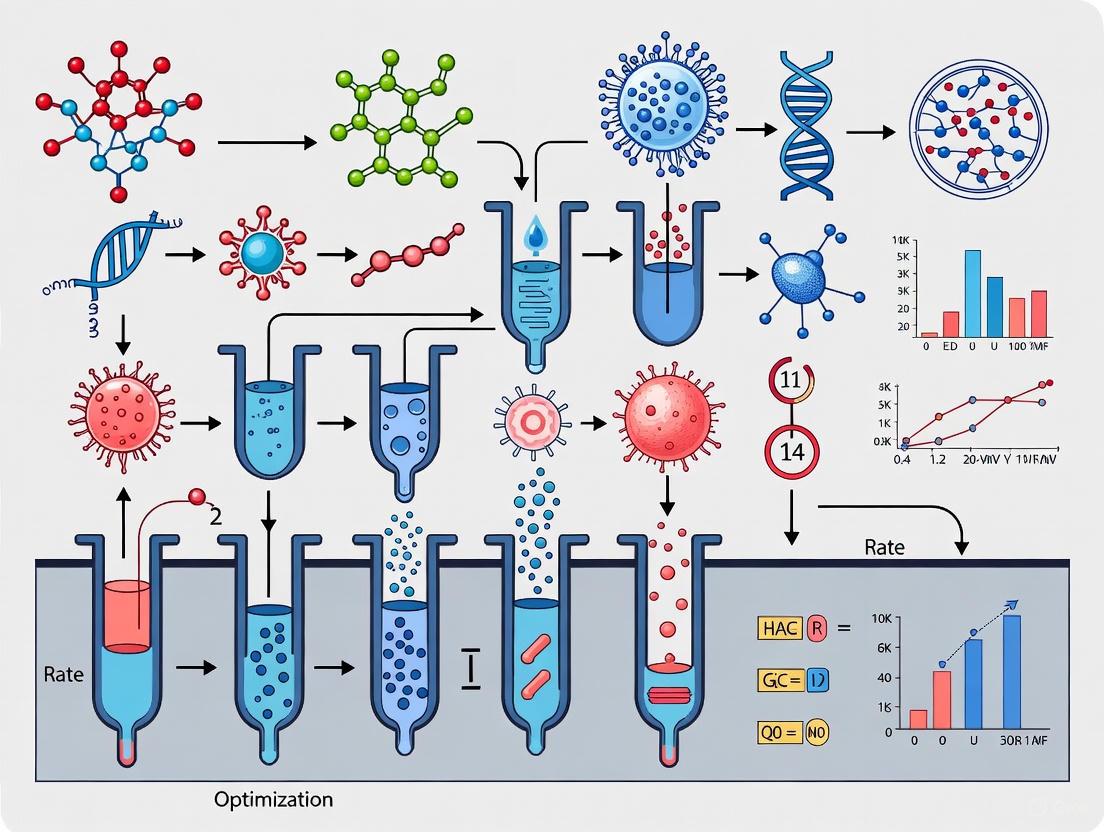
This article provides a comprehensive examination of microfluidic technology for optimizing cell capture rates, a critical parameter for researchers and drug development professionals.
Strategies for Maximizing Cell Capture Efficiency in Microfluidic Systems: From Foundational Principles to Clinical Translation
Abstract
This article provides a comprehensive examination of microfluidic technology for optimizing cell capture rates, a critical parameter for researchers and drug development professionals. It explores the foundational principles governing cell-microfluidic interactions, details a range of methodological approaches from hydrodynamic to affinity-based and dielectrophoretic capture, and offers practical troubleshooting and optimization strategies for device design and operation. Furthermore, it covers validation techniques and comparative analyses of platform performance, highlighting how these technologies are being translated from research tools to clinical diagnostics and therapy development.
Core Principles and Forces Governing Microfluidic Cell Capture
Frequently Asked Questions (FAQs) on Performance Metrics
Q1: What do the terms Capture Efficiency, Purity, and Throughput mean in the context of microfluidic cell capture?
- A: These are the three core metrics used to evaluate the performance of a microfluidic cell capture device.
- Capture Efficiency is the percentage of target cells from the initial sample that are successfully isolated by the device. For example, if 90 out of 100 target cells are captured, the efficiency is 90% [1].
- Purity is the percentage of captured cells that are the desired target cells, as opposed to non-target cells. High purity indicates minimal contamination from other cell types [2] [1].
- Throughput is the volume of sample that can be processed per unit of time, often measured in mL/min or mL/h. High throughput is crucial for processing clinically relevant sample volumes in a timely manner [2] [1].
Q2: I am getting high capture efficiency but low purity. What could be the cause?
- A: This is a common trade-off. High efficiency with low purity often indicates that the capture method is effectively retaining target cells but is not selective enough against non-target cells. Potential causes and solutions include:
- Cause: Non-specific binding in affinity-based systems (e.g., antibodies binding to non-target cells) [2].
- Solution: Introduce more stringent wash steps after capture to remove loosely bound cells.
- Cause: Insufficient size difference in size-based systems, where non-target cells are similar in size to your target cells [2] [3].
- Solution: Consider a multi-step or integrated approach that combines size-based enrichment with a subsequent affinity-based capture to improve selectivity [1].
Q3: My device clogs frequently, severely limiting throughput. How can I mitigate this?
- A: Clogging is a major challenge that impacts throughput and reproducibility.
- Pre-filtration: Pre-process complex samples like whole blood to remove large debris or aggregates before introducing them to the microfluidic device.
- Optimize Trap Geometry: For hydrodynamic traps, design the gap size to be about 20-25% of the target cell or cluster diameter. This allows for immobilization while reducing the risk of clogging [3].
- Surface Treatment: Use appropriate coatings on the microchannel surfaces to reduce non-specific adhesion of cells and proteins [4].
Q4: How can I accurately measure these metrics in my experiments?
- A: Accurate measurement is key to valid optimization.
- Capture Efficiency: Use a known number of fluorescently labeled or otherwise identifiable target cells (e.g., from a cell line) spiked into a control sample (e.g., blood). Count the cells in the input sample and the captured fraction using microscopy or a flow cytometer [1].
- Purity: After capture, stain the captured cells with specific markers for both target and non-target cells. The ratio of target cells to the total number of captured cells gives the purity [2].
- Throughput: Simply measure the total volume processed and divide by the total time taken for the experiment.
Performance Metrics of Different Microfluidic Capture Technologies
The table below summarizes the typical performance ranges for various cell capture technologies, highlighting the inherent trade-offs.
Table 1: Performance Comparison of Microfluidic Cell Capture Methods
| Capture Method | Typical Capture Efficiency | Typical Purity | Typical Throughput | Key Principle |
|---|---|---|---|---|
| Affinity-Based (e.g., with anti-EpCAM) | ~60% to >90% [1] | ~40% to >50% [1] | Low (∼mL/h) to High (∼mL/min) [1] | Uses antibody-antigen binding for highly specific capture. |
| Size-Based Filtration (Microposts) | ~70% to >90% [3] | Varies widely with sample | High (∼mL/min) [3] | Separates cells based on physical size using micropost arrays or membranes. |
| Deterministic Lateral Displacement (DLD) | High isolation efficiency [1] | Low after initial enrichment [1] | High (∼2 mL/min and above) [1] | Uses a micro-post array to continuously separate cells by size. |
| Integrated DLD + Affinity | >90% [1] | >50% [1] | High (∼9.6 mL/min) [1] | Combines high-throughput pre-enrichment (DLD) with high-purity capture (affinity). |
| Dielectrophoresis (DEP) | >99% sorting accuracy [5] | High [5] | High (up to 30 kHz sorting rate) [5] | Uses non-uniform electric fields to sort cells based on dielectric properties. |
Detailed Experimental Protocol: Integrated High-Throughput Cell Capture
This protocol is adapted from a method that combines deterministic lateral displacement (DLD) for enrichment with affinity-based capture for high purity and throughput [1].
Objective: To isolate rare cells (e.g., circulating tumor cells) from a large volume of blood with high efficiency, purity, and throughput.
Workflow Overview:
The following diagram illustrates the two-stage process of enrichment followed by specific capture.
Materials and Reagents:
Table 2: Research Reagent Solutions and Essential Materials
| Item | Function / Description |
|---|---|
| PDMS and Silicon Wafer | Standard materials for fabricating the microfluidic device via soft lithography [1]. |
| anti-EpCAM Antibody | A common affinity ligand immobilized on the capture chamber to specifically bind to epithelial cell adhesion molecules on target cells [1]. |
| Phosphate Buffered Saline (PBS) | Used for sample dilution, washing, and reagent preparation. |
| Fluorescent Cell Labels (e.g., CellTracker) | For pre-staining target cells to enable quantification of capture efficiency and purity [1]. |
| Syringe Pump | To provide a controlled and continuous flow of the sample through the microfluidic device [1]. |
Step-by-Step Procedure:
- Device Fabrication: Fabricate the microfluidic chip using standard photolithography and soft lithography with PDMS. The design should integrate a DLD array section leading into an affinity-based capture chamber [1].
- Surface Functionalization: Chemically modify the surface of the affinity capture chamber and immobilize anti-EpCAM antibodies to enable specific binding of target cells.
- Sample Preparation: Dilute the whole blood sample with PBS to reduce viscosity and cell aggregation. For efficiency calculations, spike in a known number of fluorescently labeled target cells.
- Enrichment Phase: Introduce the diluted blood sample into the device inlet at a high flow rate (e.g., ~2 mL/min). The DLD array will continuously direct larger cells (like target cells) into a separate stream, effectively enriching them while removing the majority of small blood cells to waste [1].
- Capture Phase: The enriched cell fraction flows directly into the anti-EpCAM functionalized capture chamber. The flow rate may be optimized to ensure sufficient residence time for target cells to interact with and bind to the antibodies.
- Washing: Introduce a buffer wash through the system at a controlled flow rate to remove any non-specifically bound cells, thereby increasing the final purity.
- Analysis and Quantification: Using fluorescence microscopy, count the number of captured target cells. Compare this to the initial input count to calculate Capture Efficiency. Use additional staining to identify all nucleated cells in the capture chamber to calculate Purity. The Throughput is calculated from the total processed volume and experiment time.
Optimization Pathways and Logical Framework
Optimizing cell capture is a multi-parameter problem. The diagram below maps the cause-effect relationships between different parameters and the core performance metrics, providing a logical framework for troubleshooting.
Emerging Optimization Tools:
Machine learning (ML) is now being synergized with microfluidics to create "intelligent" systems. ML algorithms can analyze real-time image data to predict flow behavior and optimize parameters like flow rates for droplet size control or cell sorting, moving beyond traditional trial-and-error approaches [6].
FAQs: Understanding Core Concepts and Troubleshooting
FAQ 1: What are the fundamental forces used for cell manipulation in microfluidic devices, and how do they interact?
Microfluidic devices for cell capture and analysis primarily leverage three fundamental forces, often used in combination:
- Hydrodynamic Forces: These are fluid flow-based, passive forces used to transport, focus, or capture cells via channel geometry and flow resistance. Troubleshooting Tip: Low cell capture efficiency can often be traced to incorrect flow rates or channel clogging. Optimize flow rates and consider designs with wider interpillar distances or curvilinear outlines to minimize clogging while maintaining efficiency [7] [8].
- Dielectrophoretic (DEP) Forces: These are active, label-free forces that arise when cells are subjected to a non-uniform electric field. Depending on the field frequency and cell properties, DEP can attract (pDEP) or repel (nDEP) cells. Troubleshooting Tip: Inconsistent cell trapping can be caused by an incorrect electric field frequency or voltage. Use the Clausius-Mossotti factor to determine the optimal frequency for your specific cell type and medium conductivity [9] [10].
- Affinity Interactions: These are biological forces based on specific molecular recognition, such as antigen-antibody binding. They are used to selectively capture target cells from a heterogeneous sample. Troubleshooting Tip: High non-specific binding can be mitigated by using effective surface passivation like PEG coatings and optimizing the density of capture antibodies on the substrate [11].
The interaction of these forces is key to advanced functionality. For example, hydrodynamic forces can transport cells to a specific location, where DEP forces then actively trap and hold a second cell type to facilitate contact, and their adhesion is ultimately probed via specific affinity interactions [12].
FAQ 2: How can I optimize the balance between dielectrophoretic and hydrodynamic forces for stable cell capture?
Stable cell capture requires that the DEP force pulling a cell toward a trap is greater than the hydrodynamic drag force trying to wash it away (F_DEP > F_τ) [10]. The following table summarizes the key parameters you can adjust to achieve this balance.
Table: Parameters for Optimizing DEP Force Against Hydrodynamic Drag
| Parameter | Effect on DEP Force (F_DEP) |
Effect on Hydrodynamic Drag (F_τ) |
Troubleshooting Action |
|---|---|---|---|
| Electric Field (V~pp~, f) | Increases with higher voltage and at the optimal frequency for pDEP [10]. | No direct effect. | Increase applied voltage; fine-tune frequency based on cell dielectric properties. |
| Flow Rate / Velocity | No direct effect. | Increases linearly with flow velocity [10]. | Reduce the flow rate to lower drag forces on trapped cells. |
| Cell Size | Increases with the cube of the cell radius [10]. | Increases linearly with cell radius [10]. | Note that larger cells experience significantly stronger DEP forces. |
| Medium Conductivity | Drastically affects the Clausius-Mossotti factor and thus F_DEP [9]. |
No direct effect. | Adjust medium conductivity to maximize the CM factor for your target cell. |
FAQ 3: Our affinity-based cell capture device suffers from low purity or yield. What are the common causes and solutions?
Low purity or yield in affinity-based capture is a common issue. The table below outlines potential causes and verification methods.
Table: Troubleshooting Guide for Affinity-Based Cell Capture
| Symptom | Possible Cause | Verification & Solution |
|---|---|---|
| Low Capture Yield (Few target cells are caught) | Flow rate is too high, creating excessive shear force. | Reduce flow rate to decrease shear stress, allowing bonds to form [11]. |
| Inefficient antibody immobilization on the substrate. | Verify neutravidin-biotin binding chemistry and use a higher ratio of biotin-PEG for greater antibody density [11]. | |
| Channel height is too large, reducing cell-surface contact. | Use a channel height closer to the cell diameter (e.g., 25 µm for T cells) to increase interaction probability [11]. | |
| Low Purity (Too many non-target cells captured) | Inadequate surface passivation, leading to non-specific binding. | Improve surface passivation with coatings like PEG or BSA to block non-specific adsorption sites [11]. |
| Antibody is not specific enough for the target cell population. | Use a different, more specific capture antibody and validate its specificity via flow cytometry. |
Experimental Protocols
Protocol: Combined Hydrodynamic and Dielectrophoretic Cell Pairing and Adhesion Assay
This protocol is adapted from a method designed to study interactions between two cell types, such as T-cells and cancer cells, by controlling contact time and probing adhesion states [12] [13].
Key Research Reagent Solutions:
- Microfluidic Chip: Fused silica substrate with buried microchannels and Al₂O₃ layer for hydrodynamic traps, patterned with Pt electrodes for DEP.
- Cell Preparation Medium: Low-conductivity buffer adjusted to meet DEP requirements while maintaining cell viability and functionality.
- Coating Reagent: Fibronectin for coating beads in validation assays.
- Blocking Buffer: Pierce protein-free PBS blocking buffer to prevent non-specific protein adhesion.
Methodology:
- Chip Priming: Prime the microfluidic chip with a protein-free PBS blocking buffer for 2 hours [12].
- Hydrodynamic Trapping: Introduce the first cell type (e.g., fibroblasts or cancer cells) into the device. Use pressure-driven flow (e.g., 15 mbar) to guide cells into hydrodynamic traps, which hold them against the flow from below [12] [13].
- Dielectrophoretic Trapping: Flow the second particle type (e.g., fibronectin-coated beads or T-cells) into the channel. Activate the DEP electrodes (e.g., 100 kHz, 8-10 V) to trap these particles and force them into contact with the first, hydrodynamically trapped cells [12].
- Adhesion Probing: Maintain contact for a defined period. Subsequently, probe the adhesion state by deactivating the DEP force and observing whether the pair remains bound under the applied flow shear. The pair lifetime is a key metric for assessing binding strength and specificity [12] [13].
Protocol: Immunoaffinity-Based Capture of Specific Cells from Whole Blood
This protocol details a method for isolating specific cells, such as senescent CD8+ T cells or circulating tumor cells (CTCs), from complex samples like whole blood using surface-immobilized antibodies [8] [11].
Key Research Reagent Solutions:
- Microfluidic Substrate: Glass slide coated with a mixture of PEG and biotin-PEG (e.g., 100:10 ratio) for surface passivation and antibody immobilization.
- Capture Antibody: Biotinylated antibody against the target cell surface marker (e.g., anti-CD8 for T cells, anti-EpCAM for CTCs).
- Linker: Neutravidin, to bridge the biotinylated surface and the biotinylated capture antibody.
- Blood Sample: Whole blood or pre-concentrated white blood cells.
- Blocking Agent: Bovine Serum Albumin (BSA) to coat PDMS and reduce non-specific binding.
- Staining Antibodies: Fluorescently labeled antibodies for identification and quantification (e.g., anti-CD57 for senescent T cells).
Methodology:
- Surface Functionalization: Assemble the PDMS microchannel on the PEG/biotin-PEG-coated glass substrate using vacuum-assisted bonding to preserve the coating. Sequentially flow neutravidin and biotinylated capture antibody (e.g., anti-CD8) through the device to create the capture surface [11].
- Sample Injection and Capture: Inject a whole blood sample (as small as 10 µL) into the inlet. Use vacuum-driven flow at a controlled, low rate (e.g., 1.4 - 5.6 µL/min) to ensure cells have sufficient time to interact with and bind to the capture antibodies. Non-target cells are washed away [11].
- Fluorescent Staining and Analysis: After capture, flow a solution of fluorescently labeled antibodies (e.g., anti-CD57) through the channel to stain the captured cells. Image the capture chamber using a microscope and quantify the population of interest based on fluorescence [11].
The Scientist's Toolkit
Table: Essential Research Reagent Solutions for Microfluidic Cell Capture
| Reagent / Material | Function / Application | Key Considerations |
|---|---|---|
| PEG/Biotin-PEG Coating | Creates a non-fouling surface on glass substrates to minimize non-specific binding while allowing for specific antibody immobilization [11]. | The ratio of PEG to biotin-PEG is critical; a 10:100 ratio is often effective for maximizing specific capture [11]. |
| Neutravidin | Serves as a bridge to link biotinylated surfaces to biotinylated capture antibodies, enabling stable and oriented antibody presentation [11]. | Provides high-affinity binding for biotin; coverage on the substrate can be maximized with sufficient biotin-PEG concentration [11]. |
| Low Conductivity Buffer | Adjusts the medium for dielectrophoretic (DEP) experiments. The conductivity directly influences the Clausius-Mossotti factor and the strength of the DEP force [12] [9]. | Must be optimized to match DEP requirements without compromising cell viability or the functionality of the biological interaction being studied [12]. |
| Planar Interdigitated Electrodes (IDA) | Patterned on the chip substrate to generate non-uniform electric fields for DEP-based cell manipulation, trapping, and sorting [9] [14]. | The electric field strength decays with distance from the electrodes; 3D focusing may be required to keep cells close to the electrodes at high throughput [14]. |
| Pierce Protein-Free Blocking Buffer | Used to pre-treat microfluidic channels to passivate surfaces and prevent non-specific adsorption of proteins to the device walls [12]. | Protein-free formulations are preferred to avoid introducing irrelevant proteins that could interfere with specific affinity interactions. |
FAQs and Troubleshooting Guides
This technical support center provides solutions for common challenges in polydimethylsiloxane (PDMS)-based microfluidic research, specifically within the context of optimizing cell capture rates.
Surface Modification and Biocompatibility
How can I modify the native hydrophobicity of PDMS to improve cell capture and adhesion?
The inherent hydrophobicity of PDMS (water contact angle ~108°) causes non-specific protein adsorption and poor cell adhesion. Surface modification is essential to create a more hydrophilic, biologically relevant interface [15]. The following table summarizes key surface modification techniques and their outcomes relevant to cell capture.
| Method | Mechanism | Impact on Properties | Effect on Cell Capture & Biocompatibility |
|---|---|---|---|
| Plasma Treatment/UV Ozone [16] | Oxidizes surface siloxane groups to create silanol (Si-OH) groups. | Increases surface hydrophilicity initially, but suffers from hydrophobic recovery [15]. | Improves initial wettability for cell loading; rapid hydrophobic recovery can make performance unpredictable [15]. |
| Surface-Segregating Copolymers [15] | PDMS-PEG copolymer blended into PDMS pre-polymer segregates to the surface in aqueous environments. | Provides long-term hydrophilic stability (contact angle ~24° for over 20 months) [15]. | Significantly reduces non-specific protein adsorption, improving specificity of captured cells; maintained primary hepatocyte viability in liver-on-a-chip models [15]. |
| Polydopamine (PDA) Priming Layer [17] | A thin, adherent PDA layer is deposited on PDMS, enabling subsequent immobilization of biomolecules. | Increases surface hydrophilicity and roughness. Provides a universal "bioglue" [17]. | Allows covalent binding of bioactive ligands (e.g., antithrombin-heparin complex, t-PA) to create specific cell-capture surfaces [17]. |
| Microgroove Patterning & C-ion Implantation [18] | Creates physical micro-patterns and modifies surface chemistry via ion bombardment. | Creates stable microgrooves and increases roughness. Imparts moderate hydrophobicity [18]. | Promotes orderly fibroblast growth and alignment. Enhances cell adhesion and growth, leading to reduced inflammatory response and lower capsule contracture in vivo [18]. |
| "Macromolecules to PDMS Transfer" [19] | Spots of macromolecules (antibodies, fibronectin) are directly entrapped during PDMS polymerization. | Presents bioactive molecules in a defined spatial pattern on the PDMS surface. | Creates functional cell-capture arrays; demonstrated successful attachment of HeLa and BALB/3T3 cells for specific capture [19]. |
Detailed Protocol: Surface Modification with PDMS-PEG Copolymer [15] This method provides a stable hydrophilic surface without additional post-cure steps.
- Preparation: Obtain a PDMS-PEG block copolymer additive.
- Mixing: Blend the PDMS-PEG copolymer with a standard PDMS pre-polymer (e.g., Sylgard 184) at concentrations between 0.25-2.0% (w/w). Mix thoroughly.
- Curing: Pour the mixture into a mold or onto a master wafer and cure at the standard temperature (e.g., 70°C for 4 hours).
- Result: The cured PDMS device will have the PDMS-PEG copolymer spontaneously segregated at the surface, ready for use. No plasma treatment is required for activation.
My surface modification seems successful, but my cells are dying. How do I test PDMS for cytotoxicity?
Cell death can result from toxic chemicals leaching from the PDMS matrix or from poor biocompatibility of the modified surface.
- Troubleshooting Steps:
- Confirm Cytotoxicity: Use a sensitive viability assay. A confocal microscopy-based assay using fluorescent dyes (e.g., calcein for live cells, ethidium homodimer for dead cells, annexin V for apoptotic cells) is highly effective for visualizing cell health directly on the material surface [20].
- Check Leachates: Ensure that any additives used in modification are non-toxic and not leaching into the medium. Surfactants or unbound chemicals can cause cell rupture [15].
- Validate Biocompatibility: Perform control experiments with known toxic (e.g., ZDEC, BAK) and non-toxic surfaces to confirm your assay's sensitivity [20].
Detailed Protocol: Confocal Microscopy for Cytotoxicity [20]
- Exposure: Culture your cells (e.g., Human Lens Epithelial Cells) directly on the surface of the PDMS material for a set period (e.g., 18 hours).
- Staining: After incubation, stain the cells with a solution containing calcein AM (for esterase activity in live cells), ethidium homodimer (for compromised membranes in dead cells), and annexin V (for phosphatidylserine exposure in apoptotic cells).
- Imaging and Analysis: Image the surface using a confocal laser scanning microscope (CLSM). Quantify the proportions of live (green), dead (red), and apoptotic (yellow/green) cells to assess the material's biocompatibility.
Microfluidic Operation and Cell Capture
Air bubbles are clogging my microfluidic channels and disrupting cell flow. How can I prevent and remove them?
Air bubbles are a recurrent issue that cause flow instability, increase fluidic resistance, and can damage or lyse cells [21].
- Preventive Measures:
- Chip Design: Avoid acute angles in microchannel design to reduce bubble adhesion sites [21].
- Degassing: Degas all buffers and culture media prior to the experiment to prevent bubble formation from dissolved gasses, especially if solutions are heated [21].
- Leak-Free Fittings: Ensure all fluidic connections are tight. Using Teflon tape on threaded fittings can help create a seal [21].
- Injection Loop: Use an injection loop to introduce cell samples, preventing bubbles that can form when switching syringes [21].
- Corrective Measures:
- Pressure Pulses: If using a pressure controller, apply short, square-wave pressure pulses to dislodge trapped bubbles [21].
- Surfaceants: Flush the system with a buffer containing a soft surfactant (e.g., 0.1-1% Pluronic F-68 or Tween 20) to reduce surface tension and help detach bubbles. Ensure the surfactant is compatible with your cells [21] [15].
- Bubble Trap: Integrate a commercial or custom-fabricated bubble trap into your fluidic setup upstream of the microfluidic chip [21].
My cell capture efficiency on a functionalized PDMS surface is low. What are the potential causes?
Low cell capture efficiency can stem from inadequate surface activation, non-optimal flow conditions, or loss of bioactivity of the capture ligands.
- Troubleshooting Checklist:
- Verify Surface Activity: Confirm that your surface modification created a functional layer. Use water contact angle measurement to check for expected hydrophilicity. For specific ligands, use a model protein (e.g., BSA) adsorption test to confirm reduced non-specific binding [15].
- Confirm Ligand Activity: Ensure that your captured antibodies or peptides retain their bioactivity after immobilization. The "Macromolecules to PDMS Transfer" method has been shown to preserve antibody integrity for immunoassays [19].
- Optimize Flow Parameters: Cell capture under flow is highly dependent on shear stress. Calculate the wall shear stress in your channel and empirically optimize the flow rate for cell adhesion. High shear can prevent cells from attaching.
- Consider a Biomimetic Approach: Instead of single-molecule immobilization, use the "cell membrane transfer" technique. This method prints the entire membrane of glutaraldehyde-fixed stromal cells onto PDMS, presenting a complex, native surface that has proven effective in capturing and adhering hematopoietic cells [22].
Detailed Protocol: Cell Membrane Transfer to PDMS [22]
- Cell Culture: Grow adherent cells (e.g., human bone marrow stromal cells - BMSCs) to 80% confluence in a culture dish.
- Fixation: Fix the cells with a pre-warmed 1% (v/v) glutaraldehyde solution in PBS for 10 minutes. Wash thoroughly with deionized water.
- PVA Film Application: Pour a 5% (w/v) polyvinyl alcohol (PVA) solution over the fixed cells. Allow the water to evaporate, forming a thin, durable film that captures the cell membrane.
- Peeling and Transfer: Carefully peel off the cell-PVA film and attach it to a Petri dish. Layer a PDMS pre-polymer mixture (e.g., 10:1 base to curing agent) on top and cure at 70°C for 4 hours.
- Dissolution: Immerse the solidified PDMS-cell-PVA structure in warm DI-water to dissolve the PVA film, leaving the captured cell membrane exposed on the PDMS surface in its native orientation.
The Scientist's Toolkit: Essential Research Reagents
| Item | Function | Application Example |
|---|---|---|
| PDMS-PEG Block Copolymer [15] | Amphiphilic surfactant that segregates to the PDMS-water interface during curing, providing a permanent hydrophilic and protein-resistant surface. | Long-term reduction of non-specific binding in cell-capture devices; maintaining hepatocyte function in organ-on-chip models. |
| Polyvinyl Alcohol (PVA) [22] [23] | Water-soluble polymer used as a transporter film to capture and transfer entire cell membranes to PDMS or as a hydrogel component to enhance hydrophilicity and porosity. | Creating biomimetic PDMS surfaces with native cell membrane topography; formulating injectable SR/PVA composites for soft tissue replacement. |
| Polydopamine (PDA) [17] | A versatile priming layer that adheres to virtually any surface, enabling secondary immobilization of biomolecules via its catechol/quinone groups. | Creating multi-functional antithrombotic surfaces by co-immobilizing antithrombin-heparin complex and tissue plasminogen activator (t-PA). |
| Glutaraldehyde [22] | A crosslinking fixative agent that stabilizes proteins and cellular structures by forming covalent bonds. | Fixing stromal cells prior to membrane transfer to PDMS; crosslinking PVA hydrogels. |
| Pluronic F-68 or Tween 20 [21] [15] | Non-ionic, biocompatible surfactants that reduce surface tension. | Preventing and removing air bubbles in microfluidic channels; reducing non-specific cell and protein adhesion. |
Workflow Diagrams
Surface Modification Pathways for Cell Capture
Microfluidic Cultivation Experiment Workflow
Optimizing cell capture rates is a central challenge in microfluidic research, directly impacting the sensitivity and reliability of downstream biological analyses. The efficiency of these systems is not governed by a single parameter but by a complex interplay of cellular physical and biochemical properties. This guide details how the key cell properties of size, deformability, and surface marker expression influence capture efficiency and provides targeted troubleshooting methodologies to address common experimental hurdles. By systematically understanding and controlling these factors, researchers can significantly enhance the performance of microfluidic devices for applications ranging from rare cell isolation to single-cell analysis.
Frequently Asked Questions (FAQs)
FAQ 1: How do the core cell properties influence my choice of microfluidic capture method?
Different microfluidic capture technologies leverage specific cell properties. The table below outlines the primary property exploited by common techniques, along with their key performance characteristics to guide your selection [24].
Table 1: Microfluidic Cell Capture Methods and Their Characteristics
| Capture Method | Primary Cell Property Utilized | Throughput | Key Advantages | Key Limitations |
|---|---|---|---|---|
| Deterministic Lateral Displacement (DLD) | Size, Deformability [25] | High | Label-free, high precision, continuous operation | Limited to physical property differences |
| Dielectrophoresis (DEP) | Electrical properties | High (up to 30 kHz) [5] | High throughput and precision, label-free | Requires specific buffer; potential thermal effects |
| Magnetic-Activated Cell Sorting (MACS) | Surface Markers (via magnetic labels) [24] | High | High purity and recovery, well-established | Requires labeling, which can be costly and affect cells |
| Fluorescence-Activated Cell Sorting (FACS) | Surface Markers (via fluorescent labels) [24] | High (50,000-100,000 cells/s) | High multiplexing (14-17 markers) | High cost, large equipment, can damage cells [5] |
FAQ 2: My cell capture efficiency is low despite optimizing flow rates. What other factors should I investigate?
Beyond flow hydrodynamics, low capture efficiency can stem from several cell-centric factors:
- Cell Deformability: Softer cells may squeeze through capture structures designed for a specific size. Consider using a method that combines size and deformability, like real-time deformability cytometry (RT-DC) or DLD, which can sort based on rigidity [26] [25].
- Surface Marker Density and Accessibility: For antibody-based capture, low antigen expression or epitope masking can prevent binding. Ensure your surface functionalization protocol is robust and that antibodies are specific and fresh [27].
- Non-Specific Adhesion: White blood cells (WBCs) may non-specifically stick to channel surfaces, blocking capture sites and reducing purity. Incorporating surface coatings like bovine serum albumin (BSA) can help mitigate this [27].
FAQ 3: How can I isolate a specific cell type from a heterogeneous population like blood?
Successful isolation from complex samples like blood requires a strategic combination of methods:
- Initial Bulk Separation: Use a passive, label-free method like DLD [25] or inertial microfluidics to remove the vast majority of abundant cells (e.g., red blood cells and most white blood cells) based on size differences.
- Specific Target Enrichment: Follow with a highly specific, active method such as immuno-capture (MACS) [24] or fluorescence-activated dielectrophoretic sorting [5] to isolate your target cell (e.g., circulating tumor cells) based on its unique surface markers. This tandem approach maximizes both throughput and purity.
Troubleshooting Guides
Problem: Inconsistent Capture Efficiency Due to Cell Size Variation
Issue: The target cell population has a broad size distribution, causing smaller cells to be lost and larger cells to clog the device.
Solution: Implement a pre-sorting or size-based enrichment step, and optimize your device geometry.
- Experimental Protocol: Utilizing DLD for Size-Based Separation
- Device Design: Fabricate a DLD array with micropillars. The critical diameter (Dc) is calculated based on the gap between pillars (G) and the row displacement fraction (ε). The formula Dc = 1.4 * G * ε^0.48 is suitable for practical systems (Re ≤ 1) [25].
- Sample Preparation: Prepare a single-cell suspension in an appropriate buffer (e.g., PBS with 0.5% BSA).
- System Priming: Before introducing the cell sample, prime the microfluidic channels with the buffer to remove air bubbles and ensure stable flow.
- Flow Control: Use a precision syringe or pressure pump to inject the cell suspension at a constant, optimized flow rate. Laminar flow is critical for deterministic sorting.
- Collection: Larger cells (size > Dc) will be displaced and exit through one outlet, while smaller cells (size < Dc) will follow the fluid streamlines and exit through another.
Table 2: Impact of DLD Geometric Parameters on Size-Based Separation
| Geometric Parameter | Effect on Critical Diameter (Dc) | Application Implication |
|---|---|---|
| Pillar Gap (G) | A larger G increases Dc, allowing separation of larger particles. | Use smaller G for isolating platelets or small bacteria; use larger G for large cancer cells. |
| Row Displacement Fraction (ε) | An increase in ε results in an increase in Dc. | Adjust ε to fine-tune the cutoff size for separation without re-fabricating the chip. |
| Pillar Shape | Affects the flow profile and critical separation size. | Circular pillars are common; triangular or diamond shapes can alter separation dynamics [25]. |
Problem: Poor Capture of Highly Deformable Cells
Issue: Cells like neutrophils or certain cancer cells deform and escape from physical constrictions designed to capture them.
Solution: Employ a capture mechanism that is sensitive to mechanical properties or use constriction channels to measure and sort based on deformability.
- Experimental Protocol: Shear Flow Deformability Cytometry
- Device Design: Use a microfluidic channel with a sudden constriction. As cells flow through, they deform.
- High-Speed Imaging: Capture images of cells at a high frame rate (e.g., > 100,000 fps) as they enter and transit the constriction.
- Image Analysis: Quantify the deformation by measuring the cell's strain, which is (L - W) / (L + W), where L is the long axis and W is the short axis of the deformed cell. Softer cells exhibit higher strain.
- Correlation: Correlate the degree of deformation with other cellular markers or functions. This method can process up to 1000 cells per second, providing high-throughput mechanical phenotyping [28].
Problem: Low Purity in Surface Marker-Based Capture
Issue: While capture yield is acceptable, the final sample has low purity due to non-specifically bound cells.
Solution: Redesign the capture zone to minimize non-specific interactions and optimize the washing protocol.
- Experimental Protocol: Creating Separate Capture and Flow Zones (ZonesChip)
- Chip Fabrication: Fabricate a PDMS microfluidic device with a main flow channel and a separate capture zone filled with antibody-functionalized microposts [27].
- Surface Modification: Modify the micropost surfaces with a specific capture antibody (e.g., anti-EpCAM for CTCs) using a biotin-neutravidin bridge for oriented binding [27].
- Application of DEP Force: Apply a patterned dielectrophoretic (DEP) force to actively guide target cells from the high-speed flow zone into the low-speed capture zone. This separates the cell delivery function (flow zone) from the capture function, dramatically reducing non-specific shear forces that can wash away captured cells.
- Validation: This approach has been shown to improve capture efficiency from nearly 0% to ~100% at high flow speeds (≥ 0.58 mm/s) compared to conventional devices where flow and capture zones overlap [27].
The Scientist's Toolkit: Key Reagents & Materials
Table 3: Essential Reagents and Materials for Microfluidic Cell Capture
| Item Name | Function/Application | Technical Notes |
|---|---|---|
| Polydimethylsiloxane (PDMS) | The most common material for rapid prototyping of microfluidic devices. | Biocompatible, gas-permeable (can lead to bubble formation), hydrophobic (requires plasma treatment for hydrophilic surfaces) [29] [30]. |
| Biotinylated EpCAM Antibody | Surface marker-based capture of circulating tumor cells (CTCs). | Used with a neutravidin surface to create an oriented, high-affinity capture layer on microposts [27]. |
| DEP Buffer | A low-conductivity buffer for dielectrophoresis applications. | Typically contains 10% (w/v) sucrose and 0.3% (w/v) glucose to maintain osmolarity with low ionic strength [27]. |
| Bovine Serum Albumin (BSA) | A blocking agent to reduce non-specific adsorption of cells and proteins to channel walls. | Critical for improving capture purity in antibody-based devices; used at 1% (w/v) in PBS [27]. |
| Fluid Flow Controller | Precisely controls pressure or flow rate in microchannels. | Essential for stable droplet generation, DLD operation, and reproducible results; minimizes pressure fluctuations that cause bubble formation [5] [30]. |
| Bubble Trap | Removes air bubbles from the fluidic system before they enter the microchip. | Prevents clogging, flow instability, and cell damage caused by air-liquid interfaces [30]. |
Advanced Microfluidic Capture Modalities and Their Applications
Troubleshooting Guides and FAQs
FAQ: Surface Chemistry and Antibody Immobilization
Q1: How can I improve the sensitivity and detection limit of my affinity-based capture device? A systematic strategy to optimize each step of the substrate functionalization process can significantly enhance performance. Research indicates that using atomic force microscopy (AFM) and X-ray photoelectron spectroscopy (XPS) to analyze the surfaces obtained at each intermediate stage allows for targeted improvements. By adjusting chemical conditions to increase the homogeneity and degree of coverage on the transducer surface, one study successfully increased sensitivity by 19% and reduced the limit of detection by 16% [31].
Q2: What is the advantage of using a heterobifunctional crosslinker like BMPS for antibody immobilization? Using a crosslinker like N-[β-maleimidopropyloxy]-succinimide ester (BMPS) enables site-specific, oriented immobilization of antibodies. The succinimide end couples with amine groups on an aminosilanized surface (e.g., APTES), while the maleimide end couples with sulfhydryl groups in the antibody's Fc region. This orientation ensures the antigen-binding (Fab) domains point outward, maximizing their accessibility to target cells. The rigidity of BMPS also offers high stability for antibodies incubated in buffer solutions for prolonged times [32].
Q3: Our microfluidic device suffers from non-specific cell binding. How can this be reduced? Surface passivation is critical to minimize non-specific binding. Effective strategies include:
- Coating the PDMS surfaces with bovine serum albumin (BSA) [11].
- Using a glass substrate coated with a mixture of polyethylene glycol (PEG) and biotin-PEG. The PEG provides a passivation layer that inhibits the non-specific binding of biomolecules and non-target cells [11].
Q4: How does reversible device assembly benefit affinity capture and subsequent analysis? Reversible physical bonding (e.g., using an APTES-silanized glass slide and a PDMS chip held together by hydrogen bonds) allows the PDMS component to be peeled away after an experiment. This makes the captured cells residing on the glass substrate externally accessible for further nanomechanical characterization using techniques like Atomic Force Microscopy (AFM), which would be hindered by a permanently bonded device [32].
Troubleshooting Guide: Common Experimental Issues
| Problem | Potential Cause | Recommended Solution |
|---|---|---|
| Low Capture Efficiency | Non-oriented antibody immobilization | Implement a site-specific immobilization strategy using heterobifunctional crosslinkers (e.g., BMPS) [32]. |
| Low antibody density on surface | Optimize silanization and crosslinking steps; use surface analysis (e.g., AFM, XPS) to verify coverage [31]. | |
| Excessive shear stress | Calculate and adjust flow rates to reduce shear stress to levels that do not jeopardize captured cells (<2 Pa average shear stress has been used successfully) [32]. | |
| High Non-Specific Binding | Inadequate surface passivation | Passivate PDMS surfaces with BSA and/or use a PEG-coated glass substrate [11]. |
| Device Leakage | Improper bonding | For reversible bonding, ensure clean, APTES-silanized glass and PDMS surfaces are firmly held together [32]. For permanent bonding, use plasma-activated covalent bonding. |
| Channel Clogging | Channel height too small for cell sample | Design channels with a height that accommodates target cells; a height of 25 μm has been shown sufficient for T cells (avg. diameter ~18 μm) [11]. |
Optimized Experimental Protocols
Protocol 1: Oriented Antibody Immobilization with BMPS
This protocol details a refined chemistry for covalently bonding antibodies with desired orientation on a glass substrate, adapted from a platform used for capturing circulating tumor cells [32].
Key Reagent Solutions:
- APTES ((3-Aminopropyl)triethoxysilane): Creates an amine-functionalized monolayer on the glass surface.
- BMPS (N-[β-maleimidopropyloxy]-succinimide ester): A heterobifunctional crosslinker for oriented antibody coupling.
- Reducing Agent (e.g., 2-MEA or TCEP): To generate free sulfhydryl groups from antibody disulfide bonds.
Methodology:
- Glass Silanization: Clean a glass substrate thoroughly. Treat it with APTES to form a uniform monolayer of reactive amine (–NH₂) groups [32].
- Crosslinker Coupling: Introduce BMPS to the silanized surface. The succinimide ester group will form amide linkages with the amine groups of APTES, leaving the maleimide groups exposed [32].
- Antibody Preparation: Partially reduce the antibody using a mild reducing agent to generate free sulfhydryl groups in its Fc region without disrupting the antigen-binding sites [32].
- Antibody Immobilization: Incubate the reduced antibody with the BMPS-functionalized surface. The maleimide groups will form stable thiol linkages with the sulfhydryl groups on the antibody, ensuring oriented immobilization [32].
Protocol 2: Microfluidic Device Assembly for Cell Capture
This protocol describes the assembly of a reversibly bonded microfluidic device suitable for capturing CD8+ T cells or similar targets [32] [11].
Key Reagent Solutions:
- PEG/Biotin-PEG Coating: A mixture of PEG and biotin-PEG (e.g., 100:10 ratio) for surface passivation and biotin-based functionalization [11].
- Neutravidin: Bridges the biotinylated surface and biotinylated capture antibody.
- Biotinylated Capture Antibody: The antibody specific to the target cell surface marker (e.g., anti-CD8).
Methodology:
- Substrate Preparation: Coat a glass slide with a PEG and biotin-PEG mixture to create a passivated, functionalizable surface. Store at -4°C until use [11].
- Device Assembly (Vacuum-Assisted): Assemble the PDMS microfluidic channel and the PEG-coated glass substrate using vacuum lines. This method avoids damaging the functional coating, which can occur with plasma bonding [11].
- Surface Functionalization: Sequentially flow neutravidin and then the biotinylated capture antibody through the assembled device. The neutravidin will bind to the biotin-PEG, and the biotinylated antibody will bind to the neutravidin [11].
- Cell Capture and Analysis: Introduce the blood sample at a controlled flow rate to allow target cells to bind. After washing, captured cells can be fluorescently labeled and quantified via microscopy [11].
Signaling Pathways and Experimental Workflows
Diagram: Workflow for Optimized Antibody Immobilization
Optimized Antibody Immobilization Workflow
Diagram: Microfluidic Capture & Analysis
Microfluidic Capture and Analysis Process
The Scientist's Toolkit: Research Reagent Solutions
| Reagent / Material | Function in Affinity-Based Capture |
|---|---|
| APTES | Aminosilane used to create a uniform monolayer of reactive amine groups on glass substrates for subsequent chemical bonding [32]. |
| Heterobifunctional Crosslinkers (e.g., BMPS) | Enable oriented, covalent immobilization of antibodies by reacting with surface amines (via succinimide) and antibody sulfhydryl groups (via maleimide) [32]. |
| PEG / Biotin-PEG | Polyethylene glycol (PEG) for surface passivation to reduce non-specific binding. Biotin-PEG introduces biotin groups for high-affinity neutravidin/streptavidin binding [11]. |
| Neutravidin/Streptavidin | Tetrameric proteins that bridge biotinylated surfaces and biotinylated capture antibodies, forming a strong non-covalent linkage [11]. |
| Bovine Serum Albumin (BSA) | A common blocking agent used to passivate PDMS and other surfaces, reducing non-specific adsorption of proteins and cells [11]. |
| PDMS | Polydimethylsiloxane; a transparent, gas-permeable, and flexible polymer widely used for rapid prototyping of microfluidic channels [32] [11]. |
FAQs: Core Principles and Applications
What are the main advantages of label-free sorting techniques over traditional methods? Label-free techniques use intrinsic physical properties of cells, such as size, density, and deformability, for separation, eliminating the need for biochemical labels or tags. This preserves native cell function and viability, reduces preparation time and cost, and minimizes potential sample alteration [33].
How do inertial microfluidic techniques fundamentally work to separate cells? Inertial microfluidics leverages hydrodynamic effects in microscale channels. At specific flow rates, particles and cells are influenced by lift forces that focus them to distinct equilibrium positions within the channel based on their size. This enables size-based separation without external fields [34] [33].
What is the role of hydrodynamic stability in these systems? Hydrodynamic stability analysis examines how small perturbations in a fluid flow evolve. In microfluidic sorting, maintaining a stable, laminar flow (typically at low Reynolds numbers) is crucial for predictable and consistent cell focusing and separation. Unstable flows can lead to chaotic behavior, reducing sorting purity and efficiency [35].
My cell recovery rate is low. What could be the cause? Low recovery can be due to several factors:
- Excessive Flow Rate: Too high a flow rate can prevent cells from reaching their equilibrium positions or cause them to exit the wrong outlet.
- Channel Clogging: Cell clumps or debris can obstruct channels. Ensure your sample is well-dispersed and free of aggregates.
- Incorrect Channel Geometry: The channel's design (e.g., curvature, aspect ratio) is optimized for specific cell size ranges. Using a device not suited for your cells can lead to losses [34].
How can I improve the purity of my sorted sample? To enhance purity:
- Optimize Flow Rate: Systematically test different flow rates to find the optimum for your target cell population.
- Use Multi-Stage Sorting: Purity can be significantly improved by cascading multiple separation units or by running the sample through the device more than once [34].
- Reduce Sample Aggregates: Clumped cells can behave as a single, larger particle and contaminate fractions. Using additives like EDTA or DNAse can help reduce clumping [36].
Troubleshooting Guides
Problem: Low Cell Separation Purity
| Possible Cause | Diagnostic Steps | Solution |
|---|---|---|
| Suboptimal flow rate | Run the device at a series of flow rates (e.g., 100-400 µL/min) and assess purity at each. | Identify and use the flow rate that yields the highest purity for your target cell type [34]. |
| Channel geometry mismatch | Verify the critical size cutoff of your device matches the size difference between your target and non-target cells. | Select a device with a different critical size threshold or one designed for a similar application [33]. |
| Cell clumping | Inspect the input sample under a microscope for aggregates. | Filter the sample or use additives like EDTA to dissociate clumps before loading [36]. |
Problem: Low Throughput or Frequent Clogging
| Possible Cause | Diagnostic Steps | Solution |
|---|---|---|
| High cell concentration in input sample | Check cell concentration using a hemocytometer or automated counter. | Dilute the sample to the recommended concentration for the device. |
| Large debris or aggregates in sample | Visually inspect the sample and the device inlet. | Pre-filter the sample using an appropriate cell strainer. |
| Device not primed properly | Check for bubbles in the microfluidic channels. | Ensure the device is thoroughly primed with buffer to wet all channels before introducing the cell sample. |
Experimental Protocols & Performance Data
Protocol: Inertial Microfluidic Cell Washing and Separation
This protocol is adapted from the μMCP (multifunctional integrated microfluidic cell purifier) device for continuous cell washing and separation on a single chip [34].
1. Device Priming
- Flush the microfluidic channels with a suitable buffer (e.g., PBS with 1% BSA) to passivate the surfaces and prevent non-specific cell binding. Ensure no bubbles remain in the system.
2. Sample Introduction and Processing
- Load your cell sample (e.g., lysed blood containing target cells) into the inlet reservoir or syringe.
- Use a syringe pump to drive the sample through the device at a steady flow rate. The optimal rate must be determined empirically but often falls between 1.4 to 5.6 µL/min depending on channel resistance and desired shear stress (e.g., 1.00 to 3.98 dyne/cm²) [34] [11].
- The sample first passes through a washing channel (asymmetric serpentine and curved channel) where background solution is efficiently exchanged with a clean buffer.
- Subsequently, cells enter a separation channel (e.g., spiral design) where differently-sized cells are focused to different equilibrium streamlines and are collected at distinct outlets.
3. Collection and Analysis
- Collect the effluent from the three product collection cassettes (outlets).
- Analyze each fraction for target cell count, purity, and recovery rate using a hemocytometer, flow cytometry, or microscopy.
Protocol: Affinity-Based Capture for Surface Marker Analysis
This protocol outlines the use of a simple PDMS microfluidic channel for capturing specific cells, such as CD8+ T cells, based on surface markers [11].
1. Surface Functionalization
- Assemble the PDMS microchannel onto a PEG/biotin-PEG coated glass substrate.
- Sequentially flow neutravidin and biotinylated anti-CD8 antibody through the channel to immobilize the capture antibody on the substrate.
- Block the channel with a solution like 1% BSA to minimize non-specific binding.
2. Cell Capture and Staining
- Inject a whole blood sample (as small as 10 µL) into the device. CD8+ T cells will bind to the immobilized antibodies.
- Wash the channel with buffer to remove non-specifically bound cells.
- Introduce fluorescently labeled antibodies (e.g., anti-CD57) to stain the captured cells for further analysis.
- Perform fluorescence imaging to quantify captured and stained cells.
Quantitative Performance of Label-Free Techniques
The table below summarizes performance data from cited research to set realistic expectations for your experiments [34].
| Technique | Target Cell | Throughput | Efficiency / Purity | Key Metric |
|---|---|---|---|---|
| Inertial Microfluidics (μMCP) | H226 lung cancer cells from lysed blood | 300 µL/min | > 87.20% separation purity | High-purity separation |
| Inertial Microfluidics (μMCP) | General cell washing | 300 µL/min | > 94.75% solution exchange rate | Efficient background removal |
| Inertial Microfluidics (μMCP) | 10, 15, 20 µm particles | 300 µL/min | > 92.90% separation purity | Model particle validation |
| Affinity Capture (PDMS channel) | CD8+ T cells from whole blood | 1.4 - 5.6 µL/min | Effective capture from 10 µL sample | Minimal sample requirement |
The Scientist's Toolkit: Essential Research Reagents & Materials
| Item | Function / Explanation |
|---|---|
| PDMS Microfluidic Chip | The core platform, often fabricated using soft lithography, containing the micro-channels for cell processing [34] [11]. |
| PEG/Biotin-PEG Coating | Creates a non-fouling surface on glass substrates to minimize non-specific cell binding in affinity-based capture devices [11]. |
| Bovine Serum Albumin (BSA) | Used as a blocking agent to passivate channel surfaces and prevent non-specific adhesion of cells or proteins [37] [11]. |
| Syringe Pump | Provides precise and steady flow control, which is critical for reproducible inertial focusing and separation [34] [37]. |
| Phosphate Buffered Saline (PBS) | A common isotonic buffer for washing cells, diluting samples, and preparing reagent solutions. |
| EDTA or DNAse | Added to cell suspensions to prevent clumping by chelating calcium/magnesium (EDTA) or digesting free DNA (DNAse), which is crucial for maintaining single-cell flow [36]. |
Workflow Visualization
Diagram 1: Integrated Cell Washing & Separation Workflow
Diagram 2: Inertial Focusing Principle in Curved Channel
Diagram 3: Deterministic Lateral Displacement (DLD)
Dielectrophoresis (DEP) is a label-free, electrical technique for manipulating cells and particles within microfluidic devices. It relies on the force exerted by a non-uniform electric field on a dielectric particle, such as a cell, causing movement towards or away from regions of high electric field strength depending on the particle's polarizability relative to the surrounding medium [38]. This principle enables high-precision capture, separation, and release of single cells, making it a powerful tool for applications ranging from fundamental cell biology to circulating tumor cell (CTC) isolation and drug development [39]. The optimization of DEP-assisted capture is central to advancing microfluidic technology for cell analysis, as it directly impacts the efficiency, viability, and specificity of single-cell manipulation.
Fundamental Principles of Dielectrophoresis
The Core Mechanism of DEP Force
When a neutral particle is suspended in a medium and subjected to a non-uniform electric field, it becomes polarized. The interaction between the induced dipole moment and the spatial gradient of the electric field generates the DEP force. The time-averaged DEP force acting on a spherical particle can be described by the following fundamental equation [9] [38]:
DEP Force Mechanism
The mathematical expression for this force is [9] [38]:
$$ \langle \mathbf{F}{DEP}(\mathbf{r})\rangle = \pi \varepsilon{m} r^{3} \operatorname{Re}[f_{CM}(\omega)] \nabla |\bar{\mathbf{E}}(\mathbf{r})|^{2} $$
Where:
- $\langle \mathbf{F}_{DEP} \rangle$ is the time-averaged DEP force.
- $\varepsilon_{m}$ is the permittivity of the suspending medium.
- $r$ is the radius of the particle.
- $\operatorname{Re}[f_{CM}(\omega)]$ is the real part of the Clausius-Mossotti (CM) factor.
- $\nabla |\bar{\mathbf{E}}(\mathbf{r})|^{2}$ is the gradient of the square of the electric field magnitude.
Clausius-Mossotti Factor and DEP Polarity
The Clausius-Mossotti (CM) factor, $f_{CM}$, is a frequency-dependent complex number that determines the polarity and strength of the DEP force. It is defined by the dielectric properties of the particle and the surrounding medium [9] [38]:
$$ f{CM}(\omega) = \frac{\varepsilonp^* - \varepsilonm^*}{\varepsilonp^* + 2\varepsilon_m^*} $$
where $\varepsilon^* = \varepsilon - j\frac{\sigma}{\omega}$ represents the complex permittivity, $\varepsilon$ is the permittivity, $\sigma$ is the conductivity, $\omega$ is the angular frequency of the electric field, and the subscripts $p$ and $m$ denote particle and medium, respectively.
The real part of the CM factor dictates the direction of the DEP force:
- Positive DEP (pDEP): Occurs when $\operatorname{Re}[f_{CM}] > 0$. The particle is more polarizable than the medium and is attracted to regions of highest electric field intensity, such as electrode edges [38].
- Negative DEP (nDEP): Occurs when $\operatorname{Re}[f_{CM}] < 0$. The particle is less polarizable and is repelled from high-field regions, towards areas of weaker electric field [38].
Table 1: Key Parameters Influencing the DEP Force and Capture Efficiency
| Parameter Category | Specific Parameter | Impact on DEP Capture | Typical Optimization Goal | ||
|---|---|---|---|---|---|
| Electric Field | Voltage ($V_{pp}$), Frequency ($f$) | Determines DEP force magnitude and polarity; must be tuned to target cell type [10]. | Maximize $\operatorname{Re}[f_{CM}] \nabla | E | ^2$ for target cells. |
| Electrode Geometry | Defines spatial distribution of $\nabla | E | ^2$ and capture zones [38]. | Create high-field gradients at desired trap locations. | |
| Fluid Flow | Flow Rate ($v_l$) | Generates hydrodynamic drag force opposing DEP capture [10]. | Balance for capture ($F{DEP} > F{\tau}$) vs. release. | ||
| Medium Conductivity ($\sigma_m$) | Directly affects CM factor and DEP polarity [10]. | Adjust to achieve nDEP or pDEP for specific cells. | |||
| Cell Properties | Cell Size ($r$) | DEP force scales with $r^3$; larger cells experience stronger forces [9]. | Critical for designing separation of heterogeneous samples. | ||
| Cell Membrane & Cytoplasm Properties | Determine the unique dielectric signature and crossover frequency [38]. | Enables selective manipulation of different cell types. |
The Scientist's Toolkit: Essential Research Reagents and Materials
Successful DEP experimentation requires careful selection and preparation of materials. The following table lists key reagents and their functions in a typical DEP-assisted capture setup.
Table 2: Essential Research Reagents and Materials for DEP Experiments
| Item Name | Function/Description | Application Example |
|---|---|---|
| Cell Culture Medium | Provides the base suspending medium; its conductivity ($\sigmam$) and permittivity ($\varepsilonm$) are critical parameters [10]. | BG11 medium for culturing Anabaena in DEP removal studies [40]. |
| Conductivity Adjustment Reagents | Low-conductivity buffers or sugars (e.g., sucrose) are used to adjust $\sigma_m$ to optimal levels for inducing strong DEP force [9]. | Tuning medium to 55 mS/m for K562 cell manipulation [10]. |
| Microfluidic Chip Substrate | The structural base of the device; common materials include PDMS (polydimethylsiloxane), glass, or silicon [38]. | Fabrication of channels for flow and electric field coupling. |
| Electrode Material | Conductive material to generate the non-uniform electric field; often gold, platinum, or indium tin oxide (ITO) [38]. | Fabrication of interdigitated or micro-trap electrode arrays. |
| Photolithography Resists & Etchants | Chemicals used in standard microfabrication processes to pattern microelectrodes on the substrate [9]. | Creating precise electrode geometries (e.g., 70 µm width, 15 µm spacing) [10]. |
| Functionalized Nanomaterials | Nanomaterials like gold nanoparticles or graphene oxide can be used to enhance local field gradients or cell capture specificity [39]. | Improving CTC capture efficiency and purity in complex samples. |
Troubleshooting DEP-Assisted Capture Experiments
Even well-designed DEP experiments can encounter challenges. This section addresses common issues, their causes, and solutions in a Q&A format.
FAQ 1: Why is my single-cell capture efficiency low despite applying an electric field?
Possible Causes and Solutions:
- Cause: Incorrect Frequency Selection. The applied AC frequency may not result in a strong enough CM factor ($\operatorname{Re}[f_{CM}]$) for the target cells.
- Solution: Perform a frequency sweep to identify the optimal frequency for pDEP (capture) or nDEP (repulsion) for your specific cell type. Use electrorotation (ROT) to measure cell dielectric properties if unknown [9].
- Cause: Hydrodynamic Drag Force Exceeds DEP Force. The flow rate may be too high, creating a drag force ($F_\tau = 6\pi \mu R v$) that is greater than the DEP capture force [10].
- Solution: Reduce the flow rate ($vl$) or increase the applied voltage ($V{pp}$) to strengthen the DEP force. The condition for capture is $F{DEP} > F{\tau}$ [10].
- Cause: Suboptimal Electrode Design. The electric field gradient ($\nabla |E|^2$) may be too weak or not localized appropriately at the capture sites.
- Solution: Redesign electrode geometry (e.g., use sharper tips, smaller gaps) or switch to insulator-based DEP (iDEP) to create stronger field gradients [39].
FAQ 2: Why are my captured cells not remaining viable?
Possible Causes and Solutions:
- Cause: Excessive Joule Heating. High voltages and high medium conductivity can generate significant heat, damaging cells.
- Solution: Use lower conductivity media and minimize applied voltage where possible. Employ AC fields instead of DC to reduce electrolysis and gas bubble formation [38].
- Cause: Membrane Damage from Strong pDEP. Very strong pDEP forces at high-field regions can potentially stress or lyse the cell membrane.
- Solution: Consider using nDEP-based traps that confine cells in field minima rather than maxima. Alternatively, fine-tune the electric field strength to the minimum required for reliable capture [38].
FAQ 3: How can I improve the purity of my captured cell population?
Possible Causes and Solutions:
- Cause: Non-Specific Capture of Non-Target Cells. The dielectric properties of non-target cells may be similar to the target cells at the chosen frequency.
- Cause: Contamination from Previously Captured Cells.
- Solution: Integrate a controlled release mechanism. This can be achieved by turning off the DEP field or switching its polarity, allowing captured cells to be flushed out, thus refreshing the capture surface [10].
Advanced Methodologies and Experimental Protocols
Workflow for High-Precision Single-Cell Capture and Release
The following diagram and protocol outline the steps for achieving high-precision, periodic single-cell capture and release, as demonstrated in advanced DEP systems [10].
DEP Experimental Workflow
Detailed Protocol [10]:
- Single-Cell Focusing: Introduce a cell suspension into the microfluidic chip. Use a combination of hydrodynamic forces (e.g., sheath flow or channel geometry) and nDEP forces to align cells into a single stream. This ensures cells arrive at the capture site one by one.
- DEP Capture at Microtrap: As a cell passes over a microtrap or electrode structure, apply an AC voltage signal tuned to induce pDEP. The resulting DEP force ($F{DEP}$) must overcome the hydrodynamic drag force ($F\tau$) to pull the cell from the flow stream and hold it securely at the capture site. The condition for capture is $2\pi r2^3 \varepsilonm \operatorname{Re}[f{CM}(\omega)] \nabla |E{rms}|^2 > 6\pi \mu R v$ [10].
- Stable Capture & Analysis: Maintain the electric field parameters to keep the cell captured. During this stationary phase, on-chip analysis such as microscopic imaging, chemical stimulation, or lysis can be performed.
- Controlled Release: To release the cell, simply turn off the AC voltage, eliminating the DEP force and allowing the flow to carry the cell away. For more precise control, the frequency can be switched to induce nDEP, actively pushing the cell back into the flow stream. This enables fixed-frequency, periodic capture and release cycles.
Quantitative Data for Experimental Design
The table below consolidates key parameters from successful DEP implementations to serve as a reference for experimental design.
Table 3: Reference Parameters from DEP Implementation Case Studies
| Application / Cell Type | Medium Conductivity ($\sigma_m$) | Applied Voltage & Frequency | Key Outcome / Efficiency | Source |
|---|---|---|---|---|
| K562 Cell Capture | 55 mS/m | Optimized via FEM and experiment | Single-cell capture efficiency > 98% [10]. | [10] |
| Anabaena (Algae) Removal | Not specified | 15 V, 100 kHz | Removal rate of ~80% from eutrophic water [40]. | [40] |
| Circulating Tumor Cells (CTCs) | Varies with buffer | Tuned to target CTC crossover frequency | High-purity, label-free isolation; viability maintained for downstream analysis [39]. | [39] |
| Lateral DEP Separation | ~0.17 S/m | Frequency sweep (nDEP <100 kHz, pDEP >10 MHz) | Continuous separation of peripheral blood cells based on type [9]. | [9] |
DEP-assisted capture provides a versatile and powerful methodology for high-precision single-cell manipulation within microfluidic systems. Its label-free nature, compatibility with live cells, and tunability via electric field parameters make it indispensable for optimizing cell capture rates in sophisticated research applications. By understanding the core principles outlined here, utilizing the essential research toolkit, and systematically applying troubleshooting guides, researchers and drug development professionals can overcome common experimental hurdles. The continued integration of DEP with other microfluidic functions and its refinement through advanced electrode design and multi-physics modeling promise to further solidify its role as a cornerstone technology in single-cell analysis and personalized medicine.
Core Concepts and Performance Metrics
Q1: What are integrated and hybrid microfluidic capture systems, and why are they used for optimizing cell capture rates?
A: Integrated and hybrid microfluidic systems combine multiple physical (active or passive) and biochemical capture mechanisms within a single device to isolate target cells. The primary motivation for developing these systems is to overcome the limitations of single-method approaches, thereby significantly improving key performance metrics, especially cell capture rate and purity [41].
The integration of different techniques aims to synergistically enhance performance. For instance, a passive hydrodynamic pre-enrichment step can be combined with a highly specific, active immunoaffinity capture to process larger sample volumes efficiently while maintaining high specificity for rare cells [42] [41]. The performance of these systems is typically evaluated using the following quantitative metrics [41]:
- Capture Efficiency: The percentage of target cells successfully captured from the input sample.
- Release Efficiency: The percentage of captured cells that can be successfully released from the device for downstream analysis.
- Viability of Released Cells: The percentage of released cells that remain viable for subsequent culture or analysis.
- Purity: The ratio of target cells to non-target cells in the final captured population.
Q2: What are the most common combinations of capture mechanisms in hybrid systems?
A: Hybrid systems often pair a high-throughput but less specific method with a highly specific but lower-throughput technique. The table below summarizes common hybrid combinations and their applications.
Table 1: Common Hybrid Capture Mechanism Combinations and Applications
| Primary Mechanism | Secondary Mechanism | Synergistic Function | Example Application |
|---|---|---|---|
| Hydrodynamic (Passive) [41] | Immunoaffinity (Biochemical) [43] [41] | Pre-focuses or enriches cells from a large volume, increasing the probability of target cells interacting with specific capture antibodies. | Circulating Tumor Cell (CTC) capture from whole blood [43]. |
| Magnetic (Active) [44] [41] | Immiscible Phase Filtration (IPF) [45] | Magnetic beads isolate cells, and IPF purifies nucleic acids through a series of oil barriers, drastically reducing contaminant carryover for downstream molecular analysis like qPCR [45]. | |
| Acoustic (Active) [41] | Electrical (e.g., DEP) [41] | Acoustic waves can perform initial positioning or enrichment, while dielectrophoresis (DEP) provides fine manipulation and trapping based on the electrical properties of the cell. | High-precision single-cell trapping and analysis. |
The following workflow diagram illustrates how these mechanisms can be integrated into a single, continuous process.
Diagram: Sequential Hybrid Workflow. A common architecture where one mechanism prepares the sample for a subsequent, more specific capture step.
Troubleshooting Common Experimental Challenges
Q3: Our hybrid capture device shows low capture efficiency. What are the primary factors we should investigate?
A: Low capture efficiency in a hybrid system is often a multi-factorial problem. You should systematically check the following areas, which are summarized in the table for quick reference.
Table 2: Troubleshooting Guide for Low Capture Efficiency
| Root Cause | Specific Checks | Proposed Solution |
|---|---|---|
| Sample Quality & Preparation [46] | - Cell viability < 90%- High debris or aggregate content- Incorrect cell concentration | - Use dead cell removal kits.- Filter sample through a 30µm strainer.- Accurately count cells; ensure concentration is within the dynamic range of your chip. |
| Biochemical Interface [43] [41] | - Antibody (e.g., anti-EpCAM) density or specificity is suboptimal.- Insufficient incubation time for antigen-antibody binding.- Buffer composition (pH, ionic strength) inhibits binding. | - Optimize antibody concentration and validate for your cell type.- Increase residence time in the capture region by reducing flow rate.- Use a validated binding buffer (e.g., PBS with 1% BSA). |
| Fluidic & Physical Design [47] [41] | - Flow rate is too high, reducing cell-surface contact time.- Cultivation chamber/trap size is mismatched to target cell dimensions.- Inefficient integration between mechanism "A" and "B". | - Perform a flow rate titration to find the optimum between throughput and efficiency.- Design chambers to physically constrain cells; for deformable cells, use retention structures [47].- Use CFD simulations to model mass exchange and optimize interface design [47]. |
Q4: We are unable to efficiently release captured cells without compromising their viability. What methods can we use?
A: Efficient cell release is critical for downstream culture or omics analysis and is often more challenging than capture. The release method must be compatible with the capture technique [41].
For Biochemically Captured Cells (e.g., Immunoaffinity):
- Enzymatic Cleavage: Use enzymes like trypsin to digest surface proteins used for adhesion. This is effective but can be harsh and damage sensitive cell surface markers.
- Competitive Binding: Introduce a soluble form of the ligand (or a competing agent) to displace the bound antibody-cell interaction [41].
- Stimuli-Responsive Linkers: Use a capture surface functionalized with linkers that break under specific stimuli. Common approaches include:
For Physically Captured Cells (e.g., in traps):
- Reversal of Active Fields: Simply turning off a magnetic or electric field can release cells [41]. For dielectrophoresis (DEP), reversing the field polarity can actively push cells away from the electrodes.
- Fluidic Shear: Increasing the flow rate can "wash" physically trapped cells out of the chambers. This must be carefully optimized to avoid lysing the cells.
Key Consideration for Viability: The viability of released cells is highly dependent on the gentleness of the method. Enzymatic and pH-based methods can be stressful. Whenever possible, using a reversible physical method or a mild competitive binder is preferred for maintaining maximum cell viability [41].
Experimental Protocols and Reagent Solutions
Q5: Could you provide a detailed protocol for a model experiment demonstrating a hybrid capture and release system?
A: The following protocol outlines a model experiment for capturing circulating tumor cells (CTCs) using a hybrid hydrodynamic and immunoaffinity approach, followed by a gentle enzymatic release, as inspired by published work [43].
Objective: To capture and release CTCs from a simulated blood sample (cancer cell line spiked into healthy blood) with high efficiency and viability.
Step-by-Step Protocol:
Chip Preparation (Day 1):
- Fabricate a PDMS-glass microfluidic device using standard soft lithography techniques [47].
- Functionalize the microchannels by incubating with a base antibody (e.g., goat anti-mouse IgG) overnight at 4°C.
- The following day, incubate with the capture antibody (e.g., mouse anti-human EpCAM) for 1 hour at room temperature [43].
- Block the chip with 1% BSA in PBS for 1 hour to prevent non-specific binding.
Sample Preparation:
- Culture and harvest target cells (e.g., PC9 lung cancer cell line).
- Prepare a single-cell suspension in PBS with 1% BSA. Accurate cell counting and viability assessment (aim for >90%) are critical [46].
- Spike a known number of target cells (e.g., 100-1,000 cells) into 1 mL of whole blood from a healthy donor.
Hybrid Capture Experiment:
- Load the spiked blood sample into a syringe pump and connect it to the chip.
- Hydrodynamic Pre-focusing: Infuse the sample at a relatively high flow rate (e.g., 50-100 µL/min) to leverage inertial forces and guide cells toward the functionalized capture region.
- Immunoaffinity Capture: Reduce the flow rate to a low, optimized rate (e.g., 5-10 µL/min) to maximize cell-antibody interaction time and allow for specific binding.
- Wash the chip with 1-2 mL of PBS to remove non-specifically bound cells and blood components.
Cell Release and Collection:
- Stop the flow and flush the chip with a warm solution of a gentle protease (e.g., Accutase) or trypsin-EDTA.
- Incubate for 5-10 minutes at 37°C to allow enzymatic cleavage of the cell-surface bonds.
- Restart the flow at a low rate (e.g., 5 µL/min) to collect the released cells into a tube containing culture medium with serum to neutralize the enzyme.
- Centrifuge the collected effluent and resuspend the cell pellet in the appropriate medium for downstream analysis (e.g., culture, RNA sequencing).
Q6: What are the essential reagents and materials required for such an experiment?
A: The following toolkit lists key reagents and their functions for setting up a hybrid capture experiment.
Table 3: Research Reagent Solutions for Hybrid Capture Experiments
| Item | Function / Role | Example / Specification |
|---|---|---|
| Microfluidic Chip | Platform for integrating capture mechanisms. | PDMS-glass device with a designed channel and chamber structure [47]. |
| Capture Antibody | Mediates specific biochemical capture. | Mouse anti-human EpCAM antibody [43]. |
| Base Antibody | Creates a surface for immobilizing the capture antibody. | Goat anti-mouse IgG [43]. |
| Blocking Agent | Reduces non-specific binding of cells to the chip surface. | Bovine Serum Albumin (BSA) at 1% in PBS [43]. |
| Cell Strainer | Removes debris and aggregates from the sample suspension prior to loading. | 30 µm mesh filter [46] [48]. |
| Magnetic Beads | For systems using magnetic capture or nucleic acid extraction post-capture. | Silica-coated magnetic beads (for DNA/RNA) or antibody-conjugated magnetic beads (for cells) [44]. |
| Release Reagent | Liberates captured cells from the surface. | Trypsin-EDTA, Accutase, or a low-pH elution buffer [41]. |
| Viability Stain | Assesses sample quality and health of released cells. | Trypan Blue for manual counting; fluorescent dyes (e.g., Ethidium Homodimer-1) for automated counters [46]. |
Advanced Integration and Downstream Analysis
Q7: How can microfluidic capture devices be integrated with downstream single-cell analysis?
A: The true power of these systems is realized when seamlessly coupled with downstream omics analysis. The captured cells are not just counted but are used for genetic or molecular profiling.
- On-chip Lysis and Nucleic Acid Extraction: After capture and release, cells can be lysed within a separate chamber on the same device. Nucleic acids are then purified using methods like magnetic bead-based solid-phase extraction [44] [45]. This is a key step for "sample-to-answer" systems.
- Targeted Sequencing: Extracted DNA can be used for targeted next-generation sequencing (NGS). Research has shown that direct sequencing of cells captured on a microfluidic chip is feasible and can provide high sensitivity and specificity for detecting mutations, for example, in cancer hotspots [43]. This avoids the coverage non-uniformity often introduced by whole-genome amplification kits.
- Single-Cell RNA Sequencing (scRNA-seq): Released intact cells are an ideal input for scRNA-seq platforms (e.g., 10x Genomics, Parse Biosciences). The quality of the input single-cell suspension—being clean, healthy, and intact—is paramount for the success of this powerful downstream application [46] [49].
The following diagram maps this integrated "capture-to-analysis" pipeline.
Diagram: Integrated Analysis Pipeline. The workflow from cell capture through to various downstream molecular analyses.
Frequently Asked Questions (FAQs)
FAQ: What are the main challenges in isolating Circulating Tumor Cells (CTCs) and how do microfluidic technologies address them?
CTC isolation faces significant challenges due to the extreme rarity of these cells (approximately 1–1000 CTCs per mL of blood) amid a high background of blood cells (around 10^9 red blood cells and 10^7 white blood cells per mL) [50]. Furthermore, CTCs are highly heterogeneous and can undergo epithelial-to-mesenchymal transition (EMT), which changes their physical properties and surface marker expression, making them difficult to capture with methods that rely solely on epithelial markers like EpCAM [50]. Microfluidic technologies address these limitations through sophisticated designs that exploit a combination of physical properties (size, deformability, electrical charges) and biological characteristics (surface markers) to achieve high-purity, high-recovery isolation while preserving cell viability for downstream analysis [51] [50].
FAQ: What are the Critical Quality Attributes (CQAs) that must be monitored during CAR-T cell manufacturing?
CAR-T cell products are characterized by several well-defined CQAs that ensure their safety, purity, potency, and identity [52] [53]. The table below summarizes these key attributes:
Table: Critical Quality Attributes (CQAs) in CAR-T Cell Manufacturing
| Category | Attribute | Description & Purpose |
|---|---|---|
| Safety | Sterility & Mycoplasma | Ensures the product is free from bacterial and mycoplasma contamination [52]. |
| Endotoxins | Detects bacterial endotoxins that could cause adverse reactions [52]. | |
| Vector Copy Number (VCN) | Quantifies the number of CAR transgenes integrated per cell to assess genetic stability and safety risk [54] [55]. | |
| Identity & Purity | Viability & Cell Dose | Determines the number of live CAR-T cells to be infused [52]. |
| Cell Composition (Purity) | Measures the percentage of desired T cells/CAR+ cells and unwanted contaminating cells [52] [53]. | |
| Potency | CAR Expression | Quantifies the percentage of cells that successfully express the CAR protein on their surface [52]. |
| In Vitro Cytotoxicity | Measures the ability of CAR-T cells to kill target cancer cells [52]. | |
| Cytokine Release | Assesses functional activation upon target recognition (e.g., IFN-γ secretion) [54] [52]. |
FAQ: My microfluidic CTC isolation shows high recovery but low purity. What could be the cause?
A high recovery rate with low purity typically indicates efficient capture of target cells but inadequate exclusion of non-target cells, particularly white blood cells (WBCs) [50]. This is a common trade-off in microfluidic isolation. The cause can often be traced to the separation method chosen. Size-based isolation systems, for example, can capture larger WBCs like monocytes along with CTCs, as their size distributions can overlap [50]. To improve purity, you can optimize the flow rates and shear forces to better discriminate between cell types based on deformability, or consider a multi-step strategy that combines an initial label-free enrichment (e.g., size-based) with a subsequent affinity-based capture or negative depletion of CD45+ WBCs [50].
Troubleshooting Guides
Issue 1: Low Cell Capture Efficiency in Microfluidic CTC Isolation
Low capture efficiency means a significant portion of CTCs in the sample are not being isolated. This can result from several factors related to both the biological sample and the device operation.
- Potential Cause 1: Inappropriate Selection of Isolation Method. Relying solely on EpCAM-based positive selection will miss CTCs that have undergone EMT and downregulated epithelial markers [50].
- Solution: Implement a label-free, physical property-based method (e.g., size, deformability, density) or a negative depletion strategy that removes WBCs regardless of the CTCs' epithelial status [50]. Combining multiple methods can also enhance coverage of heterogeneous CTC populations.
- Potential Cause 2: Suboptimal Flow Conditions. Excessive flow rates can generate high shear forces that prevent cells from settling or interacting with capture surfaces, sweeping them through the device.
- Solution: Systematically reduce the sample flow rate and re-evaluate capture efficiency. Using a lower flow rate increases the residence time of cells within the capture zone, improving the probability of interaction and attachment [51].
- Potential Cause 3: Device Surface or Channel Fouling. Proteins and other components in whole blood can non-specifically adhere to the microfluidic channels, potentially blocking functional capture areas or creating a surface that hinders specific cell adhesion.
- Solution: Pre-treat the device channels with a blocking agent like bovine serum albumin (BSA) to minimize non-specific binding. If processing whole blood, consider using an RBC lysis buffer as a pre-processing step to reduce cellular debris and fouling [50].
Issue 2: Inconsistent CAR Transgene Copy Number in Final CAR-T Product
An inconsistent or high vector copy number (VCN) per cell poses a significant safety risk, including potential for oncogenic transformation or cytokine release syndrome [55].
- Potential Cause 1: Variability in Transduction Multiplicity of Infection (MOI). The ratio of viral vectors to target cells (MOI) directly influences the average VCN. Inconsistent MOI leads to batch-to-batch variability [55].
- Solution: Precisely quantify the viral titer and cell concentration to ensure a consistent and optimal MOI for each manufacturing run. Using Droplet Digital PCR (ddPCR) provides an absolute and highly precise quantification of viral titer, leading to more reliable MOI calculations compared to qPCR [55].
- Potential Cause 2: Suboptimal Transduction Enhancers or Methods. The efficiency with which the vector delivers the transgene can be low or variable.
- Solution: Optimize transduction protocols by testing and validating the use of enhancers like polybrene or retronectin. Furthermore, employing centrifugation during transduction (spinoculation) can significantly increase transduction efficiency and consistency, thereby helping to control VCN [55].
- Potential Cause 3: Inaccurate VCN Measurement. Using imprecise analytical methods can mask the underlying variability.
- Solution: Implement a highly precise VCN quantification method for batch release testing. Droplet Digital PCR (ddPCR) is specifically recommended for this purpose as it provides absolute quantification without a standard curve, high sensitivity, and superior precision for detecting copy number variations, making it ideal for ensuring product safety and consistency [55].
The Scientist's Toolkit: Key Research Reagent Solutions
Table: Essential Reagents and Kits for CTC and CAR-T Cell Workflows
| Reagent/Kits | Primary Function | Application Context |
|---|---|---|
| EpCAM Antibodies | Immunoaffinity capture of epithelial cells. | CTC Isolation: Positive selection for CTCs with epithelial phenotypes [50]. |
| CD45 Antibodies | Immunoaffinity depletion of white blood cells. | CTC Isolation: Negative selection to enrich CTCs by removing WBC background [50]. |
| Lymphocyte Separation Medium (e.g., Ficoll-Paque) | Density-based separation of peripheral blood mononuclear cells (PBMCs) from whole blood. | CAR-T Manufacturing: Initial enrichment of mononuclear cells from apheresis product [53]. |
| CD3/CD28 Activator Beads | Polyclonal T cell stimulation and activation. | CAR-T Manufacturing: Essential step to activate T cells prior to transduction and expansion [53]. |
| Lentiviral/Viral Vectors | Delivery of CAR transgene into T cells. | CAR-T Manufacturing: Genetic modification of T cells to express the chimeric antigen receptor [53] [55]. |
| Droplet Digital PCR (ddPCR) Kits | Absolute quantification of nucleic acids without a standard curve. | CAR-T QC: Precisely measure Vector Copy Number (VCN) and detect replication-competent viruses (RCVs) [55]. |
| IFN-γ ELISA Kit | Quantification of interferon-gamma protein secretion. | CAR-T QC: Assess potency by measuring T cell activation and cytokine release upon antigen stimulation [54] [52]. |
| Rapid Mycoplasma Detection Kit | Nucleic acid amplification-based detection of mycoplasma contamination. | CAR-T QC & CTC Culture: Fast and sensitive sterility testing for cell cultures; crucial for product release [54] [52]. |
Experimental Protocols & Data Presentation
Quantitative Performance of Microfluidic CTC Isolation Technologies
The following table summarizes the key performance metrics of leading and emerging microfluidic technologies for CTC isolation, providing a benchmark for evaluating your own experimental results [50].
Table: Performance Comparison of Microfluidic CTC Isolation Technologies
| Technology / Method | Separation Principle | Reported Recovery Rate | Reported Purity | Throughput |
|---|---|---|---|---|
| CellSearch (FDA Approved) | Immunoaffinity (EpCAM) | ~2% (for mesenchymal cells) [50] | 0.01% - 0.1% [50] | N/A |
| Microfiltration | Size & Deformability | >80% [50] | Varies | Medium |
| Dielectrophoresis (DEP) | Electrical Properties | ~70% - 90% [5] | High (Label-free) | High (up to 30 kHz) [5] |
| Deterministic Lateral Displacement (DLD) | Size & Inertia | >85% [50] | High (Label-free) | High |
| In-Air Microfluidic Sorting [5] | Fluorescence-activated in air | >99% (Accuracy) | N/A | High |
Detailed Protocol: Microfluidic In-Air Droplet Sorting for Single Cells
This protocol describes a novel approach for sorting single cells encapsulated in droplets with high accuracy and tunable ejection paths [5].
Device Priming and Setup:
- The microfluidic device features a co-flow geometry with two independent air flow channels and a central liquid channel for cell suspension.
- Connect the air flow channels to electropneumatic transducers for precise pressure control. Connect the liquid channel to a syringe pump containing your cell suspension.
- Pre-wet the liquid channels with an appropriate buffer or medium to remove air bubbles.
Droplet Generation and Tunable Ejection:
- Infuse the cell suspension at a controlled rate to generate a continuous liquid phase at the nozzle.
- Apply two independent air flows to shear the liquid phase, generating monodispersed droplets containing single cells. The pressure range for each air flow is typically between 2 psi and 8 psi.
- To sort cells on multiple paths, dynamically tune the asymmetry of the two air pressures. For example:
- Path 1: Set to 3 psi vs 7 psi.
- Path 2: Set to 5 psi vs 5 psi.
- Path 3: Set to 7 psi vs 3 psi.
- This pressure asymmetry directly controls the droplet ejection angle, with a total tunable range of approximately 32.8° [5].
Fluorescence Activation and Sorting:
- As droplets are ejected in air, interrogate them with a laser to excite fluorescence from the encapsulated cells.
- Detect the fluorescence signals using a photomultiplier tube (PMT) or similar detector.
- When a droplet containing a target cell (based on a predefined fluorescence threshold) is detected, the control system activates a cylindrical electrode.
- This cylindrical electrode, long enough to cover all ejection paths, generates a dielectrophoretic (DEP) force that deflects the selected droplet from its original trajectory into a collection tube [5].
- This method has demonstrated a sorting accuracy of >99% with high cell survival rates across all paths [5].
Detailed Protocol: ddPCR Quantification of CAR Vector Copy Number (VCN)
This protocol uses Droplet Digital PCR for the absolute quantification of CAR transgene copies, a critical safety release test [55].
Genomic DNA (gDNA) Extraction:
- Extract high-quality gDNA from the final CAR-T cell product using a validated kit. Ensure the extraction method is compatible with subsequent ddPCR amplification.
- Precisely quantify the gDNA concentration using a fluorometer.
Droplet Digital PCR (ddPCR) Assay Setup:
- Prepare the ddPCR reaction mix containing:
- Extracted gDNA template (recommended amount: 50-100 ng).
- Primer pairs specific to the CAR transgene.
- Fluorescent probe (FAM-labeled) for the CAR transgene.
- Primer pairs and a fluorescent probe (HEX/VIC-labeled) for a reference single-copy host gene (e.g., RPP30).
- ddPCR Supermix.
- Load the reaction mix into a DG8 cartridge along with droplet generation oil.
- Use a droplet generator to partition the sample into approximately 20,000 nanoliter-sized droplets.
- Prepare the ddPCR reaction mix containing:
PCR Amplification and Reading:
- Transfer the generated droplets to a 96-well PCR plate.
- Perform endpoint PCR amplification in a thermal cycler using optimized cycling conditions for your assay.
- After amplification, load the plate into a droplet reader. The reader flows the droplets single-file past a detector that measures the fluorescence in each droplet (FAM and HEX/VIC channels).
Data Analysis and VCN Calculation:
- Use the instrument's software to analyze the data. The software applies Poisson statistics to count the number of positive and negative droplets for each target.
- The Vector Copy Number (VCN) is calculated using the formula:
VCN = (Concentration of CAR transgene [copies/µL]) / (Concentration of reference gene [copies/µL]) - The result represents the average number of CAR transgene copies per cell genome [55].
Workflow and Process Diagrams
CTC Microfluidic Isolation Workflow
CAR-T Cell Manufacturing & Quality Control
Practical Strategies for Troubleshooting and Enhancing Capture Performance
Troubleshooting Guides & FAQs
This technical support center addresses common challenges researchers face when optimizing flow dynamics to improve cell capture rates in microfluidic devices. The following guides provide solutions for specific experimental issues.
FAQ: Fundamental Concepts
Q1: What is shear stress and why is it critical for cell capture experiments?
Shear stress (τ) is the frictional force of a biological fluid flow acting on cells or surfaces [56]. In microfluidics, it is computed as τ = η × (∂v/∂z), where η is the fluid viscosity and (∂v/∂z) is the velocity gradient or shear rate [56]. It is critical because:
- Cell Viability: Excessively high shear stress can cause cell deterioration or death, reducing capture efficiency and survival rates [56].
- Biological Relevance: Many cells, like endothelial and kidney epithelial cells, are naturally under shear stress in the body. Mimicking these conditions is essential for physiologically accurate experiments [56].
- Cell Behavior: Shear stress can alter gene expression, induce differentiation, trigger cytoskeleton reorganization, and affect cell morphology and proliferation [56].
Q2: How do flow rate and channel geometry influence the shear stress in my device? Flow rate and channel geometry are directly linked to the shear stress experienced by cells. The table below summarizes key relationships and formulas for common channel geometries [56]:
| Channel Geometry | Wall Shear Stress (τ) Formula | Key Relationship |
|---|---|---|
Wide Rectangular Channel (Height h, Width w, h << w) |
( \tau = \frac{6 \eta Q}{h^2 w} ) | Shear stress (τ) is proportional to flow rate (Q) and fluid viscosity (η), and inversely proportional to the cube of the channel height. |
Cylindrical Channel (Radius R) |
( \tau = \frac{4 \eta Q}{\pi R^3} ) | Shear stress is extremely sensitive to channel radius; halving the radius increases shear stress eightfold. |
The core principle is that for a given flow rate, narrower channels or smaller dimensions result in higher shear stress [56]. Fluid velocity is fastest at the channel center and slowest near the wall, creating a parabolic velocity profile in laminar flow. The highest shear stress, the "wall shear stress," is found at the channel boundary where cells are often captured [56].
Troubleshooting Common Experimental Issues
Problem: Low Cell Capture Rate
- Potential Cause & Solution: Excessive shear stress is sweeping cells away from the capture surface.
- Reduce Flow Rate: Lowering the flow rate (Q) is the most direct way to reduce shear stress, as per the formulas above.
- Modify Channel Design: Increase the channel height (in rectangular channels) or radius (in cylindrical channels). Even a small increase can significantly lower τ.
- Verify Viscosity: Ensure the viscosity (η) of your carrier fluid is correct, as higher viscosity increases shear stress.
Problem: Low Cell Survival Rate Post-Capture
- Potential Cause & Solution: Cells are being damaged by high shear stress during the capture process or subsequent perfusion.
- Shear Stress Thresholds: Adherent cells can be sensitive to shear stresses as low as 4 dyne/cm² [56]. Refer to in vivo values for guidance: human arteries typically experience 2-20 dyne/cm², while veins experience 1-6 dyne/cm² [56].
- Optimize Perfusion: After initial capture, reduce the flow rate to a maintenance level that provides nutrients without applying damaging force.
Problem: Inconsistent Capture Efficiency Across the Device
- Potential Cause & Solution: Non-uniform flow profiles due to channel geometry or obstructions.
- Check Design: Avoid sudden expansions or contractions in the channel. Use computational fluid dynamics (CFD) software to simulate flow and identify dead zones or high-speed regions.
- Use Mixers/Obs tacles Strategically: Introducing cylindrical obstacles in specific arrangements (tandem, staggered) can enhance mixing and mass transport, which can help normalize the cell distribution and interaction with capture surfaces [57]. Staggered arrays have been found to perform better at low Reynolds numbers [57].
Problem: Unwanted Cell Activation or Phenotype Change
- Potential Cause & Solution: The applied shear stress is acting as a mechanical stimulus, triggering mechanotransduction pathways.
- Review Target Cell Line: Different cell types have wide-ranging responses to shear stress [56]. Consult literature for the shear sensitivity of your specific cell line.
- Calibrate Stress Levels: Ensure the shear stress in your device is appropriate for your biological question—whether you aim to mimic a physiological condition or avoid stimulating the cells.
Experimental Protocols for Optimization
Protocol 1: Quantifying and Mapping Shear Stress
This protocol outlines how to determine the shear stress in your microfluidic device.
Methodology: Analytical Calculation for Simple Channels
- Identify Channel Geometry: Determine if your channel is best approximated as rectangular, cylindrical, or another defined shape.
- Measure Dimensions: Precisely measure the critical dimensions (height
h, widthw, or radiusR) of your microchannel. - Set Flow Parameters: Define the flow rate (
Q) and the dynamic viscosity (η) of your fluid. - Calculate: Apply the appropriate wall shear stress formula from the table above to calculate the theoretical maximum shear stress.
Methodology: Experimental Measurement For complex geometries or direct measurement, several techniques can be employed [56]:
- Micro Particle Image Velocimetry (μPIV): Tracks the motion of seeded particles to measure flow velocity and calculate the velocity gradient (shear rate) directly [57].
- Computational Fluid Dynamics (CFD): Uses software to numerically solve the Navier-Stokes equations for your specific channel geometry, providing a detailed map of shear stress and flow patterns [56].
- Cell-Based Sensors: Utilize genetically encoded fluorescent cell sensors that react to the activation of pathways triggered by flow shear stress [56].
Protocol 2: Systematic Optimization of Cell Capture
This workflow guides you through the process of tuning flow dynamics to maximize cell capture rate.
Key Research Reagent Solutions
The following table lists essential materials and their functions for microfluidic cell capture experiments.
| Item | Function/Description | Application Note |
|---|---|---|
| PDMS (Polydimethylsiloxane) | A transparent, biocompatible polymer used for rapid prototyping of microfluidic devices via soft lithography [58]. | Ideal for fast iteration of channel geometries. Be aware that PDMS can deform under high pressure, affecting channel dimensions and flow [58]. |
| Cell Adhesion Coatings (e.g., Fibronectin, Poly-L-Lysine) | Proteins or polymers coated on the microchannel surface to facilitate cell attachment and capture. | The choice of coating is specific to the target cell line and its surface receptors. |
| Precision Syringe Pump | An instrument for delivering a highly accurate and stable flow rate. | Crucial for maintaining consistent, reproducible shear stress. Pressure control systems can offer fast response times and avoid flow oscillations [56]. |
| PBS/Buffer with Controlled Viscosity | A Newtonian fluid used as a carrier medium. Viscosity can be modulated with additives like glycerol. | Allows for experimental control or manipulation of fluid viscosity (η), a key variable in the shear stress equation [56]. |
| Fluorescently Labelled Antibodies | Used for staining and identifying captured cells via microscopy or integrated detection systems. | Enables quantification of capture efficiency and specificity, and assessment of cell phenotype [5] [52]. |
| Cylindrical Obstacles (Pins) | Structures integrated into the microchannel to disrupt flow and enhance mixing or cell-contact probability [57]. | Arrangement (tandem, staggered) significantly impacts mixing performance and flow dynamics [57]. |
Frequently Asked Questions (FAQs)
Q1: What is non-specific binding (NSB) and why is it a critical issue in biosensor-based cell capture?
Non-specific binding (NSB) occurs when biomolecules adhere to surfaces through non-functional interactions, rather than the specific, targeted binding needed for your assay. In microfluidic cell capture, NSB is critical because it can lead to inaccurate data by masking true specific binding events, ultimately compromising the calculation of essential kinetic parameters like association rate constant (ka), dissociation rate constant (kd), and equilibrium dissociation constant (KD). This interference reduces the signal-to-noise ratio and can lead to false positives or an overestimation of binding events, which is detrimental to optimizing cell capture rates [59].
Q2: What are the primary chemical strategies for functionalizing a surface to maximize specific cell capture?
The primary strategies involve creating a well-defined, stable surface chemistry that presents the correct capture molecule (e.g., an antibody) while repelling non-target cells and biomolecules. A highly effective method is the use of molecularly thin, two-dimensional materials like carbon nanomembranes (CNMs). These ~1 nm thick sheets can be terminated with specific linkers, such as azide groups (N3-CNM), which enable the covalent attachment of antibodies via "click chemistry." This approach creates a stable, hierarchical functionalization that maximizes the availability of specific binding sites and minimizes NSB by presenting a controlled, bio-inert background [60]. Other common strategies include using self-assembled monolayers (SAMs) and coating surfaces with blockers like bovine serum albumin (BSA) or casein to passivate any remaining reactive sites [60] [59].
Q3: Which buffer additives are most effective for mitigating NSB, and when should I use them?
The choice of buffer additive depends on the suspected cause of NSB in your system. The table below summarizes common mitigators and their applications.
| Mitigator | Typical Concentration | Primary Mechanism | Best Used For |
|---|---|---|---|
| BSA | 0.01% - 1% [59] | Blocks hydrophobic and charged interactions on the surface | A general-purpose blocker; good first choice for many protein-based NSB issues. |
| Casein | 0.1% - 1% | Forms a protective layer on the surface, reducing protein adhesion | Effective for passivating surfaces in immunoassays; shown to be highly effective in SARS-CoV-2 protein detection sensors [60]. |
| TWEEN 20 | 0.002% - 0.1% [59] | Non-ionic detergent that disrupts hydrophobic interactions | Countering NSB caused by hydrophobic forces between proteins or with the sensor surface. |
| CHAPS | 0.1% - 0.5% | Zwitterionic detergent that disrupts protein-protein interactions | Useful when NSB involves a mix of hydrophobic and charge-based interactions. |
| NaCl | 150 mM - 500 mM | Increases ionic strength to shield electrostatic attractions | Mitigating NSB driven primarily by charge-charge interactions, especially with high pI proteins [59]. |
Q4: How can I systematically troubleshoot a stubborn NSB problem in my microfluidic experiment?
For complex NSB issues, a systematic Design of Experiments (DOE) approach is recommended over testing one variable at a time. This allows you to efficiently screen multiple factors and their interactions. The workflow below outlines this process:
This method enables you to quickly identify the most impactful factors—such as the optimal concentrations of BSA and TWEEN 20—and find a robust solution for your specific experimental system [59].
Troubleshooting Guides
Problem: High Background Signal in Microfluidic Cell Capture Device
Potential Causes and Solutions:
Insufficient Surface Passivation:
- Solution: Ensure your surface is thoroughly blocked after immobilizing the capture probe. Casein has been demonstrated to be highly effective for reducing non-specific adsorption of antigens in sensitive detection platforms [60]. Alternatively, a solution of 1% BSA in PBS for 30-60 minutes is a common and effective passivation step.
"Sticky" Analyte with High Isoelectric Point (pI):
- Solution: Proteins with a high pI are positively charged at neutral pH and can bind non-specifically to negatively charged surfaces. Mitigate this by:
- Increasing salt concentration (e.g., 150-500 mM NaCl) in your assay buffer to shield electrostatic attractions [59].
- Using a zwitterionic detergent like CHAPS.
- Changing assay orientation so the "sticky" molecule is immobilized and its binding partner is in solution.
- Solution: Proteins with a high pI are positively charged at neutral pH and can bind non-specifically to negatively charged surfaces. Mitigate this by:
NSB to the Sensor Chemistry Itself:
- Solution: If using streptavidin-biotin chemistry, NSB can occur if your analyte has an affinity for streptavidin (e.g., proteins with RGD sequences). To address this:
- Physically block the sensor after ligand immobilization by incubating with free biotin, D-desthiobiotin, or biocytin. This saturates the biotin-binding pockets on streptavidin [59].
- Consider switching to a different biosensor chemistry (e.g., anti-species Fc capture) if the problem persists.
- Solution: If using streptavidin-biotin chemistry, NSB can occur if your analyte has an affinity for streptavidin (e.g., proteins with RGD sequences). To address this:
Problem: Low Specific Cell Capture Yield Despite High Surface Binding
Potential Causes and Solutions:
Inappropriate Density of Capture Ligands:
- Solution: A surface that is too densely packed with capture molecules (e.g., antibodies) can lead to steric hindrance, preventing target cells from binding effectively. Experiment with diluting the concentration of the ligand during the immobilization step to find the optimal density that maximizes specific capture without increasing NSB.
Suboptimal Flow Conditions:
- Solution: In microfluidic devices, the flow rate is critical. A rate that is too high can generate excessive shear forces, preventing cells from settling and binding to the surface. Implement a protocol with alternating periods of low flow (or static incubation) to allow for cell attachment, followed by higher flow rates to wash away unbound cells.
Loss of Ligand Activity During Immobilization:
- Solution: The method used to attach capture molecules to the surface can affect their activity. Covalent immobilization strategies, such as using CNMs with azide linkers that enable copper-free click chemistry with DBCO-modified antibodies, help preserve biological activity by providing a stable and oriented attachment [60]. Ensure your immobilization protocol is designed for optimal orientation and function.
The Scientist's Toolkit: Key Research Reagent Solutions
| Item | Function | Example Use Case |
|---|---|---|
| Carbon Nanomembranes (CNMs) | A molecularly thin 2D platform for stable, covalent immobilization of biorecognition elements. | Enhances SPR biosensor sensitivity; enables hierarchical biofunctionalization with antibodies for specific virus protein detection [60]. |
| Azide-Terminated Linker (N3-CNM) | Provides a functional handle on a surface for bio-conjugation via click chemistry. | Used on a CNM surface to covalently attach DBCO-modified antibodies, creating a specific capture surface [60]. |
| Dibenzocyclooctyne (DBCO) | A reagent that reacts with azide groups without the need for cytotoxic copper catalysts. | Functionalized onto antibodies using NHS chemistry, allowing for their stable "click" attachment to azide-presenting surfaces [60]. |
| Casein | A protein-based blocking agent that adsorbs to surfaces to prevent NSB. | Effective surface passivation agent, found superior to other blockers in reducing non-specific antigen adsorption [60]. |
| BSA & TWEEN 20 | Standard components of blocking and assay buffers to reduce hydrophobic and charge-based NSB. | The core of many commercial kinetics buffers (e.g., Octet Kinetics Buffer); a versatile starting point for NSB mitigation [59]. |
| Design of Experiments (DOE) Software | A statistical tool for efficiently screening multiple experimental variables and their interactions. | Used to rapidly identify optimal combinations of NSB mitigators (e.g., BSA, TWEEN, salt) for challenging "sticky" proteins [59]. |
Troubleshooting Guide: Micropost Arrays for Deterministic Lateral Displacement (DLD)
This section addresses common challenges and optimization strategies for microfluidic devices using micropost arrays for cell separation and sorting.
Q1: How do I correct for low separation purity in my DLD device? Low purity often stems from an incorrect critical diameter (Dc). The Dc is the key parameter determining which particles are displaced and must be accurately calculated for your design [25].
- Primary Cause: Pillar geometry and arrangement directly influence Dc and separation accuracy. An improperly sized gap (G) between pillars or an inappropriate lateral displacement ratio (ε) will prevent target cells from following the correct trajectory [25].
- Solution:
- Recalculate Dc: Use established models to verify your device's Dc.
- Optimize Geometry: Refer to the table below for the effect of key geometric parameters. If separating smaller particles, reduce the gap (G). To separate larger particles, increase G or the lateral displacement ratio (ε) [25].
Table 1: Optimization of DLD Micropost Array Geometry
| Geometric Parameter | Effect on Critical Diameter (Dc) | Design Recommendation |
|---|---|---|
| Pillar Gap (G) | Increases as G increases | Use a smaller G to separate smaller particles; a larger G for larger particles [25]. |
| Lateral Displacement Ratio (ε) | Increases as ε increases | Increase ε to shift Dc toward larger particle sizes [25]. |
| Pillar Arrangement | Impacts flow field and Dc | Triangular, square, and diamond shapes are common; the arrangement determines particle separation behavior [25]. |
| Channel Height | Impacts the flow velocity profile | An increase typically raises Dc, making the device suitable for larger particles [25]. |
Q2: What causes device clogging and how can it be prevented? Clogging occurs when particles larger than the designed gap become trapped in the array.
- Primary Cause: Introduction of debris or large cell aggregates into the device, or a pillar gap that is too small for the sample distribution [25].
- Solution:
- Pre-filtration: Always pre-filter complex biological samples (e.g., blood, cell culture supernatant) to remove large aggregates and debris before loading.
- Sample Preparation: Use effective lysis protocols for blood samples to reduce nonspecific clogging by other components [61].
- Design Margin: Design the pillar gap to be larger than the largest common non-target particles in your sample.
Experimental Protocol: Determining Critical Diameter (Dc) for a DLD Device
Objective: To experimentally validate the critical diameter of a new DLD micropost array design. Materials: Fabricated DLD device, syringe pump, tubing, collection vials, sample of fluorescent particles with known diameters (e.g., 2 µm, 5 µm, 10 µm), phosphate-buffered saline (PBS), fluorescence microscope. Method:
- Preparation: Dilute the particle mix in PBS to a suitable concentration.
- Priming: Connect the device to the syringe pump and prime all channels with PBS to remove air bubbles.
- Sample Injection: Infuse the particle mixture into the device inlet at a predetermined, low flow rate to maintain laminar flow conditions.
- Collection & Imaging: Collect output from the "displaced" and "non-displaced" outlets separately. Pipette each collected sample onto a glass slide and image using a fluorescence microscope.
- Analysis: Count the particles of each size in each outlet. The critical diameter Dc is approximated as the particle size for which 50% are in the displaced stream and 50% are in the non-displaced stream [25].
Diagram 1: DLD Experimental Workflow
Troubleshooting Guide: Herringbone Mixers for Enhanced Cell Capture
This section focuses on devices that use herringbone (chevron) groove structures to enhance mixing and increase cell-surface interactions for efficient capture.
Q1: How can I improve the low capture efficiency of my herringbone mixer device? Low efficiency is frequently due to suboptimal mixing, which reduces interactions between target cells and the antibody-coated surface.
- Primary Cause: Inefficient chaotic mixing fails to induce the transverse flow and microvortices necessary to push cells toward the functionalized capture surface [61].
- Solution:
- Geometry Optimization: The groove dimensions are critical. A common optimized configuration uses grooves with a depth-to-channel-height ratio of 0.9 and an angle of 45 degrees relative to the channel axis [62].
- Flow Rate Calibration: While high flow rates increase throughput, they can reduce the interaction time. Perform a flow rate series (e.g., 0.5-2.0 mL/h) to find the optimum between throughput and capture efficiency for your specific device [61].
- Surface Functionalization: Ensure the channel surface is uniformly and effectively coated with the correct capture agent (e.g., anti-EpCAM for CTCs, anti-GPC1 for pancreatic exosomes) [61] [62].
Table 2: Performance Metrics of an Optimized Herringbone Mixer (GEM Chip)
| Performance Metric | Result with Optimized Herringbone Geometry | Key Optimization Parameter |
|---|---|---|
| Capture Efficiency | >90% for spiked tumor cells in buffer [61] | Groove depth-to-channel ratio of 0.9 [62] |
| Capture Purity | >84% [61] | Specific antibody coating (e.g., anti-EpCAM) |
| Sample Processing Time | <17 minutes for 1 mL of blood [61] | Flow rate and groove design for enhanced mixing |
| Enrichment Ratio | 4-fold increase vs. conventional methods [62] | 45° angle of herringbones to channel axis [62] |
Q2: How do I successfully release captured cells for downstream culture? Harsh release methods can damage cells, reducing viability and proliferation potential.
- Primary Cause: Strong bonds between surface antigens and immobilized antibodies, combined with tight adhesion to the microstructured surface.
- Solution:
- Enzymatic Digestion: Introduce a solution of trypsin-EDTA (e.g., 0.05%) to digest surface proteins and disrupt cell-surface bonds [61].
- High-Flow Washing: Following enzymatic incubation, apply a high-flow-rate wash with buffer to physically dislodge the now-weakened cells [61].
- Low-pH Elution: For sensitive cells or exosomes, a low-pH Gly-HCl buffer can be effective. Neutralize the eluate immediately after collection to preserve viability [62].
Experimental Protocol: Optimizing Herringbone Mixer Capture Efficiency
Objective: To determine the optimal flow rate for maximum cell capture in a herringbone mixer device. Materials: Functionalized herringbone device (e.g., with anti-EpCAM), syringe pump, PBS buffer, cell line of interest (e.g., L3.6pl pancreatic cancer cells), fluorescent cell stains (e.g., Calcein AM), fluorescence microscope. Method:
- Cell Preparation: Harvest, count, and stain target cells with a fluorescent viability dye. Resuspend in PBS at a defined concentration (e.g., 1,000 cells/mL).
- Flow Rate Series: Set the syringe pump to a series of flow rates (e.g., 0.5, 1.0, 1.5 mL/h). For each rate, infuse a fixed volume of cell suspension (e.g., 1 mL).
- Wash: Follow the sample with a PBS wash at the same flow rate to remove non-specifically bound cells.
- Image and Quantify: Image the entire capture area of the channel under a fluorescence microscope. Automatically count the captured cells using image analysis software.
- Analyze: Plot the number of captured cells versus flow rate to identify the optimum for your system.
Diagram 2: Herringbone Mixer Optimization
Troubleshooting Guide: Hydrodynamic Trap Structures for Single-Cell Isolation
This section addresses devices that use physical constrictions and flow resistance networks to trap and isolate individual cells.
Q1: Why is my single-cell trapping efficiency below 90%? Low trapping efficiency in hydrodynamic devices is often a result of improper flow resistance balance in the trap network.
- Primary Cause: The "least flow resistance path" principle is not functioning correctly. If the resistance through an empty trap (Path 1) is not significantly lower than the bypass channel (Path 2), cells will not be directed into the trap [63].
- Solution:
- Redesign Trap Geometry: Replace long, space-consuming serpentine bypass channels with a compact series of concatenated "T" and "inverse T" junction pairs. This design saves space, allowing for more traps and a more deterministic trapping process [63].
- CFD Simulation: Use Computational Fluid Dynamics (CFD) software to model the flow resistance (Q-ratio) of different paths in your design before fabrication. Ensure Q1/Q2 > 1 for an empty trap [63].
- Cell Size Matching: Design the trap constriction size to be specific to your target cell type (e.g., HeLa vs. HEK-293T) to ensure reliable immobilization [63].
Q2: How can I reduce the time and device area required to trap hundreds of cells? Traditional designs use long channels to generate flow resistance, which increases device footprint and cell loading time.
- Primary Cause: Inefficient use of space and fluidic resistance design.
- Solution: Implement a ladder-style device with T and inverse T junction pairs. This compact configuration has been shown to achieve a 2-fold increase in spatial efficiency (traps per unit area) and a 3-fold decrease in operation time (e.g., filling 400 traps in under 10 minutes) compared to traditional serpentine designs [63].
Experimental Protocol: Validating Single-Cell Trap Performance
Objective: To assess the single-cell trapping efficiency and speed of a hydrodynamic trap device. Materials: Fabricated trapping device, syringe pump, tubing, cell culture medium, adherent cell line (e.g., HeLa cells), trypsin-EDTA, fluorescence microscope, timer. Method:
- Cell Preparation: Trypsinize, quench, and resuspend cells in culture medium at a concentration optimized for trapping (e.g., 1-3 x 10^6 cells/mL).
- Device Priming: Connect the device and prime with cell culture medium to remove air bubbles.
- Cell Loading: Infuse the cell suspension at a constant, optimized flow rate. Start a timer.
- Monitor Trapping: Observe the trapping process in real-time under a microscope. Note the time when all traps in the field of view are occupied.
- Quantify Efficiency: After the loading phase, count the total number of traps and the number occupied by a single cell. Calculate the percentage of single-cell occupancy.
Diagram 3: Trap Validation Workflow
The Scientist's Toolkit: Essential Research Reagent Solutions
Table 3: Key Reagents and Materials for Microfluidic Cell Capture Devices
| Item Name | Function / Application | Example & Notes |
|---|---|---|
| Polydimethylsiloxane (PDMS) | Most common substrate for device fabrication due to biocompatibility, flexibility, and optical clarity [61] [64]. | Sylgard 184 Kit. Note: Can absorb hydrophobic small molecules, potentially requiring surface treatment [64]. |
| SU-8 Photoresist | Used to create high-resolution molds for PDMS soft lithography [61]. | SU-8 2035 for features ~50 µm thick [61]. |
| Specific Capture Antibodies | Functionalizes device surface to selectively bind target cells via surface markers. | Anti-EpCAM for CTC capture [61]. Anti-Glypican-1 (GPC1) for pancreatic cancer exosomes [62]. |
| Trypsin-EDTA Solution | Enzymatically releases captured adherent cells from the microchannel surface for downstream culture [61]. | Typically 0.05% concentration. |
| Gly-HCl Buffer (Low pH) | Chemical elution method for releasing captured cells or exosomes where enzymatic methods are not suitable [62]. | Must be neutralized post-release to maintain target viability. |
| Bubble Trap | Prevents air bubbles from disrupting flow, clogging channels, or interfering with assays in microfluidic systems [65]. | Can be passive (using buoyancy) or active (using a hydrophobic membrane and vacuum) [65]. |
Frequently Asked Questions (FAQs)
Q: How can I manage air bubbles that are disrupting my microfluidic experiment? A: Bubbles are a common issue that can cause flow resistance and assay inaccuracy. Integrate a bubble trap into your system. Passive traps use buoyancy in a dedicated chamber, while active traps use a hydrophobic membrane with a vacuum to pull gas bubbles out of the liquid stream [65]. Proper device priming and degassing of buffers are also critical preventive steps.
Q: Can I use these devices for clinical patient samples like blood? A: Yes. These devices are specifically designed for complex samples. For example, the herringbone-based GEM Chip has been successfully used to isolate circulating tumor cells (CTCs) from metastatic pancreatic cancer patients' blood, with detection in 17 out of 18 samples [61]. Pre-processing steps like red blood cell lysis are often required.
Q: What is the role of machine learning and AI in this field? A: AI and machine learning are emerging as powerful tools to overcome design and operational challenges. They can optimize complex microfluidic device parameters, predict particle/cell trajectories, and enable real-time, adaptive screening of complex biological samples, moving beyond traditional iterative design approaches [25] [66].
Troubleshooting Guide: Resolving Frequent Cell Capture Issues
This guide addresses the most common operational challenges in microfluidic cell capture, providing targeted solutions to enhance the reliability and performance of your experiments.
FAQ: How can I prevent microchannels from clogging during cell capture?
Clogging is a frequent issue that severely limits the operational lifespan of microfluidic devices, particularly in continuous or long-term systems [67] [68]. The problem often starts when a single cell adheres to the channel wall, followed by rapid cell-to-cell aggregation that accelerates blockage [68].
Solution 1: Apply Active Anti-Clogging Forces
- Microbubble Streaming: Integrate a microbubble cavity near channel constrictions. When activated by a piezotransducer, the bubble generates strong 3D microstreaming vortices. This flow creates high shear stress that inhibits the formation of cell arches at constrictions and breaks apart existing clusters, preventing clogs in real-time [67]. This method is noted for its biocompatibility and can be operated in continuous, periodic, or event-triggered modes [67].
- Dielectrophoresis (DEP): Install interdigitated electrode pairs at critical locations, such as the entrance to branch channels for plasma extraction. Applying an AC electric field generates a repulsive DEP force that counters the long-range adhesive forces (van der Waals and electrostatic double layer) that pull cells toward the channel wall. By preventing the initial cell attachment, this method effectively mitigates clogging onset [68]. One study showed that a device using DEP at 20 V continued operating for 12 hours without performance degradation, compared to only 4 hours without it [68].
Solution 2: Optimize Device Design and Operation
- Channel Geometry: Avoid abrupt changes in channel geometry. Use smooth transitions between different channel widths and shapes to minimize pressure fluctuations that can trigger bubble formation or cell aggregation [30].
- Pulsatile Flow: Implement pulsatile flow instead of steady flow. Optimizing the frequency and amplitude of flow pulses has been shown to significantly delay microchannel clogging compared to constant flow rates [67].
- Surface Properties: Use hydrophilic surfaces or apply surface treatments to reduce the adhesion of cells and the entrapment of air pockets [30]. Note that the durability of surface treatments may be a limiting factor for long-term experiments [68].
FAQ: Why am I experiencing high rates of cell death or viability loss after capture?
Maintaining cell viability is critical for subsequent culture and analysis, such as in organ-on-a-chip applications. Viability loss can stem from shear stress, unsuitable microenvironments, or the presence of air bubbles.
Solution 1: Mitigate Shear Stress and Physical Damage
- Bubble Management: Air bubbles are a major culprit for cell death. The interfacial tension at the bubble-liquid interface can apply sheer stress that damages cell membranes and leads to lysis [30]. Integrate a bubble trap into your setup to capture and isolate bubbles before they reach sensitive regions like the microfluidic chip [30]. For a more comprehensive solution, use active degassing units to remove dissolved gases from liquids prior to injection [30].
- Optimize Trapping Structures: When designing hydrodynamic traps (e.g., U-shaped posts, microwells), ensure that the flow velocity and shear stress within the trap are low enough to not damage cells. Computational Fluid Dynamics (CFD) simulations can help identify areas of high shear stress before fabrication [47] [3].
Solution 2: Ensure a Physiologically Compatible Microenvironment
- Continuous Perfusion: After cell capture, implement a steady and continuous perfusion of fresh cultivation medium. This prevents nutrient depletion and the accumulation of metabolic waste products, maintaining a healthy environment for long-term culture and observation [47].
- Biocompatible Materials: Use biocompatible materials like PDMS (Polydimethylsiloxane). However, be aware that PDMS is permeable to gases, which can lead to gradual bubble formation; this can be mitigated by using special coatings or alternative materials with lower gas permeability for long-term assays [47] [30].
FAQ: How can I improve the capture of rare cells from a heterogeneous sample?
Samples like whole blood contain a complex mixture of cells, making the efficient and specific capture of rare cells (e.g., Circulating Tumor Cells - CTCs) a significant challenge.
Solution 1: Leverage Passive Hydrodynamic Trapping Techniques Passive techniques use inherent physical properties and channel geometry to separate and trap cells without external fields, offering simplicity, high throughput, and lower cost [3]. The table below summarizes key methods.
Table 1: Passive Hydrodynamic Cell Trapping Techniques for Heterogeneous Samples
| Method | Principle | Design Considerations | Application Example |
|---|---|---|---|
| Micropost Arrays [3] | Size-based exclusion; cells larger than the gap between posts are trapped. | Gap size is typically 20-25% of the target cell diameter. Diamond or zigzag layouts can improve efficiency and reduce clogging. | Trapping MCF-7 breast cancer cells (20-25 µm) with a 12 µm gap, achieving ~70% efficiency [3]. |
| Determininal Lateral Displacement (DLD) [69] | Continuous size-based separation by bumping particles against a pillar array. | High-precision fabrication is required. Critical size threshold depends on pillar geometry and flow rate. | Separating particles and cells based on minute size differences; efficient for isolating CTCs from blood cells [70] [69]. |
| Pinched Flow Fractionation (PFF) [69] | Laminar flow in a pinched channel segment aligns cells by size. | Relies on the parabolic flow profile. Effectiveness depends on precise flow control. | Focusing larger cells into a separate stream for collection [69]. |
| Microwells/ U-shaped Traps [71] [3] | Geometric confinement in chambers or traps. | Chamber height should be tailored to cell type. Squeezing cells into lower-height chambers works for rigid cells but not for deformable ones. | High-throughput single-cell trapping for analysis. U-shaped traps are widely used for single-cell studies and spheroid formation [3]. |
- Solution 2: Utilize Active Separation Methods for Higher Specificity
Active methods use external fields to manipulate cells based on intrinsic physical properties, which can be combined with passive structures for enhanced purity.
- Acoustophoresis: Uses acoustic waves to separate cells based on their size, density, and compressibility. It is highly biocompatible and suitable for processing sensitive cells [69] [68].
- Magnetophoresis: Employed when target cells can be labeled with magnetic beads. An external magnetic field then pulls the labeled cells out of the main stream [69] [68].
- Dielectrophoresis (DEP): As mentioned for anti-clogging, DEP can also be used for separation by exploiting differences in the dielectric properties of cell types [69].
Experimental Protocols for Key Methodologies
Protocol: Implementing a Microbubble Streaming Anti-Clogging System
This protocol is adapted from a study demonstrating real-time prevention of clogging using 3D microbubble streaming [67].
- Objective: To integrate and activate an active anti-clogging system that disrupts cell clusters and prevents arch formation at channel constrictions.
- Materials:
- PDMS microfluidic device with a dedicated lateral cavity (e.g., width = 80 µm, length = 500 µm) positioned near the channel constriction [67].
- Piezoelectric transducer.
- Function generator and amplifier.
- Programmable syringe pump.
- Polystyrene microparticle suspension or cell sample.
- Method:
- Device Priming: Rapidly infuse the liquid sample into the microfluidic channel. This traps an air pocket in the lateral cavity, forming a quasi-cylindrical microbubble [67].
- Transducer Activation: Affix the piezotransducer to the microchip and connect it to the function generator/amplifier.
- Frequency Tuning: Stimulate the microbubble by scanning frequencies, typically near its resonant frequency, to induce strong oscillatory fluid motion. The interaction with the channel walls will generate a secondary steady streaming flow (microstreaming) characterized by 3D counter-rotating vortices [67].
- System Operation: Choose an operational mode suitable for your application:
- Continuous Mode: For constant protection in high-clogging-risk scenarios.
- Periodic Mode: To conserve energy and reduce potential long-term effects on cells.
- Event-Triggered Mode: Where the system is activated only when an impending clog is detected [67].
- Validation: Compare the duration of continuous operation and the number of processed cells with and without microbubble activation. The method has been shown to maintain device functionality over extended periods (e.g., 12 hours) where control devices fail [67].
Protocol: Reproducible Microfluidic Cultivation for Viability Assurance
This protocol provides a generalized workflow for cultivating cells in PDMS-glass microfluidic devices, focusing on steps critical for maintaining high cell viability [47].
- Objective: To successfully seed, trap, and cultivate cells in a microfluidic device for live-cell imaging and analysis while preserving viability.
- Materials:
- PDMS-glass microfluidic chip (e.g., with 2D cultivation chambers).
- Cell culture medium and pre-culture of the target organism.
- Programmable syringe or pressure-driven pump system.
- Inverted microscope with environmental control (e.g., temperature, CO₂).
- Method:
- Chip Preparation: Fabricate the PDMS chip via soft lithography and bond to a glass cover slip using oxygen plasma treatment. Sterilize the device (e.g., UV light, autoclaving) [47].
- Priming: Flush the microfluidic channels with cell culture medium to remove all air bubbles and ensure the device is fully wetted. Critical Step: Incomplete priming leads to bubble formation during cultivation, which will damage cells [47] [30].
- Cell Loading: Inject a concentrated cell suspension into the device at an optimized flow rate. The rate must be high enough for efficient loading but low enough to avoid excessive shear stress that compromises viability [47].
- Trapping: Use the device's integrated microstructures (e.g., U-shaped traps, side chambers) to hydrodynamically trap single cells or cell clusters [71] [3].
- Continuous Cultivation: Switch to a continuous perfusion of fresh pre-warmed medium at a low flow rate. This provides nutrients and removes waste, creating a stable microenvironment for long-term growth [47].
- Live-Cell Imaging: Place the device on the microscope stage and initiate time-lapse imaging. Maintain a constant temperature throughout the experiment [47].
- Troubleshooting: If viability is low, check for bubbles, reduce the perfusion flow rate, and verify the medium composition and temperature. Performing a negative-control experiment (without cells) is recommended to validate that the system setup does not introduce contaminants [47].
The Scientist's Toolkit: Essential Reagents and Materials
- Table 2: Key Research Reagent Solutions for Microfluidic Cell Capture
| Item | Function in the Experiment | Specific Example |
|---|---|---|
| Polydimethylsiloxane (PDMS) [47] | The most common material for rapid prototyping of microfluidic chips. It is transparent for imaging, gas-permeable for cell culture, and biocompatible. | Sylgard 184 Silicone Elastomer Kit, used with a 10:1 ratio of base to curing agent [47]. |
| Hydrophilic Surface Treatment [30] | Reduces the adhesion of cells and proteins to channel walls, thereby mitigating clogging and improving biocompatibility. | Plasma treatment (e.g., oxygen plasma) temporarily renders PDMS hydrophilic. Commercial coatings like PEG-silane can provide longer-term hydrophilicity. |
| Trypan Blue [72] | A vital dye used in viability assays. It is excluded by live cells with intact membranes but taken up by dead cells, staining them blue. | 0.4% Trypan Blue solution, used in conjunction with a cell counting chamber or an imaging flow analyzer for viability assessment [72]. |
| Fluorescent Microspheres [67] | Used for system calibration, tracking flow patterns, and validating device performance (e.g., trapping efficiency, clogging prevention). | Polystyrene fluorescent particles (e.g., 50 µm and 100 µm diameter) stabilized with negatively charged sulfate groups to prevent agglomeration [67]. |
Workflow and System Integration Diagrams
Integrated Anti-Clogging and Cell Capture Workflow
Cell Capture Technique Decision Pathway
Troubleshooting Guides
FAQ 1: My single-cell capture efficiency is low. What parameters should I investigate first?
Answer: Low capture efficiency is often due to an imbalance between the dielectrophoretic (Fε) and viscous (Fτ) forces acting on the cell. The core condition for successful capture is Fε > Fτ [10]. We recommend investigating the following parameters in this order:
- Electric Field Parameters: Verify the amplitude (Vpp) and frequency (f) of the applied AC voltage. An insufficient Vpp will not generate a strong enough Fε to overcome the fluid flow. The frequency must be tuned to the specific cell type to ensure a positive Clausius-Mossotti factor, resulting in an attractive DEP force [10].
- Flow Rate: The viscous force Fτ is directly proportional to the flow rate. A high flow rate can drag cells away from the capture sites. Systematically reduce the flow velocity (vl) while monitoring capture performance [10].
- Medium Conductivity (σm): The DEP force is highly dependent on the conductivity of the suspension medium. An inappropriate σm can reduce the effective Fε. Use the theoretical and experimental values reported for your cell type as a starting point [10].
Table 1: Troubleshooting Low Capture Efficiency
| Problem Symptom | Potential Cause | Recommended Action |
|---|---|---|
| Cells completely bypass capture sites | Flow rate too high / Fε too weak | Decrease flow velocity (vl); Increase voltage (Vpp) |
| Cells are captured but not held | Fε is barely sufficient but unstable | Optimize voltage (Vpp) and frequency (f); Confirm medium conductivity |
| Inconsistent capture across the device | Non-uniform flow or electric field | Verify electrode integrity and channel geometry for defects |
FAQ 2: My finite element method (FEM) simulation for cell forces does not converge or produces unrealistic results. How can I fix this?
Answer: FEM convergence issues often stem from incorrect model setup or meshing. Follow this protocol to diagnose the problem:
- Geometry and Meshing:
- Simplification: Start with a simplified 2D or a reduced 3D model (e.g., a single electrode pair unit) to verify your setup before scaling up to the full array [10].
- Mesh Refinement: Implement a fine mesh around critical areas like electrode edges and the cell surface, where field gradients are highest. A coarse mesh in these regions will yield inaccurate force calculations.
- Physics Setup:
- Coupling: Ensure you are correctly coupling the "Electric Currents" (or AC/DC) physics module with the "Laminar Flow" or "Creeping Flow" physics module [10].
- Boundary Conditions: Double-check all boundary conditions. This includes inlet flow velocity, outlet pressure, electrical ground, and terminal voltages. Incorrect boundaries are a common source of non-convergence and unrealistic fields.
- Material Properties: Confirm that the dielectric properties (permittivity and conductivity) assigned to the cell, medium, and chip materials are accurate and physically plausible [10].
- Solver Settings: Use a stationary solver for steady-state analyses. If modeling transient capture/release, use a time-dependent solver with a sufficiently small time step to resolve the cell's motion.
FAQ 3: How can I achieve periodic capture and release of single cells for downstream analysis?
Answer: Fixed-frequency capture and release requires precise spatiotemporal control over the dielectrophoretic force. The methodology involves:
- Capture Phase: Apply an AC electric field with optimized Vpp and f to generate a strong, attractive Fε, holding the cell against the flow-induced viscous force Fτ [10].
- Release Phase: To release a specific cell, momentarily switch off or significantly reduce the electric field at the target capture site. This eliminates the Fε, allowing the flow to carry the cell away for collection [10].
- Implementation: This is typically achieved through a programmable function generator and a multiplexer system that can independently address individual or groups of electrodes in an array. The timing of the switch-off signal determines the release period.
Experimental Protocols & Data Presentation
Protocol: FEM Analysis for Dielectrophoretic Cell Force Calculation
This protocol outlines the steps to simulate forces on a cell in a microfluidic device, based on the methodology in [10].
Step 1: Pre-processing and Model Creation
- Geometry Construction: Create a 3D model of your microfluidic channel and electrodes using CAD software. A simplified model with a single electrode pair is recommended for initial validation [10].
- Material Definition: Assign dielectric properties (permittivity, conductivity) to all domains: cell, suspension medium, and chip substrate (e.g., PDMS).
- Physics Selection: Add the relevant physics modules:
- AC/DC Module (Electric Currents): To compute the electric field and dielectrophoretic force.
- CFD Module (Laminar Flow): To compute the fluid flow field and viscous force.
- Boundary Conditions:
- Flow: Set inlet velocity (
vl) and outlet pressure. - Electric: Set terminal voltage (
Vpp) and ground.
- Flow: Set inlet velocity (
- Meshing: Create a fine mesh around the cell and electrode tips. Use a coarser mesh in areas with low field gradients to reduce computation time.
Step 2: Solving
- Run a stationary study to solve the coupled electric and fluid flow fields.
Step 3: Post-processing
- Plot the distributions of the electric field norm (∇E²rms) and flow velocity.
- Use the built-in operators to calculate and plot the dielectrophoretic force (Fε) and viscous force (Fτ) on the cell.
Step 4: Validation
- Compare the simulated net force with theoretical calculations using the critical condition equation to ensure consistency [10].
The following tables consolidate key parameters from the literature for designing and optimizing dielectrophoretic cell capture systems.
Table 2: Optimal Electric Field Parameters for High-Efficiency Cell Capture [10]
| Parameter | Symbol | Typical Range / Value | Function |
|---|---|---|---|
| Voltage (Peak-to-Peak) | Vpp | Optimized experimentally | Determines the strength of the electric field gradient and the resulting DEP force. |
| Frequency | f | Cell-type specific (e.g., ~70 kHz for K562) | Tunes the polarity and magnitude of the DEP force via the Clausius-Mossotti factor. |
| Medium Conductivity | σm | ~55 mS/m | Critical for inducing a sufficient DEP response; affects force magnitude. |
Table 3: Flow Field and Dielectric Properties [10]
| Category | Parameter | Symbol | Value / Model |
|---|---|---|---|
| Flow Field | Flow Velocity | vl | Optimized to balance Fτ against Fε |
| Viscous Force Model | Fτ | Stokes' law: Fτ = 6πμRvl | |
| Dielectric Models | Cell Model | - | Single-shell model |
| DEP Force Model | Fε | Fε = 2πr₂³εm Re[fcm(ω)] ∇E²rms |
Workflow and System Visualization
Diagram: Workflow for Parameter Fine-Tuning
Diagram: Force Balance in Cell Capture
The Scientist's Toolkit: Research Reagent Solutions
Table 4: Essential Materials for DEP Microfluidic Experimentation
| Item | Function / Description | Application Note |
|---|---|---|
| Low-Conductivity Buffer | Suspension medium with controlled conductivity (σm) to enable efficient DEP force generation. | Critical for inducing a strong DEP response; isotonic solutions like sucrose-dextrose are often used. |
| Microfluidic Chip with Microelectrodes | Platform for cell manipulation. Typically made of PDMS/glass with patterned metal (e.g., Au) electrodes. | Electrode geometry (e.g., interdigital, cylindrical) is key for generating non-uniform electric fields [5] [10]. |
| Function / Arbitrary Waveform Generator | Instrument to supply the AC signal (Vpp, f) to the electrodes for DEP force generation. | Requires programmability for fixed-frequency capture and release protocols [10]. |
| Syringe Pump | Provides precise and stable flow of the cell suspension through the microfluidic channel. | Essential for controlling the viscous force (Fτ) acting on the cells. |
| Positive DEP (pDEP) Buffer | A medium formulation that ensures the Clausius-Mossotti factor for the target cell is positive, resulting in attraction to high-field regions. | Used for trapping and capturing cells against electrode edges [10]. |
Benchmarking, Validating, and Selecting Microfluidic Platforms
Frequently Asked Questions (FAQs)
Q1: What is the fundamental difference between using spiked samples and clinical patient samples in a validation? Spiked samples (or contrived samples) are created in the lab by adding a known quantity of an analyte to a sample matrix. In contrast, clinical patient samples are unmodified specimens collected from the intended-use patient population [73]. While spiked samples are useful for initial assay development, clinical samples are required for a complete clinical validation as they represent the real-world biological matrix and its potential interfering substances [73].
Q2: When is it acceptable to use spiked samples in a method validation? Spiked samples can be used when specific, rare pathogens or targets are difficult to obtain from clinical specimens [73]. In such exceptional cases, they may be used but must be clearly identified as contrived in the validation documentation, along with a rationale for why clinical samples were not available [73]. However, for a majority of organisms and targets, validation must be performed with clinical patient samples [73].
Q3: Our lab uses an FDA-approved/cleared test. Do we need to perform a full validation when using clinical patient samples? If you are using the FDA-approved test strictly within its intended-use labeling (including sample type), you typically only need to perform a verification, not a full validation [73]. However, a full validation is required if the test is used in a way inconsistent with its labeling, or if it is part of a larger laboratory-developed test (LDT) or a multi-assay service [73].
Q4: What are the common pitfalls when transitioning from spiked to clinical sample validation? A common pitfall is not testing the entire process from sample extraction to final result when using clinical samples [73]. Aliquots of the same sample are not considered unique replicates [73]. It is also critical to ensure that the sample size is statistically adequate and that the clinical samples cover the expected range of the analyte and potential interferents.
Q5: How does the validation framework apply specifically to microfluidic cell capture devices? For microfluidic devices aimed at cell capture, the validation must demonstrate that the device can efficiently and specifically isolate the target cell type (e.g., T cells, CAR-T cells) from complex, clinical matrices like whole blood or PBMCs [52]. Key attributes to validate include capture efficiency, purity, viability of captured cells, and consistency across different clinical donors [52] [66].
Troubleshooting Guides
Issue 1: Inconsistent Results Between Spiked and Clinical Samples
| # | Observation | Potential Cause | Recommended Action |
|---|---|---|---|
| 1.1 | Assay performs well with spiked samples but shows low sensitivity with clinical samples. | The sample matrix of clinical samples is more complex, causing interference or assay inhibition. | Re-evaluate sample preparation steps. Use matrix-matching calibrators and include internal controls to identify inhibition [73]. |
| 1.2 | High background noise or false positives with clinical samples. | Non-specific binding or interference from heterogeneous cell populations or biomolecules in the clinical matrix. | Optimize wash stringency and blocking conditions. Use isotype controls and validate with a set of known negative clinical samples [52]. |
Issue 2: High Variability in Cell Capture Rates
| # | Observation | Potential Cause | Recommended Action |
|---|---|---|---|
| 2.1 | Cell capture efficiency is low and inconsistent across different clinical donors. | Donor-to-donor biological variability affects cell-surface markers or cell stiffness, impacting capture. | Characterize the biological and physical properties (e.g., stiffness, size) of target cells from multiple donors. Adjust capture parameters (e.g., flow rate, antibody density) to be more robust [66]. |
| 2.2 | Captured cell viability is low. | Shear stress from high flow rates or toxic materials in the microfluidic chip are damaging cells. | Reduce the operational flow rate during capture. Ensure all materials used in the chip are biocompatible. Validate viability with a functional assay post-capture [52]. |
Experimental Protocols for Validation
Protocol 1: Limit of Detection (LoD) Experiment with Clinical Samples
This protocol outlines the experimental procedure for determining the LoD, moving beyond spiked samples to use clinical patient samples [74].
1. Objective: To estimate the lowest concentration of the target cell that can be reliably detected in a clinical sample matrix.
2. Materials:
- Clinical patient samples (e.g., whole blood, PBMCs) from the intended-use population.
- "Blank" clinical samples confirmed to be negative for the target cell.
- Appropriate cell counting and characterization equipment (e.g., flow cytometer, automated cell counter) [52].
3. Methodology:
- Sample Preparation: Prepare a dilution series of the target cells in the confirmed negative clinical sample matrix. The concentrations should bracket the expected LoD.
- Testing: Measure each sample in the dilution series, including the negative sample, in a replication experiment (e.g., 20 replicates per level) [74].
- Data Analysis:
- Calculate the mean and standard deviation (SD) for each concentration level.
- The LoD is generally determined as the lowest concentration at which the analyte can be reliably distinguished from the blank. A common statistical method is: LoD = LoB + 1.645(SD{low concentration sample}). The Limit of Blank (LoB) is first determined as LoB = Mean{blank} + 1.645(SD_{blank}) [74].
Protocol 2: Validation of Cell Capture Efficiency and Purity
1. Objective: To validate the performance of a microfluidic cell capture device using clinical samples by quantifying capture efficiency and purity [52] [66].
2. Materials:
- Clinical whole blood or PBMC samples from multiple donors.
- Microfluidic cell capture device.
- Labeled antibodies for target and non-target cells (e.g., fluorescently conjugated anti-CD3 for T cells).
- Flow cytometer or imaging system for analysis.
3. Methodology:
- Sample Processing: Process a known volume of the clinical sample through the microfluidic device according to the established protocol.
- Cell Enumeration:
- Count the number of target cells in the input sample (Ninput).
- After capture, count the number of target cells retained in the device (Ncaptured) and the number of non-target cells also present (Nnontarget).
- Data Analysis:
- Capture Efficiency (%) = (Ncaptured / Ninput) × 100
- Purity (%) = [Ncaptured / (Ncaptured + Nnontarget)] × 100
- Report the mean, standard deviation, and coefficient of variation for these parameters across multiple clinical donors.
The Scientist's Toolkit: Research Reagent Solutions
| Item | Function in Validation |
|---|---|
| Peripheral Blood Mononuclear Cells (PBMCs) | A primary cell population isolated from blood, used as a clinically relevant sample matrix for validating cell capture and analysis from a complex mixture [52]. |
| Fluorescently-Labeled Antibodies | Essential for identifying, quantifying, and phenotyping specific cell populations (e.g., CD3+ T cells, CAR+ cells) via flow cytometry or on-chip imaging, critical for identity and purity assessments [52]. |
| Cell Viability Stains (e.g., Trypan Blue, Propidium Iodide) | Dyes used to distinguish live cells from dead cells, a fundamental identity and critical quality attribute for cell therapies [52]. |
| Certified Reference Materials | Commercially available samples with a defined concentration of an analyte, used for calibrating equipment and for initial assay development and spike-in recovery studies. |
| Pathogen-Specific Panels (Molecular Syndromic Panels) | Pre-configured multi-analyte tests for infectious disease pathogens, used as a benchmark or comparative method for validating safety testing in cell therapy products [73]. |
Workflow Visualization
Validation Workflow: From Spiked to Clinical Samples
Microfluidic Cell Capture Process
Technical Support Center
Frequently Asked Questions (FAQs)
FAQ 1: For a project requiring the isolation of a rare cell population (less than 1%) from a very large sample (over 10 billion cells), what is the most efficient initial strategy?
For isolating rare cells from massive initial samples, the recommended strategy is to use Magnetic-Activated Cell Sorting (MACS) for initial pre-enrichment, followed by Fluorescence-Activated Cell Sorting (FACS) for fine purification [75]. MACS can process tens of billions of cells per hour, rapidly reducing sample complexity and enriching the target population to a more manageable level (e.g., from 10^10 to 10^6-10^7 cells). This enriched pool can then be efficiently sorted with high purity using FACS [75]. Attempting to process a naive library of 10^10 cells directly with FACS is impractical due to its lower throughput [75].
FAQ 2: Our lab needs high-purity cell populations for single-cell RNA sequencing. Which technology should we prioritize?
You should prioritize Fluorescence-Activated Cell Sorting (FACS). FACS provides unparalleled purification precision based on multiple parameters, which is crucial for genomic studies like single-cell RNA sequencing [76] [77]. Research isolating microglia from brain tissue found that FACS yielded purer cell populations than MACS, which is beneficial for deep sequencing applications [77]. The high purity achieved by FACS helps ensure that your sequencing data is not contaminated by unintended cell types.
FAQ 3: We are working with a limited budget and need to isolate cells for a therapeutic application. What is a cost-effective method that can still handle large volumes?
Magnetic-Activated Cell Sorting (MACS) is a highly suitable and cost-effective method for this scenario [76] [78]. MACS systems are generally more affordable to purchase and operate than FACS instruments [76]. Furthermore, MACS is exceptional for processing large volumes of cells and can achieve very high cell yields (over 90% in some studies), which is critical for obtaining therapeutically relevant cell numbers [78]. Its gentler process also helps maintain high cell viability [75].
FAQ 4: Our microfluidic device for cell trapping has low efficiency and long processing times. What are some potential design improvements?
Low efficiency and speed in microfluidic trapping devices are often related to channel geometry and flow resistance. Consider these design improvements:
- Adopt a "Deterministic" Trapping Design: Move away from stochastic flow designs. Implement a passive hydrodynamic device based on the "least flow resistance path" principle using concatenated T and inverse T junction pairs. One study achieved 90-100% single-cell trapping efficiency over 400 traps and a 3-fold increase in trapping speed with this design [63].
- Optimize Channel Geometry: Use computational fluid dynamics (CFD) simulation to model and optimize key geometric parameters, such as the size and spacing of constrictions and bypass channels, to guide cells efficiently into trap sites [63].
- Compact Configuration: A compact design with shorter fluid paths reduces the distance cells must travel, directly increasing throughput and speed [63].
Troubleshooting Guides
Issue: Low Cell Yield After FACS Sorting Cell yield is a common challenge with FACS, as significant cell loss can occur [78].
- Potential Cause 1: The instrument settings and gating strategy are too restrictive, excluding viable target cells.
- Solution: Re-evaluate and adjust the gating strategy. Use a control sample to accurately set positive and negative population gates and confirm the droplet delay is properly calibrated [78].
- Potential Cause 2: The sample contains a large proportion of non-target cells, requiring extensive sorting time and leading to cell loss.
- Solution: For samples where the target population is small, use a pre-enrichment step with MACS to remove the majority of non-target cells before FACS sorting. This hybrid approach can drastically improve final yield [75].
Issue: Low Purity or Contamination in MACS-Sorted Sample While MACS is fast, achieving high purity can sometimes be challenging [76] [77].
- Potential Cause 1: The concentration of labeling antibodies or magnetic beads is insufficient to tag all target cells effectively.
- Solution: Optimize reagent concentrations. One study found that using substantially higher concentrations of labeling reagents than the manufacturer's baseline recommendation was necessary to achieve accurate separation across all cell mixture proportions [78].
- Potential Cause 2: The column is overloaded with cells, or the magnetic field is not strong enough.
- Solution: Ensure you are using the correct column size for your expected cell number and that the separator magnet is functioning properly. Perform a quick purity check on the eluted fraction and, if necessary, pass the positive fraction through a second, fresh column for higher purity [76].
Issue: Clogging or Inconsistent Separation in a Microfluidic DLD Device Deterministic Lateral Displacement (DLD) devices can face challenges with clogging and separation accuracy [79].
- Potential Cause 1: The micropillar geometry or arrangement is not optimal for the target cell size.
- Solution: Redesign the DLD array by recalculating the critical diameter (Dc). The formula Dc = 1.4 * G * ε^0.48 (where G is the gap between pillars and ε is the row displacement ratio) can help optimize the geometry for your specific cell type [79]. Consider using diamond-shaped pillars to reduce clogging [79].
- Potential Cause 2: Biological variability in samples leads to inconsistent particle trajectories.
- Solution: Integrate machine learning for adaptive control. Machine learning models can optimize DLD structural parameters and predict particle trajectories, enhancing the sorting capability for complex biological samples [79].
Direct Performance Comparison Data
The table below summarizes key performance metrics for FACS, MACS, and Microfluidics based on recent research.
Table 1: Quantitative Performance Comparison of Cell Sorting Technologies
| Performance Metric | FACS | MACS | Microfluidics (Passive) |
|---|---|---|---|
| Throughput (cells/hr) | ~10⁷ - 10⁸ [75] | >10⁹ [75] | Varies by design; one device trapped 400 cells in <10 min [63] |
| Cell Yield | ~30% (70% loss reported) [78] | >90% (7-9% loss reported) [78] | High efficiency; 90-100% trapping reported [63] |
| Purity | Very High [76] [77] | Moderate to High (can be optimized) [78] [77] | High (e.g., 90% single-cell trapping) [63] |
| Processing Time | Slower for large, low-proportion samples [78] | 4-6x faster than FACS for some samples [78] | Fast; 3x speed increase vs. other microfluidic designs [63] |
| Multiparameter Sorting | Yes (up to dozens of markers) [76] | Limited (typically 1-2 markers) [76] | Primarily based on physical properties (size, deformability) [79] |
| Cell Viability | High (>83%) [78] | High (>83%) [78] | Generally high (gentle hydrodynamic forces) [63] |
| Relative Cost | High (instrument and reagents) [76] | Low [76] | Low per experiment (after initial fabrication) [79] |
Detailed Experimental Protocols
Protocol 1: Hybrid MACS-to-FACS Workflow for Rare Cell Isolation
This protocol is adapted from strategies used for screening large surface-display libraries and isolating specific cell types from complex mixtures [75] [77].
Cell Preparation and Labeling:
- Prepare a single-cell suspension in a cold, buffered solution (e.g., autoMACS rinsing solution with 0.5% BSA) [78].
- Incubate the cell sample with a biotinylated primary antibody targeting your cell surface marker of interest. Use optimized concentrations, which may be higher than the manufacturer's baseline [78].
- Wash the cells to remove unbound antibody.
- Incubate with streptavidin-conjugated magnetic microbeads. Use a volume appropriate for your cell number [75].
Magnetic Pre-enrichment:
- Pass the cell suspension through a separation column placed in a strong magnetic field (e.g., an autoMACS or similar separator) [76].
- Collect the unlabeled, flow-through fraction. Wash the column with buffer to remove any residual non-target cells.
- Remove the column from the magnetic field and elute the magnetically labeled target cells. This is your pre-enriched population [75].
FACS Staining and Sorting:
- Centrifuge the pre-enriched cells and resuspend in FACS buffer.
- Stain with a fluorescently-conjugated antibody (e.g., APC) against the same or a complementary marker for 10 minutes at 4°C [78].
- Filter the cells through a 40 µm strainer to remove aggregates [78].
- Sort the labeled target cells using a FACS instrument (e.g., BD Influx) with a 100 µm nozzle. Establish gates using appropriate positive and negative controls [78].
- Collect the sorted cells in collection tubes containing culture medium to preserve viability [78].
Protocol 2: High-Efficiency Single-Cell Trapping Using a Microfluidic Device
This protocol is based on a published method for deterministic single-cell trapping [63].
Device Fabrication:
- Design a microfluidic device with a core structure of concatenated T and inverse T junction pairs, creating a ladder-like network of main channels and trapping constrictions.
- Use CFD simulation to model fluid dynamics and optimize geometric parameters (e.g., constriction width, bypass channel length) to ensure the flow resistance of the trap path is initially lower than the bypass path [63].
- Fabricate the device out of PDMS using standard soft lithography and photolithography techniques [80].
System Setup:
- Connect the device to a syringe pump via tubing.
- Pre-wet the device channels with an appropriate buffer solution to remove air bubbles and prime the system.
Cell Loading and Trapping:
- Prepare a single-cell suspension at an optimal density to avoid clogging and ensure high trap occupancy.
- Load the cell suspension into a syringe and mount it on the pump.
- Initiate flow at a constant, optimized flow rate. Cells will be deterministically directed into the trap sites in a sequential manner as the flow resistance of occupied traps increases, diverting subsequent cells to empty traps downstream [63].
- Monitor the trapping process under a microscope. The described device achieved 90% single-cell trapping occupancy over 400 sites in under 10 minutes [63].
The Scientist's Toolkit: Key Research Reagent Solutions
Table 2: Essential Materials and Reagents for Cell Sorting Experiments
| Item | Function/Description | Example Use-Case |
|---|---|---|
| MACS Microbeads | Superparamagnetic particles (50-100 nm) conjugated to antibodies or streptavidin; used to magnetically label target cells. | Positive or negative selection of cells from a heterogeneous mixture [76] [75]. |
| MACS Separation Columns | Columns filled with a matrix that temporarily retains magnetically labeled cells when placed in a magnetic field. | Used in conjunction with a magnetic separator to isolate bead-bound cells [76]. |
| Fluorochrome-Conjugated Antibodies | Antibodies tagged with fluorescent dyes (e.g., APC); used to detect surface or intracellular markers. | Staining cells for detection and sorting by FACS [76] [78]. |
| Polydimethylsiloxane (PDMS) | A silicone-based organic polymer; the most common material for fabricating soft lithographic microfluidic devices. | Used to create flexible, transparent, and gas-permeable microfluidic chips for cell trapping and sorting [63] [80]. |
| FACS Collection Tubes | Tubes, often containing a small volume of culture medium, used to collect sorted cells from the flow cytometer. | Preserves cell viability and function post-sort [78]. |
Workflow and Technology Selection Diagrams
Diagram 1: Cell sorting technology selection guide.
Diagram 2: Hybrid MACS-FACS workflow for rare cell isolation.
Troubleshooting Guides
Guide 1: Addressing Low Purity in Label-Free Microfluidic Cell Separation
Problem: The output sample from a label-free microfluidic device has low purity, meaning too many unwanted cells are collected with the target cells.
Explanation: Low purity in label-free methods often stems from an overlap in the intrinsic physical properties (e.g., size, deformability, electrical polarizability) of different cell subpopulations [81]. The separation force may not be sufficiently selective.
Solution:
- Check Cell Preparation: Ensure your single-cell suspension is free of clumps and debris that can clog microfluidic features and disrupt flow dynamics [81].
- Optimize Flow Rate: Systematically adjust the sample infusion flow rate. A high flow rate can reduce resolution by overwhelming the separation mechanism. Lowering the flow rate can enhance purity by allowing forces like inertia or dielectrophoresis to act more selectively [82].
- Consider a Hybrid Approach: For complex samples, a single separation method may be insufficient. Consider a two-stage device where an initial, high-throughput label-free step (e.g., based on size) is followed by a high-purity label-free step (e.g., based on electrical properties) to refine the output [42] [82].
- Validate with Independent Methods: Always confirm the purity of your isolated cell population using an independent technique, such as flow cytometry, to accurately assess your device's performance [81].
Guide 2: Managing Low Throughput in Affinity-Based Microfluidic Capture
Problem: The affinity-based cell capture process is too slow, processing an unacceptably low volume of sample per hour.
Explanation: Throughput in affinity-based chips is often limited by the slow kinetics of antibody-antigen binding on the chip surface and the need to avoid high shear stresses that could detach or damage cells [81].
Solution:
- Increase Binding Surface Area: Redesign the microchannel to incorporate microstructures such as pillars, herringbone patterns, or high-aspect-ratio traps. These features increase the functional surface area for antibody immobilization and enhance cell-surface interactions without significantly increasing the device footprint [83].
- Optimize Antibody Coating: Ensure the antibody is immobilized at an optimal density. A very high density can cause steric hindrance, while a low density reduces capture efficiency. Also, verify the activity of the antibodies used.
- Leverage Microfluidic Physics: Use specific flow regimes to enhance delivery of cells to the capture surface. Techniques like deterministic lateral displacement (DLD) can direct cells toward functionalized surfaces, increasing the probability of capture [42].
- System Characterization: Determine the maximum flow rate your system can tolerate before capture efficiency drops due to high shear. Establish a flow rate that balances throughput and efficiency [81].
Guide 3: Troubleshooting Inconsistent Cell Capture Rates
Problem: Cell capture rates (either efficiency or purity) vary significantly between experimental replicates.
Explanation: Inconsistency can arise from technical variability in sample handling, device fabrication, or assay conditions. For label-free methods, slight changes in flow rate or buffer composition can alter performance. For affinity-based methods, uneven antibody coating or chip surface aging can be the cause [81].
Solution:
- Standardize Protocols: Create and meticulously follow standardized operating procedures (SOPs) for sample preparation, device priming, and operation.
- Implement Quality Control: Include a control sample with a known concentration of target cells in each run to benchmark device performance.
- Monitor Device Degradation: Affinity-based chips can lose activity over time if antibodies degrade or surfaces foul. Establish a shelf-life for your fabricated devices and document usage.
- Integrate AI-Driven Analysis: For label-free characterization, machine learning algorithms can be trained to identify and compensate for run-to-run variations, leading to more consistent and accurate analysis of cellular properties like stiffness or electrical impedance [42] [84].
Frequently Asked Questions (FAQs)
FAQ 1: When should I prioritize purity over throughput in my cell separation experiment? Prioritize purity when downstream analysis is highly sensitive to contamination or when studying very rare cells. For example, when isolating circulating tumor cells (CTCs) for genetic analysis to guide personalized cancer therapy, even a small number of contaminating leukocytes can lead to false results [81]. In such cases, a multi-stage purification process or a high-purity affinity-based method may be necessary, even if it processes sample more slowly [82].
FAQ 2: My label-free device works well with cell lines but fails with primary patient samples. Why? Cell lines are often homogeneous and cultured under controlled conditions, leading to consistent physical properties. Primary cells from patient samples (e.g., blood, tissues) are inherently more heterogeneous. This natural variation in size, stiffness, and electrical properties can blur the distinctions that label-free methods rely on [42] [83]. Furthermore, primary cells are more sensitive to shear stress and may be damaged by forces that cell lines tolerate. You may need to re-optimize operational parameters like flow rate and voltage specifically for your primary sample type.
FAQ 3: Can I combine label-free and affinity-based methods on a single microfluidic chip? Yes, hybrid approaches are an emerging and powerful strategy. You can use an initial label-free module for high-throughput, low-resolution enrichment of a sample (e.g., removing the vast majority of red blood cells from whole blood). The output can then be directly introduced into a downstream affinity-based module for high-purity capture of a specific cell type based on surface markers [42]. This synergy can achieve both high processing speed and high specificity.
FAQ 4: How can I use machine learning to optimize the trade-off between throughput and purity? Machine learning (ML) can model the complex, non-linear relationships between your input parameters (e.g., flow rate, voltage, channel geometry) and your output performance metrics (throughput and purity) [42] [84]. By training an ML model on a dataset of experimental results, you can:
- Predict Outcomes: Forecast the purity and throughput for a new set of parameters without running the experiment.
- Find Optimal Conditions: Use optimization algorithms to identify the parameter set that gives the best compromise between your specific throughput and purity goals.
- Save Time and Resources: Drastically reduce the number of trial-and-error experiments needed to optimize your system.
FAQ 5: What are the key performance metrics I should report when publishing results for a cell separation method? To allow for meaningful comparison with other techniques, your report should include these key metrics [81]:
- Purity: The percentage of target cells in the final output population.
- Yield or Efficiency: The percentage of the total input target cells that are successfully recovered.
- Throughput: The volume of sample processed per unit time, or the number of cells processed per second.
- Viability: The percentage of cells that remain viable after the separation process.
- Enrichment Factor: The ratio of the target cell concentration in the output to its concentration in the input.
Quantitative Data Comparison
The table below summarizes the typical performance ranges for various cell separation techniques, highlighting the core trade-off.
| Method | Typical Throughput | Typical Purity | Key Principle |
|---|---|---|---|
| Centrifugation (e.g., Ficoll) [81] | High (mL/min) | Low to Moderate | Separates cells based on density differences. |
| Inertial Microfluidics [81] | Very High (> 1 mL/min) | Moderate | Uses channel geometry and inertial forces to focus cells by size. |
| Dielectrophoresis (DEP) [42] | Low to Moderate | High | Applies non-uniform electric fields to separate cells based on electrical polarizability. |
| Acoustic Sorting [83] | Moderate to High | High | Uses standing sound waves to separate cells by size, density, and compressibility. |
| MACS [81] | High | High | Uses antibody-coated magnetic beads and an external magnet to isolate specific cells. |
| Microfluidic Affinity Capture [81] [83] | Low to Moderate | Very High | Uses surface-immobilized antibodies to capture target cells from a flowing sample. |
| FACS [81] | High (~30,000 cells/s) | Very High | Uses lasers to detect fluorescently-labeled cells and electrostatic charges to sort them. |
Experimental Protocols
Protocol 1: High-Purity White Blood Cell (WBC) Isolation from Whole Blood Using an Integrated Microfluidic Device
This protocol is adapted from a study demonstrating one-step purification of WBCs from whole blood for immunophenotyping [82].
1. Principle: The protocol uses a single integrated microfluidic device containing two functional units: a slant array ridge-based WBC enrichment unit that handles high sample infusion rates, and a slant asymmetric lattice-based WBC washing unit that provides high-purity separation by selectively removing red blood cells (RBCs) and plasma based on hydrodynamic forces [82].
2. Reagents and Materials:
- Whole Blood Sample: Canine or human, anticoagulated (e.g., with EDTA).
- Integrated Microfluidic Chip: Fabricated as described [82].
- Syringe Pump: For precise control of flow rates.
- Phosphate Buffered Saline (PBS): For washing and dilution if needed.
- Collection Tubes: For collecting the purified WBC output.
3. Procedure:
- Step 1: Device Priming. Load the microfluidic device with PBS to fill the channels and remove any air bubbles. Ensure the device is properly mounted on the microscope stage if real-time observation is required.
- Step 2: Sample Introduction. Load the whole blood sample into a syringe and connect it to the device's input. Initiate flow at the optimized rate of 60 μL/min [82].
- Step 3: On-Chip Processing. The blood first enters the enrichment unit, which increases the local concentration of WBCs. The sample then flows into the washing unit, where hydrodynamic forces selectively remove over 99.9% of RBCs and 99.9% of blood plasma in a single pass [82].
- Step 4: Collection. Collect the output buffer containing the purified WBCs from the device's outlet.
- Step 5: Analysis. The purified WBC population can be analyzed immediately via flow cytometry for immunophenotyping. Studies show this method well preserves the composition of lymphocyte subpopulations [82].
Protocol 2: Single-Cell Trapping and Analysis Using Hydrodynamic U-Shaped Traps
This protocol details a common method for isolating individual cells for subsequent analysis [83].
1. Principle: A microfluidic channel is patterned with an array of U-shaped or similar trapping structures. As a dilute cell suspension flows through the channel, cells are physically captured by these structures. Small drainage channels allow fluid to pass through even when a cell is trapped, minimizing the stress on the cell [83].
2. Reagents and Materials:
- Cell Suspension: A single-cell suspension in an appropriate buffer (e.g., culture media or PBS).
- PDMS Microfluidic Device: Featuring a U-shaped trap array [83].
- Syringe Pump or Gravity-Driven Flow System.
3. Procedure:
- Step 1: Cell Loading. Introduce the cell suspension into the device inlet. Using a syringe pump or gravity-driven flow, flush the cell suspension through the device at a low, optimized flow rate to allow for efficient trapping.
- Step 2: Trapping Monitoring. Observe the process under a microscope. Well-designed arrays can achieve >70% trapping efficiency and >90% single-cell occupancy (fill factor) [83].
- Step 3: Washing. Once traps are filled, switch the input to a clean buffer to wash away any non-captured cells or debris.
- Step 4: On-Chip Analysis. With single cells isolated, proceed with on-chip analysis. This can include:
Workflow and Signaling Visualizations
Microfluidic Method Selection Workflow
Label-Free Cell Separation Process
The Scientist's Toolkit: Research Reagent Solutions
| Item | Function | Application Context |
|---|---|---|
| Polydimethylsiloxane (PDMS) [83] | A silicone-based organic polymer used to fabricate microfluidic devices via soft lithography. It is transparent, gas-permeable, and biocompatible. | Standard material for rapid prototyping of microfluidic chips for both label-free and affinity-based cell manipulation. |
| Antibodies (e.g., anti-CD34, anti-EpCAM) [81] [85] | High-specificity proteins that bind to unique surface markers (antigens) on target cells. The primary capture agent in affinity-based methods. | Used for immobilization on chip surfaces or conjugation to magnetic beads for MACS to isolate specific cell types (e.g., CTCs, stem cells). |
| Isobaric Tags (iTRAQ, TMT) [86] [87] | Chemical labels used in proteomics for multiplexed, relative and absolute quantification of proteins from different samples in a single MS run. | A key reagent in label-based quantitative proteomics, often used downstream of cell separation to analyze protein expression in captured populations. |
| Stable Isotope-Labeled Amino Acids (SILAC) [86] [87] | Essential amino acids containing heavy isotopes (e.g., 13C, 15N) for metabolic labeling of proteins in live cells. | Used in label-based proteomics for precise quantification when comparing protein expression between 2-3 different cell culture conditions. |
| Ficoll-Paque | A hydrophilic polysaccharide solution used to create density gradients for the centrifugation-based separation of blood components. | A common reagent in traditional macroscale methods for isolating peripheral blood mononuclear cells (PBMCs) from whole blood [81]. |
| Biotin-Streptavidin System | A high-affinity interaction pair where biotinylated molecules (e.g., antibodies) are captured by surface-immobilized streptavidin. | Frequently used to immobilize capture antibodies on the surface of microfluidic chips in a stable and oriented manner [85]. |
The Role of Automated Imaging and AI in Data Analysis and Validation
Technical Support Center: Troubleshooting Guides and FAQs
This technical support center is designed for researchers working on optimizing cell capture rates in microfluidic devices integrated with automated imaging and AI. The following guides address common experimental challenges.
Frequently Asked Questions
Q1: Our AI model for identifying captured cells is producing inaccurate counts. What could be the cause? Inaccurate AI counts often stem from issues with the training data. Ensure your dataset is large, diverse, and accurately annotated to represent the expected experimental variations [88]. Algorithmic bias can occur if the data does not represent all cell types and states encountered in experiments [88]. To improve accuracy, validate your model using techniques like cross-validation and robustness testing [89]. Continuously monitor the model's performance with new data and retrain as necessary.
Q2: The image quality from our microfluidic device is inconsistent, affecting analysis. How can we improve it? Inconsistent image quality can be caused by debris in the microchannels, unstable illumination, or suboptimal camera focus. Implement an automated quality control (QC) pipeline to flag images with issues like blurring or low contrast [90]. Standardize your imaging protocol, ensuring consistent lighting, magnification, and focus across all runs. Regularly clean the imaging area and calibrate your equipment.
Q3: How can we validate that our AI analysis tool is working correctly for our cell capture experiment? Validation requires comparison against a verified ground truth [90]. This involves having human experts manually annotate a subset of images. The AI's results on the same images are then compared to the manual annotations. Key performance metrics like accuracy, precision, recall, and F1-score should be calculated. A robust validation also tests the model on data from different days or operators to ensure generalizability [88].
Q4: We are experiencing low cell capture efficiency. What are the primary factors to check? Low capture efficiency can be due to several factors. First, review the surface functionalization of your device and the binding affinity of any capture antibodies [52]. Second, optimize the flow rates; high flow rates can reduce the time cells have to interact with capture sites. Third, ensure your cell sample is not aggregating, which can block channels. The table below summarizes key parameters and their effects.
Troubleshooting Low Cell Capture Rates
The following table outlines common issues, their potential impact on your data, and recommended corrective actions.
| Problem Area | Specific Issue | Impact on Data | Corrective Action |
|---|---|---|---|
| AI Model Training | Small, non-diverse training dataset [88] | Poor generalization; inaccurate cell identification & counting | Curate a larger, representative dataset; use data augmentation |
| Lack of model validation [89] | Unreliable performance metrics; hidden biases | Implement cross-validation & robustness testing [89] | |
| Image Acquisition | Unstable lighting or focus [91] | Inconsistent image quality; failed AI analysis | Standardize imaging protocol; automate QC checks [90] |
| Low resolution or contrast | Inability to distinguish key cellular features | Check camera settings; ensure adequate magnification and staining | |
| Microfluidic Operation | Suboptimal flow rate [5] | Low cell-surface interaction time; reduced capture | Systematically test and tune flow rates for maximum efficiency |
| Channel blockage or debris | Unstable flow; heterogeneous capture across device | Pre-filter cell samples; implement regular device cleaning cycles | |
| Experimental Design | Poor cell viability | Non-specific binding; data not reflective of healthy cells | Assess viability pre-experiment; optimize handling protocols |
| Inadequate controls | Inability to distinguish specific from non-specific capture | Include control channels without capture motifs |
Detailed Experimental Protocol for AI-Assisted Capture Rate Validation
This protocol provides a step-by-step methodology for quantifying and validating cell capture rates using automated imaging and AI analysis.
1. Sample Preparation and Staining
- Prepare your cell suspension according to standard protocols.
- Stain the cells with a fluorescent dye (e.g., for live/dead distinction or a specific surface marker) to enhance contrast for both manual and AI analysis [52]. Ensure staining is consistent and uniform across all samples.
2. Microfluidic Device Priming and Cell Loading
- Prime the microfluidic channels with an appropriate buffer to condition the surface.
- Introduce the cell suspension into the device at a precisely controlled, low flow rate (e.g., 1-5 µL/min) to allow for initial cell settling and attachment.
- Incrementally increase the flow rate to the desired operational level for capture, based on prior optimization work.
3 Automated Image Acquisition
- Program an automated microscope to capture high-resolution images (e.g., brightfield and fluorescence) from pre-defined locations across the capture region of the microfluidic device.
- Set a fixed time interval (e.g., every 2 minutes) for time-series studies, or a single endpoint for static capture efficiency measurements.
- Ensure consistent exposure time, gain, and lighting across all imaging sessions.
4. AI Model Training and Execution (for Cell Counting)
- Data Annotation: Manually annotate a large set of training images (e.g., several hundred), marking the center of each captured cell. This creates the ground truth data [90].
- Model Selection & Training: Train a convolutional neural network (CNN), such as a U-Net architecture, for instance segmentation or object detection [92]. Use a framework like TensorFlow or PyTorch.
- Validation: Test the trained model on a separate, held-out set of images that were not used during training. Compare the AI-predicted cell counts and locations against manual annotations to calculate accuracy [88].
5. Data Analysis and Validation
- Use the trained and validated AI model to analyze all images from the experiment.
- The primary output is the count of captured cells per image or per device region.
- Calculate the capture efficiency as: (Number of cells captured / Total number of cells introduced) × 100%.
- For rigorous validation, compare the AI-generated results against manual counts from an expert for a random subset of images (e.g., 10-20%) [90].
Experimental Workflow for Cell Capture Analysis
The diagram below outlines the key steps for conducting a cell capture rate experiment using automated imaging and AI validation.
The Scientist's Toolkit: Research Reagent Solutions
This table lists essential materials and their functions for microfluidic cell capture rate experiments.
| Item | Function in Experiment |
|---|---|
| Microfluidic Device | The platform containing engineered channels and functionalized surfaces for capturing target cells from a suspension [5]. |
| Capture Antibodies | Biological ligands immobilized on the device surface to specifically bind to antigens on the target cell membrane [52]. |
| Fluorescent Cell Stains | Dyes (e.g., for viability, membrane, or specific markers) used to visually distinguish cells for both manual and automated image analysis [52]. |
| Cell Culture Media | Maintains cell viability and integrity during the experiment. The choice of media can affect non-specific binding. |
| Buffer Solutions | Used for priming channels, washing away non-specifically bound cells, and maintaining a stable pH and ionic strength. |
| Convolutional Neural Network (CNN) | A class of deep learning AI model particularly effective for analyzing visual imagery, used to identify and count captured cells in micrograph [92]. |
This technical support document provides a detailed experimental framework and troubleshooting guide for researchers aiming to optimize cell capture rates in microfluidic technology. Circulating Tumor Cells (CTCs) are rare cells shed into the bloodstream from primary or metastatic tumors, with concentrations as low as 1–10 cells per milliliter of blood amid billions of blood cells, making their isolation technically challenging [50] [93]. This case study directly benchmarks two primary CTC enrichment strategies: a label-free inertial microfluidic (iMF) system and an immunomagnetic negative selection platform (EasySep) [94]. The content is structured to facilitate the reproduction of experimental protocols, interpret key performance data and resolve common technical issues encountered during device operation and sample processing.
Experimental Protocols & Workflows
Inertial Microfluidic (iMF) Separation Protocol
The iMF platform is a passive, label-free technology that isolates cells based on differences in their size and deformability [94] [50].
Detailed Methodology:
- Device Fabrication: The straight-channel iMF device (150 μm wide, 50 μm high, 24 mm long) is typically fabricated in polydimethylsiloxane (PDMS) using standard soft lithography techniques with a dry film photoresist master [94].
- Sample Preparation: Whole blood samples are collected in K₂-EDTA tubes to prevent coagulation. Red blood cells (RBCs) are lysed using a buffer (e.g., ACK lysing buffer). For spiked experiments, target cells (e.g., PANC1 pancreatic cancer cells) are stained with a fluorescent nuclear dye (e.g., Hoechst 33342) before being introduced into the lysed blood sample [94].
- Device Operation: The processed blood sample is introduced through one inlet, while a buffer solution is introduced through a second inlet. Within the microchannel, inertial and Dean flow forces focus larger cells (like CTCs) along different streamlines than smaller blood cells [94] [95]. The flow rate must be optimized to achieve stable focusing; typically, it is controlled via a syringe pump.
- Collection and Analysis: Cells are collected from two outlets: the inner outlet enriches larger target cells (CTCs), while the outer outlet removes the majority of smaller white blood cells (WBCs). The enriched sample is then cytocentrifuged onto slides for subsequent fixation and immunofluorescence staining (e.g., for cytokeratin (CK) and CD45) for identification and enumeration [94] [96].
Immunomagnetic (EasySep) Separation Protocol
The EasySep platform is a negative selection technique that uses magnetic beads to deplete hematopoietic cells, leaving an enriched population of unlabeled CTCs in solution [94].
Detailed Methodology:
- Antibody Incubation: Antibodies targeting CD45, a common leukocyte surface marker, are added to the blood sample (which can be whole or lysed). The sample is incubated to allow the antibodies to bind to WBCs [94] [93].
- Magnetic Bead Incubation: Magnetic beads are added to the sample. These beads bind to the antibody-labeled WBCs.
- Magnetic Separation: The sample tube is placed in a magnetic field. The magnet retains the bead-bound WBCs against the tube wall. The supernatant, which contains the unlabeled target cells (CTCs), is then decanted into a new tube [94].
- Collection and Analysis: The enriched supernatant is cytocentrifuged, fixed, and stained for microscopic analysis, similar to the iMF output [94].
The following workflow diagram illustrates the key steps and fundamental separation principles for these two methods.
Performance Data & Quantitative Comparison
The following tables summarize the quantitative performance of the two platforms based on a direct comparative study using spiked PANC1 pancreatic cancer cells and patient samples [94] [96].
Table 1: Performance Comparison using Spiked PANC1 Cells [94] [96]
| Performance Metric | Inertial Microfluidic (iMF) | Immunomagnetic (EasySep) |
|---|---|---|
| Recovery Rate (Spiked) | 59% - 79% (Adjusted for cytocentrifugation loss) | 3% - 10% |
| Recovery Rate (Raw) | 28% - 44% | 3% - 10% |
| Enrichment (CTC-to-WBC ratio) | 6.5x - 8.6x | 1.0x - 1.8x |
| Purity | Higher (Specific data not provided) | Lower (Specific data not provided) |
| Key Advantage | High recovery, label-free, preserves heterogeneity | Standardized kit, familiar protocol |
Table 2: Clinical Sample Analysis (PDAC, IPMN, NET Patients) [94] [96]
| Sample Type | Inertial Microfluidic (iMF) | Immunomagnetic (EasySep) |
|---|---|---|
| IPMN Patient (CECs/mL) | 390 CECs/mL | 14 CECs/mL |
| PDAC Patients (CTCs/mL) | 28 - 189 CTCs/mL | Detected in all patients, but counts not specified |
| Post-operative Counts | Higher than pre-/intra-operative | Information not specified |
| Clinical Sensitivity | Higher | Lower |
The Scientist's Toolkit: Essential Research Reagents & Materials
Table 3: Key Research Reagents and Materials
| Item | Function / Description | Example / Note |
|---|---|---|
| PANC1 Cell Line | Model pancreatic cancer cells for spiking experiments to validate recovery rates [94]. | Obtain from ATCC. Culture in DMEM with 10% FBS [94]. |
| K₂-EDTA Tubes | Blood collection tubes; EDTA acts as an anticoagulant to prevent sample clotting [94]. | Standard for blood collection for CTC analysis. |
| ACK Lysing Buffer | Ammonium-Chloride-Potassium buffer; selectively lyses red blood cells (RBCs) to reduce background cell count [94]. | Critical pre-processing step for both iMF and immunomagnetic workflows. |
| Hoechst 33342 | Cell-permeant fluorescent dye that stains DNA in the nucleus; used for pre-staining spiked tumor cells [94]. | Allows for initial identification and tracking of target cells. |
| Anti-CD45 Antibodies | Target the CD45 surface antigen, a pan-leukocyte marker; used for negative selection in immunomagnetic separation [94] [93]. | Key reagent for the EasySep platform. |
| Magnetic Beads | Beads that bind to antibody-labeled cells, enabling their removal via a magnetic field [94] [97]. | Core component of immunomagnetic kits. |
| Cytokeratin (CK) Antibodies | Target cytokeratin proteins, intermediate filaments found in epithelial cells; used for immunocytochemical identification of CTCs after enrichment [94] [93]. | Common positive marker for CTCs. |
| CD45 Antibodies (for staining) | Used post-enrichment to identify residual white blood cells (as a negative marker) and assess sample purity [94] [50]. | Different from the depletion antibodies; used for staining. |
Troubleshooting Guide & FAQs
FAQ 1: Why is my cell recovery rate lower than expected with the inertial microfluidic device?
Low recovery can stem from several operational factors:
- Incorrect Flow Rate: The inertial focusing effect is highly dependent on flow rate. An improperly calibrated or fluctuating flow rate can prevent cells from migrating to their equilibrium positions, causing target cells to exit through the wrong outlet [50] [95]. Solution: Use a high-precision syringe pump and systematically test a range of flow rates to optimize for your specific device geometry and sample type.
- Channel Clogging: Particulate debris or cell aggregates in the blood sample can block the microchannels. Solution: Ensure thorough mixing of samples and consider using a pre-filter to remove large aggregates before loading the sample into the device [98].
- Device Geometry Variation: Small imperfections in the microfabrication process (e.g., channel width/height deviations) can alter the fluid dynamics. Solution: Characterize the device dimensions microscopically and use devices from the same fabrication batch for consistent experiments.
FAQ 2: How can I reduce white blood cell (WBC) contamination and improve purity in the iMF system?
Purity is a common challenge in label-free systems due to the overlap in size between some large WBCs (e.g., monocytes) and small CTCs [93] [95].
- Optimize RBC Lysis: Incomplete RBC lysis can increase background and potentially disrupt flow dynamics. Solution: Ensure the lysis buffer is fresh and the incubation time is strictly followed. After lysis, perform sufficient washing steps to remove cell debris [94].
- Implement a Hybrid Approach: Consider integrating a second separation principle. For example, some researchers combine inertial focusing with dielectrophoresis (DEP), which separates cells based on their electrical properties, to further discriminate between CTCs and WBCs [95].
- Post-processing Analysis: Since some WBC contamination is inevitable, robust post-processing identification is crucial. Solution: Use reliable immunofluorescence staining (CK+/CD45-/DAPI+) to accurately distinguish CTCs from WBCs during microscopy [94] [93].
FAQ 3: What are the primary reasons for low recovery using the immunomagnetic negative selection kit?
The multi-step, batch-wise nature of the immunomagnetic process makes it inherently prone to cell loss [94] [93].
- Cell Loss in Handling: Each pipetting, washing, and decanting step can lead to the accidental loss of the rare, unbound CTCs. Solution: Minimize the number of transfer steps. Be meticulous during the decanting step after magnetic separation to avoid disturbing the pellet.
- Inefficient Magnetic Depletion: If the magnetic separation is incomplete, a high number of WBCs will remain in the supernatant, and the resulting low purity can make it difficult to identify the few CTCs present. Solution: Ensure the sample is not overloaded, that incubation times with antibodies and beads are sufficient, and that the tube is placed correctly in the magnetic separator for the recommended duration.
- Non-specific Binding: CTCs can sometimes be trapped non-specifically in the magnetic bead-WBC complexes and be inadvertently depleted. This is a limitation that is difficult to troubleshoot and is a key reason for the lower recovery of this method [94].
FAQ 4: Which platform is better for capturing mesenchymal or heterogeneous CTCs?
The inertial microfluidic (iMF) platform is superior for this purpose. The immunomagnetic negative selection platform used in this study (EasySep) does not rely on CTC surface markers, which is an advantage over positive selection methods [94]. However, the iMF system is entirely label-free and operates purely on biophysical properties [94] [50]. This is critical because CTCs can undergo Epithelial-to-Mesenchymal Transition (EMT), downregulating epithelial markers like EpCAM [50] [93]. Since the iMF system does not depend on any biomarker expression, it is capable of capturing the full spectrum of CTC heterogeneity, including those with epithelial, hybrid, and mesenchymal phenotypes [94] [96].
FAQ 5: How does sample processing time compare between the two methods?
The processing time dynamics differ significantly:
- Inertial Microfluidics (iMF): The processing time is volume-dependent. A higher flow rate will process a fixed volume faster. The throughput can also be dramatically increased by operating multiple devices in parallel [94].
- Immunomagnetic Separation (EasySep): The processing time is largely fixed, dictated by the incubation and separation steps required by the kit protocol. It is less dependent on the initial sample volume but does not offer the same straightforward scalability as running multiple microfluidic chips [94].
The relationship between sample volume and processing time for the two methods is conceptualized below.
Conclusion
Optimizing cell capture rates in microfluidic systems requires a holistic approach that integrates foundational physics, innovative device engineering, and rigorous validation. The convergence of advanced methodologies—such as high-efficiency hydrodynamic traps, DEP-assisted capture exceeding 98% efficiency, and sophisticated affinity-based systems—enables unprecedented precision in cell isolation. Future directions point toward the increased integration of AI for data analysis and system control, the development of more robust and user-friendly platforms for clinical settings, and the application of these optimized systems in transformative areas like liquid biopsy-based early cancer detection and the manufacturing of next-generation cell therapies. By systematically addressing the challenges of throughput, purity, and specificity, microfluidic cell capture is poised to become an indispensable tool in both biomedical research and clinical diagnostics.
References
- 1. High throughput capture of circulating tumor cells using an ... [https://www.sciencedirect.com/science/article/abs/pii/S0956566313001760]
- 2. Microfluidics cell sample preparation for analysis [https://pmc.ncbi.nlm.nih.gov/articles/PMC5303167/]
- 3. Microfluidic systems for hydrodynamic trapping of cells and ... [https://pmc.ncbi.nlm.nih.gov/articles/PMC8719525/]
- 4. Article Single-cell trapping and retrieval in open microfluidics [https://www.sciencedirect.com/science/article/pii/S2589004223024008]
- 5. In-air microfluidic sorting of single cells on multiple paths [https://www.nature.com/articles/s41378-025-01024-z]
- 6. Synergizing microfluidics and machine learning for next ... [https://www.sciencedirect.com/science/article/abs/pii/S0026265X25022106]
- 7. Hydrodynamic efficient cell capture and pairing method on ... [https://pmc.ncbi.nlm.nih.gov/articles/PMC11884867/]
- 8. Design of a microfluidic device for immunoaffinity-based ... [https://www.sciencedirect.com/science/article/pii/S2666053923000322]
- 9. Tutorial on Lateral Dielectrophoretic Manipulations in ... [https://pmc.ncbi.nlm.nih.gov/articles/PMC10091972/]
- 10. Dielectrophoresis-assisted microfluidic device for high ... [https://jnanobiotechnology.biomedcentral.com/articles/10.1186/s12951-025-03637-y]
- 11. Microfluidic Capture Device for Simple, Cell Surface ... [https://link.springer.com/article/10.1007/s13206-024-00142-6]
- 12. Microfluidic device combining hydrodynamic and ... [https://pmc.ncbi.nlm.nih.gov/articles/PMC10408363/]
- 13. Microfluidic device combining hydrodynamic and ... [https://pubs.rsc.org/en/content/articlelanding/2023/lc/d3lc00400g]
- 14. A High-Throughput Microfluidic Cell Sorter Using a Three- ... [https://www.mdpi.com/2072-666X/14/10/1813]
- 15. Simple Surface Modification of Poly(dimethylsiloxane) via ... [https://www.nature.com/articles/s41598-019-43625-5]
- 16. PDMS surface wettability modification and its applications [https://www.sciencedirect.com/science/article/pii/S0167732225011559]
- 17. Dual surface modification of polydimethylsiloxane (PDMS) ... [https://www.sciencedirect.com/science/article/pii/S2772950824003108]
- 18. Biofunctionalization of silicone rubber with microgroove- ... [https://pmc.ncbi.nlm.nih.gov/articles/PMC5087779/]
- 19. "Macromolecules to PDMS Transfer" as a General Route ... [https://pubmed.ncbi.nlm.nih.gov/18676139/]
- 20. In vitro assessment of the biocompatibility of chemically ... [https://www.nature.com/articles/s41598-022-08443-2]
- 21. Air bubbles and microfluidics, how to deal with it [https://elveflow.com/microfluidic-reviews/air-bubbles-and-microfluidics/]
- 22. Capture and printing of fixed stromal cell membranes for ... [https://pmc.ncbi.nlm.nih.gov/articles/PMC3789619/]
- 23. Characterization, degradation, and biocompatibility of ... [https://www.sciencedirect.com/science/article/abs/pii/S0254058425007941]
- 24. Microfluidic Platform for Cell Isolation and Manipulation ... [https://www.mdpi.com/2072-666X/8/1/15]
- 25. The Latest Advances in Microfluidic DLD Cell Sorting ... [https://www.mdpi.com/2079-6374/15/2/126]
- 26. Measuring cell deformation by microfluidics - PMC [https://pmc.ncbi.nlm.nih.gov/articles/PMC10331473/]
- 27. Creating a capture zone in microfluidic flow greatly ... [https://pmc.ncbi.nlm.nih.gov/articles/PMC6402573/]
- 28. Shear flow deformability cytometry: A microfluidic method ... [https://www.sciencedirect.com/science/article/pii/S0003267025002880]
- 29. Advantages and challenges of microfluidic cell culture in ... [https://www.sciencedirect.com/science/article/pii/S0956566314005302]
- 30. Addressing Air Bubble Issues in Microfluidic Systems [https://www.fluigent.com/resources-support/expertise/avoid-air-bubbles/]
- 31. Strategy to optimize the surface functionalization of ... [https://www.sciencedirect.com/science/article/pii/S0169433225012449]
- 32. AFM-compatible microfluidic platform for affinity-based ... [https://www.nature.com/articles/s41378-020-0131-9]
- 33. Label-free microfluidic cell separation and sorting techniques [https://elveflow.com/microfluidic-reviews/label-free-microfluidic-cell-separation-and-sorting-techniques-a-review/]
- 34. All-in-one efficient label-free cell washing and separation ... [https://www.sciencedirect.com/science/article/abs/pii/S1383586625028436]
- 35. Understanding Hydrodynamic Stability in Fluid Dynamics [https://www.ai-futureschool.com/en/physics/understanding-hydrodynamic-stability.php]
- 36. 10 Useful Tips For Improving Your Sorting Experiments [https://bitesizebio.com/21601/10-useful-tips-for-improving-your-sorting-experiments/]
- 37. Improvement in cell capture throughput using parallel ... [https://pmc.ncbi.nlm.nih.gov/articles/PMC3414683/]
- 38. On-chip dielectrophoretic single-cell manipulation [https://www.nature.com/articles/s41378-024-00750-0]
- 39. Dielectrophoresis-based microfluidics for detection and ... [https://www.sciencedirect.com/science/article/pii/S2666053925000232]
- 40. Fast Capture and Efficient Removal of Bloom Algae Based on... [https://pmc.ncbi.nlm.nih.gov/articles/PMC9819516/]
- 41. Microfluidic systems for particle capture and release [https://www.sciencedirect.com/science/article/abs/pii/S0956566323003688]
- 42. Enhancing cell characterization with microfluidics and AI [https://pmc.ncbi.nlm.nih.gov/articles/PMC12305219/]
- 43. Target sequence of single cells captured by a polymeric ... [https://www.nature.com/articles/s41598-025-14826-y]
- 44. Integrated microfluidic systems with sample preparation and ... [https://pmc.ncbi.nlm.nih.gov/articles/PMC8876602/]
- 45. Hybrid Integrated Microfluidic Device for Sample ... [https://biomedres.us/fulltexts/BJSTR.MS.ID.003247.php]
- 46. FAQs about single cell sample preparation (covering the ... [https://www.10xgenomics.com/blog/faqs-about-single-cell-sample-preparation-covering-the-basics]
- 47. How to Perform a Microfluidic Cultivation Experiment—A ... [https://pmc.ncbi.nlm.nih.gov/articles/PMC8699335/]
- 48. Frequently Asked Questions (FAQ) [https://singleron.bio/faq/]
- 49. Six Considerations for Single-Cell Sequencing [https://www.psomagen.com/blog/considerations-for-single-cell-sequencing]
- 50. Microfluidic-Based Technologies for CTC Isolation: A Review ... [https://pmc.ncbi.nlm.nih.gov/articles/PMC8875744/]
- 51. Microfluidic techniques for isolation, formation, and ... [https://pmc.ncbi.nlm.nih.gov/articles/PMC9288269/]
- 52. The potential of microfluidic cell analysis in CAR T ... [https://www.frontiersin.org/journals/bioengineering-and-biotechnology/articles/10.3389/fbioe.2025.1613836/full]
- 53. Improving CAR T Cell Therapy by Optimizing Critical ... [https://pmc.ncbi.nlm.nih.gov/articles/PMC7518470/]
- 54. Harmonisation of quality control tests for academic ... [https://www.nature.com/articles/s41409-025-02637-8]
- 55. Improving quality control for CAR T cell therapies [https://www.ddw-online.com/improving-quality-control-for-car-t-cell-therapies-18259-202208/]
- 56. Shear stress in microfluidic devices [https://blog.darwin-microfluidics.com/shear-stress-in-microfluidic-devices/]
- 57. Flow dynamics and mixing past pairs of confined ... [https://www.sciencedirect.com/science/article/pii/S0009250922009344]
- 58. Review of Microfluidic Devices and Imaging Techniques for ... [https://pmc.ncbi.nlm.nih.gov/articles/PMC7412536/]
- 59. Challenges in Biosensor- Based Platforms... Binding Specificity [https://www.linkedin.com/pulse/binding-specificity-challenges-biosensor--ndqse]
- 60. Highly sensitive and label-free detection of SARS-CoV-2 proteins via... [https://pmc.ncbi.nlm.nih.gov/articles/PMC12378216/]
- 61. Capture, Release and Culture of Circulating Tumor Cells ... [https://pmc.ncbi.nlm.nih.gov/articles/PMC3918168/]
- 62. A herringbone mixer based microfluidic device HB EXO ... [https://www.sciencedirect.com/science/article/abs/pii/S0925400521000794]
- 63. A microfluidic device enabling high-efficiency single cell ... [https://pmc.ncbi.nlm.nih.gov/articles/PMC4288539/]
- 64. Smart microfluidic devices integrated in electrochemical ... [https://link.springer.com/article/10.1007/s00216-025-06127-0]
- 65. Bubble Trap Microfluidics: Key Techniques and Applications [https://www.alineinc.com/bubble-trap-microfluidics/]
- 66. Enhancing cell characterization with microfluidics and AI [https://www.sciencedirect.com/science/article/pii/S2215017X25000323]
- 67. A method to prevent clogging and clustering in microfluidic ... [https://pmc.ncbi.nlm.nih.gov/articles/PMC11232117/]
- 68. An anti-clogging method for improving the performance ... [https://www.nature.com/articles/s41598-018-35235-4]
- 69. Microfluidic device for both active and passive cell ... [https://www.sciencedirect.com/science/article/pii/S2666053924000936]
- 70. A Research Paradigm for the Future of Microfluidics [https://www.sciencedirect.com/science/article/abs/pii/S0003267025010530]
- 71. Design of organ-on-a-chip to improve cell capture efficiency [https://www.sciencedirect.com/science/article/abs/pii/S0020740321004367]
- 72. Automated cell viability assessment using a microfluidics ... [https://pmc.ncbi.nlm.nih.gov/articles/PMC4417016/]
- 73. Frequently Asked Questions for Molecular Syndromic ... [https://palmettogba.com/palmetto/moldxv2.nsf/DID/NKRO4NF9Z3]
- 74. The Detection Limit Experiment [https://www.westgard.com/lessons/basic-method-validation/lesson29.html]
- 75. An Introduction to Magnetic-Activated Cell Sorting (MACS) ... [https://www.ranomics.com/beyond-facs-an-introduction-to-magnetic-activated-cell-sorting-macs-for-library-pre-enrichment]
- 76. Sorting out the difference between FACS and MACS [https://www.bostonind.com/blog/Sorting-out-the-difference-between-FACS-and-MACS?srsltid=AfmBOorCZQQsZ-OdkpvzrGnb10cpWPZ4XEyaHZXgmDXMt8b_jbF1nYQC]
- 77. Methodological comparison of FACS and MACS isolation ... [https://www.sciencedirect.com/science/article/pii/S0022175920301186]
- 78. Considerations for high-yield, high-throughput cell ... [https://www.nature.com/articles/s41598-018-36698-1]
- 79. The Latest Advances in Microfluidic DLD Cell Sorting ... [https://pmc.ncbi.nlm.nih.gov/articles/PMC11853672/]
- 80. A design and optimization of a high throughput valve ... [https://www.nature.com/articles/s41598-021-92472-w]
- 81. Label-free cell separation and sorting in microfluidic systems [https://pmc.ncbi.nlm.nih.gov/articles/PMC2911537/]
- 82. One-Step Microfluidic Purification of White Blood Cells from ... [https://pubmed.ncbi.nlm.nih.gov/31556985/]
- 83. Recent advances in the use of microfluidic technologies for single cell analysis - PMC [https://pmc.ncbi.nlm.nih.gov/articles/PMC5839671/]
- 84. Machine learning-driven optimization of culture conditions ... [https://pmc.ncbi.nlm.nih.gov/articles/PMC12355708/]
- 85. Emerging Affinity-Based Techniques in Proteomics - PMC [https://pmc.ncbi.nlm.nih.gov/articles/PMC3967512/]
- 86. Label-Free vs. Label-Based Quantitative Proteomics [https://silantes.com/label-vs-label-free-quantitative-proteomics/]
- 87. Label-free vs Label-based Proteomics [https://www.creative-proteomics.com/resource/label-free-vs-labe-proteomics.htm]
- 88. Guidance for Researchers | AI [https://ai.ufl.edu/research/guidance-for-researchers/]
- 89. AI Research Guidance Updated [https://researchsupport.psu.edu/announcements/ai-research-guidance-updated/]
- 90. Unlock the Power of Imaging in RWE and AI-Driven Studies [https://www.ia-grp.com/real-world-evidence-studies-ai-and-imaging-data-analysis/]
- 91. Unfair rejection in Automated REVIEW! Common ? Issues [https://community.adobe.com/t5/stock-contributors-discussions/unfair-rejection-in-automated-review-common-issues/td-p/14909488]
- 92. How Artificial Intelligence Is Shaping Medical Imaging ... [https://pmc.ncbi.nlm.nih.gov/articles/PMC10740686/]
- 93. Technical challenges in the isolation and analysis of ... [https://pmc.ncbi.nlm.nih.gov/articles/PMC5308763/]
- 94. Benchmarking microfluidic and immunomagnetic platforms for ... [https://pubs.rsc.org/en/content/articlehtml/2025/lc/d5lc00512d]
- 95. Design of a novel integrated microfluidic chip for ... - Nature [https://www.nature.com/articles/s41598-022-20886-1]
- 96. Performance Comparison of Microfluidic and ... [https://medtigo.com/news/performance-comparison-of-microfluidic-and-immunomagnetic-platforms-for-pancreatic-ctc-enrichment/]
- 97. Immunomagnetic separation of circulating tumor cells with ... [https://pmc.ncbi.nlm.nih.gov/articles/PMC7440929/]
- 98. Centrifugal Microfluidic Systems for Cancer Cell Separation [https://www.sciencedirect.com/science/article/pii/S2666053925001055]