The Dynamic Tumor Microenvironment: Decoding Its Multifaceted Impact on Cancer Cell Behavior and Therapy
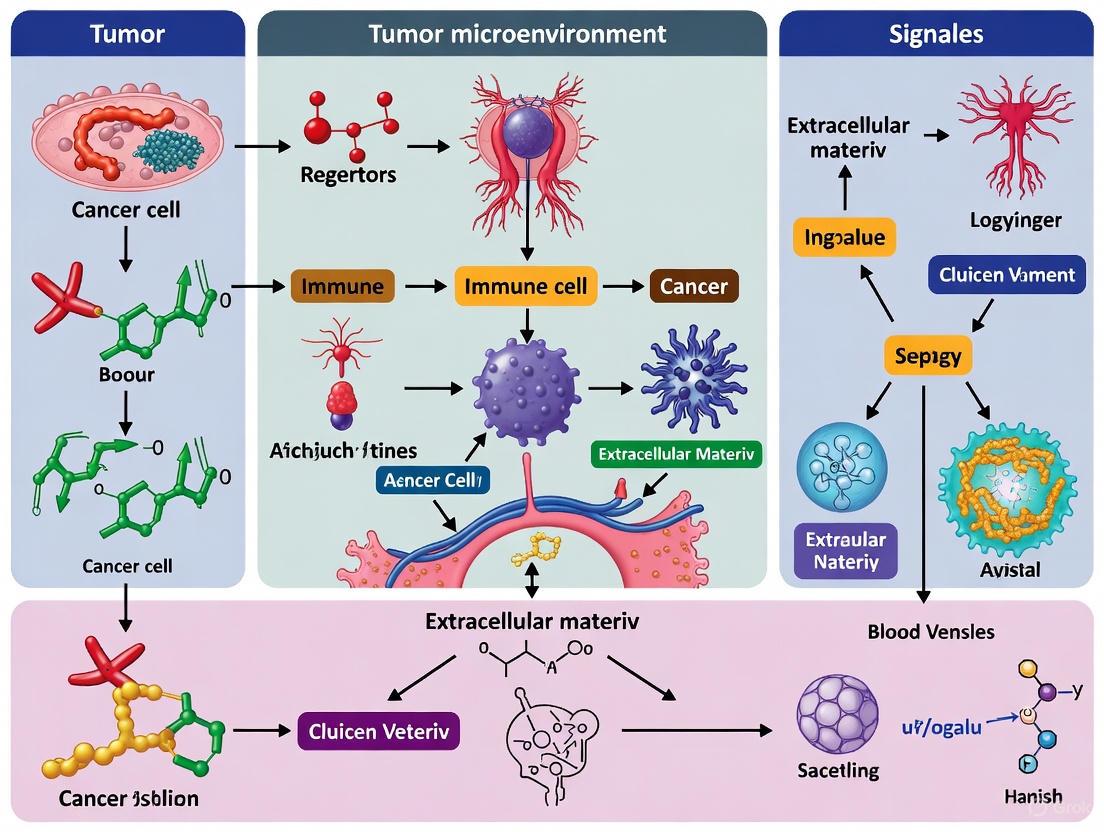
This article provides a comprehensive overview of the latest research on the tumor microenvironment (TME) and its profound influence on cancer cell behavior, progression, and therapeutic response.
The Dynamic Tumor Microenvironment: Decoding Its Multifaceted Impact on Cancer Cell Behavior and Therapy
Abstract
This article provides a comprehensive overview of the latest research on the tumor microenvironment (TME) and its profound influence on cancer cell behavior, progression, and therapeutic response. Tailored for researchers and drug development professionals, it explores the foundational biology of the TME, cutting-edge analytical methods like spatial transcriptomics and intravital microscopy, and the challenges of therapeutic resistance. It further evaluates comparative models and validation strategies, synthesizing key insights to outline future directions for targeting the TME to overcome treatment barriers and improve patient outcomes.
Deconstructing the Tumor Microenvironment: Cellular and Molecular Players in Cancer Progression
The tumor microenvironment (TME) is a dynamic and complex ecosystem that co-evolves with malignant cells, playing a pivotal role in cancer progression, immune evasion, and therapeutic resistance [1] [2] [3]. It comprises cellular components—stromal cells, immune cells, and vasculature—embedded within a non-cellular extracellular matrix (ECM) and bathed in a milieu of cytokines, chemokines, and growth factors [1] [2]. The shift from a cancer cell-centric view to recognizing the TME as a critical regulator of tumorigenesis represents a paradigm change in oncology research [1]. The core thesis of this whitepaper is that the intricate and reciprocal crosstalk between cancer cells and the cellular components of the TME fundamentally dictates cancer cell behavior, from proliferation and invasion to metastasis and treatment failure. Understanding these interactions is therefore essential for developing novel and effective anti-cancer strategies [2] [4].
Stromal Cells: Architects of the Tumor Niche
Stromal cells form the structural framework of the TME and are critically involved in tumorigenesis. The major stromal populations include cancer-associated fibroblasts (CAFs), mesenchymal stem cells (MSCs), tumor-associated adipocytes (CAAs), and pericytes [2].
Cancer-Associated Fibroblasts (CAFs)
CAFs are the most abundant stromal component in many solid tumors, such as breast, pancreatic, and prostate cancers [2]. They originate from local tissue fibroblasts, bone marrow-derived MSCs, adipocytes, and other cell types through transdifferentiation [2] [5]. CAFs are functionally and phenotypically distinct from their normal counterparts, often exhibiting a large, spindle-shaped morphology and expressing markers like α-smooth muscle actin (α-SMA), fibroblast activation protein (FAP), and platelet-derived growth factor receptors (PDGFR-α/β) [2] [5]. CAFs are not a uniform population but consist of multiple subtypes with opposing functions. The table below summarizes key CAF subtypes and their roles.
Table 1: Heterogeneity and Functions of Key CAF Subtypes
| CAF Subtype | Key Identifiers | Primary Functions | Impact on Cancer |
|---|---|---|---|
| Myofibroblastic CAFs (myCAFs) | High α-SMA, near tumor cells [2] | Secretes collagen & ECM components [2] | Tumor-restraining (in PDAC); increases tissue stiffness [2] |
| Inflammatory CAFs (iCAFs) | Secretes IL-6, LIF, CXCL1 [2] | Promotes inflammation & immune evasion [2] | Tumor-promoting; drives tumor progression [2] |
| Meflin-positive CAFs | Meflin expression [2] | Maintains tissue architecture [2] | Tumor-restraining; associated with better differentiation & prognosis [2] |
| Antigen-Presenting CAFs (apCAFs) | Major Histocompatibility Complex (MHC) class II [2] | May present antigen to T cells [2] | Role in immune regulation is under investigation [2] |
The mechanisms by which CAFs promote tumor progression are multifaceted. They include:
- ECM Remodeling: CAFs secrete matrix metalloproteinases (MMPs) that degrade the existing ECM and deposit new matrix components, facilitating tumor cell invasion and metastasis [5].
- Immunomodulation: CAFs can suppress anti-tumor immunity by secreting factors like CXCL12, which excludes T cells from the tumor vicinity, or by inducing the expression of immunosuppressive receptors on immune cells [6] [2].
- Therapy Resistance: CAF-derived cytokines (e.g., IL-6, IL-8) and exosomes have been shown to confer resistance to chemotherapeutic agents like cisplatin in various cancers [5].
Mesenchymal Stem Cells (MSCs) and Adipocytes
MSCs are recruited to the TME and can differentiate into other stromal cells, such as CAFs [2]. They contribute to immune modulation by secreting factors that can either dampen or enhance immune responses [5]. Tumor-associated adipocytes (CAAs) are adipocytes that have been reprogrammed by the tumor. They support tumor growth by providing energy-dense lipids to cancer cells and secreting adipokines that promote cancer cell proliferation and invasion [2].
Immune Cells: The Double-Edged Sword of Anti-Tumor Immunity
The immune compartment within the TME is highly diverse, encompassing both innate and adaptive immune cells. While these cells can mount potent anti-tumor responses, the TME often skews them toward pro-tumorigenic and immunosuppressive roles [3].
Key Immune Cell Populations and Their Roles
Table 2: Major Immune Cell Types in the TME and Their Dual Roles
| Immune Cell Type | Subtypes / States | Anti-Tumor Functions | Pro-Tumor Functions & Mechanisms |
|---|---|---|---|
| T Lymphocytes | Cytotoxic CD8+ T cells, CD4+ Helper T cells (e.g., Th1), Regulatory T cells (Tregs) [1] | CD8+ T cells kill tumor cells; Th1 cells secrete IFN-γ to activate immunity [1] | Tregs (CD25+Foxp3+) suppress effector T cells via TGF-β, IL-10, and cell contact [1] [3] |
| Tumor-Associated Macrophages (TAMs) | M1-like (pro-inflammatory), M2-like (immunosuppressive) [1] | M1-like TAMs can phagocytose pathogens and present antigen [1] | M2-like TAMs promote angiogenesis, tissue remodeling, and suppress T cell function [1] |
| Myeloid-Derived Suppressor Cells (MDSCs) | Polymorphonuclear (PMN)-MDSC, Monocytic (M)-MDSC [1] | - | Suppress T cell and NK cell function via arginase-1, ROS, and iNOS [1] [3] |
| Natural Killer (NK) Cells | - | Directly lyse tumor cells and secrete IFN-γ [6] | TME can induce dysfunction; stromal sialylation engages Siglec receptors to impair cytotoxicity [6] |
| Neutrophils | N1 (anti-tumor), N2 (pro-tumor) [1] | N1 neutrophils can attack tumors via ROS and neutrophil elastase [1] | N2 neutrophils promote angiogenesis, metastasis, and immunosuppression [1] |
Mechanisms of Immune Evasion
The TME employs multiple strategies to evade immune destruction:
- Metabolic Dysregulation: The hypoxic, nutrient-depleted TME shifts cellular metabolism towards glycolysis (the Warburg effect), producing lactic acid. This acidic environment directly impairs T cell and NK cell function, inhibiting cytokine production and cytotoxicity [3].
- Mitochondrial Transfer: A novel mechanism of immune evasion involves the transfer of mitochondria from cancer cells to T cells. These transferred mitochondria often carry mutations that disrupt oxidative phosphorylation (OXPHOS) in the recipient T cells, leading to metabolic insufficiency, senescence, and impaired anti-tumor function [7].
- Stromal-Mediated Suppression: As highlighted in a 2025 study, stromal cells can modulate innate immune cells via the sialic acid/Siglec axis. Stromal cells in colorectal cancer are highly sialylated and express ligands for Siglec receptors (e.g., Siglec-10 on macrophages, Siglec-G on NK cells). Engagement of these receptors drives immune dysfunction, impairing macrophage phagocytosis and NK cell cytotoxicity. Targeting this axis with sialyltransferase inhibitors or sialidase restores anti-tumor immune functions [6].
Tumor Vasculature: The Aberrant Circulatory Network
Tumor vasculature is structurally and functionally abnormal, characterized by leakiness, tortuosity, and poor pericyte coverage [8] [9]. This dysfunctional network creates a hypoxic and acidic TME, hinders drug delivery, and facilitates immune evasion [3].
Modes of Tumor Vascularization
Tumors utilize several distinct modes to secure a blood supply, extending beyond classic sprouting angiogenesis:
- Sprouting Angiogenesis: The most classical mechanism, driven by VEGF signaling, where endothelial cells (ECs) proliferate and migrate to form new vessel branches [9].
- Vasculogenic Mimicry (VM): A process where aggressive tumor cells form fluid-conducting, vessel-like structures themselves, independent of endothelial cells [9].
- Intussusceptive Angiogenesis: A mechanism where a single vessel splits into two by the formation and remodeling of intraluminal tissue pillars [8] [9].
- Vessel Co-option: Tumor cells migrate along and utilize pre-existing host blood vessels [9].
- Trans-differentiation of Cancer Stem Cells: Cancer stem cells can differentiate into endothelial-like cells to contribute to the vascular network [9].
Tumor Endothelial Cells (TECs) and Senescence
TECs are not passive conduits but active participants in tumor progression. They exhibit unique metabolic pathways, including increased glycolysis and fatty acid oxidation [8]. Furthermore, EC senescence has a dual impact on cancer. Senescent ECs can promote tumor progression by secreting factors that support pre-metastatic niche formation and suppress CD8+ T cell immune surveillance. Conversely, senescence in endothelial progenitor cells can inhibit angiogenesis and tumor growth [8].
Experimental Approaches for TME Analysis
Key Research Reagent Solutions
Table 3: Essential Research Reagents and Tools for TME Investigation
| Research Reagent / Tool | Function / Application | Example Use Case |
|---|---|---|
| Sialyltransferase Inhibitor (3FAX) | Inhibits enzyme adding sialic acid to glycans [6] | Reverses stromal-mediated suppression of macrophage/NK cell function [6] |
| Sialidase (E610) | Enzymatically removes sialic acid residues from glycoproteins [6] | Restores anti-tumor immune cell function in co-cultures [6] |
| Cytochalasin B | Inhibits actin polymerization; blocks tunneling nanotube (TNT) formation [7] | Used to investigate mitochondrial transfer via direct cell contact [7] |
| GW4869 | Inhibitor of neutral sphingomyelinase; blocks release of small extracellular vesicles (EVs) [7] | Used to investigate mitochondrial transfer via small EVs [7] |
| Antibody Arrays | High-throughput multiplex immunoassay for secreted proteins [1] | Systems-level profiling of cytokines, chemokines, and growth factors in TME secretome [1] |
| Single-Cell RNA Sequencing (scRNA-seq) | Reveals transcriptional heterogeneity of individual cells within a population [10] | Deconvoluting stromal and immune cell subtypes and their functional states in the TME [10] |
Detailed Experimental Protocol: Analyzing Stromal-Immune Cell Crosstalk
Objective: To investigate the mechanistic role of stromal cell sialylation in modulating innate immune cell function via the sialic acid/Siglec axis [6].
Methodology:
- Stromal Cell Conditioning and Treatment:
- Isolate primary human normal-associated fibroblasts (NAFs), cancer-associated fibroblasts (CAFs), or generate tumor-conditioned mesenchymal stromal cells (MSC_TCS) [6].
- Treat stromal cells with either:
- 3FAX (sialyltransferase inhibitor): To prevent new sialic acid addition.
- Sialidase (E610): To remove existing surface sialic acids.
- Vehicle control.
- Co-culture System:
- Establish co-cultures of treated/untreated stromal cells with primary human immune cells (e.g., macrophages or NK cells) in a transwell system or direct contact culture for a defined period (e.g., 48-72 hours) [6].
- Functional Immune Assays:
- Macrophage Phagocytosis: Use flow cytometry to measure the uptake of pHrodo-labeled targets (e.g., beads or tumor cells) by co-cultured macrophages [6].
- NK Cell Cytotoxicity: Employ real-time imaging or flow cytometry-based killing assays (e.g., using Calcein-AM labeled target cells) to quantify NK cell cytotoxic activity after co-culture [6].
- Phenotypic Analysis by Flow Cytometry:
- Harvest cells from co-culture and stain for:
- Siglec Expression: Siglec-10 on macrophages, Siglec-G on NK cells.
- Activation Markers: CD80, CD86 on macrophages; CD107a, granzyme B on NK cells.
- Immunosuppressive Markers: CD206, PD-L1.
- Harvest cells from co-culture and stain for:
- In Vivo Validation:
- Use an immunocompetent mouse model (e.g., Balb/c with CT26 tumors). Induce tumors with/without conditioned stromal cells that have been pre-treated with 3FAX, E610, or vehicle [6].
- Analyze tumors and secondary lymphoid tissues by flow cytometry to assess immune cell infiltration, phenotype (e.g., CD11b+CD80+ for activated macrophages), and function (granzyme B+ NK cells) [6].
Visualizing Key Concepts and Pathways
The Sialic Acid/Siglec Axis in the TME
Modes of Tumor Vascularization
The cellular components of the TME—stromal cells, immune cells, and the vasculature—are not mere bystanders but active collaborators in tumor progression. Their constant and dynamic crosstalk with each other and with cancer cells creates a powerful ecosystem that supports growth, suppresses immunity, and resists therapy. The emerging mechanisms, such as the sialic acid/Siglec axis and mitochondrial transfer, reveal a new layer of complexity in this interplay. Future research and drug development must move beyond targeting cancer cells in isolation and embrace combinatorial strategies that simultaneously disrupt these supportive networks. By decoding the language of the TME, the scientific community can develop more effective, next-generation therapies that reprogram the tumor niche from a pro-cancer ecosystem into a tissue environment that restrains malignancy and enables effective treatment.
The tumor microenvironment (TME) is a complex ecosystem that extends beyond cancer cells to include diverse cellular and non-cellular components. Among these, the extracellular matrix (ECM) and soluble factors represent critical non-cellular elements that actively regulate tumor progression, immune evasion, and therapeutic response [11] [1]. The ECM provides not only structural support but also biochemical signaling cues, while soluble factors—including cytokines, chemokines, and growth factors—orchestrate cell-to-cell communication within the TME [1] [12]. Together, these components create a dynamic niche that nurtures cancer cells and modulates their behavior, presenting both challenges and opportunities for therapeutic intervention. This technical guide provides an in-depth analysis of these non-cellular components, with a focus on their roles in cancer pathogenesis and the experimental methodologies used to study them.
The Extracellular Matrix: Composition and Functional Dynamics
Structural and Biochemical Diversity
The extracellular matrix is a complex, dynamic network of macromolecules that provides structural and biochemical support to cells within tissues [11]. In the context of cancer, the ECM undergoes significant remodeling, becoming a critical regulator of tumor behavior. The ECM consists of four primary macromolecule categories: proteoglycans, glycoproteins, fibrous proteins, and glycosaminoglycans (GAGs) [13]. This composition varies significantly across tissue types; for instance, the brain ECM contains lower levels of fibrous proteins like collagens and is instead enriched in proteoglycans and GAGs [13].
The ECM serves functions far beyond mere structural support. It acts as a reservoir for nutrients, enzymes, and growth factors while providing mechanical support, transmitting biochemical signals, and maintaining microenvironmental homeostasis [11]. Importantly, the ECM serves as a physical barrier to immune cell infiltration while simultaneously modulating immune cell behavior through biochemical cues, thereby affecting recruitment, activation, and functionality of immune cells [11].
ECM Components Across Cancer Types: Quantitative Profiling
The composition and abundance of ECM components vary significantly across different cancer types, influencing disease progression and therapeutic responses. The table below summarizes key ECM components, their functional roles, and immune modulatory functions across various malignancies.
Table 1: ECM Components and Their Roles Across Cancer Types
| Cancer Type | Tumor Stage | Key ECM Components | Functional Roles | Immune Modulation | Potential Therapeutic Interventions |
|---|---|---|---|---|---|
| Pancreatic Cancer | III, IV | COL I, Fibronectin | Promotes invasion and fibrotic TME | Inhibits T cell activity, promotes immune evasion | ECM-targeting drugs combined with ICIs [11] |
| Breast Cancer | II, III | Laminin, COL IV, COL XII | Promotes angiogenesis | Interacts with TAMs, inhibits anti-tumor immunity | Anti-VEGF antibodies, TAM-modulating drugs [11] |
| Glioblastoma | IV | Fibronectin, Laminin | Promotes brain tissue invasion | Inhibits microglial phagocytic function | Fibronectin antagonists, TTFields with immunotherapy [11] |
| Colorectal Cancer | II, III | COL I, COL III, Elastin | Promotes invasion and fibrotic stroma | Modulates CAF activity affecting immune infiltration | CAF-targeting therapies [11] |
| Liver Cancer | II, IV | Laminin, COL IV | Promotes angiogenesis and lymphangiogenesis | Inhibits liver immune cell activity | Sorafenib, ICIs with anti-angiogenics [11] |
ECM Remodeling and Immunoregulation
ECM remodeling is primarily mediated by cancer-associated fibroblasts (CAFs) through processes including ECM degradation, deposition, and cross-linking [11]. This remodeling enhances ECM stiffness, altering the TME and potentially facilitating immune escape mechanisms. The stiffened ECM creates physical barriers that exclude immune cells from the tumor parenchyma, contributing to the "immune-excluded" phenotype observed in many solid tumors [14]. Additionally, ECM components directly influence immune cell behavior through specific interactions; for example, collagen I can inhibit T cell activity by binding to immune cell surface receptors, while fibrin activates platelets releasing TGF-β, which inhibits dendritic cell maturation [11].
The ECM also functions as a repository for growth factors and cytokines, regulating their bioavailability and presentation to both cancer and immune cells. Proteoglycans such as heparan sulfate proteoglycan (HSPG) can capture chemokines like CXCL12, promoting tumor cell escape to vasculature while blocking CXCR4+ T cell migration to tumors [11]. Similarly, chondroitin sulfate proteoglycans (CSPGs) in glioblastoma form physical barriers that obstruct T cell infiltration and activate the Notch pathway to promote stem cell properties [11].
Methodologies for ECM and Soluble Factor Analysis
Proteomic Characterization of ECM Components
Comprehensive proteomic analysis enables systematic identification of ECM components in tumor tissues. The workflow below illustrates the integrated approach for ECM characterization:
Figure 1: ECM characterization workflow integrating proteomics and transcriptomics.
This integrated approach has identified key ECM targets in high-grade gliomas, including CSPG4/5, PTPRZ1, SDC1, TGFBR3, PLG, and GPC2, which have been validated as targets for chimeric antigen receptor (CAR) T cell therapy [13]. The proteomic analysis of pediatric diffuse intrinsic pontine glioma (DIPG) revealed CSPG4 as one of the highest-ranked proteoglycans, reinforcing its role as a tumor-associated antigen [13].
High-Throughput Analysis of Soluble Factors
Antibody array technology enables simultaneous screening of hundreds of secreted proteins in complex biological samples, making it particularly valuable for analyzing the soluble factor network within the TME [1]. This methodology facilitates exploration of complex signaling networks driven by cytokines, chemokines, growth factors, and interferons that are produced by tumor cells, stromal cells, and immune cells [1].
Table 2: Key Soluble Factors in Tumor Microenvironment Crosstalk
| Soluble Factor Category | Key Examples | Primary Cellular Sources | Functional Roles in TME | Downstream Signaling Pathways |
|---|---|---|---|---|
| Growth Factors | VEGF, IGF-1 | Tumor cells, CAFs, Endothelial cells | Angiogenesis, proliferation | PI3K/AKT, MEK/ERK [1] |
| Chemokines | CCL2, CCL5, CXCL12 | Tumor cells, Macrophages, CAFs | Immune cell recruitment, TAM polarization | CCR2, CCR5, CXCR4 signaling [1] |
| Inflammatory Cytokines | IFN-γ, TNF-α, TGF-β | T cells, Macrophages, Tumor cells | Immune activation/suppression, ECM remodeling | JAK/STAT, NF-κB, SMAD [12] |
| Immunosuppressive Factors | IL-10, Galectin-1 | Tregs, Tumor cells, MDSCs | T cell inhibition, Treg induction | STAT3, MAPK [12] |
Spatial and Multiplex Assessment Techniques
Multiplex immunohistochemistry (mIHC) and spatial transcriptomics enable comprehensive assessment of the TME while preserving spatial context. OPAL mIHC using tyramide signal amplification allows simultaneous detection of 4-9 protein markers in formalin-fixed paraffin-embedded (FFPE) tissue samples [14]. Advanced mass cytometry-based imaging techniques like Imaging Mass Cytometry (IMC) and Multiplex Ion Beam Imaging (MIBI) can assess up to 40 markers simultaneously, providing detailed information about immune cell populations, their functions, and spatial arrangement in the TME [14].
Spatial transcriptomics profiles gene expression within tissue sections, connecting molecular details with histological context. Integration with single-cell RNA sequencing (scRNA-seq) provides a comprehensive view of cellular identity within the spatial architecture of tissues, offering insights into cancer progression and therapeutic targets [15]. These techniques have revealed distinct immune phenotypes—immune-inflamed, immune-excluded, and immune-desert—that predict response to immunotherapy [14].
Signaling Networks Regulated by Non-Cellular Components
Hypoxia-Mediated Signaling Pathways
Hypoxia, a hallmark of the TME, influences diverse aspects of tumors including proliferation and immune evasion primarily through HIF-1α signaling [12]. The diagram below illustrates the multifaceted role of HIF-1α in promoting immune evasion:
Figure 2: HIF-1α mediated immune evasion mechanisms in the TME.
HIF-1α upregulates immune checkpoints like PD-L1 and HLA-G in cancer cells, induces production of immunosuppressive adenosine via CD39/CD73 upregulation, and recruits regulatory T cells (Tregs) through CCL5 and CCL28 secretion [12]. Additionally, HIF-1α enhances glucose transporters and glycolytic enzymes in cancer cells, allowing them to outcompete T cells for available glucose within the TME [12].
Pro-inflammatory Factor Signaling Networks
Pro-inflammatory factors such as IFN-γ and TNF-α play complex roles in the TME, exhibiting both anti-tumor and pro-tumorigenic functions [12]. IFN-γ can promote tumor immune escape through multiple mechanisms, including upregulation of immune checkpoint molecules like PD-L1, HHLA2, and B7-H4; induction of CD47 expression to evade phagocytosis; and secretion of galectin-9 which promotes Treg differentiation and CD8+ T cell apoptosis [12]. Similarly, TNF-α has been reported to exert pro-tumorigenic functions by upregulating negative immune regulators through NF-κB pathway activation [12].
Research Reagent Solutions for TME Analysis
Table 3: Essential Research Reagents for TME Component Analysis
| Reagent/Tool Category | Specific Examples | Primary Applications | Key Functions |
|---|---|---|---|
| Multiplex IHC Platforms | OPAL mIHC, CODEX, MACSima | Spatial protein detection in FFPE tissues | Simultaneous detection of 4-40 protein markers with spatial context [14] |
| Mass Cytometry Imaging | IMC, MIBI | High-plex protein imaging | Detection of up to 40 markers using metal isotope-labeled antibodies [14] |
| Antibody Arrays | Cytokine arrays, Chemokine arrays | Soluble factor profiling | High-throughput screening of hundreds of secreted proteins [1] |
| Spatial Transcriptomics | 10X Visium, Slide-seq | Spatial gene expression analysis | Genome-wide expression profiling with tissue localization [15] |
| Computational Tools | ImmunoTar, UCSC Xena, Minerva | Target prioritization, data visualization | Systematic ranking of immunotherapeutic targets, visualization of multiplexed data [16] [13] |
Therapeutic Implications and Concluding Perspectives
Targeting non-cellular components of the TME represents a promising therapeutic strategy to overcome barriers in cancer treatment. ECM-focused immunotherapies include CAR T cells targeting ECM components such as Glypican-2 (GPC2), which has shown efficacy against pediatric diffuse intrinsic pontine glioma, and CSPG4-targeting CAR T cells for glioblastoma [13]. Additionally, combining ECM-modulating agents with existing immunotherapies may enhance treatment efficacy; for instance, CXCR4 antagonists like plerixafor combined with anti-PD-1 therapy can overcome HSPG-mediated immune exclusion in melanoma [11].
The dynamic interplay between ECM components and soluble factors creates a continuously evolving ecosystem that influences therapeutic response and disease progression. Understanding the spatiotemporal dynamics of these non-cellular components across what has been termed "four dimensions" - the three spatial dimensions plus time - represents the next frontier in TME research [15]. Advanced analytical techniques that integrate spatial multi-omics with temporal monitoring will be essential for unraveling the complex narrative of tumor-immune interactions and developing more effective therapeutic strategies targeting the non-cellular landscape of the TME.
The tumor microenvironment (TME) is a complex ecosystem where cancer cells interact with various stromal components, including immune cells, endothelial cells, cancer-associated fibroblasts, and the extracellular matrix. Within this dynamic niche, several evolutionarily conserved signaling pathways function as critical molecular translators, converting extracellular cues into intracellular responses that dictate cancer cell behavior. The JAK/STAT, MAPK, PI3K/AKT, and Hypoxia (HIF) pathways represent four such pivotal signaling cascades that are frequently co-opted in cancer to drive tumor initiation, progression, metastasis, and therapy resistance. These pathways do not operate in isolation but engage in extensive crosstalk, creating robust signaling networks that allow tumors to adapt to environmental stresses such as hypoxia, nutrient deprivation, and immune pressure. Understanding the intricate regulation of these pathways within the TME context provides valuable insights for developing novel therapeutic strategies to overcome adaptive resistance in cancer.
Table: Core Signaling Pathways in the Tumor Microenvironment
| Pathway | Key Activators | Major Functions in Cancer | TME Context |
|---|---|---|---|
| JAK/STAT | Cytokines, IFNs, Growth Factors | Immune evasion, PD-L1 regulation, Survival | Immunosuppression, Inflammation |
| MAPK | Growth Factors, Stress, Mitogens | Proliferation, Differentiation, Survival | Stromal interactions, Drug resistance |
| PI3K/AKT | Growth Factors, Nutrients, Oncogenes | Metabolism, Growth, Apoptosis evasion | Metabolic reprogramming, Therapy resistance |
| Hypoxia (HIF) | Low Oxygen, Oncogenic signals | Angiogenesis, Metabolic adaptation, Invasion | Hypoxic niches, Angiogenic switch |
JAK/STAT Signaling Pathway
Pathway Mechanism and Regulation
The Janus kinase-signal transducer and activator of transcription (JAK/STAT) pathway is an evolutionarily conserved mechanism of transmembrane signal transduction that enables cells to communicate with the exterior environment [17]. This pathway involves three key components: transmembrane receptors, receptor-associated cytosolic tyrosine kinases (JAKs), and signal transducers and activators of transcription (STATs) [17]. The JAK protein family comprises four members: JAK1, JAK2, JAK3, and TYK2, while the STAT family consists of seven proteins: STAT1, STAT2, STAT3, STAT4, STAT5A, STAT5B, and STAT6 [17].
More than 50 types of cytokines, including interferons (IFNs), interleukins (ILs), and growth factors, activate JAK-STAT signaling to regulate cell differentiation, metabolism, survival, homeostasis, and immune responses [17]. Upon ligand binding to cognate receptors, JAKs initiate tyrosine phosphorylation of the receptors and recruit corresponding STATs. The phosphorylated STATs then dimerize and translocate to the nucleus to regulate specific gene transcription [17]. This process enables rapid transmission of external signals to the nucleus to regulate biological and pathological processes.
The pathway is tightly controlled by negative regulators, including suppressors of cytokine signaling (SOCS), protein inhibitors of activated STATs (PIAS), and protein tyrosine phosphatases [17]. SOCS proteins are induced by cytokine signaling and create a negative feedback loop by blocking STAT-receptor binding or targeting JAK/STAT components for proteasomal degradation [17].
Role in Tumor Microenvironment and Cancer Progression
JAK/STAT signaling, particularly through STAT3, plays a crucial role in creating an immunosuppressive TME. In lung cancer, aberrant JAK/STAT activation drives PD-L1 upregulation and contributes to an immunosuppressive tumor microenvironment [18]. Enhanced JAK/STAT signaling facilitates immune evasion by promoting transcriptional activation of PD-L1 and supporting oncogenic processes such as cell proliferation, survival, and metastasis [18]. Conversely, impaired JAK/STAT function can diminish PD-L1 expression, thereby altering tumor cell sensitivity to immune checkpoint blockade [18].
The pathway demonstrates extensive crosstalk with other signaling networks in the TME. STAT3 activation in cancer-associated fibroblasts and immune cells further reinforces tumor progression through paracrine signaling mechanisms. Preclinical studies highlight the potential of combination therapeutic strategies that target both the JAK/STAT pathway and PD-L1 to restore effective T cell responses and overcome resistance to immunotherapy [18].
Diagram Title: JAK/STAT Pathway in Immune Evasion
MAPK Signaling Pathway
Pathway Mechanism and Regulation
The mitogen-activated protein kinase (MAPK) pathway represents one of the most evolutionarily conserved signaling cascades, functioning as a critical conduit for transmitting extracellular signals to elicit intracellular responses [19]. This phosphorylation cascade typically initiates with the activation of MAPK kinase kinases (MAPKKKs), notably the Raf isoforms, which subsequently phosphorylate and activate MAPK kinases (MAPKKs), culminating in the activation of MAPKs [19].
The conventional MAPK subfamilies include extracellular signal-regulated kinases 1 and 2 (ERK1/2), c-Jun N-terminal kinases (JNK1-3), p38 isoforms (α, β, γ, and δ), and the ERK5 pathway [20]. Each pathway responds to different stimuli and regulates distinct cellular processes. The ERK pathway is primarily activated by growth factors and mitogens, while JNK and p38 pathways respond to stress stimuli and inflammatory cytokines [20].
The MAP4K family, consisting of seven kinases (MAP4K1-7), acts as upstream regulators in the MAPK signaling cascade [21]. These serine/threonine kinases participate in key cellular processes such as proliferation, survival, apoptosis, and migration by regulating multiple signaling pathways including JNK and Hippo pathways [21].
Role in Tumor Microenvironment and Cancer Progression
MAPK signaling plays multifaceted roles in the TME, influencing cancer cells, stromal cells, and immune populations. In breast cancer, MAPK pathway activation inhibits tumor cell death and promotes resistance to various standard chemotherapeutic agents [20]. This pathway is linked to poorer prognosis in tumor recovery and is frequently activated by common chemotherapy agents including taxanes, anthracyclines, and platinum-based drugs [20].
Through cell plasticity, tumor cells can reversibly shift between proliferative, metastatic phenotypes and dormant, drug-tolerant states, thus undermining the effectiveness of targeted therapies [20]. This broad plasticity enables tumor cells to adapt through various mechanisms, such as epithelial-mesenchymal transition (EMT), trans-differentiation, and the acquisition of cancer stem cell (CSC) traits [20].
In gastric cancer, the MAPK pathway critically governs proliferation, migration, and invasion capabilities [19]. Mutations within this pathway, particularly in key kinases such as RAS and RAF, are frequently observed in gastrointestinal tumors and are implicated in Helicobacter pylori-mediated gastric carcinogenesis [19]. MAPK signaling also demonstrates extensive crosstalk with immune regulation, as MAP4K1 functions as a negative regulator of T-cell receptor signaling, and its inhibition enhances T-cell activation and improves immune responses against tumors [21].
Diagram Title: MAPK Pathway Core Components
PI3K/AKT Signaling Pathway
Pathway Mechanism and Regulation
The phosphatidylinositol-3-kinase (PI3K)/AKT/mammalian target of rapamycin (mTOR) pathway is one of the most frequently activated intracellular pathways in human cancers [22]. This signaling cascade consists of two main components: phosphoinositide 3-kinases (PI3Ks) and serine/threonine protein kinase B (PKB/AKT) [22]. Class I PI3Ks are heterodimeric enzymes composed of a regulatory subunit (p85) and a catalytic subunit (p110) that convert phosphatidylinositol-4,5-bisphosphate (PIP2) to phosphatidylinositol-3,4,5-trisphosphate (PIP3) at the cell membrane [22].
PI3K activation occurs through extracellular signals such as growth factors, cytokines, and hormones binding to receptor tyrosine kinases (RTKs) or G-protein coupled receptors (GPCRs) [22]. This leads to recruitment and activation of PI3K, which generates PIP3. PIP3 then serves as a docking site for pleckstrin homology (PH) domain-containing proteins including AKT and PDK1. AKT is fully activated through phosphorylation by PDK1 and mTOR complex 2 (mTORC2) [22].
The pathway is negatively regulated by the phosphatase and tensin homolog (PTEN), which dephosphorylates PIP3 back to PIP2, thereby opposing PI3K activity [22]. Other negative regulators include INPP4B and PHLPP phosphatases.
Role in Tumor Microenvironment and Cancer Progression
The PI3K/AKT pathway contributes significantly to the adaptation of cancer cells to the TME through multiple mechanisms. The abnormal activation of PI3K/AKT signaling, along with up- or downstream targets transduction, plays a crucial role as an important signaling pathway in charge of drug resistance in many types of neoplasia [22]. This pathway promotes cell survival under metabolic stress, regulates angiogenesis, and facilitates interactions with stromal components.
The PI3K/AKT pathway intersects with hypoxia signaling through HIF-1α regulation. The PI3K/Akt pathway is involved in HIF-1α-mediated angiogenesis, as it facilitates endothelial cell migration toward hypoxic regions of tumors where new blood vessels are needed [23]. This pathway also disrupts the process of intended cell death and regulates cellular responses to pressure within the TME [23].
In cancer metabolism, PI3K/AKT signaling enhances glucose uptake and glycolytic flux, allowing cancer cells to thrive in nutrient-poor conditions. The pathway also supports cancer stem cell maintenance through regulation of self-renewal and differentiation processes. The hyper-activation of the PI3K/Akt pathway, caused by mutations of PI3K family genes, determines poor prognosis in cancers of the brain and central nervous system, and the knockdown of the same genes significantly inhibits tumor invasion through hypo-activation of Akt [22].
Table: PI3K/AKT Pathway Components and Cancer-Associated Alterations
| Component | Function | Genetic Alterations in Cancer | Therapeutic Implications |
|---|---|---|---|
| PIK3CA (p110α) | Catalytic subunit | Frequent mutations in colorectal, glioblastoma, gastric, breast, lung cancers | PI3K inhibitors (alpelisib) |
| PIK3R1 (p85) | Regulatory subunit | Mutations in endometrial, glioblastoma, bladder cancers | - |
| PTEN | Lipid phosphatase | Loss/mutation in multiple cancers; tumor suppressor | AKT inhibitors |
| AKT1-3 | Serine/threonine kinase | Amplification/mutation in various cancers | AKT inhibitors (ipatasertib) |
| mTOR | Serine/threonine kinase | Activation in multiple cancer types | mTOR inhibitors (everolimus) |
Hypoxia (HIF) Signaling Pathway
Pathway Mechanism and Regulation
Hypoxia-inducible factors (HIFs) are master transcriptional regulators that coordinate cellular adaptation to low oxygen levels, a common condition in the TME [23]. HIF is a heterodimeric transcription factor composed of an oxygen-labile α-subunit (HIF-1α, HIF-2α, or HIF-3α) and a constitutively expressed β-subunit (HIF-1β, also known as ARNT) [23].
Under normoxic conditions, prolyl hydroxylase domain proteins (PHDs) hydroxylate specific proline residues on HIF-α subunits, enabling recognition by the von Hippel-Lindau (VHL) E3 ubiquitin ligase complex, which targets HIF-α for proteasomal degradation [23]. Under hypoxic conditions, PHD activity decreases, leading to HIF-α stabilization, nuclear translocation, dimerization with HIF-1β, and binding to hypoxia-response elements (HREs) in target gene promoters [23].
HIF-1α is the primary mediator of cellular responses to acute hypoxia, while HIF-2α expression is often associated with chronic hypoxia and exhibits both overlapping and distinct target genes compared to HIF-1α [24]. The stabilization and activation of HIF-α subunits can also occur through oxygen-independent mechanisms, including gain-of-function mutations in oncogenes such as RAS, RAF, and PTEN loss [23].
Role in Tumor Microenvironment and Cancer Progression
Hypoxia and HIF signaling profoundly influence multiple aspects of the TME. Hypoxia, or the lack of oxygen in tissues, is a hallmark of the tumor microenvironment that has a large impact on treatment resistance and the advancement of cancer [23]. HIF-1α triggers a transcriptional program that promotes invasion, angiogenesis, metabolic reprogramming, and cell survival when it is active in hypoxic environments [23].
The structural abnormalities of tumor vasculature not only lead to poor oxygen delivery but also create heterogeneous oxygen distribution within the tumor [23]. This heterogeneity drives the selection of aggressive cancer clones and promotes phenotypic plasticity. Hypoxia-induced angiogenesis involves a complex interplay of signaling pathways and molecular mechanisms driven by HIF-1α, which upregulates several pro-angiogenic factors including vascular endothelial growth factor (VEGF), fibroblast growth factors (FGFs), angiopoietins, and platelet-derived growth factor (PDGF) [23].
Recent research has highlighted the role of hypoxia in regulating intercellular communication within the TME through extracellular vesicles. Hypoxia induced tumor derived exosomes (hiTDExs) released in high quantities by tumor cells under hypoxia are packed with unique cargoes that are essential for cancer cells' interactions within their microenvironment [25]. These hiTDExs facilitate not only immune evasion but also promote cancer cell growth, survival, angiogenesis, EMT, resistance to therapy, and the metastatic spread of the disease [25].
Diagram Title: HIF Pathway Oxygen Regulation
Pathway Crosstalk in the Tumor Microenvironment
The signaling pathways discussed do not function in isolation but engage in sophisticated crosstalk that creates robust signaling networks enabling tumor adaptation to environmental challenges. This interconnectivity provides multiple compensatory mechanisms that contribute to therapy resistance and tumor evolution.
The JAK/STAT pathway demonstrates significant crosstalk with MAPK signaling, as certain STAT family members can be phosphorylated by MAPK components, leading to altered transcriptional programs [21]. Similarly, PI3K/AKT signaling intersects with both MAPK and HIF pathways, as AKT can phosphorylate multiple components of these cascades, creating feedback loops that sustain oncogenic signaling [22] [23].
Hypoxia signaling influences all other pathways through HIF-mediated transcription. HIF-1α stabilization in the TME not only activates adaptive responses to low oxygen but also modulates JAK/STAT, MAPK, and PI3K/AKT signaling through direct transcriptional regulation of components and regulators of these pathways [23] [25]. This hierarchical positioning of HIF signaling makes it a central coordinator of TME adaptation.
The complexity of pathway crosstalk is further enhanced by non-coding RNAs that fine-tune signaling responses. Both microRNAs and long non-coding RNAs target components of multiple pathways, creating interconnected regulatory networks that contribute to the robustness of cancer signaling in the face of therapeutic intervention [19].
Table: Pathway Crosstalk in Cancer Therapeutics
| Pathway Interaction | Molecular Mechanism | Functional Consequence | Therapeutic Opportunity |
|---|---|---|---|
| JAK/STAT - PD-L1 | STAT-mediated transcription of PD-L1 | Immune evasion | JAK/STAT + Anti-PD-L1 combinations [18] |
| MAPK - PI3K/AKT | ERK-mediated feedback inhibition of RTKs | Pathway reactivation | Dual pathway inhibition |
| HIF - PI3K/AKT | AKT regulation of HIF translation | Enhanced angiogenesis | HIF inhibitor + AKT inhibitor combinations |
| HIF - MAPK | HIF regulation of MAPK phosphatases | Altered drug sensitivity | Hypoxia-targeted therapies |
Experimental Approaches and Research Reagents
Key Methodologies for Pathway Analysis
Advanced experimental approaches are essential for dissecting the complexity of signaling pathways in the TME. Single-cell sequencing technologies have significantly improved our understanding of cancer stem cell heterogeneity and metabolic adaptability, revealing how signaling pathways vary among cellular subpopulations within tumors [26]. Spatial transcriptomics further complements these findings by preserving the architectural context of signaling gradients within tissue sections.
CRISPR-based functional screens enable systematic identification of pathway components and synthetic lethal interactions, particularly in the context of therapy resistance [26]. These approaches are particularly powerful when combined with 3D organoid models that better recapitulate the TME compared to traditional 2D cultures [26].
For hypoxia research, novel biosensors allow real-time monitoring of oxygen levels and HIF activity in live cells and tissues. Proximity labeling techniques such as APEX and TurboID enable mapping of protein-protein interactions and spatial organization of signaling complexes under hypoxic conditions [25].
Research Reagent Solutions
Table: Essential Research Reagents for Signaling Pathway Studies
| Reagent Category | Specific Examples | Research Applications | Key Functions |
|---|---|---|---|
| JAK/STAT Inhibitors | Ruxolitinib, Tofacitinib, Baricitinib | Autoimmune disorders, Cancer research | First-generation JAK inhibitors targeting multiple JAK family members [17] |
| MAPK Inhibitors | DS21150768, GNE1858 | Cancer immunotherapy, Combination therapy | MAP4K1 inhibitors that enhance T cell activation [21] |
| PI3K/AKT Inhibitors | Alpelisib, Ipatasertib | Solid tumors, Drug resistance studies | Isoform-selective inhibitors targeting mutant PI3K or AKT [22] |
| HIF Inhibitors | EZN-2968, PT2385 | Hypoxia studies, Angiogenesis research | Small molecules targeting HIF-1α or HIF-2α [23] |
| Natural Compound Modulators | Quercetin, Kaempferol, Genistein | Chemoprevention, Combination therapy | Flavonoids that modulate MAPK and other signaling pathways [20] |
| CRISPR Tools | sgRNA libraries, Base editors | Functional genomics, Pathway mapping | Gene knockout, activation, and screening applications [26] |
The JAK/STAT, MAPK, PI3K/AKT, and HIF signaling pathways represent interconnected networks that cancer cells exploit to survive, proliferate, and disseminate within the challenging tumor microenvironment. Understanding the nuanced regulation of these pathways and their extensive crosstalk provides crucial insights for developing more effective cancer therapeutics.
Future research directions should focus on exploiting pathway dependencies and synthetic lethal interactions while considering the dynamic nature of signaling network rewiring under therapeutic pressure. The development of 3D organoid models, CRISPR-based functional screens, and AI-driven multiomics analysis is paving the way for precision-targeted therapies [26]. Advanced computational approaches integrating multi-omics data will be essential for predicting pathway activity and identifying optimal therapeutic combinations for individual patients.
Emerging strategies such as dual metabolic inhibition, synthetic biology-based interventions, and immune-based approaches hold promise for overcoming therapy resistance mediated by these signaling pathways [26]. Furthermore, targeting the adaptive responses of the TME through modulation of hypoxia signaling and extracellular vesicle communication represents a promising frontier in cancer therapeutics [25]. As our understanding of these core signaling pathways deepens, so too will our ability to develop innovative strategies to disrupt their pro-tumorigenic functions while minimizing toxicity to normal tissues.
Metabolic Reprogramming and Nutrient Competition in the TME
The tumor microenvironment (TME) is a complex ecosystem where cancer cells coexist with various immune populations, stromal cells, and vascular components. Within this milieu, metabolic reprogramming has emerged as a fundamental hallmark of cancer, driving tumor progression and immune evasion through intense competition for limited nutrients [27] [28]. This metabolic adaptation extends beyond the classical Warburg effect to encompass profound alterations in lipid, amino acid, and nucleotide metabolism that collectively sustain rapid proliferation while simultaneously creating a hostile environment for antitumor immune cells [29] [30]. The bidirectional interplay between cancer cells and the TME establishes metabolic conditions that favor immunosuppression, ultimately facilitating tumor survival and metastasis [31]. Understanding these intricate metabolic relationships provides crucial insights for developing novel therapeutic strategies that can disrupt tumor metabolism and restore antitumor immunity.
Core Metabolic Pathways Reprogrammed in the TME
Glucose Metabolism and the Warburg Effect
Cancer cells exhibit a pronounced preference for aerobic glycolysis, characterized by increased glucose uptake and lactate production even in the presence of adequate oxygen [29]. This metabolic rewiring provides both energy and essential biosynthetic intermediates while creating an acidic, nutrient-depleted TME that suppresses effector immune function.
Table 1: Key Alterations in Tumor Cell Glucose Metabolism
| Metabolic Component | Alteration in Cancer Cells | Functional Consequence |
|---|---|---|
| Glucose Uptake | Overexpression of GLUT transporters (especially GLUT1) | Enhanced glucose influx to support glycolysis [29] |
| Glycolytic Rate | Increased flux through glycolytic enzymes (PKM2, LDHA) | Rapid ATP generation and metabolic intermediate production [29] |
| Pentose Phosphate Pathway | Upregulation of G6PD and transketolase enzymes | Increased nucleic acid synthesis and oxidative stress suppression [29] |
| Mitochondrial Metabolism | TCA cycle enzyme mutations (IDH, SDH) | Accumulation of oncometabolites that alter gene expression [29] |
The metabolic landscape of glucose utilization in the TME creates a state of nutrient competition that profoundly impacts immune cell function. Tumor cells' high glycolytic flux depletes glucose, impairing glycolytic effector T cells while favoring regulatory T cells that adapt to low-glucose conditions through enhanced oxidative metabolism [27] [32].
Amino Acid Metabolism and Scavenging Mechanisms
Cancer cells demonstrate extensive reprogramming of amino acid metabolism, particularly through enhanced glutaminolysis, which provides nitrogen and carbon skeletons for nucleotide and hexosamine synthesis [29]. Recent research has revealed that under amino acid-depleted conditions, tumor cells employ cooperative scavenging mechanisms to extract nutrients from extracellular oligopeptides [33].
Table 2: Amino Acid Metabolic Alterations in the TME
| Amino Acid Pathway | Cancer Cell Adaptation | Impact on Immune Cells |
|---|---|---|
| Glutamine Metabolism | Increased glutamine transport and catabolism | Deprives T cells of glutamine, impairing activation [27] [29] |
| Oligopeptide Scavenging | Secretion of extracellular aminopeptidases (CNDP2) | Creates cooperative nutrient acquisition system [33] |
| Arginine Metabolism | Upregulation of arginase and iNOS in MDSCs | Depletes arginine, suppressing T cell receptor signaling [32] |
| Tryptophan Metabolism | Increased IDO expression in stromal cells | Kynurenine metabolites promote Treg differentiation [27] |
The recently discovered cooperative oligopeptide scavenging pathway represents a paradigm shift in understanding nutrient acquisition in the TME. Tumor cells collectively digest extracellular oligopeptides through secreted aminopeptidases like CNDP2, with the resulting free amino acids functioning as a "public good" that benefits both enzyme-secreting cells and neighboring cells [33]. This cooperative mechanism enables tumor populations to survive under glutamine-deprived conditions typical of the TME and creates a density-dependent survival advantage where sparse populations collapse while dense populations thrive.
Lipid Metabolic Reprogramming
Lipid metabolism in the TME involves complex alterations in fatty acid synthesis, oxidation, and cholesterol metabolism that collectively support tumor growth while reinforcing immunosuppression [32]. Cancer cells enhance lipid uptake through increased expression of FATPs, CD36, and LDLR, while simultaneously upregulating de novo lipogenesis through FASN and ACC [32].
The immunosuppressive impact of altered lipid metabolism is particularly evident in its effects on key immune populations. Regulatory T cells (Tregs) demonstrate remarkable metabolic flexibility under glucose-restricted conditions by shifting toward lipid metabolic programs, enhancing both fatty acid oxidation and synthesis to maintain their suppressive functions [32]. Similarly, tumor-associated macrophages (TAMs) and myeloid-derived suppressor cells (MDSCs) undergo lipid metabolic reprogramming that reinforces their immunosuppressive phenotypes and promotes tumor progression [32].
Nutrient Competition and Immune Cell Function
Metabolic Suppression of Effector Immunity
The metabolic competition within the TME creates conditions that selectively suppress antitumor immunity while favoring immunosuppressive populations. Effector T cells are particularly vulnerable to glucose restriction due to their dependence on glycolysis for activation and effector function [27] [34]. The accumulation of lactate from tumor glycolysis further inhibits T cell function by suppressing cytokine production and cytotoxic activity [27].
Beyond glucose deprivation, competition for essential amino acids creates additional barriers to effective antitumor immunity. Regulatory T cells demonstrate metabolic advantages in the TME through enhanced lipid metabolic flexibility and reduced dependence on specific amino acids that limit effector T cell function [32]. Myeloid-derived suppressor cells further exacerbate this immunosuppression through arginine depletion via ARG1 expression and production of immunosuppressive lipid mediators like PGE2 [32].
Metabolic Checkpoints and Immunosuppressive Networks
Recent research has revealed the emergence of novel metabolic checkpoints operating through an "enzyme-metabolite-receptor" axis that synergizes with traditional immune checkpoints like PD-1 and CTLA-4 [34]. These metabolic checkpoints create interconnected networks that reinforce immunosuppression through multiple mechanisms:
- Metabolite-mediated suppression: Accumulation of lactate, kynurenine, and adenosine suppresses T cell and NK cell function while promoting Treg and MDSC activity [27] [30]
- Receptor signaling modulation: Metabolic reprogramming in immune cells alters expression of critical immune receptors including PD-1, CTLA-4, and OX40 [32]
- Epigenetic reprogramming: Metabolites such as lactate, succinate, and acetyl-CoA function as epigenetic modifiers that reshape immune cell differentiation and function [31]
The interconnected nature of these metabolic and immunosuppressive networks creates formidable barriers to effective antitumor immunity and highlights the need for combinatorial approaches that simultaneously target multiple components of this system.
Experimental Approaches for Investigating TME Metabolism
Methodologies for Assessing Nutrient Competition
Investigating metabolic reprogramming and nutrient competition requires specialized methodologies that can capture the dynamic interactions within the TME. The following experimental approaches represent key techniques for dissecting these complex relationships:
Live Cell Population Tracking: This method enables quantitative assessment of cooperative nutrient scavenging and Allee effects under nutrient-deprived conditions [33]. Cells are seeded at different densities and tracked using automated live microscopy with image analysis to determine growth rates and Allee thresholds across varying nutrient conditions [33]. This approach revealed that tumor cell populations collapse below a critical density threshold when dependent on oligopeptide scavenging.
Conditioned Media Transfer Experiments: To validate cooperative mechanisms involving secreted factors, conditioned media from high-density cultures grown with oligopeptides can be transferred to sparse populations [33]. Rescue of sparse population growth by conditioned media indicates the presence of extracellular "public goods" generated through cooperative processes.
Metabolomic Profiling: Mass spectrometry-based analysis of extracellular metabolites in conditioned media or tumor interstitial fluid can identify nutrient consumption and secretion patterns [33]. This approach can detect the accumulation of free amino acids from oligopeptide hydrolysis in high-density cultures.
The Scientist's Toolkit: Essential Research Reagents
Table 3: Key Reagents for Investigating Metabolic Reprogramming
| Reagent/Cell Line | Specific Function | Experimental Application |
|---|---|---|
| A375 Melanoma Cells | Model for cooperative nutrient scavenging | Studying Allee effects and population dynamics under amino acid deprivation [33] |
| CNDP2 Inhibitors/KD | Target extracellular aminopeptidase activity | Testing necessity of oligopeptide hydrolysis for cooperative growth [33] |
| Glutamine Transport Inhibitors (GPNA, BenSer) | Block cellular glutamine uptake | Determining amino acid transporter requirements in nutrient scavenging [33] |
| CD36 Inhibitors | Block fatty acid uptake | Assessing impact on Treg suppressive function and lipid metabolism [32] |
| CPT1A Inhibitors (Etomoxir) | Inhibit fatty acid oxidation | Evaluating metabolic dependencies of TAMs and MDSCs [32] |
| Ala-Gln Dipeptide | Glutamine source without free amino acids | Studying cooperative oligopeptide utilization mechanisms [33] |
Therapeutic Implications and Future Directions
Targeting metabolic reprogramming in the TME represents a promising strategy for overcoming resistance to conventional therapies and immunotherapies. The complex, adaptive nature of tumor metabolism suggests that combinatorial approaches will be necessary to achieve durable clinical responses [27] [34]. Several strategic approaches show particular promise:
Metabolic Checkpoint Combinations: Simultaneous targeting of metabolic enzymes and immune checkpoints may overcome resistance mechanisms rooted in the immunosuppressive TME [34]. Preclinical studies demonstrate enhanced efficacy when combining PD-1/PD-L1 blockade with inhibitors of lipid metabolism, including CD36, FASN, SREBP, or cholesterol-regulatory pathways [32].
Targeting Cooperative Vulnerabilities: The discovery of density-dependent nutrient scavenging mechanisms reveals potential strategies to drive tumor populations below their critical Allee threshold [33]. Inhibition of key extracellular hydrolases like CNDP2 could disrupt cooperative oligopeptide utilization and induce population collapse.
Microenvironment-Remodeling Approaches: Strategies that normalize the TME metabolic landscape may enhance the efficacy of existing therapies. This includes targeting acidification through lactate transport inhibition or manipulating cholesterol metabolism to reprogram immunosuppressive cell populations [32] [31].
The evolving understanding of metabolic reprogramming in the TME continues to reveal novel therapeutic opportunities while highlighting the remarkable adaptability of tumor ecosystems. Future research directions should focus on decoding the "microbiota-metabolite-TME" network through single-cell metabolomics and spatial transcriptomics to enable precision targeting of metabolic vulnerabilities across different tumor types and microenvironments [31].
The immunosuppressive niche represents a specialized functional unit within the tumor microenvironment (TME) where dynamic interactions between tumor cells, immune cells, and stromal components create a local microenvironment that enables tumors to evade immune destruction [35]. These niches are not merely passive anatomical regions but are actively engineered by tumors through complex eco-evolutionary dynamics. The formation of these niches represents a critical evolutionary hurdle that tumors must overcome to progress from benign to malignant states, as demonstrated in colorectal cancer where only a small percentage of adenomas successfully advance to carcinoma [36]. Within these specialized microdomains, spatially organized immunosuppressive networks create physical and functional barriers to immune effector function, ultimately facilitating immune escape and therapy resistance.
The significance of understanding immunosuppressive niches extends beyond basic cancer biology to clinical oncology. These niches exhibit dual functionality—while theoretically capable of supporting anti-tumor immunity, they frequently evolve immunosuppressive properties that dominate in established tumors [35]. Their cellular composition, spatial architecture, and molecular characteristics significantly influence responses to immunotherapy, with distinct organizational patterns associated with treatment sensitivity or resistance across various cancer types. This whitepaper comprehensively examines the mechanisms underlying immunosuppressive niche formation, their functional properties, and emerging therapeutic strategies to disrupt these protective tumor sanctuaries.
Core Mechanisms of Immunosuppressive Niche Formation
Cellular Architects and Their Roles
Immunosuppressive niches emerge through coordinated interactions between three fundamental components: (1) heterogeneous tumor populations, (2) diverse immune cell subsets, and (3) stromal elements [35]. Each component contributes specific functionalities that collectively establish immune privilege within the TME.
Table: Key Cellular Components of Immunosuppressive Niches
| Cell Type | Subtypes | Immunosuppressive Mechanisms | Impact on Anti-tumor Immunity |
|---|---|---|---|
| Myeloid Cells | M2-like TAMs, MDSCs | Production of IL-10, TGF-β; expression of ARG1; metabolic disruption via nutrient competition | Inhibition of T cell activation and proliferation; promotion of Treg responses [37] [38] |
| Lymphoid Cells | Tregs, Exhausted CD8+ T cells | Expression of immune checkpoints (PD-1, CTLA-4); secretion of immunosuppressive cytokines (IL-10, TGF-β) | Direct suppression of effector T cells; induction of T cell dysfunction [39] [38] |
| Stromal Cells | CAFs, Endothelial cells | Secretion of immunosuppressive factors; ECM remodeling; formation of physical barriers | Impediment of T cell infiltration; creation of exclusion zones [35] [40] |
Tumor-associated macrophages (TAMs) play particularly pivotal roles in niche establishment. In glioblastoma, TAMs expressing CD163 (a marker of M2 polarization) create potent immunosuppressive environments, with higher densities correlating directly with shorter patient survival [37]. These cells arise from both resident microglia and monocyte-derived macrophages recruited to the tumor site via chemokine networks including CCL2, GM-CSF, and CSF-1 [37]. Once polarized to an M2-like state under the influence of tumor-derived IL-10, TAMs promote immune suppression through multiple mechanisms including arginine depletion via ARG1 expression, which impairs T cell receptor signaling and function [38].
Regulatory T cells (Tregs) further reinforce immunosuppressive niches through multiple mechanisms. In head and neck squamous cell carcinoma (HNSCC), Tregs inhibit effector T cells and other immune populations by releasing IL-10 and TGF-β, while also expressing checkpoint molecules like CTLA-4 that directly suppress immune activation [39] [38]. The spatial organization of these cells within niches is critical to their function, with specialized positioning creating localized zones of immune suppression.
Molecular Networks and Signaling Pathways
The formation and maintenance of immunosuppressive niches are governed by complex molecular networks that mediate communication between cellular components. Key signaling pathways and molecular interactions create self-reinforcing immunosuppressive circuits.
Immune checkpoint regulation represents a cornerstone of niche functionality. Tumor cells frequently upregulate PD-L1 in response to oncogenic signaling pathways (e.g., PI3K/AKT) and inflammatory cytokines (e.g., IFN-γ) within the TME [39]. PD-L1 engagement with PD-1 receptors on T cells transmits inhibitory signals that suppress T cell activation and proliferation, effectively inducing a state of functional exhaustion [39] [38]. This checkpoint axis operates in conjunction with other inhibitory pathways, including CTLA-4, which modulates early T cell activation, and emerging targets such as LAG-3 and TIM-3 that contribute to the exhausted T cell phenotype [40].
Cytokine and chemokine networks establish paracrine signaling environments that reinforce immunosuppression. Transforming growth factor-beta (TGF-β) serves as a powerful immunosuppressive cytokine that restricts the activation and proliferation of T cells and natural killer (NK) cells while promoting Treg development [39]. Similarly, IL-10 reduces immune responses by inhibiting pro-inflammatory cytokine production from macrophages and dendritic cells, effectively blocking T cell activation and fostering an anti-inflammatory state [39]. Vascular endothelial growth factor (VEGF), while primarily known for its pro-angiogenic functions, also exhibits immunosuppressive properties by impeding dendritic cell maturation, thereby preventing the initiation of efficient immune responses against tumors [39].
Diagram: Molecular networks in immunosuppressive niches. This diagram illustrates key signaling pathways and cellular interactions that establish and maintain immunosuppressive niches, including checkpoint molecules, cytokine signaling, and metabolic disruption.
Metabolic Reprogramming and Microenvironmental Conditions
Metabolic reprogramming within immunosuppressive niches creates physicochemical conditions that actively suppress immune function while supporting tumor survival. Tumor cells frequently undergo a metabolic shift toward aerobic glycolysis, leading to accumulation of lactic acid that lowers the extracellular pH [39]. This acidic environment directly inhibits the function of immune cells, including T cells, macrophages, dendritic cells, and NK cells [39]. The acidic conditions impair T cell activation and proliferation by disrupting key signaling pathways, with studies demonstrating that low pH reduces proliferation, activation markers like p-STAT5 and p-ERK, and production of cytokines including IL-2, TNFα, and IFN-γ in tumor-infiltrating lymphocytes [39].
Beyond lactic acid, other tumor-derived metabolites contribute significantly to immune suppression. Ammonia has recently been shown to induce a unique form of cell death in effector T cells [39]. In rapidly proliferating T cells, ammonia produced through glutaminolysis accumulates excessively, causing lysosomal alkalization that triggers mitochondrial damage, lysosomal dysfunction, and impaired autophagic flux, ultimately leading to T cell death [39]. Blocking glutaminolysis or inhibiting lysosomal alkalization can prevent this form of cell death, improving T cell survival and enhancing the effectiveness of T cell-based cancer immunotherapies.
Nutrient competition represents another metabolic axis of immunosuppression. Tumor cells and immunosuppressive myeloid cells consume essential amino acids like tryptophan and arginine, depleting these critical nutrients from the TME and impairing T cell function [40]. Myeloid-derived suppressor cells (MDSCs) express high levels of arginase 1 (ARG1), which depletes L-arginine, while indoleamine 2,3-dioxygenase (IDO)-mediated tryptophan metabolism generates kynurenines that further suppress T cell responses [38].
Table: Metabolic Mediators of Immunosuppression in the TME
| Metabolite | Source | Target Immune Cells | Mechanism of Action | Therapeutic Interventions |
|---|---|---|---|---|
| Lactic Acid | Aerobic glycolysis | T cells, NK cells, DCs | Acidic pH disrupts signaling; inhibits proliferation and cytokine production | Proton pump inhibitors; bicarbonate [39] |
| Ammonia | Glutaminolysis | T cells | Lysosomal alkalization; mitochondrial damage; impaired autophagy | Glutaminolysis inhibition [39] |
| Reactive Oxygen Species | MDSCs, TAMs | T cells | Oxidative stress; impaired TCR signaling | Antioxidants; ROS scavengers [38] |
| Arginine (depletion) | ARG1 expression in MDSCs/M2 TAMs | T cells | Impaired TCR signaling; cell cycle arrest | ARG1 inhibitors [38] |
Quantitative Analysis of Immunosuppressive Niches
Spatial Organization and Cellular Correlations
Advanced quantitative imaging and spatial analysis technologies have revealed highly organized patterns of immune cell distribution within immunosuppressive niches. These spatial relationships are not random but follow specific organizational principles that correlate with disease progression and therapeutic outcomes.
In glioblastoma, a direct correlation exists between the expression of CD8+ T cells and immunosuppressive mechanisms, whereby higher values of CD8 are directly associated with higher values of CD163+ macrophages, PD-L1, and PD-1 [37]. This paradoxical relationship suggests that CD8+ T cell infiltration occurs in a state of anergy or inefficient activity, with the simultaneous recruitment of immunosuppressive elements that neutralize their cytotoxic potential. Multivariate analysis has confirmed that high expressions of both CD8+ and CD163+ cells are associated with shorter survival durations, highlighting the clinical significance of this spatial coexistence [37].
The perivascular niche represents a particularly important spatial organization in multiple cancer types. Studies in MC38 colorectal and KPC pancreatic murine tumor models have demonstrated that the majority of infiltrating T cells, particularly resource CD8+ T cells, are colocalized with dendritic cells or activated MHCII+ macrophages in close proximity to tumor blood vessels, generating specialized perivascular immune niches [41]. These niches are present in untreated tumors and markedly increase after immunotherapy, with their relative abundance positively associated with response to therapy [41]. This spatial organization suggests that blood vessels serve as key organizational hubs that coordinate immune cell interactions within the TME.
Evolutionary Dynamics and Ecological Analysis
The development of immunosuppressive niches follows predictable evolutionary trajectories that can be modeled mathematically. Computational approaches using Lotka-Volterra models, which simulate predator-prey dynamics, have revealed that immune suppression represents a superior evolutionary strategy compared to blockade mechanisms for tumor progression [36]. These models simulate tumor evolution under immune predation and compare two distinct escape strategies: (1) Blockade, where tumor cells neutralize cytotoxic T cells through mechanisms like PD-L1 expression, and (2) Suppression, where tumor cells recruit immunosuppressive cells such as M2 macrophages [36].
Modeling predictions indicate that recruitment of immunosuppressive cells would be the most common driver of malignant transformation, a finding confirmed by ecological analysis of digital pathology data from colorectal cancer samples [36]. Analysis of patient samples reveals that progressed adenomas co-localize with immunosuppressive cells and cytokines, while benign adenomas show a mixed immune response, and carcinomas converge to a common immune "cold" ecology that relaxes selection against immunogenicity and high neoantigen burdens [36]. This ecological progression demonstrates the active engineering of immunosuppressive niches during tumor evolution.
Methodologies for Studying Immunosuppressive Niches
Quantitative Digital Image Analysis
Digital image analysis of immunohistochemically stained tissue sections enables precise quantification of immune cell densities and spatial relationships within immunosuppressive niches. This methodology provides robust, reproducible data for correlating immune landscape features with clinical outcomes.
Protocol Overview:
- Tissue Processing: Formalin-fixed, paraffin-embedded tissue sections (3-4μm) are prepared from representative tumor regions, excluding necrotic areas to avoid bias [37].
- Immunohistochemistry: Sequential staining with primary antibodies targeting key immune markers including:
- CD163 for M2-like macrophages
- CD8 for cytotoxic T cells
- PD-1 and PD-L1 for immune checkpoint evaluation
- Digital Scanning: Stained slides are scanned using automated slide scanning systems [37].
- Computer-Assisted Analysis: Digital image analysis platforms (e.g., DAKO ACIS III analyzer) quantify immune cell densities relative to total tumor cells [37].
- Spatial Analysis: Computational tools assess spatial relationships, including co-localization patterns and distribution relative to histological landmarks.
This approach revealed in glioblastoma that CD163+ macrophages and CD8+ T cells exhibit direct correlation, with both cell types associated with poorer patient survival, highlighting the clinical relevance of immunosuppressive niches [37].
Intravital Microscopy and Behavioral Phenotyping
Intravital microscopy (IVM) enables real-time observation of cellular behaviors and interactions within living tumors, providing dynamic insights into niche formation and function. The BEHAV3D Tumor Profiler (BEHAV3D-TP) computational framework represents an advanced methodology for analyzing these complex datasets [42] [43].
Experimental Workflow:
- Window Installation: Surgical implantation of imaging windows for repeated tumor observation in live animals [43].
- Fluorescent Labeling: Genetic or antibody-based labeling of specific cell populations (tumor cells, immune subsets, vascular components).
- Time-Lapse Imaging: Multi-dimensional imaging over time to capture cellular dynamics.
- Cell Tracking: Automated segmentation and tracking of individual cells across time frames.
- Behavioral Phenotyping: BEHAV3D-TP classifies cells based on morphodynamic features including:
- Motility parameters (speed, directionality, confinement)
- Morphological features (size, shape, protrusive activity)
- Environmental interactions (contact duration, spatial relationships) [43]
Diagram: BEHAV3D-TP analytical workflow for intravital microscopy data. This pipeline enables unbiased classification of single-cell behaviors and their correlation with microenvironmental features.
Application of this methodology to diffuse midline glioma (DMG) revealed that distinct migratory behaviors of tumor cells are associated with specific TME components, including tumor-associated macrophages and vasculature, demonstrating how immunosuppressive niches influence cancer cell behavior [43].
Multiplexed Imaging and Spatial Mapping
Multiplexed imaging approaches enable comprehensive characterization of immunosuppressive niches by simultaneously detecting multiple markers within tissue sections, preserving spatial context that is lost in single-cell suspension techniques.
Protocol Details:
- Multiplex Staining: Sequential immunohistochemistry or immunofluorescence staining for 6+ markers using antibody stripping or DNA-barcoded antibodies [41].
- Image Acquisition: High-resolution whole-slide imaging using confocal or slide scanning microscopy.
- Cell Segmentation: Automated identification of individual cells based on nuclear and membrane markers.
- Phenotype Assignment: Classification of cell types based on marker expression combinations.
- Spatial Analysis: Computational analysis using tools like CytoMAP or histocytometry to quantify:
- Cell-cell proximity and interaction networks
- Microenvironment classification based on cellular composition
- Spatial heterogeneity across tumor regions [41]
This approach identified perivascular immune niches in MC38 and KPC tumor models, where T cells colocalized with dendritic cells and activated macrophages near blood vessels [41]. The abundance of these niches increased with effective immunotherapy and correlated with positive treatment response, highlighting their functional significance in anti-tumor immunity.
The Scientist's Toolkit: Essential Research Reagents and Platforms
Table: Key Research Reagents and Platforms for Studying Immunosuppressive Niches
| Category | Specific Reagents/Platforms | Key Applications | Experimental Considerations |
|---|---|---|---|
| Immune Cell Markers | CD163 (M2 TAMs), CD8 (cytotoxic T cells), FOXP3 (Tregs), CD33 (MDSCs) | Identification and quantification of immunosuppressive populations | Species compatibility; antibody validation; multiplexing compatibility [37] |
| Checkpoint Molecules | PD-1, PD-L1, CTLA-4, LAG-3, TIM-3 | Evaluation of exhaustion and immune inhibition | Blocking vs. detection antibodies; temporal expression patterns [39] [40] |
| Cytokine/Chemokine Detection | TGF-β, IL-10, VEGF, IFN-γ ELISA kits; multiplex cytokine arrays | Assessment of immunosuppressive soluble factors | Sample preparation; sensitivity thresholds; protein stability [39] [38] |
| Spatial Analysis Platforms | BEHAV3D-TP, CytoMAP, Histocytometry | Analysis of cellular spatial relationships and niche organization | Image resolution; computational resources; expertise requirements [42] [43] [41] |
| Intravital Imaging Systems | Multiphoton microscopy; implanted imaging windows | Real-time observation of cellular dynamics in living tumors | Surgical expertise; photobleaching considerations; depth limitations [43] |
| Metabolic Probes | pH sensors; glucose uptake assays; lactate detection kits | Assessment of metabolic microenvironment | Stability in physiological conditions; quantification methods [39] |
Therapeutic Implications and Future Directions
Therapeutic Strategies for Targeting Immunosuppressive Niches
Therapeutic development is increasingly focused on reprogramming the tumor-immune interface by modulating niche biology through diverse approaches [35]. These strategies target specific components of immunosuppressive niches to restore anti-tumor immunity.
Stromal remodeling approaches aim to overcome physical and functional barriers to immune cell infiltration and function. Success has been demonstrated with anlotinib (an anti-angiogenic agent) combined with anti-PD-L1 therapy in high-grade serous ovarian cancer [35]. This combination inhibits angiogenesis while enhancing immune infiltration and reinvigorating exhausted T cells, demonstrating the therapeutic potential of coordinated niche modulation [35].
Metabolic interventions seek to normalize the physicochemical conditions within the TME to support immune function. Approaches include neutralizing the acidic TME with proton pump inhibitors or bicarbonate, which has been shown to increase CD8+ T cell infiltration and improve the efficacy of both adoptive cell therapy and immune checkpoint blockade [39]. Similarly, targeting glutaminolysis to prevent ammonia accumulation improves T cell survival and enhances the effectiveness of T cell-based immunotherapies [39].
Emerging immunotherapeutic combinations simultaneously target multiple niche components. Next-generation approaches include bispecific antibodies targeting PD-1/CTLA-4, LAG-3 inhibitors, and CD47-SIRPα blockers that prevent phagocytosis checkpoints [40]. These multi-target strategies aim to overcome resistance to single-agent checkpoint inhibitors by addressing the complexity of immunosuppressive networks.
Technological Innovations and Future Perspectives
Technological advances are providing unprecedented insights into immunosuppressive niche biology, enabling more precise therapeutic targeting. Multiplexed imaging technologies, including multiplex immunohistochemistry/immunofluorescence and imaging mass cytometry, allow high-dimensional characterization of cellular composition and spatial organization within niches [35]. When combined with spatial transcriptomics, these approaches can correlate phenotypic information with transcriptional profiles at subcellular resolution.
Artificial intelligence-enhanced image analysis is revolutionizing the quantification and classification of immunosuppressive niches [35]. Machine learning algorithms can identify subtle patterns in cellular organization that predict therapeutic response and disease progression, potentially serving as powerful tools for companion diagnostics or prognostic studies [41]. These tools are particularly valuable for elucidating resistance mechanisms and tailoring personalized therapeutic strategies.
The continued evolution of intravital imaging platforms coupled with advanced analytical frameworks like BEHAV3D-TP will enable deeper understanding of the dynamic processes underlying niche formation and function [43]. These approaches capture the temporal dimension of immunosuppressive niche biology, revealing how cellular behaviors and interactions evolve during tumor progression and therapeutic intervention.
Looking forward, therapeutic strategies will increasingly focus on spatiotemporally precise interventions that account for the dynamic, heterogeneous nature of immunosuppressive niches [35]. This may include sequentially timed combination therapies that first disrupt physical and metabolic barriers before engaging immune activation mechanisms, or locally delivered agents that target specific niche components while minimizing systemic toxicity.
Immunosuppressive niches represent critical determinants of immune evasion and therapeutic resistance in cancer. These specialized microenvironments are actively engineered through coordinated interactions between tumor, immune, and stromal components that establish localized zones of immune privilege. Understanding their composition, spatial organization, and regulatory networks provides essential insights for developing novel therapeutic strategies that overcome immune evasion. As technological advances enable increasingly detailed characterization of these niches, opportunities are emerging for precisely targeted interventions that disrupt their immunosuppressive functions while preserving or enhancing protective anti-tumor immunity. The continued integration of spatial biology, dynamic imaging, and computational analysis will further illuminate the complex biology of immunosuppressive niches, ultimately informing more effective immunotherapeutic approaches for cancer treatment.
Advanced Tools for TME Analysis: From Single-Cell Omics to Dynamic Imaging
The tumor microenvironment (TME) represents a complex ecosystem composed of malignant cells, immune cells, stromal cells, fibroblasts, extracellular matrix, and blood vessels [44]. Dynamic and bidirectional interactions occur between these diverse cellular components through communication signals such as secreted molecules, proteins, and vesicles, creating a highly organized spatial architecture that significantly influences tumor behavior [44]. While single-cell technologies have revealed profound heterogeneity within tumors, they inherently lack spatial context, obscuring how cellular positioning and neighborhood interactions drive cancer progression and therapeutic resistance [45]. Spatial biology and multi-omics approaches have emerged as transformative disciplines that bridge this critical gap by enabling comprehensive molecular profiling within intact tissue architecture, providing unprecedented insights into how spatial relationships within the TME impact cancer cell behavior [46] [47].
The spatial organization of the TME is not random but follows distinct patterns that correlate with clinical outcomes. For example, peritumoral T cell and B cell infiltration in colorectal cancer patients is correlated with positive prognosis, whereas the depletion of lymphocytes in the tumor core indicates poor prognosis [44]. Similarly, stromal infiltration of T cells is linked to improved outcomes in specific breast cancer subtypes [44]. These observations highlight the critical importance of spatial context in understanding tumor biology. Spatial multi-omics technologies now allow researchers to move beyond correlative relationships to mechanistic understandings of how cellular neighborhoods influence tumor progression, immune evasion, and treatment response [46] [47].
Spatial multi-omics integrates multiple layers of molecular and cellular data to provide a comprehensive characterization of the tumor ecosystem, enabling concurrent examination of DNA, RNA, protein, and metabolite profiles in a spatially resolved context [46]. These technologies can be broadly categorized into sequencing-based and imaging-based approaches, each with distinct strengths in resolution, coverage, and multiplexing capability [44].
Spatial Transcriptomics Technologies
Spatial transcriptomics methods have evolved rapidly, offering varying balances between resolution and whole-transcriptome coverage. The following table summarizes key technical parameters for major platforms:
Table 1: Spatial Transcriptomics Techniques and Specifications
| Technique | Biomolecule Target | Read-out | Resolution | Coverage | Number of Targets | Tissue Preparation |
|---|---|---|---|---|---|---|
| 10X Visium | RNA | Sequencing | 55 μm | Full | >10,000 | FFPE, FF |
| Slide-seq V2 | RNA | Sequencing | 10 μm | Full | >10,000 | FF |
| Stereo-seq | RNA | Sequencing | 0.22 μm | Full | >10,000 | FF |
| MERFISH | RNA | Cyclic Imaging | Sub-cellular | Targeted | >10,000 | FF |
| Seq-FISH+ | RNA | Cyclic Imaging | Sub-cellular | Targeted | >10,000 | FF |
| DBiT-seq | RNA | Sequencing | 10 μm | Full | >10,000 | FF |
| CosMx WTX | RNA & Protein | Imaging | Sub-cellular | Targeted | 1,000+ RNAs, 100+ proteins | FFPE |
Sequencing-based approaches like 10X Visium provide unbiased whole-transcriptome coverage but at a resolution that typically captures multiple cells per spot (55μm) [44]. In contrast, imaging-based platforms such as MERFISH and Seq-FISH+ offer subcellular resolution through cyclic hybridization and imaging, though typically for predefined gene panels [44]. Recent advancements like the CosMx Human Whole Transcriptome (WTX) assay now provide subcellular resolution for both RNA and protein detection in FFPE tissues, enabling single-cell spatial multi-omics within complex tumor architectures [47].
Spatial Proteomics and Multi-Omics Integration
Spatial proteomics technologies have advanced significantly, with platforms like the CellScape Precise Spatial Proteomics platform utilizing EpicIF technology for iterative cycles of staining, imaging, and gentle signal removal, delivering high-plex, single-cell resolution proteomics on FFPE tissue [47]. For discovery research, the GeoMx Discovery Proteome Atlas (DPA) offers a 1,100+ plex protein assay that pairs seamlessly with the 18,000+ plex GeoMx Whole Transcriptome Atlas, enabling same-section spatial profiling of RNA and protein targets [47].
AI-driven computational tools are enhancing the resolution and integration of spatial omics data. Spotiphy, an NCI-funded algorithm, combines sequencing-based ST (for broad gene coverage) with imaging-based ST (for detailed cellular-level information) to bridge information gaps between these techniques [48]. This approach brings single-cell resolution to larger tumor sections with higher gene coverage, enabling visualization of gene distribution patterns across entire tissue sections and capturing details on cell interactions [48].
Key Methodologies for Mapping Cellular Neighborhoods
Spatial Transcriptomics Data Processing and Analysis
A standardized workflow for processing spatial transcriptomics data begins with quality control and preprocessing using tools like the Seurat R package, which employs the SCTransform method for normalization and integration of multiple ST datasets [46]. Principal component analysis (PCA) is performed for dimensionality reduction, followed by clustering using algorithms like Louvain with resolution typically set to 0.6 [46]. Cell type identification is informed by hematoxylin and eosin-stained sections alongside detection of significantly variable genes in each cluster [46]. Functions like SpatialDimPlot and SpatialFeaturePlot are used to visualize expression levels within the spatial context [46].
For tumor-specific analyses, the Cottrazm algorithm can reconstruct intricate tumor boundaries and categorize tissue into three distinct regions: malignant (Mal) area, tumor boundary (Bdy), and non-malignant (nMal) area [46]. Differential gene expression analysis between these regions identifies spatially variable genes using thresholds of p < 0.05 and log2fc > 0.25 [46]. Pathway enrichment analysis of these genes is performed using the "clusterProfiler 4.0" R package with annotations from Gene Ontology (GO), Kyoto Encyclopedia of Genes and Genomes (KEGG), and HALLMARKE databases [46].
Cell-Cell Interaction and Colocalization Analysis
Due to the nature of spatial transcriptomics data where each spatial spot may encompass multiple cells, computational tools like SpaCET (V1.0.0) are employed to deconvolute cell type compositions within each spot [46]. After analyzing cellular components, SpaCET can infer cell-cell interactions based on cellular co-localization and ligand-receptor co-expression [46]. Linear correlations of cell fractions are calculated across all spatial points to assess co-localization patterns, with functions like SpaCET.CCI.colocalization and SpaCET.visualize.colocalization specifically designed to calculate and visualize pairs of colocalized cell types [46].
Integrated Single-Cell and Spatial Multi-Omics
For deeper regulatory insights, single-cell multi-omics analysis integrating scATAC-seq and scRNA-seq data can be performed. The Signac R package (version 1.6.0) processes scATAC-seq data, with low-quality cells excluded based on thresholds including nCountpeaks >2000, nCountpeaks <30,000, nucleosome signal <4, and TSS enrichment >2 [49]. The Harmony algorithm removes batch effects when integrating multiple datasets [49]. Gene activity matrices are calculated from scATAC-seq data using the GeneActivity function, and cluster annotation is performed by comparing differential accessible regions associated with marker genes for major cell types [49].
Table 2: Cell Type Markers for Multi-Omic Annotation
| Cell Type | scATAC-seq Markers | scRNA-seq Markers |
|---|---|---|
| Tumor Cells | LGR5, EPCAM, CA9 | KRT19, EPCAM |
| T Cells | CD247 | CD3D, CD3E, CD8A |
| Myeloid Cells | ITGAX, CD163 | CD14, CD68, ITGAX |
| Fibroblasts | PDGFRA | PDGFRA, ACTA2 |
| Endothelial Cells | EMCN, PECAM1 | PECAM1, VWF |
| B Cells | MS4A1 | CD79A, MS4A1 |
Signaling Pathways in the Tumor Stroma Boundary
The tumor-stroma boundary represents a highly heterogeneous region where interactions between malignant and non-malignant cells influence tumor progression, immune evasion, and drug resistance [46]. Spatial multi-omics analyses have revealed that this boundary is characterized by rich reconstruction of the extracellular matrix (ECM), immunomodulatory regulation, and epithelial-to-mesenchymal transition (EMT) [46].
A critical pathway active in this region involves the interaction between cancer-associated fibroblasts (CAFs) and M2-like tumor-associated macrophages (TAMs). Spatial colocalization analysis demonstrates significant interaction between these cell types, which contributes to immune exclusion and drug resistance [46]. This CAF-M2 TAM axis creates an immunosuppressive niche through secretion of cytokines and chemokines that exclude cytotoxic T cells while recruiting regulatory T cells and myeloid-derived suppressor cells [46]. Additionally, CAFs remodel the ECM, creating physical barriers to immune cell infiltration and establishing gradients of immunosuppressive factors [46].
The following diagram illustrates key signaling pathways and cellular interactions within the tumor-stroma boundary:
Cellular Signaling in the Tumor-Stroma Boundary
Application in Breast Cancer Research: A Case Study
Recent research has demonstrated the power of spatial multi-omics in elucidating mechanisms of breast cancer progression and therapy resistance. In a comprehensive analysis of breast cancer spatial transcriptomes, researchers utilized the Cottrazm algorithm to reconstruct tumor boundaries and identify differentially expressed genes associated with these regions [46]. This approach revealed distinct molecular signatures at the tumor-stroma interface that correlate with clinical outcomes.
Malignant Boundary Signature (MBS) Development
Through Lasso regression analysis applied to spatial transcriptomic data, researchers developed a malignant boundary signature (MBS) that effectively stratifies patients into risk groups [46]. Validation using TCGA dataset demonstrated that patients with high MBS scores had significantly poorer survival outcomes [46]. Furthermore, drug sensitivity analysis revealed that high-MBS tumors showed poor response to conventional chemotherapy strategies, highlighting the role of the tumor boundary in modulating therapeutic efficacy [46].
Application of CosMx WTX to breast tumors has revealed distinct tumor subtypes, immune evasion signatures, and microenvironmental cues, with AI-powered tools like InSituType and InSituCor uncovering spatially organized gene modules and pathway activity patterns that traditional approaches cannot resolve [47]. Similarly, studies on triple-negative breast cancer in women of African ancestry using the CellScape platform with a 65-plex immune-oncology panel have helped identify immune infiltration patterns, tumor structure, and checkpoint interactions to better understand the biological context of health disparities [47].
Experimental Workflow for Tumor Boundary Analysis
The following diagram outlines a standardized experimental workflow for spatial analysis of tumor boundary features:
Spatial Transcriptomics Boundary Analysis Workflow
The Scientist's Toolkit: Essential Research Reagents and Platforms
Table 3: Key Research Reagent Solutions for Spatial Multi-Omics
| Product/Platform | Vendor/Developer | Key Features | Primary Applications |
|---|---|---|---|
| CosMx Human WTX Assay | Bruker | Subcellular resolution, 1,000+ RNAs, 100+ proteins, FFPE compatible | Tumor subtype classification, immune evasion signatures |
| CellScape Precise Spatial Proteomics | Bruker | High-plex, single-cell proteomics, iterative staining/imaging | CAR-T cell tracking, immune suppression signatures |
| GeoMx Discovery Proteome Atlas | Bruker | 1,100+ plex protein, pairs with 18,000+ plex RNA | High-throughput discovery multi-omics |
| 10x Genomics Visium | 10x Genomics | 55μm resolution, whole transcriptome, FFPE/FF compatible | General spatial transcriptomics, boundary analysis |
| Spotiphy Algorithm | Dr. Jiyang Yu Lab, St. Jude | AI-driven, enhances sequencing ST with imaging ST | Data enhancement, single-cell resolution from sequencing ST |
| Cottrazm Algorithm | Academic Tool | Reconstructs tumor boundaries, defines Mal/Bdy/nMal regions | Tumor boundary studies, region-specific DEG identification |
| SpaCET | Academic Tool | Deconvolutes cell types, infers cell-cell interactions | Cellular colocalization analysis, communication networks |
| PaintScape Platform | Bruker | In situ visualization of 3D genome architecture | Chromatin folding, ecDNA, TAD disruptions in cancer |
Spatial biology and multi-omics approaches have fundamentally transformed our understanding of the tumor microenvironment by preserving the critical spatial context that governs cellular behavior and interactions. By mapping cellular neighborhoods within intact tissues, these technologies have revealed previously inaccessible mechanisms of tumor progression, immune evasion, and therapeutic resistance, particularly within specialized regions like the tumor-stroma boundary [46]. The integration of spatial transcriptomics, proteomics, and epigenomics with computational analytics provides an unprecedented multidimensional view of tumor ecology, enabling the development of novel prognostic signatures like the malignant boundary signature that effectively stratifies patient risk [46].
As spatial technologies continue to advance in resolution, multiplexing capacity, and accessibility, they hold immense promise for accelerating drug discovery and personalizing cancer treatment. The ability to track therapeutic responses within specific cellular contexts, identify resistance mechanisms in situ, and map intratumoral heterogeneity at single-cell resolution will be invaluable for developing more effective cancer therapeutics [45] [47]. Spatial multi-omics approaches are poised to become central to precision oncology, facilitating truly personalized therapeutic interventions based on the unique spatial architecture of individual patients' tumors [45].
Single-Cell and Single-Nuclei RNA Sequencing (scRNA-seq, snRNA-seq)
The tumor microenvironment (TME) represents a highly complex and dynamic ecosystem composed of malignant cells, immune cells, cancer-associated fibroblasts, endothelial cells, and various other non-malignant components, all embedded within the extracellular matrix [50]. Understanding the cellular composition, functional states, and intricate cellular crosstalk within the TME is crucial for advancing our knowledge of tumor biology and developing more effective cancer therapies [50]. Single-cell RNA sequencing (scRNA-seq) and single-nuclei RNA sequencing (snRNA-seq) have emerged as transformative technologies that enable researchers to investigate the TME with unprecedented resolution, moving beyond the limitations of bulk RNA sequencing approaches that obscure cellular heterogeneity [50] [51].
These powerful technologies have revolutionized our ability to characterize the diversity of cellular states within tumors, identify rare cell populations, trace developmental trajectories, and uncover novel therapeutic targets [52] [51]. By profiling individual cells, researchers can dissect the complex cellular interactions that drive tumor progression, therapy resistance, and immune evasion [50]. This technical guide provides a comprehensive overview of scRNA-seq and snRNA-seq methodologies, their applications in TME research, and detailed experimental protocols to assist researchers in implementing these cutting-edge approaches.
Fundamental Principles and Applications
scRNA-seq and snRNA-seq are complementary approaches for transcriptomic profiling at single-cell resolution. scRNA-seq analyzes the entire cell content, providing comprehensive transcriptome coverage, while snRNA-seq focuses specifically on nuclear transcripts, offering advantages for certain sample types and research questions [52].
Single-cell RNA sequencing (scRNA-seq) enables high-resolution gene expression profiling at the individual-cell level, allowing identification and characterization of distinct cellular subpopulations with specialized functions [50]. This technology has become indispensable for resolving cellular heterogeneity, identifying rare cell types, and mapping developmental trajectories in the TME [51].
Single-nuclei RNA sequencing (snRNA-seq) isolates individual nuclei for RNA-seq and is particularly valuable when tissue dissociation is challenging, or when working with frozen, fragile, or archived samples [52]. The "split-pooling" snRNA-seq techniques apply combinatorial indexing to single cells, offering distinct advantages including the ability to process large sample sizes (up to millions of cells) with greater efficiency while eliminating the need for expensive microfluidic devices [52].
Comparative Analysis of Technologies
Table 1: Comparison of scRNA-seq and snRNA-seq Technologies
| Characteristic | scRNA-seq | snRNA-seq |
|---|---|---|
| Resolution | Single-cell level | Single-nucleus level |
| Tissue Processing | Requires tissue dissociation into single cells | Uses nuclear isolation |
| Sample Compatibility | Fresh, viable tissues | Fresh, frozen, or archived tissues |
| Transcript Coverage | Full-length or 3'/5' enriched (protocol-dependent) | Nuclear transcripts, biased toward unspliced pre-mRNA |
| Advantages | Comprehensive transcriptome coverage, identification of rare cell types, cellular state characterization | Minimizes dissociation bias, works with difficult tissues, preserves spatial context better |
| Limitations | Loss of spatial context, dissociation-induced stress responses, technically challenging | Underrepresents cytoplasmic transcripts, may miss specific cell states |
Experimental Design and Protocol Selection
Key Considerations for TME Studies
When designing scRNA-seq/snRNA-seq experiments for TME research, several critical factors must be considered. The cellular complexity of the tumor tissue dictates the required cell throughput, with highly heterogeneous samples often requiring profiling of 10,000-100,000 cells to adequately capture rare populations [53]. Sample availability and quality significantly impact protocol choice, with snRNA-seq often preferred for limited, frozen, or delicate samples where cell integrity cannot be maintained during dissociation [52]. The biological questions being addressed guide experimental design—full-length protocols are superior for splice variant analysis, while 3'-end counting methods enable higher throughput for cellular atlas construction [52]. Finally, downstream analytical needs must be anticipated, as certain applications like trajectory inference require specific data characteristics [51].
Comprehensive Protocol Comparison
Table 2: scRNA-seq and snRNA-seq Protocols and Their Characteristics
| Protocol | Isolation Strategy | Transcript Coverage | UMI | Throughput | Unique Features |
|---|---|---|---|---|---|
| Smart-Seq2 | FACS | Full-length | No | Low-throughput | Enhanced sensitivity for low-abundance transcripts; generates full-length cDNA [52] |
| Drop-Seq | Droplet-based | 3'-end | Yes | High-throughput | High-throughput and low cost per cell; scalable to thousands of cells [52] |
| 10X Chromium | Droplet-based | 3'-end | Yes | High-throughput | Commercial platform with optimized reagents; user-friendly [53] |
| inDrop | Droplet-based | 3'-end | Yes | High-throughput | Uses hydrogel beads; low cost per cell; efficient barcode capture [52] |
| Seq-well | Nanowell array | 3'-end | Yes | High-throughput | Portable, low-cost, easily implemented without complex equipment [52] |
| SPLiT-Seq | Not required | 3'-end | Yes | High-throughput | Combinatorial indexing without physical separation; highly scalable and low cost [52] |
| sci-RNA-seq | Combinatorial indexing | 3'-end | Yes | High-throughput | Combinatorial indexing for ultra-high throughput without single-cell isolation equipment [52] |
| DroNC-Seq | Droplet-based | 3'-only | Yes | High-throughput | Specialized for single-nucleus sequencing, minimal dissociation bias [52] |
Experimental Workflow and Methodologies
Complete scRNA-seq Workflow
Detailed Methodological Protocols
Sample Preparation and Cell Isolation
The initial stage of scRNA-seq involves extracting viable individual cells from the tissue of interest. For tumor tissues, this requires careful optimization to maintain cell viability while achieving complete dissociation [52] [51]. Mechanical and enzymatic dissociation protocols must be tailored to specific tumor types to minimize stress responses and preserve native transcriptional states [51]. For snRNA-seq, nuclei are isolated through homogenization followed by density centrifugation or filtration, which allows processing of frozen tissues and minimizes dissociation artifacts [52].
Cell viability and concentration are critical parameters, with target viability typically >80% and concentration optimized for the specific isolation platform [51]. Quality control steps include visual inspection, automated cell counting, and viability staining to ensure sample quality before proceeding to library preparation [51].
Library Preparation and Sequencing
Library preparation begins with cell lysis to release RNA molecules, followed by reverse transcription using poly[T] primers to selectively target polyadenylated mRNA while minimizing ribosomal RNA capture [52] [51]. The reverse transcription primers incorporate adapter sequences for NGS detection, unique molecular identifiers (UMIs) to uniquely tag individual mRNA molecules, and cellular barcodes to preserve information on cellular origin [51].
The minute amounts of cDNA are amplified either by PCR or in vitro transcription, followed by another round of reverse transcription in some protocols [51]. The amplified and barcoded cDNA from all cells is then pooled and sequenced using NGS platforms, with sequencing depth typically ranging from 20,000-100,000 reads per cell depending on the biological application [53].
Essential Research Reagents and Materials
Table 3: Key Research Reagent Solutions for scRNA-seq/snRNA-seq
| Reagent Category | Specific Examples | Function | Application Notes |
|---|---|---|---|
| Tissue Dissociation Kits | Tumor Dissociation Kits (commercial) | Breakdown of extracellular matrix to release individual cells | Must be optimized for specific tumor types to preserve viability and transcriptome integrity [51] |
| Viability Stains | Propidium iodide, DAPI, Calcein AM | Distinguish live/dead cells during quality control | Critical for ensuring high-quality input material; dead cells contribute significant background noise [51] |
| Reverse Transcription Enzymes | SmartScribe, SuperScript IV | Convert mRNA to cDNA with high efficiency | High-processivity enzymes essential for capturing full-length transcripts [52] |
| Amplification Reagents | KAPA HiFi HotStart ReadyMix, PCR nucleotides | Amplify minute amounts of cDNA for sequencing | Low-bias polymerases crucial for maintaining quantitative accuracy [52] |
| Cellular Barcodes | 10x Barcodes, inDrop Barcodes | Uniquely label molecules from individual cells | Enable multiplexing of thousands of cells in a single reaction [53] |
| UMI Oligonucleotides | Template Switch Oligos, UMI-containing primers | Uniquely tag individual mRNA molecules | Enable accurate transcript counting by correcting for amplification bias [52] [53] |
| Library Preparation Kits | Nextera XT, Illumina RNA Prep | Prepare sequencing-ready libraries from amplified cDNA | Optimized for single-cell applications with minimal bias [51] |
| Nuclei Isolation Buffers | NP-40 based buffers, Sucrose solutions | Release nuclei while maintaining nuclear integrity | Essential for snRNA-seq; composition affects nuclear RNA quality [52] |
Analytical Framework for TME Studies
Core Bioinformatics Workflow
Advanced Analytical Approaches for TME Characterization
Beyond standard clustering and marker identification, several advanced analytical methods are particularly valuable for TME studies. Copy number variation (CNV) inference tools like InferCNV can distinguish malignant from non-malignant cells by analyzing patterns of chromosomal gains and losses, revealing intratumoral heterogeneity and subclonal architecture [54] [55]. Trajectory inference and pseudotime analysis methods (e.g., Monocle, PAGA) can reconstruct cellular differentiation pathways and state transitions within the TME, such as T cell exhaustion trajectories or fibroblast activation states [50]. Cell-cell communication analysis tools (e.g., CellChat, NicheNet) infer ligand-receptor interactions between different cell types in the TME, revealing how stromal cells influence immune function and tumor progression [50] [54]. Regulatory network inference approaches like SCENIC can identify key transcription factors driving cellular states in the TME, providing mechanistic insights into cellular phenotypes and potential therapeutic targets [54].
Applications in Tumor Microenvironment Research
Characterizing Cellular Heterogeneity
scRNA-seq has revealed remarkable cellular diversity within the TME across cancer types. In colorectal cancer, single-cell analysis of 168 patients identified nine major cell types, including distinct epithelial subtypes defined by specific markers such as MYC, ADH1C, EMP1, MKI67, and MUC2 [54]. Similarly, in ER+ breast cancer, scRNA-seq of primary and metastatic tumors uncovered seven main cell types with distinct proportions in different disease states, including specific macrophage subpopulations associated with pro-tumorigenic microenvironments in metastases [55].
These technologies have been particularly powerful for identifying rare cell populations that play critical roles in therapy response and resistance. For instance, scRNA-seq has enabled the discovery of rare subpopulations of tumor stem cells, transitional cellular states, and unique immune cell subsets that would be undetectable by bulk RNA-seq approaches [50] [51].
Uncovering Tumor-Immune Interactions
A key application of scRNA-seq in TME research involves deciphering the complex interactions between tumor cells and immune populations. Studies in early-onset colorectal cancer have revealed significantly reduced tumor-immune cell interactions compared to standard-onset cases, with downregulation of key ligands such as CEACAM1, CEACAM5, and CD99 in tumor cells of younger patients [54]. This reduced communication may contribute to distinct immune evasion mechanisms in early-onset disease.
In breast cancer, comparative analysis of primary and metastatic lesions has shown marked decreases in tumor-immune cell interactions in metastatic tissues, coupled with an enrichment of immunosuppressive cell types including CCL2+ macrophages, exhausted cytotoxic T cells, and FOXP3+ regulatory T cells [55]. These findings provide mechanistic insights into the immunosuppressive nature of metastatic microenvironments.
Tracking Genomic Evolution
The integration of scRNA-seq with copy number variation analysis has provided new insights into tumor evolution and genomic instability. In early-onset colorectal cancer, researchers have observed a higher burden of CNVs compared to later-onset disease, with over 50% of early-onset samples classified as high-CNV burden compared to less than 35% in older age groups [54]. Similarly, in breast cancer, metastatic lesions demonstrate higher CNV scores than primary tumors, indicating increased genomic instability associated with disease progression [55].
These genomic analyses at single-cell resolution have revealed distinct patterns of chromosomal alterations associated with different disease states and patient subgroups, highlighting the value of single-cell approaches for understanding tumor evolution and heterogeneity.
Integration with Spatial Transcriptomics
While scRNA-seq provides detailed information about cellular identities and states, it loses the spatial context critical for understanding cellular organization and interactions within intact tissues [50]. Spatial transcriptomics (ST) technologies have emerged as powerful complementary approaches that map gene expression patterns within tissue sections while preserving spatial information [50].
The integration of scRNA-seq with ST data enables researchers to bridge high-resolution cellular characterization with spatial localization, providing a more comprehensive understanding of the TME architecture [50]. Computational methods for this integration include deconvolution approaches that infer cell-type proportions at each spatial spot, and mapping approaches that project single-cell data onto spatial coordinates to reconstruct cellular organization [50].
These integrated approaches have revealed spatially organized cellular niches within tumors, such as the colocalization of stress-associated cancer cells with inflammatory fibroblasts in pancreatic ductal adenocarcinoma, where fibroblasts were identified as major producers of interleukin-6 (IL-6), underscoring the importance of spatially organized tumor-stroma crosstalk [50].
Intravital Microscopy and Behavioral Phenotyping with BEHAV3D-TP
The tumor microenvironment (TME) is a critical regulator of cancer progression, driving cellular heterogeneity that influences invasion, metastasis, and therapeutic resistance. Intravital microscopy (IVM) enables real-time observation of single-cell behaviors within native 3D tissue contexts, yet the analytical complexity of these datasets often surpasses the capabilities of traditional methods. BEHAV3D Tumor Profiler (BEHAV3D-TP) addresses this gap through a user-friendly computational framework that performs unbiased classification of cancer cells based on integrated morphological, environmental, and dynamic features. This technical guide outlines the platform's architecture, experimental protocols, and applications for profiling tumor cell dynamics and their functional crosstalk with TME components such as tumor-associated macrophages and vasculature, providing researchers with accessible tools for quantifying cancer cell heterogeneity in vivo.
The tumor microenvironment represents a complex ecosystem where cancer cells dynamically interact with immune populations, stromal components, and extracellular matrix [56] [57]. These bidirectional interactions create specialized niches that drive functional heterogeneity among cancer cells, influencing critical processes including proliferation, invasion, and drug resistance [58] [3]. Tumor-associated macrophages (TAMs) exemplify this regulation, where cancer cell-derived factors including lactic acid, miR-21-5p, and IL-6 can polarize macrophages toward M2 phenotypes that in turn secrete TGF-β, IL-10, and other mediators that promote cancer progression [58]. Similarly, abnormal tumor vasculature creates hypoxic, acidic conditions that suppress immune function while promoting invasion and metastasis [3].
Intravital microscopy has emerged as a transformative technology for investigating these dynamic interactions by enabling live imaging of cellular behaviors within native tissue contexts at single-cell resolution [59] [43]. However, traditional analytical approaches often rely on uni-parametric measurements that fail to capture the multidimensional heterogeneity of cancer cell behaviors and their microenvironmental regulation. BEHAV3D-TP addresses this limitation through a comprehensive computational framework that integrates with established imaging workflows to enable unbiased classification and analysis of single-cell dynamics in the context of TME architecture [59] [60].
BEHAV3D-TP Computational Framework
Platform Architecture and Accessibility Features
BEHAV3D-TP implements a modular analysis pipeline designed specifically for accessibility to biomedical researchers without advanced computational expertise [59] [60]. The platform operates within Google Colaboratory as a Jupyter Notebook with an intuitive graphical user interface, requiring only a web browser and Google account for access, thereby eliminating barriers associated with local software installation [43] [60]. This cloud-based implementation provides scalable computational resources while maintaining compatibility with diverse data formats from both commercial and open-source segmentation tools [59].
The analytical workflow incorporates three specialized modules that can be utilized independently or in combination:
- Heterogeneity Module: The core component performs multiparametric single-cell classification based on morphological and dynamic features using the dynamic time warping algorithm to identify distinct behavioral patterns [59] [60].
- Large-Scale Phenotyping Module: Integrates behavioral data with post-IVM fixed imaging to correlate cell behaviors with regional TME characteristics across extensive tissue areas [59] [43].
- Small-Scale Phenotyping Module: Correlates individual cell behaviors with in situ-labeled TME structures from IVM data to analyze microenvironmental influences at cellular resolution [59].
Supported Data Formats and Compatibility
BEHAV3D-TP maintains broad compatibility with established imaging workflows through support for multiple data formats [59] [60]:
Table: BEHAV3D-TP Supported Input Formats
| Software Platform | Supported Formats | Dimensionality | Tracking Compatibility |
|---|---|---|---|
| Imaris (Bitplane) | Commercial proprietary formats | 2D + 3D | Full tracking integration |
| Fiji/ImageJ | Open-source standard formats | 2D + 3D | TrackMate, MTrackJ, ManualTracking |
| Custom pipelines | CSV, JSON | 2D + 3D | Pre-computed tracking data |
Quantitative Behavioral Feature Extraction
Core Parameter Classification
BEHAV3D-TP extracts a comprehensive set of quantitative features that capture diverse aspects of single-cell behavior from time-lapse imaging data [59]. These parameters enable multidimensional profiling of cellular dynamics across morphological, positional, and kinetic domains.
Table: BEHAV3D-TP Core Analytical Features
| Feature Category | Specific Parameters | Description | Biological Significance |
|---|---|---|---|
| Dynamic Features | Speed | Rate of movement over time | Identifies migratory subpopulations |
| Displacement (disp_d) | Linear distance to starting point | Measures invasion potential | |
| Persistence (displ/disp_d) | Ratio of displacement length to linear distance | Quantifies directionality of migration | |
| Squared displacement (disp2) | Change in position over time | Analyzes random vs directed motility | |
| Morphological Features | Volume, Surface area | 3D spatial measurements | Links structure to functional behavior |
| Sphericity index | Shape descriptor | Indicates developmental state | |
| Environmental Features | Position relative to tumor edge | Spatial context within tissue | Correlates behavior with location |
| Neighbor density | Local cellular organization | Measures community effects |
Analytical Algorithms and Classification Approach
The platform employs dynamic time warping algorithms to measure multivariate similarities between single-cell behavioral trajectories, accounting for temporal variations in parameter values [59] [60]. This approach enables alignment and comparison of time-series data that may operate on different timescales or exhibit non-linear temporal patterns. Subsequent dimensionality reduction techniques (including UMAP and t-SNE) facilitate visualization and cluster identification within the high-dimensional behavioral space, allowing unbiased identification of distinct behavioral phenotypes without a priori assumptions about cluster number or characteristics [60].
Experimental Implementation and Workflow
Intravital Microscopy Preparation
Imaging Window Installation for Brain Tumor Models [61]:
- Anesthetize mice using appropriate anesthetic protocol (e.g., ketamine/xylazine or isoflurane)
- Perform cranial window implantation using stereotactic apparatus
- Utilize tumor models expressing fluorescent reporters (e.g., H2B-mNeonGreen for nuclear labeling)
- Allow 7-14 days recovery and tumor establishment before imaging sessions
- For TME component visualization, administer additional fluorescent markers for vasculature (e.g., dextran conjugates) or specific immune populations (e.g., CSF1R-GFP for macrophages)
Intravital Imaging Session [61]:
- Stabilize animal position using customized mounting apparatus
- Maintain physiological monitoring (temperature, respiration) throughout imaging
- Acquire time-lapse sequences over 2-6 hour periods with temporal resolution appropriate for cellular behaviors of interest (typically 2-10 minute intervals)
- Implement multi-channel acquisition when visualizing multiple TME components simultaneously
- For large-scale phenotyping correlation, note specific imaging coordinates for post-IVM tissue processing
Image Processing and Data Preparation
Cell Segmentation and Tracking Workflow [59] [60]:
- Process raw IVM data through segmentation pipelines (Cellpose, Imaris, or custom solutions)
- Export single-cell tracking data with consistent formatting across timepoints
- For 2D analysis, use maximum intensity projections of multi-z-plane datasets
- For 3D analysis, preserve volumetric information throughout processing pipeline
- Manually validate automated tracking results and correct tracking errors
- Export final tracking data in BEHAV3D-TP compatible format (CSV, JSON, or Imaris formats)
Diagram 1: BEHAV3D-TP analytical workflow from data acquisition to TME correlation.
Application to Diffuse Midline Glioma
Behavioral Heterogeneity Profiling
Application of BEHAV3D-TP to diffuse midline glioma (DMG) models revealed extensive behavioral heterogeneity among tumor cells [59] [61]. The heterogeneity module identified seven distinct behavioral clusters characterized by specific migratory patterns:
Table: DMG Behavioral Clusters Identified by BEHAV3D-TP
| Behavioral Cluster | Migration Speed | Directionality | Prevalence in DMG | Functional Interpretation |
|---|---|---|---|---|
| Invading | High | Away from tumor edge | ~10% | Active infiltration into brain parenchyma |
| Retreating | High | Toward tumor edge | ~10% | Retraction behavior, possibly chemotactic |
| Slow invading | Low | Away from tumor edge | Variable | Early invasion or probing |
| Slow retreating | Low | Toward tumor edge | Variable | Limited retraction response |
| Erratic | Variable | Non-directed | Variable | Exploratory or disorganized migration |
| Static | None | Non-motile | Variable | Proliferative or quiescent populations |
Tumor Microenvironment Correlations
Integration of behavioral data with TME visualization revealed specific associations between cellular behaviors and microenvironmental features [59] [61]:
- Invading cells showed spatial association with specific macrophage subpopulations and vascular structures
- Retreating behaviors correlated with alternative TAM phenotypes and distinct chemokine gradients
- Static populations localized to regions with characteristic ECM composition and cellular density
The small-scale phenotyping module enabled quantification of these relationships at single-cell resolution, while the large-scale phenotyping module demonstrated regional enrichment of specific behavioral clusters within architecturally distinct TME niches [59].
Research Reagent Solutions
Table: Essential Research Reagents for BEHAV3D-TP Implementation
| Reagent Category | Specific Examples | Function | Application Notes |
|---|---|---|---|
| Fluorescent Reporters | H2B-mNeonGreen | Nuclear labeling for cell tracking | Provides consistent segmentation throughout cell cycle |
| Dextran conjugates (e.g., Texas Red-dextran) | Vasculature labeling | Circulating contrast agent for vascular visualization | |
| CSF1R-GFP | Macrophage labeling | Identifies tumor-associated macrophage populations | |
| Cell Line Models | Patient-derived DMG lines | Maintains tumor heterogeneity | Preserves relevant biological behavior for translational studies |
| 4T1, MDA-MB-231 | Breast cancer comparison models | Established metastatic lines for method validation | |
| Segmentation Tools | Cellpose 2.0 | Deep learning-based segmentation | Handles diverse cell morphologies without retraining |
| Imaris | Commercial segmentation platform | User-friendly interface for complex 3D data | |
| Tracking Algorithms | TrackMate (Fiji) | Open-source tracking | Integrates with BEHAV3D-TP without licensing barriers |
| MTrackJ (Fiji) | Manual tracking correction | Enables validation and refinement of automated tracking |
Signaling Pathways in Tumor Cell-Microenvironment Crosstalk
BEHAV3D-TP analysis has revealed how specific behavioral patterns associate with molecular signaling pathways within the TME. These pathways represent potential mechanistic regulators of the observed cellular behaviors.
Diagram 2: Signaling pathways connecting TME components to cancer cell behaviors.
Discussion and Future Directions
BEHAV3D-TP represents a significant advancement in democratizing quantitative analysis of single-cell behaviors within native tissue contexts. By integrating with widely adopted imaging workflows and providing an accessible interface, the platform enables researchers without specialized computational expertise to extract nuanced insights from complex IVM datasets [59] [60]. The application to DMG models demonstrates how this approach can reveal previously unappreciated behavioral heterogeneity and its regulation by specific TME components.
Future developments in the platform are likely to focus on expanding integration with emerging spatial technologies, including spatial transcriptomics and proteomics, to correlate behavioral phenotypes with molecular signatures [59]. Additionally, machine learning approaches may enhance the classification of more complex behavioral patterns and prediction of therapeutic responses based on single-cell dynamics. As intravital imaging continues to advance with improved resolution, longer imaging durations, and more sophisticated labeling strategies, tools like BEHAV3D-TP will be essential for extracting maximum biological insight from these technically challenging datasets.
The ability to quantitatively link cellular behaviors with microenvironmental context provides new opportunities for understanding therapeutic resistance mechanisms and developing strategies to disrupt pro-malignant interactions within the TME. By making these analytical capabilities accessible to the broader research community, BEHAV3D-TP supports continued advancement in our understanding of cancer as a dynamic, ecosystem-level process.
3D Models and Lab-on-Chip Devices for Recapitulating the TME
The Tumor Microenvironment (TME) is a complex and dynamic ecosystem that plays a pivotal role in tumor initiation, progression, metastasis, and response to therapy [62] [63]. It consists of a heterogeneous mix of cellular components, including cancer-associated fibroblasts (CAFs), immune cells, endothelial cells, and an extracellular matrix (ECM) that provides structural and biochemical support [62] [64]. The TME is not a passive backdrop but an active participant in cancer biology, where continuous crosstalk between tumor cells and their microenvironment regulates critical processes such as immune evasion, angiogenesis, metabolic reprogramming, and the epithelial-to-mesenchymal transition (EMT) [62] [63]. Understanding these interactions is fundamental to deciphering cancer biology and developing effective therapeutic strategies.
Traditional two-dimensional (2D) cell cultures and animal models have significant limitations in TME research. 2D monolayers fail to recapitulate the 3D architecture, cell-ECM interactions, and nutrient gradients found in vivo, often leading to misleading results in drug response studies [65] [66]. Animal models, while providing a systemic context, are costly, time-consuming, raise ethical concerns, and often fail to accurately predict human-specific drug responses due to species-specific differences [67] [68] [66]. To bridge this gap, advanced in vitro three-dimensional (3D) models have been developed. Among these, Lab-on-Chip or Tumor-on-a-Chip (ToC) technologies have emerged as powerful platforms that integrate microfluidics, 3D cell culture, and tissue engineering to mimic the complex physiological and architectural features of the TME with high fidelity [65] [63] [66]. These models offer unprecedented control over the biochemical and biophysical microenvironment, enabling functional investigations of metastatic mechanisms and drug responses in a human-specific context [65] [68].
Key Components and Signaling Pathways of the TME
Cellular and Non-Cellular Components
The TME comprises a diverse array of elements that interact to promote tumorigenesis.
Cellular Components:
- Cancer-Associated Fibroblasts (CAFs): One of the most abundant stromal cell types, CAFs are activated by tumor-derived signals and, in turn, secrete growth factors, cytokines (e.g., TGF-β, SDF-1), and matrix-remodeling enzymes (e.g., MMP2, MMP9) that facilitate tumor growth, invasion, and chemoresistance [62] [63] [64].
- Immune Cells: This population includes tumor-associated macrophages (TAMs), T cells, B cells, and neutrophils. The immune compartment can be manipulated by the tumor to create an immunosuppressive niche, enabling immune evasion and promoting metastasis [62] [63].
- Endothelial Cells (ECs): These cells form the lining of blood vessels and are critical for angiogenesis. Tumor-derived signals like Vascular Endothelial Growth Factor (VEGF) drive ECs to form new, often leaky, blood vessels that supply nutrients and oxygen to the growing tumor and provide a route for metastatic escape [62] [63].
Non-Cellular Components:
- Extracellular Matrix (ECM): The ECM is a network of proteins (e.g., collagens, fibronectin) and polysaccharides that provides structural support. In the TME, the ECM is frequently remodeled, leading to increased stiffness. This altered biomechanics influences cancer cell behavior, acts as a physical barrier to drug penetration, and contributes to hypoxia [62] [67] [63].
- Soluble Factors: A complex milieu of signaling molecules, including growth factors (VEGF, EGF, FGF, TGF-β), cytokines (IL-6, TNF-α), and chemokines (CXCL12), mediate communication within the TME [62] [64].
- Extracellular Vesicles (EVs): These small membrane-bound vesicles are released by both tumor and stromal cells. They transport proteins, lipids, and nucleic acids to neighboring or distant cells, promoting processes such as angiogenesis, immune escape, and the transfer of drug resistance [63] [64].
Key Signaling Pathways
The crosstalk within the TME is orchestrated by several crucial signaling pathways, which are frequently targeted in therapeutic interventions.
Table 1: Key Signaling Pathways in the Tumor Microenvironment
| Pathway | Key Ligands/Activators | Primary Cellular Functions in TME | Role in Cancer Progression |
|---|---|---|---|
| TGF-β Signaling | TGF-β | ECM remodeling, fibroblast activation, immune suppression | Promotes metastasis, angiogenesis, and therapy resistance [62] [64] |
| VEGF Signaling | VEGF-A, VEGF-C | Endothelial cell proliferation, vascular permeability | Drives angiogenesis, providing nutrients and metastatic routes [62] [63] |
| EGF/FGF Signaling | EGF, FGF | Cell proliferation, differentiation, survival | Supports tumor cell growth and synergizes with VEGF for angiogenesis [64] |
| CXCL12/CXCR4 Axis | CXCL12 (SDF-1) | Cell migration, homing, immune cell recruitment | Directs tumor cell migration and formation of metastatic niches [62] |
The following diagram illustrates the complex network of interactions and signaling between the key cellular components within the Tumor Microenvironment.
Advanced 3D and Lab-on-Chip Models for TME Recapitulation
Three-Dimensional (3D) Tumor Culture Systems
3D culture systems aim to overcome the limitations of 2D models by providing a environment that allows cells to grow and interact in all three dimensions, more closely mimicking the architecture of in vivo tumors [67] [69]. These models can be broadly classified into scaffold-based and scaffold-free techniques.
Table 2: Overview of 3D Tumor Culture Techniques
| Technique | Principle | Key Advantages | Key Limitations | References |
|---|---|---|---|---|
| Scaffold-Based | Cells are seeded within a natural or synthetic 3D matrix. | Accurate tissue recapitulation; tunable mechanical properties. | Expensive; potential variability in natural polymer composition. | [67] [69] |
| Non-Scaffold / Spheroids | Cell self-assembly into 3D aggregates promoted by preventing adhesion. | Simple; inexpensive; good for cell-cell interaction studies. | Variability in spheroid size; lack of user-defined ECM. | [67] [64] |
| Bioprinting | Layer-by-layer deposition of bioinks containing cells and biomaterials. | High spatial precision; ability to create complex, multi-cellular structures. | Technically challenging; requires specialized equipment. | [70] [69] |
| Organoids | Self-organizing 3D structures derived from stem cells or patient tissues. | Retain genetic and phenotypic features of the original tumor; high clinical relevance. | Long culture time; variability in self-organization. | [69] |
Tumor-on-a-Chip (ToC) Technology
Tumor-on-a-Chip technology represents a convergence of microengineering, 3D cell culture, and tissue biology [65] [66]. These microfluidic devices are designed to simulate the microphysiology of human tissues and organs, offering precise spatiotemporal control over the cellular microenvironment.
- Key Characteristics: ToC devices are defined by their ability to (1) organize cells in an in vivo-like 3D arrangement, (2) co-culture multiple cell types to mimic cellular heterogeneity, and (3) integrate biochemical and biophysical stimuli such as fluid shear stress, mechanical compression, and nutrient gradients [63] [66].
- Microfluidic Control: A defining feature of ToC systems is the use of microfluidic channels to perfuse cell culture media. This enables a continuous supply of nutrients and removal of waste, and allows for the generation of stable, quantifiable chemical gradients (e.g., of growth factors or drugs) that are critical for studying cell migration and invasion [65] [63]. For instance, devices with separate channels for chemical and buffer flows can create a gradient in a central mid-zone where cancer cells are seeded to track their chemotactic migration [65].
- Fabrication and Materials: ToC devices are commonly fabricated using soft lithography, a technique that creates microfluidic channels in elastomers like Polydimethylsiloxane (PDMS). PDMS is favored for its optical clarity, gas permeability, and flexibility [65] [68]. Newer manufacturing methods, including 3D printing, are also being explored to create more complex device architectures [68] [66].
Experimental Protocols for Key Assays
Protocol 1: Establishing a Microfluidic Chemotaxis Assay
This protocol details the process of creating a device to study cancer cell migration in response to a chemical gradient [65].
- Device Fabrication: Fabricate a microfluidic device (e.g., a V-shaped design or one with two main channels separated by a central migration zone) using soft lithography with PDMS. Bond the PDMS layer to a glass slide to form sealed channels.
- Cell Preparation: Harvest and resuspend the target cancer cells (e.g., lung cancer stem cells) in serum-free medium at a defined concentration.
- Device Priming and Cell Seeding:
- Prime the device channels with a PBS buffer to wet the surfaces and remove air bubbles.
- Introduce the cell suspension into the central migration zone or chamber and allow cells to adhere for several hours.
- Gradient Generation and Live-Cell Imaging:
- Connect a chemoattractant (e.g., serum-containing medium or a specific growth factor like HGF) to one inlet channel and a control buffer to the other inlet.
- Use syringe pumps to perfuse the solutions at low, constant flow rates, allowing a stable chemical gradient to form via diffusion in the cell-seeded region.
- Place the device on a stage-top incubator of a confocal or phase-contrast microscope for real-time, live-cell imaging.
- Data Analysis:
- Track the migration paths and distances of individual cells or the cell population over time using image analysis software (e.g., ImageJ with tracking plugins).
- Quantify parameters such as migration speed, directionality, and the percentage of responsive cells.
Protocol 2: Generating and Analyzing Multicellular Tumor Spheroids
This protocol covers the generation of tumor spheroids using a hanging drop method, a common scaffold-free technique [67] [69].
- Cell Suspension Preparation: Trypsinize and resuspend cancer cells, optionally mixed with stromal cells (e.g., fibroblasts), in culture medium at a high density (e.g., 1,000-10,000 cells per droplet, depending on the desired spheroid size).
- Droplet Dispensing:
- Using a pipette, dispense defined-volume droplets (e.g., 20-50 µL) of the cell suspension onto the underside of a culture dish lid.
- Carefully invert the lid and place it over a dish filled with PBS to maintain humidity and prevent droplet evaporation.
- Spheroid Formation:
- Culture the cells for 24-72 hours. Gravity and surface tension will cause the cells to aggregate at the bottom of the droplet and form a single spheroid.
- Drug Treatment and Analysis:
- After spheroid formation, carefully transfer the spheroids to a low-adhesion 96-well plate for drug treatment.
- Add anti-cancer drugs at various concentrations and incubate for a predetermined period.
- Viability Assessment:
- Assess spheroid viability and drug response using assays like CellTiter-Glo 3D, which measures ATP content as a proxy for metabolically active cells.
- Perform immunofluorescence staining on spheroids fixed and embedded in paraffin or cryopreserved. Sectioning allows for analysis of proliferation (Ki67), apoptosis (cleaved caspase-3), and hypoxia (HIF-1α) markers.
The Scientist's Toolkit: Essential Reagents and Materials
Table 3: Key Research Reagent Solutions for TME Modeling
| Category | Item | Function in TME Modeling | Examples / Notes |
|---|---|---|---|
| Scaffolding Materials | Matrigel | Natural basement membrane extract; provides a biologically active 3D scaffold for cell growth and invasion. | Used for organoid cultures and embedding spheroids. |
| Collagen I | Major ECM protein; forms a hydrogel to mimic the stromal matrix; stiffness can be tuned. | Commonly used for 3D invasion assays [67]. | |
| Synthetic PEG-based Hydrogels | Highly tunable and reproducible synthetic ECM; allows precise incorporation of adhesive motifs and MMP-cleavable sites. | Offers control over mechanical properties [69]. | |
| Microfluidic Materials | PDMS (Polydimethylsiloxane) | Elastomeric polymer used to fabricate microfluidic chips; gas-permeable and optically clear for imaging. | Most common material for soft lithography [65] [68]. |
| Key Soluble Factors | VEGF | Added to induce endothelial cell tubulogenesis and mimic tumor angiogenesis. | Critical for vascularized ToC models [62] [63]. |
| TGF-β | Used to activate fibroblasts into CAFs and to induce EMT in epithelial cancer cells. | Key driver of TME remodeling and metastasis [62] [64]. | |
| EGF / FGF | Support the proliferation and survival of both tumor and stromal cells. | Often included in culture media for organoids and spheroids [64]. | |
| Cell Sources | Patient-Derived Cells (PDX, PDOs) | Isolated directly from patient tumors; best retain the original tumor's genetic and phenotypic heterogeneity. | Gold standard for personalized medicine applications [68] [69]. |
| Immortalized Cell Lines | Commercially available, easy to culture; provide a consistent and reproducible cell source. | Useful for initial proof-of-concept studies. |
Applications in Drug Discovery and Personalized Medicine
The primary application of advanced TME models is in preclinical drug development and the move toward personalized cancer therapy.
- Drug Screening and Efficacy Testing: 3D models and ToC platforms provide a more physiologically relevant context for drug testing. They can mimic the limited drug penetration observed in solid tumors, leading to more predictive data on drug efficacy and the emergence of resistance compared to 2D models [67] [68] [66]. For example, the IC₅₀ values for a drug can be significantly different when tested on 3D spheroids versus 2D monolayers [66].
- Studying Drug Resistance: These models are instrumental in understanding the mechanisms of drug resistance, which is often driven by the TME. Factors such as CAF-mediated protection, hypoxia-induced quiescence, and ECM-driven physical barrier effects can all be studied in a controlled setting [62] [69].
- Personalized Medicine: ToC platforms are particularly promising for personalized oncology. Patient-derived cells (as organoids or dissociated tissues) can be cultured on-chip to create "patient-specific avatars" [68] [69]. These models can be used to test a panel of therapeutic options ex vivo to identify the most effective treatment regimen for that individual, thereby accelerating the move toward precision medicine [65] [68] [69].
Challenges and Future Perspectives
Despite significant progress, several challenges remain in the full adoption of 3D and ToC models. Standardization of protocols and materials is needed to improve reproducibility across different laboratories [68] [66]. There is also a need for increased complexity, such as the integration of immune components to create a fully immunocompetent TME, and the connection of multiple organ chips to model systemic processes like metastasis and off-target drug toxicity [63] [66].
Future progress will likely be driven by the convergence of technologies. The integration of Artificial Intelligence (AI) and machine learning with 3D bioprinting and imaging is already beginning to optimize printing parameters, analyze complex high-dimensional data from these models, and predict drug responses [70]. Furthermore, advancements in sensor integration within ToC devices will enable real-time, non-invasive monitoring of metabolic and physical parameters, providing a more dynamic view of TME biology and therapeutic interventions [68] [66]. As these technologies mature, they hold the promise of not only refining our fundamental understanding of cancer biology but also revolutionizing the drug development pipeline and clinical oncology practice.
Liquid biopsy has emerged as a transformative approach in oncology, providing a non-invasive window into tumor dynamics and the tumor microenvironment (TME). This technique analyzes circulating biomarkers released from tumors into bodily fluids, enabling real-time monitoring of tumor evolution, metastasis, and treatment response. The TME—a complex ecosystem comprising immune cells, fibroblasts, blood vessels, signaling molecules, and extracellular matrix—plays a crucial role in shaping cancer cell behavior and therapeutic outcomes [71]. Within this microenvironment, dynamic interactions influence the release of circulating tumor DNA (ctDNA) and circulating tumor cells (CTCs) into the circulation, making liquid biopsy a valuable tool for interrogating both the tumor and its surrounding landscape [72] [71]. This technical guide provides an in-depth analysis of ctDNA and CTCs as biomarkers, with emphasis on their clinical applications, experimental methodologies, and the critical influence of the TME.
Circulating Tumor DNA (ctDNA): Biology and Clinical Applications
Biological Characteristics and Origin
CtDNA consists of short, fragmented DNA molecules shed into the bloodstream primarily through tumor cell apoptosis and necrosis [73]. These fragments typically range from 20-50 base pairs in length and constitute approximately 0.1-1.0% of the total cell-free DNA (cfDNA) in cancer patients [72]. With a short half-life of approximately 2 hours, ctDNA provides a real-time snapshot of tumor burden and molecular characteristics, reflecting both the primary tumor and metastatic sites [73]. The release of ctDNA is influenced by TME conditions such as hypoxia, inflammation, and vascular permeability, which can modulate cell turnover and DNA release rates [74].
Clinical Applications and Workflow
The clinical utility of ctDNA spans the entire cancer care continuum, from early detection to monitoring treatment response. Key applications include:
- Early Cancer Detection and Screening: CtDNA analysis enables non-invasive cancer detection through identification of tumor-specific mutations and epigenetic alterations [75]. Multi-cancer early detection (MCED) tests can identify a cancer signal of origin (CSO) with high accuracy (up to 88.2% top prediction accuracy) using cfDNA methylation signatures [75].
- Minimal Residual Disease (MRD) Monitoring: Post-treatment ctDNA detection is a powerful predictor of recurrence across multiple cancer types. In colorectal cancer, the VICTORI study demonstrated that 87% of recurrences were preceded by ctDNA positivity, while no ctDNA-negative patients relapsed [75].
- Treatment Selection and Monitoring: CtDNA analysis can identify actionable mutations for targeted therapies and track evolving resistance mechanisms during treatment [76] [77]. Dynamic changes in ctDNA levels often correlate with treatment response and can predict survival outcomes [77].
Table 1: Key Clinical Applications of ctDNA Analysis
| Application | Key Metrics | Clinical Utility | Representative Evidence |
|---|---|---|---|
| Early Detection | Sensitivity: 59.7% (MCED); Specificity: 98.5% [75] | Non-invasive screening for multiple cancer types | CSO prediction accuracy: 88.2% [75] |
| MRD Detection | Lead time: Up to 416 days before radiographic recurrence [78] | Post-treatment recurrence risk stratification | 87% of recurrences preceded by ctDNA positivity [75] |
| Treatment Monitoring | ctDNA clearance during therapy | Predictive of improved survival outcomes | LS-SCLC: ctDNA-negative post-CCRT had favorable prognosis [77] |
| Therapy Selection | Detection of actionable mutations (e.g., EGFR, PIK3CA) | Guides targeted therapy selection | Combined tissue/liquid biopsy increased actionable alteration detection [75] |
Advanced Technologies and Methodologies
The detection and analysis of ctDNA require highly sensitive technologies capable of identifying rare mutations amid abundant wild-type DNA:
- Next-Generation Sequencing (NGS): NGS platforms dominate the ctDNA landscape, enabling comprehensive genomic profiling through methods like targeted panels, whole-exome, and whole-genome sequencing. These approaches facilitate the detection of single nucleotide variants, insertions/deletions, copy number alterations, and chromosomal rearrangements [72] [78].
- PCR-Based Methods: Digital PCR (dPCR) and droplet digital PCR (ddPCR) offer ultrasensitive detection of known mutations with variant allele frequencies as low as 0.001%. These techniques are particularly valuable for monitoring specific mutations during treatment [78] [75].
- Emerging Technologies: Novel approaches such as MUTE-Seq leverage engineered Cas9 variants to selectively eliminate wild-type DNA, significantly enhancing sensitivity for low-frequency mutations [75]. Fragmentomics analysis, which evaluates cfDNA fragmentation patterns, can distinguish malignant from non-malignant conditions with high accuracy (AUC: 0.92) [75].
Circulating Tumor Cells (CTCs): Biology and Clinical Significance
Biological Characteristics and Heterogeneity
CTCs are rare cells shed from primary or metastatic tumors into the circulation, with an estimated frequency of approximately 1 CTC per 1 million leukocytes [72]. These cells have a short half-life of 1-2.5 hours in peripheral blood, making their detection technically challenging [72]. CTCs exhibit remarkable heterogeneity and plasticity, often undergoing epithelial-mesenchymal transition (EMT) to facilitate intravasation and metastasis [71]. This plasticity is influenced by interactions with the TME, where cytokines, growth factors, and cellular components create a supportive niche for CTC survival and stemness properties [71].
The presence of CTCs in blood is particularly significant in the metastatic process, as these cells must survive shear stresses, evade immune surveillance, and extravasate to form distant metastases. CTCs often display stem cell-like properties, expressing markers such as CD44, CD133, and EpCAM, which contribute to their tumor-initiating potential and therapy resistance [72] [71].
Clinical Applications and Analytical Platforms
CTCs serve as valuable biomarkers for prognosis assessment and disease monitoring:
- Prognostic Stratification: Elevated CTC counts correlate with reduced progression-free survival (PFS) and overall survival (OS) in multiple cancer types [72]. In metastatic breast cancer, CTC levels are an independent predictor of survival outcomes [72].
- Therapy Guidance: Molecular characterization of CTCs can identify targetable biomarkers and monitor evolving resistance mechanisms. In metastatic prostate cancer, CTCs exhibiting chromosomal instability (CTC-CIN) predict resistance to taxane-based therapies and worse overall survival [75].
- Metastasis Research: CTC analysis provides insights into the biology of metastasis, including mechanisms of immune evasion, organotropism, and the role of CTC clusters in enhancing metastatic potential [72].
Table 2: CTC Detection and Analysis Technologies
| Technology | Principle | Advantages | Limitations |
|---|---|---|---|
| CellSearch | Immunomagnetic enrichment (EpCAM) | FDA-cleared; standardized | Limited to epithelial CTCs |
| Microfluidic Platforms | Size-based or affinity-based capture | High recovery rates; viable cells | Platform-specific protocols |
| EpCAM-independent Methods | Marker-agnostic approaches | Detects mesenchymal CTCs | Higher background |
| Single-Cell Analysis | Genomic/transcriptomic profiling | Comprehensive molecular characterization | Technically challenging |
The Tumor Microenvironment: Influence on Liquid Biopsy Biomarkers
Dynamic Interplay Between TME and Liquid Biopsy Biomarkers
The TME plays a crucial role in modulating the release and molecular characteristics of ctDNA and CTCs. Key aspects of this interplay include:
- CSC-TME Interactions: Cancer stem cells (CSCs), a subpopulation with self-renewal capacity, interact bidirectionally with the TME. The TME provides a supportive niche for CSC maintenance through cellular components (e.g., cancer-associated fibroblasts, tumor-associated macrophages) and molecular signals (e.g., cytokines, growth factors) [71]. In turn, CSCs secrete factors that promote an immunosuppressive TME, facilitating immune evasion and therapy resistance [71].
- Therapy Response Modulation: The TME composition significantly influences treatment response and, consequently, liquid biomarker dynamics. For instance, TME phenotypes—classified as "hot" (inflamed), "altered-immunosuppressed", or "cold" (immune desert)—determine immunotherapy efficacy and are reflected in ctDNA clearance patterns [74] [77].
- Biomarker Release Regulation: TME characteristics such as hypoxia, acidosis, and aberrant vasculature affect cellular turnover and the release of ctDNA and CTCs. Hypoxic regions within tumors promote genomic instability and cell death, increasing ctDNA shedding, while also inducing EMT in CTCs [74] [71].
Implications for Biomarker Analysis and Interpretation
Understanding TME-biomarker interactions is essential for proper interpretation of liquid biopsy results:
- Temporal Dynamics: CtDNA levels fluctuate in response to TME modifications during therapy. In limited-stage small cell lung cancer (LS-SCLC), early ctDNA clearance after chemoradiotherapy identifies patients with favorable outcomes, while persistent ctDNA suggests residual disease requiring treatment escalation [77].
- Molecular Heterogeneity: The TME contributes to spatial and temporal heterogeneity in tumors, which is reflected in liquid biopsy biomarkers. Simultaneous tissue and liquid biopsy analysis reveals only 49% concordance in detecting actionable alterations, highlighting the importance of integrated approaches [75].
- Resistance Mechanisms: TME-mediated resistance—through immune exclusion, metabolic adaptation, or stromal protection—can be detected through liquid biopsy. For example, specific ctDNA mutations or CTC phenotypic changes may emerge during treatment, indicating TME-driven adaptation [71] [77].
Experimental Protocols and Research Tools
Standardized Workflow for ctDNA Analysis
A robust ctDNA analysis protocol includes the following key steps:
- Blood Collection: Collect peripheral blood (typically 10-20 mL) into cell-stabilizing tubes (e.g., Streck, PAXgene) to prevent leukocyte lysis and genomic DNA contamination.
- Plasma Separation: Centrifuge blood within 2-6 hours of collection (800-1600 × g for 10-20 minutes) to separate plasma from cellular components.
- cfDNA Extraction: Isolate cfDNA using silica membrane columns or magnetic beads, with typical yields of 5-30 ng/mL of plasma.
- Quality Control: Quantify cfDNA using fluorometry and assess fragmentation patterns via bioanalyzer.
- Library Preparation: Use specialized kits for low-input DNA, incorporating unique molecular identifiers (UMIs) to distinguish true mutations from PCR errors.
- Sequencing/Analysis: Perform targeted NGS (typically 10,000-50,000X coverage) or dPCR for known mutations, followed by bioinformatic analysis for variant calling.
Essential Research Reagents and Materials
Table 3: Key Research Reagents for Liquid Biopsy Studies
| Reagent/Category | Specific Examples | Function/Application |
|---|---|---|
| Blood Collection Tubes | Streck Cell-Free DNA BCT, PAXgene Blood cDNA Tube | Stabilizes nucleated cells, prevents gDNA contamination |
| Nucleic Acid Extraction Kits | QIAamp Circulating Nucleic Acid Kit, MagMax Cell-Free DNA Isolation Kit | Isulates high-quality ctDNA/cfRNA |
| Library Prep Kits | AVENIO ctDNA Library Prep Kit, NEBNext Ultra II DNA Library Prep | Prepares sequencing libraries from low-input DNA |
| Target Enrichment Panels | AVENIO ctDNA Targeted Kit, Guardant360 CDx | Captures cancer-associated genomic regions |
| dPCR/ddPCR Assays | Bio-Rad ddPCR Mutation Assays, Thermo Fisher QuantStudio dPCR | Ultrasensitive detection of known mutations |
| CTC Enrichment Kits | CellSearch CTC Kit, CTC-iChip | Isolates and enumerates CTCs from whole blood |
Visualizing Liquid Biopsy Workflows and TME Interactions
Liquid Biopsy Experimental Workflow
TME-Liquid Biopsy Biomarker Interplay
Liquid biopsy, particularly through analysis of ctDNA and CTCs, has revolutionized cancer diagnostics and monitoring by providing non-invasive access to tumor-derived material. The integration of TME understanding with liquid biopsy biomarkers enhances our ability to decipher the complex biology of cancer progression, metastasis, and therapeutic resistance. Emerging technologies such as single-cell CTC analysis, ctDNA fragmentomics, and multi-omic approaches are poised to further refine the sensitivity and clinical utility of liquid biopsy [75]. As we deepen our understanding of the dynamic interplay between tumors and their microenvironments, liquid biopsy will play an increasingly vital role in guiding personalized cancer therapy and improving patient outcomes. The ongoing standardization of methodologies and analytical frameworks will accelerate the translation of these promising biomarkers into routine clinical practice.
Overcoming Therapeutic Hurdles: Resistance Mechanisms and TME-Targeting Strategies
Multidrug resistance (MDR) represents a principal obstacle in oncology, driving therapeutic failure in nearly 90% of metastatic cancers. While early research focused on cell-intrinsic mechanisms, the critical role of the tumor microenvironment (TME) has increasingly been recognized. This review delineates the complex interplay between classical MDR pathways and stroma-mediated protection, with particular emphasis on cancer-associated fibroblasts (CAFs) and their secretome. We synthesize current understanding of molecular mechanisms, quantitative modeling approaches, and experimental methodologies, providing a technical resource for researchers and drug development professionals. The content is framed within a broader thesis that the TME is not a passive bystander but an active participant in shaping cancer cell behavior and therapeutic response, offering novel actionable targets for overcoming treatment resistance.
Cancer drug resistance operates through two primary mechanistic frameworks: cell-autonomous pathways and microenvironment-mediated protection. Cell-autonomous resistance encompasses pre-existing or acquired genetic, epigenetic, and proteomic alterations within cancer cells themselves that diminish drug efficacy. In parallel, the tumor microenvironment—comprising stromal cells, extracellular matrix, and signaling molecules—actively engages in dynamic crosstalk with cancer cells, creating protective niches that facilitate treatment escape [79] [80]. This stromal protection represents a paradigm shift in oncology, moving beyond a cancer-centric view to embrace ecosystem-level understanding of therapeutic resistance.
The clinical significance of MDR is profound, with chemotherapy failing in approximately 90% of metastatic cases due to resistance development [79]. Similarly, molecularly targeted therapies, while offering promising initial responses, frequently succumb to resistance over time, with 30-55% of non-small cell lung cancer patients experiencing relapse followed by death [79]. This review systematically examines the molecular machinery underlying both MDR and stromal protection, integrating quantitative models and experimental approaches that enable researchers to dissect these complex, interacting resistance networks.
Molecular Mechanisms of Multidrug Resistance
Core Resistance Pathways in Cancer Cells
MDR in cancer cells is orchestrated through multiple interconnected biological programs that enable survival under therapeutic pressure. These mechanisms can operate independently or concurrently, creating robust resistance networks.
Table 1: Fundamental Mechanisms of Multidrug Resistance in Cancer Cells
| Mechanism Category | Specific Examples | Functional Consequences |
|---|---|---|
| Drug Efflux Transporters | P-glycoprotein (P-gp/ABCB1), ABCG2, ABCA3 | Increased drug export, reduced intracellular concentrations [79] [80] |
| Genetic Alterations | Mutations in oncogenes/tumor suppressors, gene amplifications, chromosomal rearrangements | Altered drug targets, enhanced survival signaling, bypass pathways [79] [80] |
| Epigenetic Modifications | DNA methylation, histone modifications (acetylation, methylation) | Drug-tolerant persister (DTP) cells, cancer stem cell maintenance [80] |
| Cell Death Inhibition | Dysregulated apoptosis, autophagy activation | Enhanced survival under drug-induced stress [79] |
| Tumor Heterogeneity | Clonal evolution, cancer stem cells (CSCs) | Pre-existing resistant subpopulations [80] |
The MDR1 gene (also known as ABCB1) encodes P-glycoprotein, a Ca²⁺-dependent efflux pump associated with resistance against anthracyclines, vinca alkaloids, actinomycin D, and paclitaxel [79]. Gene transfer experiments demonstrating that enhanced P-gp expression under eukaryotic promoter control introduces MDR in previously sensitive cells provide direct evidence of its functional role [79].
Intrinsic versus Acquired Resistance
Resistance mechanisms can be categorized based on their temporal emergence:
Intrinsic Resistance: Pre-existing mechanisms present before treatment initiation, including inherited genetic alterations, unresponsive subpopulations like cancer stem cells, and constitutive activation of drug efflux pathways [79]. For example, intrinsic cisplatin resistance occurs in gastric cancer patients with HER2 overexpression, where HER2 upregulates Snail transcription factor, triggering epithelial-mesenchymal transition (EMT) [79].
Acquired Resistance: Develops during treatment through Darwinian selection pressure, including secondary mutations that alter drug targets, activation of alternative oncogenes as new drivers, and adaptive changes in the TME [79] [80]. The transition from drug-sensitive to resistant states can occur through stable genetic mutations or reversible epigenetic and phenotypic plasticity [81].
Stromal Protection in the Tumor Microenvironment
Cellular Components of the Stroma
The TME comprises diverse non-malignant cells that actively influence tumor behavior and therapeutic response. These stromal cells can exhibit both tumor-promoting and tumor-suppressing activities, creating complex regulatory networks.
Table 2: Major Stromal Cell Types and Their Roles in Drug Resistance
| Stromal Cell Type | Key Markers | Mechanisms in Drug Resistance |
|---|---|---|
| Cancer-Associated Fibroblasts (CAFs) | α-SMA, FAP, FSP1, PDGFR-α/β [2] | Secretion of growth factors (HGF, EGF), cytokines (IL-6, SDF-1), exosomes; induction of EMT [2] [80] |
| Mesenchymal Stem Cells (MSCs) | CD105, CD73, CD90 [2] | Differentiation into CAFs, immunomodulation, niche formation |
| Tumor-Associated Adipocytes (CAAs) | Perilipin, FABP4 [2] | Energy source, estrogen production, adipokine secretion |
| Tumor Endothelial Cells (TECs) | CD31, VEGFR2, MDR1 [57] | Altered vessel permeability, MDR1 overexpression, imperfect drug delivery |
| Pericytes (PCs) | NG2, α-SMA, PDGFR-β [57] | Vascular stabilization, TME remodeling, metastatic facilitation |
CAFs represent the most abundant stromal population, particularly in breast, prostate, pancreatic, and gastric cancers [2]. CAFs demonstrate remarkable heterogeneity, with subtypes including myofibroblastic CAFs (myCAFs), inflammatory CAFs (iCAFs), and antigen-presenting CAFs (apCAFs) that exert distinct functions in the TME [2]. Notably, CAF subsets can display opposing roles—while most CAFs promote tumor progression, specific subsets like myCAFs and Meflin+ CAFs exhibit tumor-suppressive properties in certain contexts [2].
Molecular Mechanisms of Stromal-Mediated Protection
Stromal cells employ multiple mechanisms to protect cancer cells from therapeutic insults:
Secretory Factor-Mediated Resistance: CAFs secrete various growth factors (HGF, EGF), cytokines (IL-6, IL-8, SDF-1), and other factors that activate pro-survival signaling in cancer cells [2] [80]. For instance, under treatment with the EGFR inhibitor cetuximab, CAFs increase EGF secretion, which competitively binds EGFR and reactivates downstream signaling, inducing partial drug resistance in colorectal cancer cells [81] [82].
Direct Cell-Cell Contact Signaling: Membrane proteins facilitate direct communication between stromal and cancer cells. Epithelial membrane protein 1 (EMP1) expression increases in prostate cancer cells upon direct contact with stromal cells, promoting migration and metastasis via Rac1 activation [83]. Conversely, stomatin upregulation in cancer cells upon stromal contact suppresses proliferation and induces apoptosis through Akt signaling inhibition [83].
Metabolic Symbiosis: Stromal cells undergo metabolic reprogramming to support cancer cell survival under therapeutic stress. Metabolic coupling through lactate shuttle, fatty acid transfer, and redox regulation contributes to the drug-tolerant state.
Extracellular Vesicle-Mediated Transfer: Stromal cells release exosomes and other extracellular vesicles containing proteins, nucleic acids (miRNAs, mtDNA), and metabolites that can be transferred to cancer cells, conferring resistant traits [80]. These vesicles may sequester drugs or deliver resistance-related proteins like P-gp [80].
Quantitative Modeling of Resistance Dynamics
Mathematical Frameworks for Stromal-Induced Resistance
Mathematical models provide powerful tools to quantify and predict the dynamics of stroma-mediated resistance, enabling in silico testing of therapeutic strategies.
The general model for drug-induced resistance through environmental remodeling incorporates key variables [81] [82]:
- Cancer cells (C)
- Stromal cells (S)
- Drug concentration (D)
- Resistance-conferring growth factor (G)
The system dynamics can be described by ordinary differential equations:
Where rC and rS represent growth rates of cancer and stromal cells, bG is the growth factor secretion rate, and dD and d_G are decay rates for drug and growth factor, respectively [81] [82].
The cancer growth rate r_C(D,G) follows a Hill function dependent on drug concentration, with the inflection point D₅₀(G) shifting based on growth factor levels:
This modeling approach captures the continuum of drug resistance phenotypes rather than discrete sensitive/resistant states, reflecting the biological reality of gradual adaptation [81] [82].
Environment-Mediated Drug Resistance (EMDR) Modeling
A specialized model for EMDR in BRAF-mutated melanoma classifies tumors into drug-sensitive (S) and drug-tolerant (R) populations, while stroma is divided into normal (F) and reactive (A) fibroblasts [84]. The model dynamics are described by:
Where g(t), h(t), and f(t) are binary functions representing treatment scheduling with targeted therapy, treatment holidays, and FAK inhibition, respectively [84]. Parameters include stromal activation rate (θ), renormalization rate (φ), stromal promotion intensity (η), and FAKi efficacy (α) [84].
This modeling framework successfully dissects intrinsic versus environmental resistance contributions and identifies significant heterogeneity in stromal promotion across in vivo replicates, potentially explaining variable clinical responses [84].
Experimental Methodologies and Research Tools
Key Experimental Protocols
In Vitro Coculture System for Contact-Mediated Resistance
Purpose: To investigate direct cell-to-cell contact-mediated regulation of tumor behavior independently of soluble factors [83].
Methodology:
- Culture prostate cancer LNCaP cells and primary human prostate stroma (PrS) cells in direct contact coculture systems
- Maintain control cultures of each cell type separately
- Utilize specific setups that limit effects of secreted soluble factors
- Analyze gene expression changes in cancer cells following stromal contact using RNA sequencing or targeted PCR
- Validate functional changes through migration, invasion, and proliferation assays
Key Findings: This approach identified 30 genes markedly upregulated in cocultured LNCaP cells, including EMP1 and stomatin, which regulate migration and proliferation, respectively [83].
Quantifying CAF-Mediated Resistance to Targeted Therapies
Purpose: To measure the protective effect of CAFs on cancer cells under targeted therapy and identify critical drug concentration thresholds [81] [82].
Methodology:
- Culture colorectal cancer cells with CAFs under treatment with anti-EGFR therapy (cetuximab)
- Measure EGF secretion by CAFs using ELISA
- Quantify cancer cell viability across a range of drug concentrations
- Fit dose-response curves to determine D₅₀ values (drug concentration for 50% efficacy)
- Model the relationship between growth factor concentration and resistance development
Key Findings: CAFs demonstrate increased EGF secretion under cetuximab treatment, which competitively binds EGFR and induces partial drug resistance in cancer cells [81] [82]. The critical drug concentration threshold (Dcrit) at which cancer growth rate becomes negative can be calculated as Dcrit(G) = D₅₀(G) · (rC^max/|rC^min|)^(1/k₁) [81].
The Scientist's Toolkit: Essential Research Reagents
Table 3: Key Research Reagents for Studying MDR and Stromal Protection
| Reagent/Category | Specific Examples | Research Application |
|---|---|---|
| CAF Markers | α-SMA, FAP, FSP1, PDGFR-α/β, PDPN [2] | Identification and isolation of CAF populations from tumor tissues |
| MDR Inhibitors | Verapamil, Tariquidar (P-gp inhibitors) [79] | Functional assessment of ABC transporter contributions to resistance |
| Cytokine/Growth Factor Assays | ELISA kits for HGF, EGF, IL-6, CXCL12 [2] [80] | Quantification of stromal secretome components |
| Stromal-Targeted Inhibitors | FAK inhibitors, TGF-β receptor inhibitors [84] | Investigation of stromal disruption strategies |
| 3D Culture Systems | Organoids, spheroids, lab-on-chip devices [57] | Recreation of physiological TME contexts for drug testing |
| Extracellular Vesicle Isolation Kits | Ultracentrifugation, precipitation, size-exclusion kits [80] | Analysis of vesicle-mediated resistance transfer |
Visualizing Resistance Pathways and Experimental frameworks
Signaling Pathways in Stromal-Mediated Resistance
Diagram 1: Stromal-Mediated Resistance Pathway. CAFs activated by drug treatment secrete growth factors (GF) that activate survival pathways in cancer cells and competitively inhibit drug binding.
Experimental Workflow for EMDR Investigation
Diagram 2: Integrated Experimental-Computational Workflow. Combined approach using in vitro, in vivo, and mathematical modeling to dissect environment-mediated drug resistance.
The intricate interplay between classical multidrug resistance mechanisms and stromal protection networks represents a fundamental challenge in oncology. The tumor microenvironment actively remodels under therapeutic pressure, creating protective niches that facilitate cancer cell survival and eventual relapse. Understanding these dynamics requires integrated approaches combining advanced experimental models with quantitative mathematical frameworks.
Future research directions should prioritize:
- Development of stromal-specific biomarkers to identify patients prone to environment-mediated resistance
- Optimization of intermittent dosing strategies that exploit the reversible nature of stromal activation
- Design of dual-targeting approaches that simultaneously inhibit oncogenic pathways and stromal support networks
- Clinical validation of mathematical models predicting critical drug concentration thresholds and optimal treatment sequencing
Overcoming the dual challenges of multidrug resistance and stromal protection will require a paradigm shift from exclusively targeting cancer cells to comprehensively addressing the tumor ecosystem. This ecosystem-level understanding promises more durable therapeutic responses and improved outcomes for cancer patients.
Targeting Cancer Stem Cells (CSCs) and Their Niche
Cancer Stem Cells (CSCs) constitute a highly plastic and therapy-resistant cell subpopulation within tumors that drives tumor initiation, progression, metastasis, and relapse [26]. Although rare within tumors, CSCs possess the defining properties of self-renewal, clonal tumor initiation capacity, and clonal long-term repopulation potential [85]. Their ability to evade conventional treatments, adapt to metabolic stress, and interact with the tumor microenvironment makes them critical targets for innovative therapeutic strategies [26].
The concept of CSCs has evolved significantly over time. The CSC theory has been discussed in scientific literature since the 19th century, with Rudolf Virchow's foundational work and Julius Cohnheim's "embryonal rest hypothesis" suggesting tumors arise from residual embryonic cells [26]. Modern CSC research was solidified by John Edgar Dick's groundbreaking work in 1994-1997, which identified SCID-leukemia-initiating cells (SL-ICs) in acute myeloid leukemia (AML) with a CD34⁺CD38⁻ phenotype [26]. Subsequent studies have demonstrated that CSCs, defined by both distinct surface markers and tumor-initiating capabilities, exist across various cancers, including breast cancer, glioblastoma (GBM), lung cancer, prostate cancer, colon cancer, head and neck squamous cell carcinoma (HNSCC), pancreatic cancer, and melanoma [26].
The CSC niche is an anatomically distinct region within the tumor microenvironment (TME) that maintains CSC properties, preserves their phenotypic plasticity, protects them from the immune system, and facilitates their metastatic potential [85]. Similar to niches for normal stem cells, the CSC niche is comprised of fibroblastic cells, immune cells, endothelial and perivascular cells, extracellular matrix (ECM) components, and networks of cytokines and growth factors [85]. The niche actively determines cancer behavior through dynamic interactions between cellular and non-cellular components [86].
Table 1: Key Characteristics of Cancer Stem Cells
| Property | Functional Significance | Clinical Impact |
|---|---|---|
| Self-Renewal | Ability to generate identical copies of themselves | Tumor maintenance and long-term repopulation potential |
| Tumor Initiation | Capacity to establish new tumors upon transplantation | Tumor formation and recurrence |
| Differentiation Potential | Ability to generate heterogeneous cancer cell populations | Intratumoral heterogeneity and therapeutic challenges |
| Plasticity | Reversible transition between stem and non-stem cell states | Therapy resistance and adaptive behavior |
| Metabolic Flexibility | Switching between glycolysis, oxidative phosphorylation, and alternative fuel sources | Survival under diverse environmental conditions [26] |
| Therapy Resistance | Enhanced DNA repair, drug efflux pumps, and quiescence | Survival after conventional treatments and disease relapse [87] |
The CSC Niche: Components and Interactions
The CSC niche represents a specialized ecosystem within the broader tumor microenvironment that supports CSC maintenance and function. Understanding its composition and the dynamic interactions among its components is crucial for developing effective therapeutic strategies.
Cellular Components of the CSC Niche
The cellular architecture of the CSC niche includes both malignant and non-malignant elements that collectively support CSC function:
Cancer-Associated Fibroblasts (CAFs): Among the most prevalent and diverse cell types in the TME, CAFs are activated fibroblasts that originate from various sources including resident fibroblasts, mesenchymal stem cells, and cells that have undergone epithelial-mesenchymal transition (EMT) [86]. CAFs are characterized by expression of markers such as platelet-derived growth factor receptor beta (PDGFRB), fibroblast activation protein (FAP), and α-smooth muscle actin (α-SMA) [86]. Their primary functions include ECM remodeling through production of structural proteins (collagen I, fibronectin) and enzymes (LOX, MMP-2, MMP-9), and paracrine signaling through secretion of growth factors (VEGF, HGF, FGF2, IGFs) and cytokines (CXCL12, TGF-β, IL-6) that sustain CSC survival and stemness [86]. Single-cell transcriptomic studies have revealed significant heterogeneity within the CAF compartment, identifying distinct subsets such as inflammatory CAFs (iCAFs) and myofibroblastic CAFs (myoCAFs) with specialized functions [86].
Immune Cells: The niche contains diverse immune populations that typically adopt immunosuppressive phenotypes:
- Tumor-Associated Macrophages (TAMs): Often polarized toward M2-like phenotypes, TAMs release immunosuppressive cytokines (TGF-β, IL-10) that shield CSCs from immune surveillance [88]. In hypoxic conditions, TAMs promote angiogenesis and ECM remodeling [3].
- Myeloid-Derived Suppressor Cells (MDSCs): These cells expand during tumor progression and inhibit T-cell function through multiple mechanisms, including arginase-1 production and reactive oxygen species generation [3].
- Regulatory T Cells (Tregs): Tregs suppress effector T-cell function and maintain immune tolerance toward CSCs through expression of checkpoint molecules like CTLA-4 and secretion of immunosuppressive cytokines [3].
- Exhausted CD8+ T Cells: Persistent antigen exposure in the TME leads to T-cell exhaustion, characterized by increased expression of inhibitory receptors (PD-1, CTLA-4) and impaired cytotoxic function [89].
Endothelial and Perivascular Cells: Tumor vasculature forms specialized perivascular niches that support CSC maintenance. Endothelial cells secrete factors like nitric oxide and angiopoietins that promote CSC self-renewal [85]. Abnormal tumor vasculature, characterized by leaky barriers and disorganization, creates hypoxic gradients that further influence CSC behavior [3]. Pericytes stabilize blood vessels and contribute to niche formation by providing metabolites and activating pro-survival pathways in CSCs [88].
Non-Cellular Components of the CSC Niche
The non-cellular compartment of the CSC niche provides critical physical and biochemical signals:
Extracellular Matrix (ECM): The ECM is composed of structural proteins (collagens, fibronectin, laminins, hyaluronan) that are continuously remodeled during tumor progression [86]. ECM stiffness activates mechanosensitive signaling pathways (integrin-FAK, PI3K, Rho GTPases) that promote epithelial plasticity and stemness [3]. The ECM also serves as a reservoir for growth factors and cytokines that influence CSC behavior [86]. Physical barriers created by dense ECM can exclude immune cells and impede drug penetration [3].
Soluble Factors: A complex network of cytokines, chemokines, and growth factors creates signaling gradients within the niche:
- Hypoxia-Inducible Factors (HIFs): Stabilized under low oxygen conditions, HIF-1α and HIF-2α activate transcription of genes involved in proliferation, angiogenesis, metabolism, and invasion [3].
- Transforming Growth Factor-β (TGF-β): Promotes EMT, enhances CSC self-renewal, and suppresses immune responses [86].
- CXCL12: Secreted by CAFs, creates chemokine gradients that mediate immune cell exclusion and promote metastatic spread [86].
- Vascular Endothelial Growth Factor (VEGF): Drives angiogenesis and supports CSC maintenance in perivascular niches [3].
Metabolic Conditions: The niche exhibits distinct metabolic features that influence CSC behavior:
- Hypoxia: Low oxygen tension stabilizes HIFs and promotes glycolytic metabolism, creating acidic conditions that suppress immune function [3].
- Acidosis: Lactate and other acidic metabolites accumulate due to elevated glycolysis (Warburg effect), creating a toxic environment for immune cells while promoting invasion and metastasis [3].
- Nutrient Availability: Metabolic symbiosis occurs between different cellular compartments, with some cells utilizing glycolysis and others consuming the resulting metabolites [26].
Diagram 1: CSC Niche Components and Interactions. This diagram illustrates the complex cellular and non-cellular components of the Cancer Stem Cell niche and their bidirectional interactions with CSCs.
Therapeutic Targeting Strategies
Conventional cancer therapies often enrich CSC populations by eliminating their differentiated progeny, inadvertently selecting for therapy-resistant clones [88]. Effective CSC-targeted strategies must address both intrinsic CSC properties and their protective niche interactions. Emerging approaches focus on dismantling the CSC-niche alliance through multiple complementary mechanisms.
Table 2: Therapeutic Strategies Targeting CSCs and Their Niche
| Therapeutic Approach | Molecular Targets | Mechanism of Action | Development Stage |
|---|---|---|---|
| Metabolic Interventions | Glycolysis, OXPHOS, Glutamine metabolism | Dual metabolic inhibition to target CSC plasticity and adaptability [26] | Preclinical and early clinical trials |
| Immunotherapy | CAR-T cells targeting CSC markers (EpCAM, CD133) | Direct elimination of CSCs through engineered immune recognition [26] [87] | Preclinical validation (EpCAM-CAR-T in prostate cancer) [26] |
| Immune Checkpoint Inhibition | PD-1, PD-L1, CTLA-4 | Reverse T-cell exhaustion and overcome CSC-mediated immunosuppression [87] [89] | Approved therapies in combination with CSC-targeted agents |
| Stromal Modulation | FAP, CXCL12-CXCR4 axis, TGF-β signaling | Disrupt CAF-CSC crosstalk and normalize niche microenvironment [86] | Experimental models and early clinical testing |
| Epigenetic Therapy | DNMTs, HDACs, non-coding RNAs | Reverse epigenetic adaptations that maintain stemness and plasticity [87] | Preclinical studies and combination therapy trials |
| Nanotechnology-Based Delivery | CSC-specific pathway inhibitors | Improve bioavailability and targeted delivery of CSC-active compounds [88] | Preclinical development |
Targeting CSC-Specific Mechanisms
CSCs possess intrinsic mechanisms that confer therapy resistance and survival advantages:
Metabolic Plasticity: CSCs can switch between glycolysis, oxidative phosphorylation, and alternative fuel sources (glutamine, fatty acids) depending on environmental conditions [26]. This metabolic flexibility enables survival under diverse stresses. Therapeutic strategies include dual metabolic inhibition that simultaneously targets multiple energy pathways to prevent adaptive switching [26]. For example, combining glycolysis inhibitors with OXPHOS disruptors has shown promise in preclinical models.
Epigenetic Regulation: CSCs exhibit dynamic epigenetic states that maintain plasticity and stemness. Non-coding RNAs serve as key modulators of gene expression through epigenetic regulation in CSCs [87]. Targeting DNA methyltransferases (DNMTs), histone deacetylases (HDACs), and specific non-coding RNAs can reverse these adaptations and sensitize CSCs to conventional therapies [87].
Drug Efflux and Detoxification: CSCs highly express ATP-binding cassette (ABC) transporters and aldehyde dehydrogenase (ALDH1), which mediate drug efflux and detoxification [88]. Strategies to inhibit these mechanisms include using ALDH inhibitors like disulfiram in combination with chemotherapy.
Disrupting Niche Interactions
The protective CSC niche provides sanctuary from therapeutic insults. Targeting niche components offers an indirect approach to eradicate CSCs:
CAF-Directed Therapy: CAFs create physical and biochemical barriers that protect CSCs. Approaches targeting CAFs include:
- FAP-targeted therapies: Fibroblast activation protein (FAP) is highly expressed on CAFs and represents a promising target for immunotherapy and small-molecule inhibitors [86].
- CXCL12-CXCR4 axis inhibition: Disrupting this chemokine signaling pathway reduces CSC retention in protective niches and improves drug delivery [86].
- TGF-β inhibition: Blocking TGF-β signaling reverses immunosuppression and reduces CAF-mediated ECM remodeling [86].
Vascular Normalization: Abnormal tumor vasculature creates hypoxic niches that support CSC maintenance. Anti-angiogenic therapies (VEGF inhibitors) can transiently "normalize" blood vessels, improving perfusion and drug delivery while reducing hypoxia [3]. This approach is particularly effective when combined with CSC-targeting agents.
Immune Microenvironment Reprogramming: The immunosuppressive niche protects CSCs from immune surveillance. Strategies to reprogram the immune landscape include:
- TAM repolarization: Promoting a shift from M2 to M1 phenotypes through CSF-1R inhibition or CD40 agonists [3].
- MDSC targeting: Depleting or inhibiting MDSCs through chemokine receptor antagonists or differentiating agents [3].
- Checkpoint inhibition: Combining CSC-targeted therapies with anti-PD-1/PD-L1 or anti-CTLA-4 antibodies to reverse T-cell exhaustion [89].
Advanced Therapeutic Platforms
Emerging technologies are enabling more precise targeting of CSCs and their niche:
CAR-T Cell Therapy: Chimeric antigen receptor (CAR)-T cells engineered to recognize CSC-specific surface markers (EpCAM, CD44, CD133) directly target the CSC population [26]. A preclinical study targeting EpCAM, a CSC-specific marker in prostate cancer, demonstrated the effectiveness of CAR-T-cell therapy in eliminating CSCs and improving cancer treatment outcomes [26].
Synthetic Biology-Based Interventions: Engineered systems designed to sense and respond to niche signals offer sophisticated control over therapeutic activity [26]. These approaches include conditionally activated pro-drug systems and logic-gated cellular therapies that target CSCs based on multiple input signals.
Nanotechnology-Supported Delivery: Nanoparticles functionalized with CSC-targeting ligands improve the bioavailability and specific delivery of therapeutic agents [88]. These systems can co-deliver multiple drugs to simultaneously target CSCs and their niche components.
Experimental Methods for Studying CSCs and Their Niche
Advanced experimental approaches are essential for investigating CSC biology and developing targeted therapies. The following methodologies represent current best practices in the field.
CSC Identification and Isolation Techniques
Flow Cytometry and Cell Sorting: CSCs are typically isolated using fluorescence-activated cell sorting (FACS) based on specific surface marker combinations. Common markers include CD44, CD24, CD133, EpCAM, and ALDH1 activity [26]. The Aldefluor assay is widely used to identify cells with high ALDH enzymatic activity, a characteristic of many CSC populations [88].
Single-Cell Sequencing: Advanced single-cell RNA sequencing (scRNA-seq) enables comprehensive characterization of CSC heterogeneity and transcriptional programs [26] [88]. This approach reveals distinct CSC subpopulations and their developmental trajectories within tumors.
Lineage Tracing: Genetic lineage tracing using Cre-lox or similar systems allows tracking of CSC fate decisions and plasticity in real-time [88]. This method demonstrates the reversible transition between stem and non-stem states in response to microenvironmental cues.
Functional Assays for CSC Properties
Tumorigenicity Assays: The gold standard for validating CSC function involves limiting dilution transplantation into immunodeficient mice [85]. This assay quantifies tumor-initiating cell frequency and demonstrates self-renewal capacity through serial transplantation.
Sphere Formation Assays: CSCs can be cultured under non-adherent conditions to form tumorspheres, which enriches for cells with self-renewal capacity [88]. This method provides a quantitative measure of stem cell frequency in vitro.
Clonogenic Assays: These assays measure the proliferative potential of individual CSCs and their ability to generate heterogeneous progeny [85]. Colony formation in soft agar further assesses anchorage-independent growth, a hallmark of transformed cells.
Niche Modeling and Analysis
3D Organoid Cultures: Patient-derived organoids recapitulate the architecture and cellular heterogeneity of original tumors, including CSC-niche interactions [26]. Co-culture systems incorporating stromal components (CAFs, immune cells) enable study of niche signaling in a controlled environment.
Spatial Transcriptomics: This technology maps gene expression patterns within tissue context, revealing geographical relationships between CSCs and their niche components [26] [86]. Approaches like Visium Spatial Gene Expression profiling maintain spatial information while providing whole-transcriptome data.
Intravital Imaging: Real-time visualization of CSC behavior within intact tumors using multiphoton microscopy reveals dynamic interactions with niche elements [85]. Fluorescent reporter systems allow tracking of CSCs in living animals.
Diagram 2: Experimental Workflow for CSC Research. This diagram outlines a comprehensive approach for isolating, characterizing, and validating cancer stem cells and their functional properties.
Table 3: Essential Research Reagents for CSC Studies
| Reagent Category | Specific Examples | Research Application | Key Functions |
|---|---|---|---|
| CSC Surface Markers | Anti-CD44, Anti-CD133, Anti-CD24, Anti-EpCAM antibodies | Identification and isolation of CSC populations | Flow cytometry, immunostaining, cell sorting |
| Enzymatic Activity Assays | Aldefluor assay, PKH dyes, CFSE | Functional characterization of CSCs | Detection of ALDH activity, cell proliferation tracking, label retention |
| Cytokines and Growth Factors | Recombinant EGF, FGF, TGF-β, CXCL12 | Niche modeling and signaling studies | CSC maintenance in culture, induction of stemness pathways |
| Pathway Inhibitors | Wnt pathway inhibitors (IWP-2), Notch inhibitors (DAPT), Hedgehog inhibitors (Cyclopamine) | Functional perturbation studies | Targeting self-renewal pathways to assess CSC dependence |
| Extracellular Matrix Components | Matrigel, Collagen I, Laminin, Fibronectin | 3D culture and niche modeling | Providing structural support and biochemical cues for CSC maintenance |
| Animal Models | Immunodeficient mice (NSG, NOG), Humanized mouse models | In vivo validation of CSC function | Tumorigenicity assays, therapy testing, metastatic studies |
Future Perspectives and Challenges
Despite significant advances in understanding CSC biology, several challenges remain in translating this knowledge into effective therapies. The dynamic plasticity of CSCs enables them to adapt to therapeutic pressure through phenotypic switching, while intratumoral heterogeneity creates diverse CSC subpopulations that may require combination approaches [26]. The lack of universal CSC biomarkers across different cancer types further complicates targeted therapy development [26].
Future directions in CSC research include:
Multi-omics Integration: Combining genomic, transcriptomic, epigenomic, and proteomic data through AI-driven analysis will identify novel CSC vulnerabilities and predictive biomarkers [26]. This approach enables the development of personalized therapeutic strategies based on individual tumor profiles.
Microenvironment Remodeling: Strategies focused on normalizing the TME rather than simply destroying it may create less permissive conditions for CSCs [88]. This includes vascular normalization, ECM modulation, and reprogramming of stromal components.
Advanced Imaging Biomarkers: Developing non-invasive imaging techniques (PET, MRI) to track CSC dynamics and niche interactions in real-time would enable better monitoring of treatment response [74]. Targeted radiotracers for CSC-specific markers are under development.
Temporal Targeting Strategies: Recognizing that CSC-niche interactions evolve during disease progression, therapeutic approaches may need to be timed to specific windows of vulnerability [85].
The continued integration of basic CSC biology with clinical translation holds promise for developing therapies that effectively target this critical cell population. By simultaneously addressing both CSCs and their protective niches, we may overcome the challenges of therapy resistance and recurrence that have long plagued cancer treatment.
The tumor microenvironment (TME) represents a complex ecosystem comprising cancer cells, immune cells, vasculature, and stromal elements, all engaged in dynamic crosstalk that fundamentally influences cancer progression and therapeutic response. Within this intricate landscape, conventional drugs initially developed for non-oncological indications—aspirin, metformin, and statins—are demonstrating unexpected potential to modulate critical TME processes. These drugs target key mechanisms including metabolic reprogramming, immunosuppressive pathways, and metastatic niches, thereby altering the functional behavior of cancer cells within their native context. The repurposing of these well-characterized agents offers a promising strategy to develop novel combination therapies that disrupt tumor-stroma interactions, overcome therapy resistance, and improve patient outcomes. This whitepaper synthesizes current mechanistic insights and preclinical evidence framing these drugs as TME-modulating agents, providing researchers with technical guidance for investigating their anti-cancer applications.
Aspirin: Releasing T Cell Immunity from Platelet-Mediated Suppression
Mechanism of Action: TXA2-ARHGEF1 Signaling Axis
Aspirin (acetylsalicylic acid) exerts anti-metastatic effects primarily through inhibition of platelet-derived thromboxane A2 (TXA2), which directly suppresses T cell-mediated immunity in the metastatic niche. The mechanistic pathway involves aspirin's irreversible inhibition of cyclooxygenase-1 (COX-1) in platelets, reducing TXA2 production. TXA2 acts on T cells to trigger an immunosuppressive pathway dependent on the guanine exchange factor ARHGEF1, which suppresses T cell receptor-driven kinase signaling, proliferation, and effector functions [90]. Genetic deletion of Arhgef1 in T cells enhances polyfunctional cytokine production (IFNγ, IL-2, TNF) and reduces exhaustion marker expression (PD-1, TIM-3, TIGIT), resulting in immune-mediated rejection of lung and liver metastases in murine models [90].
Table 1: Key Experimental Findings for Aspirin's Anti-Metastatic Effects
| Experimental Model | Intervention | Key Findings | Reference |
|---|---|---|---|
| B16 melanoma lung metastasis (mouse) | Arhgef1-deficient vs wild-type mice | ↓ Metastasis frequency; ↑ T cell polyfunctionality | [90] |
| MMTV-PyMT spontaneous breast cancer metastasis | Conditional T cell Arhgef1 deletion | ↓ Lung metastatic nodules without affecting primary tumor growth | [90] |
| B78ChOva melanoma model | Aspirin vs control | Enhanced TXA2-ARHGEF1 pathway suppression ↑ antigen-specific CD8+ T cell responses | [90] |
| NHS/NHSII cohorts (10,705 breast cancer patients) | Post-diagnostic regular aspirin use | 38% ↓ breast cancer-specific mortality; 28% ↓ total mortality | [91] |
Experimental Protocol: Assessing T Cell Function in Metastasis Models
Intravital Imaging of T Cell-Cancer Cell Interactions:
- Utilize BEHAV3D Tumor Profiler (BEHAV3D-TP), a computational framework compatible with intravital microscopy (IVM) data for analyzing single-cell behaviors in 3D tissue environments [42] [43].
- Implement mouse models (e.g., Arhgef1-floxed mice crossed with Cd4cre for T-cell specific knockout) injected with syngeneic cancer cells (B16 melanoma, LL/2 Lewis lung carcinoma) via intravenous (lung metastasis) or intrasplenic (liver metastasis) routes [90].
- Administer low-dose aspirin (75-100mg/kg in drinking water) or selective COX-1 inhibitors post-tumor inoculation.
- Isolate lung-infiltrating T cells at designated endpoints (days 7-21 post-injection) for flow cytometric analysis of activation markers (CD44, CD69), exhaustion markers (PD-1, TIM-3, TIGIT), and intracellular cytokines (IFNγ, IL-2, TNF) after PMA/ionomycin stimulation [90].
- Conduct RNA sequencing of T cells from metastatic sites to identify ARHGEF1-dependent gene signatures [90].
Metformin: Remodeling the Metabolic Tumor Microenvironment
Mechanism of Action: Pleiotropic Metabolic-Immunological Synergy
Metformin, a biguanide derivative and first-line therapy for type 2 diabetes, exerts multifaceted antitumor effects through integrated mechanisms beyond singular metabolic pathways. Its primary action involves inhibition of mitochondrial complex I, reducing oxidative phosphorylation and activating AMP-activated protein kinase (AMPK). This metabolic reprogramming impacts both cancer cells and immune populations within the TME. Metformin suppresses tumor growth and metastasis by reducing gluconeogenesis, decreasing insulin and IGF-1 signaling, and inhibiting mTOR pathway activation [92] [93]. Emerging evidence highlights its role in enhancing anti-tumor immunity by improving CD8+ T cell function and reducing immunosuppressive cell populations. These pleiotropic mechanisms position metformin as a promising metabolic-intervention drug that can synergize with conventional and immunotherapeutic approaches [92].
Table 2: Metformin's Multimodal Antitumor Mechanisms
| Target Process | Molecular Mechanism | Impact on TME |
|---|---|---|
| Energy Sensing | AMPK activation | Metabolic stress induction; mTOR inhibition |
| Glucose Metabolism | Reduced gluconeogenesis; improved insulin sensitivity | Nutrient competition with cancer cells |
| Mitochondrial Function | Complex I inhibition | Reduced oxidative phosphorylation; ROS modulation |
| Immune Function | Enhanced CD8+ T cell fitness; Treg suppression | Improved antitumor immunity |
| Epigenetic Regulation | Histone modification changes | Altered gene expression in cancer and stromal cells |
Experimental Protocol: Assessing Metabolic Modulation in Tumors
Evaluating Metabolic and Immunological Effects:
- Administer metformin (150-250mg/kg daily via oral gavage) to tumor-bearing mice (e.g., MC38 colorectal, E0771 breast cancer models) for 2-4 weeks [92].
- Monitor tumor growth by caliper measurements and perform glucose tolerance tests to confirm systemic metabolic effects.
- Analyze tumor metabolites using LC-MS-based metabolomics to quantify changes in ATP/ADP/AMP ratios, TCA cycle intermediates, and lipid species.
- Isolate tumor-infiltrating immune cells by collagenase digestion and density centrifugation for flow cytometric analysis of T cell subsets (CD4+, CD8+, Treg), macrophages (M1/M2), and myeloid-derived suppressor cells.
- Assess mitochondrial function in sorted CD8+ T cells using Seahorse Analyzer to measure oxidative phosphorylation and glycolytic capacity.
- Combine metformin with anti-PD-1 immunotherapy to evaluate synergistic effects on tumor growth and immune infiltration [92].
Statins: Modulating Mevalonate Pathway in Tumor and Immune Cells
Mechanism of Action: Cholesterol and Isoprenoid-Mediated Signaling
Statins (HMG-CoA reductase inhibitors) exert antitumor effects primarily through inhibition of the mevalonate pathway, which produces cholesterol and isoprenoids essential for cancer cell proliferation and immune cell function. By blocking HMG-CoA reductase, statins deplete geranylgeranyl pyrophosphate (GGPP) and farnesyl pyrophosphate (FPP), preventing prenylation of small GTPases (Ras, Rho, Rac) that drive oncogenic signaling and metastasis [94]. Recent evidence highlights statins' role in enhancing immune checkpoint inhibitor (ICI) efficacy in lung cancer patients, potentially through upregulation of RAR-related orphan receptor alpha (RORA), which correlates with improved CD8+ T cell infiltration [95]. Nanoformulated statins demonstrate enhanced bioavailability and superior tumor growth inhibition in preclinical models, overcoming limitations of conventional formulations [96].
Table 3: Statins in Cancer Therapy: Clinical and Preclinical Evidence
| Context | Findings | Implications |
|---|---|---|
| Lung cancer ICI therapy (235 patients) | Statin users: better OS and PFS than non-users; independent favorable prognostic factor [95] | Potential ICI combination strategy |
| Statin-loaded nanocapsules (22 preclinical studies) | Significant tumor growth inhibition (SMD -1.79) and reduced tumor weight (SMD -3.53) vs unencapsulated statins [96] | Nano-delivery enhances efficacy |
| RORA mechanism | RORA downregulated in lung cancer; correlates with CD8+ T cell infiltration; atorvastatin increases RORA expression [95] | Novel biomarker for statin response |
| Meta-analysis (1 million patients) | Statin use associated with 30% decrease in overall mortality, 40% reduction in cancer-specific mortality [94] | Broad potential across cancer types |
Experimental Protocol: Evaluating Statin Efficacy and Immune Modulation
Testing Statins in Combination with Immunotherapy:
- Utilize statin-loaded polymeric nanocapsules (e.g., atorvastatin-PLGA) to enhance tumor delivery and bioavailability compared to free drug [96].
- Administer statins (atorvastatin 10-20mg/kg/day or simvastatin 5-10mg/kg/day) orally to syngeneic tumor models (LL/2 lung carcinoma, MC38 colon cancer) alone or with anti-PD-1 antibodies (200μg every 3 days) for 3 weeks.
- Monitor tumor growth kinetics and perform endpoint analysis of tumor-infiltrating lymphocytes by flow cytometry (CD4, CD8, Treg, myeloid cells).
- Quantify RORA expression in tumor tissue by qRT-PCR and immunohistochemistry, correlating with CD8+ T cell density [95].
- Assess protein prenylation status by Western blot analyzing membrane-bound vs cytosolic Ras and RhoA.
- For bioavailability studies, use radiolabeled statins in nanocapsules versus conventional formulation, measuring tumor drug concentration by LC-MS/MS [96].
The Scientist's Toolkit: Essential Research Reagents and Platforms
Table 4: Key Research Tools for Investigating Drug Repurposing in Cancer
| Category | Specific Tool/Reagent | Research Application | Key Features |
|---|---|---|---|
| Animal Models | Arhgef1-floxed mice [90] | Study T cell-intrinsic ARHGEF1 signaling | Enables conditional knockout in T cells |
| MMTV-PyMT spontaneous metastasis [90] | Breast cancer metastasis studies | Recapitulates metastatic progression | |
| Analytical Platforms | BEHAV3D Tumor Profiler [42] [43] | Single-cell behavioral analysis in IVM data | Classifies cells by morphological, environmental, dynamic features |
| Intravital microscopy (IVM) | Live imaging of tumor cell behavior | Enables single-cell tracking in native 3D tissue context | |
| Drug Formulations | Statin-loaded polymeric nanocapsules [96] | Enhanced statin delivery | Improves bioavailability and tumor accumulation |
| Biomarker Tools | RORA expression analysis [95] | Stratifying statin-responsive tumors | Correlates with CD8+ T cell infiltration and improved prognosis |
The repurposing of conventional drugs—aspirin, metformin, and statins—represents a promising frontier in cancer therapeutics, particularly through their ability to modulate the tumor microenvironment. Each drug targets distinct yet complementary aspects of TME biology: aspirin releases T cells from platelet-mediated immunosuppression, metformin remodels metabolic pathways, and statins disrupt cholesterol and isoprenoid-dependent signaling. Their well-established safety profiles and low cost accelerate translational potential, though precision medicine approaches will be essential to identify responsive patient subsets. Future research should focus on optimizing combination strategies with standard therapies, developing biomarker-driven patient selection, and improving drug formulations for enhanced tumor delivery. As our understanding of TME biology deepens, these repurposed agents offer valuable tools to disrupt tumor-stroma interactions and improve cancer outcomes.
The tumor microenvironment (TME) is now recognized as a critical determinant in cancer progression, metastatic dissemination, and the development of therapeutic resistance. No longer considered a passive bystander, the TME constitutes a complex ecosystem comprising cellular components, extracellular matrix (ECM), and signaling molecules that collectively support tumor growth and immune evasion. Within this intricate milieu, two components have emerged as particularly promising therapeutic targets: the abnormal tumor vasculature and cancer-associated fibroblasts (CAFs). The paradigm of TME normalization—restoring these dysregulated components toward their normal, functional states—represents a transformative approach in oncology. This strategy aims to alleviate hypoxia, improve drug delivery, and counteract immunosuppression, thereby enhancing the efficacy of conventional therapies and immunotherapies. This technical review examines the mechanistic basis, current methodologies, and experimental protocols for vascular normalization and CAF reprogramming, providing a comprehensive resource for researchers and drug development professionals.
The Architecture and Dysfunction of the Tumor Microenvironment
Cellular and Molecular Composition of the TME
The TME is a complex assemblage of interacting cell types and acellular components. Key cellular constituents include cancer cells, cancer-associated fibroblasts (CAFs), immune cells, and vascular endothelial cells. The acellular component is primarily the extracellular matrix (ECM), which undergoes significant remodeling in tumors [62] [56]. These elements exist in a dynamic equilibrium, communicating through a network of cytokines, growth factors, and chemokines. The TME is not merely a physical scaffold but actively participates in tumor progression by regulating cell adhesion, migration, invasion, and immune responses [56]. This complex interplay creates conditions that facilitate tumor growth, metastasis, and resistance to anticancer therapies.
Characteristics of a Dysfunctional TME
Several interconnected hallmarks characterize the dysfunctional TME:
- Abnormal Vasculature: Tumor blood vessels are structurally and functionally aberrant, featuring heterogeneous lumen size, irregular branching, and high permeability [97] [98]. This abnormal vascular network results from an imbalance between pro-angiogenic and anti-angiogenic factors, with vascular endothelial growth factor (VEGF) being particularly predominant [97].
- Immune Suppression: The TME typically exhibits an immunosuppressive landscape, characterized by the recruitment and expansion of regulatory T cells (Tregs), myeloid-derived suppressor cells (MDSCs), and M2-polarized tumor-associated macrophages (TAMs) [99] [100]. These cells inhibit cytotoxic T lymphocyte (CTL) function and natural killer (NK) cell activity, enabling immune evasion.
- Extracellular Matrix Remodeling: CAFs are primary producers of ECM components, including collagens, proteoglycans, and elastin [100]. In tumors, the ECM becomes excessively stiff and dense, creating a physical barrier that impedes drug penetration and immune cell infiltration [62] [100].
- Hypoxia and Acidosis: The dysfunctional vasculature leads to poor perfusion, creating hypoxic regions. Cancer cells undergo metabolic reprogramming, favoring glycolysis even in the presence of oxygen (the Warburg effect), which results in lactic acid accumulation and tissue acidosis [62]. This hypoxic, acidic environment further promotes tumor progression and therapeutic resistance.
Table 1: Key Characteristics of a Dysfunctional Tumor Microenvironment
| Component | Abnormal Features | Functional Consequences |
|---|---|---|
| Vasculature | Heterogeneous, permeable, tortuous, low pericyte coverage [97] [98] | Poor perfusion, hypoxia, elevated interstitial pressure, reduced drug delivery [97] |
| Immune Cells | Enrichment of Tregs, MDSCs, M2 TAMs; suppression of CTLs and NK cells [99] [100] | Immune evasion, inhibition of antitumor immunity [99] |
| Extracellular Matrix | Excessive deposition, increased stiffness, altered composition [62] [100] | Physical barrier to drug penetration and immune cell infiltration [100] |
| Metabolic Environment | Hypoxia, acidosis, nutrient deprivation [62] | Enhanced invasiveness, metastatic potential, and therapy resistance [62] |
Vascular Normalization: Restoring Tumor Blood Vessels
Conceptual Foundation and Mechanisms
The concept of vascular normalization was proposed to resolve the paradox observed with anti-angiogenic therapy: while designed to prune tumor vessels, its judicious application could instead remodel and stabilize the vascular network [97]. Vascular normalization aims to restore the balance between pro- and anti-angiogenic signals, resulting in a vasculature that more closely resembles its normal counterpart. The hallmarks of normalized vessels include increased pericyte coverage, improved basement membrane integrity, enhanced vessel perfusion, and reduced permeability and hypoxia [97]. This restructuring improves the delivery of oxygen and chemotherapeutic agents and facilitates the infiltration of immune effector cells into the tumor [97] [98].
Key Signaling Pathways and Therapeutic Targets
The VEGF signaling pathway remains the most extensively studied and targeted axis for vascular normalization.
Diagram 1: VEGF Signaling Pathway in Vascular Normalization. This diagram illustrates the transition from an abnormal, hypoxic TME to a normalized state through therapeutic modulation of VEGF signaling.
VEGF Signaling: VEGF-A binding to VEGFR-2 on endothelial cells promotes pathological angiogenesis, leading to the formation of immature, leaky vessels [97] [98]. Therapeutics targeting this pathway include:
- Bevacizumab: A humanized monoclonal antibody against VEGF-A. Low doses have been shown to increase pericyte coverage and improve drug delivery in preclinical and clinical settings [97] [98].
- DC101 / Ramucirumab: Antibodies targeting VEGFR-2. DC101 has demonstrated vascular normalization and enhanced drug delivery in models of glioblastoma, lung, and breast cancer [97].
- Sunitinib: A tyrosine kinase inhibitor that targets VEGFR-2, among other receptors. It has been shown to increase tumor oxygenation and reduce interstitial fluid pressure [97].
Angiopoietin-Tie Signaling: The Ang-Tie pathway is another critical regulator of vascular stability. Ang2 is often upregulated in tumors and promotes vessel destabilization by inhibiting Tie2 signaling and causing pericyte detachment [97]. Strategies to block Ang2 or activate Tie2 can promote vascular normalization. For instance, dual inhibition of VEGFR and Ang2 has been shown to extend the normalization window in glioblastoma models [97].
Table 2: Therapeutic Agents for Vascular Normalization
| Therapeutic Agent | Target | Mechanism of Action | Key Experimental/Clinical Findings |
|---|---|---|---|
| Bevacizumab (Avastin) | VEGF-A | Humanized monoclonal antibody that sequesters VEGF-A ligand [97] | Increased pericyte coverage, reduced permeability, improved chemotherapy efficacy in clinical trials [97] [98] |
| DC101 | VEGFR-2 | Rat monoclonal antibody blocking mouse VEGFR-2 [97] | Improved vascular oxygenation and structure in GBM, lung, breast, and colon cancer models [97] |
| Sunitinib | VEGFR-2, PDGFR, etc. | Small molecule tyrosine kinase inhibitor [97] | Increased tumor oxygenation, reduced IFP, improved temozolomide delivery in glioma models [97] |
| Cediranib + Anti-Ang2 | VEGFR & Ang2 | Dual inhibition of VEGF and Ang2 signaling [97] | Extended normalization window and prolonged survival in orthotopic GBM models [97] |
Experimental Protocol: Evaluating Vascular Normalization
Objective: To assess the efficacy of a candidate vascular-normalizing agent in a murine tumor model.
Materials:
- Syngeneic mouse cancer cell line or xenograft model.
- Candidate therapeutic agent.
- Control vehicle.
- Anaesthesia system.
- perfusion markers.
Method:
- Tumor Implantation and Treatment: Inoculate mice subcutaneously with cancer cells. Randomize mice into treatment and control groups once tumors reach a predefined volume.
- Drug Administration: Administer the candidate agent at a predetermined dose and schedule. The control group receives the vehicle alone.
- Assessment of Normalization Parameters:
- Immunofluorescence Analysis: Harvest tumors at various time points post-treatment. Cryo-embed and section tumor tissue.
- Staining: Perform immunofluorescence staining for CD31 (endothelial cells), NG2 or α-SMA (pericytes), and Hoechst (nuclei).
- Imaging and Quantification: Acquire high-resolution confocal images. Analyze for:
- Vessel Density: Number of CD31+ structures per area.
- Pericyte Coverage: Percentage of CD31+ vessel length co-localized with NG2 or α-SMA.
- Vessel Maturation Index: Ratio of pericyte-covered vessels to total vessels.
- Functional Perfusion: Inject fluorescent lectin or Hoechst 33342 intravenously shortly before tumor harvest. These markers only perfuse functional vessels. Quantify the area of CD31+ vessels that are co-perfused by the marker.
- Hypoxia Measurement: Administer pimonidazole hydrochloride intraperitoneally. Detect its adducts in hypoxic regions via immunohistochemistry. Correlate with vascular parameters.
- Immunofluorescence Analysis: Harvest tumors at various time points post-treatment. Cryo-embed and section tumor tissue.
- Drug Delivery Assessment: Inject a fluorescently labeled chemotherapeutic agent. Measure its intratumoral concentration and distribution using fluorescence imaging or HPLC.
Interpretation: A normalized vasculature will exhibit moderate reduction in total vessel density, but a significant increase in pericyte coverage, perfusion efficiency, and reduced hypoxia. This should correlate with improved delivery of co-administered drugs.
CAF Reprogramming: Targeting a Heterogeneous Population
CAF Origins, Heterogeneity, and Dual Roles
CAFs are one of the most abundant stromal cell types in many solid tumors and are key architects of the TME. They originate from various precursors, including resident fibroblasts, stellate cells, mesenchymal stem cells, and endothelial or epithelial cells undergoing transition [99] [100]. A critical advancement in the field has been the recognition of CAF heterogeneity and their context-dependent functions. Single-cell RNA sequencing has broadly classified CAFs into several main subtypes:
- myCAFs (Myofibroblastic CAFs): Located near tumor cells and characterized by high expression of α-SMA. They are induced by TGF-β and are primarily responsible for producing and remodeling the dense ECM that forms a physical barrier to therapy [99] [100].
- iCAFs (Inflammatory CAFs): Situated farther from tumor cells, these CAFs express low levels of α-SMA and high levels of inflammatory cytokines and chemokines (e.g., IL-6, CXCL12) via the JAK/STAT and NF-κB pathways. They contribute to establishing an immunosuppressive TME by recruiting MDSCs and Tregs [99] [100].
- apCAFs (Antigen-Presenting CAFs): This subset expresses MHC class II molecules and can present antigen to T cells, potentially inducing a regulatory phenotype and contributing to immune tolerance [99].
Notably, CAFs can also exhibit tumor-restraining functions. For example, Meflin-positive CAFs are associated with better differentiation and favorable prognosis in pancreatic ductal adenocarcinoma (PDAC) [99]. This plasticity and functional duality underscore the importance of selective reprogramming over broad depletion strategies.
Strategies for CAF Reprogramming and Depletion
Therapeutic approaches to modulate CAFs focus on reversing their pro-tumorigenic state or depleting specific subsets.
Diagram 2: CAF Origins, Subtypes, and Reprogramming Strategies. This diagram outlines the activation pathways of major CAF subtypes and the therapeutic interventions that can revert them to a more quiescent state.
- Targeting TGF-β Signaling: TGF-β is a master regulator of myCAF differentiation and ECM production. Inhibiting the TGF-β pathway can reduce the tumor-promoting activity of myCAFs [99] [100].
- Reprogramming with Retinoic Acid (RA): All-trans retinoic acid, a vitamin A derivative, has been shown to reverse the activated phenotype of CAFs, reducing their ECM production and restoring quiescence. In a nanodrug study, RA-loaded mesoporous silica nanoparticles effectively targeted and reprogrammed CAFs, decreasing collagen deposition in the TME [101].
- Depleting Specific CAF Subpopulations: Fibroblast Activation Protein (FAP) is a cell-surface protease highly expressed on a subset of CAFs. FAP-targeted therapies, including immunotherapies and nanocarriers, aim to deplete these specific CAF populations [99] [101].
- Modulating CAF Crosstalk: Disrupting the reciprocal signaling between CAFs and cancer cells or other TME components is another viable strategy. For example, targeting the PDGF pathway, which is widely activated in CAFs, can inhibit tumor progression [99].
Experimental Protocol: CAF Reprogramming with Retinoic Acid-Loaded Nanocarriers
Objective: To synthesize and evaluate CAF-targeted nanocarriers for the reprogramming of activated CAFs.
Materials:
- Mesoporous silica nanoparticles.
- (3-Aminopropyl)triethoxysilane.
- N-(3-Dimethylaminopropyl)-N'-ethylcarbodiimide / N-Hydroxysuccinimide.
- Carboxyl-PEG-AEAA (targeting ligand for CAFs).
- All-trans retinoic acid.
- Activated CAFs.
- Confocal microscope, flow cytometer.
Synthesis and Functionalization Method [101]:
- Synthesis of MSNs: Prepare mesoporous silica nanoparticles via a sol-gel method using tetraethyl orthosilicate as the silica source and cetyltrimethylammonium bromide as a template. Extract the template to create mesopores.
- Amino Functionalization: Incubate MSNs with (3-aminopropyl)triethoxysilane to create amino-modified MSNs.
- AEAA Ligand Conjugation: Activate the carboxyl groups on COOH-PEG-AEAA using EDC/NHS chemistry. Mix the activated ligand with amino-modified MSNs to form a stable amide bond, creating AEAA-MSNs. The AEAA ligand confers targeting specificity towards CAFs.
- Drug Loading: Disperse AEAA-MSNs in a dimethyl sulfoxide solution containing all-trans retinoic acid. Stir the mixture to allow for drug diffusion into the mesopores.
In Vitro Evaluation:
- CAF Targeting: Incubate Cy5.5-labeled AEAA-MSNs with activated CAFs and cancer cells. Use confocal microscopy and flow cytometry to quantify cellular uptake, demonstrating preferential internalization by CAFs.
- Reprogramming Efficacy: Treat TGF-β-activated CAFs with AEAA-MSNs@RA.
- qPCR Analysis: Measure mRNA expression levels of activation markers (α-SMA, FAP) and ECM genes (Collagen I). Successful reprogramming will show significant downregulation.
- Functional Assays: Quantify collagen deposition in the extracellular matrix using Sirius Red staining or similar methods.
Integrated Approaches and The Scientist's Toolkit
The greatest therapeutic potential may lie in combining vascular normalization and CAF reprogramming. Normalized vessels can improve the delivery of CAF-targeting agents, while CAF reprogramming can alleviate solid stress that compresses vessels, thereby sustaining the normalized state [101] [97]. This creates a positive feedback loop for TME improvement.
Table 3: The Scientist's Toolkit: Key Research Reagents for TME Normalization Studies
| Reagent / Tool | Function/Application | Example Use Case |
|---|---|---|
| Anti-VEGF Antibody (e.g., Bevacizumab, B20-4.1.1) | Induces vascular normalization by sequestering VEGF ligand [97] [98] | Testing combination therapy with chemotherapy; determining the normalization window. |
| Anti-VEGFR2 Antibody (e.g., DC101) | Blocks VEGF signaling directly on endothelial cells [97] | Preclinical studies on vascular structure and function in mouse models. |
| Retinoic Acid (RA) | Small molecule reprogramming agent that reverses CAF activation [101] | Loading into nanocarriers to reduce CAF-mediated ECM production. |
| TGF-β Receptor Inhibitor | Small molecule inhibitor of TGF-β signaling, a key pathway for myCAF differentiation [99] [100] | Suppressing myCAF formation and ECM deposition in vitro and in vivo. |
| FAP-Targeting Reagents | Enables specific targeting or depletion of FAP-positive CAF subsets [99] [101] | Conjugating to drugs or imaging agents for selective CAF modulation. |
| Mesoporous Silica Nanoparticles | Versatile nanocarrier platform for co-delivery of drugs [101] | Developing CAF-targeted combination therapies (e.g., RA + anti-angiogenic). |
| Hypoxia Probe (Pimonidazole) | Forms protein adducts in hypoxic tissues, detectable by IHC [97] | Quantifying the extent of tumor hypoxia before and after normalization therapy. |
| Perfusion Markers (e.g., Lectin, Hoechst 33342) | Labels functionally perfused blood vessels when injected intravenously [97] | Assessing the functional improvement of tumor vasculature after treatment. |
The strategies of vascular normalization and CAF reprogramming represent a paradigm shift in oncology, moving beyond direct cytotoxic attacks on cancer cells to instead rectify the pathological ecosystem that supports them. By targeting the abnormal vasculature and the heterogeneous CAF populations, these approaches seek to alleviate hypoxia, enhance drug delivery, and counteract immunosuppression, thereby creating a more permissive TME for effective therapy. The future of this field lies in developing more precise agents that can target specific cellular subsets, identifying robust biomarkers to guide patient selection and treatment timing, and designing sophisticated combination therapies that simultaneously normalize multiple components of the TME. As our understanding of the TME's complexity deepens, so too will our ability to harness its normalization for tangible clinical benefit.
The tumor microenvironment (TME) represents a complex ecosystem comprising diverse cell types, signaling molecules, and physical structures that collectively support tumor growth, immune evasion, and therapeutic resistance [102] [39] [103]. This dynamic niche consists of cellular components (cancer-associated fibroblasts, endothelial cells, and various immune cells) embedded within an extracellular matrix (ECM) and bathed in cytokines, chemokines, and growth factors [104] [103]. The TME is increasingly recognized as a critical determinant of cancer progression and treatment response, particularly for immunotherapies that rely on functional anti-tumor immunity [105] [104].
Central to the TME's role in therapy resistance are its immunosuppressive features, including nutrient deprivation, lactic acid accumulation, adenosine production, and recruitment of regulatory immune populations such as myeloid-derived suppressor cells (MDSCs), tumor-associated macrophages (TAMs), and regulatory T cells (Tregs) [39] [104]. These elements collectively establish barriers to effective immune responses, limiting the efficacy of single-agent immunotherapies [105]. Consequently, integrating TME-modulating strategies with immunotherapy represents a promising approach to overcome these barriers and enhance treatment outcomes across multiple cancer types [102] [105].
Key Mechanisms of Immune Suppression in the TME
Metabolic Dysregulation and Nutrient Competition
Tumor cells undergo metabolic reprogramming to support rapid proliferation, creating a metabolically hostile TME that suppresses immune cell function [39]. The Warburg effect, characterized by high glycolytic flux even under normoxic conditions, leads to lactate accumulation and extracellular acidification [39] [103]. This acidic environment directly inhibits T cell activation and cytotoxicity while promoting the polarization of immunosuppressive M2 macrophages [39]. Additionally, tumor cells compete with immune cells for essential nutrients such as glucose, glutamine, and serine, creating energy-deficient conditions that impair T cell effector functions [106] [104].
Table 1: Key Metabolic Alterations in the TME and Their Immunosuppressive Effects
| Metabolic Alteration | Mechanism of Immunosuppression | Potential Therapeutic Interventions |
|---|---|---|
| Lactic Acid Accumulation | Acidic pH inhibits T cell receptor signaling and cytokine production; promotes M2 macrophage polarization | Lactate dehydrogenase inhibition; bicarbonate administration; proton pump inhibitors [39] |
| Glucose Deprivation | Limits glycolytic flux essential for T cell activation and effector functions | PD-1 blockade to enhance glucose uptake; metabolic modulators [106] [104] |
| Amino Acid Depletion | Depletion of serine, glutamine, and tryptophan impairs T cell metabolism and function | Formate supplementation; enzyme inhibitors (IDO, arginase) [106] |
| Adenosine Production | CD39/CD73-mediated ATP conversion to adenosine suppresses T cell and NK cell function via A2A receptor signaling | A2A receptor antagonists; CD73 blocking antibodies [104] |
Immunosuppressive Cellular Networks
The TME harbors numerous specialized immune cell populations that actively suppress anti-tumor immunity. MDSCs expand in response to tumor-derived factors and inhibit T cell function through multiple mechanisms, including arginase-1-mediated L-arginine depletion and reactive oxygen species production [39] [104]. TAMs frequently adopt an M2-like phenotype that promotes tissue remodeling, angiogenesis, and immune suppression through the secretion of IL-10, TGF-β, and other anti-inflammatory mediators [104]. Tregs further contribute to the immunosuppressive milieu by directly inhibiting effector T cell function and cytokine production [39] [104].
Table 2: Major Immunosuppressive Cell Populations in the TME
| Cell Type | Key Suppressive Mechanisms | Markers | Therapeutic Targeting Approaches |
|---|---|---|---|
| Myeloid-Derived Suppressor Cells (MDSCs) | Arginase-1, iNOS, ROS production; Treg induction; cytokine secretion (IL-10, TGF-β) | CD11b+, Gr-1+ (mouse); CD11b+, CD33+, HLA-DR- (human) | CXCR2 inhibitors; PDE5 inhibitors; STAT3 inhibitors [39] [104] |
| Tumor-Associated Macrophages (TAMs) | IL-10, TGF-β production; arginase-1 expression; PD-L1 expression; T cell inhibition | CD68+, CD163+, CD206+ | CSF-1R inhibitors; CCL2/CCR2 antagonists; CD40 agonists [104] |
| Regulatory T Cells (Tregs) | CTLA-4-mediated dendritic cell inhibition; IL-10, TGF-β secretion; IL-2 consumption | CD4+, CD25+, FoxP3+ | Anti-CTLA-4 antibodies; CCR4 antagonists; OX40 agonists [39] [104] |
Strategic Integration of Immunotherapy with TME-Targeted Approaches
Metabolic Modulation to Enhance Immunotherapy
Emerging evidence indicates that targeting TME metabolism can significantly improve immunotherapy outcomes. In metastatic melanoma, tumor-derived lactate was found to impair CD8+ T cell cytotoxicity by upregulating pyruvate dehydrogenase (PDH) and suppressing pyruvate carboxylase (PC) activity [106]. Pharmacological inhibition of PDH with CPI-613 restored PC activity and enhanced T cell function both in vitro and in vivo [106]. Similarly, serine depletion in the TME disrupted one-carbon metabolism in T cells, impairing their cytotoxic capacity [106]. This defect was rescued by formate supplementation when combined with anti-PD-1 therapy, resulting in increased CD8+ T cell infiltration, proliferation, and effector differentiation while reducing exhaustion markers [106].
Neutralizing the acidic TME represents another promising strategy. Preclinical studies demonstrate that increasing intratumoral pH from 6.5 to 7.0 through bicarbonate administration or proton pump inhibitors enhanced the efficacy of both adoptive cell therapy and immune checkpoint blockade [39]. These approaches reversed the inhibition of tumor-infiltrating lymphocytes, restored their proliferation and cytokine production, and improved survival in mouse models [39].
Remodeling the Cellular TME
Reprogramming immunosuppressive cellular populations within the TME can convert "cold" tumors into "hot" tumors that are more responsive to immunotherapy [105]. This can be achieved through several approaches:
Myeloid cell reprogramming: Targeting TAMs with CSF-1R inhibitors or CCR2 antagonists can reduce their immunosuppressive functions and promote pro-inflammatory macrophage phenotypes [105]. Similarly, PDE5 inhibitors or CXCR2 antagonists can limit MDSC accumulation and function [104].
Treg modulation: Antibodies targeting CTLA-4 can selectively deplete intratumoral Tregs while sparing effector T cells [104]. Additionally, targeting Treg chemokine receptors such as CCR4 can reduce their trafficking to tumors [104].
Vascular normalization: Anti-angiogenic agents like bevacizumab can remodel the abnormal tumor vasculature, improving T cell infiltration and function while reducing hypoxia [103]. This approach enhances the delivery and efficacy of various immunotherapies [105] [103].
Advanced Experimental Models and Methodologies
Experimental Protocol: Metabolic Rescue of T Cell Function
Objective: To evaluate the combined effect of metabolic modulation and immune checkpoint blockade on restoring T cell function in the immunosuppressive TME.
Materials and Methods:
- T cell isolation and culture: Isolate CD8+ T cells from mouse spleen or human peripheral blood using magnetic bead-based separation [106].
- Tumor-conditioned media preparation: Culture B16-OVA melanoma cells in complete media for 48 hours, then collect and filter (0.22μm) the supernatant [106].
- Metabolic modulation: Treat CD8+ T cells with:
- CPI-613 (PDH inhibitor) at 10μM
- Sodium formate (one-carbon metabolism donor) at 100μM
- Anti-PD-1 antibody (10μg/mL) [106]
- Functional assays:
- Cytotoxicity: Co-culture treated T cells with CFSE-labeled target tumor cells at various E:T ratios for 6 hours, then analyze by flow cytometry [106].
- Metabolic profiling: Measure extracellular acidification rate (ECAR) and oxygen consumption rate (OCR) using Seahorse Analyzer [106].
- In vivo validation: Adoptively transfer treated OT-I T cells into B16-OVA tumor-bearing mice and monitor tumor growth and T cell persistence [106].
Experimental Protocol: Spatial Analysis of Tertiary Lymphoid Structures
Objective: To characterize the functional and compositional heterogeneity of tertiary lymphoid structures (TLS) in non-small cell lung cancer and correlate with patient outcomes.
Materials and Methods:
- Tissue processing: Collect fresh NSCLC specimens and generate serial sections for H&E staining, immunohistochemistry, and spatial transcriptomics [106].
- Spatial transcriptomics: Perform 10x Genomics Visium spatial gene expression profiling on cryosections according to manufacturer's protocol [106].
- Multiplex immunohistochemistry: Stain sequential sections with antibodies against CD8, CD20, CD21, CD23, DC-LAMP, and PNAd to identify TLS maturation stages [106].
- Image analysis:
Technological Innovations in TME Analysis and Modulation
Artificial Intelligence for TME Characterization
Advanced computational approaches are revolutionizing TME analysis. The HistoTME platform utilizes weakly supervised deep learning to infer TME composition directly from routine H&E-stained pathology images [107]. This approach predicts the expression of 30 distinct cell type-specific molecular signatures with an average Pearson correlation of 0.5 compared to ground truth measurements [107]. The model can stratify NSCLC patients into immune-inflamed and immune-desert phenotypes, achieving an AUROC of 0.75 for predicting response to immune checkpoint inhibitors [107]. This technology provides an accessible and cost-effective method for comprehensive TME assessment in clinical settings.
Nanomaterial-Based TME Targeting
Graphene oxide (GO)-based nanomaterials offer versatile platforms for TME modulation and combination therapy [103]. Their unique properties enable multiple therapeutic applications:
- Anti-angiogenesis: GO nanosheets functionalized with bovine serum albumin exhibit ultrastrong binding affinity toward VEGF-A165, inhibiting endothelial cell proliferation, migration, and tube formation [103].
- Immunomodulation: GO-based materials can serve as vaccine adjuvants by enhancing antigen presentation and stimulating both humoral and cellular immune responses [103].
- Drug delivery: GO's large surface area and modifiable chemistry enable targeted delivery of therapeutic payloads to the TME while minimizing off-target effects [103].
The Scientist's Toolkit: Essential Research Reagents
Table 3: Key Research Reagents for TME and Immunotherapy Studies
| Reagent/Category | Specific Examples | Function/Application | Experimental Notes |
|---|---|---|---|
| Immune Checkpoint Inhibitors | Anti-PD-1, Anti-PD-L1, Anti-CTLA-4 antibodies | Block inhibitory signals to T cells; enhance anti-tumor immunity | Response depends on TME context; combination with TME modulators often needed [102] [104] |
| Metabolic Modulators | CPI-613 (PDH inhibitor), Sodium formate, Dichloroacetate | Counteract metabolic suppression of T cells; restore effector functions | Efficacy enhanced when combined with nutrient supplementation [106] |
| Cytokine/Antibody Arrays | Proteome Profiler Arrays, LEGENDplex | Multiplexed measurement of soluble TME factors | Essential for comprehensive TME characterization [108] |
| Spatial Biology Platforms | 10x Visium, CODEX, NanoString GeoMx | High-resolution mapping of TME architecture and cellular interactions | Reveals spatial relationships critical for therapy response [106] [107] |
| CRISPR Screening Tools | Cas13d-MEGA platform, SynNotch receptors | Multiplexed genetic screening; engineering smarter cell therapies | Enables large-scale target discovery and therapeutic enhancement [106] |
Signaling Pathways in TME-Immunotherapy Interactions
TME-Immune Cell Signaling Network
The integration of TME-modulating strategies with immunotherapy represents a paradigm shift in cancer treatment, moving beyond targeting cancer cells alone to addressing the entire tumor ecosystem [102] [105]. The complex, dynamic nature of the TME necessitates multimodal approaches that simultaneously target multiple immunosuppressive mechanisms [39] [103]. Current evidence indicates that metabolic reprogramming, stromal remodeling, and myeloid cell targeting can significantly enhance the efficacy of various immunotherapies, including immune checkpoint blockade and adoptive cell transfer [106] [105].
Future advances in this field will likely depend on improved patient stratification using comprehensive TME profiling technologies such as AI-based histopathology analysis and spatial transcriptomics [107]. Additionally, the development of sophisticated delivery systems, including graphene oxide-based nanomaterials and other TME-responsive platforms, will enable more precise targeting of therapeutic agents [103]. As our understanding of TME-immune interactions deepens, rationally designed combination therapies that simultaneously modulate the TME and enhance anti-tumor immunity will become increasingly central to successful cancer treatment [102] [105] [103].
Bench to Bedside: Validating TME Insights Across Models and Clinical Translation
The tumor microenvironment (TME) is a complex ecosystem consisting of immune cells, stromal cells, extracellular matrix, blood vessels, and signaling molecules that interact with cancer cells. This dynamic setting plays a central role in shaping cancer progression, influencing therapeutic response, and driving the metastatic process [109]. Understanding the evolution of the TME from the primary site to metastatic lesions is crucial for elucidating the mechanisms of cancer dissemination and developing effective therapeutic strategies. This whitepaper synthesizes current research on TME heterogeneity between primary and metastatic tumors, providing a technical guide for researchers and drug development professionals working within the broader context of how the TME influences cancer cell behavior [110].
The composition and functional state of the TME continuously evolve, responding to tumor cues, cellular interactions, immune pressures, metabolic changes, and therapeutic interventions [110]. Standard biopsy and histology approaches provide only static snapshots, failing to capture the diverse but spatially restricted and evolving cell populations that may drive therapeutic resistance [110]. This analysis explores the significant changes in TME composition that occur during metastasis and their implications for patient prognosis and treatment selection.
Key Cellular Differences in TME Composition
Lymphocyte Infiltration Patterns
Tumor-infiltrating lymphocytes (TILs) represent a critical component of the anti-tumor immune response, primarily composed of T CD4+ and T CD8+ cells [109]. Their density and composition significantly differ between primary and metastatic sites, influencing clinical outcomes.
Table 1: TILs and Subpopulation Comparison in Luminal Breast Cancer [109]
| TME Component | Primary Tumor (Cases) | Metastatic Site (Cases) | Primary Tumor (Controls) | Statistical Significance (Primary vs Metastatic in Cases) |
|---|---|---|---|---|
| Stromal TILs | 5% (I-III quartiles = 0.6-5%) | 3.8% (0.6-5%) | 5% (5-17.5%) | Not significant |
| CD8+ T cells | 2.5% (0-5%) | 0% (0-1.3%) | Similar to cases (p=0.6498) | Significant (p-value not specified) |
| CD4+/FOXP3+ Tregs | 0% (0-0.6%) | 0% (0-1.9%) | Not reported | Not significant |
In luminal breast cancer, the microenvironment of relapsed patients was notably poor in TILs, CD8+, and CD4+/FOXP3+ cells in the primary tumor, with comparable low levels observed in their related metastases [109]. Conversely, the control group (patients without relapse) displayed a TME richer in TILs in both primary tumors (p=0.035) and related metastases (p=0.018) compared to cases [109]. While CD8+ cells in controls were similar to cases at the primary tumor stage, they differed significantly at metastasis (p=0.0223) [109].
Comprehensive TME Heterogeneity in Melanoma
Recent research on cutaneous melanoma (CM) reveals substantial immune contexture differences between primary tumors and paired metastases, with implications for therapeutic targeting.
Table 2: TME Heterogeneity in Primary and Metastatic Melanoma [111]
| TME Feature | Primary Melanoma | Metastatic Melanoma | Statistical Significance | Clinical Correlation |
|---|---|---|---|---|
| Immune Phenotype Distribution | Different pattern | Significantly different distribution | p < 0.001 | Impacts response to therapy |
| CD8+ T-cell Density | Varies by site | Generally decreases in metastases | Site-dependent | Associated with improved response to ICIs |
| CD163+ Macrophages | Present | Increased in some metastases | Not specified | Correlates with immunosuppression |
| BRAF V600 Mutation | Present in subset | Inversely correlates with CD8+ density in metastases | p = 0.04 | Influences TME composition |
| Spatial Organization | Organized niches | Disrupted organization | Observed | Affects immune cell function |
The immune phenotype distribution based on CD8+ cells, CD163+ cells, CD20+ cells, CD3+ cells, CD4+ cells, CD68+ cells, and PD1+ cells is significantly different in metastatic samples compared to primary melanomas [111]. This differential pattern persists across various metastatic sites, including skin, lymph nodes, and lung/visceral metastases [111]. Additionally, in paired metastases, the BRAF V600 mutation inversely correlates with CD8+ cell density (p=0.04), suggesting a relationship between genetic drivers and immune contexture [111].
Experimental Protocols for TME Analysis
Sample Collection and Processing Protocol
Patient Cohort Identification:
- Retrospectively retrieve specimens from patients with paired primary and metastatic tumors [109]
- Include patients with metachronous metastases with confirmed persistent molecular characteristics (e.g., Luminal A/B status in breast cancer) in metastatic biopsy [109]
- Establish matched control group without evidence of tumor relapse for at least 9 years from diagnosis, matched according to anatomopathological characteristics of the primary tumor [109]
- Collect demographic and clinical parameters: gender, date of birth, anatomical site, histotype, Breslow thickness (for melanoma), ulceration, mitotic rate, TILs assessment, receptor status, and follow-up data [109] [111]
Tissue Processing:
- Derive 4-μm-thick sections from formalin-fixed, paraffin-embedded (FFPE) blocks for H&E and IHC staining [109]
- Deparaffinize sections in EZ prep, perform antigen retrieval with cell-conditioning solution [111]
- For multiplex IHC, use combinations of cell biomarkers (CD3, CD4, CD8, CD20, CD68, CD163, PD-1, PD-L1, FOXP3) with appropriate primary antibodies and detection systems [111]
Quantitative TME Assessment Methodology
TILs and Immune Cell Quantification:
- Independently assess samples by at least two different raters blinded to patient stage [109]
- Select ten non-overlapping fields (magnification ×400) according to International TILs Working Group rules [109]
- Express TILs as percentage of immune cells in each field and summarize in the median value [109]
- Apply three-category classification: Low (<10%), Intermediate (10-50%), and High (≥50%), with value ≥10 indicating presence of TILs [109]
- Use same method for CD8 and CD4/FOXP3 stainings, measuring in the same 10 fields for each rater in double blind [109]
Digital Pathology and Spatial Analysis:
- Establish standardized immune phenotyping by digital pathology [111]
- Analyze spatial distribution of immune cells in relation to tumor cells and stromal components
- Characterize microanatomical niches and their organization within the TME [110]
Genetic Analysis Protocol
DNA Extraction and Sequencing:
- Isolate genomic DNA from 7 μm thick FFPE tissue sections with QIAamp DNA FFPE Advanced UNG Kit [111]
- Assess DNA concentrations by Qubit 2.0 Fluorometer with Qubit dsDNA HS Assay Kit [111]
- Perform next-generation sequencing (NGS) using systems such as Ion GeneStudio S5 Prime System with comprehensive gene panels (e.g., Oncomine Comprehensive Assay) [111]
- Analyze genomic pathways including MAPK pathway (NRAS/BRAF mutations), PI3K/AKT, JAK 1-3, INK4 ARF, STAT 1-3-5-6, P53, NOTCH, WNTARID, and pTERT [111]
Analytical Approaches and Computational Modeling
Statistical Analysis Framework
- Describe continuous variables using mean and standard deviation (SD), median with quartiles (Q1-Q3) and minimum/maximum values [111]
- Describe categorical variables using frequencies and percentages [111]
- Use chi-squared test or Fisher's exact test to measure associations between categorical variables [111]
- Employ methods for repeated measures to account for multiple measurements from the same patient [111]
- Use non-parametric tests (Wilcoxon signed-rank test for paired samples, Mann-Whitney test for independent samples) to compare TILs and their subpopulations [109]
- Apply Bland-Altman method for inter-observer agreement analysis and calculate 95% limits of agreement [109]
- Use weighted Cohen's kappa index to assess concordance between operators for categorical classification [109]
Dynamic TME Modeling
The Scientist's Toolkit: Essential Research Reagents and Materials
Table 3: Essential Research Reagents for Comparative TME Analysis
| Reagent/Material | Function/Application | Example Specifications |
|---|---|---|
| FFPE Tissue Sections | Preservation of tissue architecture and biomolecules for histological analysis | 3-4 μm thickness for IHC; 7 μm for DNA extraction [109] [111] |
| Multiplex IHC Antibody Panels | Simultaneous detection of multiple cell biomarkers in single tissue section | CD3, CD4, CD8, CD20, CD68, CD163, PD-1, PD-L1, FOXP3 [111] |
| H&E Staining Reagents | Basic histological assessment and TILs evaluation according to international guidelines | Standard hematoxylin and eosin protocols [109] |
| DNA Extraction Kits | Isolation of high-quality genomic DNA from FFPE samples | QIAamp DNA FFPE Advanced UNG Kit [111] |
| NGS Library Preparation Kits | Comprehensive genetic analysis of tumor and TME | Oncomine Comprehensive Assay; Ion GeneStudio S5 Prime System [111] |
| Digital Pathology Software | Quantitative analysis of immune cell density and spatial distribution | Platforms enabling whole-slide imaging and algorithm-based cell counting [111] |
| Spatial Transcriptomics Reagents | Mapping gene expression within tissue architecture while preserving spatial context | Commercial kits for spatial barcoding and RNA capture [110] |
The comparative analysis of TME in primary and metastatic sites reveals substantial heterogeneity in immune cell composition, spatial organization, and functional states. Key consistent findings across cancer types include decreased CD8+ T-cell density in metastases, altered spatial relationships between immune and tumor cells, and correlations between specific genetic alterations and TME features [109] [111]. These differences have profound implications for therapeutic targeting, as the TME at metastatic sites often exhibits more immunosuppressive characteristics than the primary tumor from which it originated.
Future research must focus on developing methods to identify the functional role of the TME over time, moving beyond static snapshots to dynamic assessments [110]. This will require interdisciplinary approaches combining novel sampling technologies, dynamic functional spatial genomics, artificial intelligence, and computational modeling to simulate and test hypotheses about which cellular interactions drive cancer progression and therapeutic response [110]. Understanding how these interactions dynamically shift over time and in response to therapy will inform next-generation treatment strategies that prevent resistance and enhance patient outcomes, ultimately reshaping cancer treatment and improving long-term survival [110].
The tumor microenvironment (TME) is a dynamic ecosystem comprising malignant cells, immune infiltrates, stromal components, and extracellular matrix, all engaged in complex, evolving interactions. Traditional static profiling approaches have failed to capture the full complexity of cancer biology, as they overlook the critical dimensions of space (cellular positioning, organizational architecture) and time (temporal evolution, dynamic adaptation). Spatiotemporal heterogeneity—the variation in cellular composition, functional states, and molecular profiles across physical locations and over time—represents a fundamental aspect of tumor biology that influences disease progression, therapeutic resistance, and patient outcomes [112].
Assessing the TME across these four dimensions (3D space + time) has become essential for advancing cancer research and therapeutic development. The spatial organization of immune cells relative to cancer cells, the formation of specialized structures like tertiary lymphoid structures (TLS), and the temporal evolution of tumor subclones under therapeutic pressure collectively determine clinical trajectories [113] [114]. This technical guide provides researchers and drug development professionals with advanced methodologies, analytical frameworks, and experimental protocols for comprehensive spatiotemporal assessment of the TME, enabling deeper insights into cancer biology and accelerating the development of effective therapeutics.
Spatiotemporal Analytical Frameworks and Signatures
Architectural Patterns with Biological Significance
The spatial arrangement of cellular components within the TME creates distinct architectural patterns that serve as critical prognostic and predictive biomarkers. Advanced analytical frameworks now enable quantitative assessment of these patterns beyond simple cell counting.
Table 1: Key Spatial Patterns in the Tumor Microenvironment
| Spatial Pattern | Description | Analytical Method | Clinical Significance |
|---|---|---|---|
| Tertiary Lymphoid Structures (TLS) | Ectopic lymphoid aggregates with segregated B-cell follicles and T-cell zones [115] | Multiplex IHC/IF, spatial transcriptomics | Associated with improved prognosis and enhanced response to immune checkpoint inhibitors [113] |
| Immune Exclusion | Immune cells confined to tumor periphery without parenchymal infiltration | Spatiopath, spatial distribution analysis | Correlates with resistance to immunotherapy [116] |
| Tumor Microregions | Spatially distinct cancer cell clusters separated by stromal components [114] | Visium spatial transcriptomics, CODEX | Vary in size and density across cancer types; larger in metastases |
| Spatial Subclones | Microregions with shared genetic alterations forming distinct spatial units [114] | Integrated CNV and mutation analysis from spatial data | Display differential oncogenic activities and therapeutic vulnerabilities |
Quantitative Spatial Analysis Framework
The Spatiopath framework provides a mathematical foundation for distinguishing statistically significant spatial associations from random distributions through null hypothesis testing [117]. This method generalizes Ripley's K-function to analyze both cell-cell interactions and cell-tumor epithelium associations, accounting for complex tissue geometries.
Spatiopath Algorithm Core Equations: For spatial objects A (tumor epithelium contours or cell coordinates) and B (immune cell coordinates), the generalized accumulation function extends Ripley's K-function:
Where |Ω| is the domain area, |A| and |B| are point counts in each set, I(·) is the indicator function, and b(·) provides boundary correction [117]. This statistical framework enables robust quantification of spatial patterns while distinguishing true biological associations from stochastic accumulation.
Advanced Technologies for Spatiotemporal Mapping
Integrated Technology Workflow
Multiple complementary technologies enable comprehensive mapping of the TME across spatial and temporal dimensions. The integration of these platforms provides a multi-scale view of tumor organization and evolution.
Technology Comparison and Applications
Table 2: Spatial Technologies for TME Analysis
| Technology | Measured Outputs | Spatial Resolution | Key Applications | Considerations |
|---|---|---|---|---|
| Spatial Transcriptomics (Visium, GeoMx) | Genome-wide gene expression with spatial context | 55-100 μm (Visium), single-cell (emerging) | TLS characterization, tumor zonation, immune niches [112] [114] | Retains spatial context but may lack single-cell resolution in standard platforms |
| Multiplexed Imaging (CODEX, IMC, MIBI-TOF) | 30-50+ protein markers simultaneously | Single-cell (~0.5 μm) | Cellular neighborhoods, cell-cell interactions, protein signaling [114] [116] | High-dimensional protein data with subcellular resolution; limited to targeted markers |
| Single-Cell Sequencing (with spatial inference) | Comprehensive transcriptome/proteome at single-cell level | Single-cell (dissociates tissue) | Cellular heterogeneity, rare populations, lineage tracing [118] [112] | Loses native spatial context unless integrated with spatial technologies |
| Digital Pathology & AI | Morphological features, cellular segmentation | Single-cell (~0.25 μm) | Tumor segmentation, lymphocyte infiltration, pattern recognition [118] [116] | Leverages existing histopathology slides; requires extensive training data |
Experimental Protocols for Spatiotemporal Analysis
Integrated Spatial Omics Workflow
A standardized protocol for comprehensive TME characterization combines transcriptomic, proteomic, and computational approaches:
Tissue Processing and Staining:
- Sample Preparation: Collect fresh-frozen or FFPE tissue sections at 5-10 μm thickness. For FFPE samples, perform dewaxing and antigen retrieval using citrate-based buffer (pH 6.0) or EDTA-based buffer (pH 9.0) [118].
- Multiplex Staining: For CODEX imaging, incubate with antibody panel conjugated to oligonucleotide barcodes. Include markers for immune populations (CD3, CD8, CD20, CD68), tumor cells (pan-cytokeratin), stromal components (α-SMA), and functional markers (PD-L1, Ki-67) [114].
- Image Acquisition: Perform cyclic staining and imaging using CODEX system or similar platform. Acquire 20-40 cycles depending on panel size, with careful focus maintenance and signal normalization between cycles [116].
Data Integration and Analysis:
- Cell Segmentation: Use cell membrane and nuclear markers to define single-cell boundaries. Apply machine learning-based segmentation (CellPose, Ilastik) for accurate cellular identification [117].
- Spatial Analysis: Apply Spatiopath framework to quantify cell-cell and cell-region associations. Calculate spatial metrics including:
- Nearest neighbor distances between cytotoxic T cells and tumor cells
- Ripley's K-function for spatial clustering of immune populations
- Tumor-immune boundary coefficients [117]
- Multi-omic Integration: Align spatial transcriptomics data with protein expression using reference-based integration (Seurat, Harmony) or graph-based alignment [114].
TLS Maturation Assessment Protocol
Tertiary lymphoid structures exhibit functional heterogeneity based on their maturation state. A specialized protocol for TLS characterization includes:
Immunohistochemical Staining and Scoring:
- Sequential Staining: Perform multiplex immunofluorescence with antibodies against CD20 (B cells), CD3 (T cells), DC-LAMP (mature dendritic cells), and PNAd (high endothelial venules) [113].
- Maturity Staging: Classify TLS based on established criteria:
- Spatial Transcriptomics: For Visium analysis, define regions of interest around TLS structures. Analyze differential gene expression in TLS versus adjacent tumor regions, focusing on chemokines (CXCL13, CCL19, CCL21), cytokines (IL-6, IL-1β, TNF-α), and activation markers (AICDA, BCL6) [113].
Computational Modeling of Spatiotemporal Dynamics
Hybrid Multi-Agent Spatio-Temporal Model
Computational models simulate TME dynamics across spatial and temporal dimensions, enabling prediction of tumor evolution and therapeutic response. The MAST (Multi-Agent Spatio-Temporal) framework integrates agent-based modeling with partial differential equations to capture cellular behaviors and nutrient diffusion [119].
Model Components and Implementation: The MAST model incorporates multiple cell types as autonomous agents navigating a 2D grid representing tumor tissue:
Key Mathematical Formulations:
- Cell Division Probability:
p_dupl(i,j) = 1 - exp(-N(i,j)^θ_dupl / (1 + #neighboring_CAFs × θ_dupl_stroma^2))where N(i,j) represents local nutrient concentration [119] - Cell Death Probability:
p_necr(i,j) = exp(-M(i,j)^θ_necr^2)where M(i,j) represents maintenance substances [119] - Mutation Accumulation: Tumor cells acquire mutations over time affecting proliferation fitness, antigen presentation, and immunogenicity
The model can be parameterized using bulk and single-cell sequencing data to simulate specific cancer subtypes and predict spatial organization patterns observed in actual tumor samples [119].
Therapeutic Translation and Biomarker Development
Spatial Biomarkers for Clinical Application
Spatiotemporal features of the TME provide powerful biomarkers for prognosis and treatment selection. Quantitative assessment of these features enables patient stratification and therapeutic optimization.
Table 3: Clinically Relevant Spatial Biomarkers
| Biomarker Category | Specific Metrics | Measurement Technology | Therapeutic Implications |
|---|---|---|---|
| Immune Contexture | TLS density and maturity; CD8+ T cell proximity to tumor cells | Multiplex IHC, spatial transcriptomics | Predicts response to immunotherapy; mature TLS associated with improved survival [115] [113] |
| Tumor Architecture | Microregion size and depth; spatial subclone distribution | H&E staining, Visium spatial transcriptomics | Larger microregions in metastases; subclonal genetic alterations associated with differential pathway activation [114] |
| Metabolic Zonation | Hypoxic gradients; nutrient availability patterns | Multiplex imaging, spatial transcriptomics | Identifies treatment-resistant niches; hypoxic cores may require targeted approaches |
| Cell-Cell Interactions | Spatial association metrics; immune cell clustering | Spatiopath analysis, CODEX | Quantifies immune exclusion versus infiltration; informs combination therapy strategies [117] |
Research Reagent Solutions
Table 4: Essential Research Reagents for Spatiotemporal TME Analysis
| Reagent Category | Specific Examples | Function/Application |
|---|---|---|
| Antibody Panels | CD3, CD8, CD20, CD68, pan-cytokeratin, α-SMA, PD-L1, DC-LAMP | Cell type identification and spatial mapping in multiplex imaging [118] [113] |
| Spatial Barcoding | 10x Visium gene expression slide, GeoMx DSP slide | Spatial capture of transcriptomic data from intact tissue sections [114] [116] |
| Cell Segmentation | Nuclear stains (DAPI, Hoechst), membrane markers (Na+/K+ ATPase, E-cadherin) | Delineation of single-cell boundaries for spatial analysis [117] |
| Computational Tools | Spatiopath, MAST, Seurat, CellPose, InferCNV | Image analysis, spatial statistics, and data integration [119] [117] [114] |
Spatiotemporal heterogeneity represents a fundamental dimension of cancer biology that must be addressed through integrated experimental and computational approaches. The frameworks, technologies, and methodologies outlined in this guide provide researchers with robust tools for assessing the TME across four dimensions, enabling deeper understanding of tumor evolution, therapeutic resistance, and treatment opportunities. As spatial technologies continue to advance and computational models become increasingly sophisticated, four-dimensional assessment of the TME will undoubtedly become standard practice in translational oncology, driving the development of more effective therapeutic strategies tailored to each patient's unique tumor ecosystem.
Prognostic and Predictive Biomarkers from TME Analysis
The tumor microenvironment (TME) is a complex ecosystem comprising malignant cells, immune cells, cancer-associated fibroblasts (CAFs), endothelial cells, signaling molecules, and the extracellular matrix (ECM). This dynamic milieu plays a critical role in tumor initiation, progression, metastasis, and treatment response [62] [120]. The composition and functional state of the TME differ extensively depending on tumor origin, stage, and patient characteristics, making it a rich source for biomarker discovery [120].
Prognostic biomarkers provide information about a patient's overall cancer outcome, regardless of therapy, while predictive biomarkers identify patients who are more likely to respond to a specific treatment [121]. The integration of these biomarkers from TME analysis represents a transformative approach in precision oncology, enabling more accurate patient stratification and treatment selection. This whitepaper provides a comprehensive technical guide to current methodologies, biomarkers, and experimental protocols in TME analysis, framed within the broader context of how the TME influences cancer cell behavior.
Key Biomarker Classes in the TME
Cellular Composition Biomarkers
The cellular composition of the TME provides critical prognostic and predictive information. Key immune cell populations include T-cell subtypes (CD8+ cytotoxic T cells, CD4+ T helper cells, T regulatory cells), B cells, natural killer (NK) cells, and myeloid cells (macrophages, dendritic cells, myeloid-derived suppressor cells) [118] [74]. The density, location, and functional orientation of these cells have demonstrated significant clinical value.
Table 1: Key Cellular Biomarkers in the TME
| Cell Type | Specific Markers | Prognostic Value | Predictive Value for Immunotherapy |
|---|---|---|---|
| Cytotoxic T cells | CD8, CD3, granzyme B | Generally favorable across most cancers [118] | Positive predictor for immune checkpoint inhibitor response [118] |
| T helper cells | CD4 | Variable | Context-dependent |
| T regulatory cells | FOXP3, CD25 | Generally unfavorable (immunosuppressive) [122] | Negative predictor for immunotherapy [122] |
| B cells | CD20 | Favorable in some contexts [123] | Emerging predictive value |
| Macrophages (M1) | CD68, iNOS | Generally favorable | Under investigation |
| Macrophages (M2) | CD163, CD206 | Generally unfavorable [62] | Negative predictor [62] |
| Myeloid-derived suppressor cells | CD11b, CD33 | Unfavorable [118] | Negative predictor |
The spatial distribution of these immune cells is equally important. The Immunoscore, which quantifies CD3+ and CD8+ T cells in both the tumor core and invasive margin, has demonstrated stronger prognostic value than microsatellite instability and TNM staging in colorectal cancer [118]. Similarly, the presence of tertiary lymphoid structures (TLS) - localized lymph node-like immune cell aggregates - correlates with improved prognosis across multiple cancer types [118].
Molecular and Gene Signature Biomarkers
Gene expression signatures capture the complex biology of the TME and have emerged as powerful biomarkers. The Xerna TME Panel utilizes an artificial neural network trained on a 124-gene signature to classify tumors into four TME subtypes [122]:
- Angiogenic (A): Characterized by pathological vasculature with limited immune infiltration
- Immune Active (IA): Featuring immune infiltration with activated lymphocytes and M1 macrophages
- Immune Suppressed (IS): Dominated by immunosuppressive cells (M2 macrophages, MDSCs, Tregs) with angiogenic features
- Immune Desert (ID): Lacking significant angiogenic or immune biology [122]
This classification system predicts response to both immunotherapies and anti-angiogenic agents across multiple cancer types, demonstrating 1.6-to-7-fold enrichment of clinical benefit [122].
Other significant molecular biomarkers include:
- Tumor Mutation Burden (TMB): While associated with neoantigen load and ICI response, its predictive power is highly dependent on TME context [124]
- Immunosuppression-related gene signatures: 10-gene risk models can predict ICI response by capturing immunosuppressive TME features [124]
- RPLP0: Identified as a robust predictive marker whose knockdown enhances immunotherapy efficacy in preclinical models [124]
Table 2: Analytical Platforms for TME Biomarker Discovery
| Technology Platform | Key Applications in TME Analysis | Advantages | Limitations |
|---|---|---|---|
| Multiplex immunohistochemistry/immunofluorescence (mIHC/IF) | Spatial analysis of 6+ markers simultaneously, cell phenotyping, cellular interaction analysis [118] [123] | Preserves tissue architecture, enables spatial analysis | Limited throughput, marker number constraints |
| Mass cytometry (CyTOF) | High-dimensional single-cell analysis of 30+ parameters, deep immune phenotyping [118] | High parameterization, minimal signal overlap | Loses spatial context, requires tissue dissociation |
| RNA sequencing (bulk and single-cell) | Gene expression profiling, signature development, cellular deconvolution [122] [118] | Comprehensive profiling, discovery capability | Bulk RNA-seq loses cellular resolution |
| Multiplexed ion beam imaging (MIBI) | High-parameter spatial proteomics with 30+ markers [123] | High-plex spatial protein data | Specialized equipment, complex data analysis |
| Artificial intelligence-based image analysis | Automated TME quantification, spatial relationship analysis, predictive modeling [125] [123] | High-throughput, objective quantification, discovers novel patterns | "Black box" concerns, requires extensive training data |
Methodologies for TME Analysis
Spatial Analysis of the TME
Spatial context is critical in TME analysis, as the functional state of immune cells is heavily influenced by their location relative to tumor cells and other TME components. The TME-Analyzer represents an advanced interactive image analysis tool that enables comprehensive spatial analysis through a six-step workflow [123]:
- Image loading of multiplexed immunofluorescence data
- Foreground selection based on intensity histograms per channel
- Compartment segmentation into tumor and stroma regions
- Nucleus/cell segmentation using watershed algorithms or machine learning
- Cell phenotyping with flow cytometry-like gating with real-time visualization
- Data analysis and export of cellular densities, distances, and spatial relationships [123]
This platform has identified cellular distances as key predictors for survival in triple-negative breast cancer, with a 10-parameter classifier predominantly featuring spatial metrics [123].
Diagram 1: Spatial TME Analysis Workflow (Title: Spatial TME Analysis Workflow)
Multiplexed Imaging and Computational Analysis
Multiplexed imaging technologies enable simultaneous assessment of multiple biomarkers on a single tissue section, preserving critical spatial information. Current platforms include:
- Multiplexed immunofluorescence (mIF): Using tyramide signal amplification (TSA) systems or antibody stripping/reprobing to detect 6+ markers [118]
- Multiplexed ion beam imaging by time of flight (MIBI-TOF): Utilizing metal-tagged antibodies and mass spectrometry to image 30+ markers [123]
- Digital pathology with AI analysis: Extracting TME-derived digital biomarkers from H&E and IHC slides [125]
The MelanoMAP platform exemplifies AI-driven TME analysis, integrating deep learning-based histology features with clinicopathological data to predict metastasis in cutaneous melanoma. This multimodal AI model achieved a C-index of 0.82, significantly outperforming traditional AJCC staging (C-index 0.66) [125]. Key TME-derived digital biomarkers included loss of color intensity and gradient in the TME, and gaps in keratinocytes overlying the tumor [125].
Protocol: Comprehensive TME Analysis via Multiplexed Immunofluorescence
Experimental Workflow for TME Spatial Phenotyping [123]:
Tissue Preparation:
- Collect FFPE tissue sections at 4-5μm thickness
- Perform antigen retrieval using citrate-based buffer (pH 6.0)
- Block endogenous peroxidase with 3% H₂O₂
Multiplexed Staining:
- Apply primary antibody (1-2μg/mL) for 1 hour at room temperature
- Incubate with HRP-conjugated secondary antibody (30 minutes)
- Develop with tyramide-fluorophore conjugates (10 minutes)
- Strip antibodies using heat treatment (10mM sodium citrate, pH 6.0, 95°C)
- Repeat cycle for subsequent markers
- Counterstain with DAPI and mount with anti-fade medium
Image Acquisition:
- Scan slides using a high-resolution fluorescent slide scanner
- Use consistent exposure times across all samples
- Capture 20X magnification images of tumor border and center regions
Image Analysis with TME-Analyzer:
- Load images and generate intensity histograms per channel
- Segment tissue compartments (tumor vs. stroma) using thresholding
- Perform nuclear segmentation using watershed algorithm
- Conduct cell phenotyping through sequential gating strategies
- Export quantitative data including cell densities and nearest-neighbor distances
Statistical Analysis:
- Calculate densities of each cellular phenotype per mm²
- Determine average nearest-neighbor distances between cell populations
- Perform survival analysis using Cox proportional hazards models
- Build predictive classifiers using machine learning approaches
Advanced Technologies and Emerging Biomarkers
AI and Multimodal Integration
Artificial intelligence is revolutionizing TME analysis by uncovering complex patterns beyond human perception. MelanoMAP integrates histology image features with clinicopathological data using three survival models: Cox proportional hazards, random survival forest, and deep survival models [125]. The combined random survival forest model demonstrated superior performance with a C-index of 0.82, significantly outperforming AJCC staging [125].
SHAP analysis of the model revealed that TME-derived digital biomarkers, alongside traditional factors including age, mitotic count, and Breslow depth, were critical determinants of metastatic risk [125]. This multimodal approach illustrates how AI can synthesize complex TME features with clinical variables to enhance prognostic accuracy.
Bacterial Biomarkers in Non-Gastrointestinal Cancers
Emerging evidence indicates that tumor-associated microbiota influence cancer biology even in non-gastrointestinal tumors. Bacterial biomarkers such as Helicobacter pylori, human papillomavirus (HPV), and hepatitis B and C viruses have proven valuable in predicting gastric, cervical, and renal cancers [121].
Advanced techniques including 16S rRNA gene sequencing, qPCR, immunostaining, and in situ hybridization enable detailed analysis of difficult-to-culture microbes in solid tumors [121]. However, reliable results require standardized protocols, accurate read alignment, contamination control, and proper sample handling. These microbial biomarkers represent a promising frontier in TME-based prognostication.
Imaging Biomarkers for Whole-Body TME Assessment
While tissue-based TME analysis provides detailed localized information, non-invasive imaging biomarkers offer comprehensive whole-body assessment of tumor lesions and lymphoid tissues. PET and MRI can provide whole-body imaging biomarkers that address tumor heterogeneity and enable repeated measurements [74].
Key imaging biomarkers include:
- [18F]FDG-PET for tumor glycolysis and metabolic activity
- Specific PET radiotracers targeting TME components (CD8, PD-L1)
- Dynamic contrast-enhanced MRI for vascular permeability and perfusion
- Diffusion-weighted MRI for cellularity [74]
These imaging biomarkers are particularly valuable as pharmacodynamic markers in early drug development, providing insights into TME modulation by therapeutic interventions.
Diagram 2: TME Biomarker Integration (Title: TME Biomarker Data Integration)
The Scientist's Toolkit: Essential Research Reagents
Table 3: Essential Research Reagents for TME Analysis
| Reagent/Category | Specific Examples | Function/Application | Technical Notes |
|---|---|---|---|
| Antibodies for Immune Cell Detection | Anti-CD3, CD8, CD4, CD20, CD68, CD163, FOXP3 | Identification and quantification of specific immune cell populations [118] [123] | Validate for multiplexing compatibility; optimize titers for each application |
| Extracellular Matrix Markers | Collagen I/IV, fibronectin, MMP2/9 | Assessment of ECM remodeling and invasion markers [62] | Consider polarization filters for collagen visualization |
| Angiogenesis Markers | CD31, VEGF, α-SMA | Quantification of vascular density and angiogenic activity [62] | CD31 excellent for endothelial cell identification |
| Cell Lineage Markers | Pan-cytokeratin (epithelial), vimentin (mesenchymal) | Discrimination of tumor vs. stromal compartments [123] | Essential for compartment segmentation in spatial analysis |
| Nuclear Counterstains | DAPI, Hoechst | Nuclear segmentation and cellular identification [118] [123] | Critical for cell segmentation algorithms |
| Tyramide Signal Amplification Kits | Opal, TSA Plus | Signal amplification for multiplexed immunofluorescence [118] | Enable high-plex imaging with standard fluorophores |
| Tissue Dissociation Kits | Tumor dissociation kits | Preparation of single-cell suspensions for cytometry [118] | Optimize protocol to preserve cell surface epitopes |
| RNA Preservation & Extraction Reagents | RNAlater, TRIzol | Preservation and extraction of RNA for transcriptomics [122] | Process rapidly to prevent RNA degradation |
| Cytometry Metal-Labeled Antibodies | Cd, Pd, Pt-conjugated antibodies | High-parameter mass cytometry (CyTOF) [118] | Requires specialized instrumentation |
The analysis of prognostic and predictive biomarkers from the TME represents a paradigm shift in cancer research and clinical practice. The integration of spatial biology, multi-omics approaches, and artificial intelligence has uncovered complex relationships between TME composition, patient outcomes, and treatment responses. Current evidence demonstrates that combinatorial biomarkers - incorporating cellular densities, spatial distributions, gene expression signatures, and molecular features - outperform single-parameter biomarkers in both prognostic stratification and treatment prediction.
Future directions in TME biomarker research will focus on standardizing analytical protocols, validating biomarkers in prospective clinical trials, and developing integrated models that incorporate TME features with systemic factors. As our understanding of the dynamic interplay between tumors and their microenvironments deepens, TME-derived biomarkers will increasingly guide therapeutic decisions, enabling truly personalized cancer care.
Clinical Validation of TME-Targeting Agents and Immunotherapies
The tumor microenvironment (TME) represents a critical frontier in oncology research, constituting a complex ecosystem of cancer cells, immune cells, fibroblasts, blood vessels, and signaling molecules that collectively influence tumor behavior and therapeutic response [126]. This dynamic interface mediates fundamental cancer processes including immune evasion, metastatic progression, and drug resistance through continuous bidirectional communication. The clinical validation of TME-targeting agents and immunotherapies represents a paradigm shift in cancer treatment, moving beyond direct cytotoxic effects on cancer cells toward modulation of the tumor ecological niche. The integration of advanced analytical technologies with multidimensional datasets is now enabling unprecedented dissection of TME heterogeneity and its functional impact on therapeutic outcomes, permitting more precise patient stratification and intervention strategies [42] [43] [59].
Clinical Trial Landscape and Recent Regulatory Approvals
Evolution of TME-Targeting Clinical Trials
The landscape of TME-targeting therapies has expanded dramatically beyond initial immune checkpoint inhibitors to encompass diverse modalities including cellular therapies, cytokine manipulations, and stromal-targeting agents. As of mid-2025, the global clinical trial portfolio exceeds 6,000 interventional cell therapy trials, with the field transitioning from rapid expansion to strategic consolidation [127]. Notable trends include record levels of target diversity, increasing prominence of solid tumor indications, and stabilization of allogeneic CAR-T cell approaches alongside continued contraction of autologous therapies. This evolution reflects growing recognition that successful TME targeting requires addressing the unique contextual challenges presented by different tumor types and anatomical locations.
Recent FDA Approvals of TME-Targeting Therapies (H1 2025)
The first half of 2025 witnessed significant regulatory advancements in TME-targeting agents across multiple cancer types, establishing new standards of care through strategic combination approaches.
Table 1: FDA Approvals of TME-Targeting Agents and Immunotherapies (First Half 2025)
| Therapeutic Agent | Approval Date | Indication | Mechanism of Action | Key Clinical Trial Evidence |
|---|---|---|---|---|
| Pembrolizumab + Trastuzumab + Chemotherapy | March 19, 2025 | HER2-positive metastatic/unresectable gastric/GEJ adenocarcinoma (PD-L1 CPS ≥1) | PD-1 inhibition + HER2 targeting | KEYNOTE-811: Median OS 20.1 vs 15.7 months; Median PFS 10.9 vs 7.3 months [128] |
| Durvalumab (perioperative) | March 28, 2025 | Muscle-invasive bladder cancer | PD-L1 inhibition in neoadjuvant/adjuvant setting | NIAGARA: Significant improvement in EFS (NR vs 46.1 months; HR 0.68) [128] |
| Nivolumab + Ipilimumab | April 8, 2025 | MSI-H/dMMR metastatic colorectal cancer | PD-1 + CTLA-4 dual checkpoint blockade | CHECKMATE-8HW: Median PFS NR vs 5.8 months (HR 0.21); ORR 71% [128] |
| Penpulimab | April 23, 2025 | Recurrent/metastatic non-keratinizing nasopharyngeal carcinoma | Fc-engineered PD-1 inhibition | AK105-304: PFS 9.6 vs 7.0 months (HR 0.45); ORR 28% monotherapy [128] |
| Retifanlimab | May 15, 2025 | Locally recurrent/metastatic anal squamous cell carcinoma | PD-1 inhibition | POD1UM-303: PFS 9.3 vs 7.4 months (HR 0.63) [128] |
| Datroway (datopotamab deruxtecan) | January 17, 2025 | HR-positive, HER2-negative breast cancer | Antibody-drug conjugate targeting TROP2 | [129] |
| Avmapki Fakzynja Co-Pack (avutometinib + defactinib) | May 8, 2025 | KRAS-mutated recurrent low-grade serous ovarian cancer | Dual RAF/MEK + FAK inhibition | [129] |
These approvals demonstrate several important trends in TME-targeting therapy development: (1) the strategic importance of biomarker-driven patient selection (PD-L1, HER2, MSI-H/dMMR status); (2) the therapeutic advantage of combination approaches targeting complementary resistance pathways; and (3) the expansion of immunotherapy benefits beyond traditional responsive malignancies to include gastrointestinal, genitourinary, and rare cancers.
Advanced Methodologies for TME Analysis and Clinical Validation
BEHAV3D Tumor Profiler: Mapping Cellular Behavior Within the TME
Intravital microscopy (IVM) enables live imaging of cellular dynamics at single-cell resolution within native tissue contexts, providing essential insights into cancer progression and treatment response [42] [43] [59]. The BEHAV3D Tumor Profiler (BEHAV3D-TP) computational framework represents a methodological advance for unbiased single-cell classification based on integrated morphological, environmental, and dynamic cellular features.
Table 2: BEHAV3D-TP Experimental Workflow and Analytical Modules
| Module | Function | Application in TME Analysis | Compatibility |
|---|---|---|---|
| Heterogeneity Module | Unbiased classification of tumor cell behavioral patterns | Identifies diverse migration, proliferation, and invasion phenotypes | 2D/3D data from Imaris, TrackMate, MTrackJ, ManualTracking |
| Large-Scale Phenotyping Module | Correlates cell behavior with tissue-scale TME features | Maps behavioral patterns to immune cell infiltration, vascular density, and stromal regions | Fixed correlative imaging data |
| Small-Scale Phenotyping Module | Analyzes immediate cellular neighborhood interactions | Links individual cell behaviors to local macrophage contacts, vascular proximity | IVM with in situ TME labeling |
Experimental Protocol: BEHAV3D-TP Implementation for DMG Analysis
- IVM Data Acquisition: Establish orthotopic DMG models in mice; perform multi-day time-lapse imaging using window chambers or cranial imaging preparations
- Cell Segmentation and Tracking: Process 4D datasets (x,y,z,time) using compatible tracking software (e.g., TrackMate for open-source workflow or Imaris for commercial pipeline)
- Feature Extraction: Quantify 35+ dynamic (speed, displacement, persistence), morphological (volume, shape), and environmental (local cell density, vascular proximity) parameters
- Behavioral Clustering: Apply dynamic time warping algorithm to identify conserved behavioral patterns across heterogeneous cell populations
- TME Integration: Correlate behavioral clusters with immunohistochemical markers of TME components (macrophages, vasculature, stromal elements)
- Statistical Validation: Employ permutation testing and cluster stability metrics to confirm behavioral class significance [43] [59]
Diagram 1: BEHAV3D-TP Workflow for TME Behavioral Analysis. This integrated experimental-computational pipeline enables correlation of single-cell dynamics with microenvironmental context.
Artificial Intelligence for Predicting Immunotherapy Response and Toxicity
Machine learning approaches are increasingly deployed for clinical validation of TME-targeting therapies by integrating multidimensional data to predict treatment response and adverse events.
Experimental Protocol: ML Model Development for ICI Response Prediction
- Cohort Establishment: Recruit pan-cancer patients receiving first ICI treatment (n=863 in validation cohort); collect baseline clinical, laboratory, and tumor molecular data
- Outcome Definition: Define primary endpoint as acute liver injury within 30 days of ICI initiation; secondary endpoints include radiographic response, progression-free survival
- Algorithm Comparison: Implement six machine learning algorithms: neural networks, gradient boosting, XGBoost, logistic regression, categorical boosting, random forest
- Feature Selection: Apply SHapley Additive exPlanations (SHAP) method to identify top predictors across multiple algorithms
- Model Validation: Assess performance via area under ROC curve (AUC), calibration plots, decision curve analysis for clinical utility
- Clinical Implementation: Develop risk stratification tool integrating 10 key predictors for identification of high-risk patients [130]
The random forest model demonstrated superior performance in predicting ICI-related liver injury (AUC 0.81, 95% CI: 0.73-0.90), with calibration curves confirming strong predictive consistency and decision curve analysis demonstrating clinical net benefit across threshold probabilities.
The Scientist's Toolkit: Essential Reagents and Models for TME Research
Table 3: Essential Research Tools for TME-Targeting Agent Development
| Research Tool | Function in TME Research | Key Applications | Representative Examples |
|---|---|---|---|
| Patient-Derived Organoids | 3D culture maintaining tumor architecture and heterogeneity | Drug response testing, immunotherapy evaluation, biomarker identification | Crown Bioscience organoid biobank; VIRGO vaginal microbiome catalog [129] [131] |
| Patient-Derived Xenografts (PDX) | In vivo models preserving tumor-stroma interactions and TME components | Biomarker validation, drug combination testing, personalized therapy modeling | Crown Bioscience PDX database (world's largest collection) [129] |
| Intravital Microscopy Systems | Live imaging of cellular behavior in native tissue context | Single-cell migration analysis, drug penetration studies, immune cell tracking | BEHAV3D-TP compatible systems [42] [59] |
| Spatial Transcriptomics/Proteomics | Mapping gene expression and protein localization within tissue architecture | TME niche identification, immune cell localization, signaling pathway analysis | Technologies applied in diffuse midline glioma studies [43] |
| AI/ML Predictive Platforms | Integrating multimodal data for outcome prediction | Therapy response forecasting, toxicity risk assessment, biomarker discovery | Random forest model for ICI liver injury [132] [130] |
Integrated Preclinical-Clinical Validation Framework
Comprehensive Biomarker Development Strategy
Successful clinical validation of TME-targeting agents requires an integrated approach to biomarker development that spans the translational research continuum:
Phase 1: Hypothesis Generation (In Vitro Screening)
- Utilize PDX-derived cell lines for high-throughput compound screening
- Identify correlations between genetic alterations and drug sensitivity
- Establish preliminary biomarker hypotheses using multiomics approaches
Phase 2: Hypothesis Refinement (3D Model Systems)
- Validate candidate biomarkers in patient-derived organoids
- Employ genomic, transcriptomic, and proteomic profiling to refine biomarker signatures
- Assess biomarker performance across tumor heterogeneity
Phase 3: Preclinical Validation (In Vivo Models)
- Confirm biomarker utility in PDX models maintaining TME context
- Evaluate biomarker distribution within tumor spatial architecture
- Establish pharmacodynamic biomarkers for target engagement [129]
Clinical Trial Strategies for TME-Targeting Agents
Modern clinical development of TME-targeting therapies incorporates several strategic adaptations to address microenvironmental complexity:
Biomarker-Enriched Populations: Selection based on TME characteristics (immune cell infiltration, stromal signatures, metabolic features) rather than solely tumor cell-intrinsic markers
Adaptive Combination Strategies: Iterative treatment modifications based on TME evolution during therapy, particularly important for addressing resistance mechanisms
Spatiotemporal Response Assessment: Integration of advanced imaging and liquid biopsy technologies to capture heterogeneous responses across tumor regions and metastatic sites
Immune Monitoring Correlatives: Comprehensive profiling of immune cell populations, cytokine dynamics, and T-cell receptor clonality to understand mechanism of action and resistance
The clinical validation of TME-targeting agents and immunotherapies represents a maturing frontier in oncology that requires sophisticated analytical approaches and integrated validation frameworks. The convergence of single-cell behavior analysis, multidimensional model systems, and artificial intelligence prediction platforms is enabling unprecedented resolution of tumor-microenvironment interactions and their therapeutic implications. Future advances will likely focus on spatial targeting of specific TME niches, dynamic adaptation of combination therapies based on TME evolution, and development of more sophisticated biomarker platforms that capture the multidimensional nature of treatment response within complex tissue ecosystems. As these technologies mature, the clinical validation paradigm for TME-targeting agents will increasingly emphasize personalization based on individual tumor ecology rather than categorical disease classifications.
The tumor microenvironment (TME) is a complex ecosystem comprising cancer cells, immune cells, stromal components, signaling molecules, and the extracellular matrix, which collectively governs tumor progression, metastatic dissemination, and therapeutic resistance [62] [120]. Research delineating the impact of the TME on cancer cell behavior has revealed that dynamic interactions within this milieu are not merely bystander phenomena but active regulators of oncogenesis. The composition, spatial organization, and functional state of the TME significantly influence critical cancer hallmarks, including sustained proliferation, evasion of immune destruction, activation of invasion and metastasis, and induction of angiogenesis [62] [133]. Consequently, targeting the TME has emerged as a pivotal therapeutic strategy, with neoadjuvant approaches providing a unique window to assess in vivo modulation of this niche.
The integration of TME biomarkers into clinical trial frameworks represents a paradigm shift in oncology drug development. These biomarkers, derived from molecular, cellular, and spatial analyses of the TME, offer insights into disease biology and patient-specific mechanisms of response or resistance to therapy [134] [133]. When applied in the neoadjuvant setting—where treatment is administered before surgery—TME biomarker analysis enables real-time monitoring of pharmacodynamic effects on both tumor cells and their surrounding stroma. This facilitates the development of more effective, personalized immunotherapies and targeted therapies, moving beyond traditional histopathological response criteria to a more mechanistic understanding of treatment efficacy [135] [136] [137].
The Compelling Rationale for Neoadjuvant Platforms in TME Biomarker Discovery
Neoadjuvant clinical trials provide an unparalleled opportunity to study therapeutic effects on the intact TME, allowing for the collection of longitudinal tissue and blood samples that capture the dynamic evolution of tumor-immune-stromal interactions under therapeutic pressure [136] [137]. This experimental access is critical for translating TME research into clinical applications.
Table 1: Key Advantages of Neoadjuvant Trial Designs for TME Biomarker Research
| Advantage | Mechanistic Insight | Clinical Application |
|---|---|---|
| Assessment of In Vivo Drug Activity | Enables direct analysis of therapy-induced changes in TME composition and signaling pathways [136]. | Correlates pharmacodynamic effects with clinical outcomes to identify predictive biomarkers. |
| Evaluation of Immune Modulation | Reveals how treatments alter immune cell infiltration, functional states, and spatial relationships [135] [137]. | Informs rational combinations with immunotherapies (e.g., immune checkpoint inhibitors). |
| Identification of Resistance Mechanisms | Allows for the study of adaptive responses in the TME that lead to treatment failure [136]. | Guides development of strategies to overcome resistance in subsequent lines of therapy. |
| Accelerated Drug Development | Provides early signals of biologic efficacy on the TME prior to large-scale phase III trials [133]. | De-risks clinical development and enables go/no-go decisions based on mechanistic data. |
Evidence from clinical studies underscores the transformative potential of this approach. In ovarian cancer, neoadjuvant chemotherapy (NACT) has been shown to remodel the TME, influencing the density and distribution of tumor-infiltrating lymphocytes (TILs) and altering the expression of co-inhibitory molecules like PD-1/PD-L1 [135]. Similarly, in gastric cancer, NACT can reshape the tumor immune microenvironment (TIME), with changes in immune cell subsets providing clues to treatment sensitivity and resistance [137]. A landmark spatial transcriptomics study in pancreatic ductal adenocarcinoma (PDAC) demonstrated that neoadjuvant therapy (NAT) not only induces apoptosis in carcinoma cells but also coordinately upregulates complement pathway genes within the TME. This shift was associated with an increase in immunomodulatory cancer-associated fibroblasts (CAFs), reduced markers of T-cell exhaustion, and improved overall survival, highlighting a novel, therapeutically actionable axis of treatment response [136].
Methodological Toolkit for TME Biomarker Analysis
The accurate characterization of the TME requires a multi-modal analytical platform that captures its cellular heterogeneity, molecular networks, and spatial architecture.
Multi-Omics Profiling for Comprehensive TME Deconstruction
Integrating various 'omics technologies provides a layered understanding of TME biology, moving beyond single-gene biomarkers to systems-level insights [138].
- Genomics: Whole Genome and Exome Sequencing identify driver mutations, copy number variations, and structural rearrangements that initiate and sustain tumor growth, influencing TME composition [138].
- Transcriptomics: Bulk and single-cell RNA sequencing (scRNA-seq) quantify gene expression patterns, revealing the functional states of tumor and stromal cells. scRNA-seq is particularly powerful for dissecting cellular heterogeneity and identifying novel cell subpopulations within the TME [138] [136].
- Proteomics: Mass spectrometry and high-plex immunofluorescence (IF) map the functional effector proteins, post-translational modifications, and signaling pathways that ultimately execute cellular functions within the TME [138] [139].
Spatial Biology: Mapping the Cellular Neighborhoods of the TME
Spatial context is fundamental to TME function, and its preservation during analysis is non-negotiable [138] [134]. Key technologies include:
- Spatial Transcriptomics: Maps the whole transcriptome to specific locations within a tissue section, preserving the architectural context of gene expression [138] [136].
- Multiplex Immunohistochemistry (IHC) and Immunofluorescence (IF): Enable simultaneous detection of multiple protein biomarkers (e.g., immune cell markers, checkpoint proteins, functional markers) on a single tissue section [139]. Advanced platforms now allow for 17-plex analyses, providing deep phenotyping of immune and stromal cells [139].
- Mass Spectrometry Imaging: Provides untargeted, label-free spatial mapping of proteins, metabolites, and lipids within the TME [138].
Diagram 1: Spatial Biology Workflow. FFPE tissue is analyzed via multiplexed IF (mIF) or Spatial Transcriptomics (ST), followed by computational segmentation (Seg), cellular neighborhood (CN) analysis, and biomarker discovery.
Spatial data analysis employs sophisticated computational pipelines to deconvolute this complexity. Deep learning segmentation (e.g., U-Net models) automatically identifies and classifies cell types. Subsequently, graph-based methods like spatial cellular graph partitioning (SCGP) and Bayesian hierarchical modeling define "cellular neighborhoods"—recurrent, spatially conserved multicellular communities that reflect local biological processes [134] [139]. The composition and spatial relationships of these neighborhoods can predict clinical outcomes and response to therapy.
Preclinical Models for Functional Validation
Candidate TME biomarkers derived from clinical samples require functional validation in preclinical models that recapitulate human tumor biology [138].
- Patient-Derived Xenografts (PDX): These models, established by implanting patient tumor fragments into immunodeficient mice, retain the genomic and histopathological features of the original tumor, making them valuable for in vivo drug testing and biomarker validation [138].
- Patient-Derived Organoids (PDOs): These 3D in vitro cultures preserve the cellular heterogeneity and some architecture of the parent tumor. When coupled with microfluidic "organ-on-a-chip" systems, they can model dynamic TME interactions and are increasingly used for high-throughput drug screening and functional precision oncology [138].
Experimental Protocols for Key TME Analyses
This section provides detailed methodologies for critical assays in TME biomarker research.
Protocol: Multiplex Immunofluorescence (mIF) and Spatial Analysis
This protocol outlines the process for characterizing the immune landscape and spatial architecture of the TME using a 17-plex panel [139].
1. Tissue Preparation and Staining:
- Obtain formalin-fixed, paraffin-embedded (FFPE) tissue sections (4-5 µm thick) from pre- and post-neoadjuvant treatment biopsies/resections.
- Design an antibody panel targeting nine immune lineage markers (e.g., CD3, CD8, CD20, CD68, CD163), five functional/checkpoint markers (e.g., PD-1, PD-L1, Ki-67), and three structural markers (e.g., Pan-CK, SMA) [139].
- Perform sequential rounds of antibody staining, imaging, and fluorescence dye inactivation using a validated clinical-grade platform (e.g., Orion).
2. Image Acquisition and Processing:
- Acquire high-resolution whole-slide images for each marker channel.
- Employ an ensemble deep learning model (e.g., U-Net, ColorAE) for pixel-wise segmentation to identify and classify individual cells based on marker expression [134].
3. Spatial and Neighborhood Analysis:
- Input segmented single-cell data (including cell type and X-Y coordinates) into a spatial graph algorithm.
- Apply Spatial Cellular Graph Partitioning (SCGP) to group cells into recurrent cellular neighborhoods (CNs).
- Use Bayesian hierarchical modeling to quantify within- and cross-type spatial correlations between different cell populations (e.g., CD8+ T cells and tumor cells) across multiple patient samples [134].
- Correlate the abundance and spatial distribution of specific CNs with pathological response and survival outcomes.
Protocol: Spatial Transcriptomic Profiling of Treatment Response
This protocol describes a method for comparing gene expression profiles in carcinoma versus TME compartments before and after neoadjuvant therapy [136].
1. Sample Processing and Region of Interest (ROI) Selection:
- Select matched pre-treatment (biopsy) and post-treatment (resection) FFPE samples.
- For each sample, define 2-5 ROIs. Within each ROI, use multiplex immunofluorescence (e.g., Pan-CK, SMA) to delineate two distinct "Areas of Illumination" (AOIs):
- Carcinoma AOI: Pan-CK+, SMA- (enriched for tumor cells).
- TME AOI: Pan-CK-, SMA+ (enriched for stromal and immune cells).
2. Library Preparation and Sequencing:
- Isolate RNA directly from each carcinoma and TME AOI.
- Prepare RNA sequencing libraries and perform high-depth sequencing.
3. Bioinformatic and Differential Expression Analysis:
- Process raw sequencing data through a standardized bioinformatics pipeline for quality control, alignment, and gene counting.
- Perform hierarchical clustering and UMAP analysis to visualize the natural grouping of AOIs based on global transcriptomic profiles.
- Conduct differential gene expression analysis (e.g., using DESeq2 or edgeR) to identify:
- Genes differentially expressed between carcinoma and TME AOIs.
- Genes significantly altered by neoadjuvant therapy within each compartment.
- Perform pathway enrichment analysis (e.g., DAVID, GSEA) on the resulting gene lists to identify biological processes impacted by therapy, such as complement activation or apoptosis [136].
Table 2: Essential Research Reagent Solutions for TME Biomarker Discovery
| Reagent / Tool | Primary Function | Key Considerations |
|---|---|---|
| Multiplex IHC/IF Panels | Simultaneous detection of multiple protein targets on a single FFPE section [139]. | Panel design must include lineage, functional, and structural markers. Validation for compatibility in sequential staining is critical. |
| Spatial Transcriptomics Kits | Capture and barcode location-specific RNA from tissue sections [138] [136]. | Choice of platform (e.g., Visium, CosMx) depends on resolution requirements and sample type (fresh frozen vs. FFPE). |
| Single-Cell RNA-seq Kits | High-throughput profiling of gene expression in individual cells [138] [136]. | Critical for dissecting cellular heterogeneity. Must optimize cell dissociation protocols to minimize stress-induced artifacts. |
| Validated Antibody Panels | Cell phenotyping via flow/mass cytometry and IHC. | Require extensive validation for specificity and application context (e.g., FFPE vs. frozen). |
| Bioinformatics Pipelines | Process, integrate, and model multi-omics and spatial data [138] [134]. | Tools like IntegrAO for data integration and NMFProfiler for signature extraction are essential. Must be reproducible and scalable. |
Integrating TME Biomarkers into Clinical Trial Design
The ultimate translation of TME biomarkers requires their integration into robust clinical trial designs that can prospectively validate their utility.
Adaptive Enrichment Designs: These are two-stage trials that use an interim analysis to re-focus recruitment on patient subgroups most likely to benefit based on a predefined TME biomarker signature. This approach maintains statistical power while reducing sample size and ensuring that patients most likely to respond are allocated to the experimental therapy [134].
Biomarker-Guided Combination Therapies: Insights from neoadjuvant studies can rationally inform combination regimens. For example, if post-chemotherapy analysis reveals an upregulated but inhibited immune pathway, a trial could combine standard chemotherapy with a targeted agent against that pathway. The neoadjuvant setting then serves as a rapid testbed for the biological efficacy of the combination [133] [137].
Data Integration and Compliance: For biomarkers to be used in clinical decision-making, the analytical pipelines must be standardized and performed in CLIA-certified/CAP-accredited laboratories [138]. Furthermore, the vast datasets generated require sophisticated bioinformatics frameworks and tools like IntegrAO and NMFProfiler to integrate incomplete multi-omics datasets and classify patient samples into molecular subgroups for stratification [138].
Diagram 2: Adaptive Enrichment Trial. A two-stage design uses interim TME biomarker analysis to enrich the patient population in stage 2, improving trial efficiency.
The future of clinical trials lies in the deep and systematic integration of TME biomarkers and neoadjuvant approaches. Key frontiers for advancement include:
- Dynamic Biomarker Monitoring: Leveraging liquid biopsy approaches to track TME-derived components (e.g., exosomal RNA, cfRNA) as non-invasive, real-time biomarkers of treatment response [133].
- Artificial Intelligence (AI)-Guided Integration: Developing AI models that fuse multi-omics, spatial, and digital pathology data to generate predictive models of therapy response and patient-specific TME vulnerabilities [134] [133].
- Targeting Novel TME Niches: Expanding therapeutic focus beyond immune cells to include other TME components, such as the nervous system (e.g., neuro-immune crosstalk) and specific CAF subpopulations, as promising new avenues for intervention [136] [140].
In conclusion, the incorporation of sophisticated TME biomarker analyses into neoadjuvant trial platforms is ushering in a new era of precision oncology. By moving beyond the cancer cell to target the entire tumor ecosystem, this strategy promises to accelerate the development of more effective and personalized cancer therapies, ultimately improving outcomes for patients.
Conclusion
The tumor microenvironment is no longer a passive bystander but a dynamic and decisive orchestrator of cancer progression, metastasis, and therapeutic resistance. A deep understanding of its spatiotemporal complexity, enabled by advanced analytical tools, is critical for developing the next generation of cancer therapies. Future research must prioritize the functional validation of TME biomarkers, the design of innovative clinical trials that incorporate TME profiling, and the development of combinatorial strategies that simultaneously target cancer cells and their supportive microenvironment. Success in this endeavor will fundamentally shift the cancer treatment paradigm, moving beyond a cancer-centric model to a holistic TME-centric approach that can significantly improve patient survival.
References
- 1. Unraveling tumor cell-tumor microenvironment crosstalk ... [https://pmc.ncbi.nlm.nih.gov/articles/PMC12370358/]
- 2. Stromal cells in the tumor microenvironment [https://www.nature.com/articles/s41419-023-06110-6]
- 3. The tumor immune microenvironment: implications for ... [https://www.frontiersin.org/journals/immunology/articles/10.3389/fimmu.2025.1621812/full]
- 4. The multifaceted role of YAP in the tumor ... [https://www.nature.com/articles/s12276-025-01551-9]
- 5. In-depth insight into tumor-infiltrating stromal cells linked to ... [https://ehoonline.biomedcentral.com/articles/10.1186/s40164-025-00695-8]
- 6. Stromal cells modulate innate immune cell phenotype and ... [https://pubmed.ncbi.nlm.nih.gov/41111063/?utm_source=FeedFetcher&utm_medium=rss&utm_campaign=None&utm_content=1-IhdOtu689EDp3W5ZHjXNSbXBsealGhs_euaFBmxaYvL4b9yU&fc=None&ff=20251023162608&v=2.18.0.post22+67771e2]
- 7. Immune evasion through mitochondrial transfer in the ... [https://www.nature.com/articles/s41586-024-08439-0]
- 8. Angiogenesis and targeted therapy in the tumour ... [https://pmc.ncbi.nlm.nih.gov/articles/PMC12017902/]
- 9. Decoding tumor angiogenesis: pathways, mechanisms, and ... [https://biomarkerres.biomedcentral.com/articles/10.1186/s40364-025-00779-x]
- 10. Analyze the Diversity and Function of Immune Cells in ... [https://pubmed.ncbi.nlm.nih.gov/40062730]
- 11. Extracellular matrix dynamics in tumor immunoregulation [https://pmc.ncbi.nlm.nih.gov/articles/PMC12178005/]
- 12. Tumor microenvironment: Nurturing cancer cells for ... [https://www.sciencedirect.com/science/article/abs/pii/S0304383524007808]
- 13. Defining the extracellular matrix for targeted ... [https://www.nature.com/articles/s41698-025-00956-z]
- 14. Methods for assessment of the tumour microenvironment ... [https://pmc.ncbi.nlm.nih.gov/articles/PMC10151669/]
- 15. The tumor microenvironment across four dimensions [https://www.frontiersin.org/journals/immunology/articles/10.3389/fimmu.2025.1554114/full]
- 16. Visualizing Data - NCI [https://www.cancer.gov/about-nci/organization/cbiit/training/learn/visualize]
- 17. Evolving cognition of the JAK-STAT signaling pathway [https://www.nature.com/articles/s41392-023-01468-7]
- 18. Effect of JAK/STAT signaling on anti-PD-L1 immunotherapy ... [https://pubmed.ncbi.nlm.nih.gov/40706690/]
- 19. The role of MAPK pathway in gastric cancer [https://translational-medicine.biomedcentral.com/articles/10.1186/s12967-024-05998-8]
- 20. Targeting the MAPK signaling pathway - PubMed Central - NIH [https://pmc.ncbi.nlm.nih.gov/articles/PMC12106287/]
- 21. MAP4K signaling pathways in cancer: roles, mechanisms ... [https://www.nature.com/articles/s12276-025-01544-8]
- 22. The Pathogenic Role of PI3K/AKT Pathway in Cancer Onset ... [https://pmc.ncbi.nlm.nih.gov/articles/PMC8394096/]
- 23. Hypoxia-Inducible Factor 1-Alpha (HIF-1α) and Cancer [https://pmc.ncbi.nlm.nih.gov/articles/PMC11529905/]
- 24. The HIF axes in cancer: angiogenesis, metabolism, and ... [https://www.sciencedirect.com/science/article/pii/S0968000425001355]
- 25. Pathways and outputs orchestrated in tumor ... [https://pmc.ncbi.nlm.nih.gov/articles/PMC12119682/]
- 26. Cancer stem cells: landscape, challenges and emerging ... [https://www.nature.com/articles/s41392-025-02360-2]
- 27. Metabolic Reprogramming in Lung Cancer [https://pubmed.ncbi.nlm.nih.gov/41163383/]
- 28. Leveraging the Tumor Microenvironment as a Target for ... [https://pmc.ncbi.nlm.nih.gov/articles/PMC12388993/]
- 29. Metabolic Reprogramming of Cancer Cells and Therapeutics ... [https://pmc.ncbi.nlm.nih.gov/articles/PMC12439291/]
- 30. Editorial: Metabolic reprogramming in cancer [https://www.frontiersin.org/journals/pharmacology/articles/10.3389/fphar.2025.1583986/full]
- 31. Tumor microenvironment and metabolic reprogramming [https://www.sciencedirect.com/science/article/pii/S1040842825003890]
- 32. Lipid metabolic reprogramming in the tumor ... [https://www.frontiersin.org/journals/immunology/articles/10.3389/fimmu.2025.1728354/full]
- 33. Cooperative nutrient scavenging is an evolutionary ... [https://www.nature.com/articles/s41586-025-08588-w]
- 34. Metabolic regulation of immunity in the tumor ... [https://pubmed.ncbi.nlm.nih.gov/41129316/]
- 35. Editorial: Formation of immunological niches in tumor ... [https://pmc.ncbi.nlm.nih.gov/articles/PMC12454021/]
- 36. Immunosuppressive niche engineering at the onset of ... [https://www.nature.com/articles/s41467-022-29027-8]
- 37. A Quantitative Digital Analysis of Tissue Immune Components ... [https://pmc.ncbi.nlm.nih.gov/articles/PMC9313250/]
- 38. Unraveling the immune evasion mechanisms in the tumor ... [https://www.frontiersin.org/journals/immunology/articles/10.3389/fimmu.2025.1597202/full]
- 39. Immune evasion in cancer: mechanisms and cutting-edge ... [https://www.nature.com/articles/s41392-025-02280-1]
- 40. Recent progress in immune evasion mechanisms of triple ... [https://translational-medicine.biomedcentral.com/articles/10.1186/s12967-025-07370-w]
- 41. Multi-Parameter Quantitative Imaging of Tumor ... [https://www.frontiersin.org/journals/immunology/articles/10.3389/fimmu.2021.726492/full]
- 42. BEHAV3D Tumor Profiler to map heterogeneous cancer ... [https://pubmed.ncbi.nlm.nih.gov/41091123/?utm_source=FeedFetcher&utm_medium=rss&utm_campaign=None&utm_content=0fdk4-ahlBjnf9CPNZgePR-cZXVgVQ8D_9z-L9gd6OY&fc=None&ff=20251027144339&v=2.18.0.post22+67771e2]
- 43. BEHAV3D Tumor Profiler to map heterogeneous cancer ... [https://elifesciences.org/articles/102097]
- 44. Spatial multi-omics analyses of the tumor immune microenvironment - PMC [https://pmc.ncbi.nlm.nih.gov/articles/PMC9661775/]
- 45. Single-cell multi-omics in cancer immunotherapy: from tumor ... [https://pmc.ncbi.nlm.nih.gov/articles/PMC12376342/]
- 46. Frontiers | Spatial multi-omics analysis of tumor-stroma boundary cell features for predicting breast cancer progression and therapy response [https://www.frontiersin.org/journals/cell-and-developmental-biology/articles/10.3389/fcell.2025.1570696/full]
- 47. Spatial Biology Takes Center Stage at AACR 2025 [https://brukerspatialbiology.com/spatial-biology-takes-center-stage-at-aacr-2025/]
- 48. NCI-Funded Artificial Intelligence (AI) Tool Powers Up ... [https://www.cancer.gov/about-nci/organization/cbiit/news-events/news/2025/nci-funded-artificial-intelligence-ai-tool-powers-spatial-transcriptomics]
- 49. Single-cell multi-omics analysis reveals cancer regulatory ... [https://www.nature.com/articles/s41419-025-08060-7]
- 50. Single-cell and spatial transcriptomics integration [https://pmc.ncbi.nlm.nih.gov/articles/PMC12528096/]
- 51. A practical guide to single-cell RNA-sequencing for ... [https://genomemedicine.biomedcentral.com/articles/10.1186/s13073-017-0467-4]
- 52. Navigating single-cell RNA-sequencing: protocols, tools ... [https://pmc.ncbi.nlm.nih.gov/articles/PMC12085826/]
- 53. Single-cell RNA Sequencing (scRNA-Seq) Protocols [https://www.bgee.org/support/scRNA-seq-protocols-comparison]
- 54. Single-cell integration analysis reveals molecular ... [https://www.nature.com/articles/s41698-025-01129-8]
- 55. Single-cell RNA sequencing reveals different cellular ... [https://www.nature.com/articles/s41523-025-00808-w]
- 56. Tumor microenvironment as a complex milieu driving cancer ... [https://pmc.ncbi.nlm.nih.gov/articles/PMC12033186/]
- 57. Tumor microenvironment complexity and therapeutic ... [https://biosignaling.biomedcentral.com/articles/10.1186/s12964-020-0530-4]
- 58. Interactions between cancer cells and tumor-associated ... [https://www.sciencedirect.com/science/article/abs/pii/S0304419X25000861]
- 59. BEHAV3D Tumor Profiler to map heterogeneous cancer cell ... [https://pmc.ncbi.nlm.nih.gov/articles/PMC12527384/]
- 60. BEHAV3D Tumor Profiler to map heterogeneous cancer ... [https://elifesciences.org/reviewed-preprints/102097v3]
- 61. BEHAV3D Tumor Profiler to map heterogeneous cancer ... [https://elifesciences.org/reviewed-preprints/102097v1]
- 62. Tumor microenvironment and cancer metastasis: molecular ... [https://pmc.ncbi.nlm.nih.gov/articles/PMC11588459/]
- 63. Cancer-on-chip: a 3D model for the study of the tumor ... [https://jbioleng.biomedcentral.com/articles/10.1186/s13036-023-00372-6]
- 64. Modelling the complex nature of the tumor microenvironment [https://jbiomedsci.biomedcentral.com/articles/10.1186/s12929-024-00997-9]
- 65. Tumor-on-a-chip for integrating a 3D tumor microenvironment [https://pmc.ncbi.nlm.nih.gov/articles/PMC7067141/]
- 66. Tumor-on-a-chip: from bioinspired design to biomedical ... [https://www.nature.com/articles/s41378-021-00277-8]
- 67. In Vitro 3D Cultures to Model the Tumor Microenvironment [https://pmc.ncbi.nlm.nih.gov/articles/PMC8231786/]
- 68. Technological Advances in Tumor-On-Chip ... [https://pmc.ncbi.nlm.nih.gov/articles/PMC8394443/]
- 69. 3D tumor cultures for drug resistance and screening ... [https://molecular-cancer.biomedcentral.com/articles/10.1186/s12943-025-02281-2]
- 70. 3D Bioprinting and Artificial Intelligence for Tumor ... [https://pmc.ncbi.nlm.nih.gov/articles/PMC12505267/]
- 71. Exploring the dynamic interplay between cancer stem cells ... [https://translational-medicine.biomedcentral.com/articles/10.1186/s12967-023-04575-9]
- 72. Liquid biopsy in cancer: current status, challenges and ... [https://www.nature.com/articles/s41392-024-02021-w]
- 73. Research trends and prospects of Circulating tumor DNA ... [https://pmc.ncbi.nlm.nih.gov/articles/PMC12360996/]
- 74. The development process of 'fit-for-purpose' imaging ... [https://pmc.ncbi.nlm.nih.gov/articles/PMC11138661/]
- 75. Cancer in a Drop: Liquid biopsy insights from AACR 2025 [https://pmc.ncbi.nlm.nih.gov/articles/PMC12223554/]
- 76. Cell-free DNA Testing (Liquid Biopsy) for the Management of ... [https://guidelines.carelonmedicalbenefitsmanagement.com/cell-free-dna-testing-liquid-biopsy-for-the-management-of-cancer-2024-11-17-updated-2025-07-01/]
- 77. Circulating tumor DNA refines consolidation ... [https://www.nature.com/articles/s41392-025-02445-y]
- 78. Circulating Tumor DNA (ctDNA) Market Size 2025 to 2034 [https://www.precedenceresearch.com/circulating-tumor-dna-market]
- 79. Multidrug Resistance in Cancer: Understanding Molecular ... [https://pmc.ncbi.nlm.nih.gov/articles/PMC9262248/]
- 80. Unveiling the mechanisms and challenges of cancer drug ... [https://biosignaling.biomedcentral.com/articles/10.1186/s12964-023-01302-1]
- 81. Modeling critical dosing strategies for stromal-induced ... [https://pmc.ncbi.nlm.nih.gov/articles/PMC11802896/]
- 82. Modeling critical dosing strategies for stromal-induced ... [https://www.nature.com/articles/s41540-025-00495-0]
- 83. Cell‐to‐cell contact‐mediated regulation of tumor behavior ... [https://pmc.ncbi.nlm.nih.gov/articles/PMC8486192/]
- 84. Integrating models to quantify environment-mediated drug ... [https://pmc.ncbi.nlm.nih.gov/articles/PMC8455089/]
- 85. The Cancer Stem Cell Niche - PubMed Central [https://pmc.ncbi.nlm.nih.gov/articles/PMC4355577/]
- 86. Tumor Microenvironment and Its Role in Cancer Progression [https://pmc.ncbi.nlm.nih.gov/articles/PMC12535698/]
- 87. Cancer Stem Cell Mechanisms and Targeted Therapeutic ... [https://pubmed.ncbi.nlm.nih.gov/40907735/]
- 88. Cancer stem cells: Bridging microenvironmental interactions ... [https://pmc.ncbi.nlm.nih.gov/articles/PMC12264091/]
- 89. Role of tumor microenvironment in cancer promotion ... [https://jenci.springeropen.com/articles/10.1186/s43046-025-00317-8]
- 90. Aspirin prevents metastasis by limiting platelet TXA ... [https://www.nature.com/articles/s41586-025-08626-7]
- 91. Regular aspirin use, breast tumor characteristics and long ... [https://pmc.ncbi.nlm.nih.gov/articles/PMC12216965/]
- 92. New opportunities for metformin in tumor metabolic ... [https://pubmed.ncbi.nlm.nih.gov/40896961/]
- 93. From basics to clinics: New opportunities for metformin in ... [https://www.sciencedirect.com/science/article/pii/S0753332225007012]
- 94. The pharmacotherapeutic potential of statins in oncology [https://www.sciencedirect.com/science/article/pii/S1044579X25001282?dgcid=rss_sd_all]
- 95. Administration of statins is correlated with favourable ... [https://pmc.ncbi.nlm.nih.gov/articles/PMC12535986/]
- 96. a meta-analysis of tumor lipid metabolism inhibition [https://www.nature.com/articles/s41598-025-22302-w]
- 97. Normalization of the tumor microenvironment by ... [https://www.nature.com/articles/s12276-023-01114-w]
- 98. Vascular Normalization: A New Window Opened for ... [https://www.frontiersin.org/journals/oncology/articles/10.3389/fonc.2021.719836/full]
- 99. Targeting Cancer‐Associated Fibroblasts: Eliminate or ... [https://pmc.ncbi.nlm.nih.gov/articles/PMC11875776/]
- 100. Cancer-associated fibroblasts in cancer drug resistance ... [https://www.nature.com/articles/s41420-025-02566-x]
- 101. Nanodrugs Reprogram Cancer-Associated Fibroblasts and ... [https://pmc.ncbi.nlm.nih.gov/articles/PMC10638926/]
- 102. Recent advances in novel tumor immunotherapy strategies ... [https://pubmed.ncbi.nlm.nih.gov/40607438/]
- 103. Tumor microenvironment modulation innovates combinative ... [https://pubs.rsc.org/en/content/articlehtml/2025/bm/d5bm00202h]
- 104. Tumor Microenvironment as a Key Target for ... [https://romj.org/2025-0303]
- 105. Reprogramming the tumor microenvironment to boost ... [https://www.frontiersin.org/journals/immunology/articles/10.3389/fimmu.2025.1677548/full]
- 106. CIMT 2025: Report on the 22nd Annual Meeting of the ... [https://pmc.ncbi.nlm.nih.gov/articles/PMC12498539/]
- 107. Predicting the tumor microenvironment composition and ... [https://www.nature.com/articles/s41698-024-00765-w]
- 108. Learn about protein biomarkers shaping cancer outcomes ... [https://www.ddw-online.com/learn-about-protein-biomarkers-shaping-cancer-outcomes-in-the-tumour-microenvironment-36487-202509/]
- 109. Comparison of tumor microenvironment in primary and paired ... [https://pmc.ncbi.nlm.nih.gov/articles/PMC7944604/]
- 110. TME dynamics [https://www.cancergrandchallenges.org/tme-dynamics]
- 111. Tumour microenvironment heterogeneity in primary and ... [https://www.sciencedirect.com/science/article/pii/S0959804925005404]
- 112. Decoding the Tumor Microenvironment: Insights and New ... [https://pmc.ncbi.nlm.nih.gov/articles/PMC12468534/]
- 113. Tertiary lymphoid structures in cancer: spatiotemporal ... [https://jhoonline.biomedcentral.com/articles/10.1186/s13045-025-01754-7]
- 114. Tumour evolution and microenvironment interactions in 2D ... [https://www.nature.com/articles/s41586-024-08087-4]
- 115. Tertiary lymphoid structures in cancer: spatiotemporal ... [https://pubmed.ncbi.nlm.nih.gov/41219991/]
- 116. Spatial Data Analysis of Patient Tumor Samples [https://blog.crownbio.com/spatial-data-analysis-patient-tumor-samples]
- 117. Statistical analysis of spatial patterns in tumor ... [https://www.nature.com/articles/s41467-025-57943-y]
- 118. Quantitative Analyses of the Tumor Microenvironment ... [https://pmc.ncbi.nlm.nih.gov/articles/PMC6167550/]
- 119. MAST: a hybrid Multi-Agent Spatio-Temporal model of ... [https://pmc.ncbi.nlm.nih.gov/articles/PMC9744439/]
- 120. The evolving tumor microenvironment: From cancer ... [https://www.sciencedirect.com/science/article/pii/S1535610823000442]
- 121. Exploring the prognostic and predictive potential of ... [https://pubmed.ncbi.nlm.nih.gov/39973615/]
- 122. Xerna™ TME Panel is a machine learning-based ... [https://pmc.ncbi.nlm.nih.gov/articles/PMC10213262/]
- 123. TME-analyzer: a new interactive and dynamic image ... [https://www.nature.com/articles/s44303-024-00022-6]
- 124. Interplay between tumor mutation burden and the ... [https://www.frontiersin.org/journals/immunology/articles/10.3389/fimmu.2025.1557461/full]
- 125. Multimodal AI and tumour microenvironment integration ... [https://www.nature.com/articles/s41467-025-65051-0]
- 126. Advances in cancer immunotherapy: historical perspectives ... [https://pmc.ncbi.nlm.nih.gov/articles/PMC12057291/]
- 127. Cancer cell therapies: global clinical trial trends and ... [https://www.nature.com/articles/d41573-025-00180-1]
- 128. FDA Immunotherapy Approvals: First Half of 2025 [https://oncodaily.com/oncolibrary/fda-immunotherapy-approvals-2025]
- 129. Transforming Cancer Therapy: Insights from 2025 H1 FDA ... [https://blog.crownbio.com/transforming-cancer-therapy-insights-from-2025-h1-fda-approvals-and-preclinical-drug-discovery]
- 130. Development and validation of a machine learning-based ... [https://www.sciencedirect.com/science/article/pii/S1386505625002539]
- 131. 2025 News - New Research Simulates Cancer Cell Behavior [https://www.medschool.umaryland.edu/news/2025/new-research-simulates-cancer-cell-behavior.html]
- 132. Clinical Validation of a Machine Learning-Based ... [https://pmc.ncbi.nlm.nih.gov/articles/PMC11857289/]
- 133. Decoding the tumor microenvironment: insights into ... [https://pmc.ncbi.nlm.nih.gov/articles/PMC12346663/]
- 134. TME Biomarker Research [https://www.emergentmind.com/topics/tme-biomarker-research]
- 135. The Impact of Neoadjuvant Chemotherapy on Ovarian ... [https://pubmed.ncbi.nlm.nih.gov/39000178/]
- 136. Complement activation in tumor microenvironment after ... [https://www.nature.com/articles/s41698-025-00848-2]
- 137. Tumor immune microenvironment remodeling after ... [https://www.sciencedirect.com/science/article/abs/pii/S0304419X25000927]
- 138. The Future of Clinical Trials: Incorporating 'Omics for ... [https://blog.crownbio.com/the-future-of-clinical-trials-incorporating-omics-for-enhanced-stratification]
- 139. Biomarkers & Precision Medicine US 2025, San Francisco [https://rarecyte.com/upcoming-events-2025-10-27-biomarkers-precision-medicine-us-2025-san-francisco/]
- 140. Neuro-immune crosstalk in cancer: mechanisms and ... [https://www.nature.com/articles/s41392-025-02241-8]