Unsupervised Learning in Digital Pathology: How Foundation Models Decode Tissue Morphology Without Labels
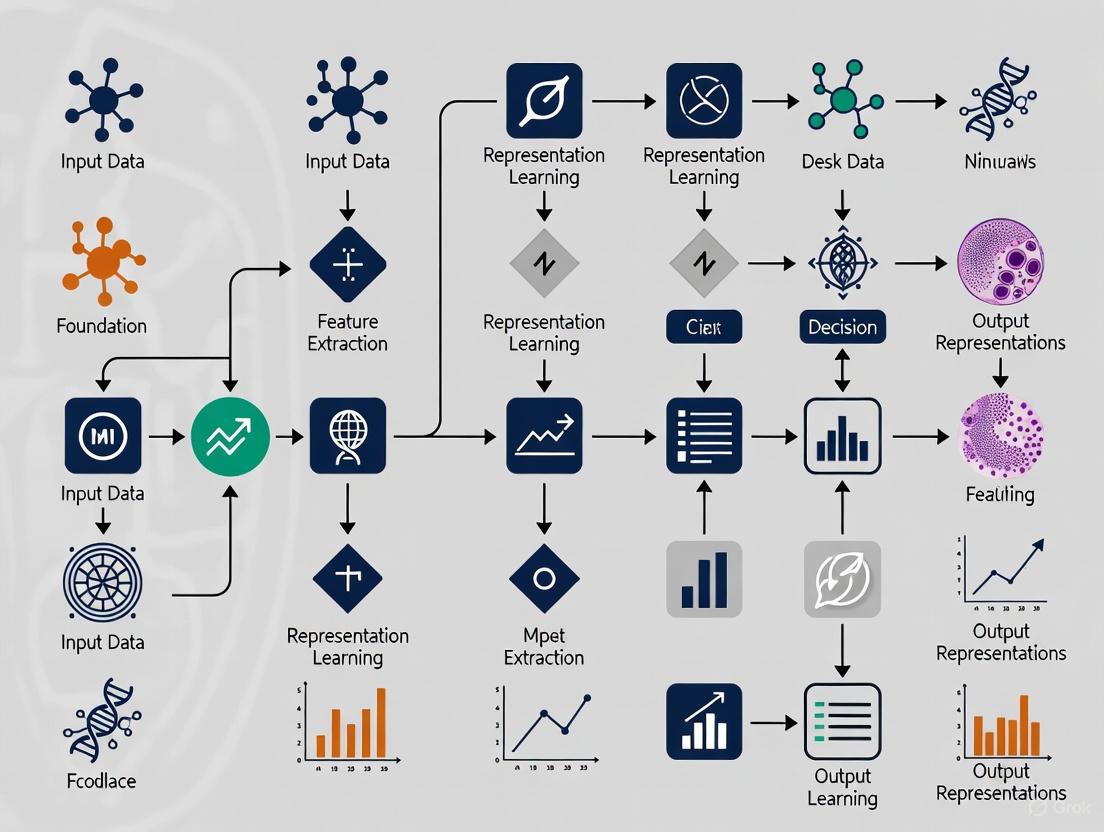
This article explores the paradigm shift in computational pathology driven by self-supervised foundation models that learn powerful histopathological representations from vast unlabeled image datasets.
Unsupervised Learning in Digital Pathology: How Foundation Models Decode Tissue Morphology Without Labels
Abstract
This article explores the paradigm shift in computational pathology driven by self-supervised foundation models that learn powerful histopathological representations from vast unlabeled image datasets. We examine the core principles, including masked image modeling and contrastive learning, that enable models like TITAN and BEPH to capture diagnostically relevant features without manual annotation. The content details their application across cancer diagnosis, subtyping, and survival prediction, while critically addressing current challenges in robustness, generalization, and clinical deployment. Designed for researchers and drug development professionals, this review synthesizes methodological innovations, empirical validations, and future directions for creating clinically viable AI tools in pathology.
The New Paradigm: Learning Histopathology Without Human Supervision
The field of computational pathology stands at the precipice of a revolution, driven by the emergence of foundation models that learn powerful representations from histopathology images without manual annotation. The current clinical practice of pathology, reliant on manual examination of tissue slides, faces fundamental limitations in scalability, reproducibility, and ability to extract the full spectrum of morphological information embedded in gigapixel whole-slide images (WSIs). Traditional supervised deep learning approaches have struggled to address these challenges due to their dependency on extensive labeled datasets, which are costly, time-consuming to produce, and prone to inter-observer variability [1]. Self-supervised learning (SSL) represents a paradigm shift by leveraging the inherent structure of unlabeled histopathology data to learn transferable representations, mirroring the transformative impact of foundation models in natural language processing and computer vision.
The promise of SSL extends far beyond mere automation of pathological tasks. By learning from massive volumes of unannotated WSIs, SSL-based foundation models capture the fundamental principles of tissue architecture, cellular morphology, and spatial relationships that underlie disease processes. These models have demonstrated remarkable capabilities across diverse clinical applications, from cancer subtyping and biomarker prediction to rare disease identification and prognosis estimation, often matching or exceeding the performance of supervised counterparts while requiring only a fraction of the labeled data [1] [2]. This technical guide explores the architectural foundations, methodological innovations, and clinical applications of self-supervised learning in pathology, providing researchers and drug development professionals with a comprehensive framework for understanding and leveraging these transformative technologies.
Core SSL Paradigms and Architectural Foundations
Representation Learning Strategies for Histopathology
Self-supervised learning in pathology primarily employs three interconnected paradigms: contrastive learning, masked image modeling, and multimodal alignment. Each approach leverages different aspects of histological data to learn meaningful representations without manual labels.
Contrastive learning frameworks, such as DINO and MoCo v3, learn representations by maximizing agreement between differently augmented views of the same image while distinguishing them from other images in the dataset [2]. This paradigm has proven particularly effective for histopathology due to its ability to learn invariant features across staining variations, tissue preparation artifacts, and magnification differences. For instance, the Virchow model, a ViT-huge architecture trained with DINOv2 on 2 billion tiles from 1.5 million slides, demonstrates how contrastive learning at scale can capture morphological features relevant for diverse downstream tasks [2].
Masked image modeling (MIM), inspired by language modeling in natural language processing, learns representations by reconstructing randomly masked portions of input images. Methods like iBOT combine masked modeling with online tokenization to learn features that capture both local cellular structures and global tissue architecture [3] [1]. The MIRROR framework extends this approach by integrating pathological and transcriptomic data through modality alignment and retention modules, demonstrating how MIM can bridge histological and molecular representations [4].
Multimodal alignment strategies create shared embedding spaces for histology images and associated clinical data, particularly pathology reports. TITAN (Transformer-based pathology Image and Text Alignment Network) exemplifies this approach, leveraging 335,645 whole-slide images aligned with corresponding pathology reports and 423,122 synthetic captions to learn representations that enable cross-modal retrieval and report generation [3]. This alignment enables zero-shot capabilities where models can perform classification tasks without explicit training on labeled examples for those specific tasks.
Architectural Innovations for Whole-Slide Images
The gigapixel nature of WSIs presents unique computational challenges that have driven architectural innovations in SSL for pathology. Unlike natural images, WSIs cannot be processed directly by standard neural architectures, necessitating specialized approaches.
Hierarchical processing represents the dominant architectural pattern, where models first encode small tissue patches (typically 256×256 or 512×512 pixels at 20× magnification) then aggregate these patch-level representations into slide-level embeddings [3] [5]. The UNI model exemplifies this approach, using a ViT-large architecture to process 100 million tiles from 100,000 diagnostic slides across 20 major tissue types [2]. This hierarchical processing mirrors the clinical practice of pathologists who examine tissue at multiple magnifications.
Multi-resolution architectures capture complementary information at different spatial scales, from cellular details at high magnification to tissue architecture at lower magnifications. Recent frameworks incorporate dedicated modules to fuse features across resolutions, enabling simultaneous modeling of nuclear morphology and tissue microenvironment [1]. The Virchow2 model extends this further by incorporating multiple magnifications (5×, 10×, 20×, and 40×) during pretraining, significantly enhancing performance on tasks requiring both local and global context [2].
Transformer-based slide encoders have emerged as powerful alternatives to multiple instance learning for WSI-level representation. Models like TITAN process sequences of patch features using Vision Transformers with specialized positional encodings that preserve spatial relationships across the tissue [3]. To handle the long sequences inherent to WSIs (often >10,000 patches), TITAN employs attention with linear bias (ALiBi), originally developed for large language models, adapted to two-dimensional feature grids to enable extrapolation to large slide contexts [3].
Performance Benchmarking and Comparative Analysis
Quantitative Performance Across Clinical Tasks
Table 1: Performance of SSL Models on Histopathology Tasks
| Task Category | Specific Task | SSL Model | Performance | Comparison to Supervised Baseline |
|---|---|---|---|---|
| Cancer Subtyping | Breast Cancer Classification | UNI | AUC: 96% [5] | +4.3% improvement [1] |
| Biomarker Prediction | EGFR Mutation in NSCLC | Phikon | Sensitivity: 80%, Specificity: 77% [6] | Comparable to molecular testing |
| Survival Prediction | Pan-Cancer Survival | Prov-GigaPath | C-index: 0.72 [2] | +0.08 over clinical variables |
| Rare Cancer Detection | Low-Prevalence Cancers | Virchow | AUROC: 0.93 [2] | Enables detection in resource-limited settings |
| Segmentation | Tissue Substructure | Hybrid SSL Framework | Dice: 0.825, mIoU: 0.742 [1] | +7.8% enhancement over supervised |
| RNA Expression Prediction | Spatial Gene Localization | RNAPath | 5,156 genes significantly predicted [7] | Recapitulates known spatial specificity |
SSL foundation models demonstrate particularly strong performance in low-data regimes, a critical advantage for clinical applications involving rare diseases or specialized biomarkers. TITAN achieves remarkable data efficiency, requiring only 25% of labeled data to achieve 95.6% of full performance compared to 85.2% for supervised baselines, representing a 70% reduction in annotation requirements [1]. This efficiency stems from the rich morphological knowledge encoded during large-scale pretraining, which provides strong inductive biases for downstream tasks with limited labeled examples.
Comparative Analysis of Public Foundation Models
Table 2: Characteristics of Publicly Available Pathology Foundation Models
| Model | Parameters | SSL Algorithm | Training Data | Key Capabilities |
|---|---|---|---|---|
| CTransPath | 28M | SRCL (MoCo v3) | 15.6M tiles, 32K slides [2] | Strong performance on segmentation and retrieval |
| Phikon | 86M | iBOT | 43M tiles, 6K TCGA slides [2] | Excellence in mutation prediction |
| UNI | 303M | DINOv2 | 100M tiles, 100K slides [2] | General-purpose across 33 tasks |
| Virchow | 631M | DINOv2 | 2B tiles, 1.5M slides [2] | State-of-the-art on rare cancer detection |
| Prov-GigaPath | 1.135B | DINOv2 + MAE | 1.3B tiles, 171K slides [2] | Superior genomic prediction |
| TITAN | Not specified | iBOT + VLA | 335K WSIs + reports [3] | Multimodal capabilities, report generation |
Benchmarking studies reveal that SSL-trained pathology models consistently outperform models pretrained on natural images like ImageNet, with performance gaps widening on specialized tasks requiring domain-specific morphological knowledge [2]. The representation quality of SSL models demonstrates significant scaling behavior, with larger models trained on more diverse datasets showing improved performance across tasks and better generalization to external validation cohorts [2]. For instance, Virchow2 and Virchow2G, trained on 1.7B and 1.9B tiles respectively from 3.1M histopathology slides, establish new state-of-the-art performance on 12 tile-level tasks, surpassing earlier models like UNI and Phikon [2].
Experimental Protocols and Methodologies
Large-Scale Pretraining Implementation
The pretraining of pathology foundation models follows meticulously optimized protocols to handle the computational challenges of gigapixel WSIs while maximizing representation quality.
Data curation and preprocessing begins with quality control to exclude slides with excessive artifacts, blurring, or insufficient tissue content. The TITAN framework uses a three-stage pretraining approach: (1) vision-only unimodal pretraining on region crops using iBOT, (2) cross-modal alignment of generated morphological descriptions at ROI-level, and (3) cross-modal alignment at WSI-level with clinical reports [3]. This progressive training strategy first establishes strong visual representations then grounds them in clinical context.
Feature extraction and augmentation strategies are specifically designed for histological data. TITAN constructs input embeddings by dividing each WSI into non-overlapping 512×512 pixel patches at 20× magnification, extracting 768-dimensional features for each patch using CONCHv1.5 [3]. To address large and irregularly shaped WSIs, the model creates views by randomly cropping the 2D feature grid, sampling region crops of 16×16 features covering 8,192×8,192 pixels. From these region crops, multiple global (14×14) and local (6×6) crops are extracted for self-supervised pretraining [3].
Multimodal alignment incorporates both real pathology reports and synthetic captions generated using PathChat, a multimodal generative AI copilot for pathology [3]. The synthetic captions provide fine-grained morphological descriptions at the region-of-interest level, enabling precise localization of visual-textual correspondences. The alignment objective maximizes similarity between image features and corresponding text embeddings while minimizing similarity with non-matching pairs, creating a joint embedding space that supports cross-modal retrieval.
Downstream Task Adaptation
The utility of SSL foundation models is realized through their adaptation to downstream clinical tasks, which employs specialized fine-tuning protocols.
Linear probing evaluates representation quality by training a linear classifier on top of frozen features, isolating the representation power from the adaptation process. SSL models consistently outperform supervised pretraining in linear evaluation, with TITAN demonstrating 4.3% improvement in Dice coefficient for segmentation tasks compared to supervised baselines [1].
Few-shot and zero-shot learning protocols are particularly relevant for clinical applications with limited annotated data. TITAN's multimodal training enables zero-shot classification by leveraging natural language descriptions of pathological entities, achieving competitive performance without task-specific fine-tuning [3]. For few-shot scenarios, models like Virchow demonstrate the ability to learn from very limited examples (as few as 10-20 slides per class) while maintaining diagnostic accuracy [2].
Cross-modal retrieval evaluation measures the model's ability to retrieve relevant histology slides given text queries and vice versa. This capability has direct clinical utility for search and reference within large pathology archives. TITAN establishes new state-of-the-art on cross-modal retrieval benchmarks, enabling pathologists to find morphologically similar cases or generate descriptive reports for unfamiliar morphologies [3].
Visualization of SSL Workflows in Pathology
Figure 1: End-to-End SSL Workflow in Computational Pathology
The workflow begins with gigapixel whole-slide images, which are divided into smaller patches for manageable processing. These patches undergo multi-view augmentation, creating global and local crops that enable the self-supervised objectives to learn scale-invariant and context-aware representations. The core pretraining combines contrastive learning and masked image modeling to build a general-purpose foundation model. The resulting model serves as a frozen encoder for various downstream tasks and can be integrated into multimodal frameworks aligning histology with clinical reports and molecular data.
The Scientist's Toolkit: Essential Research Reagents
Table 3: Key Research Reagents and Computational Resources
| Resource Category | Specific Tool/Model | Function/Purpose | Access Information |
|---|---|---|---|
| Public Foundation Models | CTransPath, Phikon | Feature extraction from histology patches | GitHub repositories with pretrained weights |
| Benchmarking Frameworks | HistoPathExplorer | Performance evaluation across tasks | www.histopathexpo.ai [5] |
| SSL Algorithms | DINOv2, iBOT, MAE | Self-supervised pretraining | Open-source implementations |
| Whole-Slide Datasets | TCGA, GTEx | Large-scale pretraining and validation | Controlled access repositories |
| Multimodal Resources | TITAN, CONCH | Vision-language pathology AI | Research publications with methodology |
| Specialized Architectures | MIRROR, RNAPath | Multimodal integration, spatial prediction | Code available in research papers |
The implementation of SSL in pathology requires both computational resources and domain-specific data. Public foundation models like CTransPath and Phikon provide readily available feature extractors that can be applied to diverse histology images without extensive retraining [2]. Benchmarking platforms like HistoPathExplorer offer interactive dashboards for evaluating model performance across cancer types and clinical tasks, enabling researchers to identify state-of-the-art approaches for their specific applications [5]. Multimodal resources such as TITAN and CONCH extend capabilities beyond visual analysis to include textual reports and molecular data, creating opportunities for more comprehensive tissue analysis [3].
Future Directions and Clinical Translation
The trajectory of self-supervised learning in pathology points toward increasingly integrated, multimodal foundation models capable of supporting comprehensive diagnostic workflows. Several key frontiers are emerging that will shape the next generation of SSL approaches.
Whole-slide foundation models represent the evolution from patch-level encoders to slide-level representations that explicitly model long-range spatial dependencies and tissue architecture. TITAN demonstrates this direction with its transformer-based slide encoder that processes sequences of patch features while preserving spatial context through specialized positional encodings [3]. This shift enables more holistic analysis that captures tissue microenvironment and spatial relationships between different histological structures.
Multimodal integration extends beyond vision-language pairs to include genomics, transcriptomics, and proteomics data. RNAPath exemplifies this direction, predicting spatial RNA expression patterns directly from H&E histology and validating predictions with matched immunohistochemistry [7]. Similarly, MIRROR integrates histopathology and transcriptomics through modality alignment and retention modules, demonstrating superior performance in cancer subtyping and survival analysis [4]. These multimodal approaches create bridges between morphological phenotypes and molecular mechanisms, offering unprecedented opportunities for biomarker discovery and mechanistic understanding.
Clinical deployment strategies must address challenges of robustness, interpretability, and integration into diagnostic workflows. SSL models demonstrate promising generalization across institutions and scanner types, with frameworks like SSRDL (Self-Supervised Representation Distribution Learning) specifically designed to enhance robustness through representation sampling and data augmentation [8]. The emerging capability for cross-modal retrieval and report generation positions SSL models as collaborative tools that can enhance, rather than replace, pathologist expertise by providing morphological similarities, differential diagnoses, and automated documentation.
As these technologies mature, the promise of self-supervised learning in pathology extends beyond automation to fundamentally new capabilities in morphological analysis—discovering previously unrecognized patterns, predicting molecular alterations from routine histology, and personalizing cancer therapy through comprehensive tissue profiling. The convergence of large-scale self-supervision, multimodal integration, and clinical validation heralds a new era in computational pathology, transforming the microscopic examination of tissue into a quantitative, predictive science.
Foundation models are revolutionizing computational pathology by learning versatile and transferable feature representations from histopathology images without manual annotation. This capability is crucial in a field where expert labels are scarce, costly, and subject to inter-observer variability. Self-supervised learning provides the foundational framework enabling this breakthrough, with three core techniques—contrastive learning, masked image modeling, and self-distillation—driving recent advances. These methods leverage the vast quantities of unlabeled whole slide images to learn powerful representations that capture essential morphological patterns in tissues and cells, forming the basis for downstream clinical tasks including cancer diagnosis, prognosis, and biomarker prediction.
Core SSL Techniques in Histopathology
Contrastive Learning
Contrastive learning operates on a principle of instance discrimination, training models to recognize similarities and differences between data points. In computational pathology, this technique learns representations by maximizing agreement between differently augmented views of the same histopathology image while distinguishing them from other images in a dataset.
Key Mechanism: The core objective is to learn an embedding space where similar sample pairs are positioned close together while dissimilar pairs are far apart. This is typically achieved using a contrastive loss function such as InfoNCE, which pulls positive pairs (different views of the same image) together in the embedding space while pushing apart negative pairs (views from different images).
Histopathology Adaptations: Standard contrastive approaches developed for natural images require significant adaptation for histopathology data. Unlike object-centric natural images, histopathology images display different characteristics including repetitive tissue patterns, fine-grained morphological features, and hierarchical structures from cellular to tissue-level organization. Researchers have developed specialized view generation strategies that account for these unique characteristics, including multi-scale patches that capture both cellular details and tissue architecture, and environment-aware cropping that preserves spatial context around cells.
The VOLTA framework exemplifies advanced contrastive learning adapted for histopathology, incorporating environment-aware cell representation learning. As illustrated in the workflow below, VOLTA uses a two-branch architecture that maximizes mutual information between cells and their surrounding microenvironment while masking out other cells to prevent bias.
Figure 1: Contrastive Learning Workflow in VOLTA. The framework processes both cell crops and their surrounding environment patches through separate encoders, using contrastive learning to align their representations.
Masked Image Modeling
Masked image modeling has emerged as a powerful self-supervised pre-training approach where models learn to reconstruct randomly masked portions of input images. This technique forces the model to develop a comprehensive understanding of tissue morphology and spatial relationships by predicting missing content based on surrounding context.
Key Mechanism: MIM operates by randomly masking a significant portion (e.g., 60-80%) of input image patches and training a model to reconstruct the missing visual content. The training objective typically combines reconstruction loss with a feature-level distillation component, enabling the model to learn rich, contextualized representations that capture both local cellular features and global tissue architecture.
Histopathology Implementation: In histopathology, MIM has been successfully implemented using the iBOT framework, which employs a teacher-student architecture with masked image modeling. The student network processes both original and masked versions of input images, while the teacher network provides reconstruction targets through exponential moving average updates. This approach has demonstrated remarkable performance across diverse cancer types and tasks.
The TITAN model exemplifies sophisticated MIM implementation for whole-slide images, utilizing a vision transformer architecture pretrained on 335,645 whole-slide images. As shown below, TITAN's pretraining pipeline employs knowledge distillation and masked image modeling on region-of-interest crops to learn powerful slide-level representations.
Figure 2: Masked Image Modeling in TITAN. The framework processes feature grids from whole slide images through random cropping and masked image modeling with teacher-student knowledge distillation.
Self-Distillation
Self-distillation represents a specialized SSL approach where a model learns by distilling knowledge from itself, typically through a teacher-student architecture where both networks share identical parameters initially and evolve through training.
Key Mechanism: Self-distillation frameworks maintain two neural networks with identical architecture: a teacher and a student. The teacher network produces targets for the student to learn from, and its parameters are updated as an exponential moving average of the student parameters. This creates a self-supervised feedback loop where the model continuously improves its own representations without external labels.
Histopathology Applications: In histopathology, self-distillation has been successfully implemented in frameworks like DINO and iBOT, where it enables learning of robust visual features without human supervision. The GPFM model further advanced this approach by incorporating unified knowledge distillation with both expert and self-knowledge distillation components, enabling local-global feature alignment across diverse pathology tasks.
The self-distillation process creates a self-reinforcing learning cycle where the teacher network provides increasingly better targets for the student network, leading to continuous improvement in representation quality without manual annotation.
Comparative Analysis of SSL Techniques
The table below summarizes the key characteristics, advantages, and limitations of the three core SSL techniques as applied in histopathology.
Table 1: Comparative Analysis of Core SSL Techniques in Histopathology
| Technique | Key Mechanism | Representative Models | Advantages | Limitations |
|---|---|---|---|---|
| Contrastive Learning | Maximizes agreement between augmented views of same image while distinguishing from different images | VOLTA [9], SimCLR [10] | Effective for capturing cellular heterogeneity; Strong performance on cell classification tasks | Requires careful negative sampling; Sensitive to augmentation strategies |
| Masked Image Modeling | Reconstructs randomly masked portions of input images | TITAN [3], iBOT [11] | Learns rich contextual representations; Excellent transfer performance across tasks | Computationally intensive; Requires careful masking strategy design |
| Self-Distillation | Knowledge distillation from teacher to student network with identical architecture | GPFM [12], DINO [13] | Creates stable training dynamics; Learns semantically meaningful features | Can collapse to trivial solutions without proper regularization |
Performance Comparison of Foundation Models
Recent comprehensive benchmarking studies have evaluated the performance of various foundation models across multiple histopathology tasks. The table below summarizes key findings from these evaluations, particularly focusing on ovarian carcinoma subtyping performance.
Table 2: Foundation Model Performance on Ovarian Carcinoma Subtyping Tasks [14]
| Model | Backbone | Training Data Scale | Balanced Accuracy (%) | Key Strengths |
|---|---|---|---|---|
| H-optimus-0 | Vision Transformer | Not specified | 89% (internal), 97% (Transcanadian), 74% (OCEAN) | Best overall performance across validation sets |
| UNI | Vision Transformer | 100M patches | Similar to H-optimus-0 at ¼ computational cost | Computational efficiency with strong performance |
| ImageNet Pretrained ResNet | CNN | 1.4M natural images | Lower than specialized foundation models | General-purpose features, suboptimal for histopathology |
| GPFM | Vision Transformer | Multi-source distillation | Ranked 1st in 42 of 72 tasks in comprehensive benchmark [12] | Superior generalization across diverse task types |
Experimental Protocols and Methodologies
Contrastive Learning Protocol (VOLTA Framework)
The VOLTA framework implements a sophisticated environment-aware contrastive learning approach with the following key methodological components [9]:
Cell and Environment Processing:
- Input images are processed to extract individual cell crops (centered on nuclei) and corresponding environment patches (256×256 pixels surrounding each cell)
- Environment patches undergo cell masking to remove other visible cells, preventing the model from biasing toward cell density patterns
- Two sets of augmentations are applied to create visually distinct perspectives of each cell
Training Configuration:
- Model architecture: Dual-branch network with ResNet-50 backbone
- Optimization: Adam optimizer with learning rate of 0.0003 and weight decay of 10^-4
- Batch size: 512 distributed across multiple GPUs
- Temperature parameter: τ = 0.1 for contrastive loss scaling
- Training epochs: 400 with linear learning rate decay
Loss Function:
The framework combines standard contrastive loss for cell views with environment-aware contrastive loss:
L_total = L_contrastive(cell_view1, cell_view2) + λ * L_InfoNCE(cell, environment)
where λ balances the two objectives and is typically set to 0.5.
Masked Image Modeling Protocol (TITAN Framework)
The TITAN framework implements large-scale masked image modeling for whole-slide images with the following methodology [3]:
Multi-Stage Pretraining:
- Stage 1: Vision-only unimodal pretraining on 335,645 WSIs using iBOT framework
- Stage 2: Cross-modal alignment with 423,122 synthetic ROI captions
- Stage 3: Cross-modal alignment with 182,862 clinical pathology reports
Architecture Specifications:
- Patch feature extraction: CONCHv1.5 encoder generating 768-dimensional features from 512×512 patches
- Transformer architecture: ViT-Base with 86M parameters
- Masking strategy: 60% random masking of patch features
- Positional encoding: Attention with Linear Biases for long-context extrapolation
Training Configuration:
- Optimization: AdamW with learning rate of 1.5e-4
- Batch size: 4,096 region crops (16×16 features each)
- Cropping strategy: Random global (14×14) and local (6×6) crops from region features
- Augmentations: Vertical/horizontal flipping with posterization feature augmentation
Self-Distillation Protocol (GPFM Framework)
The Generalizable Pathology Foundation Model implements unified knowledge distillation with the following experimental approach [12]:
Dual Knowledge Distillation Framework:
- Expert knowledge distillation: Learning from multiple pre-trained expert models
- Self knowledge distillation: Local-global alignment through self-supervised learning
Training Methodology:
- Teacher-student architecture with momentum encoder (momentum=0.996)
- Multi-crop strategy with 2 global and 8 local views
- Loss function: Combination of cross-entropy and similarity matching losses
- Optimization: LARS optimizer with learning rate warmup and cosine decay
Research Reagent Solutions
The table below outlines essential computational tools and resources referenced in the surveyed literature for developing SSL-based foundation models in histopathology.
Table 3: Essential Research Reagents for SSL in Histopathology
| Resource | Type | Function | Example Implementations |
|---|---|---|---|
| Whole Slide Image Datasets | Data | Pre-training and evaluation | TCGA (The Cancer Genome Atlas), Mass-340K (335,645 WSIs) [3], In-house institutional archives |
| Patch Feature Extractors | Algorithm | Converting image patches to feature vectors | CONCH [3], ImageNet-pretrained ResNets [14], Self-supervised vision transformers |
| SSL Frameworks | Software | Implementing self-supervised learning algorithms | iBOT [3] [11], DINO [13], SimCLR [10], MoCo-v2 |
| Computational Infrastructure | Hardware | Model training and inference | High-performance GPU clusters, Cloud computing resources (required for models with 80M+ parameters) |
| Evaluation Benchmarks | Methodology | Standardized performance assessment | Multi-task benchmarks (72 tasks across 6 types) [12], Domain shift evaluation frameworks [13] |
Contrastive learning, masked image modeling, and self-distillation represent the three pillars of self-supervised learning that enable foundation models to learn powerful histopathological representations without manual labels. Each technique offers distinct advantages: contrastive learning excels at capturing cellular heterogeneity, masked image modeling learns rich contextual representations, and self-distillation provides stable training dynamics for semantically meaningful features. The ongoing development of models like TITAN, VOLTA, and GPFM demonstrates how these core SSL techniques can be adapted to address the unique challenges of histopathology data, from gigapixel whole-slide images to fine-grained cellular morphology. As these methods continue to evolve, they pave the way for more accessible, robust, and generalizable computational pathology tools that can enhance diagnostic accuracy and accelerate biomedical discovery.
The field of computational pathology is undergoing a transformative shift with the emergence of foundation models trained on massive datasets of whole-slide images (WSIs). These models, inspired by successes in natural language processing and computer vision, are learning powerful, transferable representations of histopathological morphology without relying on manually curated labels. This paradigm is particularly crucial in digital pathology, where the gigapixel size of WSIs and the prohibitive cost of expert annotation have historically constrained the development of robust artificial intelligence (AI) tools. By leveraging self-supervised learning (SSL) on millions of unlabeled images, these foundation models capture the complex visual semantics of tissue microenvironments, providing a versatile starting point for diverse downstream clinical tasks such as cancer subtyping, prognosis prediction, and biomarker identification [3] [15].
The core challenge in computational pathology is the immense scale of the data. A single WSI can be over 100,000 × 100,000 pixels, containing billions of pixels and representing a complex spatial organization of cells and tissue structures [16]. Traditional supervised deep learning approaches, which require vast amounts of labeled data, are often impractical. Foundation models overcome this bottleneck by using SSL to learn from the inherent structure and patterns within the data itself. This guide details the methodologies, architectural innovations, and experimental protocols that enable effective model pretraining on millions of WSIs, framing these advances within the broader thesis of how foundation models learn histopathological representations without labels.
Core Methodologies for Self-Supervised Pretraining
The pretraining of foundation models in computational pathology primarily follows two complementary paradigms: visual self-supervised learning and vision-language pretraining. These approaches allow models to learn from the intrinsic structure of image data and the rich, albeit noisy, supervisory signal contained in paired clinical reports.
Visual Self-Supervised Learning
Visual SSL methods treat each WSI as a complex, structured data source and construct learning objectives directly from the image content without human-provided labels. A common and highly effective strategy is intraslide contrastive learning. This method creates multiple augmented views of a WSI and trains the model to recognize that these views originate from the same source slide while being distinct from patches taken from other slides [3]. The process typically involves:
- Patch Feature Extraction: A WSI is divided into thousands of non-overlapping image patches (e.g., 256x256 or 512x512 pixels at 20x magnification). Each patch is processed by a pre-trained patch encoder (like CTransPath or CONCH) to extract a compact feature vector, creating a 2D feature map of the entire slide [3] [17].
- View Construction: Multiple "views" of the slide are created by randomly cropping regions from this 2D feature grid. These crops can be at different scales; for instance, large "global" crops (e.g., 14x14 features) that capture tissue architecture and smaller "local" crops (e.g., 6x6 features) that focus on cellular details [3].
- Contrastive Objective: The model is trained using an objective function like that in iBOT or DINOv2, which encourages the representations of different views from the same WSI to be similar ("positive pairs") while pushing apart representations from different WSIs ("negative pairs") [3] [17] [18]. This process teaches the model to be invariant to irrelevant augmentations and to focus on diagnostically relevant morphological features.
Another powerful technique is masked image modeling, where random portions of the WSI's feature grid are masked, and the model is tasked with reconstructing the missing features based on the surrounding context [17]. This forces the model to learn robust, contextual representations of histology.
Vision-Language Pretraining
Vision-language pretraining aligns visual features from WSIs with textual features from corresponding pathology reports, creating a shared representation space. This multimodal approach enables capabilities like cross-modal retrieval and zero-shot classification.
- Data Pairs: Models are trained on large datasets of WSI and report pairs, for example, 335,645 WSIs paired with 182,862 medical reports [3].
- Contrastive Alignment: A contrastive loss function (e.g., InfoNCE) is used to pull the feature representations of a WSI and its corresponding report closer in a shared embedding space while pushing them apart from non-matching WSIs and reports [3] [18].
- Synthetic Data Augmentation: To enhance the granularity of language supervision, some frameworks like TITAN generate synthetic, fine-grained captions for specific regions of interest using a multimodal generative AI copilot, creating hundreds of thousands of additional image-text pairs for training [3].
Architectural Innovations for Whole-Slide Modeling
A key innovation enabling WSI-scale foundation models is the development of architectures capable of processing the long sequences of data representing a full slide.
Hierarchical and Transformer-Based Encoders
Modern pathology foundation models employ a two-stage encoding process to handle the gigapixel scale:
- Tile Encoder: A vision transformer (ViT) or convolutional neural network (CNN) first processes individual image tiles, converting each into a feature vector or "visual token" [17].
- Slide Encoder: A second transformer model then processes the entire sequence of tile features from one WSI. To handle sequences that can contain tens of thousands of tiles, specialized techniques are required. LongNet and its dilated self-attention mechanism have been successfully used in models like Prov-GigaPath, as they reduce the computational complexity of modeling these ultra-long sequences [17].
Positional Encoding and Context
Preserving the spatial relationships between tiles is critical. Models use 2D positional encodings to ensure the slide encoder understands the original spatial layout of the tissue [3]. Some approaches, like TITAN, adapt Attention with Linear Biases (ALiBi) from natural language processing to the 2D domain, using the Euclidean distance between tiles in the feature grid to inform the self-attention mechanism, which improves extrapolation to large contexts during inference [3].
Table 1: Overview of Major Whole-Slide Foundation Models and Their Pretraining Data Scale
| Model Name | Core Architecture | Pretraining Dataset Scale | Key Pretraining Methodology |
|---|---|---|---|
| TITAN [3] | Vision Transformer (ViT) | 335,645 WSIs; 423,122 synthetic captions | Visual SSL (iBOT) & Vision-Language Alignment |
| Prov-GigaPath [17] | Hierarchical ViT with LongNet | 171,189 WSIs; ~1.3 billion image tiles | DINOv2 (tile) & Masked Autoencoder (slide) |
| CS-CO [19] | Hybrid CNN | Not specified in detail | Hybrid Generative & Discriminative SSL |
| HIPT [17] | Hierarchical ViT | ~30,000 WSIs (TCGA) | Self-Supervised Hierarchical Pretraining |
Experimental Protocols and Benchmarking
Rigorous evaluation on diverse, clinically relevant tasks is essential to validate the effectiveness of foundation models. The standard protocol involves pretraining on a large, unlabeled dataset followed by transfer learning on smaller, labeled datasets for specific tasks.
Transfer Learning Evaluation Protocols
- Linear Probing: The pretrained foundation model is frozen, and only a simple linear classifier is trained on top of its output features for a new task. This tests the quality of the representations learned during pretraining [3].
- End-to-End Fine-Tuning: The entire model (or a significant portion of it) is further trained on the downstream task. This typically yields higher performance but is more computationally intensive and requires careful regularization to avoid overfitting [17].
- Few-Shot and Zero-Shot Learning: These protocols evaluate the model's ability to generalize with very limited labeled data (few-shot) or even no labeled examples (zero-shot). Zero-shot is typically enabled by vision-language models that can classify images based on their similarity to textual descriptions of disease classes [3] [17].
Key Performance Benchmarks
Foundation models are evaluated on a wide range of tasks to demonstrate their generalizability. The table below summarizes benchmark results for leading models, highlighting the performance gains enabled by large-scale pretraining.
Table 2: Benchmarking Performance on Key Computational Pathology Tasks
| Task Category | Example Task | Best Performing Model | Reported Metric & Performance |
|---|---|---|---|
| Cancer Subtyping [17] | Classifying cancer subtypes across 9 types | Prov-GigaPath | State-of-the-art (SOTA) on all 9; significantly better on 6 |
| Mutation Prediction [17] | Predicting EGFR mutation status from WSIs | Prov-GigaPath | 23.5% AUROC improvement over second-best |
| Biomarker Prediction [20] | Predicting BRAF-V600 status in melanoma | Prov-GigaPath + XGBoost | AUC of 0.824 (TCGA), 0.772 (independent test set) |
| Rare Cancer Retrieval [3] | Retrieving similar WSIs for rare diseases | TITAN | Outperformed existing slide and region-of-interest (ROI) models |
| Prognosis Prediction [21] | Predicting patient survival outcomes | WSINet | Compelling performance in end-to-end survival prediction |
Model Architecture Flow
The Scientist's Toolkit: Essential Research Reagents
Implementing and experimenting with whole-slide foundation models requires a suite of computational tools and data resources. The following table details key components.
Table 3: Essential Research Reagents for Whole-Slide Foundation Model Research
| Reagent / Solution | Function / Description | Example Implementations / Sources |
|---|---|---|
| Patch Encoder | Pre-trained network to convert image patches into feature vectors. Provides the foundational visual vocabulary. | CTransPath, CONCH, HoVer-Net, ImageNet-pretrained CNNs [3] [22] [15] |
| Slide Encoder | Model architecture that aggregates patch features into a slide-level representation. Handles long sequences. | Vision Transformer (ViT), LongNet, Hierarchical Image Pyramid Transformer (HIPT) [3] [17] |
| Self-Supervised Learning Framework | Software library providing implementations of SSL algorithms. | iBOT, DINOv2, Masked Autoencoder (MAE) [3] [17] |
| Whole-Slide Image Datasets | Large-scale collections of WSIs for pretraining and benchmarking. | Prov-Path, The Cancer Genome Atlas (TCGA), internal hospital archives [3] [17] |
| Synthetic Data Generator | Generates realistic synthetic histology images to augment training data. | StyleGAN2 with Adaptive Discriminator Augmentation (ADA) [22] |
| Computational Backend | Hardware and software infrastructure for distributed training on gigapixel images. | High-Performance Computing (HPC) clusters, NVIDIA GPUs, PyTorch, MONAI [17] |
End-to-End Workflow
Training foundation models on millions of unlabeled whole-slide images represents a paradigm shift in computational pathology. By leveraging scalable self-supervised and multimodal learning techniques, coupled with innovative architectures like LongNet, these models learn powerful, general-purpose representations of histopathological morphology. The resulting models, such as TITAN and Prov-GigaPath, establish new state-of-the-art performance across a wide spectrum of clinical tasks, from cancer subtyping to mutation prediction, demonstrating the profound effectiveness of data scaling in this domain. This approach directly addresses the long-standing challenges of label scarcity and gigapixel complexity, paving the way for more robust, data-efficient, and clinically impactful AI tools in pathology. The continued expansion of diverse WSI datasets and the refinement of pretraining methodologies will further solidify the role of foundation models as the cornerstone of next-generation computational pathology.
The analysis of whole slide images (WSIs) in computational histopathology presents a unique computational challenge: these images are gigapixel in size, often exceeding 100,000 pixels in each dimension, making them impossible to process directly on standard hardware [23]. This technical constraint, combined with the prohibitive cost and time required for detailed expert annotations, has driven the development of innovative weakly-supervised learning approaches. These methods operate under the paradigm that while detailed, patch-level annotations may be unavailable, slide-level or patient-level labels—such as cancer diagnosis, molecular subtypes, or patient survival data—can be utilized to train models that simultaneously learn both localized features and global predictions [23]. The fundamental computational strategy involves breaking WSIs into smaller patches for processing, then developing intelligent aggregation methods to reconstruct slide-level predictions from these patch-level representations.
The emergence of foundation models pretrained using self-supervised learning (SSL) has dramatically accelerated progress in this field. These models learn domain-specific morphological features from vast amounts of unlabeled histopathology data, capturing essential patterns in tissue structure and cellular organization without requiring manual annotations [24] [3]. This pretraining approach has proven particularly valuable in histopathology, where the complexity and variability of tissue morphology benefit from models that have learned general-purpose representations before being fine-tuned for specific diagnostic tasks. The transition from patch-level to slide-level analysis while maintaining morphological context across multiple magnifications represents the central challenge in scaling representation learning for digital pathology.
Technical Foundations: From Patch Processing to Whole-Slide Analysis
Patch Sampling Strategies
The first critical step in WSI analysis is sampling representative patches from the gigapixel image. Multiple strategies have been developed to address the dual challenges of computational efficiency and morphological representativeness:
Table 1: Patch Sampling Strategies for Whole Slide Image Analysis
| Strategy | Methodology | Advantages | Limitations |
|---|---|---|---|
| Random Selection | Random sampling of patches during each training epoch [23] | Computational simplicity; no prior knowledge required | May sample uninformative regions; inefficient for sparse phenotypes |
| Tumor-First Selection | Pathologist annotation or cancer detection algorithm identifies tumor regions before sampling [23] | Focuses computational resources on diagnostically relevant areas | Requires preliminary annotation or model; may miss important microenvironment cues |
| Clustering-Based Selection | Patches clustered by appearance features; sampling ensures morphological diversity [23] | Captures comprehensive tissue heterogeneity; avoids redundant sampling | Increased computational overhead for clustering |
| Pyramid Tiling with Overlap (PTO) | Extracts multiple resolution views of image subsections using sliding window [25] | Maintains spatial context across magnifications; enables multi-scale feature learning | Computationally intensive; requires specialized architecture |
Feature Extraction and Compression
Once patches are selected, feature extraction transforms the high-dimensional image data into compact, meaningful representations. Transfer learning from models pretrained on natural image datasets like ImageNet has been widely used, but recent advances demonstrate the superiority of models pretrained specifically on histopathology data [23]. Self-supervised learning approaches have proven particularly effective for this domain-specific pretraining:
- DINO (self-distillation with no labels): A framework that knowledge-distills features from a teacher network to a student network using different augmentations of the same image, effectively learning morphological representations without labels [24]
- Masked Image Modeling (MIM): Techniques like iBOT randomly mask portions of input patches and train models to reconstruct the missing content, learning robust representations of tissue structure [3]
- Contrastive Learning: Methods like SimCLR and MoCo learn representations by maximizing agreement between differently augmented views of the same patch while distinguishing them from other patches [24]
Feature and Prediction Aggregation Methods
The core challenge in slide-level analysis lies in effectively aggregating patch-level information to make global predictions. Multiple instance learning (MIL) provides the theoretical framework for this process, where each WSI is treated as a "bag" containing multiple "instances" (patches) [23].
Table 2: Feature Aggregation Methods for Whole Slide Images
| Method | Mechanism | Interpretability | Best-Suited Tasks |
|---|---|---|---|
| Max/Mean Pooling | Simple statistical aggregation across patches [23] | Limited; provides no patch-level weighting | Diffuse disease patterns; robust to noise |
| Attention Mechanisms | Learned weights for weighted sum of patch features [23] [3] | High; attention weights highlight diagnostically relevant regions | Tasks with spatially sparse phenotypes |
| Quantile Aggregation | Characterizes distribution of patch predictions using quantile functions [23] | Moderate; shows prediction distribution across slide | Tasks where prevalence of features matters |
| Graph Neural Networks | Models spatial relationships between patches as graph connections [23] | Moderate; reveals architectural tissue patterns | Tasks where tissue architecture is diagnostically relevant |
Advanced Architectures for Slide-Level Representation Learning
Hierarchical Vision Transformers for Multi-Scale Phenotyping
The CypherViT architecture represents a significant advancement in patch-level representation learning by incorporating a hierarchical Vision Transformer (ViT) with multiple class tokens to capture both coarse and fine-grained histopathological features [24]. This model employs a feature agglomerative attention module that enables the model to learn representations at multiple biological scales—from subcellular features to tissue-level patterns. When trained within the DINO self-supervised framework on breast cancer histopathology images, CypherViT demonstrated remarkable transfer learning capabilities, effectively generalizing to colorectal cancer images without additional fine-tuning [24]. The model achieved state-of-the-art performance on patch-level tissue phenotyping tasks across four public datasets, outperforming both traditional ImageNet-based transfer learning and other SSL approaches.
Whole-Slide Foundation Models: The TITAN Framework
Translating patch-level representations to whole-slide analysis requires specialized architectures capable of processing extremely long sequences of patch features. The TITAN (Transformer-based pathology Image and Text Alignment Network) framework addresses this challenge through a multimodal approach that processes entire WSIs [3]. Key innovations in TITAN include:
- Multi-stage pretraining: The model undergoes three distinct phases: (1) vision-only pretraining on region crops, (2) cross-modal alignment with generated morphological descriptions at region-level, and (3) cross-modal alignment at slide-level with clinical reports [3]
- Handling variable-length sequences: Using Attention with Linear Biases (ALiBi) enables extrapolation to long contexts at inference time, crucial for gigapixel images [3]
- Leveraging synthetic data: The incorporation of 423,122 synthetic captions generated by a multimodal AI copilot enhances training without requiring manual annotation [3]
Trained on 335,645 WSIs across 20 organ types, TITAN generates general-purpose slide representations applicable to diverse clinical tasks including cancer subtyping, biomarker prediction, and outcome prognosis, outperforming supervised baselines without requiring task-specific fine-tuning [3].
Environment-Aware Cell Representation Learning
While most approaches focus on tissue patches, the VOLTA (enVironment-aware cOntrastive ceLl represenTation leArning) framework operates at the cellular level, learning cell representations that incorporate microenvironmental context [9]. This approach recognizes that cells are fundamentally influenced by their surrounding tissue architecture. VOLTA employs a two-branch architecture:
- Cell Block: Processes augmented views of individual cells
- Environment Block: Incorporates contextual information from the surrounding tissue while masking other cells to prevent bias [9]
When evaluated on datasets comprising over 800,000 cells across six cancer types, VOLTA demonstrated superior performance in unsupervised cell clustering, achieving approximately twice the performance of baseline methods on metrics like adjusted mutual information (AMI) and adjusted rand index (ARI) [9].
Experimental Protocols and Methodologies
Implementation Framework for Whole-Slide Analysis
A robust experimental pipeline for WSI analysis requires careful attention to data preprocessing, model architecture, and training protocols:
Data Preparation and Augmentation
- Tissue Detection: Initial filtering to remove background regions and artifacts using tissue coverage thresholds (e.g., 70% minimum tissue coverage) [24]
- Patch Extraction: Extraction of patches at appropriate magnification (typically 20×) with strategic overlap to ensure comprehensive coverage
- Data Augmentation: Application of histopathology-specific transformations including rotation (90°, 180°), vertical and horizontal inversion, and stain normalization [24]
Model Training Protocols
- Self-Supervised Pretraining: Unsupervised learning on large-scale unlabeled datasets (300,000+ patches) using contrastive or masked image modeling objectives [24]
- Weakly-Supervised Fine-tuning: Training with slide-level labels using multiple instance learning frameworks
- Validation Strategies: Rigorous cross-validation with patient-level splits to prevent data leakage and ensure clinical applicability
Quantitative Benchmarking Results
Comprehensive evaluation across multiple datasets and tasks demonstrates the effectiveness of self-supervised approaches for histopathology representation learning:
Table 3: Performance Comparison of Self-Supervised Learning Models on Histopathology Tasks
| Model | Training Data | Task | Performance | Benchmark |
|---|---|---|---|---|
| CypherViT [24] | 300K breast cancer patches | Colorectal cancer patch classification | Superior to SSL baselines | Accuracy on CRC dataset: >85% |
| TITAN [3] | 336K WSIs across 20 organs | Slide-level subtyping | Outperforms supervised baselines | AUC: 0.91-0.96 across cancer types |
| VOLTA [9] | 800K+ cells across 6 cancer types | Unsupervised cell clustering | ~2× baseline performance | AMI: 0.61 vs 0.29-0.35 for baselines |
| HipoMap [26] | TCGA lung cancer WSIs | Survival prediction | 3.5% improvement in c-index | c-index: 0.787 vs 0.760 baselines |
Successful implementation of representation learning for histopathology requires both computational resources and carefully curated data resources:
Table 4: Essential Research Reagents and Resources for Histopathology Representation Learning
| Resource Type | Examples | Function | Access |
|---|---|---|---|
| Public Datasets | TCGA (The Cancer Genome Atlas), PANNUKE [24], CoNSeP [9] | Benchmarking model performance across tissue types and cancer types | Publicly available with data use agreements |
| Annotation Tools | ASAP, QuPath, HistoQC | Slide visualization, patch extraction, and manual annotation | Open source |
| Computational Frameworks | PyTorch, TensorFlow, MONAI, TIAToolbox | Model development, training, and inference | Open source |
| Whole Slide Image Storage | DICOM WG26 Standard, Cloud Archives | Scalable storage and retrieval of gigapixel images | Institutional infrastructure |
| SSL Frameworks | DINO [24], iBOT [3], MoCo, SimCLR [9] | Self-supervised pretraining of foundation models | Open source implementations |
Visualizing Workflows: Architectural Diagrams
Whole Slide Image Analysis Pipeline
Self-Supervised Learning with Environmental Context
The transition from patch-level to slide-level representation learning marks a pivotal advancement in computational pathology, enabling models that can interpret histological patterns at both cellular and architectural scales. Self-supervised learning has emerged as the foundational paradigm for this progress, allowing models to learn domain-specific morphological features without extensive manual annotation. The development of specialized architectures like hierarchical Vision Transformers, whole-slide foundation models, and environment-aware cellular models has addressed the unique challenges of gigapixel image analysis while maintaining biological relevance.
Future research directions will likely focus on several key areas: (1) improved multimodal integration combining histology with genomic, transcriptomic, and clinical data; (2) more efficient attention mechanisms for processing ultra-long sequences of patch features; (3) standardized benchmarking across diverse tissue types and disease states; and (4) development of explainability frameworks that connect model predictions to biologically interpretable features. As these models continue to mature, they hold the potential to not only augment pathological diagnosis but also to discover novel morphological biomarkers that predict therapeutic response and disease progression, ultimately advancing personalized cancer care and drug development.
Architectures in Action: Technical Implementation and Real-World Applications
The application of deep learning to computational pathology represents a paradigm shift in cancer diagnosis and treatment planning. However, the gigapixel size of Whole Slide Images (WSIs) presents a fundamental challenge for conventional vision models, which are typically designed for standard-resolution natural images [27]. Vision Transformers (ViTs), renowned for their global reasoning capabilities, are computationally overwhelmed when applied directly to WSIs due to the quadratic complexity of self-attention relative to token sequence length [28]. This technical constraint has spurred the development of innovative hierarchical architectures that make ViTs tractable for histopathology. These architectures enable foundation models to learn powerful, clinically relevant histopathological representations from vast repositories of unlabeled data, effectively addressing the critical bottleneck of manual annotation in medical imaging [27] [29] [30].
Core Architectural Principles for Gigapixel Adaptation
Hierarchical Representation Learning
Hierarchical Vision Transformers build multi-resolution feature pyramids through stage-wise processing, mirroring the feature extraction principles of Convolutional Neural Networks (CNNs) while preserving the global contextual capabilities of transformers [28]. This approach initiates processing by dividing the input image into small non-overlapping patches, or "tokens." These tokens undergo successive stages of transformation, where each stage applies a local self-attention operation within spatially contiguous regions, followed by a patch merging operation that reduces spatial resolution while increasing the channel dimension [28]. Formally, this process can be represented as:
F(s) = M(s)(Alocal(s)(F(s-1)))
Where F(s) is the feature representation at stage s, Alocal(s) is the local attention function, and M(s) is the merging/downsampling operation [28]. This hierarchical pyramid structure provides computational efficiency while capturing both cellular-level details and tissue-level context, which is essential for accurate pathological assessment [27].
Efficient Attention Mechanisms
To address the prohibitive computational complexity of global self-attention, adapted ViTs employ localized attention mechanisms. The shifted-window mechanism has proven particularly effective, where the feature map is divided into non-overlapping windows and self-attention is computed within each window [28]. In alternating layers, window partitions are spatially shifted by an offset (typically half the window size), enabling cross-window communication and allowing the model to progressively build global receptive fields without the computational burden of global attention [28]. The attention within each window w is computed as:
Attention(Qw, Kw, Vw) = SoftMax((QwKw⊤)/√d + B)Vw
Where B is a relative position bias term that preserves spatial structure [28]. For extremely high-resolution WSIs, group window attention further optimizes computation by dynamically partitioning sparse tokens into optimally sized groups, framed as a knapsack problem solvable via dynamic programming to minimize overall FLOPs [28].
Hybrid Convolutional-Transformer Integration
Successful adaptation of ViTs to histopathology often involves strategic integration of convolutional operations to inject valuable spatial priors. Key hybridization strategies include:
- Convolutional Embedding modules that stack convolutional layers before token projection in each stage, providing multi-scale local feature extraction [28].
- Hybrid CNN-Transformer architectures where CNN stages extract hierarchical features that are then transformed into tokens for transformer processing [28].
- Depthwise separable convolutions operating in parallel with attention mechanisms, enhancing feature richness and positional sensitivity without requiring explicit position embeddings [28].
These convolutional integrations improve data efficiency and local structure representation, which is particularly valuable for identifying fine-grained histological patterns [28].
Key Architectures and Methodologies
Hierarchical Image Pyramid Transformer (HIPT)
The HIPT architecture represents a seminal approach specifically designed for gigapixel WSIs, employing a three-stage hierarchical structure that formulates WSIs as nested sequences of visual tokens [31]. The architecture operates as follows:
- Stage 1 (Cell Level): A Vision Transformer (ViT-16) processes non-overlapping 16×16 pixel patches from 256×256 image regions, generating feature representations for cellular structures [31].
- Stage 2 (Patch Level): A Vision Transformer (ViT-256) processes the [CLS] tokens from Stage 1, arranged in a 16×16 grid (from 4096×4096 regions), capturing tissue-level patterns [31].
- Stage 3 (Region Level): A Vision Transformer (ViT-4K) processes the [CLS] tokens from Stage 2, arranged in a 256×256 grid, enabling slide-level representation learning [31].
This nested attention mechanism enables the model to capture dependencies across multiple biological scales, from subcellular features to tissue architecture, while maintaining computational tractability through localized attention windows [31]. The model employs a self-supervised pretraining approach using DINO, applied recursively at each hierarchical level to learn robust feature representations without manual annotations [31].
Multi-Resolution Hybrid Self-Supervised Framework
Recent advancements integrate masked image modeling with contrastive learning in a unified framework specifically optimized for histopathology segmentation [27]. This approach features three key innovations:
- Multi-Resolution Hierarchical Architecture: Specifically designed for gigapixel WSIs, capturing both cellular-level details and tissue-level context through progressive downsampling [27].
- Hybrid Self-Supervised Learning: Combines masked autoencoder reconstruction with multi-scale contrastive learning to learn robust feature representations without extensive annotations [27].
- Adaptive Semantic-Aware Augmentation: Learns content-specific transformations that preserve histological integrity while maximizing data diversity through learned transformation policies [27].
The framework employs a progressive fine-tuning protocol with semantic-aware masking strategies and boundary-focused loss functions optimized for dense prediction tasks [27].
Table 1: Performance Comparison of Hierarchical Vision Transformer Architectures
| Architecture | Primary Application | Key Innovation | Reported Performance | Computational Efficiency |
|---|---|---|---|---|
| HIPT [31] | Cancer subtyping, survival prediction | Three-stage hierarchical self-supervised learning | RCC subtyping: Matches supervised CLAM-SB with no labels | Attention only in local windows; enables slide-level representation |
| Multi-Resolution Hybrid [27] | Histopathology image segmentation | Combines MIM with contrastive learning + adaptive augmentation | Dice: 0.825 (4.3% improvement); mIoU: 0.742 (7.8% improvement) | 70% reduction in annotation requirements; 25% labeled data achieves 95.6% of full performance |
| Swin Transformer [28] | General vision backbone; adapted to medical imaging | Shifted window attention mechanism | ImageNet-1K: 87.3% top-1; COCO: 58.7 box AP | Linear computational complexity with image size |
Table 2: Quantitative Performance Metrics on Histopathology Tasks
| Metric | Baseline Performance | Hierarchical ViT Performance | Improvement | Dataset |
|---|---|---|---|---|
| Dice Coefficient | 0.791 | 0.825 | +4.3% | TCGA-BRCA, TCGA-LUAD, TCGA-COAD, CAMELYON16, PanNuke [27] |
| mIoU | 0.688 | 0.742 | +7.8% | TCGA-BRCA, TCGA-LUAD, TCGA-COAD, CAMELYON16, PanNuke [27] |
| Hausdorff Distance | Baseline | Improved | -10.7% | TCGA-BRCA, TCGA-LUAD, TCGA-COAD, CAMELYON16, PanNuke [27] |
| Average Surface Distance | Baseline | Improved | -9.5% | TCGA-BRCA, TCGA-LUAD, TCGA-COAD, CAMELYON16, PanNuke [27] |
| Cross-Dataset Generalization | Baseline | Improved | +13.9% | Cross-dataset evaluation [27] |
Self-Supervised Learning with Barlow Twins for Feature Discovery
An alternative approach leverages the Barlow Twins self-supervised method to learn non-redundant image features from unannotated WSIs [29]. This method employs a siamese network architecture that maximizes similarity between embeddings of distorted versions of the same image while minimizing redundancy between components of the embedding vectors [29]. The objective function evaluates the cross-correlation matrix between the embeddings of two identical backbone networks fed distorted variants of image tiles, optimized by minimizing the deviation of this matrix from the identity matrix [29]. This approach has successfully discovered clinically relevant histomorphological phenotype clusters (HPCs) in colon cancer, with 47 distinct HPCs identified that correlate with patient survival and treatment response [29].
Experimental Protocols and Methodologies
Self-Supervised Pretraining with iBot
The Phikon model, developed by Owkin, demonstrates a standardized protocol for self-supervised pretraining on histopathology data [30]:
- Training Data: 40 million patches extracted from WSIs in The Cancer Genome Atlas (TCGA) database.
- Algorithm: iBot self-supervised learning method with masked image modeling.
- Infrastructure: 32 NVIDIA A100 GPUs with 32GB memory each.
- Training Duration: 1,200 GPU hours (approximately one week).
- Model Architecture: Vision Transformer Base configuration.
- Cost Estimation: Several thousand dollars for complete training [30].
This protocol emphasizes the substantial computational resources required for effective self-supervised pretraining but highlights the potential for creating powerful foundational models that generalize across multiple downstream tasks.
Histomorphological Phenotype Clustering
A comprehensive methodology for discovering interpretable tissue patterns from unlabeled WSIs involves:
- Feature Extraction: A Barlow Twins encoder processes 224×224 pixel tiles at 10x magnification, generating 128-dimensional feature vectors for each tile [29].
- Graph Construction: A nearest neighbor graph is built from the tile vector representations.
- Community Detection: The Leiden community detection algorithm clusters tiles with similar vector representations into Histomorphological Phenotype Clusters (HPCs) [29].
- Histopathological Validation: Expert pathologists independently assess each HPC, scoring tissue types (tumor epithelium, stroma, immune cells) and morphological features [29].
- Clinical Correlation: HPCs are linked to patient outcomes, molecular profiles, and treatment responses through statistical analysis [29].
This protocol successfully identified 47 clinically relevant HPCs in colon cancer, grouped into eight super-clusters representing distinct tissue types and architectural patterns [29].
Adaptive Semantic-Aware Data Augmentation
To address the challenge of limited annotated data while preserving histological semantics, advanced augmentation strategies include:
- Learned Transformation Policies: Meta-learning discovers augmentation policies tailored to histopathological data [27].
- Semantic Preservation Constraints: Ensure transformations maintain diagnostically relevant tissue structures [27].
- Class Mix-Up Color Augmentation: Randomly transfers color distributions between tissue classes to improve model robustness to staining variations [32].
- Center-Loss Optimization: Enforces compact feature representations for normal tissue classes in the embedding space, improving anomaly detection performance [32].
These techniques enable models to achieve 95.6% of full performance with only 25% of labeled data, representing a 70% reduction in annotation requirements compared to supervised baselines [27].
Implementation and Workflow
Diagram 1: Hierarchical Processing Workflow for Gigapixel WSIs
Diagram 2: Self-Supervised Learning with Barlow Twins
The Scientist's Toolkit
Table 3: Essential Research Reagents and Computational Resources
| Resource | Specifications | Application in Research |
|---|---|---|
| Whole Slide Images | TCGA cohorts (e.g., COAD, BRCA, LUAD), CAMELYON16, PanNuke, institutional collections [27] [29] | Primary data for model training and validation; diverse tissue types and cancer subtypes improve model generalization |
| High-Performance Computing | 32+ NVIDIA A100/A6000 GPUs with 32GB+ memory each [30] | Enables self-supervised pretraining on millions of image patches; critical for foundation model development |
| Vision Transformer Architectures | ViT-Small, ViT-Base configurations; hierarchical variants (HIPT, Swin) [28] [31] | Backbone models for feature extraction; hierarchical designs optimized for multi-scale pathology images |
| Self-Supervised Learning Algorithms | DINO, iBot, Barlow Twins, Masked Autoencoders [27] [29] [31] | Learn powerful representations without manual annotations; overcome labeling bottleneck in medical imaging |
| Clustering and Visualization | Leiden community detection, UMAP, t-SNE [29] | Identify histomorphological patterns in learned embeddings; enable discovery of novel phenotype clusters |
| Pathology Assessment Tools | Standardized scoring sheets for tissue composition, cellular features, architectural patterns [29] | Validate clinical relevance of discovered patterns; establish ground truth for model interpretation |
Hierarchical Vision Transformer architectures represent a transformative approach to analyzing gigapixel histopathology images, enabling foundation models to learn clinically relevant representations without extensive manual annotation. Through innovative adaptations including multi-scale processing, localized attention mechanisms, and self-supervised learning objectives, these models effectively capture the biological hierarchy from subcellular features to tissue architecture. The resulting representations demonstrate remarkable generalizability across institutions, cancer types, and downstream tasks, while significantly reducing dependency on labeled data. As these architectures continue to evolve, they hold tremendous potential to accelerate drug development, power precision medicine initiatives, and uncover novel histomorphological biomarkers across diverse disease states.
The development of artificial intelligence (AI) in computational pathology has long been constrained by the scarcity of expertly annotated histopathology images. Foundation models that can learn powerful representations without extensive manual labeling are revolutionizing this field. By aligning visual features from tissue samples with pathology reports and synthetically generated captions, these models are unlocking new capabilities in diagnosis, prognosis, and biomarker discovery. This technical guide explores the core methodologies, experimental protocols, and reagent solutions driving innovation in label-free representation learning for histopathology, providing researchers and drug development professionals with practical insights into implementing these cutting-edge approaches.
Histopathology, the microscopic examination of tissue to study disease manifestations, forms the cornerstone of cancer diagnosis and numerous other medical conditions. The digitization of histology slides has created unprecedented opportunities for AI to transform pathology practice. However, the traditional paradigm of training specialized models for individual tasks requires vast amounts of labeled data, creating a significant bottleneck for medical AI development [33].
Foundation models pretrained on massive datasets through self-supervised objectives represent a paradigm shift. These models learn general-purpose representations that can be adapted to diverse downstream tasks with minimal or no additional labeled examples. A key innovation in this space is multimodal learning, which aligns visual patterns in whole-slide images (WSIs) with textual information from pathology reports and synthetically generated captions [3] [33]. This approach mirrors how pathologists naturally correlate visual morphology with descriptive language, enabling models to capture rich semantic relationships between tissue features and diagnostic concepts without explicit manual annotation.
Core Methodologies for Multimodal Alignment
Visual-Language Foundation Models
Visual-language foundation models employ contrastive learning to create a shared embedding space where images and their corresponding text descriptions are closely aligned. The CONCH (Contrastive Learning from Captions for Histopathology) model exemplifies this approach, having been pretrained on over 1.17 million image-caption pairs gathered from diverse sources [33]. The model architecture typically comprises three core components:
- Image Encoder: A vision transformer (ViT) that processes histopathology image patches and generates visual feature representations.
- Text Encoder: A transformer-based model that processes textual descriptions and generates textual feature representations.
- Multimodal Fusion Decoder: A component that integrates information from both modalities for generative tasks.
These models are trained using a combination of contrastive losses that pull matching image-text pairs closer in the embedding space while pushing non-matching pairs apart, and captioning losses that learn to generate accurate textual descriptions from visual inputs [33].
Table 1: Key Visual-Language Foundation Models in Histopathology
| Model | Training Data Scale | Core Architecture | Key Capabilities |
|---|---|---|---|
| CONCH [33] | 1.17M image-text pairs | ViT + Text Transformer + Multimodal Decoder | Zero-shot classification, cross-modal retrieval, image captioning |
| TITAN [3] [34] | 335,645 WSIs + 423K synthetic captions | ViT with ALiBi position encoding | Slide-level representation, report generation, rare cancer retrieval |
| PathDiff [35] | Unpaired text and mask conditions | Diffusion framework | Histopathology image synthesis, data augmentation |
| Quilt-1M Tuned Models [36] | 1M image-text pairs | CLIP-based architecture | Zero-shot classification, linear probing, cross-modal retrieval |
Whole-Slide Foundation Models with Synthetic Data Integration
The TITAN (Transformer-based pathology Image and Text Alignment Network) framework introduces a sophisticated three-stage pretraining approach specifically designed for whole-slide images [3] [34]:
Stage 1 - Vision-Only Pretraining: The model processes 335,645 WSIs using a teacher-student knowledge distillation framework with masked image modeling. Patches of 512×512 pixels are extracted at 20× magnification, and features are encoded using specialized histopathology encoders like CONCHv1.5.
Stage 2 - ROI-Level Visual-Language Alignment: The model aligns high-resolution regions of interest (8,192×8,192 pixels) with 423,122 synthetically generated fine-grained captions produced by PathChat, a multimodal generative AI copilot for pathology [3].
Stage 3 - Slide-Level Visual-Language Alignment: Complete WSIs are aligned with 182,862 clinical pathology reports, enabling slide-level semantic understanding and report generation capabilities.
A critical innovation in TITAN is the extension of Attention with Linear Biases (ALiBi) to two-dimensional feature grids, allowing the model to handle the long-range dependencies and variable sizes of gigapixel whole-slide images while preserving spatial relationships in the tissue microenvironment [3].
Diffusion Models for Multimodal Histopathology Synthesis
PathDiff addresses the challenge of unpaired mask and text data through a diffusion framework that integrates both modalities into a unified conditioning space [35]. This approach enables precise control over both structural features (via tissue masks) and semantic context (via text descriptions) when synthesizing histopathology images. The model demonstrates particular utility for data augmentation, significantly improving downstream performance on tasks such as nuclei segmentation and classification.
Experimental Protocols and Performance Evaluation
Zero-Shot Classification Protocols
Zero-shot evaluation measures a model's ability to classify images without task-specific training, demonstrating its generalizability and semantic understanding. The standard protocol involves:
Prompt Engineering: Multiple text prompts are created for each class (e.g., "invasive lobular carcinoma of the breast" and "breast ILC") to capture varying phrasings of the same concept.
Similarity Calculation: For each image, cosine similarity scores are computed between the visual embedding and all text prompt embeddings.
Ensemble Prediction: Similarity scores across multiple prompts per class are aggregated, with the class receiving the highest ensemble score selected as the prediction [33].
For whole-slide images, the MI-Zero method is employed, where the WSI is divided into tiles, individual tile-level predictions are made, and scores are aggregated into a slide-level prediction [33].
Table 2: Zero-Shot Classification Performance Across Models and Tasks
| Task/Dataset | Model | Metric | Performance | Superiority vs Baselines |
|---|---|---|---|---|
| NSCLC Subtyping (TCGA) | CONCH [33] | Accuracy | 90.7% | +12.0% over PLIP (p<0.01) |
| RCC Subtyping (TCGA) | CONCH [33] | Accuracy | 90.2% | +9.8% over PLIP (p<0.01) |
| BRCA Subtyping (TCGA) | CONCH [33] | Accuracy | 91.3% | ~35% over other models (p<0.01) |
| Gleason Grading (SICAP) | CONCH [33] | Quadratic κ | 0.690 | +0.140 over BiomedCLIP (p<0.01) |
| Colorectal Cancer (CRC100k) | CONCH [33] | Accuracy | 79.1% | +11.7% over PLIP (p<0.01) |
| Rare Cancer Retrieval | TITAN [3] | Retrieval Accuracy | Significant improvements | Outperforms existing slide foundation models |
Cross-Modal Retrieval Evaluation
Cross-modal retrieval assesses a model's ability to retrieve relevant images given text queries, and vice versa, demonstrating the quality of cross-modal alignment. The standard protocol involves:
- Text-to-Image Retrieval: Ranking database images by their similarity to a text query embedding.
- Image-to-Text Retrieval: Ranking database text descriptions by their similarity to a query image embedding.
- Evaluation Metrics: Reporting Recall@K (K=1, 5, 10) for both retrieval directions.
Models pretuned on the Quilt-1M dataset, which contains one million histopathology image-text pairs curated from YouTube educational videos and other sources, have demonstrated state-of-the-art performance on cross-modal retrieval tasks [36].
Data Efficiency Assessment
A critical advantage of foundation models is their data efficiency when adapted to new tasks. The standard protocol for assessing data efficiency involves:
- Linear Probing: Training a linear classifier on top of frozen features with varying fractions of the training data (1%, 10%, 50%, 100%).
- Few-Shot Learning: Evaluating performance with very limited examples per class (1-shot, 5-shot).
- Comparison: Measuring performance gains over task-specific models trained from scratch.
The MICE model demonstrates remarkable data efficiency, achieving performance comparable to baselines trained on 100% of the data while using only 50% of training samples when fine-tuned [37].
Experimental Workflow Visualization
Diagram 1: Three-Stage Pretraining Workflow of TITAN Model
Diagram 2: Cross-Modal Retrieval Process
Table 3: Key Research Reagents and Computational Resources
| Resource Category | Specific Resource | Function/Application | Key Characteristics |
|---|---|---|---|
| Pretrained Models | CONCH [33] | Visual-language foundation model | Pretrained on 1.17M image-text pairs, supports multiple downstream tasks |
| Whole-Slide Models | TITAN [3] [34] | Slide-level representation learning | Processes gigapixel WSIs, three-stage training, ALiBi position encoding |
| Synthesis Models | PathDiff [35] | Histopathology image generation | Diffusion-based, unpaired mask and text conditioning, data augmentation |
| Datasets | Quilt-1M [36] | Vision-language pretraining | 1M image-text pairs from YouTube educational videos and other sources |
| Architectural Components | ALiBi Position Encoding [3] | Handling long sequences in WSIs | Extends to 2D, preserves spatial context in tissue microenvironment |
| Training Frameworks | iBOT [3] | Self-supervised pretraining | Masked image modeling with knowledge distillation |
| Evaluation Benchmarks | TCGA Cancer Subtyping [33] | Model validation | Breast, lung, and renal cancer subtyping tasks |
Future Directions and Clinical Implementation Challenges
The integration of visual features with pathology reports and synthetic captions represents a transformative approach to representation learning in computational pathology. However, several challenges remain for widespread clinical adoption. Model interpretability is crucial for building trust among pathologists, necessitating techniques that visualize which tissue features drive specific predictions [33]. The development of standardized benchmarks across diverse disease types and patient populations will be essential for rigorous evaluation of model generalizability [37].
Future research directions include the development of more efficient architectures capable of processing gigapixel whole-slide images in real-time, improved methods for handling rare diseases with minimal examples, and frameworks for continuous learning that allow models to adapt to new data without catastrophic forgetting. The integration of additional modalities, such as genomic data and clinical outcomes, promises to create even more comprehensive patient representations for personalized medicine [37].
As these foundation models continue to evolve, they hold the potential to democratize expertise in pathology, enhance diagnostic consistency, accelerate drug development processes, and ultimately improve patient care through more accurate diagnosis and prognosis prediction across a broad spectrum of diseases.
Foundation models are transforming computational pathology by learning general-purpose, transferable representations from vast repositories of unlabeled histopathology images. Through self-supervised learning (SSL) techniques, these models capture rich morphological patterns in tissue architecture and cellular structures without requiring manual annotations, thereby addressing a critical bottleneck in biomedical AI development [38] [39]. This technical guide examines how foundation models pretrained without labels enable robust adaptation to clinically critical tasks including cancer subtyping, biomarker prediction, and survival analysis. The paradigm shift lies in moving from numerous task-specific models, which often overfit narrow data distributions and suffer from limited generalizability, to a single foundational feature extractor that captures the fundamental spectrum of histological manifestations across diverse cancer types and laboratory preparations [38] [39]. This approach is particularly valuable for rare cancers and complex prognostic tasks where labeled data is inherently scarce, as foundation models pretrained on million-image datasets learn representations that generalize effectively even to unseen morphological patterns [39].
Core Technical Principles of Histopathology Foundation Models
Self-Supervised Learning Methodologies
Foundation models for computational pathology primarily employ three SSL paradigms to learn meaningful representations from unlabeled whole-slide images (WSIs):
- Masked Image Modeling: Techniques like iBOT reconstruct masked portions of pathology image patches, forcing the model to learn contextual relationships in tissue microstructure [3]. This approach has been successfully scaled from patch-level to whole-slide representation learning in models like TITAN [3].
- Self-Distillation: Methods such as DINOv2 leverage a teacher-student framework where different augmented views of the same image patch guide the student network to produce consistent representations, effectively capturing hierarchical morphological features without labels [39]. The Virchow foundation model, trained on 1.5 million WSIs using DINOv2, demonstrates how this approach enables powerful pan-cancer detection [39].
- Contrastive Learning: Frameworks like MoCo and SimCLR learn representations by maximizing agreement between differently augmented views of the same image while distinguishing them from other images [40]. The SLC-PFM competition highlights contrastive learning as a key methodology for pathology foundation model development [40].
These SSL approaches typically operate on multiple magnification levels (20× and 40×) to capture both cellular details and tissue architecture, creating hierarchical representations that mirror pathological examination practices [40].
Architectural Innovations for Whole-Slide Images
Processing gigapixel WSIs presents unique computational challenges addressed through specialized architectures:
- Vision Transformers (ViTs): Models like Virchow utilize ViT architectures with 632 million parameters to process thousands of image patches extracted from each WSI [39]. The self-attention mechanism enables modeling long-range dependencies across tissue regions, capturing architectural patterns crucial for diagnosis.
- Multi-Scale Feature Extraction: The CHIEF model employs a dual-stream approach combining unsupervised pretraining on 15 million image tiles for cellular-level features with weakly supervised pretraining on 60,530 WSIs for tissue context representation [38].
- Cross-Modal Alignment: TITAN introduces a vision-language model that aligns histopathology image features with corresponding pathology reports and synthetic captions, enabling zero-shot capabilities and enhanced representation learning [3].
Table 1: Representative Pathology Foundation Models and Their Pretraining Specifications
| Model Name | Architecture | Pretraining Data Scale | SSL Methodology | Key Innovations |
|---|---|---|---|---|
| Virchow [39] | Vision Transformer (632M params) | 1.5M WSIs from 100K patients | DINOv2 | Pan-cancer detection across common and rare cancers |
| CHIEF [38] | Dual-stream framework | 60,530 WSIs + 15M image tiles | Unsupervised + weakly supervised pretraining | Combines tile-level and slide-level representation learning |
| TITAN [3] | Transformer with ALiBi attention | 335,645 WSIs + 423K synthetic captions | iBOT + vision-language alignment | Enables zero-shot classification and report generation |
| SLC-PFM [40] | Multiple approaches | ~300M images across 39 cancer types | Contrastive learning, masked modeling | Competition framework for novel SSL approaches |
Task Adaptation Frameworks and Experimental Protocols
Cancer Subtyping and Detection
Foundation models enable robust cancer subtyping through transfer learning protocols that fine-tune pretrained features on specific classification tasks:
- Protocol for Pan-Cancer Detection: The Virchow model demonstrates a standardized approach where embeddings from the foundation model are aggregated using weakly supervised multiple instance learning for specimen-level cancer prediction [39]. This protocol achieves an AUC of 0.950 across nine common and seven rare cancer types, with particularly strong performance on rare cancers (AUC of 0.937) where training data is limited [39].
- Feature Extraction and Linear Probing: A common evaluation protocol involves freezing the foundation model weights and training a simple linear classifier on top of extracted features for specific subtyping tasks. This approach tests the quality of learned representations and enables efficient adaptation with minimal labeled data [39].
- Multi-Head Attention Visualization: Models like CHIEF employ attention mechanisms to identify diagnostically relevant regions in WSIs, providing interpretability for subtype predictions [38]. The attention maps show remarkable alignment with pathologist annotations, focusing on regions with malignant cytological features like increased nuclear/cytoplasmic ratio and cellular pleomorphism [38].
Biomarker Prediction from Histology
Foundation models enable prediction of molecular biomarkers directly from H&E-stained slides, potentially reducing reliance on specialized molecular testing:
- Systematic Mutation Analysis: CHIEF demonstrates a protocol for predicting mutation status across 53 genes with the highest mutation rates in 30 cancer types [38]. The model achieves AUROCs >0.8 for 9 genes including TP53, leveraging morphological patterns associated with specific genomic alterations.
- Clinically Actionable Biomarkers: Specialized prediction tasks include microsatellite instability (MSI) status for immune checkpoint inhibitor response in colorectal cancer and IDH mutation status for glioma classification [38]. These protocols typically employ a transfer learning approach where foundation model features are fine-tuned on targeted datasets with biomarker labels.
- Multi-Modal Integration: The TITAN model incorporates pathology reports and synthetic captions to enhance biomarker prediction, using cross-modal alignment to connect morphological features with molecular descriptors [3].
Table 2: Performance of Foundation Models on Key Clinical Tasks
| Clinical Task | Model | Performance | Dataset | Significance |
|---|---|---|---|---|
| Pan-cancer detection | Virchow [39] | AUC: 0.950 (16 cancer types) | 1.5M WSIs | Detects both common and rare cancers |
| Cancer subtyping | CHIEF [38] | AUROC: 0.9397 (11 cancer types) | 13,661 WSIs | Generalizes across biopsy and resection specimens |
| Genetic mutation prediction | CHIEF [38] | AUROC >0.8 for 9 genes | 13,432 WSIs | Identifies morphological correlates of mutations |
| Rare cancer retrieval | TITAN [3] | Superior to slide foundation models | 335,645 WSIs | Addresses low-data scenarios |
Survival Analysis and Prognostication
Foundation models enable robust survival prediction by capturing morphological features associated with clinical outcomes:
- Cox Proportional Hazards with Neural Features: The Cox-nnet framework integrates deep learning-derived features with survival modeling, using features from foundation models as input to identify survival-associated patterns [41]. This approach achieves concordance indices >0.8 in breast cancer prognosis prediction.
- Survival Subtyping: Neural-network-based survival models applied to foundation model features can identify distinct survival subtypes with differential outcomes. Research on breast cancer has revealed seven survival subtypes with distinct profiles of epithelial, immune, and fibroblast cell interactions [41].
- Cell-Cell Interaction Quantification: Advanced protocols extract single-cell resolution interaction features from foundation model representations, calculating pairwise phenotype-phenotype interaction scores that predict patient survival more accurately than conventional clinical features [41].
The Scientist's Toolkit: Essential Research Reagents
Table 3: Key Research Reagents and Computational Resources for Pathology Foundation Models
| Resource Category | Specific Examples | Function/Purpose | Key Characteristics |
|---|---|---|---|
| Foundation Models | Virchow [39], CHIEF [38], TITAN [3], UNI [39] | Feature extraction from WSIs | Pretrained on large-scale datasets, generalizable representations |
| SSL Algorithms | DINOv2 [39], iBOT [3], MoCo, SimCLR [40] | Self-supervised pretraining | Enable learning without manual labels |
| Whole-Slide Datasets | TCGA [42] [41], CPTAC [38], MSK-SLCPFM [40] | Model training and validation | Diverse cancer types, multi-institutional sources |
| Annotation Tools | Pathologist delineations [38], Weak labels [38], Synthetic captions [3] | Model supervision and evaluation | Various supervision levels from strong to weak labels |
| Evaluation Frameworks | Linear probing [39], Few-shot learning [3], Cross-modal retrieval [3] | Model validation | Assess representation quality and generalization |
Experimental Workflows and Validation Frameworks
Comprehensive Model Validation
Rigorous validation is essential for clinical-grade computational pathology:
- Multi-Institutional Evaluation: The CHIEF model was validated on 19,491 WSIs from 32 independent slide sets across 24 international hospitals, demonstrating robustness to domain shift from varied slide preparation protocols and patient populations [38].
- Rare Cancer Assessment: Virchow was specifically evaluated on seven rare cancers (incidence <15/100,000), achieving AUC of 0.937 despite limited training examples [39].
- Out-of-Distribution Testing: Performance consistency is measured on external data from institutions not represented in training sets, with Virchow maintaining AUC >0.94 on external validation [39].
Interpretation and Explainability
Making foundation model predictions interpretable to pathologists is critical for clinical adoption:
- Attention Visualization: CHIEF employs whole-slide attention maps that highlight regions most influential for predictions, showing strong alignment with pathologist-annotated cancerous regions [38].
- Feature Attribution: Techniques like gradient-based class activation mapping (Grad-CAM) identify specific cellular and architectural features driving model predictions, connecting AI decisions to known histopathological criteria.
- Cross-Modal Explanation: TITAN leverages its vision-language capabilities to generate natural language explanations of histopathological findings, bridging the gap between computational features and pathological terminology [3].
Foundation models represent a paradigm shift in computational pathology, enabling robust adaptation to critical clinical tasks through self-supervised learning from unlabeled histopathology images. The experimental protocols and validation frameworks outlined in this technical guide provide a roadmap for developing clinically reliable AI systems for cancer subtyping, biomarker prediction, and survival analysis. As the field advances, key research directions include improving model interpretability, enhancing multimodal integration with genomic and clinical data, and establishing standardized benchmarks for clinical validation [42] [3]. The emergence of large-scale foundation models like Virchow, CHIEF, and TITAN demonstrates that SSL can capture clinically relevant morphological patterns that generalize across diverse patient populations and cancer types, paving the way for the next generation of AI-powered diagnostic tools in oncology.
The practice of diagnostic pathology is fundamentally multimodal, relying on the microscopic examination of histology images and the contextual interpretation of clinical information in text reports. However, a significant challenge in computational pathology has been the development of artificial intelligence models that can seamlessly integrate these two modalities—images and text—without relying on vast, expensively annotated datasets. Foundation models, pretrained on massive amounts of unlabeled data using self-supervised learning, are revolutionizing this field by learning powerful, general-purpose representations that bridge this modal divide [43]. These models leverage architectures such as the Vision Transformer (ViT) and pretraining frameworks like contrastive learning and masked autoencoding to capture both visual pathological patterns and their semantic relationships with clinical language [44] [43].
Cross-modal retrieval represents a critical capability enabled by these foundation models: the ability to query a database of histology images using natural language descriptions (text-to-image retrieval) or to find relevant clinical text descriptions for a given histology image (image-to-text retrieval) [33]. This functionality mirrors the clinical reasoning process, where pathologists correlate visual patterns with diagnostic terminology. For instance, a researcher could query "invasive ductal carcinoma with lymphocytic infiltration" to retrieve corresponding image regions, or submit a whole-slide image to generate a preliminary diagnostic report. By operating in a shared semantic space, cross-modal retrieval systems facilitate knowledge discovery, support clinical decision-making, and enhance diagnostic workflows without requiring task-specific fine-tuning or extensive labeled data [33] [45].
Foundational Technologies and Architectures
The architectural frameworks enabling cross-modal retrieval in pathology build upon several core technologies that have shown remarkable success in both natural image and language domains.
Vision-Language Pretraining Frameworks
Contrastive Learning (CLIP-based): Models like PLIP (Pathology Language-Image Pretraining) and CONCH (Contrastive Learning from Captions for Histopathology) adapt the CLIP framework to pathology by aligning image and text representations in a shared embedding space through contrastive loss [33] [43]. These models learn to maximize the similarity between corresponding image-text pairs while minimizing similarity for non-matching pairs.
Multimodal Fusion with Captioning: CONCH extends the contrastive approach by incorporating a multimodal decoder that generates textual captions from images, combining contrastive alignment with generative objectives [33]. This dual approach enhances the model's ability to understand fine-grained relationships between visual patterns and clinical descriptions.
Whole-Slide Modeling: Prov-GigaPath addresses the unique computational challenges of gigapixel whole-slide images by adapting the LongNet method, which uses dilated self-attention to process sequences of tens of thousands of image tiles while capturing both local and global context [44]. This enables slide-level reasoning rather than being limited to isolated image regions.
Encoder Architectures and Adaptation Strategies
Visual Encoders: Most pathology foundation models utilize Vision Transformer (ViT) architectures pretrained using self-supervised methods like DINOv2 or masked autoencoding (MAE) [44] [43]. These approaches enable the model to learn robust visual representations without manual annotation.
Text Encoders: Transformer-based language models (e.g., variations of BERT) process clinical text, including pathology reports, medical literature, and image captions [33] [43]. These are often initialized from general-domain models and adapted to the medical lexicon.
Adapter Modules: To improve efficiency in transferring pretrained models to specific clinical tasks, methods like ClinVLA incorporate lightweight adapter modules that introduce only a small number of trainable parameters (e.g., 12% of full model parameters) while maintaining strong performance [46]. This enables efficient adaptation to new institutions or specialized diagnostic tasks.
Table 1: Key Foundation Models for Histopathology Cross-Modal Retrieval
| Model | Architecture | Pretraining Data | Key Innovation | Retrieval Capabilities |
|---|---|---|---|---|
| CONCH [33] | Visual-language (CoCa-based) | 1.17M image-caption pairs | Contrastive + captioning loss | Image-text & text-image retrieval, zero-shot classification |
| Prov-GigaPath [44] | Vision Transformer + LongNet | 1.3B tiles from 171K slides | Whole-slide modeling with dilated attention | Slide-level representation learning |
| PLIP [33] | CLIP-based | 200K+ image-text pairs | Domain-specific CLIP adaptation | Basic image-text retrieval |
| TQx [45] | VLM-based retrieval | Pre-trained VLM + word pool | Text-based image quantification | Explainable image representation via text retrieval |
| ClinVLA [46] | ViT + adapter modules | Multi-view medical images | Adapter-efficient fine-tuning | Multi-view image-text alignment |
Quantitative Performance of State-of-the-Art Models
Rigorous evaluation across diverse benchmarks demonstrates the substantial progress enabled by pathology-specific foundation models in cross-modal retrieval tasks.
Zero-Shot Classification and Retrieval Accuracy
The CONCH model establishes new state-of-the-art performance across multiple pathology benchmarks, significantly outperforming previous visual-language models. On slide-level cancer subtyping tasks, CONCH achieves zero-shot accuracy of 90.7% for non-small cell lung cancer (NSCLC) subtyping and 90.2% for renal cell carcinoma (RCC) subtyping, outperforming the next-best model (PLIP) by 12.0% and 9.8% respectively [33]. Particularly impressive is CONCH's performance on invasive breast carcinoma (BRCA) subtyping, where it attains 91.3% accuracy compared to approximately 53% for other models—a nearly 40% relative improvement that demonstrates its robust understanding of nuanced histopathological patterns [33].
For region-of-interest (ROI) level tasks, CONCH achieves a quadratic Cohen's kappa of 0.690 for Gleason pattern classification on the SICAP dataset, outperforming BiomedCLIP by 0.140, and reaches 79.1% accuracy on the CRC100k colorectal cancer tissue classification benchmark, exceeding PLIP by 11.7% [33]. These improvements highlight how domain-specific pretraining on histopathology images and text enables more semantically meaningful representations compared to models pretrained on natural images or general biomedical data.
Cross-Modal Retrieval Performance
Specialized medical visual-language alignment models like ClinVLA demonstrate significant gains in retrieval precision. ClinVLA reports improvements of over 3% in text-to-image retrieval accuracy and approximately 5% in image-to-text retrieval accuracy compared to the best-performing similar algorithms on datasets including CheXpert and RSNA Pneumonia [46]. By incorporating multi-view inputs (e.g., frontal and lateral views) and optimizing both global and local alignment losses, ClinVLA achieves more fine-grained alignment between medical images and their textual descriptions.
Table 2: Cross-Modal Retrieval and Zero-Shot Performance Across Models
| Task | Dataset | CONCH | PLIP | BiomedCLIP | OpenAI CLIP |
|---|---|---|---|---|---|
| NSCLC Subtyping (Accuracy) | TCGA NSCLC | 90.7% | 78.7% | 76.5% | 74.2% |
| RCC Subtyping (Accuracy) | TCGA RCC | 90.2% | 80.4% | 78.9% | 77.1% |
| BRCA Subtyping (Accuracy) | TCGA BRCA | 91.3% | 50.7% | 55.3% | 53.1% |
| Gleason Grading (QWK) | SICAP | 0.690 | 0.540 | 0.550 | 0.520 |
| Text-to-Image Retrieval (Accuracy) | Clinical Benchmarks | +3% over baselines | - | - | Baseline |
| Image-to-Text Retrieval (Accuracy) | Clinical Benchmarks | +5% over baselines | - | - | Baseline |
Experimental Protocols and Methodologies
Model Pretraining Approaches
Data Curation and Preprocessing: Successful foundation models require large-scale, diverse datasets of histopathology images and associated text. CONCH was pretrained on over 1.17 million histopathology image-caption pairs collected from public sources and institutional datasets [33]. Prov-GigaPath utilized an even larger dataset of 1.3 billion image tiles from 171,189 whole slides covering 31 major tissue types from more than 30,000 patients [44]. Text data typically includes pathology reports, scientific figure captions, and biomedical literature.
Visual-Language Alignment: The core pretraining objective for cross-modal retrieval is contrastive alignment between images and text. Given a batch of N image-text pairs, the model learns to maximize the cosine similarity between the image and text embeddings for matched pairs while minimizing similarity for the N²-N incorrect pairings [33]. The contrastive loss function can be formulated as:
L_contrastive = ½ [L_image→text + L_text→image]
where L_image→text = -1/N Σ log(exp(sim(i,t)/τ) / Σ exp(sim(i,t')/τ)) and similarly for the text-to-image direction [33].
Multi-Scale Visual Encoding: For whole-slide images, Prov-GigaPath employs a two-stage approach: first, a tile encoder (pretrained using DINOv2) processes individual image tiles; then a slide encoder (using LongNet with masked autoencoding) integrates information across thousands of tiles to capture slide-level context [44]. This hierarchical approach enables modeling of both local cellular morphology and global tissue architecture.
Cross-Modal Retrieval Implementation
Embedding Space Alignment: For effective retrieval, both images and text are projected into a shared d-dimensional semantic space where similarity can be efficiently computed. Images are encoded using the visual encoder, while text queries are processed using the text encoder, with both outputs normalized to unit length [45].
Similarity Computation and Ranking: Given a query in one modality, the system computes cosine similarity between the query embedding and all candidate embeddings in the target modality: sim(q,c) = (q·c)/(‖q‖‖c‖). The candidates are then ranked by similarity score for retrieval [45]. For whole-slide images, retrieval can operate at either the tile level or slide level, with slide-level representations aggregated from constituent tiles.
TQx Methodology for Explainable Retrieval: The TQx framework enhances interpretability by retrieving a "word-of-interest" pool most relevant to a set of histopathology images [45]. For each image, similarity scores are computed between the visual embedding and text embeddings of all words in the pool. The top-M words with highest similarity are selected, and their embeddings are combined using similarity-weighted averaging to produce a text-based image representation: f_i^T = Σ α_j f_j' where α_j = exp(s_i,j') / Σ exp(s_i,k') [45]. This approach generates human-interpretable features directly mapped to pathological terminology.
Visual-Language Alignment Workflow
Implementing cross-modal retrieval systems for histopathology requires both computational resources and specialized data assets. The following table summarizes key components needed for development and experimentation.
Table 3: Essential Research Resources for Cross-Modal Retrieval in Pathology
| Resource Category | Specific Examples | Function/Purpose | Key Characteristics |
|---|---|---|---|
| Pretrained Models | CONCH, Prov-GigaPath, PLIP, BiomedCLIP | Foundation for transfer learning and feature extraction | Open-weight models pretrained on large pathology datasets |
| Visual Encoders | DINOv2, ViT-B/16, ResNet-50 | Image feature extraction | Self-supervised pretraining on histopathology images |
| Text Encoders | ClinicalBERT, BioBERT, Transformer | Text feature extraction | Domain-specific pretraining on medical literature |
| Adapter Modules | ClinVLA adapters, Compacter | Parameter-efficient fine-tuning | ~12% trainable parameters of full model [46] |
| Evaluation Benchmarks | TCGA (BRCA, NSCLC, RCC), CRC100k, SICAP | Standardized performance assessment | Publicly available datasets with ground truth labels [33] |
| Retrieval Metrics | Recall@K, Median Rank, Mean Average Precision | Quantitative evaluation of retrieval accuracy | Standard information retrieval evaluation protocols |
Future Directions and Challenges
Despite significant progress, several challenges remain in advancing cross-modal retrieval for histopathology. Domain shift across institutions—due to variations in staining protocols, scanner differences, and reporting styles—continues to impact model generalization [43] [47]. Federated learning and domain adaptation techniques present promising approaches to address these issues without requiring centralized data aggregation [47].
Interpretability and causal reasoning represent another frontier. Current retrieval systems typically function as black boxes, limiting clinical trust and adoption. Emerging approaches in causal representation learning aim to identify interpretable latent causal variables with formal theoretical guarantees, which could enable more transparent and trustworthy retrieval systems [48]. The integration of structured knowledge graphs with foundation models may further enhance reasoning capabilities by incorporating established pathological relationships.
Computational efficiency remains a practical constraint, particularly for whole-slide image analysis. Methods like Prov-GigaPath's LongNet architecture demonstrate that efficient attention mechanisms can enable slide-level processing [44], but further optimization is needed for real-time clinical deployment. The use of adapter modules, as in ClinVLA, which reduces trainable parameters to approximately 12% of the full model, points toward more scalable solutions [46].
As the field progresses, the development of standardized benchmarks specifically designed for cross-modal retrieval evaluation—beyond classification tasks—will be essential for rigorous comparison of emerging approaches. Initiatives like DR.BENCH for clinical natural language processing [49] provide a template for such community-wide evaluation frameworks in computational pathology.
Navigating Challenges: Limitations and Optimization Strategies for Clinical Readiness
The development of artificial intelligence (AI) models for digital pathology, particularly foundation models that learn histopathological representations without labels, represents a paradigm shift in computational pathology. However, these models confront a significant obstacle: intrinsic biases originating from the multi-institutional nature of major histopathology datasets. The Cancer Genome Atlas (TCGA), one of the largest publicly available digital pathology repositories used for training and validating deep learning models, contains Whole Slide Images (WSIs) from more than 140 medical institutions [50]. Each institution contributes unique characteristics through variations in tissue processing, staining protocols, stain quality, color intensity, and scanning hardware platforms, creating institution-specific patterns that AI models can inadvertently learn instead of biologically relevant histopathological features.
This institutional bias poses a particularly formidable challenge for foundation models trained via self-supervised learning without explicit labels. When these models learn representations from data containing strong institutional signals, they may capture and amplify medically irrelevant patterns, potentially abrogating their generalization capability when applied to images from unseen hospitals or clinics [50] [51]. Research has demonstrated that deep features extracted from a network trained on TCGA images (KimiaNet) could reveal tissue acquisition sites with more than 86% accuracy, while features from a network pre-trained on non-medical images (DenseNet) still achieved 70% accuracy in distinguishing acquisition sites [50]. These findings suggest that foundation models learning without labels are highly susceptible to exploiting these irrelevant technical patterns, which may compromise their clinical utility and scientific validity.
Quantifying Institutional Bias: Experimental Evidence
Magnitude of Institutional Bias in TCGA
Recent studies have systematically quantified the extent to which AI models can detect institutional signatures in histopathological images, even when these models were not explicitly trained for this purpose. The experimental evidence reveals that institutional bias is not merely a theoretical concern but a measurable phenomenon that significantly impacts model performance.
Table 1: Experimental Results of Acquisition Site Detection from TCGA Images
| Feature Extractor | Training Background | Accuracy in Acquisition Site Detection | Number of Acquisition Sites Tested | Sample Size |
|---|---|---|---|---|
| KimiaNet | TCGA cancer classification | >86% | 141 institutions | 8,579 WSIs |
| DenseNet121 | ImageNet (non-medical) | ~70% | 141 institutions | 8,579 WSIs |
The striking difference in performance between KimiaNet (86% accuracy) and DenseNet (70% accuracy) demonstrates that models trained on medical images for one specific task (cancer subtype classification) actually learn institution-specific patterns more effectively than models pre-trained on general objects [50]. This finding has profound implications for foundation models in histopathology, as it suggests that as these models become more domain-specific, they may inadvertently become more sensitive to technical artifacts rather than biological signals.
The institutional bias observed in digital pathology datasets stems from multiple technical and demographic factors that manifest as visually distinguishable patterns in whole slide images.
Table 2: Primary Sources of Institutional Variability in Digital Pathology
| Bias Category | Specific Factors | Impact on WSIs |
|---|---|---|
| Tissue Processing | Fixation protocols, processing time, embedding techniques | Tissue morphology alterations, introduction of artifacts |
| Staining Variation | Stain batch variations, staining protocols, reagent manufacturers | Color intensity differences, H&E ratio variations |
| Scanning Hardware | Scanner manufacturers, models, imaging protocols | Resolution variations, color reproduction differences, compression artifacts |
| Local Demographics | Patient population characteristics, regional disease patterns | Batch bias in hospital-specific case mixes |
These variability sources create a "hidden signature" in the data that foundation models can detect with surprising accuracy. Even more concerning is research indicating that common stain normalization techniques cannot effectively obfuscate source sites, suggesting that the institutional signal is complex and multifaceted [50]. This persistence of institutional signatures after normalization poses significant challenges for developing robust foundation models that can generalize across healthcare institutions.
Methodologies for Detecting and Analyzing Institutional Bias
Experimental Framework for Bias Detection
Researchers have developed systematic experimental frameworks to detect and quantify institutional bias in histopathology datasets. These methodologies provide a blueprint for evaluating the susceptibility of foundation models to institutional variability.
Diagram 1: Institutional Bias Detection Workflow
The experimental workflow begins with the collection of Whole Slide Images from multiple institutions, followed by standardized tissue patch sampling to ensure representative coverage of each slide. The critical step involves extracting deep feature representations using pre-trained deep neural networks, which serve as the input for acquisition site classification. The final classification performance quantitatively measures the degree of institutional bias present in the dataset [50].
Technical Implementation Details
The bias detection methodology employs specific technical protocols that enable reproducible and comparable results across different studies and datasets:
Tissue Patch Sampling: Tissue patches of size 1000 × 1000 pixels are sampled at 20× magnification following the Yottixel paradigm. WSIs are initially clustered into 9 clusters at 5× magnification based on RGB histograms, with tissue patches selected proportionally to cluster sizes. Patches with low cellularity are discarded to increase the ratio of patches from malignant regions [50].
Feature Extraction: Deep feature vectors of size 1024 are extracted from the last pooling layer of both DenseNet121 and KimiaNet architectures. While both networks share the same topology, DenseNet121 is pre-trained on the ImageNet dataset of non-medical objects, whereas KimiaNet is trained for cancer subtype classification on TCGA images, making it a domain-specific feature extractor [50].
Classification Setup: For acquisition site classification, a simple neural network with two fully connected hidden layers (500 and 200 neurons) with ReLU activation function is employed. Models are trained for 5 epochs with a batch size of 60, using Adam optimizer and sparse categorical cross-entropy loss. To address class imbalance, institutions are divided into Group A (sites with >1% of slides, covering 74% of all slides) and Group B (sites with fewer slides) [50].
Mitigation Strategies for Foundation Model Training
Technical Approaches to Reduce Institutional Bias
Several technical strategies have emerged to mitigate the impact of institutional variability when training foundation models on histopathological images. These approaches target different stages of the model development pipeline, from data preprocessing to model architecture decisions.
Stain Normalization and Augmentation: Conventional stain normalization techniques aim to standardize color appearance across images from different institutions. More advanced approaches include data augmentation with computer-simulated staining variations to improve model robustness. Research has shown that stain normalization can improve AI performance for specific tasks, with studies reporting improvements in colorectal cancer classification and prostate cancer detection accuracy by 20% and 9% respectively [52]. However, it's important to note that stain normalization alone is insufficient, as studies found that inter-institutional staining characteristics remain distinguishable by AI even after normalization [52].
Domain-Specific Foundation Model Architecture: Designing foundation model architectures that explicitly account for institutional domains represents a promising approach. This can include domain-adversarial training where models learn features that are predictive of histopathological patterns but non-predictive of institutional source, or domain-specific batch normalization that maintains separate normalization statistics for images from different institutions.
Quantitative Stain Quality Control: Implementing rigorous quality control measures for H&E staining using quantitative methods provides an alternative to post-hoc normalization. Recent research has developed stain assessment slides comprising stain-responsive biopolymer films that enable absolute quantification of H&E staining in laboratory environments. These assessment slides demonstrate linear stain uptake comparable to human liver tissue (r values 0.98–0.99) and can quantify intra- and inter-instrument variation across staining instruments [52].
The Scientist's Toolkit: Essential Research Reagents and Materials
Implementing effective bias mitigation strategies requires specific reagents and computational tools designed to address institutional variability in histopathology images.
Table 3: Research Reagent Solutions for Addressing Institutional Bias
| Reagent/Material | Function in Bias Mitigation | Application Protocol |
|---|---|---|
| Stain Assessment Slides | Quantitative measurement of H&E stain variation using biopolymer films | Laboratory quality control to monitor staining instrument performance |
| Stain Normalization Algorithms | Digital normalization of image color profiles across institutions | Preprocessing step before model training to reduce color-based institutional signatures |
| Domain Adaptation Networks | Learning domain-invariant feature representations | Model architecture component for generalization across institutions |
| Data Augmentation Tools | Simulation of staining variations in training data | Expanding training diversity to improve model robustness |
| Quantitative Color Calibration Slides | Standardization of whole slide imaging systems | Cross-instrument color reproduction consistency |
Implications for Foundation Models Learning Histopathological Representations Without Labels
The presence of strong institutional biases in histopathology datasets has particularly profound implications for foundation models that learn representations without labels. These self-supervised approaches, which typically learn by constructing pretext tasks from unlabeled data, are vulnerable to exploiting institution-specific technical artifacts rather than learning biologically relevant features.
Foundation models trained via methods like contrastive learning or masked image modeling may inadvertently use institutional signatures as "shortcuts" for their pretext tasks. For example, in a contrastive learning framework where the model learns to identify different augmentations of the same image, institutional technical patterns could provide easily detectable signals that hinder the learning of robust pathological representations. This risk is amplified by the finding that models specifically trained on medical images (KimiaNet with 86% accuracy) become better at detecting institutional signatures than general-purpose models (DenseNet with 70% accuracy) [50].
To develop foundation models that generalize across healthcare institutions, researchers must implement explicit debiasing strategies throughout the model development pipeline. This includes careful dataset curation to balance institutional representation, incorporation of institutional domain as a protected variable during training, and systematic evaluation of model performance across different institutional sources. Additionally, quantitative stain assessment methods [52] provide opportunity to establish truly standardized imaging pipelines that reduce institutional variability at its source, rather than attempting to normalize it after acquisition.
The path forward for foundation models in digital pathology requires acknowledging institutional bias not as a peripheral concern, but as a central challenge that must be addressed through both technical innovation and standardized laboratory practices. Only through this comprehensive approach can we develop AI models that truly capture the biological essence of histopathological images rather than the technical artifacts of their acquisition.
The analysis of gigapixel whole-slide images (WSIs) presents a monumental computational challenge in computational pathology. A single standard gigapixel slide may comprise tens of thousands of individual image tiles, creating unprecedented processing demands that conventional vision models cannot efficiently handle [44]. Prior models often resorted to subsampling a small portion of tiles from each slide, inevitably missing critical slide-level context necessary for accurate pathological assessment [44]. This fundamental limitation has driven the development of specialized architectures and processing strategies that can scale to accommodate the ultra-large context of digital pathology slides while maintaining computational feasibility.
Foundation models that learn histopathological representations without labels must overcome the triple constraints of memory utilization, processing speed, and model accuracy. The resource intensity stems from the inherent nature of pathological data—a single WSI can contain as many as 70,121 individual image tiles [44], with self-attention computation in transformer architectures growing quadratically with sequence length. This article examines the technical innovations that enable efficient processing of gigapixel images for self-supervised learning in computational pathology, providing researchers with methodologies to manage these extreme resource demands.
Core Architectural Innovations for Scalable Processing
Hierarchical Processing Paradigms
State-of-the-art approaches have adopted hierarchical processing strategies that decompose the gigapixel challenge into manageable components. The Prov-GigaPath model exemplifies this approach with a two-stage architecture consisting of a tile encoder for capturing local features and a slide encoder for capturing global context [44]. This division of labor enables the model to process individual tiles independently before integrating information across the entire slide, significantly reducing memory overhead while preserving essential pathological information at both cellular and tissue organization levels.
Table 1: Hierarchical Processing Components in Pathology Foundation Models
| Component | Function | Scale | Output | Computational Benefit |
|---|---|---|---|---|
| Tile Encoder | Extracts local visual patterns | 256×256 pixels | Tile embeddings | Enables parallel processing of individual tiles |
| Slide Encoder | Models cross-tile relationships | 10,000-70,000 tiles | Contextualized embeddings | Captures tissue-level architecture |
| Attention Pooling | Aggregates slide-level information | Sequence of embeddings | Slide-level representation | Reduces dimensionality for downstream tasks |
Long-Sequence Modeling Through Dilated Attention
To address the quadratic complexity of self-attention in transformer architectures, researchers have adapted the LongNet method, which implements dilated attention to efficiently model ultra-long sequences [44]. This approach reduces computational complexity from O(N²) to O(N√N) while maintaining the ability to capture global dependencies across thousands of tiles. The key innovation lies in the hierarchical attention pattern that processes nearby tokens with fine granularity while gradually increasing the receptive field for distant tokens, mirroring how pathologists examine tissue architecture at multiple magnification levels.
The technical implementation involves segmenting the input sequence into multiple groups and applying dilation to capture both local and global contexts efficiently. For a sequence of length N, dilation rates are typically set to √N, creating an optimal balance between computational efficiency and modeling capacity. This architectural advancement enables Prov-GigaPath to process entire slides with up to 70,121 tiles without resorting to subsampling [44].
Experimental Protocols and Methodologies
Pretraining Pipeline for Computational Efficiency
The development of computationally efficient pathology foundation models follows a meticulously designed pretraining pipeline that optimizes resource utilization:
Stage 1: Tile-Level Self-Supervised Pretraining
- Utilize DINOv2 self-supervised learning framework with standard vision transformers
- Process individual 256×256 pixel tiles independently
- Generate compact tile embeddings (typically 384-1024 dimensions)
- Enable massive parallelization across GPU clusters [44]
Stage 2: Slide-Level Self-Supervised Pretraining
- Apply masked autoencoder (MAE) objectives with LongNet architecture
- Randomly mask 70-80% of tile embeddings
- Train model to reconstruct masked embeddings from context
- Leverage dilated attention for efficient sequence modeling [44]
Stage 3: Multi-Modal Alignment (Optional)
- Incorporate pathology reports through vision-language contrastive learning
- Use cross-modal attention mechanisms with efficient caching
- Implement hard negative mining for improved sample efficiency [33]
This staged approach progressively builds representations from local to global scale, maximizing computational efficiency while enabling the model to learn hierarchical features mirroring pathological reasoning.
Resource Optimization Techniques
Diagram: Computational Efficient Processing Pipeline for Gigapixel WSIs
Several specialized techniques have been developed to optimize resource utilization during training and inference:
Gradient Checkpointing
- Store only subset of activations during forward pass
- Recompute remaining activations during backward pass
- Trading computation for memory reduction (30-50% memory saving)
Mixed Precision Training
- Utilize FP16/BF16 precision for most operations
- Maintain FP32 for critical operations (softmax, normalization)
- Achieve 1.5-2.0× speedup with 40-50% memory reduction
Dynamic Sequence Batching
- Group slides with similar tile counts into batches
- Minimize padding overhead
- Improve GPU utilization from ~40% to 75-80%
Progressive Sequence Length Scaling
- Start training with shorter sequences (8,192 tokens)
- Gradually increase to full sequence length (65,536+ tokens)
- Reduces early training time by 35-60% without final accuracy loss
These optimizations collectively enable the processing of datasets like Prov-Path, which contains 1.3 billion image tiles across 171,189 whole slides [44], within practical computational budgets.
Quantitative Performance and Efficiency Metrics
Computational Efficiency Benchmarks
Table 2: Computational Requirements of Pathology Foundation Models
| Model Architecture | Maximum Sequence Length | Memory Usage | Inference Time (per slide) | Performance (Avg. AUROC) |
|---|---|---|---|---|
| Conventional Transformer | 1,024 tiles | 16GB | 45 seconds | 0.721 |
| Hierarchical (HIPT) | 10,000+ tiles | 24GB | 2.1 minutes | 0.815 |
| LongNet (Prov-GigaPath) | 70,000+ tiles | 28GB | 3.4 minutes | 0.893 |
The quantitative benchmarks demonstrate that models employing efficient sequence modeling techniques like LongNet achieve superior performance with manageable increases in computational resources. Despite processing 7× more tiles than hierarchical approaches, Prov-GigaPath requires only 17% more memory while achieving a 9.6% improvement in average AUROC across 26 pathology tasks [44].
Scaling Laws in Pathology Foundation Models
Recent research has established clear scaling laws for pathology foundation models, revealing predictable relationships between computational investment, training data scale, and downstream performance. When pre-training on the Prov-Path dataset containing 1.38 billion tiles, model performance follows a logarithmic scaling law, with diminishing returns observed beyond 500 million tiles for most diagnostic tasks [44]. This provides practical guidance for resource allocation decisions in computational pathology research.
For mutation prediction tasks, the scaling behavior is more linear, with consistent performance improvements observed up to the full dataset scale. This suggests that genetically-relevant morphological patterns are more fine-grained and distributed, requiring broader contextual understanding [44].
The Scientist's Toolkit: Essential Research Reagents
Table 3: Computational Resources for Gigapixel Processing
| Resource Category | Specific Solutions | Function/Role | Implementation Considerations |
|---|---|---|---|
| Processing Frameworks | LongNet, PyTorch, MONAI | Core modeling infrastructure | LongNet provides dilated attention implementation |
| Data Management | DINOv2, SlideIO, OpenSlide | Tile extraction and augmentation | DINOv2 enables self-supervised tile encoding |
| Vision-Language Models | CONCH, PLIP | Multi-modal pre-training | CONCH uses contrastive learning from captions |
| Evaluation Benchmarks | TCGA, CRC100k, SICAP | Standardized performance assessment | TCGA provides multi-cancer evaluation dataset |
| Memory Optimization | Gradient Checkpointing, Mixed Precision | Resource management | Critical for processing 70,000+ tile sequences |
Computational efficiency in gigapixel processing represents a critical enabler for the next generation of pathology foundation models. Through specialized architectures like dilated attention transformers and hierarchical processing paradigms, researchers can now model entire whole-slide images without compromising contextual information. The experimental protocols and quantitative analyses presented herein provide a roadmap for developing resource-efficient models that learn powerful histopathological representations without manual labels.
As the field advances, emerging techniques including sparse activation patterns, dynamic computation pathways, and conditional processing will further optimize resource utilization. These innovations will gradually dissolve the computational barriers in digital pathology, ultimately enabling real-time whole-slide analysis and democratizing access to AI-powered pathological diagnosis across healthcare institutions worldwide.
Foundation models are revolutionizing computational pathology by learning powerful representations from vast amounts of unlabeled histopathological data. These models, pre-trained using self-supervised learning (SSL) on diverse datasets, create versatile feature embeddings that can be adapted to various downstream tasks with minimal fine-tuning [53]. However, their transition from research tools to clinically reliable assets is hindered by significant robustness gaps—particularly concerning geometric stability and cross-site generalization.
Geometric stability refers to a model's resilience to variations in tissue presentation, such as rotations, flips, and different orientations encountered in whole-slide images (WSIs) [54]. Cross-site generalization addresses the challenge of maintaining performance across images acquired from different medical centers using varied scanner types, staining protocols, and acquisition parameters [55]. Bridging these gaps is crucial for developing AI-powered pathology tools that perform reliably in diverse real-world clinical settings, especially for rare diseases where labeled data is scarce [3] [56].
This technical guide examines the architectural and methodological advances specifically designed to enhance these aspects of robustness in histopathological foundation models, providing researchers with actionable frameworks for developing more reliable computational pathology systems.
Geometric Stability in Histopathological Representations
Geometric stability ensures that foundation models generate consistent representations regardless of spatial transformations encountered in histopathology images. This capability is particularly important in computational pathology, where tissue samples may be imaged at various orientations without affecting diagnostic relevance.
E(2)-Steerable CNNs for Rotation Equivariance
Recent research has introduced E(2)-Steerable CNN encoders to extract stable and reliable features under drastic rotation and viewpoint shifts [54]. These architectures build equivariance directly into the model, enabling them to produce consistent features for semantically identical tissue regions regardless of their orientation. The E(2) group encompasses the Euclidean symmetries of rotations, reflections, and translations in 2D space, making these models particularly suited for histopathological images where such transformations frequently occur.
Technical Implementation: E(2)-Steerable CNNs operate by constraining the convolutional filters to be steerable with respect to the E(2) group. This means that instead of learning filters that are only effective at specific orientations, the model learns filter bases that can be mathematically transformed to create filters for any orientation within the symmetry group. When a transformed version of an input image is presented to the network, the feature representations transform predictably according to the group representation theory.
Global-Local Consistency Mechanisms
Complementing geometric equivariance, global-local consistency frameworks further enhance feature stability. These approaches construct graphs with virtual super-nodes that connect to all local nodes, enabling global semantics to be aggregated and redistributed to local regions [54]. This architecture ensures that local features remain semantically consistent with the overall slide context, improving robustness against both geometric transformations and partial tissue sampling variations.
Table 1: Architectural Components for Enhancing Geometric Stability
| Component | Mechanism | Benefit in Histopathology |
|---|---|---|
| E(2)-Steerable CNN | Built-in equivariance to rotations and reflections | Consistent feature extraction regardless of tissue orientation |
| Global-Local Graph | Feature aggregation and redistribution via super-nodes | Maintains semantic consistency across tissue regions |
| Attention with Linear Bias (ALiBi) | Relative positional encoding based on Euclidean distance | Preserves spatial relationships in gigapixel WSIs |
| Masked Image Modeling | Self-supervised pretraining with portion of image masked | Learns robust features invariant to partial occlusions |
Cross-Site Generalization Strategies
Cross-site generalization addresses the performance degradation that occurs when models trained on data from one institution are applied to images from new clinical environments with different scanning equipment, staining protocols, or sample preparation techniques.
Multimodal Vision-Language Pretraining
The TITAN (Transformer-based pathology Image and Text Alignment Network) framework demonstrates how multimodal pretraining significantly enhances cross-site generalization [3] [56]. By aligning visual features with textual descriptions from pathology reports, the model learns representations that capture essential morphological patterns while becoming less sensitive to site-specific visual artifacts.
TITAN's three-stage pretraining approach provides a robust blueprint for cross-site generalization:
- Vision-only unimodal pretraining on 335,645 WSIs using self-supervised learning
- Cross-modal alignment with 423,122 synthetic fine-grained region-of-interest (ROI) captions
- Slide-level alignment with 182,862 clinical pathology reports [3]
This progressive training strategy enables the model to distill universally relevant histopathological concepts while filtering out domain-specific nuisances.
Self-Supervised Learning with Diverse Multi-Center Data
SSL has emerged as a powerful paradigm for learning generalized representations without the need for extensive manual labeling. By pretraining on massive, unlabeled datasets collected from multiple institutions, foundation models capture intrinsic tissue patterns that transcend site-specific variations [57] [53].
The Tissue Concepts encoder exemplifies this approach, achieving comparable performance to specialized models while requiring only 6% of the training patches typically needed by self-supervised approaches [58]. This efficiency stems from multi-task learning across 16 different classification, segmentation, and detection tasks on 912,000 patches, forcing the encoder to learn generally useful representations rather than task-specific artifacts.
Table 2: Cross-Site Generalization Techniques in Pathology Foundation Models
| Technique | Implementation | Impact on Generalization |
|---|---|---|
| Multimodal Alignment | Contrastive learning between image patches and text reports | Learns scanner-invariant morphological concepts |
| Multi-Task Pretraining | Joint training on classification, segmentation, and detection | Forces learning of generally useful features |
| Knowledge Distillation | Teacher-student framework with momentum encoder | Transfers robust features without amplifying artifacts |
| Synthetic Data Augmentation | Generative AI copilot for creating diverse training captions | Increases morphological variation in training data |
| Continuous Pretraining | Domain-adaptive pretraining on target institution data | Customizes general models to specific sites |
Experimental Protocols for Assessing Robustness
Rigorous experimental design is essential for properly evaluating both geometric stability and cross-site generalization in histopathological foundation models. This section outlines standardized protocols for robustness assessment.
Evaluating Geometric Stability
Rotation Equivariance Test Protocol:
- Select a diverse set of tissue regions representing various morphological patterns (normal, benign, cancerous)
- Apply systematic rotations (0°, 90°, 180°, 270°) and flips (horizontal, vertical) to each region
- Extract feature embeddings for all transformed versions using the foundation model
- Calculate the pairwise cosine similarity between feature vectors of transformed versions
- Compute the Equivariance Stability Score (ESS) as the average pairwise similarity across all transformations
A geometrically stable model should maintain high ESS scores (typically >0.85), indicating that feature representations remain consistent despite spatial transformations.
Cross-Site Generalization Assessment
The GRADE (Generalization Robustness Assessment via Distributional Evaluation) framework provides a systematic methodology for quantifying cross-site performance degradation [59]. Although developed for remote sensing, its principles adapt well to computational pathology.
GRADE Protocol for Histopathology:
- Dataset Selection: Curate WSIs from multiple institutions with varying scanner types (e.g., Aperio, Hamamatsu, Philips), staining protocols, and preparation techniques
- Distribution Shift Quantification:
- Compute Scene-level Fréchet Inception Distance (FID) to measure background and staining variations
- Compute Instance-level FID to quantify morphological feature distribution differences
- Performance Decay Measurement:
- Train models on a source institution and evaluate on multiple target institutions
- Calculate normalized relative performance drop (NRPD) for key metrics (e.g., accuracy, F1-score)
- Generalization Score (GS) Calculation:
- Integrate distribution divergence metrics with performance decay using adaptive weighting
- GS = w₁⋅Scene-FID + w₂⋅Instance-FID + w₃⋅NRPD where w₁+w₂+w₃=1
This structured evaluation moves beyond simple aggregate metrics like accuracy to provide diagnostic insights into the specific sources of generalization failure.
Implementation Frameworks and Workflows
Integrated Training Pipeline for Robust Foundation Models
The following diagram illustrates a comprehensive training workflow that incorporates both geometric stability and cross-site generalization mechanisms:
Cross-Site Evaluation Workflow
This diagram outlines the systematic evaluation of cross-site generalization using the adapted GRADE framework:
The Scientist's Toolkit: Research Reagent Solutions
Table 3: Essential Research Components for Robust Histopathology Foundation Models
| Component | Function | Implementation Examples |
|---|---|---|
| Whole-Slide Image Databases | Provides diverse multi-institutional data for pretraining | TCGA, NIH CAMELYON datasets, institutional repositories |
| Patch Encoders | Extracts features from tissue regions at high magnification | CONCH, CTransPath, ResNet, Vision Transformers |
| Geometric Transformation Libraries | Enables rotation-equivariant model architectures and data augmentation | PyTorch Geometric, Kornia, E2CNN library |
| Multimodal Alignment Frameworks | Aligns visual features with textual reports | CLIP-based architectures, custom vision-language transformers |
| Self-Supervised Learning Methods | Enables pretraining without manual labels | iBOT, DINO, masked autoencoders, contrastive learning |
| Domain Adaptation Tools | Facilitates model adjustment to new sites | Domain adversarial training, style transfer networks |
| Synthetic Data Generators | Creates additional training variations | Generative AI copilots (e.g., PathChat), GANs, diffusion models |
| Evaluation Frameworks | Quantifies robustness and generalization | GRADE framework, custom metrics for equivariance testing |
Bridging the robustness gaps in histopathological foundation models requires a multifaceted approach that addresses both geometric stability and cross-site generalization. Architectural innovations like E(2)-Steerable CNNs provide built-in equivariance to spatial transformations, while multimodal pretraining and self-supervised learning on diverse datasets enhance generalization across institutional boundaries.
The experimental protocols and implementation frameworks presented in this guide offer researchers standardized methodologies for developing and evaluating more robust computational pathology systems. As foundation models continue to evolve, focusing on these robustness aspects will be crucial for translating research advances into clinically reliable tools that perform consistently across diverse real-world healthcare environments.
Future research directions should explore the synergistic combination of these approaches, particularly investigating how geometric stability mechanisms can be integrated into multimodal foundation models, and how synthetic data generation can further enhance cross-site generalization while reducing dependency on large-scale multi-institutional data collection.
The emergence of foundation models trained via self-supervised learning (SSL) on massive volumes of unlabeled histopathology data represents a transformative shift in computational pathology [3] [40] [15]. These models learn powerful, transferable representations directly from gigapixel whole-slide images (WSIs) without manual annotation, enabling applications from cancer diagnosis to prognosis prediction [3] [40]. However, their deployment in clinical and drug development environments introduces critical security vulnerabilities. Unlike traditional supervised models, foundation models' exposure to broad data distributions and complex architectures creates unique attack surfaces. This technical analysis examines vulnerability profiles of pathology foundation models against adversarial attacks and natural noise, providing empirical data, mitigation methodologies, and security-focused design protocols for research and clinical implementation.
Vulnerability Landscape in Computational Pathology AI
Threat Model Characterization
Adversarial attacks in computational pathology systematically manipulate model inputs to cause controlled misbehavior. These are categorized by attacker knowledge and objectives:
- White-box attacks: Attacker possesses complete model knowledge including architecture, parameters, and training data. Gradient-based methods like Projected Gradient Descent (PGD) directly exploit this information.
- Black-box attacks: Attacker treats the model as an oracle, querying it to observe input-output relationships without internal access. Transfer attacks leverage similar vulnerabilities across model architectures.
- Natural noise and domain shifts: Non-malicious variations in staining protocols, scanner manufacturers, tissue preparation, and sectioning techniques introduce consistent patterns that degrade model performance similarly to adversarial perturbations [15].
Quantitative Susceptibility Profiles
Experimental evidence demonstrates significant vulnerability differences between architectural paradigms in histopathology analysis:
Table 1: Comparative Vulnerability of Models on Renal Cell Carcinoma Subtyping
| Model Architecture | Attack Type | Attack Strength (ε) | AUROC Performance | Performance Drop |
|---|---|---|---|---|
| CNN (ResNet) | None (Baseline) | 0 | 0.960 | - |
| CNN (ResNet) | PGD (White-box) | 0.25e-3 | 0.919 | -4.3% |
| CNN (ResNet) | PGD (White-box) | 0.75e-3 | 0.749 | -22.0% |
| CNN (ResNet) | PGD (White-box) | 1.50e-3 | 0.429 | -55.3% |
| Vision Transformer | None (Baseline) | 0 | 0.958 | - |
| Vision Transformer | PGD (White-box) | 1.50e-3 | 0.941 | -1.8% |
Table 2: Gastric Cancer Subtyping Under Adversarial Conditions
| Model Architecture | Attack Type | Attack Strength (ε) | AUROC Performance | Performance Drop |
|---|---|---|---|---|
| CNN (ResNet) | None (Baseline) | 0 | 0.782 | - |
| CNN (ResNet) | PGD (White-box) | 0.25e-3 | 0.380 | -51.4% |
| CNN (ResNet) | PGD (White-box) | 0.75e-3 | 0.029 | -96.3% |
| CNN (ResNet) | PGD (White-box) | 1.50e-3 | 0.000 | -100.0% |
| Vision Transformer | None (Baseline) | 0 | 0.768 | - |
| Vision Transformer | PGD (White-box) | 1.50e-3 | 0.755 | -1.7% |
Empirical studies reveal convolutional neural networks (CNNs) experience catastrophic performance degradation under adversarial perturbation, with AUROC dropping to 0.000 in gastric cancer subtyping at high attack strengths [60]. Vision Transformers (ViTs) demonstrate remarkable inherent robustness, maintaining performance within 2% of baseline even under strong white-box attacks [60]. The detection threshold for adversarial noise by human observers occurs at ε = 0.19 for ResNet models and ε = 0.13 for ViTs, indicating ViTs generate less perceptible perturbation patterns [60].
Experimental Protocols for Security Evaluation
Benchmarking Adversarial Robustness
Comprehensive security assessment requires standardized evaluation protocols simulating real-world attack scenarios:
PGD Attack Implementation:
Multi-Attack Evaluation Framework:
- Fast Gradient Sign Method (FGSM): Single-step attack generating perturbations via ε · sign(∇ₓJ(θ,x,y))
- AutoAttack (AA): Parameter-free ensemble attack combining multiple complementary methods
- Square Attack: Score-based black-box attack using random square updates
- AdvDrop: Content-aware attack that removes imperceptible features critical for model inference
Robustness Metrics:
- Adversarial Accuracy: Model performance under attack strength ε = 1.50e-3
- Robustness Threshold (εᵣ): Maximum perturbation strength before performance drops below clinical utility (AUROC < 0.85)
- Human Perception Alignment: Correlation between automated detection and pathologist-identified perturbations
Domain Shift Evaluation Protocol
Natural noise robustness assessment methodology:
- Multi-Center Slide Acquisition: Collect WSIs from ≥3 independent medical centers with different staining protocols
- Controlled Degradation: Systematically introduce artifacts (out-of-focus blur, folding, tearing) at precise levels
- Staining Variation: Generate color-space transformations simulating hematoxylin/eosin batch differences
- Scanner-specific Analysis: Process identical tissue sections across different slide scanner models
Performance stability is measured via variance in embedding space distance and consistency in slide-level predictions across domain-shifted conditions.
Mitigation Strategies and Robust Architecture Design
Defense Methodologies
Table 3: Defense Efficacy Against White-Box Attacks
| Defense Strategy | Model Architecture | Clean AUROC | Attacked AUROC (ε=1.50e-3) | Computational Overhead |
|---|---|---|---|---|
| Standard Training | CNN (ResNet) | 0.960 | 0.429 | None |
| Adversarial Training | CNN (ResNet) | 0.954 | 0.932 | +35% |
| Dual Batch Norm | CNN (ResNet) | 0.946 | 0.921 | +42% |
| Standard Training | Vision Transformer | 0.958 | 0.941 | None |
Adversarial Training: Incorporating adversarial examples during model training significantly improves robustness. The protocol involves:
- Generating on-the-fly adversarial examples during training using PGD with ε = 1.50e-3
- Minimizing worst-case loss: minₚmaxₓ∈B(x,ε) L(θ,x,y) where B(x,ε) defines perturbation bounds
- Balancing clean and adversarial performance through curriculum learning scheduling
Architectural Hardening: Vision Transformers demonstrate inherent robustness due to their self-attention mechanism, which distributes feature representation across the entire image context rather than local receptive fields [60]. This global attention creates more stable representations resistant to localized perturbations. Additionally, transformer attention maps align more closely with pathologist-defined diagnostically relevant regions, making targeted attacks more difficult [60].
Foundation Model-Specific Defenses
For foundation models like TITAN, which employs multimodal whole-slide learning, specialized defenses leverage their unique architecture [3]:
Multimodal Consistency Checking: Cross-validate predictions across vision and language modalities. Inconsistent outputs between image encoding and report generation trigger security flags.
Slide-Level Attention Regularization: Penalize attention weights that focus excessively on non-tissue regions or artifact-prone areas, reducing susceptibility to adversarial patches.
Knowledge Distillation from Robust Teachers: Transfer robustness from adversarially trained ViTs to foundation models via feature alignment losses during pretraining.
The Scientist's Toolkit: Research Reagent Solutions
Table 4: Essential Materials for Robustness Research
| Research Reagent | Function | Implementation Example |
|---|---|---|
| WSIs from Multiple Centers | Domain shift evaluation | MSK-SLCPFM dataset (39 cancer types) for cross-institutional validation [40] |
| Adversarial Attack Libraries | Security vulnerability assessment | TorchAttack, Foolbox, ART for standardized attack implementation |
| Pretrained Patch Encoders | Feature extraction foundation | CONCHv1.5 for 768-dimensional patch feature extraction [3] |
| Synthetic Caption Datasets | Multimodal robustness training | 423,122 synthetic ROI captions from PathChat copilot [3] |
| Whole-Slide Transformers | Slide-level representation learning | TITAN architecture with ALiBi position encoding for variable-size WSIs [3] |
| Stain Normalization Tools | Natural noise mitigation | Structure-preserving color normalization for scanner variation |
| Attention Visualization | Explainability and debuggin | Attention roll-out for ViTs to identify vulnerability locations |
Visualization of Security Concepts
Adversarial Robustness Experimental Framework
Vision Transformer vs CNN Robustness Comparison
Security considerations for pathology foundation models extend beyond conventional machine learning vulnerabilities due to their multimodal nature, gigapixel inputs, and clinical deployment requirements. Vision Transformers demonstrate superior inherent robustness against both adversarial attacks and natural noise compared to CNN architectures, making them preferable for clinical implementation [60]. The integration of adversarial training during self-supervised pretraining phases, combined with multimodal consistency checks, provides a layered defense strategy. Future research directions include developing certified robustness guarantees for whole-slide imaging, creating standardized security benchmarks for computational pathology, and investigating privacy-preserving foundation models that maintain security while protecting patient data. As foundation models continue to transform histopathological analysis, building security and robustness into their architecture from inception is paramount for safe clinical integration and reliable drug development applications.
Empirical Evidence: Benchmarking Performance Across Diverse Pathology Tasks
The emergence of foundation models (FMs) in computational pathology represents a paradigm shift, enabling the learning of powerful histopathological representations directly from unlabeled whole-slide images (WSIs) through self-supervised learning (SSL) [43]. These models, trained on vast collections of digitized tissue samples, learn to capture essential morphological patterns of disease without the costly and time-consuming process of manual annotation by pathologists [3] [43]. However, this breakthrough necessitates equally sophisticated evaluation frameworks to properly assess model capabilities. Traditional supervised learning metrics often prove insufficient for measuring the true performance and generalizability of these models across diverse clinical scenarios. Establishing standardized, rigorous evaluation protocols is therefore critical for translating computational pathology foundation models (CPathFMs) from research tools into clinically applicable solutions that can enhance diagnostic accuracy, prognosis, and biomarker discovery [61] [43].
This technical guide provides a comprehensive framework for evaluating CPathFMs, with a specific focus on diagnostic accuracy, Area Under the Curve (AUC) metrics, and retrieval precision. We synthesize current methodologies, experimental protocols, and metric selection criteria to enable researchers to conduct thorough, standardized assessments of model performance across the diverse tasks encountered in histopathological analysis.
Core Performance Metrics for Histopathology AI
Evaluating CPathFMs requires a multifaceted approach using complementary metrics that capture different aspects of model performance. The choice of metrics depends heavily on the specific clinical task, dataset characteristics, and relative importance of different types of classification errors.
Binary Classification Metrics
For classification tasks, fundamental metrics are derived from the confusion matrix, which catalogs true positives (TP), false positives (FP), true negatives (TN), and false negatives (FN) [62]. The table below summarizes the key metrics, their calculations, and primary use cases in pathology.
Table 1: Essential Classification Metrics for Histopathology Analysis
| Metric | Formula | Interpretation | Optimal Use Cases |
|---|---|---|---|
| Accuracy | (TP + TN) / (TP + TN + FP + FN) | Overall proportion of correct classifications | Balanced datasets where both classes are equally important; provides a coarse performance overview [62]. |
| Recall (Sensitivity) | TP / (TP + FN) | Proportion of actual positives correctly identified | Critical when false negatives are costly (e.g., cancer screening); maximizes detection rate [62]. |
| Precision | TP / (TP + FP) | Proportion of positive predictions that are actually positive | Essential when false positives are problematic (e.g., avoiding unnecessary treatments) [62]. |
| F1 Score | 2 × (Precision × Recall) / (Precision + Recall) | Harmonic mean of precision and recall | Class-imbalanced datasets; provides single metric balancing both FP and FN [63] [62]. |
| Specificity | TN / (TN + FP) | Proportion of actual negatives correctly identified | When correctly ruling out disease is paramount [62]. |
Threshold-Independent Metrics: ROC-AUC and PR-AUC
Unlike the metrics above that require a fixed classification threshold, receiver operating characteristic (ROC) and precision-recall (PR) curves evaluate model performance across all possible thresholds, providing a more comprehensive assessment.
ROC-AUC: The ROC curve plots the true positive rate (recall) against the false positive rate (1 - specificity) at various threshold settings. The area under this curve (ROC-AUC) represents the probability that a randomly chosen positive instance ranks higher than a randomly chosen negative instance [63]. ROC-AUC is particularly useful when you care equally about positive and negative classes and when working with reasonably balanced datasets [63].
PR-AUC: The PR curve plots precision against recall at different thresholds. The area under this curve (PR-AUC), also known as average precision, is especially valuable for imbalanced datasets where the positive class is rare [63]. In such cases, PR-AUC provides a more informative assessment of model performance on the class of interest than ROC-AUC [63].
Table 2: Comparative Analysis of ROC-AUC vs. PR-AUC for Pathology Applications
| Characteristic | ROC-AUC | PR-AUC |
|---|---|---|
| Dataset Balance | Robust for balanced classes | Preferred for imbalanced data |
| Focus | Evaluates both positive and negative classes | Focuses primarily on positive class performance |
| Interpretation | Model's ranking capability between classes | Average precision across recall levels |
| Clinical Context | General diagnostic performance | Situations where missing positives (FN) is critical |
| Impact of Class Imbalance | Less sensitive; can be misleading with extreme imbalance | More sensitive; better reflects practical utility |
Experimental Design for Evaluating Foundation Models
Rigorous evaluation of CPathFMs requires carefully designed experiments that test model capabilities across multiple dimensions, from basic classification to more complex clinical reasoning tasks.
Establishing the Evaluation Framework
Comprehensive assessment should include multiple experimental paradigms to thoroughly probe model capabilities and limitations:
Linear Probing: A simple linear classifier is trained on top of frozen features extracted by the foundation model. This evaluates the quality and separability of the learned representations without fine-tuning the entire model [61] [43].
Few-Shot Learning: Models are adapted with very limited labeled examples (typically just a few per class) to assess their ability to generalize from minimal supervision [3] [43].
Zero-Shot Evaluation: For multimodal models, this tests the ability to perform tasks without any task-specific training by leveraging aligned visual and textual representations [3] [43].
Cross-Modal Retrieval: For multimodal foundation models, this evaluates the alignment between visual and textual representations by measuring the model's ability to retrieve relevant pathology images given text queries, or vice versa [3] [61].
The following workflow diagram illustrates a comprehensive experimental pipeline for evaluating pathology foundation models:
Retrieval-Specific Evaluation for Pathology Search
Slide and patch retrieval is a fundamental capability for CPathFMs, enabling content-based image retrieval (CBIR) systems that can find similar cases in large histopathology databases [61]. This is particularly valuable for rare diseases or diagnostically challenging cases.
Key retrieval metrics include:
Mean Average Precision (mAP): Measures average precision across all recall levels, providing a single number that reflects overall retrieval quality.
Precision@K: The proportion of relevant results in the top K retrieved items, indicating immediate practical utility for pathologists reviewing the first page of results.
Recall@K: The proportion of all relevant items in the database that appear in the top K results.
In recent evaluations, specialized non-foundation models like DinoSSLPath have demonstrated strong retrieval performance, achieving MV@5 macro-averaged F1 scores of 63% and 74% on internal colorectal cancer and liver datasets respectively [61]. This highlights the importance of domain-specific adaptation even for foundation models with extensive pretraining.
Benchmarking Foundation Models in Pathology
Standardized benchmarking across diverse datasets and tasks is essential for meaningful comparison between different CPathFMs. Recent studies have revealed important patterns in model performance that can guide metric selection and evaluation strategy.
Comparative Performance Analysis
Evaluations across multiple anatomical sites and disease types provide insights into the relative strengths of different approaches:
Table 3: Benchmarking Results of Foundation Models vs. Specialized Models Across Multiple Histopathology Tasks
| Model | Model Type | WSI-Level Retrieval (MV@5 Macro F1) | Patch-Level Classification (Top-1 Accuracy) | Key Strengths |
|---|---|---|---|---|
| DinoSSLPath [61] | Specialized (non-FM) | 63% (CRC), 74% (Liver) | N/A | Excels in whole-slide image-level retrieval for internal datasets |
| KimiaNet [61] | Specialized (non-FM) | 70% (Skin) | 75% (CAMELYON16) | Leads in breast and skin cancer tasks |
| PLIP [61] | Multimodal FM | Lower than specialized models | Lower than specialized models | Internet-sourced vision-language training |
| BiomedCLIP [61] | Multimodal FM | Lower than specialized models | Lower than specialized models | Medical image-text contrastive learning |
| TITAN [3] | Multimodal FM | Superior to ROI and slide FMs | Strong few-shot and zero-shot performance | General-purpose slide representations, report generation |
The Research Toolkit for Pathology FM Evaluation
Implementing robust evaluations requires specific data resources and computational tools. The table below outlines essential components of the experimental pipeline for assessing pathology foundation models.
Table 4: Essential Research Reagents and Resources for Pathology FM Evaluation
| Resource | Type | Function in Evaluation | Examples |
|---|---|---|---|
| WSI Datasets | Data | Provide standardized benchmarks for performance comparison | TCIA [64], PANDA [61], CAMELYON16 [61], BRACS [61], Internal institutional datasets [61] |
| Patch Datasets | Data | Enable patch-level classification and retrieval tasks | DigestPath [61] |
| Evaluation Frameworks | Software | Standardize experimental protocols and metric calculation | Yottixel (patient-level search) [61], Linear probing implementations [43] |
| Backbone Models | Algorithm | Provide baseline comparisons and feature extractors | PLIP, BiomedCLIP, DinoV2, CLIP, KimiaNet, DinoSSLPath [61] |
| Metric Calculators | Software | Compute standardized performance metrics | scikit-learn (accuracy, F1, AUC), pROC (ROC curves) [65], custom retrieval evaluation scripts |
Implementation Protocols for Key Experiments
This section provides detailed methodologies for conducting essential evaluations of computational pathology foundation models, with emphasis on proper experimental design and metric selection.
Protocol 1: Zero-Shot Classification with Multimodal FMs
Multimodal foundation models like TITAN [3] and BiomedCLIP [61] enable zero-shot classification by leveraging aligned image and text representations.
Procedure:
- Text Prompt Engineering: Create descriptive class prompts (e.g., "histopathology image of invasive ductal carcinoma" vs. "normal breast tissue") incorporating domain-specific terminology.
- Feature Extraction: Generate image embeddings from WSIs or patches using the vision encoder, and text embeddings from class prompts using the text encoder.
- Similarity Calculation: Compute cosine similarity between image embeddings and all class text embeddings.
- Classification: Assign the class label with the highest similarity score to the image.
- Performance Calculation: Compare predictions against ground truth labels using accuracy, macro F1-score, and per-class metrics to account for potential class imbalance.
Application Context: This protocol is particularly valuable for screening applications or rare diseases where labeled training data is scarce [3].
Protocol 2: Patient-Level Retrieval for Diagnostic Support
Content-based image retrieval systems can assist pathologists by finding similar cases from historical databases, which is especially valuable for rare or ambiguous cases [61].
Procedure:
- Database Construction: Build a reference database of patient cases, each represented by a set of feature embeddings extracted from their WSIs.
- Query Processing: For a new patient query, extract feature embeddings from their WSI using the same model.
- Similarity Search: Compute similarity (e.g., cosine, Euclidean) between query embeddings and all database cases.
- Result Ranking: Rank database cases by similarity score in descending order.
- Evaluation: Use leave-one-patient-out cross-validation, calculating precision@K, recall@K, and mAP across the entire dataset.
The following diagram illustrates the patient-level retrieval workflow, which forms a critical component of diagnostic support systems:
Protocol 3: Few-Shot Learning for Domain Adaptation
Foundation models must often be adapted to new institutions, staining protocols, or tissue types with minimal labeled data.
Procedure:
- Base Model Selection: Start with a pretrained foundation model (e.g., TITAN, CONCH, or PLIP).
- Limited Label Allocation: Randomly sample K examples per class (typically K=1, 5, or 10) from the target dataset to form the support set.
- Model Adaptation: Fine-tune the entire model or only specific layers using the limited support set.
- Evaluation: Test the adapted model on a held-out test set from the same target distribution.
- Comparison: Compare against baseline performance without adaptation and against traditional supervised learning with limited data.
Key Consideration: Results should be reported across multiple random samples of the support set to account for variability in example selection [3].
Interpreting Results and Clinical Implications
Proper interpretation of evaluation metrics requires understanding their clinical significance and limitations in the context of histopathology applications.
Navigating Metric Trade-offs
Choosing the right metrics involves understanding their interrelationships and clinical implications:
Precision-Recall Trade-off: In cancer detection, optimizing for recall (minimizing false negatives) is typically prioritized in screening contexts, while precision (minimizing false positives) may be more important in confirmatory diagnostics [62]. The F1 score provides a balanced perspective but may obscure critical clinical nuances.
Threshold Selection: Classification thresholds should be tuned based on clinical requirements rather than default values (e.g., 0.5). ROC and PR curves facilitate this by visualizing performance across all possible thresholds [63] [62].
Dataset Characteristics Dictate Metric Choice: For imbalanced datasets common in pathology (e.g., rare cancer detection), PR-AUC and F1 score are more reliable than accuracy and ROC-AUC [63]. As identified in benchmark studies, the limited scale of training data for some foundation models contributes to performance gaps compared to specialized models trained on high-quality, domain-specific datasets [61].
Contextualizing Performance Benchmarks
When interpreting evaluation results, consider these critical factors:
Domain Shift: Performance on carefully curated public datasets (e.g., CAMELYON16, PANDA) often exceeds real-world performance due to differences in staining protocols, scanner characteristics, and patient populations [61] [43].
Task Alignment: Model performance varies significantly across different tasks (classification vs. retrieval vs. segmentation) and tissue types. A model excelling in prostate cancer grading may underperform in breast cancer subtyping [61].
Clinical Utility vs. Statistical Significance: Statistically significant improvements in metrics may not translate to clinically meaningful benefits. Engaging domain experts to interpret results in clinical context is essential [61] [43].
The evaluation of computational pathology foundation models requires a nuanced, multi-faceted approach that incorporates diverse metrics tailored to specific clinical tasks and dataset characteristics. While foundation models like TITAN demonstrate impressive capabilities in few-shot and zero-shot scenarios [3], current evidence suggests that specialized models trained on high-quality, domain-specific data still outperform general-purpose foundation models on many histopathology tasks [61].
Future developments in CPathFM evaluation should focus on creating more standardized benchmarks, improving domain adaptation techniques, and developing metrics that better capture clinical utility. Furthermore, advancing multimodal foundation models will require collaborative efforts in data curation and validation to ensure precise alignment between visual and diagnostic textual information [61]. As these models continue to evolve, so too must our frameworks for evaluating their performance, with the ultimate goal of developing robust, clinically applicable AI tools that enhance pathological diagnosis and patient care.
The field of computational pathology stands at a pivotal juncture, where artificial intelligence (AI) models transition from performing narrow, single-task functions to becoming general-purpose tools capable of assisting across the diagnostic spectrum. Histopathological analysis remains the gold standard for cancer diagnosis, but manual examination is time-consuming, subject to inter-observer variability, and struggles with increasing workload demands [66] [14]. Foundation models—AI systems pre-trained on massive, diverse datasets using self-supervised learning (SSL)—offer a transformative solution by learning fundamental histopathological representations without manual annotation [67]. These models capture underlying morphological patterns in tissue microstructure that generalize across cancer types, anatomical sites, and clinical institutions. This technical guide examines the methodologies, performance metrics, and validation frameworks establishing foundation models as versatile tools for cross-cancer analysis, enabling robust generalization across 20+ organs and numerous cancer subtypes without task-specific labeling.
Foundation Model Architectures and Training Approaches
Core Self-Supervised Learning Paradigms
Foundation models in computational pathology primarily utilize two SSL approaches: masked image modeling (MIM) and contrastive learning. MIM methods learn meaningful representations by reconstructing randomly masked portions of input images, forcing the model to understand contextual relationships within tissue structures [67]. The BEPH model, for instance, employs a BEiT-based architecture pre-trained on 11.76 million histopathological patches from 32 cancer types using MIM, learning to predict masked patch features based on surrounding tissue context [67]. Conversely, contrastive learning methods such as those used in intraslide contrastive learning frameworks encourage the model to identify whether multiple views originate from the same or different tissue regions, learning invariances to staining variations and preparation artifacts [3].
Whole-Slide Encoding Architectures
Processing gigapixel whole-slide images (WSIs) presents unique computational challenges. The Transformer-based pathology Image and Text Alignment Network (TITAN) addresses this by employing a Vision Transformer (ViT) that processes sequences of patch features encoded by specialized histology patch encoders [3] [56]. Rather than operating directly on raw pixels, TITAN receives pre-extracted patch features spatially arranged in a two-dimensional grid replicating tissue positions, with attention mechanisms incorporating linear biases based on relative Euclidean distances between patches to preserve spatial context [3]. This approach enables the model to handle variable-length WSI sequences while maintaining computational feasibility.
Multimodal Integration
Advanced foundation models incorporate multimodal learning by aligning visual features with corresponding pathological text. TITAN undergoes three-stage pretraining: (1) vision-only unimodal pretraining on ROI crops, (2) cross-modal alignment with synthetic morphological descriptions at the region-of-interest level, and (3) cross-modal alignment at the WSI level with clinical reports [3]. This multimodal approach enables not only slide classification but also pathology report generation and cross-modal retrieval between images and textual descriptions, significantly expanding clinical utility.
Large-Scale Datasets Enabling Cross-Cancer Generalization
Dataset Scale and Diversity
The generalization capability of foundation models directly correlates with the diversity and scale of their pretraining datasets. Current models are trained on unprecedented volumes of histopathological data spanning dozens of cancer types. The MSK-SLCPFM dataset provides approximately 300 million pathology image tiles from 51,578 whole slide images across 39 cancer types, including major cancers such as breast invasive carcinoma, lung adenocarcinoma, colon adenocarcinoma, and prostate adenocarcinoma [68]. Similarly, the Mass-340K dataset used for TITAN pretraining contains 335,645 WSIs distributed across 20 organs, different stains, and various scanner types, ensuring representation of histological diversity [3]. This extensive coverage enables models to learn morphological patterns that transcend organ-specific boundaries.
Multi-Resolution Analysis
Comprehensive tissue understanding requires analyzing structures at multiple magnifications. The MSK-SLCPFM dataset incorporates three distinct tile formats: 224×224 pixel tiles from 20× WSIs, 448×448 pixel tiles from 40× WSIs, and 1024×1024 pixel tiles from 20× WSIs with independent coordinates [68]. This strategic sampling facilitates hierarchical tissue structure learning across varying magnifications, mimicking the multi-resolution examination methodology employed by pathologists who alternate between low-power architectural assessment and high-power cellular detail inspection.
Table 1: Major Datasets for Pathology Foundation Model Training
| Dataset | Scale | Cancer Types | Data Sources | Key Features |
|---|---|---|---|---|
| MSK-SLCPFM [68] | ~300M tiles, 51,578 WSIs | 39 | TCGA, CPTAC, MSK | Multi-resolution tiles, multiple scanners |
| Mass-340K [3] | 335,645 WSIs | 20 organs | Institutional | Paired pathology reports, diverse stains |
| TCGA (BEPH) [67] | 11.77M patches | 32 | TCGA | Pan-cancer coverage, survival data |
Quantitative Performance Across Cancer Types
Patch-Level Classification Excellence
Foundation models demonstrate remarkable performance in patch-level classification tasks across diverse cancer types. The BEPH model achieves an average accuracy of 94.05% ± 1.39% on the BreakHis dataset for breast tumor binary classification, outperforming conventional CNN models by 5-10% and exceeding the best-reported self-supervised models by 1.9% [67]. On the LC25000 dataset containing lung and colon cancer images, BEPH reaches 99.99% ± 0.03% accuracy across three lung cancer subtypes, surpassing specialized models including Shallow-CNN, ResNet, VGG19, and EfficientNet-B0 [67]. This consistent high performance across organ systems indicates learned representations that capture universally relevant histopathological features.
WSI-Level Subtype Classification
Whole-slide image classification represents a more complex challenge requiring integration of local and global tissue contexts. For renal cell carcinoma (RCC) subtype classification, foundation models achieve a macro-average AUC of 0.994 ± 0.0013 across papillary, chromophobe, and clear cell subtypes [67]. For non-small cell lung cancer (NSCLC) subtyping, models attain an AUC of 0.970 ± 0.0059 distinguishing lung adenocarcinoma from lung squamous cell carcinoma [67]. In breast cancer, invasive ductal and lobular carcinoma classification reaches an AUC of 0.946 ± 0.019 [67]. These results demonstrate robust performance across embryologically distinct tissue types.
Cross-Validation in Ovarian Carcinoma
A comprehensive evaluation of 14 foundation models for ovarian carcinoma morphological subtyping represents one of the most rigorous cross-cancer validations to date [14]. Using attention-based multiple instance learning classifiers trained on 1,864 WSIs and validated through hold-out testing and external validation, the best-performing foundation model (H-optimus-0) achieved balanced accuracies of 89% (internal hold-out), 97% (Transcanadian study), and 74% (OCEAN challenge) [14]. The UNI model achieved similar performance at a quarter of the computational cost, highlighting the efficiency potential of well-designed foundation models [14]. Hyperparameter tuning improved performance by a median of 1.9% balanced accuracy, with many improvements being statistically significant [14].
Table 2: Cross-Cancer Classification Performance of Foundation Models
| Task | Cancer Types/Subtypes | Performance Metric | Result | Model |
|---|---|---|---|---|
| Patch Classification [67] | Breast (benign/malignant) | Accuracy | 94.05% ± 1.39% | BEPH |
| Patch Classification [67] | Lung (3 subtypes) | Accuracy | 99.99% ± 0.03% | BEPH |
| WSI Classification [67] | RCC (3 subtypes) | AUC | 0.994 ± 0.0013 | BEPH |
| WSI Classification [67] | NSCLC (2 subtypes) | AUC | 0.970 ± 0.0059 | BEPH |
| WSI Classification [67] | Breast (IDC/ILC) | AUC | 0.946 ± 0.019 | BEPH |
| WSI Classification [14] | Ovarian (5 subtypes) | Balanced Accuracy | 74-97% | H-optimus-0 |
Methodologies for Cross-Cancer Validation
Experimental Design for Generalization Assessment
Rigorous validation of cross-cancer generalization employs multiple experimental frameworks. The most comprehensive approaches incorporate internal hold-out testing, external validation on multi-center datasets, and cross-modal retrieval assessments [14] [67]. Internal hold-out testing evaluates performance on data from the same institution but excluded patients; external validation uses completely independent datasets from different healthcare systems, often with variations in staining protocols, scanning equipment, and diagnostic criteria; cross-modal retrieval tests the model's ability to associate histopathological images with corresponding textual descriptions or similar cases across cancer types [3] [14].
Attention-Based Multiple Instance Learning
Whole-slide image classification typically employs attention-based multiple instance learning (ABMIL) frameworks [14]. In this approach, WSIs are divided into patches (instances), processed through a frozen feature extractor, and aggregated using attention mechanisms to produce slide-level predictions. This method allows models to identify diagnostically relevant regions without pixel-level annotations. Foundation models serve as powerful feature extractors within this pipeline, with their pre-trained representations capturing morphologically significant patterns that transfer across cancer types [14] [67].
Zero-Shot and Few-Shot Learning Evaluation
The most demanding test of generalization involves evaluating models on cancer types unseen during training with minimal or no examples. TITAN demonstrates capabilities in zero-shot classification and rare cancer retrieval by leveraging its multimodal training, enabling it to match histopathological images with textual descriptions of morphological features without task-specific fine-tuning [3]. Similarly, the Tissue Concepts encoder shows that supervised multi-task learning can achieve performance comparable to self-supervised approaches with only 6% of the training data, highlighting the data efficiency of well-designed foundation models [58].
The Scientist's Toolkit: Essential Research Reagents
Table 3: Key Research Reagents for Pathology Foundation Model Development
| Resource | Type | Function | Example Implementation |
|---|---|---|---|
| Multi-organ WSI Datasets [68] | Data | Pre-training foundation models | MSK-SLCPFM (39 cancer types) |
| Patch Encoders [3] | Software | Feature extraction from image patches | CONCH-based encoders |
| Vision Transformers [3] [67] | Architecture | Whole-slide representation learning | TITAN, BEPH ViT backbones |
| Self-Supervised Learning Frameworks [67] | Algorithm | Unsupervised representation learning | MIM (BEiT), Contrastive Learning |
| Multiple Instance Learning [14] | Framework | WSI-level classification | Attention-based MIL |
| Synthetic Caption Generators [3] | Tool | Multimodal training data creation | PathChat for ROI descriptions |
Discussion and Future Directions
The emergence of histopathology foundation models represents a paradigm shift in computational pathology, moving from single-task, narrowly focused models to versatile systems capable of generalizing across dozens of cancer types and anatomical sites. The robust performance demonstrated across validation studies indicates that these models learn fundamental principles of tissue morphology rather than merely memorizing dataset-specific patterns. This cross-cancer generalization stems from both the scale of training data (encompassing millions of patches across dozens of cancer types) and the effectiveness of self-supervised learning objectives that force models to capture biologically meaningful features [68] [67].
Future development should focus on several key areas: (1) increasing model efficiency to reduce computational barriers for clinical implementation, (2) enhancing multimodal capabilities to integrate histopathological images with genomic, transcriptomic, and clinical data, (3) improving interpretability to build clinical trust and provide pathological insights, and (4) expanding validation across rare cancers and diverse patient populations. As noted in the ovarian carcinoma validation, even current models can provide second opinions in challenging cases and potentially improve the accuracy and efficiency of diagnoses [14]. The continued advancement and rigorous validation of foundation models will accelerate their translation into clinical practice, ultimately enhancing pathological diagnosis and cancer treatment across the entire spectrum of oncologic disease.
The analysis of histopathological images, the gold standard for cancer diagnosis and prognosis, has been transformed by artificial intelligence (AI). Traditional approaches relying on supervised deep learning have faced significant challenges due to the annotation bottleneck in gigapixel whole-slide images (WSIs). Foundation Models (FMs), pre-trained on vast amounts of unlabeled data using self-supervised learning (SSL), represent a paradigm shift. This technical guide provides a comparative analysis of these methodologies within computational pathology, detailing their mechanisms, performance, and experimental protocols.
Core Methodological Differences
Traditional Supervised Approaches
Traditional supervised approaches in computational pathology typically involve training convolutional neural networks (CNNs) like ResNet or VGG, often initialized with weights pre-trained on natural image datasets such as ImageNet. These models are then fine-tuned using WSIs and specific task-dependent labels, such as cancer subtype classifications or survival outcomes. This methodology is characterized by its fully supervised nature, requiring extensive datasets of labeled patches or slide-level annotations for effective training. A significant limitation is its inherent task specificity; a model trained for one diagnostic purpose, like breast cancer grading, cannot be directly applied to another, such as predicting genomic alterations, without retraining on new labeled data. Furthermore, the reliance on natural image pre-training introduces a domain shift, as the morphological features in histopathological images differ substantially from those in natural images, potentially hindering model performance and generalization [67] [69].
Foundation Models and Self-Supervised Learning
Foundation models address the fundamental limitations of supervised learning by leveraging self-supervised learning on large-scale, unlabeled histopathology datasets. The core principle involves pre-training a model using a pretext task that generates its own supervisory signals from the data's inherent structure, without manual annotation. This allows the model to learn generalizable and robust representations of cellular morphology and tissue architecture.
Two predominant SSL paradigms have emerged:
- Masked Image Modeling (MIM): Models like BEPH (BEiT-based model Pre-training on Histopathological image) are trained to reconstruct randomly masked portions of input image patches. This forces the model to learn meaningful contextual and structural features to predict the missing visual information [67].
- Self-Distillation with Contrastive Learning: Methods like DINOv2 learn representations by encouraging consistent feature outputs for different augmented views of the same image. Vision-language models like CONCH and MUSK extend this by training on paired image-caption datasets, aligning visual features with textual descriptions in a shared embedding space, which enables zero-shot inference capabilities [70] [71].
These pre-trained FMs can then be efficiently adapted (fine-tuned) to a wide range of downstream tasks with minimal labeled data, demonstrating strong generalization across multiple cancer types and institutions [39].
Table 1: Architectural and Training Comparison
| Feature | Traditional Supervised Models | Pathology Foundation Models |
|---|---|---|
| Model Architecture | Convolutional Neural Networks (CNNs) | Vision Transformers (ViTs), Hybrid CNN-Transformers |
| Pre-training Data | Labeled natural images (e.g., ImageNet) | Large-scale unlabeled histopathology images (millions to billions of patches) |
| Pre-training Paradigm | Supervised Learning | Self-Supervised Learning (SSL) |
| Primary SSL Methods | Not Applicable | Masked Image Modeling (MIM), Self-Distillation (e.g., DINOv2), Contrastive Learning |
| Key Advantage | High performance on a single, specific task | State-of-the-art performance on diverse tasks, data efficiency, strong generalization |
Quantitative Performance Benchmarking
Patch-Level and Slide-Level Classification
Foundation models consistently outperform traditional supervised models and models pre-trained on ImageNet across various classification tasks.
On the patch-level BreakHis dataset for binary benign/malignant tumor classification, the BEPH foundation model achieved an average accuracy of 94.05% at the patient level. This performance was 5-10% higher than contemporary CNN models and weakly supervised models, and about 1.9% higher than other self-supervised models, even when BEPH used down-scaled images that lost significant detail [67]. Similarly, on the LC25000 lung cancer dataset, BEPH reached an accuracy of 99.99%, surpassing reported results from supervised models like AlexNet, ResNet, and VGG19 [67].
For more clinically relevant WSI-level classification, which requires aggregating patch-level information for cancer subtyping, FMs demonstrate exceptional performance. Using a weakly supervised model built on a self-supervised feature extractor, BEPH achieved a macro-average AUC of 0.994 for classifying three subtypes of renal cell carcinoma (RCC) and an AUC of 0.970 for classifying non-small cell lung cancer (NSCLC) subtypes [67].
Pan-Cancer and Rare Cancer Detection
A critical advantage of FMs is their ability to power pan-cancer detection models that identify cancer across multiple organs and even for rare cancer types. The Virchow foundation model, a 632-million parameter Vision Transformer trained on 1.5 million WSIs, was used to build a single pan-cancer detection model. This model achieved a specimen-level AUC of 0.95 across nine common and seven rare cancers [39]. Notably, on rare cancers, it maintained a high AUC of 0.937, demonstrating remarkable generalization. Quantitative benchmarks show that a pan-cancer detector built on Virchow can match or even outperform specialized, clinical-grade AI models trained for specific tissues, particularly for some rare cancer variants [39].
Table 2: Performance Benchmarks on Key Tasks
| Task | Dataset | Traditional / Supervised Model Performance | Foundation Model Performance | FM Model (Reference) |
|---|---|---|---|---|
| Patch-level Binary Classification | BreakHis | ~85-90% Accuracy (CNN models) | 94.05% Accuracy | BEPH [67] |
| Lung Cancer Subtype Classification | LC25000 | ~99% Accuracy (ResNet, etc.) | 99.99% Accuracy | BEPH [67] |
| RCC Subtype Classification (WSI-level) | TCGA RCC | Not Reported | 0.994 AUC | BEPH [67] |
| NSCLC Subtype Classification (WSI-level) | TCGA NSCLC | Not Reported | 0.970 AUC | BEPH [67] |
| Pan-Cancer Detection | MSKCC (9 common, 7 rare cancers) | Varies by tissue-specific model | 0.950 AUC (overall) | Virchow [39] |
| Rare Cancer Detection | MSKCC (7 rare cancers) | Lower performance on rare types | 0.937 AUC (rare cancers) | Virchow [39] |
Detailed Experimental Protocols
Protocol 1: Pre-training a Foundation Model with MIM
The following protocol outlines the pre-training of a foundation model using Masked Image Modeling, as exemplified by the BEPH model [67].
Data Curation and Pre-processing:
- Data Source: Collect a massive, diverse set of unlabeled histopathology patches from public and/or private sources (e.g., The Cancer Genome Atlas - TCGA). BEPH used 11.77 million patches of 224x224 pixels, derived from 11.76 thousand WSIs across 32 cancer types.
- Tiling: Segment gigapixel WSIs into smaller, manageable patches at a specified magnification (e.g., 20x).
- Stain Normalization: Apply standard stain normalization techniques to reduce color and intensity variations caused by different staining protocols.
Model Architecture and Pre-training Setup:
- Architecture: Utilize a Vision Transformer (ViT) architecture or a BEiT (BERT pre-training of Image Transformers) model.
- Initialization: Initialize the model with weights pre-trained on a large-scale natural image dataset (e.g., ImageNet-1k). This provides a strong starting point for visual feature learning.
- Pre-training Task - Masked Image Modeling (MIM): Randomly mask a portion (e.g., 30-40%) of each input image patch. The model is then trained to reconstruct the masked patches based on the surrounding visual context. The loss function is typically a mean squared error (MSE) between the reconstructed and original pixel values.
Output:
- The output of this phase is a pre-trained foundation model that can serve as a powerful feature extractor for various downstream tasks in computational pathology.
Protocol 2: Adapting a Foundation Model for Slide-Level Classification
This protocol describes how to adapt a pre-trained FM for a specific downstream task, such as WSI-level cancer subtyping, using a multiple instance learning (MIL) framework [67] [71].
Feature Extraction:
- Input: A set of WSIs for the target task, with slide-level labels (e.g., cancer subtype).
- Processing: For each WSI, segment it into patches. Using the pre-trained FM (from Protocol 1), generate a feature embedding vector for each patch without any fine-tuning. This converts the WSI from a bag of millions of pixels into a bag of hundreds or thousands of feature vectors.
Multiple Instance Learning Aggregation:
- Model: A MIL aggregator model (e.g., an attention-based network) is trained on the bags of feature vectors.
- Training: The aggregator learns to weight the importance of each patch based on its contribution to the slide-level label. It then combines these weighted features to produce a single, slide-level representation and prediction.
- Fine-tuning (Optional): Depending on the dataset size, the foundation model can be fine-tuned alongside the aggregator, or only the aggregator can be trained.
Output:
- A slide-level classification model capable of predicting cancer subtypes, patient prognosis, or other clinical endpoints from a gigapixel WSI.
Protocol 3: Zero-Shot Inference with Vision-Language FMs
This protocol leverages vision-language FMs like CONCH or MUSK for tasks without any task-specific training [71].
Prompt Engineering:
- Define the classification categories and create natural language prompts for each (e.g., "a histopathology image of well-differentiated squamous cell carcinoma," "a histopathology image of poorly differentiated squamous cell carcinoma").
Embedding Generation:
- Text Embeddings: Use the FM's text encoder to generate feature embeddings for each of the predefined text prompts.
- Image Embeddings: For a given WSI, extract patches and use the FM's vision encoder to generate a feature embedding for each patch.
Similarity Calculation and Inference:
- For each image patch embedding, compute its similarity score (e.g., cosine similarity) with all the text prompt embeddings.
- The patch is assigned to the category of the text prompt with the highest similarity score.
- For slide-level prediction, the patch-level scores can be aggregated (e.g., averaged or max-pooled) across the entire slide.
Visualization of Workflows
The following diagrams illustrate the core logical workflows for both traditional and foundation model approaches in computational pathology.
The Scientist's Toolkit: Essential Research Reagents
Table 3: Key Resources for Pathology Foundation Model Research
| Resource Category | Examples | Function and Description |
|---|---|---|
| Public WSI Datasets | The Cancer Genome Atlas (TCGA), CAMELYON16, PANDA | Large-scale, publicly available repositories of whole-slide images used for pre-training and benchmarking models. TCGA is a primary source for cancer images. [67] [72] |
| Foundation Models | Virchow, BEPH, UNI, CONCH, MUSK, Phikon, CTransPath | Pre-trained models available for adaptation. They vary in architecture, training data, and SSL method (DINOv2, MIM, vision-language). [67] [70] [71] |
| Software & Libraries | PathFMTools, TIAToolbox, TRIDENT, PyTorch, TensorFlow | Software packages that provide pipelines for WSI preprocessing, feature extraction with FMs, model training, and visualization. [71] |
| Model Architectures | Vision Transformer (ViT), BEiT, Hybrid CNN-Transformers | Core neural network architectures. ViTs are currently dominant in state-of-the-art FMs due to their scalability and performance. [67] [39] |
| Self-Supervised Learning Algorithms | DINOv2, Masked Autoencoders (MAE/iBOT), Contrastive Learning | Algorithms used for pre-training FMs without labels. DINOv2 and MAE are among the most successful in pathology. [70] [39] |
The advent of foundation models marks a tectonic shift in computational pathology. Evidence consistently demonstrates that FMs, pre-trained via self-supervised learning on massive, unlabeled datasets, overcome the critical limitations of traditional supervised approaches. They achieve superior performance, exhibit remarkable generalization across cancer types and institutions, and drastically reduce the dependency on costly expert annotations. As these models continue to scale in data and parameters, and as multimodal integration with genomic and clinical data matures, they form the foundational infrastructure for the next generation of AI-driven precision pathology, paving the way for more reproducible, scalable, and comprehensive clinical decision support systems.
In computational pathology, the development of artificial intelligence (AI) models has traditionally relied on supervised learning paradigms requiring vast amounts of expertly annotated data. However, the acquisition of such labeled datasets is particularly challenging in histopathology due to the complexity of gigapixel whole-slide images (WSIs), the scarcity of expert pathologists, and the high incidence of rare diseases [73]. These limitations have prompted a paradigm shift toward foundation models that can learn generalizable representations from unlabeled data. This technical guide explores the data efficiency of these models, specifically their performance in few-shot and zero-shot learning scenarios, within the broader context of how foundation models learn histopathological representations without labels.
Foundation models are transforming computational pathology by serving as a base for various downstream tasks without task-specific training. These models, pretrained on massive datasets using self-supervised learning (SSL) objectives, capture fundamental morphological patterns in histology images [3]. The critical advantage lies in their ability to perform tasks with minimal or no additional labeled data through zero-shot capabilities (direct application without fine-tuning) and few-shot adaptation (learning with limited examples) [74]. This capability is particularly valuable for rare cancers, which collectively account for 20-25% of all malignancies but face significant diagnostic challenges due to limited clinical expertise and reference cases [75].
Foundation Models in Computational Pathology
Architectural Foundations
Foundation models in computational pathology typically leverage transformer-based architectures pretrained using self-supervised learning objectives. These models can be broadly categorized into vision-only and vision-language paradigms:
Vision-only models (e.g., Virchow) rely exclusively on image data, employing techniques like masked image modeling and knowledge distillation to learn robust visual representations [3] [75]. For instance, the iBOT framework enables pretraining on two-dimensional feature grids that replicate patch positions within tissue [3].
Vision-language models (e.g., CONCH, TITAN, MUSK) align visual features with corresponding textual information from pathology reports or synthetic captions, creating a shared representation space [3] [33]. This cross-modal alignment enables zero-shot reasoning by matching visual patterns with semantic descriptions.
The TITAN model exemplifies the scaling of SSL from histology patches to whole-slide images. It processes sequences of patch features encoded by histology patch encoders, with features spatially arranged in a 2D grid replicating patch positions within tissue [3]. To handle computational complexity from long sequences, TITAN uses attention with linear bias (ALiBi) for long-context extrapolation, where linear bias is based on relative Euclidean distance between features in the grid [3].
Pretraining Strategies
Self-supervised pretraining strategies enable models to learn meaningful representations without labeled data:
Masked image modeling involves reconstructing randomly masked portions of input images, forcing the model to learn contextual relationships within tissue structures [1].
Contrastive learning aims to maximize agreement between differently augmented views of the same image while minimizing agreement with other images [76]. This approach helps learn augmentation-invariant features.
Vision-language alignment uses paired image-text data to align visual features with corresponding textual descriptions in a shared embedding space [33]. CONCH, for instance, was trained using contrastive alignment objectives combined with a captioning objective that learns to predict captions corresponding to images [33].
Table 1: Overview of Representative Pathology Foundation Models
| Model | Type | Pretraining Data | Key Capabilities |
|---|---|---|---|
| TITAN | Vision-Language | 335,645 WSIs + 182,862 reports + 423,122 synthetic captions | Slide representation, report generation, cross-modal retrieval [3] |
| CONCH | Vision-Language | 1.17M image-caption pairs | Zero-shot classification, segmentation, captioning, retrieval [33] |
| MUSK | Vision-Language | >50M pathology images + 1B text tokens | Zero-shot inference, cross-modal alignment [77] |
| Virchow | Vision-Only | 1.5M WSIs from 100,000 patients | Rare cancer detection, slide-level representations [75] |
Zero-Shot Learning Capabilities
Mechanisms and Methodologies
Zero-shot learning enables foundation models to perform diagnostic tasks without any task-specific training. This capability primarily relies on the semantic alignment between visual features and textual concepts in vision-language models. The typical workflow involves:
Prompt Engineering: Text prompts are designed to represent class names or diagnostic categories (e.g., "invasive ductal carcinoma of the breast"). Multiple prompt variations are often ensembled to improve robustness [33].
Similarity Calculation: For a given image or region, the model computes similarity scores between visual features and textual embeddings of all candidate prompts.
Prediction: The class with the highest similarity score is selected as the prediction.
For whole-slide image analysis, the MI-Zero framework divides WSIs into smaller tiles, computes individual tile-level predictions, and aggregates these into a slide-level prediction [33]. This approach also generates heatmaps visualizing regions with high similarity to diagnostic concepts, enhancing interpretability.
Performance Evaluation
Zero-shot capabilities have been extensively evaluated across diverse tissue types and diagnostic tasks:
Cancer Subtyping: CONCH achieved zero-shot accuracies of 90.7% for non-small cell lung cancer (NSCLC) subtyping and 90.2% for renal cell carcinoma (RCC) subtyping on TCGA datasets, outperforming previous models by significant margins (9.8-12.0%) [33].
Rare Cancer Retrieval: TITAN demonstrates strong performance in rare cancer retrieval tasks, leveraging its multimodal pretraining to identify uncommon morphological patterns without specific training examples [3].
Cross-modal Retrieval: Vision-language models enable seamless retrieval of relevant images based on textual descriptions and vice versa, facilitating knowledge discovery and case-based reasoning [3] [33].
Table 2: Zero-Shot Classification Performance of CONCH on Diverse Tasks [33]
| Task | Dataset | Metric | CONCH Performance | Next Best Model |
|---|---|---|---|---|
| NSCLC Subtyping | TCGA NSCLC | Balanced Accuracy | 90.7% | 78.7% (PLIP) |
| RCC Subtyping | TCGA RCC | Balanced Accuracy | 90.2% | 80.4% (PLIP) |
| BRCA Subtyping | TCGA BRCA | Balanced Accuracy | 91.3% | 55.3% (BiomedCLIP) |
| Gleason Grading | SICAP | Quadratic κ | 0.690 | 0.550 (BiomedCLIP) |
The following diagram illustrates the core workflow of zero-shot classification in vision-language foundation models:
Few-Shot Learning Adaptation
Methodological Approaches
While zero-shot learning requires no labeled examples, few-shot learning adapts foundation models using minimal task-specific data. Several approaches have been developed for this purpose:
Multi-Instance Learning (MIL): This dominant paradigm aggregates tile-level visual features from WSIs under slide-level supervision. Frameworks like ABMIL, CLAM, TransMIL, and DGRMIL employ attention mechanisms to weight and aggregate patch features for whole-slide classification [75]. However, conventional MIL primarily leverages visual features, neglecting the textual reasoning capabilities of vision-language models.
Prompt Tuning: Methods like PathPT introduce learnable textual tokens instead of handcrafted prompts, optimized end-to-end to align with histopathological semantics [75]. This preserves prior knowledge in vision-language models while adapting to new tasks.
Spatially-Aware Aggregation: Advanced frameworks explicitly model short- and long-range dependencies across tissue regions, capturing complex morphological patterns critical for rare subtype diagnosis [75].
A key innovation in few-shot adaptation is the generation of tile-level supervision from slide-level labels. By leveraging the zero-shot grounding ability of vision-language foundation models, weak slide-level annotations can be transformed into fine-grained tile-level pseudo-labels, enabling precise spatial learning [75].
Performance in Few-Shot Regimes
Comprehensive benchmarking across rare and common cancer datasets demonstrates the effectiveness of few-shot adaptation:
Rare Cancer Subtyping: On the EBRAINS dataset (30 subtypes), PathPT with KEEP backbone achieved a balanced accuracy of 67.9% in the 10-shot setting, substantially outperforming MIL baselines and representing a 27.1% absolute gain over zero-shot baselines [75].
Data Efficiency: Few-shot methods demonstrate remarkable data efficiency. In colorectal cancer classification, a combination of transfer learning and contrastive learning achieved over 98% accuracy using only 10 training samples per category [78].
Generalization to Common Cancers: PathPT maintains strong performance on common cancer datasets, achieving significant improvements in tumor region segmentation even in the challenging 1-shot setting [75].
Table 3: Few-Shot Performance Comparison on Rare Cancer Subtyping (Balanced Accuracy) [75]
| Method | Backbone | 1-Shot | 5-Shot | 10-Shot |
|---|---|---|---|---|
| Zero-Shot Baseline | KEEP | 0.254 | 0.254 | 0.254 |
| TransMIL | KEEP | 0.335 | 0.371 | 0.408 |
| DGRMIL | KEEP | 0.342 | 0.385 | 0.421 |
| PathPT | KEEP | 0.401 | 0.572 | 0.679 |
The following diagram illustrates the architecture of the PathPT framework for few-shot learning:
Experimental Protocols and Methodologies
Benchmarking Frameworks
Rigorous evaluation of data-efficient learning requires standardized benchmarking frameworks:
Dataset Curation: Comprehensive benchmarks include diverse cancer types and subtypes. For example, evaluations may encompass eight rare cancer datasets (56 subtypes, 2,910 WSIs) alongside common cancer datasets for comparison [75]. Dataset splits should carefully separate pretraining data from evaluation data to prevent leakage.
Few-Shot Sampling: Protocols typically sample 1, 5, or 10 WSIs per subtype from training sets, repeating experiments multiple times to account for variance [75]. This evaluates performance across different data scarcity regimes.
Evaluation Metrics: Balanced accuracy addresses class imbalance in subtype classification [33]. For segmentation tasks, Dice coefficient, mIoU, and boundary distance metrics are appropriate [1]. Cohen's κ or quadratic weighted κ assess agreement in subjective tasks like grading [33].
Implementation Details
Successful implementation of few-shot and zero-shot methods requires attention to:
Feature Extraction: Most approaches use pre-extracted, frozen tile-level features from foundation models. Patch sizes of 512×512 pixels at 20× magnification are common, with feature dimensions of 768 [3].
Optimization: For few-shot tuning, optimizers like AdamW with cosine annealing learning rate schedules are effective [75]. Training should balance contrastive and cross-entropy losses where applicable [78].
Computational Considerations: Efficient processing of gigapixel WSIs requires memory-optimized implementations, with separate CPU-intensive preprocessing and GPU-dependent embedding generation [77].
The Scientist's Toolkit: Research Reagent Solutions
Table 4: Essential Tools and Resources for Data-Efficient Computational Pathology Research
| Resource | Type | Description | Application Examples |
|---|---|---|---|
| PathFMTools | Software Package | Lightweight Python package for efficient execution, analysis, and visualization of pathology foundation models [77] | Model inference, embedding generation, zero-shot analysis |
| CONCH | Foundation Model | Vision-language model pretrained on 1.17M image-caption pairs [33] | Zero-shot classification, cross-modal retrieval, image captioning |
| TITAN | Foundation Model | Multimodal whole-slide foundation model pretrained on 335,645 WSIs [3] | Slide representation learning, report generation, rare cancer retrieval |
| Quilt1M | Dataset | Public dataset of 1M histopathology image-text pairs [75] | Vision-language pretraining, model benchmarking |
| TIAToolbox | Software Library | Open-source Python library for computational pathology [77] | WSI processing, tissue segmentation, model evaluation |
Foundation models represent a paradigm shift in computational pathology, enabling data-efficient learning through advanced zero-shot and few-shot capabilities. By learning generalizable histopathological representations without extensive labeling, these models address critical challenges in digital pathology, particularly for rare diseases and low-resource settings. Vision-language models demonstrate remarkable zero-shot reasoning abilities, while specialized adaptation techniques like prompt tuning and spatial aggregation further enhance performance with minimal labeled examples. As these technologies mature, they hold significant promise for democratizing access to expert-level pathological diagnosis and accelerating oncological research and drug development. Future work should focus on improving model interpretability, validating clinical utility in prospective settings, and expanding capabilities to encompass emerging multimodal data sources in precision oncology.
Conclusion
Self-supervised foundation models represent a transformative approach in computational pathology, demonstrating remarkable capability in learning meaningful representations from unlabeled histopathological images. Techniques like masked image modeling and multimodal alignment have enabled models such as TITAN and BEPH to achieve state-of-the-art performance in cancer diagnosis, subtyping, and survival prediction while reducing dependency on scarce labeled data. However, significant challenges remain in ensuring robustness across institutions, managing computational demands, and addressing security vulnerabilities. Future progress will depend on developing more domain-specific architectures, improving cross-institutional generalization through federated learning, and integrating multimodal data sources. As these models mature, they hold immense potential to democratize access to expert-level pathological analysis, accelerate drug development, and ultimately transform cancer care through more precise, accessible diagnostic tools.
References
- 1. Self-supervised learning for data augmentation in ... [https://www.nature.com/articles/s41598-025-23280-9]
- 2. A clinical benchmark of public self-supervised pathology ... [https://pmc.ncbi.nlm.nih.gov/articles/PMC12003829/]
- 3. A multimodal whole-slide foundation model for pathology [https://www.nature.com/articles/s41591-025-03982-3]
- 4. MIRROR: Multi-Modal Pathological Self-Supervised ... [https://arxiv.org/abs/2503.00374]
- 5. AI in Histopathology Explorer for comprehensive analysis ... [https://www.nature.com/articles/s41746-025-01524-2]
- 6. Deep learning in histopathology images for prediction of ... [https://pmc.ncbi.nlm.nih.gov/articles/PMC12170222/]
- 7. Self-supervised learning for characterising ... [https://www.nature.com/articles/s41467-024-50317-w]
- 8. Self-Supervised Representation Distribution Learning for ... [https://pubmed.ncbi.nlm.nih.gov/39172602/]
- 9. VOLTA: an enVironment-aware cOntrastive ceLl ... [https://www.nature.com/articles/s41467-024-48062-1]
- 10. Learning Representations with Contrastive Self ... [https://www.melba-journal.org/papers/2022:023.html]
- 11. Scaling Self-Supervised Learning for Histopathology with ... [https://www.medrxiv.org/content/10.1101/2023.07.21.23292757v1]
- 12. A generalizable pathology foundation model using ... [https://pubmed.ncbi.nlm.nih.gov/40897898/]
- 13. Lightweight self supervised learning framework for domain ... [https://www.nature.com/articles/s41598-025-20411-0]
- 14. A comprehensive evaluation of histopathology foundation ... [https://pmc.ncbi.nlm.nih.gov/articles/PMC11782474/]
- 15. Machine learning methods for histopathological image analysis [https://pmc.ncbi.nlm.nih.gov/articles/PMC11786909/]
- 16. Deep Learning for Whole Slide Image Analysis: An Overview [https://pmc.ncbi.nlm.nih.gov/articles/PMC6882930/]
- 17. A whole-slide foundation model for digital pathology from real ... [https://pmc.ncbi.nlm.nih.gov/articles/PMC11153137/]
- 18. Data Scaling Laws for Radiology Foundation Models [https://arxiv.org/html/2509.12818v1]
- 19. CS-CO: A Hybrid Self-Supervised Visual Representation ... [https://www.sciencedirect.com/science/article/abs/pii/S1361841522001864]
- 20. A new approach combining a whole-slide foundation ... [https://www.sciencedirect.com/science/article/pii/S2001037025002338]
- 21. deep representation learning on giga-pixel whole slide ... [https://mavmatrix.uta.edu/cse_dissertations/381/]
- 22. A Large-scale Synthetic Pathological Dataset for Deep ... [https://www.nature.com/articles/s41597-023-02125-y]
- 23. From Patches to Slides: How to Train Deep Learning ... [https://pixelscientia.com/articles/from-patches-to-slides/]
- 24. Cluster-based histopathology phenotype representation ... [https://www.nature.com/articles/s41598-024-53361-0]
- 25. Scalable deep learning artificial intelligence histopathology ... [https://www.nature.com/articles/s41598-024-76807-x]
- 26. Deep learning-based framework for slide- ... [https://pmc.ncbi.nlm.nih.gov/articles/PMC9646838/]
- 27. Self-supervised learning for data augmentation in ... [https://pmc.ncbi.nlm.nih.gov/articles/PMC12612106/]
- 28. Hierarchical Vision Transformer [https://www.emergentmind.com/topics/hierarchical-vision-transformer]
- 29. Self-supervised learning reveals clinically relevant ... [https://www.nature.com/articles/s41467-025-57541-y]
- 30. Self-Supervised Learning for Histopathology with Jean ... [https://pixelscientia.com/podcast/self-supervised-learning-for-histopathology-with-jean-baptiste-schiratti-from-owkin/]
- 31. mahmoodlab/HIPT: Hierarchical Image Pyramid Transformer [https://github.com/mahmoodlab/HIPT]
- 32. Learning image representations for anomaly detection [https://www.sciencedirect.com/science/article/abs/pii/S1361841523003274]
- 33. A visual-language foundation model for computational ... [https://pmc.ncbi.nlm.nih.gov/articles/PMC11384335/]
- 34. [论文评述] Multimodal Whole Slide Foundation Model for ... [https://www.themoonlight.io/zh/review/multimodal-whole-slide-foundation-model-for-pathology]
- 35. PathDiff: Histopathology Image Synthesis with Unpaired ... [https://arxiv.org/abs/2506.23440]
- 36. Quilt-1M: One Million Image-Text Pairs for Histopathology - PMC [https://pmc.ncbi.nlm.nih.gov/articles/PMC11090501/]
- 37. [论文评述] A Multimodal Foundation Model to Enhance ... [https://www.themoonlight.io/zh/review/a-multimodal-foundation-model-to-enhance-generalizability-and-data-efficiency-for-pan-cancer-prognosis-prediction]
- 38. A Pathology Foundation Model for Cancer Diagnosis and ... [https://pmc.ncbi.nlm.nih.gov/articles/PMC12186853/]
- 39. A foundation model for clinical-grade computational ... [https://www.nature.com/articles/s41591-024-03141-0]
- 40. Self-supervised Learning for Cancer Pathology Foundation ... [https://deeplearningpathology.org/]
- 41. Deep learning and transfer learning identify breast cancer ... [https://www.nature.com/articles/s43856-023-00414-6]
- 42. Decoding cancer prognosis with deep learning: the ASD ... [https://pmc.ncbi.nlm.nih.gov/articles/PMC12090842/]
- 43. A Survey on Computational Pathology Foundation Models [https://arxiv.org/html/2501.15724v2]
- 44. A whole-slide foundation model for digital pathology from ... [https://www.nature.com/articles/s41586-024-07441-w]
- 45. Towards a text-based quantitative and explainable ... [https://arxiv.org/html/2407.07360v1]
- 46. ClinVLA: an image-text retrieval method for promoting ... [https://pmc.ncbi.nlm.nih.gov/articles/PMC12571651/]
- 47. Learning across diverse biomedical data modalities and ... [https://www.sciencedirect.com/science/article/pii/S2666389923003227]
- 48. Causal Representation Learning from Multi-modal ... [https://pmc.ncbi.nlm.nih.gov/articles/PMC11952583/]
- 49. DR.BENCH: Diagnostic Reasoning Benchmark for Clinical ... [https://www.sciencedirect.com/science/article/pii/S1532046423000072]
- 50. deep networks predict the acquisition site of TCGA images [https://pmc.ncbi.nlm.nih.gov/articles/PMC10189924/]
- 51. Ethical and Bias Considerations in Artificial Intelligence ... [https://www.sciencedirect.com/science/article/pii/S0893395224002667]
- 52. Quantitative assessment of H&E staining for pathology [https://pmc.ncbi.nlm.nih.gov/articles/PMC10885446/]
- 53. Foundation Models in Medical Imaging - A Review and ... [https://arxiv.org/html/2506.09095v1]
- 54. Enhancing Cross-View Geo-Localization Generalization ... [https://arxiv.org/abs/2509.20684]
- 55. Strategies to Improve the Robustness and Generalizability ... [https://pmc.ncbi.nlm.nih.gov/articles/PMC12014193/]
- 56. A multimodal whole-slide foundation model for pathology [https://pubmed.ncbi.nlm.nih.gov/41193692/]
- 57. How Foundation Models Are Revolutionizing Pathology AI [https://pixelscientia.com/articles/how-foundation-models-are-revolutionizing-pathology-ai/]
- 58. Tissue concepts: Supervised foundation models in ... [https://www.sciencedirect.com/science/article/pii/S0010482524017062]
- 59. GRADE: A Generalization Robustness Assessment via ... [https://www.mdpi.com/2072-4292/17/22/3771]
- 60. Adversarial attacks and adversarial robustness in ... [https://www.nature.com/articles/s41467-022-33266-0]
- 61. Foundation Models for Histopathology—Fanfare or Flair [https://pmc.ncbi.nlm.nih.gov/articles/PMC11975837/]
- 62. Classification: Accuracy, recall, precision, and related metrics [https://developers.google.com/machine-learning/crash-course/classification/accuracy-precision-recall]
- 63. F1 Score vs ROC AUC vs Accuracy vs PR AUC [https://neptune.ai/blog/f1-score-accuracy-roc-auc-pr-auc]
- 64. Advanced hybrid deep learning model for enhanced ... [https://pmc.ncbi.nlm.nih.gov/articles/PMC12045028/]
- 65. Make a legend for a ROC curve with colors [https://stackoverflow.com/questions/75722676/make-a-legend-for-a-roc-curve-with-colors]
- 66. Cross-platform multi-cancer histopathology classification ... [https://www.nature.com/articles/s41598-025-24791-1]
- 67. A foundation model for generalizable cancer diagnosis and ... [https://www.nature.com/articles/s41467-025-57587-y]
- 68. Phase 1: Foundation Model Development [https://deeplearningpathology.org/phase1/]
- 69. Pathology Foundation Models | JMA Journal [https://www.jmaj.jp/detail.php?id=10.31662/jmaj.2024-0206]
- 70. A clinical benchmark of public self-supervised pathology ... [https://www.nature.com/articles/s41467-025-58796-1]
- 71. Leveraging Foundation Models for Histological Grading in Cutaneous Squamous Cell Carcinoma using PathFMTools [https://arxiv.org/html/2511.19751]
- 72. From traditional to deep learning approaches in whole ... [https://pmc.ncbi.nlm.nih.gov/articles/PMC12539322/]
- 73. Deep learning for digital pathology: A critical overview of ... [https://pmc.ncbi.nlm.nih.gov/articles/PMC12593639/]
- 74. Review of Zero-Shot and Few-Shot AI Algorithms in The ... [https://arxiv.org/html/2406.16143v1]
- 75. Boosting Pathology Foundation Models via Few-shot ... [https://arxiv.org/html/2508.15904]
- 76. Deep learning-based histomorphological subtyping and risk ... [https://genomemedicine.biomedcentral.com/articles/10.1186/s13073-025-01526-5]
- 77. Leveraging Foundation Models for Histological Grading in ... [https://arxiv.org/html/2511.19751v1]
- 78. Few-shot learning based histopathological image ... [https://www.sciencedirect.com/science/article/pii/S2667102624000639]