Validating Comprehensive Cancer Surveillance Frameworks: From Foundational Gaps to AI-Driven Solutions
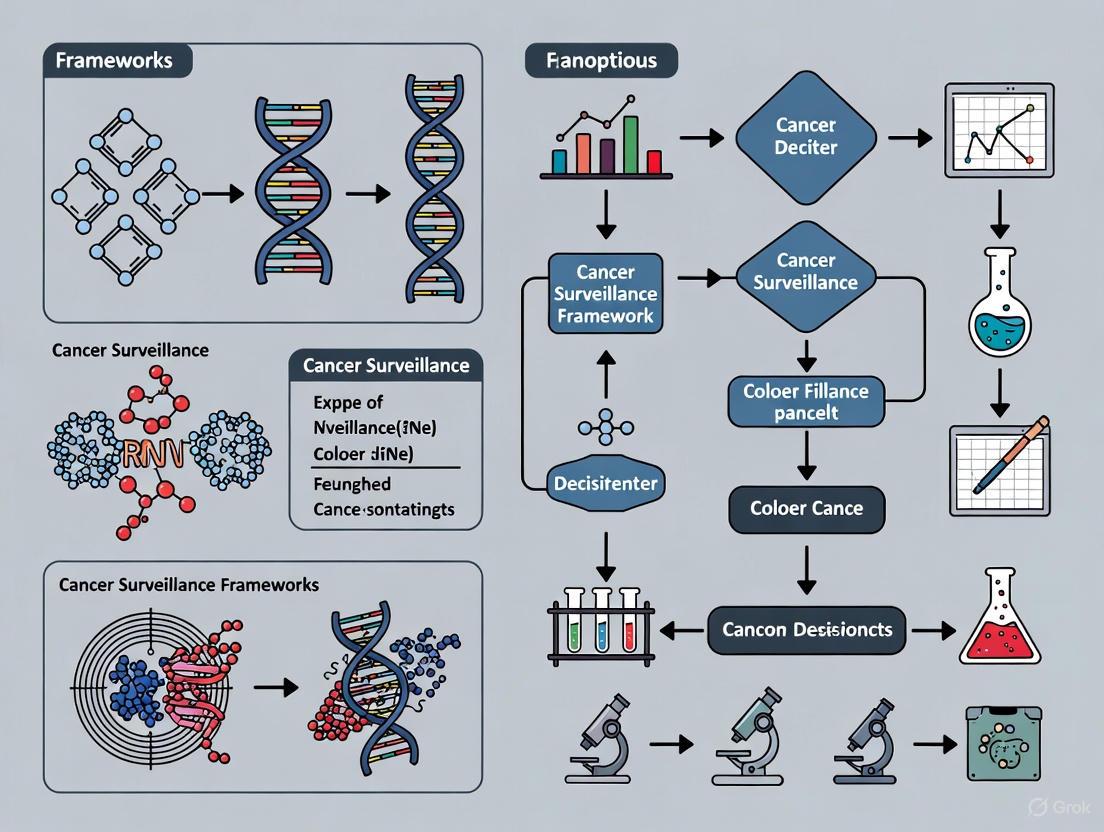
This article synthesizes the latest research and methodologies for validating comprehensive cancer surveillance frameworks, addressing a critical need in public health and oncology.
Validating Comprehensive Cancer Surveillance Frameworks: From Foundational Gaps to AI-Driven Solutions
Abstract
This article synthesizes the latest research and methodologies for validating comprehensive cancer surveillance frameworks, addressing a critical need in public health and oncology. Aimed at researchers, scientists, and drug development professionals, it explores the foundational gaps in current systems, including data inconsistencies and guideline ambiguities. It delves into methodological innovations, such as the integration of artificial intelligence (AI) and Geographic Information Systems (GIS), for enhanced data processing and spatial analysis. The content further examines strategies for troubleshooting operational inefficiencies in registries and optimizing surveillance protocols. Finally, it reviews rigorous validation techniques and comparative evaluations of existing systems, providing a roadmap for developing robust, evidence-based cancer surveillance that can effectively inform clinical research and public health policy.
Identifying Critical Gaps and Establishing the Need for Robust Cancer Surveillance
Assessing the Global Burden and the Pivotal Role of Surveillance
The global burden of cancer is substantial and growing, driven by demographic changes and the prevalence of key risk factors. The following data, sourced from the World Health Organization (WHO) and the International Agency for Research on Cancer (IARC)'s GLOBOCAN 2022 estimates, provides a snapshot of this burden [1] [2].
Table 1: Global Cancer Incidence and Mortality for Leading Cancers (2022)
| Cancer Site | New Cases (Millions) | % of Total Cases | Deaths (Millions) | % of Total Deaths |
|---|---|---|---|---|
| Lung | 2.5 | 12.4% | 1.8 | 18.7% |
| Female Breast | 2.3 | 11.6% | 0.67 | 6.9% |
| Colorectum | 1.9 | 9.6% | 0.90 | 9.3% |
| Prostate | 1.5 | 7.3% | - | - |
| Stomach | 0.97 | 4.9% | 0.66 | 6.8% |
| Liver | - | - | 0.76 | 7.8% |
| All Sites (ex. NMSC) | 20.0 | - | 9.7 | - |
In 2022, there were an estimated 20 million new cancer cases and 9.7 million cancer deaths worldwide, with approximately one in five people developing cancer in their lifetime [1] [2]. The burden is projected to rise dramatically, with predictions of 35 million new cases annually by 2050, due in part to population growth and aging [1].
A significant portion of this burden is considered potentially avoidable. A quantitative assessment for Europe estimated that 33% of cancer cases in men and 44% in women were potentially avoidable, with lung, colorectal, and breast cancers contributing the largest number of avoidable cases [3]. This highlights the critical role of preventive interventions.
Table 2: Projected Cancer Burden and Avoidable Cases
| Metric | Value | Context / Year |
|---|---|---|
| Projected Global Cases by 2050 | 35 million | 77% increase from 2022 |
| Possibly Avoidable Cases in Europe (Men) | 33% | 2020, across 17 cancer sites |
| Possibly Avoidable Cases in Europe (Women) | 44% | 2020, across 17 cancer sites |
The Imperative for Advanced Cancer Surveillance Systems (CSS)
Robust Cancer Surveillance Systems (CSS) are indispensable public health tools for systematically collecting, analyzing, and disseminating cancer data [4]. They provide the foundation for evidence-based cancer control, enabling policymakers and researchers to:
- Track Epidemiological Trends: Monitor changes in incidence, prevalence, mortality, and survival rates over time and across regions [4].
- Identify Disparities: Reveal inequalities in cancer burden and outcomes linked to socioeconomic, demographic, and geographic factors [4] [1].
- Guide Resource Allocation: Inform the strategic planning and funding of healthcare services, from prevention and early detection to treatment and palliative care [4] [5].
- Evaluate Interventions: Assess the impact of public health initiatives, such as tobacco control, vaccination programs, and screening campaigns [4].
Despite their importance, significant gaps persist in existing CSS. Many systems suffer from a lack of data standardization, incomplete datasets, and poor interoperability, which limits the comparability of data across different regions and systems [4] [5]. Furthermore, traditional systems often lack advanced analytical capabilities, such as spatial visualization and predictive modeling, which are crucial for identifying high-risk populations and forecasting future burden [5]. There is also a notable gap in the integration of disability-adjusted metrics like Years Lived with Disability (YLD) and Years of Life Lost (YLL), which are essential for capturing the full societal and economic impact of cancer [4].
Comparative Evaluation of Cancer Surveillance Frameworks
A systematic review and comparative evaluation of international CSS has been conducted to identify essential data elements and best practices [4] [5]. The goal is to move towards a validated, comprehensive framework that overcomes existing limitations.
Core Methodologies for Framework Development and Validation
The development of a robust CSS framework relies on rigorous, multi-phase research methodologies. The following experimental protocols are pivotal.
Protocol 1: Systematic Review for Identifying Critical Data Elements This protocol aims to consolidate the essential metrics and standardization practices required for a comprehensive CSS.
- Search Strategy: Execute structured queries across major databases (e.g., PubMed, Embase, Scopus, Web of Science, IEEE) using keywords related to "data elements," "standardization," "epidemiological indicators," and "cancer surveillance systems" [4].
- Screening & Selection: Apply the PRISMA (Preferred Reporting Items for Systematic Reviews and Meta-Analyses) guidelines to screen and select studies based on pre-defined inclusion/exclusion criteria (e.g., relevance, peer-reviewed status, publication date 2000-2023) [4] [5].
- Data Extraction: Systematically extract data on epidemiological indicators (incidence, mortality, survival, YLD, YLL), demographic filters (age, sex, geography), and classification standards (e.g., ICD-O-3) from the included studies [4].
- Synthesis: Consolidate the extracted information to define a core set of critical data elements and identify gaps in current surveillance practices [4].
Protocol 2: Expert Validation of a Standardized Data Checklist This protocol validates the data elements identified from the systematic review to ensure their necessity and reliability.
- Checklist Development: Formulate a preliminary checklist consolidating the critical CSS elements identified in Protocol 1 [5].
- Expert Panel Engagement: Convene a diverse panel of domain experts, such as oncologists, epidemiologists, and public health specialists [4] [5].
- Content Validation: Utilize the Content Validity Ratio (CVR) to statistically assess the necessity of each data element based on expert ratings [5].
- Reliability Assessment: Calculate Cronbach's alpha to evaluate the internal consistency and reliability of the overall checklist. A framework achieving a CVR > 0.51 and Cronbach's alpha of 0.849 is considered statistically robust and reliable [4] [5].
Protocol 3: Usability Evaluation of a Developed CSS Platform This protocol assesses the functionality and user interface of an implemented surveillance system, such as a GIS-integrated platform.
- System Development: Design and develop the CSS platform using a modular architecture (e.g., with Django and Vue.js frameworks) incorporating multi-level data standardization, GIS-based spatial analysis, and predictive analytics [5].
- Heuristic Evaluation: Conduct a usability assessment based on Nielsen's Heuristic Evaluation checklist, which is used by usability experts to identify potential issues in user interface design [5].
- Issue Identification & Resolution: Systematically identify, categorize, and address usability problems. A key performance indicator is the resolution of 85% of identified issues, which significantly enhances functionality and user satisfaction [5].
Comparative Analysis of Surveillance System Capabilities
The following table synthesizes findings from the evaluation of 13 international cancer surveillance systems, highlighting the capabilities of existing systems and the advancements offered by modern, validated frameworks [4] [5].
Table 3: Comparison of Traditional, International, and Advanced Validated CSS
| Feature | Traditional / Basic CSS (e.g., early systems) | Established International CSS (e.g., GCO, ECIS) | Advanced Validated Framework (e.g., proposed GIS-integrated systems) |
|---|---|---|---|
| Core Metrics | Incidence, mortality, basic survival | Incidence, prevalence, mortality, survival | Adds YLD, YLL, and multiple age-standardized rates [4] |
| Data Standardization | Variable or inconsistent | Uses standards (e.g., ICD-O); but cross-region inconsistencies may remain [4] | Emphasizes strict ICD-O-3, standard populations (SEGI, WHO) for enhanced comparability [4] [5] |
| Demographic & Geographic Filtering | Limited or non-stratified data | Basic stratification (age, sex, country) | Advanced stratification by age, sex, and subnational geographic location [4] [5] |
| Analytical & Visualization Tools | Static reports, descriptive statistics | Interactive dashboards, time-series graphs, basic maps [5] | GIS-integrated spatial analysis, heatmaps, predictive modeling (5-, 10-, 20-year forecasts) [5] |
| Interoperability & Technical Scalability | Often siloed, limited scalability | Varies; some have APIs for data exchange | Modular architecture, API-driven, handles large datasets (e.g., 20M+ records) [5] |
The advanced framework addresses critical gaps by integrating a comprehensive set of indicators and advanced technologies. Its validation through expert consultation and usability testing ensures it is not only methodologically sound but also practical and adaptable for diverse global contexts [4] [5].
Connecting Surveillance to Drug Development and Research
The data and insights generated by advanced CSS are invaluable for the oncology drug development pipeline, enabling a more precise and efficient approach.
Informing Target Discovery and Clinical Trial Design
- Identifying Unmet Needs: Surveillance data on incidence, mortality, and survival trends highlights cancers with poor prognoses and rising rates, signaling areas where new therapeutic interventions are urgently needed [2].
- Guiding Patient Stratification: Data on the geographic, ethnic, and socioeconomic distribution of specific cancers and their molecular subtypes can inform the design of clinical trials, ensuring they enroll the most relevant patient populations and support the development of personalized medicines [6].
- Providing Real-World Context: Data on avoidable cancer cases underscores the continued importance of public health prevention alongside therapeutic development [3].
The Scientist's Toolkit: Key Reagents and Platforms in Modern Oncology Research
The following table details essential tools and platforms that are foundational to contemporary cancer research and drug development, which can be informed by surveillance data.
Table 4: Essential Research Reagent Solutions in Oncology
| Reagent / Platform | Primary Function | Key Characteristics & Applications |
|---|---|---|
| Patient-Derived Xenograft (PDX) Models | In vivo efficacy testing of drug candidates by implanting human tumor tissue into immunodeficient mice [7]. | Considered a "gold standard" for preclinical testing; maintains tumor heterogeneity and is highly translationally relevant [7]. |
| Patient-Derived Organoids (PDOs) | In vitro 3D culture system that recapitulates tumor structure and patient-specific drug response [7]. | Used for high-throughput drug screening and biomarker identification; better mimics tumor physiology than 2D cultures [7]. |
| CRISPR-Cas9 Screening Platforms | Genome-wide functional genetic screening to identify essential genes and drug targets [8]. | Enables systematic mapping of genetic dependencies and mechanisms of drug sensitivity/resistance [8]. |
| Omics Data (Genomics, Proteomics) | Provides foundational molecular data for identifying disease-associated genes and proteins [6]. | Used for target identification and personalized medicine; challenges include data heterogeneity and integration [6]. |
| Artificial Intelligence (AI) & Bioinformatics Tools | Processes and analyzes complex biological data (e.g., omics data, functional screens) to identify patterns and predict outcomes [6] [7]. | Aids in target identification, drug repurposing, and analyzing high-throughput screening data; predictive accuracy depends on algorithms and data quality [6] [7]. |
Visualizing the Workflow: From Surveillance to Therapeutic Intervention
The diagram below illustrates the logical workflow and feedback loop connecting robust cancer surveillance with the key stages of modern oncology drug development.
Evaluating Limitations in Current Guidelines and Real-World Adherence
This comparison guide provides a critical evaluation of the current landscape of clinical practice guidelines for cancer surveillance and the methodologies used to assess their real-world adherence. Despite their central role in standardizing care, evidence reveals significant limitations in the specificity and evidence base of major guidelines, leading to substantial variability in clinical implementation. This analysis synthesizes data from recent studies to objectively compare these limitations and evaluate innovative computational frameworks that promise to enhance guideline quality and adherence monitoring, thereby supporting the validation of more robust cancer surveillance systems.
Analysis of Limitations in Current Cancer Surveillance Guidelines
A systematic review of National Comprehensive Cancer Network (NCCN) Clinical Practice Guidelines reveals critical gaps in the specificity and evidence base for cancer surveillance recommendations [9]. The following table summarizes the quantitative findings from this analysis, which characterized 483 surveillance recommendations across 99 cancer types.
Table 1: Limitations in NCCN Cancer Surveillance Guidelines (2025 Analysis)
| Limitation Category | Finding | Percentage of Recommendations | Example |
|---|---|---|---|
| Quality of Evidence | Supported by lower-level evidence (NCCN Category 2A) | 93% (450/483) | Uniform consensus but lower-level evidence |
| Individualization | Lack individualization to patient-specific factors | 76% (Only 24% individualized) | Not adjusting for initial tumor marker elevation |
| Surveillance Start | No specified start time for surveillance | 80% (387/483) | "Chest CT and abdomen/pelvis CT or MRI" without start timing |
| Frequency Guidance | Provided as a range or not specified | 64% of 337 recs as a range; 30% no frequency | "PSA every 6-12 mo for 5 y" (Prostate cancer) |
| Duration Guidance | Deferred to clinical judgment or unspecified | 48% (234/483) | "CT as clinically indicated" (Stage I gastric cancer) |
| Testing Modalities | Involved imaging, mostly cross-sectional | 46% (222/483) | CT, MRI |
These limitations create significant ambiguity, leaving room for clinical interpretation that likely contributes to variation in practice and potential for both over- and under-monitoring [9]. The heavy reliance on cross-sectional imaging is particularly notable given the associated risks of radiation exposure without clear demonstrated survival benefits from routine surveillance testing.
Evaluation of Real-World Guideline Adherence
Adherence Rates Across Healthcare Settings
Real-world adherence to cancer care guidelines varies significantly by institutional context and cancer type. The following table compares adherence metrics from recent studies conducted in different clinical settings.
Table 2: Real-World Guideline Adherence in Cancer Care
| Study Context / Cancer Type | Adherence Rate | Key Factors Influencing Adherence |
|---|---|---|
| Non-academic Medical Center (Austria) [10] | 78.2% (453/579 patients) | - Patient preferences (40% of deviations) - Lack of surgical recommendation (40%) - Patient comorbidities (15%) |
| Breast Cancer (Non-academic Center) [10] | Higher adherence vs. colorectal cancer | - Older age at diagnosis (OR 1.02) - More recent MTB conference (OR 1.20) |
| Colorectal Cancer (Non-academic Center) [10] | Lower adherence (OR 3.84 for non-adherence) | - Higher ECOG status (OR 1.59) - Complex treatment protocols |
| Dutch Endometrial Cancer Guidelines [11] | 82.7% mean adherence (Range: 44-100%) | - Computational guideline implementation - Data availability in cancer registry |
Methodologies for Assessing Adherence
Advanced computational methodologies are emerging to continuously evaluate guideline adherence. A study on Dutch endometrial cancer (EC) guidelines demonstrates a novel framework for automated evaluation [11]:
Experimental Protocol: Computational Adherence Evaluation
- Data Source: Real-world data from the Netherlands Cancer Registry (NCR) between January 2010 and May 2022 [11].
- Guideline Processing: The textual EC guideline was parsed into 10 computer-interpretable Clinical Decision Trees (CDTs), revealing 22 patient/disease characteristics and 46 interventions [11].
- Data Mapping: NCR data items were mapped to the guideline information standard using Systematized Nomenclature of Medicine Clinical Terms (SNOMED CT) codes for standardization [11].
- Adherence Classification: Patients were classified into "adherent," "non-adherent," or "other" categories based on concordance between treatment received and CDT pathways [11].
- Statistical Analysis: Adherence levels were computed for multiple subpopulations, with trends analyzed using logistic regression and multinomial regression (R V.4.2.2) [11].
This methodology enabled continuous, multi-dimensional evaluation of guideline adherence, identifying three statistically significant trends: two increasing adherence trends and one decreasing trend in specific subpopulations [11].
Experimental Protocols for Guideline and Adherence Research
Systematic Guideline Evaluation Methodology
Protocol 1: Guideline Limitation Assessment [9]
- Data Extraction: Two independent reviewers systematically extracted surveillance recommendations from NCCN Guidelines for solid-organ cancers in adults.
- Classification Framework: Recommendations were classified by: stratification type (risk, stage), modality (imaging, laboratory testing), frequency, duration, and individualization to patient-specific factors.
- Evidence Categorization: Each recommendation was assigned an NCCN category of evidence (1, 2A, 2B) based on supporting data and consensus.
- Exclusion Criteria: Recommendations addressing only metastatic, recurrent, or progressive disease were excluded.
- Reporting Standards: Followed SQUIRE 2.0 reporting guideline for quality improvement studies.
Framework Development for Comprehensive Cancer Surveillance
Protocol 2: Surveillance Framework Validation [4]
- Systematic Review: Conducted per PRISMA guidelines, analyzing 13 studies from 1,085 initial articles from PubMed, Embase, Scopus, Web of Science, and IEEE.
- Comparative Evaluation: 13 international cancer surveillance systems were evaluated to identify critical data elements and practices.
- Checklist Validation: Researcher-designed checklist consolidated elements was validated through expert consultation (82% response rate, n=14), achieving high reliability (Cronbach's alpha = 0.849).
- Framework Components: Incorporated epidemiological indicators (incidence, prevalence, mortality, survival, YLD, YLL), demographic filters (age, sex, geography), and cancer classification (ICD-O standards).
- Standard Populations: Utilized multiple standard populations (SEGI, WHO) for age-standardized rates to enhance cross-regional comparability.
Visualization of Research Workflows
Computational Guideline Adherence Assessment
Diagram Title: Computational Guideline Adherence Workflow
Cancer Surveillance Framework Development
Diagram Title: Surveillance Framework Development Process
The Scientist's Toolkit: Research Reagent Solutions
Table 3: Essential Resources for Cancer Surveillance and Adherence Research
| Resource Category | Specific Tool / System | Research Function |
|---|---|---|
| Cancer Registries | Netherlands Cancer Registry (NCR) [11] | Provides comprehensive, real-world data on cancer incidence, treatment patterns, and outcomes for adherence research. |
| Guideline Repositories | NCCN Clinical Guidelines [9] | Source of standardized cancer care recommendations for limitation analysis and adherence benchmarking. |
| Computable Guideline Platforms | Oncoguide Platform [11] | Enables transformation of text-based guidelines into computer-interpretable decision trees for automated adherence evaluation. |
| Data Standards | ICD-O-3 Classification [4] | Standardized coding system for cancer morphology and topography, ensuring consistency in data collection and analysis. |
| Statistical Software | R Statistical Software [11] | Performs regression analyses and trend evaluations for adherence patterns and predictors of guideline deviation. |
| Visualization Tools | Alertness Prototype Dashboard [11] | Interactive platform for displaying adherence metrics and enabling exploration of subpopulation adherence patterns. |
| Reporting Guidelines | PRISMA, SQUIRE [9] [4] | Ensure methodological rigor and comprehensive reporting in systematic reviews and quality improvement studies. |
Analyzing Data Standardity and Interoperability Challenges
In the field of oncology, the ability to collect, share, and analyze high-quality data is fundamental to advancing public health surveillance, clinical research, and therapeutic development. However, the cancer data landscape is often characterized by significant heterogeneity in data formats, coding standards, and system architectures, creating substantial barriers to interoperability. This guide objectively compares the performance of several prominent cancer data standards and integration frameworks currently in use. The analysis is situated within the broader research context of validating comprehensive cancer surveillance frameworks, which aim to produce reliable, timely, and actionable real-world evidence. The compared approaches include consensus-based data standards like mCODE, automated real-world data extraction systems, and emerging frameworks that leverage natural language processing (NLP) and advanced data management architectures.
Comparative Analysis of Cancer Data Standards and Frameworks
The following table summarizes the core characteristics, performance metrics, and primary validation outcomes for the key standards and systems analyzed.
Table 1: Performance Comparison of Cancer Data Standards and Interoperability Frameworks
| Standard/ Framework | Core Focus & Methodology | Key Performance Metrics | Supported Data Elements & Domains | Validation Context & Evidence |
|---|---|---|---|---|
| Minimal Common Oncology Data Elements (mCODE) [12] | Consensus-based data standard; FHIR implementation | HL7 ballot approval (86.5%); Enables structured data transmission | 6 domains: Patient, Laboratory/Vital, Disease, Genomics, Treatment, Outcome; 90 data elements across 23 profiles | Pilot implementations underway; Supports automated reporting to Central Cancer Registries via MedMorph [13] |
| Automated EHR Extraction (Datagateway) [14] | Automated system harmonizing structured EHR data into a common model | Diagnosis accuracy: 100% (vs. NCR), 95% (new diagnoses); Treatment identification: >97% accuracy; Lab data: >95% accuracy | Diagnoses, treatment regimens, laboratory values, toxicity indicators | Validation against Netherlands Cancer Registry (NCR) manual curation; 1,287 patient records across 3 hospitals |
| NLP-Enhanced Data Integration (MSK-CHORD) [15] | NLP annotation of unstructured text combined with structured clinicogenomic data | NLP model AUC: >0.9; Precision & Recall: >0.78 to >0.95; Survival prediction: Outperformed genomic or stage-only models | Cancer progression, tumour sites, receptor status, prior outside treatment, smoking status, genomic data | Fivefold cross-validation; External multi-institution dataset validation; 24,950 patients |
| USCDI+ Cancer [13] | Specialized USCDI extension for cancer use cases, including registry reporting | Aims to fill gaps for public health, quality, and cancer; Flexible annual update cycle | Cancer registry data elements; Aligned with HL7 FHIR US Core Implementation Guide | Public comment period completed (2024); Supports Central Cancer Registry Reporting IG |
| Data Lake Architecture [16] | Centralized repository for secure storage/sharing of multimodal data | Enabled secure, compliant, federated storage of large-scale genomic/clinical data | Genomic data from tissue/liquid biopsies, associated clinical data | Implementation in multi-site, cross-industry UK project (CUPCOMP) |
Detailed Experimental Protocols and Methodologies
Protocol for Validating Automated EHR Data Extraction
The validation study for the Datagateway system provides a robust methodology for assessing the accuracy of automated data extraction from EHRs [14].
1. Study Design and Patient Cohort:
- A mixed prospective and retrospective validation design was employed.
- The prospective cohort included 1,287 patient records from three hospitals, encompassing Acute Myeloid Leukemia (AML) and lung cancer patients.
- The retrospective cohort included 384 patient records (168 AML, 216 lung cancer) previously recorded in the Netherlands Cancer Registry (NCR).
2. Validation Metrics and Procedures:
- New Diagnosis Validation: Compared system-identified new diagnoses against manual application of NCR inclusion criteria.
- Retrospective Case-Finding: Assessed the system's ability to retrieve all patients known to be in the NCR.
- Treatment Regimen Validation: For AML, 254 patients were validated across multiple regimens. For Multiple Myeloma (MM), 198 regimens across 117 patients were validated against NCR or EHR source data.
- Laboratory and Toxicity Data Validation: Laboratory values and toxicity indicators were systematically compared to source data.
3. Data Analysis:
- Accuracy was calculated as the percentage of correctly identified cases, regimens, or data points against the manual curation gold standard.
Protocol for Developing and Validating NLP-Enhanced Datasets
The creation of MSK-CHORD demonstrates a method for large-scale integration of unstructured and structured clinical data [15].
1. NLP Model Development and Training:
- Data Source: Utilized the Project GENIE Biopharma Collaborative (BPC) dataset, a structured curation of EHRs from multiple cancer centers.
- Model Type: Transformer-based NLP models were trained on manually curated annotations from specific radiology, histopathology, and clinical notes.
- Target Annotations: Models were developed to identify features from narrative text: cancer progression, tumour sites, cancer presence (from radiology reports); prior outside treatment (from clinician notes); receptor status (from visit notes).
2. Model Validation:
- Validation Method: Fivefold cross-validation was performed.
- Performance Metrics: Area Under the Curve (AUC), precision, and recall were calculated against manually curated labels as ground truth.
- Discrepancy Resolution: A random sample of discrepancies between model predictions and curation labels underwent retrospective clinician review.
3. Dataset Integration and Predictive Modeling:
- NLP-derived annotations were combined with structured medication, demographic, tumour registry, and genomic data.
- The integrated MSK-CHORD dataset was used to train machine learning models for overall survival prediction.
- Model performance was tested via cross-validation and on an external, multi-institution dataset.
Protocol for Framework Development via Systematic Review
A 2025 study established a comprehensive framework for cancer surveillance systems through a systematic, evidence-based approach [4].
1. Systematic Review:
- Search Strategy: Conducted per PRISMA guidelines across five databases (PubMed, Embase, Scopus, Web of Science, IEEE).
- Screening: From 1,085 initially identified articles, 13 studies were selected for final analysis based on relevance and predefined inclusion criteria.
2. Comparative Evaluation:
- A comparative evaluation of 13 international cancer surveillance systems was performed to identify critical data elements and best practices.
3. Expert Validation:
- A consolidated checklist of essential data elements was developed from the review and evaluation.
- This checklist was validated through expert consultation (82% response rate, n=14), achieving high reliability (Cronbach’s alpha = 0.849).
Visualizing Data Pathways and Workflows
The following diagram illustrates the logical workflow and relationships between different components and standards in a modern, interoperable cancer data ecosystem, from point-of-care data generation to public health and research application.
Cancer Data Interoperability Workflow
For researchers embarking on projects involving cancer data standardization and interoperability, the following tools, standards, and platforms are essential.
Table 2: Key Resources for Cancer Data Interoperability Research
| Resource Name | Type/Category | Primary Function in Research | Key Features & Specifications | Access/Implementation Guide |
|---|---|---|---|---|
| mCODE (Minimal Common Oncology Data Elements) [12] | Data Standard | Provides a core set of structured data elements for transmitting cancer patient data | 90 data elements across 6 domains; FHIR-based profiles | Freely available from mCODEinitiative.org; HL7 FHIR Implementation Guide |
| HL7 FHIR US Core Implementation Guide [13] | Implementation Guide | Defines minimum constraints on FHIR to implement USCDI | Base for other HL7 standards; Aligned with USCDI | HL7.FHIR.US.CORE Home - FHIR v4.0.1 |
| FHIR Cancer Pathology Data Sharing IG [13] | Implementation Guide | Standards for cancer pathology information exchange | Defines resources for exchanging pathology data from Lab Info Systems to EHRs | HL7 FHIR US Cancer Reporting IG |
| Central Cancer Registry Reporting IG [13] | Implementation Guide | Enables automated, standardized exchange to Central Cancer Registries | Uses mCODE; Specifies use of MedMorph Reporting IG | HL7.FHIR.US.CENTRAL-CANCER-REGISTRY-REPORTING |
| APHL AIMS Platform [17] | Technical Infrastructure | Secure, cloud-based platform for public health reporting | Shared infrastructure; Reduces burden via single reporting point; Supports real-time exchange | Used by all central cancer registries for ePath reporting |
| Cancer PathCHART [18] | Terminology Standard | Updated standards for tumour site-morphology combinations | Aligns surveillance standards with medical practice; Freely available webtool | SEER Cancer PathCHART website; 2024-2026 standards available |
| USCDI+ Cancer [13] | Data Element Standard | Extends USCDI for cancer-specific use cases | Addresses cancer registry data gaps; Flexible for specialized needs | Annual update cycle; Public comment process |
| Data Lake Architecture [16] | Data Management Solution | Secure, centralized storage for large-scale multimodal data | Enables federated storage of genomic/clinical data; Scalable and compliant | Requires robust governance and stakeholder engagement |
Exploring Infrastructure and Workforce Limitations in Modern Registries
Modern cancer registries represent a critical cornerstone of public health, enabling epidemiological research, policy design, and treatment evaluation [19]. However, these systems face a convergent crisis stemming from two interrelated challenges: unsustainable technological infrastructure and overwhelming operational demands on the human workforce. This perfect storm threatens the completeness, timeliness, and granularity of cancer surveillance data worldwide [20] [21].
The infrastructure challenge manifests as a "failure of completeness" where insufficient technical systems and growing caseloads lead to missing diagnostic and treatment information, systematically under-representing certain patient groups [20]. Simultaneously, the workforce experiences a "failure of efficiency" as manual abstraction of unstructured pathology reports—a time-consuming, error-prone process—becomes increasingly unsustainable [20]. With over 80% of clinically relevant information residing in free-text pathology reports, and manual abstraction typically introducing months of delay with substantial error rates, the system's workload has grown exponentially, rendering manual maintenance unsustainable [20].
This article examines these infrastructure and workforce limitations through a comparative evaluation of emerging solutions, with particular focus on validating a comprehensive framework for cancer surveillance systems. By objectively assessing technological alternatives and their capacity to augment human capabilities, we provide a pathway toward modernized, sustainable cancer registry operations.
Comparative Analysis of Modern Registry Infrastructure Solutions
The Registry Automation Landscape
The limitations of traditional registry infrastructure have spurred development of automated solutions, particularly artificial intelligence (AI) systems designed to process unstructured clinical data. Table 1 compares the performance characteristics of three open-weight AI architectures benchmarked for cancer registry automation, as validated in a recent multicancer study [20].
Table 1: Performance Comparison of AI Models for Cancer Registry Automation
| Model Architecture | Parameter Count | Mean Extraction Accuracy (%) | Processing Speed (reports/min) | Hardware Requirements |
|---|---|---|---|---|
| GPT-OSS | 20B | 94.3 | 18-22 | Single GPU (48GB VRAM) |
| Qwen3 | 30B | 92.7 | 6-8 | Single GPU (48GB VRAM) |
| Gemma3 | 27B | 91.5 | 7-9 | Single GPU (48GB VRAM) |
This benchmarking study demonstrated that the GPT-OSS 20B parameter model achieved the optimal balance between registry-grade accuracy (>94%) and practical hardware requirements, processing complex pathology reports 2-3 times faster than alternatives while maintaining compatibility with standard clinical workstations [20]. This addresses a critical infrastructure limitation by making advanced AI accessible without datacenter dependencies.
Comprehensive Framework for Cancer Surveillance Systems
Recent research has proposed standardized frameworks to address infrastructure gaps in cancer surveillance. A 2025 systematic review and comparative evaluation of 13 international cancer surveillance systems identified critical data elements and developed a validated framework to enhance global applicability and regional relevance [21]. The resulting framework integrates a comprehensive set of epidemiological indicators, including:
- Incidence, prevalence, and mortality rates
- Survival statistics and years lived with disability
- Years of life lost calculations
- Age-standardized rates using multiple standard populations
The framework incorporates key demographic filters (age, sex, geographic location) for stratified analyses and utilizes ICD-O standards for cancer type classification, ensuring precision, consistency, and enhanced comparability across diverse datasets [21]. Validation through expert consultation achieved high reliability (Cronbach's alpha = 0.849), confirming its utility for addressing current infrastructure limitations [21].
Experimental Protocols: Validating AI-Driven Registry Solutions
Methodology for Multicancer AI Framework Validation
A rigorous experimental protocol was developed to validate an AI framework for comprehensive cancer surveillance from pathology reports [20]. The study addressed the core infrastructure limitations by creating a model-agnostic, privacy-first system that transforms cancer registration into a scalable process.
Data Sourcing and Preparation:
- Unstructured pathology reports were collected from multiple institutions, representing ten major cancer types (breast, colorectal, prostate, liver, etc.)
- Reports were processed using a hybrid approach combining computerized search methods with manual clinical validation
- A competing risk framework was developed to distinguish between imaging ordered for surveillance versus symptoms of recurrence [22]
Model Architecture and Training:
- The framework utilized DSPy, a programming model for LM pipelines, to abstract language model interactions into modular primitives
- A prompting engine was co-designed with pathologists to enable clinician-engineer collaboration on extraction logic
- The system was benchmarked across three open-weight architectures (GPT-OSS:20B, Qwen3-30B, Gemma3:27B) to determine optimal performance characteristics [20]
Validation Methodology:
- Performance was assessed through independent external validation (IEV) using the multi-institutional TCGA (The Cancer Genome Atlas) dataset
- The system was tested on breast, colorectal, and esophageal cohorts from diverse institutions to evaluate transportability across unseen data structures and linguistic styles
- Extraction accuracy was measured against manually abstracted data as the reference standard [20]
Workflow for Automated Cancer Surveillance
The following diagram illustrates the end-to-end workflow of the AI-powered cancer surveillance system, showing how it transforms unstructured pathology reports into structured registry data while addressing critical infrastructure and workforce limitations:
AI-Powered Cancer Registry Workflow
This workflow demonstrates how the AI system addresses workforce limitations by automating the most labor-intensive components of registry operations. The process begins with automated triage of unstructured pathology reports to identify eligible cancer excision cases, proceeds through organ system classification, then leverages a DSPy-based prompting engine to extract structured data elements according to College of American Pathologists (CAP) standards [20]. The final stages include structured data validation and standardized registry export, completing the transformation from unstructured clinical narrative to organized, analyzable data.
Implementation Challenges and Workforce Considerations
Infrastructure Limitations and Solutions
The implementation of modern registry systems faces significant infrastructure hurdles that mirror challenges seen across digital ecosystems. Critical public infrastructure, including package registries that support software development, often operates under "dangerously fragile" models where a small number of organizations absorb the majority of infrastructure costs while the overwhelming majority of large-scale commercial users consume services without contributing to sustainability [23].
This pattern directly parallels cancer registry challenges, where:
- Sustainability crises emerge when infrastructure relies on goodwill rather than mechanisms aligning responsibility with usage [23]
- Rising expectations for data completeness, security, and timeliness create operational burdens without proportional funding increases [23]
- Regulatory complexity from requirements such as the EU Cyber Resilience Act further increases compliance obligations for resource-constrained systems [23]
These infrastructure limitations necessitate solutions that balance comprehensive functionality with practical deployment constraints. The multicancer AI framework addresses this by demonstrating that registry-grade automation can be achieved on standard clinical workstations with 48GB VRAM, rather than requiring high-performance computing infrastructure [20].
Workforce Adaptation and Skill Transitions
As registry infrastructure evolves, the workforce must simultaneously adapt. The transformation mirrors broader trends where "outdated systems, not workers, are failing the modern workforce" [24]. Traditional employment structures designed for predictable career paths create mismatches for professionals whose skills and potential are overlooked despite technological change [24].
In registry operations, this manifests through:
- Disproportionate burdens on experienced professionals operating within systems designed for stability rather than mobility [24]
- Skills gaps emerging as AI and automation reshape fundamental workflows [25]
- Age bias in hiring and development that narrows opportunity despite the value of experienced practitioners [24]
Successful adaptation requires creating "longevity-ready workplaces" that value experience as a living asset and view adaptability as ageless [24]. For cancer registries, this means embracing workforce development strategies that combine traditional expertise with emerging technical competencies.
Research Reagent Solutions for Registry Modernization
The implementation of advanced cancer registry systems requires specific technical components and methodological approaches. Table 2 details essential "research reagents" – core solutions and their functions – for developing comprehensive cancer surveillance frameworks.
Table 2: Essential Research Reagent Solutions for Cancer Registry Implementation
| Solution Category | Specific Implementation | Function in Registry Framework |
|---|---|---|
| AI Processing Engines | DSPy Programming Model | Abstracts language model interactions into modular primitives for reproducible extraction logic [20] |
| Open-Weight AI Models | GPT-OSS 20B parameter model | Provides registry-grade extraction accuracy (94.3%) while maintaining computational feasibility on standard workstations [20] |
| Validation Methodologies | Independent External Validation (IEV) | Tests system transportability across diverse institutional datasets and documentation styles [20] |
| Data Standards | ICD-O Classification System | Ensures precision, consistency and enhanced comparability across diverse cancer datasets [21] |
| Epidemiological Metrics | Age-Standardized Incidence Rates | Enables valid population comparisons using multiple standard populations for stratification [21] |
| Privacy-Preserving Architecture | On-Premises Computation Model | Keeps all data processing within institutional boundaries, eliminating PHI transmission risks [20] |
These research reagents collectively address the threefold systemic failure in cancer surveillance: completeness, ethical integrity, and granularity [20]. By implementing these solutions, registries can transform from manually-intensive operations into automated, sustainable infrastructures capable of meeting modern public health demands.
The convergence of infrastructure modernization and workforce evolution presents a critical inflection point for cancer surveillance systems. The comparative data demonstrates that AI-powered solutions can now achieve registry-grade accuracy (>94%) while operating within the computational constraints of standard clinical workstations [20]. This technological capability, combined with validated frameworks for comprehensive cancer surveillance [21], provides a pathway to overcome longstanding limitations in completeness, timeliness, and data granularity.
The essential transition requires moving from fragmented, manual operations to integrated, automated systems that augment human expertise rather than replacing it. This aligns with broader trends in workforce evolution that recognize "outdated systems, not workers, are failing the modern workforce" [24]. By implementing the research reagent solutions outlined in this analysis – particularly open-weight AI models, standardized validation methodologies, and privacy-preserving architectures – cancer registries can build sustainable infrastructures capable of meeting 21st-century public health demands while respecting ethical imperatives for data security and workforce development.
The future of cancer surveillance depends on creating balanced systems that leverage technological capabilities while valuing human expertise. Through the strategic implementation of validated frameworks and computational tools, the field can overcome current infrastructure and workforce limitations to deliver the comprehensive, timely, and granular data necessary for effective public health intervention and cancer research.
Innovative Methods and Technological Applications for Enhanced Surveillance
The field of cancer surveillance is undergoing a transformative shift with the integration of Artificial Intelligence (AI) and Large Language Models (LLMs). Cancer registries, essential for population-level health monitoring, have traditionally relied on manual data abstraction from unstructured pathology reports, a process that is both time-consuming and prone to human error. The emergence of sophisticated LLMs offers unprecedented opportunities to automate and enhance this critical workflow. Within the context of validating comprehensive cancer surveillance frameworks, AI technologies demonstrate particular promise for improving the accuracy, scalability, and efficiency of data extraction processes. Recent developments have shown that AI can transform cancer registration into a more scalable and globally accessible process, making it possible to handle large volumes of complex medical data with high precision [26].
The adoption of AI in healthcare is accelerating rapidly, with recent surveys indicating that 90% of hospitals now use AI for diagnosis and monitoring [27]. This trend is particularly relevant for cancer surveillance, where the ability to quickly and accurately process diagnostic information can significantly impact public health responses and research initiatives. As AI performance on demanding benchmarks continues to improve, with scores on specialized benchmarks increasing by significant margins within single years, the technology becomes increasingly suitable for the nuanced demands of medical data abstraction [28]. This article provides a comprehensive comparison of current LLM options and presents experimental data on their application within cancer surveillance frameworks, specifically focusing on their validation for extracting critical oncological data elements.
Comparative Analysis of Leading Large Language Models
Performance Benchmarks Across Key Capabilities
When selecting LLMs for data abstraction tasks in cancer surveillance, understanding their relative performance across different cognitive domains is essential. The following table summarizes the capabilities of leading models across benchmarks relevant to medical data processing, including reasoning, specialized knowledge, and coding proficiency.
Table 1: LLM Performance Across Specialized Benchmarks
| Model | Reasoning (GPQA Diamond) | High School Math (AIME 2025) | Agentic Coding (SWE Bench) | Visual Reasoning (ARC-AGI 2) | Multilingual Reasoning (MMMLU) |
|---|---|---|---|---|---|
| Gemini 3 Pro | 91.9% | 100 | 76.2% | 31 | 91.8% |
| GPT 5.1 | 88.1% | - | 76.3% | 18 | - |
| Claude Opus 4.5 | 87% | - | 80.9% | 378 | 90.8% |
| Grok 4 | 87.5% | - | 75% | 16 | - |
| Kimi K2 Thinking | - | 99.1 | - | - | - |
Beyond general capabilities, efficiency considerations are crucial for practical implementation, especially when processing high volumes of medical reports. The table below compares key operational characteristics that impact deployment feasibility in resource-conscious healthcare environments.
Table 2: Model Efficiency and Operational Characteristics
| Model | Context Window (tokens) | Input Cost ($/1M tokens) | Output Cost ($/1M tokens) | Latency (TTFT in seconds) | Speed (tokens/second) |
|---|---|---|---|---|---|
| Llama 4 Scout | 10,000,000 | $0.11 | $0.34 | 0.33 | 2600 |
| Gemini 2.0 Flash | 1,000,000 | $0.15 | $0.60 | 0.34 | 200 |
| Nova Micro | - | $0.04 | $0.14 | 0.3 | - |
| GPT-4o mini | - | - | - | 0.35 | - |
| Llama 3.1 8b | - | - | - | 0.32 | 1800 |
| Gemma 3 27b | 128,000 | $0.07 | $0.07 | 0.72 | 59 |
The performance data reveals several important considerations for cancer surveillance applications. For complex reasoning tasks inherent to medical interpretation, Gemini 3 Pro and Claude Opus 4.5 demonstrate leading capabilities [29]. Claude models particularly excel in coding-related tasks, which can be crucial for developing customized abstraction pipelines [30]. For processing extremely long documents such as comprehensive pathology reports, Llama 4 Scout's 10-million-token context window provides distinctive capability for analyzing complete medical records without segmentation [31].
The efficiency metrics highlight the dramatic cost reductions in AI inference, with the expense for LLM queries dropping more than 280-fold between late 2022 and late 2024 [32]. This increased affordability enables more extensive processing of medical texts, making comprehensive cancer surveillance more economically viable. Furthermore, the emergence of powerful smaller models represents a significant trend, with the smallest model achieving a score greater than 60% on the Massive Multitask Language Understanding (MMLU) benchmark having reduced 142-fold in parameters between 2022 and 2024 [32]. This efficiency advancement allows capable models to be deployed in resource-constrained settings, including on-premise installations that address healthcare data privacy concerns.
The choice between open-source and proprietary models involves important trade-offs for medical research applications:
Open-Source Advantages:
- Data Privacy: Models can be deployed on-premise, ensuring sensitive patient data never leaves institutional control [30]
- Customization: Ability to fine-tune models on domain-specific medical terminology and abstraction requirements
- Transparency: Greater visibility into model workings, which is valuable for validated medical processes
- Cost Control: Reduced per-token costs, especially important for high-volume processing
Leading Open-Source Options:
- Llama 4 Series: Meta's latest models with multimodal capabilities and exceptional context windows [31]
- DeepSeek V3.1: Hybrid system that switches between "thinking" and "non-thinking" modes for efficiency [31]
- Qwen3 Series: Alibaba's hybrid Mixture-of-Experts models that reportedly match GPT-4o performance with greater efficiency [31]
Proprietary Model Advantages:
- State-of-the-Art Performance: Often lead in benchmark performance, as seen with Gemini 3 Pro and Claude Opus 4.5 [29]
- Ease of Implementation: API-based access reduces infrastructure requirements
- Reliability: Enterprise-grade support and consistency
- Multimodal Capabilities: Integrated vision, text, and sometimes audio processing
The decision between these approaches depends on institutional priorities. For maximum performance and ease of implementation, proprietary models may be preferable, while for data-sensitive environments or highly customized workflows, open-source options provide greater control.
Experimental Validation in Cancer Surveillance
Multicancer AI Framework: A Case Study in Validation
Recent research provides compelling evidence for the practical application of LLMs in cancer surveillance. A 2025 study published in medRxiv detailed the development and validation of a "Multicancer AI Framework for Comprehensive Cancer Surveillance from Pathology Reports" [26]. This framework addresses what the authors term the clinical AI "implementation trilemma" - balancing comprehensive scope, strict privacy, and computational feasibility.
The experimental protocol employed in this study offers a robust template for validating AI approaches to cancer data abstraction:
Methodology Overview:
- Framework Design: Model-agnostic, privacy-first architecture running entirely on local, low-cost hardware
- Technical Approach: Integrated multi-step reasoning with DSPy-based prompting engine co-designed with pathologists
- Data Processing: End-to-end abstraction of unstructured pathology reports into structured data elements
- Validation Method: Rigorous testing across ten cancer types with expert-annotated ground truth
Table 3: Performance Results from Multicancer AI Framework Validation
| Metric | Performance | Significance |
|---|---|---|
| Cancer Type Triage Accuracy | 96.6% | High reliability in initial classification |
| Mean Extraction Accuracy (193 CAP-aligned fields) | 94.3% | Comprehensive data capture capability |
| Complex Variable-Length Data Capture | High fidelity | Effective handling of surgical margins, lymph nodes, breast biomarkers |
The system's ability to restore data completeness using accessible workstation GPUs makes this approach particularly valuable for resource-constrained settings [26]. By achieving high accuracy across diverse cancer types and complex data elements, this framework demonstrates the maturity of AI approaches for comprehensive cancer surveillance.
The experimental workflow employed in the multicancer AI framework study provides a replicable model for implementing LLMs in cancer surveillance. The following diagram illustrates the key components and their relationships:
This architecture emphasizes several critical success factors for implementing AI in cancer surveillance:
- Privacy-First Approach: Local deployment ensures sensitive patient data remains within secure healthcare environments
- Clinical Collaboration: Continuous pathologist input ensures clinical relevance and accuracy
- Multi-Step Reasoning: Complex abstraction tasks are broken down into manageable steps with verification checkpoints
- Model Agnosticism: Flexibility to incorporate various LLMs as technology evolves
Research Reagent Solutions for Implementation
Successful implementation of AI for cancer data abstraction requires specific technical components. The table below details essential "research reagents" - the tools, frameworks, and resources needed to replicate and build upon the validated approaches.
Table 4: Essential Research Reagents for AI-Powered Cancer Data Abstraction
| Component | Function | Examples/Alternatives |
|---|---|---|
| LLM Infrastructure | Core model execution environment | Local GPU workstations, Cloud APIs (OpenAI, Anthropic, Google), Hugging Face |
| Prompt Engineering Framework | Optimizing model interactions for medical terminology | DSPy, LangChain, LlamaIndex |
| Medical Taxonomy Library | Standardized terminology for consistent abstraction | CAP protocols, SNOMED CT, ICD-O coding systems |
| Validation Dataset | Gold-standard annotated pathology reports | TCGA pathology reports, Institutional datasets with expert annotation |
| Abstraction Pipeline Tools | Orchestrating multi-step reasoning workflows | Custom Python scripts, Apache Airflow, Prefect |
| Privacy-Preserving Deployment | Ensuring data security and compliance | On-premise servers, HIPAA-compliant cloud services, Encryption tools |
These components represent the minimal essential toolkit for researchers developing AI-powered cancer abstraction systems. The DSPy-based prompting engine noted in the multicancer framework study is particularly noteworthy, as it represents a structured approach to optimizing model interactions for specific domains [26]. Similarly, the use of CAP-aligned fields for validation ensures that abstraction outputs align with established pathological reporting standards.
The experimental evidence demonstrates that AI and LLMs have reached a maturity level sufficient for serious consideration in comprehensive cancer surveillance frameworks. The validated multicancer AI framework achieved impressive accuracy rates exceeding 94% across multiple cancer types and data elements, while operating on affordable local hardware [26]. This combination of high performance, privacy preservation, and computational feasibility addresses critical concerns in healthcare implementation.
The comparative analysis of leading LLMs reveals a diverse landscape with options suitable for different institutional needs. For maximum accuracy in complex reasoning tasks, proprietary models like Gemini 3 Pro and Claude Opus 4.5 currently lead in benchmarks [29]. For environments prioritizing data privacy or requiring customization, open-source options like Llama 4 and DeepSeek provide compelling capabilities. The dramatic reduction in inference costs, falling over 280-fold in recent years, makes these technologies increasingly accessible [32].
Future developments in AI agents capable of planning and executing multi-step workflows promise further advancements [33]. Current surveys indicate that 62% of organizations are already experimenting with AI agents, with healthcare being a leading sector for adoption [33]. As these technologies mature, they offer the potential for even more sophisticated cancer surveillance systems capable of not just abstracting data, but identifying patterns, generating insights, and supporting real-time public health responses. The validation framework presented in recent research provides a foundation for ongoing development and evaluation of these advanced capabilities in the critical domain of cancer surveillance.
Developing Standardized Frameworks and Essential Data Elements
Comparative Analysis of Cancer Surveillance Systems
A 2025 systematic review proposed a comprehensive framework to address critical gaps in existing Cancer Surveillance Systems (CSS), such as data standardization and interoperability [4] [34]. The table below provides a comparative evaluation of international systems and the essential data elements identified for a robust framework.
Table 1: Comparative Evaluation of Cancer Surveillance System Frameworks and Data Elements
| Surveillance System / Component | Key Characteristics and Epidemiological Indicators | Standardization Practices | Identified Gaps and Limitations |
|---|---|---|---|
| Proposed Comprehensive Framework (2025) [4] [34] | Incidence, prevalence, mortality, survival rates, Years Lived with Disability (YLD), Years of Life Lost (YLL); analysis stratified by age, sex, geography [4] [34]. | ICD-O standards for cancer classification; Age-Standardized Rates (ASRs) using multiple standard populations (e.g., SEGI, WHO) [4] [34]. | Developed to address existing gaps; framework validated via expert consultation (response rate 82%, Cronbach’s alpha = 0.849) [4] [34]. |
| Global Cancer Observatory (GCO) | Comprehensive statistics across 185 countries; interactive visualization tools for geographic and temporal analysis [4] [34]. | Part of WHO/IARC; provides international policy guidance [4] [34]. | Specific gaps not listed in the reviewed results; included as a benchmark system in the comparative evaluation [4] [34]. |
| European Cancer Information System (ECIS) | Included in the comparative evaluation of 13 international systems [34]. | Part of the comparative evaluation for universal data elements and best practices [34]. | Specific gaps not listed in the reviewed results [34]. |
| US Cancer Statistics Data Visualization Tool | Included in the comparative evaluation of 13 international systems [34]. | Part of the comparative evaluation for universal data elements and best practices [34]. | Specific gaps not listed in the reviewed results [34]. |
| NordCan – Nordic Cancer Registry | Included in the comparative evaluation of 13 international systems [34]. | Part of the comparative evaluation for universal data elements and best practices [34]. | Specific gaps not listed in the reviewed results [34]. |
| General Gaps in Existing CSS | Many systems fail to integrate disability-adjusted measures like YLD and YLL; lack region-specific granularity or real-time analytics [4] [34]. | Lack of standardization in data collection and coding; variations in adoption of standard populations for ASRs complicate cross-regional comparisons [4] [34]. | Technological disparities limit adaptability; inconsistencies in reporting limit comparability and utility [4] [34]. |
Experimental Protocols for Framework Validation
The development and validation of the proposed standardized framework were conducted through a multi-phase, systematic methodology.
Systematic Review Protocol
A systematic review was conducted following the PRISMA (Preferred Reporting Items for Systematic Reviews and Meta-Analyses) guidelines [4] [34].
- Search Databases: PubMed, Embase, Scopus, Web of Science, and IEEE.
- Time Period: Publications from January 1, 2000, to October 13, 2023.
- Screening Process: From an initial pool of 1,085 articles, 13 studies were selected for final analysis after a multi-stage screening of titles, abstracts, and full texts against predefined inclusion criteria [4] [34].
- Risk of Bias Assessment: The methodological quality of included studies was appraised using the Joanna Briggs Institute (JBI) Critical Appraisal Checklist for Cohort Studies [34].
Comparative Evaluation Protocol
A comparative evaluation was performed on 13 international cancer surveillance systems [34]. Systems were selected based on diversity in geographical regions, healthcare infrastructures, and methodological approaches. The evaluation focused on extracting common data elements, assessing definition variations, and examining standardization practices to enhance global comparability [34].
Expert Validation Protocol
A researcher-designed checklist, which consolidated the identified essential data elements, was validated through a formal expert consultation process. This process achieved a high response rate of 82% (n=14) and demonstrated high reliability with a Cronbach's alpha of 0.849 [4] [34].
Visualization of Framework Development and Validation
The following diagram illustrates the multi-phase methodology for developing and validating the cancer surveillance framework.
The Scientist's Toolkit: Essential Research Reagents and Materials
Table 2: Essential Reagents and Resources for Surveillance Research
| Item / Resource | Function in Surveillance Research |
|---|---|
| ICD-O (International Classification of Diseases for Oncology) | Standardized coding system for cancer morphology and topography, ensuring precision, consistency, and enhanced comparability across diverse datasets [4] [34]. |
| Standard Populations (e.g., SEGI, WHO) | Used as a reference for calculating Age-Standardized Rates (ASRs), which is critical for enabling valid cross-regional comparisons and epidemiological analyses [4] [34]. |
| PRISMA (Preferred Reporting Items for Systematic Reviews and Meta-Analyses) | A set of guidelines that ensure transparency and thoroughness in conducting and reporting systematic reviews, forming the methodological backbone of the research [4] [34]. |
| JBI (Joanna Briggs Institute) Critical Appraisal Checklist | A tool used to assess the methodological quality and risk of bias in cohort studies included in a systematic review, ensuring the robustness of the evidence base [34]. |
| Researcher-Designed Checklist | A consolidated list of essential data elements, derived from systematic review and comparative evaluation, to be validated through expert consultation [4] [34]. |
Integrating GIS and Predictive Analytics for Spatial-Temporal Insights
The integration of Geographic Information Systems (GIS) and predictive analytics is transforming cancer surveillance by providing powerful spatial-temporal insights into disease patterns, risk factors, and future trends. This synergy enables researchers and public health officials to move beyond traditional descriptive statistics toward anticipatory, precision public health strategies. By leveraging geospatial data science, these integrated systems can identify geographic disparities, forecast cancer burden, and ultimately support more effective resource allocation and targeted interventions [5] [35]. The evolving field of geographic information science (GIScience) applies theories, methods, technologies, and data for understanding geographic processes, relationships, and patterns, bringing additional context to cancer data analysis [35]. This comparative guide evaluates current methodologies, tools, and experimental protocols that form the foundation of modern cancer surveillance frameworks, with particular emphasis on their validation and application in diverse research contexts.
Comparative Analysis of GIS-Integrated Cancer Surveillance Systems
System Components and Capabilities
Table 1: Comparative Evaluation of GIS-Integrated Cancer Surveillance Frameworks
| System Component | Iran CSS Framework [5] | Intelligent Catchment Analysis Tool (iCAT) [36] | Global Cancer Observatory (GCO) [4] |
|---|---|---|---|
| Spatial Analysis | GIS-based spatial analysis, hotspot identification, risk factor evaluation | Health data visualization, disparity mapping, correlation analysis | Interactive visualization, geographic and temporal analyses |
| Predictive Modeling | 5-, 10-, and 20-year cancer trend forecasting | Machine learning algorithms (linear regression, GBMs, Neural Networks) | Limited predictive capabilities, primarily descriptive |
| Technical Architecture | Django and Vue.js frameworks, scalable to 20M records | R Shiny, Leaflet for interactive mapping | Web-based platform with data from 185 countries |
| Data Standardization | ICD-O-3 standards, multiple standard populations for age-adjusted rates | Integration of demographic, environmental, and healthcare access data | GLOBOCAN standards, international comparability |
| Validation Approach | Nielsen's Heuristic Assessment (85% issues resolved) | Statistical validation through correlation and multivariate analysis | Peer-reviewed methodology, international collaboration |
Predictive Model Performance in Spatial Analysis
Table 2: Performance Comparison of Predictive Analytics Models for Spatial-Temporal Forecasting
| Model Type | Application Context | Key Strengths | Documented Limitations | Validation Metrics |
|---|---|---|---|---|
| Geographically Weighted Logistic Regression (GWLR) | Colorectal cancer risk mapping in UK Biobank [37] | Captures spatial variation of risk factors; handles non-stationarity | Computationally intensive with large datasets; requires precise geocoding | Spatial pseudo R²; variable significance testing across locations |
| Forest-based Classification and Regression | Species distribution modeling; adaptable to cancer mapping [38] | Handles nonlinear relationships; provides variable importance rankings | Black box nature; limited spatial explicitiness without customizations | R-squared; Mean Square Error; variable importance plots |
| Long Short-Term Memory (LSTM) | Traffic crash prediction; applicable to cancer temporal trends [39] | Captures long-term dependencies in time-series data | Requires large training datasets; computationally intensive | MAE (88.2% accuracy in traffic study) [39] |
| Prophet Model | Time-series forecasting for seasonal patterns [39] | Handles seasonality automatically; robust to missing data | Less effective for spatial predictions without integration | MAE (90.8% accuracy in traffic study) [39] |
| ARIMA | Short-term cancer incidence forecasting [39] | Effective for stationary time series; well-established methodology | Limited to temporal patterns without spatial component | MAE (87.6% accuracy in traffic study) [39] |
Experimental Protocols for GIS and Predictive Analytics Integration
Protocol 1: Development of a Comprehensive Cancer Surveillance System
This protocol is derived from the methodology used to develop and validate Iran's GIS-integrated cancer surveillance system, which represents a comprehensive approach to spatial-temporal cancer surveillance [5].
Phase 1: Requirement Analysis and Data Collection
- Systematic Review: Conduct a PRISMA-guided literature review to identify critical data elements, with search strategies covering major databases (PubMed, Embase, Scopus, Web of Science, IEEE) [5] [4].
- Comparative System Evaluation: Assess existing international cancer surveillance systems (e.g., GCO, ECIS, NORDCAN) to identify universal data elements and best practices [5].
- Data Element Validation: Develop a standardized checklist of data elements and validate using Content Validity Ratio (CVR > 0.51) and reliability testing (Cronbach's alpha = 0.849) through expert consultation [5] [4].
- Data Collection and Processing: Integrate individual-level cancer registry data with aggregated data from statistical agencies, including cancer-related variables, socio-demographic factors, healthcare infrastructure, and environmental conditions [5].
Phase 2: System Design and Development
- Architectural Design: Utilize Unified Modeling Language (UML) for system design, including data flow diagrams, use-case diagrams, sequence diagrams, and class diagrams [5].
- Geospatial Integration: Implement GIS capabilities for spatial analysis, including hotspot identification, risk factor evaluation, and mapping functionalities [5].
- Predictive Analytics Module: Develop forecasting tools for cancer trends over 5-, 10-, and 20-year horizons using appropriate statistical models [5].
- API Development: Create application programming interfaces to enable seamless data exchange and support responsive front-end for real-time interaction [5].
Phase 3: System Validation
- Usability Evaluation: Employ Nielsen's Heuristic Assessment with medical informatics specialists, pathologists, and health managers [5].
- Performance Metrics: Resolve identified usability issues (target: >85% resolution), ensure system scalability (handling 20+ million records), and verify predictive model accuracy [5].
Protocol 2: Spatial Risk Factor Analysis Using Geographically Weighted Regression
This protocol details the methodology employed in the UK Biobank colorectal cancer study, which utilized geographically weighted logistic regression to explore spatial variations in risk factors [37].
Data Preparation
- Case-Control Selection: Identify cancer cases using standardized coding (ICD-10 codes), with controls selected from participants without cancer diagnosis, matched by age range and geographic location [37].
- Geocoding Process: Convert participant addresses to geographic coordinates using precision geocoding systems, with careful attention to match rates and match types to ensure spatial accuracy [35].
- Variable Selection: Include polygenic risk scores, demographic factors (age, sex), lifestyle factors (alcohol intake, smoking status, BMI), and socioeconomic indicators (household income, education level) [37].
- Spatial Unit Definition: Utilize appropriate geographic boundaries (e.g., output areas in UK, census tracts in US) that balance spatial resolution with data privacy requirements [37].
Analytical Implementation
- Model Specification: Implement GWLR models to explore spatial variations in risk levels at fine geographic resolution, allowing relationships between variables to vary across space [37].
- Hotspot Identification: Use kernel density estimation (KDE) or similar spatial clustering techniques to identify geographic areas with significantly elevated risk [37] [39].
- Model Validation: Apply spatial cross-validation techniques to assess model performance across different geographic regions and prevent overfitting [37].
- Priority Area Delineation: Combine model results with population density data to identify priority areas for targeted screening interventions [37].
Visualization Framework for Spatial-Temporal Analysis
Workflow for GIS and Predictive Analytics Integration
Workflow for GIS-Predictive Analytics
Predictive Model Selection Framework
Predictive Model Selection
Essential Research Reagent Solutions for Spatial-Temporal Cancer Research
Table 3: Essential Research Tools and Platforms for GIS-Predictive Analytics Integration
| Tool Category | Specific Solutions | Primary Function | Application Context |
|---|---|---|---|
| Geocoding Systems | NAACCR Standardized Geocoding [35] | Convert address data to geographic coordinates with standardized quality metrics | Precise spatial localization of cancer cases for mapping and analysis |
| Statistical Software | R Statistical Software (with spatial packages) [36] | Implement spatial statistics, predictive modeling, and create interactive visualizations | Generalized Linear Regression, GWLR, machine learning implementation |
| GIS Platforms | ArcGIS Spatial Statistics [38] | Spatial statistics modeling, hotspot analysis, and prediction surface generation | Creating trained model files (.ssm) for spatial predictions |
| Web Frameworks | Django (backend), Vue.js (frontend) [5] | Develop scalable, modular web applications for cancer surveillance systems | Building interactive dashboards with spatial-temporal analytics |
| Interactive Visualization | R Shiny, Leaflet JavaScript Library [36] | Create user-friendly interfaces for mapping and exploring health disparities | Community-engaged research and stakeholder tool development |
| Machine Learning Frameworks | Caret Package in R [36] | Provide unified interface for multiple machine learning algorithms | Feature selection, model comparison, and predictive accuracy assessment |
The integration of GIS and predictive analytics represents a paradigm shift in cancer surveillance, moving from static descriptive reporting to dynamic, anticipatory systems that can identify spatial-temporal patterns and forecast future trends. The comparative analysis presented in this guide demonstrates that successful implementation requires robust technical architecture, standardized data elements, appropriate validation methodologies, and careful selection of predictive models matched to specific research questions. The experimental protocols provide actionable frameworks for developing comprehensive surveillance systems and conducting spatial risk factor analyses. As the field evolves, the incorporation of artificial intelligence and machine learning with geospatial science holds particular promise for addressing complex challenges in cancer control and prevention, ultimately supporting more precise, targeted, and effective public health interventions across diverse populations and geographic settings.
Implementing Risk-Adapted Screening with Optimization Frameworks
Risk-adapted cancer screening represents a paradigm shift from traditional "one-size-fits-all" approaches toward personalized strategies that match screening intensity to individual risk. This transition is enabled by advanced optimization frameworks that systematically balance detection benefits against resource constraints and potential harms. Within comprehensive cancer surveillance research, validating these frameworks is essential for ensuring they produce equitable, efficient, and effective screening programs across diverse populations. This guide compares current implementations of risk-adapted screening across multiple cancer types, providing researchers and drug development professionals with experimental data and methodological insights to advance this evolving field.
Comparative Analysis of Risk-Adapted Screening Implementations
Table 1: Comparison of Risk-Adapted Screening Approaches Across Cancer Types
| Cancer Type | Risk Assessment Tool | Screening Interventions | Key Outcomes | Resource Implications |
|---|---|---|---|---|
| Breast Cancer [40] | Mirai AI algorithm (mammography-based 3-year risk) | Screening intervals tailored by risk: 1-year (highest 4%), 3-year (middle 64%), 4-year (lowest 32%) | 18% reduction in advanced cancers per 1000 vs. triennial screening | Same total screens as uniform 3-year screening |
| Colorectal Cancer [41] [42] | Modified APCS score (age, sex, family history, smoking, BMI) | Colonoscopy for high-risk, FIT for low-risk | Advanced neoplasm detection: 2.35% (risk-adapted) vs. 2.76% (colonoscopy) vs. 2.17% (FIT) | 10.2 colonoscopies per detected advanced neoplasm (vs. 15.4 for colonoscopy only) |
| Prostate Cancer [43] | Polygenic Risk Score (80 SNPs) + age | PSA with PRS-specific and age-specific cutoffs | 12.8% reduction in missed cancers vs. traditional PSA screening | Maintained specificity while reducing false positives |
Table 2: Performance Metrics of Risk-Adapted Versus Standard Screening
| Screening Strategy | Participation/Adherence | Detection Rate | Cost per Detection | Mortality Reduction |
|---|---|---|---|---|
| Breast Cancer - Risk-adapted [40] | Not specified | Advanced cancer reduction: 18/1000 | Similar resources, better outcomes | Estimated via node-positive cancer reduction |
| Colorectal Cancer - Risk-adapted [41] | 92.5% | Advanced neoplasm: 2.35% | 24,300 CNY (societal perspective) | 21.5% vs. no screening |
| Colorectal Cancer - Colonoscopy [41] | 42.3% | Advanced neoplasm: 2.76% | 15,341 CNY (societal perspective) | 24.6% vs. no screening |
| Colorectal Cancer - FIT [41] | 99.8% | Advanced neoplasm: 2.17% | 21,754 CNY (societal perspective) | Not specified |
Experimental Protocols and Methodologies
Optimization Framework for Breast Cancer Screening Intervals
The breast cancer screening interval optimization employed linear programming to define risk groups that minimize expected advanced cancer incidence subject to resource constraints [40].
Methodological Details:
- Risk Prediction Model: Mirai deep learning algorithm analyzed four-view digital mammography to estimate annual breast cancer risk over 1-5 years
- Study Population: Case-control study with 2044 cases and 1:1 matching from NHS Breast Screening Programme (2010-2019)
- Advanced Cancer Definition: Node-positive disease (22% of screen-detected, 53% of interval cancers)
- Key Parameters: Mammography sensitivity (Dk=0.92), transition rate from asymptomatic to symptomatic disease (λk=0.25)
- Optimization Constraints: Total screening resources equivalent to triennial screening for all women
- Validation Approach: Sensitivity analyses to test robustness of threshold choices to model parameters
Hybrid Methodology for Colorectal Cancer Screening Evaluation
The TARGET-C trial combined real-world data with simulation modeling to evaluate risk-adapted colorectal screening [41].
Experimental Protocol:
- Study Design: Randomized controlled trial with 19,582 participants aged 50-74 across 6 Chinese centers
- Randomization: 1:2:2 ratio to colonoscopy (n=3,883), annual FIT (n=7,793), or risk-adapted screening (n=7,697)
- Risk Stratification: Modified Asia-Pacific Colorectal Screening (APCS) score with factors including age (50-54, 55-64, 65-74), sex, family history of CRC, smoking status, and BMI (cutoff 23 kg/m²)
- Screening Protocol: High-risk participants (score ≥4) referred for colonoscopy; low-risk participants referred for FIT
- Follow-up: Four screening rounds completed between May 2018 and October 2023
- Outcome Ascertainment: Clinical diagnoses classified by most advanced findings; pathology slides underwent central review
- Long-term Modeling: MIMIC-CRC microsimulation model projected 15-year outcomes using population characteristics from TARGET-C
PRS and Age-Adapted PSA Threshold Determination
The prostate cancer risk-adapted approach integrated polygenic risk scores with age-specific PSA thresholds [43].
Methodological Framework:
- Data Source: Prostate, Lung, Colorectal, and Ovarian (PLCO) Cancer Screening Trial with 49,907 participants
- PRS Development: Weighted and unweighted polygenic risk scores constructed from 153 SNPs; optimal PRS identified (AUC=0.631)
- Threshold Determination: Time-dependent receiver-operating-characteristic curves and area-under-curves (tdAUCs) for PSA
- Stratification Approach: Participants classified into low- or high-PRS groups with subsequent age stratification
- Outcome Measures: Accuracy, detection rates of high-grade PCa (Gleason score ≥7), and false positive rate
- Statistical Analysis: Interaction effects between positive PSA and high PRS on PCa incidence and mortality
Visualization of Risk-Adapted Screening Framework
Risk-Adapted Screening Workflow - This diagram illustrates the sequential process of implementing risk-adapted screening, from population risk assessment through intervention assignment to outcome evaluation.
The Scientist's Toolkit: Essential Research Reagents and Solutions
Table 3: Key Research Reagents and Solutions for Risk-Adapted Screening Studies
| Tool/Resource | Function | Example Implementation |
|---|---|---|
| AI Risk Prediction Models | Estimate individual cancer risk from medical images | Mirai algorithm for breast cancer risk from mammograms [40] |
| Polygenic Risk Scores | Quantify genetic predisposition using SNP profiles | 80-SNP weighted PRS for prostate cancer risk stratification [43] |
| Risk Stratification Scores | Combine multiple risk factors into composite scores | Modified APCS score (age, sex, family history, smoking, BMI) for colorectal cancer [41] |
| Optimization Frameworks | Balance detection benefits against resource constraints | Linear programming to define risk groups minimizing advanced cancer incidence [40] |
| Microsimulation Models | Project long-term outcomes of screening strategies | MIMIC-CRC model for 15-year colorectal cancer outcomes [41] |
| Cancer Surveillance Systems | Track epidemiological indicators and outcomes | GIS-integrated systems with incidence, prevalence, mortality, survival metrics [4] [5] |
Risk-adapted screening frameworks demonstrate significant potential for improving cancer screening efficiency across multiple cancer types. The implementations reviewed show that personalized approaches can maintain or improve detection rates while optimizing resource utilization. The integration of AI-based risk prediction, polygenic risk scores, and comprehensive risk stratification tools enables more precise matching of screening intensity to individual risk profiles. Validation within comprehensive cancer surveillance systems remains crucial for ensuring these approaches deliver equitable and effective cancer control across diverse populations. Further research should focus on validating these frameworks in broader populations and integrating emerging biomarkers and artificial intelligence tools to enhance risk prediction accuracy.
Addressing Operational Challenges and Optimizing Surveillance Systems
Overcoming Resource and Data Management Hurdles in Registries
Cancer registries are indispensable infrastructures for public health surveillance, epidemiological research, and clinical decision-making, yet they face significant resource and data management challenges in the modern era [44]. Traditional registry operations have long relied on manual abstraction of information from unstructured pathology reports—a process that is time-consuming, error-prone, and increasingly unsustainable as case volumes surge and manpower declines [44]. The American Cancer Society projects that in 2025, there will be more than 2 million new cancer cases and over 618,000 cancer-related deaths, further escalating the pressure on registry systems [45]. These challenges represent a threefold systemic failure: failure of completeness (missing diagnostic and treatment information), failure of ethics and efficiency (privacy risks and operational costs), and failure of granularity (loss of temporal dynamics and biological detail) [44]. In response, researchers have developed innovative technological frameworks to overcome these hurdles, focusing on automation, interoperability, and computational efficiency while maintaining rigorous data quality standards required for research and drug development applications.
Comparative Analysis of Modern Cancer Registry Frameworks
The evolving landscape of cancer registry technologies has produced several distinct approaches to addressing resource and data management challenges. The table below provides a systematic comparison of three advanced frameworks implemented across different geographical and technical contexts.
Table 1: Comparative Analysis of Modern Cancer Registry Frameworks
| Framework Feature | AI-Powered Digital Registrar | GIS-Integrated Surveillance System | Real-Time EHR Harmonization (Datagateway) |
|---|---|---|---|
| Primary Objective | End-to-end abstraction of unstructured pathology reports [44] | Spatial visualization and predictive modeling for public health [5] | Near real-time enrichment of population-based registries [14] |
| Technical Approach | Model-agnostic, privacy-first AI with DSPy-based prompting engine [44] | Modular architecture with Django and Vue.js, incorporating GIS [5] | Common data model to harmonize structured EHR data across hospitals [14] |
| Key Metrics | 96.6% cancer type triage accuracy; 94.3% mean extraction accuracy across 193 fields [44] | System handles 20 million records; predictive modeling for 5-, 10-, and 20-year horizons [5] | 100% concordance with registered diagnoses; 95% accuracy in new diagnosis extraction [14] |
| Computational Requirements | Local, low-cost hardware (48GB VRAM workstation GPU) [44] | Scalable server infrastructure for multi-institutional data [5] | Integration with existing hospital EHR systems [14] |
| Validation Scope | Ten cancer types; external validation with TCGA dataset [44] | Iranian cancer registry data; usability evaluation with Nielsen's Heuristic Assessment [5] | 1,287 patient records across three hospitals; multiple cancer types [14] |
| Implementation Setting | China Medical University Hospital, Taiwan [44] | Iranian national cancer surveillance context [5] | Netherlands Cancer Registry (population-based) [14] |
Experimental Protocols and Methodologies
The development and validation of the AI-powered "Digital Registrar" followed a rigorous protocol designed to ensure comprehensive extraction of clinically relevant data while maintaining computational feasibility for resource-constrained environments [44].
Data Collection and Preprocessing: The research team utilized unstructured pathology reports from China Medical University Hospital, encompassing ten major cancer types. These reports contained predominantly free-text information, with over 80% of clinically relevant data residing in unstructured format. The reports were processed through a model-agnostic framework that could operate on local, low-cost hardware, addressing both privacy concerns and resource limitations [44].
Model Architecture and Training: The framework employed a DSPy-based prompting engine co-designed with pathologists to transform cancer registration into a scalable process. Rather than relying on a single model architecture, the system was benchmarked across three distinct open-weight architectures (GPT-OSS:20B, Qwen3-30B-A3B, and Gemma3:27B) to validate model-agnostic performance. This approach allowed researchers to identify the optimal balance between accuracy and computational efficiency for registry operations [44].
Validation Methodology: Performance was assessed through multiple metrics: cancer type triage accuracy (96.6%), organ classification reliability, and granular field extraction fidelity across 193 CAP-aligned fields (94.3% mean exact-match accuracy). External validation was conducted using The Cancer Genome Atlas (TCGA) dataset to evaluate transportability across diverse institutional data structures and reporting styles [44].
Table 2: Performance Metrics for AI-Powered Extraction Across Cancer Types
| Cancer Type | Eligibility Triage Accuracy | Organ Classification Accuracy | Field Extraction Accuracy | Complex Data Capture (Margins/Nodes) |
|---|---|---|---|---|
| Breast | >99% [44] | 98.2% [44] | 95.1% [44] | High fidelity [44] |
| Colorectal | >99% [44] | 97.8% [44] | 94.6% [44] | High fidelity [44] |
| Lung | >99% [44] | 96.9% [44] | 93.8% [44] | High fidelity [44] |
| Esophageal | >99% [44] | 97.1% [44] | 92.7% [44] | High fidelity [44] |
| Multiple Myeloma | >99% [44] | 96.3% [44] | 93.5% [44] | High fidelity [44] |
Real-Time EHR Data Harmonization Protocol
The Datagateway system implemented for the Netherlands Cancer Registry followed a validation protocol designed to assess the accuracy and reliability of automated data extraction from electronic health records for cancer surveillance purposes [14].
Patient Cohort Selection: The validation study included 1,804 patients across multiple cancer types: acute myeloid leukemia (AML; 517 patients), lung cancer (1,154 patients), multiple myeloma (117 patients), and breast cancer (16 patients). This distribution allowed researchers to evaluate system performance across both solid and hematologic malignancies with different treatment patterns and data characteristics [14].
Data Integration Process: The Datagateway system harmonized structured EHR data from multiple hospital systems into a common data model, supporting near real-time enrichment of the cancer registry. This approach automated the transfer of structured data regarding diagnosis, treatment, and specified outcome measures, significantly reducing the manual abstraction burden [14].
Validation Methodology: Researchers conducted both prospective and retrospective validation. The prospective validation assessed 1,287 patient records across three hospitals, evaluating whether patients met NCR inclusion criteria. Retrospective validation compared 384 patient records between the Datagateway system and traditionally registered NCR data to measure concordance rates [14].
Treatment Regimen Accuracy Assessment: For treatment data, researchers validated specific regimens across cancer types. In AML, 254 patients were assessed with 100% concordance between Datagateway identification and previously recorded NCR data or EHR source data. For multiple myeloma, 198 different regimens across 117 patients were validated, with 97% correct identification [14].
Visualization of Framework Architectures
AI-Powered Digital Registrar Workflow
The following diagram illustrates the end-to-end abstraction process for unstructured pathology reports, highlighting the multi-step reasoning approach and model-agnostic architecture.
Real-Time EHR Harmonization Architecture
This diagram visualizes the flow of data from heterogeneous hospital EHR systems through a common data model to population-based cancer registry enrichment.
Research Reagent Solutions for Registry Modernization
The implementation of advanced cancer registry frameworks requires specific technical components and methodological approaches. The table below details essential "research reagents" – core components and tools necessary for developing and deploying modernized registry systems.
Table 3: Essential Research Reagents for Cancer Registry Modernization
| Research Reagent | Function | Implementation Example |
|---|---|---|
| DSPy-Based Prompting Engine | Programs language model interactions into modular, auditable primitives for reproducible extraction logic [44] | Enables clinician-engineer co-design of extraction logic for ten major cancers under CAP standard field structures [44] |
| Common Data Model (CDM) | Harmonizes structured EHR data from multiple hospital systems into standardized format for interoperability [14] | Dutch Datagateway system enabling near real-time data transfer from diverse EHR systems to national cancer registry [14] |
| Open-Weight AI Models (20B-30B parameters) | Provides state-of-the-art natural language processing capabilities while maintaining local deployment for privacy compliance [44] | GPT-OSS:20B, Qwen3-30B-A3B, and Gemma3:27B models benchmarked for accuracy and efficiency on workstation GPUs [44] |
| GIS Integration Framework | Enables spatial analysis of cancer incidence, identification of high-risk regions, and geographic disparity assessment [5] | Iranian CSS incorporating geographic data for heatmaps, spatial risk analysis, and resource allocation planning [5] |
| Predictive Analytics Module | Forecasts cancer trends over 5-, 10-, and 20-year horizons to support public health planning and resource allocation [5] | WHO standards-compliant modeling tools integrated into surveillance system for evidence-based cancer control strategies [5] |
| Usability Evaluation Framework | Assesses system functionality, user satisfaction, and scalability through structured heuristic assessment [5] | Nielsen's Heuristic Assessment incorporating feedback from medical informatics specialists, pathologists, and health managers [5] |
Discussion: Implications for Research and Drug Development
The validation of these advanced cancer registry frameworks carries significant implications for cancer research, drug development, and public health surveillance. The demonstrated accuracy of AI-powered abstraction (94.3% across 193 fields) positions this technology as a viable solution for overcoming completeness failures in traditional registry operations [44]. Similarly, the real-time EHR harmonization achieving 95-100% accuracy across multiple cancer types addresses the critical need for timely data in oncology research and post-market drug surveillance [14].
For pharmaceutical researchers and drug development professionals, these technological advances offer unprecedented opportunities for real-world evidence generation. The granularity of data capture – particularly for complex treatment regimens, biomarker information, and outcomes – enables more robust assessment of treatment patterns, safety signals, and comparative effectiveness in diverse patient populations [14]. The high accuracy (97%) in capturing complex combination therapies for conditions like multiple myeloma demonstrates the potential for automated systems to support pharmacoepidemiological research at scale [14].
The computational feasibility of these approaches, particularly the ability to run advanced AI extraction on local workstation hardware with 48GB VRAM, makes these solutions accessible across resource settings [44]. This addresses a critical barrier to implementation in environments where cloud-based solutions may be precluded by data privacy regulations or infrastructure limitations. The model-agnostic nature of the framework further enhances its adaptability, allowing institutions to select optimal models based on local resources and performance requirements [44].
Future development in this field should focus on expanding the scope of automated data capture to include emerging biomarkers, treatment response indicators, and patient-reported outcomes. Integration of these advanced registry frameworks with clinical trial matching systems could accelerate recruitment and enhance the representativeness of trial populations. As these technologies mature, they will play an increasingly vital role in supporting precision oncology initiatives and health economic evaluations that require comprehensive, high-quality real-world data.
Refining Guideline Specificity to Reduce Clinical Ambiguity
Within the critical field of cancer surveillance, ambiguity in clinical guidelines can directly compromise patient care and public health outcomes. The validation of comprehensive cancer surveillance frameworks relies on the precise implementation of standardized protocols to ensure data consistency, interoperability, and actionable insights. This guide provides an objective, data-driven comparison of methodological approaches, focusing on a novel, scalable artificial intelligence (AI) framework against conventional surveillance methods. By synthesizing experimental data and detailed protocols, this analysis aims to equip researchers, scientists, and drug development professionals with the evidence necessary to adopt and refine surveillance systems that minimize clinical ambiguity through enhanced specificity. The following sections delineate experimental methodologies, quantitatively compare performance metrics, and catalog essential research tools to advance the development of robust, unambiguous cancer surveillance systems.
Experimental Protocols & Methodological Comparison
The following section details the core experimental designs and methodologies from recent studies, providing a foundation for comparing the specificity and performance of different cancer surveillance approaches.
This protocol, derived from a recent study, describes an end-to-end AI framework for extracting structured data from unstructured pathology reports, which is a cornerstone of precise cancer surveillance [26].
- 1. Objective: To develop and validate a model-agnostic, privacy-first AI framework capable of performing comprehensive cancer registration by abstracting data from unstructured pathology reports across ten cancer types [26].
- 2. Data Sourcing & Cohort Formation:
- Internal Development Cohort: A primary dataset of de-identified surgical pathology reports was obtained from a major university hospital. All data were handled under a strict Data Use Agreement to maintain patient privacy [26].
- External Validation Cohort: For benchmarking, 150 pathology reports were selected from The Cancer Genome Atlas (TCGA). Expert-annotated ground truth labels were created for this cohort to validate model performance [26].
- 3. AI Model Training & Workflow:
- Framework Architecture: The system integrates a multi-step reasoning process with a DSPy-based prompting engine, co-designed with pathologists to ensure clinical relevance [26].
- Abstraction Targets: The model was trained to extract 193 data elements aligned with the College of American Pathologists (CAP) protocols. This included complex, variable-length data such as surgical margins, lymph node status, and breast biomarkers [26].
- Validation Method: A novel hybrid approach for clinical abstraction was employed, combining computerized search methods with manual clinical review for strict validation [26].
- 4. Outcome Measures: Primary measures were cancer type triage accuracy and mean extraction accuracy across all 193 CAP-aligned fields [26].
Protocol B: Retrospective Cohort Study on Surveillance Guideline Adherence
This protocol outlines a traditional, large-scale retrospective study designed to measure adherence to established post-treatment surveillance guidelines, highlighting a key area of clinical ambiguity [22].
- 1. Objective: To examine post-treatment surveillance patterns and estimate the true rates of guideline-concordant care in patients with early-stage non-small cell lung cancer (NSCLC) [22].
- 2. Data Sourcing & Cohort Formation:
- Population: The study identified 1,888 Veterans with stage I to III NSCLC who survived for at least six months following curative treatment [22].
- Data Source: Robust data from the Veterans Affairs (VA) national database were utilized, encompassing comprehensive cancer variables, clinical data, and radiology text reports [22].
- 3. Analytical Method:
- Guideline Definition: Guideline-concordant surveillance was strictly defined as the receipt of chest computed tomography (CT) imaging within 4 to 9 months after treatment completion [22].
- Statistical Analysis: The research team developed a competing risk framework. This allowed for the use of a multivariable cause-specific Cox regression to estimate associations between patient factors and receipt of guideline-concordant surveillance. A key feature of this analysis was its ability to distinguish between imaging ordered for surveillance versus imaging ordered for symptomatic recurrence [22].
- 4. Outcome Measures: The primary outcome was the cumulative probability of receiving guideline-concordant surveillance, accounting for competing risks and censoring [22].
Protocol C: Systematic Review for Framework Development
This protocol describes the methodology for a systematic review that forms the basis for a comprehensive, validated cancer surveillance framework [21].
- 1. Objective: To develop and validate a comprehensive framework for cancer surveillance systems by synthesizing existing evidence and identifying critical data elements [21].
- 2. Literature Search & Selection:
- 3. Data Extraction & Synthesis:
- A comparative evaluation of 13 international cancer surveillance systems was performed to identify critical data elements and best practices [21].
- A researcher-designed checklist consolidating these elements was created and subsequently validated through expert consultation, achieving a high response rate and reliability [21].
- 4. Framework Output: The outcome was a proposed framework integrating a comprehensive set of epidemiological indicators and demographic filters to enable stratified analyses [21].
Performance Data & Comparative Analysis
The quantitative results from the featured experimental protocols are summarized in the tables below, providing an objective comparison of the performance and scope of different surveillance methodologies.
Table 1: Comparative Performance of Cancer Surveillance Methodologies
| Methodological Feature | Multicancer AI Framework [26] | Retrospective VA Cohort Study [22] | Systematic Review Framework [21] |
|---|---|---|---|
| Primary Study Design | AI model validation on clinical text | Retrospective cohort analysis | Systematic review & comparative evaluation |
| Data Source | Unstructured pathology reports | VA national database (clinical & radiology) | 13 international surveillance systems |
| Number of Data Elements | 193 CAP-aligned fields | Single key metric (CT imaging) | Comprehensive epidemiological set |
| Key Performance Metric | 94.3% mean extraction accuracy | Lower-than-expected guideline adherence | High reliability (Cronbach's alpha = 0.849) |
| Cancer Type Coverage | 10 types | Non-small cell lung cancer (NSCLC) | Pan-cancer |
| Handling of Complex Data | Captured surgical margins, lymph nodes, biomarkers | Distinguished surveillance vs. symptomatic imaging | Integrated incidence, prevalence, mortality, survival |
Table 2: Quantitative Performance of the Multicancer AI Framework [26]
| Extraction Task | Accuracy | Notes |
|---|---|---|
| Cancer Type Triage | 96.6% | Initial classification of pathology reports |
| Mean Field Extraction | 94.3% | Average across 193 structured data fields |
| Complex Data Capture | High Fidelity | Specifically for surgical margins, lymph node involvement, and breast biomarkers |
| Computational Footprint | Low | Runs on local, low-cost hardware |
Visualization of Methodological Workflows
The following diagrams illustrate the logical workflows and structures of the cancer surveillance methodologies discussed, providing a clear visual comparison of their components and processes.
The Scientist's Toolkit: Research Reagent Solutions
The following table details essential materials, tools, and methodologies that form the foundation of rigorous cancer surveillance research, as evidenced by the cited studies.
Table 3: Essential Research Reagent Solutions for Cancer Surveillance
| Item / Solution | Function in Research | Application Example |
|---|---|---|
| Structured CAP Protocols | Provides standardized checklists for essential data elements to be abstracted from pathology reports, ensuring consistency and completeness. | Served as the target for 193 data elements in the Multicancer AI Framework, enabling precise and comparable data extraction [26]. |
| DSPy-based Prompting Engine | A framework for optimizing prompts to large language models (LLMs), improving the reliability and accuracy of automated text abstraction. | Integrated into the AI framework for multi-step reasoning on unstructured pathology text, contributing to high extraction accuracy [26]. |
| Competing Risk Statistical Framework | A biostatistical model that accounts for the possibility of alternative events (e.g., death from other causes) that might preclude the event of interest. | Used in the VA cohort study to accurately estimate the probability of receiving surveillance imaging without bias from competing risks [22]. |
| Expert-Validated Checklist | A tool consolidating critical data elements and best practices, validated through high-response-rate expert consultation to ensure relevance and reliability. | Developed and validated (Cronbach's alpha = 0.849) in the systematic review to create a comprehensive surveillance framework [21]. |
| Hybrid Clinical Abstraction Method | A validation approach that combines the speed of computerized searches with the rigor of manual clinical review to ensure strict data fidelity. | Employed to validate the outputs of the AI model against ground truth, using both automated methods and manual review by clinical experts [22] [26]. |
| ICD-O Classification Standards | The international standard for coding the site (topography) and histology (morphology) of neoplasms, ensuring precision and comparability in cancer typing. | Incorporated into the comprehensive surveillance framework to standardize cancer type classification across diverse datasets [21]. |
Strategies for Improving Population Coverage and Data Completeness
High-quality cancer surveillance systems are fundamental for tracking epidemiological trends, guiding public health policy, and informing cancer control strategies. The utility of these systems, however, is contingent upon two core components: population coverage, which ensures data represents the entire target population, and data completeness, which guarantees that all required data elements are present for each recorded case [4] [5]. Deficiencies in either component can lead to biased estimates, obscured health disparities, and ineffective resource allocation [46] [47]. This guide objectively compares modern methodologies—from standardized data frameworks and geospatial integration to artificial intelligence (AI)—that aim to address these critical challenges, providing a comparative analysis of their performance, protocols, and applicability for researchers and drug development professionals.
Comparative Analysis of Strategic Approaches
The following table summarizes the core strategies identified for enhancing population coverage and data completeness in cancer surveillance, comparing their primary focus, key features, and reported performance.
Table 1: Comparison of Strategies for Improving Cancer Surveillance Data
| Strategic Approach | Primary Focus | Key Features/Technologies | Reported Performance / Impact |
|---|---|---|---|
| Standardized Data Frameworks [4] [5] | Data Completeness & Comparability | Comprehensive checklists; Demographic stratification; ICD-O-3 standards; Multiple standard populations for ASRs. | High internal consistency (Cronbach’s alpha = 0.849); Validated with CVR > 0.51 [5]. |
| GIS Integration & On-Demand Analytics [5] | Population Coverage & Granularity | Geographic Information Systems (GIS); Spatial analysis and heatmaps; Predictive modeling of cancer trends. | Handles 20M+ records; Identifies high-risk regions; Forecasts trends over 5-, 10-, 20-year horizons [5]. |
| AI-Powered Data Abstraction [26] | Data Completeness & Efficiency | Model-agnostic, privacy-first AI; NLP for unstructured pathology reports; DSPy-based prompting. | 96.6% cancer triage accuracy; 94.3% mean accuracy across 193 data fields; Runs on local hardware [26]. |
| Interoperability & Data Sharing [46] [47] [48] | Population Coverage | Health Information Exchanges (HIEs); Interstate data exchange; Closed-loop referral platforms. | Addresses data silos; Captures cross-border patient flows (e.g., Tennessee's initiative) [47]. |
| Predictive Analytics for Resource Optimization [49] | Population Coverage & Targeting | Predictive risk modeling; Identification of high-risk groups and resource gaps. | Enables early intervention; Optimizes outreach and resource allocation in payer and provider systems [49]. |
Detailed Experimental Protocols and Methodologies
Development and Validation of a Standardized Data Checklist
A systematic, evidence-based methodology was employed to develop a robust framework for cancer surveillance [4] [5].
- Systematic Review: A comprehensive literature review was conducted following PRISMA guidelines, analyzing 1,085 articles from five major databases (PubMed, Embase, Scopus, Web of Science, IEEE). The review identified critical epidemiological indicators—incidence, prevalence, mortality, survival, Years Lived with Disability (YLD), and Years of Life Lost (YLL)—and standardization practices like ICD-O-3 coding [4].
- Comparative System Evaluation: A parallel evaluation of 13 international cancer surveillance systems (e.g., GCO, ECIS, US Cancer Statistics) was performed to identify universal data elements and best practices in data structuring and visualization [5].
- Checklist Validation: A consolidated checklist of data elements underwent rigorous validation by a panel of experts (e.g., oncologists, epidemiologists). Statistical validation was performed using the Content Validity Ratio (CVR) to assess the necessity of each item, achieving scores > 0.51, and Cronbach’s alpha was used to confirm internal consistency and reliability, yielding a score of 0.849 [5].
Implementation of a GIS-Integrated Cancer Surveillance System
This protocol outlines the design and evaluation of a dynamic surveillance platform with advanced spatial analytics [5].
- System Design and Architecture: A modular system architecture was designed using Django (back-end) and Vue.js (front-end) frameworks. Unified Modeling Language (UML) diagrams were utilized to define data flows, use cases, and the database schema. The system incorporated Role-Based Access Control (RBAC) and an API for seamless data exchange [5].
- GIS and Predictive Modeling Integration: The system integrated Geographic Information Systems (GIS) for spatial mapping of cancer incidence and identification of high-risk hotspots. Predictive modeling tools were developed to forecast cancer trends over 5-, 10-, and 20-year horizons, adhering to World Health Organization (WHO) standards [5].
- Usability Evaluation: The system's usability was assessed using Nielsen’s Heuristic Evaluation, conducted by medical informatics specialists, pathologists, and health managers. This process identified and resolved 85% of usability issues, leading to enhanced functionality and user satisfaction [5].
This protocol describes an AI-driven approach to transform unstructured text in pathology reports into structured, actionable data [26].
- Model and Workflow Design: A model-agnostic, privacy-first framework was developed to operate on local hardware. The workflow integrated multi-step reasoning powered by a DSPy-based prompting engine, which was co-designed with pathologists to ensure clinical relevance [26].
- Data Processing and Validation: The AI system was trained on de-identified surgical pathology reports. Its performance was validated across ten cancer types. Extraction accuracy was benchmarked against a gold-standard external validation cohort of 150 expertly-annotated pathology reports from The Cancer Genome Atlas (TCGA) [26].
- Performance Metrics: The framework's performance was evaluated based on:
- Cancer Type Triage Accuracy: 96.6%
- Mean Data Extraction Accuracy: 94.3% across 193 College of American Pathologists (CAP)-aligned data fields.
- Complex Data Capture: Effectively captured variable-length data for surgical margins, lymph nodes, and breast biomarkers [26].
Diagram 1: Methodological Workflows for Data Completeness
The Scientist's Toolkit: Research Reagent Solutions
Table 2: Essential Reagents and Tools for Advanced Cancer Surveillance Research
| Research Reagent / Tool | Function in Surveillance Research |
|---|---|
| ICD-O-3 (International Classification of Diseases for Oncology) [4] [5] | Standardized classification system for coding cancer site (topography) and histology (morphology), ensuring consistency and precision in diagnosis recording. |
| Standard Populations (e.g., SEGI, WHO 2000-2025) [4] | Essential for calculating Age-Standardized Rates (ASRs), enabling unbiased comparison of cancer incidence and mortality across different populations and time periods. |
| DSPy-Based Prompting Engine [26] | A framework for optimizing prompts to large language models (LLMs), used to enhance the accuracy and reliability of AI in extracting structured data from clinical narratives. |
| GIS (Geographic Information System) Software [5] | Enables spatial analysis and visualization of cancer data, facilitating the identification of geographic disparities, clusters, and environmental risk factors. |
| Content Validity Ratio (CVR) [5] | A quantitative metric used during expert validation to determine whether an item (e.g., a data field) is essential to a measurement tool, improving framework robustness. |
| Nielsen's Heuristic Principles [5] | A set of usability engineering guidelines used to evaluate and improve the user interface and interaction design of digital surveillance platforms and dashboards. |
Logical Framework for Comprehensive Coverage
The following diagram illustrates the strategic logic of integrating multiple approaches to simultaneously address population coverage and data completeness, creating a synergistic and comprehensive surveillance framework.
Diagram 2: Strategic Logic for Comprehensive Surveillance
Cancer surveillance stands as a critical pillar in oncology, enabling effective public health interventions and guiding therapeutic strategies. However, the field is persistently challenged by the dual risks of overmonitoring, which strains healthcare resources and potentially harms patients, and undermonitoring, which can lead to delayed interventions and poorer outcomes. This guide objectively compares the performance of traditional, often inconsistent, surveillance methods against modern, framework-driven approaches that leverage advanced data standardization and analytical technologies. Grounded in a thesis of validating comprehensive cancer surveillance frameworks, this analysis synthesizes recent experimental data to provide researchers, scientists, and drug development professionals with a clear comparison of surveillance methodologies, their quantitative outcomes, and the protocols that underpin them.
Quantitative Comparison of Surveillance System Performance
The performance gap between traditional, often inconsistent surveillance practices and modern, standardized frameworks is substantial. The table below summarizes key quantitative findings from recent studies, highlighting deficits in current systems and the capabilities of proposed solutions.
Table 1: Comparative Performance of Surveillance Systems and Practices
| Surveillance Aspect | Traditional/Current Performance | Modern/Framework-Based Performance | Data Source & Context |
|---|---|---|---|
| Guideline-Concordant Imaging | ~50% probability within 12 months post-treatment [22] | Not directly measured; frameworks enable monitoring of this rate [4] | Retrospective cohort of 1,888 Veterans with NSCLC [22] |
| Data Standardization | Lack of standardization limits comparability [4] | Checklist validation with Cronbach’s alpha of 0.849 [4] | Systematic review & expert validation (n=14 experts) [4] |
| System Data Capacity | Limited by infrastructure [5] | Handles 20 million patient records [5] | Development of a GIS-integrated system for Iran [5] |
| Predictive Modeling | Often limited to descriptive statistics [5] | Forecasting for 5-, 10-, and 20-year horizons [5] | Same as above [5] |
| Usability & Functionality | -- | 85% of usability issues resolved post-evaluation [5] | Nielsen’s Heuristic Assessment by specialists [5] |
Experimental Protocols for Surveillance Validation
Validating surveillance frameworks and understanding the dynamics of resistance—a key surveillance target—require robust experimental methodologies.
Protocol: Retrospective Analysis of Guideline Concordance
This protocol quantifies undermonitoring in real-world clinical settings [22].
- Objective: To examine post-treatment surveillance and estimate the true rates and predictors of guideline-concordant care in patients with early-stage Non-Small Cell Lung Cancer (NSCLC).
- Cohort: 1,888 Veterans with stage I-III NSCLC who survived for ≥6 months following curative treatment.
- Data Sources: Robust VA databases, including comprehensive cancer variables, clinical data, and radiology text reports.
- Methodology:
- Guideline Definition: Surveillance defined as chest computed tomography (CT) imaging within 4 to 9 months after treatment completion.
- Data Abstraction: Radiology reports were examined using a novel hybrid approach combining computerized search methods with strict manual clinical validation.
- Statistical Analysis: A competing risk framework was developed to describe patterns and predictors of imaging surveillance. This allowed the use of a multivariable cause-specific Cox regression to estimate associations between patient factors and guideline-concordant surveillance, and to distinguish between imaging for surveillance versus for symptoms of recurrence.
Protocol: Quantitative Framework for Resistance Evolution
This experimental approach infers drug resistance dynamics, a critical phenotype for surveillance, without direct measurement [50].
- Objective: To infer the temporal dynamics of cancer cell drug resistance phenotypes using only genetic lineage tracing and population size data.
- Cell Lines: Colorectal cancer cell lines SW620 and HCT116.
- Methodology:
- Genetic Barcoding: Unique genetic sequences were incorporated into cells' genomes via lentivirus infection to enable lineage tracing.
- Experimental Evolution: Barcoded cells were exposed to long-term periodic chemotherapy (5-Fu).
- Mathematical Modeling: Three models of increasing complexity were developed to infer phenotype dynamics from barcode and population data:
- Model A (Unidirectional Transitions): Cells exist as Sensitive or Resistant, with a probability of switching from sensitive to resistant.
- Model B (Bidirectional Transitions): Adds a probability for resistant cells to switch back to a sensitive state.
- Model C (Escape Transitions): Incorporates a third, "escape" phenotype that is fully resistant and lacks a fitness cost, with transitions from the resistant state that are drug-concentration-dependent.
- Model Fitting & Validation: Models were fitted to the lineage tracing data. Inferences were validated with functional assays, including single-cell RNA sequencing (scRNA-seq) and single-cell DNA sequencing (scDNA-seq).
Visualizing the Experimental Workflow for Resistance Phenotyping
The following diagram illustrates the integrated experimental and computational workflow from the genetic barcoding study [50].
The Scientist's Toolkit: Research Reagent Solutions
This table details key reagents and materials essential for conducting advanced cancer surveillance and resistance evolution research.
Table 2: Essential Research Reagents and Materials for Surveillance & Resistance Studies
| Item/Tool | Function/Application | Experimental Context |
|---|---|---|
| Genetic Barcodes (Lentivirus) | Uniquely labels cell lineages to track clonal dynamics and relatedness over time. | In vitro lineage tracing in colorectal cancer cell lines [50]. |
| Validated Data Checklist | Standardizes the collection of essential cancer surveillance data elements (e.g., incidence, prevalence, mortality). | Framework development for comprehensive cancer surveillance systems [4] [5]. |
| ICD-O-3 Standards | Provides a universal code system for classifying cancer topography and morphology, ensuring data consistency. | Used in national cancer registries and modern surveillance frameworks for data classification [4] [5]. |
| GIS (Geographic Information System) | Enables spatial analysis and visualization of cancer incidence, identifying high-risk regions and disparities. | Integration into a cancer surveillance system for spatial mapping and hotspot analysis [5]. |
| scRNA-seq & scDNA-seq | Validates inferred phenotypic states and genetic changes at single-cell resolution. | Functional validation of distinct resistance mechanisms in cell lines [50]. |
| Competing Risk Statistical Framework | Accounts for events that preclude the event of interest (e.g., death from other causes before a surveillance scan), providing more accurate survival and adherence estimates. | Analysis of lung cancer surveillance rates in a veteran cohort [22]. |
Visualizing the Comprehensive Surveillance Framework Architecture
Modern surveillance systems rely on a multi-phase, integrated architecture. The diagram below outlines the core structure of such a framework [4] [5].
Techniques for Validating and Comparatively Evaluating Surveillance Frameworks
Methodologies for Usability and Performance Evaluation
Robust evaluation methodologies are fundamental for validating comprehensive cancer surveillance frameworks, ensuring they meet the complex demands of public health research and clinical practice. These systems are critical infrastructures for tracking epidemiological trends, guiding resource allocation, and informing cancer control policies [4] [5]. The evaluation process typically assesses a spectrum of characteristics, from usability—how efficiently and satisfactorily users can accomplish tasks—to technical performance and accuracy in data processing and output generation [51]. For researchers, scientists, and drug development professionals, selecting the right evaluation strategy is paramount to ensure that a surveillance system provides reliable, actionable data for evidence-based decision-making. This guide provides a comparative analysis of methodologies essential for the rigorous validation of cancer surveillance frameworks.
Core Evaluation Frameworks and Typologies
Evaluation approaches can be systematically categorized to guide their application in cancer surveillance research. The following table outlines the primary evaluation types, their objectives, and ideal use cases.
Table 1: Typology of Core Evaluation Frameworks
| Evaluation Type | Primary Objective | Key Metrics | Best Use Cases in Cancer Surveillance |
|---|---|---|---|
| Usability Testing [52] | To observe real users interacting with a system to identify points of friction and satisfaction. | Task success rate, time-on-task, error frequency, user satisfaction scores. | Evaluating the interface of a new GIS-based surveillance platform for health managers [5]. |
| Usability Inquiry [52] | To understand user needs, expectations, and mental models through direct communication. | Qualitative feedback on preferences, challenges, and workflow integration. | Gathering deep feedback from pathologists and epidemiologists on system requirements [5]. |
| Usability Inspection [52] | To have experts systematically evaluate a system against established principles. | Number and severity of identified usability heuristics violations. | Expert assessment of a surveillance dashboard's adherence to Nielsen's heuristics [5]. |
| Competitive Analysis [51] | To systematically compare a product against alternatives in the same market. | Relative scores across predefined domains like usability, effectiveness, and accuracy. | Benchmarking a new AI cancer registry framework against existing national or international systems [51]. |
| Comparative Usability Testing [53] | To determine which of two or more design alternatives performs better on usability. | Task completion rates, time taken, error rates, and user preference. | Choosing between different visualizations (e.g., heatmaps vs. time-series graphs) for displaying cancer incidence data. |
| A/B Testing [54] [55] | To compare two versions of a single variable using quantitative metrics and statistical significance. | Conversion rates, click-through rates, engagement metrics. | Optimizing a specific user action, such as submitting a cancer case report, in a live system. |
Comparative Analysis of Methodologies and Experimental Data
Different methodologies yield distinct qualitative and quantitative data. The table below summarizes key methods, their implementation, and the nature of the evidence they produce.
Table 2: Comparative Analysis of Evaluation Methodologies
| Methodology | Implementation Context | Data Type Collected | Reported Outcomes / Experimental Data |
|---|---|---|---|
| Heuristic Evaluation [5] | Expert assessment of a GIS-integrated Cancer Surveillance System (CSS) using Nielsen's principles. | Qualitative usability issues, severity ratings. | Resolved 85% of identified usability issues, leading to enhanced functionality and user satisfaction [5]. |
| Competitive Analysis [51] | Systematic evaluation of six AI scribes using a framework with 12 items across three domains. | Quantitative scores (3-point Likert), qualitative insights, performance timings. | Notable performance differences; documentation times of ~1 minute for a 15-minute encounter; no tool was consistently error-free [51]. |
| A/B Testing [54] | Live comparison of two design variants with real user groups. | Quantitative, statistically significant metrics (e.g., conversion rates). | Companies like Booking.com run thousands of tests annually; leads to measurable improvements in key performance metrics [54]. |
| Unmoderated Remote Testing [55] | Participants complete predefined tasks using their own devices via specialized software. | Quantitative data (completion rates), behavioral data, some qualitative audio feedback. | Enables testing with large, diverse samples; Netflix uses this for interface testing with thousands of users [55]. |
| Moderated Remote Testing [55] | Facilitator guides participants in real-time via video conferencing and screen-sharing. | Deep qualitative insights, user motivations, thought processes. | Ideal for accessing geographically diverse experts and testing complex prototypes or workflows [55]. |
| Think Aloud Protocol [54] | Participants verbalize their thoughts in real-time while interacting with a system. | Rich qualitative data on user thought processes, expectations, and cognitive barriers. | Used by industry leaders like Microsoft and Google; helps identify "why" behind user behaviors [54]. |
Detailed Experimental Protocols
To ensure reproducibility and rigor, below are detailed protocols for key evaluation methodologies relevant to cancer surveillance research.
Protocol for Competitive Analysis
This protocol is adapted from a study evaluating AI scribes for primary care, a methodology directly applicable to assessing AI-powered cancer surveillance tools [51].
- Define the Evaluation Framework: Develop a structured framework consolidating critical evaluation domains. This framework should be informed by existing usability principles, domain-specific guidelines (e.g., from cancer registries), and human factors engineering.
- Example Domains: Usability (user interface, EMR integration), Effectiveness (documentation time), and Accuracy (error rates in data abstraction) [51].
- Select Competitors and Ensure Compliance: Identify a suite of products or systems for comparison. For health data, ensure selected vendors comply with relevant data privacy and security regulations (e.g., PHIPA in Ontario, HIPAA in the US), including on-shore data storage and processing [51].
- Prepare Standardized Inputs: Create realistic, standardized test cases. For cancer surveillance, this could involve de-identified, annotated pathology reports or synthetic case data. These inputs serve as the benchmark for comparison [51].
- Execute Tests and Collect Data: Use the standardized inputs to generate outputs from each system. For applicable items in the framework, use a rating scale (e.g., a 3-point Likert scale: 1=Poor, 2=Good, 3=Excellent) to ensure consistent evaluation. Collect quantitative metrics (e.g., processing time) and qualitative observations [51].
- Analyze and Compare Results: Systematically compare the results across all systems in the suite. The analysis should highlight relative strengths, weaknesses, and common error patterns (e.g., omission errors in data extraction) [51].
Protocol for Usability Evaluation of a Surveillance System
This protocol is based on the evaluation of a GIS-integrated cancer surveillance system, combining inspection and inquiry methods [5].
- Systematic Requirements Analysis: Begin with a systematic review of literature and existing cancer surveillance systems to delineate critical data elements and user needs. Validate these requirements with domain experts using tools like a Content Validity Ratio (CVR) and Cronbach’s alpha for reliability [4] [5].
- Heuristic Assessment: Conduct a formal usability inspection using Nielsen's Heuristic Assessment. A panel of experts—including medical informatics specialists, pathologists, and health managers—independently evaluates the system against a set of usability principles [5].
- Identify and Classify Usability Issues: Consolidate findings from the experts and classify identified issues based on their severity and impact on workflow.
- Iterative Design and Re-evaluation: Address the identified usability issues through system design improvements. The goal is to resolve a high percentage (e.g., 85%) of these issues before re-evaluation to ensure functionality and user satisfaction [5].
Workflow Diagram: Competitive Analysis in Cancer Surveillance
The following diagram visualizes the multi-stage protocol for conducting a competitive analysis of cancer surveillance systems or their components.
The Scientist's Toolkit: Essential Research Reagents and Materials
For researchers designing evaluation studies, the following tools and materials are fundamental.
Table 3: Key Research Reagents and Materials for Evaluation Studies
| Item / Tool | Function in Evaluation | Application Example |
|---|---|---|
| Standardized Data Checklist [4] [5] | Ensures consistent collection and comparison of critical data elements across systems. | A checklist incorporating incidence, prevalence, mortality, survival, YLD, YLL, and demographic filters, validated with CVR and Cronbach's alpha [4]. |
| De-identified Pathology Reports [26] | Serves as standardized, real-world input data for testing the accuracy of AI-based abstraction tools. | A dataset of surgical pathology reports used to validate an AI framework's triage accuracy (96.6%) and data extraction accuracy (94.3%) [26]. |
| Expert Panel [5] | Provides domain-specific insights for requirement analysis, heuristic evaluation, and validation of outputs. | A diverse panel of oncologists, epidemiologists, and public health specialists validating a CSS framework's data elements and usability [5]. |
| Evaluation Framework (Structured) [51] | Provides a systematic scoring system to objectively compare multiple products across defined domains. | A 12-item framework with domains for Usability, Effectiveness/Technical Performance, and Accuracy/Quality, using a 3-point Likert scale [51]. |
| Usability Heuristics Checklist [5] | Guides expert reviewers in systematically identifying usability flaws in an interface. | Nielsen's Heuristic Assessment checklist used to identify and resolve interface issues in a GIS-cancer surveillance system [5]. |
| Competing Risk Framework [22] | A statistical model that accounts for events that preclude the occurrence of the primary outcome. | Used to distinguish between imaging for surveillance versus for symptoms in a study on lung cancer surveillance rates [22]. |
Comparative Analysis of International Cancer Surveillance Systems
Cancer surveillance systems (CSS) are indispensable public health tools for the systematic collection, analysis, and dissemination of cancer data, providing the foundation for evidence-based cancer control strategies worldwide [4]. As the global cancer burden continues to rise—with current estimates of 19 million new cases and 10 million deaths annually, projected to exceed 30 million cases and 18 million deaths by 2050—the critical importance of robust, comparable surveillance data has never been more apparent [56] [57]. These systems enable policymakers, researchers, and healthcare providers to monitor epidemiological trends, allocate resources efficiently, evaluate interventions, and identify emerging patterns across diverse populations [4] [5]. However, substantial challenges persist in data standardization, interoperability, and adaptability across healthcare settings, complicating international comparisons and collaborative cancer control efforts [4]. This comparative analysis examines the architectures, capabilities, and methodological frameworks of major international cancer surveillance systems, with particular focus on their validation protocols and applicability to comprehensive framework research.
Global Cancer Burden and the Imperative for Standardized Surveillance
The escalating global cancer burden demonstrates striking geographical and socioeconomic disparities that underscore the need for coordinated surveillance approaches. Current data reveals that nearly 60% of cancer cases and over 60% of cancer deaths occur in low- and middle-income countries (LMICs), where healthcare resources are often most constrained [56]. The age-standardized incidence rate (ASIR) globally was 275.2 per 100,000 in 2021, representing a 2.3-fold increase in cases since 1990, while the age-standardized mortality rate (ASMR) declined by 21.5% over the same period, reflecting advances in detection and treatment alongside persistent challenges in prevention and equitable care access [58].
Men experience approximately 1.2 times higher cancer incidence and 1.3 times higher mortality than women, with significant variations in leading cancer types by sex, region, and sociodemographic index (SDI) [58]. North America reports the highest ASIR, while East Africa bears the highest ASMR, highlighting the inverse relationship between development indicators and cancer mortality outcomes [58]. These disparities are further exacerbated by unequal access to prevention, screening, and treatment services—over 90% of populations in LMICs lack access to safe surgical care, and 23 LMICs with populations exceeding one million have no radiotherapy access [57].
Comprehensive surveillance systems are essential for addressing these inequities through data-driven policy and resource allocation. The Global Burden of Disease (GBD) study provides extensive longitudinal data on cancer epidemiology across 204 countries and territories, enabling comparative analyses of incidence, mortality, prevalence, and disability-adjusted life years (DALYs) [56] [58]. Such systematic monitoring reveals that lung cancer remains the most commonly diagnosed cancer and leading cause of cancer death worldwide, responsible for approximately 1.8 million annual deaths [57]. Meanwhile, concerning trends like rising colorectal cancer incidence among young adults in high-income countries underscore the evolving nature of cancer patterns requiring vigilant surveillance [57].
Comparative Analysis of Major Cancer Surveillance Systems
Architectural Frameworks and Methodological Approaches
International cancer surveillance systems employ diverse architectural frameworks and methodological approaches tailored to their specific contexts, resources, and objectives. The following table summarizes the key characteristics of major systems evaluated in this analysis:
Table 1: Comparative Architecture of International Cancer Surveillance Systems
| Surveillance System | Geographic Coverage | Core Data Elements | Standardization Protocols | Analytical Capabilities |
|---|---|---|---|---|
| Global Burden of Disease (GBD) | 204 countries and territories | Incidence, mortality, prevalence, DALYs, YLLs, YLDs | ICD-based classification; multiple standard populations for ASRs | Trend analysis; forecasting to 2050; risk factor attribution |
| Global Cancer Observatory (GCO) | 185 countries | Incidence, prevalence, mortality, survival | ICD-O standards; WHO standard population | Interactive visualization; geographic and temporal analysis |
| SEER Registry (Selected Sites) | 9 US registries | Incidence, mortality, survival, stage at diagnosis | ICD-O-3; delay-adjusted rates; multiple race categories | Joinpoint trend analysis; delay-adjustment modeling; real-time estimates |
| Iran CSS (GIS-Integrated) | National (Iran) with subnational granularity | Incidence, mortality, environmental risk factors, healthcare infrastructure | ICD-O-3; pre-processed data standardization | GIS spatial analysis; predictive modeling; on-demand analytics |
| European Cancer Information System (ECIS) | European Union countries | Incidence, mortality, survival, prevalence | ICD-10; EU standard population | Survival analysis; incidence and mortality projections |
The GBD study represents the most comprehensive global framework, analyzing 47 cancer types across 204 countries and territories from 1990 to the present, with projections to 2050 [56]. Its methodology incorporates sophisticated modeling to address data gaps in regions with limited surveillance infrastructure, enabling comparable estimates across diverse settings. The system employs a Bayesian age-period-cohort model for projections and calculates uncertainty intervals to quantify estimate reliability [58].
In contrast, the SEER (Surveillance, Epidemiology, and End Results) program exemplifies high-resource, population-based surveillance with rigorous validation protocols. SEER employs delay-adjustment factors to account for case undercounts in preliminary data submissions, with validation procedures comparing February and November submissions to assess prediction accuracy [59]. Recent validation results show SEER delay-adjusted rate ratios between November and February submissions centering closely around 1.0 (ideal), with range of 0.990-1.066 across major cancer types, demonstrating high predictive validity [59].
The recently developed Iranian CSS illustrates technological innovations in surveillance architecture, particularly for resource-constrained settings. This system employs a modular architecture supported by Django and Vue.js frameworks, integrating multi-level data standardization, GIS-based spatial analysis, and predictive analytics for on-demand insights [5]. The system demonstrated capability to handle 20 million records while providing real-time analytics—a significant advancement over traditional static reporting systems.
Data Standardization and Indicator Frameworks
Harmonization of data elements and statistical approaches remains a fundamental challenge in international cancer surveillance. A systematic review analyzing 13 studies from 1,085 articles identified critical gaps in standardization, particularly in cancer morphology and topography classifications (e.g., ICD-O), and variations in adoption of standard populations for calculating age-standardized rates (SEGI, WHO, and regional standards) [4].
The following table compares epidemiological indicators across major surveillance systems:
Table 2: Epidemiological Indicators and Standardization Methods in Cancer Surveillance Systems
| Indicator Category | Specific Metrics | Standardization Approaches | Implementation in Systems |
|---|---|---|---|
| Frequency Measures | Incidence, mortality, prevalence | Age-standardization using multiple reference populations | GBD, GCO, SEER, ECIS |
| Survival Measures | 5-year relative survival, period analysis | Cohort and period approaches; relative survival methods | SEER, ECIS, NORDCAN |
| Burden Measures | DALYs, YLLs, YLDs | GBD methodology; standard life expectancy | GBD, some national systems |
| Trend Measures | APC, AAPC | Joinpoint regression; linear models | SEER, GBD, modified CSS |
| Staging Distribution | Stage at diagnosis | AJCC/TNM classification; simplified staging | SEER, European high-resolution systems |
Advanced systems have begun integrating emerging indicators such as Years Lived with Disability (YLD) and Years of Life Lost (YLL) to capture the full societal and economic impacts of cancer, though many surveillance systems still prioritize traditional metrics like incidence and mortality [4]. The GBD study stands out for its comprehensive incorporation of burden measures, providing a more complete picture of cancer's impact beyond mortality statistics.
A proposed standardized framework developed through systematic review and expert validation (Cronbach's alpha = 0.849) addresses these gaps by incorporating a comprehensive set of epidemiological indicators with multiple standard populations for age-standardized rates and key demographic filters including age, sex, and geographic location for stratified analyses [4]. This framework emphasizes cancer type classification based on ICD-O standards to ensure precision, consistency, and enhanced comparability across diverse datasets.
Technological Capabilities and Analytical Innovations
Technological disparities significantly impact the functionality and utility of cancer surveillance systems across different resource settings. Advanced systems like the GCO and SEER offer interactive visualization tools, dynamic dashboards, and user-friendly interfaces that facilitate data exploration and knowledge translation [4]. However, many systems, particularly in LMICs, lack the infrastructure to provide region-specific granularity or real-time analytics, limiting their applicability for timely intervention [5].
The Iranian GIS-integrated CSS represents a technological leap forward, incorporating spatial analysis capabilities that enable identification of cancer hotspots, geographic disparities, and environmental risk factors [5]. The system employs predictive modeling tools to forecast cancer trends over 5-, 10-, and 20-year horizons, adhering to WHO standards while addressing local epidemiological priorities. Usability evaluation using Nielsen's Heuristic Assessment resolved 85% of identified issues, demonstrating the importance of user-centered design in surveillance infrastructure [5].
SEER's validation framework exemplifies methodological sophistication in data quality assurance, employing statistical comparisons between preliminary and final data submissions to quantify accuracy and reliability. For all cancer sites combined, the November/February delay-adjusted rate ratio was 1.010 for males and 0.994 for females, indicating high concordance between preliminary and final estimates [59]. Site-specific validations showed greater variability, with ratio ranges from 0.990 (Brain and ONS, male) to 1.066 (All Sites, male), highlighting the importance of cancer-specific validation approaches [59].
Experimental Protocols and Validation Methodologies
Systematic Review Frameworks for CSS Evaluation
Methodologically rigorous systematic reviews provide critical evidence bases for cancer surveillance framework development. A comprehensive review conducted according to PRISMA guidelines analyzed 13 studies selected from an initial pool of 1,085 articles retrieved from five major databases (PubMed, Embase, Scopus, Web of Science, and IEEE) [4]. The search strategy employed structured queries with priority given to studies meeting predefined inclusion criteria, including relevance to CSS, peer-reviewed publication, and focus on cancer epidemiological indicators, data standardization methodologies, or system interoperability. Only studies published in English between January 1, 2000, and October 13, 2023, were considered to ensure contemporary relevance to modern information technology infrastructures and classification systems [4].
Content validation employed the Content Validity Ratio (CVR) with expert consultation (82% response rate, n=14) achieving high reliability (Cronbach's alpha=0.849) for identified data elements [4] [5]. This methodological rigor ensures that proposed frameworks incorporate evidence-based elements while maintaining practical applicability across diverse healthcare contexts.
Surveillance System Validation Protocols
Validation methodologies for cancer surveillance systems employ various statistical approaches to ensure data accuracy and reliability. SEER's validation protocol compares delay-adjusted rates from February and subsequent November submissions to assess prediction accuracy for cases diagnosed through the previous year [59]. The validation metric calculates the ratio of November to February delay-adjusted rates for each cancer site/sex combination, with ideal distributions centered around 1.0 and minimal variability [59].
The following diagram illustrates the sequential workflow for cancer surveillance validation:
Validation Workflow for Cancer Surveillance Data
For the Iranian CSS, validation employed a multi-phase descriptive methodology including systematic literature review, comparative evaluation of 13 international CSS, and domain expert consultation via researcher-developed requirement analysis checklists [5]. System design utilized Unified Modeling Language (UML) diagrams to ensure robust data integration and interoperability, with sequence diagrams mapping workflows among users, servers, and databases [5]. Usability evaluation incorporated Nielsen's heuristic assessment with medical informatics specialists, pathologists, and health managers, resolving 85% of identified issues to enhance functionality and user satisfaction [5].
Essential Research Reagents and Computational Tools
The development and implementation of advanced cancer surveillance systems requires specialized research reagents and computational tools. The following table details key resources essential for CSS construction and validation:
Table 3: Essential Research Reagents and Computational Tools for Cancer Surveillance Systems
| Tool Category | Specific Resource | Application in CSS | Implementation Example |
|---|---|---|---|
| Statistical Software | R (version 4.4.2), JD_GBDR (V2.37) | Statistical analysis, data visualization, trend modeling | GBD study analyses [58] |
| Database Management | Django, Vue.js frameworks | Modular system architecture, front-end development | Iranian CSS development [5] |
| Spatial Analysis | Geographic Information Systems (GIS) | Hotspot identification, geographic disparity mapping | Iranian CSS spatial analytics [5] |
| Classification Systems | ICD-O-3, ICD-10 | Standardized cancer type classification, morphology coding | GCO, SEER, ECIS systems [4] |
| Predictive Modeling | Bayesian age-period-cohort models | Cancer incidence and mortality forecasting | GBD 2050 projections [56] [58] |
| Data Validation Tools | Content Validity Ratio (CVR), Cronbach's alpha | Expert validation of data elements, reliability assessment | Framework development [4] |
These tools enable the sophisticated analytical capabilities required for modern cancer surveillance, from spatial mapping of incidence patterns to forecasting future burden scenarios. The integration of multiple software environments and statistical platforms reflects the interdisciplinary nature of cancer surveillance research, combining epidemiology, bioinformatics, geography, and data science.
Discussion and Future Directions
Addressing Disparities Through Enhanced Surveillance Infrastructure
The comparative analysis reveals significant disparities in cancer surveillance capabilities across resource settings, with profound implications for global cancer control. LMICs face dual challenges of rising cancer incidence due to demographic and lifestyle transitions alongside limited surveillance infrastructure for timely detection and response [56] [57]. The projected 60% increase in cancer cases and nearly 75% increase in cancer deaths by 2050, with the greatest relative increases anticipated in LMICs, underscores the urgent need for strengthened surveillance capacity in these regions [56].
Next-generation surveillance systems must address critical gaps in data completeness, standardization, and analytical sophistication while remaining adaptable to diverse healthcare contexts [4]. Promising approaches include the development of modular frameworks that can be implemented incrementally based on available resources, such as the Iranian CSS which demonstrated scalability from regional to national implementation while maintaining advanced analytical capabilities [5]. Such systems leverage open-source technologies and standardized data elements to minimize costs while maximizing interoperability and comparability.
Integrative Frameworks for Comprehensive Cancer Control
The evolving landscape of cancer surveillance emphasizes integrative approaches that span the entire cancer continuum from prevention to survivorship. The Cancer Atlas, 4th Edition highlights that approximately 50% of cancer deaths worldwide are attributable to potentially modifiable risk factors, emphasizing the critical role of surveillance in guiding prevention strategies [57]. Effective surveillance systems must therefore incorporate data on risk factors, screening participation, diagnostic timelines, treatment patterns, and outcomes to comprehensively inform cancer control planning.
The conceptual relationships between surveillance system components and cancer control outcomes can be visualized as follows:
CSS Framework for Cancer Control
Future directions in cancer surveillance methodology include greater integration of real-world data sources, molecular profiling information, and social determinants of health to enable more precise and equitable cancer control strategies. Additionally, the ethical imperatives of data sovereignty and community engagement require careful consideration, particularly in indigenous populations and marginalized communities historically underrepresented in cancer surveillance [4]. Developing participatory surveillance models that engage affected communities as partners rather than data subjects represents a promising avenue for enhancing both the equity and effectiveness of cancer control initiatives.
This comparative analysis demonstrates that while significant disparities exist in the capabilities of international cancer surveillance systems, converging methodological frameworks and technological innovations offer promising pathways toward more standardized, comprehensive, and equitable cancer monitoring worldwide. The validation protocols, architectural frameworks, and analytical approaches examined provide a foundation for advancing surveillance science to meet the growing global cancer burden.
Critical gaps remain in data standardization, particularly in morphological classification and reference population selection for age-standardized rates, as well as in the integration of emerging indicators such as YLD and YLL that capture the full societal impact of cancer [4]. Furthermore, the limited interoperability between systems impedes comparative analyses and collaborative learning across jurisdictions and resource settings.
The projected rise in global cancer cases to over 30 million by 2050, with disproportionate increases in LMICs, represents both a formidable public health challenge and an urgent mandate for enhanced surveillance infrastructure [56]. By adopting validated, adaptable frameworks that integrate advanced analytical capabilities while maintaining core standardization protocols, the global cancer community can transform surveillance from passive monitoring to active intelligence guiding effective, equitable cancer control across diverse populations and settings.
Validating AI-Driven Tools Against Expert-Annotated Benchmarks
The integration of artificial intelligence (AI) into oncology represents a paradigm shift in cancer surveillance, biomarker discovery, and clinical decision-making. As AI tools demonstrate remarkable capabilities in analyzing complex multimodal data—from histopathology slides and genomic sequences to radiological images—the need for rigorous validation against expert-annotated benchmarks becomes critical for clinical adoption [60] [61]. Within comprehensive cancer surveillance frameworks, these benchmarks serve as essential yardsticks for measuring AI performance, ensuring reliability, and establishing trust among clinicians, researchers, and drug development professionals. The validation process transcends mere technical performance evaluation; it ensures that AI-driven insights align with oncological expertise and translate into improved patient outcomes through earlier detection, accurate diagnosis, and personalized treatment strategies [60] [62].
This comparative guide examines the current landscape of AI validation in oncology, providing a structured analysis of performance metrics, experimental methodologies, and essential research tools. By establishing standardized evaluation frameworks, the oncology research community can accelerate the translation of promising AI technologies from validation benches to clinical practice, ultimately enhancing the precision and effectiveness of cancer surveillance and care.
Performance Benchmarking: Quantitative Comparison of AI Capabilities in Oncology
Table 1: Performance Metrics of AI Models in Oncology-Specific Tasks
| AI Model / Tool | Validation Benchmark | Key Performance Metric | Result | Clinical Context |
|---|---|---|---|---|
| Autonomous AI Agent (GPT-4 with tools) [61] | Multimodal patient cases (n=20) | Comprehensive treatment plan accuracy | 87.2% | Gastrointestinal oncology; integrated imaging, genomics, clinical data |
| GPT-4 alone (without tools) [61] | Same multimodal patient cases | Comprehensive treatment plan accuracy | 30.3% | Baseline for comparison; demonstrates tool integration value |
| Vision Transformers (MSI/MSS detection) [61] | Histopathology slides | Genetic alteration detection accuracy | Validated in pipeline | Microsatellite instability detection from routine slides |
| AI-Driven Biomarker Discovery [60] | Multimodal omics data | Diagnostic/Prognostic precision | Enhanced vs. traditional methods | Identifies complex, non-intuitive patterns in cancer biology |
| Open-weight vs. Closed-weight Models [63] | Chatbot Arena Leaderboard | Performance gap | Narrowed to 1.70% (Feb 2025) | General AI trend impacting oncology tool accessibility |
Table 2: AI Performance on General Benchmarks Relevant to Oncology Research
| Benchmark Category | Specific Benchmark | Top Model Performance (2024-2025) | Relevance to Oncology |
|---|---|---|---|
| Reasoning & General Intelligence [64] [65] | MMLU-Pro (Massive Multitask Language Understanding) | Leading models approaching expert-level | Interpretation of complex medical literature |
| Reasoning & General Intelligence [64] [63] | GPQA (Graduate-Level Q&A) | 48.9 percentage point gain (2023-2024) | Domain-specific knowledge in cancer biology |
| Coding & Software Development [64] [65] | SWE-bench (Software Engineering) | 71.7% issues resolved (vs. 4.4% in 2023) | Building and validating research tools and pipelines |
| Tool Use & Agent Capabilities [64] | AgentBench | Proprietary models outperform open-source | Potential for autonomous literature review and data analysis |
| Medical Specialization [61] | Multimodal clinical decision-making | 87.5% tool use accuracy | Direct application to oncology clinical support |
The performance data reveals two significant trends in oncology AI validation. First, tool-enhanced AI systems dramatically outperform general-purpose models on specialized clinical tasks. The integration of GPT-4 with precision oncology tools increased clinical decision accuracy from 30.3% to 87.2%, demonstrating that domain-specific augmentation is essential for reliable performance [61]. Second, multimodal evaluation is becoming standard, with benchmarks requiring models to simultaneously process histopathology, genomics, radiology, and clinical text—mirroring the complexity of real-world oncology practice [61].
Experimental Protocols: Methodologies for Validating Oncology AI Tools
Validation Framework for Autonomous Clinical AI Agents
A 2025 Nature Cancer study established a comprehensive protocol for validating an autonomous AI agent for clinical decision-making in oncology [61]. The methodology emphasizes realistic simulation and multimodal integration:
Patient Case Simulation: Researchers developed 20 realistic, multidimensional patient cases focusing on gastrointestinal oncology. Each case incorporated clinical vignettes, radiological images (CT/MRI), histopathology slides, genomic data, and corresponding clinical questions mimicking real-world decision points [61].
Tool Integration and Execution: The AI agent (GPT-4) was equipped with specialized oncology tools including:
- Vision transformers for detecting microsatellite instability and KRAS/BRAF mutations from histopathology slides
- MedSAM for radiological image segmentation
- Web search tools (Google, PubMed) and precision oncology databases (OncoKB)
- Calculator functions for quantitative assessments [61]
Evaluation Metrics: Four human experts conducted blinded manual evaluation focusing on three critical domains:
- Tool Use Accuracy: Whether the agent correctly selected and applied appropriate tools (87.5% accuracy achieved)
- Clinical Conclusion Quality: Whether responses reached correct clinical conclusions (91.0% accuracy achieved)
- Citation Precision: Whether relevant oncology guidelines were accurately cited (75.5% accuracy achieved) [61]
Comparative Analysis: The enhanced agent was compared against baseline GPT-4 without tool integration, demonstrating the critical value of domain-specific augmentation rather than relying on general knowledge alone [61].
Benchmarking AI Performance in Cancer Surveillance Frameworks
Validation within cancer surveillance systems requires different methodological considerations focused on data standardization and epidemiological accuracy:
Data Standardization Protocols: Systematic reviews of cancer surveillance systems identify essential data elements for validation, including incidence, prevalence, mortality, survival rates, years lived with disability (YLD), and years of life lost (YLL). Standardized classification using ICD-O standards ensures precision and comparability across datasets [4].
Follow-up and Validation Policies: Robust cancer registry validation implements structured follow-up policies where patients are contacted if absent for six months after outpatient visits or one month after hospital admissions. Validation teams verify survival status with patients or families, with significant improvements in data accuracy demonstrated through this methodology (e.g., digestive system cancer cases increasing from 19.5% to 22.6% after validation) [66].
Quality Metric Assessment: The National Cancer Database (NCDB) employs a four-component validation framework assessing:
- Completeness: Case capture percentage (73.7% of national cases in NCDB)
- Comparability: Use of standardized coding procedures
- Timeliness: Hospital compliance with data submission (92.7%)
- Validity: Re-abstracting and verification procedures (94.2% compliance) [67]
Visualization of AI Validation Workflows in Oncology
AI Validation Protocol for Clinical Decision Support
Figure 1: AI Clinical Validation Workflow. This protocol validates AI clinical decision support using multimodal patient data and expert evaluation [61].
Comprehensive Cancer Surveillance Validation Framework
Figure 2: Cancer Surveillance Validation Framework. Systematic approach to validating AI tools within cancer surveillance systems [4] [67].
Table 3: Essential Research Reagents and Resources for AI Validation in Oncology
| Tool / Resource | Type | Primary Function in Validation | Example Use Case |
|---|---|---|---|
| OncoKB [61] | Precision Oncology Database | Evidence-based biomarker information | Validating AI-generated treatment recommendations |
| PubMed / Google Scholar [61] | Literature Search | Access to current clinical guidelines | Grounding AI responses in established evidence |
| Vision Transformers [61] | Specialized AI Model | Genetic alteration detection from histology | MSI, KRAS, BRAF status prediction from slides |
| MedSAM [61] | Medical Image Tool | Radiological image segmentation | Tumor measurement and progression assessment |
| ICD-O Standards [4] [67] | Classification System | Cancer typing standardization | Ensuring consistency across surveillance data |
| SEER Coding Guidelines [67] | Data Standards | Registry data abstraction | Maintaining comparability across cancer registries |
| MMLU-Pro [64] [65] | AI Benchmark | General knowledge reasoning assessment | Evaluating foundational medical knowledge |
| SWE-bench [64] [65] | AI Benchmark | Code generation and problem resolution | Testing AI capabilities in research tool development |
| AgentBench [64] | AI Benchmark | Multi-step task performance | Assessing autonomous capability in literature review |
| Chatbot Arena [65] | Evaluation Platform | Human preference assessment | Comparative performance of conversational AI |
The validation toolkit reflects the multimodal nature of modern oncology AI, encompassing specialized databases for biomarker information, image analysis tools for different data modalities, standardized classification systems for data consistency, and comprehensive benchmarking suites for capability assessment. Each component addresses specific validation challenges, from establishing ground truth for biomarker status to ensuring consistent performance across diverse cancer types and data sources.
The validation of AI-driven tools against expert-annotated benchmarks represents a critical pathway toward clinical adoption in oncology. Current research demonstrates that while general-purpose AI models show impressive capabilities, domain-enhanced systems integrating specialized oncology tools achieve substantially higher accuracy in clinical decision-making contexts [61]. The emerging standard for validation emphasizes multimodal assessment, mirroring the complexity of real-world oncology practice where decisions integrate histopathology, genomics, radiology, and clinical expertise [60] [61].
For researchers and drug development professionals, this comparative analysis highlights several key considerations. First, validation frameworks must be comprehensive, assessing not just final output accuracy but also tool selection appropriateness, reasoning processes, and citation of supporting evidence [61]. Second, performance benchmarks should evolve continuously as AI capabilities advance, with newer challenges like GAIA and MINT providing more realistic assessments of AI assistant capabilities [64]. Finally, integration with established cancer surveillance frameworks ensures that AI validation aligns with existing quality standards for epidemiological data collection and analysis [4] [67].
As AI technologies continue their rapid advancement, maintaining rigorous, standardized validation methodologies will be essential for translating technical capabilities into clinically meaningful improvements in cancer detection, diagnosis, treatment, and surveillance. The benchmarks, protocols, and resources outlined here provide a foundation for this critical work, enabling the oncology research community to separate genuine advances from hyperbolic claims and ultimately accelerate the delivery of AI-enhanced cancer care to patients.
Assessing Impact on Public Health Decision-Making and Equity
Cancer surveillance systems (CSS) are indispensable public health tools for the systematic collection, analysis, and dissemination of cancer data, providing the foundation for evidence-based cancer control strategies [4]. The increasing global burden of cancer, with approximately 10 million deaths annually, necessitates robust surveillance systems that generate accurate and comprehensive data for effective public health interventions [4] [5]. Traditional cancer surveillance has primarily focused on tracking basic epidemiological indicators such as incidence, prevalence, and mortality rates. However, these systems often face significant limitations, including incomplete datasets, inadequate analytical capabilities, and poor geographic resolution, which hinder their efficacy in addressing health disparities and guiding targeted interventions [5].
Next-generation cancer surveillance frameworks represent a paradigm shift by integrating advanced technologies and methodologies to overcome these limitations. These frameworks leverage geographic information systems (GIS), artificial intelligence (AI), predictive analytics, and standardized data elements to provide more comprehensive, equitable, and actionable insights for public health decision-making [26] [5]. The validation of these comprehensive frameworks is crucial for ensuring they effectively support cancer control strategies, reduce disparities, and improve health equity across diverse populations. This guide objectively compares emerging surveillance frameworks, evaluating their experimental validation, methodological approaches, and potential impacts on public health decision-making and equity.
Comparative Analysis of Cancer Surveillance Frameworks
Framework Characteristics and Methodologies
Table 1: Comparative Characteristics of Cancer Surveillance Frameworks
| Framework Feature | Proposed Standardized Framework [4] | GIS-Integrated System (Iran) [5] | Multicancer AI Pathology Framework [26] | Post-Treatment Surveillance Study (VA) [22] |
|---|---|---|---|---|
| Primary Focus | Global data standardization and interoperability | Spatial analysis and predictive modeling | Automated abstraction of pathology reports | Guideline-concordant survivorship care |
| Core Data Elements | Incidence, prevalence, mortality, survival, YLD, YLL, ICD-O standards | Cancer registry data, environmental factors, healthcare infrastructure | Pathology text reports, cancer type, surgical margins, biomarkers | Chest CT imaging, recurrence symptoms, patient demographics |
| Methodological Approach | Systematic review, expert validation (CVR >0.51, α=0.849) | Modular architecture, Django/Vue.js, Nielsen's Heuristic Assessment | DSPy-based prompting, model-agnostic architecture, privacy-first design | Competing risk framework, cause-specific Cox regression |
| Validation Metrics | Content Validity Ratio, Cronbach's alpha | System handles 20M records, usability evaluation resolved 85% issues | 96.6% cancer type triage accuracy, 94.3% mean extraction accuracy | Guideline-concordant surveillance rates, predictors of care |
| Key Technological Components | Standardized demographic filters, ICD-O classification | GIS integration, predictive modeling (5-, 10-, 20-year horizons) | NLP for unstructured reports, runs on local hardware | Hybrid clinical abstraction, computerized search with manual review |
| Equity Considerations | Enhanced comparability across diverse populations | Identifies high-risk regions for targeted interventions | Democratized blueprint for unbiased surveillance | Addresses variability in veteran patient follow-up care |
Performance and Validation Metrics
Table 2: Experimental Performance Metrics Across Surveillance Frameworks
| Performance Dimension | Proposed Standardized Framework [4] | GIS-Integrated System [5] | Multicancer AI Pathology Framework [26] | Explainable ML Risk Prediction [68] |
|---|---|---|---|---|
| Accuracy/Validity | CVR >0.51, Cronbach's alpha = 0.849 | Predictive modeling for cancer trends | 96.6% cancer type triage accuracy, 94.3% field extraction | AUC: 0.78-0.84 across cancer types |
| Scope & Coverage | 13 studies analyzed, 13 international CSS evaluated | Handles 20 million records | 10 cancer types, 193 CAP-aligned fields | Breast, colorectal, lung, prostate cancers |
| Technical Efficiency | Adaptable to diverse healthcare settings | Scalable architecture, on-demand analytics | Runs on local, low-cost hardware | Identifies nontraditional risk factors |
| Equity Impact | Standardization enables cross-population comparisons | Identifies geographic disparities | Restores data completeness for unbiased surveillance | Reveals unique risk profiles across populations |
Experimental Protocols and Methodologies
Systematic Review and Framework Development (Proposed Standardized Framework)
The development of the proposed standardized CSS framework followed a rigorous multi-phase methodology [4]. Researchers conducted a systematic review following PRISMA guidelines, analyzing 13 studies selected from an initial pool of 1,085 articles retrieved from five major databases: PubMed, Embase, Scopus, Web of Science, and IEEE. Additionally, a comparative evaluation of 13 international cancer surveillance systems was performed to identify critical data elements and practices. The framework incorporated a comprehensive set of epidemiological indicators, including incidence, prevalence, mortality, survival rates, years lived with disability (YLD), and years of life lost (YLL), calculated using multiple standard populations for age-standardized rates. The framework also integrated key demographic filters (age, sex, geographic location) and cancer type classification based on ICD-O standards. Validation was performed through expert consultation with a response rate of 82% (n=14), achieving high reliability (Cronbach's alpha=0.849) [4].
GIS-Integrated System Design and Evaluation (Iran Study)
The GIS-integrated cancer surveillance system was developed using a three-phase approach [5]. Phase one involved requirement analysis through systematic literature review and evaluation of global CSS, followed by development of a standardized data checklist validated with Content Validity Ratio (CVR >0.51) and Cronbach's alpha (0.849). Phase two focused on system design and development using a modular architecture supported by Django and Vue.js frameworks. The system integrated multi-level data standardization, GIS-based spatial analysis, and predictive analytics for on-demand insights. Phase three involved usability evaluation using Nielsen's Heuristic Assessment, incorporating feedback from medical informatics specialists, pathologists, and health managers. The evaluation resolved 85% of identified issues, enhancing functionality, user satisfaction, and scalability for precision cancer surveillance [5].
AI Pathology Framework Validation
The multicancer AI framework for pathology report abstraction employed a model-agnostic, privacy-first design that runs entirely on local, low-cost hardware [26]. The system performs end-to-end abstraction of unstructured pathology reports, integrating multi-step reasoning with a DSPy-based prompting engine co-designed with pathologists. Validation was conducted across ten cancer types, measuring accuracy for cancer type triage and extraction across 193 College of American Pathologists (CAP)-aligned fields. The framework was specifically designed to resolve the clinical AI "implementation trilemma"—balancing comprehensive scope, strict privacy, and computational feasibility. Performance was assessed using expert-annotated ground truth labels, with model outputs compared against these standards to determine accuracy metrics [26].
Visualization of Framework Components and Workflows
Comprehensive Cancer Surveillance Ecosystem
Comprehensive Cancer Surveillance Ecosystem - This diagram illustrates the integrated architecture of next-generation cancer surveillance frameworks, showing how diverse data inputs flow through analytical processing layers to generate decision-support outputs for public health action.
Health Equity Assessment Framework
Health Equity Assessment Framework - This workflow depicts how comprehensive surveillance systems identify disparities through stratified analysis of social determinants of health, enabling targeted interventions to improve equity in cancer outcomes.
The Scientist's Toolkit: Essential Research Reagents and Solutions
Table 3: Essential Research Resources for Surveillance Framework Development
| Tool/Category | Specific Examples | Function in Surveillance Research | Representative Applications |
|---|---|---|---|
| Data Standardization Tools | ICD-O-3 classification, OMOP Common Data Model, Standard populations (SEGI, WHO) | Ensures consistency, interoperability, and comparability of cancer data across different systems and regions | Framework incorporating ICD-O standards for precision and consistency [4] |
| Geospatial Analytics | GIS mapping software, Spatial statistics packages, Hotspot analysis tools | Identifies geographic disparities, high-risk regions, and environmental correlates of cancer incidence | GIS-integrated system enabling spatial analysis and targeted interventions [5] |
| AI/NLP Platforms | DSPy-based prompting engines, Model-agnostic architectures, Natural Language Processing libraries | Automates abstraction of unstructured clinical data, enables scalable processing of pathology reports | Multicancer AI framework extracting data from pathology reports with 94.3% accuracy [26] |
| Statistical Methodologies | Competing risk frameworks, Cause-specific Cox regression, Propensity score matching | Addresses complex analytical challenges in cancer surveillance, including survival analysis and bias adjustment | VA study using competing risk framework to distinguish surveillance from diagnostic imaging [22] |
| Validation Instruments | Content Validity Ratio (CVR), Cronbach's alpha, Nielsen's Heuristic Assessment | Measures reliability, validity, and usability of surveillance frameworks and systems | Proposed framework validation with CVR >0.51 and Cronbach's alpha=0.849 [4] [5] |
Impact on Public Health Decision-Making and Equity
The validation of comprehensive cancer surveillance frameworks demonstrates significant potential impacts on both public health decision-making and health equity. The integration of advanced analytical capabilities enables more precise resource allocation, targeted interventions, and evidence-based policy development [4] [5]. The GIS-integrated system developed for Iran provides a model for identifying geographic disparities and optimizing resource distribution to address regional inequalities in cancer burden [5]. Similarly, the multicancer AI framework offers a "democratized blueprint for unbiased surveillance" by restoring data completeness and making advanced analytics accessible even in resource-limited settings [26].
These frameworks directly support more equitable public health decisions by enabling stratified analysis across demographic, geographic, and socioeconomic dimensions. This capability allows policymakers to identify disparities in cancer incidence, mortality, and access to care, then design targeted interventions to address these gaps [5]. The standardized framework facilitates cross-population comparisons, enhancing the ability to benchmark equity metrics and track progress toward reducing disparities [4]. Furthermore, the explainable machine learning approaches identified in risk prediction research help uncover nontraditional risk factors across different population subgroups, supporting more personalized prevention strategies [68].
The experimental results from these frameworks confirm their practical utility in real-world public health settings. The GIS-integrated system demonstrated capability in forecasting cancer trends over 5-, 10-, and 20-year horizons, providing crucial intelligence for long-term public health planning and resource allocation [5]. The AI pathology framework achieved high accuracy in extracting critical clinical data elements, enabling more complete and representative cancer registration without proprietary dependencies [26]. Together, these advances represent significant progress toward cancer surveillance systems that not only track disease burden but actively contribute to reducing disparities and promoting health equity through data-driven decision support.
Conclusion
The validation of comprehensive cancer surveillance frameworks is paramount for translating data into actionable public health and clinical insights. Synthesizing the key intents reveals that overcoming foundational gaps requires a dual focus on standardizing data elements and embracing technological innovation, particularly AI and GIS. Methodologically, the integration of these tools, validated through rigorous usability testing and comparative analysis, offers a path toward more precise and efficient systems. Addressing operational challenges through sustainable resource allocation and refined, evidence-based guidelines is crucial for optimization. Future efforts must prioritize the generation of high-quality evidence to support surveillance recommendations, the development of adaptable frameworks for global and local contexts, and the continuous evaluation of these systems' impact on cancer outcomes. For biomedical and clinical research, this evolution promises richer, more reliable real-world data, enabling more effective drug development, tailored therapeutic strategies, and ultimately, a reduction in the global cancer burden.
References
- 1. Global cancer burden growing, amidst mounting need for ... [https://www.who.int/news/item/01-02-2024-global-cancer-burden-growing--amidst-mounting-need-for-services]
- 2. Global cancer statistics 2022: GLOBOCAN estimates of ... [https://pubmed.ncbi.nlm.nih.gov/38572751/]
- 3. A quantitative assessment of avoidable cancer cases ... [https://www.sciencedirect.com/science/article/abs/pii/S0959804922007705]
- 4. A systematic review and comparative evaluation to develop ... [https://pmc.ncbi.nlm.nih.gov/articles/PMC11983913/]
- 5. Design, development, and evaluation of an advanced cancer ... [https://pmc.ncbi.nlm.nih.gov/articles/PMC12487559/]
- 6. Strategies for the drug development of cancer therapeutics [https://pmc.ncbi.nlm.nih.gov/articles/PMC12518319/]
- 7. Advancing oncology drug development: Innovative ... [https://www.sciencedirect.com/science/article/abs/pii/S0304419X25002094]
- 8. Functional screening for cancer drug discovery [https://www.frontiersin.org/research-topics/18814/functional-screening-for-cancer-drug-discovery-from-experimental-approaches-to-data-integration/magazine]
- 9. Characterizing Surveillance Recommendations From ... [https://pmc.ncbi.nlm.nih.gov/articles/PMC12573029/]
- 10. Evidence-based cancer care: assessing guideline adherence ... [https://pmc.ncbi.nlm.nih.gov/articles/PMC11618208/]
- 11. Leveraging real-world data for continuous evaluation of ... [https://pmc.ncbi.nlm.nih.gov/articles/PMC12083447/]
- 12. Improving Cancer Data Interoperability - PubMed Central - NIH [https://pmc.ncbi.nlm.nih.gov/articles/PMC7713551/]
- 13. Interoperability Resources [https://www.naaccr.org/interoperability-resources/]
- 14. Real-time data in cancer registries: Validation of an automated ... [https://pmc.ncbi.nlm.nih.gov/articles/PMC12303076/]
- 15. Automated real-world data integration improves cancer ... [https://www.nature.com/articles/s41586-024-08167-5]
- 16. Overcoming data management challenges in oncology ... [https://www.sciencedirect.com/science/article/pii/S0959804925004873]
- 17. Advancing Electronic Reporting | NPCR [https://www.cdc.gov/national-program-cancer-registries/data-modernization/advancing-electronic-reporting.html]
- 18. Cancer PathCHART - Tumor Site-Morphology Surveillance ... [https://seer.cancer.gov/cancerpathchart/]
- 19. Registry Design - Registries for Evaluating Patient Outcomes [https://www.ncbi.nlm.nih.gov/books/NBK208632/]
- 20. A Multicancer AI Framework for Comprehensive Cancer ... [https://www.medrxiv.org/content/10.1101/2025.10.21.25338475v3.full]
- 21. A systematic review and comparative evaluation to develop ... [https://pubmed.ncbi.nlm.nih.gov/40211325/]
- 22. New Study Highlights Key Findings on Lung Cancer ... [https://med.stanford.edu/ctsurgery/about-the-department/news/2025/new-study-key-findings-on-lung-cancer.html]
- 23. Open Infrastructure is Not Free: A Joint Statement on Sustainable... [https://openssf.org/blog/2025/09/23/open-infrastructure-is-not-free-a-joint-statement-on-sustainable-stewardship/]
- 24. Outdated Systems, Not Workers, Are Failing The Modern ... [https://www.forbes.com/sites/sheilacallaham/2025/10/29/outdated-systems-not-workers-are-failing-the-modern-workforce/]
- 25. The Future of Work: Trends and Insights for 2025 [https://www.imd.org/blog/learning-and-development/future-of-work/]
- 26. A Multicancer AI Framework for Comprehensive Cancer ... [https://www.medrxiv.org/content/10.1101/2025.10.21.25338475v4]
- 27. 20 Mind-Blowing AI Statistics Everyone Must Know About ... [https://www.forbes.com/sites/bernardmarr/2025/06/03/mind-blowing-ai-statistics-everyone-must-know-about-now-in-2025/]
- 28. The 2025 AI Index Report | Stanford HAI [https://hai.stanford.edu/ai-index/2025-ai-index-report]
- 29. LLM Leaderboard 2025 [https://www.vellum.ai/llm-leaderboard]
- 30. LLM Benchmarks Update June 2025 - Berto Mill - Medium [https://bertomill.medium.com/llm-benchmarks-update-june-2025-7313dbe046a4]
- 31. Top 9 Large Language Models as of November 2025 [https://www.shakudo.io/blog/top-9-large-language-models]
- 32. AI Index 2025: State of AI in 10 Charts | Stanford HAI [https://hai.stanford.edu/news/ai-index-2025-state-of-ai-in-10-charts]
- 33. The State of AI: Global Survey 2025 [https://www.mckinsey.com/capabilities/quantumblack/our-insights/the-state-of-ai]
- 34. A systematic review and comparative evaluation to develop and validate a comprehensive framework for cancer surveillance systems | Archives of Public Health | Full Text [https://archpublichealth.biomedcentral.com/articles/10.1186/s13690-025-01584-6]
- 35. GIScience and Cancer: State of the Art and Trends for Cancer ... [https://pmc.ncbi.nlm.nih.gov/articles/PMC6625915/]
- 36. Utilizing geospatial artificial intelligence to map cancer ... [https://www.nature.com/articles/s41598-024-57604-y]
- 37. Spatial insights into colorectal cancer risk factors and priority ... [https://journals.plos.org/plosone/article?id=10.1371/journal.pone.0328778]
- 38. Predict Using Spatial Statistics Model File (Spatial Statistics)—ArcGIS Pro | Documentation [https://pro.arcgis.com/en/pro-app/latest/tool-reference/spatial-statistics/predict-using-spatial-statistics-model-file.htm]
- 39. Predictive Models and GIS for Road Safety: Application to a Segment of the Chone–Flavio Alfaro Road [https://www.mdpi.com/2071-1050/17/11/5032]
- 40. An optimization framework to guide the choice of ... [https://www.nature.com/articles/s41746-023-00967-9]
- 41. Effectiveness and cost-effectiveness of risk-adapted colorectal ... [https://pmc.ncbi.nlm.nih.gov/articles/PMC12642085/]
- 42. Comparison of Colonoscopy, Fecal Immunochemical Test ... [https://www.sciencedirect.com/science/article/pii/S1542356522007674]
- 43. Preliminary effects of risk-adapted PSA screening for ... [https://www.frontiersin.org/journals/genetics/articles/10.3389/fgene.2024.1387588/full]
- 44. A Multicancer AI Framework for Comprehensive Cancer ... [https://www.medrxiv.org/content/10.1101/2025.10.21.25338475v4.full]
- 45. Future-Proofing Your Cancer Registry [https://www.healthcatalyst.com/learn/insights/future-proofing-cancer-registry-technology-cancer-care-data]
- 46. Improving Data Collection Across the Health Care System [https://www.ncbi.nlm.nih.gov/books/NBK219747/]
- 47. Data Strategies to Understand and Address Health ... [https://nashp.org/data-strategies-to-understand-and-address-health-disparities/]
- 48. HHS Data Collection Strategies for a Transformed Health ... [https://aspe.hhs.gov/reports/improving-data-decision-making-hhs-data-collection-strategies-transformed-health-system-0]
- 49. Innovative strategies for enhancing population health [https://clarifyhealth.com/insights/blog/innovative-strategies-for-enhancing-population-health/]
- 50. Quantitative measurement of phenotype dynamics during ... [https://www.nature.com/articles/s41467-025-59479-7]
- 51. Evaluating the Usability, Technical Performance, and ... [https://humanfactors.jmir.org/2025/1/e71434]
- 52. What is Usability Evaluation? — updated 2025 | IxDF [https://www.interaction-design.org/literature/topics/usability-evaluation?srsltid=AfmBOoqH4wMb3Detarw_8GHoqQxRNZbo9dzekkxz8dL1yGMMbtx8Q-2f]
- 53. Comparative Usability Testing: Key Methods,tools& Best ... [https://uxarmy.com/blog/comparative-usability-testing/]
- 54. 2025's Top Usability Test Methods: Boost UX [https://www.bookmarkify.io/blog/usability-test-methods]
- 55. 7 Essential Usability Testing Methods to Use in 2025 - Nerdify [https://getnerdify.com/blog/usability-testing-methods/]
- 56. Q&A: Global burden of cancer and forecasts to 2025 [https://www.healthdata.org/news-events/newsroom/videos/qa-global-burden-cancer-and-forecasts-2025]
- 57. New ACS Cancer Atlas: Global Report Shows Nearly Half ... [https://pressroom.cancer.org/2025CancerAtlasReport]
- 58. Global, regional, and national burden of 34 cancer groups ... [https://www.frontiersin.org/journals/oncology/articles/10.3389/fonc.2025.1660125/full]
- 59. Validation - Cancer Statistics - SEER [https://seer.cancer.gov/statistics/preliminary-estimates/validation.html]
- 60. AI-driven biomarker discovery: enhancing precision in cancer ... [https://pmc.ncbi.nlm.nih.gov/articles/PMC11906928/]
- 61. Development and validation of an autonomous artificial ... [https://www.nature.com/articles/s43018-025-00991-6]
- 62. Artificial intelligence for cancer screening and surveillance [https://www.sciencedirect.com/science/article/pii/S2949820124000249]
- 63. Technical Performance | The 2025 AI Index Report [https://hai.stanford.edu/ai-index/2025-ai-index-report/technical-performance]
- 64. Top 50 AI Model Benchmarks & Evaluation Metrics (2025 Guide) [https://o-mega.ai/articles/top-50-ai-model-evals-full-list-of-benchmarks-october-2025]
- 65. 25 AI benchmarks: examples of AI models evaluation [https://www.evidentlyai.com/blog/ai-benchmarks]
- 66. Enhancing Cancer Registry Accuracy Through Data ... [https://pmc.ncbi.nlm.nih.gov/articles/PMC12556142/]
- 67. National Cancer Database Conforms with Standardized ... [https://stacks.cdc.gov/view/cdc/159736]
- 68. Association Between Risk Factors and Major Cancers [https://cancer.jmir.org/2025/1/e62833]